Five Changes I’d Have Made To Star Trek: Picard

A spoiler warning graphic.

Spoiler Warning: There are spoilers ahead for Star Trek: Picard Seasons 1-3.

It’s been more than a year since Star Trek: Picard finished its run, but the series has been on my mind again. With Paramount seemingly focused on more Star Trek prequels in the immediate term, and the Legacy spin-off idea dead and buried in its original form, Picard could be our only live-action look at the early 25th Century for a long time. That got me thinking about the show’s successes… but also a few places where I would have made changes if I’d been in charge!

See, Picard was far from the perfect production – at least in my subjective opinion. I’ve already drawn attention to several places where storylines and plot points seemed to overwrite one another – which is strange, particularly in a series that only ran to thirty episodes across three seasons. You can find that article by clicking or tapping here, by the way! But today I wanted to consider five changes I’d have made that I believe would’ve improved the series.
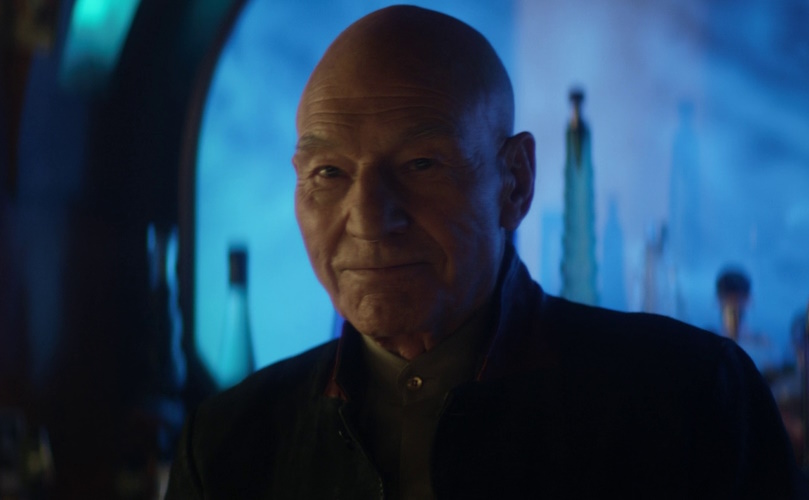
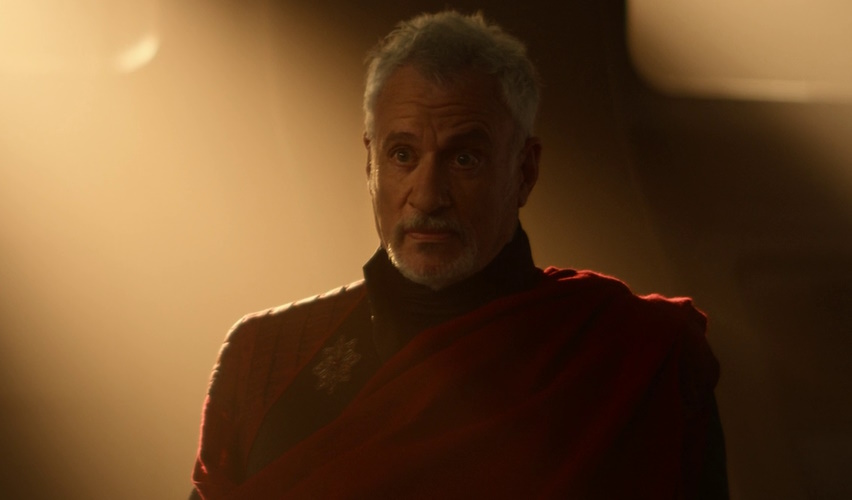
Jean-Luc Picard in Season 3.

As always, a couple of important caveats! A couple of these points are contradictory, meaning one idea or the other might’ve worked in the series, but probably not both! That’s okay, and I’m happy to consider the merits of both as standalone ideas. I’m not trying to claim that Picard’s writers should have implemented all of these changes exactly as I’m proposing them! For a variety of reasons, both in-universe and on the production side of things, it may not have been possible to do some or all of these things even if the writers’ room had wanted to. So to re-emphasise that last point: I know that some or all of these ideas may not have been practical. This is all a moot point now anyway; the series is over. This list is a mix of fantasy and speculation from an old Trekkie – and nothing more!

I also want to say that, while I had some issues with the way Picard was written, by and large I’m a supporter of the series. In fact, I’d like to see more Star Trek set in the time period that Picard introduced us to – and one of the reasons why I think continuing to talk about the show is important is to make that point to Paramount. It also can’t hurt to point out some inconsistencies and other points that future writers and producers might be able to learn from! So that’s my mindset as I put together this list.

With all of that out of the way, let’s get started!

Change #1:
Replace Dr Benayoun with Dr Pulaski in Season 1.

Still frame from Star Trek: Picard Season 1 (2020) showing the character of Dr Benayoun.
Picard with Dr Benayoun in Season 1.

The second episode of Season 1 saw Picard consulting a doctor who was also an old friend as he prepared to return to space for the first time in several years. The character we ultimately got was someone brand-new: Dr Benayoun. In a way, this character could have been interesting if his role had been expanded upon; he served on the USS Stargazer with Picard, presumably prior to the events of The Next Generation, and I’m always going to be interested in storylines that expand upon the backstories of our favourite characters! But Dr Benayoun’s role was pretty small and he didn’t really give us any new information about Picard’s life prior to assuming command of the Enterprise-D, unfortunately.

If I had been writing this scene, I’d have moved heaven and earth to bring back Diana Muldaur as Dr Pulaski. At this point in the series, we’ve only seen Picard himself and a dream version of Data, so there’s absolutely a case to be made that bringing back a legacy character would have been perfect for this moment. There could have been a slightly extended conversation between the two, perhaps with Dr Pulaski commenting on how she saved Picard’s life when she performed surgery on him, or recounting another of their shared adventures in Season 2 of The Next Generation.
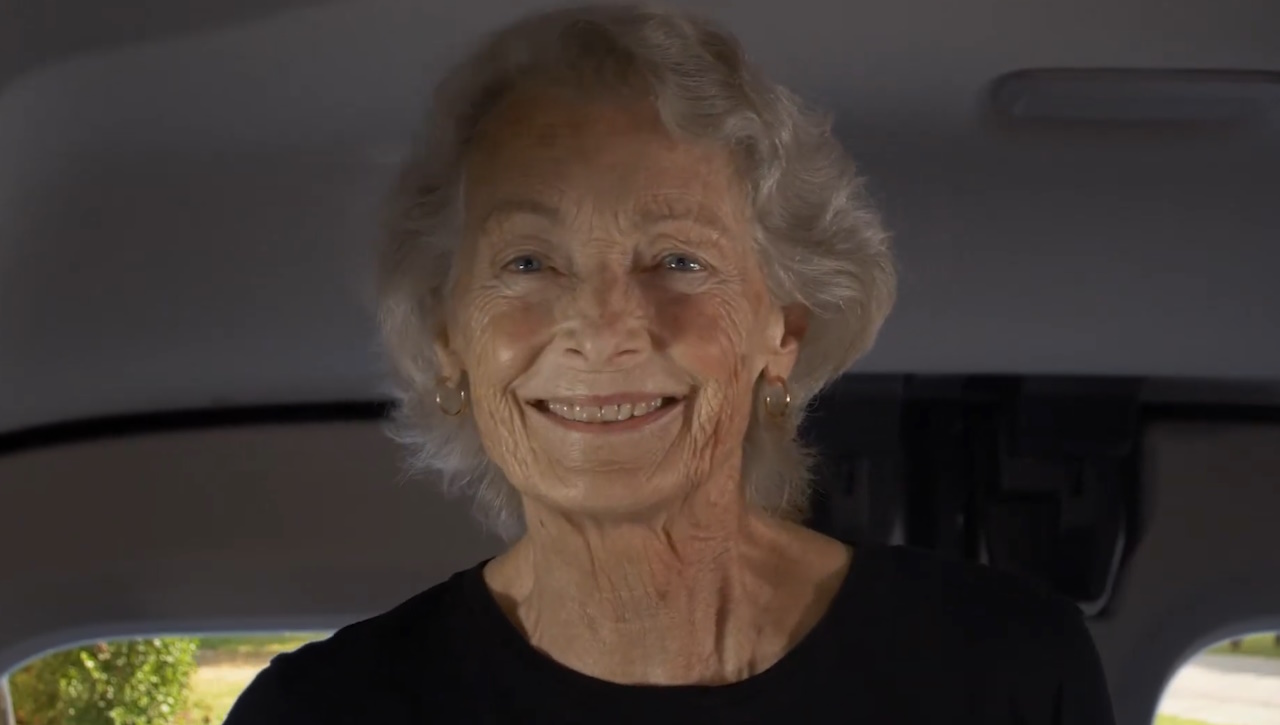
Still frame from Finding Hannah (2022/23) showing actress Diana Muldaur.
Diana Muldaur, who played Dr Pulaski in Season 2 of The Next Generation.

I said before Picard premiered that I didn’t want the series to try to be The Next Generation Season 8, but moments like this would have been perfect for small cameos from established characters. With Dr Crusher being held in reserve for a possible future role, Dr Pulaski would have been the perfect fit for this sequence. We could have learned a little about why she left the Enterprise-D, with that perhaps having been a sore spot in her relationship with Picard. Or we could’ve learned what she’s been up to in the intervening years – did she return to work at Starfleet Medical, perhaps, or take another assignment on a starship?

I’ve been a fan of Dr Pulaski for a long time, and I think this sequence could’ve been an opportunity to right a thirty-year wrong and give the character the closure and send-off she never got. Diana Muldaur has still been active as an actress in recent years – despite being well into her eighties at time of writing – appearing in the trailer for a film called Finding Hannah in 2022. Despite some negative feelings on both sides, it may have been possible to bring her back during production on Picard’s first season in 2018 and 2019. I think it could have added a fun extra dimension to the sequence in that second episode, especially for older Trekkies.

Change #2:
Leave Data dead after Season 1.
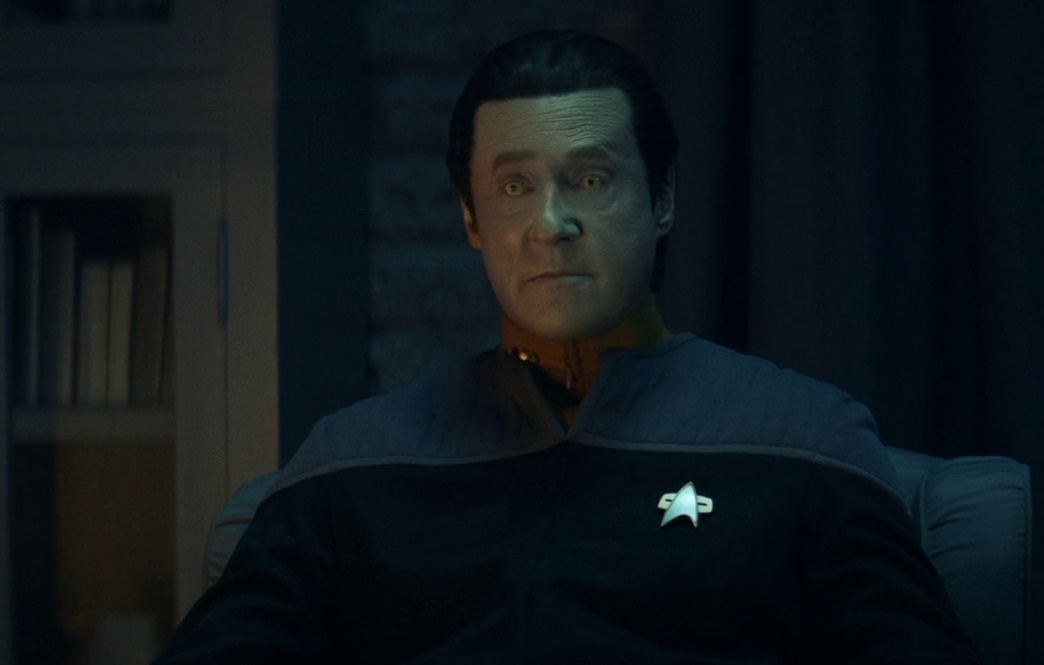
Still frame from Star Trek: Picard Season 1 (2020) showing the character of Data.
Data in the “digital afterlife.”

One of the few redeeming features of an otherwise disappointing finale to Season 1 was the storyline involving Data. Data had been killed years earlier during the events of Star Trek: Nemesis, but that film arguably didn’t take enough time to give the character the send-off he deserved. As I wrote when reviewing Picard’s first season, the scenes involving Picard laying Data to rest were beautiful, emotional, and just what the episode needed – and I could finally see why, eighteen years on from Data’s first death, they were necessary for the character.

Season 3, however, undid all of that. Not only did that decision detract from one of the only decent parts of the Season 1 finale, but it was actually a pretty convoluted plot point that was difficult to follow and relied on a lot of technobabble and “magic.” It never really found a narrative justification beyond showrunner Terry Matalas’ desire to reunite all of the main characters from The Next Generation – no matter the cost.
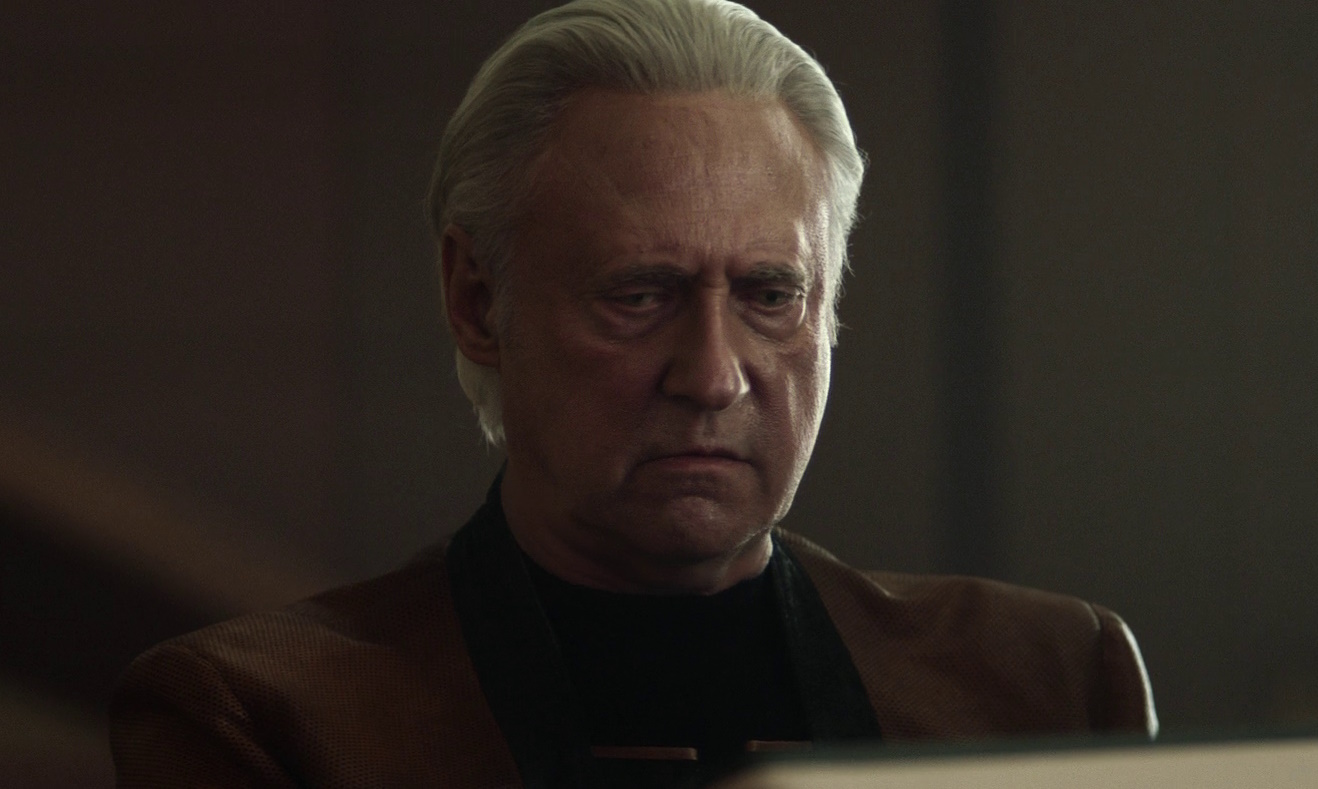
Still frame from Star Trek: Picard Season 3 (2023) showing the character of Data.
Data at his post in Season 3.

In Star Trek’s universe, Data was as dead as it was possible to be. His body had been destroyed years earlier, and Season 1 saw the final shutdown of the residual part of his mind that had been preserved – at Data’s own request. With both body and mind gone, there should have been absolutely no way back for Data. But thanks to the magical deus ex machina of a backup body and a backup mind… Data was resurrected in Season 3. That never sat right with me, but if there had been a significant narrative role for the character in those final episodes, perhaps I could’ve come to terms with it. There really wasn’t, though, and aside from one scene in which Data technobabbled his way to regaining control of the Titan, we didn’t really get a lot more from him for the rest of his time on screen.

I believe Data would have been better-served in Season 3 by being memorialised by his friends. Leaving alone the touching moments between he and Picard in what I termed the “digital afterlife” in Season 1 would have made those moments more powerful to revisit… instead of feeling like a storyline that’s been overwritten. Of all the dead characters in Star Trek, Data was the hardest to bring back because he’d “died” twice, both in body and soul. I don’t think the decision to resurrect him just a few episodes after that intensely emotional send-off was the right one, and I don’t think it was done for the right reasons, sadly.

Change #3:
Either leave Elnor dead or include him in Season 3.
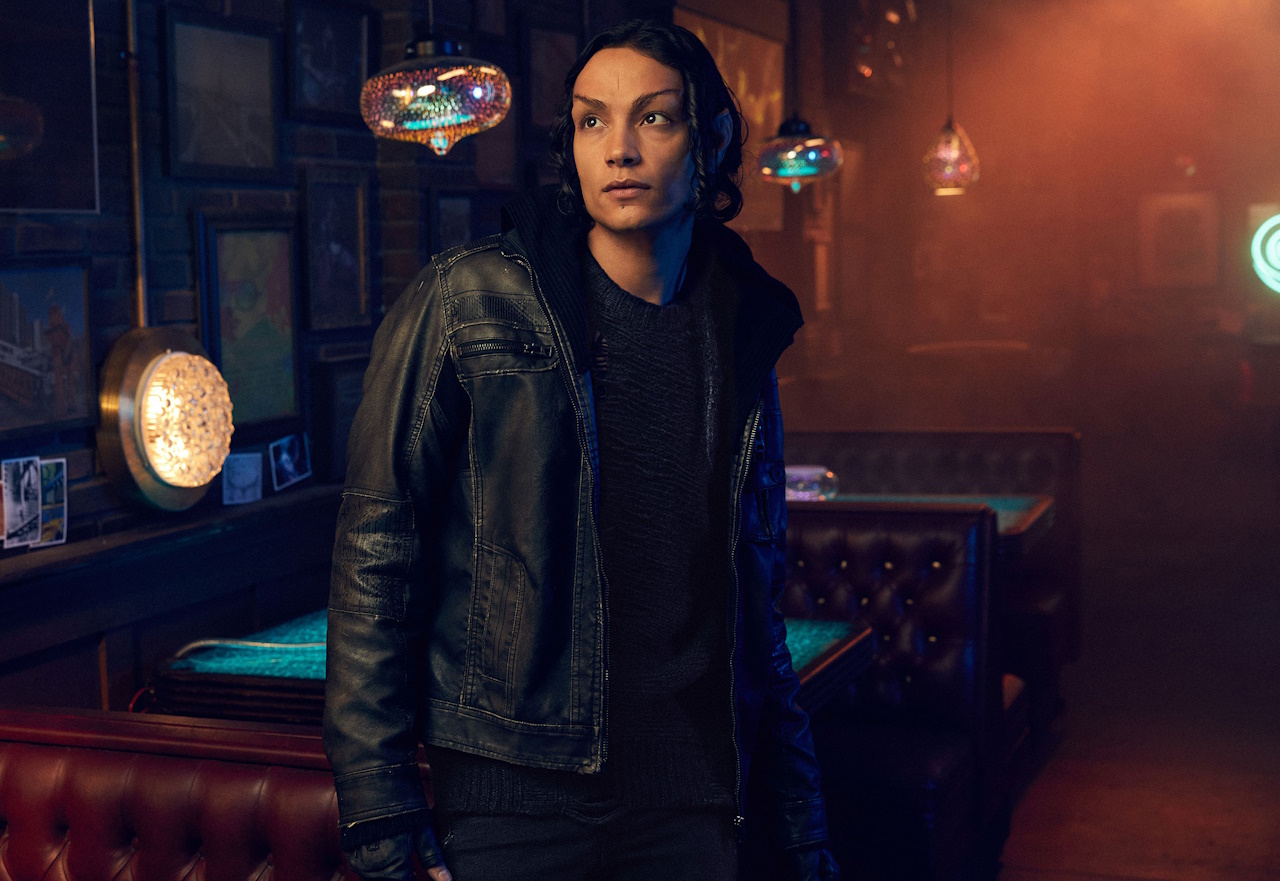
Promo photo for Star Trek: Picard.
Elnor in a promo photo for Season 2.

This is a storyline that I’ve said several times that I genuinely do not understand. Let’s keep in mind that Seasons 2 and 3 went into production back-to-back, with the same creative team in control. Early in Season 2, Elnor was killed – and while I wasn’t thrilled with that at first, as the season unfolded, the way in which Raffi came to terms with his loss made it matter. In fact, I’d go so far as to call the Raffi-Elnor storyline in Season 2 one of the few high points of a season that had relatively few of those.

It was always going to feel strange, then, when Elnor was resurrected at the last second by Q. The fact that Elnor didn’t get much to do in the second half of the Season 2 finale hammered that feeling home; a sight gag showing Elnor disgusted by a beverage was basically his only moment of note after his return. Was it worth undoing that powerful story for an overdone bit of slapstick? He barely got any screen time nor even a proper reunion with Raffi. But nevertheless, as the credits rolled on Season 2 I thought Elnor’s return could find a narrative justification in Season 3.

Still frame from Star Trek: Picard Season 2 (2022) showing the character of Elnor.
Elnor at the end of Season 2.

Elnor, however, was totally absent from Season 3 and wasn’t even mentioned. If I was writing the season, I’d have dropped one of the La Forge sisters and included Elnor instead, having him aboard the Titan in a secondary role and ultimately becoming one of the young officers who gets assimilated. That moment could’ve actually felt stronger and more powerful with Elnor’s inclusion, as we’d be confronting a threat to a character we’d been with for three seasons instead of someone brand-new.

However… given Elnor’s absence from Season 3, I can’t help but feel that leaving him dead would have been the least-bad option. At least that way Raffi’s story of coming to terms with her grief would have meant something, and we could’ve talked about the bold decision to kill off a new, young character in a Star Trek series – something that the franchise isn’t really known for doing. While I absolutely feel that there could have been room for Elnor in Season 3, his death was such a big part of the story of Season 2 that I think undoing it would have probably been a mistake regardless.

Change #4:
Connect the anomaly in Season 2 to either Season 1’s “super-synths” or Season 3’s Borg incursion.

Still frame from Star Trek: Picard Season 2 (2022) showing the anomaly and the fleet.
The Borg-Federation fleet defends the Alpha Quadrant against the mysterious anomaly.

One thing that modern Star Trek has never managed to get quite right is serialisation. This will have to be the subject of a longer article one day, but for now suffice to say that Discovery, Picard, and to a lesser extent Strange New Worlds too all rely on season-long storylines that don’t carry over from one season to the next. There are reasons for this in Discovery’s case – the series flirted with cancellation more than once. But, as I understand it, Picard was planned from day one as a three-season show… so why were none of its storylines picked up in subsequent seasons?

There are two choices here, and they’re probably mutually-exclusive (without some major rewriting) so realistically we’d have to settle on one or the other! But I think the Season 2 anomaly is an interesting narrative idea that could have connected with either the super-synths from Season 1 or the Borg incursion in Season 3. Either of these powerful factions could have been responsible for the attempted attack on the Alpha Quadrant that Picard and co. prevented at the climax of Season 2 – and I think it would have been far better than just leaving this incredibly important event without a proper explanation.
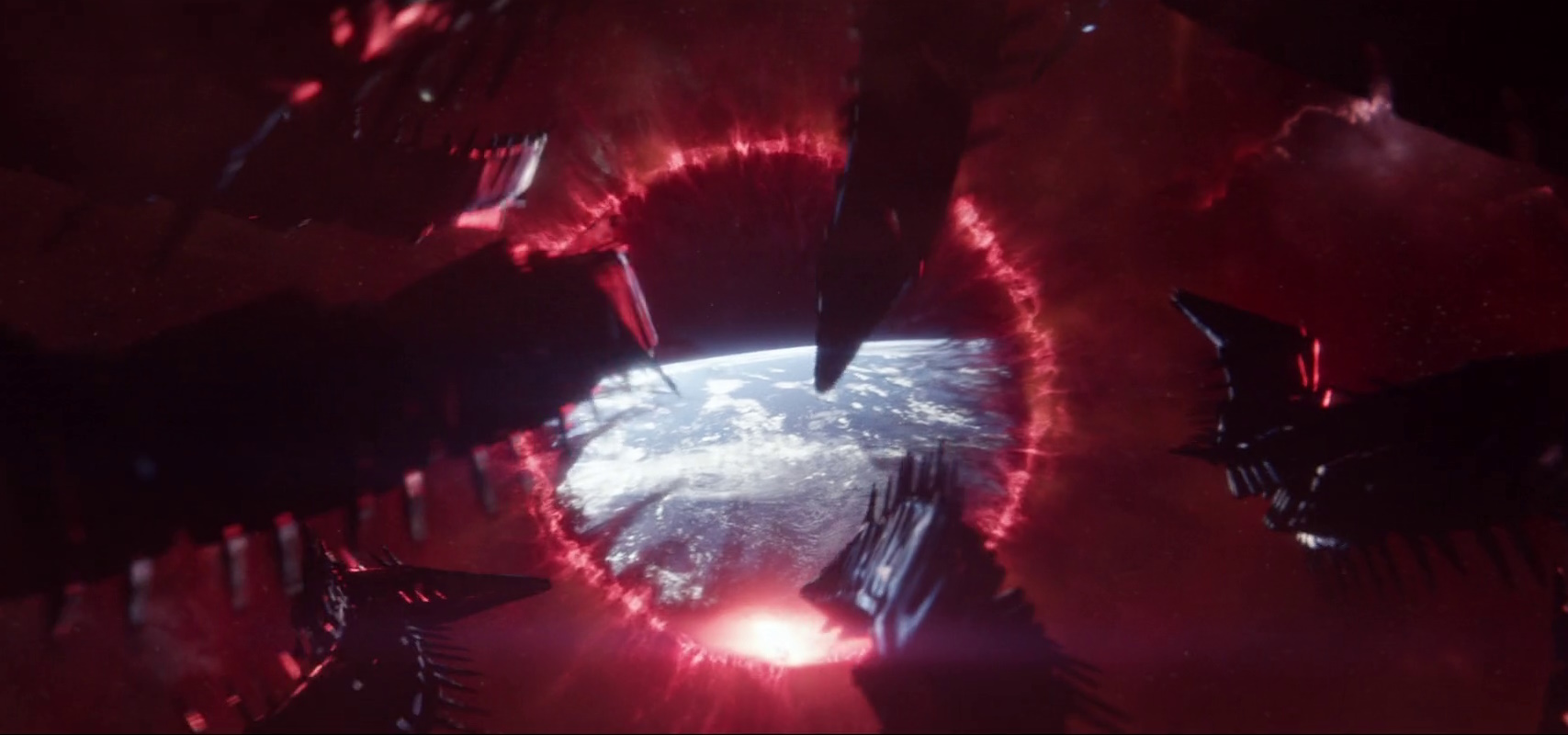
Still frame from Star Trek: Picard Season 1 (2020) showing menancing mechanical tentacles.
The mechanical noodles of the Season 1 super-synths.

The mysterious anomaly bookended the story of Season 2, and connected to Picard, his friends, and the adventure they had in the intervening episodes. Unlike in many Star Trek stories, the anomaly was explicitly identified as an “attack,” meaning that there must be some faction or powerful force behind it. The Borg and the super-synths from Season 1 would fit the bill as being powerful enough to launch an attack of that magnitude.

Tying one of these factions into the anomaly story would have helped Picard feel a bit more cohesive. Given the abundance of overwritten plot points, dropped characters, and abrupt changes in direction across the series, having something to tie disparate story threads together would be a good thing. If I had to pick one, I’d say that the super-synths would be the ideal faction to include here, simply because we know relatively little about them, and a super-synth attack could set up a future Star Trek series or film. But given that the Borg would return in Season 3, dropping a hint or two that they could be responsible could have been a great cliffhanger to end on at the end of Season 2.

Change #5:
Have the Enterprise-A and Enterprise-D fighting alongside one another at the end of Season 3.
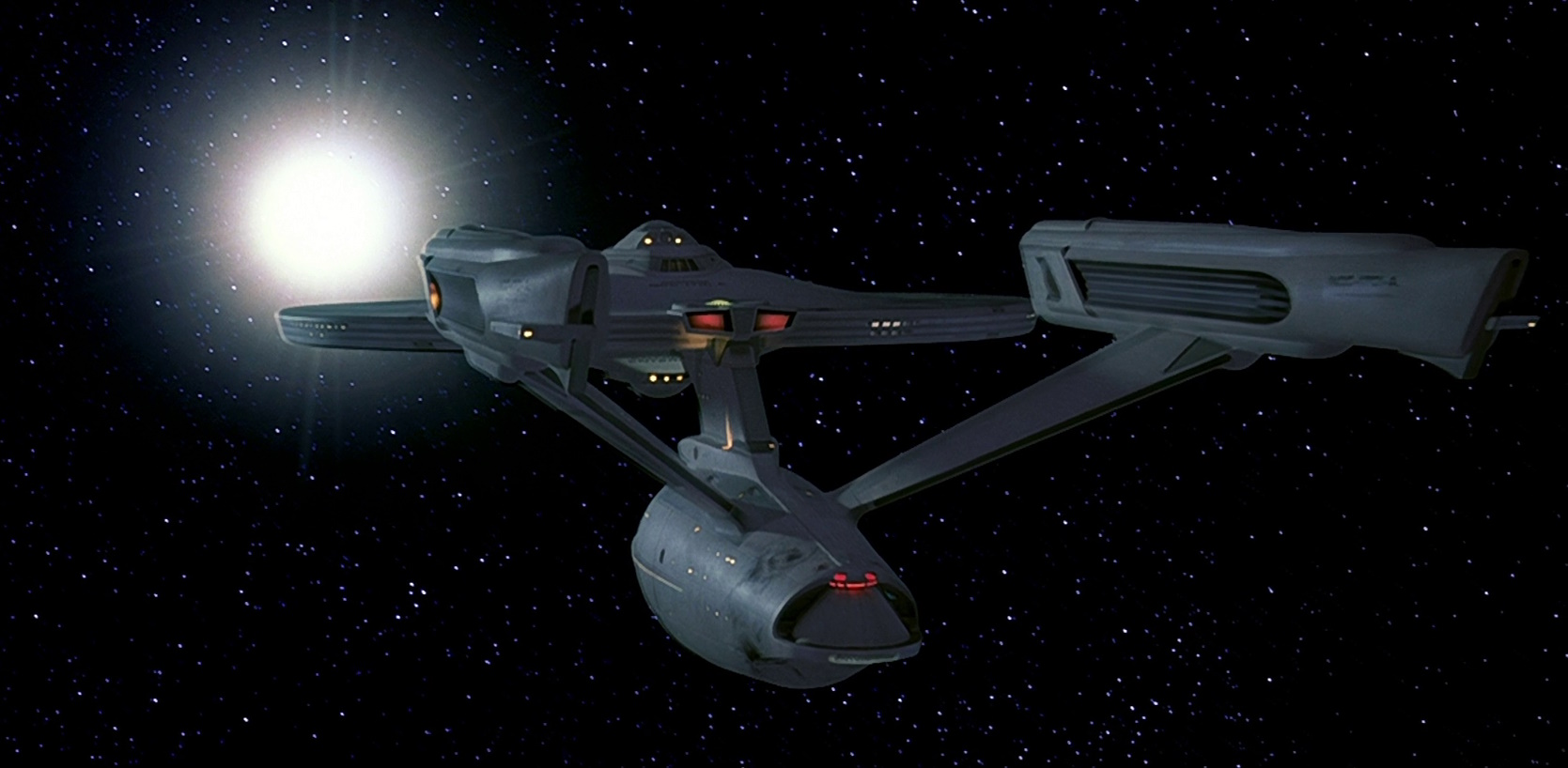
Still frame from Star Trek VI: The Undiscovered Country showing the Enterprise-A.
The Enterprise-A’s final voyage.

Season 3 introduced us to the Fleet Museum, which is a really interesting idea that I enjoyed. It was also a Trekkie’s dream, as multiple vessels from past iterations of the franchise were present. Along with Geordi’s pride and joy – the restored Enterprise-D – was the Enterprise-A, Captain Kirk’s ship that we saw in The Final Frontier and The Undiscovered Country. How cool would it have been if, along with the Enterprise-D, Picard and co. found some friends or allies to crew the Enterprise-A and join them as they took the battle to the Borg?

I know that Picard’s third season was a “love letter” to The Next Generation, and I can absolutely understand not wanting to detract from seeing the Enterprise-D and her crew back in action. But as a Trekkie, one of the fantasies that I’ve always had has been to see different crews and different ships standing shoulder-to-shoulder – especially in a story like this one, where the battle lines have been drawn and the Federation seems to be on the cusp of defeat!
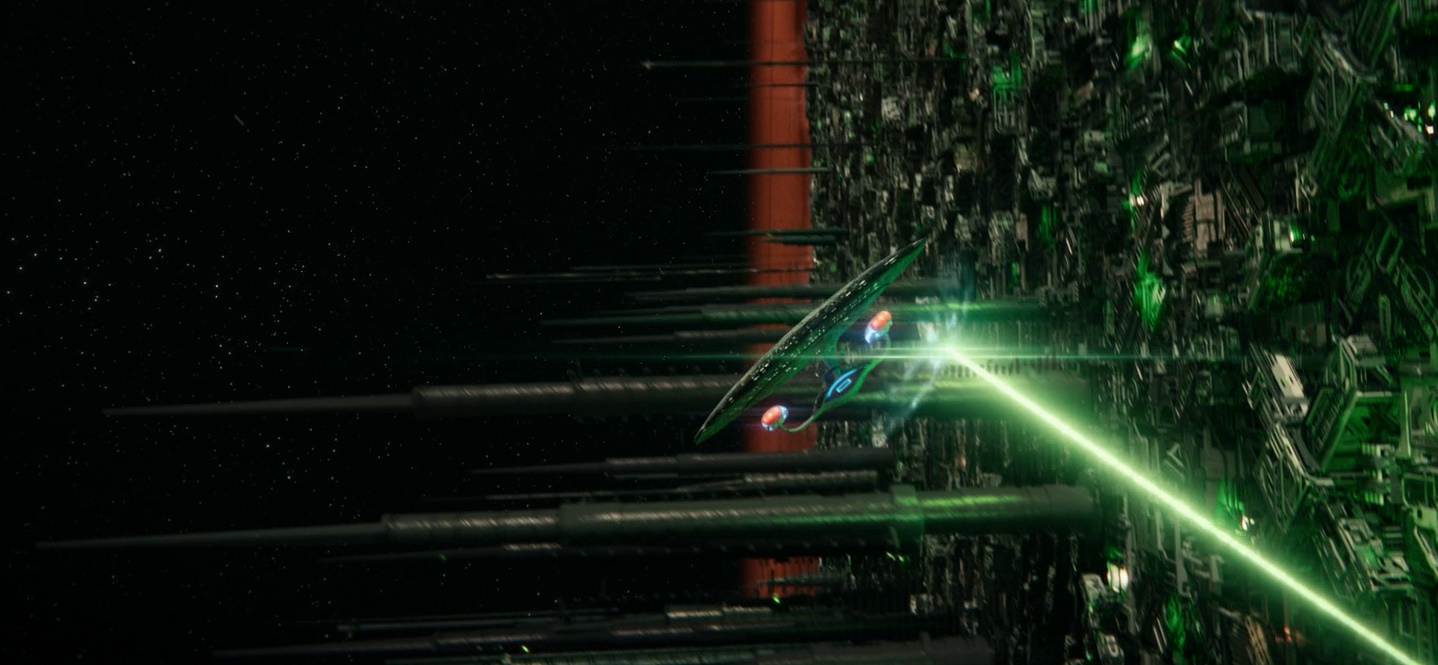
Still frame from Star Trek: Picard Season 3 (2023) showing the Enterprise-D in battle.
Wouldn’t it have been cool to have the Enterprise-A here for this moment?

Bringing the Enterprise-A along would fit narratively, too. Part of the story was about older people still having something to offer; stepping back into the fray to save their younger colleagues. The Enterprise-D and her crew were one way to embody that storyline, but including the Enterprise-A would have been in the same narrative ballpark. There could have even been some technobabble about how the Borg wouldn’t know what to do with a ship that old, making the Enterprise-A a useful addition to the battle. If this point in the story had been reached a little earlier – say with three episodes left instead of one-and-a-bit – I’d have absolutely found a way to include the Enterprise-A.

A digital model had already been created – albeit a static one for the Fleet Museum – but I’m sure with relatively little work it could have been transformed into a moving, flying model. And as for the bridge… I don’t think an entire set would need to be built. For brief scenes shown on the Enterprise-D’s viewscreen, perhaps a redress of the Strange New Worlds or Discovery sets would have sufficed. This would’ve also been a great way to include a character or two from The Next Generation era – perhaps someone like Ezri Dax or Captain Jellico – to take command. Seeing two Enterprises riding into battle side by side… I can’t think of anything more exciting in that kind of story.

What might have been, eh?

So that’s it!
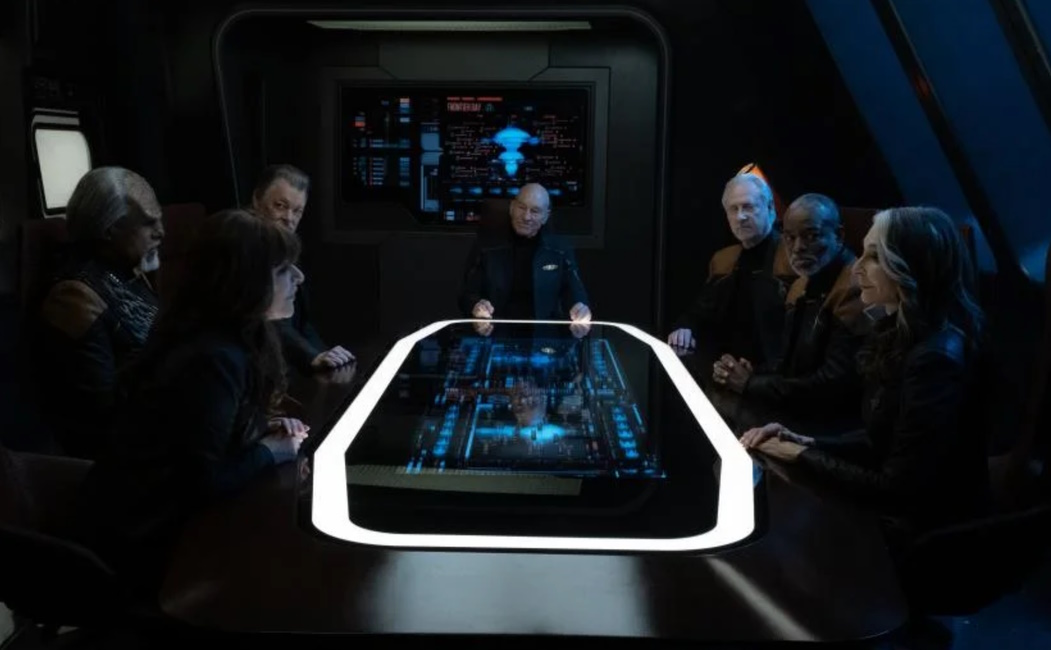
Still frame from Star Trek: Picard Season 2 (2022) showing the main characters around the conference table.
Picard and his crew.

We’ve looked at five changes I’d have made to Star Trek: Picard.

I’m still holding out hope that a new series, film, or other project set in the Picard era will be announced, but with Paramount’s financial troubles and other Star Trek shows being cancelled… I’m not sure when or even if that’ll happen. If it does, though, I hope lessons can be learned from Picard, both in terms of narrative and on the production side of things. As good as the series could be when everything was working right, there are some definite low points that detract from its successes.

The points on this list are pure fantasy at this stage, of course! But as Picard was being broadcast, I couldn’t help but feel that a few tweaks or changes here and there might’ve improved things – so I’m glad to finally put metaphorical pen to paper and make a few of my suggestions. I hope these ideas have been interesting, at any rate – and not something to get too worked up or upset over! If you hate all of these ideas, you can take solace in the fact that none of them were or ever will be included in Star Trek: Picard!

I still have a few pieces about Picard in the pipeline, including a longer retrospective/post-mortem of the series as a whole. I don’t know when I’ll get around to writing all of those, but I hope you’ll stay tuned. It’s bound to happen eventually! Until next time… live long and prosper!


Star Trek: Picard is available to stream now on Paramount+ in countries and territories where the platform is available. The series is also available to purchase on DVD/Blu-ray. The Star Trek franchise – including Picard and all other properties discussed above – is the copyright of Paramount Global. This article contains the thoughts and opinions of one person only and is not intended to cause any offence.

The weirdly contradictory nature of Star Trek: Picard

Spoiler Warning: There are spoilers ahead for all three seasons of Star Trek: Picard – including the series finale and post-credits scene.

For a series that only ran to thirty episodes across three seasons, Star Trek: Picard spent a lot of time overwriting itself! Across all three seasons of the show there were these weirdly contradictory moments where new storylines would appear from nowhere, completely changing what came before. One or two of these instances might pass by relatively unnoticed, or could feel like little more than nitpicks. But for a relatively short series to have so many… it speaks to something bigger, I feel.

I hope in future we’ll get a Chaos on the Bridge-type of documentary or exploration of what went on behind-the-scenes on Star Trek: Picard, because to say that production was “difficult” feels like an understatement. There were clearly major problems on the production side of the series, and I don’t just mean its pandemic-enforced delays. The evidence for this is the contradictory nature of the series itself, and how at the very least there was clearly no overall plan for how the story should be structured. Consistency is an important element of any good story – and Picard absolutely fails on that measure.

Seasons 2-3 showrunner Terry Matalas with Sir Patrick Stewart and the rest of the cast of The Next Generation.

I have a longer piece in the pipeline about Picard’s abandoned and unfinished storylines, but today I thought it could be interesting to take a short look at ten storylines that ended up being overwritten by some pretty sloppy, messy writing that failed to build on the foundations that had been laid in earlier episodes and seasons.

As always, a few caveats. If you loved all of these stories and felt they were perfectly-executed, or if you hated the original setup and feel that it was right and fitting to overwrite or ignore it, that’s okay! We all have different opinions about what makes for a good Star Trek story, and I’m not trying to claim that I’m somehow objectively right and that’s the end of the affair. In several cases, I’d actually agree that the overwrite or retcon was better than what had been previously established. This is all just the opinion of one old Trekkie, and as I always say, there ought to be room in the Star Trek fan community for polite discussion and disagreement! Although I have my issues with Picard, particularly when it comes to the show’s second season, by and large I’m a fan not a hater.

So with all of that out of the way, let’s take a look at some of Picard’s weirdly contradictory storylines.

Contradictory story #1:
Seven of Nine is a captain! Oh wait, no she isn’t…

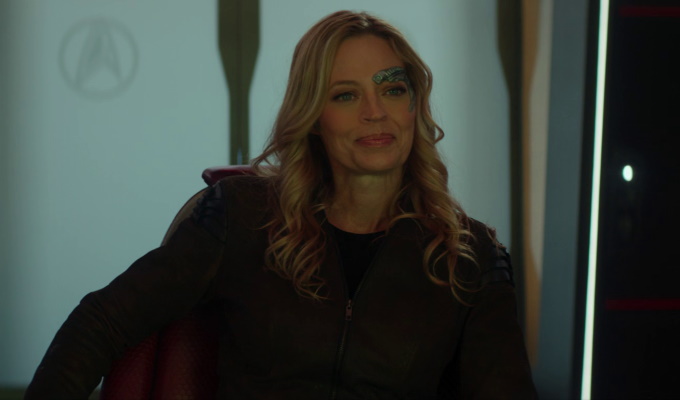
Seven in the captain’s chair at the end of Season 2.

At the end of Season 2, Seven of Nine was breveted into Starfleet by Picard as Captain of the Stargazer. This story point was already a bit… odd. Firstly, it raises the question of why, if offering a brevet position to someone outside of Starfleet is so simple, Admiral Janeway didn’t do that for Seven years ago. It also seemed unnecessary, as with Picard on the bridge, the Stargazer already had a senior officer present who could give orders.

But this already flimsy setup ended up being overwritten by the very next episode – when Seven was bumped down to the rank of commander and found herself serving as first officer of the Titan. There are a lot of contradictions in Picard, but this one feels even more peculiar because it’s something that literally changes from one episode to the next – episodes that, in spite of being one season apart, were produced and filmed at the same time.

Contradictory story #2:
Data’s dead. Deader than dead. Lol jk, he’s alive again!

Data awaits his final shutdown.

One of the few redeeming features of the two-part Season 1 finale was the laying to rest of Data, and giving him the emotional send-off that Nemesis didn’t have time to do justice to. It went a long way to making up for other deficiencies in the rushed and muddled end to Season 1, and the sequences with Picard and Data in the “digital afterlife” were powerful and deeply emotional.

But despite Data being as dead as it’s possible to be in Star Trek, with both his physical body and the surviving part of his consciousness having been destroyed and shut down respectively, Season 3 resurrected Data. We’ll have to go into this storyline in more detail in the future, because there’s a lot more to say. But for me, Data’s resurrection never really found a narrative justification, and it felt like the showrunner and writers wanted desperately to reunite the cast of The Next Generation – at any cost.

Contradictory story #3:
Welcome aboard the Stargazer! Wait, I mean the Titan…

The USS Titan.

In Season 2, the ship that Picard and co. didn’t spend enough time aboard was the USS Stargazer. In Season 3, they jumped over to the Titan – even though the sets were all the same (with a few minor tweaks here and there). I don’t really understand why this happened. What was the point of setting Season 3 aboard a nominally different starship? The exact same setup could have brought Riker and Picard to the Stargazer as it did to the Titan.

If the two ships had significant aesthetic differences, maybe it would be okay. And compared with some of the other points on this list, I admit it’s relatively minor. But it still feels odd to introduce the new Stargazer, build CGI models for it, and only use it in one-and-a-bit episodes.

Contradictory story #4:
Q’s dying… oh wait, no he isn’t.

Q at the end of Season 3.

I know what you’re thinking: Q already explained his “return” by telling Jack Crusher not to think about time in a linear fashion. While that’s a perfectly rational in-universe explanation for Q’s return at the end of Season 3, it doesn’t get around the fact that Q, whose death was such a vital part of the entire plot of Season 2, is a profoundly odd choice of character to use for that one epilogue scene.

Picard’s writers pinned the convoluted and disappointing story of Season 2 on Q, and Q’s entire motivation was his imminent death. To undo that – even if there’s a technical explanation for it – only a few episodes later feels wrong. It undermines the already-weak story of Season 2 and makes me wonder what the point of it all was.

Contradictory story #5:
The Borg are back! The Borg are back! The Borg are back!

A Borg Cube.

However you look at it, and whatever nitpicky excuses there may be about who are and aren’t the “real” Borg, there’s no getting away from the fact that across its three seasons, Picard re-introduced the Borg three times. All three of the stories rely, either in whole or in part, on the Borg, and while Picard himself has a connection with the Borg after the events of The Best of Both Worlds and First Contact… there’s a whole galaxy out there filled with alien races that the show’s writers and producers could have used.

While Season 3’s Dominion/changeling rug-pull is probably the worst example of this, it really speaks to a broader problem with the show’s production. Picard’s writers, especially in Season 3, were unwilling to abide by what the show had already set up. The Borg are great fun, don’t get me wrong, but by the time we got to yet another Borg story in Season 3, I was feeling burned out.

Contradictory story #6:
The mysterious anomaly has set up a fascinating story! Let’s never mention it again.

Led by the Borg, a Federation fleet stops the anomaly.

The story of Season 2 was bookended by a mysterious anomaly that the Jurati-led Borg faction believed could be an attack against the Alpha Quadrant. Once the anomaly had been stopped, the Jurati-Queen promised to take her Borg faction and stand watch over the anomaly as a “guardian at the gates.” Her Borg faction were even granted provisional membership in the Federation as they did so.

This story felt like it had huge potential. Who could have been powerful enough to create a weapon on that scale? How would Picard and his friends be able to defeat them? What would it be like to see a Federation-Borg alliance? But alas, this storyline was dumped, orphaned, and never mentioned again. Was no explanation ever written? Why end Season 2 on this cliffhanger if it was never going to be resolved?

Contradictory story #7:
Soji’s a massively important character… let’s dump her.

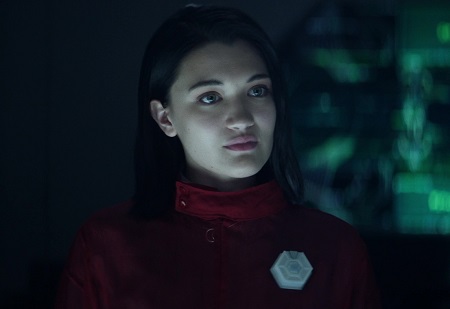
Promo photo of Isa Briones as Soji.

Soji played a huge role in Season 1, serving as both the reason for Picard’s mission and later as someone who needed to be talked down from making a mistake. We spent a lot of time with her in the show’s first season, watching as she was manipulated by Narek, as she learned the truth of her own origin and who her people were, and as she came to work with and respect Picard.

It was disappointing that Soji was essentially forgotten after the end of Season 1, with a barebones cameo appearance and nothing more. Isa Briones got to play a minor role in Season 2 as the daughter of antagonist Adam Soong, but this storyline was samey and boring. As a new, young character – and a synthetic life-form – Soji had huge potential. It’s such a shame that a role couldn’t be written for her after Season 1.

Contradictory story #8:
Picard has a new relationship with Laris! No wait, Laris has fucked off and now he has a kid with Dr Crusher.

Laris and Picard at the end of Season 2.

The entire story of Season 2 – its raison d’être, at least according to Q – was that Picard was alone, prevented by his childhood trauma from being able to find love. At the end of the season, after ten episodes of shenanigans in the 21st Century, Picard finally returned to his vineyard – and to Laris. The two seemed ready to embark upon a new relationship together.

But nope! Laris made a small cameo appearance at the beginning of Season 3, and was never mentioned again. Picard’s story in Season 3 focused on his past relationship with Dr Crusher, a relationship that led to him having a son he’d never met. The season’s epilogue even showed Picard and Dr Crusher jointly escorting their son to his first Starfleet assignment – with Laris nowhere to be found. As I said above: Season 2 was already a weak, flimsy story. Undermining its ending like this was a poor decision.

Contradictory story #9:
Elnor’s dead. Oh wait, he’s back! No… he’s gone again.

Elnor at the end of Season 2.

Although I wasn’t thrilled to see Elnor killed off in the first half of Season 2, as time went on, it seemed to be working. Raffi’s story of coming to terms with loss and grief was one of Season 2’s stronger elements, and while I would’ve still said I was disappointed in Elnor’s wasted potential, at least his loss had mattered. Until it was all undone with seconds to spare.

If Elnor had a major role to play in Season 3 – and there was absolutely space for him – then I could at least have understood this reversal. But after Elnor was resurrected, he got one very brief scene in which he looked confused on a viewscreen, and another in which his dislike of a beverage made him the butt of a joke. After that, Elnor disappeared from Picard never to be seen or mentioned again. What was the point? Why undo a powerful story for the sake of an overdone sight gag?

Contradictory story #10:
Riker and Troi are happy and settled on Nepenthe. Just kidding, they hate it there.

Picard approaches Riker’s outdoor kitchen.

Nepenthe might be my favourite episode of Season 1. It slowed things down, stepped away from some of the drama, and reintroduced us to Riker and Troi – now happily married and living peacefully outside of Starfleet. In spite of the loss of their son, Riker and Troi seemed settled on Nepenthe with their daughter in a home that was important to their son and their family. It was a surprise, to say the least, when Season 3 tried to undo all of that.

In the episode Surrender, Riker and Troi were reunited as captives aboard Vadic’s ship. And while imprisoned, they both spoke about how they hated the “creaky old cabin” that had been their home. The end of the season implied that one or both of them may be back in Starfleet, and all the emotional storytelling present in Nepenthe was taken away.

So that’s it!

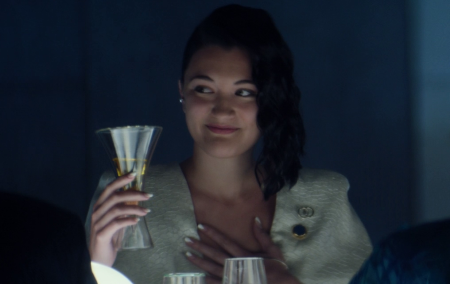
Dr Jurati on stage in Season 2.

Although there were some interesting stories – and some complete ones – overall, it’s not unfair to call Star Trek: Picard a contradictory series, one that either intentionally or unintentionally overwrote or ignored key characters and storylines. We’ll talk about some of these in more detail on another occasion, but for now I think we’ve covered the basics.

Picard was clearly a troubled production, one that jumped from one writing and production team to another, and that’s part of why the series as a whole feels so contradictory. I think I could overlook one or two of these things – and I might even support the decision to drop a character or change a storyline that wasn’t working or that failed to resonate with audiences. But for a series that ran to a mere thirty episodes across three seasons… we shouldn’t be able to pull out ten large contradictions like this.

Stay tuned, because I have a lot more to say about Picard even though the series has concluded! A longer retrospective is in the pipeline, and I’ll also be taking a look at abandoned and unfinished storylines, too.

Star Trek: Picard Seasons 1-3 are available to stream now on Paramount+ in the United States and other countries and territories where the service is available, and on Amazon Prime Video in the UK and around the world. The Star Trek franchise – including Picard and all other properties discussed above – is the copyright of Paramount Global. This article contains the thoughts and opinions of one person only and is not intended to cause any offence.
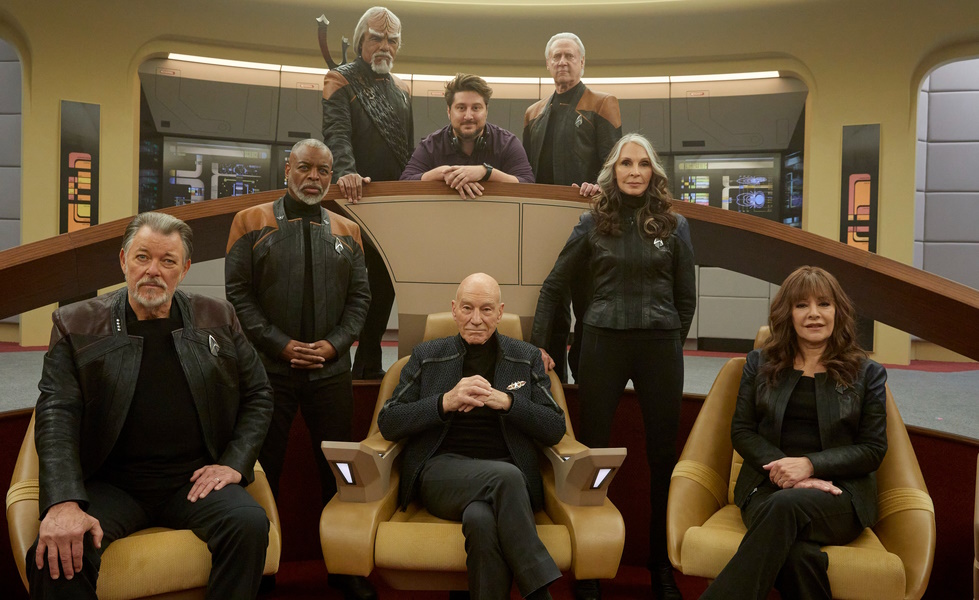
Star Trek: Picard Season 3 – thoughts on the casting situation

Spoiler Warning: There are spoilers ahead for Star Trek: Picard Seasons 1-2 and casting/character announcements for Season 3. Spoilers are also present for Star Trek: Prodigy Season 1 and Star Trek: Discovery Seasons 1-2.

Star Trek: Picard’s second season wrapped up a couple of days ago, and even as the dust settles on the show’s latest outing we’re already beginning to see Season 3 take shape. Filming on Picard Season 3 has been underway for months; Seasons 2 and 3 entered production back-to-back, so we have a good chance of seeing it in the early part of 2023 as things currently stand.

Today I wanted to take a peek behind the curtain and talk about some production-side announcements that are related to Season 3 – in particular, which characters might not be included in the new season. This is serious spoiler territory for Season 3, so if you don’t want to know who may or may not be reprising their roles (and you ignored the giant warning at the top of the article), this is your last chance to avoid Season 3 spoilers!

The USS Stargazer in Farewell.

The only way I can describe what I’ve learned about Season 3 is that the Picard cast has been massacred. At time of writing, we have confirmations (or as-good-as confirmations) that Orla Brady, Isa Briones, Santiago Cabrera, Evan Evagora, and Alison Pill won’t be returning for Season 3. That means Laris, Soji/Kore/Sutra, Rios, Elnor, and Dr Jurati/the Borg Queen won’t be included in any meaningful way in the new season.

These departures make way for the returning main cast members from The Next Generation (minus Wil Wheaton and Denise Crosby), who will be reprising their roles as Riker, Troi, Worf, Dr Crusher, La Forge, and a currently-unknown character in the case of Data actor Brent Spiner. As nice as it will be to welcome them back to Star Trek, I can’t help but feel that this decision is the wrong one – or at the very least that the Picard cast departures have been handled particularly poorly.

The cast of The Next Generation in Season 2.

In Farewell, the Season 2 finale, Captain Rios and Dr Jurati got goodbyes… of a sort. Rios’ goodbye felt permanent as he chose to remain in the 21st Century after falling for Teresa; the Borg Queen-Dr Jurati hybrid had less of a “goodbye” and more of a “see you later,” but I guess in the context of her season-long arc we can at least call it an ending. But Elnor, Laris, and Soji didn’t even get the most basic of goodbyes.

Soji was Season 1’s second main character along with Picard himself. She was both the driving force behind the plot of the first six episodes and a major character in her own right, and her story of learning the truth of her synthetic origin and coming to terms with that was something that Star Trek had never really tackled before. More significantly, Soji led Picard to her people’s homeworld: Coppelius.

Soji in Season 1.

The discovery of the Coppelius synths led to the unravelling of the Zhat Vash plot, as well as uncovered the role of Commodore Oh as a spy within Starfleet. It provided Starfleet with an explanation for the attack on Mars a decade earlier and for the cover-up aboard the USS Ibn Majid. It transformed Starfleet from a semi-antagonist with an inward-looking, almost xenophobic edge back into a faction worthy of support. It’s a landmark moment in the history of this post-Nemesis era.

Soji was instrumental in all of that, as well as in contacting and then not contacting the unnamed faction of super-synths. We spent a lot of time with her across Season 1, and I’d point to some of her scenes with Kestra in Nepenthe and her role in The Impossible Box as being two of the big highlights. Unfortunately, Soji was completely sidelined in Season 2, not taking part in the mission back in time or the stand-off with the Borg in any way… but there was still scope to bring her back.

Soji was sidelined for all of Season 2.

Elnor’s absence – if indeed it is confirmed; at this point it’s only been mentioned by actor Evan Evagora on social media – feels utterly inexcusable to me. After Elnor had been killed in the Season 2 episode Assimilation, his death served as a major motivating factor for Raffi’s character arc, and coming to terms with her guilt and remorse were key components of her storyline. This culminated in a beautiful sequence in the episode Hide and Seek in which Raffi was able to speak to a holographic recreation of Elnor and come to terms with what had happened – accepting his death and letting go of at least some of the guilt that had been plaguing her.

This story was already muddled – and I would argue that its beautifully emotional conclusion was severely undermined – by the decision to resurrect Elnor in the Season 2 finale just one episode later. As much as I wanted to see Elnor’s story continue – as I feel he’s a character with huge potential – his death and Raffi’s acceptance of it seemed to be permanent, and undermining what had been one of Hide and Seek’s best moments wasn’t something that the season needed in its final minutes.

Holo-Elnor in Season 2.

But now to learn that Elnor isn’t coming back after all… I just don’t get it. For the sake of two minutes of screen time in the season finale and a look of relief on Raffi’s face, why not just leave Elnor dead if he has no role in Season 3? That would’ve at least given Raffi’s main narrative arc in Season 2 some significance. Most of the impact of what Raffi went through had been blunted by Elnor’s survival, and while we could certainly argue that she learned something from the experience, it smacks of the whole “it was all just a dream” story trope that resets everything back to the way it was.

Given that there seems to be no role for Elnor in Season 3, he may as well have stayed dead. At least his death would’ve mattered, spurring on Raffi to learn a lesson and grow as a person – growth that could stick around and continue to provide inspiration to her in whatever story comes next. Having him survive only to be shuffled off-screen anyway, presumably assigned to a different starship, just feels completely hollow and meaningless.

It seems as though there’s no place for Cadet Elnor in Season 3.

Although Laris hadn’t been a major character, her romantic interest in Picard was one of the main factors involved in kicking off the plot. As it turned out, Q wanted Picard to process grief and trauma that he’d carried since childhood – something that seems to have prevented him from forming longlasting relationships. In that sense, Laris was an incredibly important character for the series – and the closing moments of the Season 2 finale implied that she and Picard will indeed be striking up a new romantic relationship.

But if we aren’t going to see that relationship unfold on screen, if it’s just going to be relegated to that one scene at the end of Season 2, it again raises some pretty big questions. It’s beginning to feel that the decision to bring back The Next Generation characters in Season 3 has already undermined some significant story beats from Season 2, cutting them off at the knees and preventing the next – and final – chapter of the story from developing them further and taking them to their natural conclusions.

Picard with Laris at the beginning of Season 2.

When Star Trek: Picard was first announced, I didn’t want it to be The Next Generation Season 8. That’s a neat idea – but it wasn’t what this series was. I wanted to see some of these new characters grow on me and be given the opportunity to become fan-favourites for the next generation (pun intended) of Star Trek fans.

If the Star Trek franchise is to survive in the long-term, it can’t simply copy what Star Wars is doing and rely on cheap overloads of nostalgia. It has to continue to grow and develop, and new characters have to be given equal standing alongside legacy characters. In thirty-five years’ time, it’s my genuine hope that fans will be just as excited for Star Trek: Elnor as we have been for Star Trek: Picard… but in order for that to happen, we need to be spending more time with these characters. Having them cut entirely from the final season of the show – several of them without any kind of goodbye or send-off – doesn’t just sting because we won’t get to enjoy more adventures with them or see what comes next, but it could seriously damage Star Trek’s long-term prospects.

The Star Trek: Picard main cast. Only two are confirmed to be part of Season 3.

When The Next Generation characters have come back, what’s next? We’ve already had Voyager characters come back in Picard and in Prodigy, so that only leaves Deep Space Nine of the 24th Century shows. If future projects recycle characters from Deep Space Nine and Enterprise, there’ll be nobody left! Star Trek has to expand – to build on the legacy of the shows and characters that came before. What it mustn’t do is keep trying to bring back those characters and relive those past successes.

The Next Generation and the other shows of that era are in the past – and while there’s definitely potential to revisit characters like Jean-Luc Picard, it’s worth remembering that Star Trek is more than just a handful of familiar faces. Since at least 1987, when The Original Series passed the torch to The Next Generation in the first place, that’s a lesson that the Star Trek franchise has done well to take to heart. The Star Trek galaxy is vast, populated with billions or perhaps trillions of individuals across thousands of planets, and it’s ripe for exploration! Narrowing the franchise’s focus to a handful of characters from older shows is not what Star Trek is about – and it never has been.

Captain Rios at the beginning of Season 2.

Until now, I’ve felt that modern Star Trek has struck a pretty good balance between the old and the new. Discovery introduced us to brand-new characters, but tied its main protagonist to Spock and Sarek, before reintroducing Captain Pike. Picard focused on Picard himself, of course, but instead of sending him off on an adventure with his old crew, it brought some genuinely interesting new characters on board. Unfortunately, we’re now learning that several of them won’t stick around… and I find that to be quite disappointing.

I suppose the good news is that these characters still exist, and if Picard serves as a jumping-off point for potential new spin-off series, miniseries, or films set in the early 25th Century, it may be possible to revisit some of them. But I’m not going to hold my breath for that, at least not in the short-term. There are other Star Trek projects in the works, but with characters like Elnor having received precious little development across two seasons of Picard, it’s my suspicion that he’ll simply drop off the face of the galaxy never to be revisited.

Dr Jurati got a significant arc in Season 2… but won’t return for Season 3.

That’s all there is to say for now, I guess. Decisions have already been made and the new season – which will supposedly be Picard’s last – is already well underway in terms of production, so it’s clearly far too late to change any of that now. Star Trek’s past is, of course, filled with one-off characters; guest stars who appeared in an episode or two before disappearing forever. And there have been main cast members who were shuffled off their respective shows in unceremonious ways. None of it is new – but that doesn’t make it any less disappointing.

I was genuinely looking forward to spending more time with the likes of Elnor, Soji, Laris, and potentially the Borg Queen-Dr Jurati hybrid. Had you asked me shortly after the Season 2 premiere I’d have said that a Captain Rios spin-off has real potential, too. The return of The Next Generation crew isn’t bad… but I wish that their returns didn’t have to come at the expense of some wonderful characters that we’ve only just begun to get to know.

I remain hopeful for a fun season and an exciting adventure with these returning characters… but I confess that I’m quite disappointed to learn that so many Picard cast members had to be culled to make it happen.

Star Trek: Picard Seasons 1-2 are available to stream now on Paramount+ in the United States and on Amazon Prime Video in the UK and around the world. Season 3 is currently in production and may be targeting a 2023 broadcast. The Star Trek franchise – including Picard, The Next Generation, and all other properties mentioned above – is the copyright of Paramount Global. This article contains the thoughts and opinions of one person only and is not intended to cause any offence.
Star Trek: Picard review – Season 1, Episode 4: Absolute Candor

Spoiler Warning – There will be spoilers ahead for Absolute Candor – the fourth episode of Star Trek: Picard – as well as for all previous episodes in Season 1. There may also be spoilers for other iterations of the Star Trek franchise.

What a wild ride Absolute Candor was! After a trilogy of episodes directed by Hanelle M. Culpepper kicked off the series, Star Trek legend and former Star Trek: The Next Generation star Jonathan Frakes stepped up to direct this outing for Picard and his new crew – and he’ll also be directing next week’s instalment too.

After the first three episodes set up a lot of story points and mysteries, Absolute Candor felt like the first episode so far to begin the task of exploring and unravelling them. That’s not to say it answered everything – we still have far more questions than answers right now. But some details are beginning to come into focus, especially regarding Picard’s history between when we last saw him in Star Trek: Nemesis and when we met him again in Remembrance at the beginning of this season.

As with the last two episodes, Absolute Candor opens with a flashback sequence. But rather than seeing Mars this time, as Maps and Legends and The End is the Beginning showed us, this time we’re with an out-of-uniform Picard on a planet called Vashti, in the Beta Quadrant. It’s clear quite quickly that this sequence takes place before the attack on Mars – Picard is still working very hard to relocate as many Romulans as possible with time ticking down to the supernova. He’s clearly very popular with many of the Romulans on Vashti, though if he’s working I’m not exactly sure why he’s not in uniform. Picard, at least as we remember him from The Next Generation, was quite a stickler for such things as uniforms – though perhaps as an Admiral he had more leeway in this matter.

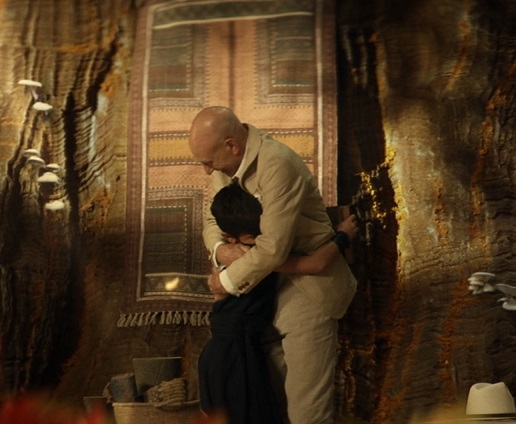
Elnor hugs Picard in a flashback sequence.

Vashti is presented as a kind of “frontier outpost”; it’s dusty, it’s bustling with Romulans, and Picard is in his element here. At least, the town setting on Vashti looks like this. The next setting Picard visits – a convent or nunnery – has a very obvious Japanese inspiration. This blend of aesthetics keeps the two parts of Vashti distinct from one another, with the serenity and safety of the convent contrasting with the unpolished nature of the pioneer town. This contrast will come into play later, but we’re getting ahead of ourselves. We saw a Romulan using the same style of cards that Ramdha (the Romulan Soji wanted to talk to in the last episode) was using, and their inclusion was a nice way of tying things together, as well as adding to the “wild-west” vibe that the town on Vashti has going for it.

Picard has struck up a relationship with Elnor, a young boy who has been taken in by the nuns. He brings him a gift – a copy of the book The Three Musketeers – and promises to teach him how to fence. His dislike of children is referenced here by the nuns and Elnor, but he reassures the boy, saying he is “very fond” of him. There’s a grandfatherly element to Picard that we haven’t really seen before – obviously emphasised by his age. In The Next Generation, we saw him take on a semi-fatherly role to Wesley – after dismissing his “no children on the bridge” rule – so this is hardly out of character. He also kept the “Captain Picard Day” banner from his time aboard the Enterprise-D, again showing that his attitude to children has considerably softened over the years.

Fencing lessons.

Midway through the promised fencing lesson, Picard gets a call on his combadge (the GenerationsDeep Space NineVoyager style is back for this sequence) from Raffi. And we know what this must be before anything happens; she’s about to tell him of the attack on Mars. Because we knew this – it had even been included in the montage of previous episodes that played at the very beginning – I don’t think we needed Picard’s line in response. Shock like this can be hard to play right, and it’s no criticism of Sir Patrick Stewart that the line, in which he says “what do you mean synths have attacked Mars?” just fell flat and didn’t really work. A simple facial expression would have conveyed everything we needed to know; the line was unnecessary and detracted from the scene.

Everyone is concerned, and Picard promises to get to the bottom of it and return soon, saying that their work must continue, and then the credits roll. Having seen Seven of Nine feature prominently in the trailers, Jeri Ryan’s name being included in the credits wasn’t a surprise. But, given her role in the episode, it was a bit of an unnecessary spoiler – especially for people who may have skipped the trailers. Seven of Nine only shows up right at the end of the episode. She’s an anonymous pilot flying a small ship, and that whole scene is structured around keeping her identity hidden until the last possible moment, making her appearance on the bridge of La Sirena a surprise – but as this was the last scene in the episode, and we’d seen her name in the opening credits, the element of surprise was lost which was a shame, I felt.

Picard reacts with shock when he learns of the synths’ attack.

After the credits we’re back in the present day, and after a brief shot of La Sirena in space we get a conversation between Dr Jurati and Capt. Rios. It seems like this may be Jurati’s first time in space, and more than anything she just feels bored while the ship warps to their destination. I mentioned last time how the comment Raffi made at the end of last week’s episode about Dr Jurati not being subject to any kind of security check could be some foreshadowing of her being a double-agent, and this conversation, innocent though it may have seemed on the surface, could also be seen as her probing Rios for information in a disarming style. I’m not sure exactly why yet, but I have a feeling she isn’t to be trusted.

Raffi interrupts the awkward conversation to demand to know where the ship is going – apparently Picard wants to make a stop at Vashti before heading to Freecloud, though he seems to have only told Rios of this, as Raffi and Dr Jurati had no idea. The next scene was confusing for a moment, as Picard appears to be back on the vineyard – but apparently it’s just a holoprogram that Zhaban requested that the “hospitality hologram” on La Sirena recreate for Picard. As with every hologram on the ship, it’s been reprogrammed to have Rios’ appearance.

“Mr Hospitality” on the holodeck.

There’s a close-up shot of Dahj’s necklace on Picard’s desk – presumably a recreation as part of the holoprogram, but this isn’t clear. As I said in my review of Remembrance, I really feel this is a weak prop. The visually unimpressive design just makes it blend in, and for something that was supposed to be so noticeable, and that’s supposed to be a symbol for creating androids, it just looks bland. For a one-off item I could forgive that, and it would be little more than a minor costuming/prop nitpick. But the necklace keeps cropping up, as it did here in the close-up, and I wish it looked better given its role in the story thus far.

Raffi interrupts Picard’s conversation with the hologram, demanding to know why he’s insistent on going to Vashti. It’s clear Picard has been out of touch with goings-on in the galaxy for some time; Vashti will not be the way he remembers it. Rios and Dr Jurati join in as Picard calmly explains that he wants to return to the convent we saw in the flashback – because the nuns there are warriors, and he hopes one of them can be persuaded to join their crew for the mission. He suspects they are being tracked – though interestingly he refers to their opponents as the Tal Shiar, not the Zhat Vash. He will do so again later in the episode when talking to Elnor, and I have a feeling this will come back to be a point in future episodes. Whether Picard doesn’t believe in the existence of the Zhat Vash, or whether he simply doesn’t want to go to the trouble of explaining to everyone what they are isn’t clear.

Raffi attempts to persuade Picard to head straight for Freecloud and abandon the mission to Vashti.

We get two little hints in this scene that may come into play in future episodes. First is that Raffi makes a comment about how Picard’s decision to go to Vashti makes her “seriously question [his] mental state” – could this be a hint about the terminal condition that Dr Benayoun mentioned in Maps and Legends? Secondly, Picard calls Raffi out on her keenness to get to Freecloud, but Rios says she seems apprehensive about it. What is Raffi planning to do on Freecloud? We know she said at the end of last week’s episode that she’s going there for her own reasons, but here we get a hint that she may not be looking forward to it. Why that is isn’t clear at this stage either.

Vashti, according to Raffi and Rios, is in a bad way, seemingly outside of anyone’s jurisdiction with warlords controlling the planet and the space around it. Picard is surprised by this, and his lack of awareness of the situation shows us, as mentioned earlier, just how out of touch he is with the state of play. Rios mentions a warlord who has control of an “antique bird-of-prey” – and anyone who’s seen the trailers will have spotted that ship, sporting a design not seen since The Original Series.

The nuns, Picard says, are the best fighters he’s ever seen – and enemies of the Tal Shiar. The “Way of Absolute Candor” is mentioned here for the first time, and it appears to be almost the complete antithesis of Surak’s Vulcan teachings. The Qowat Milat, as the nuns are called, believe in “total communication of emotion”. Raffi makes one last attempt to convince Picard to ditch the Vashti idea and head straight for Freecloud, but Picard says that he “may never pass this way again” – another reference to his condition. While this is, in a sense, a side-quest to Picard’s main objective of finding Maddox and Soji, he is taking advantage of his return to space to travel to Vashti to revisit Elnor.

“I may never pass this way again.”

Travelling in space in Star Trek has never really been treated as a big deal. It was something routine, even if some individuals we met had never done so – like Joseph Sisko in Deep Space Nine. But in Star Trek: Picard we’ve had several instances that show us space travel is not just as easy as getting on a starship and taking off. Picard’s appeal to Admiral Clancy in Maps and Legends was brutally shot down, but not before she could say he couldn’t be trusted to take people into space. Next we have Dr Jurati, who is seemingly on her first space voyage, and now Picard himself, who, granted, has been a kind of self-imposed exile in La Barre, but it seems as though travel to Vashti isn’t easy. It took Picard contacting Raffi to track down a pilot who would even take them to Freecloud, when surely everything we’ve seen in prior Star Trek suggests that interstellar travel should be commonplace – and simple. It’s a surprise in terms of the way space travel has been handled thus far in the series, I think, and it’s less in line with past Star Trek and more like something we might expect to have seen in a different kind of science fiction series. I know there are perfectly valid story reasons for why Picard couldn’t just buy, rent, or otherwise acquire a shuttle or runabout – like how they have the Zhat Vash on their tail – but the tone is not what I expected, I have to admit. And it’s the kind of nitpick only some returning fans might have that doesn’t really detract from the story. But when you stop and think about it – surely it should have been easy for Picard and the others to go to Freecloud or Vashti or anywhere else they might’ve wanted.

Next, we get a scene aboard the Artifact, where Soji is watching a video of Ramdha from before she was assimilated, while playing with a similar deck of cards to those Ramdha was using in The End is the Beginning. Last time Ramdha called Soji “the destroyer”, and Soji hears that name again, this time in Romulan. Apparently “Seb-Cheneb” (which seems to be the Romulan name for “the destroyer”) is related to a day called Ganmadan – “the annihilation”. How this ties into Soji’s background and why Ramdha accused her of being Seb-Cheneb isn’t known at this point, but Soji is clearly disturbed by the implications.

Ramdha as she appeared prior to assimilation, seen on a holo-recording.

After this brief scene we’re back on La Sirena, now in orbit of Vashti but without permission to approach the planet’s defences. Picard says they should simply tell whoever is running the show down on the surface that it’s him – expecting that will allow them to transport to the surface. But apparently Raffi and Rios have already tried that, and it’s clear that the Romulans on Vashti don’t want anything to do with him any more.

After bribing the Romulans, Picard is able to beam down to Vashti. The atmosphere is so different from its appearance in the flashback; the once-bustling town is squalid and run-down, with hard-up refugees glaring at Picard. It’s clear that some of them recognise him, and one whispers something into a communicator. Given that Raffi becomes concerned later in the episode when Picard has been identified by the inhabitants, it makes very little sense as to why they’d let him beam down, alone and unarmed, into the middle of the town.

Regardless, Picard tries to speak to some of the locals, who all ignore him. I liked the use of the phrase “jolan tru”, which returns from its appearance in The Next Generation two-part episode Unification – which saw Picard and Data go undercover on Romulus to find Spock after he travelled there. While “jolan tru” isn’t as iconic in the franchise as the Klingon word “qapla!”, it’s nevertheless a neat little throwback. It would have been easy to disregard that and create a new word or greeting in Romulan, but I’m glad they brought back this element from Picard’s past adventures.

This isn’t the “homecoming” that Picard would have wanted, and despite repeated warnings from Raffi and Rios about the state of Vashti and his own lack of popularity there, the Romulans’ reaction to his presence clearly hurts and disappoints him.

In this scene, I feel like Vashti was channelling Star Trek V: The Final Frontier’s depiction of Paradise City on the planet Nimbus III. That settlement, in a barren desert, was supposed to be a symbol of “galactic peace” – cooperation between the Federation, Klingons, and Romulans. But, much like Vashti, it quickly fell into disrepair as the project was sidelined. There was great hope, both for Vashti and Nimbus III, to be successes, but both ultimately failed and became what we saw on screen. Whether the throwback was intentional or not I can’t say, but I definitely picked up a similar tone when Picard was on Vashti.

Sybok’s followers approach Paradise City on Nimbus III in Star Trek V: The Final Frontier.

Picard travels to the convent, where he meets the nun from the flashback sequence. The nuns are perhaps the only people on Vashti who aren’t unhappy to see Picard return – though she does remark he’s “got old” since their last encounter. And I want to give a little credit here to hair and makeup. My reviews often focus on plot and story at the expense of other elements of a production – it’s something I’m trying to work on! But the way Picard appears in the flashbacks and in the up-to-date sequences does differ – and part of that is his hair. In the flashbacks, Picard has sported a close-cropped version of his grey-white hair that we remember from The Next Generation, and is notably completely bald in the rest of the show. This subtle change does age and de-age him somewhat in the two sequences, as well as differentiating them from one another. It’s subtle, such that it was hard to put my finger on at first, but I think it works well without having to rely on excessive makeup or expensive (and imperfect) digital techniques to make him look younger for the flashback scenes.
As Elnor appears – now a fully grown man – Picard reacts with shock. Before we can see what happens, however, the action cuts back to the Artifact. Ramdha isn’t dead, but she’s been sedated or placed in stasis, and Soji has paid her a visit. Narek stops by – he seems to have been tracking her movements – and she tells him something which I think is important – she felt like Ramdha had “seen” her. Even though she doesn’t know why, as she is unaware of her true nature, she felt like Ramdha had some kind of insight, something that she saw or recognised in Soji that is true. And not to spoil my next theory post, but I have a feeling there may be more Soji and Dahj lookalikes out there somewhere – one of which Ramdha may have encountered. That’s one explanation, anyway, but I don’t want to sink too much into theory-crafting right now!

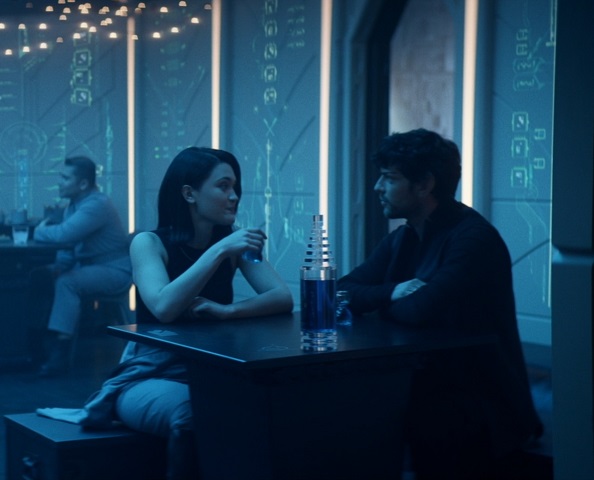
At a canteen or mess hall on the Artifact, Soji and Narek sit down and discuss what happened last week. She asks him flat-out if he’s been following her, and it seems that this sequence takes place immediately after last week’s episode, as Soji says she “just now” visited the disordered Romulans. She presses him, asking if he works for the Tal Shiar. He says no, of course, but she is unconvinced. We can’t trust Narek at this point, so when he says he doesn’t know what happened to the Romulan vessel or to Ramdha, we – like Soji – don’t believe him. He plays his cards close to his chest and clearly knows more than he’s letting on. In this scene, I wonder if the blue drink they were sharing was meant to be Romulan Ale? This drink has appeared a number of times in Star Trek and it would be a nice reference if it were!

Soji and Narek share a drink on board the Artifact.

Narek tells Soji he wants to show her a “Borg ritual”, and for a moment I wondered if he might actually know something about Borg behaviour or even their origins. But it turns out it was a joke/metaphor, as the two slide in their socks along an uninhabited part of the Artifact. Narek presses her on her background – she learnt to speak Romulan “some time before May 12, 2396” – which is give-or-take three years before the events of the series. Given that Dr Jurati believed that Dahj only had around three years’ worth of genuine background – everything in her records before then seemed to have been made up – this fits with what we know. Could the 12th of May 2396 be Soji and Dahj’s activation or creation date? Narek pushes Soji too hard for information, saying he knows she wasn’t aboard a ship she claims to have been on around that time, and she takes offence and leaves, pushing past him on the way.

Back on Vashti, Picard explains to the nun that he wants someone to join his cause. Elnor offers him a meal, then storms off, clearly upset at Picard’s reappearance just like the Romulans in town had been. It’s here that we learn – contrary to my expectations, I have to admit – that Picard did nothing to aid the Romulans either on their homeworld or on Vashti after the attack on Mars. After his resignation, he simply went home to the château. No wonder the Romulans are so upset – Picard had been the face of the Federation when they promised to help, and after only a tiny fraction of that help had been delivered, they reneged on it and Picard simply disappeared. He seems never to have returned to Vashti after the flashback sequence at the beginning of the episode, even abandoning Elnor.

An awkward reunion.

The nun calmly scolds Picard – “because you could not save everyone, you chose to save no one”, she tells him, and it’s true, Picard even admits it himself. The attack on Mars is not the issue in and of itself, it was merely the catalyst for what really happened to Picard – Starfleet and the Federation broke their commitment, and when he threatened to resign in protest, instead of recognising the error of their ways and doing things his way, they simply accepted his resignation. This moment is what broke him. The attack on Mars set the stage, but Picard was reminded thereafter not just of Starfleet’s petty factional politics, but of his own unimportance to the organisation he’d dedicated his life to.

He can’t go back and undo it, building up a new fleet and saving lives. It’s too late for that – and it is a regret that he will have to live with. I’m sure we will see more of Picard wrestling with those feelings in future episodes, but for now at least, the nuns give him a chance to begin to make things right for at least one Romulan – Elnor. The shot of Elnor standing outside the convent, holding a thin-bladed sword with the reddish-coloured leaves in the background was clearly inspired by Japan. Elnor is, in this moment anyway, a samurai warrior.

Elnor with his sword on Vashti – definitely a Japanese-inspired look.

Picard and Elnor sit together, and it’s an awkward conversation as Elnor clearly feels aggrieved by Picard’s abandonment. He had seen Picard as a father figure, clearly, and his disappearance from Elnor’s life left him with the nuns. Picard steers the conversation away from the past to his mission to find Maddox and Soji, but Elnor says that, as Picard is only interested in him now that he finds him useful, he’s inclined to abandon him the way he was abandoned, and storms off.

Dejected, Picard heads back to town. Rios tells him that he’ll have to wait seven minutes before they will be able to transport him through the planet’s defences – and alarm bells started ringing immediately for me! This whole sequence was so well-constructed. The seeds were sown in earlier scenes: having to bribe his way to the surface, the cold reception he received from the townspeople, the nun confirming he abandoned the rescue project, Raffi on board the ship finding out that he’d been spotted and identified, and now finally the fact that he’ll have to wait alone for rescue. A lot can happen in seven minutes – Picard is clearly in danger.

His stubbornness gets the better of him back in the town, and he sits down at a table in one of the saloon-type places, much to the ire of the Romulans who were already there. One confronts him, as we knew was sure to happen, and it turns out that he had once been a Senator – before the supernova.

We get a little more information here about the rescue armada. Some of the ships were already in service at the time of the attack on Mars, and over a quarter of a million Romulans had been relocated to Vashti at the time of the attack. Rather than waiting for the whole fleet to be complete, Picard and Raffi had been working in the meantime. The Senator – and the other Romulans – detest Picard, both for his own failings and for the decision made by the Federation to pull out of helping them. The former seems fair, but the latter does not as we know how hard Picard fought to convince Starfleet to rebuild the fleet and continue to help.

Picard is confronted by an impoverished former Romulan Senator.

The Romulans throw him a sword and push him into the street to duel – we saw Picard showing young Elnor how to fence, and we’ve also seen him fence on at least one occasion in The Next Generation, but Picard is clearly outmatched here by the towering Romulan. He refuses to fight and tries to talk his way out of the situation, when Elnor shows up. He says “choose to live” – and we assume he’s speaking to Picard, encouraging him to pick up the sword he’d thrown down. But as the Romulan lunges for Picard, Elnor steps in and kills him. His statement was a threat – not to cross an assassin of the Qowat Milat. As another Romulan prepares to pull his disruptor and shoot Elnor, he and Picard are beamed aboard La Sirena.

We do have to again examine Picard’s frame of mind here. He berates Elnor for killing the Romulan Senator, but it’s obvious that he would have killed Picard in a heartbeat. The state of the galaxy, and Picard’s own relationship with the Romulans and other factions is not what it was fourteen years ago – yet he doesn’t seem to have fully grasped that reality yet. Elnor stepping in was the only option in that fight – the only other outcome was Picard’s death. As a great diplomat, as well as a former friend to the Romulan people, it must be hard for him to accept that his words mean nothing to them any more.

Elnor has committed himself to Picard’s cause – and now the whole crew is finally assembled. The last main character has slotted nicely into place, and four episodes in, we finally have the whole cast! This slower-paced introduction of the main characters has been spectacularly successful. Instead of trying to dump them all at once in the first episode, we’ve taken our time and got to know more about each of them as the show introduced them, and that’s really been a great way to handle it.

As Dr Jurati meets Elnor, she finally finds out the answer to a question she – and we as the audience – had from earlier: what was the Qowat Milat’s criteria for signing up? The answer – they only volunteer for lost or hopeless causes.

Elnor and Dr Jurati meet aboard La Sirena.

Narek receives a visit from Rizzo back on board the Artifact. She teases him about his “robot girlfriend”, and half-strangles him to get him to tell her the only useful piece of information he’s found so far – he believes, as Ramdha did, that Soji is Seb-Cheneb or “the destroyer”. He cautions her, pleadingly, about avoiding another activation – as happened to Dahj in Remembrance. But Rizzo tells him that the endgame is the same – they plan to kill Soji when they find out where she and Dahj came from. She gives him one more week to get more information out of her, before she will take action. I’m sure that the “one week” timeframe is no coincidence – it’s a reference to something happening in the next episode!

The episode closes with a final scene aboard La Sirena. The bird-of-prey mentioned earlier, and seen in the trailers, is fighting Rios’s ship, trying to push them into the planet’s defence grid which will destroy them. We get to see the scale of La Sirena better here – it’s much smaller than the bird-of-prey, and is thus more manoeuvrable. However, it takes the intervention of another ship to disable the bird-of-prey and save La Sirena – and as that ship is about to be destroyed, Picard makes the decision to beam its pilot on board. The pilot is, of course, revealed to be Seven of Nine.

Seven of Nine’s appearance was unfortunately telegraphed well before she beamed aboard.

Overall, I really enjoyed Absolute Candor. The Qowat Milat are an interesting and unique faction within Star Trek, at least that I’m aware of, and Romulan society – both pre- and post-supernova – is being explored in much richer detail than we’ve ever seen before. Unlike with the Klingons in Discovery, who many have argued overwrote some aspects of Klingon culture and design that had been present in past iterations of Star Trek, nothing we’ve seen of the Romulans so far contradicts what we already knew – it merely advances the story of the faction and adds to our knowledge and understanding. In that sense, the Romulans were a much better choice for Star Trek: Picard’s main faction than the Klingons were for Discovery. Whereas the Klingons’ history and culture had been explored in depth thanks to Worf and B’Elanna being main characters, and the Klingons’ prominent role in many episodes and films, the Romulans, despite being a known faction, were much more of a blank slate for the new creators to work with.

Having the full cast together is great, and now that we’re four episodes in we really should be expecting that. Elnor has two very clear influences, at least in my opinion. This episode played up a distinctly Japanese aesthetic for him – the way the convent was styled and his weapon in particular. The way he fights is reminiscent of samurai stories and martial arts films, further adding to that. But there’s also what I think is a pretty clear nod to Tolkein-esque elves in his appearance – particularly his clothing and his hair. Elnor’s look borrows much from Peter Jackson’s Lord of the Rings and The Hobbit film trilogies – though Elnor is more emotional and less stoic than most of the elves in those films.

I enjoyed a number of the little nods and winks to returning fans: the TOS bird-of-prey, the use of the phrase “jolan tru”, the older style of combadge in the flashback sequence, the bottle of what looks like Romulan Ale on the Artifact, and the comparable state of Vashti and Nimbus III. It’s so clear from practically every moment, whether Picard is on screen or not, that this show is 100% a Star Trek show, and I really needed that. Discovery had plenty of great Star Trek-y moments too, but sometimes those could get drowned out by other elements of the plot. And the Kelvin films similarly had some highs and some lows when it came to feeling like a genuine part of the franchise. Picard, thus far at least, has had very few low points in general, and oozes that elusive Star Trek quality in every single scene.

I loved the return of the TOS-era bird-of-prey.

It was great to see La Sirena in her first real firefight. Rios is clearly a good captain and a skilled pilot – but I’m a little concerned that the ship was so easily outmatched by a vessel a century-and-a-half old. I’m not sure this bodes all that well for future battles, but with Seven of Nine and – possibly – others tailing Picard, perhaps they can count on some additional support.

One of my friends, who I know isn’t a Star Trek fan, texted me yesterday to show me that they were sitting down with family to watch the latest episode. Apparently it has become a big deal for them to watch it together and they’ve loved seeing Picard’s new adventures. I know this is one person and it’s anecdotal, but I really get the impression that Star Trek: Picard is breaking through to new and old fans alike in a way that Discovery never really did. And that’s fantastic news – as someone who loves Star Trek and wants to see more of it, I’m always thrilled when it seems to be a success.

Seeing Seven of Nine again, after such a long hiatus, was great as well, even though she was only on screen briefly. We’ve seen Hugh back, of course, but many returning fans will have much more of a connection to Seven of Nine than to Hugh. The first few episodes have all been about bringing the crew together and setting up mysteries – and this time I finally feel that we’ve turned the page and are now beginning to get some more information about what’s been going on. There’s still so much to learn in the next few episodes, and I can’t wait for next week, where Jonathan Frakes will be back to direct Stardust City Rag. What a great name for an episode!

Absolute Candor – and the previous three episodes of Star Trek: Picard – are available to stream now on CBS All Access in the United States, and on Amazon Prime Video in the United Kingdom and other countries and territories. The Star Trek franchise – including Star Trek: Picard – is the copyright of ViacomCBS. This article contains the thoughts and opinions of one person only and is not intended to cause any offence.