


Spoiler Warning: There are spoilers ahead for Star Trek: Picard Season 1, in particular the two-part episode Et in Arcadia Ego.
With Star Trek: Picard Season 2 approaching, I wanted to take a moment to step back to the Season 1 finale. Et in Arcadia Ego was the two-part ending to the show’s first season, and after the preceding eight episodes had masterfully and slowly built up an engaging story, it unfortunately ended in a way that was, at best, underwhelming. On this occasion I want to look back at Et in Arcadia Ego and ask “what went wrong?”
I think we can summarise the finale’s issues in a single word: rushed. The two parts of Et in Arcadia Ego were overstuffed with plot, partly as a result of the deliberately slow pace of the rest of the season, but also in part because of the decision to introduce new characters, a new faction, and whole new storylines at the last minute. As a result, Et in Arcadia Ego had to rush through far too much narrative in far too little time, leaving significant chunks of it on the table by the time the credits rolled on Part 2.
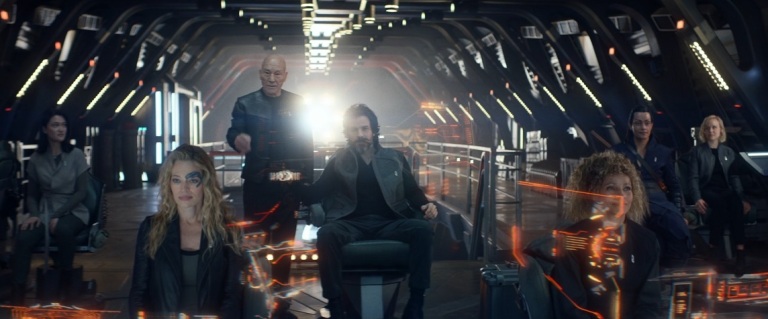
In my view, most of the damage was done in Part 1 and the first half of Part 2. By the time we got into Picard’s speech over Coppelius and his stint with Data in the digital afterlife, Et in Arcadia Ego picked up, and the issues with pacing and the editing of certain scenes abated. Those latter emotional sequences went a long way to salvaging the finale, and Picard’s time with Data – giving the character the proper send-off that he hadn’t got in Nemesis – meant that the story found a second purpose, one which I think many Trekkies appreciated.
There was also some fantastic acting in the second part of Part 2, with Evan Evagora, Michelle Hurd, Santiago Cabrera, and Jeri Ryan all putting in exceptional, deeply emotional performances as their characters dealt with the apparent death of Admiral Picard in different ways. The way Elnor broke down crying at the loss of his surrogate father figure is one of the most emotional moments in the entire season, and both Evagora and Hurd excelled in that moment.

But as the credits rolled on Part 2, after Picard had laid Data to rest and been reborn in a new synthetic body of his own, I was left feeling that, despite the emotional high points as the finale drew to a close, the nicest thing I’d be able to say about Et in Arcadia Ego is that it was a mixed bag; an underwhelming end to what had been an otherwise excellent first season. At worst, I might even call the entire finale disappointing because of its underdeveloped characters and storylines that seemed to go nowhere.
The basic premise of Et in Arcadia Ego was interesting on the surface. After discovering that there are more synths than just Soji, we as the audience had been led to assume that they’re a peaceful civilisation who are being unfairly targetted by fanatical Romulan zealots. But instead we learn that the Zhat Vash were, in a sense, right. The beacon they discovered on Aia did warn of a powerful civilisation of super-synths who would murder organics, and not only that, but Soji’s evil twin Sutra planned to contact them. The synths turned from damsels in distress needing to be saved into a civilisation acting out of self-preservation, but nevertheless needing to be stopped from inflicting mass murder – or possibly even mass genocide – on the galaxy.
It fell to Picard to try to dissuade the synths, to show them that not every organic is hostile to them, and that if they would trust him – and trust the Federation to do the right thing – they would be safe. After a season in which the Federation was not painted in the best possible light this was a cathartic moment, and I understand what Et in Arcadia Ego was trying to do here.
Particularly in Part 2, Et in Arcadia Ego successfully hit some of those story beats, and the emotional high points surrounding Picard’s death, Data’s second death, and the desperate last stand over Coppelius felt great. In fact, I’d argue that the second half of Part 2 came close to rivalling the rest of the season in terms of the emotional side of its storytelling, and if we were looking at that part of the finale in isolation – or if the rest of the two-part story had been up to that level – we wouldn’t be having this conversation today!

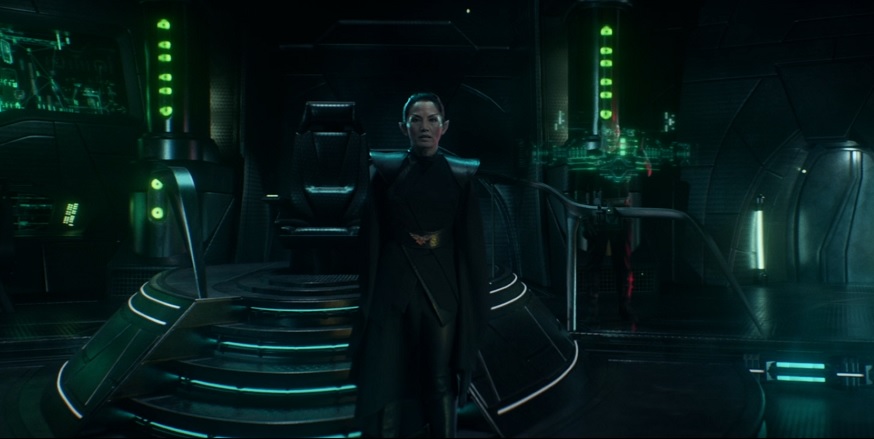
On the technical side of things, before we get into story complaints, Et in Arcadia Ego was a very rushed, poorly paced episode. As a result of trying to cram several episodes’ worth of story into not enough runtime, there were some utterly ridiculous editing choices. At one point, Commodore Oh was stood on the bridge of her Romulan vessel, and appeared to speak a line to absolutely no one.
This line was very generic, too, and the entire scene – if we can be so generous as to call a clip that lasted a few seconds a “scene” – just came across as laughable, not intimidating or concerning. There were also a couple of places where two scenes were very poorly spliced together – at the beginning of Part 2, for example, a speech Picard made to Soji was heard only in voiceover, with Dr Jurati on screen silently watching the synths building their beacon.

The gold makeup used for the Coppelius synths – Sutra in particular, as she was featured most prominently – was just awful. It looked like something out of The Original Series, and I don’t mean that in any way as a compliment. If I’d seen characters on The Original Series so poorly made-up I’d have written it off as a limitation of the medium at the time, and tried to get on with the story. Characters like Bele and Lokai from Let That Be Your Last Battlefield look similarly ridiculous by today’s standards, but with all of the improvements made over the last fifty years… I can’t excuse how poor practically all of the synths looked.
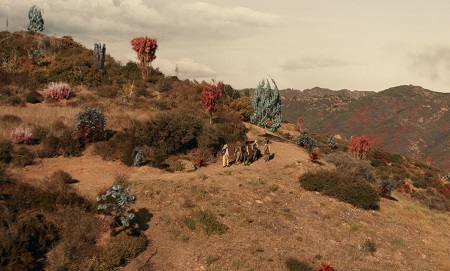
The problem of a lack of diversity in outdoor filming locations plagued Picard Season 1, but it came to a head in Et in Arcadia Ego because it was the finale. In short, the ten-episode season attempted to depict locations on Earth, including France and Japan, as well as the planets of Vashti, Nepenthe, Aia, and Coppelius using outdoor filming locations within a few miles of Los Angeles. And this was painfully obvious as the season wore on, leading Picard Season 1 to feel smaller and less visually interesting as a result. If Coppelius needed an expansive outdoor filming shoot, then other worlds could – and should – have been created on indoor sound stages if long-distance location shoots were out of the question.
Both parts of Et in Arcadia Ego ruined the surprise appearance of a returning actor from The Next Generation. Brent Spiner’s role in Part 1 was telegraphed in the opening credits before his character had appeared on screen, but most egregiously the mistake was repeated in Part 2, where the return of Jonathan Frakes’ Acting Captain Riker was spoiled in the opening credits. The scene where Riker arrived at the head of a massive Starfleet armada to defend Coppelius was treated on screen like a huge surprise, but the fact that he was coming had been telegraphed in advance by the opening credits.
How difficult would it have been to credit special guest stars at the end instead of at the beginning? This also happened with Jeri Ryan’s Seven of Nine in the episode Absolute Candor earlier in the season – a character who appeared right at the end of the episode, in that case, and whose arrival was also treated as a surprise. For fans who don’t follow all of the ins and outs of Star Trek, the fact that any of these characters were coming back was supposed to be a total surprise, and both halves of Et in Arcadia Ego treated their returning guest stars in this way. But their unnecessary inclusions in the opening titles detracted from it. Riker’s arrival in particular felt far less impactful than it should’ve been; by the time the story reached the point of Picard standing alone against the Romulan armada, it was obvious that Riker was coming to save the day.

Speaking of the two fleets, the fact that both the Romulan and Starfleet armadas were comprised of a single starship design each seriously detracted from the way they looked. The copy-and-paste fleets were big, which was visually impressive at first glance, but the longer they remained on screen the more obvious it was that the CGI animators had literally copied and pasted each ship dozens of times.
Fleets seen in past iterations of Star Trek were almost always comprised of a variety of different starship types, and there was the potential to use this moment as fun fan-service, perhaps bringing back Romulan warbirds and scout ships from The Next Generation era, as well as Federation starship types like the Defiant-class, Sovereign-class, and Galaxy-class. Heck, Picard Season 1 had already made a brand-new CGI Galaxy-class model for the premiere, so it couldn’t have been too much extra work to include it here.

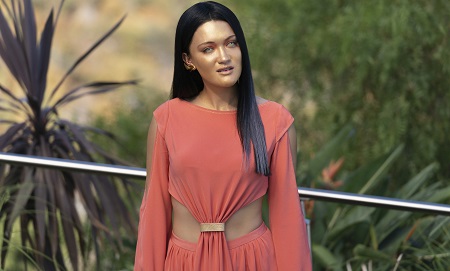
As a final point on the technical side of things, I’m sorry to say that, despite a great performance as Soji across the rest of the season (and as Dahj in the premiere), Isa Briones was not convincing as Sutra, the central synth villain. Her performance was incredibly hammy, and while the character was written sufficiently well that her basic motivation – to protect the Coppelius synths from an outside attack – should have been understandable and even potentially sympathetic, the “I’m evil for no reason and I love it” performance was so bad that it detracted from the character.
Although Sutra being so easily shut down in Part 2 meant that the character as a whole felt like a waste, and was not the angle I would’ve wanted the show to take, in a way I was glad that we were spared too much more of what has to be the entire season’s single worst acting performance.

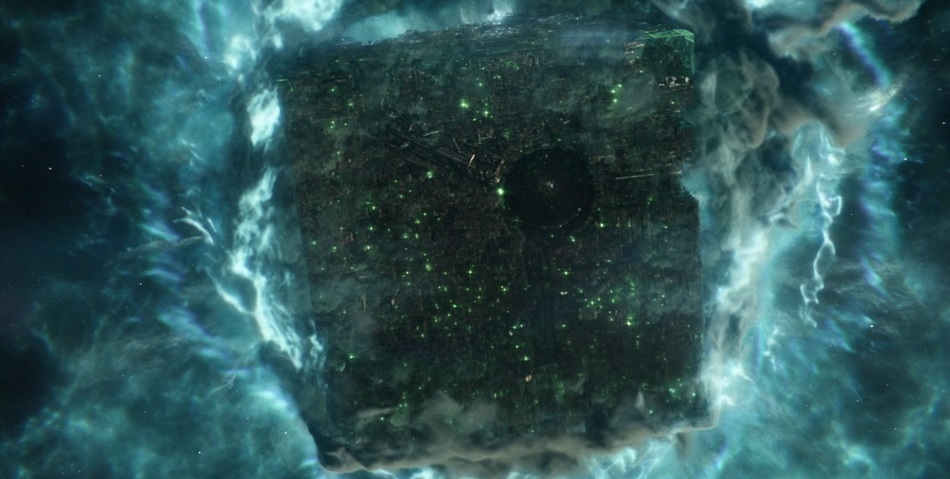
In terms of story, let’s talk about the big picture first of all before we get into smaller narrative complaints. The super-synths that Sutra and Soji planned to contact were so barebones as a faction that they don’t even have a proper name. Their “admonition” – i.e. the vision that the Zhat Vash encountered from their beacon – was superficially intimidating, and the mechanical tentacles that we saw approaching the beacon at the climax of the story likewise looked frightening… but without knowing more about this faction, it was difficult to remain invested in this story.
We didn’t know what the super-synths would’ve done had they arrived. Would they have sought to exterminate all organic life everywhere, or just in the vicinity of Coppelius? Having exterminated, would they have taken the super-synths to live with them in “dark space?” Was their offer to help even genuine or was it an elaborate trap to conquer the Coppelius synths and steal their technology? We have so many open questions, and because it seems that Star Trek won’t be returning to the super-synths any time soon, they’ll be left open and this aspect of the story will remain less than it could have been.
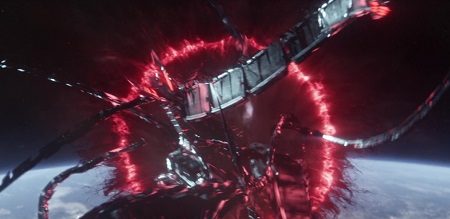
In monster movies – which Et in Arcadia Ego’s super-synths were, to an extent, trying to emulate – we don’t always know everything about the monster. We might not know where Godzilla came from or why the Xenomorph in Alien is going on the rampage, but we at least have some perspective or frame of reference to understand why they should frighten or unnerve us – we’ve seen for ourselves how destructive and deadly the monster can be. The super-synths were barely glimpsed, and while their beacon was interpreted by the Zhat Vash as being dangerous, what we as the audience saw of it on screen was ambiguous at best. Because of that, the super-synths are more mysterious than frightening, and with no frame of reference to go on to showcase their level of technology, weapons, or danger, they’re less interesting and less frightening than they should’ve been.
During my first watch of Et in Arcadia Ego, I referred to the super-synths as the “Mass Effect Reapers” because of their similarities to a faction from the Mass Effect video game series. On re-watching the episodes, those similarities are really hammered home, even to the point where the vision contained in the Zhat Vash’s beacon and the beacon encountered by Commander Shepard in the first Mass Effect game contain striking visual similarities. I can’t believe that this is entirely a coincidence, and while I don’t want to accuse anyone of “ripping off” anyone else… it’s at the very least noteworthy that this aspect of the storyline of Et in Arcadia Ego – and thus of Picard Season 1 as a whole – is not original.

In the episode The Impossible Box, Narek walked Soji through a complicated series of steps to help her understand a dream she’d been having. His motive was to find out the location of her homeworld – Ghoulion IV or Coppelius. At the end of Soji’s dream, she looked up to the sky and saw two red moons and a lightning storm, leading Narek and Rizzo to conclude that they had enough information to locate Soji’s homeworld.
We subsequently learned that the Romulans had a fairly narrow search area and only needed to look within a few different star systems, so it seems reasonable that only a couple of pieces of information might be enough to go on if there aren’t that many possibilities. But when we finally reached Coppelius a couple of episodes later, the red moons were present – but where were the thunderstorms? This had been an absolutely essential part of the plot of The Impossible Box, yet the weather on Coppelius was sunlit and beautiful – some might say almost California-like. There were literally only two bits of information conveyed in The Impossible Box that Narek and Rizzo used to pinpoint Soji’s home planet… and one of them was completely disregarded in Et in Arcadia Ego.
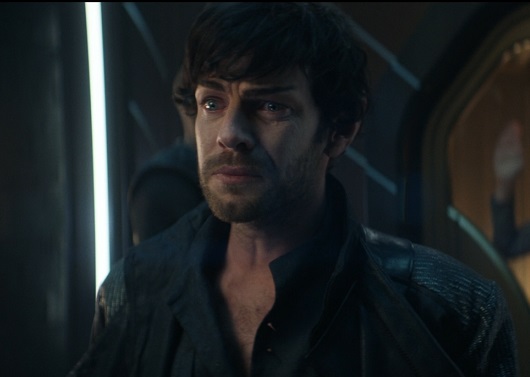
Speaking of being completely disregarded… what happened to poor Narek? I know Narek wasn’t everybody’s favourite character in Season 1, but I felt he was interesting as a character who didn’t fall into the obvious trap of being a clichéd “spy with a heart of gold” who falls in love with his target. Narek remained loyal to the Zhat Vash cause, even though his relationship with Rizzo was complicated and despite his feelings for Soji.
For Narek to simply be abandoned by the story of Et in Arcadia Ego is disrespectful – not only to actor Harry Treadaway, who had put in a great performance – but to us as the audience. We’d been following Narek’s story since the second episode of the season, and as he approached what should’ve been his moment of triumph, and then his moment of defeat, he just vanished from the story altogether.

At the very least it would’ve been worth following Narek’s story to some kind of conclusion. I’d have liked to see how he reacted to Soji shutting down the beacon – would seeing that have finally broken his Zhat Vash brainwashing? Would he have tried to apologise to her and the rest of the synths? Or would he have stayed true to his mission even while being taken into custody by Starfleet or the synths?
We don’t know the answer to any of these questions, and while there is supposedly a scripted but unfilmed scene in which Narek was handed over to the Federation, that hardly seems like rock-solid “canon,” does it? Picard Season 1 didn’t actually feature that many characters in a big way, so for one of the principals to simply be dropped with no explanation midway through the finale is indicative of the fact that this two-parter had far too much narrative to cram into its runtime. It was poor, and whatever viewers might’ve thought of Narek and the earlier scenes and sequences in which he starred, getting some closure on one of the season’s most important characters was necessary.
In an overstuffed story with some very serious themes, there were some very odd choices. Dr Jurati and Picard making jokes while launching La Sirena into orbit felt out-of-place, but thankfully that didn’t last very long. What did last a long time, though, in the context of the story, was the very odd campfire scene with Narek, Raffi, and Rios.
This scene was a complete waste of time. As the audience, we already knew what the Zhat Vash prophecy and philosophy was by this point, so re-telling it in a “ghost stories by the campfire” cliché was unnecessary fluff in an episode that simply didn’t have so much as a second to spare. Secondly, this scene messes with the timing of the entire episode. Narek seemed to be in a mad rush to attack the synths’ compound and stop their beacon, and if we’re to believe that Raffi and Rios had been persuaded too – which appears to have happened in a very short scene aboard La Sirena that really needed to be extended – then the characters themselves shouldn’t be wasting time camping out. It’s also the only scene in the entire episode to take place after dark, which was obviously done to make the campfire more visually dramatic… but the rest of the story seems to have taken place over the course of less than one day, so when did this night occur and why didn’t anyone else on Coppelius experience it? In short, it wasn’t just an unnecessary scene, but one that breaks the continuity of the whole story.

After the campfire scene we came to the poorly-scripted bomb plot. Using grenades donated by Narek and a football that Rios had aboard La Sirena, the trio planned to smuggle a bomb into the synths’ compound and blow up the beacon. I didn’t understand why the synths’ compound was suddenly being guarded as the group approached – except, of course, to ramp up the drama. From the synths’ point of view Raffi and Rios were no threat; they’d been on friendly terms when they parted, so why hassle them?
Dr Soong joined in after they arrived at Coppelius Station, but even he couldn’t salvage what was an illogical and stupid “plan.” Dr Soong had two aces up his sleeve: the video evidence that proved Sutra, not Narek, was responsible for murdering Saga, and his “magic wand” weapon that could apparently disable synths at the push of a button. He used the latter once, on Sutra, and then disappeared entirely from the plot until after Picard’s “rebirth.”

After the remaining trio made a stupid full-frontal attack against the much larger group of synths, it fell to Rios to try to throw the bomb-ball into position… but, naturally, Soji was able to clear it with seconds to spare.
This entire operation was so stupid, and was clearly written to ensure that the heroes’ plan would fail, meaning it would be up to Soji and Picard to save the day. And I won’t dismiss Picard’s speech and the emotional impact of Soji’s decision to stand down – both of those aspects felt great. But they were, unfortunately, sabotaged by this awfully-scripted bomb plot which made no sense, and the immediate disappearance of everyone involved in its aftermath.

Here are just a few of the questions this sequence raised: why didn’t Dr Soong show the footage of Sutra to the other synths? Why didn’t Dr Soong use his “magic wand” on Soji? Why didn’t Rios and Raffi try to talk to Soji and explain the dangers of the super-synths? There was so much wrong in this one sequence, and it was contrived in such a way as to skip over any and all of these points to get to the standoff between Soji and Picard, and Picard’s convincing speech. Unfortunately the route to that otherwise powerful moment felt so unnatural that it detracted from it.
After the bomb plot and the speech, things took a turn for the better, and much of the remainder of Et in Arcadia Ego hit those emotional high points, and as the rushed, almost panicked pacing and editing gave way to a slower-paced story of laying Data to rest and restoring Picard to life, things did improve.

Unfortunately, though, Et in Arcadia Ego ended with many questions left on the table. Having arrived just in time to save the day, is the Federation now committed to leaving an entire fleet in the Ghoulion system to defend Coppelius? If not, it seems like there’s nothing to prevent the Romulans from returning next week and obliterating the synths from orbit. Or perhaps the synths will need to be evacuated and taken to a new, safer location. If so, we saw no indication that Starfleet plans to help with that.
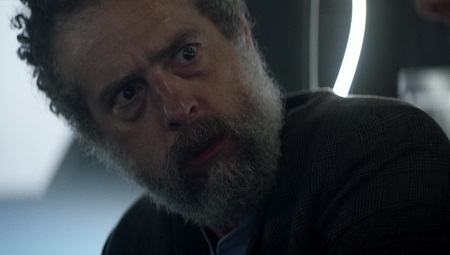
There was also no attempt made to explain Bruce Maddox’s visit to Freecloud, which had been a huge story point in the first half of the season. Maddox’s lab on Coppelius clearly hadn’t been “raided by the Tal Shiar,” and if we’re to understand he set up a second lab somewhere else for some unknown reason, why didn’t he return to Coppelius if it was destroyed; why go to Freecloud instead? This opens up a pretty big plot hole in the entire season, as Maddox now has no reason to go to Bjayzl – a dangerous woman to whom he owed money – other than “because plot.” Maddox was there simply to allow the rest of the story to unfold, and that just isn’t satisfying at all.
And this is just one way in which Et in Arcadia Ego damages the entire first season of the show. With so much rushing around in the final two episodes, with brand-new characters, new civilisations, new factions, new antagonists, and whole new storylines being dumped into the show with two episodes remaining, it makes going back and reflecting on the rest of the season somewhat difficult. Was the deliberately slow pace of episodes like Maps and Legends too much? Should the side-stories on Vashti and Nepenthe have been cut down… or skipped altogether?
Nepenthe was, for me, one of the most enjoyable episodes of Star Trek that I’ve seen in a very long time, and spending time with Picard, Riker, and Troi after so long felt absolutely magical. We caught a glimpse of their retirement, the family life that they deserved to have after their rollercoaster relationship and the tragedy of the loss of their first child. And it was wonderful. But in retrospect, all of that time with Kestra and Soji bonding and Picard catching up with his old friends, cooking pizza in an outdoor oven and hanging out in a cabin in the woods just feels wasted. There was too much plot left for Picard Season 1 to get through, so either stories like Nepenthe needed to be cut down or, realistically, the season needed to be extended. One of the advantages of streaming over traditional broadcast television is that things like schedules don’t mean much – it’s far easier to add an extra episode or a few minutes here and there if necessary. Discovery did exactly that in its first season… why couldn’t Picard?

That’s the real tragedy of Et in Arcadia Ego: the way it makes eight genuinely wonderful episodes feel worse in retrospect. We aren’t quite at the level of something like Game of Thrones, where a truly awful ending has made going back to re-watch earlier seasons feel downright unpleasant, but we’re in the same ballpark.
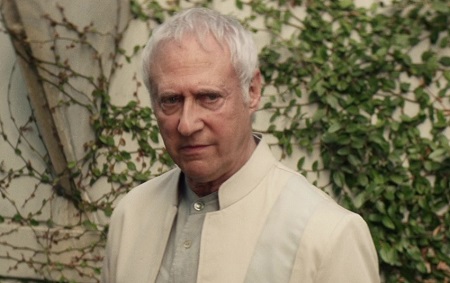
The sad thing is that the synths’ storyline wasn’t bad. Dr Soong wasn’t a bad character, and if he’d had more time on screen I think we could have got more of a nuanced portrayal that showed us a man doing his best to work around the synth ban and keep his people safe. We could’ve learned why he wanted to build a golem for himself – was he dying? Was he trying to become immortal? What drove him to pick up his father’s work? All questions that Et in Arcadia Ego left on the table.
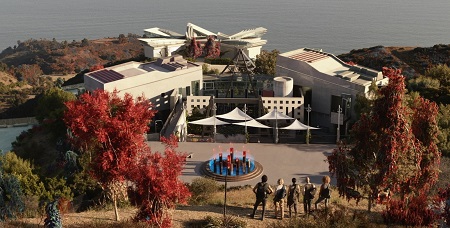
Likewise with Sutra. Despite the crappy makeup and the poor, hammy performance, there was the kernel of an interesting character at Sutra’s core. Her presence turned the synths from a group in need of rescue into a potential danger, and that concept – had it been executed better over a longer span of episodes – could have been interesting.
The super-synths, despite their similarities to the Reapers from Mass Effect and their blink-and-you’ll-miss-it appearances on screen, had been the driving force for the entire season’s plot, and learning more about who they were and what drove them, whether their offer to help was genuine, and whether they had any connection to other Star Trek factions were all points that could’ve been explored. The super-synths, while hardly an original faction in a broader sci-fi environment, were something new to Star Trek, and as Trekkies I think we have a great curiosity about the Star Trek galaxy and the races present within it. Finding out more about the super-synths would have been fun.
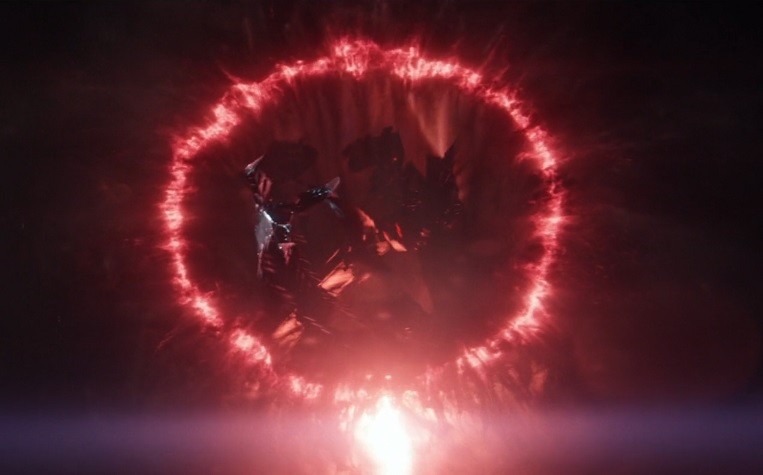
There was also the standoff over Coppelius itself. We’ve already covered how the copy-and-paste ships didn’t look great, but as a story beat this entire sequence was rushed. After Picard and Dr Jurati made their “last stand,” Acting Captain Riker showed up at the last second, positioning his fleet in between the Romulans and Coppelius. And then he opened hailing frequencies to talk to Commodore Oh.
Within moments, the zealous Zhat Vash commander had been convinced to withdraw rather than fight it out… and I think that fails as a convincing narrative beat. The Zhat Vash had been portrayed for the entire season as having an almost-religious zeal; a crusade against synthetic life born out of fear of total annihilation. And in mere seconds, Commodore Oh appeared to abandon that crusade. When faced with opposition, she chose not to fight but to withdraw.

The two fleets looked surprisingly well-matched, and I would have thought that Commodore Oh would have had a chance, at least, of going toe-to-toe with Acting Captain Riker. It wasn’t like the Federation armada had the Romulans horribly outnumbered. And all it would have taken, from her point of view, was for one ship to break through the blockade and fire on Coppelius Station – a single quantum torpedo would probably have done the job.
Commodore Oh and the Zhat Vash simply don’t seem like the types who would come this close to achieving their life’s ambitions – and remember that Oh had been embedded in Starfleet for literally decades – only to be scared away by a few Starfleet ships or convinced to change their lifelong aims by one speech and the beacon being shut down. At the very least, this was yet another sequence which needed much more time to unfold. Heck, I could have happily spent an entire episode on the standoff, with negotiations taking place between Federation and Zhat Vash representatives. The Zhat Vash needed to be talked into withdrawing; I don’t believe that seeing Picard’s speech and Riker’s fleet was anywhere near enough motivation for Oh to take her entire fleet and withdraw, and if it was, we needed to spend a lot longer getting to that point, seeing her agonise over the decision, perhaps facing down mutinous members of her own organisation, and so on.

So we come back to the crux of why Et in Arcadia Ego didn’t succeed as a finale: it contained plenty of interesting characters and storylines, but didn’t have enough time to pay off most of them in anywhere close to a meaningful way. And as a result, it doesn’t feel like most of Picard Season 1’s storylines came to an end at all. Some, like Narek’s, were just completely abandoned; unceremoniously dumped with no explanation given. Others, like Dr Soong’s, were completely undeveloped, leaving him along with Sutra and several other characters feeling like one-dimensional plot devices instead of real people.
The disappointing thing, at the end of the day, isn’t that the ideas and storylines here were bad, it’s that none of them were allowed to play out in sufficient depth. With the possible exception of laying Data to rest, every single storyline that Et in Arcadia Ego brought into play or introduced for the first time were underdeveloped, cut short, and/or not sufficiently detailed. Some individual scenes and elements were less successful in their own right – like the performance of Sutra or the campfire sequence – but taken as a whole, what I wanted from Et in Arcadia Ego was more – more time for these characters, ideas, and narrative elements to play out. It feels like practically nothing in Et in Arcadia Ego saw justice done, and when I had been invested in the story, the characters, and this return to the 24th Century after such a long wait, that was disappointing.
As we approach Season 2 of Picard, which kicks off in just one week from today, I hope that the show’s writers and producers have taken on board the feedback that they surely received about Et in Arcadia Ego. The show’s second season can’t afford to repeat the mistakes made by the ending of its first, and if Picard is to end with Season 3, as some news outlets have been reporting, then it’s going to be even more important for the creative team to consider the problems of Et in Arcadia Ego and make sure that the series as a whole won’t end in such disappointing fashion.
There were successes along the way – great moments of characterisation with Admiral Picard, the “heroic last stand” story that always gets me no matter how it’s told, and of course saying a proper goodbye to Data after eighteen years. The emotional moments present in the latter half of Part 2 went some way to making up for earlier disappointments.
I can’t call Et in Arcadia Ego a failure. It brought together storylines that, even two years later, I find fascinating. The disappointment stems from the fact that those stories weren’t able to play out properly due to unnecessary time constraints, a rushed pace, and, in retrospect, eight preceding episodes that spent too long reaching this point. With Season 2 now upon us, I’m hoping for much better things from Star Trek: Picard!
Star Trek: Picard Season 1 is available to stream now on Paramount+ in the United States and on Amazon Prime Video in the United Kingdom and around the world. The Star Trek franchise – including Picard and all other properties mentioned above – is the copyright of Paramount Global. This article contains the thoughts and opinions of one person only and is not intended to cause any offence.




 Trekking with Dennis