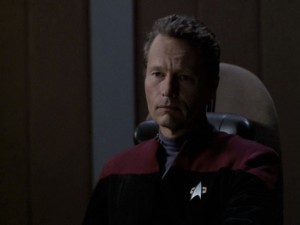
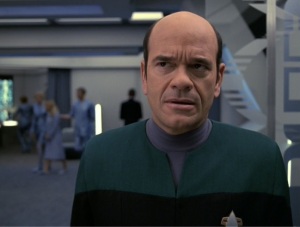
Twelve Star Trek episodes to watch before Picard Season 2 arrives!

Spoiler Warning: There are spoilers ahead for Star Trek: Picard Season 1 and the trailers and teasers for Season 2. Spoilers are also present for the following Star Trek productions: The Original Series Season 1, The Next Generation, Deep Space Nine Season 3, Voyager Seasons 2, 3, and 7, and First Contact.

It seems an age ago that we were eagerly anticipating Season 1 of Star Trek: Picard. In those sunlit, rosy days before the pandemic hit, this website was brand-new, and I spent a lot of time in December 2019 and January 2020 looking ahead and wondering what we’d see when the Star Trek franchise finally returned to the 24th Century – after an eighteen-year wait!

With Season 2 of Picard now only days away, I thought it could be fun to revisit a concept from the early days of the website: a list of episodes that I think could make for interesting background viewing, potentially informing story points and characterisations in the new season of Picard. In the run-up to Season 1 I focused on episodes of The Next Generation that strongly featured Captain Picard himself, as well as a few stories about the Romulans, and a few more stories which could’ve potentially led to big changes in the two decades following the events of Endgame and Nemesis.

We’ll soon be on another adventure with Jean-Luc Picard!

This time, we have a little bit more information to go on! Season 2 will tell a story that involves (to a greater or lesser degree) the following elements: the Borg Queen, Guinan, Q, time travel, and, of course, Admiral Picard himself. On this occasion, then, I thought it could be fun to pull out twelve stories from Star Trek’s past that might just be useful background viewing for Season 2 of Picard. It goes without saying that Season 1 is mandatory viewing, so I’m not putting any of those episodes on this list! You should really watch, or re-watch, all ten before the season kicks off!

My usual caveats apply, as they always do! Firstly, everything listed below is entirely subjective. If I miss out an episode that you think is incredibly important, or you hate all of my picks, that’s okay! We all have different opinions about Star Trek, and there’s no need to fight about it. Secondly, I don’t claim to have any “insider information.” I’m basing my theories and guesses about Season 2 on publicly released material, such as trailers and interviews. And finally, the episodes are not ranked; they’re merely listed below in the order in which they were originally broadcast.

With all of that out of the way, let’s jump into the list!

Number 1:
Tomorrow is Yesterday
The Original Series Season 1 (1967)

I’m pretty sure this violates the Temporal Prime Directive…

Though The City on the Edge of Forever is perhaps the best-known of The Original Series’ time travel stories, Tomorrow is Yesterday preceded it by several months. It was the first episode of the Star Trek franchise where time travel played a major role in the story, and it was also the first in which the crew paid a visit to the modern day. Tomorrow is Yesterday established what went on to become a mainstay in terms of the franchise’s time travel story tropes: being sent back in time by accident!

Aside from being a fun episode in its own right and well worth a watch, Tomorrow is Yesterday is also the episode which introduced the Star Trek franchise to something that appears to be making a return in Picard Season 2: the slingshot method of travelling through time, referred to in this episode as the “light-speed breakaway factor.”

The USS Enterprise using the “light-speed breakaway factor” to travel through time.

Almost every Star Trek series has included the occasional time travel story, and we can look to episodes like Tomorrow is Yesterday for creating that premise. Visiting the modern world would go on to be significant later in The Original Series, in Star Trek IV, and on several other significant occasions in the franchise. For me, some of these stories can feel rather dated, but I think Tomorrow is Yesterday largely avoids that trap!

As we get ready for Picard Season 2 and the franchise’s latest foray into time travel, stepping back to see where it all began during the first season of The Original Series is no bad thing. Tomorrow is Yesterday has a fairly straightforward premise that should be easy enough to follow even for fans who aren’t as familiar with The Original Series, and is well worth a watch on its own merits.

Number 2:
Encounter at Farpoint
The Next Generation Season 1 (1987)
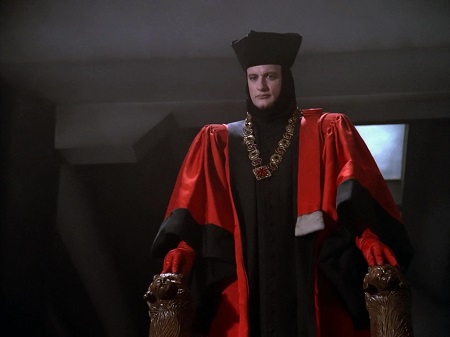
Judge Q.

In the first teaser trailer for Picard Season 2, we heard Q’s voice proclaiming that “the trial never ends.” Encounter at Farpoint is the episode in which Captain Picard first encountered Q, and the episode in which the referenced “trial” began. Q accused humanity (and by extension, the Federation) of being a “dangerous, savage, child-race” who are unfit to travel the stars. Picard and his crew defended themselves against the accusation.

The task Q set for Picard was to unravel the mystery of Farpoint Station, which he and the crew of the Enterprise-D were en route to. However, figuring out the puzzle wasn’t the end of the trial, and even after bringing the Farpoint saga to a successful conclusion, Q departed in ambiguous fashion, hinting that he would return. He did, of course, on a number of occasions!

Worf, Picard, and La Forge on the bridge of the Enterprise-D.

Encounter at Farpoint was the premiere of The Next Generation and established the characters of Picard and Q (as well as many other familiar faces). As we approach Picard Season 2, it’s worth going back to see where it all began. This was the first big puzzle that Q tasked Picard with solving, and seeing how Q operates and what the point of it all is, from his perspective, is well worth taking into consideration.

This is also the beginning of “the trial.” We don’t know to what extent the idea of Picard – and humanity – being on trial will feature in Picard Season 2, but if Q has returned to set up a new mystery there could be a connection – and there could be consequences if Picard and the crew of La Sirena can’t figure it out. Q has toyed with Picard on a number of occasions; Encounter at Farpoint was the first.

Number 3:
Q Who
The Next Generation Season 2 (1989)

Q threw Picard and the Enterprise-D into danger.

Q Who is the episode that introduced us to the Borg – and it’s a pretty scary one by Star Trek’s standards! Captain Picard and the crew of the Enterprise-D have never faced a villain like this, and the Borg represent an existential threat. Q made good on his promise to show Picard that there are dangers in the galaxy that he couldn’t even imagine… and eighteen members of the Enterprise-D’s crew paid the ultimate price.

In a way, Q Who shows Q at his most aggressive, devious, and villainous. By throwing the Enterprise-D into the path of the Borg, he proved his point to Picard about the Federation’s unpreparedness in the most painful way possible. But I don’t believe that’s all there is to the story.

The first Borg seen in Star Trek.

I have a theory about Q Who that you can find by clicking or tapping here. To briefly summarise: Star Trek has made a mess of the history of Borg-Federation contact, and it seems likely that the Borg were already aware of humanity and Earth long before the events of this episode. They may have already been preparing for an attack or assimilation attempt, and Q hoped to prevent that by giving the Federation advance warning.

My theory goes into much more detail! But suffice to say the complicated history of contact between humanity and the Borg makes it seem plausible, at least to me, and shows off an aspect to Q’s character that I think could come into play in Picard Season 2. Q Who also establishes the existence of history between Q and Guinan – something that may come up in Picard Season 2 given that both characters are returning.

Number 4:
Yesterday’s Enterprise
The Next Generation Season 3 (1990)

The Enterprise-C.

Though it’s a fantastic episode in its own right, Yesterday’s Enterprise is on this list for one reason: Guinan. When a rift in the space-time continuum sends the Enterprise-C forward through time, decades’ worth of history are changed, leaving the Federation in a very bleak timeline in which it’s fighting a losing war against the Klingons.

Aboard the warship Enterprise-D, Captain Picard and the rest of the crew are completely oblivious to the change; this version of the characters have only ever known the war timeline. But Guinan alone realises that something has gone wrong, and argues with Captain Picard about how to set things right.

Guinan presents her case to Captain Picard.

Despite a recent controversy, Whoopi Goldberg will be reprising the role of Guinan in Picard Season 2, bringing the character back for the first time since Generations in 1994. Given that we know Season 2 also features a radically changed timeline, not dissimilar to the one seen in Yesterday’s Enterprise, perhaps Guinan will be aware of the change.

Guinan could be the one to talk to Picard about the possible point of divergence, as we know she’d visited Earth in the 19th Century. She may also be one of the only people other than the crew of La Sirena to be aware that something has changed. Guinan also has a history with Q, as we saw in the episode Q Who – so that could also come into play!

Number 5:
Time’s Arrow Parts I-II
The Next Generation Seasons 5-6 (1992)

R.I.P. Data…

Guinan also plays a key role in the two-part episode Time’s Arrow. Thanks to time travel, this is the episode where she and Captain Picard actually have their first meeting, and although the nature of their relationship is still shrouded in mystery, we get a little bit more information about how they came to meet in the first place.

Guinan’s fascination with Earth appears to date back to at least the 19th Century, as she visited undercover during that time period. We know from the most recent Picard Season 2 trailer that Guinan appears to be running a bar on Earth at the dawn of the 25th Century, giving her an association with Earth and humanity that stretches back over five hundred years.

Guinan and Picard in the 19th Century.

Time’s Arrow is an interesting story that mostly focuses on Data, who was of course a huge part of the story of Picard Season 1. It seems as though Brent Spiner will be playing a new role in Season 2 – perhaps another ancestor of the Soong family – so getting a bit of extra data on Data could be worthwhile, too!

One thing I’m personally curious about in Picard Season 2 is if we’ll get any further backstory on the Picard-Guinan relationship. Although Time’s Arrow depicts their first meeting from Guinan’s perspective, we’ve still never learned how they came to meet in the 24th Century from Picard’s point of view. All we know is that it likely happened prior to his assuming command of the Enterprise-D. I don’t know if Picard Season 2 will expand on that in any way… but it would be interesting!

Number 6:
Tapestry
The Next Generation Season 6 (1993)

Q and Picard.

Tapestry is a really interesting episode that deals with the dynamic between Q and Picard, and specifically looks at the nuances present in their relationship. Picard has always viewed Q as an adversary, but I’ve argued in the past that Q doesn’t see himself that way. He views Picard as a friend, and himself as a guide or even an ally – and the way Tapestry unfolds kind of shows why that is.

When Picard is injured on an away mission, he finds himself close to death. At that moment, he encounters Q – who claims he’s already dead. Q gives Picard a chance to avert his death by changing a key event in his past – getting stabbed shortly after graduating from Starfleet Academy – but doing so sets Picard’s life and career on a completely different path.

Lieutenant Picard in an alternate 24th Century.

The important thing here is how Q views the whole affair. We can entertain debates on whether or not Q actually sent Picard back in time or whether it was all an elaborate illusion, but that’s entirely beside the point. Q genuinely believed that he was helping – that by showing Picard an alternate life, he gave him an appreciation for the life he had actually led, even if that meant it was about to end.

I firmly believe that there’s more going on with Q in Season 2 than meets the eye. It’s possible that he didn’t change the timeline at all, and is merely responsible for shielding Picard and the crew of La Sirena from it. It’s also possible that he did change it as part of an elaborate puzzle, one which he hopes and expects that Picard will be able to solve. Speaking of which…

Number 7:
All Good Things…
The Next Generation Season 7 (1994)

Q and Picard in the distant past.

All Good Things is the best example of this aspect of the dynamic between Picard and Q, and could – in theory – be a template for the events of Picard Season 2. In All Good Things, the Q Continuum sets a puzzle for Picard – an eruption of “anti-time.” Thanks to the time-travelling interventions of Q, Picard is able to hop between three different periods of his own past to solve the mystery.

The solution to the anti-time eruption required Picard to challenge his own way of thinking, specifically his linear perception of cause-and-effect. Being able to recognise that events in the future had a causal link to events in the past greatly impressed Q, who seemed to suggest that it was the first step on a path that could one day see humanity evolve into beings comparable to the Q themselves.

Q in his judge’s robes.

All Good Things was also Picard’s last dalliance with Q prior to the events of Picard Season 2. As far as we know at this stage, Q hasn’t been to see Picard in the approximately twenty-five years since the events of All Good Things – but that could change as we get into the new season. It’s possible, at least in my opinion, that Q might’ve been interested to see Picard at his lowest ebb, possibly showing up to see if he could provoke him into action. But we’ll save a detailed explanation of that for my next theory post!

It’s possible that the trailers and teasers for Season 2 have already revealed the nature of Q’s involvement in the story: that he is directly responsible for changing the timeline, he did so on purpose, and he will be the main villain of the season. But I would argue that the “villain” monicker does not fit with Q’s past characterisation, and thus I suspect that there’s much more going on than meets the eye. All Good Things is both a piece of evidence in favour of that argument, as well as a potential blueprint for how a time travel puzzle set by Q could unfold.

Number 8:
Past Tense, Parts I-II
Deep Space Nine Season 3 (1995)

Dr Bashir and Commander Sisko.

We know, thanks to a voiceover in the most recent trailer, that at least some of the events of Picard Season 2 take place in the year 2024. But Picard Season 2 isn’t the first Star Trek production to visit that specific year! In Deep Space Nine’s third season, Commander Sisko and the crew of the USS Defiant found themselves accidentally sent back in time to the exact same year.

Past Tense is an interesting story, as it will mark the first time that any episode of Star Trek set in “the future” at the time it was broadcast will be reached, and I’m sure I won’t be alone in doing a full write-up of its story when we hit the end of August 2024! We could talk for hours about how its depressing presentation of the 2020s seemed a long way from reality once upon a time, but with the growth of homelessness and other economic issues, today’s society feels far too close for comfort to the world of the Bell Riots.

The USS Defiant in orbit over Earth.

I’m not sure how much of Deep Space Nine’s presentation of a fictionalised 2024 will make it into Picard Season 2. It’s possible that the new series will entirely ignore this two-part episode… but I think we should keep an eye open for references or callbacks to some of the characters, events, or even things like brands and products.

Regardless, this will be the first time that two very different Star Trek productions have travelled back in time to the same year, and it might be interesting and informative to take a look at Past Tense to see how Deep Space Nine told us that the year would unfold. It seems as though Picard Season 2 will be set, in part, in California – which is also where Past Tense was set, so that’s another point of connection. I’m not expecting a huge crossover with this one single Deep Space Nine story, but there could easily be references made to it.

Number 9:
Death Wish
Voyager Season 2 (1996)
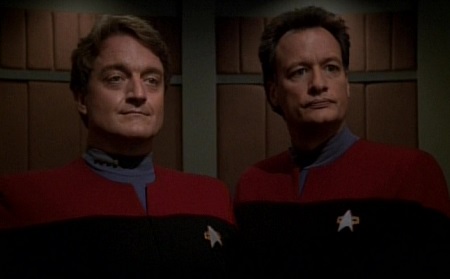
Two Qs?!

Captain Picard wasn’t the only Starfleet officer to tangle with Q. After making a sole appearance in Deep Space Nine, Q hopped over to the Delta Quadrant, where he had several run-ins with Captain Janeway during Voyager’s journey home. Q presented a bit of a puzzle for Voyager; his abilities mean that he could have sent the ship and crew back to Earth with a snap of his fingers. But if we can look beyond that narrative hurdle, Q’s appearances in Voyager added a lot to his characterisation.

In Death Wish, we got our best look to date at the Q Continuum itself. Depicted in a manner that humans could comprehend, the Continuum resembled a rather dilapidated roadside house in the middle of the desert. For the first time, we got to see more members of the Q Continuum as well, and got a glimpse of how Q himself is a bit of a radical by the standards of his people.

Captain Janeway and Tuvok visit the Q Continuum.

The idea that the Q Continuum is not an entirely stable, homogeneous place is an interesting one, and was explored in more detail in the episode The Q and the Grey. But Death Wish also presented a very complex moral question – in the longstanding tradition of Star Trek! This episode can be a difficult watch for some folks because of its discussion of suicide, and it’s absolutely fine to skip it if that subject hits too close to home. If the debate around suicide and end-of-life care is something you’re interested in, though, this is a uniquely “Star Trek” attempt to tackle it.

Q emerges from this story as a reformer – or even a radical – by the standards of his people. We also know, thanks to a line in All Good Things, that he was responsible for assisting Picard when the Continuum set the anti-time puzzle. It’s stories like this that make me think that there’s a goodness in Q; that he isn’t just a trickster or a pure villain.

Number 10:
Future’s End, Parts I-II
Voyager Season 3 (1996)
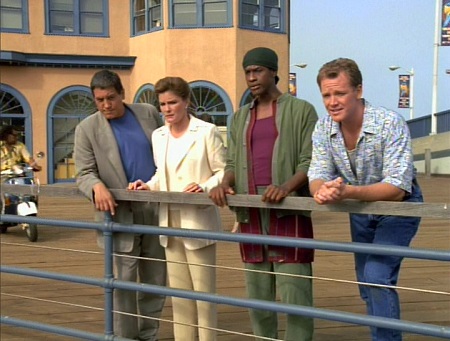
Chakotay, Janeway, Tuvok, and Paris on Earth.

The two-part time travel story Future’s End sees Captain Janeway and the crew of the USS Voyager sent back in time to Earth, circa 1996. It’s another story set in the California area, and I think it’s an interesting episode – albeit one that I feel has become very dated by Star Trek standards!

If Picard Season 2 sticks with things like the Borg and the slingshot method, it seems that the kind of time travel depicted in Future’s End won’t be a factor. But there are still interesting points to consider, such as the Temporal Prime Directive and how Starfleet in the future would come to police the timeline, watching out for changes.

It’s Los Angeles – where Picard and the crew of La Sirena appear to be headed!

There aren’t a great many Star Trek episodes that visit the modern day, and as I’ve already explained I feel that a modern setting can make such stories feel very out-of-date very quickly. Future’s End definitely falls into this trap; its depiction of Southern California has a very ’90s flavour. But it’s a bit of fun, and dare I say almost a guilty pleasure!

I’m including Future’s End here for its modern day time travel story and its focus on California, both of which are elements that we know will be part of Picard Season 2. As with Past Tense, I don’t expect to see a huge tie-in between the new season and the events of this episode, but there may be smaller callbacks and references to some of the characters and events it depicted.

Number 11:
Star Trek: First Contact
Film (1996)
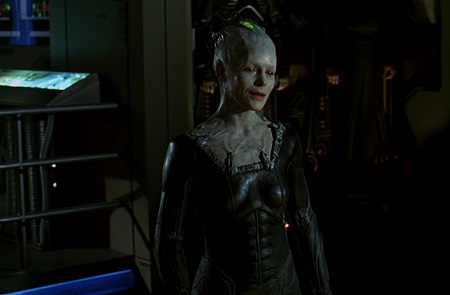
The Borg Queen.

First Contact introduced us to the Borg Queen for the first time, and went into a lot more detail about Picard’s assimilation experience. The Borg Queen was presented as the embodiment of the Borg rather than their leader, and she became a fearsome adversary for Picard and Data over the course of the story.

Season 1 of Picard saw the retired Admiral face his lingering Borg assimilation trauma when he beamed aboard the Artifact in the episode The Impossible Box, but Season 2 will see him come face to face with a Borg Queen for the first time in twenty-five years. For someone who’s clearly suffering from some form of post-traumatic stress, we don’t know what effect that could have.

Data and Picard lead the battle against the Borg.

Picard was violently anti-Borg in First Contact, and we saw hints of that in Picard Season 1 as well. His conversation with Dr Jurati and Elnor in The Impossible Box, as well as the way he responded to some of the xB’s in later episodes, was in line with his attitude to the Borg in First Contact – and I wonder how encountering a Borg Queen will make him feel!

Many Trekkies hold up First Contact as one of the absolute best Star Trek films, and it’s hard to disagree. As an action-packed work of sci-fi with some truly scary elements thanks to the way the Borg are depicted, it’s an exciting ride from start to finish. It also goes into a little more detail about World War III – an event in the history of the Star Trek timeline that could play a role in Picard Season 2. Check out my full World War III theory by clicking or tapping here!

Number 12:
Endgame
Voyager Season 7 (2001)

Some of Voyager’s crew in an alternate 25th Century future.

Almost five years after First Contact depicted the Borg’s biggest attack on Earth to date, Endgame brought back the Borg Queen in a significant way. The interventions of a time-travelling Admiral Janeway from the future saw the USS Voyager make it home to Earth, and in the process dealt a significant blow to the Borg Collective.

Even though it’s been more than twenty years since Endgame, we don’t actually know what became of the Borg in the aftermath of Admiral Janeway’s attack. I’ve always assumed that the Borg Collective was large enough, clever enough, and adaptable enough to survive the neurolytic pathogen that she introduced into the Borg Queen… but because the Star Trek franchise has yet to return to the Borg post-Endgame, we can’t be certain of that.

Admiral Janeway and the Borg Queen.

Even Season 1 of Picard, which depicted the disabled Borg Cube known as the Artifact, didn’t settle the issue. So it’s an open question at this juncture whether the Collective survived, whether it was significantly damaged by Admiral Janeway’s pathogen, or whether it was able to easily shake off the attack. It seems as though no major Borg activity occurred in Federation space in the twenty-plus years after Endgame, though.

Endgame makes this list because of the Borg Queen’s role in Picard Season 2, and I think it could be very useful background viewing, possibly even setting up a story about the Queen herself or the state of the Borg Collective at the dawn of the 25th Century. On a vaguely related note, I took a deeper look at Admiral Janway’s actions in Endgame, and you can find that article by clicking or tapping here.

So that’s it!

Admiral Picard is coming back in just a few days’ time!

Those are twelve episodes (alright, eleven episodes and a film) that I think might make for useful or interesting viewing prior to Picard Season 2! I think we’ve hit most of the key subjects – at least, those that we’re aware of at this early stage – and got a good mix of stories focusing on Captain Picard, Q, Guinan, time travel, and the Borg Queen.

At the end of the day, though, Star Trek’s past didn’t prove all that important to unravelling the events of Picard Season 1 – nor to recent storylines in Discovery, either. So it’s quite likely, in my view, that Picard Season 2 will bring plenty of brand-new characters and story elements into play. That doesn’t mean it isn’t worth going back to these stories and others, but my suspicion at this stage is that the new story won’t rely excessively on what came before.

When Picard Season 2 arrives at the end of next week, I hope you’ll stay tuned for individual episode reviews, theories, and more. Despite the somewhat underwhelming end to Season 1, Picard Season 2 has been one of my most-anticipated shows for almost two years, and I can’t wait to jump in and have another adventure with Jean-Luc Picard and the crew of La Sirena.

Star Trek: Picard Season 2 will premiere on Paramount+ in the United States on the 3rd of March 2022, and on Amazon Prime Video in the United Kingdom and elsewhere 24 hours later. The Star Trek franchise – including Picard and all other properties mentioned above – is the copyright of Paramount Global. This article contains the thoughts and opinions of one person only and is not intended to cause any offence.
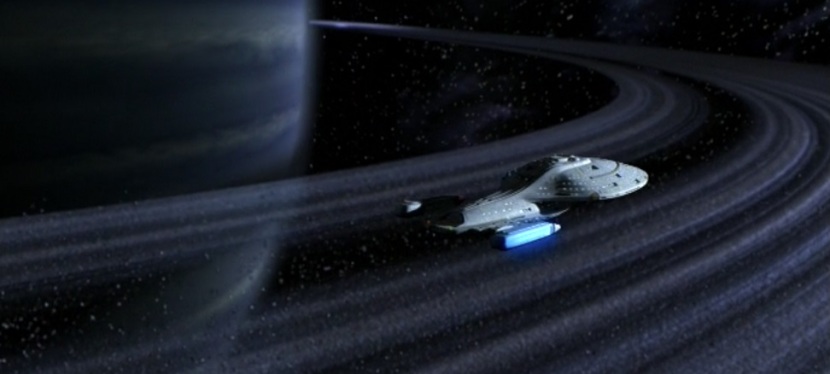
Ten great Star Trek episodes – Part 4: Voyager

Spoiler Warning: In addition to the spoilers for the Voyager episodes on this list, minor spoilers may be present for other iterations of the Star Trek franchise, including Star Trek: Discovery and Star Trek: Picard.

Welcome back to the “Ten great episodes” series! In the first three entries, we looked at The Original Series, The Next Generation, and Deep Space Nine, so now it’s Voyager’s turn under the microscope. In the run-up to Star Trek: Picard premiering earlier this year, I looked at a few episodes and story points from Voyager, especially regarding Seven of Nine and the Borg, as she was scheduled to appear in the new series.

Voyager premiered in 1995, a spin-off from The Next Generation and Deep Space Nine occupying the same mid/late-24th Century setting. Voyager’s premiere episode, Caretaker, had scenes set aboard DS9 and featured Armin Shimerman’s character of Quark as a guest-star, tying the show to the expanded Star Trek franchise. Though The Next Generation had gone off the air six months before Voyager began, its cast were still together making films – Star Trek: Generations was still in cinemas at the time of Voyager’s US premiere. The show therefore joined a growing fictional universe, one which now saw two television series and a film series sharing a setting. There was potential for characters and themes to cross over, as indeed we would see with the Maquis – a faction of Federation rebels who debuted in The Next Generation and featured in multiple episodes of Deep Space Nine.

Where Deep Space Nine had been successful with the idea of a mixed crew of Federation and non-Federation personnel, one of Voyager’s weaker aspects was its attempt to use a similar formula. Chakotay and B’Elanna Torres were the two Maquis main characters, but aside from a few early episodes, and a couple of attempts to revisit the Maquis later on, Voyager’s crew quickly became an homogeneous group that was, for all intents and purposes, a Starfleet crew not dissimilar to what we’d seen on The Next Generation. In that sense, that aspect of Voyager’s story was wasted, or at the very least got lost in its “voyage home” storyline.

Voyager was the first Star Trek series to have a very definite goal or endgame in mind, and though it wasn’t strictly a serialised affair like later Deep Space Nine seasons would be, its one overarching story was the quest to return to the Alpha Quadrant. We’d seen Starfleet ships taken a long way from home before, in episodes like Where No One Has Gone Before, but by the end of the episode they’d always manage to make it home again. Voyager took that storyline but changed it up – leaving the ship and crew stranded on the far side of the galaxy, having to make it home on their own. That was a new direction for Star Trek, and allowed for a show that could be similar to Kirk and Picard’s voyages of exploration, but with a twist. The premise also meant that Voyager could introduce new factions and races without having to return to the Alpha Quadrant’s familiar Klingons, Cardassians, and Romulans, which would allow for more variety and for the show to remain distinct from both Deep Space Nine and The Next Generation and its films.

Star Trek: Voyager’s opening title.

Sadly, as with Deep Space Nine, Voyager has not been remastered, and remains in its original 1990s broadcast format. As a result, it doesn’t look as good on modern screens as the remastered versions of The Original Series and The Next Generation, nor Enterprise, Discovery, and Star Trek: Picard. This difference is noticeable, especially if you’ve got a decent HD or 4K television and are used to watching content in HD or on Blu-ray. I consider this to be a major mistake on ViacomCBS’ part, and I have an article calling on them to rectify the situation, which you can find by clicking or tapping here.

Just to recap this format, I’m not presenting this as a “Top Ten” list of the absolute best episodes. Instead, these are simply ten great episodes that I consider to be thoroughly enjoyable and well worth a watch – especially if you find yourself with lots of time on your hands at the moment. The episodes are not ranked, they’re just listed in order of release. I’ve tried to pick at least one episode from each of Voyager’s seven seasons.

Without further ado, let’s jump into the list – and this is your final warning that there will be spoilers!

Number 1: State of Flux (Season 1)

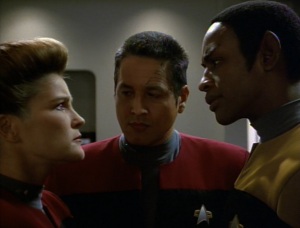
Janeway, Chakotay, and Tuvok in State of Flux.

One of the potentially interesting elements included in the premise of Voyager was the concept of “one ship, two crews”. Both a Starfleet crew, headed by Capt. Janeway, and a Maquis crew, headed by Chakotay, would have to work together on a single ship – and that scenario could lead to conflict and tension. Deep Space Nine had used a similar idea, bringing together Federation and non-Federation main cast members. However, even at this early stage in Voyager’s run, it was apparent that the writers and producers didn’t really know how to make this format work without one side or the other becoming antagonists.

Seska shook up that formula somewhat. Where Chakotay and B’Elanna Torres had largely settled into their roles as First Officer and Chief Engineer, Seska had failed to do so in her appearances across the first season.

Exposing her as a spy is a great story – because it shows a real conflict between Starfleet and non-Starfleet principles. Seska was willing to trade Voyager’s technology to the aggressive Kazon, not caring that doing so would shift the balance of power in the region because she doesn’t care one iota about the Prime Directive. Janeway would stick to this doctrine throughout Voyager – even though it could be argued that destroying the Caretaker’s station was interference in itself! But not everyone on the crew agreed, and certainly not all of Chakotay’s Maquis did.

Seska isn’t a Maquis, though. Like Tuvok, she was a plant on Chakotay’s crew; a Cardassian spy. By this point in the Star Trek timeline, the Cardassians were well-established as villains, so making Seska a Cardassian too was in keeping with that. It does mean, however, than within ten episodes, Chakotay has discovered that two of his senior crewmen were spies. I liked the way he angrily confronted Tuvok about this toward the end of the episode, furious with himself for not realising he was being spied on and manipulated.

Seska’s recurring role as a villain was established in State of Flux, and it was arguably the last good episode where the concept of “one ship, two crews” was genuinely in play, with the idea of a Maquis rebellion a possibility. From this point on, the Maquis would behave like any other Starfleet crew, and while it would be given lip service numerous times across the show’s run, any real conflict or tension between the two groups was gone with the departure of Seska.

Number 2: Tattoo (Season 2)

Tattoo sees Chakotay learn more about the history of his own people – from the aliens who once contacted them.

Robert Beltran played Chakotay in all seven seasons of Voyager, and has been vocal, both at the time and subsequently, about how he didn’t really enjoy it, especially in the latter part of the show’s run. Episodes focusing on Chakotay were infrequent, especially after Seven of Nine joined the crew – and this was a major reason why Beltran was dissatisfied. But Tattoo, from Season 2, is a great example of a Chakotay episode, and how good of an actor Beltran can be when given enough material to work with.

The basic premise of the story is that Chakotay’s Native American tribe had been contacted in the distant past by “sky spirits” – who were in fact aliens from the Delta Quadrant. After finding a clue to their existence on a moon where Voyager’s crew is collecting resources, Chakotay tracks them down.

Representations of Native Americans on television as of the mid-1990s hadn’t always been great. Chakotay’s role, at times, could lean into the trope of the “noble savage” – a character archetype going back centuries, presenting Native Americans as being inherently virtuous, especially prior to European contact. This story leans into that at points – the “sky spirits” claiming to have visited Chakotay’s people because they “respected the land”, and the overall portrayal of the “sky spirits” can both be seen as stereotyping.

Beyond that, however, Tattoo sees Chakotay rediscovering his faith and establishing a connection with his deceased father that he never had in his youth. In that sense, it’s a great character piece, looking at backstory to Chakotay as well as giving him a genuinely emotional arc.

The secondary plot of this episode looks at the Doctor and Kes – the Doctor learns about empathy by Kes putting him through a holographic illness. Kes was a character that I wish had more time on the series – she left the show at the beginning of Season 4, just as she was learning to develop her telepathic abilities.

Number 3: Basics, Parts 1 & 2 (Season 2-3)

In Basics, Maje Culluh and his band of Kazon capture Voyager and maroon the crew.

The Kazon had been antagonists since the very first episode of Voyager, but by this point in the series, the journey the ship was undertaking would soon have to leave their region of space behind – the Kazon, after all, did not span the entire Delta Quadrant. Seska’s decision to defect, as well as Crewman Jonas feeding them secret information, built up what was really a multi-episode story across Seasons 1 and 2 that needed a big payoff – and Basics, which ended the second season on a cliffhanger, definitely achieved that!

The Kazon formulate a plan, aided by Seska and the information from Jonas, to capture Voyager – and they’re successful, boarding the ship and capturing the crew. As punishment for refusing to share Voyager’s technology with the less-advanced Kazon, their leader, Maje Culluh, maroons the crew on a barren planet, forcing them to survive with nothing.

The resolution to this arc brought back Tom Paris (who had briefly disappeared from the ship as part of a ruse) and Neelix’s people, the Talaxians. As a duology of episodes which wrapped up the Seska storyline and was the last major engagement with the show’s first villains, Basics is fantastic. My only critique would be to say that it would have been potentially interesting to see the story last more than two episodes, and focus more on the crew surviving without much technology.

There was also a very funny moment involving the Doctor being holographically projected to the wrong location – in case you don’t remember I’ll leave you to spot it when you watch!

Number 4: The Q and the Grey (Season 3)

Q returns in The Q and the Grey, and Voyager is pulled into a Q civil war.

Bringing Q into Voyager posed a unique problem – as someone who is as close to omnipotent as any character in Star Trek, Q could have easily sent Voyager and its crew home. While his appearances throughout the series struggled, at points, to get around that obvious fact, Q did still manage to be an interesting recurring character for Janeway and co. to deal with.

The American Civil War is one of the periods in history that, for a variety of reasons, I find absolutely fascinating, and The Q and the Grey uses that setting and aesthetic to great effect. Depicting a war between two different factions of the Q Continuum, The Q and the Grey presents the familiar Q – the one we met in The Next Generation – as being on the side of the rebels, with those who supported the status quo opposing his faction.

Quinn, the renegade member of the Q Continuum that Capt. Janeway met in the second season episode Death Wish, was ultimately successful in committing suicide – spoiler warning for that episode. But his death shocked the Q Continuum and led to the outbreak of war. Q wants to have a child – initially with Janeway – as a way to bring about peace, but he’s too late and the crew of Voyager are dragged into the war.

The Q and the Grey built on Q’s previous appearance in the series and simultaneously set the stage for his return, but it was also an interesting episode in itself, and as a history buff I appreciated the reference to a time period I’ve long had an interest in.

Number 5: The Raven (Season 4)

Seven of Nine and Tuvok discover the final resting place of the USS Raven in The Raven.

LeVar Burton, who of course played Geordi La Forge in The Next Generation, stepped up to direct The Raven. After a trilogy of episodes had introduced Seven of Nine at the end of Season 3 and the beginning of Season 4, this was the first big Seven-centric episode in Voyager. I’ve written about this previously, but I wasn’t particularly a fan of Seven of Nine, especially by the time Voyager entered its final couple of seasons. Her character was incredibly static and one-dimensional, and I just found her to be repetitive and boring – probably not helped by the fact that many of Voyager’s later episodes gave her a large role. But we’re getting off topic! The Raven gets a pass as a Seven of Nine episode for two reasons – the first is that, as mentioned, it’s the first one. And the second reason is that this was taking place only a few days or weeks after her separation from the Borg Collective.

Because Seven of Nine experiences flashbacks ultimately caused by Borg technology, I often find myself confusing the events of this episode with the fifth season episode Infinite Regress, which sees Seven of Nine exposed to Borg technology and taking on the personae of assimilated individuals. However, in The Raven, Seven of Nine rediscovers her parents’ ship – the place where she was first assimilated by the Borg.

The Raven is thus the first episode to begin to dig into her background and humanise her for us as the audience. Having an ex-Borg crew member posed questions and issues for Voyager – most notably, how should she behave? Rediscovering all of her humanity and going on to act like any other human crew member would have been a waste, acting logical and aloof would have been too Vulcan (a role already filled by Tuvok), and so instead the producers chose this formula where Seven of Nine would be somewhat of a renegade among the crew while at the same time being taken under the wing of Capt. Janeway and the Doctor in particular to learn lessons in being human. She’d always seem to forget those lessons by the next episode, however, and that’s where my problem with her and the repetitiveness of her storylines begins!

Jeri Ryan is a great actress, though, and The Raven gave her an opportunity to take Seven of Nine away from being cold and methodical – we see her go through an emotional rollercoaster that lets Ryan show off her acting abilities in a way most other episodes don’t. The episode would also establish the existence of Seven’s parents – Magnus and Erin Hansen – who would be mentioned several times in Voyager and ultimately make an appearance.

Number 6: Message in a Bottle (season 4)

The USS Prometheus – a Starfleet vessel the Doctor visited in the Alpha Quadrant.

Message in a Bottle is a funny episode, despite its serious setting and the major change it offers to the overall story of Voyager. Robert Picardo’s portrayal of the Doctor often walked a line between serious character and comic relief, but in this episode he’s joined by Andy Dick, who portrays a different version of the Emergency Medical Hologram. The two must contend with a ship that has been captured by Romulans, and some slapstick comedy ensues.

Aside from the amusing script that gave Picardo a chance to run wild with the character, Message in a Bottle marks a significant turning point in the overall “voyage home” narrative of the series. After several prior attempts to contact Starfleet met with no success, the Doctor is finally able to inform Starfleet Command in the Alpha Quadrant that Voyager and her crew are alive and well, and headed home. This would not only change the way the crew approached their situation, it also set the stage for future episodes, including several appearances by Dwight Schultz’s character of Barclay, who was a key part of the project to establish communication with Voyager.

While this shake-up may not have been as major for Voyager as the introduction of Seven of Nine and the departure of Kes had been at the beginning of Season 4, it was another significant development for the show. The crew, from this point on, would know that Starfleet was looking for them and trying to find ways to stay in communication, as well as bring them home. That optimistic streak wouldn’t be present in every subsequent story, but it remained part of the background and lore of the series as it entered the second half of its run.

Number 7: Night (Season 5)

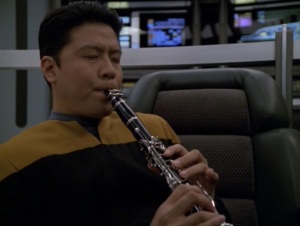
Harry Kim playing his clarinet in Night.

Night is fascinating for two reasons: firstly, and most importantly, it forces Capt. Janeway to reexamine and relive her decision to strand her ship and crew in the Delta Quadrant. We’ll look more at this in a moment. Secondly, it shows Voyager traversing a region of space with no stars – a void. Voids exist in nature, across the galaxy and of course in between galaxies. But Star Trek’s depiction of the Milky Way has usually been that it’s a busy, almost crowded place with plenty of star systems and plenty of aliens to meet. Changing that up entirely, and sending the ship into what seems to be dead space with nothing to explore is a fascinating concept. Personally I feel that it could have been something that lasted longer than half of an episode, and I would have liked to have seen a season or at least a multi-episode arc of Voyager in this kind of setting. There was scope, I feel, for it to have been fascinating as this kind of setting would have forced episodes to be set solely on the ship and we could have seen more interaction between different characters. But that’s a separate point!

Janeway squirrels herself away in her quarters, depressed. Looking back on a decision she took five years ago which left Voyager stranded, she’s wondering if she did the right thing after all. It seems like, in this moment, Janeway had been expecting the journey home to be easier and quicker than it has been, that some other way home would have presented itself by now. Five years is a long time – and Voyager is facing the prospect of still having decades to go. The starless void didn’t cause her to feel this way, it simply robbed her of her everyday distractions of exploring space and managing the running of the ship, leaving her with lots of time to think. This can be a bad thing for someone dealing with mental health (as I can attest).

The episode later introduces the Malon, a species who would reappear several more times and be minor antagonists in the fifth season. The Malon continue Star Trek’s long history of using science fiction to parallel real-world issues, in this case pollution and the emitting of greenhouse gases. Not only do the Malon pollute their environment and the environment of the native life forms, they’re unwilling to change when offered better technology – because changing the way they do things would lead to less profit and for waste exporters going out of business. I love the aesthetic of the Malon too; the dirty, grimy way that they and their ships appear was just perfect.

Number 8: Equinox Parts 1 & 2 (Season 5-6)

Capt. Ransom, from the two-part episode Equinox, is probably my favourite antagonist in all of Voyager.

I’m split on one of the story points in Equinox. While I adore the two-part story overall, the fact that it’s established that the Caretaker from Voyager’s premiere is responsible for bringing Capt. Ransom and the Equinox to the Delta Quadrant was, in my opinion at least, lazy and verging on nonsensical. To very briefly summarise why, Capt. Janeway destroyed the Caretaker’s space station, and that was the only reason Voyager couldn’t be sent back home. The story of Equinox ignores that, and says that the Caretaker would drag ships to the Delta Quadrant and then just leave them to find their own way home when it had already been established that that was not the case. Inconsistencies like this bug me, and while it did come over five years on from Caretaker, as an in-universe point it’s contradictory, and I feel that it would have been easy to find an alternative explanation for the Equinox’s presence.

What I love about Equinox is that it shows how bad things could have been for Voyager had circumstances been different. We got a glimpse of this in Year of Hell, but the Equinox is badly damaged and in far worse shape than Voyager, and the story Capt. Ransom tells of how they were starving and running out of fuel is indicative of just how difficult a journey like this can be.

Morality has long been at the heart of Star Trek, and the moral argument between Capt. Ransom, who believed he was justified in killing a large number of aliens to help his crew get home, and Capt. Janeway, who was outraged by his actions, was engaging and thrilling to watch. A sympathetic villain – which Ransom clearly is – can be absolutely fascinating, and this is an episode which asks us, the audience, the question: “what would you have done in his place?” As Ransom himself says: “It’s easy to cling to your principles when you’re standing on a vessel with its bulkheads intact, manned by a crew that’s not starving.” He isn’t mad, he isn’t evil, he’s a desperate man who was willing to do anything to save himself and those under his command. The responsibility of command, on a ship not suited for the kind of voyage it was being forced to undertake, pushed him to that point, and he’s absolutely one of Voyager’s most interesting antagonists as a result.

The entire premise of Voyager meant that encountering Federation ships would be incredibly unlikely, and while we had seen, by this point in the show’s run, familiar Alpha Quadrant races like the Ferengi, Klingons, and Romulans, this was the first time we got to see Voyager meet other humans and another Starfleet vessel. I’m glad it came late into the show’s run, when it had already found its feet, because I think an Equinox-type episode in Season 1 or 2 might have been too soon.

Number 9: Good Shepherd (Season 6)

Good Shepherd features Capt. Janeway teaming up with some of Voyager’s underperforming crewmen.

Good Shepherd uses a comparable setting to The Next Generation’s seventh season episode Lower Decks, focusing on three crew members who have fairly menial roles on the ship. When Seven of Nine points out that these three junior officers are “inefficient”, Janeway feels like she has personally let them down, that they’ve slipped through the cracks on her ship because of the situation she put them in.

In that sense, the episode is as much about Janeway as it is about the three younger officers. She decides to take them on an away mission to give them a chance to shine, as well as to give them some personal bonding time since she barely knows them. Naturally, not everything goes to plan while away from the ship, and luckily, Janeway and the trio rise to the challenge.

It can be great in any show to take a break from the main cast and focus on someone different. In a Star Trek show, we obviously know that there are more people involved in running the ship than just the bridge crew, so taking a step back and acknowledging that worked great, as it had done in The Next Generation too. Not all tasks on a starship can be epic in scale and heroic, and it was interesting to see the ship from the point of view of three characters in that position. I would have liked to see them return for future episodes, but unfortunately they never did.

The actual story of the away mission, pitting underperforming officers against dark matter aliens, was interesting enough, but Good Shepherd is really a character piece looking at them and their reactions to being thrown head-first into a situation they weren’t prepared to experience.

Number 10: Critical Care (Season 7)

The Doctor is forced to work aboard an alien hospital ship in Critical Care.

Star Trek has always had episodes with a message – and Critical Care takes a critical look at the healthcare system in the United States, particularly the influence of money in the system determining who can get the best care. Money in Critical Care is represented by a patient’s “treatment coefficient”, a complicated, impersonal representation of their perceived “value” to society, allocated to them by a computer. If a patient’s TC was too low, they would be refused medication.

When the Doctor is kidnapped and forced to work aboard a hospital ship using this system, he rebels, trying to force the higher-ups to change the system to provide life-saving care to poorer patients. The whole episode is a send-up of the US healthcare system.

As a character piece looking at the Doctor, Critical Care is great too. He’s come a long way from when he was first activated at the beginning of the show’s run, and the story puts his humanity front and centre – including the ability to be aggressive and devious. He makes the hospital’s administrator sick, deliberately infecting him with a virus. And then he denies the administrator treatment until he agrees to treat all of the poor patients as well.

When Voyager finally recovers him – their tracking him down was the secondary plot of the episode – he wonders if something happened to his ethical programming to allow him to behave that way, but nothing was out of place. He has to live with the fact that he was capable of breaking his own hippocratic oath in order to affect the changes he felt were important, and as a character point for a hologram, that’s very interesting.

So that’s it. Ten great episodes from Voyager’s seven seasons that are well worth a look if you have time. I was an avid viewer of Voyager during its original run, and it was the second Star Trek show I collected on DVD in the early 2000s. While it wasn’t perfect, and some characters and story elements didn’t work in the way the producers intended, it was a great show. Voyager took Star Trek to a wholly different region of the galaxy, one that has yet to be revisited. While it is very much tied to The Next Generation and Deep Space Nine in terms of its timeline, it’s also a unique show in that respect.

Capt. Janeway is definitely one of Star Trek’s best commanding officers. Her determination to lead her crew home, even through difficult circumstances, while maintaining her dedication to Starfleet’s original mission of exploration is admirable. I would love to see her return in some way in Star Trek: Picard or another future series or film.

Voyager would be the last new series set in the 24th Century until Star Trek: Picard premiered earlier this year. In fact, with the exception of Star Trek: Nemesis, everything produced between Voyager’s finale and Picard would be a prequel. Some prequels can be good, but I’ve never been fully sold on them as a broader concept. Voyager was thus the last Star Trek show of the “golden age” in my opinion.

Stay tuned, because up next we’ll pull ten great episodes from Star Trek: Enterprise!

Star Trek: Voyager is available to stream now on CBS All Access in the United States, and on Netflix in the United Kingdom and other countries and territories. The series is also available on DVD. The Star Trek franchise – including Star Trek: Voyager – is the copyright of ViacomCBS. This article contains the thoughts and opinions of one person only and is not intended to cause any offence.