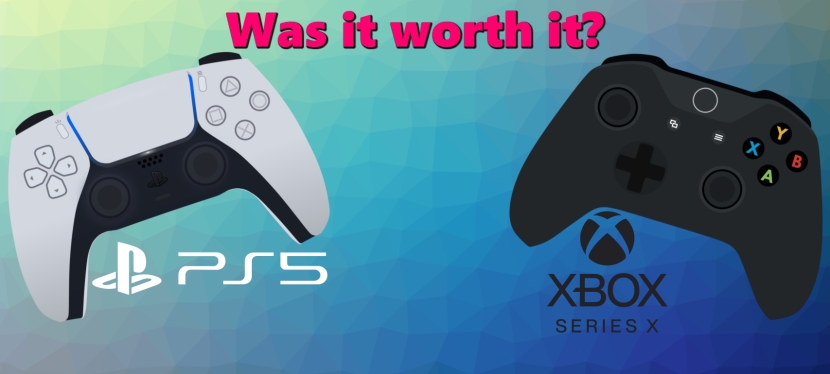
Some next-gen ports are receiving a well-earned backlash

Whenever a new console generation kicks off, it’s inevitable that there will be some games that are released on both new and old systems. This is perfectly understandable in many cases, as games which are new and have had a lot of time and effort put into their development want to get the widest audience possible. Many titles in this category go unnoticed, or at most some reviewers will point out that the game may not be fully-optimised for new hardware. But some other titles are the subject of pretty heavy criticism, and I can fully understand why.

When it was announced that Grand Theft Auto V would be ported to the Xbox Series X and PlayStation 5, many fans were upset. This was a game initially developed for the Xbox 360 and PlayStation 3, and it’s going to be ported again? Grand Theft Auto V has been a juggernaut this console generation after getting its start in 2013, but after more than seven years fans are itching for a new entry in the series.

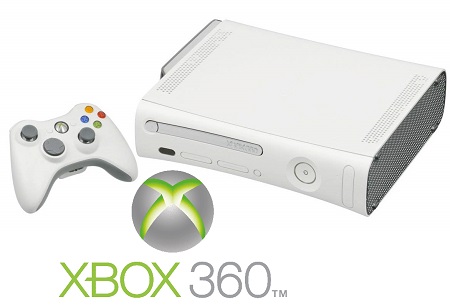
Grand Theft Auto V was originally released in 2013 for the Xbox 360 and PlayStation 3.

In 2014, when Grand Theft Auto V was re-released on current-gen consoles, it was barely a year old. No one at the time begrudged Rockstar the chance to port the title to new hardware because there was an understanding that the game had been a big undertaking. As the Xbox 360/PlayStation 3 era drew to a close, it made sense to bring some new titles to the new systems.

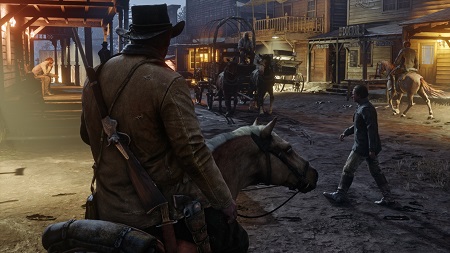
But that was six years ago, and in that time Rockstar has developed and published precisely one new game – Red Dead Redemption II. There are arguments to be heard that the pace of game development as a whole has slowed, and I don’t want to ignore the reality that developing an open-world game on the scale of Grand Theft Auto V is a colossal undertaking. But that doesn’t excuse what seems to many fans to be the company taking shortcuts.

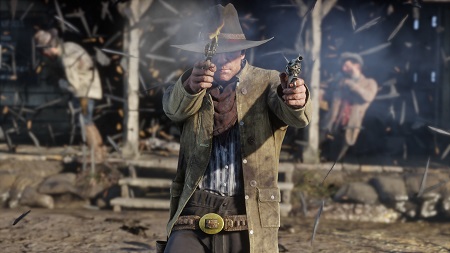
Red Dead Redemption II is Rockstar’s only game in seven years.

What’s worse is that the time and effort spent on creating a next-gen port could arguably be better spent creating a new title. Even in a studio with the financial resources of Rockstar, porting existing games does take time, resources, and personnel away from other projects. So it’s not just a case of corner-cutting – fans feel that the company is wasting time.

Practically every current-gen title is going to be “forward-compatible” with new hardware anyway. What that means is that any Xbox One game should work on the Xbox Series X, and any PlayStation 4 game should work on PlayStation 5 by default – including titles like Grand Theft Auto V. So there’s no need to spend time and money reworking a seven-year-old game for new hardware; existing versions will work just fine.

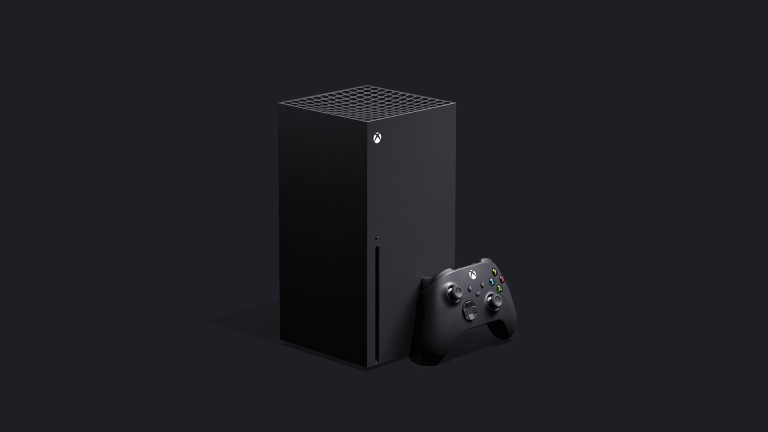
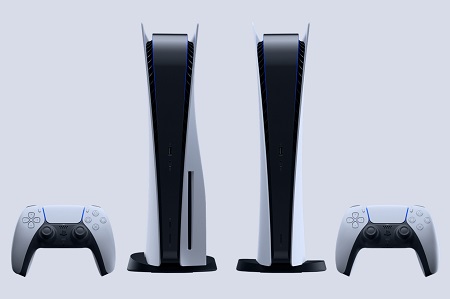
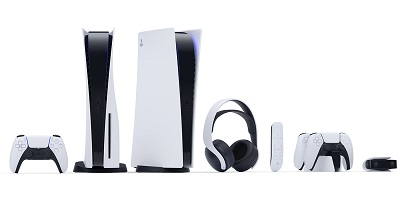
Both next-gen consoles will be backwards-compatible with current games by default.

If the upgrades were going to be free, allowing players who own a current-gen copy of the game to experience the tweaks and changes on new hardware, I don’t think anyone would mind. In fact, players have praised companies like CD Projekt Red, whose 2015 title The Witcher 3: Wild Hunt is receiving such a free upgrade. But Rockstar – and other companies too – plan to re-release their old games and get gamers to shell out more money for the next-gen version. It feels decidedly anti-consumer.

Even though I’m not a big online multiplayer person, I recognise the appeal that Grand Theft Auto V has as an online experience. But after seven years I feel that online experience has run its course, and most players will be ready for a new challenge. Those who want to stick with what they already have can either continue to play on Xbox One/PlayStation 4 or can even bring their existing copy of the game to the new consoles; there’s no need to buy it all over again.

Grand Theft Auto V is getting a next-gen re-release in 2021… eight years and two console generations later.

Another company that has been roundly criticised for its approach to next-gen is 505 Games, publisher of Control. This is a game I’ve been looking forward to playing, as it has great reviews, but it’s another example of next-gen upgrades being denied to existing fans. The only way to play Control will be to buy it again on the new consoles, and to many fans the small upgrade seems like a big expense.

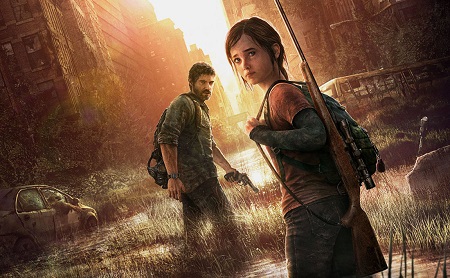
The Last Of Us was similarly criticised at the beginning of the PlayStation 4 era for being re-released in a “remastered” state less than a year on from its PlayStation 3 debut. At the time I was genuinely shocked by the gall of developer Naughty Dog; how can a game less than a year old be remastered already? But The Last Of Us sold very well on PlayStation 4, cementing this business model in the minds of executives as one that works and will rake in cash for comparatively little effort.

The Last Of Us was re-released on PlayStation 4 mere months after its PlayStation 3 premiere.

At the end of the day, that’s what this is all about. Money. Re-releasing a game with a few minor upgrades and hardware-specific tweaks is relatively inexpensive and offers companies huge financial rewards. It should be no surprise to learn that a big company wants to make more money, and I get that we live in a society where profit and growth matter. It’s just that it feels so anti-consumer, and even big companies need to be aware of their reputations. It’s easy to dismiss criticism and backlash as coming from just a whiny minority of hardcore fans, but companies like Electronic Arts have found – to their great cost – just what can happen when they push players too far.

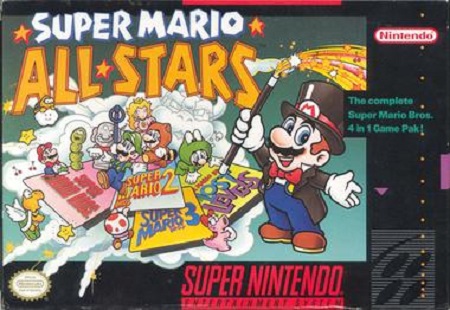
It’s only in the last console generation that the idea of cross-generation releases has been such a big deal anyway. In the days of the SNES and the Nintendo 64 the idea of a game from one system being ported wholesale to new hardware just didn’t exist. There were ports, but they tended to be things like Super Mario All-Stars, which was a compilation of several games instead of a single title, and offered players good value as a result.

There weren’t many ports in the SNES era, and those that did exist were bundles like Super Mario All-Stars.

But if you’d told me in 2005, when the Xbox 360 was launched, that the original Halo game was just going to be straight-up ported to the new system and that players would be expected to “just buy it again” I’d have been absolutely gobsmacked. What a nonsense idea that would have been even as recently as 2005! We’ve come to accept some of these things in the fifteen years since, but even by today’s standards, some of the proposals for next-gen re-releases are drawing well-earned backlash.

Though it wasn’t possible to predict the impact of the coronavirus pandemic even a few short months ago, the changing situation in the world should be something companies take note of. There’s a good chance that many folks are going to have less disposable income at least in the short-term, and being asked to re-purchase a seven-year-old game on a new console is definitely not something that should be considered under current circumstances. Even were it not for the pandemic, I think this practice would still be inappropriate and anti-consumer. But given where things currently sit, it’s even worse.

This is the kind of practice that can start big companies on a slippery slope to reputational damage and more widespread criticism, and I would advise them to tread carefully. Rockstar – or any other company engaged in a similar practice – could garner a lot of goodwill today by announcing that the next-gen version of whatever game they’re working on will be free to anyone who currently owns it. Or, on the flip side, they could continue to draw criticism and ire for their greed and lack of care.

All titles mentioned above are the copyright of their respective studio, developer, and/or publisher. Some screenshots and promotional artwork courtesy of press kits on IGDB. This article contains the thoughts and opinions of one person only and is not intended to cause any offence.

Ten films that (probably don’t) need a video game adaptation!

Spoiler Warning: There are spoilers ahead for the titles on this list.

Gone are the days when your run-of-the-mill popcorn flick came with a video game adaptation. Why? Well, the truth is that many of those games were mediocre or just outright bad, and after a while the entire film tie-in sub-genre became tainted. Gamers weren’t as interested, and at the same time, studios and publishers were able to make more money developing their own franchises instead of sharing the proceeds from a licensed title. There are still tie-ins from time to time, but not to the same extent there were a few short years ago.

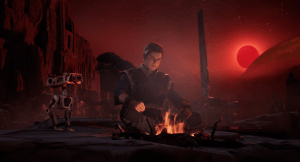
Today, there are a few remaining film franchises that produce video games, but more often than not they’re not direct film adaptations. Instead we see titles like Alien Isolation, which is set in the world of the 1979 film Alien, but isn’t a direct adaptation of any of the films. There are also games like Star Wars Jedi: Fallen Order, which I recently played through. Jedi: Fallen Order likewise uses Star Wars’ setting but tells an original story.

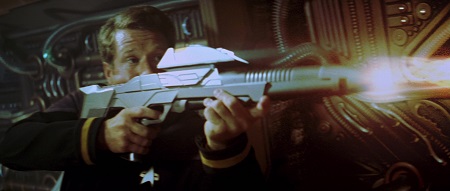
It’s a shame, because over the years there have been some outstanding video game adaptations of films. I talked about this a little while ago when I put together a list of titles that I’d love to see remastered, but the adaptation of Star Trek: Generations is up there as one of my all-time favourite games.

With all that in mind, here are ten films that I’d love to see adapted as a video game. The usual disclaimer applies: these are not titles that I’m saying will ever be adapted, just titles that I feel could be fun to play through – provided the game was good (and had a suitably high budget!)

Number 1: Star Trek: First Contact (1996)

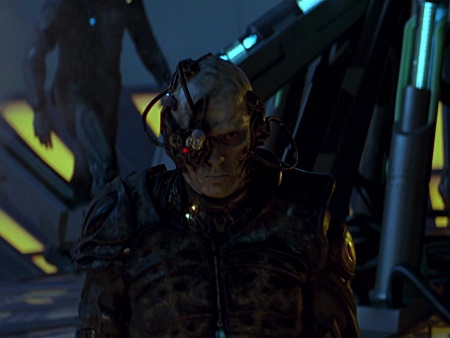
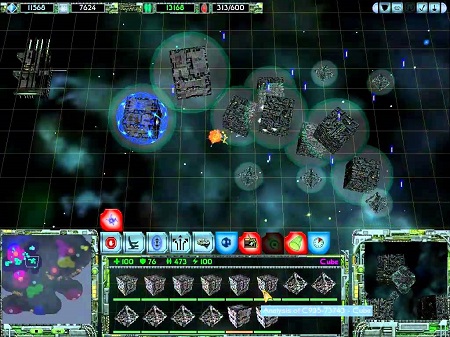
Out of all the Star Trek films, First Contact’s relatively action-heavy nature could make for an inspired first-person shooter. The narrow hallways of the Enterprise-E and the menacing threat of the Borg would make for a terrifying combination, and this could even be a game which veers close to the horror genre if developers chose to go down that route. As I said when I wrote about the Borg a little while ago, out of all of Star Trek’s villains, they’re the ones best-suited to a crossover into horror.

There are several ways this could go, including a multiple-protagonist approach which would see players take on the roles of several of the main cast. Or alternatively, the player character could be a nondescript security officer tasked with retaking the lower decks of the Enterprise-E.

First Contact isn’t exclusively a Borg story, though, and the game could be split into different chapters which would include slower-paced missions set on Earth, repairing the Phoenix and preparing for humanity’s first warp flight.

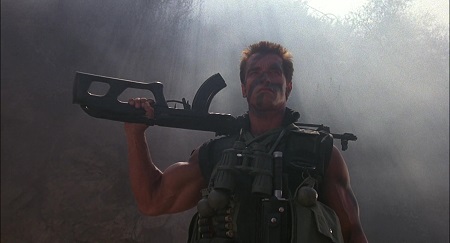
Number 2: Commando (1985)

By coincidence, a video game sharing the title of this action flick was released the same year as the film, and some people still think the game is supposed to be an adaptation – but it’s not! Commando has garnered a cult following that arguably exceeds its status as a competent but otherwise unremarkable title. Arnold Schwarzenegger gives a typical “Arnie” performance, and the story is suitably over-the-top.

But I bet players would love stepping into the shoes of Colonel John Matrix and just going postal on wave after wave of kidnappers, terrorists, mercenaries, and all manner of typical eighties action film baddies! This one wouldn’t need to be a massively high-budget production to be successful; any mid-tier action/shooter could be redressed in the style of Commando and be a success. It would work as either a first- or third-person title.

Number 3: Any of the recent Marvel titles

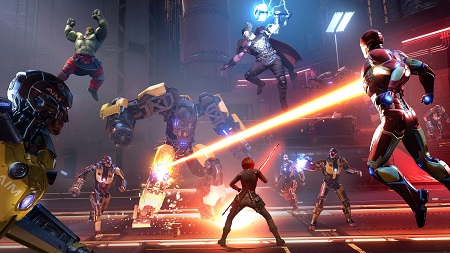
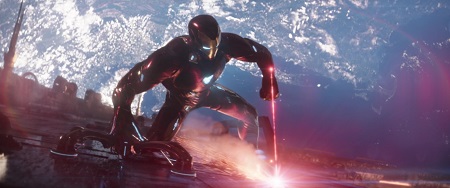
A couple of the earlier films in the MCU received proper video game adaptations, and a couple of others got mobile game tie-ins, but there hasn’t been a major game in the series since the Xbox 360/PlayStation 3 era. The new Marvel’s Avengers video game is plagued with issues, and one of the strangest for me is that it didn’t license any of the actors’ likenesses. I’ve heard the game described as feeling like “a cheap knock-off” of the films as a result.

I’m not the biggest fan of Marvel or of comic book films in general, but even I have to admit that they’re big business right now, and should be ideally suited to a proper video game adaptation. Realistically any of the films could work, but what might be even better is a game that lets gamers play through the events of multiple films, perhaps those leading up to Avengers Infinity War and Endgame.

Number 4: All Quiet on the Western Front (1930/1979)

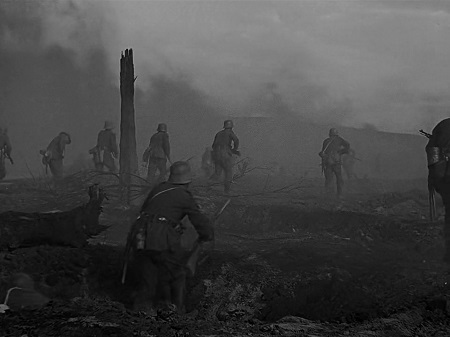
This is really just an excuse to talk about the lack of First World War titles! However, both the original 1930 version and the 1979 remake of All Quiet on the Western Front are great films with strong characters and an emotional story that could be adapted to make a fascinating game.

When looking at war stories, in some respects the “obvious” choice is a first-person shooter – in the vein of Battlefield One, one of the rare shooters to use a First World War setting. But for All Quiet on the Western Front, a real-time tactics game akin to the recent Broken Lines could be great too – that format can work well to tell stories that rely on multiple playable protagonists.

Since Wolfenstein 3D in 1992 – which was a game that led directly to the creation of the first Doom a year later – many war games have used World War II as a setting. There’s nothing wrong with that (though the World War II shooter definitely became stale by the mid-2000s) but the First World War makes for a fascinating, underused setting.

Number 5: Moana (2016)

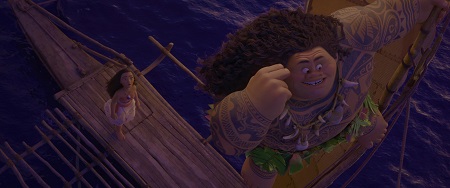
Disney was one of the last companies to give up on tie-in games, and because their films are aimed at kids, it makes a certain kind of sense that they’d feel able to churn out a basic but playable title to accompany big releases. However, by the time of Moana’s 2016 release even Disney wasn’t interested in tie-ins, and while a free mobile game was cobbled together it’s no substitute for a proper video game adaptation.

Moana’s adventure narrative perfectly suits an action/adventure title, as she travels from island to island on her boat to save her people. A 3D platformer with puzzle elements would also work, in the vein of a classic title like Banjo-Kazooie. The world of Moana offers a lot of different environments, including different islands and the realm of monsters, meaning a good variety of levels should be available.

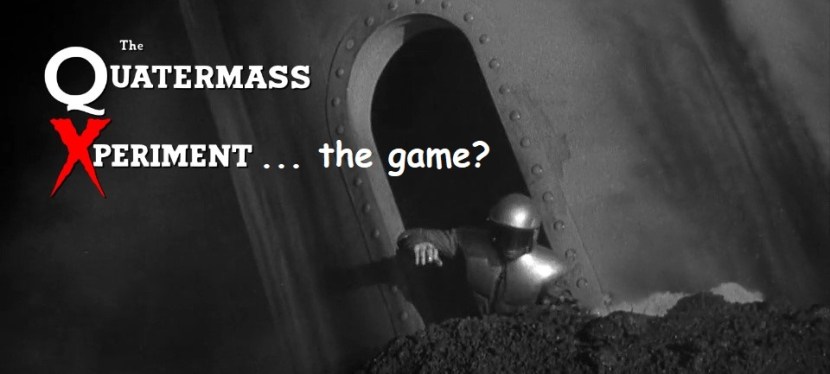
Number 6: The Quatermass Xperiment (1955)

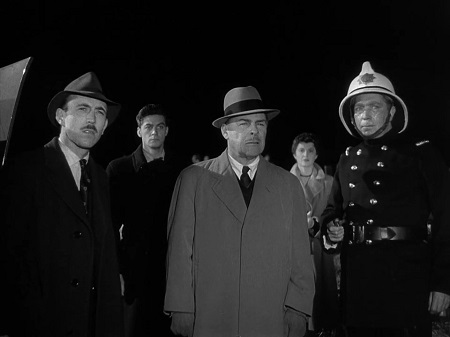
Based on an earlier television special, The Quatermass Xperiment is a fascinating example of mid-century horror/sci-fi, and features a plot in which an alien organism infects an astronaut. The infected man escapes, and the titular Professor Quatermass must work to find him before it’s too late. This setup would make for an exciting horror/adventure title, in which players would not only have to track down the mutating monster, but would have to find clues to figure out what’s happening and what to do about it.

The original film was in black-and-white, and I love the idea of having both a colour and monochrome version of the game to allow players to choose what kind of experience they want to have. I’m not the biggest fan of black-and-white in a general sense, but in some properties it works very well, and it’s something that has only ever been attempted in a handful of modern games.

Number 7: Deep Blue Sea (1999)

Recent titles like this year’s comic Maneater demonstrate that there’s still a market for shark-horror games, and 1999’s Deep Blue Sea is one of the better shark films of recent years. A game adaptation would be a marriage made in heaven then, surely?

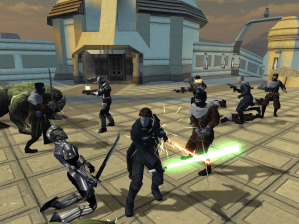
If you’ve played Star Wars: Knights of the Old Republic, you may remember an underwater base on the ocean planet Manaan that served as one of the game’s levels. It was creepy and claustrophobic as players had to contend with not only the wildlife outside, but flooded sections and crazy inhabitants of the base. Deep Blue Sea, being set on an underwater facility, lends itself to that kind of gameplay too, and players could navigate the base and the waters outside while trying to fend off the hungry, overly-aggressive sharks.

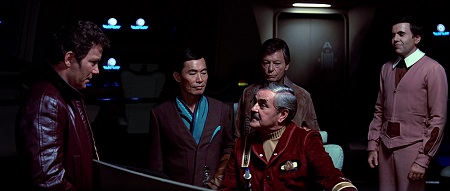
Number 8: Star Trek II, III, and IV (1982-86)

The Wrath of Khan remains for many Trekkies the high-water mark of both the Star Trek film series and of all stories featuring The Original Series’ cast. It also formed the first part of a trilogy of films that told one expanded story, and in many ways, a game that only adapted The Wrath of Khan would be leaving out the rest of that story.

The Wrath of Khan would obviously be the best and most exciting part, and could feature the Battle of the Mutara Nebula as its climactic boss fight. Ship-to-ship combat has been tried in a number of Star Trek games, and in my opinion getting this aspect of the game right would be the biggest challenge – but one that would have the biggest payoff if it was successful.

The Search for Spock could have levels including stealing the Enterprise, which could make for a fun stealth section, as well as sabotaging the USS Excelsior, and The Voyage Home would not only let players pilot a Kingon Bird-of-Prey but would also feature a fun and nostalgic ’80s setting. I love this idea, and producing a fun adventure title from this trilogy would be amazing.

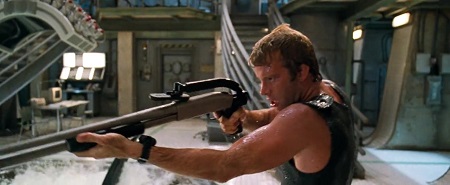
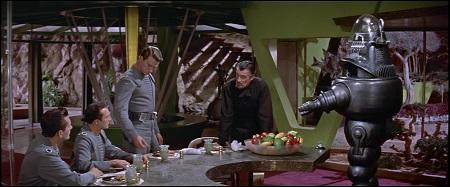
Number 9: Forbidden Planet (1956)

Forbidden Planet is an absolute classic of the science fiction genre, and arguably inspired franchises like Star Trek and Star Wars to a degree. The fictional world it created, with the planet Altair IV and the starship C-57D has never been revisited – though the film has been referenced and paid homage to many times.

This is one film where the plot could be directly adapted, but also we could see a broader game world based on the setting that it created. When you consider the success of the Fallout franchise with its ’50s-esque retro-futuristic aesthetic, there’s clearly a market for the visual style of Forbidden Planet in the gaming realm.

Number 10: For Your Eyes Only (1981)

James Bond films tend to have stories that are well-suited to a stealth/action title. The Nintendo 64 game Goldeneye is a classic example of how Bond can work as a video game. While other attempts to make Bond games have been overshadowed by Goldeneye in some respects, there are several creditable titles that have been released.

For Your Eyes Only might be my favourite Bond film – though there’s certainly room for others, like License to Kill! The storyline is a Bond classic – the secret agent must retrieve a stolen piece of technology that could fall into enemy hands. Roger Moore’s Bond visits a number of exotic locales, gets to drive some classic cars, and of course has an array of fancy gadgets at his disposal. All of which would make for an exciting and fun video game!

So that’s it. Ten films which probably don’t need a video game adaptation – but could absolutely be given one regardless! In a way I can understand why the tie-in video game has disappeared, and while many players won’t be terribly upset or won’t care, there are many recent titles which, had they been released fifteen years earlier, could have been accompanied by a solid video game.

The titles I’ve put on this list are from a variety of eras, including some from well before video games existed! But as we continue to see with titles like Friday the 13th and the aforementioned Alien Isolation, going back to older films isn’t something game developers should be afraid of. Trying to make an unabashed classic into a modern game may draw criticism from some quarters, but if the game is good when it ultimately releases, practically all of that criticism will melt away and the game will find an audience.

This list was just for fun, and to give a few examples of titles that could – but almost certainly won’t – be made into video games.

All titles mentioned above are the copyright of their respective studio and/or distributor. This article contains the thoughts and opinions of one person only and is not intended to cause any offence.
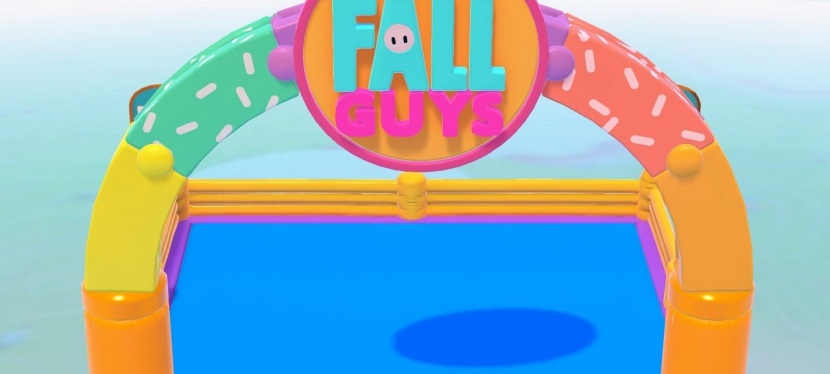
Fall Guys – First impressions

I’m not usually an online multiplayer guy, and Fall Guys – also known as Fall Guys: Ultimate Knockout – is the kind of massively-multiplayer game that I’d ordinarily overlook. The last online games that I played with strangers were Mario Kart 8 and Rocket League, and it’s been a while since I played those. But after hearing great things about its fun, silly gameplay I decided to take a look for myself, and for £16 on Steam it wasn’t a huge risk despite Fall Guys being a new title.

To be up front, Fall Guys currently has some issues with its server capacity; this is something that’s being worked on. High demand for the game seems to have caught developer Mediatonic and publisher Devolver Digital a little wrong-footed, but I’m confident that, with the game reviewing well and being popular, those problems will be fixed before too long. It is, however, understandably frustrating to get disconnected or to have to wait a long time to join a game. But part of the fun of Fall Guys is that its levels are very short – a couple of minutes or so at a time – so it’s easy enough to jump back in, and losing or getting disconnected doesn’t end up causing a huge amount of lost progress. If you’re on the fence about buying the game, though, it’s worth being aware of this server problem. It may be prudent to wait a couple of weeks to see how quickly it can be fixed if you’re really worried about it.

A couple of server error messages.

The first time I tried to play Fall Guys after installing it, I was hit with this server problem. Despite waiting almost half an hour I wasn’t able to join a game. It was only when I came back to try again several hours later that I was actually able to successfully play. Although the server problems made for a poor first impression, Fall Guys is a ton of fun!

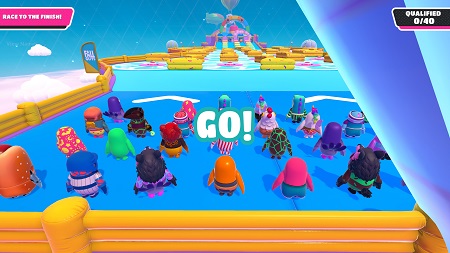
The game is a cross between a competitive “battle royale” and television game shows like It’s A Knockout and Total Wipeout. For some reason, it also reminds me of late-90s kids’ show 50/50. Fall Guys’ levels are designed to look like they’re taken from such shows, deliberately using the aesthetic of soft foam rubber obstacles. In fact, many of the levels are designed like obstacle courses! An indoor children’s play area would be another good comparison when considering the look of the levels.

One of the levels, showing off the “soft foam rubber” look.

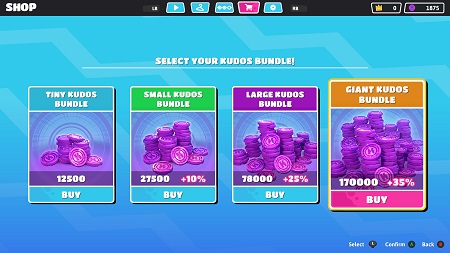
The other side of Fall Guys’ aesthetic is the incredibly cute character design. It’s hard to say exactly what these little guys look like – personally I feel like they’re somewhere between Oompa-Loompas and marshmallows – but they’re absolutely adorable. There are customisation options, some of which can be unlocked simply by playing enough rounds of the game. Other character customisation options are, however, paid for with in-game microtransactions. Because Fall Guys has a very child-friendly atmosphere, it’s worth making sure your parental controls are up-to-date if you plan to get the game for your little ones to play. Obviously I’d prefer a game that had no microtransactions at all, but this is the realm of online multiplayer – and these days, in-game monetisation comes with the territory. If Fall Guys were charging more than its £16 asking price I’d be annoyed at their inclusion, but considering that there are some cosmetic items that can be acquired in-game, and taking into account the relatively low up front cost, I think the microtransactions are okay. They’re easily avoided for those who don’t want to participate.

Microtransactions.

So Fall Guys is a battle royale/game show? How the heck does that work? Glad you asked! 60 players compete in a variety of events, including races, challenges, and some team events, to be the last one standing. Though it’s possible to play the game in such a way as to sabotage someone else’s chances of progressing, for the most part – at least in the early rounds – it’s easier to focus on one’s own character or team. Navigating the obstacles – like see-saws, spinning platforms, and windmills – to win a race or to make it to the next stage is great fun. And the team challenges borrow from the likes of Rocket League – there’s even a football-themed one!

I’m not great at games in general, let alone competitive multiplayer titles. Yet despite my limitations, I had a lot fun. I was able to progress to the latter rounds on several occasions, and the times where I lost in round one or two it usually only took a few seconds to load up a new game and try again. Fall Guys isn’t something you can be great at on your first attempt, even if you’re a regular online gamer. However, with each round lasting only a couple of minutes or so, losing doesn’t feel so bad.

Losing at Fall Guys is no big deal. Just try again!

Each round whittles down the number of players until only a few remain. The first round is supposed to begin with 60 players (though I’ve seen anywhere from 49-60 in practice), and of those, perhaps 40 will qualify for the second round. The game continues in this way until it reaches a final round, with the survivor crowned champion. Though I haven’t won (yet?) I’d reckon playing a full session from the preliminary round to the finale is only going to take maybe quarter of an hour at most. And as I keep saying, any time you’re eliminated, getting into a new game doesn’t take all that long.

There’s a “roadmap” of updates planned for Fall Guys, promising more content, more cosmetic items, and new levels. Though I’m generally sceptical of this kind of business model, the current version of the game has a lot to offer and doesn’t feel like it’s missing anything major. If you play for a while you do start to see the same levels repeat – there are 24 levels at time of writing, including three “final rounds” – but again, each one only takes a couple of minutes, and they’re chosen at random. If you discover a burning hatred for a specific one, I guess it might be annoying to keep encountering it, but Fall Guys is the type of game where even something like that doesn’t have to be a big deal.

An example of a character in the game.

It’s been a while since I played through a game that’s as apologetically fun as Fall Guys. There’s no story, there’s no background or explanation given for why these weird little characters are taking part in a game show, and there doesn’t need to be. It’s just simple, casual, pick-up-and-play fun. I had a smile on my face practically the whole time, and making it to the end of a challenging level when it looked like I wasn’t going to manage in time has been legitimately thrilling.

A lot of care and effort has gone into crafting what could be one of the sleeper hits of 2020. Though the server issue is definitely frustrating, it’s something that will hopefully be resolved in the coming days, and aside from that I encountered no bugs or glitches during my time playing. I’m looking forward to jumping back in!

A race begins!

So this has been my initial first impression of the game after spending a couple of hours with it today. I may write another piece in the coming weeks if I find that I have more to say after spending longer with Fall Guys. But for now, what I’d say to anyone on the fence is that Fall Guys is great fun, and the kind of game that practically anyone could pick up easily. The server issues are a problem, but when I got into the game on my second attempt I didn’t experience too many disconnections and was able to load up a new game every time without having to wait too long. However, it may be worth checking back in a few days or a couple of weeks to see if that’s still an issue if you’re concerned. For £16, though, I can’t really fault the game for the way it plays. If you’re a subscriber to PlayStation Plus, you’ll get Fall Guys for free this month – and if you’re in that category you have no excuse for not trying it out immediately!

Fall Guys is available now for PC and PlayStation 4. Fall Guys is the copyright of Mediatonic and Devolver Digital. This article contains the thoughts and opinions of one person only and is not intended to cause any offence.
Some great Steam Summer Sale deals for PC gamers

Update: The Steam Summer Sale has now ended. All prices listed below will no longer be accurate. Check back in December for a rundown of some of the best Holiday Sale deals.

Spoiler Warning: I’ve tried not to include major spoilers for any of these games, but minor spoilers may still be present.

It’s that wonderful time of year again! No, not Christmas – though we are halfway there, as yesterday marked half-Christmas – it’s Steam Summer Sale time, which means there are going to be some spectacular deals for PC gamers. Sales like these make PC as a platform much more competitive compared to consoles. It’s true that there are sales on console games too, and of course console games on disc are much more easily traded in and resold, but no sale on other platforms can match the sheer number of deals available on PC.

Some titles can be reduced by as much as 90% – and from time to time there are full games available for free too. Even though getting started with a gaming PC – especially a higher-end one – can be more expensive than a console, these sales go a long way to making up for it.

Let’s do some quick maths! If a games console costs £400, and on average each game costs £40 (newer games will cost £55, older ones might be reduced so let’s average it out at £40) then by the time you’ve bought ten games you’ve spent £800 in total. But you could buy a decent gaming PC for £700, and with the deals available in sales you could easily pick up ten games – or more – with your leftover cash. And your investment will only get better over time. A console player with a library of 50 games will have spent £2,000 on games alone at an average cost of £40 each. A Steam library with 50 titles almost certainly won’t cost you anywhere close to that!

Okay, enough maths. Let’s get into the list!

These are titles I personally like and would recommend; this is not a comprehensive list of everything on sale. Some titles may have been mentioned on my previous PC gaming sale list in December (but don’t read that one, it’s out of date now and the prices will be wrong). The list is in no particular order.

All prices are correct in the UK at time of publication. Prices and discounts may vary by location and are subject to change. The Steam Summer Sale ends on the 9th of July at 6pm UK time.

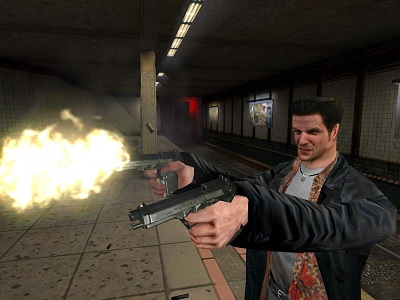
Number 1: Max Payne (65% off, £2.09)

Max Payne, which was a game I first played on the original Xbox circa 2001-02, is a phenomenal game. Bringing The Matrix’s “bullet time” to video gaming for the first time, its third-person shooter gameplay was unique and innovative. Even though the features which I was blown away by at the time have been reused many times since, at its core Max Payne is still an engrossing crime/noir story that’s absolutely worth experiencing.

The blend of gameplay with graphic novel-style cutscenes adds to the dark, true-crime feel of Max Payne’s world.

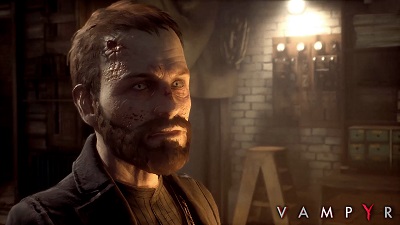
Number 2: Vampyr (70% off, £13.49)

A game set in the midst of a pandemic seems particularly timely at the moment! Vampyr uses the 1918-19 Spanish flu as its backdrop, focusing on a doctor in a great rendition of early-20th Century London. Praise was heaped on Vampyr for its soundtrack and the main thrust of its gameplay.

The team behind the amazing Life is Strange put the title together, and Vampyr gives players a lot of choice about how to proceed through the game.

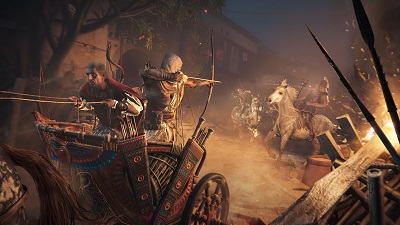
Number 3: Assassin’s Creed Origins (80% off, £9.99) & Assassin’s Creed Odyssey (67% off, £16.49)

The Assassin’s Creed franchise, which kicked off in 2007, almost burnt itself out by the mid-2010s. Publisher Ubisoft pushed for more and more titles to be released – more than one a year at one point, and the result was that the quality dropped and the franchise almost died. Origins rebooted Assassin’s Creed and introduced a number of customisation options and roleplaying game elements, something Odyssey refined a couple of years later. The result was two of the best games in the whole series.

Both games have a free “Discovery Tour” DLC, which is a non-violent walk through some of the real-world history of the games’ ancient Egypt and ancient Greece settings.

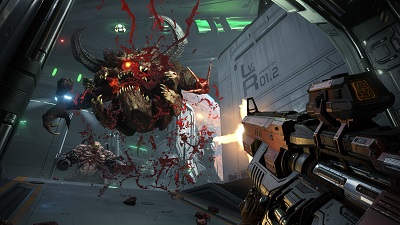
Number 4: Doom (2016) (70% off, £4.49) & Doom Eternal (50% off, £24.99)

Considering Doom Eternal only released three months ago, and is arguably a contender for game of the year, its 50% discount is huge! In 2016, Doom rebooted the long-running franchise, returning the series to its action roots and away from the horror vibe of Doom 3. This worked phenomenally well, and Doom Eternal honed that formula still further.

Both games also have great soundtracks that perfectly fit the tone and setting. Above all, Doom and Doom Eternal are just good solid fun.

Number 5: Terraria (50% off, £3.49)

Terraria is 2D Minecraft. That’s basically its selling point, yet the game is so much more than that. Earlier this year, Terraria received what was billed as its final update, as the team behind it are moving onto other projects. In the nine years since it was released it’s been updated a number of times, bringing new elements to the game. There are some great boss battles which are difficult and require a lot of strategy and skill. And it’s a great game to play with a friend.

I had a lot of fun playing Terraria in co-op, and though it’s designed to play great as a single-player title, that was where I had the most fun.

Number 6: Sid Meier’s Civilization VI (75% off, £12.49)

I’ve sunk countless hours into Civilization VI since its 2016 launch, and this digital board game has never been dull. While I’m not wild about its business model, as there are now a large number of DLC packs, the base game is still really enjoyable for fans of turn-based strategy.

I picked Civilization VI as one of my top ten games of the last decade, and for good reason!

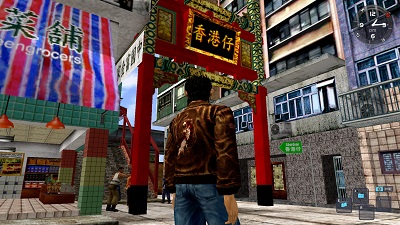
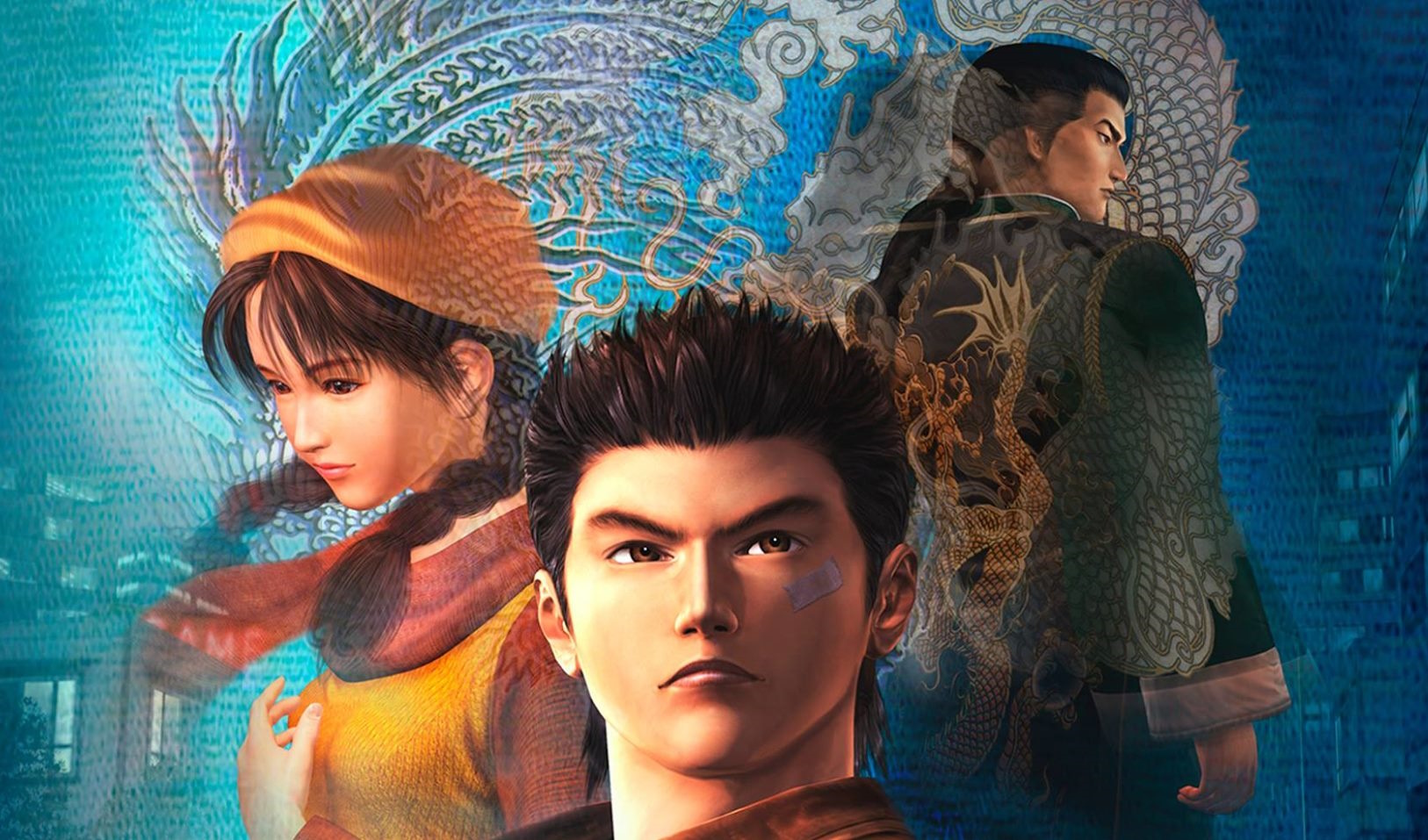
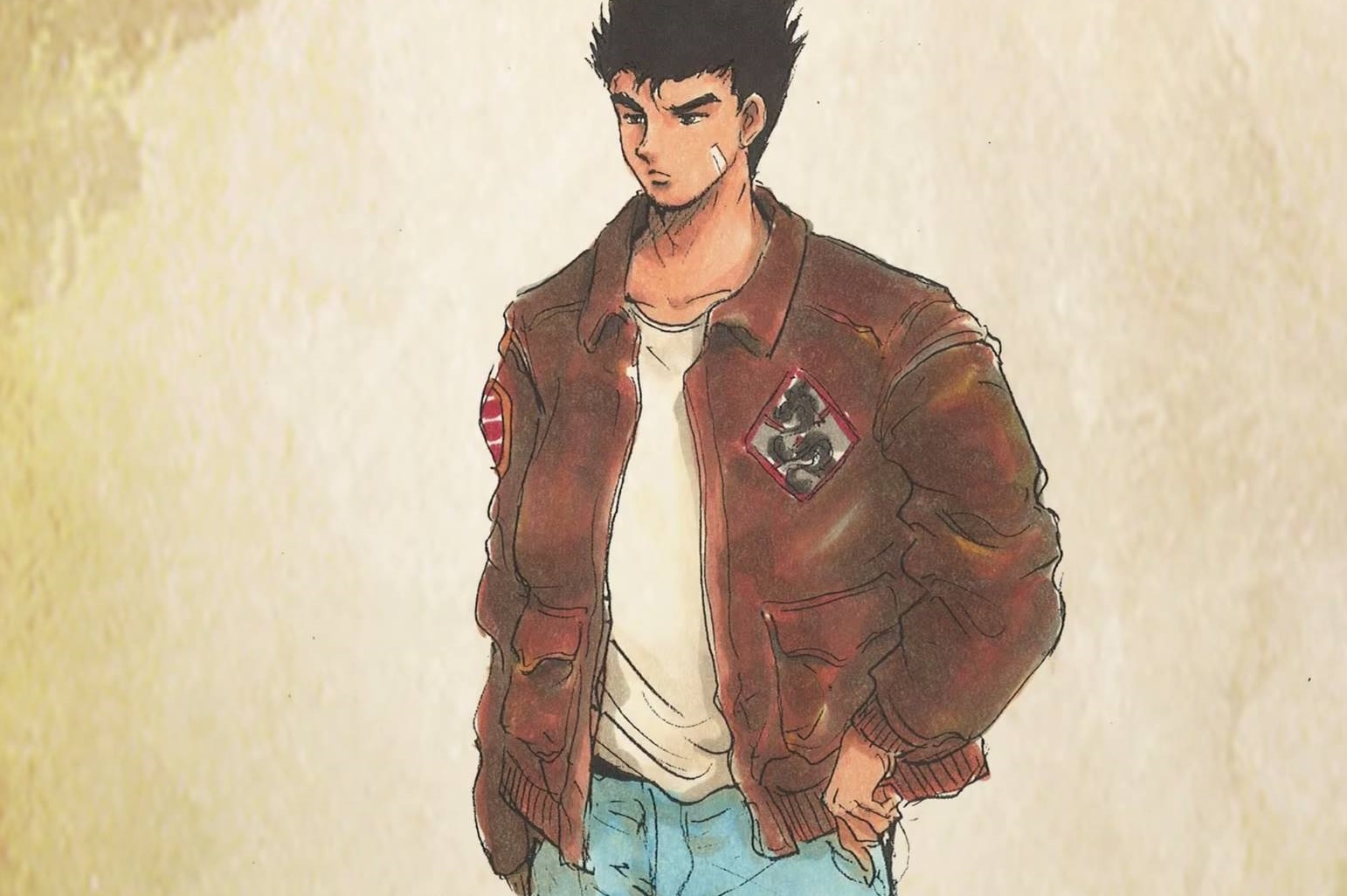
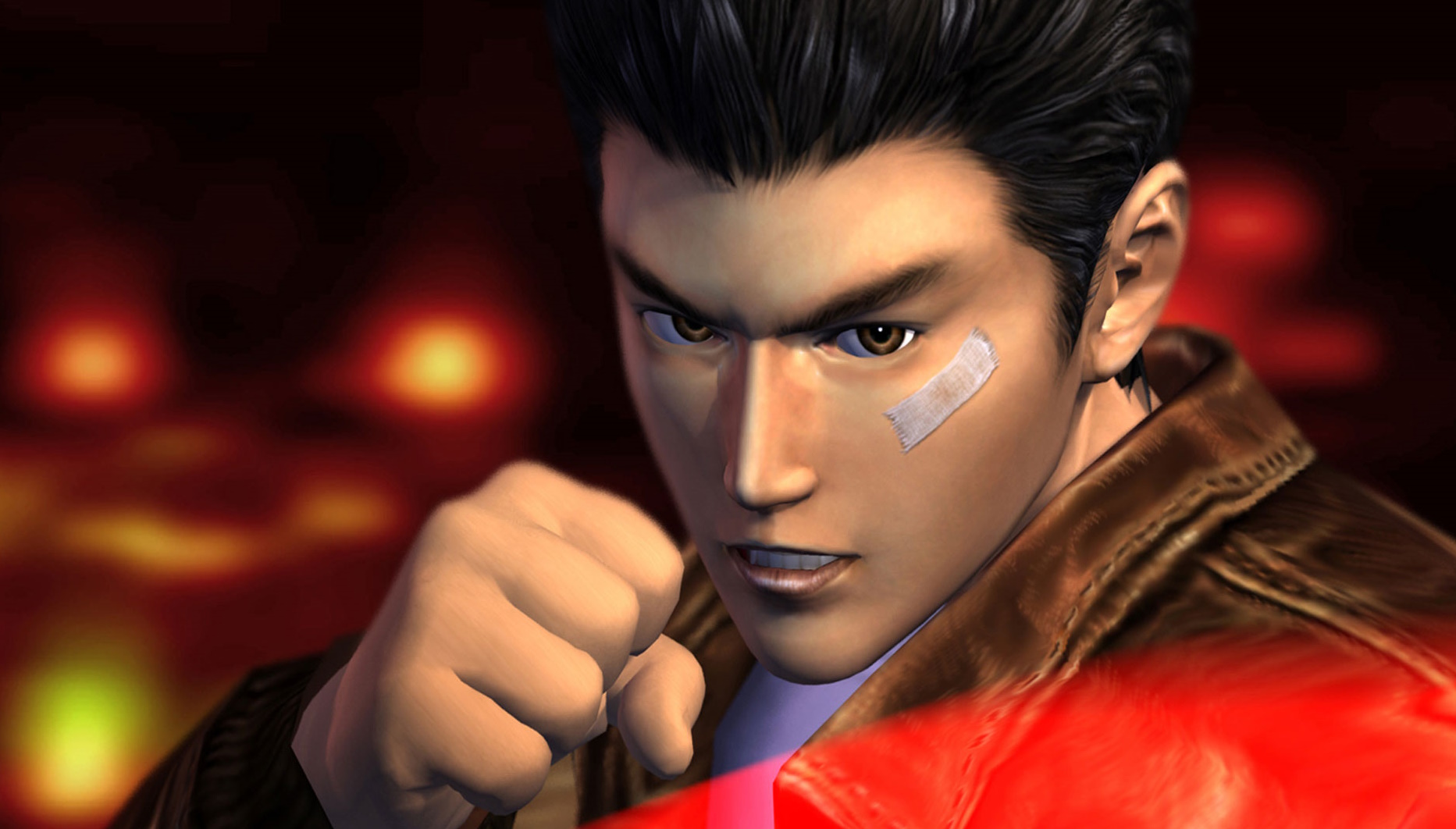
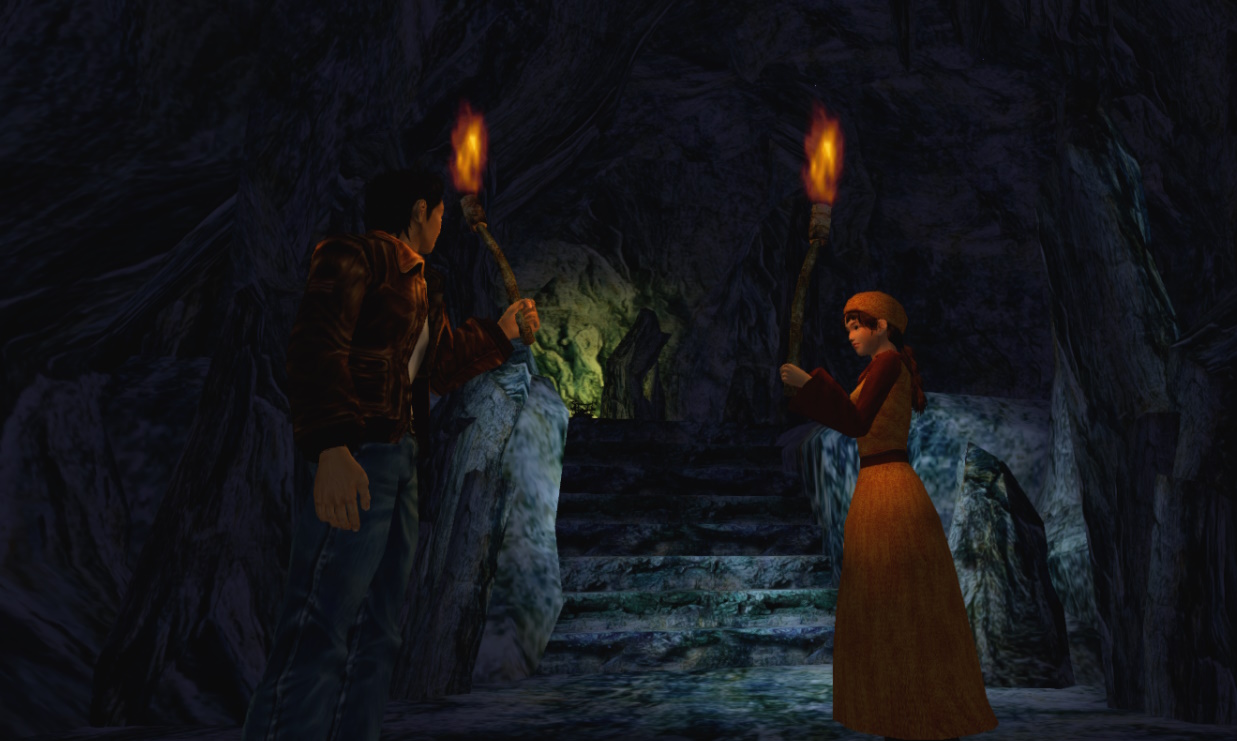
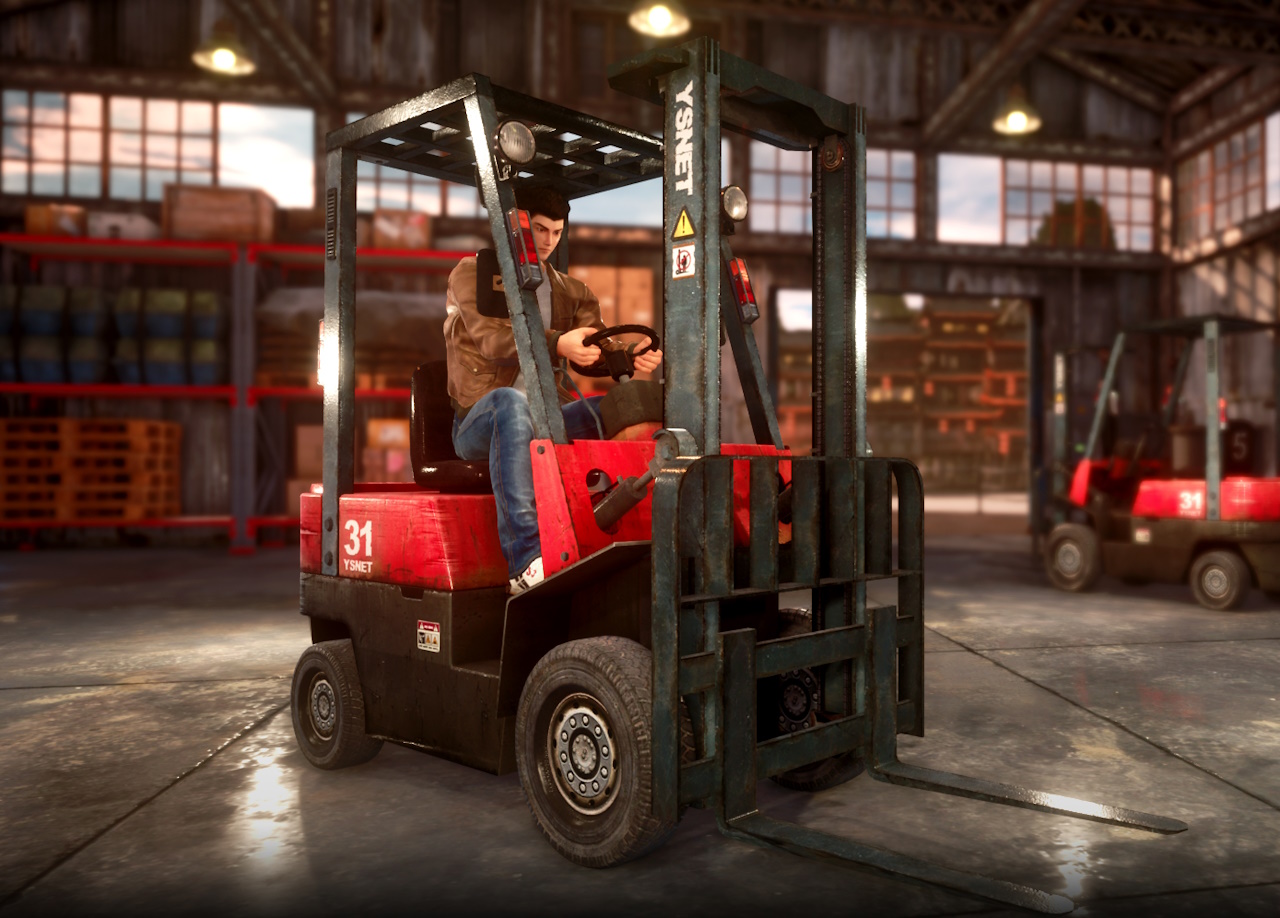
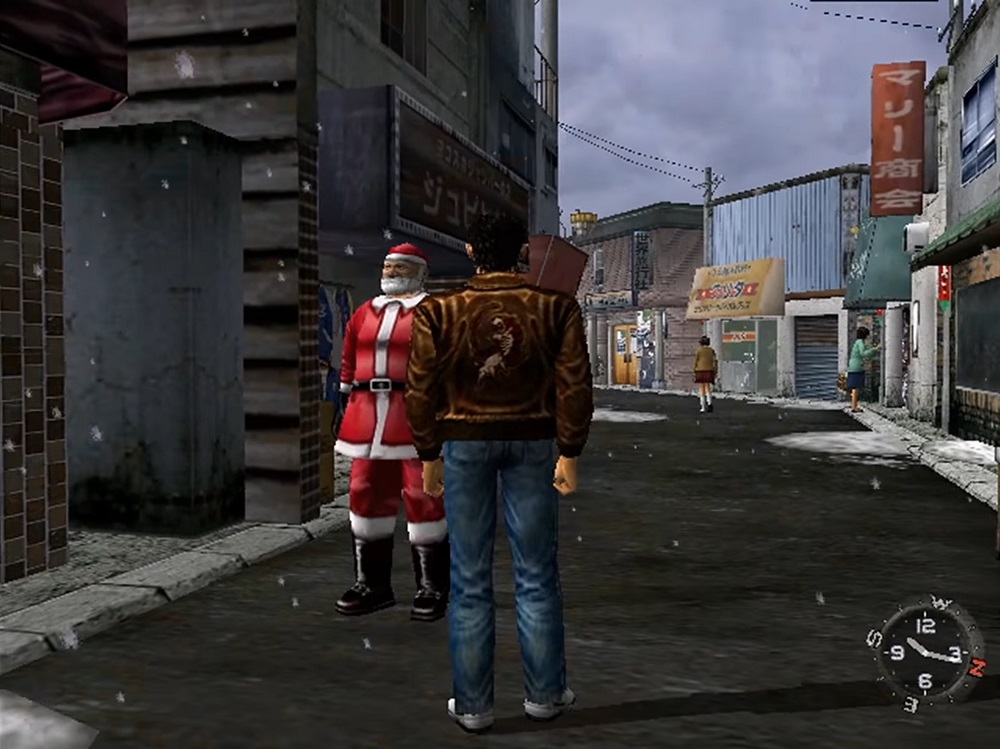
Number 7: Shenmue I & II (75% off, £6.24)

I’ll probably be recommending the first two Shenmue games to everyone I meet for as long as I live! The first entry in the series was the first game I played that really showed me what gaming as a medium was truly capable of. Telling a slow-burning story of revenge that would be at home as a big-budget series or film, Shenmue created a genuinely realistic world, pioneering the “open-world” concept before anyone else. It was unlike anything I’d ever played before, and its story holds up today.

Some aspects of these games haven’t aged well, particularly the controls used for fighting. But if you get lost in the story, as I did, you won’t care.

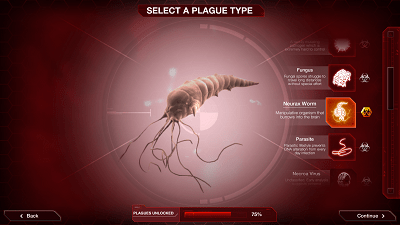
Number 8: Plague Inc: Evolved (60% off, £4.79)

I first played Plague Inc. on iOS, and it’s rare that a mobile game like this can be successfully ported to PC. There are a few examples, of course, but it’s an uncommon success story. Plague Inc: Evolved is very similar in terms of gameplay to the original mobile title: you play as a disease trying to wipe out humanity. Timely, I know. The graphics got a boost and there are a wider variety of options in the current PC version.

Plague Inc. was on my tongue-in-cheek list of inappropriate things to watch and play while self-isolating a few weeks ago.

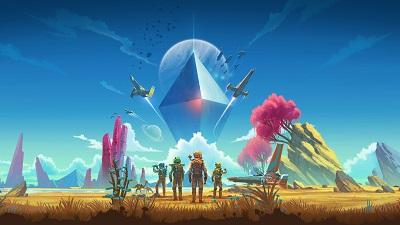
Number 9: No Man’s Sky (50% off, £19.99)

No Man’s Sky is an interesting title. Widely criticised on its 2016 release for failing to deliver on a number of promised gameplay elements, in the years since Hello Games have put in a lot of hard graft to rehabilitate its image. In 2020, after a number of free updates and patches, No Man’s Sky finally delivers on those initial promises, and I had a lot of fun with its sci-fi setting and exploration gameplay.

Some people have been put off ever buying No Man’s Sky because of the controversy. If you feel strongly about it that’s absolutely fair enough – but you will be missing out on a fun experience.

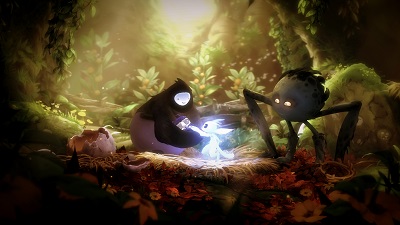
Number 10: Ori and the Blind Forest (75% off, £3.74) & Ori and the Will of the Wisps (20% off, £19.99)

I’ve been partway through an article on these two amazing games for a while, but I keep getting sidetracked. Hopefully I’ll finish it before too long! Both Ori and the Blind Forest and Ori and the Will of the Wisps are beautiful games – both visually and in terms of their stories. The games both 2D platformers in that niche genre often referred to as “metroidvania”.

Both titles are considered masterpieces, and I honestly can’t recommend them highly enough.

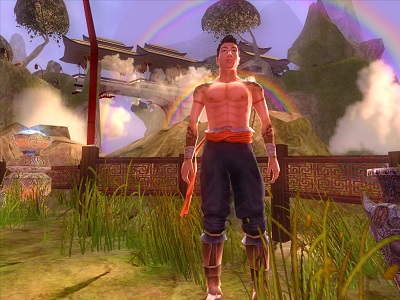
Number 11: Jade Empire: Special Edition (75% off, £3.74)

Bioware is better-known today for games like Mass Effect and Anthem, but in 2005 they released Jade Empire, a role-playing game set in a fictional world based on ancient China. Hot off the heels of their success with Knights of the Old Republic, the game uses a very similar format as players build up a party of characters and go off on an adventure. I had a great time with Jade Empire back on the original Xbox – where it was a console exclusive – and recently replayed it on PC.

I’ve long considered Jade Empire an underrated gem, and if you like Bioware’s older titles from the 2000s, you’ll definitely have a great time here.

Number 12: Grand Theft Auto V (50% off, £12.49)

Grand Theft Auto V is a juggernaut – having premiered on the Xbox 360 and PlayStation 3, it’s set to be ported once again to the Xbox Series X and PlayStation 5. Not many games have such longevity, and the amazing thing is that in the seven years since its release, it’s hardly ever dropped out of sales charts across all platforms. The reason for this success is of course its multiplayer mode, but there’s a great single-player campaign too. If you’ve somehow avoided it until now, it could be a great time to pick it up!

The familiar open-world Grand Theft Auto gameplay is still present, but the open world of Los Santos feels like a genuinely lived-in city. There are also some great voice acting performances from the trio of main characters.

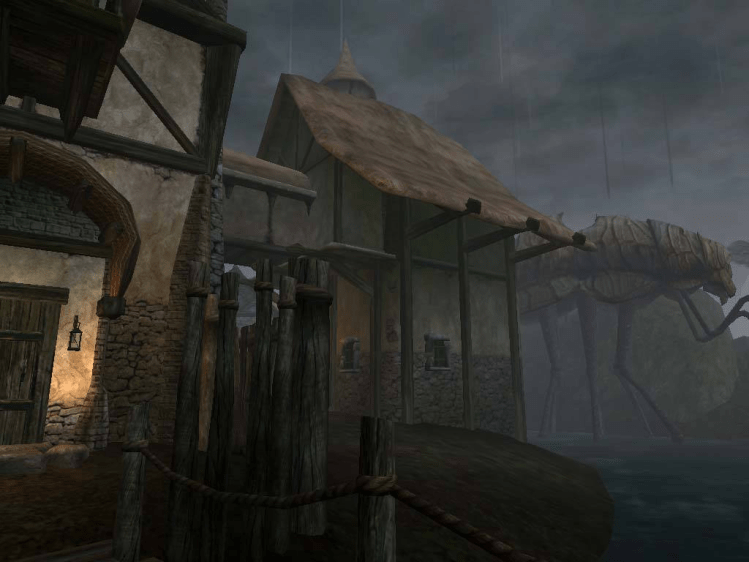
Number 13: The Elder Scrolls III: Morrowind (70% off, £3.89) & The Elder Scrolls IV: Oblivion (70% off, £3.89)

I remember reading about Morrowind in a gaming magazine (remember those?) in 2002. I thought it sounded absolutely fantastic, and when I picked it up for the original Xbox I wasn’t disappointed. Morrowind is such a full game – even now, almost two decades on, there are quests I’ve never completed and factions I’ve never joined. Oblivion is a half-step between Morrowind and Skyrim, and while it’s been a while since I played it – and I’ve only played it once – it was definitely a fun experience at the time.

Oblivion also features Sir Patrick Stewart in a voice role, and though his character isn’t present through the whole game, having his voice definitely adds to the experience!

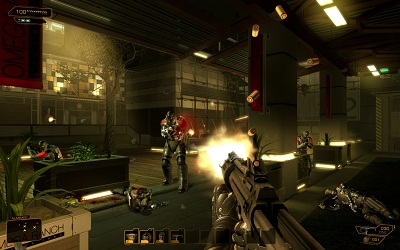
Number 14: The Deus Ex Collection (88% off, £7.79)

2003’s Deus Ex Invisible War was my first foray into the series. I went back and played the first game in this first-person action/adventure series afterwards, as I fell in love with its dystopian future setting. Human Revolution came in 2011 and dragged me right back into that world, and Mankind Divided – which is a direct sequel to Human Revolution – rounds out this bundle of four games.

Even if you skip the older titles, definitely give the two most recent ones a try. They’re great first-person stealth/action games, and there’s a surprising amount of customisation.

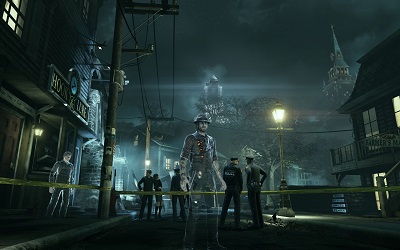
Number 15: Murdered: Soul Suspect (90% off, £1.59)

I like games with a novel or interesting premise, and Murdered: Soul Suspect definitely has that to offer! A police detective is murdered – don’t worry, that isn’t a spoiler, it’s practically the first thing that happens in the game! The twist is that this is the playable character, who returns as a ghost to solve his own murder! As a mystery game, once you’ve solved the case there isn’t much replayability, but for this price it’s definitely worth one go around.

Murdered: Soul Suspect is underrated, at least in my opinion. It isn’t particularly long, which is one reason why it may have underperformed when it was released in 2014.

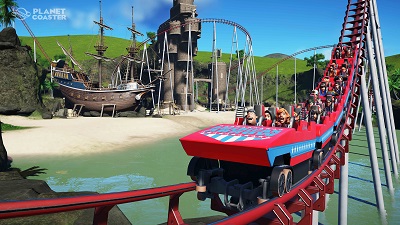
Number 16: Planet Coaster (75% off, £7.49)

I loved games like Rollercoaster Tycoon and Theme Park back in the day. After a number of years where the theme park management sim didn’t really receive any new titles to speak of, Planet Coaster reinvigorated the genre. There are a wealth of options for your theme park – which can be almost overwhelming at first – resulting in a game with limitless customisation potential.

Even without any of the game’s DLC packs, there’s still a heck of a lot to have fun with here.

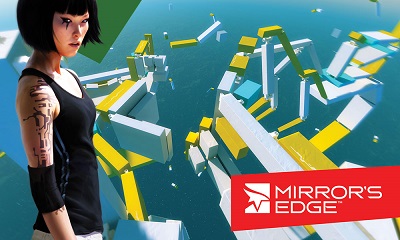
Number 17: Mirror’s Edge (90% off, £1.79)

Mirror’s Edge is one of those titles that has been heavily discounted for several years now. I don’t really understand why – it’s a great-looking game that plays really well, and its parkour-based running and jumping gameplay is uncommon if not wholly unique. From that point of view, I bet it’s something you won’t have experienced before – reason enough to pick it up for less than the price of a pint!

EA’s recent deal with Valve to bring their games back to Steam means the sequel, Mirror’s Edge Catalyst, is also available.

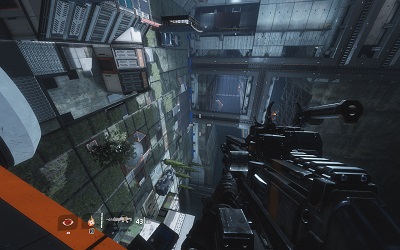
Number 18: Titanfall 2 (67% off, £8.24)

Big caveat here: I haven’t played Titanfall 2 yet. However, it’s widely regarded as a phenomenal game, but was released in a very competitive window for first-person shooters, with EA pitting it against two big annual releases from Battlefield and Call of Duty. As a result it underperformed in the sales department. Titanfall 2 is another game which benefits from EA’s recent move to bring their back catalogue to Steam.

This is a game I’ve had on my wishlist for a while, and I was pleased to be able to pick it up at the discounted price!

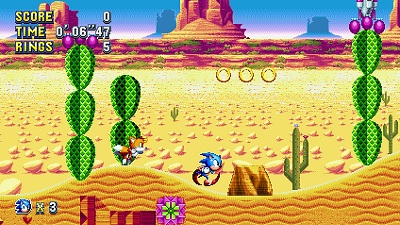
Number 19: Sonic Mania (66% off, £5.09)

Originally a fan project, Sonic Mania is a beautiful old-school 2D Sonic game that you would think had been lifted straight from the Sega Mega Drive! The story behind the game’s development is sweet – a group of dedicated fans put together a rough cut which they showed off to Sega, who snapped it up and commissioned them to expand and polish it for the mass market.

Sonic Mania is a labour of love by genuine fans of the series. Too few games nowadays can say that.

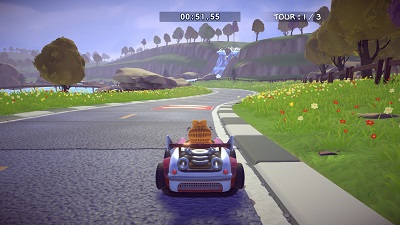
Number 20: Garfield Kart: Furious Racing (60% off, £5.19)

I love funny, silly racing games like Garfield Kart or Meow Motors. If you don’t have a Nintendo Switch but are missing being able to play Mario Kart, this could be a fun alternative! It’s a comparable experience to Nintendo’s kart-racer: a fun, arcade racing game that’s easy to get started with.

Additionally, if you’re a fan of the Garfield comic strop (I was only dimly aware of it) you’ll find many familiar faces.

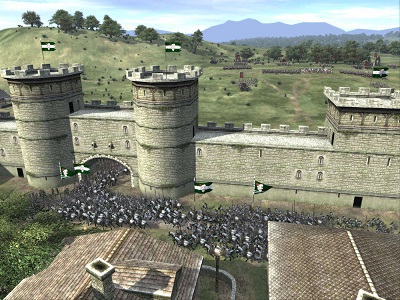
Number 21: Total War: Medieval II (75% off, £4.99)

The first game in the Total War series I played was its first entry, Shogun: Total War. The follow-up to that game was Medieval: Total War, and I wouldn’t like to guess how many hours I lost playing that game in the early/mid-2000s! Medieval II updates the game using a more modern engine, and brings a lot to the table. A title that mixes grand strategy with real-time battles is, for many strategy fans, the best of both worlds.

While a lot of people will recommend the Total War: Warhammer games, I think the franchise works best with real history, and the medieval period is just perfect for this kind of game.

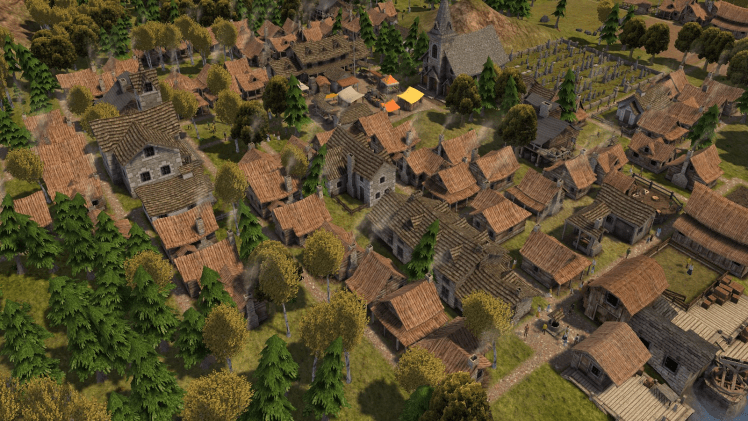
Number 22: Banished (66% off, £5.09)

I’ve talked about this great city-builder a few times here on the website. It’s absolutely fantastic, and the fact that this complicated game was developed by just one individual is still shocking to me! Banished is in that sweet spot when it comes to open-ended games: easy to pick up but hard to master.

The game starts with a small number of settlers, and players must build up a town, gathering and storing enough resources for everyone. Getting the right balance is what the game is all about!

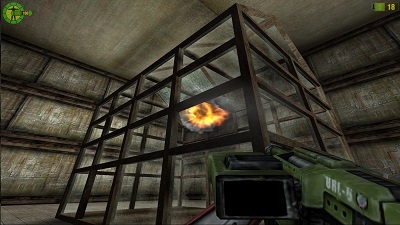
Number 23: Red Faction (75% off, £1.24)

2001’s Red Faction pioneered destructible environments in games. Using rockets and other explosives, it was possible to blow holes in walls or floors, create foxholes and craters, and generally use the levels themselves to gain the upper hand. I didn’t own the game at the time, but a friend did and we spent hours in multiplayer trying to outsmart each other with traps and hidey-holes! If you can think of any modern game that allows for such environmental mayhem, chances are it owes a lot to the trail blazed by Red Faction.

For me, this one’s on the list as a nostalgia trip and a bit of a guilty pleasure. But Red Faction does have a fun campaign, and if you can look past the outdated visuals I think you’ll have a fun time.

Number 24: Fallout 4: Game of the Year Edition (70% off, £11.99)

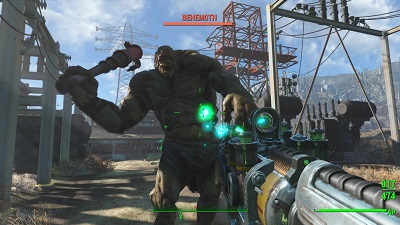
My first experience with the Fallout franchise was 2008’s Fallout 3. Fallout 4 is more of the same, as Bethesda brought development back in-house after outsourcing Fallout: New Vegas. There are a range of ways to play and plenty of customisation options, and the base-building element which was new to Fallout 4 is a ton of fun and could be a whole game by itself. It’s kind of a post-apocalyptic version of the house-building seen in The Sims!

The Game of the Year edition includes both main DLC packs, each of which expand the story and provide new areas to explore.

Number 25: Portal 2 (80% off, £1.43)

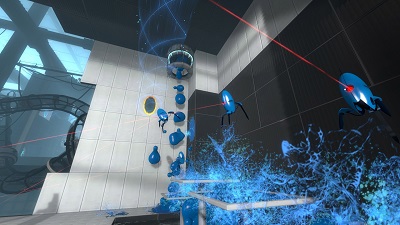
There really isn’t anything quite like the Portal series on the market. A mix of puzzle game, 3D platformer, and first-person action game, Portal 2 builds on its predecessor and gives players a truly unique experience that can be difficult to put into words. There’s a horror element to the game too – nothing scary, but definitely unsettling, especially if you pay attention to the dialogue!

Setting aside the “can’t count to three” jokes, it would be great if Valve could revisit this series one day. It’s been almost ten years since Portal 2 was released, and while it still holds up today, I’d love to see a new game using this formula.

So that’s it. Some great deals in the Steam Summer Sale.

If you were to buy every single entry on this list, it would cost you £228.20 – for 33 games (including the Deus Ex bundle). That averages out at £6.92 per game or thereabouts. Considering some of the titles were only released in the last few months, I think that represents outstanding value. To reiterate what I said at the beginning, these sales give PC an edge over consoles, despite consoles being cheaper initially. Something to consider as we await the PlayStation 5 and Xbox Series X, eh?

I hope this was interesting and informative, and may have given you some inspiration for titles to take a look at as we enter the summer season. At a time where some form of lockdown or quarantine is still in place in a lot of areas around the world, having something to do to kill time is more important than ever. Gaming can be great for that.

All of the games on this list are available for purchase on Steam at time of writing (26th June 2020). Prices were correct at time of writing. The Steam Summer Sale ends on the 9th of July 2020. Prices may vary by region and are subject to change at any time. All of the games on this list are the copyright of their respective studio, developer, and/or publisher. All screenshots and artwork courtesy of press kits on IGDB. This article contains the thoughts and opinions of one person only and is not intended to cause any offence.
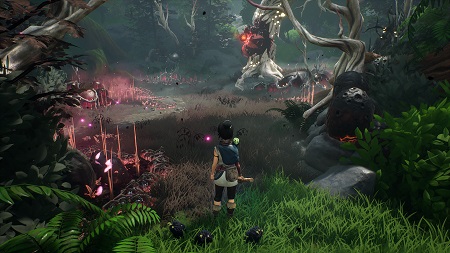
On the subject of gaming addiction

This column deals with the sensitive topic of addiction, and may be uncomfortable for some readers.

In 2018 the World Health Organisation surprised and upset a number of fans of video games when it formally designated “gaming disorder” as a distinct clinical condition. The reaction was, sadly, predictable, and boiled down to some variant of the following argument: “I’m not addicted to video games! Therefore video games can’t possibly be addictive!” Many commentators and outlets that focus on video gaming piled on with complaints and criticism, and the result is that the subject is still controversial even today, almost two years on from the WHO’s initial decision.

I’m not a doctor or psychologist, but I wanted to take a moment to defend the decision to categorise gaming disorder/video game addiction as a separate condition, because I feel that too many people who don’t really understand the topic had a knee-jerk reaction to attack it. To them it felt like an attack on their hobby, and perhaps what we can gleam from that is that the messaging surrounding the decision could have been better and clearer.

Firstly, the commentators who criticised the decision, even those who work for major publications, are universally not medical professionals. Their knowledge of the subject is limited at best, nonexistent at worst, and quite frankly having a bunch of uninformed people criticising doctors for a medical decision is comparable to conspiracy theories like the anti-vaccine movement or the Earth being flat. The people who made the decision to categorise video game addiction in this way are qualified to do so, and they will have made their decision on the basis of investigations and evidence, all of which has been peer-reviewed. The people who took offence to the decision simply aren’t on that level.

The biggest problem some people seemed to have is that the decision felt like an attack on gaming as a hobby. Many people have long derided games, dismissing them as children’s toys and even blaming gaming for criminal and violent acts, so I can understand why, to some people, this felt like just another attack in a long line. But it isn’t, because the designation of gaming disorder in no way says that all video games are a problem or that all gamers are addicts. The classification of alcoholism as a disease doesn’t mean that the vast majority of drinkers are alcoholics; no sensible person would even dream of making that argument. Alcoholism affects a small minority of drinkers, just as gaming disorder affects a small minority of gamers. And no one is trying to say otherwise.

Something that can become a problem for one person isn’t going to be a problem for everyone. Many gamers – by far the majority – play games in a sensible and responsible way, enjoying their hobby without allowing it to dominate their life. But some people will take it too far, and will allow it to take over, perhaps as an expression of other mental health issues but perhaps simply because they allowed it to get out of hand.

Choosing to classify gaming disorder as a separate and distinct condition means that more studies can be performed in the field, more information disseminated to psychiatrists and other healthcare professionals, and the result of these things is that for those people who do suffer, better help, and help more tailored to their specific problem, will be available. This can only be a good thing, as it will mean more people will have access to specialist help.

In order to meet the criteria for an individual to even be suspected of having gaming disorder, there’s actually quite a high bar. The most important factor is that their gaming is having a detrimental effect on their life. This could manifest in many ways, which will vary from person to person.

When I was a student at university many years ago, I witnessed gaming disorder firsthand. I was living in a rented apartment which I shared with just one other person, and this person (who will of course remain nameless) became addicted to video games. The individual in question was, like me, an exchange student, which is how we met and how we came to share an apartment. He had friends back home who he liked to play games with, and this was around the time that online gaming was just taking off. He would spend endless hours playing an online game, often late into the night, and over the span of a few weeks it began to have a huge impact on his life. He stopped attending classes, which saw him end up in a mess of trouble with the university as he failed every class that semester. His parents found out, which caused personal problems for him with his family, and his failure to pay rent – despite promising me he’d paid his share – almost wound up getting the pair of us evicted. This was in addition to the weight he lost from not eating properly, the destroyed social relationships with other exchange students at the university, and the missed opportunities to have the once-in-a-lifetime experience of living in another country. Ever since then I’ve used his story as a warning, because his addiction to gaming had serious and lasting consequences.

There is a happy ending to this individual’s story, however, and that is that he did eventually get his life back on track and scale down his gaming. When we parted ways we didn’t keep in touch, so I can’t be certain he’s still living his best life, but as of the last time we were together it definitely seemed that he was moving in the right direction. It took an intervention from his family – who flew halfway around the world to see him after he failed all of his classes – and a twice-weekly therapy appointment to get him to that point, though.

Any time someone tells me that they know loads of people who play games who aren’t addicted, I tell them the story of my ex-roommate, and make the same point: “just because it hasn’t happened to you or someone you care about doesn’t mean it hasn’t happened to anyone.”

I hope that nobody tries to use the designation of gaming disorder to attack what is for most people a fun and innocent hobby. That would be counterproductive, and would lead to people who genuinely have issues with gaming addiction finding it harder to get help. But so far, that doesn’t seem to have happened. The designation is just that: a clinical classification designed to help that small minority of people who have a problem.

It’s worth noting that some games, especially in recent years, have gone out of their way to introduce potentially addictive elements to their gameplay. In particular we can look at lootboxes and randomised rewards, which in many games are little more than gambling – often using real-world money. There are frequent news stories, some of which end up in the mainstream media, of individuals who end up spending hundreds or thousands of pounds on these in-game “micro” transactions. In one case last year here in the UK, a child inadvertently spent his parents’ entire monthly wages in a game.

Putting a warning label of some kind on games that have in-game “micro” transactions is definitely a good idea, but in an era where physical sales of games in boxes (where such a label would be affixed) are in terminal decline, that probably won’t be good enough. And as I noted from my former roommate’s experience, which came long before such in-game transactions were commonplace, gaming addiction doesn’t always manifest with titles that have such systems in place.

We also have to be careful how we use the terminology of addiction – and of mental health in general, but that’s a separate point. When reading reviews of new titles, I often see the word “addictive” thrown around as if it were a positive thing: “this new game is incredibly addictive!” That kind of normalisation and misuse of the term can be problematic, as affected people may simply brush off their addiction by thinking that’s how everyone plays the game. I feel that writers have a certain responsibility to try to avoid this kind of language. Presenting addictiveness as a positive aspect could indirectly contribute to real harm. I’m sure I’ve made this mistake myself on occasion, but it’s something I hope to avoid in future.

Gaming addiction, like other addictions, is a complex problem that is not easily solved. It’s no easier for someone suffering from some form of gaming disorder to “just turn off the console” than it is for an alcoholic to “just stop drinking vodka”. The temptation is always present and it can be overwhelming. Anyone suggesting that it’s a simple case of “just stopping”, as if it were that easy, doesn’t know what they’re talking about. Again, it comes back to the point I made earlier: just because it might that easy for you doesn’t mean it is that easy for everybody. One person’s subjective experience is not a complete worldview; many people find it impossible to break the cycle of addiction without help. This classification has the potential to make more specialised help available, which is the primary reason I support it.

So that’s my take on the subject. Gaming can be addictive, and for a small number of people, that addiction can cause real harm and create lasting problems for themselves and their families. Recognising this reality is a good first step if it means more research can be conducted into the subject as that will hopefully lead to better and more effective treatments for people whose gaming addiction requires outside intervention. I’ve seen firsthand how this can happen, and I have absolutely no time for the argument that goes: “well I don’t have a problem with gaming addiction, so it must be fine for everyone!” That is a blinkered and selfish way to look at the subject.

For anyone reading this who thinks they may be affected by gaming disorder or video game addiction, I’ve prepared a quick checklist of questions you can ask yourself. If you find yourself answering “yes” to any of the points below, I would suggest you reach out to someone who can help – talking to a friend, family member, or someone you trust could be a great first step, and of course professional medical help is always available.

Question #1: Do you find yourself thinking about video games all the time, and planning ways to get back to your game as quickly as possible if interrupted?

Question #2: Have you missed important events – such as work, school, meetings, or other appointments – because you couldn’t tear yourself away from gaming?

Question #3: Do you find yourself unhappy, depressed, angry, or irritated while not gaming? And/or would you say that your happiness is inextricably tied to gaming?

Question #4: Have you ever lied about how much time you spend gaming to cover it up? And/or do you break rules or limits set by others on how much time you may spend gaming?

Question #5: Have you tried to spend less time gaming but failed?

Question #6: Do your friends, family members, or people close to you ever tell you that you spend too much time gaming? And/or do you feel that you have neglected your relationship(s) as a result of gaming?

Question #7: Do you forget to eat or skip meals because of gaming? Do you skip showering or fail to take care of basic hygiene and grooming because of gaming?

While not everyone who answers “yes” to the above questions will be an addict, these points do indicate that something may be amiss with your relationship with gaming.

At the end of the day, if you’re happy with your life and gaming is a hobby, that’s okay. If it isn’t causing any harm to yourself or other people, there is no problem. But for some people gaming can get to a point where it stops being a harmless bit of fun and becomes something more sinister: an addiction. Missing important events, skipping school, neglecting friends, skipping meals, skipping showers, etc. are all points which can indicate an individual’s relationship with gaming is becoming unhealthy, and if you recognise these signs in yourself, I encourage you to reach out and get help.

Yes, gaming disorder or gaming addiction is a real phenomenon. The World Health Organisation did not invent it, all they have done is classify it and formally recognise what many people have known for a long time – that it is real. Far from being an attack on gaming as a hobby, this should be seen as a positive thing, as it has the potential to help affected individuals get better and more appropriate help.

This article contains the thoughts and opinions of one person only and is not intended to cause any offence.
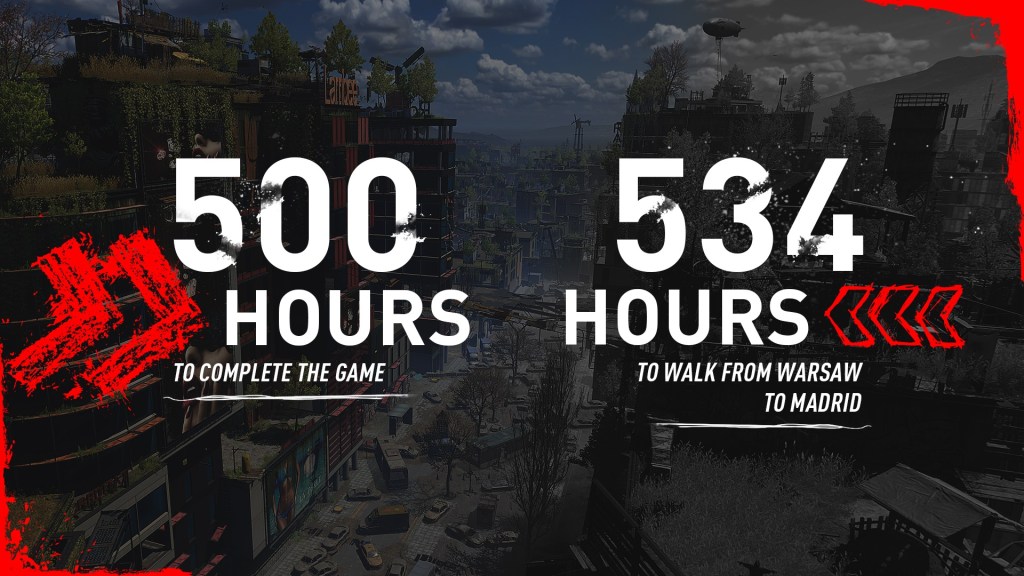
Length isn’t everything… but it IS important.

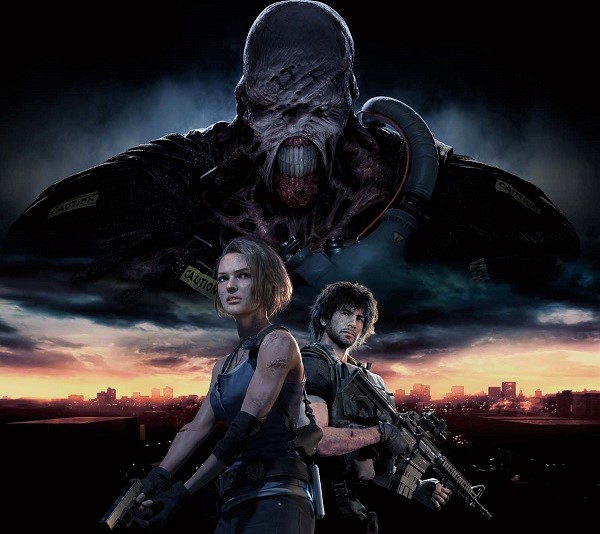
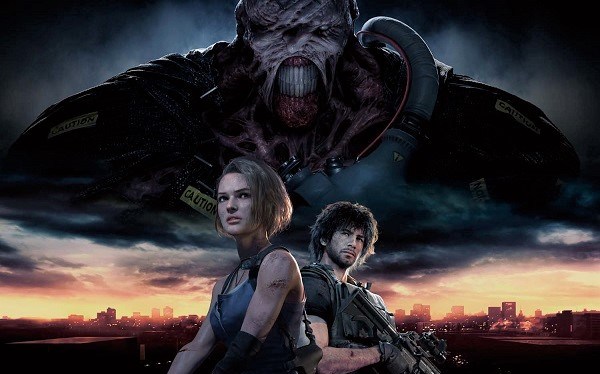
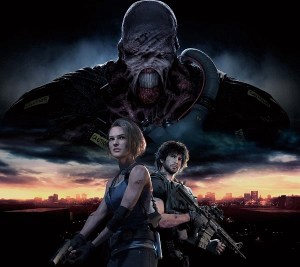
Resident Evil 3 is the latest game to release to mixed reviews, with one source of criticism being the game’s length. It’s primarily a single-player experience, but the main campaign takes less than six hours to finish. Any time a video game receives criticism for its length the same group of people come out, proclaiming that “it doesn’t matter how long it is as long as it’s good!” The discussion around some titles thus descends into arguments between people who feel that there is such a thing as “too short” and people who feel that length makes no difference.

I can summarise my position on the issue quite succinctly: I don’t care how long a game is, provided it is priced accordingly. Article over, stay tuned for more – wait, it isn’t over? Hmm.

Let’s take a step back and look at why game length does actually matter. The way I usually explain it is like this: most people have a budget for gaming, and if there are two games for the same price, one which lasts three hours and another which lasts sixty, then one title is clearly better value than another. Next, if someone can only afford one new game a month or every few months, then they are absolutely right to consider how long the experience they are paying for will last. If a game is over in an afternoon and it’ll be weeks or months before they can get another one, that’s absolutely a fair consideration. This applies to many people, but folks on fixed or low incomes will feel this even more acutely.

Resident Evil 3 (2020) has released to mixed reviews.

Different games appeal to different people. So a game like Overwatch could be argued to have hundreds of hours of potential gameplay – it’s a multiplayer shooter, and there’s no campaign to beat. Players can play as many matches as they like. But for someone who dislikes multiplayer games, Overwatch would be a waste of money because they wouldn’t enjoy the experience. Thus it doesn’t really fit the model outlined above, and I’d say for the most part, multiplayer-only games don’t really fit in the same way. When I talk about game length I’m primarily considering single-player experiences.

There are also questions regarding at what point one considers a game to be “complete”, and again this will vary from person to person. Someone may consider a title finished if they beat the main campaign once, others may want to play it twice. Some people might want to unlock achievements or trophies, and still others may be completionists who want to unlock everything, explore every area, and discover every hidden item. So a game which may have a six-hour campaign on the surface can potentially be a thirty-hour experience for some people – and the question of value will depend on how a person chooses to play their games and enjoy their experiences.

A game like Lego Star Wars: The Complete Saga has a number of levels to complete across its story mode, but it also offers great replay value by having a large roster of unlockable characters, many of whom can do different things on those same levels. There are also tons of hidden collectables and coins across every level, such that the game has – for some gamers, at least – many more hours of enjoyment than just the “basic” story.

So where does this leave Resident Evil 3? The problem with it, and why I feel it’s been criticised in this area, is that it’s a full-price game – that is, it retails for £50-55 ($60 USD). That’s the same price as Red Dead Redemption 2, which offers a story roughly fifty hours long. And it’s more than twice the price of the recently-released Ori and the Will of the Wisps, which offers a story that’s around eight to ten hours long.

Some people are already uncomfortable by the comparisons, getting ready to bash their keyboards in anger and say that “length doesn’t matter!” But it does to a lot of gamers, especially at this price point. It’s not a question of raw length. A game can be short yet still feel like an enjoyable and worthwhile experience. Short games are not inherently bad games, and I don’t think anyone’s trying to say that they are. I’m certainly not making that case. But if a game is primarily a single-player experience, as Resident Evil 3 is, it needs to factor its length into its price in order for people to feel that they got a good deal and weren’t ripped off. If I paid £55 for a game and it lasted less than six hours, I’d be disappointed, especially considering that there are better options out there for me to have spent my money on.

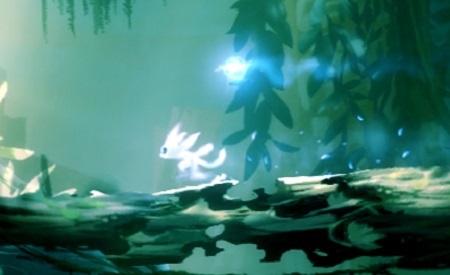
Ori and the Will of the Wisps is a short game that has received critical acclaim.

Ori and the Will of the Wisps never pretends to be a long game. The first entry in its series, Ori and the Blind Forest, was even shorter, and both are considered amazing games. Stay tuned, by the way, for my own thoughts on Ori and the Blind Forest, as I have an article in the pipeline about it. But the producers behind the Ori series recognise that its comparatively short length means it needs to be priced accordingly, and they factored that in when the games were released. If they’d both been full-price titles they wouldn’t have been so well-received, and at the very least, their reviews would have come with caveats.

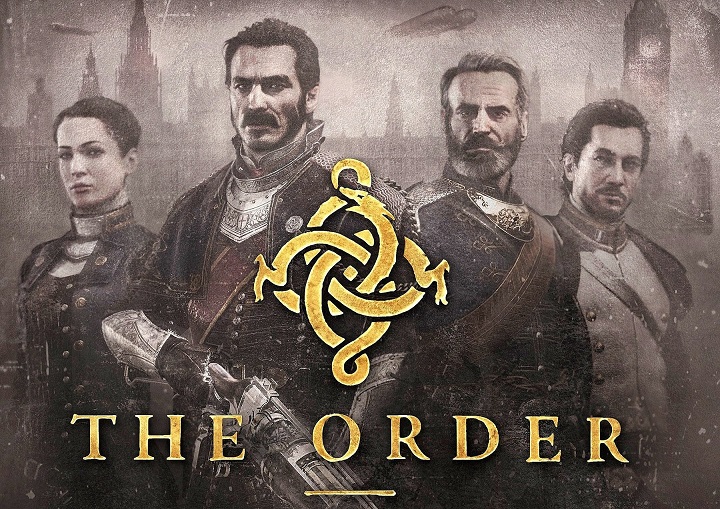
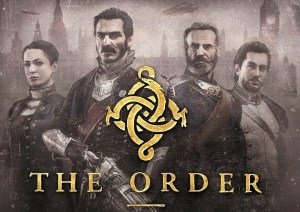
By comparison, The Order: 1886 was roundly criticised upon release for being too short for its price. This PlayStation 4 exclusive was one that many people were anticipating, but upon release it ended up being a disappointment. Many reviews at the time made note of the game’s length, and while it wasn’t the only source of criticism, the fact that it was a full-priced game that lasted around five hours was something that left many players and reviewers feeling let down and ripped off.

This principle is something which can apply to other forms of entertainment as well. If you’ve been a reader since last year, you may remember my top ten television series of the 2010s – you can find the list by clicking or tapping here. In that list, I explained why I preferred Elementary to Sherlock – two television shows about Sherlock Holmes in a modern-day setting. Sherlock has thirteen episodes, Elementary has 154. That isn’t the only consideration, but if there’s more to enjoy I’ll always want more of it. While not all of Elementary’s episodes were good, enough were to make it a more rounded, enjoyable experience. And not every Sherlock episode was good either, especially in its fourth “season”.

To my mind, Resident Evil 3 should fall into the same bracket as the Ori series mentioned above. If it were priced at, say, £30 instead of £55, people wouldn’t be giving it a hard time over its length – because it would be priced somewhat more fairly. And to return to my explanation as to why, the hypothetical low-income or budget gamer could pick up Resident Evil 3 and still have money left over for something else to play when they’d beaten it.

2015’s The Order: 1886 was criticised for its length.

Length is inherently tied to the value of a game, and while it isn’t the only determining factor in making purchase decisions and review scores, it is undeniably a factor for many people. If someone is in a position where they can waste all the money in the world on the latest games because they can afford it, well good for them. But many people can’t, and therefore how long they’ll be able to enjoy a purchased game is important – even more so in the days of digital distribution, as there’s no chance of trading in completed titles.

Quantity over quality is not a sound argument. But that isn’t the argument that I’m making, nor is anyone who criticised Resident Evil 3 or any other game that seems too short. What I’m saying is that length is tied to value, especially at higher prices and when considering people on lower incomes who can’t afford to get every new title that they might want to.

While I haven’t played Resident Evil 3 for myself, it serves as a good example – the latest in a long line – of why games publishers need to consider adjusting their pricing to fit a game’s length and value. By charging full price for a short game, people will feel that the money they invested was not worth it, which will hurt the game’s reputation and ultimately result in fewer sales. There is a balance which publishers need to hit, and in the case of Resident Evil 3 it seems that, at least for some gamers, they missed the mark.

All titles mentioned above are the copyright of their respective studio, developer, and/or publisher. Images courtesy of Press Kits sourced via IGDB. This article contains the thoughts and opinions of one person only and is not intended to cause any offence.
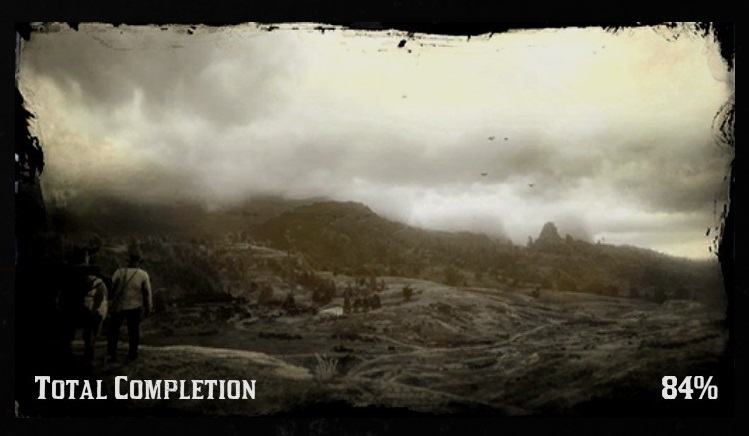
A few of the best holiday sales deals for PC gamers

Important: The 2019-20 Winter/Holiday Sales have now ended; prices listed below will no longer be accurate.

It’s the time of year where the main digital shops for PC games have big sales, and there are some great deals in there that are worth checking out.

Despite costing more up-front than a console – significantly more, depending on what kind of specs you go for – using a PC as your primary gaming platform can save money in the long run when you take into account sales like these. If you’re willing to wait a little and not jump on a brand new title on release day, within a year you’ll almost certainly find it discounted.

That’s not to say PC is necessarily the best option for budget gaming, but it is worth considering that many titles can be bought at a significant discount this time of year. If I were giving advice on the absolute best budget setup, I’d have to say that an Xbox One S with Xbox’s GamePass service is hard to beat. GamePass is a subscription service (think Netflix, but for games) and with the lower entry price of the Xbox One S you can be set up and playing a bunch of titles pretty quickly – assuming you have a good internet connection. But we’re getting off the subject.

I’ve had a look at the big sales over the last couple of days, and I’ve picked a few titles that are worth grabbing for the discounted price.

Disclaimer: discounts and prices are in GBP and may vary depending on where you are in the world. Prices are correct at time of writing; sales end at the beginning of January. The list is in no particular order.

Spoiler Warning: Though I’ve tried not to spoil the plots of titles listed below, minor spoilers may be present.

Number 1: Mass Effect 2 (Origin) £4.49, plus £8.79 for all DLC

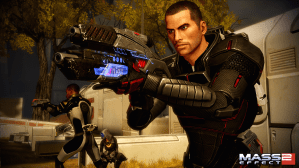
Promo screenshot for Mass Effect 2 featuring Jacob, Tali, and Commander Shepard.

I named Mass Effect 2 as my number one game of the decade a little while ago, and I absolutely stand by that. The game tells a story that would be at home as a big-budget television show or series of films, as Commander Shepard must put together a crew for a dangerous mission to stop an alien race abducting human colonists.

It’s a much more streamlined version of the first game in the series, with fewer weapon and ammo options cluttering up your inventory. The third-person shooting mechanics are great, and the addition of biotic and technical powers adds an extra dimension to combat.

For a game that is basically ten years old by now, it still holds up remarkably well from a graphical point of view. For £4.49 it’s well worth a punt, though if you want the complete story – including the mission which bridges the gap between this title and its (somewhat disappointing) sequel, you’ll have to get the DLC pack as well.

Number 2: Fallout 3: Game of the Year Edition (Steam, £4.49)

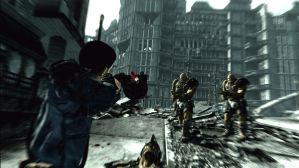
Promo screenshot of Fallout 3.

Considering that for £4.49 you’re getting the entire main game of Fallout 3 plus five DLC packs, there’s a lot of content here.

Taking place in a post-apocalyptic Washington DC, Fallout 3 dumps players in a large open world. There is a main quest to follow, but there are also dozens of side-quests and other factions and NPCs to meet and engage with. There’s also a “karma” system – with points awarded for bad and good behaviour respectively. Doing bad things to people will result in negative karma and vice versa – these can affect gameplay.

With a ton of ways to play thanks to character creation and levelling-up systems allowing you a huge range of customisation options, Fallout 3 is a steal at this price and if you really get sucked into its world, will give you hours and hours of entertainment.

I’d absolutely recommend Fallout 3 over Fallout 4. But whatever you do, don’t buy the catastrophe that is Fallout 76.

Number 3: The Epic Games Store – Free £10/$10 voucher

This isn’t a single game, but the Epic Game Store is currently offering a free voucher to spend on games over £14.99. I know that the Epic Games Store has been controversial in PC gaming circles because of its aggressive policy of paying for exclusive titles, but they’re currently offering a £10 voucher to anyone who’s signed up.

The voucher is valid until May next year, and can be used on most games priced over £14.99, which includes titles that are currently on sale. It isn’t valid on pre-orders or in-game content, but if you figure a title has been discounted by £10, and you can save another £10 thanks to the voucher, it stacks up to be a pretty good deal.

I have heard that the discount is also available in Euros and US Dollars, but you’ll have to confirm on the Epic Games Store website that the deal is available in your region.

Number 4: Age of Empires: Definitive Edition (Steam, £3.75)

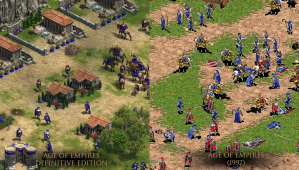
A comparison of the changes from the original version to the Definitive Edition.

Age of Empires came out in 1997, and was the first real-time strategy game that I played on PC. Microsoft spent a long time reworking this classic of the genre for modern PCs, and though the wait seemed to last forever, the end result was worth it.

Though many people prefer Age of Empires II, I’ve always had a special respect for what the original game did – for both my own PC gaming experience and for the genre as a whole. And the opportunity to dive back in when the Definitive Edition was released was too tempting to pass up.

You start with a Stone Age tribe of humans and have to build a town, while managing such resources as food, wood, stone, and gold. And in addition, you have an array of combat units to fight off other players (either AI or real people if you feel up to that). Battles can be intense in Age of Empires: Definitive Edition, and with the number of units you can have in any one game being raised from the original 50 all the way up to 250 this time around, be prepared for some truly epic fights.

There are campaigns as well if you want more of a story, but I’ve always preferred to set up random matches against AI opponents.

Number 5: Banished (Steam, £5.09)

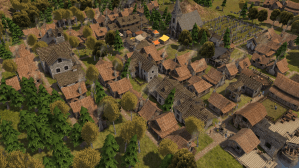
A town in Banished on this promo screenshot.

Another title from my top games of the decade, Banished is a town building and management game.

If you can imagine Age of Empires without the fighting, you’re close to understanding what Banished is about. Players start with a small number of citizens and a stockpile of resources, and must work to keep citizens fed, clothed, healthy, and happy. Striking the balance is harder than it sounds, and gathering all of the necessary resources to build all the different buildings needed takes time.

Different factors affect how well citizens will perform – if they lack suitable clothing they’ll need to spend more time keeping warm, or if they weren’t educated at your town’s school house they will work less efficiently.

Considering the entire game was built by just one single person, Banished is an amazingly detailed experience, one that’s very easy to get stuck into and lose hours playing.

Number 6: Lego Star Wars: The Complete Saga (Origin, £5.11)

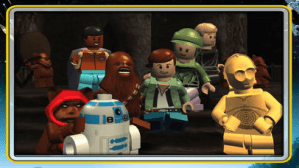
A few of Lego Star Wars: The Complete Saga‘s huge roster of characters.

When it was released in 2007, Lego Star Wars: The Complete Saga contained levels set across all six Star War films. Obviously since then we’ve seen the Star Wars universe expand, but that doesn’t mean that this incredibly fun game is not worth taking a look at, especially when it’s on sale.

If you’ve never played any of the Lego games, they take whatever their setting is and make it incredibly fun. This is a very polished game, and has literally hundreds of collectables and unlockables hidden throughout its numerous levels. Every major and minor Star Wars character from the first six films makes an appearance – and when unlocked, almost all are playable.

Going back to a previously-beaten level with a different set of characters might unlock new areas or allow access to previously-off limits collectables, and finding every single hidden Lego kit and collecting every single coin to 100% complete Lego Star Wars is a heck of a task. For such a low price there’s a lot to do here, and while it isn’t a game that takes itself seriously in any way, it’s great fun and well worth a look. I’ve even played this with people who aren’t Star Wars fans and they all had a great time.

Number 7: The Witcher 3: Game of the Year Edition (GOG, £10.49)

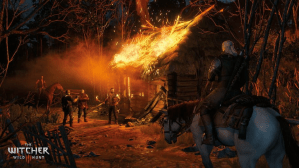
Promo screenshot for The Witcher 3.

Big disclaimer: I haven’t played this game for myself. But The Witcher 3 is held up by many gamers as one of the best single-player experiences ever created, and with the Game of the Year Edition at 70% off, giving you the main game and both of its expansions, I’d say the reviews alone make it worth a look if you’re like me and haven’t got around to playing yet.

Excitement for the series is sky-high at the moment, thanks to Netflix’s The Witcher series getting rave reviews and being picked up for a second season. So maybe this could be a good time to finally jump into this world.

Number 8: Project CARS (Steam, £5.84)

A race in Project CARS.

For some reason, racing games over the last few years have all ended up looking absolutely stunning, and Project CARS is no exception. For a game that’s approaching its fifth anniversary it looks incredible, and even if it were released today it would still be a great-looking title.

But there’s more to a game than graphics, and luckily Project CARS has a lot to offer for racing fans. There are 65 cars in the base game, with others available as DLC – and the DLC packs are also on offer at the moment. Each car can be tuned to fit the way you want to race, and there’s both a career mode as well as the freedom to set up individual races.

Number 9: Star Wars Jedi: Fallen Order (Steam, Origin, and Epic Games Store, £45.64)

Main character Cal Kestis in a promo image for Star Wars Jedi: Fallen Order.

Another big disclaimer: I haven’t played this game yet. But Star Wars Jedi: Fallen Order is a return to single-player gaming for the Star Wars franchise, and by all accounts it’s a great game. Some reviewers have criticised the difficulty – even comparing it to Dark Souls – but there is a “story mode” which supposedly reduces this significantly.

This isn’t going to be a game like Knights of the Old Republic, because it’s not a role-playing game in the same way as those classic titles. It’s more in the vein of an adventure title like the Uncharted series, but with a Star Was setting.

When you factor in that the £10 voucher will actually let you nab this for £35.64, this might be a title worth picking up over on the Epic Games Store, and considering it’s only been out for a month or so, the 17% discount seems generous.

Number 10: Star Wars: Knights of the Old Republic series (Steam, £5.01 or Origin, £4.74)

A battle taking place in this Star Wars: Knights of the Old Republic II promo screenshot.

I mentioned the Knights of the Old Republic games in the entry above, and at £5 or less for both games, that’s a pretty great deal in my opinion. I played both titles on the original Xbox when they were new, and they’re absolutely incredible.

Taking a setting several thousand years prior to the events of the main Star Wars films, Bioware gave themselves an almost blank canvas to tell a really exciting story of a war between Sith and Jedi. And you actually get to choose whether to stay with the Light Side or allow your character to succumb to the Dark – with different outcomes in both games depending on which path you choose to follow.

Some people will tell you that Knights of the Old Republic II is the better title, but both are incredibly strong stories, wholly single-player, and a lot of fun to spend hours with. The non-linear nature of the story, as well as a number of optional side-quests, and of course the differing Light Side and Dark Side paths, combine to make both titles very replayable.

Number 11: The Monkey Island Collection (Steam, £7.64)

Promo screenshot for Monkey Island 2.

A series whose first two titles date back to the days of MS-DOS, Monkey Island is a hilarious pirate-themed point-and-click adventure. The first two titles – The Secret of Monkey Island and Monkey Island 2: LeChuck’s Revenge – have been remastered with voice acting and up-to-date graphics in this collection.

The series follows the story of wannabe pirate Guybrush Threepwood, as he blunders his way across the Caribbean. I don’t want to spoil any of the jokes, but the series has an incredible sense of humour.

These games require a lot of puzzling and thinking, figuring out which objects in your inventory could be combined or used to interact with the environment. There are walkthroughs online, though, so if you get stuck help is available.

And the third game, The Curse of Monkey Island, has one of my all-time favourite NPCs: Murray the talking skull.

Number 12: Sleeping Dogs: Definitive Edition (Steam, £2.39)

Promo screenshot for Sleeping Dogs: Definitive Edition.

In a strange way, the manner in which Sleeping Dogs: Definitive Edition portrayed Hong Kong felt familiar to me – I’d played Shenmue II years previously, and despite never having set foot in the city, playing Sleeping Dogs felt like a strange homecoming of sorts.

The game takes the Grand Theft Auto playbook and completely changes it up – firstly by switching the setting from America to Hong Kong, and secondly by making the player character an undercover police officer instead of a criminal.

There’s a hugely detailed story to get stuck into, and an exciting open world that genuinely feels lived-in. I have no idea why the game is so heavily discounted, but for less than the price of a drink you’ll get hours of fun, both from the main game and its DLC packs.

Number 13: Euro Truck Simulator 2 or American Truck Simulator (Steam, £3.74)

The view from your cab in this promo screenshot of American Truck Simulator.

If you’re looking for a slower-paced experience, something to do while you listen to your favourite tunes, or you’re just a big fan of trucking, one or both of these titles might appeal to you.

The Truck Simulator games put you in the boots of a truck driver, giving you journeys across either Europe or the United States to complete in exchange for cash you can use to buy new vehicles and upgrade your fleet. Business management is part of the simulation, but at its core it’s primarily a driving game.

This isn’t like a Grand Theft Auto or Crazy Taxi title where you’re rushing around, not caring about damage to your vehicle or the environment. Collisions will cost money, and the point of the game isn’t to kill and destroy, it’s to relax and enjoy the beautiful environments. American Truck Simulator is my favourite of the two, simply because of the scenery, but both games are strangely compelling, and if you need to unwind or just have time to waste, you could do a lot worse.

Number 14: The Outer Worlds (Epic Games Store, £37.49)

Promo screenshot for The Outer Worlds.

Another title that comes with the “I haven’t played it yet” disclaimer, but The Outer Worlds received stellar reviews from critics. Coming from Obsidian Entertainment – the team behind games like Knights of the Old Republic II and Fallout: New Vegas – this wholly original title takes players to a distant outer space colony where corporations are in charge.

The environments look amazing, and from what I hear the story is an exciting one. Another game that might be worth spending that £10 voucher on, The Outer Worlds has been on my radar for a while, and I can’t wait to see what it has in store.

Number 15: The Elder Scrolls III: Morrowind – Game of the Year Edition (Steam and GOG, £3.89)

The town of Seyda Neen in a screenshot for The Elder Scrolls III: Morrowind.

Another of my all-time favourite games, The Elder Scrolls III: Morrowind represented a massive jump in both quality and scale over its two predecessors, and really set the stage for future Bethesda titles – including Skyrim and the Fallout series. The roots of what would become Skyrim are here on full display, and while the game’s lack of voice acting and heavy reliance on text may be offputting for some, it is an incredibly detailed experience.

The Elder Scrolls III: Morrowind actually offers a lot more than its sequels, Oblivion and Skyrim, in some respects. There are more weapon types – including throwing knives and spears – and more factions to join – including three great houses. Considering this game was first released in 2002, it was incredibly ambitious, and the open world it created, while imperfect and dated by today’s standards, was a monumental achievement.

Hundreds of hours of gameplay await if you really get stuck in, and because of the huge number of factions it isn’t possible to complete every single quest and side-quest in one playthrough – so there’s always a reason to come back. I bought the game when it first came out on the original Xbox, and in 17 years I still haven’t completed 100% of the game. There really is just that much to do here.

Honourable mentions:

It isn’t possible to detail every single game that’s currently on sale, such is the scope of Steam and other shops. But I found a few more that would be just as worthy of an entry on the list above:

The Elder Scrolls IV: Oblivion (Steam, £3.89) – If Morrowind‘s reliance on text isn’t your thing, Oblivion is fully voice-acted and is a great entry in the series in its own right.
Two Point Hospital (Steam, £8.49) – A spiritual successor to classic title Theme Hospital, this game is a hospital management title with a real sense of humour.
Steel Division: Normandy ’44 (Steam, £11.89) – A realistic WWII real-time strategy title with a detailed and exciting single-player campaign.
Control (Epic Games Store, £32.15) – Another contender for your £10 voucher, Control is a supernatural third-person adventure.
The Sims 4 (Origin, £8.74) – It can be hard to recommend The Sims when considering the price of all of the various expansions, but at this discounted price it could be worth it if you want to try the most up-to-date edition of the classic life simulator.
Shenmue I & II (Steam, £8.49) – Absolutely among my all-time favourite games, Shenmue tells a slow-burning, cinematic story of revenge, set in a wonderfully realistic open world.
Resident Evil 2 Remake (Steam, £14.84) – Considering this is one of the best games of the year and only came out in January, this horror title’s 67% discount is huge.
Star Wars Battlefront II (Origin, £19.99) – Though incredibly controversial upon release for its microtransactions, Battlefront II has a solid single-player campaign, which has been updated with a free expansion, and the story it told was worth the asking price.
Ace Combat 7: Skies Unknown (Steam, £24.99) – A fun, arcade-style air combat game with an interesting story.
Rise of Nations: Extended Edition (Steam, £3.74) – Similar in some ways to Age of Empires, this game is a fun RTS title that takes you through almost all of human history right up to the present.

So that’s it.

A few titles I found that are worth considering before the sale ends at the beginning of next month. I reckon if you bought all fifteen entries on the list, you’d have spent £143.58 (assuming using the £10 Epic Games Store voucher) and that works out at less than £10 a game – including two brand new, expensive titles. Excluding Jedi: Fallen Order and The Outer Worlds, you’d spend £70.45 and have a huge library of games to play heading into 2020.

These sales are part of what gives PC gaming an edge over consoles, and even if you just want one or two new titles to play, there are some great discounts on plenty of games across every genre.

I hope this has been helpful for some of you. Remember that sales are currently taking place on GOG, Origin, the Epic Games Store, and Steam – and a number of titles are available in multiple shops so it’s worth shopping around to make absolutely sure you’re getting the best discount.

All titles listed above are the copyright of their respective studio, developer and/or publisher. Prices listed are for the UK versions only and were correct as of 22/12/2019. Sales end at the beginning of January – though it’s possible some discounts may end sooner. This article contains the thoughts and opinions of one person only and is not intended to cause any offence.
Live service? Buyer, beware!

The Elder Scrolls: Legends, a fairly uninspired digital card game from Bethesda, has become the latest in a long line of live service games not to deliver its promised content. The reason is simple: maths. The numbers didn’t add up for Bethesda to make continued development worthwhile, either because the game had already slipped into loss-making territory, or the scant money it was making wasn’t enough. So after two-and-a-half years, new development has been shuttered, and while the developers promise to continue “maintenance” support, in reality the game is brain-dead and on life support. It’s only a matter of time before it’s shut down altogether, and while Legends does have a single-player mode which I’d hope would be able to continue to be played, a lot of live service games don’t. When the servers are switched off, that’s it. Curtains. It doesn’t matter how much money you might’ve put into the title.

At this point I’d hope more and more gamers are becoming aware of this phenomenon. It isn’t an isolated issue; time and again a live service title will launch – often in a half-finished state – with promises of huge amounts of additional content to come. Often termed a “roadmap”, far too frequently these promises don’t come to fruition.

In most cases good intentions are there in the beginning. Nobody makes a bad game on purpose, and developers do genuinely intend to release the additional content when the game is launched. In that sense, strictly speaking these aren’t scams or deliberate false advertising. But it’s a hard pill to swallow nevertheless for a player who purchased a game like 2014’s first-person shooter Destiny, which promised to be a “ten year” experience. Destiny received its final update barely two-and-a-half years later, with a full sequel released a few months after that – as another full-priced game. And think also of Anthem, Bioware’s live service which launched only in March 2019 – only to have its roadmap cancelled after a single update.

In many cases, there is good reason from the point of view of games companies to discontinue support and move developers over to new projects. At the end of the day, no company can survive long term running a loss-making project, and there comes a point for a live service where the number of players – or rather, the number of players spending money – is simply not high enough to be sustainable. In cases like Anthem perhaps it’s the case that the number of players (and the amount of money coming in) actually never hit that mark.

A significant part of the problem is the way these games are planned and developed in the first place. Releasing what is essentially an unfinished title, with the promise of future updates and content to pad it out, can lead to live services feeling underwhelming when they first release. But this is a flawed strategy – interest in any game peaks in the days immediately before and after its release, so if it’s incomplete, riddled with glitches and bugs, and is overall a mediocre experience, that’s the narrative of the game in the minds of players everywhere, and that’s also what critics (and players) will be saying when they write their reviews. A bad launch can doom a project before it even has a chance to get going.

Surely it would make more sense to ensure that a live service is released with more than just a moderate amount of content. How much exactly is required will vary from genre to genre and title to title, but a couple of recent examples jump to mind. Fallout 76 released with no non-player characters to interact with. In a franchise which has always been strongly story-driven, this was surely a huge mistake. The result was a large, empty world, and besides wandering around it to see the locations and fight a few monsters, there wasn’t actually anything worthwhile to do. If the game had launched with significantly more going on, some of its other issues – notably the glitches and graphical errors – would have been less noticeable and the game would surely have got a better reception.

The 2015 iteration of Star Wars: Battlefront also suffered from the problem of missing content, compounded in its case by charging what was seen as excessive amounts of money for that missing content when it did finally release months later.

The fundamental problem is the “release now, fix later” business model. In most cases, a majority of players will not be willing to stick around long enough if the game feels lightweight and incomplete. And the reason for that is simple – there are other, better games available to play right now, games which aren’t short on content and which don’t have the same problems. Most games, with very few exceptions, have a short lifespan. If you consider all of the titles that released in the first half of the 2010s, how many are still being played in significant numbers today? In terms of live services, I can think of Grand Theft Auto V, Diablo III, and Rocket League. Maybe you can think of one or two more, but out of all the games that came out in those years, only an absolutely minuscule percentage are still being played in significant numbers to be sustainable and to warrant continued developer support. In short, the odds are against any game, no matter how great it seems, to survive beyond a couple of years. Only the truly exceptional, genre-defining titles make it. And most live services, especially ones which launch incomplete and broken, were never going to be anywhere close to that level.

When I see a game launch in an incomplete state, my first reaction isn’t to buy it, wait for it to get better, and keep playing. The promise of future content means nothing if the game isn’t good enough now. My reaction is to stay away, and wait to see whether things improve. And judging by a lot of reviews for these types of live services, a lot of people feel the same way – or wish they hadn’t spent their money too soon. The “wait-and-see” approach, which is a natural consumer response to any incomplete product that promises future improvements, is fatal to many live services. They become caught in a spiral: a bad launch leads to low player numbers, low player numbers leads to less income, less income means the company decides to cancel future updates, and the cancellation of updates leads consumers who were in “wait-and-see” mode to not bother with the title and go elsewhere.

In many industries – perhaps all – companies, driven by the desire to make as much money as possible for as little effort and expense as possible, see a successful product and try to copy its formula. This is what’s happened with live services. Once a few had been successful, games publishers decided to try to emulate that style of game and by doing so, hoped to reap the same rewards as Epic Games had with Fortnite or Rockstar had with Grand Theft Auto V. The fact that such titles are once-in-a-generation success stories didn’t matter to executives who thought only of the financial gains and nothing of the games or their players.

While it does vary from player to player, most people like at least some variety in their games, just as most people like some variety in their entertainment in general and in other aspects of their life. The number of players content to only play a single title for a decade must be small compared to the overall number of gamers across every platform. While it’s true some titles like Starcraft II or World of Warcraft manage to have active playerbases years after release, with some dedicated players sinking tens of thousands of hours into those games, the reality is most players have a library of titles, and are frequently looking for a new experience. After beating the campaign of a game like Destiny or Anthem, most folks will move on and look for the next adventure – and if the game isn’t all that good, the chances of them returning are slim, even with online multiplayer and expansion packs to try to lure them back.

So in addition to all the problems of releasing half-baked products, putting off players and causing many to avoid jumping in at launch, the very concept of a live service that lasts for years has a natural ceiling – a cap on the maximum number of players who would even hypothetically be interested to keep playing for such an extended period of time. Even the best title which could draw in players and convince them to ditch other games has, therefore, a natural limit of players who’d be interested to keep coming back. And in many cases, the sheer amount of money it costs to keep development going at this level, with updates, patches, and large expansions will simply never be cost-effective when considering the maximum number of players the game is ever likely to get. So if a studio sets itself up for future development expecting Grand Theft Auto V levels of income, but launched to average reviews in an incomplete state, the playerbase will simply never exist for that to be sustainable.

The reality is that many live service titles were never going to succeed. From the very moment the concept sprang into the head of an executive, it was a losing proposition. And to the credit of developers – who are usually not involved in the decision-making process – they do a valiant job under often difficult circumstances to get a title ready and keep it operational. But if the concept is bad, if the player numbers simply do not exist to justify the cost, and the game is pushed out before its ready, there’s nothing they can do. Even the most talented gamemakers can’t fix an unfixable mess, and that’s what many of these live service titles are – unfixable messes built on a flawed idea that was dreamt up by managers and executives who don’t understand the industry they’re supposed to be experts in.

I have to be honest and say that by the end of 2019, if someone chooses to buy into a game on the promises of marketing which speaks of “roadmaps”, “ten year plans”, and “improvements to come”, my sympathy for that person when the title shuts down a year later is limited – or nonexistent. There have been enough titles like this by now from almost every major games publisher in the industry that people should know better. A game – any game, regardless of promises – shouldn’t be treated as an investment to sink huge sums of money into, but a temporary product to be enjoyed while it lasts. While it may seem sad to think of games as disposable, that’s the way publishers treat them, and to avoid disappointment it’s the way we need to start thinking too. At this point I’m incredibly wary of putting any money into in-game content, as I simply don’t know how long that game and that content will be accessible. If someone has money to burn and they don’t mind losing it, that’s fine, but I don’t have that luxury and nor do many others.

There’s an old Latin expression – caveat emptor. It means “buyer beware”, and that basically sums up how I feel about live services. There is a chance – a very, very strong chance based on recent experience – that the title will not last as long as it says it will, and will not release all of the patches, updates, fixes, and expansions that it promises to. As I said before, this isn’t deliberate and it isn’t a scam, but it is the reality of most live services. And any player buying into such a service needs to be aware of that up front, and know that disappointment is coming down the line. If, armed with that knowledge, they still decide to proceed, that’s their call. But I’m afraid that they don’t get to turn around and whine when it all goes belly up, because we’ve all been down this road enough times to know that that’s where it was going.

Let’s all treat live services the way publishers do – as disposable, temporary products. If you want to spend your money on a game you won’t be able to play in future, and on in-game items that you’ll never see again when the game shuts its servers, that’s your call. But at least be informed of that decision, and be aware that there are many other titles, both single-player and multiplayer, which don’t jerk you around and waste your time and money. Maybe, just maybe, if we all bought those kind of games and left live services alone, nobody would have to suffer the money loss and disappointment that comes from their practically-inevitable demise.

All games and franchises mentioned in the article above are the copyright of their respective parent companies. This article contains the thoughts and opinions of one person only and is not intended to cause any offence.

I didn’t buy Shenmue III

I was a huge Shenmue fan back in the Dreamcast days. I played both the first and second instalments many times over, and I loved the modern, real-world setting, and the cinematic storytelling. Before I played Shenmue, my experience with video games was limited mostly to 2D titles on the SNES and Sega Mega Drive, and while I had played 3D games before on the Nintendo 64, most of those were titles like Super Mario 64 or Donkey Kong 64, neither of which you’d describe as particularly story-driven, cinematic, or realistic. My favourite N64 games, by the way, outside of Super Mario 64, were probably Star Wars: Shadows of the Empire and Jet Force Gemini, both of which managed to have decent stories. But I digress.

Shenmue represented a colossal leap in gaming for me, showing me that video games were more than just digital toys and could tell stories that would be equally at home on the big or small screen. And Shenmue was a genuinely groundbreaking game in many ways. Its large world, with short transitions between areas, was as close as it was possible to get to an open world in 1999. Characters felt real, they had jobs, they had schedules, their place of work was open during some hours of the day and closed in others. Almost every shop and restaurant in the game was accessible, even if many of them played little or no role in the main story. It was possible to spend hours and hours just walking around town, soaking up the atmosphere, talking to people, and yes, playing mini-games. To call the mini-games “mini” is a bit of a stretch, because contained within Shenmue were two full games of the 1980s – Space Harrier and Hang On – as well as a darts game and two QTE games. This alone was enough to draw me in. I spent hours playing Space Harrier and Hang On, first at the in-game arcade, and later when I realised it was possible to win copies of the games to play at main character Ryo’s home (on an anachronistic Sega Saturn), I tried to do that too.

Promo image for Shenmue.
Key art for Shenmue.

While we’re talking about QTEs or quick-time events, Shenmue was the game that invented them. While QTEs get somewhat of a bad rap nowadays, thanks I’m sure to their misuse and overuse in other titles, in Shenmue they added a sense of tension and drama to what would’ve otherwise been a simple cut scene. Shenmue had even found a way to make its cut scenes interactive, and again that was a huge deal in 1999 and one I really came to enjoy. It kept the gameplay going during those moments. Sure, there were still cut scenes (a large number of them) but the QTE sequences were something new and exciting, and because you had mere seconds to respond, added a great deal of tension to the sequences in which they appeared.

Shenmue described its world in the manual as F.R.E.E – “Full Reactive Eyes Entertainment”. For some reason I still remember that two decades later! It was the term for describing an open world before anyone had invented the name “open world”. And though Shenmue‘s world may seem small in comparison to some titles today, it really did let you do a lot.

Concept art of Shenmue protagonist Ryo Hazuki.
Concept art of Ryo.

It’s easy to understate nowadays just how much the game fitted into its four Dreamcast GD-ROM discs: there was walking/exploration, fighting, QTEs, driving (both a forklift and motorcycle), examining both the environment and objects in first-person, mini-games and arcade games, fully-voiced characters, a day/night cycle, randomised weather patters (and day-accurate weather for that region of Japan based on real-world weather data) which included snow, rain, overcast, and sun, and other elements which I’m sure I’m forgetting.

For its day, Shenmue was incredibly ambitious, and while the finished product might not appeal to everyone (I’ve heard some describe its slow pace as “boring”) it blended together all of those elements successfully into a single experience that really felt like a real, lived-in world. No other game before had come anywhere close to this, and I was awed by what I was playing.

Screenshot of Shenmue showing a harbour security guard.
A guard at the harbour.

Some aspects of Shenmue and Shenmue II have not aged well, and it’s worth admitting that up front. The controls for the fighting sequences are essentially taken straight from the 2D beat-em-ups of the early- and mid-90s, complete with complicated multi-button combos, and don’t translate well to a fully 3D game. I would often find Ryo flailing around, swinging kicks and punches at mid-air because an opponent had moved to one side or the other. And the lack of a difficulty option is noticeable nowadays, especially speaking as someone with health issues who usually will play games on whatever the easiest setting is!

The controls, even on last year’s remaster, are clunky and awkward by today’s standards. I lost count of the number of times Ryo would get stuck halfway up a staircase because there was no fine control, or how he would find it difficult at times to successfully navigate a doorway. Much of the recorded audio in the first game is also of relatively poor quality, and on a decent set of speakers or a soundbar today sounds like listening to an amateur YouTuber who’s just upgraded to their first $15 microphone.

Promo image for Shenmue I/III showing Ryo with his fists raised.
Ryo Hazuki.


But despite these criticisms, when I replayed the games last year, for the first time in well over a decade, nostalgia hit and I was really enjoying myself again.

So why haven’t I bought Shenmue III now that it’s finally out?

It’s been eighteen years since I left Ryo in a cave in China, and as a huge fan of the first two games, I should’ve been first in line on day one to pick up the third title and resolve that cliffhanger. But I wasn’t. Shenmue III has been out for a few weeks now, and I still haven’t picked it up either on PC (my primary gaming platform) or PS4. As the third part of a game which was all about a single story, Shenmue III was unlikely to pull in a lot of new players, which means it really needed older fans of the games, or people who’d become fans by playing last year’s rereleases, to step up and buy in. And while early sales put Shenmue III somewhere in the top ten PS4 titles in its launch week, it doesn’t seem to have sold like hotcakes.

Still frame of Shenmue II showing Ryo and Shenhua in a cave at the end of the game.
This is where I left Ryo’s story all the way back in 2001.

That matters because if the game doesn’t sell enough copies for the likes of Sony and Epic Games (both of whom pumped money into the title well above its $7m that it earned from Kickstarter) how will it get a sequel? But wait, isn’t Shenmue III the sequel I’ve been waiting eighteen years for? Nope. Because it doesn’t conclude Ryo’s story.

I genuinely don’t understand how Yu Suzuki and company could have made such a monumentally bad decision. Shenmue as a series was as dead as dead could be. And it died because it was a failure. It managed to have a very vocal fanbase, but that fanbase was tiny. Only around 100,000 people bought Shenmue II in 2001, a drop-off of more than 90% from the 1.2 million players who bought the first game. And Shenmue lost an insane amount of money for its companies. The reason Sega was totally happy to part with the rights to the franchise in 2013/14 is because they knew then that it would never make them any money. So when Shenmue fans raised a whopping $7 million in 2014 to make a third instalment, Yu Suzuki and his team should’ve recognised what a miracle that was. Finally, after all these years, the story could be complete.

Kickstarter's 2019 logo.
Shenmue III was backed by thousands of fans on Kickstarter.

But Shenmue‘s story, which had been planned out in 1999, was supposed to take place over multiple games, five, six, perhaps even seven titles being necessary to complete all sixteen “chapters”. The first game, by the way, contained only the first chapter, with chapter two taking place between games in comic book form, and three, four, and five encompassing the second game. So on the one hand, Ys Net – Yu Suzuki’s studio responsible for making the third game – had raised $7m to make another game, while on the other hand still having perhaps ten or eleven chapters remaining.

The sensible thing to do would’ve been to make cuts. Whole sections of the story could’ve been cut out, or alternatively released as novels or comics. And Shenmue III, so eagerly awaited by fans, could’ve rounded out the story and given Ryo the conclusion we’ve all been waiting for. It didn’t have to be a perfect ending by any means, but it did have to be an ending, because the chances of getting lightning to strike twice and being able to make another Shenmue game after this one were always slim to nonexistent.

And that was before Ys Net managed to upset many of their core fans with delays and the now-infamous Epic Store exclusivity deal on PC.

Promo screenshot for Shenmue III showing Ryo on a forklift.
Ryo driving a forklift in a promotional screenshot.

When that news broke last year, that Shenmue III wouldn’t complete the story, I was gobsmacked. I’d never imagined that they’d make such a horrible decision, and while I’d avoided donating to the project when it was seeking crowdfunding (as I do on principle for every project – I just don’t have the money to waste) I was certainly planning to pick up a copy when it released. But upon learning that the story wouldn’t draw to a close, I became increasingly sceptical of Shenmue III. For me, the worst possible outcome would be getting drawn back into that world, only to be left on another cliffhanger like I was in 2001. With slim prospects of a sequel any time soon, that would be like reopening an old wound.

And under those circumstances, it might be better to wait and see whether a sequel can be developed before deciding. At the end of the day, I don’t want to waste my time on another incomplete game. And you can bet your boots if Shenmue III doesn’t get a sequel, in another fifteen years there won’t be anyone around willing to stump up crowdfunding cash to try. It’s now or never.

Screenshot of Shenmue showing Ryo in Dobuita in the snow.
Ryo with Santa Claus in Dobuita.

If Yu Suzuki couldn’t bring himself to make significant cuts and changes to the story to get it to fit into a single release, someone else needed to be brought in to make those changes for him. Realistically, this was probably Shenmue‘s only chance to conclude its story and Ys Net blew it.

As a fan from the Dreamcast era, I’d rather leave Shenmue there, an incomplete masterpiece, sadly unfinished, rather than drag it into the modern era where it would become a still-unfinished game and a colossal disappointment. I hate becoming jaded, bitter, and negative about a series I used to really love. But I just can’t understand the decision-making that led to this. And I’m so very disappointed that still, eighteen years on, Ryo’s story is unfinished. They had a golden opportunity – handed to them by the fans – and they didn’t take it. If Shenmue III is disappointing for any reason, it’s that. And I honestly don’t know whether I want to bother with it again, because right now Shenmue IV seems like a very unlikely prospect. It’s disappointing to have waited so long only to get another unfinished story.

Sorry Ryo, but I think you’re on your own.


Shenmue III is out now on PC and PlayStation 4. Shenmue I & II are available on PC, Xbox One, and PlayStation 4 as a single title. All copyrights are owned by Ys Net, Sega, Epic Games, DeepSilver, and Sony. This article contains the thoughts and opinions of one person only and is not intended to cause any offence.

Article edited in November 2024 for formatting and to add images. Some images courtesy of Shenmue Dojo and IGDB.