Spoiler Warning: There are spoilers ahead for Star Trek: Picard Season 1, Star Trek: Discovery Season 2, Star Trek: Voyager, and other iterations of the franchise.
Star Trek: Discovery’s premiere brought back Sarek, Spock’s father who had been first introduced in The Original Series. Season 2 saw Spock himself as well as Captain Pike and Number One make appearances, so Discovery is a series that has no qualms about reintroducing legacy characters. But its 23rd Century, pre-The Original Series setting precluded the use of most of Star Trek’s characters, as the bulk of the franchise’s 780+ episodes and films take place later in the timeline.
Discovery’s move forward in time should also mean that no legacy characters could have significant roles. After all, who could possibly still be alive more than eight centuries after the events of Star Trek: Picard? I can think of one character, but not in the way you might expect!
Voyager’s Doctor – or at least a version of him – could be alive in the 32nd Century.
As a hologram who doesn’t age, we could definitely argue that The Doctor – played by Robert Picardo for all seven seasons of Star Trek: Voyager – might have survived this long. But that isn’t the angle I’m taking.
The 23rd episode of Season 4 of Star Trek: Voyager, Living Witness, takes place in the 31st Century. After the USS Voyager had an encounter with a species called the Kyrians in the 24th Century, some pieces of technology were left behind, including a backup copy of The Doctor. Reawakened in the 31st Century, he stayed with the Kyrians for a number of years, righting the wrongs in their historical records about Voyager and its crew.
The episode is interesting in itself, and well worth a watch, but from our point of view today what I want to consider is the episode’s ending. After living with the Kyrians for years – perhaps decades – The Doctor took one of their ships and left the planet, hoping to retrace Voyager’s path and return to the Alpha Quadrant.
A photo of The Doctor in a museum at the end of Living Witness.
We know from later seasons of Voyager that it only took them another three years or so after leaving Kyrian space to make it home – though that did involve the use of the Borg transwarp network, among other helping hands – so the journey is definitely achievable. The Doctor, unlike us mere humans, doesn’t need food or any other supplies personally, so as long as his ship was functional, even if it took him decades he would have been able to make it back to Federation space – and if it took him several decades, the timeline starts to line up for a crossover with Discovery.
One thing that I’m cautiously interested in when it comes to Discovery’s third season is the potential to learn more about what happened to some of the characters we knew in other Star Trek shows. Perhaps we won’t learn the specifics of what happened to individuals, but we may learn broad strokes about what happened to their planets and cultures, and we could infer from that what may have happened to them. The series looks – if we take its trailer at face value – as if part of the story will be about restoring a declining or defeated Federation. Characters who originated in an era where the Federation was strong and just would be well-suited to that task, and they may find an unlikely ally in this version of The Doctor.
Restoring the Federation may be part of Discovery’s third season storyline.
On the production side of things, Star Trek has recently had great success bringing back Brent Spiner as Data and Sir Patrick Stewart as Jean-Luc Picard. Spiner’s role as Data is a great comparison, because both Data and The Doctor are artificial, and thus not susceptible to ageing. Brent Spiner had said as early as the mid-2000s that he felt he’d “aged out” of the role of Data, yet the makeup and visual effects used in Star Trek: Picard worked very well. Obviously if you try to compare the way he looked earlier this year to the way he looked in 1987’s Encounter at Farpoint there’s a difference, but it’s not immersion-breaking. All this is to say that there’s no reason why Robert Picardo couldn’t reprise his role too.
Digital de-ageing effects have been used more and more often in recent years, even on television, and while the technology isn’t cheap, it shouldn’t be prohibitively expensive either. So that option would be viable for the team behind Star Trek as well.
But the big question is what kind of role The Doctor could play in a 32nd Century Discovery story.
Robert Picardo in a 2017 episode of Lucifer.
If I were writing it, the way I’d see him involved would be working alongside Burnham, Saru, and the crew of Discovery to restore the Federation. They’re looking at things from a 23rd Century viewpoint, but The Doctor could fill in more than a century’s worth of gaps in their knowledge. The Federation in the 24th Century is very similar to how it was in the 23rd in terms of morals and outlook, so I could absolutely see them working in common cause.
Rebuilding or reinvigorating the Federation is a noble task, and while I’ve documented my misgivings about Star Trek taking on a kind of post-apocalyptic setting previously, one way I think it could be made to work is if at the end of the season the Federation was back up and running. The Doctor could be invaluable to Discovery’s crew in accomplishing such a task, and with Data now permanently gone from the Star Trek universe, there aren’t many others who could still be around in this era.
The Doctor could help the crew of Discovery in the 32nd Century.
Perhaps after Season 2, which brought back several legacy characters for major roles, Discovery wants to stand on its own two feet again. Indeed, part of the reason for shifting the show’s timeline so far into the future is specifically because the producers and showrunners wanted to get away from the constraints of the 23rd Century – and the fan criticisms that came as a result of using that setting. So perhaps bringing back a legacy character in Season 3 isn’t on the agenda.
But The Doctor could still appear in Season 4 – and reports suggest that pre-production is underway on Discovery’s next adventure. While I think that The Doctor could be a good fit for a “rebuilding” type of storyline for the reasons already mentioned, if Season 4 takes the show in a different direction, perhaps that would be something more suited to his medical expertise, such as curing a disease. For all we know at this stage, a disease could be involved in damaging the Federation in this time period!
If not The Doctor, there are a few other characters who could – in theory – still be active in the 32nd Century. Let’s look at them briefly:
Number 1: Soji
Spoiler warning for Star Trek: Picard Season 1, but Soji is synthetic; an android. At the end of the season, Picard was told that his new synthetic body wouldn’t keep him alive for centuries, but there’s no reason Soji should have the same limitation. In many ways, Soji would make for a better crossover character than almost anyone else, as she’s a main character in an ongoing series. The crossover would thus be between two Star Trek shows that are currently in production, providing a link between them.
We could also add into the mix the other synths from Coppelius, including Sutra (aka Evil Soji) and even Dr Soong, if he was successful in creating himself a new synthetic body (and there’s no reason why he wouldn’t have been).
Number 2: Lore
Lore was said to have been disassembled after his final appearance in The Next Generation, but we learned nothing of his fate after that. I speculated during Star Trek: Picard’s first season that Dr Maddox may have had access to Lore’s components while working on Soji and the other synths, but this was never confirmed on screen. It’s at least possible that Lore survived in disassembled form until the 32nd Century.
However, with Star Trek having gone out of its way to write Data out of the franchise, and to give Brent Spiner a new character in Dr Soong, I think any re-emergence of Lore is highly unlikely.
Number 3: Benjamin Sisko
I’ve mentioned Captain Sisko so often in relation to characters who could re-appear that you may think he’s become an obsession of mine! However, his story as of the end of Deep Space Nine was deliberately written in such a way that he could come back at literally any point in the Star Trek timeline. After being saved by the Bajoran Prophets, Sisko went to stay with them for a while – and they exist outside of linear time, meaning he could essentially travel to any point in time, including the 32nd Century.
Avery Brooks, who played Sisko, hasn’t always seemed willing to reprise the role, and recently declined to appear in the documentary What We Left Behind. However, there’s no reason why the character couldn’t be recast for future appearances.
Number 4: The Dax symbiont
While still arguably unlikely, this seems perhaps the least-unlikely of all the characters we’ve looked at so far. The trailer for Discovery’s third season showed Trill characters as well as what looked like a scene set on the Trill homeworld. We know, thanks to Deep Space Nine, that Trill symbionts can live for centuries; how many centuries exactly has never been stated as far as I’m aware. That leaves an opening for Discovery to bring back Dax – as well as an excuse to recast the character.
With centuries of knowledge, Dax could be a huge help to the crew of Discovery for the same reasons we’ve already talked about. Rebuilding the Federation will be a huge task, and it will take people who knew how it worked to help out.
So that’s it. A handful of other characters to go along with The Doctor who could – but probably won’t – appear in Star Trek: Discovery’s 32nd Century setting. As the show gets nearer to being broadcast (mid-October, in case you missed that announcement) my optimism is growing. Season 2 was decent, and despite my misgivings about taking the series away from its setting and into the far future, I think it has potential to tell interesting stories. I’m cautiously optimistic!
It seems unlikely that The Doctor, or any of the other characters mentioned, will make an appearance, but from an in-universe perspective it’s not entirely impossible. We’ve seen with Star Trek: Picard that bringing back legacy characters and referencing events that took place in a past episode or story are both things that the people in charge of Star Trek are willing to consider, so it’s at least possible to think we could see someone from the past reappear in Discovery.
Most of all, this was a bit of fun. We got to look back at Living Witness, which was a unique entry in Star Trek: Voyager, as well as speculate on the fates of The Doctor and some other well-known characters from past and present iterations of Star Trek. I’ll take any excuse to spend more time in the Star Trek galaxy!
Star Trek: Voyager is available to watch now on CBS All Access in the United States, and on Netflix in the United Kingdom and elsewhere. Star Trek: Discovery Season 3 will be available to stream beginning on the 15th of October 2020. The Star Trek franchise – including all properties mentioned above – is the copyright of ViacomCBS.
Spoiler Warning: There are spoilers ahead for the entirety of Star Trek: Picard Season 1, including its ending. There may also be spoilers for other iterations of the Star Trek franchise.
Star Trek: Picard’s first season wrapped up at the end of March – and it feels like forever ago, what with everything that’s happened in the world since! While the season was running, in addition to reviewing each of the episodes in turn I also concocted a number of different theories for what was going on in the show. Star Trek: Picard very carefully set up a number of mysteries, and even heading into the second half of the finale, it wasn’t clear exactly how they would be resolved.
I’d argue that the first season’s two-part finale wasn’t the show at its best, and it felt as though a season which started incredibly strongly ended up stumbling a little as it crossed the finish line. There were a number of reasons for this – which I covered at the time – but it boils down to some of the show’s mysteries not being fully explained, and some storylines being dropped or left unresolved. That and the truly awful gold makeup used for the synths on Coppelius!
Yikes.
If you’d like to read all of my theories from Star Trek: Picard Season 1, you can find them on my dedicated Star Trek: Picard page. Click or tap here to be taken there!
This time, what I’d like to do is take a look back at some of the theories I postulated while the season was running. I’ll explain why I thought they seemed viable – and why they ended up being total misses! In a way, part of the fun of theory-crafting and speculating is knowing that you won’t always get it right… and boy oh boy did I have some seriously wrong theories!
Number 1: Dahj and Soji aren’t synthetics, they’re genetically-engineered humans.
Soji in the episode Nepenthe.
This is a theory I first came up with right at the beginning of the series, almost from the very moment Picard begins to suspect that Dahj is synthetic. It seemed like it could’ve been a clever idea for a double-bluff – establishing Dahj and Soji as synths, only to rip that away and challenge both Picard’s and the audience’s expectations. However, it didn’t pan out that way, and looking back, this theory was kind of ridiculous!
Genetic enhancements, similar to those made on characters like Dr Bashir and Khan, could have given Dahj the incredible speed and strength that she possessed in Remembrance, so from that point of view it wasn’t wholly unthinkable. But looking back, while Star Trek: Picard did aim to be a show that kept us guessing and didn’t telegraph every aspect of its storyline, this kind of subversion of expectations would have been a step too far. We didn’t know anything about Dahj or Soji at the beginning of the series, and to take the one established fact about them and make it a lie or a misunderstanding would have been a storytelling mistake.
Dahj during her fight against Zhat Vash operatives in Remembrance.
There was also plenty of evidence that Dahj and Soji were synthetic: Picard’s meeting with Dr Jurati, Narek’s interest in Soji, and the strong connection Picard felt to Dahj (and later to Soji) because of his friendship with Data. All of that would have made no sense in the story if we’d ended up dealing with genetically-enhanced humans!
I brought this theory back after episode 3, The End is the Beginning, based on a line spoken by one of the Romulans who attempted to assassinate Picard: “she’s not what you think she is!” This of course referred to Soji, and it struck me that, as Picard and his comrades believed Soji to be a synth, perhaps the Romulan knew that she was not. However, as the story progressed it became abundantly clear that Soji and Dahj were the synthetics that the story established them to be, and that I was barking up the wrong tree with this one!
Number 2: Section 31 will make an appearance in the show.
A black Section 31 combadge from Star Trek: Discovery.
This theory was crafted not so much because of anything that directly happened in the plot of the show, but rather for production reasons. In short, the Star Trek timeline is seriously fractured, with shows being produced simultaneously occupying very different timeframes. When Discovery’s third season kicks off in a few weeks time, there will be four shows occupying four time periods. This complicates the franchise, and what that means is that some threads of continuity would be very helpful, especially for casual viewers.
Section 31 featured heavily in Discovery’s second season, and in addition, a spin-off based on the organisation is currently being worked on. It seemed logical that Star Trek: Picard might want to find some way of incorporating Section 31 if for no other reason than having one of those threads of continuity running through the franchise, tying things loosely together and being a frame of reference for casual viewers.
My first thought for a potential Section 31 appearance was that they could’ve been responsible for the attack on Mars and the destruction of Picard’s armada. I theorised they might have taken such aggressive action to prevent the Federation giving aid to the Romulans. This was extended to include Section 31 hacking the Mars synths as part of this plan.
F8’s eyes during a flashback sequence that depicted the hack.
I next had two potential Section 31 operatives pegged – Chris Rios and Seven of Nine. Rios because he worked aboard a Starfleet ship that was “erased” from the records, and Seven of Nine because it wasn’t clear who she worked for or why she was following Picard.
Finally, as these other theories fell by the wayside, I speculated that Section 31 may have arrived to take control of the Artifact after it was abandoned by the Romulans and later crashed on Coppelius. While I suppose you could argue that might yet happen, it didn’t happen in Season 1, and thus any real benefit of the organisation crossing over from a behind-the-scenes perspective was lost.
I maintain that this theory makes a lot of sense from a production perspective, and my final idea in particular – Section 31 taking control of the Artifact to study it – could have been accomplished without making any changes whatsoever to the season’s storyline. However, it didn’t happen!
Number 3: Soji’s Trill friend will end up getting assimilated or killed.
Soji with Dr Kunamadéstifee in Maps and Legends.
Episode 2, Maps and Legends, introduced a Trill doctor working aboard the Artifact along with Soji. She ultimately only appeared in one sequence, but that sequence seemed to contain a lot of horror film-style foreshadowing, and for weeks I was insistent that we’d see this character meet an unpleasant end! Aboard a Borg cube – even a disabled one – the most likely way that would manifest would’ve been her assimiliation.
After Soji helped Dr Kunamadéstifee with her uniform, the two stood together while they listened to a speech from one of the Artifact’s Romulan guards. He stated that the area they were about to enter was incredibly dangerous, and a nearby sign seemed to reinforce the possibility of assimilation by counting the days since it had last happened. This seemed as thought it could tie in with Soji working on de-assimilating Borg drones; was she about to see her friend end up on her operating table?
Dr Kunamadéstifee again.
It turned out, of course, that I was reading too much into one side character and one short sequence, because not only didn’t Dr Kunamadéstifee end up assimilated, she was never seen again after Maps and Legends, which was a shame because she seemed like a potentially interesting character. Soji spent much of her time from episodes 2-6 with Narek, and giving her someone else to interact with was a good idea. My theory was that their friendship may have built up a little more, leading to shock and sadness for Soji upon learning of Dr Kunamadéstifee’s fate.
I suppose in theory we could say that it’s unlikely that she survived the various disasters which befell the Artifact, from Narissa executing huge numbers of ex-Borg to the ship crashing on Coppelius, but nothing was ever seen on screen to even hint at her fate.
Number 4: Commodore Oh is a synthetic.
Commodore Oh in the episode Broken Pieces.
As with Soji and Dahj being human, this was kind of an “out there” theory! But the whole point of theory crafting is to make wild guesses sometimes, and there were a couple of reasons why I considered this a possibility. First of all, it would have been thoroughly unexpected and shocking. Many recent films, games, and television series have tried to pull off genuinely unexpected twists, and had this been true, it would have been one heck of a shock!
Secondly, the premise of Star Trek: Picard’s first season had been the cloak-and-dagger factions vying to thwart or create synthetic life. The Zhat Vash and the Tal Shiar were on one side, Maddox and his team on the other. There were rogue traders, Romulans, ex-Borg, and all sorts of shadowy figures involved – any one of whom could have not been what they seemed. The show crafted mysteries for us to examine. As we learned more about the Zhat Vash and their mission, I began to wonder if they could have been infiltrated by someone who wanted to stop them harming synths. This later evolved into wondering if they’d been infiltrated by someone who wanted to bring about the very disaster they sought to prevent.
Commodore Oh on the bridge of her ship.
Dahj and Soji were both unaware of their true synthetic natures, which built on past iterations of Star Trek that showed synths can be programmed to not realise they’re synths. Commodore Oh could have genuinely believed in the Zhat Vash cause – but been programmed to “activate” at the opportune moment. We later learned that the Zhat Vash feared the arrival of a faction of super-synths that I dubbed the “Mass Effect Reapers” (because they were very similar to that video game faction) and I incorporated that into this theory, suggesting that Commodore Oh may be working for the “Mass Effect Reapers” to try and bring about their arrival.
Of course it was a complete bust! Commodore Oh was a Zhat Vash operative to the core, and as far as we know, wholly organic in nature! I still think she’s a fascinating character, and I wrote an article a few months back looking at her place in the Star Trek timeline. You can find it by clicking or tapping here.
Number 5: Picard telling everyone that their enemies are the Tal Shiar – and not the Zhat Vash – will have consequences.
A Zhat Vash operative.
One thing that Star Trek: Picard didn’t do particularly well, in my opinion, was staying consistent in how it referred to its antagonists. In Remembrance, the faction who attacked Picard and Dahj weren’t named, but in Maps and Legends we learned of the existence of the Zhat Vash – an ancient, shadowy organisation which operated within, yet were distinct from, the Tal Shiar.
Yet for several episodes, Picard and others kept referring to their adversaries as the Tal Shiar. In-universe, there’s a certain kind of logic to this. Picard may not have believed fully in the Zhat Vash’s existence, having only heard about them from one source, or he may have felt trying to explain the difference would have been too time consuming and/or made him seem too conspiratorial. However, with practically everything else in the show being done deliberately to achieve certain story payoffs, I wondered whether Picard’s decision not to be up front with his crew might have had repercussions.
Colonel Lovok (or rather, a changeling impersonating him) was a Tal Shiar operative seen in Star Trek: Deep Space Nine.
Elnor was the one character who I felt seemed most likely to be affected by the revelation that it was the Zhat Vash, not the Tal Shiar, that he was up against. As a member of the Qowat Milat, Elnor was opposed to the Tal Shiar. But the Qowat Milat’s relationship with the Zhat Vash was unclear; even if they were enemies, the Qowat Milat may have had particular techniques for dealing with them. And at the very least, Elnor and his faction seemed likely to know of their existence.
However, Elnor learned in Nepenthe that he was facing off against the Zhat Vash, not the Tal Shiar, and the revelation seemed to have no impact on him whatsoever. The rest of La Sirena’s crew were equally nonplussed, and there were no consequences at all for the confused terminology – at least, not from an in-universe point of view. I think that, unfortunately, the decision to complicate the terminology around the show’s antagonists may have made it harder to follow for casual viewers. When dealing with made-up names like “Tal Shiar” and “Zhat Vash”, remaining consistent is important for the audience to be able to follow what’s going on.
Number 6: There’s a Starfleet-Zhat Vash conspiracy.
Admiral Clancy, the commander-in-chief of Starfleet.
In Maps and Legends, we were introduced to Commodore Oh for the first time. It was a great shock to see a high-ranking Starfleet officer involved in Dahj’s murder, and at the time it wasn’t at all clear whether Commodore Oh was a Romulan infiltrator or a Vulcan co-conspirator. If she was a Starfleet officer working with the Zhat Vash, it stood to reason that others in Starfleet were as well – perhaps even senior admirals.
Furthermore, when we learned how Commodore Oh recruited Dr Jurati into the conspiracy – all it took was a brief mind-meld – it seemed plausible that she may have used the same technique on others. Commodore Oh had been embedded in Starfleet for more than sixty years, and in that time there’s no telling how many people she may have interacted with.
Lieutenant Rizzo arrives to meet Commodore Oh.
However, it turned out not to be the case. Admiral Clancy, the head of Starfleet Command, wasn’t compromised, nor were any of the other Starfleet officers and leaders seen or referenced in Season 1. As far as we know – and this could change if future Star Trek projects decide to look at this aspect more deeply – only Commodore Oh and Rizzo were involved within Starfleet, and they were both Zhat Vash operatives.
This is one theory that I’m definitely pleased didn’t pan out. Making Starfleet itself the “bad guys”, even if there were a reason for it, wouldn’t have felt great in a Star Trek series, and would have been a far darker path for the show to have taken. Seeing Riker show up in Et in Arcadia Ego, Part 2 at the head of a Starfleet armada was a beautiful moment (though sadly one that had been telegraphed ahead of time) in large part because it proved that Starfleet and the Federation were still on the right side. The plot to kill the synths and attack Mars was purely a Zhat Vash creation.
Number 7: The Control AI, from Star Trek: Discovery Season 2, is involved.
A re-used image from Star Trek: Discovery.
Although I initially considered it to be a bit out of left field, the episode Nepenthe really kicked this theory into high gear! My first thought had been that perhaps the reason why the Zhat Vash were so frightened of synthetic life was because they had some involvement with Control, the rogue artificial intelligence from Star Trek: Discovery’s second season. I was convinced – wrongly – that the producers behind the overall Star Trek franchise would have wanted to build a major connection between Discovery and Picard for some of the reasons already discussed, and bringing Control in seemed like a viable option for accomplishing this.
In the episode Nepenthe, we finally got to see how Dr Jurati came to be recruited into the conspiracy – she was shown a vision by Commodore Oh, one that seemed to warn of something apocalyptic. Contained within this vision were a couple of visuals that were made for Star Trek: Discovery – more specifically, they were used to show a vision Michael Burnham and Spock had of the Control AI.
The Control AI commandeered Captain Leland’s body in Star Trek: Discovery.
At the time, I noted that there could be production-side reasons to re-use visual effects, as it was less time-consuming and cheaper than making wholly new CGI. However, for a couple of weeks I really did think that we were going to find some connection between Control and the Zhat Vash; perhaps the Romulans and Federation had been competing in some kind of mid-23rd Century AI arms race, or perhaps while Control was on the loose it had attacked Romulan ships or planets.
In a thematic sense, Star Trek: Picard’s first season and Discovery’s second season share some significant points. Both consider the potential for rogue or out-of-control artificial life, and both look at the consequences of continuing to develop AI – something that we arguably should be concerned about today! But there was no deeper crossover beyond basic themes, and the shows remain almost entirely separate from one another. The re-used visuals are what completely threw me for this one!
Number 8: The synths on Coppelius are already dead.
A crowd of clearly not dead synths in Et in Arcadia Ego, Part 2.
Star Trek: Picard’s first season had, unfortunately, one rather large plot hole. The driving force for much of the first half of the season was locating and rescuing Bruce Maddox, the Federation cyberneticist who built Soji, Dahj, and many of the other synths. Maddox was on a planet called Freecloud, a place he travelled to when he seemed to have nowhere else to turn. He ended up returning to the dangerous Bjayzl, someone he owed a lot of money to, and was captured. The reason he put himself in such grave danger was because his lab had been destroyed by the Tal Shiar, or so he claimed.
But in the two-part finale, Picard and the crew travelled to Coppelius and saw for themselves that Maddox’s lab hadn’t been destroyed, and the Tal Shiar or the Zhat Vash had never been there. This feels like a pretty major issue, because the question of why Maddox was on Freecloud now has no satisfactory answer. The reason seems to be “because plot”, and that’s never a good thing.
Bruce Maddox only went to Bjayzl because his lab had been destroyed.
However, before the finale I was still trying to square that particular circle. One of the possibilities I came up with was that Maddox was right – his lab had already been destroyed, which could mean that the synths he’d built were already dead. It would have made Narek’s mission kind of a waste of time, as his colleagues had already killed off the synths, not to mention being a rather bleak way to end the season, but it would have fit together with what had already been established.
I don’t think I’d have enjoyed this storyline, which would have left Soji as perhaps the sole survivor of her race. It would have been very dark, and would have felt like a victory for the show’s antagonists. But at the time, I was scrambling around looking for ways to make the story of the first half of the season – culminating in Maddox’s statement to Bjayzl about his lab being destroyed – fit with the second half of the season and the revelation of the existence of more synths.
Number 9: The captain of the USS Ibn Majid is a character from a past Star Trek show.
Harry Kim could’ve been a starship captain in this time period.
This was a pretty simple theory by my standards. When we learned that Rios had served aboard a ship called the USS Ibn Majid, which was destroyed and covered up, I began to wonder who might’ve been in command of the vessel. Rios was clearly very attached to his former captain, and I wasn’t sure if we might’ve seen – in flashback form – this character make an appearance.
From Rios’ initial comments about the character – that they were dead, male, and “heroic” – I put together a shortlist based on possible characters from past Star Trek shows who could conceivably have been starship captains in that era. I ruled out those who seemed to have no desire to sit in the captain’s chair, like Dr Bashir or Tom Paris, and obviously ruled out those who wouldn’t be eligible like Chief O’Brien. Finally, Zhaban had mentioned that La Forge and Worf were still alive, so they were out too. That left a handful of characters, including Chakotay and Harry Kim, both from Voyager. I also suggested Edward Jellico from The Next Generation two-parter Chain of Command, Solok from the Deep Space Nine episode Take Me Out to the Holosuite, and Captain Bateson from The Next Generation Season 5 episode Cause and Effect.
Solok, the Vulcan captain of the USS T’Kumbra.
There were other possibilities – most of which were minor characters who made only one or two appearances in Star Trek – and there were many male officers who could, in theory, have made the cut. I liked this idea simply for the sake of continuity, as having the Ibn Majid’s captain be someone we already knew seemed like an interesting concept.
With Bruce Maddox, Hugh, and Icheb all killed off in Star Trek: Picard’s first season, it was clear that the producers has no qualms about getting rid of legacy characters! That fact also contributed to making this theory plausible. Past iterations of Star Trek has been reluctant to kill off main characters, but Star Trek: Picard did so several times. However, none of this came to pass, and instead a new character – Captain Alonso Vandermeer – was created for the show, and was only seen briefly in a photograph.
Number 10: Narek will go rogue.
Narek in Broken Pieces after trying to kill Soji.
Narek was a unique character, not only in Star Trek: Picard but in the whole franchise. Never before had an out-and-out villain been a main character, with their name in the opening titles. Narek was also an interesting and nuanced character in a season where – most of the time – the villains could feel flat and one-dimensional. I’m still disappointed that his storyline was unceremoniously dumped midway through the season finale; we didn’t even learn what became of him after Picard’s “death”.
But that’s somewhat beside the point. From as early as the third episode, I began speculating that somehow, Narek would be convinced to abandon his mission and join with Soji and Picard. His clear feelings for Soji seemed to offer a route for him to make this happen, but even if the show didn’t go for the “spy falls in love with his target” trope, there were other ways it could’ve happened. Narek seemed like a reasonable man; if it were demonstrated to him that the synths were not a threat, it seemed at least plausible that he might’ve switched sides.
Narek’s final appearance.
However, as of the last time we saw him – before he just dropped of the face of the series with no conclusion to his story – he was still 100% committed to the Zhat Vash cause. In fact, he never wavered. His attempt to kill Soji may have caused him great distress, but that didn’t stop him going ahead with his mission; he didn’t even hesitate.
I actually like that Narek was unpredictable, and as a whole I like that the show set up what looked to be a familiar trope – the spy with a heart of gold who switches sides for the girl he loves – only to say that actually, Narek was still committed to his cause and his mission. However, it’s a shame that this never really got a proper payoff, as Narek disappeared. His character arc feels incomplete, and as I’m fairly confident he won’t be returning for the show’s second season, we may never learn what happened to him after the events on Coppelius.
So that’s it!
A handful of my theories for Star Trek: Picard Season 1 that never came to pass! I did manage to successfully predict a handful of (more obvious) plot points across the first season, so my theories didn’t all fail as hard as those listed above. The important thing, though, was that I had fun doing this. Thinking about the series and writing up the theories was really enjoyable at the time, and it’s something I hope to do with Discovery later in the year – at least, provided it has suitable theory-crafting material to work with!
Jean-Luc Picard will return for Season 2!
The important thing when considering fan theories is to remember that they’re just guesses and speculation. The showrunners, writers, and producers are the ones who craft the story, and they’re the ones who get the final say on how it’s going to pan out. Getting overly attached to any one theory – no matter how much we like it or how plausible it seems – really just means we’re setting ourselves up for disappointment. I could point to many projects in recent years which have suffered as a result of this, but all I really want to say is that, for those of you who followed my theories during Star Trek: Picard Season 1, I hope that I didn’t cause you any disappointment or frustration when I was wrong. At the end of the day, this is supposed to be fun and an excuse to spend more time in the Star Trek galaxy. Let’s all try to take fan theories with an extra-large pinch of salt!
Star Trek: Lower Decks is currently airing its first season – the second of three Star Trek projects in 2020. For all the problems that this year has thrown at us, having three different Star Trek shows to enjoy has been a blessing. If you missed it, I’ve reviewed the first episode of Lower Decks and I’ll soon be taking a look at episode 2, which will be available to watch (at least for viewers in the US and Canada) later today. And as mentioned I’ll be looking at Discovery when that airs in October. There’s no word on when exactly we can expect to see Season 2 of Star Trek: Picard. It has an optimistic release date of 2021, but given that California is still largely locked down and filming has yet to begin, I wouldn’t be surprised if that slips back. Regardless, whenever we get it I’ll be taking a look at the episodes and probably crafting a bunch more theories!
Star Trek: Picard Season 1 is available to stream now on CBS All Access in the United States, and on Amazon Prime Video in the United Kingdom and elsewhere. The Star Trek franchise – including Star Trek: Picard – is the copyright of ViacomCBS. This article contains the thoughts and opinions of one person only and is not intended to cause any offence.
You can watch the full panel by clicking or tapping this video.
The coronavirus pandemic cancelled a number of events, but one of the biggest from the point of view of ViacomCBS and the team behind Star Trek has been Comic-Con. In the past the company has used events like this – as well as Star Trek: Las Vegas, which has been postponed to the winter – to make big announcements. Star Trek participated in Comic-Con @Home – the online socially-distanced version of the event which is taking place this week.
Obviously a glorified Zoom call isn’t going to be the same as an in-person event. But overall, I think most of the participants from actors to behind-the-scenes crew did the best they could, and I don’t have any major criticisms on that front. I’m not someone who would be able to attend Comic-Con or any other similar convention due to disability, so in that sense I don’t feel I personally lost out in any way from Comic-Con going digital this year – I’d have watched recordings of the panels anyway.
Sir Patrick Stewart speaking during the Star Trek: Picard panel.
In terms of news, the biggest has to be the official announcement of the animated series Star Trek: Prodigy, which looks set for a 2021 release. This kid-friendly show is being produced in collaboration with Nickelodeon, and though we knew it was in the works the title hadn’t been officially revealed. So it’s nice to know it has a name and that we can expect it on our screens within the next eighteen months or so. Many shows aimed at kids can still have a lot to offer for adults – I enjoy Phineas and Ferb, for example – so I’m not at all concerned that it’s the first Star Trek show to take this approach. I would note that Star Wars has been successful with this format with two shows – Clone Wars and Rebels – both of which had appeal outside of their target audience of kids and young people.
Star Trek: Prodigy had its official announcement – complete with logo.
The second bit of news is that Star Trek: Strange New Worlds seems to be getting along well in production. They have ten “stories” that they’re working on – note that they said “stories”, not “episodes”, which may mean some are multi-episode arcs. This would fit in with the show following Discovery’s model of having anywhere between 10-15 episodes in its first season. While I still don’t think we’ll see Strange New Worlds before 2022, due to a combination of the pandemic and Star Trek’s already-crowded production and release schedules, it’s nice to know that the show is being worked on and that pre-production is continuing despite the massive disruption across the industry.
On the more technical side, I felt that the moderator of the discussion, Dominic Patten, did a good job. It won’t have been an easy task to manage a series of discussions with such a large number of participants who are all dialling in remotely, but there were no major problems that resulted and he asked interesting questions and was pleasant to listen to. There was a major technical screw-up on the part of ViacomCBS/YouTube, however, as the video was blocked at least here in the UK for quite a while when it premiered. This seems to have been done automatically by YouTube’s copyright protection algorithm, but it shouldn’t have happened – between ViacomCBS, Comic-Con, and YouTube that problem should really have been anticipated and prevented.
The Star Trek: Discovery panel.
So now we come to no-shows. There was no international release date for Star Trek: Lower Decks, nor any discussion of any international broadcast at all. I’m incredibly disappointed by this, and at this stage now that we’re less than two weeks away from its US/Canada premiere I have to assume that it won’t be getting a simultaneous release internationally. We could speculate about why that is – perhaps ViacomCBS were charging too much for the broadcast rights, perhaps other Star Trek series haven’t performed as well on Netflix, Amazon Prime Video, and other channels meaning those companies weren’t interested, etc. But we don’t know the real reason why yet. I’m sure Lower Decks will eventually get an international release, but as I wrote when I looked at this issue recently, in 2020 I don’t think companies can really get away with splitting up the releases of their biggest shows. Lower Decks will end up not being talked about by millions of potential viewers, and will undoubtedly end up being pirated. ViacomCBS needs to do better – there are millions of Trekkies outside of the United States who are excited to see this show, and not giving it to us is a self-inflicted wound. If Star Trek is to survive in the long term it will require a collaborative effort on the part of fans in the US and elsewhere to support it and keep it going; decisions like this one – and the lack of any news or discussion at all from the company – show a huge part of Star Trek’s audience that ViacomCBS thinks we don’t matter.
The sad thing is that Lower Decks looks like so much fun. Mike McMahan, who created the show, participated in the panel; he’s clearly a huge Star Trek fan and someone who’s very passionate about the franchise and what it represents. Lower Decks feels like it’s a show that will celebrate my favourite era of Star Trek – the mid/late 24th Century seen in the three shows and four films set in those years. I greatly enjoyed listening to McMahan speak, as well as others involved with Lower Decks. The event even showed an extended scene from the trailer which was absolutely hilarious. The show is lining up to be amazing, as I said when I looked at the trailer a few days ago – but how are people like me meant to watch it?
Lower Decks may not be coming to the UK and other countries next month.
Also missing was any discussion of a release window for Star Trek: Discovery’s third season. I’d been expecting an announcement for this, I have to be honest. With Lower Decks running weekly from August through to early October, the earliest we could expect to see Discovery Season 3 would be the middle of October – leaving it any later would probably mean the season being split in two with a break around Christmas and New Year, which I suppose they could do as that happened during the first season. With post-production work having been ongoing since filming wrapped in February, it’s very odd to me that ViacomCBS considers the show so unfinished as to not even set a tentative release window – they couldn’t even say “coming in the autumn” or “coming in the winter”. Partly this is a result of the pandemic, which we know has been very disruptive. But partly it’s just bad planning and bad time management on ViacomCBS’ part – Discovery’s third season was nowhere near ready when the pandemic hit, which seems to suggest it was always the plan to make fans wait.
There had been rumours in the online Trekkie community that there would be an announcement of Star Trek: Discovery’s fourth season imminently. When nothing significant was discussed for Season 3 I was sure this wouldn’t happen, and I was right – no Season 4 announcement. I don’t think that the absence of an announcement is indicative of there being no fourth season at all, as I feel sure that it will be announced either alongside the release date for Season 3 or during the run-up to Season 3’s premiere; this is what ViacomCBS did for both Discovery’s third season and Picard’s second season, so it would fit the pattern. Some folks have been digging into production job listings, industry journals, and the like and found evidence that Season 4 could well be happening – it’s just a question of making an official announcement.
This image was released after the finale of Star Trek: Picard in March – there’s been nothing since for Discovery’s third season.
The still-untitled Section 31 series was nowhere to be seen during the panel. In many ways, Strange New Worlds stole the Section 31 series’ thunder from almost the first episode of Discovery’s second season. Where Section 31 had been met with a very muted response, even from many of Discovery’s biggest fans, Trekkies were clamouring for a Pike-led show. The announcement of Strange New Worlds a few weeks ago was a big deal, and Section 31 seems to have dropped down the priority list as a result. It was said to have officially entered production late last year, presumably targeting a 2021 release, but we’ve had precious little information since. I wasn’t expecting to hear much about it at this event, but that in itself says a lot!
Finally, there was no mention of a fourth Kelvin-timeline film, despite rumours swirling in the last few weeks that there are several feature film projects in consideration. Again, this wasn’t something I was necessarily expecting from this panel, but it’s worth noting the absence. Personally, I feel that the Kelvin-timeline films have probably run their course. We’re now over a decade out from the release of Star Trek in 2009, so the idea of seeing “young” Kirk and Spock in their cadet days or fresh out of the Academy has come and gone. While the alternate reality setting gives producers a lot of leeway compared to productions in the prime timeline, since Discovery’s premiere Star Trek’s producers have been more than willing to shake things up. I would still be interested to watch a fourth film in that series, but I’m not expecting one to be made at this point.
The cast of Star Trek Beyond – the third Kelvin-timeline film released in 2016.
To get back to the panel discussions themselves, I felt that Discovery’s “table read” of the second-season finale was pretty dull and really seemed to be there purely to pad out the event. Most of the actors did a good job delivering their lines, but watching it on a conference call wasn’t very exciting, and the constant switching between screens and zooming in and out created a rather nauseating effect. The Picard panel was more of a friendly chat, but nothing major really came from it regarding the show’s second season – which is of course on hold at the moment due to the pandemic.
So I think that’s really all I have to say. Star Trek: Prodigy is probably the biggest announcement, but aside from a few smaller tidbits of news there wasn’t really a great deal going on. The event seems noteworthy more for what wasn’t present than what was, and while some of that is due to the pandemic situation, other important aspects – like the release of Star Trek: Lower Decks outside of the United States – are decisions taken by ViacomCBS. As enjoyable as it was to spend time with some of the cast and crew of Star Trek, my general impression of the panel is that it was underwhelming.
The Star Trek franchise – including all films and series discussed above – is the copyright of ViacomCBS. This article contains the thoughts and opinions of one person only and is not intended to cause any offence.
Spoiler Warning: In addition to spoilers for the episodes listed below, there may be spoilers for other iterations of the Star Trek franchise, including the most recent seasons of Discovery and Picard.
It’s been a while since I last picked out ten great Star Trek episodes. Having run through all five of the shows prior to the Kelvin timeline and Discovery, I seem to have got sidetracked! It’s been over a month since I last visited this topic, so if you’d like to revisit the episodes I pulled from the other Star Trek shows, you can find them all archived on a single page by clicking or tapping here.
My first five articles looked at one Star Trek show apiece. Those shows each had at least three seasons’ worth of episodes to choose from, so it was relatively easy to pick ten great ones! The shows we’ll be looking at today have fewer episodes, and I felt it was too difficult to pick ten from each one. The Star Trek shows we’ll be looking at are: The Animated Series, the Kelvin-timeline films, Discovery, Short Treks, and Picard.
Here’s a recap on how this format works: this isn’t a “top ten” ranked list. Instead, this is merely ten episodes (okay, nine episodes and one film) that I consider to be well worth your time, and they’re listed in order of release.
Number 1: The Magicks of Megas-Tu (The Animated Series Season 1)
Kirk, Spock, and McCoy in a parallel universe.
After Star Trek’s cancellation in 1969, it was rebroadcast and gained many new fans. As early as 1971 or 1972, parent network NBC was considering options for bringing the show back. The re-runs were more popular than the original broadcasts had been, and there was an ongoing letter-writing campaign by fans to bring Star Trek back. Ultimately, in order to keep production costs low, it was decided Star Trek should continue in an animated format. With the exception of Walter Koenig, the entire main cast returned. James Doohan would provide many additional voices for the new show, and its animated format allowed for characters like Arex – the three-legged, three-armed character – and other far more “alien” feeling characters and creatures than The Original Series’ budget and production-side technology allowed for.
The Animated Series was officially removed from the overall Star Trek canon by Gene Roddenberry and new parent company Paramount Pictures in the late 1980s, when The Next Generation was in production. However, when the series was re-released on DVD in the mid-2000s this was rescinded, and the series is – as of 2020 – a full and official part of the Star Trek canon once again.
I wanted to choose at least one episode that I feel really epitomises the different direction that The Animated Series took. Not all of these stories worked, but The Magicks of Megas-Tu has a certain charm as a very weird piece of science-fiction that I think makes it worth watching. To summarise its plot in one sentence: the Enterprise crosses over into a parallel universe where magic is real and science is not.
That premise sounds absolutely bonkers, and none of today’s science-fiction shows – including the renewed Star Trek projects – would touch a story like that with a barge pole! But this was The Animated Series trying new things, pushing the boat out, and exploring different aspects of sci-fi and fantasy in a way that The Original Series’ technical limitations would have never allowed for.
Despite its wackiness, I like The Magicks of Megas-Tu, and perhaps it’ll be a candidate for a full write-up one day. At the very least it’s an interesting glimpse at mid-century sci-fi, and an imaginative story.
Number 2: Albatross (The Animated Series Season 2)
Dr McCoy is placed under arrest.
Leaving behind the completely weird, Albatross is a story that we could see told in a Star Trek or sci-fi show in 2020. The Animated Series has this kind of strange dichotomy: some episodes, like The Magicks of Megas-Tu listed above, have totally wacky premises that could only ever work in animation. And others, like Albatross, are – for want of a better word – “normal” sci-fi.
When the Enterprise visits a planet Dr McCoy had been stationed on years previously, he’s arrested and charged with mass murder – they believe he caused a plague which ravaged their society. Star Trek has, on several other occasions, put main crew members in situations like this; accused by an alien society of something we as the audience know they could never have done. As a story, it’s exciting and tense.
McCoy is at the heart of the story, and it ultimately becomes his quest to cure the disease. Things take a turn for the worse when the crew of the Enterprise become infected as well, and McCoy must race to cure the pathogen before it’s too late. Albatross is a fairly straightforward space adventure – at least by the standards of The Animated Series!
Number 3: Star Trek Into Darkness (Kelvin-timeline film)
Kirk speaks to Scotty in Star Trek Into Darkness.
I consider Into Darkness to be the high-water mark of the Kelvin-timeline films. The Kelvin-timeline films have been criticised by some fans for taking a much more action-heavy approach when compared to the often peaceful exploration seen in past iterations of Star Trek. But Into Darkness based itself on The Wrath of Khan, and in that context the crossover into the action genre works much better than it had in 2009’s Star Trek.
Into Darkness stays on the right side of that invisible line which divides respectful homage from blatant rip-off, referencing The Wrath of Khan at a number of points but telling its own story in its own world at the same time. New fans of the franchise didn’t miss anything crucial in the plot for never seen The Wrath of Khan – one of the key tests of being on the right side of that line!
There are some genuinely emotional moments which absolutely work in the film, and while it’s debatable whether Kirk and Spock’s scene in the engine room carries the same emotional weight as the comparable sequence in The Wrath of Khan, it was beautifully staged and the acting performances from Into Darkness’ two leads were pitch-perfect.
It’s sad to think that this would be Leonard Nimoy’s final role. His character of Spock makes a small cameo appearance (a far smaller role than he had in 2009’s Star Trek). It was great to see him back one final time.
Number 4: Context is for Kings (Star Trek: Discovery Season 1)
We finally get to see the USS Discovery in the third episode of Season 1.
If you read my write-up of my recent re-watch of Discovery’s two-part premiere, you’ll know I didn’t like it. I wasn’t impressed with how the show started, either at the time or on a second viewing. Context is for Kings had the difficult task of beginning to salvage the season, and if it had failed we could be talking about Discovery as a whole as being one big catastrophe instead of a series I called the best of the last decade!
Fortunately, Context is for Kings is where Discovery began to turn around. In a serialised show, it can be difficult to pull out individual episodes to recommend – an issue which applies to all of Discovery’s entries on this list. However, Context is for Kings is, in some respects, almost like a second premiere. It introduces the USS Discovery for the first time, as well as most of the regular cast.
I’ve written on a number of occasions that Jason Isaacs’ performance as Captain Lorca was one of the high points of Discovery’s first season, and this fascinating, nuanced character is introduced here – in suitably mysterious fashion.
Number 5: Si Vis Pacem, Para Bellum (Star Trek: Discovery Season 1)
Saru in Si Vis Pacem, Para Bellum.
As mentioned, Discovery can be hard to pull individual episodes out of due to its serialised nature. There are ongoing storylines in Si Vis Pacem, Para Bellum that greatly impact the episode, but the main plot – that of an away mission to the planet Pahvo – does serve as somewhat of a standalone narrative.
This was the first episode where Saru was given a lot to do. Past Star Trek shows had always shared out the storylines between various characters; Discovery was primarily about Burnham and, to a lesser degree, Captain Lorca. However, during the course of the away mission Saru becomes incredibly important to the story.
I loved the visuals of Pahvo – both the planet itself and its non-corporeal inhabitants were beautifully designed and brought to life. Discovery’s visual effects overall have been outstanding, and Si Vis Pacem, Para Bellum is another great example.
The storyline also puts Burnham and Ash Tyler together. Their romantic relationship would be a sub-plot going forward across the remainder of Season 1 and much of Season 2.
Number 6: New Eden (Star Trek: Discovery Season 2)
Captain Pike in New Eden.
New Eden gave me a distinct feeling of watching an updated episode of The Original Series, in parts. Perhaps it’s the elements of religion that are incorporated into the storyline, or perhaps it’s because the crew of the USS Discovery – led by Captain Pike – encounter an unknown settlement of humans. Either way, parts of this story feel perfectly “Star Trek-y”, and would certainly be at home elsewhere in the franchise.
Anson Mount was brought in to replace the departing Jason Isaacs, and we should really talk about how much of a masterstroke that ended up being. I was initially concerned about the decision to recast Captain Pike – for the second time, as the character was also in the Kelvin-timeline films – as well as to bring in Spock and Number One. But I shouldn’t have been; Mount’s version of the character was everything fans could have wanted from a Starfleet captain, and spawned a fan campaign to bring back Pike for his own series – something which was finally confirmed to be happening a few weeks ago.
After his introduction at the beginning of the season, when the USS Enterprise malfunctions, New Eden took the new captain and gave him a starring role with plenty to do. We see the USS Discovery use its spore drive, which was great. The spore drive has felt like an underused piece of tech since its introduction; it was treated as little more than a macguffin to allow for transport to and from the Mirror Universe. I would have liked to have seen more creative uses for it, and jumping across the galaxy to New Eden was certainly nice to see.
There are storylines in New Eden which tie into later episodes in the season, but as with Si Vis Pacem, Para Bellum above, the main plot of the episode is an away mission, and that side of the story is self-contained.
Number 7: If Memory Serves (Star Trek: Discovery Season 2)
The Talosians are back!
Finding and helping Spock – who had been accused of murder – was a big part of the first half of Discovery’s second season. Section 31 are also intent on tracking him down, but luckily for Spock, Burnham got to him first.
If Memory Serves reintroduces the Talosians – the big-brained telepathic race from The Cage and The Menagerie. The approach to Talos IV, which the Talosians now shield using an illusion of a black hole, was fantastic, and the visual effect of the illusory black hole itself was stunning – and a shock when Burnham and Spock first saw it!
The Talosians help Spock, who had been psychologically damaged by the Red Angel vision, recover his composure and logic. We see Burnham and Spock behave in a way closer to siblings than they do at almost any other point in the season, which I think is nice to see given their background. And there are ongoing storylines involving Stamets and Dr Culber – the latter having recently been rescued from the Mycelial Network – and Ash Tyler. Tyler and Culber have a tense confrontation in Discovery’s mess hall – Tyler had, after all, “killed” Culber during Season 1. I liked the way this scene unfolded, it was gripping, edge-of-your-seat stuff.
I also loved that this episode began with a recap of The Cage. They didn’t need to put that in there, but it was a nostalgic treat to see it.
Number 8: The Trouble With Edward (Short Treks Season 2)
The titular Edward.
It’s still disappointing to me that, for reasons best known to the higher-ups at ViacomCBS, Short Treks hasn’t been made available to international viewers. There is a plan to rectify that with a blu-ray release, but it’s too little too late as far as I’m concerned. As I said when I reviewed the Short Treks episode Children of Mars in January, the whole point of this series was to keep Star Trek alive in the minds of viewers in between main seasons of the shows. Especially with Children of Mars, which was supposed to be a prequel or prologue to Star Trek: Picard and thus a key part of its pre-release buildup, it should have been made available internationally. But we’re off-topic.
The Trouble With Edward is really funny. Partly that’s thanks to two great performances from Rosa Salazar and H Jon Benjamin, who have great comedic chemistry together, and partly it’s due to a great premise and funny script.
Nothing in The Trouble With Edward changes or “ruins” canon, which is something it was inexplicably criticised for upon release by some of the anti-Star Trek social media groups. Instead it’s a well-told story that takes one small aspect of the tribbles – the small, furry creatures who are almost synonymous with Star Trek – and expands on it.
It’s a fun ride, and stick around after the credits for what is probably the weirdest sequence released under the Star Trek banner since The Animated Series. I missed that on first viewing, and I’m not saying anything else in case you did too!
Number 9: Ephraim and Dot (Short Treks Season 2)
The adorable animated episode Ephraim and Dot is unlike practically anything else in the franchise.
I’ve already talked about Ephraim and Dot twice! First when I reviewed it along with its sister episode in December, and more recently when I looked at introducing a newbie to Star Trek.
Star Trek’s first animated episodes in 45 years were amazing – and very different to The Animated Series. Ephraim and Dot tells a cute story that would be at home on the Disney Channel – and I mean that as a compliment. Both Ephraim the space-dwelling tardigrade and Dot the robot are adorable, and for an episode largely free of dialogue it does an amazing job raising the emotional stakes.
I’m a sucker for cute animals in fiction, and any time they seem to be hurt or upset it gets to me in a way few other stories really manage to! Ephraim and Dot does this so well, despite its short runtime.
The story also looks at some of The Original Series’ greatest hits in a sequence where Ephraim races to follow the ship. Captain Kirk and other members of the original crew return – in animated form – in this part of the story, which was a nostalgic treat.
Number 10: Remembrance (Star Trek: Picard Season 1)
Jean-Luc Picard may not be exactly the same way we remember him.
Remembrance is a stunning piece of television, and it’s up there with Emissary as one of the best Star Trek premiere episodes. I reviewed this episode when it was first broadcast, and I recommend having a read of that article for a more detailed breakdown. I also think, looking at the series three months after its first-season finale, that it’s probably either the best or second-best episode. It’s definitely the only place I could recommend you start if you want to watch Picard – it’s a wholly serialised show, as is Discovery.
Remembrance picks up Picard’s story twenty years after Star Trek: Nemesis. It connects to the Kelvin-timeline’s destruction of Romulus storyline, as Picard tried – and failed – to help the Romulans evacuate their homeworld. But this isn’t The Next Generation Season 8 – far from it. Picard’s retirement at his family vineyard is disrupted by the arrival of Dahj, the survivor of an attack by mysterious assailants.
For anyone who had qualms or reservations about Discovery, I’d really encourage them to give Picard a chance. There are so many callbacks and nods to past iterations of Star Trek, and while it’s true that the show’s serialised nature is different to The Next Generation’s largely episodic approach to television storytelling, that opens up new possibilities and opportunities – like season-long arcs and detailed character development.
Remembrance has some beautiful sequences featuring Sir Patrick Stewart as Picard and Brent Spiner as a dream version of Data. It has a faithful HD depiction of the Enterprise-D, which is just stunning. And in one sequence where Picard visits his Starfleet archive, there are many props on display from his captaincy. The episode was peppered with these nostalgic elements, but none of them overwhelmed the story.
What I’m really trying to say by putting Remembrance on this list is that you should watch Star Trek: Picard Season 1 in its entirety if you haven’t already. I really think it’s worth giving the show a chance to impress you. If you do, take a look at my reviews and theories as you go along!
So that’s it. Ten great Star Trek episodes from elsewhere in the franchise. I will definitely be revisiting this subject in future, so stay tuned for “ten more great episodes” at some point!
This series of articles has been a lot of fun to put together. I’m keeping my fingers crossed that Discovery’s third season will be released imminently, but until then I hope these articles have given you some inspiration for what to watch inside the Star Trek universe!
All episodes and films listed above are available to stream on CBS All Access in the United States, and on Netflix and/or Amazon Prime Video in the United Kingdom and elsewhere. The Star Trek franchise – including all titles mentioned above – is the copyright of ViacomCBS and/or Paramount Pictures. This article contains the thoughts and opinions of one person only and is not intended to cause any offence.
Spoiler Warning: There are spoilers ahead for Star Trek: Discovery Season 1, as well as for other iterations of the Star Trek franchise, including Star Trek: Picard.
There aren’t many episodes of Star Trek that I’ve only seen once. As a big fan of the franchise, I love going back and watching my favourite stories over and over again. Even though there are many episodes and films I haven’t seen in years, I’ve almost certainly seen them all twice – or much more than twice, in many cases. But Star Trek: Discovery’s opening two-parter was poor, and as a result I haven’t been interested in revisiting it in the three years since it was first broadcast. Until now, that is!
Star Trek series have typically not started particularly strongly, or at least their premieres would go on to be surpassed by later stories. Deep Space Nine’s Emissary and Star Trek: Picard’s Remembrance buck that particular trend – as I noted when I reviewed the latter episode in January. While other premieres for Star Trek series – Where No Man Has Gone Before, Encounter at Farpoint, Caretaker, and Broken Bow – were all episodes I’d personally consider average compared to the rest of their respective shows, and are all stories that I’m content to revisit, Discovery’s premiere was out-and-out bad. I’d been absolutely thrilled to hear of Star Trek’s return to the small screen after a twelve-year hiatus, and while I wouldn’t say I was distraught by The Vulcan Hello and Battle at the Binary Stars, I was certainly underwhelmed.
Star Trek: Picard’s premiere, Remembrance, was a much better opening episode.
We’ll get into specifics later, but my main feeling after my first viewing was that Michael Burnham was just an incredibly unlikeable protagonist, and someone whose motivations I couldn’t understand. After finishing the first part and before hitting “play” on the second (the episodes were released simultaneously, at least here in the UK) I honestly thought that the producers might have been trying to pull off a genuinely unexpected twist by making Burnham – who had been the main focus of the show’s marketing in 2017 – an antagonist. It wasn’t the case, of course, and over the remainder of a somewhat rocky first season, she did grow on me.
Aside from wanting to spend some more time in the Star Trek universe, and revisit Discovery before its third season debuts later this year, I wanted to re-watch these two episodes to see if my opinion has changed now that we’ve had two full seasons to get to know Burnham and the crew. Will revisiting the story having seen Burnham’s character development across Seasons 1 and 2 make the experience better – or even any different?
The opening sequences of The Vulcan Hello look at the Klingons, who are rallying around a leadership figure, and Captain Georgiou and Burnham on the surface of a desert planet. It’s worth talking about the Klingon redesign, because a lot of fans weren’t happy with the aesthetic chosen for the Discovery-era Klingons. Out of all of the races in Star Trek, none have been so thoroughly explored over the franchise’s history as the Klingons. Worf was a main character for all of The Next Generation, four films, and the back half of Deep Space Nine, and B’Elanna Torres was a main character for all of Voyager’s run. These two characters in particular taught us a lot about Klingon culture in the 24th Century. Deep Space Nine brought the Klingons into the show in a huge way, exploring various aspects of their culture. Aside from Worf and B’Elanna, there was General Martok, who was a recurring character in Deep Space Nine, as well as General Chang, Chancellor Gowron, the Duras family, and many other secondary characters who all added to our understanding of the Klingons. Enterprise even told a three-part story to explain the reason why Klingons look different in different eras. While that story in particular was not my favourite, it’s fair to say that we’ve spent a lot of time with the Klingons before Discovery’s debut, and for many fans the changes were extreme to say the least.
The redesigned aesthetic of the Klingons did not go over well with everyone.
The redesign is mostly an aesthetic thing, swapping the long hair and familiar prosthetics of 1990s Star Trek for an appearance closer to the Klingons of the Kelvin-timeline films. There was also a lot of what I considered to be an ancient Egyptian influence in the Klingons – particularly their costumes and architecture. Combined with speaking in the Klingon language as opposed to English, the Klingons of Discovery’s premiere have a much more “alien” feel than their earlier counterparts.
It’s an issue I’m split on, personally. While I liked the ancient Egyptian influence, and I can even excuse the baldness as hair styles and fashion varies wildly from era to era in our own history, the prosthetic makeup used for the Klingons’ heads and faces felt a long way removed from what had been established not only in the 24th Century but, thanks to Enterprise, the 22nd Century too. It is of course true that this isn’t the first Klingon redesign – that came in The Motion Picture when Klingons were changed from basically looking like dark-skinned humans to the familiar ridged-forehead appearance, but that was a change to overcome the limitations of The Original Series’ 1960s makeup – and lower budget. Messing too much with the established canon of any fictional world can be a problem, and while many elements of the new design were great, the faces were definitely a weak spot.
Burnham and Georgiou’s mission to the desert planet was jam-packed with exposition, and several of these lines felt rather clumsy. It can be difficult to establish to the audience who characters are and what their relationships are quickly, but Discovery took a sequence that lasted almost five full minutes, and there was scope in that time to set up the relationship between these two characters (one of whom isn’t going to survive the premiere anyway) in a way that felt more natural. Skipping the away mission – which was really only in the episode for the visual effect of the Starfleet emblem drawn in the sand – and having Burnham and co. on the bridge would have been my first choice for setting this up. However, I did like seeing the USS Shenzhou descending through the sandstorm – and the classic Star Trek music sting that accompanied it. Moments like that go a long way to making a story “feel like Star Trek”. I always put that expression in quotation marks because it’s a feeling that can be very hard to pin down and explain in words.
The USS Shenzhou descends to rescue Burnham and Georgiou.
I don’t want to talk too much about Star Trek: Picard, but the character introductions in that series were conducted in a much better and more natural way. Each character who joins the mission to Freecloud and the Artifact feels like they’re there for a valid reason, and for us as the audience, meeting them felt like it happened at the right moment. There was little by way of ham-fisted exposition in Picard, and that’s partly thanks to the slower and more methodical approach it took to introducing its characters.
I liked Burnahm’s log, and the visual effect of the Shenzhou at warp. Log entries have been how Star Trek has always handled the framing of stories, and the setup for the episode is contained here.
Saru is the next character to be properly introduced, and he and Burnham apparently share a rivalry that I’d forgotten all about. Their bickering straddled a line between mildly humorous and mildly annoying, as they push each other out of the way of Saru’s bridge station trying to determine what, if anything, damaged a communications relay – which is the reason the Shenzhou had been called to that region of space. Establishing early on, as Burnham does, that there is a protocol in place which requires sending a ship to investigate a damaged relay felt similar to Kirk’s revelation in Star Trek Into Darkness that the attack on the Starfleet archive would lead to a meeting of senior officers. I like this kind of storyline, and in both cases it was done well, clearly setting up tension and the expectation that this seemingly-innocuous event – which in Discovery’s case the characters treat almost with whimsy – is actually the precursor to something far more serious.
As Burnham steps onto the hull, the star system she’s looking at is stunningly beautiful. Just as she is awed by it, so are we as the audience. Previous Star Trek shows often depicted planets and space sequences that were flat, or where only one object was in focus. The star system here is on full display, and it really is majestic. Perhaps I’m wrong, but I felt there may have been some influence from the film Interstellar – released about three years before Discovery premiered – in the depiction of this binary star system.
This shot of the binary system was just stunning.
Burnham takes a thruster pack (a nice little callback to The Motion Picture) and travels to an object in the debris field that is implied to be responsible for damaging the subspace relay. The voyage through the asteroids was tense, but Burnham is able to steer around all the obstacles to arrive at the object. I liked that the story cut her off from communicating with the ship, as this ramped up the tension.
After a brief survey, she lands on the hull of the object – described as a sculpture but which must evidently be a spacecraft of some kind. A Klingon emerges onto the hull, armed with a batleth. I would have liked to see more of this fight, as well as the sequence as a whole pushing Burnham herself closer to her 19-minute time limit. As it is, the last time we see Burnham she’s got a clear ten minutes – more than half of her time remaining – and then after the brief fight the action cuts back to the bridge of the Shenzhou, where Burnham now has mere seconds to get back aboard.
The fight could have been so much more than it was. With Burnham and the Klingon making exactly one move each it’s hardly fair to even call it a fight. I did appreciate the use of the thruster pack on Burnham’s part; it makes more sense for her to use her technology to defeat the Klingon than for the story to have tried to match them in terms of physical strength. But the Klingon’s spacesuit was unnecessarily ornate. I mentioned earlier that some of the ancient Egyptian influence in the way the Klingons appear was something I liked. And generally that is true, but this particular costume overwhelmed the Klingon warrior, and as it was seen so briefly there wasn’t really time to appreciate it or take it in. Given that the episode had already established that the Klingons are in play, and given that Burnham’s computer easily identified the assailant as a Klingon, skipping the overly-ornate suit and having the Klingon in something simpler would have been my preference. There was no reason to cover him up, after all. I did like, however, that the Klingon’s blood was purple – a callback to The Undiscovered Country.
Burnham and the Klingon warrior before their brief fight.
The next Klingon scene – in which the killed spacesuit warrior is laid to rest – was kind of a miss for me. And the Klingons’ motivation conflicts with what we already know about them. Klingons have always been presented as aggressive and expansionist. They’re warriors who fight and conquer because it’s in their nature – they don’t need to feel that Starfleet’s expansion is a threat in order to seek war. The two sequences we’ve had in the episode so far establish that this is the reason the Klingons have unified behind this new leader, but I just don’t feel that they needed this reason in order to be antagonists. While “evil for the sake of it” can be an unsatisfactory explanation, in the case of the Klingons it makes sense, and it could easily have been framed as a continuation of the Klingon Empire’s expansion instead of something altogether new.
This plotline wanted to say something like this: “you might think you’re just engaging in peaceful exploration, but other people don’t see it that way. They don’t want your culture exported to their world, they want to remain pure.” It’s a heavy-handed metaphorical critique of isolationism and nationalism as concepts – and that isn’t just me saying so; around the time Discovery premiered, co-producer and showrunner Aaron Harberts went on record saying that the Klingons were supposed to critique Donald Trump and his supporters, with their rallying cry to “Remain Klingon” mimicking Trump’s “Make America Great Again”.
Star Trek has never shied away from wading into politics, and I think if it had been left alone as a depiction that people could interpret however they chose, perhaps that would have been that. But in such a polarised political climate, the comments from Harberts and others were deeply unpopular with some fans – and at the end of the day, when Donald Trump won basically half of the vote in the previous year’s election, it’s not hard to see why such rhetoric would be divisive. Star Trek shows of the past tackled contentious social issues too, and although some of those episodes – like In the Hands of the Prophets from Deep Space Nine’s first season – hit very sensitive and polarising topics, I don’t think any Star Trek show before Discovery had been so open in their decision to attack a contemporary political figure, political party, and political movement. The key difference between what had come before and what Harberts was saying is this: previous Star Trek shows looked at and criticised issues: racism, nuclear proliferation, the spread of communism, terrorism as a political tool, the HIV/AIDS epidemic, and many more besides; Discovery was singling out an individual politician – and by extension his supporters. However one may feel about Donald Trump, that is definitely a change and I can understand why, after hearing such comments, some fans who had supported or voted for Trump would have felt upset. As an aside, I’m not an American so I’m not interested in taking sides in an American political argument, but I don’t believe anyone should be a gatekeeper when it comes to Star Trek – the franchise has room for fans of different political leanings.
Burnham, having been saved by the crew of the Shenzhou off-screen, is recovering in a medical bay. She has a flashback to her time on Vulcan, and it’s here we’re reintroduced to Sarek. I was vaguely familiar with James Frain from his role in Gotham, but his character’s introduction seemed to mark an unrelated decline in that show’s quality and I honestly can’t remember what became of his character. He played a villain very well, though, and for that reason may not have been my first choice to play Sarek. However, I have to admit he put in creditable performances across Discovery’s first and second seasons, including in the flashback depicted here. Perhaps we will see him back for Strange New Worlds, as Spock is set to be a main character.
James Frain as Sarek.
The flashback hints at the attack on Doctori Alpha – which of course we’ve now seen in full in Season 2. It also establishes that the Klingons were responsible. I liked Sarek’s line that it’s Burnham’s “human heart” that was a problem – this does set up early on in Discovery that she’s conflicted between her emotional human side and her logical Vulcan upbringing. Establishing this conflict is a key part of her character, but across both parts of the premiere this setup was rushed and badly done. I’ve never felt that the two aspects of Burnham’s background helped me understand her or sympathise with her as a character anyway, especially not in the premiere where she makes incomprehensible decisions.
Burnham flees the medical bay, despite the objections of the Dr Nambue (played by Maulik Pancholy, who starred in Phineas and Ferb, a favourite cartoon series of mine) and rushes to the bridge. Captain Georgiou and the others are seemingly unaware of any Klingons in the area, presumably having not recovered the data from Burnham’s suit. The editing of these two sequences was not great – the Klingons appear to have had enough time to recover their soldier, learn what happened to him, embalm him, write a speech around his death, and send him into space in the three hours Burnham was unconscious. Three hours should have been plenty of time for the Shenzhou’s crew to pull something from Burnham’s sensor data. Her suit wasn’t particularly badly damaged, yet they all seem to just be sitting around waiting for her to wake up – and I put this down to poor editing.
Having deliberately sent Burnham on a recon mission to the unidentified object – which is jamming their scans – there is no reason for Saru and especially Georgiou to disbelieve Burnham when she reports that she encountered a Klingon, yet the scene on the bridge shows them doing exactly that. She was sent out to gather information and came back wounded – yet for some reason they initially dismiss what she has to tell them. It felt like this was done purely to create an artificially-inflated sense of tension, particularly between Saru and Burnham, but also driving Burnham apart from Georgiou in anticipation of her mutiny later on. Those crucial moments of hesitation and doubt are meant to establish that Burnham feels she can’t fully trust her commanding officer – but this doesn’t work and is unearned. If Burnham, in her wounded state, had been blabbering incoherently, perhaps muttering the word “Klingon” in amongst calling Sarek’s name and other nonsense, perhaps the idea that Saru and Georgiou would treat her as delusional and concussed would have worked better. As it is, she arrives on the bridge wounded but determined to make her point, speaking clearly and explaining what she saw – albeit in a bit of a rush. It just didn’t work for me as a story point.
I loved the different visuals of the Shenzhou jumping to red alert; the panels switching immediately from blue to red, the Wrath of Khan-era “Alert” displayed on one character’s helmet, and the bridge being illuminated in red mood lighting all felt perfectly Star Trek-y. The crew jumping to battle stations had a very military feel; no more joking or slouching, everyone in an instant is fully focused on their jobs.
The USS Shenzhou and crew jump to red alert.
Saru improves a lot over Discovery’s first two seasons, and especially after the incredibly dramatic change to his character in Season 2 he becomes much bolder. But in the premiere his cowardice – it’s hard to find another word for it – feels out of place on the bridge of a starship. He isn’t urging caution when he wants to withdraw; his terror and fear seem to legitimately hamper his ability to think straight and do his job. While I did not like the way his transformation was handled in Season 2 – I felt it was clumsily done and purely a reaction to criticism – in The Vulcan Hello he’s way too cowardly to reasonably be a Starfleet bridge officer of such high rank.
The visual effect of the Sarcophagus ship decloaking was spectacular; one of the premiere’s single best CGI moments. Some fans have criticised Discovery for giving the Klingons a cloaking device more than a decade before Kirk’s first encounter with the technology in the episode Balance of Terror. However, I think this can be explained and I’ll briefly detail my thoughts on the subject. Technology evolves over time, and particularly in military technology, encryptions change rapidly. When one type of encryption is broken it becomes useless and obsolete, and I figure the same must be true of cloaking devices. When Starfleet learns how to penetrate one type of cloak, the Romulans and Klingons invent something new in an ever-evolving technological battle. We need only look at real-world history for parallels – in the Second World War, the Allies and Axis powers were constantly trying to stay one step ahead of each other with encrypting and cracking communications. The Romulans were seen to use cloaking devices in Enterprise, set a century earlier, so the technology has existed in some form for a long time. A cloaking device, despite how it’s usually shown on screen, doesn’t merely render a ship invisible. It also hides it from scans and actively presents the illusion that there’s empty space. To make a long story short, my personal head-canon explanation for Discovery-era cloaks compared to those seen later and regarded as “new” is simply that there are different kinds.
In the aftermath of the Klingons decloaking, I liked how the Shenzhou and the Klingon ship were not perfectly aligned on a flat plane. Something Star Trek hasn’t always represented well is the third dimension of space; ships had almost always been shown perfectly flat and parallel to each other, with tilted or sideways craft usually only shown when damaged or in distress. But there’s no real reason for this, and in that sense I would call this depiction more realistic of the way we might expect two different space vessels to encounter one another. I also liked Georgiou’s use of the phrase “we have engaged the Klingons”, as this definitely harkened back to past uses of “engaged” by Starfleet commanders to describe confrontations.
Voq’s introduction aboard the Klingon ship was interesting. His character is presented here as a zealot, someone who had been radicalised, for want of a better term, by the Klingon leader’s teachings. The Klingons treating Voq as a lower caste because of his lack of noble birth is one thing that’s definitely consistent with past iterations of the franchise; we saw General Martok talk about this in particular in Deep Space Nine.
The interaction between Burnham and Admiral Anderson was one of the premiere’s weakest moments. Clearly set up as a one-dimensional foil for Burnham, Anderson behaves with irrational hostility toward her, and his barbed comment about race was stupid and beneath what Star Trek should aim to be. While the defence of that line is that, in-universe, Anderson was referring to Burnham’s background with both the Klingons and Vulcans as well as her upbringing, to us as the audience it was a white man making a charged racial comment to a black woman. It’s hard to see this as anything other than a “white man bad” moment – that’s how it was written and clearly intended to come across.
Admiral Anderson was a badly-written character.
We’ve all experienced, at some point in our lives, someone like Anderson – a manager, boss, teacher, etc. who would use their position of authority to be unkind or rude for the sake of it. If the scene had been written better, we could have empathised much more with Burnham. But Anderson’s characterisation here was just stupid and hollow, and the meaning behind his exchange with Burnham was incredibly transparent.
All three participants are right. Georgiou has to hold the line – the Shenzhou, as she says herself, is the only line of defence for other Federation outposts in the area. Burnham knows that the Klingons will attack, as Saru confirms. But Anderson is right too: Starfleet doesn’t go looking for a fight, and the Shenzhou’s job is to sit tight and wait for backup. Anderson believes he can defuse the situation, but even if he can’t he still needs to be there – an admiral has far more authority in these matters than the captain of an insignificant ship, and bringing backup is the only way the Shenzhou stands a chance of surviving a fight if one should break out. I don’t like defending him, because he is undeniably the kind of pushy, rude person that, in a better-written story, would have been an interesting, annoying antagonist and a character we could have recognised.
Withdrawing when threatened is not an option, especially in front of the Klingons. This shows weakness and would leave open this section of space to Klingon attacks or raids. But attacking is clearly the wrong move too – all the Shenzhou needs to do is await backup.
The visual effect of the Klingon beacon was interesting – even if all it really involved was turning the studio lights all the way up! But as something we hadn’t really seen before in Star Trek, I liked it. Klingons have often been shown as ritualistic, and the idea of lighting a beacon is something I find at least plausible. In-universe, I question whether a light-and-sound-based weapon should really effect the Shenzhou in the way it does – they should be able to close the shutters or something so that the entire bridge crew aren’t crippled by the light as if it were a flashbang grenade! And with shipboard computers, this should really happen automatically. Heck, we have comparable technology now for those purposes, let alone in the 23rd Century.
Apparently turning up the lights can cripple a starship.
Burnham rushes off to talk to Sarek – and this seems like a great moment to talk about Discovery’s holo-communicators. Generally speaking, I’m okay with Star Trek (and other franchises) introducing new and different technologies and aesthetics with new iterations. But because of Discovery’s place in the timeline, holo-technology isn’t a good choice, and it makes tying the series to the wider canon more difficult than it already was. In the Deep Space Nine Season 5 episode For the Uniform, holo-communicators are presented as something brand-new, which they were in Star Trek at the time. With this episode taking place 120+ years after Discovery, the decision to have holo-communicators instead of, for example, expanding our understanding of how viewscreens work, added fuel to the arguments made by those who didn’t like the show. There was no real reason for it; none of the moments where characters use the holo-communicators would be substantially different if viewscreens had been used instead.
This prequel problem of having technology look better and more advanced than what supposedly comes later in the timeline inst’t unique to Discovery. Enterprise received similar criticism when it debuted, with many people noting that its technology and overall aesthetic looked way more advanced than anything seen in The Original Series.
To get back on track, the Sarek call was the second scene in the episode that I felt was especially weak. Heavy-handed exposition that felt unnatural, and especially the line that was clearly inserted to provide material for pre-release trailers (“what have you done out there on the edge of Federation space?”) contributed to a scene that didn’t work. Sarek essentially tells Burnham that killing the Klingon seems like fair revenge for the Klingons killing her parents, despite that being an absolutely stupid thing to say. No one, let alone a logical Vulcan and a diplomat like Sarek, should even suggest that an entire race be held responsible for the actions of certain individuals. “The Klingons” didn’t kill Burnham’s parents – specific individuals did. Even if the Klingon government as a whole can be deemed responsible for that act, how does killing one random Klingon who is almost certainly unrelated to that incident seem “only fair” to Sarek? I absolutely hated this characterisation when I first saw it – and I still dislike it today.
Sarek, in suitably vague terms, suggests to Burnham that the reason for the Klingons’ activity in this region of space could be indicative of the fact that they have a new, unifying leader. The Klingon Empire, despite being united when we last saw it in Enterprise and being united by the time of The Original Series, is depicted as being divided among bickering Great Houses in Discovery’s era. It did tie in well with the previous Klingon scenes, but given it is such a change in direction from where we might’ve expected the Klingons to be, I think this setup needed more explanation and to be seen overtly on screen. As it is, we had the Klingon leader (later revealed as T’Kuvma) telling us that the Great Houses are divided. And we have Sarek telling us that they’re divided too – I’d have preferred to have seen some examples of that division before we got to this moment.
This scene is where the episode turned from mediocre to bad. Sarek makes assumptions about the Klingons – a race he admits he has limited knowledge of – based on practically no information except the appearance of one ship and one dead warrior. Encountering the Klingons has been rare in the years before Discovery, yet Sarek pretends to know their motivations and makes the highly illogical leap – in light of the lack of information – that the Klingons must be preparing for war.
One short conversation convinces Burnham to mutiny.
Burnham takes this talk with Sarek as gospel and runs with it, setting up what will come later in the premiere. But for a scene like this to have worked, we needed much more information. I mentioned we needed to see the Klingons bickering amongst themselves. We also needed far more from Sarek about how he was able to make these assumptions, how he claimed to know the Klingons’ motivations, what insider information he might’ve had, etc. And we needed this scene to be much longer, as it’s pivotal in the story of the premiere. There wasn’t enough time to communicate everything we needed to see, and as a result Burnham’s character turn from competent officer to mutineer does not work.
I’ve written on a number of occasions that I found Burnham’s motivations in the premiere impossible to understand, and this scene underpins why. This one conversation with Sarek is her entire motivation for the mutiny, yet it’s threadbare. Sarek talks in vague and caged terms for the most part, and while he is a father figure of sorts, and definitely fills the role of “mentor”, he’s cold, emotionless, and hard to relate to. As the audience, we’re looking in trying to understand what’s happening, and it just doesn’t make sense. What we’ve seen of Burnham so far tells us that, despite the trauma she went through in her childhood, she’s a capable officer. Even if she believed Sarek’s vague threat of war wholeheartedly, Starfleet has backup en route. Even if she’s upset that Captain Georgiou won’t take her stupid advice to fire the first shot, Admiral Anderson will be arriving in a matter of hours and she can try to give the advice to him.
Choosing to give Georgiou this advice based solely on her conversation with Sarek also makes no sense. The Vulcans’ method of firing first (the titular “Vulcan hello”) was used before Klingon-Vulcan contact had ever been established. Starfleet has already made first contact – and on several occasions have even worked with the Klingons, as depicted in Enterprise.
As things sit, the Shenzhou and Sarcophagus ship are in a stand-off. Firing the first shot is the worst possible thing to do. She should never have made the decision based on the conversation with Sarek. Sarek, knowing Burnham’s personality and limitations, should have been more careful what he said. And hanging the whole story off this one moment simply does not work.
Burnham tells Captain Georgiou to fire on the Klingon ship.
Captain Georgiou is the voice of reason here, telling Burnham that firing first on a ship that plans to attack won’t dissuade them from attacking – all it will do is start the fight at that moment, instead of at an undetermined future moment, such as after the Shenzhou’s backup has arrived.
Burnham’s decision to mutiny, far from creating what the series’ producers hoped would be a satisfying season-long character arc, came very close to ruining her character and making her completely unlikeable and impossible to root for. Because, in a roundabout way, Burnham is right in that the Klingons did plan to go to war after unifying behind T’Kuvma, the story expects us to feel that she’s in the right and everyone else is being intransigent and failing to recognise her unique and individual brilliance. But because she has no basis for the course of action she wants to take other than a gut feeling, it does not work. The earlier Klingon scenes are meant to inform this decision, as is the Sarek conversation, but even taking the whole rest of the episode together, there is not enough background to what’s happening, nor enough information about the state of the Klingon Empire, Sarek’s knowledge of the topic, or anything else to make Burnham’s mutiny any more palatable.
We know that it isn’t fair to lay the blame for the war at her feet. The Klingons wanted war anyway. But she was still wrong to do what she did – and on top of that, firing first would have accomplished nothing anyway as the Klingons had already decided on war. If Burnham, along with the rest of the crew, had simply waited and the Klingons had instigated the war, the rest of Discovery’s first season could play out almost unaffected but with a much more likeable protagonist. There wouldn’t be the hurdle of the incomprehensible mutiny to overcome for Burnham in every subsequent episode because her character wouldn’t have been dragged down by this one stupid moment.
For the first time in Discovery, I liked Saru in the scene immediately after Burnham incapacitates Captain Georgiou. He sees through her ruse immediately, and despite his earlier cowardice when confronting an enemy, has no qualms whatsoever about confronting a friend when she’s about to make a colossal mistake.
Saru figures out what’s happening.
As the first part of the finale ends, the Klingon fleet emerges from warp. And I know I said I wouldn’t reference Star Trek: Picard too often, but here’s a rare example of Discovery doing something better! The Klingon fleet is composed of a number of different starship designs, making for a fleet that’s both impressive and interesting to look at. Contrast that to the Romulan and Federation fleets seen in Picard’s finale, where both fleets were comprised exclusively of one style of ship each (that had clearly been copied-and-pasted by the CGI animators). There’s no question that Discovery achieved a more impactful and dramatic visual effect.
This marked the end of The Vulcan Hello, and honestly, by the halfway point the story of the premiere had already gone off the rails.
Battle at the Binary Stars begins with a flashback to Burnham’s first meeting with Captain Georgiou. We get to see Burnham being much more stilted, playing a wannabe-Vulcan role alongside Sarek. Georgiou drops some exposition about Burnham’s background; she’d been the first human to ever attend the Vulcan Learning Center – presumably the school we saw her at in The Vulcan Hello. Just as an interesting note, the hallways of the Shenzhou in this sequence have the familiar angled design that we’re familiar with from practically all main Starfleet ships post-The Original Series. I like it when Discovery goes out of its way to tie itself into the franchise, and the corridors aboard the Shenzhou may be subtle, but the design was great nevertheless.
Burnham and Captain Georgiou meet for the first time in a scene that should have been right at the beginning.
This flashback scene could – and perhaps should – have been the first scene in the previous episode. Seeing Burnham in her Vulcan mode poses a nice contrast to how she is in the present day, and it would have shown us how far she’d come, as well as showing – rather than telling through exposition – her Vulcan background. By this point, after everything we saw with Sarek and her attempted mutiny, Burnham is already completely impossible to root for. This scene, had it been the first one we saw, would have at least informed her background with Sarek, and gone some way to humanising her as it explains a lot about where she came from. It was a missed opportunity, and while moving one scene would not fix the premiere’s fundamental story problems, it would have been a step in the right direction.
Back in the present, Burnham tries to use the arrival of 24 Klingon vessels – one for each of the Great Houses – as a reason to keep arguing for shooting first. This just does not make sense. To explain why, we need to look at the situation from an in-universe perspective. The arrival of 24 ships could indicate that someone plans to unify the Klingons. Why would that be a bad thing? As Sarek suggested, a unified Empire may want to wage war. But even if that’s the case, and Burnham’s earlier assertion is correct, how does firing first accomplish anything? The Vulcans fired first before they’d made first contact as a warning not to attack – over 200 years ago. The Federation and Klingons have long ago made first contact, and all firing first in this situation will do is lead to the Shenzhou being obliterated in a hail of disruptor fire from 25 ships. It wouldn’t stop the battle or the war – it would just change who fired the first shot.
This is what I mean when I say I found Burnham impossible to root for as a protagonist. And I don’t understand why, given that the show wants us to support her, the writers and producers sent her down this route. She comes across as arrogant, closed-minded, insubordinate, and basically illogical to the point of being a moron. She fundamentally misunderstood what Sarek said, and at every opportunity the show has failed to go into sufficient detail in the scenes relevant to the story. More background, explanation, and screen time could have made her decision work, but in the moment it fell completely flat.
Burnham’s decision to mutiny was poorly-written and did not make sense in the finished episode.
As a narrative choice, telling a story with a clear protagonist is fine. Making that character flawed and needing to make mistakes, learn from them, and grow is fantastic – it provides a satisfying character arc. But this isn’t what happened with Burnham in Discovery’s premiere. She was such a selfish, bad person that I honestly thought she was going to be a villain, and for any narrative to so deliberately ruin its main character minutes after she’s been introduced is just bad storytelling, plain and simple. It’s very difficult to recover from something like this, and while Discovery tries over the course of Season 1, Burnham remained one of the show’s weakest elements well into the second half of the season. It should have been possible to construct the mutiny storyline in a way that was sympathetic, and in a way that got us as the audience to empathise with Burnham; to see her as unequivocally right, and Geogriou, Saru, and Anderson as unequivocally wrong. This is what The Vulcan Hello and Battle at the Binary Stars absolutely needed to do. Burnham needed to be right, and how she got to that moment needed to be understandable. The story failed at both of these points and couldn’t recover.
Perhaps, in retrospect, we needed more time with Burnham – an episode or two, at least – before we got to this moment. Seeing more of her, spending more time with her, getting to know her and know her heart and motivations would have helped inform the key moment in this story. The premiere tried to give us this, but with the need to include Klingon scenes as well as everything else, there wasn’t time before her mutiny for Burnham to have been established as a protagonist. As it is, in the premiere (and for the next few episodes too) Burnham is the “protagonist” of Discovery not because she feels like it, but because the series beats us over the head with her and tells us she is. Remember what I said before about “show don’t tell”? We needed to be shown why Burnham should be our protagonist, not merely told that she is.
After Burnham is (quite rightly) dragged off to the brig, we get another scene with the Klingons. They have holo-communicators too. T’Kuvma, the Klingon aboard the Sarcophagus ship, is refusing to speak to the leaders of the Great Houses, who are getting annoyed. This scene went on too long and didn’t really do much of anything; we already knew that T’Kuvma plans to unite the Klingons, that he wants to fight the Federation, and that he feels the Federation encroaching on Klingon territory is a bad thing. A five-minute sequence was just unnecessary fluff.
The Federation fleet dropping out of warp looked great, and again having a mix of different starship designs will always look better than a large fleet consisting of ships that look identical. T’Kuvma uses Captain Georgiou’s line “we come in peace” as a rallying cry for his followers to “remain Klingon”, and attacks the Federation fleet.
The Federation fleet begins to assemble.
The battle itself was actually one of the best moments in the episode. It was edge-of-your-seat excitement, and with the Klingons having the upper hand, suitably tense. The damage to the Shenzhou’s bridge was impressive, and I really liked the Shenzhou coming in to assist the USS T’Plana-Hath during the battle. Moments like that feel great when done well, and the titular Battle at the Binary Stars is up there with other great battle sequences in Star Trek, such as the fight against the Borg in First Contact, and several of the Dominion War battles in Deep Space Nine. Credit to the show’s animators, because the ships looked amazing, they moved beautifully, and the battle was truly exciting in the way I always want action sequences to be.
One of the bridge officers – Connor – stumbles into the brig where Burnham had been taken. Clearly concussed, he’s supposed to be on his way to sickbay. The scene where he’s killed and ejected into space was shocking, so in that sense it accomplished what it meant to and gave a little more depth to the battle. It would have been more meaningful if he’d had more than one line before dying, but as a basic premise I can’t really fault the idea of killing off a named character in a battle like this.
The visual effect of Burnham isolated in the damaged brig – which had been reduced to a little box that was mostly forcefields – was incredibly dramatic and again, shows just how exceptional the CGI animation was in Discovery’s first season.
Burnham is saved by emergency forcefields.
In the context of a massive battle, and having seen the ship suffer major damage, I don’t think Captain Georgiou and Saru would have been as worried about Burnham in the brig as they seemed to be when they learned how badly damaged the ship was. Along with Connor, many others must surely have died; there isn’t time now to worry about that, they have to focus on their jobs on the bridge.
Burnham and Sarek evidently have the power to mind-meld over long distances. As a concept I don’t feel that this has to be a problem; we know Vulcans are telepathic and just because it’s something we hadn’t seen before doesn’t mean it can’t be possible. It could also be interpreted, if you really hate the idea of Skype-mind melding, as Burnham drawing on a memory or something within her own head. But the content of the scene between them was, once again, fluff. Sarek just straight-up announces that Burnham is gifted, smart, brave, and that Starfleet needs her so she can’t just give up and die. For the fourth or fifth time – we need to see those things, not just be told them by another character. Seeing Burnham be told that she’s brave and gifted and desperately needed means absolutely nothing if we don’t have anything to back it up. Sarek’s words were hollow, and the scene accomplished nothing.
Sarek and Burnham are able to communicate telepathically.
The Shenzhou suffers further damage, including a visually-impressive hull breach on the bridge, but before the Klingons can destroy the disabled ship it ends up drifting closer and closer to the system’s stars. I liked that this story beat gave the Klingons a sensible reason for breaking off their attack, while still keeping the tension up. In a better episode, this would have made for a fascinating story in and of itself!
Anderson’s arrival grants the Shenzhou temporary reprieve, before his ship is rammed by a cloaked Klingon vessel and self-destructs. By taking the action away from Burnham, Battle at the Binary Stars told a creditable battle story that had been exciting and engaging. If Anderson had been better-written we could have perhaps even felt his ship being destroyed was his comeuppance; as it is it just fet like another moment in the battle and Anderson remains a fairly one-dimensional character.
T’Kuvma declares to the Great Houses that the battle is won, and proposes they fight under his banner and leadership as a united force. And I come back to what I said earlier: the Klingons didn’t need this motivation. We could have seen them already united, and the battle break out in any one of a number of different ways and nothing would change from a story perspective for the rest of the season. As it is, the Klingon scenes in general ended up mostly being irrelevant.
When the battle is over, the story returns to Burnham who must escape the damaged brig. I liked this sequence overall, though arguing with the computer was a bit silly and did detract from it. Firing herself through the damaged and depressurised wreck was a similar visual effect to one seen in Star Trek Into Darkness, and as a whole, Discovery’s premiere borrows a few different points from the Kelvin-timeline films.
The battle sequence was probably the high point of the premiere.
Captain Georgiou and Saru make a plan to attack the Sarcophagus ship with torpedoes when Burnham interrupts. Georgiou gives her a dressing-down for her earlier actions, even telling her that she thought she had undone some of Burnham’s Vulcan upbringing; her humanity failed her in that moment. If the story wanted us on Burnham’s side in this conversation, it failed. Everything Georgiou says is spot on, and actually underlines how I was already feeling about Burnham.
Georgiou’s plan – beaming a torpedo warhead onto a Klingon corpse which will then be taken in by the Sarcophagus ship – is genius. This is the kind of cunning plan we could’ve expected someone like Data to dream up in past iterations of Star Trek, and I loved how well it worked.
However, the next phase of the plan was poorly-executed; designed in such a way as to be artificially limited. Why send only two officers – Burnham and Georgiou? Are there no soldiers, tactical, or security personnel? Why send Burnham, the mutineer? Does Georgiou trust her again now? And why only send two of them? This whole sequence was rushed, and with a little more time taken to explain what was happening perhaps it could have worked better. As it was, it was designed to get the story to a specific climax – the deaths of Georgiou and T’Kuvma – but it just did not feel like these events unfolded naturally. Burnham’s anguish at Georgiou’s death was beautifully performed – but felt unearned and cheap as a story point. Georgiou has been a good captain, and we should be mourning her, but the whole story across both parts of the premiere hadn’t done enough to give this moment the emotional weight it was aiming for.
Captain Georgiou is killed.
T’Kuvma’s death scene was also a bag of nothing, and we see the Shenzhou evacuated and Burnham plead guilty at a court-martial to mutiny and myriad other charges. At her court-martial, when speaking in her defence, Burnham says how she always wanted to serve and hoped to have her own command. How is that relevant here? How could that possibly help us as the audience feel better about her or think more kindly of her? She’s been an awful person across both parts of the premiere, and when she has a chance to justify herself and mourn her captain, she first speaks about herself and her ambitions. She seems equally sad that she won’t get to have her own ship as she does for Georgiou’s death. She’s sad just as much that the “only home” she had, the Shenzhou, is lost as she is for the crewmates who died. And at every point in this statement, she talks from her own selfish point of view – “my ship”, “my captain”, “my friend”, etc. That’s the icing on the cake of a poorly-written protagonist who comes across as arrogant and self-centred. This scene was also poorly-lit. Putting Burnham in a spotlight and the judges in darkness was clearly supposed to look dramatic, but it just came across as looking fake.
The attempt at dramatic lighting for Burnham’s court-martial failed.
So. A re-watch of Discovery’s premiere clearly hasn’t altered my thoughts too much. The story was poor. The only times it picked up were during the battle, after Burnham had been taken out of the picture. No story should begin with the character we’re supposed to be following set up in such a wholly negative way. The first chapter of Discovery left us with a protagonist whose motivations made no sense, who was arrogant, selfish, and who seems to have relished being told she was special and gifted. Someone like that is not a nice person. There’s no “heart of gold” hiding beneath Burnham’s exterior in these episodes. She thinks she knows better than everyone else, refuses to accept her position as first officer when contradicted by her captain, and the way it was supposed to be explained to us as the audience that Burnham was right – the Sarek scene in particular, and the Klingon scenes too – did not work and did not succeed in communicating that message.
Burnham did grow on me over the rest of the season and over the course of a much better Season 2. But this moment, when Star Trek returned to television for the first time in over a decade, was poor. It has to be the worst premiere of all of the Star Trek shows to date, and it took a lot of hard work for the season to recover from an incomprehensible start and a truly bad protagonist.
With some changes, the mutiny storyline could have worked. Seeing Burnham earlier in her life at the beginning of the story, to give us a frame of reference, would have helped. As would more time spent on the conversation with Sarek. The Klingon scenes added very little; their motivation was silly in the context of an aggressive warrior culture, and could have been cut. But even assuming they had the same motivation – unifying to confront the Federation who they see as a threat to Klingon culture and unity – we knew that after one scene, and the others were just fluff. If the story was to be all about Burnham, we needed more time with her to make her turnaround from competent officer to arrogant mutineer work properly. Discovery had some leeway with how many episodes were going to be made, and I would absolutely make the case for making some changes and adding a third part to this premiere to allow Burnham some more screen time prior to the mutiny, and a better-constructed setup to that moment to have played out.
Michael Burnham, you are guilty… of being a badly-written character.
When I set out to re-watch these episodes, I wondered if having spent more time with Burnham and the crew, I’d have a more enjoyable experience. I did not. The Vulcan Hello and Battle at the Binary Stars do some things very well – the visual effect of the two fleets, for example, and the battle scenes themselves – but the main story, that of protagonist Michael Burnham, does not work.
I cannot imagine that making Burnham so unlikeable was a deliberate choice on the part of the producers and writers. If that was the case, however, it was a stupid idea. Giving her an arc is one thing, but starting her off as someone we don’t like and can’t relate to damages the overall story they were trying to tell. Storytelling simply doesn’t work that way, so for that reason I have to assume it was not their intention to set up Burnham as someone the audience should hate going into episode 3.
So that’s it. The show did improve over the next few episodes, and despite a weak start I do enjoy Discovery and consider it a worthy part of the Star Trek franchise.
Discovery is coming back with Season 3 literally any day now – I’m crossing my fingers waiting for a release date. If you missed it, you can check out my thoughts on the Season 3 trailer by clicking or tapping here. When the show is on the air, I plan to review each episode as they’re released, so please check back for that. This won’t be the only Star Trek re-watch that I write up, either. If you missed it, I have a similar article for The Next Generation Season 2 episode The Measure of a Man already live – you can find it by clicking or tapping here. I have no idea which episode will get a write-up next, though!
Star Trek: Discovery is available to stream now on CBS All Access in the United States, and on Netflix in the United Kingdom and other countries and territories. The Star Trek franchise – including Star Trek: Discovery – is the copyright of ViacomCBS. This article contains the thoughts and opinions of one person only and is not intended to cause any offence.
Spoiler Warning: This article contains spoilers for Star Trek: Discovery.
Last night, while waiting for my dinner to finish cooking (alright, reheating) I found myself scrolling through Instagram. I don’t follow a lot of accounts – aside from a handful of friends and colleagues, I follow a couple of sports teams and the official Star Trek page, and that’s about it. Tucked in amongst the cat pictures and social-distancing was a post from Star Trek. It was a video, and normally I skip past those. But the soundless preview showed Anson Mount, Ethan Peck, and Rebecca Romijn, so it piqued my interest enough to unmute the video and watch it in full. And wouldn’t you know it, they’re only making the Captain Pike show that everyone’s been asking for since Season 2 of Discovery aired last year!
In case you missed it, the announcement video is available on Star Trek’s official website, as well as YouTube. You can watch it below:
The series promises to be, in the words of Anson Mount, a “classic Star Trek show that deals with optimism and the future.” It’s far too early to know exactly what they have in store for Strange New Worlds, but I think we can make a handful of reasonable assumptions.
A “classic” Star Trek show. That’s a very specific way to explain it, and to me what I think it means is that we’re going to see a show with less of a focus on one main character, as Discovery and Picard have been. Past Star Trek series have been ensemble affairs, with other members of the crew besides one primary character being given storylines all their own, and while there were sub-plots in Discovery and Picard, those shows largely followed the story of their designated main protagonists. What I don’t think “classic” infers, at least at this early stage, is that we’ll see a return to wholly episodic television, with a “monster-of-the-week”, in which each episode forms a fully standalone story. Television storytelling has largely left that format behind, so what I think Strange New Worlds will offer will have at least elements of serialisation, including season-long arcs for its main characters.
Speaking of characters, we know of only three right now: Anson Mount’s Capt. Pike, Ethan Peck’s Spock, and Rebecca Romijn’s Number One/Una. All three reprise their roles from Season 2 of Discovery, where I think a lot of fans would agree that they were that season’s breakout characters. Before Discovery’s second season aired, ViacomCBS announced that there would be a spin-off: the still-untitled Section 31 show, starring Michelle Yeoh and (presumably, given where his character wound up at the end of the season) Shazad Latif. That announcement wasn’t the home run that it was meant to be, but it did indicate that the franchise was here to stay. However, when Pike, Spock, and Number One proved to be so popular with fans as the season rolled out, there was a sense that perhaps ViacomCBS jumped the gun and announced the spin-off too early; given the reaction fans had to the season, the obvious choice for a spin-off was one centred around Pike. So for over a year, in almost every interview and at every face-to-face meeting with Trekkies, Alex Kurtzman, Anson Mount, and others involved had been asked the question: “can we please have a Capt. Pike series?”
It took a while, but as Ethan Peck said in the official announcement video: “you asked, we listened!”
It’s definitely interesting to me that Strange New Worlds has a title and has had this announcement with much fanfare, but the Section 31 show remains without a title and with very little official information having come out about it. Hopefully this will be rectified in due course, because a show looking at the shadowy organisation has the potential to be very interesting too, and I am looking forward to it. I wonder if Strange New Worlds will be released first, especially with the disruption to Section 31’s shooting schedule that the coronavirus pandemic has caused. Both shows, I believe, have at least one set already built. In Section 31’s case, the ship used by Capt. Leland in Discovery’s second season was brand new and given that the spin-off had already been announced at that point, it seemed obvious that they were planning to use that set in some form for the new show. The Enterprise’s bridge had also been built for Discovery, and I don’t think that it was just a reworking of existing sets so perhaps that can be reused too. We’ll have to wait and see!
The bridge of the USS Enterprise as seen in the Short Treks episode Q&A.
I love the title – Strange New Worlds. Obviously this is taken from the famous phrase spoken by Captains Kirk and Picard at the beginning of their shows, and it encapsulates what Star Trek has always sought to do – to find these worlds, to explore the unknown, and to meet whoever is out there. This show sounds like it will be one in which exploration makes a return. Discovery has definitely had elements of exploration, bringing in new races like the Pahvans and the Kelpiens, and visiting their homeworlds. But it has largely been a show that followed its main storylines – war with the Klingons, escaping the Mirror Universe, and of course unravelling the mystery of the Red Angel. There wasn’t a whole lot of time to explore the galaxy for Burnham and the crew with all that to accomplish! Picard, of course, didn’t see La Sirena’s crew engage in any exploration, really. They did eventually travel to Coppelius and meet the synths, but those synths were human-built, so I don’t think we can really consider that to be a significant “first contact”! In short, it will be absolutely wonderful to get a Star Trek show where exploration is a key story element.
We’re still missing a lot of key information at this stage, information which I’m sure will come out over time. With the lockdown keeping production across the industry stalled right now, perhaps a 2021 release is a tad optimistic, and I wouldn’t be at all surprised to learn Strange New Worlds is slated for a 2022 launch. One season has been ordered – and yes, it will be a show with multiple episodes and not a one-off television movie. While we don’t know how many episodes that will entail, recent Star Trek productions have offered 10-15 episodes per season. I’d guess they’re aiming for 12, like Discovery was, but perhaps with the potential to add an extra one or two if necessary – as Discovery did in both of its seasons.
There is perhaps the potential for crossover characters from Discovery’s first two seasons, provided those characters didn’t travel into the far future at the end of Season 2. Aside from obvious ones like Ash Tyler and Georgiou, we could perhaps see a return of Harry Mudd, Sarek, Tilly’s Xahean friend Po, Klingon Chancellor L’Rell, or Saru’s sister Siranna. We could even see the Prime Universe version of Capt. Lorca… somehow!
There will also be several spots for main characters, and if we’re thinking about “classic” Starfleet roles, there will need to be a chief engineer, helm officer, communications officer, doctor, and perhaps a tactical/security officer too. Some of those roles existed in The Cage – Star Trek’s original pilot which introduced Pike, Spock, and Number One. Perhaps those same roles could be recast, bringing us a return of Dr Boyce, José Tyler, or Yeoman Colt. I’d wager that there will be unique and original characters joining the crew too, of course.
Dr Boyce was the Enterprise’s doctor in The Cage… could he return for Strange New Worlds?
The team behind Star Trek’s recent successes, including overall head of Star Trek Alex Kurtzman, will be involved in Strange New Worlds. Akiva Goldsman, who wrote and directed the two-part finale to Picard, as well as serving as that show’s executive producer, will taken on a similar role for Strange New Worlds – and has already written the show’s premiere. Given how great Picard was overall, that’s something genuinely encouraging (even if the show’s first-season finale wasn’t exactly the best part!) And Rod Roddenberry, son of Star Trek’s creator Gene Roddenberry, will also be involved behind the scenes, as he has been for Discovery and Picard.
There’s not a lot more to say at this very early stage, except how pleased and excited I am for this announcement. I keep saying it, but it really is a great time to be a Star Trek fan at the moment, with so much new content on the horizon. This series joins Picard’s second season as being what I’m most excited for, and I hope you’ll stay tuned here because as and when we get more news about Strange New Worlds – and other Star Trek projects – I’ll be sure to write about it.
Hit it!
Star Trek: Strange New Worlds will stream on CBS All Access in the United States. International distribution rights have not yet been announced. The Star Trek franchise – including Strange New Worlds and all other properties mentioned above – is the copyright of ViacomCBS. This article contains the thoughts and opinions of one person only and is not intended to cause any offence.
Spoiler Warning: There will be spoilers ahead for Star Trek: Discovery Season 2, and we’ll be looking in-depth at shots and scenes from the trailer for Season 3.
First of all, I hope you like the new look of the website’s homepage. It took a little while to get everything configured – and there are still some things to do. If the new logo and header-image look amateurish like they were made in Microsoft Paint, well… that’s because I made them in Paint. I never said I was a Photoshop expert!
When I logged into Facebook this evening, one of the first posts I saw was from the official Star Trek page – and it got me very excited! “The first Star Trek: Discovery Season 3 trailer has arrived”, or so proclaimed the post. The actual trailer – which you can find by clicking or tapping here (warning: leads to an external site) – was simply a repost of the only trailer we’ve seen for the season so far. Cue my disappointment!
The USS Discovery, pictured in the trailer.
While I might be overthinking things, I wonder if this marks the beginning of a social media push leading up to an announcement of the season’s release date – all we know so far is that it’s coming some time this year. I’d hoped to see a release date – or even just a release month – when the finale of Star Trek: Picard was released at the end of March, but ViacomCBS chose not to use that opportunity to plug Discovery. And that’s probably because of the pandemic causing delays to Discovery’s post-production work. Anyway, that’s not why we’re here.
Star Trek’s website and official Facebook page have chosen to republish the trailer, and while it isn’t exactly clear why they’ve done so (or why now), it does present us with a good excuse to take another look and see what we can gleam. The trailer was first published at New York Comic-con in October 2019, which was before I founded this website. While I’ve referred to the trailer a number of times in other articles, this will be my first breakdown of it in its entirety.
If you haven’t seen the trailer and want to head into Season 3 unspoiled, or if you haven’t seen Season 2 yet and want to avoid spoilers, this is your last chance to jump ship!
The very first shot in the trailer depicts Burnham – still in her Red Angel suit from Discovery’s finale – having crash-landed on a planet or moon. Obviously exiting the time-wormhole was not smooth, and while she’s survived the impact, she’s had a rough landing. The next frame shows her opening what looks like an emergency kit, and we see a phaser, a communicator, and a couple of other miscellaneous devices. The main takeaway from the way the trailer opens is that Burnham’s arrival in the future was difficult. I wonder if we’re seeing a hint that something went wrong – maybe this isn’t the full 930 years that she initially expected to travel. While I’ve all but given up on a link-up between Discovery and Picard, I still think keeping the franchise’s timeline as streamlined as possible makes sense. Either way, this crash-landing aftermath must surely be from the first episode of the season.
Burnham’s emergency kit.
“I’ve spent a year searching… for that domino, that tipped over and started all of this.” So says Burnham in a voiceover, as we see a brief progression of her as her hair grows out – a great way to represent the passage of time! The biggest questions I have from this sequence are – where is she? It looked like she was in a shuttlecraft, and while I couldn’t see exactly, the window of the shuttle looked dark, perhaps indicating she was in space? But Burnham arrived with just the Red Angel suit, so whose shuttle is it? Secondly, what is the “domiono” she’s referring to? Obviously we assume it to mean Control – the rogue artificial intelligence from Season 2, whose aggressive pursuit forced her to hide in the future in the first place. And that may absolutely be the case – but it could be a misdirect.
If we look at this sequence, it could be referring to events from later in the trailer – the loss of hope of the Federation official and/or the fighting group of Andorians, Lurians, Cardassians, and others. Burnham seems to have agreed to take on a task, later in the trailer, for the unnamed Federation official, and her remarks in the voiceover could be referring to that and not to Control.
The next shot is very brief, but it shows us a group, seemingly led by an Andorian, using a directed energy weapon of some kind – possibly aboard Discovery, but I couldn’t be 100% sure on that. This is one point I’ve picked on in previous articles – if 930 years have passed, shouldn’t there be better and more powerful weapons? What the Andorians were holding looked like big, chunky phasers, and the directed energy weapon they used sent some kind of shockwave, but it didn’t look like anything 23rd or 24th Century Starfleet couldn’t have had. Perhaps this is related to the broader setting being a kind of stagnant or even post-apocalyptic look at the future.
The Andorians.
We’re introduced to the new character of Booker – played by British actor David Ajala. He and Burnham walk across a landscape, and while we only see a snippet of their conversation, it’s an interesting one! Firstly, I love the location chosen for this trek. The moss-covered rocks look different and otherworldly, as well as being natural and unspoiled. One of the points of criticism you may remember me levelling at Star Trek: Picard was that all of the planets Picard and his crew visited – and indeed all of the different places they went on Earth, like France and Japan – looked exactly like California. Discovery, unlike Picard, is filmed in Toronto, so naturally they have a whole different set of filming locations to use. As someone largely unfamiliar with those locations, seeing them immediately gives the show a different look and avoids that repetitive feeling that built up across Season 1 of Star Trek: Picard.
Booker refers to Burnham’s Starfleet badge as representing a “ghost”. There are a couple of points to break down from this. Firstly, it’s implied that Starfleet as an organisation either no longer exists, or that no Starfleet vessel has ever been to Booker’s part of the galaxy, leaving him to consider the organisation little more than a legend. However, the good news is that Booker recognises the symbol – even if he’s never seen a Starfleet ship or met a Starfleet officer, the organisation is something he’s at least aware of and vaguely familiar with. Starfleet having been disbanded, or being reduced in size and effectiveness such that many people have never seen it, would tie in with the depressed Federation official that we’ll come to in a moment, as well as what seems to be the overall theme of the season – restoring hope to the people of this era.
The next sequence introduces the Federation official. He seems to be on a space station – that’s my guess, at any rate – and he unfurls a flag that is definitely worth a second look. The Federation emblem that we’ve seen a number of times in previous iterations of the franchise has far more stars than the one seen here. Stars on flags can represent states or regions that are members of the organisation – as we see with the flag of the United States, for example. The loss of many stars from the Federation flag could thus be seen as those worlds having seceded from the Federation. I think seceded seems more likely than them having been conquered by an outside power, because in such a case I’d have expected the Federation to consider those worlds still being its own.
The flag with the “missing” stars.
I didn’t like what the Federation official had to say, at least in part. I’m sure we’ll learn more when the season debuts as to why he’s been at this post, and what he’s been waiting for all this time. That part I have no issue with. But where Discovery has come undone at points in its first two seasons is where it was a show solely about one character – Burnham. Putting her at the centre of stories in which she, and she alone, was capable of saving the ship, crew, and indeed the whole galaxy weren’t the high points of Discovery, at least not for me. Sonequa Martin-Green plays Burnham very well, but as a protagonist Burnham can be very hard to root for at times. She can come across as self-assured to the point of arrogance, and her slavish devotion to her own interpretation of what seems “logical” can overcome her common sense. These are traits embedded in her by her Vulcan upbringing, and while we’ve seen Burnham emotional and suffering setbacks, I don’t feel that the idea of making every season a “Burnham saves the universe” story is a great idea. I would love if Discovery could give its other crew members a chance to shine – we’ve seen Saru and Stamets come close, but several others have barely got a look-in after two full seasons.
In fact, I think that really is my biggest concern headed into Season 3: another story where Burnham is the only one who can help, the only one who can save the Federation, the only one who can bring hope and peace and blah blah blah. If it was Star Trek: Burnham, maybe that would be okay – but even then I’d still argue we needed a central character with better-written, more easily understandable motivations. It isn’t Star Trek: Burnham, though, it’s supposed to be Star Trek: Discovery, and to me that naming scheme implies more of an ensemble show with other characters allowed some degree of agency instead of plodding along behind Burnham in her shadow.
Burnham has been the focus for Discovery’s first two seasons.
Don’t get me wrong, there’s a lot to like in Burnham’s character and in Discovery in general. I love the show – I even picked it for my favourite television series of the last decade when I wrote a list back in December. I like the dynamic between Burnham and Tilly, for example, and her relationship with Ash Tyler showed how she can be emotional and conflicted. But generally speaking, Burnham hasn’t been my favourite element of the series so far, and after two season-long arcs which largely focused on her, I had hoped for a story that had the potential to bring in other crew members in a bigger way this time around. Who knows, perhaps that will still happen – Burnham’s mission might take place entirely off-screen and for the whole season we’ll hang out with everyone else!
The trailer re-emphasises the “930 years” into the future setting, and at this point it should be said that that looks very likely to be accurate. There’s no reason to be deliberately dishonest, and since the setting looks very much unlike what we saw, for example, in Star Trek: Picard, I think we have to take it as fact for now.
Discovery’s third season setting (probably).
This next part might be my favourite. Deep Space Nine gave us a deeper look at the Trill race, who had been introduced in The Next Generation. Jadzia Dax, and later Ezri Dax, were both Trill main characters, and in case you need a recap, the Trill were a conjoined species with a humanoid and a non-humanoid living together in one body. The non-humanoid symbiont was very long-lived and would be joined with several humanoid Trill over its lifetime. The pool depicted in the trailer looks like one seen in Deep Space Nine on the Trill homeworld, and we also see several Trill characters in the next shot. As far as we know at this stage, no Trill main character has been announced for the show. However, the species will clearly feature in some form. I can’t help but wonder if a return of Dax is on the cards. Trill symbiots could live for centuries – how many centuries is unclear. It’s at least plausible that the Dax symbiont could be alive in this timeframe, and even a cameo appearance would be an incredible callback to Deep Space Nine.
Saru gives an empowering speech in the next sequence. I would guess he’s now captain, or acting captain, unless a new character gets parachuted into that role. Both Capt. Lorca and Capt. Pike were great in their stories in Discovery’s first two seasons, but the lack of a recurring, permanent captain has left the show feeling, at points, somewhat rudderless. If there is to be fourth season – which it seems there will be – getting some continuity at the top is important for the show, I feel. Saru would be a natural fit for the position, as he’d been first officer and he’s a character we’re familiar with. I liked his speech, which was a rallying cry to “make the future bright”.
We also see Burnham reunited with the rest of the crew. It seems that this didn’t happen right away upon arriving in the future, and that may be tied to her “waited for a year” comment from earlier in the trailer. The reunion was nice, though, and seeing everyone happily back together felt good – something I hope translates to the full episode!
We see various members of Discovery’s crew, confirming that they all survived the trip through the time-wormhole. I wasn’t expecting any casualties as of the end of Season 2, but Burnham’s rough landing could have meant that the ship suffered a similar fate. Luckily this seems to have not been the case.
Dr Culber – and the rest of Discovery’s crew – seem to have survived their time-wormhole journey.
We see a couple of shots of Discovery being repaired – whether this is damage from the time-wormhole or from fighting a faction in the future is unclear. Interspersed with those shots we also see fighting between Discovery’s crew and what looks like the Andorian-led faction. Among the races seemingly working together in this group are Cardassians, Lurians (i.e. Morn’s species), and humans. Up next is confirmation that former Empress Georgiou made the trip with the rest of Discovery’s crew. Michelle Yeoh, who plays the character, is scheduled to headline the upcoming Section 31 series, which as far as we know is supposed to be set in the 23rd Century. How that circle will be squared is anyone’s guess at this point, but presumably she will have to travel back in time before the end of the season if that is to happen.
The trailer ends with Burnham telling the Federation official that she will go “wherever the answers are”. The obvious question this poses is: answers to what? It’s possible, in this scene, that Burnham is searching for the USS Discovery – that it has somehow become lost and she needs to locate it. However, it’s equally possible that it’s referring to something else entirely, something that may be connected to the Federation’s decline or demise in this time period. It could even be something related to the Control AI.
I’ve written previously why I don’t think a post-apocalyptic setting is a good fit for Star Trek, and I stand by that. The underlying premise of Star Trek, going right back to The Original Series and remaining consistent ever since, is that humanity had beaten the odds, overcome innumerable obstacles, and built a great future for ourselves and others. The tension and drama in Star Trek stories could come from external threats to the future we’d built, but never from that future not existing or having already been torn down. Changing that premise changes Star Trek at a fundamental level, and I’m not sold – at least, not yet – on that being a positive change. However, despite how the trailer feels overall, Discovery’s third season may not have a truly post-apocalyptic setting, and I think that’s something I’m hoping for.
Learning more about this renegade or rebel faction does absolutely interest me. I hope they have an interesting leader and genuinely understandable motivations for being opposed to Burnham and Discovery – and aren’t just “evil for the sake of it” villains. The reintroduction of the Cardassians and Andorians was fantastic – we haven’t seen the Cardassians since Deep Space Nine went off the air. Hopefully they’ll have named characters and won’t just be making cameos in the background. I’d love to know more about what happened to Cardassia after the Dominion War – but given that the season purports to be 800+ years in the future from that event, it probably won’t be discussed, at least not in detail.
A Cardassian (second from the left) can be seen briefly, along with a human, a Lurian, and an Andorian.
Otherwise, the trailer was interesting in parts, potentially concerning in others. Season 2 was definitely the better of Discovery’s offerings so far, and I hope that the show can build on what it’s already accomplished, while giving some of its other characters a chance to be centre-stage. Despite my complaints, Burnham is okay. I don’t hate her as a character and she can be genuinely interesting. But another story where she’s the only one who can save the galaxy, and where everyone else is just along for another ride on the Burnham Express isn’t something I’m particularly excited about. Star Trek works best when a diverse cast of characters work together, and when each of them gets a turn to be the focus of a story and to have some degree of agency. Saru got a couple of episodes in the first two seasons – Si Vis Pacem, Para Bellum in Season 1 and The Sound of Thunder in Season 2 looked at him and his people. Stamets and Culber have had moments across both seasons too, and Tilly got a sub-plot in Season 2 focusing on a race that lives in the mycelial network. But largely the show has been about Burnham, and the biggest stories put her firmly at the centre. Shaking that formula up, even a little, would be great in my opinion.
Overall I’m really looking forward to Discovery’s third season – even if a couple of points make me nervous! Revisiting the Trill and Cardassians definitely piqued my interest, and I’m curious to see whether the 930-year time jump is actually completed. If Burnham and the crew end up in the far future, I hope the show will take time to slow down and give us a recap of some of the big events that have taken place in the galaxy since we last saw it.
So I’m still a little confused as to why the official Star Trek website and Facebook page republished the trailer. Perhaps there will be more details to come, or even a new trailer or release date, in the coming days. If I spot anything new, you can be sure we’ll discuss it here!
The trailer for Star Trek: Discovery Season 3 may be found on the official Star Trek website and Facebook page. The Star Trek franchise – including Star Trek: Discovery – is the copyright of ViacomCBS. This article contains the thoughts and opinions of one person only and is not intended to cause any offence.
Spoiler Warning: While this essay doesn’t go into many plot details, there may be minor spoilers ahead for the Star Trek franchise, including for Star Trek: Picard and Star Trek: Discovery.
I’ve seen a number articles and videos over the last couple of years, really since Star Trek: Discovery premiered, looking at how the Star Trek fanbase has become divided into fans of “old” Star Trek and “new” Star Trek. However one may feel about the various films and series, it’s undeniable that there are many Trekkies who have jumped ship over the years and do not consider themselves fans of the franchise’s newer iterations – as well as plenty of casual viewers who have seen one series but not others. Given that the franchise is well past its fiftieth anniversary, perhaps that’s fair enough. But I did want to take a look at the phenomenon for myself and give my thoughts on how the franchise is split, some of the possible causes, and what that split could mean for the franchise going forward into the 2020s and beyond.
True hipster Star Trek fans only watched Star Trek when Jeffrey Hunter was in it. William Shatner? Pfft. Newbie.
Firstly, the question often asked in these articles is “how can everyone come back together?” Writers will often set up that question, pretending that they’re going to answer it fairly, only to basically end up saying “everyone will come back together if Star Trek does everything my way and gives me everything I want.” That just isn’t realistic, I’m afraid. And as with many cases of division, the reality is that there may not be a way to bridge the gulf and reunite everyone around one new Star Trek series or film. That may sound depressing, and it is in a way. But we have to be realistic – there are some people now who are literally making money from running anti-Star Trek groups online, and if anyone expects someone in that position to suddenly turn around and say “hey guys, I just saw the latest episode and it was amazing!” well, I’ve got a bridge to sell you. The truth is that some people aren’t interested in fair criticism. They have decided they want to hate, and just like fans of a football team could never support a rival club, no matter what, their hatred for the current and upcoming lineup of Star Trek shows and films will continue. It’s part of the tribal mindset that we as human beings all end up subscribing to in one way or another: “I support X, which is opposed to Y. Therefore, I can never ever like Y, because it would go against how I define myself as a person”. That’s true in sport, it’s true in politics, and it’s true in entertainment as well.
But before we can look at divisions in the fanbase, we need to examine the basic concept: what is “old” Star Trek, and what is “new” Star Trek? It’s a far more complicated question than it seems, and the answer will vary depending on how old a person is, and when they first encountered the franchise.
The bridge of the original USS Enterprise in the episode The Corbomite Maneuver. For many fans, The Original Series and its crew were irreplaceable.
There are several “turning points” in the history of Star Trek where fans jumped ship, and the easiest way to look at them is in chronological order. The first one was in 1987, when The Next Generation premiered. Until this point, Star Trek had been The Original Series with Kirk, Spock, McCoy, and the rest of the 1960s crew, and while there was excitement for Star Trek’s return to television – just as there was in 2017 – that was countered by a vocal number of fans who believed ardently that the original characters were the beating heart of Star Trek – and were irreplaceable. These people may have watched The Original Series and the first four Star Trek films (The Final Frontier and The Undiscovered County were released after The Next Generation premiered) but simply had no interest in a new crew, a new ship, and a new century. Indeed, Sir Patrick Stewart himself has said many times that he believed The Next Generation would not be a success – and would run for perhaps two seasons at most.
The NX-01 Enterprise leaves its dock in Broken Bow – the series premiere of Enterprise.
The second turning point is the one I’m most familiar with – because it’s the point I came very close to jumping ship myself: 2000-2001, when Enterprise was announced and entered production. In the aftermath of the disaster that was Star Wars Episode I: The Phantom Menace in 1999, a prequel was just something that many fans, myself included, had little interest in. Star Trek – as I have often written here on the blog – had always been about pushing forward into the future, and yet here was a show that wanted to look back at its own past. This kind of navel-gazing just didn’t feel like a good idea, and the aesthetic of the show, with its boiler-suit uniforms, clunky starship design, modern (for the time) computer screens, and overreliance on not-quite-good-enough early-2000s CGI was not inspiring. There had been some real stinkers in the Star Trek canon when it came to individual episodes and stories – Spock’s Brain, Angel One, Shades of Grey, Threshold, and Move Along Home to name but a few – but this was the first time that the premise of a series itself seemed unexciting, at least for me. The introduction of Scott Bakula as the captain did go some way toward lifting the show for some fans who had been on the fence, but I confess that during Enterprise’s original run here in the UK I only tuned in sporadically, and it was only when I got the series on DVD a few years after it went off the air that I watched it in its entirety. Nowadays I often cite Enterprise as an example whenever I hear the argument: “nobody asked for this”. Nobody in 2000 was asking for Enterprise, yet it actually told some interesting stories and had a great cast of characters. I’m glad to have seen it, I’m glad it existed, and ultimately I feel its strengths far outweighed its weaknesses. Giving it a second chance was a good decision – even if the only reason I bought the DVDs was to complete my Star Trek collection!
The 2009 redesign of the USS Enterprise – and re-casting of the original crew – was too much for some fans.
Next comes our third turning point: when Enterprise went off the air, a spell was broken. Star Trek had, in some form, been in continuous production for almost two decades, beginning with pre-release work on The Next Generation in 1986 running all the way through to 2005 when the final episodes of Enterprise were produced and released. The cancellation of Enterprise was symbolic – the end of an era. And in that moment it seemed as though Star Trek was dead and not coming back. But it didn’t stay that way for very long at all, and within a year or so of Enterprise’s cancellation, word started going around about a new film – one which would be a reboot, recasting iconic characters like Kirk, Spock, and McCoy. For many long-term fans – including some friends of mine – that was a bridge too far, and they were never interested in what would become 2009’s Star Trek and the “JJverse” or Kelvin timeline that it spawned. For others, Star Trek was too much of a departure from the rest of the franchise, with its visual overhaul and action-heavy story, and some fans who did give it a go were underwhelmed and didn’t come back for more.
The USS Discovery, as seen in the first official teaser trailer in 2016.
So we’ve reached the final turning point. 2017, and the premiere of Star Trek: Discovery is the moment that many of these articles and videos use when dividing “old” Star Trek from “new” Star Trek. Discovery had a somewhat troubled production, with Bryan Fuller departing before the show aired, and controversy surrounding CBS All Access as a platform for the show in the United States. There was also the “prequel problem” that plagued Enterprise, and as more details came out about the series, the visual style being more in line with the JJverse than The Original Series also became a bone of contention. As with each of the three previous turning points, a number of fans decided that Discovery just wasn’t for them and simply opted out.
The point of recounting this history of the Star Trek fanbase and the points at which some fans chose not to continue with new iterations is simple – this is not a new phenomenon. It has happened before in Star Trek, and, if we’re lucky enough for the franchise to continue into the future, it will undoubtedly happen again sooner or later. None of these moments destroyed the franchise or ruined the fanbase, nor drove Star Trek’s creators and promoters out of business for the simple reason that the fans who jumped ship were in the minority. A vocal minority, perhaps, but a minority nevertheless. And it’s the same with those who haven’t watched Discovery and Picard – and of course, those who make a big fuss about not supporting “new” Star Trek in online groups and on YouTube channels: they’re a minority.
“Real” Star Trek fans love The Final Frontier.
Trekkies have always been a minority of Star Trek’s audience. It’s a commercial product; a series designed to have appeal beyond a small niche of convention attendees. If it didn’t appeal to casual viewers it would never have survived or been reborn in the first place, at any of the points mentioned above. So to say that because a small number of Trekkies who liked the TNG-era shows don’t like Discovery there’s somehow a massive problem and that Star Trek today is fundamentally broken is nonsense. A minority of a minority, no matter how vocal they may be with their criticism and hate, don’t matter to ViacomCBS’ bottom line in any material way.
But do they have a point?
It’s a tough one for me to answer, and if you’ve been here before you’ll know why: I’m a big fan of “new” Star Trek, just as I’m a fan of “old” Star Trek too. I can see the point of view that says the newer shows and films are bad, but generally I don’t agree, so from my perspective they don’t have a point. Especially to those people who pre-judged Discovery and Picard based on what they read in anti-Star Trek groups online and never even watched the shows in the first place I’d really say they don’t have a leg to stand on in this argument. How can they possibly sit there and say something is bad when they haven’t given it a try for themselves? The biased “reporting” of some anti-Star Trek YouTuber is not the same as experiencing the film or series for themselves, and I’d really encourage everyone who falls into that category to at least stick with Discovery beyond its opening two episodes, which I fully concede were especially weak.
This actually ties into another point – most Star Trek series, with the exceptions of Deep Space Nine and Picard – opened quite underwhelmingly. And it took more than a few episodes for all of the Star Trek shows to really find their feet. The Next Generation’s first season isn’t anywhere near as good as its third, fourth, or fifth, for example, and Voyager similarly took at least a full season to get up and running. Even the beloved Original Series got off to a rocky start – so giving up on Discovery or Picard after one or two episodes isn’t really giving those shows a fair shake.
Lorca and Saru in Star Trek: Discovery.
Part of this is to do with binge-watching culture. For many Star Trek fans – and I include myself in this category to an extent, especially when it comes to Enterprise – they missed out on seeing most or all of “old” Star Trek when it originally aired. They could pick and choose which episodes to watch from DVDs or on streaming platforms, and watch them anytime they wanted to. Star Trek, to many Trekkies, was a complete product. Seven seasons of The Next Generation, Deep Space Nine, and Voyager, as well as three of The Original Series and four of Enterprise is a lot to wade through, and an individual bad episode is just a blip when you don’t have to wait a week for the next one and can skip ahead to another episode on the disc.
But there are changes in the way Star Trek has told stories over time, and we do have to acknowledge that. There has been a move away from episodic storytelling (aka the “monster-of-the-week” format) in favour of season-long story arcs and a serialised format. I confess I have a preference, in some cases at least, for episodic television. It’s nice to be able to jump into a random episode of a series without needing to know or remember everything that happened leading up to that point. It makes Discovery and Picard season-long commitments, instead of something fans can jump in and out of. And because, as mentioned, a lot of folks are used to Star Trek shows being complete products and in addition are used to binge-watching, having to wait a week between episodes of a partially-complete story can be annoying I suppose.
There has also been a shift away from the more ethereal, philosophical, and thought-provoking storylines that Star Trek used to do. Ironically, many of those stories and episodes are less popular among fans – The Motion Picture is always considered a poor relation to films like First Contact and The Wrath of Khan, which are both much more in the action-sci fi genre, just to give an example. I discussed this in a little more detail in my 40th anniversary look at The Motion Picture if you’re interested to read more. But there’s no doubt that Discovery and especially the JJverse films have gone in a much more action-centric direction, and for people who wanted to see more of the slower paced, thought-provoking stories, action-sci fi maybe doesn’t “feel like Star Trek” in quite the same way.
Kirk and Scotty in The Motion Picture – a less popular film than its sequel with many Trekkies.
Now we come to what is the single biggest point: nostalgia. People like what they grew up with. Heck, the whole reason Star Trek is being made again now, more than fifty years since it was first created, is because nostalgia is incredibly powerful and there’s money to be made from it. But nostalgia is a double-edged sword. Some people don’t want to see an “updated” version of the franchise they loved from childhood or young adulthood. If they want more of it in the first place, they want to see it exactly the same as before. No changes, no iterations, no modernising – a carbon copy of what came before. And that isn’t realistic.
Television storytelling has moved on since the 1960s and the 1990s – which are the two “golden ages” of Star Trek, depending on which fans you ask. Expecting to see The Next Generation Season 8 in 2020 was an unrealistic expectation. The way stories are told, and what television audiences expect from their shows, are just different nowadays. For fans of episodic television that might seem disappointing, but as with Trekkies in general we’re in a minority there. Shows like Lost, Breaking Bad, and of course Game of Thrones had such a huge impact on television that they fundamentally changed the way audiences approach their favourite franchises – and in order to stay competitive, Star Trek has to recognise that and keep up.
There are undeniably a lot of positive feelings attached to a franchise from childhood. The return of Star Trek (and other franchises too, like Star Wars) was designed to play on those positive feelings to sell a product – that’s basically the point of resurrecting franchises in the first place. For a minority of fans who only liked things when done the old way, that hasn’t worked and the updates and changes mean they don’t get the same feelings that they do when re-watching an old episode or film. But for a lot of people, these shows have been a hit. They hit the mark where it mattered and got many fans clamouring for more. And in a few years or a few decades from now, Discovery-era fans will be just as excited for the return of Burnham and Saru as I have been to see Picard and Seven of Nine.
Seven of Nine returned in Star Trek: Picard.
In fact, one of the things I was genuinely concerned about with Star Trek: Picard is that they were going to fall into the Star Wars trap of overplaying the nostalgia card. I didn’t want The Next Generation Season 8, because that show has ended. It’s over. What Picard represented is something practically no other series or franchise will ever get – a new iteration. Picard is the same man, and he’s the core of the show as he was in The Next Generation. But surrounding him are new characters, and I wanted to make sure that they would have the chance to become fan favourites for the next generation (pun absolutely intended) of Star Trek fans.
My introduction to the franchise was The Next Generation. And it wasn’t until a few years later – probably in the mid-1990s – that I got around to watching any of The Original Series. For some people, Picard and Discovery will be their first port of call as Star Trek fans, just as The Next Generation was for me. Those of us who’ve been around Star Trek for twenty-five years or more still have a place in the fandom, but things are changing. With new shows in production, new fans are coming on board who may not be aware of Picard’s top-secret mission to Celtris III, or that Kirk and his crew once visited a parallel universe where magic is real. If we try to be gatekeepers and say “you aren’t a real Star Trek fan because Discovery isn’t as good as the show that I like” then the fandom isn’t just going to be divided, it’s going to become toxic. Instead of being a “big tent”, recognising that the franchise means different things to different people, some folks seem to want to claim the fandom for themselves and exclude anyone who doesn’t share their belief about what Star Trek means.
And frankly, that’s just sad.
Star Trek has always tried to use its science fiction setting to tell stories that reflect contemporary issues. There are countless examples, and this could be an essay in itself, but suffice to say many of those stories resonated with fans in the past. The Original Series challenged the Cold War concepts of superweapons and mutually assured destruction in the episode The Doomsday Machine to great effect, and fans will laud that. But when Discovery uses Ash Tyler’s trauma as an analogy for underreported male sexual abuse, those same folks scream about “too much politics”. As I’ve said before, to anyone who says there’s “too much politics” in modern Star Trek I’d ask one simple question – “have you seen Star Trek before?”
Spock and Kirk at the end of The Doomsday Machine from Season 2 of The Original Series. They talked about nuclear weapons – a massive issue in the 1960s.
The problem here is that, when it comes to The Original Series and the shows of The Next Generation’s era, we’re watching them decades on from their original release. Many of the people complaining about politics in modern Star Trek weren’t even born when The Next Generation and its sister shows were first on the air. And very few people now can remember watching The Original Series when it was new. The political themes in many of those episodes are less prickly and less relevant today, and though they would be instantly recognisable to contemporary audiences, watching them today fifty years later or thirty years later, they’re harder to spot. And if someone is watching an episode for the tenth or twentieth time, an episode they first watched at age five or six, it’s even harder to be objective and pull the themes and messaging out of the drama and presentation. Taking a step back and looking at a favourite show or episode objectively is very difficult. I made an attempt to do so when I re-watched The Measure of a Man from The Next Generation’s second season, but it wasn’t easy.
Star Trek has always been a political show, even if as kids we didn’t realise it. And it has always taken a “progressive” political position on contemporary issues. If an individual can’t stand that, and is only content to watch entertainment that is either wholly politically neutral or agrees entirely with their own political biases, then that’s okay. No one is forcing anyone to watch a television show that they don’t like. And if they don’t like something, it’s easier than ever to change the channel. They can pick a new show on Netflix or Amazon Prime or CBS All Access and watch that instead, or go back to a previous Star Trek series that they do enjoy. Modern Star Trek is not mandatory viewing, and from my own point of view I can tell you I’m pretty brutal when it comes to switching off a show that I find boring or that I’m not enjoying for whatever reason.
In 2020 we live in a world where there is an insane amount of entertainment available to watch – and much of it can be found online for free with a basic knowledge of computing. So I don’t really understand why people would want to spend a lot of time watching a show that they don’t enjoy, then jump online to share their dislike with others – not when there are so many other things to watch. A few people who run websites, groups, or YouTube channels, make money by doing this. And I guess that’s fair enough – if people will pay for it, and you can make money at it, that’s okay. But for everyone else, I don’t really see what they gain from it – aside from the feeling of inclusion being part of a “tribe”, or perhaps a feeling of superiority to think they know better than the show’s creators?
Some people have been unhappy with Star Trek: Picard.
To get back on topic, and draw this essay to a conclusion, there are differences between Star Trek today and Star Trek in the era of The Original Series and The Next Generation. For some fans, the difference is too stark and they don’t want to watch whatever they consider to be “bad”. I’m okay with that – we can all have our own opinions about the franchise. I just don’t like the toxicity and gatekeeping that has plagued some – thankfully small – groups within the fandom.
Speaking for myself, I’ve enjoyed Star Trek’s return to television. Star Trek: Picard has been the better of the two offerings so far, but I’m genuinely excited at the prospect of a Capt. Pike series and at Lower Decks’ different take on the franchise. It’s a great time to be a fan right now, simply because there’s so much Star Trek – and sci fi/fantasy content in general – in production. We won’t always be so lucky to have this, and even though I wasn’t a big Enterprise fan during its original run, I was still sad when it went off the air and there was just a big void of nothing. That isn’t a scenario I’m keen to see repeated, and while I admit there have been hits and misses in modern Star Trek, I’d rather see it continue to be made than simply scrapped. By diversifying the kind of stories it tells – Picard and Discovery are very different in tone, for example, and Lower Decks will be something different again – hopefully Star Trek can build on what has been accomplished already and bring in more people. If some people decide not to stick with it because of the changes, that’s okay. But I firmly believe that the core or the heart of Star Trek is the same as it was in the 1960s – and that it has remained that way for its entire run.
Star Trek is a complicated franchise that means different things to different people. But there is room in the fandom for everyone – at least, everyone who wants to participate. If someone dislikes Picard or Discovery but loves The Next Generation, as fans and as people who know how to behave civilly, we can still have a great conversation about Star Trek without treading on each others’ toes. And it’s my hope that there’s more that unites us as fans of this great franchise than divides us – after all, Discovery and The Next Generation have much more in common than The Next Generation does with, say, the latest iteration of some celebrity reality show. At the end of the day, I’m happy to share a franchise and a fandom with some very passionate people – even if we can’t agree on a lot of things.
The Star Trek franchise – including all series and films mentioned above – is the copyright of ViacomCBS. This article contains the thoughts and opinions of one person only and is not intended to cause any offence.
Spoiler Warning: There are spoilers ahead for the Star Trek franchise, including Star Trek: Discovery Season 2 and the first three episodes of Star Trek: Picard.
As part of a series of articles I wrote leading up to the release of Star Trek: Picard, I covered the Borg from an in-universe perspective, as well as looking at some possible options for their role in the new series. You can read that article by clicking or tapping here. While Star Trek: Picard remains a mysterious show even now that we’re three episodes in, the Borg’s role has been somewhat on the sidelines so far, as we’ve really only seen a few former Borg and the disabled Borg cube used as a setting.
For a while I’ve been wanting to look at the Borg from a storytelling perspective, because I think they’re one of Star Trek’s most interesting villains. Not only that, but they have an analogue outside of the franchise which we can compare them to – zombies. Both the Borg and zombies fill a similar role in the stories they appear in, and both can fall victim to the same storytelling pitfalls.
Let’s start with the most obvious comparison – and why both the Borg and zombies are a frightening adversary for any heroes to be pitted against. With the exception of the Borg’s first appearance in The Next Generation’s second season episode Q Who, the Borg’s sole purpose has been assimilation. By forcibly injecting their nano-technology into both machines and living organisms, practically anything they touch can become part of the Borg Collective in a matter of moments. Zombies are a low-tech, biological version – in almost every zombie story, the zombie infection spreads through biting. Thus both Borg and zombies don’t just kill, they turn everyone the heroes lose into another enemy to fight. And the infection or invasion can never be truly over until every last individual is defeated, because if even one Borg drone or one zombie remains, there’s the possibility for them to attack others and start all over again.
The Borg take on a similar role in some respects to zombies – such as those in The Walking Dead.
This one factor – that every friend lost doesn’t just reduce the numbers on the heroes’ side, but increases the number of enemies to fight – is huge. It means that a story featuring a Borg or zombie attack is completely different in tone and scope from any other war or invasion or battle that we might see in science fiction. And it’s a frightening prospect, seeing allies quite literally turned into enemies before the very eyes of the heroes. In fact, it’s arguable that the Borg’s appearances are as close as Star Trek as come to crossing over into the horror genre. The underlying premise, certainly, would be at home there. And if ViacomCBS ever chose to go down that route, it wouldn’t be hard to imagine a Borg-themed horror film or series.
One of the great things about entertainment and storytelling is that it’s subjective. The audience can interpret themes and points in a story in different ways, and anyone who’s ever taken a literature class can attest that! When I was in school and in the few literature classes I took at university, my teachers were always talking about analogies and themes and metaphors. And when it comes to the Borg, there are different interpretations as to a real-world analogue.
One of the most obvious is communism. Despite what’s often been said, Star Trek doesn’t really depict a “communist utopia”. The economy of the 23rd and 24th Centuries has always been deliberately ambiguous, and really I think it’s fairer to describe it as a post-scarcity economy, thanks in large part to technologies like food replicators and interstellar travel. Humans in Star Trek can still, for example, own and inherit property – like we see Joseph Sisko and the Picard family do – something which indicates that we’re not looking at communism. But that’s rather beside the point. The Borg, to get back on topic, with their lack of individuality and aggressively expansionist mindset, are arguably a metaphor for Western fears of communist states during the latter part of the Cold War. The history of Star Trek is littered with Cold War metaphors, and at the time the Borg were created and debuted on screen in 1989, the Berlin Wall hadn’t yet fallen and the Soviet Union was still the world’s “other” superpower.
Since the concept of the “walking dead” came to mainstream attention in the 1960s, critics have said the same thing about zombies, too – that they’re a metaphor for America’s communist adversaries. The comparison plays on a crude stereotype – that all people in a communist state are brainwashed and forced to do the state’s bidding. However, my intention isn’t to critique the concept, merely to acknowledge its existence. In a very real sense, part of what makes zombies and the Borg so frightening is the idea of losing oneself, and suffering “a fate worse than death”. For many in the Cold War era, ideas like communist infiltrators and brainwashed citizens returning from overseas – including former prisoners of war – were genuine concerns, if somewhat overstated and exaggerated.
Picard’s transformation into Locutus of Borg was shocking.
It’s those underlying real-world fears that give power to the Borg when they appear. They wouldn’t be so scary if it weren’t for a shared fear we have of losing our identity – stoked by fears from the Cold War era, perhaps, but just as relevant today in the age of radicalisation via social media. How many young men – and it is almost always young men – have been involved in mass shootings or terrorist attacks after being radicalised online? The concept of brainwashing – and our collective fear of it – is still very much alive in society today. The emphasis has shifted from the state to individuals, perhaps, but the basic fear remains the same. And it continues to make villains like the Borg intimidating.
When it comes to turning that into an exciting, heart-stopping story, though, it’s all too easy to fall flat. What we’ve seen in Star Trek, especially in Star Trek: Voyager, is the overuse of the Borg. The same thing has happened to the zombies in The Walking Dead, and can happen to other villains in other series too – the Daleks from Doctor Who come to mind as another example of overuse. The fundamental problem with having the heroes outsmart and defeat the same villain too many times is that they simply lose their fear factor – no matter how powerful it may once have been and what underlying social factors are propping it up.
Every victory over the same opponent adds to a feeling that victory for the heroes is inevitable. And in many cases, we know that. Even in a series like Game of Thrones, which could be utterly unpredictable, nobody was genuinely expecting that the Night King would be victorious – we all knew that somehow, some of the heroes would survive and find a way to win. That didn’t make the story any less exciting, and nor is Star Trek: First Contact any less exciting for first-time viewers who expect Picard and his crew to find a way to defeat the Borg. The tension and drama comes on a moment-to-moment basis, and also, as in many stories, part of the enjoyment comes from the journey even if the overall destination – victory, in this case – is known.
But when the same scenario plays out over and over again – a scrappy Starfleet crew faces off against impossible odds and beats the Borg, for example – it gets less and less tense and less and less dramatic with each new revision. When we see the Borg lose to Janeway for the fourth or fifth time having already seen them bested twice by Picard, they become stale, and the stories in which they appear become uninteresting.
The addition of the Borg Queen is symptomatic of this. After several prior Borg stories, and with their first big-screen appearance looming, there must have been some discussion about how to make the Borg intimidating again. It wasn’t enough to have this faceless mass any more, the Borg needed something new in order to fit the bill as big-screen villains. Part of that stems from the need to keep the story cinematic; to have those moments where Picard is traumatised by his memories of the Borg Queen, to have Data tempted and taunted by her in a way a nameless drone couldn’t, and to be able to have dialogue between heroes and villains which is often a tense yet satisfying part of storytelling in and of itself. But a significant part of the Borg Queen’s role in First Contact and subsequently has been to rejuvenate the Borg as a faction from a storytelling perspective.
The Borg Queen in First Contact.
Telling unique and different Borg stories has become as much of a problem for Star Trek as making the zombies scary again is for The Walking Dead. Unlike that series – which I’d absolutely argue had a natural lifespan (forgive the pun) of about four seasons and should have ended at that point – Star Trek has a much richer galaxy to explore and plenty of other villains to play with. The Borg are not essential to Star Trek in the way that zombies are to zombie stories – and that’s definitely been a saving grace.
With the exception of the Star Trek: Enterprise episode Regeneration in 2003, there hadn’t been any Borg stories in Star Trek since Voyager’s finale in 2001 – and none which were set further forward in the Star Trek timeline. After an absence of close to two decades, then, there’s an argument to be made that enough time has passed for a renewed look at the Borg. For new fans and younger fans who didn’t see every single appearance in order, and for more casual viewers who may not have seen any Star Trek episode or film since the turn of the millennium, that’s probably a fair point. But even then, because the Borg are essentially “space zombies”, in an era where zombie stories have become a television and cinematic genre in their own right with dozens of examples, perhaps we’re still burnt out.
Here’s where the Borg’s trump card comes into play – they aren’t just a metaphor for our fears of communism or brainwashing. Because of their technological nature, they can absolutely be an analogy for our overreliance on technology and for our fears of the evolution of technology in the future. This is what Star Trek: Discovery’s second season did, very successfully in my opinion, with the Control AI. Now I’m absolutely convinced that Control was meant to tie in somehow to the Borg and their origins when the story was originally written. Why that angle was scrapped (if indeed it has been wholly scrapped) is unclear, but it could be related to the Borg being an integral part of the story of Star Trek: Picard. That’s my current theory on that, at any rate.
The whole point of the Control storyline in Discovery was that artificial intelligence might not be a good thing to pursue. When an AI surpasses humanity in its abilities, it becomes inherently unpredictable. It can overwrite its own programming and could turn on us. This isn’t just a science fiction story trope – scientists like Stephen Hawking have expressed genuine concern that an AI could ultimately be harmful. Technological progress has advanced so rapidly from even when The Next Generation was first on the air and computers were basically glorified calculators and typewriters to the modern day where everyone has an internet-enabled super-smart camera-and-microphone connected-to-everything always-on computer-phone about their person 24/7. Those changes have, thus far at least, been a net positive for humanity. In Africa, for example, the rise of mobile phones has meant many of the world’s poorest citizens have access to the internet and information, as well as the ability to send and receive money securely without relying on banking. But with change comes fear, or at least a sense of uncertainty. Discovery played on those fears and concerns about the pace of technological change quite expertly.
The nanobots Control used to “assimilate” Capt. Leland are reminiscent of Borg technology, and play on the same fears of out-of-control AI.
The decision to have Control be an invention of Section 31 was another masterstroke. Since Edward Snowden and Julian Assange (and many others, of course) have demonstrated to the world that major governmental organisations run hidden technological surveillance on, well, everyone, mistrust of technology and technological communication has only grown. The idea that we’re all being watched all the time by “big brother” in the various three-letter agencies, and their international equivalents, has caused a lot of people to be incredibly uneasy about technology in general. Once again, Discovery tapped into this to great effect.
To get back to the Borg, regardless of whether or not Control was meant to be related to them in some way, the same principle is at work. The relentless march of technology could see us literally plugging ourselves into some giant network of machines, or augmenting our bodies with technological upgrades. In a sense, we already do. Our phones and computers are arguably an extension of ourselves, we’re almost constantly networked to billions of others via the internet, with all of their experiences and information only a few keystrokes away, and as medical science advances we’re able to replace defective body parts – like hips, for example – with synthetic replacements. The Borg are simply a few steps further along from we currently are in their embrace of technology.
For many people, the unstoppable march of technology is something they find intimidating. It means that the future is always changing – and people in general have an inbuilt mistrust or fear of change. Thus the Borg stand out in stories that feature them as a kind of nightmarish vision of a future gone wrong.
By playing on these two deep-rooted, almost instinctive fears, the Borg are truly a frightening opponent for the heroes in Star Trek stories to face.
Keeping that fear alive is a task for the new creators of Star Trek. In Discovery, Control hit the reset button by showing us at least a potential precursor to the Borg we’ve seen before. Enterprise threw 24th Century Borg against a 22nd Century crew – not that it was always apparent, but that was part of the goal of that episode. And finally, in Picard we have the Borg absent from their own setting – a derelict cube being slowly picked apart and studied. There’s an inherent creepiness to the aesthetic of the cube – a kind of cold, inhuman feel, amplified by the lack of windows and endless maze of identical rooms and corridors. If the showrunners wanted to play up that aspect they absolutely could, and it will be interesting to see where Picard takes this angle.
What has to be avoided, however, is the trap that ensnared Voyager’s Borg episodes. Repetition leads to a loss of that fear factor, and without it the Borg become stale and boring – it would be better to see the faction utterly defeated in a climactic battle than to have them crop up again and again in random episodes over several seasons. The serialised nature of current Star Trek storytelling, which has replaced the episodic, “monster-of-the-week” format, means that we’re less likely to see individual Borg-centric episodes any more. And that’s probably a good thing overall – despite my personal preference for episodic storytelling in Star Trek.
The episode Q Who introduced the Borg for the first time.
At the end of the day, the question for the Star Trek franchise and its new creative team is what to do with the Borg in future. We saw what I’m certain was an abortive attempt to show some kind of origin story in Discovery’s second season, and now in Picard we have the creepy abandoned cube as a setting, as well as the return of Seven of Nine and Hugh as liberated ex-Borg. Both of these approaches are different, and that’s good. As great as The Best of Both Worlds and First Contact were, those stories were lightning in a bottle – not something that can be recaptured or repeated, at least not to the same effect. And the way stories approach and treat the Borg will have to change if they’re to be as intimidating as we want them to be. That doesn’t mean the Borg have to change in their core outlook or philosophy; doing so would mean they’re no longer the villain we remember, after all. But it does mean they have to be written in a different way and that their inclusion in future Star Trek stories has to be very carefully considered.
In a sense, the Borg’s greatest and most frightening aspect – their relentlessness and faceless nature – is also part of their undoing when considering their inclusion from a storytelling point of view. Because of their philosophy and the way they approach their assimilation targets, the Borg are very much a one-trick pony. They show up, either en masse or on a single vessel, overwhelm their opponents, forcibly assimilate them, and move on. They have one unwavering goal, and essentially only one method of achieving it. There are no Borg spies, no Borg generals to be outwitted, no Borg personalities to provide personal drama and conflict in a story. With the exception of the Borg Queen – who isn’t even really an exception as she is simply the face of the Borg, not a leader – the Borg operate as one entity with one goal and one approach.
The Voyager two-part episode Scorpion, which introduced Seven of Nine, took one of the most interesting looks at how the Borg’s single-mindedness can be their undoing. By presenting them with an opponent in Species 8472 who could not be assimilated, the Borg were on the back foot as the only method they had of information-gathering and conquest – they use assimilation for both purposes – did not work. This was a unique take on the Borg in Star Trek, but it had the unintended consequence of making them less intimidating as a result. As previously mentioned, any time we see a supposedly imposing villain failing in their objective, beaten and in retreat, it lessens the fear factor. As the audience, we know that they can be beaten – changing how we perceive stories. It stops being a question of “will the heroes prevail?” and instead becomes “when and/or how will they prevail?”
We need only look to Doctor Who for a case in point. Since its 2005 reboot, Doctor Who has seen its main villains, the Daleks, so thoroughly overused that they long ago became completely dull and unexciting. And two other villains, the Cybermen and Weeping Angels, have suffered from overuse too. As a result, since the latter half of Matt Smith’s tenure as the Eleventh Doctor, the show has limped along feeling played out. New villains and storylines have fallen flat – a consequence of mediocre writing – and the show is absolutely ready to go back on hiatus as there are no good ideas. It’s a lesson for Star Trek to learn, especially as production ramps up and there are multiple shows (and at least one film) all in various stages of development. Sometimes less is more. And also, when a storyline has run its course, and when a villain has done all they can reasonably do, unless there’s a new way to approach that story it’s time to put an end to it and move on.
The Borg haven’t yet reached that point. There is still space in Star Trek for new and exciting Borg stories, but they will have to be properly planned, not simply thrown in at the last minute. Like Doctor Who’s Daleks, the Borg are an iconic villain, emblematic of the franchise that spawned them. But they aren’t an infallible storytelling device that guarantees a successful film, season, or episode. And mishandled or overused, all the threat, tension, and drama they can bring will melt away leaving a bland, uninspiring film or episode behind.
The Artifact represents a new direction for Borg-related stories in Star Trek.
Between the zombies in The Walking Dead and the Daleks in Doctor Who, we have two great examples of how to mishandle and overuse villains like the Borg. Star Trek is fortunate to have such a rich history of alien races to draw on, and can hopefully avoid those pitfalls as we move into what will hopefully be the franchise’s second “golden age”.
The Borg are a frightening and compelling faction in the Star Trek universe, and there is still scope to learn more about them and see them return – in both big and small ways – in future episodes and films. And I’m looking forward to that, as well as to seeing what Picard has in store for this absolutely iconic faction. As I’ve said many times already, it’s a fantastic time to be a Star Trek fan right now. There’s just so much going on, and so much more to come. Discovery has had hits and misses, but in my opinion at least, Picard has been outstanding so far, and I’m interested to see what will come next. Surely, after the success the franchise has experienced over the last few weeks, this won’t be our last look at the 24th and early 25th Centuries – and unless something major happens to the Borg by the end of Picard’s first season, I’m sure that sooner or later we can expect to see them back once again.
The Star Trek franchise, including all films, episodes, and series mentioned above, is the copyright of ViacomCBS and Paramount Pictures. This article contains the thoughts and opinions of one person only and is not intended to cause any offence.
In both the Short Treks episode Calypso and in the trailer for the upcoming third season of Star Trek: Discovery, we are given the impression that all is not well in the Star Trek galaxy. In Calypso, main character Craft tells the AI Zora of a war he’s involved in, and he later needs to use one of the USS Discovery’s shuttlecrafts to get home – his pod being slower and less advanced than a thousand-year-old shuttlecraft says a lot about the state of technology in this timeline.
Whether or not Calypso is fully canon, or whether its timeline has changed, and whenever it’s supposed to be set, if the trailer for Discovery Season 3 has correctly portrayed the environment they’re heading into and isn’t an elaborate deception, it seems that whatever era the ship and crew ultimately arrive in is also one where war and disaster have occurred. But is this kind of post-apocalyptic setting right for Star Trek?
The last few years have seen a glut of shows, films, games, and books choosing a post-apocalyptic environment. And many of these have been great – I Am Legend is a great film, The Last Ship is a great television series, and The Last Of Us is a great game, just to give three examples. Major franchises like The Walking Dead have helped popularise this sub-genre, and it’s become a popular choice for a lot of storytellers.It’s easy to see why – this kind of setting lends itself to high-stakes drama, and forcing characters to make life-or-death decisions. When survival is at stake, characters need to step up in order to just make it through the day, and that can be a strong driving force in any narrative when it’s done correctly.
The kind of post-apocalypse we seemed to glimpse in the trailer for Star Trek: Discovery Season 3 might not quite be at that same level, where it’s day-to-day surviving at the end of the world, but it certainly seems as though something absolutely massive has happened since we last saw the galaxy in the 2380s. Whenever the USS Discovery emerges from the time-wormhole it entered at the end of Season 2, it seems they’re heading into a challenging environment. In the trailer, we saw an official who seemed to represent the Federation saying that Discovery was his last hope, and unfurling a flag with a Federation crest that seemed to be missing many stars – perhaps indicating the loss or secession of planets from the alliance. The Starfleet badge Burnham was wearing was referred to as a “ghost”, and Saru, in a pep talk to the crew, tells them they need to “make the future bright”. All of which strongly imply that the Federation in this era is in serious trouble – if it still exists at all.
But what’s just as telling from the trailer is what we didn’t see. Where was all of the new technology that should surely have been invented by then? At one point, Burnham and a new character are walking across a landscape – why could they not transport from point to point like we’ve seen across Star Trek (and especially with the “transwarp beaming” concept from the Kelvin films)? The weapons used in the trailer also seem to be little more than energy weapons already known to exist, and we didn’t see any new starships or stations or anything that indicated the galaxy has advanced significantly. In a few episodes of Star Trek in the past, particularly in Voyager and Enterprise, we’ve had glimpses of the Federation in the 29th and 30th Centuries – and it seemed not only to be doing great but to have time-travelling starships, and that time travel was so common a concept that it was taught in schools. In short, where is the technology?
Wars and conflicts, especially long ones, can be devastating. But from war, technology often emerges. In the real world, as destructive as WWII was, it led to the development of such things as rockets and computers. So even if the Star Trek galaxy plunged into war in the 32nd or 33rd Centuries, we should still see at least the level of tech they’d got to before the war, and perhaps the emergence of new tech as a result of research during it. The fact that nothing of the sort was in evidence is interesting, and that’s why I’m calling the setting “post-apocalyptic”. At the end of the day, if people of the 32nd or 33rd Centuries are living with a 23rd Century level of technology, that would be a huge backwards step for them, even if it still looks cool and futuristic to us. If we were sent back technologically to the 1950s or 1960s, that would look incredibly impressive to a Victorian, but would feel apocalyptic to us. It’s that principle that feels like it’s in play with Discovery.
Regardless of the exact details of how far technology has advanced or regressed by the 32nd/33rd Century (assuming that’s when Discovery is going to be set – see my previous article for my thoughts on that) it certainly seems from the trailer that something big has happened. The Star Trek galaxy and the Federation are not where we would have expected them to be. Is the Federation in decline? Has it broken up altogether? It’s not clear, but it is definitely facing huge difficulties if the “best hope” they’ve had in years is a 930-year-old ship and crew.
In a media landscape dominated by war and aggression, Star Trek has always shown a more positive vision of the future. Where The Terminator and The Matrix showed us rogue AIs killing humanity, Star Trek showed us Data, the friendly android. Where Star Wars had an evil empire ruling the galaxy with an iron fist, Star Trek had an enlightened democratic society. And where Twelve Monkeys and 28 Days Later had humanity on the brink of extinction, Star Trek showed humankind flourishing, having overcome countless obstacles. As Trip Tucker puts it in Enterprise: “war, disease, hunger – pretty much wiped them out in less than two generations.” This, to me, is the core of what makes Star Trek what it is. And I don’t necessarily think that gels with a post-apocalyptic setting.
Partly, Star Trek’s optimism is a product of its 1960s origins. At the height of the Cold War, there was the legitimate possibility of nuclear war causing the end of human civilisation, and with TOS premiering a mere four years after the Cuban Missile Crisis brought the world as close to that fate as it arguably ever came, the need for optimism was great. But that optimistic approach has been a constant thread running through the franchise ever since. It’s been the one consistent thing in all of Star Trek, even at the height of the Dominion War in DS9, humanity was still there, and Earth was still a paradise worth fighting for. The drama in that story came from the existential threat to the optimistic future humanity had built, not from that future already being torn down. That’s what made it work as an exciting narrative within the framework of Star Trek’s optimistic take on the future.
A post-apocalyptic setting is, by its very nature, the exact opposite. Where Star Trek has presented an optimistic vision of humanity overcoming obstacle after obstacle, any post-apocalyptic setting says that the obstacles got the better of us. We went up against something – be it a disease, technology, warfare, etc. – and lost. Star Trek says that whatever life threw at us, we came out on top. That cannot be true in a post-apocalyptic setting, where we will have lost.
This represents a fundamental change to the nature of storytelling within the Star Trek franchise, greater than arguably any change made thus far. Enterprise took the franchise backwards in its own timeline, the Kelvin films were not only an alternate reality but changed the storytelling to be more action-heavy. But even these are not as major as changing the entire underlying premise of a positive vision of humanity’s future. In both 2009’s Star Trek and Enterprise, as well as the Dominion War arc of DS9 mentioned above, the basic concept that humanity had not simply survived but was thriving in the future was unchanged. The drama, tension, and narratives all came from challenges humanity faced within that framework, not that we’d failed or that something had beaten us.
Such a significant change risks Star Trek losing its uniqueness and, from a commercial point of view, one of its key selling points. Without its positive vision of humanity’s future, a fundamental part of Star Trek is missing – and without it, will the franchise still work? If Star Trek loses the one thing that makes it stand out, and continues its transition to primarily action-oriented stories, it risks becoming just another work in the generic sci fi and/or post-apocalyptic genres, losing its uniqueness and fading into the mass of action/sci fi franchises which already occupy that space.
Some fans would claim that this has already happened, due to a combination of the Kelvin timeline, Discovery, and even Enterprise taking the franchise to different places and by modernising the storytelling. But that alone isn’t enough to fundamentally change Star Trek. And at the core of Discovery and the Kelvin films, that optimism and positive outlook was still present, even if it wasn’t front-and-centre in the way it had been in prior series.
Taking a bleak setting, where the Federation is shattered and life for humankind is going backwards just doesn’t feel like Star Trek. Perhaps it could be a solidly entertaining sci fi series, but one of the core tenets of Star Trek would be lacking, and I’m certain that would be noticeable.
There’s another problem with this post-apocalyptic theme, too. As things sit right now, Discovery is the only Star Trek series taking place in that time period. Picard and Lower Decks both take place after Nemesis, and the Section 31 series is assumed to take place in the era Discovery left behind. With a second season of Picard on order now, all of these series will basically be prequels to Discovery – and if we see Picard and his crew fighting for the future of the Federation, when we know that actually the Federation has no future because we’ve seen in Discovery that things go very, very wrong, there’ll be a sense of “well what’s the point of this?”
I wrote previously how splitting Star Trek up into three timelines and two parallel realities is a bad decision for a franchise. With three live-action series in production practically simultaneously, there’s just no way to make them line up, let alone allow for any crossover of characters, plot points, and themes. It will make it harder for fans of one show to jump across to another, and will put off new fans altogether at a time when the shaky nature of CBS All Access in the midst of the “streaming wars” means they need those people more than ever. And having one show set in a future that’s potentially saying that everything that happens in the other shows comes to nothing is bleak, depressing, and offputting for both fans and casual viewers alike.
Now that all that’s been said, it should be pointed out that the trailer for Discovery‘s third season may be deliberately misleading, having been cut in a certain way. There are other explanations for what we saw in the trailer that don’t necessarily lead to the conclusion that we’re looking at a fractured Federation and a post-apocalyptic setting. And we won’t know for sure what’s in store until we see Discovery on our screens later in the year. But of all the seasons of Discovery so far, this is the one that has me feeling the most nervous. I want the show to succeed because I want the franchise to succeed so we can continue to enjoy new stories in the Star Trek galaxy for a long time to come. I’m just not convinced that this is the way to do it. And by abandoning one of the core parts of what makes Star Trek, well, Star Trek, the producers are taking a massive risk that could backfire.
As I’ve said several times before, I dislike the expression “nobody asked for this”. And there are two reasons for that: firstly, plenty of shows and films that “nobody asked for” actually turn out to be phenomenal. And secondly, because in a lot of online fan communities, the things that people are actually wanting and asking for are absolute crap. So in principle, the fact that I wouldn’t have chosen this route for Discovery and the Star Trek franchise doesn’t necessarily make it invalid or mean it will be bad. And I hope to be pleasantly surprised, because I’m always hopeful that new Star Trek will be enjoyable. But at the moment, I’m just not convinced it’s the best idea.
So what would I have rather seen? Anyone can complain and whine about what they don’t like, but not enough people are proactive in putting their own ideas forward for what they’d do instead. It’s easy to be negative and tear down someone’s ideas, but it’s much harder to imagine and create something.
So stop by next time and I’ll throw some concepts your way, both for Discovery and for the Star Trek franchise in general.
The Star Trek franchise, including Star Trek: Discovery, is the copyright of ViacomCBS. Star Trek: Discovery is available on Netflix in the UK and around the world, and on CBS All Access in the United States. This article contains the thoughts and opinions of one person only and is not intended to cause any offence.
Spoiler Warning: There will be spoilers ahead for Star Trek Discovery and Short Treks.
At the end of Season 2 of Discovery, Burnham led the ship and crew into a time-wormhole. For better or worse, they’re leaving the 23rd Century behind and heading into the future – but when, exactly? And how will it affect the rest of the Star Trek franchise now that there are other series joining Discovery on the roster?
Let’s start off by looking at the currently-announced Star Trek series and their supposed timeframes in the Star Trek universe.
Firstly we have Star Trek Picard, taking place in approximately 2399, as the 25th Century dawns. Then there’s Lower Decks, set in the 2380s. Next we have the Section 31 series, which is supposed to be set in the mid-23rd Century, possibly overlapping with TOS. Already that’s two very different time periods, and three concurrent timelines running within the Star Trek franchise. And in addition to these prime timeline settings there’s the alternate reality, where a fourth film is currently in pre-production, further complicating matters.
If we’re to believe the ending of the second season of Discovery, the ship and crew have travelled into the far future – the late 32nd or early 33rd Century, depending on how literally one takes “950 years” when it’s spoken in Discovery Season 2. So that would a third distinct time period, and one which would potentially undermine every other Star Trek series currently in production, as well as making the franchise overly complicated for newcomers.
CBS All Access, if it’s going to survive as a platform as the “streaming wars” ramp up, needs to bring in as wide an audience as possible. Realistically, most people who tuned in for Discovery are not hard-core Star Trek fans. They’re not the kind of people who argue about the length of time for subspace messages to travel from Earth to the Borg Collective in the 2060s, or who wonder why Tom Paris’ dad had a picture of him with him combadge on the wrong side framed on his desk. Most folks are casual viewers, tuning in to see an episode then moving on and doing other things. Having three entirely different time periods for one franchise risks being confusing and putting off those casual viewers who make up the bulk of any television audience.
In addition, setting Discovery in the far-future will adversely affect all the other Star Trek series currently in production – by essentially turning them into prequels. As a concept, some prequels can work. Rogue One, for example, is a great film and a direct prequel to the first Star Wars. But many prequels are robbed of a significant amount of tension and drama because we already know the outcome. In Enterprise‘s third season, the crew were facing down an existential threat to the Earth in the form of the Xindi’s planet-destroying superweapon. But having seen Earth in the 23rd and 24th Centuries, it was already known to most of the audience that there was no real danger. Thus, the storyline – while still arguably one of Enterprise‘s best – wasn’t as dramatic or edge-of-your-seat exhilarating as it could’ve been if an identical story had been made as a sequel set after Star Trek Nemesis.
By moving Discovery to a far-future setting, in which some form of galactic government and humanity still exist, any significant, galaxy-ending threat in Picard, Lower Decks, or the Section 31 series immediately loses much of its drama in the same way as the Xindi story. It constrains the direction of any future series, because we already know what direction the galaxy is headed. How we get there might be interesting – though Discovery will be under immense pressure to explain much of that backstory itself – but when the destination is known there are only so many options for the journey to take.
Unless the plan is for all of Star Trek to quickly shift to a 33rd Century setting as well, leaving behind almost everything we’ve known thus far, it seems like a bad storytelling decision – one which is sadly motivated by the vocal minority of fans who disliked Discovery‘s place in canon. And trying to run a franchise with three different timelines all running simultaneously will be a daunting task for Alex Kurtzman and others, not to mention that it precludes the possibility of cameos and crossovers.
As Deep Space Nine was getting established early on in its run, there were several crossovers with The Next Generation, which was also on the air at the same time. And Voyager also brought in settings, concepts, and characters from TNG and DS9. Those three shows all overlapped and all shared a single timeline, making it easy for fans to jump between series without getting confused, and with the ability to bring across even major characters like Worf. Aside from a dwindling number of fans who love only TOS, I think most people agree that the TNG era – including DS9 and Voyager – was the “golden age” of Star Trek. Current and upcoming series are trying to reach and surpass those heights, but may find themselves hampered by the decision to split up the timelines.
One of the biggest things getting people excited for Star Trek Picard are the cameos from returning main characters. And this isn’t something exclusive to Star Trek, either. In the Marvel Cinematic Universe, crossovers and character cameos are a big deal, and that franchise is arguably the most successful in recent history. By having practically all of its titles in one timeline and one setting, Marvel’s superheroes can cross over from film to film, and fans can skip an entry and still be able to largely follow what’s going on without having to be brought up to speed. I hadn’t watched most of the films preceding Avengers Infinity War and Endgame, but I could still follow what was going on because it was familiar. A casual Star Trek fan who enjoyed Discovery trying to jump into Lower Decks might find themselves confused by the change in timelines, and that might be sufficiently offputting to stop watching. Having to have a chart or graphic to explain where each new series fits in the timeline means that the whole thing is convoluted – and that absolutely will put people off.
So those are the two biggest issues which stem from Discovery heading into the far future: the overly-complicated timeline situation, and the fact that any prequel series potentially loses a portion of its dramatic effect.
The solution is complicated, and would require a either a retcon of parts of the ending of Season 2, or yet another time travel story. So then, either the USS Discovery travels into the far future, then somehow comes back to the 25th Century, or it never travels into the far future at all. The latter is by far the more preferable outcome, as it would allow the series to tie in with Picard, and any future series and films set in that era. Star Trek should be aiming to bring its series together into one single timeline, and the ending of Discovery‘s second season actually gives them a great way to do so.
Instead of travelling 950 years into the future, the USS Discovery would emerge in the Picard era, perhaps in an area of space far away from the Federation or where Federation jurisdiction is in question. Nothing from the Season 3 trailer that premiered a few months ago is contradicted by a setting like that, and in my opinion it would allow for future Star Trek shows to work better as one single franchise, with related – if separate – stories. As things stand, the franchise is fractured by the huge gaps in its timeline between series, and aside from the briefest of references it won’t be possible to have any crossings over.
It would be easy to explain, as well. The Red Angel suit and/or Discovery herself malfunctioned, causing the time-wormhole to collapse before they had exited, thrusting both Burnham and the ship into the early 25th Century. That whole situation could be cleared up inside of the first ten minutes, and whatever we saw in the trailer could just as easily be taking place around the same time as Picard.
Part of Discovery‘s problem has always been its place in canon. I mentioned before the vocal minority of fans who’ve taken it on themselves to be hate mongers of the series and everything about it, but the show itself has provided them the ammunition. The silly thing is that there was no reason to make it that way – nothing about the first two seasons of Discovery would have changed if it were a sequel series, aside from a handful of TOS-era characters. The Mirror Universe plot would have been fine, either by saying the Terran Empire had reformed after the events of DS9 or by setting it in a different parallel reality. And the time travel/Red Angel plot would’ve worked too, and there’d have been no reason to end it by sending the ship away.
In a similar way to how Disney and Lucasfilm have approached the Star Wars sequels, it seems from the way Discovery and the other new Star Trek shows have been rolled out that ViacomCBS hasn’t had a consistent approach, nor really had any idea of what direction to take the rejuvenated franchise. The result in the case of the Star Wars films has been a failed prequel, a complete mess of a trilogy lacking a cohesive story, and one standalone film that was brilliant almost by accident. I hope the same fate isn’t in store for Star Trek, or the franchise could disappear just as quickly as it was renewed. At the end of the day, ViacomCBS brought Star Trek back for basically one reason – it was the biggest property they owned with the best name recognition, and they wanted to launch their own version of Netflix to try to get a piece of the streaming action. But if CBS All Access continues to struggle (at this point it’s not clear whether it’s actually been profitable or has a pathway to becoming profitable) there’s no reason for ViacomCBS to keep making new Star Trek. After all, what would be the point?
The Short Treks episode from its first season, Calypso, comes into play when talking about the direction Discovery could and should go.
Calypso is set after the USS Discovery has been abandoned for almost a millennium, and a human character – or at least, someone we assume to be human – comes aboard. Discovery’s computer has evolved into a full artificial intelligence, complete with emotions, but we don’t learn the stardate or exactly when it’s supposed to take place. If Discovery sets its third season in the 33rd Century, 1,000 years later would be the 43rd Century, which would set Calypso far beyond anything we’ve ever seen in Star Trek. And that still could be its setting, there’s nothing to say that doesn’t work in the context of Discovery setting itself in the far future. But it was interesting that this episode premiered just prior to the season where the USS Discovery and her crew also end up further ahead in the timeline from anything else we’ve seen before. Some people have suggested a connection, or that the galaxy we glimpsed in Calypso is the one Discovery will enter in Season 3.
There are some superficial similarities based on the trailer – both settings exclude Starfleet and suggest that the Federation isn’t present, both feature humans who are at war or in conflict, and both suggest that the level of technology present aboard Discovery is either roughly equal to that which exists in the future or is perhaps even something future people would covet. So is Discovery‘s third season perhaps in the Calypso timeline, and if it is, how would Calypso itself be explained given that the USS Discovery was abandoned? There are a lot of loose ends to tie up there.
It seems to me that at the time Calypso was being made, Discovery‘s future was in jeopardy, or at least in doubt. This would explain why Calypso exists as an epilogue – almost certainly one to an alternate ending for Season 2 where the ship is abandoned. If that had been one option the writers were considering, Calypso makes perfect sense. As things stand now, it’s a bit of an outlier.
I really feel thatbringing together Discovery and Picard somehow is a great option for Star Trek, and because of the nature of time travel stories it would be possible to do so in a convincing way that doesn’t feel too forced. Discovery has been a great reboot for Star Trek on television and it deserves more success than it’s arguably had thus far. But the time has come for Star Trek to stop looking back at its own past and do what it’s always done best – press ahead into the future. And if the future is the Picard era – which makes the most sense – then finding a way to tie Discovery to that is what needs to happen.
Whether I can call it a “theory” or not is questionable, because at the end of the day the most likely outcome is that Discovery does what everyone has said it will do and head into that far future setting. But my hope and/or my preference would be that it doesn’t. I don’t think it necessarily needed to leave the 23rd Century, and keeping it in that same setting would have allowed for some crossover with the Section 31 series. But if it has to leave and go into the future, ending up around the time of Picard just makes so much more sense.
If we think about technological progress in the Star Trek galaxy, in roughly 200 years we’ve gone from the tech available on the NX-01 Enterprise, with limited warp speeds and basic weapons, through Kirk’s time and greater exploration of the Alpha Quadrant, into the 24th Century with holodecks, slipstream drives, and the rollout of time travel. The level of technological change in 200-odd years is massive. Representing on-screen the level of change between the 24th and 33rd Centuries will be a huge challenge, and if the tech available to future Federation citizens in the 33rd Century looks oddly identical to that of the Picard era – and thanks to visual effects it will at least look similar – then that will have to be explained somehow. And from the trailer, it looks like Discovery is launching into an almost post-apocalyptic setting… that’s one way to explain it. But is it a good way to explain it? I don’t know. I’m not convinced post-apocalyptic Star Trek is what I want to see, and at the end of the day all of this speculation and hope is down to that fact. If Discovery couldn’t continue in its 23rd Century setting, then at the very least I’d much rather see it connect with Picard than try to explain why the future is so grim and technology has stagnated.
Whether it happens or not, I don’t know. I doubt it, but I still think that putting Discovery in that era gives the show and the franchise more options and better options than going such a long way into the future, beyond everything we’ve seen.
I had more to say on the potential for a post-apocalyptic setting, but I’ll save that for next time.
Live Long and Prosper!
As a final note, I just want to say that more Star Trek is always better than less or none, and whatever Discovery does and wherever it goes, I will always tune in to see what’s happening. As a fan, I’ll always want to see more and spend more time in that world.
The Star Trek franchise, including Star Trek: Discovery, Star Trek: Picard, and Short Treks, are the copyright of ViacomCBS. This article contains the thoughts and opinions of one person only and is not intended to cause any offence.
Spoiler warning: spoilers ahead for Star Trek, including both seasons of Star Trek: Discovery. If you haven’t seen Discovery yet and don’t want to see any spoilers, you’re better off reading another article and coming back when you’re caught up.
Just to get this out of the way, more Star Trek on our screens is always going to be a good thing. Even when it’s at its worst – like some of the episodes in TOS season 3, or that weird TNG clip show in season 2 – it’s still better than having no Star Trek at all. When Star Trek: Enterprise was cancelled in 2005 I really felt disappointed. I wasn’t around through the dark days of the 1970s when it seemed like Star Trek was gone forever, so to me this was the first time I’d really seen it off the air. I’m not sure if you remember, but before JJ Abrams picked up the franchise for his reboot film, Star Trek really did look dead.
I also don’t like the expression “nobody asked for this”. A lot of films and series that nobody seemed to be asking for have turned out to be absolutely fantastic. And honestly, in today’s insular fan communities, a lot of what people seem to be asking for or think would be good would either turn out to be just god-awful, or at the very best a niche product that would be a commercial failure.
So with those two big caveats out of the way, I’m not really sold at the moment on the idea of a Star Trek series based around Section 31.
There are some interesting ideas within that concept, which, if properly executed, could work well. But there are some issues with the Section 31 show as currently envisioned that make me feel it might not be the best direction to take the franchise.
First is the timeframe. With Star Trek: Picard and Lower Decks returning to the late 24th Century and beyond, as well as Discovery‘s third season heading into an unknown future, I’m just not sure that the franchise needs to have three different eras on the go simultaneously. Aside from the fact that it’s convoluted to the point of being offputting for new viewers – people who CBS needs to hook in and retain if Star Trek is to survive long-term – it’s just not a good way to split up the narrative of the franchise. Personally I’ve been going back and forth on my pet theory that Discovery either doesn’t go as far into the future as was suggested last season, or that somehow its time travel narrative crosses over with Picard. It just makes more sense to me to do it that way; tying shows together when they’re set in the same universe and being produced at the same time makes a lot of sense. Look at how the Marvel films cross over with one another successfully. But that’s just one point.
The 23rd Century has been explored a lot recently, and Star Trek has been busy with prequels, reboots, and mid-quels (or whatever Discovery is) since the turn of the millennium. I don’t want to say it’s entirely devoid of storytelling potential, but Star Trek has primarily been about moving forward, looking to the future, and where it’s been arguably at its least successful from the point of view of its story is when it’s been looking back at its own history and tying itself in knots. After four seasons of Enterprise, three reboot films, and two seasons of Discovery, it’s going to be great to see Star Trek finally moving into the future again, and the Section 31 series taking place in the 23rd Century seems more than a little regressive when looking at Picard, Lower Decks, and Discovery‘s future.
The next issue is with the two main characters, or rather, the two characters returning from Discovery around whom the show is currently being built.
Ash Tyler – or Voq – has had his story fairly well explored already in his appearances in Star Trek: Discovery. Without inventing more backstory for him, it’s hard to see where he’d go and how he’ll be able to have a satisfying character arc. Having started out as a victim of Klingon manipulation, Tyler fought hard against his programming and fell in love with Discovery’s protagonist, Michael Burnham, who helped him overcome what had been done to him in what was a very interesting and inspirational rape analogy. Star Trek, for me, is at its best when it uses its sci-fi setting to tackle real-world issues, and the issue of under-reported male sexual abuse is something Ash Tyler’s story touched on perfectly. And in his second season role as an agent of Section 31, he overcame his Klingon heritage, had a child, gave up his child, and finally dealt with his feelings for Burnham – and hers for him. He’s been on a rollercoaster over the last two seasons, but what he’s been through has concluded, and while there may be lingering feelings left over from that, as a story arc it’s essentially done. Because of how much of him we’ve seen and how much he’s been through, he wouldn’t make for the best protagonist.
So that leaves the Mirror Universe version of Burnham’s old captain, Philippa Georgiou. Michelle Yeoh has been announced as the lead actress of this series, so her character would be central to the Section 31 show. But… what character is there, exactly? In terms of modern Star Trek, Mirror Georgiou is about as one-dimensional as it gets. She seems to like being evil for the sake of being evil – a 23rd Century Heinz Doofenshmirtz, perhaps, but with less backstory. No, Mirror Georgiou is the Star Trek equivalent of a villain from a bad direct-to-video kids’ film, the kind of person who wants to steal a puppy from a child or tries to shut down a sweet shop so she can bulldoze it to build an office block. She just isn’t interesting in the slightest.
I like Michelle Yeoh. As a supporting actress in Danny Boyle’s 2007 film Sunshine, she did a great job. But she’s unproven as a lead actress in a major series like this, and the character she’s set to play just isn’t one a lot of fans find interesting or relatable.
While there are positives to consider from a Section 31 series, such as exploring how the organisation changed and went entirely underground between its appearances in Discovery and Deep Space Nine, as well as the potential to see Star Trek cross over into the mystery/thriller genre, I’m just not convinced right now that it’s the right way to go.
Section 31 was announced too early. If CBS had waited to see how Discovery’s second season was received, then the obvious choice by far for a spin-off was an Anson Mount-led series, which would probably be set on the Enterprise. That would be the fan favourite choice for a 23rd Century spin-off at the moment. You can see the desire for such a series at conventions and panels, and whenever Alex Kurtzman and others are interviewed, it’s the one question that keeps coming up. Conversely, when was the last time you heard anyone asking about how the Section 31 show is progressing?
It is actually a really great time to be a Star Trek fan at the moment. There are three series scheduled to premiere in 2020 – Picard‘s first season, Discovery‘s third season, and the first season of Lower Decks which already has a second on order. And in addition, a fourth Kelvin-timeline film is in the works, and beyond that, a possible Quentin Tarantino-directed Star Trek film. More Star Trek on our screens is always going to be a good thing, and while I don’t want to say I don’t want Section 31, it’s just not at the top of my list right now. I want it to do well, and to be successful, because I want Star Trek as a franchise to succeed and carry on into the future. So while I remain more than a little cautious about approaching this new show, I wish it well and I will certainly tune in when it premieres. Perhaps in 2021?
Live Long and Prosper!
Star Trek: Discovery and all other Star Trek series and films are available in the United States on CBS All Access, and in other countries on Netflix. Star Trek: Picard premieres on CBS All Access in January 2020 and on Amazon Prime in other countries. All copyrights belong to Paramount and CBS. This article contains the thoughts and opinions of one person only and is not intended to cause any offence.


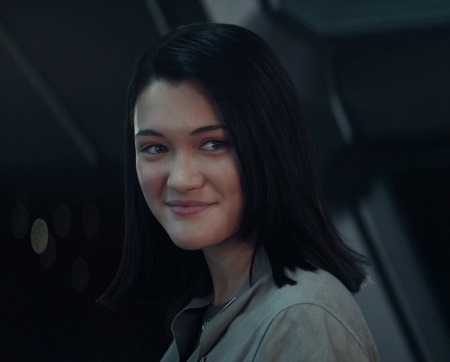


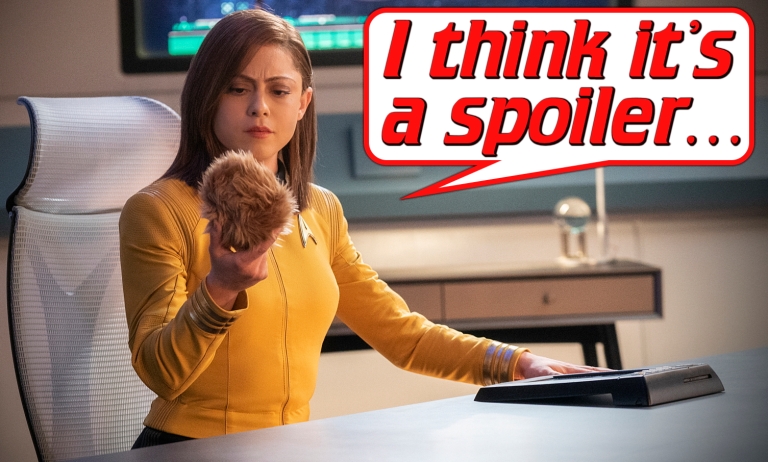


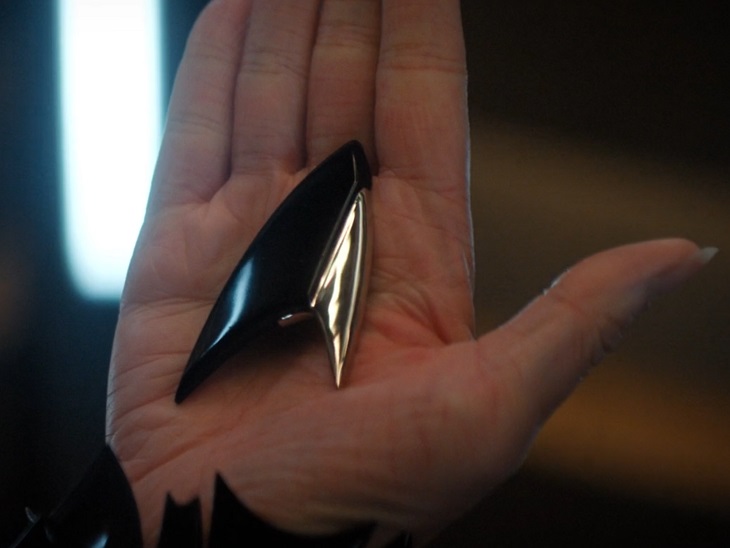


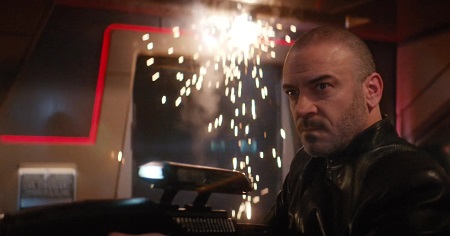
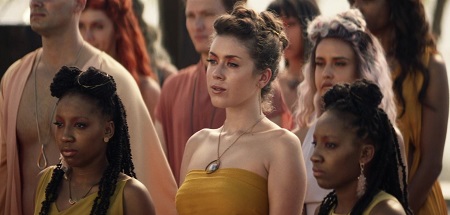


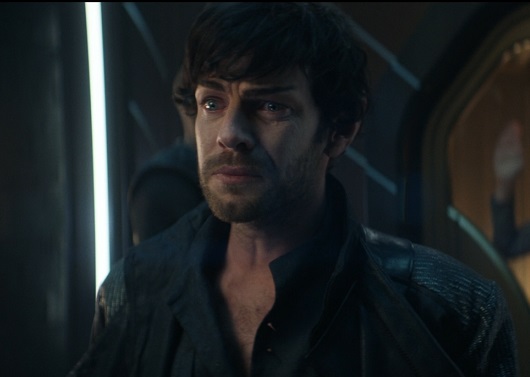





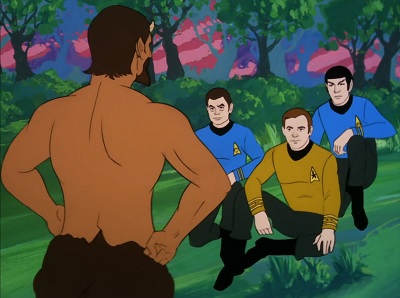
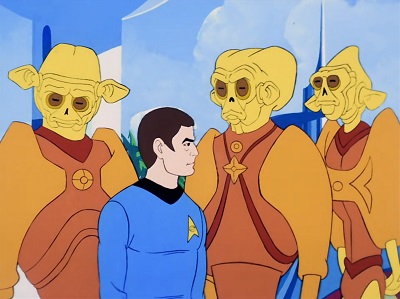
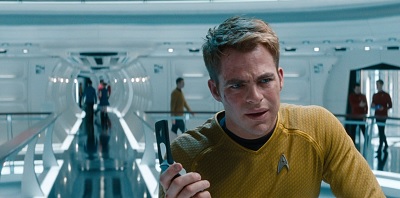
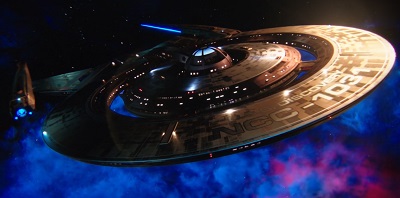
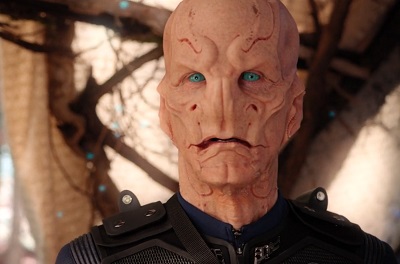
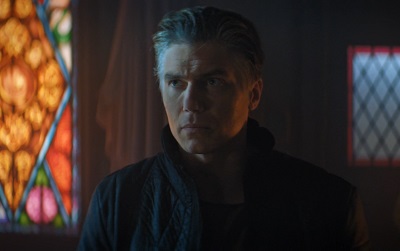


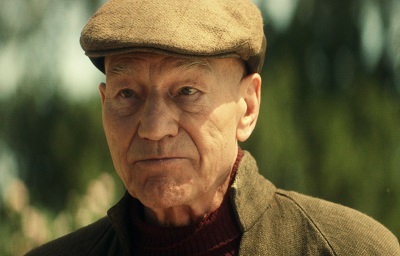
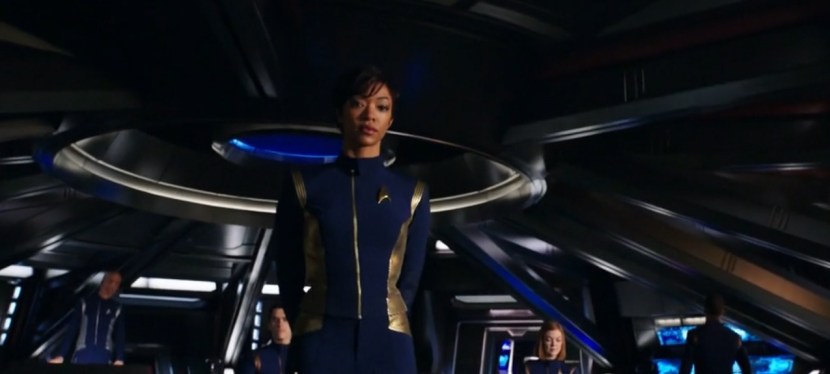
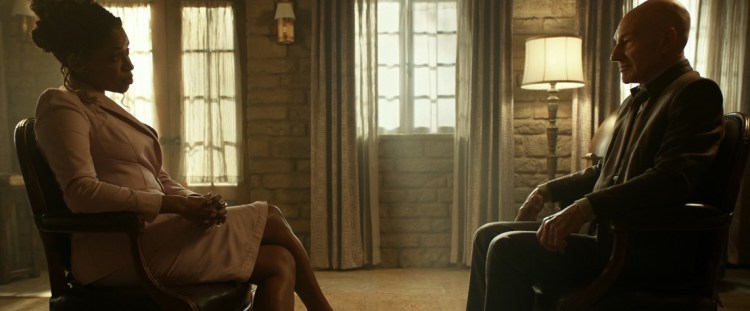

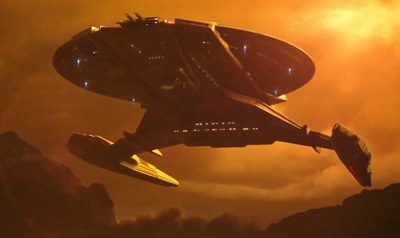
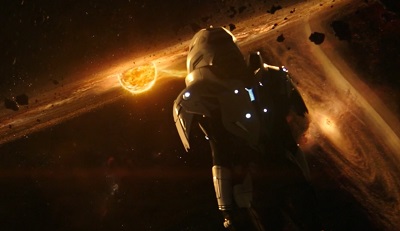
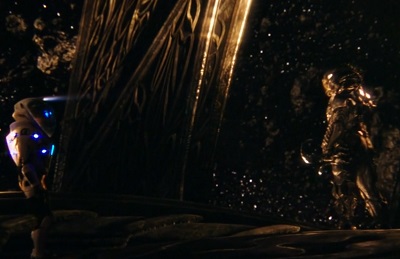


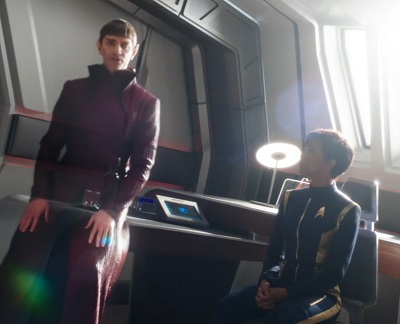
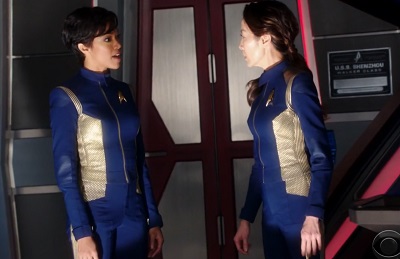
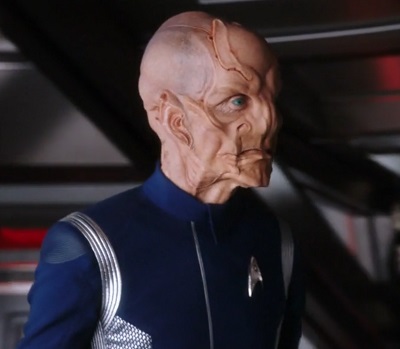
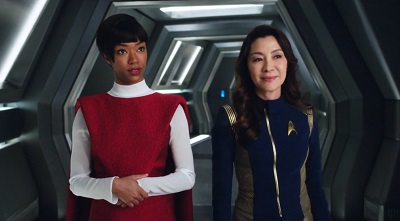

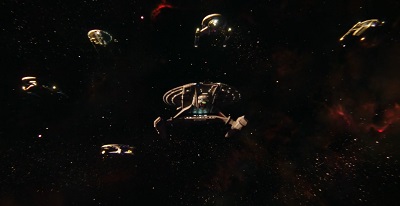
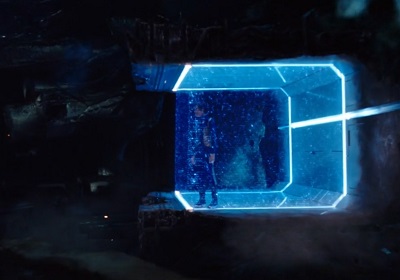
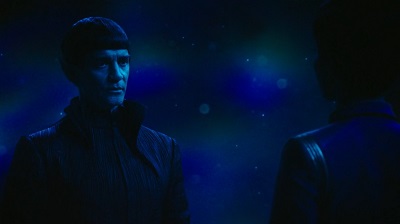
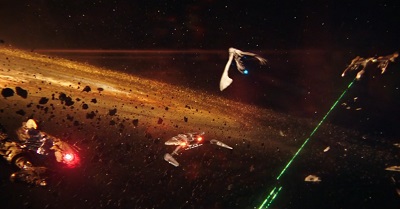

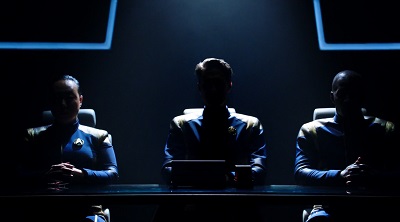
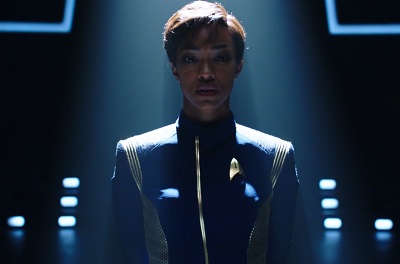


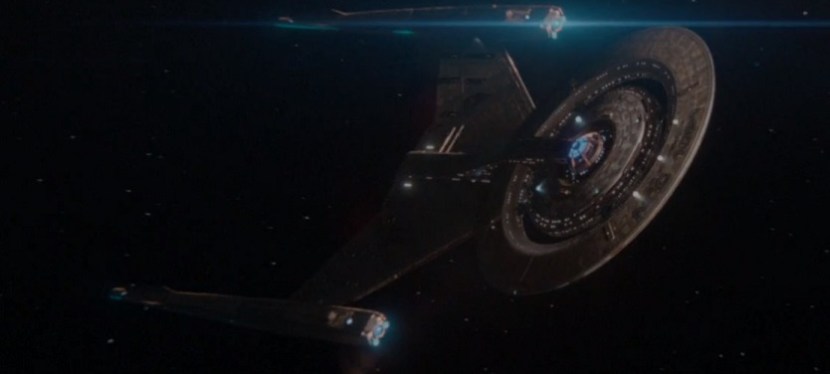
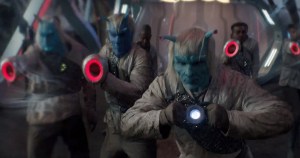

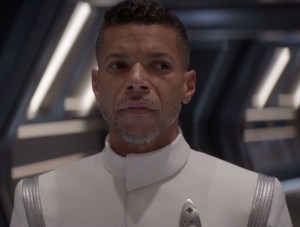




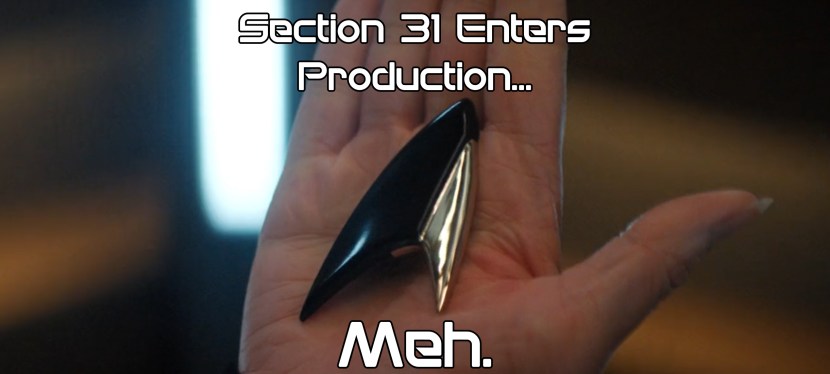
 Trekking with Dennis