“Post-Apocalyptic Star Trek:” What Went Wrong?

A Star Trek-themed spoiler warning.

Spoiler warning: There are spoilers ahead for Star Trek: Discovery Seasons 1-5. Spoilers are also present for the following Star Trek productions: Strange New Worlds Seasons 1-2, Picard Season 3, Prodigy Season 2, and pre-release info for Starfleet Academy.

Did Discovery’s “post-apocalyptic” take on Star Trek work as intended from Season 3 onward? If not… what went wrong? Why might a far future setting with a galaxy in ruins have been the wrong choice for this franchise? If another group of writers had tackled the same concept in a radically different way, could it have worked better? What does it all mean for Starfleet Academy? Those questions and more are what we’re going to ponder today!

Although Discovery has now concluded its five-season run, there are still topics to consider and debate. And it’s only now – after the series has concluded and we’ve seen three full seasons of its far future setting – that we can truly begin to wrangle with the “post-apocalyptic Star Trek” idea that began in Season 3. I held out hope for a while – particularly when Season 5’s marketing material and trailers seemed to be teasing a different kind of story – that Discovery might be able to do something creative, interesting, and engaging with this new idea. But, for me at least, post-apocalyptic Star Trek didn’t really work.
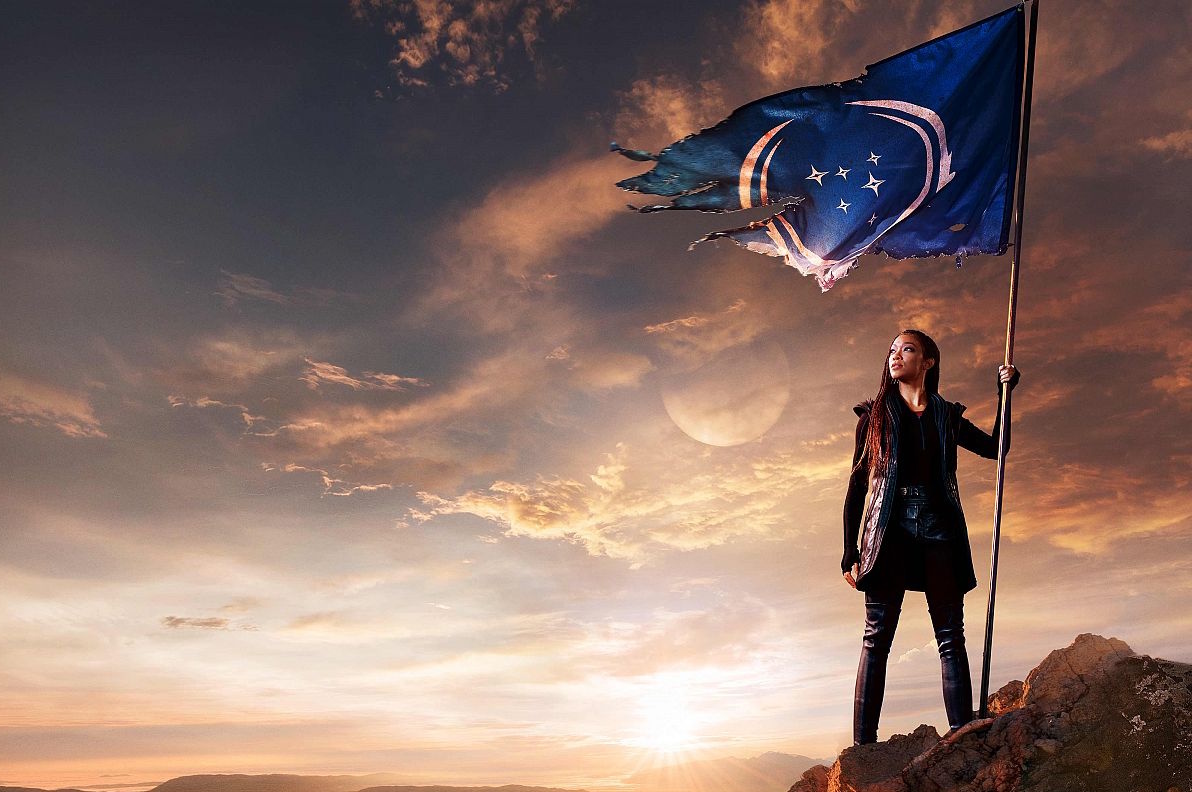
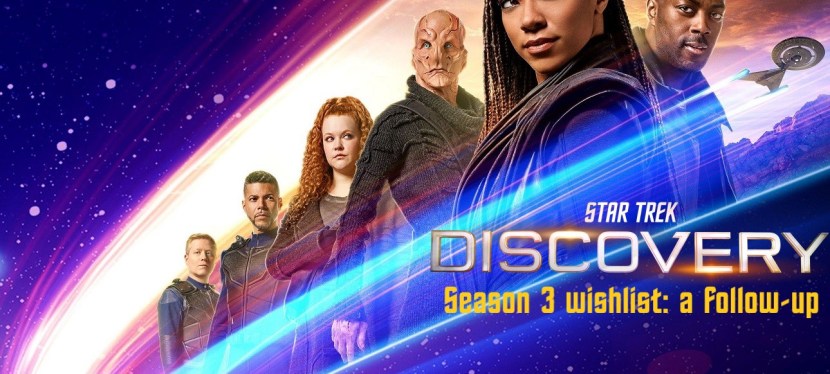
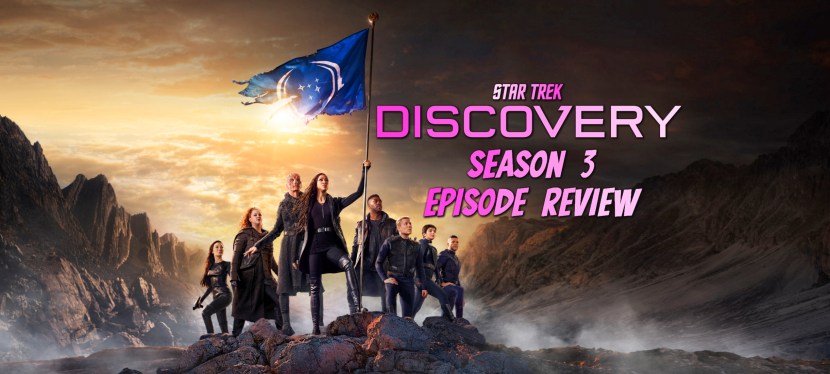
Cropped promo poster for Star Trek: Discovery's third season.
Discovery’s “post-apocalyptic” setting began in Season 3.

I think it’s worth discussing this subject for a couple of reasons. Firstly, Discovery was the franchise’s flagship series during its run. It brought Star Trek back to its small screen home after more than a decade in the wilderness, teed up the excellent spin-off Strange New Worlds, and for our purposes today, it also created this far future setting. Shooting forward in time centuries beyond The Next Generation, Picard, and even anything we’d seen in time travel episodes elsewhere in the franchise, Discovery had a completely virgin, unspoiled setting and time period for the writers and producers to craft.

Secondly, while Discovery may be over, there’s more Star Trek to come – at least for the next couple of years. A second spin-off – Starfleet Academy – intends to keep this far future timeline going, and it’s not impossible to think that Paramount might want to set new films or shows in this era, too. Given the issues Discovery had, it’s important to understand what worked about the setting and what didn’t – so future creatives can double-down on the positives while avoiding a repeat of the mistakes.
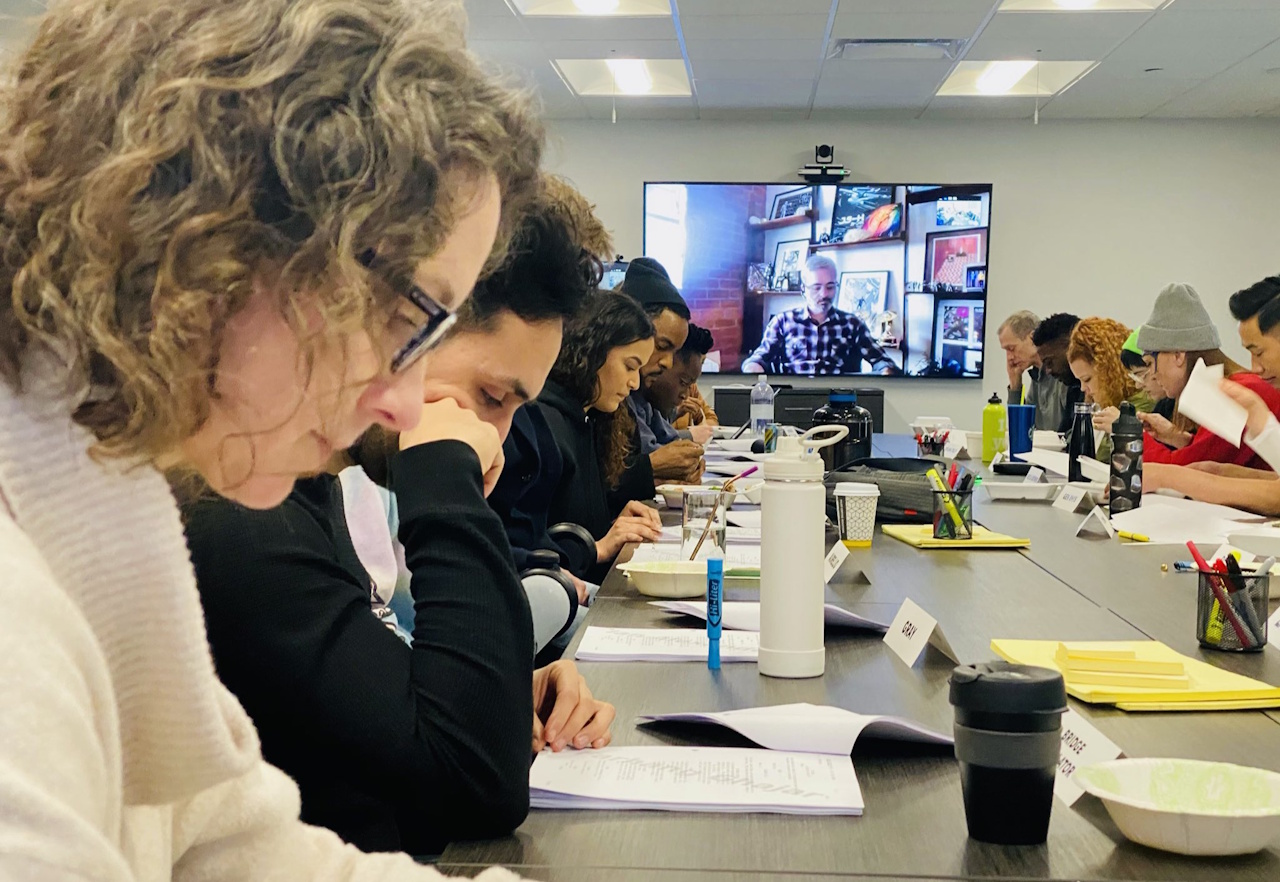
Behind-the-scenes photo of the cast and crew of Star Trek: Discovery Season 3 at a table read.
The cast and crew at a table read for the Season 3 finale.

As always, a couple of important caveats before we go any further. This may be a controversial topic; Discovery has always elicited strong reactions from the Star Trek fan community (to put it mildly!) It’s worth keeping in mind that all of this is the entirely subjective opinion of one old Trekkie. I’m not claiming that I’m right and that’s that – different folks will have different opinions about some of these storylines and narrative concepts, and that’s okay.

If you followed along with my Discovery reviews, you’ll know that I’m a fan of the series on the whole – not any kind of hater. Some storylines worked better than others, and I pulled no punches in criticising episodes and narrative choices that I didn’t like. But I’m glad Discovery exists and remains a part of Star Trek’s official canon! The fact that we’re talking about whether the post-apocalyptic tone worked from Season 3 onwards – and what I personally didn’t like about it – shouldn’t be taken as me “hating” Discovery or any of its writers and producers. I share my opinion with the Star Trek fan community in the spirit of polite discussion.

With all that being said, if you aren’t in the right headspace to tackle a potentially controversial subject, that’s totally okay. This is your opportunity to jump ship if you’d rather not get into the weeds with Discovery and its “post-apocalyptic” tone.
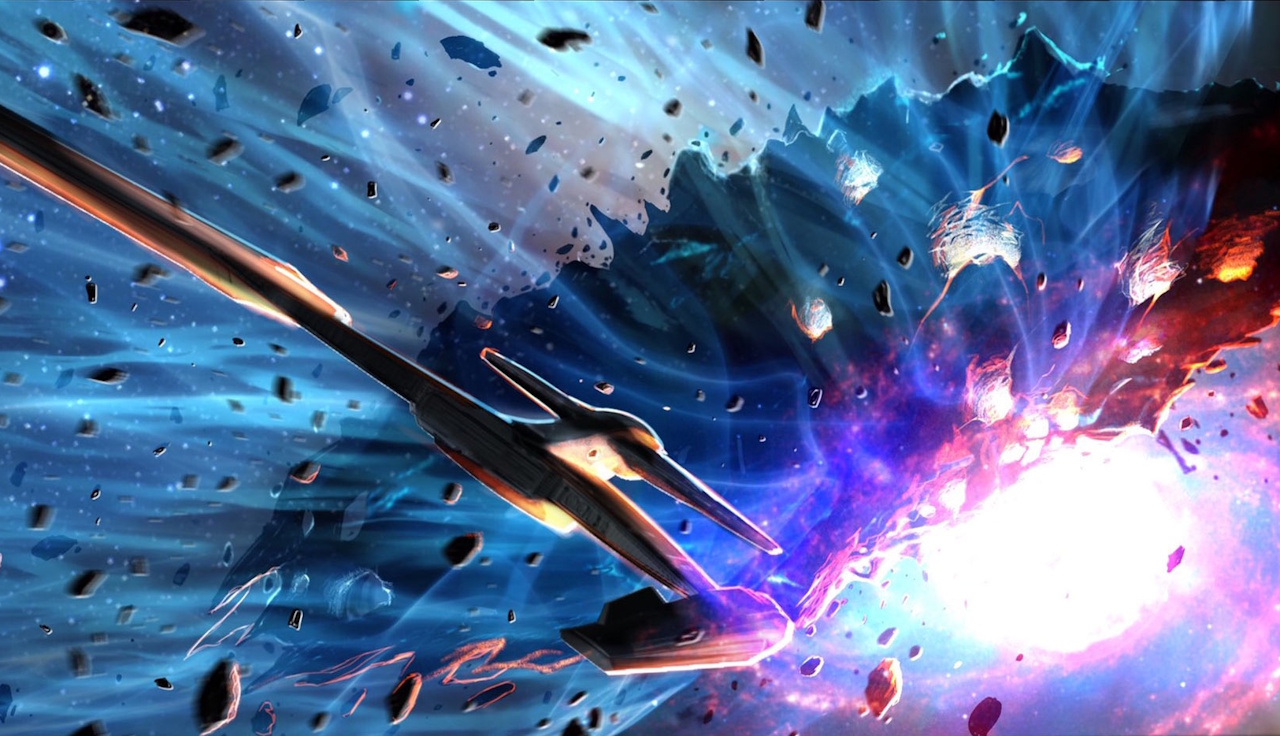
Concept art from Star Trek: Discovery Season 2.
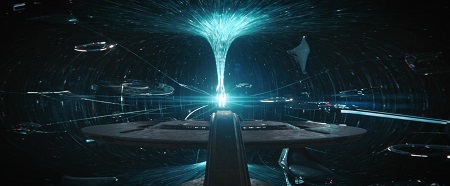
Concept art of Season 2’s time-wormhole.

To begin with, I think we need to consider why Discovery’s post-apocalyptic vision of the future exists at all. I tackled part of this question in a different article – which you can find by clicking or tapping here – but here’s the short version: Discovery wouldn’t have left the 23rd Century if the writers, producers, and executives were happy with the show. The decision to shoot forwards in time is, in my opinion, a tacit admission from the folks at CBS that setting Discovery a decade before Captain Kirk’s five-year mission was a mistake. It was an attempt to rectify that “original sin” which, some may say, came two seasons too late.

But leaving the 23rd Century behind didn’t mean Discovery had to arrive in a galaxy devastated by the Burn. That was a creative choice on the part of the show’s writers and producers; an attempt to transplant Star Trek’s core themes of hope for the future, optimism, peaceful exploration, and a post-scarcity society into a completely different environment. And to be clear: I don’t think Discovery’s writers lost sight of what those concepts were or what Star Trek had been, as some have suggested. But they misunderstood how important those things were to the foundation of Star Trek’s setting, and why it was so important to see a vision of the future where many of the problems of today have been solved. In attempting to be clever and subversive – or perhaps thinking they knew better – they robbed Star Trek of not only its most important defining feature, but also one of the key differences between Star Trek and most other popular sci-fi and fantasy worlds.
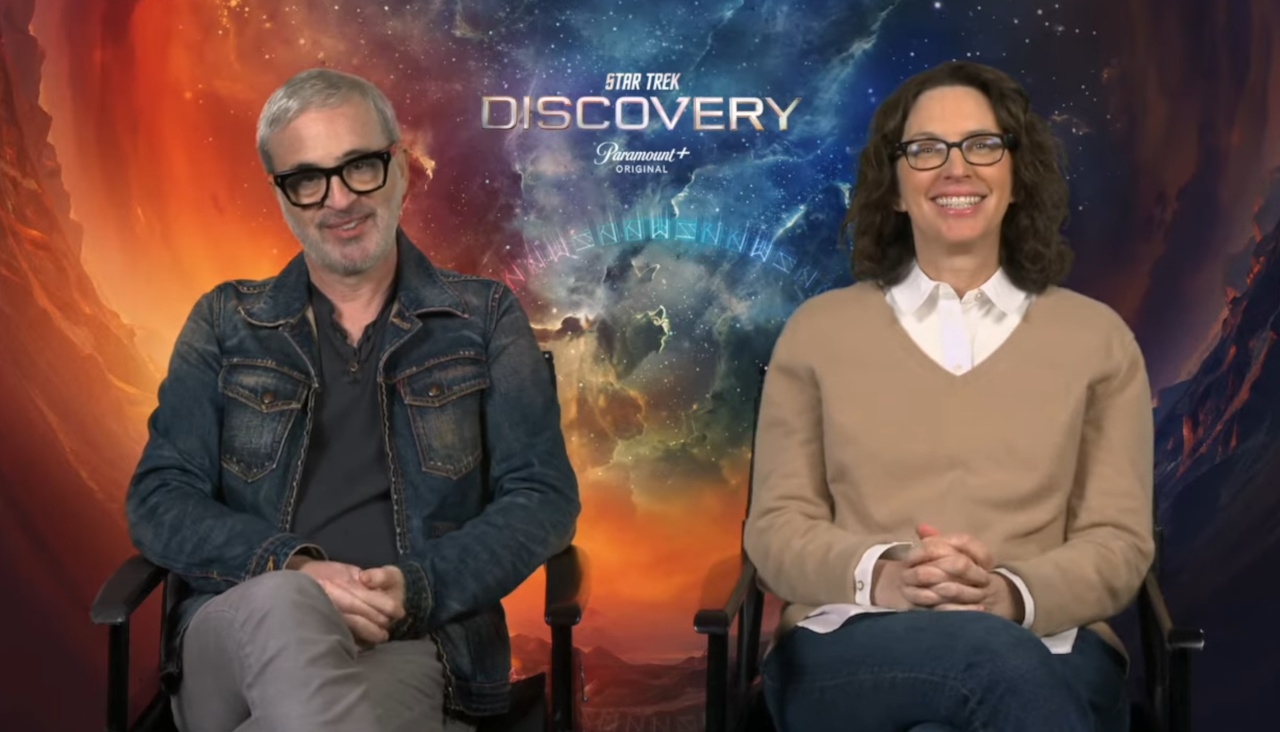
Still frame of Alex Kurtzman and Michelle Paradise at an interview promoting Star Trek: Discovery Season 5.
Discovery’s co-showrunners for Seasons 3-5: Alex Kurtzman and Michelle Paradise.

A post-apocalyptic setting clearly appealed to executives at CBS because of how popular it had proven to be elsewhere. From the late 2000s and through the entire 2010s, shows like The Walking Dead, Falling Skies, The 100, Jericho, The Strain, and 12 Monkeys had found critical and/or commercial success, as had films like Children of Men and Snowpiercer, and games like The Last Of Us and the Metro series. Star Trek has occasionally set trends in entertainment – but it’s also never been shy about following them. After two seasons of Discovery that had proven controversial – and crucially, hadn’t been a resounding success commercially – piggybacking on an apparently popular trend wasn’t an awful idea in principle.

Discovery’s creatives wanted to take Star Trek’s foundational sense of optimism and hope and completely reframe it; using the same core ideas but in a radically different way. By taking away Starfleet and the Federation, and leaving much of the galaxy devastated, in ruins, or struggling for resources, there was potential – they believed – to tell stories about bringing people back together, finding hope in a bleak setting, and even considering the impact of this level of devastation on the crew’s mental health.
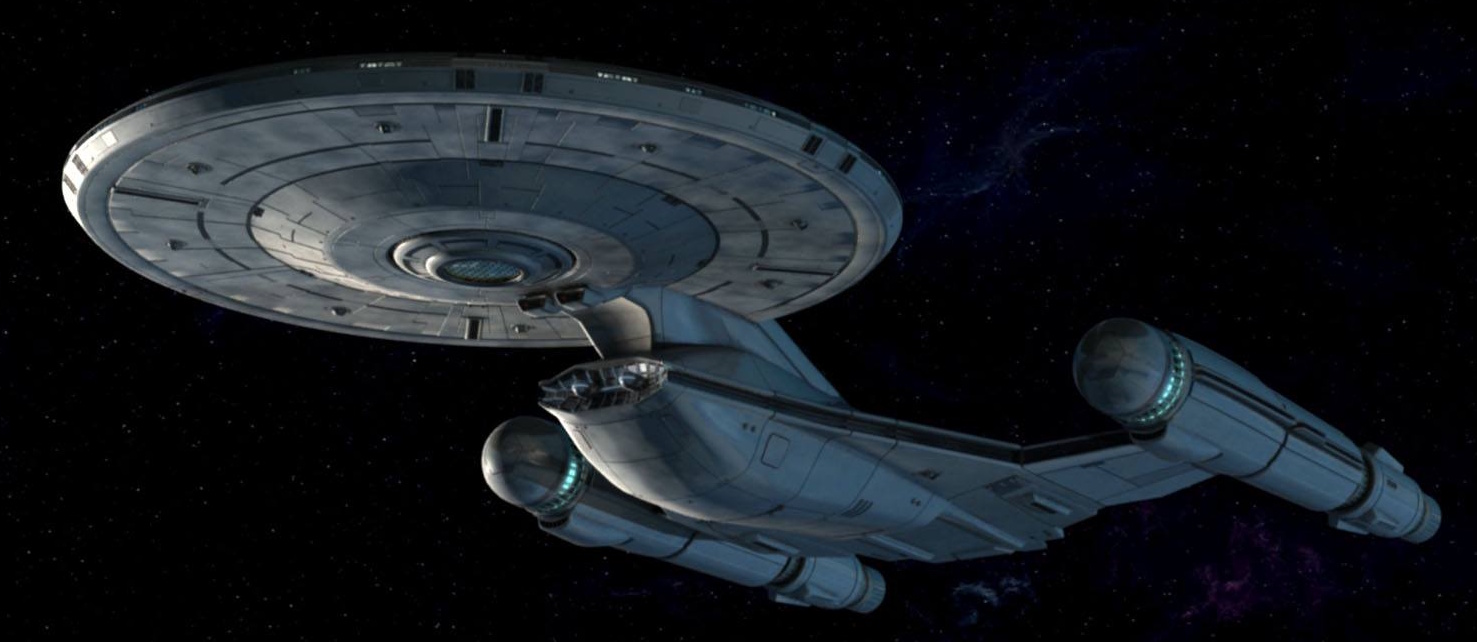
Early concept art from Star Trek: Discovery Season 1 of the USS Discovery.
Early concept art of the USS Discovery circa 2016.
Image Credit: Frogland Archive

At the peak of the Cold War, with America and the Soviet Union staring each other down atop piles of nuclear weapons that could destroy the planet, The Original Series presented a peaceful future in which humanity had overcome those struggles. Later, in the 1990s, Deep Space Nine’s Dominion War didn’t show a devastated Federation on the brink of defeat, it showed good people struggling to save the “paradise” that had been built. These shows were different from one another in many ways – but at the core, one of the foundational pillars of Star Trek is that the future is bright and it’s going to be worth fighting for.

This is something fundamental to Star Trek; it’s a huge part of what makes the franchise what it is. And there’s a massive difference between a show that says “humanity has overcome all of these obstacles, so let’s explore the galaxy” and one that says “everything is ruined but we can rebuild.” These two narrative ideas both have the themes of optimism and hope – but they’re very different kinds of optimism and hope, and they’re presented in totally different ways. It’s not so much that one works and the other doesn’t; see the list of post-apocalyptic media above, all of which use those themes and ideas in some form. But in this case, the post-apocalyptic setting took away something foundational from Star Trek’s setting, utterly transforming Discovery into a completely different kind of series.
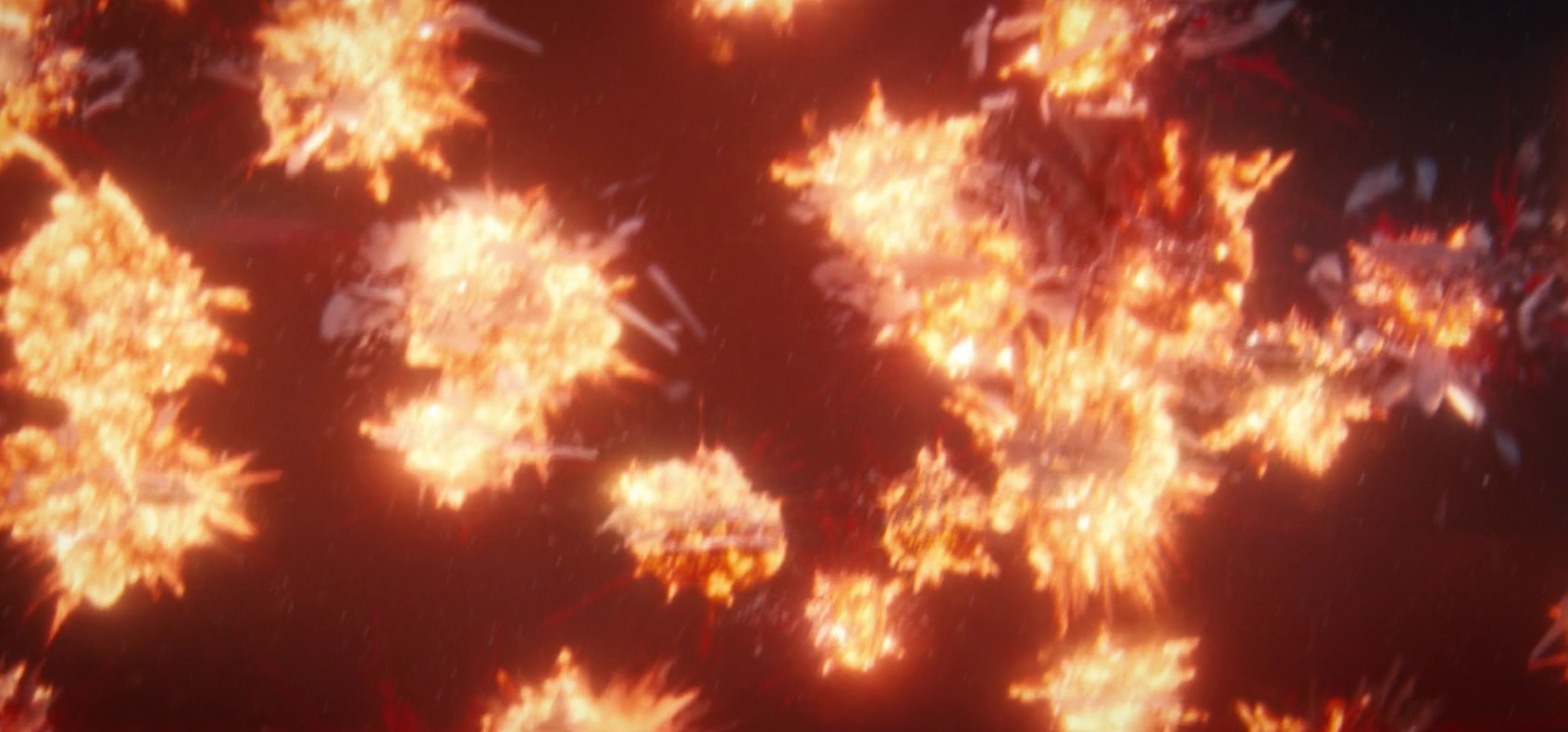
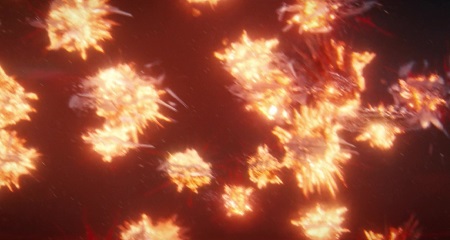
Still frame from Star Trek: Discovery Season 3 showing multiple starships exploding.
The Burn.

Here’s the bottom line: Discovery didn’t do anything exceptional with its post-apocalyptic setting. I still think such a massive change to the core of Star Trek would’ve attracted criticism even if the show’s writing had been exceptional from Season 3 onwards, but the simple fact is that it wasn’t. There were some decent episodes and creative ideas in the mix, don’t get me wrong… but Discovery’s biggest problem both before and after this switch to a post-apocalyptic setting was that its storytelling was small, repetitive, and overly reliant on levels of interpersonal conflict and relationship drama that we seldom get outside of soap operas. In short, Discovery’s post-apocalyptic setting turned out to be nothing more than background noise; set dressing for less-interesting stories to play out in front of.

Such a huge change to Star Trek’s galaxy and the damage done to the Federation needed more time in the spotlight and it needed to serve a purpose. In Season 3, part of the story focused on the Burn and figuring out what happened. This story was an ultimately frustrating one, with dead ends and red herrings before arriving at an ending that no one could have predicted. Season 3 teased viewers with a mystery, stringing us along and seeming to reveal clue after clue in different episodes, only to then pull a bait-and-switch to something out of left-field that didn’t feel properly set up. It was pretty annoying – and I know I wasn’t the only one who felt that way at the time.
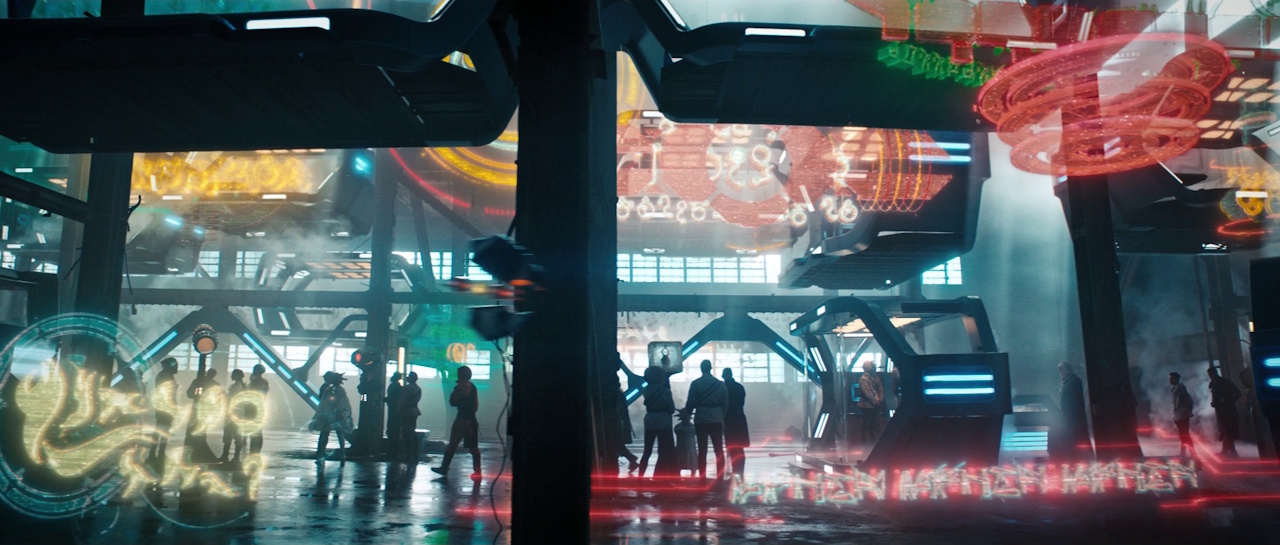
Still frame from Star Trek: Discovery Season 3 showing an alien marketplace.
A 32nd Century market.

Worse, though, was that Season 3 spent such a long time on what felt like unimportant fluff in comparison to the Burn. The first episodes of the season showed us how far the Federation had fallen; humans on Earth couldn’t even travel as far as Titan, within their own solar system – such was the shortage of fuel and supplies. Earth and Vulcan had both withdrawn from the Federation, and Starfleet wasn’t able to contact many of the Federation’s outlying member worlds and colonies. But instead of exploring what this could mean and telling a story about figuring out what went wrong and how to fix it… Discovery’s writers told half-baked stories about depression, Burnham’s on again-off again relationship with Starfleet, Book and Burnham’s love affair, and more.

To be clear: I don’t think the post-apocalyptic setting would’ve been the right choice regardless, for the reasons outlined above. But Discovery’s writers didn’t even give that premise or the far future setting a chance to win me over. Instead, they tried to jump right back in with stories about Michael Burnham: Chosen One™ – and it just fell so incredibly flat.
Cropped page from the Star Trek: Discovery comic Adventures in the 3nd Century showing Burnham sitting at a console.
Michael Burnham in the comic book Adventures in the 32nd Century.
Image Credit: IDW Publishing/Paramount

There was a metaphor buried in the far future setting that could’ve been timely. But the end of Season 3 ruined it. By taking one of Star Trek’s core technologies – warp drive – and saying that the galaxy as a whole was running out of fuel, there was a chance for Discovery to do what Star Trek has always done: use a sci-fi lens to examine a real-world issue. We rely too heavily on limited supplies of fossil fuels here in the real world, and Season 3 could’ve made a point about the need to innovate, invent new methods of travel and power generation, and tie those issues into the theme of rebuilding and coming back stronger. That could’ve been a powerful story if done well, and it also could’ve finally found a proper use for Discovery’s most controversial addition to Star Trek: the spore drive.

But the discovery of a near-unlimited cache of dilithium toward the end of the season totally undermined all of that. It would be like writing a story about Earth running out of oil and humanity coming together to build new vehicles and methods of power that don’t rely on fossil fuels… only for the story to end with a massive untapped oilfield being discovered. This mixed messaging, and unwillingness to commit to telling stories that could’ve taken advantage of this kind of setting, really tripped up Discovery. The most powerful – and potentially interesting – ideas that could’ve been explored in this kind of setting were just left feeling flaccid and half-hearted.
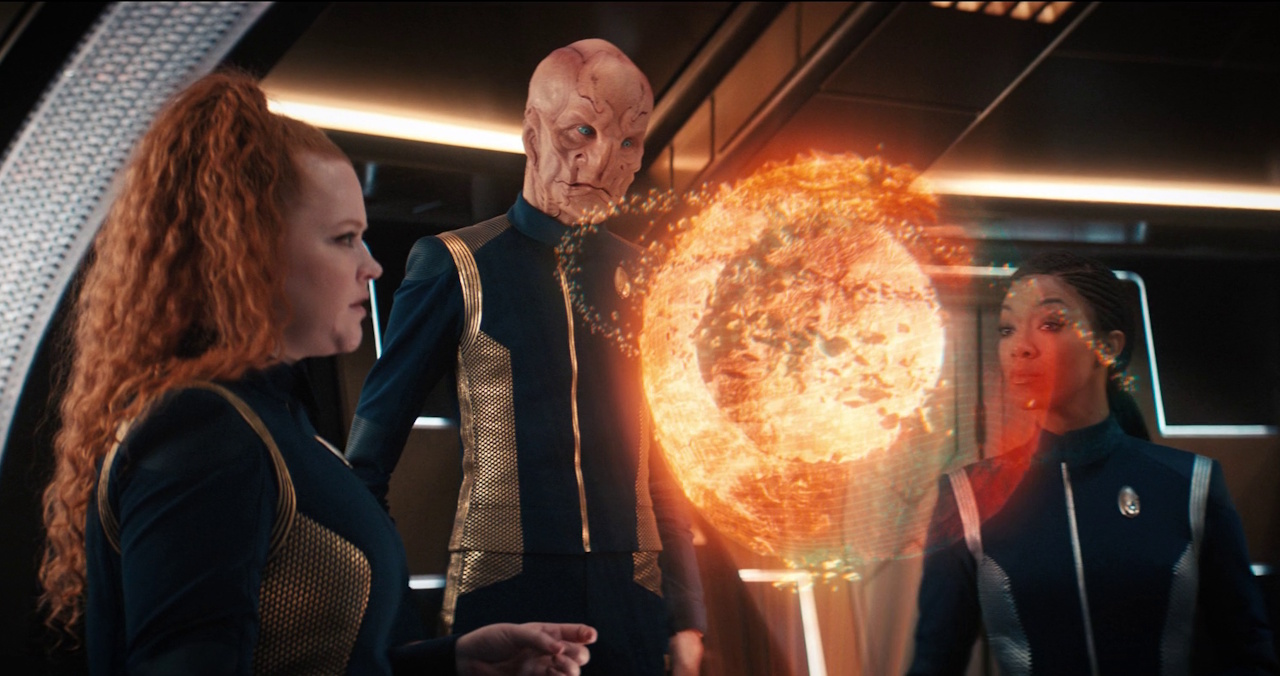
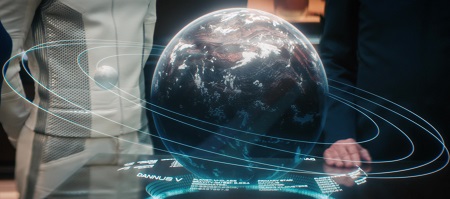
Still frame from Star Trek: Discovery Season 3 showing Tilly, Saru, and Burnham with a hologram of the dilithium planet.
The Verubin Nebula contained a massive cache of dilithium – and the answer to the mystery of the Burn.

Many post-apocalyptic shows and films tell character-focused stories, and these settings can lend themselves to high-stakes drama. But most of the time, the environment that the characters are confronted with – whether that’s a zombie apocalypse, an ecological disaster, a pandemic, or something else – is at least part of the cause of the tension and interpersonal conflicts. A character like The Walking Dead’s Governor is who he is because of the world he inhabits. Many of the arguments between characters in shows like The Strain or films like City of Ember happen because of the environment they’re in. Even relationships can begin – or be ended – by the stresses of a post-apocalyptic life, as we see in films like Shaun of the Dead or shows like 2008’s Survivors. But Discovery couldn’t even get this right most of the time.

Most of Discovery’s storylines in the far future could’ve worked just as well – better, even, in some cases – without the post-apocalyptic backdrop. Seasons 4 and 5 in particular are both in this camp. The Dark Matter Anomaly that devastated parts of the galaxy would’ve arguably been more impactful if it had been attacking a fully-intact Federation. And the threat of the Breen attack and the Progenitors’ device in Season 5 is the same. They would’ve worked in the same way Deep Space Nine’s Dominion War did: as threats to Star Trek’s post-scarcity technological “paradise.”
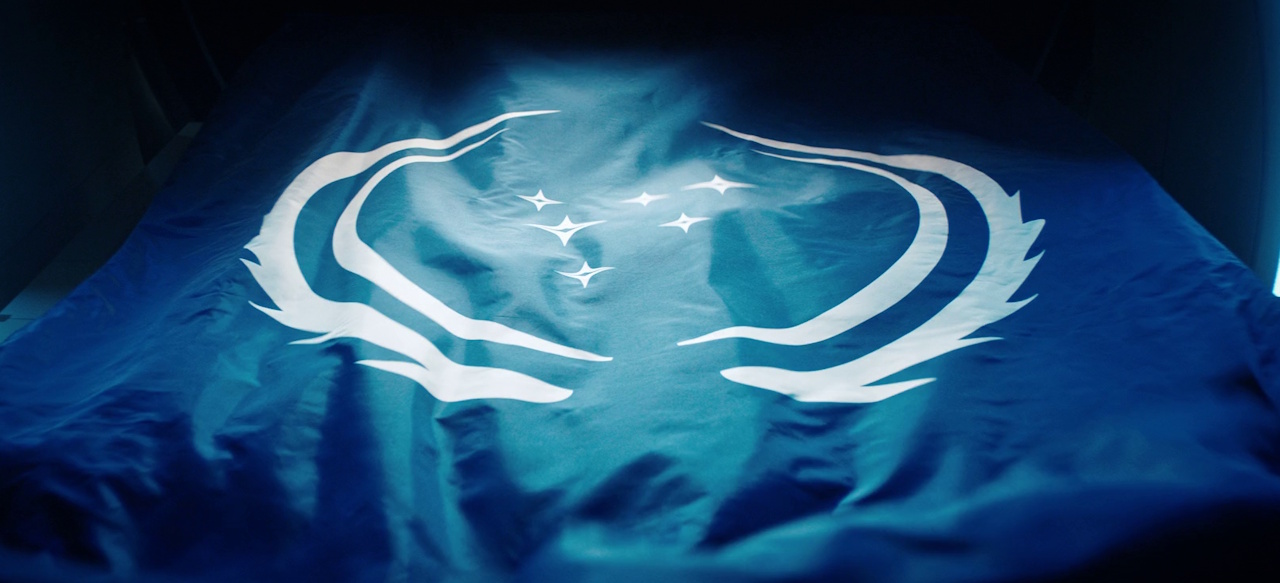
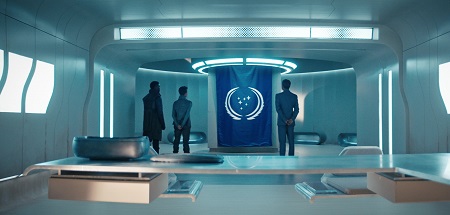
Still frame from Star Trek: Discovery Season 3 showing the flag of the Federation.
The flag of the Federation in the 31st Century.

Smaller storylines are also in this camp. Detmer’s half-arsed mental health story in Season 3, Culber’s equally weak depression in Season 4, Adira and their quest to help Gray be seen again, Burnham and Book’s mostly awful on/off relationship, the Ni’Var stories involving Romulans and Vulcans working together… would any of these have worked less well, or even been noticeably different, without the Burn and the devastation it had caused? Or would they have been able to play out almost exactly the same, beat for beat?

Taking the idea of societal collapse as a starting point, Discovery’s writers could have tied in themes of mental health. The character-focused storytelling that they wanted, with high levels of drama and plenty of “therapy-speak,” was potentially well-suited to the post-apocalyptic environment they’d created. But there was almost no attempt to link these two ideas; instead, characters would suffer or sulk for reasons completely unconnected to the world they found themselves a part of. This feels like a horrible missed opportunity considering the kind of show Discovery’s writers and producers wanted it to be.
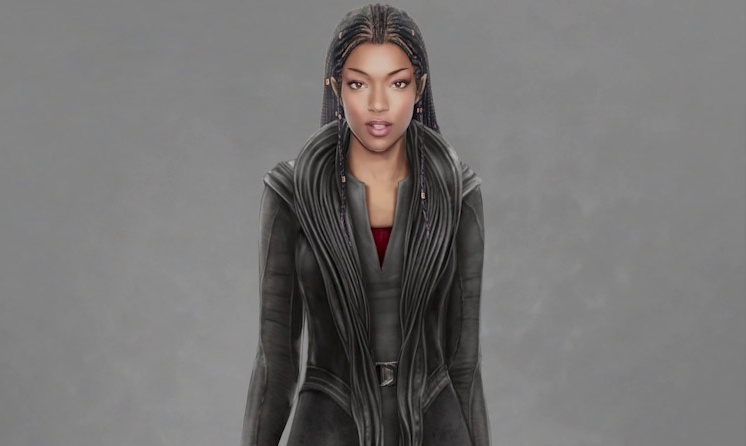
Concept art for Star Trek: Discovery Season 3 showing Michael Burnham.
Concept art of Burnham (and her costume) produced for Season 3.

For some reason, since Star Trek returned to the small screen, there’s been an insistence on serialised storytelling – but only for one season at a time. Self-contained narrative arcs have been the order of the day, which meant that the Burn, its origin, and crucially, its aftermath were only really in focus in Season 3. A couple of clips at the beginning of Season 4 – as well as a handful of throwaway lines of dialogue here and there – referenced the Burn, but for the most part, it disappeared after Season 3 was over.

There is a partial justification for this: Discovery’s production team were never sure whether cancellation was coming. If there might’ve been one thing worse than a devastated galaxy and an apocalyptic event, it would be leaving the reason for all the destruction unexplained with the show abruptly going off the air! So in that sense, I get why those decisions were taken. Star Trek was still finding its feet in a new entertainment landscape, CBS and later Paramount were on shaky ground amidst the “streaming wars,” and there was no guarantee of a renewal. Setting up the Burn and explaining it in a single season makes sense in that context.

But dumping the Burn after Season 4, and not doing more to explore the consequences of this massive event… that makes less sense to me.
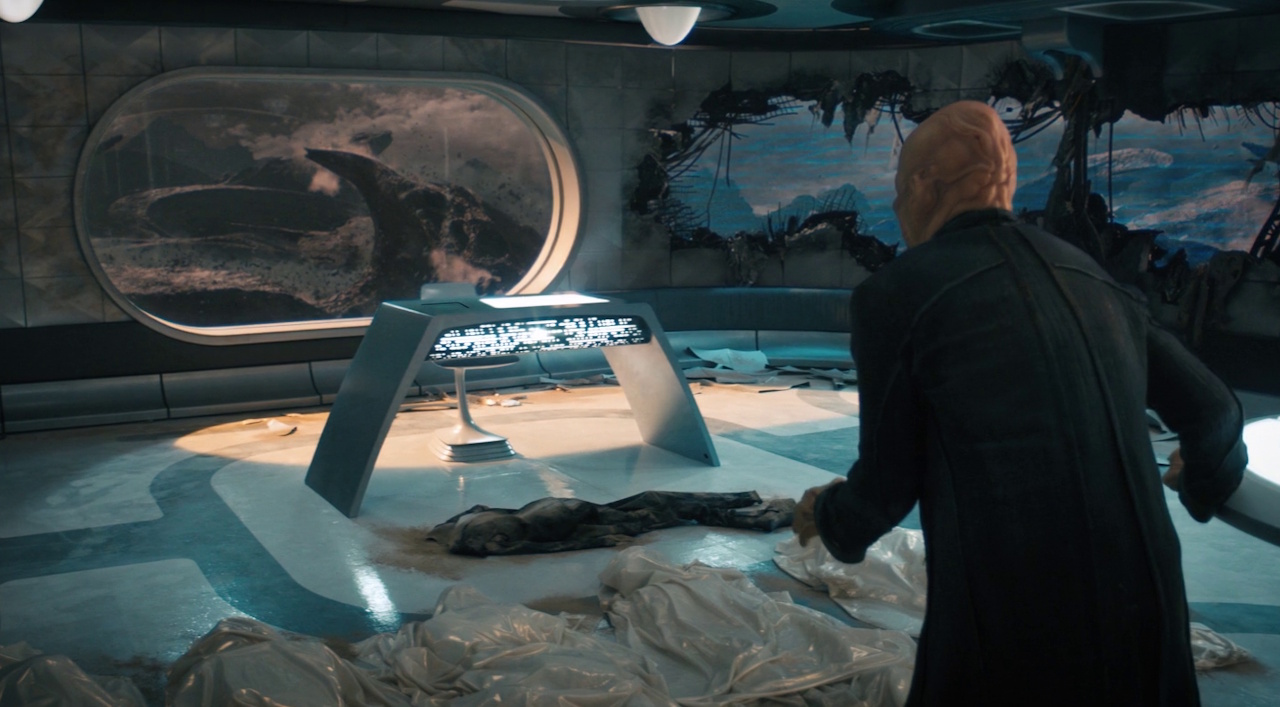
Still frame from Star Trek: Discovery Season 3 showing Su'Kal aboard the wreck of the Khi'eth.
Su’Kal at the source of the Burn.

Star Trek in its heyday was a primarily episodic franchise. There were season-long arcs in Deep Space Nine and Enterprise, as well as Voyager’s seven-year journey back to the Alpha Quadrant. But even in those frameworks, episodic storytelling was still the order of the day for Star Trek. I think it’s no coincidence that the best episodes Discovery told were the ones that were somewhat standalone. Episodes like Season 2’s An Obol for Charon, Season 3’s Terra Firma, Season 4’s Choose to Live, and Season 5’s Face the Strange are all at least partly self-contained affairs. Strange New Worlds has also taken on a much more episodic tone – something that has made that series an absolute joy to watch.

At the start of Season 4, I hoped that Discovery would go down a more episodic route. The Burn could be a starting point, and Discovery could’ve hopped to different planets across the Federation as the galaxy began to rebuild from its aftermath. A story of bringing hope to people who’ve been struggling to get by could have been exceptional if handled well, and the Burn – despite the issues it caused for Star Trek as a whole – was the perfect entry point for telling stories like that. Switching up Discovery to become a more episodic show could’ve given more of the cast a chance to be in the spotlight, with episodes focusing on different planets and different people every week.
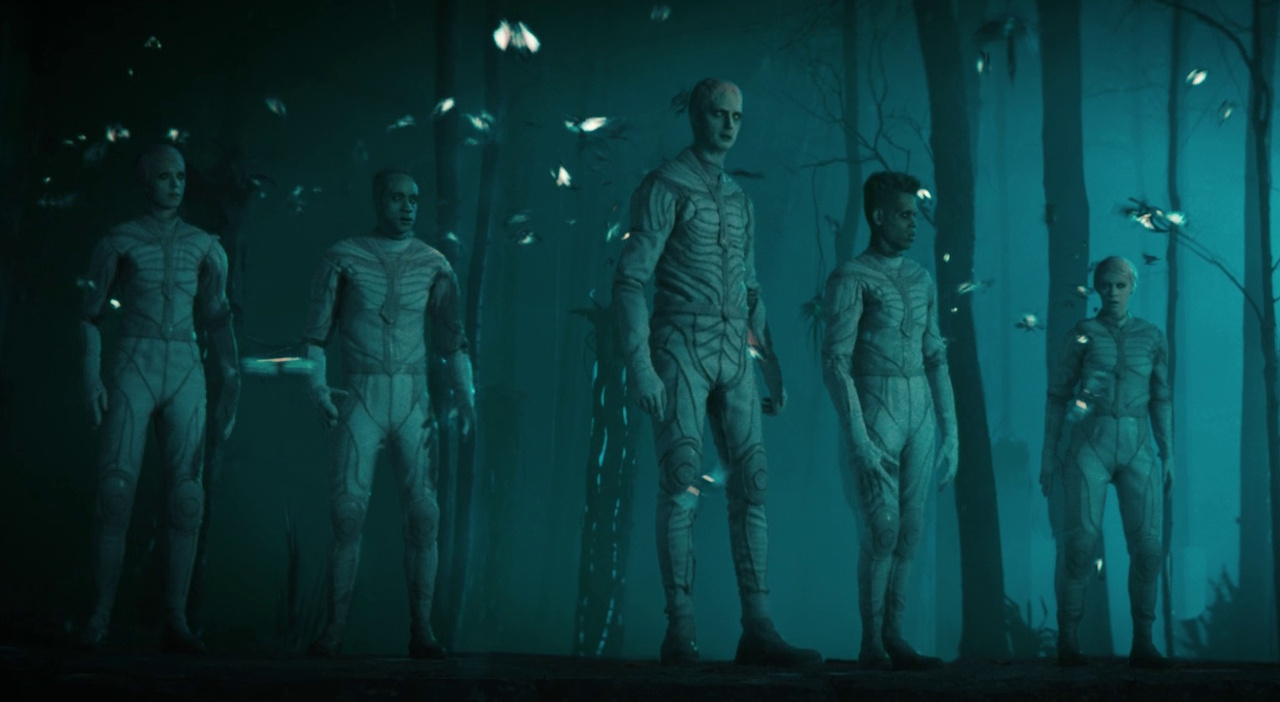
Still frame from Star Trek: Discovery Season 4 showing the "butterfly aliens" from the first episode.
Burnham’s brief encounter with these “butterfly aliens” was about as close as Discovery came to the idea of rebuilding the Federation.

To me, this feels like an open goal; a golden opportunity for Discovery to prove the haters wrong. It was a chance to do something meaningful with the Burn and the post-apocalyptic setting that Season 3 – with its unfolding mystery and close focus on Burnham – didn’t really have much time for. Moreover, it would’ve been a great way to explore other aspects of this 32nd Century setting, catching up with factions and races from past iterations of Star Trek.

Despite spending three seasons in the far future, we didn’t so much as glimpse a Klingon. Races like the Ferengi were seen in the background and there were throwaway lines that mentioned the Borg and the Gorn, but none of them ever showed up on screen. Given that the devastation of the Burn was supposedly a galaxy-wide thing, Discovery did absolutely nothing to show us what some of the most iconic and beloved factions in Star Trek were doing in this era or how they were coping. And then there’s the elephant in the room: the Burn was, in a roundabout way, caused by a Federation ship operating under orders from Starfleet HQ. What would the likes of the Klingon Empire or the Cardassian Union do if and when they learned that truth?
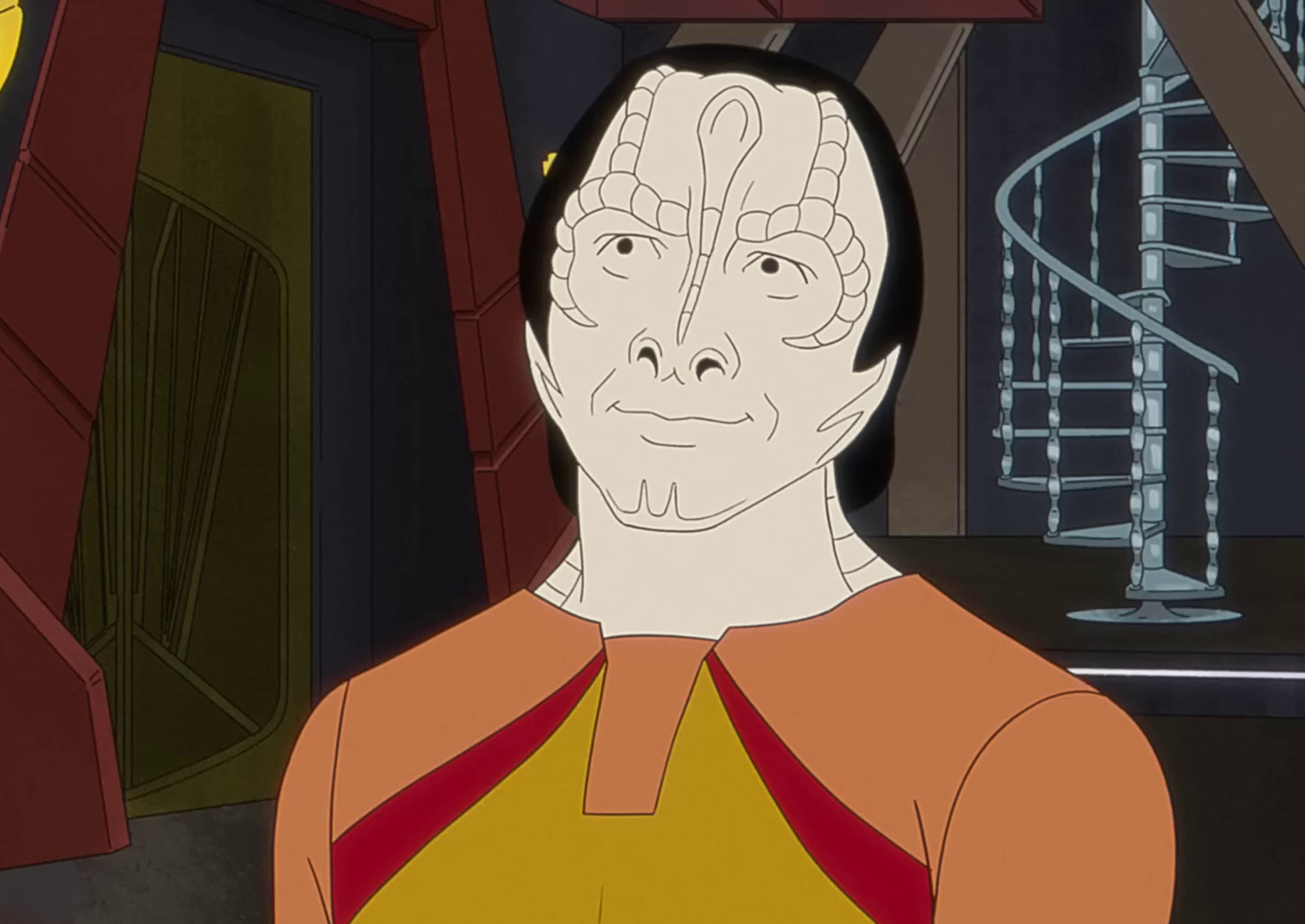
Still frame from Star Trek: Very Short Treks showing Garak.
How would the Cardassians have reacted to the Burn – and its Federation origin?

Let’s draw the bare outline of a potential story that would take the Burn as a starting point, tie in one of Star Trek’s well-known factions, and use it as a springboard for some character-focused storytelling. This is just a thought experiment, but I think it’ll illustrate the point I’m trying to make!

After discovering the truth behind the Burn and ensuring it won’t happen again, Captain Burnham and the crew are tasked with jumping to the Klingon homeworld, where a Federation ship has gone missing. Upon arriving at Qo’noS, Discovery is confronted by angry Klingons telling them to leave, and they learn the missing ship has been impounded and its crew are being held. The Klingons, whose empire has fractured and who have been suffering the effects of the Burn for a century, blame the Federation for what happened – and in addition to holding one ship captive, they’re massing for war.

This would be hugely triggering for the crew of Discovery – they’re veterans of the 23rd Century Klingon war, a war Burnham still blames herself for causing. It brings back horrible memories for her and another member of the crew, and they have to wrangle with those feelings while trying to avert a war. The Klingon fleet is low on dilithium, but they’re willing to expend the last of their dwindling resources on a quest for vengeance. It falls to Burnham, Admiral Vance, and perhaps President Rillak to talk them down – offering to re-instate the Khitomer Accords and share the cache of dilithium with the Klingons.
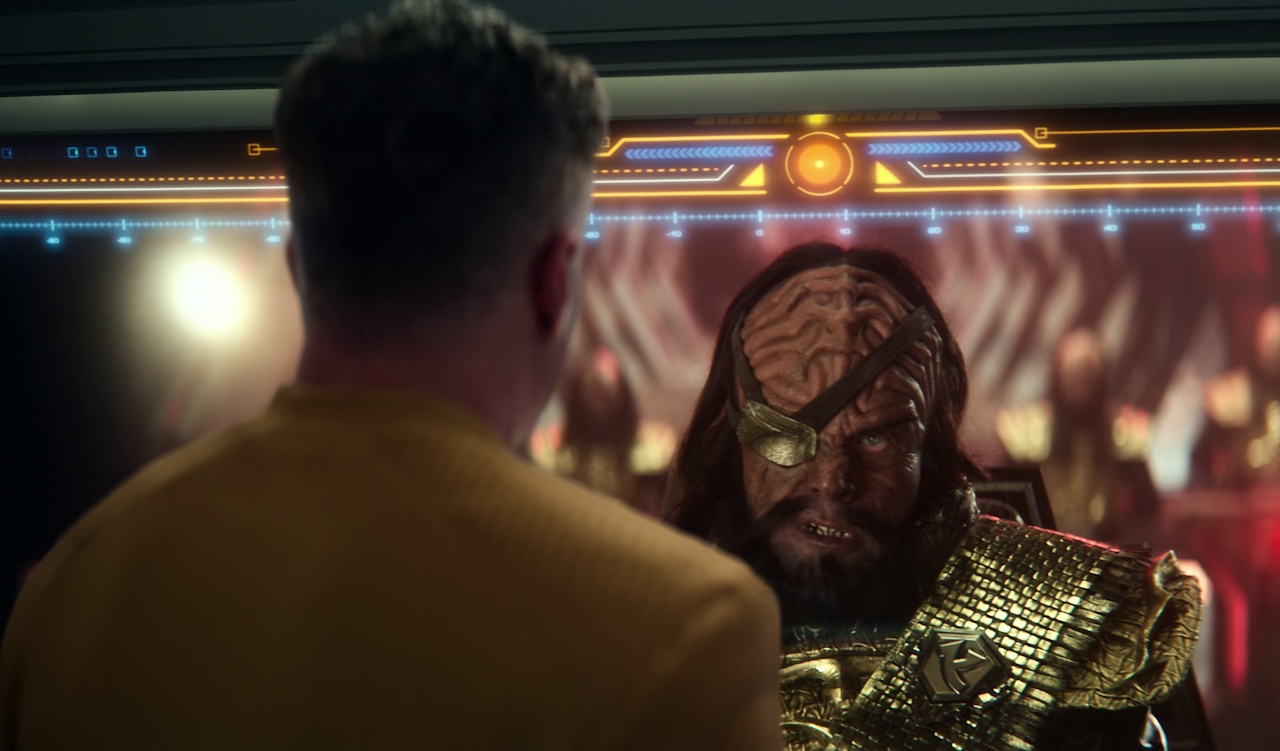
Still frame from Star Trek: Strange New Worlds Season 2 showing Captain Pike speaking with a Klingon on the viewscreen.
An episode re-introducing the Klingons could’ve really leaned into the idea of a galaxy devastated by the Burn and its aftermath.

An episode like this would take Discovery’s post-apocalyptic setting and actually do something with it – using it as the driving force for all of the tension, drama, and personal conflict in the story. The Burn devastated the Klingon Empire and they blame the Federation. Burnham has to come face-to-face with the Klingons for the first time since the war, trying to prevent another conflict while also wrangling with the trauma of the last one. Crucially, we’d get to explore one of Star Trek’s most iconic alien races and catch up with them centuries after we last saw them.

If Discovery had told stories like this one, which took the post-apocalyptic tone as a foundation, I think it could’ve been more successful. At the very least, such stories would’ve made the Burn and its aftermath more meaningful, and we’d have gotten a broader exploration of the consequences. Life in a post-apocalyptic setting was never really in focus in Discovery, and aside from the first two episodes of Season 3 and a handful of other scenes here and there, it never stuck the landing. I’m not saying my story outline as proposed above is perfect, but it would at least have leaned into this post-apocalyptic idea and done something more with it.
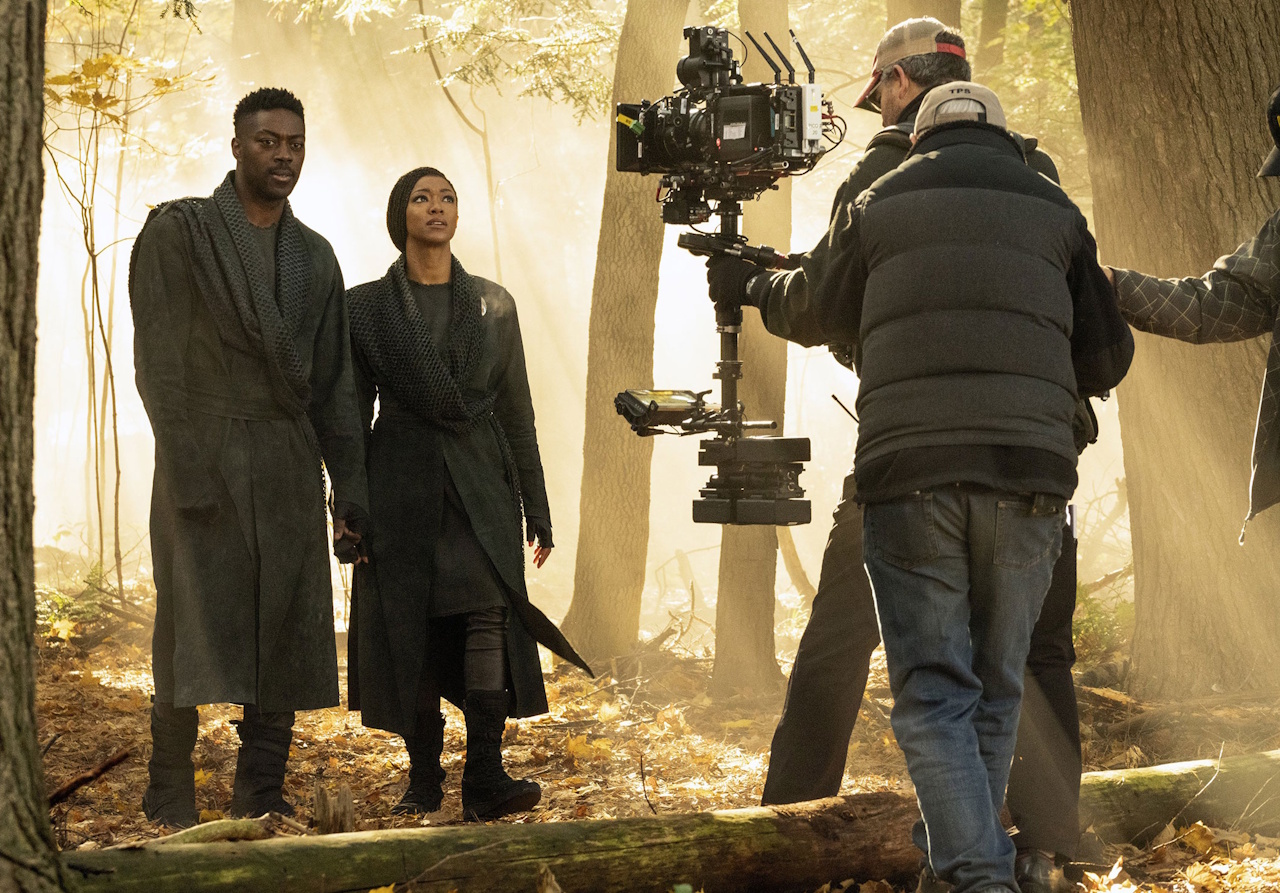
Behind-the-scenes photo from Star Trek: Discovery's third season showing Book and Burnham.
Behind-the-scenes during production on Season 3.

Instead, much of the rebuilding and diplomacy seems to have taken place off-screen – if we’re to imagine it happened at all. After defeating the Emerald Chain and securing the Verubin Nebula and its dilithium, Starfleet and the Federation seem to have instantly rebuilt, with very little mention of the Burn and its century-long aftermath in Seasons 4 and 5. Considering how massive and transformative this event was for the galaxy, that’s just not good enough. If there was ever a place where the old Creative Writing 101 adage “show, don’t tell” was important, it was here!

Discovery would still have faced an uphill battle, I fear. Ruining the galaxy, devastating the Federation, and forcing survivors to scrounge for resources for decades feels antithetical to Star Trek in so many ways. But if there had been a conscious effort to lean into this idea and use it as a springboard for storytelling that was well-suited to a post-apocalyptic environment, it could at least have worked better or been less bad. The combination of a post-apocalyptic setting with stories that just didn’t fit made things noticeably worse.
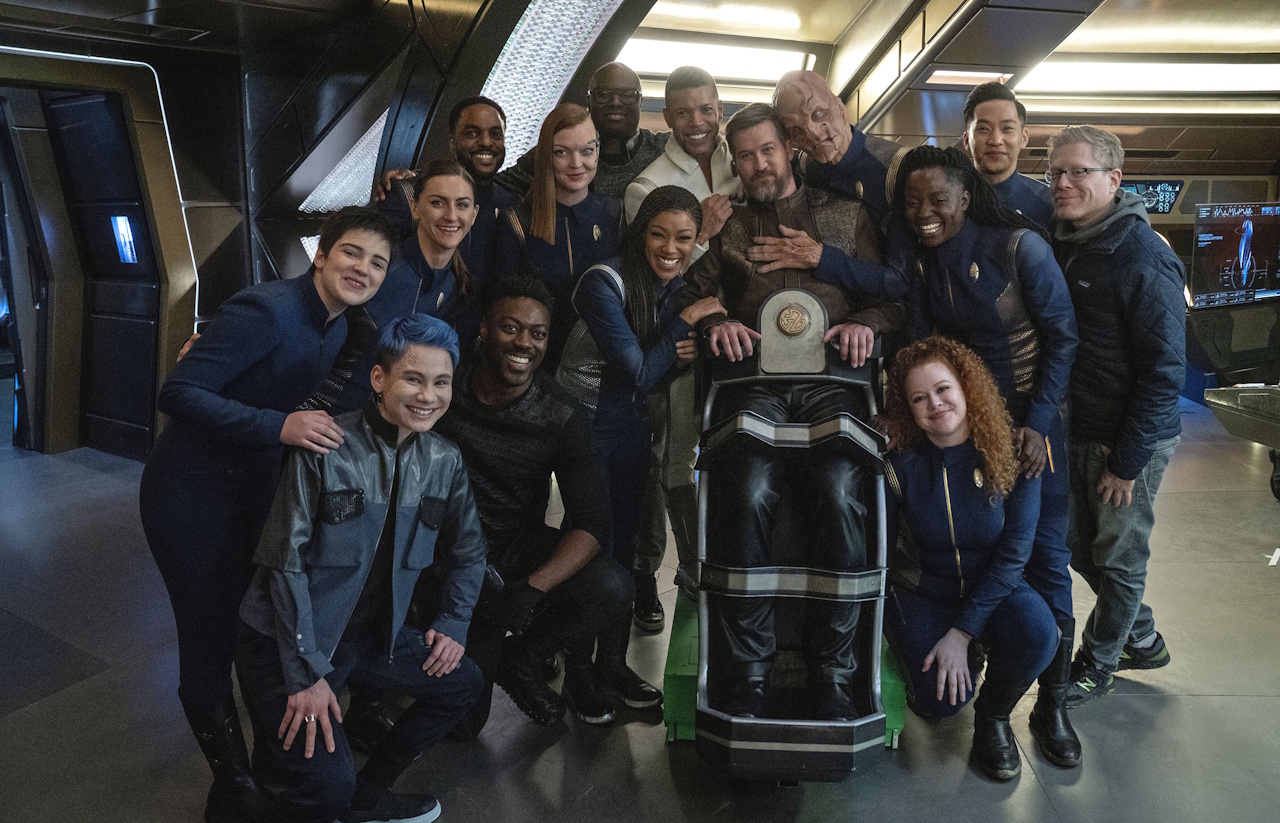
Behind-the-scenes photo from Star Trek: Discovery's third season showing most of the main cast with guest star Kenneth Mitchell.
The cast during production on Season 3.

That’s before we come to “the prequel problem,” though.

In brief, Discovery is set in Star Trek’s prime timeline – no matter what some fans might say or what head canon explanations we have, at time of writing Discovery remains in the prime timeline. Everything we’ve seen on screen from Enterprise in the 22nd Century to Picard at the dawn of the 25th takes place in this same setting – which means that the prime timeline is destined to be devastated by the Burn. Going back to watch older episodes of Star Trek doesn’t feel much different, at least not to me, but the Burn and all the chaos and ruination it caused is sure as heck going to taint future stories.

Take Picard’s third season as an example. Admiral Picard and his crew had to come together to defeat a conspiracy targeting Starfleet – and after a hard-fought struggle, they won and saved the day. But because Picard Season 3 premiered after we learned about the Burn in Discovery… at least some of its impact was blunted. Now, don’t get me wrong: Picard Season 3 wasn’t spectacular in its own right. But it was the best and certainly the most complete and coherent story that series had to offer – and yet because we know the Burn is coming in the future, it almost doesn’t matter what Picard and his friends did.
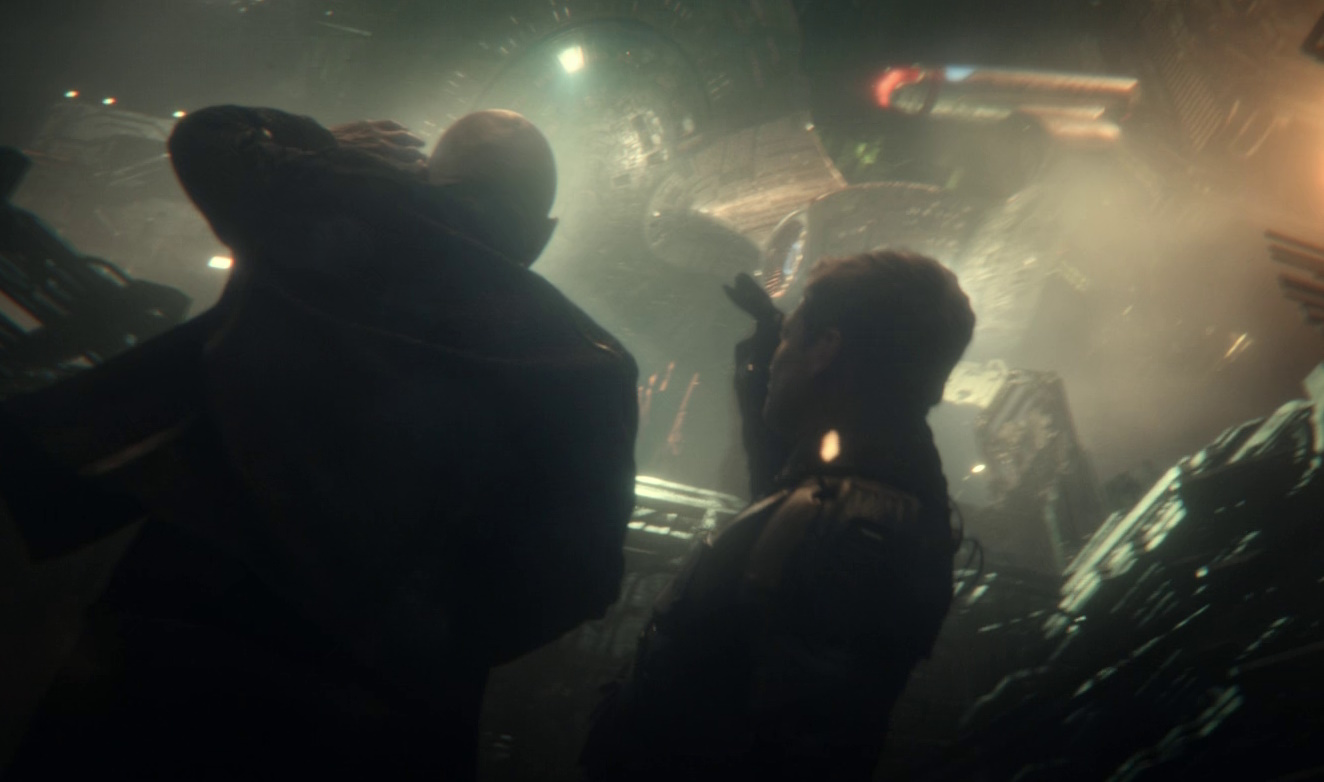
Still frame from Star Trek: Picard Season 3 showing Picard and Jack with the Enterprise overhead.
Other Star Trek productions – like Picard’s high-stakes third season – are also affected by Discovery’s post-apocalyptic setting.

You can look at this problem in two ways.

Firstly, we know in the back of our minds that the Federation will survive – no matter how high the stakes may be in a future project. When Admiral Picard was staring down Vadic and the Borg-Changelings, we knew that, somehow, they’d prevail and Starfleet would win the day. This is the basic problem many prequels have; it was present in multiple episodes of Enterprise, for example, even when that show was at its best.

Secondly, anything our heroes do is rendered somewhat impotent – or at least it’s tainted because we know that, no matter how hard they may work to save the day, the Burn’s gonna happen anyway. Earth and Vulcan will leave the Federation, dilithium will be in short supply, the galaxy will be in ruins, and it will be decades before rebuilding can begin in earnest. Any future story set in the prime timeline – whether it’s Strange New Worlds with its Gorn conflict, Picard’s battle against the Borg, or whatever happened at the end of Prodigy that I still haven’t seen – is a direct prequel to the Burn and the events of Discovery’s third season. Knowing that, even on a subconscious level, is a constraint on any story that aims to raise the stakes.
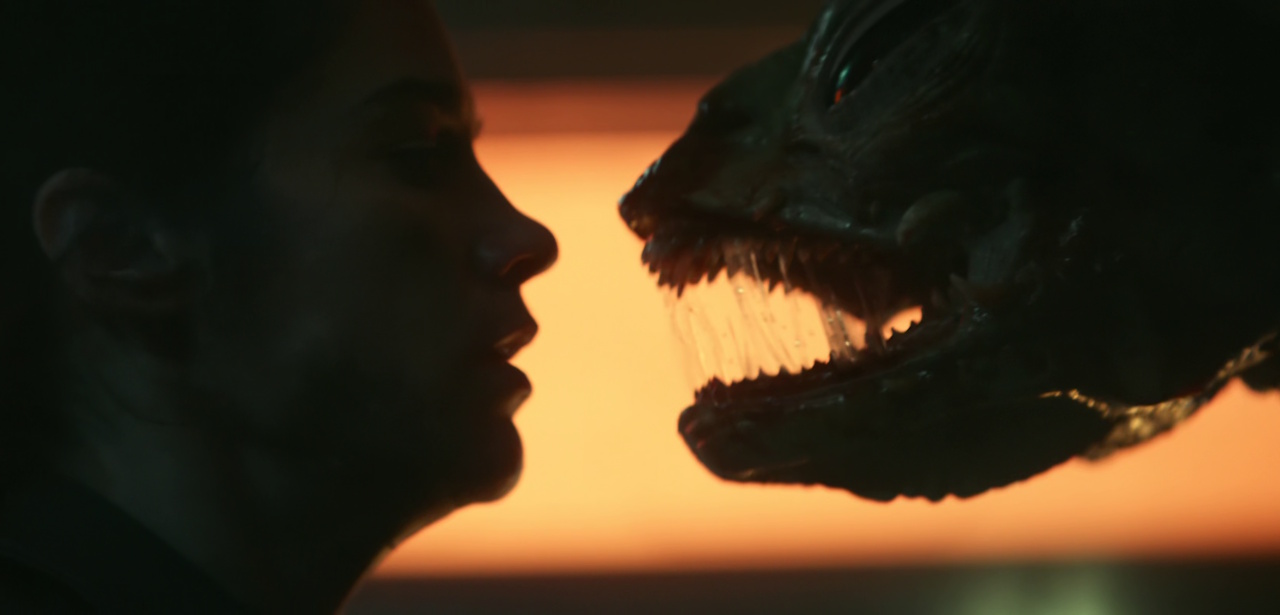
Still frame from Star Trek: Strange New Worlds Season 2 showing Captain Batel and a Gorn.
A Starfleet officer and a Gorn in Strange New Worlds Season 2.

Star Trek exists in – to use a modern term – a persistent shared universe. With the exception of the Kelvin films, which are off to one side, every other show and film exists in the same timeline, and no other series until Discovery has done so much to change the trajectory of that timeline for all of the others. By leaping forward by centuries, and then enacting this massive, galaxy-altering event, Discovery’s writers definitely left their mark on Star Trek. But like a crudely-graffitied penis on the wall of a bus shelter, it’s not exactly a mark that the rest of us wanted to see.

If Discovery existed in a vacuum – as it arguably did at the start of its first season – then perhaps I could understand this change a bit more. It would still be a massive change, and it would still be a constraint on future episodes in a way no other storyline arguably has been. But at least if Discovery were the only Star Trek show in town, racing into the future and depicting an event on this scale would’ve been more understandable and less… selfish.
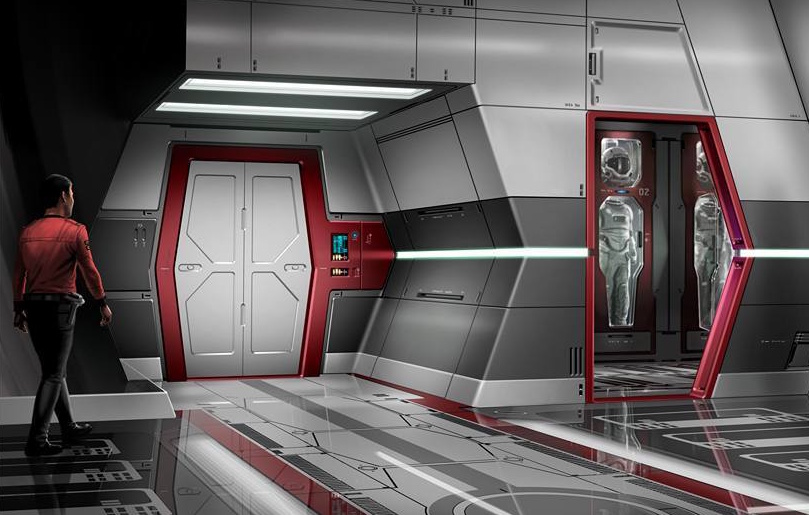
Concept art from Star Trek: Discovery Season 1 showing the interior of a spaceship.
Concept art of the USS Shenzhou from Discovery’s first season.
Image Credit: Frogland Archive

Discovery’s third season was in production alongside Picard, Lower Decks, Prodigy, Section 31, and also while pre-production work was happening on the pitch for what would eventually become Strange New Worlds. The show’s producers and writers went out of their way to assure fans that Discovery remained in the prime timeline – and that, by extension, the world they were building in Season 3 is the ultimate destination for the prime timeline. And then, either ignorant of the impact it would have or not caring about it, they went ahead and wrote a story that not only altered the entire galaxy for their own show and any potential spin-offs, but for every other Star Trek show, too. Everything from Strange New Worlds to Prodigy became, by default, a prequel to Discovery. And because Discovery’s writers don’t do half measures, they went all-in on the Burn – devastating the entire galaxy, basically ending the Federation as a faction for decades, and utterly transforming Star Trek in the process.

In order for there to be a post-apocalyptic setting (which Discovery largely ignored after the first couple of episodes of Season 3) there had to first be an apocalyptic event. Because Discovery has never turned down the tempo or lowered the stakes, this event naturally had to impact not just the ship and crew, nor even the Federation, but the entire galaxy. And the consequence of this choice is that every subsequent Star Trek production, no matter how hard they try to ignore it, will take place in a pre-Burn galaxy. The Burn is locked in; it’s the direction of travel for the Federation and Starfleet. Not only is that a massive constraint on future stories… it’s also incredibly depressing for a franchise that has always been about a hopeful and optimistic depiction of humanity’s future.
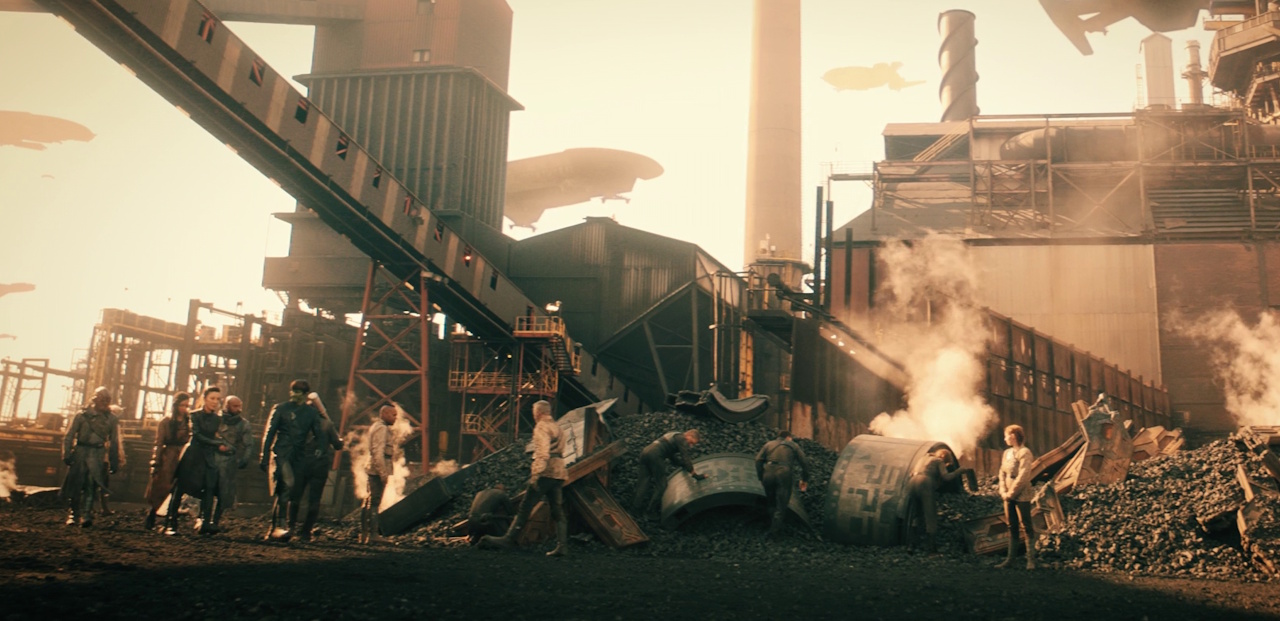
Still frame from Star Trek: Discovery Season 3 showing the junkyard planet.
Slaves at an Emerald Chain scrapyard in the 32nd Century.

When we talked about “head canon” a few weeks ago, I argued that it might be better for Star Trek as a whole to quietly push Discovery’s far future into an alternate timeline. That doesn’t mean abolishing it altogether, but if a future episode – say in the upcoming Starfleet Academy series – were to incorporate that… I think it would be for the best. Star Trek, in my view, ought to do more with the 25th Century setting established by Picard, but the Burn and Discovery’s post-apocalyptic future hangs over any potential new shows or films right now.

Speaking of Starfleet Academy, what does this all mean for the upcoming spin-off?

A series set at Starfleet Academy has been talked about for decades. Gene Roddenberry had the idea originally; his version of the show, as conceptualised in the late ’60s, would’ve seen Kirk and Spock meeting for the first time. Picard’s second season also teased us with a glimpse of the Academy around the turn of the 25th Century – and Prodigy also included similar themes in its second season. But this version of Starfleet Academy has been conceived as a spin-off from Discovery, not only set in the same time period but also bringing in several regular and recurring characters. The likes of Reno, Admiral Vance, and Tilly will be joining the show from Discovery.
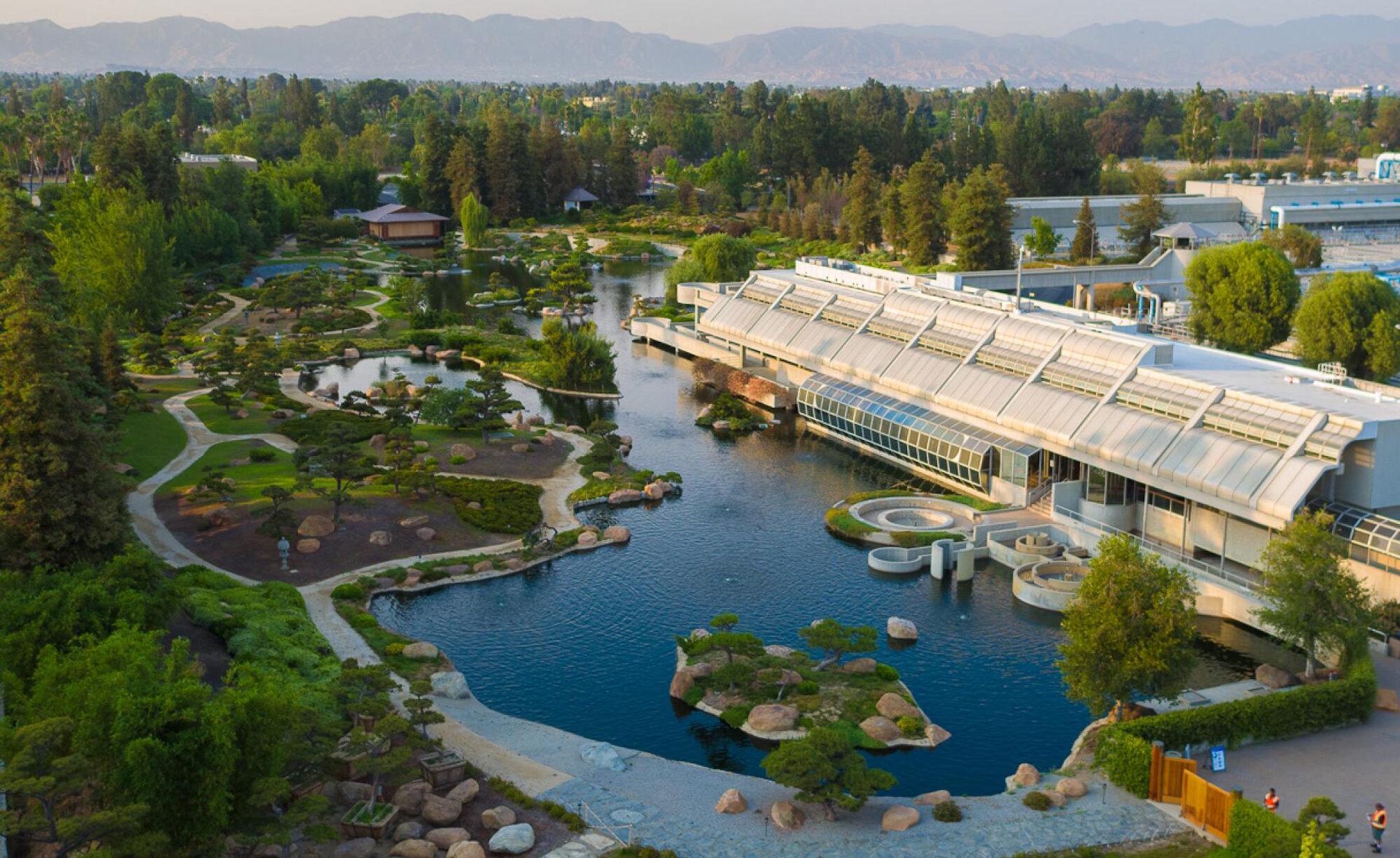
Aeriel photo of the Tillman Water Reclamation Plant in Los Angeles.
The Tillman Water Reclamation Plant and Japanese Garden was the filming location for Starfleet Academy during The Next Generation era.
Photo Credit: City of Los Angeles/L.A. Times

I could spend the next few paragraphs lamenting Starfleet Academy’s place in the timeline and explaining why I think it’d work better in the late 24th or early 25th Century. But let’s not do that, eh? Instead, let’s talk briefly about how Starfleet Academy could be more successful with this post-apocalyptic setting than Discovery was.

First of all, let’s try to move back toward episodic storytelling. Look at what Strange New Worlds is doing – it’s possible to mix standalone stories with season-long arcs, and that blend works so much better than anything Discovery or Picard did. That doesn’t mean you can’t have a villain or a big, explosive storyline, as Strange New Worlds has repeatedly proven. It would be so much closer to what Star Trek has been in the past – and, I would argue, much closer to what fans want to see from this franchise.
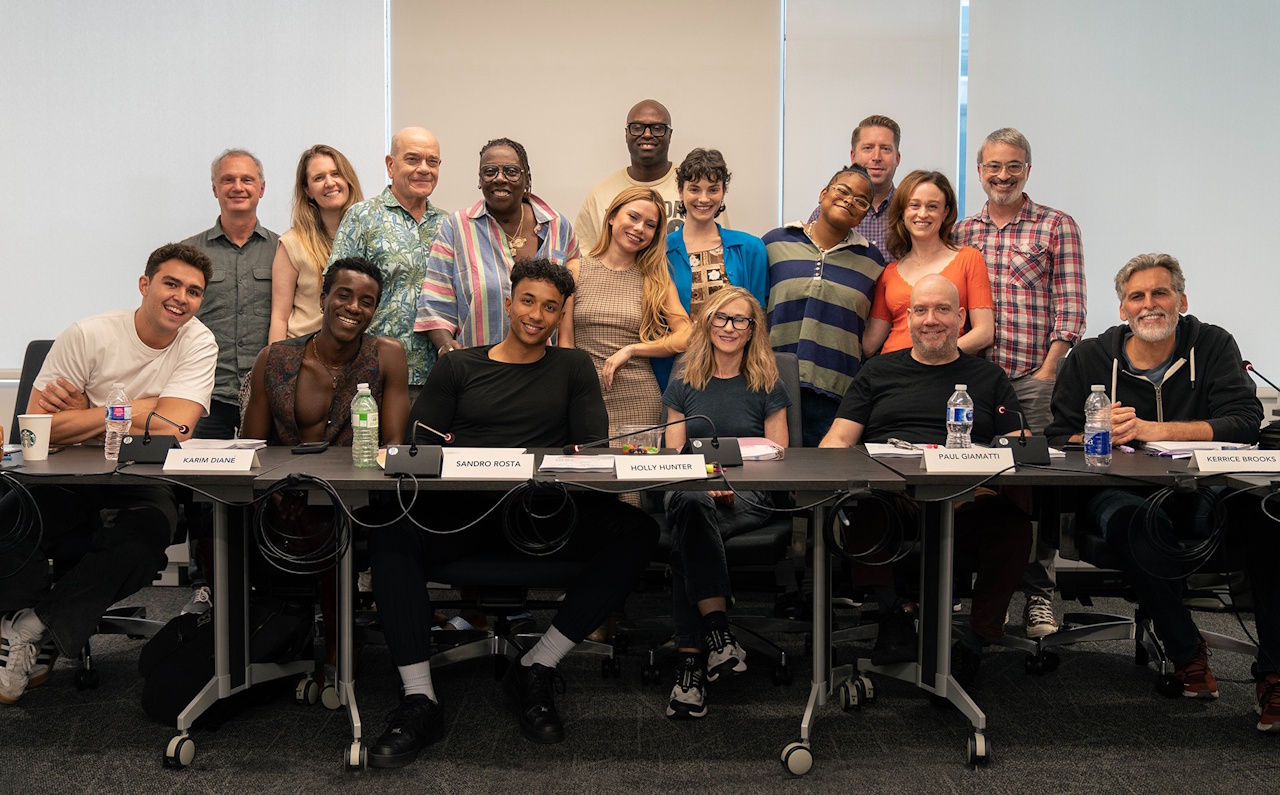
Behind-the-scenes photo from Star Trek: Starfleet Academy showing the main cast and crew at a table read.
The cast and crew of Starfleet Academy – the series is already in production.

Next, if Starfleet Academy is going to be set in this post-Burn era, the show really needs to lean into that in a way that Discovery didn’t. The show’s blurb talks about how the Academy is re-opening for the first time in decades… so that needs to be a big storyline. As the galaxy begins the slow process of recovery and getting “back to normal” after decades of decline, devastation, and depression, what does that mean for the new cadets, their families, their instructors, and their homeworlds? How has the environment these kids grew up in impacted their lives? Star Trek often does storytelling by analogy – so this could be a way to examine the real-world impact of the covid pandemic on education, just as an example.

Finally, I’d like to see an examination of the consequences of this galaxy-wide event on at least one other faction. Perhaps Starfleet Academy’s villain – who will be played by veteran actor Paul Giamatti – could be a member of a familiar race or faction seeking revenge for the Burn’s impact on his homeworld. At the very least, the Burn and the devastation it caused should be a significant factor in explaining who this character is and what motivates them. Having to survive in a broken, shattered world takes a toll – and that could explain why this villain is as bad as he is.
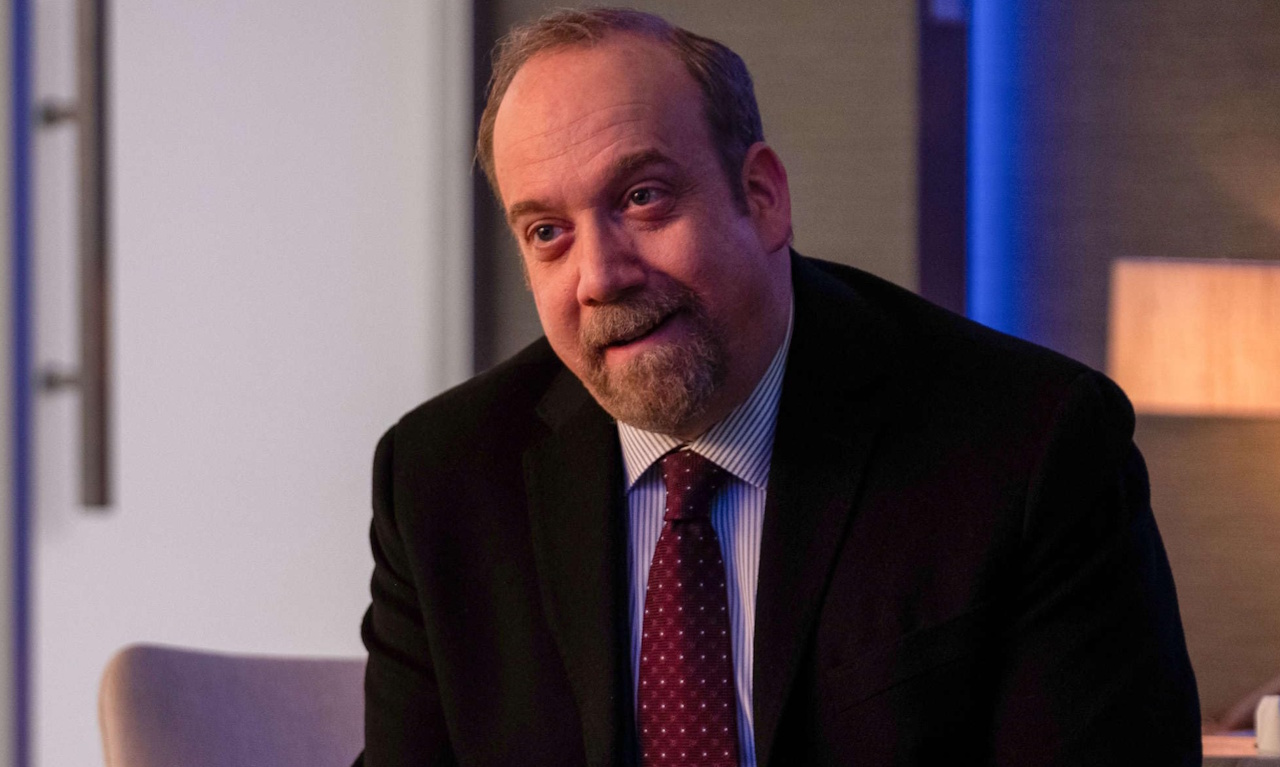
Still frame from Billions showing Paul Giamatti's character.
Paul Giamatti (Billions, John Adams, etc) will play a villainous character in Starfleet Academy.

Discovery did very little of that. Most of the show’s villains in Seasons 3, 4, and 5 weren’t bothered about the Burn or the post-apocalyptic landscape. The only exception, really, was Zareh; I at least felt that – over-the-top though he was in some respects – he was shaped by the world he inhabited. The rest? Generic, scenery-chewing bad guys who could’ve easily been part of a totally different story set in another era – or another franchise, come to that.

I don’t think Starfleet Academy can really “save” Discovery. By that I mean I don’t think we’re going to look back at the Burn and Discovery’s take on this post-apocalyptic setting after a couple of seasons of Starfleet Academy and re-frame it or change how we think about it. But there is potential, if I’m being as optimistic as I can be, for the new series to make more of this setting than Discovery did, and to perhaps use the post-apocalyptic tone in a different and more successful way, a way better-suited to the environment that the Burn and its aftermath created.
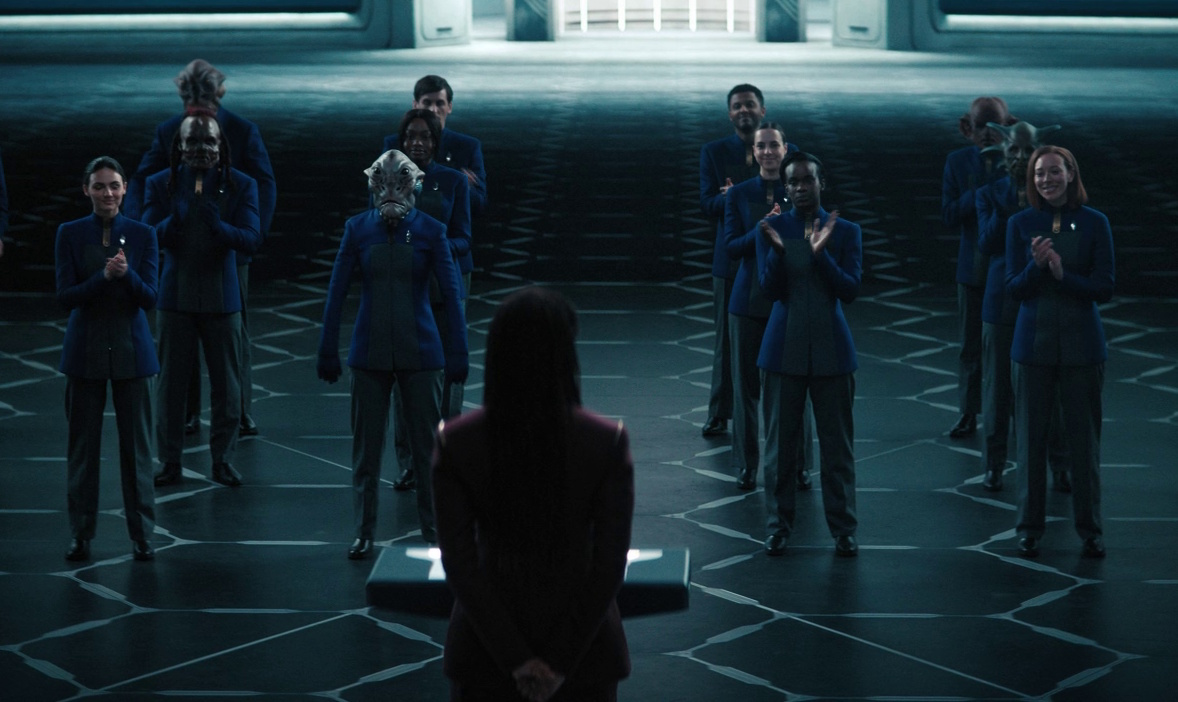
Still frame from Star Trek: Discovery Season 4 showing Captain Burnham addressing a group of cadets.
Captain Burnham and Academy cadets.

At this point, you can probably tell that I’d never have given the green light to a storyline like the Burn if I’d been in charge of the Star Trek franchise in the late 2010s! A post-apocalyptic tone clashes in a fundamental and irreconcilable way with Star Trek, taking away one of the franchise’s core beliefs and the main way it differentiates itself from other sci-fi properties. Even if the storytelling in Seasons 3, 4, and 5 had been stronger, this transformational change to what Star Trek is would have still been a hurdle; even the best narrative concepts and ideas that I can think of would’ve struggled.

But the truth is that, while Discovery did manage some solid episodes after arriving in the far future, the main story arcs weren’t all that spectacular. The Burn itself was a frustrating mystery that had too many dead ends and red herrings, and storytelling after Season 3 completely sidelined not only the Burn but the post-apocalyptic environment that it left in its wake. Discovery’s writers, in a rush to do other things and tell different stories that mostly focused on one character, didn’t do anywhere near enough to justify the Burn and the massive impact it had on the world of Star Trek.
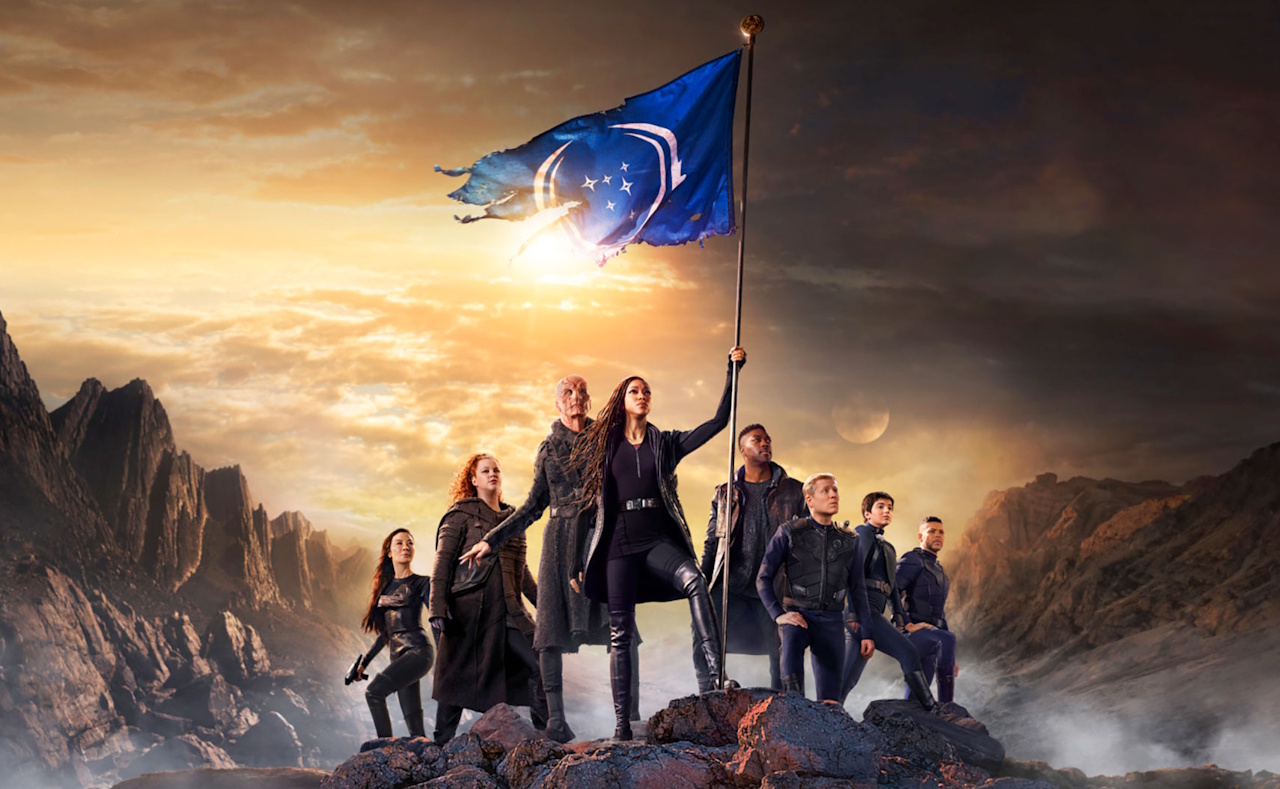
Cropped promo poster for Star Trek: Discovery's third season.
Burnham and the crew on a promotional poster for Season 3.

In one of the first pieces I ever wrote here on the website, back in January of 2020, I warned that a post-apocalyptic setting might not be the right choice for Star Trek. But I gave Discovery a chance to impress me and to do something with that idea that I might not have been expecting. Unfortunately, I don’t think the show really did that. Most of its storylines – both big and small – didn’t need a post-apocalyptic setting to work, and the setting itself fundamentally altered Star Trek – not only for Discovery, but in a way, for every other show, too. One of the core tenets of Star Trek since its inception had been that humanity could overcome the struggles of today and build a better future. Discovery took that better future and upended it – really without a good reason or a narrative that justified something of that magnitude – and in doing so, changed the entire franchise. Sadly, I feel this was a change for the worse.

“Post-apocalyptic Star Trek” was wrong in principle and wrong in practice. It misunderstood why themes of hope and optimism worked in the franchise in the first place, it took away one of the foundations upon which successful Star Trek stories had been built for more than half a century, and it seems to have come about from an unfortunate mix of corporate leaders wanting to jump on a successful trend and writers who thought they were smarter and more creative than those who came before them. While Discovery didn’t abandon or lose sight of the themes of optimism and hope that had been so important to the franchise, it bastardised them and used them in completely different – and too often ineffective – ways.
The original Star Trek: Discovery logo (in use for Seasons 1 & 2).
Discovery’s writers and producers chose a post-apocalyptic tone beginning in Season 3 – and it didn’t work.

Moreover, “post-apocalyptic Star Trek” was executed poorly. The Burn – the event that caused all this devastation – unfolded in a frustrating way in Season 3, and I got the sense that for more than a hundred years, everyone in Starfleet had just been sitting on their hands as the world crumbled, waiting for Michael Burnham: Chosen One™ to swoop in, provide all the answers, and save the day. The Burn and its aftermath was then largely ignored in Seasons 4 and 5, despite offering the series – and the franchise – a chance to tell some genuinely interesting stories that could’ve expanded our understanding of this far future setting. By refusing to lean into the post-apocalyptic idea, Discovery’s writers failed to take advantage of the storytelling potential they had created.

Next, “post-apocalyptic Star Trek” impacts the rest of the franchise – from The Original Series to Picard. All of these shows now take place in a pre-Burn world, changing the way we understand them and perceive them on repeat viewings. For new Star Trek stories produced in the years ahead, this is going to be a lot worse because they’re basically all prequels to Discovery and its post-apocalyptic vision of the future. That knowledge challenges future stories and puts a brake on them in a way we haven’t really seen before.

Still frame from Star Trek: The Original Series Season 1 showing Kirk and Spock on the bridge.
All of Star Trek (except for the Kelvin films) now takes place in a setting we know is bound for an apocalyptic disaster.

Finally, “post-apocalyptic Star Trek” is likely going to be a constraint on Starfleet Academy. I want to be hopeful and optimistic about that series – and I have no doubt that, just like Discovery, there will be at least some fun and creative episodes in the mix. But the backdrop to the show is still a galaxy devastated by the Burn, and I don’t really have confidence in the current production and writing team at Paramount when it comes to doing something meaningful with that. If Starfleet Academy only pays lip service to Discovery’s post-apocalyptic world before racing off to do another “the entire galaxy is in danger!” story, it’ll feel like a waste. If that’s the kind of story the show’s writers want to tell, why not set it in a different time period that might be better-suited to that kind of story?

At the end of the day, a post-apocalyptic setting works for some stories and doesn’t for others. For the stories Discovery’s production team wanted to tell, it just wasn’t necessary for the most part – especially not after Season 3. Unlike other one-off ideas in Star Trek that the franchise has been content to brush aside, this one was so transformative and so utterly changed what Star Trek’s galaxy looks like that walking away from it isn’t possible. There just doesn’t seem to have been any kind of plan for where to take the series after Season 3 or how to use the post-apocalyptic setting to tell stories that wouldn’t have been possible in other iterations of the franchise.
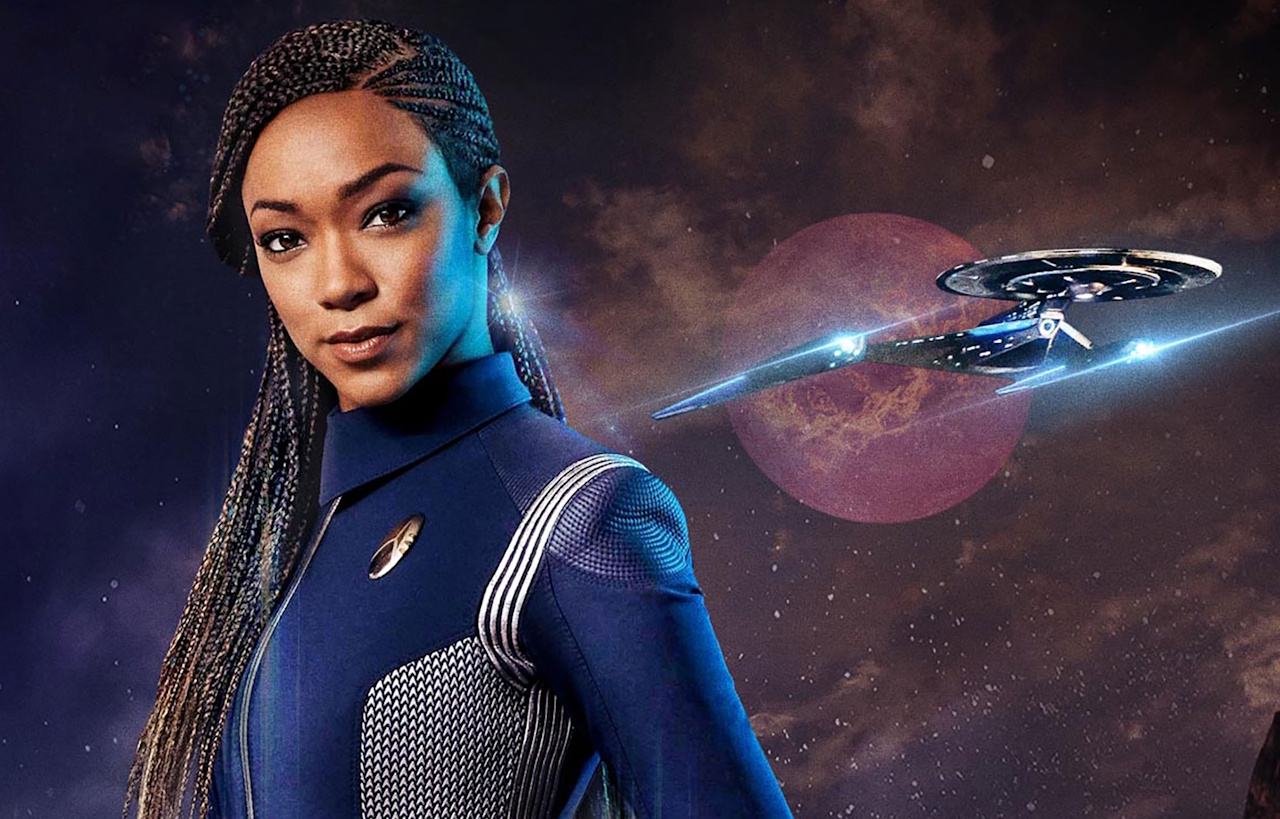
Cropped promo poster for Star Trek: Discovery's third season.
Michael Burnham and the USS Discovery.

So let’s answer the question I posed at the beginning: what went wrong? Fundamentally, “post-apocalyptic Star Trek” wasn’t a good idea as it deviated too far from the franchise’s foundations and roots. It was executed poorly, with most stories either ignoring the post-apocalyptic setting outright or not using it to inform characters or narrative beats. And it relegates any future production set after The Next Generation era but before Discovery’s third season to the status of a prequel, with all of the problems that can bring.

I don’t hate Discovery. There are some genuinely great episodes in the mix, including after the show shot forwards in time. Coming Home, for example, really hits a lot of the emotional notes that it aimed for, especially in the scenes and sequences set at Federation HQ and around Earth. Face the Strange was creative and fun, and a story like Choose to Live felt like classic Star Trek in the best way possible. But given how the show didn’t lean into this post-apocalyptic setting in a big way, devastating the Federation, Starfleet, Earth, and the entire galaxy just doesn’t sit right. It didn’t come close to finding a narrative justification, and given the scale of the change and the resonating impact it will continue to have… that’s not good enough.


Star Trek: Discovery Seasons 1-5 are available to stream now on Paramount+ in countries and territories where the platform is available. The series is also available on DVD and Blu-ray. Star Trek: Starfleet Academy is in production and will premiere on Paramount+ in the future. A broadcast date has not yet been announced. The Star Trek franchise – including Discovery and all other properties discussed above – is the copyright of Paramount Global. This article contains the thoughts and opinions of one person only and is not intended to cause any offence.
Star Trek: Head Canon

A spoiler warning graphic.

Spoiler Warning: There are spoilers ahead for the following Star Trek productions: The Original Series Season 1, Deep Space Nine Season 6, Voyager Seasons 1, 5, and 6, First Contact, Discovery Seasons 1-3, Strange New Worlds Season 1, and pre-release information for Starfleet Academy.

Star Trek has a wonderfully rich and engaging setting – a fictional universe that operates by established rules that have been built up over decades. This “canon” is part of what makes Star Trek feel like Star Trek… and while I’m not a stickler for the tiniest minutiae of canon, the fundamental building blocks of the Star Trek franchise need to remain consistent for stories to work.

There are some places where Star Trek’s writers have been deliberately vague and ambiguous, and others where an apparent “plot hole” has been created, either by a new story seemingly overwriting an old one or by one of the prequel shows making an apparent change to what had been previously established. These things can pass by inoffensively enough, but as Trekkies, I think we have a natural curiosity about this setting – and a need to ensure that things make sense in the context of Star Trek’s long-established universe!

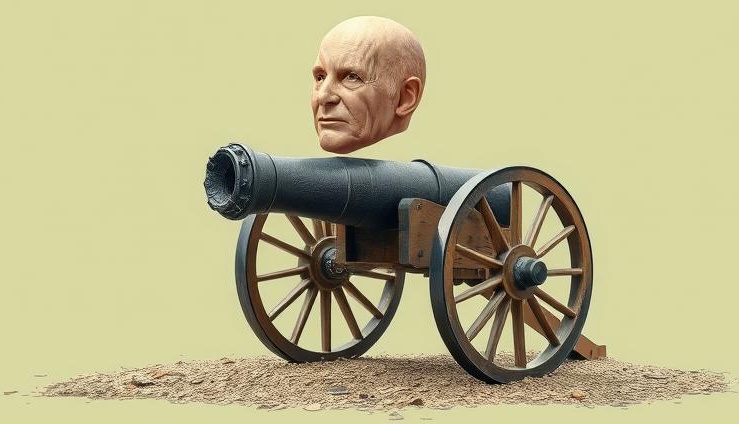
An AI-generated image of a head floating above a cannon.
It’s… head cannon.

So that’s where head canon comes in. If you’re unfamiliar with the term, head canon (or headcanon, if you prefer; I like to write it as two separate words) is basically just a fan-made explanation for something that doesn’t appear on screen. A famous example from the Star Trek fan community is the belief some fans hold that Kirk and Spock were engaged in a romantic relationship. That’s something never shown on screen (nor even explicitly hinted at), but nevertheless has become popular in some quarters of the fan community.

There are also head canon explanations for apparent plot holes and head canon expansions that go beyond what we see on screen. Over the years, I’ve come up with several of my own – and it’s these that I want to share with you today.

Still frame from How Sharper Than A Serpent's Tooth showing Kirk and the crew on the bridge of the Enterprise.
Arex, Kirk, and Walking Bear on the bridge of the Enterprise.

Before we get started, a couple of important caveats! Firstly, this is head canon. None of this is official, none of it has ever been seen on screen, and it’s likely that none of it will ever be confirmed. I’m not saying that I’m right and that’s that – other fans can and will disagree, and that’s okay. I’m not claiming to be the only originator of some of these ideas. It’s very likely that other Trekkies have independently come up with similar head canon explanations for some of the story beats we’re gonna talk about today – so please don’t think I’m trying to take sole credit!

This is also the entirely subjective opinion of one old Trekkie. If you hate all of my ideas, if I miss something that seems obvious to you, or if my head canon explanations don’t make sense to you… that’s totally okay, too. There’s enough room in the Star Trek fan community for polite discussion and disagreement – and there’s no need to get into a fight about totally hypothetical things that will almost certainly never be confirmed on screen!

With all of that out of the way, let’s look at some head canon!

Head Canon #1:
There are different types of cloaking device.

Still frame from Minefield showing the NX-01 Enterprise and two de-cloaking Romulan vessels.
22nd Century Romulan vessels de-cloaking.

Prior to Enterprise, it was pretty well-established that Starfleet’s first encounter with a cloaking device came when the USS Enterprise, under Kirk’s command, engaged a Romulan warbird that was attacking Earth Outposts along the Neutral Zone. Cloaks continued to be used by the Romulans, Kligons, and others into the 24th Century – but Starfleet only used a cloaking device on a couple of occasions.

Enterprise changed all of that, firstly with the Suliban’s cloaking technology – which, admittedly, was never explicitly called a “cloaking device” on screen – and later when the Romulans were introduced. Since then, both Discovery and Strange New Worlds have set the precedent that cloaking devices were known to Starfleet years before Kirk’s encounter with the Romulans. So how can we square this circle?

Still frame from Into The Forest I Go showing a simulation on the USS Discovery's viewscreen (cropped).
A Starfleet simulation of a Klingon cloaking device.

My answer is that there must simply be different types of cloaking devices. Not only that, but Starfleet Intelligence is working around the clock to figure out how to detect cloaked vessels. Similar to how the code-breakers of World War II worked to break enemy encryptions and read messages, Starfleet is locked in a constant battle to un-cloak cloaked ships.

Perhaps in the aftermath of Discovery’s Klingon War, Starfleet thought they’d finally broken the cloaking encryption – and that’s why Kirk was so surprised to see the Romulan warbird disappear from his sensors. Every time the Romulans or Klingons invent a new type of cloak, Starfleet gets to work figuring out how to recalibrate sensors to break through. This “arms race” could have been going on for decades – or even centuries.

Head Canon #2:
The USS Enterprise had a refit after Pike left the captain’s chair.

Still frame from A Quality of Mercy showing Pike and Ortegas on the Enterprise's bridge.
Strange New Worlds’ take on the bridge of the Enterprise.

Aesthetic changes from one Star Trek production to another usually don’t bother me very much – and I happen to really like the design of the USS Enterprise as it’s depicted in Strange New Worlds. The ship looks great inside and out, and some of the sets feel larger and more expansive than they did in past iterations of Star Trek, which allows for different types of shots, more characters on screen at once, and so on. But there’s no denying that the redesign hasn’t been wildly popular with every Trekkie!

So my suggestion here is simple: after Pike stepped down as captain of the Enterprise, the ship underwent a refit. Kirk would assume command of the refitted vessel in time for the five-year mission that we’re familiar with from The Original Series. This allows both versions of the Enterprise to exist in the same timeline without treading on anyone’s toes!

Still frame from How Sharper Than A Serpent's Tooth showing a top-down view of the bridge of the Enterprise.
The Enterprise bridge in The Animated Series.

There is precedent for ships being refitted and completely transformed. The Enterprise itself famously underwent a refit a few years after the events of The Original Series – we see the final stages of that refit in The Motion Picture, where changes made to the ship became a significant plot point early in the film. So not only does Starfleet regularly refit its ships, but the Enterprise itself has been refitted at least once.

It really isn’t much of a stretch to think that a ship that’s at least a decade old by the time of The Original Series (something confirmed in The Animated Series more than fifty years ago) would have had at least some modifications and changes made to it. And given what we see on screen, the ship has changed!

Head Canon #3:
Warp factors are re-designated as newer and faster engines are designed.

Still frame from Subspace Rhapsody showing the familiar flash of light effect after the USS Cayuga went to warp.
A flash of light left by a ship jumping to warp.

Warp speed has always been pretty ambiguous in Star Trek – and that’s a genuinely good decision! Pinning down exact speeds and distances risks constraining future stories, so leaving things vague and open-ended gives writers maximum manoeuvrability. But there are some instances where speed seems to vary a little too much!

Just to give one example, at the beginning of First Contact, the Enterprise-E was stationed near the Neutral Zone. But Captain Picard was able to get the ship back to Earth in record time when the Borg attacked; Starfleet had already begun to battle the Cube while the Enterprise-E was light-years away, yet the ship made it back in time.

Still frame from Nemesis showing the Enterprise-E at warp.
The Enterprise-E at warp.

So here’s my head canon: warp five in Enterprise is not the same as warp five in The Next Generation. As new engines are designed and built, warp factors change. Instead of having to keep adding new decimals to warp 9.99999, Starfleet would simply revise how warp factors are calculated and referred to – accounting for discrepancies in speed and travel time.

There are still some holes in this idea, like what Starfleet’s “transwarp” experiment was and how it can take 75+ years to traverse the galaxy at warp 9.975 while warp 10 is supposed to be instantaneous travel everywhere. But I think the idea of Starfleet changing the way warp factors are calculated and referred to makes some degree of sense – and it could explain why some travel times appear to vary wildly.

Head Canon #4:
Voyager didn’t run out of torpedoes and shuttles because the crew built replacements.

High-definition digital render of the USS Voyager (credit: TrekCore/Robert Bonchune).
The USS Voyager.
Image Credit: Robert Bonchune/TrekCore

I’ve actually tackled this idea before in a longer article – click or tap here to check it out! In short, some Trekkies have argued that the USS Voyager should have run out of torpedoes and shuttlecraft during its time in the Delta Quadrant – picking on a line from Season 1 in which Janeway said that there was “no way” to replenish the ship’s supplies. But I disagree with the idea that this is a plot hole and I can explain why in two words: Delta Flyer.

We see the crew of Voyager build not one but two Delta Flyers after getting stranded in the Delta Quadrant, using the ship’s industrial-sized replicator to do so. Though this may have been a drain on resources, it wasn’t fatal to the ship and crew by any stretch – so much so that they were able to build a like-for-like replacement when the first Delta Flyer was lost.

Still frame from Extreme Risk showing the Delta Flyer under construction.
The Delta Flyer’s construction.

Furthermore, we saw Voyager trade with numerous planets, ships, and stations during its journey home – potentially acquiring resources like antimatter that may be needed for torpedoes, engine parts for shuttles, and so on. Maybe some things can’t be replicated, but through trade, Voyager could have been able to acquire these resources.

In short, I’ve never bought into the idea that Voyager firing “too many torpedoes” is a problem, and I think it’s easily explained through a combination of a resourceful crew, powerful replicators, and bartering.

Head Canon #5:
Fashion trends, hairstyles, uniform designs, etc. change over time – just like they do in the real world.

The main cast of The Original Series Season 2 in a promo photograph.
The cast of The Original Series.

Take a look at photos from the 1970s, 1980s, and 1990s. It’s really easy to see how fashion sense and style changed in a relatively short span of time out here in the real world. Now look at the arguments some Trekkies were making about uniforms or hair styles being “wrong” in certain new Star Trek productions. It seems silly… doesn’t it?

Discovery was set ten years before The Original Series. It’s not a stretch to think that hairstyles and designs for things like uniforms might’ve changed in that time. When Discovery debuted with its all-blue uniforms, I liked the idea of that style and colour existing in between Enterprise’s submarine-style boiler suits and the more familiar Starfleet uniforms of the later 23rd Century.

The main cast of Discovery Season 1 in a promotional photograph.
Some fans weren’t keen on Discovery’s uniforms.

The same principle can apply to alien races and other factions. Why were bald Klingons a problem in Discovery, for example? It didn’t bother me – and a simple head canon explanation could be that the Klingon Empire went through a phase of preferring shaved heads in times of war. Maybe it was a revival of ancient Klingon culture, maybe other Klingons did it in honour of their leaders.

There are some oddities with Starfleet’s uniform choices that have been introduced by different Star Trek productions. The Next Generation and Deep Space Nine seemed, for a time, to establish that space stations and starships had the same combadges but different uniforms, for instance – until that went out the window! But I don’t buy into the arguments that some Trekkies have put forward about these design and aesthetic choices. It really isn’t much of a stretch to think that the 23rd and 24th Centuries go through different fashion trends.

Head Canon #6:
The “Borg Teasing Theory.”

Behind-the-scenes photo from The Next Generation showing the original model of the Borg cube.
The filming model of the original Borg cube.

I find it interesting that the Borg Collective – with its massively superior technology, huge fleet of near-unstoppable ships, and untold legions of drones – never really made a serious effort to conquer the Federation. On both occasions where the Borg directly attacked Earth, they sent a single ship and – at most – a few tens of thousands of drones. Why?

I’ve had a theory for a long time (that I really must write up in full one day!) that the Borg Collective has been “teasing” the Federation. Not for fun – but to push Starfleet to develop newer and better technologies for them to assimilate. It’s not unfair to suggest that humanity is one of the most resilient, creative, and versatile species that the Borg had encountered as of the mid-24th Century, but even so, conquering the Federation shouldn’t pose a challenge based on what we saw of the scale of the Collective in Voyager.

Still frame from First Contact showing the Borg Queen.
First Contact introduced the Borg Queen.

We know that the Borg seek “perfection,” and that they even ignore whole species if they think they have nothing to offer. Humanity clearly has plenty to offer the Borg… but in their push for even greater perfection, might the Borg be trying to see how far they can push the Federation?

The Borg attacks on outlying colonies, and later their attacks on Earth, prompted Starfleet to develop new and better weapons, shields, and medical technology. The Borg may have been hoping to assimilate these technologies later on – partly to add to their arsenal, but also partly to prevent them being used against them in a future conflict. By “teasing” the Federation with these smaller – but still pretty devastating – incursions, it’s basically a win-win for the Borg. Either their sole cube succeeds and assimilates Earth, then the rest of the Federation, or in its failure it not only gathers a ton of data, but also pushes Starfleet to develop newer and better things to assimilate in the future.

Head Canon #7:
Discovery Season 2 was originally going to be an “origin story” for the Borg.

Still frame from Discovery Season 2 showing the pseudo-assimilation of Captain Leland.
The “assimilation” of Captain Leland.

Is there such a thing as “production-side head canon?” I’m adding this one to the list either way! In short, no one is gonna be able to convince me that Discovery’s Control AI and time travel story in its second season was originally created/pitched as anything other than a Borg Collective origin story.

The way the Control AI was able to “assimilate” Captain Leland and others, using nano-technology, is just too eerily similar to the way the Borg operate to be a coincidence. When you add into the mix Burnham’s time travel suit… the stage was set for Control to become the progenitor of the Borg.

Still frame from Such Sweet Sorrow showing the Red Angel just out of focus.
The Red Angel suit could travel through time.

With relatively few tweaks to the final act of Season 2, Control could’ve seized Burnham’s Red Angel suit and, perhaps staring down the barrel of a Starfleet armada, escaped into the past. Crash-landing on a remote Delta Quadrant planet, Control could use its remaining nanites to conquer the native humanoid population… setting the stage for the Borg Collective to be a Federation creation.

Now, I’m not saying this would’ve been a good story. And I’m definitely not saying that Discovery’s writing team could’ve pulled it off successfully. Those are moot points now, anyway. But unless someone comes forward with concrete, definitive proof that Season 2’s Control/time travel story was never intended as a Borg story… well, let’s just say that would be a tough thing to convince me of! I have a longer article about this theory, by the way, and you can find it by clicking or tapping here.

Head Canon #8:
The Romulans eventually discovered Sisko’s underhanded tactics.

Still frame from In The Pale Moonlight showing Senator Vreenak's famous "it's a fake" line.
“It’s a faaaaaaake!”

One of my fantasy Star Trek stories is a follow-up to the outstanding Deep Space Nine Season 6 episode In The Pale Moonlight. But unless and until that happens, I’ll have to make do with my personal head canon! In short, I struggle to believe that Sisko’s actions in that episode – where he lied, schemed, and murdered his way to an alliance with the Romulans – would never come to light.

Whether this would set the stage for a full-scale conflict or not isn’t certain, and with the Romulan Empire in a much-weakened state in the early 25th Century, perhaps they wouldn’t be spoiling for a fight. Romulan leaders might even want to keep the revelation a secret, not only because it shows them in a bad light, but in order to avoid jeopardising an alliance that they relied upon in the aftermath of the loss of Romulus and Remus.

Still frame from In The Pale Moonlight showing Sisko looking directly at the camera.
I think the Romulans will eventually uncover the truth…

So how could it happen? The only people involved were Garak and Sisko, and neither would be likely to spill the beans. Garak, though, might’ve boasted about his achievements in private, if not to Dr Bashir then to someone else back on Cardassia. It’s one of his biggest achievements if you think about it, and it could become a legend within the re-established Cardassian intelligence agency.

More likely, though, would be the Romulans re-examining the fake “evidence” of the Dominion plot to invade. Garak believed that any imperfections in the recording would be written off as damage from the shuttle explosion, but I’m not so sure. Under proper forensic examination, would the fake recording really hold up? Or could Senator Vreenak have sent a message warning about the forgery before his assassination? There are multiple ways this could go – and serious consequences for Starfleet if and when the truth comes out!

Head Canon #9:
Starfleet will find a way to prevent the Burn – pushing Discovery’s far future into an alternate timeline.

Still frame from Su'Kal showing a flashback to the Burn.
The Burn.

If you’re a regular reader, you might remember that – only a few weeks ago – I pushed back hard against the idea that some or all of Discovery has been “rendered non-canon” by one brief clip in Lower Decks. And to be clear: I stand by what I said then! Discovery, at time of writing, remains fully canon, and its far-future setting is the ultimate destination for the prime timeline.

But the Burn is particularly depressing, and knowing that the Federation will suffer such a horribly devastating blow – even if not for centuries – potentially changes how we react to stories set in the 23rd, 24th, and 25th Centuries. So my current head canon is this: at some point in the future, perhaps after Discovery’s new spin-off, Starfleet Academy, has finished its run, the far future setting will be quietly dropped. If there’s more Star Trek being made at that point, or at some point in the future, it will either totally ignore those events or perhaps even find a way to imply that they didn’t happen.

Still frame from That Hope Is You II showing a simulation/recording of the origin of the Burn.
The Burn originated on a wrecked ship in a toxic nebula.

We’ll need to discuss this in more detail on another occasion, but I don’t think that Discovery’s “post-apocalyptic Star Trek” idea worked. I don’t think the concept was a good one in and of itself, but I also feel that the execution was poor. Aside from a few moments in Season 3, Discovery never really did a lot with the idea of rebuilding the Federation, and the things we did see were smaller moments that were blitzed past to get to other, generally less interesting stories.

So I think there’s a case to be made to quietly push Discovery and Starfleet Academy into their own timeline at some future point. In my head, it works better that way – allowing Discovery to continue to exist and for Starfleet Academy to hopefully build on the foundations it laid, but also not constraining future stories that may be set in the 24th or 25th Centuries.

Head Canon #10:
Section 31 regularly uses cloaking devices.

Still frame from Section 31 showing a Section 31 ship.
A Section 31 vessel of the late 23rd/early 24th Century.

Maybe I’m forgetting or overlooking an episode, but I can’t remember seeing Section 31 using cloaked ships. It seems logical to me, though, that the Federation’s black ops/off-the-books security organisation would take advantage of cloaking technology whenever possible. Starfleet may be bound by the Treaty of Algeron not to use cloaking devices… but does anyone really think that Section 31 – an organisation which has attempted genocide and overthrown governments – would abide by the law?

Section 31’s use of cloaked ships could also explain things like their abduction of Dr Bashir in Inquisition – the faction’s first appearance in Star Trek. That episode left it deliberately unclear how Section 31 was able to infiltrate DS9 to capture Bashir, but if you imagine them using a ship with a cloaking device, things start to fall into place.

Still frame from Inquisition showing a close-up of Sloan.
Deputy Director Sloan.

Starfleet (and presumably the Federation government, too) refuse to officially acknowledge Section 31’s existence – at least in the mid/late 24th Century. So that makes it easy for them and their ambassadors to deny that any officially-sanctioned Starfleet or Federation ship is using a cloak in violation of the treaty with the Romulans. The Federation would, presumably, deny the existence of any such vessel and would abandon any captured Section 31 operative to their fate.

An organisation that likes to exist in the shadows would, surely, want to take advantage of every possible way to hide. Cloaks in Star Trek are imperfect – but they’re still very useful pieces of kit. For spies and assassins, a cloaked ship could be the difference between reaching a target and failing the mission. Section 31 would obviously use this technology – even if we’ve never seen it!

So that’s it… for now.

Still frame from The Undiscovered Country showing General Chang looking at the Enterprise.
The Enterprise-A on a Klingon viewscreen.

I have a few other ideas that I didn’t have time for on this occasion – so stay tuned, because I might revisit this subject in the future. It was a bit of fun for me, and pretty cathartic to talk about some of these ideas. Several of these head canon explanations are things I came up with years or even decades ago, so it’s definitely fun to air them for the first time!

As I said at the start, this is just for fun and isn’t something to argue about or get upset over. Head canon is a great way for fans to plug holes or expand stories – but it isn’t worth taking too seriously; none of this will ever be seen or confirmed on screen. In fact, it’s quite likely that some of what we talked about today will be actively debunked in future!

I hope you’ll stick around here on the website, as there’s more Star Trek content to come! I finally finished reviewing Strange New Worlds’ fantastic second season a few days ago, and earlier in the year I took a look at the Section 31 TV movie, too. I hope you’ve found some of these head canon ideas interesting, in any case.


Most Star Trek shows and films discussed above can be streamed on Paramount+ in countries and territories where the service is available. Most of the Star Trek franchise is also available on DVD and Blu-ray. The Star Trek franchise – including all films, shows, and properties discussed above – is the copyright of Paramount Global. This article contains the thoughts and opinions of one person only and is not intended to cause any offence.
My biggest wish for Star Trek: Discovery Season 5

Spoiler Warning: There are spoilers ahead for Star Trek: Discovery Seasons 1-4.

With Picard Season 2 ongoing, Strange New Worlds Season 1 hot on its heels, and Prodigy and Lower Decks still to come this year, it might seem premature to be thinking about Discovery Season 5 already! But as I was writing up the final part of my Season 4 theory list, it got me thinking. Season 4 wasn’t bad, all things considered. It had some storylines that disappointed or underwhelmed, but there are some genuinely outstanding episodes in the mix as well – and it ended on a very emotional and exciting high note.

It’s never too early to look ahead, and before production gets fully underway on Discovery’s next outing, I wanted to share my thoughts and opinions about where the show could go from here, and what I’d like to see next. That’s what this article will be about – but stay tuned for a more in-depth look at Season 4 and some of its story elements in the weeks and months ahead.

The USS Mitchell in the Season 4 finale.

For me, the single biggest wish I have for Discovery Season 5 is that it steps away from the “apocalyptic, galaxy-ending threat” story archetype that has been used in different ways across all four seasons of the show so far. We’ve gone through the Klingon war in Season 1, Control and the Red Angel in Season 2, the Burn and the Emerald Chain in Season 3, and finally the DMA and Unknown Species 10-C in Season 4. It’s time to give Captain Burnham and the crew a break, and for the series to try using a genuinely different formula instead of slapping a new coat of paint on the old one.

Just because a story is smaller in scale doesn’t make it any less emotional, exciting, tense, or dramatic, and I think that’s a lesson some of Discovery’s writers and producers could do with taking to heart. How we as the audience respond to a work of fiction is guided not by how massive the monster is or how big the explosions are going to be, but by how the characters we’re rooting for react. Their emotions become our emotions, their investment in the world around them becomes our investment, and so on. A story about a group of people working in an office, friends going on a road trip, or star-crossed lovers from rival families aren’t smaller, less exciting, and worse because they don’t have the backdrop of a world-ending disaster spurring them on. And conversely, some of the worst and least-exciting films and TV shows I’ve ever seen went over-the-top with the size and scale of the disaster the characters were facing.

The Burn was the driving force for much of Season 3.

Past iterations of Star Trek used these kinds of apocalyptic stories pretty sparingly, when you look back on it. It’s only Deep Space Nine’s Dominion War arc, which lasted for three seasons, that comes close to being as long and drawn-out an affair, and even within the framework of the Dominion War, DS9 found ways to tell very different and fun one-off stories. Things like the Borg incursions that Captain Picard and his crew had to deal with were either two-parters or one-off films, and they work well in that format.

Picard and the crew of the Enterprise-D still found other ways to be entertaining, and many of The Next Generation’s standalone episodes have gone on to be considered iconic, even those that had a far smaller focus than blockbuster outings like The Best of Both Worlds. This doesn’t mean ditching the season-long story arcs or returning to an episodic format, because I think Discovery has done some interesting and neat things with its serialised stories. But it does mean choosing season-long storylines and narrative arcs that are different in a fundamental way to what the show has tried already.

The DMA was the big threat in Season 4.

Practically any format can become bland and unexciting when overused, no matter how much fun it might’ve been in its original incarnation or at its best moments. It’s a challenge to keep any television series feeling fresh as it enters its fifth season and races toward its sixty-fifth episode, and there are many examples of shows that ran out of steam somewhere along the way. Heck, I have an entire list of television shows that either ran too long or wore out their concepts, and I can think of many more that I could’ve included.

Even Star Trek has hit the wall in the past, running out of energy and failing to keep audiences engaged. By the time Enterprise was willing to try new things in its third and fourth seasons, for example, the franchise was already in such a steep decline that cancellation was inevitable. To Paramount’s credit, lessons have been learned from what happened in 2005 in terms of the way the franchise as a whole operates. Different series are telling stories in their own ways, appealing to broader audiences, and Star Trek as a whole feels varied and diverse. But Discovery on its own doesn’t… and it’s right on the verge of becoming repetitive.

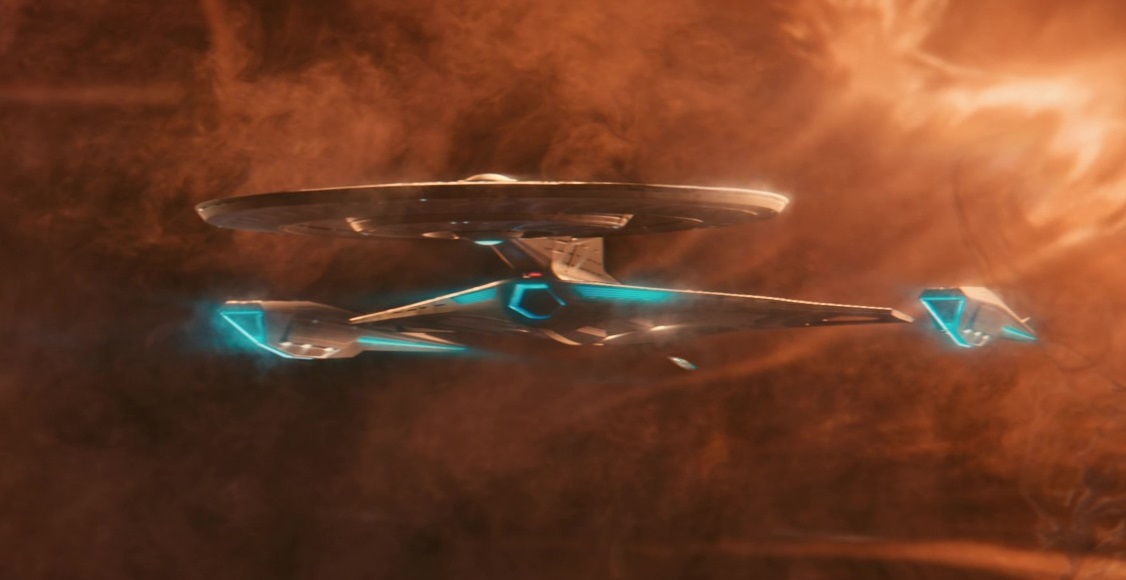
The USS Discovery in Season 4.

I was far from the only commentator to make the point prior to Season 4 that another “galactic threat” storyline felt samey, coming off the back of three similar narrative frameworks, and I’m sure I won’t be the only one to say that re-using that format a fifth time will be a bridge too far. Making use of the newly-established 32nd Century in different ways, and telling a story that may be smaller in scale but that’s just as impactful, emotional, and entertaining, will be the key challenges that I’d like the writers to tackle in Season 5.

The theme of rebuilding in the aftermath of a disaster was something we only saw Season 4 tackle in the briefest and barest of ways right at the beginning of the season, but this could be a concept that the show puts to much better use next time around. Discovery could follow Captain Burnham as she and the crew jump to different worlds, delivering dilithium, solving problems, flying the flag for the Federation… and most importantly, bringing hope to a galaxy that’s been through a lot.

The flag of the Federation…

This is what I’d hoped Season 4 would do, to be honest. The idea of restoring the Federation from the incredibly weakened state it was in when we encountered it is far too important and interesting to be relegated to something that happens off-screen, and I felt even before Season 4 had aired a single episode that this concept offered so much scope for emotional, exciting, and varied storytelling. Discovery could hop to different planets, combining the inclusion of new and visually different alien races (like Season 4’s “butterfly” aliens) with the reintroduction of classic races.

Catching up with some of the factions we remember from past iterations of Star Trek is also something I’ve been wanting Discovery to do for two seasons now. We’ve caught glimpses of races like the Ferengi and Andorians, and heard others mentioned in dialogue and log recordings, but we haven’t actually spent a lot of time with practically any of them. Finding out what became of fan-favourites not only in the years after the Burn, but in the centuries before that event took place, is something that I think a lot of Trekkies would be interested in.

We caught glimpses of familiar races… but Discovery didn’t find time to explore most of them in any detail.

If the 32nd Century is going to be a major setting for the franchise going forward, this kind of world-building is important. Just like how The Next Generation laid the groundwork for Deep Space Nine through its introduction of the Cardassians and Bajorans, so too could Discovery introduce us to planets, races, and technologies that future spin-offs and Star Trek projects could expand upon.

Part of that world-building can be done in a serialised story that looks at how the Federation can be rebuilt in the aftermath of the disasters it has already faced; introducing another new disaster to avert or recover from is simply not needed at this point. From the point of view of the characters, throwing them into another extreme situation would also be problematic, and would take the storytelling close to soap-opera levels.

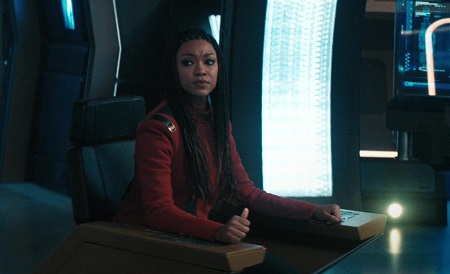
Owosekun, Saru, and Detmer.

Discovery has, to its credit, attempted to show how some of the events that its characters have gone through have impacted their mental health. Some of these stories have been underdeveloped – Detmer’s in Season 3 and Dr Culber’s in Season 4 being the most egregious examples. But even with this kind of attempted mental health focus, there’s a limit on what we could expect characters to go through and still be alright when they come out the other end.

To be fair, that’s a line that the Star Trek franchise has crossed in the past with characters like Miles O’Brien, for example, who seemed to survive a lot of traumatic events only to be back to normal the next week! But as shows like Picard have demonstrated with characters like Seven of Nine and Jean-Luc Picard himself, it can be incredibly cathartic to revisit some of these characters and give them meaningful, lasting development. But we’re drifting off-topic!

Captain Burnham in Season 4.

Star Trek’s galaxy is vast, and as we saw in Season 4 with the inclusion of races like the Abronians and Unknown Species 10-C, even in the 32nd Century there’s still a heck of a lot that Starfleet doesn’t know about it. There’s scope for Captain Burnham and the crew to get back to exploring for its own sake, as well as using their Spore Drive to reach parts of the galaxy that it would be difficult for the Federation to do otherwise. There’s the potential for the crew to bring hope to far-flung Federation outposts after the Burn, the Emerald Chain, and the DMA have had such a devastating impact… and it’s worthwhile telling stories like that.

Even if Season 5 doesn’t do much of that rebuilding or exploring, I’m still hopeful that whatever stories it chooses to tell won’t feel repetitive and won’t recycle the same basic story framework that we’ve seen throughout the show’s entire run to date. Discovery could do so much to expand our understanding of the Star Trek galaxy; even more so in a 32nd Century setting that is wholly unconstrained by prior canon. Shooting this far forwards in time was a great way for the show’s writers and producers to give themselves new opportunities to play in the vast sandbox that we call the Star Trek galaxy – so now would be a great time to take advantage of that.

As I look ahead to Season 5, I feel hopeful and optimistic. Season 4 had some problems, but generally it was an improvement over Season 3 and it ended in truly spectacular fashion. There’s potential for what comes next to build on that, and if the series can avoid retreading too much old ground, Season 5 could be Discovery’s best outing yet.

Star Trek: Discovery Seasons 1-4 are available to stream now on Paramount+ where the platform is available and via a patchwork of video-on-demand and pay-to-view streaming platforms in the rest of the world. The series is also available on DVD and Blu-ray. The Star Trek franchise – including Discovery and all other properties mentioned above – is the copyright of Paramount Global. This article contains the thoughts and opinions of one person only and is not intended to cause any offence.
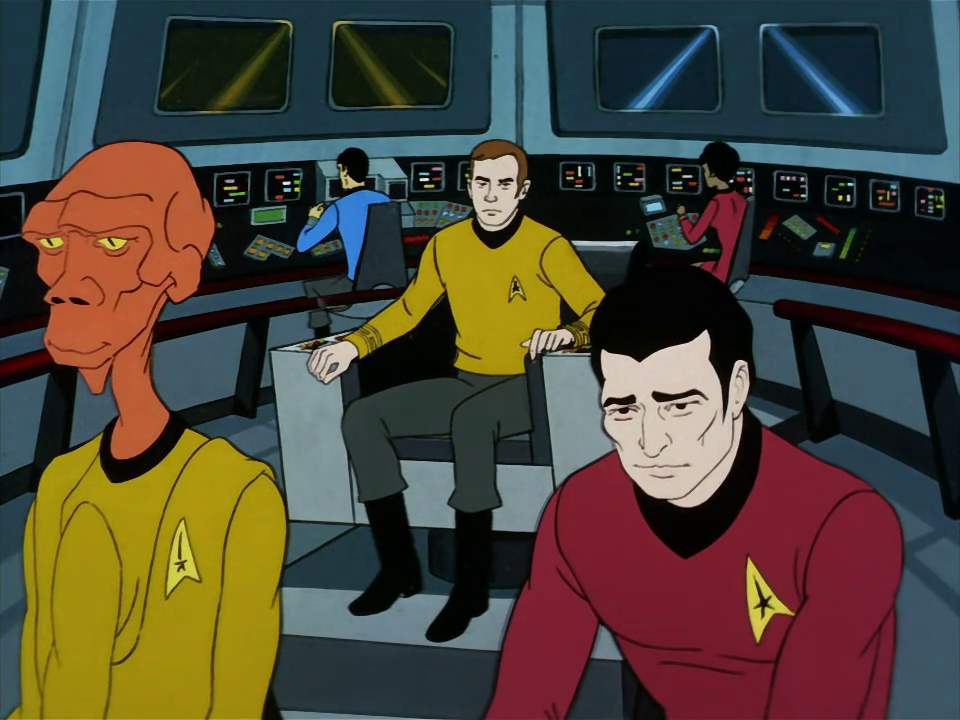
Star Trek: Discovery theories – week 4

Spoiler Warning: There are spoilers ahead for Star Trek: Discovery Seasons 1-4. Spoilers are also present for the following: Star Trek: Picard Season 1, Short Treks, and for other iterations of the Star Trek franchise.

All Is Possible definitely shook up Star Trek: Discovery! It’s an episode which, as things stand anyway, will have major ramifications for the rest of the show’s run thanks to the departure of Lieutenant Tilly. However, with the episode’s trio of stories largely staying away from the DMA (as the gravitational anomaly is now being called) there really aren’t a lot of new theories joining the list on this occasion. The teaser for The Examples has told us that we’re about to see a big return to that storyline, though, and I certainly don’t mind Discovery doing more of these episodic detours!

This week we had one theory that I’m calling semi-confirmed and one theory from way back in Season 3 that’s seen some significant advancement – but that I’m not yet willing to completely strike off the list! We’re also adding two production-side theories to the list for the first time.

Semi-confirmed theory:
Tilly left the USS Discovery.

Tilly is on her way to new adventures.

I’m calling this one semi-confirmed because I speculated about Tilly potentially leaving the ship – but I didn’t guess how soon it would happen or the exact manner of her departure! In the run-up to All Is Possible, my best guess was that whatever was happening with Tilly would rumble on for most of the rest of Season 4, with any potential departure not coming until closer to the end of the season. I certainly didn’t expect to see two “Tilly tries something new” storylines one after the other, and while her departure was very emotional and bittersweet, there was a slight sense that maybe it could’ve been scheduled a little better so we didn’t have both of Tilly’s big Season 4 episodes back-to-back.

I’d previously suggested that Tilly could change departments, resign from Starfleet, or that the character would be killed off by the writers. As it is we kind of got a combination of the first two: Tilly has left the USS Discovery’s science division to move to Federation HQ and teach at Starfleet Academy. She’ll presumably retain her commission as a Starfleet officer even though she isn’t working aboard a starship for the time being.

As I said in my review of All Is Possible, parts of Tilly’s story with the troublesome cadets almost felt like a backdoor pilot for a new series. With a Starfleet Academy show supposedly being worked on, we may not have seen the last of Tilly in Star Trek!

So that theory was semi-confirmed.

Up next we’ve got two production-side (as opposed to in-universe) theories.

Production-side theory #1:
Tilly’s departure will be permanent.

Tilly’s departure feels permanent.

Mary Wiseman confirmed in an interview with Wil Wheaton on The Ready Room (Discovery’s social media aftershow) that Tilly will be seen again before the end of Season 4. But that doesn’t mean she will be a main character on the show going forward, and her departure feels permanent. Despite that, I’ve seen quite a lot of folks online who don’t believe that Tilly is actually leaving the series – so I wanted to put it out there officially and say that, in my opinion anyway, she is.

Maybe those people know something that I don’t! As I always say, I don’t have any “insider information;” all of this is just speculation on my part. However, I feel that the manner of Tilly’s departure, the fact that she got that emotional sequence with Captain Burnham, a montage showing her leaving the ship, Adira seeming to take over several of her roles, and her departure feeling like the culmination of her arc going back to the latter part of Season 3 all come together to strongly indicate that she won’t be back as a major character. She may yet have a significant role to play in a future Season 4 episode, as has been suggested, but unless Discovery’s writers are really playing with our emotions I believe we’ve seen Tilly’s end as a main character on the show. She may, as suggested, be back in a future Starfleet Academy series, though… so watch this space!

Production-side theory #2:
Star Trek: Discovery isn’t going to be renewed for Season 5.

Is a fifth season going to happen?

Since Discovery’s first season in 2017, we’ve known by this point in the season that the show has been renewed. This isn’t one of those “I hate new Star Trek” things that we’ve seen doing the rounds online for years; I adore Discovery and genuinely want to see it continue. But it’s profoundly odd to be basically one-third of the way into Season 4 and to have had no announcement about Season 5. For comparison, Star Trek: Picard has been renewed for Season 3 even though Season 2 won’t air until next year!

I’m hopeful that this is just a blip; a temporary delay for reasons unknown, and that the show has been renewed for Season 5 already behind-the-scenes. However, when we look back at Star Trek productions in recent years, it was often apparent that production work was quietly ongoing even if there hadn’t been any official word from ViacomCBS. As far as we know at this stage, there’s been no pre-production work on Season 5, let alone any filming taking place in the Toronto area.

Once again this is a “watch this space” kind of theory. I hope I’m wrong… but the lack of any news or even any significant rumours about the show’s future is beginning to have me worried.

So those are two theories on the production side of things.

Now we’ll get into the main theory list, beginning with any theories that are new or saw any significant movement in All Is Possible. Then, for the sake of keeping everything in one place, we’ll also recap those theories that didn’t change this week.

Theory #1:
Dr Culber is going to tell Stamets to slow down.

Dr Culber and Stamets in a promo image for The Examples.

Stamets has been almost entirely absent from the past couple of episodes – and in All Is Possible we heard Captain Burnham suggesting that Stamets “won’t slow down,” and is overworking himself as he tries to figure out what’s going on with the DMA. As a result of Stamets dedication to his work, he missed all of Gray’s incorporation in Choose To Live, and we haven’t seen him with Dr Culber, Adira, or Gray since the beginning of the season. He hasn’t even met Gray yet, not properly.

Stamets also didn’t have a chance to speak to Tilly before she left the ship, though he was briefly seen as she departed for Starfleet Academy. In the past, we’ve seen Dr Culber gently remind Stamets that he has other priorities aside from his work, and I’m beginning to wonder if the show is setting up the pair for something similar. I hope we don’t go back to the Season 2 conflict, because that genuinely did not work, but Stamets may need some kind of intervention from the man he loves, pointing out what he’s been missing while he’s been wrapped up in his work.

Theory #2:
President Rillak knows what the DMA is and may be responsible for its creation.

President Rillak in Kobayashi Maru.

All Is Possible continued a trend that we’ve seen across the opening episodes of Season 4, showing us that President Rillak is a cunning, almost Machiavellian politician, willing to do anything to advance what she considers to be the best interests of the Federation. By bringing Burnham and Saru along to the Ni’Var negotiations she hoped to find a solution to a diplomatic impasse she knew was coming – and she succeeded.

As I said in my review, I believe Captain Burnham needs to be very careful with President Rillak. During the events of All Is Possible, working with Captain Burnham was advantageous to the Federation’s president – but I have no doubt that she’d throw Burnham and the USS Discovery under the bus without so much as blinking if she believed it would be to her advantage. Which brings us to the DMA.

President Rillak with Captain Burnham.

President Rillak might know more about the DMA than she’s currently letting on. If the Federation had created a weapon like this, or it was an experiment gone wrong, covering it up might be her objective even if she wasn’t necessarily the one who ordered the DMA’s creation. President Rillak herself is a character with depth, not simply an “evil admiral” character trope. But it wouldn’t be the first time that Discovery has presented us with a fairly hard-line character in a position of authority who turns out to be concealing a dark secret.

We’ll consider in a moment a few other possible candidates for creating the DMA – if it turns out to be an artificial creation. But the Federation – and by extension, President Rillak – have to be possible contenders too. Season 3 of Discovery showed us the Federation at its weakest, but also arguably as an organisation that was still virtuous at its core. In contrast, we have Season 2’s depiction of Starfleet: reliant on the shady Section 31 and their AI. In short, it wouldn’t be unthinkable for Discovery to go back to that kind of presentation.

Theory #3:
Kovich is an agent (or the head) of Section 31.

Kovich in All Is Possible.

This is the theory that’s hanging on by a thread right now! Ever since we met the mysterious Kovich in Season 3, I’ve felt sure that there was something going on with him. His mannerisms, the way he seemed to know more than he was willing to share, and particularly the way he dealt with Empress Georgiou all contributed to that. I began to suspect that he could be an agent – or even the head – of Section 31, the shadowy off-the-books intelligence division that has done some very dubious things!

All Is Possible showed us a different presentation of Kovich. Referred to as Doctor Kovich for the first time, he seems to be playing a senior role in the running of Starfleet Academy. That doesn’t necessarily preclude him working for Section 31, but it is the most significant move away from this theory that we’ve seen so far.

Kovich in Season 3.

It may yet be revealed that Dr Kovich played a role in Tilly’s away mission going so badly wrong, but I suspect if that had been going to happen we’d have seen it in All Is Possible. David Cronenberg plays the character very stoically, which I think adds to that mysterious sense that has been present since Season 3. In All Is Possible, that contributed somewhat to the sense that he may have known what was going to happen.

If it turns out that the Federation and/or President Rillak are involved somehow with the DMA, maybe Dr Kovich is aware of what’s going on. If he’s involved with Section 31, it may turn out that the organisation has important information about the DMA or even knows how to prevent it from doing any more harm.

So those theories were new or saw movement this week.

Now, as always, we’ll recap all of my other Discovery Season 4 theories. I find it helps to keep the full list in one place; it makes it easier to strike off theories when they’ve been debunked or confirmed, and it means nothing gets forgotten about or left behind! At least, that’s the plan!

Theory #4:
The Guardian of Forever will be back.

The Guardian of Forever first appeared in The Original Series.

Having reintroduced the Guardian of Forever in Season 3, I wouldn’t be at all surprised to see Discovery return to the Guardian’s planet in Season 4. The DMA is something new and threatening, so it’s possible Captain Burnham might want to ask the Guardian for help or information.

The Guardian of Forever is also the only way we know of at present to travel through time – something that might be necessary if Season 4 makes an attempt to link up with Calypso in a big way. There are many reasons why Captain Burnham might want to revisit the Guardian, and it would be great to bring back actor Paul Guilfoyle, who played the Guardian’s humanoid avatar in Season 3.

Theory #5:
Some areas of the galaxy – such as the Delta Quadrant – avoided the worst effects of the Burn.

The USS Voyager traversed the Delta Quadrant.

Season 4 touched briefly on the Burn with Su’Kal and Saru in Kobayashi Maru, and may now seek to put last season’s story to bed so it can wrangle with the DMA instead. But one thing I’d be curious to see is the true extent of the disaster – did it reach all four quadrants of the galaxy equally, or did its effects fade out after a certain point? Michael Burnham discovered that the Burn had a point of origin, and that it radiated out from that point like ripples on the surface of water. Ripples eventually diminish, fading away the further they travel, and perhaps that’s true of the Burn as well. There could be whole areas of the galaxy that didn’t even notice the Burn – and maybe the ship and crew will visit one such region.

If the Delta Quadrant was left largely unscathed, for example, what might that mean for the likes of the Borg? It’s possible they aren’t even still around in the 32nd Century, but it’s also possible that they’ve had more than a century to expand and build up their forces while the Federation suffered. To see a full write-up of this theory, click or tap here.

Theory #6:
Captain Burnham and the crew will encounter the Klingons.

General Martok, a 24th Century Klingon leader.

By the late 24th Century the Federation and Klingons were firm friends, having been allied for a century and after fighting side-by-side against the Dominion. We don’t know if that alliance endured to the 32nd Century, but it’s certainly plausible to think that it did. The Klingons might even have joined the Federation at some point, and their violent warrior culture may have been significantly pacified.

One thing that could be very interesting to see is how the crew of the USS Discovery – almost all of whom are veterans of the Federation-Klingon war – would respond to that. They’ve worked alongside Klingons like L’Rell before, but many of them still see the Klingons as an old enemy. The story of overcoming that prejudice could mirror episodes like The Wounded from The Next Generation, and would be very interesting to see.

Theory #7:
The crew will have to defend the Verubin Nebula.

The dilithium planet is vital to the Federation.

The Federation is still in a weakened state, nowhere near as powerful as it once was. The Verubin Nebula is thus a very tempting target for anyone looking to gain an edge in a galaxy where dilithium is still in short supply. As the only known significant dilithium supply, whoever controls the Verubin Nebula will have a massive tactical advantage.

We can compare the Verubin Nebula to Deep Space Nine’s Bajoran wormhole in that respect – it’s a resource of huge strategic importance. Season 3 didn’t show us much about the makeup of the galaxy’s factions outside of the rump Federation and the Emerald Chain, but it’s got to be possible that factions like the Dominion, Klingon Empire, or even the Borg still exist and would want to seize the Verubin Nebula for themselves.

Another view of the planet in the Verubin Nebula.

Season 4 has presented Captain Burnham and the crew with a scientific puzzle: the DMA. But that doesn’t mean there won’t be villains in play, and Discovery has introduced us to several compelling and interesting villains over its first three seasons.

To make a long theory short, it would begin to stretch credulity to think that everyone in the known galaxy would see the Federation rebuilding and having access to dilithium and not want to find out for themselves what’s going on. Once the Verubin Nebula’s existence becomes known, even if the Federation promises to share its bounty with all comers, it seems very likely that someone would want to take control of the dilithium supply for themselves.

Theory #8:
The story will connect with the Short Treks episode Calypso.

Craft, the protagonist of Calypso.

Despite a handful of moments in Season 3 which seemed to connect to Calypso, the story of the season overall ended up going in a very different direction. While we saw a couple of things that arguably did tie in to the Short Treks episode, major things like the USS Discovery undergoing a refit have actually moved the plot even further away.

It’s possible that Calypso will forever remain an outlier in Star Trek’s canon – an episode tied to a vision of Season 2 or Season 3 that was changed before it made it to screen. But earlier in Season 3 it felt like we were getting close to seeing how it could all be tied together – and I’m hopeful that Season 4 will find a way to do so.

Theory #9:
The ban on time travel will be explained in more detail.

The USS Enterprise was able to travel back in time to the 20th Century from the 23rd without too much difficulty.

This one is a hope as much as a theory right now! In short, the ban on time travel was introduced early in Season 3 primarily as a way for the writers and producers to avoid questions about why the 32nd Century was so different from how the far future had been depicted in earlier Star Trek productions, as well as to explain things like how the Burn was able to catch the Federation off-guard and why Georgiou couldn’t simply be sent back in time when she needed to.

But the ban itself raises some issues – the biggest one being the lack of detail on how it works and how something like this could possibly be enforced. As I said several times last season, it isn’t possible to just un-invent a technology so useful and powerful as time travel. Even just a few lines of dialogue going into a little more detail on the mechanisms involved in the ban would be really useful.

Theory #10:
The Federation has flouted the ban on time travel.

President Rillak may have tried to circumvent the ban if she felt doing so would be in the Federation’s interest.

Sticking with the time travel ban, another theory I had last season was that the Federation – and Section 31 in particular – might have deliberately flouted the ban and failed to abide by the rules. Someone as straight-laced and committed to Starfleet ideals as Admiral Vance is highly unlikely to have sanctioned such a move, but someone like the shadowy Kovich might have. President Rillak could also be involved.

Obviously the bulk of the season’s story will deal with the DMA. But there’s scope to either talk about the time travel ban in a standalone episode or even tie the two stories together – perhaps the anomaly has been unleashed as a result of unsanctioned time travel.

Theory #11:
Burnham won’t stay in the captain’s chair.

Captain Burnham in All Is Possible.

This is a controversial one, so let me just say up front that I’m neither in favour of this theory nor opposed to it – I just think it’s a possibility. As things stand, Discovery has had four different captains across its four seasons. One of the show’s unique points of interest within Star Trek’s broader canon are the very different ways in which these individual captains commanded the ship and crew.

It’s got to be considered at least a possibility, then, that the show will continue this trend. This doesn’t mean Captain Burnham will be killed off; I’d actually argue she’s pretty safe. But there are many different routes to her potentially leaving the ship, such as a desire for freedom that we saw in Season 3, or even perhaps taking up a new, more senior role within Starfleet.

Captain Burnham in Anomaly.

If this theory were to come to pass, it would be something I’d expect to see at the very end of the season. Even if Burnham seems 100% committed to her new role as captain, I don’t think it’s a theory we can definitively rule out.

It’s worth mentioning that at time of writing Discovery hasn’t been officially renewed for a fifth season – so all this talk of who’ll be in the captain’s chair by then could be moot! And of course this theory has a very strong counter-argument: that Discovery’s main story arc across its first three seasons can be read as Burnham’s ascent to the captain’s chair.

Theory #12:
There will be a character crossover from a past iteration of Star Trek.

Spock has appeared in several different Star Trek productions.

This theory returns from Season 3, where I doggedly clung to it for the entire season!

Discovery’s 32nd Century setting has shot Captain Burnham and the crew far beyond anything in Star Trek’s established canon, and that should mean that practically everyone we remember from other Star Trek shows won’t be around any longer. But this is Star Trek – with some creatively-written technobabble, practically any major character could have survived all the way through to the 32nd Century!

Riker has appeared in more Star Trek spin-offs than any other character.

It’s also possible for Captain Burnham to discover the logs of a long-dead officer; someone we as the audience would be familiar with. While this would be less of a “crossover” than if a character from the past could be physically present, it would still be a lot of fun to see!

There are a handful of characters who could have survived to the 32nd Century based on what we know about them from past iterations of the franchise. Included in this category would be people like Soji, Voyager’s Doctor, and a few others. But as we’ve seen in episodes like Relics and even the film Generations, all it would take to make a big crossover happen is some kind of temporal anomaly, stasis field, or other technobabble!

Theory #13:
A major character will be killed.

A Starfleet coffin seen in Deep Space Nine.

Season 3 saw a couple of major departures: Mirror Georgiou entered the Guardian of Forever’s portal, and Nhan remained behind aboard the USS Tikhov. Yet despite the dangers the crew faced as they navigated the 32nd Century, battled the Emerald Chain, and figured out the mysteries of the Burn and the Verubin Nebula, only one ally – Ryn – lost their life.

Killing off a character can be an excellent way to communicate the stakes involved if it happens at a relatively early stage. It can also be a storyline that brings a lot of emotion, as we have to say goodbye to a beloved member of the crew.

Spock’s funeral in The Wrath of Khan.

In short, I think there are plenty of reasons on the production side why killing off a major character could make sense in Season 4. Though we’ve already had one departure this season – that of Lieutenant Tilly – I still believe that Discovery could very easily go down this road, especially considering how dangerous the DMA currently is.

For a breakdown of which characters I thought might be in danger before the season premiered, check out my list of “death predictions” by clicking or tapping here.

Theory #14:
The DMA is a superweapon.

One view of the DMA.

We touched on this theory above when we considered the Federation’s possible complicity in the creation of the DMA, but there are many other ways such a story could pan out. The DMA’s unpredictable nature, as noted by Tilly and Saru at the end of Anomaly, could imply that there’s an intelligence at work dictating its moves. This could be the DMA itself if it’s sentient (or contains a sentient life-form) but it could also be the case that it’s being controlled or manipulated by something or someone externally.

If the anomaly turns out not to be a natural phenomenon, and is indeed deliberately targetting the Federation, who might the possible culprits be? And what would be the purpose behind attacking the Federation in this manner? If it’s the precursor to an invasion, perhaps later in the season we’ll see whoever is responsible making their next move.

Theory #14a:
The Borg are responsible.

The Borg Queen.

We don’t know whether the Borg Collective still exists in the 32nd Century; it hasn’t even been mentioned since the USS Discovery’s arrival. However, few other established factions seem capable of creating a weapon on the scale of the DMA. This wouldn’t be in line with the Borg’s usual modus operandi, as they prefer to assimilate rather than attack from afar. But a lot may have changed in the centuries since we last encountered them, meaning this could be the opening salvo of a Borg attack… or the last gasp of a dying Collective.

Theory #14b:
The super-synths from Picard Season 1 are responsible.

Some very menacing-looking synthetic tentacles.

We still don’t know very much about the super-synths that Soji and Sutra attempted to contact in the Season 1 finale of Star Trek: Picard. Other than claiming to offer support and help to synthetic life, what are their goals and motivations? Was their offer even genuine, or was it a trap? The mechanical tentacles glimpsed in Picard Season 1 looked terrifying! Moreover, we know that the super-synths have the technology to move stars – something only possible with an advanced understanding of gravity. Creating a stable 8-star octonary system is an incredible technological and gravitational feat, so they have precedent of a sort when it comes to working with gravity. Finally, Discovery Season 4 has already made connections with Picard Season 1: the Qowat Milat and the synth transfer process used for Gray.

Theory #14c:
The Kelvan Empire is responsible.

Rojan, a representative of the Kelvan Empire.

This one might seem to come completely out of the blue! In The Original Series, Captain Kirk met representatives of the Kelvan Empire, a faction originally from the Andromeda galaxy. Seeking a new home, a Kelvan scouting party had reached the Milky Way and were looking for worlds to conquer. Kirk would ultimately dispatch an unmanned starship offering to help the Kelvan Empire find new worlds to settle – but what if his offer was rejected? Given the vast distances and travel time involved, the timelines kind of line up for the Kelvan Empire to return to the Milky Way.

Theory #14d:
The Sphere-Builders from Enterprise are responsible.

A Sphere-Builder seen in Enterprise.

A defeated faction in one of the Temporal Wars, the Sphere-Builders initially hoped to convert a large swathe of the Alpha Quadrant to match their native extradimensional realm, and constructed a number of large space stations known as Spheres to facilitate this transformation. Crewman Daniels would tell Captain Archer that the Sphere-Builders were defeated in the 26th Century, but could they have since rebuilt? The DMA isn’t necessarily the same as what they were trying to do with the Spheres, but they’re one of the few factions in Star Trek that might be capable of creating a weapon on this scale.

Theory #15:
Saru will be given the captaincy of the USS Voyager-J.

The USS Voyager-J.

Saru’s future was briefly discussed before he offered to serve as Captain Burnham’s first officer in the episode Anomaly. He has already been offered a command of his own, so Starfleet clearly values his command abilities and experience. President Rillak was seen to be assessing Captain Burnham’s suitability for the captaincy of the USS Voyager-J in Kobayashi Maru… and she mentioned having a shortlist of candidates. Could Saru be on her list?

Several of the qualities that President Rillak said she was looking for in a potential captain seem to apply to Saru. He’s more level-headed, less likely to put himself in a dangerous situation, and more inclined to think of the big picture. He has a weakness when it comes to Kaminar, as we saw toward the end of Season 3, but generally speaking he isn’t someone who lets his emotions get the better of him. His wisdom and calm demeanour could be valuable in the captain’s chair of the Federation flagship. This could also set the stage for his departure from the show, or possibly even for a new show following his adventures aboard his new ship.

Theory #16:
The DMA is (or contains) a sentient life-form.

Another view of the DMA.

“It was only trying to communicate!” has become a Star Trek cliché, often used to describe how the seemingly-aggressive actions of an alien life-form are actually something innocuous. Maybe the same is true of the DMA: at its core is a life form, perhaps one not dissimilar to the Sphere seen in Season 2, and it’s on its own mission of exploration.

V’Ger from The Motion Picture is an interesting comparison. Like the DMA, V’Ger was massive in size, capable of destroying space stations, fleets of ships, and even threatening to destroy entire planets. When Admiral Kirk and the crew of the Enterprise were able to figure out V’Ger, however, they found a life-form at its core, one which was just as curious to learn and grow as they were.

Theory #17:
Book will find Kyheem and Leto inside the DMA.

Leto as seen in Book’s memory.

In Star Trek: Generations, Captain Picard encountered Captain Kirk inside the Nexus – despite Kirk being declared “dead” after the Enterprise-B encountered the energy ribbon almost eighty years earlier. We don’t know what the DMA is yet; one of my very early pre-season theories involved the Nexus, but that seems to be debunked already! However, the anomaly’s mysterious nature raises the faint possibility that at least some of those it appears to have “killed” may not be as dead as they first appear.

This theory is, I freely admit, a bit of a long-shot. And it hinges on a fundamental question underlying the story of the season: is there more to the DMA than meets the eye? If the anomaly is just an extreme example of space weather, flitting through Federation space destroying anything unfortunate enough to be in its way, then probably everyone on Kwejian is dead. But if the anomaly harbours some kind of gateway, wormhole, portal, time vortex, or any of the other Star Trek-y technobabble phenomena that we’ve seen across the franchise’s history, then it’s possible that at least some of the folks on Kwejian found themselves transported to whatever realm lies inside of the anomaly.

Theory #18:
Captain Burnham and/or the Red Angel time travel suits from Season 2 are connected to the DMA.

We don’t really know what happened to the Red Angel suit after this moment.

I’m not sure that this one is particularly likely, but as I said last year about a possible Burnham connection to the Burn, not only does Discovery kind of have a precedent for telling this kind of story, but there would also be something very dramatic about this revelation. In this case, Burnham would be indirectly and unknowingly responsible for creating something devastatingly damaging. How would she react to that, and how would Book react given what happened to Kwejian?

Perhaps the Red Angel suit, which Burnham sent back in time in the Season 3 premiere, malfunctioned somehow, and its powerful wormhole-creating technology gave rise to the DMA. If the Red Angel suit completed its journey back to the 23rd Century, the anomaly may have had centuries to grow and expand unchecked. If time travel is involved, perhaps a future Captain Burnham or a parallel universe Captain Burnham could be responsible for the anomaly’s creation – either intentionally or not.

Theory #19:
We haven’t seen the last of the Abronians.

I currently have four ideas for different ways that the Abronians – the non-humanoid race that Captain Burnham, Tilly, and the Qowat Milat helped save from cryo-sleep in the episode Choose To Live – could play a further role in Season 4.

Theory #19a:
The Abronians’ homeworld was destroyed by the DMA.

Captain Burnham believes this image depicts a “supernova.”

After arriving at the Abronians’ cryo-ship, Captain Burnham found a stone carving that seemed to depict the destruction of the Abronians’ homeworld. This carving was only shown on screen briefly, but it seemed to show the planet being damaged or destroyed in a large explosion. Burnham credited the planet’s destruction to a “supernova,” and the story then raced ahead.

Considering that the main thrust of the season so far has been about the DMA, perhaps Burnham was incorrect: the Abronian homeworld was destroyed by the anomaly, not a supernova.

Theory #19b:
The Abronians’ homeworld was on the “other side” of the DMA.

The USS Discovery approaches the DMA.

One clip in the second Season 4 trailer appeared to show Captain Burnham leading the USS Discovery inside the DMA. We don’t yet know what that means, nor to what extent words like “inside” the anomaly or “the other side” of the anomaly are even coherent concepts. But many times in past iterations of Star Trek we’ve seen things like wormholes and gateways to parallel universes. Perhaps the anomaly is something similar – and passing through it leads to a different dimension, parallel reality, or just a faraway region of space.

One thing struck me as odd about the Abronians: the Federation was entirely unaware of them, despite the Abronian cryo-ship being relatively close to Federation space – such that Captain Burnham could reach it using Book’s ship in a short span of time. It’s possible that the Abronians had been asleep for millennia, unnoticed by the Federation and the wider galaxy for all that time. But it’s also at least possible that their cryo-ship is a newcomer to the area. If so, perhaps it arrived here via the DMA.

Theory #19c:
The Abronians will return to help the Federation later in the season.

A deceased Abronian.

One of the themes of Discovery since Season 3 has been connection, including building connections between the Federation and other races and organisations. The Abronians were awoken from cryo-sleep thanks to the interventions of Captain Burnham and Tilly – at least in part – and they may seek to repay the Federation, or Captain Burnham personally, for that help.

We saw this play out last season with Ni’Var; in the season finale Ni’Var ships raced to the Federation’s aid as the Emerald Chain attacked. Perhaps the Abronians will likewise step up to help when the Federation needs allies.

Theory #19d:
The Abronians’ moon-ship may be useful in a later story.

“That’s no moon…”

At this stage I can’t envision precisely what use Captain Burnham and the crew might have for a moon-sized starship… but that doesn’t mean such a need won’t arise! The Abronians’ cryo-ship is huge, and at least superficially seems to have the mass of a moon or small planetoid. If Captain Burnham and the crew needed something that large for some purpose, perhaps they’ll return and either take it or negotiate for it.

As we saw in Choose To Live, the moon-ship was in full working order. All it needed was some extra dilithium to power up and it was perfectly capable of moving under its own power, and its computer systems were still functional. The only system that seemed to have failed was the wake-up timer! So if – for reasons yet unknown – the crew need a huge starship, perhaps we won’t have seen the last of the moon-ship.

So that’s it!

The USS Discovery.

At present, those are all of the theories I currently have in play. Some are more likely than others, some are perhaps plausible but may not come into play in Season 4, and maybe some are just plain silly! But I have a lot of fun thinking them up and writing these lists, and that’s really what this is all about!

After two episodes in a row in which we got minimal advancement of the season’s main storyline, The Examples seems to be teasing us with a return to the DMA in a significant way. I can hardly wait to see what lies in store for Captain Burnham and the crew!

Before we go, one final point. I write up these theories because I like Star Trek and I like writing. But for some folks, fan theories can hamper their enjoyment of a film or television show. It’s worth keeping in mind that most of these theories probably won’t pan out, and we have to be prepared for the fact that even the most well-constructed fan theory, no matter how fun and plausible it seems, simply won’t turn out to be true. If you find that speculating and reading theories is beginning to detract from your enjoyment of Star Trek: Discovery – or any other television show or film – it might be a good idea to take a break for a while.

Star Trek: Discovery Season 4 is available to stream now on Paramount+ in the United States, Scandinavia, Latin America, and Australia. The show is on Pluto TV in the UK, France, Germany, Italy, and other parts of Western Europe at 9pm on Fridays and Saturdays. Individual episodes or the full season can be purchased on iTunes, Amazon Video, and possibly other platforms in the UK, parts of Europe, and select other countries. The Star Trek franchise – including Discovery and all other properties mentioned above – is the copyright of ViacomCBS. This article contains the thoughts and opinions of one person only and is not intended to cause any offence.

Star Trek: Discovery theories – week 0

Spoiler Warning: There are spoilers ahead for Star Trek: Discovery Seasons 1-3 and the trailers and teasers for Season 4. Spoilers are also present for other iterations of the Star Trek franchise, including Picard Season 1.

Discovery’s fourth season kicks off next week, and if you missed my coverage of the series last year you might not know that I like to write up my theories after each episode has aired. This year I want to get in early and put all of my major pre-season theories into one place… that way we can cross them off as they get debunked – or possibly even confirmed!

Last year I had a lot of fun combing over each episode and trying to speculate and theorise where the story might go. I came up with many theories that were wide of the mark – check out some of my worst ones by clicking or tapping here! – but I did also get some things right.

A Ferengi Starfleet officer glimpsed in the second Season 4 trailer.

It’s important to caveat any list of theories by saying that I have no “insider information” and I’m not trying to claim that anything listed below will happen. Fan theories are a lot of fun for me, but they can also detract from a person’s enjoyment of media if they get too attached to a particular theory that ultimately doesn’t come to pass. If you find yourself in that position, I recommend taking a break from fan theories for a while.

So let’s have a bit of fun and kick off my Star Trek: Discovery Season 4 theories one week early! You might’ve seen some of these already – I’ve written up a few big pre-season theories over the past few months. Let’s jump into the list!

Theory #1: A major character will be killed.

A Starfleet coffin draped with the Federation flag as seen in Deep Space Nine.

Season 3 saw a couple of major departures: Mirror Georgiou entered the Guardian of Forever’s portal, and Nhan remained behind aboard the USS Tikhov. Yet despite the dangers the crew faced as they navigated the 32nd Century, battled the Emerald Chain, and figured out the mysteries of the Burn and the Verubin Nebula, only one ally – Ryn – lost their life.

Killing off a character can be an excellent way to communicate the stakes involved if it happens at a relatively early stage, and we know Captain Burnham and the crew will be facing a dangerous gravitational anomaly. It can also be a storyline that brings a lot of emotion, as we have to say goodbye to a beloved member of the crew.

Dr McCoy and Sulu playing dead in The Wrath of Khan.

In short, I think there are plenty of reasons on the production side why killing off a major character could make sense in Season 4. Discovery has seen a number of characters leave the series – far more than any past Star Trek show, in fact – but the series’ death toll is still relatively low when compared to many other modern television shows.

There are also a couple of characters whose roles aboard the ship feel in danger – not least of whom is poor ex-Captain Saru, who was rather unceremoniously shuffled out of his role in the Season 3 epilogue. For a full breakdown of which other characters may or may not be in danger, check out my list of “death predictions” by clicking or tapping here.

Theory #2: There will be a character crossover from a past iteration of Star Trek.

Voyager’s Doctor is a contender!

Yes, I’m officially bringing this theory back! This is one that I doggedly clung on to for all of Season 3, and while it arguably kind of happened with the Guardian of Forever, that wasn’t really what I meant.

The show’s 32nd Century setting has shot Captain Burnham and the crew far beyond anything in Star Trek’s established canon, and that should mean that practically everyone we remember from other Star Trek shows won’t be around any longer. But this is Star Trek – with some creatively-written technobabble, practically any major character could have survived all the way through to the 32nd Century!

Could Sutra still be alive in the 32nd Century?

It’s also possible for Captain Burnham to discover the logs of a long-dead officer; someone we as the audience would be familiar with. While this would be less of a “crossover” than if a character from the past could be physically present, it would still be a lot of fun to see!

There are a handful of characters who could have survived to the 32nd Century based on what we know about them from past iterations of the franchise. Included in this category would be people like Soji, Voyager’s Doctor, and a few others. But as we’ve seen in episodes like Relics and even the film Generations, all it would take to make a big crossover happen is some kind of temporal anomaly, stasis field, or other technobabble!

Theory #3: Burnham may not remain in the captain’s chair.

Michael Burnham in the captain’s chair in a promotional image for Season 4.

This is a controversial one, so let me just say up front that I’m neither in favour of this theory nor opposed to it – I just think it’s a possibility. As things stand, Discovery has had four different captains across its four seasons. One of the show’s unique points of interest within Star Trek’s broader canon are the differences between these very different individual captains and the way they commanded the ship and crew.

It’s got to be considered at least a possibility, then, that the show will continue this trend. This doesn’t mean Captain Burnham will be killed off; I’d actually argue she’s pretty safe. But there are many different routes to her potentially leaving the ship, such as a desire for freedom that we saw in Season 3, or even perhaps taking up a new, more senior role within Starfleet.

Captain Burnham in the first Season 4 trailer.

If this theory were to come to pass, it would be something I’d expect to see at the very end of the season. Even if Burnham seems 100% committed to her new role as captain, I don’t think it’s a theory we can definitively rule out.

It’s worth mentioning that at time of writing, Discovery hasn’t been officially renewed for a fifth season – so all this talk of who’ll be in the captain’s chair by then could be moot! And of course this theory has a very strong counter-argument: that Discovery’s main story arc across its first three seasons can be read as Burnham’s ascent to the captain’s chair.

Theory #4: The Spore Drive will be rolled out to more ships.

The USS Discovery making a Spore Drive jump.

The Season 3 finale rushed past this point as it had a lot going on, but the revelation that Book – and potentially millions of other people with empathic abilities – can serve in the role of Spore Drive navigator is huge. The technology was previously limited by Stamets being the only one with the ability to interface with the mycelial network, but now that limitation has seemingly been removed.

In a galaxy where dilithium supplies are still low, having a powerful alternative method of propulsion is a godsend for Starfleet, and I would think it would be a priority to start recreating the technology and training up a whole corps of Spore Drive navigators.

Book was able to use the Spore Drive in Season 3 – potentially opening it up for more ships to use.

On the production side of things, this would finally find a proper use for what has been one of Discovery’s more controversial elements. Even after the discovery of the huge dilithium cache in the Verubin Nebula, the vitally-important fuel is still a limited resource. Developing an alternative way for Starfleet ships to get around should still be a priority for the organisation.

This could be a story with real-world parallels, too. Climate change is a very real and very dangerous threat out here in the real world, and finding new, cleaner ways of generating power and fuelling our vehicles is essential. Discovery could use its Spore Drive as an analogy for the development of electric vehicles or renewable energy generation, for example.

Theory #5: Kovich works for Section 31.

Kovich in Season 3.

This is another Season 3 theory that I’m choosing to bring back! The question of who Kovich is and what role he played in Starfleet and the Federation was left open at the end of Season 3, and we know that the character will return in some capacity. As someone who seemed to talk around the issue at hand and not reveal everything he knew, Kovich strikes me as potentially being a Section 31 operative – or even the head of the organisation.

We don’t know yet if the Section 31 series that was announced in 2019 will go ahead as planned. But if it does, there could potentially be a connection between Kovich and Georgiou that would tie the two shows together. Kovich is mysterious enough that his character could be taken in many different directions – but my money’s on Section 31.

Theory #6: The ban on time travel will be explained further.

Admiral Vance first told us of the ban on time travel.

This one is a hope as much as a theory right now! In short, the ban on time travel was introduced early in Season 3 primarily as a way for the writers and producers to avoid questions about why the 32nd Century was so different from how the far future had been depicted in earlier Star Trek productions, as well as to explain things like how the Burn was able to catch the Federation off-guard and why Georgiou couldn’t simply be sent back in time when she needed to.

But the ban itself raises some issues – the biggest one being the lack of detail on how it works and how something like this could possibly be enforced. As I said several times last season, it isn’t possible to just un-invent a technology so useful and powerful as time travel. Even just a few lines of dialogue going into a little more detail on the mechanisms involved in the ban would be really useful.

Theory #7: The Federation has flouted the ban on time travel.

HMS Bounty travels through time in Star Trek IV: The Voyage Home.

Sticking with the time travel ban, another theory I had last season was that the Federation – and Section 31 in particular – might have deliberately flouted the ban and failed to abide by the rules. Someone as straight-laced and committed to Starfleet ideals as Admiral Vance is highly unlikely to have sanctioned such a move, but someone like the shadowy Kovich (who we talked about a moment ago) might have. President Rillak is someone we don’t know yet, but she could also be involved.

Obviously the bulk of the season’s story will deal with the gravitational anomaly. But there’s scope to either talk about the time travel ban in a standalone episode or even tie the two stories together – perhaps the anomaly has been unleashed as a result of unsanctioned time travel.

Theory #8: The story will connect with the Short Treks episode Calypso.

The USS Discovery seen in Calpyso.

Despite a handful of moments in Season 3 which seemed to connect to Calypso, the story of the season overall ended up going in a very different direction. While we saw a couple of things that arguably did tie in to the Short Treks episode, major things like the USS Discovery undergoing a refit have actually moved the plot even further away.

It’s possible that Calypso will forever remain an outlier in Star Trek’s canon – an episode tied to a vision of Season 2 or Season 3 that was changed before it made it to screen. But earlier in Season 3 it felt like we were getting close to seeing how it could all be tied together – and I’m hopeful that Season 4 will find a way to do so.

Theory #9: The crew will have to defend the Verubin Nebula.

The dilithium planet at the centre of the Verubin Nebula.

The Federation is in a weakened state, and even if we see worlds like Ni’Var rejoin the organisation it’s still nowhere near as powerful as it once was. The Verubin Nebula is thus a very tempting target for anyone looking to gain an edge in a galaxy where dilithium is still in short supply. As the only known significant dilithium supply, whoever controls the Verubin Nebula will have a massive tactical advantage.

We can compare the Verubin Nebula to Deep Space Nine’s Bajoran wormhole in that respect – it’s a resource of huge strategic importance. Season 3 didn’t show us much about the makeup of the galaxy’s factions outside of the rump Federation and the Emerald Chain, but it’s got to be possible that factions like the Dominion, Klingon Empire, or even the Borg still exist and would want to seize the Verubin Nebula for themselves.

The USS Discovery arriving at the Verubin Nebula in Season 3.

Season 4 has teased a scientific puzzle – the gravitational anomaly. But that doesn’t mean there won’t be villains in play, and Discovery has introduced us to several compelling and interesting villains over its first three seasons.

To make a long theory short, it would begin to stretch credulity to think that everyone in the known galaxy would see the Federation rebuilding and having access to dilithium and not want to find out for themselves what’s going on. Once the Verubin Nebula’s existence becomes known, even if the Federation promises to share its bounty with all comers, it seems very likely that someone would want to take control of the dilithium supply for themselves.

Theory #10: The super-synths from Picard Season 1 are involved with the gravitational anomaly.

The super-synths in Picard Season 1.

Picard Season 1 introduced us to a faction I nicknamed the “Mass Effect Reapers” – for their similarity to that video game faction. This race of super-synths existed outside of the Milky Way galaxy and promised to come to the aid of any synthetics who were being persecuted by organics, and Soji and Sutra attempted to contact them in the Season 1 finale.

We don’t know much at all about the super-synths or what their goals or motivations might be. It has to be considered at least possible that the attempted contact by the Coppelius synths set in motion a chain of events that could lead to the super-synths attacking the Milky Way galaxy.

Theory #11: The gravitational anomaly is a superweapon.

The USS Discovery en route to the anomaly in the second Season 4 trailer.

Based solely on what we’ve heard about the gravitational anomaly in the trailers and teasers, one thing strikes me as odd. The anomaly appears to be “targetting” the Federation. I put the word in inverted commas because it implies an intelligence at work – someone or something in control of the anomaly, directing it to attack the Federation. But what if that’s actually the case?

I mentioned the super-synths above as one possible culprit, but we could also consider factions like the Borg or the Dominion – they might have taken the opportunity of the Burn to perfect a weapon to destroy the remaining members of the Federation, perhaps as a precursor to invading and conquering the Alpha Quadrant.

A different depiction of the anomaly.

There are also factions like the Kelvan Empire from The Original Series – whose possible return to the Milky Way galaxy lines up in terms of timing. Enterprise’s Sphere Builders also come to mind: they attempted to use their own anomaly-generating devices to convert a region of space to resemble their native realm also as a precursor to invasion.

In short, are we certain that the gravitational anomaly will be nothing more than a natural phenomenon? I’m definitely not convinced of that right now! Past seasons of the show have seen twists and turns, taking stories in unexpected directions. Right now we assume that whatever this anomaly is it’s something natural – but that may not be the case.

Theory #12: Captain Burnham and the crew will encounter the Klingons.

The Klingons have been part of Discovery since the beginning.

By the late 24th Century the Federation and Klingons were firm friends, having been allied for a century and after fighting side-by-side against the Dominion. We don’t know if that alliance endured to the 32nd Century, but it’s certainly plausible to think that it did. The Klingons might even have joined the Federation at some point, and their violent warrior culture may have been significantly pacified.

One thing that could be very interesting to see is how the crew of the USS Discovery – almost all of whom are veterans of the Federation-Klingon war – would respond to that. They’ve worked alongside Klingons like L’Rell before, but many of them still see the Klingons as an old enemy. The story of overcoming that prejudice could mirror episodes like The Wounded from The Next Generation, and would be very interesting to see.

Theory #13: Some areas of the galaxy – such as the Delta Quadrant – avoided the worst effects of the Burn.

The USS Voyager was the first Federation starship to explore the Delta Quadrant.

It’s quite possible that Season 4 won’t revisit the Burn narrative in any detail. But one thing I’d be curious to see is the true extent of the disaster – did it reach all four quadrants of the galaxy equally, or did its effects fade out after a certain point? Michael Burnham discovered that the Burn had a point of origin, and that it radiated out from that point like ripples on the surface of water. Ripples eventually diminish, fading away the further they travel, and perhaps that’s true of the Burn as well. There could be whole areas of the galaxy that didn’t even notice the Burn – and maybe the ship and crew will visit one such region.

If the Delta Quadrant was left largely unscathed, for example, what might that mean for the likes of the Borg? It’s possible they aren’t even still around in the 32nd Century, but it’s also possible that they’ve had more than a century to expand and build up their forces while the Federation suffered.

Theory #14: The Guardian of Forever will be back.

Carl – the Guardian of Forever’s new persona.

Having reintroduced the Guardian of Forever in Season 3, I wouldn’t be at all surprised to see Discovery return to the Guardian’s planet in Season 4. The gravitational anomaly is something new and threatening, so it’s possible Captain Burnham might want to ask the Guardian for help or information.

The Guardian of Forever is also the only way we know of at present to travel through time – something that might be necessary if Season 4 makes an attempt to link up with Calypso in a big way. There are many reasons why Captain Burnham might want to revisit the Guardian, and it would be great to bring back actor Paul Guilfoyle, who played the Guardian’s humanoid avatar in Season 3.

Theory #15: At least one new character will join the main cast.

Lieutenant Detmer in Season 3.

One big question facing the series right now is who will take on the role of Captain Burnham’s first officer? Tilly was seen in the second trailer wearing the blue uniform of the science division, so it seems as though her tenure as the USS Discovery’s number one will be short-lived. So who will replace her? There are several secondary bridge officers like Rhys, Nilsson, and Bryce who are contenders, but it could also be someone like Lieutenant Willa – Admiral Vance’s aide-de-camp from Season 3.

A new character entirely could also join the crew, either directly as Burnham’s XO or to replace someone else who gets promoted to that role. With both Nhan and Georgiou departing in Season 3, and a potentially reduced role for Saru this time around, there’s definitely scope to bring a new major character aboard the ship.

Lieutenant Sahil was commissioned into Starfleet at the end of Season 3.

We could potentially see characters from Season 3 like Lieutenant Sahil or even Aurellio make a comeback. Sahil was the guardian of a Federation relay post who Captain Burnham met at the beginning of the season, and he was commissioned as an officer in the season finale. He would be a great choice in my opinion.

A wholly new character could also be concocted. We know that Federation President Rillak will be new for Season 4, but how significant a role she will have remains to be seen. I definitely feel that there’s scope for at least one new character – or perhaps the promotion of a secondary character to the regular cast.

So that’s it for now! Those are my official Season 4 theories written up and ready to go!

Grudge is also coming back!

The season premiere will arrive in less than a week from now, so stay tuned for a full review of the episode and an update to these theories! I wonder how many will be completely destroyed right off the bat?

I’ve been looking forward to Discovery’s fourth season all year, and it’s hard to believe it’s now only a few days away! I’m hoping to see a season of television that will be tense, exciting, and unpredictable. Despite my love of theory-crafting, I like being wrong just as much as I like being right – if not more! A story that goes in truly unexpected directions is a lot of fun, so I won’t be upset even if absolutely none of my theories come to pass.

Star Trek: Discovery Season 4 will premiere on the 18th of November 2021 on Paramount+ in the United States, and on the 19th of November 2021 on Netflix in the United Kingdom and around the world. The Star Trek franchise – including Discovery and all other properties mentioned above – is the copyright of ViacomCBS. This article contains the thoughts and opinions of one person only and is not intended to cause any offence.
Star Trek: Discovery Season 3 – did the Delta Quadrant escape the Burn?

Spoiler Warning: There are spoilers ahead for Star Trek: Discovery Seasons 1-3, Star Trek: Voyager, and for other iterations of the Star Trek franchise.

Today we’re continuing our series of theory articles about the Burn, and we’re returning to the Voyager Season 4 episode Living Witness for yet another idea! As one of the very few episodes of Star Trek prior to Discovery’s third season to be set in or near the 32nd Century, Living Witness has been the source of several theories and concepts already. On this occasion we’re going to consider what the episode’s far future setting and its ending could mean for Discovery, and what implications there may be if the Delta Quadrant either partially or wholly escaped the worst effects of the Burn.

Let’s start by considering what we know from Discovery itself regarding the Burn and its possible extent. Cleveland Booker introduced us to the idea of the Burn in the first episode of the season, and used the term “the galaxy” when describing its range and scale; this may be hyperbole or exaggeration to a degree, though, as Booker’s knowledge of the wider galaxy was limited – he hadn’t even been to Earth.

Booker introduced Michael Burnham to the Burn – and its scope.

Next, Admiral Vance told us that the Federation peaked in the pre-Burn years with a membership of over 350 worlds. While there are certainly enough planets in the Alpha and Beta Quadrants for the Federation to have been contained there, this expansion of the Federation is significant. The Federation was also large enough and spread out enough that Vance’s Starfleet was unable to travel to or even remain in contact with every member world. Vance was familiar with worlds in or near the Gamma Quadrant, as he noted the location of the Guardian of Forever’s new planet was in that region of space, so the Federation has clearly mapped large portions of the Milky Way by the 32nd Century.

Next we have the Burn itself. Originally assumed to have taken place everywhere simultaneously, Michael Burnham was able to prove that the Burn in fact radiated outwards from its point of origin, with ships in different sectors being destroyed milliseconds apart. However, 32nd Century Starfleet didn’t have enough information to have figured this out, instead assuming that the Burn happened all at once. This could mean that the Federation wasn’t as widespread as we might think.

Admiral Vance was the head of Starfleet – but was out of contact with many current and former Federation planets.

Now we come to Living Witness. The bulk of the episode takes place in the 31st Century, and thus could well have been set in the years before the Burn (all dates in relation to Living Witness are guesstimates based on rounded figures). However, the episode’s ending clearly and demonstrably takes place decades – or perhaps even centuries – later. The final act of the episode sees a museum guide telling Kyrian and Vaskan citizens about the Doctor – a backup copy of whom was left behind by the USS Voyager – and this sequence takes place at the very least decades after the rest of the episode, and certainly after the Burn.

Obviously we have to acknowledge that, for production-side reasons, the two stories aren’t related. We wouldn’t have expected anyone at the end of Living Witness to talk about the Burn because the story concept did not exist at the time. But Star Trek has shown a willingness on multiple occasions to incorporate events depicted in one story into later episodes and films, and perhaps that will happen on this occasion.

An image of the Doctor in a museum sometime in or after the 32nd Century.

In short, here’s how the theory goes: the end of Living Witness shows the Kyrians and Vaskans in the 32nd or perhaps even 33rd Century talking about the Doctor. There was no mention of the Burn, nor of any disaster affecting their Delta Quadrant homeworld, and the fact that the Doctor was able to commandeer a starship in the late 31st or early 32nd Century to undertake his voyage back to the Alpha Quadrant at least implies that there was enough dilithium in that region of the Delta Quadrant for such a voyage to be plausible.

There are other implications from the ending of Living Witness that are worth considering. The Kyrians and Vaskans don’t seem to have had further contact with the Federation since the departure of the Doctor. This could mean that travel to and from the Delta Quadrant is still difficult and/or time-consuming in this era. The fact that the museum guide was not aware of whether the Doctor made it back safely suggests that there hasn’t been any contact between their homeworld and the Federation. We could think of reasons why this might be the case, including random chance, but with more than 700 years between Voyager’s journey and the Burn, there should’ve been ample time for the Federation to revisit planets Voyager encountered if they wanted to.

Did Starfleet return to the Delta Quadrant after Voyager’s journey home?

So is it possible that the Burn had a limited range? Was it truly a galactic-scale event, or did its effects weaken the further out its shockwave went? I think the fact that Burnham found a millisecond difference in between starships being destroyed could hint at this, because the shockwave did radiate outwards from its point of origin. Whether we’re talking about gamma rays or ripples on a body of water, we see the effects weaken the further away from the source we get, so perhaps the same is true of the Burn.

There may have been a transitional zone in which some starships were destroyed but some were merely damaged, and then a zone were the effects of the Burn were noticeable but not catastrophic. Finally the Burn’s shockwave would reach a point where it was imperceptible to all but the most finely-tuned sensors before fizzling out altogether. The episode Su’Kal showed us an example of this, in a way, when Su’Kal’s emotional outburst “almost” caused another Burn – but didn’t. Perhaps this is what some star systems in faraway parts of the galaxy experienced.

The almost-Burn radiates outwards from its point of origin.

We don’t know where the Verubin Nebula is in relation to the Federation or the Alpha and Beta Quadrants. But it could be located near one edge of the galaxy, far away from the Delta Quadrant. If so, and if the pre-Burn Federation didn’t routinely travel to and from the Delta Quadrant, things start to line up for this theory!

So let’s consider the possible implications, assuming this theory is correct. Obviously we know that the Kyrians and Vaskans seem to have escaped the Burn relatively unscathed, so perhaps other Delta Quadrant factions did as well. This could include races like the Kazon, though they seem unlikely to be a significant threat to the Federation based on how far behind they were in technological terms. It could also bode well for potential Federation allies like the Talaxians and Ocampa – if one or both had joined the Federation, perhaps they’re thriving on the far side of the galaxy even after the Burn decimated the Alpha and Beta Quadrants.

What might this mean for the likes of the Kazon?

But there’s one Delta Quadrant faction that we should be more wary of than any other: the Borg!

Discovery Season 3 didn’t make any mention of the Borg whatsoever, so we don’t know if they still exist in this era, if they’ve been defeated, if they’re still present in the galaxy, etc. But assuming that they’re still around and that their power base remains in the Delta Quadrant, the Borg’s survival could be catastrophically bad news for the Federation.

Even if the Federation had managed to find a way to keep the Borg at bay in the years prior to the Burn, the Borg may have just been given a 120-year head-start on developing new technologies and building up their forces while the Federation fractured and looked inwards to its own day-to-day survival. With much of their transwarp network intact and with their ships and drones protected from the worst effects of the Burn, the Borg may have been waiting and observing the Alpha and Beta Quadrants. They may even have been slowly making inroads, assimilating planets and star systems beyond the range of the Federation’s limited sensors. Perhaps the reason some Federation members dropped out of contact was not because of issues with long-range communications… but because they’d been attacked.

The Borg may be in an especially strong position if the bulk of their territory – and fleet – escaped the Burn.

The trailers for Season 4 appear to show the Federation under attack by a “gravitational anomaly.” As I pointed out, this anomaly could be argued to behave in an unnatural way if it seems to be targeting the Federation, its planets, and its starships. Perhaps the gravitational anomaly is a weapon, one designed to be the precursor to an invasion. If so, one of the primary candidates for developing such a powerful weapon has to be the Borg.

As the rest of the galaxy struggles to recover, maybe Starfleet will learn that the Delta Quadrant largely escaped the Burn. The century-long absence of strong borders and interstellar long-range communications could have allowed any faction from that region of space (including the Borg) to seize the opportunity to pursue an aggressive, expansionist policy. The shape of the galaxy could’ve changed far more in the wake of the Burn than we might think, and a return to “business as usual” may not be possible if whole sectors have changed hands – or been assimilated!

Who will Captain Burnham and the crew face in Season 4?

As I’ve mentioned in the past, it’s also possible that the backup copy of the Doctor is still alive in this era. We’ve heard nothing from the production side of Star Trek to suggest he might be included as a character in Season 4, but I’d be curious to see if he’ll be mentioned in some way even if he doesn’t appear on screen. If the Living Witness copy of the Doctor has survived and returned to the Alpha Quadrant, that would be the strongest hint yet that at least part of the Delta Quadrant may have escaped the worst effects of the Burn.

Though Star Trek hardly needs an excuse, this could also be a great opportunity to bring the Borg into play in a big way. Discovery flirted with a Borg origin story in Season 2 – at least in my opinion – but we haven’t seen a proper Borg episode or story since 2003’s Enterprise Season 2 episode Regeneration.

If we work on the assumption that everything seen on screen in past Star Trek episodes is canon, and that the events in Living Witness and Discovery both take place in the Prime Timeline, I think we have a solid basis to construct a theory! Did some or all of the Delta Quadrant escape the Burn? And if so, what are the implications for the Star Trek galaxy in the late 32nd Century and beyond? We simply don’t know yet!

Star Trek: Discovery Seasons 1-3 are available to stream now on Paramount+ in the United States and on Netflix in the UK and internationally. Star Trek: Voyager is available to stream now on Paramount+ in the United States and on Netflix in the UK (other international streaming may vary). The Star Trek franchise – including Discovery, Voyager, and all other properties mentioned above – is the copyright of ViacomCBS. This article contains the thoughts and opinions of one person only and is not intended to cause any offence.

Star Trek: Discovery Season 3 – Could time travel have helped avoid the Burn?

Spoiler Warning: There are spoilers ahead for Star Trek: Discovery Seasons 1-3.

In the second part of this short series about the Burn we’re going to consider the possible impact of time travel. Last time, in case you missed it, we looked at how transporters and transwarp beaming could – potentially – have provided Starfleet and the Federation with a way to relieve the pressure of dwindling dilithium reserves in the years before the Burn. I also have a column looking at how well the Burn worked as a storyline, which you can find by clicking or tapping here.

As Season 3 began – and for much of its run – I speculated about the possible involvement of time travel either as part of the explanation for the Burn or as a way for Discovery to reset or even undo the catastrophic event at the storyline’s resolution. Here’s the short version of why: the Federation had access to time travel technology for hundreds of years, and by the 29th and 30th Centuries Starfleet routinely explored the timeline and even tried to patrol it and prevent any nefarious interference. Though there was a “temporal prime directive” in effect which prevented travellers from the future from changing the past, the precise way in which this worked is not clear.

The Department of Temporal Investigations is on the case!

Time travel has not been depicted consistently within Star Trek, and we do have to acknowledge that. Stories featuring the cast of The Original Series – including the film Star Trek IV: The Voyage Home – seem to depict time travel as something that basically anyone with a warp-capable starship could accomplish (via the method of slingshotting around a star). However, by the time we get to stories set in the 24th Century, time travel appears to require specialist equipment and devices – which, at various points, the Federation may or may not have been in possession of.

Even if we’re incredibly conservative with how we interpret time travel stories within Star Trek, it still seems highly likely that by the 25th Century or thereabouts, Starfleet had the technology to routinely and safely travel through time – which is more than 600 years before the Burn. Much of what we know about Starfleet’s time travel missions suggests that their primary interests would be in travelling backwards through time to get a first-hand look at historical events, as well as to prevent factions like the Sphere Builders or the Borg from changing the past to suit their own goals and purposes. But there’s nothing to say that Starfleet wasn’t at least peeking ahead at the future timeline.

The Enterprise-E was able to modify its deflector dish to travel back to the 24th Century in First Contact.

I’d argue that not doing so would be a major risk and even a dereliction of duty. With Starfleet involved in a Temporal Cold War and/or the Temporal Wars, other factions were almost certainly using time travel technology to jump forwards and backwards through time to try to score an advantage. Heck, Discovery’s second season finale is an example of this: Captain Pike, Saru, Burnham, and the crew decide that sending the USS Discovery forward in time – removing it from the 23rd Century – was the safest way to keep this vital ship and its important data out of the hands of their enemy. If 23rd Century Starfleet was doing that, I see nothing to suggest that 29th and 30th Century Starfleet wasn’t doing that too.

We can’t argue that travelling forwards in time is any more difficult than travelling backwards. Again, Discovery Season 2 is a case in point. The Red Angel project in the mid-23rd Century created two time travel suits that were capable of moving forwards in time, and at various points in Star Trek’s broader canon we’ve seen ships like the USS Defiant and the Enterprise-E manage to successfully return to the 24th Century after jaunts to the past.

HMS Bounty – Kirk’s stolen Klingon Bird-of-Prey – was able to travel to the 20th Century and back again.

Everything we know about time travel in Star Trek tells us that the Federation had the capability to travel forwards in time, and a combination of their role in the temporal conflicts of the 29th and 30th Centuries as well as their previously-established desire to protect and preserve the “true” timeline gives them the motivation – and moral requirement – to do so as well.

So why didn’t anyone warn the Federation about the Burn?

The answer, at least according to Discovery Season 3, is the ban on time travel. But I’m not convinced that this works as a satisfying and believable reason on its own. Even if Starfleet were willing to abide by the ban on time travel and the temporal prime directive, would everyone have felt that way? If a Starfleet timeship encountered the post-Burn galaxy, would they not have felt an obligation to warn their colleagues in their native era?

The USS Relativity – a Starfleet timeship from the 29th Century.

Even if Starfleet had been willing to sacrifice countless lives and leave the galaxy in a horrible state to uphold certain ideals and principles, the Burn is bigger than just the Federation. Other factions in the Temporal Wars, had they become aware of the Burn, would likely have tried to warn their colleagues of what was to come. Even organisations within the Federation, like Section 31, seem like they’d have been unwilling to abide by a ban on time travel, let alone refuse to share knowledge of an impending disaster.

We don’t know for certain that this didn’t happen. Section 31 may not exist by this time, and if they do still exist they may indeed have tried to warn the Federation about the Burn. Other factions with access to time travel technology may have also warned their past selves too. Heck, this could be a plot point in Season 4; perhaps one faction was better-prepared than everyone else and is now ready to conquer the galaxy.

A black Section 31 combadge. Did the secretive organisation try to warn the Federation about the Burn – or prevent it entirely?

However, there is a significant counter-point that we need to consider: until Saru, Burnham, and Dr Culber travelled to the Verubin Nebula and met Su’Kal, no one knew what caused the Burn. Even if Starfleet had been warned centuries ahead of time, without the crucial knowledge of what the Burn was, who caused it, and so on, simply knowing that it was going to happen would not have been enough to prevent it. And perhaps that’s the key here. Even if Starfleet had travelled forward in time, in this exact version of the timeline, all they would’ve seen is a galaxy devastated by an event that no one knew anything about.

As I said last time, the way the Burn occurred was a combination of unlikely, unpredictable circumstances centred around a single, relatively obscure starship and one Kelpien child. When looking at a galaxy-wide event that appeared to happen everywhere simultaneously, even the most dedicated timeship crew would’ve struggled to put the pieces together. Michael Burnham and the crew of the USS Discovery were able to do so only with the Federation’s help; and it seems highly unlikely that Admiral Vance would’ve agreed to help the crew of a 29th or 30th Century timeship in the way he agreed to help Saru and Burnham. Remember what Vance said when he debriefed Burnham and Saru: their mere presence in the 32nd Century was “by definition, a crime.”

Admiral Vance, head of Starfleet in the 32nd Century.

Thus we can argue that Admiral Vance would have been unwilling to help a Federation timeship prevent the Burn, and would not have shared the vital information relating to SB-19 which ultimately allowed Burnham to pinpoint its source.

Likewise, if Section 31, the Emerald Chain, or some other faction operating in the 32nd Century wanted to travel back in time to prevent the Burn, the same issue of not knowing how, why, and where it happened arises. Without this information, realistically it seems impossible for the Burn to have been avoided. Only after Burnham’s investigation, culminating in the discovery of the KSF Khi’eth and Su’Kal, could anyone realistically use time travel to prevent the Burn or warn their counterparts in the past. And from our point of view as the audience, we’ve only just arrived at that chapter of the story!

When the Burn was first teased in the trailers for Discovery’s third season in 2019 and 2020, I wondered what role – if any – time travel might’ve played in the story. There were possible hints at a time travel-related cause for the Burn, perhaps even connected to one of the Red Angel suits from Season 2. There was also the Temporal Cold War from Enterprise. However, as a story point one thing about connecting time travel to the Burn seemed like it would be impossible to resolve as the season rolled on.

Crewman Daniels worked with Captain Archer in the 22nd Century to prevent a time-war in the far future.

In short, if the Burn had been revealed to have been caused by the nefarious actions of a time traveller – or as the result of a time travel/Red Angel suit accident – then logically, from Starfleet’s perspective, the only solution to the Burn would be to undo it; to travel back in time and prevent it from happening. In the first couple of episodes of the season, as we found our feet, perhaps such a storyline could’ve worked. But as we got to know people like Booker, Admiral Vance, the leaders of Earth, Ni’Var, Trill, and many others across the 32nd Century, removing most of them from existence by resetting the timeline would have felt completely wrong.

Undoing the Burn would’ve completely changed the 31st and 32nd Centuries, with knock-on effects for all of those characters – and countless more. Even if the crew of Discovery were immune to such changes, the consequences for everyone else would be vast. As I mentioned when discussing Admiral Janeway’s decision to take a similar action in the finale of Star Trek: Voyager, wiping untold numbers of people from existence altogether seems like the worst possible use of time travel – a war crime. The Temporal Accords that Admiral Vance mentioned and which the Federation strives to protect seem specifically designed to prevent anyone from doing this kind of thing.

Admiral Janeway wiped out more than a quarter of a century’s worth of history – and countless people.

So we get into the weeds of philosophy with this one! The Burn happened, and until we learned exactly how and why toward the end of the season, it was possible that time travel could’ve played a role in it. But even if it had, and the Burn was entirely the fault of the misuse or weaponisation of time travel, more than 120 years had passed since. In those 120 years, billions of people lived out complete lifetimes. They made friends, had relationships, had children, and above all they shaped the galaxy in the 31st and 32nd Centuries. Some nebulous, unprovable concept of how it might’ve been “different” and thus better was already a moot point by the year 3188, because going back in time and changing the past would remove untold billions of people from existence, and utterly change the lives of everyone else.

There’s also no guarantee that preventing the Burn would’ve made the galaxy in 3188 a better place. The Burn destroyed countless starships, but if it hadn’t the galaxy’s dilithium shortage would’ve continued and even accelerated, potentially leaving whole fleets of ships – and possibly planetary power grids – with no fuel at all. Though we get into pure speculation at this point, perhaps the Burn destroyed an invasion fleet that the Borg, the Dominion, or some other villainous group had put together, and if it hadn’t occurred the Federation would’ve been conquered.

Was the Burn the worst thing that could’ve happened – or might there be something worse?

This is the fundamental problem with making changes to the timeline and with time travel in general – it isn’t possible to predict every consequence! Star Trek even has a story all about that: the Voyager two-part episode Year of Hell, in which the villainous Annorax is in control of a time travel-based weapon, but after inadvertently removing his wife from existence becomes obsessed with making changes to the timeline left, right, and centre to undo his mistake.

In short, whether the Federation, Section 31, or some other faction were involved, they wouldn’t be able to predict what consequences would befall the galaxy if the Burn never happened. It isn’t possible to take into account every individual and thus every variable – as the story of Su’Kal kind of demonstrates. One Kelpien child on one crashed starship caused all of this damage and devastation. Who’s to say that undoing that event wouldn’t have led to something worse, some other catastrophe caused by a different individual?

Su’Kal was ultimately revealed to be the cause of the Burn.

As a contemporary analogy, imagine going back in time and preventing the rise of Napoleon and thus the Napoleonic wars. Or going back in time to prevent the eruption of Krakatoa. Those events caused widespread death and misery, and our morality says that we should try to minimise suffering and death wherever we can. But could you reasonably predict the consequences? If Napoleon didn’t rise to power in France, would someone else – someone worse – have done so? If Krakatoa didn’t erupt in 1883, would the pressure building up under the crust be released somewhere else at a different time – perhaps somewhere more highly-populated? These are just two examples, yet each one brings with it huge potential ramifications.

To conclude, time travel seemingly presents a way for the Burn to have been avoided – if we don’t dig too deeply. But scratch the surface and it becomes apparent that there are serious barriers. Starfleet’s steadfast commitment to its principles wouldn’t have allowed Admiral Vance – or anyone else in his role – to share information with time travellers from the past. Even if someone from the past had travelled to the 32nd Century, without the very specific information on the KSF Khi’eth that Michael Burnham and the crew of the USS Discovery assembled, warning Starfleet that the Burn was coming would have made little difference. Perhaps some ships could’ve been saved if the Federation were forewarned of the exact timing of the event, but that’s about all. With the destruction of the Red Angel suits, it appears that no time travel technology exists in the 32nd Century, preventing anyone – Section 31, the Emerald Chain, etc. – going back in time to prevent the Burn. Even if someone wanted to, the lack of information would once again be a hurdle even if we ignore the huge moral implications – and the implications for Discovery as a series effectively wiping out an entire season’s worth of story!

The cause of the Burn was only uncovered by the crew of the USS Discovery more than 120 years after it happened.

I can understand why the writers of Discovery Season 3 brought in all of the stuff about the Temporal Accords and the ban on time travel. I wish it had been elaborated on – and I also wish that Star Trek had been more consistent in its depiction of time travel on the whole, because there are definitely holes we can pick in the concept quite easily. As things sit, it feels like the writers basically said “time travel was banned, so get over it” and then moved on to the rest of the story. If you don’t look too hard, that’s okay. But we’re Trekkies – we like to dive deeply into all things Star Trek!

The ban on time travel is just one part of why Starfleet couldn’t really have used the technology to avoid the Burn, though. And the Burn’s ultimate origin as something accidental connected to a child who wasn’t even born before the KSF Khi’eth entered the Verubin Nebula provides a reasonable explanation. Without knowing the Burn’s origin, all Starfleet could’ve done was shut down as many ships as possible and try to rebuild after the Burn – and that would likely not have been good enough for worlds like Ni’Var. The Federation would still have fractured and the rest of the galaxy would still be in a mess.

As for going back in time and undoing the Burn now that Starfleet knows its origin, that seems off the table. Maybe a faction like Section 31 would contemplate it, but even then I think there are solid reasons to hesitate. The morality of wiping out an entire timeline and most of the people in it is the biggest consideration, but purely on a practical level there’s no guarantee that undoing the Burn wouldn’t lead to something else – something worse. For us as viewers, the Burn is something new. But from the point of view of characters like Admiral Vance and Kovich, this is an historical event more than a century in the past; it occurred before practically everyone alive in the Federation in 3188 was even born. Undoing it would be like one of us wanting to undo something that happened in the 19th Century. Can we think of valid, sympathetic reasons to want to undo certain historical events? Of course. But can we also understand why changing the past can have catastrophic unforeseen consequences? Absolutely. And that, in a nutshell, is why I think the Burn couldn’t and wouldn’t have been avoided via time travel.

Star Trek: Discovery Season 3 is available to stream now on Paramount+ in the United States, and on Netflix in the UK and around the world. The Star Trek franchise – including Discovery and all other properties mentioned above – is the copyright of ViacomCBS. This article contains the thoughts and opinions of one person only and is not intended to cause any offence.
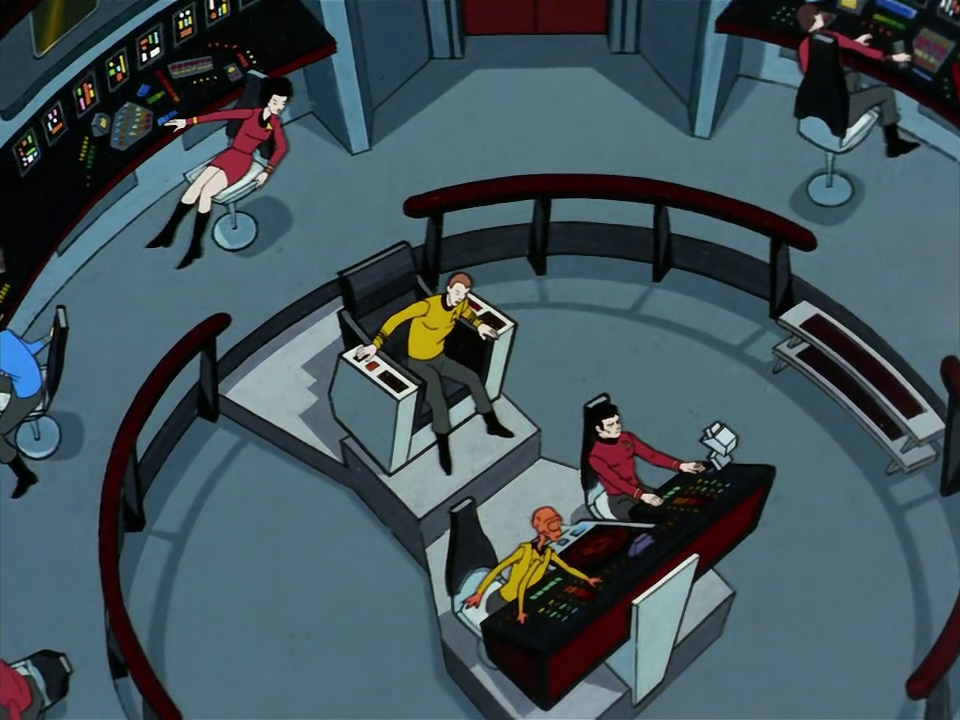
Star Trek: Discovery Season 3 – Could transporters have helped avoid the Burn?

Spoiler Warning: There are spoilers ahead for Star Trek: Discovery Season 3, Star Trek: Picard Season 1, Star Trek Into Darkness, and for other iterations of the Star Trek franchise.

This article is going to be the first in a short series about the Burn – one of the main elements of Discovery’s third season. We’re going to consider different ways that the Federation – and the wider Star Trek galaxy – could have avoided the Burn, a catastrophic event that caused untold damage to factions and citizens across known space and beyond.

In order for the Burn to have occurred at all, a very specific set of circumstances needed to align in just the right way (or should that be just the wrong way?) One of these was the dilithium shortage that Admiral Vance elaborated on after Saru, Burnham, and the crew of the USS Discovery arrived at Federation HQ. In short, for a long time prior to the Burn there had been a shortage of dilithium across the galaxy. This shortage was so severe that the Federation began looking at alternative options for faster-than-light travel. One of the ideas they considered was something called SB-19 – a Ni’Var project that seemed to involve some kind of starship-sized “gateways” to get from place to place.

SB-19 was a pre-Burn experiment to send starships at faster-than-light speeds without warp drive.

We’re going to leave those ideas behind for now and focus on one aspect of Star Trek that has been present since the beginning: the transporter. In short, would it have been possible for transporter technology to provide an alternative to some or all of Starfleet’s faster-than-light travel?

On the surface it may seem that the two things aren’t related. Transporters are mainly shown on screen as a method of sending people from starships to planets, and vice versa. Faster-than-light starship travel is in a completely different ballpark, right?

Not so fast! What is the main purpose of warp drive in the Federation? Starfleet uses it for exploration and military purposes, of course, so as viewers that’s what we associate warp drive with – setting course for an unknown destination and racing away to explore it. But the Federation is much larger than just Starfleet, and there must be an awful lot of civilian and cargo traffic that uses warp drive in the same way we use a car, bus, train, or aircraft – it’s a means to an end; a way to get from place to place.

Book’s ship at warp in Discovery Season 3.

2009’s Star Trek introduced something that I think is vital to this consideration: transwarp beaming. On first viewing I felt the film wasn’t clear about how and when transwarp beaming was invented, so for the sake of clarity here’s what seems to have happened: after arriving in the 24th Century following decades in suspended animation – events depicted in The Next Generation sixth season episode Relics – Montgomery Scott eventually went back to work with Starfleet. Sometime prior to 2387, Scotty perfected the formula for transwarp beaming, and Spock provided this equation to Scotty’s younger self on the planet Delta Vega after arriving in the alternate reality.

In Star Trek Into Darkness we see how much more powerful transwarp beaming can be than a regular transporter. As with most of Star Trek’s technologies, transporters have always been somewhat vague and mouldable to the needs of a particular story, but Into Darkness actually gave us a pretty solid idea about the range that transwarp beaming has: it’s possible to transport from Earth to the Klingon home planet of Qo’noS.

“John Harrison” materialises on Qo’noS.

Into Darkness doesn’t give an exact distance to Qo’noS, but in Enterprise’s pilot episode it was far enough away from Earth that no human had ever encountered a Klingon despite humanity being a spacefaring species for decades. The travel time from Earth to Qo’noS at warp 4.5 was around four days in that same episode.

Memory Alpha, the Star Trek wiki, suggests that the distance between Earth and Qo’noS could be somewhere between 90-110 light-years, so for a rough guide for the sake of this argument we’re going to say that transwarp beaming has a range of at least 100 light-years. This technology was known to Spock in 2387, so it definitely existed in the Prime Timeline in the late 24th Century. Even if 100 light-years is the absolute maximum distance for transwarp beaming, it’s still a far faster method of travel than anything else known to the Federation. In Et in Arcadia Ego, Part 1 (the ninth episode of Star Trek: Picard), Admiral Picard tells Dr Jurati that the use of a Borg transwarp corridor allowed La Sirena to travel “25 light-years in fifteen minutes.” Picard says this with a tone of surprise, as if such speed is something that the Federation, even in the year 2399, is unaccustomed to.

In the year 2399, travelling 25 light-years in 15 minutes was remarkable.

Transwarp beaming, then, is even faster than the Borg’s transwarp network. Though the Borg’s spatial trajector (a technology they appear to have assimilated from the Sikarians) may give it a run for its money! Regardless, transwarp beaming is arguably the fastest method of long-range travel ever seen in Star Trek. It allowed “John Harrison” to travel around 100 light-years in a heartbeat, something that even Borg starships couldn’t do a century later.

So how does all of this connect to the Burn? Based on what we saw on screen, it doesn’t! That’s the short answer. For whatever reason, Starfleet appears not to have pursued transwarp beaming in the 29th and 30th Centuries. But this is a fan theory, so we’re running with it anyway!

Despite what’s usually shown on screen, transporters don’t just move people. In fact, living beings are arguably one of the hardest and most complex things for a transporter to manage. Early episodes of Enterprise explained that the first transporters were only supposed to move cargo, and we’ve seen industrial-sized cargo transporters on other ships, including the Enterprise-D. These transporters were often larger, capable of beaming large objects, groups of people, and other things.

Dr Crusher and Geordi La Forge in one of the Enterprise-D’s cargo bays.

Do you see where this is going yet? Much of the reason for interstellar travel within the Federation was to move objects and people from place to place. Going into space in a starship and travelling at warp speed was the best method that the Federation had of doing so – until transwarp beaming came along. Transwarp beaming, even if it had an absolute maximum range of 100 light-years that could never under any circumstances be surpassed, was still a viable option for a significant portion of the Federation’s interstellar travel needs.

Nothing we know of in Star Trek should have prevented the further development and honing of transwarp beaming. Even if no one did anything with the transwarp beaming concept before the 29th or 30th Centuries, when dilithium supplies began to run short Starfleet could easily have started to work again on a concept they’d sidelined. The formulae and information about transwarp beaming seem unlikely to have been lost in that time. Industrial-sized transwarp beaming hubs could have been built, capable of sending vast amounts of goods and whole crowds of people from one planet to another. Not only that, but transwarp beaming hubs in space could even have been constructed, forming a network that would’ve allowed Starfleet to send its vessels from system to system without expending valuable fuel.

Two crewmen carrying a dilithium crystal aboard the Enterprise-D.

It is possible based on what we saw on screen that some version of transwarp beaming was part of the aforementioned SB-19 project. But that has never been confirmed, and considering that transwarp beaming was known to work reliably in the late 24th Century (or the 23rd Century in the alternate reality) it seems unlikely that SB-19 would have struggled to make the concept work hundreds of years later. This was already proven, working technology within Star Trek’s Prime Timeline.

Had Starfleet invested in transwarp beaming on a large scale, it’s possible that the range of the technology could have been extended, its power consumption reduced, and a vast interplanetary network of transwarp beaming stations created that would have relieved at least some of the pressure on dilithium-powered starships. With that pressure reduced and the desperation on the Federation’s part to source new dilithium lessening as a result, the chances of the KSF Khi’eth crashing in the Verubin Nebula, setting in motion the unlikely chain of events that led to the Burn, seems greatly diminished.

The wreck of the KSF Khi’eth.

In short, using transporters in this way could have avoided the Burn entirely.

Now let’s consider the biggest counter-argument to this idea: how power generation works in Star Trek.

It stands to reason that a transporter takes up a lot of power. In Discovery’s premiere episode, a particular design of transporter in use on the USS Shenzhou was considered outdated by Michael Burnham specifically because of its high power consumption. It logically follows that the larger the mass of the objects being transported, the more power is required. It also stands to reason that transporting over longer distances would likewise require a larger expenditure of power. This might even jump exponentially.

Sarek and Michael Burnham in the USS Shenzhou’s transporter room.

Relatively few Star Trek stories have been set on planets, so we don’t know very much about how planetary power generation works. But assuming that, in order to power the technologies and mod-cons of the 24th Century, planets require comparable levels of power per person to a starship, it’s possible that planetary power grids (such as the one on Earth that was sabotaged by Admiral Leyton in the Deep Space Nine episodes Homefront and Paradise Lost) use a similar matter-antimatter reaction in order to generate enough power for the needs of the population. And what does a matter-antimatter reaction need to be safe and stable? Dilithium crystals.

Transporters based on starships would also have this limitation – as everything on board a starship seems to be powered by a controlled matter-antimatter reaction. Perhaps, then, transporters have the same basic limitation as warp drive: a reliance on dilithium for power. This counter-argument could be used to explain why transporters and transwarp beaming weren’t able to be used as a viable replacement for even a small amount of Starfleet’s interstellar traffic in the years prior to the Burn.

It seems as though transporter technology would use a lot of power.

I still think this is an interesting idea, though! Star Trek has thrown a lot of technobabble concepts our way over the years, so it’s inevitable that almost any new storyline can bring with it questions like “why didn’t they try to do X?” or “why didn’t someone think of using Y?” That’s just the nature of this kind of franchise.

On this occasion we’ve jumped headfirst into a theory based on a few lines of dialogue and interpretations of things shown on screen in unconnected parts of Star Trek’s broader canon. I didn’t do that to imply that there’s somehow an egregious “plot hole” in the way Discovery’s third season explained the dilithium shortage or the Burn; really this has just been an excuse to spend a bit more time in the Star Trek galaxy. This isn’t something to take too seriously – no fan theory is – and as already mentioned I can think of at least one solid counter-argument to the idea of Starfleet setting up a kind of transwarp beaming network to ease its reliance on warp drive.

I hope this theory was a bit of fun, though! Stay tuned for more in this short series about the Burn, because transporters and transwarp beaming aren’t the only ways that Starfleet could’ve potentially avoided the disaster and its consequences. And if you want to see my breakdown and analysis on how well the Burn did (and didn’t) work as a narrative in Discovery Season 3, take a look at this article.

Until next time!

Star Trek: Discovery Season 3 is available to stream now on Paramount+ in the United States and on Netflix in the UK and internationally. The Star Trek franchise – including Discovery and all other properties mentioned above – is the copyright of ViacomCBS. This article contains the thoughts and opinions of one person only and is not intended to cause any offence.
Star Trek: Discovery Season 3 – what was the Burn?

Spoiler Warning: There are spoilers ahead for Star Trek: Discovery Season 3.

As I was wrapping up my Discovery Season 3 series of articles in January, I said that we’d return to the Burn at a later date once I’d had time to get my thoughts in order. The Burn was the main storyline running through all of the show’s third season, and in addition it’s a story which has significant ramifications for Star Trek going forward, so I wanted to be able to do justice to this big subject. As you may recall from my commentary as the season was ongoing, I have mixed feelings. There’s a lot to talk about.

First up, let’s recap what the Burn was purely from an in-universe perspective, then we can get into my analysis of how well it worked as a narrative.

Though the timeline of some of these events was vague, we know that beginning in the 28th or 29th Centuries, the galaxy began to experience a dilithium shortage. The reason for this was never given nor explained in detail, but it was serious enough that the Federation began seeking out alternative sources of dilithium. At the same time, the Federation started to research alternative methods of faster-than-light travel, the most successful of these being the Ni’Var (Romulan-Vulcan) project called SB-19.

SB-19 was a pre-Burn Federation experiment – and one of the clues Discovery Season 3 dropped as to the event’s origin.

All of this came against the backdrop of a conflict referred to as the Temporal Wars. It’s assumed that this is related to Enterprise’s Temporal Cold War storyline, which saw a temporal agent named Daniels spend time aboard Captain Archer’s NX-01 Enterprise. The end of the war in the late 30th or early 31st Century saw the implementation of a ban on time travel, which is an aspect of the storyline that never really went anywhere.

By the mid-3060s, the Federation’s quest for dilithium was ongoing, and a Kelpien ship – the KSF Khi’eth, with Dr Issa on board – travelled to the Verubin Nebula. After finding a route inside, the ship crashed on a dilithium planet inside the nebula, and wasn’t able to be rescued. A child named Su’Kal was born to Dr Issa while inside the nebula, and as a result of exposure to the Verubin Nebula’s radiation and the dilithium of the planet where he was born, Su’Kal developed a telepathic connection of some kind with dilithium, a link which was seemingly amplified by being on the dilithium planet. At moments of extreme emotion, Su’Kal could trigger a psychic shockwave which destabilised dilithium. The death of his mother in the late 3060s caused this to happen, and the psychic shockwave travelled across the entire galaxy near-simultaneously. Almost all active dilithium went inert, and any ship with an active warp core exploded. This event was later referred to by survivors as “the Burn.” No one, including the Federation, knew how or why this happened, and for more than a century the cause of the Burn went unknown.

The Burn. Figuring out what caused it was a big part of Season 3.

The Burn caused widespread societal changes across the known galaxy, including the withdrawal of many Federation members and the rise of a faction called the Emerald Chain – which was implied to be a successor to the Orion Syndicate. Worlds like Trill, Earth, Ni’Var, and others left the Federation, and the severe dilithium shortage meant that other Federation members and colonies were no longer within travel distance. It’s not clear whether the Burn wrecked the Federation’s subspace communications network directly, or whether decades of decline and decay were responsible. Either way, by the time of Michael Burnham’s arrival in the year 3188, the rump Federation was not able to even communicate with some former and current members.

So that, in a nutshell, is the Burn.

Over the course of Season 3, Discovery dropped hints about the Burn and what it could be connected to. We had the mysterious piece of music that everyone seemed to know, Michael Burnham’s year-long research quest into starship black boxes, the aforementioned SB-19 project, the missing Red Angel suits and Michael’s mother, the name “Burn” possibly implying a connection to Michael Burnham, a mention of the Gorn having “destroyed” a region of subspace, a couple of possible ties to the Short Treks episode Calypso – by way of the word “V’draysh” to refer to the rump Federation and the timelines seeming to line up – and a couple of other smaller things.

Discovery implied a connection to the Short Treks episode Calypso – among others!

This setup forms a fairly typical “mystery box;” a style of storytelling pioneered by people like the writer/director of 2009’s Star Trek (and The Rise of Skywalker) J.J. Abrams. Alex Kurtzman, who was Discovery’s executive producer for all of Season 3 and who’s in overall creative control of the Star Trek franchise for ViacomCBS, is a colleague of and frequent collaborator with J.J. Abrams, and has adopted at least some of his storytelling methods. So it makes sense to see a “mystery box” in Discovery considering who’s in charge – and how television storytelling in general works as we’ve moved into an era of serialised shows.

The basic problem with the Burn as a “mystery box” is that the clues we as the audience were fed throughout the season did not add up to the story’s resolution. None of the clues or hints that the show dropped ultimately mattered; there was no way for anyone to put the pieces together to figure out the cause of the Burn based on what we saw on screen, not until the final episode when the Burn’s true origin was revealed. Some, like the piece of music, were dropped from the story altogether, despite seeming to be important when they first appeared. This made for a narrative that was, for many viewers and fans, unsatisfying at a fundamental level.

Star Trek: Discovery executive producer Alex Kurtzman.
Photo Credit: Gage Skidmore, CC BY-SA 2.0 https://creativecommons.org/licenses/by-sa/2.0, via Wikimedia Commons

I’m not suggesting that the storyline should have been telegraphed or written in a very obvious way, but once the decision had been made to establish the 32nd Century’s semi-post-apocalyptic setting as being of mysterious origin, that mystery needed to be resolved in a satisfying way. The fact that nothing that we learned across the entire season mattered or had any impact whatsoever on the Burn made the reveal that Su’Kal was the cause feel like a bolt from the blue; a deus ex machina.

Had the Su’Kal reveal come in episode 3 or 4, and then the story had moved on to deal with things like the diplomacy with Ni’Var and the conflict with the Emerald Chain, perhaps it would’ve worked better. But it came at the end of a season that had been running for several months, and in which several episodes were side-missions that didn’t further the Burn story in any way. Season 3 feels like it spent a lot of time getting to an anticlimax; all of those expectations which had been built up quite cleverly over the preceding episodes basically fizzled out. It wasn’t a catastrophic disaster of an ending, but it was one which just didn’t seem to fit with the story that had been teased all season long.

Su’Kal, a Kelpien who had no connection to anything else in the story, was ultimately revealed as the cause of the Burn.

For Trekkies – and for more casual viewers too, I would argue – the Burn was the most interesting, tantalising, and engaging part of the story of Season 3. How had Star Trek’s optimistic future been brought to its knees? How had the Federation allowed this event to happen in the first place, and how had the organisation so badly bungled its aftermath that even Earth had quit the organisation? These questions were all teed up by the Burn storyline, and providing a satisfying answer was perhaps the single most important task that befell the writers and producers of Season 3.

Su’Kal being the answer could have worked if the mystery had been set up differently. Bringing in the Kelpiens at an earlier stage would’ve helped, as would clues or hints about missions to seek out dilithium or experiments about radiation and telepathy. But I don’t think there can be any denying that Su’Kal as the cause of the Burn in the version of the story that made it to screen came from nowhere; it simply does not fit with what was set up in the rest of the season. That’s the fundamental reason why, for many folks, the Burn feels like a storyline that didn’t deliver at what should’ve been its climax.

Having set up a season-long mystery, the storyline jumped to a completely different conclusion that ignored what had been previously hinted at or established.

There’s more to say, though. The idea of running out of an essential fuel and looking for alternative options is an interesting analogy considering that the real world remains dependent on fossil fuels. The Burn can be read, perhaps, as an extreme metaphor for climate change – the Federation’s dependence on dilithium ultimately caused a catastrophe that almost led to the collapse of civilisation itself.

But if this kind of analogy was part of the writers’ intentions, it has to get a failing grade. The concept itself works. It does what Star Trek has always done: uses its sci-fi setting to look at real-world issues. But once Su’Kal was shuffled out of the way, what did the Federation find? A massive cache of dilithium. A planet-sized mass of this vital fuel could power the galaxy for decades or more, regardless of the fact that it was almost responsible for the end of advanced civilisation. To continue the climate change analogy, this is the equivalent of running out of coal and oil, trying to use renewables, then the story ending with a huge new coal mine and oil fields being discovered.

Finding a dilithium planet rendered what could’ve been an interesting and timely story about fuel and energy resources somewhat meaningless.

Though some Trekkies may be glad to see that dilithium crystals aren’t in danger of disappearing from the franchise, this adds another element to the Burn’s unspectacular ending. After all of the talk of a shortage of fuel, alternative methods of propulsion (including several mentioned in the season premiere that were never spoken of again), and how dangerous dilithium could be, the story ends not with some new technology being invented to circumvent the crisis, nor with Federation starships being fitted with Spore Drives like Discovery has, but with a cop-out – finding a huge new dilithium planet that can be strip-mined for fuel.

The Burn and the dilithium shortage storylines were effectively reset by the end of Season 3. With Season 4 seemingly picking up a new story, what could’ve been one of the most powerful turning points in the entirety of Star Trek may find itself relegated to being little more than an unsatisfying season-long story arc that future stories will simply ignore. The Burn could’ve led to significant changes for Star Trek, assuming future shows might use a 32nd or 33rd Century setting. New kinds of starship could have been created using different methods of propulsion and new technobabble to explain it. Instead, basically what happened is that after a season-long dalliance with a setting teetering on the edge of the post-apocalyptic, Star Trek will shift back to using the same things as before.

Discovery can warp away to a new adventure next time and shelve the Burn.

A story that comes full-circle can work. After a season of seeing the galaxy struggling in the aftermath of the Burn, it will feel great to see Captain Burnham and the crew bringing hope back to the shattered Federation, and hopefully seeing the organisation returning to full strength. But how we get to those ending points is significant, and in the case of the Burn, the storyline took an odd route that has left many viewers feeling it wasn’t all it could’ve been.

Finally, we come to what I consider to be the worst and most egregious failing of the Burn and its storyline: the portrayal of Su’Kal and his role in it.

Bill Irwin put in an outstanding performance as Su’Kal, and I don’t want to criticise him for a moment. The way Su’Kal came across on screen was sympathetic, and his scenes with Saru in particular were deeply emotional. This is no criticism of the performances of Irwin or any of the other actors involved in the Su’Kal sequences.

Bill Irwin was wonderful to watch as Su’Kal.

Neurodivergent people, people with learning difficulties, and people with mental health issues have long been portrayed on screen in a variety of negative ways. That can be by becoming the butt of jokes, at other times being portrayed as villains, having no say in or agency over their own lives and stories, or simply by being ignored; it hasn’t been an easy road. Simply seeing a positive portrayal of someone in that situation could be a big deal, yet Discovery completely screwed this up.

By saying that Su’Kal accidentally caused the worst disaster in the entire history of the Star Trek galaxy, the show plays to old stereotypes of the neurodivergent as dangerous. Su’Kal is, for all intents and purposes, no different from Lennie in John Steinbeck’s 1937 novel Of Mice and Men. Lennie would accidentally kill another character in the book because he didn’t realise or understand his own strength, and that description of a man who was “too stupid” to recognise or understand his own power fits Su’Kal almost perfectly.

Su’Kal is basically a futuristic Lennie from Of Mice and Men. (1992 film adaptation pictured.)

Discovery treats Su’Kal with a cloying, sickening pity at times, looking down at him while trying to present him in as pathetic a manner as possible. The show sees Su’Kal as a hapless moron who blew up every starship in the galaxy with his uncontrolled emotional outburst, painting him – and, by extension, other people with mental health conditions and learning disabilities – as a serious danger to others. People with learning difficulties are often portrayed as unable to control their emotions, which is a further stereotype that Discovery leans into. These aspects of the portrayal are really just awful, and putting Su’Kal in this position has real-world comparisons that are deeply unpleasant.

How many times can you remember hearing, in the aftermath of a massacre or killing spree, that the suspect had “mental health problems” or a learning disability? It seems like it happens every time we hear of such an event, and there’s a huge stigma even today around the topic of mental health. As someone with diagnosed mental health conditions myself, this is a topic that hits close to home, and I feel that the way Discovery portrayed Su’Kal as this kind of “dangerous idiot” stereotype shows how far we still have to go as a society when it comes to talking about and depicting neurodiversity on screen.

Su’Kal being the cause of this disaster has some really disturbing implications beyond the story.

Though I enjoyed much of what Discovery’s third season brought to the table, the way Su’Kal was portrayed in his two appearances at the end of the season were really disappointing, even more so considering that the Star Trek franchise has so often tried to be a pioneer for portrayals of underrepresented peoples. Season 3 introduced transgender and non-binary characters for the first time, for example, and the show has a married gay couple, is led by a black woman, and has characters from many different backgrounds. But when it came to depicting someone with mental health issues and learning difficulties, Discovery fell back on overused stereotypes and outdated tropes, effectively bringing a modern-day Lennie to the screen.

There are aspects of Su’Kal’s story that did work. I like the fact, for example, that the telepathic technobabble aspect of the storyline was very “Star Trek” – you wouldn’t get this kind of story in any other franchise, and that’s something that gives Star Trek a sense of identity; a slightly esoteric, weirder kind of sci-fi than you get in other stories. But that side of it is drowned out by how badly Su’Kal as a character and a trope landed.

Su’Kal’s emotional outbursts are deadly.

Neurodiversity isn’t always going to be easy to put to screen, and I get that. If there were only two half-episodes to show off Su’Kal and get to know him, perhaps the chance for a nuanced portrayal that was sympathetic without being pitiful never existed to begin with. But if that’s what happened, Su’Kal should never have been created in the first place. Either a different character should’ve filled that role, or an alternative explanation for the Burn should’ve been found. Given all of the other faults, missteps, and failings present in the Burn narrative as a whole, which I outlined above, I would prefer the latter.

Su’Kal as a character exists in a weird space for me. On the one hand, the emotional side of the portrayal, and the performance by guest star Bill Irwin, were outstanding. But there are so many flaws in the premise of the character and his role in this galactic catastrophe that I can’t look past them. Su’Kal being responsible for the Burn is an age-old trope, one which perpetuates the stigmatisation of the neurodiverse, and in particular those with learning difficulties. Star Trek should know better than to use a character like Su’Kal in a role like this; Star Trek should be better than this, and that’s why it’s so disappointing to see this storyline in Discovery.

I’m very disappointed that a Star Trek show would choose to rely on these outdated stereotypes.

To conclude, I’ll say that the Burn was an interesting, if slightly alarming, premise for the season. It allowed Discovery to tell some truly different and unexpected stories, it provided the backdrop for some great characterisation and character moments, and it has set the stage for future stories in this era. It wasn’t a total failure and I wouldn’t want to see it somehow erased or overwritten.

At the same time, however, the storyline itself followed a very odd path. The ending didn’t flow from what had been slowly built up across the rest of the season leading to the Burn as a whole feeling unsatisfying. Season 3 is saved by the fact that it has those other great episodes, character moments, and standalone stories; had it been all about the Burn we could well be talking about Season 3 as Discovery’s worst.

For me, though, the most egregious failure and deepest disappointment with the Burn storyline is the role Su’Kal played in it, and the implications that has for how neurodiverse people are viewed and portrayed on screen. Though the stigma around mental health and learning disabilities still exists in a big way out here in the real world, Star Trek has always been at the forefront of changing minds and challenging stereotypes. To fall back on such an old-fashioned trope, even though I have no doubt it was accidental, is bitterly disappointing and even upsetting.

Star Trek: Discovery Season 3 is available to stream now on Paramount+ in the United States and on Netflix in the UK and around the world. The Star Trek franchise – including Discovery and all other properties mentioned above – is the copyright of ViacomCBS. This article contains the thoughts and opinions of one person only and is not intended to cause any offence.
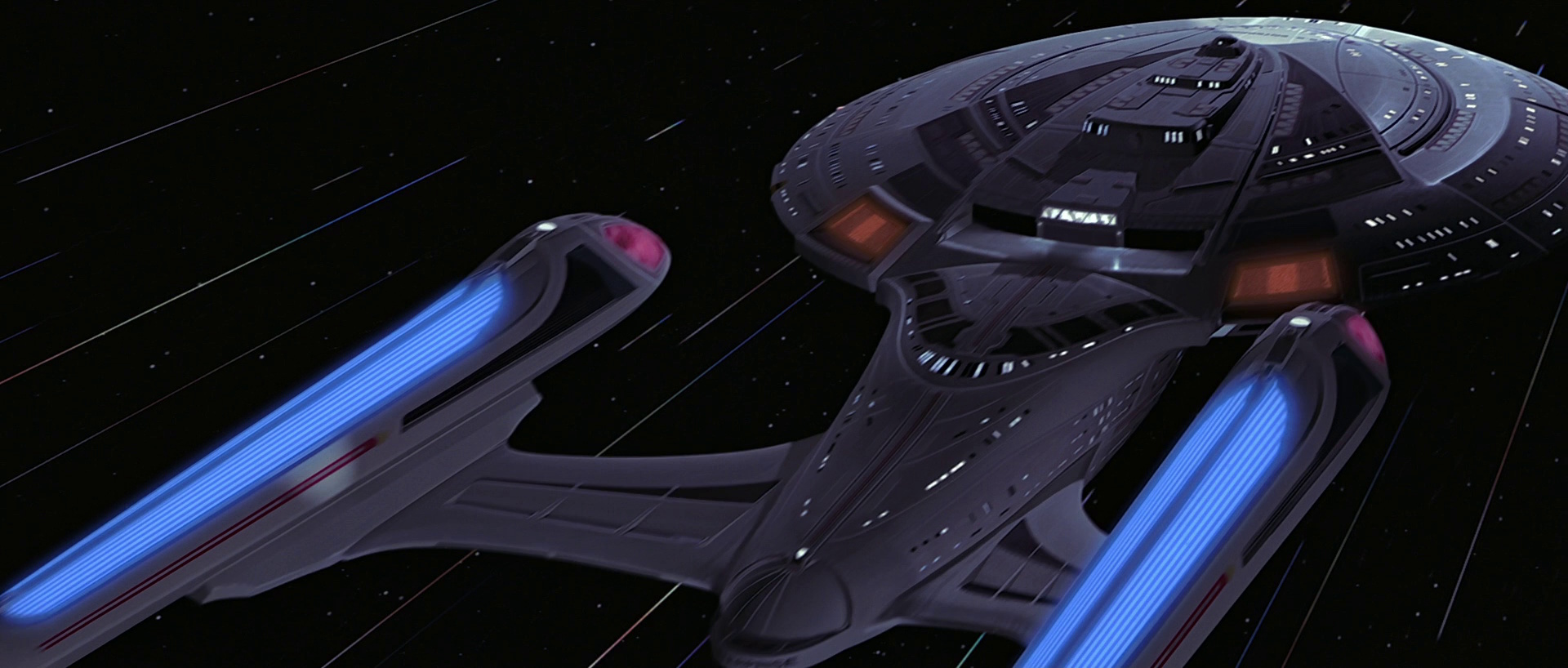
Star Trek: Discovery – eight “gravitational anomaly” theories

Spoiler Warning: There are spoilers ahead for Star Trek: Discovery Seasons 1-3 and the teaser trailer for Season 4. Further spoilers are present for the following: Star Trek: Picard Season 1, Star Trek: The Next Generation, Star Trek: Generations, Star Trek: Voyager, and Star Trek: Enterprise.

Star Trek’s First Contact Day virtual event has given us an awful lot to digest! We got teasers for Picard Season 2, Lower Decks Season 2, Discovery Season 4, and more details about Prodigy. If you missed the event, I wrote up my impressions of everything we saw, and you can find that article by clicking or tapping here.

This time, I want to look at the teaser for Discovery’s impending fourth season in more depth, and in particular start making some guesses about what may be going on! The teaser was barely ninety seconds long, and with the show at least six months away it may be futile to speculate about pretty much anything! But that hasn’t stopped me in the past, so let’s jump in!

Sonequa Martin-Green plays Captain Michael Burnham in Discovery, and introduced the Season 4 teaser during the First Contact Day event.

My usual disclaimer applies: I don’t have any “insider information.” I’m not offering up these suggestions saying any are unequivocally true. This is nothing more than speculation from a fan – and a chance to spend some more time talking about Star Trek, which I absolutely adore.

In the run-up to Season 3 last year, I spent a lot of time speculating about the event that ultimately turned out to be the Burn. When we first heard its name I put together a list theorising a number of possible connections to past iterations of Star Trek – but as you know by now, none came to pass!

Michael Burnham in Season 3, trying to figure out what caused the Burn.

Discovery has had an on-off relationship with Star Trek’s broader canon. Season 1 sidestepped a lot of things, redesigning the Klingons, visiting the Mirror Universe years before Kirk’s first crossing, and fighting a major war. Season 2 tied itself much closer to canon, bringing in Captain Pike, Spock, and revisiting Talos IV. Season 3 shot forward into the future, and told a story that touched on past iterations of the franchise at points, but had an overall narrative that stood on its own two feet.

In short, trying to guess whether Season 4’s main storyline will be related to something we’ve seen in the past or not is a crapshoot. Maybe it will be, maybe it won’t. Regardless, if it’s going to be something brand-new then naturally the details become impossible to predict! So in this list I’m going to look at eight possibilities from Star Trek’s past that could explain what we saw in the teaser.

A determined-looking (and armoured) Burnham in the Season 4 teaser.

First of all, let’s explain what exactly we saw! Stamets described a “gravitational anomaly” that’s at least five light-years in diameter. This anomaly appears to be incredibly destructive, and if Burnham is correct, it’s appearing and disappearing at random. As a result, it could potentially strike any Federation or non-Federation world or starship without warning.

Assuming that this anomaly is the main problem facing Captain Burnham and her crew in Season 4, I’ve got a few ideas for what it could be, or what it may be related to. I quite like the idea of Discovery sticking with the “natural disaster” concept from Season 3. It worked well last time, and presenting the crew with a puzzle, mystery, or challenge that’s more scientific in nature than military could be wonderful to see. As long as such a storyline manages to avoid feeling either repetitive or anticlimactic, I think it works in principle.

Stamets in the Season 4 teaser. He told us about the “gravitational anomaly.”

One final point of note is that, due to disruption caused by the pandemic, Discovery Season 4 began filming back in November, well before Season 3 had finished airing – and crucially, before the creative team had time to process any feedback they were getting about the season’s themes and storylines. As a result of that, it may be the case that Season 4 doesn’t make as many changes from Season 3 as some fans would have wanted to see. But once again, that’s speculation on my part!

So let’s consider this “gravitational anomaly,” then. What could it be? What have we seen in past iterations of Star Trek that could potentially be involved? Will there be any tie-ins to other ongoing series, such as Picard, or will the show set up something we’ll see return in a future project, such as Strange New Worlds? Let’s jump into the list and see if we can make some reasonable guesses!

Number 1: The Nexus

The Nexus approaching the planet Veridian III.

When I first saw the teaser, my mind immediately went to the Nexus, the energy ribbon seen in Star Trek: Generations. The Nexus was large, more than large enough to engulf an entire planet, and while it may not have been light-years in diameter when we saw it in that film, it’s possible it grew… somehow! The Nexus was incredibly destructive, causing the destruction of two transport ships and seriously damaging the Enterprise-B, not unlike some of the damage suffered by the USS Discovery in the teaser.

There are two crucial points which made me think of the Nexus, though. The first is that the energy ribbon was said to contain a “gravimetric field,” which sounds an awful lot like Stamets’ “gravitational anomaly.” Both seem to be connected to gravity, and as we saw in the teaser, the USS Discovery appears to lose its artificial gravity at one point.

The Enterprise-B trying to manoeuvre inside the Nexus.

The second point I consider key to the Nexus being a possibility is that we already know it’s something that recurs. The Nexus returns to the Milky Way galaxy every 39.1 years (according to Data in Generations) and unless something major happened in the intervening centuries, this force of nature should still be present, periodically crossing through the galaxy.

At a couple of points in the teaser we saw members of Discovery’s crew looking dazed and confused, not unlike how Soran and Guinan appeared after being transported out of the Nexus by the crew of the Enterprise-B. Perhaps we can infer from their demeanours that they’re not quite sure where they are or what just happened – maybe that means they’ve just spent time inside the Nexus’ paradise-like realm.

Though the stated size of the anomaly relative to what we saw in Generations may count against it, I like the idea of revisiting the Nexus. Would Discovery bring aboard a Soran-like villain, someone hell-bent on getting to “paradise?” Maybe!

Number 2: The super-synths from Picard Season 1

The super-synths in Picard Season 1.

It’s absolutely true that I also suggested the super-synths could’ve been the cause of last season’s disaster! But that doesn’t mean I’m done suggesting ways for this unnamed faction to reappear in Star Trek, especially considering that the teaser for Picard Season 2 suggested that series is moving away from them.

At the end of Picard Season 1, we learned that there is a race of super-synths that exist somewhere out in deep space – perhaps many thousands of light-years away from the Milky Way galaxy. They offered to come to the aid of any synths that ask for their help, though whether this offer was genuine or not was not clear – as indeed was very little about the faction!

Jean-Luc Picard managed to prevent the arrival of the super-synths, along with Soji.

Soji and Sutra, two of the synths from Coppelius, attempted to make contact with the super-synths, but despite opening a beacon and a portal to their base, Soji was ultimately convinced to shut it down and cut off her attempt to communicate. We thus learned precious little about who the super-synths are or what their objectives may be. They seemed menacing, and may harbour an anti-organic hatred that could make them diametrically opposed to the Federation.

We know that, in principle, this faction can open portals in space to allow for travel far faster than warp drive. Perhaps getting too close to one of their portals causes the kind of damage seen to the USS Discovery, and their portals may appear to be “gravitational anomalies” when detected on sensors. The super-synths clearly have a powerful understanding of gravity, such that they were literally able to move stars and create a stable eight-star octonary system. It’s thus at least possible that they use gravity or gravitational anomalies as some kind of weapon.

One thing that Picard Season 1 left unresolved was the fate of the super-synths. Having been contacted, were they now aware of the Milky Way and the Federation? Might they be hell-bent on attacking the Federation? If their offer of help wasn’t genuine, might they arrive to attack the synths who live in the Milky Way? There are a lot of unknowns, but it’s at least plausible that they could be involved. As I’ve said numerous times, finding a way for Picard and Discovery to work together, using similar themes, factions, or even characters would be fantastic and something truly worth doing. This may not be the way it happens… but it could be!

Number 3: A graviton ellipse

The USS Voyager once encountered a graviton ellipse.

The Voyager Season 6 episode One Small Step introduced the graviton ellipse, a fast-moving anomaly that can travel through subspace, normal space, and even other dimensions. The ellipse was drawn to electromagnetic energy – such as that emitted by spacecraft! One ellipse appeared in the Sol system in 2032, during an early manned mission to Mars, and “swallowed” the Ares IV ship. It later attempted to do the same to the USS Voyager.

The graviton ellipse was smaller than five light-years across, so again we have to contend with size. But there are points in its favour! Firstly, the ellipse was specifically drawn to spacecraft and other future technology. Though we didn’t see it attempt to “eat” anything on a planet’s surface, it stands to reason that similar technologies used in power generation may emit the same kind of electromagnetic radiation that an ellipse would be drawn to.

The Delta Flyer inside a graviton ellipse.

Secondly, the ellipse moved essentially at random, disappearing into subspace to reappear many thousands of light-years away. One single ellipse was known to have visited both the Alpha and Delta Quadrants. This seems to fit with what we know of Discovery’s “gravitational anomaly” – specifically the part Captain Burnham told us about its random, unpredictable appearances.

Finally, the graviton ellipse was known to cause damage to spacecraft, draining their power, as well as gravity-related disturbances in space. An encounter with an ellipse may not have destroyed Ares IV or the Delta Flyer, but they were known to be very difficult to escape from.

The drawbacks of this option are that graviton ellipses were relatively well-understood as early as the 24th Century, and with Discovery Season 4 set over 800 years later, it stands to reason that the Federation would be well-equipped to at least know what they’re up against if an ellipse seemed to be in the vicinity. Secondly, there was no indication that the ellipse would stay in one area, causing widespread damage in the way Discovery’s fourth season teaser suggested. Despite those negative points, however, I think it’s at least a possibility. Perhaps post-Burn technology has drawn an ellipse to Federation space, or it’s even possible that someone has found a way to weaponise one to attack the Federation.

Number 4: The Sphere-Builders from Enterprise

A Delphic Expanse sphere.

Discovery’s third season had a couple of interesting references to Enterprise, specifically the “Temporal Cold War” arc. One faction involved in the Temporal Cold War were the so-called Sphere-Builders: extradimensional beings who were attempting to convert part of the Milky Way galaxy to match their native realm so they could colonise it.

Though the time-travelling agent Daniels told Captain Archer that the Sphere-Builders were definitively defeated in the 26th Century, Daniels was from a time period before Discovery Season 4 is set, so he may not have been aware of any future involvement they had in galactic affairs!

Captain Archer looks at a projection of spheres in the Delphic Expanse.

The Sphere-Builders, as their name implies, built spheres. These moon-sized objects were spread throughout a region of space known as the Delphic Expanse, and emitted huge amounts of gravimetric energy, causing the entire region to become unstable and peppered with anomalies.

The spheres were also able to cloak, concealing them from 22nd Century human and Vulcan ships. The region of space a single sphere could affect was huge, and in the mid-22nd Century there was a large network of them, perhaps consisting of over 75 individual spheres. A hidden anomaly-generating piece of technology with a connection to the Temporal Wars? That sounds like something that could cause the problems afflicting Captain Burnham’s ship as seen in the teaser!

If a rogue sphere were on the loose, if the Sphere-Builders were returning, or if a single sphere had been left in the Milky Way, forgotten about since the 22nd or 26th Centuries, it stands to reason based on what we know of them that it could be the cause of the “gravitational anomaly.” This concept is potentially interesting; a leftover “doomsday weapon” unattended for centuries could make for a fun story. It would also be great to see a tie-in with Enterprise!

Number 5: Tyken’s Rift

Data explains how a Tyken’s Rift works to the crew of the Enterprise-D.

A Tyken’s Rift was mentioned in the Picard Season 1 episode Nepenthe, but before that one had been seen in more detail in The Next Generation fourth season episode Night Terrors. It was described as a rare spatial anomaly, one capable of encompassing entire star systems.

Unlike some of the other entries on this list, size isn’t a problem for a Tyken’s Rift! If a whole binary star system (i.e. a system with two stars) was able to fit inside, it’s more than possible such an anomaly could be five light-years in diameter!

A Tyken’s Rift was mentioned by Kestra Troi-Riker in Picard Season 1 last year.

The Enterprise-D wasn’t badly damaged by its encounter with the rift, but it was trapped inside and unable to escape. The Tyken’s Rift was also said to drain power, trapping ships inside. Perhaps the damage to the USS Discovery was not caused by the anomaly itself, but by pushing the ship past its limits trying to escape?

The drawback to a Tyken’s Rift being the cause of Discovery’s anomaly is twofold. Firstly, aside from a slow but steady power drain it didn’t seem to be harmful, and we saw nothing in Night Terrors to suggest this anomaly could or would cause catastrophic damage to a ship. And secondly, the Tyken’s Rift that the Enterprise-D encountered appeared to be stationary. It was even included on stellar maps, so it would be easily avoided.

I don’t think either of these points totally rule it out, and as one of the relatively few named anomalies in Star Trek that are massive enough, it seems fair to still include a Tyken’s Rift as a possibility.

Number 6: Species 8472 and Fluidic Space

A member of Species 8472.

One of Voyager’s most interesting adversaries was Species 8472, known only by their Borg designation! This powerful extradimensional faction were able to outwit even the Borg, fighting a very successful war against them for a time.

Species 8472 were native to a realm filled with an organic compound. Voyager’s crew named this region “fluidic space,” and it seemed as though Species 8472 based much of their technology on this organic material, including their spacecraft.

The USS Voyager being pulled toward a fluidic space portal.

The Borg became aware of fluidic space some time in the mid-late 24th Century, and attempted to travel there and assimilate it. But Species 8472 proved resistant to assimilation, and waged a war on the Borg, eventually travelling through to normal space to continue the fight. The intervention of the USS Voyager gave the Borg an advantage, but it seemed shortly thereafter as though the war ground to a stalemate.

Species 8472 made one further incursion, but after an agreement with the USS Voyager, agreed to return to their own dimension, content that the Federation proved no threat. However, that was 800 years ago! A lot can change, and perhaps Species 8472 have decided to make a return.

This would change the “natural disaster” concept, making it perhaps a precursor to invasion. Whether that would be good or not depends on how well it was executed – as well as your personal preferences for storylines! Given what we know of Species 8472 and their technology, I think it’s at least possible they could be the cause. Perhaps Stamets’ anomaly is some kind of gateway to fluidic space.

Number 7: The Borg

Borg drones seen in First Contact.

On the other side of the war with Species 8472 were the Borg! I also suggested Star Trek’s iconic cybernetic villains as a possible cause of the Burn last season, and despite seeing some ex-Borg in Picard Season 1, we haven’t really seen the faction proper in Star Trek since Enterprise Season 2 in 2003. Perhaps now is the right time?

Borg technology outpaced the Federation in the 24th Century by a considerable margin, and I’ve seen nothing to suggest that wouldn’t continue to be the case. The anomaly Stamets and Burnham discussed in the teaser may well be a natural phenomenon, but if it turns out to be a weapon, I can think of few other factions capable of creating and wielding one so massively powerful. Other Borg technology, such as their transwarp network, was known to have gravitational effects as well, so perhaps that’s another sliver of evidence.

The Borg were known to possess powerful technology.

This doesn’t really fit with the Borg’s usual modus operandi, and that is certainly a mark against it! But then again, the Borg are very adaptable, and travelling back in time several centuries is not exactly standard procedure for assimilating a planet either, yet that’s what they tried to do in First Contact! The gravitational anomaly could be the opening salvo of an attack; the artillery barrage to soften up the Federation before the Borg drones rush in to assimilate the survivors. The Borg certainly seem capable of doing something like this, and with the Federation having been on the back foot for more than a century as a result of the Burn, the Borg may have been using that time to build up and prepare for a large-scale invasion attempt.

We don’t know for sure if the Borg are still around in the 32nd Century, or if they still hope to one day conquer and assimilate the Federation. After more than 800 years, anything could have happened to them! However, it’s plausible that they still exist in similar form to how we last saw them.

The anomaly seemingly “attacking” both Federation and non-Federation targets could be indicative of an intelligence at work behind it. Space is huge after all, and the chances of it hitting a target as small as a starship, starbase, or planet regularly seems unlikely without some kind of explanation. Is it a force of nature drawn to energy, like the graviton ellipse mentioned above? Or is it a Borg weapon deliberately targeting Starfleet? The latter may seem unlikely, but it’s not impossible!

Number 8: The Burn

The Burn.

I certainly hope that Discovery Season 4 doesn’t just drop the Burn and proceed as though it never happened. After the cataclysm caused huge disruption to the Federation and the wider galaxy for over a century, I think we need to see a lot more of the consequences of that event before we even consider a “reset” of the Federation!

Perhaps what this anomaly will be is some kind of “mini-Burn,” affecting a smaller area. It could be a ripple effect of the original event, or otherwise connected to it in some way. Hopefully it won’t be caused by poor Su’Kal, who’s been through enough over the last 125 years! Though the Burn was presented as a unique event, perhaps it had lingering effects that are only just becoming known.

Su’Kal caused the Burn.

Season 4 needs to walk a line between acknowledging the events of Season 3 without dwelling on them the whole time. I understand that the writers and producers have other stories to tell in the 32nd Century beyond the Burn, but given how catastrophic it was I feel strongly that we need to see at least some of its lingering impact. Connecting the Burn to this new problem would create a degree of separation, allowing the season to go in new directions but without dropping the massive event entirely.

The Burn was a disaster which “caused dilithium to become inert,” and which caused active warp cores to explode. It wasn’t known to have gravitational effects, instead being some kind of shockwave that travelled through subspace. That could certainly count against it!

However, if this event were connected to the Burn in some other way, rather than being a direct result of Su’Kal’s outburst, perhaps it could be explained. I couldn’t even guess how such a connection could be made; it would be some kind of technobabble connecting the anomaly to dilithium and/or subspace. But it could be done, and it could be made to fit!

So that’s it. Eight very early theories about Discovery Season 4 and the mysterious “gravitational anomaly!”

Yes, Season 4 is scheduled to premiere this year!

As mentioned at the beginning, I quite like the idea of the series going down a “natural disaster” route, allowing the crew to solve a puzzle and unravel a mystery, rather than simply pitting them against a Federation-threatening adversary. Perhaps that will be what ultimately happens, but I think it’s at least possible we’re seeing some kind of attack or weapon as well. Time will tell!

The teaser was action-packed, and the new season looks to be in great shape. I think that there are possible downsides to another “huge galactic disaster” storyline so soon after resolving the Burn, in that it risks feeling tacked-on, derivative, or even anticlimactic if it’s an event smaller in scale. But despite that, if this anomaly is going to be one of the main storylines in Season 4, there’s a huge amount of potential.

Star Trek’s past didn’t provide the key to understanding the Burn last season. Will something we’ve seen before come into play in Season 4? Maybe!

Star Trek: Discovery Season 4 will debut on Paramount+ in the United States, and on Netflix in the United Kingdom and elsewhere, sometime later this year. Star Trek: Discovery Seasons 1-3 are available to stream now. The Star Trek franchise – including Discovery and all other properties mentioned above – is the copyright of ViacomCBS. This article contains the thoughts and opinions of one person only and is not intended to cause any offence.
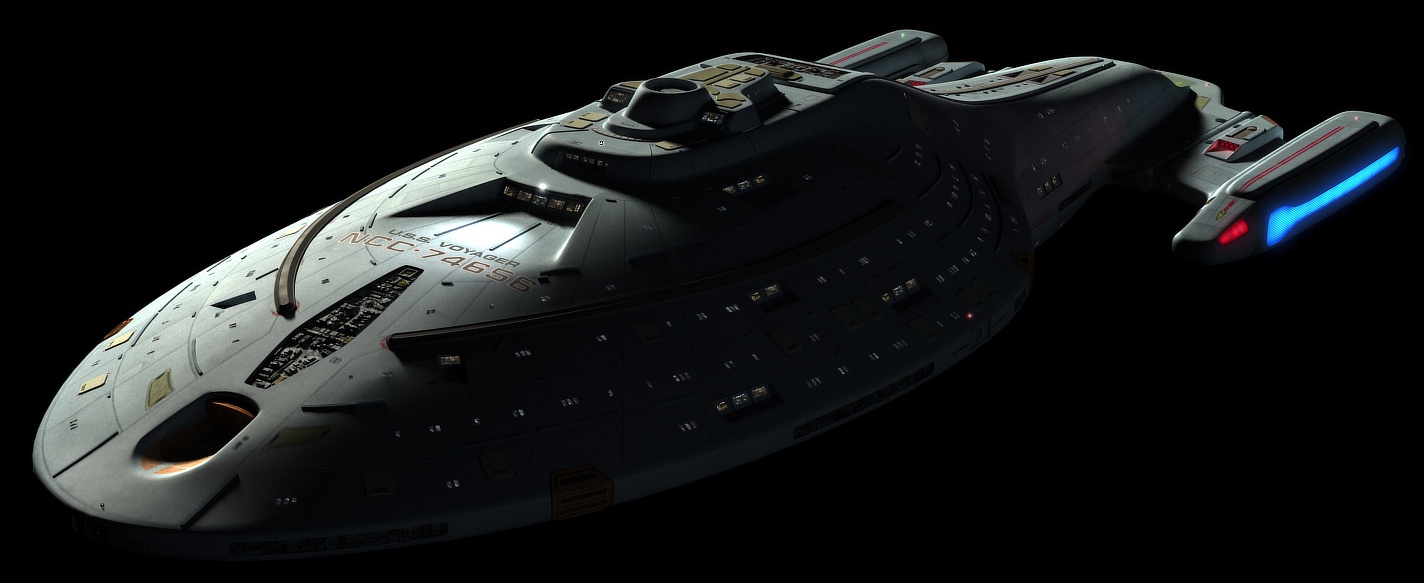
Star Trek: Discovery Season 3 wishlist: a follow-up

Spoiler Warning: There are spoilers ahead for Star Trek: Discovery Seasons 1-3, Star Trek: Lower Decks, Star Trek: Picard, and for other iterations of the franchise.

At the end of September, with Season 3 of Star Trek: Discovery looming on the horizon, I published my “wishlist” of things I hoped to see in the upcoming season. Now that we’ve seen the entirety of Season 3 I thought it would be fun to go back to that wishlist and see whether my wishes came true – and, on reflection, whether I was being reasonable!

I had eight items on my original wishlist, but I’m also going to talk about a couple of other points that came up either before or during the season that I didn’t include.

Michael Burnham on the USS Discovery’s viewscreen.

Though not everything I hoped to see came to pass in Season 3, I had a good time with it overall. Whether we’re discussing Star Trek or any other fictional franchise, success is not always about meeting specific expectations or confirming fan theories, and the writers and producers need to have the freedom to tell the stories that they want to tell. Star Trek has gone in directions I wouldn’t necessarily have chosen, but that’s true of every iteration from The Original Series to Picard, and it doesn’t mean that what made it to screen was bad. Like a lot of viewers, I like to be surprised – even if I spend a lot of time talking about theories!

All of this is to say that Discovery Season 3 met my expectations in some ways, challenged those expectations in others, and told some different but enjoyable stories. Though I enjoyed some points more than others, taken as a whole the season was solid, and a worthy successor to Season 2, which had been my favourite. Taking the show – and the franchise – forward in time was always going to be a challenge, but Discovery rose to meet it.

Let’s jump into my pre-season wishlist and see what became of it.

Number 1: Some kind of tie-in with Star Trek: Picard.
Wish: Granted

Soji and Picard in the episode The Impossible Box.

This was perhaps the point I was most curious about. Because of its place in the Star Trek timeline, Discovery in its first two seasons had been unable to include significant references to anything other than Enterprise and The Original Series. We saw precious little from Enterprise, but from the first episode we had some major crossovers from The Original Series by way of Sarek, and later Spock and Pike.

But The Original Series, despite its importance within Star Trek, ended decades ago. While it was possible to recast classic characters, there wasn’t as much to be gained by doing so – and it proved divisive within some areas of the fandom. Picard, by contrast, is in production at the same time as Discovery, and Season 3’s leap forward in time allowed it to connect to its sister show in ways that no Star Trek production has been able to do for a long time.

The super-synths.

I had two very early theories for how this could have worked. The first, which had been debunked even before it was written, was that Discovery would – thanks to time travel shenanigans – end up in the same era as Picard; the ship and crew being unable to complete their 930-year time jump. The second would have been for the super-synths from the Picard Season 1 finale to have been involved with the Burn.

Neither of those ideas came to pass, and I’m not disappointed – though I do maintain that the USS Discovery arriving in the Picard era would have been a fun way to go! Instead what we saw was a direct reference to Admiral Picard’s archive – which we saw in the Picard Season 1 premiere – and the return of the Qowat Milat. I didn’t expect the Qowat Milat to be the way the shows would connect, but it worked very well. It managed to be unobtrusive – nothing in Unification III made Picard Season 1 mandatory viewing – yet at the same time there was a very definite nod by Discovery to its sister show.

Dr Gabrielle Burnham joined the Qowat Milat.

The only downside was that the Picard crossover was limited really to a single episode. There wasn’t room within the Ni’Var storyline for anything further, and while the united Romulans and Vulcans were seen briefly in the season finale, we didn’t see the return of the Qowat Milat or Dr Burnham. However, her presence within that convent means we could potentially see her in Season 4, and if there is some significant advancement of the Qowat Milat storyline in Picard Season 2 that could be referenced then – or vice versa.

Placing Dr Burnham in the Qowat Milat was a very random choice in many ways, and while it succeeded from a shock value point of view perhaps we could argue that it’s not a very logical outcome for her character. But I wished for a tie-in with Star Trek: Picard, and there’s no denying that Discovery delivered!

Number 2: A reference, callback, or hint to something from Star Trek: Lower Decks.
Wish: Denied 🚫

Ensigns Tendi and Rutherford from Lower Decks.

The original plan for 2020 – before the pandemic disrupted things – was for Discovery Season 3 to be released before Lower Decks, so perhaps with that in mind it makes sense that there wasn’t so much as a reference to the animated show. However, as I said above, finding ways to tie together the Star Trek projects which are currently in production is to the benefit of the franchise overall – even if the projects are as radically different as Lower Decks and Discovery.

There was the potential for something as small as the name of a planet or faction to crop up in both shows; what would have seemed like a throwaway line of dialogue could have actually been a subtle nod to the existence of Lower Decks within Discovery, even if a more significant crossover was never on the table. Perhaps this is something that could happen in Season 4, though, so I’ll keep my fingers crossed!

Number 3: A storyline that doesn’t make Michael Burnham the “chosen one.”
Wish: Granted

Captain Burnham.

Seasons 1 and 2 of Discovery put Burnham front-and-centre, making her the focal point of their main storylines. In both cases, Burnham alone was responsible for driving the plot forward, and it could often feel as though other characters weren’t permitted to do anything significant. Season 3 came close to falling into that same trap, especially early on, but by the final part of the season had stepped back. Other characters, including Tilly and Saru, were given significant roles to play, and the show was much better for it.

Burnham wasn’t even really involved with the season’s main storyline after the halfway point. Though she was instrumental in getting background information regarding the Burn, after Unification III it was Tilly, Stamets, Adira, Saru, and Dr Culber who took the lead on that side of the story. The final pair of episodes, in which Su’Kal was saved and a reoccurrence of the Burn prevented, had Burnham involved in a completely different storyline.

Burnham was part of the season finale, but not in a way connected to the Burn.

There were all sorts of ways that Discovery’s writers and producers could have tried to push Burnham once again as the “chosen one,” not least by having her involved with the Burn in some way. Until the final few episodes this seemed to be a possibility, and I’m so glad that it didn’t happen. The revelation that Burnham and her mother were two different Red Angels was not really the best part of Season 2, and I was concerned that Discovery might try to pull off something similar with the Burn.

Though Burnham had some issues this season – notably in the episode Scavengers – which amplified some of her least-attractive character traits, the second half of the season worked very hard to get her to a point where her ascent to the captaincy of Discovery felt earned and genuinely great. By putting her in a series of stories that didn’t put her at the centre of the universe, and by allowing other characters to have agency over those stories as well, Discovery broke away from its Burnham obsession just enough to finally allow the character to shine.

Number 4: A proper explanation for “the Burn.”
Wish: Granted

A holo-recording of the moment Su’Kal caused the Burn.

At some point in the future we’ll take a look at the Burn, debating the implications and how well the storyline worked. For now, suffice to say that I was concerned that Discovery might try to get away with never revealing the Burn’s origins. Sometimes this is the way stories unfold when an apocalyptic event or disaster takes place decades before the main storyline. However, as I wrote in my original wishlist:

“There’s a curiosity at the core of Star Trek. Seeking out strange, new worlds has been the franchise’s heart since The Original Series, and that spirit of exploration and thirst for knowledge extends to fans as well. We want to know what’s going on in the galaxy, and it wouldn’t be good enough to say ‘well something bad happened, but don’t worry about what it was or what caused it.’ In some stories, an unknown, mysterious event could work. But not here.”

The Burn.

It took a long time to figure out the Burn, and along the way Burnham and the crew had different adventures that either advanced that narrative in a minimal way or didn’t advance it at all. Again, this is something we can debate – given the Burn’s ultimate reveal it’s certainly arguable that dragging it out for the whole season wasn’t the best idea.

But at the end of the day, whether you liked the reveal of the Burn’s origin or not, its origin was revealed. And it wasn’t something obvious, nor some sci-fi trope that could’ve been part of any other franchise. There’s a weirdness to the Burn’s telepathic origin that could really only be part of Star Trek, and despite my criticisms of the storyline overall, I like that. The fact that it wasn’t predictable was fun, and for such an important event it needed an explanation. I’m glad it got one – even if it wasn’t one I’d necessarily have chosen.

Number 5: No main villain.
Wish: Denied 🚫

The villainous Osyraa.

Though Osyraa and the Emerald Chain were not connected to the Burn, she acted as the main villain in the latter part of the season. After Control had been such a big presence in Season 2, I felt that breaking away from having one main villain in favour of scientific mysteries and perhaps a couple of single-episode antagonists would have been preferable.

Though Osyraa did see some interesting development in There Is A Tide, that development was never really expanded upon. The revelation in the season’s epilogue that the Emerald Chain had “fractured” without her strong leadership makes all of that meaningless anyway; Osyraa ended up being nothing more than a forgettable adversary who was a significant hurdle for a couple of episodes, but little more.

Osyraa in command of Discovery.

The most significant storyline she was part of also happens to be one of my least-favourite action tropes. When Osyraa and the Emerald Chain captured the USS Discovery at the end of Su’Kal, it was obviously only a matter of time until the ship was retaken, and so it proved. Burnham and Osyraa got a climactic hero-versus-villain fight in the season finale, and it was decently exciting from that point of view, but there was nothing particularly new or inventive about Osyraa herself.

In light of the Emerald Chain seemingly disbanding, any ongoing impact Osyraa could’ve had on the show is nullified, and perhaps that’s for the best. I stand by what I said before the season premiered: some stories don’t need a “big bad” in order to work well. The Burn was a scientific mystery to unravel, and rebuilding the Federation was something to be accomplished diplomatically. Osyraa and the Emerald Chain were, at best, a minor hurdle to achieving those goals, but nothing more. That said, the action scenes in the final two episodes were very exciting, and I’m glad we got to see that side of Discovery this season – something that couldn’t have happened without Osyraa.

Number 6: Proper development of some secondary characters.
Wish: Granted

Lieutenant Detmer got her own mini-story this season.

After two full seasons, there were still a lot of secondary characters on Discovery’s crew that we barely knew. Though Season 3 didn’t have time to focus on everyone – and I wouldn’t have expected it to – we did finally get to spend more time with some of these officers. In addition we got the new character of Adira and their phantom partner Gray to further pad out the cast. And who could forget Grudge, the adorable fluffball kitty of Book’s?

In Season 2, Ariam got one episode of character development before being unceremoniously killed off, and I was a little concerned that Season 3 might take the same approach – turning some of the secondary characters into glorified redshirts. When helm officer Detmer was the focus of part of the episode Far From Home I felt sure she was next on the chopping block – but it didn’t happen!

Several secondary characters – plus Tilly – played an important role in the season finale.

Detmer and Owosekun saw some decent development this season, and we spent a little time with Rhys, Bryce, and Nilsson as well. And of course we got the aforementioned Gray and Adira. Nhan actress Rachael Ancheril was promoted to the regular cast, but seemingly left the series in Die Trying shortly thereafter. There was a lot of potential in her character, which could have seen future episodes looking at the Barzans, for example. I’m hopeful Nhan can return – even if it doesn’t look like it right now.

Among the regular cast, almost everyone had a significant arc or a lot of screen time this season. Only Stamets felt under-used, as major roles were given to Saru, Tilly, Dr Culber, and Georgiou at various points. Most characters now have a solid base or framework to build upon in future seasons and stories, and I hope that Discovery will continue to work with a broader cast going forward.

Number 7: Fix the Stamets-Culber relationship.
Wish: Granted

Culber and Stamets with Adira.

Discovery’s emotional core is provided by Dr Culber and Stamets. Where Burnham’s romantic life has been a rollercoaster ride, Stamets and Culber offered stability. Anthony Rapp and Wilson Cruz have wonderful on-screen chemistry which makes their characters such a cute couple, and it was sad to see them having troubles after Culber’s stint lost in the mycelial network.

I was hopeful that Season 3 would bring them back together in a big way, and it happened within minutes of their arrival in the future. Dr Culber helped Stamets in sickbay after the latter had been injured, and the “relationship on the rocks” storyline was dropped. Discovery never looked back after that, and while abandoned storylines can be an issue, this one never really worked so I’m happy to see the back of it.

Stamets and Culber in Far From Home.

As a show with plenty of drama and tension, Discovery didn’t really need to throw its only solid couple into difficulties as an additional source of drama. There was just no need for it, and doing so risked taking away something incredibly significant in the process. LGBT+ representation has come a long way, so keeping Star Trek’s first gay couple together is also something I’m happy to see. Discovery has never gone out of its way to use LGBT+ themes; Stamets and Culber’s relationship isn’t treated as anything different or special because of their genders, and I love that. The future should be a place where all couples can be accepted without so much as a second thought.

The addition of Adira was an unexpected joy. We knew Adira was coming in the months leading up to the season’s premiere, but I wasn’t necessarily expecting that they would become so close to Stamets in particular. The paternal relationship he developed toward Adira was so sweet, and when Stamets made the point to them that he and Culber came together as a “package deal” that was just pitch-perfect.

Number 8: A satisfying explanation for how the Burn surprised Starfleet.
Wish: Denied 🚫

Captain Braxton of the time-ship Relativity.

In the run-up to the season, one of the burning questions that I had was this: if time travel existed in the centuries before the Burn happened, how could it possibly have surprised Starfleet?

Star Trek has never been consistent in its depiction of time travel, and that’s at least in part because time travel stories can get convoluted and messy. They’ve never been my favourite – either inside or outside of the franchise – but having firmly established that the Federation by at least the 28th or 29th Centuries through to the 31st used time travel routinely, we needed more of an explanation for how the Burn could have taken them by surprise.

Nothing in any time travel story I’m aware of says that time travel into the future is any more difficult that travelling to the past, and in both Voyager and Enterprise Starfleet was depicted as an organisation dedicated to maintaining the “correct” timeline. To make a long complaint short: even if time travel was not being actively used by natives of the 32nd Century, it seems improbable at best that Starfleet would have been unaware of the impending Burn if they had access to time travel technology for centuries before the event occurred.

The Enterprise-E travelled back in time in First Contact.

The idea of a ban on time travel is potentially interesting – and could, in theory, offer a way out of this issue. But it wasn’t explained in any detail, and I think in order to be plausible we need to know how the ban works, how it’s being enforced, and if it’s possible to travel through time as depicted in The Original Series and Star Trek IV: The Voyage Home for example, how is it possible to prevent anyone from doing that?

Part of this stems from the aforementioned inconsistency; time travel post-The Next Generation seems to have been more difficult, requiring the use of specialist technology, whereas in The Original Series and The Voyage Home it was possible just by travelling at high speed and slingshotting around a star. However, even if we disregard that method of time travel, we still need an explanation for how the technology was destroyed, what’s preventing anyone from recreating it, and so on.

HMS Bounty travelled through time in The Voyage Home.

As I wrote in my theories during the season: it isn’t possible to un-invent an incredibly powerful technology that can be used as a weapon. Even if the idealistic Federation is content to abide by the ban, despite its own collapse and how crappy the post-Burn 32nd Century is, how are we meant to believe that everyone else is? Just from what we saw on screen, are we meant to buy into the Emerald Chain not being interested in pursuing time travel?

Then there are other factions from past iterations of Star Trek: the Borg, the Dominion, Section 31, and others. Any one of those factions could be tempted by time travel, and would surely not be willing to abide by any ban. So how is it enforced? How does it work? Even a few technobabble lines would’ve been enough for me… but we didn’t get any real explanation.

Number 9: A character crossover from a past iteration of Star Trek.
Wish: Denied 🚫

The Doctor from Star Trek: Voyager did not appear.

Okay, so technically we got to see the Guardian of Forever as well as archive footage of Leonard Nimoy’s Spock. But I wouldn’t consider either to be a significant character crossover, and while the Guardian of Forever had an impact on one of the season’s side-missions it didn’t effect the main story.

I speculated about a few characters who could still theoretically be alive in the 32nd Century, including: a backup copy of Voyager’s Doctor as seen in the Season 4 episode Living Witness, Crewman Daniels from Enterprise, Soji from Picard, the Dax symbiont, and even Deep Space Nine’s Captain Sisko. Some of those may be less likely than others, but I was at least a little hopeful that the leap forward in time could have led to a major character’s inclusion.

Captain Sisko.

Seeing the Guardian of Forever was neat, and I don’t want to detract from that. But the Guardian was from The Original Series – and with Discovery finally able to move beyond the confines of the 23rd Century there was scope to link back to The Next Generation’s era. Unification III did so, and so did the inclusion of the Trill. But no characters crossed over, despite the potential existing for something to happen.

It wouldn’t be particularly difficult for practically any character from a past Star Trek show to crop up. Scotty appeared in Relics in The Next Generation’s sixth season, and if a similar technobabble explanation could be found for how a character was in stasis or travelled through time, almost anyone could be included. Since that didn’t happen this time… maybe we could get a major character in Season 4?

Number 10: A resolution to the story of the Short Treks episode Calypso.
Wish: Denied 🚫

The USS Discovery in Calypso.

Ah, Calypso. Is the short episode destined to remain an outlier in the Star Trek canon forever, seemingly tied to a vision of Season 2 or 3 that never made it to screen? Or dare we hope that the writers and producers actually have a plan for how the loose ends from this Short Treks episode will be tied up?

We seemed to see movement toward this goal in Season 3 – though not named, the Zora AI was clearly created (the same voice actress from Calypso even reprised her role) and the use of the word “V’draysh” to refer to the Federation was heard a couple of times. But there was also some noteworthy movement away from Calypso too. The USS Discovery’s refit means that the ship is no longer in the same configuration it was in during the Short Treks story.

The refitted USS Discovery no longer matches the ship seen in Calypso.

At this stage, it feels as though resolving Calypso would require a story built for that purpose. The refit of the ship would need to be undone. A reason would need to be concocted why the ship needed to be abandoned. If the ship was to be sent back in time, a reason would be needed for why that was necessary too. And so on.

Perhaps the ultimate resolution to Calypso will simply be to say that the episode took place in an alternate timeline, one in which the Discovery crew hid the ship in a nebula to keep it safe from Control.

So that’s it. Those were my big pre-season wishes, and while not all of them were granted by Season 3, some were.

I had a great time with Discovery’s third season, and while there are some nitpicks and gripes it was a generally fun ride. It feels as though the Star Trek franchise now has a solid foundation if the decision should be made to create more shows set in or around the 32nd Century, and that’s a big compliment! As much as I enjoyed Picard bringing us back to the 24th Century last year, I’m just as interested to see what else the 32nd Century may hold, and hopefully Discovery won’t be the last Star Trek project to explore that setting.

Some of my pre-season wishes may have been a little optimistic, or even just unrealistic! But I had fun thinking about what Discovery could look like, and perhaps this is something I’ll indulge in again in the run-up to Season 4!

Star Trek: Discovery Seasons 1-3 are available to stream now on CBS All Access in the United States and on Netflix in the rest of the world. The Star Trek franchise – including Lower DecksDiscovery, and all other properties mentioned above – is the copyright of ViacomCBS. This article contains the thoughts and opinions of one person only and is not intended to cause any offence.
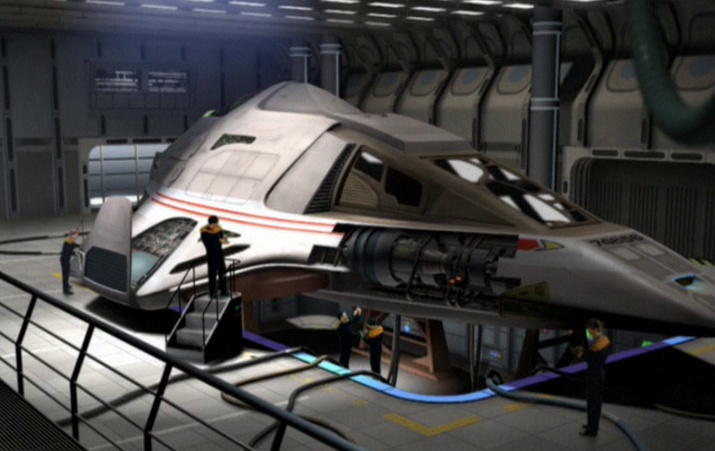
Star Trek: Discovery theories – week 13

Spoiler Warning: There are spoilers ahead for Star Trek: Discovery Seasons 1-3, Star Trek: Picard, and other iterations of the franchise.

Star Trek: Discovery Season 3 came to an end this week. That Hope Is You, Part 2 was a solid episode with plenty of action, and despite the underwhelming nature of one of its plotlines, I think it did a good job wrapping things up.

Speaking of wrapping things up, that’s what we’re going to do today! We had twenty-two theories going into the finale, and while a handful live on and may return in Season 4 depending on the way things go, most were either outright debunked or the story went in such a direction as to leave them looking very unlikely. We did, however, get three confirmations (or at least partial confirmations) so we’ll look at those first!

Confirmed theory: Aurellio stood up to Osyraa.

Aurellio and Osyraa.

Although Aurellio didn’t get as much screen time as I’d have liked to see, he did break away from Osyraa and the Emerald Chain. Aurellio had a mini character arc that ran over the final two episodes of the season in which his eyes were opened to Osyraa’s villainous nature, and allowed him his moment of opposition to her when he refused to allow his technology to be used to torture Book.

I stand by my previous comparison in which I said that Aurellio fills a role claimed by the likes of Albert Speer and others who worked for the Nazis during the 1930s and 1940s. Aurellio seems to have spent a lot of time focusing on his work in his lab, reaping the rewards of helping the Emerald Chain but without really allowing himself to see what the organisation and its leader were doing. His conversation with Stamets opened his eyes to this, and we saw that theme come to a head in the scene in sickbay.

Though Aurellio did briefly help out later on, giving Book the idea that he could use his empathic abilities to use the Spore Drive, Aurellio feels like an underused character, and I hope to see him return in Season 4. He could have joined up with the Federation, or even serve aboard Discovery.

Part-confirmed theory #1: Burnham became captain.

I successfully predicted that Burnham would become captain… but not how it would happen! So I’m calling this one part-confirmed instead of fully confirmed!

I had speculated that Burnham could assume the captaincy either because Saru would be killed, or because Saru would be promoted and become an Admiral if Admiral Vance were killed. Neither of these scenarios came to pass, and Saru was rather unceremoniously shuffled off the ship during the epilogue without getting so much as an opportunity to say goodbye to the crew. That was poor, and Saru deserved to be treated with more respect.

However, it allowed Burnham to get her promotion, something that Star Trek: Discovery has been aiming for since Season 1. Some of the issues with Burnham, both this season and in the past, stem from her insubordination. Now that she’s in command, that should no longer be anywhere near as big an issue, and as captain she should have a lot more freedom to approach problems and adventures her way – within the spirit of the rules, if not following them to the exact letter!

Part-confirmed theory#2: The Federation’s allies arrived to help fight the Emerald Chain.

The arrival of Ni’Var’s fleet.

I’m calling this one part-confirmed because only Ni’Var arrived to help the Federation when the Emerald Chain attacked. I had half-expected a bigger fleet, perhaps comprised of the Earth Defence Force, the raiders from Titan, the Trill, people from the Colony, people from Kwejian, and Nhan aboard the USS Tikhov. However, only Ni’Var made it to the party!

We don’t know what became of most of the others; Trill rejoined the Federation, but the rest weren’t even mentioned in the finale. The arrival of the Ni’Var fleet felt great – up there with other big last-minute arrivals in other battles in the franchise for sure. But by the end of the episode I did feel that the absence of some of the other friends and allies that Burnham and the crew had made was noticeable… and perhaps even a little sad.

So those theories were confirmed or partially-confirmed. Up next we have a handful of theories whose status was left unclear as of the end of That Hope Is You, Part 2. It’s possible some of these will return in Season 4, but it depends how the story of that season shapes up. If Season 4 goes in a completely different direction, perhaps some or all of these theories will simply fall by the wayside. We most likely won’t know for a while!

Status: Unknown #1: The Spore Drive will become Starfleet’s new method of faster-than-light propulsion.

Discovery makes a Spore Drive jump.

The revelation that Book could use his empathic abilities to use the Spore Drive has, in theory, opened up the technology to being deployed across other Starfleet vessels. Early in Season 1 Stamets seemed to suggest that mycelial spores were not easy to acquire, so that may yet prove to be a limiting factor, but if that could be overcome there’s no real reason why the Spore Drive couldn’t be rolled out.

If empathic species like the natives of Kwejian can use the Spore Drive, it opens up even more possibilities. Betazoids spring to mind as an empathic species; perhaps they could become navigators too.

As this moment came in the final act of the season finale it didn’t get a chance to be paid off, so we won’t know the status of the Spore Drive until next season at the earliest. When Burnham was in command of the ship right at the end of the episode, her orders were to deliver dilithium to other planets, so perhaps we can infer from that that not every vessel will have its own Spore Drive. Regardless, the expansion of this technology would not only allow Discovery to have new and different adventures, but would also make it so other Star Trek series set in or after this time period could do so too.

Status: Unknown #2: The Dax symbiont is still alive.

Jadzia Dax.

On reflection, this theory should have been put on hiatus as soon as Discovery departed the Trill homeworld in Forget Me Not. But I stand by the reasoning behind it – Trill symbionts can be very long-lived, and we got at least a hint at Tal having been alive in the 25th Century via the appearance of a Picard-era uniform. Though Dax had already had several hosts by the time of Deep Space Nine, nothing in-universe would prevent their reappearance.

However, with the Trill having rejoined the Federation, perhaps there will be an opportunity to see or hear about Dax in Season 4.

Status: Unknown #3: Kovich is an agent of Section 31.

Who is Kovich?

Kovich made only a very brief appearance in That Hope Is You, Part 2, so we didn’t get an opportunity to learn anything more about him. It was implied that he has a role in Starfleet security and/or intelligence based on his debrief of Georgiou and ability to access classified files. Combined with his morally ambiguous personality – which we see on full display when he doesn’t tell anyone about Georgiou’s impending health emergency – it doesn’t seem unreasonable to assume he could be an agent of Section 31… or even its leader.

Given Georgiou’s connection to the upcoming Section 31 series, and the time travel plot to get her there, perhaps the reason Kovich didn’t say anything is because he knew exactly what role he needed to play. Georgiou, as a leader in Section 31 centuries earlier, may have sent him a message through the organisation, telling him exactly what to do when she arrived. That would be a time-loop story that we could see in Season 4!

We know Kovich will be back, so perhaps we’ll learn more about him when he returns. I’ve heard other Trekkies speculating that he could be the Federation President – that would be an interesting revelation too.

Status: Unknown #4: The ban on time travel is being flouted – possibly by secretive elements within the Federation.

The USS Enterprise travelled through time in Assignment: Earth.

It was stated multiple times in Season 3 that there is a galaxy-wide ban on time travel, a ban which was brought in in the aftermath of the Temporal Wars. However, this never sat right with me for one simple reason. As I’ve said several times over the last few weeks: it’s not possible to un-invent an incredibly powerful, weaponisable technology.

Even if the ban on time travel had been adhered to prior to the Burn, it seems completely implausible that absolutely nobody would seek to revive time travel technology in the century that followed. The Emerald Chain are the main villainous faction we met in Season 3, and Osyraa seems like she would have put people like Aurellio to work on re-inventing the necessary technology. But even if the Emerald Chain were unable to use time travel, what about other factions like the Borg or the Dominion? And what about Starfleet itself, and Section 31?

Finally, assuming all of the factions mentioned have agreed to adhere to the ban, who’s enforcing it to make sure they all stick to their commitments? Communication across the galaxy is incredibly difficult, so how can any of the main factions be sure that their adversaries – or even rogue elements from within – aren’t trying to use time travel?

I find the whole idea of the ban impractical unless it can be properly explained how time travel was banned and how the ban is enforced. So I maintain that, despite what we saw all season long, there may be elements within the Federation working on covert time travel projects.

Status: Unknown #5: The ships at Federation HQ represent the majority of Starfleet’s remaining vessels. And they’re all 120+ years old.

Federation and Ni’Var ships at warp.

When Discovery first arrived at Federation HQ in Die Trying, I theorised that the ships we saw might be all that remain of the once-mighty Starfleet. In addition, the devastating nature of the Burn may well have meant that building new ships would be difficult – and with very little dilithium to power them anyway, Starfleet may be forced to rely on a fleet of ageing vessels.

We saw no confirmation of this – and to Discovery’s crew, all the ships look futuristic and new! But we saw nothing to debunk it either, and while I don’t think we’ll see this point explicitly addressed any time soon, we may learn in Season 4 that the fleet is being rebuilt and expanded.

Status: Unknown #6: Tilly’s role as first officer.

Tilly eyes the captain’s chair.

I had theorised that Tilly would resign as first officer in the aftermath of the ship being captured. However, as of the end of the season it was left ambiguous as to what happened. Did Captain Burnham keep her on, or will she choose a new XO?

Tilly becoming first officer was a contentious point for some fans, and while I do understand why, I wasn’t upset by it personally. I’d be happy to see her remain in her post if that’s what the writers and producers have in mind, but equally I’d be happy to see a different character take on the role. Perhaps someone like Bryce, Rhys, or Nilsson could be promoted – and join the regular cast?

So those theories’ fates remain unknown. Will they be confirmed or debunked next season, or in some other future Star Trek story? It’s possible, but it’s equally possible that some of them will simply be ignored and their status never addressed.

Next we’ll look at a couple of theories which, while not explicitly debunked, are now certainly dead as the storylines they were part of have concluded.

Dead theory #1: Dr Issa is a descendant of Saru’s sister Siranna.

Just like this theory, Dr Issa is dead.

Dr Issa’s potential family connection to Saru was not addressed, and I think it’s highly unlikely it will be mentioned in Season 4. The reason for this theory was primarily production side, as the same actress (Hannah Spear) played the role of both Siranna in Season 2 and Dr Issa in Season 3. As interesting as it would have been for there to be a deeper connection between Saru, Dr Issa, and Su’Kal, the explanation for this may also be on the production side of things – it may have been easier to bring back an actress who was already fitted for the complicated Kelpien prosthetic makeup rather than casting someone wholly new.

Dead theory #2: Aurellio is married to Osyraa.

Was Aurellio meant to be married to Osyraa?

There seemed to be a hint that Aurellio was married to or in a relationship with Osyraa. Stamets noted that his partner, with whom he is said to have children, is Orion – and Osyraa seems to be Orion too. They also had a familiarity that seemed to go beyond employer and employee, as well as a history that Aurellio hinted at in his conversation with Stamets.

Osyraa attacked him in That Hope Is You, Part 2, but despite threatening to kill him, took no further aggressive action. However, now that she’s dead and the Emerald Chain has “fractured,” I doubt we’ll hear much at all about Osyraa in Season 4 even if Aurellio does return (as I hope he will).

So those two theories seem certain to be dead and not coming back, even though they were not out-and-out debunked.

Finally we come to the debunkings!

Debunked theory #1: One of the officers with Tilly will be killed.

Things looked grim for a moment, but everyone ultimately survived.

At the end of There Is A Tide, Tilly gave the ominous order to her team that if anyone should be killed, the rest would keep going until they reached the bridge. Then in That Hope Is You, Part 2, the whole group were suffering from oxygen depletion as Osyraa tried to slowly suffocate them.

Owosekun was perhaps in greatest danger as she took their makeshift bomb to the nacelle, but she was saved at the last minute by a DOT 23 – who was in turn saved by Owosekun and Reno in the epilogue.

Ryn was the only major character on the heroes’ side who died across the whole season, and we can argue whether or not that’s a good thing at a later date. But in the context of this theory, everyone survived so the theory is debunked!

Debunked theory #2: The Burn will receive a different explanation.

The moment the Burn occurred was captured in this holo-recording.

At some point in the next few weeks or months I will take an in-depth look at the Burn – Season 3’s most controversial storyline. For now, however, suffice to say that this point was more a last-ditch hope than a theory, as I felt certain that if the Burn remained solely the fault of Su’Kal it would be underwhelming.

That explanation, which was first communicated in Su’Kal a couple of weeks ago, ended up being accurate. There was no deus ex machina in the season finale to re-explain what the Burn was and how it happened – and that’s probably a good thing overall. Though the Burn was – in my subjective opinion – a narrative that didn’t come to a satisfactory end, and one that has issues, a last-second deus ex machina would have been even worse!

Debunked theory #3: The Burn was the result of a superweapon.

The Burn.

After the rest of my pre-season theories about the Burn fell by the wayside, this was the final one that I considered to be even slightly possible. Going into the finale, the way it could’ve worked would either be that the Kih’eth (Su’Kal’s ship) was carrying a superweapon, or that Su’Kal himself had been modified somehow to become a superweapon. How or why this would’ve happened is not even relevant; it was just a way to explain the Burn beyond Su’Kal.

As mentioned above, though, the Burn turned out to be caused by Su’Kal and his connection to dilithium. In the context of the last few episodes this was a good thing, as a last-second turnaround would have been very difficult to pull off.

Debunked theory #4: There will be a resolution to the story of Calypso (the Short Treks episode).

The USS Discovery as seen in Calypso.

Season 3 spent some of its runtime firmly establishing that the Short Treks episode Calypso hasn’t been forgotten and remains very much in play in the overall storyline of Discovery. However, despite several teases and moments that seemed to inch us closer to resolving the mysterious outlying episode, there was no resolution.

We have seen the creation of Zora – a merger of the Sphere data with Discovery’s own computer. We heard that some denizens of the galaxy call the Federation the “V’draysh,” which was the name Craft used in Calypso. The main unresolved point is how the USS Discovery came to be abandoned, and why, if it was abandoned, it was reset to its pre-refit configuration beforehand.

With Zora being intact thanks to Reno and Owosekun, we have all of the threads present in Calypso – but I can’t see how they’ll tie together just yet. Maybe Calypso is set in the far future – the 42nd Century not the 32nd. Maybe Discovery will travel back in time in Season 4 or Season 5 for some reason. Maybe Calypso will never be fully explained and will remain an outlier in the Star Trek canon; an episode connected to a storyline for Season 2 or Season 3 that simply never came to pass.

Debunked theory #5: A character from a past iteration of Star Trek – such as the Doctor from Star Trek: Voyager – will make an appearance.

The Doctor didn’t make an appearance.

This was my other big pre-season theory that remained in place for the duration. Though it did come true somewhat thanks to the return of the Guardian of Forever, we didn’t see any of the characters I theorised about – including Voyager’s Doctor – make a return.

However, although it was debunked in Season 3, this one will almost certainly be back for Season 4! When Star Trek: Picard brought back legacy characters, we knew in advance which main actors would be returning, and their presence became a big part of that show’s marketing push. Other legacy characters were recast and their presence was kept more of a secret. In short, what I’m saying is that if we are to see the return of the Doctor or some other past Star Trek character, perhaps their return will be signalled ahead of time in Season 4’s pre-release marketing. We’ll have to wait and see!

Debunked theory #6: Discovery Season 3 is taking place in an alternate timeline or parallel universe.

The USS Voyager in Year of Hell.

The Guardian of Forever confirmed back in Terra Firma, Part II that Burnham and the crew were in the Prime timeline – i.e. the main Star Trek timeline which runs from Enterprise to Picard. However, this theory also proposed that the season may be taking place in a timeline that was manipulated by time travel; that the Burn was not “meant” to happen.

Had time travel been involved, the resolution to the Burn and the season’s story may have been to go back in time – perhaps even using the Guardian of Forever – and stop Su’Kal from ever entering the Verubin Nebula, thus preventing the Burn entirely.

I don’t think this would have been a good storyline, as it would have essentially wiped out everything that happened in the season. A one-off episode like Yesterday’s Enterprise from The Next Generation or Voyager’s Year of Hell can get away with doing something like this, but a whole season being erased due to time travel would have felt hollow – even if Discovery’s crew remembered what happened.

Debunked theory #7: Saru is going to die.

Saru survived the season.

Despite being in danger for much of the episode, Saru survived… only to be unceremoniously dumped in voiceover during the epilogue. It has been confirmed that Saru will be back for Season 4; what role he will play, and whether he will even be a major character are unknown.

Saru is a very interesting character. He was, for a time, Star Trek’s first alien captain, and I wish we’d seen more of what that meant. Saru is similar to Picard in many ways – he’s diplomatic, calm, and generally not one to break the rules and rush into a situation guns blazing. Burnham, in contrast, is much closer to Kirk or Janeway – more emotional, impulsive, and quicker to bend the rules.

Both types of captain can work very well, so that isn’t a criticism! If I had one wish from the season finale, it would have been to see Saru receive a proper goodbye from his shipmates.

Debunked theory #8: Admiral Vance is going to die.

Admiral Vance lives to lead Starfleet in Season 4.

When considering characters who could’ve been killed off, aside from the main crew of Discovery few deaths would have been as impactful as Vance’s. I didn’t want to see him killed, of course, because he’s been one of Star Trek’s most interesting flag officers. The role of Admiral has often been used within the franchise to set up an antagonist for our hero captains to rebel against. Vance is one of the good ones, and I’m glad he survived.

Hopefully he will continue in this role in Season 4, because there’s a lot of potential for some fun character moments.

Debunked theory #9: Saru, Burnham, or somebody else will use the Guardian of Forever to send the USS Discovery back in time.

The Guardian of Forever.

This was primarily connected to my theory about a resolution to Calypso – which seems to require the USS Discovery being sent back in time. If the ban on time travel discussed above is truly in effect, the Guardian of Forever is the only way we know of to travel back in time, and having gone to the trouble of bringing the Guardian back, I wondered if it might serve more of a purpose than just sending Georgiou back in time.

It turned out that this was not the case, though I hope the Guardian of Forever will be visited again in some future episode or story.

Debunked theory #10: The dilithium planet will be destroyed.

The dilithium planet.

This theory came about as a way that the “formulaic” end to the story could be subverted. Rather than the dilithium planet being a resource for the Federation to use to re-establish itself, its destruction would mean that the Burn’s impact would continue to be felt, and that the task of coming back together would be more difficult.

It would have also connected to my theory that the Spore Drive would be rolled out to more starships, becoming Starfleet’s new method of propulsion. The lack of dilithium would make that almost a necessity! I theorised that Su’Kal might’ve destroyed the dilithium planet via his telepathic abilities, but it could also have been destroyed by Osyraa or even by the Federation to prevent Osyraa from using it.

None of that came to pass, however, and the dilithium on the planet is being mined by the Federation and distributed to their worlds, colonies, and allies across the galaxy – a task that Burnham and the ship are assigned to in the final moments of That Hope Is You, Part 2.

Debunked theory #11: The “monster” is the real Su’kal.

Su’Kal and Saru confront the “monster.”

The “monster’s” presence within Su’Kal’s holo-programme was not really given an explanation beyond it being part of an old Kelpien legend. Why his mother would have chosen to include a lifelike recreation of the “monster” within the programme is anyone’s guess!

I theorised that the character we met may not have been the real Su’Kal, and that the “monster” may have instead been Su’Kal, who had been badly mutated and burned by radiation. When Burnham briefly interacted with it, the “monster” seemed to behave in an almost-human way, and that was another reason I considered this a possibility.

Debunked theory #12: The “monster” is Dr Issa.

The “monster” was not Dr Issa.

As above, I speculated that the “monster” may in fact be a real person – this time Su’Kal’s mother, Dr Issa.

In the end, it seems that the “monster” was simply a part of the programme. It provided a great reason within the story for Su’Kal and Saru to bond, as well as a way to give Su’Kal an arc of his own, overcoming his fears – represented by the “monster” – to break free of the programme. I’m not sure how much sense it makes for the “monster” to have been programmed when considering it from an in-universe point of view… but that’s more of a nitpick than anything.

So that’s it. A few theories remain unanswered, and may roll over to Season 4 – but it depends on what route the next season’s story will take. We won’t have any indication of that until we see a trailer or receive a significant announcement, but I’ll be keeping my ear to the ground to see what happens over the coming weeks and months.

When might we see Season 4? That’s perhaps the biggest question on the minds of Trekkies and Discovery fans! We know that pre-production began weeks ago, and that filming of some scenes has already commenced in Canada. Because the pandemic remains a significant disruptive force, it’s possible that filming will proceed at a slower pace than usual. June 2021 seems to be the target date for filming to finish, and if that happens then post-production work will begin in earnest this summer. Based on how long post-production took for Season 3, it seems incredibly unlikely that we’ll see the show before next year, and I would say that spring 2022 seems a reasonable guesstimate at this juncture.

Whenever Season 4 arrives, Zareh won’t be coming back.

With other live-action Star Trek projects similarly impacted, it doesn’t seem likely that we’ll see Picard, Strange New Worlds, or the Section 31 series this year either – but there’s hope for Lower Decks Season 2 and Prodigy to be broadcast before Christmas; both of those animated shows are already in production.

Stay tuned, because if and when we hear news of Season 4 or get a trailer I’ll be sure to break it down and perhaps see if any theories can be conjured up! I’ll also be doing a look back at some of my hits and misses from a theory point of view later this year, and a retrospective of the season overall sometime soon too. There will be plenty more Star Trek content to come on the website this year, so I hope you’ll come back to see some of that. Finally, I hope that you enjoyed following my theories and predictions this season. I had a lot of fun spending time in the Star Trek universe, diving deeply into some weird and wonderful ideas!

As I always say, these are just theories. I don’t have any “insider information” and I don’t pretend that any theory I postulate is going to come true. For me this has just been a bit of fun; a chance to take a deeper dive into some elements of Discovery and the Star Trek universe. I hope you haven’t taken any of my theories across Season 3 too seriously – no fan theory, no matter how plausible it seems, is worth getting upset, angry, or disappointed over. If we could all remember to take theories with a pinch of salt, perhaps there’d be a little less toxicity within certain fan communities.

Star Trek: Discovery is available to stream on CBS All Access in the United States, and on Netflix in the United Kingdom and elsewhere. The Star Trek franchise – including Discovery and all other properties mentioned above – is the copyright of ViacomCBS. This article contains the thoughts and opinions of one person only and is not intended to cause any offence.

Star Trek: Discovery review – Season 3, Episode 13: That Hope Is You, Part 2

Spoiler Warning: There are spoilers ahead for Star Trek: Discovery Seasons 1-3, Star Trek: Picard, and other iterations of the franchise.

Thirteen weeks have just flown by, haven’t they? Star Trek: Discovery Season 3 premiered in the middle of October – right after Season 1 of Star Trek: Lower Decks came to an end – and now, just after New Year, it’s over. I have to say that I miss the twenty-plus episode seasons we used to get! But that’s just one way that television shows have changed since the 1990s, I suppose.

For the third week in a row, the title of the episode was changed from what had been previously announced. That Hope Is You, Part 2 was previously known as Outside, but immediately after There Is A Tide aired last week, the title was changed. That Hope Is You, Part 1 was the title of the season premiere, and while it seems odd on the surface to call the season finale the second part – especially considering the entire season has been one continuous story – it works well and bookends the season. As an interesting aside, we saw two different numbering styles used for the multi-part episodes this season. Terra Firma and Unification III both used Roman numerals to denote their parts, whereas That Hope Is You uses Arabic numerals. I wonder why that is?

Burnham in That Hope Is You, Part 2.

There Is A Tide was phenomenal last week, and I was hoping for more of the same from That Hope Is You, Part 2. My only real criticism last time was that there seemed to be an awful lot of story left for the finale to get through, and I speculated then that the season may end on a cliffhanger – but that wasn’t the case. The episode was the longest of the season by far, clocking in at almost an hour, and while I would say one of its two storylines probably could’ve used more screen time, That Hope Is You, Part 2 did a reasonably good job at wrapping everything up. It certainly exceeded Star Trek: Picard’s finale in that regard!

I had a great time with That Hope Is You, Part 2… well, for about three-quarters of it. The sequences aboard Discovery that focused on Book, Burnham, Tilly, and other crew members were action-packed and exciting, equalling the heights Discovery reached last week. But the sequences with Saru, Adira, Culber, and Su’Kal didn’t reach that level. This storyline was not my favourite part of either the episode or the season.

Culber, Su’Kal, Saru, and Adira aboard the Kelpien ship Khi’eth.

And we do have to consider the role That Hope Is You, Part 2 has as the season finale. As mentioned, my theory that the season may end on a cliffhanger did not come to pass, so every story thread we saw across the season that hadn’t already been completely tied up was supposed to find a resolution here. The Emerald Chain storyline, which had been teased as early as the premiere and more firmly established by the halfway point of the season, certainly was concluded. And though perhaps it needed more screen time, or needed its sequences spread out over three or four episodes instead of two, Su’Kal’s story was concluded too.

In both of these, though, as well as in the very short, almost blink-and-you’ll-miss-it scenes showing Ni’Var and Trill, we come to what is perhaps the episode’s big weakness. After the main stories – both of them – were more-or-less over, we got an epilogue of sorts that was about six minutes long. This epilogue told us about some incredibly important events, and as you may have heard me say before, it needed to show not tell. In a rapidly edited sequence, part of which was narrated by Burnham in voiceover, we saw or heard that: Trill had rejoined the Federation, Ni’Var was on the brink of doing so, the Emerald Chain has “fractured,” Saru is taking a sabbatical – if he hasn’t outright left Starfleet, Mr Sahil has become a Starfleet officer, Aurellio has maybe joined up with the Federation – but maybe not, Stamets was reunited with Adira and Culber, the Sphere data is safe, and finally, Burnham was promoted and has become Discovery’s new captain.

Burnham was promoted at the end of the episode.

None of these points are problematic at all – in fact, I adore all of them, and the sequence itself had me feeling genuinely emotional. But there was a lot of important story crammed into those final minutes, some of which I really wish had been expanded upon and given their own moment in the spotlight instead of just being briefly mentioned in this epilogue.

Also, this epilogue was the moment where other characters and stories from earlier in the season should have been included, surely? What about the denizens of the Colony from Far From Home, the humans in the Sol system from People of Earth, Nhan, who had been left alone aboard the USS Tikhov in Die Trying, or the people of Kwejian from The Sanctuary? I’m not saying the sequence needed more jammed into its six minutes, but it feels like this was the moment to at least acknowledge the stories that happened across the rest of the season considering That Hope Is You, Part 2 had already tipped its hat to the others mentioned above.

Nhan was absent from the episode and its epilogue – as were several other characters and factions from earlier in the season.

So we seem to have started at the end, which is a little strange! But never mind. Let’s look next at Su’Kal and the Burn. Discovery Season 3 did a lot of things right, and my initial concerns about a “post-apocalyptic” Star Trek series turned out to be largely unfounded. The sense of optimism and hope that are – in my opinion – fundamental parts of the franchise were missing from the bleak, post-Burn 32nd Century – but they were present in Burnham, Saru, the crew of Discovery, Admiral Vance, Booker, Sahil, and many other characters across the season. In that sense the story of the Burn was a success.

The event itself, however, and the resolution to it that we saw in Su’Kal and That Hope Is You, Part 2 just doesn’t sit right.

We’ll come to narrative in a moment, because my primary concern right now is the Burn’s real-world messaging. We have Su’Kal, a man with mental health problems and/or a learning disability, as the unintentional cause of the Burn. There is a sizeable stigma around mental health and learning disabilities here in the real world, and I just feel that Su’Kal being presented as the man who accidentally ruined much of the galaxy plays into some harmful stereotyping. Su’Kal comes across similar to Lenny, the rabbit-loving man from John Steinbeck’s novel Of Mice And Men. It’s implied that Su’Kal is the way he is because of the environment he’s spent his life in, but even so, there’s an obvious literary parallel. Lenny ends up accidentally killing someone in that novel, because he doesn’t know his own strength and he doesn’t realise what he’s doing. Su’Kal has done the same basic thing, only on a much bigger scale.

Su’Kal causing the Burn is not devoid of real-world meaning.

The message this seems to send is what I find at least a little upsetting in 2021. Though Su’Kal is portrayed sympathetically – and I would credit Bill Irwin with a wonderful performance – the sympathy he elicits is more like pity. We look down at Su’Kal as a pitiable idiot, someone too dumb to know what power he had and what it could do. We look at him like we look at Lenny.

People with mental health conditions – a category into which I fall – don’t want pity, nor do people with learning disabilities. Yet Discovery is playing into century-old stereotyping that we really should be trying to move beyond. This season has seen some wonderful storylines that deal with complex issues, but its two attempts to depict mental health – with Su’Kal and Lieutenant Detmer in earlier episodes – just didn’t work. Detmer’s story got so little time that it was basically meaningless, despite being well-intentioned, and Su’Kal’s story just rubs me the wrong way. I feel that the decision to make the Burn the fault of someone in his position was the wrong one, and the message it sends is one I’m not comfortable with.

Su’Kal with Saru.

Su’Kal himself is one aspect of the Burn that I feel didn’t come across well, and I hope my explanation and reasoning make sense to you. But narratively too, the resolution to the Burn feels anticlimactic. There’s a disparity between the epic nature and scale of the Burn and the man who we now know is the cause of it. It feels like a non sequitur; that the Burn cannot logically follow from Su’Kal getting upset – or screaming, as Culber and Adira would explain.

As I said in my review of Su’Kal a couple of weeks ago, there is something uniquely “Star Trek” about this resolution to the Burn’s story. And from that point of view, as a storyline which is perhaps closer to fantasy than sci-fi, it doesn’t feel out of place in this fictional universe, not when you stand it up alongside the storylines of episodes from past iterations of Star Trek such as A Piece of the Action, Masks, Facets, or The Gift. There’s a weirdness to the Burn being a telepathic child’s scream that is, in a peculiar way, something you wouldn’t see outside of Star Trek. I count myself among many Trekkies for whom this weirdness is precisely what was appealing about Star Trek when I first saw it.

Su’Kal’s home for many years – the Kih’eth.

So in a sense, the story of these final few episodes as far as the Burn is concerned fits right in within a franchise that can give us the episodes mentioned above. The Gift, from Voyager’s fourth season, is actually a pretty good frame of reference, as it’s a story which shows Kes’ mental abilities. She’s able to propel a starship thousands of light-years with the power of her mind, and that’s not a million miles away from Su’Kal’s connection to dilithium.

But the Burn was not a single-episode story, nor the kind of one-off story fit for episodic television. Not only did it impact the entire season, but it will continue to have ramifications for Discovery’s fourth season, and for any future Star Trek series or films set in or around this time period. Furthermore, it was a mystery that had been teased for over a year, since the first trailer for Season 3 was shown in late 2019. Expectations had been built up over thirteen episodes, and arguably for more than a year before the season premiered. As much as I can respect the Burn and Su’Kal and their place in the greater Star Trek canon, unfortunately those expectations were not met – at least not for me.

The Burn was set up as a huge and apocalyptic mystery.

The disconnect between the devastating Burn and the small Su’Kal is just too big a gap to bridge at the end of a season that has been so dominated by this one event. It makes sense, and I get it – it’s not that the Burn’s explanation is somehow incomprehensible – and I’m incredibly pleased that the writers chose to make sure the Burn did receive an explanation instead of trying to brush it aside and say it doesn’t matter. But the explanation that we got is one that I feel was weak.

The story of Su’Kal being trapped alone in a disintegrating holo-world, and Saru coming to his rescue is one that could have worked as another of Season 3’s semi-standalone stories, like Georgiou’s illness and trip to the Mirror Universe. It didn’t need to be connected in any way to the Burn in order to be emotional and significant; it was a good story all on its own. By tying it to the Burn and by saying that this is the cause of the Star Trek galaxy’s biggest and worst catastrophe, the overarching story of the season has unfortunately come to an underwhelming end.

The holo-world with its monstrous inhabitant was a very “Star Trek” story in many ways.

It almost feels like the writers and producers came up with the effects of the Burn and how the galaxy would look in its aftermath, and only then tried to come up with a cause. In the best post-apocalyptic stories and the best mystery stories aren’t written that way; Agatha Christie didn’t start by writing the murder and decide on a murderer later, and the Burn should have worked the same way. I’m not saying I know for a fact that they did it this way, but it certainly has that feel. The sheer randomness of the Burn may have been intended to be a shock or a surprise, and the disconnect between the scale of the event and the single individual who caused it may likewise be intentional – but it wasn’t successful.

Because the Burn is really quite unlike any other storyline in Star Trek, it arguably needed a better and more substantial payoff. I’m not saying that it needed to have one of the causes that I speculated about before the season began, nor am I saying that my disappointment and sense of being underwhelmed comes from a fan theory not being met. Instead what I’m saying is that the ultimate explanation needed to be something more than the scream of an upset child.

A recording of the moment the Burn occurred.

Finally on the Burn, its cause was only really explained in a handful of technobabble-heavy lines of dialogue. In Su’Kal, Burnham and Dr Culber had a couple of lines each, and this week Culber and Adira likewise had a scant handful of lines in which they tried to explain what happened. None of these lines of dialogue were bad – though a couple were perhaps heavy on exposition – but combined with the already-underwhelming narrative, the fact that the season’s biggest mystery was resolved with such little discussion again makes it feel as if it were an afterthought instead of the most significant storyline we’ve been watching.

There were some things to like, though. Guest star Bill Irwin put in a wonderfully complex performance as Su’Kal, showing a range of emotions as he wrangled with the idea that his entire life was changing. Despite my criticisms of the mental health aspects of Su’Kal’s story, one thing the writers managed to convey very well was the sense of isolation and loneliness that many people with mental health issues feel. I’ve been in Su’Kal’s shoes, feeling trapped and fearful, and from that point of view the depiction was something understandable and that did a good job conveying its message. Though the current state of the world wasn’t known at the time Season 3 was being written and filmed, there’s also a strong metaphor in someone who feels trapped, isolated, and disconnected, stuck in an artificial world. Many people watching in 2021 can sympathise with Su’Kal far more than they would’ve been able to a year ago.

Many people in 2021 feel trapped and isolated, making this a timely metaphor.

Saru and Dr Culber were both highlights of this storyline too. Both got the chance to show off their sympathetic sides, and while Saru was the focus, as he was someone who had more of a connection to Su’Kal, Dr Culber contributed too. Su’Kal’s ability at the end of the story to push through his fears and to understand what had happened was a result of both of their efforts. Adira didn’t interact much with Su’Kal himself, but it was an inspired choice to put them in this side of the story. I feared that Adira may have been shuffled away to the dilithium planet simply to give Stamets more of an intense emotional reaction, but they contributed to the story both by bringing the lifesaving medication and by helping the others work through some of the puzzles.

Gray becoming corporeal for the first time was also a fun part of the story on the dilithium planet. Having been a phantom presence all season, it was great to see Gray finally able to interact not only with the “real world” but also with other characters. Gray’s presence has yet to be explained – and it was left completely unclear as of the end of the episode whether Gray has been given a new holo-body or if he has returned to being someone only Adira can see. But Gray, despite really only participating in one sequence, did well in That Hope Is You, Part 2, and I hope his status is clarified so he can have a role in Season 4.

Gray and Adira.

So the Burn and the action on the dilithium planet was the side of That Hope Is You, Part 2 that I felt was weakest. Now we come to the bulk of the episode, and I’m happy to say that I had a whale of a time with Burnham, Book, Tilly, Admiral Vance, and everyone else.

Scenes aboard Discovery played out like an action film for the second week in a row. There were some clichés, a couple of confusing moments, and one rather awkward line, but even so it was action-packed fun. Star Trek can do action very well, and it surprises me in some ways to see Trekkies criticising Discovery or the Kelvin timeline films for being “brainless action,” then turning around to heap praise on The Wrath of Khan or First Contact. That Hope Is You, Part 2 was up there with those films and other action-heavy stories in the franchise, and it’s one of the better examples of how Star Trek can be an action-sci fi franchise when it chooses to be.

What was great about this part of the episode’s story, considering how much of a Burnham-cenrtic show Discovery can be, is that other characters got to take turns being the action hero. We certainly got to see Burnham in that role, and perhaps if she’d been alone it would’ve continued the trend of making her, and her alone, the show’s focus. But Tilly and Book in particular got big moments that not only put them at the centre of the action, but gave them genuine agency over the story, driving it forward. Burnham played one role in a larger story as the crew struggled to regain control of the ship – and that’s something the show needs to do more of!

Tilly in command of the bridge crew.

Burnham’s mission to the data core would have been useless had Tilly and the bridge officers not been able to force the ship out of warp, and if Book hadn’t been able to defeat Zareh she would have had a much harder time. So both of them got significant roles to play – even if we could argue that, narratively speaking, it would have been nice to see Tilly be the one to kill Zareh.

I just can’t bring myself to criticise Zareh’s death, though! Book has a loving attachment to Grudge, the beautiful cat who we’ve seen as a constant presence aboard his ship this season. And when Zareh threatened Grudge I got genuinely angry with him, so to see Book use that moment to regain his strength and send Zareh falling to his doom was incredibly satisfying and more than a little emotional. I have several cats, and they’re incredibly sweet animals. No one should threaten a kitty, so Zareh got exactly what was coming to him. And Book’s action hero quip as Zareh fell from the turbolift capped the sequence off perfectly. I honestly can’t fault it. Book got his heroic moment, the creepy, evil Zareh got a fitting end, and Grudge is safe! What more could you want?

“She’s a queen!”

The second action hero quip was Burnham’s, and it just didn’t quite stick the landing in the same way! As Osyraa pushed Burnham into a wall of programmable matter in the data core, she said that she “already tried that [negotiating] with Vance. I won’t make that mistake again!” and then, moments later when Burnham shot and killed her, she responded by saying “Yeah, well… unlike you… I never quit.” And I honestly burst out laughing, because the response to Osyraa was just so unrelated to what she’d said a moment earlier. It feels like it was written in response to a totally different line, and it doesn’t seem to make sense in context of what Osyraa said. Osyraa never mentioned quitting, she never said that Burnham should quit, or that she had quit doing something… so it just doesn’t follow. It’s a non sequitur. The writers wanted to give Burnham an action hero line, but unlike Book’s, which is almost his catchphrase any time someone talks about Grudge, Burnham’s just didn’t make sense.

In fact it reminded me of that moment in Family Guy where they make a big joke about action movie lines. Peter Griffin uses the famous line from Lethal Weapon 2: “it’s just been revoked,” but does so in completely the wrong context. And that’s kind of how Burnham’s line felt here. That might be due to script rewrites and revisions but even so, more attention should have been paid to this line. If we’re comparing That Hope Is You, Part 2 to an action film, this was the climax of the hero-versus-villain story, and if they wanted to give Burnham a hero quip to round it off… it needed to at least make sense in context. And I know that picking on one line is a minor thing. Compared to how well the storyline as a whole worked it’s incidental, but I wanted to highlight it as it made me laugh in the moment.

“It’s just been revoked!”

There are a couple of points from this side of the story that I feel may be prone to criticism, and I want to look at each in turn. First is the sequence in the turboshafts – or rather, in the large empty space beyond the corridors on some of Discovery’s decks. This is new to Star Trek, and while there are spacious areas inside some starships that we’ve seen – particularly in engineering sections – I can foresee that some fans may feel that this huge area isn’t what they expected the inside of the ship to look like. While I don’t personally have an issue with it, and I would suggest it may be connected to engineering, the Spore Drive, or programmable matter as explanations for the large spacious area, I didn’t want to ignore this point, as it does represent a change to how starships in general – and the USS Discovery in particular – have usually been shown.

The second point is Book’s ability to fly the ship. I would argue that Aurellio, Tilly, and Stamets have all set up this moment at points throughout the season, hinting at ways to expand the Spore Drive beyond Stamets, so I don’t think it came from nowhere. I do think, however, that we could have seen a little more of Aurellio talking about or even just mentioning the possibility for empaths to connect to the mycelial network. There was an opportunity for him to have done so last week when he and Stamets talked for some time about Spore Drive options – this would certainly have better set up what was to come. As a story point, though, I don’t dislike it, and perhaps a second Spore Drive can be created for another Starfleet vessel as a result. Other members of Book’s tribe or race may even be able to join up with Starfleet to serve as Spore Drive operators, and even if only Book and Stamets can use it, well at least Discovery now has a backup!

The interior of the USS Discovery.

Osyraa fell into the Bond villain trap of leaving the crew to be killed slowly and then rushing off to do something else. While Tilly, Owosekun, Detmer, Bryce, Rhys, and random dark-haired bridge officer (what happened to Nilsson?) were slowly suffocating, they managed to come up with a plan to regain control of the ship. Burnham gave Tilly an instruction via the intercom and Tilly rallied the crew to set off a bomb in one of the nacelles – knocking Discovery out of warp.

I’ll forgive the minor contrivance of Osyraa leaving them to suffocate. It’s the kind of thing I could imagine her doing, and again if we’re using the action film analogy, it’s something we see often enough. Tilly remained in control of her officers, and handled herself well in what were undeniably difficult circumstances. Her line to them that they didn’t need to join her on what looked to be a suicide mission was very much something we could imagine other Star Trek captains saying – and indeed we have seen other captains in the past telling their senior officers that a mission is voluntary. Despite losing the ship to Osyraa, Tilly stepped up and was a big factor in being able to regain control of it.

Osyraa in command of Discovery.

My only criticism of this side of the story is that the stakes were lowered significantly when no one was killed. Even when it seemed as if Owosekun wouldn’t survive the explosion, a last-second intervention by the Sphere data in one of the remaining DOT 23 robots saved her life. Since returning to the small screen in 2017, Star Trek has not been shy to follow the trail blazed by some other big television projects – like The Walking Dead or Game of Thrones – and kill of major and secondary characters. Star Trek: Picard Season 1 had a pretty big death toll of both new and legacy characters – yet no one at all died in this storyline, despite the superficial dangers posed to the crew. In fact, Ryn was the only casualty on the heroes’ side all season.

Killing a character for shock value or just for the sake of it is not what I’m advocating. But over the last decade or so, the well-executed death of a major or secondary character can add to the stakes of a storyline, making it clear that there is significant danger and emphasising to the audience that quite literally anything could happen. In Star Trek: Discovery, being a major character seems to provide a degree of plot armour, and that risks dropping the tension at some of these key moments.

It seemed for a moment as if Owosekun wouldn’t survive, but she did. And so did every other hero character.

I was pleased to see that Aurellio – the scientist working for Osyraa – wasn’t on board with her methods. But this was one point where perhaps an extra minute or two was needed to show him firmly break away from her and the Emerald Chain and join up with Burnham and the crew. After making his protest and being rendered unconscious, Aurellio didn’t really have much of an opportunity to do or say anything else. We saw him briefly on the bridge later on, but that was it. This character had been set up so well last week that his significantly reduced role this time was just a little disappointing. Hopefully we can see more of Aurellio in Season 4 and beyond.

That Hope Is You, Part 2 went out of its way to show Osyraa at her worst, in order to make her irredeemable and justify Burnham killing her later on. Torturing Book was a big part of that, and the sequence in which she and Zareh used the mind control device first introduced a couple of weeks ago as an implement of torture was truly gruelling to watch – in the best possible way! Both David Ajala and Sonequa Martin-Green put in outstanding performances, and I wanted to highlight how well they played their roles. It’s easy to either under- or over-sell such an extreme moment – both in terms of the pain experienced by the victim and the emotional turmoil their partner is going through when forced to watch – but both actors hit the sweet spot and were pitch-perfect.

Book was tortured in That Hope Is You, Part 2.

Admiral Vance, Lieutenant Willa, and Kovich had some short but interesting moments at Federation HQ as they organised the defence of their base against the Emerald Chain. I was concerned for Vance in particular – if no one aboard Discovery were to be killed, I thought he was probably the writers’ main target! There was organised chaos at Federation HQ as Discovery, under Osyraa’s command, ran amok inside. It was really neat to see the ships battling within this confined space at the beginning of the episode, as well as seeing Osyraa know just where to hit the base to take down its shield wall.

The arrival of the fleet from Ni’Var was one of those stirring emotional moments up there with the arrival of the Kelpiens and Klingons in the Season 2 finale, Riker showing up in the Picard Season 1 finale, or the Enterprise-E sweeping in to battle the Borg in First Contact. I adored this moment, and it felt like the beginning of the Federation coming back together – a payoff to Burnham and Saru’s diplomatic efforts throughout thr season. It was a little early in the story, perhaps, but there’s no taking away from the fantastic way it felt when the fleet arrived.

Admiral Vance watches as the N’Var fleet arrives.

A couple of weeks ago, I said that the end of the season seemed formulaic and obvious – save or neutralise Su’Kal to prevent a second Burn, retake Discovery from Osyraa, and use the dilithium in the Verubin Nebula to power and reunite the Federation. And although I didn’t predict how exciting and action-packed that storyline would be, I was right. The end of the season was mapped out in Su’Kal, and Discovery stuck to the path. Not every show has to have twists and turns and shockingly unexpected moments, but I was still hopeful, even as That Hope Is You, Part 2 entered its final moments, that something different may have come along to shake things up.

For all the reasons given above, the Burn is the least interesting and most underwhelming part of both the season and its finale. However, despite that, I had a truly great time with That Hope Is You, Part 2. It’s true that the story unfolded exactly how I would have expected it to for the last two weeks, and it’s also the case that there were some tropes and clichés along the way. But there’s a reason why these action-oriented stories work, and That Hope Is You, Part 2 hit all the right notes in that regard. It was a solid, incredibly fun, action-packed episode of Star Trek.

Burnham assuming command of Discovery has been a goal that the series has been trying to reach since Season 1. Shuffling Saru off to Kaminar with only a brief explanation would not have been my first choice for getting there, because I feel his character deserved more respect than that. But that’s where we are – Captain Burnham. Her stupid disobeying of orders in the episode Scavengers and her struggle to come to terms with that in Unification III do undeniably undermine her ascent to the captaincy. And perhaps we need to step back when the dust settles and look at Burnham across all three seasons to see whether she really meets the criteria. Right now though, as of the time I’m writing this, her becoming captain not only works well, but it feels great too.

Starfleet has always been willing to bend the rules to accommodate talent; it’s a meritocratic organisation. Admiral Vance made his reasoning plain: Burnham may not always follow the exact letter of the rules, but she follows their spirit. She’s willing to make changes and sacrifices to adapt to the moment she’s in, and those are certainly strong qualifications for becoming a captain. Captains Kirk and Janeway in particular bent or broke the rules numerous times, and Picard, Archer, and Sisko were not immune to that either. Knowing how and when to work around the rules is part of what has always made for a great Starfleet captain. Burnham has that ability – and we’ve seen across all three seasons that she’s a natural leader, too.

“Let’s fly!”

The crew want to follow Burnham. They respected Saru, of course, but they love Burnham and they’re willing to follow her literally anywhere – or to any time. There are lingering issues which I hope will be picked up in Season 4 – notably with Stamets, who still seems unhappy with Burnham after she kicked him off the ship last week. But everyone else is fully on board with Captain Burnham, ready for her to lead them on to new adventures.

Where I criticised her earlier in the season for her lack of commitment to Starfleet, that has been resolved too. She felt that she might no longer fit in within the rigid confines of a Starfleet rulebook and uniform, but it turns out that she has at least some freedom to bend those rules to achieve important goals. And that does not come from nowhere. She earned that right across all three seasons of the show. She can be selfish, and she can be overly emotional, and as we saw in the Season 1 premiere she can be a complete idiot. But with a crew around her to support and advise her, with Book by her side as an emotional foundation, and having settled into her position in Starfleet, I can’t fault Admiral Vance – or Star Trek: Discovery – for putting her in the captain’s chair.

Burnham takes her seat in the captain’s chair for the first time.

If you’d told me three or four weeks ago that I was going to say that, I would never have believed it! But that is the strength of the second half of the season. Beginning really with The Sanctuary and running through to the season finale this week, Burnham has grown in leaps and bounds and the series has put in the work to make it feel that she earned her promotion. Where I called her arrogant and selfish I can now see a character with strength and commitment, and that’s not only because she has seen this character development, it’s also because Discovery took at least some of the focus away from her and allowed other characters to shine.

Discovery isn’t an ensemble show, but giving some significant plot threads to characters other than Burnham and spending time with them instead of largely with her has contributed to getting her to where she is at the end of the season finale. There was a sense in some earlier episodes that no other character would be allowed to do anything other than ride on Burnham’s coattails, and I was pleading with the series to allow someone else to do something of consequence… and then it happened. And not only was the show itself better for it, but so was Burnham. Freed from being the “chosen one” who was somehow destined to play the only significant role, her victories truly feel like her own. She accomplished a lot, not just this week but across the latter part of the season, and the work put into developing her character, stabilising her, and getting her ready for a leadership role ultimately paid off.

Burnham and the crew are ready for their next adventure.

There are, as noted, open questions at the end of That Hope Is You, Part 2. Saru’s status is perhaps the biggest, but I’d also like to know what became of Nhan and whether Earth has been in touch with the Federation. But those questions will have to be left for Season 4 to answer – whenever that may come.

So that was That Hope Is You, Part 2. And that was Star Trek: Discovery Season 3. For the first time in almost six months, there’s no new Star Trek to talk about! But don’t despair, because I still have to bring my Season 3 theories to a close. In addition, over the next few weeks I’ll take a look at the season as a whole, the Burn, Burnham herself, and other things we learned over the last few weeks.

There is more Star Trek just over the horizon – Lower Decks Season 2 may be coming out this year, and will finally get its international broadcast in just a couple of weeks’ time. We also have Prodigy to look forward to this year all being well. And you can bet that there’ll be news about Picard, the Section 31 series, Strange New Worlds, and other Star Trek projects coming before too long. It’s a wonderful time to be a Star Trek fan! Despite some gripes with part of its story, That Hope Is You, Part 2 was a great way to bring to an end this season and to the 23 weeks of Star Trek we’ve been lucky to enjoy.

Star Trek: Discovery is available to stream on CBS All Access in the United States, and on Netflix in the United Kingdom and elsewhere. The Star Trek franchise – including Discovery and all other properties mentioned above – is the copyright of ViacomCBS. This article contains the thoughts and opinions of one person only and is not intended to cause any offence.
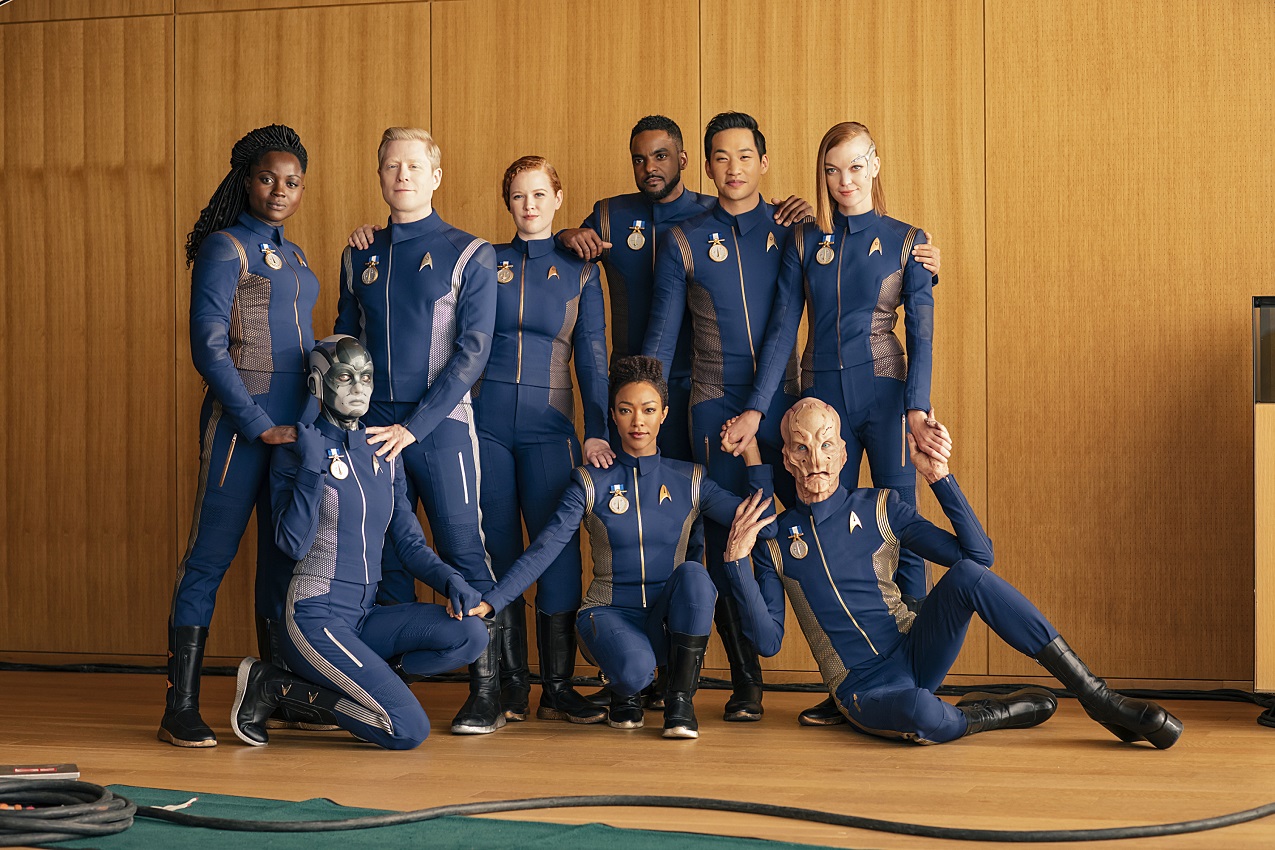
Star Trek: Discovery theories – week 12

Spoiler Warning: There are spoilers ahead for Star Trek: Discovery Seasons 1-3, Star Trek: Picard, and for other iterations of the franchise.

I had a wonderful time with There Is A Tide this week. It was a fantastic episode jam-packed with action and excitement. But when it was over, I couldn’t help feeling that there was a lot left to do in terms of story! It’s possible, as I suggested in my review, that Season 3 will end on a cliffhanger with key storylines deliberately unresolved. If that isn’t the case, however, the upcoming season finale has an awful lot of story left to wade through – and I’m concerned that it may not be possible to give everything a satisfactory resolution.

We’ll have to wait to see what the season finale brings. Until then, we have a few more theories to discuss! This week we have two confirmations and not a lot else. Let’s look at those first before we dive into the main theory list.

Confirmed theory #1: Zareh returned.

Zareh was a character we met at the beginning of the season.

Though his return was spoilt a little by the recap that played before the episode began, I was pleased to see Zareh return. He was a glorified bully when we met him in Far From Home, and despite his defeat by Saru and Georgiou, appears to have been promoted within the Emerald Chain. I felt certain that he would be back considering we didn’t see him killed on screen, and I was right.

Zareh bookends the story of the season in a way – he was the first adversary the crew faced after arriving in the 32nd Century, and he is now a significant opponent as the season draws to a close. I don’t expect him to survive the season finale, but if Osyraa is killed off he may be kept alive to assume command of the Emerald Chain. In the event that the season finale leaves big questions open, we could head into Season 4 with Zareh as a major antagonist – but we’ll have to wait and see!

Confirmed theory #2: Zora (a.k.a. the Sphere data) will help the crew retake the ship.

Awwwwww!

Though we had to wait for the closing scene of the episode to see this theory come true, the Sphere data has allied itself with Tilly and the remaining bridge crew as they hope to retake Discovery.

The Sphere data was seen protecting itself in Season 2 – refusing to allow itself to be destroyed even when Control was coming for it. This season, it stepped in on at least two occasions to help out the crew, and it seemed certain that the Sphere data would not allow itself to be commandeered by Osyraa and the Emerald Chain. It has transferred itself into three DOT robots – which are absolutely adorable – and will help Tilly fight back against Osyraa.

So those theories were confirmed in this week’s episode. Now we come to the main theory list.

Number 1: Aurellio is married to Osyraa.

Are Aurellio and Osyraa an item?

The first of two Aurellio theories is a pretty short and simple one. Stamets noted that Aurellio’s partner is Orion. Osyraa, as far as we can tell, is an Orion. Aurellio and Osyraa speak highly of each other. So it’s at least possible that they are a couple.

This feels almost too obvious – so perhaps it won’t come to pass! There was also a suggestion that Osyraa is much older than Aurellio, which may count against this theory. However, they clearly have a connection, and unless Osyraa is on such friendly terms with all of her scientists, perhaps there’s more going on than just a professional relationship.

Number 2: Aurellio will stand up to Osyraa.

Aurellio.

In my review of There Is A Tide I compared Aurellio to Albert Speer – the Nazi German architect and minister. In the years after 1945, Speer would claim that he knew nothing of the Nazi regime’s crimes, that he was absorbed in his work, and that the atrocities happened without his knowledge. Aurellio, in his conversation with Stamets, seemed to demonstrate a comparable lack of awareness about the Emerald Chain and Osyraa.

However, there were hints through Kenneth Mitchell’s amazing performance that Aurellio is beginning to realise that he’s working for the “bad guys.” Having seen Osyraa murder Ryn in cold blood, as well as threaten Zareh, his loyalty to her and the Emerald Chain may be wavering.

Given that he’s clearly an incredibly clever scientist, he could be very useful to the Federation. If part of the plan for Season 4 involves replicating the Spore Drive so that it can be used to power the Federation, I can see Aurellio having a major role in that story. Or in any other story Season 4 may wish to tell. But first he needs to break free from Osyraa – and I have a suspicion that he will!

Number 3: One of the officers with Tilly will be killed.

Tilly is ready to retake the ship.

When Tilly told the officers with her that they would keep going to the bridge no matter what, was she foreshadowing someone’s demise? With her, as far as I could see, are Detmer, Owosekun, Bryce, Rhys, and at least one other character. Killing any of them would be impactful, as they’ve all been part of the series since the beginning.

Detmer had her own (underdeveloped) storyline this season, and was someone I speculated may be killed off. For several weeks I theorised that she’d meet her end – could this be the moment it happens?

Tilly and the officers with her are about to take on a very difficult and dangerous task. I doubt we’ll see Tilly killed, but any of the others who are accompanying her are perhaps about to meet their end.

Number 4: The Federation’s allies will arrive to help them battle the Emerald Chain.

Burnham in a Jeffries tube.

Before continuing her Die Hard-inspired fight to reclaim Discovery, Burnham sent an emergency transmission to her mother. Assuming this transmission was received, Dr Burnham may begin rallying the people of Ni’Var to aid Discovery and the Federation.

Across the season, Saru and the crew made many friends. Former Federation members like Trill, Earth, and Ni’Var, as well as worlds like Kwejian were all aided by Discovery, something which greatly impressed their respective leaders. Faced with an attack on the Federation, could some or all of these once-united factions rally to Starfleet’s aid?

We saw something similar at the climax of Season 2, with Kelpiens and Klingons arriving at the last moment to help Pike and Saru as they battled Control, so it would not be without precedent. At the very least, I expect Burnham’s mother – who is now a Qowat Milat nun – will want to do something to help, especially given the desperate-sounding tone of the message she received.

Number 5: The Burn will receive a different explanation.

Did Su’kal really cause the Burn?

At the very least, the explanation for the Burn needs to be expanded upon. A couple of throwaway lines, heavy on technobabble, are not adequate to explain the season’s biggest mystery. If it’s true that Su’kal’s telepathic connection to dilithium is what caused the Burn, we need to know more about how and why that was able to happen.

It’s at least possible, given that There Is A Tide sidestepped the Burn altogether this week, that the season finale has a big surprise in store for this storyline. Perhaps Su’kal is not responsible for the Burn after all, or if he is, it’s because he was either genetically modified or otherwise coerced into it by someone else.

This is perhaps more of a hope than anything, because I feel that the Burn’s explanation was poor. I’d like to do a retrospective on the Burn at some point when the season is over, but suffice to say that this mystery had been set up as early as the first Season 3 trailer more than a year ago, and the Burn itself was named in the second trailer before the season premiered. We’ve been wrangling with this colossal event and its mysterious origin ever since, and its explanation – the way things sit right now, at least – is horribly anticlimactic. Su’kal’s story might’ve worked were it a single one-off episode, but not as the resolution to a season-long arc. There’s also, as mentioned, the disturbing implication of a man with severe mental disabilities causing such a disaster, even accidentally.

Number 6: The Burn is the result of a superweapon – perhaps one the Federation or Section 31 built.

The Burn.

Connected to the theory above, perhaps Su’kal either did not cause the Burn at all, or was forced into doing so as the culmination of some kind of superweapon project.

We’ve seen in past Star Trek shows stories about genetic enhancements and shadowy organisations exploiting and weaponising the unique abilities of people. Could there be another dimension to Su’kal? Perhaps he quite literally is a weapon, one designed for this very purpose – to attack the Federation’s enemies (or the Federation) through a coordinated attack on dilithium.

Though it seems like Su’kal is indeed the source of the Burn, another source may be revealed, absolving him of blame. I noted that his “scream” did not actually cause a second Burn – even though characters feared it came close – so perhaps there’s something else at play here that we don’t yet know. That other factor could be this superweapon – and it may be designed to target the Federation’s enemies, like the Borg.

Number 7: There will be a resolution to the story of Calypso (the Short Treks episode).

The USS Discovery as seen in Calypso.

The main point from Calypso which is still unresolved is how Discovery ended up in a nebula abandoned. And if, as has been hinted through the use of the term V’draysh, Calypso takes place sometime around the 32nd Century, how did the ship end up back in time?

The Verubin Nebula initially seemed to offer a partial explanation, but not only was Discovery not present there, the nebula itself is very different to the one inhabited by Zora, so that option seems to be off the table.

I have no clue how this circle will be squared – but it’s still possible that it will be, especially given how much progress we’ve seen toward unpicking the mysteries of Calypso this season.

Number 8: The Spore Drive will become Starfleet’s new method of faster-than-light propulsion.

Discovery makes a Spore Drive jump.

Though we don’t know how Osyraa came to know about the Spore Drive, figuring out a way to roll it out to vessels other than Discovery was a major theme in There Is A Tide. Both Aurellio and Tilly have proposed theories for how the use of the Spore Drive could be expanded, so we have to consider this a possibility.

If the dilithium in the Verubin Nebula is not able to be used to power the Emerald Chain, Starfleet, and other factions, the problem of how to travel faster-than-light still remains. And right now, the Spore Drive is really the only way I can see to allow any of the galaxy’s factions to do so. That’s why Osyraa wants Discovery so badly – not just to use the ship, but to copy its technology.

If, as predicted above, Aurellio turns on Osyraa, he could become instrumental in figuring out how to reverse-engineer the Spore Drive and the tardigrade’s DNA in order to make this a viable option. This could be part of the storyline for Season 4, so if there’s no resolution next week, this theory may simply roll over.

Number 9: A character from a past iteration of Star Trek – such as the Doctor from Star Trek: Voyager – will make an appearance.

I’ve been advocating this theory in some form since before the season premiered. Though we have had some tie-ins with past iterations of the Star Trek franchise – and even seen a familiar entity return depending on how you categorise the Guardian of Forever – it would still be nice to get a major character back in some form.

There were hints this week about the Federation President – a role we’ve seen in past iterations of the franchise – so perhaps we could see a returning character occupy this position. That said, the references to the Federation President served only to allow the familiar character of Vance to conduct negotiations with Osyraa, so that may be a non-starter.

As I said last time, maybe the only way this theory could come true is as a kind of epilogue or coda after the main storylines have concluded; perhaps even as a tease to the events of Season 4. It would certainly be difficult – but not impossible – to bring back a major character from Star Trek’s past at this juncture, given the complicated nature of the story overall. Given that there’s also no clear way that a returning character could have an impact on the story without that impact seeming to come from nowhere, perhaps we won’t see any significant character crossovers this season.

Number 10: The Dax symbiont is still alive.

The Dax symbiont.

This one is looking increasingly unlikely, because the two locations where Dax could have appeared have both seemingly come and gone without them: most notably the Trill homeworld in Forget Me Not, but also Federation HQ in Die Trying. However, there are hints at a lifespan for Trill symbionts that may be exceptionally long, in which case Dax could very well still be alive in the 32nd Century.

Obviously we won’t see Ezri Dax (barring some bizarre time travel/stasis storyline) but the symbiont itself could have lived this long. When Adira “met” the Tal symbiont’s former hosts in Forget Me Not, one was wearing a Star Trek: Picard-era uniform, hinting that Tal may have lived 700+ years. There are production-side explanations for this Easter egg, and as stated the fact that two of the best opportunities so far to meet Dax have come and gone most likely means it won’t happen this season. But I’m sticking to my guns on this one: Dax is alive!

Number 11: Kovich is an agent of Section 31.

Kovich in Terra Firma, Part I.

Kovich was presented as one of Starfleet Intelligence or Security’s senior people – perhaps someone brought in to deal with particularly complicated or dangerous situations. Thus it was a bit of a surprise not to see him this week when Osyraa arrived. His mysterious nature has led me to think he could be an agent of Section 31.

He knew a lot about the Terran Empire, and had access to classified files. He also seems to know more about certain events than he lets on; he allowed Georgiou’s health condition to manifest itself rather than warning anyone, for example, which would seem to be a pretty immoral thing to do!

The main way Kovich could have been revealed as a Section 31 operative would be if the secretive organisation had something to do with the Burn. As noted above, there is still that possibility in some form, but it feels remote. We don’t know if Kovich will be back before the end of the season, especially given how much story the season finale seems to have to get through. If we don’t see him, though, perhaps this theory will roll over to next season!

Number 12: The ban on time travel is being flouted – possibly by secretive elements within the Federation.

The USS Enterprise travelled back in time in The Original Series.

Admiral Vance clearly believes that the ban on time travel is intact and being followed. Kovich indicated that he does too – but I’m not sure how far I trust him. Is he an agent of Section 31?

It’s impossible to un-invent a powerful, useful, weaponisable technology, no matter how hard you try. Considering how crappy the 32nd Century seems to be, are we convinced that nobody at all is using time travel to try to give themselves an advantage? Not the Dominion? Not the Borg? Not Section 31? Seems unlikely to me, though for production-side reasons of wanting to keep the timeline intact and to avoid overcomplicating the plot we might be told this is true.

It’s possible that this theory will roll over to Season 4 if, as seems likely, the Burn is unconnected to time travel.

Number 13: Discovery Season 3 is taking place in an alternate timeline or parallel universe.

The Enterprise-C in Yesterday’s Enterprise.

After the Guardian of Forever’s definitive statement on the issue in Terra Firma, it now seems all but certain that Discovery Season 3 is in the Prime universe – the same one as every Star Trek production from Enterprise to Picard. However, it’s still at least possible that, due to time travel or for some other reason, the Burn was not “supposed” to happen.

Thus the ultimate solution to the Burn and the storyline of the season may be to go back to before Su’kal’s ship entered the Verubin Nebula and prevent that from ever happening, wiping this timeline from existence and restoring the “true” timeline.

I don’t believe this would be a good way to go. As a one-off story, an episode set in a timeline that is ultimately overwritten can work. We can look at episodes like Timeless from Voyager or Yesterday’s Enterprise from The Next Generation. But to wipe away the vast majority of an entire season, including presumably characters like Book and Vance, just feels like too much. It would render much of what the crew did – like helping the peoples of Earth, Trill, and Ni’Var – meaningless, and while it would set up another “blank slate” in time for Season 4, I’d rather see Discovery build on this season’s successes. Even if Discovery and her crew remembered what happened, wiping it all out feels like a bad way to go – but one that’s still possible.

Number 14: The ships at Federation HQ represent the majority of Starfleet’s remaining vessels. And they’re all 120+ years old.

A couple of Starfleet ships move to intercept the USS Discovery.

We didn’t get to see any kind of major space battle between Osyraa’s forces and Starfleet in There Is A Tide, so the status of the Federation’s remaining ships is not really clear. As I’ve been saying for weeks, though, it seems at least plausible that the rump Federation may only have a handful of ships available – with scarce dilithium for fuel, there is no way to maintain a huge armada, even if the ships were undamaged. It also seems reasonable to assume that Starfleet’s shipbuilding facilites were damaged or destroyed in the Burn, and that building new ships has been difficult – if not impossible for the fractured organisation – ever since.

Are there more ships beyond those few docked at HQ (and the two Mr Sahil noted)? And those ships may very well be old – they seemed new and futuristic to Discovery’s crew, but that could all be pre-Burn technology, meaning that Osyraa has the upper hand if the Emerald Chain has developed new weapons and technologies. We saw in People of Earth that quantum torpedoes were still in use, for example.

If there is to be a climactic battle between Starfleet and the Emerald Chain, perhaps we’ll learn more about the remaining Starfleet vessels at that time. If not, well it still seems like a theory that has merit!

Number 15: Saru is going to die.

Saru in his human guise.

There Is A Tide ignored Saru, Su’kal, Culber, and Adira, who were all left behind in the Verubin Nebula. Though they were mentioned – most significantly by Stamets as he pleaded to go to rescue them – the story focused on the battle to retake Discovery and on Vance’s negotiations with Osyraa. Thus this theory was not really advanced in any way.

We don’t know how much time There Is A Tide is supposed to have covered – it could easily be several hours, though, and Dr Culber told Burnham that if more than a day were to pass, there would be “no point” in staging a rescue as they would all be dead. I don’t expect this will be the way Saru would be killed off, but it’s a possibility.

Saru is torn between a desire to help Su’kal and his duty to Discovery. Given that he’s not thinking clearly, perhaps he will make a mistake or take a risk that results in his death. He may sacrifice himself to help Su’kal in some way, or to buy time for Culber and Adira to escape. There are many ways this could play out, but it’s at least a possibility that Saru will not survive the season.

Number 15A: Burnham will assume the captaincy of Discovery.

Burnham in temporary command of Discovery earlier in the season.

If Saru is killed – however that may come to pass – there will once again be a vacancy in the captain’s chair. Tilly as first officer always felt like a temporary thing, as indeed Saru himself explained when he offered her the role, and after losing the ship to Osyraa so easily there’s absolutely no way she could retain the captaincy – or even the XO position.

That would leave the captain’s chair empty with no obvious replacement. Senior officers such as Stamets or bridge crew like Nilsson or Bryce don’t seem plausible for story reasons, and with Discovery being such a Burnham-centric series, she feels like the only option. Well, unless the plan is to bring in yet another new character!

Number 16: Admiral Vance is going to be killed.

Admiral Vance.

Despite standing face-to-face with Osyraa this week, Admiral Vance survived. However, there may be a battle still to come, and it’s at least possible that he – as the man leading the fight – won’t survive the onslaught from Osyraa’s forces.

If the writers wanted to kill of a character we’ve spent a lot of time with this season – but not one of Discovery’s crew – Vance is pretty much the only option. His death could make the conflict with the Emerald Chain feel more impactful, and while I would be sad to see him go as I think he’s been a great character, it would open up the story to go in different directions in Season 4.

Number 16A: Saru will become an Admiral, and Burnham will become captain of Discovery.

Burnham and Saru with Admiral Vance.

Although Su’kal took Saru off the rails, showing us that he isn’t always calm and level-headed, his earlier time in the captain’s chair this season went remarkably well. His diplomatic efforts in particular may yet pay off – bringing former Federation members back into the fold. If that were to happen, perhaps he will be promoted, becoming an Admiral and even assuming the position of Commander-in-Chief of Starfleet if Vance is killed.

If he departs Discovery to head up Starfleet, the captaincy of the ship is once again open. And for the reasons listed above, Burnham seems to be the only real candidate.

As I’ve said in the past, Burnham assuming command feels like a goal Discovery has been trying to reach since Season 1. Perhaps this could be the moment it gets there.

Number 17: Tilly will resign as first officer and Burnham will return to the position.

Tilly sits in the captain’s chair in Su’kal.

Tilly did well in There Is A Tide, and doesn’t seem to have let the capture of Discovery completely ruin her confidence. She led the remaining bridge officers out of captivity and seems well-placed to lead an insurgency to retake the ship.

Despite that, however, she did lose the ship to begin with – and Osyraa captured Discovery from her with ease. It seems unlikely she could retain her position as First Officer, and while I doubt it will be stripped from her, she may very well choose to resign the position. It feels as though her arc over these few episodes will be to recognise her own lack of experience and unsuitability for command. She may grow into that role in the future – and perhaps Captain Tilly will be a Star Trek series in a few years’ time! But right now she clearly isn’t the right fit.

If Saru survives and remains in command – which he very well may, it has to be said – that would open up the first officer’s position. Burnham is again the logical candidate, despite the broken trust between her and Saru. She advised him to remain with Su’kal, speaking honestly to him in that moment, and perhaps he will recognise that and reward her for it. Now that she seems to have put her doubts about her role in Starfleet aside, she would be a good first officer.

Number 18: Saru, Burnham, or somebody else will use the Guardian of Forever to send the USS Discovery back in time.

The Guardian of Forever in Terra Firma, Part II.

Assuming that the Red Angel suit is truly gone, and that no one is violating the ban on time travel, the Guardian of Forever is the only way to travel through time that we know of in the 32nd Century. While I can see no pressing need to send Discovery back in time at this juncture, if such a need arose, the Guardian of Forever is about the only option for doing so.

I wrote in my review of Su’kal that the route to the end of the season feels “formulaic” – defeat the Emerald Chain, save or neutralise Su’kal to prevent a reoccurrence of the Burn, and use the dilithium planet in the Verubin Nebula to power the Federation, giving it the (literal and figurative) fuel to bring wayward planets back into the fold. There Is A Tide began the process of retaking the ship but didn’t complete that story, so the end of the season is still up in the air.

Even though I can’t foresee a reason why, it’s possible Discovery will need to go back in time, and the Guardian of Forever could help with that.

Number 19: Dr Issa is a descendant of Saru’s sister Siranna.

Saru regards the hologram of Dr Issa.

The actress who played Dr Issa, Hannah Spear, also played Saru’s sister Siranna in Short Treks and in Season 2. Why bring her back to play a different Kelpien – especially considering they look identical? My guess is that there is a familial connection there – Dr Issa may be a distant descendant of Siranna.

Though Saru was – for some reason – reluctant to share this information, the glowing patches seen on Dr Issa indicated pregnancy. Is this a trait all Kelpiens have? If so, why cover it up from the crew? Perhaps the answer is that the glowing patches are something only some Kelpiens have – such as those in Saru’s family. That could be how he knew what the glowing spots meant, and why he didn’t volunteer that information sooner.

I should note that it remains a distant possibility that Dr Issa and Siranna are meant to literally be the same character; that somehow, post vahar’ai Kelpiens live very long, or for some other as-yet-unknown reason. But I think a family connection is more likely.

Number 20: The dilithium planet will be destroyed.

The dilithium planet.

The dilithium planet reminded me at least a little of the Genesis planet in Star Trek III: The Search for Spock. That planet was similarly dangerous and unstable, and was ultimately destroyed. Could the dilithium planet in the Verubin Nebula share its fate?

The main reason why I consider this theory at least plausible is that it would be a major twist on the expected end to the season. Rather than the ridiculous amount of dilithium being used to restore the Federation, it would instead be destroyed, leaving the post-Burn galaxy still with limited travel options.

This in turn could set the stage for Discovery’s Spore Drive being duplicated and rolled out across the fleet – as we discussed above.

Number 21: The “monster” is the real Su’kal.

The “monster” which inhabits Su’kal’s holographic world.

The “monster” which inhabits Su’kal’s holo-world is interesting. Why would his mother or the other Kelpiens programme such a creature? Yes it’s a legend from Kaminar, but to create a holographic monster in a programme designed for a child? They may not have had long to build the programme – which explains the basic nature of some of the other holograms – so why go to all the trouble of creating this one? And why doesn’t it flicker or glow in the same manner as the others, nor seem to have degraded over time?

My theory is that the so-called “monster” – which has a Kelpien appearance – is the real Su’kal; old, decrepit, and badly mutated by a lifetime of radiation exposure that can supposedly kill within hours. The “monster” did not behave like a hologram, did not appear like the other holograms, and when Burnham encountered it it seemed to regard her with an almost-human curiousity.

Add into the mix that Su’kal appears to be far too young to have been present when the Burn occurred – 120-125 years earlier – and I think we have a solid theory.

Number 22: The “monster” is Dr Issa.

Could the “monster” be Su’kal or his mother?

Another possibility for the true identity of the “monster” is Dr Issa, Su’kal’s mother. Though age is again a problem, if Kelpiens post-vahar’ai are especially long-lived she may have survived this long, but without the same level of protection from the radiation she may have mutated and been burned by it. The question of Dr Issa is interesting – was she just a basic plot device; a lure to drag Saru to the nebula? Or is there more to this character than a fraction of a distress call and her son?

The “monster” is one of the most interesting elements to come out of Su’kal, in my opinion, and there seem to be clues that all may not be as it seems. Obviously this theory and the one above can’t both be right – but even if neither are true, there could be more to the “monster” than we expect.

So that’s it. My final batch of theories as we approach the season finale. This won’t be my final theory post; next week after the finale has aired I’ll be back to check out any confirmations or debunkings, and perhaps to set the stage for any Season 4 or spin-off theories that I have. Then, later in the year, I may revisit some of my theories from this season to assess what I got right and got wrong! I did something similar for Star Trek: Picard a few months ago, and it was fun to go back to some of my theories knowing how the story of the season played out. So stay tuned for that!

There’s only one remaining episode before 23 weeks of Star Trek comes to an end. All being well there will be more Star Trek to come this year – both the second season of Lower Decks and the first season of the kid-friendly show Prodigy are, as far as we know, targeting a 2021 broadcast. Discovery Season 4 has entered pre-production, and depending how things go for all sorts of reasons, it’s possible we could see it before the end of the year. But that’s by no means certain!

Vance, Eli, and Osyraa during their negotiations.

Last week I felt that the road to the end of the season was obvious: save or neutralise Su’kal to prevent a second Burn, retake Discovery from Osyraa, and then use the dilithium planet in the Verubin Nebula to rebuild Starfleet and the Federation. There Is A Tide really only focused on one part of that – the battle over Discovery – and even then left it unresolved. As long as Osyraa remains in charge there seems no hope of a Federation-Emerald Chain treaty, and since we saw nothing from Saru and Su’kal this week I have to say it doesn’t feel like much has changed on that front. The only thing I would say that has changed my mind on how “formulaic” the end of the season risked feeling is that we may very well not see a resolution to the story, and we may instead be heading for a cliffhanger. We’ll have to see!

Please remember that these theories are just a bit of fun. Some may seem plausible – or even highly likely – but that doesn’t mean that this is the way the story will unfold. I’m just a guy with a website, I’m not claiming to have any “insider information,” nor am I saying that the theories postulated above will come true. No fan theory is worth getting so invested in that the actual story becomes disappointing or upsetting. Personally, as much as I love feeling like I predicted something that later appeared on screen, I also truly love being surprised by Star Trek and other franchises. That doesn’t mean writers should make silly or arbitrary decisions purely for shock value, but it does mean that when a theory of mine falls flat on its face, far from getting upset I revel in that. If we could all remember to take fan theories with a healthy pinch of salt, maybe there’d be a little less toxicity in certain areas of the fandom.

Star Trek: Discovery is available to stream on CBS All Access in the United States, and on Netflix in the United Kingdom and elsewhere. The Star Trek franchise – including Discovery and all other properties mentioned above – is the copyright of ViacomCBS. This article contains the thoughts and opinions of one person only and is not intended to cause any offence.
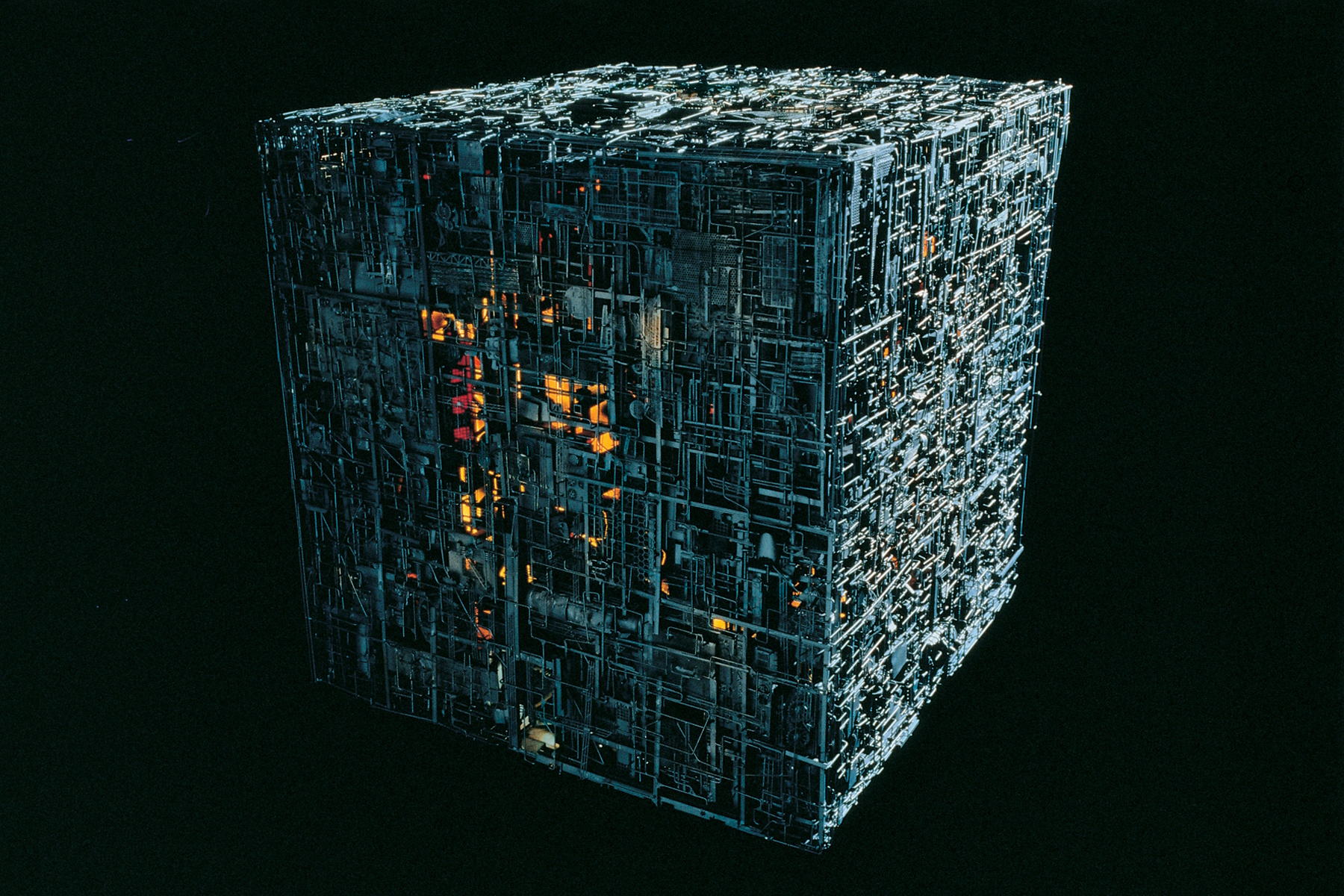
Star Trek: Discovery review – Season 3, Episode 12: There Is A Tide…

Spoiler Warning: There are spoilers ahead for Star Trek: Discovery Seasons 1-3, Star Trek: Picard, and for other iterations of the franchise.

For the second week in a row, there was a last-minute change in the title of an episode. Previously known as The Good of the People, this week’s episode was retitled There Is A Tide… which is a line from Shakespeare. It’s been a long time since I studied the great bard, but this line is taken from a longer passage in Julius Caesar in which the character Brutus speaks of missed opportunities and the need to seize the “high tide” of life; acting when the moment presents itself or missing out and never achieving greatness. Epic stuff, right?

Last week Su’kal left me with mixed feelings, and I said that we needed to see its storylines play out to their conclusion before delivering final judgement. Despite that, I was critical of the technobabble explanation given for the Burn, as well as how easily Discovery was captured by Osyraa. I felt the final act of the season risked becoming formulaic, and its storyline may have been telegraphed ahead of time.

I wasn’t completely sold on Su’kal last week.

There Is A Tide was an action-packed thrill ride from start to finish, with some gut-wrenching choices for Burnham and Book as well as some desperately-needed development for the villainous Osyraa. I’m not 100% sure all of it made perfect in-universe sense; why, after all, would Osyraa take hostages if she sought an armistice? But aside from that, it was a thoroughly enjoyable episode.

What it lacked, though, was any advancement of last week’s primary story: Su’kal, the Burn, and those left behind in the nebula. With only one episode left, we need to have those storylines wrapped up in addition to the Emerald Chain-Federation conflict as well as seeing our crew retake the ship. Or do we? Could Discovery be setting up a big season-ending cliffhanger? Right now that feels like a real possibility. Beginning with The Next Generation’s Season 3 finale, The Best of Both Worlds, Star Trek has seen fourteen seasons end in such fashion – including Season 2 of Discovery.

Aurellio and Osyraa.

As great as There Is A Tide was, it’s worth acknowledging the absence of any advancement of the Su’kal-Saru-Verubin Nebula story. It absolutely could be because there’s a feature-length episode or cliffhanger to come next week, but if that doesn’t happen I’m concerned that There Is A Tide has left the season finale with a huge amount of narrative to get through. I criticised the two-part finale of Star Trek: Picard for rushing too much and skipping over potentially interesting story threads, and I really hope Discovery won’t have the same issue.

There Is A Tide sidesteps the Burn altogether. While the event was discussed – notably by Osyraa and Admiral Vance – the Burn once again was not centre-stage. If there is to be any hope of a proper resolution to what has been the biggest mystery of the season beyond the couple of lines of technobabble we got last week, next week’s episode has a lot of work to do. And that really summarises my concern: taken as a standalone piece, There Is A Tide was non-stop excitement, action-packed, and fantastic… but by the end of its forty-six minutes, there remains a lot of work to do in terms of narrative.

Burnham led an action-packed story in There Is A Tide

So that’s enough about what may or may not happen in terms of the narrative structure next week. Let’s get into what There Is A Tide did right. First up, Osyraa. In her two appearances thus far, Osyraa has been flat, one-dimensional, and boring. Worse, she appeared to go from an easily-defeated cardboard cut-out adversary to a completely overpowered supervillain in between her two appearances. I didn’t find her compelling or even interesting; with no motivation beyond “I’m evil and I like it” she was just as bad as – if not worse than – Mirror Georgiou.

There Is A Tide changed that. Though some issues with Osyraa remain, the episode expanded on her character in a huge way, giving her a lot to do and showing off some genuine complexity and nuance. I’m not fully sold on her plan – which seems to have been to capture Discovery and use the ship and crew as leverage to force the Federation into… an alliance? But the way she went about it, both on the ship and at Federation HQ in her meeting with Vance provided some sorely-needed interest to her character.

Osyraa finally got some character development.

We knew from Ryn a few episodes back that the Emerald Chain was running out of dilithium, and it’s this shortage that forced Osyraa to the negotiating table. While we don’t see the precise nature of her proposals, Admiral Vance considered it impressive that she was willing to offer such terms. Her motivation for doing so is, as the episode’s original title suggests, “for the good of the people.” Osyraa’s plan seemed to offer a trading arrangement and non-aggression pact with the Federation, and she made reference to one former Federation outpost that has already been trading with the Emerald Chain.

There are a couple of points from Admiral Vance’s response to consider, and both have to do with putting principles ahead of being practical. Burnham, as we’ve seen through her actions this season, is very much someone who will work around regulations and rules where necessary to get the right outcome – the ends justify the means. Vance, on the other hand, keeps his principles even if it means problems for himself and the Federation. Firstly he scuppers the deal by adding a requirement he knew Osyraa could not agree to – her standing trial for what he regards as her crimes. But secondly, and perhaps most interestingly, he allowed Osyraa to leave.

Admiral Vance rejected Osyraa’s proposal.

Organisations like the Emerald Chain – at least, the way it has been presented thus far – are often cults of personality, where a strong leader has all the power and influence. As we have seen many times both in history and fiction, the removal, arrest, or even embarrassment of such a leader can bring down their entire organisation. And so it is with Osyraa. If Vance had arrested her, detained her aboard Federation HQ, her underlings wouldn’t know what to do. It would have given him leverage to negotiate the release of Discovery and the crew, and it wouldn’t have done any harm to Federation-Chain relations given that the treaty was already a non-starter.

But I’m not criticising his decision as a narrative point. I think what we have with Vance is a contrast, not only to Burnham but to the way Saru was acting last time – both are impulsive, emotional, and bending the rules. Vance is steadfast – the Federation’s ideals and principles are not to be compromised, even if that means making life harder for himself and the Federation. While Burnham’s storyline in There Is A Tide is far more exciting, I would argue that Admiral Vance is the one who best embodies what Starfleet and the Federation are all about.

The negotiations were short.

At the end of the day, isn’t that what the story of Season 3 has tried to be about? Rediscovering Starfleet’s values and placing them front-and-centre. That’s what Saru has tried to do with Earth, Trill, Ni’Var, Kweijan and so on. It seems at least plausible that these forces may come to the Federation’s aid if there’s a battle or war – like the Kelpiens and Klingons did against Control at the climactic fight in Season 2. If they do show up, it will be because they were inspired by Saru, Vance, and the principles they stick to.

On the other hand, as Burnham and other main characters have shown throughout Discovery’s run, rigid adherence to rules and principles isn’t always the right way to go. Compromise is sometimes needed – and Vance bottled a chance to do so. There’s a real-world message here, one which is a little odd given the polarising times we live through: moral absolutism is okay. Recent political events have reminded us of the need for compromise and to find ways to bridge the gap, yet Discovery seems to be saying that it’s fine to stick to idealism even if that means division and fighting continue.

Vance offered Osyraa terms that he knew she could never agree to.

Perhaps that’s enough politics for now! One character I loved in There Is A Tide was Aurellio, a man with a fittingly Shakespearean name! When it was announced before the beginning of the season that Kenneth Mitchell, who had played Kol in Season 1, Tenavik in Season 2, and a couple of other characters both in Discovery and Lower Decks, would be returning, I wasn’t sure how it would work. Mitchell has recently been diagnosed with ALS (motor neurone disease). There was no way for the series to ignore that – Mitchell uses a wheelchair now – but I was hopeful to see a character and storyline that treated disability respectfully. As you may recall if you’re a regular reader, I’m disabled myself.

I adored Aurellio, and Mitchell’s performance in the role. The way the series incorporated his standing-wheelchair was tasteful and sweet, and Aurellio being disabled was neither ignored nor tokenistic. The fact that Aurellio has – as he puts it – “a genetic defect” was not the only aspect to his character, who comes across as a scientist or technocrat who is unaware of the extent of the criminality and depravity of the organisation he works for. Shielded from the day-to-day running of the Emerald Chain, Aurellio is – perhaps wilfully but perhaps not – able to concentrate solely on his work.

Aurellio was a wonderful new character and a great addition to the season’s story.

Though this will not sound like a compliment, I regard Aurellio as being Albert Speer – or at least, the public persona claimed by Speer after 1945. There are people like Aurellio even in the worst organisations and regimes – blind to the worst aspects, focused only on their own small work. Often in these stories, a character like this will step up once their eyes are opened to what’s going on beyond the confines of their laboratory – and perhaps that’s something we’ll see next time or in a future story. I’ll save discussions of Aurellio’s possible future for my theory post.

Aurellio was tasked with working on the Spore Drive – though it remains unclear how the Emerald Chain came to know as much about it as they do. To that end he was teamed up with Stamets, and their tête-à-tête in Engineering was fascinating to watch; both Mitchell and Anthony Rapp put in outstanding performances during this sequence.

The conversation Stamets and Aurellio had was riveting to watch.

The plan Aurellio had to try to recreate the DNA of the tardigrade seems to have merit – or at least no less merit than any other technobabble in Star Trek. Perhaps with Stamets’ support it could be taken more seriously both by Starfleet and the Emerald Chain. Stamets objected, saying he believes it is not possible and that the tardigrades are extinct – but neither of those claims are supported by on-screen evidence. We’ve seen tardigrades referenced as recently as December 2019 in the Short Treks episode Ephraim and Dot. The nature of that story’s relationship to canon is not clear – but tardigrades are still alive and kicking within the Star Trek mythos, at least.

Earlier in the season Tilly was said to be working on a plan for a non-human navigator to replace Stamets; this is something that, while never followed up on, would have allowed the Spore Drive to perhaps be rolled out to other vessels. It’s understandable why Stamets wouldn’t want to discuss any of this with Aurellio – but we’ve seen in the past that he’s very happy to talk about his creation with other scientists.

Will Aurellio’s plan work?

Besides the plot-heavy conversation about the Spore Drive, two things stuck with me from the Aurellio-Stamets conversation. First was that Aurellio mentioned several times that he’s in a relationship and has children. Stamets figures out he’s in a relationship with “an Orion” – it’s not unreasonable to assume that this person could be Osyraa herself, but we’ll save that for my theory post! Next was that Stamets claimed to have a child of his own. Since, as far as we know, Stamets and Culber do not have any children, this appears to be a reference to Adira, which was incredibly sweet. There has been a parental vibe between Stamets and Adira for much of the season, so for Stamets to say it aloud here was wonderful.

This would go on to be at the heart of the Stamets-Burnham argument later on, with Stamets arguing for a return to the Verubin Nebula to save Culber and Adira, but Burnham insisting he needs to get off the ship to prevent Osyraa using him to take Discovery away from Federation HQ. Rapp put in his best performance of the season so far in There Is A Tide, especially as he desperately argued with Burnham to remain aboard the ship.

Burnham ejected Stamets from Discovery.

That scene was truly heartbreaking. Of all the moments in There Is A Tide, the sequence between Burnham and Stamets was perhaps the shortest, which is a shame; it could certainly have been expanded by a couple of minutes. But a lot was packed into their time together, as Burnham rendered Aurellio and a guard unconscious in order to get Stamets off the ship. She knew that by doing so she was endangering Saru, Culber, and Adira, but when faced with the prospect of Osyraa and the Emerald Chain keeping control of the ship she evidently deemed the sacrifice worth it.

Stamets’ protests as Burnham prepared to eject him from the ship grew more and more desperate, until in his final moments he seemed resigned; cursing her for what she was doing. Anthony Rapp ran the gauntlet of emotions in his scenes this week, and after Stamets hasn’t has that much to do across the season, it was wonderful to see him put in such an outstanding performance.

Stamets argued with Burnham about rescuing Culber and Adira.

So we come to Burnham. This review is surely not going to be the first time you’ve heard this, but her story this week was basically Star Trek’s answer to ’80s action film (whose Christmassy status is debated) Die Hard! Crawling around in the Jeffries tubes and conversing with Zareh on the radio was clearly inspired by Bruce Willis’ character of John McClane, who spends much of Die Hard similarly sneaking around and conversing with his adversary by walkie-talkie. The Star Trek franchise has had many action-packed stories and moments over the years, but Burnham’s entire storyline this week has to be one of the best.

As I’d been predicting since his first appearance, Zareh was back. His return makes it feel as though the story of the season is beginning to come full-circle: we started with the revelation of the Burn and the initial conflicts with Emerald Chain couriers, and we’re ending with the Chain and the resolution to the Burn. Zareh bookends the season in a way, and I like that. It gives something more to the story than in Burnham was just facing off against a new unknown goon. The only drawback is that Zareh didn’t get to see Georgiou or Saru – the two characters who wronged him worse than Tilly.

Zareh made his return in There Is A Tide.

At the beginning of Burnham’s story we saw her and Book navigating a “transwarp tunnel.” Whether this is part of the Borg network or not is unclear – as is the fate of the Borg, come to that. It was convenient that this network leads right to Federation HQ, but I suppose we can forgive such contrivances within the story! Book’s ship crash-landing was a more explosive and dramatic version of the shuttle crash in Star Trek V: The Final Frontier. There was also a callback to Voyager, where Borg drones were ejected into space in a manner similar to Burnham kicking one of Zareh’s henchmen out into the vacuum of space. I appreciate that there are these little thematic, visual, or narrative nods within Discovery, even when the show isn’t overtly trying to relive Star Trek’s greatest hits.

It was horribly unfortunate for Burnham that, in her first encounter with one of Zareh’s men, she got stabbed. And my gosh that stab was absolutely brutal! Discovery has been much more gory and visceral with some of its depictions of injuries when compared with past iterations of Star Trek, and this was certainly one of the most visually brutal. The camera work and direction showed just how painful Burnham’s wound must’ve been for her, and the follow-up as she cauterised the wound with a phaser was equally gruesome. Wonder why she didn’t use a medical kit? Compared with the dodgy CGI involved in Mirror Burnham’s death a couple of episodes back, this injury was so much better from a visual standpoint, and worked perfectly within the story.

Burnham suffered a major injury while battling the Emerald Chain.

The injury likewise harkens back to Die Hard, as John McClane suffers injuries to his feet from walking on broken glass in that film. Both characters – Burnham and McClane – were left hobbling by their respective wounds, trailing blood as they crawled and snuck around. I have to assume these Die Hard throwbacks were deliberate on the part of director and Star Trek legend Jonathan Frakes. It’s by no means a carbon copy of that film, but anyone who’d seen Die Hard would struggle to miss the similarities!

Burnham succeeds in her initial objective – to free Stamets and smuggle him off the ship. However, the task of retaking the ship and defeating Osyraa and Zareh is pushed back to next week. Burnham got the bulk of the action this week, but she wasn’t the only one who got exciting scenes. Tilly and the secondary characters from the bridge managed to escape their confinement and defeat their guards, and the morse code tapping was another reference to The Final Frontier – and not to mention a very clever way to outwit the henchmen guarding them!

Burnham in a Jeffries tube.

Ryn, who was initially with the group of bridge officers, lost his life by Osyraa’s hand. This might be the moment that pushes Aurellio to potentially switch sides, or at least to stand up to Osyraa – but we’ll save that for my theory post! I was genuinely shocked by his death, and for a split-second it seemed as if Book, who was also present, was going to be the one Osyraa killed. After he and Burnham confessed their love for one another earlier in the episode, it would have been a tragic end to their relationship. I’m hopeful that Book will survive the season, giving Burnham some stability and emotional guidance going forward.

The final revelation of the episode was the Sphere data had transferred itself into at least three DOT robots. These cute little droids had been part of the show all season long, seen in the background or making repairs to the ship, and I’m glad they get a moment to be front-and-centre. I absolutely need a plush DOT though, so Star Trek merchandising team take note!

The DOT 23s are adorable and I love them.

Tilly didn’t allow the loss of the ship while under her care to compromise her, and she led the remaining crew in a creditable fashion as they escaped and linked up with the DOTs. I felt sure that the Sphere data would find a way to help, and this seems to be the method it has chosen. Seeing the cute little robots address Tilly as “captain” was a strangely emotional moment, and came just after Detmer, Rhys, Bryce, and Owosekun had all pledged to follow her. The crew sticking together – joined by the DOTs – was a hopeful note to end the episode on.

So that was There Is A Tide… which is the penultimate episode of the season. It was absolutely fantastic, with complex themes, great performances, and plenty of action as the season approaches its climax. My only real points of criticism come from what wasn’t present – most notably the action in the Verubin Nebula – and whether there might be a little too much left to get through if the season finale is to wrap everything up neatly. Beyond that, however, I can hardly find a single fault.

Tilly is ready to retake the ship!

Osyraa got the expansion her character has needed since she was introduced, which was fantastic. Vance got to show off his negotiating skills. Tilly remained steadfast in command despite her “bruised ego” after losing the ship. Aurellio was a wonderful new character with depth. Anthony Rapp put in the performance of the season as the emotionally crippled Stamets. And Burnham got her very own Die Hard story, an action-packed adventure as she tried to save the ship from Osyraa and Zareh. There was so much going on in There Is A Tide, and all of it was wonderful.

This episode may be the high point of the season so far – an award I would have previously given to Far From Home. Jonathan Frakes never fails to deliver when he’s in the director’s chair, and this was a fantastic, well-written episode that allowed him to shine. There are a lot of open questions as of the end of the episode; hopefully the season finale can either provide satisfactory answers or set up Season 4 to bring about a resolution. I cannot wait for the end of the season – but it will be a bittersweet moment as it will bring an end to 23 straight weeks of Star Trek which began back in August!

I hope you had as much of an enjoyable time with There Is A Tide as I did! Come back next week for my breakdown of the season finale, and stay tuned for much more Star Trek here on the website as we head into 2021.

Star Trek: Discovery is available to stream on CBS All Access in the United States, and on Netflix in the United Kingdom and elsewhere. The Star Trek franchise – including Discovery and all other properties mentioned above – is the copyright of ViacomCBS. This article contains the thoughts and opinions of one person only and is not intended to cause any offence.
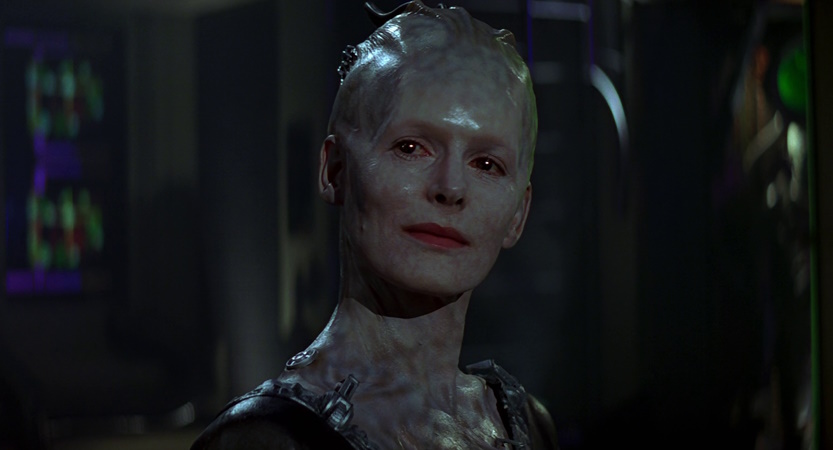
Star Trek: Discovery theories – week 11

Spoiler Warning: There are spoilers ahead for Star Trek: Discovery Seasons 1-3, Star Trek: Picard, and other iterations of the franchise.

Su’kal was an interesting episode. It’s also one that, as I noted in my review, is hard to judge fairly before we know the ultimate outcomes of several of its key story points. I’m split on the revelation of the mentally challenged Kelpien Su’kal being the cause of the Burn – the biggest disaster in galactic history. While on the one hand it’s an interesting way to go, and one that is similar in some respects to older Star Trek stories, on the other hand it’s anticlimactic, coming in the eleventh week of the season. There’s a huge disparity between the small, terrified Su’kal and the Burn – an event which caused devastation on a galactic scale and destroyed the Federation. And there is a worrying message underneath the sci-fi trappings, one which risks further stigmatising mental illness and those with learning disabilities.

But that’s enough about that for now. Read my review if you want my full thoughts on Su’kal and what it brought to the table. We’re here for theories! And there’s a lot to get through this time. We got two confirmations, five debunkings, and there’s also one theory I’m choosing to retire. Let’s briefly look at each of these before hitting the main list.

Confirmed theory #1: The Emerald Chain will attempt to steal the USS Discovery and/or the Spore Drive.

Discovery held captive by Osyraa’s flagship.

Aside from the revelation that Su’kal caused the Burn, this was the biggest event in the episode. Osyraa – the Emerald Chain’s leader – showed up at the Verubin Nebula aboard her flagship and was able to very easily capture Discovery. How she came to know about the Spore Drive is unclear, as is how her ship magically became so powerful since its last meeting with Discovery. However, she not only attempted to capture Discovery and the Spore Drive this week, she succeeded.

Confirmed theory #2: The Emerald Chain will attack Federation HQ.

Osyraa set course for Federation HQ.

After capturing Discovery, Osyraa set out to her next objective – Federation HQ. Though this attack didn’t take the form I expected, Osyraa is headed there to take on Starfleet. Whether she will pull her forces away from Kaminar to join her as her flagship and Discovery travel to Starfleet HQ is not clear, but it would be a reasonable assumption. We will see exactly what happens next time, including how successful her attack is. But we can consider this theory confirmed.

Debunked theory #1: A time-travelling (or parallel universe) USS Discovery is at the centre of the nebula – and may be responsible for the Burn.

The USS Discovery.

As far as we can tell, only the Kelpien ship was in the Verubin Nebula. Given Su’kal’s connection to dilithium and the Burn, it certainly seems as though this is the way the story of the season is going. Additionally, the nebula looks very different from the one encountered by Craft in Calypso, meaning the chances of a crossover between that story and this one now seems remote.

It was an increasingly distant possibility, especially after the discovery of the Kelpien ship. The departure of Georgiou – who was the character I suggested may have taken Discovery back in time in the event that this theory was true – also decreased its probability. With only two episodes remaining, Discovery having already entered the nebula, and with an explanation for the Burn at least halfway explored, changing tack now to suddenly put the USS Discovery in the nebula would be difficult to pull off at best.

Debunked theory #2: A familiar starship is at the centre of the nebula – and may be responsible for the Burn.

The USS Cerritos from Star Trek: Lower Decks.

As above, it seems certain that the explanation for the Burn lies with Su’kal and the crashed Kelpien ship. Between continuing to explore these story threads and depicting the battle to retake Discovery from Osyraa, there is no time left in the remaining couple of episodes to suddenly drop in another familiar starship and give such an important moment the respect it needs.

As such, we can consider this debunked.

Debunked theory #3: The Red Angel suit is at the centre of the nebula – and may be responsible for the Burn.

The Red Angel.

As above, it’s the Kelpien ship in the nebula – and as far as we can tell, not much else. While the prospect of the Red Angel suit accidentally causing the Burn was a fascinating one, it may have been a bridge too far for Discovery in the end. As Saru and Culber remain behind to help Su’kal, and with everyone else off trying to retake the ship, there seems to be no place for the Red Angel in this storyline.

Debunked theory #4: The name “Burn” is derived from the name Burnham.

Michael Burnham did not cause the Burn!

This theory was intrinsically linked to the one above. As I noted the first time I discussed the Burn, it was odd, in a show that has always put Burnham front and centre, that there was a catastrophic event which happened to share part of her name. It seemed at least possible that there would prove to be a Burnham connection, just as there was with the Red Angel in Season 2. However, with the discovery of Su’kal and the Kelpien ship, it seems impossible for the story to go in a Burnham-centric direction this time, which is nice!

Debunked theory #5: Tilly is going to go rogue.

Tilly in the captain’s chair.

When Tilly became first officer, I was struck by one word in particular: “compliant.” That’s what Tilly thought Saru considered her to be, and I speculated that she may have ended up disobeying orders in a future story. However, it now seems clear that the reason Tilly was chosen was to be an inexperienced commander, making Osyraa’s victory and capture of Discovery more plausible. With Discovery under Osyraa’s control and Saru away on the Kelpien ship, it’s hard to see how this could pan out.

So those theories are considered debunked – even if, technically, we didn’t see 100% confirmation on all of them! Before we hit the main list I have one theory that I’m choosing to retire, and it’s connected to two theories above.

Retiring theory: Burnham’s Red Angel suit has been stolen.

Burnham with the suit on Hima in That Hope Is You.

With the Red Angel suit clearly not in the Verubin Nebula – and as far as I can tell given only two episodes remain, not connected to the story of the season at all – I’m retiring this theory. Burnham set the Red Angel suit to self-destruct after delivering the final Red Burst for Pike and Spock to see, and as we saw in the finale of Season 2 they got the message.

In order for someone to have been able to capture it, they would have had to know exactly when and where the suit would be, and if time travel has indeed been outlawed – as Admiral Vance told us – no one would be able to recover the suit. Thus we can assume its mission is complete and it was destroyed.

So that theory has been retired – and that brings this week’s theory massacre to an end! Now let’s jump into the list of theories I have as we approach the final two episodes of the season.

Number 1: The “monster” is the real Su’kal.

Is this the real Su’kal?

The “monster” which inhabits Su’kal’s holo-world is interesting. Why would his mother or the other Kelpiens programme such a creature? Yes it’s a legend from Kaminar, but to create a holographic monster in a programme designed for a child? They may not have had long to build the programme – which explains the basic nature of some of the other holograms – so why go to all the trouble of creating this one? And why doesn’t it flicker or glow in the same manner as the others, nor seem to have degraded over time?

My theory is that the so-called “monster” – which has a Kelpien appearance – is the real Su’kal; old, decrepit, and badly mutated by a lifetime of radiation exposure that can supposedly kill within hours. The “monster” did not behave like a hologram, did not appear like the other holograms, and when Burnham encountered it it seemed to regard her with an almost-human curiousity.

Add into the mix that Su’kal appears to be far too young to have been present when the Burn occurred – 120-125 years earlier – and I think we have a solid theory.

Number 2: The “monster” is Dr Issa.

The “monster.”

Another possibility for the true identity of the “monster” is Dr Issa, Su’kal’s mother. Though age is again a problem, if Kelpiens post-vahar’ai are especially long-lived she may have survived this long, but without the same level of protection from the radiation she may have mutated and been burned by it. The question of Dr Issa is interesting – was she just a basic plot device; a lure to drag Saru to the nebula? Or is there more to this character than a fraction of a distress call and her son?

The “monster” is one of the most interesting elements to come out of Su’kal, in my opinion, and there seem to be clues that all may not be as it seems. Obviously this theory and the one above can’t both be right – but even if neither are true, there could be more to the “monster” than we expect.

Number 3: Saru is going to die.

Saru in his human disguise.

This isn’t the first time I’ve theorised about a character’s death or departure this season – and so far no such event has come to pass! But as Burnham told us, Saru is “emotionally compromised” by the presence of Su’kal and Kelpiens, and is not thinking clearly. By the way, Burnham calling out someone else for jeopardising the mission and acting impulsively? That’s some top-tier hypocrisy right there!

But we’re off topic. Saru is torn between his almost paternal desire to help Su’kal and find out about Dr Issa and his duty to Discovery. He opted to remain behind aboard the Kelpien ship, and while I doubt he and Culber will simply succumb to radiation exposure, I’m beginning to wonder if this turnaround in his character from the level-headed captain to a risk-taker and mistake-maker will lead to him meeting an unjust end.

Perhaps this is the reason for the odd (and nonsensical within the story) decision to have Saru appear out of costume – to allow Doug Jones to have a more epic death scene? Time will tell.

Number 3A: Burnham will assume the captaincy of Discovery.

Burnham in temporary command of Discovery earlier in the season.

If Saru is killed – however that may come to pass – there will once again be a vacancy in the captain’s chair. Tilly as first officer always felt like a temporary thing, as indeed Saru himself explained when he offered her the role, and after losing the ship to Osyraa so easily there’s absolutely no way she could retain the captaincy – or even the XO position.

That would leave the captain’s chair empty with no obvious replacement. Senior officers such as Stamets or bridge crew like Nilsson or Bryce don’t seem plausible for story reasons, and with Discovery being such a Burnham-centric series, she feels like the only option. Well, unless the plan is to bring in yet another new character!

Number 4: Admiral Vance is going to be killed.

Admiral Vance.

With Osyraa targeting Starfleet, Admiral Vance is the man to lead the fight. I noted an air of finality in his words to Saru in Terra Firma, Part I, and while he has survived thus far, he’s about to face his biggest confrontation.

The conflict with Osyraa and the Emerald Chain has rumbled in the background for more than half of the season, but this is the moment where it has come to the fore. Osyraa already feels like a flat, one-dimensional villain, one who went from easily-beaten to overpowered in the span of a couple of episodes. One saving grace – from a narrative point of view, at least – for the Emerald Chain storyline would be to see a significant character killed.

It certainly could be Saru, as noted above. Or we could see a named secondary character like Detmer or Bryce killed. But Admiral Vance is someone we’ve spent a certain amount of time with this season, and if the writers saw fit to kill off a significant character – but not one of the main crew – he is pretty much the only available target whose death would feel impactful. In that sense, Vance could fill a role played by Admiral Cornwell in Season 2.

Number 4A: Saru will become an Admiral, and Burnham will become captain of Discovery.

Vance, Saru, and Burnham.

If Vance is killed and Saru survives, the question of leadership within Starfleet will arise. Though I would argue that Saru’s recent mistakes – including entrusting Discovery to a first-year ensign – count against him, for story reasons he may be offered a promotion. Earlier in the season he demonstrated his diplomatic skill – with Earth, Ni’Var, and so on – and is arguably well-placed to help the Federation rebuild and begin to come back together.

If he departs Discovery to head up Starfleet, the captaincy of the ship is once again open. And for the reasons listed above, Burnham seems to be the only real candidate.

As I’ve said in the past, Burnham assuming command feels like a goal Discovery has been trying to reach since Season 1. Perhaps this could be the moment it gets there.

Number 5: Tilly will resign as first officer and Burnham will return to the position.

Tilly regards the captain’s chair.

I think it’s a given that Tilly will not be first officer when the ship is retaken from Osyraa – and it will be, obviously. That’s part of the reason why these stories annoy me; I’ve seen enough “the heroes’ ship has been captured!” stories to know what comes next. But we’re off topic!

Rather than Saru or Vance forcibly demoting her, I think Tilly handing the position back is the most likely outcome. It feels as though her arc over these few episodes will be to recognise her own lack of experience and unsuitability for command. She may grow into that role in the future – and perhaps Captain Tilly will be a Star Trek series in a few years’ time! But right now she clearly isn’t the right fit.

If Saru survives and remains in command – which he very well may, it has to be said – that would open up the first officer’s position. Burnham is again the logical candidate, despite the broken trust between her and Saru. She advised him to remain with Su’kal, speaking honestly to him in that moment, and perhaps he will recognise that and reward her for it. Now that she seems to have put her doubts about her role in Starfleet aside, she would be a good first officer.

Number 6: Zora will help the crew retake the ship or protect them from Osyraa’s forces.

Saru talked with Zora in Forget Me Not.

Aside from a tie-in with Calypso, which is interesting in itself, I’m wondering why we’ve seen the Zora AI feature in the season so far. Is it just to connect to that Short Treks episode, or is there something more?

Zora is a combination of the Sphere data and Discovery’s computer, and one of its primary goals – which has been stated as recently as Terra Firma, Part I – is to protect the crew. With the ship having been attacked and conquered by Osyraa, will Zora simply let that slide? Will Zora trust the Sphere data to Osyraa, or will it/she fight back, helping the crew retake the ship?

I suspect it may be the latter, though perhaps Zora will take some persuading. If she is on the side of Tilly and the crew, she might help Burnham and Book get aboard, she might save lives, or even turn Discovery itself against the Emerald Chain, using things like artificial gravity and the environmental controls against Osyraa’s forces.

Number 7: Saru, Burnham, or somebody else will use the Guardian of Forever to send the USS Discovery back in time.

Georgiou used the Guardian of Forever to travel through time.

Assuming that the Red Angel suit is truly gone, and that no one is violating the ban on time travel, the Guardian of Forever is the only way to travel through time that we know of in the 32nd Century. While I can see no pressing need to send Discovery back in time at this juncture, if such a need arose, the Guardian of Forever is about the only option for doing so.

I wrote in my review of Su’kal that the route to the end of the season feels “formulaic” – defeat the Emerald Chain, save or neutralise Su’kal to prevent a reoccurrence of the Burn, and use the dilithium planet in the Verubin Nebula to power the Federation, giving it the (literal and figurative) fuel to bring wayward planets back into the fold. But perhaps I’m wrong – there could be major twists and turns in store.

At the beginning of the season, the main reason for Discovery travelling through time would have been to warn Starfleet about the Burn to prevent it from happening. That possibility still technically exists, but as we’ll discuss in a moment I don’t feel that would necessarily be the right way to go. However, even though I can’t foresee a reason why, it’s possible Discovery will need to go back in time, and the Guardian of Forever could help with that.

Number 8: Dr Issa is a descendant of Saru’s sister Siranna.

Dr Issa.

The actress who played Dr Issa, Hannah Spear, also played Saru’s sister Siranna in Short Treks and in Season 2. Why bring her back to play a different Kelpien – especially considering they look identical? My guess is that there is a familial connection there – Dr Issa may be a distant descendant of Siranna.

Though Saru was – for some reason – reluctant to share this information, the glowing patches seen on Dr Issa indicated pregnancy. Is this a trait all Kelpiens have? If so, why cover it up from the crew? Perhaps the answer is that the glowing patches are something only some Kelpiens have – such as those in Saru’s family. That could be how he knew what the glowing spots meant, and why he didn’t volunteer that information sooner.

I should note that it remains a distant possibility that Dr Issa and Siranna are meant to literally be the same character; that somehow, post vahar’ai Kelpiens live very long, or for some other as-yet-unknown reason. But I think a family connection is more likely.

Number 9: The dilithium planet will be destroyed.

The dilithium planet.

The dilithium planet reminded me at least a little of the Genesis planet in Star Trek III: The Search for Spock. That planet was similarly dangerous and unstable, and was ultimately destroyed. Could the dilithium planet in the Verubin Nebula share its fate?

The main reason why I consider this theory at least plausible is that it would be a major twist on the expected end to the season. Rather than the ridiculous amount of dilithium being used to restore the Federation, it would instead be destroyed, leaving the post-Burn galaxy still with limited travel options.

This in turn could set the stage for Discovery’s Spore Drive being duplicated and rolled out across the fleet – a theory we’ll look at in a moment.

Number 10: Discovery Season 3 is taking place in an alternate timeline or parallel universe.

The Enterprise-C in Yesterday’s Enterprise.

After the Guardian of Forever’s definitive statement on the issue in Terra Firma, it now seems all but certain that Discovery Season 3 is in the Prime universe – the same one as every Star Trek production from Enterprise to Picard. However, it’s still at least possible that, due to time travel or for some other reason, the Burn was not “supposed” to happen.

Thus the ultimate solution to the Burn and the storyline of the season may be to go back to before Su’kal’s ship entered the Verubin Nebula and prevent that from ever happening, wiping this timeline from existence and restoring the “true” timeline.

I don’t believe this would be a good way to go. As a one-off story, an episode set in a timeline that is ultimately overwritten can work. We can look at episodes like Timeless from Voyager or Yesterday’s Enterprise from The Next Generation. But to wipe away the vast majority of an entire season, including presumably characters like Book and Vance, just feels like too much. It would render much of what the crew did – like helping the peoples of Earth, Trill, and Ni’Var – meaningless, and while it would set up another “blank slate” in time for Season 4, I’d rather see Discovery build on this season’s successes. Even if Discovery and her crew remembered what happened, wiping it all out feels like a bad way to go – but one that’s still possible.

Number 11: The Burn was a superweapon – perhaps one the Federation or Section 31 built.

Is Su’kal the cause of the Burn? If so, is he the sole cause?

Is the reason for Su’kal’s power really just technobabble about radiation exposure in the womb? Or is there more to it than that?

We’ve seen in past Star Trek shows stories about genetic enhancements and shadowy organisations exploiting and weaponising the unique abilities of people. Could there be another dimension to Su’kal? Perhaps he quite literally is a weapon, one designed for this very purpose – to attack the Federation’s enemies (or the Federation) through a coordinated attack on dilithium.

Though it seems like Su’kal is indeed the source of the Burn, another source may be revealed, absolving him of blame. I noted that his “scream” did not actually cause a second Burn – even though characters feared it came close – so perhaps there’s something else at play here that we don’t yet know. That other factor could be this superweapon – and it may be designed to target the Federation’s enemies, like the Borg.

Number 12: There will be a resolution to the story of Calypso (the Short Treks episode).

Craft, the protagonist of Calypso.

The main point from Calypso which is still unresolved is how Discovery ended up in a nebula abandoned. And if, as has been hinted through the use of the term V’draysh, Calypso takes place sometime around the 32nd Century, how did the ship end up back in time?

The Verubin Nebula initially seemed to offer a partial explanation, but not only was Discovery not present there, the nebula itself is very different to the one inhabited by Zora, so that option seems to be off the table.

I have no clue how this circle will be squared – but it’s still possible that it will be, especially given how much progress we’ve seen toward unpicking the mysteries of Calypso this season.

Number 13: The Spore Drive will become Starfleet’s new method of faster-than-light propulsion.

Tilly and Stamets by the Spore Cube.

As mentioned, the end of the season from here could have already been telegraphed: retake the ship, save/neutralise Su’kal, and use the dilithium planet to bring the Federation back together. But that may not be the way the story ends.

As mentioned, the dilithium planet could be destroyed – perhaps to prevent another Burn, perhaps to save it from falling into Osyraa’s hands, or perhaps even accidentally either by Su’kal or someone else. If it’s gone or rendered unusable somehow, we’re back to the Spore Drive as a potential way to give Starfleet faster-than-light capabilities.

Doing so would finally find a use for Discovery’s most controversial piece of technology, and would potentially open up whole new regions of space for exploration. The Federation, despite having almost eight centuries to expand, appears to have mainly been an Alpha Quadrant power even before the Burn. Did they ever revisit the Delta Quadrant, for example? Did the Burn reach that far? Perhaps future Star Trek shows could be set in this time period and could follow the adventures of a new crew aboard a new Spore Drive-powered ship, exploring the galaxy. It would also set the stage for Season 4.

Number 14: A character from a past iteration of Star Trek – such as the Doctor from Star Trek: Voyager – will make an appearance.

Tom Paris with The Doctor in Star Trek: Voyager.

As time drags on with no appearances, I’m beginning to think that the only way this theory – which I posited before the season premiered – could come true is as a kind of epilogue or coda after the main storylines have concluded; perhaps even as a tease to the events of Season 4. It would certainly be difficult – but not impossible – to bring back a major character from Star Trek’s past at this juncture, given the complicated nature of the story overall. Given that there’s also no clear way that a returning character could have an impact on the story without that impact seeming to come from nowhere, perhaps we won’t see any significant character crossovers this season.

However, it remains a possibility. The Doctor is one character who fits the bill, but there are others who could reasonably have survived this long. And as I mentioned several times already, all it would take to bring back practically anyone is a technobabble explanation for how they were in stasis or travelled through time.

Having seen a tie-in with Picard via the appearance of the Qowat Milat, and the aforementioned Guardian of Forever return from The Original Series, it gives me hope that Discovery will find more ways to tie itself to the wider Star Trek franchise. A character crossover is a spectacular way of doing that, and as The Next Generation showed with episodes like Relics, the passage of centuries is no barrier to such a crossover in a sci-fi world. Until the credits roll on the season finale, I’ll keep advocating this theory!

Number 15: The ships at Federation HQ represent the majority of Starfleet’s remaining vessels. And they’re all 120+ years old.

A portion of the fleet docked at Federation HQ.

I’ve been suggesting for several weeks that the rump Federation may only have a handful of ships available – with scarce dilithium for fuel, there is no way to maintain a huge armada, even if the ships were undamaged. It also seems reasonable to assume that Starfleet’s shipbuilding facilites were damaged or destroyed in the Burn, and that building new ships has been difficult – if not impossible for the fractured organisation – ever since.

With Osyraa now on the warpath, we could finally see whether Starfleet has an ace up its sleeve. Are there more ships beyond those few docked at HQ (and the two Mr Sahil noted)? And those ships may very well be old – they seemed new and futuristic to Discovery’s crew, but that could all be pre-Burn technology, meaning that Osyraa has the upper hand if the Emerald Chain has developed new weapons and technologies. We saw in People of Earth that quantum torpedoes were still in use, for example. Does Osyraa have a more powerful fleet?

Number 16: The Dax symbiont is still alive.

Jadzia Dax in Deep Space Nine.

This one is looking increasingly unlikely, because the two locations where Dax could have appeared have both seemingly come and gone without them: most notably the Trill homeworld in Forget Me Not, but also Federation HQ in Die Trying. However, there are hints at a lifespan for Trill symbionts that may be exceptionally long, in which case Dax could very well still be alive in the 32nd Century.

Obviously we won’t see Ezri Dax (barring some bizarre time travel/stasis storyline) but the symbiont itself could have lived this long. When Adira “met” the Tal symbiont’s former hosts in Forget Me Not, one was wearing a Star Trek: Picard-era uniform, hinting that Tal may have lived 700+ years. There are production-side explanations for this Easter egg, and as stated the fact that two of the best opportunities so far to meet Dax have come and gone most likely means it won’t happen this season. But I’m sticking to my guns on this one: Dax is alive!

Number 17: The ban on time travel is being flouted – possibly by secretive elements within the Federation.

Kirk’s stolen Bird-of-Prey travels through time in The Voyage Home.

Admiral Vance clearly believes that the ban on time travel is intact and being followed. Kovich indicated that he does too – but I’m not sure how far I trust him. Is he an agent of Section 31?

It’s impossible to un-invent a powerful, useful, weaponisable technology, no matter how hard you try. Considering how crappy the 32nd Century seems to be, are we convinced that nobody at all is using time travel to try to give themselves an advantage? Not the Dominion? Not the Borg? Not Section 31? Seems unlikely to me, though for production-side reasons of wanting to keep the timeline intact and to avoid overcomplicating the plot we might be told this is true.

Number 18: Kovich is an agent of Section 31.

Who does Kovich work for?

Who is Kovich? He doesn’t wear a normal Starfleet uniform, and doesn’t appear to hold a Starfleet rank. Yet he wears a Starfleet combadge and is clearly a high-ranking intelligence officer as he undertook Georgiou’s debriefing and has access to classified files that pertain to time travel and parallel universes.

It is at least possible – if not outright likely – that this mysterious character works for Section 31. Since we now know he hasn’t just disappeared and may well be coming back, perhaps we’ll learn more about him. We know he has an interest in the Mirror Universe and Terran society, expressing almost an admiration for Georgiou and her way of doing things.

It seems less and less likely that Section 31 or Starfleet are connected to the Burn – but as noted above, it remains a possibility. Perhaps Kovich knows more about the Burn that he let on?

Number 19: We haven’t seen the last of Zareh.

Zareh in Far From Home – his only appearance to date.

After weeks of suggesting Zareh could return, I half-expected to see him beaming aboard Discovery with Osyraa’s forces. Though we didn’t see him in the first wave, he may yet prove to be among her troops, and if he is he may wish to seek revenge against Tilly and Saru for abandoning him. These kinds of characters have a tendency to pop back up, and although leaving him alone on the surface of the Colony back in Far From Home was described as a “death sentence,” the fact that we never saw him die means his fate is unclear. If he survived, would Osyraa even want him back? Maybe.

So that’s it. Despite losing a number of theories this week, we also added several new ones! They aren’t all going to be right, of course – perhaps none will be – but one thing is for sure: Su’kal shook things up in a major way after several weeks where the series made scant progress on its main storyline and attended to side-missions.

Despite what I’ve said about the road to the season finale seeming to be obvious, there are undoubtedly going to be at least some unexpected moments along the way. I’m hoping that will be the case, actually, because I love being surprised! I’m also not 100% convinced that Discovery has got the right story if I’m correct about the direction of travel. The journey may still be fun – as indeed Su’kal was for the most part – but it may end with a less-than-satisfying explanation for the season’s big arcs.

Let’s hope not, though!

Please remember that these theories are just a bit of fun. Some may seem plausible – or even highly likely – but that doesn’t mean that this is the way the story will unfold. I’m just a guy with a website, I’m not claiming to have any “insider information,” nor am I saying that the theories postulated above will come true. No fan theory is worth getting so invested in that the actual story becomes disappointing or upsetting. Personally, as much as I love feeling like I predicted something that later appeared on screen, I also truly love being surprised by Star Trek and other franchises. That doesn’t mean writers should make silly or arbitrary decisions purely for shock value, but it does mean that when a theory of mine falls flat on its face, far from getting upset I revel in that. If we could all remember to take fan theories with a healthy pinch of salt, maybe there’d be a little less toxicity in certain areas of the fandom.

Star Trek: Discovery is available to stream on CBS All Access in the United States, and on Netflix in the United Kingdom and elsewhere. The Star Trek franchise – including Discovery and all other properties mentioned above – is the copyright of ViacomCBS. This article contains the thoughts and opinions of one person only and is not intended to cause any offence.

Star Trek: Discovery review – Season 3, Episode 11: Su’kal

Spoiler Warning: There are spoilers ahead for Star Trek: Discovery Seasons 1-3, Star Trek: Picard, and for other iterations of the franchise.

Until three days before its broadcast, Su’kal went by the title The Citadel. It wasn’t immediately obvious why the name was changed – or why the producers at ViacomCBS felt a need to conceal that fact. After all, they let us know every other episode title before the season premiered, even spoiler-ish ones like Unification III. So it was a bit of a surprise to learn that we’d be watching Su’kal this week!

The two-part episode Terra Firma largely took us away from progressing the overall story of the season and focused on the departure of Mirror Georgiou to a still-unknown destination. With only three episodes left before the season is over, Discovery really needed to begin bringing its storylines together and wrapping them up, lest it repeat the mistake made by Star Trek: Picard earlier in the year and rush through a lot of potentially interesting plots. This was the moment where the season needed to enter its endgame, and for better or worse it seems to have done so.

Discovery finally took us to the Verubin Nebula after a few episodes of doing other things.

My first thought when the credits rolled was “hmm.” What had we all just watched? The two major storylines both had ups and downs, and we’ll have to deal with them in turn. I liked the idea of the holographic world. Both as an interesting setting and as a metaphor for isolation – something many people dealing with mental health issues will experience – it worked very well. Tilly sitting in the captain’s chair for the first time was great to see, and we can see why she was chosen ahead of, for example, Stamets to serve as first officer given that the conflict with Osyraa needed someone less experienced at the conn. I also liked the standoff between Discovery and Osyraa’s ship; it had a familar feel that anyone who’s seen the Battle of the Mutara Nebula in The Wrath of Khan can appreciate.

Now let’s get into the big disappointments. Discovery being captured so easily by Osyraa, whose ship had been simple to defeat a couple of episodes ago, was poor. Yes, it showed how Tilly’s inexperience at the conn was an issue, but even then it felt too easy. Osyraa’s ship, with its ability to transport huge numbers of troops and its weird grappling arms, just felt overpowered. Next – and I will admit this is perhaps more of a personal pet peeve – the cliched story of “the heroes’ ship/base is captured” just doesn’t really work for me. It’s annoying more than anything, and since we know Tilly, Burnham, and the crew will retake the ship it just feels like forced tension.

Discovery was very easily captured by Osyraa.

Now we come to the point of the season, and the main storyline which underpins all of the others: the Burn. If Burnham and Culber are correct in their assessment of Su’kal, he caused the Burn telepathically when his fears destabilised dilithium across the known galaxy. Though my initial reaction to that was some form of “what the actual fuck,” I’m prepared to wait and see what the next two episodes have in store, and whether they can better explain how this happened. Burnham and Culber’s analysis of the situation was short, and if all the explanation we’re going to get is some technobabble about dilithium and DNA cells in an unborn child, I think that’s poor.

But I’m hopeful that won’t be the entirety of the explanation that we get! The Burn had been set up across the season (and even before if you count the trailers) as a huge mystery, something galactic in scale. Perhaps the reason this answer feels like such a non sequitur – aside from the fact that it only consisted of a couple of lines from Burnham and Culber in the midst of a bigger crisis – is that the explanation for this colossal apocalyptic event being a mentally ill man with the mind of a child is some combination of anticlimactic and small.

A blink-and-you’ll-miss-it line from Dr Culber surely cannot be all the explanation we get for how Su’kal caused the Burn.

Huge events in fiction typically need causes that are comparable in scale, and there’s a disparity between the truly epic, cataclysmic nature of the Burn and Su’kal, a mentally challenged man who’s led a horrible life trapped in a weird educational holoprogramme. That’s before we get into the frankly upsetting real-world implications of this metaphor: a mentally ill person ruining the galaxy.

When dealing with significant events, we can typically point to powerful characters or forces of nature setting those events in motion. We can point to Sauron in The Lord of the Rings, for example, or Emperor Palpatine in Star Wars. Or we could look at the zombie virus in The Walking Dead as a force of nature – a powerful, planet-wide force. Su’kal doesn’t fit the bill, and while the idea of the Burn being something accidental rather than something intentional like a weapon may indeed be a good one – and one I’d support – this particular way of explaining it feels like an anticlimax right now.

Su’kal – the cause of the Burn?

On the other hand, if this is the explanation for the Burn, it would be in line with certain other Star Trek stories. The V’ger probe in The Motion Picture was similarly described as “a child” as it caused chaos en route to Earth. The Star Trek franchise has always been about exploring the unknown and offering help – and Su’kal clearly needs the Federation’s help.

Any time a mystery is created in an ongoing story, there’s a risk of the explanation jarring with what some members of the audience expected. I’m not criticising Su’kal from that point of view, though – or at least I’m consciously trying not to. I’m not saying that the Burn needs to have some other explanation, like one of the ones I postulated before the season began. What I am saying, though, is that if this is all the explanation we’re going to get – that Su’kal’s body somehow adapted, connecting him on a quantum level to dilithium, and that he accidentally caused the Burn as a child while upset – it feels anticlimactic.

We’re being asked to buy into a story that says one mentally ill person caused all of this destruction.

The discovery of the Verubin Nebula and its dilithium planet is likewise a little odd. This is perhaps more of a nitpick, but in the 32nd Century, when the Federation and other spacefaring cultures have had a millennium to explore and chart the galaxy, how could they have been unaware of this dilithium nursery/dilithium planet? A few weeks ago I wrote that the discovery of a huge cache of dilithium at the end of the season, allowing the Federation to get back on its feet and rebuild, could feel like a deus ex machina – and that’s kind of how this planet feels right now. The story from here seems predictable: save or neutralise Su’kal to prevent another Burn, use the dilithium planet to power the Federation and Starfleet, and retake Discovery from Osyraa.

There may be twists and turns along the way, but that seems to be the direction of travel. Simplifying a story as it approaches its end is inevitable, perhaps, but coupled with what I have to call an unsatisfying explanation for the Burn, it risks the end of the season feeling formulaic. Having made those criticisms, two caveats: there are still two episodes to go in which the Burn’s explanation can be padded out or even changed entirely, and if this is the real explanation for what happened, it avoids many of the pitfalls I feared a 32nd Century post-apocalyptic story would. It isn’t as epic in scope as perhaps I was hoping, nor does it seem to connect to other iterations of the franchise. But it is a very “Star Trek” way for an apocalyptic event to play out.

The titular Su’kal seems to have caused the Burn.

By that I mean it’s closer to some stories from The Original Series or even The Animated Series in terms of pure science-fantasy. Su’kal being the cause of the Burn because he has some kind of telepathic link to dilithium is a weird story, and that weirdness and quirkiness is what made many fans – myself included – fall in love with Star Trek to begin with. So I’m hot and cold on the Burn right now, as you can tell. I’m not 100% convinced that it’s the right way for this story to conclude, given that it’s taken us eleven weeks to get here and the Burn has been presented as this epic cataclysm with mysterious origins. But as a pure Star Trek story, I can’t deny that it works.

If you’re a regular around here, perhaps you’ve read my methodology. If not, you can find it via the menu at the top (top-right on mobiles). To make a long story short, I never read other reviews before writing my own, and I do my best to avoid any and all critical opinion and even responses by people involved with whatever I’m reviewing until I’ve got my own piece published. So I have no idea if I’m alone in my feelings about Su’kal offering an unsatisfying end to the season’s biggest mystery or not.

Is this how the Burn happened?

I feel like I’ve deconstructed the titular Su’kal and his relationship with the Burn as much as I’m able to at this stage. Like several ongoing storylines that saw major developments in Su’kal, my thoughts on this point can and likely will shift depending on the way that the remainder of the story progresses. So let’s look at a few other points from the episode.

Tilly becoming first officer was a point of contention in earlier episodes, and I do understand that. While I defended Saru’s reasoning at the time, as he felt Tilly had adapted best to the future which was a significant consideration in his XO search, what I’d say now is that that storyline feels as if it was constructed deliberately to reach a specific goal. The first part of that goal is, as we saw this week, the capture of Discovery by Osyraa, which we’re to understand came about in part through Tilly’s inexperience. But there may be a further plan for this storyline – effectively cornering Saru and forcing him to reinstate Burnham as first officer.

Tilly in command.

So what we got with Tilly this week was a deeply emotional and very touching scene between her and Burnham. As Saru prepared to lead the away team, it was her turn in the big chair for the first time, and she was nervous. Burnham tried to comfort her, and in this moment she was back to the older, more nervous character from earlier episodes. A lot of us have been nervous or anxious about taking on a big task, and Tilly’s reaction to what was going on was very human.

Likewise, the scene where she took the captain’s chair for the first time was also very well done. Though clearly still nervous she sat down for the first time with determination – and with a plan for what to say and do. She handled herself well, and she clearly had the respect of the other officers on the bridge. But there was a different kind of respect that they showed Tilly compared to Saru, or past commanding officers like Pike. Tilly was almost being treated as a child, judging by some of their expressions: “aww, it’s so sweet they’re letting her have a go in the big chair,” some of their faces seemed to say. While the crew followed their orders, there was a sense among some on the bridge – at least in the moment Tilly assumed command – that they didn’t hold her to the same standards as Saru or Pike.

Tilly regards the captain’s chair.

When confronted by Osyraa, Tilly played a role comparable to Sulu in Star Trek Into Darkness – sitting in the big chair for the first time talking to an enemy. In Sulu’s case he was broadcasting a message to someone rather than having a two-way conversation, but like many things in modern Star Trek I appreciate the symmetry that exists between wholly different stories.

As I said, though, the ultimate payoff to this storyline was Osyraa’s incredibly easy capture of the ship. We can argue that Su’kal’s telepathic tantrum damaged all the ship’s systems and thus probably knocked the shields down, which is how Osyraa’s goons could so easily beam over. But as a point of drama, the standoff between the ships was far too short before we got to this point. When Detmer took Book’s ship and completely disabled Osyraa’s flagship a couple of weeks ago, Osyraa’s flagship was shown to be big but flawed, and Osyraa herself made no moves against Discovery. This time, she was able to defeat Discovery in seconds using powers we’d never seen her vessel have before. There were low stakes at the beginning of the engagement – because Detmer had so easily beaten her using Book’s ship a few weeks ago – and thus Osyraa’s victory seems to come from nowhere.

Osyraa’s flagship proved a very difficult opponent… this time.

If we had seen some more of her ship before Su’kal to know what its capabilities were, that feeling would not persist. But despite its vaguely menacing appearance, the only time we encountered Osyraa before this episode showed her ship to be vulnerable even to Book’s glorified shuttlecraft. The turnaround was only explained by a single line from Osyraa, as she claimed to have fixed the vulnerability Detmer had exploited – but that just wasn’t good enough, in my opinion.

There’s also the big question of how Osyraa came to know about the Spore Drive. This seems to have happened entirely off screen, and while it may be shown in a flashback later on, it’s something we as the audience needed to know. What is Osyraa’s plan now she has control of Discovery? What will she use the Spore Drive for? Who told her about it/how did she find out? None of these points were touched on, and while we can construct theories based on Book’s macguffin from last week that concerned Admiral Vance, nothing was explained on screen in a satisfactory way.

Discovery jumped to the Verubin Nebula with its Spore Drive.

As this is an ongoing story, these points may be addressed, and if so I will gladly withdraw my criticisms. But right now it feels like Osyraa knew about the Spore Drive almost by magic – she even knew its name, despite having never heard of it the last time we met her. She also managed to turn her ship from an easily-beaten wreck into an invincible powerhouse and defeat Discovery with a snap of her fingers. And after all that, we don’t know her intentions. There are too many unknowns for the stakes to feel particularly high.

I mentioned at the start that this storyline – the heroes’ ship being captured – has never been one I enjoyed, and that’s a factor in how I feel about Su’kal too. I tend to feel that any time a story goes down this route the ending is usually known, and as a result the drama and tension just feel forced. Whereas we could see any one of a hundred different endings to Su’kal’s story or even Georgiou’s Mirror Universe story over the last couple of weeks, it’s obvious that Burnham and Book will retake the ship from Osyraa, just as it’s obvious in any comparable story that the heroes will reclaim their starship or base. It’s not exactly a cliché, but it’s a basic narrative that I’ve seen play out dozens of times at this point – including within Star Trek.

These stories have never been a favourite of mine.

Enough about Tilly, Discovery, and Osyraa for now. The sequences set in Su’kal’s home were interesting. The setting itself was reminiscent of the castle Captain Pike encountered on Rigel VII – as seen in Star Trek’s original pilot, The Cage. Castles and Star Trek have an association going back a very long time, and the dark, abandoned castle – with a monster to boot – gave the sequences set there a very creepy, almost horror vibe.

The cinematography for some of these scenes was outstanding, too, and shots of the fortress and its surrounding landscape were beautiful and immersive. There were some amazing overhead angles that gave the stepped structure a deeply confusing feeling, one which helped us get into the mindset of Burnham, Culber, and Saru.

Some of the shots here were beautiful. The set design and animation work were absolutely outstanding.

Speaking of the away team, the choice of makeup was interesting. Having Burnham and Culber be a Trill and Bajoran respectively really didn’t do much, and in a lot of scenes where they were seen from a distance the makeup wasn’t even noticeable. Saru being portrayed as human, however, was far more visually interesting, and the reveal of Doug Jones without makeup was perhaps the biggest shock moment of the whole episode. Everything about that moment was perfectly set up, from Burnham and Culber noting their appearances first to build up the mystery to Saru’s voice being heard before the camera panned to him. It was a very well-constructed moment.

Within the story, though, I’m sorry to say it makes no sense. Saru is a Kelpien; a species Su’kal is obviously familiar with as he has at least one Kelpien hologram – the Elder. Likewise we saw human holos within the programme, and since Burnham and Culber’s physical appearances were not changed to copy pre-existing holograms, I don’t know what reason there is for changing their appearances in this minimal way. Nor do I understand why – aside from reasons of dramatic effect – the away team’s radiation burns were visible on their holographic bodies.

It feels like the choice of making Saru human was just there for surprise value.

If the roles of Burnham, Culber, and Saru were to be played by three different actors for this story, actors who also took on the roles of three holograms within Su’kal’s programme, I could understand it more. It wouldn’t be good to have this crucial moment acted out by different folks, but it would make sense in-universe, because the programmer of Su’kal’s world would have intended his rescuers to assume a familiar form. But the way it was done here was just odd, and I can only assume it was done for the sake of that one shocking moment – revealing Saru in his human guise. Constructing a story point off of one moment seldom works, and while it was interesting (at least, at first) to see these three characters in different makeup, as a story point I don’t get why it had to happen.

It also arguably detracts from Saru’s storyline, which seems to be building to an emotional climax. This is the first Kelpien he’s met since he left the 23rd Century, and there’s also the open question of a possible familial connection via Dr Issa. Saru being distracted by all things Kelpien is affecting his judgement, and this is a storyline worth pursuing. However, having Doug Jones essentially be out of costume is detracting from that. While it was visually interesting at first, it risks getting in the way of the story as it comes to a head. It’s possible that there may be a moment where Saru snaps out of the way he’s feeling due to being in this human guise, which if well-written could work and would be a payoff of sorts. Discovery tends not to do things randomly – somehow there may well be a reason why the away team ended up in these bodies. It’s just difficult to see right now, and the question of whether it will work as intended is up in the air.

Saru in his human disguise.

Burnham’s work with Su’kal was sweet, and she seemed to be beginning to find a way to get through to him. Saru asked her to remain because of her training in xenoanthropology, but just as she accused him of being distracted by Su’kal, I would argue that she is equally distracted from the mission by Book – she wanted to get back to him, because within the nebula he is in danger. She did seem to make some progress with Su’kal before he cut her off – but is that the real Su’kal?

I’ll save the bulk of this discussion for my theory post, but here goes: the “monster” that inhabits the holodeck is vaguely Kelpien in appearance, and also looks older. Its decayed body could be a result of radiation exposure, and when the monster met Burnham, it seemed to react to her in an almost-human manner – by which I mean, not like a programmed machine. The character we’re calling Su’kal is far too young to be 125 years old – or at least appears to be too young – and no suitable explanation has been given for this. So my pet theory right now is that the “monster” is the real life sign that Burnham and the crew identified before beaming down.

Is this a holographic monster… or Su’kal?

I don’t know for sure if that will pan out, or how it could be made to fit, but it seems interesting so I’ll go into more detail next time. There were a few other little moments in Su’kal that I thought were worth pointing out, such as the little robots being identified as “DOTs” for the first time outside of the Short Treks episode Ephraim and Dot. That was a sweet little inclusion. I also liked seeing Adira and Gray back together, as well as Gray giving Adira the confidence boost they needed to make their first big independent move since joining the crew.

Speaking of Adira, Stamets’ line to them at the beginning about he and Culber coming as a “package deal” was cute, and ties in with the parental theme going on with the three of them. Stamets has gone out of his way to help Adira since they joined the crew, even talking to the unseen Gray – whenever he does that I’m reminded of a parent talking to their child’s imaginary friend. Stamets feels protective of Adira, and helping them settle in has been an unexpectedly sweet turn for his character.

Gray and Adira in Su’kal.

So there we are. That was Su’kal, an episode which will have to be revisited in context once we know the overall outcome of the season’s big storylines. It can be difficult to fairly judge one section from the middle of a story – it’s like trying to review chapter ten of a thirteen-chapter novel – because Su’kal cannot be taken as a standalone piece of television. That said, it’s an episode which made significant developments and perhaps set up one or two more mysteries.

I’m troubled by the fault for the Burn lying with a mentally disabled man. Mental health and learning disabilities are already the subject of considerable stigma in our society today, and while on some fronts that is improving, we still have a long way to go. The episode The End is the Beginning from Star Trek: Picard showed a very crude stereotype of “mentally ill people” earlier in the year, and laying the fault of the Burn at Su’kal’s feet seems to continue an unfortunate theme in this year’s Star Trek productions. It almost feels as though the writers have picked on an easy target in Su’kal.

As mentioned, there are different ways the story could pan out from here. I briefly explained one theory I have about Su’kal, but there are different paths the story could take over the next couple of weeks before the season ends. I’m cautiously interested to see more; I do want a resolution to the Burn, but it needs to be a satisfying one – and ideally one that doesn’t stigmatise people.

Star Trek: Discovery is available to stream on CBS All Access in the United States, and on Netflix in the United Kingdom and elsewhere. The Star Trek franchise – including Discovery and all other properties mentioned above – is the copyright of ViacomCBS. This article contains the thoughts and opinions of one person only and is not intended to cause any offence.
Star Trek: Discovery theories – week 10

Spoiler Warning: There are spoilers ahead for Star Trek: Discovery Season 3, as well as for Star Trek: Picard and other iterations of the franchise.

The two halves of Terra Firma gave us quite a lot to work with, but with only three episodes left before Season 3 is over, Discovery has a lot of work left to do to resolve major ongoing storylines. I’m ever so slightly concerned that we’re going to end up with a rushed conclusion, repeating the mistake Star Trek: Picard Season 1 made earlier in the year. Hopefully that won’t be the case and there will be enough time for every extant story thread to either reach a conclusion or set up the events of Season 4 – whenever that may come!

By the end of Terra Firma, Part II we’d seen two confirmations and three debunkings, so let’s look at those first.

Confirmed theory #1: Carl is the Guardian of Forever.

The Guardian of Forever’s portal.

I got goosebumps when Carl announced who he really was – complete with the Guardian’s voiceover from The Original Series. Though the revelation may have been less interesting to new fans who aren’t familiar with The Original Series, I adored this moment and sat with a big dumb grin on my face for much of the rest of Terra Firma, Part II.

Though we could kind of argue that the inclusion of Sarek, Pike, and Una/Number One accomplished something similar in Season 2, the mystery of Carl’s powers and identity that we all had to sit with for a week is part of what made the ultimate reveal so exciting. I’ll always love when Discovery ties itself into past iterations of Star Trek, and this was perhaps my favourite connection of the season so far.

Confirmed theory #2: Georgiou will travel back in time.

Georgiou checks her holo-padd.

Where did Georgiou go for the three months she spent seemingly in the Mirror Universe? Well, Carl seemed to suggest he sent her to some kind of parallel universe, but perhaps not the Mirror Universe she came from.

Regardless, Georgiou has now definitely gone back in time – perhaps to the 23rd Century, or perhaps to another time period as we’ll discuss in a moment. We don’t know where or when she’ll emerge, and given how final her exit from Discovery felt, I doubt very much we’ll learn anything about her destination until the Section 31 series is ready to go.

My earlier theory had been that Georgiou may have travelled back in time along with the USS Discovery, perhaps in a tie-in with the Calypso story that saw the ship abandoned. This now can’t happen, of course, and while I wasn’t correct about how and why Georgiou travelled back in time, I did get the overall point right!

So those theories were confirmed in Terra Firma, Part II. Next we have three debunkings, all related to Georgiou.

Debunked theory #1: Georgiou will accidentally change the future.

Georgiou prepares to execute Mirror Burnham.

Although I wasn’t convinced that Georgiou had truly travelled back in time, one issue that time travel stories can encounter is a paradox. When Georgiou began making changes to the 23rd Century Mirror Universe, I wondered if we might’ve seen some ramifications for the future, perhaps something she and Burnham would then have to fix by restoring the true timeline.

When it seemed as though the Mirror Universe that Georgiou was seeing was different to how we saw it in Season 1 – with key players like Stamets and Burnham arriving at altogether different fates – it seemed at least a possibility. However, for Guardian of Forever-related reasons, nothing Georgiou did appears to have altered the 32nd Century, and as of the moment she left, everything was exactly where it should be.

Debunked theory #2: Georgiou didn’t travel back in time or to the Mirror Universe.

Georgiou with Burnham and her honour guard.

As discussed above, it wasn’t 100% clear where and when Georgiou spent her time over the last two episodes. But she did, according to Carl, travel back in time and to a different universe – whether or not it’s the Mirror Universe is up for debate.

I postulated this theory because of the major narrative differences between the setting Georgiou occupied and what we know of the history of the Mirror Universe and some familiar characters from Season 1. I doubt the series will revisit any of these points in future, and it seems as though the ultimate explanation for why things are different is because she was in a different universe either created or accessed by the Guardian of Forever. I’m okay with that, as it doesn’t create any major inconsistencies.

Debunked theory #3: Georgiou had been tampered with by the Federation (or Section 31).

Georgiou first became ill after a meeting with Kovich.

Despite being in the 32nd Century for at least a few weeks before Discovery found Federation HQ, Georgiou’s technobabble health problems did not emerge until immediately after her meeting with the mysterious Kovich. This led me to theorise that he could be a Section 31 operative and may be responsible for the sudden decline in her wellbeing.

However, it seems that this was a deliberate false lead, as Kovich not only was not implicated in making Georgiou ill, he actively consulted with Dr Culber and offered his expertise when asked. He knew more than he let on, both to Georgiou and Starfleet, but he was not responsible for harming her.

So those theories were debunked. Now let’s dive into the main list, beginning with a special bonus theory!

Bonus theory: Four ideas for Georgiou’s destination.

Georgiou’s destination, both in space and time, was left deliberately unanswered in Terra Firma, Part II. Carl told us he was sending her “to a time when the Mirror Universe and the Prime Universe were still aligned.” That’s an interesting statement, and could be interpreted in a lot of ways. We are very unlikely to know for sure where and when Georgiou ends up until she returns to our screens in the upcoming Section 31 series – but naturally, I have a few ideas.

The 21st Century

The reason why this one seems unlikely right now is because a Star Trek show set even earlier in the timeline than Enterprise would be difficult to produce. Enterprise depicted Earth’s first voyage of exploration, and while there were humans in space before Archer’s big mission, they were limited in speed and in the areas they covered. Thus, from the point of view of a Star Trek show, what is there to do?

On the flip side, the 21st Century is arguably the best fit for Carl’s ambiguous explanation of where Georgiou is going. We don’t know anything about the early history of the Mirror Universe, but if it’s true that it and the Prime Universe were once “aligned,” as Carl explained, the earliest known point of divergence between the two timelines is 2063 and first contact between Earth and Vulcan. In the Mirror Universe, after Cochrane’s warp flight he and his followers massacred the Vulcans who arrived on Earth, before humanity conquered their homeworld and founded the Terran Empire.

If this is truly the point of divergence, sending Georgiou to the 21st Century could fit with what Carl said. It could also mean that the Section 31 series depicts the creation of the organisation, and we could learn that Georgiou was its first leader.

The 23rd Century

The most likely destination based simply on what we know of the Section 31 series. It would also return Georgiou to her own time, thus curing her technobabble ailment. A return to the 23rd Century would allow for the return of characters like Ash Tyler, and we could even see a crossover with Strange New Worlds reuniting Georgiou with Captain Pike.

A series set in this era would depict Section 31 going underground, transforming itself into the clandestine outfit we first encountered in Deep Space Nine. However, the Mirror and Prime Universes are certainly not “aligned,” as Carl put it, in the 23rd Century, so could that be a hint that Georgiou is headed elsewhere? If not, how will that be explained?

The dawn of the 25th Century

The Mirror Universe episodes from Deep Space Nine showed a far less “Terran” group of Terrans fighting for their freedom against a Klingon-Cardassian alliance. Perhaps this change in the Terrans continued, leaving the Prime and Mirror Universes in something close to alignment by the late 24th Century.

This would have the benefit of connecting the Section 31 series with Star Trek: Picard – and any future shows or films set in that same era. There could be crossovers with Picard, and we could see major connections between Star Trek’s different ongoing timelines. Is it likely? Well, I’m not so sure. I think you have to squeeze the semantics of Carl’s statement a little too much, plus it connects only to a handful of Deep Space Nine episodes that most audiences wouldn’t be familiar with. But it’s not impossible.

The 27th Century

Kovich told us in Die Trying that there hadn’t been a crossover between the two universes in “five hundred years,” which would mean the last time it was possible would have been in or around the 27th Century. Does that mean the two universes were “aligned” at that point? Well no, but it could be argued that they were.

The drawback to this idea, like with the 21st Century above, is that it would isolate the Section 31 series in yet another time period, splitting up the ongoing Star Trek projects. There’s also no compelling reason to visit the 27th Century – very few of characters from other Star Trek shows could be alive, and nothing major seems to have happened in this era, which takes place after everything else in Star Trek yet before the Temporal Wars and the Burn brought the Federation to the brink.

So those are four ideas for where (and when) Georgiou might be headed. Now let’s get into the main theory list.

Number 1: Saru, Burnham, or somebody else will use the Guardian of Forever to send the USS Discovery back in time.

Carl – a.k.a. the Guardian of Forever.

The Red Angel suit may have been the last remaining piece of technology capable of time-travel – if we’re to believe the Federation’s claims that nobody violates the ban! But now that the Guardian of Forever has been rediscovered, the potential for travel through time is once again on the agenda. Whether Burnham explained exactly what happened to Saru, and if she did, whether he will explain it to Starfleet is not clear, but even if they’re the only ones who know about the Guardian, they may have need of its services.

When considering the story of Calypso, particularly how the USS Discovery came to be abandoned in a nebula, the big question is “why.” Why would Saru, Vance, or Burnham feel a need to take the ship back in time and hide it? There is no obvious reason right now, and with only three episodes to go if a major new problem were to emerge it could end up feeling rushed or like a deus ex machina.

Regardless, it’s at least possible that Discovery will travel back in time. And right now, one of the only ways that could happen would be to make use of the Guardian of Forever.

Number 2: The Emerald Chain will attempt to steal the USS Discovery and/or the Spore Drive.

The USS Discovery.

Admiral Vance was incredibly worried about Book’s use of an Emerald Chain signal booster on board Discovery, fearing that the untested technology could cause problems. It seems this macguffin could be a “backdoor” into Discovery’s systems, or perhaps some kind of tracking device that could allow the Emerald Chain to find the ship – and its Spore Drive. Spoiler warning for anyone who missed the promo for episode 11, but it seems that at least one Emerald Chain ship will show up.

Additionally, in The Sanctuary Ryn confided in Tilly that the reason Osyraa – the Emerald Chain’s leader – is so keen to recover him is because he knows their biggest secret: the Emerald Chain is running out of dilithium. This will undoubtedly make the faction more aggressive as it looks to shore up its position, but now that they’ve seen Discovery able to jump to Kwejian, perhaps Osyraa and her people will begin to suspect that the ship has a powerful new method of propulsion.

Admiral Vance told Starfleet’s senior officers about the Spore Drive in Scavengers, and I picked up at least a hint that not everyone was happy about this disruption to the established hierarchy of Starfleet. Could someone within Starfleet – such as Lieutenant Willa – have passed along to the Emerald Chain details of the USS Discovery?

Number 3: The Emerald Chain will attack Federation HQ.

Discovery at Federation HQ.

Obviously this theory and the one above can’t both be true! But if the Emerald Chain is moving, Federation HQ seems a logical target. The Emerald Chain is planning “military exercises,” according to Starfleet. Both Starfleet and Book’s courier friends believe this is code for some kind of larger-scale military engagement.

Clearly the Emerald Chain story thread needs to be wrapped up somehow – by defeating them militarily or coming to a negotiated settlement – so perhaps this is the moment they make their move.

Right now it seems as though the Emerald Chain will go after Discovery, but it’s possible that’s a deliberate misdirect, or that they’re able to wield a large enough force to attack both targets at once.

Number 4: Admiral Vance is going to be killed.

Admiral Vance.

If the Emerald Chain does make a significant move against Starfleet, I wonder if this could see Admiral Vance killed off. Though he returned (in holo-form) in Terra Firma, Part II, his line to Saru in Part I that he and Starfleet would “handle the Chain” in Discovery’s absence feels like something that could come back to haunt him. There was an air of finality to that scene.

We also know that Discovery looks set not to return to the fleet this week, pursuing its investigation of the Burn to the Verubin Nebula. If the Emerald Chain attacks in Discovery’s absence, Admiral Vance may not survive the fight. This could set up an interesting story – let’s look at that now!

Number 4A: Saru will become an admiral, and Burnham will assume command of Discovery.

Burnham & Saru.

As Georgiou prepared to step into the Guardian of Forever’s portal, she told Burnham that Saru is “not the only one suited for the captain’s chair.” Though this is the opinion of one character within the story, it was also very deliberately shown to us as the audience. Perhaps it’s simply to mirror what Prime Georgiou said to Burnham in Season 1 about setting her up for her own command, but there could be more to it than that.

If Admiral Vance and/or other senior Starfleet commanders were killed, as I speculated could happen, perhaps Saru would be offered the opportunity to become an Admiral. His different approach to command that we’ve seen this season could benefit Starfleet, and even if Vance survives, he may ask Saru to join him at the head of Starfleet. Saru, as someone from a different era and as a Kelpien, brings a unique perspective that Starfleet Command would certainly benefit from if they move to begin rebuilding the Federation.

Saru’s promotion would leave yet another vacancy in the captain’s chair of Discovery. Tilly had been appointed acting first officer a few episodes ago, but there’s no way she could assume command of the ship on a permanent basis. Given that this is Star Trek: Discovery, and Burnham has such a prominent role in the series, she is the only candidate.

In my opinion, after Burnham’s awful character regression midway through the season, Discovery will have to work incredibly hard over these final three episodes to make such an appointment feel plausible. However, it can be done, and we’ve seen Burnham do a lot better over the last couple of weeks. Burnham assuming command always felt like a destination the series was trying to reach – could this be the moment it gets there?

Number 5: Dr Issa is a descendant of Saru’s sister Siranna.

Saru with the hologram of Dr Issa.

The revelation that a Kelpien ship was responsible for at least part of the Federation distress signal in the Verubin Nebula was interesting, and had a great effect on Captain Saru. It was the first he’d seen of his people since arriving in the 32nd Century. When Dr Issa – the Kelpien scientist who sent the distress signal – first appeared, I genuinely thought we were seeing Siranna, Saru’s sister who was introduced in the Short Treks episode The Brightest Star and who reappeared in Season 2 of Discovery last year.

The reason for this is that Siranna and Dr Issa are both portrayed by the same actress (Hannah Spear) and thus look very similar. It remains a (remote) possibility that the two characters could be one and the same – either through time-travel shenanigans or perhaps because post-vahar’ai Kelpiens are especially long-lived, but what I think is more likely is that a familial connection will be revealed – Dr Issa will be a distant relation to Saru through his sister.

The reason for this is primarily production-side: why bring back the same actress to portray a Kelpien, and have the characters look practically identical, if there isn’t meant to be a connection? From a story point of view it could give Saru a dilemma – saving the Kelpien ship versus aiding Starfleet, for example – or it could give him a deeper emotional connection to the stranded ship than he would otherwise have.

Number 6: A time-travelling (or parallel universe) USS Discovery is at the centre of the nebula – and may be responsible for the Burn.

The USS Discovery was in an unnamed nebula in Calypso.

Should these next three theories about the Verubin Nebula that I posited a couple of weeks ago be considered debunked? After all, we have the revelation of the Kelpien ship being in the nebula to contend with now, and that could be the beginning of the end for the Burn mystery.

I’m not convinced, though, at least not yet, that there isn’t more going on in the Verubin Nebula. We don’t know anything about the nebula or what’s inside it, and the existence of a Kelpien ship doesn’t rule out the possible existence of the USS Discovery or any other vessel. We know, in fact, that a Starfleet ship was en route to the Verubin Nebula to assist Dr Issa, so there may be at least one more ship in there, and we don’t know the nature of the “dilithium nursery” the Kelpiens were investigating or what became of it.

In the Short Treks episode Calypso, the USS Discovery was found abandoned in an unnamed nebula by Craft. Craft was a soldier in a war against the V’draysh; an alternate name for the Federation in the 32nd Century. Zora, an AI present aboard the USS Discovery, told Craft the ship had been abandoned for almost a thousand years, and not only have we seen the potential creation of Zora earlier this season (from a merger of Discovery’s computer and the Sphere data) but in addition, Season 3 takes place 930 years in the future from Discovery’s original 23rd Century setting. If Discovery had been abandoned at that time, things begin to fall into place.

There are two possibilities for how it could be the USS Discovery – which, of course, has not been abandoned – in that nebula: the ship will be sent back in time, or it has crossed over from an alternate timeline or parallel universe.

Number 7: A familiar starship is at the centre of the nebula – and may be responsible for the Burn.

Is Star Trek: Picard’s La Sirena in the Verubin Nebula?

If not the USS Discovery, then who could it be at the centre of the Verubin Nebula? How about one of the hero ships from a past iteration of Star Trek? We could encounter the USS Defiant, the Enterprise-E, Riker’s USS Titan, or Star Trek: Picard’s La Sirena among many others. If such a vessel were caught in a temporal anomaly, that would explain their presence in the 32nd Century – and if time travel is involved, from their point of view the Burn may have only just happened, instead of happening 120 years ago.

It’s more likely, though, that any ship Saru and the crew find in the nebula would be deserted so long after the Burn – either abandoned by its crew or having become their tomb. If it is a familiar ship, we could thus see the ultimate end of a significant character (or multiple characters) from a past iteration of Star Trek.

The one exception to this could be La Sirena. This would be totally out of left-field for the Star Trek franchise, and keeping a lid on a secret this big would be difficult. But it would finally accomplish something I’ve been arguing for for a while: simplifying the Star Trek franchise. If La Sirena were discovered, along with Picard and his crew, Picard Season 2 could join Discovery in the 32nd Century. I don’t consider this likely, but it would be a fascinating way for the Star Trek franchise to go!

Number 8: The Red Angel suit is at the centre of the nebula – and may be responsible for the Burn.

Burnham in the Red Angel suit at the end of Season 2.

Burnham’s Red Angel suit was last seen on Hima when she sent it back in time. She ordered the suit to self-destruct, but as we never saw the destruction on screen, what became of the suit after it sent the final Red Burst is unknown. Was it captured, intercepted, or damaged? Could someone have stolen it with a view to weaponising it? It’s at least a possibility.

The Red Angel suit was known to be incredibly powerful, and in an age where time travel has been outlawed, it may be one of the only ways to travel through time that still exists – making it a lucrative target for all sorts of factions.

If Discovery wants to present the Burn as an accident or disaster rather than a deliberate act, having the Red Angel suit malfunction could be one way of doing that. Rather than requiring a villain, the story of the season could instead see the crew unravelling a scientific puzzle, one which points to Discovery and her crew as the origin of the Burn, but in such a way that they themselves are blameless.

So it’s clear that all three of these Verubin Nebula theories can’t be true. And now that we’ve seen the Kelpien ship, it’s possible that none are true and there won’t be anything else to find if and when Discovery heads to the nebula. I’m not convinced of that yet; the Verubin Nebula and the Burn have been presented as complex puzzles, and I’m sure there will be more twists, turns, and revelations before we uncover the truth about what’s really going on.

Number 8A: The name “Burn” is derived from the name Burnham.

Burnham in Die Trying.

Connected to the theory above, if indeed the Red Angel suit is the source of the Burn, perhaps the name of the event is derived from the name of the wearer of the Red Angel suit – either Michael or Gabrielle Burnham.

The music within the signal emanating from the Verubin Nebula has – somehow – subconsciously embedded itself in people all across the galaxy. We didn’t hear everything Dr Issa had to say – her message was tantalisingly cut short as a result of decades of radiation and decay. If, somehow, Dr Issa was trying to contact Burnham, or was trying to report on her discovery of the Red Angel suit within the nebula, perhaps that could be how the names are related.

I speculated way back when I looked at possible Burn origins before the season premiered that it was, at the very least, an odd coincidence that in a show all about Michael Burnham there’s a disastrous event called “the Burn.” Could these two seemingly unconnected things actually be related?

I stand by what I said a few weeks ago: if it is somehow Burnham’s fault, calling the event “the Burn” sounds way better than calling it “the Ham!”

Number 9: Discovery Season 3 is taking place in an alternate timeline or parallel universe.

The two-part Voyager episode Year of Hell took place in an alternate timeline caused by time-travel meddling.

I’m tempted to retire this theory, especially after the Guardian of Forever referred to Burnham and Discovery as being in the “prime universe” this week. But even if this is the Prime timeline – the one which goes from Enterprise to Picard – it’s still possible that, with the involvement of time travel, this particular version of it has unfolded differently from the way it was supposed to.

If the Burn was caused – intentionally or accidentally – by time travel, surely from the point of view of the Federation, they would want to undo it to restore the “true” timeline. If that’s the case, most of the events of Discovery Season 3 could be wiped from existence – in the same way that the timelines in Yesterday’s Enterprise and Year of Hell were in past iterations of Star Trek.

Whether this would be a good way to go is up for debate. As a one-off story like those mentioned above, an alternate timeline can be fun to explore. But having seen Saru and the crew put in a huge amount of effort over the season so far to build bridges and begin to reunite the fractured Federation, undoing all of that and saying it never happened – or that no one besides Discovery’s crew will remember it – risks making these stories feel hollow and devoid of meaning.

I’m pretty much convinced that Discovery is in the Prime universe. Whether the alternate timeline stuff will pan out is still a possibility, though.

Number 10: The Burn was a superweapon – perhaps one the Federation or Section 31 built.

The Burn.

The discovery of a Kelpien science vessel at the centre of the Verubin Nebula is interesting, but it seems unlikely that such a craft would be carrying a superweapon – if one even existed! However, as discussed, Dr Issa’s craft may not be the only one within the nebula.

The Burn could be a superweapon – one developed by Starfleet or Section 31, perhaps designed to counter a galactic-scale threat like the Borg or the super-synths from Star Trek: Picard.

Both Admiral Vance and Kovich have stated that they don’t know what caused the Burn, and they don’t consider any of the many theories more or less likely than others. Kovich could be lying, but Admiral Vance certainly seemed genuine. However, given how long ago the Burn was, it’s possible the knowledge of what caused it has been lost or deliberately concealed, either by Starfleet, Section 31, or whichever faction was responsible.

It could also have been a revenge attack; some kind of galactic-scale mutually-assured destruction. If the Federation, Section 31, or some other organisation launched an attack against someone, the Burn may be that faction’s retaliation. That would explain the lack of an invader: they were already dead.

We’re edging closer to learning the true nature of the Burn. A superweapon remains on the table as one possibility – but the question it raises is this: were Starfleet and the Federation the target of the Burn, or its perpetrator?

Number 11: There will be a resolution to the story of Calypso (the Short Treks episode).

Craft, the protagonist of Calypso.

We got further confirmation last week that Zora – the AI encountered in Calypso – has been created. Kovich referred to it as “an AI,” and though unnamed right now, Zora herself became involved in the story. It was her intervention that sent Discovery to Dannus V in search of help for Georgiou – having pieced together the Guardian of Forever’s location from a combination of the Sphere data and 32nd Century Federation computer systems.

One thing that’s definitely interesting right now is that the USS Discovery as it appeared in Calypso no longer exists. The ship was retrofitted in Scavengers, and in addition to features like programmable matter interfaces and detachable nacelles, now sports the designation NCC 1031-A.

My theory is that, if indeed Discovery somehow travels backwards in time this season, the crew will very deliberately un-retrofit the ship first, removing any 32nd Century features to avoid polluting the timeline in case of accidental discovery. Discovery was in a nebula in Calypso – could that be the Verubin Nebula?

Calypso has been an outlier in Discovery’s story since it was broadcast in between Seasons 1 and 2. Having seen some elements from that episode cross over, all that remains is for the mystery at its core – Discovery being abandoned in a nebula – to be resolved. No small task, perhaps, but if this entire storyline from Calypso to Control to the time-wormhole to the Burn has been planned out properly, there’s no reason why we won’t see everything tied up by the end of the season.

Number 12: Tilly is going to go rogue.

Saru and Tilly in Far From Home.

One line which stuck with me from Unification III was when Tilly asked Saru if he chose her to be his first officer because he believed her to be “compliant.” He ducked the question, but it was at least hinted that he does indeed see her as someone who will do as she’s told. Having experienced the Burnham problem, perhaps that’s a knee-jerk reaction from Saru, and one which, if true, would make me question his judgement. But the line carried with it a potentially serious implication – Tilly may choose, at a certain moment, not to comply.

She may do so to assist Burnham in some way, and if Tilly were to disobey orders – as she stated she would in Scavengers when talking with Saru – I would assume it would be for this reason. But there may be something else that causes her to go rogue, following in Burnham’s footsteps. I can’t say exactly what it could be if not Burnham, but we’ve had two lines that can certainly be interpreted to say that Tilly may be less “compliant” than Saru hopes.

Over the few episodes since she accepted the role, we have seen Tilly begin to grow into it. This is undoubtedly a change to her character, but not necessarily a bad one. I still think, however, that there is scope for her to do something significant when faced with a difficult situation, even if that means going against orders.

Number 13: The Spore Drive will become Starfleet’s new method of faster-than-light propulsion.

Discovery makes a Spore Drive jump.

SB-19, whether it caused the Burn or not, was an imperfect way to travel when compared to the Spore Drive. At present, only Discovery is capable of using the mycelial network, but that could change. What the implications of that would be on races like the JahSepp, who are native to the mycelial network, is not clear, but assuming it would be safe to use the network to travel, Spore Drives may yet be installed on all of Starfleet’s ships.

At the moment Discovery relies on Stamets as navigator; without him, accessing the mycelial network is not possible. But if, as was hinted at in Forget Me Not, it’s possible to create a non-human navigator, a major obstacle to other vessels using the Spore Drive melts away.

This theory would allow the resolution to the Burn to keep the current timeline intact – there would be no need to go back in time and undo anything, nor would there be a deus ex machina of a sudden discovery of a huge cache of dilithium. Instead, Starfleet could get back on its feet using the Spore Drive – finally finding a proper use for Discovery’s most controversial piece of technology!

Number 14: A character from a past iteration of Star Trek – such as the Doctor from Star Trek: Voyager – will make an appearance.

The Doctor.

Technically this theory was proven in Terra Firma, as the Guardian of Forever returned from The Original Series! But the Guardian of Forever/Carl’s identity had its own entry on the theory list, so we can’t really call this one confirmed. Besides, there are still three episodes left for another character to appear!

Before Season 3 premiered I made the case for Voyager’s Doctor – or rather, a backup copy of him seen in the Season 4 episode Living Witness – being a prime candidate for inclusion. Aside from him, other characters I suggested included Soji (or a synth who looks like her), Lore, Captain Sisko, and Enterprise’s Crewman Daniels – the latter of whom was a 30th/31st Century temporal agent. Any of these could reasonably be alive in the 32nd Century, and characters who have long lifespans or are known to have spent time in the far future are perhaps more likely to appear.

If a starship from a past iteration of Star Trek is somehow within the Verubin Nebula, perhaps that could be how a crossover character is introduced. With time travel, temporal anomalies, and technobabble at their disposal, the writers could find an excuse to bring back practically anybody!

Having seen a tie-in with Picard via the appearance of the Qowat Milat, and the aforementioned Guardian of Forever return from The Original Series, it gives me hope that Discovery will find more ways to tie itself to the wider Star Trek franchise. A character crossover is a spectacular way of doing that, and as The Next Generation showed with episodes like Relics, the passage of centuries is no barrier to such a crossover in a sci-fi world. Until the credits roll on the season finale, I’ll keep advocating this theory!

Number 15: The ships at Federation HQ represent the majority of Starfleet’s remaining vessels. And they’re all 120+ years old.

Discovery and a couple of other starships at Federation HQ.

How many ships were present as Discovery arrived at Federation HQ? Ten? Twelve? It wasn’t much more than that, that’s for sure. In a post-Burn environment, one where the Federation has shrunk considerably and where dilithium is in short supply, it’s possible that these ships are all that remain of the once-mighty Starfleet.

In That Hope Is You, Mr Sahil noted two Federation ships in flight, so perhaps we can say from his comment that there are at least two more! But I wouldn’t be surprised to learn that we’ve seen the bulk of Starfleet. Certainly the Federation seems incapable of either building any more ships nor fielding a large armada right now, which is perhaps one of the reasons why they need to keep their base cloaked.

Because of the catastrophic nature of the Burn, it also seems highly likely that shipbuilding facilities would have been damaged, destroyed, or would be inaccessible. That may mean that the Federation’s fleet entirely consists of ageing vessels, each one over 120 years old and probably not designed for being in service this long. In addition, without fuel what would be the point of expending a lot of resources building a new ship?

If the Emerald Chain really is on the warpath, the Federation may find itself outnumbered if these ships really do comprise the entire fleet.

Number 16: Burnham’s Red Angel suit has been stolen.

Burnham’s Red Angel suit – this was the last we saw of it.

As mentioned above, the Red Angel suit – and possibly Burnham or her mother – could be responsible for the Burn, and could be waiting for Discovery at the centre of the Verubin Nebula through parallel universe or time travel shenanigans!

This has been a theory I’ve been pushing since Burnham sent her Red Angel suit back into the wormhole in That Hope Is You right at the beginning of the season. I was struck by a line in Die Trying: Admiral Vance described the Red Angel suit as being “inaccessible.”

Burnham goes on to say she set the suit to self-destruct, but all this did for me is reinforce the fact that we didn’t see the suit’s destruction with our own eyes. The finale of Season 2 confirmed that Pike and Spock received the final red burst in the 23rd Century, but beyond that we simply do not know what became of the suit.

Number 17: The Dax symbiont is still alive.

Ezri Dax.

This one is looking increasingly unlikely, because the two locations where Dax could have appeared have both seemingly come and gone without them: most notably the Trill homeworld in Forget Me Not, but also Federation HQ in Die Trying. However, there are hints at a lifespan for Trill symbionts that may be exceptionally long, in which case Dax could very well still be alive in the 32nd Century.

Obviously we won’t see Ezri Dax (barring some bizarre time travel/stasis storyline) but the symbiont itself could have lived this long. When Adira “met” the Tal symbiont’s former hosts in Forget Me Not, one was wearing a Star Trek: Picard-era uniform, hinting that Tal may have lived 700+ years. There are production-side explanations for this Easter egg, and as stated the fact that two of the best opportunities so far to meet Dax have come and gone most likely means it won’t happen this season. But I’m sticking to my guns on this one: Dax is alive!

Number 18: The ban on time travel is being flouted – possibly by secretive elements within the Federation.

The USS Enterprise travelled back in time in The Original Series second season episode Assignment: Earth.

Admiral Vance clearly believes that the ban on time travel is intact and being followed. Kovich indicated that he does too – but I’m not sure how far I trust him. Is he an agent of Section 31?

Even if the ban had been obediently followed thus far, the arrival of Discovery – and more importantly, the Red Angel suit – could have changed that if someone were able to get their hands on it. We know from what Zareh said in Far From Home that Discovery’s arrival in the future did not go unnoticed, and that anyone with a decent sensor array would have been able to detect time travel. Could someone – possibly even someone within the Federation – have tracked down the Red Angel suit or entered the time-wormhole before it closed?

It’s impossible to un-invent a powerful, useful, weaponisable technology, no matter how hard you try. Considering how crappy the 32nd Century seems to be, are we convinced that nobody at all is using time travel to try to give themselves an advantage? Not the Dominion? Not the Borg? Not Section 31? Seems unlikely to me, though for production-side reasons of wanting to keep the timeline intact and to avoid overcomplicating the plot we might be told this is true!

The reappearance of the Guardian of Forever – although it remains a secret only Burnham knows for now – could mean that future time travel stories are on the agenda, even if this theory isn’t correct.

Number 19: Kovich is an agent of Section 31.

Kovich.

Who is Kovich? He doesn’t wear a normal Starfleet uniform, and doesn’t appear to hold a Starfleet rank. Yet he wears a Starfleet combadge and is clearly a high-ranking intelligence officer as he undertook Georgiou’s debriefing and has access to classified files that pertain to time travel and parallel universes.

It is at least possible – if not outright likely – that this mysterious character works for Section 31. Since we now know he hasn’t just disappeared and may well be coming back, perhaps we’ll learn more about him. We know he has an interest in the Mirror Universe and Terran society, expressing almost an admiration for Georgiou and her way of doing things.

Though his two appearances so far have both been connected to Georgiou, David Cronenberg has stated that Kovich may return in Season 4, and it’s possible we’ll see more of him before the end of this season too. It’s a shame we won’t get to see him and Georgiou have another conversation, because the way they talked around each other was truly fascinating. But there are many other ways Kovich could contribute to the story – or any future story. If, as speculated above, the Burn is somehow connected to Section 31, perhaps he could play a role in the way that mystery is resolved.

Number 20: We haven’t seen the last of Zareh.

Zareh.

Despite being quite content to kill all of Zareh’s goons, Saru balked at the idea of killing the man himself in Far From Home. Instead, he and Georgiou let him go, sending him out into the wilds of the Colony – despite being told by the locals that that’s a death sentence. However, we didn’t see Zareh die. And in stories like these, characters like Zareh tend to pop back up looking for revenge. His association with the Emerald Chain could bring him back into the story if they plan to make a move against Starfleet and/or the USS Discovery.

So that’s it. We’ve reduced the number of theories from last week ever so slightly! As we head into the final three episodes that was bound to happen, and with the Georgiou storyline now resolved, Discovery has three episodes remaining to either resolve the mystery of the Burn or set up a cliffhanger on that subject! Just because the first two seasons saw relatively self-contained stories that doesn’t necessarily mean the same will be true this time too, and if the Burn is as complex as has been suggested, perhaps three episodes – which also have to deal with the Emerald Chain – won’t be enough time to fully explore it. A season-ending cliffhanger is thus a real possibility!

Ever since we learned about the Verubin Nebula I’ve been itching for Saru and Discovery to get there. It looks like we’re finally about to see that happen, and I cannot wait! If you’re in the United States you’ll be able to see episode 11 in a matter of hours; those of us in the rest of the world have to wait a little longer!

Please remember that these theories are just a bit of fun. Some may seem plausible – or even highly likely – but that doesn’t mean that this is the way the story will unfold. I’m just a guy with a website, I’m not claiming to have any “insider information,” nor am I saying that the theories postulated above will come true. No fan theory is worth getting so invested in that the actual story becomes disappointing or upsetting. Personally, as much as I love feeling like I predicted something that later appeared on screen, I also truly love being surprised by Star Trek and other franchises. That doesn’t mean writers should make silly or arbitrary decisions purely for shock value, but it does mean that when a theory of mine falls flat on its face, far from getting upset I revel in that. If we could all remember to take fan theories with a healthy pinch of salt, maybe there’d be a little less toxicity in certain areas of the fandom.

Star Trek: Discovery is available to stream on CBS All Access in the United States, and on Netflix in the United Kingdom and elsewhere. The Star Trek franchise – including Discovery and all other properties mentioned above – is the copyright of ViacomCBS. This article contains the thoughts and opinions of one person only and is not intended to cause any offence.

Star Trek: Discovery theories – week 9

Spoiler Warning: There are spoilers ahead for Star Trek: Discovery Seasons 1-3, Star Trek: Picard, and for other iterations of the Star Trek franchise.

Terra Firma, Part I was a fascinating episode. Though there was minimal advancement of the main storyline of the season, there were several new and exciting hints about things to come from which we can construct new theories. Though a couple of theories we had going into the episode now seem unlikely, we’re also not at a point where we can really consider any debunked, and with no confirmations either, this week the theory list will grow longer!

Let’s jump straight into the list, then, beginning with new theories and those which saw movement in Terra Firma, Part I.

Number 1: Dr Issa is a descendant of Saru’s sister Siranna.

A hologram of Dr Issa.

The revelation that a Kelpien ship was responsible for at least part of the Federation distress signal in the Verubin Nebula was interesting, and had a great effect on Captain Saru. It was the first he’d seen of his people since arriving in the 32nd Century. When Dr Issa – the Kelpien scientist who sent the distress signal – first appeared, I genuinely thought we were seeing Siranna, Saru’s sister who was introduced in the Short Treks episode The Brightest Star and who reappeared in Season 2 of Discovery last year.

The reason for this is that Siranna and Dr Issa are both portrayed by the same actress (Hannah Spear) and thus look very similar. It remains a (remote) possibility that the two characters could be one and the same – either through time-travel shenanigans or perhaps because post-vahar’ai Kelpiens are especially long-lived, but what I think is more likely is that a familial connection will be revealed – Dr Issa will be a distant relation to Saru through his sister.

The reason for this is primarily production-side: why bring back the same actress to portray a Kelpien, and have the characters look practically identical, if there isn’t meant to be a connection? From a story point of view it could give Saru a dilemma – saving the Kelpien ship versus aiding Starfleet, for example – or it could give him a deeper emotional connection to the stranded ship than he would otherwise have.

Number 2: The Emerald Chain will attack Federation HQ.

The Emerald Chain’s leader Osyraa.

The Emerald Chain is planning “military exercises,” according to Starfleet. Both Starfleet and Book’s courier friends believe this is code for some kind of larger-scale military engagement, and surely the only target for an Emerald Chain attack would be Federation HQ. Why go to the trouble of telling us as the audience about the Emerald Chain’s movements otherwise?

When Saru shot down Book’s attempt to help, this felt all but confirmed. Though it’s possible that it’s a misdirect, I would question why such a thing would be included. Clearly the Emerald Chain story thread needs to be wrapped up somehow – by defeating them militarily or coming to a negotiated settlement – so perhaps this is the moment they make their move.

I’m not sure that Terra Firma, Part II will see a huge space battle; with Discovery away at Dannus V we may simply see the aftermath when they return. But the Emerald Chain is clearly on the warpath, and while there are other possible targets, Federation HQ seems the most likely to me at this juncture.

Number 3: The Emerald Chain will attempt to steal the USS Discovery and/or the Spore Drive.

The USS Discovery in Terra Firma, Part I.

I mentioned this last week as a continuation of a theory I had that Discovery’s Spore Drive is no longer a secret. If the Emerald Chain is moving, Starfleet HQ seems the most likely target – but there is another significant one, and that’s the USS Discovery itself.

In The Sanctuary, Ryn confided in Tilly that the reason Osyraa – the Emerald Chain’s leader – is so keen to recover him is because he knows their biggest secret: the Emerald Chain is running out of dilithium. This will undoubtedly make the faction more aggressive as it looks to shore up its position, but now that they’ve seen Discovery able to jump to Kwejian, perhaps Osyraa and her people will begin to suspect that the ship has a powerful new method of propulsion.

Admiral Vance told Starfleet’s senior officers about the Spore Drive in Scavengers, and I picked up at least a hint that not everyone was happy about this disruption to the established hierarchy of Starfleet. Could someone within Starfleet – such as Lieutenant Willa – have passed along to the Emerald Chain details of the USS Discovery?

Even if none of that happens, with Discovery jumping all over the galaxy – to Earth, Trill, Ni’Var, Federation HQ, Kwejian, Dannus V, and the location of the USS Tikhov – how long until the Emerald Chain notices? Obviously this theory and the one above can’t both be true, but I suspect the Emerald Chain has one of these targets in mind.

Number 4: Admiral Vance is going to be killed.

Admiral Vance in Unification III.

When Admiral Vance sanctioned Discovery’s mission to Dannus V, there was a strange air of finality to his scene with Saru, Burnham, and the others. Partly he was attempting to save Saru from making a mistake that he feels he himself made in the past, one which may have led to the death of someone under his command.

The Emerald Chain is clearly planning some kind of attack on Starfleet – Vance and Book appear to have all but confirmed this, as we already looked at. While the addition of a single extra ship may not have a huge impact, Discovery has the Spore Drive which could be a decisive advantage in battle – as we saw in Season 1.

Vance clearly knew that sending Discovery away was a risk, and I feel his line to Saru that Starfleet will “handle the Chain” without them will come back to bite him. It was set up that way, using a trope that’s familiar in action stories. One character will say to another, “don’t worry, we can handle this situation without you” only for that character to be killed when it turns out they can’t, in fact, handle it. That’s what this scene with Admiral Vance felt like, and I’m worried that he may not live to see the end of Terra Firma, Part II.

Number 5: Mirror Georgiou will inadvertently change the future.

Georgiou chose not to execute Mirror Burnham.

I don’t believe that Georgiou has literally travelled back in time and back to the Mirror Universe. We’ll look at some other options in a moment, but suffice to say what’s happening to her on the other side of Carl’s mysterious door may not be all that it seems.

However, if I’m wrong about that, Georgiou has already begun to change the timeline. She killed Mirror Stamets – who was still alive when Discovery entered the Mirror Universe – and refused to execute Mirror Burnham, despite the events surrounding her betrayal and execution being confused somewhat compared to the established story from Discovery Season 1. If Georgiou is literally back in her original timeline, these changes could radically alter the future.

For example, if Georgiou was able to maintain her grip on power by defeating Lorca more easily, and didn’t end up aboard the Prime USS Discovery, all sorts of things would be different in the Prime Universe from the end of Season 1 onwards. The Klingon War would have ended very differently – or may not have ended at all. Captain Leland and his mission to track down Spock would have gone differently. The Control AI may have been more easily able to acquire the Sphere data. And many other moments where Georgiou intervened would have panned out completely differently.

How all of this will be resolved is anyone’s guess right now. Time travel stories are difficult because of the presence of paradoxes, alternate realities, and so forth. They can become complicated and convoluted very easily, so I hope the writers have a solid exit plan for Georgiou!

Number 6: Mirror Georgiou will travel back in time… but she hasn’t yet.

Mirror Georgiou.

For weeks I’ve maintained that Georgiou will travel back in time. But as mentioned, I’m not convinced that what we saw in Terra Firma, Part I actually represents full-blown time travel. If Georgiou hasn’t travelled back in time, though, she may yet do so.

Whatever’s happening to Georgiou may trigger something inside her – a desire to return home. Having experienced a different outcome to certain events, she may wish to return to the Mirror Universe to set things “right” from her perspective.

Alternatively, she may need to travel back in time for some other reason. This could line up with Calypso, the Short Treks episode which saw an abandoned USS Discovery hidden away in a nebula. Georgiou could take the ship back in time – perhaps to hide it from the Emerald Chain, to alert Starfleet to the impending Burn, or for some other reason – then leave it in the nebula for the crew to pick up 930 years later.

Georgiou may even remain in the past – and as we know, the upcoming Section 31 series is supposedly taking place in the 23rd Century.

Number 7: Mirror Georgiou did not travel back in time or to the Mirror Universe.

Where does the door lead?

Whatever’s happening to Georgiou on Dannus V is supposed to cure her of her technobabble ailment. Her condition was caused by travelling from one parallel universe to another and also travelling forwards in time, causing her cells to break down somehow. The mechanics of what’s happening to her and why are a little vague, but there’s enough to work with to say that simply travelling briefly to her own time and universe doesn’t seem like a cure.

Instead, Georgiou may be in a pocket universe (as seen in Star Trek episodes like Remember Me), or the events we’re seeing unfold may be taking place inside her head. It could be a simulation, a holodeck programme, or it could be connected to the mysterious Carl – he could be giving her a vision, like those Captain Sisko received from the Prophets.

We’ll come to Carl in a moment, but to stick with Georgiou’s storyline, one circle that needs to be squared is why the events she’s seeing don’t line up with Season 1 of Discovery. To me, that’s the biggest indication that Georgiou has not travelled back in time and across to the Mirror Universe. As I wrote in my review of Terra Firma, Part I, even though Discovery has taken a somewhat loose approach to the broader Star Trek canon, it has always remained internally consistent. Georgiou’s supposed execution of Mirror Burnham days or weeks before the events of Season 1 would undo that, as would the killing of Mirror Stamets. I sincerely hope that we’re not going to be told that Georgiou is seeing things exactly as they happened, because that would open up a plot hole in the overall story of Discovery.

Number 8: Mirror Georgiou has been tampered with by Starfleet and/or Section 31.

Georgiou was interrogated by Kovich in Die Trying.

Despite what Kovich had to say this week regarding Georgiou’s condition, I’m not 100% convinced that he and his organisation didn’t have something to do with it. Even if they didn’t inflict this ailment upon her, perhaps he and Section 31 accelerated its progress or deliberately worsened it.

Kovich claims to have known that Georgiou would suffer this fate, yet chose to say nothing. That shows us he’s the kind of person who is quite happy to be dishonest – in this case, a lie of omission – and is thus less than fully trustworthy.

His uniform, mannerisms, and the way in which he stands apart from other Starfleet characters suggest he could be affiliated with Section 31, but at present that is unconfirmed. However, if he is with Section 31, that could explain the lack of morals required to either cause or worsen Georgiou’s condition.

The timing of Georgiou’s condition is suspect. She was fine after arriving in the future right up until she met Kovich. In fact the first indication we had that something could be awry was right after she returned to Discovery following her meeting with him, so in that sense there’s still a possible connection.

This could even be some kind of planned mission on Kovich’s part – causing Georgiou to suffer in order to track down Carl and the mysterious door on Dannus V.

Number 9: Carl is a “Guardian of Forever” type of character.

The mysterious Carl.

Who is Carl? And what’s going on with his mysterious door? Those are two of the biggest questions Terra Firma, Part I brought up. When I first saw Carl and the doorway, one thing I really appreciated was the oddness of the situation. Carl and his door felt like something that Kirk, Spock, and McCoy could have encountered in The Original Series, and feels like a mid-century sci-fi concept when compared with things like the Emerald Chain and the Burn, both of which seem like simple enough puzzles to find a technological solution to.

Carl, in contrast, feels kind of like the Guardian of Forever from the iconic episode The City on the Edge of Forever. His door is unexplained yet clearly very powerful – much in the same way as the Guardian of Forever’s portal was in The Original Series. Whatever Carl is, he represents an entity capable of wielding extreme power – or at least, power beyond what the 32nd Century Federation is able to detect.

Perhaps Carl is a Q; we have recently seen the Q referenced in Star Trek: Lower Decks, so the franchise isn’t trying to ignore the Q Continuum. In a way, I would be happy if Carl and the door weren’t over-explained. Leaving behind some elements of mystery that future stories could perhaps pick up would be one way to go.

Number 10: A time-travelling (or parallel universe) USS Discovery is at the centre of the nebula – and may be responsible for the Burn.

The USS Discovery in a nebula.

Should these next three theories about the Verubin Nebula that I posited last week be considered debunked? After all, we have the revelation of the Kelpien ship being in the nebula to contend with now, and that could be the beginning of the end for the Burn mystery.

I’m not convinced, though, at least not yet, that there isn’t more going on in the Verubin Nebula. We don’t know anything about the nebula or what’s inside it, and the existence of a Kelpien ship doesn’t rule out the possible existence of the USS Discovery or any other vessel. We know, in fact, that a Starfleet ship was en route to the Verubin Nebula to assist Dr Issa, so there may be at least one more ship in there, and we don’t know the nature of the “dilithium nursery” the Kelpiens were investigating or what became of it.

In the Short Treks episode Calypso, the USS Discovery was found abandoned in an unnamed nebula by Craft. Craft was a soldier in a war against the V’draysh; an alternate name for the Federation in the 32nd Century. Zora, an AI present aboard the USS Discovery, told Craft the ship had been abandoned for almost a thousand years, and not only have we seen the potential creation of Zora earlier this season (from a merger of Discovery’s computer and the Sphere data) but in addition, Season 3 takes place 930 years in the future from Discovery’s original 23rd Century setting. If Discovery had been abandoned at that time, things begin to fall into place.

There are two possibilities for how it could be the USS Discovery – which, of course, has not been abandoned – in that nebula: the ship will be sent back in time, or it has crossed over from an alternate timeline or parallel universe – it could have even crossed over from the prime timeline if Season 3 is itself taking place in an alternate reality!

Number 11: A familiar starship is at the centre of the nebula – and may be responsible for the Burn.

Could the USS Defiant be trapped in the nebula?

If not the USS Discovery, then who could it be at the centre of the Verubin Nebula? How about one of the hero ships from a past iteration of Star Trek? We could encounter the USS Defiant, the Enterprise-E, Riker’s USS Titan, or Star Trek: Picard’s La Sirena among many others. If such a vessel were caught in a temporal anomaly, that would explain their presence in the 32nd Century – and if time travel is involved, from their point of view the Burn may have only just happened, instead of happening 120 years ago.

It’s more likely, though, that any ship Saru and the crew find in the nebula would be deserted so long after the Burn – either abandoned by its crew or having become their tomb. If it is a familiar ship, we could thus see the ultimate end of a significant character (or multiple characters) from a past iteration of Star Trek.

The one exception to this could be La Sirena. This would be totally out of left-field for the Star Trek franchise, and keeping a lid on a secret this big would be difficult. But it would finally accomplish something I’ve been arguing for for a while: simplifying the Star Trek franchise. If La Sirena were discovered, along with Picard and his crew, Picard Season 2 could join Discovery in the 32nd Century. I don’t consider this likely, but it would be a fascinating way for the Star Trek franchise to go!

Number 12: The Red Angel suit is at the centre of the nebula – and may be responsible for the Burn.

Burnham in the Red Angel suit at the end of Season 2.

Burnham’s Red Angel suit was last seen on Hima when she sent it back in time. She ordered the suit to self-destruct, but as we never saw the destruction on screen, what became of the suit after it sent the final Red Burst is unknown. Was it captured, intercepted, or damaged? Could someone have stolen it with a view to weaponising it? It’s at least a possibility.

The Red Angel suit was known to be incredibly powerful, and in an age where time travel has been outlawed, it may be one of the only ways to travel through time that still exists – making it a lucrative target for all sorts of factions.

If Discovery wants to present the Burn as an accident or disaster rather than a deliberate act, having the Red Angel suit malfunction could be one way of doing that. Rather than requiring a villain, the story of the season could instead see the crew unravelling a scientific puzzle, one which points to Discovery and her crew as the origin of the Burn, but in such a way that they themselves are blameless.

So it’s clear that all three of these Verubin Nebula theories can’t be true. And now that we’ve seen the Kelpien ship, it’s possible that none are true and there won’t be anything else to find if and when Discovery heads to the nebula. I’m not convinced of that yet; the Verubin Nebula and the Burn have been presented as complex puzzles, and I’m sure there will be more twists, turns, and revelations before we uncover the truth about what’s really going on.

Number 12A: The name “Burn” is derived from the name Burnham.

Mirror Burnham.

Connected to the theory above, if indeed the Red Angel suit is the source of the Burn, perhaps the name of the event is derived from the name of the wearer of the Red Angel suit – either Michael or Gabrielle Burnham.

The music within the signal emanating from the Verubin Nebula has – somehow – subconsciously embedded itself in people all across the galaxy. We didn’t hear everything Dr Issa had to say – her message was tantalisingly cut short as a result of decades of radiation and decay. If, somehow, Dr Issa was trying to contact Burnham, or was trying to report on her discovery of the Red Angel suit within the nebula, perhaps that could be how the names are related.

I speculated way back when I looked at possible Burn origins before the season premiered that it was, at the very least, an odd coincidence that in a show all about Michael Burnham there’s a disastrous event called “the Burn.” Could these two seemingly unconnected things actually be related?

I stand by what I said a few weeks ago: if it is somehow Burnham’s fault, calling the event “the Burn” sounds way better than calling it “the Ham!”

Number 13: Discovery Season 3 is taking place in an alternate timeline or parallel universe.

Crewman Daniels in the “time stream” in Star Trek: Enterprise.

Two key pieces of evidence which had seemed to point to this theory have since fallen away: the absence of Dr Gabrielle Burnham and the lack of explanation for the mysterious music. However, it could still pan out… somehow.

Burnham mentioned during her debrief that unexplained “gravitational waves” in the time-wormhole pushed her and Discovery off-course, which is why they didn’t arrive at the planet Terralysium. The acknowledgement of problems within the time-wormhole may indicate that they crossed over into a different universe or reality.

The second half of this theory is that the Burn happened due to the interference of a time traveller or time travelling faction. From Starfleet’s point of view, the timeline in which the Burn occurred is not the “true” timeline, and thus part of the resolution to the Burn may be travelling through time to undo it.

How does the existence of Carl and his mysterious door play into the narrative? Could he be indicative of being in a different reality?

Number 14: The Burn was a superweapon – perhaps one the Federation or Section 31 built.

The Burn.

The discovery of a Kelpien science vessel at the centre of the Verubin Nebula is interesting, but it seems unlikely that such a craft would be carrying a superweapon – if one even existed! However, as discussed, Dr Issa’s craft may not be the only one within the nebula.

The Burn could be a superweapon – one developed by Starfleet or Section 31, perhaps designed to counter a galactic-scale threat like the Borg or the super-synths from Star Trek: Picard.

Both Admiral Vance and Kovich have stated that they don’t know what caused the Burn, and they don’t consider any of the many theories more or less likely than others. Kovich could be lying, but Admiral Vance certainly seemed genuine. However, given how long ago the Burn was, it’s possible the knowledge of what caused it has been lost or deliberately concealed, either by Starfleet, Section 31, or whichever faction was responsible.

It could also have been a revenge attack; some kind of galactic-scale mutually-assured destruction. If the Federation, Section 31, or some other organisation launched an attack against someone, the Burn may be that faction’s retaliation. That would explain the lack of an invader: they were already dead.

We’re edging closer to learning the true nature of the Burn. A superweapon remains on the table as one possibility – but the question it raises is this: were Starfleet and the Federation the target of the Burn, or its perpetrator?

Number 15:There will be a resolution to the story of Calypso (the Short Treks episode).

Craft, the protagonist of Calypso.

We got further confirmation this week that Zora – the AI encountered in Calypso – has been created. Kovich referred to it as “an AI,” and though unnamed right now, Zora herself became involved in the story. It was her intervention that sent Discovery to Dannus V in search of help for Georgiou – perhaps because the Sphere had travelled there or knew about Carl.

One thing that’s definitely interesting right now is that the USS Discovery as it appeared in Calypso no longer exists. The ship was retrofitted in Scavengers, and in addition to features like programmable matter interfaces and detachable nacelles, now sports the designation NCC 1031-A.

My theory is that, if indeed Discovery somehow travels backwards in time this season, the crew will very deliberately un-retrofit the ship first, removing any 32nd Century features to avoid polluting the timeline in case of accidental discovery. Discovery was in a nebula in Calypso – could that be the Verubin Nebula?

Calypso has been an outlier in Discovery’s story since it was broadcast in between Seasons 1 and 2. Having seen some elements from that episode cross over, all that remains is for the mystery at its core – Discovery being abandoned in a nebula – to be resolved. No small task, perhaps, but if this entire storyline from Calypso to Control to the time-wormhole to the Burn has been planned out properly, there’s no reason why we won’t see everything tied up by the end of the season.

Number 16: Tilly is going to go rogue.

Tilly in Unification III.

One line which stuck with me from Unification III was when Tilly asked Saru if he chose her to be his first officer because he believed her to be “compliant.” He ducked the question, but it was at least hinted that he does indeed see her as someone who will do as she’s told. Having experienced the Burnham problem, perhaps that’s a knee-jerk reaction from Saru, and one which, if true, would make me question his judgement. But the line carried with it a potentially serious implication – Tilly may choose, at a certain moment, not to comply.

She may do so to assist Burnham in some way, and if Tilly were to disobey orders – as she stated she would in Scavengers when talking with Saru – I would assume it would be for this reason. But there may be something else that causes her to go rogue, following in Burnham’s footsteps. I can’t say exactly what it could be if not Burnham, but we’ve had two lines that can certainly be interpreted to say that Tilly may be less “compliant” than Saru hopes.

Over the couple of episodes since she accepted the role, we have seen Tilly begin to grow into it. This is undoubtedly a change to her character, but not necessarily a bad one. I still think, however, that there is scope for her to do something significant when faced with a difficult situation, even if that means going against orders.

Number 17: The Spore Drive will become Starfleet’s new method of faster-than-light propulsion.

Discovery makes a Spore Drive jump.

SB-19, whether it caused the Burn or not, was an imperfect way to travel when compared to the Spore Drive. At present, only Discovery is capable of using the mycelial network, but that could change. What the implications of that would be on races like the JahSepp, who are native to the mycelial network, is not clear, but assuming it would be safe to use the network to travel, Spore Drives may yet be installed on all of Starfleet’s ships.

At the moment Discovery relies on Stamets as navigator; without him, accessing the mycelial network is not possible. But if, as was hinted at in Forget Me Not, it’s possible to create a non-human navigator, a major obstacle to other vessels using the Spore Drive melts away.

This theory would allow the resolution to the Burn to keep the current timeline intact – there would be no need to go back in time and undo anything, nor would there be a deus ex machina of a sudden discovery of a huge cache of dilithium. Instead, Starfleet could get back on its feet using the Spore Drive – finally finding a proper use for Discovery’s most controversial piece of technology!

Number 18: A character from a past iteration of Star Trek – such as the Doctor from Star Trek: Voyager – will make an appearance.

The Doctor.

Before Season 3 premiered I made the case for Voyager’s Doctor – or rather, a backup copy of him seen in the Season 4 episode Living Witness – being a prime candidate for inclusion. Aside from him, other characters I suggested included Soji (or a synth who looks like her), Lore, Captain Sisko, and Enterprise’s Crewman Daniels – the latter of whom was a 30th/31st Century temporal agent. Any of these could reasonably be alive in the 32nd Century, and characters who have long lifespans or are known to have spent time in the far future are perhaps more likely to appear.

If a starship from a past iteration of Star Trek is somehow within the Verubin Nebula, perhaps that could be how a crossover character is introduced. With time travel, temporal anomalies, and technobabble at their disposal, the writers could find an excuse to bring back practically anybody!

Having seen a tie-in with Picard via the appearance of the Qowat Milat, it gives me hope that Discovery will find more ways to tie itself to the wider Star Trek franchise. A character crossover is a spectacular way of doing that, and as The Next Generation showed with episodes like Relics, the passage of centuries is no barrier to such a crossover in a sci-fi world. Until the credits roll on the season finale, I’ll keep advocating this theory!

Number 19: The ships at Federation HQ represent the majority of Starfleet’s remaining vessels. And they’re all 120+ years old.

Discovery with a few other Starfleet vessels at Federation HQ.

How many ships were present as Discovery arrived at Federation HQ? Ten? Twelve? It wasn’t much more than that, that’s for sure. In a post-Burn environment, one where the Federation has shrunk considerably and where dilithium is in short supply, it’s possible that these ships are all that remain of the once-mighty Starfleet.

In That Hope Is You, Mr Sahil noted two Federation ships in flight, so perhaps we can say from his comment that there are at least two more! But I wouldn’t be surprised to learn that we’ve seen the bulk of Starfleet. Certainly the Federation seems incapable of either building any more ships nor fielding a large armada right now, which is perhaps one of the reasons why they need to keep their base cloaked.

Because of the catastrophic nature of the Burn, it also seems highly likely that shipbuilding facilities would have been damaged, destroyed, or would be inaccessible. That may mean that the Federation’s fleet entirely consists of ageing vessels, each one over 120 years old and probably not designed for being in service this long. In addition, without fuel what would be the point of expending a lot of resources building a new ship?

Number 20: Burnham’s Red Angel suit has been stolen.

Dr Gabrielle Burnham’s Red Angel suit.

As mentioned above, the Red Angel suit – and possibly Burnham or her mother – could be responsible for the Burn, and could be waiting for Discovery at the centre of the Verubin Nebula through parallel universe or time travel shenanigans!

This has been a theory I’ve been pushing since Burnham sent her Red Angel suit back into the wormhole in That Hope Is You right at the beginning of the season. I was struck by a line in Die Trying: Admiral Vance described the Red Angel suit as being “inaccessible.”

Burnham goes on to say she set the suit to self-destruct, but all this did for me is reinforce the fact that we didn’t see the suit’s destruction with our own eyes. The finale of Season 2 confirmed that Pike and Spock received the final red burst in the 23rd Century, but beyond that we simply do not know what became of the suit.

Number 21: The Dax symbiont is still alive.

Jadzia Dax in Star Trek: Deep Space Nine.

This one is looking less likely, because the two locations where Dax could have appeared have both seemingly come and gone without them: most notably the Trill homeworld in Forget Me Not, but also Federation HQ in Die Trying. However, there are hints at a lifespan for Trill symbionts that may be exceptionally long, in which case Dax could very well still be alive in the 32nd Century.

Obviously we won’t see Ezri Dax (barring some bizarre time travel/stasis storyline) but the symbiont itself could have lived this long. When Adira “met” the Tal symbiont’s former hosts in Forget Me Not, one was wearing a Star Trek: Picard-era uniform, hinting that Tal may have lived 700+ years. There are production-side explanations for this Easter egg, and as stated the fact that two of the best opportunities so far to meet Dax have come and gone may mean it won’t happen this season. But I’m sticking to my guns on this one: Dax is alive!

Number 22: The ban on time travel is being flouted – possibly by secretive elements within the Federation.

Kirk takes a commandeered Klingon Bird-of-Prey back in time in Star Trek IV: The Voyage Home.

Admiral Vance clearly believes that the ban on time travel is intact and being followed. Kovich indicated that he does too – but I’m not sure how far I trust him. Is he an agent of Section 31?

Even if the ban had been obediently followed thus far, the arrival of Discovery – and more importantly, the Red Angel suit – could have changed that if someone were able to get their hands on it. We know from what Zareh said in Far From Home that Discovery’s arrival in the future did not go unnoticed, and that anyone with a decent sensor array would have been able to detect time travel. Could someone – possibly even someone within the Federation – have tracked down the Red Angel suit or entered the time-wormhole before it closed?

It’s impossible to un-invent a powerful, useful, weaponisable technology, no matter how hard you try. Considering how crappy the 32nd Century seems to be, are we convinced that nobody at all is using time travel to try to give themselves an advantage? Not the Dominion? Not the Borg? Not Section 31? Seems unlikely to me, though for production-side reasons of wanting to keep the timeline intact and to avoid overcomplicating the plot we might be told this is true!

Number 23: Kovich is an agent of Section 31.

Kovich returned in Terra Firma, Part I.

Kovich was a character I wasn’t expecting to see return. Though I’d speculated since his first appearance in Die Trying that he could be a Section 31 operative, his status as a character who seemed unlikely to reappear meant I hadn’t spun out the theory fully. However, now we know that Kovich is back – and may even be returning for Season 4 according to David Cronenberg, the famed director who plays the character.

So the question is this: who is Kovich? He doesn’t wear a normal Starfleet uniform, and doesn’t appear to hold a Starfleet rank. Yet he wears a Starfleet combadge and is clearly a high-ranking intelligence officer as he undertook Georgiou’s debriefing and has access to classified files that pertain to time travel and parallel universes.

It is at least possible – if not outright likely – that this mysterious character works for Section 31. Since we now know he hasn’t just disappeared and may well be coming back, perhaps we’ll learn more about him. We know he has an interest in the Mirror Universe and Terran society, expressing almost an admiration for Georgiou and her way of doing things. Depending on what happens with her after she crossed through Carl’s doorway on Dannus V, she may want to talk to Kovich again. We may learn that he and Section 31 either triggered or worsened her condition, as discussed above.

Number 24: We haven’t seen the last of Zareh.

Zareh in Far From Home.

Despite being quite content to kill all of Zareh’s goons, Saru balked at the idea of killing the man himself in Far From Home. Instead, he and Georgiou let him go, sending him out into the wilds of the Colony – despite being told by the locals that that’s a death sentence. However, we didn’t see Zareh die. And in stories like these, characters like Zareh tend to pop back up looking for revenge. His association with the Emerald Chain could bring him back into the story if they plan to make a move against Starfleet and/or the USS Discovery.

So that’s it. There are twenty-four theories in play as we head into Terra Firma, Part II later this week. The first half of this two-parter brought some genuinely interesting moments for Georgiou in particular, and there are many different ways the story could unfold from here.

There is clearly some kind of connection between the Federation and the Burn, but in what way and how the Kelpiens connect to that is still not known. Also up in the air is the storyline from Calypso; will we see Discovery abandoned in a nebula by the end of the season? And if so, who will abandon it and for what purpose? There are a lot of mysteries still to unpick as Discovery enters the final four episodes of Season 3.

One final note: no fan theory, no matter how plausible it may seem, is worth getting upset or disappointed over. I put these lists together for fun, and as an excuse to spend more time in the Star Trek galaxy, and that’s all. If something goes completely the opposite way I was expecting, far from being annoyed or upset I revel in that. That doesn’t mean writers should make arbitrary and silly decisions, but it means I like being surprised! If we could all remember to take fan theories with a healthy pinch of salt, there’d be less conflict in fan communities.

Star Trek: Discovery is available to stream on CBS All Access in the United States, and on Netflix in the United Kingdom and elsewhere. The Star Trek franchise – including Discovery and all other properties mentioned above – is the copyright of ViacomCBS. This article contains the thoughts and opinions of one person only and is not intended to cause any offence.
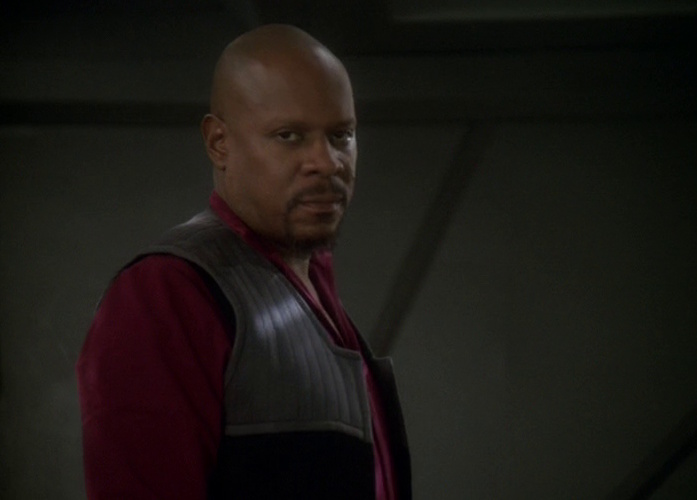
Star Trek: Discovery review – Season 3, Episode 9: Terra Firma, Part I

Spoiler Warning: There are spoilers ahead for Star Trek: Discovery Seasons 1-3, Star Trek: Picard, and other iterations of the Star Trek franchise.

I was very impressed with The Sanctuary last week. It was the kind of solid mid-season episode that helped move key story threads along while also telling a semi-standalone story of its own. Following up that success was the goal of Terra Firma, Part I.

The episode synopsis, released a couple of days before it was broadcast, seemed to suggest that visiting the Verubin Nebula – believed to be the source of the Burn – would have to take a back seat to Georgiou’s health, and so it proved. We saw a little movement toward figuring out more about the Burn, including the unexpected reappearance of the Kelpiens, but much of the story focused on Burnham and Georgiou – and it took a surprising turn.

Georgiou and Burnham on the snowy surface of Dannus V.

I’m going to go out on a limb and say that, as a Star Trek fan, stories set in the Mirror Universe have never been my favourites. As a one-off in The Original Series, the Mirror Universe was okay; a puzzle-of-the-week for the crew to figure out an escape from. But when the Mirror Universe, or Terran characters like Georgiou, are seen for any length of time, their narrative weaknesses become apparent. The Mirror Universe is fundamentally one-dimensional. Terran characters are villain caricatures, embodying all the lazy tropes of low-budget B-movies. They like power for power’s sake, violence for the sake of being violent, and the entire universe seems to consist of a single personality type that’s ham-fistedly forced into every character. Such characters are ripe for over-the-top acting performances which can leave Mirror Universe episodes feeling almost like pantomime. This is, at least in part, why Discovery Season 1 wasn’t my favourite, and why I’ve never really warmed to Mirror Georgiou since she became a semi-permanent fixture on the series.

However, despite the way I feel about both Georgiou and the setting overall, scenes set in the Mirror Universe toward the end of Terra Firma, Part I were among the most interesting for her character and for the setting. Georgiou appears to have changed far more as a result of her time away from the Mirror Universe than we’ve seen on screen. She has generally remained the flat villain stereotype she’s always been, but when returning to her home setting, cracks in that exterior were evident. Her nuanced performance was, to my surprise, the highlight of the episode.

Mirror Owosekun leads an honour guard.

Though Georgiou’s story is off to one side, unconnected to the Burn, thematically we see it link up with the rest of Season 3 – or at least begin to. Humans on Earth, the Trill, the Romulans and Vulcans on Ni’Var, and even Booker have all come to see the Federation and Starfleet as a force for good over the course of the season so far. Captain Saru very pointedly told the crew that their objective was to “make the future bright.” Admiral Vance gave Saru and Discovery a chance. Clearly all of this has rubbed off on Georgiou – far more than we’d realised.

In fact I’d argue that Terra Firma, Part I was Georgiou at the best and most interesting she’s ever been. There was nuance to her character and a depth that has never really been allowed to come to the surface before as she struggled with returning home. For a long time she’d wanted to get out of the Prime universe, but her homecoming appears to have shown her – and us – just how much she’s changed as a result of her experiences. Perhaps, despite what Kovich argued, Terrans and humans aren’t so very different after all.

Georgiou was at her most nuanced and interesting in Terra Firma, Part I.

Speaking of Kovich, he was back this week. I’m not entirely convinced that he and Section 31 aren’t in some way responsible for what happened to Georgiou – either by inflicting it or accelerating it – but he’s an interesting character and I was glad to see him make a return. Because Kovich is played by David Cronenberg I had wondered if his appearance in Die Trying would have been a one-off; it’s great that that wasn’t the case, as I think the character has more to offer. Despite my assumption that he’s part of the secretive Section 31 we’ve seen no on-screen confirmation of that, and exploring more of who he is and what his role is within Starfleet is something I’d be curious to see.

Kovich explains to Dr Culber that Georgiou’s condition is caused by having travelled through time and from a parallel universe. Doing one or the other is fine, apparently, but doing both causes a technobabble condition. As a premise I think there’s something very “Star Trek” to it, and I’m reminded of medical-themed episodes from past iterations of Star Trek, such as Deep Space Nine’s The Quickening and Enterprise’s Observer Effect. We got a reference to the Kelvin timeline as Kovich presented the only other known case of Georgiou’s condition – a soldier in the Temporal Wars who seems to have crossed over from the Kelvin timeline.

Kovich was back in Terra Firma, Part I.

Speaking of references, there’s one from last week that I forgot to mention that was included in the recap at the beginning of Terra Firma, Part I. When telling Burnham he plans to remain aboard Discovery, Book jokingly says “aye aye,” before Burnham corrects him, saying in Starfleet it’s just “one aye.” This was something we first saw in Lower Decks – no, not the new series, but the episode from The Next Generation Season 7. Whether this was intended as an oblique reference to the animated show, a callback to The Next Generation, or neither is unclear, but I forgot to mention it last week!

Kovich believes that there’s no way to help Georgiou, and that she’ll become increasingly dangerous as her condition worsens. Discovery’s computer, however, offers an alternative solution. We saw in Forget Me Not the merging of Discovery’s computer with the Sphere data, and though that particular story thread doesn’t feel particularly well-developed or explained right now, this was a continuation of that. The AI makes a recommendation that Georgiou be taken to a planet called Dannus V – described as being near the “galactic rim,” which is a term I’ve only heard in Star Wars!

Destination: Dannus V.

Kovich is sceptical of Discovery’s computer and the way it merged with the Sphere data, and Saru is initially reluctant to go. Starfleet is currently on alert due to the Emerald Chain planning military exercises, but Admiral Vance intervenes. This was perhaps the best scene we’ve had with the Admiral since his introduction in Die Trying, as he really took on the role of leader and mentor.

Vance considered the available options and ultimately sanctioned the mission, despite the low chance of success. As he counselled Saru he appeared to hint at having made mistakes in the past, perhaps mistakes which led to deaths. The line that the crew would “never look at you the same way” if he didn’t try to help Georgiou and simply let her die was outstanding, and actor Oded Fehr has been phenomenal in the role so far. We seemed to get some hinting that perhaps Admiral Vance may not survive his encounter with the Emerald Chain – there was an air of finality to his moment with Saru. I hope that isn’t going to be the case, even though the Emerald Chain’s attack is clearly being set up as a bigger event than Starfleet realises. I’ll go into this in more detail when I write up my theories, so stay tuned for that in the coming days.

Admiral Vance sanctioned the mission… but will he survive the Emerald Chain?

With the mission greenlit, Discovery jumps to Dannus V. Georgiou and Burnham head down to the planet, but not before a touching sequence as Saru and Tilly say their goodbyes to Georgiou. There’s a mutual respect – albeit grudgingly – between Saru and Georgiou. While they approach leadership in very different ways, as Saru says he has learned from her. And as we’ll see when Georgiou re-enters the Mirror Universe, she’s clearly learned from him and Tilly. The hug from Tilly was sweet, and this was perhaps the first moment where Goergiou seemed to be different. She was touched by the kindness shown to her, even if it wasn’t what she would have wanted for herself.

Burnham accompanies her to the planet – because of course she does! – which is a snow-covered plain near a forest. This was a fun sequence, and perhaps it’s because we’re so close to Christmas, but I started to feel a little bit of a holiday vibe from the location. Burnham and Georgiou are on a quest to get help – a theme not uncommon in Christmas films – and the snowcapped landscape fed into that.

Saru and Tilly part ways with Georgiou and Burnham.

If I thought the snow made for a Christmassy feel, I was in for a surprise! Burnham and Georgiou arrive at the place where the Sphere data indicated they should go, and out of nowhere a strange man appears along with a doorway. If we continue our Christmas theme, he’s the “Ghost of Christmas Past” offering Georgiou a chance to change her ways! Despite some back-and-forth with this mysterious character – who seems to know who Georgiou is and why she’s there – Georgiou readies herself and steps through the doorway. The mysterious guardian gave his name only as “Carl,” and he was played by Paul Guilfoyle, who’s an established actor perhaps best known for CSI: Crime Scene Investigation, but who’s had many roles on film and television over the years. After David Cronenberg’s appearance, Discovery is doing great for guest stars this season!

I loved this weird sequence. In addition to its Christmassy tone, there was also a distinct sense that this is something Kirk, Spock, and McCoy could have encountered in The Original Series. They always seemed to be stumbling on things like that! The weird randomness of encountering a man in 20th Century dress in the middle of nowhere with a mysterious door is the kind of slightly wacky mid-century sci-fi that The Original Series brought to the table. It’s a far cry from Deep Space Nine’s Dominion War or Picard’s Zhat Vash conspiracy; tonally it’s much more in line with older Star Trek and classic sci-fi. Having spent much of the last two seasons of Discovery dealing with some dark, complex themes, it was an interesting break; a moment of lightness that brought Star Trek back to its roots.

The mysterious Carl.

Before we look at what happened to Georgiou on the other side of the mysterious door, we need to look at the only movement we saw regarding the Burn. After another sweet scene between Stamets and Adira, they manage to decode the distress signal emanating from the Verubin Nebula. To everyone’s surprise, the distress signal was being sent by a Kelpien scientist whose ship had crashed (or become stranded) shortly before the Burn occurred.

Saru is obviously affected by this revelation; it’s the first he’s seen of his people since arriving in the 32nd Century, and while he’d heard that they had joined the Federation at some point, this is the first he’s seen of Kelpiens reaching out into space. The fact that the Kelpien – Dr Issa – was portrayed by the same actress who had previously played Saru’s sister Siranna can’t be a coincidence; they looked identical. In fact at first I thought Dr Issa was Siranna somehow and that’s why Saru was reacting the way he was. Perhaps we’ll learn that this character is a distant descendant of Saru’s family.

Saru with the hologram of Dr Issa.

Regardless, it doesn’t seem as though this Kelpien ship is responsible for the Burn. They crashed or became stranded in the nebula while looking for a “dilithium nursery,” but beyond that we don’t know. A Starfleet vessel was mentioned as being en route to rescue them, but we don’t know what happened after that. Stamets seems to think that Discovery could hack into the Kelpien ship’s internal sensors to see what’s happening on board – but we didn’t see that this week.

Finally we come to Book. He talks to Saru about the Emerald Chain’s “training” perhaps being cover for something more aggressive, and I think this is Discovery building up to a major conflict or attack on the Federation. The Emerald Chain may even attack Federation HQ. Saru was a little too dismissive for my liking, telling Book that he needs to follow protocol when his courier sources seem like they could be incredibly useful. All Saru had to say here was “good job, let me know if you discover anything else.” But instead he turned it into a weird lecture about the need to fit in and find a role, and under the circumstances it just seems that Book’s contacts could be more useful to Saru than if Book himself were to read the Starfleet training manual. Perhaps this is setting up for Book to formally join Starfleet and the crew, and that’s all well and good I suppose. But from an in-universe point of view, making use of his connections and his intel should have been Saru’s priority here. It’s not like we’ve never seen Starfleet captains talk to third parties when looking for information; there are whole episodes based around that very premise, such as The Gambit from The Next Generation’s seventh season.

Saru seemed unwilling to take Book’s help, even though it was offered and could have proven valuable.

Having covered the non-Georgiou elements of the story, we now come to the Mirror Universe. It seemed obvious that the doorway would lead her there, somehow, and she emerges having travelled back in time to the day the ISS Charon – the Terran flagship seen in Discovery’s first season – was officially launched.

So let’s talk about canon and internal consistency. Discovery has been criticised by some in the fandom for its attitude to canon. Things like holo-communicators, the Klingon redesign, Burnham’s relationship to Spock, and so on are all cited as examples of how the show has ignored or overwritten established canon. I’ve never really had a problem with that side of things, though I understand the arguments on that side. One thing we’ve always been able to say, though, is that Discovery is internally consistent – i.e. events within Discovery itself are treated with respect and not messed with or overwritten.

Mirror Stamets was alive in Season 1… so how was he killed here?

Georgiou’s scenes in the Mirror Universe challenge that. She arrives on the day the ISS Charon is being officially commissioned, meaning this takes place before Discovery – under Lorca’s command – crosses over from the Prime universe. Yet we see events depicted here that go against what we saw in Discovery Season 1, such as the death of Stamets – who wasn’t dead in Season 1 – and the betrayal of Burnham, something which happened very differently in that season.

It isn’t clear where Georgiou is, and that may have an impact on what she’s seeing. It could be taking place in her head, in a different timeline, in a “pocket” universe, or in the actual Mirror Universe. Because we don’t know, some of these issues of internal consistency get a pass. But I’m not convinced that they all should. In Season 1, we learn that Mirror Burnham is presumed dead after trying to help Mirror Lorca stage a coup. Georgiou has put the death penalty on her, but did not execute her personally. The only way the storyline of Season 1 was able to unfold in the Mirror Universe was because Prime Burnham was able to convince Georgiou that she was her Mirror counterpart – something which could not have happened if, as Georgiou suggests, she executed Michael for treason days or weeks earlier.

If Mirror Burnham was executed by Georgiou’s own hand days or weeks before the events of Season 1, that storyline could not have unfolded the way it did.

We’re seeing events from Georgiou’s perspective, and I think it’s unlikely that she’s fully travelled back in time and across the divide between universes, so we may be seeing events unfold differently because of that. And if that’s how this storyline will be resolved then that’s all well and good. I just hope they don’t leave it unexplained or imply that Georgiou saw everything exactly as it happened, because that would open up a hole in Discovery’s overall storyline, with two different versions of events in the Mirror Universe. The show has always remained internally consistent, and I hope it does so again here.

Aside from Georgiou herself, who has changed as we’ve already discussed, the rest of the Mirror Universe characters played into the trope of being pantomime villains. We got to spend time mostly with Mirror Tilly and Mirror Burnham, but Stamets and a few others were also present at the dedicating ceremony for the ISS Charon. One of the defences people often trot out for episodes like this – which see the regular cast get to play different versions of their characters – is that the actors “had a lot of fun” doing it. I have no doubt that’s true – Sonequa Martin-Green in particular seemed to be relishing her portrayal of Mirror Burnham. But that doesn’t mean it’s particularly interesting or entertaining viewing, and these characters fit the Mirror Universe stereotype of being evil-for-the-sake-of-it villains with no real motivation, backstory, or points of interest. Martin-Green’s performance as Mirror Burnham in particular was incredibly over-the-top, hammy, and ridiculous. It was, at points, like watching a production put on by schoolchildren doing their best to seem villainous and menacing.

Mirror Burnham is little more than a pantomime villain.

The exception was Georgiou, who was the Mirror Universe’s saving grace in Terra Firma, Part I. At several moments in the story she reacted as if she were her Prime universe counterpart: firstly during her conversation with Tilly, then when she interrupted to save Saru’s life, and finally when she declined to execute Burnham. I don’t want to attribute her changed behaviour to some kind of psychological condition; that would be a pretty cheap way for the storyline to conclude. I hope what we’re seeing is Georgiou realising, having spent time in the Prime universe, that there is merit in some of the Federation’s ideals. It wouldn’t be the first time a denizen of the Mirror Universe came to that conclusion: Spock also felt that way, as we saw in Mirror, Mirror.

She’s clearly not going to have a complete turnaround and become a cuddly, kind-hearted person with nothing but nice things to say to everyone. But if this change sticks around beyond Terra Firma, Part II next week, we could begin to see Georgiou as something other than flat and one-dimensional, and that would be to the benefit not just of Discovery but also the upcoming Section 31 series.

Georgiou no longer feels at home in the Mirror Universe.

If we continue our Christmas analogy from earlier, Terra Firma, Part I unfolded in some respects like the classic Dickens novel A Christmas Carol. Carl, who guarded the door, is the “Ghost of Christmas Past,” Georgiou is Scrooge, and spending time away from her reality has shown her the error of her ways. She’s learned basically the same lesson Scrooge learned – to be nicer.

The play that Stamets and the crew put on for Emperor Georgiou was interesting and certainly something different for a Mirror Universe episode. It was fun to see how people in that universe – who seem to be all about violence all the time – make time for leisure activities that aren’t just blood sports. I wonder how a Mirror Universe actor or acrobat makes a living? Do they assassinate each other – as members of Mirror Starfleet to – in order to get ahead? In a way it would be interesting to see Terran society away from Starfleet; is it as violent and brutal as we think, or is there room for other activities? Terra Firma, Part I has me thinking about all the “normal” day-to-day activities we do, and how they could be similar or different in the Mirror Universe!

The play put on for Georgiou’s entertainment.

Terra Firma, Part I ends on a cliffhanger – Georgiou opts not to execute Mirror Burnham, thus changing the timeline as she sees it. As discussed, whether this is in fact the way things unfolded or this is Georgiou’s interpretation is unclear, as is the exact nature of what we’re seeing. It could be literal time travel meaning everything is literally happening, or it could be all in her head, a holodeck simulation, a vision from a noncorporeal race like the Prophets, or anything else. For my money, I don’t think she’s been able to travel back in time and across the boundary between universes simply by walking through a door on a random planet – so we’ll have to wait and see what is really going on.

I enjoyed Terra Firma, Part I. I liked its Christmas theme, the brief moment of furthering the main story, and for the first time in a long time, I enjoyed scenes set in the Mirror Universe. Georgiou has become a far more nuanced character, and while she’s hard to fully root for, especially if she wants to reclaim her throne, she’s become kind of an anti-hero. We’re seeing the Mirror Universe from her perspective, a Terran perspective, which is rare. The last episode to do that was In A Mirror, Darkly from the fourth season of Star Trek: Enterprise.

While Carl and Burnham look on, Georgiou opens the mysterious door.

I’m looking forward to seeing what will happen in Terra Firma, Part II next week. This first half of the story has given it a solid foundation to build upon, and there are many different ways it could go. It doesn’t feel like a predictable story right now, and that’s always something I like!

Stay tuned in the next couple of days for my updated theories. There was a lot to get stuck into from this episode, so it may take a little time to get everything written out.

Star Trek: Discovery is available to stream on CBS All Access in the United States, and on Netflix in the United Kingdom and elsewhere. The Star Trek franchise – including Discovery and all other properties mentioned above – is the copyright of ViacomCBS. This article contains the thoughts and opinions of one person only and is not intended to cause any offence.
Star Trek: Discovery theories – week 8

Spoiler Warning: There are spoilers ahead for Star Trek: Discovery Seasons 1-3, Star Trek: Picard, as well as for other iterations of the Star Trek franchise.

After a couple of episodes that I wasn’t especially impressed with, Discovery came roaring back this week with The Sanctuary, a busy episode that had plenty going on. It managed to tell both a semi-standalone story as Book returned to his homeworld as well as throw into the mix several ongoing storylines.

In terms of theories, The Sanctuary gave us a lot – certainly the most movement we’ve seen in several weeks. There are two theories being retired, two more being debunked, three brand-new ones, and several significant advancements.

Debunked theory #1: There will be some kind of tie-in with the Deep Space Nine Season 2 episode Sanctuary.

Major Kira in Sanctuary.

When I postulated this theory last week I called it a “total stab in the dark,” and I’m not surprised to see it fail to pan out. Having looked through the episode a couple of times I saw no hint or reference to the Skrreeans, their mythical planet of Ketanna, or their new homeworld of Drayon II.

Because Discovery had used Unification III a week earlier to connect to the two-part episode from The Next Generation, I considered it at least possible that there might’ve been some kind of reference or callback to Deep Space Nine. It was just a thought, though, and has no real impact on the show going forward!

Debunked theory #2: The music Burnham keeps noticing is indicative of having crossed into a parallel universe.

Adira plays the melody on their cello.

We learned this week that the recurring music is connected to the signal coming from the Verubin Nebula. How, exactly, the signal managed to convey a piece of music subconsciously to half the galaxy is unknown, but it’s clearly not connected to being in a parallel universe.

This doesn’t necessarily mean that we need to abandon the idea of Burnham and Discovery having crossed into a different universe, but it does mean that the music is not indicative of that.

So those theories were debunked. Next we have two theories that I’m choosing to retire. While it isn’t fair to call either “debunked,” as there was no on-screen confirmation, the way the story has moved on is now strongly suggesting that neither will pan out.

Retiring theory #1: Booker is a Coppelius synth.

Book and Kyheem use their empathic abilities.

Though never stated outright, the origin of Book seems to be that he’s a Kwejian native. Why he chose to adopt a human name is unclear, as is what the exact nature of a Kwejian native is! Are they descended from humans or a human colony on that world? Are they a different race entirely? Book’s empathic abilities seem to imply the latter, but The Sanctuary didn’t really go into too much detail. Perhaps we’ll learn more on another occasion.

Regardless, it’s looking more and more likely that Book’s abilities are in no way meant to be indicative of a synthetic origin. While it’s technically possible we could learn, in a later story, that the civilisation on Kwejian is synthetic, I doubt it right now. And thus we can officially retire this theory.

As a side note, I don’t feel the storyline we got with Book’s background actually accomplished very much. Though Book had demonstrated his empathic abilities in his first appearance, everything else about him seemed to be human, and though learning the nature of his abilities was something I think a lot of us were curious about, the ultimate resolution to them being “he’s just a new kind of alien from a new planet” doesn’t feel especially interesting. If this was Book’s ultimate destination, why not just have him be up front with Burnham in That Hope Is You about his origins? Why go to the trouble of making us think he could be human only to change it later? It wasn’t like Book’s homeworld or race were significant to the main story of the season; if anything the scenes on Kwejian in The Sanctuary felt like a standalone story, as I noted in my review. I’m not upset about what we learned, but the way in which this story thread unfolded is just a little odd.

Retiring theory #2: Lieutenant Detmer is going to die.

Detmer in control of Book’s ship.

After a narrative that tried to touch on the broad issues of post-traumatic stress and mental health, it seems as though Detmer’s first real storyline has come to an end. The Sanctuary saw her regain much of her confidence as she took the helm of Book’s ship, and as of the end of the episode seemed happier and much more settled.

In truth we’d been seeing movement away from this theory for several weeks, but after there had been so much hinting at a possible unpleasant end to Discovery’s helmswoman in Far From Home I wanted to wait and see how it panned out before striking it from the list. We could certainly still see Detmer killed in some way, perhaps by Osyraa extracting revenge for the attack on her vessel, but if that’s going to happen it would be unconnected to her initial injuries earlier in the season. Since my theory was based on the idea that Detmer was suffering some kind of undiagnosed injury or implant-related condition, I’m now retiring it. I’m not sure how much more we’ll see of her this season now that her arc appears to have been resolved, but as above, if we get new information that again points to this being a possibility, I can always bring the theory back at that point.

So those theories have been retired. If the storyline of the season changes again, it’s possible they could come back. But as of right now they seem to be so unlikely as to no longer warrant inclusion on the official theory list. Speaking of, let’s get into the main list, beginning with those theories that are new or saw major movement this week.

Number 1: A time-travelling (or parallel universe) USS Discovery is at the centre of the nebula – and may be responsible for the Burn.

The USS Discovery in a nebula in the Short Treks episode Calypso.

This is the first of three ideas I have for the source of the Federation signal at the centre of the Verubin Nebula, and it gets to go first because I consider it to be the most likely.

Just to briefly recap, after using a combination of Starfleet black boxes and the data from a secret project codenamed SB-19, Stamets, Adira, Tilly, and Saru traced the Burn’s point of origin to the Verubin Nebula. Something within the nebula is emitting a signal, part of which was a familiar piece of music that many people in the 32nd Century are familiar with, but hidden deep within the signal was a “Federation distress signal.” Adira began the task of decoding the signal, but as of the end of The Sanctuary, the message was still hidden.

In the Short Treks episode Calypso, the USS Discovery was found abandoned in a nebula by Craft. Craft was a soldier in a war against the V’draysh; an alternate name for the Federation in the 32nd Century. Zora, an AI present aboard the USS Discovery, told Craft the ship had been abandoned for almost a thousand years, and not only have we seen the potential creation of Zora earlier this season (from a merger of Discovery’s computer and the Sphere data) but in addition, Season 3 takes place 930 years in the future from Discovery’s original 23rd Century setting. If Discovery had been abandoned at that time, things begin to fall into place.

There are two possibilities for how it could be the USS Discovery – which, of course, has not been abandoned – in that nebula: the ship will be sent back in time, or it has crossed over from an alternate timeline or parallel universe – it could have even crossed over from the prime timeline if Season 3 is itself taking place in an alternate reality!

Time travel and parallel universe stories quickly get complicated, so Discovery will need to work hard to pull this off – if indeed the story is headed in this direction.

Number 2: A familiar starship is at the centre of the nebula – and may be responsible for the Burn.

Could the Enterprise-E be hiding at the centre of the nebula?

If not the USS Discovery, then who could it be at the centre of the Verubin Nebula? How about one of the hero ships from a past iteration of Star Trek? We could encounter the USS Defiant, the Enterprise-E, Riker’s USS Titan, or Star Trek: Picard’s La Sirena among many others. If such a vessel were caught in a temporal anomaly, that would explain their presence in the 32nd Century – and if time travel is involved, from their point of view the Burn may have only just happened, instead of happening 120 years ago.

It’s more likely, though, that any ship Saru and the crew find in the nebula would be deserted so long after the Burn – either abandoned by its crew or having become their tomb. If it is a familiar ship, we could thus see the ultimate end of a significant character (or multiple characters) from a past iteration of Star Trek.

The one exception to this could be La Sirena. This would be totally out of left-field for the Star Trek franchise, and keeping a lid on a secret this big would be difficult. But it would finally accomplish something I’ve been arguing for for a while: simplifying the Star Trek franchise. If La Sirena were discovered, along with Picard and his crew, Picard Season 2 could join Discovery in the 32nd Century. I don’t consider this likely, but it would be a fascinating way for the Star Trek franchise to go!

Number 3: The Red Angel suit is at the centre of the nebula – and may be responsible for the Burn.

Dr Gabrielle Burnham’s Red Angel suit.

Of note was the fact that Tilly described the distress signal coming from the Verubin Nebula as being of “Federation” origin, not Starfleet origin. This could mean that we won’t find a Starfleet vessel there, but rather some other Federation entity.

Burnham’s Red Angel suit was last seen on Hima when she sent it back in time. She ordered the suit to self-destruct, but as we never saw the destruction on screen, what became of the suit after it sent the final Red Burst is unknown. Was it captured, intercepted, or damaged? Could someone have stolen it with a view to weaponising it? It’s at least a possibility.

If Discovery wants to present the Burn as an accident or disaster rather than a deliberate act, having the Red Angel suit malfunction could be one way of doing that. Rather than requiring a villain, the story of the season could instead see the crew unravelling a scientific puzzle, one which points to Discovery and her crew as the origin of the Burn, but in such a way that they themselves are blameless.

Obviously all three of these Verubin Nebula theories can’t be true! If I had to put money on it I’d pick the USS Discovery, but Season 3 has been an unpredictable ride, and it could easily be something entirely different that I’ve failed to predict. What I would say, though, is having set this up as something mysterious, there’s a risk the resolution could feel anticlimactic if it turns out to be a random starship with no connection to anyone on Discovery.

Number 3A: The name “Burn” is derived from the name Burnham.

Burnham in Unification III.

Connected to the theory above, if indeed the Red Angel suit is the source of the Burn, perhaps the name of the event is derived from the name of the wearer of the Red Angel suit – either Michael or Gabrielle Burnham.

As noted above with the music, the signal emanating from the Verubin Nebula has – somehow – subconsciously embedded itself in people all across the galaxy. They first heard the music that way, so what if they also heard part of the distress signal? Present in the signal could be the name of the person issuing it – Burnham. If the distress signal is connected to the Burn’s origin, at the exact moment the Burn occurred, people could have subconsciously heard the name and connected the two events.

The signal could also be the suit – or its occupant – attempting to contact Burnham.

I speculated way back when I looked at possible Burn origins before the season premiered that it was, at the very least, an odd coincidence that in a show all about Michael Burnham there’s a disastrous event called “the Burn.” Could these two seemingly unconnected things actually be related?

I stand by what I said a few weeks ago: if it is somehow Burnham’s fault, calling the event “the Burn” sounds way better than calling it “the Ham!”

Number 4: The Burn was a superweapon – perhaps one the Federation or Section 31 built.

The Burn.

The presence of a Federation distress signal at (or very close to) the source of the Burn would seem to suggest the cataclysmic event was triggered by that starship or person. While that could certainly have been an accident, it may not be. The Burn could be a superweapon – one developed by Starfleet or Section 31, perhaps designed to counter a galactic-scale threat like the Borg or the super-synths from Star Trek: Picard.

It could also have been a revenge attack; some kind of galactic-scale mutually-assured destruction. If the Federation, Section 31, or some other organisation launched an attack against someone, the Burn may be that faction’s retaliation. That would explain the lack of an invader: they were already dead.

Both Admiral Vance and Kovich have stated that they don’t know what caused the Burn, and they don’t consider any of the many theories more or less likely than others. Kovich could be lying, but Admiral Vance certainly seemed genuine. However, given how long ago the Burn was, it’s possible the knowledge of what caused it has been lost or deliberately concealed, either by Starfleet, Section 31, or whichever faction was responsible.

The Federation distress signal strongly hints at Starfleet’s involvement. So the question is this: if the Burn was a superweapon, were they the perpetrator or the target?

Number 5: The Emerald Chain will attempt to steal the USS Discovery and/or the Spore Drive.

Ryn explains the Emerald Chain’s dilithium problem to Tilly.

Ryn confided in Tilly that the reason Osyraa – the Emerald Chain’s leader – is so keen to recover him is because he knows their biggest secret: the Emerald Chain is running out of dilithium. This will undoubtedly make the faction more aggressive as it looks to shore up its position, but now that they’ve seen Discovery able to jump to Kwejian, perhaps Osyraa and her people will begin to suspect that the ship has a powerful new method of propulsion.

This connects with a theory I’ve been talking about for a couple of weeks, that Discovery’s Spore Drive will not remain a secret. Admiral Vance told Starfleet’s senior officers about the Spore Drive in Scavengers, and I picked up at least a hint that not everyone was happy about this disruption to the established hierarchy of Starfleet. Could someone within Starfleet – such as Lieutenant Willa – have passed along to the Emerald Chain details of the USS Discovery?

Even if none of that happens, with Discovery jumping all over the galaxy – to Earth, Trill, Ni’Var, Federation HQ, and the location of the USS Tikhov – how long until some other faction notices? Sensors still exist, after all, and must be pretty good and have decent range by this time period. The Ni’Var learned about the Spore Drive as well, and they are no longer Federation members. Will they keep Starfleet’s secret?

Number 6: Mirror Georgiou has been tampered with by Section 31.

Georgiou in The Sanctuary.

Surely it isn’t a coincidence that Georgiou was perfectly fine until her encounter with the mysterious Kovich in Die Trying. After undergoing a medical examination for her hallucinations/blackouts, Georgiou hacked into Discovery’s medical database and, upon seeing the results, jumped to the conclusion that she is dying.

Dr Culber told her things may not be quite that simple, and for production-side reasons I’m confident that she will survive the season – she’s due to be the main character in the upcoming Section 31 series, after all! But what caused her ailment and why it’s manifested itself now is currently unknown.

Though we only have timing to back up this theory, Kovich stated that he has a fascination with Terrans and Terran physiology, so if anyone we’ve met so far was capable of harming Georgiou, he’s our prime suspect. His uniform was different from anyone else we met in Starfleet, as was his demeanour, and I think it’s possible that he’s an agent of Section 31.

Perhaps Section 31 came to the conclusion some centuries ago that Terrans are irredeemable troublemakers, and the only thing to do is kill them. Or perhaps Kovich/Section 31 had another aim with Georgiou, such as some kind of torturous interrogation, that went awry. Or the hallucinations could have been planted deliberately so Georgiou could be manipulated into working for Section 31. There are myriad possibilities!

Number 7: Mirror Georgiou will travel back in time.

Georgiou has been hallucinating and experiencing blackouts.

One circle that needs to be squared is how Georgiou could be included in the upcoming Section 31 show – which supposedly takes place in the 23rd Century – given her presence aboard Discovery. I’ve been speculating for weeks that she might travel back in time, and perhaps now we’re getting closer to finding out why – and how.

Kovich told us that the Mirror Universe and the current universe have “drifted apart” over the centuries, and crossing over may no longer be possible. If Georgiou wanted to return to the Mirror Universe – or needed to for some reason, such as to cure her ailment and save her life – she would therefore need to travel back in time.

If she took the USS Discovery with her, this could link up with the mysterious ship in the Verubin Nebula as well as the Short Treks episode Calypso. She may even take Kovich with her; he expressed an appreciation for the Mirror Universe and may want to visit for himself.

Number 8: Discovery Season 3 is taking place in an alternate timeline or parallel universe.

“An alternate reality?”

In the past couple of weeks we’ve seen two key elements of this theory fall away: the absence of Dr Gabrielle Burnham and the mysterious music. The presence of the planet Vulcan – now known as N’Var – also removed any possibility that Season 3 is taking place in the Kelvin timeline. However, there are still reasons to think this theory may be borne out.

Burnham mentioned during her debrief that unexplained “gravitational waves” in the time-wormhole pushed her and Discovery off-course, which is why they didn’t arrive at the planet Terralysium. The acknowledgement of problems within the time-wormhole may indicate that they crossed over into a different universe or reality.

There are also hints from past iterations of Star Trek – including Enterprise and Voyager most prominently – that the Burn did not occur in the prime timeline. Discovery could ignore these as they’re all rather ambiguous, but it’s worth acknowledging their existence as we consider these things.

The second half of this theory is that the Burn happened due to the interference of a time traveller or time travelling faction. From Starfleet’s point of view, the timeline in which the Burn occurred is not the “true” timeline, and thus part of the resolution to the Burn may be travelling through time to undo it.

In previous weeks I considered the first half of this theory – the parallel universe part – more likely. The re-emergence of Dr Burnham has shaken that up, however, and now both are about equal in terms of likeliness.

So those theories are new or saw movement this week. As always, to keep everything in one place I’ll now recap the other theories that are still in play. If you want to see any of these in their original theory posts, a complete archive can be found on my dedicated Star Trek: Discovery page.

Number 9: There will be further tie-ins with Calypso (the Short Treks episode).

NCC-1031.+

I don’t believe we’ve seen the last of the Calypso tie-ins after we seemed to get the creation of the Zora AI a couple of weeks ago. However, one thing that’s definitely interesting right now is that the USS Discovery as it appeared in Calypso no longer exists. The ship was retrofitted in Scavengers, and in addition to features like programmable matter interfaces and detachable nacelles, now sports the designation NCC 1031-A.

This is important because, as you can see above, we got a clear look at Discovery in Calypso, and not only were the ship’s nacelles very much attached to the hull, the designation clearly lacks the -A addition. So how will this circle be squared? That is very much up for debate right now!

My theory is that, if indeed Discovery somehow travels backwards in time this season, the crew will very deliberately un-retrofit the ship first, removing any 32nd Century features to avoid polluting the timeline in case of accidental discovery. As mentioned, the biggest indication that this theory may be true right now is the existence of a Federation signal within the Verubin Nebula. Discovery was in a nebula in Calypso – so could this be the way the two stories intersect?

Number 10: Tilly is going to go rogue.

Tilly with Captain Saru and Adira in The Sanctuary.

One line which stuck with me from Unification III was when Tilly asked Saru if he chose her to be his first officer because he believed her to be “compliant.” He ducked the question, but it was at least hinted that he does indeed see her as someone who will do as she’s told. Having experienced the Burnham problem, perhaps that’s a knee-jerk reaction from Saru, and one which, if true, would make me question his judgement. But the line carried with it a potentially serious implication – Tilly may choose, at a certain moment, not to comply.

She may do so to assist Burnham in some way, and if Tilly were to disobey orders – as she stated she would in Scavengers when talking with Saru – I would assume it would be for this reason. But there may be something else that causes her to go rogue, following in Burnham’s footsteps. I can’t say exactly what it could be if not Burnham, but we’ve had two lines that can certainly be interpreted to say that Tilly may be less “compliant” than Saru hopes.

Number 11: The Spore Drive will become Starfleet’s new method of faster-than-light propulsion.

Discovery makes a Spore Drive jump.

SB-19, whether it caused the Burn or not, was an imperfect way to travel when compared to the Spore Drive. At present, only Discovery is capable of using the mycelial network, but that could change. What the implications of that would be on races like the JahSepp, who are native to the mycelial network, is not clear, but assuming it would be safe to use the network to travel, Spore Drives may yet be installed on all of Starfleet’s ships.

At the moment Discovery relies on Stamets as navigator; without him, accessing the mycelial network is not possible. But if, as was hinted at in Forget Me Not, it’s possible to create a non-human navigator, a major obstacle to other vessels using the Spore Drive melts away.

This theory would allow the resolution to the Burn to keep the current timeline intact – there would be no need to go back in time and undo anything, nor would there be a deus ex machina of a sudden discovery of a huge cache of dilithium. Instead, Starfleet could get back on its feet using the Spore Drive – finally finding a proper use for Discovery’s most controversial piece of technology!

Number 12: A character from a past iteration of Star Trek – such as the Doctor from Star Trek: Voyager – will make an appearance.

Robert Picardo played the Doctor in all seven seasons of Star Trek: Voyager.

As the season drags on, I must admit that there are fewer chances for this theory to come true. However, as Burnham and Discovery race to the source of the Burn, we have absolutely no idea what they’ll find. If it’s a temporal anomaly of some kind, they could encounter practically anyone from Wesley Crusher to Sybok. There have been subtle hints that the Burn may be connected to time travel, and if it is, that opens the door to practically any past Star Trek character to appear – either with their original actor or, as we saw with Dr Maddox in Picard, having been recast.

As mentioned above, if the source of the distress signal is a ship from a past iteration of Star Trek, that could introduce one or more legacy characters – dead or alive.

Before Season 3 premiered I made the case for Voyager’s Doctor – or rather, a backup copy of him seen in the Season 4 episode Living Witness – being a prime candidate for inclusion. Aside from him, other characters I suggested included Soji (or a synth who looks like her), Lore, Captain Sisko, and Enterprise’s Crewman Daniels – the latter of whom was a 30th/31st Century temporal agent. Any of these could reasonably be alive in the 32nd Century, and characters who have long lifespans or are known to have spent time in the far future are perhaps more likely to appear.

Having seen a tie-in with Picard via the appearance of the Qowat Milat, it gives me hope that Discovery will find more ways to tie itself to the wider Star Trek franchise. A character crossover is a spectacular way of doing that, and as The Next Generation showed with episodes like Relics, the passage of centuries is no barrier to such a crossover in a sci-fi world. Until the credits roll on the season finale, I’ll keep advocating this theory!

Number 13: The ships at Federation HQ represent the majority of Starfleet’s remaining vessels. And they’re all 120+ years old.

Discovery docked at Starfleet HQ.

How many ships were present as Discovery arrived at Federation HQ? Ten? Twelve? It wasn’t much more than that, that’s for sure. In a post-Burn environment, one where the Federation has shrunk considerably and where dilithium is in short supply, it’s possible that these ships are all that remain of the once-mighty Starfleet.

In That Hope Is You, Mr Sahil noted two Federation ships in flight, so perhaps we can say from his comment that there are at least two more! But I wouldn’t be surprised to learn that we’ve seen the bulk of Starfleet. Certainly the Federation seems incapable of either building any more ships nor fielding a large armada right now, which is perhaps one of the reasons why they need to keep their base cloaked.

Because of the catastrophic nature of the Burn, it also seems highly likely that shipbuilding facilities would have been damaged, destroyed, or would be inaccessible. That may mean that the Federation’s fleet entirely consists of ageing vessels, each one over 120 years old and probably not designed for being in service this long. In addition, without fuel what would be the point of expending a lot of resources building a new ship?

Number 14: Burnham’s Red Angel suit has been stolen.

Burnham’s suit departs Hima.

As mentioned above, the Red Angel suit – and possibly Burnham or her mother – could be responsible for the Burn, and could be waiting for Discovery at the centre of the Verubin Nebula through parallel universe or time travel shenanigans!

This has been a theory I’ve been pushing since Burnham sent her Red Angel suit back into the wormhole in That Hope Is You right at the beginning of the season. I was struck by a line in Die Trying: Admiral Vance described the Red Angel suit as being “inaccessible.”

Burnham goes on to say she set the suit to self-destruct, but all this did for me is reinforce the fact that we didn’t see the suit’s destruction with our own eyes. The finale of Season 2 confirmed that Pike and Spock received the final red burst in the 23rd Century, but beyond that we simply do not know what became of the suit.

Number 15: The Dax symbiont is still alive.

Ezri Dax.

This one is looking less likely, because the two locations where Dax could have appeared have both seemingly come and gone without them: most notably the Trill homeworld in Forget Me Not, but also Federation HQ in Die Trying. However, there are hints at a lifespan for Trill symbionts that may be exceptionally long, in which case Dax could very well still be alive in the 32nd Century.

Obviously we won’t see Ezri Dax (barring some bizarre time travel/stasis storyline) but the symbiont itself could have lived this long. When Adira “met” the Tal symbiont’s former hosts in Forget Me Not, one was wearing a Star Trek: Picard-era uniform, hinting that Tal may have lived 700+ years. There are production-side explanations for this Easter egg, and as stated the fact that two of the best opportunities so far to meet Dax have come and gone may mean it won’t happen this season. But I’m sticking to my guns on this one: Dax is alive!

Number 16: The ban on time travel is being flouted – possibly by secretive elements within the Federation.

Could Section 31 be engaging in illicit time travel?

Unless Admiral Vance was straight-up lying to Saru and Burnham in Die Trying, he believes that the ban on time travel is still in effect. But while he’s the head of Starfleet, he may not be in total control. Section 31 was known to be rogue, and Kovich, who interviewed Georgiou in that episode, may well be a Section 31 agent.

It’s impossible to un-invent a powerful, useful, weaponisable technology, no matter how hard you try. Considering how crappy the 32nd Century seems to be, are we convinced that nobody at all is using time travel to try to give themselves an advantage? Not the Dominion? Not the Borg? Not Section 31? Seems unlikely to me, though for production-side reasons of wanting to keep the timeline intact and to avoid overcomplicating the plot we might be told this is true!

Number 17: We haven’t seen the last of Zareh.

Zareh.

Despite being quite content to kill all of Zareh’s goons, Saru balked at the idea of killing the man himself in Far From Home. Instead, he and Georgiou let him go, sending him out into the wilds of the Colony – despite being told by the locals that that’s a death sentence. However, we didn’t see Zareh die. And in stories like these, characters like Zareh tend to pop back up looking for revenge.

So that’s it. Those theories remain in play as we get ready for the two-part episode Terra Firma. The introduction of a Federation distress signal inside a nebula seems to tie in with what we know from Calypso – an episode which has already seen elements from its story incorporated into Season 3. The smart money has to be on the USS Discovery being in that nebula – somehow. Perhaps Mirror Georgiou took it back in time and left it there for the crew to find? But if she did that, what caused the Burn?

As you can see, some of these theories can be made to fit together… kind of. But there are holes in any story I try to construct, as well as a lot of unknowns! The Federation are connected to the Burn somehow, but beyond that we simply don’t know. For all we know, the distress signal could simply be from another Starfleet vessel that was investigating the Burn rather than being connected in any way to its cause. I love how unpredictable Discovery is even as we get deeper into the season. The story could go any one of a number of different directions, and I have no doubt there are more surprises in store.

One final note: no fan theory, no matter how plausible it may seem, is worth getting upset or disappointed over. I put these lists together for fun, and as an excuse to spend more time in the Star Trek galaxy, and that’s all. If something goes completely the opposite way I was expecting, far from being annoyed or upset I revel in that. That doesn’t mean writers should make arbitrary and silly decisions, but it means I like being surprised! If we could all remember to take fan theories with a healthy pinch of salt, there’d be less conflict in fan communities.

Star Trek: Discovery is available to stream on CBS All Access in the United States, and on Netflix in the United Kingdom and elsewhere. The Star Trek franchise – including Discovery and all other properties mentioned above – is the copyright of ViacomCBS. This article contains the thoughts and opinions of one person only and is not intended to cause any offence.
Star Trek: Discovery theories – week 7

Spoiler Warning: There are spoilers ahead for Star Trek: Discovery Seasons 1-3, Star Trek: Picard, and other iterations of the Star Trek franchise.

Unification III was alright. Discovery has a problem with Burnham’s characterisation again, basically the same problem it had in early Season 1. But hopefully, now that she’s had somewhat of a breakthrough in her relationship with Starfleet, she can begin to put the worst of it behind her – and so can the series.

There were three confirmed theories in Unification III and a couple of new ones as we head into episode 8 later this week. I’m also retiring one theory that, while not officially “debunked,” now seems unlikely because of the way the story has shifted. Let’s start with what was confirmed.

Confirmed theory #1: Dr Gabrielle Burnham will make an appearance.

Dr Burnham in Unification III.

Dr Burnham’s absence was confusing earlier in the season. Where had she gone? Why hadn’t she attempted to contact Michael, Discovery, or even the Federation? Was Dr Burnham being missing indicative of Michael and the crew having crossed into a parallel universe?

We can put all of that aside now, because Dr Burnham did finally make an appearance. It wasn’t in the way any of us expected – and it was, I’m sorry to say, rather contrived and at least slightly nonsensical – but she did nevertheless show up.

Michael and Gabrielle Burnham in Season 2.

After returning to the 32nd Century for the final time following the events of Season 2’s The Red Angel, Dr Burnham crash-landed on the planet Essof IV – the place where Burnham and the crew lured her in the 23rd Century. Essof IV was a dangerous world with a toxic atmosphere that had once been used by Section 31 as a base. Following her crash there, Dr Burnham was nursed back to health by the Qowat Milat – an order of armed Romulan nuns first encountered in Star Trek: Picard. She subsequently joined the order.

Will we see her again? I’m not entirely sure. I don’t think she’s going to become a major recurring character within the series unless something changes. Her decision to remain on Ni’Var seems to suggest that. However, assuming faster-than-light communications with Ni’Var still exist – which seems to be the case – it is at least possible that Michael may contact her from time to time.

Confirmed theories #2 & #3: The Federation was already in terminal decline before the Burn; the collapse of the Federation had more to do with their response to the Burn rather than the event itself.

Federation HQ.

These two theories had been edging closer to confirmation for several weeks, and I’m happy to consider them true following the events of Unification III.

This week’s episode confirmed that the dilithium shortage, which had been ongoing since the 30th Century, put the Federation under tremendous strain, as did a conflict or series of conflicts “to uphold the Temporal Accords.” The ban on time travel may also have contributed to this decline, and it’s not unfair to say that long before the Burn struck, all was not well in the ageing alliance.

This theory was initially prompted by something simple: the number of stars on Mr Sahil’s flag. I assumed that Mr Sahil, who had never met a Starfleet officer in his life, owned a flag passed down to him by his father and grandfather – a flag from before the Burn. If stars on the flag represent planets or groupings of planets, the “missing” stars may indicate secessions from the Federation prior to the Burn.

Admiral Vance confirmed that the Federation is currently around 11% of the size it once was; 38 star systems down from over 350. However, he never stated when the “peak” of the Federation’s membership was; whether it was at the moment of the Burn or decades prior. That part is still unknown, but it’s not unfair to assume it was the latter.

Book, Burnham, and Mr Sahil stand respectfully before the Federation flag,

As for the Federation’s response to the Burn, Book told us as early as That Hope Is You that the Federation’s inability to explain what happened or to provide any practical solutions compromised the confidence of people across the known galaxy. In People of Earth, Captain Ndoye told us that United Earth kicked the Federation out, fearing the Burn was a prelude to war and that Earth would be a target. Forget Me Not confirmed the withdrawal of Trill from the Federation as well, and that they hadn’t seen a Federation starship in decades. Finally, Unification III told us of the withdrawal of Ni’Var, whose people were angered by SB-19, believing the Federation forced them to continue a dangerous project that was ultimately responsible for the Burn.

All of this evidence has stacked up for these two connected theories over the first half of Season 3, and I now think we can close the book and say that they are confirmed.

So those theories were confirmed. Next we have the theory that I’m choosing to retire.

Retiring theory: Michael Burnham will leave the series.

Burnham in Unification III.

This was always a long-shot, thinking about it rationally. Burnham has always been Discovery’s main character, and after what we saw in Unification III I’m no longer convinced that’s going to change.

In short, I had speculated that Burnham becoming more distant from the crew, missing all the on-screen bonding, spending time with Book, disobeying orders, and having learned to appreciate a new, freer way of life outside of the confines of Starfleet may have led to her choosing to resign or depart from the ship at the end of this season. That would have most likely spelled her end as a major character within the show, which could have carried on but with a focus on Captain Saru and the rest of the crew.

Discovery could have become an ensemble series based around Captain Saru.

As Burnham attended the quorum and spoke with her mother, it became clear that she was learning to work through the feelings she has about Starfleet, Discovery, and how out-of-place she has felt. Unification III began with Book very pointedly removing Burnham’s uniform; symbolic, I suggested, of his being a major factor pulling her away from the ship and crew. But it ended with Burnham more confident in her role aboard the ship, happier and more settled.

There are still issues with her character, as I’ve pointed out. Some of these – her self-centredness, her arrogance, and how she seemingly learns nothing having suffered no real consequences for her actions – make her difficult to truly get behind. Whether or not we’ll see any changes or improvements, though, I think we can consider the idea that she will leave the series highly implausible at this stage. If that changes between now and the end of the season I may re-activate this theory. But as of week 7, I’m officially striking it off my theory list.

So that theory has been retired. Now let’s get into the list!

Number 1: This week’s episode – The Sanctuary – will connect to the events of the Deep Space Nine second season episode Sanctuary.

Skrreean leader Haneek in the Deep Space Nine Season 2 episode Sanctuary.

This is a total stab in the dark, but I wonder if these two similarly-titled episodes will connect in some way. We’ve already seen Discovery use a throwback episode title this season – Unification III – so it’s at least plausible.

Sanctuary (the Deep Space Nine episode) saw a race called the Skrreeans, originally native to the Gamma Quadrant, arrive on Bajor and seek asylum from the Bajoran government. The Bajorans ultimately declined to help, as they were still in the process of recovering from the Cardassian occupation of their world, but it was an agonising decision, especially for Major Kira.

Major Kira initially welcomed the Skrreeans in Sanctuary.

How would a possible connection work? I honestly have no idea. The Sanctuary may see Burnham and the crew travel to the Burn’s point of origin, having triangulated it using the SB-19 data given to them by the President of Ni’Var. Could they encounter the Skrreeans at the origin point, perhaps? That would be a major connection. In a more minor way we could simply see the inclusion of a Skrreean character, or perhaps have someone note the location of their new homeworld – the planet Draylon II was where they ultimately settled.

It would be an interesting, if somewhat random, connection for Discovery to make to this one standalone story from Deep Space Nine. However, Star Trek: Picard set somewhat of a precedent in that regard, bringing in Dr Bruce Maddox, a character who only appeared once in The Next Generation, as a main player in its storyline. I don’t consider this theory likely, but I wanted to acknowledge the possibility. I will be on the lookout for anything related to the Skrreeans, their mythical planet Ketanna, or Draylon II when I watch The Sanctuary!

Number 2: Tilly is going to go rogue.

Saru asked Tilly to temporarily serve as first officer.

Okay, “go rogue” might be too strong. But I definitely picked up something more than mere hesitancy in Tilly this week, as she was asked by Saru to serve – temporarily, for all of you who got upset about this storyline! – as his first officer.

We have seen ensigns given command responsibilities before. Even if it’s uncommon in today’s world, it has happened on a number of occasions within Star Trek. Wesley Crusher, while still an Acting Ensign, was given command of a team in The Next Generation Season 2 episode Pen Pals, and of course Harry Kim was seen in command of Voyager’s night shift for much of the second half of the show’s run. So while it may seem odd it isn’t unprecedented, and with Discovery in a completely unfamiliar situation, Captain Saru has to take many factors into account when choosing his temporary XO. Among them is trustworthiness, having been burned by Burnham’s insubordination. And also he must account for how well everyone is acclimating to the 32nd Century, something he believes Tilly has excelled in where others have not.

Tilly and Saru.

Okay, so I’ve made a short defence of Tilly. Now into the meat of the theory! One line which stuck with me from Unification III was when Tilly asked Saru if he chose her because he believed her to be “compliant.” He ducked the question, but it was at least hinted that he does indeed see her as someone who will do as she’s told. Having experienced the Burnham problem, perhaps that’s a knee-jerk reaction from Saru, and one which, if true, would make me question his judgement. But the line carried with it a potentially serious implication – Tilly may choose, at a certain moment, not to comply.

She may do so to assist Burnham in some way, and if Tilly were to disobey orders – as she stated she would in Scavengers when talking with Saru – I would assume it would be for this reason. But there may be something else that causes her to go rogue, following in Burnham’s footsteps. I can’t say exactly what it could be if not Burnham, but we’ve had two lines that can certainly be interpreted to say that Tilly may be less “compliant” than Saru hopes.

Number 3: The Spore Drive will become Starfleet’s new method of faster-than-light propulsion.

Discovery initiates a spore jump.

SB-19 was a Federation project – led by the Romulans and Vulcans – to attempt to circumvent the galaxy’s dilithium shortage. Though Admiral Vance called it “promising,” the Ni’Var believed it was dangerous, and for more than a century considered to be the cause of the Burn. Whether they will re-evaluate that belief in light of evidence provided by Burnham is unclear, but it’s also potentially irrelevant.

SB-19, whether it caused the Burn or not, was an imperfect way to travel when compared to the Spore Drive. At present, only Discovery is capable of using the mycelial network, but that could change. What the implications of that would be on races like the JahSepp, who are native to the mycelial network, is not clear, but assuming it would be safe to use the network to travel, Spore Drives may yet be installed on all of Starfleet’s ships.

Main Engineering aboard the USS Discovery contains everything needed to make the Spore Drive work.

We saw no real movement toward that this week, other than we saw for the first time Stamets use the new interface that Adira built for him. At the moment Discovery relies on Stamets as navigator; without him, accessing the mycelial network is not possible. But if, as was hinted at in Forget Me Not, it’s possible to create a non-human navigator, a major obstacle to other vessels using the Spore Drive melts away.

This theory would allow the resolution to the Burn to keep the current timeline intact – there would be no need to go back in time and undo anything, nor would there be a deus ex machina of a sudden discovery of a huge cache of dilithium. Instead, Starfleet could get back on its feet using the Spore Drive – finally finding a proper use for Discovery’s most controversial piece of technology!

Number 4: Discovery Season 3 takes place in an alternate timeline or parallel universe.

Could all of this be happening in an alternate timeline?

We arguably saw movement away from this theory this week, as the arrival of Dr Gabrielle Burnham confirmed that she is in the same timeline, universe, and reality as Michael and the rest of the crew. Her absence had been something I argued pointed to this theory being plausible, but it wasn’t the sole argument.

One part of this theory that can be decisively debunked, however, is the notion that Burnham and the crew somehow crossed into the Kelvin timeline. The existence of the planet Vulcan – renamed Ni’Var in this era – proves that. In 2009’s Star Trek, the planet Vulcan was destroyed by Nero, so there’s no way that Discovery Season 3 is in the Kelvin timeline as we visited that planet this week.

As mentioned, though, there are still ways in which other aspects of this theory could come true. Burnham mentioned during her debrief that unexplained “gravitational waves” in the time-wormhole pushed her and Discovery off-course, which is why they didn’t arrive at the planet Terralysium. The acknowledgement of problems within the time-wormhole may indicate that they crossed over into a different universe or reality.

Did something go wrong in the time-wormhole?

There are also hints from past iterations of Star Trek – including Enterprise and Voyager most prominently – that the Burn did not occur in the prime timeline. Discovery could ignore these as they’re all rather ambiguous, but it’s worth acknowledging their existence as we consider these things.

The second half of this theory is that the Burn happened due to the interference of a time traveller or time travelling faction. From Starfleet’s point of view, the timeline in which the Burn occurred is not the “true” timeline, and thus part of the resolution to the Burn may be travelling through time to undo it.

In previous weeks I considered the first half of this theory – the parallel universe part – more likely. The re-emergence of Dr Burnham has shaken that up, however, and now both are about equal in terms of likeliness.

Number 5: A character from a past iteration of Star Trek – such as the Doctor from Star Trek: Voyager – will make an appearance.

The Doctor in Living Witness.

When the President of Ni’Var told Burnham of the impending arrival of her Qowat Milat advocate, it was clear that Unification III was setting up the arrival of an important character. On first viewing, a few Romulans from past iterations of the franchise flicked through my mind, as I mentioned in my review of the episode. Even though explaining their presences centuries later would have meant some serious semantic gymnastics, it seemed for a few wonderous seconds as though we might see Elnor, Sela, or someone significant from Star Trek’s past.

That character, of course, would ultimately turn out to be Dr Gabrielle Burnham, as we’ve already covered. And as the season drags on, I must admit that there are fewer chances for this theory to come true. However, as Burnham and Discovery race to the source of the Burn, we have absolutely no idea what they’ll find. If it’s a temporal anomaly of some kind, they could encounter practically anyone from Wesley Crusher to Sybok. There have been subtle hints that the Burn may be connected to time travel, and if it is, that opens the door to practically any past Star Trek character to appear – either with their original actor or, as we saw with Dr Maddox in Picard, having been recast.

Is Sybok coming back? I mean… no. But maybe!

Before Season 3 premiered I made the case for Voyager’s Doctor – or rather, a backup copy of him seen in the Season 4 episode Living Witness – being a prime candidate for inclusion. Aside from him, other characters I suggested included Soji (or a synth who looks like her), Lore, Captain Sisko, and Enterprise’s Crewman Daniels – the latter of whom was a 30th/31st Century temporal agent. Any of these could reasonably be alive in the 32nd Century, and characters who have long lifespans or are known to have spent time in the far future are perhaps more likely to appear.

Having seen a tie-in with Picard via the appearance of the Qowat Milat, it gives me hope that Discovery will find more ways to tie itself to the wider Star Trek franchise. A character crossover is a spectacular way of doing that, and as The Next Generation showed with episodes like Relics, the passage of centuries is no barrier to such a crossover in a sci-fi world. Until the credits roll on the season finale, I’ll keep advocating this theory!

So those theories saw movement or are new for this week. Next, for the sake of keeping everything in one place, we’ll briefly recap the remaining theories. These saw no movement in either direction this week, and while some may seem unlikely, none have been debunked so they remain on the list. If you want to check out any of them in a little more detail, you can view my earlier Star Trek: Discovery theories on my dedicated Star Trek: Discovery page. Click or tap here to be taken there.

Number 6: The Spore Drive isn’t going to remain a secret.

Burnham orders Black Alert.

The Spore Drive is an incredibly valuable piece of technology; the only known way to instantaneously jump across vast distances. Even without a lack of dilithium, it would be something everyone in the galaxy would want to get their hands on. In addition, the arrival of Saru and Discovery has disrupted the pre-existing order of the reduced Starfleet, with Saru even butting in to suggest he and his ship take on assignments Admiral Vance was dishing out to other commanders.

At the meeting of Starfleet’s senior officers in Scavengers, we saw the moment they learned about the Spore Drive for the first time. Why show us that moment if it isn’t going to be important later on? I got a sense at that meeting that not everyone was happy with this news. Will someone within Starfleet try to take control of the Spore Drive, or contact the Emerald Chain and let them know about it?

Even if none of that happens, with Discovery jumping all over the galaxy – to Earth, Trill, Ni’Var, Federation HQ, and the location of the USS Tikhov – how long until some other faction notices? Sensors still exist, after all, and must be pretty good and have decent range by this time period. The Ni’Var learned about the Spore Drive as well, and they are no longer Federation members. Will they keep Starfleet’s secret?

If the existence of the Spore Drive does become known, it could pose huge problems for Starfleet – perhaps even leading to an attack by the Emerald Chain, who are the only named antagonist faction so far this season.

Number 7: Georgiou has been tampered with by Section 31.

Georgiou and Burnham.

Mirror Georgiou was notable by her absence this week. A conversation between her and Dr Gabrielle Burnham would have been incredibly interesting to see; both competing for Michael’s attention. However, the theory that something happened to her at the hands of Section 31 remains.

It seems very unlikely to be a coincidence that Mirror Georgiou began to suffer hallucinations and blackouts after her debrief with Kovich. There was something different about David Cronenberg’s character compared with the other Starfleet officers who conducted the debriefs of Discovery’s crew. It’s at least possible to think he’s an agent of Section 31.

Is Kovich a Section 31 agent?

We saw a lot of Mirror Georgiou’s interrogation, but we missed a key point: its ending. Between what we saw of her and Kovich and Burnham’s reunion with her aboard Discovery at the end of Die Trying there was plenty of time for something to happen to her. Kovich mentioned his familiarity with Terrans; perhaps Section 31 has a specific way of dealing with Terrans that involves psychological torture.

I’m glad this storyline exists, whatever the ultimate explanation for Mirror Georgiou’s problems may be. She can be a fairly boring character, so it’s great to see her given something genuinely different to do. It also connects to a theme that we’ve seen with Detmer of mental health in Season 3, and that is also a point of interest.

Number 8: We’ll see more tie-ins with the Short Treks episode Calypso.

NCC-1031. Where’s the A?

I don’t believe we’ve seen the last of the Calypso tie-ins after we seemed to get the creation of the Zora AI a couple of weeks ago. However, one thing that’s definitely interesting right now is that the USS Discovery as it appeared in Calypso no longer exists. The ship was retrofitted in Scavengers, and in addition to features like programmable matter interfaces and detachable nacelles, now sports the designation NCC 1031-A.

This is important because, as you can see above, we got a clear look at Discovery in Calypso, and not only were the ship’s nacelles very much attached to the hull, the designation clearly lacks the -A addition. So how will this circle be squared? That is very much up for debate right now!

My theory is that, if indeed Discovery somehow travels backwards in time this season, the crew will very deliberately un-retrofit the ship first, removing any 32nd Century features to avoid polluting the timeline in case of accidental discovery. However, that’s just one of many possibilities, and with a Calypso tie-in having been seen already this season, I’m sure we’ll get something more sooner or later.

Number 9: The music Burnham keeps encountering is indicative of being in a parallel universe, simulation… or even a dream.

Burnham and Lieutenant Willa discussed the piece of music in Die Trying.

As I said when I reviewed Die Trying, it isn’t much of a stretch to think that a piece of music could be well-known across the Federation. Even though the alliance is fractured in the 32nd Century, there were over a thousand years for its various members and cultures to exchange everything from information to lullabies. However, for story reasons I understand that this piece of music is sure to be important… somehow!

One way in which this could manifest would be if the piece of music were somehow indicative of Burnham and the crew being caught in some kind of parallel universe or alternate reality, one in which somehow this piece of music was prevalent. It could even suggest that the 32nd Century setting the crew have encountered is artificial – the music could be part of a simulation or even hinting at these events all taking place inside Burnham’s head.

The latter two points in particular would not be a route I’d like to see the show go down. The “it’s all a dream” or fake-out story tropes rarely end well, and while for a single episode or two-parter (like parts of Deep Space Nine’s third season episode The Search) this can be okay, on the whole it feels like a cheap way to end a story. I don’t expect to see Discovery go down this route, but the unexplained music could indicate that the story may be headed in this direction.

Number 10: The ships at Federation HQ represent the majority of Starfleet’s remaining vessels. And they’re all 120+ years old.

Discovery arrived at Federation HQ to see a small fleet.

How many ships were present as Discovery arrived at Federation HQ? Ten? Twelve? It wasn’t much more than that, that’s for sure. In a post-Burn environment, one where the Federation has shrunk considerably and where dilithium is in short supply, it’s possible that these ships are all that remain of the once-mighty Starfleet.

In That Hope Is You, Mr Sahil noted two Federation ships in flight, so perhaps we can say from his comment that there are at least two more! But I wouldn’t be surprised to learn that we’ve seen the bulk of Starfleet. Certainly the Federation seems incapable of either building any more ships nor fielding a large armada right now, which is perhaps one of the reasons why they need to keep their base cloaked.

Because of the catastrophic nature of the Burn, it also seems highly likely that shipbuilding facilities would have been damaged, destroyed, or would be inaccessible. That may mean that the Federation’s fleet entirely consists of ageing vessels, each one over 120 years old and probably not designed for being in service this long. In addition, without fuel what would be the point of expending a lot of resources building a new ship?

Number 11: The Burn was caused by one of the Red Angel suits.

The Red Angel suits were very powerful.

There are two Red Angel suits known to exist – Michael Burnham’s and Dr Gabrielle Burnham’s. The suits are very powerful, and it isn’t a stretch to think they could be weaponised or cause some kind of accident. In an age where time travel has been prohibited, they could also be the only surviving examples of time-travel tech, or the last possible source of time crystals. If someone nefarious got their hands on a suit, they could’ve used it travel back in time and attack the Federation by destroying most of their dilithium. The name “Burn” may even be related to the name “Burnham” if this theory is correct.

As a second part of this theory, the Burn may have been caused by Dr Gabrielle Burnham or Michael herself. This might be something they indirectly did, something accidental, something they did under duress, or something they considered the least-bad option when confronted by something far worse. The idea that Michael would deliberately cause the worst disaster the Star Trek galaxy has ever seen is almost laughable… but Discovery loves to put her at the centre of every story, so there may yet be a connection.

Number 12: Someone has stolen Burnham’s Red Angel suit.

The last we saw of Burnham’s suit.

This has been a theory I’ve been pushing since Burnham sent her Red Angel suit back into the wormhole in That Hope Is You right at the beginning of the season. I was struck by a line in Die Trying: Admiral Vance described the Red Angel suit as being “inaccessible.”

Burnham goes on to say she set the suit to self-destruct, but all this did for me is reinforce the fact that we didn’t see the suit’s destruction with our own eyes. The finale of Season 2 confirmed that Pike and Spock received the final red burst in the 23rd Century, but beyond that we simply do not know what became of the suit.

It’s at least possible that someone intercepted or stole the suit before it could self-destruct. It would have to be someone familiar with the suit and who had the ability to travel or at least scan through time, but neither of those things are impossible within Star Trek. This theory could connect to the Burn itself – as we’ll look at in a moment.

Number 13: The Dax symbiont is still alive.

The Dax symbiont as seen in Deep Space Nine.

This one is looking less likely, because the two locations where Dax could have appeared have both seemingly come and gone without them: most notably the Trill homeworld in Forget Me Not, but also Federation HQ in Die Trying. However, there are hints at a lifespan for Trill symbionts that may be exceptionally long, in which case Dax could very well still be alive in the 32nd Century.

Obviously we won’t see Ezri Dax (barring some bizarre time travel/stasis storyline) but the symbiont itself could have lived this long. When Adira “met” the Tal symbiont’s former hosts in Forget Me Not, one was wearing a Star Trek: Picard-era uniform, hinting that Tal may have lived 700+ years. There are production-side explanations for this Easter egg, and as stated the fact that two of the best opportunities so far to meet Dax have come and gone may mean it won’t happen this season. But I’m sticking to my guns on this one: Dax is alive!

Number 14: Lieutenant Detmer is going to die.

Detmer in People of Earth.

The past three episodes haven’t really expanded Detmer’s storyline much. However, she still appeared not to be fully-recovered the last time we saw her.

I maintain that we’ve seen hints at a possible premature end to Detmer – and that includes the fact that she’s been given a storyline of her own for the first time! In Far From Home she appeared injured, and despite being given a clean bill of health from the doctor, seemed to still be suffering some kind of implant-related injury. Admiral Vance noted in Die Trying that her “baselines are unsteady, to put it mildly.” Is that a reference to her mental health? Or a more oblique reference to her overall health being in terminal decline?

Number 15: Booker is a Coppelius synth.

Book has many abilities that some consider to be… unnatural.

The abilities Book had in That Hope Is You – including strange glowing spots which could be technological in origin – are still unexplained. Burnham may well know more about Book, having spent a lot of time with him over the past year. But for us as the audience, Book is still a mystery. Thematically, his relationship with Grudge mirrors Data’s with Spot, which could be another hint. It’s possible Book is an enhanced human, or even an alien from a different race. But his abilities could be indicative of a synthetic origin, and if he is a synth, he could be part of a civilisation founded on Coppelius in the late 24th Century.

Number 16: The ban on time travel is being flouted – possibly by secretive elements within the Federation.

Could Section 31 be running a covert time-travel operation?

Unless Admiral Vance was straight-up lying to Saru and Burnham in Die Trying, he believes that the ban on time travel is still in effect. But while he’s the head of Starfleet, he may not be in total control. Section 31 was known to be rogue, and Kovich, who interviewed Georgiou in that episode, may well be a Section 31 agent.

It’s impossible to un-invent a powerful, useful, weaponisable technology, no matter how hard you try. Considering how crappy the 32nd Century seems to be, are we convinced that nobody at all is using time travel to try to give themselves an advantage? Not the Dominion? Not the Borg? Not Section 31? Seems unlikely to me, though for production-side reasons of wanting to keep the timeline intact and to avoid overcomplicating the plot we might be told this is true!

Number 17: The Burn was a superweapon – perhaps one the Federation or Section 31 built.

The Burn.

We learned in Die Trying that the Federation – at least, according to Admiral Vance and Kovich – doesn’t know what the Burn is or what caused it, even though the Vulcans and Romulans told us in Unification III that they consider a covert project called SB-19 to be responsible – something Burnham appears to have disproved. One possibility that I considered when I looked at some possible causes for the Burn before the season kicked off was that it was the result of a superweapon.

Assuming Vance and Kovich are telling the truth, it wasn’t a Federation superweapon. However, it’s possible that the knowledge of such a crime was covered up, or that the secretive Section 31 was responsible but never told anyone else. It’s also possible that some other faction – perhaps the Borg, the Dominion, or the super-synths from Star Trek: Picard – are directly responsible. The latter point raises a strange question, though: if the Burn was a weapon, and it succeeded in its goal of decimating the Federation (which it clearly did), why did whomever is responsible not capitalise on that success? Where was the invasion that should surely have followed? The galaxy may be in disarray, but it clearly has not been conquered by any of these factions… so if the Burn is a weapon, what was the point?

It may have been a revenge attack; some kind of galactic-scale mutually-assured destruction. If the Federation, Section 31, or some other organisation launched an attack, the Burn may be that faction’s retaliation. That would explain the lack of an invader: they were already dead.

Now that Burnham has what she needs to pinpoint the Burn’s point of origin, perhaps we’ll learn more.

Number 18: Mirror Georgiou will travel back in time to the 23rd Century.

Georgiou in Scavengers.

Whatever may be the ultimate explanation for her hallucinations and blackouts, Georgiou was not planning to travel to the 32nd Century; she was aboard Discovery when it left due to fighting Leland/Control. She has expressed her appreciation for the chaotic, “free” nature of the future, but there could be a reason for her to travel back in time. Not least because she’s supposed to be the main character in the upcoming Section 31 series which is meant to take place in the 23rd Century!

There could be a reason for Georgiou to travel back in time, but if she’s to work with Section 31, the main one I can think of would be to warn Starfleet about the Burn and give them time to prepare and/or prevent it. She may also want to try to return to her own universe – something Kovich told her is impossible in the 32nd Century due to the two universes “drifting further apart.” Her decision to leave the 32nd Century may also be related to her mental health/hallucinations.

Number 19: We haven’t seen the last of Zareh.

Zareh.

Despite being quite content to kill all of Zareh’s goons, Saru balked at the idea of killing the man himself in Far From Home. Instead, he and Georgiou let him go, sending him out into the wilds of the Colony – despite being told by the locals that that’s a death sentence. However, we didn’t see Zareh die. And in stories like these, characters like Zareh tend to pop back up looking for revenge.

So that’s it. Those are the remaining theories as we head into The Sanctuary. Despite having considered many possible options for what the Burn could be and what its ultimate origin is, I can honestly say right now that I have no idea what’s about to happen. Will Burnham learn the Burn’s origin next week? I don’t know that either. Discovery has done a great job keeping the Burn a mysterious event, and even now that we’re into the second half of the season, its true nature remains unknown.

One final note: no fan theory, no matter how plausible it may seem, is worth getting upset or disappointed over. I put these lists together for fun, and as an excuse to spend more time in the Star Trek galaxy, and that’s all. If something goes completely the opposite way I was expecting, far from being annoyed or upset I revel in that. That doesn’t mean writers should make arbitrary and silly decisions, but it means I like being surprised! If we could all remember to take fan theories with a healthy pinch of salt, there’d be less conflict in fan communities.

Star Trek: Discovery is available to stream on CBS All Access in the United States, and on Netflix in the United Kingdom and elsewhere. The Star Trek franchise – including Discovery and all other properties mentioned above – is the copyright of ViacomCBS. This article contains the thoughts and opinions of one person only and is not intended to cause any offence.
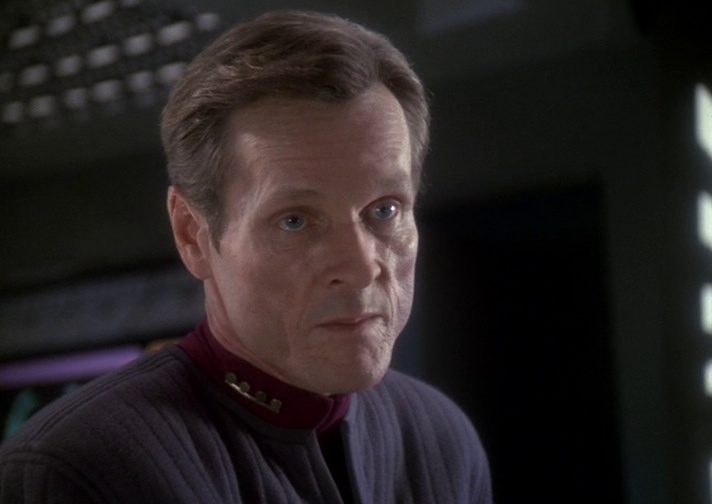
Star Trek: Discovery review – Season 3, Episode 6: Scavengers

Spoiler Warning: There are spoilers ahead for Star Trek: Discovery Seasons 1-3, Star Trek: Picard, and other iterations of the Star Trek franchise.

Welcome back to another Star Trek: Discovery episode review. Time really flies, doesn’t it? We’re practically halfway through Discovery’s third season already; six episodes down, seven remaining! It seems like yesterday that we were theorising and speculating in the run-up to the season premiere! Where does the time go?

Season 3 has been enjoyable so far. The main mystery at the core of the series – the Burn – remains a driving force for much of the story, but its origin is still unknown, and finding some way of fixing the damage done seems a long way off. Scavengers brought us a macguffin that may help in that regard… but at the cost of a story for Michael Burnham that dragged her, almost full-circle, back to the self-centred, arrogant character we met at the beginning of Season 1.

Burnham in the Season 1 premiere.

Though I didn’t enjoy Season 1’s two-part premiere, the rest of the season went some way to making up for some of its wrongs. The attempted character arc for Burnham started on far too negative a note for my liking, but by the end of the season she had rediscovered her faith in Starfleet and the promise of the Federation. This continued into Season 2, where she put others first and ended up saving the galaxy. By this point in Discovery’s run, Burnham had changed… or so it seemed.

The beginnings of this undoing of her growth had been laid in Far From Home and expanded upon in People of Earth, when we learned Burnham had spent a year in the 32nd Century before Discovery’s arrival; a year in which she developed an appreciation for a life outside the confines of Starfleet that allowed her the freedom to go where she wanted and pursue leads on the Burn in the manner she saw fit. Clearly this wasn’t compatible with a return to serving under someone else’s command. I had been speculating for a couple of weeks that this storyline was perhaps setting up Burnham’s departure from Discovery. That may yet be true, but in the immediate term we have to deal with her selfish decision to disobey orders.

When Discovery arrived in Far From Home, Burnham had already been in the 32nd Century for a year.

While I may be in the minority on this, I see this as a cheap recycling of the worst part of Burnham’s first-season storyline, and that just isn’t what I wanted – or expected – from Season 3. Discovery is repeating its biggest mistake from back then: telling us that Burnham was right to do what she did because the ends justify the means. Is that the message Star Trek has always tried to teach?

If this was the first time she’d behaved in this way, I think I’d have come away from Scavengers with my heart breaking for the tough choice she made: deciding to do what she felt was right even if it went against her orders. But it isn’t the first time we’ve been down this road with Burnham, and aside from the repetitive storyline, it makes me feel she learned nothing. At her core, she’s still the same arrogant wannabe-captain who thinks she knows better, and that because of how unique and wonderful she is the chain of command should not apply. These were Burnham’s worst character traits in Season 1, and apparently they’re back again in Season 3.

For that reason alone, Scavengers is currently my least-favourite episode of the season.

Burnham commandeered Book’s ship for her own purposes in Scavengers.

Let’s get into the rest of the story, then. Despite my gripes with the way Burnham’s storyline was handled, Scavengers was otherwise a decent episode, one with plenty of action, some interesting upgrades to Discovery itself, and the return of Book – and Grudge! There’s plenty to enjoy, and despite his limited screen time I want to single out Doug Jones’ performance as Saru, which was once again intensely emotional.

Scavengers begins with a truly impressive CGI sequence showing Discovery’s retrofit. Saru notes in a voiceover (that soon merges neatly into a briefing he’s participating with senior Starfleet officers) some of the changes to the ship: the integration of programmable matter, detachable nacelles, and a host of other upgrades which presumably bring the 930-year-old vessel up to 32nd Century specs. No longer will she be outgunned against the likes of the “Emerald Chain” – the Andorian-Orion alliance first named last week, and who may be in charge of the Hima trading post Burnham visited in That Hope Is You.

Discovery’s retrofit.

Discovery is also given an updated number: NCC 1031-A. Although I don’t doubt some fans will argue over whether retrofitted ships are renumbered (the Enterprise wasn’t in The Motion Picture, for example) for me personally this worked well. Season 3 – despite my complaint about Burnham’s characterisation above – has been a soft reboot of Discovery in many ways, including of course the new 32nd Century setting. The renumbering and retrofit of the ship is symbolic of this break with the show’s past – even if the interior of the ship has been left more or less the same from a visual standpoint.

I can also foresee detached nacelles being controversial among Trekkies, particularly those who goggle over starship design! On the surface it doesn’t seem to make sense; how can the nacelles propel Discovery to warp if they aren’t physically connected to the ship? The answer, no doubt, lies in forcefields, tractor beams, warp bubbles, or some kind of technology to keep the nacelles bound to the ship even when they aren’t physically connected. It does make me wonder, though… if the ship were to lose all power, would the nacelles just float away? Can the nacelles go to warp independently? Maybe this is setting up a future episode where Discovery’s nacelles get stolen!

Discovery’s new detachable nacelles.

Compared to Star Trek’s past “hero” ships, Discovery has always had a somewhat clunky design. The saucer has long been my favourite part, with its spinning rings, and the “neck” and star-drive section have these sharp lines that definitely succeeded in Season 1 of indicating that this was a pre-Original Series ship. The detachable nacelles give the star-drive section a bit more visual interest, not least because that concept is something we’ve never really seen before. Overall the changes glimpsed in this opening sequence are positive – iterative improvements to Discovery without launching into an all-out retrofit like the original Enterprise saw. I look forward to seeing Discovery in action soon, as this week we only saw her in dock.

While we’re looking at little details, Saru is the first Discovery character to don the new 32nd Century Starfleet badge in place of the simpler Original Series-inspired gold emblem the crew have worn since Season 1. The rest of the crew will get their badges in a scene we’ll look at in a moment, but purely as an aesthetic, I quite like this design. As above with the ship’s retrofit, this feels like Discovery taking another step to reboot itself, symbolically moving away from Seasons 1 & 2. The badge itself is an oval shape, one that reminds me at least a little of the Bajoran combadges sported by Odo and Kira in Deep Space Nine. It keeps the familiar Starfleet logo (or Delta) but splits it cleanly in two – perhaps a metaphor for the fractured Federation? In addition, the badges show rank – in Saru’s case, four pips indicate he’s a captain. This idea isn’t new, and we’d seen combadges that could show rank in some episodes of The Next Generation that were set in alternate timelines. Taken as a whole, there are inspirations from across the wider Star Trek canon, but above all the badges look great.

Saru’s new combadge.

Several of the other Federation captains and/or flag officers learn about the Spore Drive at this meeting with Saru and Admiral Vance; its existence is to remain a secret on Vance’s orders. I picked up the smallest of hints here that maybe some of the other Starfleet officers present weren’t happy with the Spore Drive – for whatever reason – and we’ll look at that theory in more detail in the coming days!

Saru tells Admiral Vance that Burnham is in charge of re-training the crew and helping them acclimate to the 32nd Century; this process has been ongoing for three weeks or so, along with the retrofit of the ship. It would have been nice to see some of that – even just in a montage – as it would have helped us get to really see how the crew feel about their new situation. Saru tells us that they’re adjusting, but as I’ve said on a couple of occasions already this season: show, don’t just tell!

The senior officers’ meeting, chaired by Admiral Vance.

The crew get their new badges in the next scene, and we learn how far technology has come! In addition to being combadges – which are already new to the 23rd Century Discovery crew – the badges are holo-projectors, padds, tricorders, and personal transporters! All those devices are now rolled into one, which is pretty cool! Star Trek’s technology has always been influenced by current trends, and what we see today with the likes of smartphones is the condensing of multiple tools into one piece of kit. This is reflected by Discovery in these new badges, and I think we all feel what Tilly says aloud: “this is my new favourite thing!”

This sequence also featured some of the bridge crew getting to grips with some of the new features, including programmable matter. The Detmer storyline may have been advanced off-screen, but she clearly isn’t 100% back to normal, still suffering the lingering effects of her injury and mental health issues. Random Blonde Bridge Officer – who last week we learned is called Lieutenant Nilsson – gets another line here, as Linus the Saurian mistakenly arrives on the bridge via his personal transporter; this would be a recurring joke throughout the episode, and although it was silly, it was definitely funny. Scavengers had several great moments of humour like that, but it’s just nice to see the wider crew having some screen time. I’ve written previously that expanding the characters who are in play is something I’d like to see Discovery do, and this was a short sequence, but they all add up.

Owosekun gets to grips with the new programmable matter interface on the bridge.

Book’s ship makes a surprise arrival, kicking off the Burnham plot. The ship has arrived on autopilot, and Book tells Burnham via a recorded holo-message that he’s gone in search of a Federation black box. She takes this to Saru, as finding the black box might help them triangulate the original source of the Burn – perhaps allowing them to figure out what caused it. Saru, however, has his orders from Admiral Vance about the need to be ready to jump to another system, and tells Burnham that her idea of chasing after Book will have to wait.

It was patently obvious from this scene what Burnham was going to do next – just as it became apparent from her conversations with Sarek in the Season 1 premiere that she was similarly going to go rogue. Burnham had already decided that what she wanted to do was more important, and being unwilling to follow the chain of command or be patient and wait perhaps 12 hours, she immediately schemes with Georgiou. I don’t always like Mirror Georgiou – she can feel flat and one-dimensional – but here she actually acts as the voice of reason, telling Burnham she’ll be potentially doing harm to Saru and the whole crew by rushing off half-cocked. It was a change of pace for her, no question, but one that worked well at the outset of a storyline that otherwise didn’t. I particularly liked Georgiou’s line referencing Burnham’s Season 1 mutiny having “a very familar ring.” It was written beautifully and delivered with perfection.

Burnham and Georgiou scheme to disobey Saru’s orders.

After the opening titles, we immediately see Burnham and Georgiou aboard Book’s ship in flight. For story reasons, Book’s ship kind of had to be present, but in a galaxy lacking in fuel for warp travel, couldn’t he have transmitted Burnham a message some other way? Admiral Vance did mention that some of Starfleet’s subspace relays were not working, but it hasn’t been conclusively established that all faster-than-light communication doesn’t work. It just seems odd that someone as concerned with dilithium supplies as Book would send his entire ship in search of Burnham. There’s also the question of how far from Earth Federation HQ is located; Book was last seen in the vicinity of Earth.

Those are nitpicks, but in a story which generally didn’t work very well, I find myself more inclined to pick at elements I might’ve overlooked in a better episode!

This sequence continues something we saw last time – there’s something wrong with Georgiou. She appears to zone out while Burnham talks to her, as we saw her do at the end of last week’s episode. This is definitely something which has potential, adding a new dimension to an otherwise flat character. The writers seem to want us to infer that whatever is happening with Georgiou is related to her interrogation last week by the Starfleet officer (played by David Cronenberg) who may be working for Section 31. It seems too much of a coincidence that she suddenly developed a repressed memory or other psychological ailment immediately after that event and have the two be entirely unrelated – but at this stage we don’t know.

Georgiou is hallucinating.

This new storyline opens up new possibilities for Georgiou, no matter what the ultimate cause of this hallucination turns out to be. Her initial appearance as the Terran Empress in Season 1 was purely for shock value – and it worked. But after Burnham “saved” her and brought her aboard Discovery she’s been rudderless. Assigning her to Section 31 was actually a sensible use of her unique perspective, but even so as a character she has no nuance or depth; I once called her a “23rd Century Heinz Doofenshmirtz,” i.e. a childish cariacture of a villain. However, the possibility that she’s been brainwashed, tampered with, or is suffering some kind of illness or the reappearance of repressed memories could take her in different directions and to new places.

If Starfleet, led by Kovich, has done something to her, I would expect to see her seek revenge, and that in itself could be an interesting storyline. This may even set the stage for her working against Starfleet’s interests, or, as I’ve been theorising, travelling back in time to the 23rd Century in time to link up with the Section 31 series that’s currently in production and is supposedly set in that era. In short, this storyline opens up numerous possibilities for a character I’ve never been particularly keen on within the show to actually do something different and interesting. I’m all for that!

Part of Georgiou’s hallucination.

While Burnham and Georgiou travel to a junkyard planet and talk their way to the surface, Tilly realises Burnham is absent. For the first time this season – and perhaps for the first time since Reno joined the crew in Season 2 – Tilly is used as some light-hearted comic relief. I adored her scene with Grudge in her quarters as she realised Burnham is missing; I was laughing out loud as she asked Grudge “did you eat her?!” That was perhaps the funniest line of the season so far. Tilly is a great character for comedic purposes; Mary Wiseman has great timing and delivery. However, I’m glad she’s not just been a comic character this season.

Her scene with Saru in engineering was interesting. Of note was the fact that she didn’t go to her captain to let him know Burnham is missing right away; he had to track her down and ask. Though the scene was short, any time Saru and Tilly are together makes for great television, particularly after their bonding in Far From Home. Saru once again demonstrates how good of a captain he is, telling Tilly he doesn’t believe she would do the same as Burnham did (i.e. disobey orders) in the same situation. This gentle mentoring of his crew is something we’ve seen Saru do at several key moments. Without being aggressive or dictating orders, he’s shepherding them to make the right decisions for themselves. Tilly would not do what Burnham did, not only because she’s better than that but because she wouldn’t want to let Saru down. He’s instilling in the crew a respect for his authority in a different way; not simply relying on rank, nor on his strictness, he’s building a genuine rapport with officers like Tilly.

Tilly and Saru in Main Engineering.

As Admiral Vance points out later, Saru failed with Burnham in that regard. Not only that, but I felt Admiral Vance was absolutely fair to point out to Saru that he should have told his superior about Burnham and Book’s information; even if they couldn’t have undertook the mission immediately it may have been worth the risk very soon thereafter. Vance impresses on Saru that he’s not happy, but in a not dissimilar manner to Saru does so in a calmly angry manner. I stand by what I said last week: the casting for Admiral Vance was inspired.

But we’ve raced ahead almost to the end of Scavengers! The junkyard location was aesthetically interesting, but I didn’t really get a sense of being in the “far future.” Perhaps that’s the work of the Burn setting things back, but even so the facility seemed rather present-day in some respects. I also got a bit of a Star Wars vibe, as the junkyard reminded me a little of some locations in that franchise. It was interesting to see some of the salvage at the junkyard; I spotted a 24th Century phaser, which was a nice touch, and the return of the self-sealing stem bolt was low-key hilarious to Trekkies!

The 24th Century phaser.

Burnham and Book are reunited; Book having been captured while searching for the black box. I can’t help but feel that Book’s side of this story is the part I’d rather have seen – searching for the black box on a dangerous world and ultimately getting captured by Andorian-Orion slavers seems like it has the potential to make for an exciting Book-centric episode. However, that’s not what we got!

It’s apparent from Scavengers that Burnham and Book’s relationship progressed far more than she let on. Whether they were ever an “official item” is not clear, but there are strong feelings reciprocated by both parties. As I said a few weeks ago, giving Burnham a love interest has the potential to humanise her and blunt the edge of some of her less-attractive character traits; ironic, considering what happened in Scavengers amplified those same traits as she raced off to rescue him!

Book and Burnham at the junkyard.

The escape from the junkyard was tense, exciting, and action-packed. The junkyard’s security system utilises a head-exploding technology – one which Georgiou was able to disable using a macguffin that seemed to consist of two pieces of junk from the facility itself, which doesn’t seem all that secure. But as a concept it was interesting, and made Book’s escape seem implausible.

Book’s Andorian friend Ryn was an interesting character. At first I was sure he was going to meet his end at the junkyard; the story seemed to be setting him up as the sacrificial lamb to allow Book’s escape. When he was shot during the slaves’ escape it was a saddening moment, but not one that was entirely unexpected. What was a surprise, however, was Ryn’s subsequent survival. Has Book acquired a new permanent ally, or will we never see Ryn again? I’d be interested to learn more about him, and if one part of the season’s Starfleet storyline will involve a conflict with this Emerald Chain faction, perhaps Ryn will prove useful. We’ll have to wait and see, but as a character he has a lot of potential. I’m glad he made it!

Ryn the Andorian.

I think I’ve hit most of the points I wanted to about the junkyard, which is where most of the action took place this week. It was an interesting setting, freeing the slaves was suitably tense and exciting, and it gave Georgiou and Burnham a chance to catch up. None of that was problematic, and if I were to criticise one part of the junkyard storyline it would be to say that the main Orion villain – Tolor – was bland and uninteresting; a cardboard cut-out who was only there to give Burnham, Book, and Georgiou an antagonist. The rest of it was fine, and even managed to be a combination of exciting and interesting.

Were it not for the way this had been set up, with Burnham’s total regression to her Season 1 characterisation, I would have enjoyed all of the junkyard sequences a lot more. To be clear, it’s no criticism of Sonequa Martin-Green, who always gives her all when portraying Burnham, but in this case I’m not sold on this kind of storyline for her. It recycled the worst parts of what she did in Season 1 that, for me at least, made her very difficult to root for as a protagonist. Maybe Scavengers is setting up something greater for her in future, but even if that’s the case I come back to the same argument I had against Burnham in Season 1: making your protagonist unlikeable through dumb, arrogant decisions is not the way to an inspiring character arc. It’s absolutely possible to show a character make mistakes, learn from them, grow, and for that story to be engrossing, entertaining, and inspiring. But you don’t accomplish that by making your main character arrogant and self-centred, and you certainly don’t accomplish it by dragging your main character back and undoing two years’ of positive growth.

Georgiou and Burnham aboard Book’s ship.

At the close of the episode, after he received a dressing-down of his own from Admiral Vance, Saru tells Burnham her services as his first officer will no longer be required. This scene was emotional, and it’s hard not to feel for Saru as his heartbreak at Burnham’s selfishness was plain to see. He put his trust in her – twice – and she’s taken advantage of that. We can absolutely entertain the argument that Saru trusts her too readily, but this is all on her. I liked the idea of Burnham as Saru’s first officer when she first took the position in People of Earth, but after a mere three episodes she’s thrown it away again. He certainly can’t offer it to her again; as a story point that would be too unbelievable, even setting aside the in-universe way Saru must be feeling. And if any Discovery fan was under any illusion that Burnham should ascend to the captaincy herself, well I think it’s fair to say that Scavengers demonstrates why she won’t.

Her line to Saru that he’s doing the right thing was unwarranted, and again feeds into the (unintentional) narrative that Burnham is incredibly arrogant. He’s already made his decision as captain to strip her of the first officer’s post, yet she feels the need to give him her opinion. Are we meant to feel that she’s being logical and looking at the situation objectively? That if the roles were reversed, she knows she would have to fire her first officer? Because it doesn’t come across that way. It comes across as Burnham trying, once again, to put herself at the centre. It’s not about Saru’s decision any more, it’s about Burnham, and what she would have done in his place.

Saru strips Burnham of her role as first officer.

I thought Discovery was over this. The warning signs of a Burnham obsession have been present this season, as she’s been forced into roles in two episodes that were better-suited to other characters, so I should certainly have been prepared for something like this. But that doesn’t make it any less disappointing. If Burnham were a side character, a secondary character or someone less important to the series, I think what happened this week would be more acceptable. But she’s the main protagonist, the character we’re supposed to root for and support no matter what. After two-and-a-half seasons, I was there. I was a Burnham supporter. But seeing her like this again: self-centred, insubordinate, and believing that because she’s special that everyone needs to do what she wants, when she wants, felt like being at the start of Season 1 again.

I’m confused. Discovery has given us a protagonist it wants us to support, but it’s going out of its way to make her as unlikeable as she was back then. How are fans supposed to get on board with this version of Burnham? What’s confusing is where the show goes from here. On the one hand we have Saru and the rest of the crew, getting to know their retrofitted ship with its fancy new technology. There’s a real chance they can help bring the Federation together, and that’s a story I truly want to see. But what of Burnham? What role does she have now? Maybe she’s found some clue in this black box that will begin to unravel the Burn, but even if she has, can we trust her to stick with the crew as they chase down this mystery? And more importantly, for such an arrogant and selfish person, do we want to see her help? Do we want to see this victory become her victory? I’m not sure any more.

Burnham loses her role as Saru’s first officer.

I missed out the whole Stamets-Adira bonding, and I did want to compliment the writers on those sequences. Adira and Stamets have a lot in common, and it was great to see them both reaching out for each other. I’m glad Adira has someone to talk to about Gray, and Stamets is kind and understanding. It was nice to see him take her under his wing.

Speaking of Stamets, we also got a brief scene between him and Culber. Fixing their relationship was on my wishlist for the season, and it seems to have happened. I’m so glad, because their cute relationship can be an emotional anchor for the otherwise fast-paced, action-packed Discovery.

So that was Scavengers. Overall, a mixed bag. The scenes aboard Discovery were great. Tilly got to step back into her comic shoes for a short time, Saru was on fine form as captain, Adira and Gray got some screen time, the bridge crew got to grips with the retrofitted ship, and as mentioned, Stamets got moments with Adira and Culber. But the main focus of the episode was Burnham and her incomprehensible decision to put herself first, to ignore the chain of command, and to arrogantly and unilaterally decide that what she wanted was most important. I can’t support that or get behind it, and if Discovery continues with Burnham in this fashion it’s going to be a difficult watch over the next few episodes.

The new combadge.

Above all, I’m disappointed that we seem to be back in the same place we were at the beginning of Season 1. Discovery improved in leaps and bounds in the intervening two-and-a-half seasons, but right now there’s a real risk of much of that growth – at least as far as Burnham is concerned – being undone.

I’m a little anxious about what Unification III will bring. Hopefully it can begin the task of repairing the damage done to Burnham this week, or perhaps sideline her and tell a different story utilising other members of the crew. A continuation of this trend will be unfortunate.

Star Trek: Discovery is available to watch now on CBS All Access in the United States, and on Netflix in the United Kingdom and elsewhere. The Star Trek franchise – including Discovery – is the copyright of ViacomCBS. This article contains the thoughts and opinions of one person only and is not intended to cause any offence.
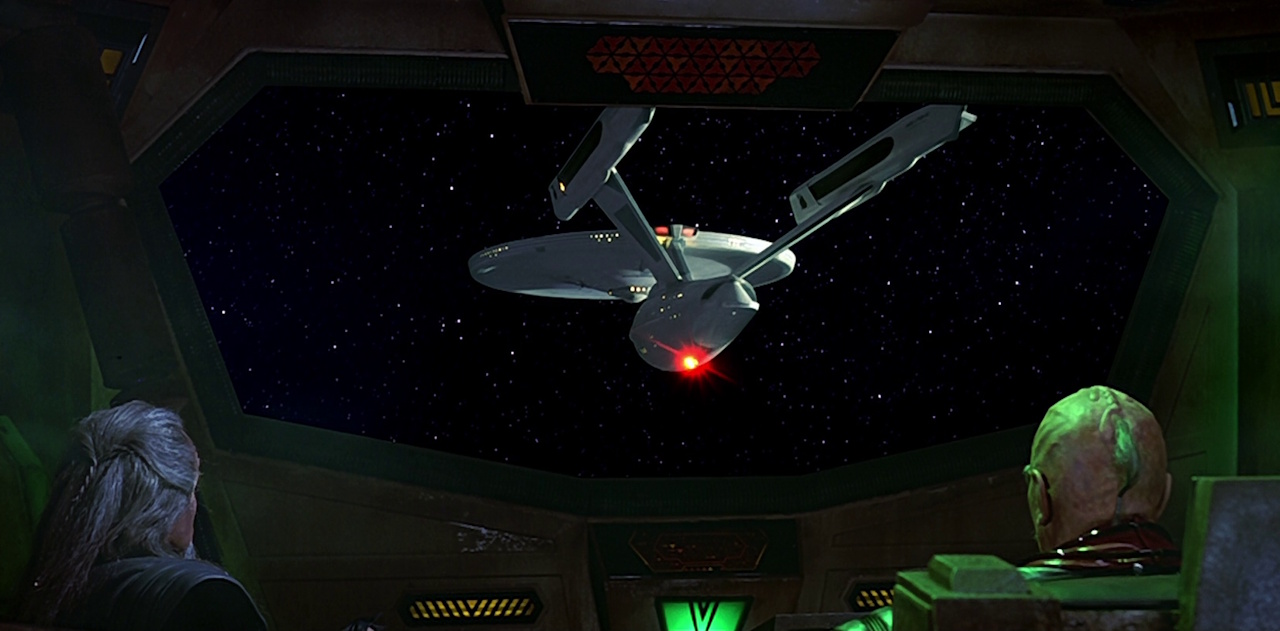
Star Trek: Discovery theories – week 5

Spoiler Warning: There are spoilers ahead for Star Trek: Discovery Seasons 1-3, Star Trek: Picard, and for other iterations of the Star Trek franchise.

I had a good time with Die Trying overall, and it feels as though Discovery is now moving into the second phase of Season 3’s storyline. The first phase has been about laying out the landscape of the 32nd Century and looking for the Federation, and having now found the Federation I imagine we’ll start seeing stories which begin to pull at the threads of the season’s biggest mystery: what is the Burn?

Die Trying gave us several new theories. It also debunked one of the possible causes for the Burn that I had posited before the season premiered. Let’s look at that first.

Debunked theory: The cause of the Burn is related to stars and coronal mass ejections.

A real-world CME detected by NASA in 2012.

In the second Season 3 trailer I spotted a brief clip of Stamets, Tilly, Reno, and the new character who we now know is Lieutenant Willa talking about coronal mass ejections. A screen that Tilly and Stamets were working on had the words “CME Detected” on it, and I theorised that perhaps this was somehow related to the Burn.

Because a coronal mass ejection involves a star shooting burning plasma into space, it certainly seemed like a possibility for an event known as “the Burn.” Michael Burnham’s explanation of the Burn being an event that destroyed dilithium and caused warp cores to explode certainly put a damper on this idea a couple of weeks ago, but I felt that there was still the possibility of a connection to CMEs and stars, and at the very least I wanted to see this scene in its entirety before calling the theory debunked.

The frame from the trailer that I picked out for this theory.

Die Trying contained this scene, and the CME that the crew were investigating had nothing to do with the Burn, but was instead connected to their investigation of the USS Tikhov – the seed vault ship.

This is our second major Burn theory to fall; the first was that it was the opening salvo of a war or invasion. As it’s been 120 years since the Burn (according to Admiral Vance in Die Trying) we can say for sure that no war or invasion took place in the immediate aftermath. So that’s two theories down!

So that theory was debunked in Die Trying. We have no confirmed theories this week, so now we’re going to jump into the main theory list, beginning with those that were new or advanced in this week’s episode.

Number 1: The music Burnham keeps encountering is indicative of being in a parallel universe, simulation… or even a dream.

Adira plays the strange melody in Forget Me Not.

As I said when I reviewed Die Trying, it isn’t much of a stretch to think that a piece of music could be well-known across the Federation. Even though the alliance is fractured in the 32nd Century, there were over a thousand years for its various members and cultures to exchange everything from information to lullabies. However, for story reasons I understand that this piece of music is sure to be important… somehow!

One way in which this could manifest would be if the piece of music were somehow indicative of Burnham and the crew being caught in some kind of parallel universe or alternate reality, one in which somehow this piece of music was prevalent. It could even suggest that the 32nd Century setting the crew have encountered is artificial – the music could be part of a simulation or even hinting at these events all taking place inside Burnham’s head.

The latter two points in particular would not be a route I’d like to see the show go down. The “it’s all a dream” or fake-out story tropes rarely end well, and while for a single episode or two-parter (like parts of Deep Space Nine’s third season episode The Search) this can be okay, on the whole it feels like a cheap way to end a story. I don’t expect to see Discovery go down this route, but the unexplained music could indicate that the story may be headed in this direction.

Number 2: Season 3 is taking place in an alternate timeline, or a timeline that will be overwritten.

Burnham in Die Trying.

As mentioned above, the inclusion of this unexplained piece of music that Burnham keeps encountering could be an indication that she and the crew have somehow crossed over to a parallel universe – one which, somehow, has a common piece of music.

But the music alone is not the only evidence we could argue points to a parallel universe. We got the first acknowledgement on screen from Burnham this week that the time-wormhole went wrong. She and Discovery planned to arrive at the planet of Terralysium, but they didn’t. This in itself had been evidence pointing potentially to a parallel universe, as the planets were not in the “right” place. However, Burnham says that she doesn’t know for certain what went wrong, but has a theory that gravitational waves may have disrupted their passage. Could these waves indicate a crossover to a different universe? Or could they be the cause of such a crossing?

The next part of this theory is Dr Gabrielle Burnham being missing. Dr Burnham was anchored in the 32nd Century – which is why Michael chose to travel to this time period. However, in the year she has spent since arriving, Michael has found no trace of her mother, even on Terralysium which is where Dr Burnham was supposed to be.

Dr Gabrielle Burnham.

It’s possible that, if Burnham and the crew have crossed over into a different universe, they’re in the Kelvin timeline. This would undoubtedly prove controversial with fans! However, one point in favour of the parallel universe theory is that it would mean – from the point of view of Star Trek’s prime timeline – that the Burn may not occur. We’ve talked at length about how Discovery Season 3 kind of puts a downer on the entire franchise; everything all of our heroes do across all the series and films ultimately comes to nothing because the Burn appears to have ruined everything. But if it turns out that Discovery is in a parallel universe, there’s hope that the prime timeline is safe from the Burn and its disastrous consequences.

The second half of this theory is that the Burn happened due to the interference of a time traveller or time travelling faction. From Starfleet’s point of view, the timeline in which the Burn occurred is not the “true” timeline, and thus part of the resolution to the Burn may be travelling through time to undo it.

I consider the first part of the theory – the parallel universe part – more likely. But both are possible at this juncture.

Number 3: Something bad has happened to Adira.

Adira with Admiral Vance in Die Trying.

After arriving at Starfleet HQ, Adira had a short and slightly awkward reunion with Admiral Vance. They were then sent elsewhere for a debrief and medical check-up, but we didn’t get to see any of that nor learn what happened to Adira after.

In shows like Discovery, any absence like this makes me start to worry! Has something happened to Adira? Are they alright? Have they been arrested or is someone threatening to harm the symbiont? It’s quite possible that the answer is “no” and that Adira is perfectly fine; we may not see much more of them if their character was simply present to allow Burnham and the crew to find Starfleet HQ. And that’s okay… as long as nothing bad has happened to them!

At this stage it’s less of a theory than a worry or a gut feeling… but I can’t help wonder where Adira went and if they’re okay.

Number 4: The ships at Federation HQ represent the majority of Starfleet’s remaining vessels. And they’re all 120+ years old.

Is this the whole of Starfleet?

How many ships were present as Discovery arrived at Federation HQ? Ten? Twelve? It wasn’t much more than that, that’s for sure. In a post-Burn environment, one where the Federation has shrunk considerably and where dilithium is in short supply, it’s possible that these ships are all that remain of the once-mighty Starfleet.

In That Hope Is You, Mr Sahil noted two Federation ships in flight, so perhaps we can say from his comment that there are at least two more! But I wouldn’t be surprised to learn that we’ve seen the bulk of Starfleet. Certainly the Federation seems incapable of either building any more ships nor fielding a large armada right now, which is perhaps one of the reasons why they need to keep their base cloaked.

Because of the catastrophic nature of the Burn, it also seems highly likely that shipbuilding facilities would have been damaged, destroyed, or would be inaccessible. That may mean that the Federation’s fleet entirely consists of ageing vessels, each one over 120 years old and probably not designed for being in service this long. In addition, without fuel what would be the point of expending a lot of resources building a new ship?

Number 5: Someone commandeered Burnham’s Red Angel suit.

Burnham’s Red Angel suit blasts off from Hima.

This has been a theory I’ve been pushing since Burnham sent her Red Angel suit back into the wormhole in That Hope Is You right at the beginning of the season, and until now we’ve seen nothing whatsoever to indicate it might be right! However, I was struck by a line in Die Trying: Admiral Vance described the Red Angel suit as being “inaccessible.”

Burnham goes on to say she set the suit to self-destruct, but all this did for me is reinforce the fact that we didn’t see the suit’s destruction with our own eyes. The finale of Season 2 confirmed that Pike and Spock received the final red burst in the 23rd Century, but beyond that we simply do not know what became of the suit.

It’s at least possible that someone intercepted or stole the suit before it could self-destruct. It would have to be someone familiar with the suit and who had the ability to travel or at least scan through time, but neither of those things are impossible within Star Trek. This theory could connect to the Burn itself – as we’ll look at in a moment.

Number 6: The Spore Drive is going to become Starfleet’s new method of faster-than-light propulsion.

Burnham orders a Black Alert in Die Trying.

This week, Admiral Vance seemed at first to want to commandeer Discovery and her spore drive. Considering that Starfleet’s supply of dilithium must be quite low this makes a lot of sense! From the Admiral’s point of view, reinstalling the spore drive on one of his most powerful ships is a better option than leaving it aboard the 930-year-old Discovery, which is horribly outgunned in the 32nd Century. Discovery may be able to be refitted to be better equipped for dealing with 32nd Century ships and weapons, but right now the spore drive is incredibly valuable – and incredibly vulnerable.

If it’s possible to figure out a way to either create more mycelial network navigators, or better yet, a navigation system that doesn’t require a living person to have their DNA messed with, it would be possible for every Starfleet vessel to have its own spore drive. In such a scenario, whatever happened with the Burn and dilithium, Starfleet could begin the task of reuniting the fractured Federation, jumping back and forth between member worlds with ease.

In Forget Me Not, Tilly had an idea for creating a dark matter-based spore drive system, and whether this ultimately pans out or not, the idea of the spore drive expanding beyond Stamets’ control is now firmly on the table.

This theory would allow the resolution to the Burn to keep the current timeline intact – there would be no need to go back in time and undo anything, nor would there be a deus ex machina of a sudden discovery of a huge cache of dilithium. Instead, Starfleet could get back on its feet using the spore drive – finally finding a proper use for Discovery’s most controversial piece of technology!

Number 7: Dr Gabrielle Burnham will make an appearance.

Dr Burnham was the original Red Angel.

As mentioned above, Dr Burnham’s absence is peculiar. It certainly could be because Michael and the crew have somehow crossed over to a parallel universe, but equally Dr Burnham could be here… somewhere. This week, Michael mentioned that she was holding out hope for a reunion with her mother, but in all of her scenes with Admiral Vance she didn’t mention or ask about her.

I have to assume that, if Dr Burnham had found the Federation, she’d have met with Admiral Vance and that he’d have said something to Michael in this week’s episode. The fact that the Red Angel suit and Control all seemed to be new to him strongly suggests that this meeting never happened; wherever Dr Burnham is, she never made it to Starfleet HQ.

When Dr Burnham arrived in the 32nd Century for the first time, all life in the galaxy was gone. It was only after Discovery and the Sphere data left the 23rd Century that that changed; Control’s defeat meant life could continue. It’s possible that when that change occurred, Dr Burnham was killed or captured by whichever faction controls Terralysium. She may have sought out another Federation colony or vessel and worked with them to figure out the Burn. In short, there are many possibilities for where she could be and what could have happened to her in this timeline that make an appearance possible.

Whether she appears or not, though, I do think we’ll learn her fate. If Michael and the crew are indeed in a parallel universe, Dr Burnham may be in the prime timeline. Or it could be the other way around, with Dr Burnham being the one trapped in a parallel universe.

So those theories were new or saw movement this week. Now, as always, we’ll go through the remaining theories so they’re all in one place. These theories were neither debunked nor confirmed this week, and while some may have had a minor line or two in Die Trying, nothing really moved the needle. To look at them in a little more detail, you can check out previous weeks’ theory posts on my dedicated Star Trek: Discovery page.

Number 8: Michael Burnham will leave the series.

Burnham in People of Earth.

Although she’s been the series protagonist since Season 1, it’s possible Burnham may leave that role by the end of this season. In short, she has lived a whole year away from Discovery; a year in which, by her own admission, she began to enjoy living life in a different and less-restricted way. Tilly, Georgiou, and Saru all picked up on this, noting Burnham’s enjoyment and appreciation for life outside Starfleet. Even though the 32nd Century is very different from what she would have hoped to find, that difference has given her a shot at a different way of life – and perhaps a new romantic partner.

We don’t yet know what happened between Book and Burnham, but it’s clear that they spent a lot of time together and became close. Precisely how close isn’t clear. Book may end up tempting Burnham with a return to her non-Starfleet life of freedom, something she hasn’t really experienced before. Burnham went from a somewhat restrictive life with Sarek straight to Starfleet, and the past year with Book is the closest thing she’s ever had to true freedom.

Burnham has also missed out on the crew bonding. Most notably in Forget Me Not, but also in Far From Home and People of Earth. She may see them coming together without her and feel left out, further pushing her away. There are two ways her departure could manifest, assuming it were to happen. She could leave Discovery but remain a recurring character, or she could leave the series entirely. Whether either of these changes would improve the show are up for debate, but for my two cents I think Discovery could survive without her, moving to become more of an ensemble series centred around Captain Saru.

Number 9: The Dax symbiont is still alive.

The Tal symbiont’s former hosts.

This one is looking less likely, because the two locations where Dax could have appeared have both seemingly come and gone without them: most notably the Trill homeworld in Forget Me Not, but also Federation HQ in Die Trying. However, there are hints at a lifespan for Trill symbionts that may be exceptionally long, in which case Dax could very well still be alive in the 32nd Century.

Obviously we won’t see Ezri Dax (barring some bizarre time travel/stasis storyline) but the symbiont itself could have lived this long. When Adira “met” the Tal symbiont’s former hosts in Forget Me Not, one was wearing a Star Trek: Picard-era uniform, hinting that Tal may have lived 700+ years. There are production-side explanations for this Easter egg, and as stated the fact that two of the best opportunities so far to meet Dax have come and gone may mean it won’t happen this season. But I’m sticking to my guns on this one: Dax is alive!

Number 10: Lieutenant Detmer is going to die.

Detmer at the helm in Far From Home.

Detmer didn’t have as big of a role this week, but we did see her continue to struggle as Discovery’s helm officer. Her friend Owosekun has been a great help, and I’m so glad that this storyline didn’t just fizzle out after last week.

I maintain that we’ve seen hints at a possible premature end to Detmer, though – and that includes the fact that she’s been given a storyline of her own for the first time! In Far From Home she appeared injured, and despite being given a clean bill of health from the doctor, appeared to still be suffering some kind of implant-related injury. This week we got one line that may yet prove to be significant, as Admiral Vance noted that her “baselines are unsteady, to put it mildly.” Is that a reference to her mental health? Or a more oblique reference to her overall health being in terminal decline?

Number 11: A character from a past iteration of Star Trek – such as Voyager’s Doctor – will make an appearance.

The Doctor in Living Witness.

I’ve been kicking around this theory since well before Season 3 debuted last month! In short, there are a few characters with lifespans long enough to potentially set up a 32nd Century appearance, and it would be a fantastic way for Discovery to tie itself to the broader Star Trek franchise by including someone in that category. This concept worked well in Season 2 with Spock, Pike, and Number One, so why not here too?

Other than a backup copy of Voyager’s Doctor, other characters I suggested included Soji (or a synth who looks like her), Lore, Captain Sisko, and Enterprise’s Crewman Daniels – the latter of whom was a 30th/31st Century temporal agent. While these characters are among the few who could still be alive in this era, there’s no reason why literally any 23rd or 24th Century character couldn’t be included; perhaps they had been in stasis or travelled through time.

Number 12: Booker is a Coppelius synth.

Book has many abilities that some consider to be… unnatural.

The abilities Book had in That Hope Is You – including strange glowing spots which could be technological in origin – are still unexplained. Burnham may well know more about Book, having spent at least some time with him over the past year. But for us as the audience, Book is still a mystery. Thematically, his relationship with Grudge mirrors Data’s with Spot, which could be another hint. It’s possible Book is an enhanced human, or even an alien from a different race. But his abilities could be indicative of a synthetic origin, and if he is a synth, he could be part of a civilisation founded on Coppelius in the late 24th Century.

Number 13: The Federation’s response to the Burn – not the event itself – caused it to collapse.

Captain Ndoye of the UEDF.

Captain Ndoye hinted at this in People of Earth, as did Book and Zareh in earlier episodes. Book said that the Federation couldn’t answer questions people had about what the Burn was or what caused it, and Captain Ndoye said that the citizens of Earth, fearing attack or invasion, essentially kicked the Federation out in the aftermath of the Burn.

I had hoped to hear the Federation’s side of the story in Die Trying, but perhaps that will come in a future episode. Regardless, we’re at least halfway-confirmed with this one!

Number 14: The ban on time travel is being flouted – possibly by secretive elements within the Federation.

Kovich in Die Trying.

Unless Admiral Vance was straight-up lying to Saru and Burnham, he believes that the ban on time travel is still in effect. But while he’s the head of Starfleet, he may not be in total control. Section 31 was known to be rogue, and Kovich, who interviewed Georgiou this week, may well be a Section 31 agent.

It’s impossible to un-invent a powerful, useful, weaponisable technology, no matter how hard you try. Considering how crappy the 32nd Century seems to be, are we convinced that nobody at all is using time travel to try to give themselves an advantage? Not the Dominion? Not the Borg? Not Section 31? Seems unlikely to me, though for production-side reasons of wanting to keep the timeline intact and to avoid overcomplicating the plot we might be told this is true!

Number 15: The Burn was a superweapon – perhaps one the Federation or Section 31 built.

The Burn.

We learned in Die Trying that the Federation – at least, according to Admiral Vance and Kovich – doesn’t know what the Burn is or what caused it. One possibility that I considered when I looked at some possible causes for the Burn before the season kicked off was that it was the result of a superweapon.

Assuming Vance and Kovich are telling the truth, it wasn’t a Federation superweapon. However, it’s possible that the knowledge of such a crime was covered up, or that the secretive Section 31 was responsible but never told anyone else. It’s also possible that some other faction – perhaps the Borg, the Dominion, or the super-synths from Star Trek: Picard – are directly responsible. The latter point raises a strange question, though: if the Burn was a weapon, and it succeeded in its goal of decimating the Federation (which it clearly did), why did whomever is responsible not capitalise on that success? Where was the invasion that should surely have followed? The galaxy may be in disarray, but it clearly has not been conquered by any of these factions… so if the Burn is a weapon, what was the point?

It may have been a revenge attack; some kind of galactic-scale mutually-assured destruction. If the Federation, Section 31, or some other organisation launched an attack, the Burn may be that faction’s retaliation. That would explain the lack of an invader: they were already dead.

Number 16: The Burn was caused by one of the Red Angel suits.

Burnham with her suit on Hima.

There are two Red Angel suits known to exist – Michael Burnham’s and Dr Gabrielle Burnham’s. The suits are very powerful, and it isn’t a stretch to think they could be weaponised or cause some kind of accident. In an age where time travel has been prohibited, they could also be the only surviving examples of time-travel tech. If someone nefarious got their hands on a suit, they could’ve used it travel back in time and attack the Federation by destroying most of their dilithium. The name “Burn” may even be related to the name “Burnham” if this theory is correct.

As a second part of this theory, the Burn may have been caused by Dr Gabrielle Burnham or Michael herself. This might be something they indirectly did, something accidental, something they did under duress, or something they considered the least-bad option when confronted by something far worse. The idea that Michael would deliberately cause the worst disaster the Star Trek galaxy has ever seen is almost laughable… but Discovery loves to put her at the centre of every story, so there may yet be a connection.

Number 17: The Federation was in terminal decline long before the Burn.

Book, Burnham, and Mr Sahil stand by the Federation flag.

Why are there so few stars on the Federation flag? Does this represent systems and races that have seceded or left the Federation? And if that’s the case, why does the decades-old, pre-Burn flag (that Mr Sahil owned) represent those secessions? Perhaps the answer is that the Federation was already in decline. The Burn may have been the final straw – but not the only straw. Admiral Vance said that the Federation consists of 38 worlds, down from a peak of over 350. When was that peak? Was it when the Burn hit… or decades prior?

Number 18: The Orion Syndicate is a major faction – and controls the trading post on Hima.

An Orion guard on Hima.

This week we got a couple of hints at an Orion-Andorian alliance, but this faction could still be related to the Orion Syndicate which has been part of Star Trek in some form going back to The Original Series. The trading post Book and Burnham visited on Hima had a number of Orions present, including working as traders and guards. In addition, in Far From Home the courier Zareh suggested to one of his goons that he would sell “to the Orions.”

One thing seems clear, though: this Orion-Andorian alliance appears to be a major power, one quite capable of taking on the rump Federation.

Number 19: Mirror Georgiou will travel back in time to the 23rd Century.

Mirror Georgiou in Die Trying.

Georgiou was not planning to travel to the 32nd Century, but was aboard Discovery when it left due to fighting Leland/Control. She has expressed her appreciation for the chaotic, “free” nature of the future, but there could be a reason for her to travel back in time. Not least because she’s supposed to be the main character in the upcoming Section 31 series which is meant to take place in the 23rd Century!

There could be a reason for Georgiou to travel back in time, but if she’s to work with Section 31, the main one I can think of would be to warn Starfleet about the Burn and give them time to prepare and/or prevent it. She may also want to try to return to her own universe – something Kovich told her is impossible in the 32nd Century due to the two universes “drifting further apart.”

Number 20: We haven’t seen the last of Zareh.

Zareh in Far From Home.

Despite being quite content to kill all of Zareh’s goons, Saru balked at the idea of killing the man himself in Far From Home. Instead, he and Georgiou let him go, sending him out into the wilds of the Colony – despite being told by the locals that that’s a death sentence. However, we didn’t see Zareh die. And in stories like these, characters like Zareh tend to pop back up looking for revenge.

So that’s it. Those are the twenty theories I currently have in play as we approach episode six.

Are all of them nonsense? Or am I missing a different theory that seems painfully obvious? It wouldn’t be the first time! One of the great things about Discovery that was also true of Picard earlier in the year is how unpredictable the series is right now. There doesn’t seem to be an obvious way for the main story arc – the Burn – to come to a head. It may be a natural event. It may be a weapon. It might be connected to a faction we know of, or it might be the fault of someone entirely new. Discovery is keeping us guessing – and I love that!

One final note: no fan theory, no matter how plausible it may seem, is worth getting upset or disappointed over. I put these lists together for fun, and as an excuse to spend more time in the Star Trek galaxy, and that’s all. If something goes completely the opposite way I was expecting, far from being annoyed or upset I revel in that. That doesn’t mean writers should make arbitrary and silly decisions, but it means I like being surprised! If we could all remember to take fan theories with a healthy pinch of salt, there’d be less conflict in fan communities.

The promo for Scavengers looked very exciting. Here’s hoping for another fun outing with Burnham and the crew!

Star Trek: Discovery is available to stream on CBS All Access in the United States, and on Netflix in the United Kingdom and elsewhere. The Star Trek franchise – including Discovery and all other properties mentioned above – is the copyright of ViacomCBS. This article contains the thoughts and opinions of one person only and is not intended to cause any offence.
Star Trek: Discovery theories – week 4

Spoiler Warning: There are spoilers ahead for Star Trek: Discovery Seasons 1-3, Star Trek: Picard, Star Trek: Lower Decks, and other iterations of the Star Trek franchise.

Forget Me Not was an interesting episode. It certainly wasn’t Discovery’s best offering, nor even the best of the season so far, but it had some enjoyable and entertaining moments. From a theory-crafting point of view, Forget Me Not didn’t offer up very many new possibilities. It did, however, debunk one theory and confirm another – so as always, that’s where we’ll begin.

Confirmed theory: There will be another tie-in with Calypso.

Saru and the Sphere data.

This is a strange one, as the theory has been confirmed yet can also remain in play! It’s certainly possible that, by the end of the season, we’ll have seen even more connections to the Short Treks episode Calypso, but even if we don’t we got a couple in Forget Me Not.

The smaller of the two was simply that Discovery’s computer recommended an old film as a way to help the crew bond. This ties in neatly with Zora’s love of classic cinema that we saw in Calypso.

By far the larger connection to Calypso was the moment which may have been the creation of Zora. The Sphere data – stored in Discovery’s main computer – appears to assert itself and either take control of or merge with the main computer, midway through a conversation with Captain Saru. We saw the familiar red-orange glow of the data on one of the ready-room wall panels, and then the computer’s usual bland, monotone voice was replaced with the smoother, more emotional tones of – I suspect – Zora.

So that theory was confirmed. There was one debunking, so let’s quickly recap that before jumping into the main list.

Debunked theory: We will meet Dax when Discovery heads to the Trill homeworld.

No, not Jadzia Dax!

In short, when it became apparent that Forget Me Not would involve travelling to the Trill homeworld, I speculated that we could meet Dax. Obviously Ezri Dax – the symbiont’s host as of the end of Deep Space Nine – would no longer be around, but symbionts can live for centuries so there was the possibility of meeting a new host.

It didn’t happen in Forget Me Not, however, and though I consider this the best possible opportunity for Dax to have appeared, we’ll look at one other option in just a moment.

I guess we could technically say that maybe we did meet Dax – the symbiont could in theory have been in any one of the 10+ Trill characters we saw in Forget Me Not. But that’s so unlikely that it’s hardly worth mentioning!

So that theory was debunked. Now let’s get into the main list, beginning with those few theories that are either new or which Forget Me Not advanced.

Number 1: Michael Burnham is leaving the series.

Bear with me on this one. I know Burnham has been Discovery’s protagonist since Season 1, and that the show continues to be constructed in such a way as to put her at the centre of every story. But something struck me when watching Forget Me Not, and it ties into a theme that’s been running since we learned Burnham spent a long time apart from the crew at the end of Far From Home.

She has lived a whole year away from Discovery; a year in which, by her own admission, she began to enjoy living life in a different and less-restricted way. Tilly, Georgiou, and Saru all picked up on this, noting Burnham’s enjoyment and appreciation for life outside Starfleet. Even though the 32nd Century is very different from what she would have hoped to find, that difference has given her a shot at a different way of life – and perhaps a new romantic partner.

Parting with Booker wasn’t easy for Burnham, and while I’m sure he will be back, we don’t know how far down that particular route they went over the course of a year of living and working closely together. Did they hook up? Remain just friends? Or are they in love? If they are, is Booker going to happily come aboard Discovery and perhaps even enlist in Starfleet to reunite with her? Or will he tempt Burnham back to a life of freedom; going where they can, when they can, and saving a few space-worms along the way?

Book and Burnham lived and worked closely together.

In Forget Me Not, Burnham missed the whole crew bonding storyline. When I reviewed the episode I felt this was a mistake – I still do, in fact – but it might instead be a carefully-crafted story point if it turns out to be another stepping-stone to Burnham’s end-of-season departure. Burnham, already feeling separated from the rest of the crew after her experiences in the 32nd Century, could be pushed to feel even more alone upon seeing how they’re all bonding, overcoming arguments, and growing closer. If she does, this could be another factor pushing her away from Discovery.

So the first question that arises is this: will Burnham leave Discovery but remain part of the show, perhaps being a character Captain Saru and the crew turn to often? Or will she and Booker ride off into the sunset together, never to be seen again? Either option is possible, and it’s hard to say. But I would guess that if she were to leave it would be her end as a major character. Future cameos may still be on the cards, but not a starring role.

And the final question: would this improve the series or hurt it? For my two cents, Discovery could survive without Burnham. It lost Lorca and then the very popular Captain Pike and is still going strong, so Saru and the crew would do fine. Whether it would be an improvement would depend on what the show does next and what stories it intends to tell.

Number 2: The Tal symbiont’s many former hosts, including one in a Picard-era Starfleet uniform, could mean the Dax symbiont is still alive.

Burnham and Adira meet the former hosts of the Tal symbiont.

As mentioned above, Dax did not appear in any form in Forget Me Not. However, we did see something that could hint at their survival into the 32nd Century, and that came in the sequence with the Tal symbiont. Aside from Gray, who only had the symbiont for a couple of years at most, there were five former hosts present. That in itself is not particularly remarkable; Dax had had nine hosts between the 21st and 24th Centuries. However, one of the hosts was dressed in a Picard-era Starfleet uniform, so this implies that the symbiont may be exceptionally long-lived.

Starfleet changes its uniforms fairly often. The maroon uniforms used in The Original Series films appear to have lasted the longest; from the latter part of the 23rd Century through to the mid-24th, a span of 60+ years. Even assuming that the Picard uniforms are in service for that long, this would mean the host we met in Forget Me Not was alive in the mid/late 25th Century. Given that there are four others, each would need a lifespan of approximately 200 years to make it to the 32nd Century. That may seem extreme, but some races in Star Trek are long-lived, such as the Vulcans. It’s also possible that the symbiont spent time living without a host in the Caves of Mak’ala, as we saw others doing.

I know it’s a stretch to get excited over what was really just an Easter egg – or perhaps reusing an old uniform instead of designing a new one! But this is the Star Trek fandom, and diving headfirst into theories based on tiny details is kind of our thing! I think it’s very possible that the Tal symbiont is 700+ years old, and if symbionts can live that long, it raises hopes that Dax may still be alive.

Forget Me Not was our best chance to meet Dax, as fitting him or her into that story would have made a lot of sense. However, Discovery is headed in the direction of Starfleet Headquarters, and Dax was, under different hosts, both a Federation diplomat and a Starfleet officer (twice). So it’s possible! There’s still a chance.

Number 3: Lieutenant Detmer is going to die.

Lieutenant Detmer.

I know that what we saw this week could be taken as proof that this theory is looking less and less likely. And that may very well prove to be the case; Detmer has a clean bill of physical health, after all. However, the recap of the story so far at the beginning of Forget Me Not once again showed Detmer being thrown from her seat and wounded, clutching at her implant.

Having just gone through a difficult emotional moment, I hope we see her continue her journey, perhaps taking counselling sessions with Dr Culber or learning to work out her emotions somehow. I certainly don’t want this storyline to just be dropped, as I fear may ultimately be the case! But it would be an interesting, potentially heartbreaking storyline for Detmer to go on this emotional rollercoaster and begin to heal, only for her injury or implant damage to reassert itself and for her to die.

One thing Discovery is yet to do this season is kill off a named character. Detmer isn’t a “major” character in the same way as some others, but she’s someone we’ve been with since the premiere, and with the show going to a lot of trouble to give her her first storyline, it wouldn’t be unprecedented for that story to end with her death. Ariam in Season 2 was similarly a background character who got her moment in the spotlight – then met an untimely end.

Number 4: The spore drive is going to become Starfleet’s new method of faster-than-light propulsion.

Black Alert!

Last time I speculated that we may see the spore drive rolled out to more Federation starships as part of a drive to rebuild and reunite the fractured alliance. With the loss of most of the galaxy’s dilithium – and the Federation seemingly unable to develop a reliable and easy-to-use alternative – the spore drive could be a suitable replacement. Not only would this make sense from an in-universe perspective, but it would finally find a role for Discovery’s most controversial piece of tech!

I didn’t enjoy the Tilly-Stamets argument in Forget Me Not, as the whole technobabble-based conflict felt very artificial. However, one line came out of that related to this theory: Tilly is working on alternative methods of accessing and navigating the mycelial network, meaning if Stamets were killed or injured the spore drive could still be used. At the moment, only Stamets can use it.

One big black mark against this theory was the ability to navigate the mycelial network. It requires a living navigator – first the tardigrade, then Stamets, but only after he dangerously augmented his DNA. However, if Tilly’s idea has merit then it would be far easier to roll out the spore drive to other ships, perhaps even the whole of Starfleet. Even if Tilly’s idea, which involved the use of dark matter, is ultimately fruitless, the idea of a non-human navigator has been teased. Perhaps that line of technobabble may yet prove important.

So those theories were new or saw movement in this week’s episode. I wanted to have a theory along the lines of “the Federation won’t immediately welcome Discovery when they arrive,” but that was already confirmed in the trailer for Die Trying. Now, as always, I’ll recap the remaining theories on my list so they’re all in one place. These theories are those which remain in play, but weren’t touched on this week. To read up on any of them in more detail, check out my earlier theory posts which you can find on my dedicated Star Trek: Discovery page.

Number 5: Discovery Season 3 is taking place in an alternate timeline, or a timeline that will be overwritten.

Earth has seceded from the Federation in the 32nd Century… as things stand right now, anyway.

Two theories in one, really. The first idea is that – due to time-wormhole shenanigans – Burnham and the crew have left the prime timeline behind and are instead in an alternate dimension. The main evidence for this is the supposed disappearance of Dr Gabrielle Burnham, who should have returned to Terralysium in this time period but appears to have not done so. They could even be in the Kelvin timeline, something which would make for a surprising tie-in with the reboot films!

Part II of this theory is that, due to the time-traveling intervention of someone nefarious, or perhaps even a time travel accident, the Burn occurred. From the point of view of the Federation, this is not the “true” timeline, which would be restored by Burnham and the crew, overwriting the current bleak setting and restoring the Federation – along with all of its dilithium.

The second part of this theory seems less likely and may be difficult to pull off, but both remain in play right now.

Number 6: A character from a past iteration of Star Trek – such as Voyager’s Doctor – will make an appearance.

The Doctor.

I’ve been kicking around this theory since well before Season 3 debuted last month! In short, there are a few characters with lifespans long enough to potentially set up a 32nd Century appearance, and it would be a fantastic way for Discovery to tie itself to the broader Star Trek franchise by including someone in that category. This concept worked well in Season 2 with Spock, Pike, and Number One, so why not here too?

Other than a backup copy of Voyager’s Doctor, other characters I suggested included Soji (or a synth who looks like her), Lore, Captain Sisko, and Enterprise’s Crewman Daniels – the latter of whom was a 30th/31st Century temporal agent. While these characters are among the few who could still be alive in this era, there’s no reason why literally any 23rd or 24th Century character couldn’t be included; perhaps they had been in stasis or travelled through time.

Number 7: Booker is a Coppelius synth.

Book has many abilities that some consider to be… unnatural.

The abilities Book had in That Hope Is You – including strange glowing spots which could be technological in origin – are still unexplained. Burnham may well know more about Book, having spent at least some time with him over the past year. But for us as the audience, Book is still a mystery. Thematically, his relationship with Grudge mirrors Data’s with Spot, which could be another hint. It’s possible Book is an enhanced human, or even an alien from a different race. But his abilities could be indicative of a synthetic origin, and if he is a synth, he could be part of a civilisation founded on Coppelius in the late 24th Century.

Number 8: Dr Gabrielle Burnham will make an appearance.

Dr Gabrielle Burnham.

Michael’s mother is the reason why she chose to set the late 32nd Century as her destination at the end of last season. As noted above, Dr Burnham’s absence is noteworthy, especially considering no one seems to have heard of her. However, there are possible explanations for this, including some very simple ones.

Dr Burnham could have sought out Starfleet, in which case we may meet her as early as this week! Or she could be conducting her own investigation into the Burn, have been captured by an alien faction, or met with an unpleasant fate. Regardless, I think we’ll find out – and there’s a high likelihood she’ll appear in person.

Number 9: The Federation’s response to the Burn – not the event itself – caused its collapse.

Burnham meets Mr Sahil – a Federation representative.

Captain Ndoye hinted at this, as did Book and Zareh in earlier episodes. Book said that the Federation couldn’t answer questions people had about what the Burn was or what caused it, and Captain Ndoye said that the citizens of Earth, fearing attack or invasion, essentially kicked the Federation out in the aftermath of the Burn.

This theory is close to being confirmed, but I want to hear the Federation’s side of the story first – something we’ll hopefully get in Die Trying or a future episode.

Number 10: The ban on time travel is being flouted – possibly by the Federation.

Crewman Daniels in Enterprise.

It’s impossible to un-invent a powerful, useful, weaponisable technology, no matter how hard you try. Considering how crappy the 32nd Century seems to be, are we convinced that nobody at all is using time travel to try to give themselves an advantage? Not the Dominion? Not the Borg? Not Section 31? Seems unlikely to me, though for production-side reasons of wanting to keep the timeline intact and to avoid overcomplicating the plot we might be told this is true!

Number 11: The Burn is a superweapon – perhaps one the Federation set off.

The Burn.

The cause of the Burn is not known right now, and there are multiple possibilities as I discussed when I took an in-depth look at the Burn before the season started. One possibility that stands out, however, is the Burn being the result of a superweapon. If the Federation were facing an existential threat – such as one caused by the Borg or the super-synths from Star Trek: Picard – they may have had no choice but to use such a weapon. The setting Burnham and the crew find themselves in may thus be the aftermath of a Pyrrhic victory, one in which the Federation defeated a powerful adversary but at an impossibly high cost.

Number 12: The Burn was caused by one of the Red Angel suits.

The Red Angel suits were very powerful.

There are two Red Angel suits known to exist – Michael Burnham’s and Dr Gabrielle Burnham’s. The suits are very powerful, and it isn’t a stretch to think they could be weaponised or cause some kind of accident. In an age where time travel has been prohibited, they could also be the only surviving examples of time-travel tech. If someone nefarious got their hands on a suit, they could travel back in time and attack the Federation by, oh I don’t know, destroying most of their dilithium. The name “Burn” may even be related to the name “Burnham” if this theory is correct.

Number 13: Someone stole Michael Burnham’s Red Angel suit.

Burnham’s Red Angel suit departs Hima.

After Burnham landed on Hima, she sent her suit back in time to set off the final Red Burst for Pike and Spock. Then she ordered the suit to self-destruct. It’s possible, as hinted above, that somehow this in itself caused the Burn. But it’s also possible that someone intercepted the Red Angel suit after it left Hima. The finale of Season 2 confirmed the presence of the final Red Burst, but that’s all we know. Since we didn’t see on screen the destruction of the suit, we can’t be sure that it was destroyed as Burnham planned.

Number 14: The Federation was in terminal decline long before the Burn.

Book, Burnham, and Mr Sahil with the Federation flag.

Why are there so few stars on the Federation flag? Does this represent systems and races that have seceded or left the Federation? And if that’s the case, why does the decades-old, pre-Burn flag (that Mr Sahil owned) represent those secessions? Perhaps the answer is that the Federation was already in decline. The Burn may have been the final straw – but not the only straw.

Number 15: The Orion Syndicate controls the Hima trading post – and may be a major regional or galactic power.

Tendi would not be happy that the Orions have reverted to their criminal stereotype!

The trading post Book and Burnham visited on Hima had a number of Orions present, including working as traders and guards. In addition, in Far From Home the courier Zareh suggested to one of his goons that he would sell “to the Orions.”

The Orion Syndicate has been part of Star Trek going back to The Original Series, and it makes sense in a chaotic, post-Burn environment that they would be able to operate more openly – and they may have even become a major power.

Number 16: Mirror Georgiou will travel back in time to the 23rd Century.

Mirror Georgiou in Far From Home.

Georgiou was not planning to travel to the 32nd Century, but was aboard Discovery when it left due to fighting Leland/Control. She has expressed her appreciation for the chaotic, “free” nature of the future, but there could be a reason for her to travel back in time. Not least because she’s supposed to be the main character in the upcoming Section 31 series which is meant to take place in the 23rd Century!

There could be a reason for Georgiou to travel back in time, but if she’s to work with Section 31, the main one I can think of would be to warn Starfleet about the Burn and give them time to prepare and/or prevent it.

Number 17: We haven’t seen the last of Zareh.

Zareh the courier.

Despite being quite content to kill all of Zareh’s goons, Saru balked at the idea of killing the man himself. Instead, he and Georgiou let him go, sending him out into the wilds of the Colony – despite being told by the locals that that’s a death sentence. However, we didn’t see Zareh die. And in stories like these, characters like Zareh tend to pop back up looking for revenge.

So that’s it. Those are the remaining active theories as we approach episode five.

Discovery remains unpredictable – which is something I really like! Theorising and speculating is a lot of fun, but at the same time it’s great when my theories don’t pan out and the show takes an unexpected turn, because who doesn’t like being surprised? Some theories are far more likely than others, of course, and the big mystery surrounds the cause of the Burn. I expect we’ll learn more when Burnham and the crew meet up with the remnants of Starfleet!

Please remember that no fan theory – no matter how convincing and appealing it may seem – is worth getting worked up or disappointed over. Discovery’s producers and writers are the ones who determine where the series will go, and as much fun as it is to craft theories and speculate, it’s even more fun to watch Discovery and find out what’s really going on.

I’m looking forward to Die Trying this week! Let’s see what will happen when Discovery makes it to Federation HQ.

Star Trek: Discovery is available to stream on CBS All Access in the United States, and on Netflix in the United Kingdom and elsewhere. The Star Trek franchise – including Discovery and all other properties mentioned above – is the copyright of ViacomCBS. This article contains the thoughts and opinions of one person only and is not intended to cause any offence.

Star Trek: Discovery theories – week 3

Spoiler Warning: There are spoilers ahead for Star Trek: Discovery Seasons 1-3, Star Trek: Lower Decks, Star Trek: Picard, and other iterations of the Star Trek franchise.

I know, I know. If you’re in the United States you’re already able to watch the fourth episode of Discovery, so some of these theories may already be out of date if you’ve seen Forget Me Not. Sorry! There were several things going on this week that I wanted to talk about as well as Discovery, including my Halloween write-up of the Voyager Season 6 episode The Haunting of Deck Twelve. If you missed that one I hope you find the time to check it out, as Voyager can sometimes feel like an underappreciated series in the overall Star Trek canon.

So let’s look at People of Earth and consider some of the theories we’ve been able to craft or advance as a result of that episode. There were two debunkings, a couple of new theories, and minor movement on a couple of pre-existing ones. But let’s start, as always, with one theory that was confirmed.

Confirmed theory: Book and the other couriers have never been to Earth.

Book’s ship at warp.

Michael Burnham confirmed this early on in People of Earth. Because of how expensive dilithium is, a trip to Earth from whatever sector of the galaxy she and Book were in was impossible. Book, in fact, had never visited Earth. Though the outcome of this was not what I expected at all – having thought that Earth would still be the Federation’s capital – I was right about Book.

In a way this speaks to the state of the galaxy. With dilithium in short supply and the Federation mostly gone, people are confined to either a small area or, as in the case of the Coridanites we met in Far From Home, a single planet. Book’s ship is capable of warp, but without enough dilithium there was no realistic prospect of him travelling to Earth. Presumably, now that he’s arrived at Earth, he also has no way to get back to the Hima sector.

So that theory was confirmed. Next up we have a couple of debunkings.

Debunked theory #1: The tree is a memorial to the USS Discovery and/or Captain Pike.

Tilly with the tree in People of Earth.

This was a theory I postulated when we first saw a glimpse of this scene in the second Season 3 trailer. I had speculated that the tree would be some kind of memorial either to the USS Discovery – which Starfleet considers to have been destroyed – or perhaps to someone the crew knew, like Captain Pike. This was a hunch, really, based on the strong emotional reaction they seemed to have when they saw it.

However, the explanation was even simpler. The tree, which had been seen in The Next Generation, was in the grounds of Starfleet Academy, and several of the crew, including Tilly and Detmer, recalled it with fondness from their time studying there.

This theory could have been a neat connection to the life and friends that the crew left behind when they left the 23rd Century. However, the way it was done accomplished this goal too, and at the same time showed just how much time had passed.

Debunked theory #2: Hima is Terralysium

The planet Hima.

When Burnham arrived in the 32nd Century in That Hope Is You, she landed (alright, crashed) on the planet Hima. However, she had intended to arrive at the planet of Terralysium. I had speculated that the two planets were, in fact, one and the same and that Terralysium had, for some reason, seen its name change at some point in the intervening centuries. This wouldn’t be uncommon based on history!

However, in People of Earth Michael Burnham revealed that she had tried to find her mother, Dr Gabrielle Burnham, including by contacting Terralysium. It now seems obvious that the two planets are not the same.

It would have made sense to think that a planet – especially one that had such a small population of pre-warp humans – would have seen its name change, especially if it had come under the sway of some other power (like the Orion Syndicate). It wasn’t the case, though, and this theory is toast.

So those theories were debunked. Let’s look at some new theories that we have in the aftermath of People of Earth.

Number 1: Discovery Season 3 takes place in an alternate timeline – or a timeline that is going to be overwritten.

Burnham in People of Earth.

I’ve been reluctant to posit this theory. In the run-up to the season premiere I even wrote that I considered it unlikely, as it would further complicate the already-fractured Star Trek timeline. However, there are possible signs or hints we can see that could indicate Discovery Season 3 takes place in an alternate timeline, parallel universe, or different reality.

First is the absence of Dr Gabrielle Burnham, Michael’s mother. She’s nowhere to be found, and while there are possible explanations for that – as we’ll see in a moment – one possibility that remains in play is that Dr Burnham is in a different parallel universe from Michael and the Discovery crew. Specifically, she may have remained in the prime timeline – i.e. the main Star Trek timeline which runs from Enterprise to Picard – while Burnham and Discovery exited the wormhole in a different universe. Something similar happened to Spock in 2009’s Star Trek, so it isn’t entirely beyond the realm of possibility.

The second part of this theory – which is really a standalone theory all its own – is that the timeline where the Burn occurred and which led to the bleak 32nd Century that we see at the moment isn’t the “true” timeline. Time travel gets messy, but in short: if someone interfered in the timeline and caused the Burn, from Starfleet’s perspective that should never have happened. They would want to undo it in order to restore the “real” timeline, one in which the Burn did not occur.

If that’s the case, much of the rest of the season may be dedicated to figuring out who caused the Burn, how, why, and then travelling through time to prevent it from ever happening.

The reason why I haven’t discussed these theories before is that I would consider both of them to be huge storytelling risks. Discovery has always been part of the prime timeline, and jumping to a different reality would be a huge change. And secondly, telling a multi-episode story, perhaps one that lasts all season, only to undo or overwrite it could easily end up feeling like a waste of time. Star Trek has done this before, but only with individual episodes like Year of Hell or Yesterday’s Enterprise. Undoing or overwriting an entire season would be a much more complicated undertaking.

However, the possibility exists, so these theories are now included on the list.

Number 2: The spore drive is going to become Starfleet’s new method of faster-than-light propulsion.

The USS Discovery initiates Black Alert and jumps through the mycelial network.

With the loss of most of the galaxy’s dilithium, it seems that faster-than-light travel – at least in the former Federation – is difficult and costly. It’s certainly possible that other factions have developed non-dilithium travel methods, and in That Hope Is You we saw Book mention a couple of possibilities for that.

However, there’s also the spore drive. At the end of Season 2 it was strongly suggested that the existence of the USS Discovery and the spore drive would be covered up by Starfleet and/or Section 31, meaning that it’s plausible to think that by the 32nd Century all knowledge of it would have been lost – especially in the post-Burn chaos that engulfed what remained of Starfleet. But the spore drive doesn’t rely on dilithium, and allows for instantaneous jumps across the galaxy – if the technology was able to be rolled out, Starfleet could be back up and running.

This season we’ve not only seen the spore drive in use, but in People of Earth Stamets gave a technobabble explanation of the way it works to Adira, firmly cementing the spore drive as being in play for the remainder of the season.

While I would expect at this stage the bulk of the story to be about unravelling what happened with the Burn and perhaps finding a way to undo it or fix it, one possible outcome could be a slow restoration of Starfleet and the Federation by rolling out the spore drive to more and more ships. Reconnecting the scattered ex-Federation worlds and bringing them back together would be far easier with the spore drive, so it remains an option.

Number 3: We’ll meet Dax when Discovery arrives at the Trill homeworld.

The Dax symbiont.

The revelation that Adira has been joined with a Trill symbiont was interesting. The first trailer last year showed us the Trill homeworld, and ever since I’d been kicking around the possibility of the Dax symbiont making an appearance. Obviously we won’t see Ezri Dax, as Trill hosts seem to have similar lifespans to humans and Klingons based on what we saw in Deep Space Nine, meaning Ezri would not still be around in this era (barring some kind of stasis or time travel story that I just don’t consider a reasonable possibility). However, the Dax symbiont could, in theory, still be alive.

We just don’t know how long symbionts live. They can certainly live for centuries; how many centuries is unclear. It’s certainly possible that Dax could have survived this long, and it would be a wonderful way to tie Discovery to the wider Star Trek franchise.

So those theories were new. Next let’s look at the remaining theories from last time, some of which saw some minor movement this week.

Number 4: Lieutenant Detmer is going to die.

Detmer in People of Earth.

I debated including this theory again this week, because it seems as though the writers of Discovery are planning to go down a mental health/post-traumatic stress storyline with Detmer. However, in Far From Home we got a lot of possible hinting at a head injury or perhaps damage to her eye implant. Though it’s looking less likely that Detmer will die and more likely that we’ll see some kind of PTSD story for her character instead, the way it was set up in Far From Home still feels to me like she’s gravely injured. Perhaps that just means the storyline was not set up very well. But I want to keep this theory in play for a little while longer while we see what, if anything, will happen to Detmer.

Number 5: We’ll see the return of a character from a past iteration of Star Trek, such as Voyager’s Doctor.

The Doctor.

After visiting Earth, perhaps the argument could be made that this theory is less likely. However, if we are going to get the return of a classic character, it seems more likely that any Starfleet officer would be with the rump Federation, even if they’re human or originally from Earth.

Dax seems the most likely candidate right now, but as I’ve written on a number of occasions there are several others who could conceivably be alive and active at this time, including a backup copy of the Doctor as seen in the Voyager Season 4 episode Living Witness.

In short, just because we didn’t see any classic Star Trek characters when Discovery visited Earth that doesn’t mean we won’t if and when they link up with the remainder of Starfleet and the Federation.

Number 6: Booker is a Coppelius synth.

A crowd of Coppelius synths seen in Star Trek: Picard.

Everything we saw of Book this week suggests that he’s human, so in that sense we’re perhaps moving a step or two back from a theory which, let’s be honest, is a bit “out there!” However, we also saw nothing to rule out the idea of a synthetic origin for Book, and in some respects we could argue from a thematic perspective that his relationship with Grudge mirror’s Data’s relationship with his cat, Spot, in The Next Generation.

The abilities Book had in That Hope Is You – including strange glowing spots which could be technological in origin – are still unexplained. Burnham may well know more about Book, having spent at least some time with him over the past year. But for us as the audience, Book is still a mystery. Is he human? Possibly. Is he an alien, either from a familiar or new race? Possibly. Is he a synth, and if he is, could he be part of a synthetic civilisation founded on Coppelius? That’s still a possibility.

Number 7: Dr Gabrielle Burnham will make an appearance.

Michael and Gabrielle Burnham.

As mentioned above, Dr Burnham’s absence is strange in some ways. However, there are perfectly reasonable explanations for why she hasn’t shown up. Upon realising the future had been saved from Control she may have gone in search of the Federation. She and her Red Angel suit may have been captured by someone in this timeline. Or she may have ended up in a different sector of the galaxy.

Burnham was able to contact Terralysium, but as we just noted above, she and Book have only seen a small fraction of the galaxy due to their limited ability to travel. Thus it’s quite possible that Dr Burnham is alive in the galaxy somewhere, and will be able to reunite with her daughter.

Number 8: The Federation’s response to the Burn – not the event itself – caused its collapse.

A Federation fleet seen in Battle at the Binary Stars.

Captain Ndoye suggested that the reason the Federation left Earth was because some folks on Earth felt that, in the aftermath of the Burn, they were turning the planet into a target. With the cause of the Burn still unknown it’s possible this feeling wasn’t unique to Earth and was repeated elsewhere.

We are edging closer to seeing this theory confirmed, but I don’t want to say the matter is settled just yet. We haven’t met the rump Federation yet, and I’d like to hear their side of the story and why they think the Burn led to the Federation’s collapse, shrinking, withdrawal, or however you want to put it.

So those theories saw movement this week. As usual I’ll briefly recap my remaining theories so they’re all in one place. For a more detailed look at any of these, take a look at my first two theory posts, which you can find on my dedicated Star Trek: Discovery page.

Number 9: The ban on time travel is being flouted, possibly by the Federation.

Is this woman, seen in the Season 3 trailers, a Starfleet officer?

It’s impossible to un-invent a powerful, useful, weaponisable technology, no matter how hard you try. Considering how crappy the 32nd Century seems to be, are we convinced that nobody at all is using time travel to try to give themselves an advantage? Not the Dominion? Not the Borg? Not Section 31? Seems unlikely to me, though for production-side reasons of wanting to keep the timeline intact and to avoid overcomplicating the plot we might be told this is true!

Number 10: The Burn was a superweapon – perhaps one the Federation detonated.

Is this a flashback to the Burn?

The cause of the Burn is not known right now, and there are multiple possibilities as I discussed when I took an in-depth look at the Burn before the season started. One possibility that stands out, however, is the Burn being the result of a superweapon. If the Federation were facing an existential threat – such as one caused by the Borg or the super-synths from Star Trek: Picard – they may have had no choice but to use such a weapon. The setting Burnham and the crew find themselves in may thus be the aftermath of a Pyrrhic victory, one in which the Federation defeated a powerful adversary but at an impossibly high cost.

Number 11: The Burn was caused by one of the Red Angel suits.

Dr Gabrielle Burnham’s powerful Red Angel suit.

There are two Red Angel suits known to exist – Michael Burnham’s and Dr Gabrielle Burnham’s. The suits are very powerful, and it isn’t a stretch to think they could be weaponised or cause some kind of accident. In an age where time travel has been prohibited, they could also be the only surviving examples of time-travel tech. If someone nefarious got their hands on a suit, they could travel back in time and attack the Federation by, oh I don’t know, destroying most of their dilithium.

Number 12: Someone stole Burnham’s Red Angel suit.

The last we saw of Burnham’s suit in That Hope Is You.

After Burnham landed on Hima, she sent her suit back in time to set off the final Red Burst for Pike and Spock. Then she ordered the suit to self-destruct. It’s possible, as hinted above, that somehow this in itself caused the Burn. But it’s also possible that someone intercepted the Red Angel suit after it left Hima. The finale of Season 2 confirmed the presence of the final Red Burst, but that’s all we know. Since we didn’t see on screen the destruction of the suit, we can’t be sure that it was destroyed as Burnham planned.

Number 13: The Federation was in serious decline before the Burn.

Why are there so few stars on the Federation flag? Does this represent systems and races that have seceded or left the Federation? And if that’s the case, why does the decades-old, pre-Burn flag (that Mr Sahil owned) represent those secessions? Perhaps the answer is that the Federation was already in decline. The Burn may have been the final straw – but not the only straw.

Number 14: The Orion Syndicate controls the trading post on Hima – and may be a major power.

An Orion guard in That Hope Is You.

The trading post Book and Burnham visited on Hima had a number of Orions present, including working as traders and guards. In addition, in Far From Home the courier Zareh suggested to one of his goons that he would sell “to the Orions.”

The Orion Syndicate has been part of Star Trek going back to The Original Series, and it makes sense in a chaotic, post-Burn environment that they would be able to operate more openly – and they may have even become a major power.

Number 15: There will be a tie-in with the Short Treks episode Calypso.

Craft, the main character of Calypso.

We got a first hint at this when Zareh used the word “V’Draysh” to refer to the Federation, as this was a term first used in Calypso. If Calypso takes place in or around the 32nd Century there could be some further crossover, perhaps even seeing protagonist Craft show up. It does raise questions, however, such as why the USS Discovery was abandoned in a nebula.

Number 16: Mirror Georgiou will travel back to the 23rd Century.

Georgiou with Michael Burnham.

Georgiou was not planning to travel to the 32nd Century, but was aboard Discovery when it left due to fighting Leland/Control. She has expressed her appreciation for the chaotic, “free” nature of the future, but there could be a reason for her to travel back in time. Not least because she’s supposed to be the main character in the upcoming Section 31 series which is meant to take place in the 23rd Century!

There could be a reason for Georgiou to travel back in time, but if she’s to work with Section 31, the main one I can think of would be to warn Starfleet about the Burn and give them time to prepare and/or prevent it.

Number 17: We haven’t seen the last of Zareh.

Zareh.

Despite being quite content to kill all of Zareh’s goons, Saru balked at the idea of killing the man himself. Instead, he and Georgiou let him go, sending him out into the wilds of the Colony – despite being told by the locals that that’s a death sentence. However, we didn’t see Zareh die. And in stories like these, characters like Zareh tend to pop back up looking for revenge.

So that’s it. Those are my theories going into episode four, which, as already mentioned, may be available to watch by the time you’re reading this! Hopefully next week we can get back on track with review and theory timings so we don’t run up against a deadline again. I make no promises, though!

Discovery Season 3 continues to be fascinating, and thus ripe for finding new and interesting theories. I love that the story is still a mystery even after three episodes, and there are so many different ways it could unfold – including many I can’t even predict or imagine. The best television shows manage to do this, and just like Star Trek: Picard earlier in the year kept us on our toes right until the finale, Discovery is doing a great job of keeping its mysteries and storylines under wraps.

I’m having a fun time with Season 3, and one great thing about being so late with this week’s theories is that there isn’t long left to wait for the next episode! Check back in the coming days for my review and an update to this theory list.

Star Trek: Discovery is available to stream on CBS All Access in the United States, and on Netflix in the United Kingdom and elsewhere. The Star Trek franchise – including Discovery and all other properties mentioned above – is the copyright of ViacomCBS. This article contains the thoughts and opinions of one person only and is not intended to cause any offence.
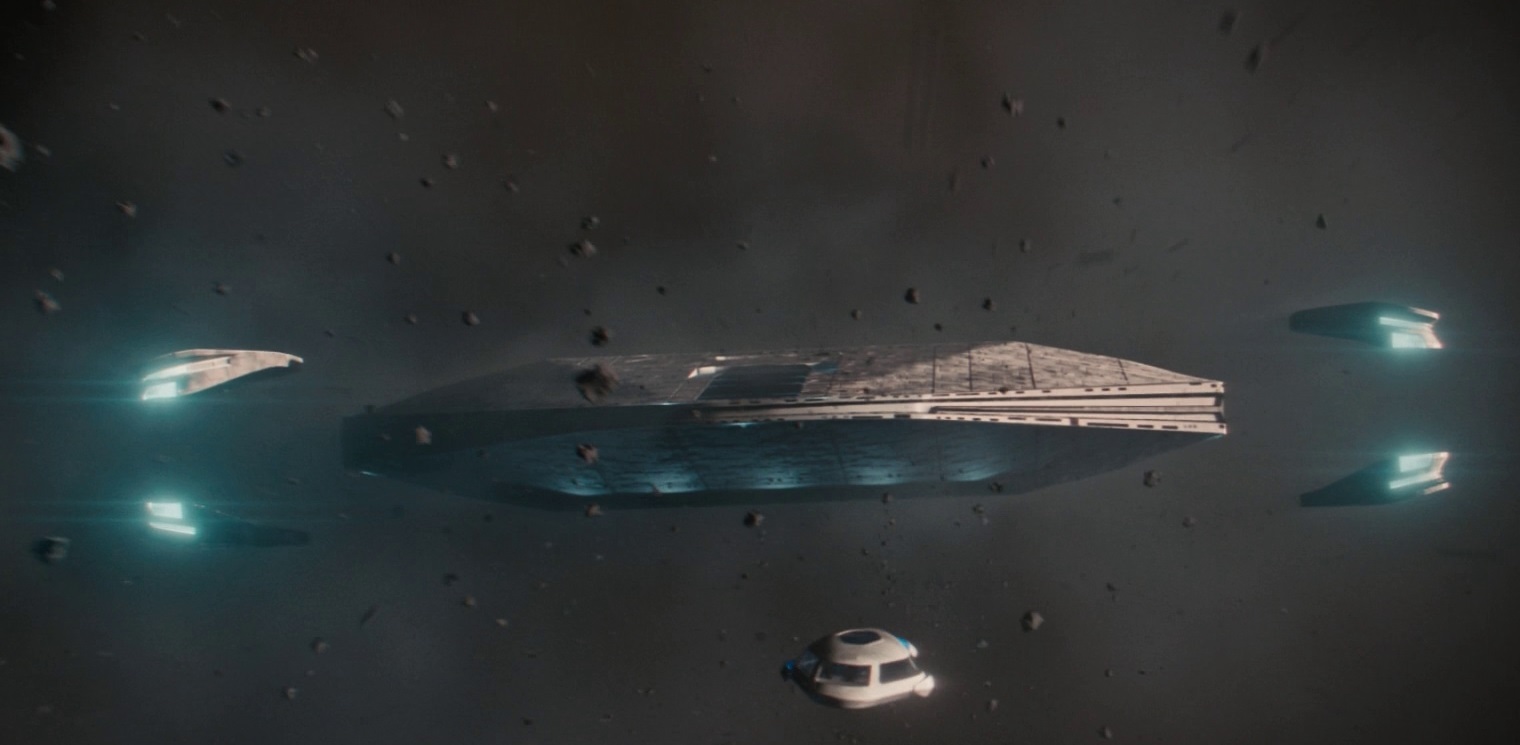
Star Trek: Discovery Season 3 – what is the Burn?

Spoiler Warning: There are spoilers ahead for Star Trek: Discovery, including the two Season 3 trailers and the ending of Season 2. There are also spoilers for Star Trek: Picard Season 1 and other iterations of the franchise.

The most recent trailer for Star Trek: Discovery’s imminent third season dropped a bombshell: the Federation has mostly collapsed! In my breakdown of the trailer I covered my thoughts on that story premise, so we won’t get into the ins and outs of it again today. Instead, we’re going to look at the event that triggered this collapse and postulate a few theories as to what it could be! As always with any fan theories (mine or someone else’s) please take all of this with a grain of salt. No fan theory is worth getting worked up over!

Discovery has a new trailer… and a new logo!

All we really know for certain is that the event in question is called “the Burn.” Booker, the new character who’s native to this time period, tells Michael Burnham that the event was when “the galaxy took a hard left.” And that’s all the explanation the trailer gave us. However, some images and scenes from the trailer add context to this, so we should run through some of them briefly.

Firstly, we had one very short scene of an explosion aboard a starship or space station that appeared to blow a number of people out into space. This could be a flashback to the Burn, but as I noted when I looked at the trailer, it could also be something happening after Discovery’s arrival in the future. Even if it is taking place during the Burn, however, all we can gleam from this scene is that it was a violent event – which may mean it took place over a relatively short span of time.

This violent event glimpsed in the trailer could be the Burn.

Next we have two glimmers of hope: a futuristic starship, space station, or facility which Saru and Burnham visit at some point, and a black-uniformed woman who I suspect may be a Starfleet officer.

Is this character a Starfleet officer?

The woman’s uniform was at least a little reminiscent of the uniforms used to depict 29th Century Starfleet seen in the Voyager fifth season episode Relativity. The texture and pattern used for the dark upper part of her uniform reminded me of that episode, and I’m sure that must have been intentional!

Captain Braxton wearing the 29th Century Starfleet uniform.

If this woman in Starfleet, it lends credence to the idea that the facility mentioned above could be a Federation vessel or even a Starbase. Add into the mix Booker’s line that the Federation “mostly” collapsed following the Burn, and I think we can make a solid case for Starfleet being around in some form; last time I called this remaining faction “rump Starfleet.”

The final thing to look at from the trailer are the scenes set in its aftermath. Away from the woman in uniform and the futuristic facility we see what could be a shanty town or post-apocalyptic markeplace as an Orion or other green-skinned alien guides Burnham. One possible implication from this scene is that we’re seeing how the majority of people in the collapsed Federation live. In the aftermath of the cataclysm, they may all be reduced to this kind of hand-to-mouth existence.
The possible shanty town.

On the flip side, we have seen settings like this in other iterations of Star Trek, even on human-populated worlds. One that springs to mind is Turkana IV, the birthplace of Tasha Yar in The Next Generation. Described as a “failed Earth colony”, the planet was in a state of disarray in the 24th Century. In short, the existence of a shanty town like the one depicted above may not mean that everyone in the 32nd Century lives that way.

The reason I brought up Turkana IV and the like is to demonstrate that the Federation, even in the eras we’re familiar with, wasn’t always perfect and wasn’t one homogeneous bloc. Just as there seems to be a great contrast between the sleek facility and the shanty town in the 32nd Century, so too is there a contrast between different locations in the 23rd and 24th Centuries. I wonder if Discovery plans to use this dichotomy to make a point about wealth inequality.

The facility visited by Burnham and Saru.

One final point of note is that, when discussing the Burn, Booker referred to it as when “the galaxy” took a hard left. Let’s be clear about that – the galaxy as a whole, not merely the Federation. That was a deliberate choice of words, and I think what we can infer is that the effects of the Burn extend far beyond the borders of the Federation.

It’s possible that the Burn didn’t affect literally the entire galaxy; some regions and worlds may have escaped. Booker may have used the word “galaxy” in this context to mean something that impacted more than just one region and that went beyond the Federation’s borders. Even if that’s the case, we’re still dealing with what is arguably the biggest disaster we’ve ever seen in Star Trek.

Booker is the one who told us about the Burn.

That’s all we know from the trailer. It’s unclear how many people survived the Burn. Some disasters destroy infrastructure and technology, but leave organic lives intact, whereas others cause massive loss of life. There are clearly some survivors of the Burn, but how many is simply unknown right now. It’s highly likely that in the aftermath of such a catastrophe, more lives would be lost due to things like disease and starvation – especially if the Burn triggered the kind of collapse we seem to be seeing. The scene in the shanty town or junkyard seemed to show people barely surviving, living a hand-to-mouth existence without much of the familiar technology we’re used to in Star Trek. Such a loss of technology could cause even more deaths in the months and years following the Burn than the event itself.

This character could be some kind of warlord or faction leader.

We’ve seen at least one anti-Starfleet faction, which in the first trailer appeared to comprise of Andorians, Lurians, Cardassians, and humans. We also met a character in the second trailer who could be the leader of a faction or perhaps a warlord. I think this shows how, in the aftermath of the Burn, the survivors banded together into smaller groups. As with the number of survivors, we don’t know how many of these groups exist or what their relationships are with one another.

This group appear to be antagonists; opposed to the Federation.

We also don’t know for sure whether faster-than-light travel, warp speed, and time travel are still possible in this era, or whether the Burn caused such a catastrophic collapse in the Federation – possibly combined with damage to the galaxy and spacetime and/or subspace in general – that such things are no longer possible. We saw in the second trailer the USS Discovery using its spore drive, so at least travel via the mycelial network remains viable. But everything else is unclear, and if it were to be the case that warp speed and faster-than-light travel are impossible, the fractured Federation will be very difficult to bring back together.

There’s also the question of timing. When did the Burn take place? We’ve already made one assumption – that it was a relatively fast event, perhaps taking place over less than a year – but when it happened relative to Burnham and the USS Discovery’s arrival in the year 3188 is not known. I wrote last time that the furthest forward in time Star Trek has previously gone in canon is the 31st Century. However, in both stories which took place in that era the dating was very vague, and we only have terms like “years” and “centuries” to go on rather than something more precise. As a result, Discovery’s third season could be anywhere from 90 years ahead of what we saw in Enterprise and Voyager all the way to 180 years ahead of those stories. Picking a halfway point, and saying that Discovery takes place 130-140 years further on from anything we’ve ever seen still gives a huge amount of time for the Burn to have taken place.

A backup copy of The Doctor was reactivated in the Delta Quadrant in the 31st Century.

Based on the warlord/faction leader seen above, and the scene set in the shanty town/junkyard, I’m assuming it wasn’t recent. It certainly didn’t look like something that had only just happened in those scenes; the faction leader in particular seems confident in his position. Booker also didn’t appear to be speaking about something very recent when discussing the Burn; he almost seemed to be recalling history. I also noted something from the Star Trek Day panel: showrunner Michelle Paradise stated that characters like Booker had been “born” into this new future. While she could have meant simply that Booker was born in the 32nd Century, in the context of a discussion about the new season’s setting it could also mean that the Burn took place decades previously; before Booker was even born.

Did Michelle Paradise drop a hint at the timing of the Burn?

So it’s clear that at this stage we’re missing a lot of information! We don’t know when the Burn happened. We don’t know what effect it had other than the near collapse of the Federation. We don’t know how many casualties were directly and indirectly caused, or how many survivors remain.

Perhaps most importantly, we don’t know what the Burn is or what caused it. Fixing a problem requires understanding what the problem is and why it happened, so it will be absolutely essential for Burnham and the crew to figure this out. Even though we have practically no evidence to go on, I do have a few ideas! Let’s look at them in turn.

Possible cause #1: The super-synths from Star Trek: Picard

I’ve already written up this theory in more detail, and you can find that article by clicking or tapping here. But now that we know a little more about the Burn thanks to the new trailer, I was pleased in a way that it hasn’t been debunked already! Star Trek: Picard introduced us to an unnamed race of super-synths that I nicknamed the “Mass Effect Reapers” due to their similarities to that video game faction.

The “Mass Effect Reapers” left behind a beacon on the planet of Aia, explaining that synthetic life is under threat from organic life, and promising to come to the aid of any synths who ask for their help. The Zhat Vash – a secretive Romulan faction – found the beacon and interpreted it as something apocalyptic; they believed that if synthetic life were ever created, the “Mass Effect Reapers” would exterminate all organic life in the galaxy.

The Reapers, from the Mass Effect video game trilogy, are similar in some respects to the faction of super-synths in Star Trek: Picard.

During the events of the season finale, Soji and Sutra constructed a beacon to contact the “Mass Effect Reapers”, and opened a portal to the location in deep space where they reside. After being convinced by Picard – and the timely arrival of a Starfleet armada led by Riker – Soji closed the portal and shut down the beacon. The “Mass Effect Reapers” never arrived – but they are now aware of a race of synths in the Milky Way galaxy, as well as being aware of the existence of the Romulans and the Federation.

From the point of view of this race of super-synths, here’s what they saw: a race of synths who found their beacon called on them for help, and when the portal was opened they saw a handful of synths on a planet with two massive fleets of starships populated by organics. Then, with no explanation, the portal was closed. If I were them, I would have major concerns!

Picard talked Soji into closing the portal – but the “Mass Effect Reapers” probably don’t know that.

We know hardly anything about the “Mass Effect Reapers” – which in itself makes them a good candidate for Discovery’s writers to play with – including how far away from the Federation they are. If they decided that they needed to intervene on behalf of the Coppelius synths, it could have taken them centuries to travel to the Milky Way from wherever they’re based.

When they finally did arrive, they would have likely found Coppelius abandoned, as I feel certain the safest thing to do for the synths who live there would be to relocate them to a new home where the Romulans can’t touch them. Again, from the “Mass Effect Reapers” perspective, the last thing they saw was two massive fleets in orbit of this planet that asked for their help, and when they arrived, the synths who asked for that help were gone. Put two and two together and it’s not hard to imagine they would assume the organics wiped out the synths. If they were minded toward revenge, they could go on the rampage, using their superior technology to destroy the Federation and Romulans in an event that would become known as the Burn.

These two fleets – one Romulan, one Federation – were the last thing the “Mass Effect Reapers” saw before the portal closed.

From the production side of things, this theory brings together the two live-action series currently in production, which is something that hasn’t happened yet. I’ve written many times that modern Star Trek shows being split up in this way isn’t a good idea, and finding ways to bring them together will be important to the franchise going forward. Having this faction from Picard also be important in Discovery – as well as the events of one series directly leading to events in the other – would bind the two shows together and strengthen the franchise.

Possible cause #2: Michael and/or Gabrielle Burnham

The Burnhams.

I can’t be the only one who noticed that the “Burn” happens to be three letters different from “Burnham”, can I? While it may seem absolutely preposterous to assume that Burnham or her mother somehow caused this galaxy-wide calamity, there are some points we could argue are in its favour.

Gabrielle Burnham, Michael’s mother, was the original Red Angel in Discovery Season 2. At several points in the story she intervened, including to save Burnham’s life and Spock’s life in their youth, as well as ensuring that the USS Discovery would be on hand to save the data from the “Sphere” – the planetoid-sized lifeform whose data was vital to the Control AI. Gabrielle Burnham was tied to a point in the future around the same time as Season 3 is set and returned there after her many visits to the 23rd Century. But in both of the trailers we’ve seen, she’s nowhere to be found. Why is she missing, and could her absence have something to do with the Burn?

Where is Dr Gabrielle Burnham?

Discovery has been a series that places Michael Burnham at the centre of its stories. Burnham was the Red Angel. Burnham was the one who led the ship and crew home from the Mirror Universe and ended the Klingon War. Every story so far has been a Burnham-centric one, so it wouldn’t surprise me at all to learn she has some involvement with the Burn – an event which shares part of her name.

How could this work? There are a few possibilities, but I would say that all of them have to do with the Red Angel suit and its time travel abilities. The suit was very powerful, capable of detonating powerful “red bursts” that Starfleet could detect from thousands of light-years away. It was also capable of moving the Sphere, so the idea that it could – intentionally or otherwise – be used as a weapon or cause a natural disaster is not beyond the realm of possibility.

Could Michael Burnham be guilty of causing the Burn?

When Burnham arrived in the future, she took off the suit. But in scenes that seem to be set around the same time, she doesn’t appear to bring it with her. It’s possible she abandoned the suit at her crash site, in which case anyone could stumble upon it. It’s also possible that the suit was stolen. And finally, it’s possible that some other faction who was aware of changes to the timeline could have been waiting for Burnham’s arrival and took that opportunity to take possession of the suit.

I don’t believe Burnham or her mother would voluntarily cause the Burn. In fact I’d argue that both would go out of their way to avoid it – even putting their lives on the line to prevent it ever happening. But it could have been accidental, such as a by-product of the suit’s time travel abilities. Or they could have done something while under duress – perhaps it was the least bad option if they were given a choice between the Burn and something far worse.

One thing is for sure, though. If it was Burnham’s fault, calling the event “the Burn” sounds way better than calling it “the Ham!”

Possible cause #3: The Borg

We haven’t had a Borg story in Star Trek since Enterprise’s second season way back in 2003. For a time it seemed as if Discovery’s second season was setting up a Borg origin story with the Control AI, but for whatever reason that didn’t pan out. We could still see the Borg in Discovery, though, if they turn out to be the nefarious villains who caused the Burn.

Booker said that the Burn affected the whole galaxy, and if that’s literally true perhaps it impacted the Borg as well. But it could be that the Borg either are the Burn or are the cause of it, striking out in all directions from their Delta Quadrant home and attacking multiple areas of the galaxy simultaneously.

A Borg drone seen in The Next Generation.

Though it was implied, perhaps, that the Burn was a relatively short event, it could be that it was a war. Even a year-long conflict against the Borg on all fronts could have seen the Federation on the verge of collapse, and we could be looking at the aftermath of a Pyrrhic victory, one in which the Federation and their allies were only able to defeat the Borg at a catastrophic cost to themselves.

How exactly this would work is unclear, but perhaps the Federation used a weapon of last resort that not only destroyed the Borg but also crippled themselves in the process. We’ve seen this kind of story in science fiction before, and the idea that the Federation’s collapse is in part the Federation’s fault is an interesting one. Alex Kurtzman said that the Federation’s collapse wasn’t due to infighting but was something external – and a Borg invasion is definitely an external threat.

Borg drones from First Contact.

When considering an event that has the potential to impact not only planets and star systems but Starbases and fleets of ships, a large-scale war is one of the few possibilities that I can think of. We’re talking about devastation across not only the whole Federation but far beyond its borders too, meaning the Burn has to be something immense in scope. A massive invasion could be such an event, and I can’t think of any known faction in Star Trek able to pull off something like that other than the Borg.

By their later appearances in Voyager, I think it’s not unfair to say that the Borg were becoming stale. Having seen our heroes prevail against them time and again, they definitely needed a rest. Enterprise, while it added an extra complication to the history of Borg-human contact, managed to tell an exciting and tense story, but I think it’s to the franchise’s overall benefit that the faction then took a break. However, seventeen years is a decent length of time for such a break, so could we be on the verge of seeing the Borg make a comeback?

Possible cause #4: Time travel and the Temporal Cold War

Oh no! Alien Nazis!

Star Trek stories that took place in the 29th Century and beyond depicted time travel as something the Federation routinely engages in, despite it seemingly being prohibited by the 24th Century. Preserving the timeline intact is something Starfleet of this era seems to have been concerned with, but there were other factions opposed to the Federation who made attempts to use time as a weapon.

In Enterprise we saw a Temporal Cold War play out, with several different factions all vying for control of the timeline. The mechanics of this were vague – deliberately – but by the 31st Century, which is the home era of temporal agent Daniels, the Temporal Cold War was a major issue.

Daniels was a temporal agent who made multiple appearances in Enterprise.

As I mentioned when I looked at the trailer, one issue I can see coming up if Discovery goes headfirst into another time travel story is the question of why the Federation didn’t see the Burn coming. If they explore the timeline in the same way that the 24th Century Starfleet explore space, surely they look at the future timeline too, not just the past. If they do, they should have foreseen the Burn, right?

The problem with that assumption is that time travel muddies the waters. Even in a perfect world where Star Trek had always been consistent in its depiction of the rules and laws governing time travel (which it hasn’t been at all), the concept itself still generates all manner of possibilities, loops, and paradoxes. Part of the Temporal Cold War story arc involved factions travelling to the past to attempt to undermine their adversaries before they could even develop time travel – knocking them out of the war entirely. If someone were able to travel to a point in the timeline that the Federation could not observe, or were able to operate outside of normal spacetime, the Burn could have been triggered before the Federation even knew it was coming.

The USS Relativity was a 29th Century Federation timeship.

I’d like to pick one more hole in a time travel story. If the cause of the Burn is related to time travel, it’s arguable from the perspective of Starfleet that the timeline in which it occurred is not the “real” timeline. Logically they’d want to work to undo it, and if successful it would remove this timeline – and thus Discovery Season 3 – from existence. We have seen stories in Star Trek that “never happened” for reasons of time travel, but they were single episodes, not entire seasons, and I would make the case that having an entire season’s story arc being effectively wiped out of existence wouldn’t be the best way to go.

Possible cause #5: Something related to coronal mass ejections and stars

One frame of the trailer showed Tilly, Stamets, and Reno with the woman shown above who may be a 32nd Century Starfleet officer. On the display at the console where Tilly and Stamets were standing, it was possible to make out the words “CME Detected” and “coronal mass ejection [something] magnitude.”

The frame from the trailer, cropped and mirrored for clarity.

A coronal mass ejection, or CME, is a real-world phenomenon. I’m not a scientist, but as I understand it, a CME is where a small portion of a star’s plasma is shot into space. The phenomenon is associated with sunspots and solar flares, and can cause damage to technology like phone and power lines.

There is no known way to trigger a CME or for them to occur naturally on a galaxy-wide scale. But as we leave the real world behind and head into the realm of science fiction, either of those possibilities could exist.
A real-life coronal mass ejection that occurred in 2012. The blacked-out circle in the centre is the sun.
Picture Credit: NASA via WikiMedia Commons

“The Burn” is a very evocative name, drawing on a primal fear of fire. But it could be more than just a moniker adopted by survivors of the event: it could describe the event itself, and when a star undergoes a CME it’s literally shooting burning plasma into space – space fire. The Burn could be the very literal burning of spacecraft, planets, and even whole solar systems by some kind of massive wave of coronal mass ejections.

The interesting prospect this raises is that the Burn wouldn’t require an evil villain; it could be an entirely natural occurrence. How and why millions of stars all suffered the same fate is unclear, but it would change the dynamic of the story from one that requires the crew to defeat an adversary to one which requires scientific investigation – something which is arguably at the heart of Starfleet.

The USS Discovery could engage in a scientific expedition to determine the cause of the Burn.

Equally, even if the Burn refers to a tsunami of CMEs, there could be a cause. It could even be one of the four we’ve already listed: the Borg, the Burnhams, a time travelling faction, or the super-synths from Picard. Any of these could have intentionally or accidentally triggered some event that led to millions of stars all undergoing CMEs.
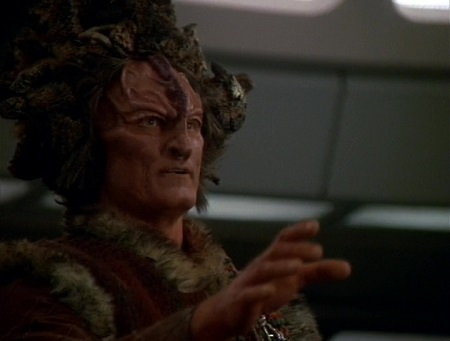
The next part of this gets very deep into lore, so it’s perhaps less likely, but I like to include these things because c’mon… we’re Trekkies. It’s what we do!

Whether the Burn is natural or artificial in origin, if it’s something which causes stars to undergo massive CMEs it could also be something which triggers supernovae. And there has been one recent supernova that had a massive impact on the Star Trek galaxy: the Romulan supernova. First shown in 2009’s Star Trek, the supernova appeared to move faster-than-light and destroyed the Romulan homeworld. Spock was able to stop it by using Red Matter, but the supernova would have a lasting impact, part of which was seen earlier this year in Picard.

A supernova destroyed Romulus in 2009’s Star Trek.

Though it may seem a long-shot, tying the Burn to the Romulan supernova would bring together several different Star Trek stories in a very neat way, which is important for reasons I’ve already outlined. If the Burn is natural in origin, the Romulan supernova may have been a precursor to it. And if it’s artificial in origin, the Romulan supernova may have been a preliminary test of whatever weapon caused the Burn.

So that’s it. A look at what the Burn could be as well as some possible triggers and causes. Though the existence of the Burn poses a big challenge for Discovery – as it fundamentally changes the underlying premise of Star Trek’s optimistic future – I’m absolutely fascinated by it. What is it? What caused it? When did it happen? Why did no one intervene to stop it? There are so many questions rattling around in my head, and this article has barely scratched the surface!

I am at least a little concerned about Star Trek: Discovery choosing a post-apocalyptic setting. But at the same time the series has been great so far, especially in Season 2, and I would love to see it build on what was accomplished last year to tell a fascinating and engaging story. The Burn is going to be part of that. Figuring it out and perhaps even working to stop it could be important story elements, and I’m absolutely fascinated to learn whether any of these ideas even come close!

Figuring out what could have caused such devastation is genuinely interesting.

As I mentioned at the beginning, these are just fan theories and speculation. I don’t have any insider information – and if I did I wouldn’t share it! Several recent shows and films have suffered backlash from fans who got a little too attached to certain pet theories, and as fun as theory-crafting is, I don’t want that to be the case here. This is a bit of fun and a chance to spend more time thinking about Star Trek, and that’s all. I want to know what happens, and if it’s something I didn’t expect then that’s fantastic!

When Discovery Season 3 kicks off in mid-October, I hope you’ll join me for episode reviews and perhaps even more theory-crafting!

Star Trek: Discovery Season 3 premieres on the 15th of October on CBS All Access in the United States, and on the 16th of October on Netflix in the United Kingdom and elsewhere. The Star Trek franchise – including Discovery and all other titles mentioned above – is the copyright of ViacomCBS. This article contains the thoughts and opinions of one person only and is not intended to cause any offence.