Ten Things That Have Always Bugged Me In Star Trek

A spoiler warning graphic.

Spoiler Warning: Beware spoilers for the following Star Trek productions: The Original Series, The Next Generation, Deep Space Nine, Voyager, Enterprise, Discovery, Picard, Generations, and First Contact.

Let’s have a little bit of fun today at the expense of the Star Trek franchise! I’ve been a Trekkie for almost thirty-five years at this point, and I’ve seen a lot of Star Trek in that time! For a franchise that now runs to over 900 individual episodes of television, Star Trek’s internal consistency and the attention to detail shown by the writers and creative teams are generally incredibly good, and there aren’t many true inconsistencies or things to get worked up about. But that doesn’t mean there are zero!

If you’re a regular reader, you might’ve seen me use the expression “glorified nitpick” in some of my Star Trek episode reviews. Sometimes I’ll point out something that I felt didn’t work very well or that seemed to run counter to what we already knew about a situation or character. Well… most of what we’re going to talk about today doesn’t even rise to that level! These aren’t things that I’m cross about or that “ruined” an episode or story for me. They’re just, as the title says, little things that bug me!
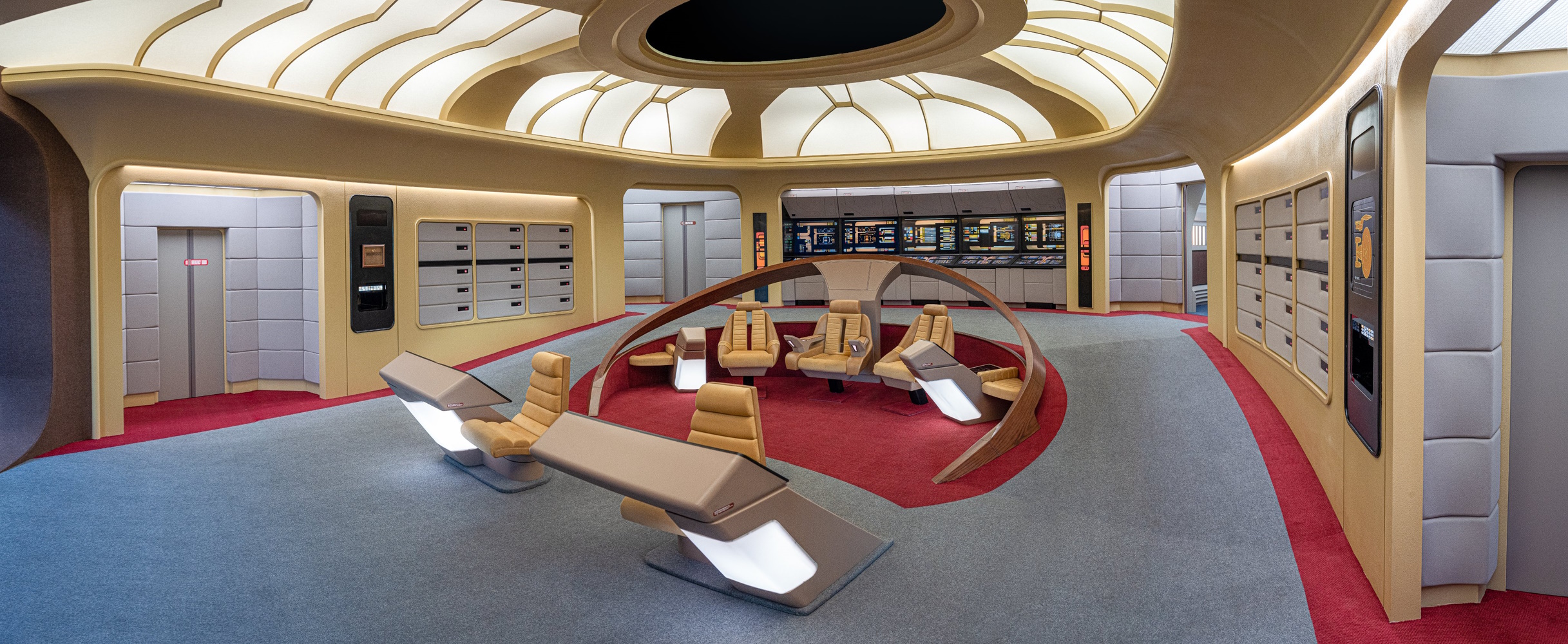
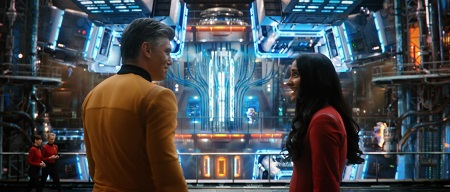
Publicity photo for Star Trek: Picard showing the rebuilt Enterprise-D bridge.
The bridge of the Enterprise-D.

Before we go any further, here are my usual caveats! Firstly, all of this is my entirely subjective opinion. If you disagree with any or all of the points below, think I’m “overreacting,” or feel that I’ve totally got the wrong end of the stick… that’s okay! These are just a few stray thoughts that I have about Star Trek, and most of them are so minor that they’re not gonna be worth getting into an argument about! Secondly, this is intended as light-hearted, tongue-in-cheek fun – so I encourage you not to take me too seriously and to engage with this article in that spirit!

Finally, I’m not counting the old excuses of “it’s just a story” or “because the writers thought it worked better that way” as explanations! Sure, everything in Star Trek is “just a story,” and if the writers needed to move characters into place or kick off certain storylines in a way that opens up a minor inconsistency, that’s just the way it goes sometimes. But as a fan, and as someone engaged with this fictional setting, that excuse doesn’t really work for me – and it never has. So it’s true that “none of this is real,” but that doesn’t change anything for me!

With all of that out of the way, let’s get started!

Number 1:
Why was the unfinished Enterprise-B the only ship within several light-years of Earth?
Star Trek: Generations

Still frame from Star Trek: Generations showing the launch of the Enterprise-B.
The Enterprise-B embarks upon her ill-fated maiden voyage.

Kicking off the plot of Generations is the maiden voyage of the Enterprise-B under the command of Captain John Harriman. Joining him for the voyage are Captain Kirk, Montgomery Scott, and Pavel Chekov, but during what was supposed to be a short shakedown cruise entirely within the Sol system, a distress call was received that took the Enterprise-B right into the path of a dangerous energy ribbon called the Nexus.

But here’s my question: why did Starfleet have no other ships anywhere close to the SS Robert Fox and SS Lakul? This is Sol – the home system of the Federation and Starfleet, where Starfleet Headquarters, the Federation government, and Spacedock are all located. With the Enterprise-B on a glorified joy-ride to show her off to a gaggle of journalists, and with weapons and other essential systems still not installed… why would she be the only ship in the area?
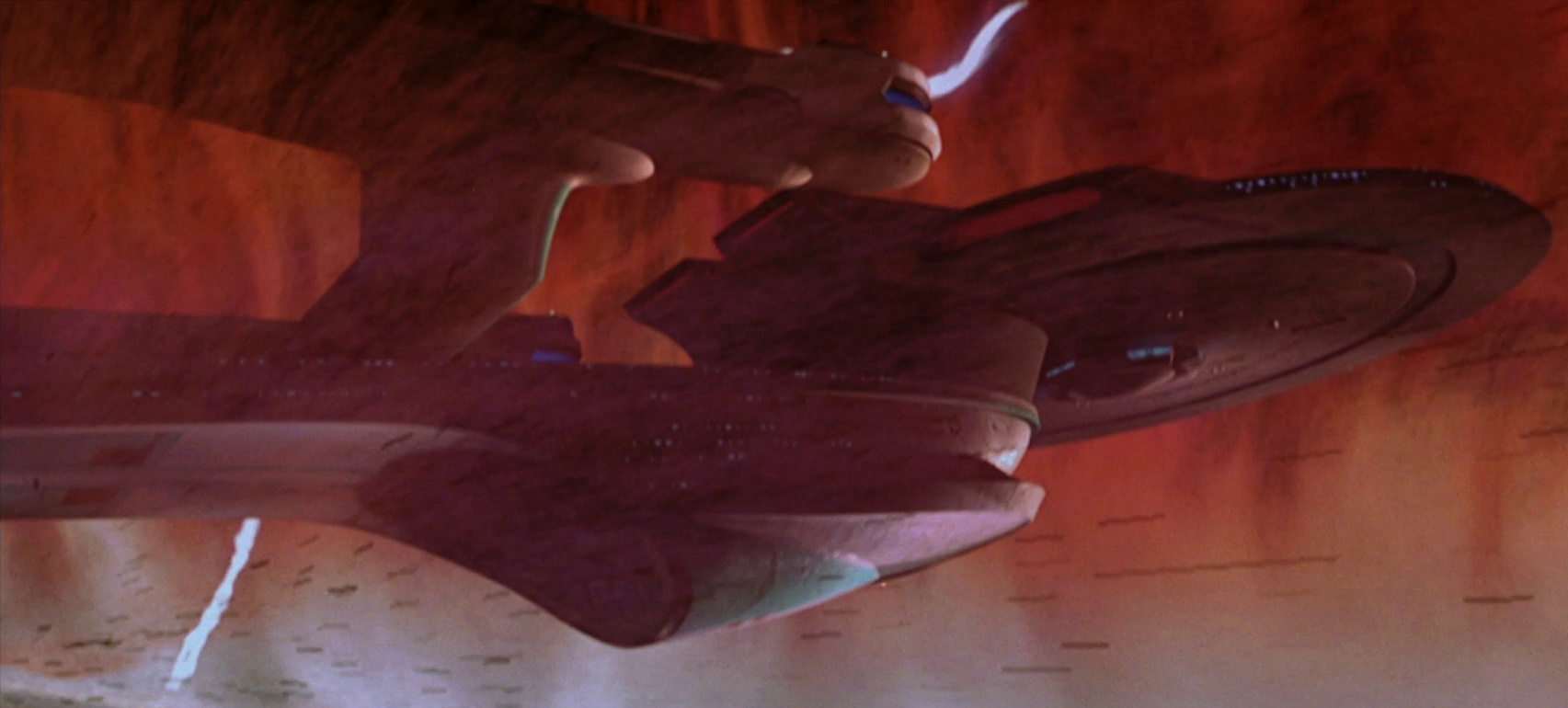
Still frame from Star Trek: Generations showing the Enterprise-B in the Nexus.
The Enterprise-B encounters the Nexus.

Think about it: this would be like the only military unit within a hundred miles of Washington DC being a single brand-new tank without its gun barrel. If the Enterprise-B’s shakedown cruise had taken her beyond Sol, then things might feel a little better. But having no other starships anywhere close to the stricken refugee vessels always struck me as bizarre!

If Starfleet leaves its home system and institutions of government so sparsely defended, it’s a miracle that the Klingons, Romulans, or Borg haven’t been able to warp into the system and conquer Earth! Jokes aside, I think the opening of Generations is pretty great – and the film in general is one of my personal favourites. But that doesn’t mean I can just overlook what appears to be Starfleet’s atrocious planning and non-existent defences!

Number 2:
What’s the United Earth Space Probe Agency?
Star Trek: The Original Series
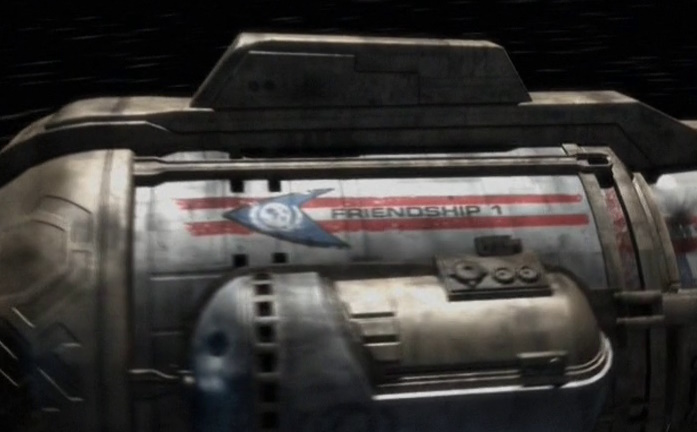
Still frame from Star Trek: Voyager showing the probe Friendship One.
Friendship One, a probe launched by the UESPA.

Prior to settling on more familiar terms like the United Federation of Planets and Starfleet, the United Earth Space Probe Agency (or UESPA) was an organisation that was mentioned in a couple of early Star Trek stories. But what the organisation is and what its relationship is with Starfleet and the Federation was never elaborated upon, and plot points in Enterprise have further muddied the waters.

The out-of-universe explanation for this one is simple enough: as Star Trek was being created and those early episodes were being written, some titles and names were still being decided upon. It wasn’t even settled until well into production on The Original Series’ first season that the show was set in the 23rd Century – the original pitch for the series didn’t specify an exact time period, and the 27th Century was also suggested as a possibility.

But as I said at the beginning, out-of-universe explanations don’t count!

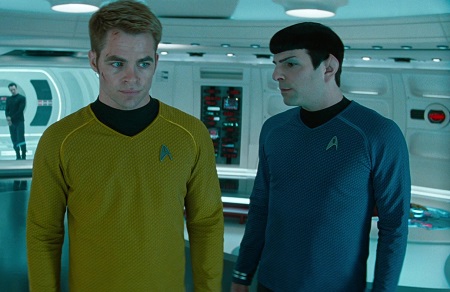
Still frame from Star Trek: The Original Series showing Kirk and Spock.
The UESPA was mentioned a handful of times in the first season of The Original Series.

Enterprise could have put this to rest, but instead the series – quite understandably – wanted to use familiar names like Starfleet, so the UESPA wasn’t included in a big way. Occasional references to it have popped up, including in Voyager where the UESPA had sent out at least one unmanned probe, but nothing to definitively explain what it was and whether it was independent of Starfleet.

To me, the “United Earth” part of the name seems to suggest that it’s a human-only organisation, but with humanity’s ships all seemingly flying under the Federation flag, what role there could be for a United Earth fleet – and where any of its ships or probes actually are – remains unknown.

Number 3:
Why was Starfleet unable to detect the octonary star system?
Star Trek: Picard
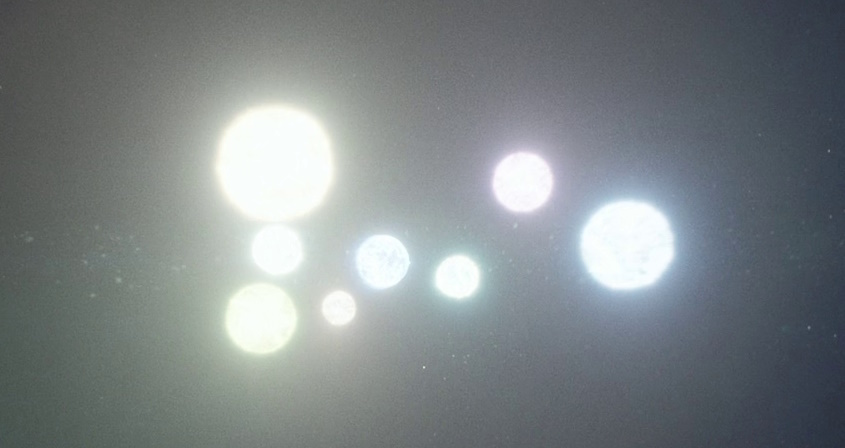
Still frame from Star Trek: Picard showing eight stars in formation.
Eight stars in perfect gravitational harmony.

In Season 1 of Picard, the ancient super-synths that I nicknamed the “Mass Effect Reapers” literally moved eight stars to form a stable octonary star system. They did so to make their presence known, and on the planet in that system they left their beacon behind. But… how did Starfleet – with all of its sensors, missions of exploration, advanced telescopes, and stellar cartography departments – fail to notice such an apparently obvious and incredibly interesting stellar phenomenon?

Using technology that we have right now – today, in the early 21st Century – we can look not only at stars, but detect the planets orbiting them, view distant galaxies, and even find black holes. I find it impossible to believe that Starfleet hasn’t at least scanned the entire Milky Way, detecting every star and star system – so how did they miss something so obviously artificial in nature?
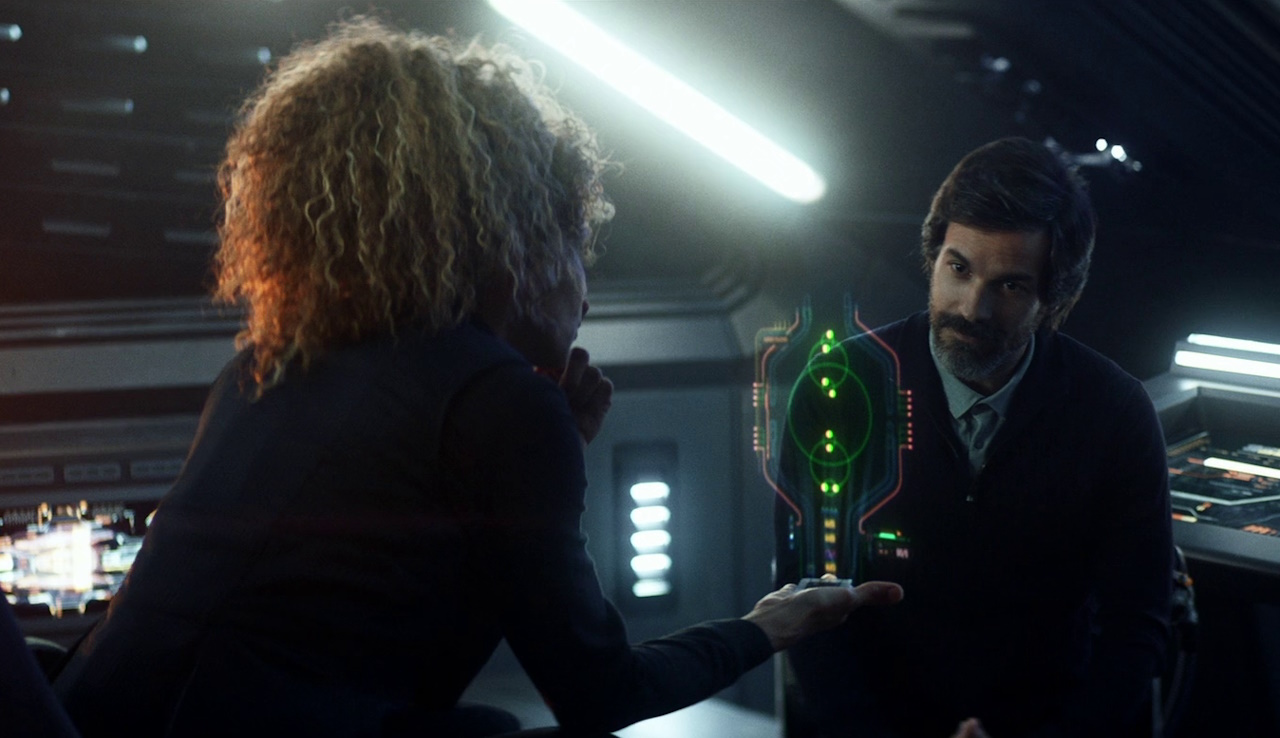
Still frame from Star Trek: Picard showing Raffi and the ENH.
The symbol representing the octonary star system.

If Picard had explained that, for instance, the Romulans deployed a cloaking device to shield the octonary system, or that Starfleet did know about the system but couldn’t explore it because of its location behind the Neutral Zone, then I’d have nothing to complain about. But a fairly sizable plot point in one episode involved the crew of La Sirena finding out that this star system had been deliberately hidden from Romulan star charts… when surely the Federation, who aren’t that far away from it in the same region of the galaxy, would have been able to see it through their telescopes! Again, if this system was in a far-flung part of the Gamma or Delta Quadrants, I’d still argue that Starfleet should’ve detected it, but its distance could be its saving grace. However, the octonary star system was supposedly in or near Romulan space – meaning it’s a mere stone’s throw away from the Federation.

In The Next Generation, the Enterprise-D is transported by Q to a system that would’ve taken them years to reach at top speed. But Starfleet already had a designation for this system: J-25. To me, that implies that the Federation has already categorised at least the Alpha and Beta Quadrants, even if ships haven’t been able to explore all of these systems yet. So once again… how did Starfleet miss an entire eight-star solar system?

Number 4:
How did the Enterprise-E reach Earth so quickly from its position near the Neutral Zone?
Star Trek: First Contact

Still frame from Star Trek: The Original Series showing a map on the main viewscreen.
A map of part of the Neutral Zone.

Star Trek’s geography has always been kept vague, and I think that’s been to the franchise’s overall benefit! But there are a few places where the distance between planets and systems seems to be inconsistent. At the beginning of First Contact, for example, we have the Enterprise-E sent away from the main fleet to patrol the Neutral Zone – despite an imminent Borg incursion. But when the battle turns against the Federation fleet, Picard is able to get the Enterprise back to Sector 001 in what seems to be a matter of hours, if not minutes.

Prior Star Trek stories, including in The Original Series and The Next Generation, had seemed to depict the Romulan Empire as being on the Federation’s far border, with outlying colonies disappearing in The Neutral Zone and “Earth Outposts” in Balance of Terror all being depicted as far-flung places. Even if we assume that Romulus is relatively close to Earth, and that the Enterprise-E was very conveniently positioned at the near end of the Neutral Zone, getting back to Earth while the battle was still raging still feels like a tall order.

Still frame from Star Trek: First Contact showing the Enterprise-E firing phasers.
The Enterprise-E at the Battle of Sector 001.

Warp factors in Star Trek are kept pretty vague – so that could account for some of this apparent discrepancy, I suppose. If the Enterprise-E could travel significantly faster than the Enterprise-D, the travel time from the Neutral Zone could be reduced. Again, it still seems to rely on the ship being fortunate with its positioning, but maybe that’s something that could be accounted for by Captain Picard preparing for this eventuality!

Still, it’s always struck me as more than a little odd that the Enterprise-E was able to reach Earth in time. Not only was Picard able to follow the Borg Sphere through the portal it created, but there was even time to save the USS Defiant and Worf before destroying the main Borg Cube. A very quick turnaround indeed!

Number 5:
Why wasn’t there a debate about which route to take?
Star Trek: Voyager
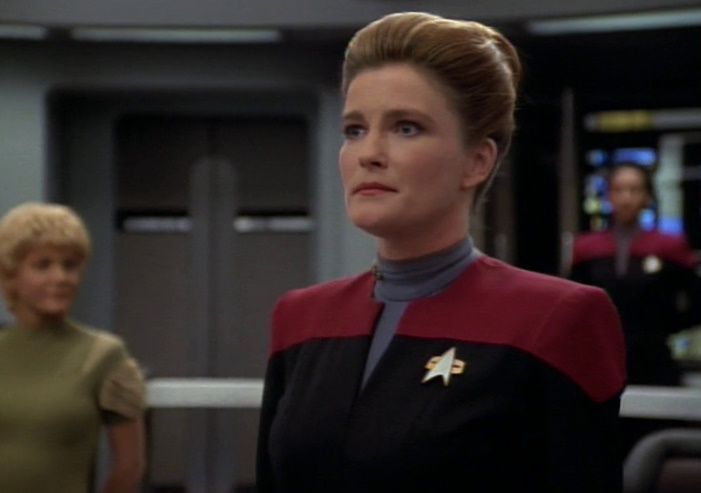
Still frame from Star Trek: Voyager showing Captain Janeway.
Captain Janeway ordered her crew to take the most direct route back to Earth.

After the crew of the USS Voyager found themselves stranded on the far side of the galaxy, Captain Janeway very quickly ordered her crew to set a course for Earth. But the most direct route to Earth, through the Delta Quadrant and later the Beta Quadrant, took the ship right into the heart of Borg territory. Janeway knew this – Starfleet had at least some idea of where the Borg’s territory was located. Even if the Delta Quadrant offered the quickest way home, I’m surprised that nobody objected or tried to propose an alternative – especially when there was a good one.

Before getting transported to the Delta Quadrant, the USS Voyager made a stop at Deep Space Nine. And what’s located right next to the station? The Bajoran Wormhole! The wormhole offers a shortcut to the far side of the Gamma Quadrant – and heading in the direction of the wormhole rather than directly for Earth is something that Janeway and the crew could have considered.
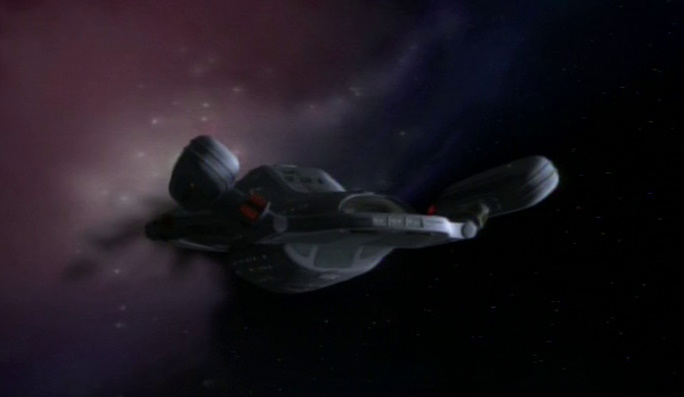
Still frame from Star Trek: Voyager showing the rear of the USS Voyager.
The USS Voyager prepares to begin its long journey.

At this point in the timeline, the Dominion War hasn’t started – so that can’t be used as a justification for not heading that way. And while all we have to go on are non-canon sources, there’s at least some tentative evidence that the wormhole’s terminus is located roughly the same distance from the Ocampa homeworld as Earth. If that’s the case, it would be no slower to head that way. Based on the Borg threat alone, I would have argued that heading for the wormhole is actually the smarter play.

Obviously Voyager was pitched as “the Delta Quadrant show,” and we got some fantastic stories out of that premise. But given the way that Voyager’s writers handled the Borg when that time came… maybe there’s an out-of-universe argument to be made here, too! In any case, even if Janeway had ultimately made the decision to head back to Earth via the most direct route, some discussion or debate would have been an interesting inclusion as the series got going. It could’ve been a way to draw some dividing lines between Starfleet and Maquis characters – making more of the “one ship, two crews” idea that Voyager never really explored in much depth.

Number 6:
Why did Michael Burnham and the USS Discovery head into the far future?
Star Trek: Discovery

Still frame from Star Trek: Discovery showing the Red Angel opening a time-wormhole.
The USS Discovery approaches the time-wormhole.

Wait, stop! I know what you’re thinking: “this is the entire plot of Season 2 and was well-explained! They had to leave the 23rd Century to stop Control from wiping out all life in the galaxy!” And you’re correct, of course – but I’m not looking at the season as a whole or the entire plan. I’m focusing in on the final moments before Burnham opened the time-wormhole and the ship disappeared.

During the climactic battle against Control, the “assimilated” Captain Leland boarded the USS Discovery to attempt to seize control of the ship and its invaluable Sphere data. But after being cornered by Georgiou, Leland – Control’s human avatar – was defeated and killed. At that moment, the entire battle seemed to stop, and as Pike and his crew noted aboard the Enterprise, Control’s entire fleet of drone ships were simply hanging there, apparently dead or deactivated.

Still frame from Star Trek: Discovery showing Control's fleet.
Control’s fleet of drone-ships.

At this moment – before Burnham had entered the time-wormhole and before Saru, aboard Discovery, had followed her – there should have been a moment’s pause. Maybe Burnham herself couldn’t see what was going on, but Saru and Pike could, and even communicated with one another confirming the death of Captain Leland. There was still time for the time-wormhole to be closed, for Discovery and Enterprise to regroup, and potentially for Discovery to remain in the 23rd Century.

Even if Pike and Saru had decided that the risk of Control re-establishing itself was too great, it’s bizarre to me that neither of them even considered the possibility for a moment. With their enemy apparently vanquished – at least temporarily – and with Discovery’s spore drive meaning the ship could’ve evaded Control by jumping to a different part of the galaxy, there was time to regroup and come up with a plan that didn’t involve stranding everyone in a totally different century.

Number 7:
How could Starfleet possibly prioritise anything other than hanging onto Bajor and the wormhole?
Star Trek: Deep Space Nine

Still frame from What We Left Behind showing Deep Space Nine.
Deep Space Nine remastered, from the documentary What We Left Behind.

I adore Deep Space Nine’s Dominion War arc – it’s one of the best (and most under-appreciated) in the franchise, in my opinion. But as the war got started, Starfleet made what appears to be a catastrophic strategic blunder. In the episode Call to Arms, which ended the show’s spectacular fifth season, Sisko informs his crew that Starfleet won’t be sending any reinforcements to hold DS9 – their priorities lie elsewhere.

We later learn that Starfleet used the diversion of the attack on DS9 to destroy a Dominion-Cardassian shipyard… but given the strategic importance of the wormhole, and the fact that the Dominion is more than capable of producing vast quantities of ships and Jem’Hadar troops in the Gamma Quadrant, it never made sense to me that Starfleet wouldn’t have thrown every available resource at the galaxy’s most strategically vital location.

Still frame from Star Trek: Deep Space Nine showing a battle in space.
DS9 could only hold off the Dominion-Cardassian attack for a short time.

The minefield that the crew of DS9 erected bought the Federation some time (as did the subsequent intervention by the Prophets), but Starfleet must’ve known that, even with the best will in the world, the minefield wouldn’t last forever. With the Dominion in control of Bajor and DS9, they could work on shutting it down without interference. The successful attack on the Toros III shipyard may have been little more than a morale-boosting pyrrhic victory.

In war, you’d almost always rather be defending a position than having to attack – and it would have been far easier to try to hold onto DS9 while the station was still under Federation control than to try to re-capture it later after the Dominion had been given a chance to entrench. For a number of reasons, the decision to essentially abandon the station is questionable at best! If part of the story had been to show Starfleet’s admiralty as out-of-touch or incompetent, that might’ve worked. But that didn’t happen, either, so I’m just left wondering what went wrong at Starfleet Command! Still, at least we got some spectacular episodes out of this storyline.

Number 8:
What happened to Dr Pulaski?
Star Trek: The Next Generation

Still frame from Star Trek: The Next Generation showing Diana Muldaur as Dr Katherine Pulaski.
Dr Pulaski in the episode Time Squared.

Although I really liked the character of Dr Pulaski in Season 2 – you can find a longer piece about her here, if you’re interested – I think it’s fair to say that she didn’t really knock it out of the park! A letter-writing campaign from viewers and an intervention by Patrick Stewart contributed to Gates McFadden being re-hired in time for Season 3… and then Dr Pulaski was just never mentioned again.

The nature of her departure always struck me as odd, and it feels more than a little disrespectful to both an actor and a character who, for better or worse, had been a part of the series for an entire season. When Dr Crusher disappeared at the beginning of Season 2, there was at least some effort to pay lip service to her absence – it was explained that she was on another assignment at Starfleet Medical on Earth. Dr Pulaski didn’t even get that, and to the best of my knowledge has never been so much as mentioned since.
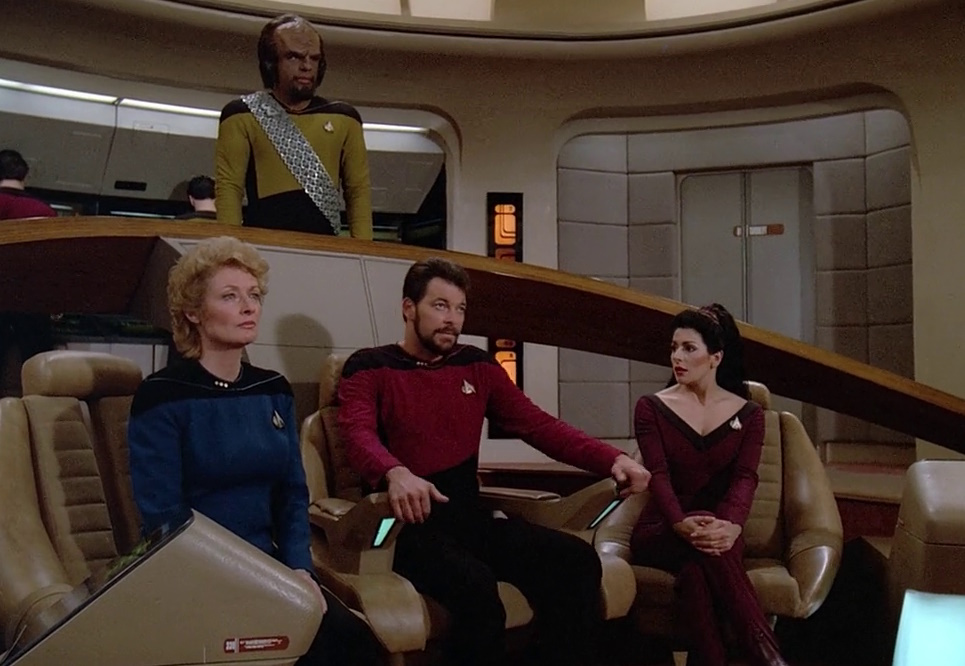
Still frame from Star Trek: The Next Generation showing several characters on the bridge.
Dr Pulaski with Riker, Worf, and Troi on the bridge.

We can argue the toss about the benefits or drawbacks of keeping her around – and I go over that in a bit more detail in my character study which I’ve linked above, if you want to see my thoughts on that. But whether you think she was a fun addition to the crew, an annoyance, or whether you just liked Dr Crusher better… you gotta admit that it’s odd that she didn’t get so much as a log entry from Captain Picard to acknowledge her departure.

The second season of The Next Generation was my “first contact” with the Star Trek franchise. The first episode I can solidly remember watching is The Royale – which Dr Pulaski is barely in! But maybe that’s why I’ve always had an appreciation for her character. I like the dynamic that she brought to the crew as someone a bit older, a bit less personable, and who had history with some characters and seemed to be developing new relationships with others. There have been opportunities in recent years for Dr Pulaski to have returned – or at least to have been mentioned. But I doubt that will happen now!

Number 9:
Who invented the cloaking device and when did Starfleet first encounter it?
Star Trek: Enterprise

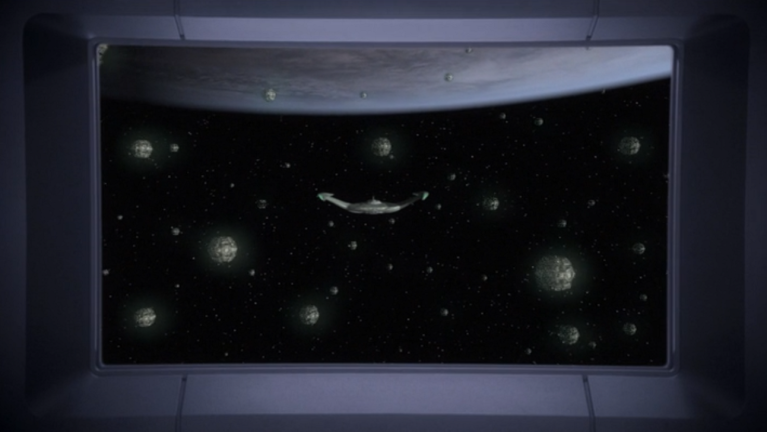
Still frame from Star Trek: Enterprise showing Enterprise and two Romulan ships.
Two 22nd Century Romulan vessels de-cloaking.

This is a point that I have a personal “head canon” explanation for that I’d love to elaborate on in a full article one day! I’ll get into that in a moment, but for now, suffice to say that this is a classic example of a “prequel problem.” In short, The Original Series first season episode Balance of Terror clearly established that the Federation had never encountered a ship that could cloak, but Enterprise and Discovery – both set prior to The Original Series but produced decades later – show Romulan and Klingon ships operating under cloak and Starfleet being fully aware of this.

This raises several questions! What are cloaking devices, how do they work, and why would Starfleet not share the details of their existence with its captains, at the very least? Kirk and his crew seemed shocked that the Romulan vessel could cloak – but the Romulans had been seen cloaking and de-cloaking more than a century earlier, as had other races like the Suliban. We can debate whether the words “cloak” or “cloaking device” were spoken in those episodes – but the technology appears to be functionally the same, so semantics won’t cut it here!

Still frame from Star Trek: Strange New Worlds showing a Romulan vessel cloaking.
A Romulan ship engaging its cloaking device in the 23rd Century.

When Enterprise was on the air I wasn’t a regular viewer, but I remember that I did catch the episode Minefield – in which a Romulan vessel is seen de-cloaking – and that led to me creating my own “head canon” explanation for this problem. I remember seeing debates on Star Trek message boards in the early 2000s about this topic, and I felt that all the producers would need to do would be to explain, somehow, that there are different types of cloaking devices. Perhaps Starfleet felt that they’d cracked the code, but the Romulans then invented a newer and better cloak. Perhaps there was even a cloaking and un-cloaking arms race between the factions.

In short, I think Star Trek can just about get away with this one by explaining that, when Starfleet figured out how to penetrate one style or type of cloaking technology, the Romulans or Klingons would refine it, re-modulate it, or invent something new. It’s not a perfect explanation, but it plugs most of the hole that Enterprise and Discovery have dug. I still think it would be nice to see something like this made official, in-universe – and let’s be honest: it would be better if these prequel-created plot holes didn’t exist in the first place!

Number 10:
What’s up with the inconsistent uniform changes?

Still frame from Star Trek: The Next Generation showing Captain Rachel Garrett.
Captain Rachel Garrett of the Enterprise-C.

The series premiere of The Next Generation established that the Enterprise-D’s voyages took place almost 75 years after Kirk’s tenure in the captain’s chair, but the “monster maroon” uniforms from The Original Series films would often make appearances in flashbacks or episodes set in the past. Starfleet appeared to have stuck with that design for decades, albeit with a few minor tweaks. Using those uniforms for such a long time already felt odd, but then things started to take a turn!

The Next Generation switched uniforms at the beginning of Season 3 for its main characters, but the Season 1-2 uniform variant was still showing up on secondary characters and background characters well into Season 4. There was also a total mess in Generations, which seemed to depict a moment of transition from one uniform style to another – although Deep Space Nine seemed to have established that space stations might use different uniforms from starships? I’m still not sure about that!

Still frame from Star Trek: Lower Decks showing the four main characters.
Two different uniform styles seen in Lower Decks.

Deep Space Nine made an abrupt switch to the gray-shouldered uniforms midway through its run (to coincide with First Contact’s premiere), and that was okay, I guess. Far more of an instant transition than we’d seen in Generations or The Next Generation, but not necessarily a problem. But then the alternate reality films and post-2017 TV shows have really shaken things up! I’ve said before that I don’t like to get hung up on minor things like aesthetic choices, and I was generally accepting of Discovery’s all-blue look, even if it was supposedly set in between The Cage and The Original Series whose uniforms are well-known. But Lower Decks definitely complicated things by seeming to suggest that different “tiers” of starship would get different uniforms… for some reason.

In short, Star Trek hasn’t always been consistent or clear with the way Starfleet uniforms are used, how long they’re in use for, or which types of officer/crewman should wear what type of uniform. When watching an individual episode – or even a whole season of TV – this doesn’t really seem all that noticeable. But when you pick out different stories or take a big-picture look… these inconsistencies stick out.

So that’s it!
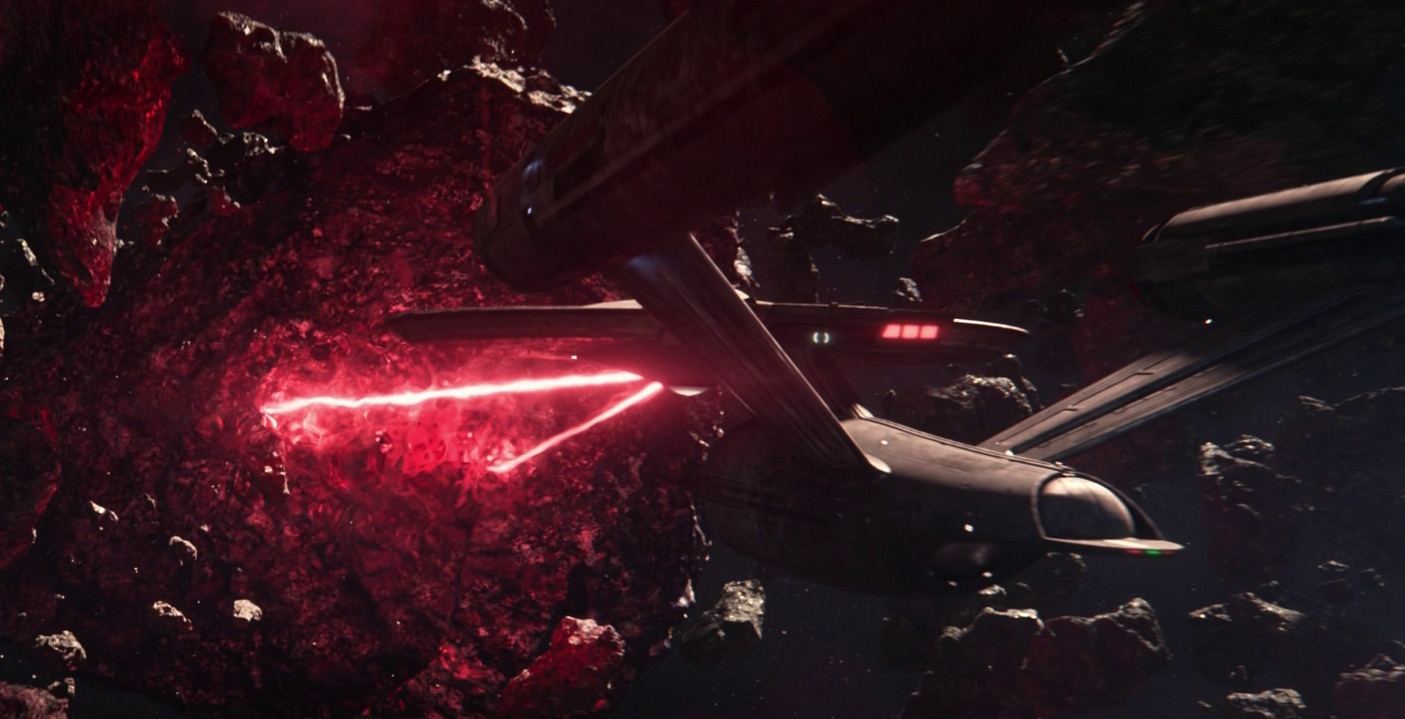
Still frame from Star Trek: Strange New Worlds showing the USS Enterprise.
The USS Enterprise in Strange New Worlds.

We’ve nitpicked the Star Trek franchise and pulled out ten little things that have always bugged me! As I said at the beginning, none of these really spoil Star Trek for me, and I’m more than willing to overlook minor inconsistencies or small plot holes – especially in strong, otherwise entertaining stories. But when you step back and take a look at Star Trek – or any fictional world, come to that – there are always gonna be things that don’t quite make sense or that don’t seem to fit with the rest of the setting.

All of this was just for fun, and I hope it was an interesting look at a handful of minor issues that have emerged over the years. When a franchise has been running on and off for close to sixty years, that kind of thing is inevitable! Although I’ve been feeling a bit burned out on Star Trek of late, it was still enjoyable to jump back into some of these stories – several of which I hadn’t seen for years – to put together this list.

Until next time – and Live Long and Prosper!


The Star Trek franchise – including all films and series discussed above – is the copyright of Paramount Global. Most Star Trek films and episodes are available to stream on Paramount+ in countries and territories where the service is available. This article contains the thoughts and opinions of one person only and is not intended to cause any offence.

Five of my favourite Starfleet uniforms

Spoiler Warning: There are spoilers ahead for Star Trek: Discovery Seasons 1-3 and the teaser for Season 4, Star Trek: Lower Decks Season 1 and the teaser for Season 2, and Star Trek: Picard Season 1. Minor spoilers are also present for other iterations of the franchise.

This is going to be a controversial list! Practically every Trekkie I know has their own take on which Starfleet uniforms are the best – and why! Even if we can agree on some of our favourite episodes and films, the aesthetic of Star Trek has always been a world unto itself. Some of the best uniform designs may not feature in the best stories, and likewise some of the best individual episodes and films may not have their casts in the best uniforms, so the two aren’t necessarily connected – though a truly bad costume can, in some cases, detract from an otherwise-decent story.

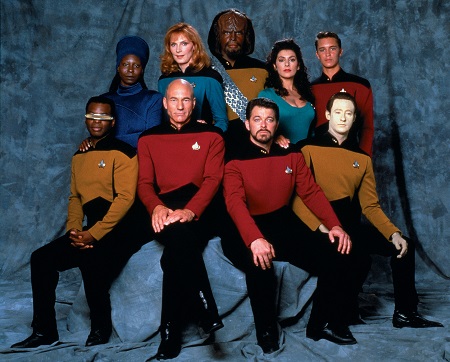
There have been a wide variety of uniforms used across Star Trek’s 55-year history. Most designs incorporate at least some elements of the original – the costumes designed for The Original Series by William Ware Theiss in the mid-1960s. Gene Roddenberry’s brief for the uniforms was that they were to be “simple, utilitarian, and naval” in style, reflecting his vision of the future and of Starfleet. The very first uniforms, seen in The Cage, Charlie X, and a couple of other early Season 1 episodes, arguably best fit the “naval” aspect of the brief, with toned-down colours and a slightly thicker rolled collar. It was only partway through Season 1 that the typical uniform in its three bright primary colours was rolled out.

Captain Pike in The Cage, sporting the first ever Starfleet uniform.

Colour is a hugely important factor when discussing Starfleet uniforms. Since The Next Generation went off the air, most Star Trek projects have tried to move away from big bold blocks of colour, opting for smaller coloured patches or other ways to express differences in division and rank. Partly this is an attempt to make the uniforms look “modern,” but also I think there’s a feeling among at least some folks that the brightly-coloured shirts and tops of The Original Series in particular, but also The Next Generation, look rather childish or even camp, detracting from the serious messages present in many Star Trek stories.

That said, even the attempts to design sleeker, “cooler” Star Trek uniforms have almost universally resulted in garments that aren’t exactly serious by today’s standards! Recent attempts like the Discovery uniforms are still very sci-fi; hardly the kind of thing you’d see someone wear out on the street – unless they were on their way to a Star Trek convention. I guess what I’m trying to say is that trying to design a “cool Star Trek uniform” may simply be an impossible task!

The cast of Discovery Season 1 in their all-blue uniforms.

So I’m all in favour of embracing the campiness – at least to a degree. Once you get lost in Star Trek, things like uniform colours don’t take you out of it, or at least they don’t for me. I’m not really a fan of attempts to make uniforms that look too much like things that we already have in the real world. There obviously has to be a line between something plausible and something completely outlandish, but in sci-fi that line can be further away than some folks seem to think!

Several generations of Starfleet uniform have become truly iconic; instantly recognisable emblems of the franchise that hardly anyone with even a passing knowledge of popular culture could fail to identify. This has been helped by internet memes, with Captain Picard, Commander Riker, Captain Kirk, Captain Janeway, and even Voyager’s Doctor all re-entering popular culture years after their respective series went off the air.

Captain Picard’s facepalm is a popular meme – and reminds people about The Next Generation and the uniforms the crew wore.

We also need to give some of the new variants time. A uniform – or any aesthetic element of a series or film – doesn’t become an icon overnight, so the 32nd Century uniforms we saw in the Discovery Season 4 teaser, the uniforms in Picard Season 1, and whatever the Strange New Worlds crew end up wearing need time to grow on us! Some Trekkies have already taken to some of the new styles, which is great, but for a lot of folks it takes time to even get used to a whole new look – let alone learn to love it!

As I always say, this whole list is entirely subjective! If you hate all of these uniforms and love others, that’s 100% okay. As with practically every aspect of Star Trek, it’s a big galaxy and there’s room for fans with different tastes and preferences. Now that we’ve got that out of the way, let’s take a look at five of my favourite Starfleet uniforms!

Number 1: The Motion Picture – Admiral’s variant

Kirk wearing his admiral’s uniform – perhaps the only decent one in the whole film!

I can understand why fans were unimpressed with The Motion Picture uniforms on the whole. They represent an attempt – the first real attempt – for Star Trek to try something new and step away from the bold primary colours of The Original Series, but ended up being understated at best, bland and forgettable at worst. The dull colours, t-shirt design, and lack of any distinctive features all meant that these uniforms only ever saw one outing.

But there was an exception! Kirk’s uniform as an Admiral, which he wore for the first part of the film prior to taking command of the Enterprise, is undoubtedly one of my favourites. It’s understated, for sure, but I love the smooth lines between its grey and white sections, the high angled collar, and how the gold Starfleet insignia stands out without being too flashy or over-the-top.

A lot of the criticism of The Motion Picture’s uniforms is absolutely fair. But there’s something about Kirk’s variant that I absolutely adore. I’d suggest that it’s the most “uniform-looking” costume in the whole film, and with its shoulder epaulets and wrist braiding, it’s a unique blend of The Original Series and future, more military-inspired uniforms – some of which we’ll look at further down the list.

Number 2: The Next Generation – Season 3-7 variant

The cast of The Next Generation in Season 4.

I’m not calling today’s list my “all-time” top uniforms, but if I were putting Starfleet uniforms in a ranked list these uniforms would have to be near the top. Excluding variants like the acting ensign uniform Wesley Crusher wore, Troi’s “casual” outfits, and Picard’s jacket, the standard uniforms that were introduced beginning in Season 3 of The Next Generation hit all the right notes for me.

These uniforms have a high collar, which gives them a more “serious” feel than the previous crew-neck style. They retain the large blocks of colour across most of the top, yet the colours are ever so slightly toned down when compared to the bright colours of The Original Series, which I’d argue makes them appear a bit more serious and less camp. With the collars and pants being black, the coloured blocks on the top are striking and draw the most attention, and it’s easy to tell at a bare glance which officer represents which division.

It was a surprise when The Next Generation swapped the red and gold colours over – The Original Series had used gold for command and red for security/engineering. But there’s no denying it works well, and Picard and his crew honestly look fantastic in these uniforms.

Number 3: First Contact and Deep Space Nine Seasons 5-7

Data, Worf, Geordi, Riker, and Picard in Nemesis.

Though reportedly “uncomfortable” for some of the actors, I really like these uniforms. Until Star Trek: Picard premiered last January, they were also the most up-to-date uniforms in Star Trek’s internal timeline – at least if you exclude far future variants! These uniforms shrank the division colours down, retaining only a coloured undershirt poking up through the collar, with the rest being black and grey.

To me, this design says “new Star Trek” – even though the uniforms haven’t been new for almost 25 years! When the franchise was off the air, and even after it returned with prequels, these uniforms still represented the furthest forward Star Trek’s timeline had got, and I guess it’s for that reason I have more of an affinity to them. They’re modern-looking, swapping out big blocks of colour for greys and blacks that are more toned-down, and I guess the intention was to give them a more military style.

First Contact and Insurrection are two of my favourite films, and the latter seasons of Deep Space Nine – where these uniforms were also worn – saw the Dominion War story arc play out, which happens to be my favourite part of that series. I have very positive associations, then, between these uniforms and the narratives they were present in!

Number 4: The Wrath of Khan uniforms – a.k.a. the “monster maroon”

Kirk and Spock showing the “monster maroon” jacket in its open and closed positions in a publicity photo for The Undiscovered Country.

Speaking as we were of uniforms with a very military style, the uniforms which debuted in The Wrath of Khan were a total change from those present in The Motion Picture three years earlier. They incorporated elements of military dress uniforms, with a wide double-breasted jacket, high collar, epaulets, rank insignia, and a belt around the jacket.

In Star Trek’s internal timeline, these are the longest-serving uniforms (that we know of!) having been in service for around 75 years. I don’t personally think that they work well without the high collared undershirt, so my preference is for the Wrath of Khan variant, not those seen in The Next Generation. But the fact that they were in service for a long time is neat – and a way for The Next Generation to connect itself visually to the films of The Original Series era!

If The Original Series uniforms were campy and bright, these military-inspired ones were the complete opposite. Designed to be serious and focused while still retaining some colour, I think they look amazing. Having so many different elements could’ve made for a complicated look, but the simple use of one predominant colour helps settle things down.

Number 5: Star Trek: Picard – 2399 variant

Acting Captain Riker showing off the command variant of the 2399 uniforms.

Star Trek: Picard showed off two new uniform styles – one for flashback scenes and one for Starfleet in 2399. I would have preferred the flashback uniforms were replaced with the First Contact uniforms as they didn’t look great and were ultimately unnecessary, but the 2399 uniforms – which we saw Commodore Oh, Rizzo, and later Acting Captain Riker wear – were fantastic.

What I like most about these uniforms is that, after almost twenty years, colour was back in a big way! Enterprise had blue boiler suits, Discovery mostly showed off an all-blue look, and while neither of those uniforms are bad, I was keen to see something visually different – something more “Star Trek.” Picard delivered.

These uniforms are, in some respects, similar to the Voyager and early Deep Space Nine uniforms in that they’re mostly black with a coloured shoulder area and collar. But the lack of a prominent undershirt and the Starfleet delta detailing on the coloured sections makes them look far superior to those older uniforms! I hope we’ll get to see more characters wearing these uniforms going forward.

So that’s it! Five of my personal favourite Starfleet uniforms.

Boimler and Riker on the bridge of the USS Titan wearing First Contact-era uniforms.

Aesthetic, colour, and costume style are very much subject to personal taste, and I know there can be a range of opinions on all of these things. Despite that, with the exception of Kirk’s uniform from The Motion Picture, I think a lot of Trekkies would put at least one or two of these uniforms on their own lists of favourites!

There really aren’t many Starfleet uniforms that I passionately dislike. Most serve a purpose, and it’s usually at least understandable what the intention behind the design was. Enterprise’s boiler suits, for example, were clearly inspired by modern-day naval, submarine, and astronaut uniforms, and were designed to be a bridge between more typical Starfleet uniforms and 21st Century attire.

I didn’t put the Kelvin uniforms on the list this time. But they are pretty neat!

Voyager and Enterprise kept consistent uniforms during their entire runs, but every other Starfleet crew has had at least one change of uniform. Changing things up keeps the aesthetic of Star Trek interesting, and while I can understand why some folks lament changes of this nature, without radical departures from “normal” uniforms we wouldn’t have got to see some of the best and most visually interesting ones. I like that the Star Trek franchise is bold enough to continue to shake things up.

The teaser trailer for Discovery’s impending fourth season showed off another new uniform – a more colourful variant of the 32nd Century uniform that we saw worn by Admiral Vance and others. Though we really only had a few seconds of footage, I liked what I saw and I think these new ones have the potential to join a future list of this nature!

Regardless of what your favourites might be, and whether or not any of them made this list, I hope it was a bit of fun. I’ll never miss a chance to talk about Star Trek!

The Star Trek franchise – including all titles on the list above – is the copyright of ViacomCBS. All Star Trek shows and films mentioned above may be streamed on Paramount+ in the United States, and on Netflix or Amazon Prime Video in the United Kingdom. Availability may vary by region. This article contains the thoughts and opinions of one person only and is not intended to cause any offence.
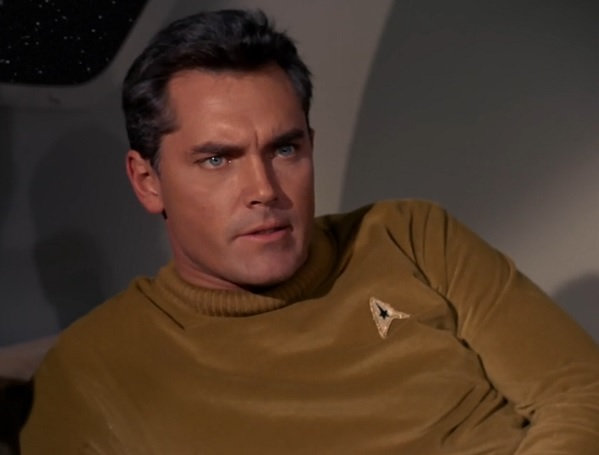
Preliminary Star Trek: Strange New Worlds Season 1 predictions

Spoiler Warning: There are spoilers ahead for Star Trek: Discovery Seasons 1-2, Short Treks Season 2, Star Trek: Picard, and other iterations of the franchise.

It’s been a while since we looked at Star Trek: Strange New Worlds, the upcoming Captain Pike series. But with production on Season 1 seemingly imminent – or perhaps having already begun, depending on what sources you use – I thought it would be fun to look ahead to what the first season of the show may hold.

At this stage, Strange New Worlds has only been commissioned for a single season. However, I would be absolutely stunned if we didn’t get an announcement preceding its Season 1 premiere that it had been renewed; this is the pattern ViacomCBS has had with both Discovery and Picard. I’m hoping, then, that Strange New Worlds will become an ongoing series, perhaps following Discovery’s path and running for four seasons, five, or even more. There’s certainly enough potential content for the show to get through, and while being a prequel is a constraint in some respects, that didn’t stop Discovery, Enterprise, and even the Kelvin films finding new and different stories to tell.

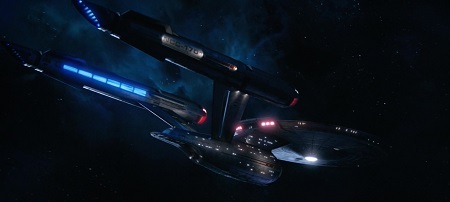
The USS Enterprise.

Just as I did for Discovery Season 4 and Picard Season 2 I’m going to make a few guesses – which I’m officially terming “preliminary predictions” – for Strange New Worlds Season 1. My usual caveat applies – I have no “inside sources,” nor am I claiming that anything listed below will definitely happen. These are guesses – educated guesses in some cases, perhaps, but guesses nevertheless.

Without further ado, let’s jump into the list!

Number 1: The uniforms will be redesigned.

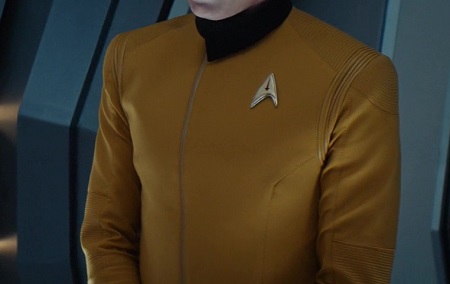
Captain Pike’s gold uniform as seen in the Discovery Season 2 episode Brother.

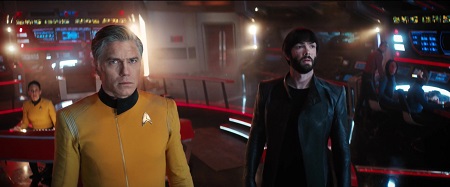
With the exception of Star Trek: Voyager, every Star Trek series to date has introduced new variants of the Starfleet uniform for its crew. While we have seen Anson Mount and Ethan Peck sporting their Discovery uniforms in recent promotional spots for Paramount+, I’m not convinced that Strange New Worlds won’t at least tweak that design.

And perhaps that’s all it will be – a minor tweak or alteration of the uniforms worn by the Enterprise crew in Discovery. But we could see a more radical change, perhaps one designed to bridge the gap between Discovery-era uniforms and those seen in The Original Series. We could see, for example, the high collars scrapped in favour of the crew neck style seen in The Original Series.

Red uniform variant seen in the Short Treks episode Ask Not.

The uniforms worn by the Enterprise crew in Discovery were little more than recoloured versions of the Discovery uniforms, and if you look closely, you can see the detailing around the shoulder and down the sides. In my opinion, though these uniforms were preferable to Discovery’s all-blue look, they ended up looking like dyed Discovery uniforms rather than their own thing. This is something that could be addressed, even if only by making small changes to some of the detailing and stitching.

Regardless, I think that when we start to see promos for the new series, one thing we’ll notice is some kind of new uniform variant.

Number 2: Cadet Sidhu will be part of the Enterprise crew.

Cadet Sidhu.

The 2019 Short Treks episode Ask Not – whose writer, Kalinda Vazquez, is now writing a Star Trek film – brought back Captain Pike. But it also introduced us to a Starfleet cadet, and at the end of the action-packed, uplifting story, she was assigned to a role under Pike’s command aboard the Enterprise.

Almost any story could have been chosen to bring back Captain Pike for a mini-episode, but Ask Not spent most of its time setting up Cadet Sidhu’s character. She has a potentially interesting backstory, being the sole survivor of a Tholian attack, and as a young, talented cadet she could fill a fairly typical Star Trek role in the new series.

Captain Pike with Sidhu in the Enterprise’s engineering section.

We’ve seen the “young and eager” role filled by characters like Harry Kim, Sylvia Tilly, and even Wesley Crusher in past iterations of the franchise, and having someone like that presents a contrast with older, more experienced characters like Captain Pike and Number One. Cadet Sidhu also has a husband, who could potentially be a recurring character, and her background with the Tholians suggests she may not be quite as naïve and inexperienced as other cadets, potentially giving her more to say and do.

Of the main cast that we know of at this stage, all three roles are played by white American actors – Anson Mount as Pike, Ethan Peck as Spock, Rebecca Romijn as Number One. Every Star Trek show going back to The Original Series has proudly shown off a diverse cast, and bringing in someone of Indian heritage would be great. Amrit Kaur, who plays Sidhu, would be the first person of Indian heritage to be a main cast member in the history of the franchise, which would be groundbreaking in itself.

Number 3: There will be a non-Starfleet crewmate.

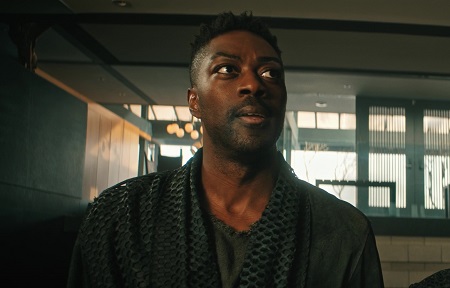
Cleveland Booker in Season 3 of Discovery.

One of the best things Discovery Season 3 did was introduce the character of Cleveland Booker. Book served as our guide to the 32nd Century in some ways, but also shook up the rigid hierarchy of the Starfleet crew by offering an outside perspective.

Several Star Trek shows have experimented with non-Starfleet characters in various roles, and aside from Book I’d point to Quark in Deep Space Nine and even, to some extent, Neelix in earlier seasons of Voyager as successful examples. I don’t expect Strange New Worlds to put together a Picard-style team where no one is a serving Starfleet officer, of course, but bringing in one major character who exists outside of the ship’s command structure would be potentially interesting.

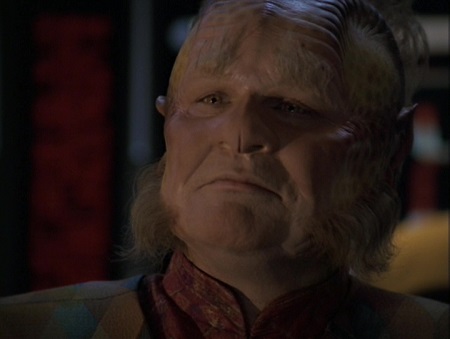
Neelix in Star Trek: Voyager.

There are many ways this could be done, and many different roles such an individual could occupy. I’m thinking perhaps of a chef-type role, maybe someone who oversees the mess hall and is friendly with the crew. But there’s also potential to bring in an alien character who is perhaps aboard the ship as an observer or diplomat.

The possibilities are open-ended – as is almost everything with Strange New Worlds – but I certainly think that bringing at least one “outsider” into the crew can be a great storytelling device, one which could take the show to different thematic places.

Number 4: There will be a significant callback to Star Trek: Enterprise.

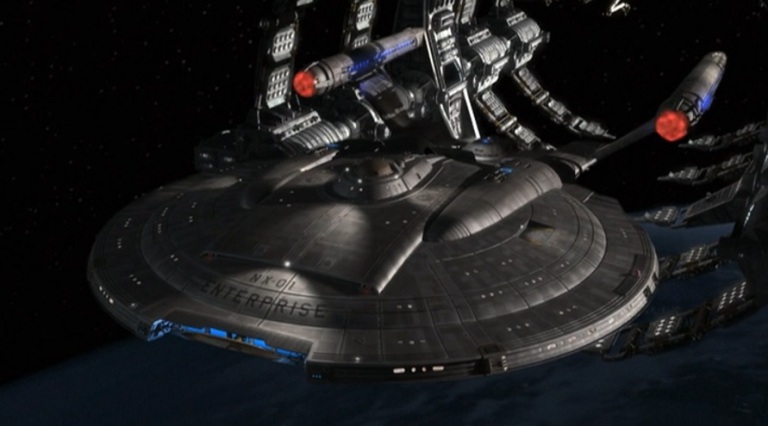
The NX-01 Enterprise.

Aside from a couple of Okudagrams and throwaway lines, modern Star Trek has essentially ignored Enterprise. The franchise’s first prequel currently feels disconnected from the rest of the franchise; cut off in the 22nd Century all by itself. There’s potential for Strange New Worlds to rectify this, and having a significant crossover with Enterprise would be something fun to see.

A few months ago I suggested that the Andorian Shran or main character T’Pol from Enterprise could still be alive and active in the era in which Strange New Worlds is set. Either character – or both – could thus cross over and appear in the new series. That would be a hugely significant moment, as it would firmly tie in Enterprise with the ongoing Star Trek franchise.

Sub-commander T’Pol.

Discovery could have done something similar to pay homage to Enterprise in either of its first two seasons, but with the show now set far in the future, any crossover potential has gone away. Strange New Worlds is currently the only 23rd Century series, and while the untitled Section 31 show or a future series may share the setting, that’s hardly a sure thing. So if the creative team at ViacomCBS want to bring up anything from Enterprise any time soon, this is by far the best place to do it.

If a main character crossover isn’t on the cards, there are still myriad other ways to acknowledge Enterprise in a major way. We could see Pike and the crew revisit a location first seen in Enterprise, or see the return of races like the Denobulans, Suliban, or Xindi, none of which have ever been mentioned outside of Enterprise.

Number 5: Ash Tyler will return.

Ash Tyler.

Of Discovery’s main cast from Seasons 1 and 2, only Ash Tyler didn’t travel into the future with Burnham and the rest of the crew. He remained in the 23rd Century, and at the end of the Season 2 finale we learned he would be appointed head of Section 31. It’s been assumed ever since (not only by me but by other fans and theory-crafters) that Tyler was intended to appear in the upcoming Section 31 series. However, as we recently learned, that show may be on hold for at least the next couple of years.

Ash Tyler’s story arc across Discovery’s first two seasons is arguably complete. He came to terms with what happened to him, his transition from Klingon to human and the two sides of his personality that created. He also went on a rollercoaster ride in terms of his relationship with Burnham. But there’s still a lot of potential in Tyler, and one thing in particular that leads me to believe that he could – in theory – have a role to play in Strange New Worlds.

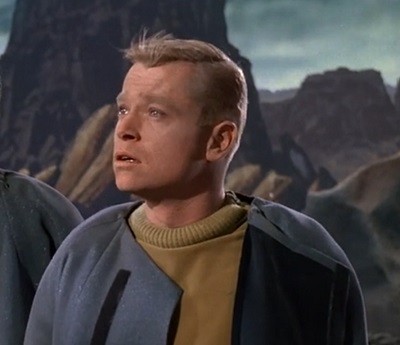
Is this Ash’s brother? His cousin?

The character above is José Tyler, one of the original officers under Pike’s command in The Cage. Now I’m not expecting everyone we met in The Cage to be recast and appear in Strange New Worlds, but the possibility of a family connection between José and Ash seems like it could be fun to explore. Perhaps they’re brothers or cousins. If so, how would José react to the fact that Ash isn’t really Ash any more? That could be a huge source of conflict, and putting the two characters together to work through that might be a story worth telling.

Ash Tyler could also be part of a Section 31-related story, or even a story that sees the Enterprise picking up the last remaining pieces of the battle against Control. Ash shares a secret that only Pike and the Enterprise crew know – what really happened to the USS Discovery. As the head of Section 31, might he leverage that against Pike somehow to force him to take on a dangerous mission? There are, once again, almost an unlimited number of ways Ash Tyler could be used in the context of the new show. I doubt he’ll be a major starring character, but having him back for an episode or two seems a real possibility.

Number 6: The Enterprise will make first contact with a familiar race.

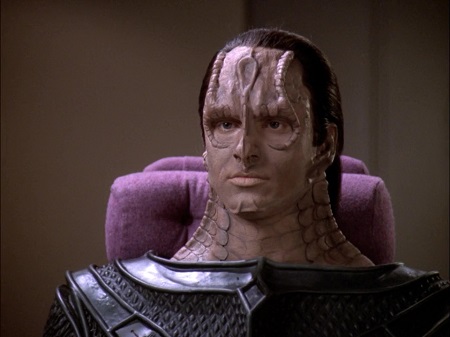
A Cardassian spy seen in The Next Generation.

One of the promises Strange New Worlds has made is that it will be a return to the kind of Star Trek that The Original Series, The Next Generation, and Voyager did so well, with stories focusing on exploration. Over the course of those series, the captains and their crews made numerous first contacts with alien races, and if Strange New Worlds is to make good on its premise, making at least one first contact seems inevitable.

If we look at Enterprise as the other major Star Trek prequel series, we saw first contact with established races like the Klingons, Romulans, and even the Ferengi – though Archer didn’t know who he was meeting in that last case. The point is, Enterprise went back and showed us how humanity first encountered many familiar Star Trek races – and this is something Strange New Worlds could do too.

Enterprise depicted Earth’s first contact with the Romulans, and several other familiar races.

I’ve written about this a number of times here on the website, but I adore Deep Space Nine, and particularly the Bajorans and Cardassians. We’ve never seen the Federation make first contact with either of them, and it could be very interesting to see how it went. The Cardassians would likely still be a militaristic state, but we know that the Bajorans prior to the Cardassian occupation were very different – operating a caste-based society that the Federation would surely disapprove of.

If not the Cardassians or Bajorans, there are many other Star Trek races which had already been contacted either by the time of The Original Series or The Next Generation that we could see Captain Pike and his crew meet for the very first time. Among them could be the Gorn, Tholians, or even a relatively obscure race like the Sheliak, who only appeared in a single episode. In my opinion, making first contact with an established race would tie Strange New Worlds in to the wider franchise, and that’s something that I firmly believe every Star Trek series needs to be doing.

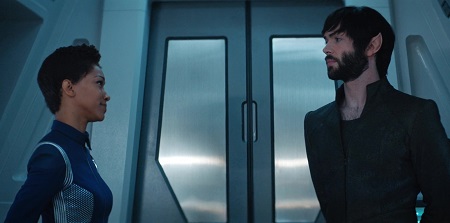
Number 7: Spock will mention Michael Burnham at least once.

Burnham and Spock in the Discovery Season 2 episode Project Daedalus.

Season 2 of Discovery explored in some detail the relationship between Burnham and Spock. They were raised as siblings on Vulcan by Sarek and Amanda, and Burnham appears to have been quite influential in Spock’s life and in his development. At the end of Season 2, Spock stated his intent to travel to the future with Burnham, and while we know that was never going to happen because of his other appearances in the franchise, it indicates how close they were.

Burnham’s loss is akin to a bereavement. Although the final red burst confirmed that she safely made it to the 32nd Century, Spock will never see Burnham again (barring some other time travel story!) so she’s gone from his life. How will that affect him? While Spock may, on the surface, appear to simply brush off the events of Season 2, he went through a heck of a lot. The loss of Burnham may be the worst part, but being accused of murder, having his mind scrambled, travelling to Talos IV, and being hunted by Control will have all taken a toll.

Captain Pike and Spock watch Burnham and the USS Discovery disappear into the future.

Burnham had her “Spock episode” with Unification III midway through Discovery Season 3, so I wouldn’t be at all surprised if Strange New Worlds reciprocates somewhat and gives Spock his own “Burnham episode” – or at least a Burnham moment. Moving on completely as if everything he went through in Discovery Season 2 never happened wouldn’t sit right, so I’m sure there will be at least some reference or acknowledgement of Burnham from Spock.

It may not be a complete story, rather just a line or two of dialogue in which Spock mentions how much he misses Burnham. But I do expect to see some kind of reference or connection. Despite Spock being a long-established character within Star Trek, Strange New Worlds is a spin-off from Discovery, and this version of the character in particular is tied to Burnham very strongly. Making note of that would also be a reminder to the audience that Discovery is Strange New Worlds’ sister show – another of those little ties between ongoing parts of the franchise that I mentioned.

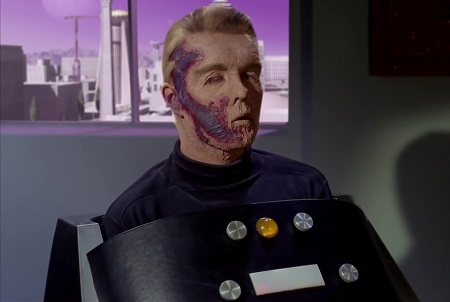
Number 8: Pike will have to deal with the knowledge of his impending accident and disability.

Captain Pike after his accident, as seen in The Original Series Season 1 episode The Menagerie.

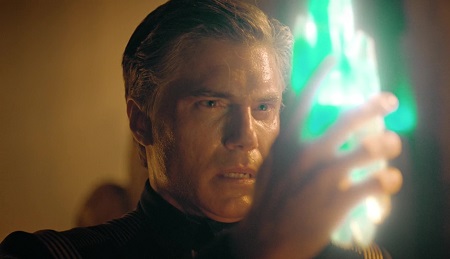
Captain Pike not only saw his future at the Klingon monastery on Boreth, but he actively chose to accept his horrible fate in exchange for a time crystal. This happened toward the end of Season 2, and with the battle against Control to prepare for, he didn’t have much time to really stop and think about what that means. But Strange New Worlds will surely slow things down – at least some of the time – giving him pause for thought.

In the moment, Pike did what he needed to do and embraced his dark future. Will he regret that? Will he be worried at every turn, looking over his shoulder for the moment where his accident will occur? If so, who will help him snap out of it? It would be very easy for someone in his position to fall into depression – after all, what he’s going through is akin to being diagnosed with a terminal disease.

Pike sealed his fate in the Discovery Season 2 episode Through the Valley of Shadows.

We have seen Star Trek tackle this subject before, but only in the format of one-off episodes. Having a main character who is aware of his impending health collapse and disability could be something that’s absolutely worth exploring. In a way, I can relate to Captain Pike. Over the last decade or more I’ve seen my own health gradually decline, and while it isn’t quite the same thing (Pike’s accident takes him from full health to total disability in a heartbeat) I’ve been in the position of hearing a doctor tell me really awful news, knowing that there isn’t anything I can do to fix it.

Star Trek usually does things by analogy, so rather than Captain Pike being diagnosed with a real-world life-limiting condition, he’s seen a vision of his future disability in a time crystal. But the impact it could have on him from a psychological point of view is comparable, and this could, in my opinion, be a great way for Star Trek to explore the complexities surrounding incurable illness, long-term health conditions, disability, and even terminal illness. There are many, many ways such a story could go, and I’ll be fascinated to see what direction the show takes with this.

Number 9: There will be either a time-travel or parallel universe story.

Kirk’s captured Klingon Bird-of-Prey travelling through time in Star Trek IV: The Voyage Home.

Time travel has been a part of Star Trek going back to Season 1 of The Original Series, and we’ve seen a number of episodes take place in both the past and future. With Strange New Worlds sending Pike and the Enterprise off on a mission of exploration, they could easily encounter any of the temporal phenomena that we know exist out there in space.
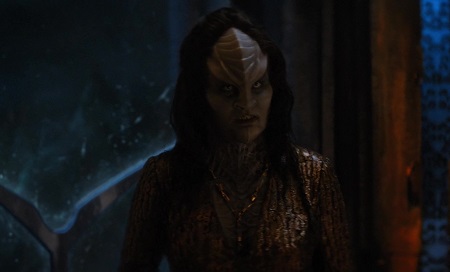
I’ve never been wild about time travel in Star Trek, and often the episodes in which it features aren’t my favourites. Using time travel to visit contemporary Earth inevitably dates a story, too – just look at Star Trek IV: The Voyage Home or the Voyager two-part episode Future’s End as examples of that! But just because time travel isn’t my personal favourite story element doesn’t mean it can’t work well, and I wouldn’t be surprised at all to see Strange New Worlds pursue a story of this nature.
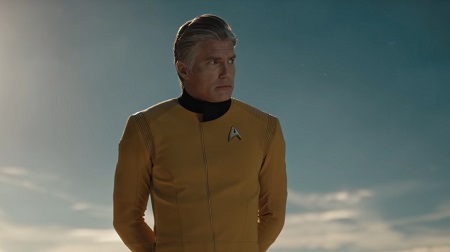
Voyager visited ’90s California in Future’s End.

The main candidate when considering time travel has to be the aforementioned contemporary Earth, in this case, Earth circa 2021! But we’ve seen time travel stories set in the 1890s, the 1930s, and even a dark vision of the 2020s! It could also be fun to see the crew shot forward in time, and perhaps having to rely on the help of a time-travelling future Starfleet to get home.

Alternatively we could see a parallel universe story – though hopefully not the Mirror Universe! The Mirror Universe is potentially home to the prime version of Captain Lorca, and rescuing him could be an interesting story. But there are many other parallel universes – including the alternate reality where the Kelvin films are set. Could that set up a crossover with the alternate reality versions of Pike and Spock?

Number 10: The show will acknowledge current events.

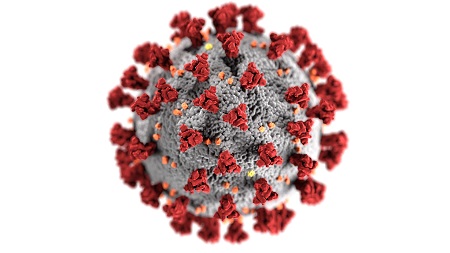
The COVID-19 pandemic has been the biggest and most disruptive event in many years.

The big story of 2020 was, of course, the pandemic. But there are other significant ongoing events, such as the issue of race in the United States, that Strange New Worlds could try to tackle. Star Trek, despite what some people want to tell you, has always been a franchise with a keen interest in contemporary events. Going all the way back to The Original Series, Star Trek has used its sci-fi setting to look at real-world events, and I wonder to what extent Strange New Worlds will try to do that.

In a series that aims to be more episodic than other recent Star Trek projects, Strange New Worlds could certainly dedicate at least one episode to looking at a major current event. The pandemic is something we have yet to see appear in fiction in a big way. The issue of race, on the other hand, is something we’ve seen tackled many times in many different ways.

Star Trek has looked at the issue of race relations in the United States before, notably in the episode Let That Be Your Last Battlefield.

A story touching on issues raised by the pandemic could look at, for example, a planetary society suffering from disease, but where a significant number of people refuse to take precautions – something we’ve seen all across the world to varying degrees. Or it could look at the long-term impact of isolation through a character or set of characters who haven’t had any outside contact for a long time.

Any series that plans to look at aspects of the ongoing pandemic has to tread carefully, in my opinion, to avoid appearing to sensationalise current events or to be seen to be exploiting the situation. But as one of the biggest events of the 21st Century so far, the coronavirus pandemic will be explored in art and entertainment many times in the years ahead, and there’s no reason why Star Trek shouldn’t tackle it – provided it does so tactfully.

Number 11: The Klingons will make an appearance.

A Klingon general from Lower Decks.

Federation-Klingon relations went on a rollercoaster in the 23rd Century, to say the least! From ignoring one another to all-out war to a peace conference, the two factions did it all. One thing we have yet to see is the way in which the Klingons changed following the war depicted in Discovery – and no, I don’t mean the prosthetic makeup!

When L’Rell took power at the end of Discovery Season 1, she sued for peace with the Federation, after which Federation-Klingon relations appear to have thawed, at least a little. Yet within a decade or so, the Klingons were once again incredibly antagonistic toward the Federation, with conflicts and battles fought during this era.

Chancellor L’Rell in the Discovery Season 2 episode Point of Light.

Perhaps we could see something happen between the Klingons and Federation to set them on this antagonistic path. Captain Pike has built up some degree of goodwill with the Klingons, but seeing this evaporate would be a potentially interesting story. We could also welcome back Mary Chieffo as L’Rell in a story focusing on the Klingon Empire.

Just like we need to see Section 31 disappear and move underground, we also need to see the Klingons and Federation move apart. Another all-out war is not required, but seeing the situation deteriorate and even the cutting off of diplomatic relations would “reset” the Klingons closer to the way they were in The Original Series.

So that’s it. Ten Eleven preliminary predictions for Season 1 of Strange New Worlds. As I said when the series was first announced, 2022 seems like a reasonable guesstimate for when it’ll premiere, and that was backed up by the news we got a few weeks ago about which shows are in production and how far along they are. So while it’s definitely early to be considering what we might see from the new show, it’s not too early! Who knows, it could be this time next year that Strange New Worlds makes its debut!

Anson Mount has recently featured in the ad campaign for Paramount+.

I hope this was a bit of fun. And just to re-emphasise what I said at the beginning: I don’t have any “insider information,” this is just guesswork from a fan. Nothing more! So don’t get upset if none of what I suggested above ultimately comes to pass!

I’m really looking forward to Strange New Worlds. It seems to be offering more of a “classic” take on Star Trek when compared to recent projects, and I’m 100% there for that! The franchise has expanded, and there’s plenty of room for serialised drama and even animated comedy, but taking Star Trek back to its roots is definitely something I’m keen to see. That doesn’t mean every project should try to do the same thing, but it does mean that Strange New Worlds is close to the top of the list of shows that I’m most excited about!

If we get any major news, casting information, or a trailer be sure to check back as I’m sure I’ll have something to say. Other than that, all we can do is wait!

Star Trek: Strange New Worlds is coming to Paramount+ at some point in the future. International distribution has not yet been announced. The Star Trek franchise – including Strange New Worlds, Discovery, and all other properties mentioned above – is the copyright of ViacomCBS. This article contains the thoughts and opinions of one person only and is not intended to cause any offence.