Spoiler Warning: There are spoilers ahead for Star Trek: Starfleet Academy Season 1. Spoilers are also present for the following Star Trek productions: The Next Generation, Deep Space Nine, Voyager, Discovery, and Prodigy.
I’d like to focus on one individual storyline from Starfleet Academy’s first season today – specifically from the episode The Life of the Stars. This was only one part of the episode, so if you want to get my thoughts on other aspects of The Life of the Stars, I have a brief review in my Starfleet Academy Season 1 episodes piece – click or tap here to check it out. And if you want to see what I thought of Starfleet Academy’s first season as a whole, check out my full review by clicking or tapping here.
We’re going to get into some serious spoiler territory today, so if you ignored my little spoiler warning above, consider this your last chance to nope out before I talk about storylines impacting not only Starfleet Academy, but also Voyager, Prodigy, and other parts of the Star Trek franchise, too.
Promo photo of the Doctor released ahead of Season 1’s premiere.
Today, we’re going to focus on the Doctor: Voyager’s Emergency Medical Hologram. The Doctor was a surprising inclusion in Starfleet Academy’s cast when the announcement was made a couple of years ago, but I genuinely thought it was a fun idea. I’d speculated for a long time that the Doctor – or perhaps a backup copy of him – could have survived to the 32nd Century, but we didn’t get to see him in Discovery. A teaching role sounded perfect for a being who’s now more than 800 years old; Robert Picardo, who plays the character, described this version of the Doctor as being akin to Yoda over in the Star Wars franchise! I thought that sounded like an apt comparison.
The Doctor appeared in almost all of Starfleet Academy’s episodes this season, but his role in The Life of the Stars was by far the biggest. This storyline explored the Doctor’s history, his family, his memories, and why he struggled to make a genuine connection with Sam – Starfleet Academy’s holographic cadet.
And… I really didn’t like what this storyline had to say, unfortunately.
Behind-the-scenes during production on The Life of the Stars.
Before we go any further, let me give my usual caveat: everything we’re discussing today is the *subjective, not objective* opinion of just one old Trekkie. If you disagree with me about the Doctor (or any other element of Starfleet Academy), if you think I’ve totally got the wrong end of the stick, or if our views don’t align… that’s okay. There’s enough room in the Star Trek fan community for differences of opinion and respectful disagreement, and I share my thoughts with you in that spirit. I’m not trying to say “I’m right and that’s that;” I’m well aware that other Trekkies may completely disagree – and that’s totally fine.
There are always going to be a range of opinions on works of art and media in general, and just because I personally didn’t like what this storyline had to say doesn’t mean other people won’t find it interesting or entertaining. The story was clearly written this way for a reason, so at least *someone* out there must’ve thought it was a good idea!
Robert Picardo (second-left), with several co-stars and the executive producers of Starfleet Academy in March 2026.
Finally, this is my second time criticising the way in which Starfleet Academy handled the legacy of a character from The Next Generation era. The show only did two storylines which really focused in on legacy characters, so for me to come away feeling that *both of them* weren’t enjoyable and I didn’t like what they said… that’s pretty disappointing, to be honest. It’ll go down as a real black mark against Starfleet Academy, at least in my book.
Starfleet Academy, in my view, already had several challenges to overcome: its teen/young adult focus, its serialised storytelling, its unimpressive villain, and the simple fact that it’s the sixth new Star Trek series to come along in just nine years. Solid, well-written, enjoyable callbacks to Deep Space Nine and Voyager could’ve done a lot to boost the show’s prospects, at least for an old Trekkie like myself, and could’ve made it more entertaining and just more memorable. I didn’t want to be in this position of having to criticise two of the storylines that *should*, in a sense, have been just the kind of thing I’d have wanted or hoped to see in a series like this. But… here we are.
If you want to check out what I thought of Starfleet Academy’s connection to Captain Sisko and DS9, by the way, you can find that article by clicking or tapping here.
Series Acclimation Mil was also an episode I did not enjoy…
Alright, now that that’s out of the way, let’s set the scene. Cadet Sam – short for Series Acclimation Mil – is only a few days old, but she’s been programmed by her holographic race to have the maturity and appearance of an Academy-aged individual. The Life of the Stars follows on from Sam’s role in the episode Series Acclimation Mil, in which we learned why her people wanted to create her and send her to the Academy in the first place.
Sam had been injured (or “damaged,” I guess) a couple of episodes earlier in Come, Let’s Away, and her injuries progressed to such an extent that the Doctor couldn’t find a treatment. The Doctor and Captain Ake agreed to take Sam back to her homeworld, Kasq, where there was hope that Sam could be repaired. There were stakes not only for Sam herself, but also for Kasq’s potential to come out of isolation and to spend more time with organic life-forms. Sam’s mission, at the end of the day, was to better understand organic life and convey that understanding to her makers.
Sam’s injury.
And then we come to the Doctor.
The Doctor had been quite standoffish with Sam when they first met, back in the series premiere. When Sam tried to bring up the Doctor’s past life – the crews of the USS Voyager and Protostar – he quite quickly shut her down. I speculated that the Doctor could be struggling with having lived such a long life, and having seen potentially many generations of organic friends live and die. I said that, while I was glad the Doctor didn’t overwhelm Starfleet Academy in the show’s premiere, I was curious to see if that angle would be explored further.
The Life of the Stars was that explanation – after a fashion. It turns out that the Doctor was, as I theorised, struggling with life and loss… but not in the way I’d have thought or expected. Rather than mourning his friends from the USS Voyager or the cadets of the Protostar, the Doctor had, instead, spent close to eight centuries grieving for his holographic family from the Voyager Season 3 episode Real Life.
The Doctor with Belle, his holographic daughter, in Real Life.
According to The Life of the Stars, it wasn’t Janeway or Seven of Nine that the Doctor missed and lamented outliving. It wasn’t lil’ Harry Kim, the fresh-faced ensign who was one of the first people the Doctor ever met. Nor was it Dal, Gwyndala, or Rok-Tahk, the young kids he came to know – and perhaps the first cadets he ever really “mentored.” The Doctor, according to this story, loved none of them as much as his holographic family from Real Life, and it was the simulated “death” of his holographic daughter in particular that caused him to become withdrawn and unwilling to risk loving anyone ever again.
What the actual fuck?
Let’s talk about holograms, as defined by Star Trek – and specifically, what their capabilities were in the 24th Century. The Next Generation was the first series to introduce holograms, and according to that show, as well as to Deep Space Nine and Voyager, practically all holograms at that time *were not sentient*. They’re characters in a story, computer programmes, pieces of code. Their lack of sentience is such an important point that holograms which become genuinely self-aware were almost always treated as unique, special, or even dangerous, in some cases.
The Doctor with the cadets in Prodigy Season 2.
The first sentient hologram we met in Star Trek was Professor Moriarty, in Elementary, Dear Data. He was inadvertently created by the Enterprise-D’s computer following a misunderstanding, and seemed – at that time, anyway – to be the only sentient holoprogramme in existence. The next self-aware hologram is arguably the EMH programme – i.e. the Doctor’s original programme. And then we come to the likes of Vic Fontaine. But in between we saw countless examples of holograms that were basically – to use some modern lingo – akin to video game NPCs.
This is how we get away with stories like Hollow Pursuits, which saw Barclay recreating members of the Enterprise-D crew on the holodeck as part of his escapist power fantasy. Or the countless references to holosuites at Quark’s being used for… adult activities. Or holograms created entirely for the purposes of being killed in training simulations. The list goes on.
Are these holograms “alive,” too?
What The Life of the Stars is effectively saying, in my opinion, is that the Doctor spent hundreds of years of his life refusing to get too close to anyone ever again because… he had a particularly emotional reaction to a character from a video game. It would be like if you or I refused to get married or have kids because “this one time, my family in The Sims all died, and it made me really sad… I don’t think I could put myself through that again.” Do you get my point? These holograms are, according to everything we know about Star Trek, holodecks, and the 24th Century, not sentient, not self-aware, and not… alive. At least, not by any conventional definition.
I don’t want to downplay the power of entertainment to evoke strong emotions. Heck, I run a website all about films, games, TV shows, and the Star Trek franchise. I can’t even count the number of incredible titles – interactive and non-interactive – that have given me “the feels.” Just the other day, I talked about the intense bittersweet feelings of nostalgia that I got from a single twenty-minute episode of an anime. So I’m not calling out Starfleet Academy because the writers wanted to show the Doctor having a reaction to a holoprogramme that he participated in. If that was the intention of the story, and if it was handled differently, I might’ve been willing to praise an interesting take on the power of interactive media. But that wasn’t the intention, and it’s not the way it comes across.
Robert Picardo, who plays the Doctor.
I’m afraid I have to come to the conclusion that one of the episode’s writers (two writers are credited, but Starfleet Academy also had a writers’ room, I believe) just didn’t understand how holograms worked in past iterations of Star Trek. They looked at their character, Sam, and they looked at the Doctor – two sentient, self-aware, alive holograms – and concluded that *all* holograms must be like that. Even though, during TNG, DS9, and Voyager, sentience was the exception, not the norm. And the result is a massively confused storyline that seriously harms the Doctor’s characterisation.
The sad thing is that this exact same storyline, had it adopted one of two possible changes, could have been one of the best of the entire season. In a season which, in my view, was drowned out by a silly, hammy villain and a little too much teen/young adult drama, a story about an older man coming to terms with loss, grief, and what it means to outlive the people you love… that could’ve been incredibly powerful. I’ve lost people close to me – friends as well as close family – and getting a storyline that touched on that, on what it means to be the one left behind… I really think there’s a lot of potential there, and the Doctor’s unique status and age presented a golden opportunity.
But Starfleet Academy’s writers pissed it away on a story they clearly thought was clever… but that completely misunderstands a very basic piece of the franchise’s history.
The Doctor, along with Sam and Captain Ake, arrives at Kasq.
I am not, despite how parts of this piece may be coming across, a stickler for “the tiniest minutiae of canon.” If holograms were relatively new to Star Trek, or if Real Life had been one of the only episodes in The Next Generation era to feature holograms, I’d have been willing to accept this as a bit of a retcon; a change, but one that could lead somewhere narratively interesting. But I believe that there are a few fundamental building blocks to writing a coherent story in a long-running franchise, and one of those is basic internal consistency. It’s been established on dozens, or perhaps even hundreds, of occasions across TNG, DS9, Voyager and beyond that most holograms – like those in Real Life – are not alive and are not sentient. So new writers have to be bound by that; making an arbitrary change to it this late in the game is not something I can accept.
The consequences of such a change ricochet across the entire 24th Century, if that’s the case. It makes B’Elanna into a murderer, first and foremost, since she reprogrammed the Doctor’s idealistic family life in such a way that his daughter died. It makes a lot of other characters into killers, into sex pests, and more… and while I really like the idea of using the holodeck as a way to critique things like fantasising excessively, relying too much on the computer, or – in the modern day – as an analogy for A.I. chat bots, perhaps… that isn’t how this story was intended, and it doesn’t come across that way, either.
The Doctor remembers his holographic daughter.
There were, as I mentioned, two ways to salvage this story, so let’s go over them in turn.
Firstly, rather than going back to Real Life and Voyager, The Life of the Stars could’ve simply introduced new holographic characters to fill that role. Let’s say that, sometime in the 25th Century, the Doctor settled down with his holographic husband or wife. But, because of some technobabble, his partner or one of his holographic offspring ended up being damaged beyond repair and couldn’t be reset or saved. This could even be tied to the Burn – the massive, galaxy-altering event that underpins Starfleet Academy’s 32nd Century setting.
That gets us to the exact same narrative place, but in a way that makes it clear that the Doctor is grieving someone who was actually alive to begin with. It wouldn’t have the same connection to Voyager, but I mean… is Real Life an especially memorable episode for a lot of folks? I don’t think that one random deep cut to a single episode would’ve been as effective as the writers hoped, even without this glaring narrative fault.
The Doctor gets emotional.
Secondly, there’s the more obvious solution: the Doctor finds it difficult to accept friendships of any kind because of the toll outliving so many friends has taken on him.
This kind of story could see the Doctor lamenting the deaths of people like Chakotay, Harry Kim, or Seven of Nine. It might’ve even been possible to bring back one of those characters for a brief scene – perhaps their funeral or even their deathbed. The Doctor gained sentience and self-awareness around these people; they were the first friends he ever knew, and they had his back on multiple occasions when he was in jeopardy, when he was distressed, or just when he needed to talk. Seeing him grieve for Captain Janeway or Tuvok, remarking that it’s a terrible tragedy to outlive all of one’s friends… that could’ve been incredibly powerful.
And then, to hammer it home, the Doctor would explain that this didn’t just happen once… but over and over again. Generations of organic friends came and went, and he remembers – and mourns – all of them. But after the Burn, perhaps the Doctor felt he’d lost too much, and for his own mental health and wellbeing he needed to start keeping things professional. He keeps Sam (and others) at arm’s length not because he misses his video game family from one random episode… but because he’s grieving the loss of countless friends across eight centuries.
The Doctor’s sense of loss and grief could’ve connected back to Voyager in another way.
Maybe the writers thought that was “too obvious,” and wanted to be a bit subversive. Unless we get them on the record, I guess we’ll never know for sure. But I think that kind of story would’ve got the Doctor to the same place with the same mindset, ready to have that experience on Kasq with Sam, but in a much more powerful, emotional, and enjoyable way – and a way that makes narrative sense based on our understanding of holograms in past iterations of Star Trek.
As I’ve said before on quite a few occasions with modern Star Trek: it isn’t that the core idea was bad, but the way it was executed just… fucked it up. A story about the Doctor coming to terms with grief and having to make the incredibly brave decision to put his heart on the line one more time to save the life of a child? That’s powerful stuff. But because of the way it was handled, and the decision to make the root cause of his grief these one-dimensional characters from the 24th Century equivalent of a video game? It ruined it, and it turned what should’ve been one of the best storylines of the entire season into one of the worst.
Robert Picardo (right) with director Larry Teng on the set of Series Acclimation Mil earlier in the season.
I was excited when Robert Picardo announced that the Doctor was coming back. And I wondered what might lie in store – this is a character I first fell in love with some thirty years ago, so to see him back in a totally different century for a new adventure… I was on board! I just wish that the end result hadn’t misunderstood something so basic about Star Trek, and that the Doctor’s one real moment in the spotlight could’ve been stronger and more enjoyable. When I can see not one but *two* clear and obvious narrative pathways that could’ve made it happen… it’s an unforgivable mistake, in my view.
Starfleet Academy, as I said in my review, wasn’t really “my thing.” But if there was one storyline that could’ve been more my speed, or that might’ve had something to say that resonated with me, it was this one. And I think that’s why I feel this disappointment all the more – it’s not just what it says about the Doctor, and how he apparently spent centuries sulking over the equivalent of his save file in The Sims. It isn’t even what it says about B’Elanna or other characters who used or reprogrammed holograms for selfish reasons across the TNG era. It’s because it feels like, after Starfleet Academy had already messed up its Sisko story, this was really one of the only storylines I might’ve found relatable or enjoyable. But because the writers – again, in my opinion – didn’t understand or didn’t know enough about holograms… it comes across as completely missing the point, and missing the point so severely that it harms my opinion of the Doctor himself.
Sam with the Doctor during her second life.
So there we go. That’s my take on the Doctor’s role in The Life of the Stars and what this new information says about his character.
I would say, to the story’s credit, that there were some creative ideas. Kasq existing in a different “plane of existence” felt like a bit of a cop-out; a way to ensure the Doctor and Sam wouldn’t need to take too long to re-grow and get back to normal. But the visuals of Kasq were creative, I liked the ultimate explanation for Sam’s breakdown being mental, rather than physical, and the episode’s attempted message about looking after one’s mental health is arguably executed far better than in comparable stories in Discovery or Picard. So it isn’t that the episode as a whole as no merit; this side of the story, though, completely failed for me.
I hope this has been interesting, and I hope I didn’t come across as too harsh or aggressive. Star Trek is something I’m passionate about and have been for a long time, and as someone who watched and enjoyed Voyager during its original run, bringing the Doctor back felt like a great idea in this latest adventure. I just wish it had been handled better, and that a different reason for the Doctor’s grief and reluctance to help could’ve been written. We came close – *this close* – to one of the best parts of the entire season.
The Doctor and the cadets at the end of the episode.
Thanks for reading. Despite my feelings about Starfleet Academy as a whole, and this storyline, I can tell you that I genuinely gave the series a fair shake. I always expected it wouldn’t be my favourite part of the franchise – the whole teen/young adult focus, of course, but also the serialised story and the villain with an over-the-top magical macguffin all saw to that. But despite that, I really tried to let Starfleet Academy speak for itself, and to go into the show with an open mind.
This essay concludes my coverage of Starfleet Academy for the foreseeable future. Obviously, if we get major news about Season 2, a third season renewal, or any kind of teasers, clips, or trailers, I’ll do my best to cover that here on the website. But for now… that’s all. I’ve finally said all I wanted to say about the show’s first season.
If you missed them, please check out my reviews of the two-part premiere, the first season as a whole, and episodes 3-10. You can find them by clicking or tapping those links. And as the 60th anniversary year rolls along, I’ll have more to say about Star Trek, so be sure to check back from time to time. Thanks again for reading, and Live Long and Prosper, friends!
Star Trek: Starfleet Academy is available to stream now on Paramount+ in countries and territories where the service is available. The Star Trek franchise – including Starfleet Academy and everything else discussed above – remains the copyright of Paramount/Skydance. This review contains the thoughts and opinions of one person only and is not intended to cause any offence.
Spoiler Warning: There are spoilers ahead for Star Trek: Starfleet Academy Season 1. Spoilers are also present for the following Star Trek productions: The Original Series, Deep Space Nine, Voyager, and Discovery.
Welcome to an addendum to my review of Star Trek: Starfleet Academy’s first season. Because the review was longer than I originally intended it to be, I didn’t get a chance to delve into every storyline in as much detail as I wanted. So in this “Part Two,” we’ll be taking a look at episodes three through ten of Starfleet Academy Season 1. If you want to get my thoughts on the first two episodes of the season, I already have that review published. You can find it by clicking or tapping here. And please don’t miss my full Season 1 review. I go into detail about characters, season-long story arcs, VFX, and a whole lot more. You can find it all by clicking or tapping here.
If you really just want the brief, too-short version, here it comes: Starfleet Academy was more episodic and less serialised than I feared it would be, with individual episodes focusing on different characters. It explored more of the post-Burn 32nd Century in ten episodes than Discovery did in thirty-six. And there were individual moments in every episode that I enjoyed, that won a chuckle, or that “felt like Star Trek.”
Caleb Mir.
However, the series very clearly exists in the “teen/young adult drama” space, drawing on university and high-school drama series for inspiration at least as much as on Star Trek. The tone of the show overall, and the way most of the main cadet characters were handled, just wasn’t “my thing.” And I was pretty sure it wouldn’t be before I switched it on! I tried to go into Starfleet Academy with an open mind, and I can say that I gave the series a chance to win me over. But it would be fair to say that, as someone the wrong side of forty, I’m not the target demographic here. For all of its enjoyable moments, Starfleet Academy just… isn’t for me. And I’m okay with that.
The show also recycled several of modern Star Trek’s least-interesting tropes: an over-the-top villain who’s connected to two of the main characters, a magical macguffin of ridiculous destructive power, and a nefarious scheme that threatens billions of lives across the Federation. A protagonist who was a little too perfect was an odd choice for a show set at a school – where characters need room to learn and grow – and while some of these things are not necessarily Starfleet Academy’s fault on their own, the show has come along after Star Trek has been in production for nine-plus years, and after we’ve had more than 200 new episodes across this streaming era. That context, unfortunately, weighs against Starfleet Academy, making some of its story points – which wouldn’t have been *phenomenal* on their own – even less appealing.
I said in my longer review that Starfleet Academy just doesn’t strike me as being an especially unique or memorable addition to the franchise. And I fear its second season – which is already in post-production – will be its last.
Showrunner and director Alex Kurtzman on the set of the season premiere.
I hope that’s enough context for today as we jump into the individual episodes! If it’s not, be sure to check out my longer Season 1 review.
The episodes below are listed in the order they were first broadcast, beginning with the third episode of the season. If an important character moment or plot point seems missing, that may be because I’ve already covered it in the longer Season 1 review. I’ve tried to hit all of the main points from each of these eight episodes in a more condensed format, because I didn’t have enough energy in the tank to write individual episode reviews week-to-week! I hope this format is an adequate substitute for those longer reviews.
So without any further ado… let’s jump into the episodes.
Vitus Reflux:
Let’s play Calica.
This was an absolutely catastrophic cringe-fest from almost the first moment. When Starfleet Academy was first announced, and fans began to speculate on whether it would be a teen/young adult-oriented show, episodes like Vitus Reflux were what I feared the most! Caleb’s romantic pursuit of Tarima was so bad that I had to physically stop myself from fast-forwarding through their scenes, Jay-Den’s cringeworthy moment with the War College cadets was also toe-curlingly awful to sit through… and this American style of cringe humour just isn’t my thing and never has been.
This was the first episode to attempt to humanise Darem after a pretty rough “rich kid who’s also a bully” start. However, I felt his conflict with Genesis was incredibly poorly-written, coming across feeling scripted and fake. This led to a resolution that felt thoroughly un-earned for both of them, with Daren’s “arrogant dickhead who secretly cared all along” storyline just… falling flat for me. The phaser game was fine, and I appreciated the diversion from massively high-stakes storylines involving pirate warlords and interstellar diplomacy to something a bit better-suited to a class of cadets. However, even this didn’t escape the clutches of American cringe humour, with the two teams each getting a ludicruous mascot.
The main cadet characters.
A story about two groups of kids getting into a prank war is… I mean, it’s something that’s never going to appeal to me. I will say that Vitus Reflux handled that premise about as well as it could have under the circumstances, though. And the War College cadets were set up as suitably antagonistic to “our” Academy heroes such that the conflict worked in context. Captain Ake joining in – in her own, very subtle way – was also a bit of fun, and I think that kind of thing softens and humanises her as both a leader and an educator.
I think I’m right in saying that this was the first episode in which the War College’s Chancellor Kelrec played a significant role. Kelrec is a character I wish we’d spent a bit more time with; he (and the War College in general) seemed to disappear from the series after the halfway point. Overall, this episode was probably the closest that Starfleet Academy came to feeling like a show set at a real school or university. For better or for worse.
Vox in Excelso:
Jay-Den and his family.
If you’re a regular around here, you may remember me saying on multiple occasions that I wished Discovery had shown us what happened to the rest of the galaxy – and the Klingon Empire in particular – in the aftermath of the Burn. Well… we can finally check that one off the bucket list, eh? I’m not sure I buy the whole “on the verge of total extinction” storyline; the Klingon people seem too resilient, and too vastly spread across space, for that to happen, and I chalk that up to Discovery-inspired “turn all the drama up to eleven all the time” kind of storytelling.
The main thing I have in my notes for this episode, aside from the fact that it was nice to get Jay-Den’s backstory to inform his characterisation, is that this fell into one of the most clichéd traps that many stories intended for kids and young people can stumble into. In short, this was a “the kids figure out something incredibly basic that their teachers and the adults around them can’t” kind of story. It fell to Jay-Den to recognise what even the ancient and wise Captain Ake could not: that the Klingons would not accept a handout, and needed to feel like they’d “won” and annexed their new homeworld on their own.
Sharing bloodwine.
This was the first episode where I felt Darem was somewhat likeable, and his moment with Jay-Den as they prepped for the debate was understated and sweet, setting the stage for more to come between them. Jay-Den was strangely relatable, too, as someone who doesn’t enjoy public speaking or having all eyes on him; I felt that, and I’m sure a lot of the show’s younger viewers will have, too. Jay-Den, as a softer and less violent Klingon with other interests besides a “glorious death in battle,” makes for a fun and different kind of Klingon character – completely distinct from the likes of Worf, B’Elanna, and others.
I felt the outdoor filming location used for the Klingon encampment wasn’t very interesting, and I would’ve liked to have seen an environment that looked a bit more “alien” or otherworldly, not just a generic North American forest. It wasn’t the worst thing in the world, sure, but I think Starfleet Academy can do better than that. And if there are no good locations near Toronto… use the AR wall and make something up! We got a fun look at some Starfleet and Klingon vessels in the climactic fight, and Captain Ake’s scenes with both Lura Thok and the Klingon leader were cute. It wouldn’t be Star Trek unless *someone* drinks bloodwine with the Klingons, eh?
I loved Cirroc Lofton’s role in Series Acclimation Mil. Despite truly hating the storyline he was part of, seeing Jake again after all this time, and seeing his scenes with Sam, was a genuinely emotional experience, and especially toward the end, I felt myself getting teary-eyed. Lofton put in a great performance, and made a welcome return to the franchise in an attempt to celebrate the life and legacy of Star Trek’s first African American captain.
This episode also solved one of the biggest mysteries behind Sam: why her holographic race wanted to create a child and send her to the Academy. Kasq and the “makers” were interesting, and their distrust of organic races seemed to make sense in context. Sam’s wide-eyed enthusiasm was genuinely one of the best parts of Starfleet Academy, and this episode went into detail about how she came to be and what her intended purpose was for her people.
Kelrec’s musical performance.
There were some fun moments, too, with Caleb reprogramming Sam, the cadets getting drunk and getting into a bar fight with their rivals from the War College, and the off-campus bar just being an interesting and well-designed space in general. The Doctor’s look of disappointment when Sam was recovering from her drunken state was pretty funny, too.
The episode’s B-plot seemed to go nowhere. Actually, scratch that: it *literally* went nowhere. We began with Chancellor Kelrec stressing about a diplomatic visit from an alien race, and going to all the trouble to practice a very precise diplomatic dinner he planned to host – with Ake, Reno, and the Doctor as stand-ins for the aliens. But then… we never saw the upshot of that, never met the aliens, and never even learned if Kelrec’s diplomatic overtures were successful or not. It just felt like a weird waste of time.
Come, Let’s Away:
Kelrec, Ake, and Vance.
My favourite episode of the season, on balance.
This *kind* of story – where the villain gets a win and outsmarts the kids – should have come sooner, though, as it would’ve gone some way to helping make up for Braka’s other deficiencies. Speaking of Braka, this was the only time in the season where I felt he was even *slightly* respectable as a villain, with the over-the-top elements of Paul Giamatti’s performance being toned down just enough to make him feel less like a one-dimensional cardboard cut-out and more like a real person. I think that speaks to having someone different in the director’s chair: Larry Teng helmed this outing, whereas Star Trek regulars Alex Kurtzman and Olatunde Osunsanmi were in charge for Braka’s other big appearances.
That being said, the set for the USS Miyazaki was… well, it was just atrocious, to be blunt. Star Trek often redresses sets from one series to another, but not since Discovery’s transporter room pretended to be a Ba’ul prison cell in Season 2 have I seen such an *awful* and pathetic set redress. Apparently hanging a bunch of bin liners (trash bags) over parts of Strange New Worlds’ Enterprise set was meant to make the ship look “futuristic” and “experimental.”
A behind-the-scenes look at the trash bag-covered set.
Despite that, this was an intense episode – and an episode where the level of intensity felt about right. Braka’s scheme unfolded carefully, the Furies – while pretty flat – were at least a frightening villain to face off against, and the cadets genuinely felt like they were in danger much of the time. Even though I predicted Tarima’s “superpower” from almost her first second on screen, the way she used it, and the way it connected back to her original appearance along with her father, made sense in context, and worked well enough as a “get out of jail free card” to aid the cadets’ escape.
The Furies, despite their somewhat boring and OTT presentation, feel like the kind of post-Burn faction we didn’t see enough of. People who resorted to cannibalism – but later realised they liked it and wanted to keep doing it… I mean, that’s kind of intimidating. And their costumes and weapons certainly added to that feeling. I wish we’d got a story like this to kick off Braka’s story and set him up as a genuinely imposing villain.
Ko’Zeine:
George Hawkins (Darem) getting his makeup adjusted on the set of Ko’Zeine.
Parts of this episode felt like an homage to the classic TOS story Amok Time, with Jay-Den following Darem to his arranged marriage on a desert moon. There was no climactic fight to end things, though! The wedding story was… not my favourite, unfortunately. There were interesting ideas in the mix, but I felt Darem’s new wife went from “yay, I can’t wait to marry you” to “divorce me and abdicate” in a heartbeat, and solely because of one short speech she heard from Jay-Den.
It was a bit of forced drama in a series that, let’s be honest, doesn’t need that kind of thing. Darem’s position at the Academy looked to be in jeopardy because he’s secretly the prince of his homeworld, and now has to be its co-ruler. The setup for that entire thing felt like one big cliché, and while I think Darem ended the episode in a way better place than he had been at the start, really capping off his “redemption arc” from the premiere… it wasn’t a solid outing in its own right.
Caleb and Genesis got the episode’s B-plot.
Back on campus, Caleb and Genesis got to spend a bit of time together one-on-one, which had merit. It was certainly the stronger of the two stories, as well as Genesis’ only real spotlight storyline across the season. I think Genesis felt quite relatable, in some ways, in this storyline, as she sought to overcome her anxieties and step out of her illustrious father’s shadow. Seeing the Academy sets deserted was a bit of fun, too.
Genesis and Caleb got their comeuppance from Reno, and later from Captain Ake. Ake’s scenes with Genesis in particular, as she figured out what was going on and why the promising young cadet was on the verge of sabotaging her own career showed her off in her best light as a teacher and a leader, and I think that might be the single best part of Ko’Zeine, on the whole.
The Life of the Stars:
Hey, look who’s back!
I put in my notes that parts of this episode “felt like an English lesson,” and I think someone more familiar with the (out-of-copyright) play that Tilly and the cadets worked on would’ve gotten a lot more out of it than I did! But, again, this is a show set at a school with an intended audience that skews younger, so perhaps teens and young adults would find the theatre class plot more relatable than I did. In any case, I genuinely felt that my unfamiliarity with Our Town, the play at the centre of the story, hampered my enjoyment of the episode.
Tilly was originally announced as being a main cast member in Starfleet Academy, and back in Discovery’s fourth season, she even got a spotlight episode which felt like a backdoor pilot. For whatever reason, her role was reduced (and none of the cadets from All Is Possible carried over to the main show), but it was still fun to welcome Tilly back to the show here. Her arc, as I think I noted in All Is Possible, basically took her full-circle from the cadet we met at the beginning of Discovery to becoming a teacher. I would love to spend more time with Tilly in Season 2.
Robert Picardo getting a touch-up.
This episode, though, will be remembered for what it says about the Doctor – who escorted Sam back to her homeworld in the hopes of curing her. I felt Sam getting a second main storyline so soon after Series Acclimation Mil was a bit much, and the fact that *both* of her big stories involved connections with a legacy character was a tad repetitive. But for the Doctor… I really didn’t like what The Life of the Stars had to say, I’m afraid.
The Doctor didn’t miss Janeway. He didn’t regret outliving B’Elanna or Harry Kim. He didn’t care about the cadets from Prodigy. No. The Doctor spent almost a millennium pining for the *non-sentient* holograms from his family holoprogramme that we saw in the Voyager Season 3 episode Real Life. That would be akin to you or I reaching old age and not grieving for our friends and families… but for characters from a particularly emotional video game we once played.
I think this’ll have to be the topic of a longer standalone article in the future, so stay tuned.
300th Night:
Stealing a shuttle…
I liked the party atmosphere we got at the beginning of the episode, and how it clashed in such a huge way with what was to come. The Ukeck marketplace was a great post-Burn setting, and one of the best individual off-campus sets that I think we saw across all ten episodes. It felt, in a way, like something out of Star Wars; aliens milling around, scavengers trying to trade for petty cash, and just like a generally run-down, dangerous place that was perfect for this kind of story. A well-designed space.
Some of the ideas here were great, and seeing Caleb achieve his goal of reuniting with his mother was sweet, and it hit some of the right emotional notes. But there was some pretty imperfect execution, too, which dragged things down a notch or two. Caleb was *always* going to choose his mother over his friends and leave the Academy; that was set in stone from episode one. But the way he went about it, being so harsh and so much of a dick to his friends, the people who’d risked a lot to help him… that didn’t feel great. And it didn’t serve a greater narrative purpose, either, making it feel unnecessary and therefore even worse.
Reno, Captain Ake, and the Doctor on the Athena’s bridge.
Braka’s “omega mines” were another of modern Star Trek’s typical over-the-top macguffins with stupidly powerful capabilities – and a convenient weakness. But I kind of liked the callback to Voyager, as well as how the Federation might’ve been researching the dangerous omega molecule as a potential source of power generation in the post-Burn era. Weaponising something like that felt right for Nus Braka, and a shady Starfleet programme that might’ve been doing something dangerous also felt right for this incarnation of the Federation.
Caleb choosing not to tell his mother who his friends were or how they’d come to be there made sense, but I think it also said a lot about the extent to which Caleb trusted her and her judgement; he was unwilling to admit he’d used Starfleet to find her, fearing the reaction she might have. The episode did a lot for Caleb, mostly good but a few negatives found their way into the mix, too. As the first half of the season finale, we got a solid if derivative setup, and the story manoeuvred the cadets and the Athena into position as the only ones capable of stopping Braka.
Rubincon:
Wait a minute, you’re not the captain!
There seemed to be a bit of confusion about the name of this episode; some sources listed it as “Rubicon,” including the venerable IMDB!
My overwhelming feeling about the season finale, unfortunately, is just that it didn’t seem very realistic. I could buy Nus Braka wanting to put the Federation – and Captain Ake – “on trial,” as an attempt at poetic retribution for his own imprisonment. But it felt like an episode where the writers had come up with several very pretty and well-delivered monologues… but no way to connect them together in a framework that made any kind of narrative sense.
The idea that Braka would willingly broadcast unfiltered and uncensored speeches by Ake, Caleb, and his mother to the entire galaxy, right at the moment where he *should* have been on the verge of a huge victory just didn’t track for me, not one bit. And it added to the feeling that Braka was a one-dimensional caricature of a villain; a “32nd Century Heinz Doofenshmirtz,” obsessed with monologuing and being seen rather than actually being in any way effective as a leader.
Caleb.
Rubincon was also hampered by Starfleet Academy’s very real failure to convey the size and scale of the Venari Ral. Were they a collection of pirate ships? A warlord’s private militia? Mercenaries hired by Braka? A proto-state on the verge of forming a government? Or a fully-functional interstellar power? Without that context and that background, it was hard to follow Braka and what his plan even *was*; assuming he detonated his mines and locked the Federation inside a bubble of non-traversable space… what would he do next?
I will credit Rubincon for the way it brought the cadets together, culminating the season-long arc of helping (most of them) grow and learn new skills, then putting those skills to the ultimate test. Reno made a fun lead aboard the Athena, too, and some of Captain Ake’s speeches – even when I felt like they were unrealistic on Braka’s part – hit the right emotional notes. Caleb’s mother also got some pointed barbs at Captain Ake, calling her out for the way she’d been treated years earlier. I don’t think it’s a great finale, to be honest, but it wrapped up key storylines and brought the cadets together for a dangerous assignment.
So that’s it.
A glimpse behind-the-scenes.
That’s all from Starfleet Academy Season 1 for now. I may write that follow-up on the Doctor in The Life of the Stars soon, so stay tuned for that. And with Season 2 already in post-production, potentially targeting a 2027 broadcast, I daresay there’ll be more to say about Starfleet Academy in the months ahead. Rest assured that, if we get a trailer, a teaser, or more details about the show’s future, I’ll be covering it here on the website.
Thanks for joining me this time. There wasn’t enough space to cram all of this into my longer review, so I hope splitting things up like this wasn’t a terrible idea! I wanted to touch on each of these episodes and go into a bit more detail about storylines and character moments than I had time for in that piece.
The USS Athena’s saucer section.
Overall, Starfleet Academy just wasn’t “my thing,” and I doubt it’ll be a show I return to very often… if at all. But that’s somewhat beside the point, and really, a bigger source of disappointment for me is that the show seems to have struggled to attract its target audience. Starfleet Academy failed to break into the top ten most-streamed shows over the nine weeks of its first season, a feat that Discovery, Picard, and Strange New Worlds all managed. And I fear that Season 2 – assuming even that goes ahead – will be the show’s swansong.
But this is Star Trek’s 60th anniversary year, so let’s not end on such a negative note! There’s still Season 4 of Strange New Worlds to come, probably in the late summer or autumn, and I’ve got a few more ideas for re-watches and other pieces to write as the year-long celebration rolls along. If you’re a Trekkie, I hope you’ll swing by to check out at least some of that right here on the website.
Live Long and Prosper, friends!
Star Trek: Starfleet Academy is available to stream now on Paramount+ in countries and territories where the service is available. The Star Trek franchise – including Starfleet Academy and everything else discussed above – remains the copyright of Paramount/Skydance. This review contains the thoughts and opinions of one person only and is not intended to cause any offence.
Spoiler Warning: There are spoilers ahead for Star Trek: Starfleet Academy Season 1, as well as for the following Star Trek productions: Deep Space Nine, Voyager,Discovery, Picard, Lower Decks, and Section 31.
Alright, let’s talk about Starfleet Academy!
First of all, some general information. I chose not to write individual episode reviews week-to-week for Starfleet Academy this season. So this review is going to be a little different in terms of format. This article will detail my overall thoughts on the season, the characters, the storylines, the VFX, and so on. And in the days ahead, I will write a follow-up piece in which I share my thoughts on episodes 3-10 of Season 1. I already have a review of the two-part series premiere, and you can find that by clicking or tapping here.
Secondly, I went into detail about one of Starfleet Academy’s mid-season storylines – the one involving DS9 and Captain Sisko. I’ll touch on that this time, but if you want my full thoughts on the Sisko storyline and whether it was a good idea, click or tap here to check it out. Finally, I thought it would be interesting to return to the Academy’s first major on-screen appearance, which came during The Next Generation’s fifth season. I re-watched The First Duty, and you can read my impressions of that episode, in which I reference Starfleet Academy Season 1, by clicking or tapping here.
Let’s put Starfleet Academy in the spotlight!
I share those articles with you in case you want to get some additional context for some of the things we’re going to discuss today – and even if you don’t care about that, I still encourage you to have a read if you’re a Trekkie, like me! I enjoy writing about Star Trek, and I think some of those pieces will definitely add to the conversation around Starfleet Academy’s first season, if that’s something you’re interested in.
So… what did I think of Starfleet Academy, then, as someone who’s been a Star Trek fan for some thirty-five years?
Cards on the table: I went into this series expecting to find that it wouldn’t be “my thing.” I tried hard to set aside my biases about teen/young adult drama shows, but the inescapable conclusion is that I wouldn’t have even switched on Starfleet Academy were it not for the “Star Trek” label. I asked myself the question of whether I’d have chosen to sit down and watch a similar programme in a different franchise; if this were “Star Wars: Jedi University” or “The Lord of the Rings: Bilbo Goes To College.” And the answer is “almost certainly not.” I showed up for the Star Trek name and the Star Trek name alone, hoping to find that the series… well, wasn’t as advertised, really, and didn’t have as strong a focus on teen/young adult drama as its promo material suggested.
Showrunners Alex Kurtzman and Noga Landau with several main cast members at a special screening for the series finale in March 2026.
Sometimes, having low expectations can be a good thing! And there are definitely aspects of Starfleet Academy that both exceeded my expectations and just plain *worked*, either as a Star Trek story or just a fun sci-fi adventure in a more general sense. I will absolutely give credit where it’s due for the series being significantly more episodic in nature than I’d feared; there are still serialised storylines and character arcs, but not quite to the same extent as either Discovery or Picard.
However, what I would also say is that Starfleet Academy doesn’t feel like an especially memorable addition to the franchise – at least, not for me. There are episodes from right across modern Star Trek that stick in my mind for one reason or another – positive as well as negative. There are characters with strong personalities or who got heavily-featured in big, impactful storylines. There are starship and uniform designs that I found visually pleasing – or, occasionally, so-bad-it’s-good! But Starfleet Academy… it had basically none of that, and I really can’t call to mind a single protagonist, antagonist, visual element, or individual storyline that I’d say will stick with me now that the credits have rolled on the season finale.
And I think at least *part* of the reason for that is because Starfleet Academy has been unlucky. Let me explain what I mean.
The main cadet characters.
Discovery brought the franchise back to its small-screen home almost nine years ago, and since then, we’ve had more than 200 episodes of Star Trek across six mainline shows, as well as short episodes, animated mini-episodes, and a TV movie. The timeline has been chopped up, with different stories taking place hundreds of years apart, featuring new and returning characters, and there’s been so much Star Trek coming at us so quickly that I found myself dealing with franchise fatigue and burnout back in 2023, even as someone who’s a huge Trekkie.
Furthermore, modern Star Trek’s content, with very few exceptions, has been action-packed to the extreme and with ridiculously high stakes. Starfleet Academy’s over-the-top villain and Federation-ending threat don’t exist in a vacuum – they’ve come along after the franchise has repeatedly returned to those same narrative spaces, whether it was with Vadic and the Borg in Picard, Control and Osyraa in Discovery, the Gorn in Strange New Worlds, the Mirror Universe from Section 31, or the Diviner in Prodigy. Lower Decks wasn’t immune, either, with its Pakled story arc, and we can extend this trend back further, with a trio of nefarious villains in the Kelvin trilogy, and even Enterprise’s Xindi arc shortly after the turn of the millennium.
Concept art of Tarima, Jay-Den, and Nus Braka.
In a word… there have been *a lot* of Star Trek stories in recent (and not-so-recent) years that all used the same basic underlying premise: there’s an over-the-top villain whose evil scheme threatens not just these characters, but everyone else in the Federation, or even the entire galaxy. The fact that I’m bored to tears of that kind of storyline is not, in isolation, Starfleet Academy’s fault. But it is a factor that the show has to contend with, and unfortunately, it’s one of the reasons why I came away from this new series feeling that very little about it was unique or memorable.
Let’s play a game called “who am I describing?” I’m going to describe a Star Trek villain from the past decade, and you have to guess who it is. Ready?
This villain clearly has a connection to at least one of the show’s protagonists. The performance is hammy and over-the-top, trying to channel iconic villains like Khan or the Borg Queen, but doing so less effectively. Their plan involves using a magical macguffin of impossible destructive power to attack Starfleet and the Federation. And the only ones who can stop them are a rag-tag group of misfits who become a “found family” over the course of the season.
Nus Braka.
See, that *could* be Starfleet Academy’s Nus Braka. Or it could be Vadic, Lorca, the Diviner, Mol and La’ak, the super-synths, Nick Locarno, San, the Red Angel… and more.
This, in a nutshell, is Starfleet Academy’s problem. We’ve seen this story before, and not just once. Repeatedly, since Star Trek returned in 2017, we’ve gotten season after season after season where we’ve seen another over-the-top villain who’s mysteriously connected to a main character, and whose evil scheme is galactic in scope. One or two stories like that can work. And Star Trek can do big, Federation-threatening storylines pretty well. But this core concept is utterly, thoroughly burned out, so trying to return to it *again* didn’t work for me.
What’s more, Starfleet Academy didn’t even handle this story outline particularly well. I noted in my coverage of the premiere that giving the main villain a big defeat in his first-ever appearance seldom works well, and it set up the main cadets – Caleb in particular – as being too skilled and too perfect. It felt like we’d seen the end before it began; having seen how easily Nus Braka can be defeated, and how impossibly perfect Caleb is at everything from hacking and computers to hand-to-hand combat… it basically left neither character with anywhere to go as this storyline rumbled on across subsequent episodes.
Behind-the-scenes photo of Paul Giamatti on set.
More so than any other Star Trek show, Starfleet Academy needed to start with characters who had room to improve. What’s the point in someone like Caleb going to school when he already knows everything, and can do things better, faster, and more effectively than most of his teachers? It gave me “Wesley Crusher” vibes from almost the first moment, and it was tough to root for Caleb, sometimes, because of how impossibly perfect he seemed to be – at least in terms of his skills.
Where Caleb did find room to grow – at least for a while – was in terms of his relationships with his peers. I don’t think Caleb came *close* to nailing the “learning to play well with others” kind of arc that I believe was intended for him. But his relationships with Tarima, Darem, and Genesis in particular did evolve over the course of ten episodes, and largely in ways that felt natural and in keeping with this kind of teen/young adult series’ tone. There were some emotional moments in the mix, too, as Caleb clashed with – and later figured out how to befriend – his peers.
Caleb.
I try to review Star Trek (and everything else I review here on the website) without having exposed myself to other viewpoints; that’s just part of my process, and I don’t want to feel like I’m being influenced by the conversation around a film or TV series – I want to judge it on its own merit as much as possible. But, as a Trekkie who follows some fansites and social media pages, I haven’t been able to shut out *everything*Starfleet Academy-related for the last nine weeks.
One thing that definitely caught me off-guard was the negative reception in some corners of the internet to Captain Nahla Ake. I’ve seen fans criticising things like her preference for going barefoot and the way she sits in a chair… things that, frankly, give her a bit of depth and personality, and which I found in no way offensive or off-putting. Imagine criticising the (in)famous “Riker manoeuvre,” where Riker would swing his leg over the back of a chair before sitting down. Or Picard’s tendency to tug at the bottom of his tunic to straighten up his uniform. Maybe some fans did, back in The Next Generation era, genuinely hate those things… but I certainly don’t remember any of that being an issue. And to me, some of the criticisms of Captain Ake feel rather petty.
Director Jonathan Frakes with Holly Hunter on the set of Starfleet Academy.
Captain Ake, for me, seemed to be channelling a bit of Strange New Worlds’ Pelia in the way she came across – and if you know me, you’ll know that Pelia is one of my favourite additions to that series! I like how Captain Ake takes a less-rigid approach, and it makes perfect sense for the role she has to play. She’s not a typical captain, who can afford to be concerned with strict discipline in front of trained officers. She’s a teacher, and most of her crew are cadets who are still learning what it means to serve in Starfleet. Of course she’s going to take a different approach; the best teachers find ways to get through to their students, and that can include taking a more casual or less-disciplinarian approach.
Captain Ake also brings centuries’ worth of experience to the table as a Lanthanite, and that earns her a great deal of respect from the kids. As someone who remembers what Starfleet was like in the years before the Burn – something we’ll talk about more in a moment – Captain Ake is uniquely-poisitioned, within the world of Starfleet Academy, to instil old-school Starfleet values into a new generation of cadets. Her approach may not be rigid and adhering to the letter of the rules, and she may not always keep to a strict uniform code… but she’s clearly a good captain, a respected teacher, and a great leader.
Captain Ake has come in for criticism in some quarters.
I think some of the criticism of Captain Ake – and of Starfleet Academy in a more general sense – is coming from folks who would never have been interested in the series to begin with. There are some “anti-woke” folks crawling out of the woodwork to pick on Starfleet Academy, as well as people (like myself) who are way outside of the target demographic. And some of these criticisms of the way Captain Ake sits on a chair stem from that; they’re indicative of a portion of the fanbase who couldn’t go into the show with an open mind and who want to pick on anything they can find to criticise.
Starfleet Academy isn’t going to be right for every viewer, or even every Trekkie. And if the show’s low streaming numbers hold… well, it doesn’t look like it’s having as much success as I’d have hoped when it comes to connecting with new viewers. But that isn’t because it’s “woke,” or because Captain Ake puts her feet on the seat. There can be many factors behind a series failing to connect with audiences, and I’d posit that franchise fatigue and repetitiveness are bigger deals in this case than any individual performance or storyline.
Robert Picardo with director/showrunner Alex Kurtzman during production on the season premiere.
That being said, I saw nothing across Season 1 that, to be blunt about it, changed my mind on Starfleet Academy’s future prospects. With the series seeming not to make a huge splash for Skydance/Paramount on streaming, and given that the corporation has already cancelled every other Star Trek series that had been in production at the time of the merger, I very seriously doubt whether a third season renewal will happen.
The show doesn’t have any huge strong suits in its corner, really, and it feels like it’s in the same kind of position as Enterprise was some twenty-plus years ago – it just may not have been Starfleet Academy’s moment, coming after so much Star Trek has been on our screens over the past few years. If the show doesn’t get renewed, and hasn’t done enough to demonstrate to Paramount’s new owners that it’s a solid investment… I don’t think we can lay the blame for that exclusively on Starfleet Academy itself and its production team. As I said above, the series feels like it drew the short straw, in a sense.
Several of the main characters.
I criticised Discovery, from Season 3 onwards, for not making more of the Burn – the giant apocalyptic event that *should* underpin everything about this 32nd Century setting. Discovery’s writers wanted to make a drama series; it felt like the Burn very quickly disappeared into the background, serving as little more than the backdrop for other, generally less-interesting stories to play out in front of.
Starfleet Academy did more with the Burn that Discovery had done, and for that I’m grateful. But I still feel like this brand-new setting, this brand-new narrative idea for Star Trek, something huge and transformative for literally *the entire franchise* just… isn’t being used very well. Or very often.
There were *references* to the Burn and the state of the galaxy in dialogue. And some storylines and settings reflected this event and its lingering aftermath more than others. But the main characters, with the partial exception of Caleb, could’ve really been from any pre-Burn era, and even when references were made to the Burn and its post-apocalyptic after-effects… it just didn’t stick the landing much of the time.
Filming Darem’s homeworld.
Let’s take episode seven, Ko’Zeine, as an example. The cadets get a break from their classes and head to different places. Jay-Den and Darem get the A-story, visiting Darem’s homeworld for what felt like a bit of an Amok Time homage. And Genesis and Caleb got the B-plot, getting into hijinks back at the deserted campus. Literally *nothing* about either storyline would have changed if this episode had been set before the Burn. Despite getting an opportunity to do so, with the introduction of a brand-new alien race in the Khionians, there was absolutely no mention of the Burn at all. Did Khionia just… not notice?
Star Trek has always used its sci-fi lens to take a look at real-world issues. And as a series focusing on younger folks that’s being broadcast in the mid-2020s, there was scope to take the Burn as a starting point and view it as an analogy for the disrupted post-pandemic world that kids today are growing up in. To use the Burn as a metaphor to examine what it might mean for young people whose education and formative years were massively disrupted in unprecedented ways. I didn’t want or expect that to be a constant presence, hammered home in *every* story. But I did expect it to be present more often than it was.
The re-opening of the Academy.
I’ve said this before, and I daresay I’ll repeat myself again before too long, but I don’t like what the Burn says about the future of the Star Trek galaxy, and how it challenges and alters how we interpret stories set in the 23rd and 24th Centuries. But, if Discovery and now Starfleet Academy had been able to find stories to tell in that setting, really leaning into what it means to live and grow up in a “post-apocalyptic” galaxy… maybe it would have at least felt justified. But after three seasons of Discovery and one of Starfleet Academy… we’re still stuck with stories and characters which, at best, pay lip service to the Burn and its decades-long aftermath without really exploring what any of it means.
And the result? Unfortunately, I’m still of the opinion that, somehow, we should find a way to push this “post-apocalyptic” far future out of the prime timeline.
That being said, there was *more* of an effort to explore the state of the galaxy after the Burn in Starfleet Academy than there was in Discovery. I appreciated getting a look at the Klingons in this era – though I’m still curious to learn what the Klingon survivors would make of the knowledge that the Burn was caused by the Federation! And seeing Betazed’s accession back to the Federation, and the changes the organisation was willing to make to accomodate the Betazoids, made for a fun and engaging story, too.
Zoë Steiner (Tarima) getting her makeup touched up on set.
Sam was an interesting character, and I particularly enjoyed Kerrice Brooks’ enthusiastic, wide-eyed performance. She really captured Sam’s nature as a “newborn;” someone experiencing the world for the very first time. But unfortunately, Sam also got two of my least-favourite storylines in the entire season – and two stories that felt pretty repetitive, too, if you think about it.
Let’s play another game: this one’s called “which episode am I describing?” This episode, from Season 1 of Starfleet Academy, sees the character of Sam making a connection with a major character from The Next Generation era. She comes to see this character as a major influence, or even a father figure of sorts, and the writers go out of their way to draw parallels between Sam and this legacy character. The legacy character gets an epilogue to their story from The Next Generation era, which – many fans will argue – detracts from their original story or even actively harms their characterisation.
So… was I talking about Series Acclimation Mil or The Life of the Stars?
Sam with the Doctor.
I said a lot of what I wanted to say about Starfleet Academy’s treatment of Sisko in my standalone piece – click or tap here to read that. But to very briefly recap: despite being a well-intentioned effort to celebrate the legacy of Star Trek’s first African American captain, the episode ultimately was an awful ending for Sisko and his legacy, turning him into the very “absent black father” trope that Avery Brooks had argued against more than a quarter of a century earlier. Starfleet Academy asked a question that didn’t need to be asked about Sisko’s survival (because it was already perfectly well-explained in Deep Space Nine), and then set about answering that question in just about the worst conceivable way.
And then, a couple of episodes later, we get a remarkably similar story involving Sam and the Doctor.
I don’t want to linger for too long on legacy characters in this review, and if you join me for my episode breakdown in the days ahead, I might delve into the Doctor a bit more when we discuss The Life of the Stars. But again, this was a story that felt… well, tacked-on, in one sense, but also became one that painted the Doctor in a really negative light.
Filming The Life of the Stars.
The Doctor, it turns out, was not terribly moved by outliving his friends aboard the USS Voyager, nor the cadets of the USS Protostar. He didn’t miss Janeway, Tuvok, or Neelix. But he *had* spent almost a millennium pining for the holographic family he created in the Voyager third season episode Real Life. Not only were these holograms *non-sentient* as defined by the show, but it also paints B’Elanna as a major villain, since she was the one who edited the Doctor’s family holoprogramme, “killing” his holographic daughter.
As above with the Sisko storyline, I think there were good intentions and at least parts of an interesting idea at the story’s core. But the way it came across, with the Doctor not even acknowledging his friends – the people he spent years of his life with and who first helped him explore what it means to be a sentient life-form… it left a bad taste in the mouth. If the plan was always for Sam to view the Doctor as a father figure, why not simply start from that point? Or else find a different route to get there.
I’ll shelve this for now, but stay tuned, because there’s more to say about this element of The Life of the Stars.
The Doctor at the end of The Life of the Stars.
Visually, Starfleet Academy was pretty okay much of the time. There were things the show did well, like using a proper 16:9 aspect ratio instead of the weird letterbox that other shows of the streaming era have employed. I also greatly appreciated getting episodes that all felt sufficiently long: not a single episode was under the fifty-minute mark, which made them feel all feel quite meaty! Compare Starfleet Academy’s ten-plus-hour first season with something like A Knight of the Seven Kingdoms, where the entirety of Season 1 barely cracked the three-and-a-half-hour mark.
Set design was more hit than miss, but some of the misses were… well, they were pretty dire. In my review of the series premiere, I talked about one sequence involving a low-poly, horribly pixellated “whale” when Caleb and Tarima went to the aquarium. And while I’m pleased to say that nothing else in Season 1 sank quite so far as that awful CGI misfire, there were a few other unimpressive visual moments, unfortunately.
Director Jonathan Frakes on set with members of the main cast.
The sets used for parts of the Academy could feel cluttered, at times, with an overabundance of holographic signs and interfaces. The end result was an environment that looked too busy, with too many things on screen at once. I also felt that some choices, both for outdoor filming locations and using the AR wall, weren’t particularly impressive, and just didn’t leave me with much of an impression at all. I’d call out Jay-Den’s Klingon encampment from Vox in Excelso and Darem’s homeworld from Ko’Zeine as examples of the latter.
In fact, Darem’s homeworld looked an awful lot like a copy-and-paste of the Vulcan set that we’ve seen extensively in both Discovery and Strange New Worlds, which just felt profoundly odd for the Khionians – a semi-aquatic race. I get that we were technically visiting their desert moon, not their watery planet, but that just raises the question of… why? I guess it was an effort to spend less money on prosthetics, or to keep Darem in his humanoid form so he could better emote? Either way, it’s a bit of a shame; I’d have been genuinely quite pleased to visit Khionia and spend more time with this brand-new alien faction.
Jay-Den arrives on the Khionian moon.
I think, on balance, my favourite episode of the season was Come, Let’s Away – the episode where Braka returns and scores a big win at the cadets’ expense. It was well-paced, action-packed, and its emotional moments generally hit the mark. But the major caveat I have to give is that this *kind* of story – where the villain gets a big win, and sets up the next phase of their nefarious scheme – shouldn’t come when we’re past the halfway point. And it shouldn’t have come along *after* we’ve already seen the villain being defeated by a bunch of untrained cadets on their first day at school.
I mentioned this in my review of the premiere, but Nus Braka was not an entertaining villain. The performance was ridiculously hammy and off-putting, and I’m so disappointed that a genuinely wonderful actor like Paul Giamatti – whose performances I’ve enjoyed elswhere, and whose name felt like a big coup for Starfleet Academy when his role was announced – could be reduced by the show’s producers and directors to being so genuinely awful. Braka was, for the most part, a one-dimensional pantomime villian; the antagonist from a direct-to-video kids’ movie who’s “evil for the sake of it” and turns everything up to eleven for no reason.
Paul Giamatti, who played Nus Braka. Image: Star Trek on Facebook
When a series commits to a serialised arc, it’s important for that arc to stick the landing. In Starfleet Academy’s case, Nus Braka was the show’s overarching antagonist, and even in some episodes where he didn’t appear in person, his influence loomed large and he was discussed by other characters. But when a villain is so weak, so one-dimensional, and so uninteresting… it really takes a lot away from that serialised story arc. For me, unfortunately, Nus Braka is firmly in that category, and feels like one of the Star Trek franchise’s least-interesting villainous characters. I don’t doubt that Giamatti had fun playing the role, and I’m also certain that a way could’ve been found for a character like this to have been handled better. But the way Braka came across in the finished product? I’m afraid it’s one of the worst individual elements of the season.
One character I criticised in the two-part premiere (and in the buildup to Starfleet Academy’s debut) was Lura Thok. I felt Gina Yashere’s performance was really… well, amateurish, especially in the opening two-parter. I’m not going to retract that statement, but I will amend it to say that, over the course of her subsequent appearances in Season 1, Lura Thok managed to grow on me, and either I got used to Yashere’s take on the character, the cadence of her speech, and so on, or… maybe she grew into the role somewhat. Either way, I ended the season with more of an appreciation for this Klingon-Jem’Hadar hybrid than I had at the beginning.
Lura Thok with Captain Ake.
One of the really odd, left-field announcements going into Starfleet Academy’s premiere was that Stephen Colbert – a late-night talk show host in the United States – was going to have a voice role as the “Digital Dean of Students.” I said at the time that this felt like little more than stunt casting; an attempt to garner some interest for the series based on nothing but the name of the performer. And so it turned out to be. The Digital Dean had a couple of funny lines here and there – the recurring Talaxian fur-fly bit being one – but overall, I didn’t get the impression that the former Paramount corporation needed to recruit someone so well-known (presumably for no small amount of money) for this complete non-role. Colbert’s voice work was *fine*, but would anything about the Digital Dean have changed if it had been a newcomer? Heck, *I* could have done no less of a job in that kind of voice-only role, for all the impact it had.
When the cadets were first introduced, ahead of the show’s premiere, I thought it was at least noteworthy that we were going to meet a Klingon named Jay-Den – a name that sounds, well, human. And I wondered if there might be a reason for that in-universe; maybe it was indicative of the Klingons having joined the Federation centuries earlier, or Jay-Den’s family having an appreciation for human culture. But, as it turns out, the name “Jay-Den” has a meaning in Klingon.
Filming one of Jay-Den’s scenes in Vox in Excelso.
Someone who speaks Klingon will have to answer this (I can barely manage English), but… does “Jay-Den” really mean “he who crosses oceans of fire,” as he claimed in Vitus Reflux? I’m gonna go out on a limb and suggest that it doesn’t.
That doesn’t mean, by the way, that I didn’t enjoy Jay-Den. Karim Diané put in an exceptional performance, and I really enjoyed getting a Klingon main character who was a bit more complex, a bit softer, and who didn’t care only about honour and suffering a violent death. Jay-Den came from the same Klingon warrior culture that we’re familiar with from past iterations of Star Trek – regressed, arguably, by the impact of the Burn – but he was his own man with his own interests, and his desire to become a healer, not a warrior, added somewhat to his complexity as a character.
I also liked the way Jay-Den’s romantic life was handled. There was definitely a spark between him and Darem in the latter part of the season – a spark that, I would argue, either wasn’t fully justified or didn’t sit quite right because of their initial bully-and-victim interaction in the first episode. But I appreciated how they overcame that and built up a friendship.
Jay-Den and Darem seem to have… a spark.
I’ve always read the Klingons as being somewhat analogous to historical civilisations like the Spartans, at least in the way they were presented after The Original Series. Their warrior culture certainly feels like something Spartan, anyway. And if you know your history… you’ll know that the Spartans (and Ancient Greeks in general) were, to use some technical language from historiography, hella gay. *Hella* gay. So… gay Klingons just make sense, and the only thing weird about it, really, is how we’ve never really explored this aspect of Klingon culture and sexuality before.
At this point in the far future, being LGBT+ (whatever race you are) shouldn’t be a big deal, and Jay-Den’s arc and his relationship with the War College cadet Kyle was handled subtly, without much fanfare. It reminded me a little of Adira’s “coming out” as non-binary in Discovery; it’s something that everyone involved understood, accepted, and just rolled with without making it a big deal in any way. That’s generally how I like to see LGBT+ representation handled in Star Trek; I like the idea that, in the future, these things won’t be controversial in any way, and stories which set up that ideal as a plot point tend to go down well with me.
Behind-the-scenes photo of Kyle (Dale Whibley) and Jay-Den (Karim Diané).
The Venari Ral, Nus Braka’s organisation, didn’t feel consistent across the season. When we met Braka, he seemed to be the captain of a pirate ship – or perhaps someone who might be the “commodore” of a small flotilla of ships. And that presentation carried through; Braka was a jumped-up petty criminal, or so it seemed. So it was a real surprise, then, when the Venari Ral, a few episodes later, began annexing entire planets to their “empire,” with Braka painted as the leader of an entire interplanetary faction.
This just wasn’t sufficiently explained within Starfleet Academy itself, and because the Venari Ral are a new faction, we had no frame of reference. If it had been, say, the Cardassian Union or the Gorn Hegemony, there’d be a foundation to build on. Even Discovery’s Emerald Chain could’ve fit the bill. In fact the Emerald Chain is a great point of comparison, because that faction also seemed to fluctuate between “criminal syndicate” and “interstellar empire” – though at least in that case, it never felt quite so small-scale as the Venari Ral did in their first couple of appearances. I think we’d have benefited from seeing a tiny bit more of the Venari Ral, somehow, in the first couple of episodes – something that could’ve nailed down how big, how powerful, and how intimidating the faction was *supposed* to be.
Venari Ral ships. The scale of the faction and its fleet wasn’t adequately explained.
And then Starfleet Academy would’ve needed to stick to that. If the first episode seemed to show Nus Braka as the captain of a pirate ship, later episodes like Come, Let’s Away and 300th Night tried to present the faction as an empire capable of conquering entire planets, with a fleet of ships, a legion of soldiers and paramilitary, and the resources necessary to hold onto all of that territory. But then the season finale seemed to show only about half a dozen Venari Ral ships and a handful of troops.
This inconsistency was also present in the Venari Ral ships themselves. Kids These Days ended with Braka’s ship being destroyed… with a single volley of torpedoes. Come, Let’s Away showed a Venari Ral ship taking the fight to the Athena, and winning. Then Rubincon saw Starfleet massively outnumbering the Venari Ral, beaming through shields with ease, and arresting their troops and leadership. I came away from the season feeling like I *still* don’t know what the Venari Ral was meant to be: a pirate fleet, a crime lord’s militia, a proto-state, or a fully-fledged interstellar empire. And for the main villainous faction of the season… that’s a bit of a disappointment. How am I meant to be invested in a story when I don’t really comprehend who our heroes are facing off against?
Fire on the bridge! Paramount has got a lot of mileage out of those pyrotechnics in recent years, eh?
I was a little surprised when it was announced that Tig Notaro’s Jett Reno would be one of the show’s recurring characters, making the jump from Discovery. Out of all of the Discovery characters, as much as I like Reno, she probably wouldn’t have been my first choice to take a significant role in a spin-off. But I greatly enjoyed Reno’s role this season, particularly in the finale when she was left alone with the cadets, and she really seemed to rise to the occasion – while retaining her usual deadpan style.
Reno’s relationship with Lura Thok wasn’t a big part of Starfleet Academy, but it was another of those subtle, understated LGBT+ moments that I discussed above. It worked very well, and I liked how both characters gained a bit of depth and personality from one another. Notaro and Yashere played off each other perfectly in their moments together, and I felt their relationship went a long way to humanising (if you’ll excuse the term) Lura Thok in particular. I also liked what it said about Reno, and how she was finally willing to embrace new relationships after the loss of her wife – something we learned about in Discovery.
Lura and Jett together.
A ten-episode season won’t have time to do everything, nor focus on every single character – and for me, it was Genesis who seemed to draw the shortest straw this time around. Genesis got an arc of sorts, relating to her father and how she modified her references when applying to the Academy, but that was very much a B-plot in the episode in which it featured. It’s not necessarily a problem; other characters simply got bigger or more central storylines this time around. But, as I said several times in Discovery and Strange New Worlds, it would be nice if, next time, we could get an episode or two to make up for the characters who took a back seat in Season 1.
I liked what we saw of Genesis, though, and how she seemed able to push through her anxieties and fears to step up and become a leader. We saw this with her taking the captaincy of the Academy’s phaser-game team, and this carried through to later in the season, where she was finally able to take the conn of the Athena in the finale. It was never an arc that was centre-stage, but actress Bella Shepard did very well with the material she had to work with, making Genesis into a cadet who felt like she truly fit the Starfleet mould almost better than everyone else. Perhaps that’s a nod to her background, as the daughter of an admiral and who’d been raised around Starfleet from a young age. In any case, the series needed at least one character like this – and we got that with Genesis, even if she wasn’t as present as some of the others in key storylines.
Bella Shepard on set with a member of the production team.
Uniforms can be a contentious point among Trekkies! I appreciated Discovery returning to bold primary colours after Season 3, and Starfleet Academy stuck with a similar design – at least for commissioned officers. The cadets’ uniforms – their main uniforms, anyway – were a bit less interesting in a fairly drab grey. I did like, however, that Starfleet Academy introduced a lot of uniform variants: Jay-Den’s skant, the letterman jackets, away team armour, separate uniforms for the War College… all of these added a lot of depth to the series. None of the uniforms on their own really leapt out at me, but the variety definitely kept things visually interesting.
The USS Athena… well, it didn’t really grow on me, as I hoped it might after its introduction in the premiere. I don’t *hate* the design of the ship, but I don’t really find it as visually appealing as, well, almost any other hero ship from past iterations of the franchise. It feels a bit over-designed, if that makes sense, which is a criticism I’d level at a lot of 32nd Century Starfleet vessels. I did like, though, that the design of the ship was reflected in the design of the cadets’ combadges. That was a neat inclusion.
The USS Athena.
Darem got a potentially interesting arc across the season, but I think it was a bit of a mistake to set him up as being quite so unlikeable in the premiere. Darem had this whole “entitled, wealthy bully” thing going on, and it clashed with his *actual* personality. Part of this was in service to his abortive wedding in Ko’Zeine, but also it was done because – as I’ve said before when discussing Discovery in particular – Star Trek’s modern writers don’t always know how to do subtlety. Darem couldn’t just be overconfident or a bit of a brat – he had to be an aggressive, mean-spirited bully. And that beginning made him hard to root for, at times, even as we got to know the “real” Darem.
In my notes, I called parts of episodes three and seven Darem’s “dickhead to normal guy” arc, which was my way of saying this was the writers demonstrating his growth or his redemption from a poor beginning. And that kind of story can work; in Darem’s case, I think the results are a bit muddled. His spotlight – Ko’Zeine – was one of the season’s least-impressive outings, and his aristocratic background and cancelled wedding weren’t really mentioned again. I love a good redemption story, even for someone who seems unlikable, and there’s merit in doing something like this in a school setting, especially considering the show’s intended audience. But for me… I don’t think it came across as well as it should’ve. And, as mentioned above, I’d have liked to have seen more of the Khionians.
Darem actor George Hawkins getting his prosthetic makeup applied for the series premiere.
In my review of the two-part premiere, I said that I felt sure that Tarima’s condition – which required her to use a device to dampen her telepathic abilities – would turn out to be a “superpower” that would be really useful and end up saving the day. And who’d-a thunk it: I was right about that! In both Come, Let’s Away and Rubincon, Tarima’s magic – which she denied was actually “magic,” but let’s not mince words – turned out to be the only thing the cadets could use to save the day. Sometimes, setting up something in one episode to pay it off later works well and feels right. And sometimes, subtly foreshadowing something that will be important later can be a great way to keep the audience engaged. Tarima’s ability, for me, was neither of those things. It was patently obvious what was going to happen, I called it from the first moment she was on screen, and it played out beat-for-beat not once, but twice.
That aside, Tarima was… well, “okay,” is what I put in my notes. I don’t like to pick on young performers too much, because there’s always room to gain experience, but I felt that Zoë Steiner was the lesser of the main cadets in terms of her performance. Tarima felt stilted and wooden a lot of the time, and while some of that may be the fault of writers and directors as much as (or more than) the performer, it left the character in a weird space for a co-star and the main protagonist’s romantic interest. There were moments where Tarima managed to leave that behind… but overall, she wasn’t my favourite character by a long stretch.
Tarima.
Starfleet Academy was intended to reach new audiences and expand the Star Trek franchise beyond its current niche. From what I’ve seen of its streaming numbers (and even its performance through “less-than-official” means), I don’t think it’s doing that. Starfleet Academy, across all ten episodes of its first season, was routinely beaten by shows like The Pitt, Fallout, and even Bluey, and never once cracked the top ten most-streamed programmes of the day or the week. That should ring alarm bells for Skydance/Paramount… as well as for anyone who hopes to see the show continue beyond its already-produced second season. For context, shows like Picard and Strange New Worlds were regulars in the top ten most-streamed episodes of the week during their runs.
But audience numbers are not a measure of quality. I wish I could tell you that Starfleet Academy is a real hidden gem, something that the masses are unfairly overlooking and missing out on. But the reality is that… well, this isn’t my kind of show, really. And I knew that – which is why I’m pulling my punches, at least a little, when it comes to criticising some of the character arcs and storylines. There’s a ton of “teen drama” that I knew from the get-go I wasn’t going to enjoy… and I didn’t enjoy it. The Star Trek label could mitigate some of that some of the time, sure… but not enough.
Behind-the-scenes on Come, Let’s Away.
This was the first Star Trek project of the current streaming era (well, after Scouts, I guess) not to hold any appeal for me. I watched it because… I don’t know. I guess I felt an obligation to keep up with live-action Star Trek. And I can say that I did genuinely enjoy some parts of it. But overall? It’s a teen/young adult drama set in the Star Trek universe, using the lore of Star Trek for inspiration and to set up some of its stories, but it isn’t really the kind of Star Trek show that personally appeals to me. I’m okay with that – I made my peace with it before the show even aired! But it does make it hard to recommend the series to someone in a similar position to myself.
I tried to keep an open mind, though. And I was pleased to see Starfleet Academy being a more episodic project than I feared it would be, as well as to see attempts to both harken back to older shows and expand the franchise with new factions and alien races. There are good moments, interesting ideas, and some characters and performances that are a lot better than some folks online would have you believe. But for a Trekkie, the measure of success for any show is how often I think I’ll be tempted to return to Starfleet Academy and re-watch it. I can tell you with certainty that I’ll show up for Season 2. But… I can really only think of one episode from Season 1 (Come, Let’s Away) that I might even consider re-visiting in the future. The rest of it just wasn’t my thing, or else didn’t leave much of an impression at all.
The USS Athena arriving at San Francisco.
So that’s all for today.
In the days ahead, I’ll write up my thoughts on individual storylines from episodes 3-10 in a bit more depth, so I hope you’ll join me for some of that. I plan to touch on a few topics that I didn’t get around to on this occasion. Splitting up this review made sense to me – this piece is already running very long, even by my standards, so writing even just three or four paragraphs about each episode would be too much! But stay tuned, because that compilation of mini-reviews is still to come.
I hope this has been interesting, and I hope I didn’t treat Starfleet Academy too unkindly. I keep saying this because I think it’s important, but I know someone who’s the wrong side of forty isn’t the target audience for a series like this. I tried to keep that in mind while writing this review! I can say that I’m glad Starfleet Academy was produced, and I maintain that the Star Trek fan community needs a project like this to reach out to new, younger viewers if the franchise is to have a shot at surviving long-term. Unfortunately, however, I fear circumstances have conspired against Starfleet Academy, with the show coming along at a difficult time for Star Trek, after franchise fatigue has set in, and with a new corporate merger shaking things up. Even if the show was never going to be for me, I still hoped that it would find success with its target audience… but that seems not to have been the case. Maybe Season 2 will “grow the beard” and improve things… but whether you’re a fan or not, I wouldn’t bet on that third season renewal going ahead.
Star Trek: Starfleet Academy is available to stream now on Paramount+ in countries and territories where the service is available. The Star Trek franchise – including Starfleet Academy and everything else discussed above – remains the copyright of Paramount/Skydance. This review contains the thoughts and opinions of one person only and is not intended to cause any offence.
Spoiler Warning: There are spoilers ahead for Star Trek: Starfleet Academy. Spoilers are also present for the following Star Trek productions: Voyager, Discovery, Picard, Prodigy, and Strange New Worlds.
There was a time when the premiere of a brand-new Star Trek series would have been the most exciting thing I could’ve imagined. You don’t have to go back very far to see it, either: Strange New Worlds, which debuted in 2022, was somewhat soiled by the lack of an official broadcast here in the UK, but it was still an exciting moment. The same for Lower Decks in 2020. Picard, which premiered a few months before that, was probably my most-anticipated TV programme in years. Starfleet Academy, though… it wasn’t doing it for me.
The truth is that I arrived at the Starfleet Academy premiere with pretty low expectations. The show’s marketing campaign has been, in a word, lacklustre. A “teen drama” isn’t really my thing, with my teen years being so far behind me now that I can barely even see them over the horizon. And, after season upon season of modern Star Trek doing the whole serialised storytelling thing, I just feel pretty burned out on that. Some of that isn’t Starfleet Academy’s fault on its own… but it’s part of the conversation as we welcome the debut of the franchise’s eleventh show overall and ninth live-action series.
The main cast at the show’s premiere in January 2026.
I don’t sit down to watch *any* television show hoping to have a bad time. I genuinely want to give Starfleet Academy a chance to blow those low expectations out of the water, hook me in, and convince me that this has a shot at eclipsing Strange New Worlds to be the best thing the franchise has done in a long time. And I tried to go into the two-part premiere with an open mind – or as open a mind as possible, under the circumstances.
The long and short of it is that there are things Starfleet Academy did well, some areas where it was less competent, and a whole bunch of “teen drama” that I already knew I wouldn’t enjoy. I will go through the key points, but I don’t want to dwell for too long on the negatives, because I think there are moments that Trekkies will be able to enjoy – even if those moments are wrapped up in a narrative framework that isn’t necessarily going to be to everyone’s taste. I’m still hopeful that Starfleet Academy will be able to reach a younger audience; folks who might be more interested in the angst, crushes, petty rivalries, and schoolkid drama than you or I. The only way for Star Trek to survive is if the franchise can grow beyond its existing niche, and I really do want to see more Star Trek on our screens in the years to come. Starfleet Academy is intended to be a stepping-stone – an easy gateway for new, younger viewers to get started with what can be a dense, convoluted, and offputting franchise. There are tentative signs that Starfleet Academy may be able to achieve that objective, and I will certainly be crossing my fingers and hoping for its success.
Behind-the-scenes shot of Bella Shepard as Genesis.
One thing I will compliment the writers, directors, and producers for is the length of the opening pair of episodes. I don’t know if this will be compensated for later in the season with shorter ones – and I hope not – but there’s no denying that Starfleet Academy got a meaty premiere. The two episodes together clocked in at almost two hours and ten minutes (sans credits), with the first part well over an hour long. That’s a decent length for a premiere, especially amongst today’s streaming TV shows with cut-down seasons and shortened episodes. There was enough time for the series to set up its main characters, introduce us to the cadets, instructors, and the season’s overarching antagonist, as well as set up two pretty different adventures for Caleb, Captain Ake, and the rest.
One thing I criticised Discovery for, after the show jumped forwards to this 32nd Century time period, was how it never really spent a lot of time considering the Burn – the massive, galaxy-changing event that led to the Federation’s ruin and the overall “post-apocalyptic” state of the galaxy. In just two episodes, I felt Starfleet Academy did at least as much as Discovery had done in three seasons with that premise, and the theme of rebuilding after a traumatic event was front-and-centre in a way it never was in that earlier show. Given the impact of the pandemic, wars, and other major events out here in the real world, there’s the potential for Starfleet Academy to do what Star Trek has always sought to do: examine real-world issues through the lens of science-fiction. The premiere made a start on that; time will tell if the rest of the season will continue those themes.
The re-opening of Starfleet Academy after the Burn.
The first two episodes of the season weren’t *as* heavily-serialised as I expected them to be, which is also a trend I’d very much like to see continue. We jumped from a story about Caleb, Captain Ake, and the villainous Nus Braka to one which focused on the Betazoids and their possible re-entry into the Federation. That change took us from an action-packed story to one that was much more focused on the subtleties of diplomacy. Both episodes kept plenty of “teen drama,” but they had different kinds of storylines at their core for those dramatic character moments to play out in front of. In that sense, I was quite pleased to see at least some effort to give the series a chance to explore different kinds of stories, different alien factions, and different characters.
That’s not to say that the show is as episodic as I’d have wanted it to be. Starfleet Academy has a pair of co-protagonists, really, in Captain Ake and Caleb, and the second episode of the season, in part, advanced their stories and the search for Caleb’s missing mother. In that sense, it’s not a “one-and-done” story that you could just pick up and watch without the context of the preceding episode – and I can only assume this trend will continue across much of the season.
Caleb and Captain Ake.
Star Trek, as a franchise with a focus on exploration, works better – in my opinion – when it has the freedom to explore new aliens, new locales, and new themes basically every week, and when a rotating cast of main characters each get turns in the spotlight. But I fully accept that that format *also* worked best when TV shows had the freedom to run to twenty-plus episodes per season instead of eight or ten. However, Strange New Worlds has managed to strike a pretty good balance, even if the show’s writers have a preference for certain characters over others, sometimes. A mix of episodic storytelling with ongoing themes and character arcs works so well in that show, and I’d have ideally liked Starfleet Academy to adopt a similar approach.
A show like Starfleet Academy would’ve been perfect for this episodic-plus-character-arcs style, too. Think about what the Academy is: it’s a school. The cadets are going to be attending a variety of classes with totally different focuses, and there can be field trips, missions, and more. And, in addition, to make the show accessible to newbies, an episodic style is the perfect introduction to Star Trek: an episodic show could give new viewers and younger folks an overview of Starfleet and Star Trek without delving too deeply into any one faction, alien race, or character. And from the 32nd Century, it would even be possible to look backwards at basically everything Star Trek has ever done – the perfect thing for this big anniversary year, too.
2026 is Star Trek’s 60th anniversary year.
Speaking of Star Trek’s 60th anniversary, I liked the new introduction/logo that we got to see at the start of both episodes. Seeing the various hero ships from elsewhere in the franchise was cute, and it was a nice, subtle way to acknowledge this milestone year. It didn’t add a lot to Starfleet Academy in and of itself, but it didn’t go unnoticed or unappreciated by this old Trekkie.
The title sequence and theme music reminded me a lot of Picard, and perhaps Discovery to a lesser extent. I never thought I’d hear myself say this, but if *any* Star Trek show might’ve been able to get away with an Enterprise-style modern pop song for its opening credits… it would probably be Starfleet Academy! I’m not familiar enough with a lot of big-budget shows aimed at this demographic, but I wonder how the opening titles compare to something like Wednesday or Stranger Things. For my money, as a Trekkie, the opening theme felt fine. Perhaps a bit understated, but I didn’t dislike it. I’m also not sure if the title sequence is going to change every time, or whether the two different sequences we saw are just a result of one episode being the show’s overall premiere. In any case, I didn’t mind the change.
The opening title card from Kids These Days.
Alright, let’s get into the weeds with both of the opening episodes.
A story about someone making a mistake, or being caught up in an institution that makes a mistake, and later seeking to atone for it can work pretty well. So as the setup for Captain Ake and Caleb’s stories, the whole “crime and punishment” thing that we got in the beginning had potential. But the way it was executed left a lot to be desired. First of all: “show, don’t tell.” Let us, as the audience, see Nus Braka and Caleb’s mother doing *something* together, even if it was just scavenging supplies from the crashed Federation ship. It would’ve been so much more impactful if we’d seen what these characters did first-hand instead of having it read out to us, dryly, in a pretty poor courtroom scene.
Then we have the length of this sequence. Putting Nus Braka and Caleb’s mother “on trial” together, when one is the instigator and one an unwilling accomplice, felt… rushed. As if the episode didn’t have time to give us two separate moments with these characters facing their punishments. I like the idea of this decrepit rump Federation resorting to excessively harsh punishments; it feels like a good way to indicate how far it had fallen and how tough the post-Burn era was. But the way we arrived at that moment wasn’t great, and it was utterly *dominated* by Paul Giamatti’s incredibly hammy over-the-top performance.
Nus Braka at his trial.
Paul Giamatti’s casting was one of the main reasons why I felt there was even a scintilla of a chance for Starfleet Academy to be a decent series. I adored his performance in the John Adams miniseries a few years ago, and he’s been in a ton of wonderful films, including Saving Private Ryan and 12 Years A Slave, as well as TV shows like Billions. He’s an incredible actor, which is reflected in his many awards and nominations.
So it takes a perverse kind of “skill” on the part of writers, producers, and directors to get someone so great to turn in such a shockingly poor performance.
Nus Braka is everything I feared he’d be when I saw him in pre-release promos and marketing material. He’s a one-dimensional villain stereotype; a direct-to-video kids’ movie antagonist who wants to bulldoze the neighbourhood playground to build a car park. He’s so comically over-the-top that it ceases to be entertaining in its own right and just becomes ridiculous. And I absolutely despise that the modern Star Trek franchise can attract a performer of such genuine talent and calibre and reduce them to this… puddle of cold vomit.
Co-showrunners and executive producers Alex Kurtzman and Noga Landau at the show’s premiere. Kurtzman also directed the opening two episodes.
While we’re on the subject of Nus Braka, Starfleet Academy broke a cardinal rule of storytelling that I fear will come back to haunt the series: don’t let your young, untrained heroes – before even *starting* their character arcs – defeat the villain in the first act. Sure, Nus Braka lives to fight another day… but only because Captain Ake inexplicably didn’t immediately recover (or just destroy) his escape pod. But when he inevitably returns to taunt Caleb and his friends again… we’ve already seen how easily he goes down. Caleb went toe-to-toe with him in a fight, and the cadets – who hadn’t even attended a single class, got to know each other’s strengths and weaknesses, or anything – were able to outsmart and outmanoeuvre his entire band of pirates.
Where are the stakes meant to come from when this season-long overarching antagonist comes back?
A couple of minor changes in the premiere episode could’ve seen Nus Braka departing the Athena, having dealt a blow to Caleb’s pride and the cadets’ morale – setting him up as a much more significant foe when he makes a return. Instead of having Caleb go toe-to-toe with him in a fight, we’d see Nus Braka get the upper hand, only to be forced into a retreat when Starfleet security is on the way. Instead of having the cadets work together to outsmart him, defeat his technology, and destroy his ship, keep the cadets working on smaller, but no less impactful problems, like the injury to Lura Thok. Have Braka and Captain Ake effectively come to a stalemate, with only the arrival of Starfleet reinforcements causing Braka and his pirates to withdraw. Starfleet reinforcements were discussed in the episode – why not make better use of them? It was far more important in this story, at this moment, to establish Nus Braka as a competent villain than to show Starfleet as weak.
“Nooooo!”
That kind of setup still gives Braka a pathway to feeling aggrieved by Caleb and the others, but it leaves him intact as a potentially intelligent, powerful, and dangerous foe. We’ve already seen his neck – how easy he is to beat, how he runs away when cornered, how he can be duped by something as basic as a fake alarm, and how he can be outsmarted by a group of untrained kids. How are we to take him seriously next time? A point made worse by the hammy, scenery-chewing performance.
I get that Starfleet Academy wanted to throw the kids into a difficult situation, but still give them a win – showing how they can come together and put their skills to good use when it matters. But again… this is our *first* introduction to these characters. They haven’t gone through anything, they barely know each other’s names… a victory like this needs to feel earned, and this one didn’t. Not to mention that all of the cadets were supposed to be in lockdown in their cabins, and that the Athena is a starship with its own crew. Where was the Doctor when Lura was injured? Where were… any crew members at all, come to that?
Lura’s injury gave the cadets an opportunity to work together on a smaller-scale problem.
The kind of story we got in the premiere shouldn’t have come until at least halfway into the season. And if the producers and writers wanted an explosive beginning to the season, which tied into Caleb and Captain Ake’s stories, there were ways to set that up without giving the kids a win that felt… scripted. If everyone comes across as being too perfect on day one, able to solve the most complex of problems and defeat who we assume is still going to be the season’s main villain… where does the show go from there? How do you give characters an arc when they start from such a high point? It’s a challenge that the rest of the season will now have to overcome – and it didn’t need to be.
This highlights a trend that a lot of media made for kids can fall victim to: in order for the young’ins to be able to save the day, the adults around them – who are, in this case, in loco parentis – have to be shockingly incompetent. The bridge crew did basically nothing, save for triggering a pre-made training programme. It fell to Caleb and the other cadets to stop Braka and save the ship. And, in the next episode, it fell to Caleb again to provide all of the answers to solving the diplomatic crisis between Betazed and the Federation. The adults at Starfleet Academy just… aren’t up to the task, apparently.
Captain Ake arrives on the bridge.
There are a plethora of ways to show that a younger character is competent and able without having them save the day over and over again. We’re only two episodes in, and thanks to Captain Ake telling us over and over again how special and wonderful and magical Caleb is, and the demonstrable proof of that through Caleb’s technical skills, his engineering skills, his combat skills, and even his diplomatic skills… well, I’m getting “Wesley Crusher” vibes. Which, unfortunately, I can’t say I intend to be a compliment.
I would’ve liked to see a more nuanced take on Caleb. Instead of being able to hack computers with ease, fight off the season’s main villain, and save the day at the drop of a hat, I’d like to see the *potential* for him to one day be able to do those things – but to see that raw talent as rough and unguided. This would give the likes of Captain Ake a way in – a way to assume the role of mentor or teacher. Why does Caleb need a teacher? What can the Academy teach him that he doesn’t already know how to do? He’s willing to stay – for now – because Starfleet seems useful to him, and he can hack their computers from the comfort of his dorm room. But when a character starts the story at the level of an expert, it doesn’t leave a lot of room for growth.
There’s a risk in making a protagonist too perfect from the very start.
One area where we could potentially see more from Caleb – to give him more of a genuine arc beyond “find my mother” – is in making friends. Realising that he can work as part of a team, and then later, that he can work *better* as part of a team, is basically the only growth potential a character like Caleb can have, at this point. And I hope that the remainder of the season can show him working with the other cadets, as well as Tarima, Captain Ake, and others at the Academy, to undergo some kind of arc beyond the main narrative.
To return to Captain Ake, I have to repeat something I said a moment ago: “show, don’t tell.” Captain Ake repeatedly tells Caleb that she hasn’t stopped looking for him for fifteen years, but we saw absolutely none of that on screen. In fact, when we saw Captain Ake for ourselves, she seemed pretty settled on Bajor, playing with kids and enjoying an ice cream. Not exactly the desperate search that she swore up and down she’d never stopped nor given up on. It wasn’t the worst scene in the world, and I did like how it harkened back to Archer recruiting Hoshi in Enterprise, Janeway seeking Tom Paris’ help in Voyager, and other, similar moments.
Captain Ake.
But at the same time, we’re following *this* story – the search for Caleb, Caleb’s mother, and Nus Braka. And Captain Ake tells Caleb – and by extension, us as the audience – repeatedly that she’s been searching for him ever since he ran away. But… the only scene we get of her in between Caleb’s escape and her accepting the role of Chancellor shows her with a bunch of children licking an ice cream cone. It’s just tonally jarring in a way that it didn’t need to be.
Let’s reimagine this moment.
One of the key themes that Starfleet Academy seems to be going for is that we’re all “better off together;” that one of the biggest strengths Starfleet and the Federation can offer is teamwork. So, instead of Admiral Vance finding Captain Ake chilling out with an ice cream, how about he finds her in some seedy bar on a dangerous Orion Syndicate planet, desperately chasing a long-dead lead. Vance could tell her that *Starfleet* found and rescued Caleb, demonstrating the show’s point about working as part of a diverse team, and a well-managed organisation having strengths and abilities that a “lone wolf” doesn’t. We get to the same place, but without the weird jump in tone and the kind-of-a-lie Captain Ake would later tell.
Does this look like a woman consumed by her search for a missing kid?
See how we get to basically the same destination, but via a route more in keeping with the story?
Let’s stick with Captain Ake for now. I like the idea of using her run-in with Caleb and his mother to highlight the state of the galaxy after the Burn – and how the Federation in that era could do the wrong thing. There were pretty obvious parallels to the issue of family separation in the United States, where migrant parents and children have been separated, and where parents have been deported, leaving children who were citizens behind.
As I said above, using a sci-fi lens to examine this complex issue is a great idea, and that’s something Star Trek has always done – from the anti-nuclear message of The Doomsday Machine to the criticism of the way homelessness and mental health issues are handled in Past Tense. Captain Ake was put into an impossible position by Starfleet – though I wish we’d gotten to see a little more of that. She stated that she was the senior officer in charge of prosecuting Nus Braka, yet when she spoke to Caleb’s mother, she implied that her hands were tied when it came to enforcing the law and dishing out punishments. But… who tied her hands? Did she get orders from someone else in Starfleet? Seeing that moment for ourselves, and perhaps seeing her at least trying to argue back, recognising how wrong that decision felt to her, would have done a lot to inform her characterisation at this crucial moment.
Why did Captain Ake feel she had no choice but to separate Caleb from his mother?
So far, I don’t think the show has made much of Captain Ake’s age or the fact that she’s a Lanthanite. We’ve met one other Lanthanite in Star Trek recently: Pelia, from Strange New Worlds. There’s plenty of time for the rest of the season to do more with the idea of Captain Ake being several hundred years old, and I hope it’ll come into play a bit more and have more of an impact on both the story and her characterisation. So far, I don’t really feel a lot of “ancient and wise” from her – though I would note that there are more than a few similarities with Pelia, which I did appreciate.
Whether Starfleet Academy does or doesn’t make more of Captain Ake’s age, though, it does call one thing into question for me: why have both an ancient Lanthanite captain *and* an ancient holographic Doctor in the same show? Don’t these two characters kind of occupy similar narrative spaces? Do we need two “Yoda” type characters in Starfleet Academy for the kids to turn to? I guess I’m just a little worried about one overwhelming the other, or how they’ll really distinguish themselves if they’re both gunning for that “wise mentor” space.
These two characters are both ancient and long-lived.
In my preview of Starfleet Academy, which I wrote based on the teaser trailers and clips that had been shown off last year, I said that Gina Yashere’s performance was of particular concern; I just wasn’t at all convinced by her acting from what I’d seen. Yashere had her moments as Lura Thok – the half-Jem’Hadar, half-Klingon XO and cadet master – in the two-part premiere, but she was far from perfect much of the time. Ironically, I felt her best performances came in what was probably one of the tougher acting challenges she had: when Thok was injured and being attended by the cadets, I felt the character was far more believable than at basically any other moment in the double-header.
I hope that Lura Thok will grow on me, and that my familiarity with the performer (and perhaps the accent, too) are part of what’s been throwing me off. I find the idea of a half-Jem’Hadar interesting, and there’s potential, perhaps, to catch up with the Dominion and see what came of Odo’s peace initiative. At the very least, I hope that Lura Thok isn’t just going to be a sidelined character, whose history and traits are played up for dramatic effect. Starfleet can have this kind of “drill sergeant” without them needing to be from such a background – and really, as Trekkies, don’t we want to know more about how a half-Klingon, half-Jem’Hadar came to be? Jem’Hadar were all artificially created in Deep Space Nine; I’d love to know more about them and what kind of culture they may have developed independently from their Founders. And how did someone who’s half-Jem’Hadar make their way to Starfleet? I have more questions than answers… and despite a shaky and inconsistent performance, I’m still keen to learn more about this character. As a DS9 fan, I really want to like Lura Thok!
Lura Thok.
From one Klingon to another! Jay-Den Kraag is a genuinely interesting character, and I really enjoyed what he brought to the first episode in particular. There’s always going to be something interesting about a character who is – for want of a better term – “rebelling” against social expectations, so a Klingon doctor (or med student, technically) is a really fun idea. He reminds me a little of Dr Reyga – the Ferengi scientist from The Next Generation Season 6 episode Suspicions; a character who was defined by his desire to show that his people could be more than money-obsessed merchants.
As above with Lura Thok, I’m hopeful that Jay-Den can be a gateway to us learning more about his people in this era – something Discovery failed to show us. Some have speculated that the Klingons may have joined the Federation by this time; Jay-Den’s interactions with his fellow cadets and Lura Thok seem to suggest that there’s still a strong warrior culture amongst many Klingons. Those two things aren’t necessarily mutually-exclusive, of course, but if the Klingons aren’t Federation members, it raises the question of why (and how) Jay-Den is attending Starfleet Academy. I hope that’s something we’ll get to learn more about. His introduction was surprisingly cute; I liked his reluctant admission that he enjoys birdwatching, and again, the idea of a “softer” Klingon character has a ton of potential.
Jay-Den, the Klingon med student.
Darem is a potentially interesting character, as he introduces us to a brand-new alien race. But his introduction as an antagonist… it left a lot to be desired, quite honestly, and the whole “stuck-up rich kid who’s also a bully” character is a pretty tired cliché, even for a show set at a school. The upside to Darem’s poor introduction is that it does leave him with genuine space to grow – something I talked a lot about earlier. And we perhaps saw a few baby steps in that direction, with Darem risking his life for his shipmates.
There’s also potential in the “two kids who hate each other have to be roommates” trope, though we didn’t get much of that in the first couple of episodes. I’d like to think we’ll get some more one-on-one time with Darem and Caleb, though the introduction of a third roommate for them could complicate that a bit. Darem was the character I was least sure about going into the premiere; he seemed like he could be totally superfluous, seeming to share some aspects of his character bio with other cadets. But he emerged as a unique character in the series – even if his “rich kid bully” archetype is pretty tired when considering other “teen drama” type shows. I like the idea of a shape-shifting alien, and I wonder if we’ll learn more about these abilities in the future.
Squaring up for a fight.
We’ll pick up with the remaining cadets and crew in a moment, but I want to take a diversion to talk about CGI and animation.
In modern Star Trek, CGI has generally been pretty solid. There have been a few notable misfires, like the copy-and-paste fleets in Picard’s first season finale, and a digital sword in the third season of Discovery that looked weightless and fake, but I couldn’t call to mind many other examples of genuinely poor-looking CGI.
Until now.
Yikes.
The whale in the aquarium in Beta Test looked just *atrocious*. It looked like it was from a 2005-era video game, totally unrealistic, and genuinely detracted from that entire sequence. Other CGI in Starfleet Academy’s opening two episodes looked fine – establishing shots of the Academy, the USS Athena, the battle with Nus Braka’s ship, holograms and programmable matter interfaces… they all looked good enough. But that whale… Jesus Christ. I thought Paramount’s artists had begun to get better at using the AR wall, but I don’t think the wall itself was the issue. The model used for the whale was just too low resolution or low-poly to be at all realistic.
And I genuinely don’t understand how that could’ve happened. Not only was this a callback to The Voyage Home, but it was a pivotal moment in the episode, with Caleb showing Tarima something meaningful, reaching out to her, and showing us as the audience how the pair are potentially developing feelings for one another. The whale was a vital part of the scene, so for it to look so cheap, so outdated, so far behind the times, so low-res… it was utterly awful, and by far the worst-looking moment in the entire pair of episodes – and one of the worst-looking moments in Star Trek as a whole since Enterprise.
Are those pixellated blobs meant to be… *bubbles*?
While other CGI in Starfleet Academy was pretty good, the 32nd Century’s overabundance of holographic displays can be a tad offputting, sometimes. And it probably isn’t easy for a performer to have to act on a blank stage, only for all of the holographic stuff to be added in post-production. Sometimes, parts of the Academy could just feel a little… cluttered, thanks to there being so many holographic signs and floating displays.
The design of the USS Athena… it’s something that I hope will grow on me as the show continues its run. It’s interesting that the ship’s basic layout is reflected in the kids’ combadges, and that feels like a cute little addition. And in principle, the idea of a ship that can be both a ground-based campus *and* take off and go to space is really neat. The opening two episodes showed us one space mission and one on Earth, and I hope we continue to get a good mix of both kinds of stories going forward.
The USS Athena.
The Athena continues a trend from Discovery of starships having a lot more diversity in their designs when compared to earlier iterations of Star Trek. I don’t hate that in principle, but we have to remember that one of the tasks Starfleet Academy has is to bring new, younger eyes to Star Trek for the first time. Establishing a firm visual identity for the franchise – ensuring that viewers can *immediately* tell that they’re watching Star Trek – is important, so I think I’d have picked a design for the Athena that was a little more… traditional.
The Athena’s introduction was – unlike the aforementioned whale – a very competently-constructed CGI sequence. But I’m afraid it was spoiled, at least for me, by being too cluttered. The Athena was shown off while surrounded by other starships and space stations, and it wasn’t easy to tell at a glance – or if you’re new to the franchise, perhaps – which parts were the Athena and which were something else. Compare the introduction of the Athena, or the Athena preparing to go to warp, with similar moments in The Motion Picture, The Next Generation, or Voyager to see what I mean. Those sequences did a much better job of highlighting the “hero” ship, and while modern CGI might’ve allowed artists to construct spacedocks that they felt looked larger and more believable… that realism actually detracted from the entire point of the sequence. Scenes like these need to highlight and show off the main starship, and all of the background clutter made that harder, not easier. It was a bit of an unnecessary own goal.
The Athena’s introduction was somewhat drowned out by background clutter.
Tarima could make for an interesting character, and I’ll be curious to see how she progresses. The idea of a Betazoid with some kind of medical condition that means their empathic abilities have to be dampened is potentially interesting, as long as the resolution to that mini-mystery is solid. Though I suspect it’ll turn out that she has some kind of “superpower” that the cadets will be able to use further along in the story to defeat a baddie or solve a problem. I’m also interested to learn more about this War College, and its seeming rivalry with the Academy – Tarima, as a War College enrollee, could be our point-of-view character for some of that.
The Betazoids made for a welcome addition to Starfleet Academy, though, and I did enjoy the presentation of the Betazoid leader, who communicated through sign language and telepathy, converted to speech via a translator. I think this is something we’ve seen hinted at before – that Betazoids, among themselves, prefer communicating telepathically. It makes sense to me at least that, after a century-plus of isolation, some Betazoids may have almost never spoken aloud, and may not possess the ability to do so. Plus, it’s always nice to see a bit of disability representation in Star Trek, with the franchise again showing it through a sci-fi lens. The same is true of the Betazoids and their “wall;” the theme of bringing down the wall and opening up to integration was another way Starfleet Academy passed comment on real-world events.
The President of Betazed.
So far, I’m not feeling a ton of personality from Genesis. She seemed to have moments of politeness and friendliness – like her interactions with Sam and Jay-Den in the premiere – and moments where she might be either a bit more calculated or perhaps a bit jovial – as we saw when she caught Caleb sending his message. The daughter of an Admiral, who’s been training her whole life for the moment she could join Starfleet, could give her a bit more to say, and I hope we’ll get an episode where she’s more in focus. As it is, the opening pair of episodes have left her quite open, and there are many possible directions for her character across the season.
The same is true of Sam (or SAM? I’m going to write it in lowercase for now). The one thing I’d really like to learn from Sam is why her photonic civilisation felt the need to create a child and send her to school. And if they wanted to create a holographic child, why not start from a newborn age, or a toddler? Why create a 17-year-old and send her to school? Sam also opens up a pathway for us as the audience to connect with the Doctor in a new way, something we kind of glimpsed in the premiere, and she brings a bit of light-heartedness to various conversations and character groups with her wide-eyed “everything is so new and I’m fascinated by it” energy.
Sam.
I’m glad that the Doctor didn’t overwhelm Starfleet Academy, as I’ve come to feel that an overreliance on legacy characters hasn’t been great for the franchise overall. Fans like you and I might be approaching this show as a sequel – the eleventh show in a line stretching back six decades. But for newcomers – the younger audience Starfleet Academy is meant to be reaching out to – a focus on returning characters and a massive dump of lore just… would be too much, I suspect. For me, the Doctor’s role in the show so far stuck more or less the right balance – more than a cameo, but not so much as to be overwhelming.
I was interested by the Doctor’s reaction to Sam, and particularly how he seemed reluctant to discuss the crews of Voyager and the Protostar (the latter being from Prodigy, which I still need to finish watching!) Perhaps the Doctor just didn’t want to talk about something like that with someone he’s just met, though I suspect there’s more to it. Could we learn that living such a long life, and seeing so many generations of organic friends live and die, takes a toll on an artificial life-form? That could be an interesting angle, and a way for the Doctor to get a more personal storyline.
The Doctor.
This review is already running long, so let’s start to wrap things up.
Starfleet Academy is a show that I almost certainly wouldn’t have sat down to watch were it not for the “Star Trek” label. This style of show just isn’t my thing, and I knew that before a single frame had aired. But, for Trekkies, I think there are some green shoots and some reasons to be optimistic. I like how the series has taken Discovery’s post-Burn setting and done a lot more with it, I like at least some of the main characters, or at least I can see their potential. And I’m still hopeful that a show deliberately targeting a younger audience will help the fan community grow.
I will continue to watch the series, but I won’t be doing weekly episode reviews this year. Instead, I’ll write up my thoughts on the season as a whole when it’s over – which will be in mid-March. I may talk about the show in between now and then, for example if I have a theory to craft or if I have something to say about a character or plotline that just can’t wait! Such things have been known to happen around here!
Caleb at the end of the two-parter.
I stand by what I’ve been saying over the past year or so: Starfleet Academy feels like it’s going to be the final Star Trek show to premiere for the foreseeable future. And unless it really does blow up and do exceptional numbers for Paramount+, I doubt it’ll continue beyond its already-produced second season. I really want the show to be enjoyable on a personal level, of course, but I think what’s even more important is that it reaches its intended audience – younger folks in the under-20 bracket, people who’ve enjoyed the likes of Wednesday and Stranger Things on Netflix, and fans of these kinds of high school/university dramas in general.
So that was Starfleet Academy’s premiere. I haven’t read any other reviews yet, so I don’t know if my thoughts on the show are the same as other fans and critics. But I hope that Trekkies and new viewers alike are finding their way to Starfleet Academy and giving it a fair shake.
Be sure to check back after the season finale in March to get my review of Season 1 as a whole. And in this big 60th anniversary year, I’m sure I’ll have more to say about this wonderful franchise! Live Long and Prosper, friends.
Star Trek: Starfleet Academy is available to stream now on Paramount+ in countries and territories where the service is available. The Star Trek franchise – including Starfleet Academy and everything else discussed above – remains the copyright of Paramount/Skydance. This review contains the thoughts and opinions of one person only and is not intended to cause any offence.
Spoiler Warning: Beware of spoilers for upcoming seasons of Starfleet Academy and Strange New Worlds. Spoilers are also present for the following Star Trek productions: The Undiscovered Country, Voyager, Discovery, Prodigy, and Picard.
The Star Trek franchise popped up at New York’s Comic-Con event this week, building up the hype for Starfleet Academy and the next season of Strange New Worlds. I thought we could take a look at them together, as we begin to get excited for next year’s Star Trek projects.
First of all, it does seem, based on the release of the teaser clip and Starfleet Academy’s mid-January premiere, that Strange New Worlds Season 4 is on the schedule for 2026. That’s good news! After the two-year gap in between Seasons 2 and 3, and with Starfleet Academy still in post-production, I wasn’t sure if Strange New Worlds would manage a 2026 broadcast, but it’s good news in my book that we don’t have to wait too long for the next instalment in what is still my favourite modern Star Trek series.
Starfleet Academy will be on our screens in just over three months!
Since we’re talking Strange New Worlds, let’s take a look at the teaser clip first.
Firstly, I’m not 100% sure if this was one continuous sequence, or if there wasn’t at least one cut somewhere in the middle. It kind of feels, to me, like a scene or two might be missing… but that could also be where the title sequence will appear in the finished episode, I guess! In any case, the Strange New Worlds teaser was taken from a single episode, and it shows Pike and the crew getting into trouble with what looked somewhat like a plasma storm or ion storm.
How, exactly, a plasma storm might’ve thrown the Enterprise to a different point in space is… debatable! But we’ve seen similar things happen before; I actually got a “Caretaker” vibe from that part of the clip, as the ship got caught in an expanding space storm and ended up somewhere different. I’m not saying this will be the Delta Quadrant, of course! But as I’ve said before, sometimes Star Trek stories kind of rhyme, and this clip was definitely reminiscent of Voyager’s premiere for me.
The USS Enterprise in the Season 4 teaser and the USS Voyager in Caretaker.
I’m glad that we got to see Ortegas back at the helm after her Gorn encounter. I think, having sat with it for a month or so, that Terrarium might be the best episode of Season 3, and I’m definitely excited to spend more time with Ortegas (and some of the show’s other original characters) before Strange New Worlds wraps up. Ortegas was also present on the shuttle mission at the end of the clip, and really seems to be back in her element in the pilot’s seat.
Another character I was pleased to see was Pelia! Pelia seemed to draw the short straw in Season 3, with Scotty taking over key engineering storylines in episodes like A Space Adventure Hour, but she’s at least going to be present in Season 4 and hasn’t just been unceremoniously shuffled off-stage. That makes me happy; Pelia is a great comic relief character and has had some of the best and funniest lines in Seasons 2 and 3. Getting the right balance between Pelia and Scotty – the chief engineer and the deputy – is something Strange New Worlds still needs to work on, but I think Pelia’s presence in the teaser clip is promising, at least.
Pelia.
Spock and La’an were seen together in the clip – though not in a romantic setting! La’an did seem to be looking at Spock, though, and I suspect that their relationship will continue at least at the beginning of Season 4. As I said, though, when Season 3 was on the air: I kind of need a break from that. I don’t want more “Spock comedy,” or “Spock romance,” not with only a few episodes remaining before Strange New Worlds will be over. So I hope the writers aren’t going to push for more of those things in Season 4. Hard to tell from just this one clip, of course!
We also caught a glimpse of a new Vulcan character – a cadet, who seems to be shadowing Uhura on the bridge. Giving Uhura a mentorship role could be a fun way to extend her character arc, so I’m on board with that! Part of me wonders if this character is intended to be someone familiar: perhaps Tuvok’s wife, T’Pel, who we saw briefly in Voyager, or even someone like Saavik or Valeris. Given Valeris’ later role in The Undiscovered Country, that could be interesting.
Uhura with the Vulcan cadet.
Pike’s line to Una, asking her if she’d miss space exploration if she had to give it up, felt poignant – and could be related to Pike’s impending accident and disability. Perhaps his knowledge of the future is weighing on him during this mission, maybe he’s still mourning Captain Batel after losing her at the end of Season 3, or it could be connected to the fantasy life we saw in the Season 3 finale. In any case, the line stuck out to me, and clearly indicates that Pike has a lot on his mind beyond just the mission at hand.
This aspect of Pike’s characterisation – his knowledge of what lies in store for him – has made this iteration of the character incredibly impactful and relatable to me personally. I read his story through the lens of my own poor health; I’ve been Captain Pike, hearing bad news about my health and future prospects, knowing there isn’t anything I can do, and the way Anson Mount brings that to the screen has always been nothing short of fantastic. Given that it will probably be a big plot point in the cut-down fifth season, I’m not sure how important Pike’s imminent accident will be this time around, but this clip seems to hint at it being important for him in at least one episode.
Pike’s line to Una really stood out to me.
I don’t remember the element iridium being mentioned a lot in previous Star Trek stories, but I like this little expansion of the lore of Star Trek. According to Scotty, iridium is necessary to “ignite” the warp engines – presumably meaning it’s important to the antimatter reaction along with dilithium. In any case, missing iridium seems like a suitable driving force for a story that looks set to take Una, La’an, and Ortegas to – as Captain Pike put it in a kind of too on-the-nose line – a “strange new world.”
Not sure what else to say about the Strange New Worlds clip. I think the episode looks like it’ll get off to a solid start, it was nice to see most of the crew getting a line of dialogue or something to do, and there were enough little teases to get me excited. Pike’s story looks like it could be complex, a new Vulcan cadet could be a fun addition to the bridge, even if she’s only present for an episode or two, and I’m genuinely curious to learn more about this mysterious storm in space and where it might’ve taken Pike and the Enterprise. Could I be about to get my “Pike versus the Borg” story that I’ve been harping on about for years? Erm… no!
Destination: unknown.
Next, let’s talk about Starfleet Academy.
In a frankly bizarre move, comedian and late-night talk show host Stephen Colbert was announced as having a voice-only role in the series. Apparently, Colbert is a bit of a Star Trek fan, and he’ll be providing the voice of the “Digital Dean of Students” at the Academy. Colbert treated us to what he said was one of the actual lines from the show – and it was… fine, I guess?
I’ll be honest: this feels like stunt casting; hiring a big-name star for no other reason than, well, they’re a big-name star. However… if it helps draw a few more eyes to Star Trek, that’s not necessarily a bad thing. I’m just not convinced it’ll be as big of a deal as Paramount/Skydance would’ve liked, and I’m not sure it was the best possible way to close out the Comic-Con revelations and news. Maybe this is because I’m from the UK, and perhaps to an American audience, someone like Stephen Colbert is much more of a draw. I just wasn’t blown away by it, and my feelings toward the announcement were more like “erm, okay?” rather than “woah, what a great idea!”
Stephen Colbert is joining Starfleet Academy for a voice role.
I’ve said this before, but I don’t think a show like Starfleet Academy benefits from having a main villain. I had hoped that Starfleet Academy could’ve adopted the Strange New Worlds model and done something a lot more episodic – that kind of thing feels like it’s well-suited to a show about younger characters learning about serving in Starfleet. It’s still my hope that we’ll get some of that, but it’s seemed for a while like the series is going down a serialised route similar to Discovery.
In fact, I felt echoes of Discovery in the connection between the villain, Nus Braka, and the young cadet Caleb. Every season of Discovery seemed to follow a very familiar pattern: there’s a villain who’s threatening the Federation or the entire galaxy, and somehow, that villain has a connection to one of our heroes. We had it with Lorca, Voq, and Tyler in Season 1, the Red Angel in Season 2, the Emerald Chain and the Burn in Season 3, the DMA and Tarka in Season 4, and the Breen and Moll in Season 5. Picard even got in on the action with Q and the Borg Queen in Season 2, and Vadic and Jack in Season 3, and so did Prodigy with Gwyn and the Diviner.
And I’m just so thoroughly burned out on that repetitive story concept at this point.
Nus Braka: Starfleet Academy’s villain.
However! It wasn’t all doom and gloom in the Starfleet Academy trailer. We caught a glimpse of Mary Wiseman’s Tilly for the first time in any Starfleet Academy material, which is great news. Tilly was a fun character in Discovery, and it seemed – for a time, at least – as if Starfleet Academy might be being constructed around her as a central character. There was even that backdoor pilot in Season 4 – though none of the cadet characters seem to have shown up in the new series, for some reason.
But with Tilly having been absent from all of Starfleet Academy’s marketing so far, I can’t’ve been the only one who was beginning to wonder whether she’d show up at all! Rumours suggest that Tilly may only be a guest-star for a single episode in the show’s first season, but I’m sure she’ll still be a welcome addition to the cast. It was great to catch sight of her for the first time, in any case.
It’s Tilly!
The rest of the Starfleet Academy trailer looked… well, it looked “teenager-y.” Which makes sense, of course, given the show’s younger characters and target audience! Plenty of shows and films aimed at a younger audience or featuring younger characters still have a lot to offer to the rest of us – look at the likes of Wednesday or Stranger Things (neither of which I’ve actually seen, but they’re good examples nevertheless!) Some of the clips in the trailer seemed to show characters at the Academy falling in love, going on dates, and talking in that kind of angsty way you sometimes get in teen dramas. I’m not sure whether all of that (or any of it) will be to my taste, but I’m content to give the show and these characters a chance to impress me.
One thing I hadn’t clocked until recently was that Sam – one of the new cadets – is a hologram. I think this is really interesting given that Voyager’s Doctor is also going to be present in the series, and I can already see the two of them developing a connection over a shared (or similar) heritage. That’s something that could be really interesting, and I wonder if we’ll get an exploration of how holographic rights developed in the years after Voyager.
Sam and the Doctor.
Nahla Ake, the captain and Chancellor of the Academy, is sure to be one of the series’ breakout characters. She’s brought to life by Academy Award-winner Holly Hunter, and the Star Trek franchise really lucked out to land a performer of such calibre. Though I’m not sure her personal connection with Caleb is the right move narratively, I’m really excited to see what this new character will be like, how her style of command will be, and how the rest of the cadets will respond to her. I think there’s a ton of potential there.
It was a deliberate choice to make Starfleet Academy a spin-off from Discovery, set in that same far-future time period. I’ll be curious to see how the show will lean into that, and whether the “post-apocalyptic” setting caused by the Burn and its lingering aftershocks will be a big part of the main storyline. In a way, I hope that Starfleet Academy will be able to do something more meaningful with that idea than Discovery managed… but I won’t lie: a big part of me regrets that this show couldn’t have been set in the Picard era instead.
Caleb.
It seems like Starfleet Academy is setting up Caleb, Captain Ake, and Nus Braka to be the principal characters, all tied up together in a “mystery box” type of story surrounding Caleb’s missing mother. I’m still not convinced that this was the right approach, but maybe if it’s a solid enough story it will at least be worth following to its conclusion. Based on what we saw of him in the trailer, I wasn’t actually wowed by veteran actor Paul Giamatti’s performance – he felt too over-the-top for my liking. And that’s a shame; Giamatti is a fine actor, and someone I’ve been looking forward to seeing in Star Trek. Hopefully it’s just a consequence of the way the trailer was cut; in context, those moments might feel better and make a lot more sense.
I hope Starfleet Academy isn’t going to do the clichéd (and also played-out) trope of “everyone has a hidden secret backstory.” We seemed to get hints at at least two of the other cadets – Genesis and Darem – having some kind of issues with their families or in their past that are driving them to seek positions in Starfleet. I don’t think every character needs that kind of motivation – especially not young, school/university-aged characters. Isn’t it enough to say they’re looking to make something of themselves, or that Starfleet appealed to them because they wanted to be scientists or explorers? Complexity can make a character great in any work of fiction – but not every complex character needs to have some kind of mysterious or traumatising past to explain why they are the way they are. I’m just a little concerned that Starfleet Academy is leaning too much into that kind of storytelling.
Why does Genesis say she “needs” to be a captain?
I hope this has been an interesting glimpse at both Starfleet Academy and Strange New Worlds. I still haven’t decided yet whether I’m going to review every Starfleet Academy episode or not – I think, at the very least, I’ll review the premiere, just to see how the series is starting off! But whether I do individual episode reviews or review the rest of the season in one hit, I hope you’ll join me for that in January. And I’m hopeful that Strange New Worlds Season 4 will debut later in 2026, too – and I will definitely write up individual episode reviews there, as I did for Season 3 earlier this year.
Obviously, Strange New Worlds remains the Star Trek project I’m most excited for; nothing in the Starfleet Academy trailer convinced me that I should change my mind about that! But, despite what I’d consider to be some narrative red flags, I’m still hopeful that Starfleet Academy will be fun. Even if it’s not “my thing,” perhaps it will finally be the series that reaches out to a new generation of viewers, turning them into Trekkies and kick-starting a renaissance for the franchise that the fan community arguably needs.
In any case… we don’t have much longer to wait!
Star Trek: Starfleet Academy will premiere on Paramount+ in January 2026. Star Trek: Strange New Worlds Seasons 1-3 are available to stream now on Paramount+ and Season 4 looks set to premiere later in 2026. The Star Trek franchise – including all shows and properties discussed above – is the copyright of Skydance/Paramount. This article contains the thoughts and opinions of one person only and is not intended to cause any offence.
Spoiler Warning: There are spoilers ahead for the Star Trek: Voyager episodes on this list.
The celebration of Star Trek: Voyager’s thirtieth anniversary continues! Today, I’m marking the occasion by picking out a whopping thirty of my favourite Voyager episodes to mark thirty years since the series premiered in the United States. This is gonna be a long one, so you might wanna grab a drink and a snack before we jump in!
Voyager premiered on the 16th of January 1995, meaning it’s been a full thirty years since the series officially joined the Star Trek franchise. I wrote a longer piece detailing my thoughts and memories on Voyager as a whole, so if you missed that you can find it by clicking or tapping here.
Mike Okuda working on the USS Voyager filming model. Photo Credit: Forgotten Treks/TrekDocs
Before we get into the list, a couple of caveats. There’s no right or wrong answer to the question “what’s the best Voyager episode,” so please keep in mind that all of this is subjective, not objective. If I pick out episodes you hate, or exclude something you think should’ve been on the list… that’s okay! We all have different opinions about the Star Trek franchise, and there’s enough room in the fan community for polite discussion and differences of opinion.
I’m listing the episodes in broadcast order – so these aren’t being ranked! There are a few two-part episodes that I’m counting as just one entry on the list. I’ll try to explain what I enjoyed, found amusing, or just what I thought about each episode as we go along.
With all of that out of the way, let’s talk about some of my favourite Voyager episodes!
Season 1, Episodes 1-2: Caretaker
Where else to start but at the beginning? Caretaker set the stage for Voyager, kick-starting the voyage home that would run for all seven seasons. It’s a great episode, introducing us to Chakotay and his Maquis band, as well as to Captain Janeway and the crew of the USS Voyager. The sequence where Tom Paris is brought aboard Voyager by shuttlecraft was also a wonderful introduction to the starship.
Janeway has to confront a big ethical question in Caretaker, and ultimately makes the sacrifice of stranding her ship and crew on the far side of the galaxy. By destroying the Caretaker’s array, Janeway saved the Ocampans – at least in the short-term – but paid a heavy price. It’s a fascinating twist on a premise we’d seen before, taking the idea at the core of episodes like Where No One Has Gone Before and running with it.
Season 1, Episode 3: Parallax
Parallax is one of a handful of Season 1 episodes to lean into the idea of a split between the Maquis and Starfleet members of Voyager’s crew – and that’s really why I’m placing it on the list. Its main “quantum singularity” plot is interesting, too, but it’s nothing we haven’t seen before in Star Trek. Where Parallax really shines is in those character moments – particularly as the two crews begin the process of coming together.
This episode also establishes B’Elanna as Voyager’s chief engineer, as well as Kes’ hydroponics bay and Neelix’s role as the ship’s cook. All of these would be important in future stories. Parallax is a great episode for Torres in particular, setting her up in engineering and developing her relationships with both Chakotay and Captain Janeway.
Season 1, Episode 7: Eye of the Needle
Eye of the Needle was one of the first episodes to tease Voyager’s crew – and Ensign Kim in particular – with finding a shortcut back to the Alpha Quadrant. Kim’s enthusiasm for the wormhole is cute, and just makes the disappointment later so much more heartbreaking. Garrett Wang puts in one of the best performances of the first season in those moments, taking Kim from elation to dejection.
The idea of bringing in the notoriously difficult Romulans as the faction Voyager is able to reach was a masterstroke, and Telek R’Mor was an engaging character, too. Guest star Vaughn Armstrong, who played R’Mor, had also played a Klingon in The Next Generation, a Cardassian in Deep Space Nine, and would go on to have a recurring role as Admiral Forrest in Enterprise. The final twist in Eye of the Needle felt particularly cruel for our heroes… but it wouldn’t be the last chance they’d get to communicate with someone back in the Alpha Quadrant!
Season 1, Episode 10: Prime Factors
On several occasions, Star Trek stories have shown the Federation being unwilling to intervene or to share certain technologies, citing the Prime Directive as the reason why. Janeway herself invoked the Prime Directive when choosing not to trade replicators and weapons with the Kazon, and when destroying the Caretaker’s array. But Prime Factors did something different – it put Janeway and the crew on the other side, on the receiving end of that kind of intransigent attitude.
Prime Factors gave us another example of Harry Kim’s eager excitement at discovering a potential shortcut, but also did a lot for the relationship between Tuvok and Janeway – Tuvok’s breach of trust, while well-intentioned, hurt her. Seska’s involvement in the story was interesting, too, and set the stage for her future villainous arc.
Season 1, Episode 15: Jetrel
Jetrel is an intense and emotional Neelix episode… which is a weird statement when you consider Neelix’s usual role on Voyager! Neelix, however, had a tragic past, and we got to learn more about where he came from and what became of his people – the Talaxians. The metreon cascade, an obvious analogy for chemical and nuclear weapons, was presented as a real and very deadly weapon, and Dr Jetrel’s attempt at undoing some of the damage he’d caused made for an interesting character.
There’s one quite shocking jump-scare in Jetrel, which is still a rarity for the Star Trek franchise. You’ll know the one I mean if you remember the episode; if you don’t… well, consider this a warning! As an episode that got into the horrors of war and the dangers of weapons of mass destruction, Jetrel did what Star Trek has always done: used its sci-fi setting to examine real-world issues. For my money, it does so exceptionally well.
Season 2, Episode 3: Projections
Projections was Reg Barclay’s Voyager debut – though after this episode it would be four years before he returned to the show! It was also a fun story with a deadly serious edge – as the Doctor awakened on an apparently abandoned Voyager. Seeing the Doctor able to leave the confines of sickbay was also a bit of a novelty; I think this was the first time he got to visit the bridge or engineering, coming years before he acquired his mobile emitter.
Barclay made for a pleasant surprise in Projections; I wouldn’t have expected to see him aboard Voyager, but his interactions with the Doctor were good fun. Dwight Schultz brought the same chaotic energy to the role as he had in The Next Generation, and he and Robert Picardo worked well together. This was a great episode for Voyager’s EMH, as we got to see him stepping outside of his comfort zone – literally and figuratively.
Season 2, Episode 5: Non Sequitur
Harry Kim finally gets what he’s wanted all along: to be back home on Earth. But after realising that “something’s wrong with the timeline,” Kim has to spend the entire episode trying to get back to Voyager and the Delta Quadrant! This inversion of Kim’s goal made for an interesting episode, and I’ve always enjoyed Star Trek stories that showed us glimpses of civilian life back on Earth.
Non Sequitur also made for a great “bromance” story for Paris and Kim, showing off their friendship and putting them in a completely different situation. Friendship is about trust, and Kim turned to the only person he felt he could trust to get him back to Voyager and restore the timeline. Kim and Paris would remain firm friends across the show, but Non Sequitur was a great example of the depth of that relationship and the bond of trust they shared.
Season 2, Episode 6: Twisted
Apparently, Twisted has a bad reputation – not only among fans and viewers, but with the cast themselves. A holdover from Season 1, there was a rumour that Twisted was “so bad” that UPN (Voyager’s original broadcaster) didn’t want to air it… but the episode was eventually included as part of Season 2. For my money, Twisted isn’t anywhere near as bad as its reputation suggests!
However, Twisted makes the cut on this list for one primary reason: the sequence near the end where most of the main characters are sitting in Sandrine’s, expecting to die. This is an intense moment, and several of the characters clear the air, while others pray or try to find comfort. Was it rendered a little anticlimactic by both a pretty poor visual effect and the revelation that no-one was ever in danger? Maybe. Was the whole “it was only trying to communicate” cliché a bit of a silly twist right at the end? Probably. But there are some great character moments in Twisted, so don’t let its reputation put you off.
Season 2, Episode 24: Tuvix
Ah, Tuvix: the meme episode. Seriously, what is up with Trekkies citing Tuvix all the time these days? I get that poor old Tuvix was hard done by at the end, but I admit that I’m surprised to see this episode constantly referenced and called back to! Memes aside, though, this “the transporter done goofed” story was actually a genuinely interesting one – for Janeway as well as Neelix and Tuvok.
If you were going to blend two characters together, you couldn’t pick two who were more different than Tuvok and Neelix. Neelix’s one-sided friendship with Tuvok was a fun element of Voyager, and Tuvix only added to that, in my opinion – giving both men a renewed appreciation for one another. Janeway’s final choice – and the Doctor’s refusal to carry it out – was heartbreaking, and I get why it’s still a hotly-debated topic all these years later. That just speaks to the quality of the episode, the writing, and the moral conundrum that Janeway had to confront.
Season 3, Episode 2: Flashback
Flashback was one of two episodes made to celebrate the Star Trek franchise’s 30th anniversary; the other was Deep Space Nine’s Trials and Tribble-ations. I can’t believe we’re now celebrating Voyager’s own 30th anniversary – but time really does fly, I guess! Flashback saw Tuvok and Janeway take a visit to the USS Excelsior, and is set during the events of The Undiscovered Country. It was a fun way to include Captain Sulu and Janice Rand; the episode has become one of many threads of continuity that tie Star Trek together.
I would posit that Flashback’s core premise – a “memory virus” that Tuvok was infected by – wasn’t especially strong, but that’s almost incidental. Digging into Tuvok’s past was fun, and I’ll never tire of seeing Sulu in command of the Excelsior. Getting some interactions between Janeway and Sulu was fantastic to see, too. Perhaps Flashback is overshadowed by Trials and Tribble-ations, but it’s an excellent episode in its own right.
Season 3, Episodes 8-9: Future’s End, Parts I & II
Let’s be honest: Future’s End is horribly dated – it might be one of the most dated Star Trek episodes. Everything about it screams “nineties,” but that’s just fine by me! At the time, Future’s End seemed like just another fun Voyager story – just with a time travel twist. But now, almost thirty years after its premiere, it feels like a little slice of history; Voyager captured perfectly this moment in time. And yes, I know that’s my nostalgia talking… but this is my list, so get over it!
Future’s End teased Janeway and the crew with a return to Earth… but unfortunately it was in the wrong time period! It was neat to see them visiting a sun-drenched California, though, and comedian Sarah Silverman made for an unexpectedly sweet guest star. Time travel episodes aren’t usually my favourites, but Future’s End bucks the trend.
Season 3, Episode 12: Macrocosm
Macrocosm was a great episode for Janeway, showing off her action-heroine side! If you read my earlier piece marking Voyager’s thirtieth anniversary, you might remember I talked briefly about the first actress cast for the role of Janway, before it passed to Kate Mulgrew. Episodes like Macrocosm would’ve been borderline impossible if Voyager’s producers had stuck with a different interpretation of the character – and in my view, the series would be worse for it.
This was a story that did something Star Trek hasn’t always been good at: showing off a truly alien-feeling alien life-form. In this case, Janeway and the Doctor were forced to confront human-sized viruses, and it turned out to be a fight to the death! An action-packed episode, for sure.
Season 3, Episode 26/Season 4, Episode 1: Scorpion, Parts I & II
Alright, I suppose we’d better talk about Scorpion. The two-parter that introduced Seven of Nine also went a long way to damaging the Borg Collective as a villain. It wasn’t the only story to do so across the back half of Voyager’s run, but seeing the Borg so easily-defeated and inept… it took something away from them. Sure, it set up Species 8472 as a frightening adversary, but Voyager never really did much with them after this, so it all just feels a bit… wet.
Still, I recognise Scorpion’s importance to Voyager, shaking up the cast and setting the stage for more confrontations with the Borg – who would sporadically show up from here on out. Despite my later feelings about the character, Seven of Nine got one of the best introductions in Star Trek history, and seeing her reaction to being cut off from the Collective was especially interesting.
Season 4, Episode 6: The Raven
Across Voyager’s later seasons, I burned out on Seven of Nine going through one repetitive story after another. As one of the first to give her a starring role and explore her backstory, though, I give The Raven a bit of a pass. Finding out what became of Annika Hansen, and how she came to be assimilated, was genuinely interesting – even if it came as part of a story that muddled the history of the Borg’s contact with humanity and the Federation.
The wreck of the USS Raven was also an interesting setting. This was one of the first episodes to start the process of humanising Seven of Nine, breaking her away from her Borg indoctrination and establishing relationships with other members of the crew. The scene where she sits in the mess hall with Neelix was particularly cute.
Season 4, Episode 14: Message in a Bottle
Coming at basically the halfway point of Voyager’s run, Message in a Bottle established contact between the stranded vessel and Starfleet Command for the first time. It’s also absolutely hilarious thanks to a wacky guest star, a prototype starship that can break into three parts, and a surprise attack by the Romulans!
There are some excellent comedic moments in Message in a Bottle, with comedian Andy Dick playing a new, updated version of the EMH. He and Robert Picardo both have great timing and played well off of one another, leading to some laugh-out-loud scenes. It’s also an important episode for establishing the first point of contact between Voyager in the Delta Quadrant and Starfleet back at home.
Season 4, Episode 21: The Omega Directive
Are you interested in the philosophy of the Borg Collective? Or do you want to see one of Starfleet’s most top-secret, classified missions? Then The Omega Directive has you covered! This episode was a genuinely interesting look at the technology and science of Star Trek’s galaxy – from two very different and diametrically opposed angles.
Seeing Voyager ground to a halt by the titular Omega directive showed us how seriously Starfleet takes this issue, and it also became a challenge for Janeway – having to deal with Omega while being thousands of light-years from home with no backup. Her reluctance to open up to the crew and over-reliance on Seven of Nine weren’t great for her character, in my opinion, but that just shows the difficult situation she found herself in. The Omega Directive also expanded upon the idea of the Borg Collective seeking “perfection,” which was interesting.
Season 5, Episode 1: Night
Night introduces us to the Malon – a villainous faction who showed up a few times in Season 5. There’s an interesting environmentalist message here, one that seems all the more important a quarter of a century later. Janeway and the crew also had to confront something that we’d never seen before: a species refusing the Federation’s help and superior technology for economic reasons. Again, something that’s still highly relevant today!
But Night isn’t really here for that reason. It shows us an empty region of space, which is something a bit different, and we get to see how the crew spend their time when there isn’t a mission of exploration to embark upon or a villain to be defeated. That’s something no Star Trek series had really done before; examining the “down time” in between missions while at warp was interesting, even if it only took up a small portion of the episode. Moreover, this is an important episode for Janeway – without something going on to distract her, she becomes depressed, re-playing the decision that stranded Voyager in the Delta Quadrant over and over again in her head.
Season 5, Episode 6: Timeless
I don’t like time-loop/time-paradox storylines, and I don’t like stories in which the magical, magnificent Seven of Nine is the only one who’s able to save the day. So Timeless really shouldn’t have much to offer for me! But you know what? It’s a surprisingly entertaining affair, one that looks at how badly wrong Voyager’s journey home could’ve gone. Harry Kim and Chakotay are the stars; the former torturing himself over the mistakes and miscalculations that led to Voyager’s crash.
The sequence in which the ship crash-lands is brutal, and seeing most of our heroes meet an untimely end was genuinely shocking the first time I saw it. Timeless also brought back The Next Generation’s Geordi La Forge, which was neat to see, and we also caught a glimpse of the future of Starfleet in this era. There was an emotional character story at the core of Timeless, and plenty of other interesting elements, too.
Season 5, Episode 18: Course: Oblivion
Course: Oblivion is a heart-wrenching episode – one that sees its entire cast of characters dead by the time the credits roll. Taking the Silver Blood aliens from the Season 4 episode Demon as a starting point, it sees the crew of an alternate Voyager discovering the truth about their identities, before slowly succumbing to the ravages of space, radiation, and warp engines over the course of an agonising forty-five minutes.
There’s a case to be made that Course: Oblivion is Voyager’s most depressing individual episode, even more so than the likes of Year of Hell. Because the Silver Blood characters took on the familiar identities of our heroes, there’s an automatic attachment to all of them when they’re in danger – and the episode delivers gut-punch after gut-punch as they slowly suffer the worst fate imaginable.
Season 5, Episode 23: 11:59
I don’t typically care for stories that leave Star Trek’s spaceships and future behind. The likes of Far Beyond the Stars, The Inner Light, and so on just aren’t my favourites, and I usually skip over them when re-watching The Next Generation and Deep Space Nine. But 11:59 – despite having a similar premise – has a unique charm, perhaps because of its close association with the millennium.
In the UK, 11:59 was broadcast in September 2000, mere weeks before it was set. I greatly enjoyed the episode and its focus on Janeway’s ancestors at the turn of the millennium. There was an interesting story about how “progress” can come at the expense of everyday people – and how history, even personal history, can be subject to interpretation. As an episode filmed before the millennium, it was also quite prescient in its observations of things like the millennium bug!
Season 5, Episode 26/Season 6, Episode 1: Equinox, Parts I & II
I’m glad that Voyager’s writers didn’t try to tell a story like Equinox too early – I think a run-in with Starfleet like this needed to come this far into the show. It’s a powerful story, one that doesn’t treat Captain Ransom as and out-and-out villain, but rather challenges viewers. Equinox asks: “what would you have done in his place?” and I think that’s a really interesting way to watch it.
Sure, there are moments of pure villainy. Equinox’s EMH is a deliciously immoral baddie, as is Lieutenant Burke. And the story of what the Equinox’s crew did to the sentient nucleogenic life-forms is horrible and tragic. But there’s an amount of moral ambiguity to Captain Ransom and at least some of his crew, making Equinox a tale of desperation and survival at any cost rather than a purely black-and-white morality play.
Season 6, Episode 7: Dragon’s Teeth
I love the idea of Dragon’s Teeth: an ancient alien race goes into cryo-sleep, only to be awakened centuries later. Voyager puts a fun spin on this story premise, too, by making the Vaadwuar into an evil all-conquering empire, adding to the moral complexity of the situation. Because they’d been in stasis for centuries, the surviving Vaadwaur also told us quite a bit about the Delta Quadrant as it was almost a millennium ago. Most interestingly, the Borg Collective was positively tiny, only occupying a handful of star systems. Little tidbits of information like that about the Star Trek galaxy are incredibly interesting to me!
Dragon’s Teeth also told an interesting story about the Vaadwaur and their enemies, with Voyager accidentally caught in the middle of the conflict. The Vaadwaur were an interesting race, and I’d love to see Star Trek revisit them one day. It would be fun to find out if the re-awakened Vaadwaur were able to re-establish their civilisation… or their empire.
Season 6, Episode 10: Pathfinder
Pathfinder builds on Barclay’s appearance in Projections and the Doctor’s visit to the Alpha Quadrant in Message in a Bottle – see both of those episodes above for more! In short, the story focuses on Barclay and the Pathfinder Project at Starfleet, as the Federation attempts to find a way to establish contact with the USS Voyager, despite the vast distances involved.
Barclay is a fun character, and throwing him into a technological challenge like this was a bit of a change of pace. Bringing Deanna Troi into the episode, too, was a neat inclusion, and another of those threads of continuity that I talked about earlier. Barclay’s obsession with Voyager could feel uncomfortable, in places – but deliberately so, and it seemed in keeping with what we learned about him in The Next Generation. As the episode to establish the first proper communication between Voyager and Starfleet HQ, Pathfinder is an important one going into the show’s final couple of seasons.
Season 6, Episodes 11 & 17: Fair Haven and Spirit Folk
I’m putting these two episodes together because they form two parts of a single story. After Tom Paris created a holo-programme set in an Irish village, Spirit Folk expanded upon that idea, and let us see the impact the crew were having on the holographic world through the eyes of the villagers. Sentient holograms have been part of Star Trek since The Next Generation introduced us to Professor Moriarty, but this was a completely different take on the idea.
There are plenty of laugh-out-loud moments in both episodes, but also serious themes, too. It was nice to see the crew – including Captain Janeway – letting their hair down a bit and just having fun in a different setting. I definitely prefer Fair Haven’s holodeck stories to anything involving Captain Proton!
Season 6, Episode 20: Good Shepherd
Good Shepherd sees Janeway go on an away mission with three under-performing crew members, trying to boost their confidence. I like the premise, and it was fun getting to meet other members of the crew that we don’t usually get to spend much time with. My only criticism of Good Shepherd, really, is that none of the three guest stars became recurring characters going into Season 7. There was definitely room for some of them to pop up in future episodes.
Disappointment aside, though, there was a neat story at the core of Good Shepherd, and it put Captain Janeway’s leadership skills to the test! I find the character of Harren to be especially relatable; I think I’d also want to squirrel myself away below decks and not interact with people if I were trapped on a starship!
Season 7, Episode 11: Shattered
Shattered was a fun way to celebrate Voyager as the show entered its final season. The premise saw the ship caught in a temporal anomaly, with only Chakotay able to move between different parts of the ship. He’s able to turn to Janeway for help – but coming from different time periods, she struggles to trust him at first. It’s a creative take on Star Trek’s “temporal anomaly” idea, and one that Discovery would draw inspiration from for its fifth season episode Face the Strange.
I’m glad that Shattered was given to Chakotay, and not Janeway or Seven of Nine. He made for a fun point-of-view character as the madness unfolded, and stepping back in time to see different villains and different problems that befell Voyager earlier in the journey was a lot of fun. In many ways, Shattered feels like a love letter to Voyager.
Season 7, Episode 14: Prophecy
Because Voyager was in the Delta Quadrant, far away from Klingon space, there weren’t a lot of Klingon characters to meet. Prophecy changed all of that, and introduced us to a Klingon generation ship that had travelled across the galaxy for religious reasons. It was really fun to see a D7 battle cruiser in Voyager, and this episode was also an interesting one for B’Elanna Torres.
We’d seen B’Elanna confront her Klingon heritage before, in episodes like Barge of the Dead and Faces, but this time the Klingons were 100% real – and they were interested in her unborn child. Tom Paris got a turn wielding a bat’leth, which was fun to see, and the episode looked at the themes of religion and peace between old enemies; the Kligons not being aware of the Khitomer Accords was particularly interesting.
Season 7, Episode 20: Author, Author
Author, Author focuses on the Doctor – and whether he, as a sentient hologram, has the same rights as the rest of the crew. It could’ve ended up as little more than a re-do of The Next Generation episode The Measure of a Man, where Data’s rights were also up for debate. However, it’s to the writers’ credit that Author, Author doesn’t feel repetitive at all. The Doctor’s holo-programme was also a lot of fun – and raised questions about discrimination, matters of perspective, and how conspicuous and out-of-place one can feel.
Tom Paris intervened with a hilarious re-working of the Doctor’s original holo-programme, giving him a taste of his own medicine. That was a fun sequence, and this was a great episode for the Doctor’s growth as an independent being and as a creator.
Season 7, Episode 23: Homestead
As Season 7 wound down, it seemed clear that Voyager and her crew were going to make it home. But Homestead really came out of left-field, seeing Neelix depart the ship – and the show – before making it back to the Alpha Quadrant. It always seemed a tad silly and unrealistic to me that a colony of Talaxians could be so many thousands of light-years away from home… but if you set that aside, what you get in Homestead is a touching story of a man finding his family.
Neelix’s departure is heart-wrenching, and Ethan Phillips puts in an outstanding performance. Neelix saying goodbye to Naomi is one of the most emotional moments, but seeing the entire crew lining up to say goodbye gets the tears flowing every single time.
Season 7, Episodes 25-26: Endgame
Endgame is a complicated episode – but there’s no way to finish a re-watch of Voyager without it! A time-travelling Admiral Janeway basically breaks every rule in the book for the sole purpose of saving Seven of Nine… and in doing so appears to have destroyed the entire Borg Collective. Scenes set in the future timeline are interesting, and I wish we could’ve explored more of this time period before hopping back to the 24th Century.
After seven seasons, it was great to see Voyager and her crew make it back home. I’ve heard some Trekkies say that the final scene of Endgame feels abrupt, but I never interpreted it that way. It was the end of the story – the goal Janeway and the crew had been striving for. Voyager made it home, back to Earth. What else were people expecting to see other than the ship being escorted back home by Starfleet? I don’t think Endgame as a whole is the perfect episode, but those closing scenes were great – at least in my opinion.
Bonus Video Game: Star Trek: Voyager – Elite Force
We’ve done thirty episodes, but I couldn’t let the occasion pass by without talking briefly about Elite Force. This game, which was released just after the turn of the millennium, was absolutely fantastic, and features a detailed (for the time) recreation of parts of the USS Voyager that can be walked through and explored. There’s a strong single-player story, too, with the USS Voyager pulled into a “void” in space.
Elite Force is a rare Star Trek game insofar as it broke through to a wider audience. In the early days of LAN parties and online matchmaking, Elite Force, powered by its Quake III engine, was pretty popular. Personally, I was always more interested in the single-player campaign, though! Copies are still available for PC and PlayStation 2, and I believe the game is also available digitally via the GOG platform.
So that’s it!
Voyager’s 100th episode party, featuring the cast and crew.
I’ve picked out a whopping thirty episodes (plus one bonus video game) to celebrate Voyager’s landmark anniversary.
I hope this has been an interesting look back at Voyager – and my personal memories of the show. I greatly enjoyed Voyager during its original run, and I don’t think I missed more than one or two episodes while the show was airing. I later went back and bought the entire series on DVD when it was released that way.
I keep holding out hope for a Voyager remaster – I think that would be a fantastic addition to Paramount+. Fingers crossed we’ll get to see the show in 4K one of these days, eh?
A high-definition digital render of the USS Voyager. Image Credit: Robert Bonchune/TrekCore
So Star Trek: Voyager is officially thirty years old. Does that make you feel ancient? It makes me feel ancient. I enjoyed re-visiting the series to pick out this selection of episodes, and there were at least thirty others that I wanted to include! I tried to get a good mix of stories featuring different characters and with different themes, rather than being too repetitive or with a singular focus.
Thanks for joining me as we celebrate Voyager’s anniversary. I’m not sure what’s on the agenda next… perhaps a longer write-up of one or two of these episodes? Or another look at Elite Force? Truth be told I haven’t got a plan, but it would be nice to do something else in the next few days or weeks to continue the anniversary celebrations!
Until then… Live Long and Propser! And happy anniversary, Voyager!
Star Trek: Voyager is available to stream now on Paramount+ in countries and territories where the platform is available. The series is also available on DVD. The Star Trek franchise – including Voyager and all other properties discussed above – is the copyright of Paramount Global. Some images courtesy of TrekCore and Paramount. This article contains the thoughts and opinions of one person only and is not intended to cause any offence.
Spoiler Warning: There are spoilers ahead for Star Trek: Voyager and Star Trek: Prodigy.
In 1996, the Star Trek: Voyager episode Flashback was broadcast as part of the Star Trek franchise’s thirtieth anniversary celebrations. Today – and I can scarcely believe I’m writing these words – we’re marking Voyager’s own thirtieth anniversary!
That’s right: it was on the 16th of January 1995 that Caretaker, the premiere episode of Star Trek: Voyager, debuted in the United States. I thought it could be worth taking a few minutes to look back at not only the premiere, but Voyager as a whole – and try to assess its legacy and its place in the history of Star Trek. That’s what we’re going to talk about today, so I hope you’ll join me on a rose-tinted look back at Star Trek’s fourth live-action series!
Caretaker premiered on this day in 1995.
When Voyager premiered in 1995, the Star Trek franchise was arguably at the absolute peak of its “golden age.” The Next Generation cast had started making feature films, Deep Space Nine was well into its third season, and it felt like Star Trek had well and truly made it; a franchise that was dominating the sci-fi world. I remember at the time hearing some criticism of launching another series, but with The Next Generation having explored strange new worlds in the Alpha and Beta Quadrants, and Deep Space Nine tackling the Gamma Quadrant… I gotta admit that I was excited to see Voyager head to the unexplored and mysterious Delta Quadrant!
Having read a preview of the series (I think in the Radio Times; a UK TV magazine) I was also intrigued by this “one ship, two crews” idea that Voyager seemed to be promoting. Seeing Starfleet officers having to work hand-in-hand with the Maquis seemed like a really interesting concept, and one that could’ve given Voyager a unique selling point and a way to stand out from the pack as Star Trek continued its growth and expansion. I don’t think Voyager’s writers ever really made good on that promise – but more on that in a moment!
An early placeholder logo for the show circa 1994.
Stories about long journeys, people from different backgrounds having to work together in common cause, and having a small “island of safety” in a dangerous and unexplored environment are all things I absolutely adore in fiction – so Voyager seemed to be bringing together a bundle of elements that might as well have been tailor-made for me! And across its seven-season run, all of those things came to the fore in different ways. Voyager was a fun series.
Of course, one of the most-discussed things leading up to Voyager’s premiere was the show’s new captain: Kathryn Janeway, played by Kate Mulgrew, became Star Trek’s first woman captain. I remember this news being received positively at the time, at least in the Star Trek fan groups I was aware of. No one in 1995 knew what the word “woke” would come to mean, so Janeway’s announcement didn’t get the same kind of negative reaction and whining as we might expect in 2025! That’s not to say there wasn’t some degree of pushback, of course. There have always been toxic individuals within the fan community.
Captain Kathryn Janeway.
I remember the days leading up to Voyager’s premiere being ones of positivity and anticipation. I was absolutely thrilled at the prospect of Star Trek’s expansion, at getting a new exploration-focused series after The Next Generation’s finale, and at meeting a whole new crew and cast of characters. There was a lot to be excited about as Voyager’s premiere got closer!
Star Trek: Voyager was almost a very different show, though, and I think it’s worth taking a diversion to acknowledge that. As work began on the series, the question of who should sit in the captain’s chair was perhaps the biggest individual casting decision that befell casting directors Nan Dutton and Kathryn Eisenstein… and they fucked it up. Kate Mulgrew was considered for the role of Janeway, along with several others, but the role was given to Oscar-nominated actress Geneviève Bujold instead.
What might’ve been…
Bujold was a terrible fit for the role of Janeway – as evidenced by the scenes she shot for Caretaker, which were included as a bonus in Voyager’s DVD box set – and seriously struggled with working on the show. Thankfully, Winrich Kolbe – who directed Caretaker – and executive producer Rick Berman recognised this before it was too late, and Bujold was replaced with Kate Mulgrew after only a couple of days. Still, this near-miss could’ve derailed Voyager before the show had a chance to get started.
As an aside, I don’t think Geneviève Bujold is in any way a bad actress or performer. But the idea to cast a character closer in style and tone to Jean-Luc Picard would’ve been wrong for Voyager, and that’s how I interpret her performance in those few scenes that have been revealed. Voyager needed a dynamic, energetic captain – someone who could make incredibly tough decisions under pressure while retaining the support of her crew. I didn’t see any of that in Bujold’s performance, so replacing her was unquestionably the right call.
The main cast in Season 1.
Having to re-cast your lead role after filming has already started isn’t a great look for any television series, but Voyager was able to recover. Caretaker kicked off the show in style – and put a very interesting twist on a story premise that we’ve seen before in other episodes of Star Trek.
Several times in The Original Series, The Next Generation, and Deep Space Nine, our crews found themselves apparently stranded – perhaps on an alien planet, or else far away from Federation space. But in all of these, they found their way home again by the time the credits rolled. To me, Voyager always felt like it was taking one of those episodes and asking the obvious question: what if there wasn’t an instant way home? I really loved that idea, even in 1995 it felt subversive and creative; a unique and different take on a Star Trek story concept that we’d seen before.
The USS Voyager (and Chakotay’s ship) in orbit of the Ocampa homeworld.
Caretaker was also a fantastic crossover episode, bringing in characters and locations from Deep Space Nine. A couple of years earlier, the two-part episode Birthright had brought The Next Generation to DS9, too – so launching the show in this way felt like a real thread of continuity between all three extant Star Trek projects. Star Trek was doing the whole “shared universe” thing decades before the likes of Marvel!
Quark, Morn, and Gul Evek returned from past iterations of Star Trek, further tying Voyager into the franchise before striking out on its own. These three characters – along with Q – are the only ones to have appeared in all three of The Next Generation-era Star Trek shows, which is a fun little bit of trivia for your next Star Trek quiz night! Having that connection to the rest of the franchise was important, though, and it continued the trend of characters from Star Trek’s past appearing in the premiere of a new series.
Morn in Caretaker.
Caretaker gave Captain Janeway a moral dilemma, one that tied into the idea of the Prime Directive and Starfleet’s core mission of peaceful exploration. Janeway ultimately decided to intervene, destroying the Caretaker’s array to prevent it from falling into the hands of the aggressive Kazon – but stranding her ship and crew in the Delta Quadrant in the process. This kicked off a story that would run for seven seasons, blending Star Trek’s normal episodic format with an underlying quest: Voyager’s journey home.
Harry Kim made a fine addition to the crew, and also filled an important role for Voyager in a narrative sense. Kim was always the first character to jump on the idea of finding a shortcut home, and the most eager (of the main characters, at least) to make it back to the Alpha Quadrant. I wouldn’t say it was his sole defining character trait, but it was an important one. Voyager needed at least one character like this to keep the voyage home at the top of the agenda.
Garrett Wang portrayed Harry Kim in all seven seasons.
More recently, Kim has become best-remembered in the fan community for never receiving a promotion! And I can kind of understand that; particularly as the show wore on and Kim gained more experience, it began to stretch belief to think that he’d remain a mere ensign. Again, though, Voyager was a semi-episodic show, and a show that needed at least one “young and eager” junior officer to fulfil that narrative role and occupy that space.
I was a big fan of Kes in Voyager’s early days; her gentle bedside manner and strong sense of empathy stood in contrast to the brash and often impolite Doctor in scenes set in sickbay. The idea of a short-lived species (Ocampa typically had a lifespan of around nine years) was also a unique one at this point in Star Trek’s history. Kes had close relationships with Neelix, Tom Paris, and of course the Doctor, too, all of which gave her plenty to do.
A promotional photo of Kes.
I was disappointed when I learned that Kes was going to be dropped from Voyager heading into the show’s fourth season, particularly as she’d just begun developing her telepathic powers under the tutelage of Tuvok. I felt there was still more to explore with her character, and it was a shame that she was booted off the show before this potential could really be reached… especially because of who replaced her.
I know I’m in the minority here… but during the back half of Voyager’s run, I came to really dislike Seven of Nine. This character felt so boring and repetitive, but due to her popularity with at least a portion of the show’s audience she was prominently featured in many different episodes from Season 4 onwards. Seven always seemed to learn some lesson in “how to be human” in an episode… only to forget it all a week later and have to re-learn the same stuff over and over again. I really burned out on her character pretty quickly.
Seven of Nine wasn’t my favourite character.
But there’s no denying that Star Trek’s first ex-Borg main character (not counting Picard, of course) shook up Voyager and added something new to the show. Seven’s introduction also kicked off a succession of Borg-centric episodes… which, I’m afraid, were more miss than hit in my opinion, and went a long way to damaging the fear factor that a villain like the Borg needs to have. However, recent Seven of Nine appearances in Star Trek: Picard rehabilitated the character for me, resolved many of the issues I had with her, and generally left me with a much more positive view of Seven as a whole. Here’s hoping she might return one day!
I’ve said this before, but Tom Paris was the Star Trek franchise’s first proper pilot – the first helmsman to really seem like he loved being in the chair. Paris was a fun character – an ex-Maquis and ex-Starfleet officer who seemed to attract the ire of both halves of the combined crew, but came to be seen as a dependable fixture on Voyager’s bridge. Paris’ arc took him from a failure and a criminal to a rehabilitated Starfleet officer and family man, and it was great to see it play out.
Tom Paris had a great character arc across Voyager’s run.
Paris’ love for the holodeck also led to some fun diversions across Voyager’s run. I was less enthusiastic about the likes of Captain Proton – though it could be fun for an episode or two – but his creations of Sandrine’s bar, the town of Fair Haven, and the Maquis insurrection holo-programmes all led to fun and exciting stories.
How can we talk about Tom Paris without mentioning B’Elanna Torres? Torres became – at Chakotay’s insistence – Voyager’s chief engineer, and had the challenge of standing out as both the second Maquis main character and (after Worf in The Next Generation) the second character with Klingon heritage. Voyager didn’t always know how to define and handle Torres, with some early episodes presenting her as angry and belligerent… but she soon settled into the role of chief engineer.
Roxann Dawson in the makeup chair.
B’Elanna, for me, is defined by two key relationships that would develop later in Voyager’s run: her antagonistic stance against Seven of Nine and her relationship and later marriage to Tom Paris. B’Elanna often stood as the voice of reason against Seven’s “Borg-ification” of parts of the ship, but her relationship with Tom went a long way to settling both characters down and giving them purpose. We’d also see several episodes featuring B’Elanna’s Klingon side – and these could be fun changes of direction for a show set thousands of light-years away from Klingon space.
Chakotay feels like the embodiment of Voyager’s missed opportunities. Voyager’s writers never made good on the “one ship, two crews” idea, meaning Chakotay basically became a Starfleet officer and Janeway’s confidante within a couple of episodes, robbing him of more than one potential character arc. His relationships with most of the crew besides Janeway and B’Elanna were never really explored in much depth, and he just feels like… a presence. Chakotay was on the bridge the whole time, but can you think of many episodes where he drove the plot or was otherwise in focus? Because I can’t!
Chakotay was the first character we saw at the very beginning of Star Trek: Voyager.
I must get caught up with Prodigy, because Chakotay may get the kind of cathartic redemption arc that we were discussing with Seven of Nine, and that’s something I need to see! And across the show’s seven years, Chakotay did get a few spotlight episodes and storylines – notably exploring his Native American heritage and his relationship with Seska. I just feel there was more that Voyager could have done with this character – he was the first officer, after all, and it would be weird if the likes of Spock, Riker, or Major Kira had been similarly sidelined in their respective shows.
I remember feeling confused on learning that Voyager’s doctor was going to be a hologram! “How could that work?” I remember thinking to myself. “Exceptionally well” seems to be the answer, because Voyager’s Doctor was an incredibly fun character – and one who experienced growth over the course of the series. Starting out as a holo-programme with relatively little personality and no interests, the Doctor changed and evolved over the course of the show, taking on new challenges and new interests, and that was a really fun thing to see play out.
The Doctor – the first holographic main character in Star Trek.
When the Doctor got his mobile emitter – a piece of 29th Century technology – in the third season, I was sceptical. But allowing him to leave the confines of sickbay and the holodeck turned out to be a great decision, leading to more involvement from this fun and enjoyable character across the second half of the show’s run. The Doctor could be great comic relief, and actor Robert Picardo has excellent comedic timing, but there’s much more to the character than that. We got some great emotional moments with him, too, such as losing his holographic family or sitting in court arguing for his rights as a sentient life-form.
Speaking of comic relief, we have Neelix! Star Trek shows had had barkeeps before – Guinan in The Next Generation and Quark in Deep Space Nine – but never a cook. Neelix took broad liberties with that role, serving first as a guide to the area around Ocampa, then as a “morale officer” for the ship – while cooking up a selection of interesting dishes to feed a hungry crew! I bought a copy of Ethan Phillips’ Star Trek Cookbook and even tried a few of them for myself… with terrestrial ingredients, of course.
A promo photo of Neelix… in a Starfleet uniform.
Neelix’s relationship with Kes could feel a little uncomfortable, but fortunately it wasn’t in focus all that much outside of a few early episodes. As Neelix settled in aboard the ship, he became an important character – and would often serve as a bridge between characters who didn’t always get much interaction. His largely one-sided friendship with Tuvok – though often played for laughs – was great to see, too, and showed Neelix’s way of accepting people different from him.
And speaking of Tuvok, Star Trek’s second Vulcan main character made quite an impact! Spock was always going to be a hard act to follow, but taking the calm and logical Tuvok as far away from science and exploration as possible was undeniably the right call. A Vulcan security and tactical officer makes a lot of sense when you stop to think about it – and Tuvok demonstrates exactly why. Calm and stoic under pressure is just what that job requires!
Tuvok.
Tuvok also served as Janeway’s friend and confidante – arguably treading on the toes of the traditional first officer role, in that sense. I wish we’d gotten more of an examination of his relationship with Chakotay, though that’s more from Chakotay’s side, as mentioned above. Tuvok also bridged the gap between The Original Series era and Voyager in the most unexpected of ways – check out the episode Flashback, that I mentioned at the beginning, for more on that!
So that leaves us with Captain Janeway. Janeway was the captain that Voyager needed on a quest like this, and she had the strength to guide her crew home. She also had some fun character quirks, like her love of coffee, that kept her feeling grounded and real. The first woman to sit in the captain’s chair for a Star Trek series embodied elements of all three of her predecessors: Kirk’s toughness, Picard’s diplomacy and tact, and Sisko’s dedication to doing the right thing. But she was always her own woman, never feeling overshadowed by any of the captains that had come before.
Captain Janeway in Caretaker.
As mentioned above, Kate Mulgrew was the perfect choice for this role, and she delivered a masterful performance across all seven seasons of the show. Voyager’s journey home wouldn’t have been the same without her, in fact, and across the show’s run we got several great episodes that shone a spotlight on the captain. Stories pitted her against villains like the Krenim and the Borg Queen, and Janeway always found a way to come out on top!
The USS Voyager still feels like a futuristic design to me even thirty years on from its debut! Something about the more angled saucer section makes it feel more modern than the circular hull of Kirk’s Enterprise and the Enterprise-D, and the sleeker lines also scream “speed!” Voyager was a long-range tactical ship made for exploration and combat, and the ship’s design philosophy reflects that. I will never tire of the sequence in Caretaker of Paris being flown in by shuttlecraft, seeing Voyager for the first time.
Our first introduction to this wonderful starship.
On the inside, we got a continuation of the Starfleet aesthetic that debuted in The Motion Picture and has been a mainstay in the franchise since. Voyager’s bridge is larger and wider, though – or at least it feels larger and wider – than anything we’d seen before. This expansive space was the perfect stage for interactions between all of our favourite crew members! Again, the bridge felt more modern than that of the Enterprise-D, while at the same time continuing the design trends that we saw in The Next Generation.
Janeway’s ready-room was an interesting area, giving her a large desk but also a couch that could act as a social space. Engineering had a really neat effect for its warp core, and the expansive entryway was often where intense conversations played out. The Doctor had sickbay as his domain, but he also got an office and a small lab off to one side that were fun inclusions. Voyager also had a shuttlebay, holodecks, crew quarters, corridors, and the mess hall – all of which would get moments where they were in focus!
Voyager’s bridge set under construction circa 1994. Image Credit: Forgotten Treks/TrekDocs
As an aside, being able to virtually explore Voyager in the game Elite Force was one of my absolute favourite things about that game! In 2000, being able to wander through the bridge, sickbay, and some of the ship’s corridors felt absolutely magical as a Star Trek fan, and while Elite Force wasn’t the only game to offer that experience (the adaptation of Generations had a mission set on the Enterprise-D, and there were probably others around the same time), it was certainly one of the most memorable for me personally.
One thing Voyager didn’t really have was an expansive secondary cast. Deep Space Nine gradually gave more time and attention to characters like Rom and Martok, but Voyager, by and large, kept its focus on its main cast of characters. The Borg children – and Icheb in particular – were really the only ones to break through in more than a handful of episodes, though some, like Seska and The Next Generation’s Reg Barclay, would go on to make multiple appearances. Deep Space Nine showed what Star Trek could do with a wider and more expansive cast… and it’s something the franchise has yet to return to. Voyager had the opportunity to build out some of its secondary characters, but never really went there. I think that’s a bit of a shame – but it is what it is!
Jennifer Lien (Kes) reading her script on the set of Caretaker.
For a variety of reasons, Voyager never really made good on its “one ship, two crews” idea, and by about halfway through Season 1, the main Maquis characters were basically entirely integrated with the Starfleet crew. With the exception of plot-relevant moments, such as stories involving Seska, the fact that almost one-third of Voyager’s complement were Maquis never really came to the fore in a big way, and I think that’s a bit of a missed opportunity.
Don’t get me wrong, a story about people from different backgrounds finding a way to work together for the common good is something I absolutely adore, and there were times where Voyager absolutely nailed that feeling. I guess I’ve just always felt that I would’ve liked to see more tension, scepticism, and disagreement as the two crews began the process of integrating. I never really felt as much of that as I would’ve liked – and that’s perhaps Voyager’s biggest sore spot for me, thirty years on.
Voyager struggled to make good on its “one ship, two crews” premise.
That being said, Voyager was a great show all around, and a welcome addition to Star Trek. With The Next Generation’s crew off making feature films and Deep Space Nine occupying a space station, there was plenty of room for a new series set aboard a starship. Voyager embodied Star Trek’s ethos of peaceful exploration… but set that exploration against a new backdrop of trying, against the odds, to make it home. It was both familiar and different at the same time; a really interesting blend of storytelling styles.
Voyager was also a much more episodic series than Deep Space Nine – despite its voyage home story being omnipresent and frequently referred to. There were plenty of one-off stories featuring a wide range of alien races, factions, and wacky premises. It was a Star Trek series through and through, one that brought a fantastic cast of characters to the table and threw them into plenty of fun, exciting, and occasionally emotional situations.
The cast on a promotional poster.
The excitement I felt thirty years ago was more than rewarded! Voyager was an outstanding show, and I got thoroughly invested in the crew and their quest to return to the Alpha Quadrant. There were some episodes that were wide of the mark – as there are bound to be in any show that runs to 168 episodes across seven seasons! But even at its worst, there were things to enjoy, fun lines of dialogue, entertaining character moments, or creative decisions that made Voyager well worth watching for any Trekkie or fan of sci-fi in general.
As the final show of what I consider to be Star Trek’s “golden age,” I’ve long had a soft spot for Voyager. Of course I watched every single episode during the show’s run – I would tune in when they made their debut on terrestrial TV here in the UK, and I very rarely missed a week. I later bought all seven seasons when they were released on DVD and enjoyed the series all over again.
The USS Voyager set course for the Alpha Quadrant thirty years ago today.
So I hope this has been an interesting look back! I wanted to do something to acknowledge Voyager’s milestone anniversary, but it’s hard to summarise my thoughts on 168 episodes and seven years’ worth of television in a single article! Stay tuned, though, because I’ll be writing up my thoughts on some of my favourite episodes in the days ahead as we continue to celebrate Voyager’s thirtieth anniversary.
I hope that Paramount and the folks in charge of Star Trek plan to do something to mark this momentous occasion, so I’ll definitely be checking out the official Star Trek website and social media pages over the next couple of days. With Seven of Nine, Janeway, Chakotay, and others all having returned to the Star Trek franchise in the last few years, Voyager’s legacy is very much alive. The documentary To The Journey: Looking Back at Star Trek: Voyager has had its official premieres, too, though I don’t think it’s available to stream just yet. Still, another thing to keep an eye on.
All that remains to say is this: happy thirtieth anniversary, Star Trek: Voyager! Thanks for all the memories.
Star Trek: Voyager is available to stream now on Paramount+ in countries and territories where the platform is available. The series is also available on DVD. The Star Trek franchise – including Voyager and all other properties discussed above – is the copyright of Paramount Global. Some images courtesy of TrekCore and Paramount. This article contains the thoughts and opinions of one person only and is not intended to cause any offence.
Spoiler Warning: There are spoilers ahead for upcoming and recent seasons of Star Trek: Prodigy, Star Trek: Strange New Worlds, Star Trek: Starfleet Academy, Star Trek: Lower Decks, and Star Trek: Section 31. Minor spoilers may also be present for other parts of the Star Trek franchise.
The Star Trek franchise recently made a splash at San Diego Comic-Con – one of the biggest such events in the world. With a couple of new trailers and several interesting announcements, I thought it could be a bit of fun to talk about what was discussed and shown off at the event. I’ll try to cover all of the biggest pieces of news as well as share my thoughts on what we learned and saw.
First of all, a couple of caveats. I’ve been feeling unenthusiastic and pretty burned out on Star Trek lately, and I still have some catching-up to do on some of the franchise’s recent outings. That doesn’t mean I’m not still a Trekkie or that I’m not still interested in these latest announcements; far from it. But as Star Trek has added more and more series and films to its lineup, I admit that I’ve struggled to keep up. Secondly, and perhaps most importantly, everything we’re going to talk about today is the subjective opinion of one person only! If I’m excited about something that sounds awful to you, or sceptical about something you couldn’t be happier about… that’s okay! There should be enough room in the Star Trek fan community for polite discussion and disagreement.
With that out of the way, let’s take a look at what’s been going on at Comic-Con!
Alex Kurtzman and writer Noga Landau at the Starfleet Academy panel at Comic-Con 2024.
The biggest announcement is one that took me by surprise: a new Star Trek series is in development. Though its announcement was haphazard during one of the panels, it has subsequently been confirmed by Paramount (and franchise head Alex Kurtzman) that it is officially in development. With Tawny Newsome (Beckett Mariner in Lower Decks and one of the writers attached to Starfleet Academy) taking a leading role in its creation, the series has been described as Star Trek’s “first live-action comedy series.”
Paramount later released the show’s one-sentence pitch: “Federation outsiders serving a gleaming resort planet find out their day-to-day exploits are being broadcast to the entire quadrant.”
I’ve long argued that Star Trek and comedy go hand-in-hand, with humour having been a big part of the franchise going all the way back to The Original Series. Not everyone was sold on Lower Decks at first, but I think over time the general consensus is that it’s a solid addition to the franchise, and one that didn’t sacrifice its sense of “Star Trek-ness” at the altar of comedy. That was certainly my takeaway from its first couple of seasons.
This announcement was brief and short on detail!
Paramount’s pitch does leave me a little confused, though. Are we going to be getting something like The Truman Show, with hidden holo-cameras on this resort planet? I can see the idea working well as a one-off story; an individual episode in a longer season. But it feels like a premise that might have its limits, especially when the main characters realise that they’re being recorded. Look at the Futurama episode Fry and Leela’s Big Fling as an example, perhaps.
That being said, it’s nice to hear that Paramount hasn’t given up on Star Trek, despite financial issues. The corporation is soon to merge with Skydance, and that could lead to a shake-up in the longer term, including a proposal that would see Paramount+ and fellow streaming service Peacock join forces. It’s good to see that Paramount – at least in its current form – remains committed to making more Star Trek. Would I have rather seen an announcement for Legacy, or another Picard-era series? Well… sure. But that’s no reason to be negative about this comedy series! With it still untitled and clearly very early in its development, I doubt we’ll see it on our screens before 2027.
Co-creators of the new untitled Star Trek series Justin Simien and Tawny Newsome.
There have been a couple of announcements of cast members joining Starfleet Academy over the last few months. The most interesting prior to Comic-Con had been the inclusion of Paul Giamatti, Emmy and Golden Globe winner and multiple Academy Award nominee. Giamatti will play the season’s villain – a concept I’m still not sold on, for reasons I’ve already discussed – but Paramount could hardly have selected a better, more seasoned actor for the part. At Comic-Con we learned that Oded Fehr and Mary Wiseman will join the series, reprising their roles as Admiral Vance and Tilly respectively on a recurring basis. This was something that, at least as of Season 4 of Discovery, made a lot of sense, as both characters were strongly linked to Federation HQ and Starfleet Academy. Tig Notaro will also join the series, reprising her role as Jett Reno from Discovery.
The most surprising announcement for Starfleet Academy, though, has to be Robert Picardo returning to Star Trek as the Doctor! I talked about this years ago, prior to Discovery’s third season, and how the Doctor (or at least a version of him) could still be active in the 32nd Century. It seems that idea was valid after all, and the Doctor will have a role to play in Starfleet Academy. Whether this will be the original version of the character or a future version seen in the Voyager episode Living Witness isn’t clear – I’d guess the former, but modern Star Trek hasn’t been afraid to make deeper cuts to individual episodes, so we’ll have to see! It’s worth noting that the Doctor has recently appeared in Prodigy, so his return in Starfleet Academy doesn’t come entirely out of nowhere.
The Doctor in Prodigy’s second season.
So Starfleet Academy really sounds like it’s taking shape, with its main characters having seemingly been cast and its first season’s story written. There are some interesting announcements and ideas in the mix, though I confess I remain unconvinced at the series’ apparent direction of having an overarching villain and a serialised main story. For me, a series like Starfleet Academy felt like it could’ve been perfect for a return to a more episodic format, akin to what Strange New Worlds has been doing, with different planets to visit week-to-week. Still, the inclusion of the Doctor and the return of characters from Discovery is good news in my book!
Starfleet Academy has also seemingly gotten its official logo/typeface, which you can see below.
The Starfleet Academy logo.
Though I could be reading too much into this, I feel like the font used is a slightly softer, more child-friendly version of the Original Series film-era typeface that we’d often see on starships. The refit USS Enterprise, the Excelsior, and other ships in those films and through the early part of The Next Generation era used a similar font. This seems to carry the same outline, but in a slightly softer and more rounded form, and with a curve to the text that wouldn’t seem out-of-place on a university/college sweatshirt. First impressions are positive, at any rate!
Just prior to Comic-Con there were comments from Prodigy’s co-creators and some of the voice actors about a potential third season for the show. Since we’re doing Star Trek news I’ll share my thoughts on that, and in a word I’d say a third season of Prodigy feels unlikely. It’s clear that the series didn’t do much for Paramount or Paramount+, hence its cancellation and sale to Netflix and other broadcasters. Re-starting production at this stage would be complicated, with question-marks over the rights to the show and how proceeds would be divided. As nice as it would be to think a third season is possible… my gut feeling is that it won’t happen, despite some enthusiasm for the series since it landed on a more accessible, kid-friendly streaming platform.
Prodigy’s second season found a new home on Netflix.
Returning to Comic-Con, we got our first trailer for Section 31. In terms of style, the trailer was undoubtedly the most energetic and modern that the Star Trek franchise has done in a long time; it wouldn’t have felt out-of-place at the cinema in between trailers for big-budget superhero films and summer blockbusters. As a piece of marketing material, I think it was excellent. It had a great soundtrack, clips that looked exciting and entertaining without giving too much away, and it genuinely felt like a project that could open up Star Trek to new fans and especially younger fans. All of that is positive!
However, I do have a couple of notes that are a tad more negative. Firstly, in just the few clips in the Section 31 trailer, I saw several barely-redressed sets from Discovery. I would have hoped that a project like Section 31 would’ve had new sets built, or at least that redresses would have been less obvious. Maybe there are in-universe reasons for that – such as Georgiou and her crew commandeering another Crossfield-class ship, perhaps. But I wasn’t blown away by seeing the same sets and, at one point, the same special effect as I’ve already seen elsewhere in Star Trek.
Section 31 looks explosive… and maybe a little familiar.
Secondly, although the tone of the trailer was positive and modern, I didn’t get a real sense of “Star Trek” from what we saw. The nature of Section 31 as a black ops division always meant that this story would have more freedom to step away from typical Starfleet officers and missions, and that’s something I’m generally supportive of. And as mentioned, I feel that Section 31 having a more modern identity could entice new viewers to the franchise – something that Star Trek needs if it is to survive.
But there should be a balance between telling this kind of one-off story with Star Trek’s core identity. The Kelvin films went in a more action-heavy direction but still managed to retain at least some of what made Star Trek feel like Star Trek, as have other productions post-2017. I don’t want to pre-judge Section 31 based on a few carefully-edited clips, but if one character hadn’t mentioned Starfleet during the trailer, there really wouldn’t have been much else in there to tie in with the wider franchise.
Michelle Yeoh is reprising her role as Empress Georgiou.
I like the idea of exploring more of Georgiou’s background… up to a point. As I’ve said before, prior to discovering her humanity in Discovery’s third season, Georgiou could feel quite one-dimensional. In the trailer, she seemed at her most interesting, I would argue, in what must be a flashback to her ascent to the Terran throne in the Mirror Universe; present-day Georgiou seemed to be back to her old tricks. This leaves me conflicted. I don’t think Section 31 would benefit from being “Star Trek does Suicide Squad,” where a gang of criminals and murderers without much nuance are the only main characters. That would conflict a little too much with what we know of Section 31 from its earlier appearances.
But at the same time, pushing the boat out and doing new things with Star Trek is a good thing. Reintroducing Georgiou to a more casual audience is also going to be necessary, given that it will have been five years since her last appearance by the time Section 31 lands on our screens next year. Flashing back to her time as Empress could be a great way to set up the character – as well as show how much she’s grown.
Is this the moment Georgiou assumed control of the Terran Empire?
The trailer didn’t tell us much about the plot or who the central villain(s) might be – and again, I think that’s probably a smart move. There was enough action and excitement to tease fans and get us invested without revealing too much or spoiling big story beats ahead of time. I’m sure we’ll get to see more in a second trailer before Section 31 arrives – and that trailer could introduce the main villain or show us a glimpse of what Georgiou and her crew are up against.
I will say that I’m a little disappointed that Ash Tyler, played by Shazad Latif in Discovery’s first two seasons, isn’t going to be part of Section 31. Tyler was an interesting character, and he could have been a moderating influence on Georgiou’s more violent methods. We didn’t get to see much of the new characters, but one is reportedly a chameloid – the shape-shifting species introduced in The Undiscovered Country. That could be a fun inclusion, and actor Sam Richardson is a fine addition to the cast. We’ll also get to know a younger Rachel Garrett – the captain of the Enterprise-C who we met in The Next Generation third season episode Yesterday’s Enterprise. There’s definitely a lot going on in Section 31!
Section 31 is scheduled to arrive next year.
There were also trailers for the third season of Strange New Worlds and the fifth and final season of Lower Decks. Despite not being fully up to speed on either series yet, I braced myself for spoilers and decided to take a look! Generally, I liked what I saw from the trailers, and while we didn’t get any massive news about either series, it seems like their upcoming seasons are in good hands. As with Discovery, I’m a little concerned that cancellation came too late for Lower Decks’ writers and producers to have written a conclusive ending to the series… but that may be a blessing in disguise if a revival could be on the cards one day! Perhaps that’s clutching at straws… but you never know. These things happen in animation – just ask Futurama!
The Strange New Worlds teaser was really an extended scene from one of the upcoming Season 3 episodes, and it was genuinely hilarious. We talked before about comedy in Star Trek… well, look no further! The crew are turned into Vulcans for reasons unknown, and the entire sequence was just a ton of fun. There were callbacks to events in The Original Series, as well as to Spock’s half-human heritage. Seeing several main characters dressed up as – and acting like – Vulcans was a blast. I hope the rest of the episode can live up to the scene we just got to see!
Captain Pike and his crew are transformed into Vulcans!
The Lower Decks trailer emulated a commercial that I vaguely remember from the ’90s or early 2000s promoting one or other of the Star Trek films. I wish I could remember which one – but clearly the Lower Decks crew are geekier than I am. It was a neat callback, at any rate, and one that definitely plucked a nostalgic note for this old Trekkie!
We got to see a few clips from the upcoming season, including one that seems to feature a crossover with an alternate USS Cerritos from another timeline. That could be fun, and exploring alternate versions of our favourite characters is something that Lower Decks’ comedic style could be perfect for. There were also scenes showing Klingons, an undercover mission, a decontamination chamber, and more. Though I still need to fully catch up with Lower Decks, I liked what I saw and it seems like the show’s final outing will be a blast.
Getting sticky in a decon chamber!
So to recap: we got big news about returning characters in Strange New Worlds, and I’m especially keen to catch up with the Doctor almost a millennium after we last saw him! A new live-action series is in early development, and it has a comedic focus. Section 31 looks like it’s going to take Star Trek in a different direction. And Strange New Worlds and Lower Decks will be returning in style.
All in all, I’d say that Star Trek had a pretty successful outing at Comic-Con this year. There were enough teases and trailers to keep fans engaged, but nothing went overboard. Maybe the untitled series’ announcement was a tad premature, as we really don’t have much to go on, but given the recent cancellations and the confusion over Paramount’s merger, taking the time to confirm that more Star Trek will be produced after Section 31 and Starfleet Academy is a good thing – it’s reassuring to both fans and investors that the brand isn’t going anywhere until at least 2027 or 2028!
Robert Picardo will be returning to live-action Star Trek.
I think my favourite announcement was the return of the Doctor. Ever since Discovery headed into the far future at the end of Season 2 back in 2019 – more than five years ago now – I’ve wondered whether the Doctor could still be around in that time period and if he might make an appearance. Although technobabble magic could have, in theory, brought back any character, as a hologram the Doctor had an easier explanation than most for his survival into the far future. I’ll be interested to see what role he might have in Starfleet Academy… as well as whether he might have some connection to the villain of the season!
So I hope this has been a fun look ahead. Some of the teases and announcements seem all but certain to keep Star Trek in production and on our screens for several years to come, and at a time when Paramount has been struggling and its flagship streaming platform has seemed to be in trouble, that’s good news in my book. Now all I have to do is catch up on the episodes and seasons I’ve missed before all of this new stuff arrives!
The Star Trek franchise – including all films, series, and properties discussed above – is the copyright of Paramount Global. Lower Decks Season 5 will be broadcast on Paramount+ in October 2024, Section 31 and Strange New Worlds Season 3 are scheduled to be broadcast on Paramount+ in 2025, and Starfleet Academy may follow in 2026. The untitled live-action series has no release date on the schedule. All broadcast dates are tentative and subject to change. This article contains the thoughts and opinions of one person only and is not intended to cause any offence.
Spoiler Warning: There are spoilers ahead for Star Trek: Discovery Seasons 1-4, Star Trek: Picard Season 1, and for other iterations of the Star Trek franchise.
With Discovery taking an unplanned six-week break, we’ve got a little time to settle in and collect our thoughts. The first half of Season 4 has seen some progress toward unravelling the mystery of the dark matter anomaly, but there are still plenty of questions! From this point, the story could go in many different directions, and could potentially make significant connections and crossovers with past iterations of Star Trek. Today, we’re going to consider one such possibility.
In the episode But To Connect, which served as the mid-season finale, Ruon Tarka returned. Tarka is a Risian scientist who had been working on the DMA and who had collaborated with the USS Discovery’s own Paul Stamets in the episode The Examples to build a working scale model of the anomaly. We learned more about him this time, including what he claims to be his motivation for wanting to destroy the DMA while preserving the machine at its centre: he wants to use it to travel to a parallel universe.
Tarka made his first appearance in The Examples.
During a conversation with Book, Tarka claimed that he had “a friend” while he was forced to work for the Emerald Chain. This friend wasn’t mentioned by name, but appears to have been a major motivating factor for Tarka to find a way to cross the divide between universes; to “punch through” as he put it.
This could all be obfuscation on Tarka’s part; a made-up story to help him sink his talons into Book and manipulate him into doing his bidding. Tarka’s plans relied on Book: he needed him to either convince the delegates to approve the use of his weapon, or to use the stolen spore drive to deliver the weapon without Federation help. So we have to acknowledge that possibility.
Stamets and Tarka built a scale model of the DMA.
But I was struck by the way this conversation deliberately kept Tarka’s “friend” hidden from us as the audience. Book asked who the friend was, but Tarka quickly waved away the question. That makes me wonder… who is this friend? And could it be someone we’ve met before – maybe in Discovery, but maybe in a past iteration of Star Trek?
So today we’re going to consider a few possible candidates for Tarka’s friend. Who could this person be, and if they survived their imprisonment with the Emerald Chain, might we be about to meet them?
Tarka and Book aboard Book’s ship.
I can’t decide right now whether Discovery is setting up Tarka to be the main villain for the rest of the season, or whether Captain Burnham and the crew will resolve this storyline within an episode or two before moving back to the DMA and Unknown Species 10-C. Either possibility feels just as likely, so we could perhaps see the Tarka storyline rumble on for much of the second half of the season.
But we’ll have to set that aside for now! I’ve put together a list of candidates for being Tarka’s friend and we’ll go through them one by one. Just remember one thing: I have no “insider information,” and I’m not trying to claim that any of this will actually be included in Star Trek: Discovery. This is speculation and theorising from a fan – and nothing more.
With that caveat out of the way, let’s jump into the list.
Friend #1: Aurellio
Let’s see… Aurellio is a bona fide scientist. He worked for the Emerald Chain. He and Tarka know one another. And although Aurellio has been mentioned several times this season, we haven’t seen him. Could he be the mysterious friend?
I don’t think so, not unless Tarka is even more devious than we think! Although we haven’t seen Aurellio this season, we’ve heard multiple times that he’s working with Starfleet, and he even built the new spore drive that Book and Tarka used in But To Connect. So unless Tarka has somehow managed to fake Aurellio’s entire existence… I think we can rule him out.
But on the surface, Aurellio fits the bill in some respects! We don’t really know of any other ex-Emerald Chain scientists, so it’s an outside possibility that Aurellio is involved in all of this somehow.
Friend #2: Altan Inigo Soong
Dr Soong is the son of Data’s creator, and was encountered by Admiral Picard on the planet Coppelius in Et in Arcadia Ego, Part 1 – the first part of the Picard Season 1 finale. As a human from the 24th Century, he shouldn’t still be alive almost eight centuries later, but Dr Soong had plans to transfer his consciousness into a synthetic body. This process was mentioned earlier in Discovery Season 4, as it was used to give Gray a physical body.
If Dr Soong was ultimately successful, it’s possible that his synthetic form survived to the 32nd Century, and he could therefore be Tarka’s friend. He was already a skilled scientist when Picard met him, and with centuries of time to develop his skills he could have proven invaluable to an organisation like the Emerald Chain.
Now we get into abject speculation, but if Unknown Species 10-C turns out to be connected to the super-synths from Picard Season 1, this could give Dr Soong an additional motive for wanting to escape to a parallel universe: he might be aware of the threat they pose to the galaxy and all organic races.
Friend #3: The Doctor
Nothing that Tarka said about his friend implied that they’re organic – so the Doctor being a hologram shouldn’t count against him! I’ve speculated before that a backup copy of the Doctor could still be alive in the 32nd Century, as we saw in the Voyager Season 4 episode Living Witness. While the Doctor wasn’t a scientist per se, after decades living and working with the Kyrians in the Delta Quadrant he may have broadened his skills.
If the Doctor was re-activated to find a galaxy ravaged by the Burn and all of his friends long gone, he might well want to escape to an alternate reality – there’d be nothing left for him in the prime timeline.
Perhaps the Emerald Chain intercepted his ship while he was on his way from the Delta Quadrant, or perhaps this is a different copy or version of the Doctor altogether from the one we saw in Living Witness. Because of the Doctor’s nature as a hologram, he could have easily survived this long.
Friend #4: Control
Captain Leland, who had been “assimilated” by the Control AI, was killed at the end of Season 2, and the existence of life in the 32nd Century seems to suggest that Control was permanently shut down shortly after the USS Discovery left. But what if that didn’t happen, or if the shutdown of Control was incomplete?
So far this season we’ve had more mentions of Control – and a greater discussion of the implications of its rise – than we got in the entirety of Season 3. Could that be setting up something big later in the season? Could Tarka’s friend actually be someone that the Control AI “assimilated?”
If so, perhaps Control plans to abandon this universe to find one more easily attacked and dominated – and Tarka may find that his friendship with whomever it is was little more than a ruse.
Friend #5: Another Ruon Tarka
There are multiple parallel universes – perhaps an infinite number! At least some of those universes contain alternate versions of everyone we’re familiar with: the Mirror Universe and the alternate reality of the Kelvin films being just two examples. So what if Ruon Tarka’s “friend” is, in fact, a parallel universe version of himself?
Tarka was confident that the parallel universe he intends to reach is better than the post-Burn reality he currently inhabits. But how could he possibly know that unless he’d either seen it for himself or met someone from that reality? Though in theory anyone from that universe could be Tarka’s friend, I think someone with the self-assuredness and arrogance of Tarka would be more inclined to trust his own counterpart.
We know that Tarka isn’t bound for the Mirror Universe – at least based on what he told Book. But here’s a spoiler for my next theory post: what if he’s trying to reach the Kelvin timeline? His unnamed friend could be his Kelvin timeline counterpart.
Friend #6: Michael Burnham
We’re sticking with the parallel universe theme here. If an alternate version of Captain Burnham had somehow crossed into our universe, perhaps she’d been captured by the Emerald Chain and forced to work with Tarka. She might have warmed up to him, telling him of her true origin in a different, better universe.
Burnham has a keen scientific mind, and had she ended up in Emerald Chain captivity they might well have tried to put her to work as a scientist. Discovery has also put Burnham at the centre of big storylines before, such as by making her the Red Angel in Season 2.
The counter-argument to this would be that everyone we met from the Emerald Chain, including Osyraa, Ryn, and Aurellio, didn’t recognise Burnham or claim to have seen her before. It’s possible that they never met her or that she was working in a different lab, but it could also be seen as a mark against this theory. Tarka also suggested that his friend was male, which could also rule out Burnham.
Friend #7: Dax
Thanks to the inclusion of Gray and Adira, we’ve spent some time with the Trill over the past couple of seasons. Trill symbionts are particularly long-lived, and there’s evidence to suggest that Gray and Adira’s symbiont, Tal, may have been alive in the 24th or 25th Century. It isn’t impossible, then, for the Dax symbiont to have survived to the 32nd Century.
Dax was one character I felt could make a comeback in Season 3. Early trailers dropped hints about the Trill, and bringing back Dax could’ve been a great way for the show to give fans a nod and a wink – but without needing to bring back an actor from the past. The nature of Trill life means that Dax would be in a new host by now – and thus the character could be recast in an easy and inoffensive way.
In Deep Space Nine we saw Dax mostly as a scientist thanks to Jadzia, and while Dax had many different roles over the course of their lifetime, returning to a scientific field is a possibility – certainly if a millennium’s worth of knowledge could be put to use. Dax is also aware, thanks to their adventures with Sisko and others, of the likes of the Mirror Universe.
Friend #8: Soji
Due to her synthetic nature, Soji is also someone who could potentially still be alive in the 32nd Century. With centuries’ worth of accumulated knowledge under her belt, and a desire to help her people, Soji may have continued the Soongs’ work on cybernetics at some point after her adventures with Admiral Picard.
We haven’t yet seen any Coppelius synths in Discovery’s 32nd Century, and I’d be curious to see what became of them. If they survived and were able to continue to build new synths, there could be a thriving population by now. Many of the synths looked alike, so it’s possible that Tarka’s friend may have a familiar face even if they aren’t a character we’ve met before.
It would be great to get a proper crossover between Discovery and Picard, and this could be one way of doing it. The only drawback is that, because of the difference in time periods, having a character like Soji appear in Discovery would potentially be a limitation on future Picard stories.
Friend #9: A Borg (or ex-Borg)
Where is the Borg Collective? We haven’t heard so much as a whisper since Burnham and Discovery arrived in the 32nd Century. It’s possible that the Borg have been defeated somehow in the centuries since they last tried to conquer the Federation, but it’s also possible that they’re the mysterious Unknown Species 10-C!
Perhaps Tarka’s friend is a Borg, ex-Borg, or even the Borg Queen, and the Emerald Chain had somehow kept Borg in captivity. It could be that Tarka is the one being manipulated, and his efforts to stop the DMA will allow the Borg to gain control of the power source at its centre.
We saw in Picard Season 1 that Borg technology and components were deemed valuable, such that a black market had sprung up. The Emerald Chain is exactly the kind of immoral faction that might have dealt in harvested Borg implants, and that could explain why they kept Borg captives.
Friend #10: Gabriel Lorca
Captain Lorca commanded the USS Discovery during the show’s first season – but this character was later revealed to be from the Mirror Universe. The prime timeline version of Captain Lorca has never been found, and despite Admiral Cornwell and others believing that he wouldn’t have survived for long in the Mirror Universe, it’s at least possible that he did.
Or perhaps we’re dealing with another alternate version of Captain Lorca, someone native to the parallel universe that Tarka is attempting to reach.
Regardless, it could be fun to see the crew’s reaction to encountering their old captain! And it would be neat to welcome back Jason Isaacs to Discovery – his performance was one of the highlights of an occasionally rocky first season.
Bonus Friend: Literally anyone!
Thanks to technobabble, practically any major character from Star Trek’s past could have survived to the 32nd Century. Stasis fields, time-wormholes, transporter accidents, pocket universes, warp bubbles, and many, many different phenomena could be brought in to explain the reappearance of practically anyone.
We already saw an oblique reference to one such method in the episode Stormy Weather. The crew placed themselves in the ship’s transporter buffer in order to survive their dangerous escape from the void – a method employed by Montgomery Scott in The Next Generation Season 6 episode Relics. Could it be that this was more than just a callback to that classic episode, and was the setup for something that will come into play later?
With the exception of those few main characters who had been killed off outright – Captain Kirk, Tasha Yar, Jadzia Dax, and a couple of others – basically anyone could fill this role as Tarka’s friend and make a triumphant return to Star Trek!
So that’s it.
Tarka showed a hologram of the DMA to the assembled diplomats and delegates.
I could be completely over-reaching with this one, but I felt that there was something about the way Tarka refused to name his “friend” in But To Connect that could be significant. Why keep that individual hidden – unless there’s something that’s going to surprise us when they’re ultimately revealed?
We’ve seen the Abronians in cryo-sleep this season, and we’ve seen the crew of the USS Discovery put themselves in suspended animation in the transporter buffer. The DMA also contains a wormhole, a phenomenon that has been used to travel through time in past iterations of Star Trek. Gray used the “Soong method” to acquire a synthetic body. And there have been multiple mentions of parallel universes. Any of these could be hinting at the return of a major character, perhaps someone who used one of these methods to either survive to the 32nd Century or to cross over from their native universe.
So that’s my theory. Ruon Tarka’s “friend” is someone we’ve met before, perhaps someone from Star Trek’s past who we wouldn’t expect to see! Unfortunately we’ve got to wait at least six weeks to see if I’m right!
Star Trek: Discovery Season 4 is currently on hiatus and will return on the 10th of February. The first half of Season 4 is available to stream now on Paramount+ in the United States, Scandinavia, Latin America, and Australia. The show is on Pluto TV in the UK, France, Germany, Italy, and other parts of Western Europe at 9pm on Fridays and Saturdays. Individual episodes or the full season can be purchased on iTunes, Amazon Video, YouTube, and possibly other platforms in the UK, parts of Europe, and select other countries. The Star Trek franchise – including Discovery and all other properties mentioned above – is the copyright of ViacomCBS. This article contains the thoughts and opinions of one person only and is not intended to cause any offence.
Spoiler Warning: There are spoilers ahead for Star Trek: Discovery Seasons 1-3, Star Trek: Voyager, and for other iterations of the Star Trek franchise.
Today we’re continuing our series of theory articles about the Burn, and we’re returning to the Voyager Season 4 episode Living Witness for yet another idea! As one of the very few episodes of Star Trek prior to Discovery’s third season to be set in or near the 32nd Century, Living Witness has been the source of several theories and concepts already. On this occasion we’re going to consider what the episode’s far future setting and its ending could mean for Discovery, and what implications there may be if the Delta Quadrant either partially or wholly escaped the worst effects of the Burn.
Let’s start by considering what we know from Discovery itself regarding the Burn and its possible extent. Cleveland Booker introduced us to the idea of the Burn in the first episode of the season, and used the term “the galaxy” when describing its range and scale; this may be hyperbole or exaggeration to a degree, though, as Booker’s knowledge of the wider galaxy was limited – he hadn’t even been to Earth.
Booker introduced Michael Burnham to the Burn – and its scope.
Next, Admiral Vance told us that the Federation peaked in the pre-Burn years with a membership of over 350 worlds. While there are certainly enough planets in the Alpha and Beta Quadrants for the Federation to have been contained there, this expansion of the Federation is significant. The Federation was also large enough and spread out enough that Vance’s Starfleet was unable to travel to or even remain in contact with every member world. Vance was familiar with worlds in or near the Gamma Quadrant, as he noted the location of the Guardian of Forever’s new planet was in that region of space, so the Federation has clearly mapped large portions of the Milky Way by the 32nd Century.
Next we have the Burn itself. Originally assumed to have taken place everywhere simultaneously, Michael Burnham was able to prove that the Burn in fact radiated outwards from its point of origin, with ships in different sectors being destroyed milliseconds apart. However, 32nd Century Starfleet didn’t have enough information to have figured this out, instead assuming that the Burn happened all at once. This could mean that the Federation wasn’t as widespread as we might think.
Admiral Vance was the head of Starfleet – but was out of contact with many current and former Federation planets.
Now we come to Living Witness. The bulk of the episode takes place in the 31st Century, and thus could well have been set in the years before the Burn (all dates in relation to Living Witness are guesstimates based on rounded figures). However, the episode’s ending clearly and demonstrably takes place decades – or perhaps even centuries – later. The final act of the episode sees a museum guide telling Kyrian and Vaskan citizens about the Doctor – a backup copy of whom was left behind by the USS Voyager – and this sequence takes place at the very least decades after the rest of the episode, and certainly after the Burn.
Obviously we have to acknowledge that, for production-side reasons, the two stories aren’t related. We wouldn’t have expected anyone at the end of Living Witness to talk about the Burn because the story concept did not exist at the time. But Star Trek has shown a willingness on multiple occasions to incorporate events depicted in one story into later episodes and films, and perhaps that will happen on this occasion.
An image of the Doctor in a museum sometime in or after the 32nd Century.
In short, here’s how the theory goes: the end of Living Witness shows the Kyrians and Vaskans in the 32nd or perhaps even 33rd Century talking about the Doctor. There was no mention of the Burn, nor of any disaster affecting their Delta Quadrant homeworld, and the fact that the Doctor was able to commandeer a starship in the late 31st or early 32nd Century to undertake his voyage back to the Alpha Quadrant at least implies that there was enough dilithium in that region of the Delta Quadrant for such a voyage to be plausible.
There are other implications from the ending of Living Witness that are worth considering. The Kyrians and Vaskans don’t seem to have had further contact with the Federation since the departure of the Doctor. This could mean that travel to and from the Delta Quadrant is still difficult and/or time-consuming in this era. The fact that the museum guide was not aware of whether the Doctor made it back safely suggests that there hasn’t been any contact between their homeworld and the Federation. We could think of reasons why this might be the case, including random chance, but with more than 700 years between Voyager’s journey and the Burn, there should’ve been ample time for the Federation to revisit planets Voyager encountered if they wanted to.
Did Starfleet return to the Delta Quadrant after Voyager’s journey home?
So is it possible that the Burn had a limited range? Was it truly a galactic-scale event, or did its effects weaken the further out its shockwave went? I think the fact that Burnham found a millisecond difference in between starships being destroyed could hint at this, because the shockwave did radiate outwards from its point of origin. Whether we’re talking about gamma rays or ripples on a body of water, we see the effects weaken the further away from the source we get, so perhaps the same is true of the Burn.
There may have been a transitional zone in which some starships were destroyed but some were merely damaged, and then a zone were the effects of the Burn were noticeable but not catastrophic. Finally the Burn’s shockwave would reach a point where it was imperceptible to all but the most finely-tuned sensors before fizzling out altogether. The episode Su’Kal showed us an example of this, in a way, when Su’Kal’s emotional outburst “almost” caused another Burn – but didn’t. Perhaps this is what some star systems in faraway parts of the galaxy experienced.
The almost-Burn radiates outwards from its point of origin.
We don’t know where the Verubin Nebula is in relation to the Federation or the Alpha and Beta Quadrants. But it could be located near one edge of the galaxy, far away from the Delta Quadrant. If so, and if the pre-Burn Federation didn’t routinely travel to and from the Delta Quadrant, things start to line up for this theory!
So let’s consider the possible implications, assuming this theory is correct. Obviously we know that the Kyrians and Vaskans seem to have escaped the Burn relatively unscathed, so perhaps other Delta Quadrant factions did as well. This could include races like the Kazon, though they seem unlikely to be a significant threat to the Federation based on how far behind they were in technological terms. It could also bode well for potential Federation allies like the Talaxians and Ocampa – if one or both had joined the Federation, perhaps they’re thriving on the far side of the galaxy even after the Burn decimated the Alpha and Beta Quadrants.
What might this mean for the likes of the Kazon?
But there’s one Delta Quadrant faction that we should be more wary of than any other: the Borg!
Discovery Season 3 didn’t make any mention of the Borg whatsoever, so we don’t know if they still exist in this era, if they’ve been defeated, if they’re still present in the galaxy, etc. But assuming that they’re still around and that their power base remains in the Delta Quadrant, the Borg’s survival could be catastrophically bad news for the Federation.
Even if the Federation had managed to find a way to keep the Borg at bay in the years prior to the Burn, the Borg may have just been given a 120-year head-start on developing new technologies and building up their forces while the Federation fractured and looked inwards to its own day-to-day survival. With much of their transwarp network intact and with their ships and drones protected from the worst effects of the Burn, the Borg may have been waiting and observing the Alpha and Beta Quadrants. They may even have been slowly making inroads, assimilating planets and star systems beyond the range of the Federation’s limited sensors. Perhaps the reason some Federation members dropped out of contact was not because of issues with long-range communications… but because they’d been attacked.
The Borg may be in an especially strong position if the bulk of their territory – and fleet – escaped the Burn.
The trailers for Season 4 appear to show the Federation under attack by a “gravitational anomaly.” As I pointed out, this anomaly could be argued to behave in an unnatural way if it seems to be targeting the Federation, its planets, and its starships. Perhaps the gravitational anomaly is a weapon, one designed to be the precursor to an invasion. If so, one of the primary candidates for developing such a powerful weapon has to be the Borg.
As the rest of the galaxy struggles to recover, maybe Starfleet will learn that the Delta Quadrant largely escaped the Burn. The century-long absence of strong borders and interstellar long-range communications could have allowed any faction from that region of space (including the Borg) to seize the opportunity to pursue an aggressive, expansionist policy. The shape of the galaxy could’ve changed far more in the wake of the Burn than we might think, and a return to “business as usual” may not be possible if whole sectors have changed hands – or been assimilated!
Who will Captain Burnham and the crew face in Season 4?
As I’ve mentioned in the past, it’s also possible that the backup copy of the Doctor is still alive in this era. We’ve heard nothing from the production side of Star Trek to suggest he might be included as a character in Season 4, but I’d be curious to see if he’ll be mentioned in some way even if he doesn’t appear on screen. If the Living Witness copy of the Doctor has survived and returned to the Alpha Quadrant, that would be the strongest hint yet that at least part of the Delta Quadrant may have escaped the worst effects of the Burn.
Though Star Trek hardly needs an excuse, this could also be a great opportunity to bring the Borg into play in a big way. Discovery flirted with a Borg origin story in Season 2 – at least in my opinion – but we haven’t seen a proper Borg episode or story since 2003’s Enterprise Season 2 episode Regeneration.
If we work on the assumption that everything seen on screen in past Star Trek episodes is canon, and that the events in Living Witness and Discovery both take place in the Prime Timeline, I think we have a solid basis to construct a theory! Did some or all of the Delta Quadrant escape the Burn? And if so, what are the implications for the Star Trek galaxy in the late 32nd Century and beyond? We simply don’t know yet!
Star Trek: Discovery Seasons 1-3 are available to stream now on Paramount+ in the United States and on Netflix in the UK and internationally. Star Trek: Voyager is available to stream now on Paramount+ in the United States and on Netflix in the UK (other international streaming may vary). The Star Trek franchise – including Discovery, Voyager, and all other properties mentioned above – is the copyright of ViacomCBS. This article contains the thoughts and opinions of one person only and is not intended to cause any offence.
Spoiler Warning: There are spoilers ahead for Star Trek: Discovery Seasons 1-3, Star Trek: Picard Season 1, and for other iterations of the Star Trek franchise.
During Star Trek: Discovery’s third season, I wrote a weekly series of theories, speculating about what may be going on with the show’s various storylines. I had some successes in my theories and predictions, but there were more than a few misses as well! Now that the season is in the rear-view mirror, I thought it could be fun to go back to some of my theories and see how wrong I was!
All of these theories seemed plausible at the time – for one reason or another – yet ultimately proved to be way off base. One thing I appreciate about Discovery – and a lot of other shows and films too, both within the Star Trek franchise and outside of it – is that sense of unpredictability. Nothing in Discovery Season 3 was mundane or felt like it had been blatantly telegraphed ahead of time, and the fact that the narrative took twists and turns that I wasn’t expecting was, on the whole, great! There were a couple of storylines I personally didn’t think were fantastic or handled very well, but on the whole, Discovery’s third season was an enjoyable ride.
Book’s ship at warp in the season premiere.
Some of the theories I had were pure speculation based on nothing more than guesswork and intuition, and others seemed truly reasonable and plausible. While the season was ongoing I tended to just write up any theories I had, no matter how wild or out of left-field they seemed to be! Whether that was good or not… well the jury is out! The theory lists I published were well-read, so I assume at least some folks found something of interest!
I like to caveat these kinds of articles by saying that no fan theory, no matter how plausible or rational it may seem to be, is worth getting too attached to or upset about. The internet has been great for fan communities, allowing us to come together to discuss our favourite franchises and engage in a lot of theory-crafting. But there is a darker side to all of this, and some fans find themselves getting too attached to a particular theory to the point where their enjoyment of the actual narrative is diminished if that theory doesn’t pan out. Please try to keep in mind that I don’t have any “insider information,” and I’ve never tried to claim that a particular theory is somehow guaranteed to come true. I like writing, I like Star Trek, and writing about Star Trek is a fun activity for me – that’s why I do this, and if I ever felt that theorising about Discovery or other shows was harming my enjoyment, I would stop. And I encourage you to take a step back if you find yourself falling into that particular trap.
With that out of the way, let’s take a look at ten of my least successful Star Trek: Discovery Season 3 theories!
Number 1: Cleveland Booker is a Coppelius synth.
Book and his adoptive brother in the episode The Sanctuary.
When we met Book in That Hope Is You at the beginning of the season, it wasn’t at all clear who he was. However, there were inhuman elements to Book, such as his ability to heal, to use a holographic interface seemingly attached to his body, and glowing, almost electronic-looking areas on parts of his skin. With Book’s origin somewhat of a mystery, I wondered if he might turn out to be a synth – and specifically, a synth from the planet Coppelius (or one of their descendants).
We met the Coppelius synths in Star Trek: Picard Season 1, and I was hopeful as Discovery’s third season got underway that there’d be a serious attempt to connect the two shows – as this was something Picard wholly failed to do in its debut season. I’ve said numerous times that Star Trek needs to do more to bind different parts of the franchise together, and after Picard basically ignored Discovery, I was hoping for some kind of connection to manifest in Season 3. Booker being a synth could have been one way to do that.
Book’s telepathic abilities caused glowing areas to appear on his face.
So really, it’s not unfair to say that this theory was concocted more for production-side reasons than anything we saw on screen. Book’s abilities as we saw them in That Hope Is You (and subsequently in episodes like The Sanctuary, There Is A Tide, and That Hope Is You, Part 2) were clearly more organic and telepathic than anything artificial or technological in origin – except for his holographic computer interface. So perhaps this was always a bit of a stretch!
Booker turned out to be a Kwejian native – though what exactly that means is unclear. Given Book’s human appearance, it’s possible that the people of Kwejian are descendants or offshoots of humanity, or perhaps, given their telepathic nature, they’re somehow related to the Betazoids. In the season finale, Book promised Burnham he’d tell her more about his background, and how he came to use the name Cleveland Booker, so perhaps we’ll learn more about Book’s people in Season 4. He was a wonderful addition to the season, even if I was way off base with my theory about his possible origin!
Number 2: The Burn is connected to Michael Burnham – and/or the Red Angel suit.
Michael Burn-ham.
The Burn’s origin was not definitively revealed and confirmed until the season finale, so for practically the entire season I was talking about some form of this theory! There seemed to be a few possible clues that Discovery gave us – which ultimately turned out to be red herrings as the Burn was unconnected to any of them – about the ultimate answer to the Burn, and several of them could have been interpreted to mean that Burnham was, in some way, connected to the event that shares part of her name.
The main reason I considered this theory plausible, though, was because Discovery has always been a series that put Burnham front-and-centre in all of its main storylines. Having a connection to the biggest story of the season thus seemed possible. When the event’s name was revealed, the fact that it shared part of her name seemed to lend credence to that idea – at least it did considering I’d already started down that rabbit hole!
One of two Red Angel suits seen in Season 2.
That Hope Is You saw Burnham arrive in the future immediately following the events of Such Sweet Sorrow, Part 2 – the Season 2 finale. She took off her Red Angel suit and set it to self-destruct, but as we never saw the self-destruction for ourselves on screen, it was a bit of a mystery as to what became of the suit. In a future where time travel technology had been prohibited, the Red Angel suit may have been one of the last extant ways to travel through time, and would be incredibly valuable to factions like the Emerald Chain, so I reasoned that perhaps someone had intercepted the suit, and either intentionally or unintentionally caused the Burn.
I’m glad this one didn’t pan out, because it was nice to give Burnham a break! In the end, Burnham wasn’t strongly involved in the resolution to the Burn’s storyline, with that task being given to Saru, Dr Culber, Adira, and of course Su’Kal. After Burnham had just saved the galaxy by defeating the Control AI, there would have been an interesting ethical and philosophical dilemma for her if she had learned that her actions and/or the Red Angel suit had been responsible for the Burn – but it would’ve been hard to pull off and arguably too similar to the guilt she felt at the outbreak of the Federation-Klingon War in Season 1. So overall, it was an interesting theory well worth considering, but I’m glad it wasn’t true!
Number 3: The USS Discovery could arrive in the future before Burnham.
The USS Discovery had a rough landing in the 32nd Century!
Time travel stories are complicated. Once the link between cause and effect is broken, almost anything becomes possible. Even though Burnham and the Red Angel suit were leading the way into the future, the mechanics of the time wormhole were not explained, and it was at least plausible to think that the USS Discovery might’ve arrived first.
I first posited this theory after the season premiere, and it seemed plausible for practically all of Far From Home too. One thing that could’ve happened, had this theory been correct, would be that Burnham would’ve been out of her element for a lot longer than just one episode. In That Hope Is You, we saw her completely awed by everything she saw, experiencing a completely new world for the first time. And that premise meant that we were seeing Burnham in a whole new way, not in control of the situation and having to rely on others instead of trying to shoulder all of the burden all of the time. Had the USS Discovery found her after the ship and crew had spent a year in the future instead of the other way around, Burnham could’ve been our point-of-view character for learning what was new and different, instead of reverting to type.
We missed a year of Burnham’s exploits in the 32nd Century.
With both Red Angel suits gone, I doubt we’ll see the time-wormholes they could generate ever return either. But it would be interesting to get to know a little more about how that technology worked – would it even have been possible for the USS Discovery to arrive earlier than Burnham? Burnham arrived on the planet Hima, and Discovery arrived near a planet called the Colony, so considering the wormhole had two different exit points it seems possible to me anyway!
Because of the one-year time skip, we didn’t get to see much of Burnham’s exploits with Book in the 32nd Century prior to Discovery’s arrival. It would have been interesting to see either Burnham or the crew trying to learn more about their new home and the origins of the Burn, because in some ways it could be argued that we as the audience arrived with the first part of a story already complete. I kind of want to see that part for myself – and maybe we will in flashbacks in future seasons!
Number 4: Lieutenant Detmer is going to die.
Lieutenant Detmer in People of Earth.
One of my hopes going into Season 3 was that Discovery would finally spend some time with other members of the crew, and I was pleased that it happened. After two full seasons I felt that we hadn’t really got to know anything about people like Owosekun, Rhys, and Detmer, despite their being permanent fixtures on the bridge. Though not all of the less-prominent officers got big storylines this season, one who did was Detmer.
In the episode Far From Home, Detmer was thrown from her seat following the ship’s crash-landing. Concussed, she was sent to sickbay where, after a once-over, she was patched up and returned to work. However, there were hints – at least, what I considered to be hints – that all was not well with Discovery’s helm officer, and I wondered if her first significant storyline might in fact be the setup to her death. There just seemed to be so much foreshadowing!
Detmer eventually survived the season.
Ultimately, however, Detmer’s storyline took a different path. I appreciate what it was trying to be – an examination of post-traumatic stress that ended with a positive and uplifting message showing Detmer “getting over it,” for want of a better expression – but because it wasn’t properly fleshed-out after Far From Home, with Detmer only given a handful of very brief scenes before her big turnaround in The Sanctuary, I just felt it was underdeveloped and didn’t quite hit the notes it wanted to. So despite a potentially interesting premise, the execution let this storyline down somewhat.
Especially after the way she was acting in Far From Home, I can’t have been the only one to predict an untimely end for Detmer! I heard several other theories that I considered to be very “out there,” such as Detmer’s implant being possessed by Control in the same manner as Ariam had been in Season 2, but I firmly believed the setup was foreshadowing her death due to injury rather than something of that nature. It’s probably good that it didn’t happen, as it leaves her a slightly more rounded character if the show wants to do more with her in future. However, there were several officers in the final trio of episodes who could’ve been killed off after the ship was captured by the Emerald Chain, including Detmer, and it feels somewhat like Discovery was playing it safe by not doing so. Aside from Ryn, no major hero characters lost their lives in Season 3, and while character deaths aren’t something I desperately want in a show like this, they can certainly raise the stakes.
Number 5: The Doctor from Star Trek: Voyager (or rather, a backup copy of him) will make an appearance.
The Doctor.
This was my most popular pre-season theory! I stuck with it practically the whole time, and branched out to include a handful of other characters from past iterations of Star Trek who could, in theory, still be alive by the 32nd Century. By the standards of my modest website, an absolutely huge number of you read this theory – and it continues to be popular even today, despite the season having concluded months ago. So I wasn’t the only one half-guessing, half-hoping that the Doctor might be included in Discovery!
The reason why I considered the Doctor to be one of the most plausible characters who could make an appearance is because of an episode from Voyager’s fourth season: Living Witness. In that episode, a backup copy of the Doctor was activated sometime in the 30th or 31st Centuries after being discovered among museum artefacts, and while the story was interesting in its own right and a critique of how things we consider to be “historical facts” can shift over time, what really interested me was its timeframe and its ending.
A picture of the Doctor seen at the end of Living Witness.
At the end of Living Witness, in a scene set even farther into the future, it was revealed that, after living with the Kyrians and Vaskans in the Delta Quadrant for decades, the Doctor eventually took a small ship and set out to try to reach Earth. If he had survived and completed his journey, he could’ve reached Earth in the years prior to the arrival of Burnham and Discovery. The timelines lined up for a possible crossover.
However, it wasn’t to be! Though we did see the return of the Guardian of Forever, which had originally appeared in The Original Series, no major characters from any other Star Trek show made an appearance. Perhaps the producers and writers felt that, with Seven of Nine carrying the torch for Voyager with her appearances in Season 1 of Picard, including a second main character from Voyager in a new show would’ve been too much, or at least that the timing was wrong. Regardless, I think it would’ve been amazing to see, and despite this theory failing to pan out in Season 3, it’s one I may very well bring back in time for Season 4!
Number 6: There will be a resolution to the story of the Short Treks episode Calypso.
Craft, the protagonist of Calypso.
Poor Calypso. I’m beginning to feel that the Short Treks episode is doomed to be a permanent outlier in the Star Trek canon, evidently connected to a version of Season 2 that never made it to screen. Broadcast in the months before Discovery’s second season, Calypso introduced us to Craft, a soldier from the far future fighting a war against the “V’draysh.” We also got to meet Zora, an AI who was the sole inhabitant of a long-abandoned USS Discovery.
Here’s where things get confusing. Season 3 saw some moves toward Calypso, including the apparent creation of Zora from a merger of the Sphere data with Discovery’s computer. The voice actress from Calypso even reprised her role, although the name “Zora” wasn’t mentioned. We also heard the villainous Zareh use the term “V’draysh” to refer to the rump Federation – seemingly confirming that Calypso must be set in roughly this same era.
The unmanned USS Discovery tows Craft’s pod.
However, we also saw some big moves away from Calypso as well. The most significant one is that the USS Discovery has undergone a refit. While this isn’t readily apparent from the ship’s interior – something I really hope changes in Season 4 – it was very apparent from the exterior of the ship. Calypso showed off a pre-refit Discovery, which means that resolving the story of this short episode feels further away than ever.
As I mentioned in the intro, it seems clear that Calypso was originally written with a different version of Season 2 in mind – perhaps even to serve as a kind of epilogue in the event that Season 2 would be Discovery’s last. Even going into Such Sweet Sorrow – the two-part finale of Season 2 – the possibility of hiding the ship in a nebula, as depicted in Calypso, existed, and with a few changes and tweaks to the season finale, Calypso would have been a natural epilogue to that story. That’s what I think happened on the production side of things, anyway. With the storyline of Season 2 up in the air, a somewhat ambiguous short episode was created to serve as a potential epilogue if the show was cancelled. Discovery wasn’t cancelled, though, and now the writers have to find a way to square this particularly tricky circle. Or they might just try to ignore it!
Number 7: The Spore Drive will become Starfleet’s new method of propulsion.
The USS Discovery making a Spore Drive jump.
When it became apparent that warp drive in the 32nd Century was very difficult due to the lack of dilithium and the aftereffects of the Burn, I thought the writers and producers of Discovery had played a masterstroke by finally finding a way for the show’s most controversial piece of technology to play a major role.
The Spore Drive, which was introduced in Season 1, received a mixed reaction from fans. Some insisted that it “violates canon” by allowing a 23rd Century starship to effectively travel anywhere in the galaxy, and others wondered why the technology had never been mentioned in settings where it would have logically been useful – such as to the crew of the USS Voyager, stranded tens of thousands of light-years from home! Though I would suggest that many of the fans who felt this way about the Spore Drive also had other gripes with Discovery, by pushing forward in time there was an opportunity to expand the role of the Spore Drive in a way that wouldn’t undermine anything in Star Trek’s established canon.
Captain Saru orders Black Alert and initiates a Spore Drive jump.
The dilithium shortage the galaxy is experiencing, made a hundred times worse by the Burn, seemed to offer an opportunity to expand the role of the Spore Drive. And at first, Starfleet did seem to be keen on making use of it. However, despite Discovery’s extensive retrofit, the Spore Drive remained aboard the ship and Starfleet seems to have made no attempt to copy it or roll it out to any of their other vessels. The huge planet-sized cache of dilithium in the Verubin Nebula has also solved – at least in the short-term – the galaxy’s fuel problem, so there’s less of a need from Starfleet’s perspective to invest in recreating the Spore Drive, despite its seemingly unlimited potential.
Perhaps this will be picked up in Season 4, especially with Book’s ability to use the Spore Drive getting around the last hurdle in the way of a broader rollout. There was potential, I felt, for the dilithium shortage and Burn storylines to parallel real world climate change and how we’re slowly running out of oil, but the Verubin Nebula’s dilithium planet kind of squashed any real-world analogy! Again, though, this is something that could potentially return in Season 4.
Number 8: Dr Issa is a descendant of Saru’s sister Siranna.
Dr Issa’s holographic message.
The Short Treks episode The Brightest Star was broadcast in between Seasons 1 and 2, and introduced us to Saru’s sister Siranna. She returned in Season 2, in the episodes The Sound of Thunder and Such Sweet Sorrow, Part 2. In Season 3, the same actress who played Siranna also appeared as Dr Issa – the commander of the crashed Kelpien ship in the Verubin Nebula and the mother of Su’Kal.
Because of this production-side coincidence, as well as Saru’s incredibly strong reaction to seeing Dr Issa in holographic form, I speculated that Dr Issa could be a descendant of Siranna, and thus a great-great-niece to Saru. That familial tie could have explained why Saru found himself so emotionally compromised during the final few episodes of the season, and why he risked everything to help Su’Kal.
It seemed that Saru was seeing something more in Dr Issa than just a fellow Kelpien.
However, it seems that this was little more than casting coincidence! Perhaps it was easier for the producers to work with someone who was already familiar with the Kelpiens – and Kelpien prosthetic makeup – instead of casting a new actress for the role. Or perhaps it was deliberate – presenting Saru with someone superficially similar to Siranna to push him emotionally. Regardless, this theory didn’t pan out.
It could have been interesting to see Saru coming face-to-face with a distant relative, and it could’ve added to the Su’Kal storyline. However, in the time allotted to Saru’s exploits in the Verubin Nebula, it would have been difficult to add this additional emotional element and have it properly developed, so perhaps it’s for the best!
Number 9: The holographic “monster” is either Dr Issa or the real Su’Kal.
The holographic “monster.”
The episode Su’Kal pushed hard for a creepy “haunted castle” aesthetic when depicting Su’Kal’s holographic world, and a big part of that was the holographic “monster.” The monster seemed like a very odd inclusion in a holo-programme designed for a young child, and even though an attempt was made to excuse it by saying it was an old Kelpien legend, I wasn’t convinced that there wasn’t something else going on.
Additionally, the monster didn’t behave or appear like any of the other decaying holograms. After decades of continuous use, Su’Kal’s holographic world was falling apart. Many of the holograms were flickering or fading, and they were quite basic in what they could say or do. In contrast, the monster moved with a natural, organic fluidity, and didn’t flicker or appear in any way artificial – even as the holographic world disintegrated around it.
The monster turned out to be just part of the holo-programme.
The Verubin Nebula’s radiation was said to be fatal, but in horror and sci-fi radiation is often seen to cause mutations. Given the monster’s vaguely Kelpien appearance and dishevelled, decrepit, morbid look, I wondered if it was actually the real Su’Kal – or Dr Issa – having mutated and decayed after decades in the hostile nebula. The final piece of evidence I added to this little pile was the strange way that the monster interacted with Burnham in the episode Su’Kal – it seemed curious about her, perceiving her in a way I thought was almost human.
Despite all of that, however, the monster turned out to be exactly what the crew believed it to be: just another part of the holo-programme. This theory was quite “out there,” as it would’ve been a big twist on what we as the audience were expecting. There were hints that I felt could have built up the monster to be something more, but ultimately these turned out to be red herrings!
Number 10: Season 3 is taking place in an alternate timeline or parallel universe.
“An alternate reality?”
Over the course of the first two-thirds or so of Season 3, there seemed to be breadcrumbs that at least hinted at the possibility that Burnham and Discovery had crossed over to a parallel universe or alternate timeline. The biggest one was the initial absence of Dr Gabrielle Burnham, but there was also the strange piece of music that seemed to be connected to the Burn, the fact that the time-wormhole didn’t take Burnham and the ship to their intended destination of Terralysium, and a couple of hints from Voyager (as mentioned above) and Enterprise that could have been interpreted to mean the Burn never happened in the timeline depicted in those older shows.
There was also the possibility that the Burn was caused by the interference of time travellers. The resolution to that storyline could have been for Burnham and Discovery to go back in time and prevent the Burn from ever happening – restoring the “true” timeline and undoing the Burn. Both of these theories seemed plausible for much of the season.
It seemed possible, for a time, that Discovery Season 3 was taking place in a parallel universe.
I’m glad, though, that neither theory came to pass! “It’s a parallel universe” is almost akin to “it was all a dream” in terms of being a pretty lazy excuse for storylines in sci-fi, and the idea of undoing the Burn, while interesting in theory, would have effectively wiped out all of the good deeds Saru, Burnham, and the crew did across Season 3, like helping the peoples of Trill, Earth, Ni’Var, and Kwejian. So it was to the show’s overall benefit to stick firmly to the prime timeline.
Doing so is actually rather bold. Discovery took Star Trek to some very different thematic places in Season 3, largely thanks to the Burn and its lingering effects, and I could understand the temptation to brush all of that aside. We still got some parallel universe action in the two-part episode Terra Firma, which revisited the Mirror Universe. With the Burn now in the rear-view mirror and Discovery moving on to new adventures, perhaps it will be possible for Star Trek to establish the 32nd Century as a major new setting, allowing Discovery Season 3 to be the springboard for a host of new shows and films.
So that’s it. Ten of my worst Discovery Season 3 theories!
I had some pretty significant theory misses last season!
Though we can debate some of the story points across Season 3 – and I still haven’t written my big piece about the Burn yet – overall I think Season 3 did a good job of establishing the show in its new setting. The Burn presented a tantalising mystery to solve, and for the first time in the series, it felt as though more members of the crew had significant roles to play in the season’s main storylines.
With Burnham having ascended to the captain’s chair, and a new threat seemingly having reared its head, Season 4 is going to take Discovery to different places yet again. And if there are theories to be crafted – and I daresay there will be – I’ll be writing them up! Even though a lot of the theories I came up with in Season 3 didn’t pan out, I had a blast thinking them up and writing them down. At the end of the day, it’s an excuse to spend more time thinking and talking about Star Trek.
So I hope this look back was a bit of fun! Stay tuned, because as and when we get news about Season 4 I’ll be taking a look here on the website, and when the season premieres later this year I’ll be reviewing every episode… and probably coming up with a few more theories!
Star Trek: Discovery Season 3 is available to stream now in its entirety on Paramount+ in the United States, and on Netflix in the United Kingdom and elsewhere. The Star Trek franchise – including Discovery and all other properties mentioned above – is the copyright of ViacomCBS. This article contains the thoughts and opinions of one person only and is not intended to cause any offence.
It seems increasingly likely that Jodie Whittaker is in her final season as the titular Doctor in the BBC sci-fi series Doctor Who. The upcoming season will be the show’s thirteenth since it was recreated in 2005. The first few years of the show’s return were great – Christopher Eccleston, David Tennant, and even Matt Smith did very well in the role, but even by the end of Smith’s tenure the show’s decline had set in. Peter Capaldi, who took over the role after the 2013 Christmas special, endured a torrid time as the Doctor, with three seasons of stories that varied from underwhelming to just plain crap.
Jodie Whittaker, as the first woman to take over the role, came into the series at a time when it appeared to be in terminal decline. And although her arrival coincided with Doctor Who trying to put itself through a soft reboot, the decline continued. After thirteen seasons and more than fifteen years, the revived series has simply run its course. Practically every show has a natural lifespan, and though how long a series can run and remain exciting will vary, it seems clear that Doctor Who is long past that point.
Jodie Whittaker as the Thirteenth Doctor. She may be leaving the show imminently.
There were issues regarding Whittaker’s arrival in the role, not least the so-called “gender bending” of what has always been a male character, and some have argued that it may be a factor in why her tenure as the Doctor hasn’t been so well-received. But I would argue that, despite the strong feelings on both sides of that argument, it’s almost incidental. The way the character is written and the lack of good ideas for new and interesting stories has been much more of a hindrance to Doctor Who than its main character’s gender.
As an aside, I don’t buy the argument that fans somehow “don’t want women characters.” Look at the response to characters like Captain Janeway in Star Trek or Ahsoka in Star Wars – fans respond incredibly positively to strong women in sci-fi – but they have to be well-written characters first and foremost. If they aren’t, or if there are other issues with the stories they’re part of, fans won’t be interested – just as they aren’t interested in boring male characters or male characters involved in crap stories.
Star Trek’s Captain Janeway debunks the argument that sci-fi fans don’t want to see strong women.
Peter Capaldi is exactly how I would picture the Doctor if someone described the character to me. Compared to his two predecessors, David Tennant and Matt Smith, Capaldi had the gravitas required to truly embody the ancient time-travelling alien. But the storylines he got during his tenure were, as mentioned, uninteresting at best. As a result, viewership dropped, interest dropped, and while some fans may have been somewhat interested in what was billed as a second revival of the series when Jodie Whittaker took over, that interest soon dropped away when the underlying issues with Doctor Who were seen to remain.
Modern Doctor Who has suffered from an overuse of three key villains: the Weeping Angels, the Cybermen, and the Daleks. All three were fantastic in their initial appearances from 2005-2010, but by the turn of the last decade there was a sense that they were played out. Having seen the Doctor outsmart and defeat the Daleks in particular at least once a season for twelve seasons, they need a break.
The Daleks have to be one of the most overused villains in all of science fiction.
But the sad thing is that, when the writers in recent seasons have tried to step away from familiar adversaries, the new creations made for the series have just felt incredibly bland. Generic opponents invented for the Doctor and his or her companions have been so completely boring that I honestly couldn’t tell you the names or attributes of any off the top of my head. I’d have to go away and look up who the Doctor and co. have taken on in recent seasons, such is the boring, generic, bland nature of the factions and races created for this once-great sci-fi series.
When Doctor Who was revived in 2005, it was brought back by a team of people who had loved the original show and wanted to see it succeed again. I don’t want to question the dedication and commitment of the writers and producers behind recent seasons, but it doesn’t feel that they’re as interested in Doctor Who as Russell T Davies, Mark Gatiss, and even Steven Moffat had been in the first years after the show returned.
Another overused adversary: the Cybermen.
If making a big change to the Doctor when Whittaker was introduced didn’t reinvigorate the series, replacing her in the title role won’t help. Doctor Who needs a root-and-branch overhaul, but even then it’s hard to see where to take the series. Its iconic villains have become boring, cardboard cut-out opposition, and since the introduction of the Weeping Angels all the way back in 2007, no new villain has been anything other than a bland, generic sci-fi alien.
Realistically what Doctor Who needs is for the main series to go back on hiatus. The world-building in Doctor Who – at least in earlier seasons – was fantastic, and offers the opportunity to branch out into spin-offs that perhaps could look at the Time War or other key events in the series’ canon. But the main show needs a break. Maybe in another fifteen or twenty years, when another new team of writers have some genuinely good ideas, it can come back. But simply recasting the Doctor yet again won’t cut it.
Doctor Who Season 13 is due out later this year on the BBC. Doctor Who is the copyright of BBC Studios. This article contains the thoughts and opinions of one person only and is not intended to cause any offence.
Spoiler Warning: There are spoilers ahead for Star Trek: Picard Season 1, Star Trek: Discovery Season 2, Star Trek: Voyager, and other iterations of the franchise.
Star Trek: Discovery’s premiere brought back Sarek, Spock’s father who had been first introduced in The Original Series. Season 2 saw Spock himself as well as Captain Pike and Number One make appearances, so Discovery is a series that has no qualms about reintroducing legacy characters. But its 23rd Century, pre-The Original Series setting precluded the use of most of Star Trek’s characters, as the bulk of the franchise’s 780+ episodes and films take place later in the timeline.
Discovery’s move forward in time should also mean that no legacy characters could have significant roles. After all, who could possibly still be alive more than eight centuries after the events of Star Trek: Picard? I can think of one character, but not in the way you might expect!
Voyager’s Doctor – or at least a version of him – could be alive in the 32nd Century.
As a hologram who doesn’t age, we could definitely argue that The Doctor – played by Robert Picardo for all seven seasons of Star Trek: Voyager – might have survived this long. But that isn’t the angle I’m taking.
The 23rd episode of Season 4 of Star Trek: Voyager, Living Witness, takes place in the 31st Century. After the USS Voyager had an encounter with a species called the Kyrians in the 24th Century, some pieces of technology were left behind, including a backup copy of The Doctor. Reawakened in the 31st Century, he stayed with the Kyrians for a number of years, righting the wrongs in their historical records about Voyager and its crew.
The episode is interesting in itself, and well worth a watch, but from our point of view today what I want to consider is the episode’s ending. After living with the Kyrians for years – perhaps decades – The Doctor took one of their ships and left the planet, hoping to retrace Voyager’s path and return to the Alpha Quadrant.
A photo of The Doctor in a museum at the end of Living Witness.
We know from later seasons of Voyager that it only took them another three years or so after leaving Kyrian space to make it home – though that did involve the use of the Borg transwarp network, among other helping hands – so the journey is definitely achievable. The Doctor, unlike us mere humans, doesn’t need food or any other supplies personally, so as long as his ship was functional, even if it took him decades he would have been able to make it back to Federation space – and if it took him several decades, the timeline starts to line up for a crossover with Discovery.
One thing that I’m cautiously interested in when it comes to Discovery’s third season is the potential to learn more about what happened to some of the characters we knew in other Star Trek shows. Perhaps we won’t learn the specifics of what happened to individuals, but we may learn broad strokes about what happened to their planets and cultures, and we could infer from that what may have happened to them. The series looks – if we take its trailer at face value – as if part of the story will be about restoring a declining or defeated Federation. Characters who originated in an era where the Federation was strong and just would be well-suited to that task, and they may find an unlikely ally in this version of The Doctor.
Restoring the Federation may be part of Discovery’s third season storyline.
On the production side of things, Star Trek has recently had great success bringing back Brent Spiner as Data and Sir Patrick Stewart as Jean-Luc Picard. Spiner’s role as Data is a great comparison, because both Data and The Doctor are artificial, and thus not susceptible to ageing. Brent Spiner had said as early as the mid-2000s that he felt he’d “aged out” of the role of Data, yet the makeup and visual effects used in Star Trek: Picard worked very well. Obviously if you try to compare the way he looked earlier this year to the way he looked in 1987’s Encounter at Farpoint there’s a difference, but it’s not immersion-breaking. All this is to say that there’s no reason why Robert Picardo couldn’t reprise his role too.
Digital de-ageing effects have been used more and more often in recent years, even on television, and while the technology isn’t cheap, it shouldn’t be prohibitively expensive either. So that option would be viable for the team behind Star Trek as well.
But the big question is what kind of role The Doctor could play in a 32nd Century Discovery story.
Robert Picardo in a 2017 episode of Lucifer.
If I were writing it, the way I’d see him involved would be working alongside Burnham, Saru, and the crew of Discovery to restore the Federation. They’re looking at things from a 23rd Century viewpoint, but The Doctor could fill in more than a century’s worth of gaps in their knowledge. The Federation in the 24th Century is very similar to how it was in the 23rd in terms of morals and outlook, so I could absolutely see them working in common cause.
Rebuilding or reinvigorating the Federation is a noble task, and while I’ve documented my misgivings about Star Trek taking on a kind of post-apocalyptic setting previously, one way I think it could be made to work is if at the end of the season the Federation was back up and running. The Doctor could be invaluable to Discovery’s crew in accomplishing such a task, and with Data now permanently gone from the Star Trek universe, there aren’t many others who could still be around in this era.
The Doctor could help the crew of Discovery in the 32nd Century.
Perhaps after Season 2, which brought back several legacy characters for major roles, Discovery wants to stand on its own two feet again. Indeed, part of the reason for shifting the show’s timeline so far into the future is specifically because the producers and showrunners wanted to get away from the constraints of the 23rd Century – and the fan criticisms that came as a result of using that setting. So perhaps bringing back a legacy character in Season 3 isn’t on the agenda.
But The Doctor could still appear in Season 4 – and reports suggest that pre-production is underway on Discovery’s next adventure. While I think that The Doctor could be a good fit for a “rebuilding” type of storyline for the reasons already mentioned, if Season 4 takes the show in a different direction, perhaps that would be something more suited to his medical expertise, such as curing a disease. For all we know at this stage, a disease could be involved in damaging the Federation in this time period!
If not The Doctor, there are a few other characters who could – in theory – still be active in the 32nd Century. Let’s look at them briefly:
Number 1: Soji
Spoiler warning for Star Trek: Picard Season 1, but Soji is synthetic; an android. At the end of the season, Picard was told that his new synthetic body wouldn’t keep him alive for centuries, but there’s no reason Soji should have the same limitation. In many ways, Soji would make for a better crossover character than almost anyone else, as she’s a main character in an ongoing series. The crossover would thus be between two Star Trek shows that are currently in production, providing a link between them.
We could also add into the mix the other synths from Coppelius, including Sutra (aka Evil Soji) and even Dr Soong, if he was successful in creating himself a new synthetic body (and there’s no reason why he wouldn’t have been).
Number 2: Lore
Lore was said to have been disassembled after his final appearance in The Next Generation, but we learned nothing of his fate after that. I speculated during Star Trek: Picard’s first season that Dr Maddox may have had access to Lore’s components while working on Soji and the other synths, but this was never confirmed on screen. It’s at least possible that Lore survived in disassembled form until the 32nd Century.
However, with Star Trek having gone out of its way to write Data out of the franchise, and to give Brent Spiner a new character in Dr Soong, I think any re-emergence of Lore is highly unlikely.
Number 3: Benjamin Sisko
I’ve mentioned Captain Sisko so often in relation to characters who could re-appear that you may think he’s become an obsession of mine! However, his story as of the end of Deep Space Nine was deliberately written in such a way that he could come back at literally any point in the Star Trek timeline. After being saved by the Bajoran Prophets, Sisko went to stay with them for a while – and they exist outside of linear time, meaning he could essentially travel to any point in time, including the 32nd Century.
Avery Brooks, who played Sisko, hasn’t always seemed willing to reprise the role, and recently declined to appear in the documentary What We Left Behind. However, there’s no reason why the character couldn’t be recast for future appearances.
Number 4: The Dax symbiont
While still arguably unlikely, this seems perhaps the least-unlikely of all the characters we’ve looked at so far. The trailer for Discovery’s third season showed Trill characters as well as what looked like a scene set on the Trill homeworld. We know, thanks to Deep Space Nine, that Trill symbionts can live for centuries; how many centuries exactly has never been stated as far as I’m aware. That leaves an opening for Discovery to bring back Dax – as well as an excuse to recast the character.
With centuries of knowledge, Dax could be a huge help to the crew of Discovery for the same reasons we’ve already talked about. Rebuilding the Federation will be a huge task, and it will take people who knew how it worked to help out.
So that’s it. A handful of other characters to go along with The Doctor who could – but probably won’t – appear in Star Trek: Discovery’s 32nd Century setting. As the show gets nearer to being broadcast (mid-October, in case you missed that announcement) my optimism is growing. Season 2 was decent, and despite my misgivings about taking the series away from its setting and into the far future, I think it has potential to tell interesting stories. I’m cautiously optimistic!
It seems unlikely that The Doctor, or any of the other characters mentioned, will make an appearance, but from an in-universe perspective it’s not entirely impossible. We’ve seen with Star Trek: Picard that bringing back legacy characters and referencing events that took place in a past episode or story are both things that the people in charge of Star Trek are willing to consider, so it’s at least possible to think we could see someone from the past reappear in Discovery.
Most of all, this was a bit of fun. We got to look back at Living Witness, which was a unique entry in Star Trek: Voyager, as well as speculate on the fates of The Doctor and some other well-known characters from past and present iterations of Star Trek. I’ll take any excuse to spend more time in the Star Trek galaxy!
Star Trek: Voyager is available to watch now on CBS All Access in the United States, and on Netflix in the United Kingdom and elsewhere. Star Trek: Discovery Season 3 will be available to stream beginning on the 15th of October 2020. The Star Trek franchise – including all properties mentioned above – is the copyright of ViacomCBS.


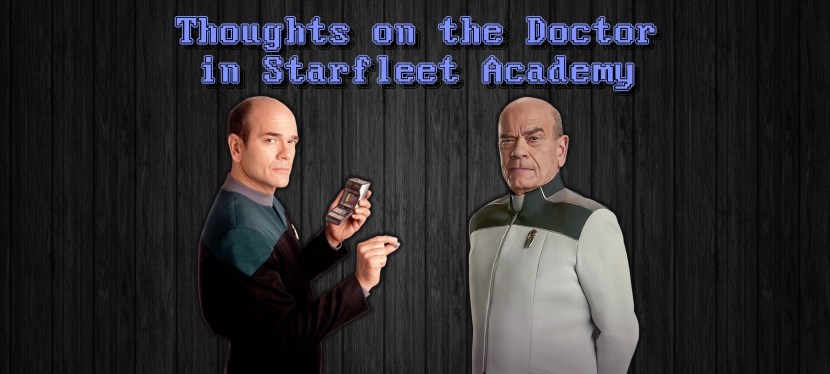
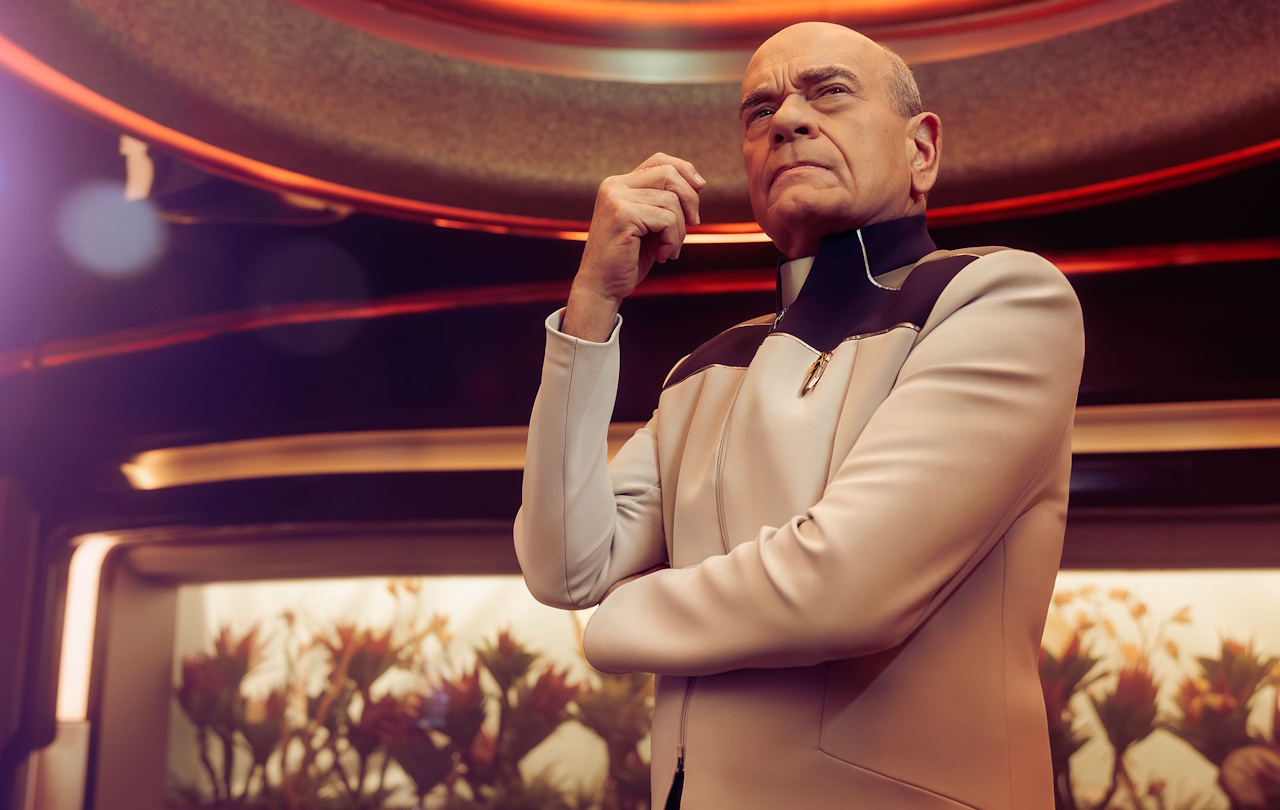
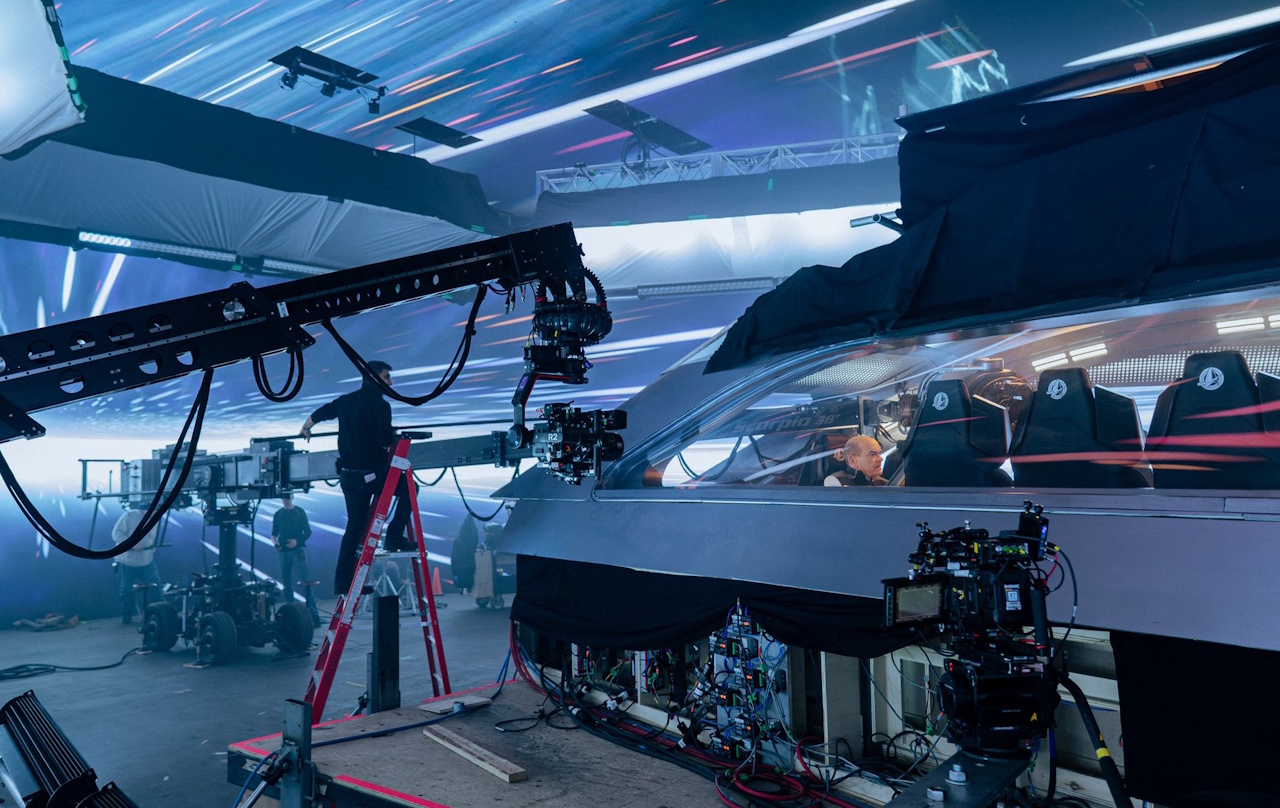
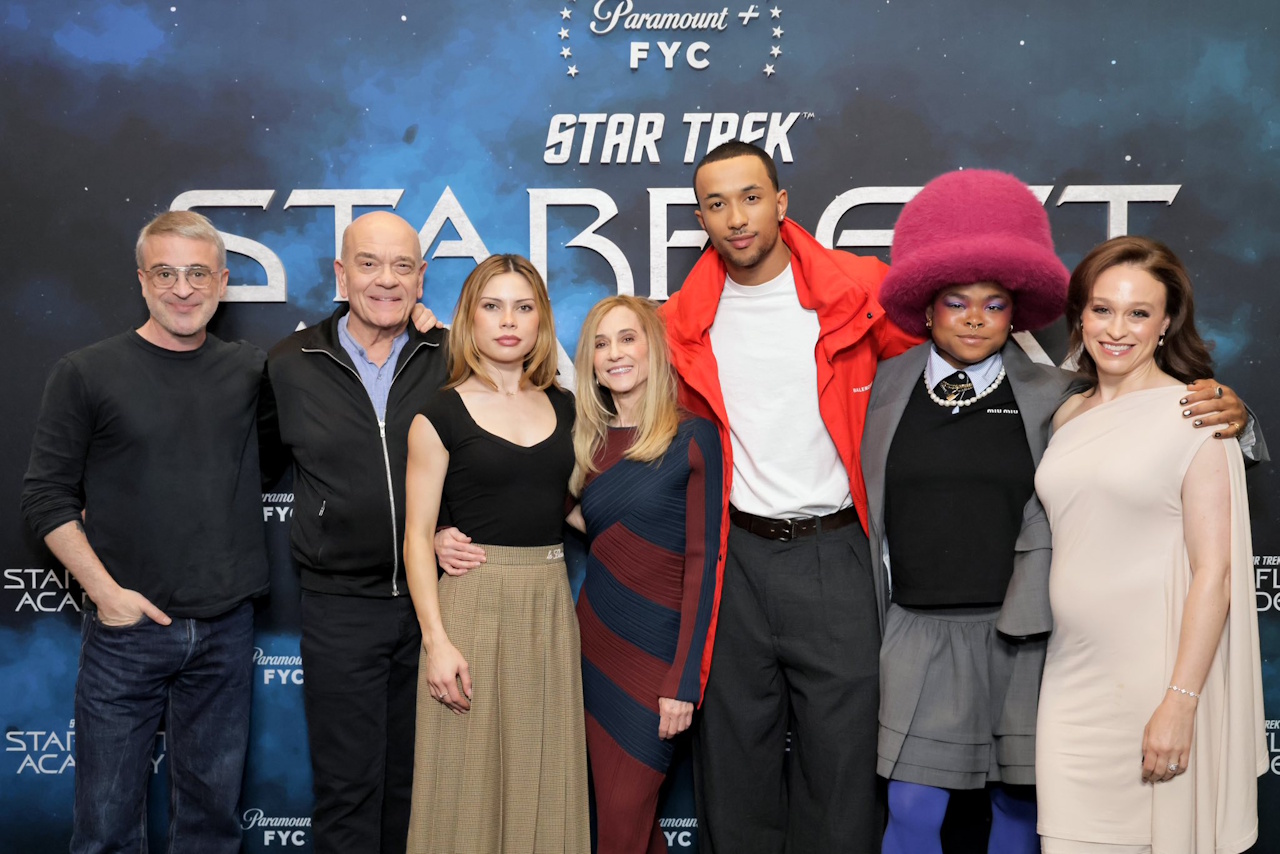
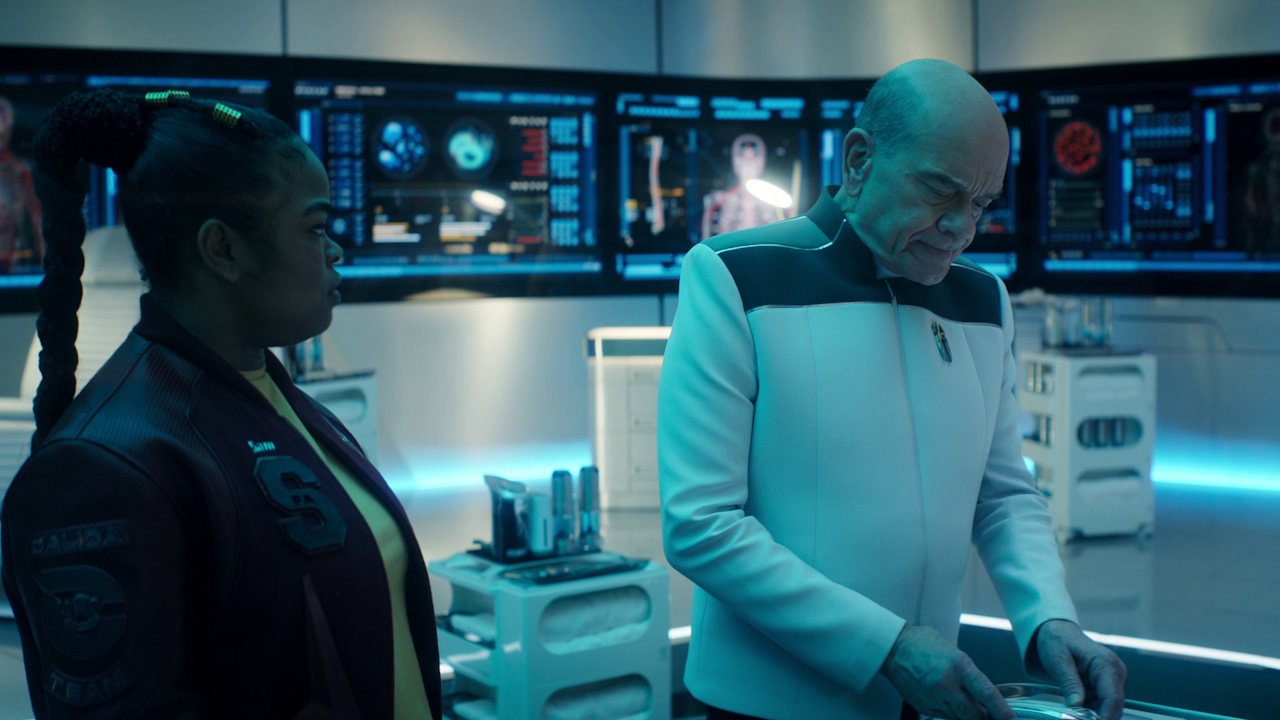
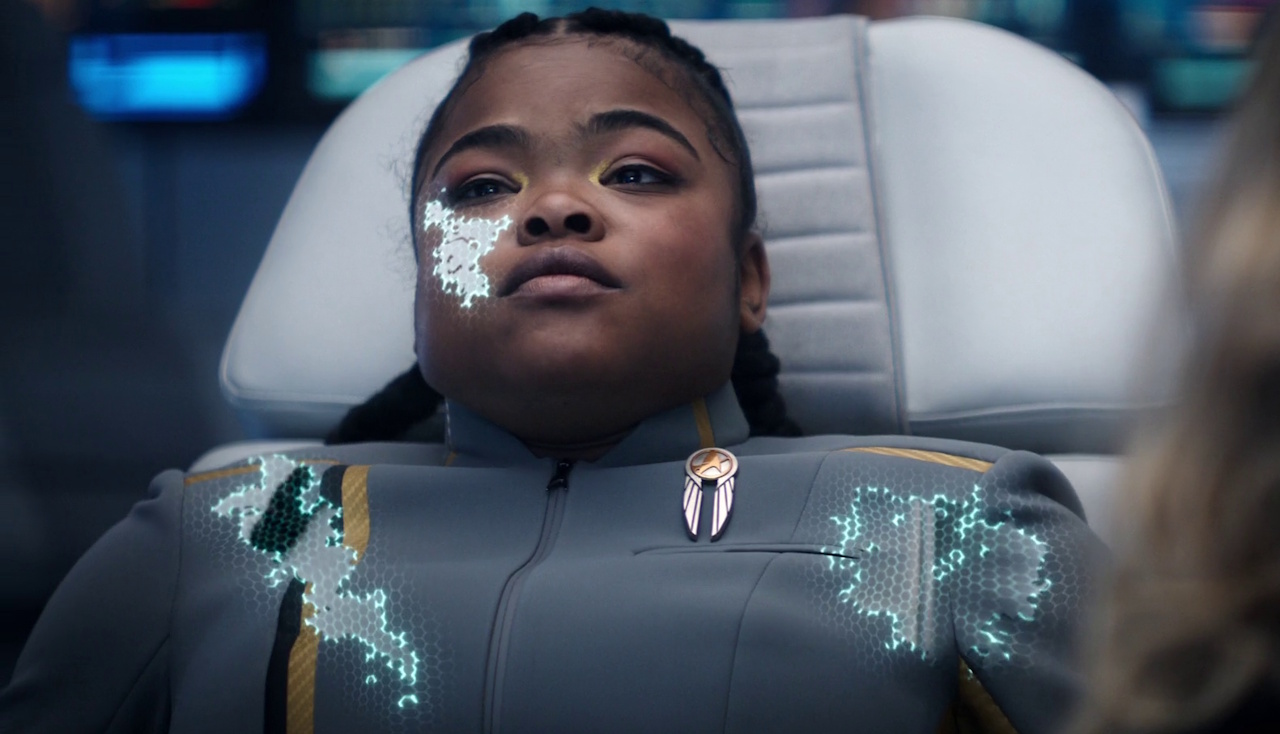
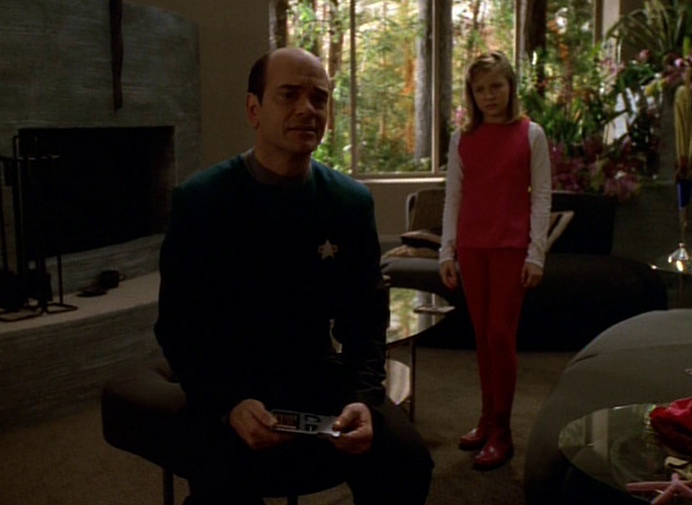
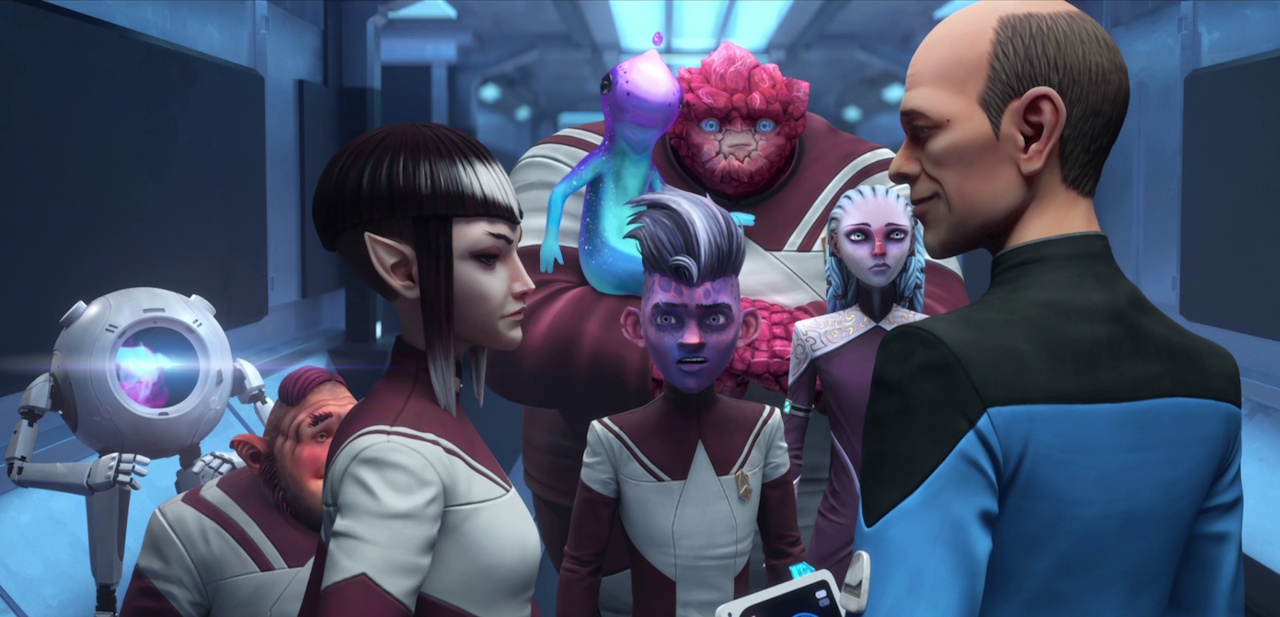
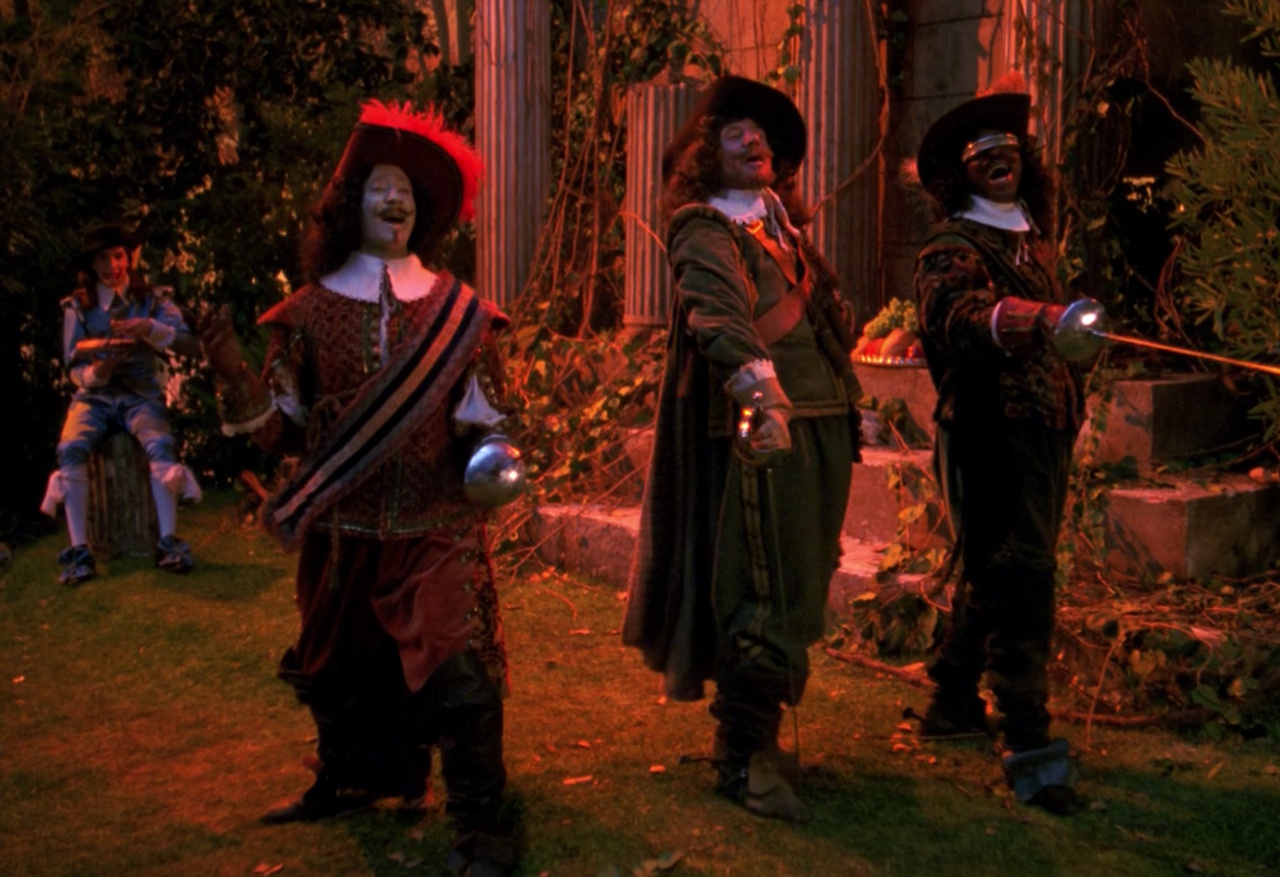
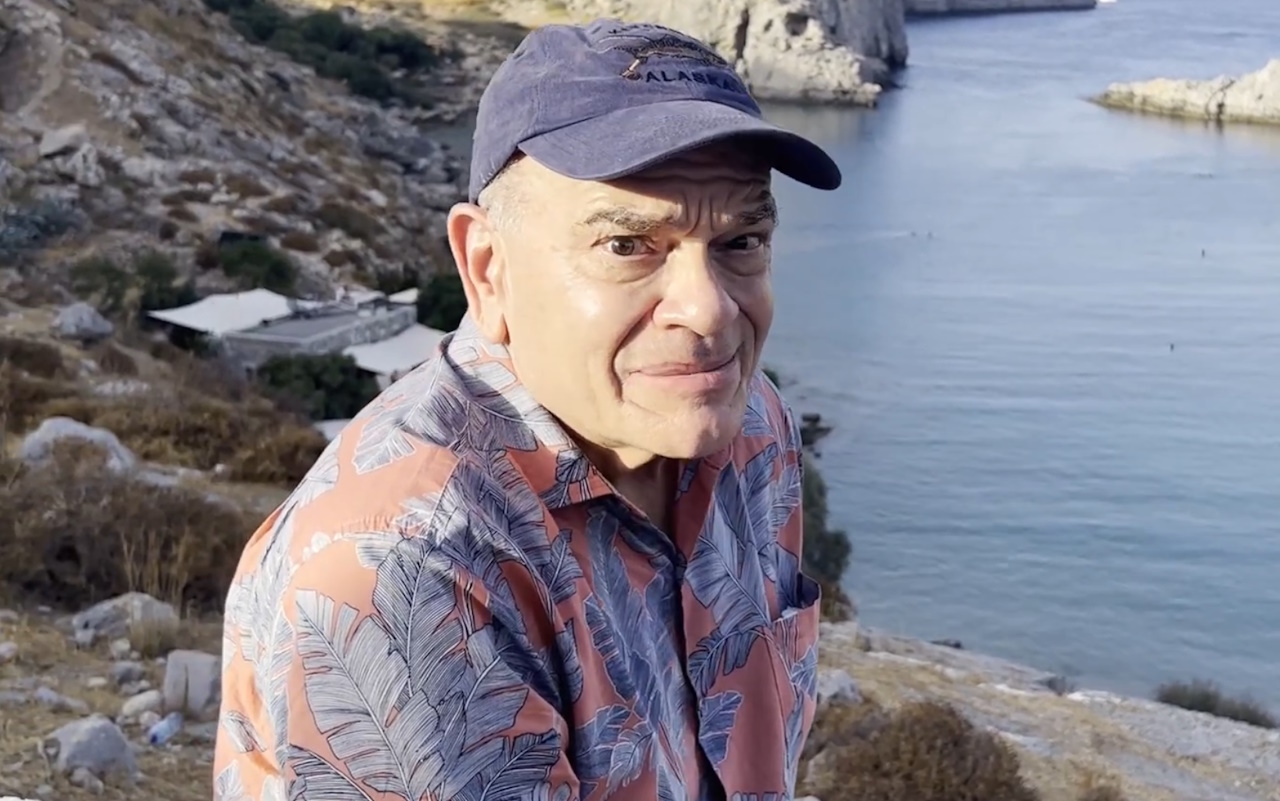
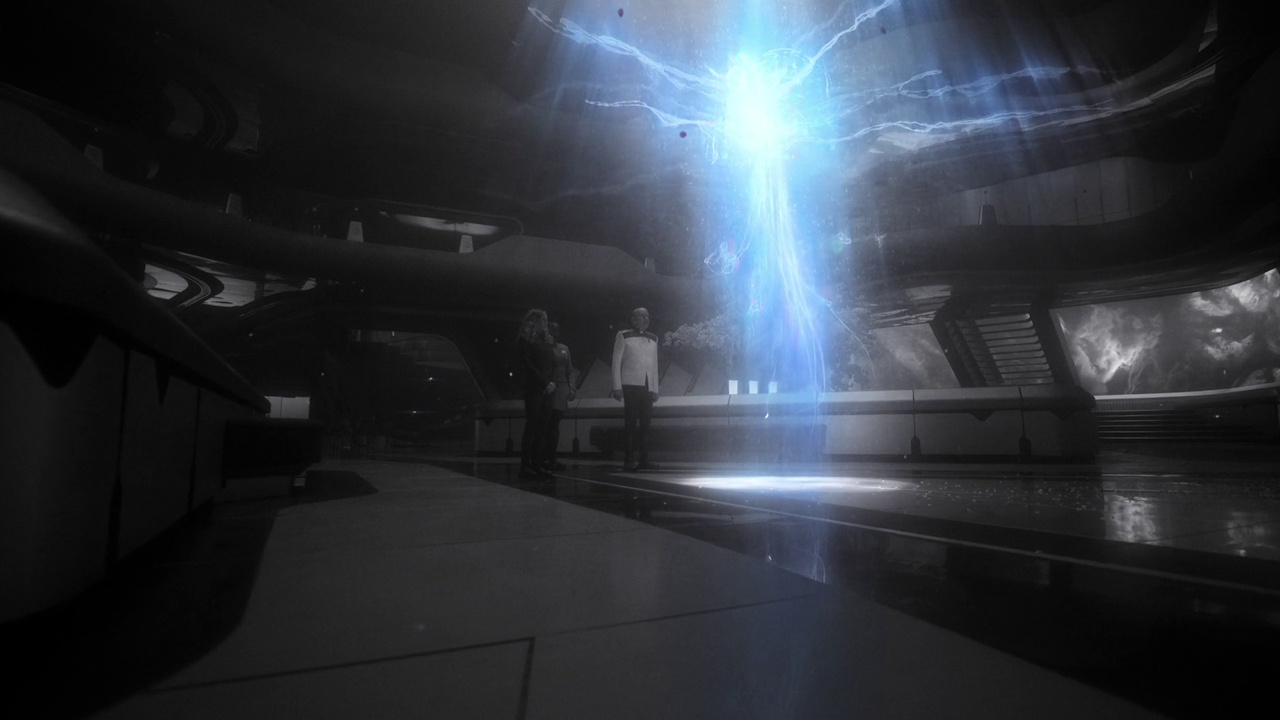
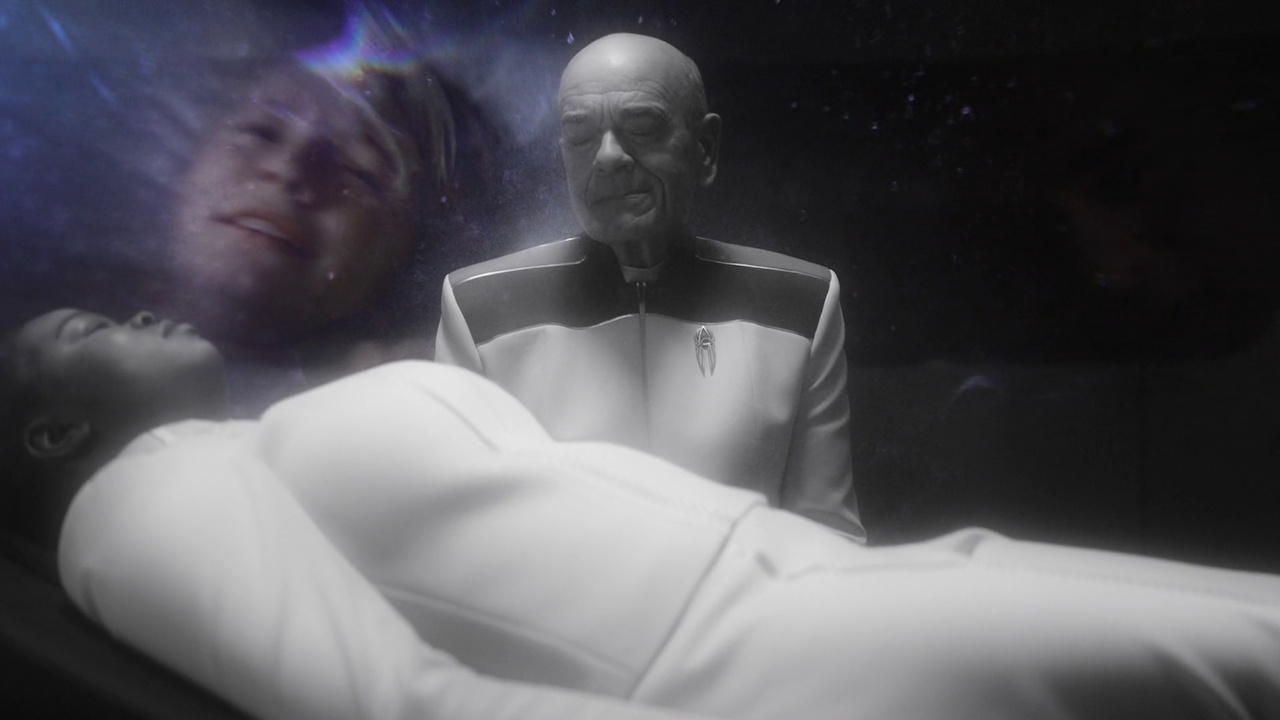
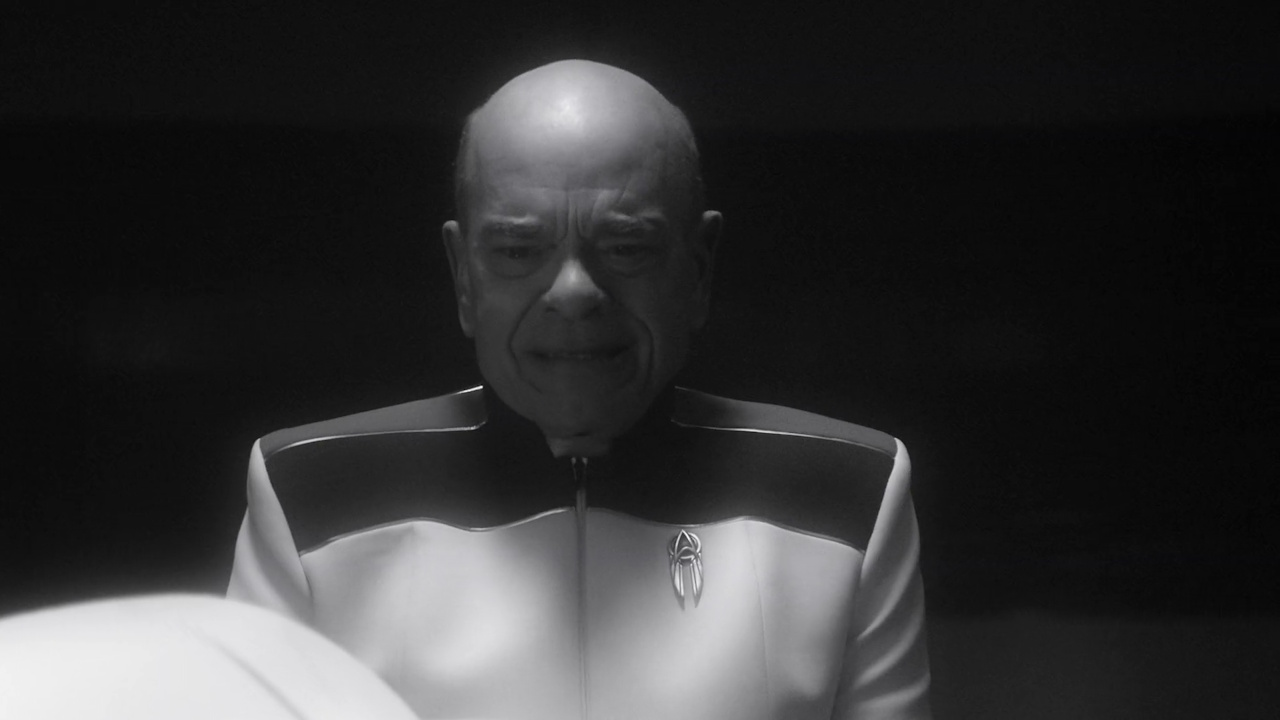
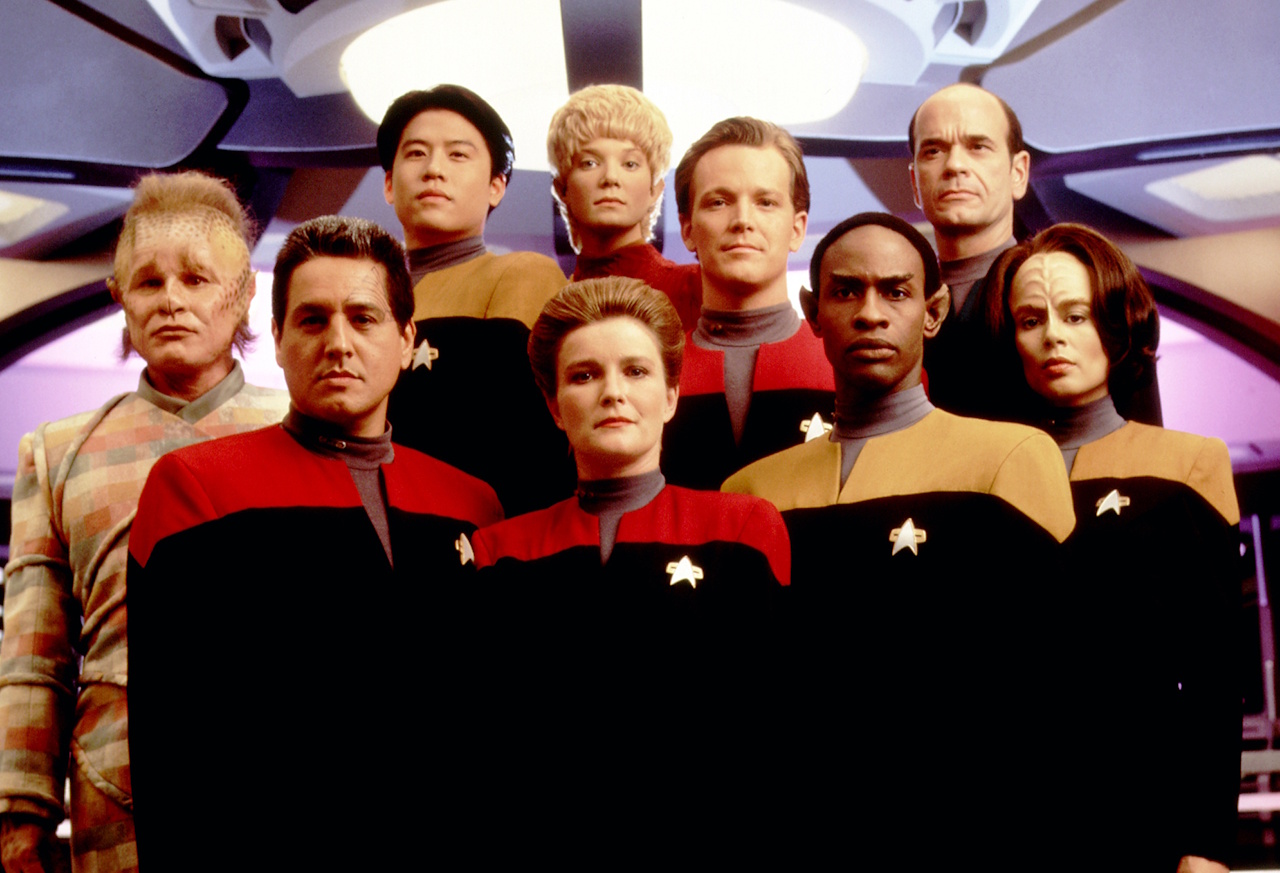
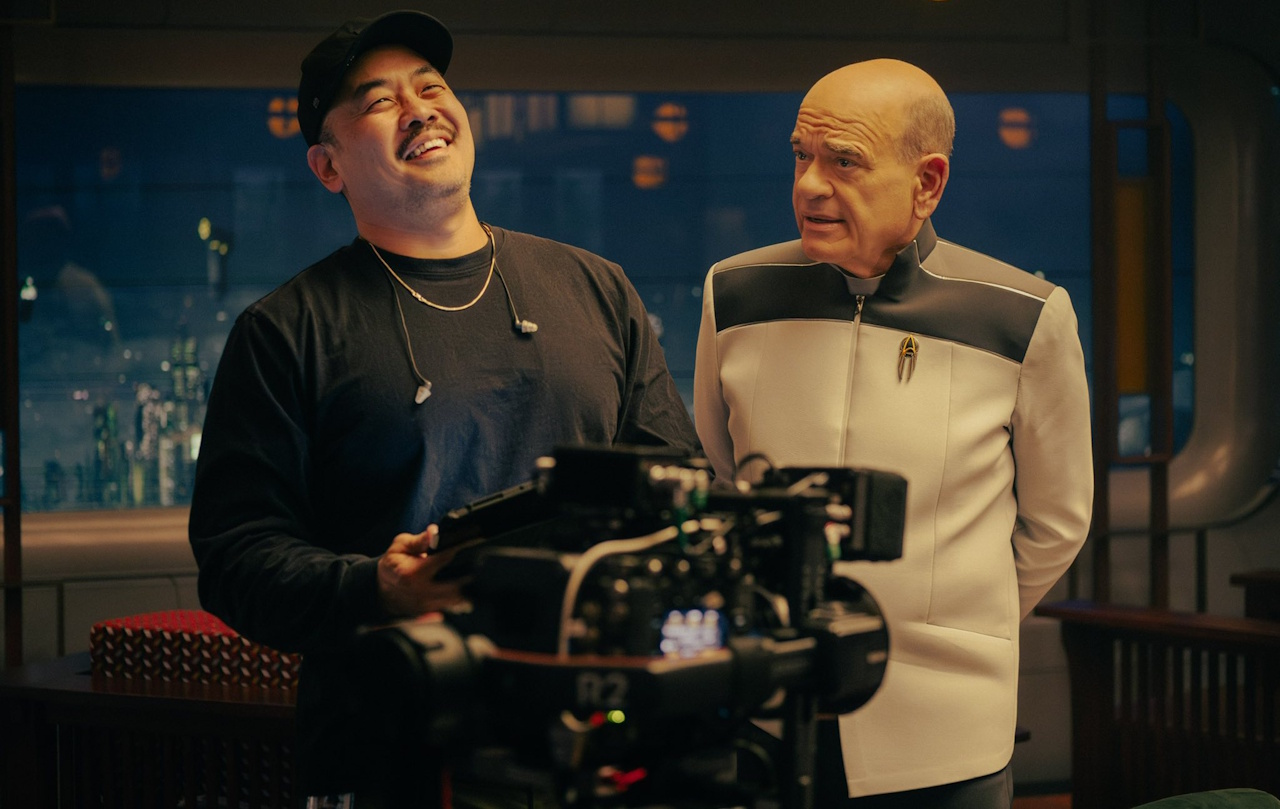
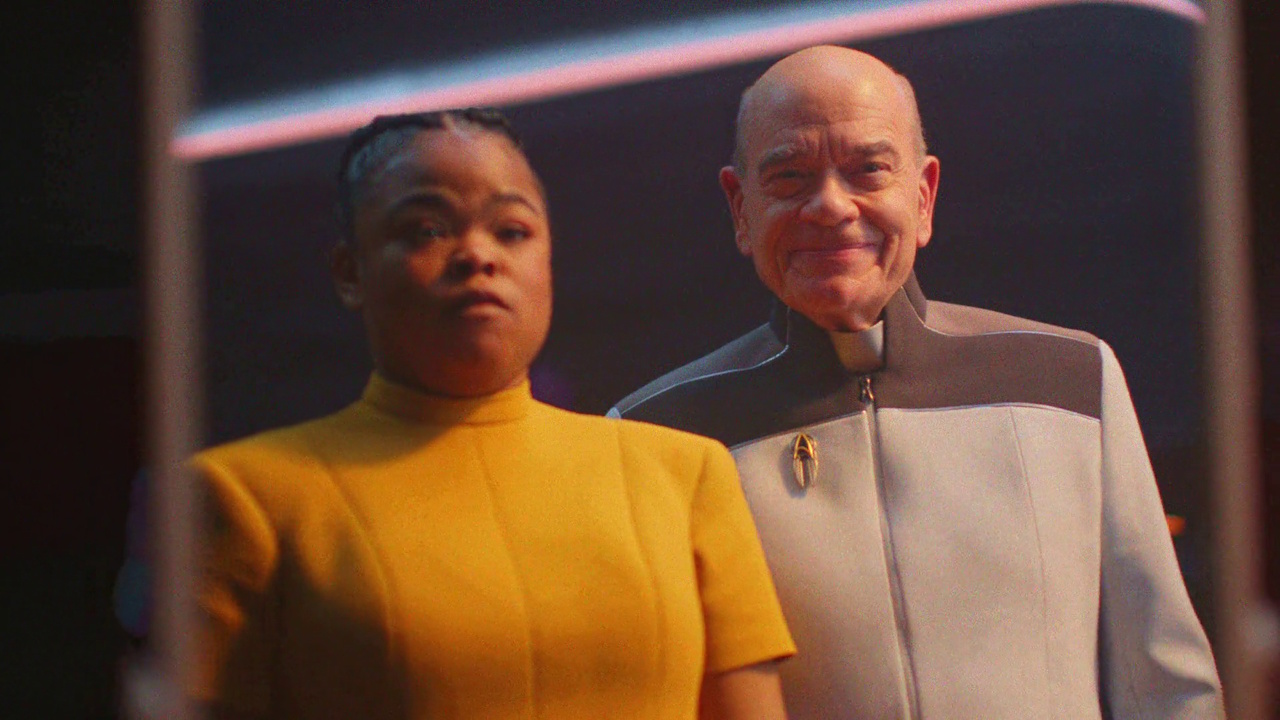
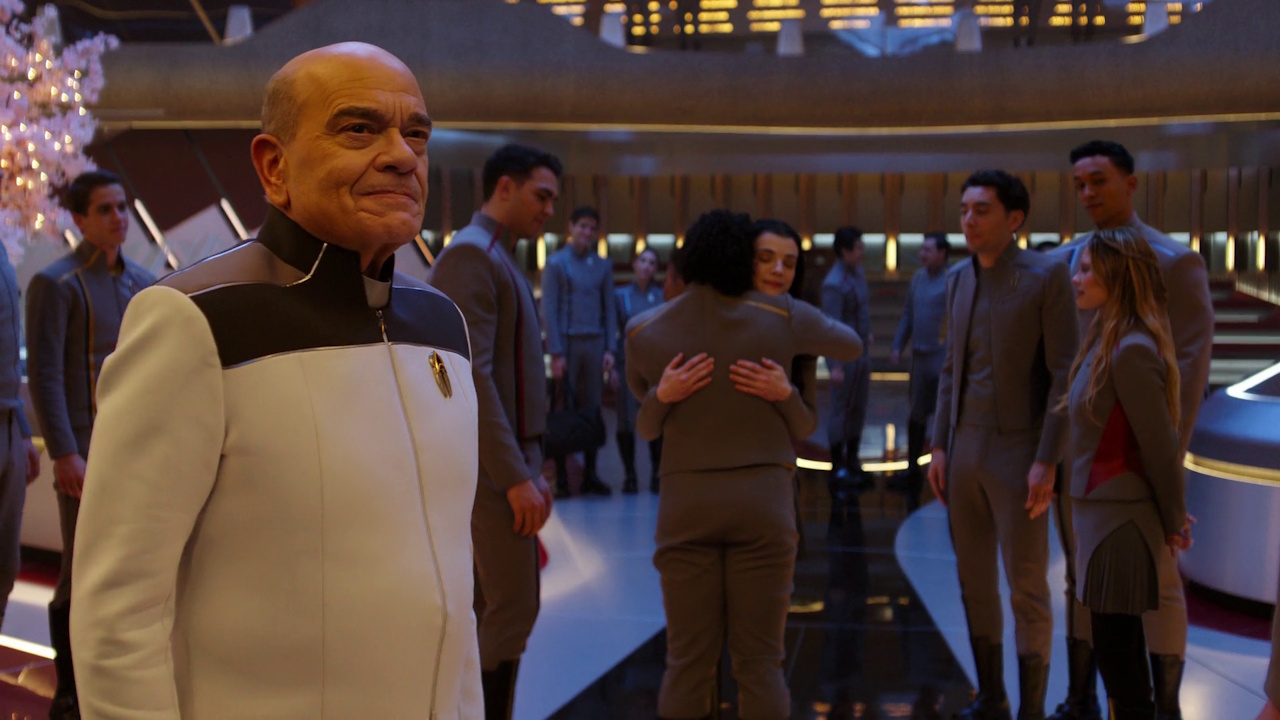

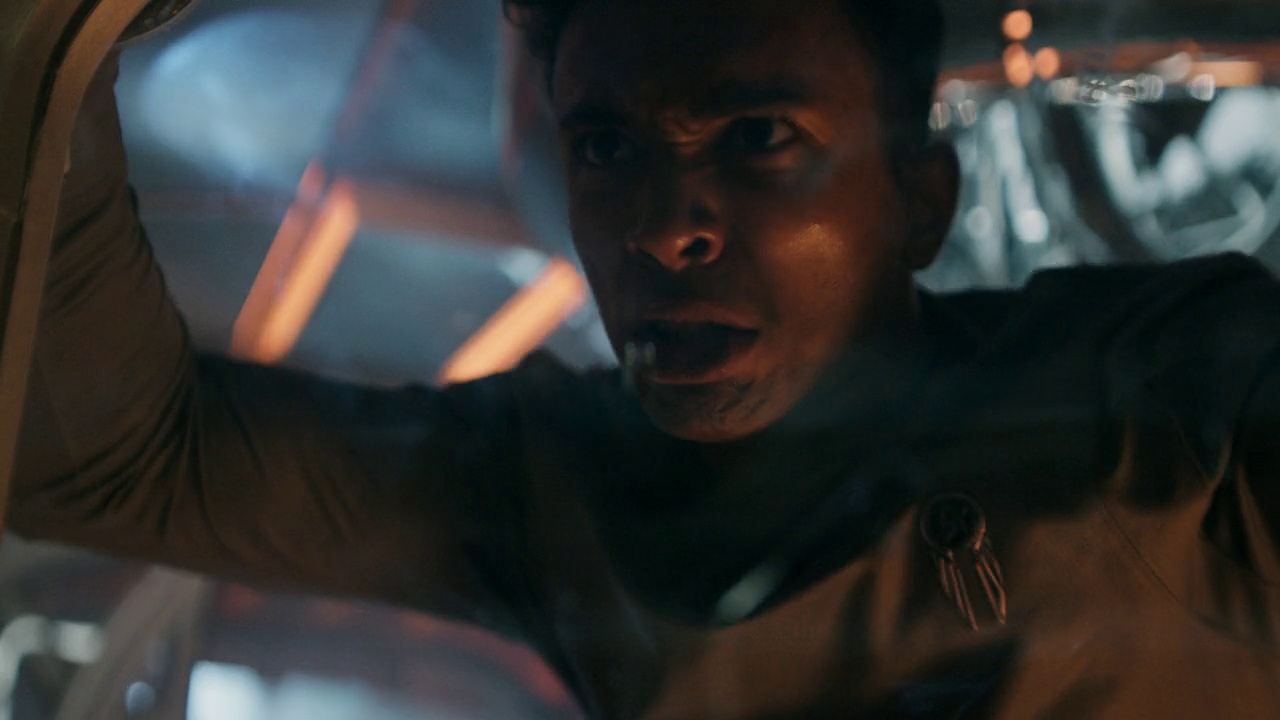

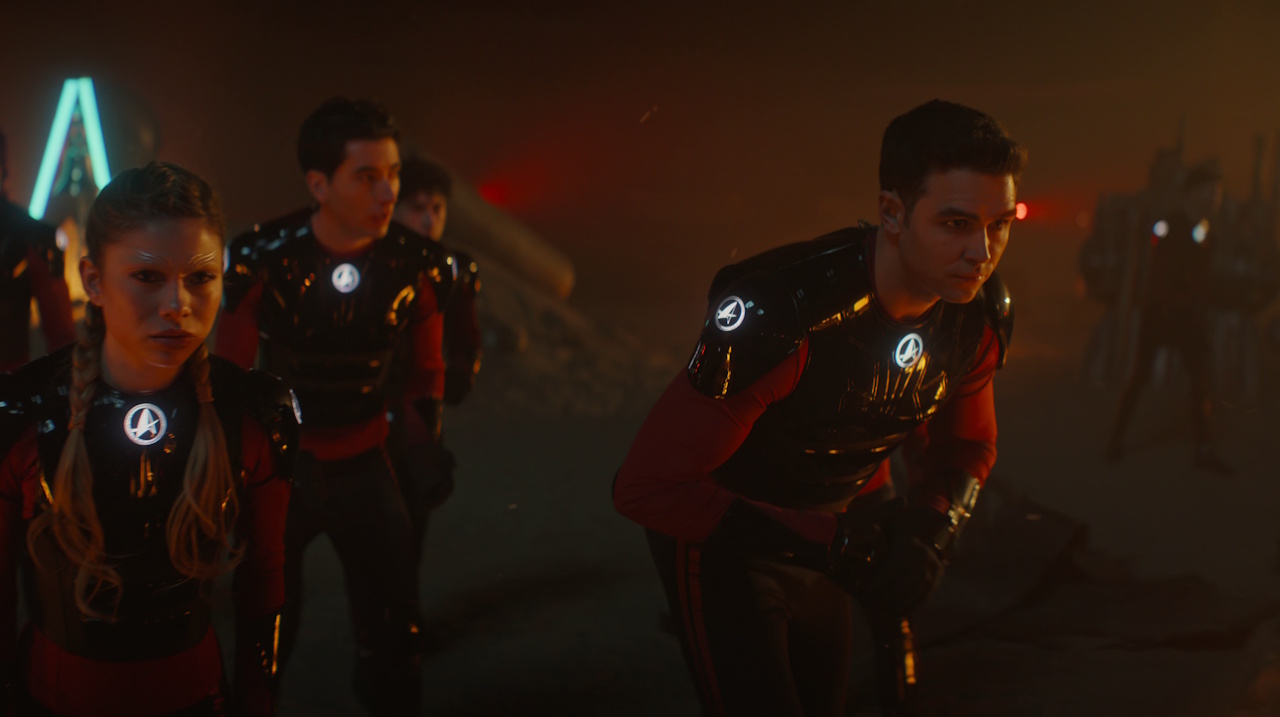
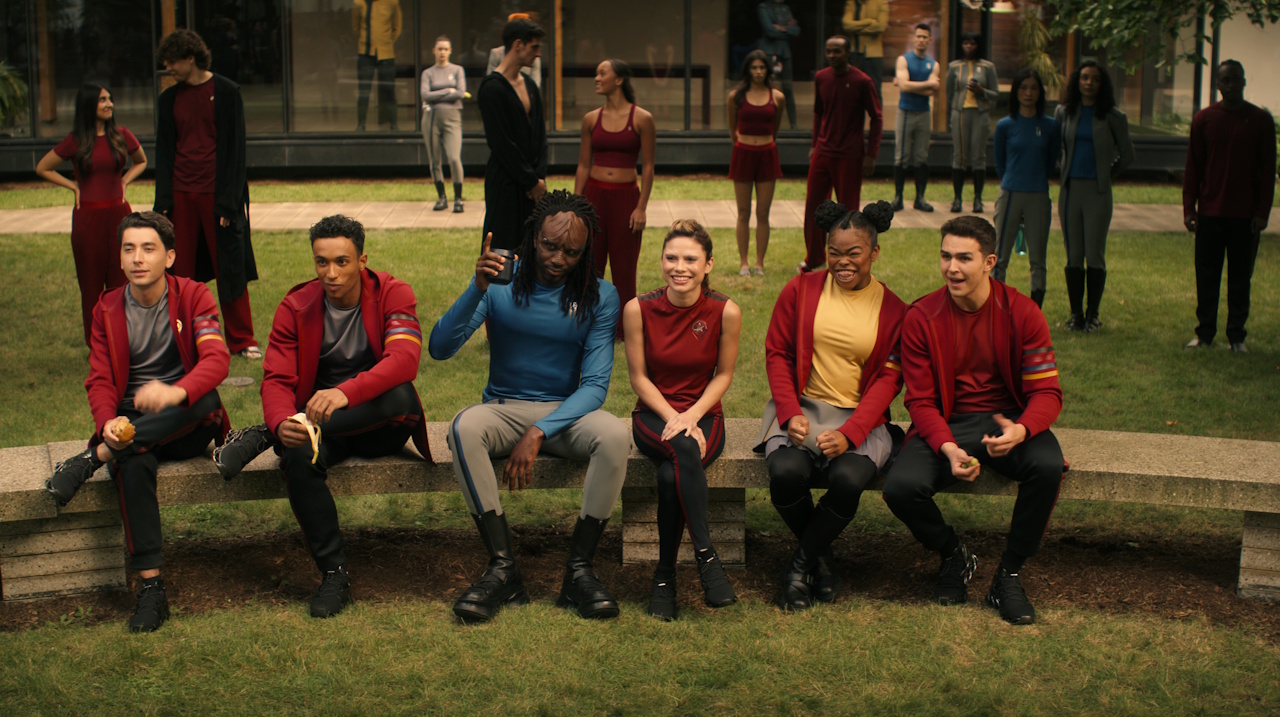
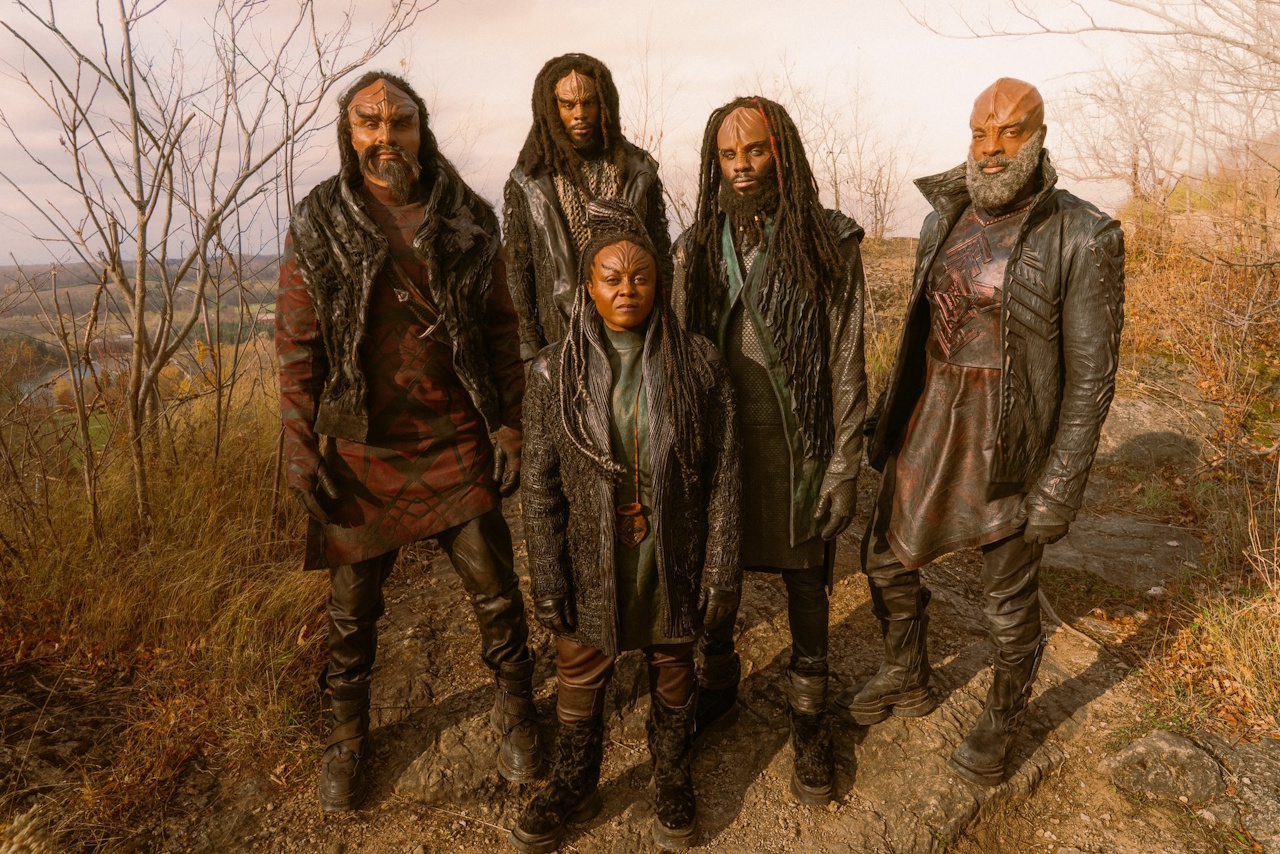
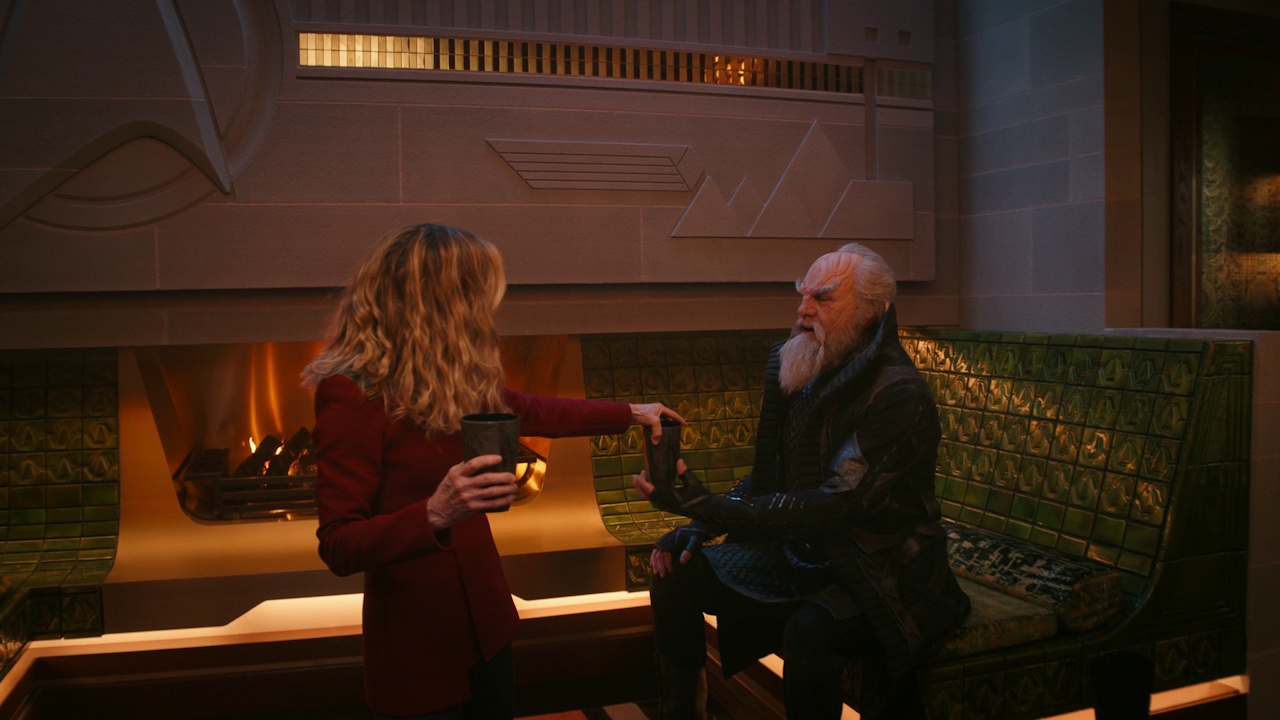
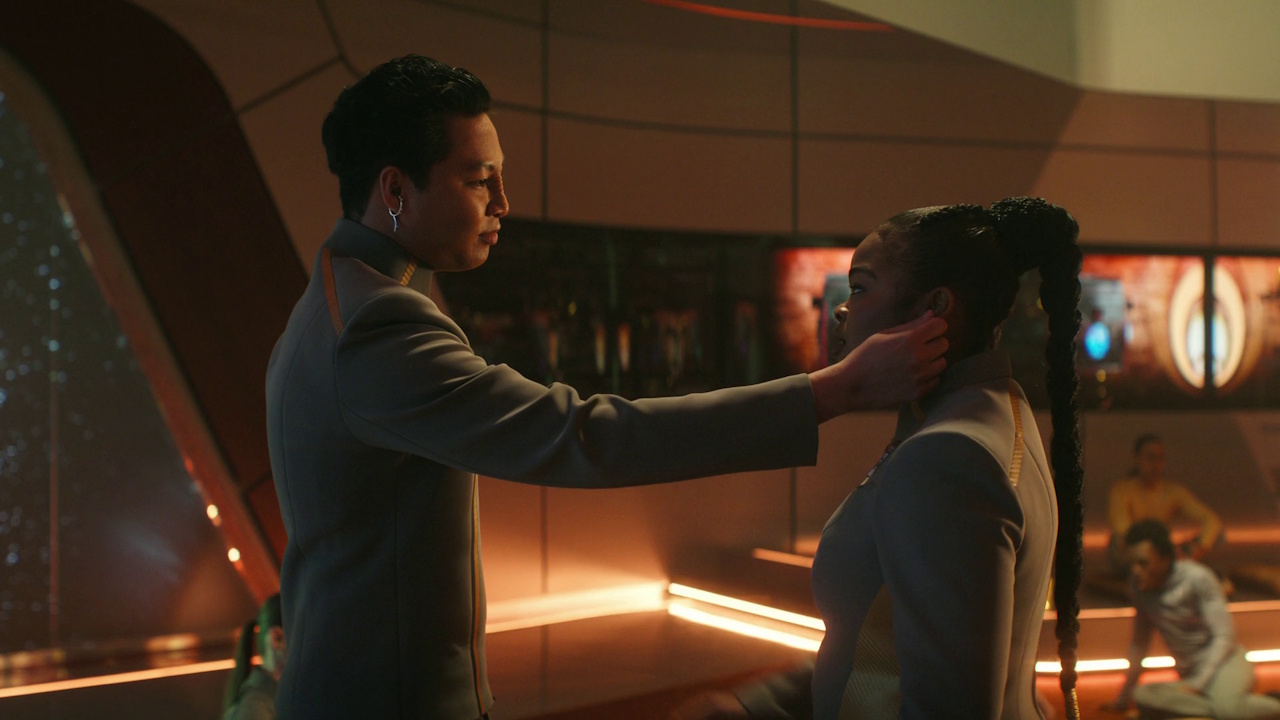
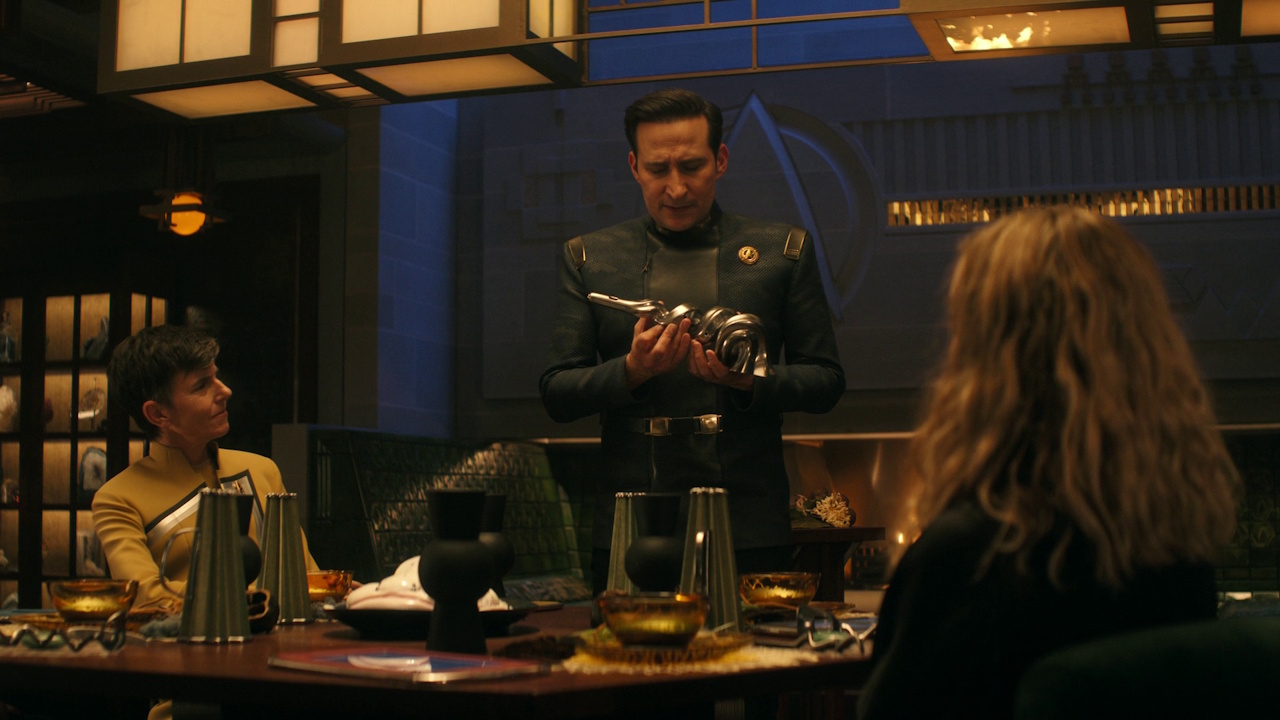
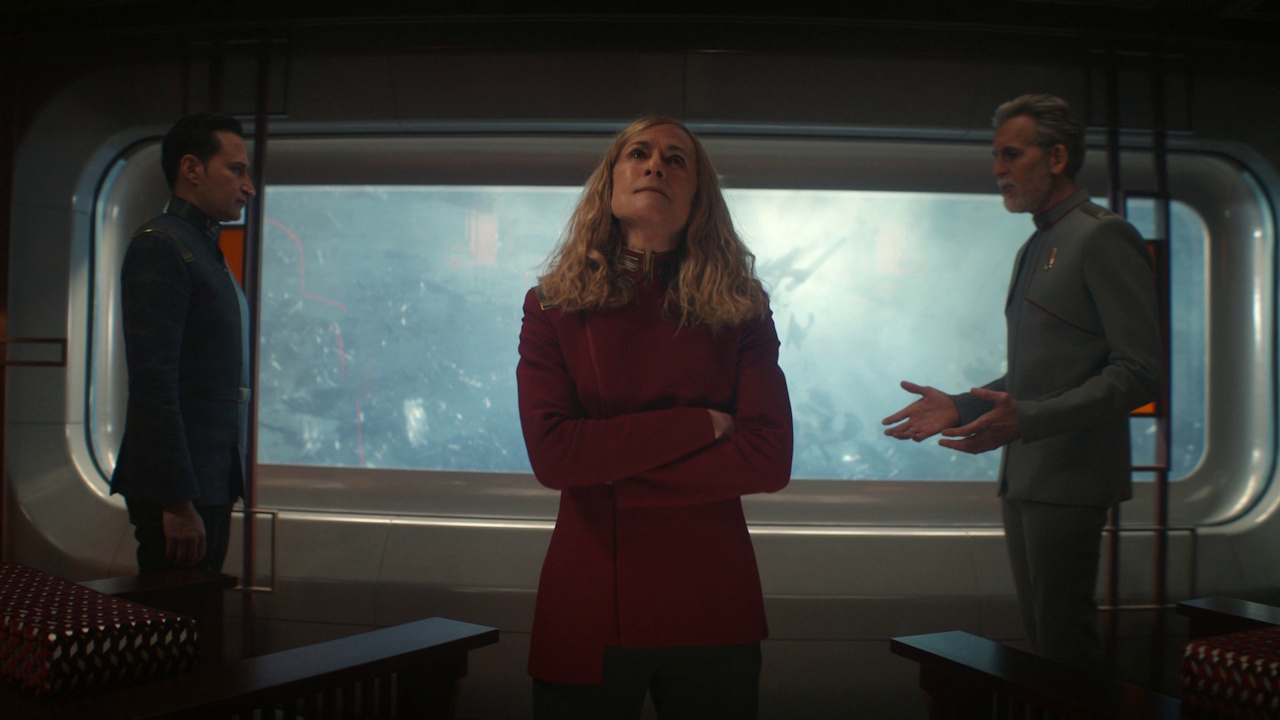
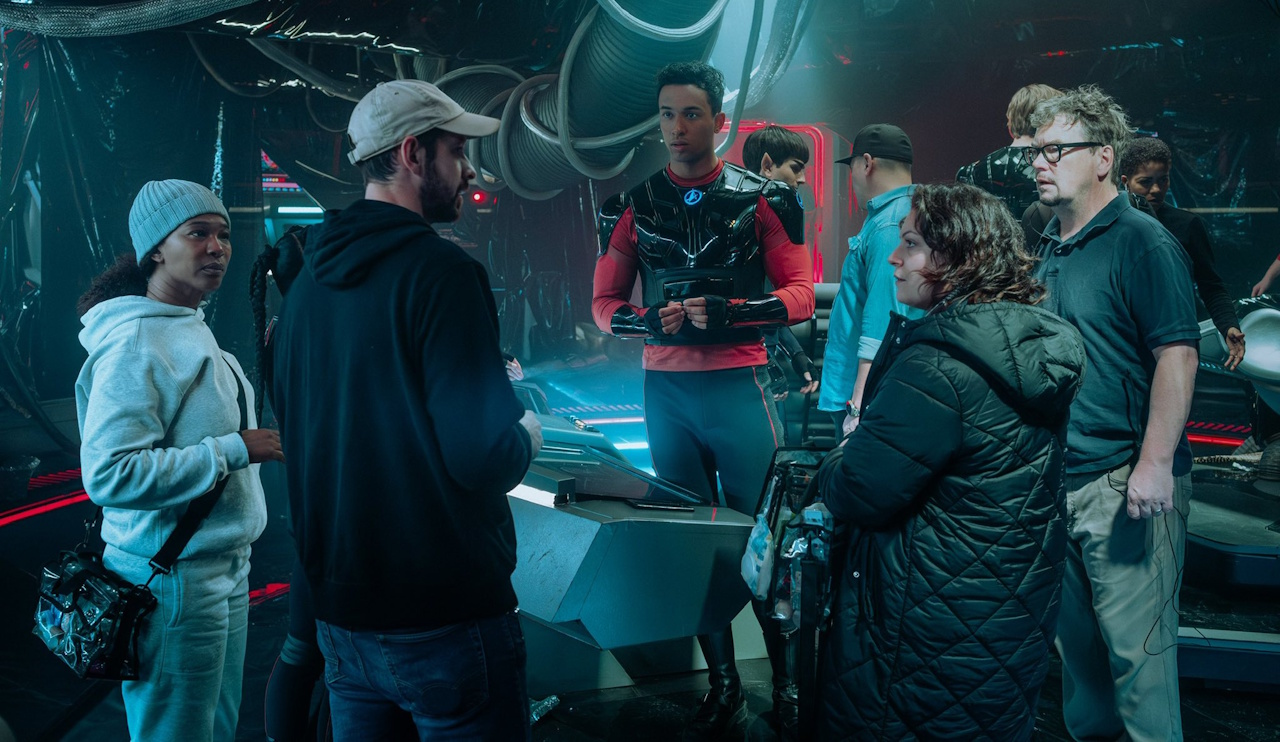

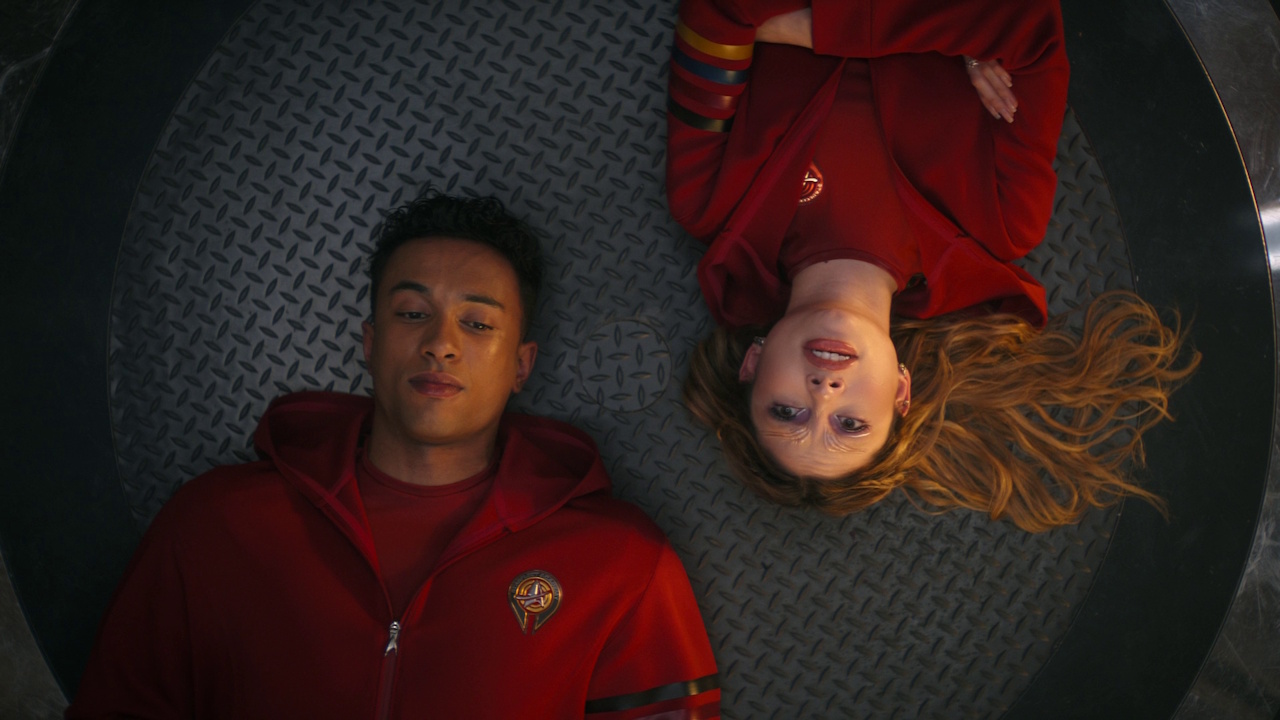
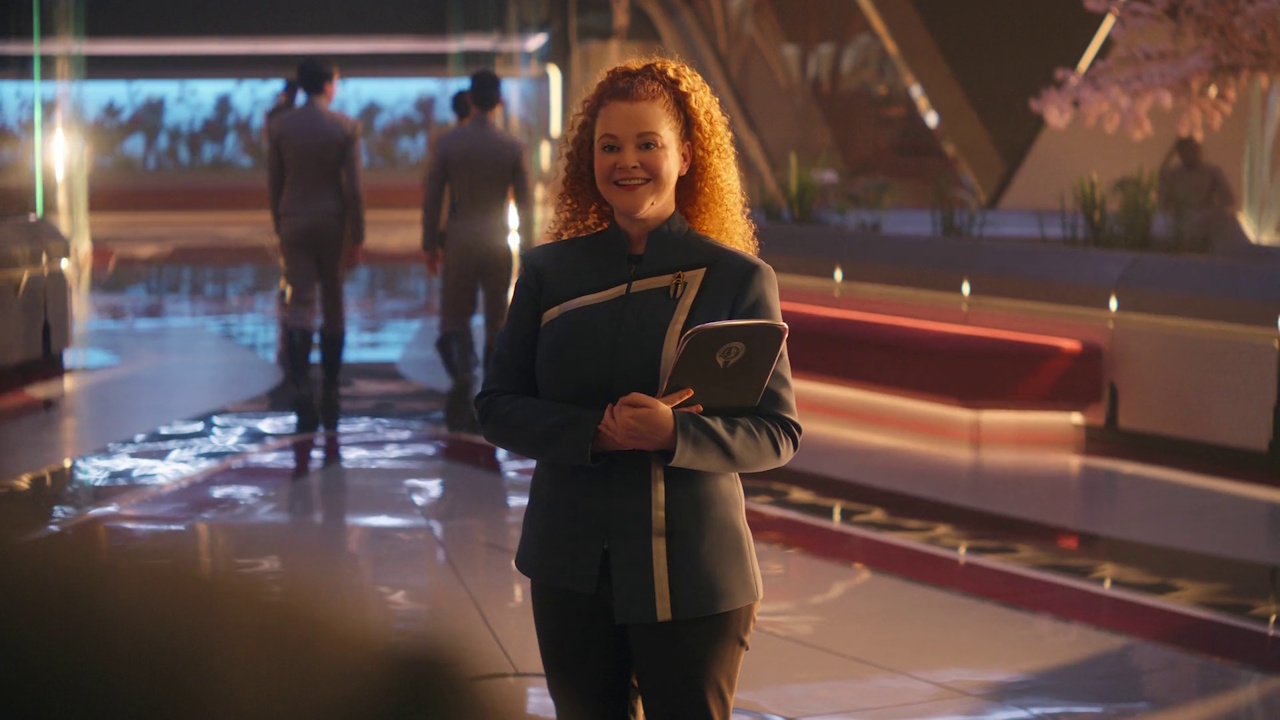
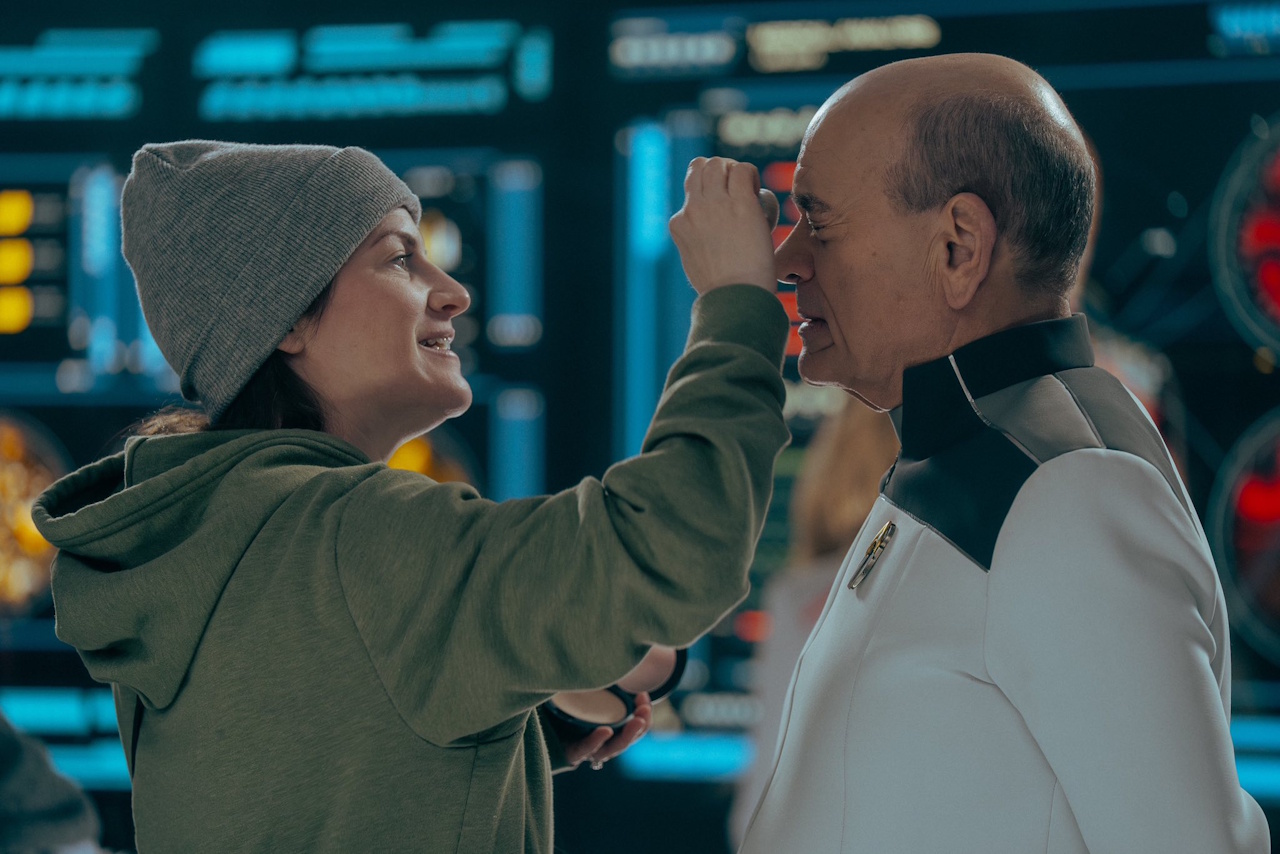
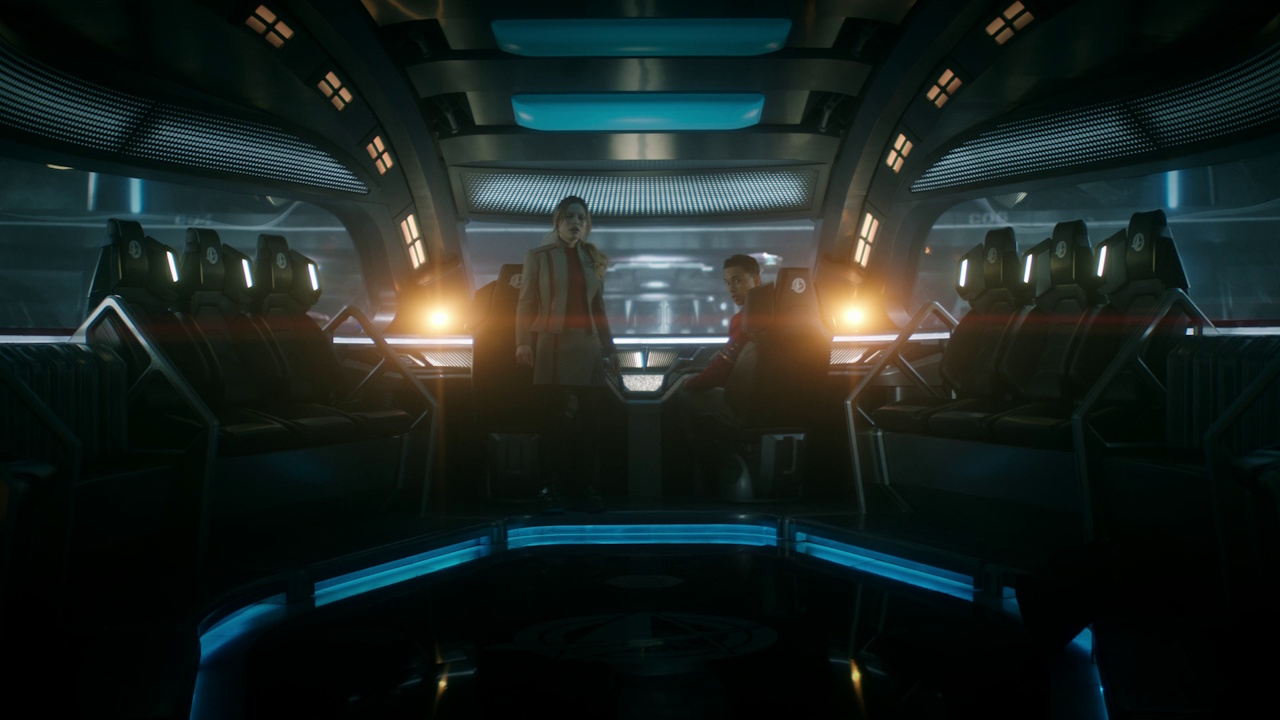
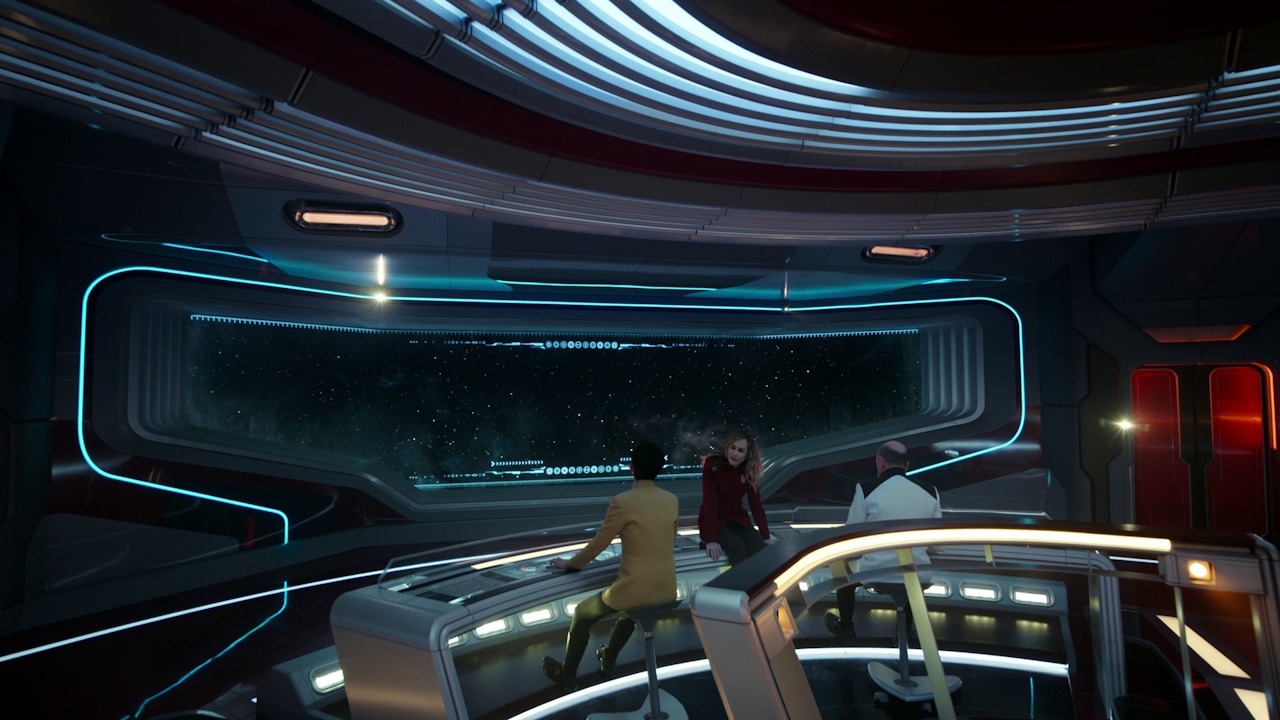
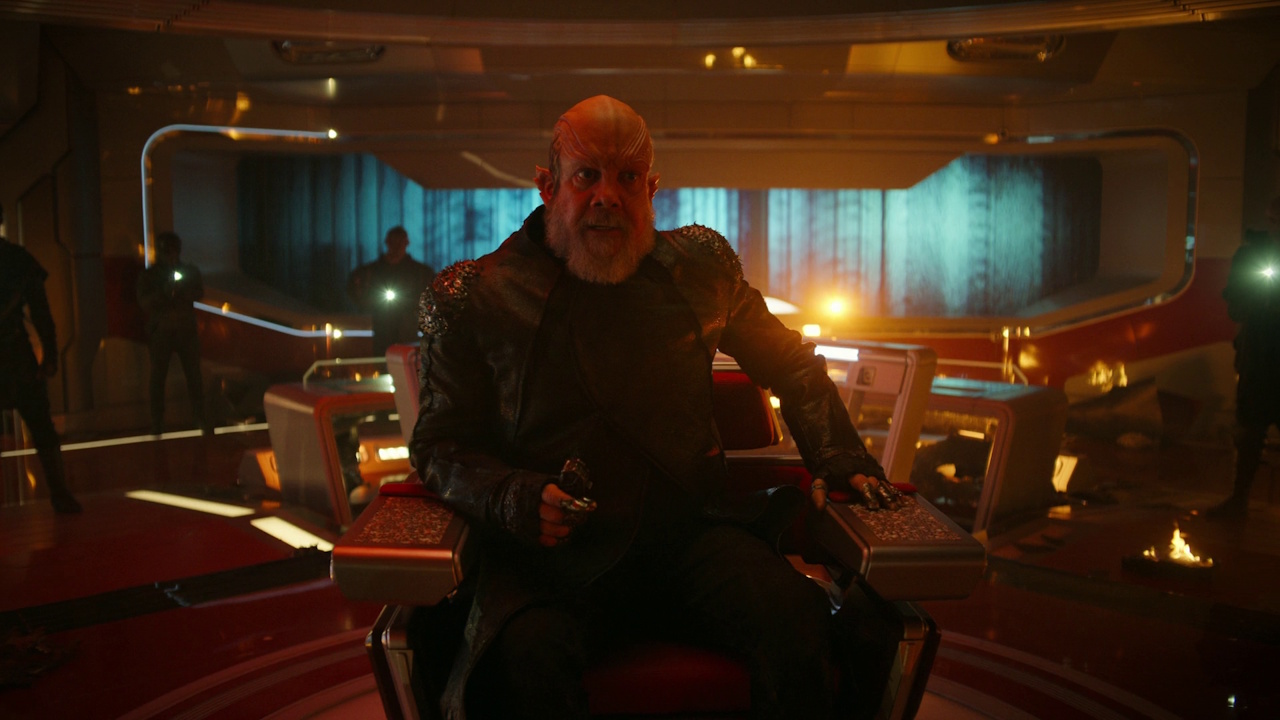
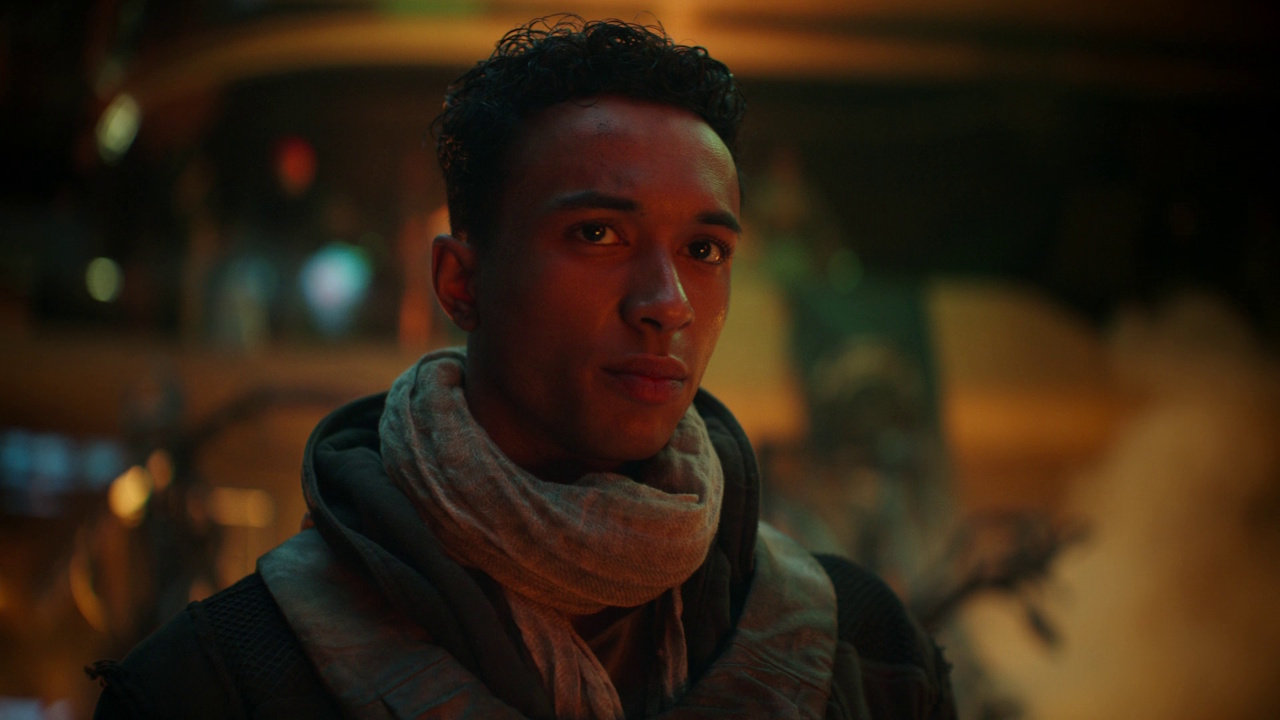


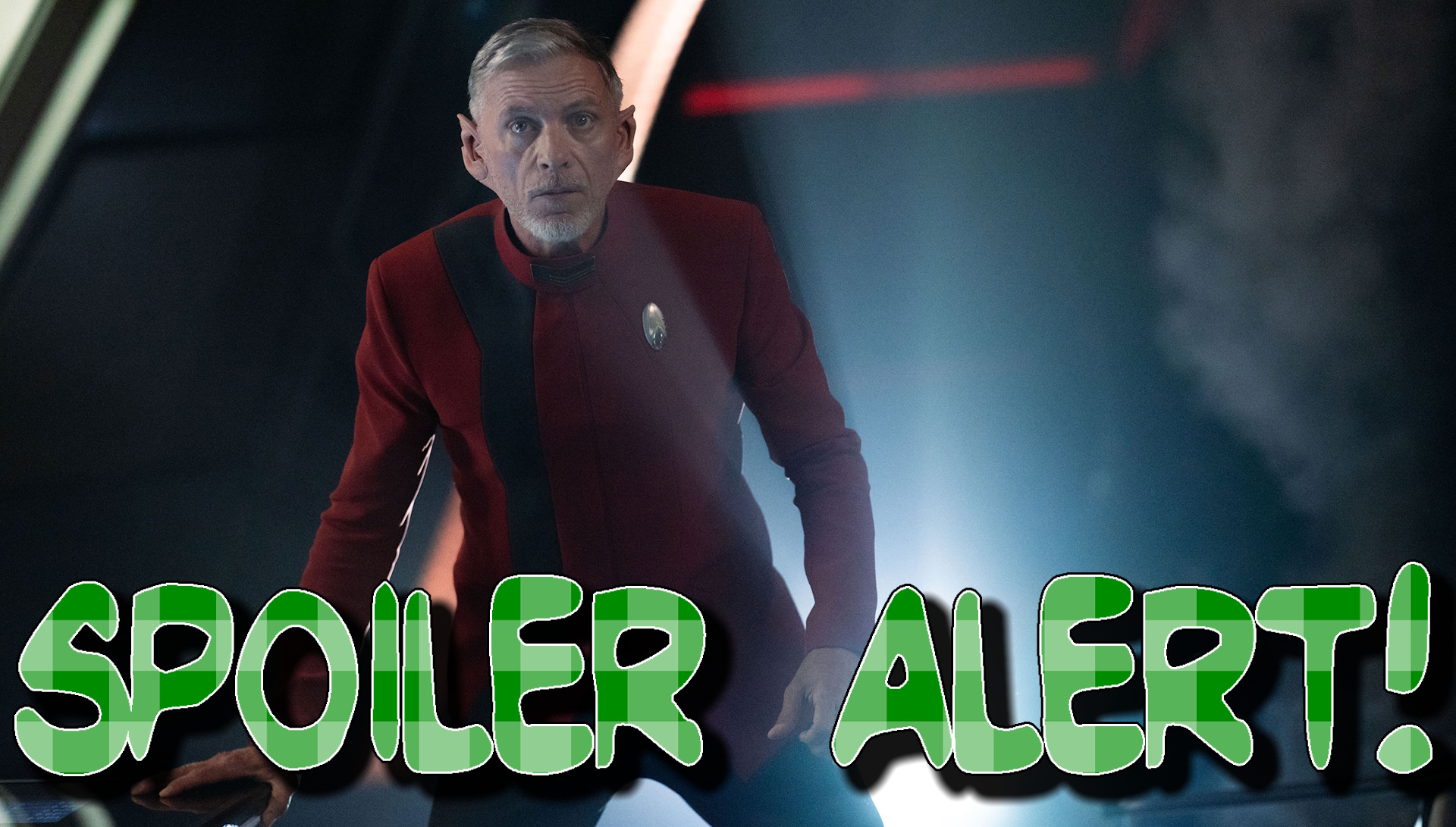
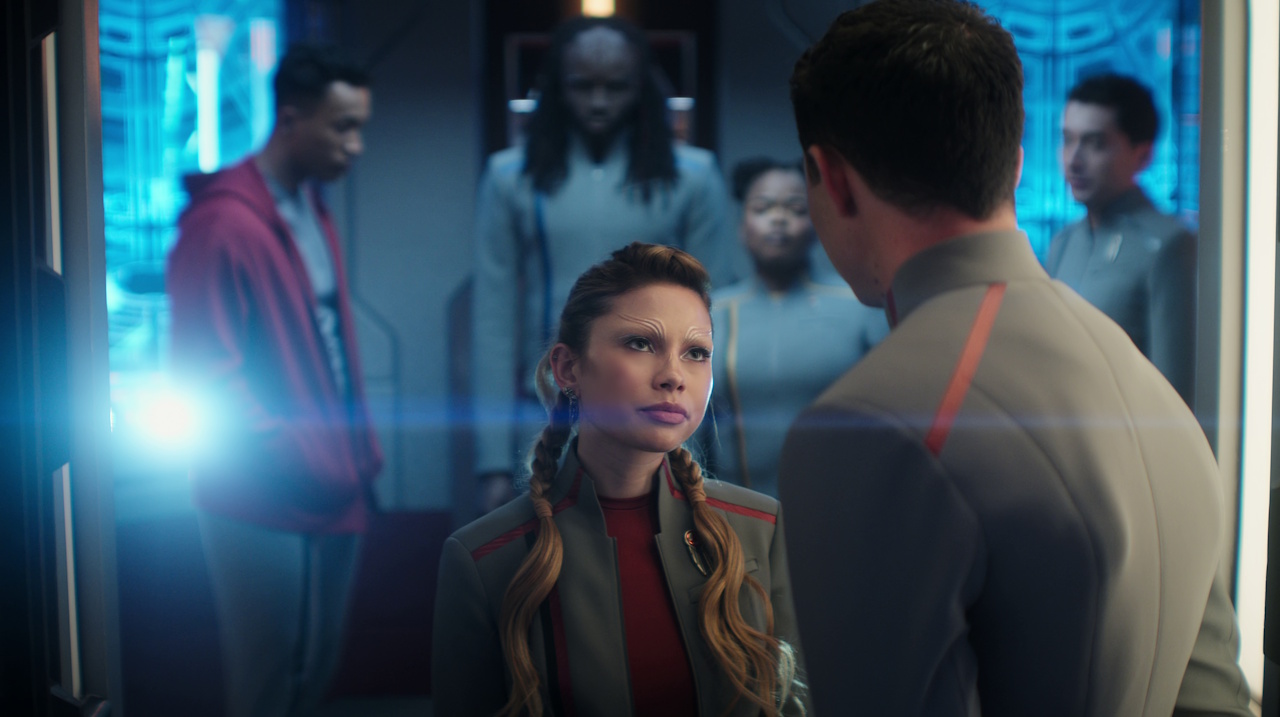
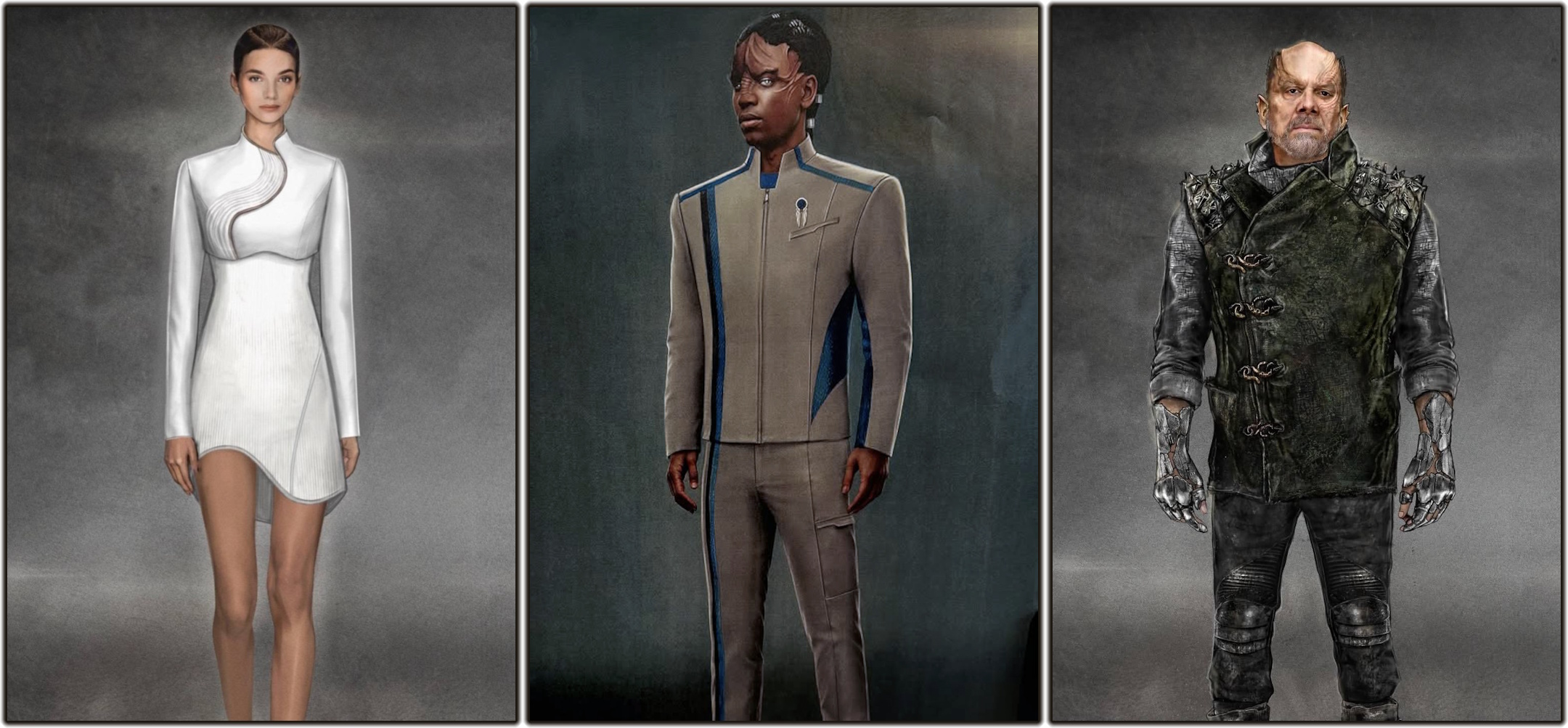
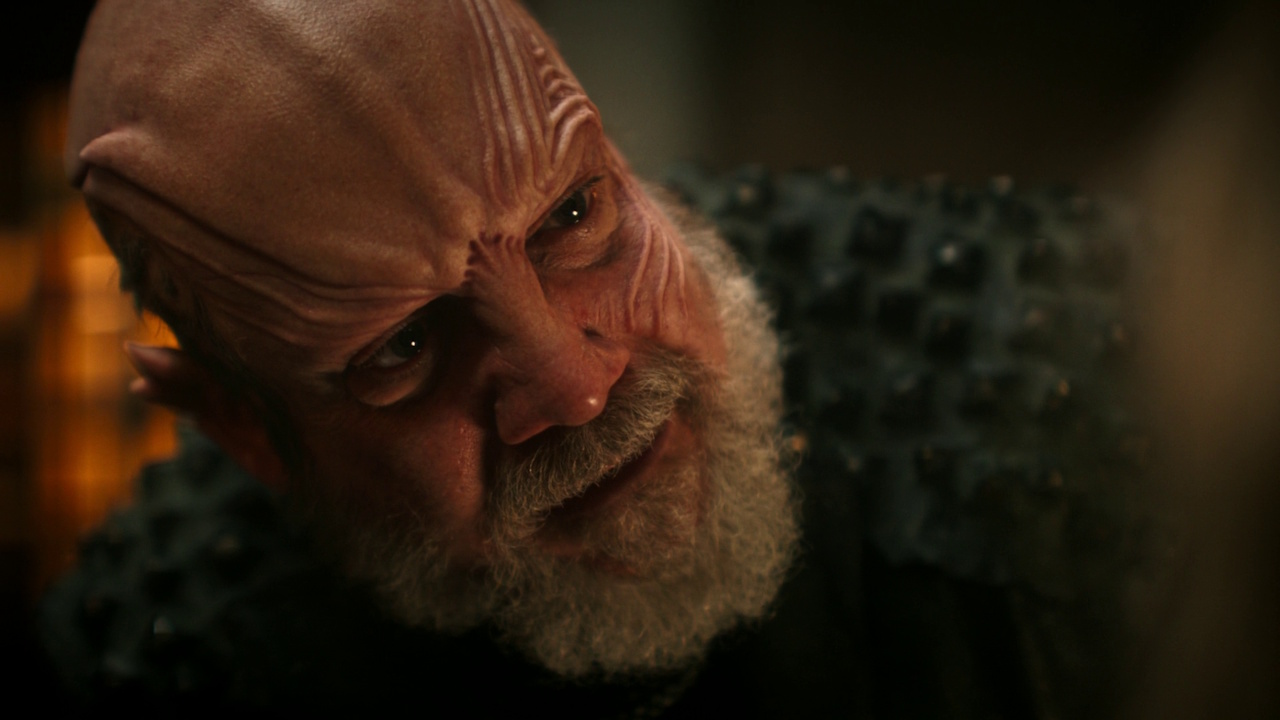
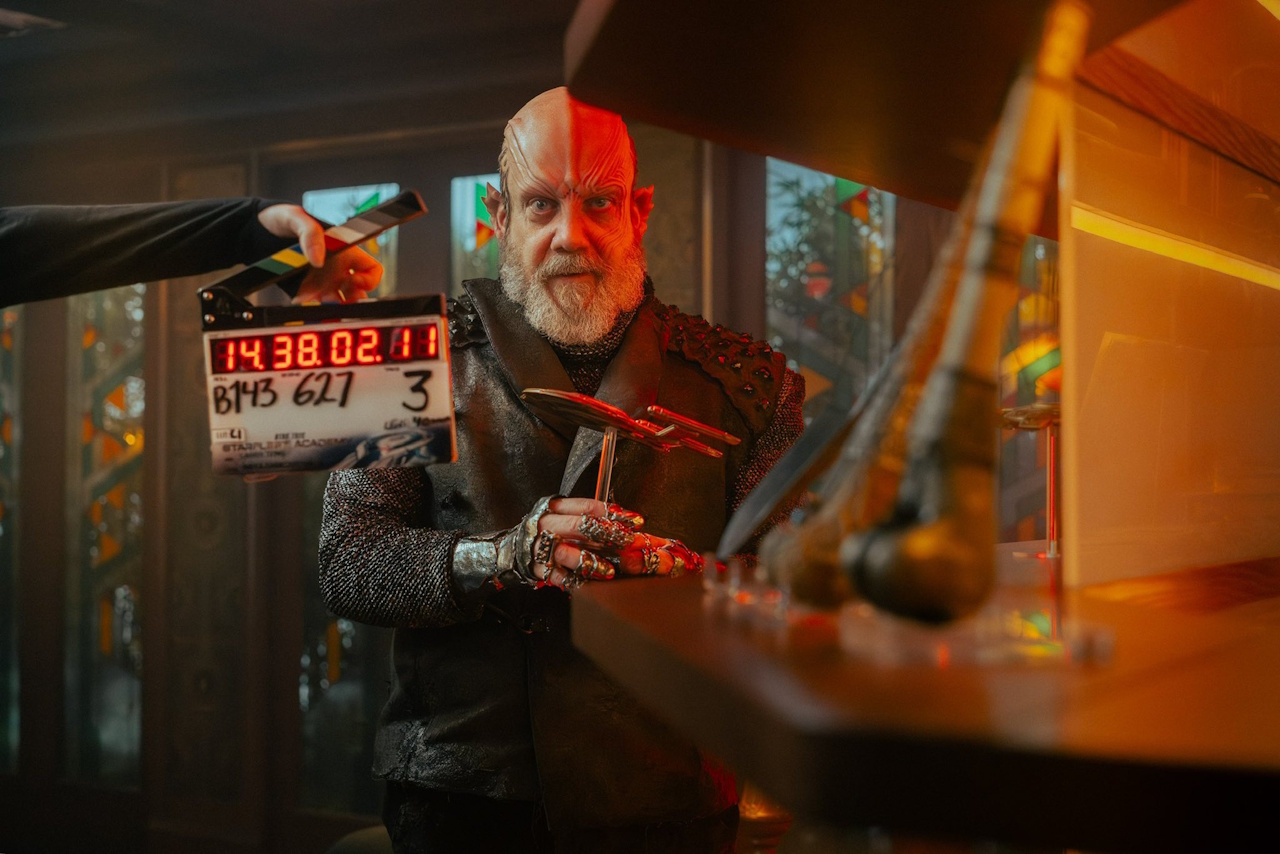
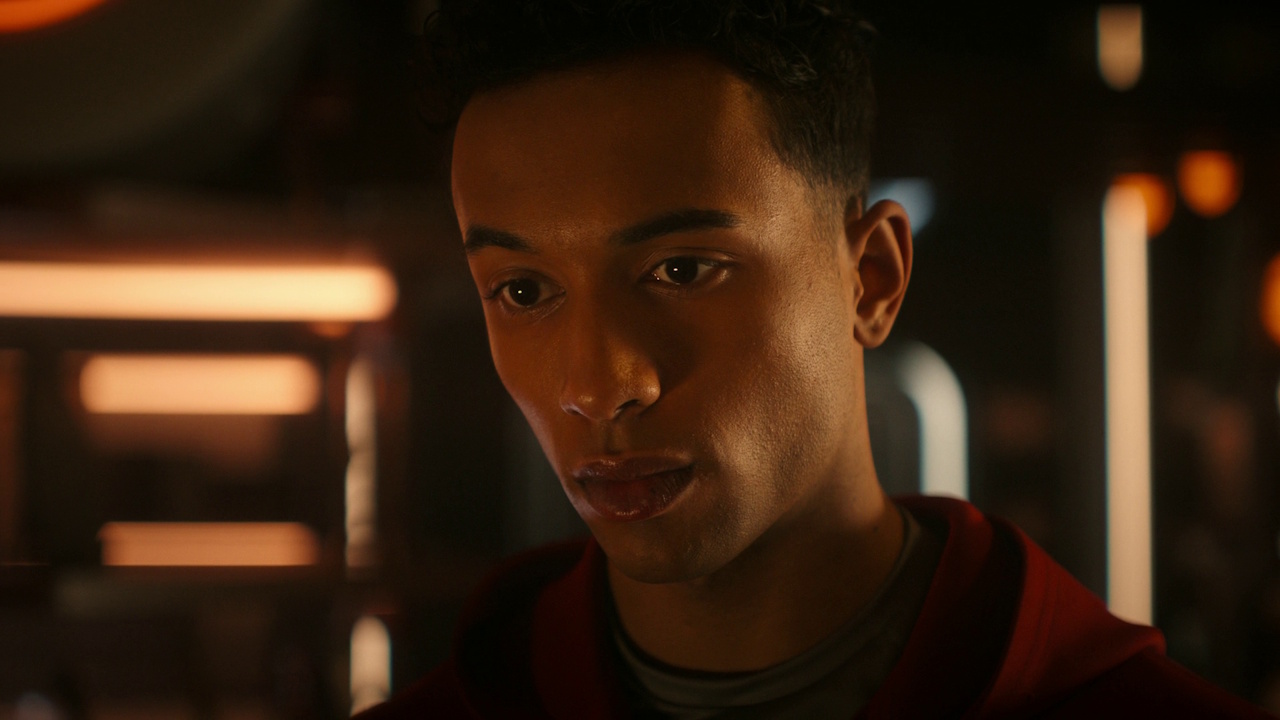
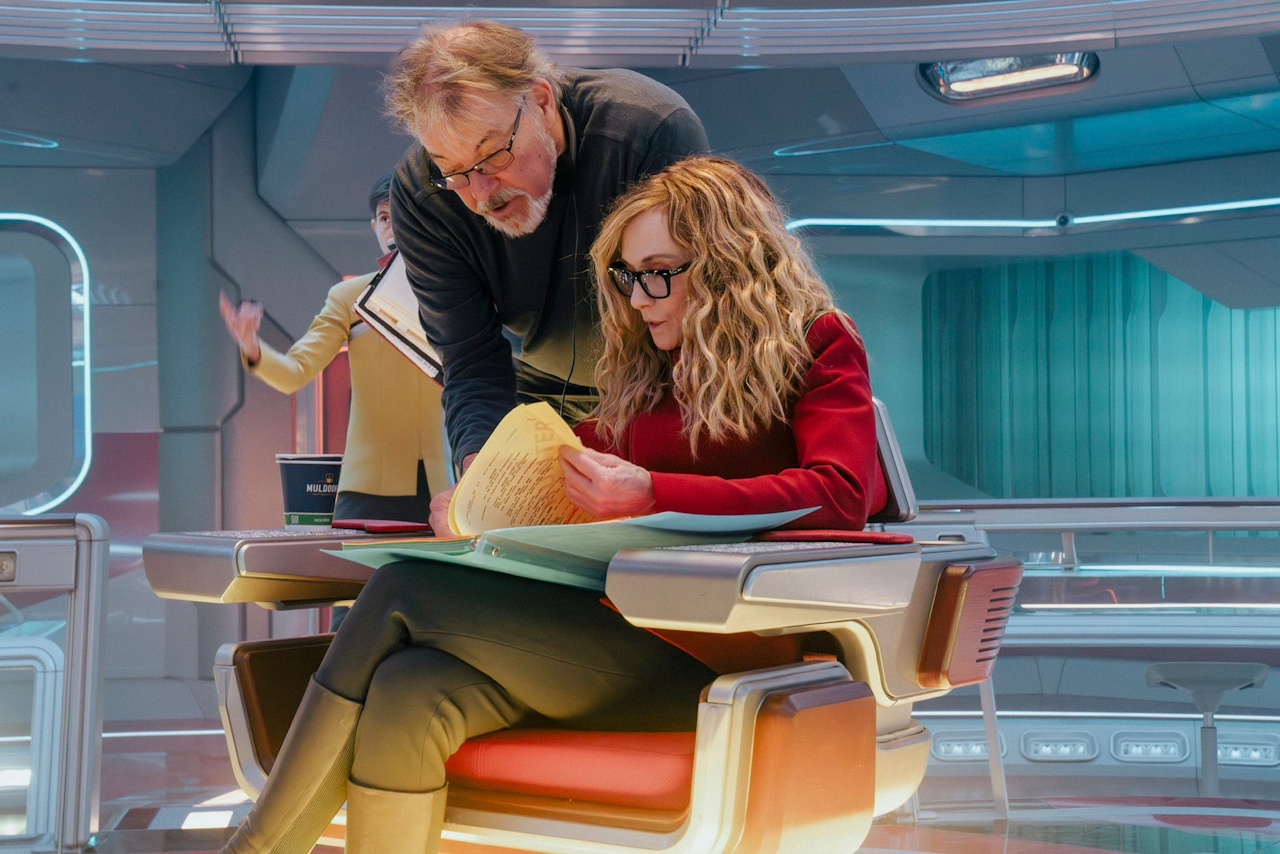
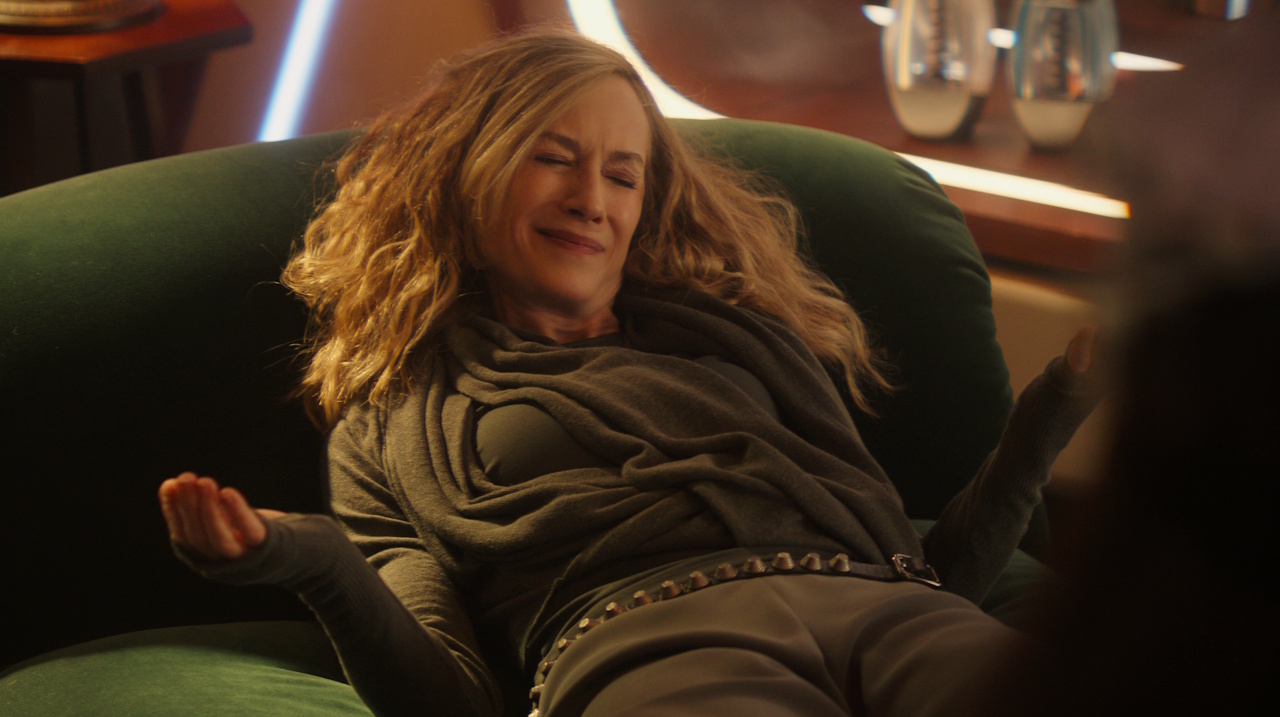
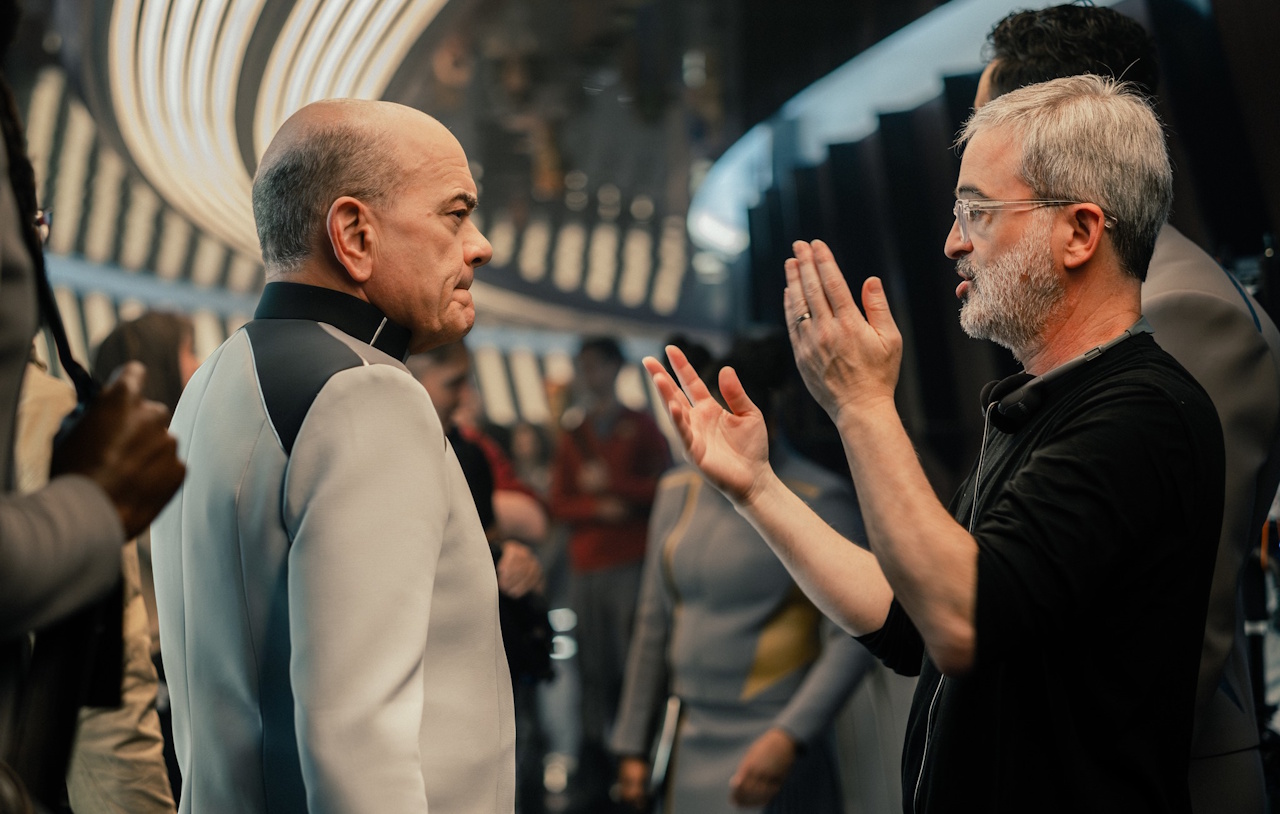
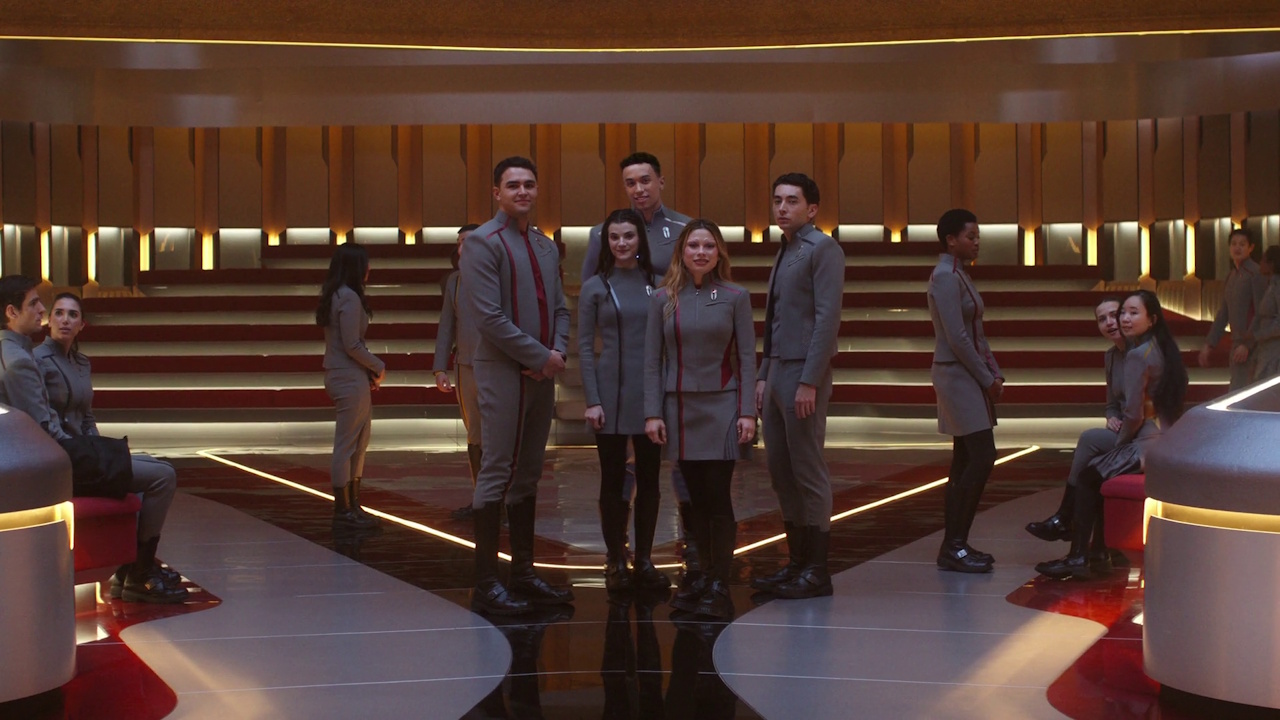
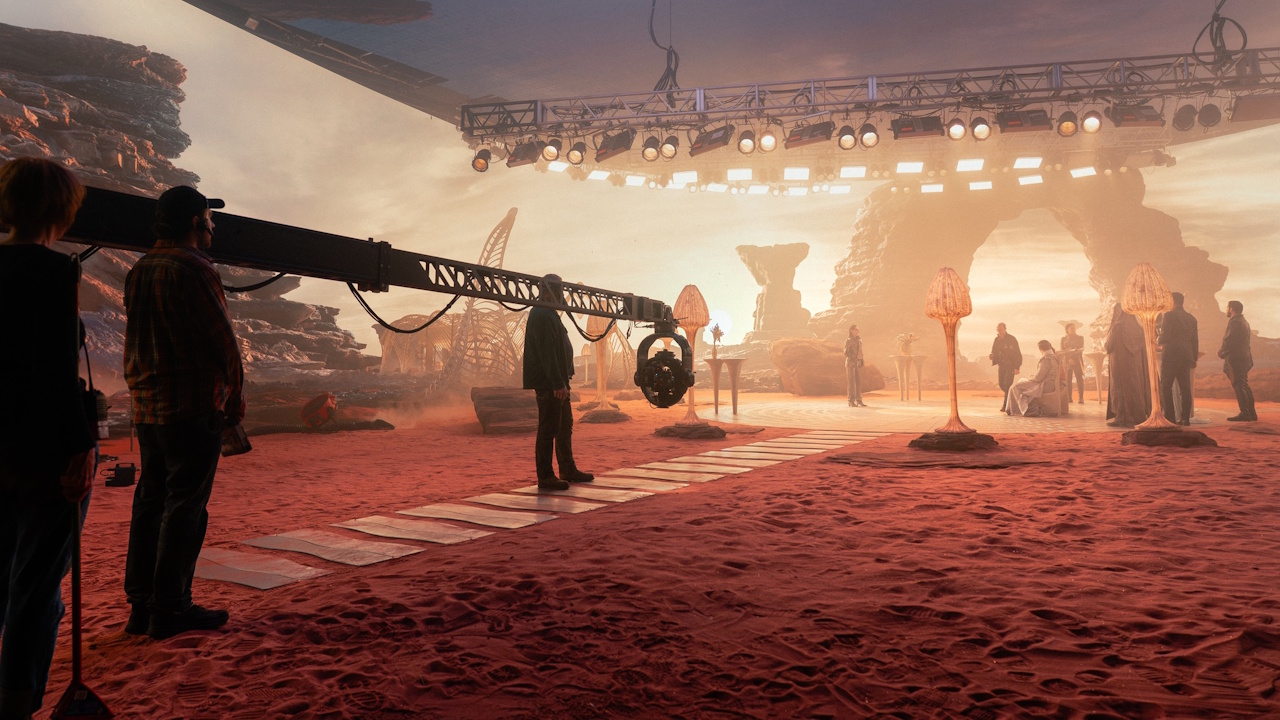
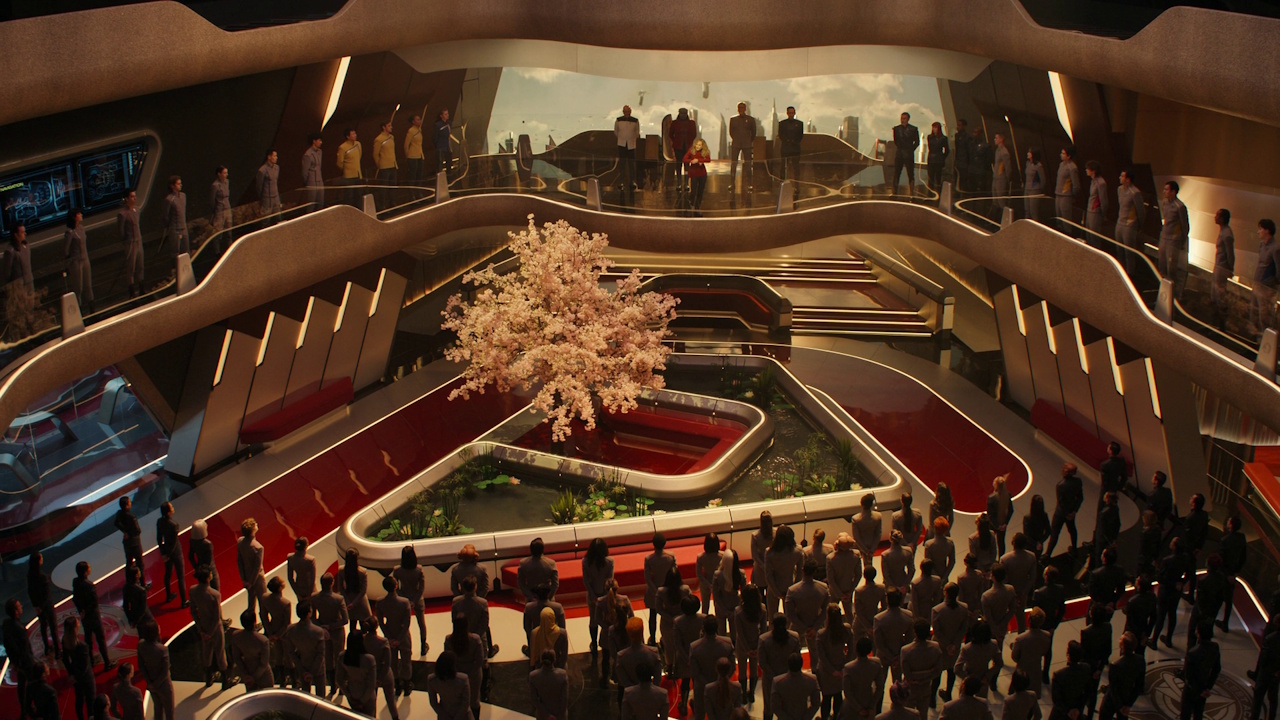
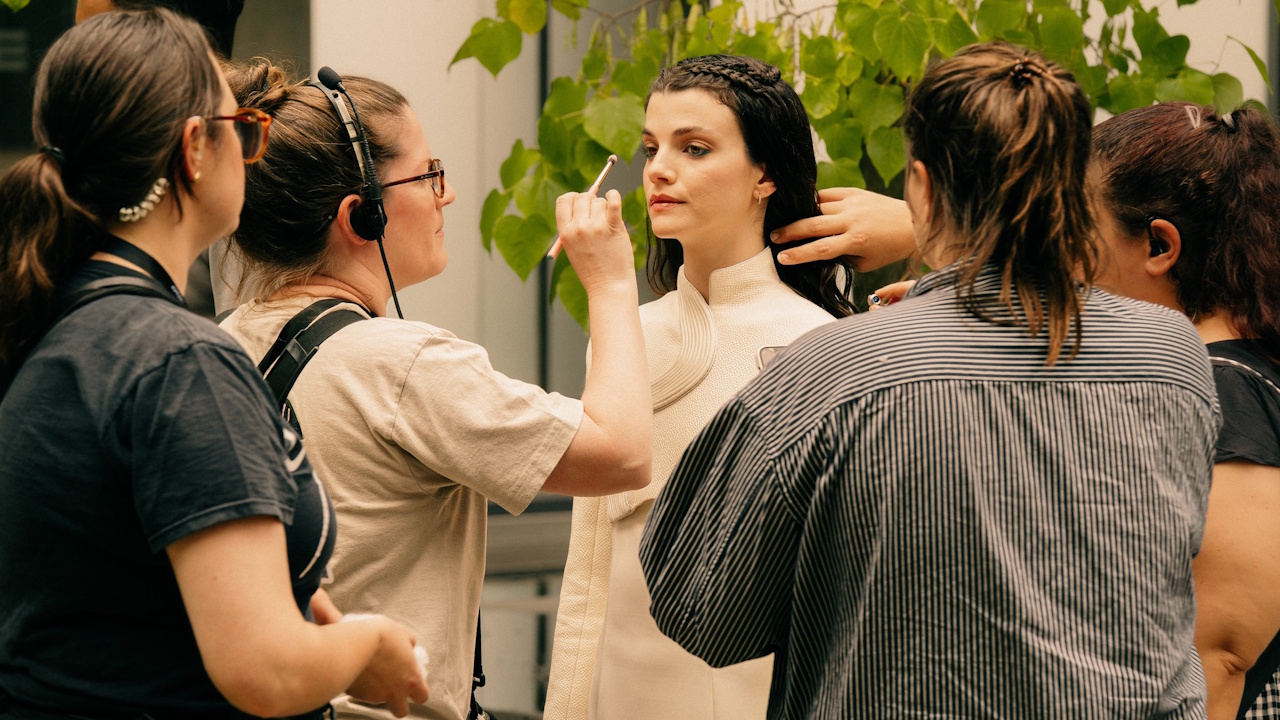
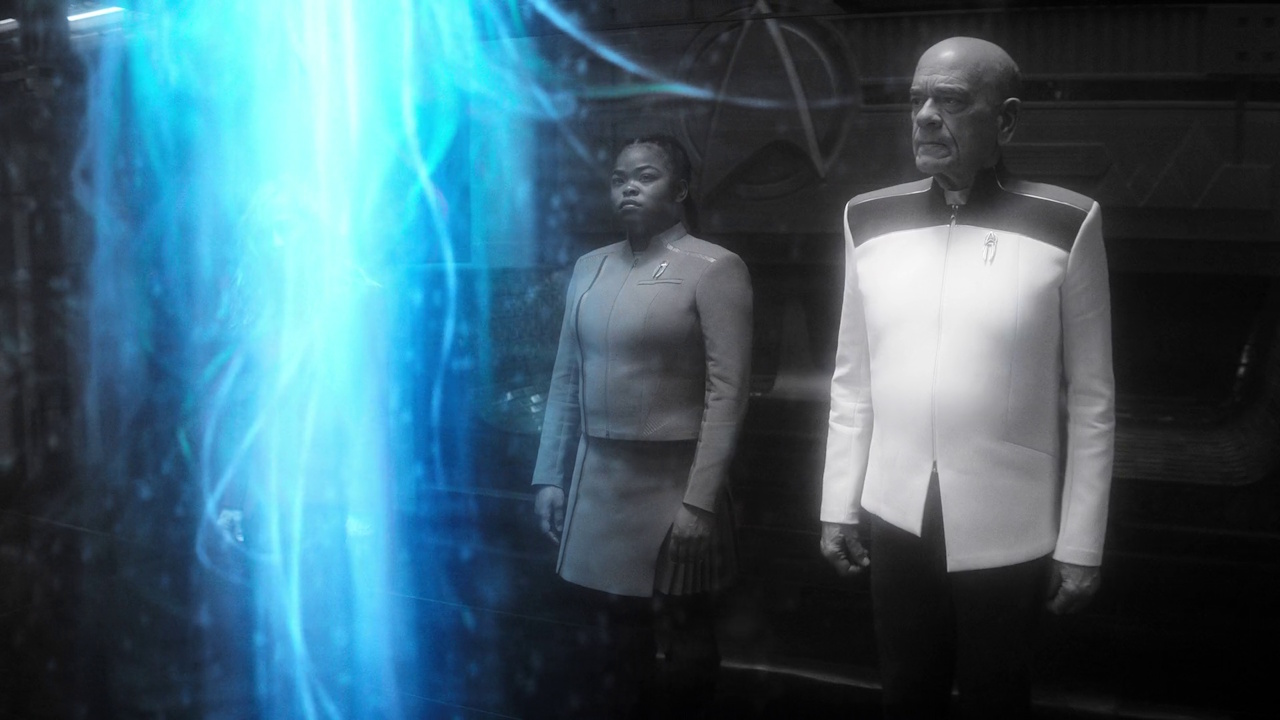
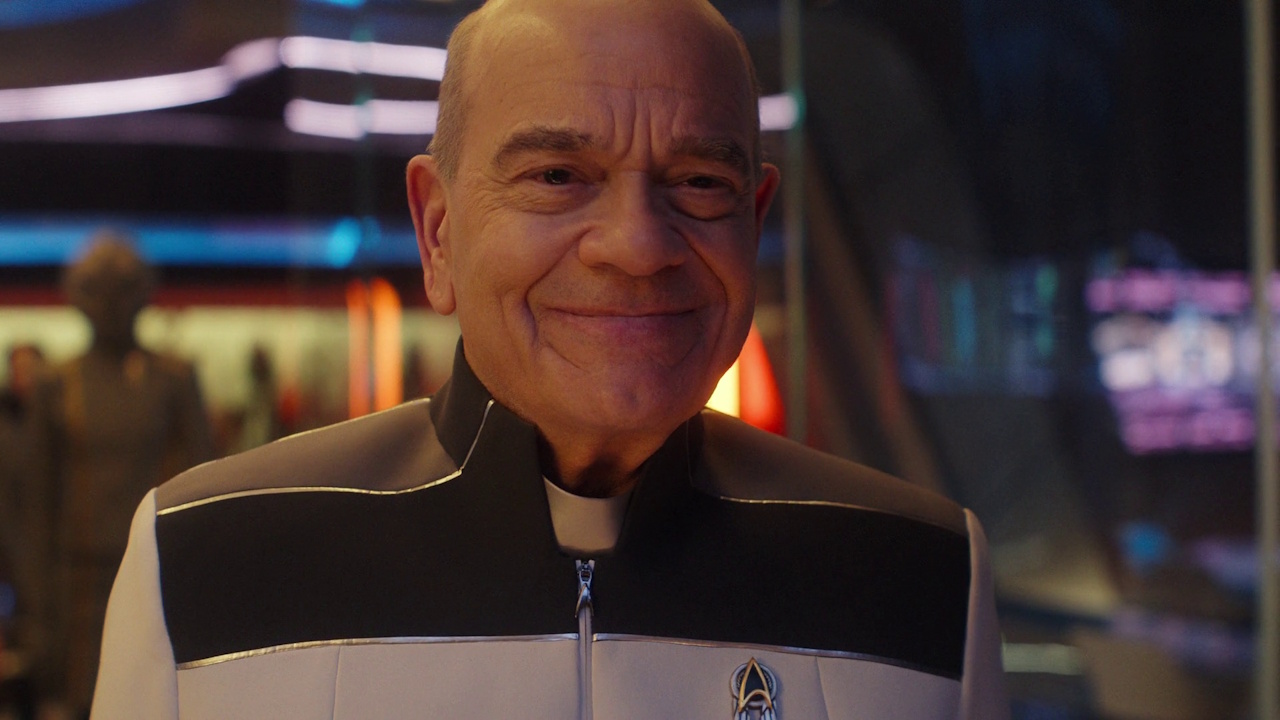
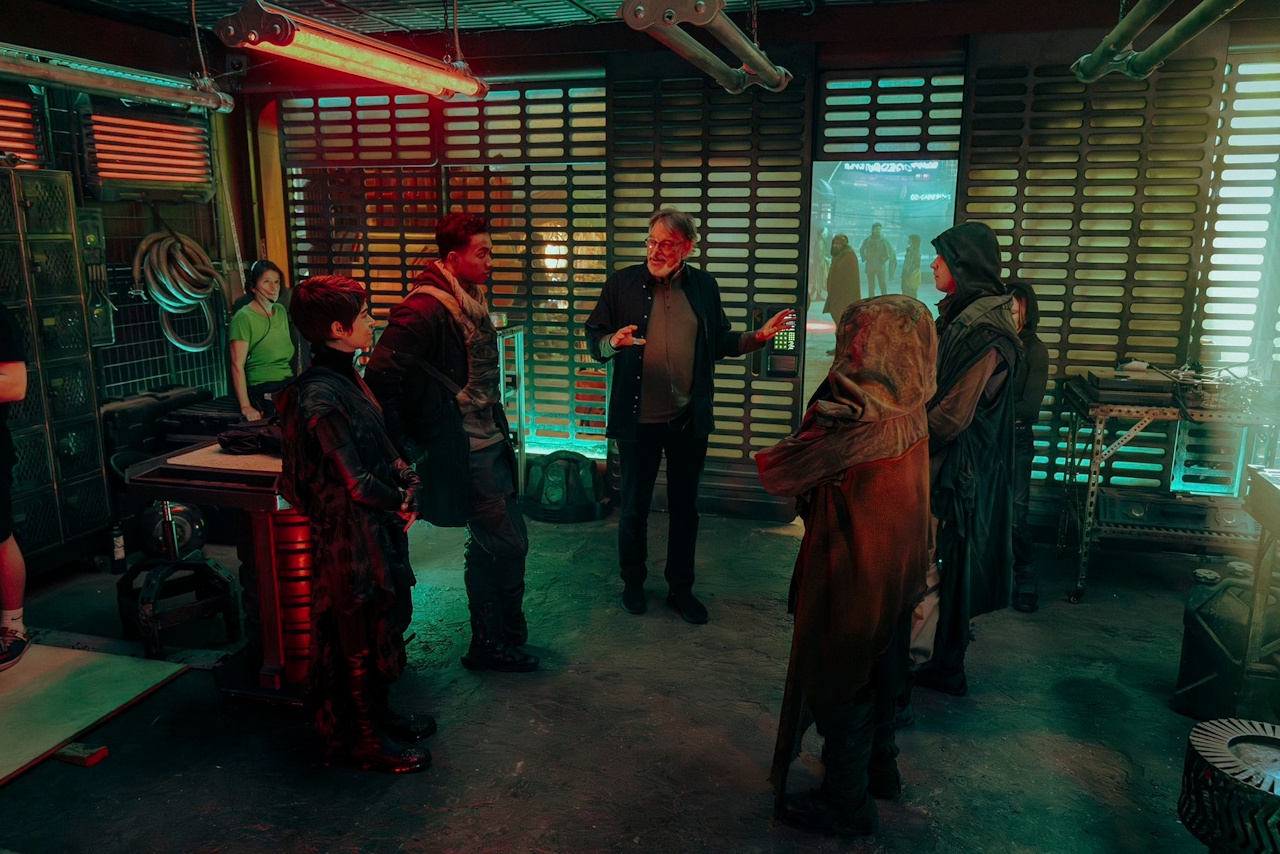
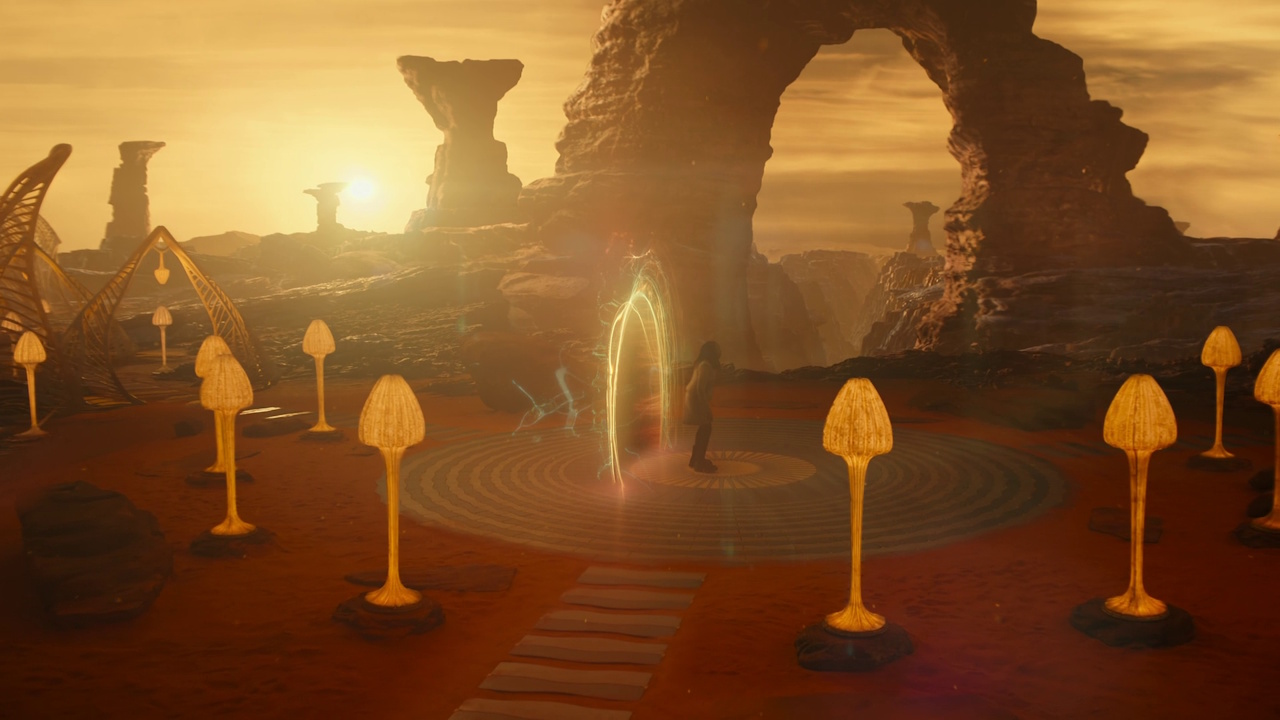
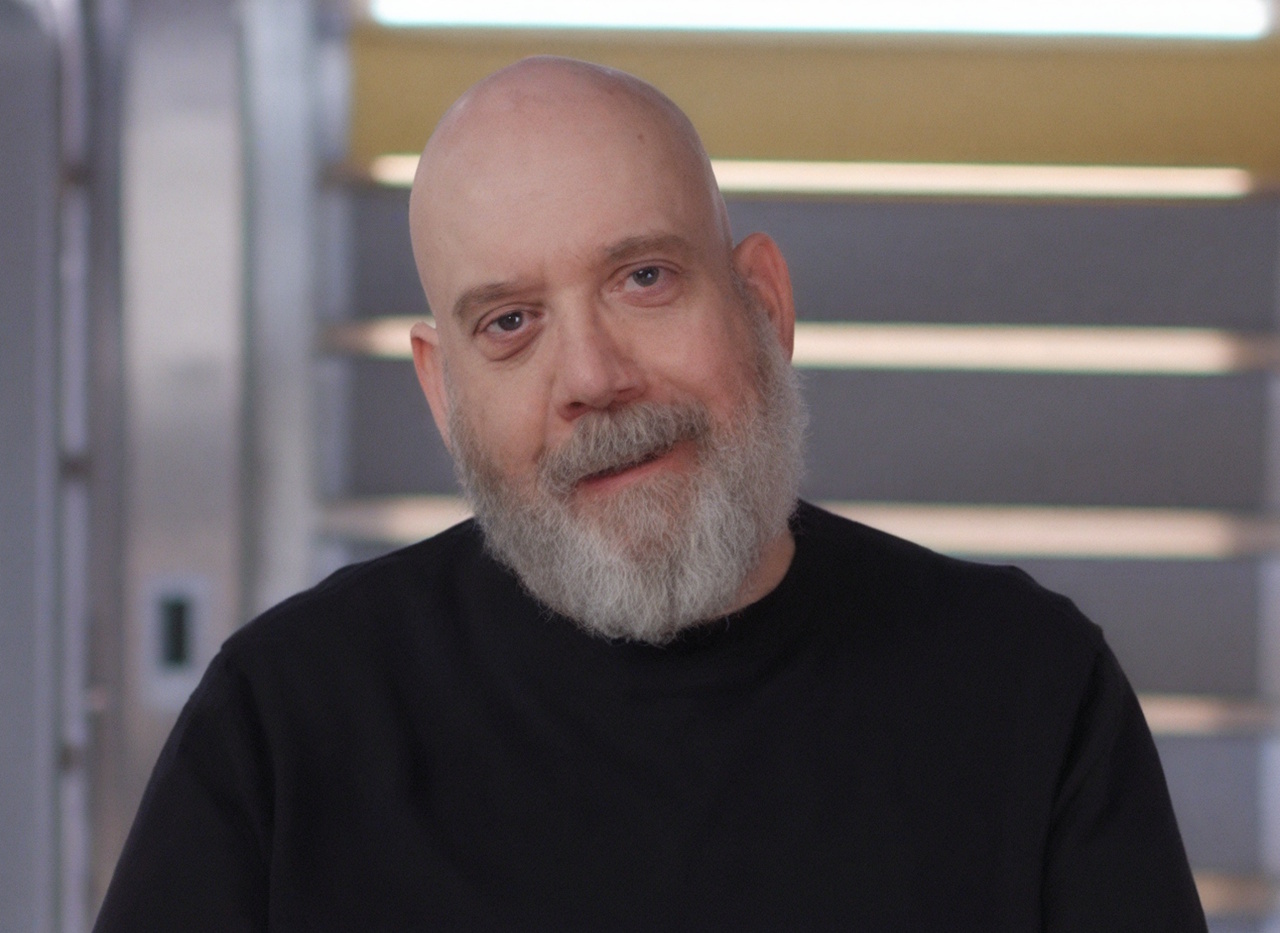
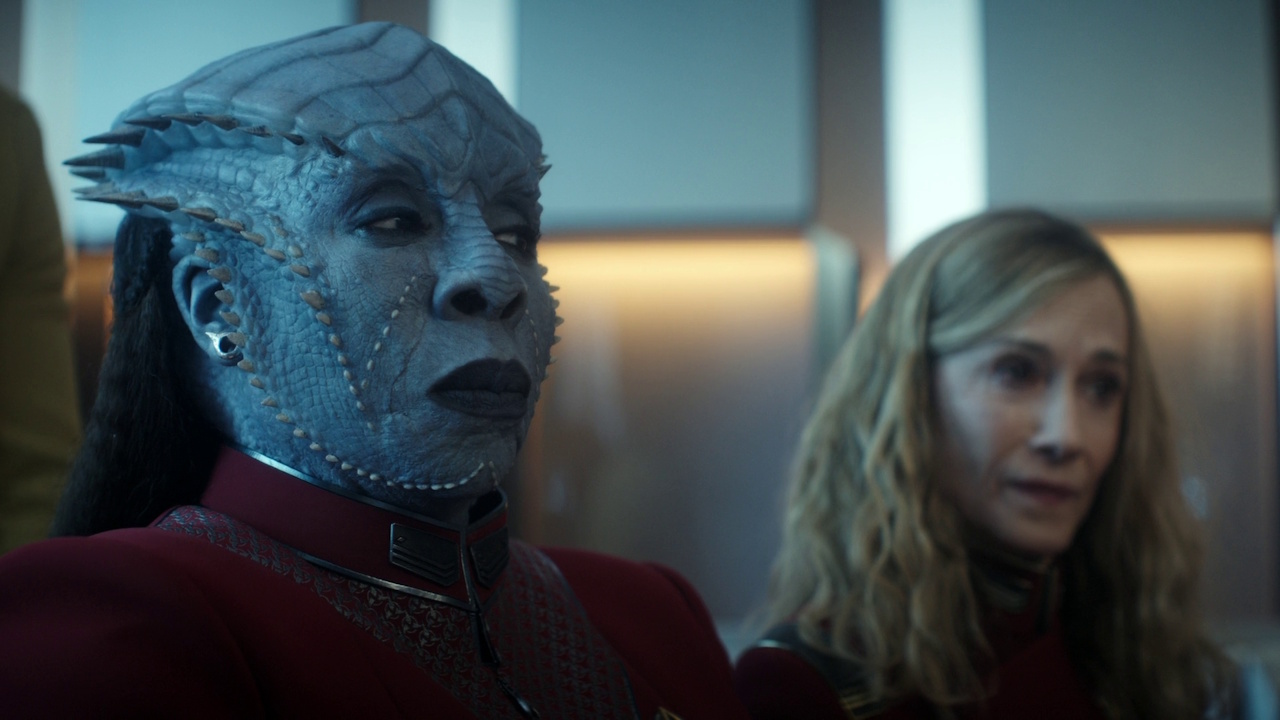
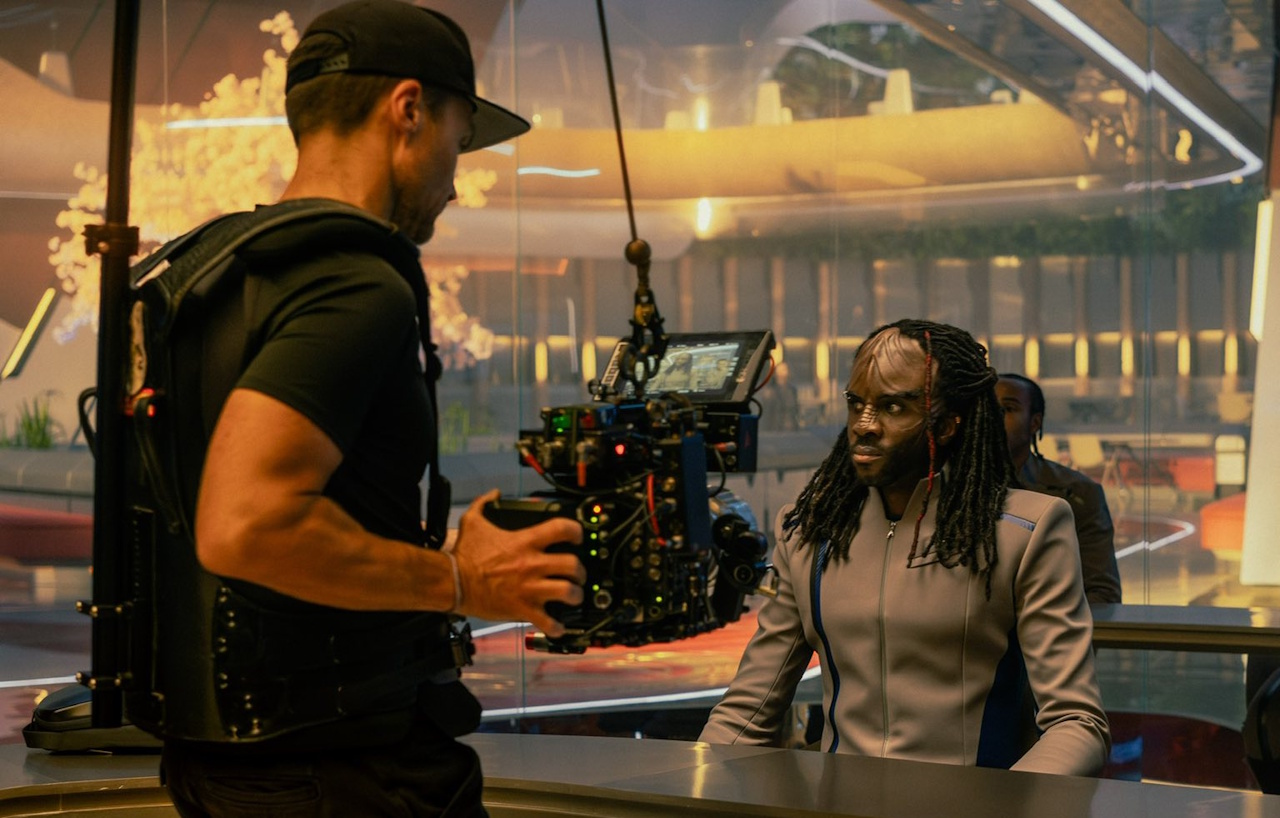
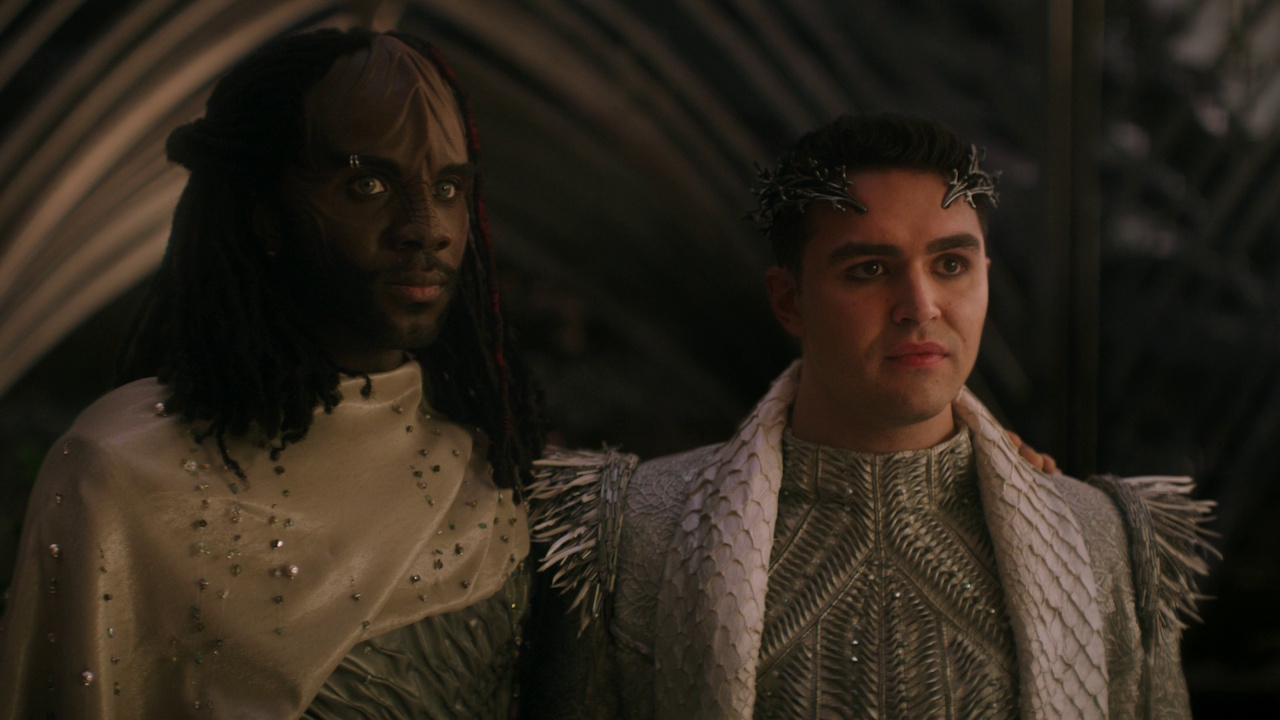
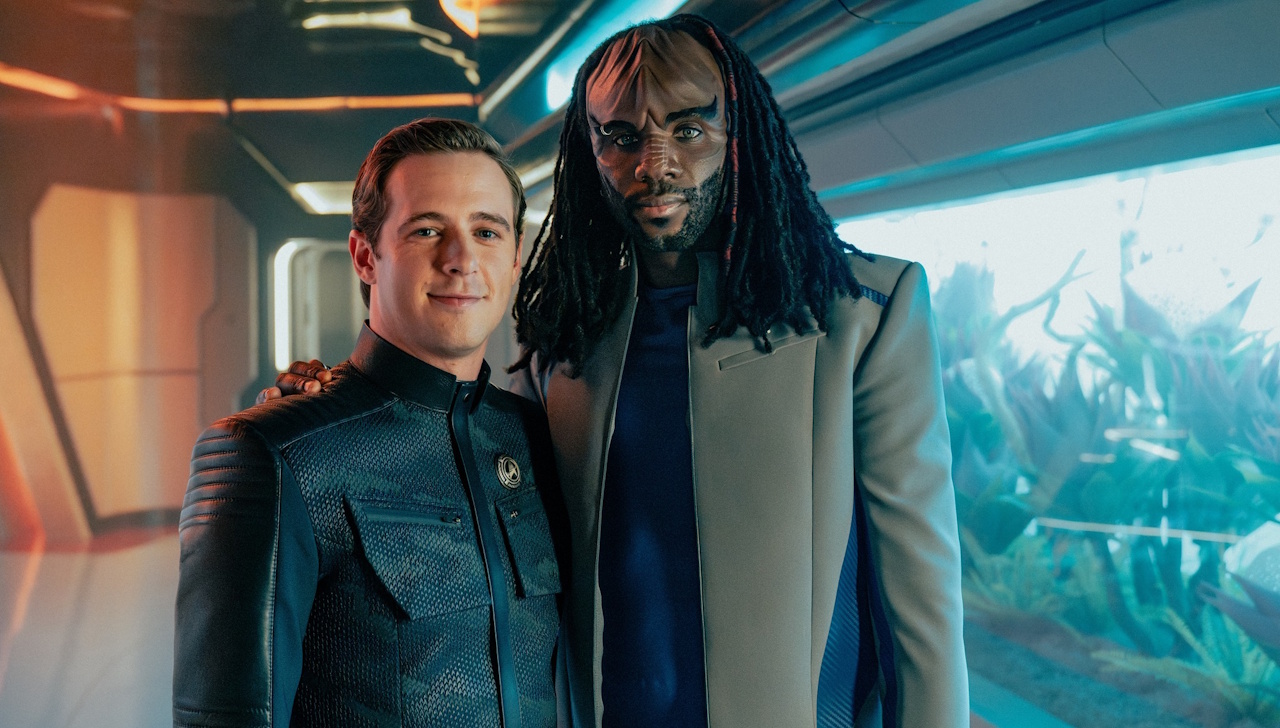
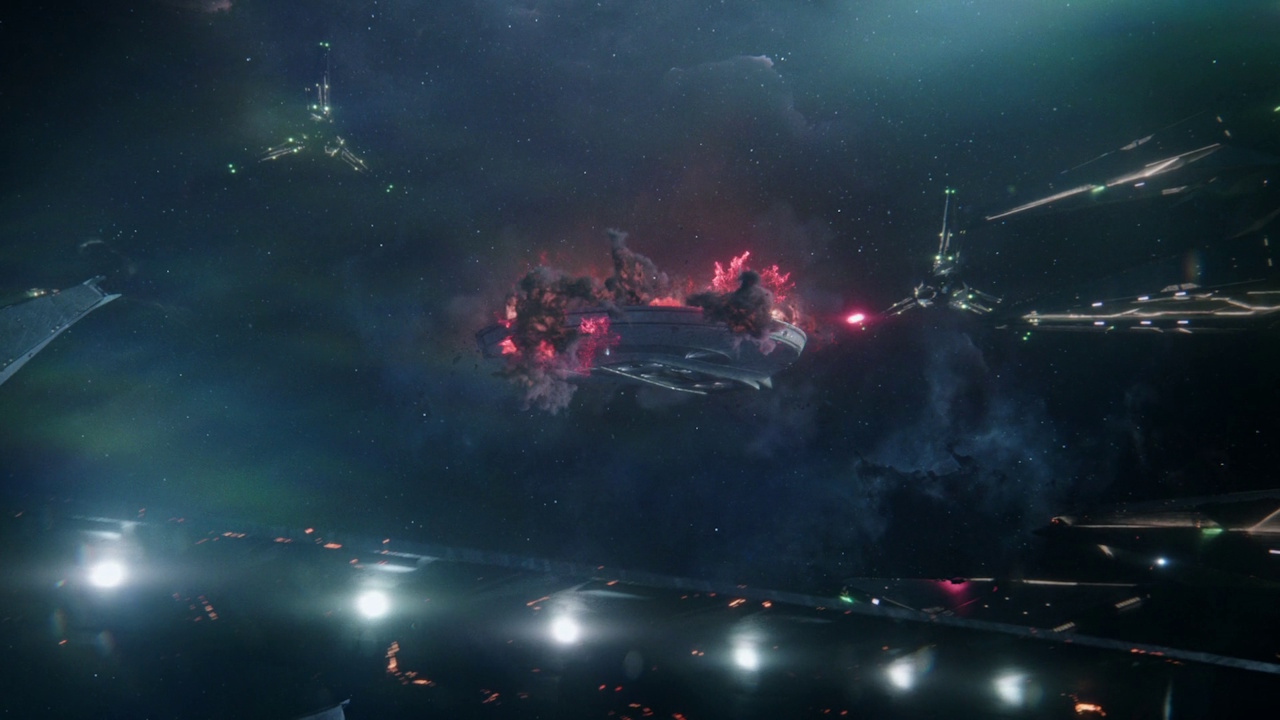
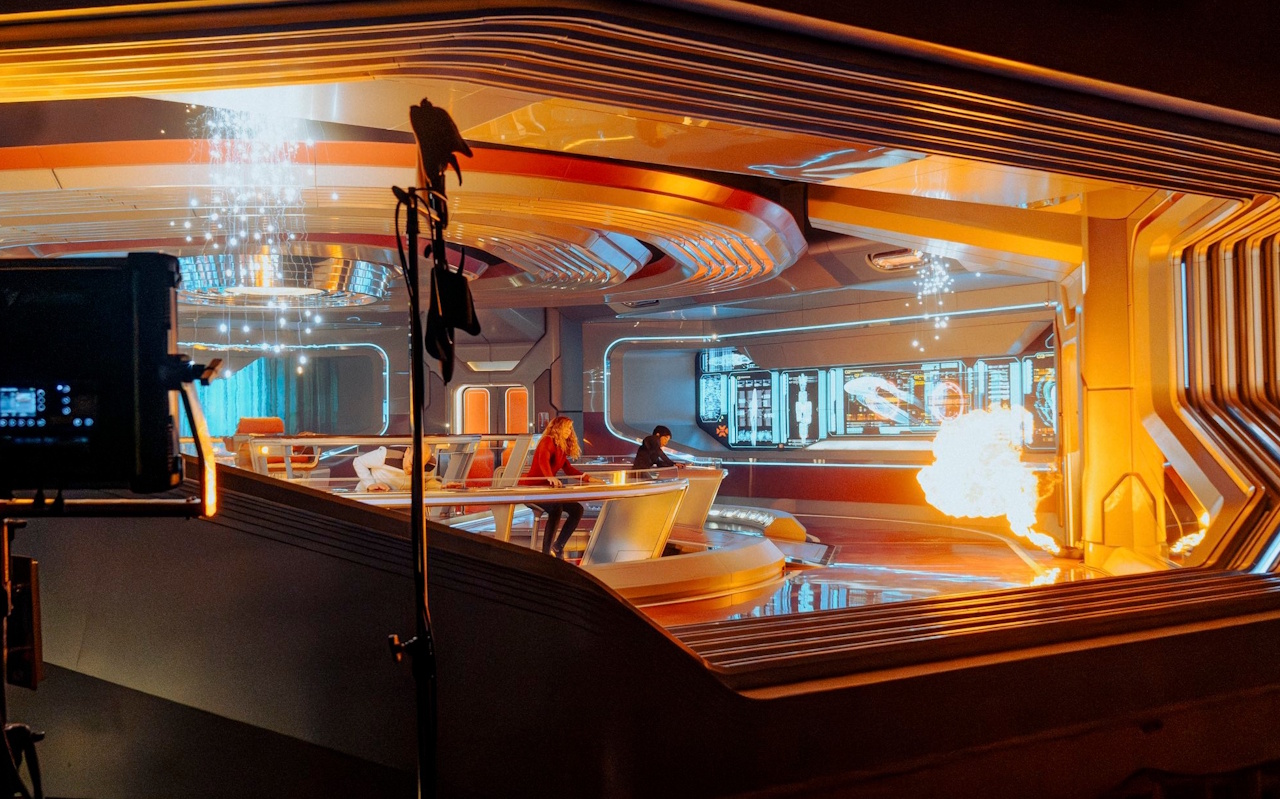
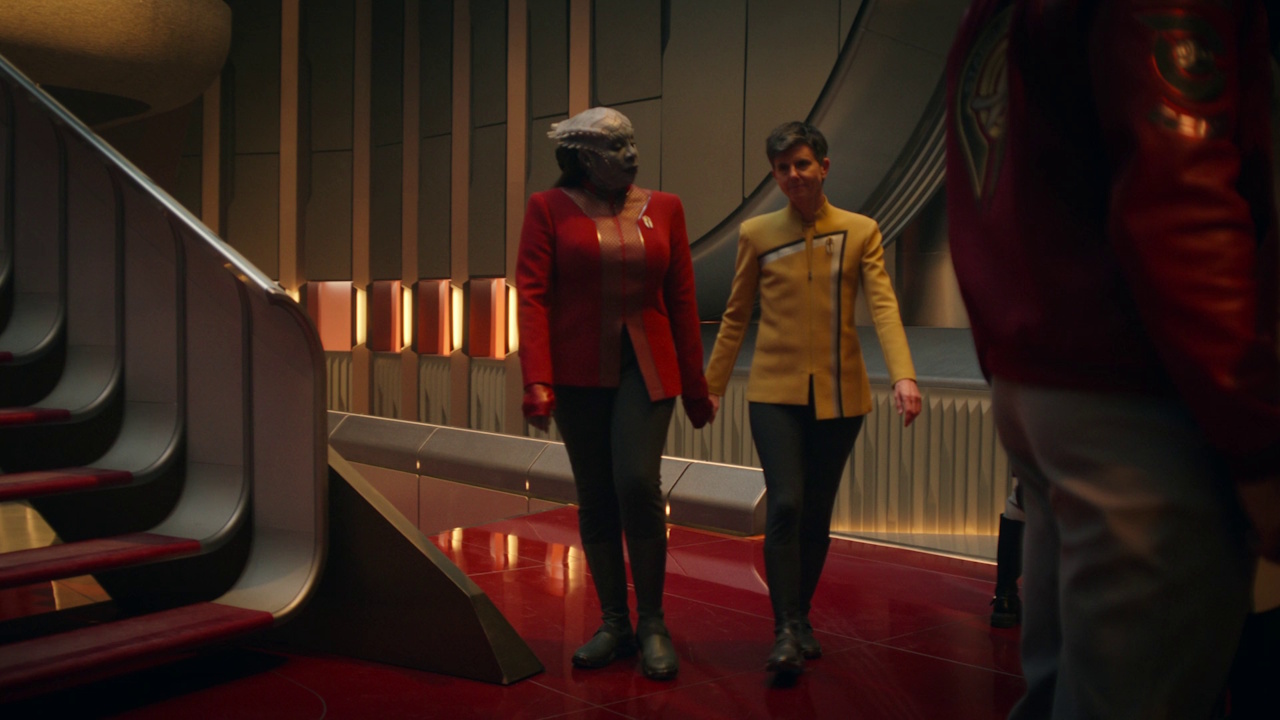
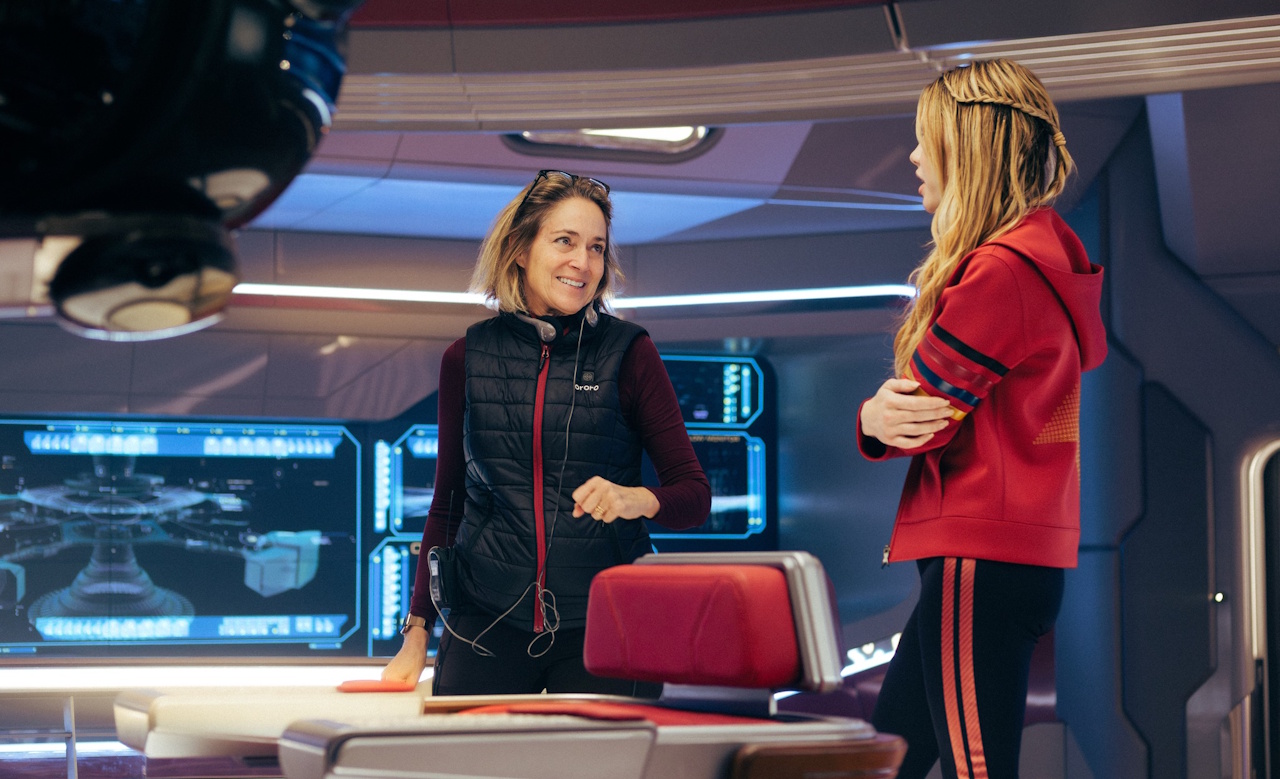
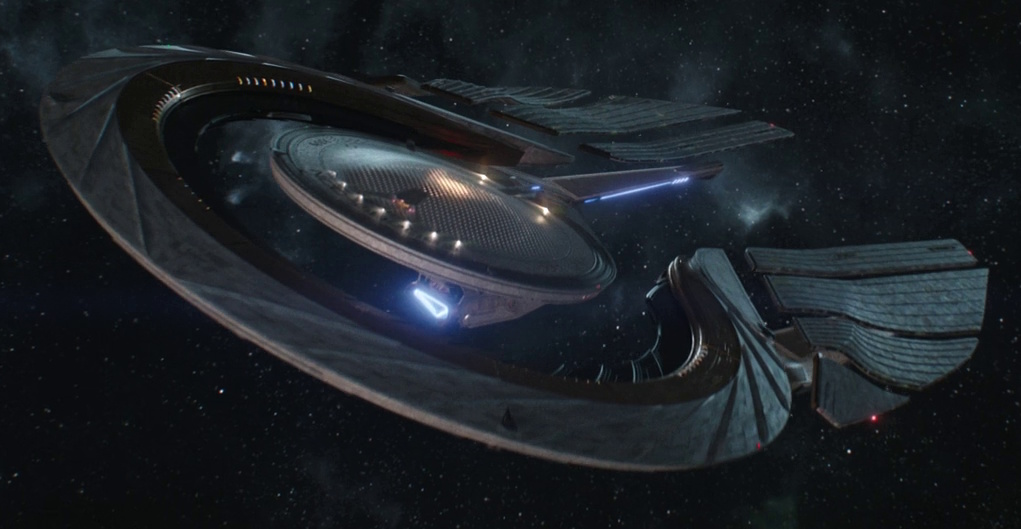
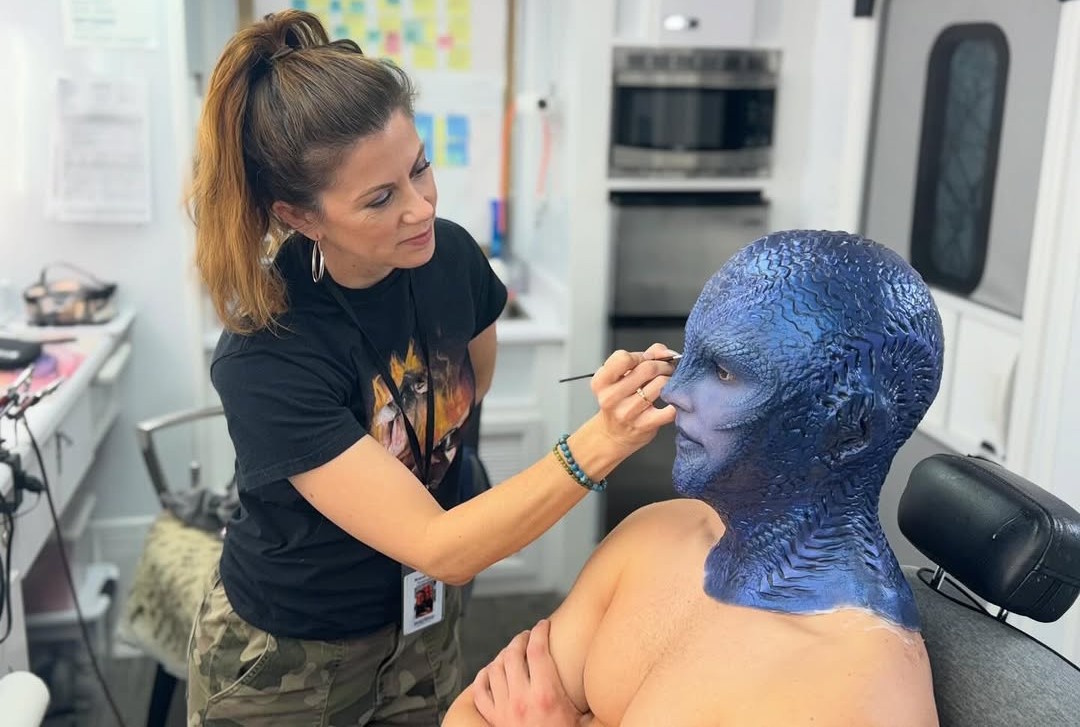
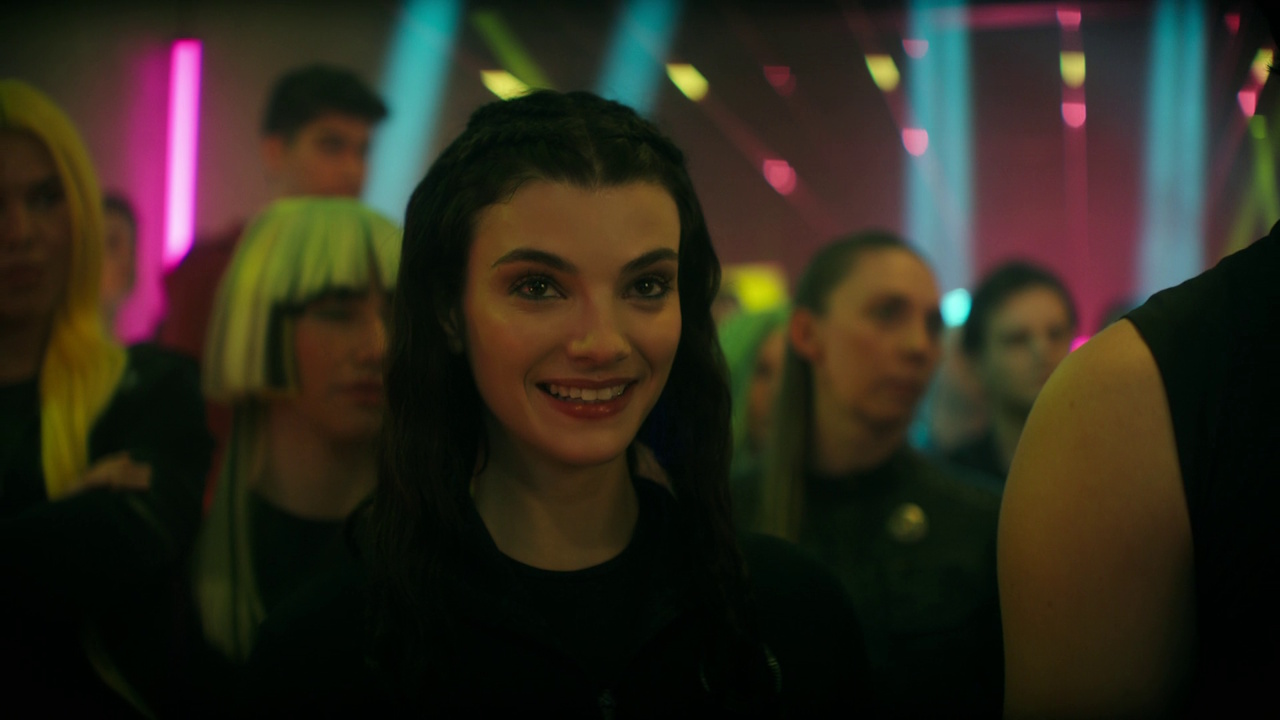
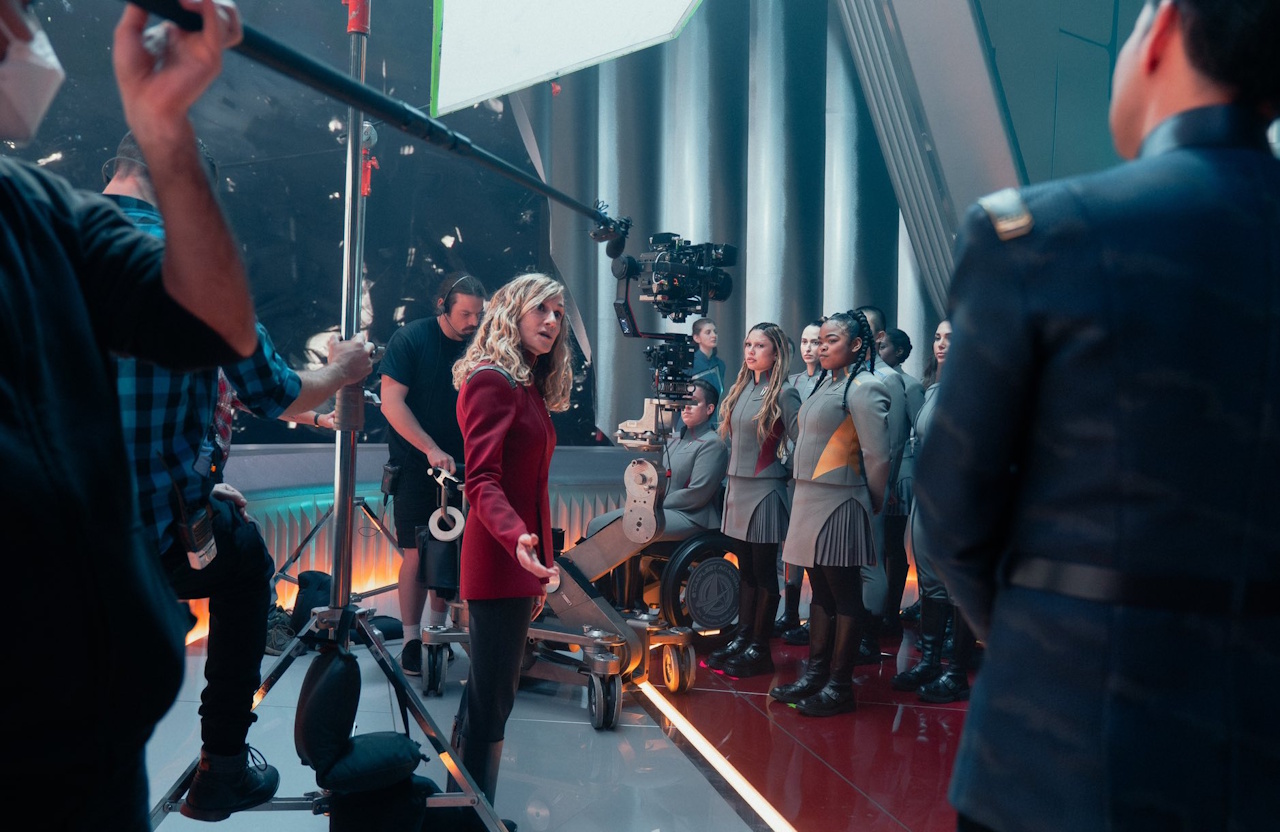
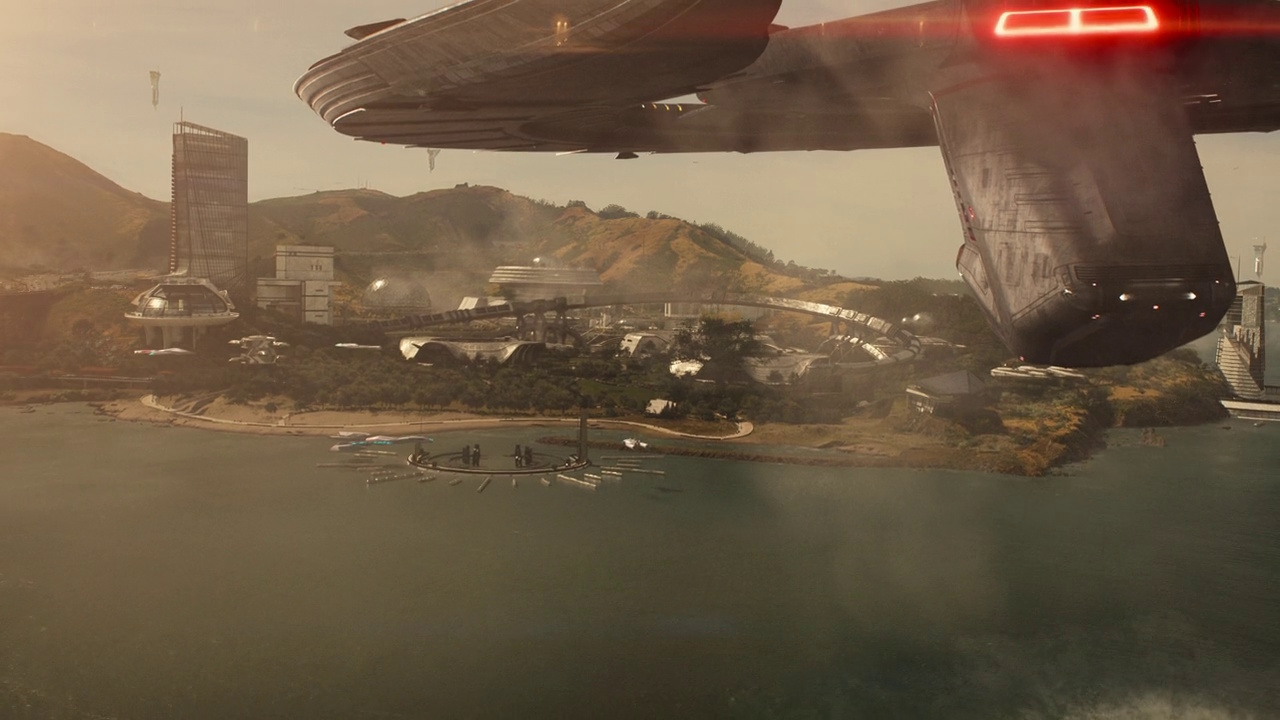
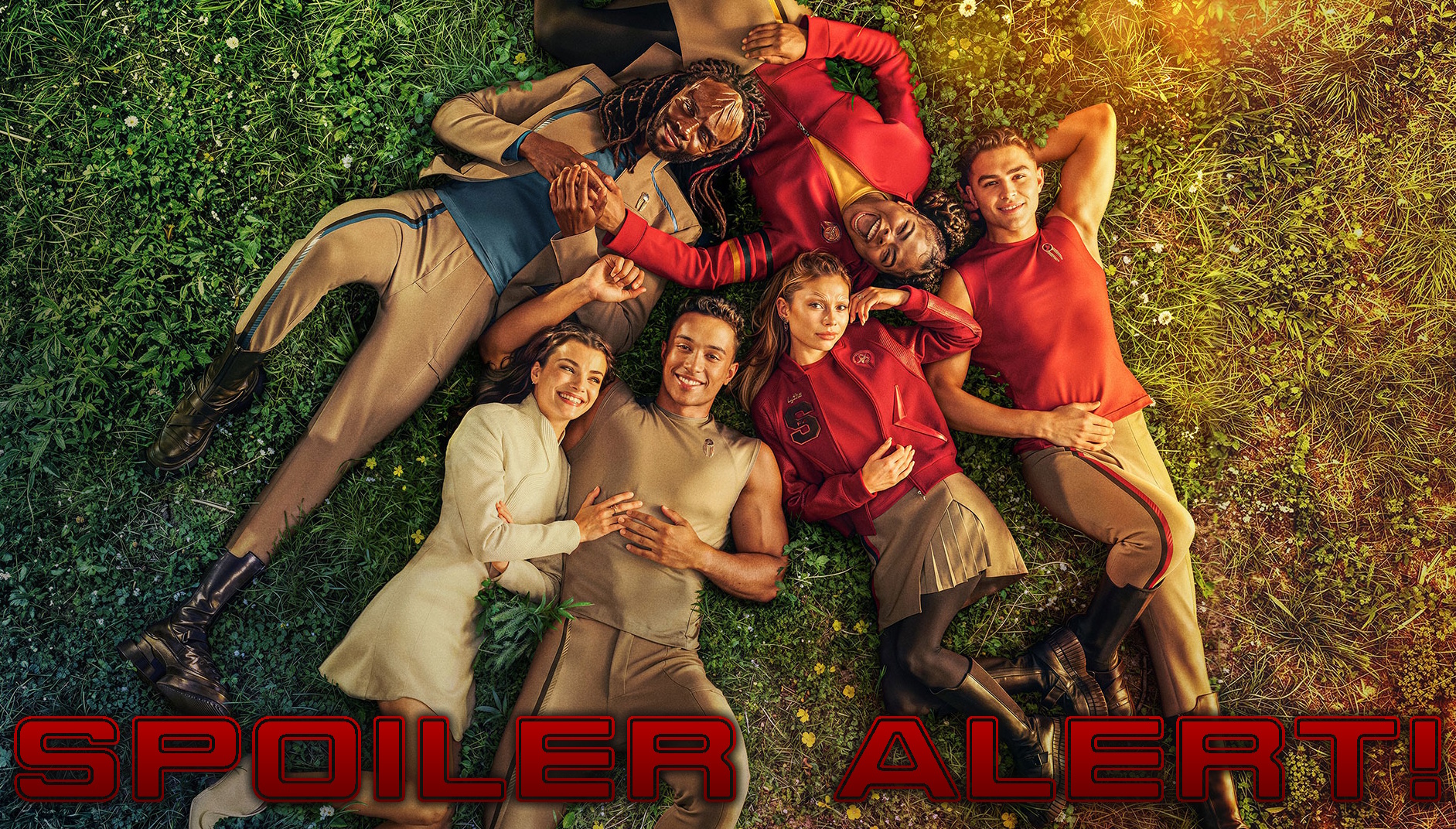
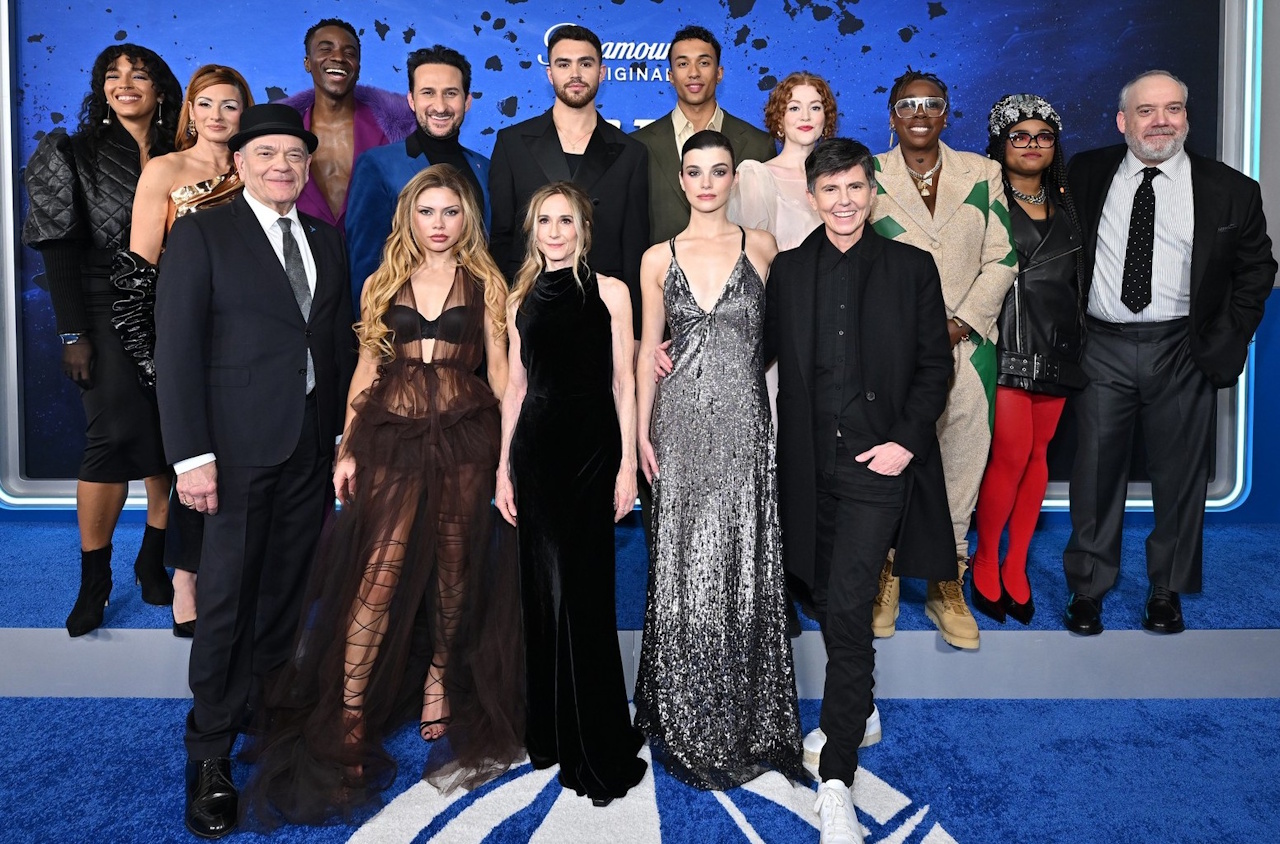
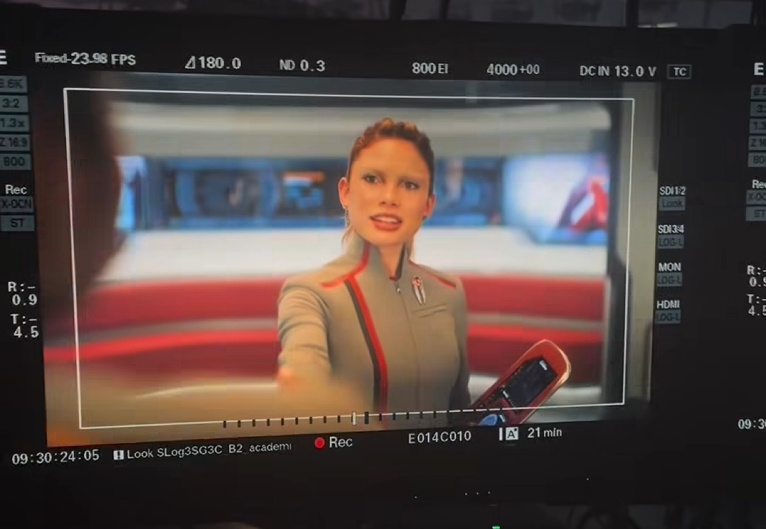
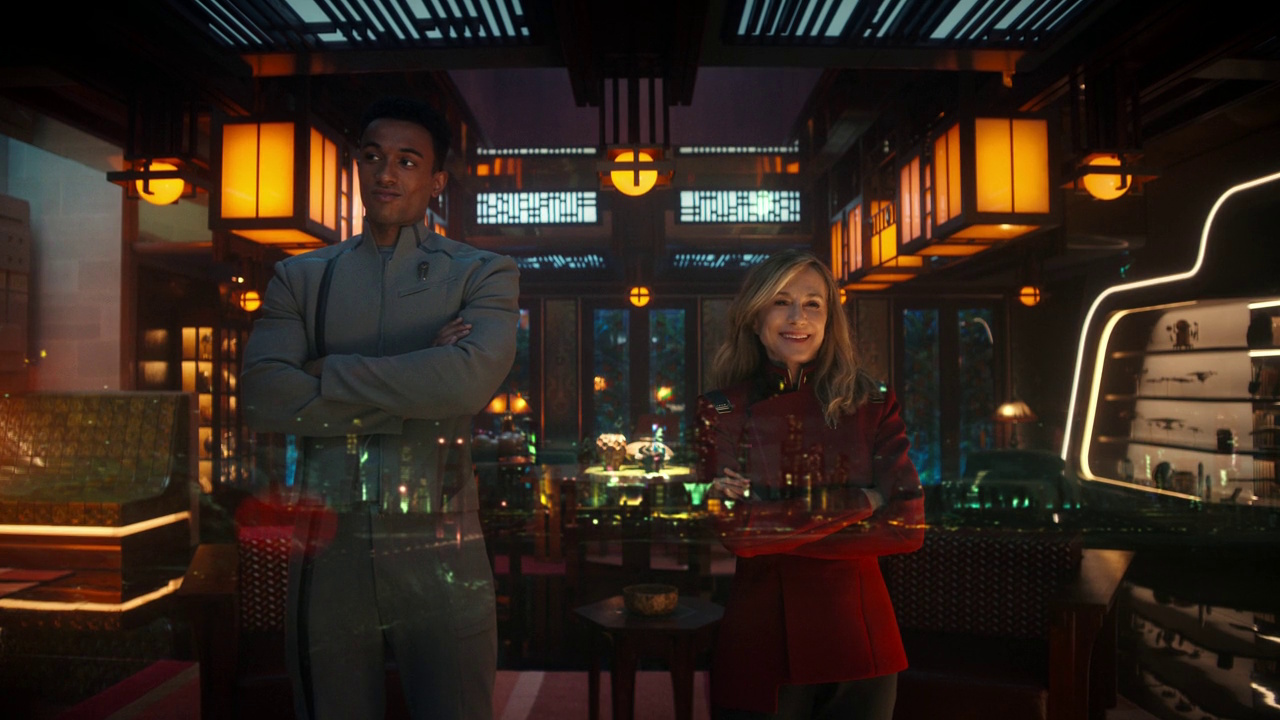
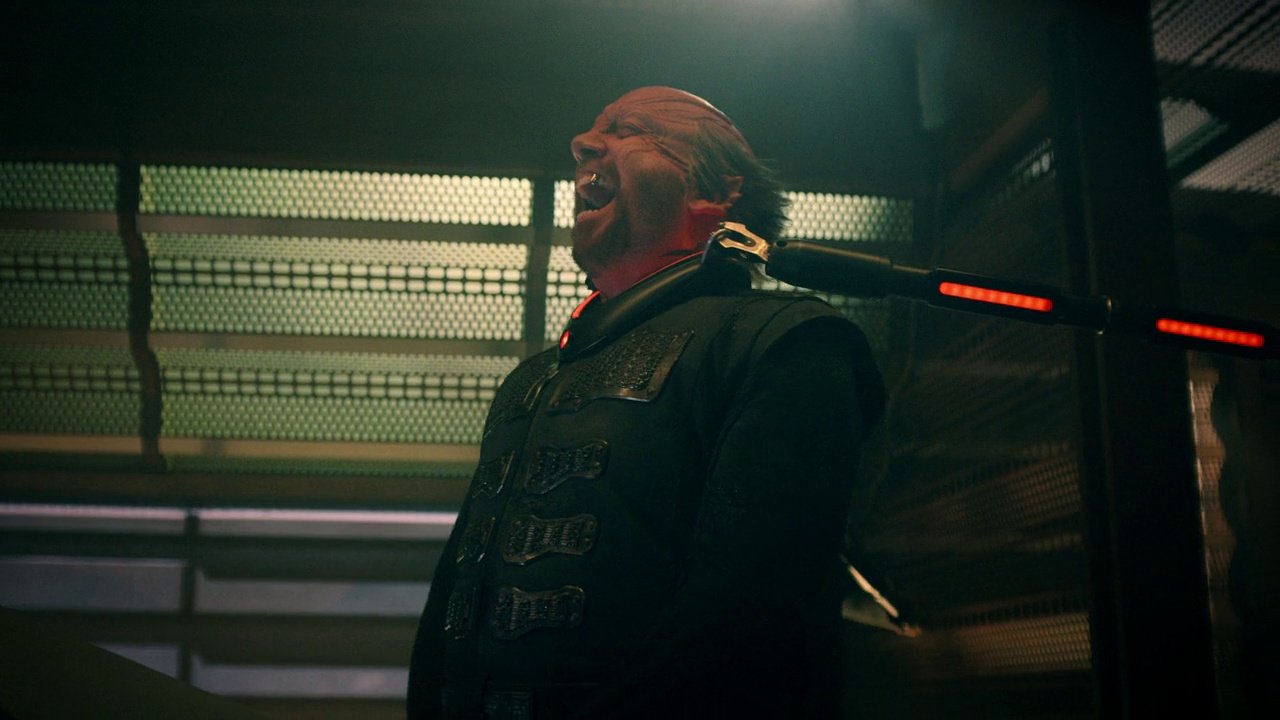
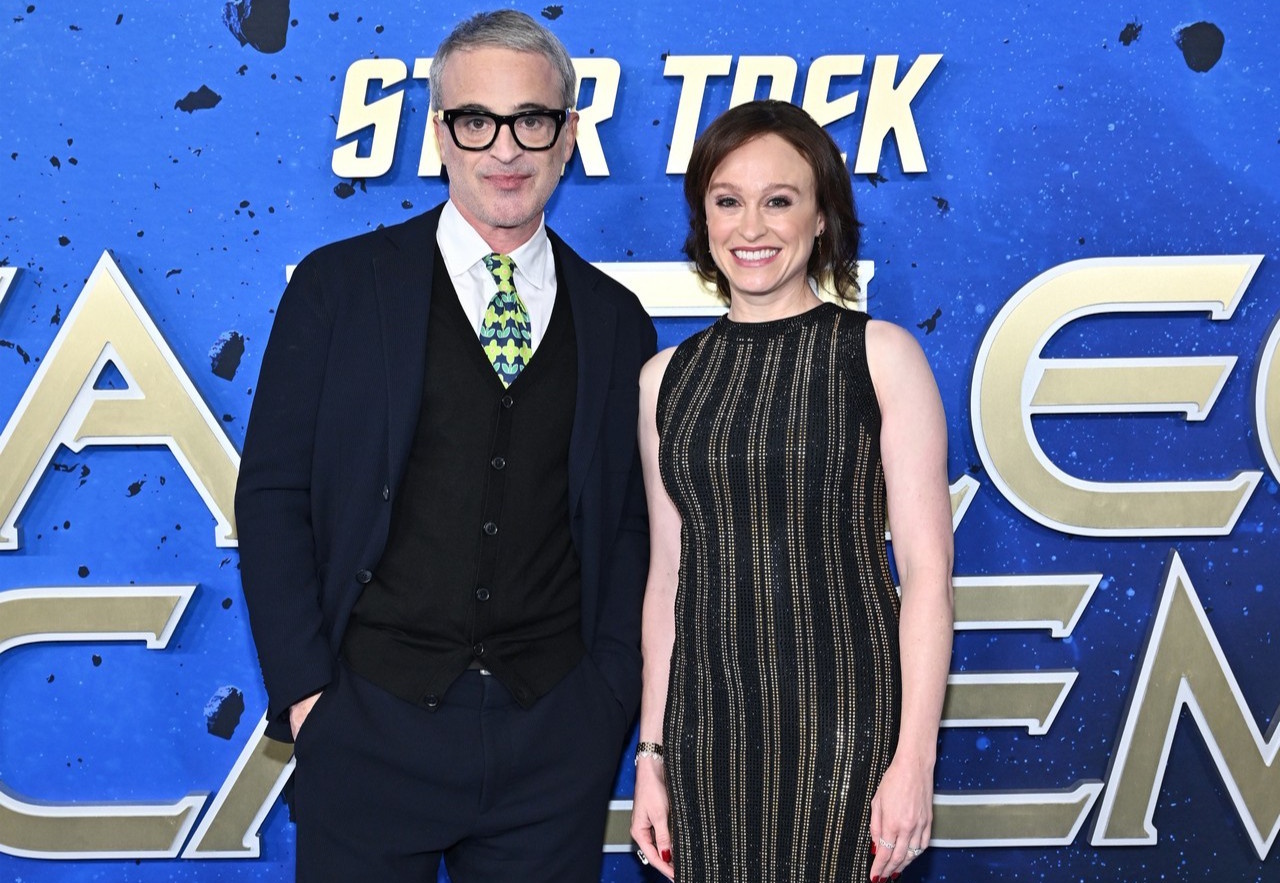
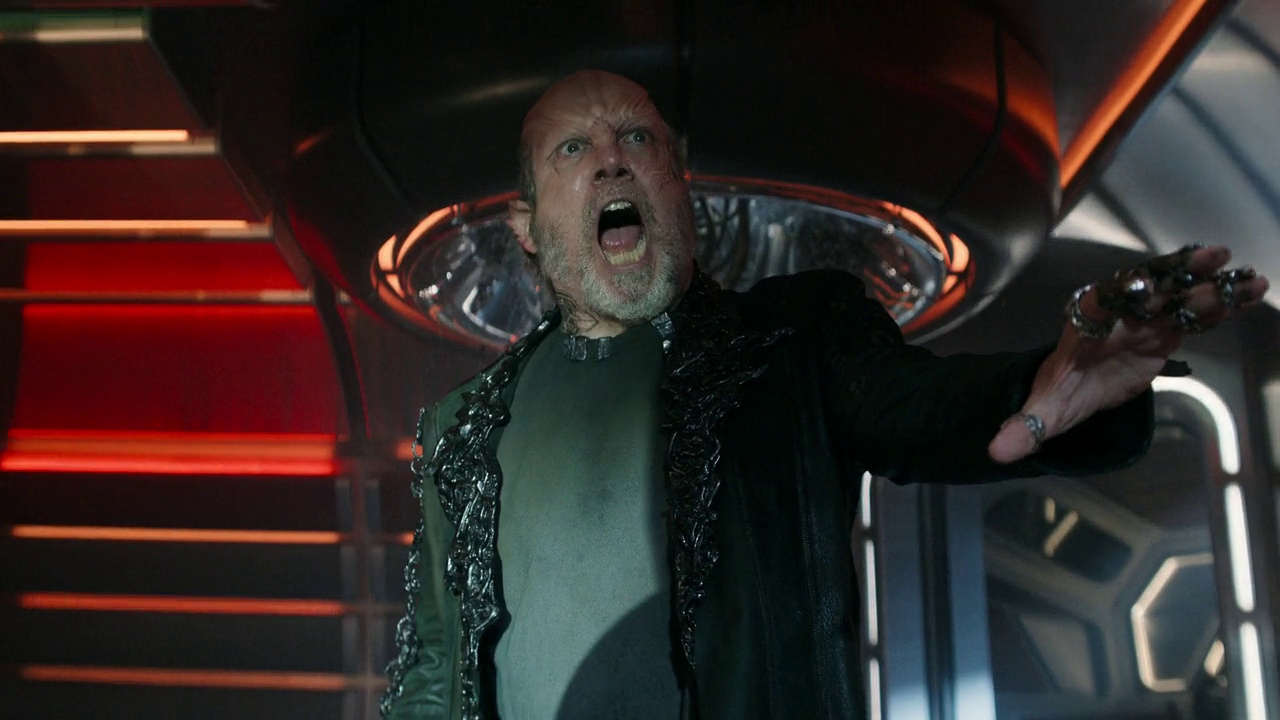
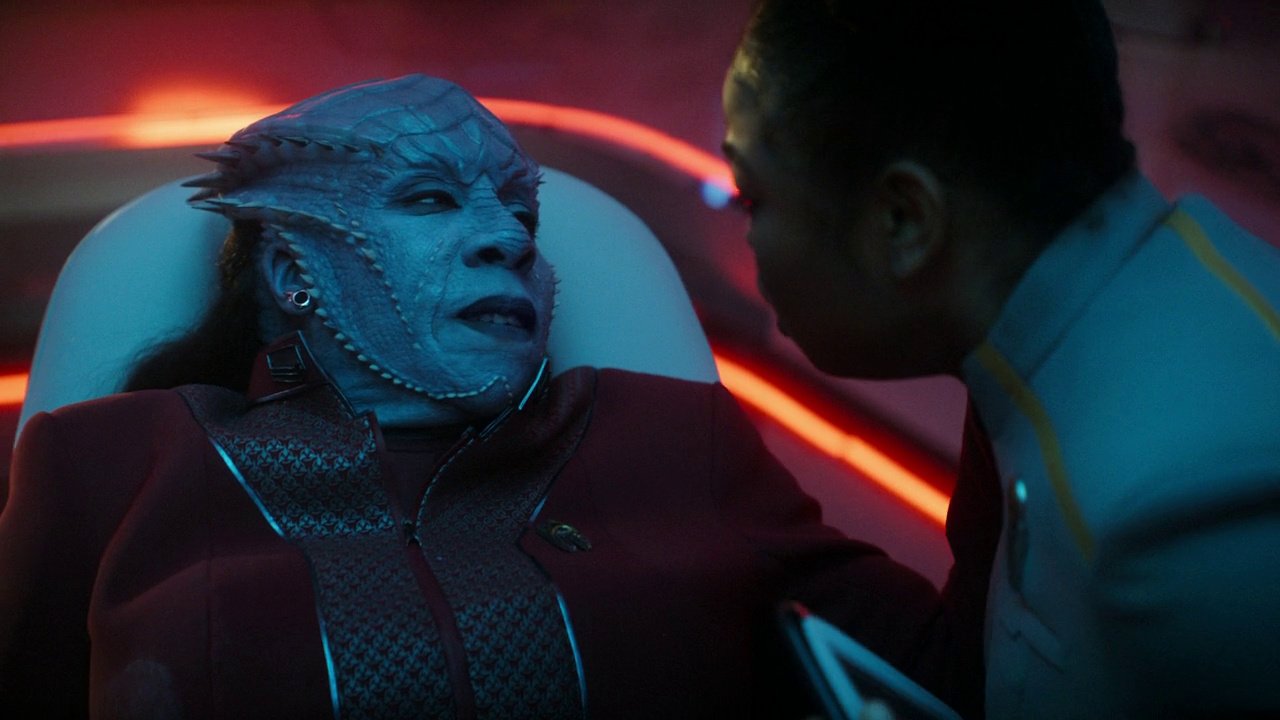

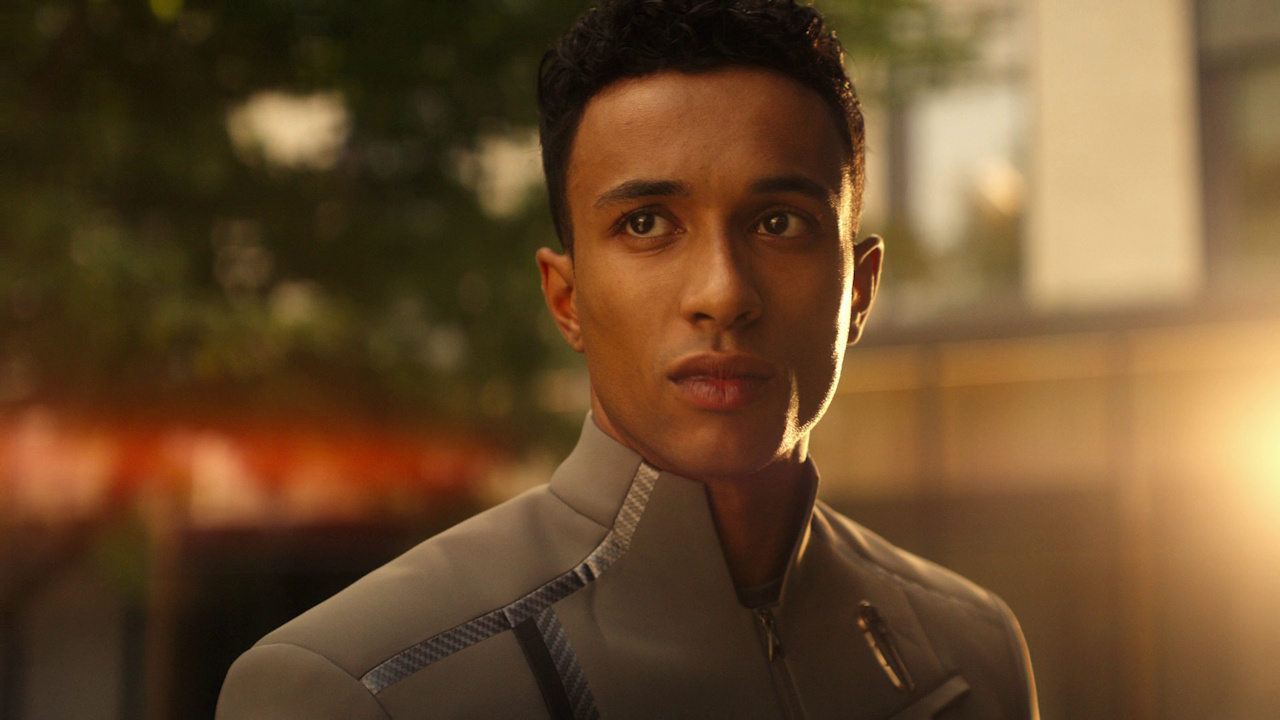
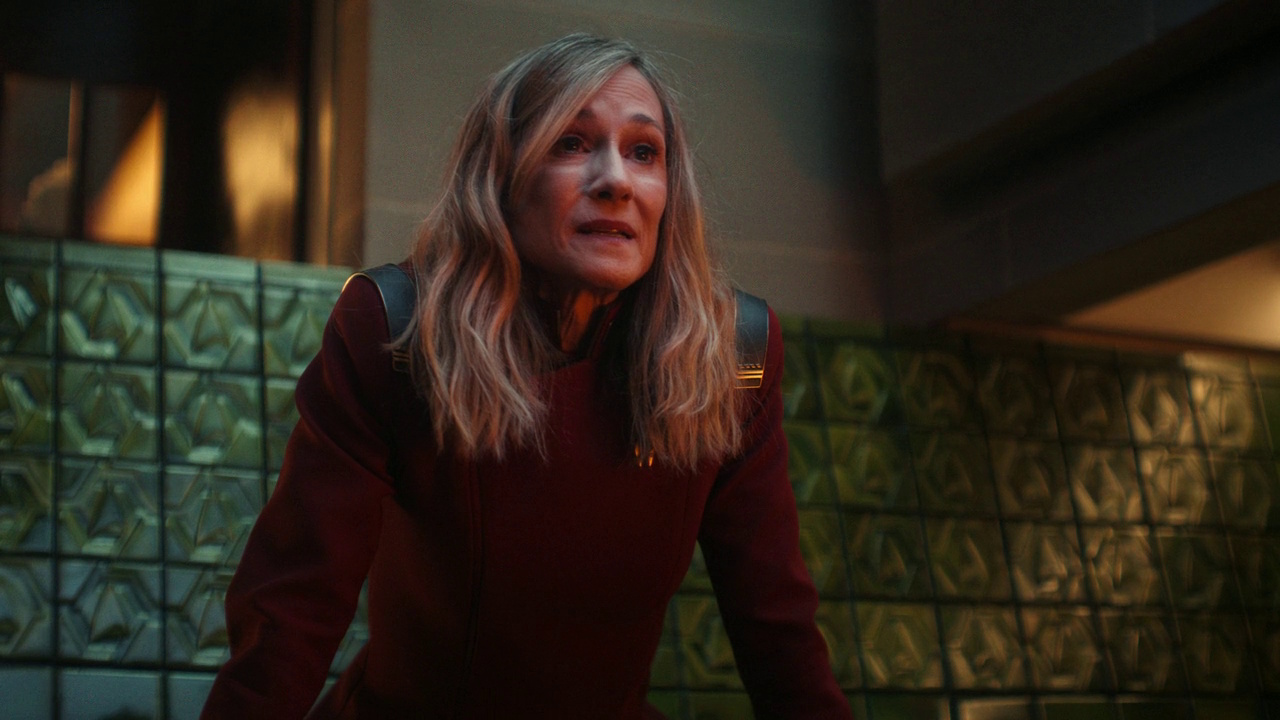
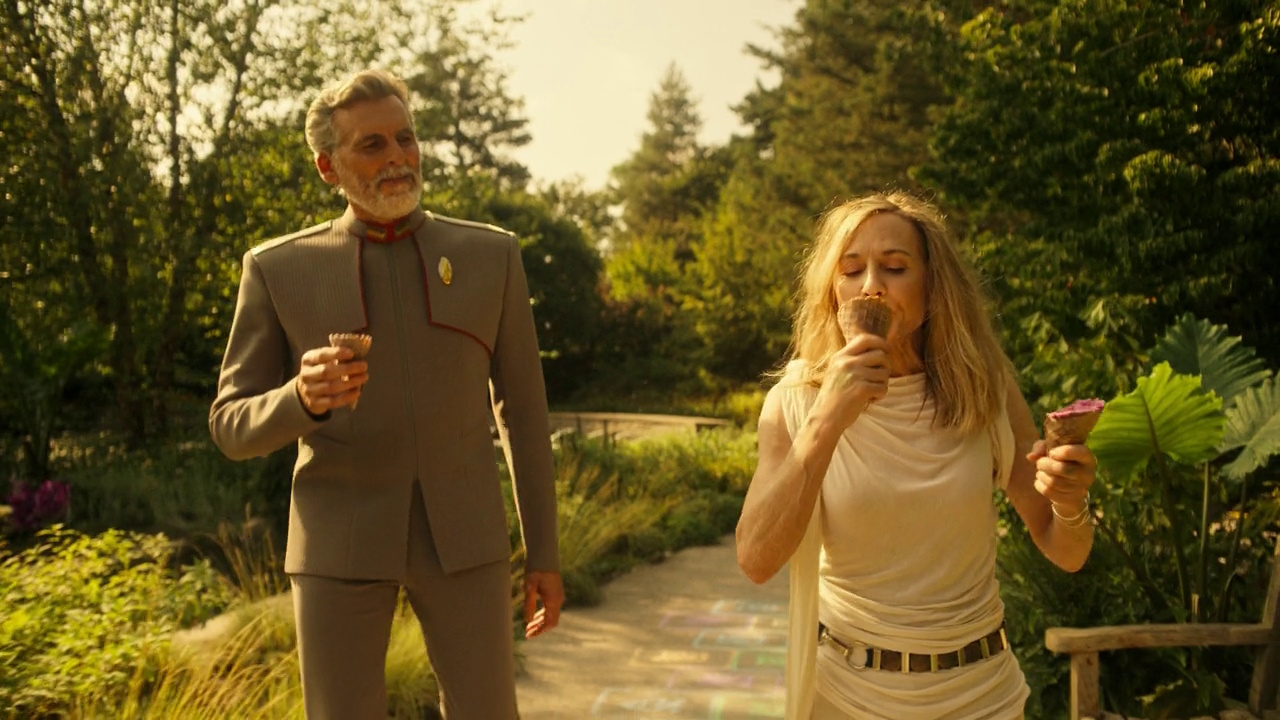



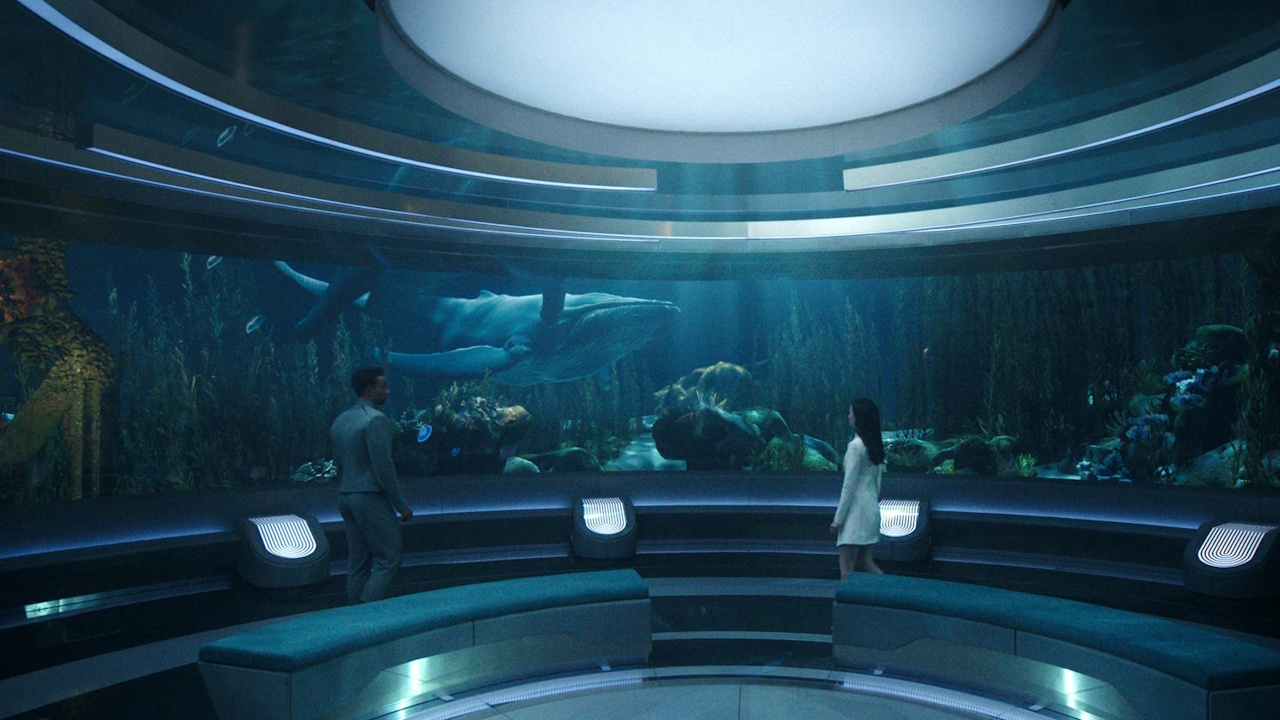

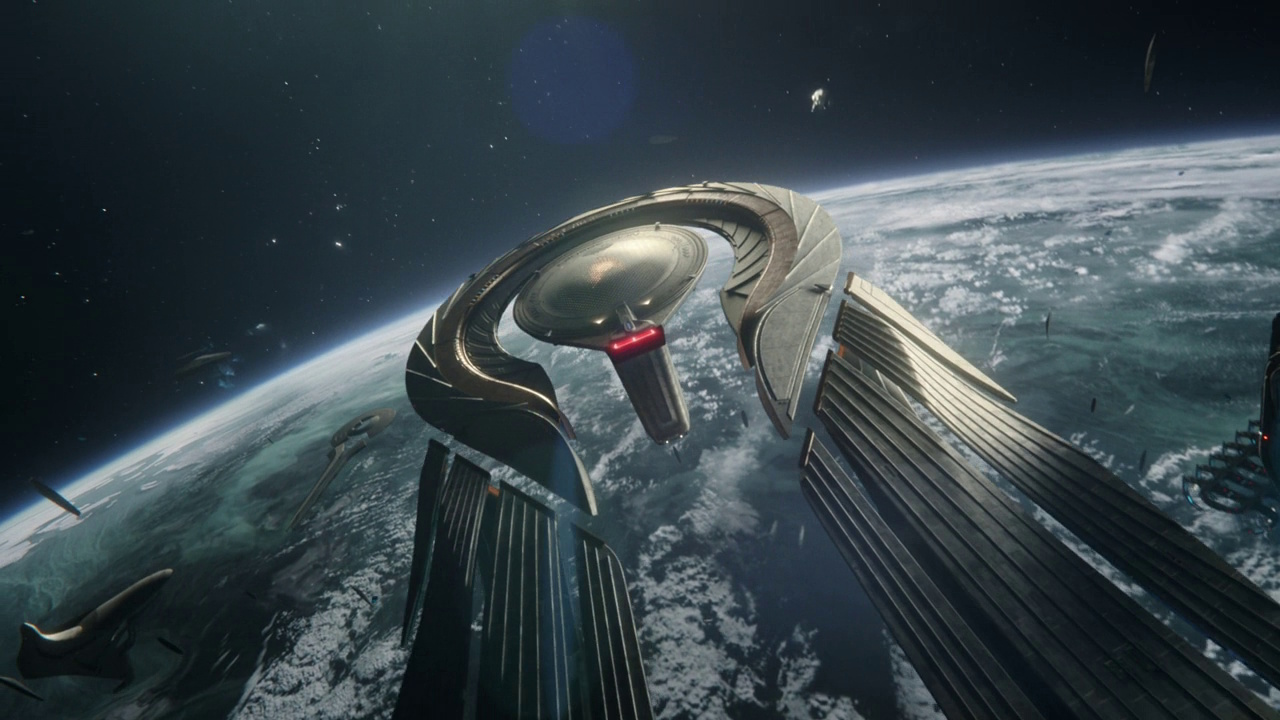
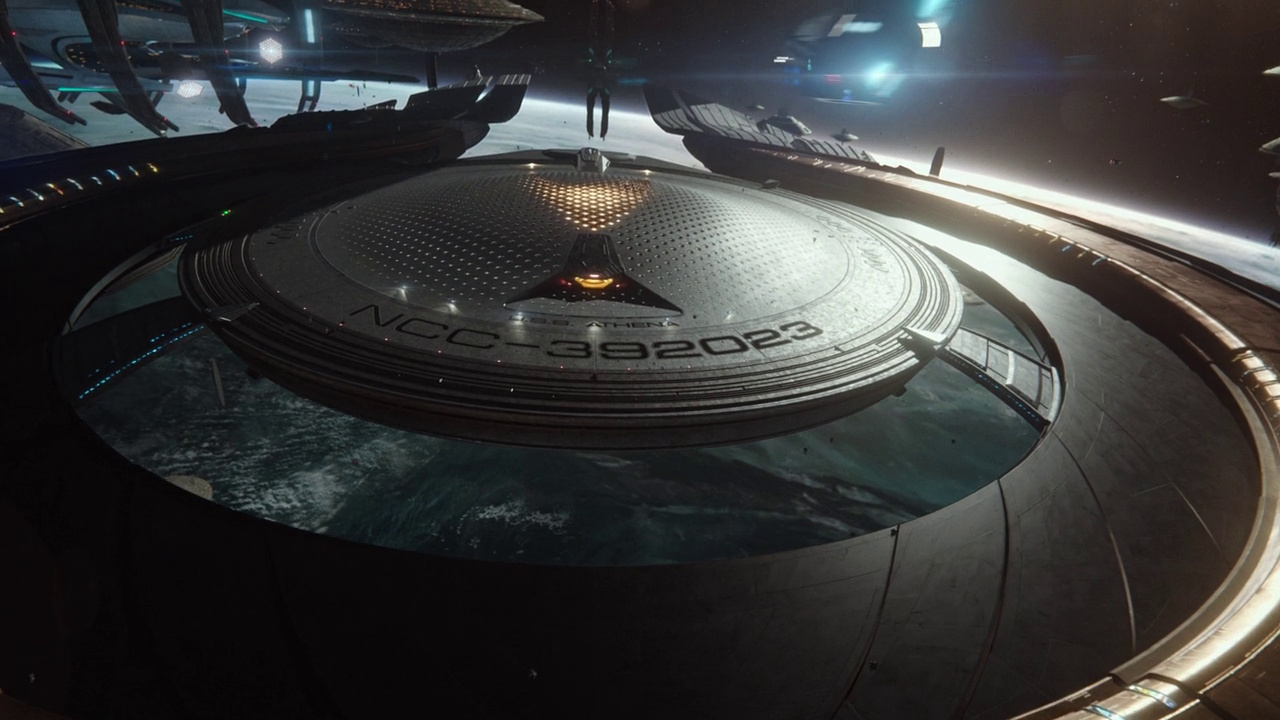
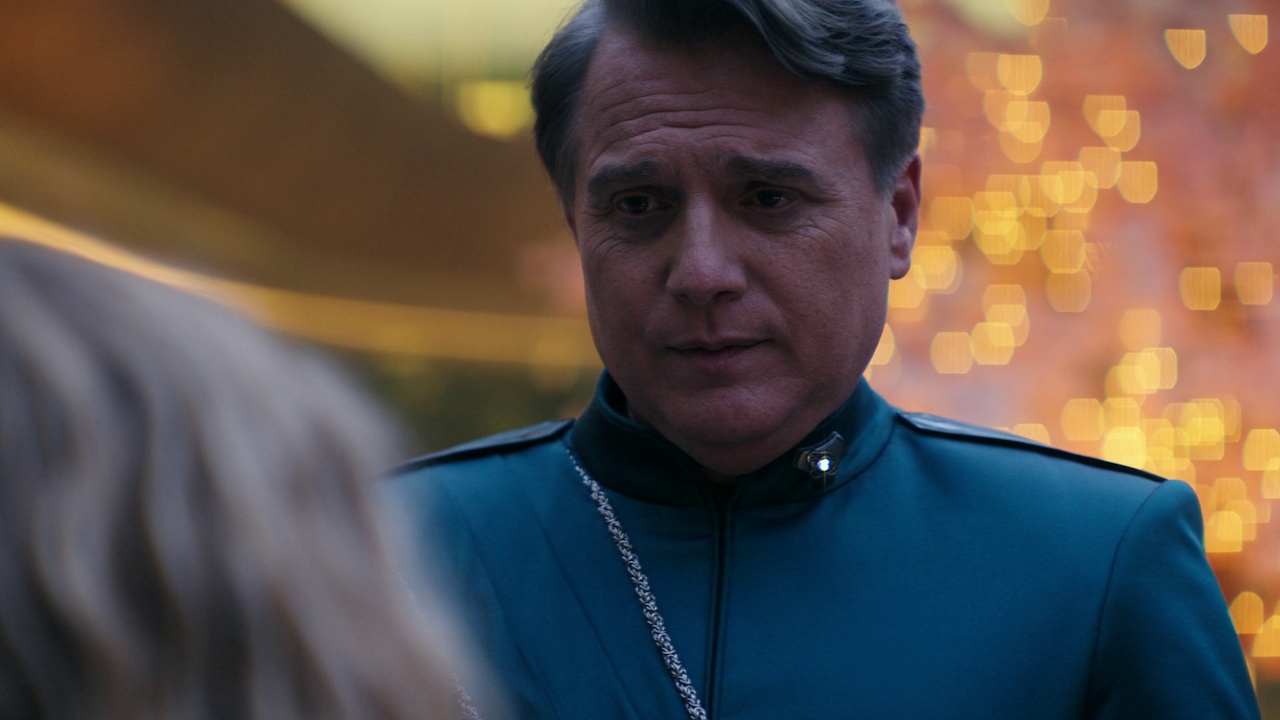
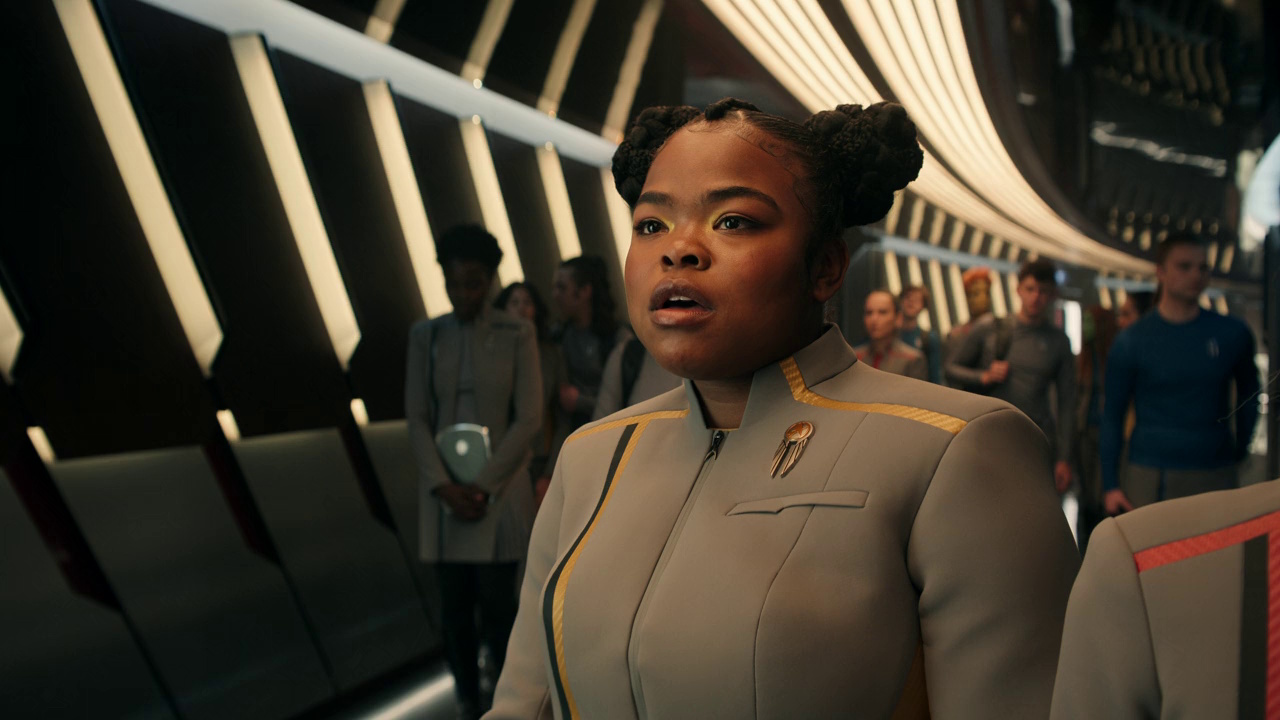
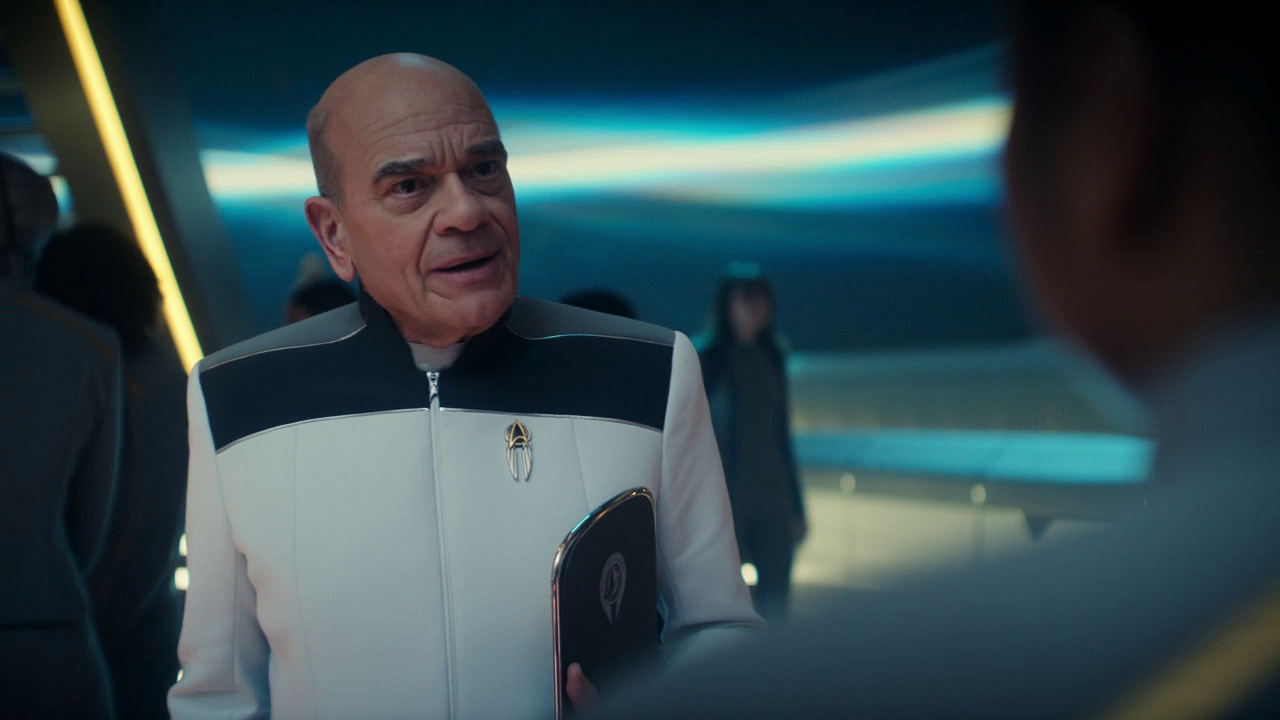
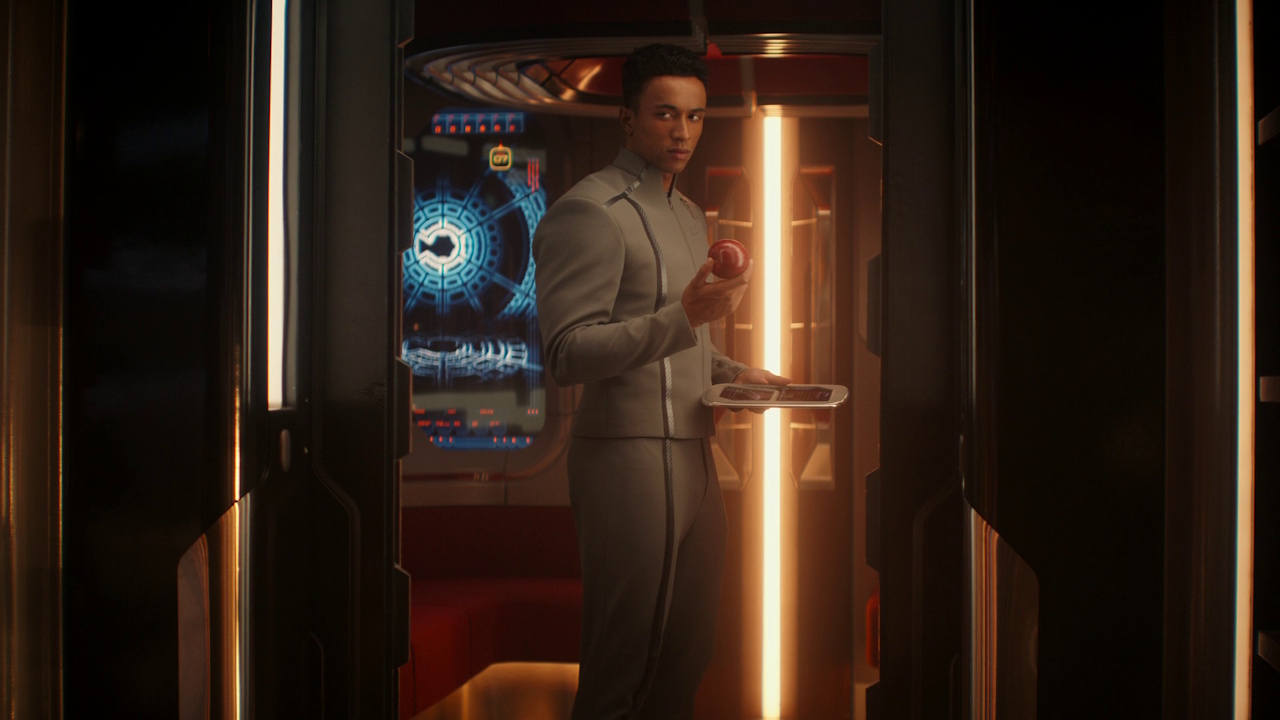

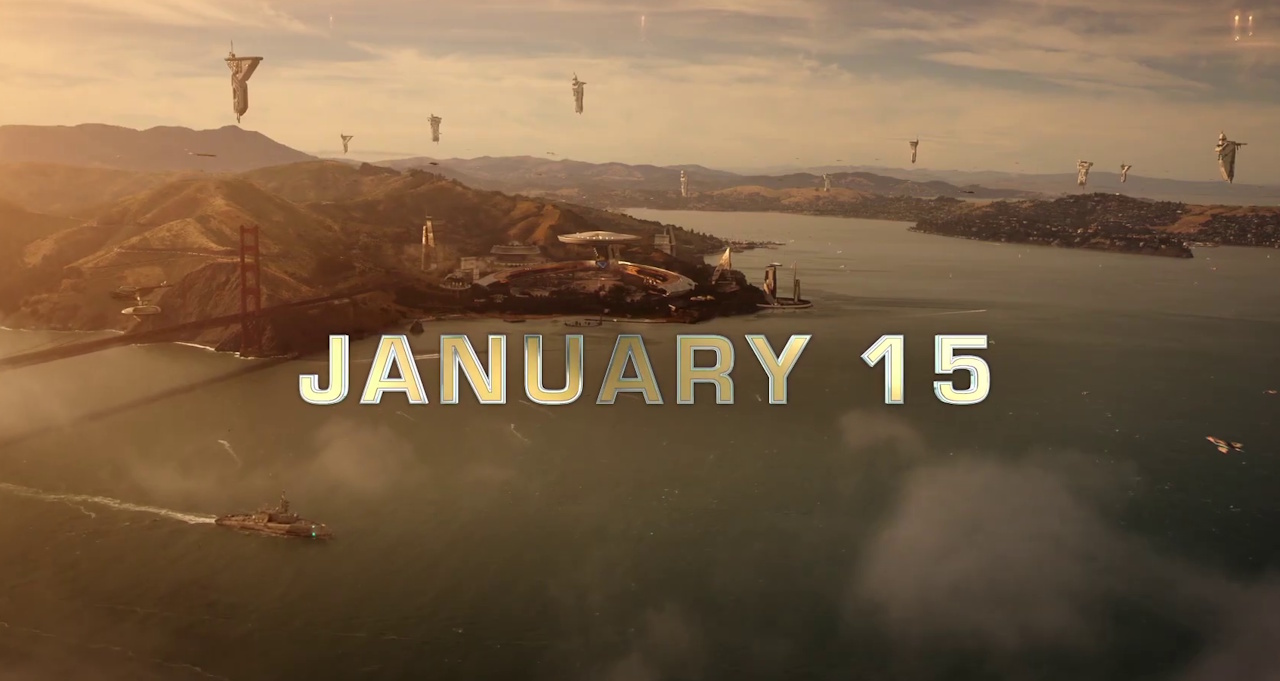
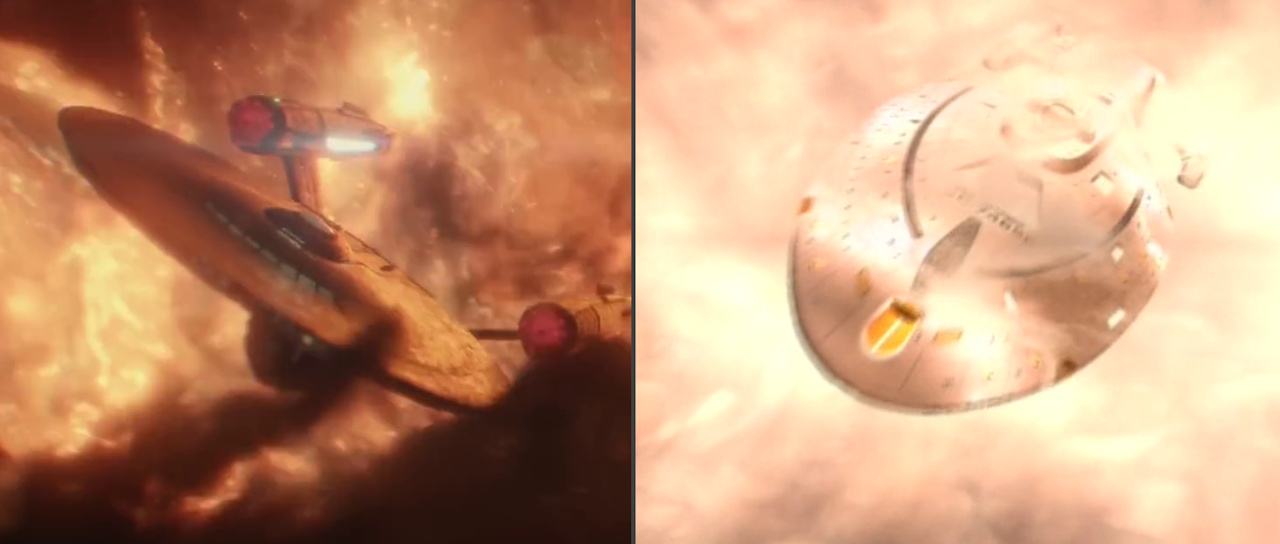
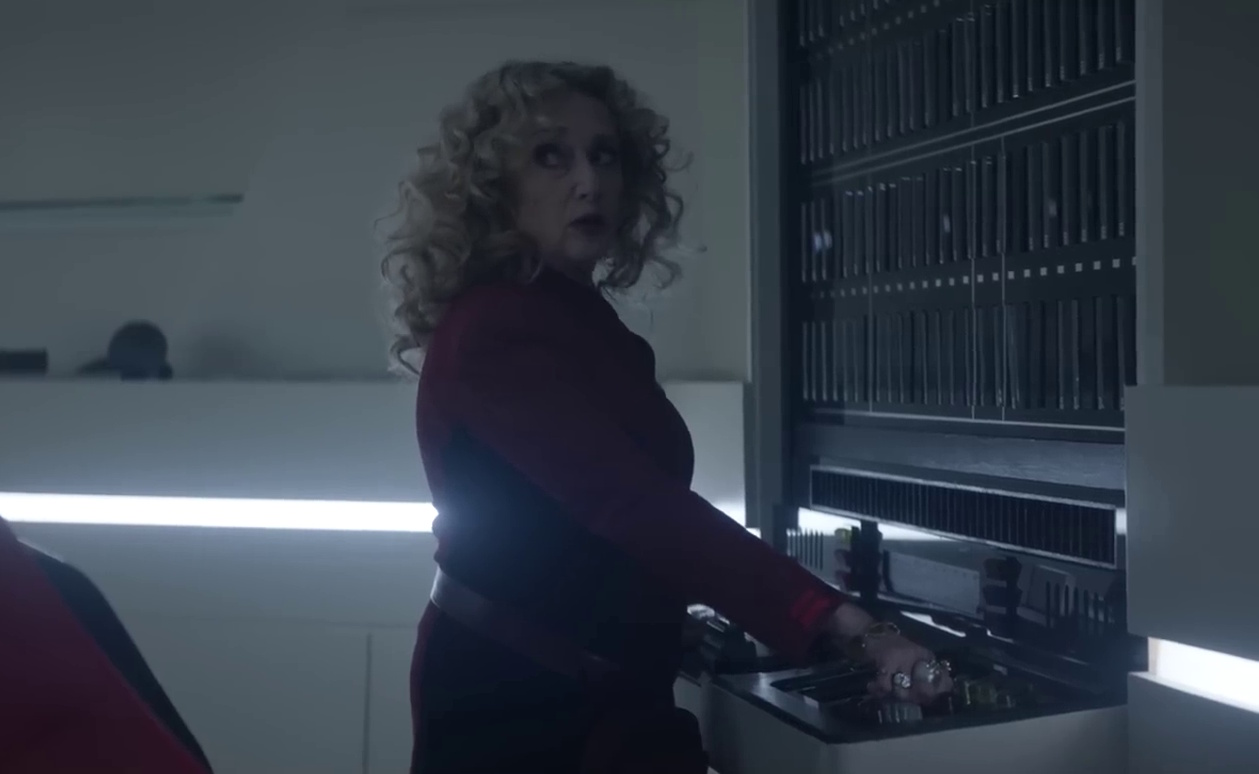
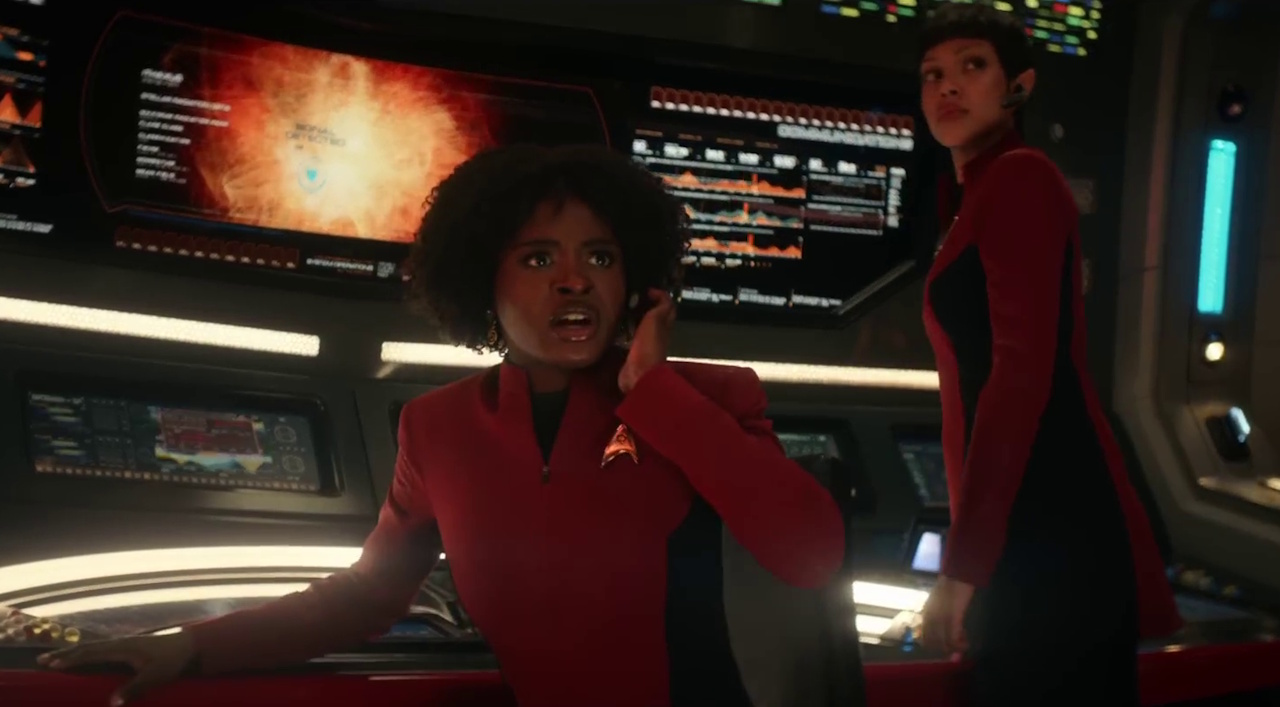
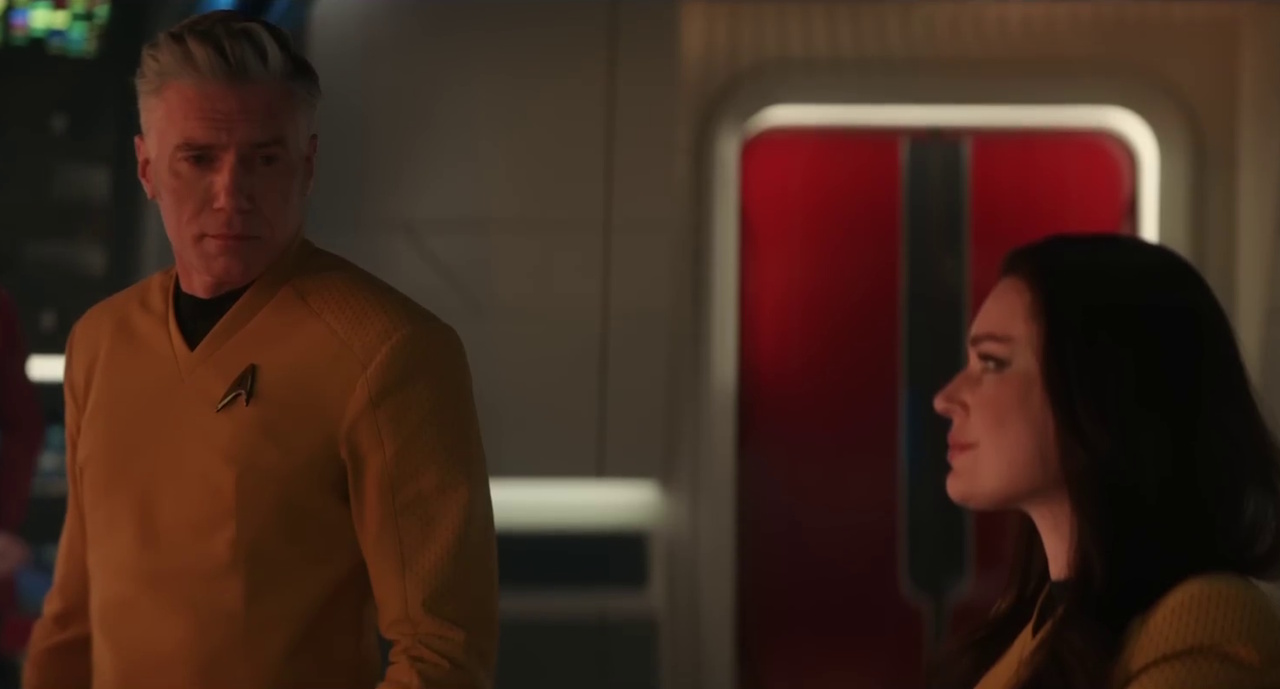
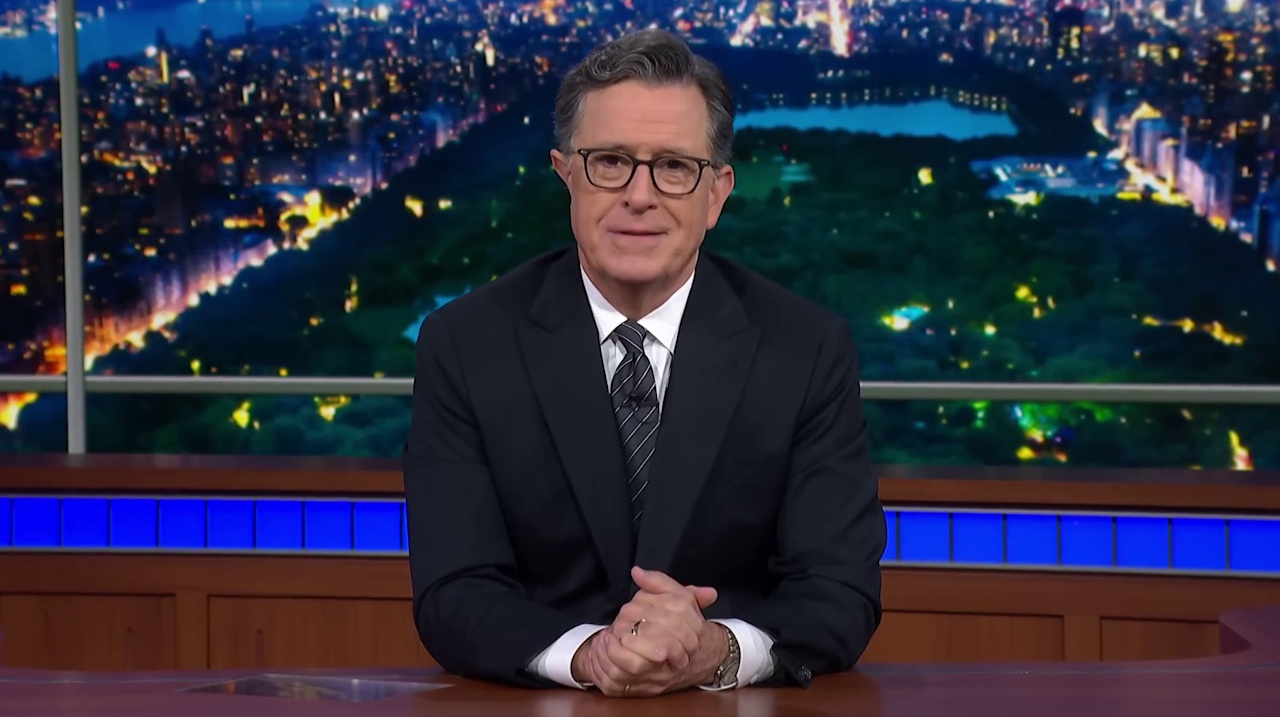
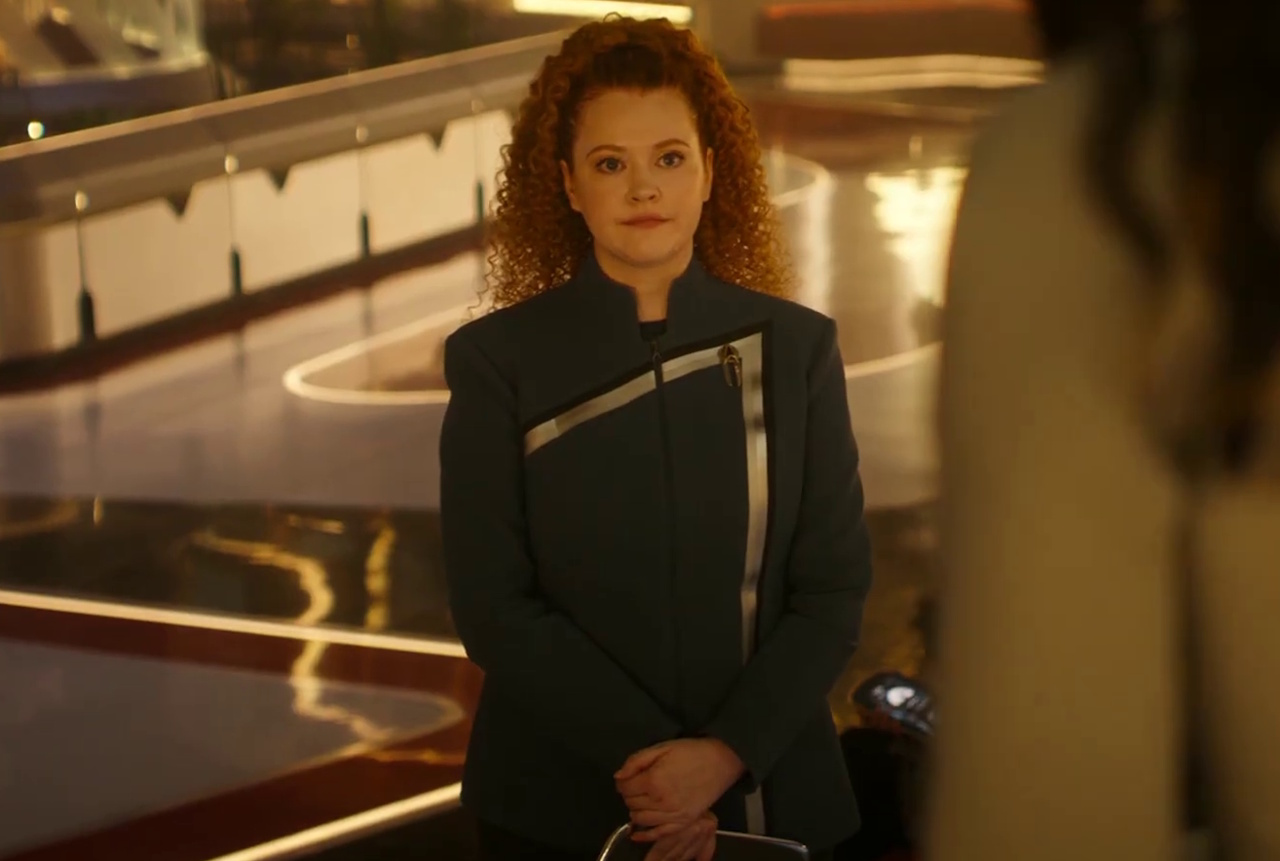
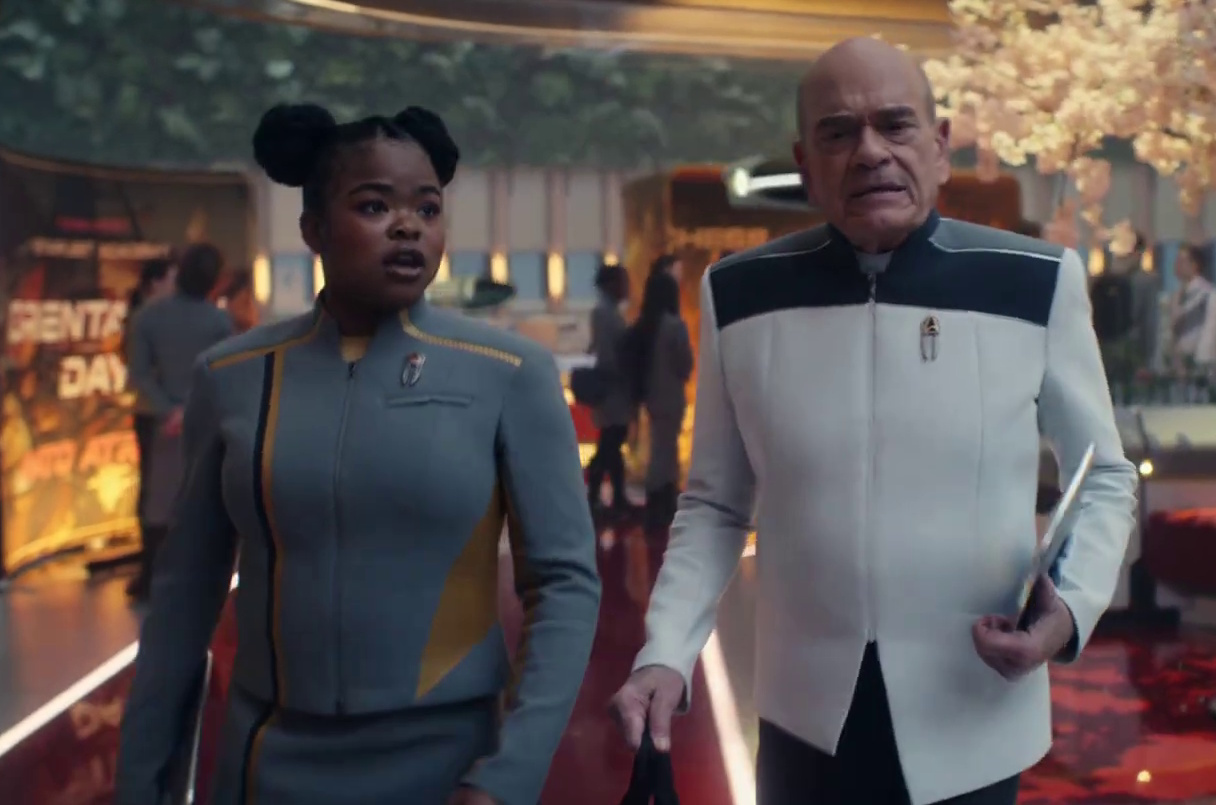
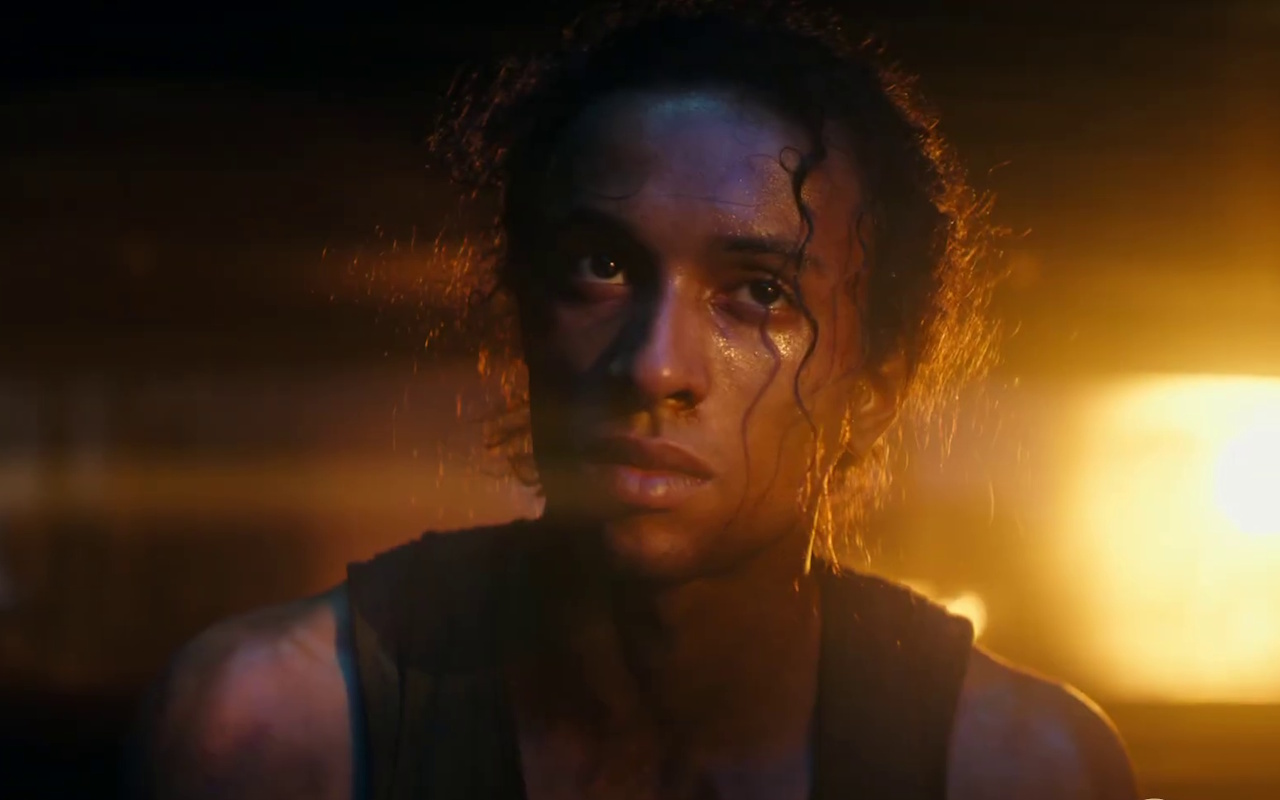


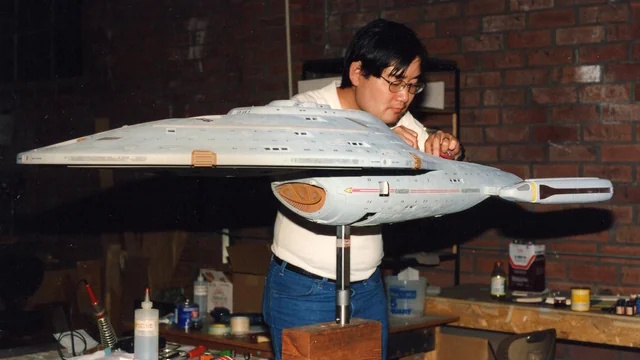
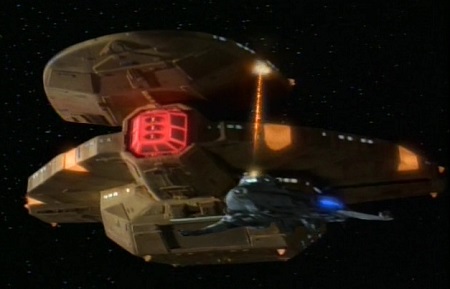
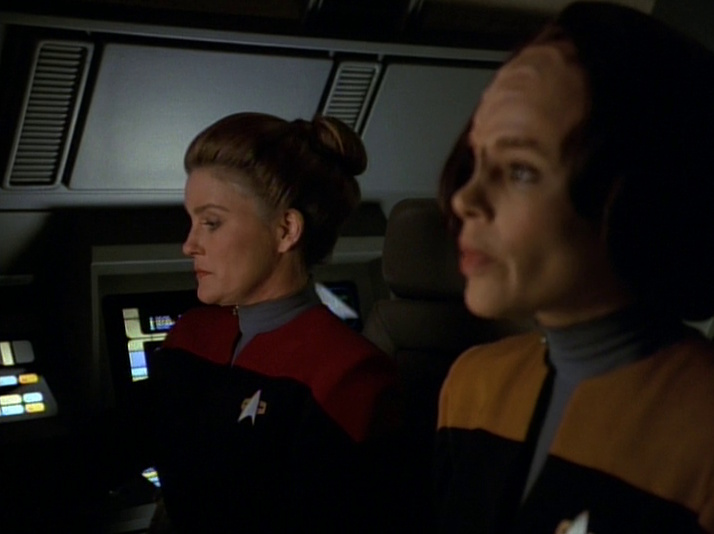
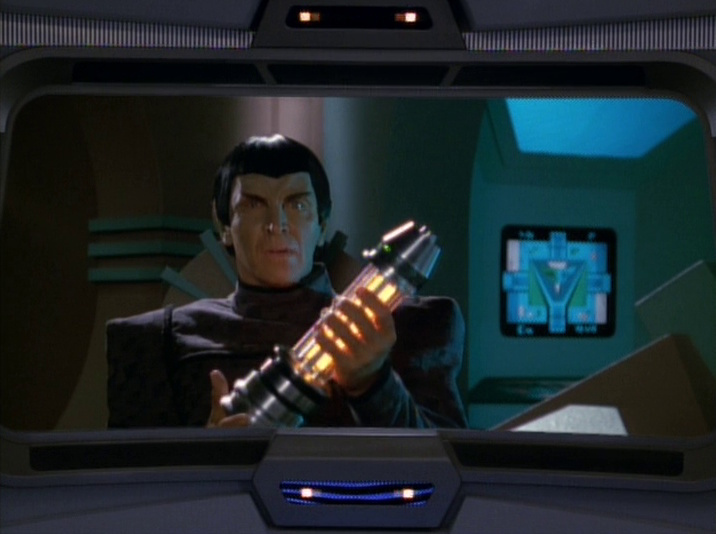
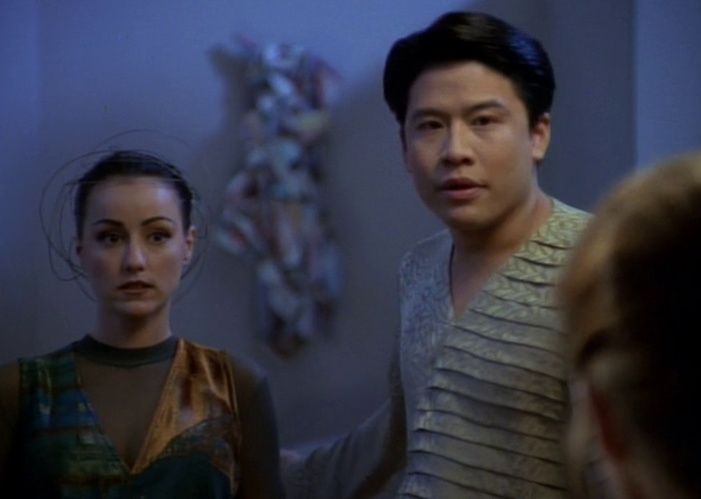
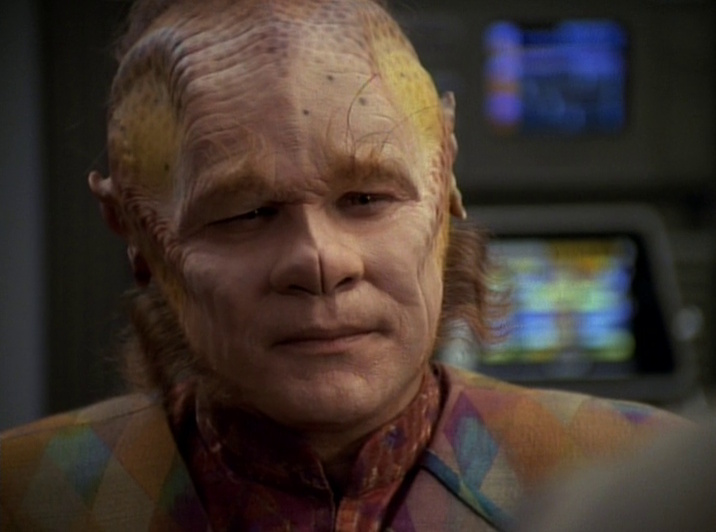
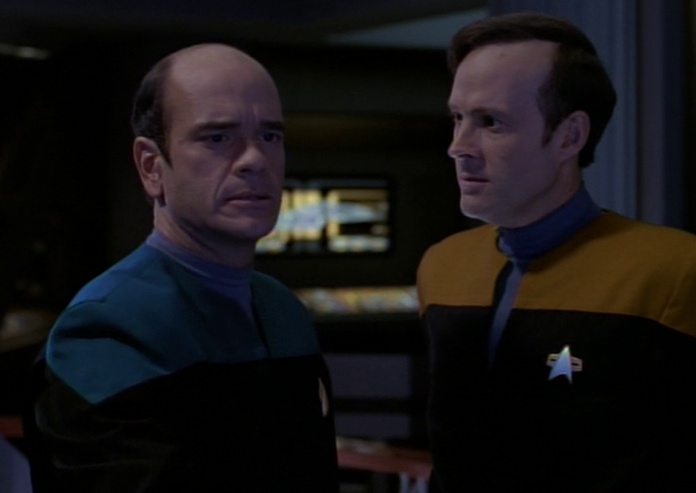
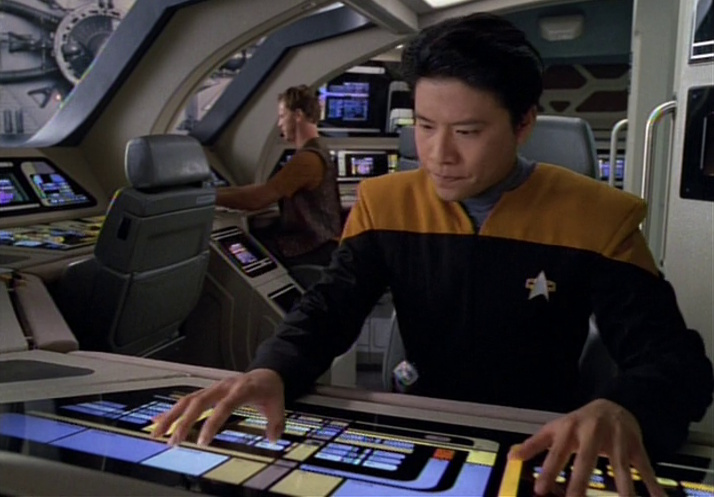
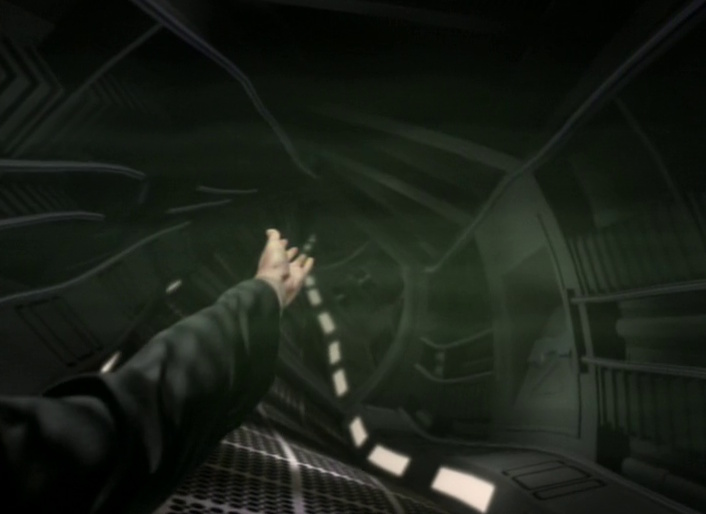
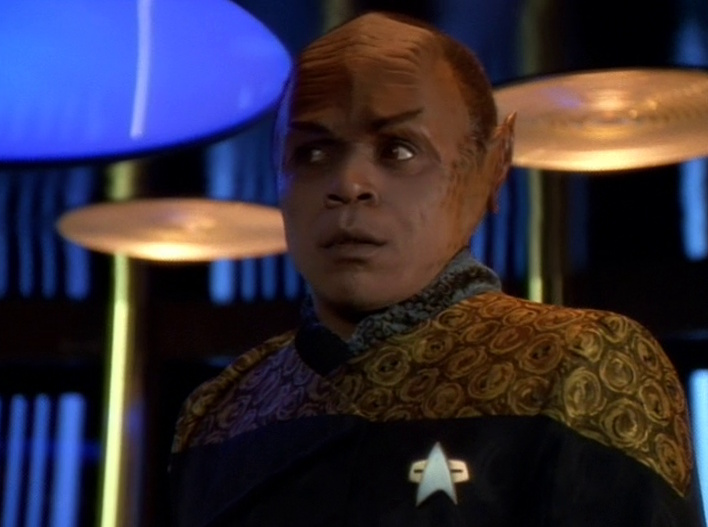
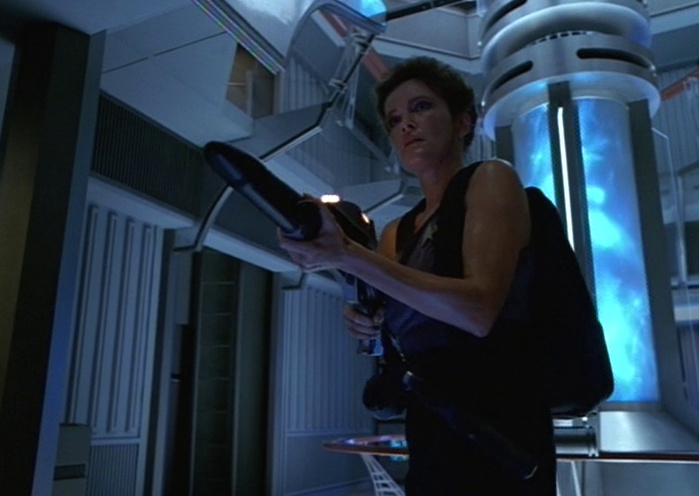
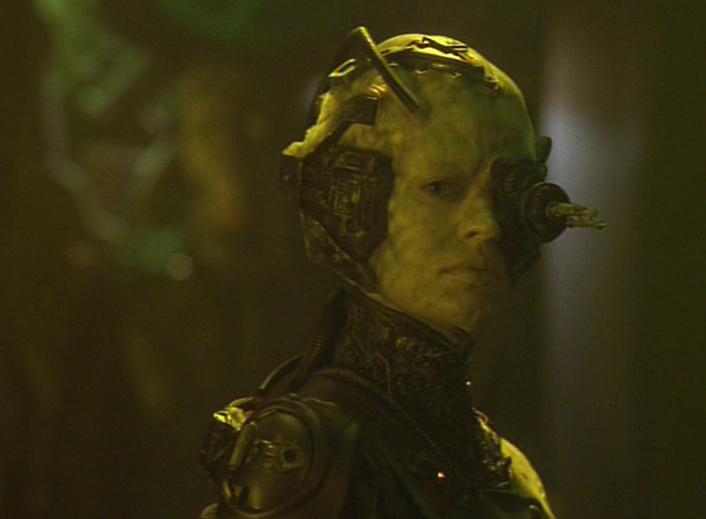
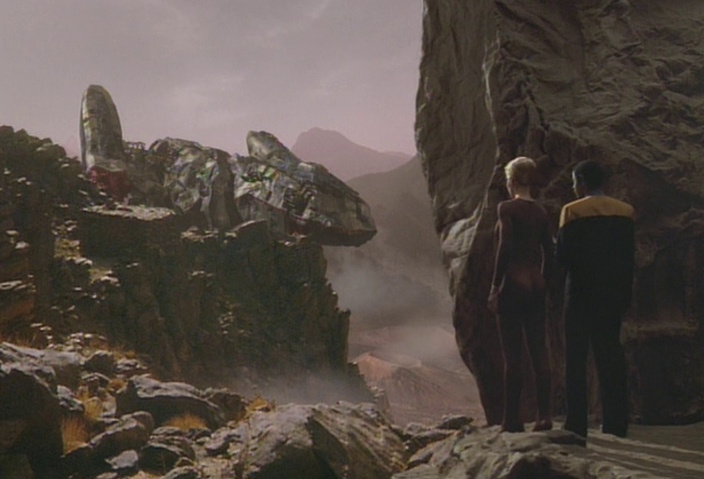
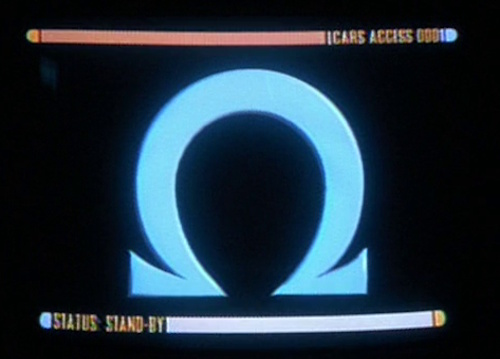
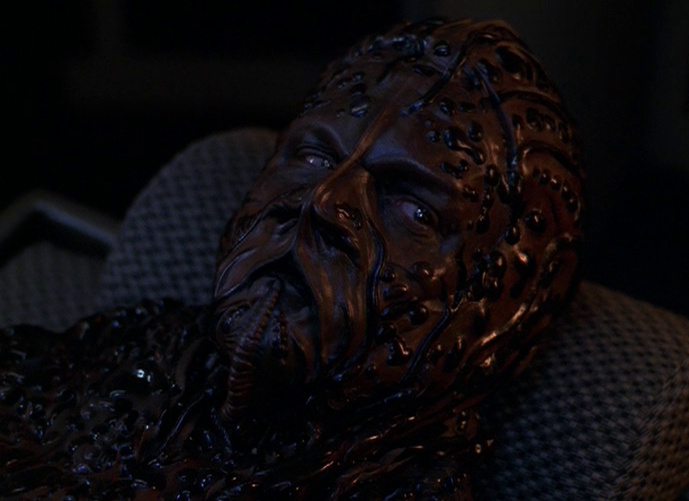
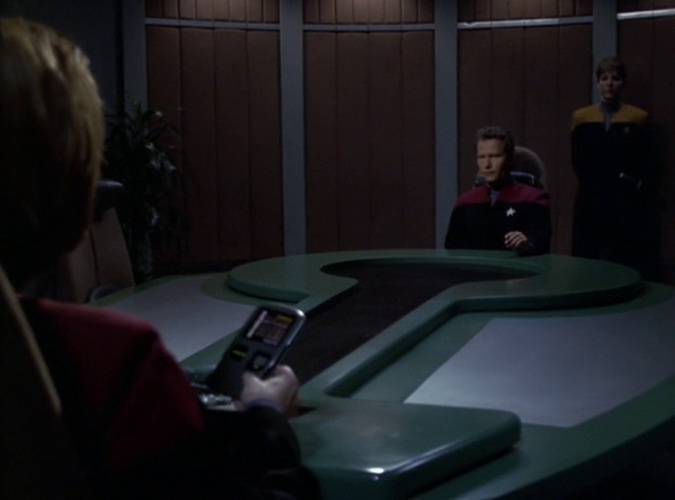
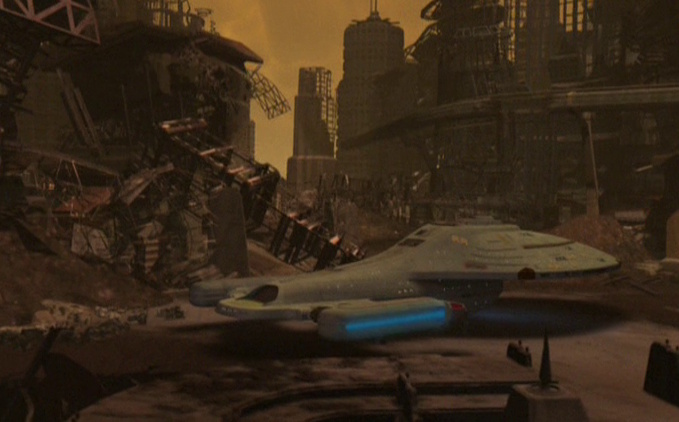
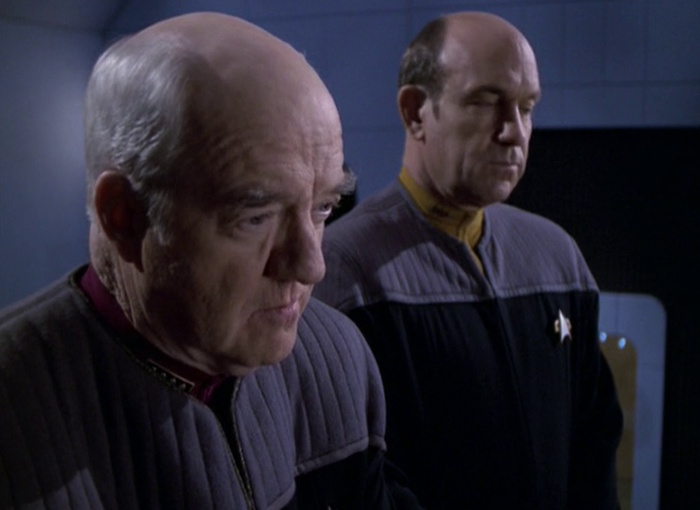
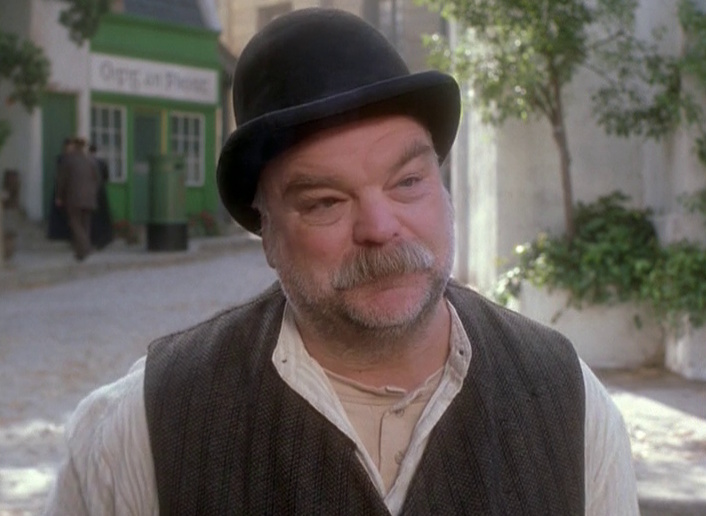
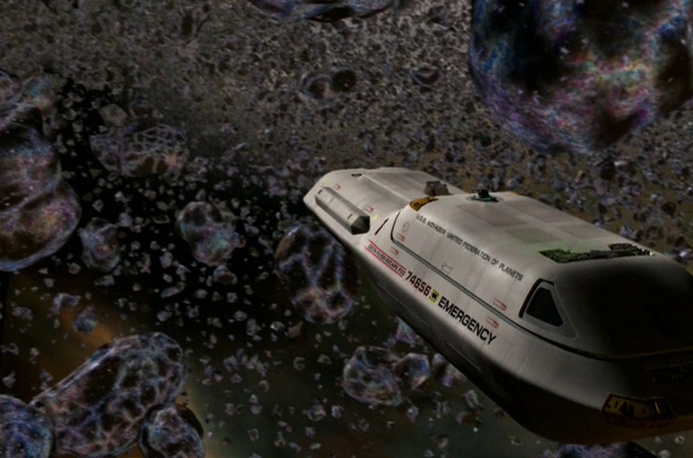
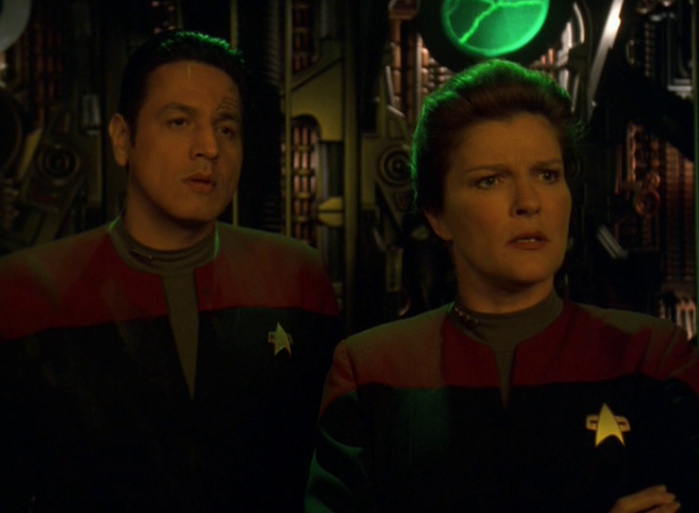
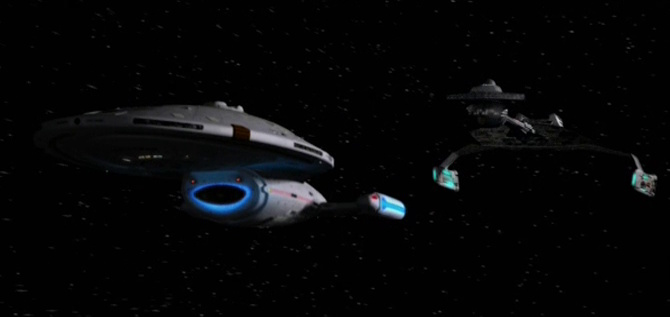
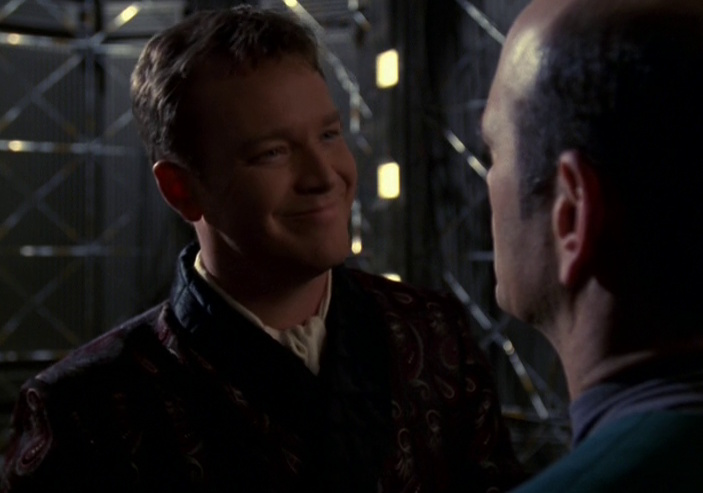
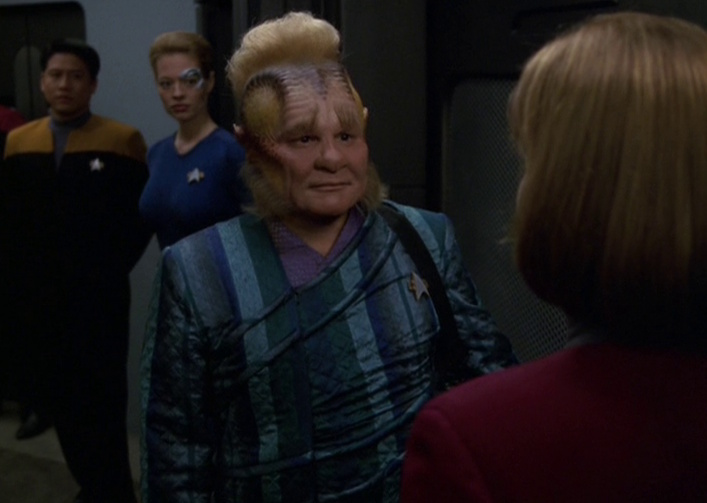
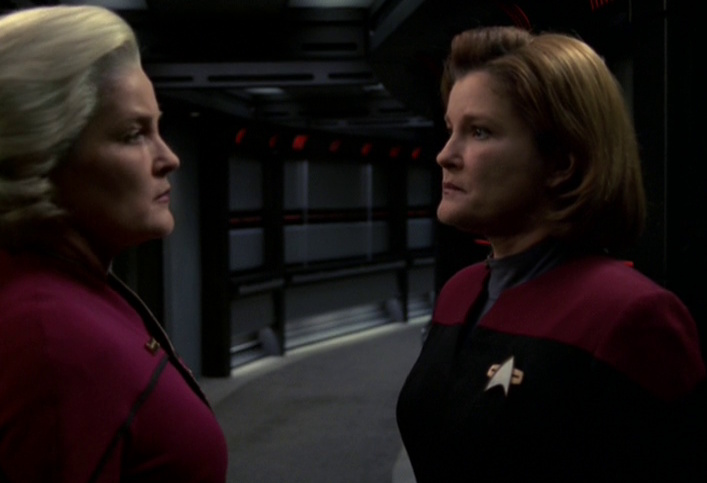

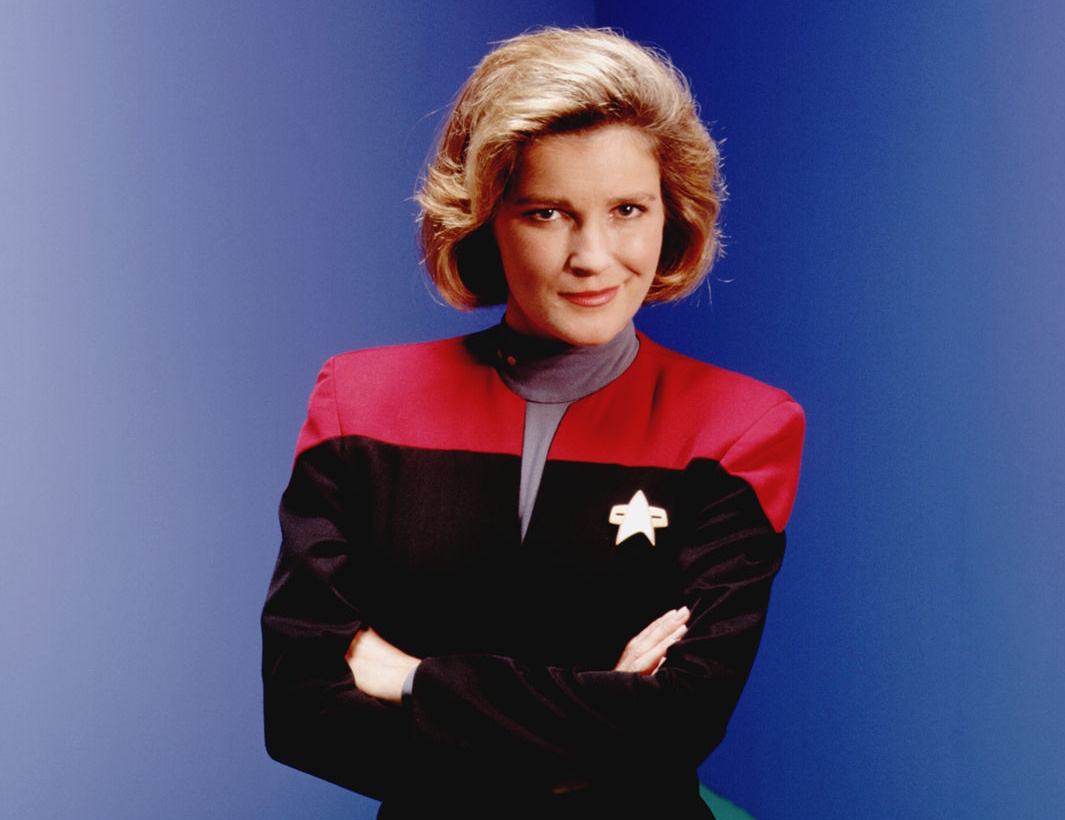
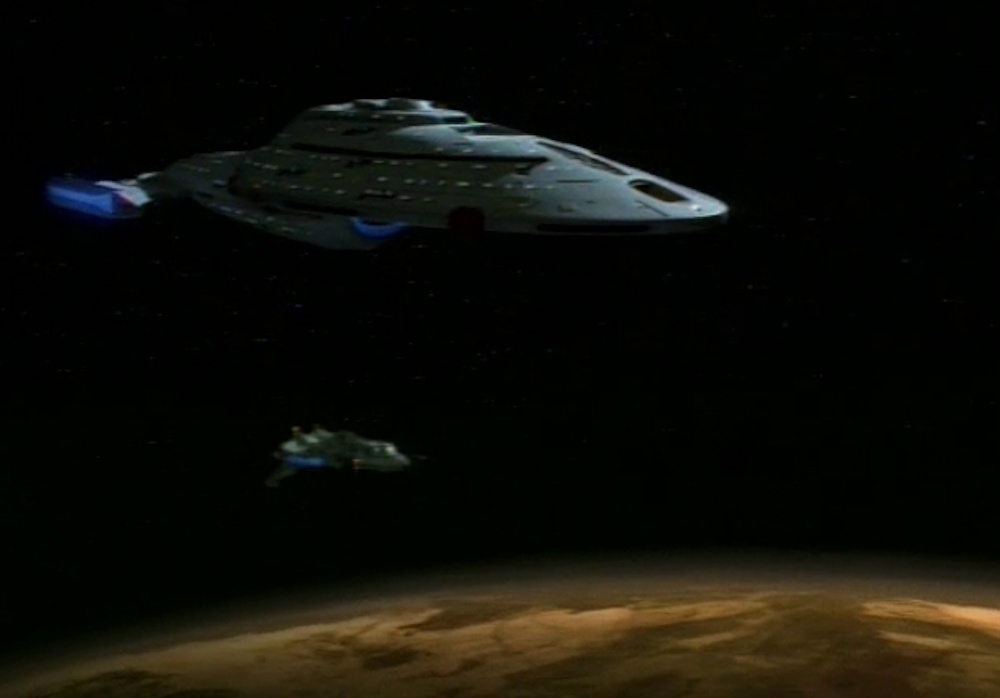
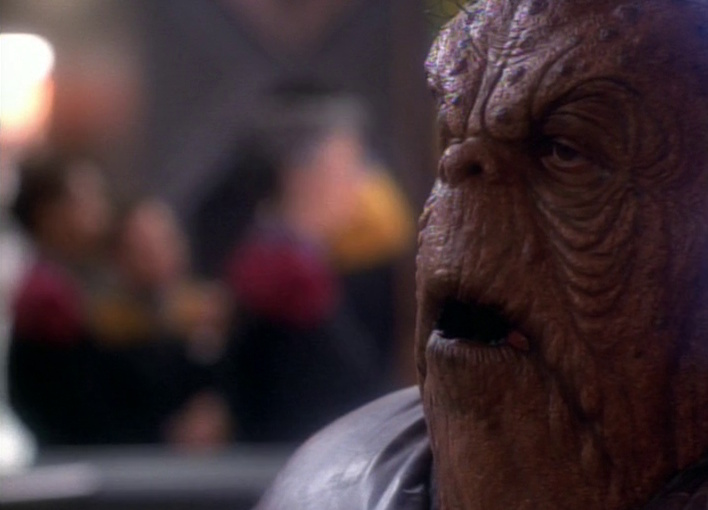
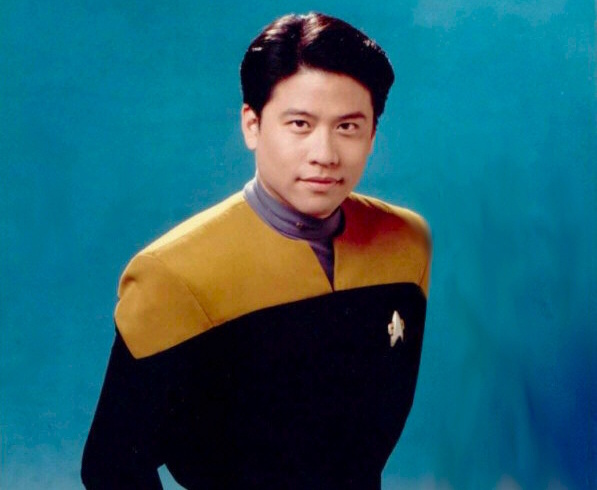

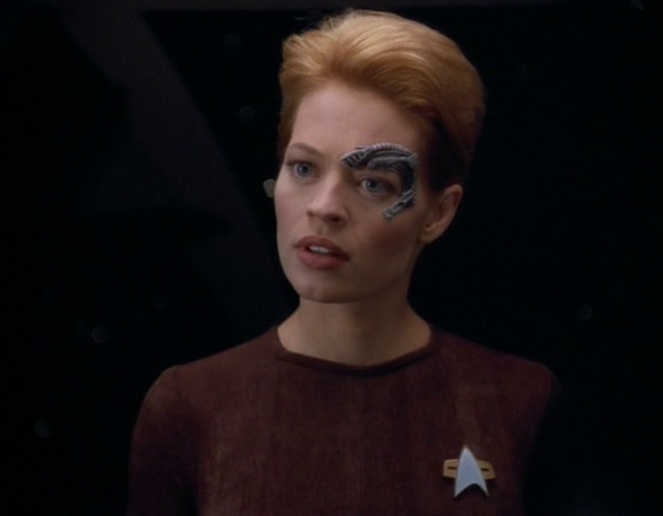
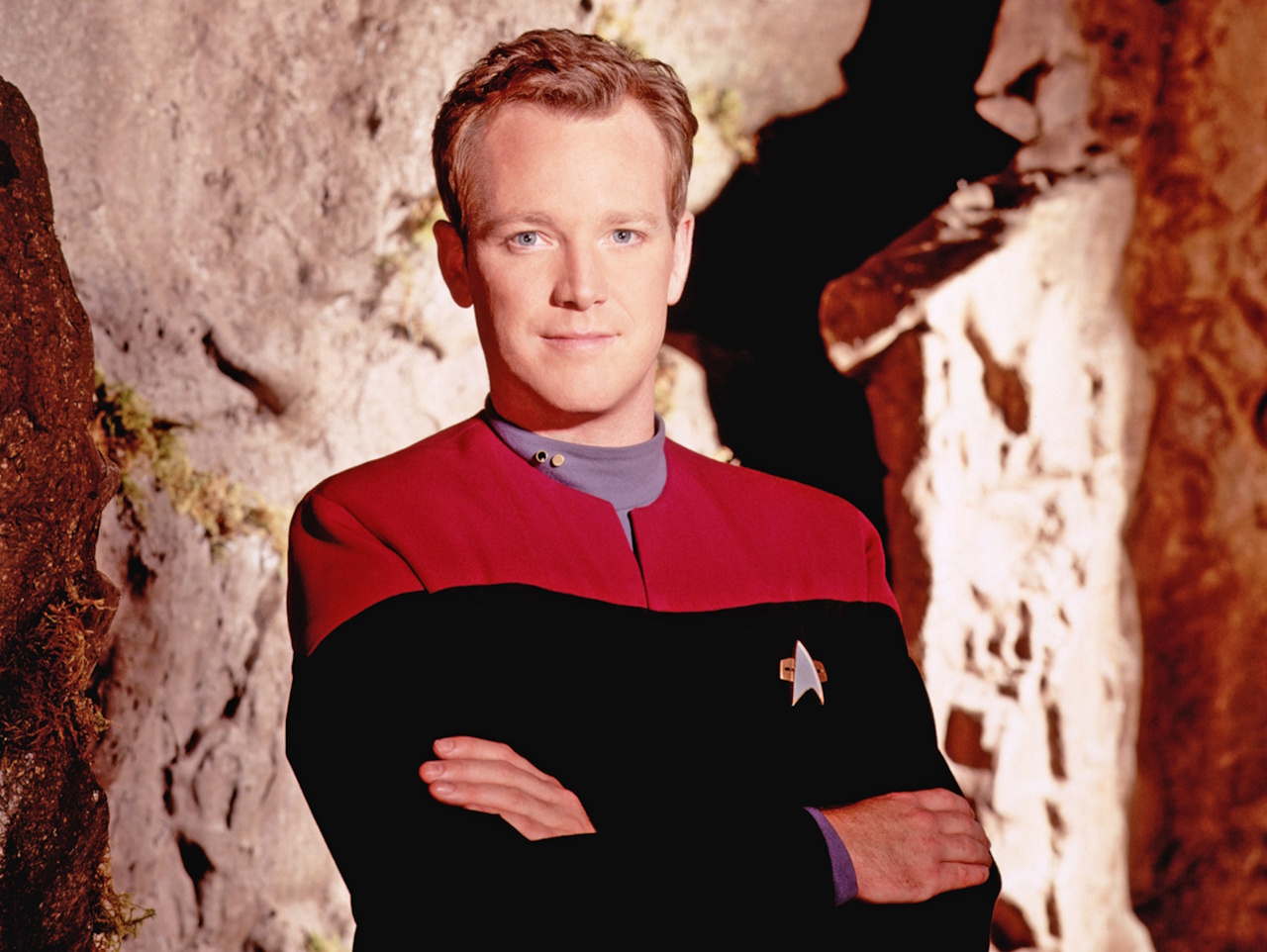
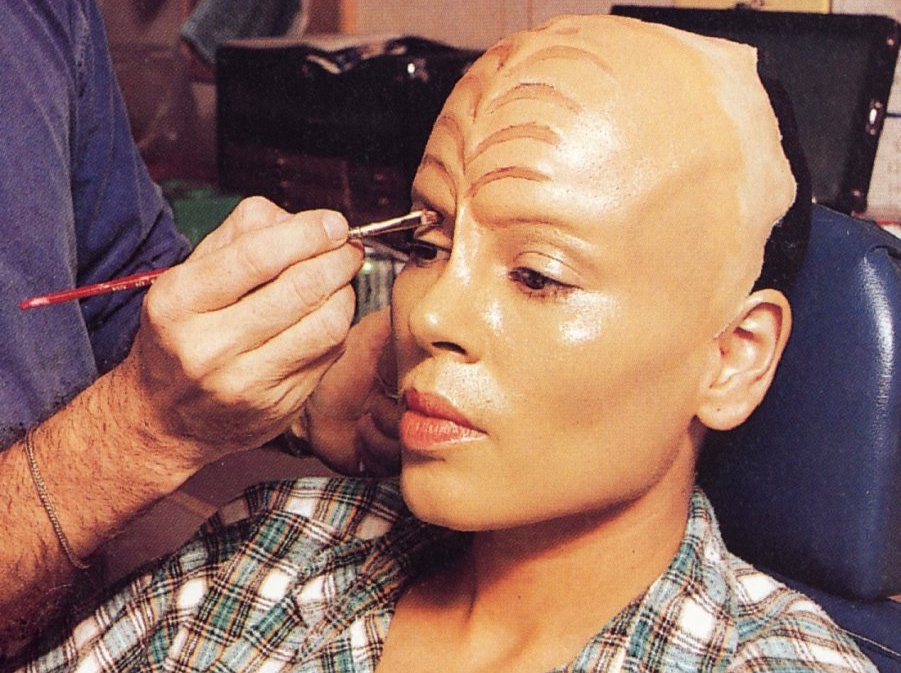
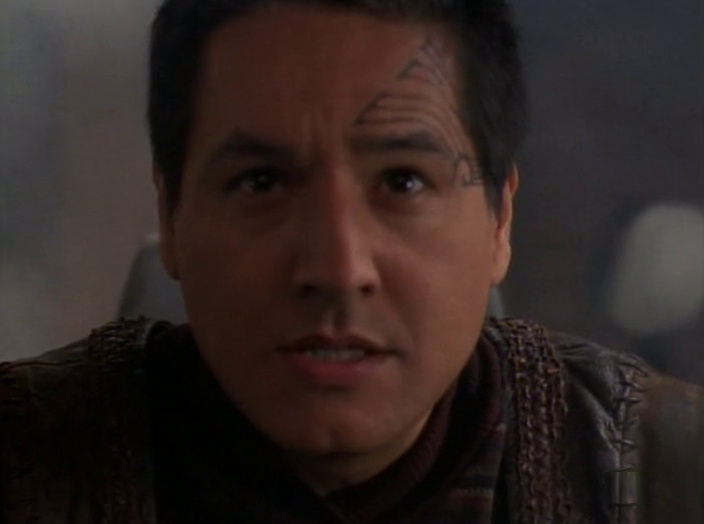
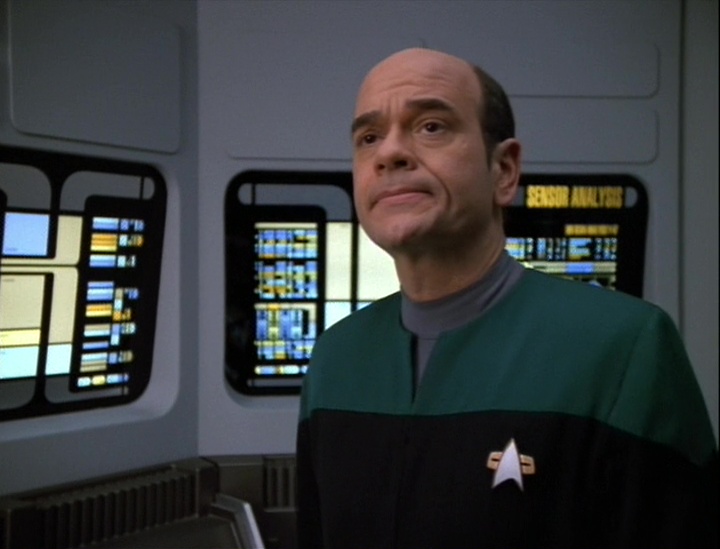
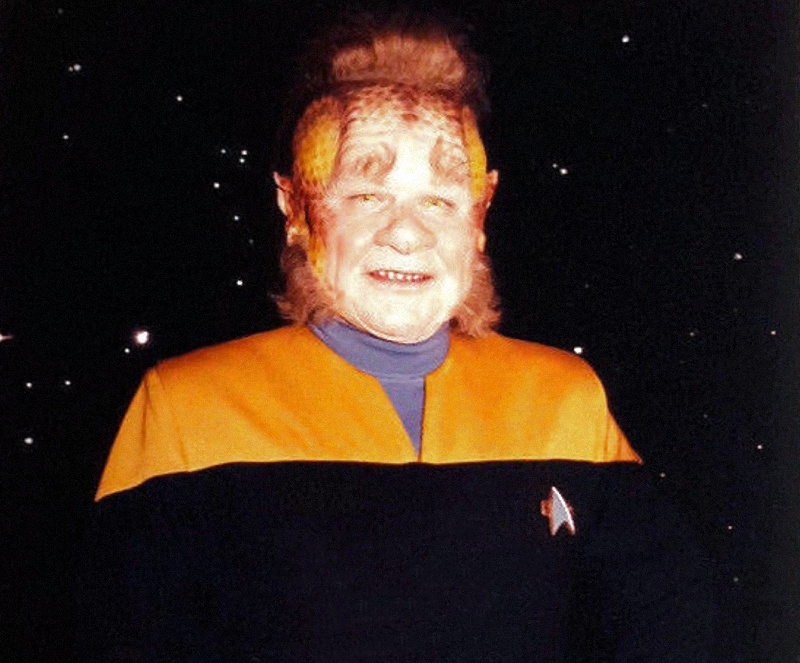
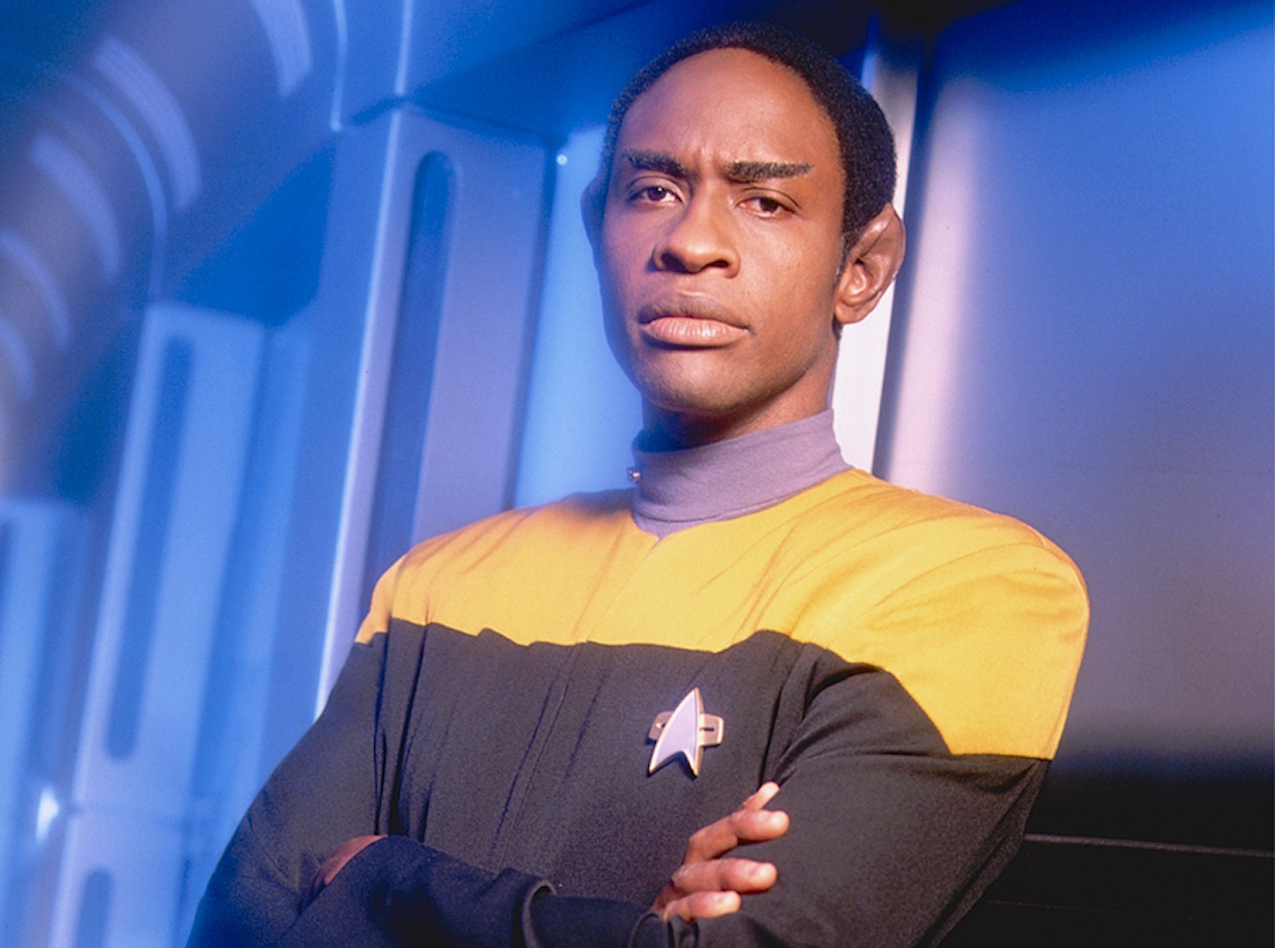
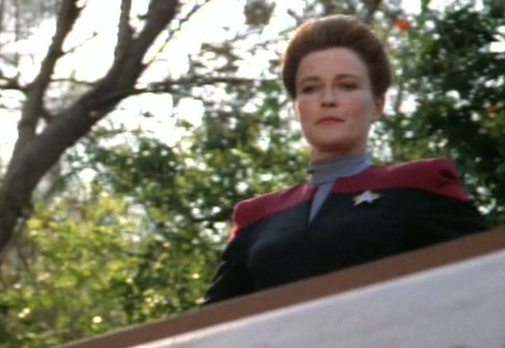
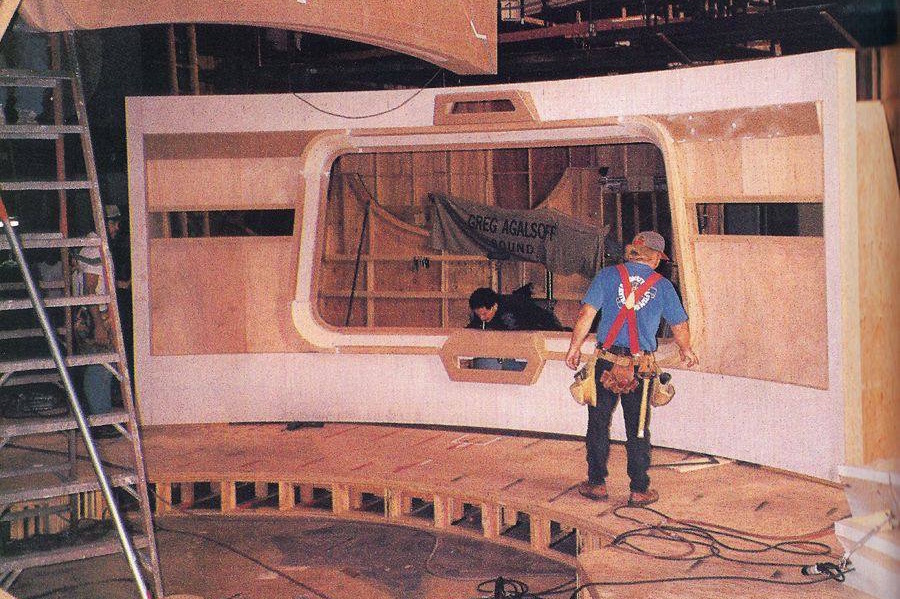

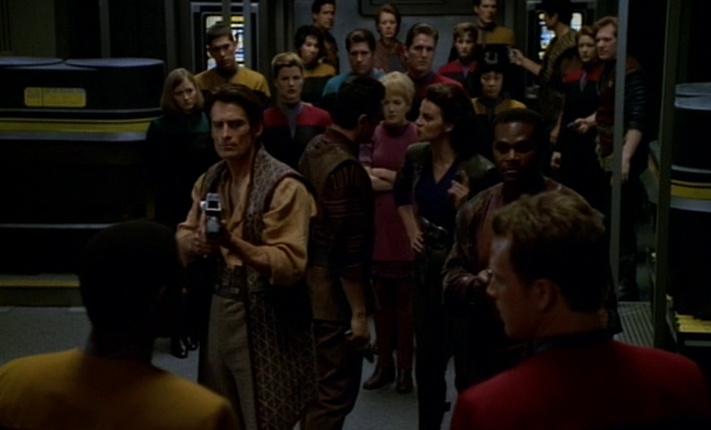
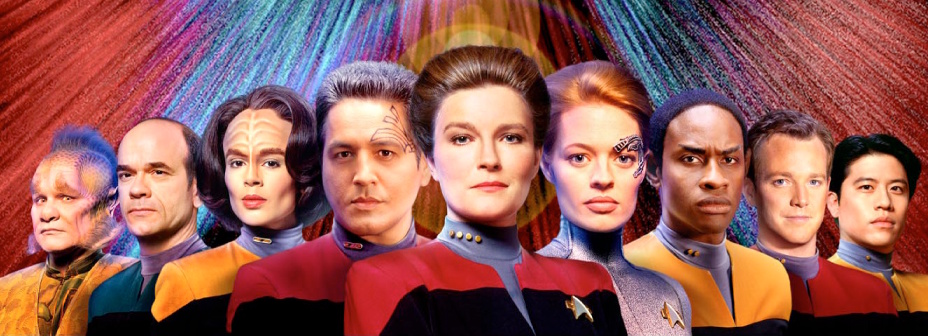
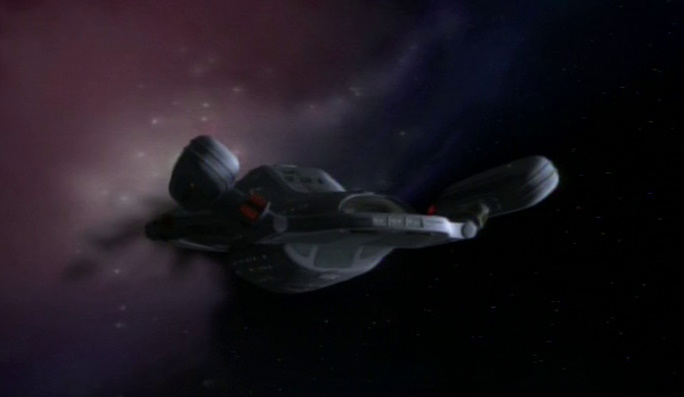

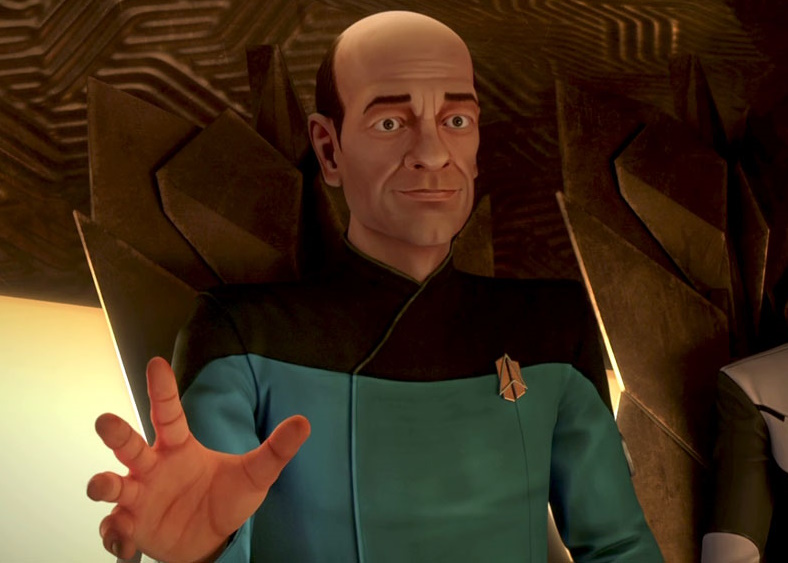

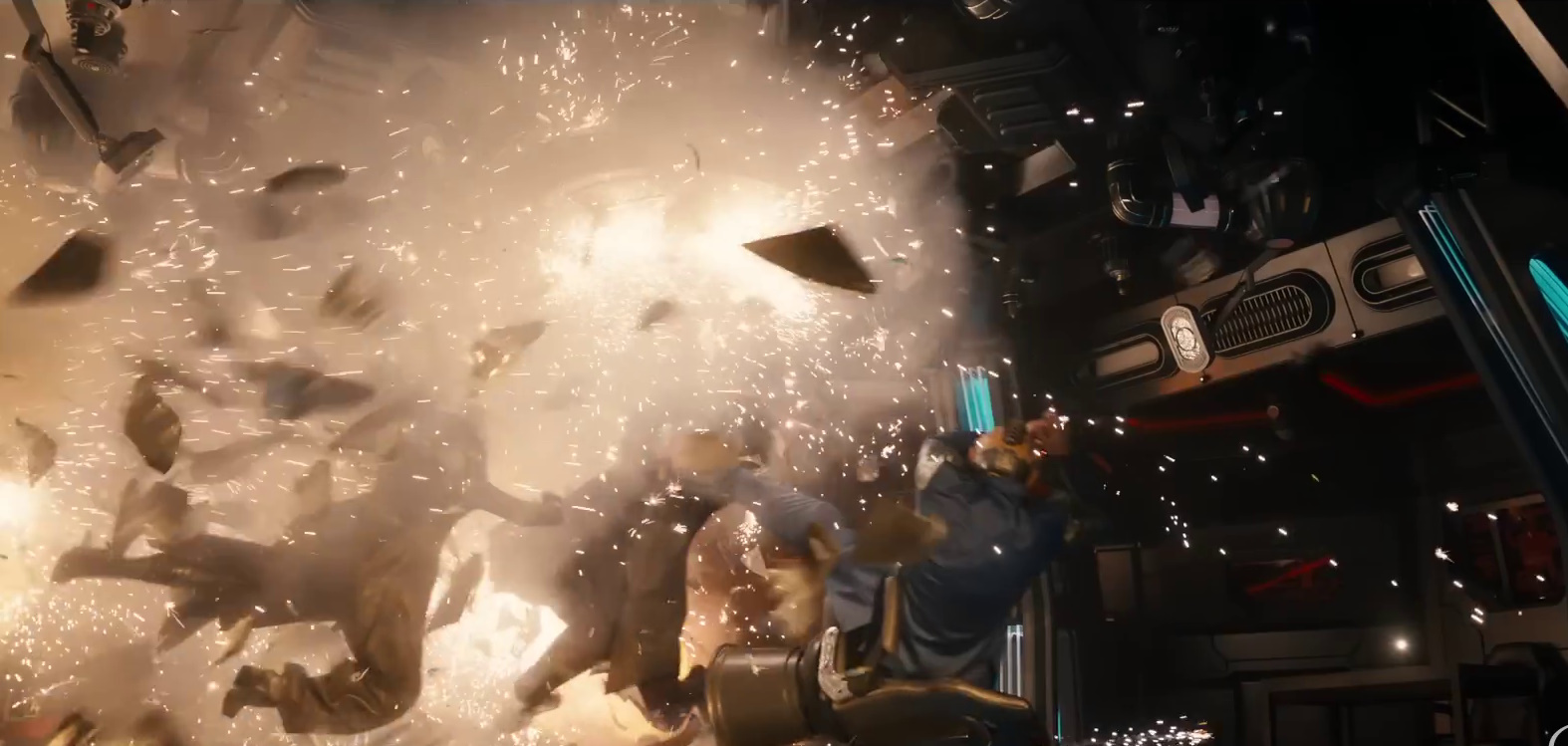
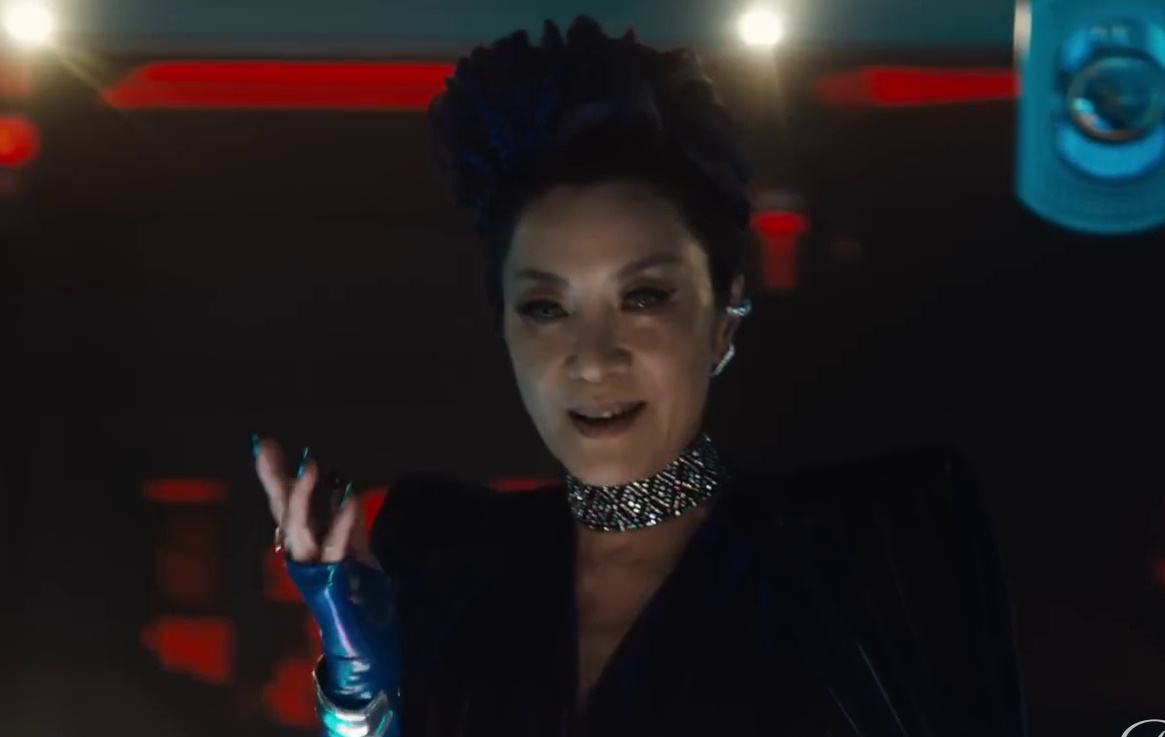
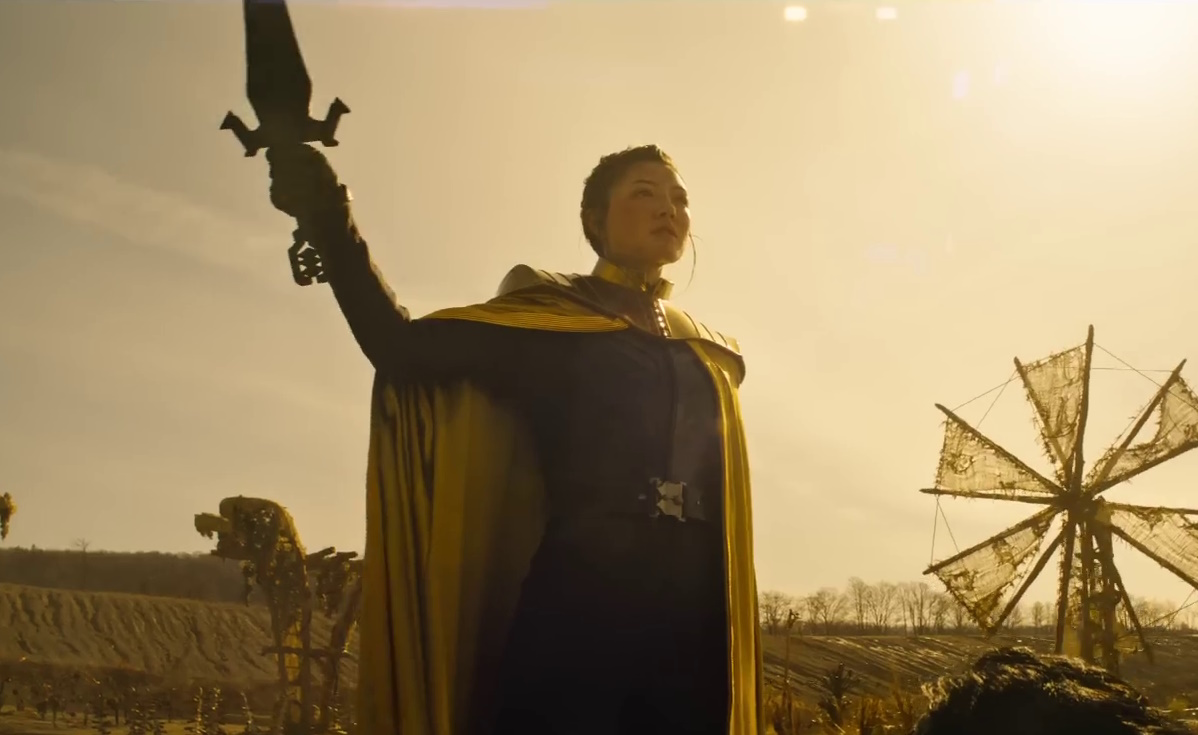
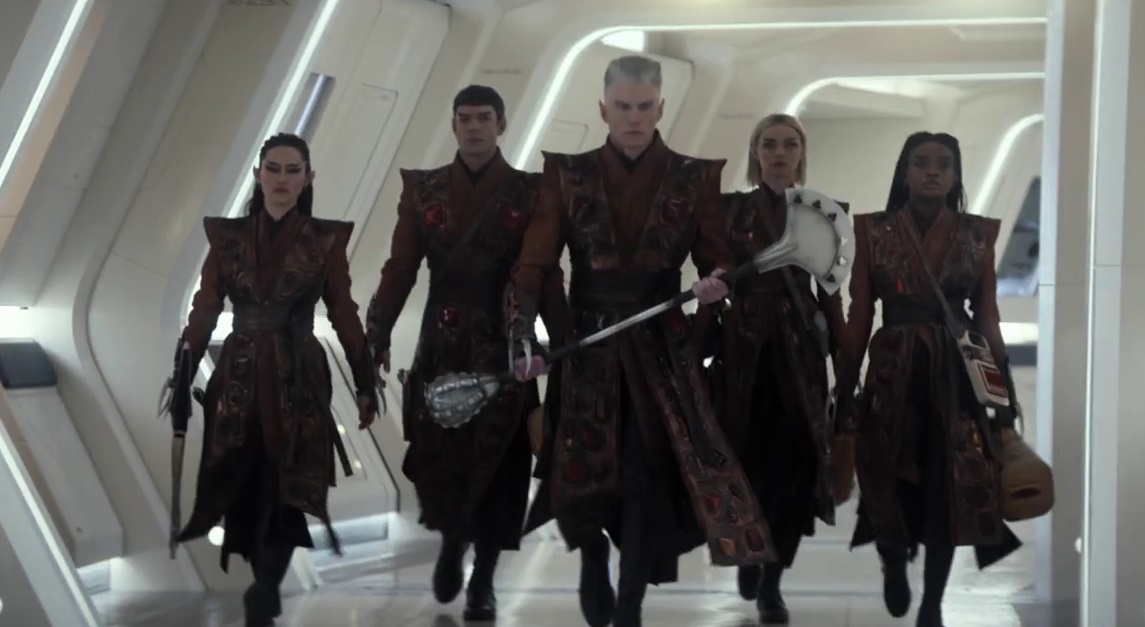

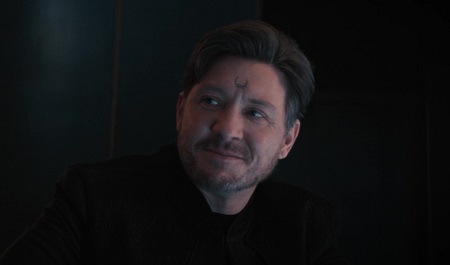
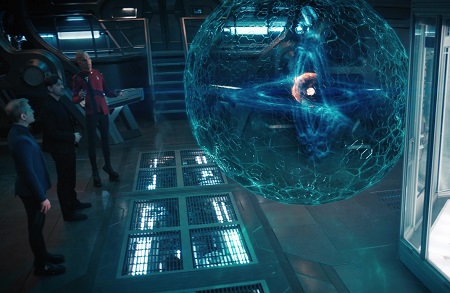
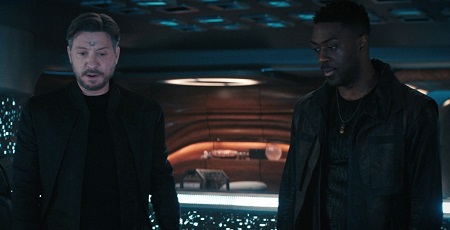
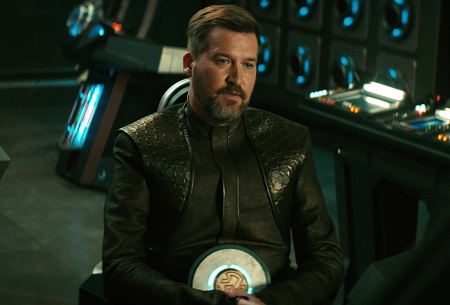
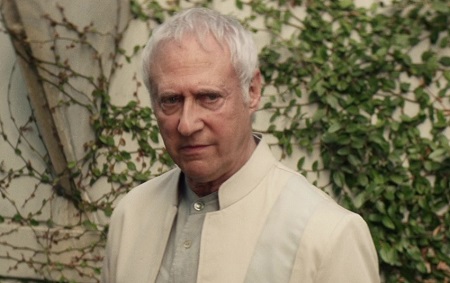
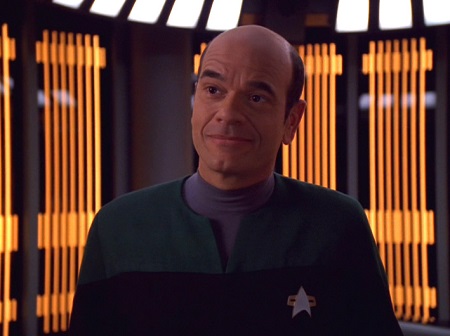
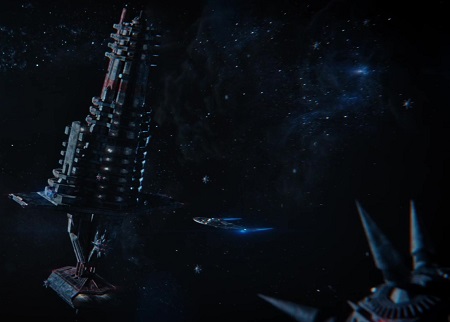
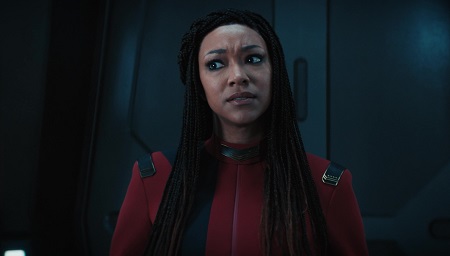
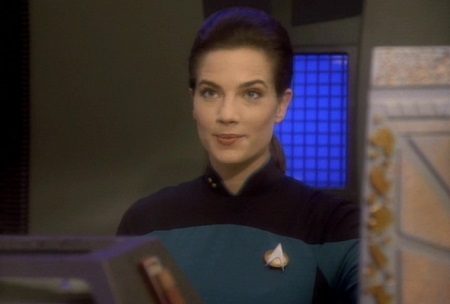
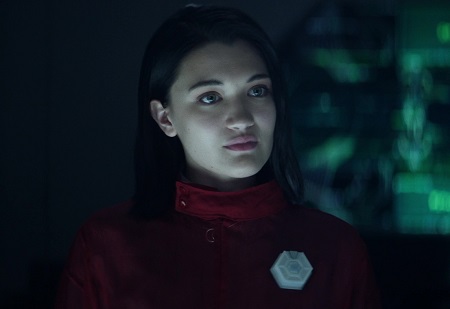


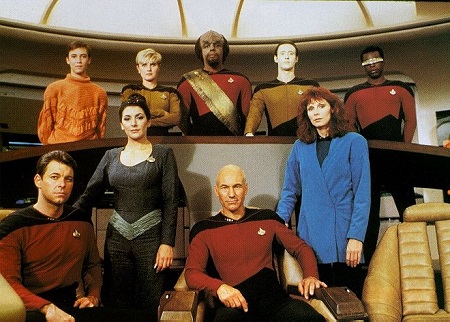


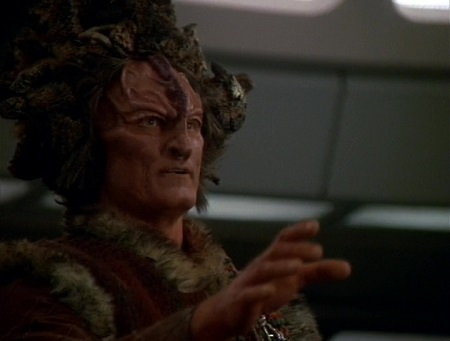

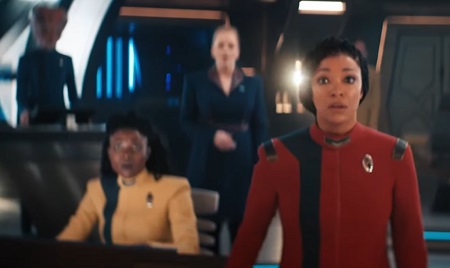


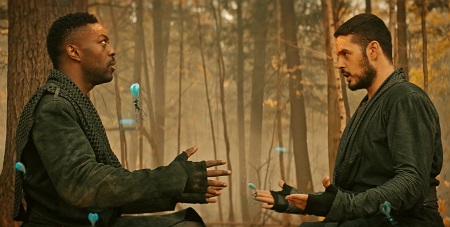

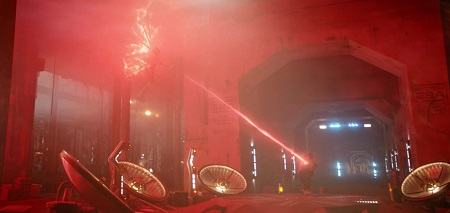
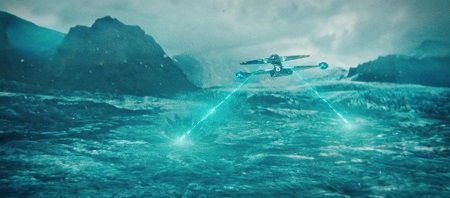
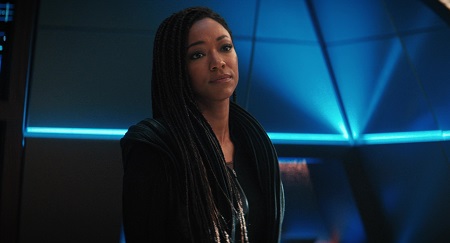

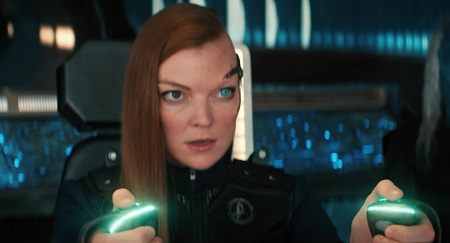

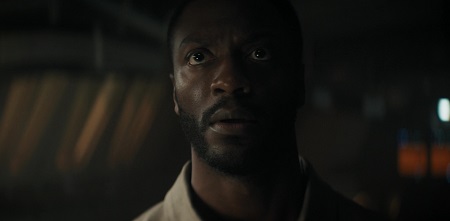



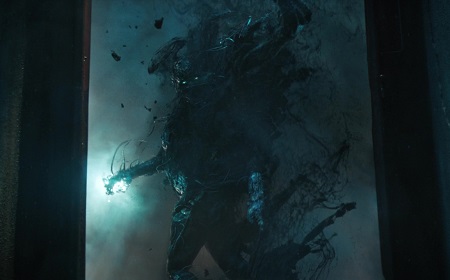


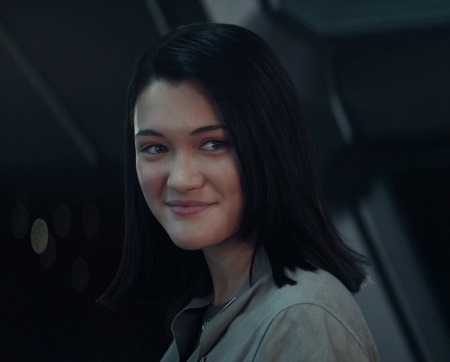


 Trekking with Dennis