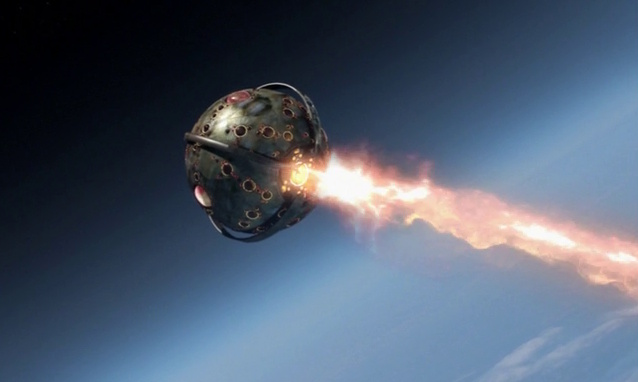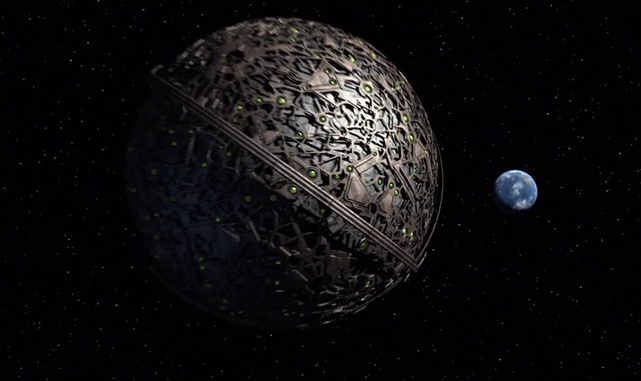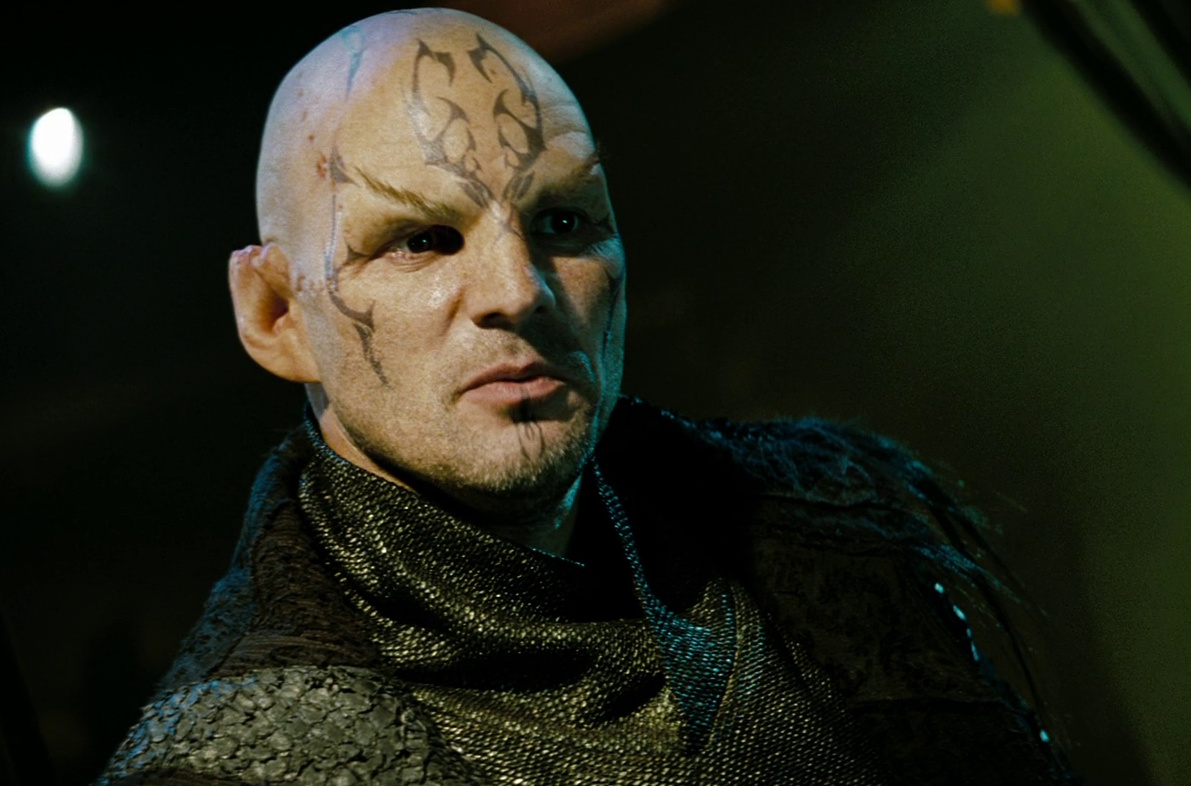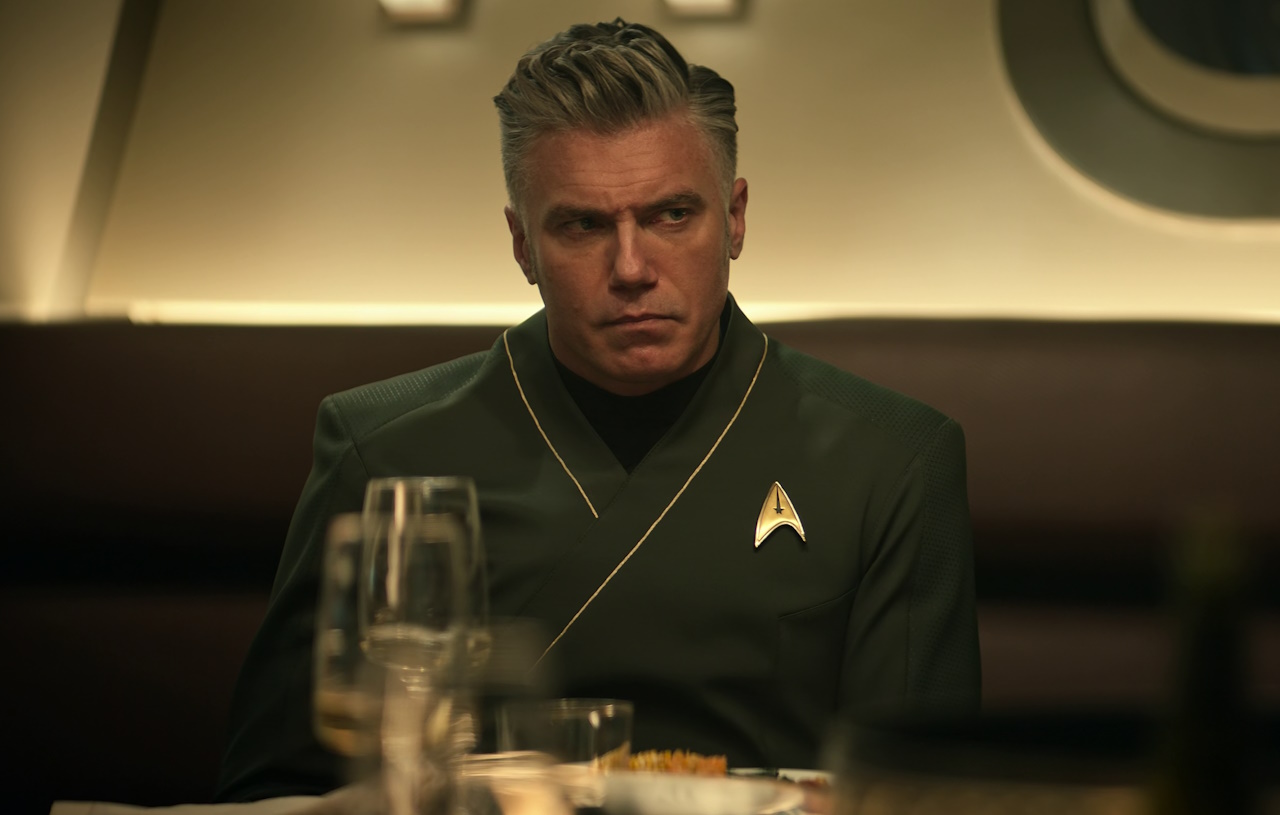
Which Narrative Clichés Would I Remove From Star Trek?

A Star Trek-themed spoiler warning.

Spoiler Warning: Beware spoilers for the following Star Trek productions: The Wrath of Khan, The Next Generation, Deep Space Nine, Voyager, Into Darkness, Discovery, Picard, Prodigy, Strange New Worlds, and Section 31.

I hope you all had a lovely Halloween! October was a busy month for me, but I did manage to put out a few Halloween-y posts, so I hope you’ll scroll back and check out some of those; they were a lot of fun to write!

Onward to the subject of today’s piece, then.

I was scrolling Facebook when I noticed a Star Trek fan page had posted a screenshot of a Tumblr poll (because that’s all social media is these days: screenshots of the same handful of pages being endlessly recycled!) But the original post, first shared on Tumblr by user “quasi-normalcy,” was one that I thought could be very interesting to address. In short, it asked the question “which clichés do you most wish you could remove from Star Trek?” followed by eleven options that form the basis of a number of Star Trek episodes.
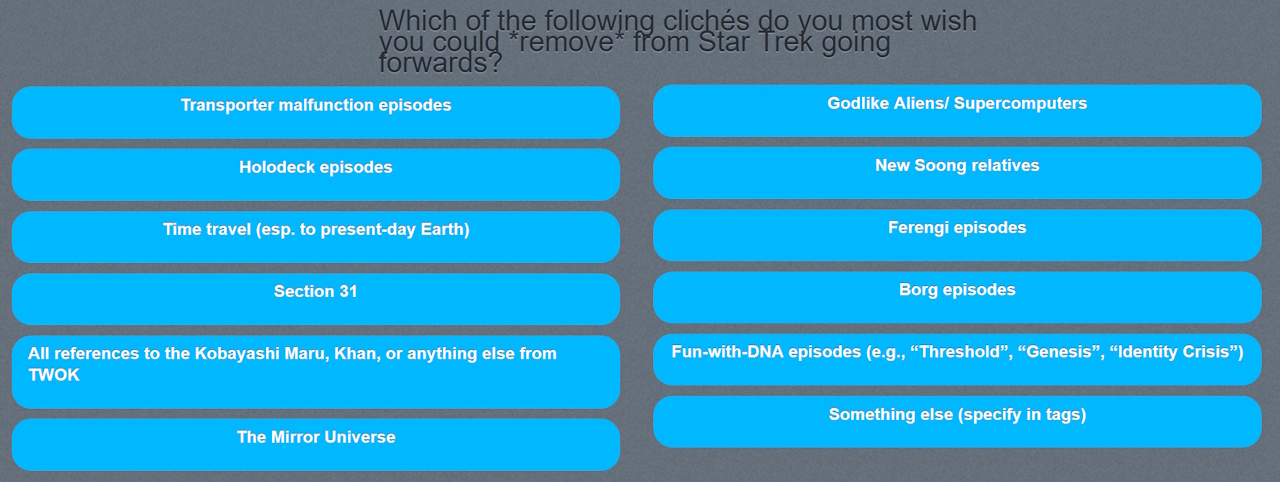

Screenshot of Tumblr showing a poll.
The original Tumblr poll upon which this piece is based…
Screenshot of Tumblr showing the results of a poll.
…and the eventual results.

The original Tumblr poll has now concluded, but I’ll drop a link to the post below in case you want to see it or check out the original poster’s page – this is not a unique idea and I am not claiming to have come up with it! But I am going to do something a little different than just clicking or tapping on a poll! I’m going to address all eleven of “quasi-normalcy’s” Star Trek narrative clichés, explain what I like or dislike about them, and perhaps add one or two of my own, too!

So thank you “quasi-normalcy” on Tumblr, and random Star Trek fan page on Facebook, for introducing me to this idea. I think it’ll be interesting to talk about some of the narrative frameworks that Star Trek has used, in some form, on multiple occasions – and maybe a little controversial, too! My usual caveat applies: everything we’re going to discuss is the subjective, not objective, opinion of just one Trekkie. If you hate everything I have to say about these episodes, think I’ve totally misunderstood something, or if we just disagree on what makes for a fun episode of Star Trek… that’s okay! Star Trek is a big tent, and there’s room for all kinds of opinions. I share mine with the Star Trek fan community in that spirit.

That being said, if you don’t want to read some potentially controversial Star Trek thoughts, this is your opportunity to beam out! I’ll address each potential cliché in the order they were listed in the original poll, then give my verdict on whether it should be “removed from Star Trek” going forward!

Cliché #1:
Transporter Malfunction Episodes

Still frame from Star Trek: Picard showing a transporter energising.
Transporting.

This feels like too broad of a category to want to see removed, in my opinion. A “transporter malfunction” can be handled in so many different ways, with so many different outcomes. We can bring Scotty forwards in time by eighty years in Relics, then cross over to a parallel universe in Mirror, Mirror – with completely different results. The transporter is a key part of Star Trek, and when it goes wrong, it can lead to all kinds of stories which vary in tone, structure, and genre. With that in mind, I really don’t see this one as a problem. It can feel like a cliché sometimes, sure… I will concede that point. But because transporter malfunctions vary so much in terms of outcome, I don’t see them as an issue and I’m happy to have more “the transporter done goofed” stories going forward.

That being said, there are some places where more common transporter problems could be shaken up – or the frequency of these instances lessened. For example, the way transporters work or don’t work floats around at the behest of the plot, and it’s a pretty common trope for the transporter to break or not be able to work just at the moment when it’s needed. Think about it: how many episodes would’ve been completely different if the transporter didn’t stop working just when a character needed to be rescued? Generally, these episodes work well enough. But I’m certainly open to the “broken transporter” or “the transporter won’t work because of technobabble” kinds of story beat being reduced in frequency.

My Verdict: Keep It!

Cliché #2:
Holodeck Episodes
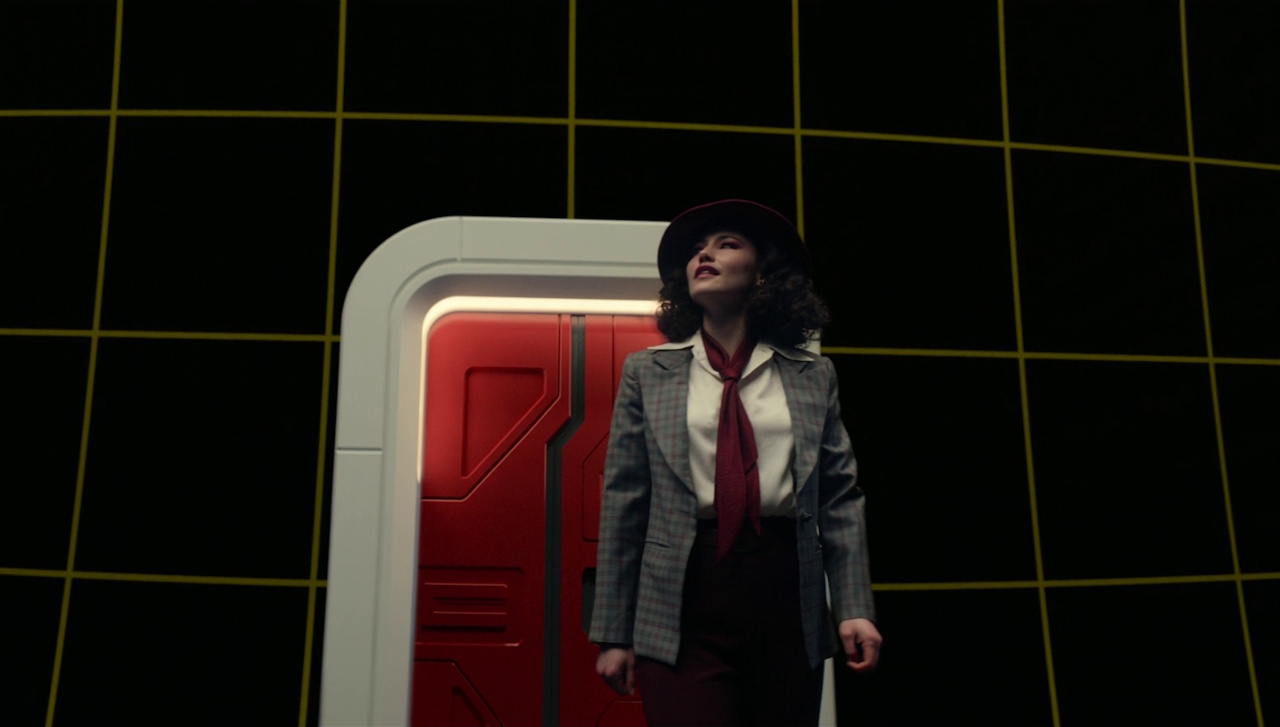
Still frame from Star Trek: Strange New Worlds showing La'an, in costume, on the holodeck.
La’an on the holodeck.

As above, there are so many different ways to take holodeck stories, and the ones we’ve seen have varied so much, that I don’t really consider this to be a “cliché” as such – they’re just one more type of Star Trek episode. As with any sub-genre, there are some holodeck stories that I enjoy more than others, and some I’m happy not to see repeated. But as a concept? I think holodeck stories can open things up, give the cast a chance to step out of their usual roles, and it can be a lot of fun to see them interacting in more of a social setting.

That being said, *modern* Star Trek shows, which tend to have fewer seasons as well as fewer episodes per season, don’t need nearly as many opportunities to do something like this. I noted in one of my Strange New Worlds Season 3 episode reviews that, out of fewer than thirty episodes at that point in the show’s run, characters like Pike and Spock had appeared out-of-character on at least four or five occasions apiece. Not all of those were holodeck stories, but the basic point remains. However, I think there’s still a place for stories set on the holodeck on occasion, as they can be fun ways to explore new characters, new locales, and just different themes than would be possible in a more straightforward episode set aboard a starship or planet.

My Verdict: Keep It!

Cliché #3:
Time Travel (Especially to Present-Day Earth)
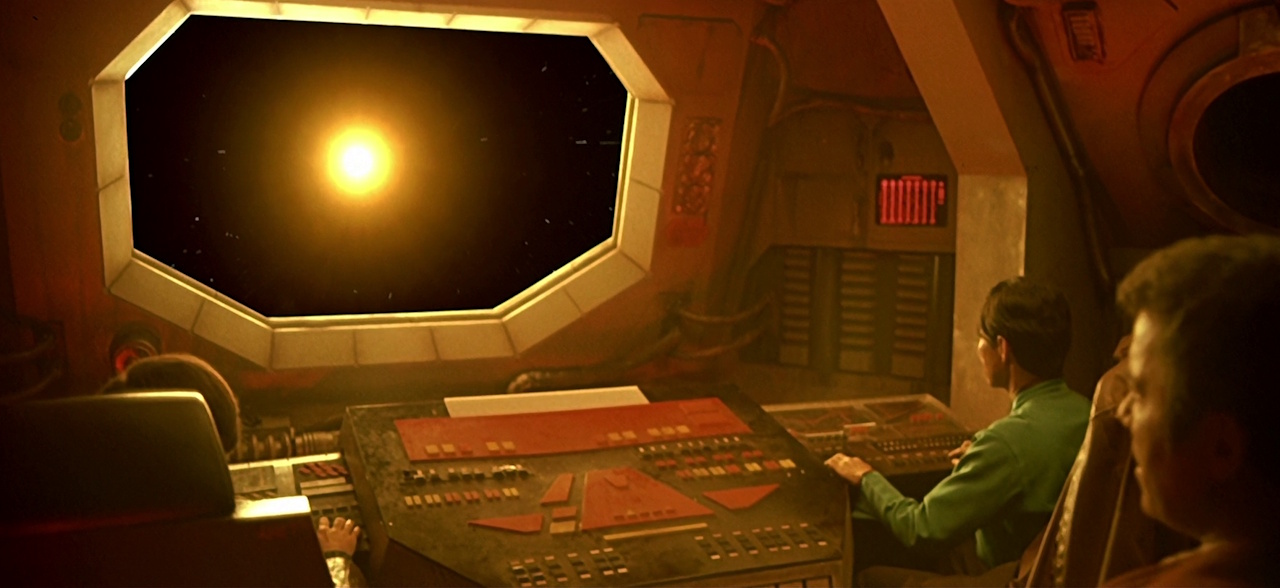
Still frame from Star Trek IV: The Voyage Home showing HMS Bounty approaching the sun.
Kirk and the crew prepare to travel back in time.

Can I break this one into two pieces?

Pretty please?!

Cliché #3-A:
General Time Travel
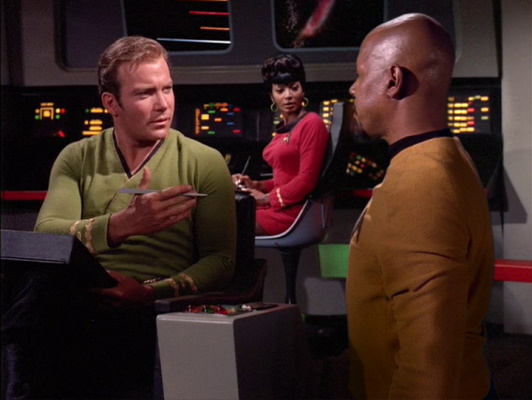
Still frame from Star Trek: Deep Space Nine showing Kirk and Sisko meeting.
Two Captains!

Okay, thank you for allowing me to split this one up! Time travel within Star Trek’s timeline – backwards and forwards – can be a blast. Viewers rank The City on the Edge of Forever as *the* best of The Original Series, and I adore episodes like Trials and Tribble-Ations, All Good Things, and Shattered. Time travel has been a key plot point in episodes like Time Squared, Twilight, Tapestry, Eye of the Needle, and many more. All of these are fantastic, and show what the franchise can do with time travel within the confines of its universe.

Discovery shooting forwards in time at the end of Season 2 arguably improved that series, with many interesting episodes coming after the leap to the 32nd Century. Strange New Worlds’ fantastic first-season finale leaned on time travel in a unique way, too. Face the Strange was especially creative, probably one of the highlights of Discovery’s fifth season. So modern Star Trek has utilised time travel phenomenally well. I wouldn’t want to see these kinds of stories erased from Star Trek.

My Verdict: Keep It!

Cliché #3-B:
Time Travel to Modern-Day Earth.

Still frame from Star Trek: Picard showing Los Angeles from above.
Contemporary Los Angeles in Picard.

This is why we had to split time travel into two separate pieces! Time travel within Star Trek’s fictional timeline can be a blast – even to Earth. But time travel to the modern day? Those stories tend to feel out-of-date pretty quickly. Look at The Voyage Home and Future’s End – not to mention Picard’s entire second season. Sometimes, stories like this work well, and use a modern-day setting in creative ways. But too often they lose too much of what makes Star Trek… feel like Star Trek.

Star Trek is about the future. And sometimes, figuring out how that future came to be can be interesting. But in a lot of cases, time travel episodes that visit contemporary Earth don’t have enough to say – or what they try to say is pedestrian and bland, like “climate change is bad.” Again, if we assume modern Star Trek shows will continue to have ten-episode seasons and four or five seasons max, I think the less time spent on modern-day Earth the better. As I said once: I can barely re-watch Picard’s second season – a full one-third of that show – because of how unenjoyable it is, a significant part of which is due to its modern Earth setting. So… yeah. Let’s give modern Earth a break, eh?

My Verdict: Vaporise It With A Disruptor!

Cliché #4:
Section 31
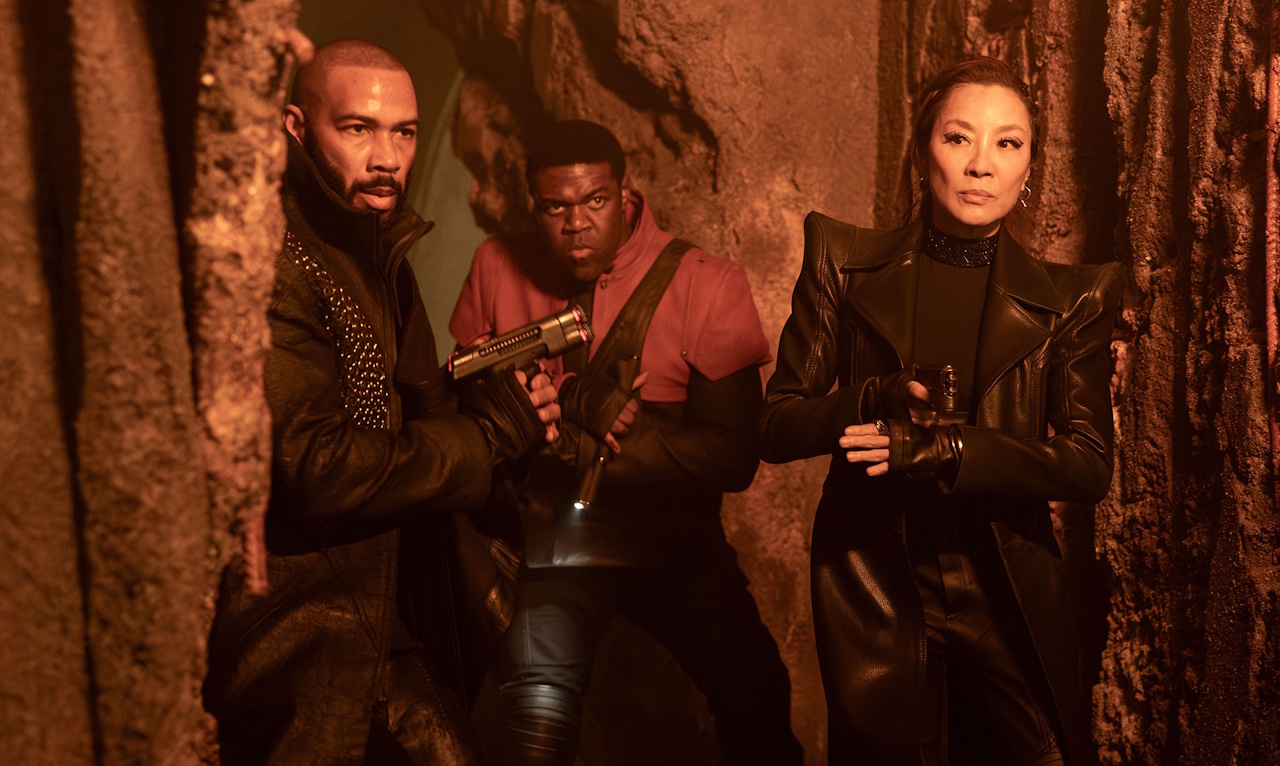
Promo photo for Star Trek: Section 31 showing Georgiou and two other operatives.
Three Section 31 operatives.

I believe the original Tumblr poll was written before this year’s Section 31 movie, so the author couldn’t have known what the reaction to that would be. Given the apparent disappointment of Section 31 to Paramount (and new owner Skydance), I have to assume that any more Michelle Yeoh-led Section 31 sequels or spin-offs won’t be going ahead. So in that sense, we already have part of an answer to this point!

Section 31 was incredibly controversial when Deep Space Nine introduced it. I remember furious debates on Star Trek message boards around the turn of the millennium about “Gene’s vision” and how Section 31 shouldn’t exist in the Star Trek universe. I gotta admit that I found the original idea and the original presentation of Section 31 to be interesting – and it seemed logical, to me, that an organisation as massive as the Federation would run this kind of off-the-books organisation. However, Section 31 as it was depicted in Discovery and the Section 31 film strayed a long way from that, and arguably trod all over the toes of canon by showing the organisation as being so out in the open more than a century before DS9. It would’ve been possible, perhaps, to show how Section 31 disappeared and went underground in the intervening years, but that idea was never picked up. I still think there’s potential in the idea of a “black ops” Federation organisation, but it has to be handled a lot better.

My Verdict: Keep It!

Cliché #5:
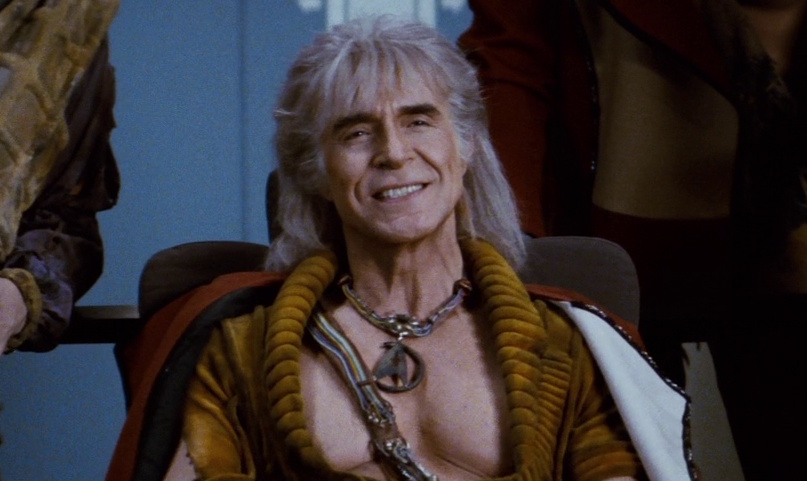
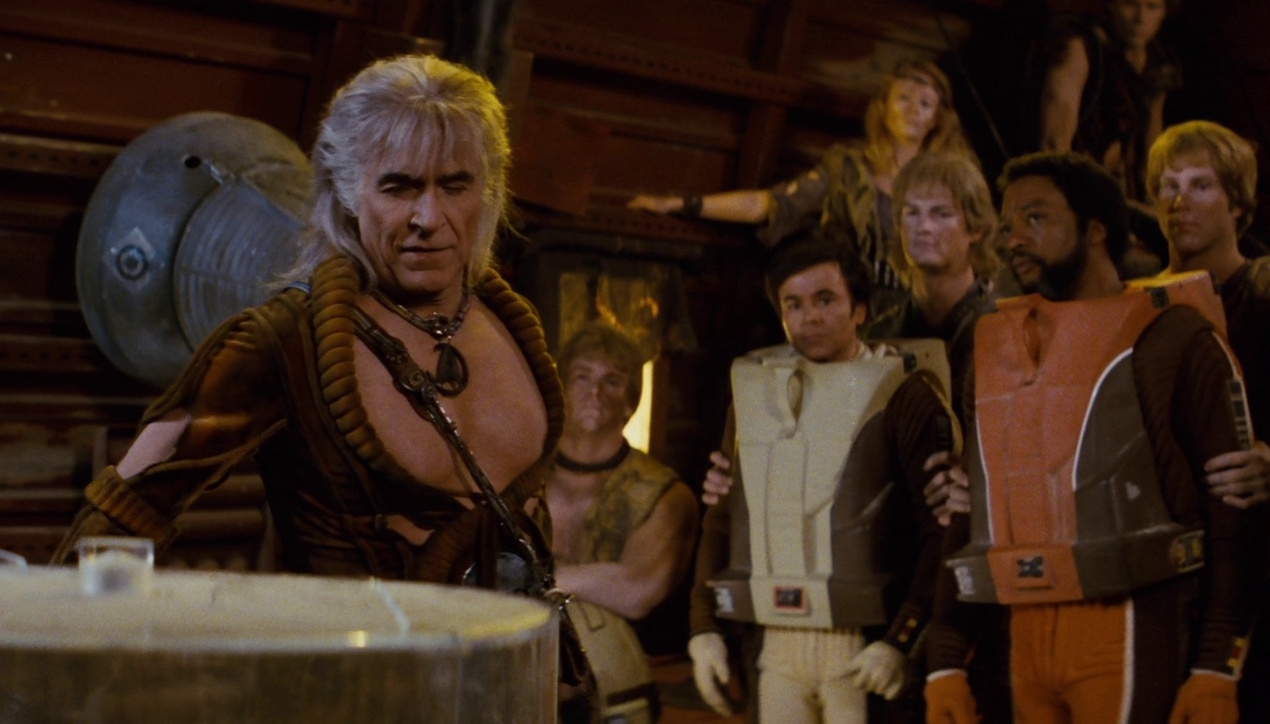
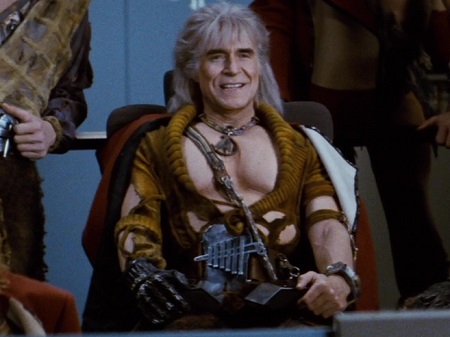
All References to the Kobayashi Maru, Khan, and The Wrath of Khan.
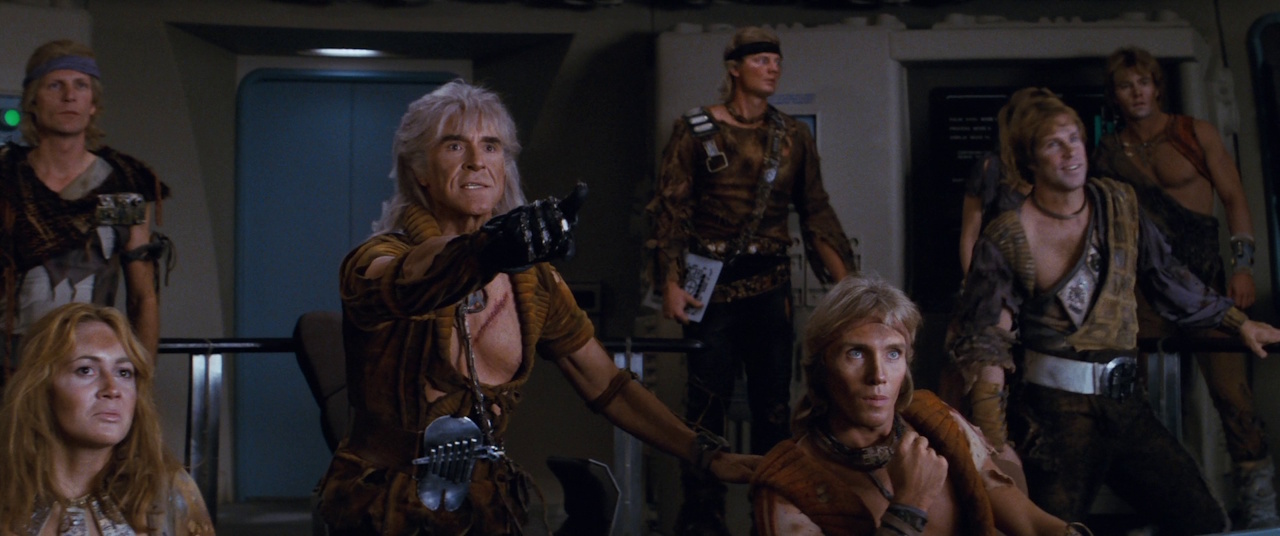
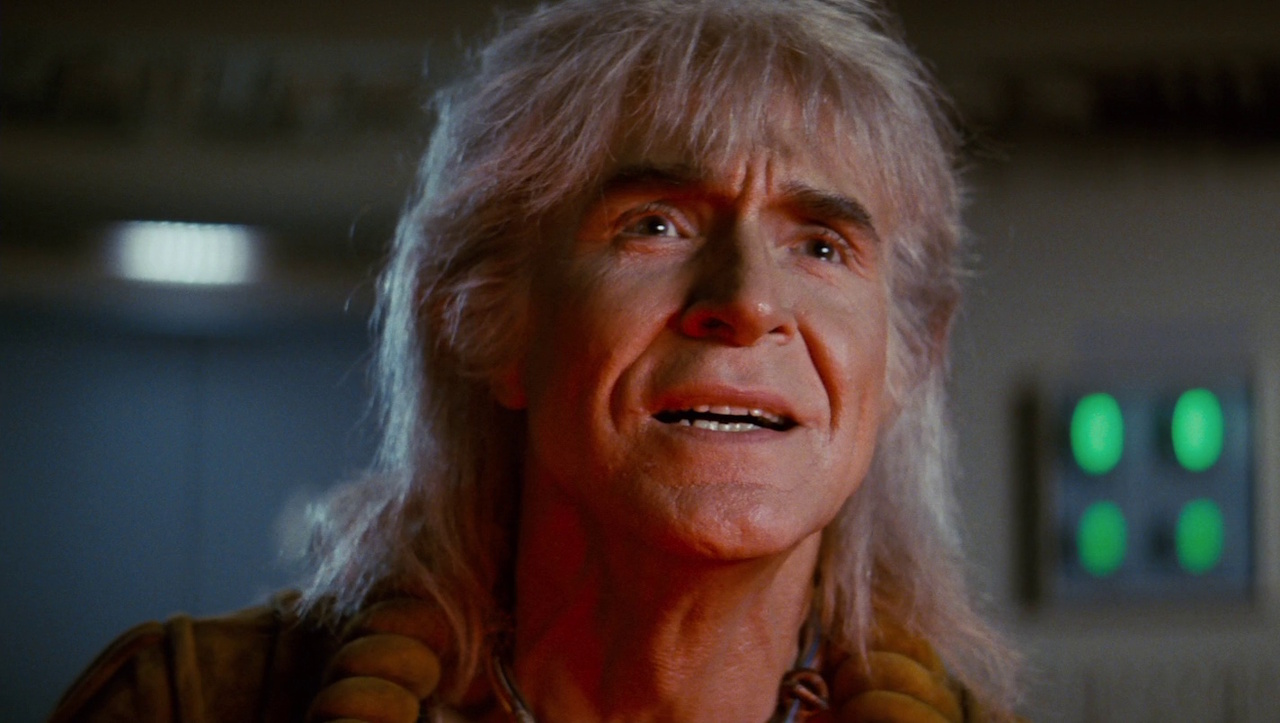
Still frame from Star Trek II: The Wrath of Khan showing Khan and his crew.
Khan and the augments on the Reliant’s bridge.

I think saying *all* references to The Wrath of Khan might be a bridge too far, but I get where this is coming from. I noted in one of my Strange New Worlds Season 3 episode reviews that making La’an a direct descendant of Khan has been a complete waste, and that basically nothing would’ve changed for her character if she’d been given a different last name. So in that sense, that kind of direct reference to Khan himself – particularly as SNW is a prequel – is something I’d happily live without. I’m not caught up on the Khan audio drama yet, but my initial reaction to a Khan-focused series wasn’t especially positive, either, as I felt we’ve already seen everything we need to see of Khan.

However, I think some things from The Wrath of Khan – like the Kobayashi Maru – can and have been used well elsewhere. Prodigy’s first season episode Kobayashi is a case in point: a great episode that built on those foundations. So while I think references to Khan himself can definitely be scaled back, if not dropped entirely for a while, this entry’s “all or nothing” attitude gives me pause. The Wrath of Khan is a great film, and some of the elements it introduced have gone on to be widely celebrated parts of Star Trek. There are new ways to approach things like the Kobayashi Maru scenario and human augments, and I wouldn’t want to rob future Star Trek writers of those.

My Verdict: Keep It!

Cliché #6:
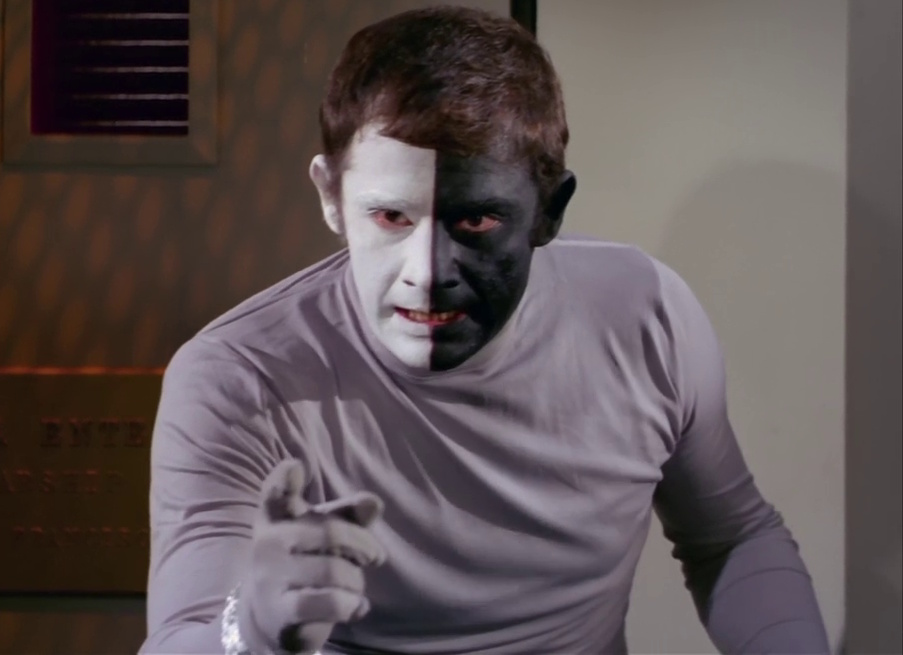
The Mirror Universe
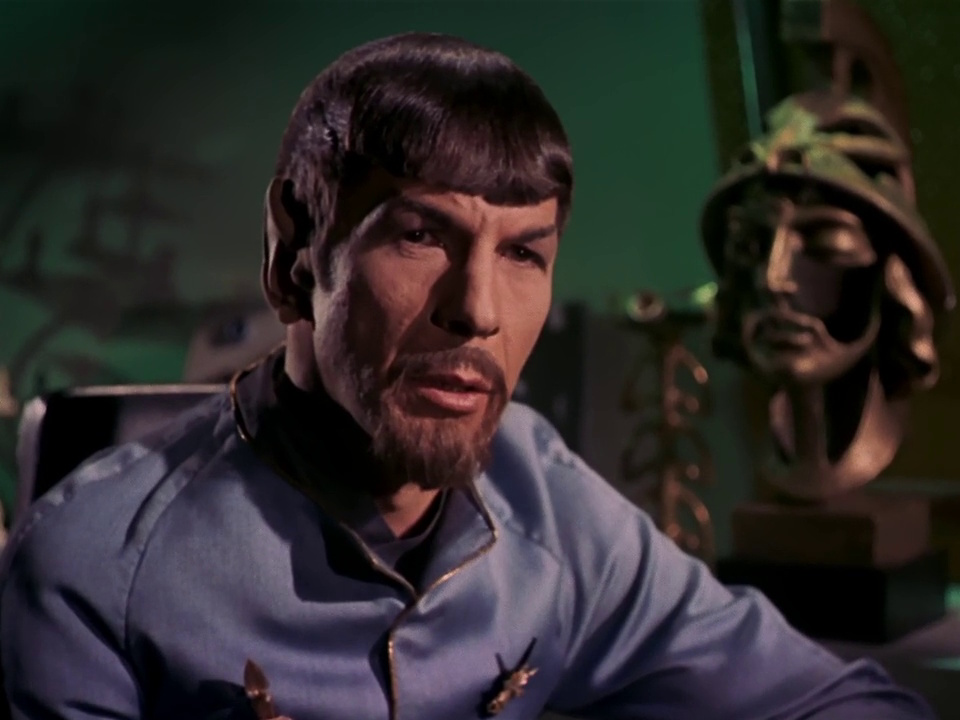
Still frame from Star Trek: The Original Series showing Spock from the Mirror Universe.
Mirror Spock.

If the Mirror Universe had been a one-off, I’d probably say it was worth re-visiting. But even as far back as Deep Space Nine, the Mirror Universe was played out. This is a setting where violence, murder, and torture are the norm, and it’s so boring and one-dimensional that it tricks even the best Star Trek actors into putting out hammy, over-the-top, ridiculous performances that are, in some cases, genuinely so bad that they’re unwatchable for me. The Mirror Universe *can* be interesting to visit for a single episode, on rare occasions, but where it’s failed has been repeat visits, recurring or main Terran characters, and just its general over-use.

Discovery did not benefit from any of its Mirror Universe storylines, and I don’t think Georgiou’s Terran Empire origin did wonders for Section 31, either. I don’t really understand why modern Star Trek writers have developed an obsession with the Mirror Universe (or Mirror Universe-inspired settings, like Picard’s Confederation of Earth), but I think we’ve seen more than enough of this parallel universe. The *only* Mirror Universe story I’d have even potentially been interested in was one involving the rescue of the Prime Timeline version of Captain Lorca – but I suspect that ship has sailed. The Mirror Universe can sail into the sunset with it!

My Verdict: Vaporise It With A Disruptor!

Cliché #7:
Godlike Aliens/Supercomputers
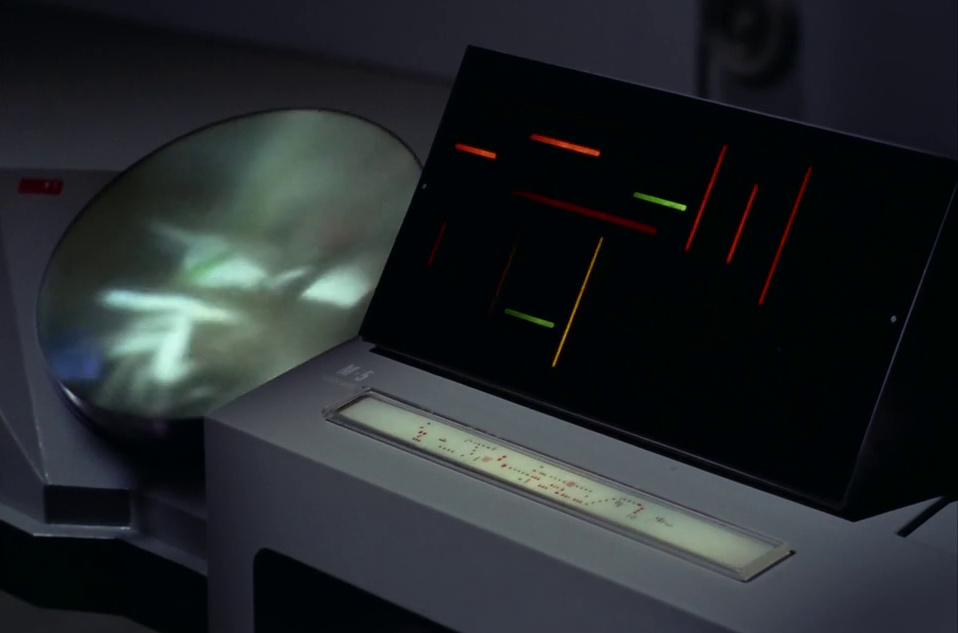
Still frame from Star Trek: The Original Series showing the M-5 computer.
The M-5 Multitronic Unit.

Not only does this one feel way too broad, but I think Star Trek has demonstrated that there’s huge value in exploring how we might interact with an alien or entity possessing “god-like” powers. There’s also the current trajectory of artificial intelligence here in the real world, and how some people feel we’re only a few years away from superintelligent A.I. systems. Star Trek has been an early pioneer of showing the dangers of A.I., as well as potential benefits.

I suppose, though, too many of these stories could feel samey. As with any sub-genre, it needs to be handled well, not over-exposed, and kept to a reasonable level. But I definitely think the positives outweigh the negatives, and in the near future, there could be a ton of value in exploring supercomputers and “god-like” A.I. systems in particular.

My Verdict: Keep It!

Cliché #8:
New Soong Relatives
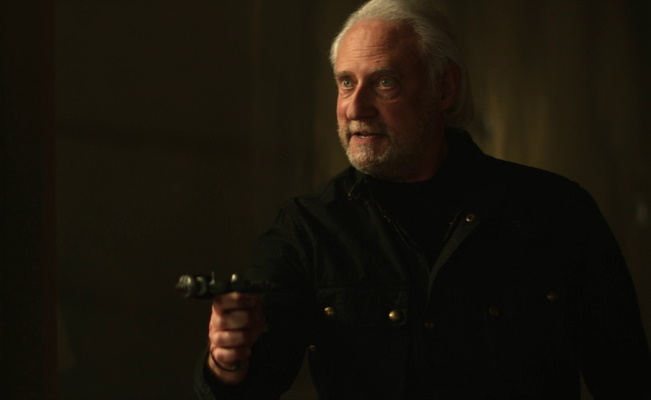
Still frame from Star Trek: Picard showing Adam Soong wielding a pistol.
One of the Soongs.

Noonien Soong, Arik Soong, Altan Soong, Adam Soong, and a couple of illusory Noonien Soongs. Then we have Lore, B-4, and the new Data android. Not to mention Kore Soong, and other Soong-type androids. Yeah… I think this is getting pretty silly now! I really didn’t like what Picard did with Data in Season 3: resurrecting him after he’d been so beautifully and fittingly laid to rest in Season 1 just felt wrong. And the inclusion of *two* new Soongs in Picard was definitely a bit too much. Brent Spiner is great, don’t get me wrong, and he can play villains and devious characters exceptionally well. But I think we’ve taken the family of Data’s creator as far as it can reasonably stretch – too far already, some might say!

With Legacy seemingly not going ahead, I don’t know what the future holds for the renewed Data. But with Altan Soong dead, that could be the last descendant of the Soong family – at least as of the dawn of the 25th Century. I don’t think we need to go back in time to see Adam Soong’s work on the augments, nor revisit Noonien Soong’s creation of Lore and Data. Some storylines just have a natural end point. Adding more Brent Spiners to the Soong family wouldn’t really add anything new to Star Trek at this point, either.

My Verdict: Vaporise It With A Disruptor!

Cliché #9:
Ferengi Episodes
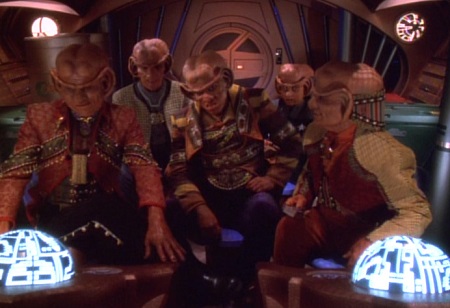
Still frame from Star Trek: Deep Space Nine showing a crew of Ferengi.
The Magnificent Ferengi!

Though we spent a lot of time with the Ferengi in Deep Space Nine, the faction hasn’t been seen very much this side of the millennium. With that in mind, I’m definitely down for more Ferengi stories! I’d love to see, for instance, how the Ferengi are coping in the 32nd Century. Did they ever join the Federation? Are they still obsessed with latinum and profit? And in the Picard era, too, were a new series ever to be commissioned, it would be lovely to catch up with Grand Nagus Rom in live-action.

In DS9, Ferengi episodes often took on a comedic tone, and I think I’d happily entertain less of that; a more straight-laced and serious Ferengi story could be an interesting change of pace. Though we know a lot about the Ferengi thanks to Quark, Rom, and Nog in particular, there’s still a lot that can be done with the Ferengi, and there are certainly more stories to tell where Ferengi characters are in focus.

My Verdict: Keep It!

Cliché #10:
Borg Episodes
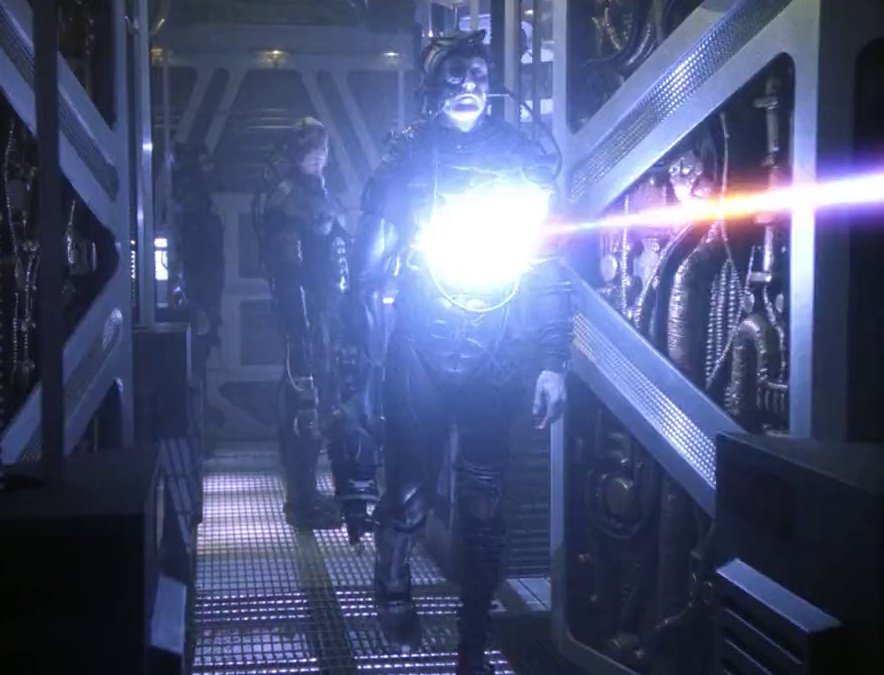
Still frame from Star Trek: The Next Generation showing a Borg drone being phasered.
Is it time to kill off the Borg?

This one… I’m torn, to be honest with you. Picard over-used the Borg, and that came after Voyager had already done a lot to lessen the Borg’s fear factor and imposing nature. There are also issues with the timeline thanks to Voyager and Enterprise, and I still think that the introduction of a Borg Queen in First Contact was a mistake! However, I still like the idea of a Star Trek series I’ve provisionally dubbed the “Borg Invasion” show, in which a war against the Borg is the main focus of the series.

This show would take on a much darker tone, with themes of horror and war being prevalent. If done well, with a clear three- or four-season plan from the get-go and a sufficiently high budget, I really believe it could work exceptionally well. However, I won’t deny that the Borg have been over-exposed, not only in modern Star Trek, but really going as far back as Voyager. And I wouldn’t blame any Trekkie who wants to give the faction a break, especially after Picard brought them back three seasons in a row.

My Verdict: Keep It!

Cliché #11:
Fun-With-DNA Episodes (i.e. Genesis, Threshold, etc)
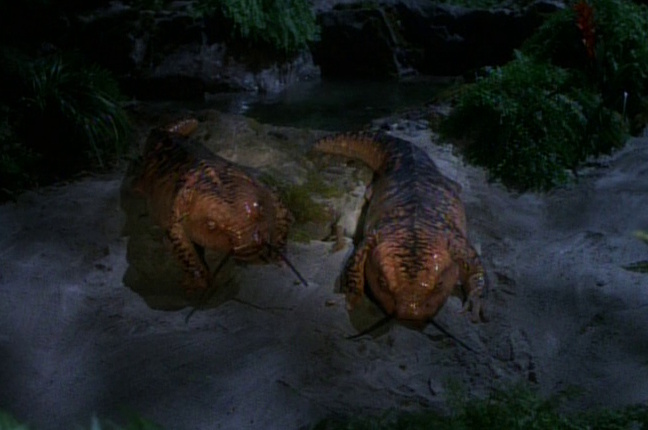
Still frame from Star Trek: Voyager showing hyper-evolved human salamanders.
Hmm…

As I’ve said several times now, this feels like quite a broad concept that could go in many different directions. As such, I don’t think I’d be willing to say there should “never” be another episode in which the DNA of some of our heroes gets muddled up! That being said, episodes like Threshold, Extinction, Favorite Son, Unnatural Selection, and Four-and-a-Half Vulcans aren’t necessarily shining examples of the best of Star Trek. So this one, I suppose, can feel a bit hit-and-miss.

I still think I come down on the side of saying “do more with this idea,” though. Shuttle to Kenfori, with its “zombies,” and Discovery’s Tyler-Voq storyline, both did interesting things with DNA, and I think there’s potential to take the basic idea in different directions. So while it’s true that not every “fun with DNA” idea has stuck the landing, I’m up for trying it again if the script is right!

My Verdict: Keep It!

So that’s all from the poll… but there’s more!
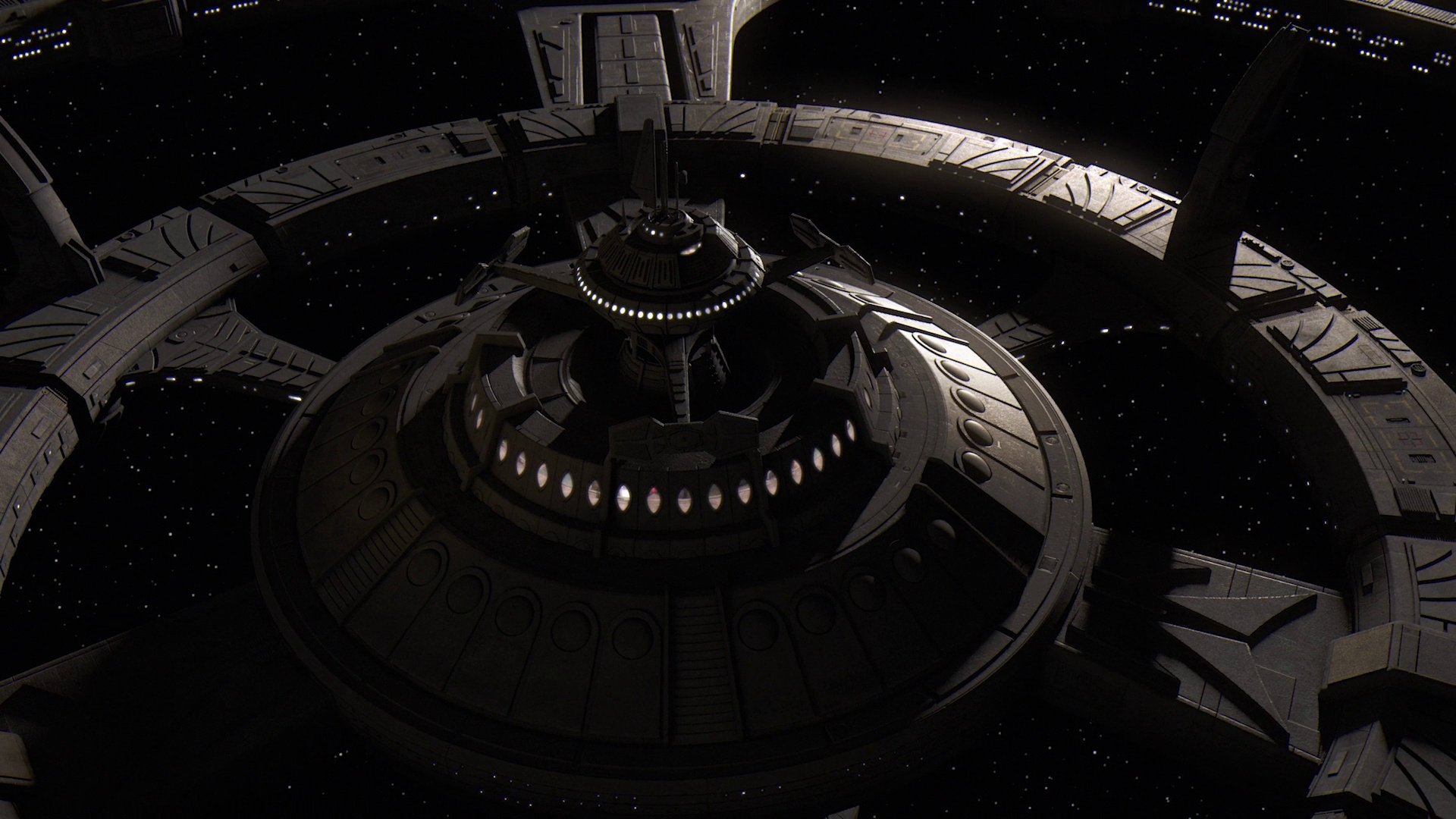
Still frame from Star Trek: Deep Space Nine showing the titular space station.
DS9.

The original poll also contained one final option: Something Else!

So… I thought we could go through a handful of my own “Star Trek clichés” and talk about them before we wrap this up.

Cliché #12:
Redshirts
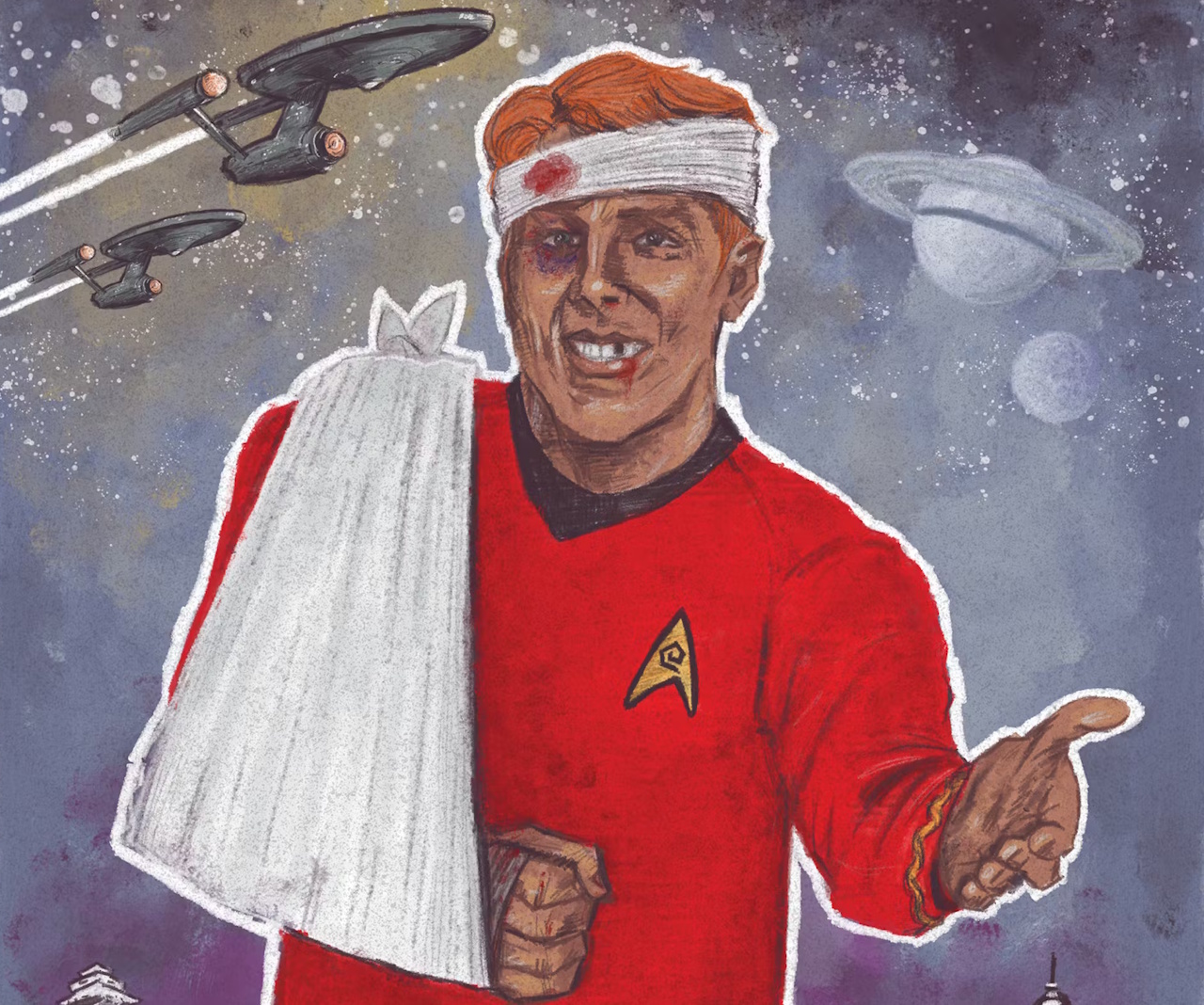
Cropped Star Trek: Redshirts comic book cover.
A redshirt!

I’m surprised the original poll didn’t include what is arguably one of Star Trek’s biggest clichés: the redshirt! These characters, named for the red uniform shirts they wore in The Original Series, were junior officers who usually made one appearance – only to be killed off pretty early in the story. After The Original Series, we saw fewer redshirts, but the trope has stuck around, even into Star Trek’s modern era.

Sometimes you need to kill off a character to communicate the dangers of a situation or the stakes to our heroes. Redshirts – these “disposable” one-off characters – arguably serve that purpose pretty well, and I wouldn’t want to see Star Trek limited by removing them. I also think that redshirts have become, in some ways, an inseparable part of Star Trek itself, and while we’ve seen fewer bona fide redshirts really since The Next Generation premiered, I wouldn’t want the franchise to lose them entirely.

My Verdict: Keep It!

Cliché #13:
The “Half-Arsed Mental Health Storyline”
Still frame from Star Trek: Discovery showing Culber and Stamets.
Dr Culber and Stamets.

Discovery was, in my opinion, absolutely atrocious in most of its attempted mental health storylines, but this problem has also plagued other Star Trek productions – notably Picard. And in the bygone days of episodic TV, characters would suffer a traumatic event that would have a massive impact on them… for all of a single episode, before the show moved on to new adventures a week later. There are some absolutely fantastic explorations of mental health on television… but Star Trek, even in the modern era, has slipped up way too often.

I’ve said this before multiple times here on the website, especially when discussing Discovery, but here we go: if there isn’t time to do justice to a complex mental health storyline, skip it. Don’t half-arse it, don’t give ten minutes to a complicated topic that needs way longer, and just… pick something else. Literally *anything* else. Star Trek has been bold in approaching some of these topics, and that’s great, but the execution has left a lot to be desired in too many cases. If Star Trek’s writers want to keep returning to mental health as a topic for storylines, then we need to see significantly better results.

My Verdict: Vaporise It With A Disruptor!

Cliché #14:
Klingon Episodes
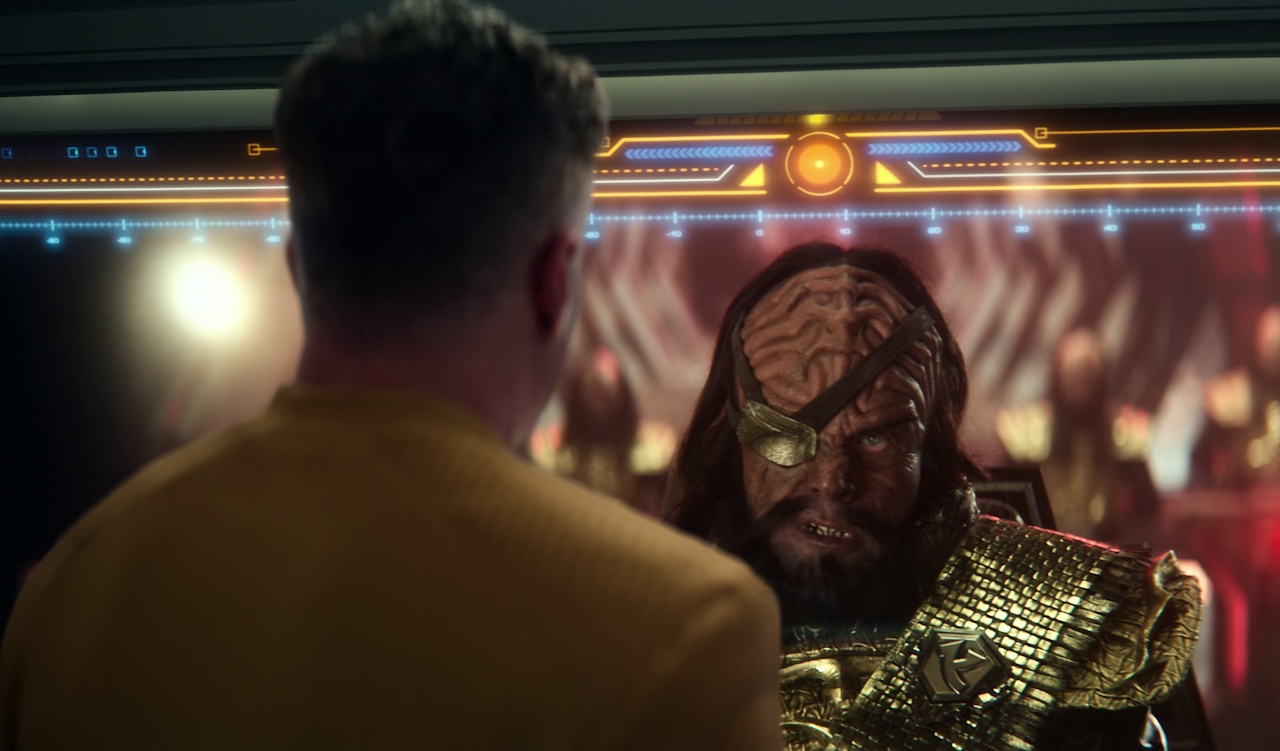
Still frame from Star Trek: Strange New Worlds showing Pike and a Klingon captain.
Pike with a Klingon in Strange New Worlds.

When discussing the Ferengi above, I said that there are surely ways to tell new stories featuring them, especially after such a long absence. That’s gotta be true of the Klingons, too… right? The more I think about it, the less sure I am, to be honest. Thanks to Worf and B’Elanna, and Discovery’s focus on the Klingons in Seasons 1 and 2 with the war and characters like Tyler and L’Rell, we’ve seen *a lot* of the Klingons over the years. And when many Klingon characters can feel a bit flat and lacking in depth, maybe it actually is time to give the faction a rest.

Klingons are inseparable from Star Trek, that’s true. But after almost six decades of exploring the Klingons, their Empire, and many individual Klingon characters… do we need more? Recent attempts to reimagine the Klingons – both in the Kelvin films and Discovery – proved controversial or just outright unpopular with Trekkies, and recent productions seem to have “reset” the Klingons to their TNG-era visual style, at least. Given that changes seem to be off the table, do we really need more of the same from the Klingons, after they’ve featured in a big way in literally hundreds of stories already?

My Verdict: Vaporise It With A Disruptor!

Cliché #15:
“Glorified Redshirts” (i.e. minor characters who get one or two scenes’ worth of “development” before being killed off)
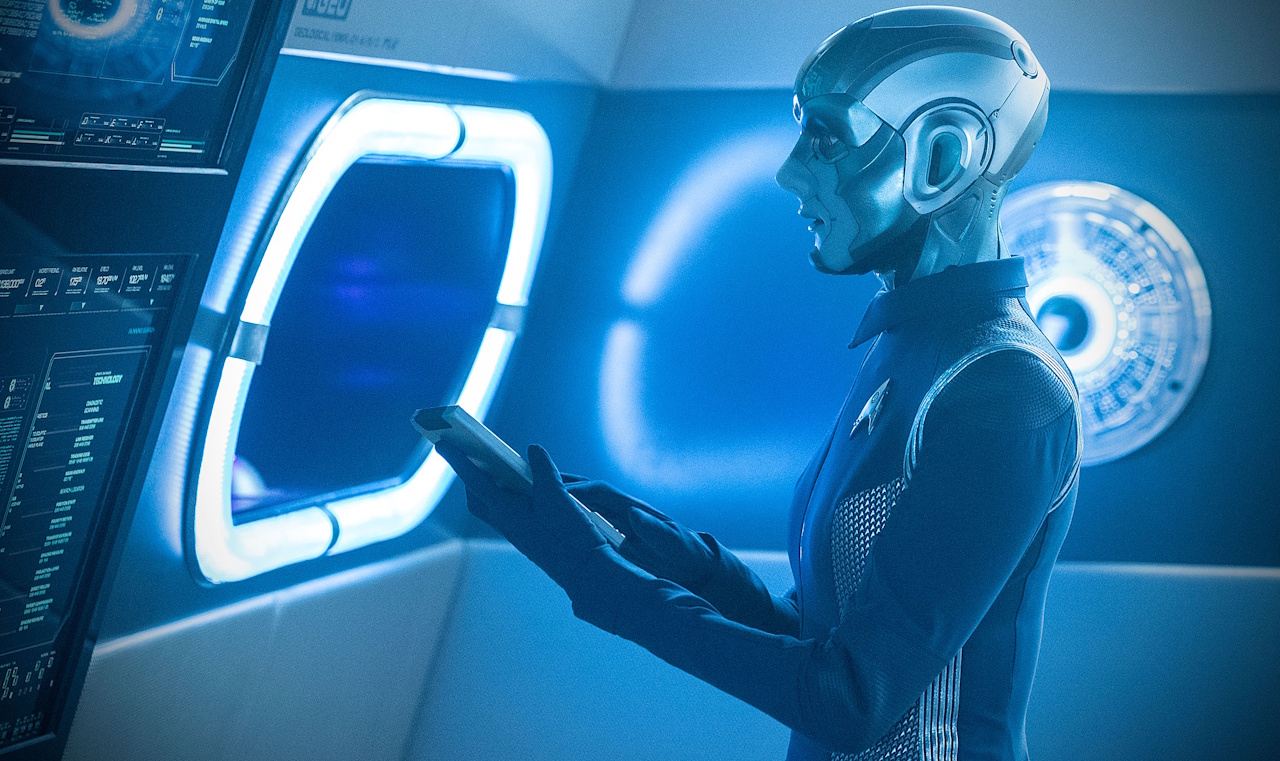
Promo photo for Star Trek: Discovery Season 2 showing Airiam holding a padd.
Airiam in Discovery’s second season.

In TOS, if Captain Kirk picked Spock, Scotty, and Ensign Timmy for an away mission, you’d know right away who wasn’t coming back! Recent Star Trek projects have tried, at least, to make some minor character deaths a bit more impactful… but the way this has been handled has, all too often, not worked. Giving a minor character a scene or two of attempted development, in order to foster more of an emotional connection with us as the audience, is not a bad idea in theory. But modern Star Trek writers haven’t been great at this, leaving these moments feeling as nakedly obvious as when the doomed Ensign Timmy stepped onto the transporter pad.

Airiam, in Discovery, and Gamble, in Strange New Worlds, stand out as examples of this trend. Gamble was handled at least somewhat better, but even so, as I noted in my review, his death seemed immediately obvious when he was given the “glorified redshirt” treatment shortly before being killed off on an away mission. Is this approach better than the original treatment of redshirts? You could make that argument. But I still think it needs to be handled more carefully – and in a show with shorter, better-planned seasons, why not sprinkle that development across multiple episodes instead of cramming it all in in a couple of sequences before the minor character is killed off? Same amount of screen time, but a significantly better result.

My Verdict: Vaporise It With A Disruptor!

Cliché #16:
Bringing Back Legacy Characters In Main Roles
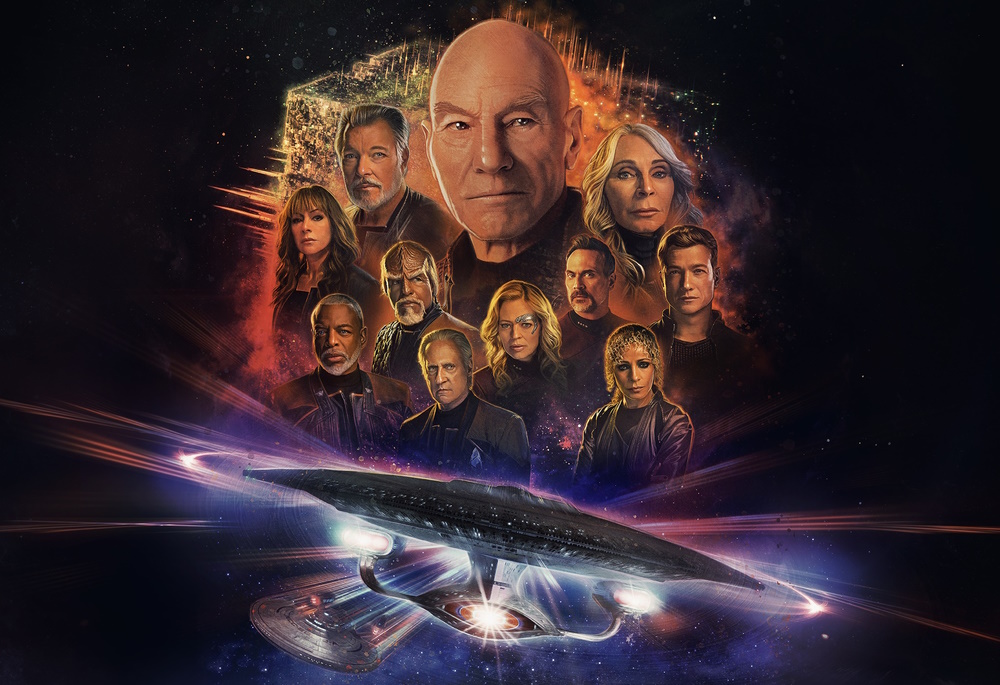
Promo poster for Star Trek: Picard Season 3 showing the main cast.
The main characters of Picard Season 3.

Spock in Discovery’s second season. Voyager’s Doctor in Starfleet Academy. Worf in Deep Space Nine. And Picard’s entire new cast – sans one character – being dumped to make way for the return of the whole TNG crew in Season 3. Does Star Trek need to do this so often? Or can we give new shows, new crews, and new characters the space to stand on their own two feet? Look at Star Wars, which has failed, for almost half a century, to break away from the same handful of original characters and one single story. Is that what fans want? Is that kind of approach the one Star Trek should take?

I get it: nostalgia is a big deal, fans want to see more from some of their favourite characters, and – at least in some cases – there are new stories to be told, or epilogues to add to existing stories. I’d be thrilled, for instance, to see a DS9 sequel involving Captain Sisko’s return from the realm of the Prophets. But to me, this over-emphasis on legacy characters makes Star Trek feel… small. And if Star Trek had behaved this way in the ’80s and ’90s, we’d never have gotten to meet wonderful new characters who carried the franchise forward. There’s room to balance things out more, with new *and* legacy characters sharing the limelight. But, as we’ve started to see in Strange New Worlds, and as we definitely saw in Picard’s third season, legacy characters can easily overwhelm a project as writers and fans want to see more from them and less from the newbies. That risks leaving Star Trek with nowhere to go creatively in the future.

My Verdict: Vaporise It With A Disruptor!

So that’s it!
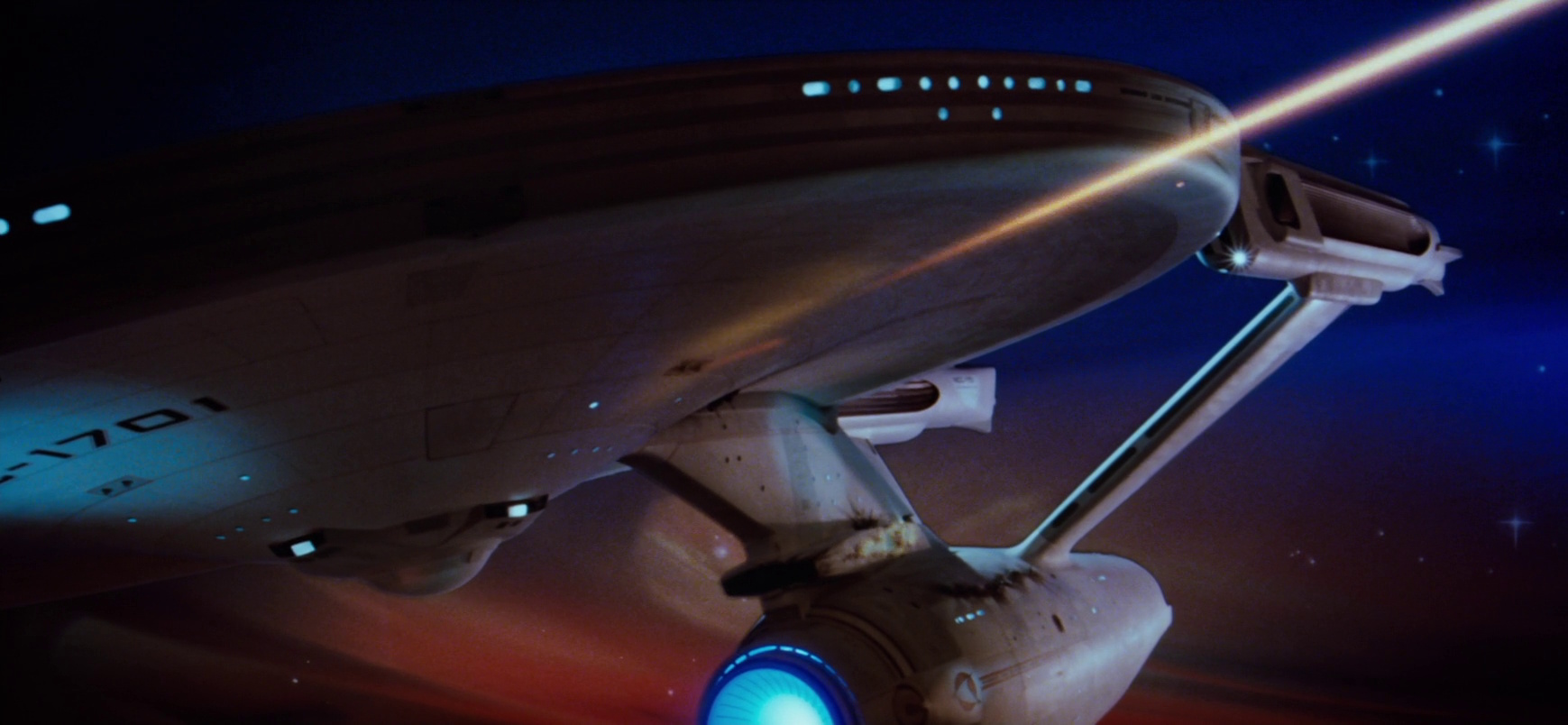
Still frame from Star Trek II: The Wrath of Khan showing the Enterprise firing phasers.
The Enterprise firing phasers.

This poll was really interesting to dissect, and not every point went the way I’d have necessarily expected if I’d just seen the poll, clicked on it, and moved on. Actually taking the time to think about these answers yielded some results that were – as Mr Spock might say – fascinating!

The results of the original poll make for interesting reading, too, after more than 2,000 people voted. The top clichés Trekkies want to get rid of are, in reverse order: the Mirror Universe with 8.2% of the vote, time travel (especially to modern-day Earth) with 11%, new Soong relatives at 22.2%, and finally, Section 31 with 24.7% – almost a quarter of those who responded to the poll.

I think I could’ve predicted some of those, but new Soong relatives being so thoroughly despised is one that caught me off-guard, I must admit!
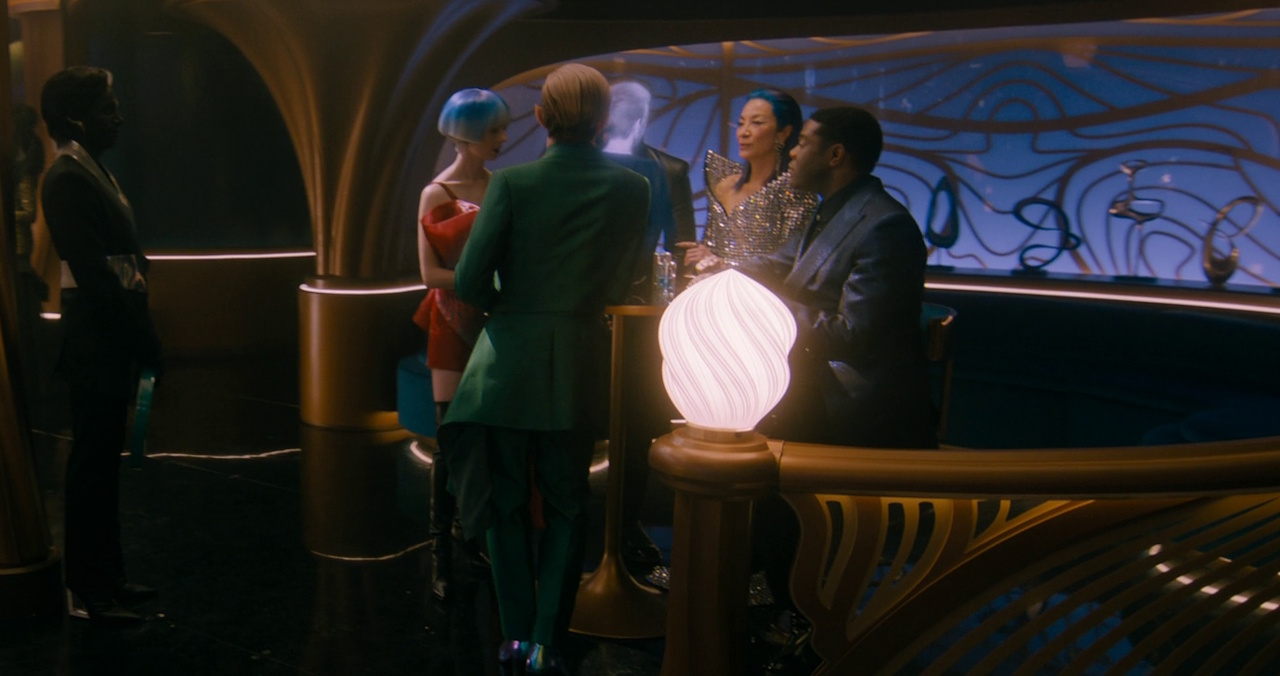
Still frame from Star Trek: Section 31 showing the final shot of the movie.
Apparently, Section 31 is the cliché most Trekkies would like to see removed.

I hope my own additions of some Star Trek “clichés” fit the tone of the poll, too. I spent a little while thinking about some of the tropes and arguably overdone story concepts that Star Trek could do with fewer of! Though truth be told, very few of these are really all that problematic for me, as I think Star Trek – even after recycling some of these ideas time and again – can still churn out some great storylines.

So I hope this has been a bit of fun, and an interesting way to dissect this poll. My thanks to Tumblr user “quasi-normalcy” for the original idea – and if you want to see the poll and its results, as well as their Tumblr page, you can find it by clicking or tapping here. And thanks to the Star Trek fan page on Facebook for bringing it into my feed!
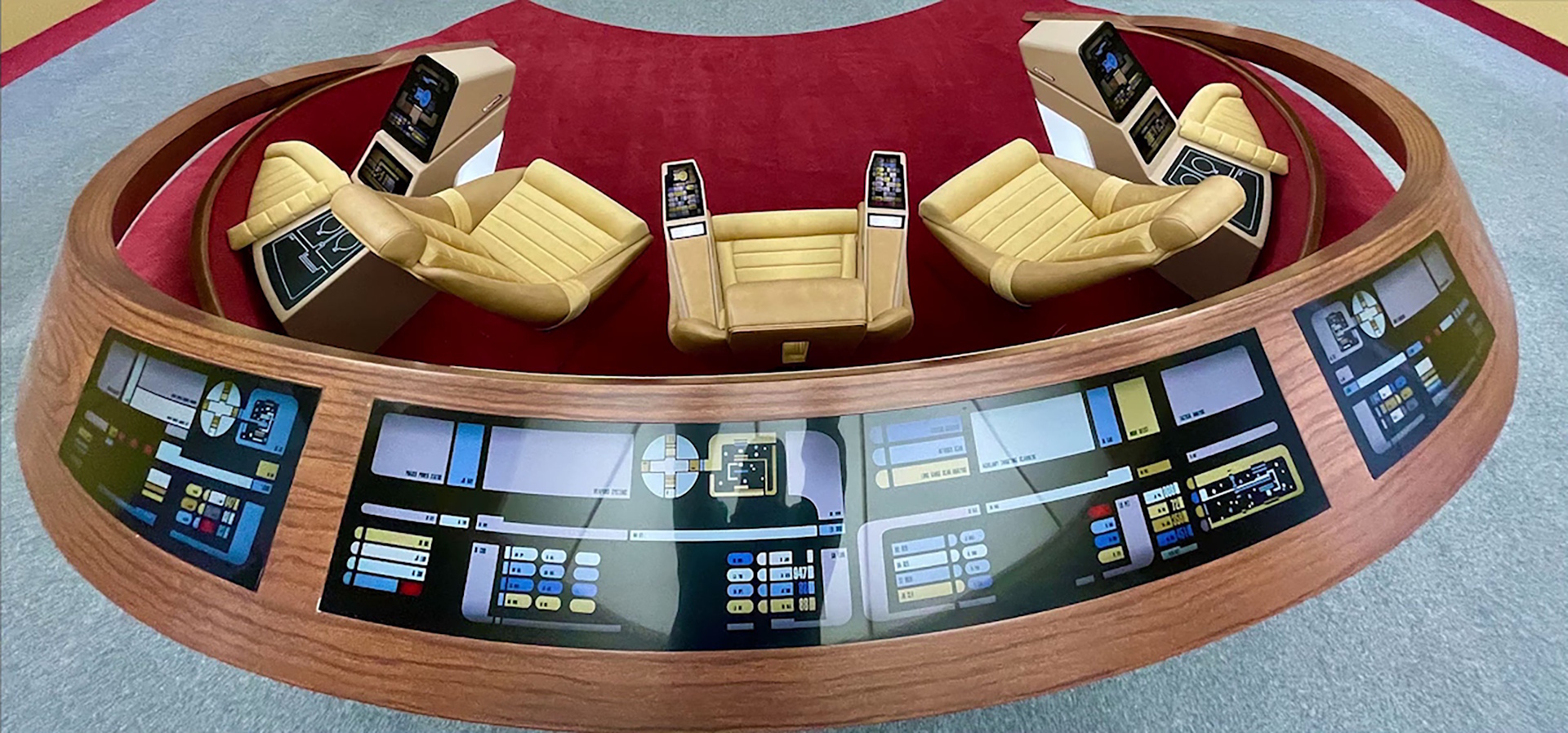
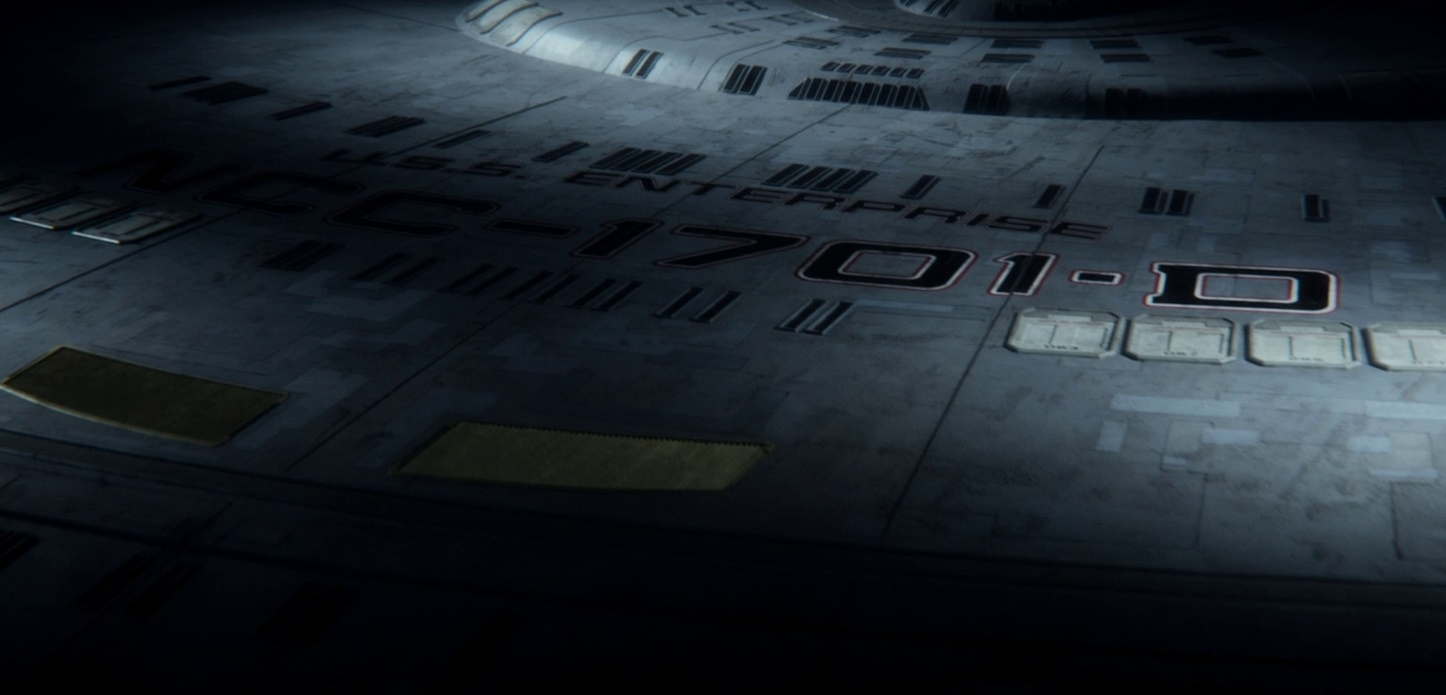
Behind-the-scenes photo from Star Trek: Picard S3 showing the centre console and tactical station of the Enterprise-D.
The view from Worf’s console.

Now that Halloween is out of the way (and I’m closer to getting back to normal at home), there’s more Star Trek content to come here on the website. I’d like to get caught up with the Khan audio drama before too long, there may be more previews for Starfleet Academy coming up now that we know the series will debut in January, and I still have a couple of episode re-watches that I want to write up involving actors I met at a recent Star Trek convention.

I hope you’ll join me in the days and weeks ahead for some of those pieces. Until then… Live Long and Prosper, friends!


Most of the Star Trek franchise – including films and television series discussed above – is available to stream on Paramount+ in countries and territories where the platform is available, and is also available on DVD and/or Blu-ray. The Star Trek franchise – including all properties discussed above – is the copyright of Skydance/Paramount. This article contains the thoughts and opinions of one person only and is not intended to cause any offence.
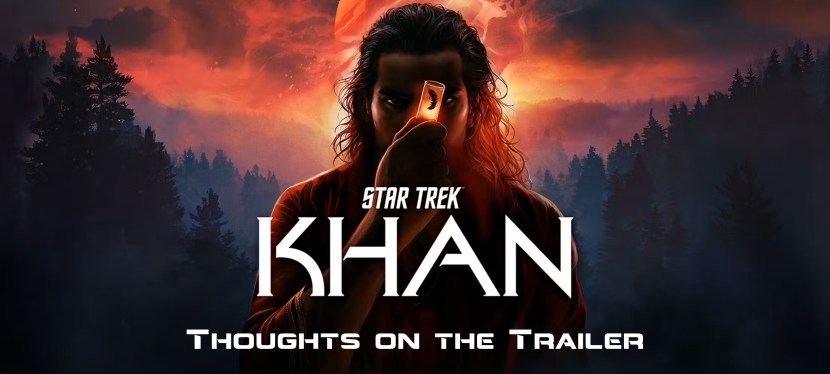
Star Trek: Khan – Thoughts on the Trailer

A Star Trek-themed spoiler warning.

Spoiler Warning: Beware potential spoilers for the upcoming Star Trek: Khan audio drama. Spoilers are also present for Space Seed, The Wrath of Khan, Into Darkness, Lower Decks, and Picard.

For a franchise which could be just a couple of years away from total cancellation, Star Trek had a lot to say at this year’s Comic-Con event! We’ve already covered the big Starfleet Academy news, which included a trailer and introductions to the main cast, as well as Year One – a pitch for a Strange New Worlds successor series. This time, we’re finally getting around to talking about Star Trek: Khan – an audio drama which will be released next month.

This is Star Trek’s first ever official audio drama – billed, for some reason, as a “scripted podcast.” I’m calling it an audio drama (because that’s what seems to be the best fit) but you might also consider it akin to a radio play or even an audiobook. In any case, it’s audio only – which is something new for Star Trek. Obviously there have been Star Trek audiobooks before, and there are fan-made audio dramas, too. But this is the first time Paramount has really pushed a brand-new Star Trek story in this format, and it’s an interesting choice.

Still frame from the Star Trek: Khan trailer showing the audio drama's title.
Khan is coming soon!

Obviously the main factor here is money. Nicholas Meyer – who originally pitched this idea a few years ago – envisioned it as a miniseries, which is also a format Star Trek doesn’t have much experience with. Even if you aren’t sold on Star Trek: Khan as a concept, I still think there’s merit in the miniseries approach, and I’d hope it’s something Skydance/Paramount might consider in the future if and when a suitable story comes along. If Khan is a success, perhaps more audio dramas will be in the offing, too.

It’s been a while since we talked about this project, so let me bring you up to speed. Khan is set on the planet Ceti Alpha V in between the events of Space Seed – in which Khan awoke in the 23rd Century after years in suspended animation – and The Wrath of Khan. When the project was still little more than a rumour, I discussed it here on the website. This was in early 2021, and I said then that I felt this project – which was going by the working title Ceti Alpha V – looked set to tell the least-interesting chapter of Khan’s life. What could we learn from this story that we didn’t already know or couldn’t reasonably infer from Space Seed, The Wrath of Khan, and even Khan’s appearance in Into Darkness?

Still frame from Star Trek II: The Wrath of Khan showing Khan and his crew on the bridge of the USS Reliant.
Khan with his crew in The Wrath of Khan.

When Khan switched from being a televised miniseries to an audio drama… I felt that was probably for the best. At Paramount’s “Star Trek Day” event in 2022, Nicholas Meyer took to the stage to announce that his project had been reworked into an audio drama. And I noted at the time that he didn’t exactly seem thrilled about that! Maybe I’m reading too much into this, but I noted in the Khan trailer that Meyer is no longer credited as one of the podcast’s writers, instead simply getting a “based on a story by” credit. Maybe Meyer was disappointed that his Ceti Alpha V idea didn’t proceed on television as he’d hoped. Or maybe changes were made to his original idea – which I doubt would’ve included Sulu and Tuvok!

In any case, Nicholas Meyer’s core idea is going ahead, but not in the format he intended and not with a script he penned. Personally, I think that’s worth being aware of; Meyer is a Star Trek legend. He wrote The Wrath of Khan, The Undiscovered Country, and also worked on The Voyage Home – three of the films fans rate most highly. It’s quite possible that, without Meyer’s work on The Wrath of Khan in particular, Star Trek would have struggled in the 1980s – and the franchise as we know it could very well not exist today. So to know that he had a script written, but his work has been changed substantially enough that he’s no longer credited as a writer… it gives me pause, at least.

Still frame from Paramount's Star Trek Day 2022 broadcast showing Nicholas Meyer announcing Star Trek: Khan.
Nicholas Meyer in 2022.

Let’s be positive, though, and talk about some of the things from the Khan trailer that I actually found interesting!

Firstly, the idea of a frame narrative is a fun one – and it’s also something that, because of the characters involved, could really only work in this audio format. Well alright, I guess it would’ve worked in animation, too! But bringing back George Takei to voice Sulu and Tim Russ to play Spock, with the frame narrative presumably set aboard the Excelsior… that’s a really fun idea. Both Takei and Russ have been back in modern Star Trek; Takei reprised his role of Sulu in Lower Decks, and Russ played a significant role in Season 3 of Picard.

I often see fans lamenting that we don’t know much about Star Trek’s “lost era;” i.e. the years in between The Undiscovered Country and The Next Generation. While probably right at the beginning of that time period, it seems as if Khan’s frame narrative will be set in the “lost era,” which is something kind of neat. I doubt we’ll get much of an exploration of the wider state of the galaxy! But it’s still nice to see a project being potentially set after The Undiscovered Country.

A graphic of the USS Excelsior's MSD.
Parts of Khan will be set aboard the Excelsior during Sulu’s time in the captain’s chair.

Tuvok’s inclusion is also a pretty deep cut to a single Star Trek episode! In 1996, Flashback was one of two stories created to celebrate Star Trek’s thirtieth anniversary. It delved into Tuvok’s backstory, depicting his time serving under Captain Sulu’s command aboard the USS Excelsior, and it was a pretty fun crossover. We got to see an expanded role for Janice Rand, picking up her story aboard the Excelsior, too, and another character from The Undiscovered Country – Dimitri Valtane. Though its “memory virus” storyline wasn’t the strongest, it’s still a fun episode, and we got to see some interaction between Tuvok and Sulu, as well as a brief moment with Janeway and Sulu, too.

It makes me feel so incredibly old to think that the 30th anniversary celebrations were almost 30 years ago! But I’m glad that Star Trek’s writers and creatives haven’t forgotten about Flashback; it’s a fun way to return to this era, an unexpected pair of legacy characters to include in a story like this one, and it might just give us a bit more information about Sulu’s time in the captain’s chair. I really like this part of Khan, even though it likely won’t be in focus all that much.

Promotional photo for Star Trek: Voyager Season 3, showing Rand, Sulu, Janeway, and Tuvok.
Promo photo released for Flashback in 1996.

Sulu was present, of course, during the events of Space Seed and The Wrath of Khan, which makes his inclusion here a neat little thread of continuity. Takei first played Sulu all the way back in 1966; to think he’s still involved with the character – and the Star Trek franchise – all these years later… it’s fun and also exceptionally sweet. Fans have been asking to see more of Captain Sulu for a long time; I remember on message boards and forums in the 1990s, a “Captain Sulu show” was often brought up as fans discussed fantasy Star Trek projects. Obviously Khan isn’t the same, but it’s not a million miles away, either, thanks to Takei’s involvement.

This is also potentially one of the last Star Trek projects to include a significant role for a performer from The Original Series, and I think we should acknowledge that. We’ve had Walter Koenig’s voice in Picard, archival recordings of a few characters in Short Treks and Prodigy, and Takei in Lower Decks as previously noted. But time moves ever onwards, and these opportunities are becoming scarce. Whether we ultimately like or dislike Khan, I think we can at least appreciate George Takei’s involvement and that we got one more adventure with Hikaru Sulu.

Still frame from the Star Trek: Khan trailer showing Sulu.
We’re getting one more adventure with Captain Sulu.

Naveen Andrews, best-known for his role on the TV series Lost, will take on the role of Khan. And this could be one of the best casting decisions in a long time! Andrews is a fantastic actor, and while we didn’t hear that much from him in the trailer, what little there was sounded fantastic. This feels like a truly inspired casting decision, and whatever the story may ultimately be, I’m certain that Naveen Andrews’ portrayal is going to be one of the highlights.

So there are positives as we look ahead to Khan’s release next month. Revisiting Sulu, entering the “lost era,” Tuvok’s return, and getting a new take on an iconic character by a fantastic actor… those are all points in the production’s favour. I also like the idea of Star Trek leaning into audio dramas and different kinds of projects as a way to potentially keep the franchise alive in the years ahead. If there isn’t the budget to commit to a full TV show or film, a radio play like this could be a great option to preserve Star Trek and ensure new stories are still able to be produced.

Still frame from the Star Trek: Khan trailer showing Khan holding a Ceti eel.
Khan with a Ceti Eel.

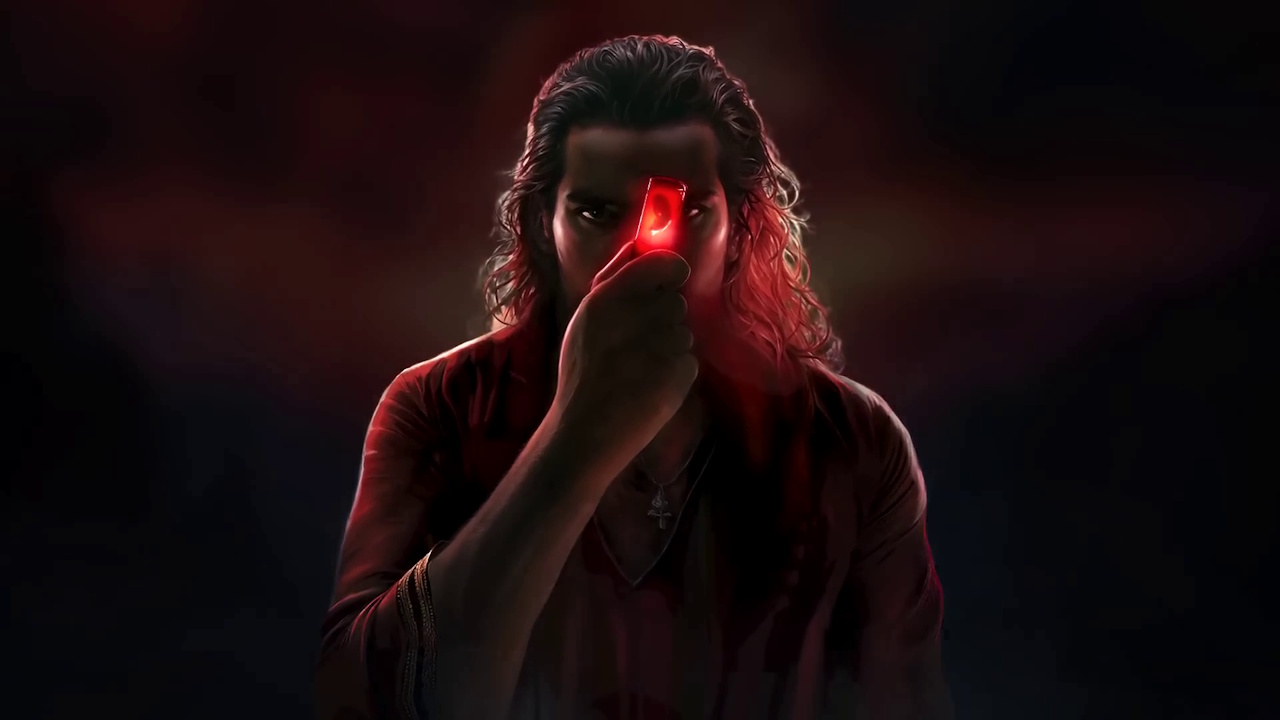
The main image shown off in the trailer – which looks like it could also be the “cover art” for the podcast – shows Khan holding a small vial. Inside that container is what looks like a small Ceti eel – the mind-controlling earwig-like creatures that Khan used on Chekov and Captain Terrell in The Wrath of Khan. The film made it clear that Khan already knew all about these creatures, so perhaps part of the audio drama will depict Khan and his crew studying them.

Not every alien in Star Trek requires a deep dive, and as with Khan himself, I think we know enough about the Ceti eels from the film to understand what they are, how they operate, and why Khan would be so fascinated by them! But I’m always up for an exploration of Star Trek’s alien life, and perhaps there could be a way to connect Khan’s time on Ceti Alpha V and/or the Ceti eels to other parts of Star Trek. Making those kinds of connections could be fun, and just exploring the anatomy of the Ceti eels could also be interesting if it’s handled well.

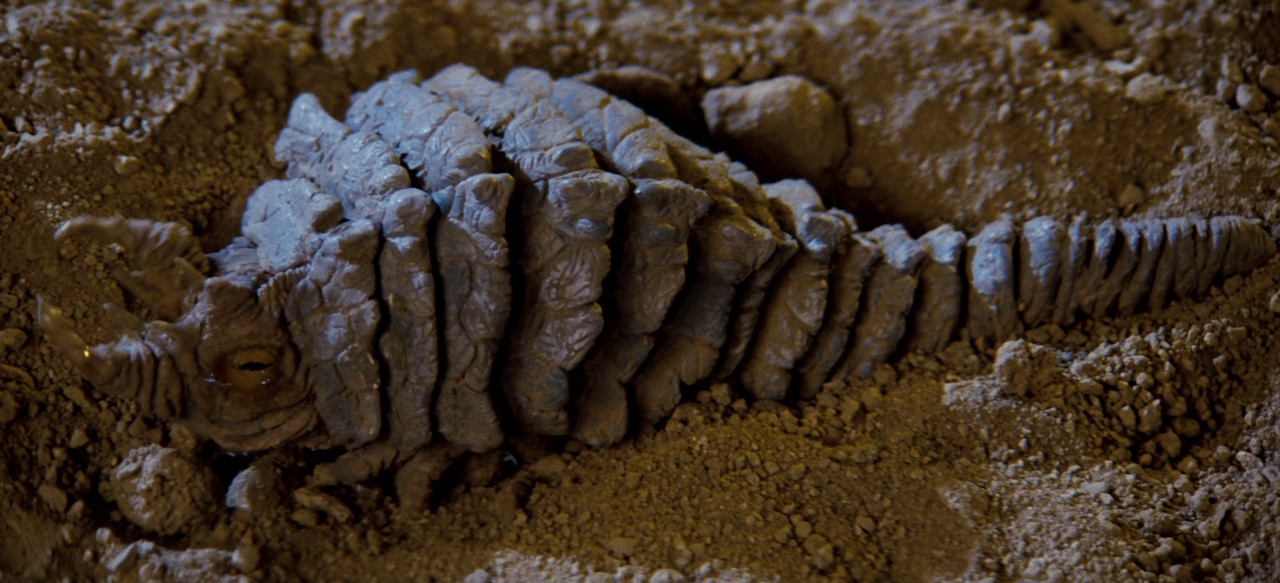
Still frame from Star Trek II: The Wrath of Khan showing a Ceti eel.
A Ceti eel as seen in The Wrath of Khan.

With all of that being said, nothing in the Khan trailer really convinced me that I was wrong in my earlier assessment: that this audio drama won’t be telling the least-interesting chapter of a story where we’ve already seen the beginning, the end, a prequel, a reimagining, and basically all of the good parts. There’s a real danger that what we’ll get will be akin to the Obi-Wan Kenobi miniseries over in the Star Wars franchise: the absolute worst kind of tacked-on story that feels like cheap fan-fiction. Khan could, perhaps, even prove harmful to Space Seed and The Wrath of Khan if – just as an example – we get some kind of storyline that sees Khan leave the planet, track down Kirk, and battle him in a one-on-one duel.

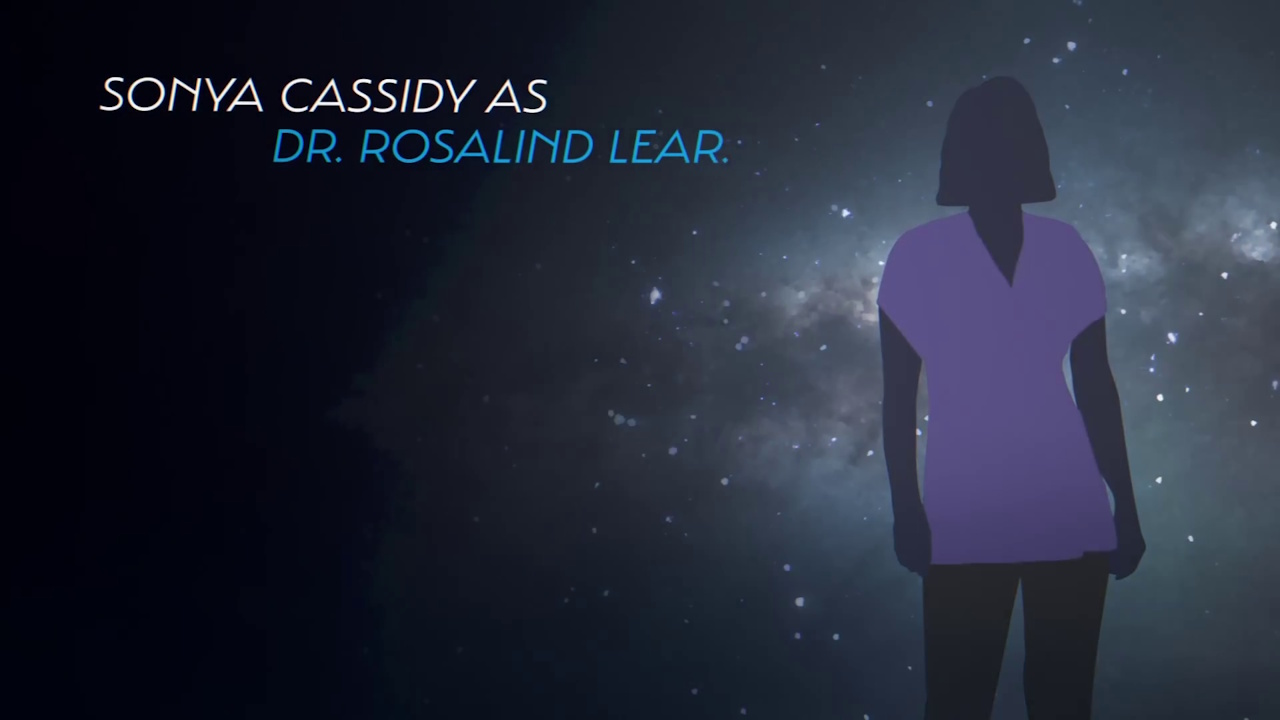
Furthermore, the trailer added another element which I hadn’t previously considered could be part of a Khan story, and it’s really making me concerned. In the trailer, the new character of Dr Lear says that “the logs I retrieved on Ceti Alpha V only confirm my belief that Khan was much more than a mad tyrant.” But… Khan *is* a mad tyrant; that’s who he is. He’s a narrative warning against eugenics and genetic engineering by showing how badly wrong it could go. And in 2025, when we’re seriously considering the possibilities of artificial intelligence and inventing a sentient life-form that could be intellectually superior to humanity… there’s a message in Khan’s story that’s still incredibly relevant.

Still frame from the Star Trek: Khan trailer showing a quote from Dr Lear.
This statement from Dr Lear has me concerned…

I’m worried that Khan will go out of its way to humanise this villainous character – and in doing so, rob him of what made him so powerful, so intimidating, and such a good character in the first place. We don’t need a story about how Khan was actually a misunderstood “nice guy” who just wanted what’s best for his friends. Maybe that’s how Khan saw himself, in part, but it isn’t how we as the audience need to see him. And we don’t need a story told partly from his perspective to understand who he is, how he thinks, or why he behaved the way he did. All of the necessary pieces to understand Khan were present in Space Seed and The Wrath of Khan, and were added to on somewhat in Into Darkness.

It can be fun, sometimes, to flip the script and look at things from the villain’s point-of-view. And some Star Trek stories are all about that – presenting the Federation as being in the wrong, showing why hostile aliens act the way they do, and so on. That’s been present going all the way back to The Original Series. But some villains are just villains – and trying to soften them, present their side of the story, or show them as being “in the right” ruins not only the character, but the story, too. And I am genuinely worried that this attempt to present Khan as a more complex, nuanced, and dare I suggest human individual won’t actually add much to Star Trek – and risks seriously undermining one of its best stories.

Still frame from Star Trek II: The Wrath of Khan showing the Enterprise during the battle in the nebula.
The Enterprise in The Wrath of Khan.

This was always going to be a potential pitfall – and it’s one of the reasons why I was never keen on the Khan idea when it was first pitched. But hearing this new character in the trailer talking about there being “more to the story,” and how Khan was “so much more” than what we’ve seen… it’s really making me nervous about the direction the audio drama is going to take. If Dr Lear ends up as a kind of villain – perhaps someone who’s fallen for Khan’s posthumous propaganda – then maybe we can look on this narrative thread more kindly. But if the story’s going to try to present Khan sympathetically, and Dr Lear as being right about him all along… where does that leave Tuvok and Sulu?

I doubt a lot of Trekkies would be thrilled if Sulu’s return is turned into some kind of story about how *he’s* the one in the wrong, how he and Tuvok unfairly judged Khan, and how Khan was really just a big misunderstood cuddle-buddy. That… that wouldn’t be great. And while I could be completely wrong, the tone of the trailer – and Dr Lear’s comments in particular – seem to be hinting at a story which could go in that kind of direction.

Still frame from the Star Trek: Khan trailer showing Dr Lear.
Dr Lear is a new character created for Khan.

What I will say on that side of things, though, is that Starfleet does bear some responsibility for what happened to Khan and the Botany Bay survivors. After marooning them on Ceti Alpha V, it seems as if Starfleet just abandoned them to their fate. Worse, Starfleet doesn’t even seem to have kept proper records of the Ceti Alpha system, despite the dangers Khan and his augments were known to pose. How else do we explain the crew of the USS Reliant being totally unaware of the Botany Bay until after beaming down to Ceti Alpha V? In the eighteen years Khan and his people were stranded, not one Starfleet vessel visited to check up on them.

If there’s any room for nuance in Khan’s story, it’s here. Starfleet was either incompetent or downright malicious in its treatment of Khan and his people, stranding them on a hostile planet – uninhabited by sentient life, yes, but with a complete ecological system of its own – and then abandoning them. No one cared enough to check in on them, even though surely the Ceti Alpha system was close enough to Federation space that something as major as the destruction of an entire planet would have been noticed.

(Speaking of which, why could no one aboard the USS Reliant count to six?)

Still frame from Star Trek II: The Wrath of Khan showing two Starfleet officers on the bridge of their ship.
Captain Terrell with the USS Reliant’s science officer.

Then there’s Kirk’s role. The trailer mentioned Kirk by name – though he better not actually appear in the production; god help us if he does – and I guess we’re going to see more of Khan’s revenge obsession in the years before The Wrath of Khan. If we take our criticism of Starfleet and pin it on one person, could this audio drama focus in on Kirk’s role? Maybe Kirk neglected to tell Starfleet about Khan and what happened during Space Seed. Maybe no one except for the Enterprise crew ever knew that the augments were marooned there. If that’s the case, maybe Khan’s desire for revenge takes on a slightly different feel. If Kirk had logged what happened correctly, maybe someone would have swung by the Ceti Alpha system to check on Khan.

That’s just a theory, though I think it shows how difficult it may prove to thread the needle on this kind of “mid-quel” story. Anything we learn about Khan, Kirk, or anyone else has to fit with Space Seed and The Wrath of Khan, and mustn’t tread on their toes. That’s not an easy thing to do… and there are examples from other franchises – and from within Star Trek – showing just how badly things can go wrong when attempting this kind of story.

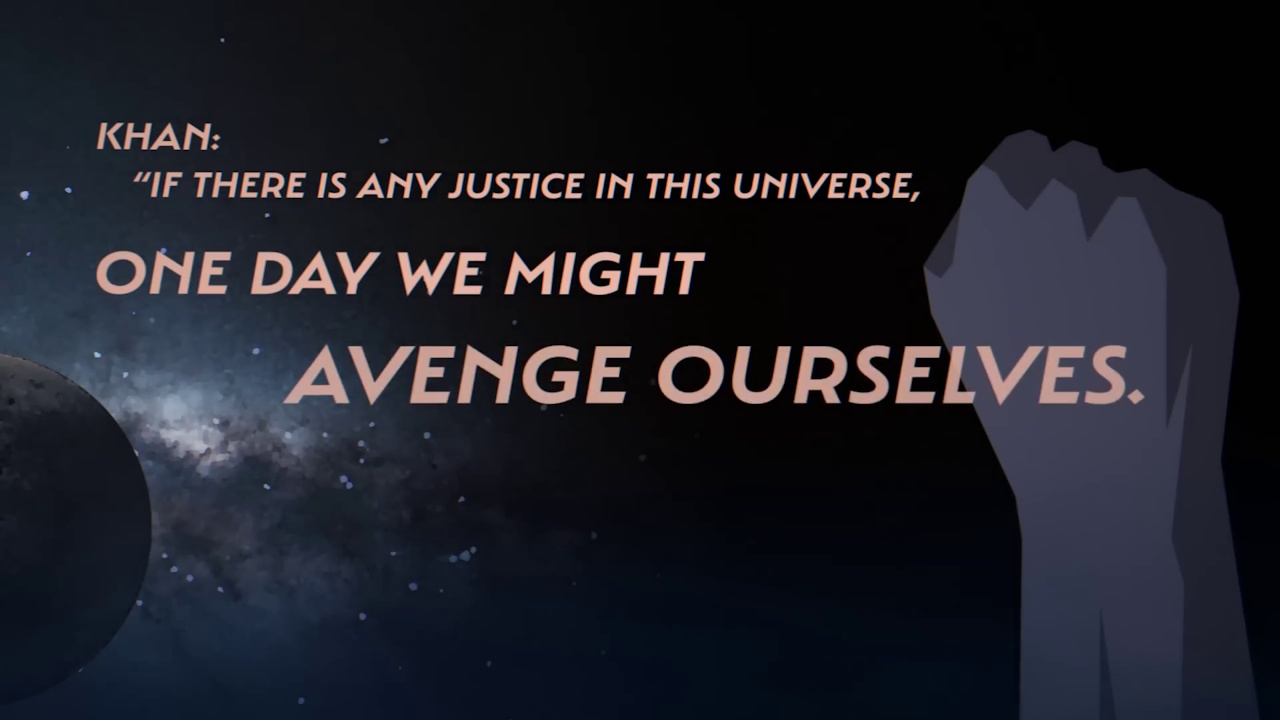
Still frame from the Star Trek: Khan trailer showing a quote from Khan and a raised fist.
Khan wants revenge on Captain Kirk. Who would’ve guessed?

Returning to Dr Lear, her statement that “monsters are made, not born” is another line I’m concerned about. This ties into what we were talking about; how the story could be an attempt to show Khan’s perspective and how Starfleet and Kirk were the ones in the wrong. Obviously Khan believes that – we knew that during The Wrath of Khan. But do we actually need a full audio drama dedicated to explaining that idea in more detail? And can it be done without detracting from Khan’s characterisation in those earlier stories? I’m afraid I’m still not convinced.

So let’s wrap things up.

Star Trek: Khan will premiere on the 8th of September – Star Trek Day. It’ll run for nine episodes, with the finale airing in early November. I plan to tune in, even though I’m not really sold on the premise, nor on some of what we saw in the trailer. At this stage, I don’t intend to review individual episodes, but I’ll hopefully be able to write up a review of the full audio drama once it’s aired. Check back in November for that!

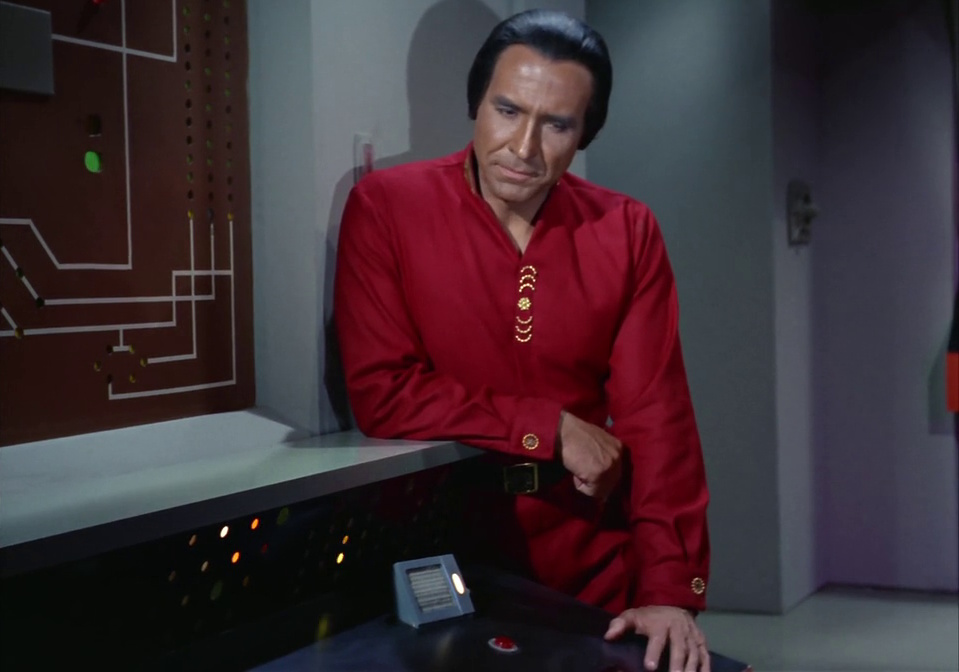
Still frame from Star Trek: TOS 1x22: Space Seed showing Khan in engineering.
Khan in Space Seed.

I wouldn’t have given the green light to this project, either in this audio form or as its original miniseries pitch. But I’m not writing it off just yet, and there are reasons to be hopeful… or at least a bit less pessimistic! I often say that “no one asked for this” is a terrible argument, and often the best productions are those that “no one” seemed to be interested in at first. It’s with that attitude that I plan to approach Star Trek: Khan, and I’ll do my best to give it a fair shake despite my misgivings.

I hope this has been interesting! I think we’ve finally covered all of the big Comic-Con news, now. If you haven’t checked in for a while, I’m back to writing weekly Strange New Worlds episode reviews – we’re almost halfway through Season 3 already, if you can believe that! And there’s more Star Trek content to come here on the website in the weeks ahead.

See you on Ceti Alpha V!


Star Trek: Khan will premiere as a scripted podcast/audio drama on multiple podcast platforms on the 8th of September 2025, with further episodes to follow weekly. Star Trek: Khan, and all other properties discussed above, are the copyright of CBS Studios, Paramount Global, and/or Skydance. This article contains the thoughts and opinions of one person only and is not intended to cause any offence.
Star Trek Films: My Tier List

A spoiler warning graphic.

Spoiler Warning: There are spoilers ahead for all fourteen Star Trek films, including Section 31.

Almost five years ago, I put all of the Star Trek films into a ranked list. I talked about what I liked and didn’t like about each, and tried to justify my choices! But since I wrote that list, a couple of things have happened. Firstly, I’ve gotten better at using images here on the website – that old piece looks pretty janky in comparison to some of my more recent articles. But secondly – and way more importantly – there’s been a new Star Trek film since then!

I think Trekkies are still a little divided on whether the made-for-streaming Section 31 should count as a Star Trek “film,” and I get that. But for me, Section 31 has the runtime of an (admittedly rather short) film, it’s not a series, miniseries, or anything like that, it has mostly original characters, and it was afforded a higher budget than any individual Star Trek episode would’ve been. For all intents and purposes, Section 31 counts as the newest Star Trek film – the fourteenth since 1979… and hopefully not the last!

Promo photo of Star Trek: Section 31 showing Quasi.
Section 31 is the most recent Star Trek film, and it’s on this list!

So today, I’m going to revisit the Star Trek films, this time using the internet-friendly tier list format that you might’ve seen on a couple of other occasions here on the website! I think most folks have a vague idea about tier lists at this point – but if you don’t, I’ll happily explain how it works.

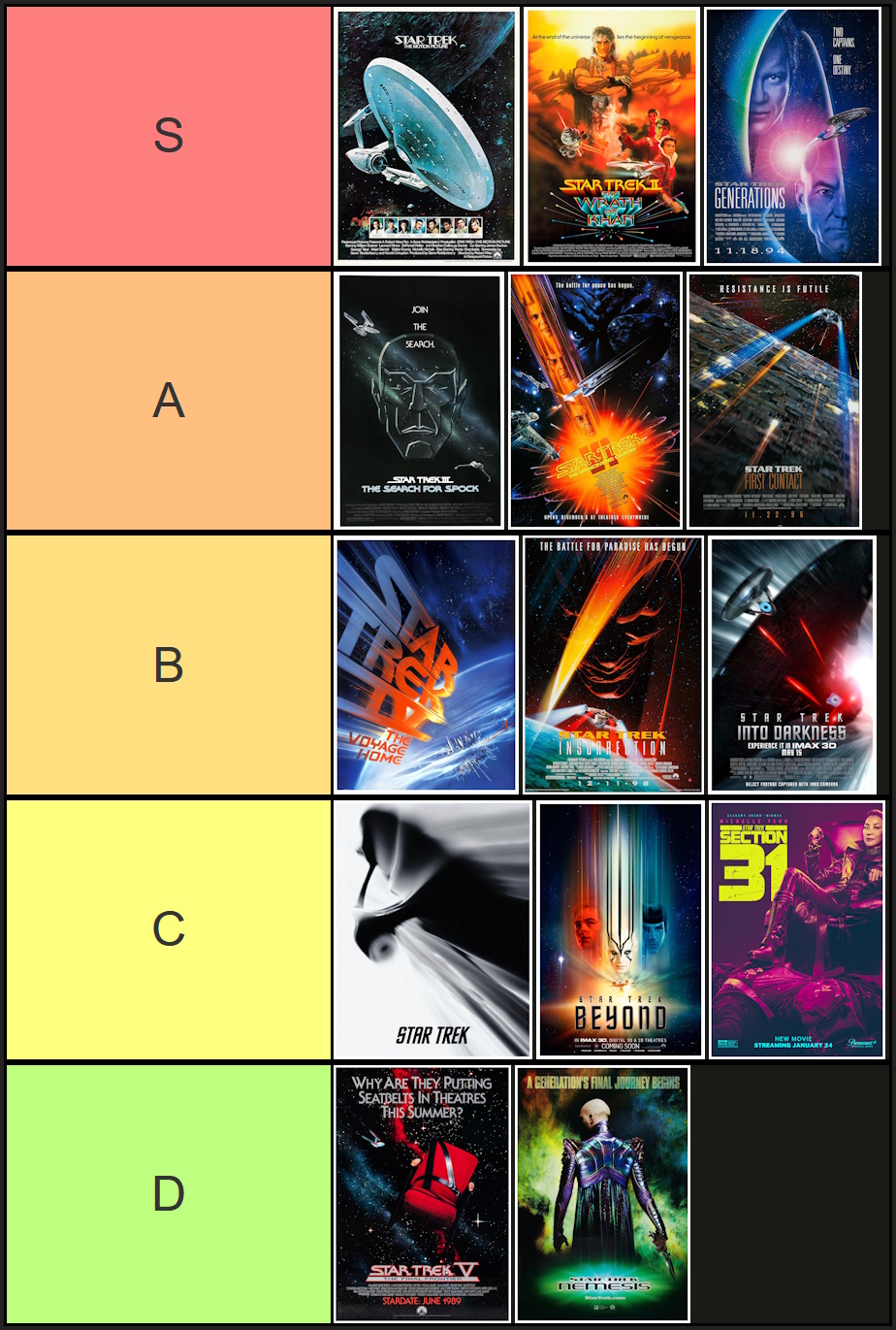
Instead of giving each film a number from 1-14, which would be hard, we’re going to assign each film one of five tiers: D, C, B, A, and S. D-tier films are the least-enjoyable with noticeable flaws, C-tier titles are average or “just okay,” B-tier films are a step up, being above average, A-tier titles are getting really good, and S-tier is reserved for the absolute cream of the crop! Why is S-tier the top instead of A or something like A-plus? The truth is… I don’t know! But that’s the way everyone else does it, so I’m sticking with it! Some tier lists also include an F-tier for absolute disasters, but since I don’t consider any of the fourteen Star Trek films to be that bad, I’ve opted not to include it on this occasion.

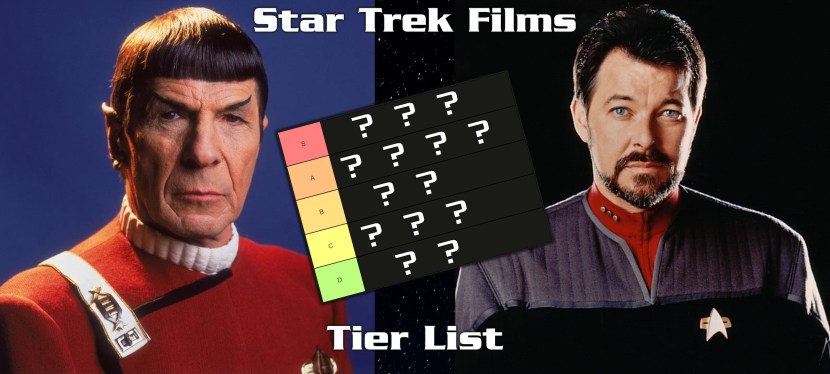
A tier list with ranks S through D and fourteen question marks where the entries would be.
Let’s fill out this blank tier list together!

Now that the explanation of the format is out of the way, a handful of important caveats!

Firstly, all of this is subjective, not objective. There is no “objectively best” Star Trek film, and even within the fan community opinions vary wildly on which titles are better and what makes for a good Star Trek story. So if I rank a title you hate highly or speak ill of your favourite… that’s okay! There ought to be enough room in the fan community for civil conversations and polite disagreement.

Secondly, this piece supersedes my old film ranking list, and I have made a couple of changes to where films were ranked five years ago. I’ll be leaving the old piece as it is, though – it’s a part of the website and it would be silly to delete it! But going forward, this is the official Trekking with Dennis Star Trek films tier list!

Still frame from Star Trek: The Motion Picture showing the assembled crew.
Admiral Kirk addressing his crew in The Motion Picture.

Third, I’ll rank each production in order of release, beginning with The Motion Picture and finishing with Section 31. Then I’ll show you the final tier list at the end. I’ll do my best to explain what I liked and/or didn’t like about each title to justify my ranking – but please feel free to vehemently disagree if you like!

Finally, all of this is just for fun! I like writing, I like Star Trek, and finding an excuse to talk about some of the Star Trek films that I love – or that I haven’t seen in a while – is supposed to be a bit of escapism. Nothing about this should be taken too seriously, because the point of Star Trek for me has always been entertainment and escaping to a fun vision of the future.

With all of that out of the way, let’s begin.

Film #1:
The Motion Picture (1979)
Tier: S

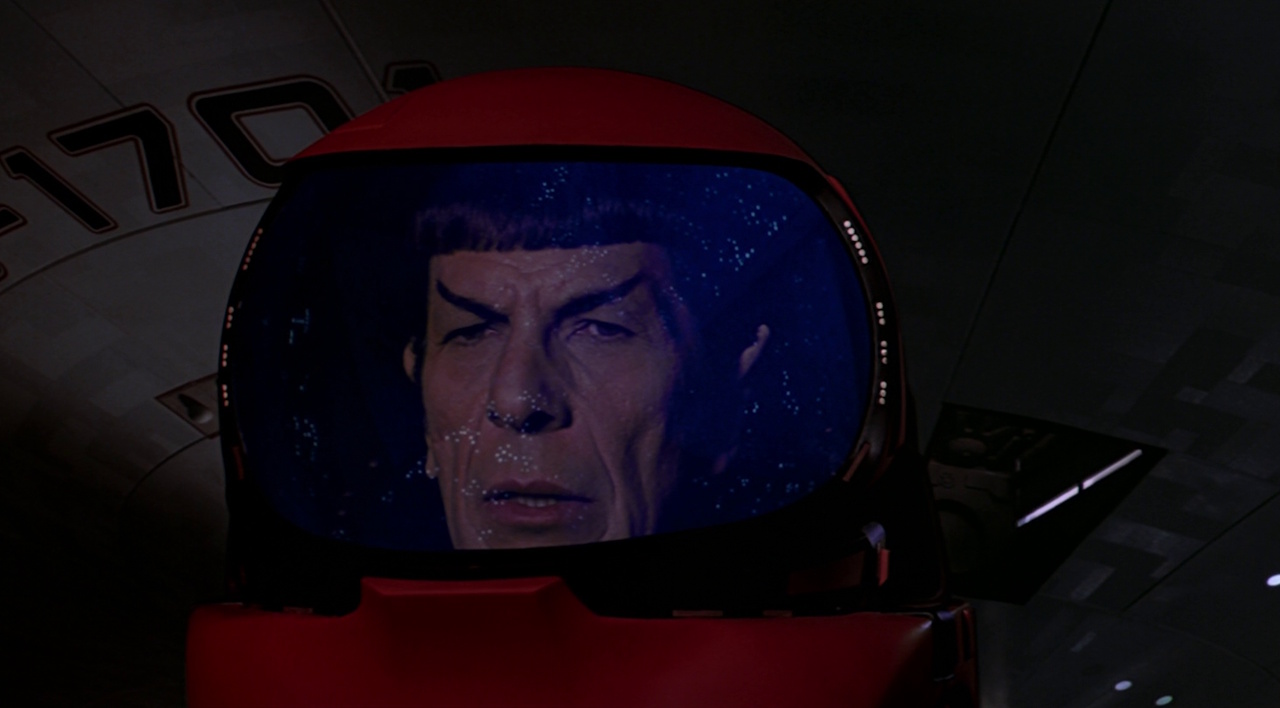
Still frame from Star Trek: The Motion Picture showing Spock in a space suit.

The Motion Picture had a complicated production history! It was originally envisioned as a television series, bringing Star Trek back as Phase II in the late 1970s after re-runs of The Original Series had been growing in popularity. Actors had been cast, sets were being designed, and scripts were written… but then, in 1977, another sci-fi film’s wild success led to Phase II being reimagined as a feature film. Star Trek as a cinematic franchise was born!

In my experience, Trekkies tend to underrate and underappreciate The Motion Picture. In a very literal sense, much of the visual language of Star Trek was born here, not in 1966: metal Starfleet badges, the warp core as an upright glowing tube, angled corridors, Starfleet Headquarters, the re-designed Klingons… and so much more. Sets built for The Motion Picture would remain in continuous use all the way through Enterprise’s cancellation in 2005, defining what makes Star Trek look like Star Trek for millions of viewers.

Still frame from Star Trek: The Motion Picture showing Admiral Kirk in a hallway.

The Motion Picture also has one of what I consider to be the best starship introductions in the franchise – something that set the bar for other shows! Kirk and Scotty’s shuttlepod flight to the refit Enterprise – complete with Jerry Goldsmith’s Academy Award-nominated score – is beautiful, and I get teary-eyed every time I watch it. It’s one of the best moments in Star Trek for me, and everything about it is pitch-perfect.

I get that The Motion Picture’s main story isn’t for everyone. It was also a bit of a mess, with re-writes continuing even during filming, and that probably didn’t help. But for me, The Motion Picture plays out like an extended episode of The Original Series. It’s ethereal, thought-provoking, and not overladen with fast-paced action set-pieces. I think that’s to the film’s credit, even if many don’t agree.

I have a longer piece about The Motion Picture, written in 2019 to mark the film’s 40th anniversary. You can find it by clicking or tapping here.

Film #2:
The Wrath of Khan (1982)
Tier: S

Still frame from Star Trek II: The Wrath of Khan showing a close-up of Khan.

For many folks, The Wrath of Khan is still the Star Trek franchise’s high-water mark; a film that no other in the franchise has even come close to. I wouldn’t go that far personally – I think there are a couple of other equally brilliant films, as we’ll talk about in a moment – but The Wrath of Khan is definitely up there! The mix of sci-fi with high-octane action proved to be a perfect blend for Kirk and the crew, with a vengeance-obsessed Khan becoming one of the best villains not only in Star Trek, but in all of cinema.

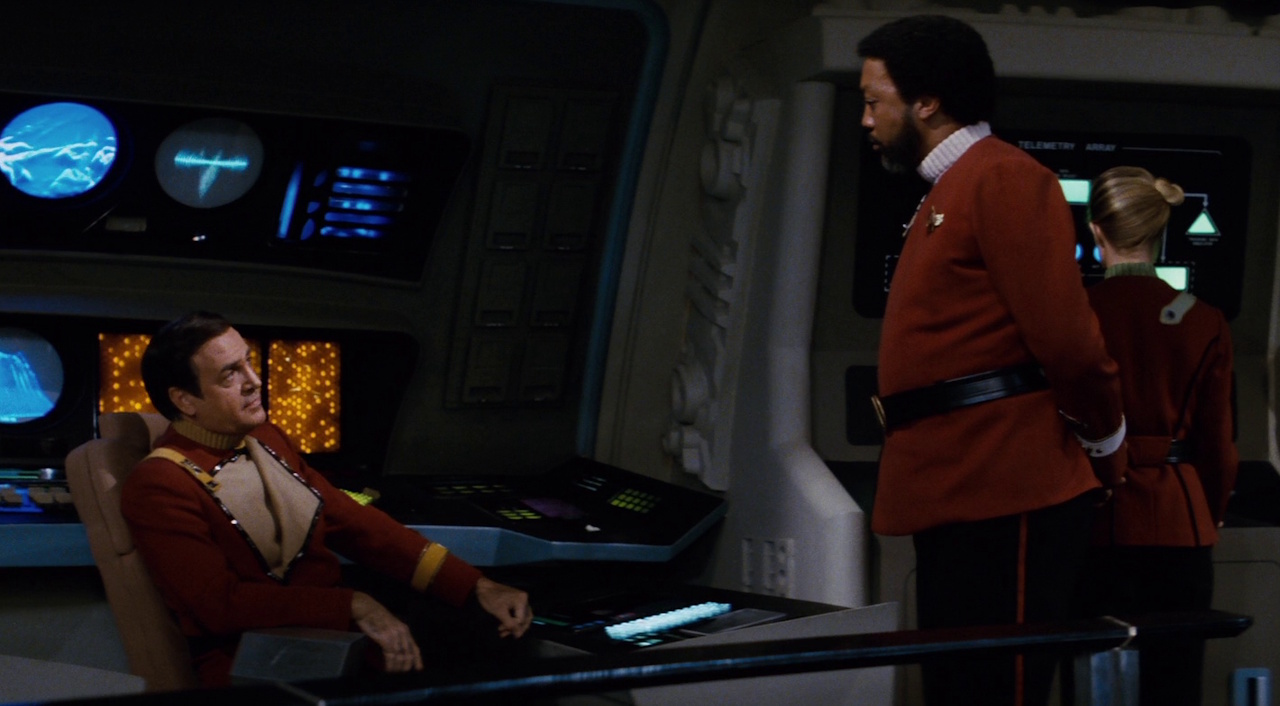
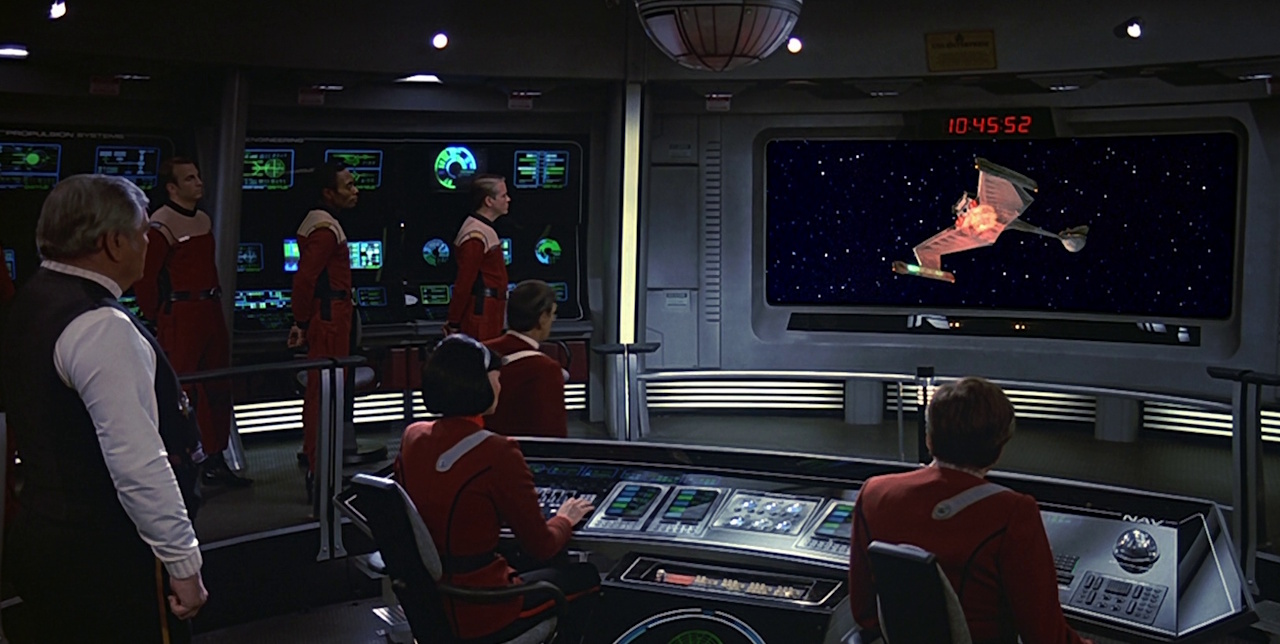
The Wrath of Khan has one of the best and most intense starship battles in the franchise. Drawing inspiration from submarine and naval battles in World War II films, the fight between the badly-damaged Enterprise and Khan’s USS Reliant is incredible. The sequence builds up tension masterfully – by showing the extent of the damage to the Enterprise, by robbing Kirk and Khan of their sensors in the nebula, and with Spock cleverly explaining Khan’s “two-dimensional thinking” as a way to convey the tactics of starship battles in a three-dimensional space.

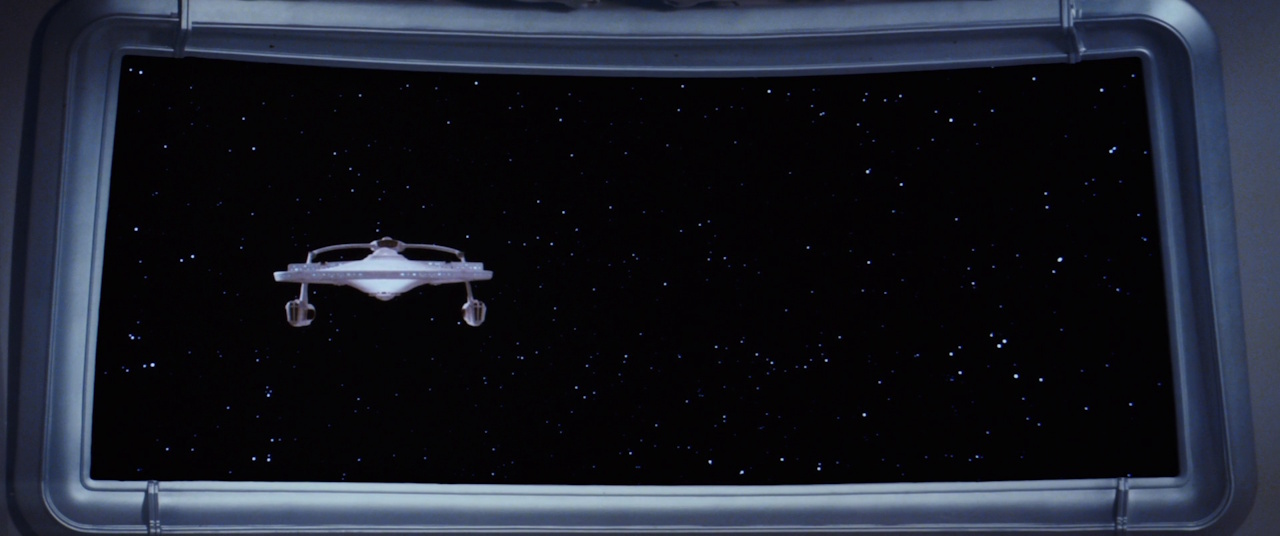
Still frame from Star Trek II: The Wrath of Khan showing the USS Reliant on the Enterprise's viewscreen.

Toward the end of The Wrath of Khan, we also get one of the most poignant and emotional moments in any film in the franchise… or really anywhere in the entirety of Star Trek, come to that. Spock’s death – sacrificing himself to save the Enterprise and his friends – really hits hard. Even though on my first viewing of The Wrath of Khan I already knew that Spock would be resurrected, there’s still a real emotional weight to this moment. Star Trek has attempted to do similar things with other characters (we’ll look at a couple further down the list) but none came close to matching this moment.

Ultimately, The Wrath of Khan was the first film to wrest control of Star Trek away from its creator, Gene Roddenberry, and to try new and different things with this cast of characters. It’s very different in tone and style from The Original Series, but that turned out to be a net positive for many fans – and many new fans, too. The Wrath of Khan firmly established Star Trek as a cinematic franchise.

Film #3:
The Search for Spock (1984)
Tier: A

Still frame from Star Trek III: The Search for Spock showing the surface of the Genesis Planet.

Sandwiched in between the ever-popular Wrath of Khan and the light-hearted Voyage Home, I think some folks can overlook The Search for Spock. As the middle part of a trilogy, the film has the difficult task of moving the story along but without being able to draw all of its story threads to a firm conclusion. For my money, though, it’s a great film – and it manages a complicated sci-fi story exceptionally well.

The Search for Spock gave us an extended look at the re-designed Klingons from The Motion Picture, and also introduced the Klingon Bird-of-Prey, arguably the faction’s most iconic spaceship. It’s the film which re-introduced the Klingons in a big way, expanded the Klingon language, and introduced starship and uniform designs that have become inseparable from the faction. The Klingon Empire as we know it would not be the same – and might not be a big part of Star Trek at all – without The Search for Spock and its main villain, Kruge.

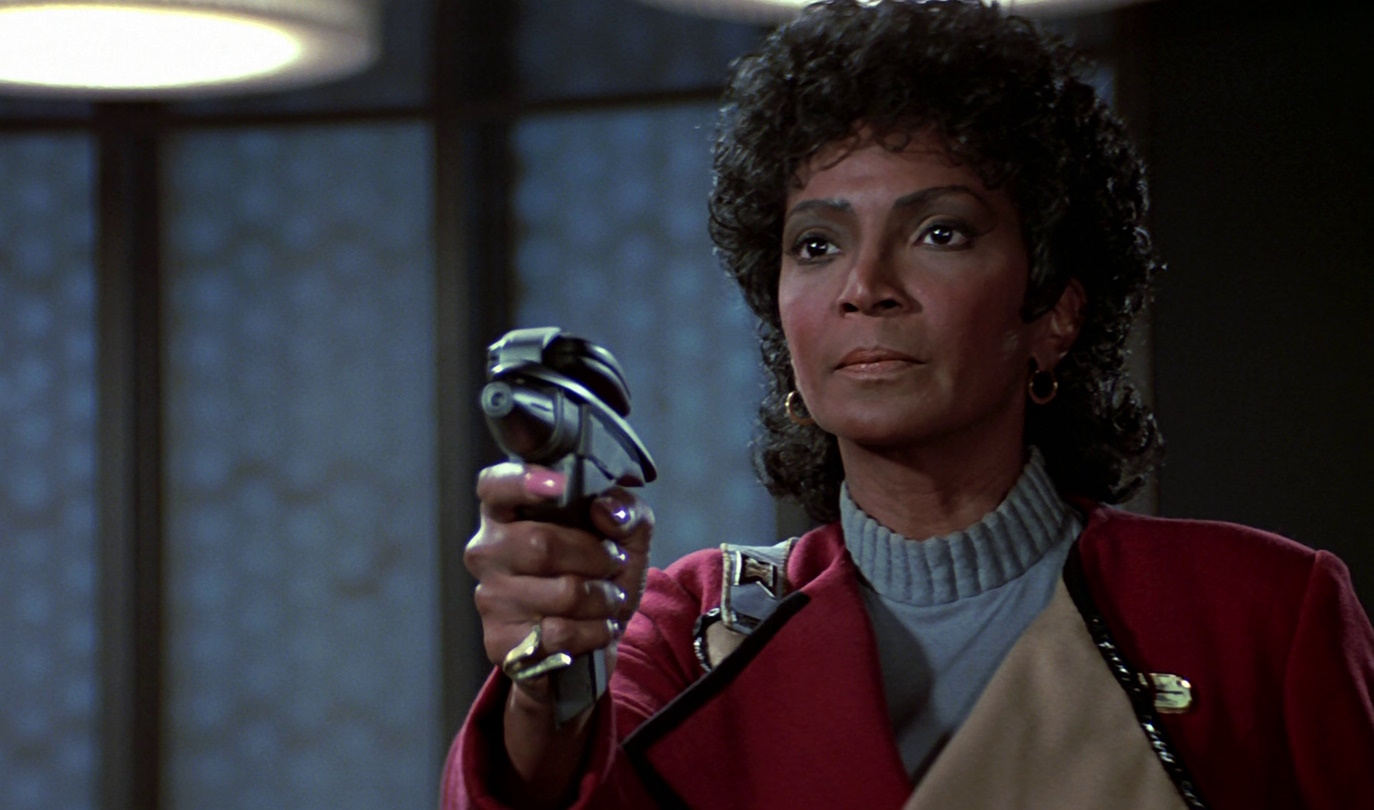
Still frame from Star Trek III: The Search for Spock showing Uhura wielding a phaser pistol.

I’ve always appreciated the design of the Genesis Planet. The story of its creation is a bit “out there,” even by Star Trek standards, but the practical sets, props, and puppets created to represent the Genesis Planet all feel like ’80s sci-fi at its best. And yes, as a child of the ’80s I’m acutely aware of my biases here! But when I compare the way that The Search for Spock looks to modern Star Trek, with its CGI and AR wall… I can’t help it. I know what I like!

As the film that destroyed the original USS Enterprise, The Search for Spock was always going to court controversy. But I don’t agree with the take that “all of the odd-numbered Star Trek films are bad,” lumping The Search for Spock in with The Final Frontier. There are some wonderful moments of characterisation for David Marcus, Kirk, Dr McCoy, and others. And thanks to the insistence of director Leonard Nimoy, all of the main cast members got moments in the spotlight.

I have a longer piece about The Search for Spock – which was the first Star Trek film I watched – and you can find it by clicking or tapping here.

Film #4:
The Voyage Home (1986)
Tier: B

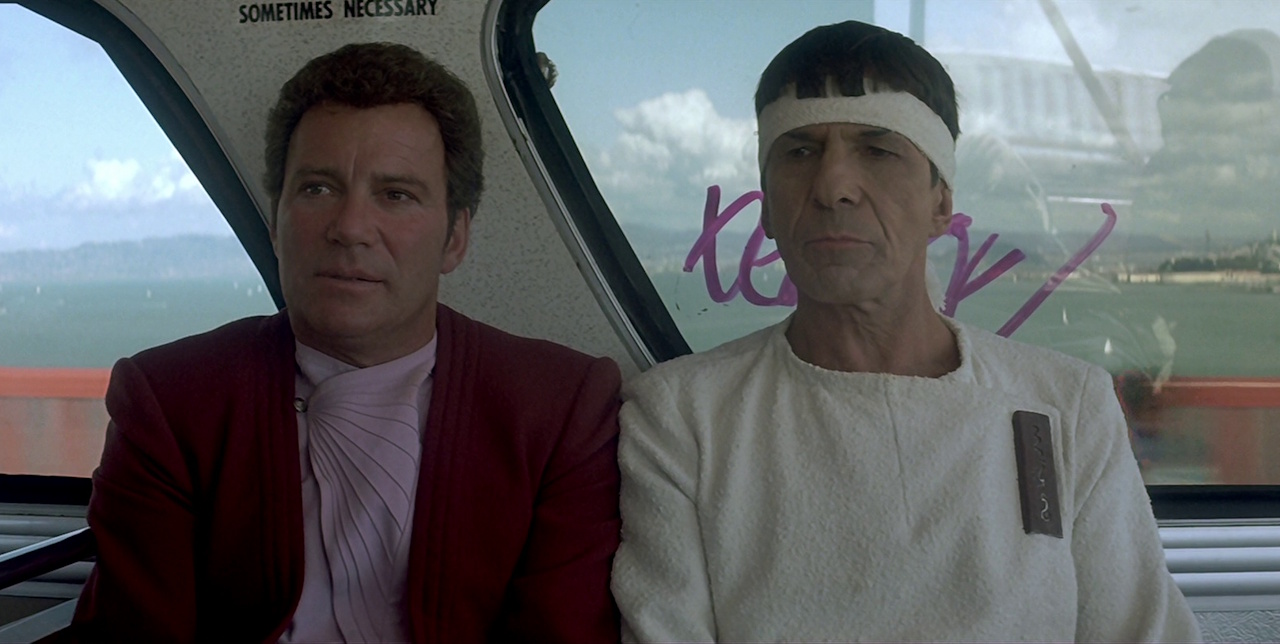
Still frame from Star Trek IV: The Voyage Home showing Kirk and Spock on a bus.

Maybe this is a “hot take,” but I’ve never been wild about The Voyage Home. As with similar Star Trek stories involving time travel to the modern day, its ’80s setting has left the film feeling so much more dated than any other in the cinematic franchise, and while I enjoy a good ’80s comedy as much as anyone else… it’s not necessarily what I want from a Star Trek film.

That being said, I don’t hate The Voyage Home by any stretch. It has some incredibly funny moments as Kirk and the crew attempt to navigate a time period that’s completely alien to them. Moments like Kirk asking if $100 is “a lot” of money, or Scotty trying to use a mouse to talk to a computer spring to mind as laugh-out-loud moments, and Spock having to cover his Vulcan ears to pass as a human is a fun look. Kirk and Spock’s confrontation with a punk on a city bus was also a hilarious moment.

Still frame from Star Trek IV: The Voyage Home showing HMS Bounty approaching the sun.

On the sci-fi side of things, I really like the design and power of the “whale probe.” I think it’s unintentionally one of the franchise’s most unnerving alien creations, too. Its design harkens back to The Doomsday Machine’s planet-killer, but its power is used completely differently. The idea that this machine could simply disable all of Starfleet – and Earth – without breaking a sweat is already frightening, but when it can’t be reasoned with or even communicated with… that’s outright terrifying. Sometimes the Star Trek franchise can lean too heavily on “nose and forehead” aliens, but the likes of the “whale probe” remind us that the galaxy is a dangerous and sometimes incomprehensible place.

The Voyage Home did something Star Trek has often done: used a sci-fi lens to examine real-world issues. In this case, the loss of biodiversity and humanity’s impact on the environment were in the spotlight. The message was simple: we can’t predict the consequences of even a single species going extinct, and we should do everything we can to preserve biodiversity on Earth. That’s a good message, and it’s presented in a fun, creative story.

Film #5:
The Final Frontier (1989)
Tier: D

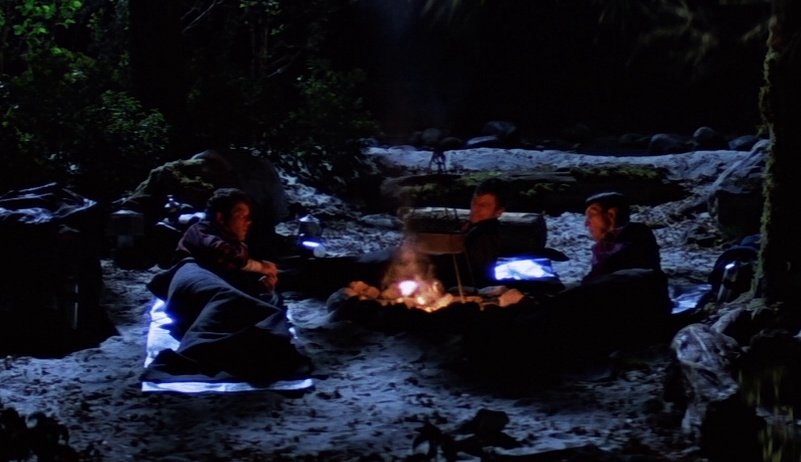
Still frame from Star Trek V: The Final Frontier showing Kirk, Spock, and Dr McCoy camping.

I said at the beginning that I wasn’t giving any F-tier rankings, and The Final Frontier is kind of the reason why. I get why folks don’t like it, and I think it has some obvious narrative weaknesses, as well as a smattering of sub-par special effects that make it less visually impressive than other titles in the franchise. But it isn’t a complete cinematic failure on par with something like Baz Luhrmann’s Australia or The Rise of Skywalker, so I think we can safely say that even the least-impressive Star Trek films avoid that ignominious fate!

Star Trek has delved into religion and religious-adjacent subjects before, so the idea of an alien claiming to be the god figure from various cultures isn’t totally out of left-field. But the execution of this storyline leaves something to be desired, and I just don’t think The Final Frontier really knew what it wanted to say or where it wanted to take this heavy idea.

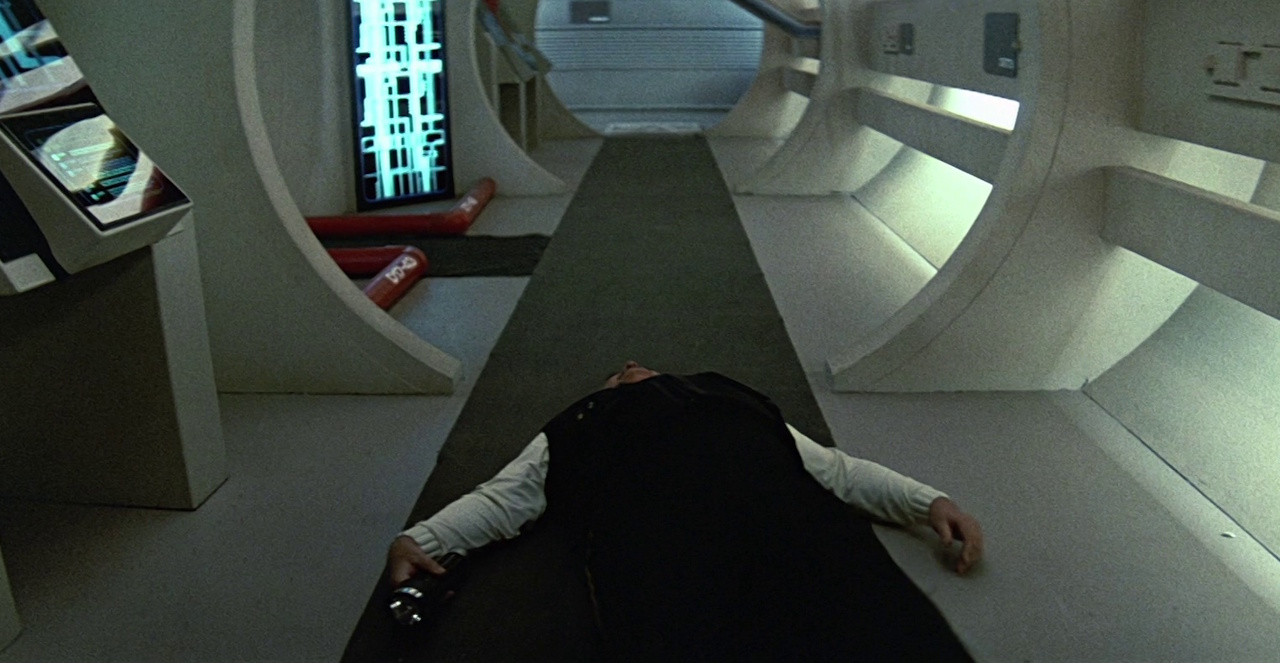
Still frame from Star Trek V: The Final Frontier showing Scotty laying unconsious on the floor.

The film also suffers from a little too much interference from William Shatner, who exercised his contractual right to helm a Star Trek film after Leonard Nimoy had his turn in the director’s chair. Shatner wanted to tell a story that put Kirk – and Kirk alone – centre-stage, as the sole character who could stand up to Spock’s villainous half-brother. Changes were made to the first draft of that story, when Nimoy objected to Spock’s characterisation, but Shatner’s determination to put Kirk front-and-centre still comes across.

I don’t believe that The Final Frontier is irredeemably bad. There are some wonderful moments, too, like the campfire sequence with Kirk, Spock, and McCoy, Scotty’s line “I know this ship like the back of my hand,” and the away mission to Nimbus III. McCoy’s incredibly painful backstory is also one that hits close to home, and has to be one of DeForest Kelley’s best and most emotional scenes with the character. Kirk’s line to Sybok about “needing” his painful and traumatic moments – that they define who he is – is a powerful idea, too. I just feel that, taken as a whole, The Final Frontier misses the mark with some of its storylines and loftier concepts.

Film #6:
The Undiscovered Country (1991)
Tier: A

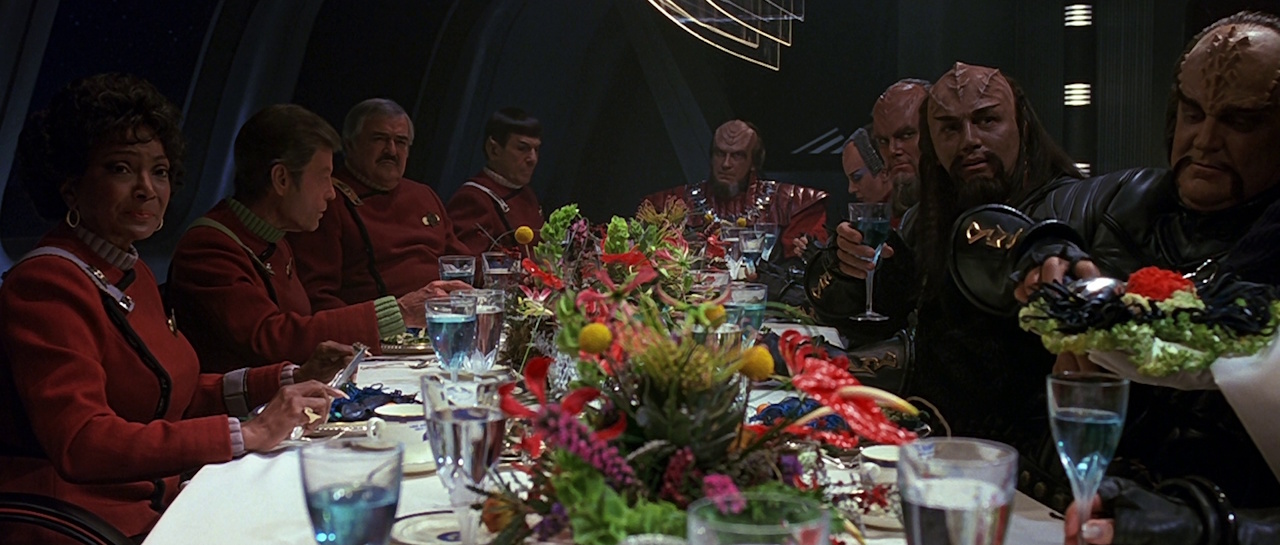
Still frame from Star Trek VI: The Undiscovered Country showing Starfleet officers and Klingons at a diplomatic dinner.

After the disappointment of The Final Frontier, it took some persuading for another Star Trek film to be greenlit. In 1991, with The Next Generation well underway and work progressing on spin-off ideas, there were some at Paramount Pictures who argued that Star Trek had moved on from The Original Series and its characters. A proposal to reboot Star Trek with a Starfleet Academy film was seriously considered, but ultimately Gene Roddenberry and others were able to convince the studio to allow the cast one final film to end on. The Undiscovered Country was thus given the green light.

The story here is great, and incredibly timely! The script uses the Federation and Klingons as a metaphor for the end of the Cold War; communists had been swept from power in 1989, and the Soviet Union was itself dissolved just days after the film’s premiere. The story of old rivals finding a path to peace, and old warriors with grudges finding a way to bury the hatchet, was an exceptionally powerful one – even if Gene Roddenberry hated the depictions of Kirk and Starfleet when he was shown an advance copy of the film.

Still frame from Star Trek VI: The Undiscovered Country showing the attack on Kronos One.

We get to see an exploration of the Klingon Empire, including one of its brutal prison colonies, and how the Klingons of the 23rd Century came to be neighbours and rivals rather than enemies by the time of The Next Generation’s 24th Century. There was even a role for TNG’s Michael Dorn, who played an ancestor of Worf. The Undiscovered Country did a lot to bring Star Trek’s two eras together, and as one crew departed the stage, work on the next expansion of the franchise began. Deep Space Nine would premiere just over a year after The Undiscovered Country had been in cinemas.

The “Praxis effect” – a two-dimensional circular shockwave created by a planet exploding – was named for the destruction of the Klingon moon seen in The Undiscovered Country! In a very real sense, the film’s legacy goes far beyond the Star Trek franchise, with similar visual effects still being used in sci-fi and fantasy to this day. Special effects were great across the board, and The Undiscovered Country also has a fantastic ship battle between the Enterprise, Sulu’s Excelsior, and a cloaked Bird-of-Prey.

Film #7:
Generations (1994)
Tier: S

Still frame from Star Trek: Generations showing Picard and Data in the stellar cartography room.

Is it controversial to say Generations is a good film? Because I honestly think it’s one of the franchise’s best. Bringing Kirk and Picard together was an absolute joy to watch, and I think it came at just the right moment, too – the film represents a handing of the torch from one crew to another. It didn’t come too soon, as this kind of story would’ve overshadowed The Next Generation’s characters before they’d found their feet. But by 1994, I really think the time was right for this kind of epic crossover.

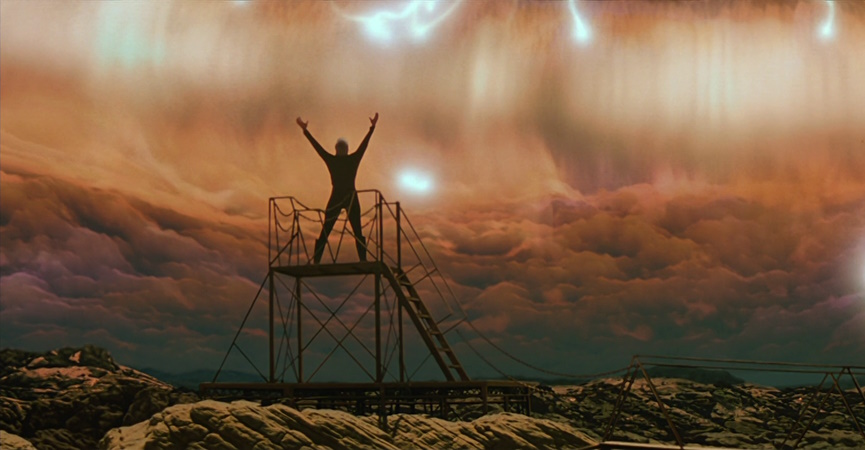
I find Dr Tolian Soran to be an incredible villain, too. His motivations were easily understood, and while he absolutely needed to be stopped… part of me sympathises with him. The presentation of the Nexus as this heaven-like paradise realm, where time has no meaning and your heart’s desires can be made manifest, is the perfect motivation for someone like Soran – whose quest takes on a quasi-religious tone as a result.

Still frame from Star Trek: Generations showing the Nexus approaching Soran, who has his arms raised.

Generations killed off Captain Kirk, drawing a line under Star Trek’s original incarnation. Kirk would, of course, remain important to Star Trek, and it wouldn’t be the final time we’d see a member of his crew on screen. But in that moment it did feel very final – and Kirk’s act of sacrifice to save Picard’s crew and the population of a planet he didn’t even know… it was an intensely emotional sequence.

Generations does a lot to explore the connection between Picard and Guinan, which would go on to be important in Star Trek: Picard, too. It was also a great film for Geordi and Data – the latter receiving his emotion chip and really expanding his programming beyond what he’d been capable of before. All of the main characters got a turn in the spotlight, and there were moments of mystery, emotion, and action throughout this wonderful film.

I wrote a longer piece about this film’s villain, Dr Soran, and you can find it by clicking or tapping here.

Film #8:
First Contact (1996)
Tier: A

Still frame from Star Trek: First Contact showing the Enterprise-E and other Federation vessels firing their weapons.

First Contact is a fantastic film. But I’m docking a couple of points because of one element it introduces that I feel complicates – and crucially, detracts from – one of the franchise’s best, most iconic, and most frightening villainous factions. I’ll have to elaborate on this one day in a standalone piece, because there’s too much to fit into a few sentences right now, but in short: the Borg Queen kind of ruins the Borg for me. Worse, her presence takes away a lot of the Collective’s fear factor – especially when we get to her later appearances. I get it: First Contact is a feature film and it needed to have a single villain for Picard and Data in particular to face off against. But on the whole, I’d say the Borg Queen was not a net positive for the Collective or Star Trek.

But enough about that for now! First Contact re-introduced the Borg in style, depicting a deadly battle in space, and a slow-paced assimilation of the brand-new Enterprise-E. The scenes aboard the Enterprise’s lower decks in particular are incredibly tense; the Borg are far more frightening here than they had been in any of their earlier appearances. And although I have gripes with the Borg Queen as a concept, her scenes with Data and Picard – and the latter’s trauma stemming from his earlier assimilation experience – are all played exceptionally well.

Still frame from Star Trek: First Contact showing Captain Picard on the bridge.

First Contact also did a lot to set the stage for Enterprise – though that wasn’t necessarily the intention at the time! Enterprise does, though, build on what First Contact did with its depiction of Earth and humanity’s first efforts to build a faster-than-light engine. James Cromwell, who played Zephram Cochrane, would even have a cameo in Enterprise’s premiere.

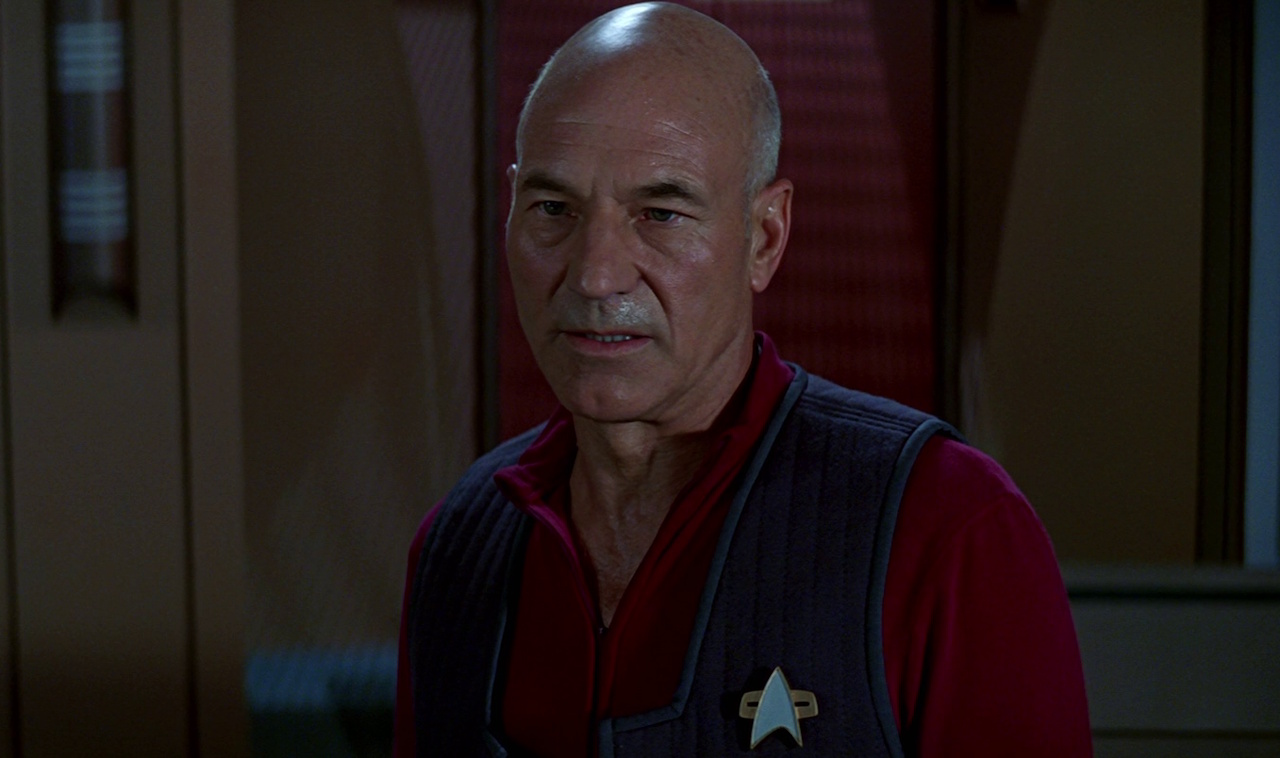
Picard is the real star of the show this time, as he lets his emotions overwhelm him when faced with the Borg’s return. After the episode Family, we didn’t really get much exploration of Picard’s mental state and how he was coping with having been assimilated by the Borg, but First Contact took that as a starting point to tell a story touching on things like post-traumatic stress. It was genuinely interesting – and also left a lot for Star Trek: Picard to build on a quarter of a century later.

Film #9:
Insurrection (1998)
Tier: B

Still frame from Star Trek: Insurrection showing Data wielding a phaser pistol.

Insurrection gets an unfairly bad rap, in my opinion. I like some of the connections in the film to the wider world of Star Trek – nowhere else will you hear Troi and Riker mention the Dominion War, for instance! The Briar Patch is a fun idea both narratively and visually, leading to the crew being cut off from Starfleet HQ. It also sets up a particularly creative starship battle, which as always is something I appreciate!

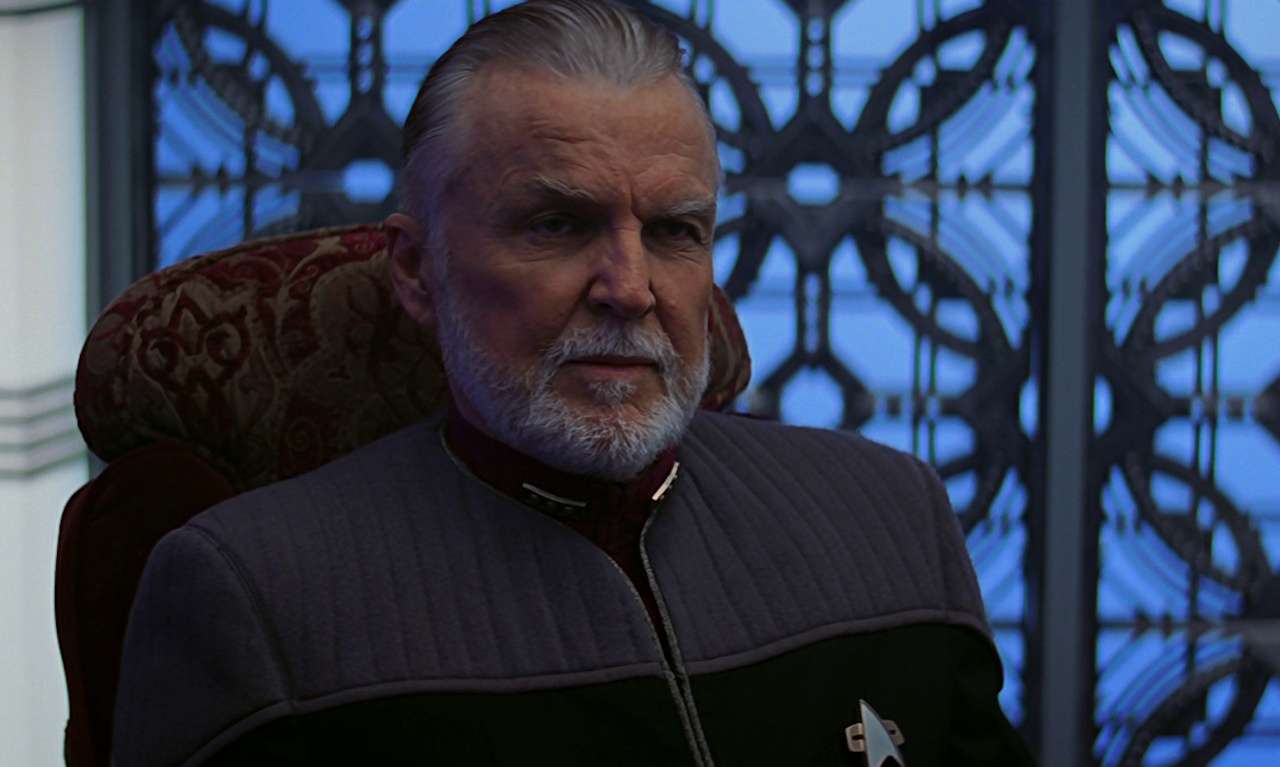
Star Trek has, on several occasions, had a “badmiral” (a portmanteau of ‘bad’ and ‘admiral’) as a villain, and the concept of a rogue or renegade senior officer is an interesting one. The best villains have some degree of nuance, and Anthony Zerbe does an excellent job conveying this with the character of Admiral Dougherty. Dougherty genuinely believed that he was doing something great for the Federation… even though, with the story being told from the perspective of the Enterprise crew and the Ba’ku, he was the villain.

Still frame from Star Trek: Insurrection showing a close-up of Admiral Dougherty.

The Son’a were an interesting addition to Star Trek, and I’d love to explore a bit more of their culture one day – it’s a shame they’ve never returned. I would posit that the film’s twist – that the Son’a and Ba’ku are the same race – was imperfectly executed, but it was an interesting idea that achieved most of what it was aiming for. It’s also an idea that felt very “Star Trek,” harkening back to The Original Series episodes that had messages about war, race, and so on.

Insurrection has another great villain in Ru’afo, who doesn’t have that same nuance we were talking about, but was delicious to watch nevertheless thanks to an excellent performance from F Murray Abraham. It’s also a great film for Riker – who gets a turn in the captain’s chair during a tense battle, and also sees a starship manoeuvre named after him – and Data, whose “injury” and ethical reset kicks off the entire story. A story about a renegade crew who have to operate outside of the law to do the right thing? That’s something I love – and while I get there are criticisms of the main cast apparently acting “out-of-character,” that’s explained well enough in Insurrection itself.

Film #10:
Nemesis (2002)
Tier: D

Still frame from Star Trek: Nemesis showing Picard and Data, illuminated by a green light.

Walking out of the cinema after the credits rolled, I remember feeling okay about Nemesis. But looking back, particularly after seeing Data being laid to rest in Star Trek: Picard’s first season, the deficiencies of the film are much more apparent. I would argue, with Brent Spiner ageing out of the role by 2002, that killing off Data made some degree of sense as a narrative point. But it wasn’t handled well in Nemesis, with the film rushing past Data’s death, pushing his friends to a “let’s all move on” type of ending that was just weirdly out-of-place and had completely the wrong tone.

Sci-fi tropes and character archetypes will land differently for different folks, and what I’d say about Nemesis’ main villain – played by Tom Hardy in one of his first big-screen roles – is that the idea of a clone of Picard isn’t as silly as it sounds! There’s genuine lore and story here, expanding our understanding of the Romulans and the way they operate, and I really did enjoy that side of the story. Shinzon also makes for a complex character; a human raised by Reman slaves, who has Picard’s DNA but none of his humanity.

Still frame from Star Trek: Nemesis showing the damage to the Enterprise-E's bridge.

Shinzon quite quickly turns to “I’m evil for no reason and I love it” with his characterisation, though, despite some early promise, and by the time the film moves to his plot to attack Earth and the Federation, the plot kind of goes off the rails. Much has been made of director Stuart Baird’s lack of experience and knowledge of Star Trek at the time of the film’s production (he hadn’t so much as watched a single episode of The Next Generation) and I think that comes across in the way the film treats most of the main characters, too.

After Insurrection hadn’t been particularly well-received, and with Enterprise struggling to find an audience, Nemesis didn’t do the Star Trek franchise any favours in 2002. It also seemed – for close to twenty years, anyway – to be a weak and unimpressive ending for The Next Generation characters and Star Trek’s 24th Century setting. As in any Star Trek project, pretty much, there are moments in Nemesis that work, but not enough of them to make the film a success.

Film #11:
Star Trek (2009)
Tier: C

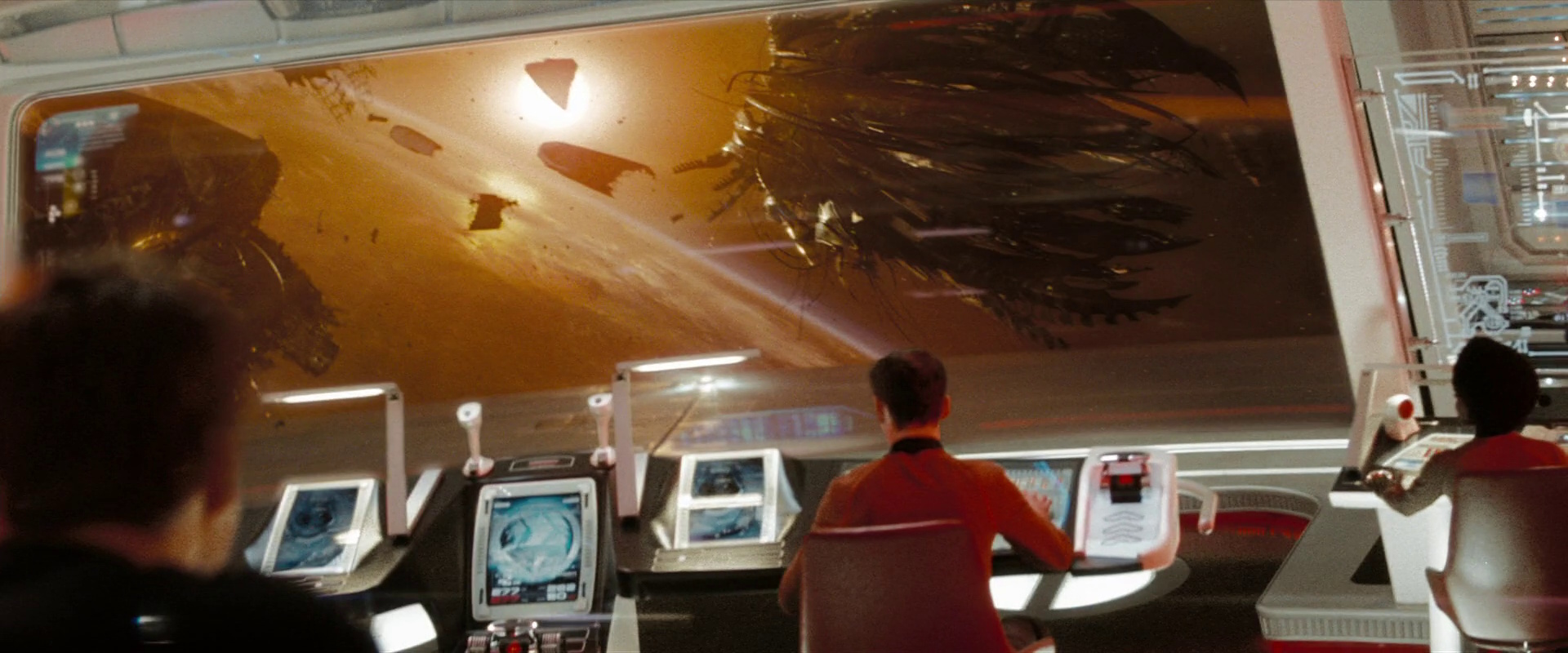
Still frame from Star Trek (2009) showing the Narada on the Enterprise's viewscreen.

I have some conflicting thoughts about 2009’s Star Trek. On the one hand, I was absolutely thrilled to learn of the film’s existence after Enterprise’s cancellation seemed to signal the demise of the entire Star Trek franchise. I did my best from 2006 to support the film while it was in production, and raced to the cinema to see it on the first day it was available. And I would make the case to anyone that Star Trek ’09 is a solid action/sci-fi film, a great introduction to Star Trek for newbies, and a successful title that proved the franchise could still bring in audiences and money at the box office.

But on the other hand, the film’s action-heavy storyline, re-cast classic characters, and fairly basic villain just aren’t what I come to Star Trek for. The new actors were given an exceptionally difficult job and were brave to take it on; I know some Trekkies who, to this day, have refused to watch any of the Kelvin timeline films because of the decision to re-cast Kirk and the crew. Some of the new actors got a lot of criticism before the film had even premiered due to that. Personally, I generally feel they all did a solid job… but there’s always gonna be a sense that they aren’t the “real” Kirk, Spock, Uhura, and so on. Some decisions – like pitting Kirk and Spock against one another, even coming to blows at one stage – really hammers home how different these versions of the characters feel.

Still frame from Star Trek (2009) showing Spock Prime.

Star Trek ’09 is unashamedly a reboot, and if you meet it where it is and you’re able to accept that, I think there’s a good time to be had with at least parts of it. But as someone who’d been a Trekkie for close to twenty years when the film premiered, who’d been immersed in the world of The Next Generation era in particular… I wasn’t really interested in a reboot. After Enterprise, I wanted to see Star Trek move its timeline forward again, not stepping back to re-cast classic characters for a pretty basic action story.

All that being said, I appreciate what Star Trek ’09 did for the franchise. If this film hadn’t found an audience and proved to studio executives that there was still life in Star Trek and still stories to tell here, that would’ve almost certainly been the end of the franchise, and I doubt we’d have seen Lower Decks, Strange New Worlds, and the rest of modern Star Trek. Keeping the flag flying for the franchise after it had burned out on the small screen is the real legacy of Star Trek ’09 – at least for me.

Film #12:
Into Darkness (2013)
Tier: B

Cropped promotional poster for Star Trek Into Darkness.

I would argue that Into Darkness is the high-water mark of the Kelvin timeline. There are still issues with the characters, some contrivances with the story, and so on… but the film’s script is generally much stronger than either of the other Kelvin films. Not only that, but this particular story – featuring notorious villain Khan and a “badmiral” scheming from within Starfleet itself – lends itself much more to the kind of action-packed film that JJ Abrams wanted to make.

Captain Pike’s death in Into Darkness genuinely hit me – it was unexpected in the moment, and Kirk’s reaction to the loss of someone he viewed as a surrogate father figure was truly heartbreaking. It’s definitely one of the most powerful moments for this version of the character, and the way it spurs on the plot was good, too. I also liked the callback to Star Trek ’09 with the “transwarp beaming” idea returning, this time as a problem to be overcome.

Still frame from Star Trek Into Darkness showing Khan and Kirk.

If you were online and involved in Star Trek discussion groups and forums circa 2011-2013, you would’ve almost certainly had Into Darkness’ big reveal spoiled for you ahead of time. Unfortunately, fans correctly guessed that Benedict Cumberbatch would be playing the legendary Khan – and going into the film with that expectation certainly put a downer on the scene where Kirk learns the truth. I always prefer to see films un-spoiled, but this rumour was everywhere at the time, so it was unavoidable.

For a variety of reasons, this story just feels stronger and, most importantly, better-suited to these characters and this style of film. Into Darkness is a better film as a result, with a consistent tone, understandable character motivations, and a pair of solidly entertaining villains. There are some contrived moments – and I don’t think Kirk’s sacrifice and “death” works anywhere near as well as Spock’s did in The Wrath of Khan, which Into Darkness tries to emulate in more ways than one – but on the whole, it’s not a bad film by any stretch.

Film #13:
Beyond (2016)
Tier: C

Still frame from Star Trek Beyond showing Kirk with a seatbelt on.

Penned by Scotty actor Simon Pegg, Beyond was a genuine, well-intentioned attempt to bring the Kelvin timeline films slightly closer to “classic Star Trek” in terms of tone and themes, and I really do admire the effort. There are moments that link up with Star Trek’s past – most notably Enterprise – and parts of the film, particularly its opening scenes, succeed at recreating at least some of that “mission of exploration” feeling that the other Kelvin timeline films didn’t spend even a second on.

But there are some flaws and weaknesses, though. The destruction of the Enterprise is by far the weakest loss of a ship in the franchise, as we just don’t have anywhere near as much attachment to it as we did to the original Enterprise, the Enterprise-D, and other ships that have been destroyed. The sequence was tense, particularly as the crew rushed to their escape pods, but the emotional weight of the moment didn’t ring true for me.

Still frame from Star Trek Beyond showing a Federation security team aboard the Enterprise.

I felt that an actor of Idris Elba’s calibre was also squandered on a pretty basic “I’m mean and I hate everyone” type of villain. Krall had potential – the “lost” captain who felt abandoned by Starfleet and the Federation, and whose xenophobic and war-like traits were a century or more out of date. But the film didn’t do enough with Krall, and the big reveal that this alien-looking alien was, in fact, a human didn’t really stick the landing. Again, it was interesting in theory but kind of wasted by the time it came to the screen.

I might be alone in this, but I detest the name “Jaylah” for the film’s new character. A homonym of “J-Law” – the tabloid nickname given to American actress Jennifer Lawrence, who was a big star at the time thanks to her role in The Hunger Games – this reference just felt cringeworthy and unnecessary. I’m happy for Star Trek to take inspiration from a wide range of other films, including the likes of The Hunger Games, but don’t stoop to this level when it comes to character naming. It’s just… well, it’s pretty pathetic, to be honest.

I couldn’t end this section without also noting that Beyond was rather overshadowed by the deaths of Leonard Nimoy and Anton Yelchin in the months leading up to its premiere.

Film #14:
Section 31 (2025)
Tier: C

Still frame from Star Trek: Section 31 showing a trio of main characters.

You have to try to meet Section 31 where it is. It’s a B-movie; the Star Trek equivalent of The Fast and the Furious or Transformers, complete with a cookie-cutter plot, some pretty mindless action, and plenty of tropes of both action flicks and spy movies. Once I realised that that’s what I was watching… I just kind of went with it. On those terms, I found Section 31 to be just fine.

Where my disappointment comes in is in the wasted potential. There was scope for Section 31 to be the kind of film that brings new eyes to Star Trek for the first time, genuinely expanding the fan community by making what can feel like a nerdy and overcomplicated franchise approachable. I don’t believe Section 31 came close to achieving that goal, unfortunately. And from my perspective, that felt like the biggest point in its favour and a key reason for making it.

Still frame from Star Trek: Section 31 showing Sahar and Fuzz fighting.

I would also argue that Georgiou’s arc in Section 31 was pretty repetitive, dragging up her Mirror Universe origin and forcing her through a story that we’d already seen a lot of in Discovery. Dragging her back from the more complex character we’d started to see so she could re-start that arc wasn’t great. And that’s before we get into the weeds on whether a redemption story for someone at least as evil and despotic as Star Wars’ Emperor Palpatine was even possible, let alone successfully executed in Section 31.

There are also gripes with how disconnected this film feels from the rest of Star Trek, with the barest of references and none of the franchise’s visual language present. If, however, you can set most of that aside… there are fun moments hiding under the surface. And as I said a moment ago, if you can meet Section 31 where it is, on its own terms, I think it’s a perfectly adequate B-movie.

I have a two-part review of Section 31. You can find the non-spoiler part by clicking or tapping here and the part containing story spoilers by clicking or tapping here.

So that’s it!

We’ve put all fourteen Star Trek films into a tier list. So let’s take a look and see how we did:

The finished tier list with all fourteen Star Trek films.

Well, I hope that was worth it! As you can see, we have more films in the upper tiers than the lower ones, and even the “worst” Star Trek films still have redeeming qualities – at least in my opinion.

I wanted to put this list together after Section 31 had premiered, updating my older list to include the new film. This piece almost certainly concludes my Section 31 coverage for the foreseeable future, as I really don’t have much more to say about the made-for-streaming movie at this point. If you’ve been following my coverage of Section 31, thank you! I hope you’ve found my take to be interesting.

Still frame from Star Trek: The Motion Picture showing the Enterprise at warp.
The USS Enterprise at warp.

At time of writing, there are supposedly two Star Trek films in pre-production or at least being worked on in some capacity. The first is a Beyond sequel, bringing back the Kelvin timeline cast for another outing. And the second is supposedly set in between Enterprise and Star Trek ’09, perhaps serving as a kind of Kelvin timeline prequel. You can read my thoughts on that idea by clicking or tapping here.

There have been other film proposals pitched over the years. Sir Patrick Stewart teased fans in early 2024 with news of a Picard movie idea, but I don’t think anything came of that. For my money, I’d like to see Paramount do more with the TV movie format, using it to tell one-off stories that wouldn’t necessarily fit anywhere else in the franchise. With new sets having been constructed, and the AR wall too, there are almost no limits on the kinds of stories that could be told as one-off specials – and the budget for such a production would be lower than a feature film, too! With Section 31 proving to be a disappointment, though, I’m not sure whether that’ll ever happen.

Still frame from Star Trek VI: The Undiscovered Country showing two starships, a planet, and a star.
The Enterprise and the Excelsior in orbit over Khitomer.

So I hope this has been a bit of fun! Beginning with Generations, I watched every Star Trek film at the cinema. Unfortunately, due to my health, I won’t be able to do that in future – which is why I enjoyed having Section 31 as a TV movie! But if there ever is another full-length Star Trek film, I’ll do my best to support it here on the website.

Until next time… Live Long and Prosper!


Most of the Star Trek films are available to stream on Paramount+ in countries and territories where the platform is available. The first thirteen films are also available on Blu-ray and DVD, and a Blu-ray release of Section 31 is planned. The Star Trek franchise – including all films and properties discussed above – is the copyright of Paramount Global. This article contains the thoughts and opinions of one person only and is not intended to cause any offence.

Ten More Things That Have Always Bugged Me In Star Trek

A Star Trek-themed spoiler warning graphic.

Spoiler Warning: There are spoilers ahead for the following Star Trek productions: The Original Series Seasons 1 & 3, The Wrath of Khan, The Next Generation Season 1, The Undiscovered Country, Enterprise Seasons 2 & 3, Star Trek 2009, Discovery Seasons 2 & 4, Strange New Worlds Season 1, and Section 31.

Last year, I wrote up a tongue-in-cheek list of some of the little things that have always bugged me in Star Trek! Today, I thought we could have a little bit more fun at the franchise’s expense by talking about a few more. These are incredibly small things that don’t even rise to the level of “nitpicks,” but every time I see or hear them in their respective stories, they bug me! I know none of them will ever be explained in canon – nor do they really need to be – but I hope you’ll forgive an old Trekkie for airing their thoughts!

Star Trek fans have a bit of a reputation – especially on fan sites like this one – for nitpicking and being sticklers for canon and internal consistency, and I’m acutely aware that that’s how this list could come across. For me, this is written with tongue firmly embedded in cheek – it’s not meant to be taken completely seriously. While I do concede that all of these things “bug me,” as the title says, none of them ruined my enjoyment of any film or episode. These are minor things that aren’t worth arguing about or getting upset over – and I share this piece with the fan community in that spirit.

Promotional photo of several main characters from Star Trek: Enterprise, circa 2001.
Several main characters from Star Trek: Enterprise.

A couple of important caveats before we go any further. All of this is the entirely subjective opinion of a single Star Trek fan. If I raise points you vehemently disagree with, if none of these things bothered you, if you think I’ve misunderstood something, or if you feel I’m overreacting… that’s okay! There’s room enough in the Star Trek fandom for polite discussion and differences of opinion. And as I said above, none of this really matters anyway as these are all exceptionally minor points.

Finally, I’m not counting out-of-universe explanations. “It’s just a story,” or “because the writer/director wanted to do things that way” do not count! Sometimes, in order to tell a more entertaining story, the minutiae of canon or some element of internal consistency has to get pushed aside – that’s the way it goes in the world of entertainment. But that’s not what we’re here to talk about on this occasion.

Phew. With all of that out of the way, let’s jump into the list.

Number 1:
Why did Khan have a Motion Picture/Wrath of Khan-era Starfleet badge? Where did he even get it?
Star Trek II: The Wrath of Khan

Still frame from Star Trek II: The Wrath of Khan showing a close-up of Khan aboard the USS Reliant.
Khan sporting his famous necklace.

Look at Khan’s outfit when Chekov and Captain Terrell encounter him and his surviving crewmates on Ceti Alpha V. After he takes off his overcoat, Khan is wearing a necklace which appears to be made from a damaged Motion Picture-era Starfleet badge – or a monster maroon belt buckle, perhaps. But how did he acquire this item? Khan and his people have been marooned on the planet since the time of The Original Series – years before either of those uniform styles were in use.

If Khan was wearing a piece of a Starfleet uniform, surely he should be wearing one of the gold, red, or blue shirts that we’re familiar with from The Original Series – or perhaps a pair of Starfleet boots from that era! It’s always stood out to me as a bit of an oddity of apparel; when you look at his necklace more closely, it’s clearly worn and weathered indicating it’s something he’s kept for years – perhaps as a symbol of his quest for vengeance against Kirk and Starfleet. But given that no Starfleet ships visited the Ceti Alpha system in between the events of Space Seed and The Wrath of Khan, it’s an item he simply shouldn’t have had access to.

Still frame from Star Trek II: The Wrath of Khan showing Khan, Chekov, Captain Terrell, and several augments aboard the derelict Botany Bay.
Khan was already wearing the necklace when Chekov and Terrell arrived.

If Khan started wearing the necklace after his encounter with Chekov, I’d say that he took the piece from him or from someone else on Reliant’s crew. But he clearly converted part of a Starfleet uniform into this necklace during his time on the planet, before his meeting with the crew of the Reliant – so that explanation doesn’t work.

There’s no getting around the simple fact that Khan shouldn’t have this badge or belt buckle. Nothing like it was seen in The Original Series, and even if we extend our search to other 23rd Century shows like Discovery or Strange New Worlds, very generously assuming that another Starfleet vessel visited Ceti Alpha V before the destruction of Ceti Alpha VI, there are still no comparable badges, buckles, or anything with a Starfleet delta of the right shape and size for Khan to convert into a necklace. Unless he used his people’s very limited resources to smelt a perfect Starfleet delta the exact same shape and size… I don’t know where he got it from!

Number 2:
Aren’t the Cherons (or Cheronians) extinct?
Star Trek: Section 31

Still frame from Star Trek: The Original Series Season 3 showing Lokai, a black-and-white alien from the planet Cheron.
Lokai, one of the last surviving members of his race.

In the recent Section 31 TV movie (which you can read a review of by clicking or tapping here) we meet a character aboard Georgiou’s space station who looks very similar to a Cheron/Cheronian. The Cherons were encountered in the iconic episode Let That Be Your Last Battlefield – where the final two members of the species met Kirk and the crew of the Enterprise.

I like Let That Be Your Last Battlefield, and it’s an episode with a disappointingly timeless message about how racism and division will eventually lead to conflict, war, and extinction. The entire point of the story was that the Cherons wiped themselves out because they couldn’t get over their hatred of one another – even though, to us, they appeared to be the same species. It’s a message that was poignant at the time it was written – with the American civil rights movement ongoing – and has remained so to this day.

Still frame from Star Trek: Section 31 showing the character of Virgil.
Is Virgil from Section 31 meant to be a Cheron?

Section 31 confused me with its Stardate and therefore its place in the timeline – but no matter whether it was meant to be set in the mid-23rd Century or the early 24th Century, there simply shouldn’t be any surviving Cherons left. If Section 31 takes place before Let That Be Your Last Battlefield, then I guess technically two members of the species remain. But if, as the producers have told us, the film takes place in between The Undiscovered Country and The Next Generation, then the entire species is extinct – wiped out because they couldn’t overcome their hatred for one another.

Of all the things modern Star Trek could’ve chosen to retcon… the survival of the Cherons isn’t one I’d have wanted to see. It serves no purpose to bring in a character like that as a one-off campy joke, and furthermore, it undermines the powerful message of a classic story. My personal head-canon (which I really should write up one day) is that this character at Georgiou’s bar wasn’t actually a real Cheron, but someone basically cosplaying as one. I think that’s actually the least-bad spin I can put on the matter!

Number 3:
Does the Enterprise-D’s saucer section have warp drive or not?
Star Trek: The Next Generation

Still frame from Star Trek: Picard Season 3 showing a close-up of the Enterprise-D's saucer.
Close-up of the Enterprise-D’s saucer section.

According to most sources I can find – including in episodes where saucer separation occurs or is mentioned – the Enterprise-D’s saucer section has impulse engines only. Impulse engines allow for travel at speeds below warp one – i.e. below the speed of light. But this seems to contradict not only what we see on screen in episodes like Encounter at Farpoint… but the entire point of saucer separation as it’s explained in the show.

Except for situations like a warp core breach, where the destruction of the ship is imminent, what’s the main purpose of saucer separation? As stated in Encounter at Farpoint, The Best of Both Worlds, and other episodes, the star-drive section is where most of the Enterprise-D’s heavy armaments are – so the point of saucer separation is to evacuate civilians, scientists, and other non-combatants. The saucer section can be commanded by a junior officer with orders to set course for the nearest safe system or starbase, getting families and scientists out of the danger zone or battlefield. The star-drive section is then free to engage the enemy.

Still frame from Star Trek: The Next Generation Season 1 showing the Enterprise-D initiating a saucer separation.
Saucer separation in progress.

But at sub-light speeds, this won’t work. Any enemy ship could easily catch up to and overtake a fleeing saucer section travelling at impulse, or hit it with a torpedo or disruptor blast while it’s still in range. And at impulse speeds the saucer section would be decades away from help even if it was relatively close to a friendly base or star system. That’s not to mention that, in Encounter at Farpoint, the saucer section travels an apparently sizeable distance under its own power to reach Deneb IV after the encounter with Q. The Enterprise-D was at warp – apparently not in the Deneb system – yet the saucer was able to travel all that way, either at warp or at faster-than-light speeds, which seems to contradict what we know of the Enterprise-D and its capabilities.

So does the saucer section have warp engines? Or if saucer separation happens at warp, can the saucer cruise at warp for a while before slowing down? I think that contradicts what we know of how warp drive works and how warp bubbles are generated and sustained by warp cores… but there’s at least a degree of ambiguity there, I guess. What still doesn’t make sense, though, is how launching the saucer section at sub-light speeds is supposed to help the ship’s civilian crew escape from danger in a galaxy populated by warp-capable villains.

Number 4:
Why can’t the crew of the USS Reliant count to six?
Star Trek II: The Wrath of Khan

Still frame from Star Trek II: The Wrath of Khan showing the USS Reliant head-on.
The Miranda-class USS Reliant.

I know, I know: we’ve done The Wrath of Khan already! But this one really is dumb if you stop to think about it, so it’s definitely making the list. When the USS Reliant was scouting for planets as part of the Genesis project, it entered the Ceti Alpha system – a system that Starfleet has visited at least once before. The crew knew that there were supposed to be six planets… but no-one aboard can count, apparently.

Somehow – and I have no idea how this could’ve happened in the 23rd Century with all the technology aboard the USS Reliant – the crew mistook Ceti Alpha V for the destroyed Ceti Alpha VI, leading to them running into Khan and his band of augments. But there’s no way a mistake this glaringly obvious should’ve been able to happen at all.

Still frame from Star Trek II: The Wrath of Khan showing Captain Terrell, Commander Beach, and another officer on the bridge of the USS Reliant.
Three senior officers on the bridge of the USS Reliant.

Upon entering the system – or hours ahead of arriving, using long-range sensors – Reliant’s crew should’ve noticed that, y’know, an entire planet is missing. If nothing else, the debris or dust cloud left behind by the explosion of Ceti Alpha VI – which is unlikely to have dissipated fully in a few short years – should’ve been a dead giveaway. But even if some kind of solar wind blew all the dust and rocks far outside the system, there were still only five planets where there should’ve been six! You’d think someone would’ve noticed this and at least mentioned it to the captain.

That’s to say nothing of Starfleet’s apparent lack of record-keeping. The Ceti Alpha system should’ve been flagged up as containing a dangerous colony of criminals: the augments. We know, thanks to the likes of Strange New Worlds, that Khan and his people were still notorious centuries after they tried to rule all of Earth, so surely Starfleet would want to prevent unwitting starships from stumbling upon their colony. The Talos system is restricted by Starfleet for much the same reason, as we saw in The Cage. But even if Kirk conveniently forgot to record that mission or tell Starfleet what became of Khan… why couldn’t anyone on the USS Reliant count to six?!

Number 5:
Can’t ships just fly over or under the Galactic Barrier?
Star Trek: The Original Series, Star Trek: Discovery

Still frame from Star Trek: Discovery Season 4 showing the USS Discovery at the Galactic Barrier.
The Barrier at it appeared in Discovery.

Star Trek has, on occasion, exhibited what Mr Spock might call “two-dimensional thinking.” By that I mean that many ships and objects in space appear as if they’re on a perfectly flat plane – but space is three-dimensional. One example of this appears to be the Galactic Barrier – the forcefield-like object that apparently surrounds the edge of the galaxy, preventing spacecraft from leaving.

Even in Discovery, though, which is the Galactic Barrier’s most significant appearance to date, the phenomenon (which doesn’t exist in real life) appears to be a mostly two-dimensional ring around the edge of the galaxy rather than a three-dimensional bubble. Which raises a simple question: why not simply fly over or under it? Starships are obviously capable of manoeuvring in three dimensions, so why fly through something you could easily fly around?

Still frame from Star Trek: The Original Series Season 1 showing the USS Enterprise approaching the Galactic Barrier.
The USS Enterprise approaches the Galactic Barrier.

Unless the Barrier is meant to surround the entire galaxy from all possible angles, there’s not really a good explanation for this. The way it’s been depicted on screen makes it seem like it’s something any starship could easily get around, even if doing so would take a bit longer. If this was a one-off visual effect from The Original Series I might be tempted to let it lie, but Discovery brought back the Galactic Barrier in its fourth season, presenting it as a pretty significant hurdle for Captain Burnham and the crew to overcome.

As an aside, I’m not sure that was a great idea! There are some elements of The Original Series, The Animated Series, and even from early in The Next Generation that just about work in context… but wouldn’t really translate well to a story made today. For me, as I think I said at the time of Discovery’s fourth season, the Galactic Barrier is one of them. And the way it’s presented and visualised on screen just kind of hammers home how two-dimensional some of the franchise’s space sequences can feel.

Number 6:
Why is artificial gravity always the last system to fail when a ship is damaged?
Star Trek VI: The Undiscovered Country et al.

Still frame from Star Trek VI: The Undiscovered Country showing a Klingon floating helplessly.
A Klingon officer floating after his ship’s artificial gravity was knocked offline.

I think I can count on one hand the number of times a starship’s artificial gravity has been damaged in Star Trek. The only time it was plot-relevant was in The Undiscovered Country, where the damage to the artificial gravity on the Klingon ship Kronos One was instrumental to the plot to assassinate Chancellor Gorkon. But aside from that… can you think of a single time in the franchise’s 950 episodes and films where a ship has lost gravity?

We’ve seen starships take a real beating sometimes: the Enterprise in The Wrath of Khan, Voyager in Year of Hell, the NX-01 in Damage, and even non-Starfleet ships like the Cardassian vessel in The Wounded, or the Romulan warbird in Balance of Terror, but none of them ever lost their artificial gravity. This system appears to be more robust even than life-support, which we’ve seen fail on a number of occasions while artificial gravity was still operational.

Still frame from Star Trek: Enterprise Season 3 showing the NX-01 Enterprise heavily damaged.
Even serious damage, such as to the NX-01 Enterprise pictured here, doesn’t usually stop artificial gravity from functioning.

You’d think prioritising something like breathable air and a survivable temperature would take precedence over artificial gravity, with ships being designed in such a way that life-support would be the most resilient and sturdy system. I know there’s some ambiguity in the way these technologies work in Star Trek, but artificial gravity must require some amount of power to function – and even if it’s powered by a wholly separate system, anything that disables the entire ship should deactivate artificial gravity. It would also make a logical target during ship-to-ship combat, as knocking out an opponent’s gravity would cripple their ability to operate the ship.

There are even times where disabling artificial gravity would be to the advantage of a crew trying to defend their ship. Perhaps the best example of this is the Borg attack on the Enterprise-E in First Contact, but there are other times where a boarding party, raiders, or pirates could have been at least slowed down and hampered if the crew deactivated artificial gravity on one or two decks. I suppose it’s good for Star Trek that the way artificial gravity works is deliberately vague, and it’s one of those “you’ve just gotta suspend your disbelief” things. But from an in-universe point of view, the apparently indestructible nature of this system, and the overlooked tactical advantages of trying to disable an adversary’s artificial gravity, don’t make a lot of sense.

Number 7:
Shouldn’t Starfleet have persevered with the Spore Drive?
Star Trek: Discovery

Still frame from Star Trek: Discovery Season 1 showing the mushroom cultivation area aboard the ship.
The cultivation bay aboard the USS Discovery.

After the loss of the USS Glenn and the apparent destruction of the USS Discovery, we’re led to believe that Starfleet abandoned its Spore Drive programme – even though the technology was proven to work and would be beyond useful to the organisation. For Starfleet, with its dual military and scientific missions, the Spore Drive was a phenomenal leap forward with so many applications. I genuinely cannot believe that they’d just abandon it after a few setbacks – especially after the Klingon Empire had come to learn of its existence.

We would later see, in Discovery’s third season, that basically any empathic race could – in theory – interface with the Spore Drive. That doesn’t seem like such a huge leap that Starfleet couldn’t have figured it out over time, especially with races like the Betazoids and Vulcans on hand. But even if using an empath as a navigator wasn’t possible, it still seems like such a ridiculously overpowered and useful piece of kit that Starfleet – and Section 31 in particular – would want to continue to develop it.

Four still frames from Star Trek: Discovery Season 1 depicting the USS Discovery at the Battle of Pahvo.
The Battle of Pahvo (pictured) proved the Spore Drive’s worth as a military tool.

Look at the Spore Drive’s capabilities. Two of its biggest achievements were cracking the Klingons’ cloaking device – becoming basically invulnerable to attacks in the process – and leaping tens of thousands of light-years across the galaxy to the planet Terralysium. For Starfleet’s military, the Spore Drive’s ability to jump so fast that attacks from disruptors and torpedos are ineffective is huge – it could redefine starship combat in the Alpha Quadrant. And for the organisation’s mission of exploration, being able to jump to literally anywhere in the galaxy renders warp drive obsolete and would mean Starfleet can investigate any interesting-looking phenomena with ease – while still being back home in time for tea.

The Spore Drive is an example of a “prequel problem;” if Discovery had been set years or decades after Nemesis – in the same period as Picard, for example – then it wouldn’t be an issue. We could simply say that the Spore Drive would become Starfleet’s new method of travel. But because Discovery was set before The Original Series, I don’t think there’s any way to create a satisfactory explanation for why Starfleet, Section 31, or other factions didn’t continue to develop and refine it.

Number 8:
Why would the Xindi fire a small weapon at Earth months ahead of their main attack?
Star Trek: Enterprise

Still frame from Star Trek: Enterprise Season 2 showing a small spherical Xindi weapon firing.
The Xindi’s first weapon.

Sun Tzu, the legendary Chinese general, wrote two-and-a-half thousand years ago that a good commander should “always mystify, mislead, and surprise the enemy if possible.” And throughout history – from the ancient world to the Second World War and beyond – surprise attacks and misdirection have been incredibly powerful tools that successful generals and strategists have employed. So why would the Xindi – backed up by a faction from the far future, no less – launch a minor attack that alerted Earth and humanity to their much larger upcoming attack?

If the Xindi needed to test the range and abilities of their weapon, they could pick another target in a different system. This target would be a comparable distance away from where they planned to launch their weapon, and could also be a planet of roughly the same size and mass as Earth. This would give their scientists and engineers the data they needed without compromising the secrecy of their operation. All they achieved by targeting Earth with their initial, much smaller weapon was alerting humanity and Starfleet to their existence – which ultimately set the stage for their defeat.

Still frame from Star Trek: Enterprise Season 3 showing the Xindi weapon arriving at Earth.
The much larger second Xindi weapon approaches Earth.

This is a military blunder so exceptionally basic that, if I were the Sphere-Builders, I’d have cut all contact with the Xindi and written off the entire operation. The miniature version of the weapon wasn’t designed to deal the kind of damage that the larger version was, but it was still damaging enough to put all of humanity and Starfleet on full alert – kick-starting a chain of events that led to Captain Archer confronting and stopping the Xindi and their Sphere-Builder allies.

All the Xindi would’ve had to do was pick a different target for their weapons testing. A planet the same size as Earth in a system roughly the same distance away would be ideal – or an unarmed probe sent to Earth if scouting that route was deemed necessary. Even if the Xindi and Sphere-Builders were so cocky and arrogant that they considered themselves to be unstoppable, it was still a catastrophic, primary school-level mistake to send the small weapon directly to Earth months before the larger weapon was ready.

Number 9:
How did Nero’s trip back in time create an alternate reality instead of changing the prime timeline?
Star Trek (2009)

Still frame from Star Trek (2009) showing a close-up of Nero.
Nero.

The way it’s explained on screen in Star Trek, Nero travelled back in time from 2387 to 2233 via an artificial black hole created by Red Matter. Somehow, though, the changes Nero and later Spock would go on to make to the past didn’t overwrite the events of the prime timeline, but exist in their own separate universe. This doesn’t seem to gel with what we know of time travel and temporal paradoxes in Star Trek.

Starfleet vessels have encountered all kinds of temporal phenomena over the years, none of which led to the creation of a parallel universe. Even in cases where ships got caught up in time-travel shenanigans, the end result was either a permanently altered timeline – as in stories like The Voyage Home or Past Tense – or overwritten events that no-one remembered – as in stories like Cause and Effect or Year of Hell. None of these led to the creation of a permanent alternate reality that persisted after the phenomenon that created it had been dealt with – so why did the Red Matter black hole do so?

Still frame from Star Trek (2009) showing the Narada emerging from a black hole.
Nero’s ship, the Narada, arrives in the 23rd Century.

The best explanation I can come up with is this: Star Trek exists in a multiverse. Along with to the prime timeline, the Mirror Universe, and others that we’ve seen, there must be multiple additional parallel universes – some of which are identical to or indistinguishable from the prime timeline. Somehow, Red Matter creates a portal between universes, allowing for travel from one to another. Nero and Spock entered a parallel universe identical to the prime timeline – but it’s a parallel universe that already existed before they arrived.

That’s a pretty convoluted explanation, and it isn’t explained that way on screen. Instead, the alterations to the timeline that Nero perpetrated – from the destruction of the USS Kelvin to the attack on Vulcan and beyond – should have permanently altered the prime timeline based on what the characters told us and what we already know from other iterations of Star Trek.

Number 10:
Couldn’t Captain Pike just retire and live as a hermit?
Star Trek: Strange New Worlds

Still frame from Star Trek: Strange New Worlds Season 2 showing Captain Pike at a diplomatic dinner.
Captain Christopher Pike.

I found Pike’s arc in Discovery and the first season of Strange New Worlds to be interesting and relatable. I’ve been in a similar position to Captain Pike: being told that my health was going to get dramatically worse and knowing that it’s inevitable. It made Pike an incredibly sympathetic character, and one whose story brought a tear to my eye more than once. But… is Pike’s devastating accident and disability genuinely unavoidable?

The more Pike comes to learn about the future, the more he seems to uncover ways to avoid his supposedly-inevitable fate. In the fantastic Season 1 episode A Quality of Mercy, Pike learned – thanks to a time-travelling version of himself – that if he avoided his fate but remained in Starfleet, he’d accidentally trigger a chain of events that led to a devastating war between the Federation and Romulans. This conflict was something only Kirk and Spock could prevent, but Pike’s place on the bridge and Spock’s serious injury would keep the war going and prevent any hope for peace in the future. This seemed to strengthen Pike’s resolve and set him back on course for the accident that would leave him disabled.

Still frame from Star Trek: Strange New Worlds Season 1 showing a future Captain Pike in a 'monster maroon' uniform.
Pike in an alternate future.

But… couldn’t he choose a radically different path? Sure, remaining in Starfleet after he was supposed to suffer the accident led to a horrible alternate future. But if Pike resigned his commission the day before the accident and went to live in a cave somewhere, what would change? Nothing, right? Pike could remain alive and relatively healthy, enjoying a well-earned retirement without the need for Talosian mind-games, and the rest of the galaxy could continue unaffected.

Maybe we’ll find out, in Seasons 3, 4, or beyond, why that kind of scenario couldn’t work. But it seems to me that, as long as Pike kept his head down and stayed away from Starfleet and galactic affairs, there wouldn’t be any harmful side-effects. Furthermore, knowing what he knew of the Romulan incursion, he could’ve even reacted differently in that situation to prevent the conflict from escalating. I guess the point of A Quality of Mercy was to hammer home that there’s no way to predict how any changes to the timeline could affect the Federation – and that’s a fair point, I suppose. But on a personal level, I could forgive Pike for trying to wrest back control of his destiny from the Klingon time crystal that doomed him.

So that’s it… for now!

Still frame from Star Trek: The Original Series Season 3 showing Commander Scott in the captain's chair of the Enterprise.
It’s Scotty!

I hope this has been a bit of fun! Some of these things are more irritating than others, but to be honest with you, none of them are really that big of a deal. They only matter to folks like you and I – people who spend a bit too long thinking about Star Trek!

This might be a subject I’ll revisit in the future, so if your favourite little inconsistency or goof didn’t make the list this time, it’s possible I’ll get to it on another occasion. And if you want to check out my earlier list to read about ten other little things that bug me in Star Trek, you can find it by clicking or tapping here.

Still frame from Star Trek: Deep Space Nine Season 1 showing Commander Sisko aboard the Enterprise-D.
Commander Sisko looks rather grumpy…

Stay tuned, because there’s more Star Trek content to come here on the website as 2025 gets underway. Later this year we’ve got a new season of Strange New Worlds to look forward to, and if you missed my review of Section 31 you can find it by clicking or tapping here. I also wrote up my recollections of Voyager to mark the series’ thirtieth anniversary, and you can find that by clicking or tapping here.

Until next time… see you out there!


Most of the Star Trek shows, films, and episodes referenced above can be streamed now on Paramount+ in countries and territories where the platform is available, and may also be available on DVD and/or Blu-ray. The Star Trek franchise – including all shows, films, episodes, characters, and other properties discussed above – is the copyright of Paramount Global. This article contains the thoughts and opinions of one person only and is not intended to cause any offence.
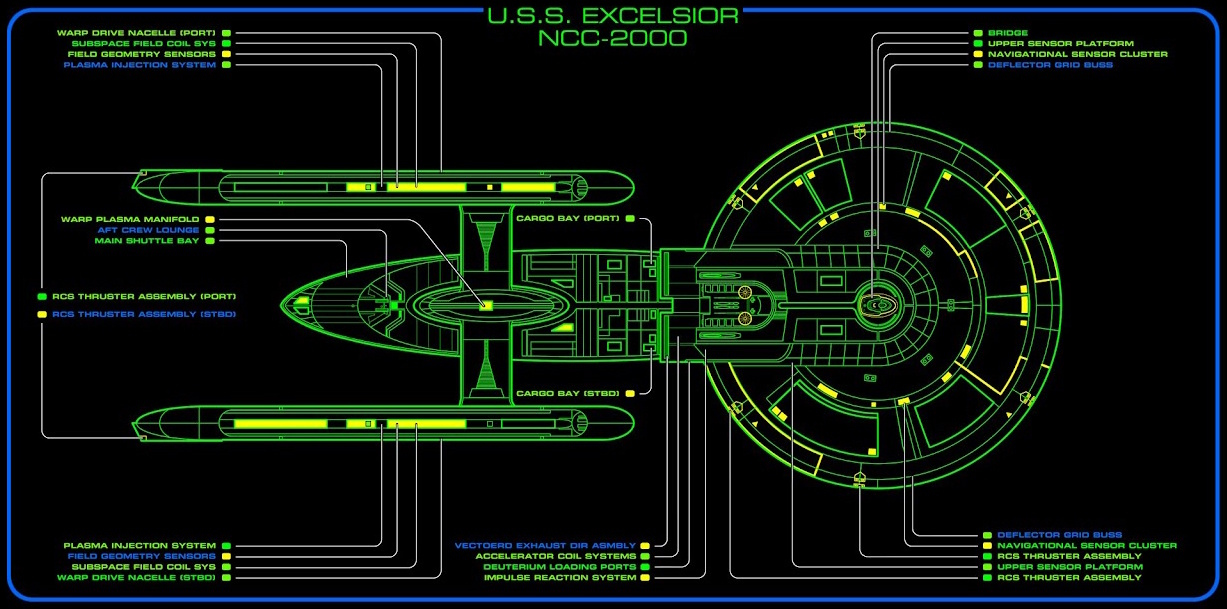
What to watch to get ready for Star Trek: Picard Season 3

Spoiler Warning: There are spoilers ahead for Star Trek: Picard Seasons 1-2 and the trailers, teasers, and announcements for Season 3. Spoilers are also present for the following Star Trek productions: The Wrath of Khan, The Next Generation, Deep Space Nine, Voyager, Nemesis, and Lower Decks.

Last year, shortly before Picard’s second season premiered, I put together a list of twelve Star Trek stories that I felt would make for good background viewing – and I was pleasantly surprised that most of the episodes and films that I selected actually did have some bearing on the story of the season, or at least would’ve given viewers some additional information as the story unfolded. Given my usual track record with theories and predictions, that was a bit of a surprise! But you know what they say: “even a broken clock is right twice a day!”

With Season 3 now less than three weeks away, I wanted to once again compile a few stories from Star Trek’s extensive back catalogue that I think could make for useful background viewing ahead of its premiere. At this stage last time around I felt we had a pretty good idea of the main narrative elements that would be present in Season 2: Q, the Borg Queen, and time travel had all been teased ahead of time, and comprised a big portion of the season’s story. This time, though, it feels like we don’t have as much information to go on!

A chair and console aboard the USS Stargazer.

As always, a couple of important caveats before we get started. First of all, I have no “insider information.” I’m not trying to claim that I know or have somehow clairvoyantly predicted the plot of Star Trek: Picard Season 3, and it’s quite possible that none of the stories we’re going to talk about will have any bearing whatsoever on the new season. Paramount is keeping a relatively tight lid on things this time around, and while we know which characters will be included, there’s still plenty that we don’t know! I’ve made a few guesses and assumptions – but I could be completely wide of the mark.

I’m calling the entries on this list “stories,” as several of these arcs play out across more than one episode. And I’ll be listing the stories in broadcast order – not in order of importance! It also goes without saying that Picard Seasons 1 and 2 are necessary viewing – so I’m not going to put them on this list.

Finally, all of this is the subjective opinion of one person. If I include episodes and films that you hate or think will be irrelevant, or I exclude something that seems blindingly obvious, please just keep in mind that this is only the opinion of one Trekkie – and that it’s meant to be a bit of fun!

With all of that out of the way, let’s take a look at a few Star Trek stories!

Story #1:
The Wrath of Khan

The USS Enterprise in The Wrath of Khan.

Although we’re unlikely to see any characters cross over from The Wrath of Khan – which is set more than a century before the events of Picard – ever since we got our first glimpse of the new season’s villain a few months ago, I’ve been wondering if we might see some of the same themes crop up. Captain Vadic is still shrouded in mystery right now, but she gives me a very strong Khan vibe, and her potential obsession with Picard and desire to seek revenge against him could take the story down a somewhat familiar path.

Ricardo Montalbán’s take on Khan is one of the most iconic villain performances not only in the Star Trek franchise, but in all of cinema. So if Season 3 is going to try to emulate that in some way, there are some very big shoes to fill! If Star Trek is going to return to this idea of a powerful villain on a quest for vengeance, it will definitely be worth stepping back to see the franchise’s first take on that concept. And maybe, just maybe, there could be something in the story about genetic engineering and augmentation, too!

Story #2:
The Battle
The Next Generation Season 1

DaiMon Bok on the Enterprise-D’s main viewscreen.

This one is a bit of a stab in the dark and it could go absolutely nowhere! But The Battle introduces us to DaiMon Bok, a Ferengi captain who holds a grudge against Picard. Years earlier, the USS Stargazer had come under attack by an unknown vessel, and Picard was able to defeat it before the ship was lost. Aboard that ship was Bok’s son, and the Ferengi has never forgiven Picard for causing his death.

Aside from the fact that this is another story that deals with the theme of revenge (and specifically, revenge against Picard), I can’t help but wonder whether Bok might make a surprise appearance in Picard Season 3. We’ve already seen that Captain Vadic has brought two of Picard’s old adversaries – Lore and Moriarty – onto her team, and I have no doubt that Bok would jump at the chance to join another mission against his old foe. If Captain Vadic has put together a “rogues’ gallery” of Star Trek villains, perhaps we’ll see Bok among them.

Story #3:
Datalore, Brothers, and Descent Parts I-II
The Next Generation

Lore.

Lore only appeared in four episodes of The Next Generation, and I’m grouping them all together for this entry! Given that Brent Spiner is listed as a main character, I think it’s a safe assumption that Lore will play a significant role in the story of Season 3, so I think it will be absolutely worthwhile to see where he came from and what he went through prior to being shut down by Data.

Lore is Data’s “evil twin,” a malicious android who betrayed his creator and has caused a lot of harm. But especially by the time we got to the two-part episode Descent, I felt there was much more to the character than just a one-dimensional anti-Data or a foil for the crew of the Enterprise-D. Lore has a degree of complexity, and I’ll be curious to see what’s become of him when the new story gets underway.

I also have a theory about how Lore’s backstory could be connected to the events of Season 1, and you can find it by clicking or tapping here.

Story #4:
Elementary, Dear Data and Ship in a Bottle
The Next Generation

An evil hologram…

Sticking with villainous characters, a huge surprise last year was that Daniel Davis will be reprising his role as the malevolent hologram Professor Moriarty. Moriarty was created by a computer error in Elementary, Dear Data and went on to kidnap Dr Pulaski. In Ship in a Bottle, Moriarty returned and tried to escape the confines of the holodeck. Both episodes are fascinating, and Davis’ portrayal of the iconic Sherlock Holmes character has a menacing calmness that’s absolutely riveting to watch!

Given what we know of holographic technology, and advances like the Doctor’s mobile emitter that was seen in Voyager, I wonder what kind of role Moriarty might play? He’s a genius, that much is certain, and he could cause Picard all kinds of trouble – as indeed he did in his earlier appearances!

Considering that both Professor Moriarty and Lore are both artificial life-forms, I have a theory that could connect the story of Season 3 with that of Seasons 1 and 2. Check it out by clicking or tapping here.

Story #5:
Redemption Parts I-II and Unification Parts I-II
The Next Generation

Sela.

There have been rumours flitting about for months that Denise Crosby will appear in Picard Season 3, and while we have yet to get any official confirmation of this, if it’s true and she will return, it seems logical to assume that it will be in the role of Sela. Sela was the daughter of an alternate timeline’s version of Tasha Yar, and tangled with Picard on two occasions – trying to interfere in the Klingon Empire’s civil war and later attempting to conquer Vulcan.

As discussed above, if Captain Vadic is looking for allies in her campaign against Picard and/or the Federation, Sela would surely jump at the chance to be involved. Her failures were almost certainly very costly for her politically, and I can absolutely see her wanting to get her own revenge on Picard and the crew of the Enterprise-D. There’s also the possibility that Sela’s involvement in the story could connect with the Zhat Vash plot and other Romulan storylines from Season 1.

Story #6:
Disaster
The Next Generation Season 5

Riker in Disaster.

Disaster is a fantastic episode that throws the whole crew of the Enterprise-D into a chaotic situation. When the ship strikes a quantum filament in space and is left damaged and without power, everyone has to step out of their familiar roles in order to save the day. Disaster is an ensemble piece that gives practically everyone something to do.

Disaster is one of the strongest episodes from Season 5 – which is perhaps my personal favourite season of The Next Generation, so that’s saying a lot! For our purposes today, I like that it’s an episode that throws everyone far out of their comfort zones, that it groups together characters who didn’t often interact with one another, and that it gives all of the main characters something to do to contribute to the story.

Story #7:
Attached
The Next Generation Season 7

Picard and Dr Crusher.

There are several episodes that look at Picard and Dr Crusher’s relationship, but few are as detailed or emotional as Attached. What sounds like a silly sci-fi premise of being connected to one another by telepathic implants actually leads to a great story about the two characters and their emotional bond – a bond that has skirted friendship and something romantic.

One open question that fans have had really since Picard premiered three years ago is what may have happened between Picard and Dr Crusher over the past twenty years or more. It certainly seems as if they’re still friends based on what we’ve seen… but did they ever “cross that line” and become something more? Picard’s arc just last season ultimately turned out to be about his lack of romantic attachments, but you never know!

Story #8:
All Good Things…
The Next Generation Season 7

The USS Pasteur.

In some ways, All Good Things doesn’t really feel like a finale – and that makes sense given that Generations would release in cinemas only a few months after it was broadcast! But The Next Generation’s final episode is an interesting one, and when looking ahead to Picard Season 3, what’s perhaps its biggest draw is that parts of the episode are set in the same time period.

Q sets Picard the challenge of solving an “anti-time” mystery, and to facilitate that, Picard moves through three different time periods – including an alternate future in which we get a look at the show’s main characters. Events in Picard and other Star Trek projects have already undone much of the anti-time timeline, but some elements may make their way into this new story.

Story #9:
The Way of the Warrior
Deep Space Nine Season 4

Worf with a Klingon D’k tahg dagger.

Worf is about to make a big return to Star Trek – but unlike his crewmates, we’ve already seen the chapter of his life after he left the Enterprise! In Deep Space Nine’s fourth season, Worf transferred to the station, and the two-part episode The Way of the Warrior not only brought him on board, but did so in spectacular fashion.

The episode focuses on Worf’s inner conflict between his Klingon heritage and duties to Starfleet, as the Klingons plan a mission into the Gamma Quadrant. With Worf set to return, and promises of some kind of connection or tie-in with Deep Space Nine on the cards, I think seeing how he came to join the crew could be worthwhile.

Story #10:
In Purgatory’s Shadow and By Inferno’s Light
Deep Space Nine Season 5

Garak and Worf at a Dominion internment camp.

This pair of episodes wrapped up the Klingon-Federation war that started in The Way of the Warrior, and set the stage for the Dominion War that would break out at the end of the season. It was also a strong Worf story that saw him held prisoner at a Dominion internment camp along with Martok, Garak, and Dr Bashir.

Since Star Trek returned to the small screen in 2017, we’ve only gotten the barest of mentions of the Dominion War – but there’s so much potential in a return to Cardassia, the Dominion, and to look at the aftermath of the conflict. As someone who was heavily involved in the war and who did so much to keep the Federation and Klingon Empire united, Worf is the perfect character to use to explore some of these points. We may learn nothing new about the aftermath of the Dominion War in Season 3… but I kind of hope that we will.

Story #11:
Insurrection

Troi and Riker in Insurrection.

I know that Insurrection isn’t everyone’s favourite film, but I actually see several parallels with its story based on what we know of Season 3. Picard and his crew undertaking a “Starfleet-adjacent” mission, which may or may not have official approval, sounds an awful lot like what the crew got up to in Insurrection!

Furthermore, I noted in the Season 3 trailer a little while ago that one of the nebulae that Picard and the crew will seemingly visit looks an awful lot like Insurrection’s “Briar Patch” – the region of space in which the Ba’ku homeworld was located. Could there be a deeper connection there? Maybe Captain Vadic is a Son’a, one of the defeated adversaries from Insurrection. That would be a bold move in more ways than one!

Story #12:
Author, Author
Voyager Season 7

The Doctor with Captain Janeway and Tuvok.

With the return of Professor Moriarty, a sentient hologram, I think it could be worth taking a look at Voyager’s seventh season episode Author, Author. The story focuses on the Doctor, who has written a holo-novel based very loosely on his experiences aboard Voyager – but when he wants to make changes to it, his publisher tries to deny him that right, claiming that a hologram cannot “own” the copyright to his work.

Author, Author may turn out to be ahead of its time given that right now, here in the real world, the question of AI authorship is being discussed! In light of AI art, AI essays, and the like, we’re going to have to take a serious look at this issue in the years ahead! But for our purposes, Author, Author could be an interesting starting point to consider the state of holographic rights and synthetic rights in a general sense in the late 24th and early 25th Centuries. Maybe none of it will matter for Professor Moriarty’s story, but given that Season 1 looked at a ban on synthetic life, there’s a chance some of the themes in the episode will turn out to be relevant.

Story #13:
Nemesis

A painting of the Enterprise-E.

Nemesis was the last time that Picard and his old crew were all together – at least as far as we know! It was certainly the last time that we as the audience got to see them working together, even if they may have reunited off-screen in the years before Season 1. So Nemesis, while arguably not the best Star Trek film, is going to be an important one to watch.

This is also Data’s final mission, as he was killed while stopping the Reman plot. A big part of Season 1 involved giving Data the send-off that he didn’t get in Nemesis, and his influence loomed large over the story in more ways than one. There are also mentions of Lore in the story, though nothing significant I suspect, and we’re introduced to B-4, an early precursor to Data. For all of those reasons and more, Nemesis is a story worth checking out.

Story #14:
Kayshon, His Eyes Open
Lower Decks Season 2

Captain Riker of the USS Titan!

This might seem a bit of an odd choice, but Lower Decks actually showed us a bit of a look at Captain Riker’s tenure aboard the USS Titan – and the Titan, or at least a ship bearing the same name, is going to be seen in Season 3. In this episode, Lower Decks main character Boimler is serving aboard the Titan under Riker’s command, and takes part in an away mission to a dangerous planet.

When Kayshon, His Eyes Open premiered, I was thrilled to get a look at Riker, the Titan, and the crew he served with. I wouldn’t be surprised at all to see Season 3 make some kind of reference to Riker’s time in command, and there could even be name-drops of one or more of the characters in this episode. Season 1 already made reference to Star Trek’s animated adventures, and with this episode including Riker in such a large role, it would be a shame in a way if Season 3 just ignored it completely.

I have a full episode review of Kayshon, His Eyes Openclick or tap here to check it out!

So that’s it!

Who (or what) is Picard firing his phaser at?

Those are fourteen Star Trek stories that I feel could make for interesting or useful viewing before Picard Season 3 kicks off.

If nothing else, all of the stories above are good fun, and worth re-watching for any Trekkie who may not have seen them in a while! With the story of Season 3 being kept under wraps, some of these picks are admittedly guesses – but I think that all of them have the possibility, at least, to connect with the story that lies ahead.

I’m cautiously optimistic about the upcoming season, despite Picard as a whole not having been as enjoyable as I’d hoped nor having accomplished what I’d wanted it to. There are reasons to be concerned – such as the disappointing decision to jettison all but one of the new characters that the series had introduced – but I’d be lying if I said that one more adventure with the crew of the Enterprise-D wasn’t a tantalising, enticing prospect.

When Picard Season 3 arrives next month, I’ll do my best to keep up with weekly episode reviews, and if the series lends itself to theory-crafting, I daresay I’ll put together some of my patented (and usually wrong) theories as well! So I hope you’ll stay tuned for that!

Star Trek: Picard Season 3 will premiere on Paramount+ in the United States on the 16th of February 2023, and in the United Kingdom and around the world on the 17th of February 2023. Seasons 1 and 2 are already available to stream or buy on DVD/Blu-ray. The Star Trek franchise – including Picard and all other properties discussed above – is the copyright of Paramount Global. This article contains the thoughts and opinions of one person only and is not intended to cause any offence.
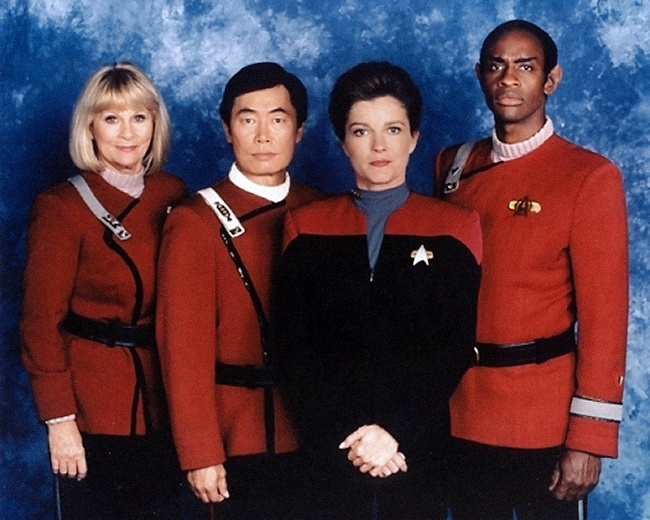
Five of my favourite Starfleet uniforms

Spoiler Warning: There are spoilers ahead for Star Trek: Discovery Seasons 1-3 and the teaser for Season 4, Star Trek: Lower Decks Season 1 and the teaser for Season 2, and Star Trek: Picard Season 1. Minor spoilers are also present for other iterations of the franchise.

This is going to be a controversial list! Practically every Trekkie I know has their own take on which Starfleet uniforms are the best – and why! Even if we can agree on some of our favourite episodes and films, the aesthetic of Star Trek has always been a world unto itself. Some of the best uniform designs may not feature in the best stories, and likewise some of the best individual episodes and films may not have their casts in the best uniforms, so the two aren’t necessarily connected – though a truly bad costume can, in some cases, detract from an otherwise-decent story.

There have been a wide variety of uniforms used across Star Trek’s 55-year history. Most designs incorporate at least some elements of the original – the costumes designed for The Original Series by William Ware Theiss in the mid-1960s. Gene Roddenberry’s brief for the uniforms was that they were to be “simple, utilitarian, and naval” in style, reflecting his vision of the future and of Starfleet. The very first uniforms, seen in The Cage, Charlie X, and a couple of other early Season 1 episodes, arguably best fit the “naval” aspect of the brief, with toned-down colours and a slightly thicker rolled collar. It was only partway through Season 1 that the typical uniform in its three bright primary colours was rolled out.

Captain Pike in The Cage, sporting the first ever Starfleet uniform.

Colour is a hugely important factor when discussing Starfleet uniforms. Since The Next Generation went off the air, most Star Trek projects have tried to move away from big bold blocks of colour, opting for smaller coloured patches or other ways to express differences in division and rank. Partly this is an attempt to make the uniforms look “modern,” but also I think there’s a feeling among at least some folks that the brightly-coloured shirts and tops of The Original Series in particular, but also The Next Generation, look rather childish or even camp, detracting from the serious messages present in many Star Trek stories.

That said, even the attempts to design sleeker, “cooler” Star Trek uniforms have almost universally resulted in garments that aren’t exactly serious by today’s standards! Recent attempts like the Discovery uniforms are still very sci-fi; hardly the kind of thing you’d see someone wear out on the street – unless they were on their way to a Star Trek convention. I guess what I’m trying to say is that trying to design a “cool Star Trek uniform” may simply be an impossible task!

The cast of Discovery Season 1 in their all-blue uniforms.

So I’m all in favour of embracing the campiness – at least to a degree. Once you get lost in Star Trek, things like uniform colours don’t take you out of it, or at least they don’t for me. I’m not really a fan of attempts to make uniforms that look too much like things that we already have in the real world. There obviously has to be a line between something plausible and something completely outlandish, but in sci-fi that line can be further away than some folks seem to think!

Several generations of Starfleet uniform have become truly iconic; instantly recognisable emblems of the franchise that hardly anyone with even a passing knowledge of popular culture could fail to identify. This has been helped by internet memes, with Captain Picard, Commander Riker, Captain Kirk, Captain Janeway, and even Voyager’s Doctor all re-entering popular culture years after their respective series went off the air.

Captain Picard’s facepalm is a popular meme – and reminds people about The Next Generation and the uniforms the crew wore.

We also need to give some of the new variants time. A uniform – or any aesthetic element of a series or film – doesn’t become an icon overnight, so the 32nd Century uniforms we saw in the Discovery Season 4 teaser, the uniforms in Picard Season 1, and whatever the Strange New Worlds crew end up wearing need time to grow on us! Some Trekkies have already taken to some of the new styles, which is great, but for a lot of folks it takes time to even get used to a whole new look – let alone learn to love it!

As I always say, this whole list is entirely subjective! If you hate all of these uniforms and love others, that’s 100% okay. As with practically every aspect of Star Trek, it’s a big galaxy and there’s room for fans with different tastes and preferences. Now that we’ve got that out of the way, let’s take a look at five of my favourite Starfleet uniforms!

Number 1: The Motion Picture – Admiral’s variant

Kirk wearing his admiral’s uniform – perhaps the only decent one in the whole film!

I can understand why fans were unimpressed with The Motion Picture uniforms on the whole. They represent an attempt – the first real attempt – for Star Trek to try something new and step away from the bold primary colours of The Original Series, but ended up being understated at best, bland and forgettable at worst. The dull colours, t-shirt design, and lack of any distinctive features all meant that these uniforms only ever saw one outing.

But there was an exception! Kirk’s uniform as an Admiral, which he wore for the first part of the film prior to taking command of the Enterprise, is undoubtedly one of my favourites. It’s understated, for sure, but I love the smooth lines between its grey and white sections, the high angled collar, and how the gold Starfleet insignia stands out without being too flashy or over-the-top.

A lot of the criticism of The Motion Picture’s uniforms is absolutely fair. But there’s something about Kirk’s variant that I absolutely adore. I’d suggest that it’s the most “uniform-looking” costume in the whole film, and with its shoulder epaulets and wrist braiding, it’s a unique blend of The Original Series and future, more military-inspired uniforms – some of which we’ll look at further down the list.

Number 2: The Next Generation – Season 3-7 variant

The cast of The Next Generation in Season 4.

I’m not calling today’s list my “all-time” top uniforms, but if I were putting Starfleet uniforms in a ranked list these uniforms would have to be near the top. Excluding variants like the acting ensign uniform Wesley Crusher wore, Troi’s “casual” outfits, and Picard’s jacket, the standard uniforms that were introduced beginning in Season 3 of The Next Generation hit all the right notes for me.

These uniforms have a high collar, which gives them a more “serious” feel than the previous crew-neck style. They retain the large blocks of colour across most of the top, yet the colours are ever so slightly toned down when compared to the bright colours of The Original Series, which I’d argue makes them appear a bit more serious and less camp. With the collars and pants being black, the coloured blocks on the top are striking and draw the most attention, and it’s easy to tell at a bare glance which officer represents which division.

It was a surprise when The Next Generation swapped the red and gold colours over – The Original Series had used gold for command and red for security/engineering. But there’s no denying it works well, and Picard and his crew honestly look fantastic in these uniforms.

Number 3: First Contact and Deep Space Nine Seasons 5-7

Data, Worf, Geordi, Riker, and Picard in Nemesis.

Though reportedly “uncomfortable” for some of the actors, I really like these uniforms. Until Star Trek: Picard premiered last January, they were also the most up-to-date uniforms in Star Trek’s internal timeline – at least if you exclude far future variants! These uniforms shrank the division colours down, retaining only a coloured undershirt poking up through the collar, with the rest being black and grey.

To me, this design says “new Star Trek” – even though the uniforms haven’t been new for almost 25 years! When the franchise was off the air, and even after it returned with prequels, these uniforms still represented the furthest forward Star Trek’s timeline had got, and I guess it’s for that reason I have more of an affinity to them. They’re modern-looking, swapping out big blocks of colour for greys and blacks that are more toned-down, and I guess the intention was to give them a more military style.

First Contact and Insurrection are two of my favourite films, and the latter seasons of Deep Space Nine – where these uniforms were also worn – saw the Dominion War story arc play out, which happens to be my favourite part of that series. I have very positive associations, then, between these uniforms and the narratives they were present in!

Number 4: The Wrath of Khan uniforms – a.k.a. the “monster maroon”

Kirk and Spock showing the “monster maroon” jacket in its open and closed positions in a publicity photo for The Undiscovered Country.

Speaking as we were of uniforms with a very military style, the uniforms which debuted in The Wrath of Khan were a total change from those present in The Motion Picture three years earlier. They incorporated elements of military dress uniforms, with a wide double-breasted jacket, high collar, epaulets, rank insignia, and a belt around the jacket.

In Star Trek’s internal timeline, these are the longest-serving uniforms (that we know of!) having been in service for around 75 years. I don’t personally think that they work well without the high collared undershirt, so my preference is for the Wrath of Khan variant, not those seen in The Next Generation. But the fact that they were in service for a long time is neat – and a way for The Next Generation to connect itself visually to the films of The Original Series era!

If The Original Series uniforms were campy and bright, these military-inspired ones were the complete opposite. Designed to be serious and focused while still retaining some colour, I think they look amazing. Having so many different elements could’ve made for a complicated look, but the simple use of one predominant colour helps settle things down.

Number 5: Star Trek: Picard – 2399 variant

Acting Captain Riker showing off the command variant of the 2399 uniforms.

Star Trek: Picard showed off two new uniform styles – one for flashback scenes and one for Starfleet in 2399. I would have preferred the flashback uniforms were replaced with the First Contact uniforms as they didn’t look great and were ultimately unnecessary, but the 2399 uniforms – which we saw Commodore Oh, Rizzo, and later Acting Captain Riker wear – were fantastic.

What I like most about these uniforms is that, after almost twenty years, colour was back in a big way! Enterprise had blue boiler suits, Discovery mostly showed off an all-blue look, and while neither of those uniforms are bad, I was keen to see something visually different – something more “Star Trek.” Picard delivered.

These uniforms are, in some respects, similar to the Voyager and early Deep Space Nine uniforms in that they’re mostly black with a coloured shoulder area and collar. But the lack of a prominent undershirt and the Starfleet delta detailing on the coloured sections makes them look far superior to those older uniforms! I hope we’ll get to see more characters wearing these uniforms going forward.

So that’s it! Five of my personal favourite Starfleet uniforms.

Boimler and Riker on the bridge of the USS Titan wearing First Contact-era uniforms.

Aesthetic, colour, and costume style are very much subject to personal taste, and I know there can be a range of opinions on all of these things. Despite that, with the exception of Kirk’s uniform from The Motion Picture, I think a lot of Trekkies would put at least one or two of these uniforms on their own lists of favourites!

There really aren’t many Starfleet uniforms that I passionately dislike. Most serve a purpose, and it’s usually at least understandable what the intention behind the design was. Enterprise’s boiler suits, for example, were clearly inspired by modern-day naval, submarine, and astronaut uniforms, and were designed to be a bridge between more typical Starfleet uniforms and 21st Century attire.

I didn’t put the Kelvin uniforms on the list this time. But they are pretty neat!

Voyager and Enterprise kept consistent uniforms during their entire runs, but every other Starfleet crew has had at least one change of uniform. Changing things up keeps the aesthetic of Star Trek interesting, and while I can understand why some folks lament changes of this nature, without radical departures from “normal” uniforms we wouldn’t have got to see some of the best and most visually interesting ones. I like that the Star Trek franchise is bold enough to continue to shake things up.

The teaser trailer for Discovery’s impending fourth season showed off another new uniform – a more colourful variant of the 32nd Century uniform that we saw worn by Admiral Vance and others. Though we really only had a few seconds of footage, I liked what I saw and I think these new ones have the potential to join a future list of this nature!

Regardless of what your favourites might be, and whether or not any of them made this list, I hope it was a bit of fun. I’ll never miss a chance to talk about Star Trek!

The Star Trek franchise – including all titles on the list above – is the copyright of ViacomCBS. All Star Trek shows and films mentioned above may be streamed on Paramount+ in the United States, and on Netflix or Amazon Prime Video in the United Kingdom. Availability may vary by region. This article contains the thoughts and opinions of one person only and is not intended to cause any offence.
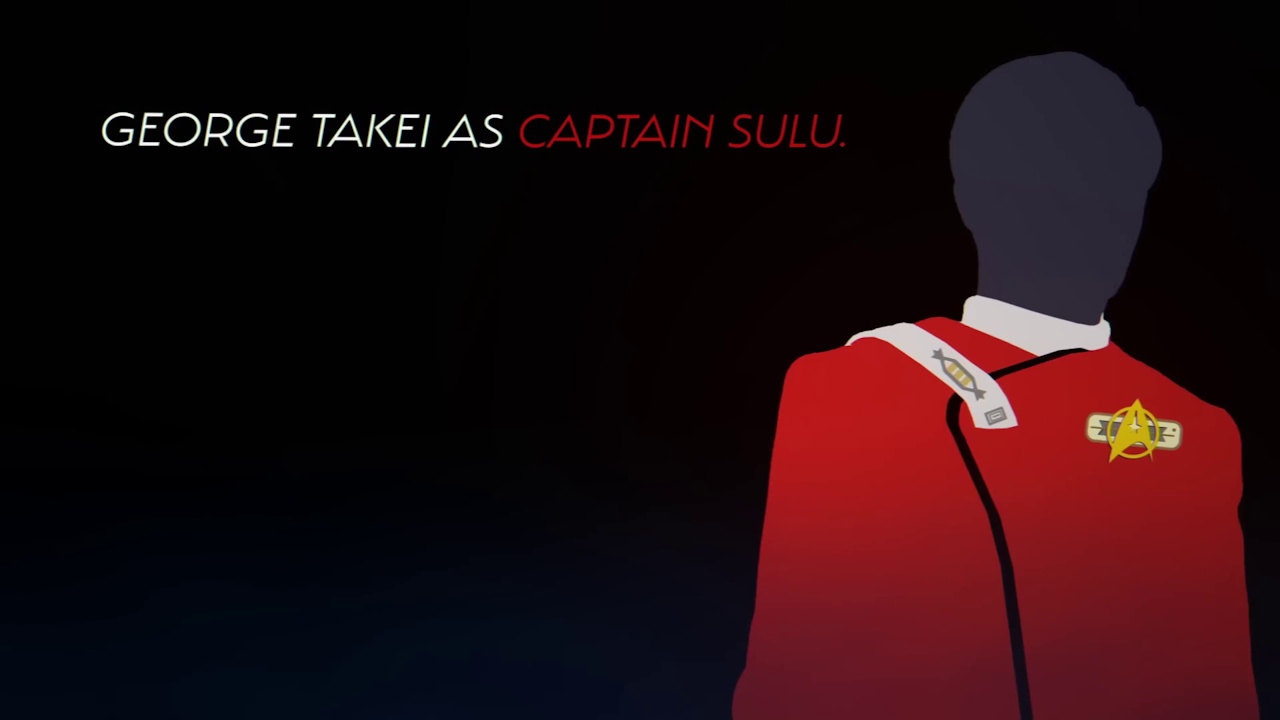
Thoughts on the potential Ceti Alpha V/Khan miniseries

Spoiler Warning: There are spoilers ahead for Star Trek II: The Wrath of Khan, Star Trek Into Darkness, Star Trek: Discovery, and for other iterations of the franchise.

If you don’t follow the ins and outs of the Star Trek rumour mill, maybe you missed talk of a potential Khan-focused project. I know I had until relatively recently! But apparently the proposed miniseries – codenamed Star Trek: Ceti Alpha V – has been written, and is floating somewhere in that nebulous “maybe” zone – better known as “development hell.”
This story, penned by The Wrath of Khan and The Undiscovered Country director Nicholas Meyer, would fill in a gap in the story of iconic villain Khan, focusing on his life in between his exile by Kirk in Space Seed and his re-discovery by the crew of the Reliant in The Wrath of Khan. Along with being the director of both of those films, which are generally considered among the best of cinematic Star Trek, Meyer also co-wrote their stories, so I don’t want to dismiss out of hand his work or ideas on this project.

That said… I’m not entirely sure this is something worth doing.

Khaaaaaan!

The fact that Ceti Alpha V is said to be a miniseries, perhaps consisting of a mere three episodes, would condense its story and avoid dragging it out too much – and that’s certainly a good thing. However, the reason why that might be necessary and the one saving grace this project has is because Ceti Alpha V would be looking at what is arguably the least-interesting part of Khan’s life and story.

Space Seed saw Khan awaken in a new century, still feeling superior to unaltered humans and intent on recapturing his long-lost empire. The Wrath of Khan saw him seek revenge on Kirk, the man who he feels wronged him by marooning him and his crew on the doomed world. Aside from the destruction of Ceti Alpha VI, which could be an interesting thing to see, I suppose, seeing Khan’s descent into madness and a revenge obsession just doesn’t feel necessary or interesting.
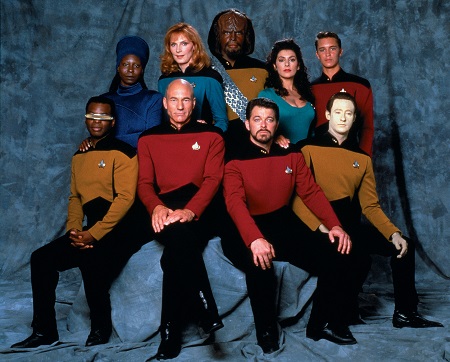
Khan in command of the USS Reliant in The Wrath of Khan.

The concept reminds me in some ways of the Star Wars prequels. Though that trilogy of films was beset by all kinds of issues, the fundamental problem was that it was telling the less-interesting part of an already-complete story – and that’s the trap Ceti Alpha V feels like it’s on the precipice of falling into. We didn’t need a three-film saga showing the awkward childhood and the rise and fall of Anakin Skywalker to understand that he was an evil villain who could be redeemed by the residual love he had for his son. All the elements of Darth Vader’s redemption story were already present in the first three Star Wars films, and the prequels ended up not just being unnecessary fluff, but they actively detracted from Vader as an imposing, intimidating villain.

What would Khan do in a potential Ceti Alpha V miniseries that we don’t already understand from both Space Seed and The Wrath of Khan? At best what we’ll see is a padded out version of what we already know happened: the explosion of Ceti Alpha VI, the ecological ruin of Ceti Alpha V, the deaths of his wife and members of his crew. And at worst we’ll see Khan engage in some awfully tacked-on story akin to the worst parts of the Star Wars Clone Wars cartoon.

Khan in Space Seed.

Sorry to keep hitting you with Star Wars comparisons, but the way I feel about this Ceti Alpha V project is similar in many ways to how I feel about the upcoming show Star Wars: Obi-Wan Kenobi. That series will follow Kenobi in between the prequels and the first Star Wars film… but the problem is that we already know what he did in those years: sat in exile in his desert hut.

Ceti Alpha V would also almost certainly recast the character of Khan for what will be the second time. Benedict Cumberbatch did a decent job in Star Trek Into Darkness a few years ago, but I seriously doubt he’d reprise the role here. While Star Trek has seen success with the recasting of classic characters – Captain Pike and Spock, most notably – doing so again here would just seem to add a further complication to the franchise.

Benedict Cumberbatch took over the role of Khan for Star Trek Into Darkness.

Unlike Star Wars, Star Trek has managed to successfully move beyond its original incarnation. The Original Series remains an important part of the franchise and its legacy, but as we look ahead to the 2020s – and hopefully beyond – we see projects like Prodigy, Lower Decks, the Section 31 series, and shows set in both the 25th Century with Picard and the 32nd Century with Discovery. I’m not sure that we need to revisit Khan right now – he’s a character whose story is arguably complete, and Star Trek as a whole is not in a place where this kind of backwards look is needed to bring in audiences.

As a Trekkie I would of course be interested to see a Khan miniseries. And also I’d be very interested to see any project with strong involvement from Nicholas Meyer. I just don’t see it being a necessary addition to the franchise based on where we are right now, and that’s before we get into the fact that, as mentioned, this would seem to be offering to tell the least-interesting part of a story that has already concluded.

The script for this project was written by Nicholas Meyer.
Photo Credit: Mike Muegel, CC BY 2.0 https://creativecommons.org/licenses/by/2.0, via Wikimedia Commons

There is plenty of scope for Star Trek to see the return of classic characters from The Original Series era – and we have seen a number of such characters in Discovery already. With Picard Season 2 in the offing and the return of Captain Janeway in Prodigy, we’re also welcoming back some characters from the 24th Century too. Maybe we just don’t need Khan right now?

Despite my feelings overall, I don’t think we should entirely dismiss the idea of Ceti Alpha V. I truly dislike the expression “nobody asked for this,” and I would point to Enterprise as a series that I likewise felt would have little to offer that ended up being a great Star Trek show that really embodied the spirit of exploration. So I don’t want to just say that Ceti Alpha V wouldn’t have merit; it may even succeed at bringing in fans of The Wrath of Khan – which is arguably the biggest point in its favour.

We already know how Khan’s story ends.

Will it get made? I don’t know. Meyer has suggested that the script itself is either almost complete or fully ready, so perhaps it’s only one step away from being greenlit. If I were in charge I think I’d look at other projects first before deciding whether or not to go ahead with something like this, though.

That’s just my opinion – and as I always say, the Star Trek franchise is a big tent, able to welcome all kinds of different stories. Just because this wouldn’t be top of my list doesn’t mean it lacks merit or would be unenjoyable – and I daresay if it does enter production I will tune in! One thing I definitely like the sound of are short-format stories like made-for-streaming films or miniseries. Just like Short Treks, miniseries like this proposal could be used to tell all kinds of stories in the Star Trek galaxy – and more Star Trek on our screens is always a good thing.

Star Trek II: The Wrath of Khan and all other Star Trek titles mentioned above are the copyright of ViacomCBS. This article contains the thoughts and opinions of one person only and is not intended to cause any offence.