Star Wars Jedi: Survivor – A Review

Spoiler Warning: There are spoilers ahead for Star Wars Jedi: Fallen Order and Star Wars Jedi: Survivor. Minor spoilers may also be present for parts of the Star Wars franchise.

It’s been a while since I shared my first impressions of Jedi: Survivor here on the website. I’ve since returned to the game, despite its performance issues, and beaten the main story, so I’m now in a position where I can put metaphorical pen to paper and share my full thoughts with you. Sorry that it took so long!

For some context, I adored Jedi: Fallen Order. I documented my first playthrough of that game here on the website back in 2020, and I was thrilled to see Lucasfilm and Electronic Arts recognising the strength of feeling in the Star Wars fan community for a linear single-player game. Jedi: Fallen Order had a high budget, but it proved definitively – as if any such proof were really needed – that single-player games can still be profitable, and that players still long for those kinds of experiences. Moreover, at a time when both The Rise of Skywalker and The Mandalorian had been disappointing, Jedi: Fallen Order came along and showed me that I hadn’t entirely fallen out of love with Star Wars.

I definitely felt optimistic about Jedi: Survivor.

I was genuinely thrilled at the prospect of a sequel to one of my favourite Star Wars games of all-time, and to see what would come next for Cal Kestis and the crew of the Stinger Mantis – and that was how I felt in the weeks leading up to the launch of Jedi: Survivor. If things went well, I believed that it might’ve been in contention for my “game of the year” award come December.

But things did not go well.

The Jedi: Survivor story is an all-too-familiar one: Electronic Arts forced the game to be released too early, despite knowing that there were serious technical issues. The game is a “release now, fix later” title, replete with bugs, performance issues, and other such problems. Although these issues afflicted the game and harmed players’ enjoyment across all platforms, as is often the case it seems that the PC version of the game was in the worst shape. Unfortunately, as I don’t own a PlayStation 5 or Xbox Series console, PC was where I played Jedi: Survivor.

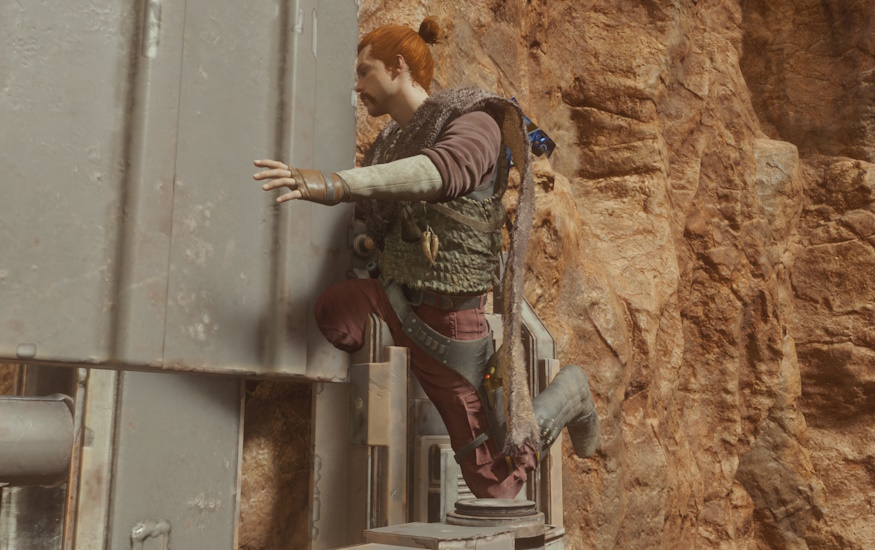
One of many bugs that I encountered. Nightsister Merrin crouching in an out-of-bounds area.

I actually thought I’d been smart. Having read the reviews of the game when it launched and having seen performance reports from players and professional critics, I shelved my plans to buy Jedi: Survivor. I waited a couple of months and kept my eye on the game as patches were rolled out, and mistakenly believed that six patches later, things would have improved. Spurred on by having inadvertently come across a couple of story spoilers, I picked up the game at the end of June.

Unfortunately, however, the performance issues hadn’t been fixed – and in spite of another patch having been rolled out since then, those issues are still present on PC at time of writing. I described Jedi: Survivor as a “release now, fix later” game… but the fix still hasn’t been made, and the game remains in a poor state even five months after its troubled launch. In fact, having returned to the game to grab a few screenshots, I felt that its performance was worse in September than it had been in June and July.

A levitating Stormtrooper.

The blame for this lies with Electronic Arts, and the company has transformed what should have been a guaranteed hit into a game surrounded by controversy thanks to pathetically poor decision-making at the highest levels. Developers Respawn Entertainment were placed in an impossible position, and while I have no doubt that talented, passionate folks did their absolute best to get Jedi: Survivor as ready for launch as possible, they were screwed over by EA. It’s a tale as old as time in the games industry: a greedy publisher shits all over the hard work of talented developers, then seeks to blame them for the game’s poor condition and lower-than-expected sales.

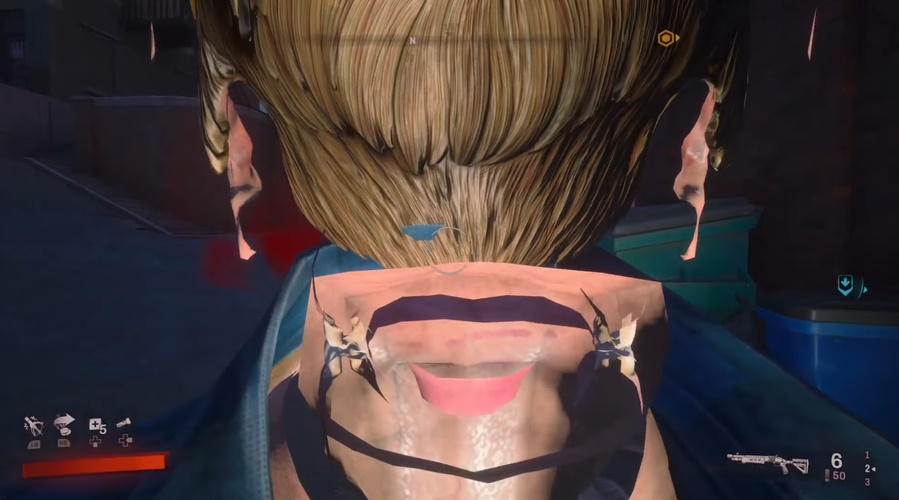
My first few hours with Jedi: Survivor were spent messing about with settings rather than actually playing the game. Every time I thought I’d improved things, the stuttering and frame-drops would inevitably return – and they were far from the only problems. I encountered dozens of bugs across my playthrough, with Cal and other characters getting stuck in the environment or clipping through solid objects, as well as items not rendering properly or even disappearing. These issues didn’t just affect gameplay, but were also prevalent during cut-scenes – something I hadn’t seen in a supposedly “complete” game in a very long time.

And I have no doubt that Jedi: Survivor’s performance problems have tainted my view of the game as a whole.

Clipping through and getting stuck in the environment was a recurring problem throughout Jedi: Survivor.

When I sit down to play a game like Jedi: Survivor, it’s because I want to be immersed in a story. I want the game to transport me to a galaxy far, far away, and lose myself for a few hours in the life of a Jedi Knight on the run from the Empire. The occasional bug or glitch would be tolerable, but when a game is in such shockingly poor shape, dogged by performance issues, stuttering, broken animations, and bugs galore… it rips the immersion away. I struggled to really get into Jedi: Survivor and its story, and even its better moments were spoiled or diminished by the unacceptable state that it was released in.

But that’s enough about bugs for now, because there are other issues with the game that we need to talk about.

I have two major gripes with Jedi: Survivor aside from the bugs. One is mechanical; a choice that was made in terms of the way the game was designed and its levels were crafted. And the second is with parts of the story itself, as well as with the way in which certain new and returning characters were handled. We’ll look at each of these points in turn.

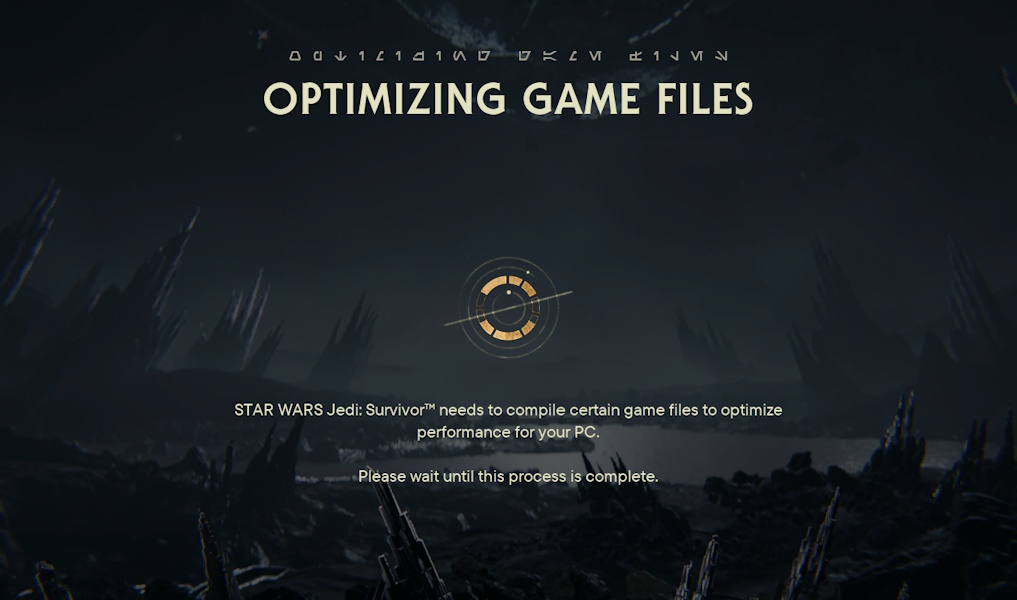
Optimising game files and compiling shaders appears to make fuck all difference.

Firstly, an open world (or semi-open world) did not suit Jedi: Survivor. The game’s story was hamstrung by this decision, and crafting a couple of open stages that actually felt condensed and small really damaged that sense of immersion that I was talking about. On the main planet of Koboh, the village of Rambler’s Reach was a few dozen metres away from the base of a massive gang of pirate-raiders and also a few dozen metres away from two Imperial outposts. Hardly the out-of-sight hiding place that it was presented as in-game.

One day we’ll have to talk more about the open-world trend, and how it simply isn’t the right choice for every game. Jedi: Survivor, to me, stands as perhaps one of the best recent examples of that. The design of both Koboh and Jedha was hampered by this attempt to move in an open-world direction, and the game would have benefitted from tighter, more curated levels, as well as areas of the map that had more distance between them. By all means, have raiders and Imperials on Koboh if that’s necessary for the story – but why not have Cal travel to the other side of the planet in a cut-scene before encountering them? The design of those parts of the map could have been similar, but breaking them off from the Rambler’s Reach hub would have improved the game from a narrative and immersion standpoint.

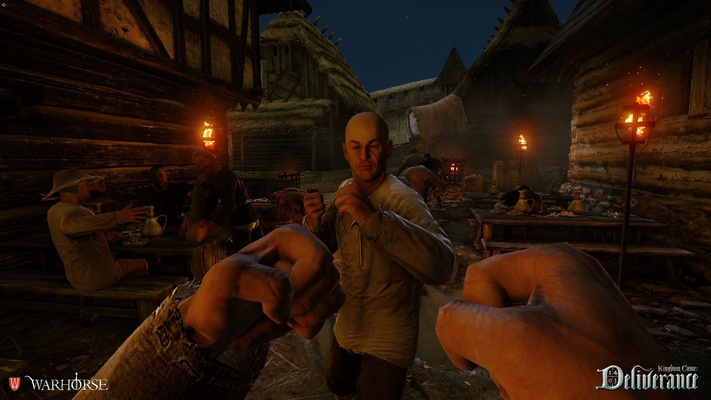
The saloon in Rambler’s Reach.

I also felt that the move to broader, more expansive levels should have been accompanied by more cosmetic items and loot. It became frustrating to explore a whole area, climbing onto hidden ledges, wading through rivers, and so on only to find… absolutely fuck all. There are more cosmetics in Jedi: Survivor than there were in Jedi: Fallen Order – and that’s great. I had fun customising Cal and unlocking some of these options. But this was something that felt unbalanced.

I’d explore a whole section of the map, kill dozens of enemies, and find nothing. No in-game currency, no cosmetics, no chest with an item… just nothing at all. And to me, that reinforces what we were talking about with Jedi: Survivor’s open-world style: it just doesn’t fit the game. It didn’t fit the story and it didn’t fit the amount of content that had been created, either. A good game strikes a balance, making exploration feel fun and worthwhile. There were moments of that in Jedi: Survivor, but they were too few and far between.

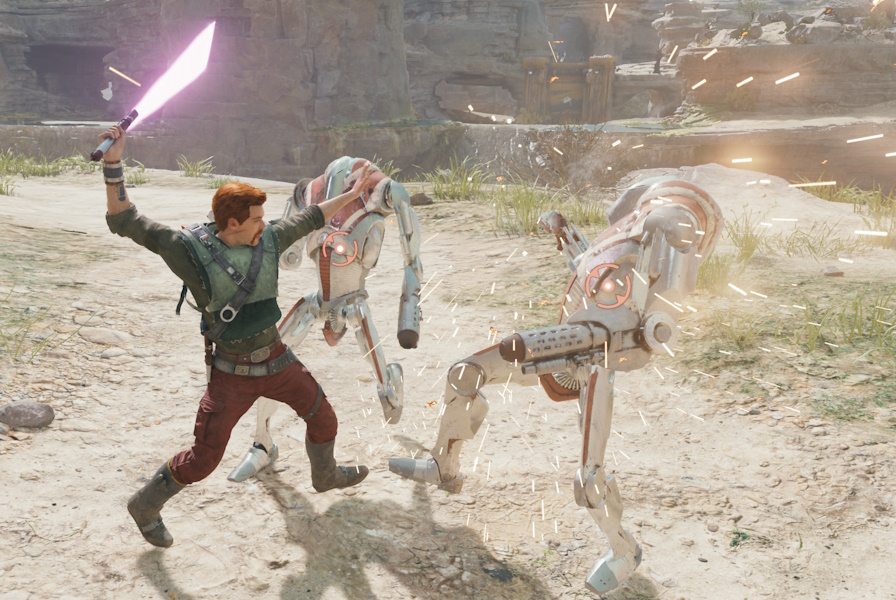
Battling battle droids.

Jedi: Survivor bills itself as a “souls-like” game; i.e. a “difficult-for-the-sake-of-it” title. But to its credit, the game offers an easier mode to play on – something I took full advantage of. However, even on the easiest difficulty there were some particularly finicky and challenging moments. While I found the game’s combat to be okay, there were some moments where Jedi: Survivor required frame-perfect button presses that I found near-impossible. Because I suffer from arthritis that affects my hands and fingers, some rapid button combos are nigh-on impossible for me to perform. At several points in the game, I was almost entirely locked out from progressing because I couldn’t complete a particularly intensive button combo.

On one occasion it took me almost forty tries to navigate just a single section of the map on Jedha – a particularly convoluted wall-run, jump, and swing combination that my hands and fingers just couldn’t manage. The game offered no help with these things, no accessibility options, and no way to skip ahead to bypass these moments. This is poor, and while I will give Jedi: Survivor some well-earned praise for offering a story mode, more accessibility features need to be present, and developers need to be aware that easier combat isn’t the only thing that players are looking for. Many games offer the option to skip ahead if players can’t make it past a certain puzzle or area of the map; these things are not that difficult to implement.

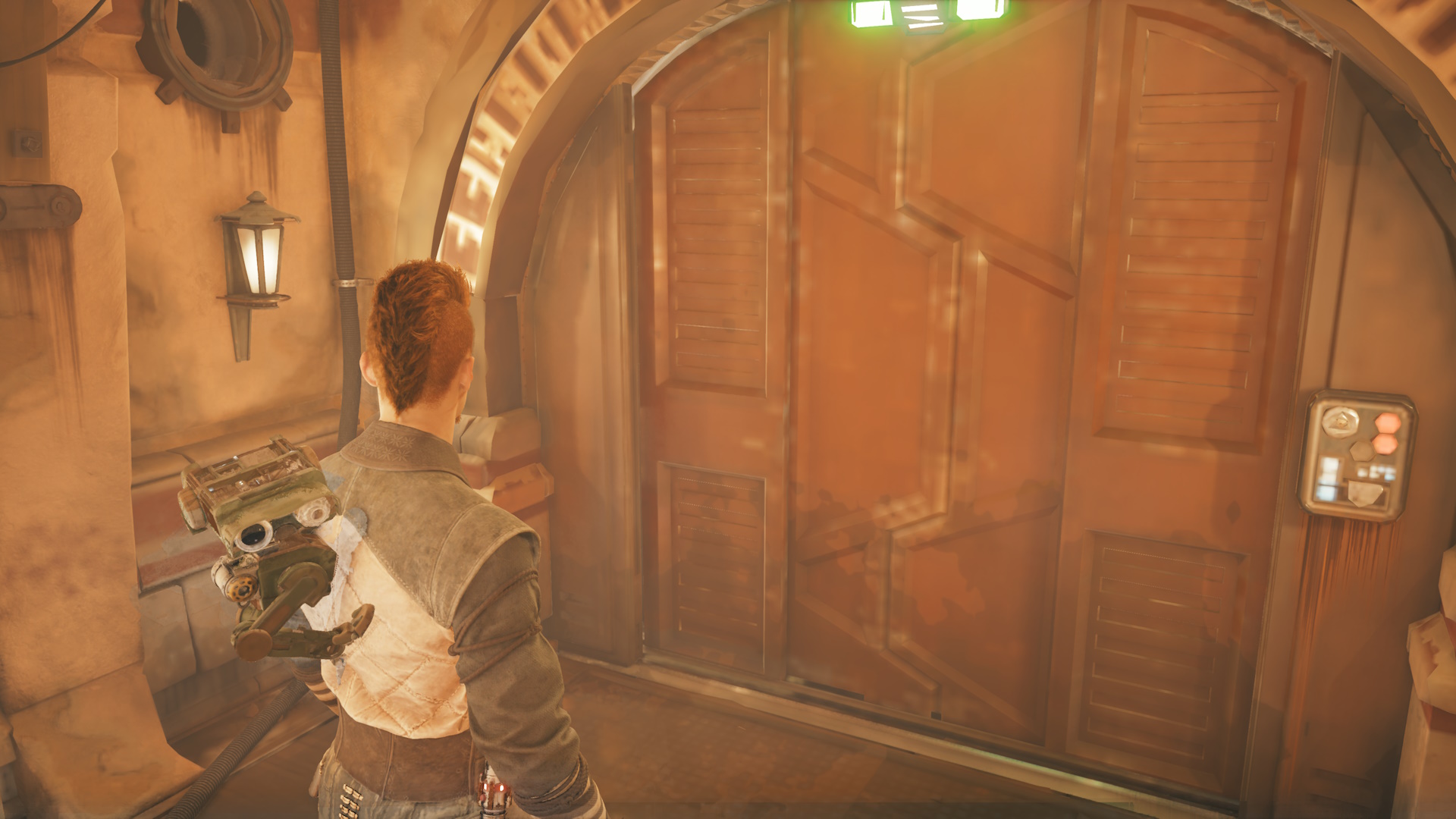
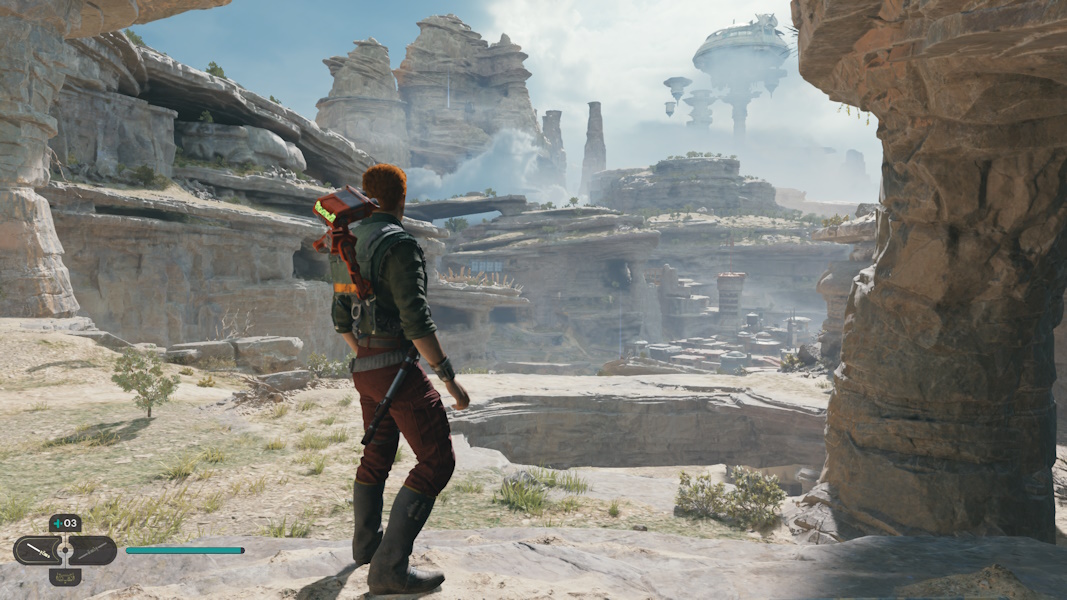
Cal on Jedha.

Stories are incredibly subjective. What works for you might not work for me, and vice versa, so everything I’m going to say about Jedi: Survivor’s narrative choices have to be taken in that way. Nothing about this is “objective” at all!

Where I’d felt gripped by Jedi: Fallen Order’s story, Jedi: Survivor came up short. Cal felt listless, rushing from place to place at the behest of the plot but not in a particularly understandable way, and there were moments of sheer randomness in the story – particularly at the beginning – that really detracted from the adventure.

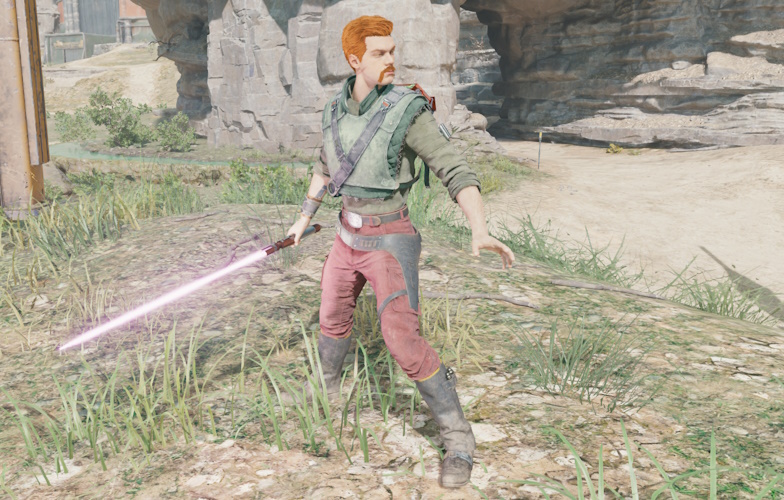
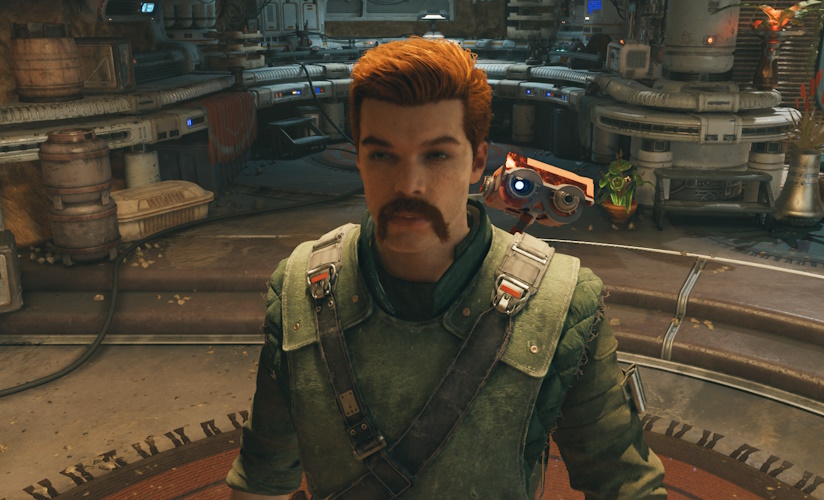
A customised Cal.

In Jedi: Fallen Order, Cal was being hunted by the Imperial Inquisition after he used his Force powers, but was rescued by Cere. She already had a mission of her own: to open the holocron. Cal slotted into that story perfectly, and at every stage it felt like it unfolded naturally as Cal visited different worlds to unlock the holocron’s mysteries.

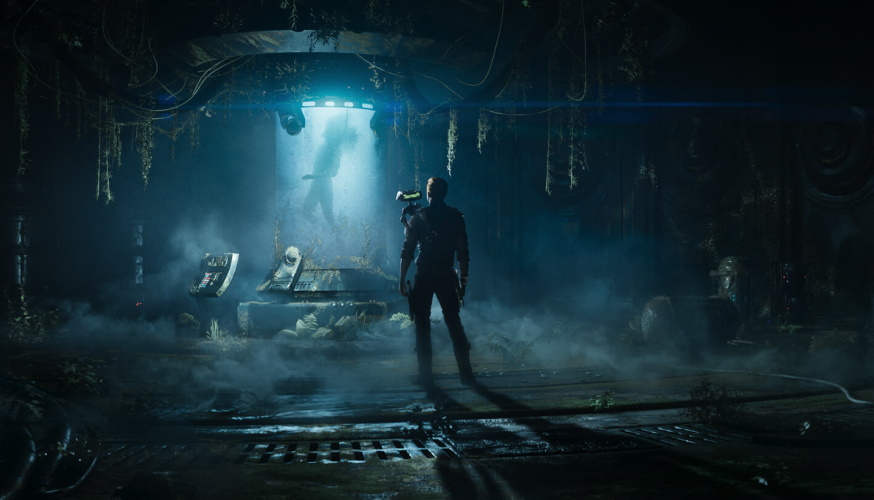
Jedi: Survivor begins with Cal falling into a hole that leads to a random cave – entirely by accident. It just so happened that Greez built his Cantina on top of some ancient Jedi ruins, and Cal stumbled into those ruins completely by mistake. That mistake kicked off a convoluted plot about a planet lost in an impenetrable nebula, a fallen Jedi who’d been sealed in a bacta tank for hundreds of years, and an Imperial spy who was so obvious that he might as well have had the words “secret bad guy” tattooed across his forehead.

Yup.

I admit that the performance issues and bugs in Jedi: Survivor made it harder to fully get into the story, as did the open-world mechanics described above. And those two things have undoubtedly impacted the way I view certain character decisions and the game’s narrative path. But even keeping that in mind, and doing my best to separate my thoughts about the state of the game and its design choices from its narrative… I still find it to be a weaker and less engaging story than its predecessor.

Any Star Wars story set during the reign of the Empire has a tightrope to walk – and for me, Jedi: Survivor created narrative issues for itself as a result of a couple of key decisions. Bringing back Master Eno Cordova for what was, unfortunately, an underwhelming and unimpressive role seriously challenges the idea of Cal as the game’s protagonist and leading figure in any kind of Jedi restoration. Cere had appointed herself as a kind of librarian or preserver of Jedi knowledge, but Cordova – a Jedi Master, lest we forget – should have been in a strong position to play a leading role in the preservation and restoration of the Jedi Order.

Master Cordova’s role was unimpressive.

Instead, Cordova’s role was a disappointment. He hand-waved away Cal’s destruction of the holocron that he’d gone to such extreme lengths to protect in the first game, then just stood around doing fuck all. He didn’t help, he didn’t offer guidance, he didn’t do… well, anything. And then he died remarkably easily at the climax of the game’s “twist” – a twist so thoroughly telegraphed that it might as well have been lit up in neon. Ever since the “no, I am your father” moment back in 1980, Star Wars has been obsessed with putting these kinds of twists into its stories. As I said once, recapturing that magic moment isn’t gonna happen, and Jedi: Survivor was made worse by trying to pull off something like this – and doing it so unsuccessfully.

When the dust settled, I also felt that Bode’s reason for his betrayal of Cal was paper-thin and didn’t make a lot of sense. Did Bode really plan to take his child to an uninhabited, uncharted planet and stay there – completely alone? What were they gonna eat? Without access to technology, what were they gonna do? Sure, they’d be “safe” from the Empire, and Bode would be wiped off the Empire’s list, but there doesn’t seem to have been any real planning on his part for the long-term.

Bode didn’t make for a particularly compelling villain.

In a “linear, story-driven” game – tags that Jedi: Survivor’s publishers love to draw attention to – the story is more important, in many ways, than the gameplay. Jedi: Survivor’s third-person exploration, parkour, and lightsaber combat could be fantastic… but if they’re let down by a poor story or one that feels convoluted, there’s no salvaging the game. And while I wouldn’t say anything in Jedi: Survivor was as bad, narratively speaking, as something like The Rise of Skywalker… that’s an incredibly low bar.

There were some genuinely tense, thrilling, or otherwise fun moments scattered throughout the story, as well as callbacks to the first game and references to other parts of the Star Wars franchise that I appreciated. So it wasn’t a total narrative collapse or anything like that; Cal’s story, while built on weak foundations, was still worth following to its conclusion. Even though I saw Bode’s betrayal coming from a mile away, Cal’s raw emotional reaction to it definitely hit the notes it was aiming for. While Master Cordova’s death felt like a waste, Cere’s demise at the hands of Darth Vader not only took her story full-circle after the events of Jedi: Fallen Order, but it was a heartbreaking moment that was handled well.

Cere was hunted down by Darth Vader.

The weakest part of the story of Jedi: Fallen Order was one that I hoped its sequel might address. The Haxion Brood storyline – in which Greez and Cal were pursued by a gaggle of unimpressive bounty hunters – was left unresolved by the time the credits rolled on the first game, and I had hoped to see a resolution in Jedi: Survivor. There was a bounty hunter side-story in the game, with several different bounty hunters to defeat that served as kind of mini-bosses. The ending of this questline was neat, but here’s my gripe: it didn’t resolve the Haxion Brood storyline!

As of the end of the game, Cal and Greez are still wanted by the bounty hunters, and the faction’s leader, who we met in the first game and who seemed like the kind of arrogant dick that it would be so satisfying to kill, wasn’t even mentioned this time. Again, this storyline just feels half-baked, and I had hoped that Respawn might’ve taken that feedback on board after the way the bounty hunter story just fizzled out in the first game.

Bounty hunter Caij Vanda offered what amounted to side-missions.

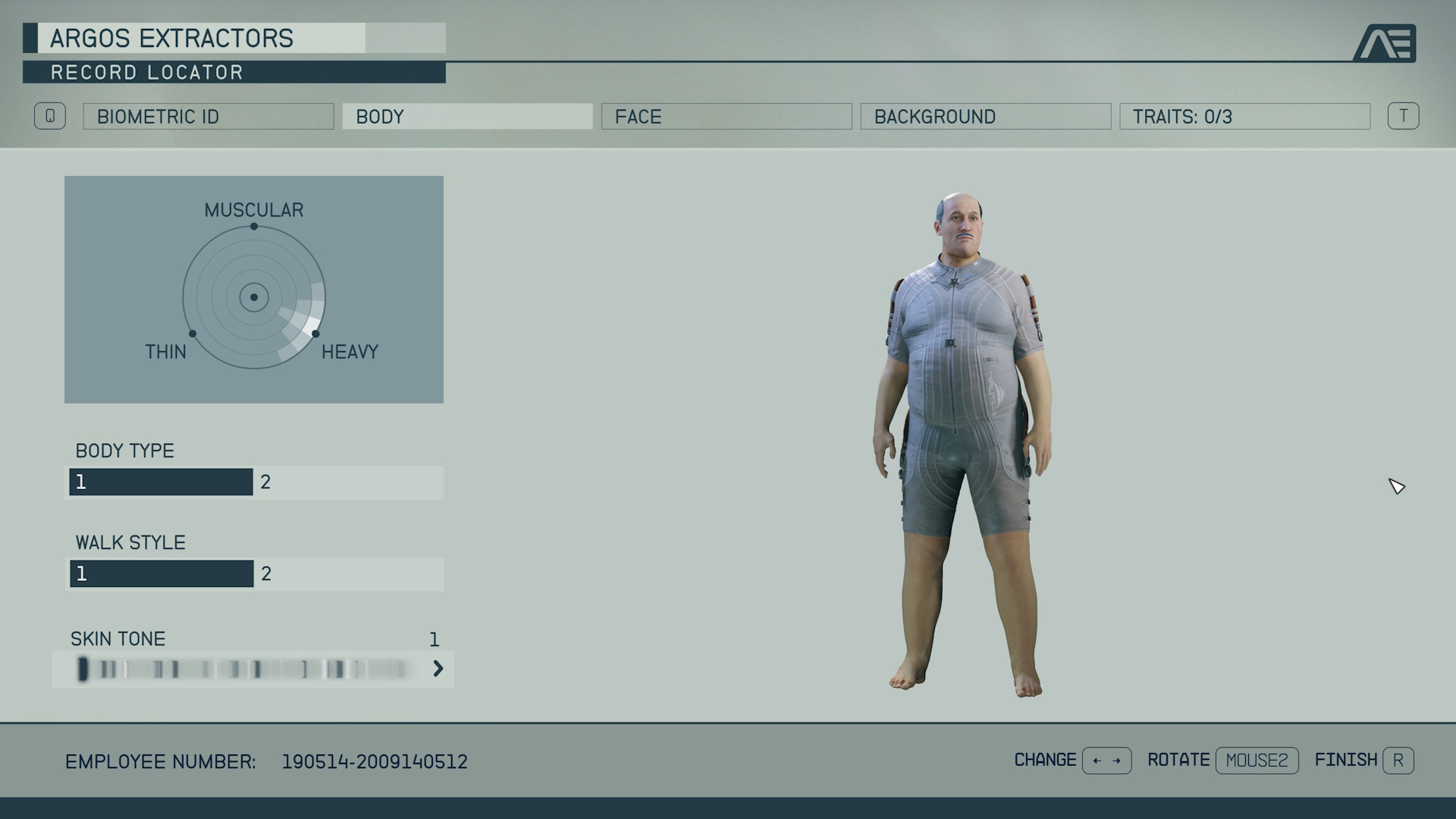
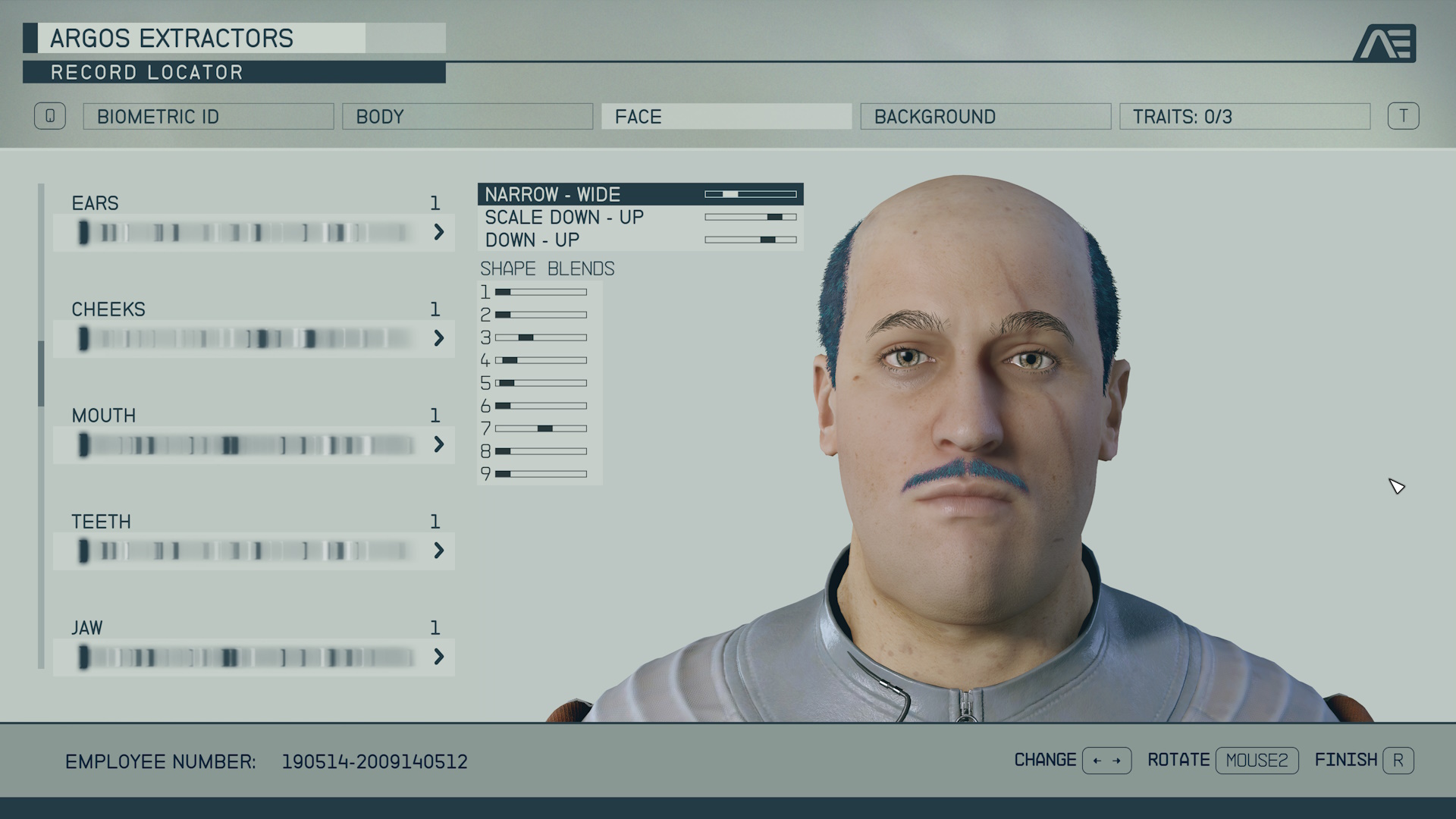
I liked that there were more cosmetic options in Jedi: Survivor, and I had fun playing with Cal’s appearance, BD-1’s appearance, and Cal’s lightsaber. I wasn’t wild about the way these cosmetics were unlocked, however, as I felt the game was particularly stingy with its currencies and lootable containers. That being said, I was able to unlock most of the items that I had my eye on, and by the time I was halfway through the campaign (or thereabouts) I’d got Cal, BD-1, and Cal’s weapons looking the way I wanted them to.

The expansion of lightsaber styles from Jedi: Fallen Order was nice – but these felt a little restrictive. I loved the way the crossguard lightsaber looked, but the incredibly slow and cumbersome fighting style that accompanied it basically rendered it non-viable for me. It would have been nice if there were options to mix and match fighting stances with cosmetics – in my case allowing Cal to use a crossguard lightsaber in a different way, but this could also open up double-bladed and dual-wielding stances to other styles of play.

Cal with a crossguard lightsaber.

Jedi: Survivor retains the Dark Souls-inspired “checkpoint” save system, instead of allowing players to freely save. This is a particularly irritating trend that many “souls-like” games (or should that be “souls-wannabes?”) implement, and it just feels annoying and outdated in 2023. Having to re-do chunks of a level because of the lack of a proper save system is just silly, it doesn’t increase the difficulty nor add anything to a game, and with Jedi: Survivor’s meditation spots not exactly being ubiquitous, I felt this choice got in the way of the fun.

One thing I did appreciate was that Cal’s Force powers carried over from Jedi: Fallen Order. Given the way in which that game weaved Cal’s connection to the Force into its narrative, it would have felt strange if he’d begun the sequel having to re-learn those same skills, and I will give credit to the writers for keeping Cal’s growth going instead of going for the typical video game sequel “reset” of his powers.

Customising BD-1.

I expected better from Jedi: Survivor, at the end of the day. The follow-up to one of my favourite games of the last few years was a title that I genuinely expected to compete for the coveted “game of the year” title come December, but instead it’s going to go down as one of the biggest disappointments of 2023 for me personally. The unacceptably poor state that Jedi: Survivor was in at launch – and remains in more than five months later – is a big part of that. But even if those performance issues and bugs had been kept to a minimum, the game itself feels like a poor relation to its illustrious predecessor.

Narratively, Jedi: Survivor built a weak, convoluted, and random story that split up the first game’s crew and saw Cal team up with an incredibly obvious turncoat. And mechanically, the game was forced into an open-world mould that simply didn’t suit it. It was hard enough to get invested in the story because of the poor shape that the game was in, but every time I got close, either the bland open-world formula would trip it up or I’d find myself annoyed by a story that was so much weaker than that of the first game.

Improperly rendered low-res textures.

So that was my experience with Jedi: Survivor. It’s hard to recommend it right now, given the performance issues and bugs that remain present. Electronic Arts and Respawn Entertainment have massively slowed the rollout of patches and fixes since the game launched, and I fear that Jedi: Survivor is being quietly abandoned and may never reach the level of basic playability and mechanical competence that should have been present at launch. This is already a huge disappointment and should be enough to put off all but the most ardent Star Wars fans.

Your mileage may vary when it comes to the game’s story, though, and my take is clearly not shared by all players. I’ve seen plenty of comments hailing the story as one of the best that the Star Wars franchise has to offer, and while that’s certainly not my opinion, it’s worth keeping in mind that these things are subjective. As I said earlier, I have no doubt that my overall impressions of Jedi: Survivor have been coloured by its bugs and performance issues.

I have no plans to return to Jedi: Survivor right now, and having stepped back into the game to capture a few screenshots for this piece, I’ll probably be uninstalling it. If a huge patch is released, or the game receives significant DLC that could add to its story, I might consider going around again. But unfortunately I must report that Jedi: Survivor was not the fun and engaging Star Wars adventure that I wanted it to be.

Star Wars Jedi: Survivor is out now for PC, PlayStation 5, and Xbox Series S/X. Jedi: Survivor is the copyright of Electronic Arts, Lucasfilm Games, and Respawn Entertainment. The Star Wars franchise is the copyright of Lucasfilm and The Walt Disney Company. Some promo artwork and images used above courtesy of IGDB. This article contains the thoughts and opinions of one person only and is not intended to cause any offence.


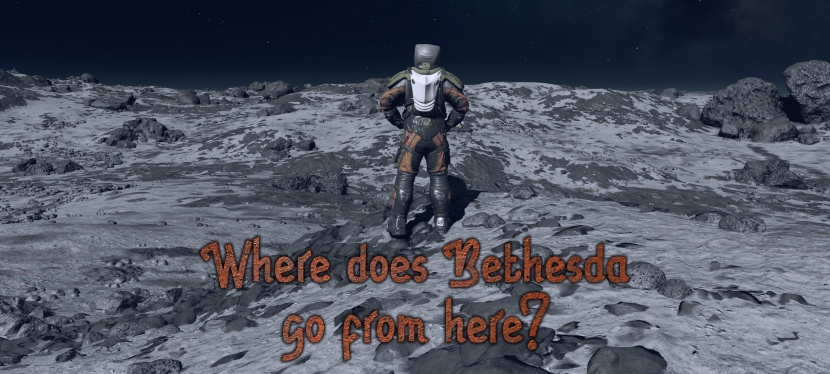
Where does Bethesda go from here?

Spoiler Warning: Minor spoilers are present for some early missions in Starfield.

A strange feeling hit me yesterday. I’d taken a break from Starfield for a few days after writing up my first impressions of the game, but I booted it up again to give it another shot at getting me immersed in its sci-fi world. This was, after all, a game I’d been excited to play and had been looking forward to. But while I was playing Starfield and feeling underwhelmed by some of its basic quests and unimpressive exploration… I realised that I’d rather be playing Baldur’s Gate 3. I was planning out character ideas in my head, thinking about how to approach some early-game quests and encounters that I was unprepared for the first time around, and I even found myself more interested in writing about that game than I was in actually playing Starfield.

This got me thinking about Bethesda, and in particular the way in which the company’s game design and creation feels… well, stagnant. Starfield, while an impressive technical achievement in many ways, also feels like a game whose core mechanics and systems haven’t really improved or moved on in more than two decades – and while that’s clearly sitting right with a lot of Bethesda fans and giving them a ton of enjoyment, it feels disappointing to me.

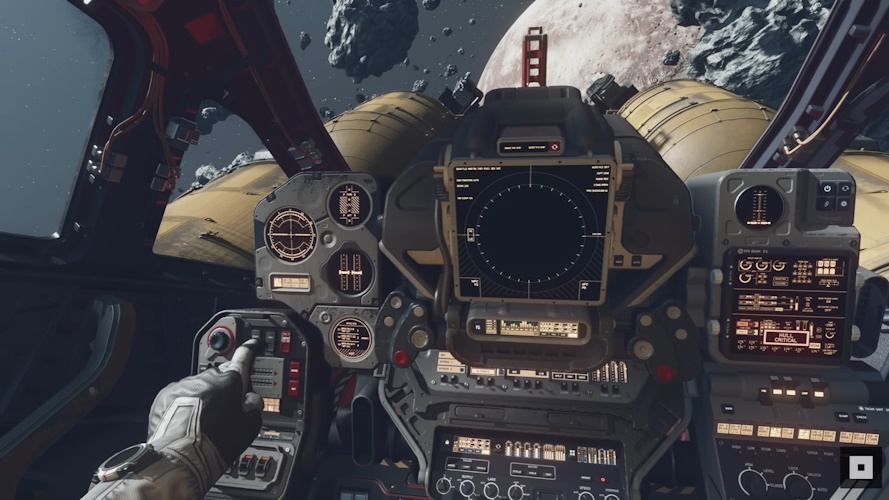
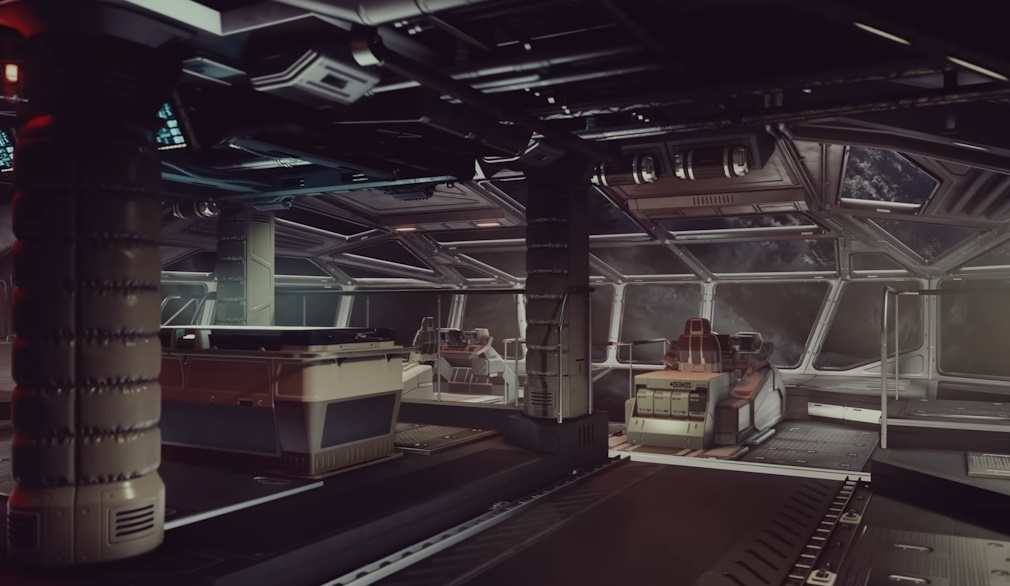
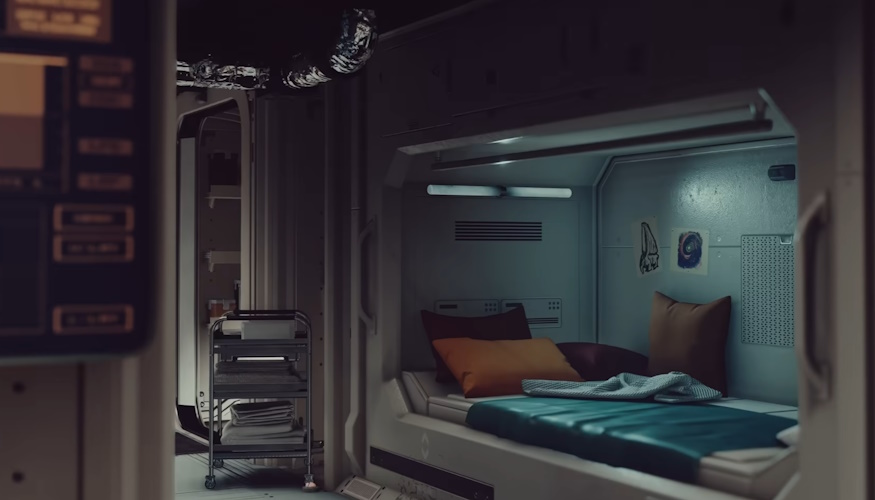
An empty captain’s chair.

Starfield is a Bethesda game. It’s “Skyrim in space.” And those two expressions simultaneously encompass everything Starfield fans love about the game… and everything that critics dislike about it. For the first time since I played Morrowind more than twenty years ago, I find myself wrangling with a difficult question: do I actually like Bethesda games? Or to be more accurate: are Bethesda games still enjoyable twenty years later when the formula, designs, and core gameplay mechanics haven’t really changed?

See, Starfield isn’t just “Skyrim in space.” It’s also “Oblivion in space,” “Fallout 3 in space,” and even “Morrowind in space.” Although more than twenty years have passed since we were first sitting down to play Morrowind, not a lot has changed in terms of the way a Bethesda game feels. And that’s a double-edged sword, because that familiarity is clearly something that fans adore. That style of gameplay has its audience – and it’s a big one. How else do we explain Skyrim still being popular almost twelve years later?

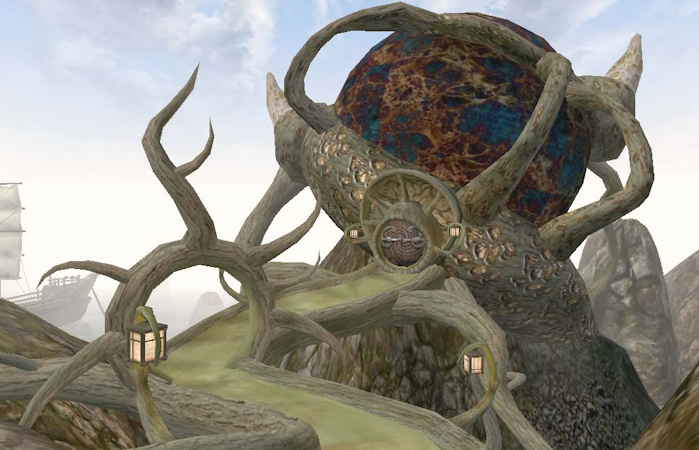
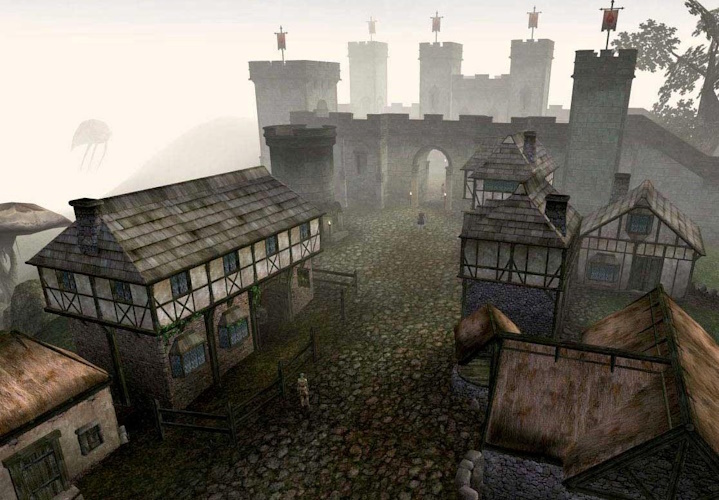
Morrowind was released on PC and Xbox in 2002.

But that familiarity is, at least for me, the beginning of Starfield’s undoing. The structure of a Bethesda game – with an optional main quest and plenty of side-missions to get stuck into – felt incredibly innovative in 2002, but doesn’t any more. And when many of those quests are incredibly basic, offering little if any choice of how to approach them, again it feels like Bethesda’s game design has become stagnant. Quests in Starfield operate in functionally the same way as quests did in Morrowind – and every other mainline Bethesda game since. You have two basic variants: go to place, press button to collect/interact with item, the end. Or: go to place full of enemies, kill enemies, the end.

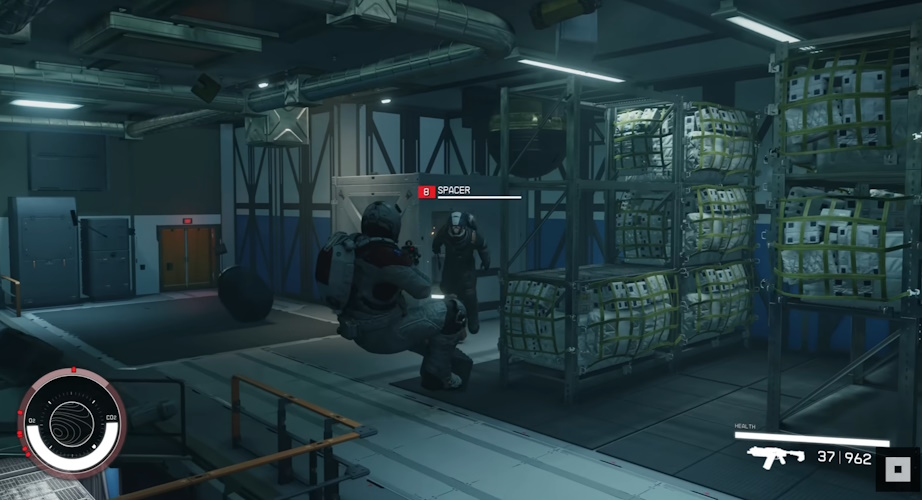
During an early-game mission in Starfield, I found myself at a facility teeming with nameless “spacers.” This base felt no different from the dozen or so other bases I’d cleared out earlier in my playthrough, and even though it was a named quest location, it felt incredibly samey in terms of its design and its loot. Stealth was an option – but not an especially good one, as taking down one enemy would alert all the others in the vicinity. There were no real puzzles to solve, aside from picking a couple of locks, and after exploring the entire place, listening to a couple of audio logs, and talking to one NPC, I’d claimed my prize and was blasting off to the next place.

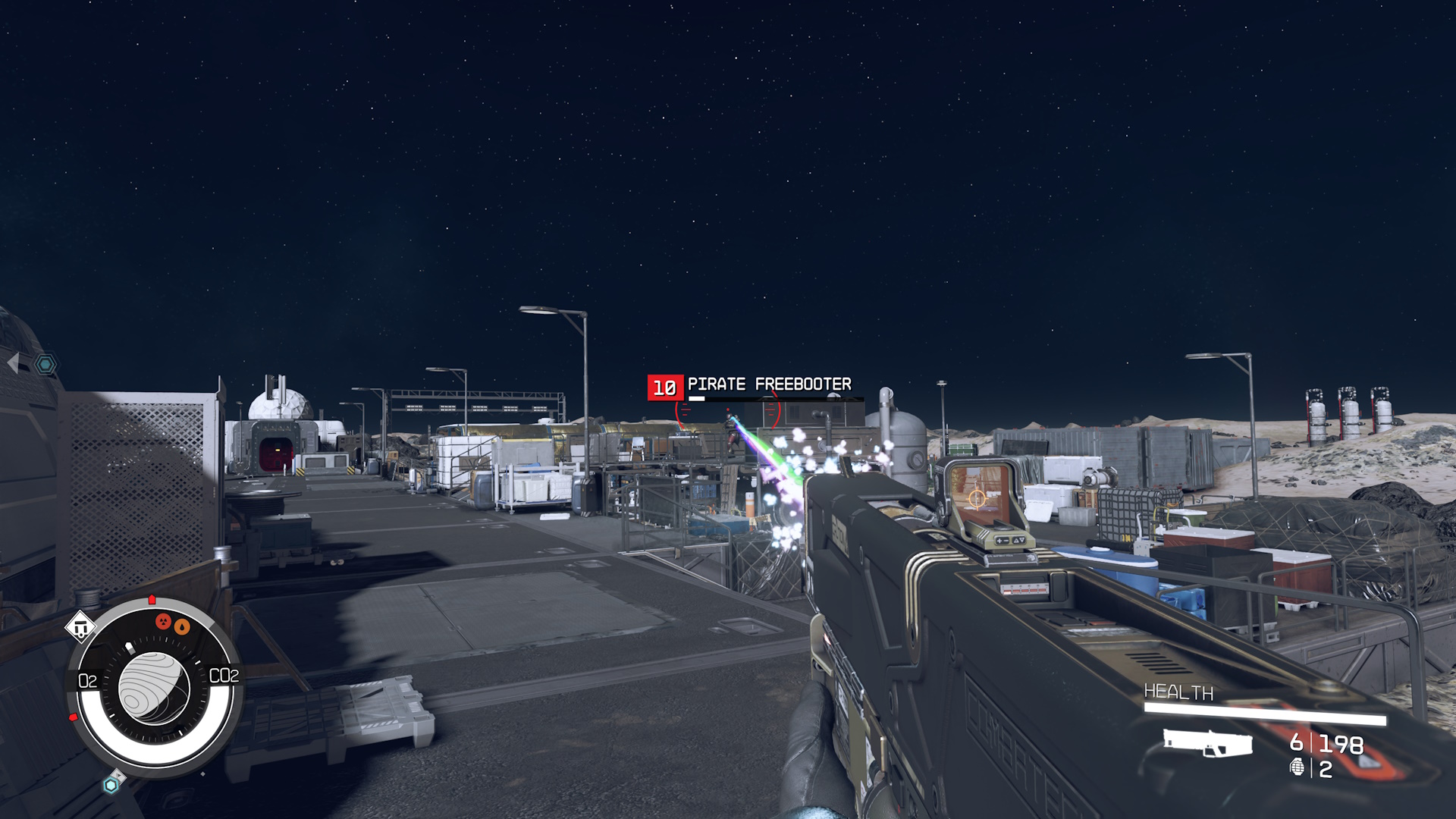
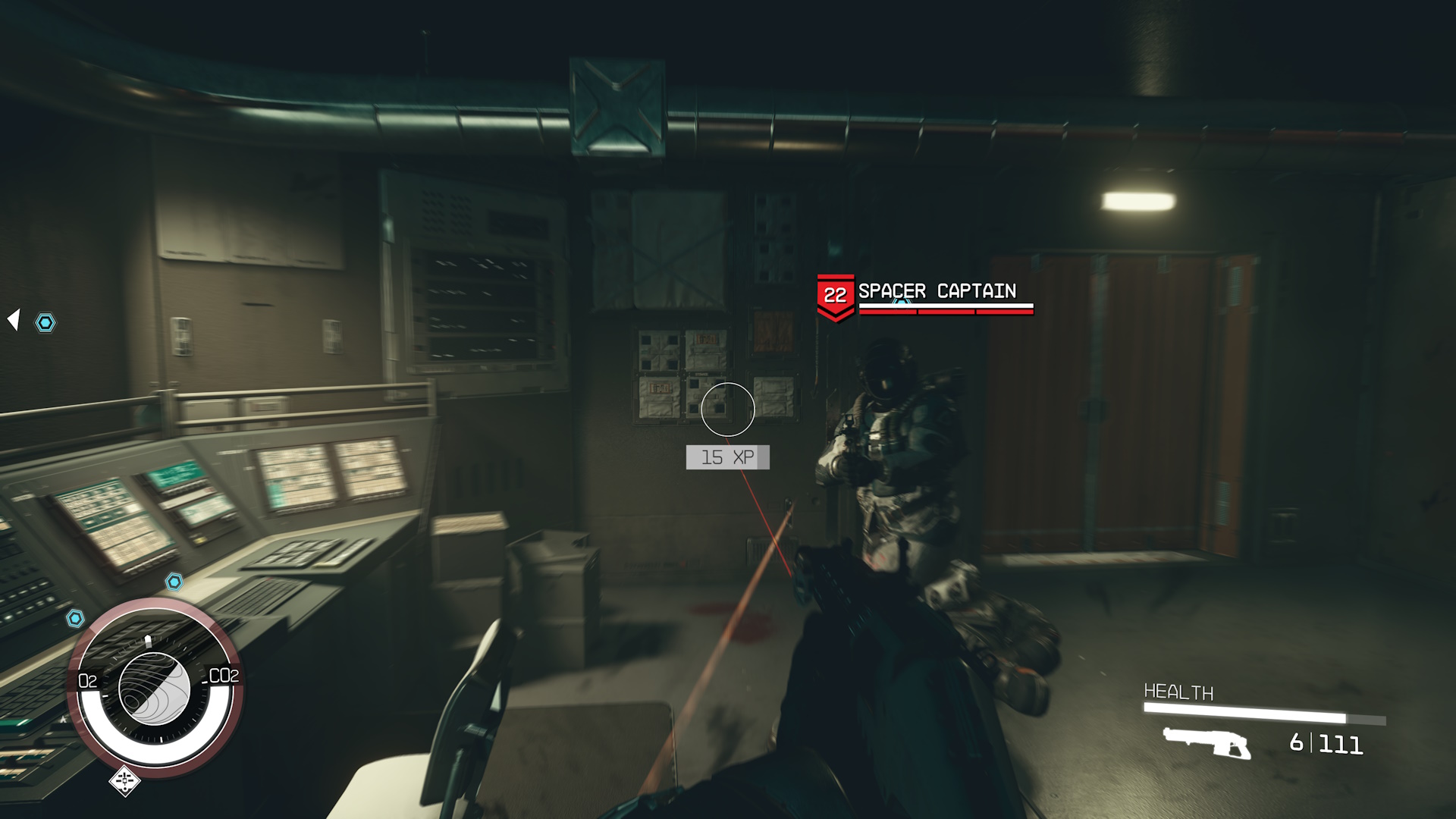
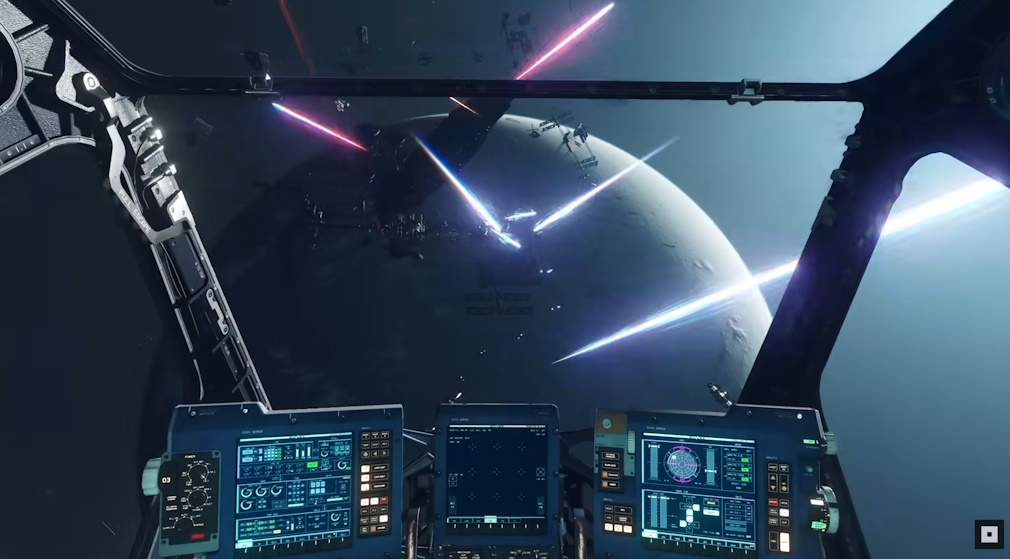
Fighting pirates in Starfield.

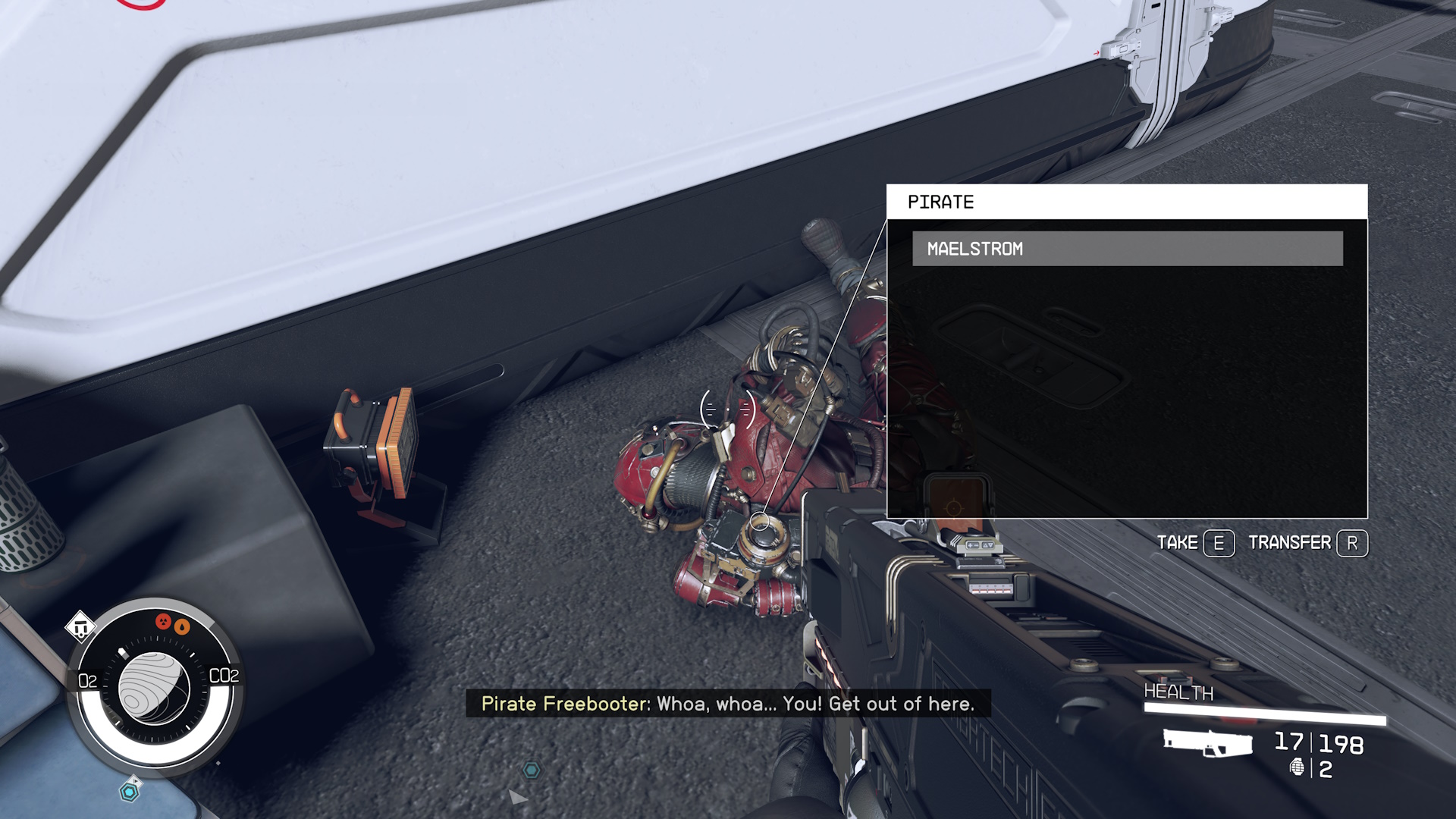
As I explored the facility that I was infiltrating (alright, attacking) I kept encountering interesting-looking items that I just couldn’t interact with at all. Computers that couldn’t be powered on. Gauges and switches that couldn’t be spun or flicked. Buttons that couldn’t be pressed. There was no environmental storytelling nor any way to use the environment to my advantage. I couldn’t, for example, hack into the base’s computers and set turrets to target the spacers. I couldn’t vent toxic gas into a room to knock them out. There wasn’t an alternate route to the clearly-marked destination that I could have used to sneak past the guards. In short: it was a Bethesda quest from a Bethesda game.

And I remember this exact criticism from the Morrowind days. “You’ll come across a fishing rod that you can’t use to fish,” said one reviewer at the time, using that example as a way to call out the superficial world that Morrowind offered. Because I got so hooked in by the story, the characters, the lore, and the world-building… I always felt such criticisms were silly. The world was rich and deep in story terms, even if mechanically and in terms of gameplay it wasn’t. That was good enough for me in 2002 – but it doesn’t feel good enough any more in 2023.

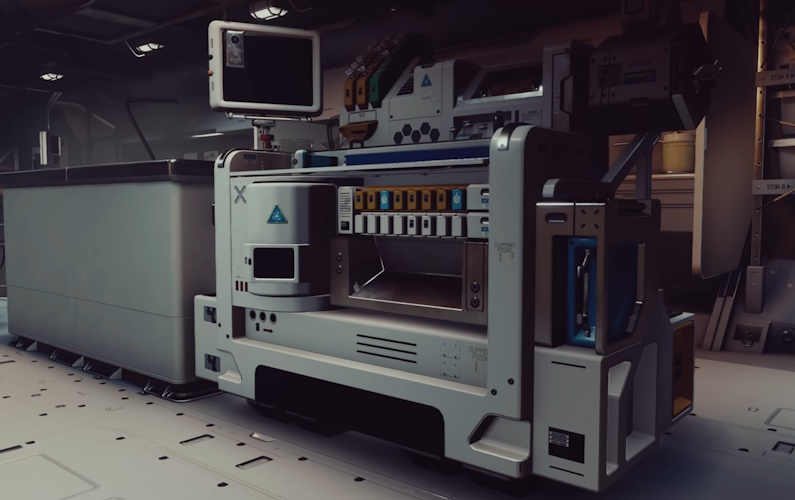
This computer setup (which is duplicated in many bases and locations across Starfield’s galaxy) is set dressing. It can’t be touched or interacted with in any way.

A lot of folks are playing and loving Starfield. A friend of mine, who was even more hyped for the game than I was, seems to be having a whale of a time – and I’m genuinely thrilled for them and for everyone else who’s enjoying it. But I feel like I’m watching a New Year’s Eve party through the window while standing on the cold street outside; everyone else is having fun, but I’m not.

I keep waiting for Starfield to “click.” I keep waiting for that moment where I’ll think “oh, I get it now,” and the fun can actually begin. But almost twenty-five hours in, it hasn’t. There are whole games that are shorter than that, games that get going from the very first moment and tell a wonderful story in a relatively short span of time. My pick for 2021’s game of the year was Kena: Bridge of Spirits, an indie title that was visually beautiful, emotional, and a ton of fun to play. But my playthrough of that game lasted barely twelve hours, and in that time I explored the game world, fell in love with its characters, and dragged it out as much as possible because I just didn’t want the experience to end.

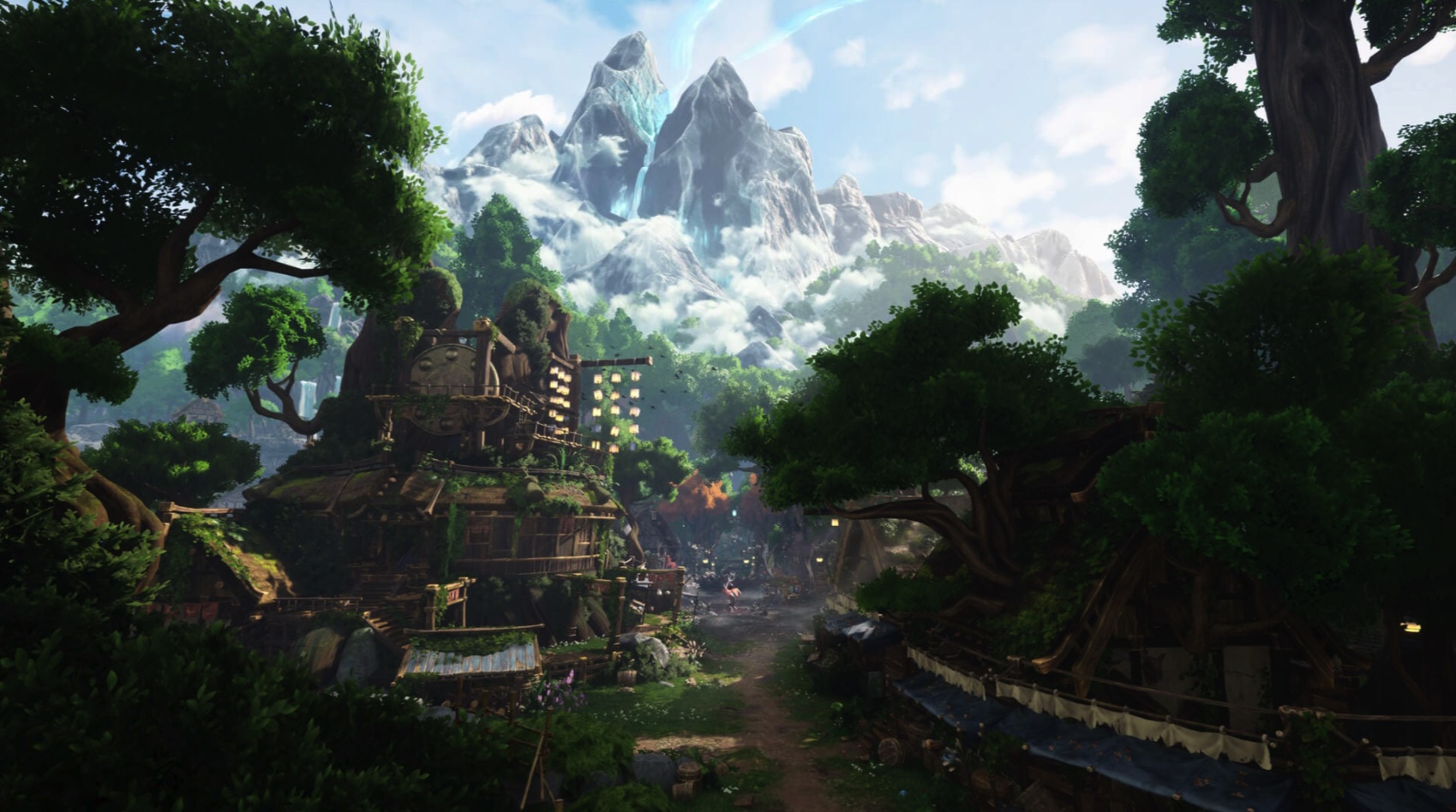
Kena: Bridge of Spirits was 2021’s game of the year.

I’ve heard other critics and commentators say that Starfield doesn’t “get good” until around the six-hour mark, the twelve-hour mark, or even beyond that. But… if it takes that long for the game to get going, I don’t really consider that to be a selling-point. It’s often true that a game gets more interesting to play as the campaign goes on; your character levels up and gains more skills and abilities, giving you more options in some cases. But the basic gameplay still has to be balanced and enjoyable during those first few hours! That’s crucial to player retention. If the reason I’m not enjoying Starfield after twenty-five hours and bringing my character up to level 18 is because the game “doesn’t get good” until later… well, how much longer am I going to have to wait to have a good time?

I don’t really think that’s the issue, though. Levelling up my character and doing those basic looting and fetching activities just don’t hold the appeal they once did. The real reason for that, I fear, is that game design has moved beyond what Bethesda and its Creation Engine are capable of.

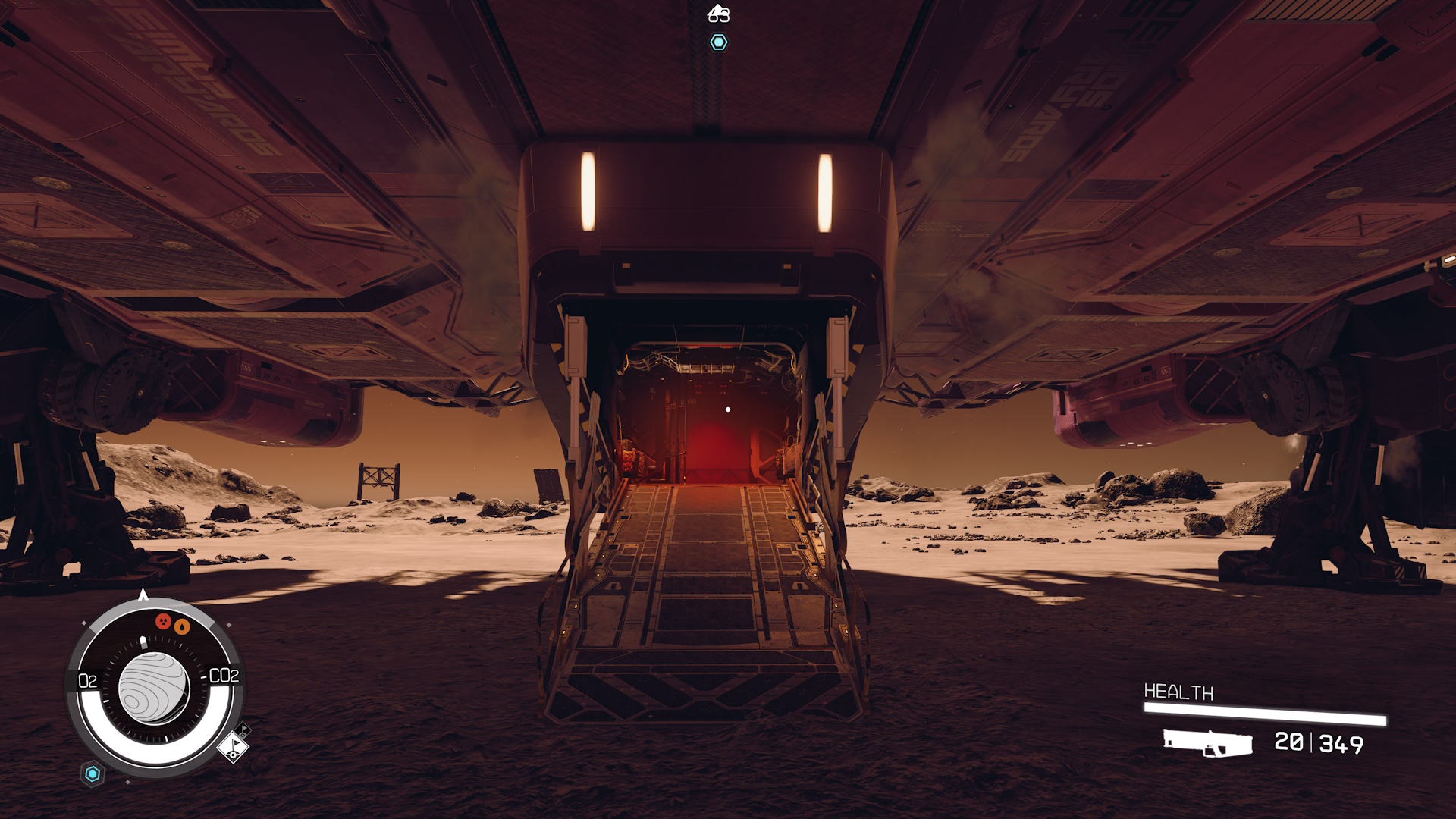
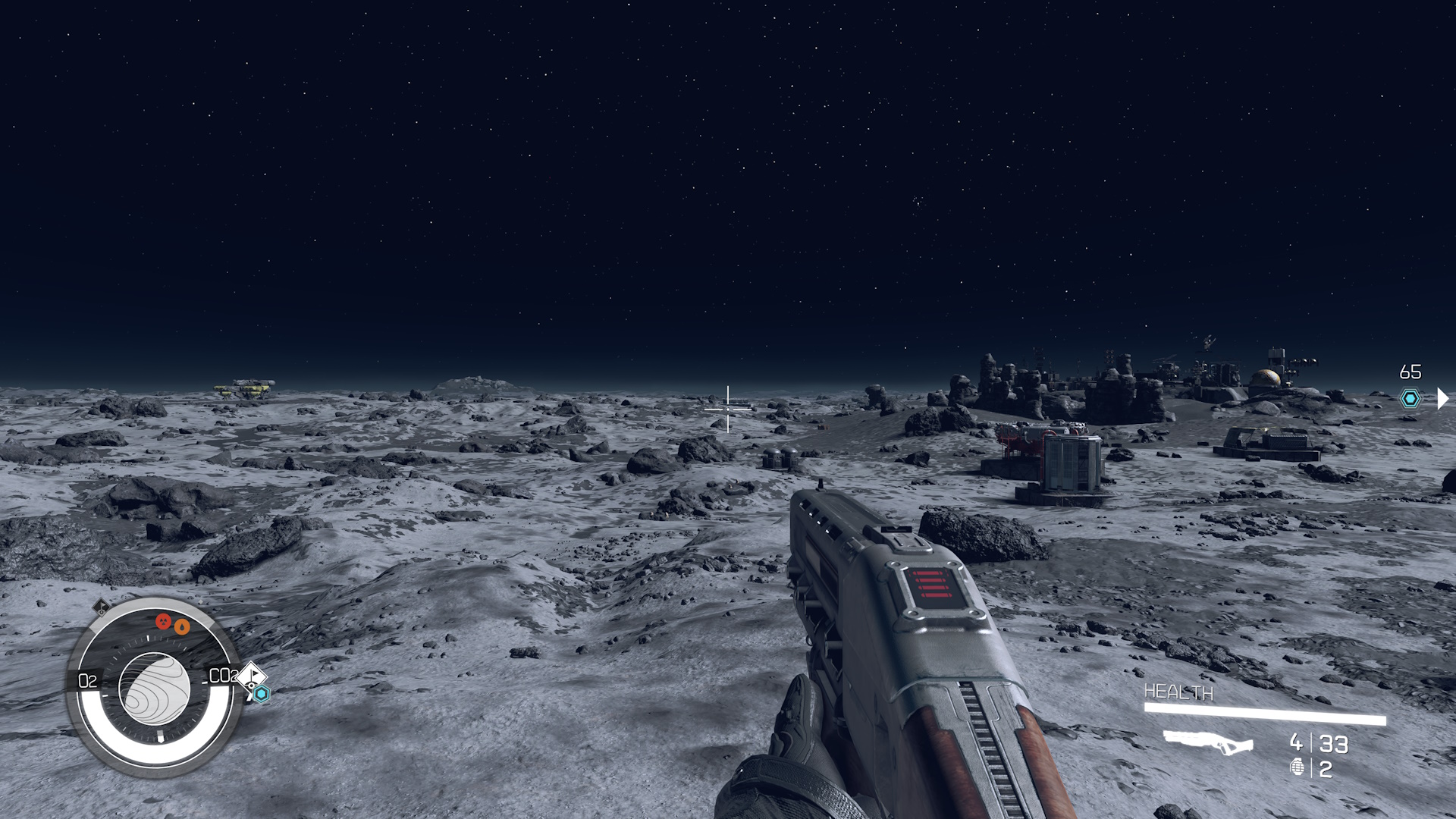
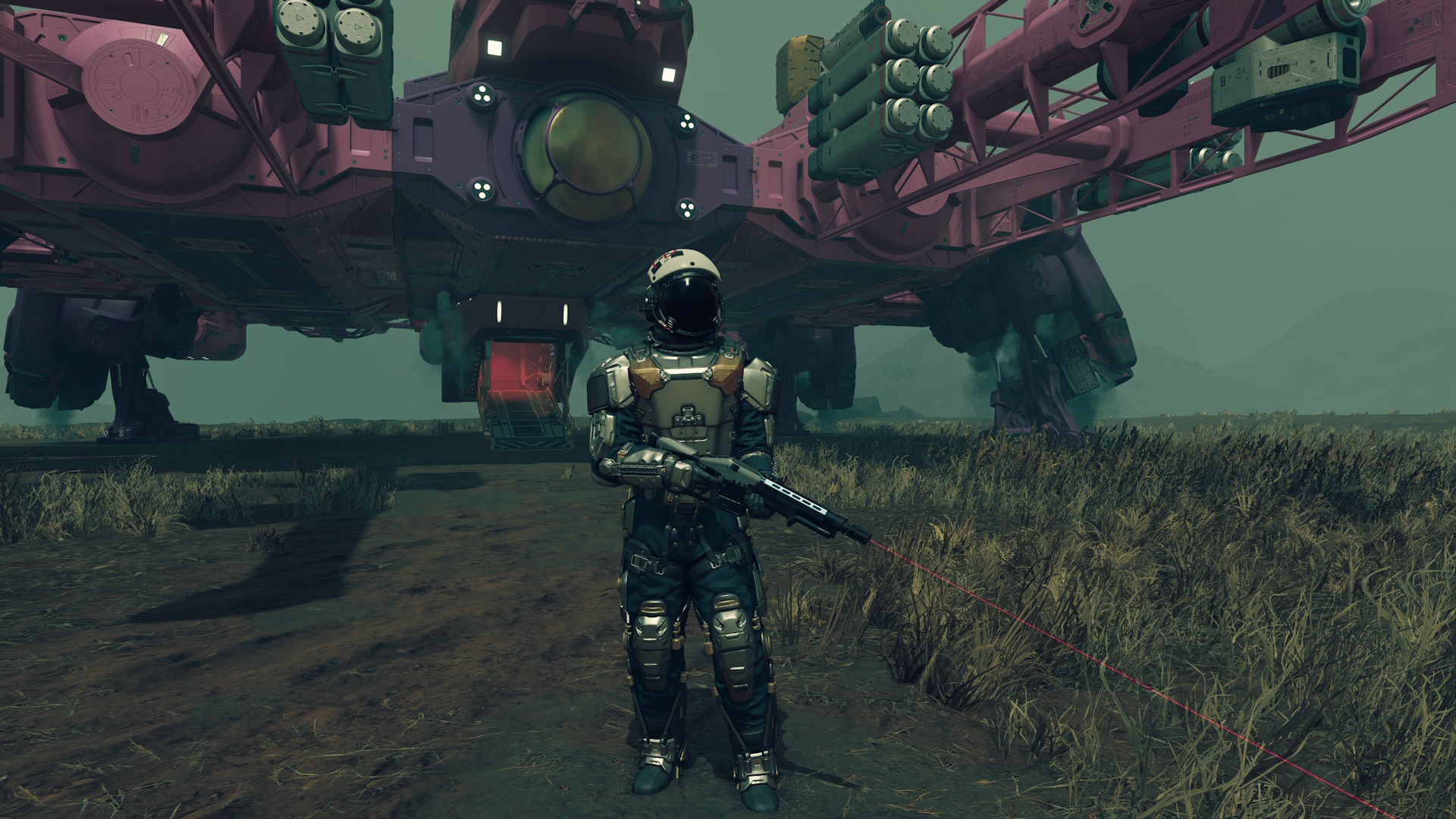
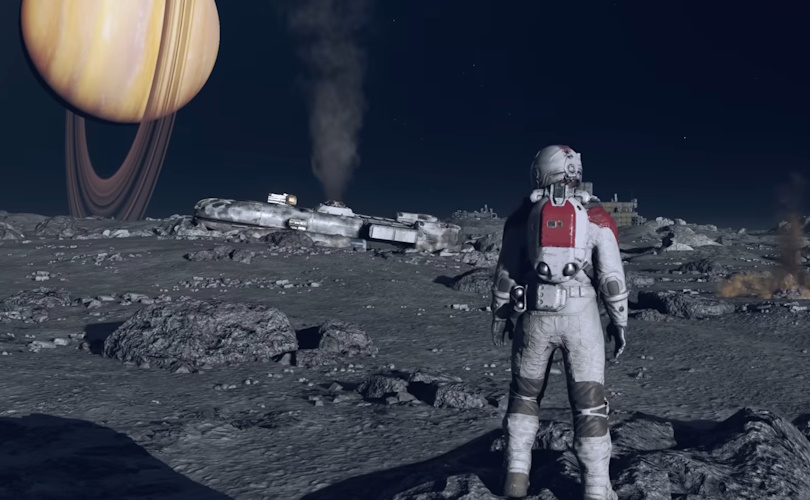
Standing on a random planet with a spaceship landing to my left and an enemy base to my right.

The world of Starfield feels regressive and, to me, more akin to Morrowind than Fallout 4 or Skyrim. Shops never close, even when it’s the middle of the night, and their NPC proprietors stand or sit behind their counters 24/7. When I aim the first-person camera down to the ground, I can’t see my character’s feet or body; I’m just a floating camera orb. Enemies and NPCs don’t feel reactive – you can run away from them and they’ll just forget you existed two minutes later, even if you’ve murdered all their companions and shot them in the face.

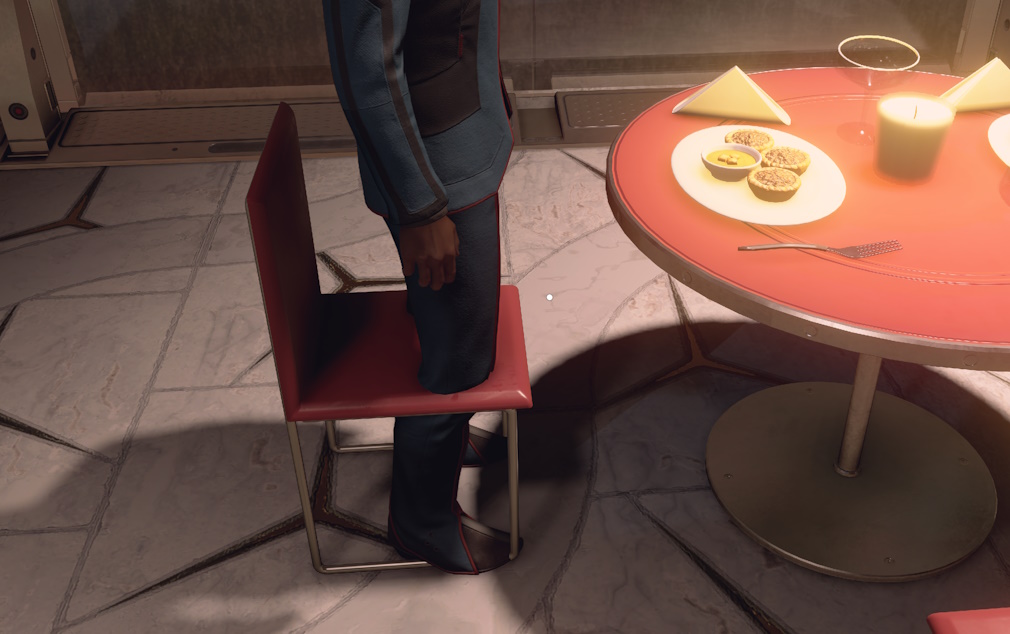
And the bugs. Oh god, the bugs. Starfield probably is Bethesda’s “least-buggy release ever,” as has been repeatedly claimed. But “least-buggy” doesn’t mean “there are zero bugs,” and claiming to be the least-buggy Bethesda game is like claiming to be the sewer with the fewest turds. I’ve seen dozens of bugs across my playthrough, including enemies able to shoot through doors and walls, NPCs clipping through solid objects, characters levitating, and items disappearing through the environment or floating away. There’s one particularly annoying bug where I’ll be piloting my spaceship but every crew member on board will repeatedly spout the same handful of lines of dialogue – as if the game thinks I just walked up to them.

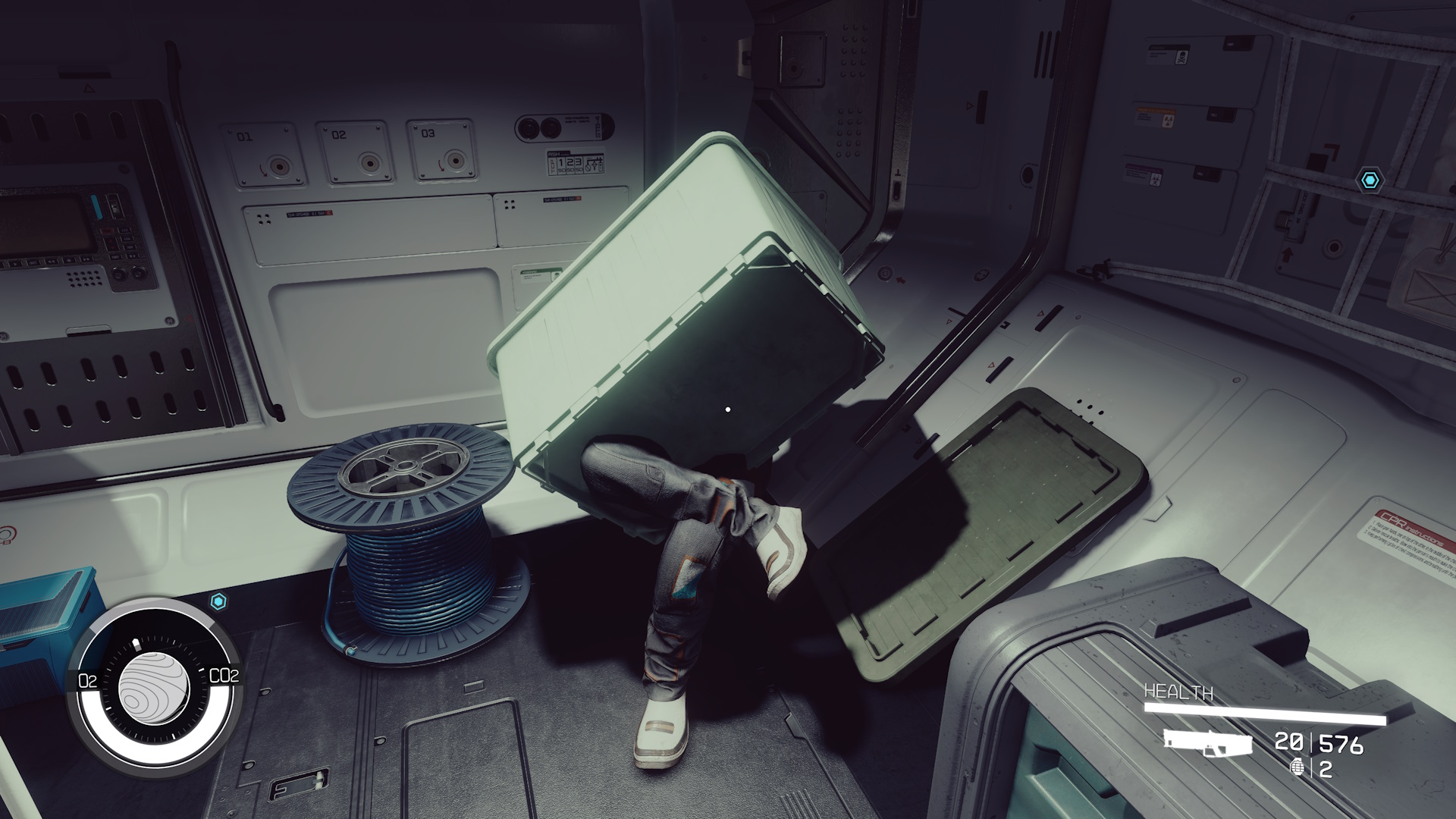
Just one of many bugs I’ve encountered. Not game-breaking, but certainly immersion-breaking.

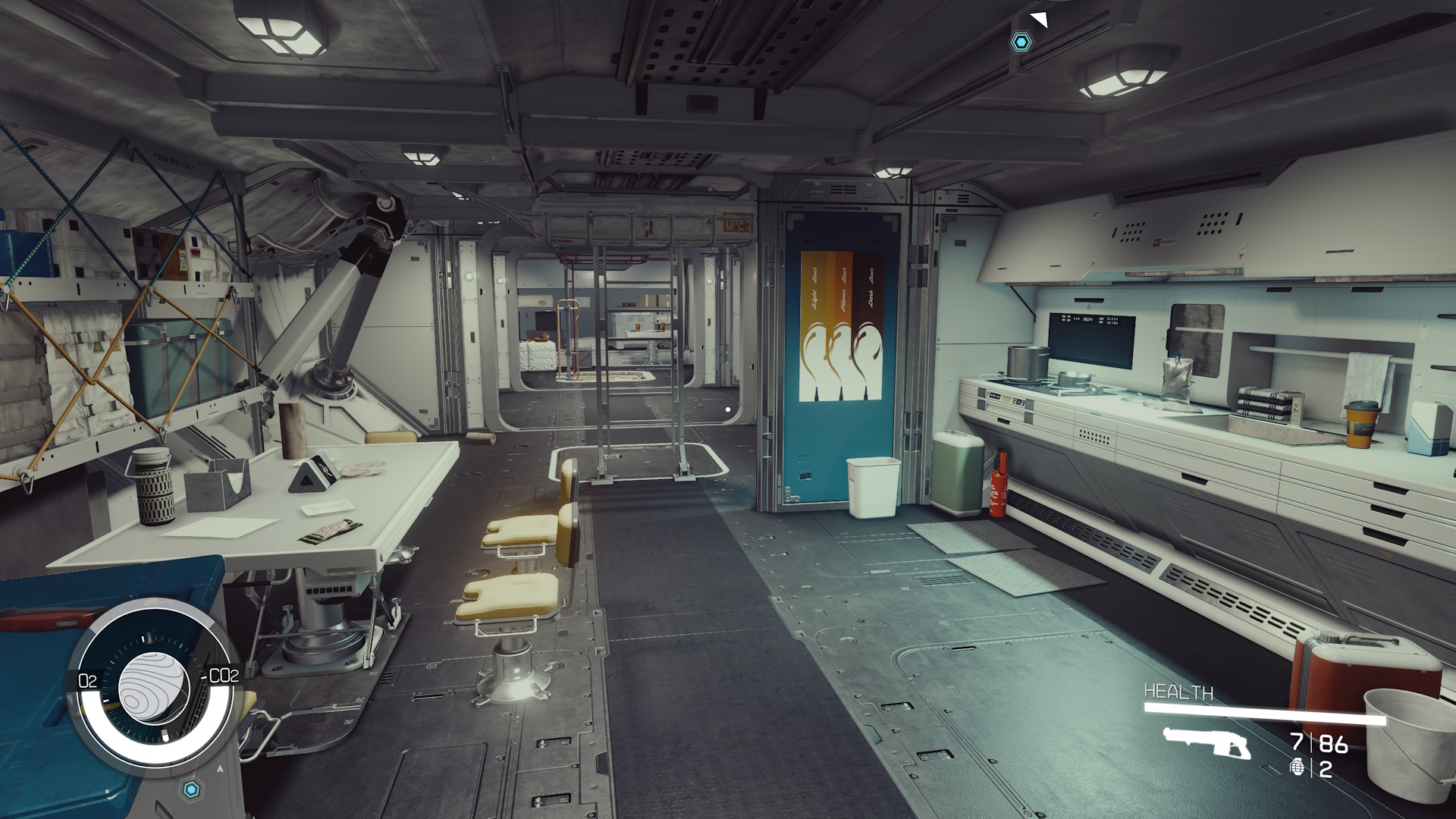
Every time Starfield has a chance at getting me to feel a crumb of immersion in its sci-fi future, something comes along that rips it away again. Maybe it’s walking into a cabin on my ship to see one of my crew members clipping through a box. Maybe it’s realising that a shopkeeper doesn’t have a life outside of the few seconds I spend in his always-open shop. Maybe it’s landing on a supposedly “unexplored” planet or moon only to find two spacer bases, a mining outpost, and another spaceship landing right next to me. But I can’t go more than a few minutes without something in Starfield reminding me that I’m playing a video game – and a video game that feels years out of date.

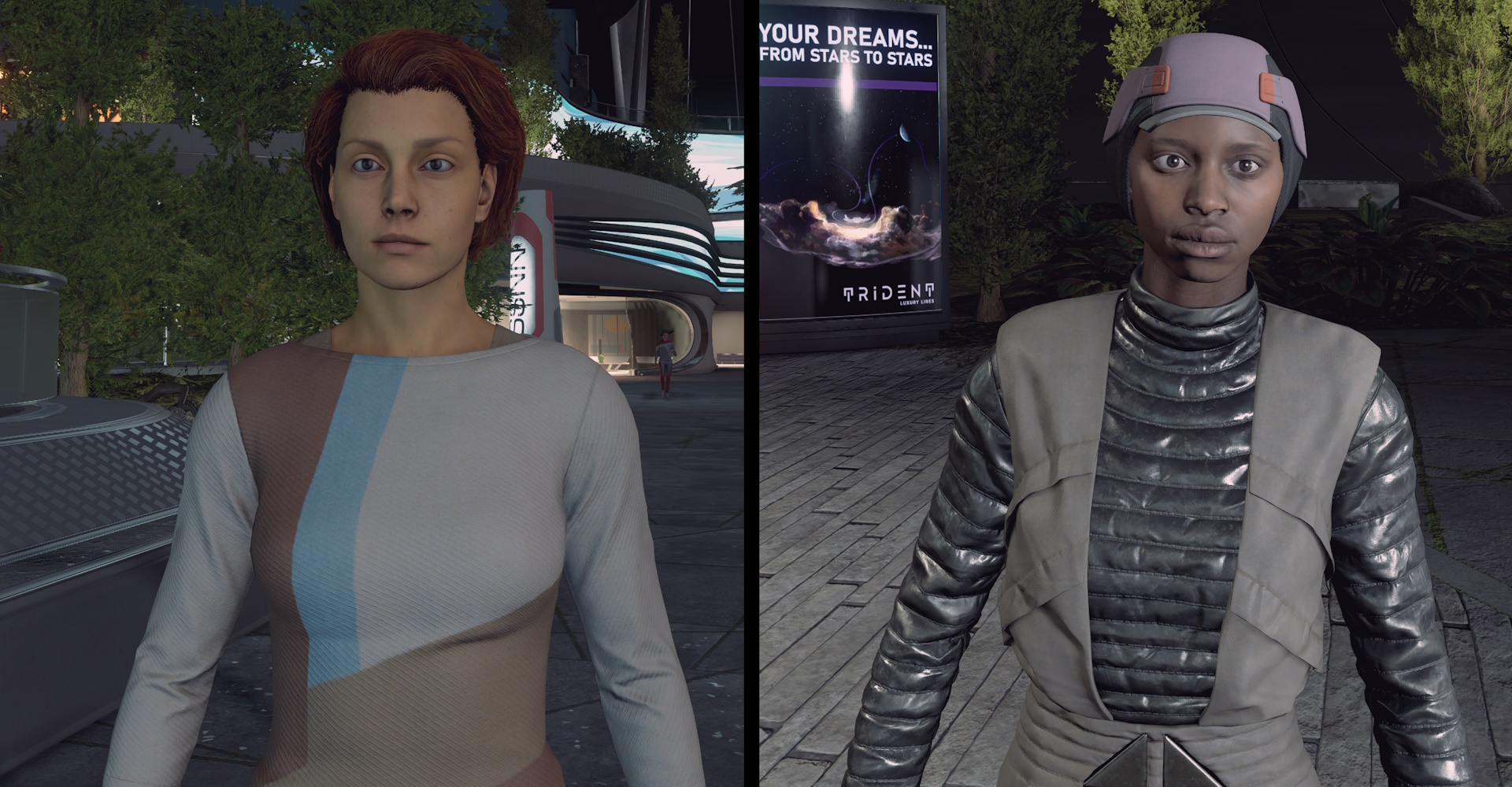
After taking part in yet another quest that didn’t seem to be any different from any of the others I’ve tried, I kind of felt myself hit the wall. Should I keep pressing on, following one uninspiring story after another in an empty world that I couldn’t give a shit about? Should I keep trying to pretend that these last-gen, waxy-skinned Madame Tussauds rejects are “people,” even as their dead eyes and ridiculous faces break what little immersion I can find? Should I keep waiting for Starfield to “get good?”

A pair of NPCs.

Setting my own feelings aside, I wonder what lessons can be learned from Starfield from Bethesda’s point of view. As the company begins to develop new entries in The Elder Scrolls and Fallout series, as well as potential DLC for Starfield, what should the key takeaways be? As I asked at the beginning: where does Bethesda go from here?

Despite how I feel – and how you may feel, too, if you happen to agree with me – Starfield has been well-received by Bethesda fans. The game had six million players shortly after launch, making it the biggest Bethesda release ever. And it’s racked up decent reviews on platforms like Steam and Metacritic, with the positive reviews outweighing the negative ones from both professional critics and players alike. There’s a market for this kind of game, then… so Bethesda doesn’t need to change anything. Right?

Starfield’s ratings on Metacritic as of mid-September 2023.

I look at Starfield – and by extension, Bethesda games in general – the same way I’ve looked at Nintendo games since the mid-2000s. Nintendo threw in the towel and gave up on trying to compete with PlayStation and Xbox on power and graphics, focusing instead on carving out its own niche. Nintendo games rarely if ever compete with other studios in terms of things like visuals or scale, and yet it’s found success with 2D games, retro games, kids’ games, smaller and more simplistic games, and so on. The company has gone from strength to strength with the Wii and the Switch – with a bit of a blip during the short-lived Wii U era!

Bethesda may just be going down a similar path. Instead of trying to keep up with open-world developers like Rockstar or role-playing studios like Larian, Bethesda is sticking to what’s worked in the past. Instead of developing new technologies and innovating, the company is doubling- and tripling-down on its existing technology, knowing that its fanbase will forgive a degree of bugginess and jankiness. Instead of learning from what other companies have done with tech like procedural generation, Bethesda is content to muddle through and do things its own way.

Shops in Starfield never close, and shopkeepers never leave their posts.

And who am I to say that’s a bad thing? I don’t like every Nintendo game that comes out, but their heavy-hitters are still worth turning up for. Whether it’s Animal Crossing: New Horizons, Super Mario Odyssey, or Mario Kart 8 Deluxe, Nintendo knows what its fans want and serves them just enough of it to keep them coming back. Are those games innovative masterpieces that push boundaries and drive gaming forward? No… but do they need to be?

Did Starfield need to be?

I bought into too much of the excitement for Starfield and internalised too much of the hype. That one’s on me, and after playing games for more than thirty years I should’ve known better than to place any new release on such a pedestal. But there’s also a lesson here for Bethesda – one that the company should have learned already from similar experiences in the past! Over-hyping a game and being frightened of telling players “no” can lead to excessively high expectations and ultimately disappointment. That’s part of the Starfield problem. The Starfield showcase earlier this year was great, but what came after it should have shut down speculation, explained clearly the boundaries that would be present, and done more to lower sky-high expectations. Over-selling a game might lead to a temporary boost in sales, but it’s almost never worth it in the long-run.

Bethesda executive producer Todd Howard.

Beyond just marketing, though, there are questions for Bethesda in terms of the fundamentals of development and game design. Does the company have both the ability and the desire to keep up with its competitors? If so… why didn’t we see that in Starfield?

Procedural generation has been able to create massive, expansive worlds for a long time. So why are Starfield’s planets restricted to tiny, non-contiguous landing zones? Minecraft generated massive worlds with varied biomes more than a decade ago, and No Man’s Sky took procedural generation to space all the way back in 2016. The same for spaceflight: why can’t I fly my ship from one planet to the next in the same solar system?

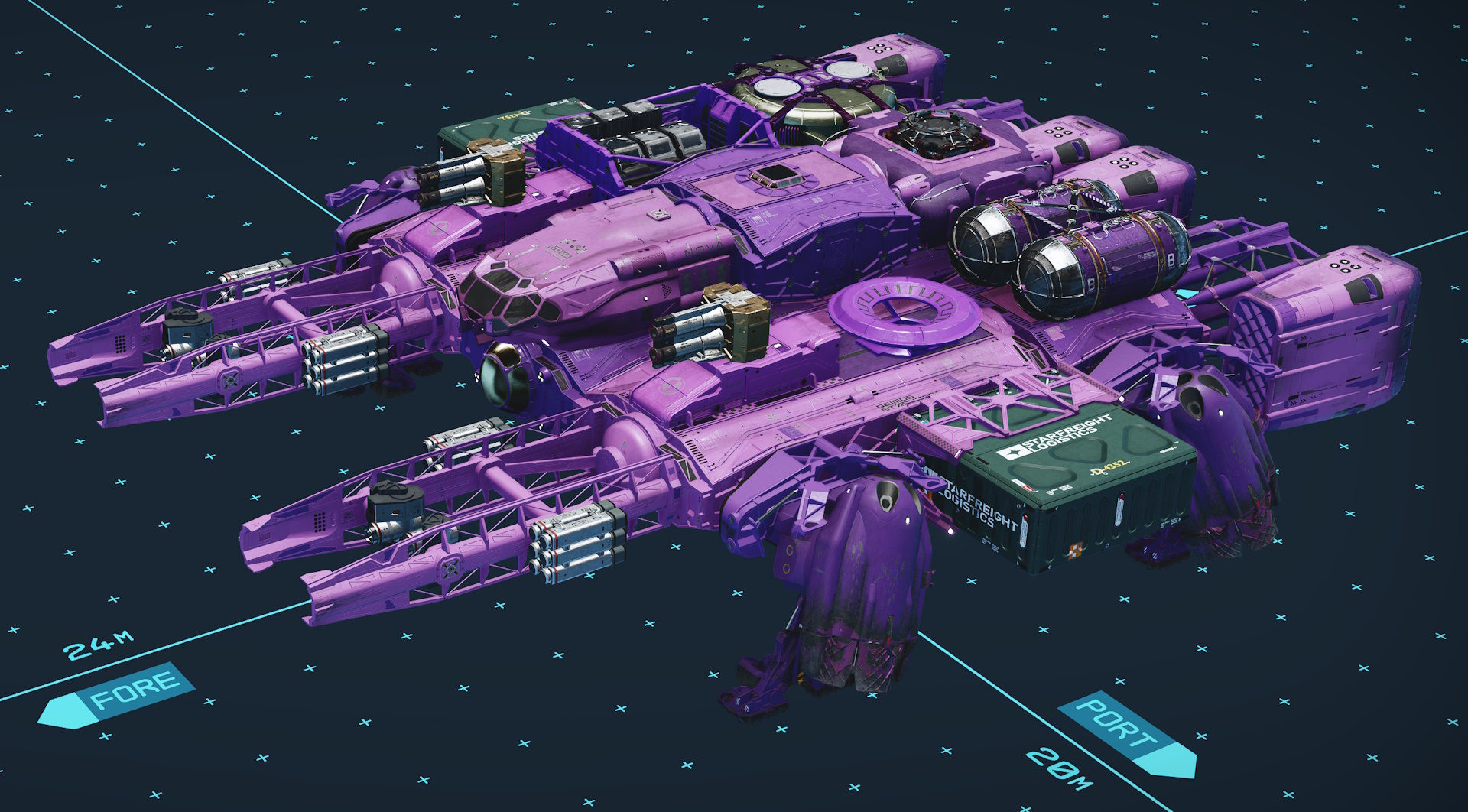
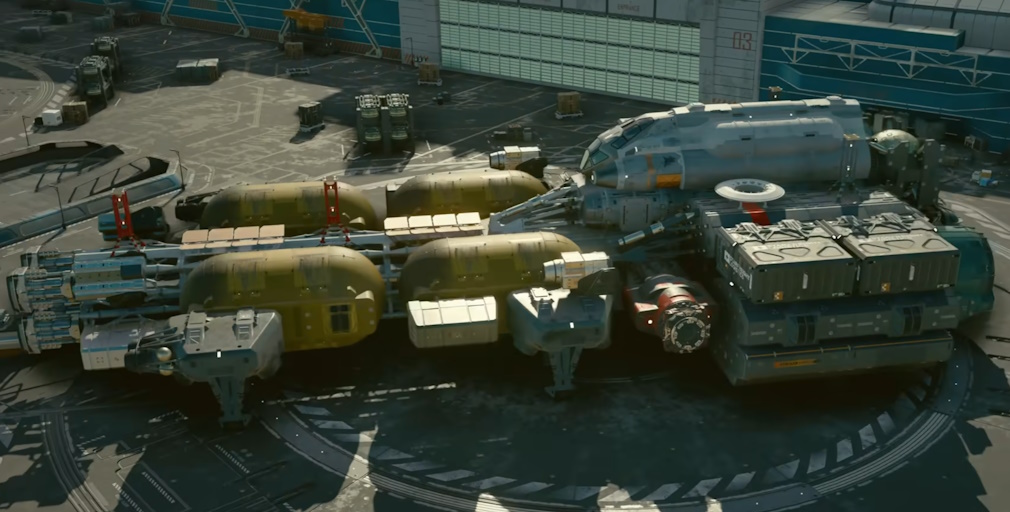
My customised spaceship.

Look at open-world games like Grand Theft Auto V – which is now a decade old. That game’s linear missions at least offered some variety in terms of the way they played. Why does every quest in Starfield feel functionally the same? Where’s the diversity of items to at least make the looting side of the game feel worthwhile?

When I explore a city in Starfield that’s supposedly the capital of humanity’s extrasolar colonies, why does it feel so lifeless and empty? For all its problems – and my god were there problemsCyberpunk 2077 at least managed to create the feel of a bustling city, replete with skyscrapers, traffic, and countless individual NPCs.

New Atlantis – the biggest city ever made for a Bethesda game – feels small and empty.

These are just some of the areas where Starfield feels deficient. And my question isn’t “how will Bethesda fix them?” but rather… does Bethesda even consider these things problems that need to be fixed? Or is the company content to take this formula and repeat it yet again in its next title? If so, will that be good enough for Bethesda fans when The Elder Scrolls VI rolls around in 2028? Or when Fallout 5 graces our screens in the 2030s?

The answer is a solid “maybe.”

So where does Bethesda go from here? The way I see it, there are two paths open to the company. One sees it continuing to double-down on its existing technology and design philosophy, becoming “the Nintendo of role-playing games,” where graphical fidelity, quest design, characters, and more are all a couple of generations behind. Abandoning innovation in this way will probably lead to The Elder Scrolls VI being referred to as “Starfield in a fantasy setting,” whenever that game is ready!

Another bug that I encountered during my playthrough.

Alternatively, Bethesda could recognise the deficiencies in its technologies and processes, look around at what other games in the action/adventure, open-world, and role-playing spaces have been doing over the past few years, and try to catch up. Realistically this almost certainly means dumping the Creation Engine in order to create or license something more powerful that can really stand up to the rigours of modern game development.

After trying to give Starfield a fair shot but finding it came up short, I know what I’d rather see. But given Starfield’s critical and commercial success, perhaps I’m in the minority here. It seems that millions of players are absolutely fine with playing “just another Bethesda game” in a different setting, and if that’s the case in 2023, who’s to say it will change by the time the next Bethesda title is ready? Like Nintendo, the company clearly has a dedicated fanbase who are willing to overlook and even embrace its flaws. I thought I was one of those fans… but Starfield has shown me that I’m not.

Starfield is out now for PC and Xbox Series S & X consoles. Starfield is the copyright of Bethesda Game Studios, Bethesda Softworks, Xbox Game Studios, and/or Microsoft. Some promo images and screenshots used above courtesy of Bethesda. This article contains the thoughts and opinions of one person only and is not intended to cause any offence.

Baldur’s Gate 3: Narrative and Role-Playing Thoughts

Spoiler Warning: There are spoilers ahead for Baldur’s Gate 3 – including its ending.

This piece is a follow-up to my spoiler-free review of Baldur’s Gate 3. If you haven’t read that, it provides a bit of background to some of the things we’re going to talk about here, and also goes into detail about some of the mechanics of Baldur’s Gate 3 and what I enjoyed about it from a gameplay perspective. It should also go without saying that we’re going to talk about some specific story points today, including the ending of the game and several character questlines. If you haven’t completed the game and don’t want to see spoilers, this is your opportunity to nope out!

Baldur’s Gate 3 had a strong story that roped me in almost from the first moment. It also told a story with plenty of variety, with companion questlines that went in interesting and unexpected directions, and side-quests that were just as engaging and impactful as the main quest. I adore the experience that I had, and I can’t wait to jump in for a second run and try to do some things differently – so everything we’re going to discuss today has to be seen through that lens. So to repeat: I thoroughly enjoyed the story of Baldur’s Gate 3!

You know there has to be a “but” coming after that, though… right?

Box art of Baldur’s Gate 3.

But I have some notes! Firstly, Baldur’s Gate 3 makes no apologies for being a dense story, and for really throwing players in the deep end from the very first moment. The wall of content that you experience upon booting up the game for the first time – in which I’m including the intro cinematic, the opening level, and the character creator – throws a lot at you all at once. For someone who didn’t play the original Baldur’s Gate and who’s unfamiliar with Dungeons and Dragons… it can be a lot to take in.

I made a lot of mistakes during my first few hours with Baldur’s Gate 3, and the game doesn’t hold players’ hands. For some folks, that’s a huge positive! But for me, I have mixed feelings. I’m no stranger to this phenomenon – I cut my teeth playing games in the late ’80s and early ’90s, when games didn’t have more than a manual in the box to help you out. But there’s a reason why most modern games offer more by way of tutorials and do more to ease players into the story! Baldur’s Gate 3 begins by throwing up a metaphorical brick wall that has no obvious way around or over it – and it’s up to you as a player to either muddle through or hop online to find a strategy guide.

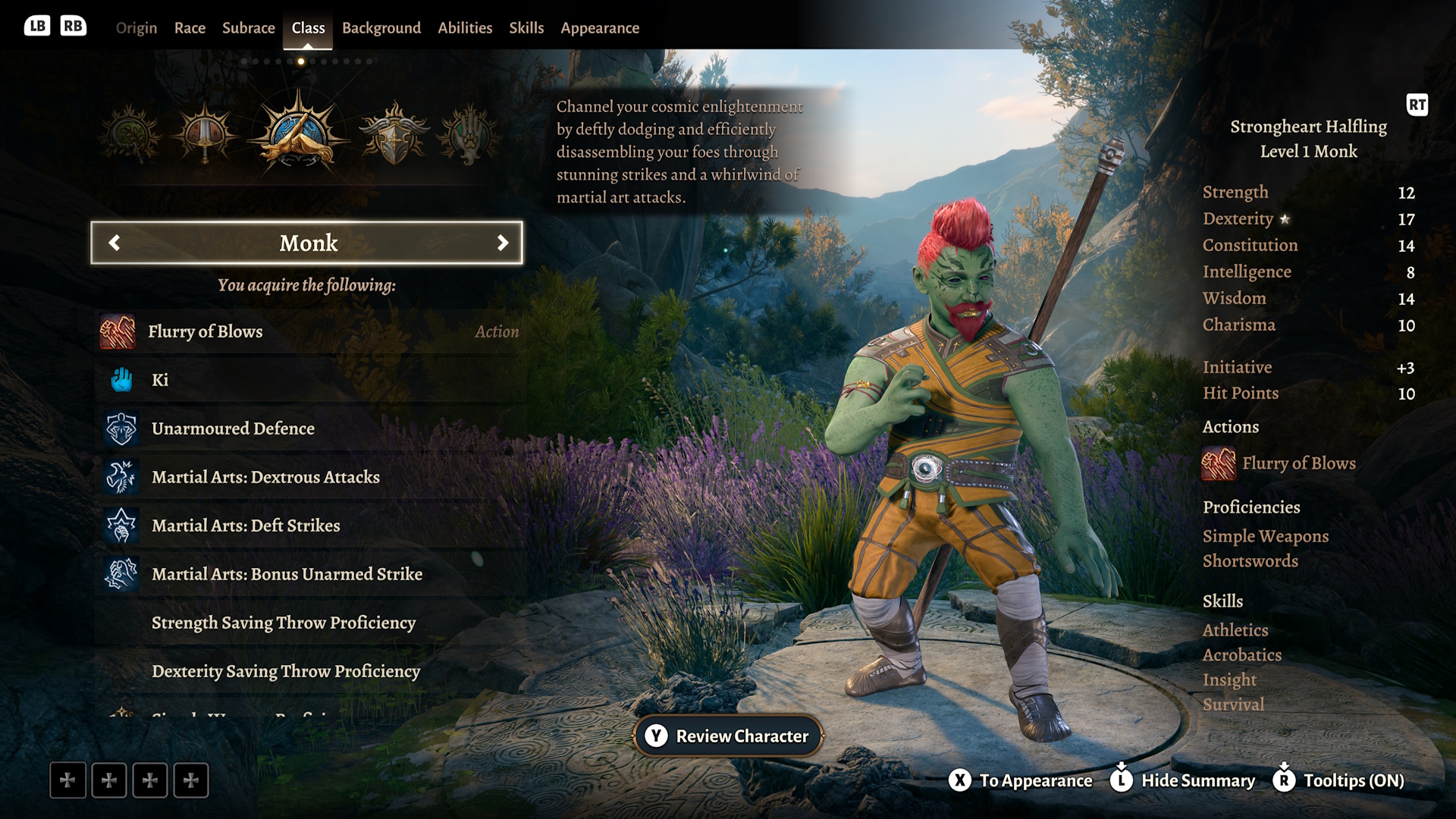
Creating a custom character.

My unfamiliarity with Dungeons and Dragons was a hurdle – one that I have no doubt impacted my experience with the game. It’s to the writers’ credit, more so than anything else, that I continued to play the game and kept coming back to it when I ran into something I didn’t understand or a problem I wasn’t sure how to solve. Although the story has huge stakes, particularly as it gets into its second and third acts and talk turns to the “Dead Three” and their chosen, at its core in those early moments it’s a story of survival. One person – the player character – is infected by a parasite and has to find a cure. That’s the driving force, and that’s what leads you to your allies and companions, and sets the stage for this story.

That character-centred story, with high personal stakes, is what roped me in during those crucial first moments. Even as I had no clue what mind-flayers, githyanki, or nautiloids were, there was a sense of urgency and a basic, innate survival instinct at the heart of the story that begged me to keep going. The writing to bring this to life and to get me instantly invested in this vast, dense world when I had no real frame of reference is truly world-class – there’s no other way to describe it. When people say that video games can be just as engaging, entertaining, and emotional as books or films, it’s stories like Baldur’s Gate 3 that they can point to!

The adventure begins…

Despite what you may have heard, Baldur’s Gate 3 does not have “17,000 endings.” There are a few basic ending options, which can be modified depending on player choice – and random dice rolls throughout the game. If a companion died, for example, or was never recruited, they don’t show up at the end. Likewise for allies – if an ally was never recruited, they aren’t available in the endgame. This adds variety, and means that it’s worth making multiple runs through the game to see different things and experience some of these different ending options. But I feel that the “17,000” claim is rather overstating what’s actually on offer. Don’t get me wrong: there’s far more variety and more ending options than in something like Mass Effect 3! But just not perhaps as much variety as has been claimed.

The ending I experienced during my first playthrough felt like the “best” possibility based on the way I’d played the game and which characters I had on my side. But other players might find that other options or pathways could have led to an even better outcome, which is absolutely part of the fun!

One of the citizens of Baldur’s Gate takes down a mind-flayer.

One thing that I liked about Baldur’s Gate 3 was the feeling of “impossible” choices. There are multiple points at which the road forks and you have to choose between one ally and another – betraying one in order to side with someone else. I kind of “cheesed” part of this by placing a companion on the back burner and largely ignoring her, allowing me to more easily side with one ally over another when doing so threatened to tread on the toes of her storyline. But it wasn’t the easiest thing to do – showing, I think, just how much the story had grabbed me and how much I’d come to care about these characters. I never like upsetting an NPC in a video game, but the friends and allies I’d made in Baldur’s Gate 3 felt like real people, so the idea of going against their wishes or even betraying them… I couldn’t do it!

Obviously Baldur’s Gate 3 is a sequel – so I expected some callbacks to earlier games. But I was surprised at how heavily Baldur’s Gate 3 seemed to lean on those two older titles, especially as the second and third acts of the game rolled around. I’m not familiar with those stories having never played the games, but there was enough exposition dumped to make it clear that some characters and storylines were basically direct continuations of the events of those games. That’s a creative decision, and one that fans of Baldur’s Gate 1 and 2 will surely have appreciated. For me, I could have done without that, and at a few points this sequel-itis felt quite in-your-face.

The character of Vicona DeVir is one of several who return from earlier games.

Let’s talk a bit about companions. There are ten potential companions in Baldur’s Gate 3 – two of whom appear to be mutually-exclusive, meaning you have to choose one over the other for a maximum of nine potential companions per playthrough. There are also hirelings who can be purchased to round out the party if you feel you’re missing a particular class or skill – but these characters are less interactive, have few if any unique dialogue options, and I personally felt didn’t serve a lot of purpose. You’re limited to four characters in your party at any one time – your main character plus three others – and hirelings count toward that limit. So unless there’s a problem with your main companions, the need for hirelings feels quite diminished.

In terms of variety, replayability, and player choice, I felt that the game offered a lot of pathways to bringing your party together – but many of these pathways led to the same end point. You could choose in what order to recruit party members – even if, at the time of my first playthrough, I wasn’t aware that I was doing so(!) – but for the most part, even if you deliberately shun a character that the game deems to be important, one way or another they’ll find their way back to you. In my case, the character of Wyll literally showed up at my camp toward the end of Act 1.

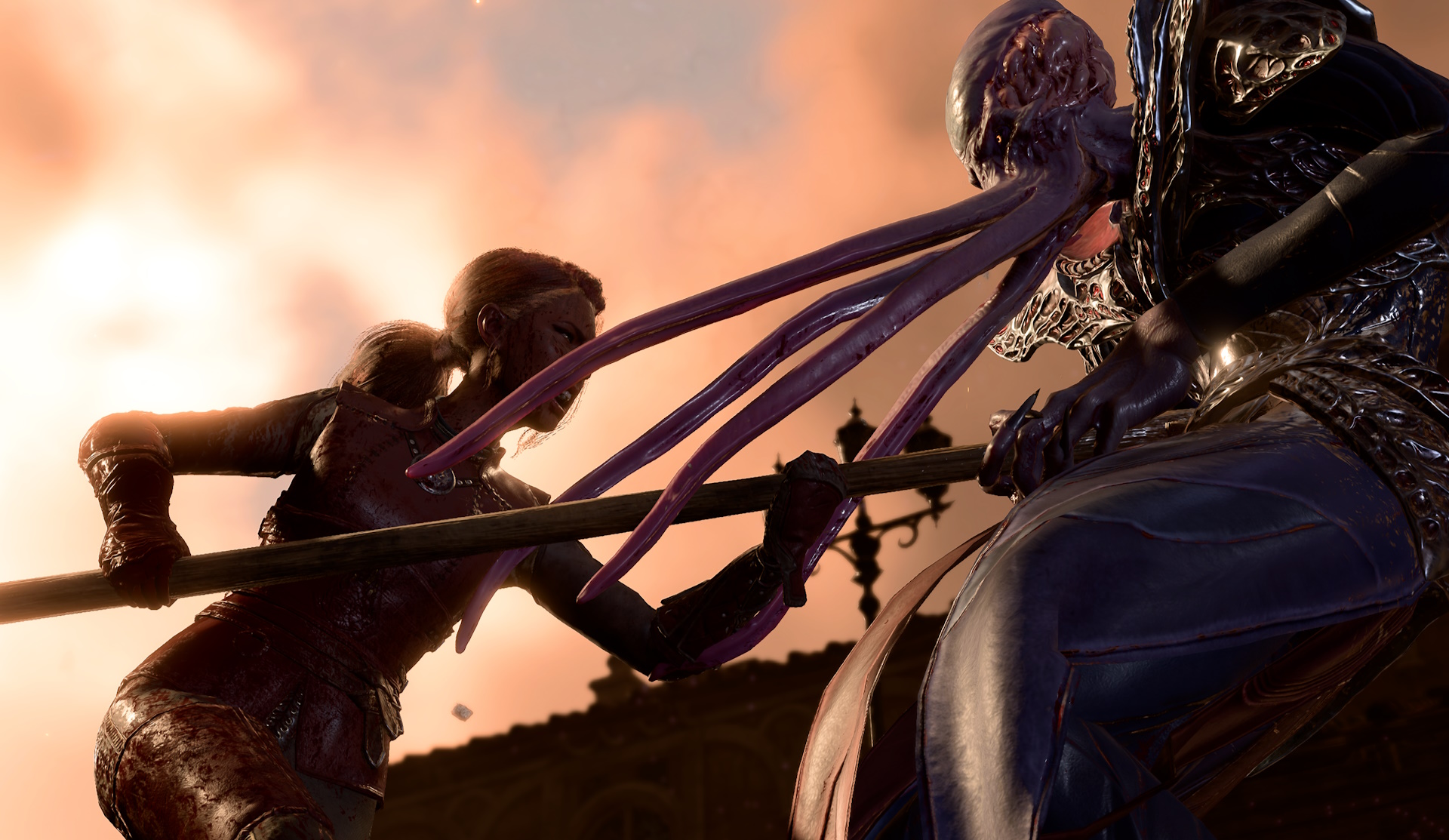
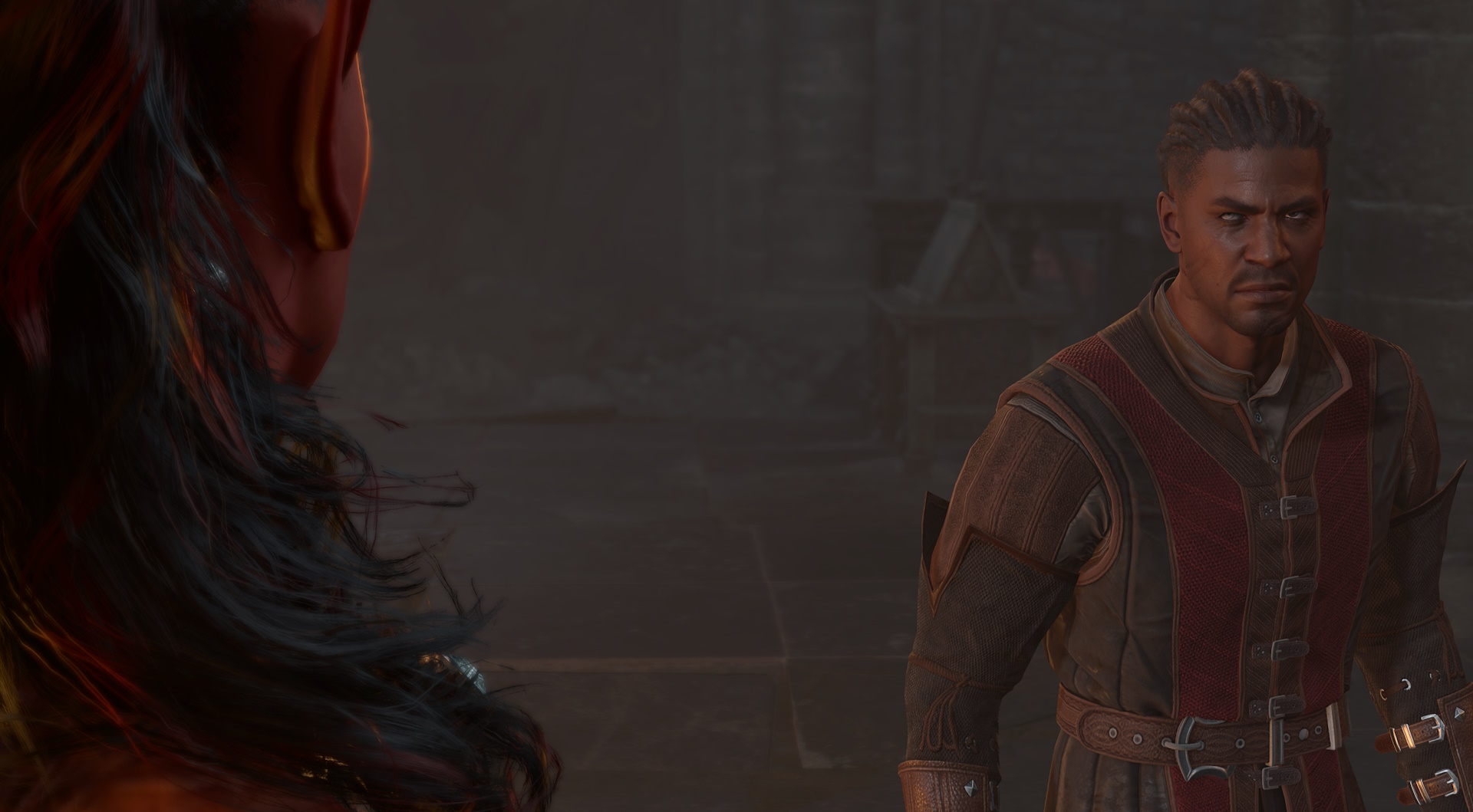
Wyll confronted Karlach at my campsite.

I’d seen Wyll briefly during one of the first fights in the game, but after that encounter I lost track of him and didn’t recruit him. I could’ve gone through the entire game not even realising I’d missed a prospective companion, but Wyll later showed up at my camp to confront Karlach – before being talked into joining the party. It kind of felt like this interaction was less organic and natural than others, and that Wyll was almost forced upon me, with Baldur’s Gate 3′s developers insisting that I take him along for the journey.

I’m not upset about the outcome – Wyll’s story was one of the most interesting in the game in more ways than one, and having him in the party led to some incredible moments in all three of the game’s main acts. But this is very much a case of the ends justifying the means, with a rare misstep in the way the game’s narrative came close to breaking the fourth wall leading to better and more engaging story beats later on.

Wyll proved to be a great companion character across the rest of the game.

I recently saw a spoiler-y video online, unfortunately, which confirms that the same thing also happens with the companion character Shadowheart. Players have to go a bit more out of their way to avoid Shadowheart, actively pushing her away and insisting she doesn’t join the party, but even if this path is chosen, Shadowheart makes her way back to the party partway through Act 1. And from what I saw in the video – which, admittedly, was not the entire storyline or sequence – it also felt like a very forceful way that the game pushed her into the party.

I’m not sure how true this is of all the other companions, but the main “tadpoled” characters of Astarion, Karlach, and Gale could well fall into this category too, showing up uninvited even if rebuffed by the player. And having played and enjoyed all of their arcs across the game, I think it’s not unfair to say that players would be missing out if they chose not to engage with these characters at least once. But in a game that sells itself in part on the fact that it offers players endless choices, the way some of these characters are basically forced into the party leads to a strange kind of disconnect between the game’s ambition on that front and the way it actually plays.

If ignored or rebuffed earlier in the game, Shadowheart shows up at the goblins’ camp in Act 1.

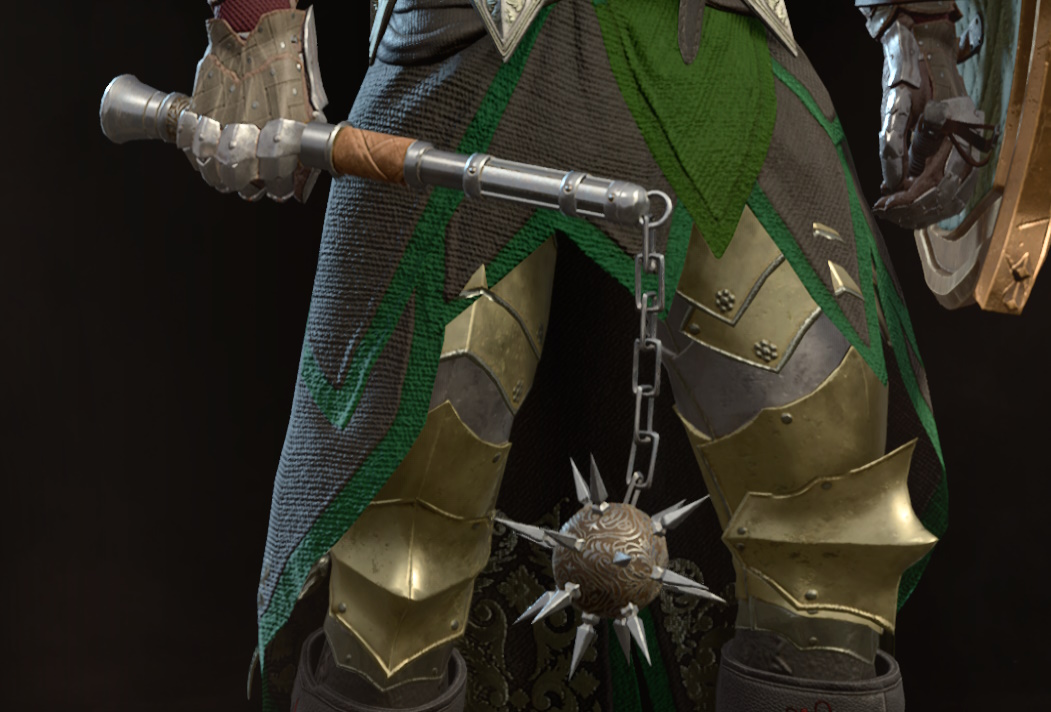
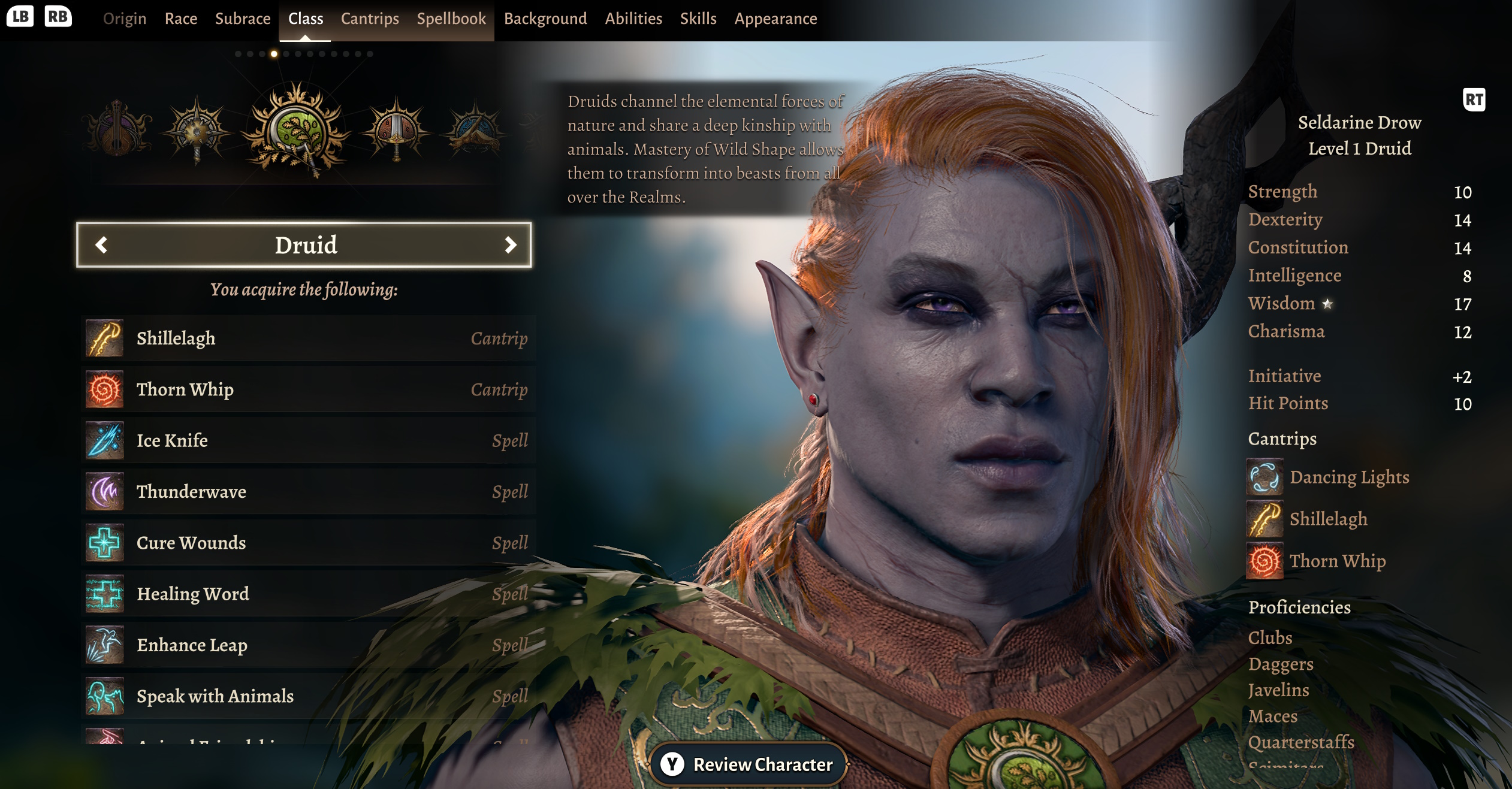
Some elements of Baldur’s Gate 3′s role-playing felt a little constrained by the mechanics of the game. To give one example from my own playthrough: I wanted my character to wield a flail – you know, the medieval weapon that’s basically a spiky ball attached to a chain. There wasn’t any real reason for this other than that I thought it looked neat on my character, a drow druid. But through my entire playthrough, I didn’t encounter any decent flails for my character to use.

There were swords aplenty, as well as axes, bows, and even staffs and clubs. But if I’d chosen to equip my character with a flail – after specifically choosing to make them proficient with that weapon type – I would have sacrificed a lot. Not only were there no unique or enchanted flails, offering additional bonuses like fire or ice damage, but the only ones I came across were pretty weak. They were easily outmatched by even the most basic swords and rapiers, leaving me with little choice but to equip a weapon I wasn’t wild about just to get the best stats. That’s part of gaming, in a way, but I would have liked to have seen more options on the weapon front. Baldur’s Gate 3 has plenty of weapon types on the surface, and uses that as part of its “play the game however you want” selling-point. But if some of these weapons are basically non-viable, especially later in the game when coming up against higher-level enemies, it kind of renders the whole thing redundant.

A flail.

That’s a specific complaint because I couldn’t find a flail that was as good (or almost as good) as many of the swords and other weapons that I encountered. But I will give the game credit for offering a variety of unique weapons, and for making it so that most characters can experiment with different ranged and melee weapon types. My druid, for example, was able to gain proficiencies with swords and crossbows at a relatively early point in the campaign, and it completely transformed them from a pure spellcaster into a much more well-rounded character who had multiple options when engaged in combat.

I didn’t choose to re-spec my character during my playthrough, nor change my class. I just didn’t feel that was necessary – but again, it’s nice that the game offers that option. I could absolutely see a scenario in which changing class would be worthwhile, and actually for a druid – which was my class – perhaps that’s even more relevant! Of the ten companions you can recruit, two are druids – so I can see a situation in which some players might want to change class to avoid having too many of the same character types in their party.

Talking to Withers at camp allows you to change your class, if desired.

Let’s talk about romance, because I feel this was one area where Baldur’s Gate 3 strayed from being a deeply engaging story into one that was very – for want of a better term – “video-gamey.” The basic problem is this: no matter who you are, what choices you made, what your background is, or what actions you take… everyone falls in love with you. That includes members of your party as well as important allies – and it just felt too easy to go down these romantic paths. It got to a point where I felt I had to basically avoid interacting with some characters after accidentally ending up in a romantic entanglement, and I just felt that this side of the story was clumsily handled.

It’s great that Baldur’s Gate 3 offers so many romantic options, don’t get me wrong, and that there are options for players to be gay, bi, straight, and so on. But it’s also a bit odd that every character so easily falls for the player – even if they take actions that they claim to disapprove of, or even after the player is already in a committed relationship with another NPC. I also find it a little odd that every NPC is able to be romanced regardless of whether the player character is male, female, or non-binary. Is everyone in Faerûn pansexual? Doing what games like Mass Effect do and restricting some romantic encounters by gender wouldn’t be a bad thing necessarily – if it was right for the character in question.

Some companions fall in love with the player character a little too easily!

Jumping ahead to the end of the game, while I had a fantastic time with the story and the way it brought together different characters that I’d encountered across my many hours of playtime, there are a couple of things to say.

Firstly, the fact that so many characters can be present as allies in the endgame is fantastic – and I absolutely love this kind of “everyone pitching in to save the day” story. It felt great, it was emotional, and I was genuinely surprised to see some characters turning up to offer their aid as Baldur’s Gate was besieged by the mind-flayers!

But – and you knew there was another “but” coming – the way this happens completely reframes many of these character encounters earlier in the game. Instead of helping little Arabella because it’s the right thing to do or because it feels like something your character would do, on a repeat playthrough you’re going to be acutely aware that saving her has a positive outcome in the endgame. Likewise the owlbear cub, Councillor Florrick, or Inspector Valeria. There are at least a dozen characters who can play a role here – and that knowledge completely changes how I’d approach their encounters and quests on a second playthrough.

Saving Arabella in Act 1 (and helping her again in Acts 2 and 3) has positive repercussions as the climactic battle rages.

This is kind of a trend you’ll see with Baldur’s Gate 3: while there are, in theory, many options for how to progress through the game, and the game is very adaptable if an NPC or even party member is killed, there are clearly some choices that lead to better outcomes, especially as the story reaches its climax. If you killed a bunch of NPCs, failed to save others, or just straight-up ignored whole questlines – which is easy to do, as some encounters have quite specific requirements – you’ll have fewer allies for the final fight against the Elder Brain, potentially giving you a tougher fight or a less-enjoyable time.

If your desire is to play as an “evil” character, I think this would affect you the most. Baldur’s Gate 3 tries to offset some of this, to its credit, by giving the “evil” options some positive endgame outcomes and alliances – such as if you betray Nightsong and turn her over to Lorroakan. But even then, I think you’re going to be left with fewer allies for the final fight. Maybe that’s okay – and narratively, if it makes sense for your character and your play style, that’s fine. But it may mean that, in terms of the mechanics of how the game works, you’ll end up having a worse or harder time.

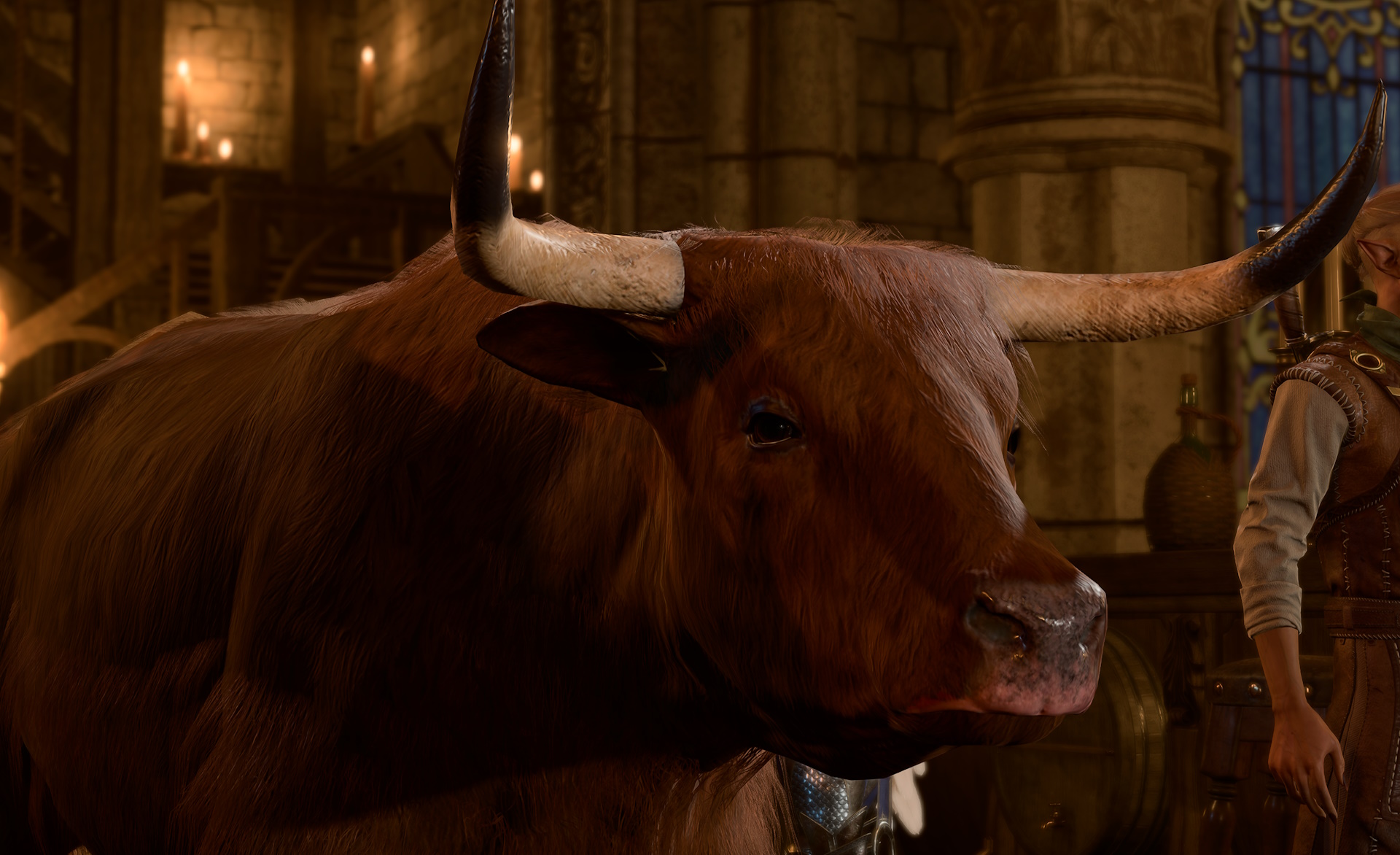
Choosing to help the strange ox – which I did for no other reason than it seemed like a bit of silly fun – ended up making a difference.

Sticking with the ending of the game, after a beautiful coming-together of friends and allies – which, in spite of the criticisms above, felt amazing on that first playthrough – and the climactic battle against the Elder Brain, things just sort of… ended. There was a brief epilogue showing some of the surviving party members, but they soon went their separate ways. Depending on choices you may have made, the macguffin at the heart of the story – the Crown of Karsus – may be lost in the sea off the coast of Baldur’s Gate. And depending on promises you may have made to certain characters… it feels like the story didn’t actually end at that point, in spite of the credits rolling!

For me, I’d chosen to pledge the Crown of Karsus to Gale, who in turn planned to return it to the goddess Mystra. As my character and Gale stared wistfully out to sea, I couldn’t help but feel that another chapter of the story was yet to be told. Maybe that will be Baldur’s Gate 4… but I’m not so sure of that!

Gale at the end of the game. His story didn’t feel complete.

The same feeling hit me with Wyll and Karlach. Karlach’s questline involved getting her infernal mechanical heart back into working order, but she learned toward the end of that story that the only long-term solution that could save her life involved returning to Avernus. Karlach seemed ready to die – and everything I’ve read about this quest says that there’s no “happy ending” for her, unfortunately. That’s a creative choice that I respect, and being with Karlach as she went out on her terms was a fitting, if bittersweet, end to her story.

At the last second, though, Wyll intervened and promised to stay with her in Avernus, saving her life but condemning both of them to one of the nine hells. This moment could have worked better if more time had been dedicated to it; it felt rushed, and because it was such a twist on what the game seemed to have been building up to with Karlach, I don’t think it worked as well as it could have. We also didn’t get to see Wyll and Karlach depart – the sequence just came to an abrupt end.

Karlach’s story seemed to come to an abrupt end.

Although my character got a moment during the epilogue with their romantic partner, other characters were either only seen briefly or were notable by their absence. The Emperor (who I chose to save instead of freeing Orpheus) very quickly shuffled off-screen, as did Lae’zel and Shadowheart. Jaheira, Minsc, and Halsin didn’t have much to say during the epilogue, despite being party members and surviving the fight. Other allies who fought alongside me during the climactic battle were entirely absent.

I get that making an overly-long epilogue could be offputting for some people, but this is the end point of what was, for me, a story that had lasted more than eighty-five hours over the span of an entire month, so getting a few extra minutes to see what happened to some of my companions and friends would have felt great. Even just a picture and a block of text explaining where they went next would have been something; it didn’t need to be a fully-animated and voiced sequence if that was prohibitively expensive.

Halsin at the end of the game.

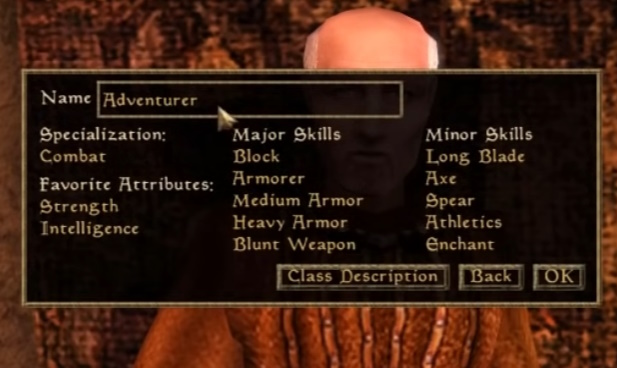
I mentioned earlier that I chose to play as a drow (dark elf) druid during my playthrough, and based on that I have a few thoughts about how well races, backgrounds, and classes are implemented in the game. During my spoiler-free review I mentioned this, so forgive me for repeating myself! But I didn’t feel that there were very many places in the game where being either a drow or a druid actually made much difference in terms of role-playing and conversations. And backgrounds were all but forgotten; I had to go back and check which one I even picked, because I don’t think it ever came up.

Obviously classes matter in Baldur’s Gate 3 – they matter a great deal, as they impact what kind of spells you can cast, what weapons you’re able to proficiently wield, how easy things like picking locks or sneaking will be, and some even give you advantages in conversations or when trying to persuade NPCs. All of that has a profound impact on the way Baldur’s Gate 3 plays – and one of the reasons why I’m so keen to start a second run through the game is to pick a different class and try things differently.

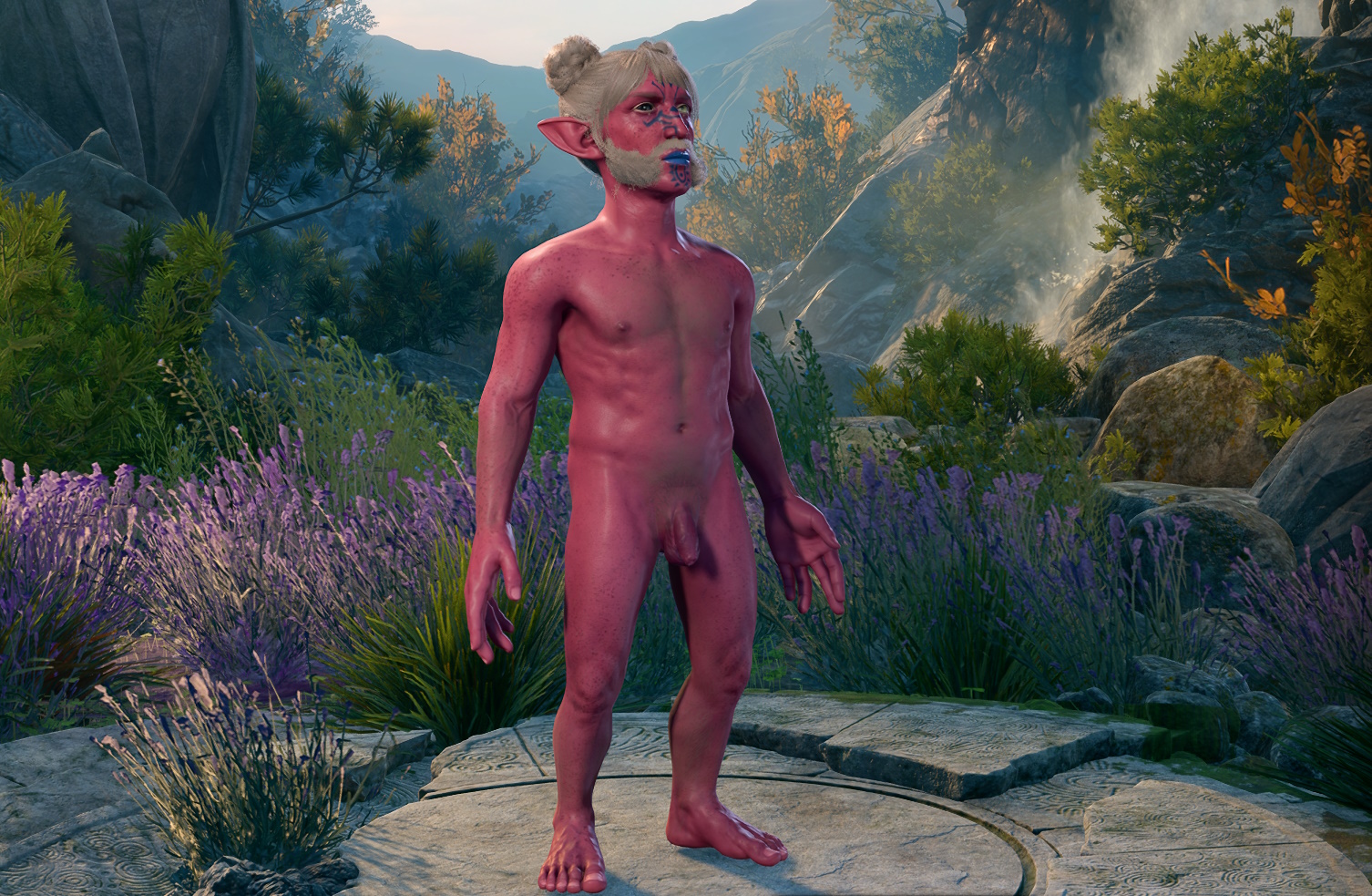
Perhaps I should play as a halfling monk next time?

But in terms of the game world and characters therein, I didn’t feel that my choices (at the character creation stage) made much of a difference. A few characters remarked on my being a drow when I first met them, but immediately moved on and it was never mentioned again. I think I saw about half a dozen drow conversation prompts during my playthrough, most of which related to darkness, seeing in the dark, or visiting the underdark (which I now know is where drows live!) And half a dozen lines of unique dialogue isn’t bad per se… but in a playthrough that lasted eighty-five hours, it’s not like I felt that being a drow was affecting every conversation or having a big impact on how most people saw my character.

The same was true of being a druid. A handful of lines of dialogue about nature or the natural world were available, and especially toward the beginning of the game in the druids’ grove I felt optimistic that my choice was going to have a bigger impact on the way my character engaged with NPCs. But as the game wore on, it became clear that the grove was a bit of an outlier, and that the number of these unique dialogue options were few and far between.

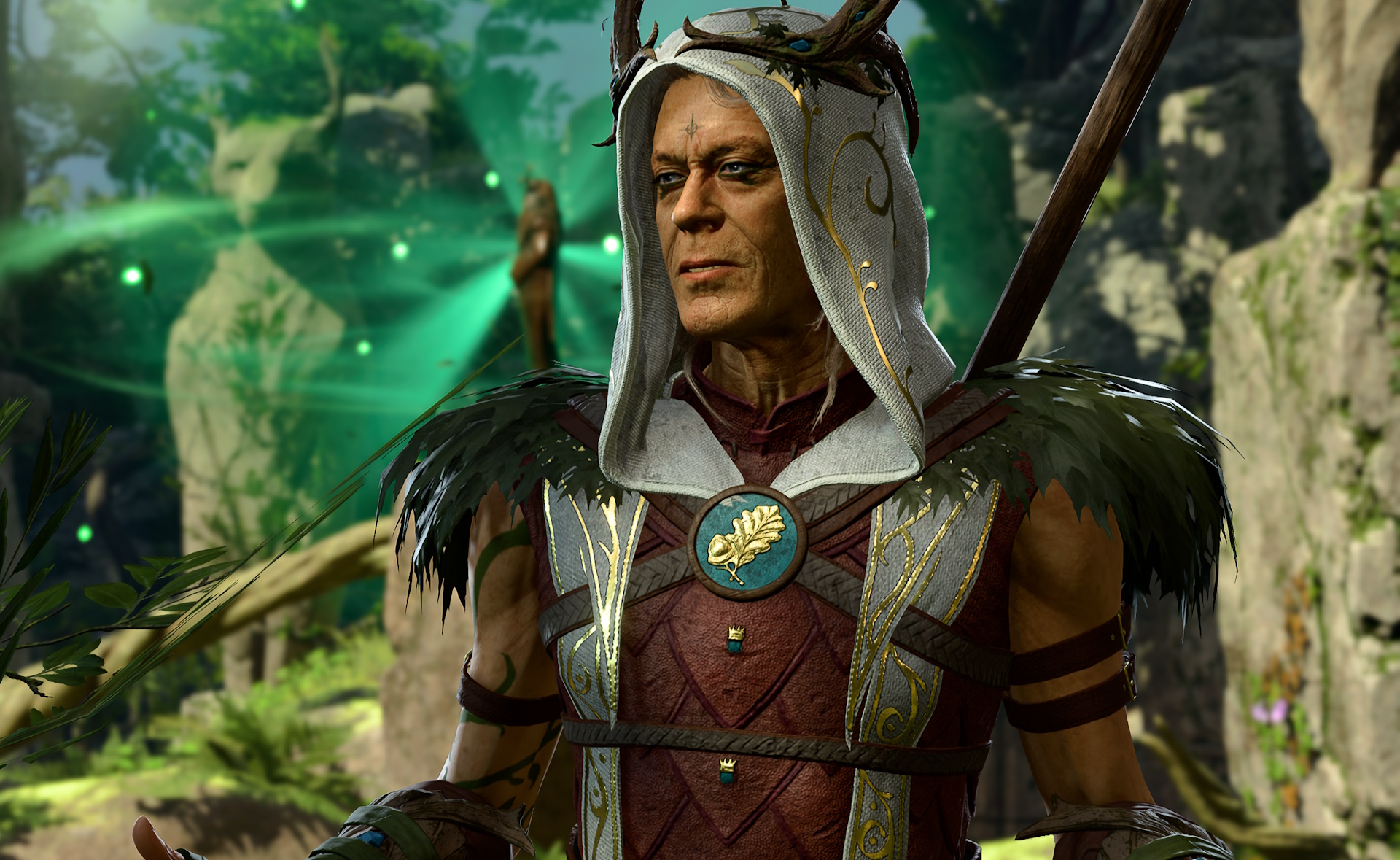
One of the druids near the beginning of the game.

There was no point at which I felt, as a druid, a unique pathway opened up for me to engage with a character, resolve a situation, or perhaps even start a quest that other classes wouldn’t have access to. Baldur’s Gate 3 seems to go out of its way to make sure that all races and classes have access to all of the quests and missions – which is a double-edged sword, really. On the positive side, it means that everyone can enjoy what’s on offer, but on the negative side… it kind of detracts from that wonderful character creation process, and leaves some of those choices feeling less important or just flat-out unimportant.

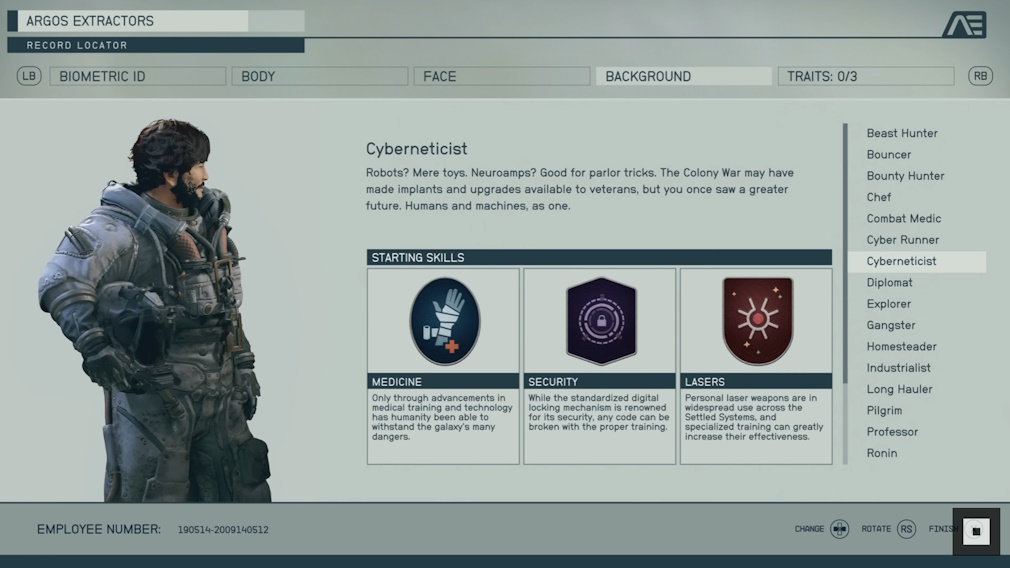
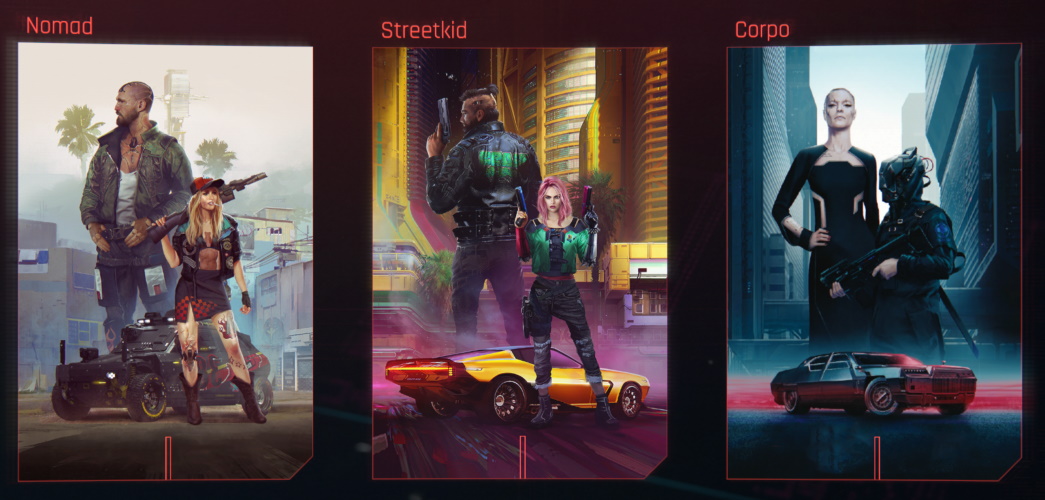
This is a bad example, as the missions in question were piss-poor and incredibly basic, but it’s the only one that springs to mind right now so it’ll have to do! But in Cyberpunk 2077, each of the three life paths (i.e. backgrounds) that were on offer led to a unique prologue and one unique in-game mission. Although in Cyberpunk these missions were lacklustre, at least there was an attempt to add to the role-playing experience by throwing a bone to players, making those early choices feel a bit more special and impactful. It also goes without saying that unique missions for each class or background add to any game’s replayability.

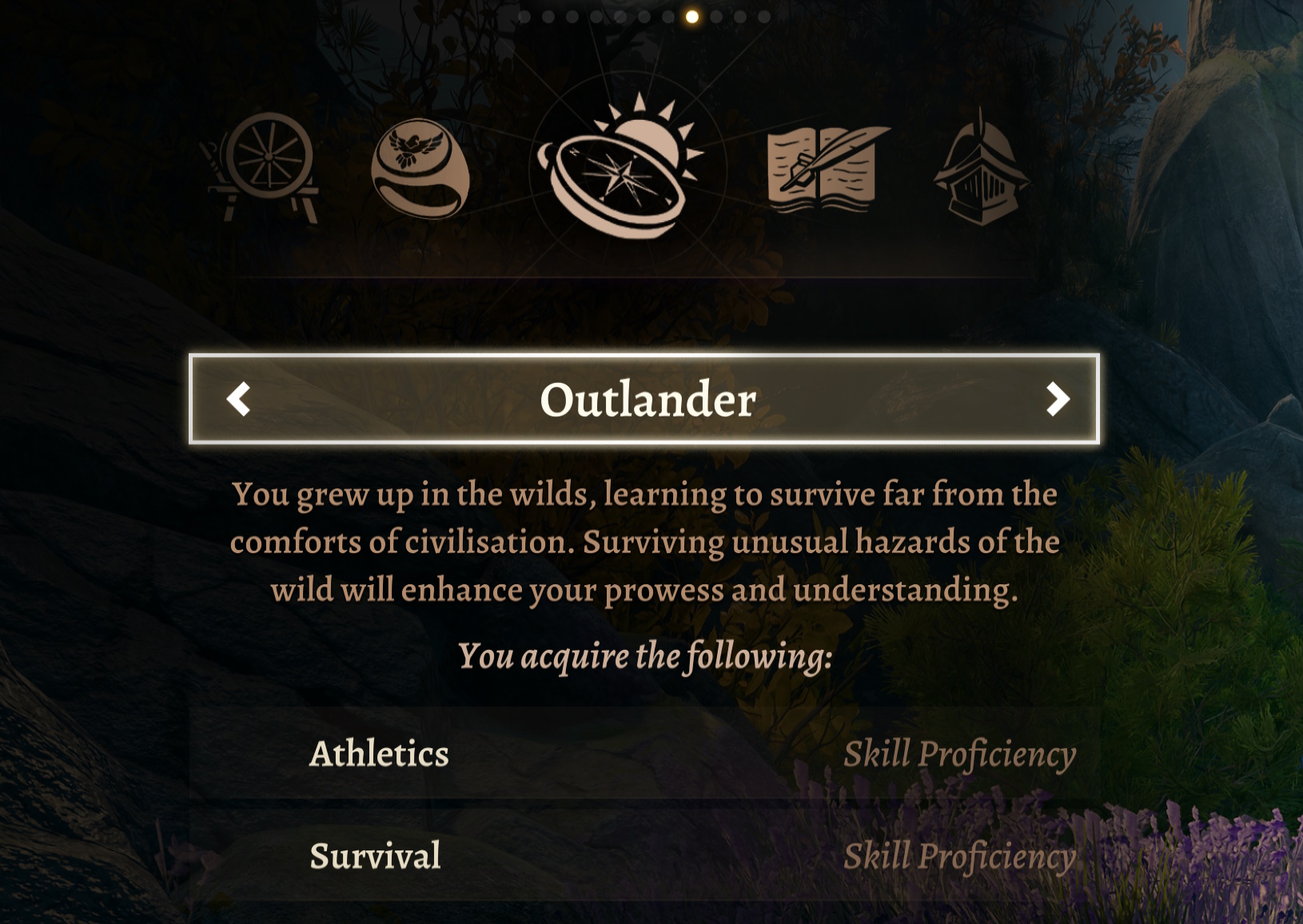
The choice of background doesn’t seem to matter.

Even if class-locked quests were off the table, it would still have been nice to see unique ways to progress through different parts of the game that were only available to certain classes or character types. To draw on another example, in the Omega DLC for Mass Effect 3, players who chose the “engineer” class get a class-exclusive opportunity that really impacts the mission and that makes perfect narrative sense. I didn’t see any of this in Baldur’s Gate 3. Maybe other classes or backgrounds have moments like this – but drow druids don’t, at least not from what I saw.

Every single combat encounter is going to be different depending on both the player’s class and the combination of classes of party members – be they the in-game companions or other people if playing co-operatively. And that’s great – it means that there’s a real strategic element to the game when it comes to deciding who to bring along and how to approach different moments. Getting a good combination of ranged, melee, and magical characters is a good starting point – but some encounters may need more heavy hitters, a healer, or a stealthy character, just to give three basic examples.

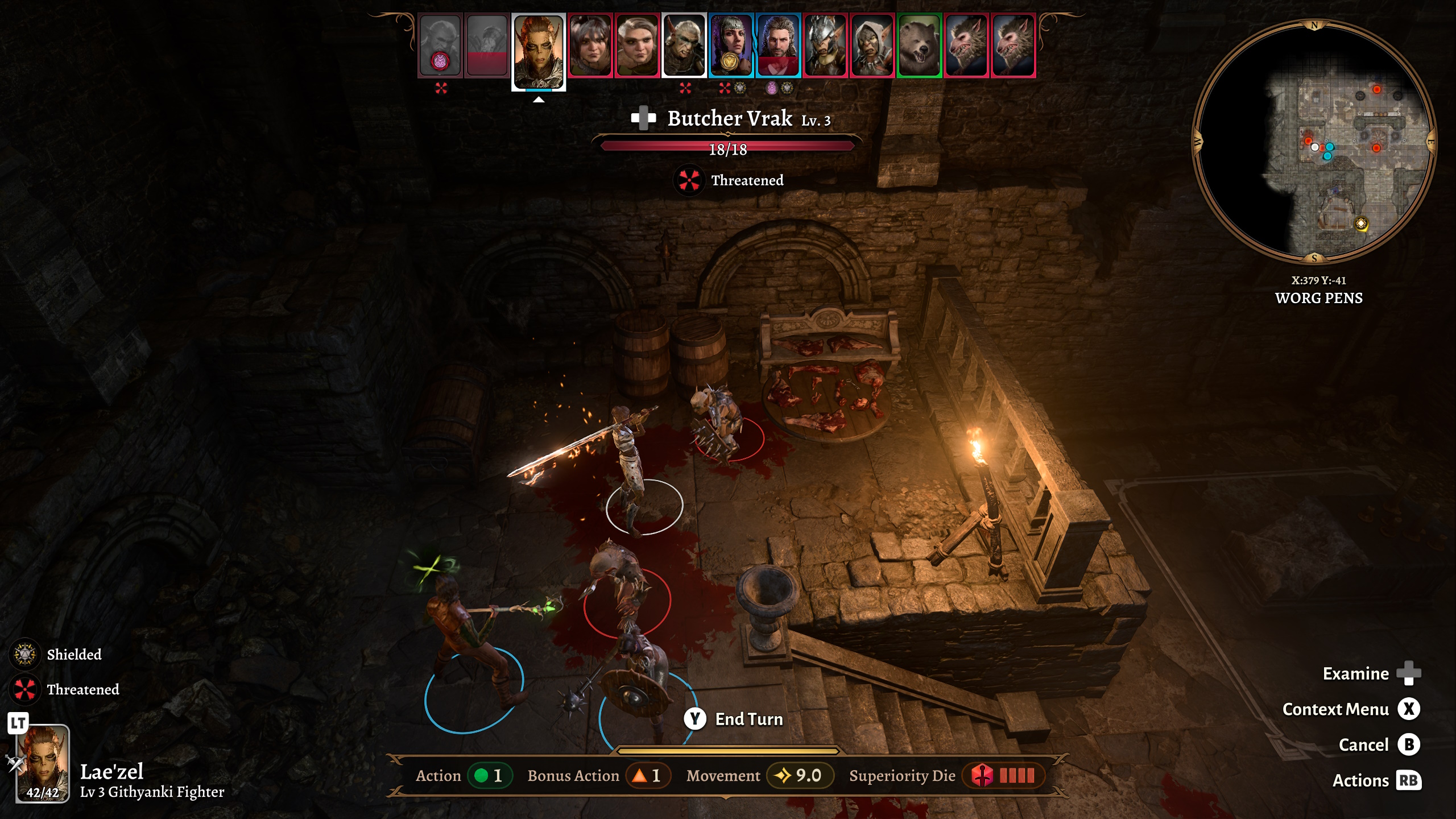
A combat encounter.

And that variety is a huge part of the fun. The different challenges posed by Baldur’s Gate 3′s huge variety of enemies makes practically every encounter feel unique. Even when facing off against the same basic enemy faction – goblins, for instance – there can still be this variety. A single boss goblin feels very different from a small group, and the strategies for defeating the small group are completely different from those needed to defeat a whole horde! I loved this aspect of the game, as it wasn’t possible to just pick a favourite party and stick with it the whole time; Baldur’s Gate 3 goes out of its way to encourage party-swapping and companion variety.

Exploration also feels like it has some of this variety. Having a character who’s adept at lockpicking in the party is a good rule of thumb, but characters who are perceptive or who have other bonuses also come in handy!

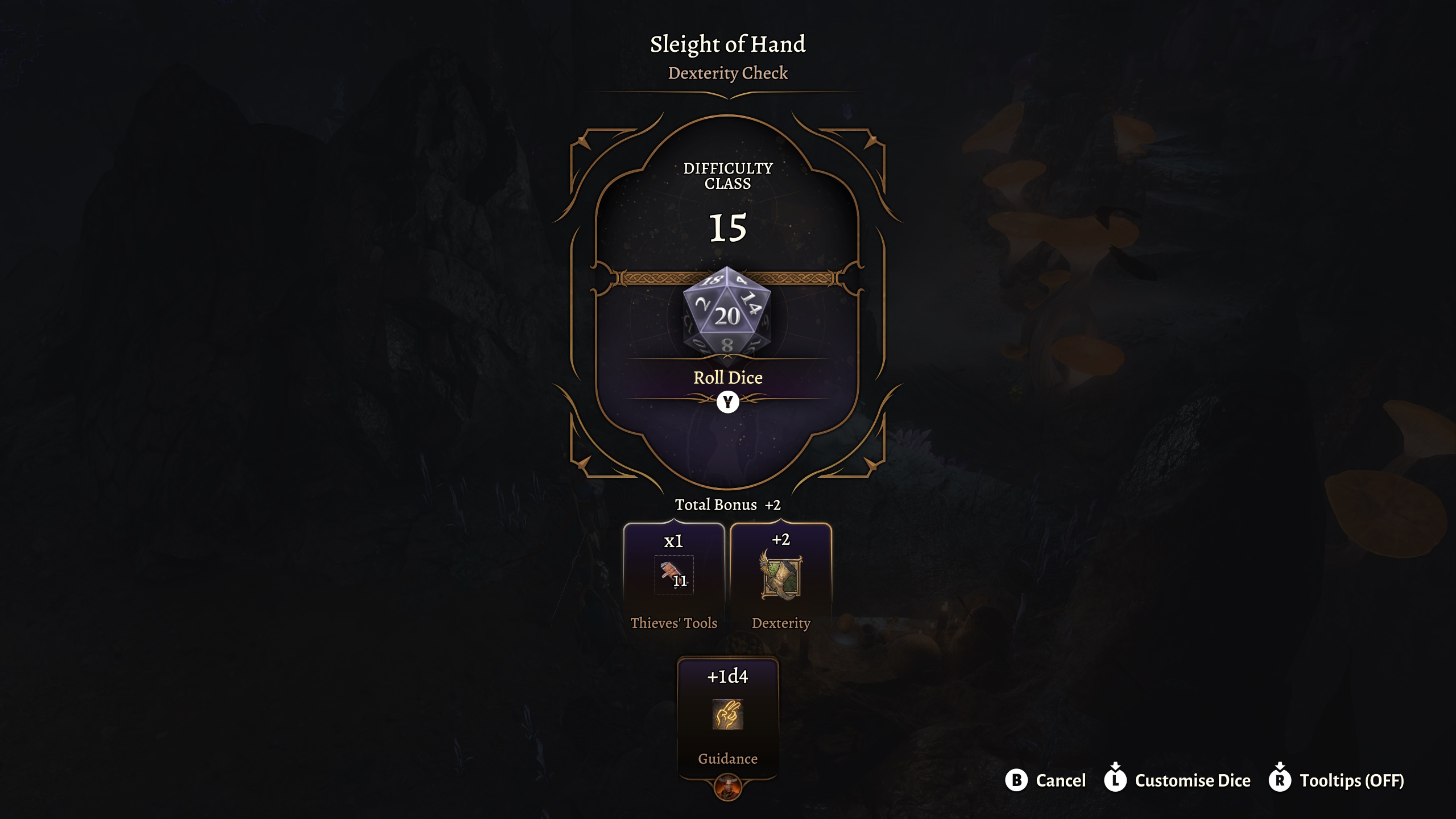
Some characters have an easier time than others when it comes to lockpicking, among other activities.

I just felt that, again, the way I created my custom character didn’t offer as much of that outside of combat. As either a drow or a druid, I didn’t find any unique ways to complete quests, any unique character encounters, or really any conversations or questlines that felt like they were really taking my character’s unique attributes into account. By the time I’d got stuck into the game and buffed up my character’s martial skills, giving me a mix of magic and weapon abilities, I felt that I had different ways to approach many encounters – but none of that felt like it was truly unique to who my character was.

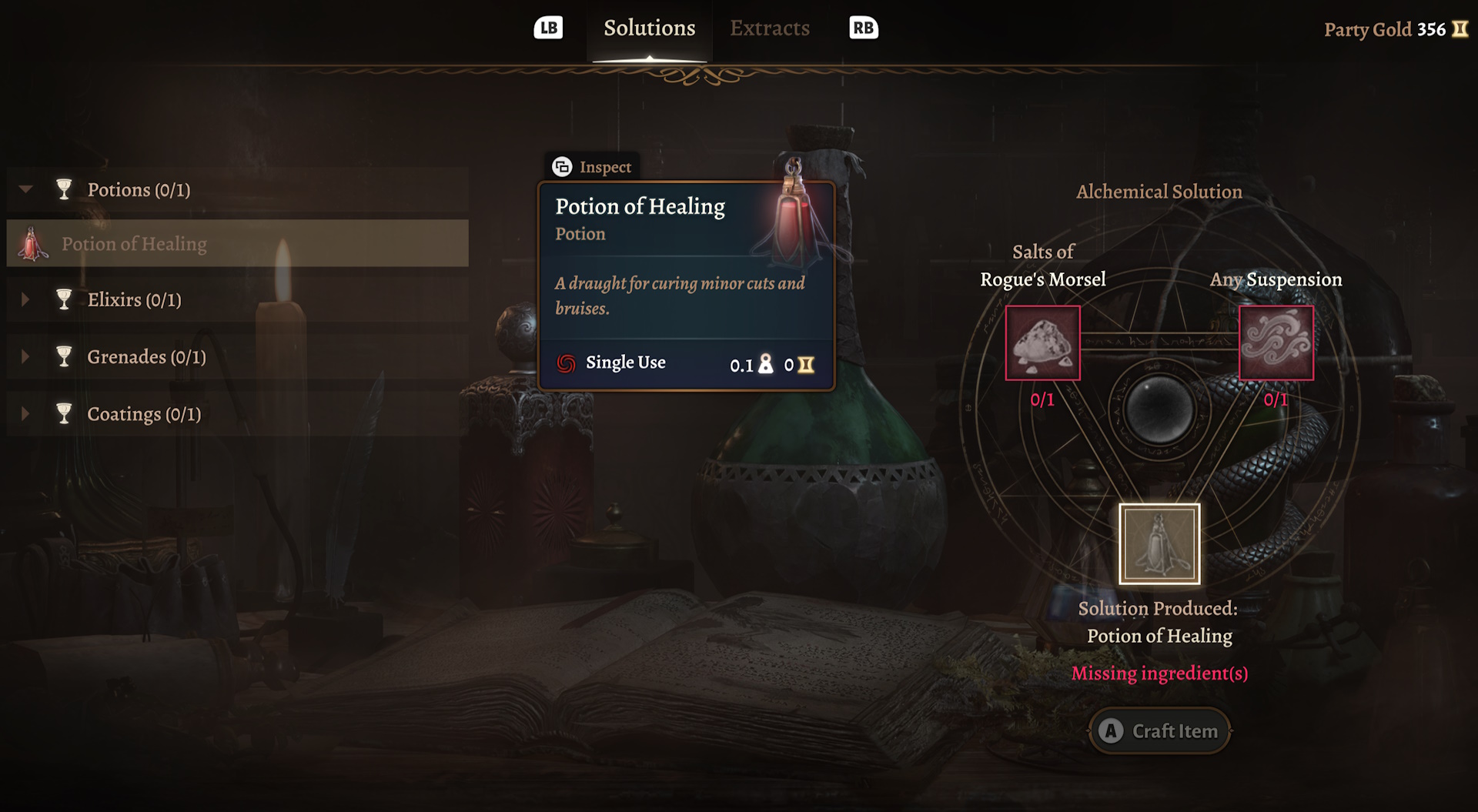
There were also a few parts of the game that I felt were either not well-integrated or easy to overlook. For example, I didn’t create a single potion during my entire run. I didn’t even know potion-making was an option until I was well into Act 1, and I found that I was easily able to acquire enough health potions out in the wild such that making my own just never seemed like something I needed to do.

I didn’t actually do any alchemy.

Perhaps it’s more to do with the way I played the game, but I felt that potions and scrolls were less useful than spells and weapons – and I only used a handful across my run. Maybe there are things I missed out on because of that, and when I jump back in for a second playthrough I’d love to take more advantage of alchemy and scrolls. I’ll have to see whether and to what extent that makes a difference! But in my first run, I felt that neither were essential and both were easily overlooked.

While I feel you’d almost have to go out of your way to get into potion-making in Baldur’s Gate 3, and I feel the feature would benefit from an in-game introduction and tutorial, I like that it’s an option for players who want to role-play that kind of magical character. Potions are a big deal in fantasy settings, and it would feel like something’s missing if potion-making wasn’t present at all. I just feel it could be made more prominent in the game as things stand.

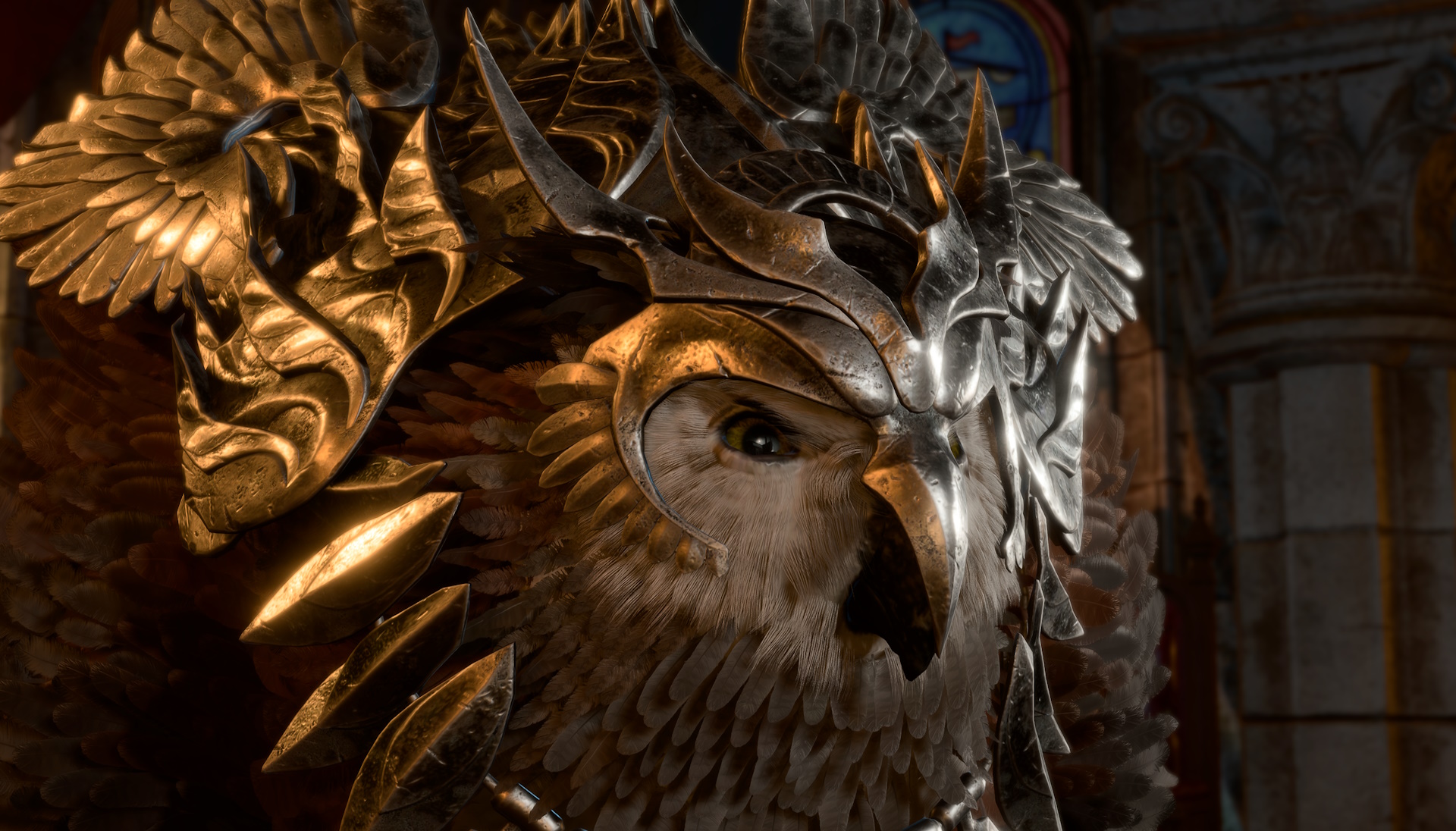
An armoured owlbear, ready for battle!

There’s one specific quest that I want to single out for criticism, and I’m picking on it not because I didn’t enjoy it – I think it’s one of the best and most interesting in the entire game – but because of how weirdly finicky it was to play, and how it had some very exacting requirements. For someone just playing the game, as I was, without a guide, it feels too easy to accidentally encounter this quest and then have it pretty significantly and negatively impact much of Act 3. I’m talking about the quest that involves rescuing the hostages from the Iron Throne – an underwater prison.

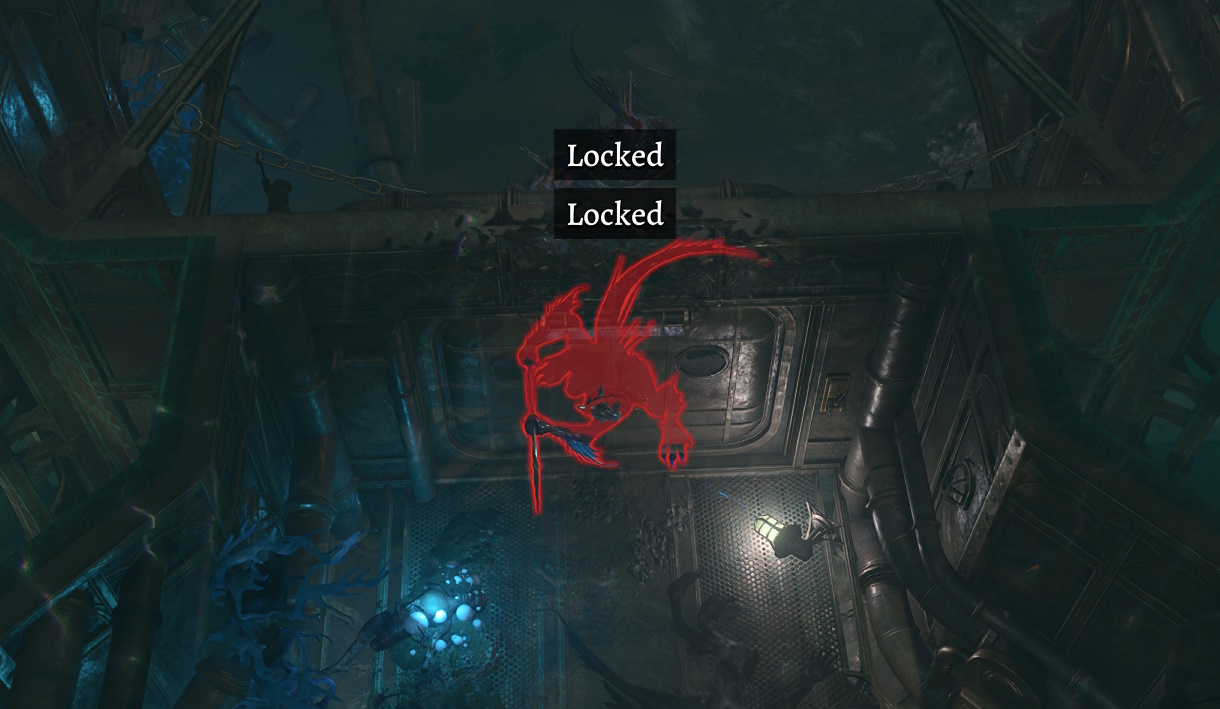
I first stumbled upon this quest by picking a lock in the city of Baldur’s Gate, then exploring what seemed to be a random warehouse. In the depths of the warehouse was a submarine that could ferry my party to this prison – but starting this quest before talking to other characters, including Gortash, Orin, one of the gnomes at the Steel Watch facility, and Wyll’s devil patron Mizora causes problems. Doing this in the “wrong” order leads to the quest having a much worse outcome, with Wyll’s father dead and the gnome rebellion at the Steel Watch not triggering properly. For a game that prides itself on letting players loose to freely explore, and on offering multiple branching paths… the way in which this particular quest was handled didn’t feel great, and it sticks up as an outlier. Despite that, when I managed to play it the “right” way, it ended up being one of my favourites in the game. It’s just a shame that it’s so exacting in its requirements, and that there aren’t any real ways around that.

This quest was very convoluted if you wanted to do it properly.

So I think we’d better wrap things up!

As I said last time, Baldur’s Gate 3 is the best game I’ve played so far this year. I adored the time I spent in Faerûn – my first ever venture into this particular fantasy realm – and I’m already chomping at the bit to start a second run through the game! I’m trying to restrain myself, as I feel jumping back in so soon after beating the game for the first time would diminish the experience, and I want to get as much out of my next go around as possible. But I daren’t wait too long, and I suspect I’ll give in and start that second playthrough before Christmas.

Though there were a few places where things could’ve been improved, and some quests that felt very particular with their requirements, overall I had a wonderful time with Baldur’s Gate 3. From the very first moment I felt gripped by what was simultaneously a small-scale, personal story and one that had world-ending repercussions. That’s in spite of having essentially zero background knowledge about the world of Dungeons and Dragons. The writing and gameplay were both outstanding, and kept me coming back for more.

Withers addressing the Dead Three.

I hope this has been interesting. There are bound to be many different perspectives on Baldur’s Gate 3, as it’s a game that encourages players to take different paths through its story. I already know that I haven’t seen all that the game has to offer – including an entire area of the map, many NPCs, one companion character, and I have no doubt multiple questlines, too. Now that I know what to expect, I’ll make a few changes to the way I play next time in order to check off some of those missing experiences! But I’ll try to save a few for another run, too.

Although I’ve found a few things to pick on in terms of Baldur’s Gate 3′s narrative and role-playing, none of those things prevented me from thoroughly enjoying a game that’s sure to be, for many folks, the game of the year. Baldur’s Gate 3 came out of nowhere this year – it hadn’t been on my radar at all. Both in terms of story and gameplay, I was stunned. I had an amazing time, and I can’t wait to go around again.

Baldur’s Gate 3 is out now for PC and PlayStation 5, and will be released on Xbox Series consoles in 2024. Baldur’s Gate 3 is the copyright of Larian Studios, and is based on Dungeons and Dragons which is owned by Wizards of the Coast and Hasbro. Some screenshots and promo art used above courtesy of Larian Studios and/or IGDB. This article contains the thoughts and opinions of one person only and is not intended to cause any offence.

Starfield: First Impressions

Spoiler Warning: While there are no major story spoilers for Starfield, minor spoilers for the main quest and a handful of side-quests are present.

I promised that I’d share my first impressions of Starfield as soon as possible, and with the game finally launching for us plebs who didn’t fork over £100 to get “early” access, I’ve belatedly had the chance to jump in and try it for myself. I’m basing my impressions of the game on approximately twenty hours of playtime, in which I’ve started but not completed the main quest, created a character, worked on my spaceship, undertaken a handful of side-missions and fetch quests, and landed on about twenty different planets. There’s no way I can reasonably “review” a game as large and long as Starfield without beating a single questline, so I’m calling this piece my “first impressions” of the game.

Starfield’s showcase earlier this summer was fantastic, and the game rocketed up the list to become my most-anticipated launch of the year. The idea of playing an open-galaxy adventure with all of the fantastic writing and quest design of a Bethesda game combined with spaceflight, spaceship building, and exploration, and set in a new fictional universe with designs that drew inspiration from NASA… it all seemed too good to be true. A friend of mine suggested to me a couple of months ago that Starfield “might be the best game that either of us will ever play.” Try as I might to avoid the hype, there’s no denying how excited I was for Starfield.

Promo poster for Starfield.

Hype can be detrimental to any game if not properly handled, something I commented on shortly before the release of 2020’s Cyberpunk 2077. I said then that games publishers and their marketing teams need to do a better job at reining in speculation, and that there are ways to let players down gently, redirecting the conversation, if necessary, away from features that won’t be part of a game. The hype train for Starfield definitely got unwieldy, and I fear that Bethesda ended up over-promising.

Let’s get the headline out of the way right now: Starfield is undeniably a good game… but it doesn’t always make good on some of its loftier promises and ambitions. It brings a lot to the table, but several of its key features and systems feel barebones and underdone, especially when compared to other titles in a similar space, meaning that there’s not a lot to offer in terms of longer-term play or replayability. Thus far, the game’s main story has failed to grab me following what I felt was a pretty rushed beginning, and customisation options for both the player character and their spaceship aren’t at the level I was hoping for. There are also some notable bugs that slipped through, in spite of promises that Starfield would be Bethesda’s “least-buggy release ever,” and graphics that feel outdated in some areas.

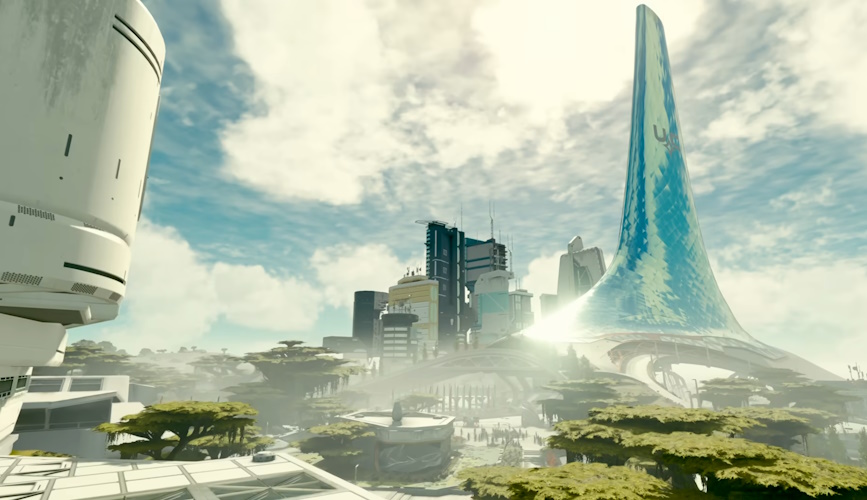
The city of New Atlantis.

That being said, Starfield gets a lot right. The game’s art style and overall aesthetic is exactly what I was looking for, drawing on real-world space agencies like NASA and retro sci-fi properties from the ’70s and ’80s that I grew up with. There’s some genuinely enjoyable gunplay – a first for a Bethesda title. Voice acting is solid across the board. And while I don’t feel that the game has really managed to suck me in – at least, not yet – it still manages to evoke at least some of those feelings of being a space captain in a sci-fi world that it was aiming for.

I think the best thing to do at this point is to break this article into segments. Each segment will tackle one aspect of Starfield’s gameplay, and then we’ll bring it all together at the end for a conclusion. I’ll try to avoid major plot spoilers – though I’m yet to complete the main quest or any faction questline, so there shouldn’t be anything massive in the mix.

Exploration:

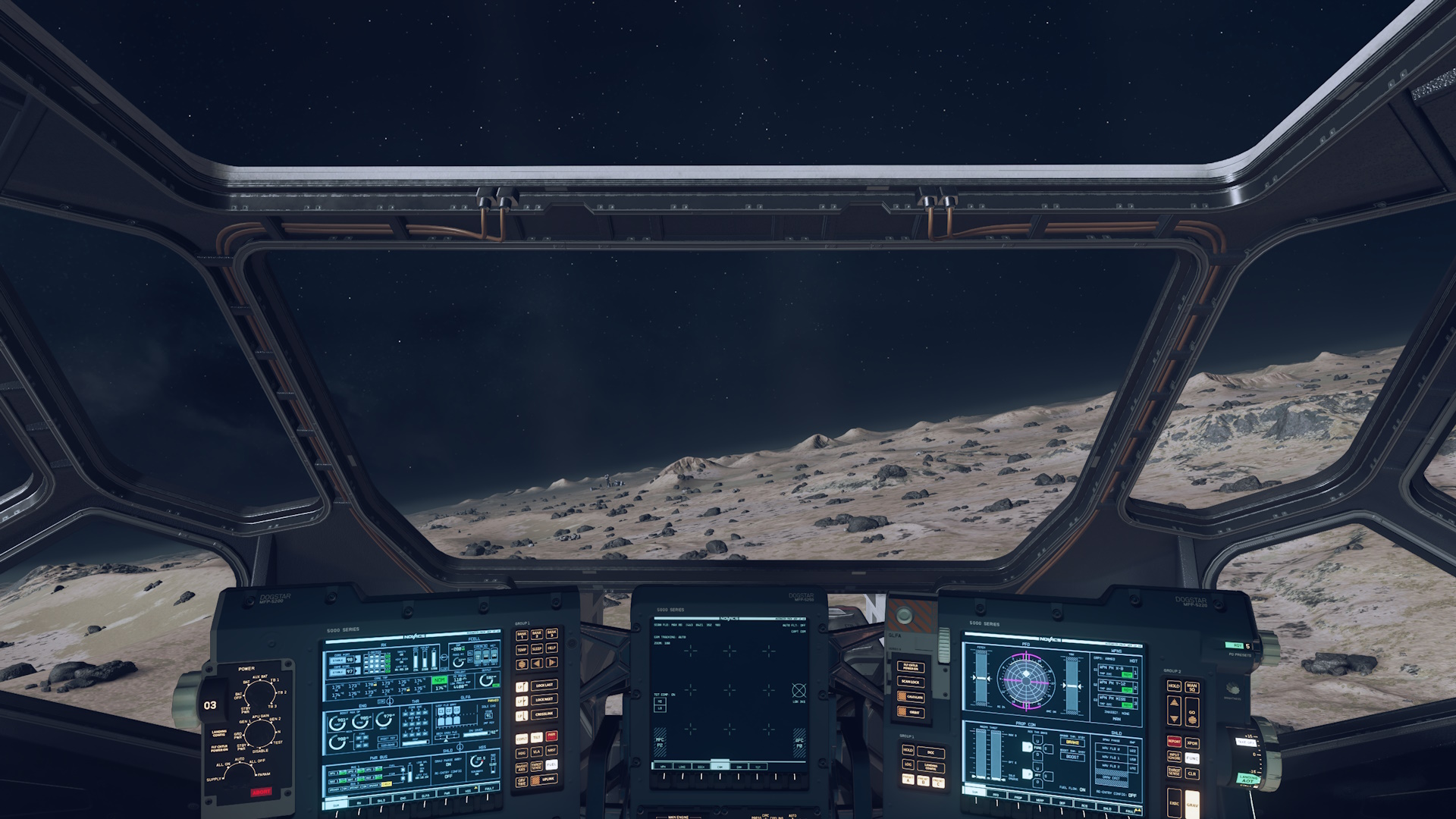
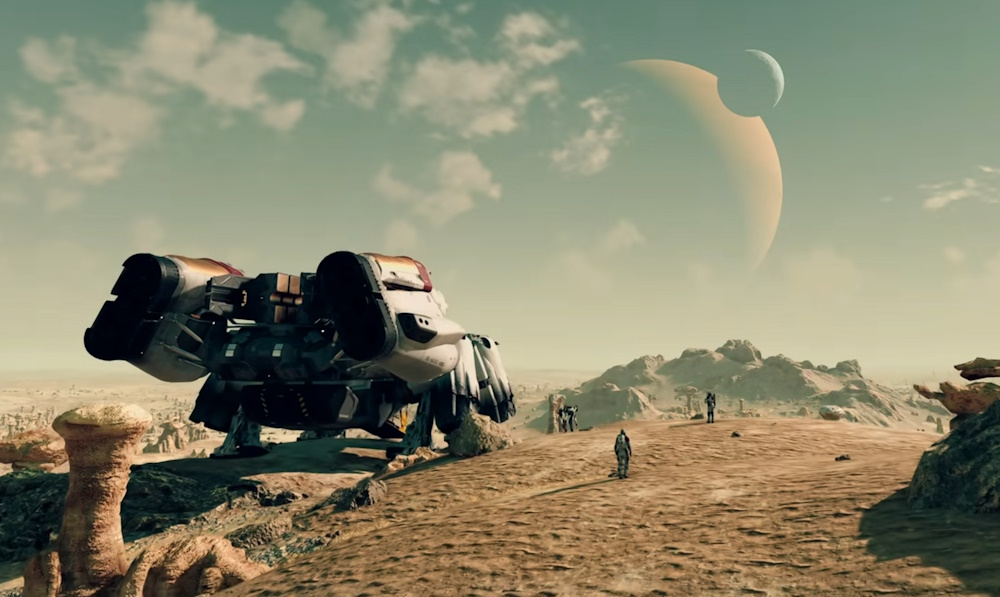
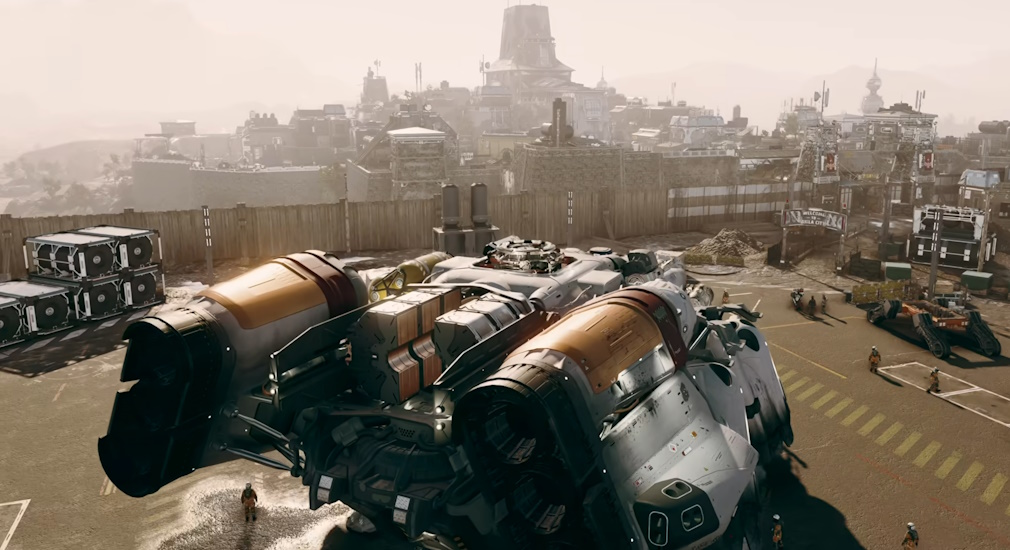
Landing on a planet’s surface.

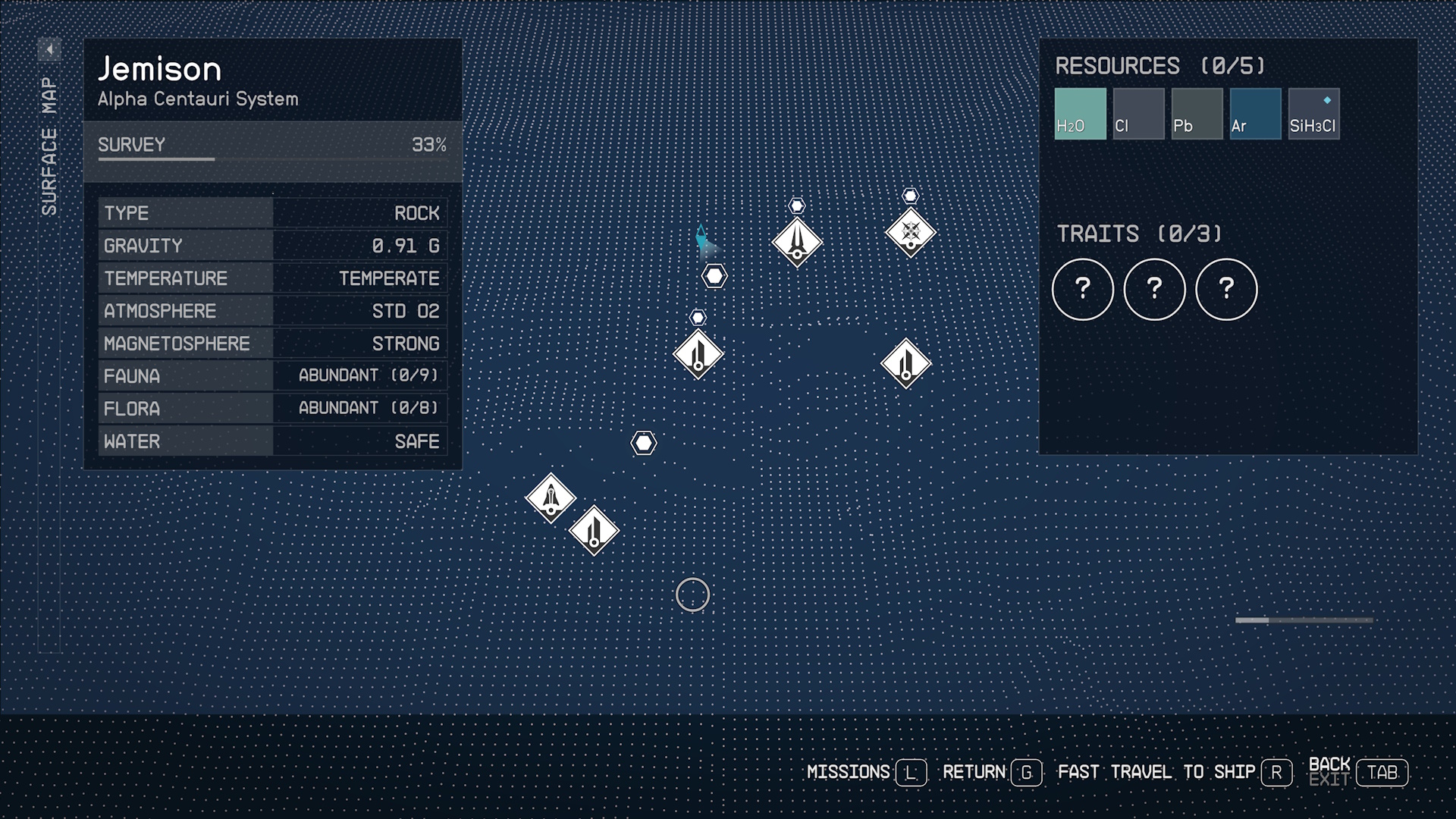
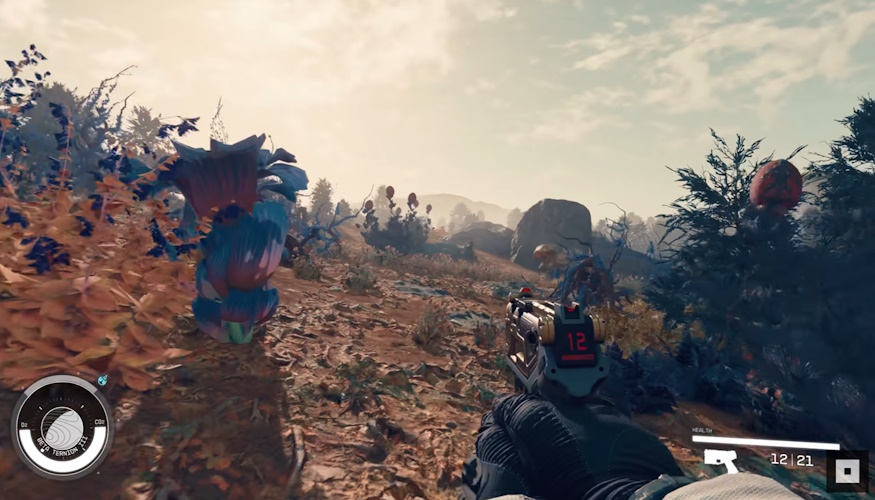
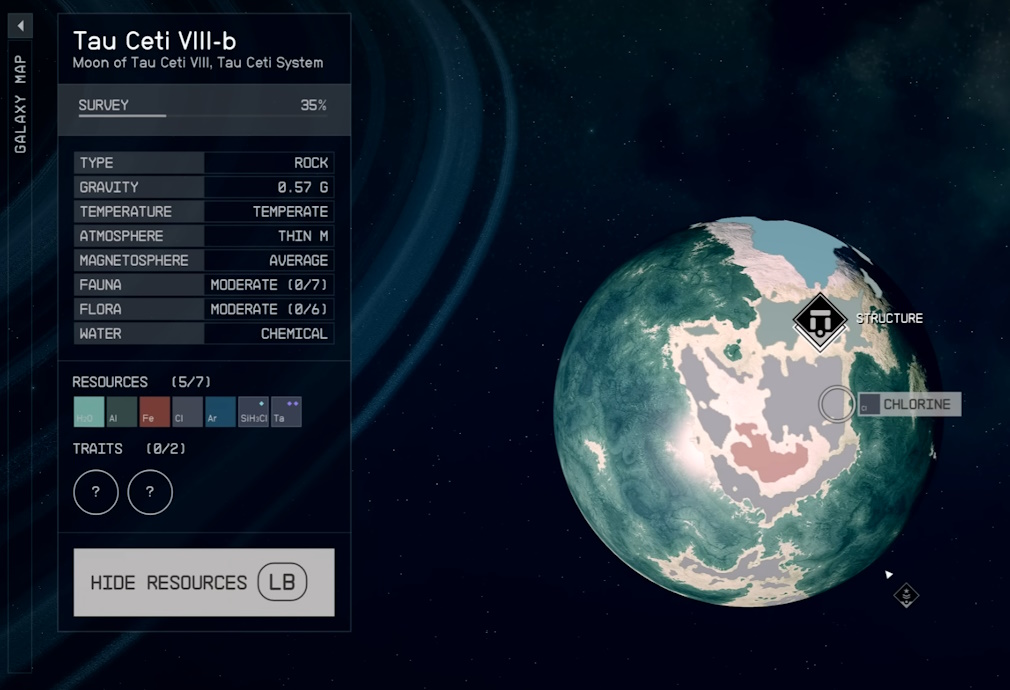
Exploring in Starfield is not what I expected it would be. After landing on the surface of a planet, you’re restricted to a “landing zone” that takes about ten to twelve minutes to reach the boundary of while traversing on foot. No, despite what you may have heard, a landing zone is not “the same size as Skyrim!” For the most part, I don’t think the size of a landing zone is a particular problem, and I’d wager that most players – though by no means all – won’t bother to trek as far as the invisible wall. But that in itself is saying something – because there’s not a lot to do in a lot of these places, and much of what is on offer gets repetitive very quickly.

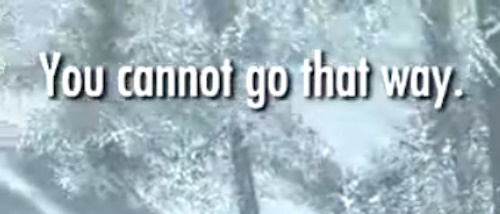
As an aside about invisible walls: this could have been handled better. An in-game explanation could have been found, allowing Starfield to technobabble its way to an excuse for why it isn’t possible to roam too far from where your ship landed. Something about “needing to stay in communications range,” or words to that effect, for example. Instead, the first time you hit an invisible wall it’s pretty jarring – you’re simply told that “you cannot go that way,” much like you were as far back as Oblivion.

This looks familiar.

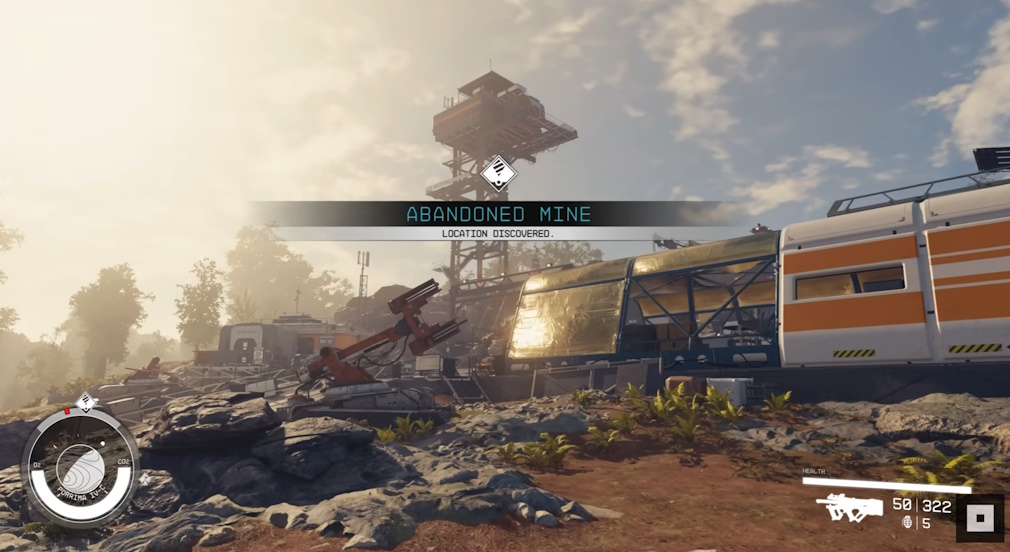
In the roughly twenty hours I’ve spent with Starfield, I’ve encountered absolutely identical locations and buildings on different planets on multiple occasions. Within each “abandoned mine,” enemies spawn in the same place, much of the loot is identical, and the layout of the structure is the same. These so-called “points of interest” on the surface of planets are copied-and-pasted from one to the next, and I’m already bored of that after just a few hours.

Imagine if you visited three identical dungeons in Skyrim, and knew that the fourth one would also have the same enemies in the same places and the same basic loot to grab. You’d start to lose interest pretty quickly, right? Maybe I’ve been particularly unlucky, and maybe there are many more of these randomised locations that I’m yet to encounter. I hope so, but even if that’s the case, the fact that these structures – and everything within – can be repeated at all isn’t exactly a good look.

This was one of my big fears about Starfield from the moment Bethesda began talking of planets being made up of “tiles,” and I’m disappointed to see it come to pass.

Discovering another “deserted biotics lab” soon feels repetitive.

One of the early main quest missions is even set at one of these copy-and-paste locations. That actually shocked me when I realised it, because I’d already explored not one but two identical “abandoned mines” on other planets prior to playing this main quest mission. I would have expected at the very least to see locations connected to main quests and faction quests being wholly unique, and again this feels like a disappointment.

One of the things that appealed to me about Starfield was the idea of being able to go “where no man has gone before,” and setting foot on an uncharted world for the first time. But I can’t do that – at least not from what I’ve seen so far. Every single landing zone I’ve touched down at has at least two of these copy-and-paste structures, and no matter how many times I take off again and pick a different spot… they’re always there. Also, every single time I land on a planet, another ship lands a few metres away from mine moments later. There’s no opportunity to feel like a bona fide explorer – the first person to set foot in this strange alien landscape. No matter where you go, someone else has beaten you to it.

A structure on a random planet.

Feeling like I’m at the forefront of this mission of exploration like a Starfleet officer was one of the things I was most keen to experience in Starfield, and the way that the game has handled this hasn’t been great. I literally tried landing at more than fifteen different sites on a single planet, just trying to find one that didn’t have any pre-built structures or spaceship landing sites. But alas.

That’s not to say that there’d be much point in landing at such a site. Starfield is incredibly stingy with its planetary resources, with only a handful of minerals to collect that are scattered across a wide area. With most resources not being worth many credits, any kind of mining or resource-gathering is pretty much out of the question as an in-game career. It’s easier and more efficient to kill random enemies and loot their bases rather than trying to mine or collect minerals and resources.

Mining iron doesn’t yield much profit.

Much was made at the showcase about gravity, and how different planets will have different levels of gravity. As far as I can see, gravity in Starfield affects one thing: how high you can jump. How fast you can walk or run seems entirely unaffected by gravity, as are shooting and carrying capacity. I haven’t encountered any zero-G sections of gameplay yet, though, so those could spice things up a bit.

Different planets can have different environmental hazards: radiation, heat, and even things like scalding rain or toxic gases. For the most part, the spacesuit and helmet that I’ve had equipped for the bulk of my playthrough thus far seem to be adequate, though my character picked up a couple of environmental injuries early on. I’m not sure if there’s more to this, but I’ve landed on frozen icy planets and even the surface of Venus using the same equipment and I’ve really not noticed a difference.

The map.

Having a usable map has become an essential feature in any game with large levels – but Starfield bucks this trend. The available map is good enough on the surface of random planets, but utterly useless for navigating cities and settlements.

The map highlights points of interest, and it’s possible to fast travel to any that have been discovered. But god forbid you try to find a particular shop or building in New Atlantis! The map doesn’t have that level of detail for some inexplicable reason.

Spaceflight:

A custom spaceship takes to the skies!

This ought to be nice and short: there isn’t any. There’s functionally no spaceflight in this game whatsoever. Remember being told “if you can see it, you can go there?” Well, you don’t get to actually fly your ship to your destination. You can’t take off from wherever you landed and manually fly to the moon or to the next planet over. No. The only way to travel from one location to the next is to fast-travel from either the map or mission menu.

I fully expected that travelling from one solar system to another would work this way. Who wants to sit around for ages flying through interstellar space, right? But within a single system – and especially to fly from a planet to its moon or from a space station to the planet it’s orbiting – I genuinely expected that I’d be able to take my customised spaceship and actually, y’know… fly it.

Flying near a planet doesn’t mean you can fly to a planet.

Instead, Starfield drops you and your ship in a little pocket of space, a little bubble. You can fly around within that bubble, talk to any nearby ships, dock with space stations, and the like. But you can’t do anything else, and you’re trapped within that bubble until you open the map menu and select another destination. There’s no option to fly from one planet or moon to a neighbouring one, which is just a disappointment.

What’s the point of building a custom spaceship if you can’t actually get to pilot it for any significant length of time? Sure, there are some combat encounters in space that are tense, and it’s a bit of fun the first few times you get scanned for contraband, hail a friendly ship, or dock with someone. But there’s not a lot of longevity in most of those activities, and the decision to basically offer no actual spaceflight in a space game… it’s an odd one to say the least!

The view from the cockpit.

Some missions operate the same way. After choosing an assignment from a “mission board” located near a spaceport, you’ll be tasked with some relatively mundane job in exchange for credits. One that I chose involved delivering a shipment of jewellery from one planet to another. But to call these “missions” is massively overstating it!

After selecting the task I wanted from the mission board, the quest was available in the menu. But I didn’t have to go anywhere to collect the cargo; it magically appeared on my ship instantaneously. All I had to do was board my ship, select the destination planet from the map screen, and away I went. I mistakenly assumed that I’d have to talk to someone or at the very least interact with a screen in order to transfer the cargo and complete the assignment – but no! The mission was automatically marked as complete the very second my ship touched down. I didn’t even need to get out of my seat, and the entire thing took less than a minute from choosing the task to marking it as complete and receiving my reward. Hardly an interactive experience – and while such tasks may be useful for making a bunch of credits in short order, it wasn’t fun and it wasn’t immersive.

The view from the cockpit.

Maybe this is more of a personal taste thing, but I really dislike the way Starfield presents its heads-up display while piloting a spaceship. I found the HUD to be incredibly cumbersome, especially in first-person mode, and it got in the way of the immersion of being a space captain or space pilot. Displaying these little transparent boxes on top of in-game computer screens and monitors really detracts from the piloting experience.

Even in third-person mode, the HUD is still obtrusive and takes up a lot of real estate on the screen. I’d have loved to see Starfield make actual use of those screens and displays in the cockpit, as that would make for a much more engaging and interactive experience. Offering players a choice, at least, with a simplified HUD or smaller HUD as options would have been nice, too.

Graphics:

Parts of Starfield can look decent.

If Starfield had been released on the PlayStation 4 and Xbox One, I’d have said it looked great. And some of its backdrops and vistas look pretty. Seeing a planet from space or seeing a landscape stretching off into the distance are genuinely great moments, and they’re rendered well. But when you start looking at things up close, a lot of Starfield’s next-gen trappings fall away.

The main area of complaint here is the characters’ faces. Eyes are dead and faces flip-flop from being totally blank and expressionless to having almost comically exaggerated movements, then back again. Every character, regardless of race or age, looks to be about twenty-five years old, with smooth skin and perfect teeth. Practically all characters are the same height, and most are the same build, too.

Starfield vs. Baldur’s Gate 3.

The image above is one I believe offers a fair comparison. On the left we have the character of Sam Coe from Starfield, and on the right, Gale from Baldur’s Gate 3 – wearing a similar hat to make comparing them easier and fairer! I picked these two characters because they have a similar look, and are both major NPCs and companion characters in their respective games. You can tell at a glance which looks better and more lifelike, and that’s without even seeing them moving or being animated. In short, Bethesda has fallen a long way behind when it comes to faces – and this comparison proves it.

“But graphics don’t matter!” goes the frequently-heard retort. And I agree to an extent – many games deliberately employ art direction that isn’t intended to be realistic, going down a “retro” route of pixels and polygons or choosing a cartoony aesthetic, just to give two examples. But Starfield is trying to be realistic – and at least in terms of faces and character models, it misses the mark by a country mile. Games in the same role-playing space by other developers look so much better than Starfield, which is, at best, a polished and shinier version of Fallout 4.

Story:

Sarah Morgan, head of the Constellation organisation.

Thus far, I don’t feel particularly engaged with either Starfield’s main story or the world that the game is trying to build. In true Bethesda style, the player character is some kind of “chosen one,” able to see visions when interacting with mysterious artefacts. But the game’s opening act felt pretty rushed, with my nameless miner picking up an artefact and then being whisked away by Constellation mere minutes later. I get that Bethesda needs to make this section of the game as curtailed as possible so it doesn’t drag too much on repeat playthroughs, but I couldn’t shake the feeling that there wasn’t much explanation provided for why my character was essentially given a free spaceship and shoved off into the cosmos.

The artefacts themselves are pretty bland to look at, and the visions, while certainly mysterious, don’t really offer much else. I don’t feel compelled to keep pushing to figure out what the artefacts are or where they’ve come from, and while a decent ending or a good explanation could certainly reframe this aspect of the game’s story and make it more interesting, that hasn’t happened for me yet.

One of the artefacts that are at the core of the main story.

In terms of storytelling, the side-missions I’ve played so far didn’t feel especially interactive or player-led. On one occasion I stumbled upon a farmstead that was under attack by spacers, and as the mission unfolded I had to recruit other local families to join in the defence of their system from these raiders. But at every stage, the mission felt like it was being organised and led by the very people I was supposedly helping. They discovered the locations I needed to attack, they planned the mission, and it was at their direction that I did, well, everything. I didn’t even have the basic choice to try to do the mission through stealth; a full-frontal attack was literally the only option.

What this meant, when the dust settled and the questline was complete, is that I didn’t really feel like I’d done anything different. Attacking this group of spacers, killing them, and looting their base scarcely felt any different from attacking, killing, and looting random bases on other worlds, and I felt that my character really didn’t engage much with the quest-giver beyond listening to his plan and following orders. As the questline wrapped up and the quest-giver showered my character with praise for defeating the spacers… the whole thing just felt rather hollow.

Scale:

New Atlantis, the bustling metropolis at the heart of the United Colonies.

Before Starfield launched, I wrote a piece here on the website about my concerns surrounding the sense of scale that a game like this needs to have. I zeroed in on two factors: the amount of content relative to the size of the map, and the way other games manage to convey the feeling that players are taking part in a story that only scratches the surface of a much larger world, one that exists beyond the confines of the playable area.

Parts of Starfield feel… small. Exploring New Atlantis – supposedly the biggest city that Bethesda has ever created – feels akin to walking around a small town, not the capital city of a futuristic humanity. There’s no sense of scale, no ambience, and the city doesn’t feel believable. Parts of it are literally deserted, and the handful of people who are milling around are more often than not nameless “citizens” with nothing to say.

A citizen. He’s busy at the moment.

The aforementioned lack of spaceflight also cuts into this sense of scale. Because Starfield allows you to hop from one planet to the next by opening a menu, there’s no feeling that you’ve actually travelled, or that the destination you’ve reached is far away from the spaceport that you departed from. What should be a vast, open galaxy feels small as a result.

Doubling-down on this feeling are the copy-and-paste locations present on planet surfaces outside of the main settlements. I truly can’t believe how many repeat locations I’ve encountered in such a short span of time, and this is again something that really drags Starfield down.

Customisation Part 1:
Character Creation:

The character creation screen.

The character creator in Starfield has left me with mixed feelings. Firstly, there seems to be a pretty big difference between the way your character looks when initially creating them and how they actually appear during gameplay. Maybe this is due to lighting or other effects, but I felt my character looked noticeably worse after exiting the character creator. And having spent ages working on them… that didn’t feel great.

There are some great options within the character creator to represent different body types – but this isn’t as extensive as it could be. You can choose whether to be thin, muscular, or fat, for example, or any combination of those three things, but not your character’s height. There are plenty of options for various skin types, including things like vitiligo, freckles, and wrinkles, but very few hair and facial hair options. When it comes to reflecting diverse hair types… that’s poor.

There aren’t a lot of hairstyles, facial hair styles, or eye colours.

Eye colour is likewise very limited. Baldur’s Gate 3, which was released last month, and even 2020’s Cyberpunk 2077 offer far richer and more detailed character creators, and I think it’s a shame that Bethesda hasn’t really made much progress here since Fallout 4. And speaking of Fallout 4: several of the hairstyles seem to be lifted directly from that game, retaining their ’50s-inspired look that doesn’t particularly suit Starfield’s retro-sci-fi future.

As a quick comparison, Cyberpunk 2077 has 35 hair colours and more than 50 hairstyles to Starfield’s 23 hair colours and 40 hairstyles – an absolutely massive difference considering it’s almost three years old and was released on last-generation hardware. And Baldur’s Gate 3 has well over 100 colours and more than 85 styles to choose from, showing what a modern game is really capable of in that department.

Baldur’s Gate 3 has far more hairstyle, hair colour, and eye colour options.

What’s the point in Starfield offering 100 ways to reshape your nose or cheekbones – things that are barely perceptible in-game – while only offering a handful of eye colours and hairstyles? These things go a long way to making a character feel personalised and unique, and when there are so few options, within a matter of minutes you’re likely to be running into NPCs who share some part of your character’s appearance or who look alike. Given the aforementioned issues with the way the game renders faces, the fact that many NPCs look similar to one another is verging on immersion-breaking.

The Starfield showcase really played up the various backgrounds and traits that are available during character creation. And to the game’s credit, these traits and backgrounds are varied and interesting. However, I would say that in my twenty hours with the game, the only place where my character’s background has even been mentioned so far was in the intro/tutorial sequence right at the beginning. Now, there are likely to be more opportunities for random lines of dialogue to appear, but so far I haven’t seen very many.

Backgrounds don’t seem to have much of an impact on gameplay.

I picked the “Raised Enlightened” trait, one of three potential religious affiliations. Partly I did so because in-game text promised access to a chest in New Atlantis, of which there seems to be one for each religion, and I figured that the chest may contain items that could prove useful in the early game. This chest was a complete nothing-burger, offering a handful of health packs and four “books” – which are a couple of pages long at most.

Another trait I chose was “UC Native,” meaning that my character was born in the United Colonies, one of two major factions in the game. While this has some bonuses when completing missions, it doesn’t really come with a lot of perks. For instance, I was told early on that I’m not actually a “citizen” of the United Colonies – presumably so I can have access to the same questline to become a citizen as players who didn’t choose this option. But then… what was the point of choosing this trait? It doesn’t seem to have affected my character in a meaningful way.

Customisation Part 2:
Spaceships:

An example of a customised spaceship.

Spaceship building was one of the parts of Starfield that I was most excited about. I’ve loved the idea of creating my very own spaceship ever since I played the likes of Star Trek: Starship Creator in the late ’90s, and being able to not only build my own ship, but pilot it, take it into combat, and get out of my chair and freely walk around the interior are all aspects that held huge appeal.

The ship creator is fun – but it requires a significant investment of credits to get started with, and is a bit more finicky than I’d hoped to see. Some components are incompatible with one another, there are limitations on where some parts can be placed and what they can connect to, and the way weapons have to be manually “assigned” is cumbersome and annoying.

Assigning weapons to a spaceship.

That being said, building my own ship is about as much fun as I realistically expected to have. It isn’t perfect, and in an ideal world there’s a lot I’d add (and a few things I’d remove) to make the experience even more enjoyable. But there are plenty of colour options, and the fact that ships can be assembled in a range of configurations is great. I’d like to see more components and modules – but I don’t think I’ve seen or unlocked all that the game has to offer, so it’s conceivable that I’ll come across more options as I progress.

As I said a few times before Starfield launched, if spaceship interiors could be customised, Bethesda would have said so. While I was still crossing my fingers, this didn’t feel like a realistic prospect as the game edged closer to launch. Even though I’d resigned myself to this reality… it’s still disappointing, especially considering that Starfield does allow for interior designing and decorating in outposts and houses. Would it have really been much more complicated to add this already-present feature to spaceships, too?

Spaceship interiors can’t be repainted or customised.

My spaceship doesn’t feel like “mine.” There’s a half-eaten sandwich on a table that my character didn’t bite. There are notes on the whiteboard in my “captain’s cabin” that I didn’t write (and have no idea what they mean). Although my spaceship is a fetching shade of pink on the outside, the walls inside are a generic white colour. I can’t even repaint hatches and doors, nor choose the colour of the furniture.

While it is possible to drop items aboard the ship and have them remain where they fall, this particular mechanic has literally not been improved since Morrowind. It’s not possible to precisely position items, meaning I can’t even set the table for dinner with a knife and fork. For me, these things are all part of the immersion – and when they aren’t present, my ship just feels bland and generic, and not personal at all.

I hope you weren’t planning on giving your ship a long name!

A spaceship can be renamed at will, which is great, but names are limited to a scant fourteen characters. “Enterprise-D” fits, but “Millennium Falcon” doesn’t. I’ve no idea why Bethesda has been so stingy with the character limit here, as it cuts off a good deal of ship naming possibilities.

And while we’re on the subject of names: remember Todd Howard telling you that Vasco, the robot companion, could say your name and the name of your ship? Well, that hasn’t happened for me yet, despite taking Vasco all over the galaxy and having him accompany me on a number of missions. Not sure if there’s some hidden requirement to unlock this, but if there is, I haven’t found it yet. I didn’t give my character some kind of horribly obscure name, and I was looking forward to hearing this robotic voice say it; it’s another addition to the immersion. Considering what’s possible with text-to-speech nowadays, there’s no reason why Vasco should be limited to a handful of pre-recorded names.

Customisation Part 3:
Outfits and Loot:

Six spacesuits available to purchase from a vendor.

I miss the days when you could mix and match outfits. Clothing in Starfield comes by way of whole costumes, with no option to change shoes, pants, shirts, and the like. There are hats that can be equipped individually, but that’s it. I find this to not only be disappointing, as it seriously cuts into the customisation and role-playing aspect of the game, but also a pretty big regressive step.

As far back as Morrowind, Bethesda games let you choose individual pieces of clothing. Shoes, trousers, tops, and even individual pieces of armour were all separate and could be mixed and matched at will. Even though that game is more than twenty years old, it seems like it had more customisation options when it comes to apparel.

Some defeated enemies don’t drop much loot.

In addition, Starfield doesn’t appear to have a huge array of clothing options to choose from. I think I’ve seen a couple of dozen different outfits, maybe, across my playthrough so far – including from several different vendors. And while looting outposts and enemies, I keep picking up the same ones over and over again. At one point I literally had 20 of the same spacesuit.

And this is true of other items, too. Even if you’re lucky enough to come across a building or base that you haven’t seen before – i.e. one that may not be a total copy-and-paste job – the items in it are remarkably samey. You’ll soon be able to identify which items are valuable and which to leave behind… because there really aren’t that many different ones.

A helmet, a couple of lootable items, and a few items that can’t be picked up.

Looting a base can be a frustrating experience at points. Some items that look like they should be collectable aren’t, they’re just part of the scenery and can’t be picked up or interacted with in any way. And the items that can be collected soon feel repetitive. Sure, these items are, to some extent, a means to an end. You’re looting the base or scavenging in order to sell the items for credits to spend on things like ship upgrades or building a base.

But it begins to harm the sense of immersion to constantly be picking up the same handful of items over and over again at different places across the galaxy.

Combat:

Firing a laser rifle.

Combat in Starfield is solid. First-person combat with both guns and melee weapons is probably on par with similar titles in the action-RPG space like Cyberpunk 2077 – though with admittedly fewer options and less variety. But for Bethesda, this is a massive improvement! We’re not reaching the levels of a dedicated FPS like Doom Eternal, and enemies can feel a bit over-armoured and bullet-spongey. But considering how mediocre gunplay was in Fallout 76 (or Bethesda’s other Fallout games when you take VATS out of the equation) I must say I’m impressed.

I had some genuinely fun and tense moments fighting pirates and spacers, and gunplay felt fast-paced and exciting. Different weapon types behave differently and can apply different effects to a target, and there are some “rare” or “legendary” weapons that I’ve come across that have additional bonuses. I think crafting and modifying weapons is also an option here. The only drawback, at least in the first few hours of the game, is that there isn’t all that much variety. I might’ve come across a dozen different guns in total – but when you break that down into lasers, rifles, pistols, and shotguns… well, that’s literally three of each. I hope there’s more that I haven’t discovered yet.

Battling a spacer.

Space combat is likewise fun, though perhaps I’d call it the lesser of Starfield’s two ways to fight. Where gunplay on the ground felt a bit more strategic, with a need to take cover, aim, and generally plan how to win a fight, space battles seem to mostly consist of mashing the buttons over and over again. There is targetted aiming, which is how you can try to disable an enemy ship for boarding, but this is inexplicably locked behind a skill point and can’t be accessed right off the bat.

That being said, I’ve had some exciting space combat encounters in my time with Starfield so far. On one occasion I was overwhelmed by a force of spacers and had to grav-jump to safety, and waiting for my grav-drive to power up with my shields down and enemy ships raining a hail of missiles down on me was a genuinely tense and thrilling moment.

Polish and Bugs:

An enemy clipping (and firing their weapon) through a locked door.

Before the game was released, there was a particularly audacious claim by Matt Booty, head of Xbox Game Studios, that Starfield would have “the fewest bugs of any Bethesda game ever shipped,” and I said at the time that he would absolutely be held to account for that! I haven’t encountered any game-breaking bugs, unfinishable missions, or hard crashes while playing Starfield, and unlike many PC games over the last couple of years, the game seems to run well out of the gate. The frame-rate feels decent, there hasn’t been any stuttering, screen-tearing, or frame-drops, and overall the performance feels solid.

I have noticed that my GPU – an Nvidia RTX 3070 Ti – seems to run hotter than usual and with its fans spinning faster than usual while playing Starfield, but I wouldn’t call that a cause for concern at this stage – and it’s something that could be patched or perhaps modded somewhere down the line to improve things.

Pretty sure you’re supposed to sit on a chair…

However, some bugs have slipped through the cracks, despite Starfield’s long and exhaustive QA process. And many of these bugs feel like your typical Bethesda/Creation Engine fare: characters clipping through walls or doors, being able to shoot through doors, levitating, or making random movements. At one point a character I was in conversation with was facing the wrong way. Characters and items will occasionally “slide” as if on a polished or icy surface.

None of the bugs I encountered stopped me from completing a quest – though a handful of times an item or piece of loot would float away, leaving me unable to retrieve it. The bugs feel akin to those found in other Bethesda titles at launch, which some people claim to find endearing. I don’t – and given the promises attached to Starfield on the bug front, it’s disappointing to have seen so many bugs and glitches within just a few hours of playtime.

Conclusion:

Starfield has landed…

Starfield isn’t as much fun as I’d hoped it would be. It’s a game that brings together systems and mechanics that have been done before – and done better – in other titles, some of which are several years old. What it does offer is all of those things in one package, in the framework of a Bethesda RPG. If Bethesda and Xbox had done a better job of setting expectations, and had been more willing to say “no” and shut down wild speculation when it started to get out of hand, perhaps some of that disappointment could have been avoided.

That being said, Starfield isn’t a bad game by any means. I fully intend to spend more time with it, and it’s not inconceivable that my opinion will shift if the story picks up and I begin to find more items to loot and things to do. I just don’t feel especially engaged with Starfield right now, and the story hasn’t grabbed me in the way I’d have hoped. If it had, perhaps things like limited landing zones or spaceflight consisting more of fast travel menus than anything else wouldn’t feel like such a let-down.

Notes and drawings aboard a custom spaceship.

If there’s one takeaway I have from Starfield it’s this: the Creation Engine has got to go. It’s clearly no longer up to scratch, and practically every element of Starfield that I’ve singled out for criticism today is being held back by outdated software. Let Starfield be the final game to use this piece of kit, and when Bethesda shifts its focus to The Elder Scrolls VI, let’s hope that they finally retire this engine in favour of creating or licensing something more modern, and something that can really stand up to the rigours of modern game development.

Look at what other games in the RPG and action/adventure spaces are doing, and in so many ways, Starfield is being let down by its reliance on the Creation Engine. From character creation and procedural generation to graphics and bugs, the Creation Engine is showing its age and its flaws – and it’s got to go. Obviously Starfield has been made and released now, and we’ll have to deal with it as it is. But in future, Bethesda would be well-served by ending its reliance on this outdated technology.

You cannot go that way.

But that’s really a question for another time! Starfield is good but not great, a game with ambitious scope that brings together a lot of different gameplay ideas – but doesn’t always make them work as well as they do elsewhere. Want more exciting space combat? Pick up Star Wars Squadrons or Elite Dangerous. Want a better, more in-depth RPG? Try Baldur’s Gate 3. Outpost building in a sci-fi setting? Something like Frostpunk or Subnautica might be up your alley. Looking for a first-person adventure? Cyberpunk 2077 or even The Outer Worlds are no less enjoyable.

This is both Starfield’s selling-point and its biggest flaw: it brings together so many different concepts that it can’t possibly deliver a suitably in-depth experience with any of them. The role-playing side of the game is let down by incredibly basic quest design that’s akin to making a few clicks on a menu. Spaceflight is let down by… not actually being able to fly anywhere in space. Shipbuilding is let down by a lack of customisation options. Exploration is let down by incredibly repetitive environments and loot as well as the feeling that you’re never the first person to go somewhere. And so on. If you find something you like in Starfield, chances are it won’t last all that long before you see how shallow it is, and how little longevity or replayability it has to offer.

Touching down on the surface of a planet.

I will give Starfield credit, at least in its launch version at time of writing, for not being excessively-monetised. I feel that the “premium edition” was over-sold, and that paying £35 for five days of early access was poor, but within the game itself there aren’t any microtransactions, lootboxes, premium currencies, paid mods, or any of the other AAA trappings that too many titles include these days. Maybe that’s a low bar, but it’s one Starfield happily clears. I sincerely hope that such nonsense won’t be added later on.

Starfield is a game I’d recommend, at least to some folks. If you have Game Pass it’s a no-brainer – you might as well give it a shot to see how you get on with it. And if you’ve played and enjoyed any Bethesda game in the past, chances are you’ll find something to like in Starfield, too, as the game feels very similar; the DNA of titles like Morrowind is clearly noticeable. I don’t think the “premium edition” is worth £100, though!

On the surface of a planet, ready for exploration.

Bethesda certainly over-promised with Starfield, and lessons need to be learned on the marketing side of things to ensure the company does a better job at reining in out-of-control hype. But part of the problem lies with me – I internalised too much of the hype and excitement, and feel let down because Starfield is “just” another Bethesda open-world role-playing adventure and not the once-in-a-lifetime genre-buster that I’d hoped for. Part of that is on me, and while I have some critical thoughts about Starfield and the way it implements some of its systems and mechanics, at its core I think it’s still a decent game.

I will continue playing in the days and weeks ahead – though perhaps not every day nor with unshakable enthusiasm! If I find that I have more to say after beating the main quest or unlocking more of the game, I’ll be sure to write up my thoughts and impressions later in the year. For now, I hope this has been informative if you’re considering picking up Starfield for yourself, or at least an interesting perspective to consider. For the record, I don’t hate Starfield. I just feel a bit let down that it wasn’t all it was cracked up to be.

Starfield is out now for PC and Xbox Series S & X consoles. Starfield is the copyright of Bethesda Game Studios, Bethesda Softworks, Xbox Game Studios, and/or Microsoft. Some promo images and screenshots used above courtesy of Bethesda. This article contains the thoughts and opinions of one person only and is not intended to cause any offence.

Baldur’s Gate 3 and the return of “save-scumming!”

Spoiler Warning: Minor spoilers may be present for Baldur’s Gate 3.

As Baldur’s Gate 3 has taken the gaming world by storm, an age-old monster has awoken from its slumber. No, not the mind-flayers – I’m talking about the practice of “save-scumming!” There have been more than enough hot takes on the subject over the past couple of months… but hey, what’s the harm in one more?

Save-scumming, if you’re unfamiliar with the term, is the practice of creating a save just before an important dice roll or event, then re-loading the save to try again if something doesn’t go to plan. Though ubiquitous across gaming, save-scumming was controversial in the ’90s with games like Fallout and of course the original Baldur’s Gate.

The original Baldur’s Gate was where many folks first heard about “save-scumming.”

For as long as games have existed, gamers have looked for ways to cheat and get around the system. Before save files were commonplace, writing down passcodes to unlock levels was one way of doing it, and of course cheat codes have been a part of the gaming landscape for decades. But save-scumming seems to hit a sore spot for some fans of role-playing games like Baldur’s Gate 3, and the success of the game has reinvigorated the debate in 2023.

I’m a big advocate of accessibility in gaming, and I include in that category cheat codes, god modes, save-scumming, and everything else. If someone wants to play a game but finds it too difficult to the point of being frustrating or offputting, why shouldn’t they find a way to make it easier and get some enjoyment out of the game? Maybe you like to play games for the challenge and to “git gud,” but not everyone does. Difficulty and accessibility will have to be the topic of a future article, though, because we’re dangerously close to veering off-topic!

What’s your take on save-scumming, Lae’zel?

I support save-scumming in single-player and co-op games, and in my own playthrough of Baldur’s Gate 3, I did it. So not only do I not care if you do it, I think it’s weird if you care that I do it!

In a single-player game, save-scumming doesn’t impact anyone except the person playing the game. If I choose to re-load an earlier save and try again, that’s nobody’s business but mine. You can shout at me till you’re blue in the face that it “goes against the spirit of Dungeons and Dragons!” and maybe you’re right about that. But I couldn’t give less of a shit if I tried.

A party of save-scummers.

And you know what? Practically everyone criticising save-scumming in Baldur’s Gate 3 is a hypocrite. Are you telling me you’ve never loaded a save game after dying? Not even in titles like Dark Souls or Elden Ring? If you choose to start a new game from the beginning every single time you die in a game or get a bad outcome… well, good for you, I guess. That’s certainly one way to play. But practically everyone loads their most recent save after dying against a hard boss or accidentally choosing the wrong dialogue option. That’s why games let you save your progress!

Baldur’s Gate 3 is an especially odd case for the anti-save-scumming crowd to pick on because I’d argue very strongly that the game goes out of its way to encourage the practice. How many other games can you think of that let you freely save during cut-scenes, dialogue, lockpicking, or even in the middle of a combat encounter? Baldur’s Gate 3 does – it even lets you create a save file right on the dice roll screen. Why would the developers do that if not because they know that many players want to play that way?

You can literally save on this screen for quick and easy re-loading.

A game as long as Baldur’s Gate 3 isn’t one you can just pick up and play every day. It takes hours upon hours to progress through a single campaign – my own playthrough took more than 85 hours from beginning to end. And it’s a wonderful experience packed with unique encounters, well-written characters, and so much more. If my favourite companion is killed, or if I miss an important dice roll that means I can’t start a particular quest or get a valuable piece of loot… why should I have to progress through the rest of the game having a worse and less enjoyable experience? Why would I intentionally make the game less fun for myself just to preserve the nonexistent “integrity” of the digital dice? It doesn’t make a lot of sense to me!

That being said, if you’re adamantly opposed to ever save-scumming, or if you’re playing with friends who don’t approve… well, you do you, friend. It’s none of my business how you choose to play a single-player or co-op multiplayer game that I have absolutely no role in, so I would never say to anyone that they “have to” engage in save-scumming. Part of me respects someone who intentionally plays the game that way, knowing that they may well end up with a worse outcome and less-enjoyable experience.

Cheers!

At the end of the day, we’re talking about playing games for different reasons and from different points of view. I play games because I like the enjoyment, the story, and the adventure. I like to feel in control of the experience I’m having, and part of that means going back a step if I didn’t get the outcome I was hoping for. But if someone else plays games for the challenge, or enjoys the randomness and unpredictability that dice rolls bring, that’s totally fine! Just because it’s not how I choose to play doesn’t mean it’s bad, weird, stupid, or “objectively” worse.

Gaming is supposed to be fun, and there are different ways to approach it. My idea of fun may not be the same as yours – and I’m okay with that. I’ll defend save-scumming because, for me, it’s something that improves my experience of games like Baldur’s Gate 3. I think it’s silly to judge the way someone else chooses to play a single-player or co-op title, and there’s certainly a degree of snobbishness or even arrogance from some critics of save-scumming as they seem to look down their noses at people who play the game “the wrong way.” That’s a bit sad, to be honest, because how I choose to enjoy Baldur’s Gate 3 has no impact whatsoever on anyone else.

So save-scum all the way to Faerûn and back, friends! Or don’t, if you don’t want to. But if you only have time for one playthrough and you miss out on an interesting character, an exciting questline, or even just a fun piece of loot… I hope it’s worth it!

Baldur’s Gate 3 is out now for PC and PlayStation 5, and will be released on Xbox Series consoles in 2024. Baldur’s Gate 3 is the copyright of Larian Studios, and is based on Dungeons and Dragons which is owned by Wizards of the Coast and Hasbro. Some screenshots and promo art used above courtesy of Larian Studios and/or IGDB. This article contains the thoughts and opinions of one person only and is not intended to cause any offence.

Baldur’s Gate 3: Spoiler-free review

Here’s an unanswerable question to kick things off: does a critic or reviewer need to play through the entire game before publishing their review? The reason I ask is that Baldur’s Gate 3 is a massive game, and a lot of reviews that were published on release day or shortly after state up-front that they’re based on an incomplete experience.

That could be the topic of an entire article one day – and perhaps it should be! But for now, suffice to say that the reason my review is being published a month after Baldur’s Gate 3 launched on PC is because I took the time to complete the main campaign. As a result, I have a few things to say that I feel some early reviews glossed over or didn’t make mention of. The middle and latter parts of the game are a little different – and in some ways may feel slightly less polished than its opening act.

Promo screenshot of Baldur’s Gate 3.

But let’s take a step back! I recently completed a single playthrough of Baldur’s Gate 3 – and there’s a case to be made that even a playthrough that lasted more than 85 hours and took in as much exploration and as many side-quests as possible still isn’t thorough. I definitely haven’t seen or experienced everything the game has to offer! That’s a great thing, in my opinion, as any game that offers that kind of replayability is fantastic.

As things stand right now, in early September, Baldur’s Gate 3 is the best game I’ve played this year – and there’s no competition. This game hadn’t even been on my radar until a few weeks ago, so from my perspective it basically came out of nowhere! As someone who’s been playing games for well over three decades, getting that kind of experience is an increasingly rare phenomenon. I’m in love with Baldur’s Gate 3, and even at its most frustrating or difficult moments, I found myself inexorably drawn to the game. Finishing the story and seeing the credits roll was bittersweet! Coming to the end of such an amazing adventure left me feeling simultaneously thrilled at what I’d experienced and devastated that I couldn’t experience more of it!

A trio of adventurers in silly hats!

In the ’90s, I missed out on the original Baldur’s Gate games. I wasn’t into Dungeons and Dragons, and I felt that turn-based CRPGs were less exciting and less fun than “Doom clones” (as we used to call first-person shooters), action-adventures, and even real-time strategy games like Command and Conquer or Age of Empires. So while I was dimly aware of Baldur’s Gate and its sequel, they were never titles that I felt any interest in trying for myself at the time.

I came to Baldur’s Gate 3 with basically no expectations. Sure, there had been some good reviews, and developer Larian Studios had received praise for Divinity: Original Sin and its sequel, but I really didn’t know what I was getting into. I don’t know the first thing about Dungeons and Dragons or its lore, and having never played the original Baldur’s Gate I was completely unfamiliar with the world I was about to experience.

The original Baldur’s Gate looked like this…

Baldur’s Gate 3 catapulted me right into the story! The game’s introduction was dense and heavy, with a huge array of options in the character creator and an explosive opening chapter to the story to contend with. For someone brand-new to this world, it was a lot to take in all at once. I felt overwhelmed more than once in those first moments – and that feeling came back multiple times during the first few hours. Baldur’s Gate 3 didn’t hold my hand – and while it may feel much more accessible than CRPGs did in the ’90s, players coming to the game having played modern action/RPGs like Cyberpunk 2077 or Skyrim might find the sheer density and wall of content to be offputting.

That’s not to say that Baldur’s Gate 3 is “too hard,” not by any means. Some combat encounters are challenging, and at higher difficulty levels you’re in for a tough fight! But figuring out how to effectively use the right combination of spells and weapons, as well as how to solve puzzles and complete quests was, for me at least, all part of the fun. There were some frustrating moments where I felt I’d come up against an impossible challenge – but I soon found that I could usually figure out where I was going wrong and, at the second or perhaps third time of asking, make progress.

A combat encounter.

Baldur’s Gate 3 has been praised for its polish – and rightly so, for the most part. But I would be remiss not to mention that I encountered a few bugs and glitches during my playthrough, as well as some dodgy enemy and ally AI that could be frustrating. Although most of these were occasional or one-off issues, here are the ones that spring to mind:

  • Being able to pick up “null items” that didn’t exist,
  • Enemies repeatedly trying to open locked doors over and over,
  • Subtitles not showing during dialogue,
  • Characters getting stuck or being unable to navigate an open doorway,
  • Parts of a character’s skin/costume going missing,
  • Enemies and allies both charging head-first into fire or other environmental hazards,
  • Characters seeming to “freeze” and take no actions in combat when it was their turn,
  • The camera pointing in the wrong direction (or at nothing at all) during cut-scenes,
  • A quest marker that pointed to the wrong place on the map,
  • A mission-critical character in the latter part of the game who was randomly dead during a quest.

While I didn’t encounter any hard crashes – not a single one in over eighty-five hours of playing – nor any bugged or broken quests, I’m treating Baldur’s Gate 3 a bit more harshly on the bug front than I otherwise would, and that’s for one primary reason: this is a game that spent more than three years in early access. There was ample time to polish the experience and to take on board feedback from players. Some of these bugs occurred during the first part of the game, which is the part that was available to play during early access, so I really don’t give Larian a lot of leeway here when it comes to bugs.

Are bugs inevitable in games? Sure. Is Baldur’s Gate 3 one of the least-buggy titles so far this year? Absolutely… but that’s a low bar. Given how long the game has been in development, and especially given how long it spent in early access, the fact that basic things like subtitles or character models could be problematic isn’t great. While there are some mitigating circumstances – such as the game’s launch being pushed forward by over a month – I still think more could have been done to mitigate these issues.

This isn’t an item you’re supposed to be able to collect!

While we’re on this subject, let’s talk a little more about AI. Some of the characters in the game – and I’m including allies, companions, enemies, and occasionally the player character in this – could behave absolutely stupidly on occasion. Pathfinding when in turn-based mode could be particularly poor, and this is significant because character movement is strictly limited in combat and turn-based mode. Taking an unnecessarily long or winding route to a spot on the map or an objective can be the difference between being able to do something that turn or having to wait. Perhaps some of this could be explained by “user error” – but not all of it!

Then there were occasions where characters would damage their own allies, either by firing a weapon or casting a spell that impacted everyone around them. If I, as the player, chose to do something like that because I weighed that the benefits outweighed the cost, that’s my decision. But for the AI to make a move that crippled or killed some of its own characters… it just didn’t make a lot of sense to me, not when there were clearly other options available.

Promo screenshot featuring a combat encounter.

There were also a few let-downs when it came to the choices I made, and this is something that I definitely felt more of as the game progressed. Despite an impressive character creator offering backgrounds, races, classes, and more… I didn’t really feel that much beyond the class actually mattered. The way other characters in the world reacted to my character generally didn’t take my character’s race or background into account, and class primarily affected combat and stealth encounters. Considering the game’s lofty promises… only seeing a few lines of unique dialogue across eighty-five hours wasn’t as impressive as it could’ve been.

I chose to play as a dark elf/drow druid. And there were a few places where, as a druid, I got a line or two about nature… but the conversation would immediately return to other matters. As a drow, I didn’t feel that the way anyone in the world reacted to me was any different or would have been any different if I’d chosen to play as a human or a halfling. More could have been made of this, in my opinion, to really make these custom characters feel unique and part of the world.

I chose to play as a drow druid.

The same was true of character relationships. Without giving too much away, none of them felt particularly reactive – either to the character I chose to play as or to my actions. Occasionally a pop-up would display informing me that so-and-so “approved” or “disapproved” of a certain action or dialogue choice. But at no point did any of this approval or disapproval matter. You might get a different line of dialogue when next interacting with them, but after that they’d again go right back to the way they were.

We’ll have to get into more detail about some of these decisions later – I’ll be writing a second part of this review in the days ahead in which I’ll talk more about specific character moments and story beats and get into spoiler territory. But for now, I think I’ve made my point about the lack of reaction from some of the characters and the overall generic feel to the player-created custom character. Maybe choosing to play as one of the pre-made characters would negate this feeling, but for me – and I’d wager, for a lot of other folks too – part of the fun of a role-playing game is creating a character, either to represent ourselves or as an opportunity to become someone completely different.

An example of a custom character.

But I don’t want you to get the wrong idea. Baldur’s Gate 3 is a truly compelling game that sucked me in and kept me in suspense practically the entire time. No sooner had I finished one complex mission than another would present itself, and the incredible thing was just how natural and organic the whole adventure and story felt. Exploring an area away from where the main quest seemed to be leading would see me encounter an interesting character who would have an entire hour-long mission of their own to send me on. Or diving into a dungeon would lead to uncovering a secret item that would have a massive impact on one of the characters in the group, again kicking off a quest or even a whole line of quests. Baldur’s Gate 3 certainly found a way to make exploring its beautifully-crafted world feel rewarding.

Levels and regions in Baldur’s Gate 3 feel balanced – not too big and not too small. There are just the right amount of items and loot to make exploring feel worthwhile without being unnecessarily time-consuming. And there’s a beautiful diversity of environments – from dark, rat-infested dungeons to beautiful beaches and hills. Unlike some open-world games, which can feel too big, directionless, or bland, everything about the world of Baldur’s Gate 3 was fantastic; a masterclass in level design.

The map screen.

How many games have you played where enemy types would soon feel repetitive and boring? I can practically guarantee you that won’t be the case in Baldur’s Gate 3! The sheer diversity of enemy types was fantastic, with practically every combat encounter offering something different. There are many named enemies and mini-bosses to go along with the bigger, badder bosses, too – and again, each of these feels unique and different from one another. There are factions that oppose you along your quest – but even when fighting the same group, the sheer array of characters, and the differing combinations in which enemy groups can be deployed, really worked to make each fight feel different from the last.

This diversity extends to friendly and neutral NPCs, too. There are so many different characters to meet, and practically all of them feel like they have a place in the fantasy world of Faerûn. Even background characters, like nameless villagers or soldiers, still manage to feel like they have a role to play – and perhaps a story all their own that we just didn’t see. These characters go a long way to building up a world that feels lived-in and real – and one in which the player character’s decisions do genuinely matter.

One of the game’s many non-player characters.

There’s also a decent amount of variety in terms of loot and items. Maybe this says more about the way I play these games – your mileage may vary – but I found I’d amassed a huge collection of everything from random junk to potions and scrolls by the time the campaign was into its final stretch. The ability to send items to camp instantaneously instead of having to sell them or leave them behind when over-encumbered is a life-saver – and a feature more games should take advantage of!

There are a couple of downsides here, though. Inventory management isn’t great, and when storing items in a chest at camp there’s no way to sort by category, meaning it can be a pain to find a specific item. Secondly, while there’s a huge number of individual items to find in the game, there wasn’t such a broad variety of cosmetic items to choose from, particularly in the armour department. Being able to recolour items with dye certainly helped, but a bit more cosmetic variety wouldn’t go amiss in a game like this – and I’d happily sacrifice a dozen or more of the random pieces of junk to get even one or two additional pairs of boots or suits of armour.

Inventory management could be easier sometimes.

I chose to play Baldur’s Gate 3 using a control pad, not mouse and keyboard. That’s my preferred way to play, and I found the game’s “radial menus” to be a little cumbersome, but ultimately perfectly usable. The fact that combat is turn-based means you aren’t having to panic trying to hit buttons in short order, and there’s time to open each menu and find exactly the right spell, attack, or action that you need!

When the game launches on PlayStation 5 later this week, I would imagine the controls will be similar. Controller support on PC was good, and everything from moving and exploring the world to those turn-based actions worked well. I doubt PlayStation players, or PC players like myself using a control pad, will have any major issues.

An early-game vista.

Let’s briefly talk about dice and randomness! Many events in Baldur’s Gate 3, from conversations to lockpicking and exploration to combat, rely on rolls of the digital dice. Some of these rolls are obvious and interactive – others are passive and happen in the background, though you’ll be informed of the outcome. A lot of games use “random number generation” to determine the outcome of all manner of things, but it’s obvious and even in-your-face in Baldur’s Gate 3. You can, of course “save-scum” to get around this – Baldur’s Gate 3 practically encourages save-scumming by implementing a free save system that allows you to save while in combat, right before a dice roll, and basically at any point.

Save-scumming will have to be the subject of an article of its own one day, but suffice to say I support the practice. It’s your game, and you should play it the way you want! If you get a once-in-a-single-playthrough encounter, with a positive or negative outcome literally hanging on the roll of a dice… why not go back and redo it if you want to get the “right” outcome? There were relatively few points where I felt I absolutely needed to get a specific outcome, and the game is incredibly adaptable in that regard. But it also definitely allows for easy re-dos thanks to the aforementioned free save system – and some generous in-game dice modifiers and boosters!

Get used to rolling dice!

I picked up Baldur’s Gate 3 almost on a whim – I was looking for something to play while waiting for Starfield. I really didn’t know what to expect beyond a game that had been picking up some positive buzz, but I’m absolutely blown away by how much fun I had. It’s been an amazing ride, and in a way the fact that it was so unexpected only adds to that! Baldur’s Gate 3 hadn’t been on my radar at all in 2023, but it’s now a serious candidate for my “game of the year.” Check back in December, by the way, to see if it makes the cut!

I think I’ve said all I can without getting into the story too deeply. But I do have some thoughts on the details of the plot, so I hope you’ll join me in the days ahead for that. Or just swing by after you’ve beaten the game! Going in blind, as I did, is definitely recommended the first time around! The experience was much more enjoyable for me as I toddled and blundered my way through those opening hours of the game!

I don’t like to put a number score or a star rating on games when I review them. Check Metacritic if you want to get a mark out of ten! But if you want to know if I recommend Baldur’s Gate 3, the answer is an emphatic “yes.” This is the best game I’ve played in 2023 so far, and it’s not even close. There are some deep and complex systems that may seem offputting, and it’s a long game that requires a significant time commitment to make it all the way through. But even with those caveats – or rather, because of those selling-points – I can’t recommend it highly enough! You don’t need to be a Dungeons and Dragons player and you don’t need to have played a lot of CRPGs to get stuck into this game and have a fun time.

Baldur’s Gate 3 is out now for PC, will be released on PlayStation 5 on the 6th of September, and will be released on Xbox Series consoles in 2024. Baldur’s Gate 3 is the copyright of Larian Studios, and is based on Dungeons and Dragons which is owned by Wizards of the Coast and Hasbro. Some screenshots and promo art used above courtesy of Larian Studios and/or IGDB. This article contains the thoughts and opinions of one person only and is not intended to cause any offence.

Review-bomb Starfield by all means… but only if it deserves it!

The console wars have taken yet another toxic turn in recent weeks, after the Starfield showcase started getting fans hyped up. Xbox and PC players are eagerly awaiting Starfield’s launch… but not everyone is happy about that. A handful of loud PlayStation fanatics have promised to review-bomb the game regardless of how good it may turn out to be, as they appear to feel a mix of helpless frustration at not being able to play Starfield and pent-up anger for which the internet, Twitter, and the world of video games are the easiest available outlet.

I’m on record as defending review-bombing – at least in some cases. If a game is bad, broken, buggy, or overly-monetised, it deserves to be called out and criticised, and review-bombing on platforms like Steam and Metacritic are valid ways for players to register their disapproval. Review-bombing doesn’t need to stop at the mechanical level, either. If players hate a game’s narrative choices, feel that the company behind it has misbehaved or mis-sold the game, detest that developers were put under too much pressure and “crunched,” or even want to register their disgust at corporations like Ubisoft and Activision – both of which have been embroiled in scandals involving toxic behaviour and abuse – then review-bombing is again an acceptable outlet.

I think we can all agree that Diablo Immortal deserved its user score…

There may be some PlayStation fans who want to register their disapproval at Starfield being unavailable on their platform of choice, and this is something that feels like a fair or at least understandable point of criticism. Although I would caveat that statement by saying that I pointed out that this would happen as soon as Microsoft’s acquisition of Bethesda was announced – and before many people had been able to get their hands on a current-gen PlayStation 5 or Xbox Series console!

Although console exclusivity has been a part of the gaming landscape for as long as there has been a gaming landscape, it’s never exactly fun to feel like you’ve been locked out of what seems to be a great experience that other players are having. In the Morrowind days, circa 2002-03, I had a friend who’d regularly come over on the weekends or after work to play the game, because he had a PS2 and I had an Xbox. Yes, even in those days, Bethesda and Microsoft had an exclusivity arrangement!

I had a friend in the Morrowind days who’d spend hours at my place playing the game on my Xbox console!

As excited as I am to play Starfield, I’m not just going to blindly declare it to be “game of the year” before I’ve had a look at it for myself! In fact, if you check out some of my other pieces about Starfield here on the website, you’ll note that I’ve said time and again that I consider the game to be firmly in the “wait for the reviews” column thanks to Bethesda’s reputation, the poor launch of games like Fallout 76 and Redfall, and the overall unfinished state of too many games in 2023. So while I’m happy to defend Starfield in cases such as this, I’m also going to share my honest opinions on the game when it launches – and if it’s full of microtransactions or bugs, I’ll be scathing about that in my first impressions and review of the game.

But on the flip side, I don’t see why someone would be so anti-Starfield – a game that won’t even be released for another couple of weeks – that they’re already planning their review-bombing campaign. If the game is broken and unplayable, excessively-monetised, or just unenjoyable to play, then by all means – go for it. Leave a bad review, encourage others to join in, and chances are if you swing by Trekking with Dennis you’ll see the game get a bad write-up from me as well. But why pre-judge Starfield before it’s even out? Is PlayStation that important? Do some people actually take the console wars seriously?

Have some folks tied their entire identities to this piece of shiny white plastic?

Humans are, by nature, a tribal lot. You see it in sport, in politics, in regionalism and nationalism… so I guess it shouldn’t be a huge shock that gaming, too, has come with its own dividing lines. But it just feels so petty, so stupid, and so small to be tying one’s identity so strongly to a gaming brand that attacking a game on another platform for no good reason is in any way part of the conversation. Thankfully we’re dealing with a small number of people, but even so. It would be better if no one thought or behaved this way!

Growing up in the UK in the ’80s and ’90s, I saw a lot of football hooliganism. English teams were even banned from European competition for several years, in part due to hooliganism, and it was something that I just didn’t understand. I was a football fan as a kid, sure, but the idea of getting into a fight or even just disliking someone else simply because of a sports team that they support… I couldn’t wrap my head around it. And when it comes to today’s console war, I see echoes of that kind of tribalism all over again.

Hooliganism at football matches was common when I was younger.
Pictured: A fire caused by hooligans at Odsal Stadium, September 1986.

I’m not naïve enough to believe that I’ll change anyone’s mind by writing this piece. The handful of aggressive PlayStation fanatics who plan to review-bomb the game are unlikely to be dissuaded in that endeavour by a plea to their better nature nor an appeal to their common sense. Those ships, I fear, have long since sailed. But I want to register my disappointment – and above all my disbelief that this kind of toxic behaviour and militant console wars fanaticism still persists in 2023.

While there are Xbox, Nintendo, PC, and mobile players who are, I’m sure, just as angry and as aggressive when attacking other platforms, I want to draw a comparison. PlayStation has done phenomenally well in recent years with exclusive titles. Ghost of Tsushima, The Last Of Us, God of War, and Horizon Forbidden West all spring to mind, and PlayStation fans are about to receive another highly-rated game that won’t be available on Xbox for a while: Baldur’s Gate 3.

Baldur’s Gate 3 will be released on PlayStation 5 the same week as Starfield is on Xbox and PC.

I have thoroughly enjoyed my time with Baldur’s Gate 3 thus far, and I highly recommend the game to all PlayStation players when it arrives in a couple of weeks’ time. Stay tuned for a review, by the way! But here’s something for PlayStation fans to chew on as they make their sockpuppet accounts and prepare to review-bomb Starfield: there’s no comparable campaign from Xbox fans to target Baldur’s Gate 3. There were no review-bombing campaigns from crying Xbox fans targeting any of the PlayStation exclusives we were just discussing… and while there may have been a few wayward negative reviews or social media comments, by and large this isn’t something that Xbox or PC players have done to PlayStation games.

Although I don’t own a PlayStation 5, it makes me happy to see great games on that platform. Part of me hopes that the likes of Ghost of Tsushima will make it to PC one day, and I’d even consider buying a PS5 if the right game came along and I had the financial means. But above all, good games are good for gaming, no matter what platform they launch on. As someone who supports gaming as a hobby, and who believes that games can be just as good – better, in some cases – than films or television shows, I support good games wherever they appear. Yes, even mobile games!

Good games are good for all players – they raise standards across the industry, push boundaries, and innovate.

In a perfect world, all games would be available on all platforms. And I get that it must hurt to see a popular game that looks great and is getting people hyped up… and know you won’t be able to play it. I’ve been there – we all have. But some PlayStation fans – a small minority, thankfully – seem to have developed an attitude of entitlement born of being spoiled in recent years. There have been relatively few Xbox exclusives for a full decade now, going back to the launch of the Xbox One in 2013 – and even fewer that were any good! PlayStation players, in contrast, have enjoyed a number of fantastic exclusive titles… and that has unfortunately led a handful of fans to begin acting like spoiled toddlers when they see anyone else having a good time or being the centre of attention.

If Starfield sucks, or if it’s a microtransaction hell-hole, I’ll be saying so in my review. But if it’s great, good, or even if it’s just okay… why bother picking on it and singling it out for a review-bombing campaign? I just don’t see the point, the attraction, or what anyone would gain by doing so.

It’s my hope that platforms like Metacritic will be aware of what’s going on, and will step in, if necessary, to hide or even delete reviews that are clearly not about Starfield itself. Such things have happened in the past, so the review-bombers could find that this whole thing is a massive waste of time in the end! Perhaps that would be the least bad outcome.

Starfield will be released on the 6th of September 2023 for PC and Xbox Series S/X consoles. Starfield is the copyright of Bethesda Game Studios, Bethesda Softworks, Xbox Game Studios, and/or Microsoft. Some promo images and screenshots used above courtesy of Bethesda. This article contains the thoughts and opinions of one person only and is not intended to cause any offence.

Starfield: A Question of Scale

Spoiler Warning: Minor spoilers may be present for Starfield.

Today we’re continuing our look ahead to Starfield! Bethesda’s upcoming open-galaxy sci-fi role-playing game is my most-anticipated game right now… but that doesn’t mean I don’t have questions and concerns. We’ve taken a look at several already, but today I want to zero in on one very specific question that I have about Starfield: will the game truly be able to create the sense of scale that it’s clearly aiming for?

We can break down this question into a couple of big pieces. Firstly, we have the size of the game’s open galaxy – or rather, the amount of actual content relative to the size of the map. Will there be enough characters to interact with, enough settlements to visit, and enough of a world to get stuck into in a map that contains 1,000 explorable planets?

Is there a danger that Starfield might feel too… empty?

Secondly, we have the open nature of the game world itself. Although not strictly a true “open world” in the sense that Starfield’s “open galaxy” will be split up into star systems and planets, a hallmark of Bethesda titles going all the way back to the 1990s is that every square inch of the map is accessible and can be explored. In a game that takes place in a single province of a larger world, there’s still a sense of scale – that the world of Morrowind, Skyrim or Fallout exists beyond the confines of the game map. Starfield won’t have that – it can’t have it by design. That could be an issue, and it’s where my concern begins.

Take, for example, a game like Mass Effect 2 or Jedi: Fallen Order. Or in the open-world sphere, take a game like Red Dead Redemption II or The Witcher 3. All of these games manage to convey a sense of scale – of deep, persistent worlds that continue to exist beyond the confines of their playable maps, populated by, in some cases, literally trillions of individual people. One of the reasons that these games feel so much fun to play, and their stories so engaging, is precisely because as players, we know we’re only scratching the surface.

The story of Red Dead Redemption II feels like it takes place in one small corner of a vast world.

Even older Bethesda games managed to nail this feeling. Playing Morrowind, we knew that there was a whole continent beyond the confines of Vvardenfell, and in Fallout 4 it was clear that the Commonwealth was only one small patch of a much larger wasteland. These areas still felt lived-in, but part of the reason for that is because we knew that there were people and settlements beyond our reach, making the game world feel real.

By design, Starfield can’t have that. Opening up the entirety of the Settled Systems to players, including the capital cities of both major colonial factions, means that the idea of an expansive, populated world beyond the borders of the game’s map can’t exist. And that absolutely could be okay, but if Starfield’s open galaxy has a population comparable to that of a small town… I fear that an important part of the immersion will be lost before the game can even get going.

New Atlantis – the capital city of the United Colonies.

Every game has a limited number of non-player characters – it’s unavoidable. Even massive online games or expansive open-world titles have, at the very most, a few hundred or perhaps a thousand NPCs to engage with. But in most cases – and especially in games that succeed at creating that sense of expansiveness and immersion – there’s always the sensation that, despite the limited number of people available in the game, there are untold numbers of others just beyond the invisible wall dividing the game’s map from the rest of its world.

In Mass Effect 3, for example, it’s possible to walk across parts of the Citadel and really feel the scale of the massive space station. Sure, there are only a few dozen people to engage with, some of whom only have a single line of dialogue, but a combination of the game’s lore, art design, sound effects, narrative, and more all come together to make you feel that there’s so much more just out of sight.

The Silversun Strip on the Citadel in Mass Effect 3.

For me, the experience of playing a game that takes place in a small part of a much larger world is something I hadn’t really considered before Starfield. It was only when I began to truly consider the implications of an open-galaxy map with 1,000 planets to explore that I really zeroed in on one of the absolutely essential ways that so many games create that sense of immersion and scale.

And it’s not something exclusive to gaming by any means. Watch an episode or two of Star Trek, and you’ll soon get the sense that there’s far, far more going on in the galaxy beyond the adventures of a few officers aboard a single starship! Star Wars, too, has a densely-populated galaxy filled with alien races, criminal gangs, and so much more. As I’ve argued more than once, it seems positively criminal that Disney and Lucasfilm have insisted on revisiting the same handful of characters time and again when the setting is so vast and potentially interesting!

Cal Kestis in Jedi: Survivor.

As Starfield opens up its entire map to players, will there be enough content – and especially enough content relative to the size of the map – to really nail that sense of scale? If we can interact with everyone in the entirety of the Settled Systems… how long will it take before we realise that there isn’t anything more to this world? Enough to sustain a playthrough of the game, I hope… but is that enough?

Bethesda has recorded more dialogue for Starfield than it did for Skyrim and Fallout 4 combined. There could easily be well over 2,000 NPCs in the game, some of whom will have in-depth conversations with the player character. On the one hand, that’s a lot of chatter! But on the other, in a fully open map that supposedly depicts humanity’s expansion to colonies beyond the stars… 2,000 people seems like a minuscule number. It’s barely the population of a small town. When you add into the mix that these characters are going to be spread across four major settlements, space stations, spaceships, and perhaps small settlements and other locations too… I’m just worried that the sense of scale that a game like Starfield relies on will be lost.

Akila City in the Freestar Collective.

Despite its difficult launch and gameplay issues, Cyberpunk 2077 is a game that manages to really succeed at conveying a sense of scale. From almost the first moment, players are aware that they’re only one person in a vast world; a dense cityscape populated by thousands of people. Although it isn’t possible to travel far beyond the confines of the city, there’s still that sense that the world beyond Night City is vast – and that within the city itself, there are people going about their lives blissfully unaware of the protagonist’s story.

Sometimes, being “the chosen one” can also get in the way of this sense of scale. If the fate of the entire galaxy hinges on the player character and the actions they take, it’s much harder in a role-playing game to see oneself as just one character among many in a vast world. Bethesda does love its “chosen one” archetypes, though, so I wouldn’t be shocked to see it appear in Starfield in some form. If so, I hope it’s handled carefully – and perhaps buried deeply in the main quest, so players who don’t want to go down that road will have the opportunity to avoid it altogether!

Making the player character “the chosen one” (as in games like Morrowind) could add to the sense of Starfield being small in scale.

What makes a fictional world feel lived-in and real? I would argue very strongly that one very important factor is the notion that there’s more to that world than I as a player (or a reader, viewer, etc.) can see. No matter how large Starfield may be, no matter how expansive its map is, no matter how much of it I could take in in a single playthrough, and no matter whether the game has 2,000 or 10,000 NPCs to interact with, there’s a very real danger that it will feel limited, and dare I say even small. The idea that the story we’re taking part in is only one small part of the world of Starfield won’t exist, it can’t exist by design. The notion that there’s more, that Starfield is bigger than the available map and characters, cannot exist.

I hope that there will be so much to get stuck into that that sense won’t be overwhelming, and that Bethesda’s world-building will be better than ever to such an extent that I don’t notice. But part of the appeal of a game like Starfield is that I as a player am going to be whisked away to another world, a world in which I can get lost in the role-playing experience. Part of that, though I could never put it into words nor even really conceptualise it before thinking about Starfield, is because the worlds I’ve sought out feel bigger than the stories told in them. I’m not sure how Starfield can recreate that feeling based on what we know of the game – and there’s a genuine danger, I fear, that trying to pretend half the known galaxy is populated by a few thousand people is going to feel catastrophically unbalanced.

We’re pondering a big question about Starfield

I said a couple of weeks ago that, if the “United Colonies” turns out to be a mere two cities, and if the Freestar Collective is likewise a “collective” consisting of just a couple of settlements, something will feel amiss. And this is what I meant by that. The concept of an expansive world that exists beyond the confines of a single story or the playable area of a game’s map is something that, based on everything we know at this stage, Bethesda has deliberately chosen not to create. It almost feels like we’re heading into uncharted territory – the game will be large, sure, but can it possibly be large enough to overcome that deficit? Will the number of settlements, the number of characters, the number of factions, and the overall amount of content relative to the size of the game world feel so unbalanced and out of whack that it will detract from the experience? If so… will those things prove fatal to the Starfield experience?

Thus far, my biggest concerns about Starfield have been on the practical side. Will the game be released in a polished state? Will it be overburdened with microtransactions? Will Xbox and Bethesda consider a last-second delay if further bug fixes and tweaks are needed? But this question of scale… it’s probably my single biggest gameplay concern right now. And this isn’t just a fear of a repeat of Fallout 76′s “big empty world,” a game map that had no NPCs to interact with and precious little to do. It’s deeper than that – it cuts to the very sense of immersion and believability that should be present in Starfield’s galaxy.

The crew of the Frontier.

Games like Red Dead Redemption II, Cyberpunk 2077, or the Mass Effect trilogy succeed, in part, because they get me to believe that a bigger world exists beyond the confines of the game map. And in a more general sense, whether we’re talking about novels, films, television shows, or video games, getting an audience not only to believe that a world exists but to care about it and feel a sense of investment in it is a key part of the pathway to suspension of disbelief and to enjoyment. Starfield may well succeed at creating an interesting, engaging world that I care about and want to see more of – but if that world feels like it’s limited to only the characters and locales present in the game, part of the immersion could be lost.

Conversely, this is set to be the biggest world that Bethesda has ever created, populated by more NPCs than in any single-player game that the studio has ever built. So perhaps the idea here is that players will be so overwhelmed with content – be that quests, factions, points of interest, or characters to chat with – that the game world will feel full to the point of being overstuffed. That could go some way to negating the fact that, well, we’ll be able to explore the entirety of the settled systems, visit every colony, land on every settled planet, and meet every single human who exists at that moment in Starfield’s future.

I really hope it won’t be an issue. I hope I’ll look back on this article in a month’s time and think how silly it was to be worried! But as the buildup to Starfield’s launch continues, it’s definitely something that’s weighing on my mind.

Starfield will be released on the 6th of September 2023 for PC and Xbox Series S/X consoles. Starfield is the copyright of Bethesda Game Studios, Bethesda Softworks, Xbox Game Studios, and/or Microsoft. Some promo images and screenshots used above courtesy of Bethesda. This article contains the thoughts and opinions of one person only and is not intended to cause any offence.

Baldur’s Gate 3 has set a high bar… Starfield, take note!

Spoiler Warning: Minor spoilers may be present for Baldur’s Gate 3 and Starfield.

I’ll get into this in more detail in my review of Baldur’s Gate 3 – which is currently a work in progress – but I came to Larian’s Dungeons and Dragons CRPG with basically no expectations at all. The game wasn’t one that had been on my radar, I don’t know the first thing about Dungeons and Dragons, and the primary reason I picked it up is because it happened to be well-timed, releasing just as the hype train for Starfield has been building. I was looking for a new game to play, and Baldur’s Gate 3 reared its head, backed up by plenty of positive reviews. It felt like the right game at the right time – but little more than a way to kill some time while waiting for the real prize: Starfield.

Suffice to say, I undervalued Baldur’s Gate 3 in a pretty big way! The game is fantastic, as you’ve no doubt heard from other reviewers, and although I can’t call it “perfect,” it’s certainly the best game I’ve played in 2023 so far. It will absolutely rival Starfield for the coveted “Trekking with Dennis Award” come December, and if Starfield should falter… well, maybe it’ll even pip it to the post and scoop the prize. I wouldn’t have expected that even just a couple of weeks ago.

A promo screenshot of Baldur’s Gate 3.

There are two things that Baldur’s Gate 3 has done well that Bethesda needs to consider when it comes to Starfield. The first is microtransactions. There aren’t any in Baldur’s Gate 3, and that’s in spite of comparable titles like Diablo IV positively drowning in them. As I’ve noted more than once, we haven’t yet had confirmation from Bethesda that Starfield will be free from microtransactions, season passes, lootboxes, premium currencies, and other shit-smeared trappings of the modern video games industry.

Secondly, while I have encountered a few glitches and bugs in my thirty-plus hours with Baldur’s Gate 3, the game is complete and pretty polished. The main quest is complete, side missions and character quests are all unique and interesting, and the state of the game overall is pretty darn good. The main mechanics and systems it employs, from magic and spellcasting to combat and exploration, all work well, and there are plenty of choices that genuinely have an impact on the game world.

A relatively minor visual bug that I encountered in Baldur’s Gate 3.

Bethesda has acquired a reputation over the years, and it’s well-deserved. Major Bethesda releases, from Oblivion to Fallout 76, have all arrived with bugs and glitches to varying degrees. Bethesda’s publishing arm is also responsible for the likes of Redfall, a title ridiculed for its broken state earlier this year. While Baldur’s Gate 3 isn’t entirely bug-free, it’s on a completely different scale from any of Bethesda’s launches.

The microtransaction issue is already one that I’ve been sceptical about when it comes to Starfield. Well before the game has even launched, Bethesda has already been touting the first piece of story DLC, an expensive £25 add-on. Expansion packs are no bad thing, don’t get me wrong, but it’s disappointing to see Bethesda leaning into add-ons and DLC so early in Starfield’s life. In contrast, Baldur’s Gate 3 may not have any DLC at all, with Larian potentially moving on to their next project instead, regarding the game and its story as complete.

Diablo IV has an awful and aggressive in-game monetisation scheme. Let’s hope Starfield follows the Baldur’s Gate 3 model…

The games are very different from one another. Baldur’s Gate 3 is a CRPG – a throwback, in many ways, to a style of game that has fallen out of fashion over the past twenty years or so. It employs turn-based combat, a third-person or isometric camera, and a game world broken up into several large regions (or levels) to accompany its three-act narrative.

Starfield, in contrast, is very much an action-RPG or even an RPG/shooter, with real-time combat inspired by the likes of id Software’s recent Doom and Doom Eternal titles. Although a third-person view is available, Bethesda has stated that the game is intended to primarily be played from a first-person perspective, and the game’s “open galaxy” map, while broken up into star systems and planets, isn’t split into sections or levels in the way that the map is in Baldur’s Gate 3. Starfield is also a sci-fi title to Baldur’s Gate 3′s fantasy setting.

Starfield will be a different kind of game – but with comparable features.

But there are plenty of similarities, too. Both games are role-playing experiences, both have skills to unlock, character progression, and both aim to tell expansive single-player stories complete with engaging characters, main and secondary quests to follow, and more. Though the comparison is not a direct one between two games with identical styles… it’s close enough that many Baldur’s Gate 3 players may be intending to play Starfield. In fact, Larian Studios deliberately moved up the release date of Baldur’s Gate 3 by more than a month to avoid a clash with Starfield.

So when I say that Baldur’s Gate 3 has set a high bar, I mean it. Coming just a few weeks apart, comparisons between the two games will be inevitable – and if Starfield should suffer a bumpy launch for any reason, those comparisons may not be favourable. Baldur’s Gate 3 will also be launching on PlayStation 5 the same week as Starfield arrives on PC and Xbox, so there’ll be a flood of new players joining the party. PlayStation fans may feel less bad at missing out on Starfield if Baldur’s Gate 3 is being heralded as the “better” title.

Baldur’s Gate 3 promo screenshot featuring a dragonborn warrior.

But we mustn’t get too far ahead of ourselves! It’s perfectly reasonable to suggest that players can enjoy one or both games on their own merit, without needing to “pick a side” or say which one is somehow “objectively better.” I want Starfield to be a fun experience – at least as much fun as Baldur’s Gate 3 has been for me over the past couple of weeks. But I recognise that, with the games releasing so close to one another, my impressions of Starfield – particularly insofar as how complete and polished it feels – will be coloured by my experience of Baldur’s Gate 3.

So… here’s the difficult part. In 2022, I praised Xbox and Bethesda for delaying Starfield. If the game needed more attention, more work, and more time to squash bugs and polish the experience, then a delay was unquestionably the right call. With a scant two weeks to go before Starfield’s pre-order exclusive early release, and with reviewers and publications eagerly awaiting their review copies… well, this is basically the last possible opportunity to delay the game. If Starfield should release with a level of bugs and glitches comparable in any way to the likes of Redfall or Fallout 76, not only will we lament this missed opportunity, but we’ll have those comparisons with Baldur’s Gate 3 to chew on.

Starfield was originally targeting a November 2022 release.

Whether you’ve played and enjoyed Baldur’s Gate 3 or not, and regardless of whether it’s “your thing” or not, it’s undeniable that the game has raised the stakes for Starfield, and has set a high bar indeed for other single-player role-playing games to strive for. I hope Starfield can hit it. Heck, I hope Starfield smashes through it and sets a new, even higher bar! It’s rare to get a title as fun and as consumer-friendly as Baldur’s Gate 3, so to get two in a row would be beyond fantastic. You know what they say: you wait ages for something and then two come along at once!

Where I see the biggest potential comparison is with one of my biggest concerns about Starfield: monetisation. We’re so close to Starfield’s launch, and yet Bethesda and Xbox have still failed to clarify what kind of monetisation we can expect to see in the game. Unless the answer is “none at all,” as Larian repeatedly assured players in the run-up to the launch of Baldur’s Gate 3, that will already be a disappointment. Should that monetisation extend beyond large-scale expansion packs to include things like premium currencies or lootboxes… that could spell disaster.

Bethesda and Xbox have yet to comment on microtransactions in Starfield.

What Larian has done with Baldur’s Gate 3 is something that other AAA studios should strive for. Of course it’s true that not every game can be as expansive and feature-rich as Baldur’s Gate 3… but every game should be able to take inspiration from it in different areas. Single-player games shouldn’t need in-game monetisation to turn a profit. AAA studios should be launching complete games, not broken, “release now, fix later” messes, nor games with incomplete stories and promises of “roadmaps” to more content. Larian has also shown a willingness to listen to feedback from players through an extensive early access period, and while I’m generally sceptical about big studios using early access, and of long early access periods in general, in this case it seems to have worked as intended for once.

The fact is that Baldur’s Gate 3 isn’t anything new, nor even particularly innovative. In many ways it’s actually a throwback to an older style of game that was prominent in the 1990s and early 2000s. As that kind of gameplay has fallen by the wayside in the push to open worlds, always-online experiences, and microtransactions… it feels different in 2023.

But that’s just a really sad commentary on the sorry state of the video games industry. A consumer-friendly game, one that doesn’t chase every trend going nor try to extort its players for extra cash, finds itself becoming headline news.

The titular city of Baldur’s Gate.

When I looked ahead to the games I was most interested to play in 2023, titles like Star Wars Jedi: Survivor, Lord of the Rings: Gollum, Redfall, Forspoken, and of course Starfield were all contenders. After several of those proved to be disappointing or underwhelming, it’s been a genuinely cathartic experience to pick up a new game and just… really enjoy playing it. That Baldur’s Gate 3 wasn’t on my radar and was thus an unexpected surprise just adds to that.

There has been chatter online and on social media about Baldur’s Gate 3 being a unique project that shouldn’t become the “industry standard” that players expect to see going forward. And there’s an element of truth to that: most games won’t be old-school CRPGs with hundreds of hours of content. But in terms of adopting consumer-friendly practices, abandoning trends when they don’t fit with the story a game is telling, and focusing on delivering a quality product… those are things that players can and should expect. Some of us never stopped asking the video games industry and its biggest corporations to deliver those things. Maybe the success of Baldur’s Gate 3 – coupled with some spectacular failures over the past few years – will finally be the catalyst that makes these corporations sit up and listen.

And as for Starfield… the bar has been well and truly raised. I can only hope that Xbox and Bethesda have done enough to reach it.

Baldur’s Gate 3 is out now for PC, will be released on PlayStation 5 on the 6th of September, and will be released on Xbox Series consoles in 2024. Starfield will be released on PC and Xbox Series consoles on the 6th of September. Baldur’s Gate 3 is the copyright of Larian Studios, and is based on Dungeons and Dragons which is owned by Wizards of the Coast and Hasbro. Starfield is the copyright of Bethesda Softworks, Xbox Game Studios, and/or Microsoft. This article contains the thoughts and opinions of one person only and is not intended to cause any offence.

Ten more Starfield questions

Spoiler Warning: There are no major story spoilers for Starfield, but there may be spoilers for the game and its features and systems. This article also uses screenshots and promotional images.

Well it turns out that my last post about Starfield wasn’t enough, and that there are still more questions about the game! Starfield is my most-anticipated game right now, and along with my excitement for Bethesda’s upcoming open-galaxy sci-fi role-playing shooter, I have some concerns and some general questions about the game and how it will work. A few days ago I posed ten questions about Starfield – so click or tap here to check out those questions if you haven’t already – but I’ve already come up with ten more!

What I’m trying to do with these questions is not say “here’s a feature that I think must be part of the game,” because I don’t want to make the mistake of getting over-hyped nor building up an inaccurate picture of Starfield. Instead, what I want to do is fill in some of the gaps in our knowledge of the game, because there are things that Bethesda hasn’t clarified. There are features that seemed to be hinted at by the Starfield showcase that haven’t been confirmed, there are questions raised by statements Bethesda and Xbox made, and then there are systems and mechanics that have been included in past Bethesda or Xbox titles that may make their way to Starfield – we just don’t know yet! That’s my mindset when I pose these questions, anyway. As I said when I wrote up my Starfield “wishlist,” I have high hopes that the game will be fun regardless of whether or not it does everything that I think I want from it at this early stage!

A handgun.

I have a couple of caveats that I always give when I put together a list like this one. The first is that I have no “insider information,” nor any connection with Bethesda, Xbox, or Microsoft. I’m not claiming that anything we’re going to talk about will, won’t, or must be part of Starfield – this is a list put together by someone who’s interested in the game, based on the showcase, interviews, and other marketing material. Secondly, all of this is the subjective opinion of one person – so if you hate all of my questions and ideas, that’s totally okay!

Finally, as I said last time, I haven’t seen every single interview that Starfield’s developers and producers have given. Nor have I read every single press release, comment, or social media post – so it’s possible that I’ve missed something, or that one of the questions on this list will have already been answered. My ageing brain may not have retained everything, too!

With all of that out of the way, then, let’s jump into my list of questions!

Question #1:
Is the main quest fully complete?
Or: will DLC be required to complete the main story?

Starfield’s premium edition includes access to the first piece of planned DLC.

As you can see from the image above, pre-ordering the “premium edition” of Starfield grants players access to the first piece of planned DLC. I’ve already expressed my scepticism about this; it seems far too early to be considering DLC when the game isn’t even out. But the subtitle of this piece of DLC is what I’m curious about today, because Shattered Space is described as the “first story expansion” for Starfield.

This raises the unpleasant spectre of an incomplete game; a “release now, fix later” title with promises of a “roadmap” to more content. This is the model often adopted by “live service” games, and it seldom works as intended. I’m all for an expansion pack, don’t get me wrong, but the way this one has been advertised has me at least a little worried.

How’s that roadmap working out for you, Anthem?

Bethesda has two points in its favour here, as I see it. The first is that, despite a very poor launch, the company has continued to support Fallout 76 with updates and expansions. Even if Starfield is released to poor critical reception, that gives me hope that support for the game will continue, and that at the very least that first planned expansion will still arrive. Secondly, and perhaps more importantly, Bethesda’s single-player titles have been well-supported by expansion packs. Morrowind got massive expansions in Tribunal and Bloodmoon, and as much as we like to mock Oblivion’s horse armour DLC, that game also received the major Shivering Isles expansion pack. So the company has a solid track record here.

That being said, I’m still a little concerned about Starfield’s story potentially not being complete at launch. Given that the base game is already priced at £60 or $70, it would be nigh-on exploitative to force players to pay an additional fee of at least £25 or $30 to buy the next chapter of the story. Even more so considering that Shattered Space has been in development alongside the base game.

Question #2:
Is Starfield capped at 30fps on PC?
Or: is it possible to push Starfield to 60fps and beyond on higher-end PCs?

A fancy-pants gaming PC.
(No, it’s not mine!)

Although it wasn’t discussed at the showcase, Starfield’s director Todd Howard subsequently confirmed in an interview that the game will be capped at 30 frames-per-second on Xbox Series S and X consoles, with the less-powerful machine also running the game at 1440p resolution. In the same interview, Howard seemed to indicate that the game can run at 60fps on PC, at least in Bethesda’s internal tests.

But what hasn’t been made clear is whether that will be an option for players on PC. Many modern PC games have frame-rate options as standard, and offer features like Vsync, where the game will match a monitor’s refresh rate. I recently upgraded to an RTX 3070 Ti – a fairly powerful GPU. I’d expect to hit at least 60fps in most titles – or at least in games that are well-optimised and have proper PC ports!

Todd Howard, Starfield’s director.

Thats being said, I’m not a stickler for frame-rate in the way some folks are. I’m not even sure I could tell much of a difference between frame-rates in a lot of cases. But 60fps isn’t even the gold standard, it’s a fairly low bar that most PC games in 2023 should be able to clear. If Starfield is so massive and so detailed that its console version needs to be frame-capped, then I guess that makes sense. But many folks have PCs with specs that far exceed the Xbox Series X.

If this isn’t an official feature, don’t despair. I wouldn’t be shocked at all to see a mod pop up in the days after Starfield’s launch that uncaps the game’s frame rate!

Question #3:
What impact (if any) do different levels of gravity have on exploration and combat?

Firing a weapon in zero-G.

At the showcase we saw a zero-G section of gameplay featured prominently. Whether this is a recurring feature, or whether zero-G sections are part of scripted missions only wasn’t clear – but it was still something cool to see. We also saw that planets could have different levels of gravity, which makes sense!

But what wasn’t entirely clear from the gameplay that was shown off is what impact – if any – this will have. If I land on a high-gravity planet, for instance, does that mean I move slower, or can carry fewer items? On a low-gravity world can I jump tens of metres into the air without a jetpack? And what about firing a weapon – do projectiles have less range in high gravity than in low?

Will exploring in low gravity differ from exploring in high gravity?

I’m not banking on any of those things being true, because it seems like it would be complicated and time-consuming to create features like that. But at the same time, it would be neat if gravity was a consideration. There are so many different ways in which this could manifest, potentially impacting everything from combat to resource-gathering.

Although I’m not necessarily expecting a massive and deep gravity levels system, what I will say is this: if a planet designated as a high-gravity world and a planet designated as a low-gravity world are functionally the same, with gravity not seeming to have much of an impact on exploration or gameplay, it will raise the question of why it was even mentioned or included!

Question #4:
Will DLC eventually come to Game Pass?

Game Pass is building up quite the library of titles!

As noted above, there’s already DLC planned for Starfield. But it doesn’t seem like that DLC will come to Game Pass – at least, not at first. The base game is available on Game Pass, but it’s also possible to pre-order the premium edition of Starfield, complete with the DLC. This kind of feels like a rough deal for Game Pass players – especially if the first piece of DLC won’t be ready for months or even years.

To be fair to Starfield, other games work a similar way. DLC for the likes of Age of Empires II is also something that has to be bought separately – but that doesn’t really excuse it. This is something Microsoft will have to figure out as Game Pass continues to grow, and while some optional content and DLC might still be okay to sell separately, things like Shattered Space might not be – especially if it’s vital to complete the main quest.

Game Pass players get access to one of the pre-order bonuses.

With Skyrim, the current Game Pass version includes the game’s major expansion packs. So I wonder if, at some point in the future, Starfield will be updated in a similar way. Microsoft is raking in the money from Game Pass every single month, and I’m sure that Starfield’s launch will bring an influx of new subscribers to the platform. But when Shattered Space is ready, some of those folks will be disappointed to learn that they have to pay an additional charge on top of their Game Pass subscription.

The subscription model is still new in the gaming realm, and there are questions like this that need to be sorted out! But if Game Pass is to achieve Microsoft’s aim of being “the Netflix of video games,” then it can’t get away with continuing to charge for add-ons and expansion packs, surely. Netflix doesn’t do that; you don’t get access to the first season of The Witcher then have to pay an additional fee to watch Season 2. So I’d love to see Shattered Space and any further DLC expansion packs come to Game Pass on day one.

Question #5:
How important is crafting?
And: can weapons and items break?

A weapon in the inventory menu.

I’m biased here: I detest weapon and item durability in practically every game. Very few titles manage to get this feature right, and more often than not it just turns into a frustrating experience. Weapons breaking partway through combat and items needing to be replaced every ten minutes may seem “realistic” in some ways… but it’s not exactly fun.

There are better ways to deal with weapons and items, such as cosmetic wear and tear, upgrades, or simply offering an abundance of choice. Rather than forcing players to a workbench or crafting station to keep re-creating or repairing tools, it’s far better – in my opinion, of course – to figure out other ways to make gameplay interesting.

This may be an in-game crafting station.

This also speaks to a potentially much larger point: what kind of role will there be for crafting in Starfield? We know that there can be a crafting station aboard a player’s spaceship, but how often will we be required to use it? What kind of items will we need to craft or upgrade? And crucially: how necessary will crafting be?

Bethesda role-playing games have always offered customisation options, even for things like weapons. Swords could be enchanted in Morrowind, for instance, and guns could be upgraded in Fallout 4. The latter also introduced settlement building, with resources needing to be collected. I feel there’s scope for a detailed and in-depth crafting system in Starfield, but I also think it’s something that may be optional for players who want a more action-forward experience.

Question #6:
Can we give names to outposts and planets?

“Jemison Outpost 1” doesn’t feel like the most inspired name…

I’m fairly sure that re-naming spaceships is possible in Starfield; it certainly seems that way based on footage from the showcase. And of course the player character’s name can be freely chosen. But what about outposts and planets? We saw at the showcase several locations that were simply called “civilian outpost” or “industrial outpost,” so I’m not sure whether or not this will be possible.

It would be nice to be able to give a name to an outpost, though! Instead of making my home at the rather clinical and official-sounding “mining outpost,” it would be neat if I could give it a more personal name that reflects my character, their style, or even simply geographic features present at the base.

The moon Tau Ceti VIII-b.

While I have some hope for outpost names being possible, I’m far less convinced that re-naming planets will be part of Starfield. But again, I’d quite like this to be included in the game. Obviously we won’t be re-naming Mars or Jemison, nor any of the other named worlds that already have settlements. But if I stumble upon an uninhabited rock called something like Kepler-295 B, and decide to build the first-ever human outpost on its surface, I’d like to be able to give that world a more personal name!

Maybe this seems like something minor, and it is in a way. But these kinds of personal touches can go a long way to making the role-playing experience feel immersive; coming home to Fort Dennis on the planet Dentopia would be a lot more fun than returning to Outpost #7 on Kepler-259 B.

Question #7:
How do factions work?
Or: does joining one faction permanently cut off another?

The Freestar Collective is one of the main factions in Starfield.

In past Bethesda games, choosing to associate with one faction over another could permanently cut off that second faction, making it impossible to complete every available quest in a single playthrough. The example that leaps to mind are Morrowind’s Great Houses: joining one would mean the other two would be permanently unavailable.

This adds a lot of replay value to a game, especially if those factions have well-developed characters and long, detailed questlines of their own. Indeed, one of the appeals of a Bethesda role-playing game is that some of these factions and their missions can be at least as in-depth as the main quest and just as worthwhile to play.

Joining one Great House in Morrowind would permanently close off the other two in that playthrough.

We’ve seen at least a hint at something similar in Starfield via the traits menu in the character creator. Choosing to have a United Colonies background means that players can’t also choose to have a Freestar Collective background, and there are three religious affiliations which are also mutually exclusive. Whether and to what extent those traits will impact gameplay is still not known, but it’s interesting, at any rate.

Starfield will contain joinable factions in addition to the Constellation organisation, and it seems logical to assume that being a member of the Freestar Rangers might permanently cut off membership in the United Colonies’ space force. That’s just one example. If these factions are as deep and well-developed as we’d hope they would be in a Bethesda game, this feature would add a ton of replayability to Starfield.

Question #8:
Are there invisible walls?
Or: are landing zones limited in size?

Will we see a message like this in Starfield?

This kind of ties into a point that I raised last time: how much of the surface of an individual planet can be explored? There was mention at the showcase and in subsequent interviews about selecting a “landing zone” on a planet’s surface – with players seemingly given a completely free choice of where to land. But do those zones have limits, or is it truly going to be possible to circumnavigate a planet on foot?

If there are limits to landing zones, I hope that invisible walls won’t be the way it’s handled. Something like that would absolutely break the immersion, even if landing zones are massive in size. A game that encourages exploration will surely push players to roam far away from their spaceships.

A spaceship on the surface of a planet.

I’m not really sure how Starfield should deal with this. The best-case scenario is that exploration is completely unlimited, and players who want to will be able to go on long-distance expeditions far away from where they landed. Look at games like Minecraft, for example, and how some players will go on huge treks across vast swathes of the procedurally-generated map.

That being said, there are ways in sci-fi to generate a technobabble explanation or reason for just about anything! If it were explained at an early stage that, for example, communicators had a limited range, then maybe that could be an excuse for why roaming too far beyond where a spaceship landed isn’t possible. I think running into a random invisible wall with no explanation won’t cut it, but some kind of “turn back” message, perhaps with multiple warnings preceding it, could work.

Question #9:
Are gas giants among the promised 1,000 explorable planets?
Or: what role will gas giants play in Starfield?

This appears to be a moon orbiting a gas giant.

Plenty of images and clips of Starfield prominently feature gas giants – massive planets like Saturn and Jupiter that are mostly comprised of hydrogen, helium, and other gaseous material. Because of the nature of gas giants, there isn’t a “surface” to speak of that can be visited; gas giants are comprised of various layers of gases and liquids, with the “boundaries” between different densities often being very gradual.

So it doesn’t seem likely that we’ll be able to land on gas giants – but can we fly near them? Can we fly into their cloudy atmospheres at all? What about gathering resources? In real life, gas giants are known to harbour vast quantities of helium – and helium-3 is confirmed to be the material used for spaceship fuel in Starfield. So gas giants could conceivably have resources to collect… somehow.

Jupiter and its moon Io, as photographed by NASA’s Cassini probe.

But how would this work? You can’t build an outpost on a gas giant like you would on the surface of a planet, and unless spaceships can be outfitted with equipment to harvest resources – something we also haven’t seen – then I’m just not sure how we’d go about extracting anything from a gas giant in the game.

Finally, Starfield’s marketing has promised 1,000 planets to explore. In real life, the majority of planets that have been discovered so far are gas giants or ice giants; will that be true of the majority of Starfield’s 1,000 planets, too? If so, it could cut down the number of planets we can actually land on by a considerable margin.

Question #10:
Are there procedurally-generated quests and missions?

Will some NPCs be randomly generated or dish out random quests?

We know that Starfield will use procedural generation for some of its planets and environments. There’s still a degree of confusion over how exactly this will function, but today I’m asking a different question! Are all of Starfield’s missions and quests hand-crafted? Or will there be procedurally-generated quests and missions?

Some games have random encounters and/or missions with set parameters but where the specific details are procedurally-generated. This could include, for example, a quest involving killing a monster – but where the quest-giver is a procedurally-generated NPC, the monster type is chosen at random, and so on.

Discovering a hand-crafted location in a random place!

Another example would be the patented “nemesis” system used in Middle-earth: Shadow of Mordor and its sequel. Random NPCs in the enemy army would be promoted, depending on the actions of the player, and defeating these levelled-up enemies was an integral part of both titles. I’m not expecting anything like this in Starfield, it’s just an example of how this kind of randomness can work!

So will Starfield have anything comparable? Or have all of the game’s missions and quests been constructed by human developers from the ground up? The way Bethesda has talked about the game seems to suggest that at least some quests may take place in randomly-assigned locations.

So that’s it!

Is that a crashed spaceship?

I managed to find another ten questions that I’d love Bethesda and Xbox to answer before Starfield’s release.

As I’ve said before, the point here is not to pre-emptively criticise the game, nor to deliberately seek out things to pick on. Instead, I’m concerned that Bethesda and Microsoft ought to do more to rein in speculation when it gets out-of-hand. If a feature isn’t going to be included in the game, or won’t behave in the way players are expecting, it’s infinitely better to say so now, months before release. The alternative is that the hype train ends up going down the wrong track – before ultimately derailing when players finally get their hands on Starfield.

A good marketing team knows how to say “no” in a way that isn’t offputting, and how to redirect the conversation in a positive direction. If the interiors of spaceships can’t be customised, for example, then tell us and be up-front about that – but also shine a light on outpost building or the variety of costumes and cosmetic options elsewhere in the game. That’s just one example. But covering things up or saying “pass” when asked a basic question about an in-game system or feature that would in no way be a spoiler… well, it isn’t always a good look.

Dogfighting in space!

There are reasons why Starfield should sit in the “wait for the reviews” category. But at the same time, it’s absolutely my most-anticipated game and I can feel the hype train leaving the station. I really can’t wait to get my hands on Starfield, and even if the game doesn’t do absolutely everything that I think I want it to right now, I still think we’re in for a fun time.

There are quests in practically all of Bethesda’s older games that I still haven’t played – or even started! These games tend to be overstuffed with things to do, such that even years later I still haven’t seen or done it all. But I greatly enjoyed all of them in different ways, and the chance to take to the stars in a sci-fi role-playing game like this… it has the potential to be incredible. I haven’t felt this much excitement for a new game since Bethesda’s own Morrowind more than two decades ago!

Starfield will be released on the 6th of September 2023 for PC and Xbox Series S/X consoles. Starfield is the copyright of Bethesda Game Studios, Bethesda Softworks, Xbox Game Studios, and/or Microsoft. Some promo images and screenshots used above courtesy of Bethesda. This article contains the thoughts and opinions of one person only and is not intended to cause any offence.

Starfield: Ten Questions

Spoiler Warning: Although there are no major story spoilers, minor spoilers may be present for Starfield and its in-game systems. This article also uses screenshots and images from the showcase and trailers.

The Starfield showcase has told us a lot about the upcoming sci-fi role-playing game and what we can expect from it. Bethesda has followed this up by putting out game director Todd Howard to participate in a number of interviews, including one in which he was strangely asked about fishing. But there are still some question-marks hanging over Starfield, at least from my perspective.

I’m not in a position to interview anyone or put these questions to Bethesda and Xbox directly. So instead I thought it could be fun to write them out here – as well as share my thoughts on what the answer may be, and what I’d want the answer to be! As I said when I wrote my Starfield wishlist, I have high hopes that the game will be enjoyable to play regardless of whether or not it does everything that I think I want right now. It’s also possible that updates and DLC will add certain features and mechanics in the months and years after the game launches – so if something seems to be “missing” that a lot of players would like to see, don’t bet against Bethesda adding it somewhere down the line.

Piloting a spaceship.

As always, I have a couple of caveats! Firstly, I have no “insider information,” and I’m not trying to claim that anything we’re going to talk about today definitely will or won’t be part of Starfield. These are questions I have about the game based on pre-release footage, the showcase, and interviews I’ve seen with Bethesda and Xbox folks. Secondly, all of this is the subjective opinion of one person; if you hate all of my questions or if I don’t ask something that seems blindingly obvious to you, that’s okay! There should be enough room in the gaming community and the Starfield fandom for different perspectives and points of view.

Finally, I haven’t seen every interview, nor read every single comment by Bethesda and Microsoft. It’s possible that I’ve missed something, or that something I’m uncertain about has been clarified already. My ageing brain may not have retained everything, too!

With all of that out of the way, let’s jump into my list of questions!

Question #1:
Do planets rotate?
Or: do planets have a day-night cycle?

An astronaut and a star.

We’ve seen some clips that seem to take place in the full light of day, and others that take place in darkness. So it’s obvious that night and day plays a role in Starfield, at least to an extent. But what I haven’t been able to gauge so far is whether there are day-night cycles on every planet – and if there are, would every planet behave the same way?

Past Bethesda games have had day-night cycles, with different monsters appearing at night, for example. In some games, sleeping is only permitted between certain hours, and some quests might even be time-specific in some cases. But if we’re heading out into space, planetary rotation can mean a lot more than just whether the sun is in the sky or not!

A solar system.

Some planets that lack atmospheres have extremes of temperature depending on whether they’re facing their star or not. Mercury, for instance, varies wildly between -170°C at “night” to over 400°C during its “daytime.” If we’re exploring planets comparable to Mercury in Starfield, when and where we land could determine what kind of environmental protection we’d need, for example.

The Starfield showcase seemed to suggest that planetary temperature was one factor that could affect the player character, with the HUD keeping track of temperature. But whether that changes, or whether each planet or landing site has a fixed, unchanging temperature is unclear. I’d love to know whether planets rotate, whether there are varying day-night cycles for the main cities and locations, and whether or to what extent these things could impact exploration.

Question #2:
Is the entire surface of a planet explorable?

A close-up view of a planet.

If I disembark from my spaceship and head in one direction in a straight line, will I be able to keep walking, walking, and walking all the way around the circumference of a procedurally-generated planet? If I stay in that straight line without deviating, will I eventually walk all the way back to my spaceship?

There was a lot of talk at the showcase about “if you can see it, you can go there,” with a moon in the sky of a planet being pointed out. But there was also talk of players choosing a “landing zone” on each planet or moon that we’ll visit – and the implication of that could be that each “zone” has limits.

A spaceship blasts off.

I’m not sure how many people would want to walk all the way around a planet. Exploring the entire surface of even the smallest planet or moon in the solar system would be an arduous task… but gamers love to take on challenges! Walking hundreds or thousands of miles to fully circumnavigate a planet might be something that some folks will want to do.

Regardless, if there are limits to how far players can explore, or how much of the surface of a planetary body is explorable at one time, those limits will have to be handled carefully. Invisible walls might not cut it here… and could certainly impact the sense of immersion. But at the same time, it’s hard to see how this could be avoided, even given the game’s size and ambitious scope.

Question #3:
Will there be microtransactions, an in-game shop, purchasable currencies, and the like?

The game is launching with pre-order bonus items.

If the answer to this question is anything but a solid, definitive “no” then I will be deeply concerned and very disappointed. Already we’ve seen that not all Starfields are created equal: there are pre-order bonus outfits and deluxe edition-exclusive outfits already. Pre-order bonuses are nothing new, of course, but I’d still rather that every Starfield player could have access to all in-game cosmetic items.

But the existence of these in-game skins has me worried. Are Bethesda and Microsoft planning an in-game microtransaction marketplace? If so, will there be some kind of “premium currency” to go along with it? Some titles can feel downright exploitative with their in-app purchases, with cosmetic items in Diablo IV retailing for £20/$25 in some cases.

In-game currency packs in Fall Guys.

In some ways, we can blame Bethesda for being one of the pioneers of monetisation in single-player games. Oblivion’s horse armour DLC became infamous in 2006 as an exemplar of this kind of cheap cash-grab – and Bethesda has even tried to monetise mods with its “Creation Club” in Skyrim and Fallout 4.

In free-to-play games, in-game purchases can be fine – though they must still be reasonably priced and not unfair. But in a single-player, fully-priced title like Starfield, in-game purchases will be hard to justify – if not outright impossible. Bethesda needs to be honest about this, too – and not send out one version of the game to reviewers, then sneakily add in an in-app storefront after launch. We’ve seen similar things happen with other games. It’s a concern at this point that no one at Microsoft or Bethesda has ruled out in-game monetisation.

Question #4:
Will custom backgrounds be available?
(A background with a customisable name and a free choice of skills.)

An example of one of the backgrounds.

The Starfield showcase showed off about sixteen different potential character backgrounds, with a handful of sci-fi staples like “bounty hunter” being joined by less common ones such as “chef!” These look like fun – but their inclusion raises a question: can we make our own custom background?

In Morrowind and Oblivion, it was possible to create a custom class. If players didn’t want to pick one of the pre-made options it was possible to become… well, anything. These custom classes also came with a free choice of starting skills. The pre-made backgrounds in Starfield each seem to come with three starter skills, so that raises the question of whether custom backgrounds exist, and if they do, whether it would be possible to have a free choice of skills to include.

Creating a custom class in Morrowind.

At the showcase, it was clear that the choice of background could lead to some unique dialogue options and possibly even unique quests within Starfield. If that’s the case, Bethesda may not want players creating their own custom backgrounds. But it was a lot of fun in Morrowind and Oblivion to become a “dark knight” or “chocolatier,” and to choose which skills to give a boost to at the beginning of the game. This might not be something everyone wants to try – and I think in my first playthrough I’ll probably pick one of the pre-made options to see how much unique content is on offer. But it could be a ton of fun!

This is something that feels like it could be relatively easy to mod, and I wouldn’t be shocked to see a “custom background” mod created fairly soon after the game’s launch if it isn’t an official feature.

Question #5:
How abundant will resources be?

This cargo ship looks like it could carry a lot of resources.

We know that there will be resources to collect in Starfield, with some of these being able to be sold for cash and others perhaps being used to craft items or even in the construction of outposts and bases. But how abundant will these resources be? If you think about it, every single item ever used in the entire history of humankind has come from a single planet. All the lead, all the iron, all the uranium we’ve ever used across all of human history came from Earth. With that in mind, it might feel strange to visit a planet and find, say, 40kg of iron, half a brick of lead… and nothing else.

One of my concerns with Starfield is that a deliberate policy of forced scarcity might be used to push players to keep exploring and to keep visiting new planets and locations – or even to pay real-world money to “skip the grind.” Depending on what resources are needed for crafting, and how necessary in-game crafting will be to Starfield, this could become frustrating.

Firing a mining laser.

Not all planets and moons will have every available resource – nor should they. But there has to be a balance found that makes collecting resources feel fun and not like a chore. I would also hope that resources will be purchasable, at least in limited quantities. If I need, for example, 100kg of iron to craft something and I only have 98kg, there are going to be times where I’d rather spend a few credits than have to hop in my spaceship and seek out a planet to collect a paltry amount of a single resource!

So again, this is about balance. Exploring has to feel natural, resource collecting and crafting have to feel fun. If I want to become a miner or if I want to use resources to generate the majority of my income, that’s a different story. But for basic gameplay, it’s imperative that Starfield strikes the right balance between scarcity and abundance.

Question #6:
Can spaceship interiors be customised?

Exterior spaceship customisation is part of the game.

At the showcase, a Bethesda developer was prominently shown dropping a pilfered sandwich onto a pile aboard her ship. So we can infer from that that it’s possible to place individual items aboard a spaceship and have them remain there. But is that as far as we can go when it comes to personalising the inside of our flying homes?

I’d like to think it would be possible to do things like change colours, for instance. Changing the colours of the floors, walls, consoles, or furniture would be a step in the right direction, and would go some way to making a spaceship feel personal. There’s a danger, I fear, that no matter how great a ship might look on the outside, the inside might end up feeling like little more than a collection of snapped-together pieces.

Is this a bridge or a large cockpit module?

I’d love to think that we’d have choices over things like furniture. Do we want to pick this style of chair or that one? Do we want to put extra seats in the living area? How about a bigger kitchen? These are the kinds of decisions that I’d love to be making about my spaceship!

Bethesda has suggested that outposts may have a degree of customisation, with furniture and the like able to be positioned. Again, we don’t know how much customisation is available, how many items are available, and to what extent it will be possible to rearrange a room – but that sounds positive, at least. Even though I’d have expected to have heard something about this by now if it was possible for spaceships, I’m still crossing my fingers.

Question #7:
Do tiles and points of interest repeat?

Discovering a new location.

At the showcase, Bethesda developers talked about how procedurally-generated planets will work. Todd Howard confirmed that there are hand-crafted “points of interest” to visit, and these will be randomly allocated to planets through this procedural generation system. While we don’t know how many of these pre-made locations there might be, if you think about how many individual tombs, ruins, and settlements there were in a game like Morrowind, it seems fair to think that there could be at least 100 – and possibly a lot more than that.

But here’s an interesting question: if Starfield’s procedural generation allocates these at random, does that mean we could encounter the same location twice? Will two “abandoned mine” locations be identical on different planets – or different parts of the same planet, come to that? And what about the tiles that make up a planet’s surface? Will they repeat, too?

How much of a planet’s surface will be made up of repeated tiles?

If a player visits a dozen or more planets in the same category – say frozen, icy worlds like Pluto – will we eventually see the same hills, the same mountains, the same lakes, and so on? After all, there can only be a fixed number of pre-made “puzzle pieces” for each type of planet or each biome, surely. There could be hundreds and hundreds of each – but in a game that encourages long-term play, it doesn’t seem impossible that we’d eventually run out of these tiles. What happens then?

If there are hundreds, thousands, or even more of these tiles and locales, the chances of encountering two identical ones in quick succession are going to be slim. But it could be immersion-breaking to land on a planet and encounter the exact same mountain or ruin as we’d already seen and explored somewhere else.

Question #8:
Are there civilian outposts, colonies, and small settlements beyond the main cities?

A spaceship at a spaceport in the Freestar Collective.

One thing that makes Bethesda’s worlds feel lived-in are the smaller towns and off-the-beaten-track settlements. Look at places like Hla Oad in Morrowind or Breakheart Banks in Fallout 4. These are small settlements with no connection to the main quests of their respective games. The player has no reason to visit them except for exploration and “to see what’s there.”

Starfield needs places like this, in my opinion. It’s great that New Atlantis will be Bethesda’s biggest-ever city, or that Neon will feel like a cyberpunk dystopia – but if there aren’t smaller places to randomly encounter in between those few big locations, Starfield’s galaxy will feel small. The population relative to the size of the map will feel unbalanced.

New Atlantis, capital of the United Colonies.

In other Bethesda games – and other open-world games by other developers, too – smaller settlements can have quests of their own. They often have unique NPCs, shops, taverns, and more. Some may be connected to a faction questline, too. So there should still be things to do in at least some of these smaller settlements!

It will feel strange, I fear, if the so-called “United Colonies” only has two cities under its banner, or if the Freestar Collective is a “collective” of no more than two settlements on two planets. Partly this is for that sense of immersion, to ensure that Starfield’s galaxy truly feels like a living, breathing, perpetual world that will exist whether or not the player character is part of it. But also it’s a question of balancing the game, and ensuring that its open world doesn’t feel too empty outside of a handful of cities.

Question #9:
Is it possible to build more than one outpost on a single planet?
And: is it possible to build an outpost on Earth?

Constructing an outpost.

Todd Howard has suggested that it may not be possible to build an outpost on every single one of Starfield’s planets – and that makes sense. Building an outpost right next to a major city might not be a good idea, for instance. Or planets owned by certain factions could be off-limits. But with Earth confirmed to be present in the game – and perhaps in a devastated or otherwise uninhabited state – I can’t be the only one who’s considering building an outpost there… can I?

If it’s truly possible to pick any location on a planet to land and construct an outpost, maybe some folks will want to find their home town and build an Earth outpost! I think that could be fun – even though it seems silly, in a way, to build on Earth in a game all about exploring space!

Is this structure the St. Louis Gateway Arch on Earth, as some have suggested?
Insert: The St. Louis Gateway Arch as it appears today.

Then there’s the idea of building multiple outposts on a single planet. If I come across a great planet with abundant resources, I might want to set up a mining camp there to generate resources and/or income. But would I want to build my dream home on top of a busy mine? Probably not!

So it would be neat if it would be possible to build different outposts on a single planet, perhaps with different functions for each one. An automated mining outpost could be chugging away in the background while my house is hundreds of miles away. That’s just one example – but there could be other reasons for wanting to do this, such as different resources being present in different locations.

Question #10:
Has Bethesda over-promised?
Or: is Starfield being over-hyped?

Todd Howard, Bethesda Game Studios executive producer and Starfield’s director.

Too much hype can be toxic to any game, especially if players are allowed to build up an inaccurate picture of what the game could be before it’s launched. This happened in different ways to games like No Man’s Sky and Cyberpunk 2077, as players came to believe that they were going to get a once-in-a-lifetime, genre-busting experience. Sound familiar?

A good marketing campaign knows how to set appropriate limits and how to say “no” in a way that isn’t offputting. So far, I don’t think we’ve seen enough of this from Bethesda and Xbox, and there’s a danger that some players are getting the wrong idea about the scope of Starfield or about what may be possible in the game. This is something that has to be addressed as quickly as possible!

Phil Spencer and Matt Booty of Xbox Game Studios.

It’s totally understandable that Microsoft and Bethesda want to paint Starfield in the best possible light, showing the game at its best and making the most of key features. But that kind of positive approach has to be both truthful and balanced; it mustn’t oversell in-game systems nor promise features that won’t be present. It’s also important to quash speculation if it gets out-of-hand.

There are going to be limits to Starfield. There will be places that we can’t go, things we can’t do when building spaceships and outposts, and limits to both exploration and customisation. It’s also distinctly possible that the game will launch with some bugs and glitches, or even missing features that may be promised to be coming as part of an update. At the end of the day, Starfield is still a video game – one that is naturally limited by the technology available to its developers.

So that’s it.

An unknown character.

Those are ten questions that I have about Starfield.

As I’ve said on other occasions, I’m trying to rein in the excitement and hype that I have for this game! There are solid reasons to put Starfield in the “wait for the reviews” category – such as Bethesda’s reputation, the shocking state of many recent PC releases, the Fallout 76 mess, and more. And I will be checking out reviews before I commit to Starfield in September – especially if the game appears to be poorly-optimised or not running well on PC. I don’t need another Jedi: Survivor debacle!

I’d love to see Bethesda address all of these questions head-on, and to provide answers before Starfield is released. I’ve done my part on my small corner of the internet – but it will be up to bigger publications who have the access and the opportunity to hold Bethesda and Xbox leaders to account.

The Freestar Collective.

Some of the questions that have been asked of Bethesda and Microsoft have been missed opportunities, in my opinion. The question about fishing leaps to mind as the stupidest example of a nonsense question, but there have been plenty of others. If I were able, these ten questions would be the ones I’d pose to the senior folks at Bethesda and Xbox.

So that’s all for today! I know we’ve talked about Starfield a lot on the website over the past couple of weeks – but that’s because it’s my most-anticipated game at the moment. And every time I think I’ve said enough, something else comes to mind, or I read another article or watch another interview! There may be even more to say in the days and weeks ahead… so stay tuned! When Starfield is released I’ll also do my best to share my first impressions of the game, as well as talk about some of its systems and features.

Until next time!

Starfield will be released on the 6th of September 2023 for PC and Xbox Series S/X consoles. Starfield is the copyright of Bethesda Game Studios, Bethesda Softworks, Xbox Game Studios, and/or Microsoft. Some promo images and screenshots used above courtesy of Bethesda. This article contains the thoughts and opinions of one person only and is not intended to cause any offence.

We’re halfway through 2023!

Spoiler Warning: Minor spoilers may be present for some of the titles on this list.

It’s the last day of June, and by my reckoning that makes it the halfway point of the year! As we bid farewell to the first half of 2023, it’s a good excuse to take a look ahead to some of the entertainment experiences that we’ll hopefully enjoy between now and Christmas! Is it too early to think about Christmas yet?

The first half of 2023 has been blighted by buggy games and crappy PC ports, but there have been some fun experiences along the way, too. When the year’s over I’ll be sure to pick out some of the highlights in my annual “end-of-year awards,” so check back for that if you want to see me handing out some imaginary trophies and statuettes! But for now, I promised you a look ahead!

I’ve picked five films, five television shows, and five games that I’m looking forward to in the second half of 2023. Maybe I’ll inspire you to find something to watch or play – or maybe you’ll hate all of my suggestions! Either way, I hope it will be a bit of fun to take a brief look ahead.

Film #1:
Ladybug and Cat Noir: The Movie
3rd August

If you aren’t familiar with Miraculous: Tales of Ladybug and Cat Noir… what have you been doing? The kids’ show is a blast, and has a lot to offer to an older audience, too, as superheroes Ladybug and Cat Noir battle to save the city of Paris! Miraculous is making its first appearance on the big screen this summer with a film adaptation that might just take the series back to its roots. I’m looking forward to seeing what the bigger budget of a cinematic adaptation could do for what is already a well-written and entertaining story.

Film #2:
Red One
November/December 2023

Red One is an action-adventure film set at Christmas – and features a star-studded cast. JK Simmons takes on the role of Santa Claus, with Dwayne Johnson, Chris Evans, and Lucy Liu also headlining. Details of the story are thin on the ground, but Amazon Studios apparently intends for Red One to be the first part of an expanded cinematic franchise. Christmas films can become classics – but they can also be naff, overly-sentimental fluff. I’m hoping for some excitement and entertainment from Red One.

Film #3:
The Last Voyage of the Demeter
11th August

Based on a single chapter of the original Dracula novel, The Last Voyage of the Demeter will focus on the crew of a doomed ship who are being stalked by the infamous vampire. The horror film could be a fun one to watch around Halloween! Horror usually isn’t my cup of tea, but a combination of the nautical setting and the connection to a classic work of literature has piqued my curiosity. As the horror genre swarms with zombies, ghosts, demons, and monsters, vampire flicks are relatively few and far between – which is another point in the film’s favour.

Film #4:
Wish
24th November

Wish looks fantastic! The film has been created especially for Disney’s centenary, and aims to be a celebration of everything the studio stands for. Focusing on the magical star that many characters have made their wishes upon, the film looks set to be another modern-day Disney classic. The animation style used for Wish is a blend of hand-drawn and digital, and the film will star Academy Award-winner Ariana DeBose. The trailer looked fantastic, with an amazing song to boot, and I can’t wait to see Wish for myself!

Film #5:
Rebel Moon
23rd December

There’s always room for more sci-fi, and Rebel Moon could be the kind of epic that spawns a brand-new franchise! Though I haven’t always been impressed with director Zack Snyder’s films, Rebel Moon seems to have a lot of potential. The film will star Star Trek Beyond’s Sofia Boutella, and looks to pitch a group of heroes against a corrupt imperial government. One to watch, for sure!

Video Game #1:
Star Trek Infinite
TBC 2023

Although I’m still not entirely sure what Star Trek Infinite will be like to play, the game is bringing the Star Trek franchise back to the strategy genre on PC (and Mac) for the first time in a long time – and I’m definitely on board with that idea! Publisher Paradox Interactive has a good reputation, and Star Trek Infinite is being constructed atop a streamlined version of the popular sci-fi strategy title Stellaris. There’s potential here, and I shall be checking out the game when it’s ready.

Video Game #2:
Cyberpunk 2077: Phantom Liberty
26th September

Although I’ve argued that we need to be careful about Phantom Liberty given what happened when Cyberpunk 2077 was released, I’d be lying if I said I wasn’t at least curious about the expansion pack. Described as a “spy thriller,” Phantom Liberty will add a new storyline to Cyberpunk 2077, a new area of the map, and also promises to connect with the base game’s main story, too. There will also be new weapons, new vehicles, and several new characters to engage with. Definitely one to put in the “wait for the reviews” category… but if it launches in good condition, Phantom Liberty could be a blast.

Video Game #3:
Avatar: Frontiers of Pandora
7th December

Frontiers of Pandora is an open-world action game set in the world of Avatar. It will tell a story independent of the main Avatar films, focusing on a Na’vi character who was trained by humans. This premise sounds genuinely interesting, and could elevate Frontiers of Pandora to something a bit more interesting than just a typical tie-in game. Gameplay was recently shown off as part of Ubisoft’s summer presentation, and the game looks to be in good shape.

Video Game #4:
Mario Kart 8 Deluxe – Booster Course Pass Waves 5 & 6
Summer/Holiday 2023

Last week’s Nintendo Direct broadcast showed off two new characters and one new racetrack that will be coming in Wave 5 of the Booster Course Pass this summer. After that there’s only one more wave to come – which will probably be toward the end of the year. The Booster Course Pass has reignited my interest in Mario Kart 8 Deluxe, and having new racetracks to jump into has given the game a shot in the arm. I’m hoping that Nintendo will put a lot of effort into the final two additions to the game.

Video Game #5:
Starfield
6th September

Given Bethesda’s reputation and the appalling condition of Fallout 76 in 2018, Starfield is another game that must remain in the “wait for the reviews” column! But if you’re a regular reader here on the website, you’ll know it’s my most-anticipated game right now. I cannot wait to get stuck into this open-galaxy sci-fi role-playing game, customising my character, my spaceship, and my colony, and getting lost in the world that Bethesda has created. I’m just crossing my fingers and hoping that Starfield will launch in a polished state – and that it can live up to the sky-high expectations that Bethesda and Microsoft have set.

Television Series #1:
Futurama
24th July

Futurama is coming back… again! Although the series came to a pretty definitive end in 2013 – following two cancellations and resurrections – Disney and Hulu have opted to bring it back once more. I’m on board with that idea – and I’ll be curious to see what a revived Futurama can bring to the table in 2023. The show was great fun in its earlier iterations, with an intriguing blend of sci-fi wackiness and topical humour, and I have high hopes for more of the same when Fry and the Planet Express crew return.

Television Series #2:
The American Buffalo
16th October

This two-part miniseries by Ken Burns will tell the remarkable tale of the near-extinction and resurrection of the American bison, looking at the history of hunting, what the species meant to native peoples, and how it was saved from extinction in the 20th Century. Ken Burns is one of the world’s leading documentary filmmakers, and I’ve long enjoyed his work.

Television Series #3:
Star Wars: Skeleton Crew
Late 2023

The premise of Skeleton Crew is giving me Star Trek: Prodigy vibes, as a group of youngsters will find themselves lost in a galaxy far, far away. Jude Law is taking on the lead role of a Jedi, and may serve as a kind of mentor to the group. Story details are still thin on the ground, but there’s enough to think that Skeleton Crew might be something a bit different from a franchise that has struggled to break away from its illustrious past. The series may also connect in some way with The Mandalorian, as it’s set in the same time period.

Television Series #4:
Good Omens Season 2
28th July

Although it’s been a while since the first season of this adaptation of Neil Gaiman’s story, Season 2 is finally upon us! David Tennant and Michael Sheen are returning as the demon Crowley and the angel Aziraphale respectively, and the continuation looks set to be a ton of fun. After Crowley and Aziraphale managed to prevent the end of the world last time around… what will they get up to this time?

Television Series #5:
Foundation Season 2
14th July

The first season of Foundation was outstanding, successfully adapting a very dense work of hard sci-fi in an understandable way. I’m very interested to see what Season 2 might have to offer, and how it might bring together some of the different story threads that the series has in play. Apple has done a great job so far, but Foundation has room to grow. Its complex premise and large cast of characters doesn’t make it the easiest show to follow, but it’s absolutely worth sticking with Foundation.

So that’s it!

We’ve taken a look at a handful of films, video games, and television shows that I hope will be enjoyable between now and the end of the year. In late December I’ll be dishing out some of my annual end-of-year awards to the best of the best, so check back then to see which of the entertainment experiences above made the cut!

What am I most excited about right now? It’s hard to pick just one thing, but I’m very curious to see if Starfield truly lives up to the high expectations that have been set. I’m also really looking forward to Futurama’s return, as well as seeing if Rebel Moon will be “the next big thing” in sci-fi!

I’ll be here throughout the summer, reviewing episodes of Strange New Worlds, sharing my thoughts on new and upcoming projects, and much more! I don’t promise reviews of everything listed above, but I’ll try to share my thoughts and impressions on at least some of these titles. I hope the first half of 2023 has gone well for you, and that you’re looking forward to some fun and exciting entertainment experiences as we pass the halfway point of the year.

All properties discussed above are the copyright of their respective owner(s). Some images used above courtesy of IGDB and IMDB. This article contains the thoughts and opinions of one person only and is not intended to cause any offence.

My Starfield wishlist

Spoiler Warning: Although there are no major story spoilers for Starfield, spoilers are still present for the game and some of its systems.

Yes, we’re talking Starfield again! Bethesda’s upcoming open-galaxy sci-fi role-playing game is absolutely my most-anticipated game right now, and there’s a lot to look forward to. There are also a few points of concern! I’ve covered both here on the website already, but today I thought it could be fun to put together a “wishlist.” We’re going to talk about some of my biggest concerns for Starfield as well as some possible inclusions that haven’t been announced. We’re also going to look at some of the game’s announced features and mechanics and consider how I’d like them to be used.

The major caveat I always give when putting together a wishlist is this: I have no “insider information.” I’m not trying to claim that anything listed below *is* going to be part of Starfield – no matter how much I might want it to be! I’m crossing my fingers and hoping that the game Bethesda has developed will be plenty of fun to play regardless of whether my “wishes” end up being granted!

A custom spaceship.

And as always, all of this is the wholly subjective opinion of one person. If I miss something that seems obvious to you, or if you disagree with all of my ideas, that’s totally okay! There’s enough room in the gaming community and the Starfield fandom for differences of opinion and respectful disagreement.

Now that that’s out of the way, there are a few points from the recent Starfield presentation that were left unclear, with features I’d like to see included in the game that weren’t announced or discussed in detail. There are also some concerns about the game – from its marketing and hype bubble to Bethesda’s reputation. Let’s jump into the list and look at each of my wishes in turn.

Wish #1:
No microtransactions and especially no paid mods.

Starfield will launch with pre-order bonuses.

I was alarmed to see that the special edition of Starfield comes with a handful of character costumes that aren’t going to be part of the main game. Pre-order bonuses are nothing new, of course… but I fear that this is just the canary in the coal mine; a harbinger of some potentially aggressive in-game monetisation.

In a free-to-play game, I’m much more forgiving when it comes to microtransactions. They mustn’t be exploitative, of course, and prices still need to be measured and reasonable, but a game that doesn’t charge its players anything up-front has to make its money back somehow. Starfield will be a fully-priced game, retailing for £60 here in the UK or $70 in the United States, and that means microtransactions are absolutely unacceptable.

An in-game shop in Diablo IV.

I was astonished by the scale of Diablo IV’s in-game marketplace. That game has online features, but it can be a wholly single-player experience – and it’s charging players £20/$25 in some cases for character skins and other cosmetic items. To me, that’s so far beyond the pale that it almost feels laughable.

Bethesda is one of the pioneers of this kind of nonsense, too, with Oblivion’s notorious horse armour DLC in 2006 paving the way for this kind of in-game monetisation in single-player titles. Bethesda has also tried to monetise mods, with multiple attempts to get the “Creation Club” off the ground in both Skyrim and Fallout 4. Paid mods could (and should) be the subject of an entire article one day – but for now, suffice to say it’s something I want to be kept as far away from Starfield as possible.

Wish #2:
Customisable spaceship interiors.

A bed – I hope there will be options to customise it!

Bethesda showed off spaceship customisation extensively at the showcase – and the feature looks amazing. But what wasn’t shown was to what extent the interior of spaceships can be modified and customised… or if that’s even going to be possible at all. Part of me thinks that, if it were possible to make any sort of modification to a vessel’s interior, Bethesda would have shown it off and talked about it. So I suspect this particular wish may not be granted.

We saw a Bethesda developer depositing a large number of sandwiches that she’d pilfered onto a table aboard her ship – so it’s obviously possible to place some in-game items aboard a spaceship and have them remain there. But whether that extends to things like furniture is unclear.

Customising a spaceship’s exterior has been shown off…

At the very least, I’d like to see basic options for things like colours being included. If I want a hot pink spaceship for my gay-as-hell pirate – and if you know me, you know that’s exactly what I want – then it would feel a bit disappointing if the inside of that ship was just a boring white or grey colour.

As far back as Morrowind it was fun to put items on shelves and tables, to decorate a home or cave and make it feel a bit more personalised. If Starfield only gives us pre-made pieces to snap together, with no possibility for further customisation, part of the role-playing experience will be lost. We know that the interior of outposts on planets can be customised – at least to an extent – so I hope spaceships can be too. If not, this should be a priority for the game’s first free update!

Wish #3:
A polished, bug-free launch – or a delay if that won’t be possible.

A visual bug in Fallout 76.

In 2022, I praised the decision to delay Starfield. If the game wasn’t going to be ready for prime-time in November of last year, a delay was the only thing Microsoft and Bethesda could have done. But Starfield’s hype bubble has inflated massively since the showcase, and with a release date at the beginning of September seemingly set in stone, there’s going to be a lot of pressure to launch the game whether it’s ready or not.

This year alone we’ve seen far too many bug-riddled, broken, unfinished games pushed out too early by greedy publishers. Microsoft and Bethesda are not immune from this, either, with Redfall being an absolute abomination only a few weeks ago. Given the state of other Bethesda titles when they were released – Fallout 76 most notably – there are reasons to be concerned. Starfield is, for me, a game firmly in the “wait for the reviews” column.

A broken character model in Redfall.

Xbox Game Studios head Matt Booty was recently quoted as saying that Starfield would have “the fewest bugs of any Bethesda game ever shipped” if it were released today… and that’s a bold claim that he will be held accountable for. It’s easy for any developer worth their salt to put together a “vertical slice” of gameplay that runs well and is polished, and even the worst and most incomplete, broken games can look decent in their own marketing material. All that we’ve seen of Starfield so far has been promotional bumf released by Bethesda, so until the game is actually in the hands of real players, we can’t be sure of its condition.

There is a lot riding on Starfield for Bethesda; the company is looking to recover its reputation after Fallout 76. But there’s a lot riding on the game’s success for Xbox and Microsoft, too. If Starfield goes the way of Anthem or even Cyberpunk 2077, the situation may not be salvageable… and that could lead to serious long-term problems for Bethesda and its parent company. If Starfield isn’t good enough by September, then for god’s sake delay it!

Wish #4:
Small towns and settlements to visit beyond the main cities.

The city of New Atlantis.

At time of writing we know of four major settlements in Starfield: Akila City in the Freestar Collective, the pleasure city of Neon, New Atlantis in the United Colonies, and Cydonia on Mars. We also caught a glimpse of a space station that looked quite large, as well as a location called “Red Mile” that we don’t know much about yet. But that’s all.

In Skyrim there were nine cities, five smaller towns, and a number of settlements and farmsteads scattered across the map. Fallout 4 likewise had several larger and smaller towns, and even Morrowind had a number of smaller places to visit outside of the main settlements. I hope that some of Starfield’s planets will have colonies or small towns to encounter, especially if they aren’t tied to the main quest. I hope that both the United Colonies and the Freestar Collective will have other settlements outside of their capital cities. And I hope that these locations will be visually interesting and fun to visit!

The town of Pelagiad from Morrowind is an example of the kind of place I’m thinking of.

This really speaks to a bigger concern that I have about Starfield – namely that the game’s massive open-galaxy map could feel incredibly empty. Without these smaller settlements and the people that live there, Starfield risks feeling very under-populated. If the galaxy only contains four cities and a couple of thousand people… the population relative to the size of the map will be completely out-of-balance.

Bethesda has shown off a handful of locations, like an abandoned mine populated by hostile NPCs, but I’m looking for settlements akin to Morrowind’s Pelagiad or Fallout 3′s Grayditch – small towns with a few characters to encounter that go a long way to making their respective worlds feel lived-in and complete.

Wish #5:
Heads-up display options.

The HUD during spaceflight.

One visual choice that I wasn’t wild about came during some of the first-person spaceflight sections shown off in the Starfield showcase. A well-designed cockpit could be seen, complete with buttons, screens, and readouts… but clumsily slapped on top of that was the game’s HUD in transparent boxes.

For me, this detracted from the way those spaceflight sections looked. I’d love to be able to move things like power management to those screens directly, and to see my character pushing buttons that correspond with the actions I’m taking. Failing that, I hope there’s at least an option to minimise or hide the HUD so it doesn’t get in the way.

Transferring energy between systems.

This is less of an issue on the ground, at least from what we saw at the showcase. And a good heads-up display is important; the HUD contains vital information like the amount of ammo you have left, the state of your health, a mini-map, and more. But during those spaceflight sections in particular, I felt that the HUD was clunky and got in the way.

The best-case scenario would be to move the HUD options directly to one or two of the screens in the cockpit. That would be fantastic to see! But at the very least if there could be options to hide this during first-person spaceflight, that would go a long way to helping with that sense of immersion that Starfield is going for.

Wish #6:
Difficulty and accessibility options.

Difficulty options in Skyrim.

Say it with me, folks: difficulty options are an accessibility feature! Many modern games offer things like large text, colour-blindness settings, motion sickness settings, and more. One of the best games I’ve played in terms of the sheer number of accessibility features was Control, but other titles like Grounded have been pioneers, with options to dial back the fear factor in some of its bugs and arachnids.

Accessibility extends to difficulty, too, and while I certainly hope that Starfield will pose a challenge for folks who need or want that, I hope there will be options to dial back the difficulty to allow those of us who don’t want to die every six seconds to have an enjoyable time! There’s hope in that regard: Skyrim and Fallout 4 both had decent difficulty options. The addition of a “hard-core” mode with permadeath could be fun for some players, too… but it definitely won’t be something I choose to activate!

I hope I won’t be seeing this very often!

A role-playing game needs to be adaptable, allowing players with different ability levels to participate. Bethesda has usually made an effort, at least, to get this right – but modern games allow for many more options in that regard. It should be possible to dial down the difficulty of combat, for instance, while maintaining a higher difficulty level for something like lockpicking or puzzle-solving.

There’s been a trend in some modern games, pioneered by the likes of the Dark Souls series, toward a punishing level of difficulty. That’s fine for some players – but it would deny Starfield to millions more, myself included. There are games I’ve genuinely wanted to play that were denied to me because they were totally inaccessible – I hope Starfield won’t be among them.

Wish #7:
Pets!

An alien life-form!

It’s already been confirmed that we won’t be able to “mount” any of the wild animals we encounter in Starfield. That’s fine by me, as mounts and vehicles weren’t things I was expecting. But it would be really sweet and cute if we could get pets for our spaceships and outposts!

These could either be purchasable from in-game vendors, perhaps with Earth animals like cats or dogs being available. Or, as an alternative, tamed alien animals that we encounter out in the game’s open world. We’ve already seen that players can choose an ability to pacify aggressive animals – it’s not much of a leap from that to having a tamed, domesticated pet!

Commander Shepard with their fish tank in Mass Effect 3.

If this isn’t something included in the base game, it’s absolutely something that Bethesda should consider for an update or even as a standalone piece of DLC. Other games have done this: from Commander Shepard’s hamster and fish tank in Mass Effect 2 through to horses in Red Dead Redemption II and the mini-games required to properly care for them. It’s possible to pet cats and dogs in games like Ghostwire Tokyo, and Bethesda’s own Fallout 4 gave players a pet dog to accompany them!

This is pure fantasy, of course, as it’s a feature that hasn’t been announced or even teased. But the ability to acquire a pet would add a lot to the pure role-playing immersion of a game like Starfield.

Wish #8:
Make those traits and backgrounds matter.

The traits menu in the character creator.

The Starfield showcase highlighted both character backgrounds and optional traits – all of which seem like they have the potential to really shake up the way Starfield plays. Some traits add wholly new characters or change the way different factions will react to the player character, and that’s great… I just hope that it matters in a meaningful way.

In Cyberpunk 2077, the much-vaunted “life paths” that a player could choose ultimately had very little impact on gameplay. Outside of a short prologue, which was different for each, there was one solitary quest – and a short one at that – midway through the game, and a couple of places where different dialogue options could appear. That was it. There really wasn’t much to Cyberpunk’s life paths, certainly not enough to add much by way of replayability.

One of the available backgrounds.

Starfield needs to get this right. If I can choose to be a chef who frequently goes home to visit their parents, then playing the game with those options needs to feel substantially different from choosing to be a gangster with a bounty on their head. If these things will only have a superficial impact on gameplay, then they won’t really matter – and that will damage the sense of immersion and make starting a second save file feel less than worthwhile.

If these traits and backgrounds in their various combinations don’t matter as much as Bethesda’s marketing has suggested, then they may as well be scrapped and Starfield could have a Skyrim-style class system instead. It’s hard to see how all of the fifteen or more different backgrounds could each be given their own unique questlines and extensive dialogue options… but an effort has to be made!

Wish #9:
A reason to explore – and to keep exploring.

A star system.

Recent interviews by Starfield’s director Todd Howard have confirmed that approximately 10% of the game’s 1,000 planets will have life on them. That leaves 900+ planets being lifeless, but with resources to collect and possibly a handful of ruins or abandoned outposts to discover.

Starfield needs to ensure that players have a reason to explore these worlds. Forced scarcity of resources won’t cut it – and could easily become frustrating. If the game’s Constellation organisation is focused on exploration, then there has to be a reason why they’re pushing the player to explore these planets. Seeking out ancient artefacts could be part of that – but again, there will be a lot of planets that don’t have any. What reason will players have to visit these worlds?

What reason do I have to visit these planets?

I think it’s possible that DLC will add new locations, crashed spaceships, ruined colonies, and much more to some of these empty planets… assuming that Bethesda will be in a position to continue to support Starfield post-release. That’s a longer-term solution, though, and doesn’t really get away from the immediate problem of what could be a map that’s simply too large for the amount of content that will be contained in it.

This is one of my biggest worries, to be honest. I have no doubt that Bethesda will have created some wonderful characters, some fun quests, and some engaging storylines… but will that content be too thinly spread? Or will most of it be concentrated in a handful of big cities and populated planets? Fallout 76 felt big and empty; an open-world with nothing to do and no reason to explore it beyond admiring the scenery. I hope that Starfield hasn’t fallen into the same trap.

Wish #10:
Exciting and enjoyable combat.

An example of melee combat from the showcase.

I’ve usually enjoyed combat encounters in The Elder Scrolls games, particularly melee combat with swords, axes, spears, and the like. But Bethesda’s Fallout duology hasn’t always gotten its gunplay right. In Bethesda’s single-player Fallout titles, the VATS system paused the game to allow for targeting, and that went a long way to covering up what was pretty mediocre shooting and gunplay.

When VATS couldn’t be implemented in Fallout 76 – because of the game’s multiplayer nature – Bethesda’s sub-par shooting was laid bare. What we’ve seen of Starfield’s gunplay looks impressive so far, but again that comes with the caveat that everything we’ve been shown is carefully-edited marketing material that may not ultimately prove to be representative of the finished game.

Firing a pistol/handgun in Starfield.

Todd Howard confirmed that Bethesda has worked with fellow ZeniMax studio id Software on elements of Starfield, and the famed developer of the Doom series – including the recent highly-praised titles Doom and Doom Eternal – would definitely have a lot to offer. Some of Starfield’s shooting looked to draw inspiration from those recent Doom games.

At the end of the day, all we really need is for shooting to be competent. It won’t be the main focus of Starfield for the most part, but when combat encounters arise, they need to be basically fun to play and not frustrating! In a role-playing game with different playstyles and options, different kinds of weapons need to behave differently from one another, too.

So that’s it!

Using a mining laser.

Those are ten of my Starfield wishes!

In an ideal world, the game would do everything I want! But even if none of the things we’ve talked about today come to pass, I’m still hoping for a fun and enjoyable game. Maybe Starfield won’t be the best game of all-time… but as long as it has some of that Bethesda magic, and some decent systems and mechanics that don’t get in the way, I daresay it’ll be good enough to keep my attention and focus for a time this autumn.

I really am trying not to get too carried away. It’s hard, though, because I don’t think I’ve been this excited about a game since Bethesda’s own Morrowind more than twenty years ago. If you asked me to describe my idea of an “ideal game,” many of the things I’d choose to include have already been confirmed to be part of Starfield.

One of the available companions.

In a broader sense, Starfield feels like the game I’ve been waiting decades to play, ever since I first played games like Star Trek: Starship Creator, Star Fox on the Super Nintendo, and first-person shooters like the original Doom, System Shock, and Elite Force. I’m trying not to place too high a bar on Starfield… but I can’t deny how excited I am!

Every time I think I’ve ran out of things to say about Starfield, I find at least one more thing to comment on! So I hope you’ll stay tuned here on the website, because I may have something else to say about the game before too long. When Starfield is released, I’ll also do my best to share my first impressions and my thoughts about the game and its various systems and gameplay mechanics, so definitely check back for all of that later in the year.

Until then, I hope this wishlist was a bit of fun!

Starfield will be released on the 6th of September 2023 for PC and Xbox Series S/X consoles. Starfield is the copyright of Bethesda Game Studios, Bethesda Softworks, Xbox Game Studios, and/or Microsoft. Some promo images and screenshots used above courtesy of Bethesda. This article contains the thoughts and opinions of one person only and is not intended to cause any offence.

Star Wars Jedi: Survivor – First Impressions

Spoiler Warning: There are minor spoilers ahead for the first couple of levels of Jedi: Survivor. Spoilers are also present for Jedi: Fallen Order.

I have made a mistake.

With Jedi: Survivor having been released two months ago, and with six major patches rolling out for the PC version of the game in that time, I made the ignorant assumption that the game would have been fixed by now – or at least substantially improved. Having held off on purchasing the game when it was first released given its broken, unfinished state – and even worse PC port – I had hoped that some extra development time and post-release patches would have fixed things up.

Despite trying my best to avoid spoilers for the game, I’d come across a couple of seemingly pretty big ones over the past couple of months, and I wanted to play Jedi: Survivor without encountering any more. I was also keen to fill the void while I wait for Starfield – all of which are factors that led me to purchase Jedi: Survivor.

Cal Kestis – with his trademark moustache and pink lightsaber, of course.

On PC, the game is in a poor state even two months and six patches later. My PC far exceeds the game’s recommended system requirements, and should be capable of running Jedi: Survivor with detailed graphics and ray-tracing enabled without any issues. For comparison, I can run demanding titles like Red Dead Redemption II and Cyberpunk 2077 at their highest resolution, with ray-tracing enabled, and easily get a smooth 60 frames-per-second.

Jedi: Survivor runs poorly. Most of the time, walking around and exploring a level isn’t an issue. But as soon as combat begins, or even when Cal has to perform an acrobatic move like a double-jump or running along a wall, there are noticeable frame drops and stuttering issues. With some levels requiring fairly specific button-presses to navigate areas, inconvenient frame drops can mean the difference between successfully completing a section and having to replay it. This got old fast.

Cal stuck in the environment due to a glitch.

And this is in spite of turning down all of the in-game settings. I tried Jedi: Survivor in 4K at first, then 1440p, then finally 1080p. I tried the “high” preset, before dropping down to medium, and then again turning some settings – like shadows and the draw distance – all the way down to low. I refuse to drop the settings any further; playing the game in 720p with all settings on low would make it look no better than an Xbox 360 title, and what’s the point?

Some of these frame-drops occur during cut-scenes, which is something I haven’t encountered in a game in a long time. Although this kind of problem is annoying during gameplay, at least it’s understandable to an extent… but for cut-scenes to be similarly afflicted is actually quite shocking. It speaks to how unready Jedi: Survivor was when it was forced into a premature launch.

This “optimisation” takes place every time the game is started.

The frame-rate and stuttering issues are indicative of a game that is poorly-optimised. Despite Jedi: Survivor taking its sweet time to “optimise files” every time it boots, there’s no indication that this does anything at all. The game simply isn’t running well on PC. This isn’t an issue on my end, either – take a look at tech breakdowns from people far more skilled than I am and who have significantly more powerful computers. Similar issues are also impacting performance on PlayStation 5 and Xbox Series X – though I don’t have those consoles so I can’t speak to that for myself.

Jedi: Survivor has some visually interesting locations, but the experience of these – and the sense of immersion that I was hoping to find – has been ruined; soiled by just how janky and unfinished the game still is. When it works, these sights are definitely something to see, but the sad fact is that the game doesn’t work far too often.

Some of Jedi: Survivor’s levels should look great.

I’m now considering abandoning Jedi: Survivor, despite only being a couple of hours into the game. If future patches come along that will genuinely address the performance problems that are plaguing the game on PC, it will be worth revisiting or restarting. But at the moment, I find that I’m spending almost as much time battling poor performance as I am battling enemies – and that just isn’t a lot of fun. Jedi: Survivor isn’t the only game this year to arrive in an unfinished state, especially on PC, but it’s so disappointing to see that this godawful “release now, fix later” approach has really put a downer on what should have been an exciting and fun experience.

But there’s more to say. In the time I’ve spent with the game so far, I have a couple of thoughts to share on the narrative and gameplay. This all comes with the major caveat that I’m only at the beginning of the main story, and that my thoughts may very well shift depending on how things go later on. How a story begins isn’t nearly as important as the journey it takes us on, after all!

Concept art for Jedi: Survivor.

That being said, the first couple of hours of Jedi: Survivor haven’t exactly blown me away narratively. I’ll avoid as many major spoilers as I can, but there will be some minor spoilers ahead – so if you ignored my spoiler warning at the beginning, this is your last chance to nope out!

When we’re reintroduced to Cal, he’s working with a new crew, with the friends he met in the first game having gone their separate ways. I’m not averse to that idea, as several years have passed since the events of Jedi: Fallen Order. Unfortunately, however, the members of Cal’s crew that we’re introduced to just feel incredibly one-dimensional and bland. Their dialogue was laden with clichés – something clearly designed to convey Cal’s friendliness with them all – but it all ended up falling flat. I couldn’t find a way to care about any of these people when they were in danger – because the game didn’t succeed at getting me invested in them or their fates.

Some of the game’s new characters felt bland and uninteresting.

Contrast this with Prauf, Cal’s scrapper friend from the opening act of the first game. Prauf felt like he had personality, and I genuinely felt his connection with Cal from almost the first moment he appeared on screen. When Prauf was killed, Cal’s reaction was genuinely heartbreaking because the game had successfully set up their relationship.

I’m also a little concerned that Jedi: Survivor is going to retread parts of Jedi: Fallen Order by seeing Cal seek out the same people that he met last time. Reuniting a crew that had been together the last time we saw them is a risk; it’s something that could feel underwhelming in the extreme. Though there are new characters to get to know, part of the appeal of a sequel is to catch up with all of the characters we met last time – and I’m concerned that the way Jedi: Survivor plans to handle this will feel repetitive and just less interesting as a result.

Promo screenshot featuring Cal and Merrin.

In Jedi: Fallen Order, Cal was guided to a succession of specific locations on his quest. He had to visit the tombs of Zeffo, the forested world of Kashyyyk, the scorched desert of Dathomir, and the frozen wasteland of Ilum – but he went to each of these locations with a goal in mind. The first part of Jedi: Survivor sees Cal seemingly by accident fall into a cave – and from that random cave discover a hidden Jedi artefact. It just feels a little too convenient.

Out of all the places in the galaxy that Cal could have ended up, he finds himself on just the right part of just the right planet – and not because he was guided there by Cere or by Master Cordova’s holocron, but by sheer random chance. Star Wars fans may say “that’s the Force!” and pedants will say “it’s just a story!” but to me, neither of those excuses feel especially strong. Last time, Cal had a purpose, and was guided on his quest to particular locations. This time, things feel a lot more random.

Jedi: Fallen Order’s story seemed to take Cal on a more natural journey – rather than a random, incredibly convenient one.

Mechanically, Jedi: Survivor has a couple of issues, too. Larger levels can be more confusing, and the in-game holo-map still isn’t particularly user-friendly. In just the first couple of stages I found myself getting lost, and partly that’s because the way to go wasn’t well-signposted. Areas that looked accessible weren’t, areas that were supposed to be reachable looked blocked off or too far away, and while I don’t want a Skyrim-style waypoint on my screen the entire time… there’s got to be a way to make some of these pathways more visible, surely.

Jedi: Survivor is leaning into more of an open-world style, at least with one of the planets Cal has visited so far… and that can be a double-edged sword. On the one hand, larger and more expansive levels are a welcome change from linear paths, but on the other, some open worlds can get in the way of story progression. There are also more hiding places for items and chests… and it can be frustrating, sometimes, to explore a whole chunk of a level, climbing on every ledge and jumping into every cave only to find nothing at all.

Battling battle droids.

I like the expanded customisation options for Cal – and I’ve already found a suitably silly moustache for him to plaster on his face. I wish more customisation options were unlocked at the start, though; the available cosmetics felt pretty threadbare at first. I love a game with good customisation options, though, and Jedi: Survivor appears to have a bunch of fun cosmetics to play about with.

The game is larger than Jedi: Fallen Order was – with more characters, more skills, more quests, and more cosmetic variety. All of those things are positive, and so far I don’t feel overwhelmed or like the game is too large. Some open-world games can feel like they dropped you in the middle of a mass of stories and quests with little to no direction; at least in its first couple of hours, Jedi: Survivor manages to avoid that sensation.

A closer look at Cal’s moustache.

I want to progress further with this game. I adored Jedi: Fallen Order and I was really excited about its sequel, reuniting with Cal and the Stinger Mantis, and having another adventure in a galaxy far, far away. Although there are a couple of story complaints that I’ve found so far, by far the worst issue with Jedi: Survivor is that it just doesn’t play very well. The game probably needs at least two or three more significant patches and updates to knock it into shape – and when the most recent patch took over a month to be rolled out, that could mean Jedi: Survivor will have to go back on the shelf for a while.

Electronic Arts fucked up what should have been a guaranteed success by doing what they’ve done too many times before: forcing the release of an unfinished game too early. Had Jedi: Survivor been delayed to, say, September or October, to allow Respawn more time to actually finish working on it, we could be talking about one of the best games of the year – and one of the best Star Wars games in a long time.

Instead, Jedi: Survivor will always have an asterisk; a little caveat next to it. No matter what happens to the game in the months ahead – and I sincerely hope that more patches and fixes are coming – it will always be tainted by the poor shape it was in when it launched. That didn’t have to happen… and I wish I’d taken my own advice and waited a little longer before purchasing it.

Star Wars Jedi: Survivor is out now for PC, PlayStation 5, and Xbox Series S/X. Jedi: Survivor is the copyright of Electronic Arts, Lucasfilm Games, and Respawn Entertainment. The Star Wars franchise is the copyright of Lucasfilm and The Walt Disney Company. Some promo artwork and images used above courtesy of IGDB. This article contains the thoughts and opinions of one person only and is not intended to cause any offence.

I wonder why Nintendo didn’t think of this…

Spoiler Warning: Minor spoilers are present for The Super Mario Bros. Movie.

Because I was anticipating news about the next wave of Mario Kart 8 Deluxe – Booster Course Pass racetracks, I found myself tuning in to yesterday’s Nintendo Direct broadcast. From my point of view, the games shown off by and large aren’t “my thing,” with a lot of attention on the likes of Pokémon, Pikmin 4, and an update for Splatoon 3. But there was news of an upcoming Mario game thrown in there, too… and I’m blown away by how utterly ridiculous some of Nintendo’s decision-making continues to be.

Nintendo never misses an opportunity to miss an opportunity, and this one is possibly the biggest open goal that the company has missed in years. Right now, Nintendo should be seeking every opportunity to cash in on the wild success of The Super Mario Bros. Movie, a film which has already become the highest-grossing non-Disney animated film of all time – surpassing the likes of Frozen, Minions, and every film in the Toy Story series.

Nintendo has missed a golden opportunity to capitalise on the success of The Super Mario Bros. Movie.

But instead, the company announced Super Mario Bros. Wonder – a game that has nothing to do with the film, doesn’t make any attempt to use a similar art style, and introduces new game mechanics and power-ups that the film didn’t include. Nintendo has had years to prepare for the release of The Super Mario Bros. Movie, and while I wouldn’t say I was expecting an old-school tie-in game or straight adaptation, I certainly did expect Nintendo to take advantage of the film’s success. There was scope to release a new game that loosely followed the plot of the film, or that at least used familiar settings and a comparable visual style. It’s a profoundly odd decision to follow up the success of The Super Mario Bros. Movie with what looks to be a bog-standard 2D Mario game that has nothing in common with the film.

Likewise for the Booster Course Pass. In The Super Mario Bros. Movie, a karting sequence was one of the best and most action-packed moments, bringing a lot of fun to the table. The film also re-introduced some classic Nintendo characters in supporting roles, like Cranky Kong, as well as a kingdom of Penguins who were conquered by Bowser. Any of these characters would have been welcome additions to Mario Kart 8 Deluxe – cashing in on the film’s success while it’s still fresh in the minds of audiences.

Promotional screenshot of Super Mario Bros. Wonder.

But instead, Nintendo opted to bring back characters from Mario Kart Double-Dash and Mario Kart 7. That’s not a bad thing per se, but again it’s a wasted opportunity for the company to take advantage of the success of their big feature film. The Booster Course Pass section of the Nintendo Direct broadcast was pretty lacklustre anyway, with only one new track shown off and no release date mentioned beyond a vague promise of “summer 2023.”

At least the character of Kamek, who played a supporting role in The Super Mario Bros. Movie, was included! There’s an interesting fact about Kamek that you may not be aware of: the character was originally supposed to be playable in Mario Kart 64, even appearing in promo material and in a demo build of the game. Kamek was subbed out for Donkey Kong at the last moment, shortly before release.

Finally, a quarter of a century after being cut from Mario Kart 64, Kamek is joining a mainline Mario Kart title!

To get back on topic, I think that Nintendo has missed a golden opportunity to capitalise on the success of The Super Mario Bros. Movie, which received critical acclaim and has been riding high at the box office. While the detailed CGI used for the film would be impossible to fully recreate on the Nintendo Switch, the same art style could certainly be used, and a game that includes locations and characters from the film seems like a really obvious idea that the company appears not to have even considered.

Super Mario Bros. Wonder doesn’t look great, in my view. It looks gimmicky in the way other modern Nintendo 2D games have been, and I doubt very much if the likes of “Elephant-Man Mario” are going to be incorporated into the long-running series in a big way in future. I love a good 2D platformer, don’t get me wrong, as it was exactly this kind of game where I first cut my teeth as a young player. But what we saw at the Nintendo Direct just looked… unspectacular.

Mario the elephant-man.

Maybe I’m wrong, and maybe Super Mario Bros. Wonder will be the shot in the arm that 2D Mario games have been needing. Maybe this game will be the Nintendo Switch’s swansong and will eclipse the Zelda games, Mario Odyssey, and Animal Crossing: New Horizons. I’ve been wrong about these things before, and while Wonder isn’t on my “must-buy” list right now, I’ll certainly check out reviews and see what players and critics have to say when it’s released later this year.

I’m surprised, though, that Nintendo has made no attempt to leverage the success of The Super Mario Bros. Movie. The company has a reputation for abandoning even the most successful projects, and for ignoring requests from fans. So I guess we shouldn’t be all that shocked! I wonder how much more money the company would be making if it listened, if it provided more ongoing support for its own successful games, and if it found ways to better capitalise on its own successes. But hey, that’s Nintendo’s problem!

Super Mario Bros. Wonder will be released for Nintendo Switch in October 2023. Wave 5 of the Booster Course Pass for Mario Kart 8 Deluxe will be released in “Summer 2023” for Nintendo Switch. All titles discussed above are the copyright of Nintendo. Some screenshots/promo art courtesy of IGDB and/or Nintendo. This article contains the thoughts and opinions of one person only and is not intended to cause any offence.

Starfield: the things I’m most excited about

Spoiler Warning: Although there are no major story spoilers for Starfield, minor spoilers may be present. This article also uses screenshots and promotional artwork of the game.

A few days ago I shared my thoughts on the recent Starfield showcase, which was a standalone presentation that followed Xbox’s summer event. I’m beyond excited for the game’s release, as this kind of open-galaxy, retro-sci-fi adventure almost feels like it was tailor-made for me! Today, as a follow-up to that article, I want to go into a bit more detail about a few of the things that I’m most excited about in Starfield.

This article also serves as the counterpoint to a piece that I wrote a couple of days ago in which I went into detail about some of my worries and concerns about Starfield. These points of concern haven’t wiped away the excitement – but the excitement and hype that I feel for this game is, to an extent anyway, balanced out by some fears that I have. If you want to read about my points of concern, you can find that article by clicking or tapping here.

The player character looks on as a ship blasts off.

First of all, let’s talk about Starfield’s aesthetic, its visual style, and some of the design choices that we’ve seen so far. This retro-futuristic style has been described by Bethesda as “NASA-punk;” a blend of classic NASA-inspired designs with elements of the dystopian cyberpunk genre. I absolutely adore this choice, and some of the NASA-inspired spacesuits, spaceship interiors, and other pieces of technology look fantastic. Visual styles are very much subject to personal taste – but for someone who was inspired by NASA’s space shuttle missions as a young kid in the ’80s, and who read as many books about spaceships and astronauts as I could find, these designs couldn’t be more perfect.

The “NASA-punk” designs feel like a natural evolution of some of NASA’s recent and contemporary designs. The robotic companion Vasco, for example, is clearly inspired by the likes of the Curiosity and Perseverance Mars rovers. The interior of the Frontier spaceship, particularly its cockpit and airlock, feels very close in design to the space shuttle, the International Space Station, and contemporary rockets like SpaceX’s Dragon II.

A first-person view of a spaceship’s cockpit.

Starfield’s designs also incorporate elements from other sci-fi settings. There are elements of “NASA-punk” that remind me of the likes of Firefly, Farscape, and even the Star Trek and Star Wars franchises. There’s also a Disney feel to some of these designs – and if you’ve been to Disney World and ridden rides like Spaceship Earth or Space Mountain, perhaps you’ll pick up on some of that, as I did. Although Starfield is brand-new, some of these visual and aesthetic choices feel quite nostalgic in that sense!

Starfield is standing on its own two feet with this “NASA-punk” style, though. There are influences and inspirations from both the real world and other sci-fi properties, but Bethesda has blended them together and put its own distinctive stamp on them.

Walking on the surface of a planet or moon.

But there’s more to Starfield than one visual style. Beyond the Constellation organisation and the United Colonies we saw the Freestar Collective and the city of Neon, both of which appear to have their own distinct styles of dress and architecture. For me, this harkens back to the likes of Morrowind, where different parts of the game’s world were populated by a diverse array of factions and races, each of which had their own styles. This was still present to a degree in Oblivion, but was much less obvious in the likes of Skyrim and Bethesda’s Fallout duology.

The Freestar Collective looks to have a distinct western inspiration, with cowboy hats and even an old-fashioned pistol duel being shown during the Starfield showcase. This could lead to some incredibly fun moments on the “frontier” of space, and I’m just in love with the “rough and ready cowboy” look of some of these characters and locales. Again, this is something that reminds me of my childhood, of playing “cowboys” with a toy six-shooter and dressing up in Davy Crockett’s coonskin cap! Yes, I really did own a replica coonskin cap as a kid.

The Freestar Collective is giving me wild west vibes!

The city of Neon feels like a ton of fun, too. A kind of “space Vegas,” where anything goes and all forms of pleasure are available – for a price, of course! Neon reminded me of places like Mass Effect’s Omega, Star Trek: Picard’s Freecloud, and other such “outside the rule of law” settlements that are a common enough trope in sci-fi stories. Its unique origin as a former fishing platform-turned-drug haven helps it to stand out, though.

Beyond the major settlements that we’ve seen there are bound to be smaller places to visit, either colonies on planets or spaceships and stations out in space. We caught a brief glimpse of a couple of these in the showcase, and I’m absolutely eager to see more! Bethesda’s past games have often had multiple settlements to visit, so I’m sure there will be several hitherto-unseen places to go.

Vasco the robot.

One feature I cannot wait to get stuck into is spaceship customisation. The idea of being able to create and customise my very own spaceship already sounded like something special – but knowing that I can also recruit a crew and then head out into a Bethesda-created open galaxy… it’s beyond exciting, and again this feels like a feature that was created from the ground up with me and my tastes in mind!

There are multiple methods for… shall we say, “acquiring” a spaceship, too. It sounds like the player character will get access to their own spaceship fairly early on in the game – and this ship can then be modified at will. But there are other options: purchasing a spaceship is possible, but so is stealing one! I don’t know whether it will be possible to land on a random planet or go to a spaceport and simply fly away in someone else’s ship – but after defeating an opponent in ship-to-ship combat, it’s possible to board their vessel, kill the crew, and claim it.

Dogfighting in space.

I’m absolutely in love with the idea of becoming a space pirate! And even if piracy isn’t going to be the focus of a playthrough, I can definitely see how hijacking and then selling a spaceship (or at least parts of a spaceship) could be an incredibly lucrative way of making a ton of money in-game. High-risk, sure… but with a potentially massive payday at the end!

In the showcase, Bethesda employees had designed some wonderfully creative spaceships of their own. And this was an easily-missed feature that Bethesda didn’t draw attention to, but it seems almost certain that it’s possible to re-name spaceships, too. I’m already thinking of names for my own vessel! I wonder if “Enterprise-D” is taken…

A customised ship that looks like it could carry a lot of cargo!

Within days of Starfield’s release we’re sure to see the community’s most creative players sharing their designs. Some will opt to recreate the likes of Firefly’s Serenity, the Millennium Falcon from Star Wars, or any of the hero ships from the Star Trek franchise. There are bound to be some incredibly wacky designs in the mix, too. I love the way that Bethesda described this; spaceship design will err on the side of fun, not of realism. What that means in practise should be that players can get really creative without having to worry about the likes of aerodynamics or mass.

There will be limitations to this spaceship creator, and I’m trying not to go overboard with my hype! We haven’t seen, for example, the extent to which interiors of ships can be customised, and whether things like colours can be changed, furniture can be repositioned, and so on. I hope there will be at least some of that, so that we can truly make our spaceships feel like ours instead of like a collection of pre-made pieces.

One possible cockpit style.

But what I love about the spaceship creator is that the interior is fully-explorable. If you place a cargo hold next to a crew cabin, you can visit them – and the design of the ship will be reflected in-game. If you chose to make a really large ship, for example, with a long corridor connecting different rooms, you can actually walk down that corridor and see each of those rooms in the places you put them. In first-person or third-person!

When I was playing Star Trek: Starship Creator in the late 1990s, I’d have loved nothing more than to explore my weird Federation ship in first-person! This spaceship customisation feature is absolutely something that could be a fun game all by itself – and if it lives up to the hype and meets the expectations that Bethesda has set, I can see myself spending hours and hours customising every last detail of my spaceship before I actually get any questing done!

You can give your ship a paint job, too.

But maybe we should say “spaceships,” plural! Because in the showcase, Bethesda confirmed that it’s possible for players to have their very own fleet. We saw that at least nine ships can be owned at any one time, and all of them can be fully-customised. Only one ship can be the “home” ship, but I imagine which ship is the primary one is something that can be changed at will.

The showcase appeared to show a range of different spaceship parts, with different manufacturers having different styles and designs to choose from. We didn’t get a particularly long or in-depth look at all of these options, but we saw enough to at least know that there’s a decent range of potential pieces. The number of possible combinations of parts must be positively astronomical! It will almost certainly be possible to create spaceships with a huge range of believable and fantastical designs, and to fit very different aesthetic styles.

Another custom spaceship.

And we haven’t even talked about functionality yet! Some spaceships that were shown off at the showcase were small, designed perhaps for combat. Others were far larger, with massive cargo holds that can presumably carry a lot of resources – or smuggled goods. It’s possible to add or upgrade every component – such as engines, shields, and weapons. And these things are sure to have a noticeable impact on gameplay, with larger, heavier ships controlling differently from smaller, lighter craft.

I will be tinkering with all of these – adding different kinds of weapons in different combinations is something I’m particularly keen to experiment with. There were three types of spaceship weapon highlighted during the showcase: ballistic, laser, and missile. Again, what the limitations may be on how many weapons a single spaceship can have weren’t mentioned, but it looks like there will be appropriate options for different sizes of vessels.

Customising a spaceship’s weapons.

Sticking with weapons, one area of gameplay that looked great in the Starfield showcase was first-person shooting. Past Bethesda titles – the Fallout games most notably – haven’t always excelled in this area. In Fallout, the VATS system (which paused gameplay to allow for targeting) covered up at least some of those games’ sub-par gunplay, but that won’t be the case in Starfield. Some rumours and reports had suggested that Doom developer (and fellow ZeniMax studio) id Software had been brought on board to help out.

Todd Howard, in a post-showcase interview, confirmed that Bethesda had worked with id Software, but seemed to suggest that they’d been helping more on the technical side with things like lighting and graphical fidelity. Either way, the influence of recent titles like Doom and Doom Eternal looked to be present in Starfield – at least looking in from the outside. It isn’t always possible to get a fair impression of something like gunplay from compressed video footage on YouTube, but from what we could see, gunplay in Starfield looks to be a vast improvement over past Bethesda titles.

An example of a pistol/handgun.

That’s good news, because shooting and blasting your way across space is going to be a big part of the game! Whether you’re wrangling with pirates, getting into a shootout with western-inspired outlaws, or being pursued by aggressive fauna on an unexplored planet, guns are sure to come in handy! What we’ve seen of Starfield’s gunplay looked good – solid, I’d say. It’s probably never going to rise to the level of something you’d see in the likes of a Halo or Call of Duty game, because it’s only one part of a much broader experience. But solid, enjoyable gunplay is a must – and the signs are positive in that regard.

I was also pleased to see that Bethesda hasn’t abandoned the idea of melee weapons in Starfield. Bethesda’s melee combat has usually been pretty solid, at least by role-playing game standards, and it’s a hallmark of their games going all the way back to the first Elder Scrolls titles in the 1990s. Even though melee combat is sure to play a smaller role in Starfield – as the game promises lasers, electro-magnetic weapons, and a range of different guns – it’s not something I’d want to miss out on as it feels like it’s a core part of the Bethesda role-playing experience.

Swordfighting on Pluto? Yes please!

One criticism that I made of 2020’s Cyberpunk 2077 was that the player character’s backstory ultimately mattered very little in-game. Developer CD Projekt Red made a big deal in pre-release marketing material of the three different “life paths” available to players, but these amounted to little more than a short prologue and a single event midway through the game that we might generously call a “mission.” That was a disappointment and hampered Cyberpunk’s replayability.

In Starfield, there appear to be multiple character backgrounds, from action game staples like “bounty hunter” to less common ones like “chef!” The extent to which these will have an impact on gameplay, and the amount of content that may have been created for each possible background isn’t clear, but even if there are just a couple of missions and a few places where different dialogue options are available, it’ll still be fun – and better than Cyberpunk 2077.

One of the character traits will make you an introvert… just like me!

Then there are “traits” – of which players can choose up to three. These are additional pieces of character creation that can be mixed and matched, with each giving an advantage and prospective disadvantage, too. Some look certain to unlock dialogue options and will have an impact on the way the player will engage with different factions and groups, and some even unlock entire characters. Again, this feels like something that has a tangible impact on gameplay, and could be a lot of fun to experiment with.

Past Bethesda titles offered players the opportunity to create a custom character class – rather than just being able to pick from staples like mage or warrior. Starfield’s complex system of backgrounds, traits, and skills looks like it could be something very similar, allowing players to either customise their character in detail or to go with a standard build suited to the likes of combat or stealth. I’m very much someone who likes to tinker and customise, and in my first playthrough in particular I expect I’ll spend ages agonising over which background to pick, then which traits to select, and so on!

There are a lot of things to tinker with!

Starfield also looks like it will offer a fair amount of diversity in its character creator. There were different skin tones, naturally, but also different hair types and hair styles, as well as tattoos, and Bethesda noted in the Starfield showcase that they worked with people from a range of different ethnic groups to ensure that there are a range of characters both as NPCs and as options for the character creator. That’s fantastic! Being able to represent oneself in a game like this is important – and I know a lot of folks like to spend a long time in the character creator recreating their own appearance.

There were also options for body type – including larger bodies that can sometimes be excluded in games like this. That’s also great! Most of the options in the character creator looked like they could be applied to any character – a male-bodied character could use a feminine walk style, for example. I didn’t see makeup options, but there were things like piercings, jewellery, scars, and the like. The player character isn’t fully-voiced, as far as I’m aware, so again I think there are options here for making a male, a female, a trans character, or even someone non-binary. I’m non-binary myself, so I appreciate feeling included!

Body type and walk style options in the character creator.

Starfield has officially been delayed twice: from an initial November 2022 release to a nebulous “the first half of 2023,” and then again to September. Given Bethesda’s reputation for buggy games, and the difficult launch of Fallout 76 in particular, I absolutely see that as a positive thing. There’s a lot riding on Starfield for both Bethesda and Xbox, with the game being Bethesda’s first exclusive title since the Microsoft takeover. Getting it right – and ensuring the game is truly ready for launch – is incredibly important, and in an industry that seems all too happy to adopt a “release now, fix later” approach, I think it’s worth complimenting the approach that Microsoft and Bethesda claim to be taking.

In a recent interview, Xbox Game Studios head Matt Booty suggested that the reports he’d been receiving about Starfield were looking great – even making the audacious claim that the game would “already have the fewest bugs of any Bethesda game ever shipped” if it was released today. All of this is marketing speak, of course, but given the serious risk to the reputation of both Xbox and Bethesda if it turns out to be untrue… I think it’s positive, at least. Microsoft clearly recognises the issues that have been present, and on the surface at least it seems that they’ve given Bethesda more time to get Starfield ready. We’ll have to judge that for ourselves when the game arrives – and Starfield is, for me anyway, still in the “wait for the reviews” column – but these are positive noises nevertheless.

Xbox Game Studios head Matt Booty (centre) was interviewed about Starfield shortly after the showcase.

Characters are the heart of any good story, and Bethesda has created some fantastic and memorable characters for their games over the years. Off the top of my head I could pick out Fallout 3′s Three Dog, Yagrum Bagarn from Morrowind, and Alduin the dragon from Skyrim – and there are many, many more. After the disappointment of Fallout 76 with its empty world devoid of characters, it was wonderful to see so many different NPCs in the Starfield showcase.

The three major cities that we know of in Starfield look set to be large, dense, and full of people to engage with. And the diverse environments and factions should make many of these people feel unique. We’ve barely scratched the surface here, and there are bound to be hundreds or perhaps even thousands of individual characters to meet in Starfield.

Who’s this fella, and what might his story be?

One thing we know for certain is that Starfield is Bethesda’s biggest-ever game. And that includes recorded lines of dialogue: Starfield will have more than double the amount of dialogue that was recorded for Fallout 4. That game had approximately 700 NPCs, but also had a fully-voiced protagonist, something Starfield appears not to have. With so much dialogue having been recorded for the game, there’s bound to be a huge number of people to meet and engage with.

Some of these people can be recruited, joining the crew of your spaceship, being assigned to another spaceship, or being assigned to an outpost. Bethesda didn’t confirm how many recruitable NPCs there are in Starfield, but one thing I absolutely love is the idea of encountering some of these people at spaceports or just out in the wild. Bringing them on board, figuring out what skills and talents they have… it all adds to the immersion and the sense of truly being the captain of a spaceship in this open galaxy.

A potential companion and the skills they offer.

More than two decades ago, Morrowind was the game that I was looking forward to. I was incredibly hyped up for what was my first real open-world role-playing game. I’ve said a couple of times already that I don’t think any game since then has grabbed my attention in quite the same way, nor generated such a high level of interest and excitement – not until Starfield, that is. Ever since I first played Morrowind, I’ve ranked that game as one of my absolute favourite titles of all-time, and if Starfield is as good as Bethesda and Microsoft are promising, I can see it potentially joining Morrowind on that list.

Are there worries and points of concern? Absolutely. As I said, I wrote up all of my biggest fears for Starfield in an article here on the website just the other day. But at the same time, I still feel that sense of hope. This game, if it lives up to the hype, has the potential to be incredible. A friend of mine recently suggested to me that Starfield might end up being “the best video game that either of us will ever play,” and that assessment is hard to challenge. This game feels tailor-made for me.

So we’ve talked about some of the things I’m most excited about when it comes to Starfield! Stay tuned, because if we get any big updates about the game – or if I find that I have more to say – I’ll be sure to write about it here on the website. And when the game launches in September, I’ll do my best to share my first impressions and more!

Starfield will be released on the 6th of September 2023 for PC and Xbox Series S/X consoles. Starfield is the copyright of Bethesda Game Studios, Bethesda Softworks, Xbox Game Studios, and/or Microsoft. Some promo images and screenshots used above courtesy of Bethesda and IGDB. This article contains the thoughts and opinions of one person only and is not intended to cause any offence.

I still don’t know what Star Trek Infinite is supposed to be…

I genuinely don’t understand what Star Trek Infinite is. Am I stupid? Have I missed some key piece of marketing material? Or could it be that Paramount and publisher Paradox Interactive haven’t actually done a good job at communicating what this unexpected game is going to be?

I’ve been a huge advocate of the Star Trek franchise when it comes to video games. In the ’90s and 2000s, when Star Trek video game adaptations were at their peak, I bought practically every title on the market. Some of my favourite games of all-time are from the Star Trek franchise, including relatively obscure titles that didn’t sell very well!

Box art/promo art for Star Trek Infinite.

I’m also a fan of Paradox Interactive – though some of their games can feel overly-monetised, with vast arrays of DLC that can be incredibly pricey. Paradox Interactive has created such titles as Europa Universalis IV and Hearts of Iron IV, and has a reputation for being the undisputed master of the grand strategy, economy-management genre.

Combining Paradox’s in-depth gameplay with the Star Trek franchise should be something special, and I am genuinely looking forward to what the game might have in store. But I feel that its announcement was poor, and that the game hasn’t been marketed especially well thus far. That could be an issue for Infinite, so I’ll try to explain what I mean in this article… as well as share my thoughts on what Infinite might be.

A Cardassian fleet and space station.

Of the three Star Trek video games released so far this decade, I want to say that Infinite would be the one I’m most interested in. I adore a good strategy game, and strategy is a genre that the Star Trek franchise hasn’t touched since the days of Star Trek Armada and Armada II around the turn of the millennium. Those games were a blast; I have very fond memories of LAN parties with Armada II in particular! A return to the strategy space is incredibly welcome, then!

But Star Trek Infinite has had a very strange announcement. Initially announced at Summer Game Fest, a brief CGI teaser promised that more information would follow on “Captain Picard Day” – i.e. the 16th of June, which was only a few days later. That already didn’t make a lot of sense to me; why not simply show the real trailer at Summer Game Fest? Surely more eyes would be on Star Trek Infinite at that moment than would be on it at a random date that isn’t actually celebrated by Paramount. No other Star Trek events were planned for the 16th of June… so what was the point of this weird double announcement?

A promo screenshot that appears to show the main map.

Then there was the second trailer itself, which I dutifully tuned in for a few days ago. Actually, calling it a “trailer” is being unnecessarily generous to Paradox, because we saw barely any gameplay and didn’t get much of a feel for the game itself. It was a poor trailer, one that neither generated much excitement nor showed off a significant amount of gameplay. We caught a glimpse of the game’s four playable factions: the Federation, Klingons, Romulans, and Cardassians… but that’s about it.

Hopping over to Paradox’s website, there is a bit more information about the game. We know that Infinite will be a grand strategy game, presumably in the Paradox mould, taking the game Stellaris and its mechanics and systems as a starting point. I confess that I’m not familiar with Stellaris, but it’s a Paradox grand strategy title that seems to have a good reputation among players. A solid start, then!

Star Trek Infinite is supposedly built atop the bones of Paradox’s grand strategy game Stellaris.

The game promises to put players in charge of one of the four competing factions – so presumably there will be more to the game than fleets and space battles, with some amount of economy management, perhaps planetary and space station management, and other related things, too. Although Infinite claims to have “streamlined” some elements of Stellaris, it still promises to be an in-depth and complex strategy experience.

But there’s still a lot we don’t know. How will fleet battles work, for instance? The first teaser trailer prominently featured the Borg – yet they aren’t listed as a playable faction. The game looks to be set in The Next Generation era, but again I couldn’t find any specific details about this beyond what was implied in artwork and screenshots.

A Federation fleet and Borg vessel as seen in the first teaser trailer.

I’m absolutely on board with the idea of Infinite as a Paradox grand strategy game set in the Star Trek universe. If that’s what it is! But the game’s announcement was poor, with two trailers on different days that didn’t really show off much in the way of gameplay, nor succeed at really communicating what kind of title this is going to be. It’s only because of my familiarity with some of Paradox’s other titles that I even have a vague idea of what I’m going to be in for with this new game.

The Star Trek franchise has long struggled in the video game space, despite Star Trek and gaming being a perfect match on paper. A game like Infinite has the potential to reach out beyond the current Star Trek fandom to fans of these kinds of grand strategy games – potentially bringing a few newbies into the fan community. That’s a great idea… but I fear that Infinite’s lacklustre announcement and marketing is going to get in the way of that.

The four playable factions.

I shouldn’t have to waste time digging through websites and reading marketing doublespeak to understand what a new game is going to be at its most basic level. I’m thrilled that Paramount is being more open with licensing Star Trek games, and a deal with a successful developer like Paradox Interactive feels like it could be a real coup. Taking the skeleton of another successful space-based strategy title and bolting Star Trek onto it is also a clever concept, one that I hope bears fruit.

But again, the way the game has been teased, announced, and marketed has been poor. And even after doing some digging and reading official announcements and press releases, I confess that I’m still not entirely sure what Star Trek Infinite is going to be like to play. The strategy genre is massive, broad, and varied – and there are many different styles of gameplay even within the grand strategy sub-genre.

A promotional screenshot that appears to show a Klingon starbase and starship.

Still, I’ll be keeping my fingers crossed for a fun, enjoyable, and perhaps even in-depth experience with Star Trek Infinite when it’s ready. No release date has been announced, though the game is tentatively on the schedule for 2023. That may change, of course, but for now it seems as if we might get to play Infinite before Christmas. If so, I hope there will be a better and more elaborate marketing push in the weeks leading up to release.

I don’t like to be negative here on the website, especially not about a brand-new game that I haven’t gotten to play for myself. But I’m deeply unimpressed with the way in which Star Trek Infinite has been announced, and the difficulty in figuring out just what kind of gameplay experience this is going to be. I’m positively thrilled at the idea of a Star Trek grand strategy game, and the franchise’s long overdue return to the strategy genre. And I will do my best to cover Infinite here on the website if we get a significant update, or to share my thoughts on the title after its release. But for now, sadly, a lacklustre announcement and a lack of clarity have taken at least some of the shine off Star Trek Infinite.

Star Trek Infinite has no solid release date, but will be coming to PC and Mac sometime in 2023. Star Trek Infinite is the copyright of Paramount Global, Paradox Interactive, and Nimble Giant Entertainment. The Star Trek franchise is the copyright of Paramount Global. Some screenshots and other promotional material used above courtesy of Paradox Interactive. This article contains the thoughts and opinions of one person only and is not intended to cause any offence.

Starfield: my biggest concerns

Spoiler Warning: Although there are no major story spoilers for Starfield, minor spoilers may be present. This article also uses screenshots and promotional artwork of the game.

I touched on this subject when I gave my thoughts on the recent Starfield showcase, but I wanted to expand on some of my concerns about Bethesda’s upcoming sci-fi role-playing game. For context, Starfield is absolutely my most-anticipated game right now, and it’s one I’m very excited about! The hype train has definitely left the station, and I’m going to be riding it until September!

But that doesn’t mean that there aren’t concerns to be addressed. Some of these are things we can’t know or won’t get to see until Starfield is released, but others are things that Bethesda can – and really ought to – begin to address right away, before things get out of hand. We saw with Cyberpunk 2077 how dangerous an ever-growing hype bubble can be, and it doesn’t serve any game if players are allowed free rein to speculate and build up an inaccurate and even impossible picture of what it could be.

An unknown character seen in the recent Starfield showcase.

That’s perhaps my single greatest concern: that Bethesda and Microsoft aren’t doing enough to step in when speculation gets wild. I’ve seen commentators and critics propose entirely unannounced features that are almost certainly not going to be included in Starfield, dedicating entire forum threads or YouTube videos to discussing them. Theorising can be fun, but there’s a line somewhere that falls in between speculating about what might be present and convincing oneself (and others) that an exciting-sounding feature is certain to be included.

This is where a good marketing department is essential! There are ways to let players down gently, or to redirect the conversation to other areas of the game, without deflating the hype bubble or crushing players’ expectations. It’s infinitely better to do so at this stage, months before the game is launched, rather than attempting to clean up ambiguous statements and explain the lack of features fans felt certain they’d get to see after a rocky release.

Todd Howard, executive producer at Bethesda and director of Starfield.

In different ways, this is basically what tripped up Cyberpunk 2077 and No Man’s Sky. Both games were subject to intense criticism and even hate upon release, and while Cyberpunk 2077 in particular suffered from being in an incomplete state, both games had been over-sold. In both cases, marketing departments seemed incapable of saying “no,” promising players a genre-busting, once-in-a-lifetime experience that no game could ever hope to live up to. When it turned out that No Man’s Sky was pretty barebones and barren, and that Cyberpunk 2077 was so unfinished that many folks found it to be unplayable, the dejection that players felt as they fell back to Earth was unparalleled. They’d been promised something special, but all they found when the dust had settled was a sense of crushing disappointment.

Starfield is absolutely in danger of doing this. There are going to be limitations within the game: limited NPC numbers, limited character traits and skills to choose from, limits to customisation for spaceships and the player character, limits on exploration, and limits to the role-playing experience. It’s essential that Bethesda and Microsoft use the next few months wisely, setting appropriate expectations and not allowing players to build up an image of Starfield in their heads that the game could never live up to.

Spaceship customisation is sure to have its limits.

Let’s talk about the size of Starfield itself. With 1,000 explorable planets being promised, I can’t be the only one who thinks that Bethesda might’ve made the game too big… can I? Don’t get me wrong, it’s essential that Starfield’s galaxy feels expansive, and if exploration, mining, and resource collection are going to be key parts of gameplay, it’s important to ensure there’s enough space to do all of those things. But 1,000 planets seems like a lot – arguably too many for any one player to even visit, let alone explore thoroughly in a single playthrough.

With the way Starfield’s procedural generation has been described, there’s a risk that players will miss things, too. If some characters, locations, and even missions are randomly assigned to planets, there’s only a one-in-one-thousand chance of finding a particular mission on a particular world. That potentially means that Starfield will be awkward to replay, or that it will be difficult for players to try out a mission that they’ve seen or to share something exciting with their friends.

A close-up scan of a planet.

In Fallout 4 or Skyrim, every single player could go to the same point on the map and encounter the same NPC or start the same quest. But that won’t be possible in Starfield – which is fun in some ways, but could become frustrating. If players find a fun quest or a useful item on one playthrough, locating it again on another save file could be like trying to find a needle in a haystack. That can be fun in some cases… but it will definitely be frustrating in others.

Some of the planets shown off in the Starfield showcase also looked pretty flat and barren. One of the key marketing lines is “if you can see it you can go there,” with words to that effect being used in reference to a moon in orbit of a planet. But here’s the thing: if that moon or planet has nothing of note except, perhaps, for some crafting resources to collect… going there won’t actually be a lot of fun.

Some of these planets look lifeless and barren.

For all the talk of Starfield having 1,000 planets, only a handful of those – perhaps a dozen at most – are going to have a significant amount of content. Whether we’re talking about small settlements, villains’ lairs, shipwrecks to scavenge, random character encounters, ruins, or other hallmarks of exploration in a Bethesda game… there’s only going to be so many of those. My fear here is that 1,000 planets might spread this content too thin, leaving swathes of the galaxy feeling empty.

There was also talk of planets consisting of “puzzle pieces” – i.e. hand-made pieces of content stitched together at random. That seems to solve one problem, but might it create another? Unless Bethesda has created enough of these puzzle pieces to make each planet totally unique, at some point is there not a danger that they’ll have to be recycled? It would be immersion-breaking to land on a planet and see the exact same mountain or ruin as we’d just been exploring somewhere else.

The map, focusing on a single solar system.

I don’t think that Bethesda has done enough to allay some of these concerns about the scale of the map and the amount of content it may contain. One of the criticisms of No Man’s Sky when that game launched was that its planets felt empty – and outside of some of the main settlements and story locations, I’m just not sure how Bethesda will get around this.

Starfield will be Bethesda’s biggest game to date, with some reports suggesting it may have twice as much recorded dialogue as Fallout 4. Fallout 4 had close to 700 non-player characters, but even if we generously assume that Starfield might have as many as 2,000, that still spreads them out very thinly. Even more so if we assume that the three major settlements we know of will congregate a lot of NPCs in one place.

Sarah Morgan, one of the game’s important non-player characters.

Complaining that a space game is “too big” seems silly – and I freely admit that. But my concern is less to do with the size of the map itself and more with the amount of content relative to the size of the map. One of my main complaints about Fallout 76 was that its open world felt utterly lifeless due to the complete lack of non-player characters to engage with… and outside of settlements and space stations, I just fear that parts of Starfield’s galaxy could fall into the same trap.

The game is going to clock in at a whopping 125GB – at least on PC. That sounds huge, but when you compare it to other modern games, it actually isn’t. Star Wars Jedi: Survivor is comparable in size, for example, as is Red Dead Redemption II. Now don’t get me wrong, I adore Red Dead Redemption II’s open world – but is its patch of the wild west in the 19th Century a fair comparison with Starfield’s 1,000 planets? Again, my concern is really the amount of enjoyable content relative to the size of the map.

Starfield’s system requirements.
Image Credit: Steam/ZeniMax

Let’s hop over to the character creator now. This might seem like a nitpick, and as facial hair is something I seldom use on custom characters, it isn’t something that will affect my own playthrough. But the facial hair in Starfield’s character creator… well, it just looks a bit shit, doesn’t it? I’m not the only one who thinks so, surely. In fact, I’d go so far as to call facial hair the worst-looking part of Starfield that we’ve been shown so far, and on some character models it seriously detracted from the way they looked, dropping the realism down several notches.

Hair and hairstyles looked pretty good, with a variety of hair types and styles that should allow players to create a diverse array of characters. That’s fabulous – but it raises the question of why facial hair is struggling to hit that same level of quality. This is something past Bethesda games have struggled with, too – Oblivion most notably, but also Skyrim and the Fallouts to a lesser extent.

Facial hair does not look great in Starfield.

I fear that facial hair may be the first outward sign of another of my big worries: Starfield’s game engine. Bethesda has insisted on using their proprietary Creation Engine 2 for Starfield – but the underlying technology here is more than twenty years old. The core technology of Creation Engine 2 is Morrowind’s Gamebryo, a piece of kit that Bethesda has literally been using since the late ’90s when that game first entered development. Changes and additions have been made, but this technology has its limits. The facial hair problem, which is a hallmark of prior Bethesda titles, could be the canary in the coal mine here.

There are advantages to working with a familiar toolkit. If Starfield had been built on, say, Unreal Engine 4 or 5, it would have required a completely different development cycle, with a different team who were familiar with how that technology worked. I’m not saying that would have been better, and I’m not arguing in favour of any one of the well-known game engines that other modern titles use. There are drawbacks and disadvantages to working with practically all of them.

Starfield’s game engine uses the same core technology that Bethesda has relied on since Morrowind.

But what I am saying is that Bethesda’s technology is at best untested on a title this massive. Some of the in-game features and mechanics promised for Starfield, such as spaceflight and ship-to-ship combat, have never been done before in any form of Gamebryo or the Creation Engine. That’s one concern.

Then there are things that have been done before – but haven’t always been done particularly well. I noted in my piece on the Starfield showcase how impressed I was with the gunplay. Partly that’s because gunplay in Bethesda’s Fallout duology was pretty poor without those games’ signature VATS system covering for it. An update to the engine should allow for significant improvements in that area, but again this is something that’s untested, and something like shooting can be difficult to judge from compressed YouTube video footage – especially carefully-edited marketing bumf. Any developer worth their salt can make even the most lacklustre game look fast-paced, fluid, and exciting in their own marketing material.

Gunplay looked great in the showcase.

Bethesda has earned itself a reputation among players for releasing games bedevilled by glitches and bugs. The company wouldn’t be the first to release a broken, buggy game in 2023 – but that’s no excuse! I’ve already said that Starfield is a game that I’ll be waiting to see reviews and tech breakdowns of before I commit myself, and that’s because Bethesda has done so much to warrant such a cautious approach.

Look back to trailers and marketing material shown off for Cyberpunk 2077 in 2020. Or Redfall earlier this year. It’s easy for a clever publisher to compile footage – even in-game footage – that looks great, and to show off a “vision” for how the game could look under the right circumstances. Trailers, teasers, and gameplay reveals often turn out to be inaccurate, and the version of a game that arrives on launch day – or during a pre-order exclusive access window – can be a million miles away from how it was promised or presented. Bethesda has done this too, with Fallout 4 and especially Fallout 76 receiving well-deserved criticism for bugs and glitches when they were released.

Fallout 76 at launch had, uh, a few issues…

There’s a specific story concern that I have – one that hadn’t even entered my mind until someone commented on it somewhere online. I can’t remember where I first saw this idea or theory posited, so I apologise to its original creator for that! But several people have suggested that Starfield could be some kind of sequel to the Fallout series – noting in particular that Earth looks barren, devastated, and uninhabitable in teases we’ve been shown… not unlike Fallout’s nuclear wasteland.

To be clear, there’s no indication whatsoever that this will be the case. Bethesda hasn’t denied it outright, but they haven’t actually commented on it at all as far as I can tell.

For my money, this would be an atrocious idea. Even if this was a secret that was kept, with the player character not finding out until well into the main story… it just wouldn’t work. It would make Starfield feel diminished, living in the shadow of another game – and it just isn’t necessary. Starfield can and should stand on its own two feet, doing its own thing, and not needing to be constrained by other games in a different fictional universe.

This is one rumour I hope proves to be false.

After Starfield is launched, a lot of attention will be paid to how well the game sells. But as I’ve said before, in an era where Game Pass has tens of millions of paid subscribers, sales numbers no longer tell the full story. I fully expect the PlayStation fanboys to jump all over Starfield – as they are already for any point of criticism they can find – and if the game seems to be selling fewer copies than other Bethesda games or than comparable PlayStation 5 games, you can bet they’ll take that and run with it. There’s sure to be content proclaiming Starfield a “failure” no matter what happens!

But it isn’t fair to judge Starfield – nor any Microsoft or Xbox game – purely on sales numbers any more. Game Pass is a game changer; it’s quite literally changing the way many of us play games. The way players on Xbox and PC engage with Bethesda titles and other Microsoft-owned games and studios is changing rapidly, with more and more subscribers joining Game Pass every day. Starfield’s release is sure to see a spike in Game Pass numbers, too – because it makes a lot of sense from a player’s perspective! I’ll be playing Starfield on Game Pass, and several people I know will be doing the same thing. Each Game Pass player represents a sale not made – so look to Microsoft and Bethesda for player numbers rather than raw sales data.

Starfield is a big deal for Game Pass.

Speaking of sales and money, another area of concern is that Starfield seems to be quite aggressively chasing some recent cash-grabbing trends that have blighted the modern games industry. It was a given that Starfield would have a collector’s edition and a special edition at launch – such things are so commonplace nowadays that they don’t even raise an eyebrow. But I admit that I was a little surprised at how steep the price was and what kind of content was on offer.

Firstly, for an additional £25 – on top of Starfield’s £60 (US$70) price tag – players get a couple of skins, a digital soundtrack, an “art book,” which will be a collection of JPEG images of the game’s concept art, and access to the first piece of planned DLC. We’ll get to DLC in a moment, but there’s one more thing that pre-ordering this expensive special edition gets players: five days of early access to the game.

Starfield has a special edition – because of course it does.

Let’s look at this another way: Starfield’s release date isn’t the 6th of September, it’s the 1st of September – but only for players who splurge some extra cash. The rest of us plebs will have to wait five days, close to a week, in order to play the game. I find these kinds of paid access periods to be a particularly revolting way of monetising a game, and I’m disappointed that Microsoft and Bethesda would stoop so low in order to manipulate players into pre-ordering Starfield.

Then we have these character costumes. I hope I’m wrong about this, but I fear these paid outfits are a harbinger of some aggressive in-game monetisation. This might be something that’s already present in Starfield, or it might be something Bethesda plans to implement after the game’s release – but either way, it doesn’t bode well. A fully-priced game shouldn’t be selling costumes like it’s some free-to-play MMO, but the games industry has been getting away with more and more of this kind of aggressive in-game thievery. And Bethesda is one of the pioneers of this nonsense, with Oblivion’s infamous “horse armour” DLC.

Yup.

If I’m paying £60 – or £85 – for a game, I should expect to be able to equip my character with all of the costumes that the game has to offer. This isn’t Roblox or Fortnite; free-to-play titles that use in-game purchases and subscriptions to turn a profit. For the money Bethesda and Microsoft are demanding, it’s positively disgusting to think that some character outfits – and possibly other pieces of content too – have been cut out to be sold separately.

I mentioned the first expansion pack there, too, and this is another thing that’s ringing alarm bells. Starfield is still almost three months away from release – this is not the time to be talking publicly about expansion packs and DLC. It worries me that attention and development resources may be diverted away from what should be Bethesda’s top priority: getting the game ready for launch. DLC is great – and if Starfield is as amazing an experience as we’re all hoping for, I’ll definitely be picking up every major expansion pack that gets released! But now is not the moment to be advertising it.

Let’s get the game launched before we talk about DLC.

I do have one final point of concern before we wrap things up. Since the Starfield showcase was broadcast, hype for the game has gone way up. Players like myself who had been on the fence about Starfield or who were tentatively looking forward to it have now well and truly boarded the hype train – and that brings with it a degree of expectation. Microsoft and Bethesda have promised a release date of the 6th of September (or the 1st for people who pay up). There’s now more pressure than ever to meet that deadline.

That means two things. First of all, crunch. Having once worked in the games industry, I’ve seen crunch first-hand, and I know the toll it can take on developers and everyone working at a games company. Crunch is something that should be avoided at all costs – but rigid deadlines make it far more likely.

It’s on Bethesda (and Microsoft) to avoid a difficult crunch period.

Secondly, Microsoft and Bethesda are now far less likely to delay Starfield. The game has already been delayed twice officially – or four times unofficially, if you believe certain reports. If Starfield isn’t ready in time for September, there’s going to be a lot of pressure for the game to be pushed out anyway – and that could be disastrous. Look at Cyberpunk 2077, a game which, despite pulling off an admirable recovery, will be forever tainted in the minds of players by an atrocious launch. Likewise No Man’s Sky. And for every game like those that manage to recover, there are dozens of titles like Anthem, Babylon’s Fall, or 2013’s Star Trek that never do. Bethesda has some experience in this field, both with Fallout 76 and as the publisher responsible for this year’s Redfall.

I praised Starfield last year for being delayed. I stand by what I said then: it’s never fun when a game I’m excited for gets delayed, but more and more players have the maturity to understand that it can be necessary. Practically everyone would rather play a good game a few months later than a bad, broken, or unfinished game a few months earlier. But with so much hype building up and a release date seemingly set in stone, a further delay at this stage might be something that Microsoft and Bethesda are unwilling to consider. I hope that, if Starfield needs a few more weeks or even a few more months, that they will ultimately be willing to take that tough decision.

A spaceship!

So I think that’s all I have to say for now. I know it’s a lot – and if you feel like I just took a big stinking dump all over your excitement for Starfield, well… sorry!

Despite everything we’ve discussed today, I’m still incredibly excited for Starfield. I’m trying to restrain myself and not get overly hyped up – and that’s partly why I decided to put metaphorical pen to paper and write out all of my concerns and issues with the game. But the truth is that in spite of some worries and fears, I’m still really looking forward to this game. In fact, I can’t think of any other title since Bethesda’s own Morrowind more than two decades ago that I’ve been this excited to play for myself.

I’m keeping my fingers crossed, and I truly hope that all of the points I’ve raised today will turn out to be misplaced fears. In three months’ time, feel free to come back and have a good laugh at my expense if Starfield really does live up to our expectations! I know that’s what I’ll do… if I’m not too busy playing Starfield, of course.

Starfield will be released on the 6th of September 2023 for PC and Xbox Series S/X consoles. Starfield is the copyright of Bethesda Game Studios, Bethesda Softworks, Xbox Game Studios, and/or Microsoft. Some promo images and screenshots used above courtesy of Bethesda and IGDB. This article contains the thoughts and opinions of one person only and is not intended to cause any offence.

Ten games to play while you wait for Starfield

Spoiler Warning: There may be minor spoilers ahead for some of the titles on this list.

Are you as excited for Starfield as I am? Bethesda’s upcoming sci-fi role-playing game had been on my radar, of course, but the recent showcase has absolutely got me hyped up! Although I’m trying to restrain myself and not get overexcited, especially with Bethesda’s track record and 2023 having already seen some truly awful game launches, I just can’t help myself! I want to play the game now now NOW!

So what’s a wannabe Starfield-er to do? With three months to wait until the game’s launch – assuming it won’t be delayed again – what should we play? Today I thought it could be a bit of fun to pick ten games that might scratch part of that Starfield itch!

I can’t wait to build and pilot my very own spaceship!

I’ve picked games for this list that are either in the sci-fi realm, the space-sim or space-adventure genre, the role-playing genre, or that have expansive open worlds. Those are the key traits that Starfield has, so it seems logical to look for games that exist in a similar space – even if they won’t be on the same scale!

As always, a few caveats. Hype can be a dangerous thing, and as I said in my recent look at Starfield, it’s a game that has firmly earned its place in the “wait for the reviews” category! I shan’t be pre-ordering it, and while I’d never want to tell anyone else what to do, I think it’s sensible in most cases to avoid pre-ordering games in order to see what state they’re in when they arrive. Such is the nature of the video games industry in 2023!

Ship customisation in Starfield. I cannot wait to get stuck into this!

Everything we’re going to talk about today is the subjective opinion of one person. If you don’t care about Starfield, if you hate all of the games on this list, or if I don’t include a title that seems blindingly obvious to you… that’s okay! There are myriad opinions on Starfield and video games in general, and all I’m trying to do is offer my personal suggestions for games to play while we wait.

I have no “insider information,” and I’m basing my list on information that has been publicly revealed about Starfield.

With all of that out of the way, let’s get started!

Game #1:
X4: Foundations

Promo screenshot featuring a spaceship.

I have to confess that I’m not terribly familiar with either X4: Foundations or the X series as a whole. But looking in from the outside, X4: Foundations seems to have many of the space-based elements that players might be looking for in Starfield. It’s possible to become the captain of a ship, to trade with a variety of factions, and to participate in combat, piracy, and more. There are dozens of ships to control with different specialities, from small mining craft to large freighters.

X4: Foundations is the kind of game that looks quite complex, but could be a blast to really get stuck into. The X series has a dedicated community, and X4: Foundations has received four DLC expansions since its initial 2018 release, with more supposedly in the pipeline.

Game #2:
The Outer Worlds

Box art for The Outer Worlds.

The Outer Worlds is smaller in scale than Starfield will be, but it brings many of the same elements to the table. Players have their own ship, can recruit companions for their quest, and can create a custom character. The game’s developers Obsidian once worked alongside Bethesda to develop Fallout: New Vegas, and some commentators hailed The Outer Worlds as Obsidian’s “spiritual successor” to that game.

Though The Outer Worlds is much more linear than Starfield aims to be, it’s still a ton of fun. Gunplay and combat are exciting, there’s an engaging main storyline, and some memorable characters to meet and interact with. A sequel is also in the works – but with Obsidian currently working on Avowed, it might not be coming any time soon!

Game #3:
The Elder Scrolls III: Morrowind

The city of Vivec in Morrowind.

If you have a PC and can play with mods, Morrowind can almost feel like a brand-new experience even more than twenty years on from its release. It’s a fantastic role-playing game, one that actually has a lot more to do than either of its sequels. There are some fantastically diverse locations to visit across its open world, a multitude of factions to join, and more side-quests than you can shake a stick at!

I played and adored Morrowind when it was first released in 2002, but to this day there are still quests I haven’t completed and skills I’ve yet to master – that’s how overstuffed with content this game is! Whether you want to be a sneaky assassin, a powerful wizard, a brawling brute, or anyone else you can imagine, you can do it in Morrowind’s fantasy world.

Game #4:
Fallout 4

Promo art for Fallout 4.

Fallout 4 may not be Bethesda’s best-ever game, but it’s plenty of fun for what it is! Many of the in-game mechanics and systems that Starfield will employ are present in some form in Fallout 4, such as settlement-building. The game has an engaging main questline, and its post-apocalyptic setting has a unique Americana charm thanks to its ’50s inspiration.

There are several pieces of DLC for Fallout 4, too, two of which are major expansions that add new areas to the game world. For PC players there are also a ton of mods to get stuck into – including some absolutely massive ones that completely change the game and add new features. For my money, Fallout 3 is probably superior… but Fallout 4 is still fun to get stuck into.

Game #5:
No Man’s Sky

Starships, a space station, and a suspiciously red sky!

I’ve seen a lot of commentators and analysts comparing Starfield with No Man’s Sky, and there are some superficial similarities. Both are space-adventures, both use procedural generation to create planets, and both have exploration, mining, resource collecting, and crafting elements. No Man’s Sky is a different kind of game, though, with a focus on exploration rather than factions, questing, and storylines.

This may be a bit of a “hot take,” but I felt that No Man’s Sky was decent when it launched. It wasn’t buggy or broken in the way some titles are, and the problem really was that expectations weren’t appropriately managed due to some poor marketing decisions. There’s definitely an element of dishonesty in the way the game was sold, too. But to the credit of Hello Games, No Man’s Sky has received a lot of ongoing support and free updates – and it’s now much closer to that original vision.

Game #6:
Cyberpunk 2077

A combat encounter in Cyberpunk 2077.

Another game that suffered a rough launch was Cyberpunk 2077. Though I’d absolutely argue that its core gameplay is nothing special, Cyberpunk 2077 has a visually beautiful open world set in a sprawling dystopian city, and an engaging main story to follow. Non-player characters can be fantastic, brought to life with some great voice acting and motion-capture, and there’s fun to be had here.

By the time I got around to fully playing through Cyberpunk 2077, most of the worst bugs and glitches had been patched out. The game is in a much more stable and playable state today than it was when it launched, and it’s well worth a second look for anyone who hasn’t picked it up since then. An expansion pack, titled Phantom Liberty, is due for release the same month as Starfield.

Game #7:
Star Wars Jedi: Fallen Order
(and Jedi: Survivor if it ever gets fixed)

Cal Kestis takes on the Empire.

I cannot in good conscience recommend Jedi: Survivor right now. At least on PC the game is in poor shape, with serious performance issues even on higher-end machines, and one questline that’s so utterly broken that it literally cannot even be played at time of writing. EA has been slow to respond to these issues, too. Once Jedi: Survivor is eventually fixed, however, I daresay I’ll get stuck into it! I just hope that the fix comes before September!

In the meantime, though, Jedi: Fallen Order is an exciting adventure game. Set in a galaxy far, far away, players get to take on the role of Cal Kestis, a former Jedi padawan, and join the crew of the Stinger Mantis on an adventure that spans several planets. It’s a great game with an incredibly fun story.

Game #8:
The Mass Effect trilogy

Garrus!

The Mass Effect games are a blast – though the first entry in the series is beginning to show its age gameplay-wise. If only there’d been some kind of remaster that could have addressed those concerns… oh well! The original Mass Effect trilogy tells a phenomenal and engaging sci-fi story, and if you haven’t experienced it for yourself – or if it’s been a while since you last played – it’s definitely a great way to get ready for Starfield.

Some commentators have noted what they perceived to be similarities with Mass Effect in some parts of Starfield’s design. I confess that I don’t really see that, at least not in terms of the game’s visual style. But as another role-playing game in the sci-fi space, it’s not hard to see how Mass Effect may have been an influence on Bethesda.

Game #9:
Star Trek Online

Promo art featuring Seven of Nine and Michael Burnham.

Oh, how I wish I could find a way to enjoy Star Trek Online! As a huge Star Trek fan, I really wanted to like this game and I gave it my best shot… but I just can’t get on with massively-multiplayer games for the most part. But if you can, or if the MMO scene is your jam, Star Trek Online could be worth a look. It has plenty of story missions to play, starships to buy and customise, and crew members that can be recruited. Quests can take place both in space and on the ground – and so can combat.

Bethesda once held the license to make Star Trek games, and I can’t help but feel that in another world we might be about to play Starfield Trek… or Star Trekfield! At the very least, I think it wouldn’t be totally unfair to say that there’s been some kind of Star Trek influence on Starfield, particularly with the exploration-focused Constellation organisation.

Game #10:
Red Dead Redemption II

The great train robbery…

Bethesda executive producer (and Starfield’s director) Todd Howard compared Starfield to Red Dead Redemption II in a recent interview, suggesting that the depth of the game’s open world is comparable to Rockstar’s wild west masterpiece. If that’s even close to being true, we’re in for a whale of a time – because Red Dead Redemption II is one of the best games I’ve ever played.

Red Dead Redemption II has an incredible open world, packed with characters and locations that truly succeed at capturing the look and feel of the United States at the end of the 19th Century. It has some fun customisation, too, with weapons and outfits befitting the time period. The game’s story also packs an emotional punch!

So that’s it!

Swordfights on Pluto will have to wait…

I hope I’ve given you some ideas or inspiration for games to play over the next three months while we wait for Starfield with bated breath!

As I said at the beginning, this is a title that has rocketed up my list of most-anticipated games… and try as I might to slam on the brakes, the hype train has already left the station! Bethesda has a reputation for rough launches, and we’ve seen some recent disappointments from Xbox, too. There are reasons for scepticism – and I will certainly be checking out reviews and technical breakdowns before I commit to Starfield in September.

Firing a laser in Starfield.

I’d also like to take this opportunity to once again encourage Bethesda and Microsoft to consider delaying the game if it needs more time in the oven. Sure, it will be disappointing in some ways if Starfield can’t be ready for September… but I’d rather play it six months later in a better state than struggle to enjoy it because it was released prematurely.

So there really isn’t much more to say! I’m really excited to play Starfield, and I’ve been considering my options for games to play in the meantime while I wait. Though I included one title each from Bethesda’s Fallout and Elder Scrolls series, I tried to avoid making this list too lop-sided and too heavily-dominated by one company and one genre.

I had fun, anyway, and if even one person comes away from this list thinking to themselves “oh, I’d never have thought of that!” or “yeah, that seems like a good game to try,” then I’ll have done my job!

All titles discussed above are the copyright of their respective developer, studio, and/or publisher. Starfield will be released on the 6th of September 2023 for PC and Xbox Series S/X consoles. Some screenshots used above courtesy of Bethesda and/or IGDB. This article contains the thoughts and opinions of one person only and is not intended to cause any offence.

Thoughts on the Starfield showcase

Spoiler Warning: Although there are no major spoilers for Starfield’s main story, minor spoilers may be present – and this article includes screenshots and images of the game.

As part of Xbox’s big summer event – or rather, as a standalone addendum to it – Bethesda recently showed off the first proper deep dive into its upcoming role-playing shooter Starfield. The game is due for release in September, barring any further delays, and today I wanted to share my thoughts on how Starfield looks to be shaping up!

It’s been a while since we last took a look at Starfield here on the website. In fact, it’s been over a year since I last commented on the game at length – a piece that was prompted by news that it had been delayed. A single teaser trailer had been released since that announcement, but this showcase offers a much deeper and more expansive look at the game.

The game’s director and Bethesda executive producer Todd Howard spoke at the Starfield showcase.

I would be lying if I said I wasn’t excited for Starfield – even more so knowing that it will come to Game Pass on day one. The game that Bethesda showed off and talked about looks fantastic, with a multitude of complex systems and mechanics to get stuck into, and an engaging retro-sci-fi story that I can’t wait to follow.

But at the same time, hype isn’t always a positive thing – and I’ve already seen players and commentators starting to speculate about unannounced features in the game, potentially setting themselves up for disappointment. I’m trying to restrain myself from doing the exact same thing; building up an image in my head of the “perfect” role-playing game that Starfield – and indeed no game – could ever possibly live up to.

Concept art for Starfield.

Bethesda’s games are fantastic. Morrowind in particular will be a permanent fixture on my “favourite games of all-time” list, and I’ve also enjoyed Bethesda’s other modern titles like Skyrim and their Fallout duology. But the company has a reputation, and mistakes have been made over the past few years that are absolutely worth bearing in mind before the Starfield hype train accelerates too much.

Fallout 76 was, for me at least, utterly unplayable. Forget the bugs, the glitches, and the crappy marketing – it was a role-playing game with no characters in it. To Bethesda’s credit they’ve been continuing to work on Fallout 76, but it was a mistake to launch the game in such an unfinished state. Fallout 4 also had its issues – particularly with bland and repetitive side-quests and open-world busywork. And we’d be remiss not to mention the fact that Bethesda’s publishing arm is responsible for such recent abominations as Redfall.

Fallout 76 was a big, empty game that had a very difficult launch.

Even Bethesda’s better titles have a reputation for being buggy at launch – and with Starfield being the company’s biggest release to date, the potential for bugs and glitches to sneak through quality control is off the charts! The game has been delayed from an initial November 2022 release, first to “the first half of 2023,” and then again to September. Delays are almost always good news – but there can be pressure to meet a deadline, especially one that’s been pushed back more than once.

I’d absolutely encourage Bethesda, Microsoft, and anyone who’ll listen to consider delaying Starfield again if the game needs it. The gameplay we got to see in the showcase looked smooth, fun, and bug-free – but any developer worth their salt can create a “vertical slice” of gameplay for a presentation like this. Until the game is actually in the hands of independent reviewers, analysts, and of course players, we won’t be able to say with certainty that it’s in a good enough state.

A mining laser as seen in the Starfield showcase.

There are other concerns I have, too. Bethesda has insisted on re-using their creaking, ageing game engine for Starfield. Creation Engine 2 is a modified, updated version of Bethesda’s old Creation Engine, itself a modified version of Gamebryo. In some form, Bethesda has been using this same technology since the Morrowind days, and I fear that we’ve already seen some of the limitations of Creation Engine 2 in the showcase itself. Look, for example, at the low-quality facial hair and beards present on some characters – this is a hallmark of Gamebryo/Creation Engine, as we’ve seen similar shortcomings in other Bethesda titles.

The Creation Engine was originally designed for role-playing games – not space combat or colony-building, two elements of Starfield that have been teased. Fallout 4′s settlement-building was good – but it had its limitations and could be clunky to work with, especially for new players. Spaceflight and ship-to-ship combat are entirely new for Bethesda in this context, and again there’s a concern about how well Starfield’s underlying technology can deal with that.

It’s an open question as to how well the Creation Engine can handle all of these new gameplay mechanics.

Then there’s the idea of procedurally-generated planets. Procedural generation will allow Starfield to be far larger than any hand-crafted game could ever be… but it has its limits. No Man’s Sky is the title many folks will call to mind when thinking of procedural generation in a space-adventure title, and while that game has pulled off an amazing recovery following a rocky launch… it’s not exactly a comparison that Bethesda would be thrilled to see.

There were a few moments in the showcase where I felt that player characters were gazing out over pretty barren, uninteresting landscapes and vistas. For all the proclamations of “if you can see it, you can go there,” if “there” is an empty wasteland, a barren patch of dirt, or a procedurally-generated mountain with nothing at all to see or do… then I’m sure I won’t be alone in saying I don’t think I’ll bother!

A beautifully-rendered but barren-looking planet.

This is perhaps another case of expectations being raised that can’t be met. Starfield may indeed have 1,000 planets to visit – but only a handful are going to be worth visiting, with solid missions, story content, non-player characters, and hand-crafted locales to explore. Maybe I’m wrong, and maybe Bethesda has found a way to take procedural generation to another level. I hope so! But I’m not convinced of that yet.

I was also not thrilled to see two things as the showcase drew to a close: a timed early-access release for players who pay an extra £25/$30, and talk of a “story expansion” already. Bethesda has created some wonderful expansions and pieces of DLC in the past for all of its games… but it’s premature to be talking about that at this juncture. Let’s worry about getting the game released first!

Starfield has a “digital premium edition” with extra content and early access.

There were also some pre-order exclusive costumes and outfits, and I sincerely hope that won’t be a trend that Starfield aggressively pursues. We’ve seen too many single-player, fully-priced games trying to sell microtransactions and cosmetic items via an in-game marketplace, and to me that kind of thing crosses a line. In a free-to-play title, sure. Go for it. But let’s not have that nonsense in Starfield.

So those are my negative takeaways from the showcase, and I wanted to get them out of the way up front! There are concerns about Starfield, and as excited as I am for the game, it’s another one that has firmly earned its place in the “wait for the reviews” column!

But there’s a lot more to say about Starfield, and I have some very positive impressions and takeaways from the showcase that I’d like to share now.

Concept art of a neon marketplace.

First of all, this game is giving me a “Star Trek-meets-Disney World-meets-old-school sci-fi” vibe! The positivity of Star Trek’s exploration-focused future seemed to be present, and as a massive Trekkie I’m all there for that! Bethesda once had the license to make Star Trek games, and I can’t help but feel that in another world we might be looking at Starfield Trek… or should that be Star Trekfield? Maybe one day Paramount will license a game like that! A fan can dream, eh?

If you’ve ever been to Disney World and ridden the likes of Spaceship Earth or visited Tomorrowland, maybe you’ll also pick up on the same feeling that I did. Perhaps it’s because of the aesthetic, perhaps it was the talk of humanity expanding into the stars, but something in the showcase absolutely harkened back to those Disney experiences for me – and I absolutely mean that as a positive thing.

Paging Mr Morrow…

Finally we have Starfield’s deliberately retro look and feel. Described by Bethesda as “NASA-punk,” this visual style takes NASA’s technology as a starting point and looks to a future inspired by those machines and devices – and their aesthetic – in much the same way as the Fallout games take the early ’50s as inspiration. I adore this look, and while there’s more to Starfield’s galaxy than just one visual style, it seems to fit perfectly with the game’s theme of exploration.

Each faction, locale, and/or area of the galaxy looks to have its own distinct aesthetic, too, which is fantastic. In Morrowind, and to an extent in Oblivion as well, different regions of the map and factions were distinct from one another with radically different styles of dress and architecture. This was far less visible in Skyrim, and while there were distinctive looks in Bethesda’s Fallout games too, by and large those titles had their own post-apocalyptic thing going on that tamped down at least some of the potential for creativity and diversity in terms of style. Starfield doesn’t have that – and it was fantastic to see different cities, different factions, and different characters with pretty diverse styles that complimented or clashed with the “NASA-punk” look of the main character and spaceship.

Starfield has a visual style that Bethesda calls “NASA-punk.”

Let’s talk a bit more about spaceships – because this is one area where I’m beyond excited. With the caveat above about the game’s engine being relatively untested in this area, the idea of building, customising, living aboard, and finding a crew for my very own starship is something I literally cannot wait to get stuck into. Starfield is making my knickers moist with anticipation; this is something I’ve been looking for in a game of this type for a long time.

I adore customisation options in practically any game, and there have been some fun games with base-building elements. Going way back, there are even games like Star Trek: Starship Creator, which, while limited by the technology of the time, were an absolute blast to get stuck into. But being able to build and customise a ship, recruit a crew, and then take that ship on untold adventures in a Bethesda sandbox… I can hardly think of anything more appealing in any video game that has ever been announced in the history of ever!

Spaceship!

At first it seemed as if this feature might be akin to Fallout 4′s settlement-building in the sense that it would feel tacked-on, and like a part of gameplay that could be sidelined or even ignored. And I suppose some players will choose to do the bare minimum when it comes to spaceship customisation, putting their focus into the story or into side-missions. But from what we saw in the showcase – and again, with the caveat that all of this is heavily-edited marketing bumf – it looks like the player’s ship is going to be an integral part of the game. Maintaining it, upgrading it, and finding a good crew will all have tangible effects on gameplay – making space battles easier to win and potentially even unlocking new areas of the galaxy and new planets to explore.

It seems as though there will be a choice of crewmates; this isn’t a Mass Effect situation where there are only handful of characters who could join the squad. Bethesda games have had companions in the past, but I usually found them to be quite limited in what they could do. If each member of the crew brings skills with them when they join up, that completely reframes the entire concept of companions – and makes it way more interesting. That at least some of these people can be found randomly out in the wild is even more enticing!

Ship customisation looks amazing.

My excitement about building my own starship extends to the colony/base-building feature, too. Again, this looks like a ton of fun, and provided that there are enough customisation options – and that things like colours can be changed inside as well as out – it will be an absolute blast to get stuck into. Being able to set up a base on a random planet or moon… again, I feel like this is as close as I’m ever going to get to living out my Star Trek/Disney/retro-sci-fi fantasy!

The game’s character customiser looked good – but as I said above, facial hair seems not to be as well-done in Starfield as we’ve seen it in other modern titles. That’s unlikely to affect my own custom character, but it’s worth noting regardless. I don’t think the character creator will quite match the likes of Cyberpunk 2077, which probably has the best on the market right now, but it should be a solid next-gen improvement over even Fallout 4, which had been Bethesda’s best to date. As long as I have a decent range of options to pick from, I daresay I’ll be satisfied!

The character creator. Note the low-quality facial hair.

Starfield will have two different kinds of combat: ship-to-ship in space and first/third-person on the ground. It can be difficult to tell from compressed video how well these will work, but the signs from the showcase were positive – at least as far as I can tell. Some of Starfield’s combat looked positively Doom-like – thanks, no doubt, to support from Doom developer (and fellow ZeniMax studio) id Software. Gunplay looked fast-paced and fluid, and I even caught a glimpse of some melee weapons in the mix, too.

Combat – and especially firearm combat – had been a bit of a concern. In the Fallout series, the VATS system, which essentially paused gameplay to allow for targeting, went a long way to covering up some decidedly average or even sub-par gunplay. This came to the fore with Fallout 76, which as an online multiplayer title couldn’t implement VATS in the same way. Gunplay in Starfield looks a million miles away from the lacklustre shooting seen in Fallout 76, which is fantastic.

Melee weapons are present in Starfield.

Ship-to-ship space combat reminded me of Everspace 2 and even No Man’s Sky in the way it appeared at the showcase. That’s a compliment – as both games are easy to get to grips with! For players who want to focus less on spaceship battles and more on piloting and exploration, or who see going to space as merely a way to travel to the next destination, ensuring that these combat sequences don’t feel awkward and annoying is a must. I can think of a fair few titles where these kinds of sequences could feel like they got in the way – and I hope Starfield won’t be one of them!

Having gone to all of the trouble of customising and stocking up my ship, it’ll be a treat to see it zooming around in space! If the ship-to-ship combat is as fun and fluid as the first-person shooting looks set to be, then I think this aspect of the game will be fantastic, too. Again, diversity and player choice are on full display here: piracy is an option, raiding other ships. Trading and even smuggling are available, too. And of course, exploration! It sounds like there will be a ton of different ways to use these ships – and yes, that’s ships plural, as it was confirmed that players can acquire more than one vessel.

A spaceship in orbit of a planet.

After the disappointment of Fallout 76′s big, empty world, it was phenomenal to see so many non-player characters milling around. Several of the locales shown off in the showcase look like big, bustling cities, filled to the brim with people. Smaller settlements also seemed to be populated, and as mentioned above, some of these characters can be recruited to join the crew. I don’t know how many potential crewmates there are, but it was implied to be a decent number.

Characters are at the heart of any story, and Bethesda has created some incredibly fun and memorable characters over the years. I’m genuinely looking forward to seeing what they’ve done in the sci-fi space, and all the different kinds of people we might meet. We’ve already seen some of the members of the Constellation organisation – but in a galaxy filled with corporations, pirates, colonists, independent worlds, and so on… there should be a lot of people to meet!

Sarah Morgan is one of the members of the Constellation organisation.

Starfield’s main storyline is still under wraps, but we got a few tidbits of information at the showcase. The Constellation organisation appears to be in decline, and the player character had a unique connection with an artefact of unknown origin – possibly created by ancient aliens. This idea seems like something that has the potential to be fun and engaging! But as with other Bethesda games, the main quest is sure to be only a small part of what Starfield has to offer.

I first played Morrowind more than twenty years ago, shortly after it was released here in the UK. In that time I’ve returned to the game on multiple occasions – but I still to this day haven’t seen everything or beaten every side-quest. That’s the kind of scope we’re talking about here, and with Starfield promising to be Bethesda’s biggest game ever, there are bound to be factions to join, side-missions to complete, and entire quest lines that are of comparable length to the game’s main story. For many folks – myself included – this is the appeal of Bethesda titles, and thus is the true appeal of Starfield.

Who’s this and what’s his story?

All of the usual Bethesda skills and perks looked to be present in Starfield – along with plenty of new ones, too. Character customisation goes way beyond appearance, and from what we saw in the showcase, players are going to be able to really decide what kind of person they want to be in this sci-fi world – and what kind of gameplay they want to have! I noted options that build up stealth, physical attributes, weapons, engineering, piloting, charisma, and more. And as in any RPG, choosing one set of skills or perks will mean others aren’t available – making Starfield a game with huge replayability potential.

I like tinkering with stats in a good role-playing game, and I hope that Starfield’s skills and perks will be both fun to use and will have a meaningful impact on the game. Some games rightly attract criticism for skills and stats having little functional effect on gameplay – though Bethesda has usually managed to get this right. There were some interesting and unique-sounding skills and perks in the mix, too, including some that seemed to unlock potential characters, dialogue options, and story elements.

Part of the skills menu.

So we’ll have to wrap things up, because this is already running long!

I’m trying hard to suppress as much of my hype and excitement for Starfield as possible. Not only are there concerns about the game engine, Bethesda’s reputation for bugs and glitches, pre-order and monetisation shenanigans, and other things on the technical side, but there’s a very real danger that Bethesda is overplaying its hand. Starfield is being pitched as a kind of genre-busting, once-in-a-lifetime experience… and many players may find themselves falling back to Earth with a thud if the game can’t live up to those impossible expectations.

There are going to be limits to customisation, procedurally-generated locations that may be barren, bland, and less exciting than we’d hoped for, and constraints on what’s possible in terms of both gameplay and story. Both Bethesda and Xbox have track records of poor launches, with Fallout 76 being an unparalleled disaster in 2018, and Redfall being a total mess earlier this year. So there are solid reasons to place Starfield in the “wait for the reviews” category!

Concept art of an outpost or spaceship.

But at the same time, I can’t help myself. A friend of mine recently suggested that Starfield might just be “the best video game that either of us will ever play,” and I can’t argue with their assessment. If Starfield lives up to the hype and the expectations that Microsoft and Bethesda are setting, then it almost certainly will be one of my favourite gaming experiences of the last few years – if not of all-time. I’ve been waiting for a game like this; one that promises to be multiple games with multiple gameplay mechanics all rolled into one.

The showcase did its job, in my view. It succeeded at getting me incredibly excited for Starfield, a title that was already close to the top of my most-anticipated games list. Part of me is saying “please delay it if it needs it!” But another huge part of me wants nothing more than to get my hands on Starfield right now! I don’t think I’ve been this excited about an upcoming game since Morrowind.

Starfield will be released on the 6th of September 2023 for PC and Xbox Series S/X consoles. Starfield is the copyright of Bethesda Game Studios, Bethesda Softworks, Xbox Game Studios, and/or Microsoft. Some promo images and screenshots used above courtesy of Bethesda and IGDB. This article contains the thoughts and opinions of one person only and is not intended to cause any offence.

Maybe we should calm down about Phantom Liberty…

Spoiler Warning: Minor spoilers are present for Cyberpunk 2077.

Although the game was blighted by an appalling launch and received plenty of thoroughly-deserved criticism – including from yours trulyCyberpunk 2077 managed to pull off a somewhat decent recovery. The bugs and glitches have largely been fixed, and at time of writing, the game is in a playable state. Finally.

In fact, development on Cyberpunk 2077 has been going so well that CD Projekt Red is now ready to show off the game’s first major expansion: Phantom Liberty. The DLC will add a new area of the map, a new questline, new characters, and more. Fans of the game are already getting excited, and pre-orders for Phantom Liberty are now available. On Steam, the expansion has quickly become one of the platform’s top sellers – and that’s probably going to be the case on other platforms and storefronts, too.

But let’s cool our jets, shall we?

Motorbike versus mech.

Pre-ordering practically any game isn’t a good idea, especially if it’s a digital download with absolutely no danger of scarcity. The tactics corporations have resorted to in order to encourage pre-orders – like exclusive in-game content or even early access – are pretty shady, too. Pre-ordering made sense back when games were sold on cartridges or discs in brick-and-mortar shops on the high street, but it doesn’t any more.

And let’s not forget which game Phantom Liberty is an add-on for. Cyberpunk 2077 was broken to the point of being unplayable at launch, especially on last-gen consoles, and it took a long time for developers CD Projekt Red to get it running properly. Or, to put it another way: they released the game before they’d actually finished making it, and it took months of additional development time to actually do the job that should have been done before the game’s catastrophic launch in December 2020.

A mission in the base game.

I’m disappointed to see that Phantom Liberty is beginning to attract the same level of hype as Cyberpunk 2077 did. Have players learned nothing from what happened? Perhaps we’re all just gluttons for punishment, because if Phantom Liberty starts racking up pre-orders… then I don’t even know what to say. Players will deserve any and all future broken-at-launch, “release now, fix later” games.

I don’t hate Cyberpunk 2077. By the time I got around to playing it in full, the majority of its most egregious bugs and glitches had been fixed, and while the gameplay itself was nothing to write home about – and was actually outdated in more ways than one – it was a visually attractive title, its open world was densely-packed and fun to explore, and it had a solid, engaging story that I was happy to follow to its conclusion. While I wouldn’t ever rate it in my “top games of all-time,” it was decent. An above-average title for sure.

And if you want to know more about my own hands-on experience with Cyberpunk 2077, you can read my thoughts on the game by clicking or tapping here.

Johnny Silverhand looks out over Night City.

Additionally, when CD Projekt suffered a cyber attack in 2021, I even defended the company, saying that the hack it had fallen victim to was nothing to celebrate. So I hope you understand that I’m not approaching this topic as some kind of dyed-in-the-wool “hater” of either Cyberpunk 2077 or the corporation that developed and published it.

Instead, I’m trying to be the voice of reason! Outside of a very small number of cases, pre-ordering just isn’t a good idea any more. And when looking at the absolute abomination that was Cyberpunk 2077 when it launched, how anyone could think pre-ordering Phantom Liberty is a good idea is beyond me. If there was ever a release that warranted a “wait for the reviews” approach, it’s this one.

A marketplace.

I absolutely want Phantom Liberty to be good. The trailer was genuinely interesting, and while a “save the President” story isn’t exactly original, I’d be up for a return to the dystopian world that Cyberpunk 2077 built. Expanding the game’s map is a neat idea, too, and the trailer even seemed to tease some kind of tie-in with the main story. All of these things seem like they have potential.

But I won’t be pre-ordering Phantom Liberty. I won’t be picking it up on release day, either. Instead, I’m going to take the “wait and see” approach that CD Projekt Red has done so much to earn. If reviews look promising, and if the game launches in a bug-free state, I’ll absolutely consider picking it up this autumn. For £25 here in the UK (and I assume $30 or so in the US), it feels like a good buy – and one I can almost certainly find room for in my budget.

New characters Alex and Reed.

But that’s only if Phantom Liberty arrives without the problems that plagued Cyberpunk 2077. I’d hope that CD Projekt Red would have learned the lessons of that disaster – especially as it saw the company’s share price take a big hit. But companies are manipulative, and CD Projekt Red has a track record of lying and dishonesty that must be taken into account. The expansion was recently shown off at Summer Game Fest – but its trailer was carefully edited, and journalists and influencers who got their hands on the game only got to spend about an hour with it… and were only allowed to show off pre-made footage that CD Projekt Red gave them.

None of these points need to be problems on their own. But in the context of Cyberpunk 2077′s launch, I confess a degree of scepticism. I hope it’s entirely unwarranted – truly, I do. I want Phantom Liberty to be fun, exciting… and fully-playable. But I also wanted that of the base game, and the truth is that it took well over a year before it was in that position.

Before Cyberpunk 2077 had even released, I warned here on the website about the dangers of hype. I said then that I was certain that excitement for the game was out-of-control, and that CD Projekt Red’s marketing was failing to handle the situation appropriately. As we gear up for Phantom Liberty, let’s try not to repeat those mistakes.

Cyberpunk 2077: Phantom Liberty will be released on PC, PlayStation 5, and Xbox Series consoles in September, and the base game is out now. Cyberpunk 2077 is the copyright of CD Projekt Red. Some promotional screenshots and artwork courtesy of CD Projekt and/or IGDB. This article contains the thoughts and opinions of one person only and is not intended to cause any offence.

Ten of my gaming pet peeves

A couple of years ago, I put together two lists of things I really dislike about modern video games – but somehow I’ve managed to find even more! Although there’s lots to enjoy when it comes to the hobby of gaming, there are still plenty of annoyances and dislikes that can detract from even the most pleasant of gaming experiences. So today, I thought it could be a bit of fun to take a look at ten of them!

Several of these points could (and perhaps one day will) be full articles or essays all on their own. Big corporations in the video games industry all too often try to get away with egregiously wrong and even malicious business practices – and we should all do our best to call out misbehaviour. While today’s list is somewhat tongue-in-cheek, there are major issues with the way big corporations in the gaming realm behave… as indeed there are with billion-dollar corporations in every other industry, too.

Gaming is great fun… but it has its annoyances!

That being said, this is supposed to be a bit of fun. And as always, I like to caveat any piece like this by saying that everything we’re going to be talking about is nothing more than one person’s subjective take on the topic! If you disagree with everything I have to say, if you like, enjoy, or don’t care about these issues, or if I miss something that seems like an obvious inclusion to you, please just keep in mind that all of this is just the opinion of one single person! There’s always room for differences of opinion; as gamers we all have different preferences and tolerance levels.

If you’d like to check out my earlier lists of gaming annoyances, you can find the first one by clicking or tapping here, and the follow-up by clicking or tapping here. In some ways, this list is “part three,” so if you like what you see, you might also enjoy those older lists as well!

With all of that out of the way, let’s jump into the list – which is in no particular order.

Number 1:
Motion blur and film grain.

Film grain and motion blur options in Ghostwire Tokyo.

Whenever I boot up a new game, I jump straight into the options menu and disable both motion blur and film grain – settings that are almost always inexplicably enabled by default. Film grain is nothing more than a crappy Snapchat filter; something twelve-year-olds love to play with to make their photos look “retro.” It adds nothing to a game and actively detracts from the graphical fidelity of modern titles.

Motion blur is in the same category. Why would anyone want this motion sickness-inducing setting enabled? It smears and smudges even the best-looking titles for basically no reason at all. Maybe on particularly underpowered systems these settings might hide some graphical jankiness, but on new consoles and even moderately good PCs, they’re unnecessary. They make games look significantly worse – and I can’t understand why anyone would choose to play a title with them enabled.

Number 2:
In-game currencies that have deliberately awkward exchange rates.

Show-Bucks bundles in Fall Guys.

In-game currencies are already pretty shady; a psychological manipulation to trick players into spending more real money. But what’s far worse is when in-game currencies are deliberately awkward with their exchange rates. For example, if most items on the storefront cost 200 in-game dollars, but I can only buy in-game dollars in bundles of 250 or 500. If I buy 250 in-game dollars I’ll have a few left over that I can’t spend, and if I buy 500 then I’ll have spent more than I need to.

This is something publishers do deliberately. They know that if you have 50 in-game dollars left over there’ll be a temptation to buy even more to make up the difference, and they know players will be forced to over-spend on currencies that they have no need for. Some of these verge on being scams – but all of them are annoying.

Number 3:
Fully-priced games with microtransactions.

The in-game shop in Diablo IV.

If a game is free – like Fortnite or Fall Guys – then microtransactions feel a lot more reasonable. Offering a game for free to fund it through in-game purchases is a viable business model, and while it needs to be monitored to make sure the in-game prices aren’t unreasonable, it can be an acceptable way for a game to make money. But if a game costs me £65 up-front, there’s no way it should include microtransactions.

We need to differentiate expansion packs from microtransactions, because DLC that massively expands a game and adds new missions and the like is usually acceptable. But if I’ve paid full price for a game, I shouldn’t find an in-game shop offering me new costumes, weapon upgrades, and things like that. Some titles absolutely take the piss with this, too, even including microtransactions in single-player campaigns, or having so many individual items for sale that the true cost of the game – including purchasing all in-game items – can run into four or even five figures.

Number 4:
Patches as big as (or bigger than) the actual game.

No patch should ever need to be this large.

This one kills me because of my slow internet! And it’s come to the fore recently as a number of big releases have been buggy and broken at launch. Jedi: Survivor, for example, has had patches that were as big as the game’s original 120GB download size – meaning a single patch would take me more than a day to download. Surely it must be possible to patch or fix individual files without requiring players to download the entire game all over again – in some cases more than once.

I’m not a developer or technical expert, and I concede that I don’t know enough about this topic on a technical level to be able to say with certainty that it’s something that should never happen. But as a player, I know how damnably annoying it is to press “play” only to be told I need to wait hours and hours for a massive, unwieldy patch. Especially if that patch, when fully downloaded, doesn’t appear to have actually done anything!

Number 5:
Broken PC ports.

This is supposed to be Joel from The Last Of Us Part 1.

As I said when I took a longer look at this topic, I had hoped that broken PC ports were becoming a thing of the past. Not so, however! A number of recent releases – including massive AAA titles – have landed on PC in broken or even outright unplayable states, plagued by issues that are not present on PlayStation or Xbox.

PC is a massive platform, one that shouldn’t be neglected in this way. At the very least, publishers should have the decency to delay a PC port if it’s clearly lagging behind the console versions – but given the resources that many of the games industry’s biggest corporations have at their disposal, I don’t see why we should accept even that. Develop your game properly and don’t try to launch it before it’s ready! I’m not willing to pay for the “privilege” of doing the job of a QA tester.

Number 6:
Recent price hikes.

It must be some kind of visual metaphor…

Inflation and a cost-of-living crisis are really punching all of us in the face right now – so the last thing we need are price hikes from massive corporations. Sony really pissed me off last year when they bragged to their investors about record profits before turning around literally a matter of weeks later and announcing that the price of PlayStation 5 consoles was going to go up. This is unprecedented, as the cost of consoles usually falls as a console generation progresses.

But Sony is far from the only culprit. Nintendo, Xbox, Activision Blizzard, TakeTwo, Electronic Arts and practically every major corporation in the games industry have jacked up their prices over the last few years, raising the basic price of a new game – and that’s before we look at DLC, special editions, and the like. These companies are making record-breaking profits, and yet they use the excuse of “inflation” to rip us off even more. Profiteering wankers.

Number 7:
The “release now, fix later” business model is still here.

The player character falling through the map in Star Wars Jedi: Survivor.

I had hoped that some recent catastrophic game launches would have been the death knell for the “release now, fix later” business model – but alas. Cyberpunk 2077 failed so hard that it got pulled from sale and tanked the share price of CD Projekt Red… but even so, this appalling way of making and launching games has persisted. Just in the first half of 2023 we’ve had titles like Hogwarts Legacy, Redfall, Jedi: Survivor, Forspoken, and The Lord of the Rings: Gollum that arrived broken, buggy, and unplayable.

With every disaster that causes trouble for a corporation, I cross my fingers and hope that lessons will be learned. But it seems as if the “release now, fix later” approach is here to stay. Or at least it will be as long as players keep putting up with it – and even defending it in some cases.

Number 8:
Day-one DLC/paywalled day-one content.

An example of a “digital deluxe edition” and its paywalled content.

It irks me no end when content that was clearly developed at the same time as the “base version” of a game is paywalled off and sold separately for an additional fee. The most egregious example of this that comes to mind is Mass Effect 3′s From Ashes DLC, which was launched alongside the game. This DLC included a character and missions that were completely integrated into the game – yet had been carved out to be sold separately.

This practice continues, unfortunately, and many modern titles release with content paywalled off, even if that content was developed right along with the rest of the game. Sometimes these things are designed to be sold as part of a “special edition,” but that doesn’t excuse it either. Even if all we’re talking about are character skins and cosmetic content, it still feels like those things should be included in the price – especially in single-player titles. Some of this content can be massively overpriced, too, with packs of two or three character skins often retailing for £10 or more.

Number 9:
Platform-exclusive content and missions.

Spider-Man was a PlayStation-only character in Marvel’s Avengers.

Some titles are released with content locked to a single platform. Hogwarts Legacy and Marvel’s Avengers are two examples that come to mind – and in both cases, missions and characters that should have been part of the main game were unavailable to players on PC and Xbox thanks to deals with Sony. While I can understand the incentive to do this… it’s a pretty shit way of making money for a publisher, and a pretty scummy way for a platform to try to attract sales.

Again, this leaves games incomplete, and players who’ve paid full price end up getting a worse experience or an experience with less to do depending on their platform of choice. That’s unfair – and it’s something that shouldn’t be happening.

Number 10:
Pre-orders.

Cartman from South Park said it best:
“You know what you get for pre-ordering a game? A big dick in your mouth.”

Pre-ordering made sense – when games were sold in brick-and-mortar shops on cartridges or discs. You wanted to guarantee your copy of the latest big release, and one way to make sure you’d get the game before it sold out was to pre-order it. But that doesn’t apply any more; not only are more and more games being sold digitally, but even if you’re a console player who wants to get a game on disc, there isn’t the same danger of scarcity that there once was.

With so many games being released broken – or else failing to live up to expectations – pre-ordering in 2023 is nothing short of stupidity, and any player who still does it is an idiot. It actively harms the industry and other players by letting corporations get away with more misbehaviour and nonsense. If we could all be patient and wait a day or two for reviews, fewer games would be able to be launched in unplayable states. Games companies bank on a significant number of players pre-ordering and not cancelling or refunding if things go wrong. It’s free money for them – and utterly unnecessary in an age of digital downloads.

So that’s it!

A PlayStation 5 console.

We’ve gone through ten of my pet peeves when it comes to gaming. I hope this was a bit of fun – and not something to get too upset over!

The gaming landscape has changed massively since I first started playing. Among the earliest titles I can remember trying my hand at is the Commodore 64 title International Soccer, and the first home console I was able to get was a Super Nintendo. Gaming has grown massively since those days, and the kinds of games that can be created with modern technology, game engines, and artificial intelligence can be truly breathtaking.

But it isn’t all good, and we’ve talked about a few things today that I find irritating or annoying. The continued push from publishers to release games too early and promise patches and fixes is particularly disappointing, and too many publishers and corporations take their greed to unnecessary extremes. But that’s the way the games industry is… and as cathartic as it was to get it off my chest, I don’t see those things disappearing any time soon!

All titles mentioned above are the copyright of their respective developer, studio, and/or publisher. This article contains the thoughts and opinions of one person only and is not intended to cause any offence.

The real tragedy of The Lord of the Rings: Gollum

The Lord of the Rings: Gollum has become the latest game in 2023 to be launched in a buggy, broken state. Some outlets have gone so far as to call it “the worst game of the year,” and in a year where titles like Hogwarts Legacy, Jedi: Survivor, Redfall, and The Last Of Us Part 1 have been sharted out in unfinished states by major publishers, there’s a lot of competition for that title!

I want to try to treat The Lord of the Rings: Gollum as fairly as possible. Developer and publisher Daedalic Entertainment isn’t one of the games industry’s biggest corporations, with relatively few titles having been developed across its fifteen-year history – and even fewer that I’d heard of. A company with around 100 employees made Gollum, whereas corporations like Activision Blizzard or Microsoft have far more resources at their disposal when it comes to game development.

A promotional screenshot of the game.

As much as I detest the “release now, fix later” business model that too many games corporations have adopted over the past couple of console generations, smaller studios working on passion projects have always been in somewhat of a different category. I’m far more willing to be sympathetic to an independent game developer than I am to one of the industry’s major publishers, simply because the realities of game development and working to a deadline or with a limited budget can go some way to explaining why a game may be released in a worse-than-expected state.

With Gollum having already suffered several lengthy delays, and with Daedalic Entertainment being a relatively small studio, I could forgive a degree of jankiness. That being said, I could forgive quite a bit more jankiness if Gollum had been more appropriately-priced, say around the £30 mark instead of greedily pushing for £50. And of course, a “special edition” will set you back an extra £10.

Gollum in an out-of-bounds area.

Some adverts and marketing material for Gollum have tried to paint the game as the kind of expansive adventure title that you’d get from a major publisher, and combined with the high price, I fear that unrealistic expectations were set. Even if the game had been released in a fully-complete, bug-free state, I daresay a lot of folks would still have found Gollum’s core gameplay and story to be underwhelming.

To me, there are two lessons from Gollum that the games industry – and smaller studios in particular – need to pay attention to. The first, of course, is that the accursed “release now, fix later” business model never works. No matter how good your game could have been, if you try to launch it before it’s ready, you’re going to have a bad time! The second lesson is that games need to be targeted, marketed, and priced appropriately. Gollum isn’t a AAA action-adventure that could go toe-to-toe with the likes of Shadow of Mordor or the earlier Lord of the Rings movie tie-in games. So why present it as that kind of experience? Marketing the game like that was only ever going to lead to disappointment.

Gollum was never meant to be comparable to the likes of Shadow of Mordor.

I don’t know what may have transpired behind the scenes at Daedalic Entertainment that led to Gollum’s disappointing release. I don’t think it’s an unfair assumption, though, that the game had a difficult and troubled development – perhaps with a degree of “feature creep” as the original vision for a small-scale title comparable to Daedalic’s past offerings may have been expanded. Either way, delays clearly added to the game’s cost, and eventually Daedalic decided that they couldn’t wait any longer and needed to push the game out. The result was Gollum’s troubled launch.

On a personal note, The Lord of the Rings: Gollum is one of the titles I’d been looking forward to in 2023. Not simply because a return to the world of Middle-earth is always welcome in the gaming realm, but because it seemed like something genuinely different. A game in which the protagonist is an anti-hero or even a contemptible villain was already enough to pique my curiosity, but there was also the kind of gameplay that Gollum seemed to be promising: puzzle-heavy, stealthy, and with a degree of platforming.

Gollum can get stuck in the environment due to a bug.

For me, the real tragedy of Gollum’s release isn’t just that a game I was looking forward to was pushed out too early in a broken, unfinished state. It isn’t even that Gollum is unlikely to ever be completely fixed and brought up to the level that it should be able to reach. No, the real tragedy of this whole situation is that it will almost certainly dissuade other developers – and especially other publishers – from taking risks like this in future.

However you look at it, the decision to create a stealth-puzzle-platformer based on a character like Gollum was a huge risk. This is the kind of game that just doesn’t get made any more, with the games industry retreating to the safest, most overtrodden ground for the most part. Fewer studios are willing to take on risky projects like Gollum, with publishers doubling-down on well-known franchises, popular genres, and looking for any kind of online experience that can generate “recurring revenue streams.”

Making a game like this was already a risk.

With the undeniable failure of Gollum – a failure that seems impossible to overcome, even if Daedalic continues to work on the game for years to come like Hello Games has done with No Man’s Sky – there’s a real danger that the lesson the games industry as a whole will take from this mess will be to continue its retreat from any project that falls outside of the mainstream. Gollum was always going to be a game with limited appeal; a niche product at best. It was also a game that felt innovative in both its premise and the kind of gameplay that it offered – and I truly fear that fewer games that meet those kinds of descriptors will be greenlit in future.

The games industry is already dominated by a handful of genres, most of which haven’t offered much by way of genuine innovation in years. Corporations are quick to chase the next “big” trend, with a focus on whatever looks likely to rake in the largest amount of cash possible. What was appealing about a game like Gollum, at least to me, was that it was a title that didn’t seem to care about those things; it knew what it wanted to be, what kind of gameplay it wanted to employ and what kind of story it aimed to tell, and wasn’t about chasing trends. The games industry needs more of that – because that’s where innovation almost always comes from.

Gollum with a baby bird in a promotional screenshot.

Even on a good day, Gollum was never going to be a genre-busting epic. If it had launched in a better state, I daresay I’d have had fun with it for the twelve or so hours that it would’ve lasted, then I’d have put it down and moved on. But the games industry needs these kind of experiences. It needs the diversity that smaller games bring. And it needs at least some of those titles to exist outside of the self-published, independent space. Gollum could have been precisely the kind of “double-A” release that used to exist in between the big franchises and the small independent titles. Once upon a time, there were a fair few games in that category.

My fear is that the spectacular failure of Gollum, which has been one of the main gaming news headlines over the past week or so, will have a chilling effect that will extend far beyond Daedalic Entertainment. Projects that aim to create a game that might be a bit more of a niche product, outside of the mainstream and perhaps not in one of the biggest genres, will become suspect. Smaller-scale games in that “double-A” space will be less likely to be backed. And innovative, potentially-interesting stories and ideas will be passed over in favour of projects that feel “safer” to publishers.

I hope that I’m wrong, and that smaller studios won’t be impacted by Gollum’s very public failure. But I really do fear for the repercussions that this debacle could have on an industry that needs titles like Gollum. Not every game is going to be Call of Duty or Fortnite, and especially for players who long for single-player experiences, games like Gollum that offer something a little different will continue to appeal. Let’s just hope that this broken, borderline-unplayable mess doesn’t ruin that for everyone else.

The Lord of the Rings: Gollum is out now for PC, PlayStation 5, and Xbox Series S/X. The Lord of the Rings: Gollum is the copyright of Daedalic Entertainment. The Lord of the Rings and Middle-earth are the copyright of the Tolkien Estate. Some images and promotional art used above are courtesy of Daedalic Entertainment. Images of bugs and glitches via Digital Foundry on YouTube. This article contains the thoughts and opinions of one person only and is not intended to cause any offence.

Rebalancing Mario Kart

If you’ve spent a reasonable amount of time playing Mario Kart 8 Deluxe online, chances are you’ve been in races where practically everyone uses the same combination of driver and kart. Usually this ends up being Waluigi – Luigi’s “evil twin” – for reasons that will become clear in a moment. I’d been wanting to talk about this phenomenon for a while, but the recent release of Wave 4 of the Booster Course Pass brought some changes to the game that make it even more timely.

In short, Mario Kart 8 Deluxe is unbalanced. The way the game is set up means that each driver and each kart component have their own individual stats, and when there are differences between these elements, that almost always means that there’s one golden combination that ends up being, by as close to objective standards as possible, “the best.” There’s a reason why more than 90% of Mario Kart 8 Deluxe world records all use the same character and build!

Prior to Wave 4, many time trial world records used this combination of Waluigi, roller tyres, Biddybuggy/Buggybud, and paper glider.

Nintendo has made an incredibly late attempt to rebalance this, with Wave 4 of the Booster Course Pass giving a bit of a boost to other characters and kart components, but the only real result of that will be that the best possible combination will change – possibly from Waluigi to Rosalina, in this case. In a few weeks’ time, online races will be full of Rosalinas instead of Waluigis… until the next time Nintendo tries to rework things.

For most players, I guess that this doesn’t really matter. At my low level, online multiplayer lobbies are still pretty varied, and in single-player mode I can just pick whatever combo I like the look of or feel like trying out. But I think the balancing issue in Mario Kart 8 Deluxe speaks to a bigger issue with the game, and while I would absolutely argue that trying to fix it now, almost a full decade after the original release of Mario Kart 8, is far too late and honestly just plain dumb, there are definitely lessons for Nintendo to learn as the franchise moves forward.

Pink Gold peach and Paris Promenade on a promo image for Mario Kart 8 Deluxe.

It’s disappointing that there hasn’t been a Mario Kart 9, and that the next entry in this long-running series is now almost certain not to be released until Nintendo launches a new console. I held out hope for a while that a new game might’ve launched last year to coincide with the 30th anniversary of Super Mario Kart – but alas, it didn’t happen! As we look ahead, though, I have no doubt that Nintendo would want to create a new game for their new console – and with the Switch’s 6th birthday fast approaching, that could be within a year or two!

So when we think about Mario Kart 9, there are definitely lessons to learn from Mario Kart 8 Deluxe. The first is that racing online has become a huge part of the experience for many folks – even casual players like myself. Online gaming has grown a lot since the Wii U’s release back in 2012, and for many players it’s a core part of the Mario Kart experience now. A new game has to be created with that in mind – even though I hope it will retain robust single-player and local multiplayer modes, too!

It’s hard to believe that Mario Kart 8 is almost a decade old and was first released on the Wii U!

But most importantly for what we’re talking about today, I think that the idea of individual character and kart stats has got to go. This isn’t a “hard-core” racing simulation – it’s a casual, fun game with a brightly-coloured cartoon aesthetic aimed at players of all ages. We don’t need stats to tinker with like we might in a game of Forza Motorsport or Project CARS; Mario Kart simply isn’t that type of racer.

The fact that most players online and practically every time-trialler end up picking the exact same racer and kart every time kind of detracts from the experience. It makes races feel less unique and less… well, fun. Although characters having weight classes has been a part of Mario Kart going all the way back to its first title more than 30 years ago, if having these stats means that some characters just aren’t viable choices… maybe it’s better to scrap them altogether.

Mario Kart doesn’t need complex stats calculations. This isn’t Forza Motorsport!

In short, if every character and every kart behaved the same way, the differences between them would be purely cosmetic, and players would have a lot more fun picking the character they liked best or the kart they thought looked the most fun instead of being forced to choose from a very narrow range of options. I mean, if you don’t like Waluigi, it can’t be all that enjoyable to feel like you have no choice but to pick him every time you race online. Can it?

Even if Nintendo completely shakes up the way stats work for each kart and character, if differences remain there will always end up being better and worse options; it’s unavoidable. If the goal here is to give players more choices, and to make the character and kart options matter, then really the only way to achieve that is to drop the stats idea altogether and have every character behave the same way.

A trio of Mario Kart Tour characters – some of whom may be added to Mario Kart 8 Deluxe one day!

I don’t think that this would make races any less entertaining. Far from it, I think it would open up higher-level competitions to look completely different, and the same for time trials and world records, too. Sure, it might not “make sense” that a huge kart with monster truck wheels driven by a tall, husky character would be just as fast as a sleek racecar piloted by a tiny driver… but this is Mario Kart. You’ve got sentient tortoises and literal babies racing against ghosts and a plumber’s evil twin across tracks made from clouds or mushroom-trampolines. We’re way, way past “realism!”

So that’s my proposal in a nutshell: dump the stats. Obviously this can’t happen in Mario Kart 8 Deluxe – nor should it, as that would completely change a long-running game and probably invalidate a bunch of world records that people worked hard to achieve. But when it comes to Mario Kart 9, I think it would be a great way to rebalance the game and to bring diversity back to racers and karts. If such a move were combined with a great variety of racetracks that offered a range of obstacles and shortcuts, as well as plenty of items for players to blast each other with in competitive races, there’d still be lots of ways to have fun.

Racing around one of the newly-added DLC racetracks.

At the end of the day, when practically everyone online ends up picking the same racer and kart combo anyway, at least doing things the way I’ve suggested would mean people could pick the cosmetic/aesthetic options that they liked best instead of being forced to use a particular character whether they like them or not. For online racing, and especially at higher levels, it seems like a good idea to me, anyway!

As to the changes Nintendo introduced in the Booster Course Pass… I’m on the fence. I can understand the intention behind making this kind of change, as it’s basically a scaled-back version of my own proposal. But in an established game that’s been out in some form for almost a decade… these kinds of changes can upset players, and I can understand that. It’s better to work on this while the game is still in development, and that’s why I’ve suggested that Nintendo should look at how this issue arose. Tackling the root cause – stats – will mean it should be able to be avoided by the time the next game in the series is ready!

Mario Kart 8 Deluxe is out now for Nintendo Switch. Mario Kart 8 Deluxe, the Booster Course Pass, and the Super Mario series are the copyright of Nintendo. This article contains the thoughts and opinions of one person only and is not intended to cause any offence.

The state of PC ports

The dreaded “release now, fix later” model that has been adopted by corporations across the games industry has shown up constantly in 2023. Although a number of console titles have been affected, by far the worst impact has been felt on PC. As PC is my primary gaming platform these days, this is something that hits me personally. Today, I wanted to talk a little about the absolute state of many recent PC releases.

Jedi: Survivor, Redfall, Forspoken, Hogwarts Legacy, and The Last Of Us Part 1 should have all been among the biggest PC releases in the first half of 2023. I was genuinely looking forward to several of these games myself. But all of them, despite being massive games with huge budgets backed up by major corporate publishers, have been released in broken, unfinished, and in some cases borderline unplayable states.

It’s Joel from The Last Of Us… apparently.

As a rule, I don’t pre-order games. I’ve been burned in the past, and as someone who doesn’t have money to piss away, pre-ordering just doesn’t feel like a good idea any more. But many folks still do, lured in by pre-order exclusive bonuses and the like, and many of these folks – as well as those who picked up titles shortly after launch – have been left severely disappointed in the first half of 2023.

I had hoped, particularly after the Cyberpunk 2077 debacle a couple of years back, that the games industry was beginning to learn its lesson. Just because it’s technically feasible to launch a title in an unfinished state and patch it out later, that doesn’t mean it’s a good idea; the damage done by a rocky launch can be difficult to overcome – if not outright impossible. For every success story like No Man’s Sky, there are dozens of titles like Anthem, Aliens: Colonial Marines, or Assassin’s Creed Unity that are too far gone to be salvageable. And even titles that manage to continue development, like Cyberpunk 2077, are forever tainted by the way they launched.

A hollow character model in Redfall.

Who knows how many more sales Cyberpunk 2077 might’ve made had it been released six months later? The damage that game did to CD Projekt Red has set back the company immeasurably, damaging its share price and tanking its reputation with players. It’s an expensive lesson in how not to release a video game… so why have none of the other corporations in the games industry taken notice?

I didn’t buy Jedi: Survivor this month, even though I’d gone out of my way to save up for it and allocate money for it in my budget. Why? The reason is simple: I read the reviews, saw breakdowns of the PC port of the game, and decided to put my wallet away and wait. Electronic Arts lost what should have been a guaranteed sale because I’m not willing to buy an unfinished product. And make no mistake, that’s what Jedi: Survivor and all the other games listed above are: unfinished.

Cal falls through the map in Jedi: Survivor.

Unlike making a game for a console, developing for PC can be a challenge. Take it from someone who built their own PC last year: there are a huge number of different internal components from CPUs to GPUs, RAM to solid-state drives, and beyond. Ensuring perfectly smooth compatibility across an almost infinite range of potential PCs isn’t as easy as getting a game to run on an Xbox Series X or PlayStation 5, which don’t have this issue of varied internal components. And I get that, I really do.

But that isn’t a good enough excuse. I’d actually rather that a corporation delayed the PC port of a game than release it in a broken state, and I won’t be alone in saying so. It isn’t ideal to break up a title’s release by platform, and it’s something to be avoided if at all possible, but under some circumstances it can be forgiven – especially where smaller, independent studios are concerned.

Characters clipping through each other in Hogwarts Legacy.

I used to work in the games industry, and I know or knew dozens of developers at both small and large companies. Developers are great, passionate people who put a lot of energy and love into their work. Developers working on franchises like Star Wars, for instance, are almost always passionate fans who want to bring their story to life as best they can. These bad releases are not a reflection on developers – nor should anyone try to harrass or attack developers because of these broken games.

The fault here lies with games publishers: corporations like Electronic Arts, Microsoft, Sony, and Warner Bros. Games. They’re the ones who hold the cards, and developers are forced to work to often unreasonable timelines. Even intense periods of “crunch” are often not enough to salvage a project in time, and a premature launch is almost always forced on a developer by a publisher. That’s undoubtedly what happened in each of these cases.

The fault lies with corporations like EA.

Crappy PC ports used to be fairly commonplace, but as the platform has grown and become more lucrative, that games industry stereotype seemed to be fading away. 2023 has brought it right back, and I’m now in a position where every PC game release is treated with scepticism. As players and fans, we shouldn’t be in the position of assuming a PC release will automatically be buggy, laggy, and an overall worse experience – yet here we are.

I’m not prepared to accept this as being “just” one of the downsides of PC gaming, either. Corporations need to make sure they’re allocating enough time and energy to their PC ports as they are for consoles – and if they can’t guarantee that a game will be in a playable state, the only option is to delay it. Ideally a game would be delayed on every platform, but in some cases it might be okay to go ahead with a console release and merely delay the PC port.

Promo art for Jedi: Survivor.

As consumers in this marketplace, all we can do is refuse to participate. It’s on us to tell corporations that we aren’t willing to pay their inflated prices to do the job of their quality assurance team, and that releasing games before they’re finished and before they’re basically playable is not acceptable.

One of the disappointing trends that I’ve seen, not just with PC games in 2023 but with a whole host of “release now, fix later” titles, is players and fans covering for and continuing to support these faceless, greedy corporations. Too many people seem willing to make excuses on behalf of big publishers, essentially doing the job of a marketing team for the. Some games, like Jedi: Survivor, have even received positive reviews on platforms like Steam and Metacritic, even as the reviewer admits that the game is in a poor state and playing it isn’t a great experience. Why say that? What benefit is there?

A couple of examples of positive Steam reviews for Jedi: Survivor.

I’m also deeply disappointed in some professional outlets. Practically all of the titles above received positive reviews from professional critics, reviews which in some cases glossed over or outright ignored bugs, glitches, and other issues with the titles in question. There’s a stinking rot at the core of the relationships between some games corporations and certain media outlets – and while I would never accuse anyone of writing a paid-for review, there are clearly incentives given and threats made to keep review scores higher than they deserve to be in some cases.

I also don’t buy the excuse of “pandemic-related disruption,” not any more. That might’ve worked three years ago, but as the World Heath Organisation downgrades covid and society gets back on track across the globe, it’s beginning to stretch credulity to blame any and all problems on the pandemic. That’s a cheap excuse by corporations who don’t want us to know the truth: they’re greedily publishing unfinished games to grab as much cash as possible for as little work and investment as possible. That’s always been the case, but it’s been turned up to eleven in recent years.

At the end of the day, this is all about money.

Unfortunately, I don’t see this trend disappearing any time soon. For me, all PC releases are now suspect, and I will be checking out multiple reviews and tech breakdowns of the latest titles before I even consider parting with my money. I would advise all PC players to take the same approach – and to not shy away from calling out games corporations that misbehave. No other industry could get away with this – not in entertainment nor in any other sector. We wouldn’t take this kind of behaviour from other corporations and companies – so why should we be forced to put up with it with our games?

It is infinitely better to delay a game, continue to work on the issues it may have, and only release it when it’s ready. This is a lesson that the games industry really ought to have learned by now – but I guess we’ll have to do whatever we can to hammer the point home. Why should we accept low-quality, broken, unfinished games with promises of fixes and patches to come? We shouldn’t – and this awful trend of crappy PC ports has to stop.

All titles discussed above are the copyright of their respective developer, studio, and/or publisher. Some screenshots and promo images courtesy of IGDB. This article contains the thoughts and opinions of one person only and is not intended to cause any offence.

Mario Kart 8 Deluxe – Booster Course Pass: Who are the mystery characters?

The latest update to the Mario Kart 8 Deluxe DLC brought with it a big surprise: the returning character of Birdo! I genuinely couldn’t care less about Birdo, to be honest with you; I didn’t like her in Super Mario Bros. 2 and I’ve never been fussed about having her as a playable character in Mario Kart, either. But that’s beside the point!

The Booster Course Pass has updated the game’s character roster, and in addition to Birdo there are now five mystery characters who will presumably be added later this year. On this occasion, I thought it could be fun to make a few educated guesses about who these mystery characters might be… as well as pick five of my own that I’d add if I had the option!

Who will fill these empty slots?

If you read my review of the Booster Course Pass last year, you’ll know that I think it’s been a decent addition to Mario Kart 8 Deluxe… but it isn’t anywhere near as much fun as a new game would’ve been. The addition of new characters, however, certainly has added an extra element to the game – and as the original version of Mario Kart 8 was released almost a decade ago, that was sorely needed!

I’m breaking this list into two parts. The first part will be characters that I consider likely additions, based on their appearances in Mario Kart Tour – a game that the Booster Course Pass is heavily borrowing from. The second part will be my “fantasy” picks. I’m sticking to five characters in each half of the list – because there are currently only five vacant character slots.

Let’s jump into the list!

Part 1: Mario Kart Tour characters
Promo art for Tour.

With only one exception, all of the racetracks added in the Booster Course Pass so far appeared first in Mario Kart Tour. The character of Birdo, who was a surprise addition in the latest update, also appeared in Tour before joining the roster. So in my view, characters who are already part of Mario Kart Tour are far more likely to join Mario Kart 8 Deluxe than anyone else!

With that in mind, here are five of my favourite contenders.

Tour character #1:
King Bob-Omb

Two versions of King Bob-Omb can be seen in this promo screenshot from Mario Kart Tour.

King Bob-Omb first appeared in Super Mario 64, and his turn in the driver’s seat in Mario Kart Tour is the first time he’s appeared in the series. It was also his first time as a playable character, having been a boss or enemy in a number of Mario spin-off titles. King Bob-Omb is a heavy character who could join the likes of Bowser and Wario in that category, and as a villain, he could be a lot of fun to race with.

Tour character #2:
Kamek

Promo art for Mario Kart Tour featuring Kamek.

Kamek was originally intended to be a playable character in Mario Kart 64, even appearing in the game’s demo version and in some promotional material released by Nintendo. For unknown reasons, Kamek was subbed out for Donkey Kong before the game’s final release – and that was probably the right call! A quarter of a century later, Kamek made their first appearance as a playable character in Mario Kart Tour, and I think they’ve gotta be in contention to join the main game!

Tour character #3:
Diddy Kong

Diddy Kong as he appeared back in the Nintendo 64 era.

Diddy Kong was a playable character in two previous Mario Kart titles: Double Dash and Wii. On the Nintendo 64, Diddy even had his own game: Diddy Kong Racing, which was a fun multi-vehicle arcade racing title. It’s a surprise in some ways that Diddy Kong hasn’t appeared in Mario Kart 8 Deluxe, especially as the Switch port added a lot more characters than the Wii U original. Diddy Kong feels like a strong candidate to add to the game!

Tour character #4:
Pauline

Mayor Pauline as she appeared in Super Mario Odyssey.

Because Mario Kart 8 was made years before Super Mario Odyssey, none of the characters from that game made an appearance. But with Odyssey proving so popular – and selling so well – it makes a lot of sense for characters like Pauline to cross over. Cappy is also a great candidate, but Pauline could join Peach, Daisy, and Rosalina to give players another female racer to choose. Pauline originally appeared in 1981’s Donkey Kong – making her one of the original characters in the Mario series.

Tour character #5:
DK Junior

DK Junior’s pixellated character model in Tour.

This one is a bit of a wish, to be honest! But back in the SNES days, DK Junior was one of my favourite characters to race with when I played Super Mario Kart. His return in Tour is the first time the character has been seen since. It could be a blast to bring him back, especially as Super Mario Kart has recently celebrated its thirtieth anniversary.

Part 2: My Picks
Karting in The Super Mario Bros. Movie.

There are a whole host of Nintendo and Nintendo-adjacent characters that I can think of who’d be a ton of fun to play as in Mario Kart 8 Deluxe! The game has already expanded beyond the world of Super Mario, bringing in characters from the Zelda, Splatoon, and Animal Crossing franchises. So there’s plenty of scope to cast an even wider net!

These characters are less likely to appear than those above – but if I had my way, all five of them would join the party!

Pick #1:
Sonic the Hedgehog

Mario and Sonic are friends nowadays!

Ever since Sega’s unceremonious exit from the console wars shortly after the turn of the millennium, Sonic has teamed up with his old mascot rival Mario on more than one occasion. As strange as it was to see these two long-time adversaries working together, they make a great pair! Although Sega has its own racing games, several of which feature Sonic, perhaps the time has finally come to have Sonic line up alongside Mario in the definitive kart racing series.

Pick #2:
Minecraft Steve

Steve in Minecraft.

Minecraft is the best-selling video game of all time, and has sold more than 3.5 million copies on the Nintendo Switch alone. Steve – Minecraft’s iconic default player character – would be a fun and unexpected addition to Mario Kart 8 Deluxe. He’d be no more out-of-place than the likes of Link, and it could be a really fun way to bring two gaming powerhouses together!

Pick #3:
Tom Nook

Everyone’s favourite Tanooki!

Joining Isabelle and the Villager from the Animal Crossing series could be extreme venture-capitalist Tom Nook! Tom Nook was a lesser part of Animal Crossing: New Leaf – the Nintendo 3DS title upon which Mario Kart 8 Deluxe’s Animal Crossing inclusions are based – but he went on to play a much larger role in New Horizons. As the second-best selling Nintendo Switch title of all time (despite being unfinished and offering less to do than its predecessor) it would make a lot of sense for Nintendo to take advantage of New Horizons!

Pick #4:
Fox McCloud (Star Fox)

Fox McCloud as he appeared in promo art for the SNES title Star Fox.

I absolutely adored Star Fox on the Super Nintendo – though the franchise now feels like one that Nintendo has put on the back burner. With 2023 being the franchise’s thirtieth anniversary, bringing Fox McCloud into Mario Kart 8 Deluxe could be a great way to celebrate! Nintendo could do more with the Star Fox series, and I’m surprised that no new game has been forthcoming on the Switch.

Pick #5:
Doom Guy

Doom Guy – a.k.a. the Doom Marine.

The Doom series has a history on Nintendo devices, and there was even an exclusive: Doom 64 was only available on the Nintendo 64 (until a recent port brought it to PC, that is!) Doom and Nintendo also had an unexpected team-up in 2020, when the launches of Animal Crossing: New Horizons and Doom Eternal coincided, leading to some fun collaborations. Doom is also celebrating its 30th anniversary this year, and it could be a blast (pun intended) to bring a character like Doom Guy into a totally different kind of game!

So that’s it!
The train from Kalimari Desert.

I hope this was a bit of fun as we look ahead to some of the characters who may (or may not) be joining the roster of drivers in Mario Kart 8 Deluxe. It now seems all but certain that there won’t be another Mario Kart game until the Switch’s successor console is launched, and while that’s a disappointment in more ways than one, the Booster Course Pass has at least convinced me to dust off my Switch and jump back into the game. Adding new racetracks has certainly padded out Mario Kart 8 Deluxe and extended its playable lifespan, and new characters will do the same.

Who would you choose to add to the lineup? There must be hundreds of Nintendo and non-Nintendo characters that could make for fun or interesting inclusions in a future Mario Kart title, so we’ve only scratched the surface today! Still, I hope it was interesting to consider who might line up on the grid!

Mario Kart 8 Deluxe and the Booster Course Pass are out now for Nintendo Switch. The Booster Course Pass will add more racetracks and characters in two more “waves” across 2023. The Mario Kart series – including all titles discussed above – is the copyright of Nintendo. Some screenshots courtesy of the Super Mario Wiki. This article contains the thoughts and opinions of one person only and is not intended to cause any offence.

My Jedi: Survivor wishlist

Spoiler Warning: There are spoilers ahead for Star Wars Jedi: Fallen Order.

In 2020, I played through Star Wars Jedi: Fallen Order – and I had an amazing time with the game! It’s one of my favourite single-player experiences of the past few years… and one of the better Star Wars stories, too! Rumours of a sequel were confirmed a while ago, and Star Wars Jedi: Survivor is set to launch in a few weeks’ time following a short delay. This time, I’m going to talk about a few things that I’d like to see from the upcoming title.

Jedi: Fallen Order was great – but it wasn’t entirely without flaws. I have no doubt that EA and Respawn Entertainment – the publisher and developer of Jedi: Fallen Order respectively – will have listened to fans and critics on at least some of the points that were raised. Although I wouldn’t say any of these things were horribly damaging, the sequel is an opportunity to take on board feedback, tone down things that didn’t work so well, and generally hone and refine the experience.

Promo art for Jedi: Survivor.

So this list will fall into two parts: things from Jedi: Fallen Order that I’d like to see changed, and new additions that I’d like the game to include. As I always say: this is just the subjective opinion of one person! I feel hopeful that Jedi: Survivor will be a fun ride whether or not any of these wishes are included when the game is released. If I suggest a change you’d hate, or exclude something that you think should be blindingly obvious, well, just keep in mind that all of this is just one person’s take. There’s plenty of room in the Star Wars fan community for different points of view.

It also goes without saying that I have no connection to Electronic Arts, Respawn, Disney, or Lucasfilm! These ideas are mine and mine alone, and I’m not trying to claim that anything listed below can, will, or must be part of Jedi: Survivor. This is a wishlist from a fan that’s been written up for fun – and should be taken in that spirit!

With all of that out of the way, let’s jump into the list.

Part 1:
Changes from Jedi: Fallen Order
Cal Kestis in Jedi: Fallen Order.

As great as Jedi: Fallen Order was, it wasn’t an entirely flawless experience from my point of view. I covered a few of these points in less detail when I reached the end of my playthrough back in 2020, and having recently replayed the game I’ve found a couple of other issues that are worth discussing.

Although I’d still say I had a wonderful time with Jedi: Fallen Order, there’s always room for improvement! The benefit of several years’ worth of advancements in game design, as well as a new console generation releasing since Jedi: Fallen Order was launched, should mean that there’s scope to make improvements to the way Jedi: Survivor plays.

Change #1:
A better in-game map.

Jedi: Fallen Order’s holomap.

I found Jedi: Fallen Order’s holo-map clunky, unwieldy, and difficult to use. I appreciate that it’s “lore-accurate,” very closely resembling projections that we’ve seen droids like R2D2 make elsewhere in the Star Wars franchise, but its design really got in the way of its utility – at least for me. The all-blue look, the 3D design, and large, expansive levels all came together to make the map hard to use, with it being difficult to pinpoint one’s location. The ability to set waypoints on the map would be useful, even if they didn’t appear outside of the map during regular gameplay, and a general overhaul to bring the map in line with maps used in other titles would be incredibly helpful.

Because of Jedi: Fallen Order’s large-scale levels, having a good map is incredibly useful, especially on a first playthrough. By the time I came back to Jedi: Fallen Order, a few well-trodden areas of some levels were familiar to me – but even then, it would still have been helpful if the map was easier to use.

Change #2:
Fewer sliding sections.

Wheeeee!

During the scripted opening level of Jedi: Fallen Order there was an incredibly tense and exciting sliding section, as Cal and Prauf found themselves caught on a wet and slippery piece of a junked starship as it fell apart. But this mechanic was repeated too many times in Jedi: Fallen Order, with several long, boring sliding sections that added nothing at all to the game.

I’m sure sliding will be back in some form in Jedi: Survivor, and that could be okay as sliding is a fairly common 3D platforming mechanic. As noted, sliding sections can be fun – if they’re done right and if there’s a narrative reason for their inclusion. But I hope the new game tones this down, doesn’t make sliding a mandatory part of every level, and in a more general sense, uses this particular trope of 3D platform-adventure games far more sparingly. I don’t want to feel like I’m playing a 3D platformer from the 1990s when I sit down to enjoy Jedi: Survivor!

Change #3:
No more backtracking.

I lost count of the number of times I had to backtrack through levels…

A trope of many adventure games, going all the way back to the very beginnings of the genre in the ’80s, is that when the end of a level is reached, there’s an easy shortcut to the exit or overworld that doesn’t force a player to backtrack. In Jedi: Fallen Order, this unwritten rule of gaming was ignored for the most part – and that’s something I’d like the sequel to address.

Having crawled through a dungeon, solved puzzles, beaten enemies, and defeated the boss, it can be quite frustrating to have to then spend a significant amount of time running the whole route in reverse, going back through now-empty areas, past already-solved puzzles, with nothing to do and no objective except “get back to the ship.” These sections felt like unnecessary fluff; padding that may have been intended to make Jedi: Fallen Order’s relatively short twenty-hour runtime last a little longer.

Change #4:
No more revisiting past levels.

BD-1 looking at several holographic planets.

In the same vein, Jedi: Fallen Order saw Cal return to the same levels multiple times over the course of his quest – with only a couple of smaller levels just being played through once. There’s scope to re-visit the same planet, if that’s necessary narratively, without revisiting the exact same part of the planet – and I think that’s where Jedi: Fallen Order tripped up.

I’d rather have eight smaller levels that I only play through one time apiece than four bigger levels cleaved in two that I have to return to later on in the game. This would allow for much more diversity in terms of level design, too, as only Kashyyyk’s two sections really managed to feel distinct from one another in Jedi: Fallen Order. I don’t want to see Jedi: Survivor go open-world, either, but I think it should be possible to do what many games have done since the inception of the medium and play through different levels or areas without returning to the same ones.

Change #5:
No false choices.

The Stinger Mantis on Dathomir.

Jedi: Fallen Order was a linear game without many places where the path before Cal seemed to branch. But at one point early on in the game, Jedi: Fallen Order seemed to give the illusion of choice – whether to visit the planet of Dathomir or Zeffo. But there’s no way to progress beyond the opening area of Dathomir until Cal has levelled up and learned a new skill – a skill which can’t be learned until other levels have been beaten. There’s no way to describe this as anything other than a totally false choice.

There was a technical reason for offering players the opportunity to visit Dathomir, as that planet was the only place in the game where players could get a double-bladed lightsaber. But this option could have been moved or relocated to Bogano or Zeffo – it wasn’t, if I’m remembering correctly, something that had to be on Dathomir for some narrative reason. The game’s story also worked better and made more narrative sense if Cal went to Zeffo first, then to Dathomir later. In short, it wasn’t a great idea to offer this false choice – and I hope there won’t be others like it in Jedi: Survivor.

Change #6:
Ditch the checkpoints.

Cal at a checkpoint.

Checkpoints in older games came about as a result of limitations in hardware and programming. In the very olden days you’d have to write down a passcode on a piece of paper to be able to get back to the same area or level, but as games moved to 3D in the ’90s, checkpoints became the go-to way to save progress. By the turn of the millennium, though, this too had become outdated! It became possible for players to freely save their progress, and as a result there was no longer any need for fixed checkpoints.

Unfortunately, however, some recent games – particularly those inspired by the Dark Souls series – have brought back checkpoints… and I’m not wild about that. Checkpoints can mean players end up having to replay whole chunks of levels – and checkpoints in Jedi: Fallen Order were not exactly ubiquitous. In short, there’s no real reason why a free save system can’t be implemented in a game like Jedi: Survivor – so I’d like to see it happen!

Bonus:
Current-gen only.
Wish: Granted!

A PlayStation 5 console and DualSense control pad.

I would have put this on my wishlist, but we already know from Jedi: Survivor’s developer that the game will be current-gen only. That’s fantastic news, as it means the game won’t need to be constrained by being compatible with the Xbox One and PlayStation 4 – consoles that will be ten years old in just a few months’ time. This is a model that many more modern titles ought to adopt! Now that we’re well over two years into the current generation of consoles, it’s getting silly that so many games are still limited by decade-old hardware requirements.

There are still issues for some folks in terms of acquiring a current-gen machine, and I get that. That’s the fault of Sony and Microsoft for not producing enough consoles to meet demand. But if the games industry is to evolve and improve, at some point older machines from the previous generation will have to be left behind. Jedi: Survivor is one of a handful of titles on the horizon that will do just that – and I hope we’ll see some visual and mechanical improvements as a result.

Part 2:
Additions and New Features
Is this Jedi: Survivor’s main villain?

So those are a handful of things from Jedi: Fallen Order that I’d like the sequel to change or just remove outright. Up next, we’ll talk about a handful of additional features that I think it could be fun to include.

For this section, I’ll try to stick to things that seem plausible based on the kind of game Jedi: Survivor will be. I’m not going to suggest that Jedi: Survivor should be transformed into a role-playing game or an on-rails shooter! Instead, these are a few additional features and gameplay mechanics that I think could work well in this kind of linear, narrative-heavy, action-adventure title.

Addition #1:
A vehicle or two to pilot.

It probably won’t be a Star Tours Starspeeder 3000…

One of my absolute favourite parts of Jedi: Fallen Order – and indeed of any Star Wars game that I’ve ever played – was when Cal took control of an AT-AT walker. Everything about that sequence was perfect: it was just the right length, the movement and shooting felt fluid and fun, and the walker felt unwieldy in exactly the way I’d have expected when I first saw them in The Empire Strikes Back decades earlier. This sequence was also a one-off, which made it all the more special.

I don’t think we need a second AT-AT in Jedi: Survivor – though that’s certainly a possibility! And I’m not suggesting that Cal should take control of the Stinger Mantis, with every journey between worlds turned into a mandatory spaceflight section. But if Jedi: Survivor could introduce a vehicle or two, similar to Jedi: Fallen Order’s AT-AT sequence, I think that could be incredible. Maybe Cal could take the controls of a starfighter for one mission, drive a landspeeder to reach an objective, or even do something as bold as hijack a star destroyer! Any of these vessels and vehicles could be a ton of fun to play with.

Addition #2:
Carry over progress from Jedi: Fallen Order.

A maxed-out skill tree.

A big part of the story of Jedi: Fallen Order, and particularly the way in which narrative and gameplay intersected, involved Cal learning or re-learning a handful of Force skills. BD-1 also learned new skills along the way – and these skills became essential for completing puzzles and progressing through levels. With that in mind, I really hope that Jedi: Survivor won’t reset Cal.

Many sequels do something like this – where the player character, who may have been at a high level and mastered all of their skills by the end of the last game, appears to have lost all of those same skills at the start of the new game. In many cases it works fine, or at least passes by inoffensively enough. But because Jedi: Fallen Order did such a great job of weaving these gameplay mechanics into its story, it would be profoundly odd if Cal started Jedi: Survivor unable to use his basic Force powers like push and pull, or if BD-1 was likewise limited and unable to slice droids or climb ziplines.

Addition #3:
Carry over at least some cosmetics from Jedi: Fallen Order.

A customised lightsaber.

This would really require some kind of integration between Jedi: Fallen Order save files and Jedi: Survivor – but it’s doable, as many other games have proven. In brief, it would be nice if players could retain their customised lightsabers from Jedi: Fallen Order, or at least if the cosmetic options that had been unlocked in the first game could be unlocked by default in the sequel.

We don’t know at this stage how other cosmetics will work, but many players – myself included – found a particular appearance for “our” version of Cal that came to define our playthroughs, so again it would be nice if this could be carried over somehow.

Addition #4:
More cosmetic options.

It would be great to get more costumes and other cosmetics.

A game like Jedi: Survivor isn’t going to come with a character creator – nor does it need one! But Jedi: Fallen Order was pretty basic in terms of its cosmetic options, so it would be great to see more outfits and more variety in the sequel. Cal could be given hair and facial hair options, for example, in addition to different types of outfit.

Jedi: Fallen Order included jumpsuits and ponchos, and there were quite a few different colours of each. Naturally, as soon as I found a pink poncho, Cal wore nothing else for the rest of the game! But this is an area ripe for expansion, and it would be great to see customisation options for pants, tops, jackets, shoes, and more. Some of these could be unlockable via exploration, and others could be found at in-game vendors, perhaps.

Addition #5:
A story that doesn’t rely too heavily on the minutiae of Star Wars lore.

Promo screenshot of Cal and Merrin.

Some franchises can feel difficult to keep up with, and Star Wars is definitely one of them. I felt hopeful a few years ago, with the erasure of the old Expanded Universe, that the wider franchise might become more accessible… but a decade of films, television shows, animated kids’ shows, books, comics, games, and more has led to the same feeling of an overcomplicated franchise beginning to arise.

With that in mind, it can be a fine line to walk between creating a story that fits in with all of that lore and is still accessible to newcomers and a more casual audience. The inclusion of references and even characters from elsewhere in the franchise is totally okay – and expected, at least to an extent. But an over-reliance on minuscule details that most people won’t understand or know anything about can trip up a story.

Addition #6:
Wrap up the bounty hunter story from the first game.

This side-story focused on Greez.

One of the odd things about Jedi: Fallen Order was its bounty hunter side-story. This storyline arrived in pretty spectacular fashion, with Cal being defeated and captured by bounty hunters. But it felt rushed, with the escape from the bounty hunters’ prison taking only a few minutes, and it was definitely incomplete. I don’t think there was a single mention of the bounty hunters after that episode, even as they’d occasionally show up as random enemies for the rest of the game.

There’s scope to do a lot more with this storyline. Heck, it could even become the sequel’s main story! But at the very least, I think we need to get some closure on this, somehow, by the time the credits roll. It could take the form of a single mission, multiple missions, or even just cut-scenes and dialogue… but one way or another, by the time the game ends this storyline should be wrapped up.

Addition #7:
A story that doesn’t feel tacked-on.

Case in point.

Jedi: Fallen Order’s main storyline ended quite conclusively. The holocron was retrieved and then destroyed – and there was nothing left for Cal, Cere, and Merrin to do. There are plenty of opportunities for them to have another adventure, but any sequel story has to be careful – because it’s all too easy to wind up feeling unnecessary.

This is perhaps the most important point that we’ve talked about today. A story that brings back these characters needs to serve a purpose, and if it comes across as feeling like nothing more than a corporate-mandated sequel, that will be very disappointing. Star Wars hasn’t always gotten this right, with prequels and sequels telling unnecessary, tacked-on stories even in big-budget productions. So whatever this story is, and whatever Cal does next, I sincerely hope it’s going to feel worthwhile.

So that’s it!
Hang on, Cal!

That’s my Jedi: Survivor wishlist! I’m not sure when I’ll be able to play the game – money is tight at the moment, and with some hefty increases to some of my bills coming in April, I doubt I could really justify buying a brand-new, full-price game on release day – even if it’s one I’m as excited to play as Jedi: Survivor. But you never know, and I’ll certainly try to make space for it in the budget! I’d love to be able to play the game this year, at any rate.

I hope this was a bit of fun, and an excuse to look ahead to one of the most-anticipated single-player titles of the year.

After some disappointing entries in Star Wars’ cinematic canon, Jedi: Fallen Order felt like a breath of fresh air. As Star Wars continues to struggle, in my view at least, by doubling-down on legacy characters and stories of decreasing importance, I’m hopeful that Jedi: Survivor will see Cal, Cere, Merrin, and Greez continue to chart their own path. There are plenty of reasons to be excited for the game – and I can hardly wait to jump in!

Star Wars Jedi: Survivor will be released on the 28th of April 2023 on PC, PlayStation 5, and Xbox Series S/X. Star Wars Jedi: Survivor is the copyright of Electronic Arts and Respawn Entertainment. The Star Wars franchise is the copyright of The Walt Disney Company and Lucasfilm. Some promotional art and screenshots used above courtesy of IGDB. This article contains the thoughts and opinions of one person only and is not intended to cause any offence.

Game Pass means fewer sales? Well, duh.

Microsoft recently talked about the success of its Xbox Game Pass and PC Game Pass subscription services – which between them have somewhere in the region of 30 million subscribers. However, this was accompanied by news from Microsoft that sales on its Xbox platform are down, with some big games not selling as many copies as they might’ve been expected to in years past.

Some outlets and commentators have seized upon this news in a pretty bizarre way, trying to present Game Pass as some kind of “problem” for Xbox and Microsoft, even going so far as to say that Game Pass is “harming” the company. But… Game Pass was designed to lead to fewer sales. It’s something that’s baked into the subscription model. To use a bit of game dev lingo: it’s a feature, not a bug.

An example of the kind of reactions we’re talking about.
Image: DreamcastGuy via YouTube

Saying that Game Pass is “harming” sales of games on PC and Xbox is like saying Netflix is harmful to sales of films on VHS, or that Spotify has led to fewer cassettes being sold. The entire point of creating a subscription is to sign people up for the long-term. There are legitimate questions about the viability of the subscription model in the video gaming space, because it’s new and relatively untested. But to say that it’s “harmful” to game sales is, in my view anyway, entirely missing the point.

Consider what Microsoft’s objective is with Game Pass. They hope to create a “Netflix of video games,” where players sign up and remain subscribed for the long haul, playing the games they want as they become available. It’s intended to work in a similar way to the way subscription services work with other forms of media. By definition, that means fewer physical and digital sales. Microsoft will have known this going in, and fully expected it.

Game Pass is shaking up the industry.

Microsoft sees an opportunity to make the Game Pass model the future of gaming. Rather than buying individual titles, players will pay one monthly fee and have access to a range of titles on either PC, Xbox, or both. With a linked Xbox account also tracking achievements, adding friends, and playing online, the corporation hopes that this will keep players “loyal” to their brand for console generation upon console generation.

There’s a subset of self-professed “hardcore gamers” who vocally lament the decline of physical media in gaming, and it seems to me that it’s predominantly these folks who are upset by Game Pass as a concept – and they always have been. If I may be so bold: they’re dinosaurs, and the way they like to purchase and own games is on the way out. We’ve talked about this before, but there will come a time – perhaps within just a few years – when there will no longer be anywhere to buy physical copies of games. Certainly in the area where I live, most dedicated gaming shops have already closed their doors.

There are fewer and fewer retailers like this these days.

The industry is moving on because players are moving on. The convenience of digital downloads is, for a clear majority of players, something to be celebrated. It began on PC with the likes of Steam, but now it also includes Game Pass as well as other digital shops. The way most players choose to engage with games companies is changing – and that trend shows no signs of slowing down, let alone reversing.

Maybe Game Pass won’t end up being the subscription service that takes the gaming world by storm. Perhaps some other platform will come along to dethrone it, a service that offers more games at a lower price, or one that can – somehow – be available on multiple platforms. But Game Pass is, at the very least, the canary in the coal mine: a harbinger of what’s to come.

An example of some of the titles available on Game Pass for PC.

When I see folks criticising Game Pass or trying to manufacture stories about how difficult and problematic it is for Microsoft, I feel they’re rather like the old guard of the music industry railing against people taping their favourite songs off the radio, or a DVD retailer trying to fend off the likes of Netflix and Disney+. The way people consume media – all forms of media, gaming included – is changing, and subscriptions are the current direction of travel. That’s not to say it won’t change in the future, but right now, subscriptions are where the entertainment industry is headed.

With the convenience of digital distribution, it’s hard to see a way back. Having tried Game Pass for myself, it already feels like a big ask to go back to paying £50-60 – or more, in some cases – for a single title when there are dozens available on subscription. Even just playing a couple of new games a year is still cheaper on Game Pass than buying them outright. And the more people who sign up, the more that feeling will grow. Rather than whining about Game Pass, other companies need to be taking note.

Game Pass feels like good value right now.

In the television and film space, we’re firmly in the grip of the “streaming wars,” and that has been a double-edged sword for sure. On the one hand, there’s been a glut of amazing, big-budget content as streaming platforms and the corporations backing them up continue to slog it out, competing for every subscriber. But on the other, the industry feels quite anti-consumer, with too many services charging too much money. Not all of the current streaming services will survive the decade, I am as certain of that as I can be!

But gaming has the potential to be different. Unless Microsoft gives its explicit consent, no other streaming service could set up shop on Xbox consoles, nor could anyone but Sony run a subscription for PlayStation titles. The titans of the gaming industry will continue to compete with one another, but the issue of oversaturation of the kind we’re seeing in the film and television space should be avoidable.

Sony is (belatedly) getting started with the subscription model too.

Games companies will have to adapt. Raw sales numbers are already less relevant now that Game Pass is up and running, and they’re going to be of decreasing relevance as time goes on. The way in which developers and publishers measure the success of their titles will have to change as the industry continues this shift – and the companies that get this right will reap the rewards. Those who don’t – or who try to bury their heads in the sand and pretend it’s not happening – will fall by the wayside.

The way I see it, Game Pass is just getting started. 30 million subscribers may seem like a huge number – but it’s a minuscule percentage of the total number of gamers worldwide, so there’s huge potential for growth. There will be competitors that will rise to meet it – but all that will mean is that more players, not fewer, will get roped into long-term subscriptions. We’ve already seen the beginnings of this with Nintendo Switch Online, PlayStation Plus, and even the likes of Apple Arcade on mobile.

Subscriptions like Game Pass could reach huge numbers of people.

It’s mobile phones, more than anything, that I’d argue kicked off this trend. The biggest, fastest-growing gaming platform of the last decade is entirely digital and has been since day one. Players have always accepted digital distribution on their smartphones – because it’s always been the only option. Subscription services are the natural next step – and the only surprising thing, really, is that it’s taken as long as it has for a gaming subscription to become as successful as Game Pass.

The success of Game Pass is not without pitfalls, and as I said the last time we talked about the decline of dedicated gaming shops, it will impact some people more than others. Younger people, people on low incomes (as I am myself), and others will all find that their relationships with gaming as a hobby will change as a result. Not all of these changes will be for the better for everyone, and people who aren’t able to commit to a monthly expense, or who don’t have the means to do so, risk being left behind. But many of those folks are already priced out of the gaming market, especially as companies jack up their prices to unjustifiable levels.

A closed-down games retailer in the UK.

Some of the “hot takes” on Game Pass over the past week or so have taken me by surprise – but in some cases at least, we can look to the “usual suspects” of Sony supporters and die-hard believers in the supremacy of physical media. Stirring up trouble for Game Pass and Microsoft is a hobby for some outlets!

I’m not a defender of Microsoft by any means, and the corporation has made a lot of mistakes. But Game Pass, at least at time of writing in early 2023, feels like a good deal. It has a mix of new games, older titles, and some big releases – like Halo Infinite and Starfield – come to the platform on release day. I’ve discovered games I’d never have thought to try and been able to play games I’d never have purchased entirely because of Game Pass. That undoubtedly means I’m buying fewer brand-new games… but from Microsoft’s perspective, that’s entirely the point.

Microsoft operates the Game Pass subscription service.

We should all be vigilant and not simply accept what these big corporations want to do. They’re trying to corner the market and rope players into long-term subscriptions, and they’re doing so not because they think it’s particularly beneficial to players – that’s merely a coincidence. They’re doing it to maximise profits. Not having to split the proceeds with shops or storefronts is a big part of it, and Microsoft would rather take £7.99 a month, every month, than take a cut of the profits on a single sale that it has to share with other companies.

But if this corporate skullduggery is beneficial to players, why shouldn’t we participate? An Xbox Series S or a pre-owned Xbox One combined with a Game Pass subscription is an easy and relatively affordable way into the gaming hobby – offering players a huge library of titles that would be impossibly expensive for practically all of us if we had to buy each game individually. The disadvantages are the ongoing nature of the subscription and the inevitability of titles disappearing from the service either temporarily or permanently. But them’s the breaks – that’s the nature of subscriptions across the board. And with Microsoft doing all it can to buy up companies, more and more titles will be locked into Game Pass for the long-term.

There are reasons for scepticism, sure. But trying to spin this particular issue as a negative one for Xbox and Microsoft is disingenuous. Game Pass was always going to lead to fewer game sales in the long-run. Far from worrying about this, Microsoft’s executives will be rubbing their hands together gleefully… because right now, their plan is working.

Game Pass is available now for PC, Xbox One, and Xbox Series S/X. Xbox, Game Pass, and other titles discussed above are the copyright of Microsoft; other games and titles may be the copyright of their respective studio, developer, and/or publisher. This article contains the thoughts and opinions of one person only and is not intended to cause any offence.

The Last Of Us (TV Series): first impressions

Spoiler Warning: There are minor spoilers ahead for The Last Of Us, both the TV series and the video game.

The Last Of Us is finally here! One of the television shows that I’ve been most keen to see over the past couple of years made its debut last week, and with two episodes under its belt, I think it’s a good time to share my first impressions of the show.

First of all, the narrative of The Last Of Us is just perfect for an adaptation like this. Video games have been notoriously difficult to successfully bring to the screen – but in my view, that’s because most previous attempts have been feature films, not television shows. A modern, serialised TV show is a far better option for almost all video game stories for one simple reason: length.

Concept art for The Last Of Us.

The Last Of Us was released on the PlayStation 3 back in 2013, and its main storyline took players anywhere from 16-20 hours, on average, to complete. There’s no way to condense a story like that into a film; even the longest works of cinema clock in around the three-hour mark. By choosing the small screen instead, Sony and developers Naughty Dog have played a masterstroke.

So before the show had even got started, it felt like there was a strong chance for success. If I’d have heard that The Last Of Us was going to be adapted as a film, I’d have been far less interested – because its complex, dark, and deeply emotional story needs more time to play out. And based on the first two episodes, it seems as though we’re in for a solid adaptation that doesn’t rush past or skip over key story points.

Pre-release still frame of Tess and Joel with a victim of the cordyceps infection.

I was worried that I’d find Pedro Pascal miscast as Joel, if I’m being honest. Although Pascal was solid in Game of Thrones, and I’ve enjoyed his performances in other titles, like last year’s The Unbearable Weight of Massive Talent – which you should really check out, by the way, as it’s a solid action-comedy – I wasn’t convinced that he was the right fit for this part. Pascal underwhelms me in The Mandalorian, his other big made-for-streaming series, but that’s more to do with the writing rather than the performance; The Mandalorian doesn’t give Pascal a chance to show his emotional range (nor any range at all, come to that) which is where he shines in The Last Of Us.

So I’m glad to have been proven wrong about that! The central pairing of Joel and Ellie is both the driving force of the plot of The Last Of Us and also its emotional core, and I think we’ve seen the beginnings of that in the show’s first couple of episodes. Again, this is something that builds up slowly, and the initial part of the story – the part that we’ve seen so far – put Ellie with other characters at first. But there’s a hint of good things to come in the pairing of Pedro Pascal and fellow Game of Thrones alum Bella Ramsey.

Pedro Pascal at the premiere of The Last Of Us.
Image Credit: IMDB

It’s not a stretch to say that The Last Of Us is one of the best video games I’ve ever played. Mechanically the game is solid, and its stealth-action gameplay is decent – but that was hardly innovative in 2013. What made the game special was its narrative; the game’s story was one I’d long felt was worthy of an adaptation like this. Bringing it to a new audience, as well as providing fans of the game with an adaptation worthy of such a remarkable story, was the challenge that befell HBO – and so far, it seems that they’ve risen to meet it.

Bringing the post-apocalyptic world of The Last Of Us to screen successfully required a huge financial investment – not only to secure big-name stars like Pedro Pascal, but to create intricate sets that reflect twenty years’ worth of decay, and to craft animation work that provides a sense of scale. HBO backed up the show’s creators with a decent budget, and as a result The Last Of Us recreates the game’s hauntingly beautiful world – with a few changes along the way!

The post-apocalyptic world of The Last Of Us is stunning.

I don’t know whether there will be a reason for the decision to change the time period in which the story is set other than perhaps an attempt to play on some kind of hidden early 2000s nostalgia… but maybe there will be more to it than that, we’ll have to see. In the original game, the infection broke out circa 2013 (the year the game was released) with the main story taking place in 2033-34. Perhaps the creators of the show hoped to use a kind of “look at what life could be like right now in an alternate timeline” thing, but if that’s all there is to it I don’t think it adds anything.

In a way, the show might be more relatable, not less, if it were set in the 2030s or 2040s, amidst the decaying remnants of today’s culture, rather than reflecting the way things were twenty years ago. There were what I interpreted as subtle digs at the George W Bush administration and the general post-9/11 culture of the United States in some of The Last Of Us’ scenes and dialogue, but this is something that, to be honest, has been explored in far more depth – and far better – in numerous other works, and again I don’t think it added anything of substance. However, I’m content to wait and see if the time period and other setting changes are going to be paid off later.

In the show, the outbreak occurred in 2003.

One thing that the show absolutely nails is its post-apocalyptic look. The faces of the characters are grimy and dirty from years of living in difficult conditions, the sets all show attention to detail with moss and mould, and every last element has been carefully crafted to simulate a world that is, for the most part, abandoned. CGI and animation work combine with practical effects and some very gruesome makeup to really sell the effect.

Two episodes in and I’ve already noticed multiple locations that look incredibly similar to the video game upon which the show was based. The flooded hotel in particular felt eerily familiar, and doubtless it would to anyone who played through The Last Of Us. There must be a temptation with an adaptation like this to shake things up and put the characters into different-looking spaces, but so far I’ve been struck by just how similar the locations have all felt.

The flooded hotel felt eerily familiar.

The series has made some changes, though, and one of the biggest ones that’s become apparent so far is the relationship between Tommy and Joel. In the video game, Joel was estranged from Tommy by the time of the main story, with Tommy having left to join the Fireflies – an anti-government group whose objective is to both end the military government and find a cure for the cordyceps infection. In the show, however, a big part of Joel’s motivation is to reunite with Tommy, who seems to be a resident of the Boston quarantine zone along with Joel and Tess. It remains to be seen how this change will impact the story, and whether there’s a deeper reason for it.

Another notable change came toward the end of the second episode, with the events that unfolded at the State Capitol also being quite different when compared to the video game – though this one was less impactful as it took the main characters to more or less the same place.

Tess and Joel at the Capitol.

I’m not any kind of “purist” opposed to changes like this, and if they serve the story well and create an engaging narrative, it should be fine. But I do think it’s noteworthy in any kind of adaptation – be that of a book, film, or video game – when narrative beats and characterisations are altered. The Last Of Us worked so well because it’s such a strong character-driven story… and I guess all I can say is that I hope that making changes to that story and its characters won’t have any ill effects or unintended consequences!

There are advantages to changing things up, though. While fans of the game should be confident that they’re familiar with the broad strokes of the plot, smaller changes and additions keep The Last Of Us fresh even for folks who may have played through its story multiple times. That’s a net positive, in my view, and never being quite sure what will happen next is almost always a good thing for a television show like this as it seeks to keep the tension and excitement levels high!

A new creation for the series.

The addition of a sequence set at the very beginning of the outbreak, following a scientist and military officers in Indonesia, was interesting, and the show seems to be making a bit more of an attempt than the game did to explain the origin of its cordyceps infection. Even if that sequence is all we’re going to see, I still think it was a good idea to include it. Changing the disease’s origin from “South America” to Indonesia is certainly an interesting choice, though, and again I wonder if this is something that will be paid off down the line.

The Last Of Us has a beautiful and understated piece of music as its main theme. The Americana-inspired tune is pitch-perfect for the series, and the short, modern title sequence is in line with a lot of other shows in the serialised space; shows from Star Trek: Picard to Game of Thrones have all used CGI sequences like this. I don’t think that The Last Of Us’ theme will become quite so recognisable and iconic as some others, but it’s a great piece in its own right.

Cover art for the original video game.

So let’s wrap things up! The Last Of Us is off to a great start. There are a couple of open questions; elements unique to the series or that have been changed from the source material, and I’m curious to see how that will play out as the story progresses. But overall, the show feels like a great adaptation. It’s easily one of the best video game adaptations that have been created so far, and certainly gives the Halo series on Paramount+ a run for its money!

For someone who isn’t a big horror fan, there were jumpscares and tense moments in The Last Of Us that were definitely pushing me out of my comfort zone as a viewer, but they were relatively few and far between in a complex, nuanced story that has plenty of other things to focus on. At no point did I feel I needed to switch off or skip ahead to get past a difficult or frightening sequence, and I think that’s to the show’s credit.

Above all, The Last Of Us is one of the most incredible and emotional stories that I’ve ever played through in a video game. Bringing that story to a wider audience and making it more accessible is a fantastic thing, and I hope that this series will succeed, bring in huge numbers of viewers, and introduce this wonderful story to a whole new group of folks – while still finding ways to keep it exciting and engaging for people who’ve already experienced it. Based on the first couple of episodes, there are plenty of reasons to think it’s up to the task!

The Last Of Us is broadcast on HBO and streams on HBO Max in the United States and is broadcast on Sky Atlantic in the United Kingdom. The Last Of Us is the copyright of Naughty Dog, Sony Interactive Entertainment, and HBO. This article contains the thoughts and opinions of one person only and is not intended to cause any offence.

Why I can’t support Hogwarts Legacy or the Harry Potter series

This article deals with the sensitive subject of transphobia and may be uncomfortable for some readers.

When the Harry Potter books emerged in the late 1990s, I missed out on the craze at first. It was only around the time of the third book in the series that I was convinced to check them out; it had become an unavoidable phenomenon by then, and even though I was outside of the nominal target age range and had long since moved beyond kids’ stories, I felt that the Harry Potter stories were good fun and had a lot to offer. I even went as far as to pre-order a couple of the remaining titles, reading them as soon as they were available.

Although I was never “in” the Harry Potter fan community, I definitely held the books in high regard, and when the films came along I enjoyed those as well. Harry Potter became a point of pride, in a way, as a British person; in an entertainment landscape so utterly dominated by the United States, Hollywood, and American films and television shows, here was a distinctly British entertainment property that was taking the world by storm.

Harry Potter author JK Rowling.

When the Harry Potter film series came to an end at the beginning of the last decade, so too did my involvement with the franchise. I found the first Fantastic Beasts film to be poor, I wasn’t in a position to be able to see the Cursed Child stage play, and although I’d still have said that the films and books were decent, I was in no rush to go back and re-read or re-watch any of them. Harry Potter had come and gone for me – as indeed it had for most of its audience outside of the hard-core fandom.

The recent conversations around JK Rowling, prompted in large part by the upcoming video game Hogwarts Legacy, have dragged up the Harry Potter series for me, though, and it’s fair to say that my feelings have changed a lot since I first sat down to read the books more than twenty years ago. JK Rowling has leveraged the fame and money that Harry Potter brought her to go to some pretty dark places, and as a result I’m one of a growing number of people who can’t support, enjoy, or take part in the Harry Potter series, Hogwarts Legacy, or anything else related to it any longer. In this piece I want to explain, as best I can, why I feel that way.

Upcoming video game Hogwarts Legacy prompted this conversation.

First of all, I believe that each of us has an inalienable right not to be compelled, forced, or shamed into supporting a company, product, or public figure when what they say and do conflicts with our values and beliefs. This applies to conservatives who say they won’t support “woke” corporations and it applies equally to anyone who doesn’t want to lend their support to companies and individuals who express homophobic, transphobic, and other kinds of bigoted views. Whether we agree or disagree with someone about the importance of an issue, the fact remains that we all have the right to determine what’s important to us, where our values lie, and to try – insofar as possible in a corporate capitalist system – to avoid companies and entities that don’t share those beliefs and values.

This is the very definition of “voting with your wallet.”

It doesn’t have to be explained in such lofty philosophical terms, but this is basically what it boils down to. For some folks, JK Rowling’s transphobic public statements, her continued financial support for transphobic organisations, campaigns, and causes, as well as other decisions she’s taken and statements she’s made mean we don’t want to support Harry Potter, Hogwarts Legacy, or anything else in the franchise.

JK Rowling at the White House circa 2010.

Now I’d like to get into some of the reasons why I came to the decision to undertake what essentially amounts to a boycott of Hogwarts Legacy and Harry Potter.

I first started to feel uncomfortable with the way JK Rowling was treating the franchise when she began going back to the books and clumsily tried to insert characterisations and narrative elements that were simply not present – nor even implied to be present – in the original work. She seemed to be doing this for “internet points;” for the clout of being able to claim that she had actually created a series that was more progressive than it truly was.

What Rowling was attempting to accomplish with an unsubstantiated claim that, for instance, the character of Dumbledore was gay, was to award the Harry Potter series – and herself as its author – further prestige and recognition that was unearned. At a time when Rowling’s other endeavours were failing to come anywhere close to recapturing the magic (no pun intended) of Harry Potter, making very public statements about her only genuinely successful work was a way for her to retain a level of attention and relevance – and by keeping a spotlight on Harry Potter at a time when many of the series’ more casual readers and viewers were drifting away, it was a way to try to keep the cash flowing.

JK Rowling went back to the Harry Potter series and tried to arbitrarily insert character traits that didn’t exist.

Long before JK Rowling started down a path that would lead to overt transphobia, I think it was pretty obvious that she was someone who was struggling to let go of Harry Potter. By returning to the series to put out a sequel in the form of a stage play, signing another deal with Warner Bros. to make films based on the book Fantastic Beasts and Where To Find Them, and having the online forum/community Pottermore created, Rowling signalled both a desperation to stay in the spotlight and a cold-hearted greed as she sought to keep the money coming in.

But during this period, Rowling was more a figure of fun than anything harmful. Sure, it wasn’t great to see her trying to almost arbitrarily assign new sexualities and other traits to characters in the Harry Potter books, but it came across more as pathetic attention-seeking than anything malicious. Rowling saw that the LGBT+ movement was advancing, felt that the lack of open or even implicit LGBT+ characters in Harry Potter was hampering its ongoing success, and tried to remedy that in a pretty shameless way. It was sad, almost pitiable… but something I felt was, at most, worthy of being joked about.

JK Rowling with Rupert Grint, Daniel Radcliffe, and Emma Watson in the early 2000s.
Image Credit: IMDB

JK Rowling’s very first public step down what we now know to be a transphobic path seemed pretty innocuous at first. I actually interpreted her Twitter post – in which she responded to an article by Devex that used the phrase “people who menstruate” – to be harmless wordplay. People who write a lot often like to play with words, as I can attest, and by sarcastically responding to the post it seemed, for a moment at least, that what she was doing wasn’t anything serious.

But over the following months and years, Rowling has clearly become increasingly transphobic.

Let’s define what we mean by “transphobia” so there are no misunderstandings. Someone who is transphobic has an irrational hatred toward transgender and gender non-conforming people. In this context we aren’t using “phobia” to refer to a fear, but to refer to dislike, disapproval, prejudice, discrimination, and/or hatred. And to be especially clear: if someone says they believe that transgender people, and trans women in particular, should be “treated with dignity,” but then refuse to even accept that transitioning is possible or oppose laws that would affirm someone’s true identity, they are transphobic. Saying they believe in treating people with “dignity” has become a buzzword in some right-wing circles, but if they can’t back up that word with any meaningful action, then it’s nothing but cover for something overtly harmful.

I hope we’re clear on our definitions now.

One half-serious Twitter post that may have been tone-deaf does not constitute transphobia, although it clearly hinted at a deeper dislike or disapproval of transgender and gender non-conforming people. But if that had been Rowling’s sole contribution to the debate, or if she had walked it back, apologised, or even simply ignored transgender issues thereafter, we wouldn’t be having this conversation. But she didn’t – when faced with pushback, she doubled-down.

Although JK Rowling had begun to lose her status as the Harry Potter series slipped out of the mainstream cultural conversation, she was still someone who was held in high regard. She’d become far less important as Harry Potter began to be eclipsed by other, newer franchises, but if you had asked almost anyone throughout the 2010s about JK Rowling, chances are you’d have heard them say something positive about her – or at least about the Harry Potter series. This pushback that she got for her initial transphobic post was the first time since becoming a household name that she’d gotten any kind of major criticism in public – and it clearly had a huge psychological impact on her.

JK Rowling’s Twitter post from June 2020.

Rowling’s initial beliefs about sex, gender, and gender identity may be understandable, to an extent, because of the era in which she was born and the society in which she was raised. Even when I was at school in the ’90s, “sex education” lessons entirely excluded any mention of homosexuality, and the idea that someone could transition from one gender to another was never even discussed in any health or even biology lesson. If transgender people were mentioned at all, it was for the sake of mockery; “trannies” were the butts of jokes and figures of fun, and nothing more.

Some people of my generation still cling to those beliefs even as science and society have moved on in leaps and bounds – but thankfully, better education, increased awareness, and more scientific and sociological research into sex, gender, and gender identity have already changed minds. Unfortunately, though, people are using JK Rowling’s public and vocal transphobia to try to push back against the societal acceptance of trans people – and even to attack legislation that protects trans rights.

A protest in the UK in January 2023.
Image Credit: Sky News

Rowling herself has become the figurehead of this movement, and the current Conservative government in the UK has been able to turn the question of trans rights into what is insultingly termed the “trans debate,” in part using Rowling and others like her as cover for some seriously harmful legislation that either seeks to block the advance of trans rights in the UK, or in some cases, actively rolls back pre-existing trans rights.

This is the real crux of the JK Rowling problem: her status and wealth have allowed her free rein to spearhead one of the worst and most aggressive anti-trans campaigns anywhere in the western world, lending undue legitimacy and standing to a point of view that is mostly shared by a bizarre coalition of religious fundamentalists, paleoconservative reactionaries, and internet trolls. At a time when LGBT+ rights were advancing across the board, Rowling stepped in and has actively worked to push back against those rights, scoring some successes as the current Conservative government and its allies use her and the people who support her as a shield.

The current Conservative government in the UK is keen to oppose and roll back trans rights.

This is why I can’t “separate the art from the artist,” as some folks have suggested. Because what JK Rowling is doing is still happening and is continuing to actively cause harm to trans people, I find myself in a position where I can’t support the Harry Potter franchise. Moreover, with Rowling retaining ownership of the franchise, any purchase of books, films, video games, and other merchandise gets her a cut of the proceeds – and as we’ve just been discussing, Rowling uses some of her money to provide financial support to transphobic campaigns, causes, and organisations. I feel that making any new purchase of Harry Potter merchandise, at this time, is akin to donating to such causes myself – something I would categorically never do.

Last time we talked about JK Rowling we touched on this concept, which is referred to in some academic circles as “the death of the author.” Taken from the title of an essay by French critic Roland Barthes, “death of the author” is primarily about discovering one’s own interpretation of a published work independent from the original intent of the author and who they are or were – but I would very strongly argue that it doesn’t apply in this case, and that separating JK Rowling from Harry Potter is impossible as long as she remains in control of the franchise and continues to monetise it.

It isn’t possible to separate JK Rowling from Harry Potter.

There are plenty of authors and other creators whose work I would also choose not to support under similar circumstances – but they’re either long dead, no longer actively involved in their franchise, or their franchise has been taken over and moved on. This is the key difference, and while there are many, many creative people who were unpleasant or even harmful during their careers and lifetimes, JK Rowling is continuing to cause harm to her targets right now.

I also found some of JK Rowling’s recent attacks on the Harry Potter fan community to be pretty distasteful, showing how little respect or appreciation she has for the people who quite literally gave her the position and power that she’s wielding. In her recent book The Ink Black Heart, Rowling clumsily inserts a character as a stand-in for herself, then makes that character the target of an angry and murderous mob stemming from an online fan community. The book, much like everything else Rowling has tried outside of Harry Potter, got mixed reviews and didn’t sell especially well. But the intent was there – and Rowling has shown her true colours, sneering at and judging the very people who made her who she is.

The Ink Black Heart got mixed reviews.

One interesting thing that has come out of this whole unfortunate mess that is to the overall good, I feel, is a reevaluation of JK Rowling’s work and the Harry Potter series in particular. While the setting of Harry Potter captured the attention of a worldwide audience, there’s a reason why it’s always still referred to as “Harry Potter” instead of its official title: “the Wizarding World.” The world of Harry Potter doesn’t stand up to scrutiny, and without its titular characters and the admittedly engaging story that they were part of, it doesn’t feel as though there’s anything else of substance there.

Look at franchises like Star Trek or Star Wars – deep world-building created rich, lived-in settings in which characters could get lost, where their skills and talents mattered and could be applied to any number of roles in those universes. Harry Potter, in contrast, is both shallow and inconsistent; a cobbled-together mix of English folklore, tropes of the fantasy setting, and even elements and narrative beats directly plagiarised from other literary works. It invented practically nothing new, and its few original elements are actually its weakest points. As a setting and a fictional world, it doesn’t survive more than a cursory glance.

The “Wizarding World” is not a well-constructed setting.

And that’s totally fine. Not every author can be brilliant, not every fictional setting can be wonderfully rich and deep, and for its intended purpose and target audience, there’s nothing wrong at all with the setting of the Harry Potter books. But it does raise a wry smile when I hear people leaping to its defence, claiming it’s a unique and brilliant fictional setting comparable with the likes of Tolkien’s Middle-earth. It isn’t… and it was never meant to be. JK Rowling simply doesn’t possess the talent to create something anywhere close to that level.

There are some deeply troubling and problematic depictions within the Harry Potter books, too. Goblins who run the Wizarding World’s banks – and who are set to be a major villainous faction in Hogwarts Legacy – clearly and obviously draw on anti-semitic tropes and stereotypes. The Wizarding World practices slavery, enslaving “inferior” house elves to do the bidding of witches and wizards. And when, in the books, a character tries to point this out and campaign against it, she’s ridiculed not only by her friends, but really by the narrative itself. Harry even takes ownership of a house elf at one point, sending him to complete tasks for him; his own personal slave.

Kreacher, Harry’s personal house elf.

JK Rowling also seems to delight in making fun of people with different body types, using “ugliness” and fatness as indicators of maliciousness and evil. And, of course, Harry Potter falls into the trap of racial stereotyping, with its tiny number of minority characters being deeply problematic.

It’s actually been good to see more and more folks taking a critical eye to the Harry Potter series in light of the issues surrounding JK Rowling. Some criticisms of the books at the time of their publication and in the years since had been written off or just ignored – and for folks who always felt uncomfortable with certain aspects of the stories or the ways in which they treated marginalised and minority groups, it must be cathartic to find more support.

Katie Leung as Cho Chang in The Goblet of Fire.

I won’t ask anyone to boycott or refuse to purchase Harry Potter merchandise or Hogwarts Legacy, because I don’t think it’s my place to do that. This piece wasn’t intended to change minds or convince people on the fence to adopt a certain point of view. It was more a way for me to get my thoughts in order and share why, as someone who talks a fair amount about the video games industry here on the website, I won’t be covering Hogwarts Legacy this year. Hogwarts Legacy could end up being a bust, at the end of the day – an overhyped, mediocre video game not worth all of this fuss and bother.

As I said at the beginning, we all have the right to decide for ourselves which products, companies, and public figures we want to support – and which ones we don’t or can’t support. For me, Hogwarts Legacy and the entire Harry Potter series now fall firmly into the latter category, and unless there’s a massively compelling reason to discuss the franchise in future, I hope that this will be the last time I have to comment on it.

A replica of the Hogwarts Express steam locomotive.

I would love to see greater acceptance of transgender and gender non-conforming people. People like JK Rowling have caused and are continuing to cause harm to trans women in particular, and unfortunately her very public attacks on trans folks have been seized upon by people and organisations with pre-existing anti-trans views and agendas to halt and reverse trans rights.

Hogwarts Legacy and the Harry Potter series may not be openly transphobic in terms of narrative, but because a cut of the proceeds go to someone who is, and who uses the wealth, fame, and status she has to contribute to these causes, I’m now in a position where I can’t support them. As a consumer in a capitalist marketplace, all I can do is vote with my wallet – so that’s what I’m choosing to do.

I’m done with Harry Potter.

This is not an easy subject, and for people who are much greater fans of Harry Potter than I ever was, all I can really say is that I empathise with you. I keep thinking how I might feel if this kind of controversy were engulfing something I deeply care about, like Star Trek, and whether I could realistically cut off the entire Star Trek franchise as a point of principle. I genuinely don’t know what I’d do in that situation – so I sympathise with any Harry Potter fan who feels that way.

I also don’t think that many of the “hot takes” floating around on social media on this subject are doing anyone any favours. Viral videos proclaiming that anyone who purchases Hogwarts Legacy must be transphobic and is automatically a “bad person” don’t help the discourse around this complex and sensitive subject, and such polarising language arguably pushes away just as many people as it converts to this cause. So I feel that, while passions are understandably high, we need to try to approach these conversations, and our interlocutors on the other side of the debate, with as much calmness as possible.

So that’s it. I hope you now have a better understanding of why I can’t support Hogwarts Legacy and the Harry Potter series.


This article contains the thoughts and opinions of one person only and is not intended to cause any offence.

Five highly-rated games that I couldn’t get into

I recently saw a video on TikTok of all places where a player was talking about their list of games that, for one reason or another, they had tried but didn’t like or couldn’t get the hang of. I’ve lost the video now and can’t find it to credit the person, unfortunately – so if you somehow see this please don’t think I’m stealing your idea! But I liked the concept, so today I wanted to talk for a few minutes about five highly-rated games that I just couldn’t get into.

A note before we start: these games are, according to most reviews, thoroughly enjoyable. The fact that I’m personally not interested in them, or couldn’t get to grips with them, is not meant as an attack. Chances are you’ll find some or all of these games to be great – and that’s okay! All of this is just the subjective opinion of one person. While I will try to explain what it was that put me off or what I didn’t like about each of these titles, I recognise that all of them are held in high regard. The fact that I didn’t enjoy them or couldn’t get stuck into them is a personal thing and nothing more!

It’s someone who isn’t enjoying a game!

The first games console I owned in the early 1990s was a Super Nintendo, and even back then I remember struggling with some particularly challenging titles. Gaming has not always been accessible to everyone – and I’m not the most skilled player in the world by any stretch. There were also games on the SNES that I tried out but didn’t like or wasn’t interested in, as there were on every subsequent console I owned, too! At least in those days it was easier to re-sell or trade in a game that I didn’t like!

As gaming has evolved, it’s become easier than ever to get started with playing games – and there are more titles more easily accessible on more platforms than ever before. But despite the ubiquity of gaming today, and the myriad titles in every imaginable genre, not every game is going to be right for every player!

So without further ado, let’s jump into my list.

Number 1:
Star Trek Online
2010

Promo art for Star Trek Online.

I’m a huge Star Trek fan and have been for more than thirty years. At a time when the Star Trek franchise had stepped out of its prime timeline to make the reboot film trilogy, Star Trek Online came along and promised to return to that setting and take a look at events after The Next Generation era, around the turn of the 25th Century.

This is exactly the time period that I was (and still am) most interested to see explored, so Star Trek Online should have been perfect for me! The game has also brought on board many Star Trek actors, both series regulars and guest-stars, to voice versions of their beloved characters. Storylines would take players to different eras of Star Trek’s history thanks to missions that travelled through time, and almost every Star Trek race was present – with several major factions being fully playable, too.

Several Star Trek Online characters.

I tried Star Trek Online shortly after it launched, and I even paid for some of its in-game currency and cosmetic items like uniforms. But despite sinking somewhere in the region of 35 hours into the game, I just couldn’t find a way to enjoy it, and I quickly felt that I was playing it more out of obligation and hope rather than for any real sense of fun.

I just can’t get on with online multiplayer games for the most part. In titles like Fall Guys I can have fun, and I’ve played some racing games online too, but in a game with a story where I want to get immersed in a fictional world and enjoy interacting with characters, seeing hundreds of other players cutting about just rips me right out of it. There can’t be 16,000 “one and only heroes” who are all the best hope for saving the galaxy… that just doesn’t make sense. So for me, Star Trek Online’s genuinely interesting stories and missions clashed in a fundamental, irreconcilable way with its gameplay.

Number 2:
Kingdom Come: Deliverance
2018

Box art for Kingdom Come: Deliverance.

I followed the development of Kingdom Come: Deliverance for a while, and in 2018 it was definitely one of the titles I was most interested to try out. I’m a history buff (it was the subject I read at university) and the idea of stepping into a realistic recreation of the high medieval period was genuinely exciting. Kingdom Come: Deliverance seemed to be offering a unique experience; an action/role-playing game but without the fantasy elements that are often present in the genre.

I like to think that I gave Kingdom Come: Deliverance a fair shake when I was able to eventually get the game for myself. But to my disappointment, I found it punishingly difficult to the point that it was basically unplayable. One day we’ll need to have a longer conversation about difficulty in games, because this is a big topic, but for now suffice to say that Kingdom Come: Deliverance didn’t respect me or my time.

A fistfight is part of why I called it quits…

By denying players the option to freely save their game, Kingdom Come: Deliverance forced me to replay long sections with no good reason. And with no way to turn down the difficulty, I found myself dying over and over even in what was supposed to be the introductory area. Combine those two things together and I was already having an incredibly frustrating time. I put Kingdom Come: Deliverance down and simply never went back to it.

Difficulty settings are accessibility features, opening up games to disabled players and players with different abilities. Moreover, they’re commonplace and not that hard to implement – there’s no technical reason why a modern game can’t offer a way to change the difficulty for players who want or need an easier experience. I don’t have the time or energy to spend hours and hours practising one aspect of one game, and I don’t really have the ability or skillset, either. Kingdom Come: Deliverance was basically denied to me as a result – and that’s unfortunate, because I genuinely wanted to play it.

Number 3:
Marvel’s Spider-Man
2018

Swinging through New York City!

Although I’m not the world’s biggest fan of comic books and their cinematic adaptations, Marvel has been unavoidable over the past few years. I wouldn’t have normally sought out a superhero title, but Spider-Man is widely considered a masterpiece; one of the best open-world adventures certainly of the last generation. So I thought I’d give it a shot.

Perhaps it’s because I have no real investment in the world of Marvel or its characters, but I found that I just couldn’t get into Spider-Man’s story. Several hours into my playthrough I’d done a handful of story missions and spent a bit of time enjoying the scenery – the game’s recreation of New York City really is a sight to see, and one of the most interesting and vertical cityscapes ever brought into the gaming realm. But despite a great setting, the game’s version of New York seemed to be filled with bog-standard open-world busywork and little else; most encounters consisted of beating up a handful of nondescript thugs and bad guys.

Promo screenshot of Marvel’s Spider-Man.

At first I thought I was going to have a hard time with the web-swinging mechanic that’s a big part of how Spider-Man traverses the open world, but after a little while – and more than a few false starts and mistakes – I think I more or less got the hang of it. Swinging is pretty forgiving, and at least in the denser parts of the city, there’s no shortage of things to grab hold of. It’s certainly an unusual way to navigate a game world!

The game’s story included a number of Marvel villains and characters whose names were familiar to me, but I feel that without that investment in either the films or comic books, I just wasn’t particularly interested to see where the story and its characters went. I didn’t actively choose to stop playing Spider-Man – the game is actually still installed on my PC at time of writing – but I put it down one day and just… didn’t pick it back up. I found other things to watch and play instead, and I feel no pressing need to return to Spider-Man and see its story continue.

Number 4:
Elden Ring
2022

Many publications picked Elden Ring as their game of the year, and it’s considered by a lot of folks to be one of the best open-world games and one of the best “Souls-like” games of all-time. But as I said above when discussing Kingdom Come: Deliverance, it’s that punishing difficulty that I found to be offputting.

FromSoftware – developers of both Elden Ring and the Dark Souls series – use this kind of excessive, punishing difficulty as a selling point in their games and have for years, but I’m not on board with it at all. Granted I’m not the world’s best gamer, and that’s probably part of it, but I also see this style of gameplay being used to cover up game mechanics and design elements that aren’t great, and especially to pad out the runtime of a game that would ordinarily be a lot shorter. Think about it: the combination of very difficult combat encounters and a checkpoint system that can mean having to replay entire chunks of the game over and over clearly adds to the runtime of titles like Elden Ring.

A familiar sight to anyone who’s played a “Souls-like” game!

This is much more of a subjective thing, but I felt that, despite having decent graphics, Elden Ring actually looked pretty bland. A colour palette that was swamped by brown, khaki, green, and grey tones just didn’t impress me, and the game had a pretty drab and even depressing look to it as a result. Maybe there was a reason for that, but it didn’t exactly leave a good impression.

At the end of the day, I’d have given Elden Ring a shot if the game offered difficulty and accessibility options. There’s absolutely no technical reason why every game in 2023 shouldn’t be able to do this – and while it’s a choice the developers made, and will presumably continue to make in future titles, it’s one that is intentionally cutting off millions of potential players. I knew from the second it was announced that Elden Ring wouldn’t be for me because I knew that the company developing it would ensure it would be a game I would find inaccessible. And that’s kind of sad, especially if it really is as good and as immersive as people have said.

Number 5:
Grand Theft Auto V (Online)
2013

Promo art for the game’s online mode.

I played through Grand Theft Auto V’s single-player campaign and I had a decent enough time with it. The open world is great – or at least it was by the standards of games a decade ago; it’s definitely showing its age by now! But the game’s online mode was, for the same kinds of reasons that we’ve already discussed, just something I couldn’t get into.

Grand Theft Auto V also feels remarkably pay-to-win for a game that costs money up-front, and probably deserves more blame than it gets for normalising in-game microtransactions and pay-to-win elements in online multiplayer games that we’ve seen explode in the decade since it was released. Other titles such as Fortnite and Overwatch definitely contributed to this as well, and the less said about the FIFA series or Battlefront II the better… but Grand Theft Auto V was doing the pay-to-win thing before any of them.

Racing is one of a number of activities players can partake in online.

By 2023 I had expected to see the Grand Theft Auto series move on, releasing a new game. And no, the awful “remaster” of the Grand Theft Auto III trilogy doesn’t count! Obviously this wasn’t an issue in 2013 or 2014, but as Grand Theft Auto V was ported to more and more platforms, including the latest generation of home consoles, there’s a growing sense that Rockstar is milking it dry, and is unwilling to let it go. Development time and resources than could – and I would argue should – have been allocated to the next game in the series have been taken up by creating new missions and microtransactions for Grand Theft Auto V. That’s great for folks who are still playing – but some of us are ready for a new game!

At the end of the day, when Grand Theft Auto V became the highest-grossing entertainment product of all-time, I guess it’s understandable that Rockstar would struggle to let it go. But on the other hand, with all the money it’s made them, there’s more than enough to spend on developing a new game! We know that Grand Theft Auto VI is being worked on, at least, but it’s taking an awfully long time.

So that’s it!

Did I just lose my “gamer” credentials?

Those are five highly-rated games that, for the reasons discussed above, I just couldn’t get into. If one or more of your favourites made the list, well… just keep in mind it’s only the opinion of one person! We’re all allowed our own preferences, and while I tried to explain what it was that made these titles unappealing or offputting to me, it’s all subjective. I recognise that these games are all bestsellers and held in high esteem by many players… they just weren’t right for me.

We’re lucky that gaming has grown to such a point where there are so many different choices available to players. These games aren’t my cup of tea… but there are many that I’ve enjoyed over the years – and many more coming up that I hope to enjoy in the months and years ahead! Whether you want to play a quiet, casual game for a spot of relaxation or punish yourself with an impossibly difficult title, there really is something for everyone. And I think that’s fantastic!

So I hope this was a bit of fun – and please try not to take it too seriously, especially if I made criticisms of one of your favourite titles!

All titles discussed above are the copyright of their respective studio, developer, and/or publisher. Some screenshots and promotional artwork courtesy of IGDB. This article contains the thoughts and opinions of one person only and is not intended to cause any offence.

Looking ahead to 2023

Spoiler Warning: Minor spoilers may be present for some of the titles on this list.

As a new year gets underway, it’s a good opportunity to look ahead. There are some exciting-sounding films, television series, and video games that are currently on the schedule for 2023, and on this occasion I thought it could be fun to pick out a few that I find particularly interesting and preview them! I’ll share some of my preliminary, pre-release thoughts on ten of each.

On balance, I don’t think 2022 will be held in particularly high esteem in future in terms of its entertainment experiences. There were some good ones, but there were also plenty of delays and projects that just underwhelmed for one reason or another. Will 2023 fare any better? That’s still an open question… but there are certainly some big releases on the horizon that could potentially excel.

What does 2023 have in store?

It’s time for a couple of caveats! First of all, delays can happen at any time in the creative process, especially in a war-torn, pandemic-disrupted world. As a result, any or even all of the films, shows, and games that we’re going to talk about today could miss their intended release dates or release windows – and there really isn’t anything we can do about that! I’m firmly in the camp that says delays are almost always a net positive; while never fun, I’d rather creatives spent longer working on a project to finish getting it ready rather than launching it too soon. We don’t need to look far for examples of how wrong that goes!

Finally, these projects seem interesting or exciting to me personally for one reason or another… in my subjective opinion! I’m not trying to say that these are or will be “objectively the best” releases of 2023, nor should the exclusion from the lists below be interpreted as any kind of snub. I’ve just picked out a few projects that I find to be of interest, and if you hate all of my picks or I’ve excluded some of your favourites, please just keep in mind that this is only the opinion of one person!

With all of that out of the way, let’s get started!

Films:

I confess that I didn’t see a lot of films in 2022. I can’t go to the cinema any more due to my declining health, and while practically every major title made its way to a streaming platform last year, there were some I just wasn’t interested in or found that I didn’t have the right mindset or headspace for. That’s just the way it goes sometimes! That being said, there are some interesting films on the schedule for this year, and I shall be keeping an eye out for these ten in particular!

Film #1:
The Super Mario Bros. Movie

I’ve been pleasantly surprised by the two trailers we’ve seen so far for The Super Mario Bros. Movie. The film looks like it’s going out of its way to stay as true as possible to its source material, while at the same time putting a twist on Mario’s adventures in the Mushroom Kingdom. The “hero who has to save a princess” trope has been rather overdone – and feels pretty outdated in 2023 in more ways than one – so seeing Luigi being held captive by the villainous Bowser and Mario working with Peach feels like it should be a great change of pace.

The inclusion of an all-star Hollywood cast has proven controversial in some quarters, but from what I’ve seen of the film so far, I will be surprised if most folks aren’t won over by the time the credits roll. There will be some die-hard haters – as there always are in any franchise any time something is changed – but overall, I have high hopes for this one. This film could easily be the best animated film of the year – and one of the best non-Disney animated films of the decade!

Film #2:
Dune: Part Two

The first part of Dune was a surprisingly strong adaptation of a book that has proven to be notoriously difficult to adapt. I had a fantastic time with it when it was released at the end of 2021, and I’ve been meaning to go back and re-watch it for some time now. I was concerned that this sequel might not see the light of day if Warner Bros. didn’t feel the first part did as well as they’d hoped – but fortunately there was no denying the critical and commercial success of Dune in 2021!

The cast from the first film are all reprising their roles, and director Denis Villeneuve is returning to the big chair. Filming officially wrapped a couple of months ago, and Dune: Part Two is well into post-production at this stage. A November release is on the cards, and I’m really excited to see the story continue.

Film #3:
Knock at the Cabin

Director M. Night Shyamalan has an inconsistent track record, and I suspect his career has been more harmed than helped by acquiring an early reputation as the “master of twists.” But regardless, he’s back with Knock at the Cabin in 2023, a psychological horror film about a family who are confronted by four people who claim to be trying to prevent the apocalypse.

The film’s premise sounds interesting to me, and a cast that features Jonathan Groff and Rupert Grint feels like it has potential. I wouldn’t say my expectations for Knock at the Cabin are sky-high, but we could certainly be in for one of the more interesting titles in the horror genre this year.

Film #4:
The Little Mermaid

To be blunt, I wasn’t blown away by the visuals in the teaser trailer for The Little Mermaid. The CGI looks fantastic, but the fully live-action moments didn’t feel convincingly “underwater,” and actually looked pretty amateurish. Assuming that Disney can figure out a way to pull off those underwater sequences convincingly, though, The Little Mermaid should be a creditable adaptation of the 1989 animated film.

Visual criticisms aside, I feel hopeful that this new version of The Little Mermaid will introduce the story to a new generation. While the animated film is still perfectly watchable in its own right, there’s nothing wrong with updating things and recreating the film for a younger audience, and Disney has a pretty good track record at doing so by now.

Film #5:
Indiana Jones and the Dial of Destiny

Is it a great idea to bring back Indiana Jones for another adventure? As a child of the ’80s, I’d be lying if I said I don’t enjoy the Indiana Jones films… but Kingdom of the Crystal Skull was already a let-down. Dial of Destiny could redeem the series, ending Harrison Ford’s turn with the famous hat and whip on a high note – or it could double down on the disappointment!

This film is definitely one I’m placing in the “interested in” rather than “excited about” category. I don’t really have high hopes, but I’d love to be proven wrong. At the very least, I hope Dial of Destiny will be a passable popcorn adventure flick. Whether it will truly live up to its illustrious forebears… well, I’m less hopeful of that. If it succeeds at bringing in a wad of cash, though, I think we can expect to see reboots, prequels, and spin-offs in the years ahead!

Film #6:
Asteroid City

There isn’t a lot to go on with this film, billed as a “romantic comedy-drama.” But the director, Wes Anderson, has pedigree, and has put together a diverse ensemble cast that rivals his previous pictures, such as The Grand Budapest Hotel. The full cast list is far too long to include, but some of the standout performers for me that I’m interested to see include Bryan Cranston, Tom Hanks, Willem Dafoe, Tilda Swinton, and Scarlett Johansson.

Though I’m not entirely sure what to expect from this one, it could be a lot of fun! The setting is the mid-1950s somewhere in the American Southwest, and some kind of “stargazer convention” will be part of the plot, too.

Film #7:
Wish

To mark the company’s centenary, Disney is going to release Wish – a film all about the “wishing star;” the star upon which characters in other Disney films have made their wishes. The star itself is going to be a character of sorts, but the film will also introduce a new cast of characters, including Asha, voiced by Ariana DeBose of West Side Story fame.

Wish will also bring back a hand-drawn animation style, something Disney hasn’t used since The Princess and the Frog more than a decade ago. While we haven’t seen just how the film will look, some concept art has been released that looks absolutely beautiful. Disney’s big animated releases are almost always fantastic, and I have high hopes for Wish.

Film #8:
The Haunted Mansion

The third Disney entry on this list, The Haunted Mansion is the company’s latest attempt to turn a theme park ride into a film! No one would deny that Pirates of the Caribbean set a high bar for that concept a few years ago, but other attempts haven’t always worked! An adaptation of The Haunted Mansion twenty years ago (that I’m fairly sure I’ve seen but can’t really remember much about) starred Eddie Murphy, but even he couldn’t salvage what critics regarded as a picture that was average at best.

Jungle Cruise may not have been 2021’s film of the year, but I enjoyed it for what it was, so there’s definitely room for another theme park adaptation. The Haunted Mansion could be great to watch around Halloween; a kind of lighter, child-friendly horror title that will be spooky… but not too spooky!

Film #9:
65

65 has an unusual premise – an astronaut accidentally travels back in time to the era of the dinosaurs, and must figure out a way to survive. Adam Driver will take the lead in this sci-fi action-adventure, and his presence alone should make it worth checking out. Driver’s performances as Kylo Ren in the Star Wars sequel trilogy were outstanding, and his turn as a divorcee in Marriage Story was Oscar-worthy in my opinion.

That being said, I can’t help but feel that 65 could go either way! Its premise could make for a different kind of sci-fi title in a genre overrun by sequels and comic book adaptations… or it could turn out to be an overblown B-movie that didn’t deserve a leading man of such quality! Time will tell… but I’m definitely interested to see how it shakes out.

Film #10:
Napoleon

Ridley Scott will direct this historical epic that focuses on the rise to power of Napoleon Bonaparte. Scott has a great track record, with films like Alien and Thelma & Louise under his belt, but an earlier attempt at an historical epic – 1492: Conquest of Paradise – was not particularly well-received! Could this be a chance for redemption for the director in the genre?

The title role has gone to Joaquin Phoenix, and that feels like it could be an inspired choice. Backed up by a cast that features Ben Miles and Vanessa Kirby, I’ll be curious to see what Napoleon has to offer when it releases. The film will be an Apple TV+ exclusive, which is also a point of note.

Television Series:

2023 looks set to be another year where franchises, spin-offs, and continuations of ongoing stories dominate the television landscape. There are several big shows whose new seasons I’m eagerly anticipating, but it feels like there are fewer wholly original projects to look forward to. That being said, there were some great new stories in 2022 – so hopefully this year will bring along some surprises, too!

Television Series #1:
Star Trek: Strange New Worlds
Season 2

Strange New Worlds was truly outstanding in its first season, blending old-school episodic storytelling with modern serialised elements. As much as I like what Discovery and Picard have done with season-long story arcs, the approach used by Strange New Worlds should, in my view at least, serve as a model for the entire Star Trek franchise going forward.

The show’s second season wrapped months ago – and I will be positively stunned if we don’t get an announcement that a third season is being worked on sometime before Season 2 premieres this spring. I absolutely cannot wait to spend more time with Captain Pike, Spock, and the rest of the crew of the Enterprise!

Television Series #2:
Hailey’s On It!

Hailey’s On It! is a Disney Channel animated series that will feature Moana’s Auli’i Cravalho in its leading role. The premise sounds interesting – a young woman must step outside of her comfort zone and confront her fears in order to “save the world.” And with Cravalho leading the charge, I think there’s the potential for the show to be something a little more than just a distraction that parents can use to get a few minutes’ peace!

The animation style shown off in concept art looks fantastic, and while I wouldn’t normally say that I’m excited for a new Disney Channel cartoon, I feel hopeful, at least, that Hailey’s On It! could be the kind of kids’ show that has something to offer to a grown-up audience as well.

Television Series #3:
Star Trek: Picard
Season 3

After a decidedly lacklustre second season, my disappointment was compounded by the announcement that all but one of the new characters introduced in Picard will not be returning for the show’s final outing. Season 3 has a lot of work to do, then, to pull out a satisfying ending to what has been a troubled production. If the trailers and teasers are anything to go by, it just might be up to the task after all!

The return of main characters from The Next Generation feels bittersweet because of who had to be unceremoniously kicked off stage to make room for them. This season could be a roaring return to form, or it could drown in failed attempts to play the nostalgia card. I’m absolutely hoping for the former… but trying to prepare myself for the latter.

Television Series #4:
The Lord of the Rings: The Rings of Power
Season 2

It isn’t entirely clear when The Rings of Power’s second season might be ready. Filming only started in October, and a series with such extensive post-production work may take a while. That’s not to mention that Season 2 is being filmed in new locations, and may even serve as somewhat of a soft reboot of a series that proved controversial in some quarters.

Despite that, however, I called The Rings of Power my favourite television series of 2022, so I’m incredibly excited to see what happens next. The first season ended with several massive cliffhangers for both individual characters and for the story as a whole, so it’ll be great to see the next chapter of this fantasy epic unfold.

Television Series #5:
Star Trek: Discovery
Season 5

Discovery’s fourth season ended on a high, with what is almost certainly one of the best episodes that the show has ever produced. I was concerned that the show would attempt yet another recycling of the old “the entire galaxy is in danger and only Burnham and the crew can save it!!!” narrative framework that has been used four times now… but thankfully, based on the first trailer and comments from the show’s producers, it seems as though Discovery will finally be bold enough to try something different!

As a result, my excitement for Season 5 grew immensely! Although Season 4 dragged in parts, on the whole I think it marks a turning point in the show’s run, and the addition of some wonderful secondary characters to the cast has given new life to a series that is rapidly approaching its sixth anniversary and sixty-fifth episode. Season 5 could build on what Season 4 did, taking these well-rounded characters to new thematic and storytelling places.

Television Series #6:
Masters of the Air

Produced by the same team that created Band of Brothers and The Pacific, this new World War II drama will follow the stories of members of the United States Army Air Forces – the precursor to the Air Force. The miniseries seems to be following a similar format to its popular predecessors, with an expansive cast of characters, almost all of whom are based on real people. Masters of the Air is based on a biography of the unit that was published in 2007.

I’m expecting a tightly-focused story with plenty of character. CGI and visual effects have improved since Band of Brothers premiered, so I’d hope that the show will look fantastic and really succeed at bringing World War II to life on the small screen.

Television Series #7:
Shōgun

The second adaptation of James Clavell’s 1975 novel has a lot to live up to! An earlier adaptation, made in 1980, was one of the most popular shows of the year, and with a troubled production that saw scripts scrapped and rewritten, new showrunners brought on board, and a shoot that overran by two months… let’s just say that Shōgun has work to do.

But the story, set in 17th Century Japan, is an interesting one, and there’s potential in this new adaptation to see it introduced to legions of new fans. A shipwreck sets up the story of a “fish-out-of-water” hero in an unfamiliar land, and the palace intrigue at the castle of the titular Shōgun could rival the very best drama series of the year.

Television Series #8:
The Last Of Us

Video game adaptations are notoriously difficult, but The Last Of Us has an all-star cast, a sky-high budget, and crucially, it seems to have won over many fans of the video game. The Last Of Us is one of the best video game narratives that I’ve ever experienced, and it feels like a natural fit for a serialised drama series; the story would certainly be far too long to condense into a film. So I’m hopeful that – finally – a video game adaptation will get the accolades it deserves!

Moreover, I’m really excited to be able to show this fascinating and unique horror-drama story to friends and family members who have no interest in gaming. The story of The Last Of Us is fabulous and absolutely deserves to find a bigger audience. There’s reason to hope that this adaptation will be up to the task.

Television Series #9:
Halo
Season 2

I enjoyed what the Halo series did in its first season, all things considered. It succeeded at bringing the long-running video game franchise to the small screen, adapting its story to fit the new format and making a few changes along the way. Some of those changes proved controversial – as such things always do – and I can certainly entertain the argument that there was less action than fans were hoping for.

But Halo will press on, potentially taking on board some of those criticisms, and it’s my hope that Season 2 will build on the accomplishments of Season 1 to progress the story in an enjoyable way. The first season had some great performances, clever cinematography that incorporated a first-person perspective during key sequences, and a mysterious story that will have kept even fans of the games guessing. I’m interested, and dare I say even excited, to see more.

Television Series #10:
Faraway Downs

I am joking. This is a joke. Nobody should ever be tortured into watching Faraway Downs. I can honestly think of nothing less appealing than watching an extended, reworked version of Baz Luhrmann’s Australia – quite possibly the worst film that I have ever had the misfortune to see. When I heard that Luhrmann was planning to use cut footage to expand Australia into a six-part miniseries I was flabbergasted. Who on earth would possibly want to see this? Was anyone asking for it to be made?

I’d rather trek to the bottom of the garden, heave the lid off the septic tank, and spend six hours staring unblinkingly at the festering sewage within.

Television Series #10:
The Three-Body Problem

China can often feel like a world unto itself; western productions struggle to cross over, and Chinese productions seldom attract mainstream attention over here. The Three-Body Problem is an adaptation of a Chinese sci-fi novel (or rather, the first part of a trio of novels) and is helmed by Game of Thrones’ showrunners David Benioff and DB Weiss.

I haven’t read The Three-Body Problem, but the premise sounds absolutely fascinating to me. Benioff and Weiss have proven themselves capable when it comes to adapting novels for the small screen – at least, completed novels – so there’s reason to hope that The Three-Body Problem will be interesting and entertaining in equal measure. This one could easily go toe-to-toe with the likes of Foundation in the sci-fi genre.

Video Games:

There are some massive releases on the schedule for 2023 – several of which were originally promised for last year! If even one of these big titles succeeds, 2023 will already be a great year for gaming. Single-player games are definitely holding the line in an industry where online multiplayer continues to bring in the big bucks, so there are plenty of reasons to think that 2023 could actually turn out to be a fantastic year for the medium.

Video Game #1:
Tchia

I’ve been tracking the progress of this amazing-looking indie game for more than a year, and it looks like 2023 could be Tchia’s moment. Based on legends from the developers’ New Caledonia home, Tchia will see players take on the role of a young girl on a quest to rescue her father. In addition to platforming and action-adventure gameplay in an open-world archipelago based on the island of New Caledonia, the ambitious game promises to unleash players’ creativity – and even includes a playable ukulele!

There have been some fantastic debut games by indie studios in recent years. My game of the year in 2021 was Kena: Bridge of Spirits – and without wanting to raise expectations too high, at least part of me is hoping that Tchia might just reach that same high bar.

Video Game #2:
Mario Kart 8 Deluxe
DLC: Booster Course Pass Waves 4, 5, and 6

You might think it a cheat to include a piece of downloadable content on this list, but it’s my list so that’s just tough! Although I was disappointed not to see a wholly new Mario Kart title in 2022, the Booster Course Pass for Mario Kart 8 Deluxe has been a surprising amount of fun. Not only have racetracks from past games in the series been updated and made welcome returns, but wholly new tracks have been created, too.

The Booster Course Pass is only half-finished, and three more waves are planned for 2023. Specific dates aren’t known, nor is it certain which racetracks will be appearing, but I’m nevertheless excited to have more Mario Kart to get stuck into!

Video Game #3:
Star Trek: Resurgence

A narrative adventure game with a branching storyline sounds like a perfect fit for the Star Trek franchise. After years in which no new Star Trek games had been licensed for PC or home consoles, two have come along within a few months of each other; Resurgence is hot on the heels of last year’s Star Trek: Prodigy – Supernova, which I really must get around to playing!

The game is being developed by folks who used to work for studio Telltale Games, a developer whose games were often praised for their narratives. I’m hopeful that, after a drought of games for Trekkies who aren’t interested in the online multiplayer scene, Resurgence will be a welcome return to the video game realm for the Star Trek franchise.

Video Game #4:
Disney Speedstorm

Developers Gameloft worked with Disney and created my favourite gaming experience of 2022: Disney Dreamlight Valley. Having taken Nintendo’s Animal Crossing formula and massively improved upon it… could they be about to do the same thing by creating a Disney-based rival to the Mario Kart series? Maybe that’s expecting too much… but Disney Speedstorm looks like a ton of fun!

I like casual, arcade-style racing games, and I’m a pretty big Disney fan, too. Bring those two things together and I hope it’ll be a fun time.

Video Game #5:
Starfield

One of the year’s biggest releases has to be Bethesda’s Starfield – the company’s first foray into a wholly new world in a quarter of a century. An epic sci-fi adventure has been promised, with all of the hallmarks of past Bethesda titles: joinable factions, a huge mix of varied side-quests, diverse non-player characters to interact with, customisation of every facet of your character, and much more besides.

Starfield will also give players the opportunity to design and upgrade their very own spaceship, before setting off to journey to one of a thousand different planets across dozens of star systems. Starfield is ambitious, and while there are certainly things that give me pause – such as Bethesda’s insistence on reusing its outdated game engine – I can already feel myself getting swept along by a growing hype train!

Video Game #6:
The Lord of the Rings: Return to Moria

I confess that I’m not entirely sure what to expect from this one. The game promises base-building and adventures in the Dwarven realm of Moria, set years after The Lord of the Rings as the Dwarves seek to reclaim their abandoned halls. It sounds as if the game will be set up for multiplayer – though the official blurb promises that it can be played solo, too.

There’s something about an underground setting that harkens back to the days of dungeon-crawler games, and the subterranean setting combined with the lore of Tolkien’s Middle-earth could make for a genuinely exciting title. I’m curious and perhaps a little hopeful of having some fun adventures deep underground!

Video Game #7:
Star Wars Jedi: Survivor

The much-anticipated sequel to Jedi: Fallen Order is almost ready! The game – which I played through back in 2020 – is one of the best Star Wars experiences I’ve had in recent years, and it was left open-ended by the time the credits rolled. Finding out what happens next for Cal Kestis, the former Jedi padawan, is something I’m really interested in!

Jedi: Survivor seems to have taken the gameplay of Fallen Order and expanded upon it, giving Cal new weapons and abilities – and at least one new companion, too. I recently played through it for a second time, which seems to be perfect timing with the sequel coming up! I really can’t wait to join Cal and the crew of the Stinger Mantis for another adventure in a galaxy far, far away.

Video Game #8:
Forspoken

Unlike many action-adventure titles, it seems as though Forspoken will focus much more on magic and spell-casting – something that could be absolutely fascinating. Set in an open-world, the game will follow the story of Frey, a young woman from our world who finds herself transported into a mysterious realm where magic exists and must find her way home.

Forspoken hadn’t really been on my radar until recently, but I’m now genuinely looking forward to it.

Video Game #9:
Perfect Dark

Though unconfirmed at this stage, Xbox’s Perfect Dark remake/reimagining would be well-timed if it should be ready this year – because the original game on the Nintendo 64 was set in 2023! Perfect Dark was originally created by Rare, hot on the heels of their success with Goldeneye 007 on the same platform, and it was a ton of fun when it released in the year 2000.

I’m genuinely curious to see what a recreated Perfect Dark might look like. Could it kick off another first-person shooter series for Xbox… and, perhaps more importantly, for Microsoft’s Game Pass service? I think that’s a possibility – but my main hope is that the single-player campaign will be fun to play through!

Video Game #10:
EA Sports FC

Bear with me on this one, okay? I know football (soccer) isn’t everyone’s favourite thing, and I know that sports games – and especially Electronic Arts’ sports games – have been particularly scummy with their in-game gambling and monetisation. But for the first time since EA published FIFA International Soccer in 1993, the corporation won’t have the official license or naming rights from world football’s governing body. That could mean we’re about to witness a sea change in the series… or it could lead to nothing of consequence at all!

Nevertheless, I’m curious to see what changes – if any – will come about as a result of EA and FIFA going their separate ways. Will EA Sports FC be noticeably different from recent entries in the FIFA series? We’ll find out later this year!

So that’s it!

We’ve picked out ten films, ten television shows, and ten video games to watch out for as 2023 gets underway. There will be many surprises along the way, I have no doubt, and it’s possible that some of the entertainment experiences that I’m excited in right now will either end up being disappointments or won’t even make it out of the door this year. But I’m hopeful that we’ll get some exciting, dramatic, and just plain fun stories to enjoy between now and Christmas!

There are definitely things to look forward to. I’ll try to cover at least some of these titles with reviews, first impressions, and general commentary here on the website over the next twelve months. I hope that you found this interesting, and that it was a fun, positive look ahead to some of what I hope will be the entertainment highlights of 2023.

Until next time!

All titles discussed above are the copyrights of their respective studio, developer, publisher, distributor, broadcaster, etc. This article contains the thoughts and opinions of one person only and is not intended to cause any offence.

End-of-Year Awards 2022

Spoiler Warning: Minor spoilers may be present for some of these titles.

As we enter the final hours of 2022, it’s time to look back at the entertainment experiences that we’ve enjoyed – as well as a few that we didn’t enjoy all that much! I’ve cobbled together a few categories from the world of television, film, and video games, and today I’m going to hand out some highly-coveted Trekking with Dennis Awards to some of my favourites!

You’ll find a couple of titles from the tail end of 2021 on this list; I reckon anything released in December is fair game as those titles often get the short end of the stick when it comes to lists like these. Some outlets put together their “best of” lists way back at the start of December, which is far too early in my opinion! But we’re drifting off-topic already!

It’s time to hand out my End-of-Year Awards!

There are plenty of titles that, for one reason or another, I didn’t get around to this year – so for reasons that I hope are obvious they can’t be included. I’m only one person and I don’t have every minute of the day to devote to these pursuits, so the exclusion from this list of certain big titles shouldn’t be interpreted as any kind of deliberate snub!

And as always, a caveat before we begin: all of this is the subjective opinion of one person. I may give an award to a production you vehemently hate, or talk negatively about something you enjoyed, but at the end of the day this is supposed to be a bit of fun. Feel free to disagree with any or all of my picks – but there’s no need to take any of it too seriously!

With all of that out of the way, let’s get started!

Best Television Miniseries/Limited Series:

🥈 Runner-Up🥈 
Five Days At Memorial

Five Days At Memorial had the challenging task of dramatising a real-world event – and a gruelling one at that. I remember the harrowing news reports in 2005 showing the aftermath of Hurricane Katrina, and I could absolutely understand why some folks might feel it’s too soon to make a programme like this. But for my money, Five Days At Memorial did a good job at adapting the events at Memorial Hospital as delicately as possible, staying true to what happened while still making the story engrossing and understandable for viewers.

The fact that Five Days At Memorial shows what happened at Memorial Hospital from two very different angles felt a bit strange at first, but by doing so the series lends the events the challenging ambiguity that they continue to have. By refusing to come down on one side or another – to condemn as guilty or exonerate Dr Pou – Five Days At Memorial strikes the right balance. There was some choppy editing in some sequences that meant the miniseries didn’t feel as smooth as it could’ve, but other than that it was a very interesting look at a very difficult moment in the recent past.

🏆 Winner 🏆
1899

Netflix original 1899 is taking the crown in this category this year. The show goes on a wild and unpredictable ride, blending themes of mental health that resonated strongly with me with mystery and psychological horror. The multilingual series is, in my view, best enjoyed without being dubbed, as the different characters and the language barriers between them are key elements in the story at several crucial junctures.

I was first attracted to 1899 because of its setting – both in time, at the end of the 19th Century, and on a boat making a transatlantic voyage. But what I found when I got started was one of the most unique and different television productions that I’ve seen in a long time. 1899 may not be to everyone’s taste, but I found it absolutely riveting all the way through.

Worst Television Series:

🏆 “Winner” 🏆
Obi-Wan Kenobi

After I’d enjoyed what The Book of Boba Fett brought to the table, I felt a pang of hope that Obi-Wan Kenobi might at least be passable. But it wasn’t to be, and the series was a horrible slog through the absolute worst kind of tacked-on story that used increasingly desperate nostalgia plays to try to recreate some of the magic that, frankly, Star Wars hasn’t had since the ’80s.

Say it with me, folks: it’s time for Star Wars to move on! The vast sandbox that is the Star Wars galaxy has trillions of inhabitants, millions of star systems, thousands of planets, and hundreds of factions and organisations – and tens of thousands of years of history that could explore any of them. For more than forty years, Star Wars has been laser-focused on the same handful of characters and the same tiny sliver of this wonderful setting, but it’s over. If Star Wars is to survive, something’s gotta change. Obi-Wan Kenobi proved that.

Best Television Series:

🥈 Runner-Up🥈 
Halo

Halo wasn’t spectacular, but as the first real attempt to bring the long-running video game franchise into a new medium, it got a lot right. The story it told was a riff on the familiar story that fans will remember from the games, but there were important differences which not only kept the mystery going, but also gave genuine characterisation to the Master Chief.

In terms of cinematography, I liked the way that Halo incorporated some first-person sequences into its action-heavy moments. This could have easily felt like a gimmick, but the way it was done – and crucially, not overdone – made it feel like a throwback to the series’ source material while also mixing things up in the television space. Halo used a fairly standard format that would be familiar to anyone who’s seen a made-for-streaming television show in the past few years, with a slowly unfolding mystery, multiple storylines, and characters who grow and change over the course of the series. It wasn’t anything groundbreaking, and I certainly get the argument that it wasn’t as action-packed as some fans might’ve wanted. But it was, all in all, a decent bit of sci-fi.

🏆 Winner 🏆
The Lord of the Rings: The Rings of Power

The Rings of Power had a lot of work to do to impress me. It had to live up to the legacy of the trilogy of films from a few years ago. It had to show that it could go toe-to-toe with the likes of Game of Thrones, The Witcher, and other big-budget productions in the fantasy space. And, to be blunt, it had to justify its billion-dollar price tag.

Whether The Rings of Power managed to accomplish all of those goals in its first season is still arguably an open question. But it certainly laid the groundwork for what should be a television spectacular, and it was, on balance, probably the best show I’ve seen this year. When I was at a low ebb in the autumn and didn’t have the energy or headspace for watching many new things, The Rings of Power was the one show that I made time for. Sure, there were big battles and other CGI spectaculars, but there were also some genuinely wonderful performances that brought to life some incredible character-focused storytelling. I can’t wait for Season 2!

Best Web Series:

🥈 Runner-Up🥈 
How To Cake It

After a hiatus of more than a year, YouTube show How To Cake It made a welcome return this year. This time, there’s less of a focus on the kind of attention-grabbing, visually spectacular cakes that look like rocket ships or Princess Elsa or a completely different food, and I think that’s actually been a positive thing! Host Yolanda Gampp has branched out, doing much more of a variety when it comes to baking. Some highlights include flavoured cookies, baklava, and even popcorn.

As often happens when a web series takes an extended break, recent episodes of How To Cake It haven’t been doing the same numbers as the series used to get. But I hope that, as time goes by, it will pick up some of those wayward viewers – and perhaps bring on board a whole host of new ones, too. This new version of How To Cake It seems to be making more down-to-earth recipes that you or I might feel brave enough to attempt, rather than showing off impressive designs that only a master baker could create. For me at least, that’s a great thing, and I hope to see much more from Yolanda and the team in the new year.

🏆 Winner 🏆
Anti-Chef

If How To Cake It shows a master at work, Anti-Chef – as the name suggests – is the complete opposite! The show is a lot of fun, and Jamie, the host, isn’t shy about sharing his failures in the kitchen as he works his way through some very complicated recipes. Though he’s not a total newbie any more, many of the techniques in the recipes he challenges himself to try are very advanced, and the personal, relatable style makes me feel like I’m right there in the kitchen.

I love a good cooking show, and as much fun as it can be to see an experienced chef at work, it can be even more entertaining to see an inexperienced home cook tackling some of these recipes. Anti-Chef has given me a lot of laughs this year – but also some cooking tips and inspiration, too.

The Worst of Star Trek:

🏆 “Winner” 🏆
Most of Picard Season 2

I thought long and hard about whether I wanted to call out Picard Season 2, but I think it’s earned a place on this list. The first episode of Season 2 was absolutely fantastic, and if the rest of the season had been anywhere close to that level, we’d be talking about Picard as the best show of the year. But unfortunately things took a pretty sharp nose-dive after the second episode of the season, with Picard and his crew wandering aimlessly for much of the season in a present-day setting that didn’t feel inspiring or enjoyable in the least.

By the time the action returned to the 25th Century in the second half of the season finale, the damage had been done, and despite Farewell pulling out a decent ending, this disconnected, disjointed, overly-long story has to go down as one of Star Trek’s big misses – perhaps even one of the biggest missteps in the franchise’s history. There were individual elements in most episodes that I can honestly say that I enjoyed… but Picard Season 2 overall feels like a massive disappointment.

Star Trek’s Biggest Surprises:

🥈 Runner-Up🥈 
Kobayashi
Star Trek: Prodigy

We ought to talk more about Prodigy here on the website – and I hope we will next year! But for now, the episode Kobayashi came out of nowhere in January to be one of the biggest surprises in the show’s first season. The Kobayashi Maru training programme famously tests would-be captains in a “no-win scenario,” and you wouldn’t think that premise would lead to such a genuinely heartwarming and wholesome episode – but as a longstanding fan, I really appreciated what Kobayashi brought to the table.

Without giving too much away, the Kobayashi Maru scenario plays out on the holodeck, and a cast of fan-favourite Star Trek characters all join in on the action. It’s a nostalgic treat – but it doesn’t overplay its hand, keeping a tight focus on the new characters introduced in Prodigy.

🏆 Winner 🏆
All Those Who Wander
Star Trek: Strange New Worlds

Strange New Worlds had an incredible first season, showing off a varied, episodic approach in which it wasn’t shy about trying out many different genres. All Those Who Wander draws inspiration from the likes of The Thing and Alien to create a tense, claustrophobic sense of horror aboard a crashed starship.

It’s hard to say too much more without getting into spoiler territory – and of all the episodes in Season 1, All Those Who Wander has to be the most important to go into un-spoiled! Suffice to say that the episode takes the horror angle right up to the edge of my personal comfort zone, but never crosses that line. It’s an intense experience, and one that shows just how incredible Star Trek can be when it throws itself into another genre.

The Best of Star Trek:

🥈 Runner-Up🥈 
Coming Home
Star Trek: Discovery

Discovery’s fourth season plodded along, in places, and definitely teased us with mysterious factions and characters that ultimately turned out to be brand-new. But by the time the season finale rolled around, most of that was already settled. What we got was an incredibly emotional episode that saw Captain Burnham and the crew racing against time to reach an unknown, uncontacted alien race.

There were resolutions to disagreements between characters, several incredibly dramatic moments, and a storyline involving Admiral Vance at Federation HQ that showed off Starfleet and the Federation at their very best. Coming Home is, without a doubt, one of Discovery’s very best episodes.

🏆 Winner 🏆
A Quality of Mercy
Star Trek: Strange New Worlds

Captain Pike gets a visit from “the Ghost of Christmas Yet To Come” in A Quality of Mercy – and the episode is incredible. In Discovery Season 2, when it became apparent that Captain Pike knew in advance that he was going to suffer a debilitating accident, an obvious question would be “why didn’t he try to prevent it?” And A Quality of Mercy takes that idea and runs with it.

In addition to a very emotional story involving Captain Pike – one that I, as a disabled person, found incredibly relatable – there’s also a wonderful callback to an episode of The Original Series, and moments for all of the main characters to get a chance to shine. Ethan Peck puts in a spectacular performance as Spock, and there was even time at the very end of the episode for one final twist as the curtain fell on one of the best seasons of Star Trek ever put to screen.

Best Animated Film:

🥈 Runner-Up🥈 
Minions: The Rise of Gru

The Despicable Me franchise is usually good for some fun escapism, and so it proved again with The Rise of Gru. There isn’t anything completely groundbreaking here; you know how the titular Minions behave by now. But stepping back in time to a ’70s setting allowed for some fun jokes, and the over-the-top villains that Gru encountered were a ton of fun.

There was still heart and emotion in The Rise of Gru thanks to Gru’s relationship with the villainous Wild Knuckles, and that did enough to ground what was otherwise a pretty wacky adventure. There were plenty of references and callbacks to other franchises for nerds like us to enjoy, and on the whole, I had a good time with the film. I’m not in a desperate rush to re-watch it, but it was good fun for what it was.

🏆 Winner 🏆
Encanto

After several years in which Disney has focused on live-action adaptations and sequels, Encanto came along like a breath of fresh air! It’s one of the best Disney films of the current era without a doubt, with a deeply engrossing and frequently emotional story that has an uplifting message. And thanks to a wonderful soundtrack by the phenomenally talented Lin-Manuel Miranda, there are some incredible songs too!

A setting inspired by Colombia was also something different for a major Disney production, and the company has done well at diversifying the peoples and places it depicts in its major releases. But that would have been meaningless had Encanto not been such a wonderful, well-told story – and I’m so very pleased that it was.

Best Live-Action Film:

🥈 Runner-Up🥈 
The Unbearable Weight of Massive Talent

With the caveat that I didn’t see that many films this year, The Unbearable Weight of Massive Talent is definitely up there as one of the better ones! I genuinely couldn’t believe that this film existed when I first heard of its premise – Nicolas Cage playing a fictionalised version of himself and going on a wacky adventure. But you know what? I’m very glad that it does!

The Unbearable Weight of Massive Talent could have ended up as a bargain-bin B-movie – or worse, it could’ve tried to take itself far too seriously. But instead it leans into a kind of self-deprecating humour as well as tropes of the action genre, coming across as light-hearted and just plain fun. Nicolas Cage is a good sport for taking part, and The Unbearable Weight of Massive Talent is definitely worth a watch if you haven’t seen it already.

🏆 Winner 🏆
All Quiet on the Western Front

Netflix’s reimagining of this classic German war film is absolutely brutal. If any film has ever come close to accurately depicting the true horrors of the First World War, this is it. The story follows a young conscript from Germany as he joins the army and is dispatched to the front line, and then jumps ahead to the closing days of the war.

Every version of All Quiet on the Western Front – and there have now been three adaptations of the original novel – have shown just how senseless and meaningless war can be, taking a very individualist, human look at warfare. This version hammers that home, and can be uncomfortable viewing. But it’s an incredibly powerful film – one that absolutely deserves to be in contention for some of the top awards.

The “I-didn’t-play-this-game-but-you-probably-should” Award:

🏆 Winner 🏆
Elden Ring

I wish I could say I was interested in Elden Ring… but I’m just not. The “difficult for the sake of it” style of gameplay that has come to be known as the “Souls-like” genre just isn’t my cup of tea, but by all accounts Elden Ring is one of the best examples of this type of game, and one of the best games of the year – if not the generation.

Taking the Dark Souls format into an expansive open-world setting, Elden Ring has won almost universal acclaim from critics and players alike, becoming one of the most talked-about releases of the year. For a single-player title in a gaming landscape increasingly dominated by the online multiplayer scene, I think that’s a fantastic thing, and even though Elden Ring isn’t for me, I still think it’s worth noting it as one of the most important releases of the year.

Best Browser Game:

🏆 Winner 🏆
Wordle

I wouldn’t usually dedicate much time to browser games on a list like this, but since I first played Wordle back in February or March, I don’t think I’ve missed a single day. The format is fun, with a single word each day to guess and only six chances to get it right. Wordle was snapped up by the New York Times and has since spawned dozens or perhaps even hundreds of clones – including variants that have multiple words to guess, and variants based on specific topics or franchises. There’s even a Star Trek-themed one!

Wordle blew up to become an internet phenomenon in 2022, and for a while it seemed like you couldn’t move for people showing off their Wordle results on social media. It’s become part of my daily routine – and my current streak is 77 wins in a row, going all the way back to the middle of October!

The “buggy piece of crap” Award:

🏆 “Winner” 🏆
Uncharted: Legacy of Thieves Collection (PC version)

The PC port of Uncharted: Legacy of Thieves Collection is the worst I’ve come across in recent years. I’d thought that the days of amateurish PC ports were finally over, but PlayStation Studios, Naughty Dog, and Iron Galaxy Studios showed me that I was wrong about that. In short, Uncharted is incredibly poorly-optimised for PC, with a piss-poor frame rate and weird visual and texture bugs that were incredibly offputting. The screenshot above shows off one such glitch.

It’s such a shame because the Uncharted series has always been a blast. The Indiana Jones-inspired games still feel like something different in the action-adventure space, even with the likes of Tomb Raider being reimagined for a new generation. The stories present here are great – but if I have to spend as much time battling bugs as I do enemies, I’m going to have a bad time. Other PlayStation titles – like Spider-Man and God of War – don’t have these issues, so I don’t understand how Uncharted: Legacy of Thieves Collection managed to launch on PC in such a bad state.

Best Expansion Pack/DLC:

🏆 Winner 🏆
Mario Kart 8 Deluxe – Booster Course Pass

The Booster Course Pass has given Mario Kart 8 Deluxe a new lease on life – even if it’s not as transformative as a new entry in the series would’ve been. I was disappointed as the year went by and it became clear that there would be no Mario Kart 9, but the Booster Course Pass has definitely convinced me to dust off my Nintendo Switch and pick up Mario Kart 8 Deluxe again.

The “wave” approach to the DLC has been fun, too, keeping the game feeling fresher for longer when compared to dumping all 48 new racetracks at once. Don’t get me wrong, the longevity of Mario Kart 8 Deluxe is still an issue, and I now have the additional concern that there will be fewer racetracks left to adapt whenever Mario Kart 9 eventually comes along. But in the short-term, the Booster Course Pass is proving to be great fun.

Game of the Year:

🥈 Runner-Up🥈 
Stray

Stray is absolutely adorable: a game in which you get to play as a kitty cat! I was sold on that premise alone, but what I found when I got stuck in was a genuinely enjoyable, well-paced, well-structured indie title. Stray has great graphics, with the movement of the main cat character in particular being incredibly realistic. There’s some wonderful art design in both the environments and the robotic non-player characters, too.

Stray is further proof that there’s plenty of life in the narrative, linear, single-player space, and that not every game needs to be forced into the open-world mould. But at the same time, it’s something very different. Not only is the idea of playing as an animal unique, but the game’s slow pace and focus on peaceful interaction with the environment instead of combat and quick-time events all make for a relaxing, yet deeply engrossing experience.

🏆 Winner 🏆
Disney Dreamlight Valley

If you’d told me a few months ago that my favourite game of 2022 would be an early access Disney title, I wouldn’t have believed it! But I’ve sunk well over 150 hours into Disney Dreamlight Valley since its launch at the end of August, and I’ve been having an incredible time. The game basically took all of my criticisms of Animal Crossing: New Horizons and fixed them, then threw in dozens of new features I didn’t even know I wanted – and some fun Disney-centric stories with a diverse cast of characters for good measure.

Disney Dreamlight Valley is so much fun and has so much to offer, even in this early access form, that it’s hard to know where to begin. There’s an interesting main quest, dozens of character-focused missions, the kind of home-building and design gameplay that players loved about titles like The Sims, and all of the fun of living another life in a fantasy land as you’d expect from an Animal Crossing game. There’s so much to love about Disney Dreamlight Valley, and I’m happy to crown it my favourite game of the year.

So that’s it!

At the first Academy Awards in 1929, Joseph Farnham receives his award from Douglas Fairbanks.
Image Credit: oscars.org

We’ve dished out awards to some of my favourite entertainment experiences of the year. The countdown is on to 2023 – there are just hours left until the sun will rise on a whole new year! Stay tuned in the days ahead because I plan to take a look at some of the things I’m most looking forward to between now and Christmas. Is that the earliest you’ve seen someone mention Christmas 2023?

I hope that this was a bit of fun. There were plenty of enjoyable films, television shows, and video games this year – despite the delays that still hang over the entertainment industry. Though I wouldn’t say that 2022 is likely to go down in history as one of the best-ever years for entertainment, I think we still got a wide variety of experiences, many of which were enjoyable.

So I suppose all that’s left to say is this: Happy New Year! Whatever you plan to do, I hope you have a wonderful time!

See you next year!

All titles listed above are the copyright of their respective owner, company, studio, broadcaster, developer, distributor, publisher, etc. This article contains the thoughts and opinions of one person only and is not intended to cause any offence.


Check out reviews or articles featuring some of the films, games, and TV shows mentioned on this list by clicking or tapping the links below:

The Halo TV Series

Lord of the Rings: The Rings of Power

Strange New Worlds Season 1

Star Trek: Discovery 4×13: Coming Home

Mario Kart 8 Deluxe – Booster Course Pass

Disney Dreamlight Valley

Some great holiday sale deals for PC gamers

Important: All prices listed below were correct at time of publication. All of these holiday sales end around New Year; prices will no longer be accurate after that point. All prices listed below in GBP; prices and discounts may vary by region.

In 2019, one of the very first pieces that I put together for the website was a list of some of the best holiday sale deals for PC gamers – and with it being the most wonderful time of year once again, it’s time for a new list! All of these games are titles that I personally enjoyed – or that have excellent reviews and write-ups – and that I reckon are good value at their discounted price.

There are two absolutely amazing things about gaming on PC: firstly, it’s possible to pick up old and even out-of-print games from years past, and secondly, massive sales like these! There are usually two big sales times on PC – in the summer and around the holidays. Smaller sales come and go at different times of the year, too, so unless a new game is something you simply cannot wait for, it can absolutely be worth saving your pennies until one of the big sales rolls around! A PC may be more expensive to get started with (and take it from someone who built their own PC this year, some components can be very pricey!) but sales like these more than make up for it, in my view.

I built my own PC this year for the first time!

I’ll be looking mostly at Steam, Epic Games, and GOG on this occasion, though there are other digital shops on PC that may also be having holiday sales. Not every game is the same price on every digital shop, so it can absolutely be worth shopping around to get the best deals. Remember that these sales don’t last long – some deals will be gone before New Year. So be sure to act fast if you see something you’re interested in!

Without further ado, let’s jump into my list!

Deal #1:
XCOM 2
Steam: 90% discount, £3.49/Epic Games: 95% discount, £1.49

For less than the price of a coffee, XCOM 2 feels like an absolute steal! A turn-based strategy game about humanity’s attempt to fend off an alien invasion, XCOM 2 has an old-school feel in a gaming landscape dominated by fast-paced shooters and MMOs – and for a certain type of player, that’s just what the doctor ordered! I used to say that I prefer real-time strategy games to turn-based ones, but in recent years I’ve definitely come to appreciate titles like XCOM 2.

Deal #2:
Elden Ring
Steam: 30% discount, £34.99

For a game that was released earlier this year, and that recently won “game of the year” at The Game Awards, a 30% discount seems pretty good for Elden Ring! A “souls-like” game like this is absolutely not something I’m interested in, but I can appreciate the skill that went into crafting Elden Ring even if I have no plans to play it myself any time soon! Widely considered to be one of the best games of the year and one of the best open-world titles of the last few years, Elden Ring could be your thing – even if it isn’t mine!

Deal #3:
Star Trek: Hidden Evil
GOG: 25% discount, £6.29

Hidden Evil isn’t the best adventure game you’ll ever play, and it’s probably fair to say it isn’t the best Star Trek game ever created, either. But it’s a game I remember with a degree of fondness from the late 1990s, and its story is definitely strong, fun, and very Star Trek-y! Set shortly after the events of Insurrection, players take on the role of a human character who was raised by Vulcans (sound familiar?) as they serve aboard the Enterprise-E and unravel a mystery. Patrick Stewart and Brent Spiner lend their voices to the roles of Picard and Data respectively.

Deal #4:
Red Dead Redemption II
Steam & Epic Games: 67% discount, £18.14

Red Dead Redemption II is a masterpiece, a game that shows just how incredible interactive entertainment can truly be. It is, without a doubt, one of the best games I’ve ever played, and its story is dark, bleak, and deeply emotional in places. Red Dead Redemption II is set in a wonderfully crafted open world that recreates the look and feel of the United States at the end of the 19th Century. Gameplay takes place from a third-person perspective, but the addition of the “dead-eye” slow-mo targeting mechanic makes its signature quick-draw shooting feel like something different. An incredibly easy game to recommend – especially at a steep discount.

Deal #5:
Lego Star Wars: The Skywalker Saga
Steam & Epic Games: 50% discount, £19.99

Lego Star Wars: The Skywalker Saga doesn’t actually do anything new. If you’ve played a Lego game on any platform at any time in the past fifteen or so years, you know the formula by now: this is a light-hearted Lego take on a familiar story. Lego Star Wars: The Skywalker Saga polishes that familiar gameplay style, throws in plenty of humour, and makes the graphics look shinier than ever. Right now, this is the definitive Lego Star Wars experience!

Deal #6:
The Saboteur
GOG: 75% discount, £4.39

A stealth-action game set in World War II, The Saboteur’s unique selling point was its “black-and-white turns to colour” gameplay mechanic. In short, as players moved through the game and liberated different sections of Paris, the game’s monochrome aesthetic would give way to full colour. It was a gimmick, perhaps, but underneath that hides a genuinely fun stealth game and a decent recreation of World War II-era Paris.

Deal #7:
Civilization VI: Platinum Edition Bundle
Steam: 91% discount, £13.49

Six years on from its release, Civilization VI has racked up a number of expansion packs and additions that take the total price of the game to well over £100. It’s a bit much to pay that all at once in my view, so picking up this turn-based strategy game while it’s on sale makes a lot of sense. Civilization VI was one of my most-played games of the last few years, with its digital board game style being incredibly engaging! I’ve had fun learning the ins and outs of the different expansions and rule changes as they’ve been released, and when no two matches are the same, it really is a blast.

Deal #8:
Star Wars: Squadrons
Steam & Epic Games: 85% discount, £5.24

Of all the Star Wars games released in the last few years, Squadrons is probably the most niche. But if you’ve ever wanted to really feel like you’re in the cockpit of a starfighter in a galaxy far, far away… there’s literally nothing quite like it. A solid single-player campaign is let down by a multiplayer scene that never really saw huge numbers of players, but there’s plenty of replayability in Squadrons nevertheless. This is the game we dreamed we were playing in the ’90s when we picked up the likes of TIE Fighter and Rogue Squadron!

Deal #9:
Mass Effect: Legendary Edition
Steam & Epic Games: 75% discount, £12.49

I actually felt that Legendary Edition was a bit of a let-down; a remaster that didn’t do as much to the Mass Effect trilogy as I’d have liked to see. But for anyone who has never played this amazing trio of games, Legendary Edition is by far the best and easiest route into the Mass Effect universe. Forget my gripes with the way the remaster was handled – the Mass Effect trilogy is one of the best sci-fi stories I’ve ever experienced. At such a steep discount, there’s no excuse not to get started with this single-player adventure. I have a full review of Legendary Edition which you can find by clicking or tapping here.

Deal #10:
Forza Horizon 4
Steam: 67% discount, £18.14

The Forza Horizon games are incredibly accessible and fun arcade-style racing games, and both Forza Horizon 4 and Forza Horizon 5 in particular are fantastic! With Forza Horizon 4 on offer with a bigger discount, that’s the title I’m picking for this list, and there’s so much to see and do in the game’s open-world racing festival – and more than 700 cars to race in – I’m pretty sure that you won’t get bored any time soon! Also the game’s open-world map is loosely based on the UK, which is neat!

Deal #11:
Disney Dreamlight Valley
Steam & Epic Games: 25% discount, £17.84

Disney Dreamlight Valley comes with the major caveat that the game is still in early access – and that it will be free-to-play at some point in the future. But for anyone who likes Disney or casual life-sim games like Animal Crossing, Disney Dreamlight Valley is a must-play. It’s my favourite game of 2022 and I’ve sunk over 100 hours into it since it launched. Two major updates have already dropped, adding new characters and quests, and there’s lots more to come before the game leaves early access. Check out my full early access review by clicking or tapping here!

Deal #12:
Control: Ultimate Edition
Steam: 70% discount, £10.49/Epic Games: 50% discount, £17.99

Control is a tense and exciting single-player action game set in a seemingly-abandoned government facility. It’s full of twists and turns, and despite its seemingly simplistic “office block” environment, once you get stuck into the story things get pretty wild pretty quickly! Control has one of the best and most mind-bending sequences that I’ve played through in any game over the past few years as it reaches its climax, but all the while the story of a woman looking for her long-lost brother keeps the story emotionally grounded. I’ve been meaning to go back and re-play Control… so maybe I will in the new year!

Deal #13:
Banished
Steam: 66% discount, £5.09

Banished is an incredibly fun town-building game, and one that I’ve sunk literally hundreds of hours into since its 2014 release. It’s deceptively simple, as managing your town, resources, and population isn’t as easy as it looks! Balancing all of the different things that the townsfolk need to stay warm, fed, and healthy is a challenge – but a truly entertaining one. It’s still amazing to me to know that Banished was created by just one person! I have a more detailed write-up of the game that you can find by clicking or tapping here.

Deal #14:
Kena: Bridge of Spirits
Steam & Epic Games: 50% discount, £15.99

Kena: Bridge of Spirits was my pick for 2021’s game of the year. It’s visually stunning, with an adorable cast of characters and some fun, surprisingly old-school adventure and 3D platforming gameplay. The titular Kena has a handful of abilities thanks to her magical staff, and each new skill that she learns makes a massive impact on the next section of the game. For a new studio’s debut release, Kena: Bridge of Spirits is absolutely fantastic. Check out my full review of the game by clicking or tapping here.

Deal #15:
Sonic Frontiers
Steam: 30% discount, £34.99

Sonic Frontiers was released less than two months ago, so its 30% discount feels generous considering the game’s positive reception by Sonic fans. There’s always been a question-mark for me over how well Sonic’s signature ability of incredibly fast movement can work in a fully 3D setting. In 2D platformers this was fantastic, but 3D Sonic titles haven’t always figured out a way to make it work. By all accounts, Sonic Frontiers gets it right – and is chock-full of callbacks and references to the franchise’s past.

Deal #16:
Two Point Hospital and Two Point Campus
Steam: 46% discount, £32.52

Steam is offering both of these critically-acclaimed “tycoon” games as a package deal, and honestly it’s a pretty good offer! There seemed to be a time when the tycoon genre was disappearing, but games like Two Point Hospital came along and revitalised it! Two Point Hospital feels like a spiritual successor to the much-loved Theme Hospital from the 1990s, and Two Point Campus is in a similar vein but, unsurprisingly, with a university instead of a hospital!

Deal #17:
Mafia: Definitive Edition Trilogy
Steam & Epic Games: 60% discount, £19.99

The Mafia trilogy was remade from the ground up over the past couple of years, and the entire trilogy is now available for purchase. Open-world crime games inspired by the likes of the Grand Theft Auto series, Mafia puts a new spin on the concept by focusing heavily on the mob and by stepping back in time. Some great storytelling, fun characters, and enjoyable action gameplay awaits!

Deal #18:
The Elder Scrolls IV: Oblivion
Steam: 75% discount, £3.89

With Skyrim having long since worn out its welcome and The Elder Scrolls VI still years away, going back to re-play Oblivion might just scratch that fantasy role-playing itch for some of you! And there’s a whole generation of players who’ve grown up since Oblivion made its debut back in 2006 and who missed out on playing it first time around. Many of the elements that players love about Skyrim are on full display here – though some are a little less refined. But Oblivion has some wonderful stories and side-quests, and is well worth picking up at such a steep discount.

Deal #19:
Shenmue I & II
Steam: 80% discount, £4.99

I can never quite manage to properly explain just how utterly revolutionary Shenmue felt when I played it on the Dreamcast in the year 2000. A realistic modern-day setting, an intense murder mystery, fascinating characters… Shenmue was the first game I ever played that felt truly cinematic, as if its story could play out on the big screen. It’s a slow-paced game in some ways, with long periods of exploration and dialogue in between fast-paced quick-time events and combat encounters. But it’s one of my favourite titles of all-time!

Deal #20:
Call of Duty: WWII
Steam: 67% discount, £14.84

I’m not much of a multiplayer gamer, so I’m looking at Call of Duty: WWII for its single-player campaign. A relatively short but well-crafted affair, I think it’s worth it when the game goes on sale. Unfortunately the Call of Duty franchise has largely abandoned single-player in favour of multiplayer deathmatches, but WWII’s campaign shows that the developers can still create fun and engaging stories. Modern and near-future settings are currently in vogue for first-person shooters, so WWII feels like something a little different for players burnt out on those kinds of titles.

So that’s it!

I tried to pick a range of different titles, some of which may be more popular than others. I also tried to branch out a little beyond my usual games and genres to cast a wider net. There are plenty of fantastic games out there that, for one reason or another, just aren’t “my thing,” but I can still appreciate the work that went into them and that, for folks who like those styles of games, they’ll be great fun!

But at the same time, it’s nice to pull out some old and new favourites and show them off! When these sales roll around, it’s absolutely wonderful to think that someone is going to pick up one of these games and experience a fantastic story for the very first time. PC as a platform and its digital shops like Steam, Epic Games, and especially GOG are doing a great job at keeping older games alive – and that’s a wonderfully positive thing.

If money’s a bit tight right now, don’t panic! There will almost certainly be more big sales in the summer – if not before! I hope I’ve given you some inspiration for games to pick up, or at least that you had fun geeking out about some of these titles with me!

All titles listed above are the copyright of their respective studio, developer, and/or publisher. Some screenshots and promotional artwork courtesy of IGDB. This article contains the thoughts and opinions of one person only and is not intended to cause any offence.

Eight racetracks I’d add to Mario Kart 8 Deluxe

It’s official: I’ve given up on seeing Mario Kart 9 any time soon. That game most likely won’t arrive until the Nintendo Switch’s successor console is released, which is a shame if you ask me! 2022 has been the Mario Kart series’ thirtieth anniversary, and with Mario Kart 8 Deluxe being just an extended port of a Wii U game released back in 2014, I felt that the time was right for a brand-new entry in the series. But Nintendo disagreed, and instead what we’ve had this year has been the Booster Course Pass – downloadable content for Mario Kart 8 Deluxe that’s slowly adding extra tracks to the game in “waves” of eight at a time.

Let’s set Mario Kart 9 and its associated disappointment to one side for now and focus on the Booster Course Pass. For the money, I reckon the Booster Course Pass is pretty good value – or at least it will be when all of the tracks are ready! Only half of the new racetracks have been released at time of writing, so your mileage may vary on how much value for money you think you’re getting!

As I said when I reviewed the Booster Course Pass, several of my favourites from past editions of the series have already been added. Racetracks like Kalimari Desert, from the Nintendo 64, and Coconut Mall, from the Wii, have been included in the Booster Course Pass already, and would likely have made a list like this if I’d made it a few months ago! But there are still plenty of racetracks from past iterations of Mario Kart that I’d love to see updated – so that’s what we’re going to look at today!

I’ve tried to pick tracks from different entries in the series, some of which I’m more familiar with than others. I haven’t invented any brand-new racetracks this time around; these are all tracks that have appeared in one or more Mario Kart titles. For obvious reasons, I haven’t picked any tracks that are already part of Mario Kart 8 Deluxe or the Booster Course Pass! And as always, my usual caveats apply: I have no “insider information,” and I’m not trying to claim that any of these racetracks will be part of the Booster Course Pass in future. Finally, all of this is just the subjective take of one person! If I don’t include your favourite racetrack, or include a track you absolutely hate, that’s just the way it goes!

With all of that out of the way, let’s begin!

Trekking Cup:

Racetrack #1:
SNES Bowser Castle 2

We’ll start by going all the way back to the Super Nintendo! Super Mario Kart may seem rather basic by today’s standards, but it’s where the series began – and it was one of my most-played games of the mid-90s! There were three Bowser Castle tracks, all of which used the same basic aesthetic, and on this occasion we’re going to pick Bowser Castle 2, from the Flower Cup.

Bowser Castle 2 has the infamous “STOP” sign if players take a wrong turn, and that could be something fun as relatively few Mario Kart tracks have anything quite like it; a dead-end path that leads to nothing but lava! The track also splits into two roughly equal paths at one point, and has several hops over the lava. As we’ve seen with other older racetracks, Bowser Castle 2 could be adapted to incorporate anti-gravity or gliding sections.

Racetrack #2:
Tour Singapore Speedway

One of the surprise hits for me from the first three waves of the Booster Course Pass has been the inclusion of real-world cities. I talked extensively about New York Minute in my review of the Booster Course Pass as I think it’s one of the best racetracks in the game, but I’ve also really enjoyed what Mario Kart has done with Tokyo, Paris, Berlin, Sydney, and London. At time of writing there aren’t many more Tour-exclusive tracks that could be added to Mario Kart 8 Deluxe, so I’m picking Singapore Speedway this time.

Singapore would join Tokyo and Sydney to represent another non-European city, and while I’d love to see many more real-world cities represented as I feel it’s a fun concept, of the cities that Nintendo has chosen to adapt so far, Singapore feels the most interesting. As the world’s only real city-state, Singapore is a unique place – and I’m sure it’ll be fun to race through!

Racetrack #3:
N64 Frappe Snowland

I like the music that accompanies this winter-themed track, and I think it would be fun to see it updated. Out of 72 racetracks in the game (at time of writing) only five are winter- or ice-themed (six if you include the winter variant of the Animal Crossing track). So there’s definitely room for another snowy, wintertime track in Mario Kart 8 Deluxe.

As happened with Kalimari Desert when it was added to the Booster Course Pass, there’s scope to reimagine parts of Frappe Snowland, updating them for the Switch. The jump could be replaced by a glider ramp, an anti-gravity hill could be added, and the final part of the lap, with towering walls of snow, could become narrower or even change shape with each lap.

Racetrack #4:
Wii Moonview Highway

One of the few Wii tracks not to have been ported to another game, Moonview Highway is notorious for its difficulty. Some fans consider Moonview Highway to be one of the hardest tracks in the entire Mario Kart series – so perhaps some adaptations would need to be made to mitigate this before it could join Mario Kart 8 Deluxe!

Moving traffic is always a difficult obstacle in a racetrack, and has proven tricky going all the way back to Toad’s Turnpike on the Nintendo 64. But as annoying as they can be, moving vehicles keep players on their toes and ensure that every lap – and indeed every race – feels different. I also really like the theming of Moonview Highway; the night time setting, the rising moon, and the combination of city and forest sections make it a visually interesting and distinct racetrack.

Dennis Cup:

Racetrack #1:
3DS Shy Guy Bazaar

There are plenty of desert levels in the Mario Kart series (and several already in Mario Kart 8 Deluxe) but for me, Shy Guy Bazaar has always been a little different. It picks up a vaguely Arabian-inspired theme, with some of the buildings and the main marketplace using that aesthetic. Most other desert tracks in the Mario Kart series take place across dunes or ruins, so having one set in the marketplace of a living town definitely makes Shy Guy Bazaar unique.

I have very fond memories of Mario Kart 7. When the game was released, I was working in a large office in a big city, and I had several colleagues with whom I’d play the game using the 3DS’ download play feature. It was great fun to take part in some very competitive races! Shy Guy Bazaar may not be Mario Kart 7′s best-remembered racetrack – but that’s just another reason to bring it back!

Racetrack #2:
Arcade GP Diamond City

Now we’re heading into some real uncharted territory! Beginning in 2005, Nintendo created a series of arcade machines based on the Mario Kart series, each of which featured a handful of new and unique racetracks. At time of writing, none of these tracks have made it to a home console, remaining arcade exclusives. That means relatively few players have had the chance to try any of these racetracks – and I can’t be the only one who thinks it’s high time to change that!

Diamond City has a fun look – at least based on what I’ve seen of it. A Wario-themed near-future city with some Japanese elements, the racetrack is at least superficially different from others set in big cities. The layout is more than just a simplistic oval, with a tight turn at the beginning, and there are plenty of places where anti-gravity, gliding, or even underwater sections could be included.

Racetrack #3:
N64 Unfinished Town

If you thought we were getting into some weird territory with the arcade version of Mario Kart, you ain’t seen nothin’ yet! This racetrack was seemingly abandoned during development on Mario Kart 64, never making it into the final game. However, thanks to the tireless work of modders and data-miners, the track’s existence was confirmed, and a playable version has even been recreated from files that were uncovered.

The racetrack known simply as “Town” is actually pretty basic from what I can tell, following a fairly straightforward route through a generic town setting. Had work on the track continued, perhaps more theming would have been added! The concept remains interesting, though, and as a slice of Mario Kart history, I think it would be incredible to finally allow this unfinished track to see the light of day in an official release.

Racetrack #4:
GCN Rainbow Road

In true Mario Kart style, we finish with Rainbow Road! The version from Mario Kart: Double Dash has yet to be remade, and I think it would be great to bring it back here. Like other Rainbow Roads it’s a difficult racetrack, but one whose verticality could lead to a truly excellent reworking that would really showcase Mario Kart 8′s anti-gravity feature in particular.

There are already four Rainbow Roads in Mario Kart 8 Deluxe – so what’s one more? The tracks are all different enough from one another to be distinct, so there’s no harm in including this version of Rainbow Road. With only four tracks from Double Dash in Mario Kart 8 Deluxe at time of writing, bringing back another from the GameCube era would be no bad thing, too.

So that’s it!

I think we’ve picked some different racetracks that would make for fun and exciting additions to the Booster Course Pass – although I’d be happier, in many ways, if they’d be part of a brand-new game instead! But in lieu of Mario Kart 9, the Booster Course Pass is definitely filling a gap, and has convinced me to pick up Mario Kart 8 Deluxe all over again. I suppose in that sense it’s achieved its aim!

This time, I tried to pick racetracks that haven’t gotten as much attention, or that haven’t been remastered or made many appearances outside of the games in which they originally appeared. I’d be happy to see any of these tracks return to the Mario Kart series – and if none of them make it into the Booster Course Pass then maybe they’ll crop up in a future title!

I’ve been having a good time with Wave 3 of the Booster Course Pass. The track Merry Mountain in particular is just what I want to see at this time of year, and it’s been a blast racing through that Christmassy village! London – the place where I was born! – also features in Wave 3 as one of the more interesting (and longest) city tracks shown off so far, and it’s been a blast to replay racetracks like Maple Treeway too.

So I hope this was a bit of fun; some fantasy racetrack additions from a long-time Mario Kart fan. I certainly had a good time going back to replay some of these tracks or just looking at gameplay videos. What better way to celebrate Mario Kart’s thirtieth anniversary?

Mario Kart 8 Deluxe and the Booster Course Pass are out now for Nintendo Switch. The Booster Course Pass will add more racetracks in three “waves” across 2023. The Mario Kart series – including all titles discussed above – is the copyright of Nintendo. Some screenshots courtesy of the Super Mario Wiki. This article contains the thoughts and opinions of one person only and is not intended to cause any offence.

Where Cyberpunk 2077 actually failed

Spoiler Warning: Although there are no major plot spoilers for Cyberpunk 2077, minor spoilers may be present for some of the game’s missions.

Thanks to a combination of a sale and a rather generous £10 voucher courtesy of the Epic Games Store, I was able to buy Cyberpunk 2077 for just £15 – that’s about $17 or $18 for my friends in the United States. For that price, it’s actually pretty easy to recommend CD Projekt Red’s role-playing shooter, despite the game’s reputation and its shockingly bad launch two years ago.

By the time I got around to fully playing through Cyberpunk 2077 earlier this year, most of the game’s most egregious bugs, graphical issues, and other glitches had been fixed, at least on PC (which is the platform I played on). So from that point of view, I think I got the best possible Cyberpunk 2077 experience – and certainly a far, far better experience than the poor souls who picked up the game on launch day for PlayStation 4 or Xbox One consoles! Although I did encounter a handful of bugs during my 60-hour playthrough, none were what I’d call game-breaking, and as of late 2022, the PC version of Cyberpunk 2077 is probably comparable with the likes of the launch versions of Skyrim or Fallout 4 in terms of bugs and glitches – a low bar, perhaps, but one the game is finally on the cusp of clearing.

Johnny Silverhand.

As I’ve said before on more than one occasion: Cyberpunk 2077 was released far too early in an unfinished state. It took well over a year of additional development time to knock the game into shape – and that work is still ongoing at time of writing, especially for the console versions. The “release now, fix later” business model that we’ve talked about at length here on the website really screwed Cyberpunk 2077 – and the fact that CD Projekt Red lied about the game’s condition in the weeks leading up to its launch is not something players will ever forget.

But for me, Cyberpunk 2077 doesn’t disappoint because of its bugs, glitches, and graphical issues. By the time I got stuck into the campaign, most of those – and certainly the worst and most obvious ones – had been patched. In fact, I’d argue that the bugs and glitches became a distraction that arguably shielded the game from what I consider to be its real flaw: it’s just not that good.

One of the many bugs that plagued Cyberpunk 2077.

I realise that’s a horribly subjective statement, so let me try to qualify. Cyberpunk 2077 has a genuinely interesting and entertaining story. It has fun characters with some great voice acting, a world that feels dense and lived-in, and an interesting visual style that blends a kind of ’80s retrofuturism with East Asian influences and then sets it all against the backdrop of a dark corporate dystopia. As a narrative experience, Cyberpunk 2077 was genuinely enjoyable for me, and I found myself getting stuck into its story.

But in terms of the mechanics of its gameplay, Cyberpunk 2077 is sorely lacking. Far from being the genre-redefining epic that CD Projekt Red’s out-of-control marketing seemed to be promising, the game is comprised entirely of systems and mechanics that have been done before – and in many cases, done far, far better – by other titles.

An atmospheric view.

Compare Cyberpunk 2077 to Fallout 4 and it comes up short. Heck, compare it to Fallout 3 and, at least in terms of quests and characters, it feels much the lesser title. For a game that seemed to be promising the moon, Cyberpunk 2077 didn’t even make it to the launch pad. On a good day, it’s an above-average role-playing shooter… but that’s it. It’s never going to be anything more than that – because it never tried to be.

Let’s start with the game’s mandatory first-person perspective. Many games are first-person only, and it’s a creative choice that I respect. But in practical terms, what that decision has meant is that Cyberpunk 2077′s character creator – which is one of the game’s better elements – is basically useless. It’s only right at the very end of the game, literally in one of the final missions, where it’s even possible to see the player character for any length of time.

This was “my” V. Not that I ever got to see her face…

This feels like such a waste because of how good the in-game character creator actually is. There are so many options to customise every aspect of a character’s appearance – but then Cyberpunk 2077 makes it so that even cut-scenes are from a first-person point-of-view, rendering all of that work essentially pointless for the bulk of the game.

Sticking with the player character’s appearance, we have costumes, outfits, and armour. Once again, the first-person perspective is limiting, meaning that players can only really see their outfit in the pause menu, but that’s not the worst of it in this case. Because Cyberpunk 2077 employs a very outdated sliding scale for its items, including clothing and armour, as the player character levels up, there’s a constant need to change clothing to get better armour stats.

Cyberpunk 2077 has a great character creator; one of the best around.

Failing to improve your armour – which is basically done by throwing together the most random and mismatched outfits – can lead to being instantly killed in some missions or when facing off against particularly difficult enemies. During my entire playthrough I don’t think I stuck with the same outfit for more than a few minutes; I was constantly searching the bodies of defeated enemies and picking up the pieces with the best armour stats and just throwing them on.

This renders the in-game clothing shops pretty impotent, and while it’s possible, I suppose, to keep going back to the same shop and buying better versions of the same pieces of clothing if you were really attached to a specific look, doing so is pretty pointless when you consider that you hardly see the outfit anyway. With outfits and costumes being so random, a pretty big part of the role-playing side of the game felt like it disappeared, at least for me.

An in-game clothes vendor.

I love being able to customise my character and choose how they look, but the way Cyberpunk 2077 handles this feels like it’s straight out of a role-playing game from 2000, not 2020, leading to much less of an immersive experience. Throwing together a random, mismatched outfit just to get the best stats feels very video-gamey and breaks the immersion of the role-playing experience.

Sticking with the theme of outdated game mechanics, Cyberpunk 2077 was a surprisingly linear experience for a game that bills itself as “open-world.” In my 60+ hours with the game, I completed 90% of the available missions and side-quests, as well as the main story – and most of the missions and questlines don’t offer much by way of replayability. There are no factions to join, as there are in other open-world games like Skyrim, for instance, and once the player character is sufficiently leveled up, all the game’s missions are available to play.

A list of completed missions.

Although there are different basic play styles – utilising stealth, hacking and tech powers, and weapons in different combinations and to different extents – the missions themselves are linear, with one beginning and one end point. The final act of the game offers a branching storyline, leading to four potential final missions and four different epilogues. But again, each of these missions are pretty linear once they get going, and any player who’s paid attention to more than a handful of side-missions will be able to experience all of them; Cyberpunk 2077 even has a mandatory save point before kicking off the final act, making it easy to go back and try out each of the different endings.

Story missions in Cyberpunk 2077 are fun and engrossing, and the characters feel real and well-rounded, with their own lives and motivations. This gives the game a boost, and even while playing through some bog-standard gameplay, the story was decent enough to elevate Cyberpunk 2077 to something a tad more entertaining. But the same can’t be said for all of the side-missions.

Most of the game’s main characters are fantastic.

Practically all of Cyberpunk 2077′s side-quests follow the exact same formula: go to a location marked on the map, defeat either one overpowered enemy or a handful of normal ones, and receive a check mark on the quest list. The stories that set up some of these missions feel like they have the potential to be interesting on the surface, but when the way that’s communicated to the player is through in-game text messages that are easy to skim or just skip altogether, it makes a mission structure that’s already pretty flimsy feel downright disappointing.

These missions are your typical open-world busywork; padding to give Cyberpunk 2077 a boost to what would otherwise be a pretty meagre runtime for a game of this type. There are a few side-missions that, thanks to some creative voice acting or a particularly interesting premise, manage to feel a little more exciting or entertaining, but even these are pretty basic in terms of what there is to do. If the quest isn’t to kill a specific enemy or clear out an area, it’s basically “go to location, press button to interact with an item, the end.”

One of the game’s side-missions.

Because enemies don’t level up with the player character, many of these missions – despite being nominally “available” to play as soon as the prologue is complete – result in immediate death, even on the lowest difficulty setting. It was incredibly frustrating to stumble upon a side-mission – which in-game text seemed to suggest was urgent – only to die over and over again in a single hit.

Cyberpunk 2077′s open world feels lived-in, so the fact that these scripted missions could be ignored for weeks and weeks’ worth of in-game time sticks out like a sore thumb and further damages the sense of immersion. If I’m told that a dangerous killer is on the rampage right now, my first thought shouldn’t be “oh well, I’ll leave them to it for a fortnight while I do other things and level up; they’ll still be here when I get back.” That’s just so… video-gamey.

An example of an impossible side-mission.

One of Cyberpunk 2077′s selling points before its launch was the different “life paths” that players could start from. Three options were available, with players able to choose what amounted to their character’s “origin story.” However, having toyed with all three, the impact they had on the game itself was minimal. A short prologue was different for each life path, but once that was over, the main game played out in identical fashion. There were a handful of different dialogue options, and one unique “mission” – which, as above, was something incredibly basic. But that was it.

In a role-playing game, I can’t excuse that. The point of offering a choice like this is to give players a fundamentally different experience; a reason to return to Cyberpunk 2077 and do things differently next time. But as with other aspects of the game, this was incredibly short and incredibly linear, offering the appearance of a choice while providing what amounts to the bare minimum.

The much-vaunted “life paths” were basically meaningless.

One other point where a false choice was presented really came to bug me. At the start of the game (after the prologue, at least) V has their own apartment. And this apartment had very limited customisation options, but there were a couple of aesthetic choices that players can make to mix it up. But throughout the game’s open world, other apartments are available to purchase, and V can then use them to rest, store weapons and items, and so on.

But there’s no way to make these properties V’s home. None of them can be customised at all, which is bad enough, but at several points in the game, V will be forced to return to their default, beginning-of-the-game apartment in order to do things in the story or side-missions. It’s as if the game is incapable of recognising that players might want V to move to a nicer part of town (or a more central location). There’s really no reason why it shouldn’t be possible to choose which apartment to make V’s primary residence. Again, this just feels like a break in the immersion and a let-down.

One of the apartments that can be purchased.

So to me, that’s where Cyberpunk 2077 falls short. It fails to live up to the hype in a massive way, and players who were initially disappointed by the game’s awful condition at launch have found, when the dust has settled, a game that simply doesn’t do what they had been expecting. The bugs, glitches, and other problems that Cyberpunk 2077 had may have actually covered up some of these problems, drawing flak away from the real disappointment – the gameplay itself.

I’ve played far better open-world games, far better shooters, and far better role-playing games than Cyberpunk 2077. Games from literally twenty years ago, like Morrowind, or almost a decade ago, like Grand Theft Auto V, brought to the table many of the same elements that Cyberpunk 2077 tries to use – and despite being so late to the party and having seen what other titles in the same space can do, Cyberpunk 2077 doesn’t improve on them in any meaningful way. In some ways, some of Cyberpunk 2077′s in-game mechanics are actually worse than other titles in these genres.

Shooting and combat in Cyberpunk 2077 are nothing special.

Where Cyberpunk 2077 finds a redeeming feature is its main story. The stories of V, Johnny Silverhand, Jackie, and the intrigue at the Arasaka Corporation are genuinely fantastic, and the scripting and voice acting that brought it all to life were fabulous. But even here, Cyberpunk 2077 falls short – literally, because the main quest itself is a relatively short affair. I reckon the main quest might’ve taken me about 18 hours, all told, spread across a prologue and two main “acts.” Distracting myself with side-missions took up the rest of my time.

The main quest also has a rather abrupt feel at points. Without getting into spoiler territory, there are a couple of points toward the middle and end of the game where it feels as if something has been cut out – or more likely, something should have been added – to give a bit more detail to the events that were unfolding. The story itself was fantastic – but on these occasions, the way in which it unfolded just felt rather brief.

The Arasaka Corporation was a big part of the game’s main story.

As I said before Cyberpunk 2077 was even launched: this was a game that was massively and catastrophically over-hyped. By promising what seemed to be a once-in-a-lifetime, genre-busting experience, CD Projekt Red spectacularly – and stupidly – overplayed their hand. Had expectations been reined in and kept in check through 2018, 2019, and into 2020, players would have had a more reasonable and realistic picture in their minds of what to expect from the game. The bugs at launch, the overall appalling state that the game was in, and CD Projekt Red’s outright lies would still have harmed the game immeasurably – but at least when the dust had settled, players would have known what they were getting into.

There are some games I’m happy to go back and replay over and over, and some open-world games from years past that are so overstuffed with content, missions, and characters, that even years after their release I still haven’t been able to see and do everything. Cyberpunk 2077 is in neither category. I’m glad to have played it, and in terms of story it’s certainly one of the better games I’ve played in recent years. But its story is a one-and-done, surprisingly linear affair – and when the side-missions that comprise the rest of the game are so incredibly basic, going back and replaying them all feels more like a chore than anything I would actually enjoy.

Promotional art for Cyberpunk 2077.

We’re into December at time of writing, and Cyberpunk 2077 may well go on sale at a pretty steep discount in the days or weeks ahead. If you can pick it up at a low price, as I did, it’s definitely worth playing now that CD Projekt Red has actually had more time to finish developing it and bashing it into a playable state. For full price though, I think it’s a much harder sell – but if you buy a physical copy, I suppose it’s possible to trade it in or sell it on once you’ve beaten it, so that option could be a good one.

Despite the controversy that will forever define Cyberpunk 2077, I didn’t hate it. There was some great storytelling, some wonderfully realistic characters, one of the best character creators in any modern game, and an immersive world that could be fun to just drive around in, soaking up some of the scenery and checking out this dystopian vision of the future. But considering the way the game actually plays, Cyberpunk 2077 was pretty average.

And for a game that had promised so much and been hyped to oblivion for close to a decade, “average” isn’t good enough.

Cyberpunk 2077 is out now for PC, Playstation 4 & 5, Xbox One, and Xbox Series S/X. Cyberpunk 2077 is the copyright of CD Project Red. This article contains the thoughts and opinions of one person only and is not intended to cause any offence.
Brokénmon

I’m not any kind of Pokémon fan. I haven’t played the card game, watched the cartoon, nor have I tried any of the 100+ video games in the series and its various spin-offs. But as someone who watches the games industry and its shenanigans, I feel compelled to add my two cents to the conversation surrounding the latest entries in the long-running series: Pokémon Scarlet and Pokémon Violet.

If you didn’t know already (and you didn’t gather from the title of this article), Pokémon Scarlet and Pokémon Violet have become the latest games to fall victim to one of the worst trends in modern gaming: the dreaded “release now, fix later” business model. To put it bluntly, both games (which are 99% the same game, but Pokémon as a series has been intent on ripping off its biggest fans since the first titles were released more than twenty-five years ago) are buggy messes. Pokémon Scarlet and Pokémon Violet are unfinished at best, and players have found what is arguably the worst experience ever in the long-running series.

The three starter Pokémon – which I’m told are all new for Pokémon Scarlet and Pokémon Violet.

Today we’re talking about the Pokémon series. But this “release now, fix later” approach has been tried by many different companies over the last few years, and after every big blow-up I think – and hope – that this will surely be the last one. Whether it’s Mass Effect: Andromeda, Cyberpunk 2077, or even 2013’s Star Trek, every time one of these unfinished messes is pushed out too early by a corporation that should know better, I hope that we’ll finally see the back of this truly irritating trend. But it just keeps happening!

Pokémon is one of the biggest names in gaming, and certainly one of the biggest franchises on Nintendo hardware, so you’d think that The Pokémon Company, Nintendo, and developers Game Freak would want to ensure the highest possible quality. With Pokémon Legends: Arceus released just this January, and Pokémon Brilliant Diamond and Pokémon Shining Pearl released last November, it’s not like there’s been a dearth of games in the series lately, nor is Nintendo exactly struggling for money; the company has sold almost 90 million Switch systems and made a quarterly profit of just over $1bn in the three months up to the end of June.

An excerpt from Nintendo’s most recent financial statement.

Why bring up the financials? Well, it’s simple: there was no need to rush this game out of the door. A few weeks or even a few months of extra development time could have solved many of the issues that players have been complaining about, turning a disappointing experience that will be forever tainted in players’ minds into a perfectly creditable new entry in this long-running series. I don’t claim to assess Pokémon Scarlet and Pokémon Violet from the point of view of a fan, so I can’t tell you how well-received the new setting, new characters, and new critters might’ve been. But as someone who used to work in the games industry, I can tell you this: it’s very difficult to recover from a bad launch, and it’s nigh-on impossible to change opinions about a game after it’s already out in the wild and criticism is spreading.

And I don’t understand how corporations in the games industry consistently fail to learn this lesson. Very occasionally a title like No Mans Sky will take a disastrous launch and turn it around, but even then, that game forever comes with a caveat in the minds of many players – and many more will forever choose to skip it in favour of other titles that weren’t released too soon. And for every No Mans Sky there are dozens of Anthems and Aliens: Colonial Marines that never win back the support of players. And the jury’s still out on 2020’s most notorious mess, Cyberpunk 2077.

Promo image for Pokémon Scarlet and Pokémon Violet.

So why did Nintendo do this? There was no need and no benefit to releasing an unready game – and plenty of dangerous consequences. As a brand you have to say that Pokémon feels rock-solid, but it only takes one or two rotten releases to turn fans away, and while Pokémon was a unique proposition when it launched in the 1990s, other games and series have since come along and could pose a challenge. The history of the games industry is littered with once-celebrated franchises that are now either entirely dead… or worse, relegated to nothing more than crappy mobile releases.

Nintendo needs to learn lessons from this, as do The Pokémon Company and Game Freak. While internet connectivity makes it technically and logistically possible to launch a game in an unfinished state and patch out the bugs and glitches later, it’s been proven time and again to never be a good idea. Once the narrative sets in that “Pokémon Scarlet and Pokémon Violet are buggy and unplayable,” it becomes very difficult to change – and once a game is routinely picking up 0/10 or 1/10 scores from players, that’s more than enough to cost sales.

A player character in an out-of-bounds area.
Image Credit: Beta Brawler on YouTube

But there’s also a lesson for us as players and consumers, too. The most important takeaway should be this: pre-ordering is never a good idea. I’ve lost count of the number of games that were released to poor reviews or in a disappointing state, and when there are so few benefits to pre-ordering – especially for digital games where scarcity isn’t a concern – there’s just no need to do it. It’s better to wait and see how well a game is received – especially if, like me, you don’t have a huge amount of disposable income to spend on video games.

That’s before we consider the advantages of waiting. Obviously if a game is released in an unfinished state, waiting even just a few weeks can mean the difference between an awful experience and a significantly better one, but it’s also possible to see significant price drops or sales. Games that don’t perform well at launch can be heavily discounted within a very short span of time. Even the Nintendo eShop has sales from time to time, so unless you’re the hardest of hardcore Pokémon fans, it can make a lot of sense to wait and exercise a little patience and caution. Perhaps it’s too late to do that with Pokémon Scarlet and Pokémon Violet (though I hear rumours of Nintendo issuing refunds to some disgruntled players) but it’s definitely something to keep in mind for future releases.

A visual bug in Pokémon Scarlet or Pokémon Violet.
Image Credit: Beta Brawler on YouTube

It’s unfortunate that the games industry has worked itself into such a rotten state that we have to say “be cautious” even about games that we want to be excited for – but that’s the reality of where we’re at. Corporations have continued to push the boundaries of what’s acceptable, and while some games – like Pokémon Scarlet and Pokémon Violet – generate a degree of backlash as a result, the sad fact is that this will happen again, perhaps as soon as next week. Even companies with good reputations – like Nintendo or CD Projekt Red – can get themselves into trouble, and we shouldn’t be afraid to call them out for it. It’s poor behaviour, and while Nintendo is definitely getting a kick in the wallet, it likely won’t be enough to dissuade the company from misbehaving again.

For Pokémon fans who feel let down, I feel ya. I’ve been there too – and unfortunately, so have most players at one time or another. It’s never a pleasant feeling when a game we’re hyped or excited for turns out to be a disappointment, and it’s even worse in a case like this where just a little extra development time would, in all likelihood, have resulted in a much better product.

Definitely steer clear of Pokémon Scarlet and Pokémon Violet for now. I hope that Nintendo and Game Freak get their acts together and patch out as many of these bugs and glitches as they can as quickly as they can – but for now, it’s one to avoid.

Pokémon Scarlet and Pokémon Violet are out now for Nintendo Switch. The Pokémon franchise – including all titles discussed above – is the copyright of Nintendo, The Pokémon Company, and/or Game Freak. Some screenshots and promotional artwork courtesy of IGDB. This article contains the thoughts and opinions of one person only and is not intended to cause any offence.

Disney Dreamlight Valley: early access review

Spoiler Warning: There are minor spoilers ahead for Disney Dreamlight Valley.

I don’t usually go for “early access” titles. Some developers and publishers really take advantage of early access, pushing out incomplete games and getting players to effectively pay full price to do the work of a quality assurance team, and just in general, I’d rather wait until a game is ready for prime-time before sinking my energy and money into it. A title has to be something truly exceptional to attract my attention while it’s still in early access. Enter Disney Dreamlight Valley.

At time of writing in November 2022, Disney Dreamlight Valley still has some of the issues that make early access titles so offputting – major missing features, an incomplete story, and some bugs, glitches, and areas where more development time is needed to give the game some polish. But despite that, I’ve sunk more than 100 hours into the game since it launched in early access back in August, and I’ve been having a whale of a time!

The title screen as of the most recent update.

Disney Dreamlight Valley blends the customisation and design gameplay of titles like The Sims with the casual life-sim gameplay of the likes of Animal Crossing, combines those with some simple but fun nonviolent puzzle-solving gameplay, and then also throws in character-focused storytelling that can absolutely compete with any narrative game on the market – at least if you’re a Disney fan! The game’s characters, all of whom are lifted directly from Disney’s extensive back catalogue of blockbuster films, feel real and feel fun to engage with, and the game has so much to offer to kids and adults alike as a result.

As expected, recent titles like Frozen and Moana feature in a big way, but Disney Dreamlight Valley also happily incorporates characters from titles that are almost certainly less well-known nowadays (especially among younger players) like The Sword in the Stone. In fact, the very first character that players will meet upon starting a new game is Merlin – a storytelling decision that I find incredibly bold.

Mickey Mouse, a player character, and Merlin.

Unlike in games like Animal Crossing, where villagers can feel flat and repetitive after a while, the characters in Disney Dreamlight Valley feel much more complete. Partly, it must be said, that’s because they’re all familiar characters from films that most players will be familiar with, but a big part of the way they come across in the game is down to some creative quest design and some pretty good writing. Characters will also interact with one another, stopping for a casual chat that players can overhear while wandering around the valley or participating in other quests, and this small detail goes a long way to making Dreamlight Valley feel like a real place and its inhabitants like real people.

As an early access title, there are of course areas with room for improvement. But I have confidence that developers Gameloft will take player feedback on board and implement changes and fixes as they have done already. Improvements have already been made, for example, to the in-game photo mode, to the impact weather can have on the game world, to certain character interactions that players generally weren’t happy with, and much more besides. One of the advantages of early access is that developers have an opportunity to get feedback from real players – and Gameloft has certainly shown a willingness to change, adapt, and tone down different elements of the game in response.

Promo screenshot featuring Ursula.

Disney Dreamlight Valley feels like it’s also taken on board feedback and criticism of other titles in the casual life-sim genre, particularly 2020’s Animal Crossing: New Horizons. Complaints and criticisms about that game and how difficult it was to play long-term when compared to other Animal Crossing titles abounded, and while Disney Dreamlight Valley is still very much incomplete – multiplayer and cross-platform play have yet to be added, for example – other criticisms that I and others levelled at New Horizons simply don’t apply here. Crafting, for example, is so much easier and smoother in Disney Dreamlight Valley, and the simple fact that tools don’t need to be replaced every five minutes is fantastic!

Characters feel dynamic and respond in real-time to events in the game, and each character has their own series of quests to play through in addition to the main storyline. While there’s a case to be made that exhausting all of the quests should bring the game to an end, there are still “daily duties” – mini-quests that can involve some or all of the game’s roster of Disney characters. Moreover, when the main quests and character quests have all been completed, Disney Dreamlight Valley remains fun to play as an Animal Crossing-esque casual life-sim game; there’s still fun to be had. Racing through certain questlines is not how the game is intended to be played, and several quests have natural timers – plants that take time to grow, or objectives that can only be performed at certain times of day, for instance.

Crafting in Disney Dreamlight Valley.

Although the in-game economy works relatively well at the moment, there are potentially things that could be reworked or rebalanced in future. The titular “dreamlight,” for example, that players accumulate as a reward for accomplishing tasks and finishing quests has a limited number of uses – and when all of the different areas of the map have been unlocked, I found myself simply accumulating dreamlight by the boatload with no way to use it or spend it.

Likewise, the in-game “coins”, while slow to acquire at first, soon build up, and I found that getting a moderately decent crop farm going soon racked me up over 2 million coins – and although there are things to spend those coins on, I’ve hardly made a dent in a money vault that even Scrooge McDuck would be envious of!

Scrooge McDuck in Disney Dreamlight Valley.

While we’re on the subject of currencies, it’s clear that when Disney Dreamlight Valley exits its early access phase and goes free-to-play that a significant focus for the game will be on recurring monetisation and in-game microtransactions. Gameloft and Disney have not promised that all characters and story content will take the form of free updates, either, so there’s a risk in the longer-term that Disney Dreamlight Valley will turn into one of those titles that can be quite a money-sink. For parents of younger kids, that can absolutely be an issue, and it’s worth being aware of at this stage. While Disney Dreamlight Valley is currently quite generous with its various in-game currencies, one in particular – “moonstones” – is clearly being readied to be sold.

Moonstones can be earned in-game at time of writing, and are used to purchase cosmetic items like furniture, clothing, and motifs that can be added to custom designs. Players are also required to spend a large cache of moonstones in order to unlock more items for purchase via a kind of “season pass” that, once again, feels like it will be the target for future monetisation. Free-to-play games and ongoing “live services” require a source of income, but again it’s worth being aware even at this early stage that this is the model Disney Dreamlight Valley plans to adopt.

In-game monetisation is planned in future.

Character customisation is fun in Disney Dreamlight Valley, and I feel that there are a decent range of options including different body types, hairstyles, and so on – with some extras that can be unlocked in-game that weren’t available right at the start. There’s also a huge range of different types of furniture – many pieces of which are lifted from or inspired by modern and classic Disney films. And while there are plenty of clothes to choose from, I think I’d like to see a few more outfits and costumes that allow players to dress up as their favourite Disney characters. Some of the clothes feel a little too “generic” to me, and some of the costumes and outfits are more “inspired by” the films rather than directly taken from them. So that’s an area that I’d like to see improved upon! To give one example that may be more relevant to some fans than others, while Disney Dreamlight Valley includes a decent approximation of Princess Anna’s dress from Frozen, there really isn’t a good facsimile of Elsa’s dress from the same film, despite it being one of the most iconic of modern Disney Princess costumes.

But for the creatives among you, Disney Dreamlight Valley offers a pretty extensive customiser, allowing budding designers to create their own Disney-inspired outfits. The game includes a range of blank clothes – tops, dresses, hoodies, and even Mickey Mouse ears – that can be customised with patterns, designs, and much more. These designs are unlockable through gameplay, so the more time players invest in Disney Dreamlight Valley, the more options there will be when it comes to making fun outfits. Although I have the imagination and creativity of a colour-blind slug, even I managed to create a few fun designs with an intuitive and easy-to-use customiser.

Customising a dress in Disney Dreamlight Valley.

So that’s all there is to say for now! I may take another look at Disney Dreamlight Valley in the months ahead, perhaps when it’s ready to leave early access and go free-to-play. If you have Game Pass either for PC or Xbox, Disney Dreamlight Valley is incredibly easy to recommend. At £35/$30, there’s more than enough content to justify the price in my view – and coming in at less than “full price” is fair for a game that is still in early access and has a few issues as a result. However, despite being in early access, I found my 100+ hours with Disney Dreamlight Valley to be remarkably smooth and free from major bugs; there have only been a couple of occasions on which the game crashed, and thanks to a frequent auto-save, I didn’t even lose any progress.

There are anecdotal reports from folks who play on Nintendo Switch having a worse time with more frequent crashes and finding the game to be a less stable experience, but as I’ve played it on PC I can’t speak to that – however, it’s worth being aware of that and checking out other reviews if you plan to play on Switch.

Remy from the film Ratatouille.

For my two cents, Disney Dreamlight Valley is probably the most fun gaming experience I’ve had in 2022. For anyone who’s a Disney fan there’s a lot to love – familiar and new friends to meet and hang out with in a game that blends both narrative storytelling and casual life-simulation. I haven’t seen some of the newer films from which some characters were taken (Remy from Ratatouille and the titular Wall-E were both new to me) but even with that limitation, I had a whale of a time.

Disney Dreamlight Valley is also one of the best early access games that I’ve played – speaking for the PC version, at least. Despite a persistent issue with cloud saving (which I’ve been repeatedly assured is being worked on) the game is largely bug-free on PC, runs smoothly and plays exceptionally well. Were it not for the incomplete story and some impassable doors, you’d hardly realise that the game was in fact still in early access!

So there we go. I’m happy to recommend Disney Dreamlight Valley at this time. Check back when the game leaves early access and I’ll try to share my updated thoughts!

Disney Dreamlight Valley is out now – in early access – for PC, Mac, Xbox One, Xbox Series S/X, PlayStation 4, PlayStation 5, and Nintendo Switch. Disney Dreamlight Valley is the copyright of Gameloft and the Walt Disney Company. Some screenshots used above are courtesy of Gameloft. This article contains the thoughts and opinions of one person only and is not intended to cause any offence.

The PlayStation price hike

There’s a phrase that seems to be appearing more and more often these days – at least in the increasingly left-wing social media circles in which I find myself after hours of doomscrolling. The “cost of living crisis” that we’re all feeling biting us in the backside is being reframed as a “cost of greed crisis,” as massive corporations continue to profiteer off the misery of ordinary people. It’s incredibly galling to see a company pleading poverty in public statements, then turning around to its shareholders and boasting of record-setting profits, but it’s something that we see more and more often these days. Corporations will claim they’re “suffering” through this crisis just like the rest of us – but they still seem to find the money to pay massive shareholder dividends and furnish their executives with eye-watering bonuses.

It’s through this lens that I view Sony’s PlayStation price hike. If you’ve missed the news, Sony is jacking up the price of PlayStation 5 consoles around the world from a recommended retail price of £449 to £470 here in the UK, and from €499 to €549 in the European Union. Similar price hikes are taking place in Australia, Canada, China, Japan, and Latin America – although the USA seems to have escaped, at least for now.

PlayStation 5 consoles are about to get a lot more expensive.

This is unprecedented for a games console. As time goes by, consoles have always seen price reductions, not price increases, and as each generation of home consoles wears on there’s an expectation that manufacturers will lower the price, enabling more and more people to pick up the latest machines. Sony is bucking this trend in the worst way possible and at the worst time possible, throwing into chaos plans many folks will have had to pick up a PlayStation 5 in the run-up to the holidays.

At a time when many of us are suffering as a result of inflation, excessive bills, and other financial pressures, it’s incumbent upon corporations like Sony to try to minimise the damage. Sony doesn’t need to jack up the price of PlayStation 5 consoles now; doing so is pure greed and a desire to make already-excessive profits look positively gluttonous. It’s a reminder, if one were needed, that no corporation is ever a friend. Corporations’ loyalties lie with those who are already wealthy: the 1% who own massive stock portfolios and for whom there will never be a choice between going cold or going hungry. Sony has nailed its colours to the mast with this decision – but it’s hardly the only corporation to be using the current cost of living and inflation crises as a paper-thin excuse for profiteering.

Sony is jacking up the price of PlayStation 5s all over the world.

Sony has already demonstrated how anti-consumer it can be with the piss-poor launch of the PlayStation 5, one of the worst console launches ever. By failing to produce enough machines, Sony played right into the hands of touts and scalpers, ensuring that many players – and many children – were left disappointed and unable to acquire a console. Those who did either had to be exceptionally lucky to find a shop that had a console in stock or pay ridiculously-inflated rates to a scalper. Sony took no action whatsoever to prevent this, and for months after the console launched it wasn’t uncommon to see units on auction sites and private social media sales where prices were more than double the RRP.

In addition, most new PlayStation 5 games have seen a huge increase in price since the beginning of this new console generation. Games that used to cost $60/£55 now regularly go for $70/£65 – and that’s often just for the “base” or “core” version. Complete games, including pre-order bonuses, special editions, and the like can easily be in excess of £100. So players are being hit and hit again by Sony – and by other greedy companies in the gaming realm.

Different special editions are available for upcoming PlayStation title The Last Of Us Part I.

At the end of July, shortly before this PlayStation price hike was announced, Sony made another announcement. The corporation told investors and shareholders that it was predicting profits for the 2022-23 financial year of $8.4 billion. Let’s repeat that: Sony expects to make $8.4 billion of pure profit over the next few months – and they have the sheer fucking audacity to turn around a couple of weeks later and tell players that it’s getting too expensive to make PlayStation 5 consoles so the price has to go up. Two words for you, Sony: fuck off.

Earlier in the year, Sony also announced record-setting profits in both its film and music divisions, with Sony Pictures making a profit of $394 million in just the first quarter of the year and the corporation’s music division surpassing that, posting a quarterly profit of $471 million. This reminds us of something important, too: Sony is a massive corporation whose reach extends far beyond gaming.

A summary of Sony’s increased profits in the first quarter of this year.
Image Credit: Sony Group Corporation.

Even if we accept Sony’s claim at face-value – that manufacturing PlayStation 5 consoles and buying the required components has become more expensive – then Sony, as a massive corporation, can easily offset any increased costs with the record-breaking profits it’s been making in other fields. Music and cinema are just two examples shown above, but Sony also has many other profitable business divisions and subsidiaries, and by taking a tiny fraction of those record profits, Sony could have avoided passing the price increase on to the rest of us at a time when inflation and the cost of living catastrophe is really hurting a lot of people.

This is pure greed, there’s no two ways about it. Sony has demonstrated, in truly callous and uncaring fashion, just how little respect or care it has for practically everyone. And if you’re an American thinking that this isn’t coming your way: I wouldn’t bet on it. Sooner or later Sony – and perhaps other corporations in the gaming space, too – will increase your prices just like they have in the rest of the world.

Different PS5 editions.

We could talk at length about where inflation has come from, what’s causing all of these problems (and spoiler alert, it isn’t all Putin’s fault), and maybe one day we should. But for now, I think it’s enough to say that this price hike from Sony is about greed. Sony is a greedy, money-grubbing corporation that has chosen to screw over its own fans and players at a time when it’s already making more money than it’s ever made before. Sony will soon be paying out some of that money – your money – to shareholders in the form of dividends and to executives in the form of massive bonuses, all while the rest of us are barely keeping our heads above water with a huge storm heading our way this winter.

For some folks, a PlayStation 5 was something that, despite shortages, they were still hoping to pick up in the months ahead. For some parents, a PlayStation 5 seemed like a great Christmas gift. Sony is doing everything it can to hurt those people, forcing them to pay more unnecessarily at a time when people simply can’t afford it.

Profiteering is absolutely disgusting and Sony should be ashamed of itself.

PlayStation and PlayStation 5 are the copyright of Sony/Sony Interactive Entertainment. This article contains the thoughts and opinions of one person only and is not intended to cause any offence (except to corporate profiteers).

Mario Kart 8 Deluxe – Booster Course Pass: thoughts and impressions

I’ve got to be honest with you right at the start: Mario Kart 8 Deluxe – Booster Course Pass disappointed me before I’d raced a single lap… or even downloaded it. That’s because I was really hoping to see Mario Kart 9 this year; a brand-new game with new features rather than just an expansion pack for Mario Kart 8 Deluxe. The original version of Mario Kart 8 released for the Wii U back in 2014 (though I played a preview build at a press event in 2013; lucky me!) so I’ve been waiting to see what Nintendo would do next for a long time. This Booster Course Pass just felt underwhelming when it was announced compared to what I’d been hoping for.

With 2022 being the thirtieth anniversary of the Mario Kart series (Super Mario Kart was released for the SNES all the way back in 1992), and with Nintendo’s love of celebrating big milestones and anniversaries, again the timing for a new game felt right. But I guess Nintendo is sticking to the “one Mario Kart game per console” thing, and the Booster Course Pass is intended to throw players a bone and give the game a bit of a refresh as the Switch enters what must be the latter part of its life. I have no doubt that there’ll be a Mario Kart 9… but now it seems like it’ll be on whatever console Nintendo makes in the years ahead rather than coming to the Switch.

Pink Gold Peach in a promo image for the Booster Course Pass.

But the Booster Course Pass makes Mario Kart 8 Deluxe “feel like a new game,” right? That seems to be the cliché that a lot of folks have trotted out to describe the expansion pack. I’d answer that question with a firm “no.” An expansion pack like this refreshes the game, gives it a new lick of paint and shuffles things around, but the same Mario Kart 8 gameplay and visual style is still front-and-centre, even as new racetracks are added. For players who’d been getting bored of that, or who had drifted away from Mario Kart 8 Deluxe in search of new experiences, this will be at best a shot in the arm; a temporary boost to bring them back for a while. But the novelty of the new courses will fade faster than it would had there been a brand-new game this year.

But is it fair to judge the Booster Course Pass by that standard? No expansion pack is really intended to be a wholly new game, and there are undoubtedly some fun tracks that have been added to Mario Kart 8 Deluxe this time around. Not only that, but the format that Nintendo has used here is a fun one; tracks will be added in “waves” of eight at a time until the end of 2023. The total number of tracks added by the time the Booster Course Pass is complete will be forty-eight – doubling the number of racetracks in Mario Kart 8 Deluxe.

The Booster Course Pass includes tracks from past Mario Kart titles.

I quite like the “wave” approach to the expansion pack. Building up the Booster Course Pass slowly over the span of a couple of years keeps the game feeling fresh for longer compared with dumping all of the racetracks at once in a single event. Your mileage on that may vary, though, and there’s nothing wrong with holding off on picking up the Booster Course Pass until late 2023 when the final wave of racetracks has been added. At a cost of £20 ($25 in the United States) it felt a bit steep at first for only eight additional racetracks; the value of the Booster Course Pass will feel a lot better when all forty-eight are playable!

So who is this expansion pack really for? I don’t think it’s necessarily the natural next step for the Mario Kart series in general, rather the Booster Course Pass is for people who’ve started to get bored of what Mario Kart 8 Deluxe has to offer. Once you’ve played Rainbow Road, Toad Harbour, and GBA Cheese Land a hundred times apiece, this expansion pack shakes things up and provides some new layouts, new scenery, and a bit of a new challenge. For someone new to the Nintendo Switch and/or Mario Kart 8 Deluxe, I’d say you don’t have as much to gain by picking up the Booster Course Pass at this stage, but it could be worth it later on. It just depends on how repetitive you begin to find the forty-eight courses that come with the base game!

The Booster Course Pass may feel like better value in a year’s time.

I’ve made a couple of lists here on the website of racetracks that I’d want to see in a future Mario Kart title, and two of my favourites have appeared already in the first couple of waves of the Booster Course Pass. As with racetracks across the rest of Mario Kart 8 Deluxe, older tracks have seen more changes to both mix things up and to fit with the game’s anti-gravity, flying, and underwater mechanics that weren’t present in earlier titles.

Both Coconut Mall and Mushroom Gorge, which were tracks that debuted on the Wii, feel more or less unchanged in the Booster Course Pass. Both tracks were fantastic in Mario Kart Wii and make wonderful additions here. Their musical accompaniments are likewise neat, and both feel like a nostalgia blast! I have fond memories of playing these racetracks with friends during the Wii days, and replaying them in HD on the Switch has been a blast.

Coconut Mall is back!

Kalimari Desert and Choco Mountain have returned from the Nintendo 64, and the former in particular is one of my all-time favourite Mario Kart racetracks. Choco Mountain is a fun course, although I would say that its all-brown colour palette makes it feel a little bland, and that’s something that could’ve been worked on or adapted for this new version.

Kalimari Desert, though, is absolutely fantastic in the Booster Course Pass. It’s more linear this time around – each of the three laps follows a definite route, meaning players don’t have as much choice when it comes to taking risky shortcuts through the tunnel or over the train tracks. But the adaptations that have been made are fantastic and really showcase the course at its best. There’s something about the “American Southwest” aesthetic that I’ve always loved about Kalimari Desert, and seeing it brought into the modern day thanks to a visual and gameplay overhaul has been wonderful. Although the track also appeared on the 3DS back in 2011, this new version feels like the definitive take on Kalimari Desert.

Kalimari Desert is one of my favourite Mario Kart tracks… ever.

Mario Kart Tour is a crappy mobile game that is bedevilled by many of the pay-to-play and pay-to-win microtransactions that blight the mobile gaming scene. As a result I’m not familiar with most of its racetracks, so the inclusion of several in the Booster Course Pass has given me my first real opportunity to play them. At time of writing (wave two) there have been four racetracks from Mario Kart Tour added; there may be six more to come for a total of ten.

I’ve been lucky enough earlier in my life to have visited both Paris and New York – the settings for two of the Mario Kart Tour tracks included in the Booster Course Pass – and I have to say that New York Minute in particular really hit me in a way that I wasn’t expecting. There were some genuinely recognisable locations in Central Park and the downtown area that I vividly remember travelling to with friends years ago, and again I wasn’t expecting this brand-new track to give me the nostalgic feels in the way that it did! The music for New York Minute is one of the best in the game; the perfect jazz accompaniment to a beautiful racetrack.

New York City comes to Mario Kart 8 Deluxe!

The Mario Kart Tour tracks also have fun and varied layouts, with each of the three laps taking different routes. I think this keeps things interesting and makes it a lot harder to just drive on “autopilot” even after playing each of the tracks a dozen times. The three other Mario Kart Tour tracks – Paris Promenade, Tokyo Blur, and Sydney Sprint – all hit a number of tourist attractions and key locations in their real-world settings, and it’s something both fun and a little different to race through a Mario Kart track based on a real-life locale.

Having first played Super Mario Kart in the early 1990s, not too long after it was released here in the UK, I’m a dab hand at practically all of the SNES courses that have been included in Mario Kart 8! The sole SNES inclusion in the Booster Course Pass (again, at time of writing after wave two) is Mario Circuit 3, and it’s perhaps the least-interesting from my perspective. Not much has been done to the course’s layout, and with Donut Plains 3 as part of the base game I guess it just wouldn’t have been my first choice. There are better SNES courses, like one of the Vanilla Lake tracks or possibly a Bowser Castle or Koopa Beach that might’ve offered a bit more diversity. That isn’t to say Mario Circuit 3 is bad, just that as an addition to Mario Kart 8 Deluxe it doesn’t offer as much originality as some of the other SNES courses could’ve.

Though there’s nothing wrong with SNES Mario Circuit 3 per se, there are other SNES tracks that might’ve been more fun.

Rounding out the retro courses we have Toad Circuit from the 3DS, which is fine, Snow Land from the Game Boy Advance, which is a cute winter-themed track with an icy road, Waluigi Pinball from the DS, which is one of the most unique concepts on show in the Booster Course Pack so far, Sky Garden from the Game Boy Advance, which reminded me a lot of Cloudtop Cruise from the base game in terms of the way it’s been adapted, and finally Shroom Ridge from the DS – a racetrack with traffic.

There are two brand-new tracks, too: Sky High Sundae and Ninja Hideaway. I like food-themed tracks, so Sky High Sundae was a visual treat! It’s also one of the rare tracks to fully take advantage of Mario Kart 8′s anti-gravity racing feature, which is neat. Ninja Hideaway is a Japanese-themed track with a couple of flying sections that break up what is otherwise a pretty basic layout – albeit one with a fun aesthetic.

Sky High Sundae.

So that’s the Booster Course Pass for Mario Kart 8 Deluxe. I’ve tried to judge the additional racetracks on their own merits as much as possible, and there are definitely some fun inclusions that make Mario Kart 8 Deluxe worth returning to for lapsed players and those who’d been getting bored of the same lineup over and over again.

However, I can’t shake the feeling that it would’ve been better for Nintendo to include these tracks as part of a new game: Mario Kart 9. There could’ve been transformational gameplay changes, perhaps some new drivers from both Nintendo titles and from games and series that have found success on the Switch in recent years, and while the visuals wouldn’t be significantly improved due to the limitations of the Switch’s hardware, changing things up from a gameplay perspective would’ve been worth doing. The Booster Course Pass adds a lot of content and a lot of value to Mario Kart 8 Deluxe, but a new game this ain’t.

For what it is, though, and for the price, the Booster Course Pass has plenty to offer. There are some fun tracks that I hadn’t played before as well as several blasts from the past that really hit the right nostalgic notes. I daresay the Booster Course Pass will keep Mario Kart 8 Deluxe at the top of the Switch charts now that we’re well into the second half of the console’s life – though whether it’s worth picking up now and trying out each wave of tracks as they arrive or whether it would be better to wait and pick it up in the latter part of next year is going to be up to you.

Mario Kart 8 Deluxe is out now for Nintendo Switch. Mario Kart 8 Deluxe – Booster Course Pass is available as an expansion pack for an additional fee. Mario Kart 8 Deluxe, Mario Kart 8 Deluxe – Booster Course Pass, and all other titles and properties discussed above are the copyright of Nintendo. This article contains the thoughts and opinions of one person only and is not intended to cause any offence.

Saints Row: Boss Factory – impressions

We’re about a month away from the release of Saints Row – the long-awaited reboot of the open-world crime franchise. In the run-up to the game’s launch, developer Volition released Saints Row: Boss Factory, which is the game’s character creator. I took a look at this free download (because you know I love freebies!) and I wanted to briefly share my thoughts today.

First of all, it’s nice to get a demo for once! Demos used to be commonplace in the games industry, particularly in the 1990s and early 2000s, but have more or less disappeared since then. Downloading and booting up Saints Row: Boss Factory felt like somewhat of a throwback to the days when game demos came on CDs attached to magazine covers!

Choosing teeth in Saints Row: Boss Factory.

I put Saints Row on my list of games to check out in the second half of 2022, and it’s been a project I’ve watched from afar since it was first announced. I don’t think it’s fair to say that the Saints Row series is just a “Grand Theft Auto clone,” because over the course of fifteen years it’s carved out its own niche in the open-world space. But there’s no denying that, with Grand Theft Auto V wearing out its welcome and Grand Theft Auto 6 nowhere to be seen, Saints Row has the potential to fill that void for many players.

This reboot aims to tone down some of the silliness that has typified the franchise’s most recent instalments – and if you ask me, that’s probably for the best! Rebooting the series and taking it back to its roots feels like a good move, especially in an environment where many players are looking around for a new open-world crime experience.

There are a huge range of colour options in Saints Row: Boss Factory (and note the prosthetic arm!)

So for all of those reasons and more, Saints Row has been on my radar! But that isn’t really what prompted me to talk about Saints Row: Boss Factory. Sure, it’s nice to get a demo. And it’s a great way for Volition and Deep Silver to remind players that the game is coming up! But from my point of view, Saints Row: Boss Factory actually serves as a great example of what in-game character creators can look like in 2022.

Games like Cyberpunk 2077, Elden Ring, Fallout 76, and many more have put together great character creators in recent years. And that’s important because having a customised, personal character is a big part of what makes (some) video games the immersive experiences that players can get lost in. Speaking for myself, I love tinkering with a character creator, choosing every aspect of my character’s appearance, and really tailoring them to the gameplay experience I want to have.

For all the game’s issues, Cyberpunk 2077 has a stellar character creator.

One of the disappointing things for me about Cyberpunk 2077 (aside from the shocking state that the game was in at launch) was that, despite having an absolutely excellent character creator and seeming to bristle with hundreds of clothing and outfit options, the mandatory first-person perspective meant that you almost never got to see the face and body you spent so much time making! That was combined with the fact that, in order to get the best gameplay experience, every few minutes you needed to pick up some new article of clothing because it offered better armour stats.

But we’ve drifted off-topic! A good character creator can absolutely make a difference, and a bad or mediocre one can drag down a game. Just look at last year’s Mass Effect: Legendary Edition as an example. The game used Mass Effect 3′s character creator – a character creator that was already limited even by the standards of the game’s original launch in 2012, so by 2021 it felt very basic with only a handful of different hair and other options. Remaking or expanding the character creator would’ve made Mass Effect: Legendary Edition so much better.

The character creator in Mass Effect: Legendary Edition was a bit of a let-down.

So that brings us to Saints Row: Boss Factory. The character creator is incredibly impressive, with customisation options for basically every aspect of the character’s face and body. Every race is represented – including hair styles – and players can make their character a male, female, cis, trans, or non-binary thanks to a huge variety of options.

Whether you’re trying to make a photo-realistic copy of yourself (something I always struggle with, for some reason!) or create the weirdest-looking creature ever glimpsed by mankind, I daresay you can do it with Saints Row: Boss Factory. I’ve had a blast messing around with all of the different options already, and if Volition has put as much care and effort into the rest of Saints Row as they have to its character creator, I think we’re in for a fun time when the game arrives next month!

Some of the skin tone options in Saints Row: Boss Factory.

One thing I loved about earlier Saints Row games that returns this time are the different voice options. There are eight different voices in Saints Row: Boss Factory – four masculine and four feminine – and they offer a variety of different accents and personalities to really bring a custom character to life. It must be one heck of a task to record all of the dialogue for the game eight times over, but this level of dedication is something special! I’d love to see other games, particularly role-playing experiences, offer something similar.

Most of the sliders in Saints Row: Boss Factory move a long way in both directions – meaning you get a lot of customisability for each individual feature. Not only that, but each one can be moved in tiny increments, allowing for anyone with the time and attention to detail to really nail each and every aspect of their character. It’s a lot of fun for someone like me – but in the right hands this powerful tool with so many different options should allow players to create basically any character that they can imagine!

Look at all of these different options just for one single facial feature!

So I think that’s it for now. Saints Row: Boss Factory has surely succeeded at getting me even more interested in Saints Row – which is due out in just over a month’s time. But beyond that, it’s another great example of what a character creator can (and should) be in 2022. Creating your own character and being in control of every aspect of their appearance is part of what makes video games the immersive and engaging experiences that they are, and while there’s nothing inherently wrong with playing a set character, if the choice is there I’ll always opt to change up my character’s look.

Saints Row: Boss Factory was a fun little experience in and of itself, and I’m genuinely looking forward to the full game’s release.

Saints Row: Boss Factory is available to download now for PC, PlayStation 4, PlayStation 5, Xbox One, and Xbox Series S/X. Saints Row and Saints Row: Boss Factory are the copyright of Volition and Deep Silver. This article contains the thoughts and opinions of one person only and is not intended to cause any offence.

“My cash-grab is NOT a cash-grab!” exclaims man who’s definitely working on a cash-grab

Since I covered the announcement of The Last Of Us Remastered… Remastered last year, I’ve left the project alone. I’m flat-out not interested in a game that’s been remastered or reworked for the second time in just nine short years, especially when the PlayStation 4 version is perfectly playable. I don’t seek out projects that I don’t like with the intention of crapping all over them; there’s more than enough negativity in gaming communities online that I don’t want to add to it.

But a widely-reported remark from a developer/animator (whose name I won’t share to avoid piling on) really pushed me over the edge. The Last Of Us Remastered… Remastered (or whatever it’s going to be called) is a cash-grab. It’s the second remake of a game that was released in 2013 at the tail end of the PlayStation 3’s life, and it’s being resurrected for the second time entirely as a cheap cash-grab by Sony.

The Last Of Us is being re-remade.

After sharing my initial thoughts back when the announcement was made, I was content to ignore this new remaster. I have no plans to buy it – especially not with a ridiculous £70 price tag (or close to £100 for the deluxe version) – so that was that. Comment made, time to move on. But for one of the senior developers to have the audacity to speak about the game in such a brazen and dishonest way… I just couldn’t let it lie.

The Last Of Us is a good game. It was a great way to close out the PlayStation 3 era for Sony, and it was the game that convinced me to buy my first ever PlayStation console. I consider it one of the best games of the 2010s, and even though its sequel struggled under the weight of a clumsy narrative that tried to be too smart for its own good, the original game hasn’t been sullied by that controversy and remains one of the best examples of narrative, linear, single-player adventures.

The Last Of Us is undeniably a great narrative experience.

But this second attempt to “update” The Last Of Us for a new console generation is motivated purely by profit. Sony is cheaping out; recycling a game that they already have rather than investing in something new. By reusing things like recorded dialogue and motion-capture performances, and by not having to pay a team of writers to come up with a new story, the project can cut costs compared to making a new game from scratch.

There are remasters and remakes that are absolutely worth your time. Resident Evil 2, for example, was remade a couple of years ago from the ground up, and updating a title from 1998 to bring it into the modern-day with a new engine, new voice acting, and so on was absolutely worth doing. It introduced the title to a crowd of new fans who didn’t play it the first time around – and for whom going back to a clunky PlayStation 1 title would be offputting.

The remake of Resident Evil 2 feels much more worthwhile.

The Last Of Us doesn’t have that excuse. Not only is the PlayStation 3 version still perfectly playable in its own right, the PlayStation 4 remaster is an iterative improvement, bringing sharper graphics and ensuring that the game can be played on both PlayStation 4 and new PlayStation 5 consoles. As I said when the project was announced last year, I can’t imagine it would be worthwhile to resurrect the game for a second time – not so soon after the first two versions were released.

New video game generations have offered diminishing returns over the years. There was a huge difference between games from 1980 to 1990, and from 1990 to 2000. But even by the turn of the millennium, things were slowing down. The difference in graphical fidelity between a game from 2000 and one from 2010 was less noticeable than it had been in previous decades, and the difference between a game from ten years ago compared to a brand-new game released today can be so small that it’s difficult to spot.

Is this image from the PlayStation 3, 4, or 5?

Grand Theft Auto V is the same game fundamentally as it was when it was released in 2013 – the same year as The Last Of Us – and it’s still going strong. There have been tweaks as the game was brought to new consoles, but those changes have been criticised for being incredibly minor. Skyrim, The Witcher 3, and many other games from the past decade likewise hold up incredibly well and are still a ton of fun to play.

The only reason for a project like The Last Of Us Remastered… Remastered to exist is to be a cash-grab. That’s why it was dreamt up and that’s all it will ever be. It might be a good cash-grab – and with a game as good as The Last Of Us at its core it should be, provided the new team doesn’t screw it up – but it’s still a cash-grab. And I don’t want to claim that the people working on it aren’t working hard – I’m sure that they are. I’m sure a lot of energy and passion has gone into this cash-grab from the developers. As someone who worked in the games industry, I know how passionate developers can be, and even when a game isn’t great, good developers will still give it their all. That’s commendable.

Promotional image for The Last Of Us.

But that doesn’t excuse trying to present a project like this as something it’s not. The Last Of Us Remastered… Remastered may end up being decent with pretty graphics and neat animation work that talented developers put a lot of time, effort, and passion into making. But that doesn’t make it any less of a cash-grab. I genuinely hope that it will be good – because I don’t want the reputation of The Last Of Us tainted by being associated with a sub-par remaster. But this isn’t a fundamentally new or even different experience; anyone who’s played the original game won’t need to play this version.

And that’s what makes it a cash-grab. It’s an attempt by Sony to, well, grab as much cash as possible for as little investment as possible. Without spending the big bucks that would be needed to create The Last Of Us Part 3, or any other brand-new game, Sony hopes to grind out a remaster that will save them some money but still rake in the cash from fans of the original game. And that strategy will probably succeed, if past experience is anything to go by.

For just $100, you can own the “Digital Deluxe Edition!”

Buy The Last Of Us Remastered… Remastered if you want. Or don’t. If you haven’t played the game yet, it might even be worth waiting for the new remaster to get the most up-to-date and visually polished experience. It’s definitely a game worth playing… but I’m not convinced that this version will be, at least not for me – nor for most folks who’ve already played it.

But whether it’s good, bad, or mediocre, and regardless of how hard individual developers have worked on it, The Last Of Us Remastered… Remastered is a cash-grab. Trying to pretend otherwise is either pure and selfish dishonesty or abject self-delusion.

The Last Of Us Part 1 will be released for PlayStation 5 on the 2nd of September 2022, and for PC at an unspecified later date. The Last Of Us is the copyright of Naughty Dog and Sony Interactive Entertainment. This article contains the thoughts and opinions of one person only and is not intended to cause any offence.

We’re halfway through 2022!

Spoiler Warning: There may be minor spoilers for some of the entries on the list below.

The end of June marks the halfway point of the year, and I think that makes it a great time to take a step back. There are a lot of entertainment experiences that lie ahead over the next few months, and with the nights already starting to get longer it’ll be autumn and then Christmas before we know it! There’s a lot coming our way before we must bid farewell to 2022, though, so today we’re going to take a look at a few of the projects on my radar.

Since the vaccine rollout peaked last year we’ve seen an easing of pandemic restrictions, including in the entertainment industry. That bodes well for at least some of the projects that have been in development! While there are still regulations and guidelines being enforced on film and TV sets, it’s much easier for many productions to work than it has been for the past couple of years. There may be disruptions to come thanks to lockdowns in China and the war in Ukraine, though… so watch this space!

I’ve broken down my choices into three categories – films, television shows, and video games – and I’ve picked six titles in each category that I’m hoping to pick up and enjoy before the sun sets on New Year’s Eve!

Film #1:
Avatar: The Way of Water

I took a look at Avatar: The Way of Water when we got a brief teaser trailer earlier in the year, but suffice to say I’m curiously interested to see what writer-director James Cameron has to offer this time around. I never felt that the original Avatar was the genre-defining epic that its creators hoped it would be, and over the course of the past decade I don’t think it’s unfair to say that the world of Avatar has largely dropped out of the cultural conversation.

The Way of Water has a lot to do, then, to reintroduce viewers to a fictional universe that many haven’t revisited since 2009 or 2010. It also has the task of expanding the world of Avatar beyond the events of the first film, showing us more about the world of Pandora, the Na’vi, and this future version of Earth and humankind. There have been some clever technical feats that have gone into the production of this sequel – including gruelling underwater motion-capture shoots – so I’ll be interested to see if it all comes together when the film releases in December.

Film #2:
Jurassic World: Dominion

Technically Jurassic World: Dominion has already been released – but as my health prevents me from doing things like taking trips to the cinema these days, I’m waiting for it to become available to stream! The teaser trailer for the film, which was released back in December, looked great, and the prospect of a reunion of the main cast members from the first film – Sam Neill as Dr Alan Grant, Laura Dern as Dr Ellie Sattler, and of course Jeff Goldblum as Dr Ian Malcolm – is a pretty significant draw.

There is always going to be the question of whether the premise of the original Jurassic Park – which was based on a novel by Michael Crichton – can really sustain a multi-film franchise. The first film was brilliant in both premise and execution, but was it a one-trick pony? I’m curious to see what director Colin Trevorrow can do to make dinosaurs both fun and intimidating once more! I’ve been trying to avoid reading reviews and spoilers for this one, and when it’s available to stream I hope to get a review written here on the website – so stay tuned for that!

Film #3:
Minions: The Rise of Gru

Despicable Me was a fun film that managed to be surprisingly heartwarming, and the franchise it spawned has gone on to become one of the biggest animated properties of all-time. The last Minions film was released back in 2015, and this sequel will reintroduce Gru – the antihero/evil villain from Despicable Me – as he teams up with his Minions for the first time.

There’s potential for a lot of fun, kid-friendly hijinks in The Rise of Gru, and I’m genuinely looking forward to another outing with the Minions. Steve Carell has been on top form in previous entries in the franchise, and the film will also feature Star Trek: Discovery’s Michelle Yeoh as part of a star-studded cast.

Film #4:
Glass Onion: A Knives Out Mystery

I had a good time with Rian Johnson’s “whodunnit” Knives Out a couple of years ago, so this follow-up definitely holds appeal. Without wanting to give away any spoilers for the first film, suffice to say that I’m excited for one character in particular to make a return!

From what I can gather, Glass Onion isn’t so much a direct sequel as it is a follow-up; a film set in the same world and that will bring back at least one familiar face, but that will also introduce an ensemble cast of new characters and perhaps a new setting as well. Hopefully what results will be just as fun and dramatic as the original!

Film #5:
Hocus Pocus 2

I missed the original Hocus Pocus when it was released in 1993, and it wasn’t until years later that I finally sat down to watch it at the insistence of a friend. What I eventually found was a fun, even somewhat clever film; a light-hearted take on Halloween that’s just right for someone who isn’t a big fan of horror!

The sequel aims to bring back Sarah Jessica Parker, Bette Midler, and Kathy Najimy as the three witches from the original for a new adventure that sounds like it will be a riff on the original concept. Keep an eye out for Star Trek: Discovery’s Doug Jones, who will also be reprising his role from the original film. Hocus Pocus 2 might be just right for Halloween 2022!

Film #6:
Beast

Could Beast be “Jaws but with a lion?” Because the marketing material released by the studio makes it sound like that! I quite like a good thriller or monster flick, so maybe Beast will be a bit of fun. I don’t have especially high expectations; it’s unlikely to be a cinematic masterpiece. But it might just be entertaining enough to waste a little time.

Idris Elba is always fun to watch regardless of what he’s doing – see last year’s The Suicide Squad as a case in point! So at least on that front there’s a solid star in the leading role, and the film’s South African setting appeals to me as I used to live there. I’m curiously interested to see what Beast will have to offer when it’s released in August.

Television Show #1:
Lego Star Wars: Summer Vacation

Lego Star Wars: Summer Vacation will be the third Lego Star Wars special released on Disney+, and the first two were fantastic! 2020’s Holiday Special was a barrel of laughs, and last year we enjoyed Terrifying Tales in October, a lightly spooky Halloween special featuring Poe Dameron. The trailer for Summer Vacation had me in stitches, so if the special itself lives up to its marketing then we’re in for a wonderful time!

Expect to see some cheeky marketing for Disney’s “Galactic Starcruiser” themed hotel (which hasn’t been doing particularly well) in a special that will star “Weird Al” Yankovic and will bring back Finn, Poe, Rey, Rose, and other Star Wars characters.

Television Show #2:
Star Trek: Lower Decks Season 3

At time of writing we don’t have a confirmed premiere date for Season 3 of Lower Decks, but if it follows the same pattern as it did in 2020 and 2021 we might see it in late summer, perhaps mid-to-late August. Season 2 actually ended on a cliffhanger – which I won’t spoil – and I still have a few theories and ideas kicking around that I’ll try to get written up before the new season arrives!

Lower Decks took a couple of episodes to fully get going, but it’s been an absolute blast across its first couple of seasons. Consistently high quality has left the series with only a couple of boring or unenjoyable episodes, and there’s a surprising amount of emotion at the heart of the Lower Decks crew. It’s a Star Trek show through-and-through, and one I find myself getting surprisingly invested in. I’m hopeful for more of the same when Lower Decks returns.

Television Show #3:
The Lord of the Rings: The Rings of Power

Although The Rings of Power is already (and prematurely, in my view) proving to be controversial in some quarters, I have high hopes for what will be the most expensive television show ever produced! A return to Tolkien’s world is, of course, hugely enticing, but The Rings of Power is aiming to be a spiritual successor to Game of Thrones, telling a multi-season serialised story set in the realm of high fantasy. With a massive budget to back it up, I couldn’t be more excited about that concept!

However, with a high budget and high expectations come dangers. The Rings of Power has a long way to fall if it fails to live up to expectations, and no matter what the producers and creative team try to do, the Peter Jackson Lord of the Rings trilogy will be the yardstick by which this new series is measured. I hope it can compare favourably!

Television Show #4:
House of the Dragon

Take everything I said in the entry above, copy-and-paste it, and that’s how I feel about House of the Dragon as well! This Game of Thrones prequel is one of several projects currently in production, but as far as I can see the biggest hurdle it has to surmount is not its predecessor’s reputation as one of the best television shows of all time, but the deep disappointment practically all Game of Thrones fans felt at its finale.

Just convincing people to show up for House of the Dragon in light of Game of Thrones Season 8 feels like a big ask… but if the show learns from those mistakes and makes changes, we could be in for something genuinely exciting. The first five-plus seasons of Game of Thrones were some of the most tense, atmospheric, and exciting ever brought to the small screen, so a return to Westeros – and to the writings of George R R Martin – could be fantastic. Could be.

Television Show #5:
Star Wars: Andor

A prequel to a prequel (or should that be a spin-off from a spin-off?), Andor will follow Rogue One’s Cassian Andor in the years before the events of the film. We might get to see more detail about the early days of the Rebel Alliance prior to the Battle of Scarif, which would be interesting in itself, but more than that I’m curious to see what Star Wars can do with a genuinely different premise. In this case, we’re talking about a spy thriller.

Is there room in the Star Wars galaxy for stories that aren’t just about Jedi Knights, the Force, and lightsaber duels? The Mandalorian and The Book of Boba Fett could’ve begun to show us what the Star Wars galaxy looks like away from those familiar elements, but chose not to do so. So it falls to Andor to potentially become the first Star Wars series to really broaden the franchise’s horizons and show us what’s possible. Is that too much to hope for? Maybe… I guess we’ll have to see!

Television Show #6:
Five Days At Memorial

When done well, a miniseries can be a great format for storytelling. Five Days At Memorial aims to adapt the true story of doctors and nurses working at Memorial Medical Center in New Orleans in the immediate aftermath of Hurricane Katrina. Based on a book from 2013, the miniseries will take a look at some of the events that transpired – including how patients were triaged when the hospital’s systems failed and supplies ran low.

Most controversially, some patients were euthanised by doctors at the hospital – leading to a legal case against them in the months and years afterwards. Hopefully the miniseries will be faithful in its adaptation and won’t try to over-sensationalise these difficult events. I’m really curious to see how it turns out.

Video Game #1:
Star Trek: Prodigy – Supernova

You wait years for a Star Trek video game and then two come along at once! This year should see the release of Star Trek: Resurgence – a narrative adventure game – as well as Star Trek: Prodigy – Supernova, a kid-friendly adventure title based on the new animated series. With new episodes of Prodigy’s first season set to air later this year, the time is right for a tie-in.

I was disappointed (and a little concerned) that Prodigy kicked off its first season with no toys or tie-in products, but that is slowly being addressed. Supernova looks a little last-gen in terms of its graphics, and I’m not going to pretend it doesn’t, but I’m still hopeful for a fun game that ties in with the show, and one that can appeal to the younger audience that the show has been targetting.

Video Game #2:
Stray

Stray has been on my radar for a while, and it’s finally due for release in July! Getting to play as a cat is already a huge part of the appeal, but it sounds as if Stray will have a genuinely interesting mystery at its core: what happened to all of the humans in its world? Players will assume the role of a stray cat in a cyberpunk-inspired city, and solving that mystery will be top priority.

I’m really looking forward to what I hope will be a different experience with Stray. Many games do mystery, third-person exploration, and create atmospheric worlds, but Stray feels like it could offer something that I haven’t experienced before.

Video Game #3:
Grounded

If a game has been in early access for more than two years, should its “release” even count on a list like this? Regardless, I haven’t played Grounded yet – because I largely avoid early access titles – so I’m looking forward to seeing what the full release will have to offer. I loved Honey, I Shrunk The Kids, and even visited the attraction at Disney World… could Grounded let me live out a long-held childhood fantasy?

There are survival aspects to Grounded that could either work exceptionally well… or feel annoying, depending on how good the rest of the game is and how much fun I’m having! But I’ve heard good things from players who’ve enjoyed the early access version, so I’m going to give Grounded a shot when it officially releases in September.

Video Game #4:
Return to Monkey Island

Despite loving the first three games in the series, I seem to have fallen behind on my Monkey Island adventures! The fourth and fifth games in the series ended up on my “pile” of unplayed games, and despite meaning to get around to them I still haven’t! Perhaps I should rectify that before Return to Monkey Island – the sixth game in the series – arrives.

Updated versions of the first three Monkey Island games proved that point-and-click adventure titles could still find an audience when they were released a few years ago, and there’s still an appetite for this kind of comedy-adventure. I’m hopeful that Return to Monkey Island will deliver more of the same humour and excitement as the series did in its early days.

Video Game #5:
The Lord of the Rings: Gollum

After being on my radar for a while, The Lord of the Rings: Gollum has finally set a release window. All being well we’ll see the weird-sounding game in September. I honestly don’t know what to expect from this one, as Gollum would never be the kind of character I’d have expected to build a game and a story around. However, there’s clearly more to his story than we saw in the films – or even the books – so this could be an interesting adventure!

With a renewed focus on the world of Tolkien and high fantasy thanks to the Amazon show and other fantasy films and TV shows, The Lord of the Rings: Gollum could be a surprise hit. I don’t want to go overboard with the hype, but I’m definitely interested to see what the developers have come up with.

Video Game #6:
Saints Row

It does the Saints Row series a grave disservice to call it simply a “Grand Theft Auto clone,” even if that’s where it might’ve begun. This soft reboot of the series aims to take it back to its roots, setting aside at least some of the over-the-top hijinks of the third and fourth games in favour of a return to the gangland roots of the original Saints Row from 2006.

With no Grand Theft Auto VI on the horizon any time soon, Saints Row might just scratch that open-world crime itch for players who are getting tired of Grand Theft Auto V – but hopefully Saints Row can continue to carve its own niche and stand on its own two feet.

So that’s it!

Those are just some of the projects that we can look forward to in the weeks and months ahead. There are plenty more, of course, and I’m sure there’ll be some surprises along the way, too! Although 2022 has been much better than the past couple of years, there’s still the potential for disruption and delays, so keep in mind that any of the shows, films, and games listed above may not make their currently-scheduled launches. Such things happen, unfortuately!

I hope that this was a bit of fun and a glimpse at what lies ahead. It’s always interesting (to me, at least) to research different upcoming projects to see what piques my curiosity, and as someone who takes an interest in the world of entertainment I’m always keeping my ear to the ground to see what might be coming up! I hope you’ll stay tuned here on the website for reviews, impressions, and write-ups of at least some of the projects we’ve talked about today.

Until next time!

All films, television shows, and video games listed above are the copyright of their respective owner, company, distributor, broadcaster, publisher, etc. This article contains the thoughts and opinions of one person only and is not intended to cause any offence.

Fall Guys goes free-to-play: first impressions

I love Fall Guys – and I’ve had a blast playing the fun party battle royale title since it landed in August of 2020. Following a buyout by Epic Games it seemed inevitable that Fall Guys would eventually go free-to-play, and here we are! The new version of Fall Guys launched yesterday and I’ve had a couple of hours to jump in and have a play around.

First of all, some points to be aware of: Fall Guys is no longer available via Steam, although players who purchased it on that platform before yesterday will be able to continue to play the game – and it will presumably continue to receive updates in line with other versions. Secondly, the game is now available on Switch and Xbox… finally! And thanks to cross-platform play, players on PC, Switch, PlayStation, and Xbox systems are able to play together.

Fall Guys has finally made it to Nintendo Switch!

I was confused by some of the pre-launch marketing, specifically the talk of a “season reset.” Fall Guys had introduced a lot of new content and new rounds across its first couple of years, including a winter-themed season and a sci-fi one. It wasn’t communicated very clearly, in my opinion at least, whether some or all of this content would be included as part of this “new Season 1,” or whatever it’s called. As it turned out, all of the rounds are available, which is great! The good rounds are still a ton of fun… and the annoying ones are still annoying.

I didn’t get off to a great start, as some kind of error prevented me from even getting to the game’s main menu. I saw something about this on social media from one of Mediatonic’s pages, and considering the increased player numbers as the game launches on two new platforms and simultaneously goes free-to-play for the first time ever, I guess a few bumps in the road can be forgiven! But I hope this issue – which persisted for quite a while – hasn’t had too much of a negative impact on new players and their first impressions of Fall Guys.

The error message that I received.

So first of all, anyone who’s played Fall Guys before (on the same account) will be granted a few freebies – including some new costumes and access to the first Season Pass. That’s nice, and a little bit of generosity from Epic/Mediatonic toward the game’s early adopters. But going free-to-play has, naturally, completely changed Fall Guys’ in-game marketplace. The original “kudos” currency is still present and can be used for some items, but there’s now a second premium currency that must be bought with real cash – and this second currency can be exchanged for other in-game items.

Fortunately, items unlocked prior to the game going free-to-play seem to have remained in my inventory, so I don’t feel a desperate need to shell out a lot of cash for in-game currencies and new items right now. But new players in particular will find themselves affected by the decision to lock many cosmetic items behind a paywall, and Fall Guys is definitely following the business model used by many free-to-play mobile games and Epic’s own juggernaut Fortnite in terms of the way in-game monetisation is handled.

Part of the in-game marketplace.

Too many reviews skip over microtransactions and in-game monetisation, but in my view it’s absolutely worth drawing your attention to this aspect of Fall Guys before we go any further. This is a game that’s very appealing to kids and young people thanks to a cute visual style, the lack of any violence or gore, and a fun party vibe, so parents and carers should be aware of what could lie in store. The original version of Fall Guys, as I noted in my first look at the game a couple of years ago, was very good about making its microtransations entirely optional and allowing simply playing the game to unlock boatloads of in-game currency and a plethora of new items. This new free-to-play version of the game feels more tight-fisted and stingy with its in-game rewards, and the emphasis from this point forward is going to be on those microtransactions and that premium currency.

Mentions of a “Season Pass” have also not eluded me, and it seems like this is another aspect of the game that is going to be monetised and heavily pushed. Paying for the game’s Season Pass – which, as noted, is free right now for players who bought the game prior to its free-to-play move – will unlock a lot of “premium” items and some in-game currency. It seems like these Season Passes will be a big part of the game going forward.

Fall Guys has added a purchasable Season Pass.

As with Fortnite, playing Fall Guys without spending a penny is possible, and none of the Season Passes, in-game currencies, and microtransactions could be described as being either necessary to complete the game nor as offering any kind of in-game advantage. But it’s worth being aware of the fact that this “free” game – like many, many others – could be a gateway to spending not insignificant amounts of real money.

While none of the purchases players can make today will offer any kind of in-game advantage, there’s always the possibility of that changing in future. Updates or changes to the game could potentially see some of Fall Guys’ rounds gated off behind a paywall, or the addition of power-ups, boosters, and the like that could potentially make the game a “pay-to-win” experience. I’ll do my best to keep tabs on things as Fall Guys progresses with its new business model – and I’m sure I’ll have something to say if any kind of pay-to-win mechanics begin cropping up.

So far, microtransactions don’t appear to be pay-to-win.

So that’s how things sit in terms of monetisation from my point of view. Fall Guys is to be commended for not including the dreaded randomised lootbox as part of its monetisation, but that’s a pretty low bar. A free game with dedicated online servers naturally requires some kind of revenue stream in order to be financially viable, and the fact that there are still unlockable items without spending money is a good thing. Monetisation doesn’t feel horribly aggressive right now when compared to some other titles, but it is still present and, speaking as someone who played and enjoyed Fall Guys in its earlier incarnation, monetisation and pushes to spend money feel like a much larger part of the game than they used to be.

But enough about that for now.

Fall Guys plays exactly the same as it used to now that it’s free-to-play, and for newbies I guess I’d describe its gameplay as “deceptively simple.” You can run, grab, jump, and dive – and those are your available moves. Using those moves you have to navigate a huge variety of different rounds – most of which only last a couple of minutes at the most – in order to qualify for the next one. It takes a bit of getting used to, but there’s never been a better time to get started thanks to the influx of new players! It’s a level playing field right now.

Skyline Stumble, one of many rounds in the game.

I won’t go into detail about every round in the game – but I have several lists here on the website of my favourites (and least-favourites), the most recent of which you can find by clicking or tapping here. Suffice to say that most of the rounds are an absolute blast, and the few that I don’t personally enjoy never ruin my gameplay experience because of how short they are and how infrequently they crop up in a game with so much variety.

There are a handful of new rounds that have been introduced alongside the free-to-play update, and the ones I’ve tried so far retain Fall Guys’ signature sense of wild and wacky fun. I can’t wait to get stuck in all over again and figure out my best strategies for approaching some of these new experiences!

Fall Guys will hopefully stick around for a long time to come.

So I don’t think there’s a lot more to say. Fall Guys has gone free-to-play but has retained its fun gameplay, and while there is a definite and noticeable push towards in-game monetisation, at this stage it doesn’t feel excessive. I hadn’t played much Fall Guys over the past few months, but this update gave me another opportunity to dive headfirst into one of my favourite games of the last few years. As I said when Fall Guys was brand-new, it takes something truly special for me to be interested in any kind of online multiplayer title, least of all one that could be described as a kind of “battle royale,” but Fall Guys really is that kind of exceptional, unique game.

I’m pleased to see that the game is now available on Xbox and Nintendo Switch; the latter platform in particular should be a natural fit for this kind of fun, kid-friendly party game. I’d been awaiting the game’s Switch release for a long time, and although I’ve only played on PC so far I hope to jump into the Switch version very soon.

Maybe we’ll see each other out there on the obstacle courses… but I should warn you, the gloves are off! I’ll shove you out of the way without a second thought for a chance at winning my next crown! Good luck and happy falling!

Fall Guys is out now for free (with in-game purchases) on PC, PlayStation 4/5, Nintendo Switch, Xbox One, and Xbox Series S/X. Fall Guys is the copyright of Mediatonic and Epic Games. This article contains the thoughts and opinions of one person only and is not intended to cause any offence.

Why “announce” Fallout 5?

Xbox recently hosted its Games Showcase event – an addendum to Summer Games Fest, which has effectively replaced this year’s E3 industry event. The Showcase was generally pretty decent, with a focus being on games that will be released over the next twelve months. Some big games like Valheim and Redfall took centre stage, and there was news or updates about the likes of Grounded, Microsoft Flight Simulator, and even Fall Guys – the latter of which is belatedly launching on Xbox (and Nintendo Switch) in just a few days’ time.

Having recently been gobbled up by Microsoft’s expanding gaming division, Bethesda had a lot to say about Starfield. Though the game has recently been delayed until the first half of 2023, the Xbox Games Showcase event provided a massive update on the game and showed players a first look at gameplay. That’s what we should be talking about; that should be the headline for Bethesda coming out of their big summer presentation. But it isn’t, at least not in a lot of publications.

Bethesda chief Todd Howard chose to drop the “announcement” – if we can even call it that – that Fallout 5 will be the studio’s next-but-one big project, and that news has grabbed headlines and stolen attention away from Starfield right at the moment when you’d think its marketing campaign should be beginning in earnest. I just don’t really understand why it was necessary to make this so-called “announcement” and confirm what most players and fans had already been assuming.

Firstly, if Starfield brings in rave reviews, massive player numbers, and goes on to be the success that Bethesda and Microsoft must be hoping for, then surely a sequel should enter the conversation. By stating now, before Starfield has even launched, that Fallout 5 will follow The Elder Scrolls VI as Bethesda’s next-but-one project, that seems to push any kind of Starfield sequel even further away. If decisions need to be made in future to change that around for whatever reason, some people are going to be left upset. There’s literally no upside to talking about Fallout 5 at this juncture.

The same could have been said, arguably, about The Elder Scrolls VI when that was similarly “announced” at E3 in 2018. With the game so far off, talking about it so soon seemed premature at best. In that case, though, there was a case to be made that the constant stream of re-releases for Skyrim, the fact that there had never been such a long gap in between Elder Scrolls games, the releases of not one but two Fallout titles, and Starfield being in active development all combined to make it worthwhile to make a commitment to Elder Scrolls fans that their series hadn’t been forgotten.

With Fallout, there just isn’t any need. Fallout 4 was released in November 2015, and that was followed up by the (disastrous and unplayable) Fallout 76 just three years later. Fallout 76 continues to receive attention and updates, some of which have been pretty substantial, so there isn’t that same feeling of abandonment that some Elder Scrolls fans had been feeling in the wake of a lack of follow-up to Skyrim. Though I’d still suggest that announcing The Elder Scrolls VI in 2018 was premature, at least there was a kind of logic to it – a logic that this “announcement” of Fallout 5 lacks.

The Elder Scrolls VI was also announced with a slick teaser – obviously no gameplay, but at least a look at a pretty landscape and a logo. Fallout 5 got no such fanfare, with the news of its planned existence seemingly being an off-the-cuff remark dropped haphazardly in an interview with IGN. Perhaps someone at Microsoft or Bethesda needs to help Todd Howard with his interviews so this kind of thing doesn’t happen again!

Starfield has been Bethesda’s biggest and longest project to date, having been worked on for at least a decade. Production officially began following the release of Fallout 4 in 2015 and ramped up in the wake of Fallout 76′s launch in 2018, so this has been a massive undertaking. The Elder Scrolls VI will be comparable in scale, and if it follows a similar timeline to Starfield it may not be ready until 2027 or 2028. If Fallout 5 likewise takes five-plus years in active development, we’re potentially talking about a release window sometime in the early/mid-2030s. So why on earth should we be talking about this game now?!

One of the reasons why video game corporations like sequels is that there’s a built-in fanbase. Fans of Fallout 3 turned up for Fallout 4; fans of Oblivion turned up for Skyrim… and so on. Starfield represents much more of a risk compared with the likes of a new Elder Scrolls or Fallout title, and as a result it needs to be handled carefully, marketed cleverly, and not overshadowed by the bigger and more illustrious franchises that its parent company owns.

The mere act of mentioning Fallout 5 – which had not been discussed by anyone senior at Bethesda or Microsoft prior to this – has completely stolen Starfield’s thunder coming out of the Xbox Games Showcase, and that shouldn’t have been allowed to happen. Bethesda’s mistakes and stumbles – some of which go back several years – have already meant that there’s a bit of a caveat in the minds of some players when they think about Starfield, so the game needs every boost it can possibly get. Being overshadowed by a new title, especially one that’s probably ten years away from being released, doesn’t help and has actually hurt Starfield at the moment players should be beginning to pay attention and, from Bethesda’s point of view at least, get excited for its launch next year.

Maybe this was just a mistake; a throwaway remark that Todd Howard didn’t really intend to make. If so, I guess it’s fair to say that we all make mistakes, these things happen, and to try to move on from it and refocus on Starfield. But it won’t be easy to do. There are already a ton of articles about Fallout 5 being “announced,” and that will lead to questions from fans and the gaming press drawing attention away from Starfield at what was supposed to be its first moment in the spotlight.

We could have spent today talking about the gameplay that was shown off, how things like jumping and jetpacking look like fun, and how incredibly excited I am to design and build my own spaceship! But instead we’re talking about a marketing screw-up and a game that, to be blunt, I’m not sure I’m going to live long enough to see! It was a mistake to even mention Fallout 5 this early, and if Starfield exceeds expectations and becomes Bethesda and Microsoft’s “next big thing,” I wouldn’t be at all surprised to see a sequel planned sooner than expected. That could push back work on Fallout 5, upsetting fans. There was literally no upside to this at all, and the resultant reaction to Todd Howard’s statement has drawn attention away from Starfield at the precise moment when fans should have been excitedly talking about its gameplay reveal, new features, and the scale of the galaxy that Bethesda has created. What a mess!

Starfield will be released in the first half of 2023 for Xbox Series S/X and PC and will also be available via Xbox Game Pass. Fallout 5 has no release date scheduled. Starfield, the Fallout franchise, the Elder Scrolls franchise, and other titles and properties mentioned above are the copyright of Microsoft and Bethesda Softworks. Some promotional images courtesy of IGDB. This article contains the thoughts and opinions of one person only and is not intended to cause any offence.

Diablo Immortal is a monument to everything wrong with modern gaming

Because the controversy surrounding Diablo Immortal’s notorious announcement was so long ago – four years ago, in fact – I guess I’d just assumed that the crappy mobile game had already been released sometime in the last few years. I was surprised when I began seeing ads for the game all over my social media pages, and even more surprised to learn that Activision Blizzard has only just finished pushing this absolute turd of a game out of its corporate anus.

Diablo Immortal could stand as a monument to everything that’s wrong about modern gaming and the state of the video games industry. It seems to be desperately chasing every cash-grabbing trend going, degrading a brand that has been part of the gaming landscape for more than a quarter of a century. It’s a contemptible title, one whose inevitable failure I will genuinely be celebrating.

What a piece of shit.

You may have heard this figure floating around during conversations about Diablo Immortal: $110,000. For those of us in the UK, that equates to over £90,000, and according to analysis done by Bellular News it’s the total cost of fully upgrading a player’s in-game character. This figure is based on the fact that many of the game’s upgrades aren’t able to be unlocked by gameplay and are only available via lootboxes.

There are some games out there that take the piss when it comes to how much they cost. Strategy games from developer Paradox Interactive are notorious for their expansions, DLC, and add-ons, the combined cost of which can push some of their biggest titles to well in excess of £300. Look at the likes of Europa Universalis IV or Cities Skylines as examples of what I’m talking about.

Promo screenshot of Diablo Immortal.

And then there are multiplayer titles that try to coax players who the games industry dehumanisingly and offensively refers to as “whales” into spending massive amounts of money on one-time-use items like ammo, power-ups, and other such fluff. Often the excuse is that players have the option to pay to “skip the grind,” as if the grind hadn’t been deliberately and intentionally built into the game in the first place in order to force as many players as possible into paying more and more money just to be able to play.

Diablo Immortal has taken on all of these money-grubbing trends, seeming to see it as a challenge to get away with as much egregious bullshit as possible. The result is that the game is completely drowning in monetisation to the point that simply playing and enjoying it on its own merit is impossible – something that, sadly, too many publications and self-proclaimed “journalists” and “reviewers” have refused to discuss in any depth. Many purported “reviews” of video games nowadays end up being little more than puff pieces; marketing material that may not have been bought and paid for, but that’s worth about as much as if it had been. The threat of revocation of access and a loss of freebies serves as an incentive for some publications to set their ethics aside – as some of the reviews for Diablo Immortal demonstrate. But I guess that’s something we need to talk about in more depth on another occasion.

There’s disagreement between professional reviewers and players about Diablo Immortal.

In the late 2000s and early 2010s, corporations suddenly realised the potential that mobile gaming had as a platform. With the explosion in popularity of smartphones came a massive growth in gaming – though many players didn’t necessarily realise that they had been converted to become “gamers” for the first time! But it’s off the back of this particular trend that Diablo Immortal was belatedly conceived; the idea being to take an established brand with good name recognition and a solid reputation and shart it into a typical, done-before mobile game mould.

That’s what Diablo Immortal is. It isn’t a Diablo game like the previous entries in the series. It’s a mobile game with a Diablo veneer; a festering, rotting puddle of raw sewage that Activision Blizzard has attempted to cover up with Diablo branding. But everyone could smell the stink coming. From as far back as its announcement in 2018, the fact that Diablo Immortal was going to be nothing more than a trend-chasing cash grab was readily apparent to everyone from fans to industry watchers. The extent of Activision Blizzard’s piss-taking, and the absolute lack of shame that the corporation seems to have about it, may have caught some folks off-guard, but make no mistake: this was the inevitable, predictable outcome.

For the low price of just $110,000 you can fully upgrade this character!

Some folks have taken to calling the game Diablo Immoral, dropping the T, and honestly I wish I’d thought of that first because it’s so clever! It perfectly embodies the disgusting corporate approach to every aspect of this game, and the state it’s in as a result. Not only that, but it captures the sense that many Diablo fans have that this cash-grab is a corruption of the franchise they love.

The danger here is that Activision Blizzard’s plan will backfire. Rather than the Diablo branding for this shitty mobile title bringing in boatloads of cash, the appalling, predatory nature of its in-game lootboxes and microtransactions may actually end up harming the franchise and its reputation. With Diablo IV in the works, that could be disastrous.

How badly will Diablo Immortal hurt Diablo IV?

The acquisition of Activision Blizzard by Microsoft – which is still in the works and hasn’t been completed at time of writing – may mean that there’s less of a financial risk, but reputational damage on this scale can take time to recover from and can be a weight around the neck of brands and franchises for years. Look at Bethesda or BioWare as examples – recent titles that have been extremely underwhelming have led at least some fans and reviewers (myself included) to begin placing a caveat on any potential hype for new titles. So it will be with Diablo IV – sure, the game could be good, but do you remember how shitty Diablo Immortal was and how scummy its in-game marketplace was? That could well be the narrative going into the next major game in the series.

Perhaps Diablo Immortal was too far along in its development to have been extensively reworked or cancelled, but honestly, it may have been to Microsoft and Activision Blizzard’s benefit to at least put the project on pause. After being hit by a major scandal recently, the last thing Activision Blizzard needs as this Microsoft acquisition goes through is more bad press. Yet here we are.

Activision Blizzard is facing a major sexual harassment lawsuit.

So that’s Diablo Immortal, I guess. A typical mobile cash-grab with the Diablo logo haphazardly affixed to it. Don’t be fooled by the branding or the expensive marketing campaign that’s seen ads for the game pop up all over social media: Diablo Immortal is a piece of shit. It’s garbage that doesn’t deserve to be associated with a franchise that has delivered a lot of enjoyment to folks through the past twenty-five years.

Do yourself a favour and wait for Diablo IV. I really wish this had been an out-of-season April Fools’ joke.

Diablo Immortal is, regrettably, out now for PC, iOS, and Android. Diablo Immortal is the copyright and unending shame of Activision Blizzard. This article contains the thoughts and opinions of one person only and is not intended to cause any offence.

Halo (TV series): Season 1 review

Spoiler Warning: There are spoilers ahead for Halo and several of the Halo video games.

Despite Paramount’s best efforts to keep the first live-action Halo series away from viewers in 95% of the world, I was recently able to binge-watch it. I really wasn’t sure what to expect going in; I knew of only a couple of the performers from their past work, and although there was supposedly a significant budget attached to the series, I can’t recall a single time that a video game has been successfully adapted in this way. And no, the “so-bad-it’s-good” Super Mario Bros. doesn’t count!

Video game adaptations have been notoriously difficult to get right, but I think Halo offers a glimpse at what’s possible. By telling a story spread across nine episodes instead of condensing it to a two-hour film, there was more depth and more time able to be spent bringing the world and the lore of the long-running series into a new format. In that sense, I think we could hold up Halo as an example of why video game adaptations may work better on the small screen – and especially in the current media environment as streaming projects – than as feature films.

The Master Chief with fellow Spartan Kai.

I’m not particularly well-versed in the depths of Halo lore. I played the first game on the original Xbox when it was new, and I’ve played most of the mainline games now thanks to Halo: The Master Chief Collection. But I haven’t played spin-offs like the Halo Wars strategy games, nor read any of the books or comics that have been produced. So as I sat down to watch Halo, I wasn’t particularly worried about things like “canon” or consistency with what’s come before – and that was probably for the best!

Halo seems to exist in its own space; a standalone project, a reinterpretation of the stories shown in the games but without the pretence of being a prequel or direct adaptation. Many of the same elements exist in the world of Halo as did in the show’s source material – the Master Chief, Dr Halsey, the UNSC, the Covenant, and so on – but they’re being reinterpreted and used in different ways.

Dr Halsey.

In order to turn the Master Chief from a faceless everyman into a relatable protagonist, that had to happen. The Master Chief in the Halo video games basically exists as an excuse to blast aliens; a television series like this needs to have a fully-rounded character with his own thoughts, motivations, and feelings to guide the plot and to get us as the audience invested in his story. This was accomplished thanks to the help of the “Keystone” – a magical macguffin that began to give the Master Chief access to memories and feelings that he hadn’t had before.

The nature of the Keystone wasn’t readily apparent, and I liked the sense of mystery that brought to the table. Only the Master Chief and his Covenant-raised counterpart Makee were able to interact with the object, and that limitation gave legs to the story. While the Master Chief wanted to learn more about his family and the life he never knew, those around him all wanted – in slightly different ways and with varying degrees of maliciousness – to use him and his connection to it for their own purposes.

The Keystone was at the centre of the season’s storylines.

This was one aspect of Halo that I felt worked well – at least, most of the time. Aside from the Master Chief and, to an extent, his fellow Spartan Kai, everyone else that we met had their own agenda, their own biases, their own prejudices, and their own moral ambiguity. On the “good” side of the conflict we have the UNSC and its leadership – but in order to get ahead, practically all of them became morally compromised along the way. There’s a message there about how the military, politics, and power work that wasn’t lost… but wasn’t exactly subtle, either.

Through the eyes of Miranda Keyes we also got to see the way the UNSC’s power structure and chain-of-command operate. Despite being intelligent and well-qualified, she found herself cut off from information that she could have used to better perform her duties; cut out of the loop not only of the conspiracy involving her parents and the Spartan programme, but also without the necessary clearances and access to information that would have made part of her job – translating the Covenant’s language – much easier.

Miranda Keyes’ story showed us the realities of working with the UNSC.

I expect that some of the show’s mysterious elements – particularly the somewhat-disconnected events of the rebellion and mysterious portal on the planet of Madrigal – may have been quite different from what some fans of the Halo games were expecting from the series. Although Halo started with a bang thanks to a truly excellent battle sequence between the Spartans and a group of Covenant elites, there were definitely moments across the show’s nine-episode run where fast-paced action and combat took a back seat to these unfolding storylines.

As I found myself getting invested in the Master Chief’s story and wanting to learn more about where he came from and what happened, I actually enjoyed this aspect of Halo… but I can understand that it may not have been what everyone expected or wanted from an adaptation like this. What I’d say in defence of Halo is that it’s worth keeping in mind that the games were designed to be interactive and to be played through; the series is designed to be watched. A game needs more combat and action to keep players invested – if the series had been nine episodes of gunfighting and running around it might’ve been truer to its source material but it would almost certainly have been far harder to watch!

Learning about the Master Chief’s family and personal history was a big part of Season 1.

Halo did some interesting things with its battle sequences in terms of cinematography. The first-person perspective that was surprisingly close to how things look in the Halo games is something rarely seen on screen in this way, and it was done much better than it had been in projects such as 2005’s Doom adaptation. Halo integrated things like the Spartans’ heads-up display into its storytelling at key moments, with things like the low shield alarm signalling that a character was in danger. It generally worked well, and as a callback to the games it was something that I appreciated.

Dipping in and out of this first-person perspective was smooth enough for the most part, but there were definitely a handful of moments across the season where combat sequences felt a little jumpy and too quick; I ended up missing things and debating whether or not I should rewind parts of several episodes as a result. I fully agree that it wouldn’t have been desirable to show every battle and combat sequence entirely in first-person, though, and the series balanced this pretty well. The first-person camera could’ve ended up feeling like a complete gimmick; it’s to Halo’s credit that that isn’t the case.

An example of the first-person camera.

I suppose one of the big questions fans will be left wrangling with is whether this approach – the slowly-building character-oriented mystery with action elements – was the right one for Halo. For me, as someone who’s enjoyed this kind of story across multiple genres and in different ways, I found it enjoyable enough. But as I said at the beginning, I’m not any kind of Halo super-fan, and I could certainly entertain the argument that there wasn’t a need to completely rework the story and parts of the lore of the franchise.

It would have been possible, even with the caveat that video games are designed to be played and a television show is designed to be watched, to adapt the story of one or more of the games. A blend of the stories of Halo: Reach leading into the events of Halo: Combat Evolved has potential as an exciting story, but one with scope for at least some of the elements of mystery and characterisation that the series ultimately included. I’m not exactly upset about “what might have been,” but at the same time, I can’t help wondering. The first game in particular, the one that established the Halo universe, the Master Chief, and many other elements that Halo used in its first season, could have been brought to screen with a few tweaks rather than telling a completely new story.

A Covenant Elite.

I was only familiar with a couple of the actors before I sat down to watch Halo – I’d seen Natascha McElhone in Designated Survivor and Burn Gorman in Turn: Washington’s Spies and The Man In The High Castle. Both were fine performers who excelled in their roles in Halo, and it was neat to see them again. Burn Gorman in particular has a menacing style that made him perfect for the role of the villainous Vincher, and his scenes were delicious to watch.

Other standout performances from the cast that I’d highlight include Yerin Ha, who took on the role of young Kwan, and Kate Kennedy, who excelled as Master Chief’s Spartan ally Kai. There was a vulnerability in the way Kennedy portrayed the otherwise-invincible Spartan warrior, and the way Kai began to follow in the footsteps of the Master Chief was an interesting – and occasionally cute – sub-plot that I hope is expanded upon in Season 2.

I enjoyed Kai’s sub-plot.

Both Captain Keyes, played by Danny Sapani, and his daughter Miranda, played by Olive Gray, were fun characters. Sapani brought the right weight or gravitas to the role of the Master Chief’s commanding officer, but as the story unfolded I didn’t really get the sense that Keyes and Master Chief knew each other all that well. There were moments of exposition… but I think seeing some of their past, even if only via a flashback, would’ve done better at building up this relationship.

Of course, all attention was on Pablo Schreiber, who took on the challenging role of this adaptation of the Master Chief. There will always be some long-time fans who have a hard time adapting to a recasting or reinterpretation of a classic character, so right off the bat I have to commend Schreiber for being willing to take on the role! Master Chief has existed for more than twenty years at this point, and this was our first real exploration of his characterisation – and our first time seeing him with his helmet off!

Pablo Schreiber with the iconic Master Chief helmet.

The mysterious elements of Master Chief’s past worked well, and seeing him gradually explore his memories and come to terms with some new feelings and emotions was interesting – but more could have been made of some of those things. Because the Master Chief quite quickly left Kwan with his ex-Spartan friend for protection, one avenue to exploring those new feelings was pretty abruptly brought to an end, and while there were interesting aspects to his relationship with Makee, there were definitely aspects of this storyline left on the table as the curtain fell on the season.

As an acting performance, though, Pablo Schreiber did the best he could with the material that he had, and I found him to be a fun and convincing protagonist for the most part. The Master Chief’s arc across Season 1 has set the stage for a story that could branch off in several different directions as both humanity and the Covenant chase these artefacts and the titular Halo ring-world… so there’s scope, when the series returns, to see more.

The Master Chief as Season 1 drew to a close.

Halo felt like a thoroughly modern serialised made-for-streaming television show. In the wake of projects like Lost and Game of Thrones, studios and entertainment corporations have been looking at their properties for anything that could be adapted into a similar, multi-season epic, and Halo feels like it’s cut from the same cloth as the returning Star Trek franchise, some of the Marvel and Star Wars projects, and shows like The Witcher over on Netflix. In that sense, there’s not a whole lot of originality in the core concept; it’s a familiar framework that has been moulded to fit this particular franchise.

By choosing to riff on the Halo concept rather than remake or directly adapt any of the stories from the games, the sense of anticipation and mystery that was clearly intended to be a big part of the series absolutely stuck the landing, and I’m still curious to learn more about the magical macguffin that was at the heart of the story. However, some storytelling decisions split up key characters perhaps too early in the story, leaving the Master Chief and UNSC characters entirely disconnected from events on Madrigal after Kwan returned there. Of course it’s possible for future seasons to reunite these story threads and connect them – it feels like it’s possible that the same mysterious faction responsible for the Keystones may have created Madrigal’s portal, for example – but as things sit right now, we definitely have a series in two halves.

The main cast of Halo Season 1.

All that being said, Halo got off to a good start and I’m curious to see what will come next. Rumours of a shake-up over at 343 Industries/Paramount may mean that a new showrunner and producers are being brought in for Season 2, which will begin filming imminently at time of writing, so we may see a shift in the way the series is written and structured to take on board feedback from fans and critics from this first outing.

I give credit to Halo for ambitiously trying to bring a long-running franchise into a completely different environment. Adapting video games has never been easy and has rarely been successful, so make no mistake: this was a risk. For my money, it’s a risk that largely paid off, and what resulted was a decent season of television that has set the stage for more adventures in this surprisingly deep fictional universe. Were there elements both narrative and technical that were imperfect? Sure, but that doesn’t ruin what was a decently engaging drama. The mysteries kept me engaged, the performances from both leading and secondary actors were great, and moments of action, while perhaps spread a little thin, made sure that Halo didn’t forget its roots.

Halo Season 1 is available to stream now on Paramount+ in regions where the service is available. The Halo franchise – including the Halo television series – is the copyright of 343 Industries and Microsoft. This article contains the thoughts and opinions of one person only and is not intended to cause any offence.

Sniper Elite 5: First impressions

I’m a total newbie to the Sniper Elite series, but I found myself swept up in the hype for the latest entry. With Sniper Elite 5 being available on Xbox Game Pass on release day, there was no reason not to give it a shot! The game was even available to pre-load (i.e. to download ahead of its actual launch) which is a time-saver on my slow internet connection. Although this isn’t a review of Xbox Game Pass, Microsoft once again gets high marks from me for their subscription service!

First up, Sniper Elite 5 on PC seems to have a bug related to its anti-cheat software. This bug prevented me from launching the game after it had been installed, but luckily there was a simple workaround: right-click and then choose “run as administrator” in order to make it work. An easy fix, but unfortunately for Sniper Elite 5 it didn’t exactly get off to a spectacular start as a result.

Lining up a shot in Sniper Elite 5.

However, the game itself seems to be well-polished. I didn’t encounter any major bugs and only one visual glitch in the couple of hours that I’ve spent with Sniper Elite 5 so far. Considering that recent years have seen too many games rushed out the door to meet arbitrary release windows, the fact that Sniper Elite 5 at least on PC seems to be in a decent, playable state is good news. It shouldn’t need to be good news, but that’s a reflection of where the video games industry as a whole is right now.

I’d been dimly aware of the Sniper Elite series, but I’d never given it serious consideration until now. I’d seen pictures and clips online from time to time – especially of the franchise’s signature X-ray kill cams – but beyond that I kind of dismissed it. In shooter games I rarely choose to play as a sniper if I have a choice, and stealth missions have never been my favourites in any action or adventure titles. So for those reasons and more, past games in the Sniper Elite franchise just never seemed like “my thing.” I’m not sure what it was that Sniper Elite 5 did with its marketing to change my mind and convince me to give it a shot this time around; perhaps it’s simply the relative lack of big new games as a result of pandemic-enforced delays.

Taking cover.

Regardless, I was curious enough to give Sniper Elite 5 a go, and I’ve been having fun. For some reason I had it in my head that this would be a first-person game; perhaps the screenshots and clips I’d seen in the past left that impression, as first-person mode is basically required for sniping. But when not using binoculars or the sniper scope, the rest of the game takes place from a third-person perspective. That was unexpected for someone who (clearly) had no idea what they were letting themselves in for! I like the mix that this provides; third-person gameplay for stealth and action combines well with looking down the sniper scope from a first-person perspective.

Gameplay itself is polished, and both major sides of the game – sniping and third-person stealth/action – work well. Sniper Elite 5 has some neat level design with expansive open areas and isolated, hidden spots that are perfect for spying or lining up the perfect shot. So far I’ve only participated in a couple of missions, but I like what I’ve seen.

Whee!

In terms of graphics and visuals, Sniper Elite 5 looks decent. I wouldn’t describe any of it as being stunning or beautiful; for my money there are more visually spectacular titles. The use of a lot of green, khaki, and brown tones is period-accurate for World War II France, but perhaps that kind of colour palette doesn’t lend itself to being described in those terms. Graphically, Sniper Elite 5 could go toe-to-toe with many games of the Xbox One/PlayStation 4 generation, but at least on my PC I didn’t feel it could offer much more than that.

This is a broader point that we should probably talk about in more detail some time, but the lack of availability for the Xbox Series S/X and PlayStation 5 has meant that many games are still being developed with the previous console generation – and its limitations – in mind. Sniper Elite 5 is playable on hardware that’s almost a decade old at this point, and that’s naturally going to hold it back. Every new console generation brings with it cross-gen titles like this, but the unique difficulties faced by new machines seems to have dragged out this period. By this point in the Xbox Series S/X and PlayStation 5’s lifecycles, I’d expect to see more titles like Sniper Elite 5 ditching last-gen consoles in favour of new hardware.

Sniper Elite 5 looks okay… but visually it’s nothing to write home about.

Voice acting in Sniper Elite 5 isn’t spectacular. It has a stilted, almost wooden quality that reminds me a little too much of amateur dramatics clubs and drama classes at school! Ten years ago I wouldn’t have found that to be worth remarking on, but a lot of modern titles have put way more effort into their voice acting and scriptwriting. Even games that don’t rely on big-name actors or celebrities to bring their characters to life have still managed to sound pretty great and realistic; I find that the writing and voice acting in Sniper Elite 5 kind of snaps me out of the moment.

The saving grace here is that cut-scenes seem to be relatively few and far between, with long sections of uninterrupted gameplay in between. German characters all speak German (with English subtitles) at least by default, which I will admit is a nice feature and adds something to the realism of the World War II setting.

I’m not wild about the voice acting or scriptwriting.

If you’ve ever played a third-person stealth game, you’ll be familiar with the way gameplay works in Sniper Elite 5. There’s a well-implemented cover system, the player character can conceal himself by ducking down, lying prone, or hiding in bushes or long grass. Enemies have line-of-sight that must be avoided, enemies can become alerted to the player’s presence and raise alarms, and making noise or firing weapons can draw attention. Nothing on this side of the game felt particularly groundbreaking, but all of it felt polished and well-constructed. Even as someone brand-new to the series, playing Sniper Elite 5 felt natural and intuitive, and I didn’t have to scrounge around to figure out the controls or how to interact with the environment.

Sniping works basically the same way it does in any first-person shooter, but with a few added extras that some faster-paced titles overlook. Most sniper rifles (as well as binoculars) have different zoom levels, the player character’s breathing can be controlled to steady the scope, and different body parts on enemy targets – including internal organs – can be targetted to get different results. Each shot feels unique, and I would wager that the game offers a decent amount of replayability; going back and redoing a mission will almost certainly lead to different ways to take down targets.

The view down the sniper scope.

This brings us to one of the Sniper Elite series’ signatures: kill cams, and particularly X-ray kill cams that show the damage inflicted inside of a target’s body. These things are pretty gory – even by the standards of a World War II video game – but they can be turned off in the menu if players aren’t interested in that level of brutality. For me, I’m pretty desensitised to that kind of thing, but I can understand if the raw, visceral nature of these slow-motion sequences is offputting to some folks.

As a technical feat, I think the inclusion of these X-ray cams is quite clever. Not only does the game have to detect where a bullet hit an enemy and whether they’re wounded, killed, etc., but it has to show a ballistic path from the barrel of the gun all the way to the target’s body. Then it has to calculate precisely where in the body the bullet would enter, which internal organs would be damaged, and what that would look like, then render it on screen in slow-motion but without stopping or interrupting the main cycle of gameplay. Regardless of whether it’s “your thing” or not, as a feat of game design I find it to be very impressive!

An example of the game’s X-ray kill cam.

Weapons can be customised in Sniper Elite 5, and this adds an additional dimension to gameplay. The player character can carry several different weapons at a time – as well as grenades, binoculars, health packs, and the like – and each main weapon can be customised and upgraded. Not all upgrades are available from the start, needing to be unlocked as the campaign progresses.

It can be fun in any game to customise a weapon and get it working exactly the way you want it to! Sniper Elite 5 offers a lot of options in this regard, and balancing the trade-offs between a more powerful but slower and louder weapon versus a quick and nimble one with a shorter range and less power is all part of the immersion and the experience. It’s possible to customise the player character’s weapon differently for different targets and different missions, and when combined with a variety of different weapons to choose from, this is another way in which Sniper Elite 5 makes the experience feel different each time. Cosmetic changes to weapons also show up in third-person mode when walking around, and I always appreciate details like that!

Customising a sidearm.

So I think that’s about all I have to say about Sniper Elite 5 at this stage. I may come back for an additional write-up/review once I’ve beaten the main campaign, but I’m not sure about that yet so don’t hold your breath! For now, suffice to say that I’m glad I stepped outside of my usual gaming niches to try something a little different. Stealth and sniping have never been my favourite aspects of action or shooter games, but Sniper Elite 5 manages to implement them in a fun way. Coming from me, that’s a pretty big compliment.

I’m not sure how I’d feel if I paid full price for Sniper Elite 5 on one of the new consoles, especially given that its graphics and visuals are definitely last-gen by today’s standards. But considering I was able to get the game on release day (and even pre-load it) via Xbox Game Pass for PC, I honestly can’t complain.

So watch out, Nazis! Sniper Dennis is coming to town!

Sniper Elite 5 is out now for PC, PlayStation 4, PlayStation 5, Xbox One, and Xbox Series S/X. Sniper Elite 5 is also available on PC and Xbox platforms via the Xbox Game Pass subscription service. Sniper Elite 5 was developed, published by, and is the copyright of Rebellion Developments. This article contains the thoughts and opinions of one person only and is not intended to cause any offence.

Knights of the Old Republic remake: a wishlist

Spoiler Warning: There are spoilers ahead for the Star Wars franchise, including Knights of the Old Republic and Knights of the Old Republic II.

The remake of Knights of the Old Republic is one of the games that I’m most looking forward to at the moment. I’ve talked about this before, but in the early 2000s – when Star Wars had been damaged by two disappointing films – Knights of the Old Republic and its sequel did an awful lot to rescue the franchise’s reputation for me. After twenty years, a remake that brings the game into a new engine and in line with modern titles could be a great way to re-experience it – as well as for new players to experience it for the first time.

Today we’re going to look ahead to the Knights of the Old Republic remake and put together a wishlist; these are things that I truly hope the new version of the game will include.

It goes without saying that I have no “insider information” and I’m not trying to claim that anything on the list below will actually be a part of a new Knights of the Old Republic game. This is a wishlist from a fan – and nothing more. With that disclaimer out of the way, let’s get started!

Number 1:
An updated combat system.

Revan’s red Sith lightsaber as seen in the teaser.

Even by the standards of role-playing games in 2003, KOTOR’s combat system was pretty “old-school.” That’s fine, and while turn-based combat isn’t my favourite way to play there was nothing necessarily wrong with the way the game approached battles and fights. But if KOTOR is being remade from the ground up with a view to being modernised for a new audience, I think a new approach is needed.

Turn-based combat feels clunky and slow, and it interrupts the natural flow of gameplay. Combat in the original version of KOTOR feels like a wholly separate event from exploration and the rest of gameplay with a noticeable transition, and I think a less rigid approach would be to the game’s overall benefit. Dropping the strictly turn-based approach in favour of a more fluid combat system doesn’t mean things have to be lightning-fast requiring the reflexes of a professional player! But a redesigned approach to combat would help the game feel like a more natural adventure and less like, well, a video game from the early 2000s.

Number 2:
A proper character creator.

KOTOR’s original character creation screen.

The original version of KOTOR had an incredibly basic “character creator” that only allowed players to choose from about a dozen pre-made portraits. There’s more to a character than the way they look, of course… but in a role-playing game – particularly a third-person role-playing game with cinematic cut-scenes and conversations that routinely show off the player character – being able to really customise the game’s protagonist is something I’d like the remake to offer.

Recent years have seen some truly remarkable character creators. Despite its problems, Cyberpunk 2077 has an excellent character creator, with more customisation options than you can shake a stick at! There’s scope for the KOTOR remake to implement something like that, and doing so would go an awfully long way to improving the role-playing experience.

Number 3:
Additional character classes.

The original game’s class selection screen.

While we’re talking about the game’s character creation, it wouldn’t hurt to add in some new classes. The original version of KOTOR included three starting classes and three Jedi classes that were unlocked partway through, and I think there’s scope to either add some new ones or to perhaps let players pick and choose to create their own custom class.

Classes which combine stealth and combat or Jedi abilities with engineering/tech would be a lot of fun, and would mix things up to make every new playthrough of the game feel different and unique. Look to how the Mass Effect trilogy offers six main character classes as a basic example of what I mean.

Number 4:
A fully-voiced protagonist.

Dialogue options in the opening level of the original KOTOR.

In Knights of the Old Republic every character was fully-voiced – except for one. The player character never spoke, with their dialogue being shown during conversations and cut-scenes as text only. This may have been a creative choice, but I suspect it was done to save file space! Hundreds of lines of recorded dialogue take up space, after all! But this limitation doesn’t exist in the same way in 2022, so there’s no reason not to give KOTOR’s protagonist their own voice after all this time.

Some games have multiple voices available to choose from – the Saints Row series offered this option, for example – and the KOTOR remake could certainly go down that road. But even to just have one masculine and one feminine voice as options, like the Mass Effect games or Cyberpunk 2077, would be fantastic.

Number 5:
Redesigned levels.

The Ebon Hawk touches down on Tatooine.

This one was originally going to be “expanded levels,” but bigger doesn’t necessarily mean better! However, twenty years of progress has been made in game design since the original KOTOR was released, so I feel there’s scope to redesign some of the game’s levels to reflect that and make the game feel even more immersive.

For example, the city of Taris could be populated with larger crowds of non-player characters to feel more like the dense urban jungle that the story portrays it as. The deserts of Tatooine could be enlarged to provide more of a sense of scale. Or the forests of Kashyyyk could be remade with a wider variety of plant life – like the version seen recently in Jedi: Fallen Order.

Number 6:
PlayStation 5/Xbox Series X only.

An Xbox Series X box.

And PC, of course! But what I mean is this: the KOTOR remake should take advantage of the latest generation of home consoles and not even try to be compatible with the Xbox One and PlayStation 4 generation that’s now almost a decade old. By ditching last-gen in favour of current-gen only, the KOTOR remake will ultimately be a better, more enjoyable, and more visually impressive experience. And isn’t that the main reason to do something like this?

Fans are looking for a game that can take full advantage of two decades’ worth of improvements in technology; if the KOTOR remake tries to remain compatible with last-gen machines, that won’t be possible and at least some of its potential will have been wasted. Although there are still availability issues for the Xbox Series X and PlayStation 5, those consoles are the future and more are being sold every day.

Number 7:
Don’t be shy when it comes to delays.

Cyberpunk 2077. Enough said.

We recently talked about delays when Bethesda and Microsoft announced that Starfield was being pushed back to next year. Without repeating myself too extensively: delays are a good thing! It’s infinitely better for both players and the developer and publisher of a game to delay it until it’s ready rather than trying to force it out too early to meet some arbitrary deadline. So far, we don’t have an official release date for Knights of the Old Republic… but when we do, there’s no need to stick to it if the game needs more time.

Having been burned by recent titles like Mass Effect: Andromeda and Cyberpunk 2077, more and more players are coming around to this way of thinking. A game delay is never fun, but increasingly players understand why it has to happen. I’d rather play a good, bug-free KOTOR remake in 2026 than a bad, rushed, glitchy version in 2023!

Number 8:
No DLC or microtransactions. One complete story.

It shouldn’t cost a packet to play the full version of KOTOR.

Microtransactions in single-player titles are unjustifiable in my view, and I hope that the KOTOR remake avoids this irritating trend. I’m also hopeful that there are no day-one DLC packs, nor any “special editions, “ultimate editions,” etc. The game should be in a complete state at launch, with the full experience available to everyone.

It might be tempting to cut off certain cosmetic items – like lightsaber colours, for instance – and sell them as DLC or as part of a “special edition,” but I really hope this can be avoided. The original version of Knights of the Old Republic didn’t have any of that nonsense – let’s keep the remake free of it as well.

Number 9:
Remake Knights of the Old Republic II!

Could a KOTOR II remake be on the agenda?

Obviously the KOTOR remake is just going to be the first game – but if it’s successful I really hope to see a remade version of Knights of the Old Republic II as well. KOTOR II is probably my favourite part of the duology, with levels like Dxun and Onderon that are truly outstanding. Given the positive reaction to news of a KOTOR remake, could the team working on it be already considering their next move? I hope so!

KOTOR II is a semi-standalone story, and an incredibly fun one in its own right. It would be amazing if a successful and profitable KOTOR remake could be followed up a year or two later by a KOTOR II remake – especially if such a remake could restore some of the content that Obsidian had to cut from the original version of the game due to time constraints.

Number 10:
Set the stage for Knights of the Old Republic III!

The Ebon Hawk.

If remakes of KOTOR and possibly KOTOR II are successful, could a third game finally be in the works? After a twenty-year hiatus, that might be the longest gap in between releases in the history of the games industry… well, unless we count Shenmue III – but the less said about that the better!

Although the MMO The Old Republic made reference to events in the KOTOR games, nothing has been conclusively resolved. And without getting too deep into spoiler territory, both games ended in a pretty open way. There’s absolutely the potential to bring back main and secondary characters for a third entry… so I guess we’ll have to watch this space.

So that’s it!

Darth Revan as glimpsed in the teaser.

That’s my Knights of the Old Republic remake wishlist. I’m hopeful that the remake will be a fun update to the original game and I’m definitely planning to check it out when it’s ready. Knights of the Old Republic isn’t just one of my favourite Star Wars games – it’s one of my favourite games of all time! I can understand why some folks are wary of a remake after lacklustre projects like Mass Effect: Legendary Edition or Warcraft III: Reforged, and the games industry in general doesn’t have a great track record when it comes to remakes and remasters sometimes. But I think there are reasons to be optimistic.

Even if none of my “wishes” end up in the finished game, just having the opportunity to replay Knights of the Old Republic with modern graphics will be fun. The original game was made during the Xbox-PlayStation 2 era and it’s definitely beginning to show its age by now! So any upgrade will be greatly appreciated. I feel optimistic at this early stage that Knights of the Old Republic will get a decent remake. Whenever it’s ready, be sure to stop by the website for my thoughts and impressions.

Star Wars: Knights of the Old Republic is being developed by Aspyr and will be published by Lucasfilm Games for PC and PlayStation 5. No release date has been announced. The Star Wars franchise – including all titles and properties mentioned above – is the copyright of Lucasfilm and The Walt Disney Company. This article contains the thoughts and opinions of one person only and is not intended to cause any offence.

Starfield: Why game delays are a good thing

If you missed the announcement, Bethesda Game Studios’ upcoming sci-fi role-playing game Starfield has been delayed. Originally planned for a November 2022 release, that has slipped back to “the first half of 2023,” which potentially means that the game is a year or more away. With Starfield having shown off a cinematic teaser and some concept art but no real gameplay yet, perhaps the delay was not entirely unexpected! Regardless, some folks are upset by this move, with some PlayStation super-fans even hailing it as a “failure” for Xbox. Obviously that isn’t the case, so today we’re going to use Starfield as an example of why delays really are a good thing.

First up, it’s never fun when a game I’m looking forward to receives a delay. I don’t think anyone is trying to pretend that a delay to a highly-anticipated title – particularly a lengthy delay of six months or more – is something that fans and players are thrilled about or want to see. Instead, I’d describe delays as “understandable.” Particularly in light of a number of recent titles that have been disappointing due to feeling like they weren’t ready to go on launch day, I think more and more players are coming around to that point of view.

Concept art for Starfield.

Increasingly, these kinds of announcements are treated with maturity and understanding by players – and you need only look to some of the comments and responses to Bethesda’s announcement about Starfield as a case in point. Yes, there are some folks who are angry or unhappy – toxicity exists within the gaming community, who knew? And there are the aforementioned PlayStation ultra-fans who are taking a victory lap. But many responses were positive, saying something along the lines of “if it needs more time, that’s okay.”

Failing to delay a game when extra development time is clearly required never ends well. A game’s reputation is largely set within a few hours of its release, and attempting to change the narrative once “it’s bad” or “it’s full of bugs and glitches” has become the overwhelming impression is nigh-on impossible. For every No Man’s Sky that manages to pull off some kind of rehabilitation, there are dozens of titles such as Anthem, Aliens: Colonial Marines, or Warcraft III: Reforged. It’s much better to launch a decent game out of the gate than to try to fix a broken mess after players are already upset.

Concept art for Starfield.

One game has done more than any other in recent years to soften attitudes in favour of delays and to remind players just how badly it’s possible to screw up a premature launch: Cyberpunk 2077. Despite receiving a significant delay earlier in 2020, Cyberpunk’s launch in December of that year was so catastrophically bad that the game ended up being forcibly removed from the PlayStation store, found itself widely criticised by players, and it even saw CD Projekt Red’s share price take a tumble from which it has yet to fully recover.

Starfield exists in a similar space to Cyberpunk 2077 – both are role-playing games, both include science-fiction elements, both are open-world titles, and so on – so many of the players anticipating Starfield have been burned already just eighteen months ago by a game that was released far too soon. Those players, perhaps more than any others, are inclined to understand the reasons behind this decision. And even folks who didn’t personally get caught up in the Cyberpunk 2077 mess are at least aware of what happened.

Cyberpunk 2077 needed a delay or two of its own.

In 2022, with so many games having been released too soon, the attitude from players in general has shifted. Where delays may once have been met with a louder backlash from those who felt disappointed, reactions today are more mature and understanding. That’s not to say toxic or aggressive individuals don’t exist or that there won’t be any criticism of such a move, but rather that the scale of backlash that delays receive is now less significant than it used to be.

At the end of the day, even the most aggressive critics of delays are still likely to buy a game that they’re excited for when it’s ready. It would take some serious self-harming spite to say “because you didn’t release the game in 2022 I’m never going to play it ever!” so from Bethesda and parent company Microsoft’s point of view, the longer-term damage is limited. That isn’t true for every company, though.

Bethesda is owned by Microsoft.

Delays have a disproportionate impact on smaller companies and independent developers, because a delay in those cases can potentially mean that there won’t be enough money to fund their project. If a developer only has enough money in the bank to keep the lights on and the computers powered up for a certain number of weeks, then there’s naturally going to be a hard limit on how far they can push back a release – and the income it brings. In those cases, more leniency can be required when assessing a game.

But when we’re dealing with Starfield, Bethesda, and Microsoft, that’s a non-issue! Backed up by one of the biggest corporations on the planet, Bethesda doesn’t need to worry about running out of cash, and from Microsoft’s point of view it’s infinitely better to ensure that Starfield gets all the time that it needs to be ready for prime-time. This is Bethesda’s first big title for Microsoft, their first new IP in years, and a game that has a lot riding on it for the success of Microsoft’s Xbox brand and Xbox Game Pass. Getting it right is so much more important than rigid adherence to arbitrary deadlines, so if release windows need to shift then from a business perspective that’s what makes the most sense.

Starfield is likely to be a big title for bringing in new Game Pass subscribers.

There are instances where release dates are announced that seem, even at the time, to be unrealistic. Bethesda’s 11th of November 2022 release date for Starfield, for instance, came eleven years to the day after another of their titles: Skyrim. In addition to getting the game out in time for the Christmas rush, there was also clearly something poetic or symmetrical about such a release date that was appealing to Bethesda. But they recognised that the release date wasn’t practical and changed it – good for them!

As consumers in this marketplace, I think we have a responsibility not only to call out and criticise companies when they get it wrong, but to at least acknowledge when a correct decision has been made. As I always say, I have no “insider information” – so I don’t know what condition the current version of Starfield may or may not be in – but if the developers, testers, and management at Bethesda have recognised that the game isn’t far enough along to be in with a realistic chance of hitting its release date, then the smart move is to announce a delay as early as possible. That seems to be what they’ve done, and I commend them for it.

Concept art for Starfield.

In an industry and a marketplace that is too demanding of its employees sometimes, delays can be incredibly welcome respite. I’ve talked before about “crunch” – a practice that I have some personal experience with having once worked in the games industry – and that’s another reason why delays can be a positive thing. Maybe Bethesda could have crunched the teams working on Starfield hard enough to get some semblance of a playable title ready in time to hit its planned release date – but if doing so would have come at the expense of those developers and their health, then I wouldn’t want to get Starfield this year.

Crunch is a bigger subject that we’ll need to talk about at length on another occasion, but if a delay like this one helps to minimise the stress and difficulty of working under such conditions, then suffice to say we have one more reason to be supportive.

I’m looking forward to Starfield, despite some missteps by Bethesda in recent years. If this delay means that the game will be significantly more polished, free from as many bugs and glitches as possible, then I’m all for it. If this delay means that developers and staff at Bethesda aren’t pushed too hard and overworked this year, then I’m all for it. And if this delay means that Starfield will be an all-around more enjoyable experience, then I’m all for it. Though there will be critics and a vocal minority of toxic “fans,” more and more players are coming around to this way of thinking. Delay Starfield if necessary, and if it isn’t ready for the first half of 2023 then delay it again! All that really matters is that the game is in the best possible shape when it finally arrives, and if that means waiting a little longer, that’s fine by me.

Starfield has been delayed and is now due for release sometime in the first half of 2023. Starfield is the copyright of Bethesda Softworks, Bethesda Game Studios, and the Microsoft Corporation. This article contains the thoughts and opinions of one person only and is not intended to cause any offence.

Happy Birthday, Morrowind!

Depending on where you are in the world, today or tomorrow will mark the 20th anniversary of The Elder Scrolls III: Morrowind. The open-world role-playing game was one of a few titles in the early 2000s that genuinely changed my relationship with gaming as a hobby – and kept me engaged when I might’ve otherwise began to drift away. To me, even twenty years later it still represents the high-water mark of the entire Elder Scrolls series, and I’d probably even go so far as to call it one of my favourite games ever.

It can be difficult to fully explain how revolutionary some games felt at the time, especially to younger folks who grew up playing games with many of the modern features and visual styles that still dominate the medium today. But in 2002, a game like Morrowind was genuinely groundbreaking; quite literally defining for the very first time what the term “open-world” could truly mean.

For players like myself who cut our teeth on the pretty basic, almost story-less 2D games of the 1980s on consoles like the Commodore 64 or NES, the technological leap to bring a world like Morrowind’s to life is staggering. Considering the iterative improvements that the last few console generations have offered, it’s something that we may never see again, at least not in such a radical form. Comparing a game like Morrowind to some of the earliest games I can remember playing must be akin to what people of my parents’ generation describe when going from black-and-white to colour TV!

One thing that felt incredibly revolutionary about Morrowind was how many completely different and unrelated stories were present. There was a main quest, and it was an interesting one, but instead of just random side-missions that involved collecting something or solving a single puzzle, there were entire questlines for different factions that were just as long and in-depth as anything the main quest had to offer. It was possible to entirely ignore the main quest in favour of pursuing other stories, and that made Morrowind feel like a true role-playing experience.

For the first time (at least the first time that I’d encountered), here was a game that gave me genuine freedom of choice to be whoever I wanted to be – within the confines of its fantasy setting. There were the usual classes – I could choose whether to be a sword-wielding warrior, a sneaky archer, a mage, and so on – but more than that, I could choose which stories I wanted to participate in… and choosing one faction over another would, at least in some cases, permanently close off the other faction to that character. That mechanic alone gave Morrowind a huge amount of replayability.

To this day there are quests in Morrowind that I haven’t completed – or even started! That stands as testament to just how overstuffed this game was, and as I’ve mentioned in the past, the amount of content in Morrowind eclipses both of its sequels: Oblivion and Skyrim. Morrowind offers more quests, more factions to join, more NPCs to interact with, more types of weapons to use, more styles of magic to use, and while its open world may be geographically smaller, it feels large and certainly more varied – at least in some respects – than either of its sequels.

I first played Morrowind on the original Xbox – the console I’d bought to replace the Dreamcast after that machine’s unceremonious exit from the early 2000s console war! But the PC version gave the game a whole new lease of life thanks to modding – and mods are still being created for the game 20 years later. There are mods that completely overhaul Morrowind’s graphics, meaning that it can look phenomenal on a modern-day PC, and there are so many different player-made quests, items, weapons, characters, and even wholly new locations that the game can feel like an entirely new experience even though it’s marking a milestone anniversary.

Although modding and mod communities had been around before Morrowind came along, it was one of the first games that I can recall to genuinely lean into and encourage the practice. The PC version of Morrowind shipped with a piece of software called The Elder Scrolls Construction Set as a free extra, and it contained everything players needed to get started with modding. I even had a play with the Construction Set when I got the PC version of Morrowind a few years after its release, and while I lack the technical skills to create anything substantial, I remember it being an interesting experience.

I followed a guide I found online and managed to create a companion for the main character, as well as added doors to a specific house so it could be accessed from any of the towns on the map! I also added a few items to the game, like an overpowered sword with a silly name. By this point, Morrowind and its mods were just good fun, and as I didn’t have a PC capable of running Oblivion when that was released a few years later, Morrowind mods were an acceptable stand-in!

Before Morrowind became overladen with mods, though, there were two incredible expansion packs released for the game. This was before the era of cut-content DLC or mini DLC packs that added nothing of substance, so both Tribunal and Bloodmoon were massive expansions that were almost like new games in their own ways. Both added new areas to explore, new factions, new characters, new items, and new questlines. While Tribunal was fantastic with its air of mystery, I personally enjoyed Bloodmoon even more. I like wintery environments, and the frozen island of Solstheim, far to the north of the main map, was exactly the kind of exciting environment that I’d been looking for.

So that’s it for today, really. I just wanted to take a moment to acknowledge the anniversary of one of my favourite role-playing games, to celebrate some of the things that made it great – and continue to make it a game that I’m happy to return to and to recommend to fans of the genre. Regular readers might’ve seen Morrowind on some of my “PC gaming deals” lists around Christmas or in the summertime, and when Morrowind goes on sale on Steam, for example, the game-of-the-year edition with both expansion packs can be less than the price of a coffee. It’s also on Game Pass following Microsoft’s acquisition of Bethesda – so there’s no excuse not to give it a try, at least!

In the twenty years since Morrowind was released, many other games have imitated its open-world layout, its factions, its branching questlines, and its diversity. Some newer games have bigger worlds, more characters, and so on… but Morrowind will always be a pioneer. It may not have got everything right, but it’s a landmark in the history of video games that showed us just how immersive and real a fantasy world could feel.

As one of the first games of its kind that I ever played, I have very fond memories of Morrowind. Often when I pick up a new open-world, fantasy, or role-playing title, I’ll find myself unconsciously comparing it to Morrowind, or noting that Morrowind was the first game where I encountered some gameplay mechanic or element for the first time. It really is an incredibly important game. So happy birthday, Morrowind! Here’s to twenty years!

The Elder Scrolls III: Morrowind is out now and can be purchased for PC or via Xbox Game Pass. The Elder Scrolls III: Morrowind is the copyright of Bethesda Game Studios and Microsoft. Some images above courtesy of UESP.net. This article contains the thoughts and opinions of one person only and is not intended to cause any offence.
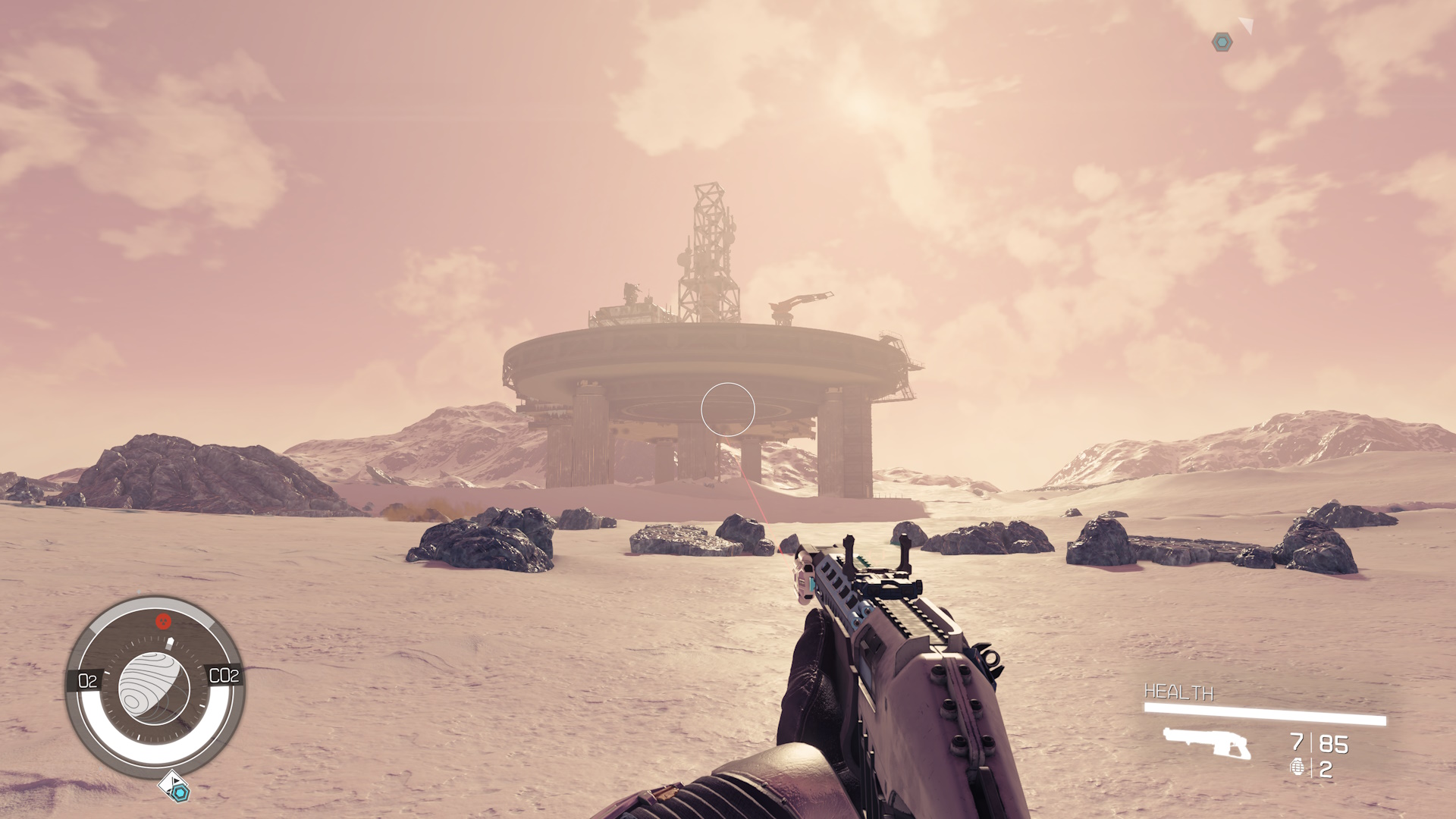
Video Game Spotlight: Banished

This is the first part of a new occasional series that I’ll be running here on the website in which I’ll be taking a look in more detail at some of my favourite video games. It’s a lot of fun to review brand-new games and keep up-to-date with all the goings-on in the video games industry, but sometimes it’s nice to step back and just geek out about some of my all-time favourites!

If you’re a regular reader of my gaming content you’ve probably seen me talk about Banished before; it’s a mainstay on my lists of recommended titles whenever there’s a big Steam sale! But despite having recommended Banished on several occasions going back to the website’s first month in operation in 2019, this is the first time I’ve taken a deeper look at the game.

A recent town of mine in Banished.

Banished was released in 2014 for PC, and I honestly can’t remember where I first heard about it. The early- and mid-2010s were a mess for me for all manner of reasons, and my memory isn’t great even under the best circumstances! Suffice to say that I discovered Banished shortly after its launch, and for a relatively low price of admission when compared to titles in a similar city-building space, I thought it was at least worth a shot. The fact that I’m still playing it almost eight years later should tell you how I feel about it!

What astonishes me about Banished is that its developer – Shining Rock Software – is actually just one person. A single person managed to create this incredibly intricate and challenging game, one that exists in a pretty unique niche within the overall city-building game realm. I think that’s absolutely incredible, and well worth taking a moment to consider. Banished was a labour of love – and it shows. Maybe it doesn’t have the flashiest graphics or the most complex and numerous in-game mechanics, but it brings a lot to the table regardless. I’d still include Banished as one of my all-time favourite titles even if it had been put out by an entire studio backed up by a major publisher, but the fact that it’s an indie game made by a single person is just mind-blowing.

A market, crop fields, a mine, and houses.

I usually like to play games on the easiest mode available. Particularly with fast-paced titles like action games and shooters, I find that I just don’t have the reflexes, reaction time, or just the ability to play those kinds of games at that level. This should be the subject of a longer essay sometime, but as someone with disabilities, I really do believe that difficulty options are an accessibility feature that as many games as possible should include. I’ve been playing video games for more than thirty years; if I haven’t “got gud” by now, I’m not going to! But we’ve drifted off-topic.

Banished offers several different difficulty options that can be combined in different ways to customise the experience. The number of families (and individual citizens) that the town has at the start, the harshness of the weather, and whether disasters (like fires breaking out) are switched on or off all make an impact, as does whether the randomly-generated map has more or fewer mountains. Instead of just offering a standard easy, medium, or hard mode, Banished allows players to really tailor the kind of experience they want to have – and I think that’s something more titles in the city-builder genre should try to emulate.

The “New Game” menu.

I would call Banished a game that’s deceptively complex. Its relatively small number of buildings and resources makes it seem, on the surface, that it should be relatively easy to get to grips with. Harvest enough resources to keep your small population healthy, happy, and well-fed. That’s all there is to it, right?

But when you get stuck in, there’s so much more to it than that. Balancing your resources so you aren’t over-producing and wasting storage space while also making sure you don’t produce too little of something and run out is like walking a tightrope at times! I’ve ended up in some very sticky situations because I had slightly too much or too little of something important at just the wrong moment – and it can be fatal, in some cases, if you get caught out.

Harvesting a crop of wheat in Banished.

For example, it’s tempting to use all the logs your citizens gather to construct new buildings – especially at the beginning of the game when you don’t have many. But if you burn through your supply of logs too quickly and don’t have enough citizens assigned to chop down trees or work as foresters to replace them, come winter everyone will freeze because there won’t be enough firewood! Conversely, if you construct a woodcutter’s cabin and don’t keep a careful eye on how much firewood they’re making, they can easily chop up all of the logs you have meaning you won’t have any when you want to construct the next new building!

Banished isn’t a game you can set and forget. In order to truly succeed you need to be on top of your resources pretty much all the time. Even though there aren’t that many you need to manage, it’s a balancing act to stay on top of all of them at once. A single disruptive event can completely bowl you over if you aren’t careful, and when citizens don’t have the right balance of resources their health and happiness will drop, making them less productive. In the worst case they can die – starvation, cold, disease, and so on can all spell doom for the residents of your community!

A small cluster of buildings in a forest.

Take a recent game I played as an example! While building up my town I was constantly hampered by a lack of stone to construct new buildings. Even after building a stone quarry this problem persisted for a while, so I prioritised things like building new houses closer to the quarry so I could get more stonecutters. I constructed other buildings in what I considered to be descending order of importance, prioritising things like making sure there was enough food for a growing population, which meant adding new crop fields, fishing docks, and assigning citizens to those jobs. After a while, there was an outbreak of disease – the measles, in this case. But because I hadn’t constructed any hospitals, the disease ripped through the population! By the time I’d figured out how badly I was screwed, half the town was infected. I pulled everyone off their jobs to get a hospital built, which happened in the nick of time. Doing that, however, meant that there was less food as the harvest went to waste as winter set in and the crops were still in the fields!

All in all, the citizens of my town had a very bad time because of a combination of bad luck and bad management on my part! A lot of citizens ended up dying because there was no hospital, and the disease was only stopped because a few hardy souls managed to scrape together enough resources to build a hospital from scratch at the last minute. It took a long time to recover from that!

Official Trekking with Dennis Top Tip:
Remember to build a hospital!

Like many great PC games, Banished happily encourages modding. There is (or was) a solid modding community, with mods adding in brand-new buildings, gameplay elements, and visual overhauls to name but a few. Shining Rock Software was keen from the very beginning for fans and players to get involved and develop their own mods for the game, and there are some very popular ones that really transform Banished into something different. Playing the game without any of these is fine – wonderful, even – but if you’re ready for a different experience after playing the original version, mods like Colonial Charter give Banished a whole new lease of life.

Returning to the original game, though, there’s plenty to enjoy. There are eight different types of crops, eight different types of fruit trees, and three different types of animals for the town to take care of. These are all different – and the differences aren’t merely cosmetic, either. Some crops grow faster than others, or grow better in different conditions. Citizens are healthier when they have a varied diet – and that includes multiple types of crops, fruits, meats, and the like.

Citizens walking past an orchard in the winter.

The three different animals (cows, sheep, and chickens) all produce different resources for the town, too, and at different rates. Sheep will produce wool, which is great for making clothes, and cattle will produce leather – but you’ll get an awful lot more wool per sheep than leather per cow! Chickens will produce plenty of eggs! It can be easy to overproduce wool and eggs (in my opinion, at least) once you start building a lot of animal pastures – and this can eat up storage space that could be used for other goods!

There are many strategies that players have developed in the years since Banished was released. I play the game my own way, and I’m sure you can find a strategy that works for you either through trial and error or by looking them up online! The fact that there are so many different approaches to playing the game, and so many different recommendations and suggestions for how to get started, what to build first, and so on is testament to the fact that Banished truly is a complex and deep experience.

Pastures holding sheep and chickens near a market.

Banished is a game I can get lost in for hours at a time. Building up a small town, managing its starting resources, and then establishing a trading post to bring in different crops and herds is a ton of fun. Because maps are randomly generated, Banished feels different every time. Every game starts off in a different location, with a different combination of starting resources. There are some things I usually like to do first – my top tip is to make the first building you construct a school so your citizens will always be well-educated and thus more efficient – but other than that I like to play it by ear, see what resources I have in the immediate vicinity of my starting location, and then decide how best to expand!

If you haven’t tried Banished, keep an eye out for it when Steam sales roll around; in recent years it’s often been heavily discounted, meaning you can pick it up for the price of an expensive Starbucks coffee! Even at full price, though, Banished is a game I’d happily recommend to anyone who enjoys a richly-detailed and complex city-builder or strategy game. I would caveat that by saying that Banished isn’t a “casual” game that you can absent-mindedly play while distracted!

So that’s it for this time. After having talked about Banished on a number of occasions I wanted to give it its own full article here on the website. This “video game spotlight” series will hopefully be an occasional thing I do going forward, so keep an eye out for my take on a number of other titles that I’ve enjoyed over the years in future! Happy building!


Banished is out now for PC. Banished is the copyright of Shining Rock Software. This article contains the thoughts and opinions of one person only and is not intended to cause any offence.

Lego Star Wars: The Skywalker Saga – first impressions

Spoiler Warning: There are minor spoilers ahead for Lego Star Wars: The Skywalker Saga and the nine mainline Star Wars films.

I had a lot of fun in the days when I owned an Xbox 360 with Lego Star Wars: The Complete Saga. That game brought a lot of lightheartedness to the Star Wars franchise, and was also a surprisingly complex game, with many characters to unlock and collectables to find. Going back and replaying levels didn’t feel like a chore, making it a great game to play solo or co-operatively. I had high hopes when a new Lego Star Wars title was announced, and it’s finally here after several lengthy delays!

I’m not even going to attempt a thorough playthrough in time to write a review; it will take a long time to go through the game and truly experience all that it has to offer. But for now I thought it would be worth sharing my first impressions! I’ve spent just over six hours with the game over the past couple of days, and I’ve jumped into two of the game’s stories/campaigns. I feel that’s long enough to get a feel for how the game plays – as well as to spot any major flaws or problems!

Promo art/banner for Lego Star Wars: The Skywalker Saga.

Lego Star Wars: The Skywalker Saga is split up into nine parts – one for each of the nine mainline films of the Skywalker Saga. On booting up the game for the first time, only three are available: The Phantom Menace, A New Hope, and The Force Awakens. Completing these unlocks the next part of that particular trilogy, and so on. It’s a neat way to organise it, and I liked that I was able to choose which trilogy I wanted to get started with. If the campaign had been entirely linear, with players having to unlock each film one by one, it would probably have been less enjoyable – and likewise, if all nine campaigns were unlocked from the start there’d be less to accomplish. All in all, this approach feels like it strikes the right balance.

I chose to start with The Phantom Menace – it’s my least-favourite film (well, tied with The Rise of Skywalker), but it’s often been my starting point when I go back to re-watch the mainline Star Wars films. As a film with a child-friendly atmosphere, it’s also one that I felt could translate well to the world of Lego! After spending a bit of time progressing through The Phantom Menace I hopped out of that campaign and loaded up A New Hope. It took me a second to figure out how to change campaigns on the fly, but it’s something the game allows you to do.

Qui-Gon Jinn with Obi-Wan Kenobi and Jar Jar Binks.

As someone who hasn’t played a Lego game in years, I wasn’t sure what to expect. I was pleasantly surprised to note that, despite major visual improvements, the feel of playing a Lego game is still present. There’s a cartoon silliness that doesn’t merely begin and end with the game’s visual style, it permeates many different aspects of the gameplay as well – and that less-than-serious take has been a hallmark of Lego Star Wars games (and Lego games in general) going back to the very first iteration. All of that is still present in The Skywalker Saga.

Half the fun of Lego games has always been in roaming around the environment, looking for things to destroy, studs to collect, and hidden collectables. I have no idea how many different things are hidden across the game – but in the few hours I’ve spent with it so far I’ve found dozens, and I’ve barely scratched the surface! What I love about these hidden collectables is that it isn’t just a case of wandering around until you find an obscure part of the map that’s off the beaten track; in order to find or unlock many of them you have to solve a puzzle, run through an optional extra assignment, and things like that. Not all of these puzzles are easy, either, despite the game being aimed at kids!

C-3PO and R2D2 on Tatooine.

The Skywalker Saga would absolutely be the perfect first Star Wars game for a younger fan. Of the Star Wars games released in recent years, it’s by far the easiest to get started with – and it’s also the most complete in terms of telling the classic story of the films. Some scenes and sequences are skipped over during the story, but so far I’ve found both of the stories that I’ve played to be surprisingly deep; there’s certainly more than enough context provided by the game that even someone unfamiliar with the films could follow the story.

One thing that surprised me at least a little was the diversity of environments on display in The Skywalker Saga. The Star Wars galaxy is huge, canonically speaking, and we’ve seen a huge variety of different locales and biomes on display in the films and TV shows. But because The Skywalker Saga is a Lego game and has a cartoon feel, I wasn’t sure how well some of that would translate. It was great to see that the different interior and exterior environments all look and feel distinct from one another; that’s something that really captures the sense of scale present in Star Wars.

Promotional screenshot showing an Ewok and AT-ST on Endor.

Speaking of diversity, there’s more than one type of level in The Skywalker Saga! In addition to levels which characters must traverse on foot, there are ship-based sections where players can pilot a variety of different ships from the Star Wars galaxy. I can’t remember if this is something that has been present in prior Lego Star Wars games, but it was neat to see it here. Being able to hop into everything from starfighters to submarines adds a heck of a lot to the experience, making it feel deeper and richer. Programming and developing different modes of gameplay is no mean feat, and even though we all might have our preferences when it comes to the kinds of levels we prefer, I’d say that The Skywalker Saga is significantly better for including these different styles of gameplay.

The Skywalker Saga is being pitched by publisher Warner Bros. as the definitive Lego Star Wars experience. It brings more characters to the table than ever before, as well as more levels based on all nine of the mainline Star Wars films. It’s hard to argue that – at least in 2022 – this really is as good as it gets for a fan of Lego Star Wars!

Promotional screenshot showing prequel-era Republic starships.

There are new elements that are clearly designed to modernise the familiar formula. The fact that it’s possible to level up your characters and give them gameplay upgrades is a nod to the way that this aspect that originated with role-playing games has become omnipresent in video games today. But none of that feels intrusive, and while it’s certainly possible to spend a lot of time chasing down enough studs or Kyber bricks to unlock the next upgrade, it’s also possible to have fun playing the game without paying too much attention to that side of it. I wouldn’t call these things entirely “optional,” but they’re inoffensive for players who aren’t interested or who just want to have fun playing the game.

Getting to grips with the gameplay felt easy enough. There are a few different moves and attacks that player characters can perform, and the nature of these will depend on whether the character is a Jedi, a gunslinger-type, a droid, and so on. There are ranged shots, melee attacks, jumps, and it’s possible to perform combos. Sometimes these combos will be required (enemies can block certain attacks) meaning it isn’t always possible to race through a level mindlessly hitting the X button!

Promotional screenshot showing Boba Fett.

I didn’t encounter a single bug, glitch, or graphical issue with The Skywalker Saga through my six hours of gameplay, and considering the state of some recent highly-anticipated games I think that’s pretty good! I played on PC, but the game is also available on Xbox One, Xbox Series S/X, PlayStation 4, PlayStation 5, and Nintendo Switch.

The Switch version in particular holds a lot of appeal! Being able to play the game on the go is something I’m sure a lot of fans will appreciate, but it also just feels like a good fit in general for Nintendo’s family-friendly machine. I’m glad that The Skywalker Saga was able to get a Switch release; even more so that it was released on Switch at the same time as on every other platform.

Qui-Gon Jinn using the Force to lift a Lego object.

So I guess that’s it. Lego Star Wars: The Skywalker Saga has been a lot of fun so far, and I can’t wait to jump back in and play some more! I’ll be curious to see how the Lego treatment works for The Rise of Skywalker; that film is tied with The Phantom Menace for being my least-favourite in the saga. The Phantom Menance managed to be fun, so I feel reasonably optimistic that, despite not enjoying the film, I’ll at least have fun with its gameplay adaptation!

I’d happily recommend The Skywalker Saga to anyone who enjoys either the Star Wars franchise or this style of kid-friendly gameplay. You won’t get a massive Elden Ring-style challenge out of it, and in terms of multiplayer you’re limited to playing with a single friend only (and I hear it works far better locally than online). But with those caveats, Lego Star Wars: The Skywalker Saga is something I think a lot of players will be able to find enjoyment in. For kids, especially younger kids looking to get started with perhaps their first big Star Wars game, I think it’s a no-brainer.

So far, Lego Star Wars: The Skywalker Saga has been great. For me personally, while I had fun with Lego Star Wars: The Complete Saga during the Xbox 360 era, I don’t feel the same nostalgic pull to these games as some younger folks who grew up playing them as kids might. But even so, I’m having a lot of fun and I’m happy to recommend the game to anyone still on the fence.

Lego Star Wars: The Skywalker Saga is out now for PC, PlayStation 4, PlayStation 5, Nintendo Switch, Xbox One, and Xbox Series S/X. Lego Star Wars: The Skywalker Saga is the copyright of Traveller’s Tales, Warner Bros. Interactive Entertainment, and/or the Walt Disney Company. The Star Wars franchise is the copyright of Lucasfilm and the Walt Disney Company. This article contains the thoughts and opinions of one person only and is not intended to cause any offence.

Gran Turismo 7: hiding microtransactions is just plain wrong!

The video games industry is home to a growing number of incredibly shady and dodgy business practices. Microtransactions themselves qualify – especially things like in-game currencies, randomised loot boxes, and any microtransactions in games aimed at kids. But of all the corporate fuckery seen this side of the Star Wars: Battlefront II disaster, Sony and Polyphony Digital have to take the crown with Gran Turismo 7.

In case you haven’t followed the story, a quick recap. Gran Turismo 7 is the most recent game in Sony and Polyphony Digital’s long-running racing series. It was released on the 4th of March 2022, and in the weeks prior to launch, copies of the game were sent to many outlets for review. This is pretty standard – just like film critics get to see films ahead of time, video game journalists and commentators are often able to play games ahead of their launch. That’s how publications – and even some YouTubers nowadays – are able to get their reviews out before or just after a game launches.

Promo image for Gran Turismo 7.

But reviewers didn’t realise that the version of Gran Turismo 7 that they’d been playing was deceptive. And yes, “deceptive” is the right word – because there’s absolutely no way that this was anything other than intentional from Sony and Polyphony Digital. If you believe this was all an innocent mistake then I’ve got a bridge to sell you! Sony and Polyphony Digital essentially created a different version of the game for reviewers to play – a version of the game that hid the extent of Gran Turismo 7′s egregious microtransactions.

By doing this, Sony and Polyphony Digital hoped to score rave reviews for the game – a racing sim which, by all accounts, has thoroughly enjoyable gameplay. They fully intended to conceal just how heavily-monetised Gran Turismo 7 actually is, lest the microtransactions drag down the game’s review scores during its crucial release window. And do you know what? Their shady plot worked.

Logo for Sony’s PlayStation 5 console – home of Gran Turismo 7.

Gran Turismo 7 raked in rave reviews, including from a number of publications and websites that I read and would generally trust. It didn’t really occur to me that they’d all had the wool pulled over their eyes by a dishonest corporation and its equally despicable subsidiary. But that’s the reality of the situation: Sony and Polyphony Digital lied to reviewers, showed them a willfully dishonest misrepresentation of Gran Turismo 7, and hoped that they could get away with it.

Within hours of the game’s release on PlayStation 5 earlier this month, the microtransactions were switched on. An update a few days later then “rebalanced” the microtransactions to make them even worse – providing far fewer in-game rewards, making vehicles more expensive, and generally turning the game into a monetised mess that would give other microtransaction-riddled titles a run for their money. And all of this came in a game that Sony has the audacity to ask players to pay a minimum of £65 ($70) for.

Promotional art for Gran Turismo 7.

When the Battlefront II debacle exploded in late 2017, it felt like a turning point. Electronic Arts had pushed too hard and too far, and the result was a backlash that seemed, for a time anyway, to genuinely frighten some of the biggest corporations in the industry. Governments began looking at lootboxes and microtransactions in a serious way for the first time, and legislation was passed in some jurisdictions that has meant some games have had to be adjusted or even pulled from sale entirely.

There was a chance, back then, for the campaign against microtransactions and these kinds of awful, anti-consumer business practices to really have an impact, and for players to fight back and demonstrate to corporations that there are limits to how far we can be pushed around. Sadly, though, with other news stories taking up airtime, the issue fell away almost as quickly as it burst onto the scene. In the months and years since, corporations like Sony have slowly ramped up their microtransactions and other in-game monetisation plans, leading us right back to a very familiar situation.

What Sony and Polyphony Digital did with Gran Turismo 7 is worse than what Electronic Arts did with Battlefront II. Yes, really.

It should go without saying that what Sony and Polyphony Digital did is wrong. Categorically and unequivocally wrong. They lied, misrepresented their game, and arguably mis-sold a product in such an egregious and disingenuous way that it could very well fall under the legal definition of “false advertising.” Sony has never been a consumer-friendly company, make no mistake about that, but even by their standards, this is a new low.

There’s also egg on the face of a lot of reviewers, commentators, and publications – many of whom should know better than to take a company like Sony at its word. Pre-release review copies of Gran Turismo 7 still contained things like in-game currencies and the in-game microtransaction marketplace, and some reviews even made note of these things, with some particularly pro-Sony publications optimistically suggesting that the microtransactions wouldn’t be all that bad or would be “totally optional.”

Great reviews from critics, but players are making their voices heard.
Source: Metacritic, 31.03.2022

Too many publications, websites, and even social media channels and YouTubers now work hand-in-glove with corporations like Sony. Their refusal to think too critically about the obvious microtransactions and willingness to give Gran Turismo 7 excellent reviews in spite of that is testament to that. There’s a twofold fear that many professional journalists and the outlets that employ them have – on the one hand, they fear that being late with their reviews will lead to fewer clicks and thus less money, and on the other they fear that being too critical of a company’s latest title will cost them in the long run, whether that be in terms of access to review copies in future, or just in terms of what can be a profitable business relationship.

So while I’m happy to place the blame for this on Sony and Polyphony Digital, because they are the ones who lied and misrepresented Gran Turismo 7, there are quite a few reviewers and gaming publications that need to take a long look in the mirror. They are not completely innocent parties to this either, and clearly something has got to change in terms of the working relationship between the games industry, the people who cover it, and the players themselves.

More promotional art for Gran Turismo 7.

To deliberately conceal the extent of Gran Turismo 7′s microtransactions is disgusting behaviour from Sony and Polyphony Digital – but it’s more than that. It’s an admission from the corporation that they understand how unpopular and unwarranted microtransactions are in a game of this nature. At a minimum of £65 ($70) for the price of admission, many players would quite rightly expect to be able to play the full game and unlock all of the vehicles on offer.

I can’t help make a comparison to last year’s Forza Horizon 5, a game I got via Game Pass and thoroughly enjoyed. Simply by playing Forza Horizon 5 and completing races and missions, I unlocked new vehicles and in-game currency to buy other vehicles. After around 45 hours, I’d unlocked almost 100 different vehicles from trucks and four-wheel-drive cars all the way to supercars and hypercars. In Gran Turismo 7, you’d be lucky to have acquired enough in-game currency for one single vehicle after that length of play time – and the obvious reason for that is to essentially force players to pay for microtransactions.

Forza Horizon 5– last year’s big racing title – didn’t have this problem.

For me, this is beyond the pale. Sony and Polyphony Digital owe their players an apology. Moreover, they need to strip as much of the microtransaction marketplace from Gran Turismo 7 as possible – just as Electronic Arts did when the Battlefront II debacle threatened to overwhelm them. The only way to make this right in the long-term is to abandon this microtransaction model. If the game was free-to-play, it would be a different conversation – though hiding aspects of the monetisation or the prices would still be wrong. But in a game asking £65 ($70) up front from players, there was no justification for any microtransactions to begin with, let alone ones as egregious and interfering as those present in Gran Turismo 7.

Lying to reviewers and commentators will have consequences. Many publications have been burned by this, with angry players turning up to leave comments on reviews pointing out that there are particularly aggressive microtransactions in the game that they should’ve been warned about. Hopefully that will mean some of these journalists will think more carefully about how they review games like Gran Turismo 7 in future – but the reality is that it will probably just mean that players will have an even harder time knowing which reviews can be trusted.

Box art for some of the editions of Gran Turismo 7.

There was no need for Gran Turismo 7 to spend its first few weeks embroiled in controversy. This was an own goal from Sony and Polyphony Digital; a PR calamity that did not need to happen. Microtransactions shouldn’t have been present in the game to begin with, but if they were the corporation needed to be honest and up-front about that – doing whatever possible to provide a justification for their existence. Lying and covering up the microtransactions is something I regard as a tacit admission that Sony and Polyphony Digital understand that they shouldn’t have put them in the game to begin with.

This is the worst example of microtransaction misbehaviour in several years, probably since Battlefront II. I hope that lessons are learned from it. It would be great to see some collaboration between reviewers and publications in future – refusing to review a title or award it a score until the full extent of its microtransactions are known would be one way to shut this down and prevent another corporation from trying to get away with this despicable misbehaviour.

Sony Interactive Entertainment is the publisher of Gran Turismo 7.

So that’s where we’re at. If you bought Gran Turismo 7, you have my sympathies. We’ve all bought games over the years that were disappointing for one reason or another, but it can be particularly frustrating to look at a game that had so much potential to be great, but which was ruined by some corporate-mandated nonsense that really just spoilt things.

That’s really how I see Gran Turismo 7 – it’s a game that had potential, a title with seemingly excellent racing gameplay, but one that has been soiled by the truly awful way that Sony and Polyphony Digital chose to treat players. Don’t despair, though, because there are plenty of other racing games out there!

Gran Turismo 7 is out now for PlayStation 5. Gran Turismo 7 is the copyright of Sony Interactive Entertainment and Polyphony Digital. Some images used above courtesy of IGDB. This article contains the thoughts and opinions of one person only and is not intended to cause any offence.

Ten games to play instead of Hogwarts Legacy

Spoiler Warning: There may be minor spoilers present for some of the entries on this list.

I confess that I was excited for Hogwarts Legacy when it was announced a couple of years ago. I wasn’t aware, at that time, of J.K. Rowling’s harmful and hurtful transphobic stance, and when the game was announced I felt that it had potential. Fast-forward a couple of years and a recent gameplay reveal video has got a lot of fans excited. I would probably have been among them a few years ago; while I was never really “in” the Harry Potter fandom, I enjoyed the books and films generally speaking. But I can’t support Hogwarts Legacy – nor anything else in the Harry Potter series any longer.

J.K. Rowling doesn’t have anything besides Harry Potter. She’s had limited success with the other titles she’s tried her hand at, so it’s the Harry Potter series that keeps her relevant – and it continues to be a major revenue stream for someone who’s already a billionaire. Any time the Harry Potter series gets attention, it amplifies J.K. Rowling, increasing her platform, her reach, and ensuring her harmful transphobic views are amplified, spread worldwide, and discussed at length. Moreover, it brings in money for her, some of which she donates to anti-trans activists and groups. I don’t know exactly what cut of the proceeds she’d get for Hogwarts Legacy – but it’ll be significant. If the game sells millions of copies she could easily rake in several million pounds from it.

Harry Potter author J.K. Rowling.

For some folks, Harry Potter is their biggest fandom and a huge part of their life. If you’re in that category, I hope you won’t consider this a personal attack. I know that J.K. Rowling’s statements have upset a lot of people, many of whom continue to consider themselves fans of the series. If Harry Potter meant a lot to you and you can’t abandon it, that’s your decision and I’m not interested in trying to change your mind.

I’m not going to re-hash all of the arguments surrounding J.K. Rowling and her transphobia here. I don’t have the time nor am I in the right emotional headspace for that. You already know what she’s said, why people like me find it incomprehensible and harmful, and reiterating all of those points would just lead to all of us getting upset all over again. Instead what I want to do today is offer up a few alternative games, titles that are just as interesting and exciting as Hogwarts Legacy but with hopefully less bigotry.

So without further ado, here are a few games you could substitute Hogwarts Legacy with if you’re looking for something fun to play but feel unable to support J.K. Rowling. Let’s jump into the list, shall we?

Game #1:
Star Wars: Knights of the Old Republic

A game set in an established fictional world, but taking place hundreds of years prior to the events we know and love? That sounds an awful lot like Knights of the Old Republic! I can never fully put into words how much this game blew me away when it was released in 2003. After feeling disappointed with The Phantom Menace and Attack of the Clones, Knights of the Old Republic went a long way to restoring my faith in Star Wars in general – and one of its story twists is perhaps the greatest that I’ve ever played through in any video game.

Knights of the Old Republic sent me off on my very own Star Wars adventure, and included all of the elements that a story needs to feel truly authentic. Whether it was Jedi Knights, beeping droids, or visiting familiar worlds like Tatooine or Kashyyyk, it was an incredible ride from beginning to end.

If you don’t mind waiting a year or two, a full remake of the game is in the works!

Game #2:
Red Dead Redemption II

It took me a while to get around to trying Red Dead Redemption II, but when I played through it last year I finally understood why everyone considers it to be a masterpiece. It’s a dark, bleak, yet incredibly beautiful experience, one which recreates late 19th Century America in a way that feels incredibly real. Characters feel like actual people with thoughts, desires, and motivations, and the narrative contains some incredibly emotional sequences that left me in tears.

Red Dead Redemption II is also one of the most visually stunning games I’ve ever played. Its open world has been crafted to perfection, and is packed full of minor details that make the experience an incredibly immersive one. I literally had dreams about Red Dead Redemption II while I was in the middle of the story, and there were times last year where I would want to just drop everything I was doing to get back to playing it!

Game #3:
Kena: Bridge of Spirits

Kena: Bridge of Spirits is another visually beautiful game, so much so that at one point I had to put down the control pad and just stare at the amazing scenery! It’s also an incredibly fun adventure game that I felt recaptured the feel of older 3D platformers. It wasn’t always an easy experience, as there was relatively little hand-holding, but it was incredibly fun and incredibly rewarding.

Considering that Kena: Bridge of Spirits was the debut game from brand-new developer Ember Lab, I’m even more impressed! I crowned it my “game of the year” for 2021, and with good reason. It was one of the best gaming experiences that I had last year, and even though I have a growing list of unplayed games… I’m sorely tempted to go back and revisit it!

Game #4:
Control

If a supernatural adventure is what you’re after, look no further than Control. I found the game to be incredibly atmospheric as protagonist Jesse explores a hauntingly bleak world. I definitely got sucked into the spooky world of Control, and this could make for a really fun game to play around the Halloween season thanks to the supernatural tone and some spectacular level design.

Control is also an incredibly accessible game, with lots of different options to customise and tweak the experience. One of my favourite parts of Control were the full-motion video sequences, presented in-game as recordings and clips to collect as Jesse explores deeper into the heart of the ancient and deeply unsettling building. These little snippets of lore, presented in a fun way, added so much to the experience.

Game #5:
Dragon’s Dogma: Dark Arisen

It’s been a few years since I played Dragon’s Dogma, but if I recall correctly the game has a surprisingly deep and rich magic system – something you might be looking for in an alternative to Hogwarts Legacy. Dragon’s Dogma always felt like a second-tier game; the kind of title that didn’t quite break into the uppermost echelons of gaming. But it was a fun time nevertheless, and a fun adventure to play through.

The Dark Arisen version – which is available for PC, Switch, Xbox One, and PlayStation 4 – combined the base game and all of its DLC into a single package, and as a slightly older game (Dragon’s Dogma was originally released in 2012) it can be picked up quite inexpensively either second-hand or during Steam sales.

Game #6:
Elden Ring

Elden Ring is categorically not “my thing.” These kinds of difficult-for-the-sake-of-it games are simply unenjoyable for me, and as a result I have skipped Elden Ring. But I’d be remiss not to include one of the biggest releases of the year on a list like this, and many fans of the Souls-like genre have hailed it as an instant classic and the new benchmark for future titles to live up to.

Elden Ring uses an open world, it has magic, fantasy elements, and monsters to fight. It was originally billed as a game with input from A Song of Ice and Fire author George R.R. Martin, though he appears to have made a limited impact on what seems to me to be another Dark Souls-inspired title. If you’re into games with punishing levels of difficulty, Elden Ring could be the one for you.

Game #7:
The Elder Scrolls IV: Skyrim

So you want to enrol in a special school to learn how to wield magic while at the same time exploring the world and going on adventures? Then why not join the Mage’s Guild in Skyrim? Or, come to that, why not do the same in Oblivion or join House Telvanni Morrowind as well? The entire Elder Scrolls series is set up perfectly for players who want to create mages, witches, necromancers, and all other kinds of magic-using characters!

Skyrim is certainly showing its age by now, even if you pick up one of the special enhanced deluxe anniversary editions that have been released endlessly over the past decade. But it’s still a beautiful game that’s fun to play, and many of its questlines and stories have a magical side that might just make up for skipping over Hogwarts Legacy.

Game #8:
Jade Empire

Jade Empire is a fun BioWare adventure game that I feel doesn’t get the credit it deserves. Released in between Knights of the Old Republic and Mass Effect, it tends to be overlooked. Its Chinese-inspired setting is really interesting, though, and the game is populated with fun characters. There are magical elements to the game, too, although there’s a pretty big focus on martial arts-inspired combat.

Jade Empire tells a fun story, and I found it easy to get lost in its world when I first picked up the game on the original Xbox. If you’ve played other BioWare titles before then the format will be familiar – but the setting and the story are unique. I’ve always hoped that BioWare would revisit the world of Jade Empire… maybe one day!

Game #9:
GreedFall

GreedFall is another game that can feel overlooked, perhaps a game that didn’t quite break into the top tier when it was released a couple of years ago. It can feel like a title with some heavy-handed themes as it looks at the issue of colonialism – not always perfectly, I should say – but laying atop some of those deeper themes is a fun adventure in a well-constructed, lived-in world.

There are magic spells in GreedFall, with an entire character class built around the use of magic. The game’s character creator is pretty basic, but if you can look past that limitation the actual customisation options are quite extensive. It’s a fun game, and well worth a play especially considering that it doesn’t ask full price.

Game #10:
The Last Of Us Part II

I honestly didn’t expect to be putting The Last Of Us Part II on any list… ever! I didn’t enjoy the game’s story at all, as I felt it tried to be too smug, too clever, and the way in which it hacked away at some of the most basic fundamentals of storytelling – the need to have a clear protagonist and antagonist – meant the whole narrative collapsed. But if you’re really looking for a game to throw up a middle finger to a transphobe, The Last Of Us Part II could be right for you!

Despite my story complaints, the gameplay in The Last Of Us Part II is excellent. Its third-person stealth/action style is an iterative improvement over its predecessor, but it’s well-executed and feels very smooth to play. There’s also a sense of scarcity, with ammunition and supplies being hard to come by. This makes for an experience that requires a lot of thoughtful planning; rushing in guns-blazing usually doesn’t work.

As one of the few games I can recall to feature a transgender character in a major role (voiced by Star Trek: Discovery’s Ian Alexander) I felt it was worth including The Last Of Us Part II on this list.

So that’s it!

Those are ten games that I think could be worth playing if, like me, you plan to skip Hogwarts Legacy when it’s released later this year. I tried to look at titles that are in the third-person action or action/adventure space, as well as titles with magic or supernatural elements. There were plenty of other games that I could’ve included if we broadened those criteria, though, so this is by no means an exhaustive list!

I had a conversation with a friend recently, and they expressed the opinion that they would play Hogwarts Legacy as there aren’t a lot of games that would give them a similar experience. While it’s true that Harry Potter and the Wizarding World are somewhat unique, there are plenty of games – as well as novels, films, television shows, and other entertainment experiences – that draw on many of the same themes and use the same kinds of storytelling elements. Hogwarts Legacy, just like the rest of the fictional setting that J.K. Rowling created, is not irreplaceable.

That being said, I’m not here to try to force anyone to play or not play a particular game. I just wanted to contribute something positive to the overall conversation surrounding Hogwarts Legacy, and perhaps show off a few titles in a similar genre or similar space that players who are weighing up their options could consider as alternatives. If that applies to you, I hope you at least found my suggestions interesting! And if you still plan to go ahead and play Hogwarts Legacy, I genuinely hope you have a good time with the game.

Hogwarts Legacy is the copyright of Portkey Games and Warner Bros. Interactive Entertainment. Harry Potter and the Wizarding World are trademarks of Warner Bros. Entertainment. All titles on the list above are the copyright of their respective studio, developer, and/or publisher. This article contains the thoughts and opinions of one person only and is not intended to cause any offence.