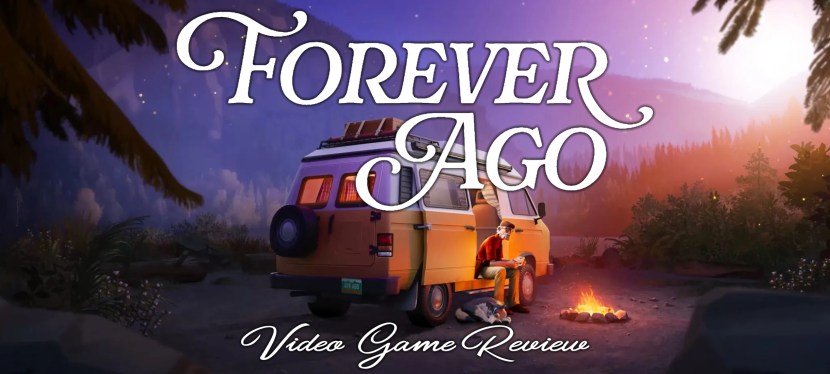
Forever Ago: Video Game Review

The first part of this review is free from story spoilers for Forever Ago. The end of the spoiler-free section is clearly marked below.

Well, this is a rarity for me: reviewing a brand-new video game within just a few days of its launch! But Forever Ago had been on my radar for months, so I picked it up on Steam practically the moment it became available, and jumped in as soon as I had time to spare. That isn’t something I usually do; I like to wait for reviews and maybe a patch or two in most cases. However, something about Forever Ago seemed to speak to me when I saw some promo screenshots and heard its core premise… so I really did want to try it for myself as soon as possible.

Here’s the short version: I really enjoyed Forever Ago. It’s an intense and emotional experience; part “walking simulator” and part interactive movie, I guess, with a gorgeous art style that blends old-school 3D polygons with some truly stunning environments. It isn’t a “git gud” challenge; I suffer from arthritis which affects my hands and fingers, and I found nothing (intentional) in Forever Ago to be even slightly difficult. Some occasionally clunky controls and hit detection for points of interest, however, could use a little tweaking – more than once, I felt simply highlighting and clicking on an item or interactive moment was unnecessarily finicky or precise.
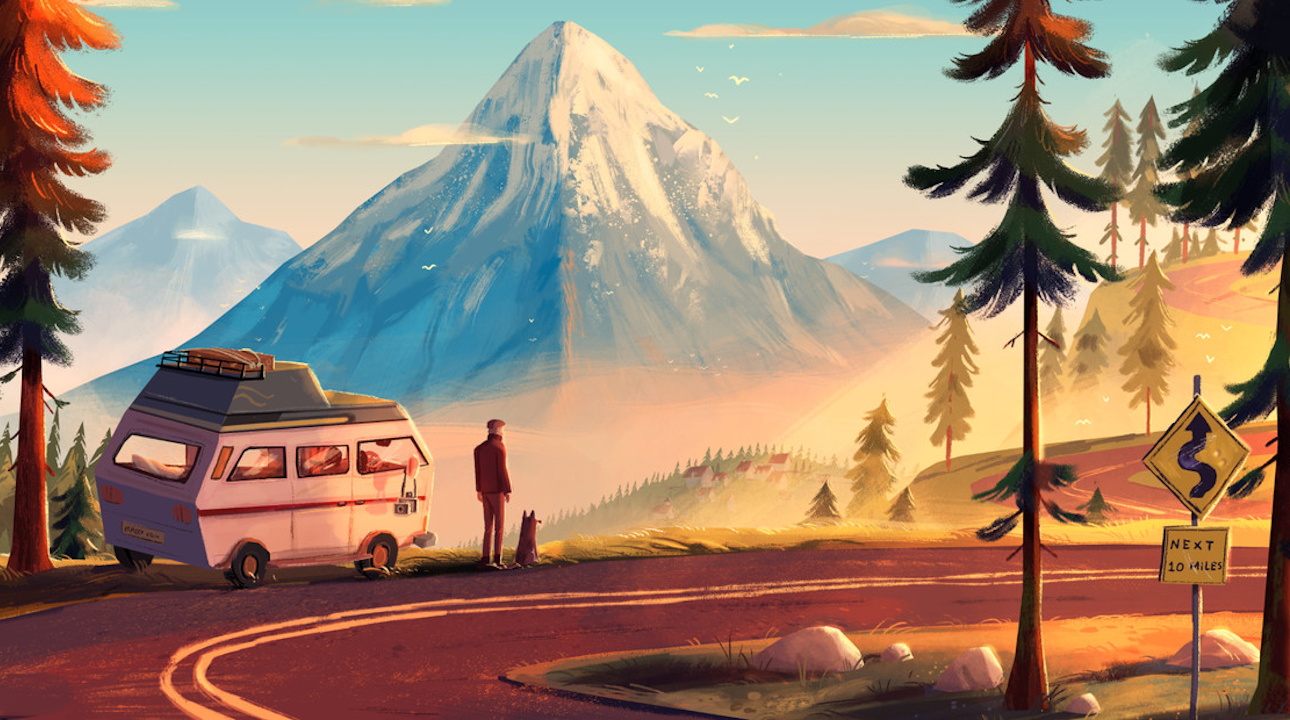
Key promo art for Forever Ago
Promotional artwork.

I also encountered one bug: at one point, the mouse cursor became stuck right in the middle of the screen and refused to budge no matter what I tried. It spoiled a cut-scene for me, and I had to go exit out of the game and re-start to clear the issue. Is it the worst bug I’ve ever seen in a game? No. But it shouldn’t have been there! And for a game with relatively few actual items to engage with or really, moments where you have to press any buttons at all… I think the stupidly finicky aiming/hit box detection needed to be smoother at launch.

Maybe those minor niggles can be patched out, though – and if they’re the worst issues with Forever Ago… well, they’re not exactly game-breaking!

Forever Ago won’t be right for every kind of player. If you’re someone who likes complex multi-button combos, intense difficulty, a lot of combat, and such like… a walking simulator/narrative adventure might not be your kinda thing. However, if you want a deep and emotional story – and you either like this kind of slower-paced gameplay or think you could overlook it once in a while – then give Forever Ago a shot.
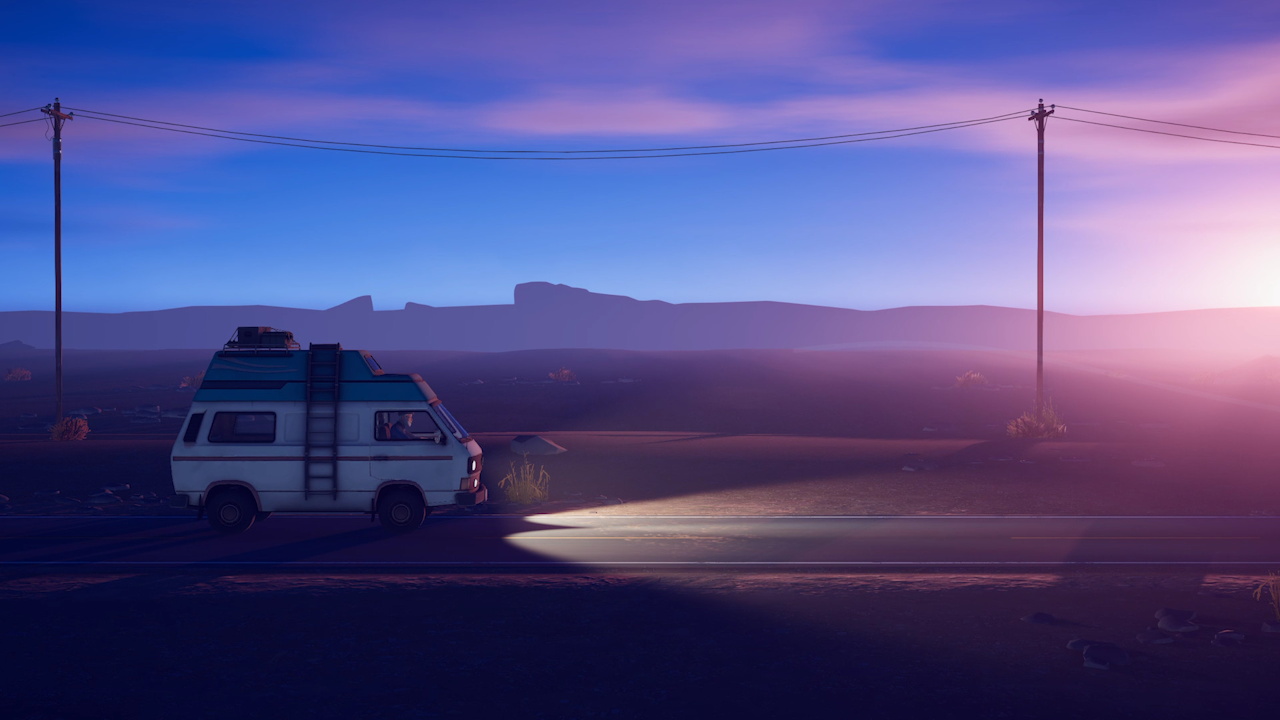
Promo screenshot for Forever Ago
The road trip.

The story told here is mature, emotional, and intense – and it reminded me more than once of a close family member who’s no longer with us. A story about grief, loss, and trying to come to terms with something truly heartbreaking and impossible to move past was at the core of Forever Ago. Even if you’ve never lost someone close to you, and even if you’re a generation or three younger than the game’s protagonist… I still think the story is so incredibly well-told as to be relatable.

My playthrough of Forever Ago took just under four-and-a-half hours (including the one bug-induced reset I mentioned). And for a game of that length, I feel Forever Ago is priced fairly. At time of writing, Steam offers a 10% discount on Forever Ago, making it even better value than its $20/£16 RRP. I believe Forever Ago is also on Xbox Game Pass, so that could be a great way to experience it if you’re a subscriber.

Screenshot from the Forever Ago trailer
Alfred in his van.

I’m happy to recommend Forever Ago to anyone who wants a slower-paced game, a walking simulator, a narrative-driven, linear adventure, or an emotional story. When people say that “video games can be art” – a statement I wholeheartedly agree with – well, it’s games like Forever Ago that we can point to. This game won’t be for everyone… but I think it’s a story well worth experiencing, and one where the interactivity adds something meaningful to the experience.

If you stick with me to the next part of the review, I’ll talk about Forever Ago’s story and characters in a bit more detail. If you want to go into the game un-spoiled, here’s where to nope out! But I hope you’ll consider bookmarking this review so you can return to it once you’ve beaten the game.


A Spongebob-themed spoiler warning.

This is the end of the spoiler-free section. There are narrative spoilers for Forever Ago from here on out.

Earlier this year, I reviewed another of these indie narrative-driven games: Mixtape. And I said then that that game gave me “the feels” in a way I wasn’t expecting; transporting me back in time to my own coming-of-age moment, my own teen years, and the ’90s. I had a wonderful time with Mixtape – and Forever Ago feels comparable in many ways, despite very clear differences in, if nothing else, the age of the protagonists.

I’m not as old as Alfred – not yet, anyway! But he was so well-written by German developers Third Shift that he became instantly relatable. And just like Mixtape had done earlier in the year, I was transported to Alfred’s world… going along for the ride as he undertook a grief-driven road trip to fulfil a promise to his recently-deceased wife, Audrey.
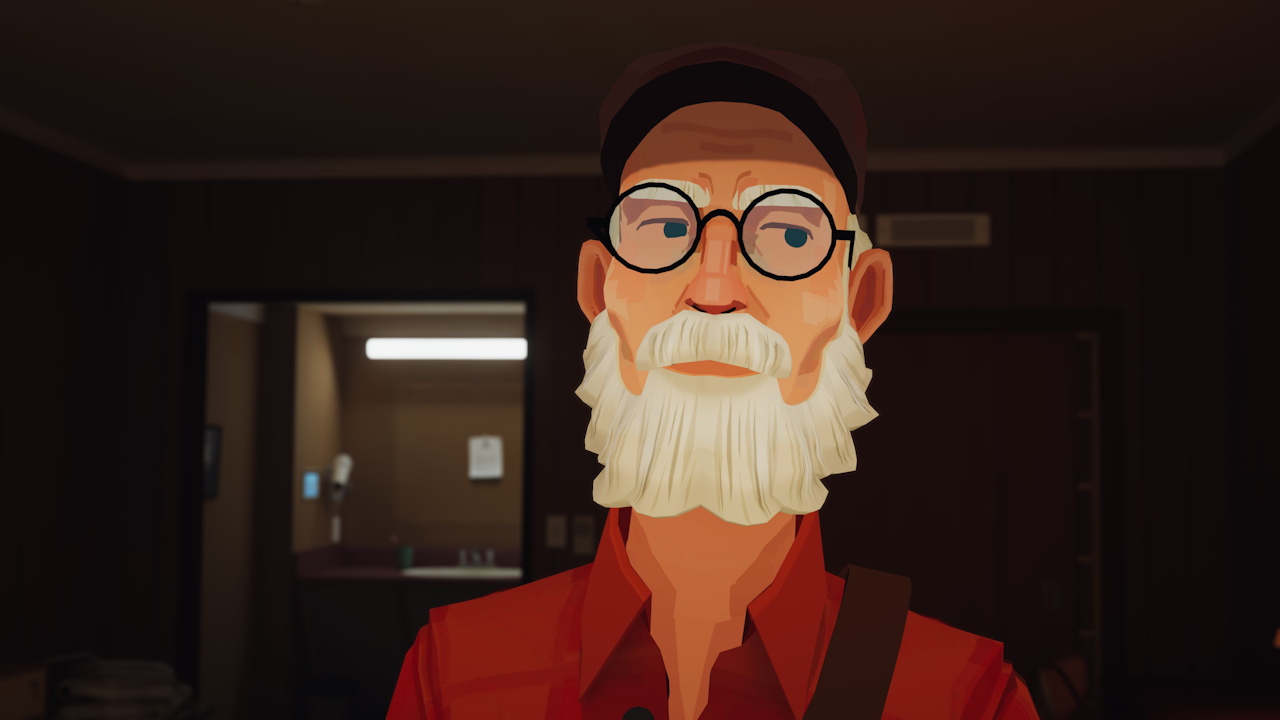
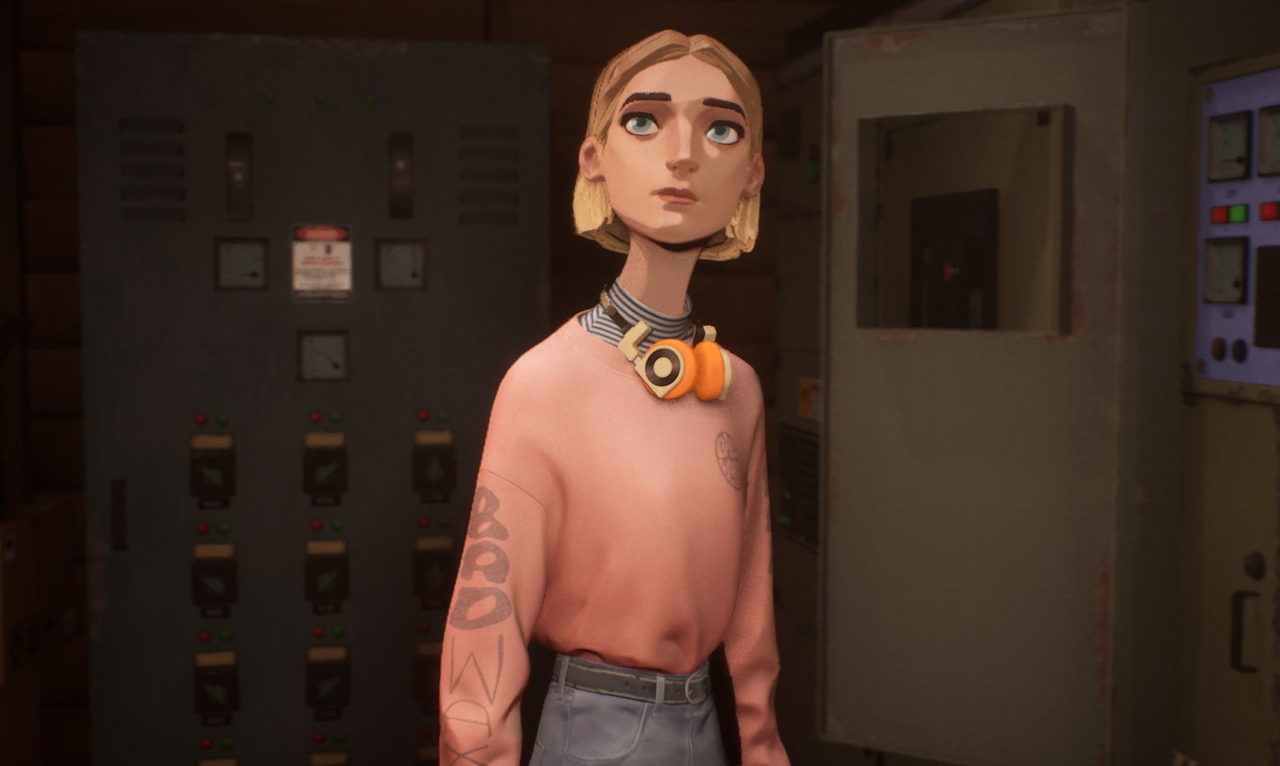
Screenshot from Forever Ago showing Alfred
Alfred is the game’s protagonist.

Here’s where the personal connections hit me.

My grandmother’s name was Audrey, and that name has always had a connection with her – even though she’s long since passed away.

When my father learned that he was terminally ill (he suffered from a condition called pulmonary fibrosis), he went on a series of trips not unlike Alfred’s – visiting old haunts, places from his youth, places he and my mother had spent time, and just places that held meaning to him or that were important in his life. And although that isn’t exactly the same as what Alfred’s doing in Forever Ago… that’s where the story took me. I felt echoes of my father in Alfred – though my father would’ve been a good ten or twelve years older than Alfred, based on the game’s dates! Still… it made the game that much more poignant and emotional for me.

Screenshot from Forever Ago showing Alfred's van breaking down in the desert
The road trip.

The best works of fiction – whether they’re games, novels, films, or anything else – bridge those gaps between the story and the real world, and I felt, from almost the first moment, a very real connection with Alfred because of what I’ve been through with my own bereavements, and because he reminded me a lot of my father when he undertook comparable journeys to places that meant something to him. And I really value that experience – an experience I wouldn’t have had were it not for Forever Ago.

Because it’s a video game, with Alfred as the protagonist, and because the player – assuming the role of Alfred – gets to make some choices along the way, I think Alfred’s story is enhanced. The interactive element that *only* a video game can offer genuinely makes this story deeper, richer, more immersive, and more intense. Simply watching a compilation of cut-scenes won’t give you that same feeling – I’m about as certain of that as it’s possible to be. And, as I said above, games like Forever Ago are exemplars of the “video games as art” concept; it’s a game that uses its interactivity to enhance and deepen its storytelling.
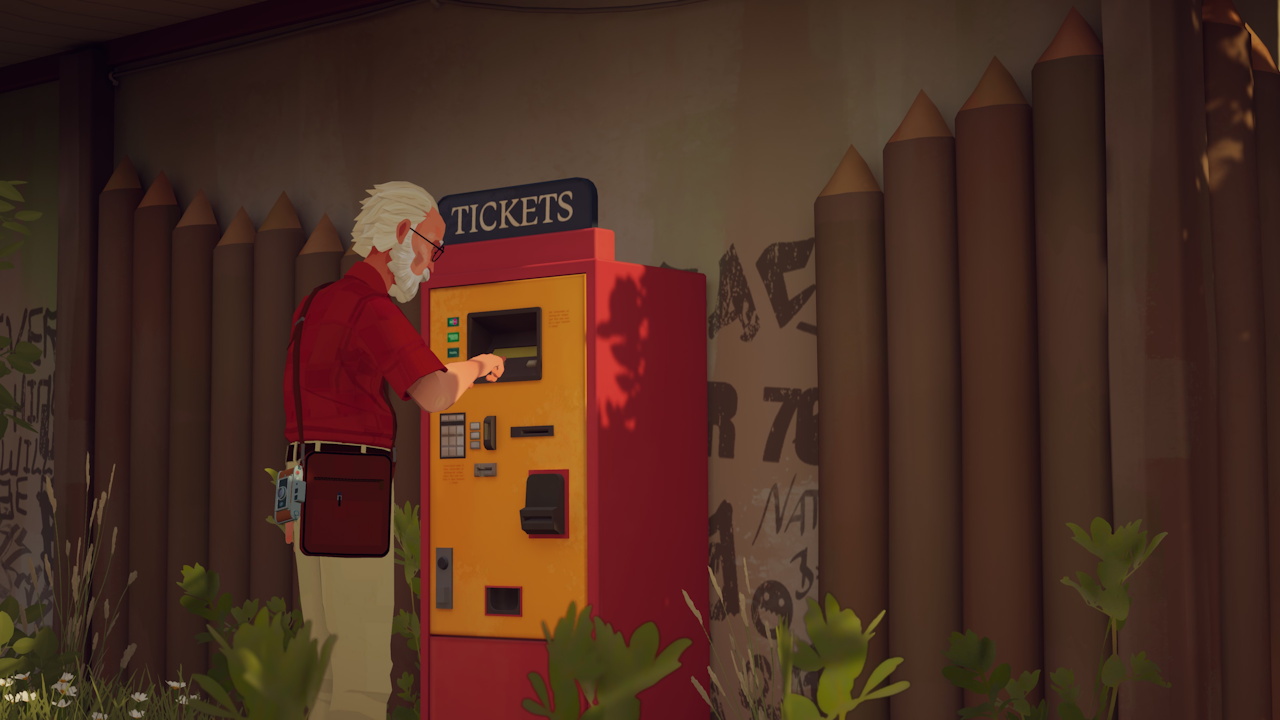
Screenshot from Forever Ago showing Alfred at a ticket machine
Alfred buys a ticket…

What I appreciated the most about Alfred’s story was that it was ultimately one of hope.

Alfred begins the game genuinely angry – short-tempered, quick to shout or get upset, and still in a very early stage of grief. And that characterisation can feel genuinely uncomfortable during those early scenes; Alfred treats a waitress and a shop worker unkindly – though not out of malice, and with understanding built into those moments. But as the story progresses, and as he meets new people, gains new experiences – and gains a companion, too – he softens. Alfred comes out of the story a changed man with a new outlook – and having processed his grief while still carrying the love and memories of Audrey with him.

Alfred is presented as an imperfect man – not an anti-hero by any stretch, but a normal, flawed, and deeply *human* character. Many stories can gloss over a protagonist’s less-desirable qualities, but Forever Ago leans on Alfred’s imperfections to make him feel well-rounded and relatable. A worse story might make a character like Alfred come off as unlikeable – but again, I think the interactivity helps so much here. Players are put in Alfred’s shoes, not merely told that he’s the protagonist. Again, Forever Ago uses the medium of video games to great effect.
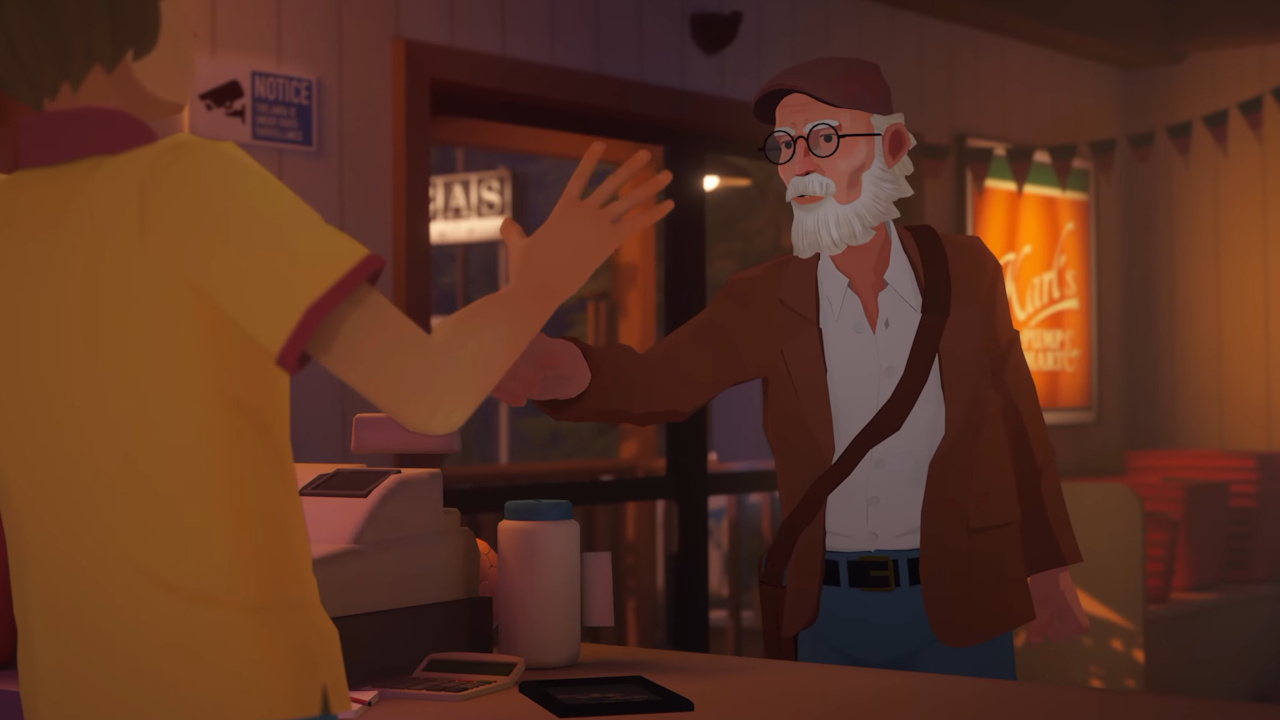
Screenshot from Forever Ago showing Alfred's anger at Milton
Alfred could be angry and short-tempered in the early part of the story.

Anyone who’s ever lost a loved one can find something in Alfred that’s relatable, I think. I’ve never been in the exact same position – losing a spouse. But I’ve suffered bereavements – friends as well as close family members – and I definitely felt that the way Alfred was written truly conveyed a sense of grief and loss in a way that many other stories have tried and failed to do. This didn’t feel like a sanitised, Hollywood story; an upbeat take on a man discovering how to move on with his life. It felt realistic… it felt intensely human.

The same was true, to a lesser extent, of the game’s secondary and side-characters. Audrey, like Alfred, was presented as imperfect and realistic without leaning into melodrama. And her story of coming to terms with dying – and the intense feelings of unfairness and despair that came with it – was, again, incredibly relatable and hit close to home. Audrey and Alfred didn’t come across as this perfect couple – but their arguments and disagreements didn’t cross a line into unrealistic high-stakes drama, either. Given the game’s short runtime, getting this kind of nuance into these characters is no mean feat – it’s something that even big-budget feature films have struggled with in the past.
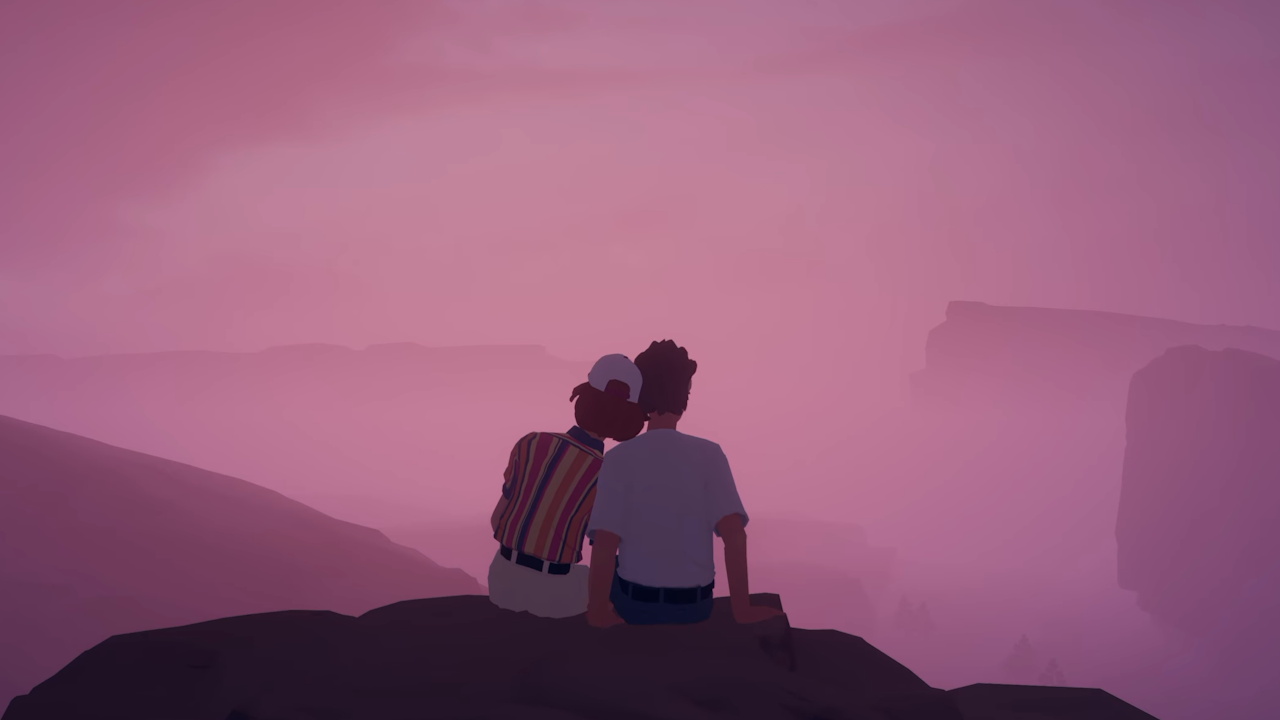
Screenshot from Forever Ago showing Alfred and Audrey in a flashback
Audrey with Alfred in a flashback.

Alfred’s standoffish persona was slowly broken down by his canine companion – I named her “Muffin” in my playthrough, though I like that you get a few different options here! And I think the game has something meaningful to say about pets, and how pets can help us through even our worst struggles or lowest moments. Muffin was such a sweet little rascal, and the bond she developed with Alfred over the course of their travels together was… well, it was just incredibly sweet.

When Muffin ran away, right at the end of the game, I was truly invested in Alfred finding her! Not since a horse in Red Dead Redemption II have I felt such a strong bond between a character and their animal in a video game – if you know, you know! But when Alfred set off into the snow to find Muffin, I was on the edge of my seat. I didn’t want the story to end that way – not for Alfred and not for Muffin, either. That moment was the most tense in the game by a long stretch, and I was overjoyed at their reunion.
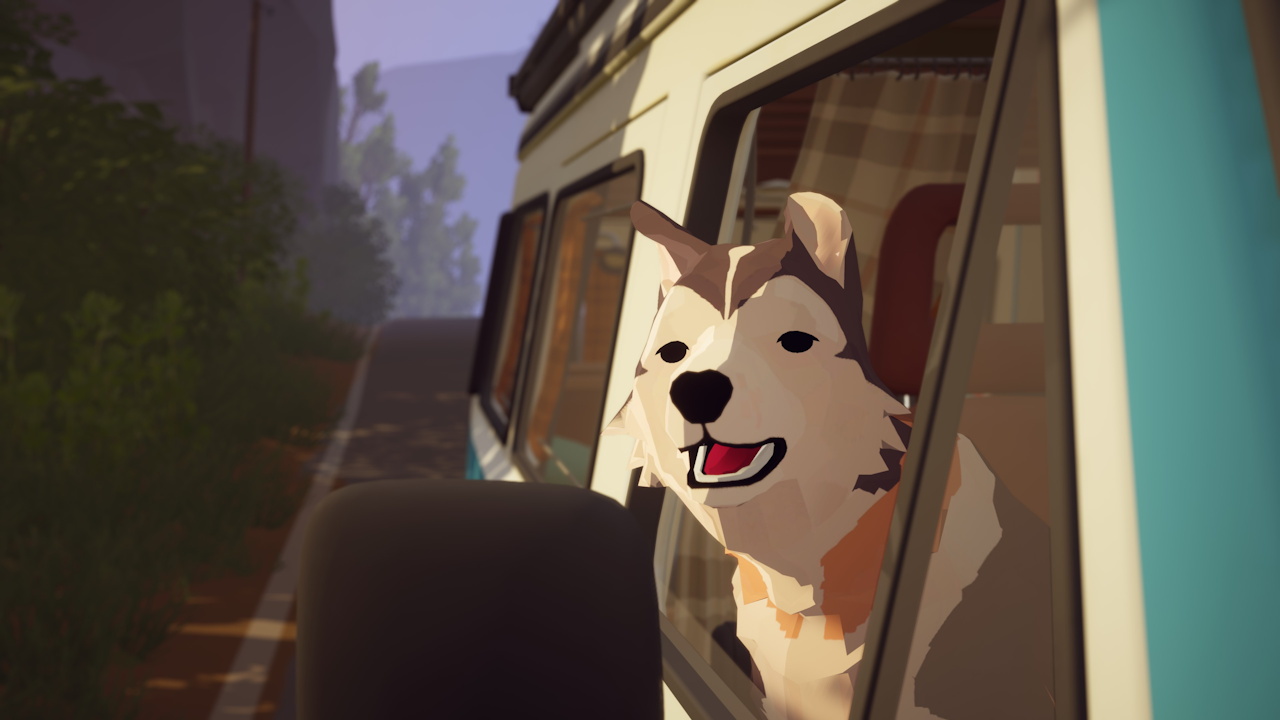
Screenshot from Forever Ago showing Muffin the dog
Muffin the dog!

Forever Ago has a fantastic soundtrack. The importance of the song The Green Green Grass of Home was conveyed through a flashback to Alfred’s proposal, and the song – which Audrey said had been “haunting” them on their trip – made several reappearances at key moments. But the rest of the music, composed by Clark Aboud, was pitch-perfect. It elevated emotional sequences, set the tone for lighter moments in the story, and felt in keeping with Alfred’s age and the kind of story the game wanted to tell.

With the exception of the bug and finicky controls I mentioned above, I really enjoyed Forever Ago’s art style and graphics. It felt both like a throwback to an earlier generation, in some respects, with its polygonal style for Alfred and other characters, but also artistic and beautiful in its environments. The vignettes, created and framed by flowers and flower petals, made for a creative visual effect, too.
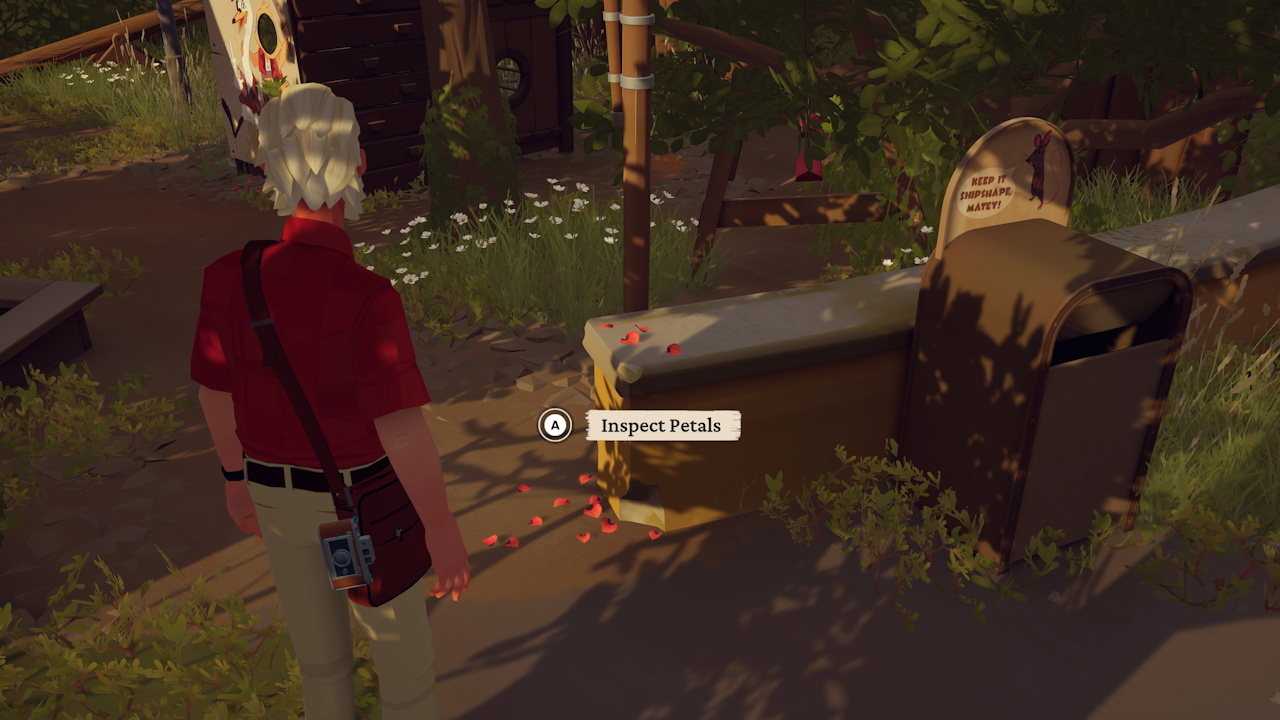
Screenshot from Forever Ago showing petals
Discovering petals leads to optional little vignettes.

Alfred’s dream (or nightmare) sequences were also very creative from a visual and auditory standpoint. Again, the flower motif was present, symbolising Alfred’s connection to Audrey, but the darkness and the confusing visuals – broken pieces of a house, stairs that seemed to be too long, and rooms and doors that seemed to appear from nowhere all came together to be both unsettling and understandable at the same time. Going through those dreams with Alfred – seeing the inner workings of his mind in a literal sense – added a lot to his characterisation, too.

Aside from Audrey and Muffin, Alfred spent time with – and got to know – Sam and Charlie in particular, and both of these characters seemed to help him on his journey. Sam did so in a very literal sense, saving his life, repairing his van, and giving him a place to rest. And Charlie, as someone closer in age to Alfred, was perhaps someone he felt it a little easier to talk to – and by this point in his journey, Alfred was more willing to accept an offer of companionship.
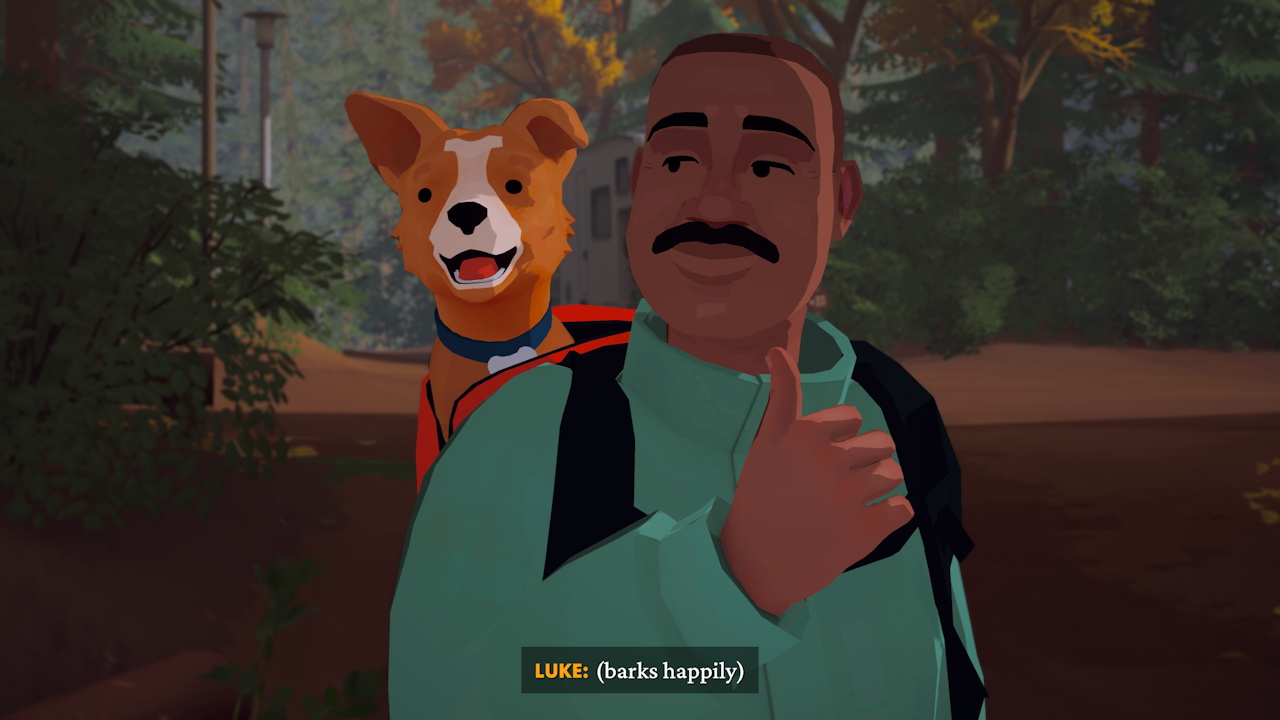
Screenshot from Forever Ago showing Charlie and Luke's intro
Meeting Charlie and Luke.

In terms of interactivity and gameplay, here’s what I’ll say. Compared to a game like Mixtape, which I’d put in a similar genre or category to Forever Ago, this was the less-interactive and less-interesting option. Mixtape had a variety of basically mini-games, each of which genuinely played differently from the others. Forever Ago has its camera and photography mechanic, but almost every other part of the game just involved walking and occasionally pressing a single button to interact with something, discover a memory, or prompt a line of dialogue.

I personally don’t have an issue with that – I *like* and appreciate diversity in the games I play, and I don’t think one game needs to play like any other. For the kind of game it is, and the story it’s telling, Forever Ago’s minimalist approach to gameplay is just fine! But for the folks who criticised Mixtape for its lack of interactivity… well, Forever Ago doubles down on that even more. As I said above: it won’t be right for everyone because of the kind of game it is.
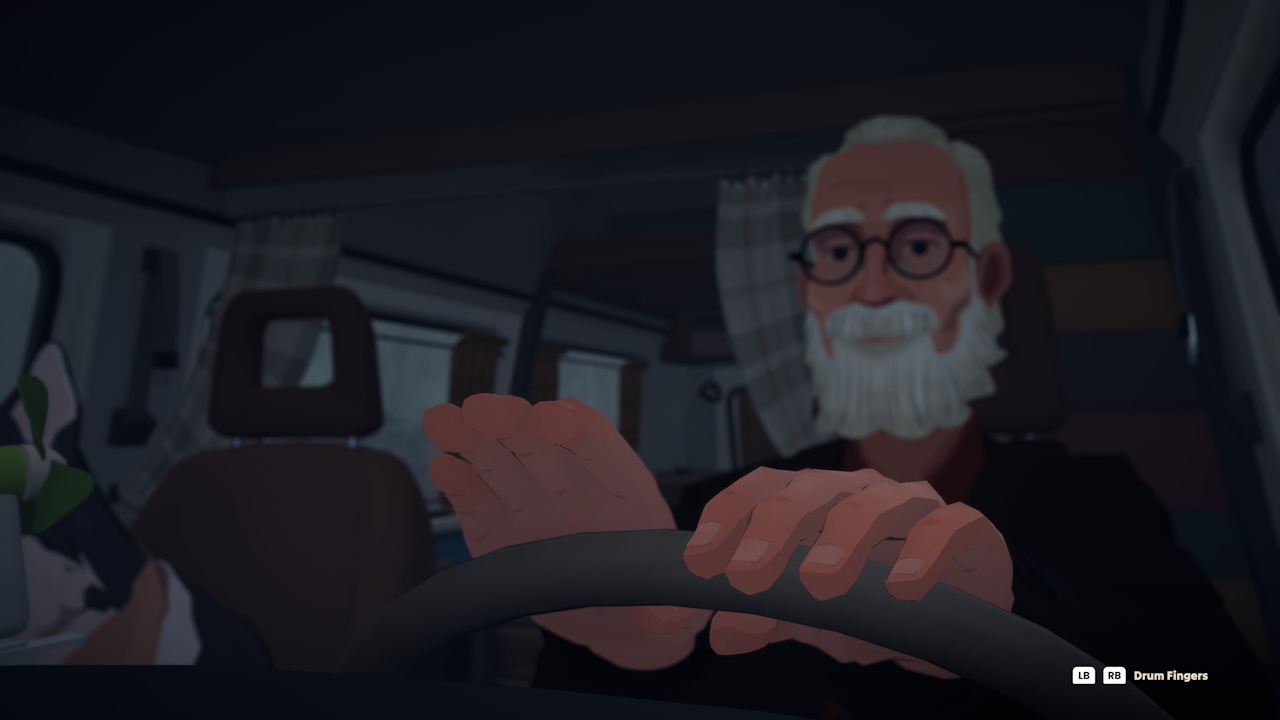
Screenshot from Forever Ago showing the drum fingers prompt
Press the buttons to tap your fingers on the steering wheel!

The core photography mechanic was a lot of fun, though – and I appreciated being able to use the camera freely for most of the game, even though the number of photos in each area was limited. I genuinely had fun lining up shots and framing pictures exactly the way I wanted them; I even got upset when Alfred accidentally scared off a bird I was hoping he could photograph! The photos – and the choice that the player is given for how and when to take them – go a long way to personalising the Forever Ago experience; no two players will have the exact same playthrough because the photos Alfred takes will be different every time.

I was trying to think of other games that choose to have a deliberately older protagonist… but I can’t call many to mind. Forever Ago feels unique and different as a result – putting players into the shoes of a man in his seventies as he goes through this story is something few other titles have attempted in the past. And despite what I just said about the relative lack of interactivity, it’s because Forever Ago is a video game – and not a movie – that we relate to Alfred in the way that we do. We quite literally walk a mile in his shoes – we point his camera, name his dog, explore the environments and see them through his eyes.
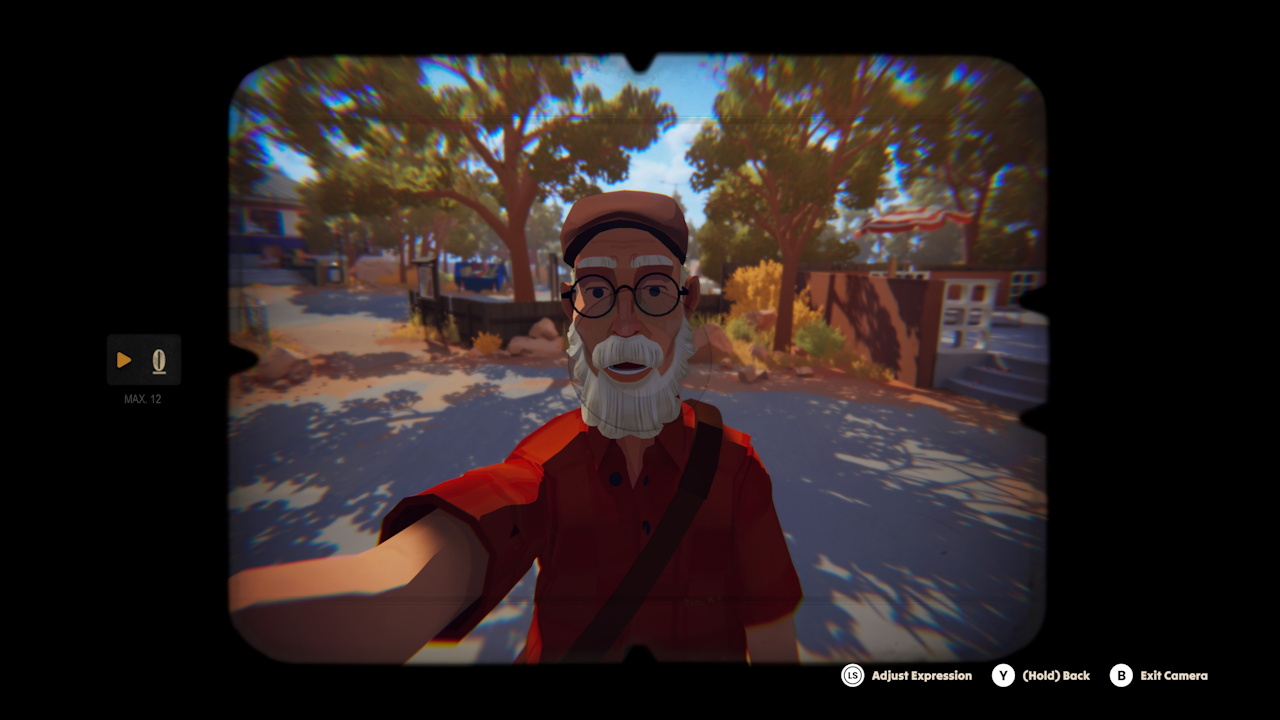
Screenshot from Forever Ago showing a selfie
Alfred takes a selfie.

Although Forever Ago tells a story all about a man and his memories, it doesn’t come across as wallowing or leaving Alfred stuck in his grief. Alfred has to accept that he can’t get Audrey back; he can’t undo any of the fights they had or the angry words they said to each other, either. And in the course of coming to that realisation, Alfred goes on an adventure. It’s an adventure that takes him back to some of the places he and Audrey had been, but the experiences he has in each one are different – and he encounters new friends and companions along the way.

Again, I think a worse story would’ve felt… self-pitying, perhaps, or like Alfred was just lost in grief. But because Forever Ago was such a carefully-constructed and well-written narrative, Alfred’s journey never feels anything other than relatable and realistic.
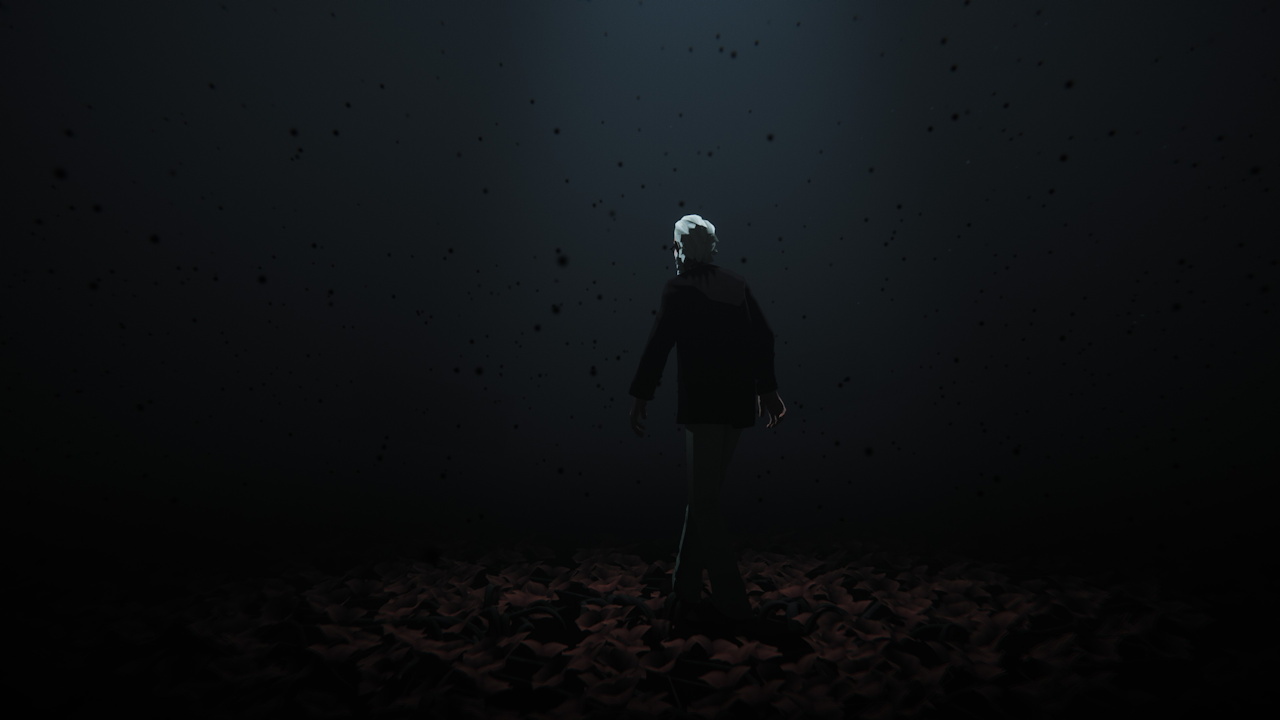
Screenshot from Forever Ago showing Alfred in the dream world
The dream/nightmare environment.

The game also hammers home that the world is ever-changing – and that sometimes, reliving or recreating the past isn’t possible. Alfred’s journey arguably begins with that revelation: the gas station proprietor who he remembers has retired. And as his journey continues, he encounters a motel being renovated, a diner that’s completely transformed and modernised, a theme park that’s closed down, and even a lighthouse that’s closed due to the weather. Alfred feels *old* in some of these moments – the world is moving on and changing, and the places he and Audrey once visited have been utterly transformed.

In that sense, the game is making a point about memory and about nostalgia. Alfred can physically return to some of these same places – the places he’d travelled with Audrey when she was alive. But the places themselves are not static; they’ve changed and been redeveloped. And those memories – whether they’re happy, painful or both – can’t be completely relived.
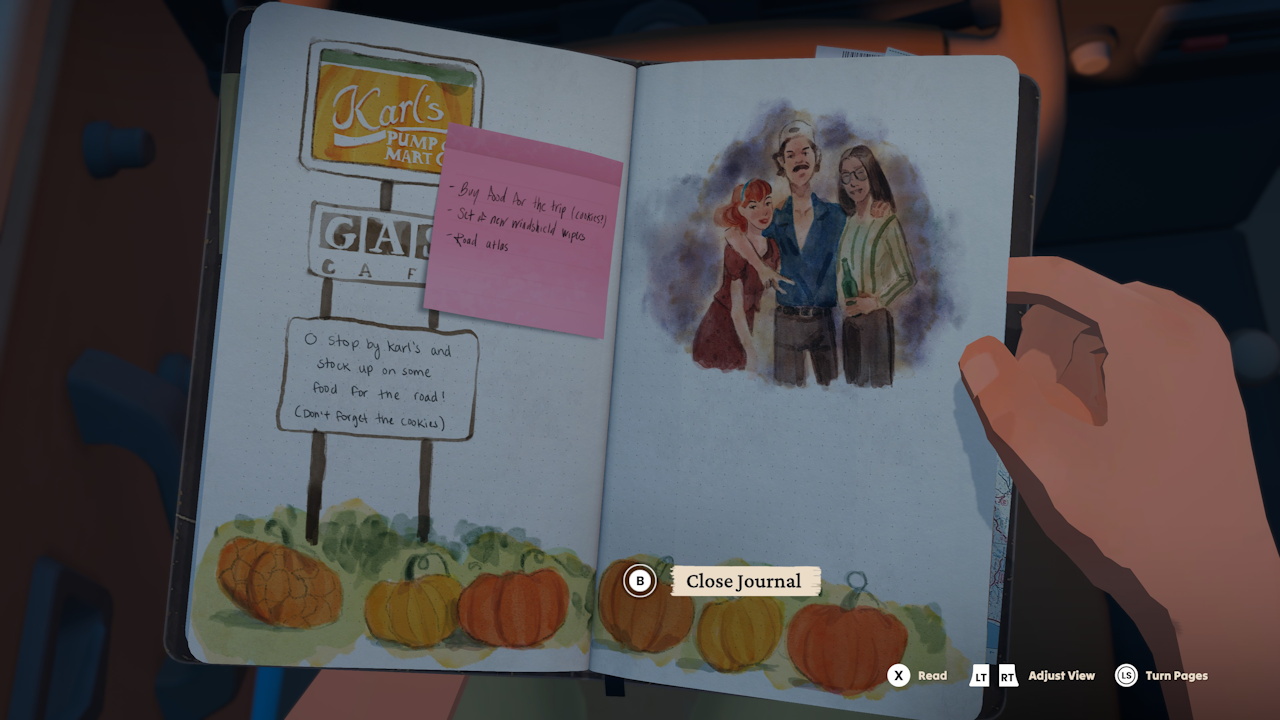
Screenshot from Forever Ago showing the journal
Alfred and Audrey’s journal.

I’m glad that Forever Ago got an epilogue. You *did* stick around after the credits for the epilogue, right?!

As Alfred returns home, having survived his adventure, he seems happier and more settled – and even though he clearly still misses Audrey, he’s changed. The angry, short-tempered man we met at the beginning of the story is gone, and – thanks, in part, to his new canine companion – Alfred is beginning to rediscover his life.

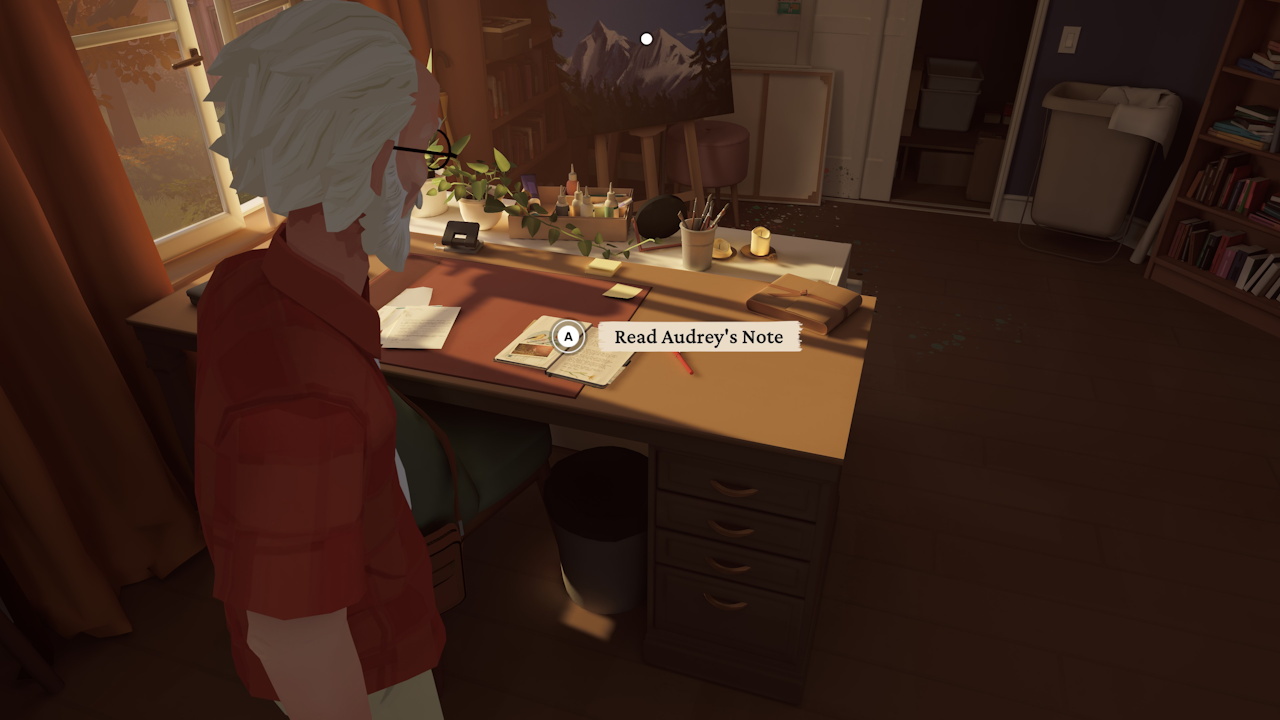
I also appreciated that Alfred seems to have reached out to at least one of the people he crossed paths with on his journey – Milton, at the gas station – to apologise for the way he spoke. That was something I put in my notes, that I wanted to see Alfred try to apologise for that, and I’m glad that he did. Again… it humanises him, makes him feel more like a real person, and although we as the audience understood where such outbursts came from, it’s still something that a decent person – which Alfred clearly is – would want to make amends for.
Screenshot from Forever Ago showing the note in the epilogue
Alfred in the epilogue.

So that was Forever Ago. A game about loss, grief, and a journey to fulfil a promise. But also a game about hope, about preserving love and a person we’ve lost while accepting that it’s okay to have new experiences without them. And perhaps a game that recognises the importance of pets and the love we have for our furry companions, too! I had a wonderful time with the game… even when it hit close to home.

I couldn’t recommend Forever Ago to everyone – but at the same time, it’s the kind of story, and the kind of video game, that I’d hope all kinds of players will try out. Narratively, Forever Ago has a lot to say about grief, memory, love, and loss, and I also think it’s a fantastic example of how video games as a medium can be used to tell intense, emotional stories that wouldn’t come across in quite the same way without that interactive component. There’s a lot to love here… and I really hope that Forever Ago is finding its audience.
Screenshot from Forever Ago showing the lighthouse overlook
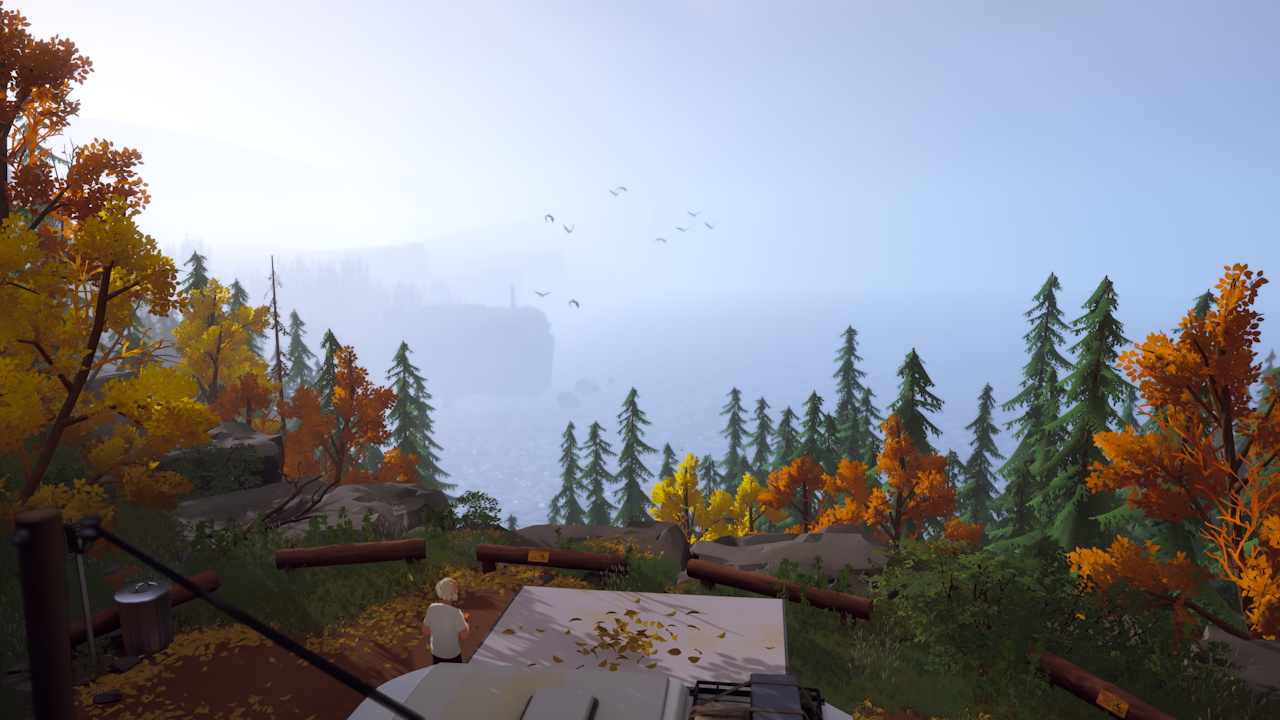
Forever Ago is a great game.

If you missed my review of Mixtape earlier this year, I hope you’ll consider checking it out. You can find it by clicking or tapping here. Despite some major differences, the games are similar enough that if you’re a fan of one, you may very well be interested in the other! And, weirdly, both involve characters visiting abandoned theme parks!

I have plans to review a couple of other titles in a similar space in the weeks and months ahead – so stay tuned for that!

Thanks for joining me this time, and I hope you’ve found my take on Forever Ago to be interesting. I rarely jump into games on day one, but this had been a title I’d been looking forward to for a while, so I was happy to make an exception for Forever Ago. Thanks again… and happy gaming!


Forever Ago is out now for PC, PlayStation 5, Nintendo Switch 2, and Xbox Series S/X. Forever Ago is the copyright of Third Shift and/or Annapurna Interactive. This review contains the thoughts and opinions of one person only and is not intended to cause any offence.
Mixtape: Video Game Review

The first part of this review is free from major story spoilers for Mixtape. The end of the spoiler-free section is clearly marked.

I’d really been looking forward to Mixtape. The game’s trailer looked great, I liked the art style, and I’m generally a fan of narrative adventure titles. But what appealed to me the most about Mixtape was the game’s ’90s setting and its promise of an eclectic soundtrack featuring some of my favourite bands and some of the era’s best-remembered hits. I was ready for a nostalgic punch to the gut, and Mixtape delivered.

I always try to approach any title that I’m reviewing without having read or listened to any other critics’ opinions – I fear that doing so risks colouring how I approach any piece of media. But the maelstrom that Mixtape got caught up in a couple of months back proved inescapable, and some of the criticism of the game’s perceived “lack of interactivity” and status as a so-called “walking simulator” did cut through.

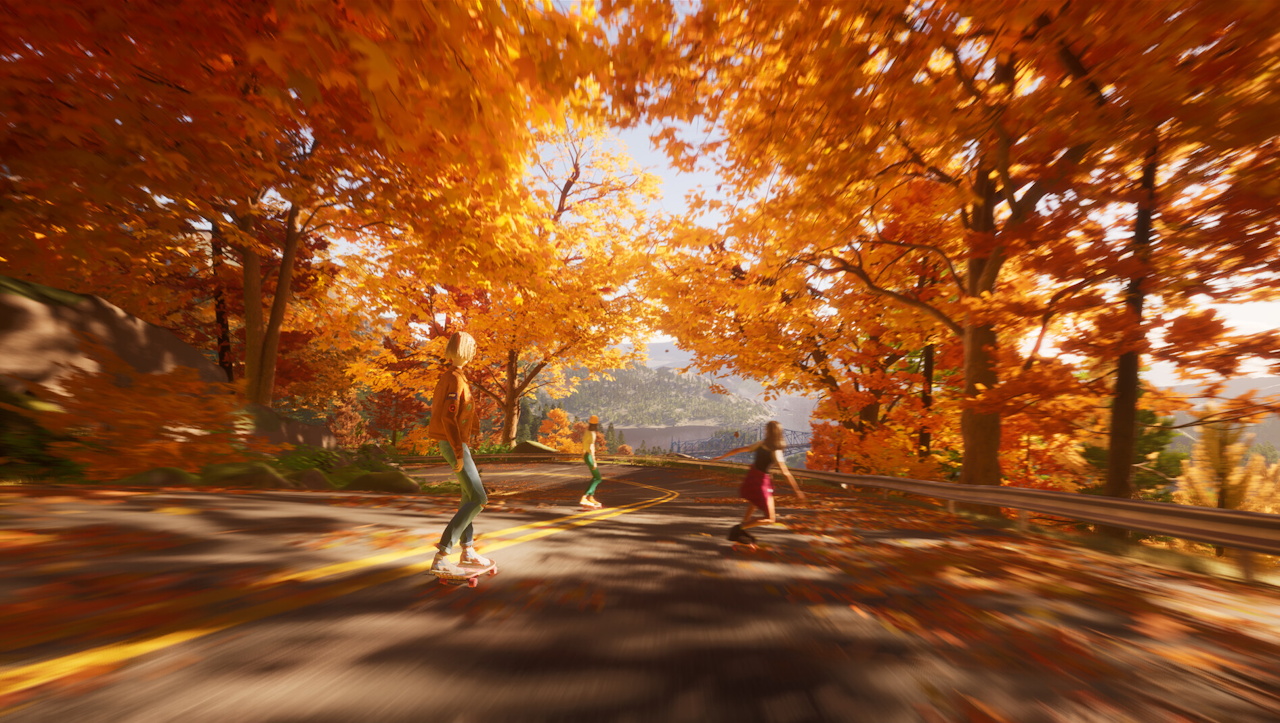
Promo screenshot for Mixtape (2026)
Mixtape.

I’ll level with you: that line of criticism is valid – but only if you think that a game *needs* non-stop button-pressing and complicated combos to be fun. Mixtape is a game I would categorise as a “narrative adventure;” as the player, you follow a very linear story featuring three main characters, and you play through a series of connected levels, quick-time events, and mini-games – the interactivity levels of which do vary. If you’re a player who wants to be constantly challenged by difficult gameplay, and your reason for picking up a control pad is to “git gud” at a complex title that requires a lot of either button-mashing or complicated combos… perhaps you’ll bounce off Mixtape quite early on. Even if the story might be something you’d vibe with, I’d understand if the gameplay – or, let’s be blunt, the *lack* of gameplay – would turn you off.

However, that wasn’t my take on Mixtape, and I had a genuinely fantastic time with this game.

I’ve said this before here on the website when discussing other titles, but I’m someone who’ll happily play through basic, bog-standard gameplay if I’m caught up in a story. Not only does Mixtape have a truly compelling narrative, but I also really liked its animated, almost stop-motion art style; I found its main characters incredibly relatable, and gosh, does the game have a *fantastic* soundtrack!

Still frame from the music video "Since You've Been Gone" by Rainbow/Ritchie Blackmore's Rainbow
The game features around two dozen songs from the likes of Rainbow (pictured).

So there’s that important caveat: if you hate “interactive movies” or “walking simulators,” and you want a game that offers more interactivity than mini-games, QTEs, and a bit of environmental exploration, Mixtape might not be for you. It might still be for you, though, if you’re after a game with great characters, a relatable narrative, an incredible soundtrack, and a nostalgia overload for players of a certain age – or players who *wish* they lived through that mid-90s era. This game isn’t going to be for everyone, I suspect, which is probably why opinions are split! But if you’re the kind of person with whom the story connects, and if this slower-paced narrative adventure is your style of game? I think there’s a *lot* to love in Mixtape.

I’d go so far as to put Mixtape on my list of contenders for the coveted “Game of the Year” title at the annual Trekking with Dennis End-of-Year Awards!

Promo screenshot for Mixtape (2026)
Could Mixtape be a “Game of the Year” contender? Come back just before New Year to find out!

I would give one caveat, though, about the story Mixtape tells. This is a story about teenage characters having “one last hurrah” before finishing school and going their separate ways. It leans into tropes of the genre that you’ll have seen in dozens of films, not only from the ’80s and ’90s, but really in any coming-of-age title from the last forty-some years. When you stack up an objectively low-stakes story with some melodramatic teenagers… well, you’ll either feel that whack of nostalgia and remember your own schooldays – as I did – or maybe you’ll cringe!

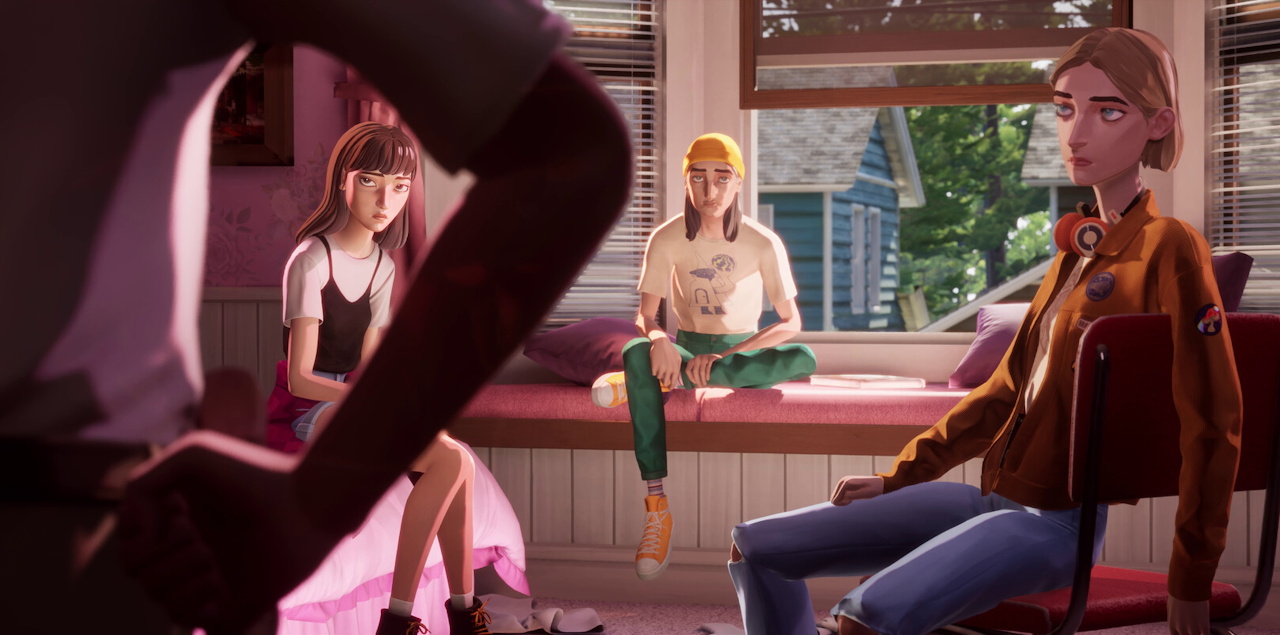
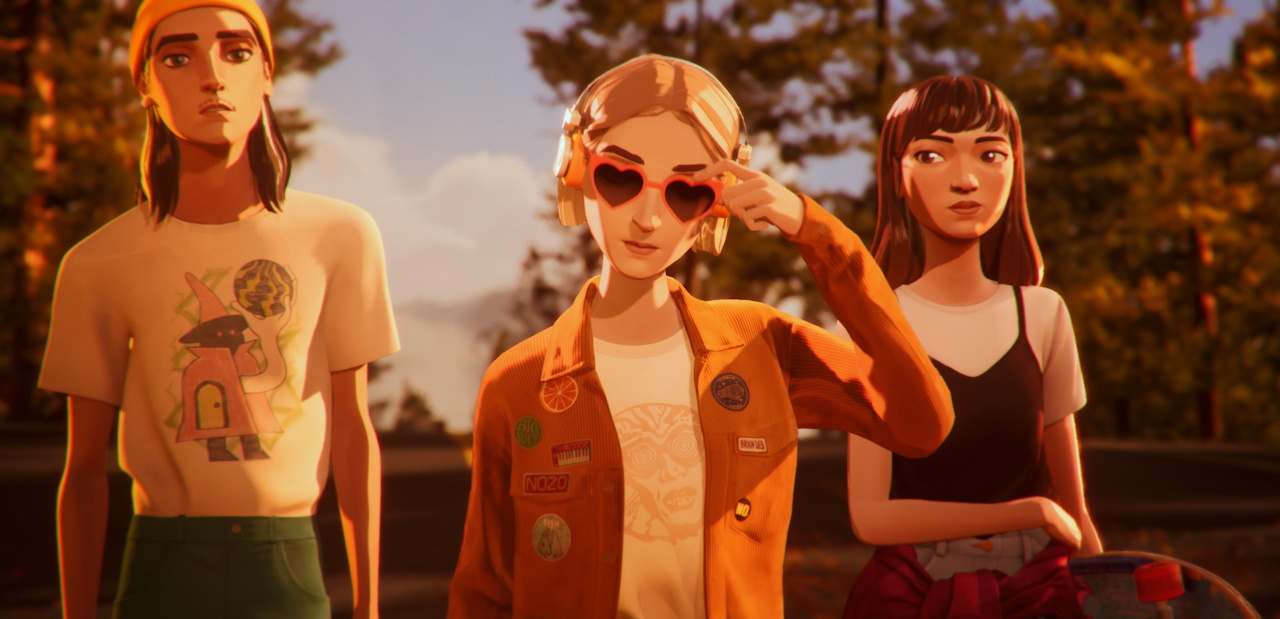
For me, these characters and their stories genuinely hit close to home. We’ll get into more detail about that if you stick with me to the spoiler-ific part of the review, but suffice to say that I think each of them represents not only a character archetype from this kind of coming-of-age story, but a truly relatable part of a teenage experience that a lot of us will share. There were moments in Mixtape that, I’m sure, are curiously American – and as a Brit, I wouldn’t get all of that. But there were plenty of things that reminded me very strongly of my own youth, my own schooldays, and my own “last hurrah” with friends as we parted ways, knowing it would be for the last time.

Promo screenshot for Mixtape (2026)
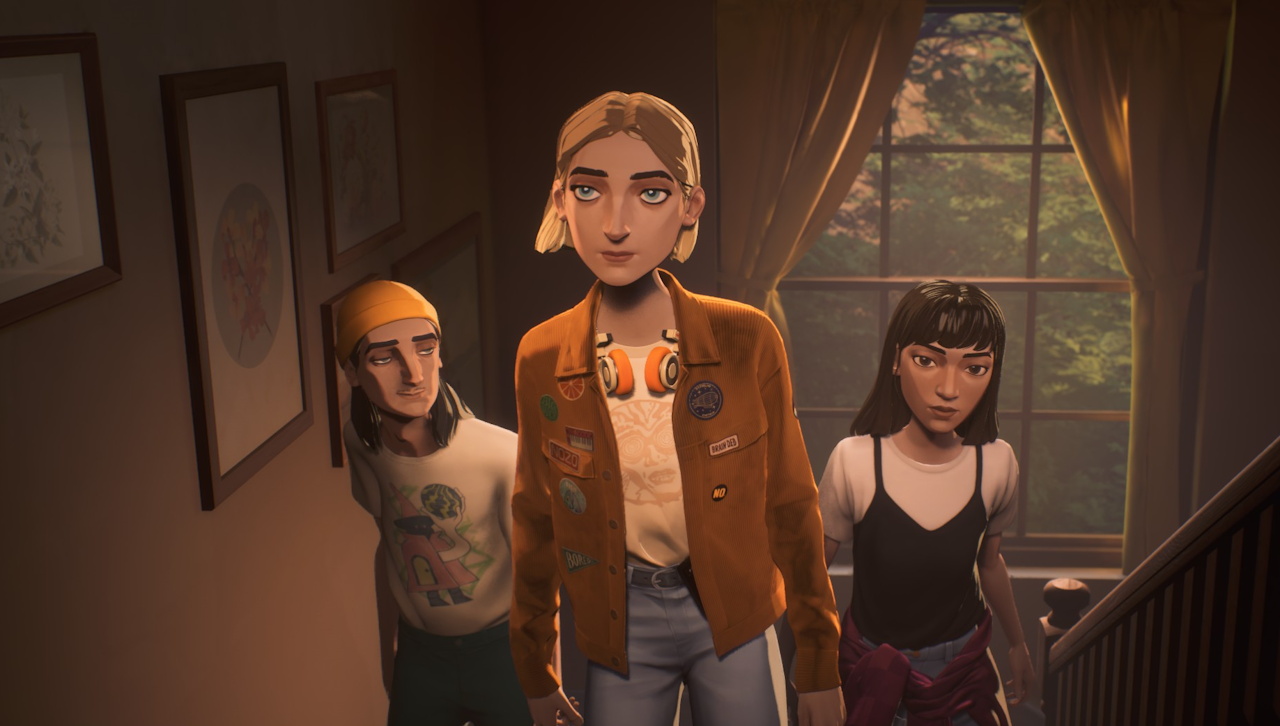
The game’s trio of main characters.

In that sense, Mixtape really did hit all of those nostalgic notes; its story is genuinely bittersweet. I don’t think I was quite expecting it to resonate with me quite so strongly or quite so emotionally, especially for such a short experience. But it did. Mixtape isn’t a game I’m going to rush to replay; it’s linear, and once you’ve tried the mini-games, explored the levels, and experienced the story, the only reason to go back is to go through it all again. But like any good coming-of-age movie – St. Elmo’s Fire, The Breakfast Club, The Graduate, or even Bend It Like Beckham – it *is* a story I’m going to want to revisit one day. I can already feel that.

And there are some songs, too, that I think I’m going to forever associate with moments, levels, or characters from Mixtape.

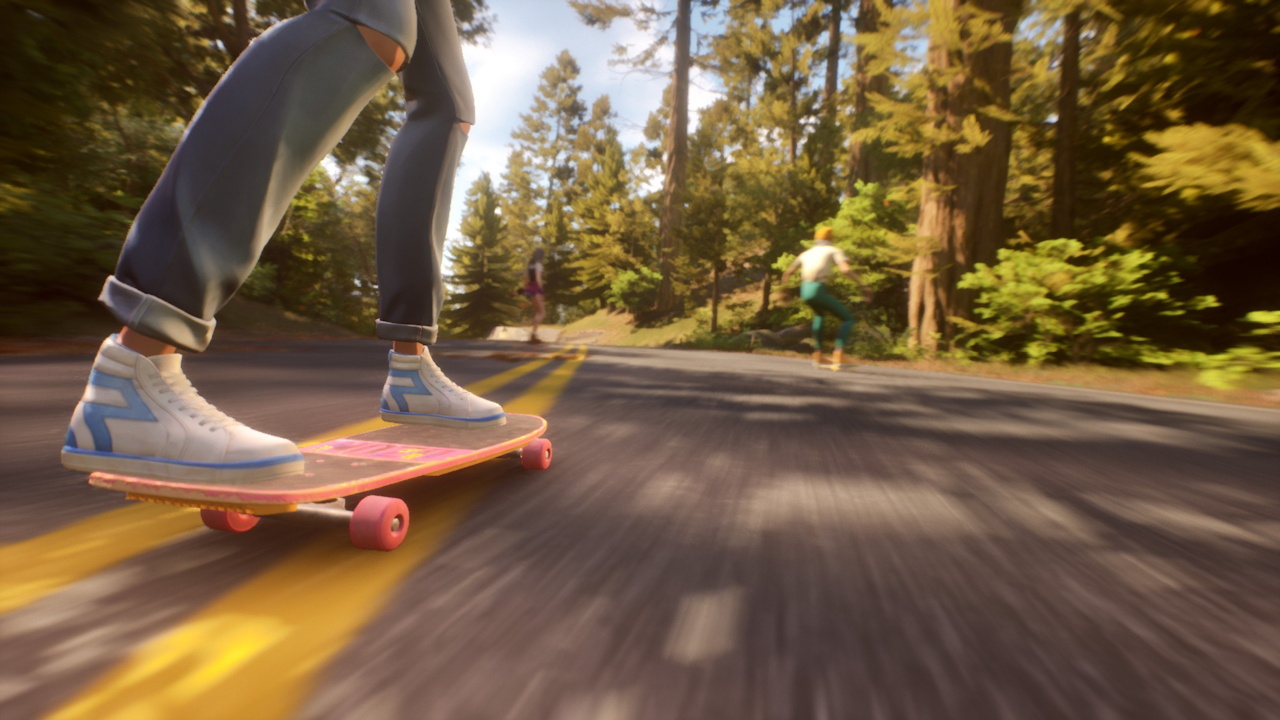
Mixtape is a relatively short experience. My playthrough clocked in at just shy of three-and-a-half hours – but I think that Mixtape, at £16/$20, is priced fairly for such a short title. The game ran well, without any crashes, bugs, or framerate issues on my PC, and I didn’t have any trouble with adjusting the settings to my liking. In terms of difficulty, I managed the game in one hit, despite having arthritis which affects my hands and fingers, and while I wasn’t perfect at every mini-game or QTE, the game was more than forgiving enough to let me progress.

Promo screenshot for Mixtape (2026)
Skateboarding.

I think I’ve said all I can without getting into narrative spoiler territory. If you want to know if I recommend Mixtape, the answer is a categorical and definitive “it depends!” If you like narrative adventure titles, ’90s nostalgia, and great music, it’s an enthusiastic “yes.” If you want games with a great deal of interactivity, and story matters less to you than engaging gameplay, perhaps it won’t be your thing. If you think of Mixtape as a three-hour movie with some interactive sections… well, you can answer the question of whether you think that sounds like something you’d enjoy. But I reiterate what I said a moment ago: this game won’t be right for everyone.


An anime-themed spoiler warning.

Spoiler Warning: This is the end of the spoiler-free section. There are narrative spoilers for Mixtape – including the game’s ending – from here on out.

I’m the wrong side of forty years old, suffering from arthritis and other health issues that make me feel even more decrepit, and my schooldays are so far behind me by now that I can’t even glimpse them over the horizon any more! So why, then, did Mixtape make me feel like a teenager again for those three-and-a-bit hours? Am I just a pathetic middle-aged person, desperately trying to reclaim any semblance of youth? And did Mixtape offer me that escapist fantasy for a short time? Or is there something deeper… does this game truly embody what it means to *feel* young?

I’d love to offer Mixtape to younger players – folks in and around the age group of the game’s protagonists – and see what they think. To them, Mixtape might feel like an old person’s idea of what “being young” is, or its ’90s setting might make them feel like I do when watching films from, say, the ’60s or ’70s. Maybe Mixtape feels the way it does to me because this was my coming-of-age moment, too.

Screenshot of Mixtape (2026) showing Slater, Stacey, and Cassandra in the intro
I wonder what younger folks will make of Mixtape; is it just a game for people my age, or is its story timeless?

I’ve written about this here on the website before, but 1999 and Y2K were “my years;” that was the end of my schooldays, the beginning of “adulthood,” both in a legal and, I suppose, a practical sense, and the ’90s as a whole were my adolescence and teenage years. Mixtape doesn’t tie itself to one specific year, but I get an early-to-mid ’90s vibe from the game. I think a ticket stub was dated 1993 at one point, so it might be set a year or two after that. I guess that makes me a bit younger than the game’s protagonists – but I lived those years, you know? I… I *feel* the era that Mixtape is bringing back to life. And because it coincides with a similar period of my own life… the game brought back all kinds of memories that I just wasn’t expecting.

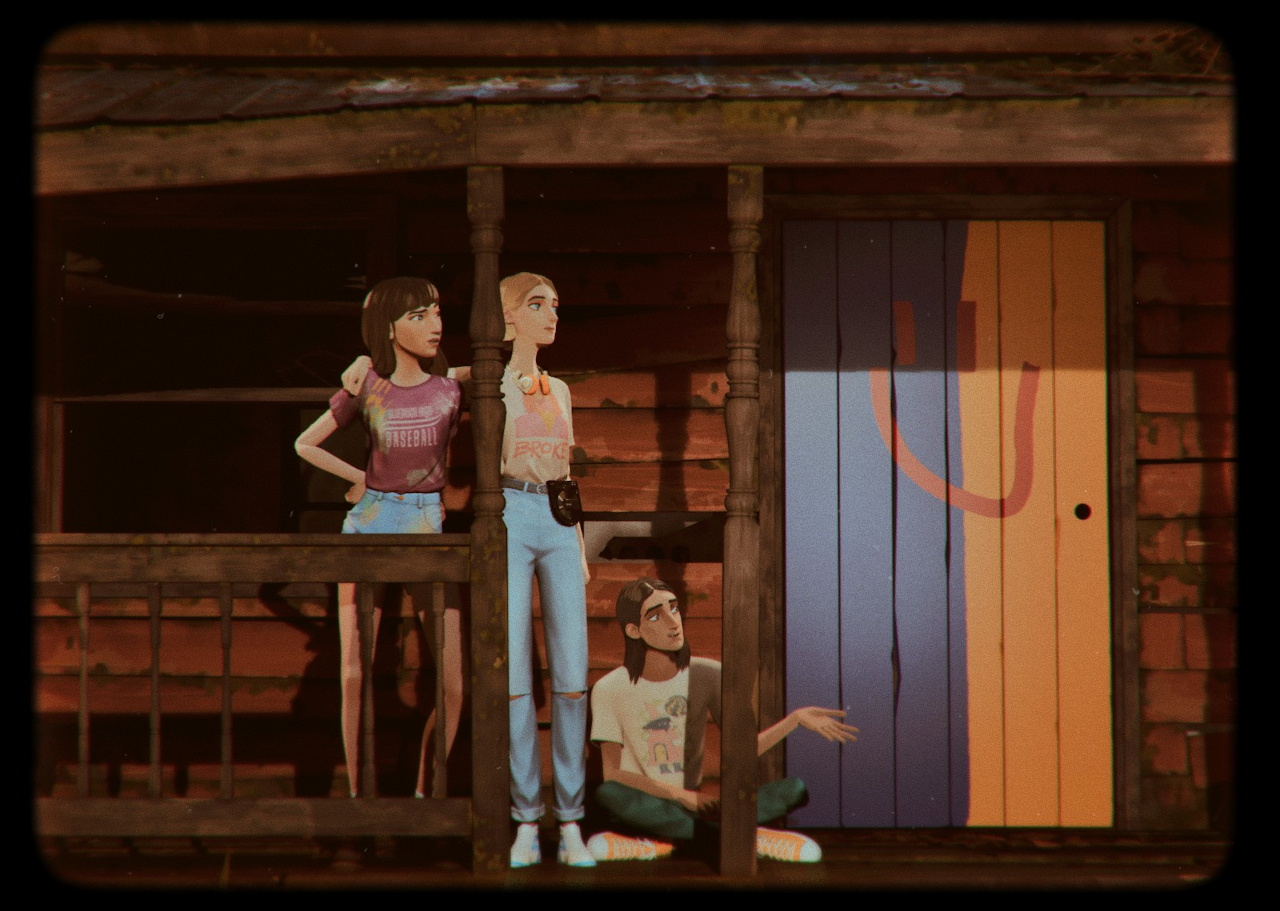
And I feel… well, I feel a lot of things, to be honest. Partly I feel old: knowing that that part of my life is so long gone as to be someone’s idea of a “cool vintage setting” for a story! Partly I feel kind of pathetic: I’m this old dinosaur pretending to be young and hip again by going through this story. Partly I feel like these characters, relatable and fun as they were, just aren’t me anymore: I’m looking in from the outside at teenagers doing teenage things, and I just don’t fit in with that age group. And partly I feel like I’m seventeen again: like someone’s dad banning them from a party, or not being able to scrounge up enough pennies to buy a few beers are the biggest – and only – problems in the world. That carefree moment of youth when teachers and parents are the obstacles to fun, and nothing else matters but your friends. That’s Mixtape in a nutshell.

Screenshot of Mixtape (2026) showing the main characters on the stairs
Mixtape made me feel 17 again.

And that sensation… I don’t think I was prepared for just how well Mixtape captured it, bottled it, and then smashed me in the face with it over and over again!

I remember what it felt like to be a teenager, desperate to go to some big party. In the rural area where I grew up, there were so many farmers’ kids at school that there’d always be someone willing to volunteer a field for us to throw a party – and we’d set up a boom box, play tunes, drink way too much, smoke cannabis, and just… be free. That feeling… I mean, I haven’t felt it in a long time. A long time. Until I played Mixtape, and all those memories and feelings came flooding back.

That’s testament to the power of media, and to interactive media in particular. I stand by what I said above: Mixtape is not the most interactive game out there. But the interactive elements that it brings to the table are a huge part of what makes it work and what makes those feelings hit so hard; I don’t think you’d get it in the same way if you watched a video of someone else playing the game, or a compilation of cut-scenes. The interactivity – actually taking part in the kids’ journey – is what makes it work and what makes it hit as hard as it does.

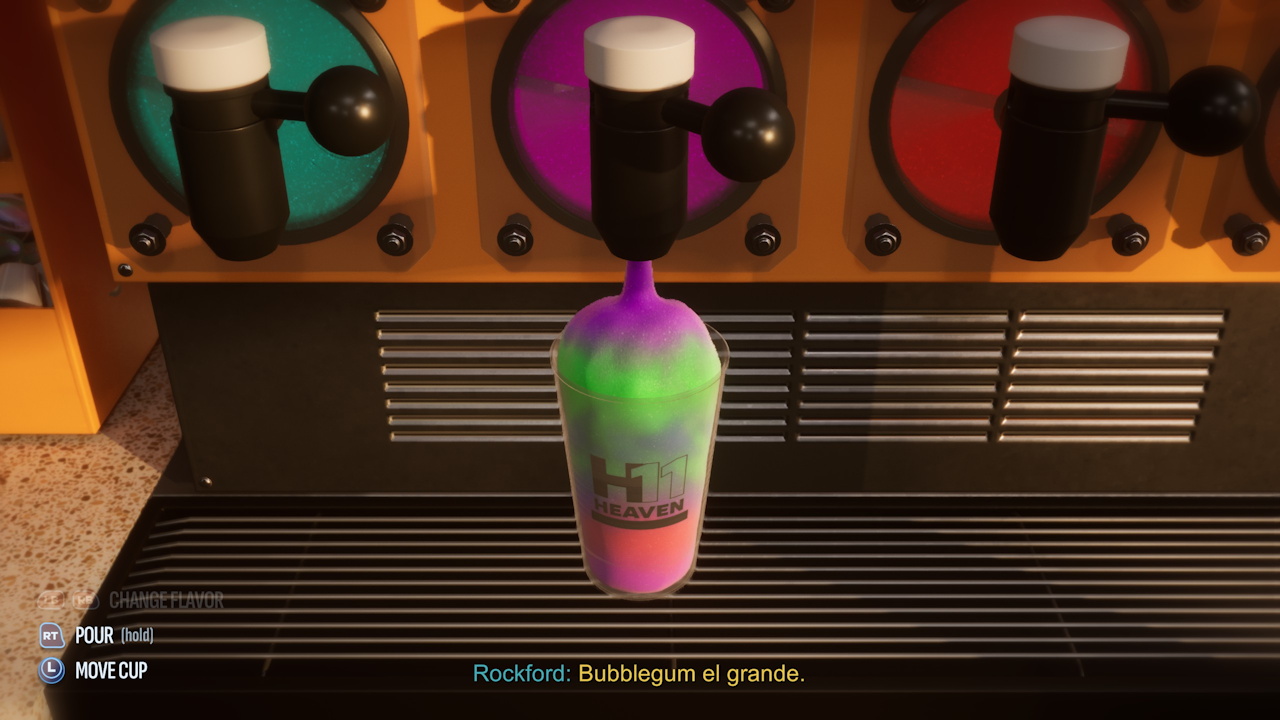
Screenshot of Mixtape (2026) showing the slushie mini-game
The slushie-making mini-game.

Let’s talk characters!

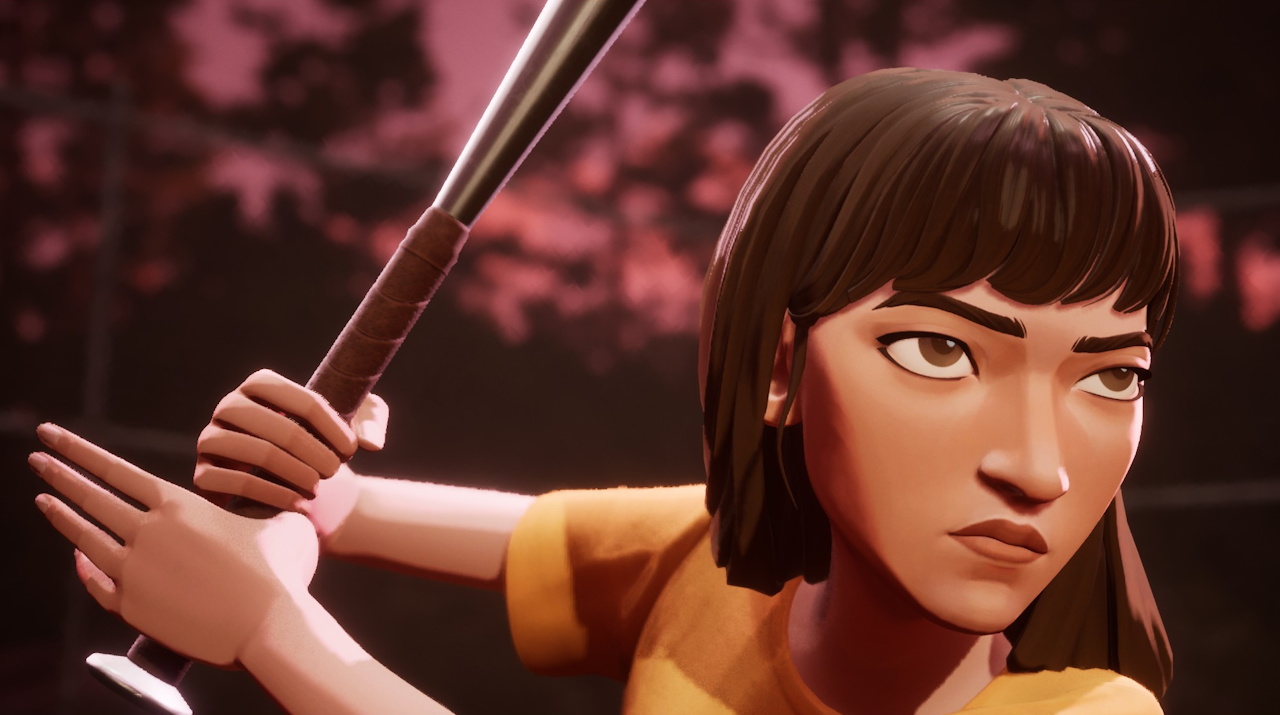
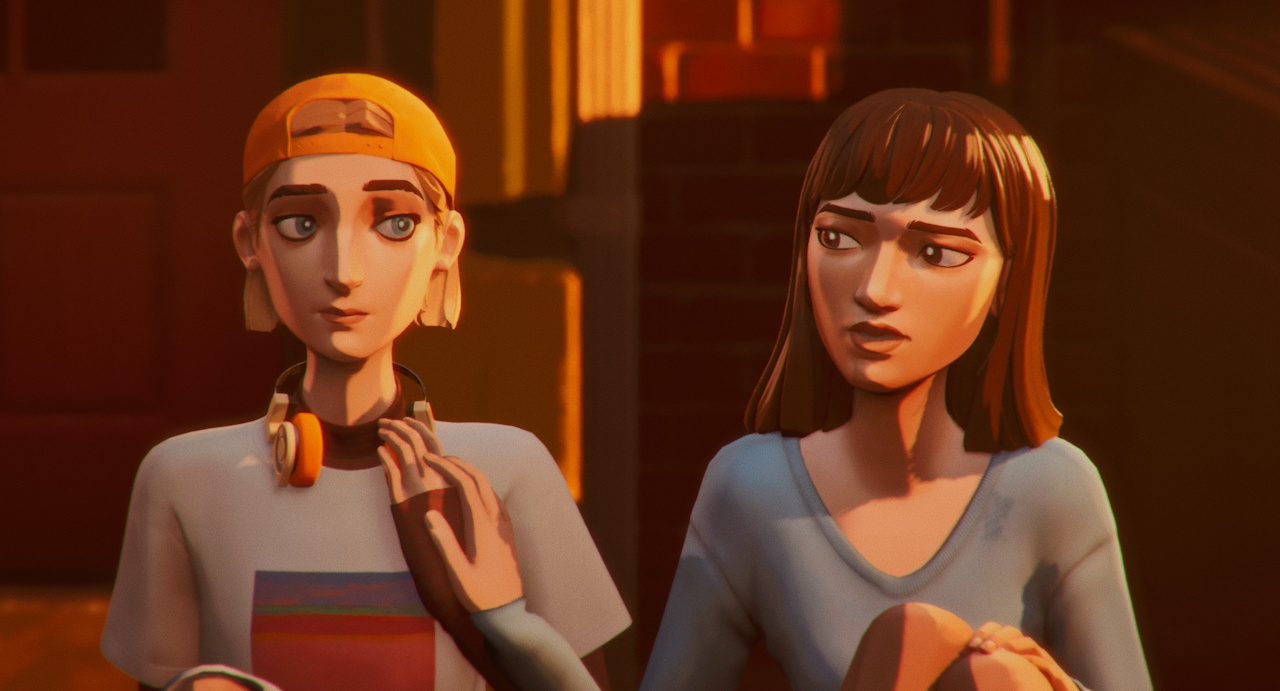
Cassandra is probably the character who came closest to my own teenage experience: her overbearing parents seemed to be trying too hard to keep up appearances and cut her off from her friends and the things that she enjoyed. It was an exaggerated portrayal, and far from my own in some respects, but I felt her sense of entrapment; that she didn’t have the freedom to do what she wanted, that her parents wanted her to follow a path they’d chosen. And that sense of rebellion, of wanting to do the opposite of what’s expected of you – a typical teenage thing, I guess!

Cassandra’s arc was genuinely fun to watch unfold. Flashbacks showed her meeting her friends for the first time, her genuine wish to branch out and find her own path, free from the demands and expectations of her parents… and she got arguably the most complete story of all three characters, as her arc with her father actually ended with at least the beginnings of an understanding between them, and she also resolved her conflict with Stacey.

Screenshot of Mixtape (2026) showing Cassandra with a bat
Cassandra got arguably the most complete arc.

Slater reminded me *so much* of several people I knew when I was in school – the typical directionless, unbothered, seemingly “chill” guy who considered himself to be deep and thoughtful. Maybe that’s harsh, sorry! But I’m looking at these characters now with the (questionable) benefit of decades of life experience, so some of the things they come out with – Slater especially – just feel so… naïve and childish. The words make sense, and I can absolutely tell that they’re serious and sincere. But when they’re said in relation to something so small in scale and so fundamentally meaningless as a teenage party… the philosophy definitely wears off!

And I think – I *hope* – that Mixtape is self-aware when it brings these characters to life. Yes, there’s an earnestness to Slater and his philosophising about friendship and life… but there’s also an awareness from the developers, I think, that this is a teenager, right at the start of his journey, who isn’t gonna feel that way forever and who might look back on saying things like this and, well… cringe a little! I know I do when I think back not only to the people Slater reminds me of, but to my own words and actions in those days – words and actions not unlike Slater’s, in some cases.

Screenshot of Mixtape (2026) showing Slater's 'stache
Slater’s ‘stache.

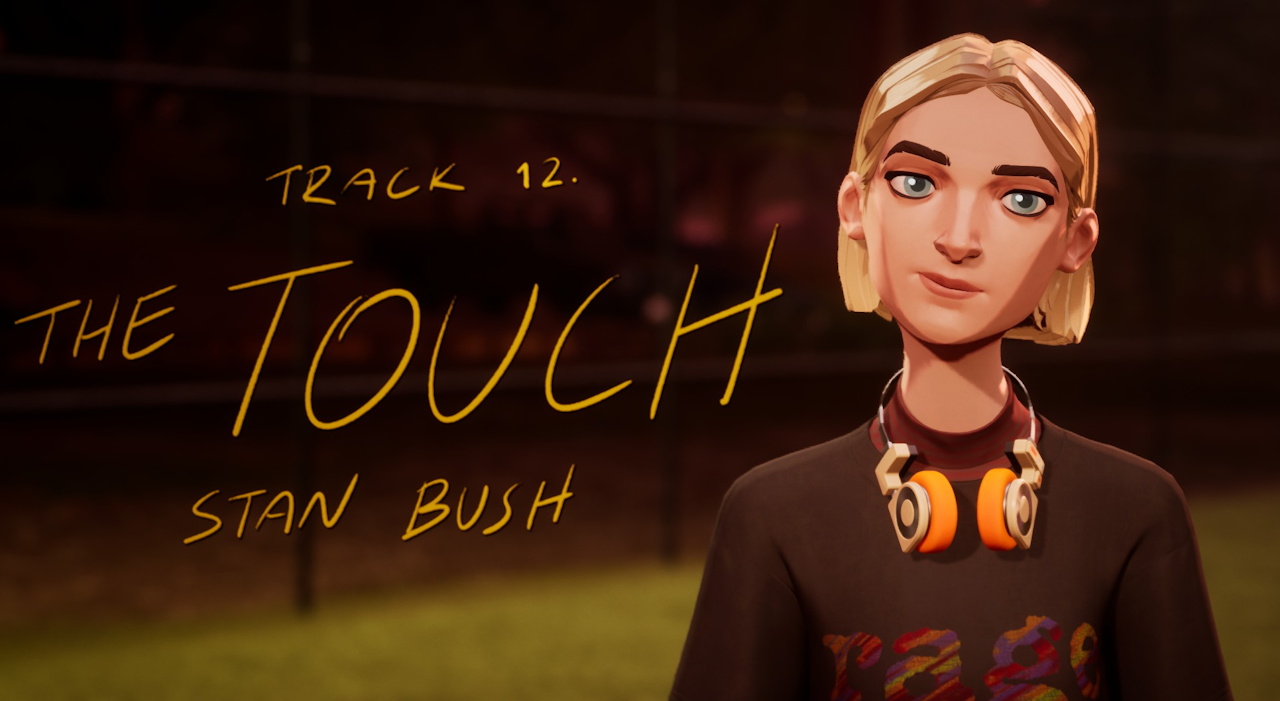
That brings us to Stacey, the game’s main protagonist and the character you spent 95% of your time playing as. I thought, for much of the game, that Stacey’s arc was going to involve realising that her dream – to go to New York and become a professional mixtape-maker – wasn’t practical, and that there was value in sticking with her friends, even just for a little while longer. That seemed to be her trajectory, at least for parts of the game. So it was a surprise, I admit, that the game ended the way it did.

The ending didn’t “rob” Stacey of her arc, nor deprive her character of something big and meaningful – and there’s something positive, in a way, about seeing a young person pursue their passions and their dreams with that almost naïve optimism that you only have when you’re seventeen! But it does mean that Stacey kind of begins and ends the story in the same place – her last night in town, bidding everyone goodbye, ready to strike out on her big adventure.

I’ve been there – I’ve been Stacey in that moment. And I’ve also been the friend left behind when others are moving on and going their own way.

Screenshot of Mixtape (2026) showing Stacey
Stacey – a.k.a. Rockford.

This was another thing that punched me in the gut with “the feels.” That sense of a chapter of your life coming to a close – and not only that, but the *first* chapter, your schooldays, the only kind of life you’ve ever really known… it’s a truly strange sensation that I think only hits a person once in their life. And Mixtape made a creditable recreation of how that moment, that “one last night together,” really feels. We approach that feeling from Stacey’s side, but as the story unfolds, we also get it from Cassandra and Slater, to varying degrees.

I liked Stacey’s repeated fourth-wall breaks, and how she’d directly address the camera when introducing and explaining the various songs on the game’s soundtrack. Combined with some of Mixtape’s other fantastical elements – soaring through the sky, watching a baseball stadium appear out of nowhere, and so on – I think it worked exceptionally well, and it added to the sense that, despite the very real feelings the game brought up, it’s a fantasy as much as anything else.

Screenshot of Mixtape (2026) showing Stacey's fourth-wall break
Stacey regularly broke the fourth wall.

Mixtape also has something to say about the reliability of memory. Dreams, memories, and power fantasies all seemed to merge together – not only in flashback sequences, but even in levels and story moments set in the present day. We see characters soar through the sky, ride on the back of a dinosaur, make fireworks explode in time with the music, or float through a series of disconnected video clips. And none of this is presented as weird or unusual in the context of what was otherwise a very simple and grounded real-world narrative – which means Mixtape is deliberately leaning into the way we – especially as younger people – process thoughts, memories, dreams, and fantasies.

In a worse game or a worse story, it would feel jarring to go from a grounded, normal story about three teenagers about to graduate from school to Harry Potter-style flying cars, or floating through a void of images and video clips. But Mixtape makes that weirdness… work. I don’t want to say that it “shouldn’t” work, because a good enough story clearly *can* bring together the ordinary and extraordinary in a cohesive way. But the way Mixtape makes it feel so natural and so effortless… it’s really something to see. I really, truly adored this way of experiencing the story. It reminded me, again, of being a kid or a younger person, looking out of the window of the car and imagining flying through the air or sprinting along at high speed.

Screenshot of Mixtape (2026) showing the main characters in flight
Flying home…

I am not the best gamer in the world – I wasn’t when I was younger, and I’m definitely not now that arthritis is afflicting my hands and joints! So I appreciate that Mixtape isn’t a game with stupid difficulty spikes, or that punishes anything but frame-perfect button-presses in quick-time events. There were a couple of places where I didn’t get everything right – Cassandra’s softball game, for instance, and it took me a few tries to hit all of the targets in the rock-skimming game, too. But even then, Mixtape didn’t punish failure, nor send me back to the start of a level as I feared it might. Instead, I could progress through the story at my own pace, enjoying the moments and the narrative without really needing to worry too much about making mistakes or missing essential button-presses.

That style of gameplay – let’s call it “casual,” for the sake of simplicity – is not everyone’s cup of tea, and I totally get that. I could see people wanting the game to implement a more difficult mode where timings matter more and where mistakes are costly. Maybe, if you ask nicely, developers Beethoven & Dinosaur will consider it in a patch or update! But speaking for myself, I’m just not that kind of player, and I found Mixtape‘s difficulty, accessibility, and forgiving gameplay to be just my speed. I came for the story, not to punish myself trying to “git gud” at frame-perfect button-presses.

Screenshot of Mixtape (2026) showing Stacey and Cassandra
Stacey with Cassandra.

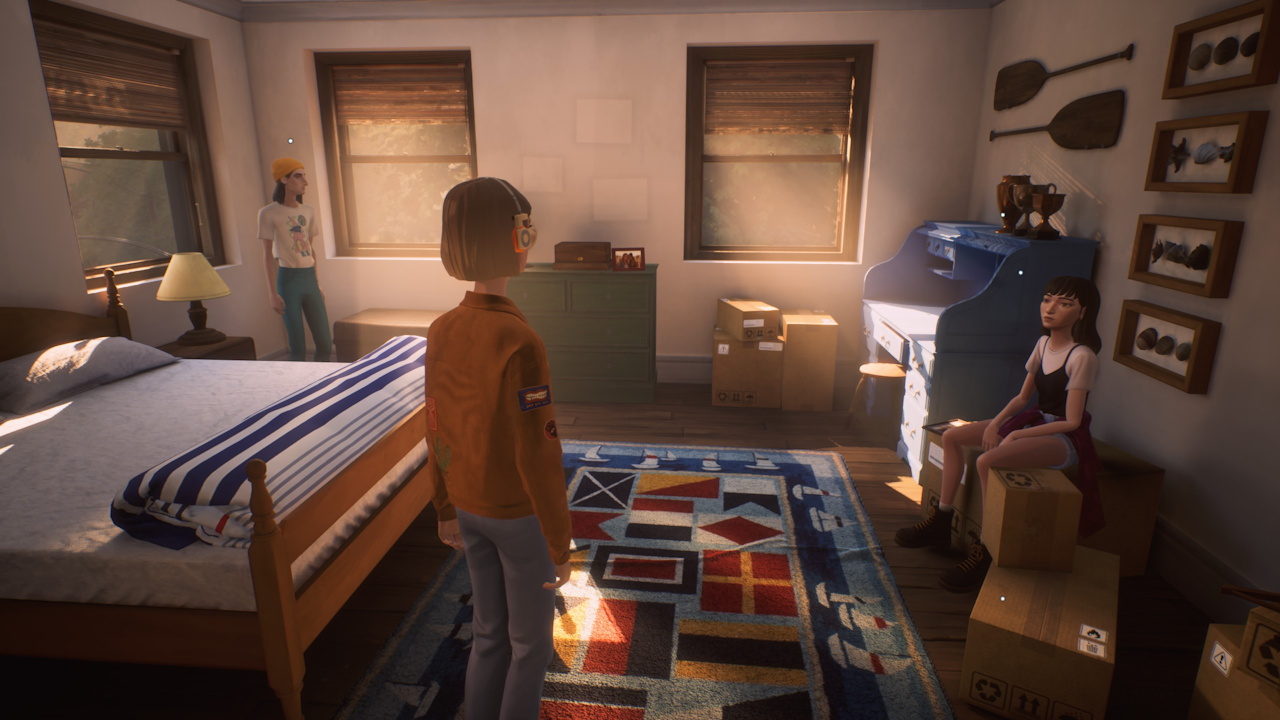
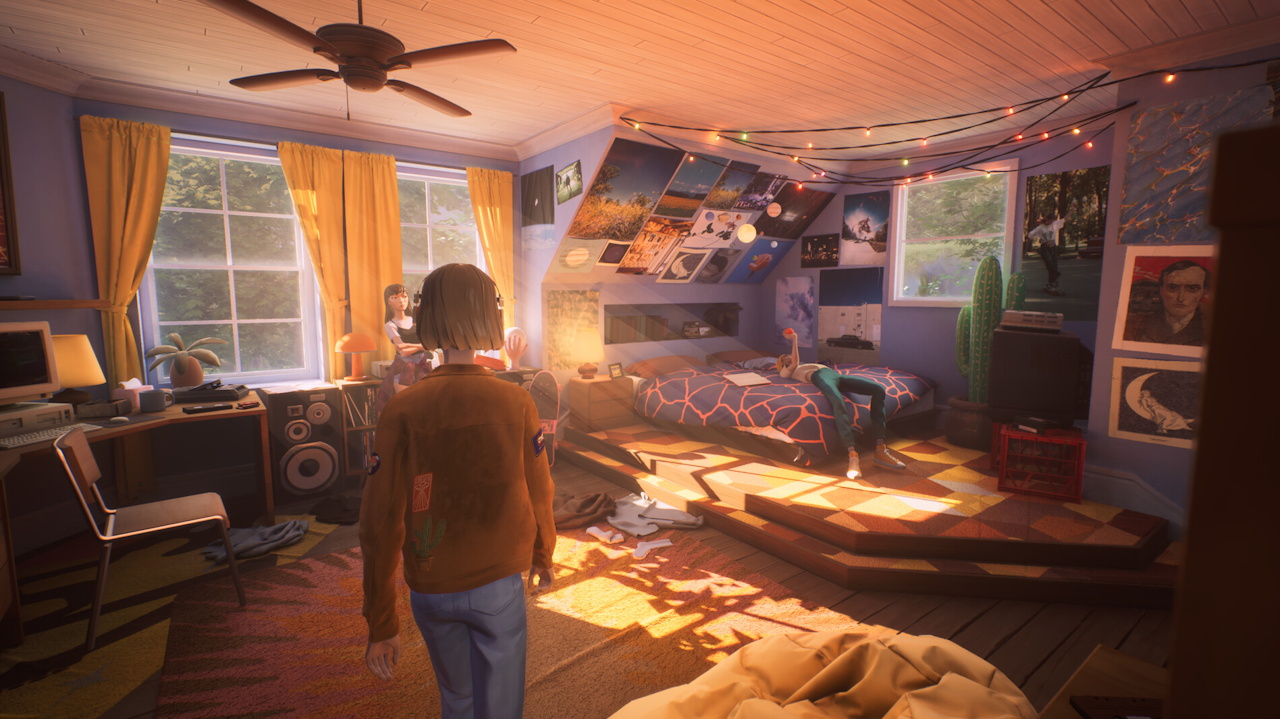
Mixtape’s explorable environments weren’t huge, but they were beautifully designed and well laid-out. They also had just the right amount of content for their size; they felt neither overstuffed nor too spread out and sparse, making walking around and examining things feel worthwhile. In terms of visuals, all three characters’ rooms looked… well, like typical teenagers’ rooms from that era. Like my old bedroom, or bedrooms of my friends – only a little larger, I guess, since this is set in America! Slater’s loft, in particular, reminded me of the attic bedroom of a friend of mine; a hangout spot that was conveniently located five minutes’ walk from our school, and where we spent a ton of time playing games and kicking back.

I liked the way the game indicated which interactions would advance the story and which would expand it – that kind of thing gives players the choice to dive deeply and explore a game’s world or to push through. Personally, because I was getting so into the story, I was happy to explore every nook and cranny, and I enjoyed practically all of the flashbacks, vignettes, and even just lines of dialogue from Stacey upon encountering an item in the level. These things added a ton of detail to the world and the backstories of the main characters.

Screenshot of Mixtape (2026) showing the main characters in Debbie's room
The white markers indicate optional interactions.

And on the subject of voice acting, Mixtape once again excels. Bella DeLong was fantastic in the lead role as Stacey, incredibly convincing as that kind of teenage character. Max Korman, Jessica Ma, Monique Thomas, and JB Tandena round out the major voice roles, and all of them did a great job at bringing their characters to life in a realistic, believable way. Given the game’s subject matter and art style, it might’ve been tempting to go over-the-top with some of the voice direction; I’m glad that Mixtape stayed on the right side of that line.

These were all compelling and interesting characters in their own ways, and voices that matched the tone that the game was going for was always going to be vitally important. In a narrative adventure like this, the story lives or dies on the strength of its characters, and a big part of getting me invested in these characters is the voice acting. I’m pleased to say it was excellent across the board.

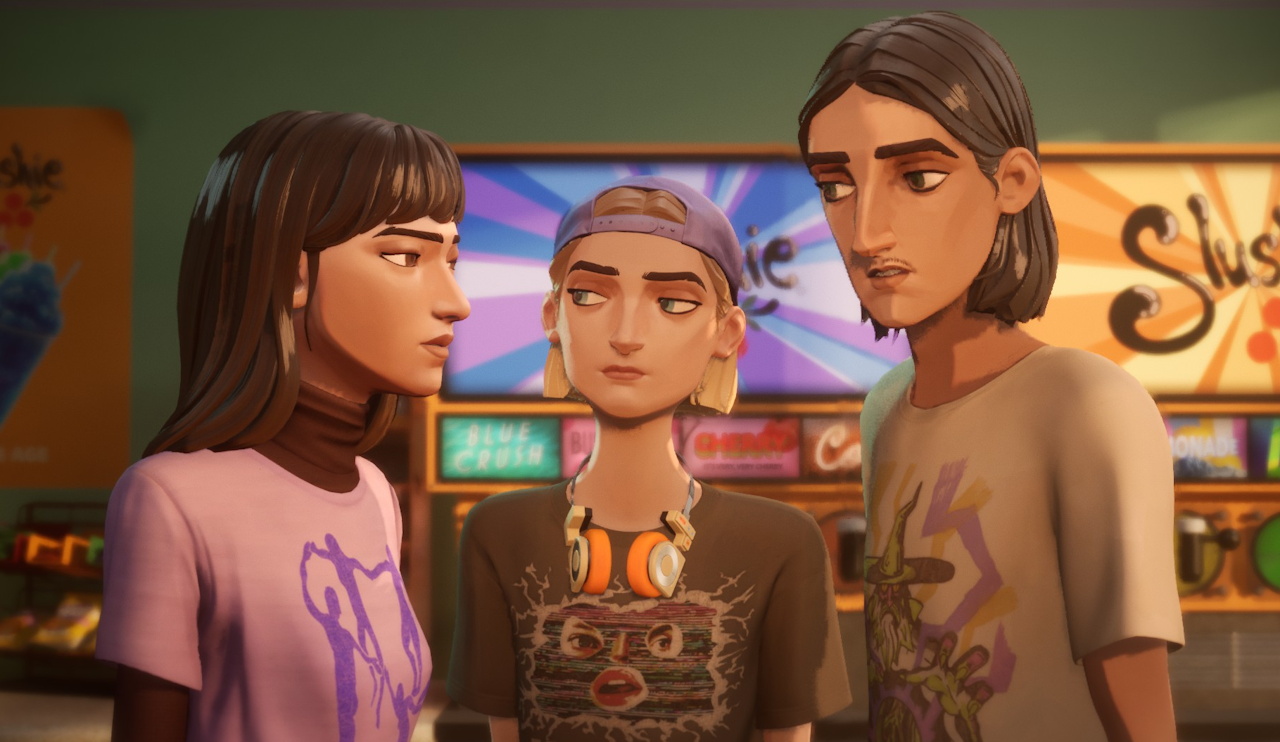
Screenshot of Mixtape (2026) showing Cassandra, Stacey, and Slater by the slushie machine
The main characters.

I suppose, for a game called “Mixtape”, we should actually talk about the soundtrack, eh?

It’s not a new thing for games to use popular songs in their soundtracks. Nor is it unique to Mixtape for a game to set a level or an action sequence to music. A memorable example for me would be Control – if you’ve played that game, you’ll know the level I’m referring to! But it is pretty unusual for a game to lean so heavily on its soundtrack, making the songs integral to the narrative itself, and incredibly important to the main character in particular.

Stacey is set up from the start as being incredibly passionate about music, and this extends to the way she introduces all of the songs in the game. Not only does she turn to the camera, breaking the fourth wall – as we discussed – but she explains why a song is relevant to the passage of gameplay or the narrative moment that we’re seeing or playing through. It heightens and elevates the soundtrack to draw attention to it in this way. And it goes without saying that the song choices were pitch-perfect.

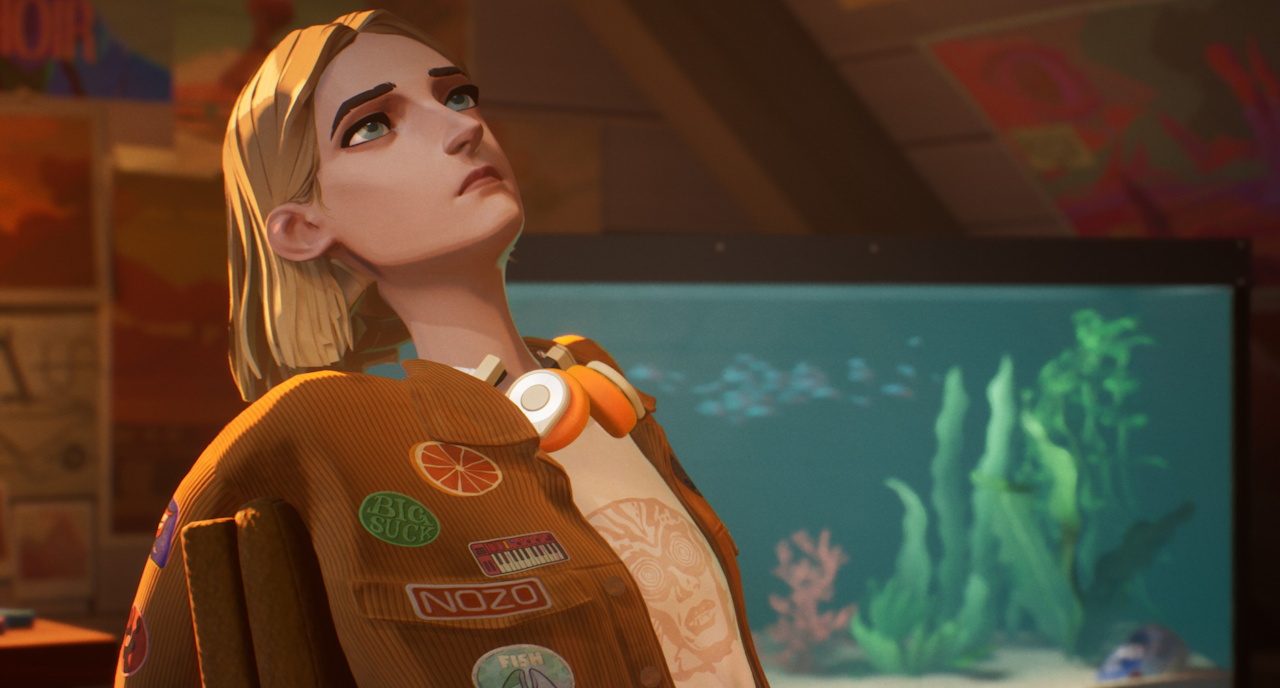
Screenshot of Mixtape (2026) showing Stacey by the fishtank
Stacey lives for music.

Mixtape was more eclectic with its music than I thought it might’ve been, so if you were worried that you won’t enjoy the game because you don’t like ’90s pop/rock songs… don’t be! There’s way more to it than that, and even tracks that I’d probably skip if they came up in a playlist worked well or at least felt in keeping with the narrative moment that they were part of. And really, there weren’t any songs on the game’s soundtrack that I actively disliked. There were a few forgettable numbers, sure; songs I’d never intentionally seek out or choose to listen to. But there were – to use some popular slang – plenty of bangers, too.

Two sequences really stand out to me – probably because they paired two songs I genuinely adore with two fun gameplay sequences.

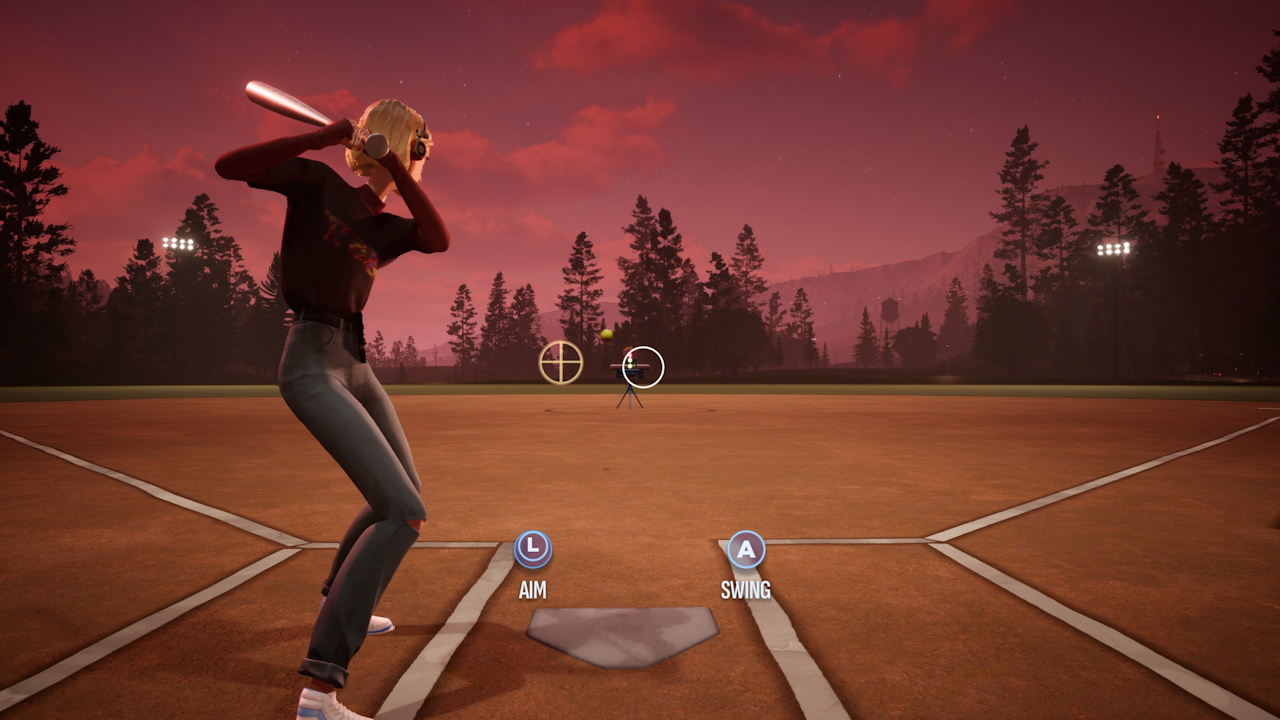
The first is the softball one: Stacey introduces Stan Bush’s The Touch as being the only sports-themed song she knows, but it really was just pitch-perfect for that moment. The QTEs were hard, sure, and I struggled with the analogue stick-and-button combo a lot of the time! But the soundtrack was great, and managing to land the perfect hit, then seeing a piece of the baseball stadium rising from the ground? It was magical.

Screenshot of Mixtape (2026) showing the softball mini-game
The softball mini-game. I sucked at it!

Then there’s the desperate race to get to Cassandra before her dad finds her. Set to John Paul Young’s Yesterday’s Hero, this entire sequence – which was perfectly timed to coincide with the song, by the way – felt like it came straight from the kind of coming-of-age movies that inspired Mixtape. I think that song is now gonna be forever tied to that video game sequence – running, jumping, and sliding with Stacey as she battled to make it in time to save Cassandra from her dad’s wrath. It was… beautiful. Touching. And just fantastic all around.

Aside from the sequences and levels we’ve already discussed, Mixtape had some other fun games and mini-games. The skateboarding mechanic, while not exactly as in-depth as something like Tony Hawk’s Pro Skater, was a lot of fun – and, again, another nostalgia blast. The skateboarding sequence with the explosions was incredibly fun and memorable, too! And what other game could make painting a door so… fun? I loved that you could stylise the door and then have it show up in future vignettes and chapters of the story, too.

Screenshot of Mixtape (2026) showing the painted door
The painted door… or at least my effort at it!

The drunken stumble through the video store was hilarious, and I felt Mixtape captured a character’s inebriated state in a way few games ever really manage to! Then there was slingshot shooting, rock-skimming, and even moving a couch that were all a ton of fun, creative, and just neat little mini-games. They aren’t necessarily things you could build an entire game around, but they work well as pieces of a larger whole. Not so keen on the kissing mini-game, though – but that’s just me!

I particularly enjoyed the slushie machine mini-game, and how the exact combo of slushie flavours would then show up in the subsequent cut-scene. I know it’s such a small thing, but it really was fun to mess around and experiment with different colours, seeing how the cup came together.

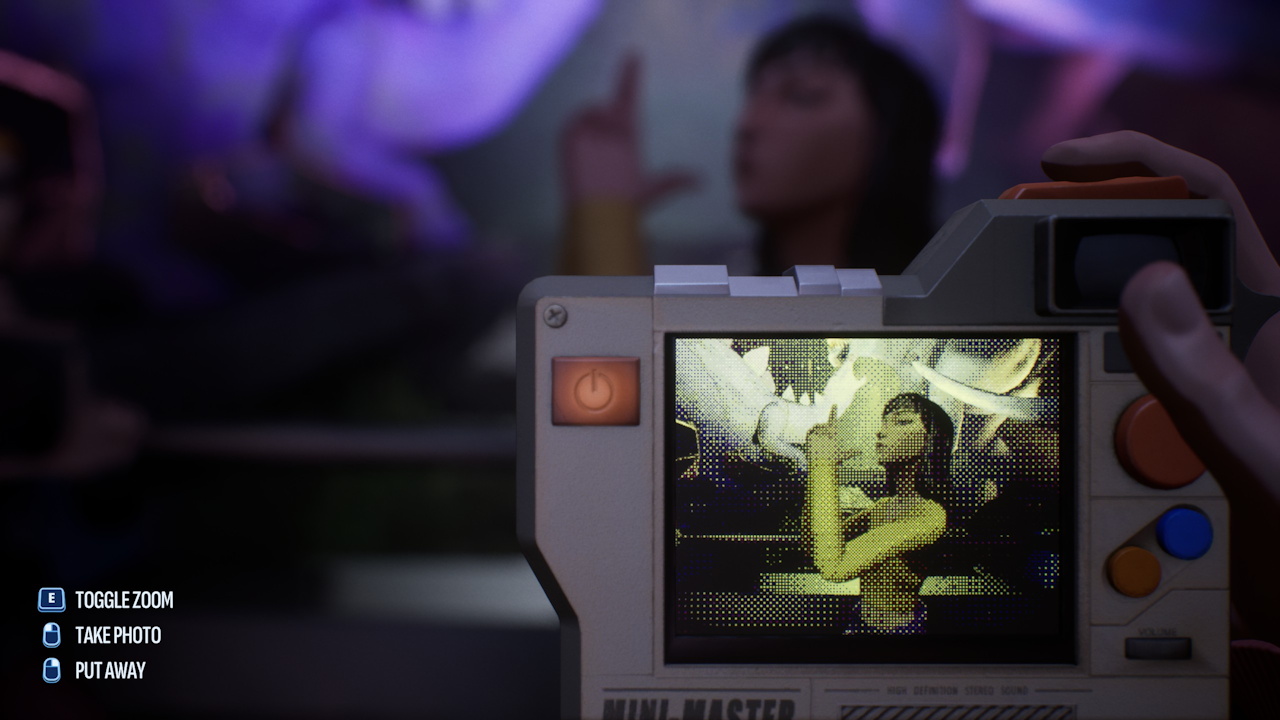
Screenshot of Mixtape (2026) showing the digital camera mini-game
Taking a photo of Cassandra.

And, of course, we have to mention the dinosaur theme park experience! One of the kids’ fondest memories involved sneaking into this abandoned Jurassic Park-inspired theme park, and messing around. The ride was the highlight, but I also enjoyed the camera mini-game, and how you could actually get some pretty creative shots, despite the limitations of the ’90s digital camera. The camcorder mini-game, in the final act, was in a similar vein, and I liked how you could film different partygoers and make these little vignettes.

So I think that’s everything I wanted to say.

Mixtape isn’t gonna be the right game for every player. But it’s confident in knowing what kind of game it wants to be – a narrative adventure. It’s bold with some of its storytelling choices and character beats. And it leans heavily into nostalgia and that sense of being a teenager again, going through that final goodbye before everything changes. And it absolutely *nails* that feeling in a way I just wasn’t expecting.

Screenshot of Mixtape (2026) showing Cassandra, Stacey, and Slater
I thoroughly enjoyed Mixtape.

I had a great time with Mixtape, and it’s a game I’ll be happy to recommend – to a certain kind of player! And speaking for myself, it’s a game I can already tell I’m going to want to return to every once in a while. It’s like a good film, in that sense – I don’t want to watch The Breakfast Club or St. Elmo’s Fire every day, but sometimes, when I’m in that nostalgic mood… I really enjoy them. And Mixtape is the interactive version of that kind of story.

Earlier this year, I reviewed Pragmata and Star Trek: Voyager – Across the Unknown. But if you want to check out titles a bit more similar to Mixtape – at least in some ways – I hope you’ll consider taking a look at my reviews of Indika and South of Midnight. If you liked Mixtape and you’re on the hunt for something to play next, I think either of those could be good choices. Click or tap the links to read my reviews of any of those titles.

And I still have several games in my pile that I hope to get around to in the next few weeks! If you’re interested in reviews of the likes of inKonbini: One Store, Many Stories, Mouse: P.I. For Hire, or Kioku: Last Summer, I hope you’ll stay tuned. I can’t *promise* reviews of all of them imminently, but they’re on my list, so to speak. Thanks for reading, and I hope this review has been useful, interesting and/or enjoyable for you! Happy gaming!


Mixtape is out now for PC, PlayStation 5, Nintendo Switch 2, and Xbox Series S/X consoles. Mixtape is the copyright of Beethoven & Dinosaur and/or Annapurna Interactive. Some promotional screenshots courtesy of Beethoven & Dinosaur/Annapurna Interactive. This review contains the thoughts and opinions of one person only and is not intended to cause any offence.