Spoiler Warning: There are spoilers ahead for Star Trek: Lower Decks Seasons 1-2 and the following Star Trek productions: The Original Series Season 2, The Next Generation, and Deep Space Nine Season 3.
With Lower Decks’ third season fast approaching, I wanted to write up a theory that I’ve had kicking around since the second episode of Season 2. Lower Decks’ episodic nature hasn’t lent itself to a ton of theory-crafting so far – although I do have at least one more in the pipeline, so stay tuned for that! – but this one feels plausible; it’s the kind of narrative choice that I could see the show’s writers making.
First of all, let’s briefly recap what happened to Ensign Boimler from the end of Season 1 to the beginning of Season 2. After impressing Captain Riker, Boimler took a transfer to the USS Titan at the very end of Season 1, leaving Mariner and the Cerritos behind and being promoted to the rank of lieutenant. Boimler would serve under Captain Riker for a short while, and one of the Titan’s assignments at this time involved following up with the newly-aggressive Pakleds.
Boimler got a transfer at the end of Season 1.
Lieutenant Boimler was assigned to an away mission to the planet Karzill IV as part of this assignment, and after getting caught in a firefight he was able to save the day and allow the rest of the team to make it back to the Titan. However, as this mission drew to a close a transporter accident created a duplicate – or clone – of Boimler, resulting in two identical Lieutenant Boimlers, indistinguishable from one another.
For seemingly arbitrary reasons, Starfleet decided that only one Boimler could remain aboard the Titan, and the other would have to take a demotion back to the rank of ensign and return to the Cerritos. After one Boimler returned to the Cerritos we’ve followed his actions, and the second Boimler hasn’t been mentioned since. But could that be about to change?
Boimler betrayed!
Although we were told that the two Boimlers were indistinguishable from one another – totally identical – the second Boimler, the one who remained aboard the Titan, seemed much more outgoing than the Boimler we’ve gotten to know. Not only that, but he seemed more than a little devious in tricking “our” Boimler to return to the Cerritos so that he could continue on the Titan and advance his career. Could we be looking at the beginnings of an “evil twin” (or “evil clone,” I guess) storyline?
It wouldn’t be the first time that such a story has appeared in Star Trek! Going all the way back to The Original Series we had stories like The Enemy Within that split Captain Kirk into two distinct personalities, one “good” and one “evil.” And of course there’s the classic Mirror, Mirror that showed our heroes’ evil alternate universe counterparts.
Two Captain Kirks!
The Next Generation followed this up by creating Data’s own “evil twin” – Lore. Lore would tangle with the crew of the Enterprise-D on more than one occasion, doing things like allying with the Crystalline Entity and raising an army of abandoned ex-Borg, as well as trying to corrupt Data and sway him to his cause.
Most significantly we have Thomas Riker, the first transporter duplicate in Star Trek and whose character clearly inspired the Boimler storyline in Kayshon, His Eyes Open. Not only was Thomas difficult to work with for William Riker after being rediscovered, but he would go on to rebel against Starfleet, join the Maquis, and even steal the USS Defiant from Deep Space Nine.
Thomas Riker.
Lower Decks has brought back a lot of Star Trek tropes and story beats, and many of them have been used for one-off gags or as cute callbacks to past events. It can be difficult to tell whether there’s some deeper meaning to the whole transporter duplicate story because of that. In the episode Kayshon, His Eyes Open it worked well as a surprising twist, a way to kick Boimler back to the Cerritos, and as a cute wink to fans of The Next Generation, especially considering Riker himself was present. The storyline could end there with Boimler’s twin never being mentioned again.
But at the same time, Lower Decks has used some of these classic Star Trek moments and story beats to set up longer arcs, or returned to them later. There’s a symmetry to some of the show’s episodes and storylines, too. The way the Cerritos saved the USS Archimedes in the Season 2 finale after having to be saved in the Season 1 finale is one of the best examples of this – and we could also point to the Pakled storyline itself as an unfolding multi-episode arc.
Captain Riker and the Boimlers.
I think we’ve laid out how it’s at least possible that there could be something more going on with the transporter clone and looked at previous examples of “evil twin” tropes in Star Trek. So that answers the question of “could it happen?” quite nicely – but that’s really just the beginning.
The matter at the heart of this theory is what direction such a story would take, how it could potentially impact (our) Boimler, and what it could do for the series as a whole.
If we look back to episodes like Datalore or Second Chances, I think it’s not unfair to say that those storylines didn’t go on to have a lasting effect. The creation of twins, clones, and duplicates hasn’t actually come to matter in a significant, ongoing way for any Star Trek character so far. Even when those twins made repeat appearances their stories tended to be confined to a single episode – or perhaps a two-parter.
Lore.
It was never really explained in any detail what impact Thomas’ emergence had on William Riker after the events of Second Chances. Even when Thomas returned in Deep Space Nine’s third season episode Defiant, the story unfolded from his perspective without any input from his doppelgänger.
Data’s conflict with Lore is perhaps the biggest of these storylines, with Lore being mentioned a handful of times outside of his main appearances. But because of Data’s nature, he wasn’t as emotionally impacted by Lore’s behaviour as other characters in a similar situation might’ve been. Data even expressed confusion in Second Chances as to the nature of the dispute between Will and Thomas Riker!
Thomas Riker in Defiant.
Although Lower Decks has been largely episodic, we’ve still seen some impressive character work across its first two seasons. The way Ensign Mariner in particular has grown into her role and come to resolve some of her issues with her mother, her friendships, and her position in Starfleet has been wonderful to see – and it’s this more serialised approach to characterisation (a hallmark of modern television storytelling) that could make an “evil Boimler” storyline different to what we’ve seen before in Star Trek.
Boimler’s issues with his transporter duplicate could have an impact on him that extends beyond a single episode – and that could take his character on a journey. Beginning with the sense of betrayal he surely felt at the duplicate’s duplicity aboard the Titan, Boimler could begin to forgive him, only to discover he’s up to no good. He could find it difficult to convince his friends at first, before showing them irrefutable proof of the clone’s misdeeds. And the whole experience of having to face off against someone who literally knows him inside and out and has shared every experience he ever had could both challenge and change him.
Boimler in Season 2’s We’ll Always Have Tom Paris.
We could see a more confident Boimler emerge from under such a storyline – but someone whose friendships have been pushed and stretched before eventually settling. Or we could see Boimler begin to second-guess himself; if the “evil” clone was Boimler himself, perhaps he’d wonder if being “evil” is part of his own nature, and that could cause him to freeze or find it hard to make decisions.
In short, there are a lot of ways that such a story could go – but almost all of them would be good for Boimler’s characterisation in the long run. We’d get a fun episode with the evil twin that could harken back to the likes of The Enemy Within, Mirror, Mirror, Datalore, and others – but the impact of that episode could reverberate across an entire season, giving Boimler a character arc that could be very satisfying to see unfold.
Are we in for some Boimler-on-Boimler action?
So that’s it for now! The theory is that Boimler’s transporter duplicate will – in classic Star Trek tradition – turn out to be evil!
For the reasons laid out above, I think such a story could be fun and interesting. Moreover, I like the idea of the fallout from Boimler’s conflict with his “evil twin” not being confined to a single episode and potentially setting him on a season-long arc as he processes what happened and what it means for himself and his friends. Going down that road could feel deeply cathartic – with Boimler filling in for other Star Trek characters in similar situations who never got the chance to deal with the longer-term implications of what they went through!
I hope this was a bit of fun. Please keep in mind that I have no “insider information” and I’m not trying to claim that any of this will happen in Lower Decks either imminently or in Season 4. I just think it’s a fun concept, and while all the pieces seem to be in place for such a story, it could be that the transporter duplicate will (in the best tradition of Star Trek) never be mentioned again!
Star Trek: Lower Decks Seasons 1-2 are available to stream now on Paramount+ in the United States and on Amazon Prime Video in the UK and around the world. Season 3 will premiere on the 25th/26th of August 2022. The Star Trek franchise – including Lower Decks and all other properties mentioned above – is the copyright of Paramount Global. This article contains the thoughts and opinions of one person only and is not intended to cause any offence.
The fallout from the atrocious and unfair Star Trek: Discovery decision rumbles on. The ViacomCBS share price continues to tumble in the wake of their truly awful decision to piss off most of the fans of their biggest franchise, the rollout of Paramount+ continues at a snail’s pace with no specific launch dates even entering the conversation, and unfortunately we’re now seeing some divisions in the fandom itself, with North American Trekkies pitted against those of us in the rest of the world as arguments break out over the series. What a stinking mess.
At time of writing, both Star Trek: Prodigy and Star Trek: Discovery are “Paramount+ exclusives” all across the world – meaning the shows are locked behind a paywall that fans can’t actually pay for because the incompetently-managed streaming service hasn’t launched in the vast majority of countries and territories. I feel even worse for Trekkies in Australia, Latin America, and Scandinavia in some ways, though, because although Paramount+ has already arrived there, Discovery Season 4 still hasn’t been made available. If you needed any more evidence that ViacomCBS is one of the worst-run corporations in the entire entertainment industry, look no further than that arbitrary nonsense.
The logo of the mediocre streaming service at the heart of all these problems.
But Prodigy and Discovery aren’t the only Star Trek shows in production at the moment. In 2022 Trekkies have been promised Star Trek: Picard Season 2, Strange New Worlds Season 1, and Lower Decks Season 3 at a minimum. In the wake of the truly selfish and awful Discovery decision, however, I can’t help but feel very nervous about each of those shows. Will Trekkies around the world be able to enjoy any new Star Trek in the months ahead? Or will we see repeat after repeat of the Discovery mess?
Strange New Worlds seems all but certain to be denied any kind of international streaming deal. If you’re hoping to see the series hit Netflix or Amazon Prime Video, you might as well forget it – it’ll be a Paramount+ exclusive for sure. What that means in effect is that anywhere in the world without Paramount+ will miss out on Strange New Worlds. That feels like such a sure thing right now that I’d put money on it.
Don’t bet on seeing Captain Pike on your screens next year. At least not through the usual channels…
Currently, Picard Season 2 is scheduled for a February premiere. If the season runs for ten episodes, as Season 1 did in 2020, it’ll conclude sometime in late April or early May, meaning that Strange New Worlds could debut anytime around then – and certainly well before the middle of the year. At present, the UK and parts of Europe are promised Paramount+ in “early 2022” – which could be before the Strange New Worlds premiere, but it could also be long after the show has kicked off in the United States. And unfortunately, many countries and territories in Asia, Africa, and the rest of the world have no planned launch for Paramount+ at all, which means it could be 2023 or later before the service launches there. If it survives that long.
I simply don’t believe the promises ViacomCBS has made of an “early 2022” launch. Paramount+ has been so poorly managed and so incompetently handled by the corporation that a delay to these plans feels inevitable, so I’m not betting on the service launching here before the end of 2022. But even if, by some miracle, ViacomCBS actually manages to launch Paramount+ on time in Europe, that could still mean Strange New Worlds and Picard Season 2 won’t be broadcast simultaneously with North America.
Picard could well be pulled from Amazon Prime Video before Season 2.
As mentioned, Paramount+ has already arrived in Australia, Latin America, and Scandinavia – and it isn’t exactly brand-new, they’ve had it since March. But despite that, Discovery Season 4 isn’t being shown there at the same time as it’s being shown in North America… so even being very generous to ViacomCBS and assuming that the incompetent morons manage to get Paramount+ to the UK and Europe in “early 2022,” that still doesn’t necessarily mean we’ll be able to watch any of the new shows on the damn thing.
As I discussed the other day, ViacomCBS paid Netflix a large sum of money to ensure that Discovery Season 4 wouldn’t be available around the world. If they had done nothing, the show would’ve come to Netflix under existing contracts and licenses – but the corporation chose to intervene, hoping to boost sign-ups to Paramount+ (though the backlash may have actually cost the platform subscribers thanks to a fan-led boycott campaign). What’s to stop ViacomCBS from doing the same thing with Amazon Prime Video, the current home of Lower Decks and Picard?
Will Amazon Prime Video lose its Star Trek shows, just like Netflix?
One of the stupidest and most offensive things about the Discovery decision is that Paramount+ is unavailable across most of the world. If ViacomCBS had pulled Discovery from Netflix because Paramount+ had already launched and they wanted to keep their own shows on their own platform, it would still be frustrating, and the timing would still be awful, but at least there’d be a vague logic to it. But because Paramount+ isn’t even available, the decision has locked the show behind a paywall that no one is able to pay for. Which, as I’ve argued on more than one occasion, means you have the absolute moral justification to pirate the series.
But this kind of decision could well be repeated. I doubt very much that Paramount+ will be available here in the UK by February, in time for Season 2 of Picard. And on current form, there’s nothing to stop ViacomCBS from doing to Amazon Prime Video what they’ve just done to Netflix – pulling the series from broadcast with days to spare. I don’t think it’s safe to assume we’ll be watching Picard Season 2 on Amazon Prime Video… let alone Lower Decks Season 3, which likely won’t be broadcast until later in the year.
Lower Decks Season 3 could also be going exclusively to Paramount+.
Rather than the Discovery mess being a one-time thing, I think as international fans we need to get used to the idea that, at least for the next year or so, watching Star Trek along with our North American friends may not be possible – or at least may not be possible via conventional methods. Picard Season 2 and Strange New Worlds Season 1 feel the most vulnerable, but realistically we’ll soon see the entire franchise disappear behind Paramount+’s paywall – regardless of whether Paramount+ is actually available.
I’d like to be proven wrong, of course, but I fear that this is the direction of travel for Star Trek as we move into 2022. This will not be a move free of long-term consequences for ViacomCBS. The corporation’s share price continues its fall, many Trekkies have pledged never to subscribe to Paramount+, and one of the biggest single pushes toward piracy since the advent of streaming will lead many fans and viewers to realise just how easy it is to pirate the latest episodes – making it even harder for Paramount+ to tempt them back in future.
A decision intended to push fans toward Paramount+ has actually led to piracy – and threats to boycott the platform.
As self-defeating as these plans may be, don’t expect to see ViacomCBS move away from them. And if you’re especially unlucky, living in a region of the world that ViacomCBS has apparently forgotten even exists, it may be the case that Paramount+ never arrives – or if it does it won’t be till 2023, 2024, or beyond. Star Trek has always told stories of people coming together – of a United Earth free from borders and division. But the ViacomCBS board haven’t even watched their own shows, or if they did the message went far over their shrivelled little profiteering heads.
I don’t want to be the bearer of bad news, but as I see it, the Discovery decision is just the first of many. Strange New Worlds, which has never had an international broadcaster announced, will certainly be a Paramount+ exclusive. Picard Season 2 and Lower Decks Season 3 could very easily follow the Discovery model and be pulled from Amazon Prime Video. And the rest of the Star Trek franchise? Currently the older shows are on Netflix, but the films aren’t. However, I wouldn’t bet on being able to watch any Star Trek series next year unless you have the DVD or are prepared to sign up for Paramount+.
The Star Trek franchise is the copyright of ViacomCBS. This article contains the thoughts and opinions of one person only and is not intended to cause any offence.
Spoiler Warning: There are spoilers ahead for Star Trek: Lower Decks Seasons 1-2. Spoilers are also present for the following Star Trek productions: Picard Season 1, Discovery Season 2, and The Next Generation.
Where has the time gone?! It seems like just yesterday that we were settling in for the premiere episode of Star Trek: Lower Decks Season 2, and now we’re already waving goodbye to the series as the season comes to an end. With a couple of weeks until Prodigy premieres – at least for folks lucky enough to have Paramount+ – and with Discovery Season 4 still a month away, there’s going to be a gaping hole in my entertainment schedule!
In the days ahead I’d like to take a look back at the season as a whole, so I hope you’ll stay tuned for that here on the website. But for now we’ve got one final episode to get stuck into, so let’s talk about First First Contact!
The episode’s title card.
The episode was surprisingly emotional, presenting the crew with a difficult scientific problem to solve and pushing them to work together, harder than ever before, to save both a stricken starship in jeopardy and an entire planet. It brought back a well-liked character from The Next Generation, gave all four ensigns moments of character development, and had a stunning climax that both mirrored the finale of Season 1 while showing how far the Cerritos and her crew have come. And then, to cap it all off, First First Contact ended on a truly shocking cliff-hanger – one we’ll have to wait until next summer to see resolved!
Sometimes Lower Decks has felt like it’s bitten off more than it could chew, with too many characters and story threads in play such that some or all weren’t all they could have been. But despite First First Contact giving each of its main characters a role to play, as well as bringing in guest stars and recurring characters, it primarily stuck to one main story throughout and thus allowed everyone to participate in that story in a way that felt natural. No character felt under-used, and the story was well-paced.
There were a lot of characters in play in First First Contact.
There were a handful of minor contrivances that we should acknowledge. In order to give all four ensigns a significant role in the story, particularly after three of the four were sidelined last week, the plot of First First Contact did include a little forced drama. There’s nothing wrong with that sometimes, and it isn’t a criticism! But things like Tendi being transferred and Rutherford’s sudden concern about saving backup memories did feel a little contrived. It was done to give everyone a role in the story as well as to give each of the four a strong emotional moment, so I think it’s excusable in that context.
Usually I’d pick on one storyline or sub-plot that I felt was the weakest, but honestly on this occasion every aspect of the episode feels as strong as every other. The drama began during the pre-titles sequence, when Ensign Mariner overheard that Captain Freeman will be offered a transfer to a bigger and better ship – and won’t be able to bring any of her crew or senior staff with her. From there the episode continually upped the stakes, resulting in a tense, exciting, and emotional episode. It was a wild ride from start to finish!
Mariner overheard the news of Captain Freeman’s promotion.
Since we mentioned Captain Freeman, let’s start there. It makes sense that, in light of her achievements particularly with the Pakled conflict but also in other areas, that she’d be a promotion target. She’s been a strong captain across the show’s first two seasons, and I’m sure that Starfleet is always on the lookout for officers like Captain Freeman. We’ve heard on a number of occasions that California-class ships are pretty low down in the Starfleet hierarchy, so transferring a senior officer from a “lowly” post to a more significant post is something I can absolutely imagine the organisation would do – it is, after all, a meritocracy.
What I didn’t like about this transfer storyline was the notion that Starfleet command appears to have essentially written off people like Billups, Shaxs, and especially Freeman’s first officer Commander Ransom. This is one of the aforementioned plot contrivances, as it was necessary for the senior staff to be upset with Captain Freeman to give this aspect of the story some more weight. But purely from an in-universe point of view, I didn’t really like that Starfleet was basically saying that the senior staff of the Cerritos are California-class quality and can never be anything more than that. It kind of undermines the meritocratic nature of the organisation that we were just celebrating!
Apparently Starfleet doesn’t rate California-class officers very highly.
It was interesting to see the senior staff and Captain Freeman at odds with one another, though. That’s something Lower Decks hasn’t really tried before, and it worked well. Both sides are right in their own ways – Captain Freeman wanted to wait for the right moment to discuss the subject, especially with an important mission at hand. But the rest of the senior staff had every right to be upset at being kept out of the loop.
Mariner was, of course, the instigator of this drama. But her arc across the episode didn’t undermine her character progression that we’ve come to see and love over the past two seasons. Her acting out on this occasion wasn’t caused by a desire to be a chaotic troublemaker, but actually came from a place of genuine love. She’s come to enjoy working with her mother, especially since the events of Season 1’s Crisis Point and the unveiling of their family connection in Season 1’s No Small Parts. The idea that she was going to lose her mother after having only recently begun to enjoy their new dynamic was something she found impossible to deal with at first, prompting her to tell the senior staff and cause what she knew would be a fight.
Mariner spilled the beans on purpose.
In some ways, the argument between Mariner and Freeman earlier in the episode – in which Mariner told the captain she’d never want to work with her ever again – did feel regressive. In the moment it seemed as though the progress Mariner had made in her relationship with her mother – which was also reflected in her attitude toward working in Starfleet – was slipping back to its early Season 1 state. But as the story moved along and we came to understand why Mariner was so upset it all made perfect sense and the pieces fell into place.
One of my favourite things about Lower Decks over its first two seasons as a whole has been the way Ensign Mariner’s characterisation has been handled, and First First Contact was the icing on the cake. We got to see firsthand just how much serving with her mother has come to mean to her, and how devastated she was at the thought of losing her. It wasn’t, as she claimed at first, because Captain Freeman would protect her from getting court-martialled! She genuinely came to care about their rebuilt relationship, and that changed her attitude toward at least some of the work she does as an ensign. It’s been a wonderful transformation to see play out, and it needed two full seasons with these moments scattered along the way to properly unfold.
Captain Freeman and Mariner have a heart-to-heart on the bridge.
We also got a moment between Tendi and Mariner that built on their solo adventure in We’ll Always Have Tom Paris earlier in the season. As Mariner was struggling, it was Tendi who snapped at her and finally got her to see sense. I loved her line about friendship, it really knitted together all of the loose ends of Mariner’s season-long character arc. We’ve learned how she’s been avoiding making friendships and pushing people away because she fears losing those friends when they inevitably move on, but as she found with Rutherford, Tendi, and Boimler she doesn’t have to be frightened of that. That conversation prompted her to rush to the bridge and have a heart-to-heart with the captain in what was perhaps the sweetest moment in the entire episode.
Jennifer the Andorian has been a background character this season, and if I were to nitpick Mariner’s storyline in First First Contact I’d say that the Jennifer rivalry wasn’t as well-developed as it could’ve been prior to its resolution at the end of the episode. We’d seen Mariner mention her a couple of times, particularly in the season premiere, Strange Energies. But Mariner’s big rivalry with a secondary character in Season 2 came with Jet in the episode Kayshon, His Eyes Open. There was enough of a Mariner-Jennifer conflict to make the way they resolved things work – and I loved seeing Jennifer come to Mariner’s rescue – but it could have been developed further before they sat down together.
Mariner and Jennifer the Andorian made up in the end.
I wasn’t certain if Mariner’s line about “liking” Jennifer when they talked in the bar meant that she has a crush or some kind of romantic feelings toward her, though Jennifer’s reaction seemed to suggest that. Mariner has previously said that she’s dated males, females, and non-binary people, so I think we can infer that she’s pansexual and would thus not be averse to dating someone like Jennifer. Watch this space, because I think it could be interesting to give Mariner a romantic relationship in future.
Rutherford’s story was perhaps the shortest this week. He spent much of his time with Tendi, racing around the ship after she misunderstood Dr T’Ana and felt she was going to be transferred. The Tendi-Rutherford pairing has always worked well, and the pair revisited some of their earlier haunts, including the Jefferies tube where they spent time together in the episode Envoys back in Season 1.
Tendi and Rutherford back in the Jefferies tube.
His main concern this time came from his missing memories, and his desire to never again forget any part of his friendship with Tendi. It was very sweet that Rutherford would be so cautious about backing up his memories after losing them at the end of Season 1, but as with the only other real mention of this storyline this season, I feel like this story came a bit late in the day. Rutherford’s memory loss could have been more than Lower Decks ultimately made of it, and while this week it did lead to a couple of sweet moments both with Tendi and with Billups, I still feel it could’ve been handled better overall.
The visual gag of the pop-up was funny, though, and gave Rutherford a reason to let Tendi guide him – literally as well as figuratively. We know from episodes like Crisis Point that Rutherford has a great respect for Billups, so it made perfect sense for Billups to be the one he’d turn to for advice. He listened to Billups’ advice too, eventually deleting his backups to free up space in his implant.
Rutherford went to Billups for advice – both technical and emotional!
Rutherford’s cyborg status had never been called into question. Everyone on the crew simply accepted him for who he was, and that appeared to be that! However, First First Contact has set up an interesting mystery in regards to Rutherford’s cybernetics: who were the mysterious figures seen augmenting him, and if he didn’t choose to be augmented voluntarily, why does he have his implant? I have no doubt this will be explored in Season 3, so watch this space!
Lower Decks has never been particularly bothered about borrowing themes and character types from Discovery, preferring instead to focus on The Next Generation era. But in Rutherford we have a character who has at least some similarities to Discovery’s Airiam – a character who really only came into her own shortly before her death in Season 2. Airiam was similarly a cybernetically-augmented human, though her cybernetics were a result of an accident she suffered. Rutherford’s suppressed memories could hint at a similar fate – perhaps he was injured while on some clandestine assignment for Starfleet. Maybe Section 31 are involved! In future I might write up some of my guesses about Rutherford’s pre-augmentation past, so be sure to stay tuned for that.
Who could these mysterious figures be? And what did they do to Rutherford?
Though it went somewhat understated in the episode, Rutherford came up with the idea that ultimately saved the day – for the second season finale in a row! It was his plan to jettison the Cerritos’ outer hull that allowed them to make it through the asteroid field in time to save the USS Archimedes, and in an episode that wasn’t all about Rutherford it was nice that he got one of the most significant story moments. First First Contact had several key moments that mirrored the Season 1 finale, No Small Parts, and this was the first of them.
It never seemed plausible that Tendi was so bad at her job that she’d be kicked off the ship, and as mentioned this storyline did feel a little contrived. But it gave Tendi the opportunity to spend time with Rutherford and to give Mariner the talk that she needed to come to her senses and fix her relationship with Captain Freeman. I think it gets a pass in that regard!
Tendi eavesdropping on Dr T’Ana.
“Overhearing something and misunderstanding it” is a bit of a sitcom cliché, but it was generally handled well in the episode, and the moments where Tendi felt like she had to run and hide from Dr T’Ana were kind of funny. It ultimately led to a cute resolution with the pair hugging it out – and Dr T’Ana purring! I’ve said on a number of occasions that I love how Lower Decks has played up the cat-like features of Dr T’Ana, and this was yet another example of that.
However, as a concept I’m not really sure I follow what this storyline wanted to say. Though medical and science are related departments they’re hardly the same thing, and transferring someone who wants to work in medical to a science position doesn’t necessarily feel like a promotion. To be fair, Tendi has never really settled into a specific role in a specific department on the ship – only Rutherford really feels settled as an engineer; the other three ensigns appear to get a variety of different roles depending on the needs of individual episodes. But having Tendi in sickbay has generally worked very well.
Tendi and Dr T’Ana share a hug at the close of their storyline.
Tendi makes for a great medical officer, both from an in-universe and story point of view. We saw this firsthand this week when her quick thinking, ability to stay calm, and medical training helped her save Boimler’s life. Her kindness is a stark contrast to Dr T’Ana’s grumpy nature when dealing with patients, and she’s always seemed to know a lot about biology and medical science – even creating her own animal, The Dog, in the Season 1 episode Much Ado About Boimler. I just didn’t feel that Tendi was in any way trying to position herself for a transfer to a more scientific role, and as recently as I, Excretus a couple of weeks ago seemed thrilled at the idea of taking on the role of chief medical officer.
I wonder if this is just another contrivance for the sake of this episode, and whether we’ll actually see Tendi assigned to scientific bridge duties beginning in Season 3. It would be no bad thing to give her moments on the bridge, particularly if Mariner and/or Boimler are also present at the helm or navigation positions, so perhaps this should be seen more as an expansion of Tendi’s roles aboard the ship rather than a straight transfer. Hopefully shuffling her out of sickbay – if indeed it does happen – won’t mean we get to spend less time with Dr T’Ana; she’s one of my favourite characters!
Dr T’Ana is undeniably awesome.
Boimler got some sweet moments this week. Making a banner for Captain Freeman – based on the famous “Captain Picard Day” banner that recently reappeared in the premiere episode of Star Trek: Picard – was incredibly cute, and I’m never not impressed with Boimler’s enthusiasm for his ship, his captain, and all things Starfleet.
He also got to save the day, diving down to release the final exterior hull panel while Mariner rushed to the bridge. Mariner, as mentioned, definitely needed this moment with Captain Freeman to resolve their conflict, but I liked that it gave Boimler the chance to play the hero for a change. We’ve seen Boimler step up while under pressure before, particularly in the episode Kayshon, His Eyes Open earlier in the season. But on this occasion his actions saved two starships and a whole planet – so that’s pretty great going!
Boimler saved the day!
The change in Boimler’s characterisation across Lower Decks’ first couple of seasons has been more subtle when compared with what we’ve seen from Mariner, but when we see Boimler being prepared to take on a difficult task like this, it’s hard to see how the Boimler we met at the beginning of Season 1 would’ve had the confidence to do so. His friendships with Tendi, Rutherford, and especially Mariner – as well as his jaunt aboard the Titan – have seen him grow in confidence. He still has his anxieties and neuroses, but he’s become a more confident person since we met him. That arc has likewise been incredibly satisfying, and culminates in moments like this one.
Are the dolphins aboard the Cerritos Earth dolphins, do we think? It was certainly implied that they could be based on their familiar dolphin chittering! If so, it raises a very interesting question: is Earth now home to more than one sentient life-form? We’d seen with the Xindi that multiple sentient races can evolve on a single world, so it isn’t impossible! Dolphins are, from a real-world point of view, very intelligent. So are crows, so maybe Lower Decks could introduce us to a sentient crow one day! Crows have, after all, recently entered their very own stone age. That might sound bonkers, but it’s true.
Two dolphin Starfleet officers.
It was very sweet that First First Contact brought back the character of Sonya Gomez. We first met her in Q Who, back in Season 2 of The Next Generation, and in the years since she’s clearly done very well for herself – rising all the way to the rank of captain. Lycia Naff, who played the character in The Next Generation, made a welcome return to Star Trek to reprise her role.
Captain Gomez got a very sweet, very poetic moment with an ensign on the bridge of the Archimedes that harkened back to her famous clumsy moment with Captain Picard in Q Who. For us as the audience – and perhaps for the actor too – that moment was a cute way to bring things full-circle, as well as showing off just how much Gomez has grown and changed over the course of her career. She’s in charge of an Excelsior-class ship – and the design of one of my favourite ships was beautifully incorporated into Lower Decks’ animated style.
Captain Sonya Gomez of the USS Archimedes!
Unlike a couple of other guest-stars across both seasons of Lower Decks, Captain Gomez’s role felt substantial. She and her ship weren’t on screen the entire time, but the role they played was significant, both as a driving force for the events of the episode but also in its own right as the reappearance of a significant and well-liked character. It was handled well and it was great to see Captain Gomez in action once more.
In a moment of symmetry with the Season 1 finale, this time the USS Cerritos got to be the ship that saved the day! In No Small Parts the Titan, under the command of Captain Riker, came racing to the aid of the Cerritos when the battle against the Pakleds seemed to be going badly. In First First Contact it was the Cerritos that swooped in to save the Archimedes – and a bridge officer aboard Captain Gomez’s ship even used the same line as Boimler in the Season 1 finale: “it’s the Cerritos!” That moment really got me; it was perfectly poetic, and a fantastic way for the story to end.
“It’s the Cerritos!” A poetic moment of symmetry.
First First Contact presented the crews of the Cerritos and Archimedes with a scientific problem, not a military one. It’s easy to think that Star Trek is at its most exciting and action-packed when there are enemies to fight and battles to participate in, but for me the franchise has always been at its best when it’s looking at exploration and scientific puzzles. First First Contact absolutely epitomises the spirit of Star Trek as a show about science, exploration, and the wild, wonderful, and occasionally dangerous galaxy that awaits humanity beyond Earth.
By presenting the crew with a scientific puzzle, one that wasn’t easy to solve, First First Contact showed how amazing and exciting Star Trek can be when there are no Borg or Klingons or Pakleds bearing down on our heroes. The episode was so well-paced that we really got a sense of this race against time to get the ship ready to race through the asteroids and rescue not only the Archimedes but the planet it was threatening to crash into.
The episode gave the crew a science-based problem to overcome.
I was a little concerned, particularly as Commander Ransom did his best to navigate the asteroid field, that there’d be some kind of deus ex machina ending – the Archimedes would have saved itself or another ship (like the Titan) would have beaten the Cerritos to the punch, with the joke being that all of the crew’s hard work was for nothing. As a comedy series first and foremost, that kind of storyline is always a possibility. But having seen Captain Freeman and the whole crew go to so much effort such an ending would have really fallen flat, and I’m glad that, on this occasion at least, Lower Decks allowed the crew a huge win.
Rescuing the Archimedes was a very emotional moment in what was already an emotional story. The crew came together, despite their initial differences, and pulled off a one-of-a-kind rescue mission. We’ve never seen the likes of this in Star Trek before, yet the idea of stripping off a ship’s outer hull when not at warp feels like it fits perfectly with what we know of the way starships work. It was a fantastic story idea, and it came to fruition perfectly in the finished episode.
The Cerritos tractors the Archimedes to safety.
So we come to the final scenes! After expecting to be offered a promotion, Captain Freeman was arrested by Starfleet security, charged with bombing the Pakleds’ homeworld. This was a truly unexpected twist; it had seemed as though wej Duj last week wanted to draw a line under the Pakled conflict storyline. It was, somewhat unfortunately, the second “misunderstanding” scene after Tendi’s conversation with Dr T’Ana, but I guess that couldn’t be helped.
This epilogue was almost certainly added into the episode later, once the team knew that Season 3 was officially confirmed, as it didn’t flow at all from anything else in the story. It’s left Lower Decks on a cliff-hanger – one which we’ll have to wait a long time to see resolved! That’s not new for Star Trek, of course, as many seasons have done something similar in the past. It was definitely a shocking twist, and it was very well-executed. Even as Captain Freeman walked into the room I had no idea what was about to happen.
Captain Freeman was arrested – and we’ll have to wait almost a year to find out what happens next!
Obviously we know Captain Freeman is innocent – and surely she’ll be able to prove that. But we won’t get to see how that happens until Lower Decks returns next year (well, I hope it’ll be next year!) so I guess we’ll have to sit on our hands until then! Did the Pakleds accidentally blow up their own planet? Or did the rogue Klingon commander from wej Duj plant the bomb as a contingency plan to ensure war would break out? There are a few different possibilities – but if Season 2 has been any guide, Lower Decks won’t go down any path that we might expect!
So that was First First Contact – and that was Lower Decks Season 2! There were a couple of episodes that didn’t hit every high note that I’d have wanted, but overall the season as a whole was fantastic. We got some incredibly fun Star Trek hijinks with the crew of the Cerritos, plenty of unexpected twists and turns, the return of several classic characters, and some wonderful moments of characterisation and drama. It’s been an outstanding ten weeks – and I can hardly wait for Season 3.
Stay tuned here on the website, because sometime soon I’ll write up a retrospective look at Season 2. There are also a couple of theories relating to the Pakled bomb and to Rutherford’s background that might get the full write-up treatment in the run-up to Season 3. Although Season 3 is undoubtedly a long way off – ten months or more, at least – if and when we start to get information about the series, casting announcements, or a teaser trailer I’ll also be taking a look at those as well. It’s sad to bid farewell to Lower Decks – but it’s only a couple of weeks now until Prodigy arrives!
Star Trek: Lower Decks Season 2 is available to stream now on Paramount+ in the United States, and on Amazon Prime Video in the UK and around the world. The Star Trek franchise – including Lower Decks and all other properties mentioned above – is the copyright of ViacomCBS. This article contains the thoughts and opinions of one person only and is not intended to cause any offence.
Spoiler Warning: There are spoilers ahead for Star Trek: Lower Decks Seasons 1-2.
wej Duj – which is Klingon for “three ships” – was an exceptionally funny episode, and certainly one of the highlights of Season 2. What makes it stand out is that much of the humour came not from the main cast, nor even from secondary characters like the senior staff, but from guest-stars who gave us a glimpse at life on the lower decks of both Klingon and Vulcan ships.
Lower Decks promised us right from the beginning that we’d be looking at junior officers who get the worst assignments, so taking that concept and expanding it to show us the same kind of people on other vessels felt incredibly natural. It’s one of those ideas that just makes sense – and leaves you wondering why you didn’t think of it sooner!
The title card – in Klingon!
The episode skipped the usual pre-titles sequence, so after the opening titles rolled we were straight into the action. The title of the episode was displayed in Klingon (or should that be Klingonese?), which was a very neat little touch. As an aside, wej Duj is the first Star Trek episode – out of more than eight hundred – to have a Klingon title!
The setup for the episode was interesting, and gave us a rare glimpse at a starship during a period of downtime. Most episodes naturally focus on adventures of one kind or another, yet when you think about it, at least some interstellar travel is going to be dull, waiting for the ship to arrive at its next destination. We’ve seen glimpses of that in episodes like Voyager’s Season 5 opener Night, but this was its first appearance in Lower Decks. As above, this concept feels like another natural fit for the series – showing us what some of the junior officers get up to while the ship is warping to its next destination.
Dr T’Ana and Tendi enjoying some downtime together.
wej Duj used that premise as an excuse to shuffle the ensigns off-stage, and the story progressed without much significant involvement from Mariner, Rutherford, or Tendi. Boimler got a B-plot of sorts as he tried to buddy up to Commander Ransom. This sub-plot relied on a lot of sitcom-style “cringe” humour as Boimler pretended to be from Hawai’i to ingratiate himself with Ransom and a couple of other officers.
This kind of humour, popularised by shows like Friends, isn’t always to my taste. While Boimler’s story definitely had some funny moments, its reliance on a sitcom cliché premise made it the lesser part of the episode – at least in my opinion. The way it ended was definitely amusing in its irony, though, as it turned out that neither Ransom nor any of the others were in fact from Hawai’i either – all having made up the same lie at different times.
Though it wasn’t bad per se, Boimler’s sub-plot featured a style of humour that I generally don’t enjoy.
The main thrust of the episode focused on two guest-stars: junior Klingon officer Ma’ah, played by Jon Curry, and Vulcan lower decker T’Lyn, played by Gabrielle Ruiz. Pinning the bulk of an episode on two brand-new characters was a risk, but it was one that paid off and worked exceptionally well.
Both characters – and their supporting cast of fellow lower deckers and the senior officers aboard their respective ships – were exceptionally funny in completely different ways. The juxtaposition of two of Star Trek’s best-known races was at the core of what made this comedy work; seeing the aggressive, barbaric Klingons drinking bloodwine and engaging in fights to the death then immediately hopping over to the stoic Vulcans who showed no emotion was key to making the episode as funny as it was.
T’Lyn (left) and Ma’ah were the breakout characters from wej Duj.
wej Duj was also a very well-paced episode. In barely twenty minutes it had to bring together multiple story threads that began in very different ways and different places. It also had to balance three entirely disconnected segments and sets of characters, giving each enough screen time to allow for some development and for story beats to play out naturally. Not only did all of this work, with the pacing of each character’s story feeling just right, but wej Duj also connected the events every character experienced into the Pakled storyline that has been running since the end of Season 1!
I haven’t been afraid to criticise Lower Decks earlier in Season 2 when episodes felt overcrowded. Some potentially interesting storylines just didn’t get quite enough time to be fully-realised, and I stand by those criticisms. wej Duj was already an incredibly ambitious episode, considering everything it had to include, but seen in that light I think the fact that the writers, producers, and editors managed to pull it off is nothing short of remarkable.
There were a lot of different elements packed into a single episode this week, and the way they came together was brilliantly-executed!
It would’ve been easy to overlook one or more of the different stories considering the episode’s runtime and just how many characters and ships were in play. It really is a triumph of writing – and undoubtedly editing as well – that wej Duj worked as fantastically well as it did.
The Klingons were featured prominently in Star Trek Into Darkness as well as the first two seasons of Discovery, where some elements of their redesign proved to be controversial. Lower Decks returned the Klingons firmly to their familiar look – the one present from The Motion Picture right through to Enterprise. And as much as I enjoyed some of the Ancient Egyptian influence present in Discovery’s Klingon redesign, it felt absolutely wonderful to be back with the Klingons in their best-known aesthetic and to spend time aboard one of their ships again.
Commander Togg and other Klingon officers aboard the bridge of their Bird-of-Prey.
The aesthetic of the Klingon Bird-of-Prey on the inside was again very much in line with prior depictions. Everything from the lighting to the design used for Klingon computer monitors could’ve been lifted straight from Deep Space Nine or The Search for Spock – and I loved that the lower deckers were forced to sleep in hammocks that made the ensigns’ hallway look palatial in comparison!
The Vulcan ship was clearly based on the design of ships seen in Enterprise. Though Starfleet is the Federation’s main military and exploratory force, throughout Star Trek the Vulcans have been depicted as maintaining their own fleet of ships alongside Starfleet, so I don’t think it’s in any way a canon problem to have a Vulcan cruiser like this in Lower Decks. The relative power of the Vulcan cruiser compared to the USS Cerritos, which was on full display in the climactic battle, was very reminiscent of the way Vulcan ships would constantly outclass and outmatch the NX-01 in Enterprise – a neat little understated callback to Star Trek’s first prequel.
T’Lyn’s Vulcan cruiser at warp.
With the Klingon commander in league with the Pakleds, T’Lyn and Ma’ah – and later the USS Cerritos – were all drawn to the same place. The Pakleds had detonated a bomb given to them by the Klingon commander in the hope of destabilising peace in the Alpha Quadrant and sparking a war, and while Ma’ah challenged his commander, T’Lyn and the USS Cerritos both detected the residual after-effects of the Pakleds’ weapon detonation.
This moment set up the storylines coming together, and it was based once again on the Pakleds’ stupidity, which was pretty funny. The way Commander Togg reacted to the Pakleds’ detonating the bomb he’d provided was one of the funniest moments in the whole episode! Captain Riker had speculated that someone had been manipulating the Pakleds to become so aggressive, and wej Duj gave us the answer – a rogue Klingon commander.
It turns out that a rogue Klingon commander has been arming the Pakleds and pushing them to attack the Federation.
As Discovery showed in its first couple of seasons, there’s plenty of life in the Klingons as villains. When stories get their warrior-barbarian culture right, the Klingons can feel very threatening indeed. I’d point to the Deep Space Nine Season 5 episode Nor the Battle to the Strong as just one example of that. But having seen the Klingons as allies throughout Deep Space Nine’s Dominion War in particular, and having had sympathetic characters like Worf, B’Elanna Torres, and General Martok, making the Klingon Empire as a whole an enemy once again wouldn’t be my first choice in Star Trek any more.
wej Duj found a clever way around this by giving us a character somewhat inspired by The Undiscovered Country’s General Chang. By making it clear that Togg was acting on his own, without the backing of the Klingon High Council or Chancellor – which should be Martok at this point in time, surely! – the story managed to be interesting and entertaining, but without dragging the Federation and Klingons into open conflict with one another. I think many Trekkies like the Klingons far better when they’re allies, with their aggressive nature turned on mutual enemies, than when they come into direct conflict with Starfleet – and I’m generally in that place too. While the Klingons can and do make entertaining villains, I enjoyed the way they were portrayed in The Next Generation and Deep Space Nine and would be loathe to see them as enemies once again.
The Klingons made a welcome return in a semi-adversarial capacity.
T’Lyn and her Vulcan colleagues also provided the episode with plenty of humour. The absolutely deadpan way that all of the Vulcans spoke to one another was hilarious, and the way they interpreted very politely-worded statements as emotional outbursts or insults was a very funny send-up of Vulcan culture from Lower Decks’ writers.
Though they featured prominently in the images shown off before the episode’s broadcast, wej Duj only contained brief scenes involving Tendi, Mariner, and Rutherford. I’d have liked to have seen a little more of the ensigns and their “bridge buddies” during their down time. Tendi’s rock-climbing outing with Dr T’Ana was a cute reference to The Final Frontier, which saw Kirk, Spock, and Dr McCoy enjoying shore leave at Yosemite national park. Rutherford’s pottery-making class with Shaxs actually contained a very sweet moment between the two, with Rutherford calling Shaxs “Papa Bear” when the latter became angry and upset by Boimler mentioning Bajor.
This moment between Rutherford and Shaxs was surprisingly touching.
Mariner didn’t appear to be enjoying her time with Captain Freeman at first, as the pair engaged in some mother-daughter bonding time on the holodeck and later in the captain’s ready room. But as they parted ways, both admitted that they had a good time together – another very sweet moment, and further evidence of the change in Mariner’s character and attitude that we’ve been tracking since midway through Season 1.
As the crew of the Cerritos scrambled to their posts from their leisure activities, the ship was awash with out-of-uniform officers. It was a pretty funny mix of characters in different outfits, and the sight gag of characters in everything from ball gowns to winter coats worked very well. It also showed that the crew are capable, despite serving on a “lowly” ship. These are still professional Starfleet officers, after all!
The crew of the USS Cerritos dropped what they were doing to rush to their posts!
Two questions remain now that wej Duj is over. Firstly: is the Pakled threat now over? Their reliance on Klingon weaponry has now been exposed, and with Commander Togg dead there isn’t anyone left to manipulate the Pakleds and push them closer to all-out war, so perhaps the threat is now largely at an end. I feel that the Pakleds have been very funny in Lower Decks as adversaries, but the way they’ve been presented has left them feeling like a one-trick – or one-joke – pony. Perhaps the “Pakleds are really dumb” joke has run its course, even though there was plenty of humour derived from that premise this week. Better to end it before it outstays its welcome, though!
Secondly, the end of the episode saw T’Lyn dismissed by her Vulcan commander and forcibly reassigned aboard a Starfleet vessel. Could she be making her way to the USS Cerritos, perhaps? T’Lyn provided ample humour in her own incredibly Vulcan way in wej Duj, and while there probably isn’t room for a fifth lower decker as a major character, bringing her in as a recurring character or in a different department could be an interesting way for the series to go as Season 3 beckons. It’s probably not going to happen… but you never know!
T’Lyn has been reassigned – could we see her aboard the Cerritos one day?
The worst thing about wej Duj is that now it’s over that means there’s only one episode left in Lower Decks Season 2! The ten-episode seasons that many modern television shows use are a double-edged sword in some ways. We get more shows, and the episodes that are made generally get a higher budget as a result. But it does mean that seasons seem to race by very quickly! I’m sure that Lower Decks has a suitably explosive finale planned for the end of the season, though.
wej Duj was a completely different kind of episode for Lower Decks. It saw guest-stars take centre-stage for the first time, and the episode was largely carried not by anyone aboard the USS Cerritos but by a pair of Klingons and some stoic, bickering Vulcans. Seeing the life of lower deckers on a couple of different ships was an absolutely outstanding premise, and wej Duj pulled it off with aplomb. The complicated story was expertly weaved together as it reached its climax, and appears to have exposed and perhaps resolved the lingering Pakled threat.
I had a lot of fun with wej Duj, and it will go down as one of the highlights of Season 2 without a doubt. It was funny almost from the first moment, with suitable moments of tension as the complex four-starship battle unfolded. It’s set a high bar for next week’s season finale!
Star Trek: Lower Decks Season 2 is available to stream now on Paramount+ in the United States, and on Amazon Prime Video in the UK and around the world. The Star Trek franchise – including Lower Decks and all other properties mentioned above – is the copyright of ViacomCBS. This article contains the thoughts and opinions of one person only and is not intended to cause any offence.
Spoiler Warning: There are spoilers ahead for Star Trek: Lower Decks Seasons 1-2, particularly the episode Where Pleasant Fountains Lie.
This article deals with the subjects of sex and sexuality and may be uncomfortable for some readers.
Growing up asexual is difficult. We live in a world that seems to revolve around sex and sexuality much of the time, with an awful lot of music, art, and entertainment dedicated to relationships and to sex. Graphic depictions of sex on screen may be a relatively recent phenomenon, but even in the 1980s and 1990s sex was a frequent subject on television, in cinema, in music, and in practically every other form of media.
Even the arrival on the scene of more lesbian, gay, bisexual, and trans characters in media didn’t bring all that much respite. Who people were having sex with changed, but the fact that they were having sex – and spent much of their time pursuing it in one form or another – had not. The growth in LGBT+ representation in media has been fantastic (though it is still far from perfect) but speaking for myself as an asexual person, it didn’t always succeed at resonating with me. I still felt alone, that my perspective wasn’t being represented.
The asexuality flag or asexual pride flag.
In the couple of “sex education” lessons that I was given at school, there was no mention of the LGBT+ community, let alone asexuality. Sex was something that “everyone” had and wanted to have, and between the depictions and talk of sex in all forms of art and media through to peer pressure from my adolescent peer group, it was inescapable. The only people who might be celibate were monks, nuns, Catholic priests, and losers who couldn’t find a date. That was the way sex and sexuality appeared at the time I was discovering my own.
In the time and place where I was growing up, away from the more liberal and cosmopolitan cities, even being homosexual was considered something abhorrent, let alone being trans, non-binary, or asexual. People didn’t understand what any of those terms meant because they’d never been exposed to it, and even being suspected of being a “poof” or a “bum boy” was enough to send the bullies into a frenzy.
The new “progress” LGBT+ pride flag.
The process of “normalising” – and gosh do I hate that term – asexuality can only begin when asexuality is visible. There may be a handful of asexual activists both within and outside of the broader LGBT+ movement, but generally speaking the level of visibility remains low. Without that visibility, understanding and acceptance can’t follow. The same is true of any minority group – including transgender and non-binary.
It’s for this reason that I get so irritated when I hear people talking about “too many” gay characters on television, or how “in-your-face” LGBT+ representation feels. It’s like that specifically because these groups have been so underrepresented for such a long time, and by making LGBT+ depictions more overt and obvious, it raises awareness and draws attention to the LGBT+ movement and the quest for acceptance within society as a whole.
Greater representation of LGBT+ people is still needed.
Since I went public with my asexuality, I’ve started displaying the asexual pride flag right here on the website. You can see it in the upper-right corner both on PC and mobile devices. I do that deliberately with the express intention of raising awareness and pointing out that asexual people exist in all areas of life. My chosen subjects here on the website are entertainment – Star Trek, video games, sci-fi and fantasy, among others. But there are asexual people in all walks of life and with as broad a range of interests as everyone else.
Being open about my asexuality was a choice that I made in part because of the lack of representation and lack of awareness many folks have of asexuals and asexuality. Even by offering my singular perspective on the subject in a small way in my little corner of the internet, I feel like I’m doing something to advocate for greater awareness and greater visibility, because without those things I fear that asexuality will never be understood. And without understanding it’s very hard to see a pathway to broader acceptance of asexuality in society.
Title card for Where Pleasant Fountains Lie.
So we turn to Star Trek. As an adolescent dealing with some of these issues surrounding my sexuality, the Star Trek franchise – and other sci-fi and fantasy worlds – could offer an escape. Science fiction and fantasy tend not to be as heavily reliant on themes of sex as, say, drama or even comedies can be, and I think that may have been a factor in my enjoyment of Star Trek: The Next Generation during its original run.
Despite that, the Star Trek franchise is hardly nonsexual. Characters like Captain Kirk and Commander Riker are well-known for their many relationships, and episodes like The Naked Time and Amok Time, while never showing as much overt sexuality as some more modern shows, do reference the subject. Even characters who have proven popular in the asexual community – like Spock and Data – had sexual relationships. While the Star Trek franchise has been at the forefront of many battles for representation – famously showing the first interracial kiss and with episodes like Rejoined promoting LGBT+ issues – asexuality itself had never been overtly referenced in Star Trek.
Characters like Data have been talked about in an asexual context before.
Though the depiction of Lower Decks’ chief engineer Andy Billups wasn’t explicitly about asexuality, his story in Where Pleasant Fountains Lie presented the first significant analogy for asexuality in the Star Trek franchise – and one of the first ever on television, certainly the first that I’ve ever seen. In typical Star Trek fashion, the episode looked at the subject through a science fiction lens, with Billups’ unwillingness to have sex being tied to the medieval-spacefaring culture from which he came.
Star Trek has often done this. Rather than explicitly referencing a contemporary issue, writers will devise an in-universe comparison. The Doomsday Machine featured a planet-killing superweapon in an analogy about nuclear proliferation. In The Hands Of The Prophets told a story about Bajoran religion clashing with secular teaching in a story that was clearly about the creationism/evolution debate but that made no explicit references. Likewise we can say that Where Pleasant Fountains Lie is a story about asexuality – but one seen through a Star Trek filter.
The episode told a story about asexuality through a typical Star Trek lens.
As an asexual person watching the episode, I was floored. For the first time, a character in Star Trek shared my sexuality and feelings about sex. More than that, as the Hysperians’ plot to trick Andy Billups into having sex reached its endgame, the poor man looked so incredibly uncomfortable and ill at ease with what he was about to do. I’ve been there. I’ve been Andy Billups in that moment, and to see that portrayal was incredibly cathartic.
When I was fifteen I lost my virginity, succumbing to the pressure from my peer group and having talked myself into it. I thought that by doing so I could convince others – and myself – that I was “normal,” just like everyone else. Never having heard the term “asexual,” nor understanding that the way I felt about sex and genitalia was valid, I convinced myself that I must be the one who was wrong, that I was broken and that my sexuality simply did not exist as I now understand it. In that moment I felt a great deal of trepidation. This wasn’t simply the anxiety of one’s “first time,” but I was forcing myself to do something that I fundamentally did not want to do; something that disgusted and repulsed me.
I related to Billups so much during this sequence.
If you’re heterosexual, I guess a reasonable comparison would be having sex with a same-sex partner. Even if you could talk yourself into it, it wouldn’t feel right. And vice versa if you’re homosexual; having sex with an opposite-sex partner would feel fundamentally wrong. That’s the expression that I saw stamped on Andy Billups’ face in Where Pleasant Fountains Lie, and if I had looked in the mirror on that day in my mid-teens – or on any of the other occasions on which I talked myself into having sex with partners both male and female – I would have seen the exact same thing.
I believe that this is the power of representation. To truly see myself reflected in a fictional character has been an entirely new experience for me, and no doubt for other asexual folks as well. Lower Decks may be a comedy series, but this storyline has become one of the most powerful that I’ve seen in all of Star Trek. It was the first time I ever saw my sexuality represented on screen, and for as long as I live I will be able to go back to that moment and point it out to other people. There is finally an understandable, sympathetic metaphor for asexuality on screen.
Chief engineer Andy Billups: asexual icon!
As I stated in my review of Where Pleasant Fountains Lie, the depiction of Billups wasn’t perfect. There was a jokiness and a light-heartedness to elements of the story that clashed with the heavier themes that were present. But in spite of that, Billups’ story resonated with me. It’s an incredibly powerful moment to see any kind of asexual representation, and although there were jokes at Billups’ expense in the episode, he came across incredibly sympathetically. He even had his entire team cheering for him and chanting his name at the end – celebrating how he remained true to himself and didn’t have sex.
No asexual person should ever feel that they’re obligated to have sex. Sex education classes need to include asexuality alongside the rest of the LGBT+ spectrum so that asexual kids and teenagers can understand that the way they are is normal and valid. But education is only one thing that needs to change. Representation in all forms of media is exceptionally important too, and even a single depiction of a secondary character in one episode is already the best and most powerful asexual story that there has been in a long time – possibly ever. As more people become aware of asexuality and understand its place alongside heterosexuality, bisexuality, homosexuality, and other sexual orientations, the stigma or prejudice against asexuals and asexuality that exists in society will – in time – decrease.
Whether intentional or not, Lower Decks has joined the conversation and brought asexuality to mainstream attention in a way that I’d never seen before. It’s now possible for me to point to Where Pleasant Fountains Lie to show anyone who’s interested to learn more about asexuality and to see it represented on screen. That opportunity didn’t exist before, and I’m incredibly grateful to Lower Decks for this episode, this character, and this powerful story.
Star Trek: Lower Decks Season 2 is available to stream now on Paramount+ in the United States, and on Amazon Prime Video in the UK and around the world. The Star Trek franchise – including Lower Decks and all other properties mentioned above – is the copyright of ViacomCBS. This article contains the thoughts and opinions of one person only and is not intended to cause any offence.
Spoiler Warning: There are spoilers ahead for Star Trek: Lower Decks Seasons 1-2. Spoilers are also present for Star Trek: Discovery Season 1 and Star Trek: Picard Season 1.
I, Excretus was an exceptionally funny episode. Where other episodes of Lower Decks this season have offered a mixture of comic moments and drama, this week the comedy started in the first moment of the story and didn’t let up until the very end. Though the crew were put in peril thanks to the actions of a rogue drill instructor, the entire story was light-hearted and funny, with the villainous Shari Yn Yem played in an incredibly over-the-top way.
The episode had a “Saturday morning cartoon” vibe, feeling like a story in the vein of classic cartoons such as Wacky Races or Scooby-Doo, Where Are You. For the first time this season, all four ensigns and all four main members of the senior staff participated in a single story. Each of the ensigns had their own moments in the spotlight, but every drill they participated in and every action they took all played into the same overarching plotline.
“We won’t let you get away with this!”
This makes a change from the way Lower Decks has often operated. There wasn’t a B-plot this time to balance things out, and though Boimler spent much of the episode focusing on his own drill this still connected to the rest of the story in a significant way. As a result of bringing its characters together, everyone felt like they had a significant role to play; no character felt extraneous or unnecessary. And because there was only one real story to focus on, with no need to bring in side-characters or send anyone on their own mission, the entire episode felt well-paced.
I’ve commented on a couple of Lower Decks episodes this season that didn’t manage to strike the right balance in terms of stories and characters – usually as a result of trying to cram too many plotlines and characters into a single twenty-minute timeframe. But there’s no denying that I, Excretus doesn’t have that problem!
It was great to bring the show’s main characters together for a change.
Lower Decks has been rather odd in the way it’s used some returning characters and actors from past iterations of Star Trek. John de Lancie as Q and Robert Duncan McNeill as Tom Paris both felt under-used in the episodes they appeared in, and if I were to make one criticism of I, Excretus it would be that Alice Krige’s role as the (holographic) Borg Queen was incredibly minor. It’s another case where it was wonderful to welcome back an actor from Star Trek’s past, but I would’ve liked to have seen her given more than just a couple of lines.
Sticking with the Borg, although Boimler was only facing off against them in holographic form, it’s still the first time we’ve seen active Borg drones in modern Star Trek. Star Trek: Picard Season 1 featured scenes set on a derelict Borg cube, and of course brought back Hugh, Seven of Nine, and other ex-Borg. But there was never any danger posed by the Borg; no threat of assimilation, no legions of drones, etc. It was actually great fun to see a semi-Borg story for the first time in such a long time in Lower Decks – even if it was just a simulation!
Boimler’s Borg encounter was a fun element of the episode’s storyline.
The design of the Borg was particularly neat. The entire aesthetic, from the drones to their ship, was right in line with their earlier appearances in The Next Generation, complete with larger “helmets,” black undershirts, and so on. Though the design of the Borg hasn’t changed that much, by the time of First Contact and Voyager they’d taken on a more streamlined look. Lower Decks brought back what I guess we could call “original” Borg, and that made their inclusion in the story even more fun.
As a complete aside, how much fun would it be to give Lower Decks a proper Borg story sometime? An episode structured like I, Excretus would be perfect, too, with the ensigns and senior staff all having to work together to overcome their cybernetic enemies. Of course the USS Cerritos wouldn’t do well against a Borg cube… but perhaps they could have trouble tangling with a Borg scout ship or probe! For a moment as the episode drew to a close I actually wondered if Boimler’s “assimilation” would be something the series would return to next week, perhaps even ending on a cliffhanger. But I suspect the season will close out with the return of the Pakleds either this week or next. Still, I’m officially putting it out there: a Lower Decks Borg episode would be fantastic!
Boimler faced off against the Borg Queen this week… albeit in holographic form.
The drill format and the use of what looked like portable mini-holodecks allowed I, Excretus to be absolutely jam-packed with throwbacks to past iterations of Star Trek. The episode’s entire premise gave the writers an excuse to delve deeply into Star Trek’s past, picking out classic episodes and thrusting members of the Lower Decks crew into those scenarios. It worked exceptionally well, and there were overt references to The Original Series, films, and The Next Generation that all slotted seamlessly into the plot.
It was also a lot of fun to welcome back a Pandronian. These “colony creatures” were first encountered in The Animated Series, but for obvious reasons proved impractical to depict in any of the live-action shows. Lower Decks has had a number of references to The Animated Series, and this latest one was neat too. Apparently the Pandronians are now on friendlier terms with the Federation than they were in Captain Kirk’s day!
The episode’s villain, Shari Yn Yem, was the first Pandronian seen in Star Trek since The Animated Series.
I, Excretus had a fun opening gag, but unfortunately it was one that had been spoiled by pre-release trailers. Though it was a lot of fun to see the ensigns accidentally abandoned by the Cerritos while on a spacewalk, knowing that it was coming kind of robbed the moment of much of its humour. As I said shortly before Lower Decks Season 2 premiered, the marketing team seemed to go overboard with throwing out trailers, clips, and mini-teasers in the run-up to the season premiere. I actually ended up switching off and not watching all of them specifically because I wanted to avoid this feeling.
This is something I call “the Simpsons Movie phenomenon” – named for the incredibly bad way that film was marketed. Long story short, by the time I sat down to watch The Simpsons Movie I’d literally already seen every single good joke, visual gag, and funny moment because they were all included in the trailers! Lower Decks isn’t that bad – at least not yet – but it’s definitely something the marketing team should keep in mind. There’s a line to walk between getting viewers interested in an upcoming production and revealing too much, and Lower Decks has definitely come close to skirting that line sometimes. The entire opening of the episode prior to the titles set up this one joke – the ship warping away and leaving the ensigns behind. But a lot of folks will have already seen that moment because it was included in full in the trailers, depriving it of much of its impact. Though the episode as a whole was fantastic, and that moment at the beginning is quite funny, it’s something that I feel the show’s marketing team need to be aware of.
This moment had been shown ahead of time in the trailers for Season 2.
The opening joke came back into play later in the episode, and this is something Lower Decks has excelled at, particularly during Season 2. What seem to be one-off gags or jokes disconnected from the rest of the story actually prove to be important later on – such as the anbo-jyutsu match in Mugato, Gumato. Though the show still makes abundant use of throwaway jokes and one-off scenes, the fact that some seemingly innocuous moments end up connecting to the plot in a big way is testament to the quality of the writing. As a viewer it keeps us on our toes – we can’t be sure what’s just a joke and what might be important to the plot!
A big part of I, Excretus was showing how both the ensigns and senior staff struggled when forced to switch roles. This kind of team-building exercise can be important to morale, and perhaps we’ll see a future episode or story make reference to the lessons that the characters learned this week. Tendi’s story in particular highlighted this aspect of the episode – being put into a situation drawn from The Next Generation Season 5 episode Ethics, she came away from the experience with a great deal of respect for the decisions Dr T’Ana has to make on a daily basis.
Having the characters swap roles gave them a greater appreciation for their colleagues and the work they do.
Mariner was the character we spent the most time with during this portion of the episode. She got three separate drills whereas the others only got one each. Her first drill harkened back to Mirror, Mirror from The Original Series, complete with classic Terran Empire uniforms. Though the Mirror Universe has never been a personal favourite of mine, I’d actually be interested to see Lower Decks’ take on the setting in future. The glimpse we got this time was tantalising, and just like the Prime Timeline’s Cadet Tilly was a captain in the Terran Empire, maybe the alternate universe could shake up the command structure of the Cerritos as well. Captain Mariner, perhaps?
Her second drill took her to The Original Series again, this time the third season episode Spectre of the Gun. I’ve always had a bit of a soft spot for this Wild West-themed story, and though it didn’t take up a lot of time in the episode it was still neat to see. It also led to the revelation from Captain Freeman that Mariner took horse-riding lessons for two years, which was kind of cute.
Mariner during her Wild West drill.
Finally, Mariner got to experience polywater intoxication first-hand. And my goodness, if folks thought that Mugato, Gumato was “too adult” a couple of weeks ago, this sequence must’ve made their heads explode! As the holographic crew suffered from the strange affliction seen in The Original Series first season episode The Naked Time and The Next Generation first season episode The Naked Now, they engaged in all kinds of debauchery, much to Mariner’s shock and disgust.
There will be criticisms of that sequence, especially considering the weirdly squeamish, reactionary response to a five-second clip in Mugato, Gumato, and Lower Decks will have to face up to that. Some fans simply don’t like this style of humour. But as I said when I talked about this issue in more detail, as someone who is asexual I’m one of the people that you’d think would be offended or upset by these kinds of sexual jokes. But again, as with the moment in Mugato, Gumato, I just didn’t think it was a problem at all. In fact, some of the individual jokes during this sequence – such as Ransom getting a spanking and Mariner’s horrified reaction to it – actually made me chuckle.
Mariner did not enjoy this particular drill…
Rutherford got a Wrath of Khan-inspired moment during his drill, but unlike Spock was unable to sacrifice himself to save the ship. It was actually really cool to see the “monster maroon” uniforms in animated form, as well as to catch a very brief glimpse of what I assume would be the USS Enterprise in its refit configuration. Rutherford didn’t get as much screen time during this part of the episode, but his scenes harkened back to one of the best Star Trek films.
At first the senior staff thought they’d got it made! But as their drill ramped up and they were left in a cargo bay to stack crates while all manner of excitement seemed to be happening outside, they quickly became frustrated. Lower Decks originally promised us a look at the mundane activities away from the bridge, and stacking crates in a cargo bay seems about as boring a task as there is in Starfleet! Thinking back to episodes of Voyager or The Next Generation, though… someone has to have stacked those crates in the cargo bays!
The senior staff got a turn at being lower deckers!
As a “fish out of water” story, this side of the episode was fun. Putting the entire crew through their paces, then having them team up and use what they’d learned to defeat the villain made for an exciting, well-connected episode. Episodes like I, Excretus were exactly what I had in mind when Lower Decks was first announced, and although the A-plot/B-plot structure the show favours can work very well, once in a while it’s nice to see most of the characters working together and involved in the same storyline.
I had a great time with I, Excretus. The story was packed to the brim with very obvious callbacks to Star Trek’s past; the Mirror Universe, The Animated Series, even The Search for Spock were all represented in an incredibly fun, light-hearted story. Bringing the show’s main characters together for an outing that harkened back to old-school cartoons was truly fantastic, and I, Excretus will surely go down as one of the highlights of Season 2. Speaking of which… there are only two episodes remaining now that we’re into October. Where does the time go, eh?
Star Trek: Lower Decks Season 2 is available to stream now on Paramount+ in the United States, and on Amazon Prime Video in the UK and around the world. The Star Trek franchise – including Lower Decks and all other properties mentioned above – is the copyright of ViacomCBS. This article contains the thoughts and opinions of one person only and is not intended to cause any offence.
Spoiler Warning: There are spoilers ahead for Star Trek: Lower Decks Seasons 1-2 and for the following Star Trek productions: Discovery Season 2, The Original Series, The Next Generation, and Enterprise.
Star Trek: Lower Decks hasn’t lent itself to a lot of theorising thus far! The episodic nature of the show and humorous tone have seen a lot of one-and-done stories, as well as stories that draw on Star Trek’s existing lore and history rather than adding to our understanding of how life in the Star Trek galaxy works. And that’s fine – it’s a great show, one which generally succeeds at capturing the essence of Star Trek while showing a more amusing side to life in Starfleet.
Last week’s episode, Where Pleasant Fountains Lie, has led me to craft a theory, though, and it’s one that connects to events right at the beginning of the Star Trek franchise, back in the days of The Original Series. In short: have you ever wondered why Captain Kirk and his crew seemed to encounter a lot of “aliens” who were indistinguishable from modern humans? It’s possible – at least according to this theory – that Lower Decks might have just provided us with a plausible in-universe explanation!
Has the existence of the Hysperians in Lower Decks solved a fifty-five-year-old mystery?
Before we look at either Lower Decks or The Original Series, we need to take a detour to Season 6 of The Next Generation. The episode The Chase attempted to provide an in-universe explanation for the apparent abundance of similar humanoid races in the Star Trek galaxy: the interference of an extinct race of ancient humanoids, who “seeded” worlds across the Alpha and Beta Quadrants with their genetic material, essentially acting as forerunners or ancestors to Cardassians, Vulcans, Romulans, Klingons, humans, and perhaps many other races.
Just like the Klingon augment virus in Enterprise, or the warp speed limit from Season 7 of The Next Generation, this seemingly huge revelation about the ancient history of the Star Trek galaxy has been entirely ignored since the episode in which it first appeared, not even getting so much as a mention in the hundreds of other stories that have been produced since. That isn’t to say this explanation is wrong or landed poorly in the fandom, but as often happens when an episodic series introduces a major story point, writers who came along later either didn’t know what to do with it or didn’t want to explore it further. Thus the ancient humanoid story is a self-contained one that doesn’t have a great deal of bearing on the wider Star Trek galaxy – though fans can, of course, choose to interpret the presence of humanoids through the lens of The Chase.
Did ancient humanoids “seed” the galaxy with their genetic data? And if so, does that account for the abundance of humanoid races?
But The Chase only provided an explanation for the existence of humanoids – Klingons, Romulans, humans, etc. What it doesn’t really explain in any detail is the existence of species that are anatomically and visually indistinguishable from humans, and The Original Series featured plenty of those! For example, we have the people of the planet Gideon (from The Mark of Gideon), the Betans (from The Return of the Archons and later seen in Lower Decks Season 1), the Iotians (from A Piece of the Action), the people of the planet 892-IV (from Bread and Circuses), and the Earth Two natives (a.k.a. Miri’s species, from the episode Miri). All of these races – and many more – are completely identical to humans.
Most of the aforementioned peoples were treated in their original appearances as being non-humans, natives of whichever planet the Enterprise was visiting that week. But it certainly raises some questions, especially considering that other alien races could be at least superficially different: the Bajorans have distinctive noses, the Vulcans and Romulans have their ears, and so on. How or why did the inhabitants of these worlds come to be indistinguishable from humans – is life in the galaxy somehow predisposed to evolve into this precise form? The Chase offers half of an explanation, but even then it isn’t perfect. Enter last week’s episode of Lower Decks: Where Pleasant Fountains Lie.
A Roman centurion from the planet 892-IV.
Andy Billups, chief engineer of the USS Cerritos, is human. But he isn’t a native of Earth, nor of any Federation member world – his people are the Hysperians, a group of humans from the planet Hysperia who had constructed a society modelled around a medieval-fantasy/renaissance fair lifestyle and aesthetic. The important thing to note is that the Hysperians appear to be independent of the Federation, with their own monarchy, laws, culture, and fleet of starships. Though on friendly terms with Starfleet, the Hysperians appear to exist independently of the Federation.
So Where Pleasant Fountains Lie has confirmed that human colonies existed outside of the jurisdiction of the Federation. We knew that already, having seen worlds like Turkana IV (homeworld of Tasha Yar) in The Next Generation, but Where Pleasant Fountains Lie expanded our understanding of non-Federation humans. It seems as though the Hysperians – or their ancestors, at least – shared a common love for fantasy, magic, and a medieval/renaissance fair lifestyle, and set out to establish their own colony on that basis.
The Hysperians have their own system of government, led by a monarch.
Another episode from The Next Generation is important here: Season 2’s Up The Long Ladder. This episode introduced two colonies of humans – the Bringloidi and the Mariposans. The former were a group of luddites; Irish colonists who disliked the use of technology. The latter were a group of scientists, clones of the original colonists. The important thing to note for the purposes of this theory is that the Federation was unaware of the existence of either colony until the Enterprise-D made contact with them in the mid-24th Century. For more than two centuries, both colonies were completely unknown.
So now we come to the heart of the theory that was inspired by Where Pleasant Fountains Lie. Suppose a colony like Hysperia had been established centuries ago, but contact had been lost. If the Federation were to encounter the Hysperians for the first time, they would seem like an entirely different people at first, as they have their own distinctive culture, system of government, and starship designs. They don’t appear to be at all similar to modern Federation humans as of the late 24th Century, and it’s only because their colony’s origins are known to us as the audience and to Starfleet that we treat them as an offshoot of humanity and not as an entirely distinct people.
Bringloidi leader Danilo Odell with Captain Picard.
Here’s the theory, then, in its condensed form: the peoples Captain Kirk met during The Original Series that are identical to humans are, in fact, lost human colonies. Just like the Bringloidi and Mariposans, their records have been lost or their destinations not recorded, but at some point in the past they left Earth, established new homes for themselves, and developed their own cultures and ways of doing things.
Some of these peoples could even be the descendants of abductees, such as those encountered in the Voyager episode The 37’s or Enterprise’s North Star. The humans saved by the Red Angel and transported across the galaxy that Captain Pike and Michael Burnham encountered in the Discovery Season 2 episode New Eden were developing independently of the Federation in the mid-23rd Century, and Pike even instructed his crew that the Prime Directive applied when dealing with the inhabitants of Terralysium.
Burnham, Owosekun, and Captain Pike on the planet Terralysium. The inhabitants were descended from humans saved by the Red Angel.
Just like the Hysperians chose to build their society around a fantasy/renaissance fair-inspired aesthetic and setting, maybe some of these lost colonies likewise had the intention of building a world based around shared likes and interests. Perhaps the original colonists of 892-IV were big fans of Ancient Rome and deliberately created a Roman-inspired society. Perhaps Miri’s ancestors terraformed their world to make it resemble Earth. Gideon may be an Earth colony that got out of control, similar to Turkana IV. Or, as we see in episodes like North Star and New Eden, perhaps peoples abducted at a point in the past tried to recreate the societies from which they came.
I’ve never been a big fan of the ancient humanoids from The Chase as an explanation for the prevalence of humanoids in the Star Trek galaxy. I don’t think the fact that Klingons, Cardassians, and humans are all two-legged, two-armed, air-breathing beings of similar heights and builds was something that needed this kind of in-universe explanation; it was enough to leave it unsaid that the galaxy is populated by humanoid aliens. Trying to provide an explanation actually led to over-explaining and drawing unnecessary attention to it.
Personally speaking, I never felt that the galaxy being full of humanoid races (like the Klingons) needed a complex in-universe explanation.
But when it comes to aliens that are identical to humans, the explanation from The Chase only goes so far. If we try to argue that the abundance of human-looking aliens is caused by the meddling of ancient humanoids who also caused the evolution of the Klingons, Vulcans, Cardassians, etc. then the obvious question is why are there not dozens of Cardassian-looking aliens, or Klingon-oids?
Instead, what we could say is that these peoples are more likely to be lost Earth colonies. Just like the Bringloidi and the Mariposans, knowledge of their existence was lost in between their departures from Earth and their encounters with Captain Kirk. If we take The Original Series episode Space Seed at face value, humans had been able to launch large spacecraft since at least the late 20th Century, and with World War III taking place in the mid-21st Century, it’s possible that the records of thousands of space launches were lost. Just like Khan and his followers set out from Earth, perhaps the ancestors of some of these peoples did as well. Some may also be the descendants of humans abducted by aliens in the distant past, and this could explain how some humans have existed independently of Earth for centuries or millennia.
Natria, leader of the Fabrini.
So that’s the extent of this theory, really! I think it provides an interesting alternative explanation as to why Captain Kirk encountered so many human-looking “aliens” during The Original Series. We could even potentially extend this theory to include races like the Betazoids.
Obviously the reason why so many aliens in Star Trek, particularly in the franchise’s early days, were identical to humans was because of limitations in budget and special effects. But that doesn’t have to be the end of it! We can craft intricate theories, partly based on things we’ve learned in other iterations of the franchise, to go back and explain these things. To me at least, the idea that races like the Iotians, Fabrini, and Betans are in fact lost offshoots of humanity makes more sense than the idea that they naturally evolved to be indistinguishable from humans.
Star Trek: Lower Decks Season 2 is available to stream now on Paramount+ in the United States, and on Amazon Prime Video in the UK and around the world. The Star Trek franchise – including Lower Decks and all other properties mentioned above – is the copyright of ViacomCBS. This article contains the thoughts and opinions of one person only and is not intended to cause any offence.
Spoiler Warning: There are spoilers ahead for Star Trek: Lower Decks Seasons 1-2. Further spoilers are present for the following Star Trek productions: The Original Series, The Next Generation Season 4, Discovery Season 1, and Picard Season 1.
Prior to the broadcast of Where Pleasant Fountains Lie, there was arguably more hype than for any other Lower Decks episode so far this season. The return of actor Jeffrey Combs to the Star Trek franchise – he’d previously played Shran in Enterprise and Weyoun in Deep Space Nine, among other characters – was something that the marketing team were keen to show off on social media, and with this episode having been teased earlier in the season, as its broadcast approached there was certainly a degree of hype.
Considering how a couple of previous returning actors’ roles landed – John de Lancie in Season 1’s Veritas and Robert Duncan McNeill in We’ll Always Have Tom Paris just a few weeks ago – I wasn’t really sure what to expect. But I was pleased to see that Combs’ character of Agimus – an evil computer – was handled well and played a significant role in the story.
Agimus – the evil computer!
I didn’t know that the one thing Lower Decks had been missing was a spotlight episode for chief engineer Andy Billups, but you know what? It worked far better than I would’ve expected. The rest of the senior staff – Captain Freeman, Commander Ransom, Dr T’Ana, and Shaxs – have had aspects of their characterisations and backgrounds explored gradually, with little tidbits dropped in previous episodes. Billups didn’t have much of that; the closest he’d gotten to a spotlight moment until this week was in Season 1’s Crisis Point, where he was part of Rutherford’s story.
Billups was certainly the least well-known of the senior staff, despite being Rutherford’s boss. Lower Decks just hasn’t spent as much time in engineering as it has in other areas of the ship, so he’d been a background presence at best for much of the show’s run to date. This week’s episode felt like Lower Decks was almost trying to make up for lost time by dropping Billups into a major plotline that not only gave him a starring role but that also explained much of his background.
For the first time, Billups got a starring role.
One thing that I liked about this storyline is that it was a riff on the old maxim “don’t judge a book by its cover.” Billups, in his earlier appearances, seemed to be a bland, uninteresting human, probably from North America. He was dedicated to his work in engineering, and though he was on friendly terms with others on the senior staff, we never really saw him as a party animal or even having a close friendship. He seemed to be a pretty plain, uninteresting character – and we would’ve expected his background to match that persona.
Billups’ people – the Hysperians – are very far removed from that expectation! There was something about the Hysperians that reminded me very much of peoples Captain Kirk encountered during both The Original Series and The Animated Series; a throwback to Star Trek’s earlier days, where planetary societies based around ancient Rome or 1920s Chicago were commonplace. These kinds of stories and civilisations had faded from Star Trek by the time of The Next Generation, and it was a pleasant surprise to see Lower Decks bringing them back.
The Hysperians felt like they could’ve been a people encountered by Kirk in The Original Series.
The aesthetic used for the Hysperians and their vessel was unique, too. Inspired by a “renaissance fair” – as the episode noted – there was something fun and whimsical about their appearance. On the surface, factions like the Hysperians may seem “less realistic” than others in Star Trek, but I’d actually argue the opposite. It seems perfectly reasonable to me to think that future groups of humans might settle colonies and establish societies based around mutual likes – it’s basically an extension of online communities where people share what they have in common.
The design of the Hysperian cruiser was neat, and both inside and out it reflected their “renaissance fair” society. The hallways being lined with huge portraits reminded me of more than one stately home that my parents dragged me to visit as a child, and I liked that the Hysperians re-named their ship’s systems to match their culture.
The Hysperian starship Monaveen.
Billups’ storyline raised a very interesting question. Apparently, in addition to (or as part of) their medieval-fantasy culture, the Hysperians have a strange attitude toward sex and sexuality. Losing one’s virginity seems to be a big deal in their society – at least among the aristocracy. (Are all Hysperians aristocrats? Or are there peasants to go along with the knights and castles? An interesting aside!) So Billups had been avoiding losing his virginity as doing so would mean he would have to become king.
Given that Billups was incredibly reluctant to have sex – to the point that he had to be tricked into it – and that he seemed uncomfortable both before being taken to his quarters and immediately prior to getting into bed, I wonder if Billups might be asexual? Certainly this is one of the most overt references that the Star Trek franchise has ever made to asexuality, and although parts of it were – somewhat disappointingly – played as a joke, as someone who is asexual myself I find the whole thing particularly interesting.
A significant part of the story revolved around Billups’ unwillingness to have sex. Is he asexual?
Many asexual people – myself included – have had sex. This can be for a variety of reasons: societal pressure, the lack of education or awareness of asexuality, and the desire to appear “normal,” among many others. Because Billups seemed so genuinely uncomfortable at what would’ve been his first time, and that he’d made it to adulthood without ever losing his virginity, I’m wondering if we could make that inference. Billups chose to prioritise his work and his love of Starfleet over having sex, at any rate, so sex is clearly not a high priority for him.
We need more positive portrayals of asexual people in all forms of media – as well as portrayals of LGBT+ people in general. Though there were some issues with the way Billups’ role in the story was handled when viewed through that lens, such as how his apparent impotence was being played as a joke, I want to give Lower Decks credit for tackling this kind of story. Some folks might choose to attack the show for going down an overtly sexual route for part of this week’s story – particularly in light of the “adult content” controversy that blew up in the aftermath of Mugato, Gumato recently – but I’m honestly just pleased to see anything tangentially related to asexuality appear!
I can strongly relate to how Billups was feeling during this sequence.
There is also a second dimension to this, and it’s one Star Trek has tackled recently. By attempting to trick Billups into sex, the queen and the other Hysperians were essentially forcing him into a sexual act that he couldn’t consent to. Billups also made it clear on several occasions that he categorically did not want to have sex. There’s a word for forcing someone into sex or tricking them into it under false pretences: rape.
Ash Tyler’s portrayal in Star Trek: Discovery, particularly in the latter part of Season 1, was a very powerful analogy for male victims of rape and sexual assault. Though the way Billups’ sexual encounter was handled in Lower Decks was very different, the premise is comparable. Star Trek has never shied away from tackling these tough topics, but Lower Decks didn’t really provide much closure in that regard. Rutherford’s timely arrival prevented Billups from being tricked into having sex, but there were no consequences for his mother and the Hysperians who tricked him. The whole thing was played very light-heartedly, and when we compare this to the powerful Ash Tyler storyline in Discovery it feels as thought it comes up short.
Parts of this story were played for comedic effect, seemingly disregarding the disturbing, dark implications of tricking someone into having sex.
There was a distinct and out-of-place light-heartedness to the way the Hysperians and their queen were portrayed, both before and after their most recent attempt to trick Billups into a sexual encounter that he absolutely did not want to have. Lower Decks played some of this for laughs, and while humour is definitely something subjective, the jokes obscured some pretty dark and serious subject matter. Society as a whole needs to do better with helping and believing victims of sexual abuse and sexual assault, and male victims can be particularly invisible. Some male victims of sexual crimes have even reported being mocked and laughed at by law enforcement when they attempted to report what happened and seek help. Portrayals like this one don’t help the mindset that “men can’t be victims.”
Shelving that side of the story for now, we come to Rutherford. He played a role on this side of the story, but parts of it felt a little out-of-character. Though his conversation with Tendi at the beginning of the episode, in which he shared his reluctance to take on the assignment and work on a different ship, set up her devastation later on when she felt she’d pushed him to take an assignment that led to his death, the idea that Rutherford of all people wouldn’t jump at the chance to work on a fancy new starship engine for a change just didn’t seem to fit.
Though this worked as part of the story, it felt out-of-place for Rutherford to be reluctant to work on a fancy starship engine.
Rutherford’s death always felt like a fake-out, even though the episode put us through several minutes of seeing other characters reacting to his supposed death. The way Dr T’Ana informed Tendi was sweet, and I wish we could’ve seen more of the usually-grumpy doctor showing a softer, more sympathetic side for a change. Tendi of course reacted very strongly and with emotion – and the performance by Noël Wells was fantastic at that moment.
In light of Rutherford’s memory loss at the end of last season not really manifesting in a major way this season, and particularly after Shaxs came back from the dead in unexplained fashion, Rutherford was clearly not in any danger. I don’t even think that Lower Decks wanted to convince us as the audience that he was really dead, even though the characters went along with it at first. It wasn’t exactly a waste, as it set up the conclusion to the story quite well, but I’m not really sure what to make of it.
Rutherford’s death always felt like a fake-out.
Rutherford being “dead” obviously hit Tendi the hardest. And even after he was shown to be alright, she was still very clearly affected by the experience. We might yet see some consequence of this in a future story; Tendi seemed very nervous and might try to interfere in a future story if she thinks it’ll help save Rutherford’s life. But that’s just speculation – it’s just as likely this whole thing will be forgotten as Lower Decks moves on to new stories in future.
Tendi and Rutherford spoke about getting him out of his comfort zone at the beginning of the episode. Though I stand by what I said earlier about Rutherford’s reluctance to work on a new ship being out-of-character, as a concept I liked what Tendi had to say. It can be important for everyone to push themselves and try something new. It can be something work-related, learning a new skill, or even visiting a different place for the first time. Though this wasn’t exactly the core of the story – and Tendi expressed regret when she thought Rutherford had been killed – the message itself is worth paying attention to for anyone who feels like they’re settled and haven’t tried anything new or different for a while. It’s very unlikely to end as explosively as it almost did for Rutherford!
There’s a lesson in getting out of one’s comfort zone.
On the other side of this week’s story were Boimler and Mariner, paired up once again for a mission aboard a shuttlecraft. After Agimus had been taken into Federation custody at the beginning of the episode, the duo were assigned to transport it (him?) to the Daystrom Institute for safekeeping. I liked that the Daystrom Institute was name-dropped here, as it has recently appeared in Star Trek: Picard. Dr Jurati was a scientist who worked there at the beginning of Season 1. The Daystrom Institute has appeared in other iterations of Star Trek as well, and was named for Dr Richard Daystrom, a computer scientist who appeared in The Original Series.
Jeffrey Combs has always played devious, villainous characters exceptionally well in Star Trek, and Agimus was no exception. Combs’ distinctive voice gave the evil computer a genuinely menacing quality, as each syllable dripped with malice and their attempts at manipulating Boimler and Mariner were obvious.
Agimus fantasised about creating murder drones and ruling an entire planet.
Agimus picks up another trope from The Original Series – computer-dominated societies. Lower Decks already brought back Landru at the end of Season 1, but there are other examples of this, such as Vaal and the Controller of Sigma Draconis VI. Again, this was a welcome step back to what felt like a story that could’ve been part of the franchise’s early days. Agimus is very much in line with the way other evil computers had been depicted – but elevated by Jeffrey Combs’ portrayal.
Though this side of the story teed up some Mariner-versus-Boimler tension, I was glad that the way that particular storyline ended showed Boimler in a positive light. Boimler has grown a lot since we first encountered him at the beginning of Season 1, and particularly after the lessons he’s learned this season about maintaining his close friendship with Mariner, if he had succumbed so easily to Agimus’ manipulations it wouldn’t have felt right.
Boimler outsmarted Agimus – without telling Mariner what he was doing.
But Boimler certainly had Mariner and Agimus fooled! I like seeing a more confident Boimler following his jaunt aboard the USS Titan. There must’ve been a temptation to reset the character after he returned to the Cerritos, but realistically an experience like that would have changed him. We see this change manifest in Boimler becoming more confident in his own abilities and more secure in his knowledge – even to the point that he surpasses Mariner in this particular story, figuring out a solution before she could and seeming to go along with Agimus only to gain access to the malignant computer’s battery.
It was a well-executed story, and one which didn’t come at the expense of Mariner. Though she was understandably unaware of what Boimler was doing, she wasn’t portrayed as being naïve or stupid in order to give Boimler his surprise ending. She underestimated him – believing him not to be ready for a different away mission. But we could also interpret her meddling as a desire to keep Boimler on the lower decks with her. Having lost him once, she isn’t prepared to lose him again. Whether she’s aware of that as she’s going behind his back isn’t clear – and I suspect that this side of their relationship will have to be explored again at some point. But this time, in the context of this story, it worked well.
Boimler fired his phaser at Mariner – but it was all a deception to trick Agimus and allow them to be rescued.
Their shuttle crashing on a desert planet reminded me of The Next Generation fourth season episode Final Mission. In that story, Wesley Crusher and Captain Picard would similarly find themselves crash-landing on a desert world, and having to survive with a somewhat hostile companion. That episode would also mark Wesley’s departure as a permanent cast member (though he did return to The Next Generation for a couple of other stories). Whether intentional or not, it was neat to feel that Lower Decks was channelling that episode at points.
Agimus made for a difficult adversary for Boimler and Mariner to overcome, especially considering the crash severely damaged their shuttle. The stakes were raised higher by the damaged replicator and the loss of their emergency rations to an alien monster. It seems to have been around this point that Boimler formulated his plan! The joke about the replicator only being able to serve up black liquorice was also funny – as was the plant that also tasted of liquorice. I guess it must be an acquired taste – though I’ve always liked liquorice personally.
What’s so bad about black liquorice?
Mariner and Boimler’s trek across an unforgiving landscape also presented a comparison to their first away mission together in the second episode of Season 1: Envoys. That story saw Boimler at his most anxious and out-of-place; the contrast with the confident way he executed his plan this time around could not be more stark. The fact that both episodes saw an away mission aboard a shuttle go awry is interesting – Lower Decks is almost being poetic!
After their rescue, Boimler and Mariner returned to the Cerritos aboard a shuttle crewed by officers in the black-and-grey uniform style that Boimler wore aboard the USS Titan. Presumably these officers were from another ship, but it was interesting that they weren’t just picked up by the crew of the Cerritos. It was funny to see Agimus in their “prison” – surrounded by dozens, if not hundreds, of near-identical evil computers. Apparently out-of-control AI is a huge problem for the Star Trek galaxy… no wonder the Romulans in Star Trek: Picard were so concerned!
Agimus in prison, surrounded by dozens of other evil computers.
This week’s episode had two stories that both felt well-paced. Neither story felt rushed, and the number of characters present felt about right. Though the two stories went in completely different directions – literally and metaphorically speaking – both harkened back to The Original Series in ways that were very clever. It’s been a while since Star Trek produced an episode that felt so connected to the planets, peoples, and storylines of its first iteration, so that was fantastic.
Though there were some issues with the way Billups’ story was handled, I maintain that he could be asexual. At the very least there was an interesting asexuality-adjacent storyline this week, and it’s the first time that I can recall that Star Trek has come so close to touching on this subject. It wasn’t perfect, for the reasons I laid out above, but it was something – and there’s power in almost any form of positive representation, even when things aren’t perfect. If you’re interested to read my story about coming to terms with being asexual, you can find it by clicking or tapping here.
Mariner and Boimler had an exciting story too, and Jeffrey Combs put in a wonderful performance as the antagonistic Agimus. It was great to welcome him back to Star Trek – and to see solid evidence of Boimler’s growth as a character.
Star Trek: Lower Decks Season 2 is available to stream now on Paramount+ in the United States, and on Amazon Prime Video in the UK and around the world. The Star Trek franchise – including Lower Decks and all other properties mentioned above – is the copyright of ViacomCBS. This article contains the thoughts and opinions of one person only and is not intended to cause any offence.
Spoiler Warning: There are spoilers ahead for Star Trek: Lower Decks Seasons 1-2, particularly the second season episode Mugato, Gumato. There are also minor spoilers for Star Trek: The Original Series, Star Trek: The Next Generation, and Star Trek: Deep Space Nine.
This article deals with topics of sex and sexuality and may be uncomfortable for some readers.
The plan for today was to talk about new video game Kena: Bridge of Spirits. But while the game downloads (20+GB will take a while on my crappy internet connection) I thought it would be interesting to address a bubbling controversy involving Star Trek: Lower Decks.
When I watched the episode Mugato, Gumato a couple of weeks ago, the scene at the centre of this controversy barely registered. I was enjoying the episode’s central pairing of Ensigns Boimler and Rutherford, who teamed up for their first major outing of the season and I felt played off one another exceptionally well. As the two ensigns stumbled into mugato territory having escaped from an away mission gone wrong, they found themselves trapped by a pair of mating mugatoes. A third mugato appeared and seemed to be pleasuring itself by rubbing its horn, something the ensigns commented on.
This moment, which lasted only a few seconds, is at the centre of the “adult content” controversy now engulfing Lower Decks. I found the whole conversation to be quite odd, and reminiscent in some ways of the relentless attacks by people like Mary Whitehouse and the National Viewers’ and Listeners’ Association in the 1970s – the kind of reactionary, social conservative “outrage” that inspired characters like The Simpsons’ Helen Lovejoy.
British campaigner Mary Whitehouse. Picture Credit: BBC/Forge Productions via YouTube
When I watched Mugato, Gumato for the first time, I remember rolling my eyes at this moment. Masturbation jokes are pretty low-brow, and I didn’t think it was especially funny. As someone who is asexual, jokes about sex and sexuality can be uncomfortable for me, but this one wasn’t particularly. I didn’t find it hilarious, but I certainly didn’t find it offensive. In an episode that had other good jokes, a busy story, and some further development of Ensign Mariner’s character to hold my attention and interest, I simply wasn’t all that bothered about a fragment of a scene that was clearly meant to be a joke. In my original review I didn’t even consider the horn-joke worth making note of.
I’ve said before that Star Trek: Lower Decks is an animated comedy first and a Star Trek show second. Though it largely succeeds at “feeling like Star Trek” – a pretty nebulous, ill-defined concept that means different things to different people – it’s a show that very much occupies a space similar to the likes of The Simpsons, Rick & Morty, and even shows like Family Guy. Jokes like this one are thankfully infrequent, but to be expected, and after watching sixteen episodes of the show across two years, I’m surprised that some people still don’t fully appreciate that.
The sight gag at the centre of the controversy.
Humour is a very personal thing, perhaps second only to musical taste in terms of being purely subjective. A joke that one person considers hilarious will be boring or even offensive to another, and as long as comedy is well-intentioned and not punching down or deliberately picking on one group of people, I’m okay with that. I haven’t laughed at every single joke in Lower Decks just as I haven’t at every joke in other comedy shows. Humour sometimes misses the mark for all of us.
The conversation around this moment in Mugato, Gumato has taken a strange turn, though. Some fans seem adamant that this kind of sexual joke or sight gag is somehow inherently “un-Star Trek” or beneath what the franchise should aim to be. And I fundamentally disagree with that assertion. To anyone making such a claim, I want to ask: “have you ever seen Star Trek before?”
The famously non-sexual Star Trek: The Original Series…
The Deep Space Nine fourth season episode Bar Association saw the character of Rom make a comparable reference to masturbation. Oo-mox, a Ferengi term for pleasurably stimulating their ears, had been depicted in The Next Generation and Deep Space Nine as a very intimate act, so when Rom said he was performing it on himself it was meant as a joke. It wasn’t the funniest joke in that episode, but it was in keeping with Rom’s characterisation at the time and with the way oo-mox (and other sexual acts) had been presented in Star Trek.
One of the things I liked about Star Trek when I was growing up and struggling with my own sexuality was that the franchise didn’t put things like sex and relationships at the centre of every story. But even going all the way back to The Original Series, where Kirk would have romantic entanglements with a different woman almost every week, Star Trek has had this sexual dimension to it. Sometimes sex has been presented as something casual or jokey, and at other times the franchise has taken a very serious approach to sensitive topics. But to say sex has never been part of Star Trek is patently false and just ridiculous.
Rom mentioned the Ferengi “massage” known as oo-mox in the episode Bar Association.
One thing I admired about Mugato, Gumato is relevant to this discussion as well. The Ferengi poachers seen in the episode were harvesting the titular apes for their horns, then selling them on claiming the horns were an aphrodisiac. This environmental message parallels real-world poaching in Africa, where the trade in illegal rhinoceros horn is driving the species to extinction. It made sense, in that context, to see a mugato using its horn for some kind of sexual purpose.
When we compare Star Trek: Lower Decks to other animated comedies, there are far fewer of these low-brow jokes. Shows like Rick & Morty, Family Guy, and the like all lean far more heavily into sexual humour, and that’s something which is always going to be subject to taste. Personally, I prefer Lower Decks’ approach. These kinds of jokes can be funny – even to me – but the show is at its best when it finds ways to make the regular goings-on in Starfleet funny, or when it references obscure characters from past iterations of the franchise.
Mugato, Gumato had an important message about poaching for folks who could look past the jokes.
If you’re a regular reader and you saw my reviews of Lower Decks last season, you’ll know I’m not someone who would blindly leap to the show’s defence. I’m happy to criticise Lower Decks when I feel it misses the mark. For examples of that, take a look at my reviews of Season 1’s Envoys or Veritas, or even the Season 2 premiere, Strange Energies. In short, I’m not trying to defend the indefensible nor insist that Lower Decks can do no wrong.
I also feel that, as someone who is asexual, I have a different perspective on this. If the mugato masturbation joke was going to piss off anyone, it was going to be someone like me! It didn’t, because it just wasn’t that important. It wasn’t the focus of the episode, heck it wasn’t even the main focus of the scene in which it appeared. It was a throwaway sight gag that lasted all of a few seconds. The plot of the episode then moved on to other things. Like any joke, gag, or one-liner, it didn’t ruin the entire episode.
This moment just wasn’t a big deal in what was a busy episode.
People with an outside agenda are often looking for the next thing to jump on to further their cause and generate controversy, and in this case the anti-Trek folks think they’ve found a winner in Mugato, Gumato. But I’d wager a lot of them didn’t even watch the episode in its entirety before deciding this was something worth discussing, and even if they did, can we really argue that one sight gag that lasted a few seconds in a single scene was that important? Good luck if you try to argue with some of these folks, though. Their minds are made up about Lower Decks – and the rest of modern Star Trek.
If you watched Mugato, Gumato and hated that joke, that’s okay. If it spoiled the episode for you, that’s okay too. I’m not in the business of telling anyone how to feel, and with humour being something so subjective I can understand how a joke that goes over particularly poorly can ruin someone’s enjoyment. But to try to reduce Lower Decks to one insignificant gag in one episode does the series a huge disservice. It does Mugato, Gumato a disservice too, as the episode had a great central character pairing in Boimler and Rutherford and also saw a significant moment for Ensign Mariner’s characterisation.
Despite not being the star, Ensign Mariner got some decent character development in Mugato, Gumato.
I’m surprised that this has become such a big deal. It’s ironic, in a way, that the people who are most likely to use terms like “snowflake” are often the ones to become so aggressive when they encounter a joke or a television show that they don’t like. And to me, that’s what I see happening here. Something minor that’s being blown out of proportion either by folks with very short memories who’ve conveniently forgotten comparable moments in Star Trek’s past, or by folks who have a deliberate anti-Trek agenda.
I wasn’t a big fan of that sight gag in Mugato, Gumato. I thought it was pretty dumb, but after rolling my eyes at it I quickly forgot about it. It just didn’t matter that much in the context of the episode or of the series as a whole. Trying to ignore everything else Lower Decks has done across its first season-and-a-half and focus on one tiny moment in one episode is nitpicking in the extreme. That particular joke was, I would argue, out of character for the series. Lower Decks prefers a more referential style of humour, one which draws on the lore and history of Star Trek. There are other sight gags and moments of cringeworthy humour for sure, but to try to claim that this is all Lower Decks is isn’t just wrong, it demonstrates an ignorance of what the show has been and what it’s achieved.
Lower Decks is better than jokes like that, and I can understand if some folks want to tell the writers and producers that they expect a higher standard of humour. As I said, it wasn’t something I personally found funny either. But I just don’t see why this has to be such a big deal. It’s not representative of Lower Decks as a whole, and it’s not indicative of a series somehow losing its edge and trying to cater to a low-brow crowd. It was a throwaway gag in an otherwise-decent episode. I didn’t care for it, but you know what? I’d all but forgotten about it within seconds. It was only when people kept dragging it up – to the point that series creator Mike McMahan felt the need to defend it in an interview – that I felt compelled to add my two cents to the conversation.
Star Trek: Lower Decks is available to stream now on Paramount+ in the United States and on Amazon Prime Video in the UK and around the world. The Star Trek franchise – including Lower Decks and all other properties mentioned above – is the copyright of ViacomCBS. This article contains the thoughts and opinions of one person only and is not intended to cause any offence.
Spoiler Warning: There are spoilers ahead for Star Trek: Lower Decks Seasons 1-2.
For the second week running, Lower Decks managed to strike the right balance in terms of stories and characters. The Spy Humongous spent time with the bridge crew, gave Boimler his own story, and gave Mariner, Tendi, and Rutherford something to do as well. Crucially, the episode managed to make each of these three components feel significant; none felt under-developed.
Most importantly, all three storylines were fun! The bridge crew split up for this episode, with Captain Freeman and Shaxs on an away mission to the Pakled homeworld on a peace initiative, while Ransom and Kayshon played host to a Pakled “guest” aboard the ship. These two halves comprised a single story, while Boimler separated from the other three ensigns for his own character journey.
The Pakled spy got into a little trouble…
Tendi, Mariner, and particularly Rutherford took smaller roles this time in a story which put Boimler at the centre, but their paths crossed in a significant way toward the end. I’ve spoken numerous times about how amazing Mariner’s character arc across both seasons has been, and how enjoyable it has been to watch her grow. The Spy Humongous gave us some comparable character development for Boimler, as he came to realise that chasing a promotion isn’t everything – and that imitating great captains of the past isn’t any use in a crisis.
Several Lower Decks stories have felt like they could’ve been set in a school had the characters been different. I’m thinking of Mariner making up rumours about herself in Mugato, Gumato, as well as the “love triangle” in Cupid’s Errant Arrow last season. This time, the story of Boimler ditching his friends after being poached by a group of “cooler kids” likewise felt like it could’ve been about schoolkids. I don’t necessarily mean this in a negative way, if anything it’s a commentary on how the series takes familiar situations and gives them its own Star Trek-themed twist.
Boimler with the Redshirts.
Having only just settled his conflict with Mariner regarding his decision to prioritise promotion over their friendship in last week’s episode, as well as seemingly learning a lesson in the process, it was a little jarring for that moment to immediately be followed up by Boimler again ditching Mariner (and the others) in order to hang out with a new group who he feels – at least in the moment – are more likely to be useful to his ambition. This is a consequence of scheduling more than story; I said last week that both pairs of ensigns got stories that resolved lingering conflicts from Season 1, and that those stories might’ve been better-served by coming earlier in the season. Boimler’s plotline this time only reinforces that; at the very least this episode shouldn’t have immediately followed on from last week as it makes it seem that Boimler learned nothing – or very quickly forgot the important lesson he’d learned about friendship.
Scheduling aside, The Spy Humongous gave Boimler a satisfying arc. He began the episode enticed by the “cool kids” to ditch his friends and follow only his ambition, and for a time went along with their shenanigans. But when Tendi was in danger, Boimler knew what to do, and while the other wannabes tripped over one another to try to give “inspiring” speeches copied from past captains that they admired, Boimler recognised the problem and took the necessary steps to solve it. Even though doing so meant abandoning the new group of “cool kids” and by extension his aim of getting promoted again, Boimler prioritised problem-solving and friendship. His reward was a compliment from Commander Ransom, something which clearly meant a lot more to him than any “acting captain” role.
Being noticed by the Commander and receiving a compliment for his work was worth it for Boimler.
This was, unquestionably, a deeply satisfying character arc for Boimler to go through. Had it not come immediately following a similar moment last week it would’ve worked better, but that’s the scheduling issue again. The way that the episode tied this arc into the B-plot following Mariner, Rutherford, and Tendi as they collected “anomalies” that the senior staff had been working on was neat as well.
Tendi actually got one of the more emotional moments this week. I think we’ve all had an experience, at some point in our lives, of either feeling genuine excitement for something or trying to show excitement for the benefit of others, only to have someone else shoot it down. That feeling of being crestfallen or deflated is exactly what Mariner and Rutherford inflicted on Tendi after shouting at her for being too enthusiastic and eager during one of their most-hated assignments aboard the ship.
Haven’t we all been Tendi in this situation?
This moment set up the remainder of Tendi’s story – as she was transformed into a scorpion-like monster by a strange artefact – as well as led to the crossover with Boimler. But as a purely emotional moment that I think a lot of us can relate to, it was one of the highlights of the episode for me.
I created this website in part to share my love of Star Trek with a wider audience. But I can remember many occasions where being a Trekkie or even simply mentioning Star Trek was enough to have someone react with derision or dismissiveness. Even within the Star Trek fan community and among friends, I can remember moments where expressing passion for the “wrong” part of the franchise became an issue. When talking to a Trekkie friend excitedly about 2009’s Star Trek shortly after the film premiered I was hit with that feeling when they reacted angrily having pledged to never watch the reboot. So in a very meta Star Trek way, I can relate to what Tendi must’ve been feeling! That sense of showing someone you care about something you’re excited for only to have that excitement ripped away is a very real feeling.
Tendi was transformed into a scorpion-monster.
Mariner didn’t get very much to do this week. The episode put her through a montage of unpleasantries to emphasise how bad this particular assignment was and build up to her shouting at Tendi. Aside from that she was relegated to a background role alongside Rutherford, whose characteristic love for all things Starfleet apparently doesn’t extend to Anomaly Collection Day either!
On first viewing I felt that Tendi’s loud and rather rude laugh at Boimler’s mess hall mishap at the beginning of the episode was a little out-of-character, but on reflection I can see that this was an attempt to set up the conclusion to her and Boimler’s stories. It’s not the first time that we’ve had an out-of-place moment like this which has become important later; Lower Decks isn’t always subtle in that regard!
This moment at the beginning of the episode became important later on.
The mysterious artefact that transformed Tendi was just a macguffin at the end of the day, but it was one that didn’t feel out of place in Lower Decks. The first episode of the season set up how “strange energies” were something Starfleet regularly has to put up with, and across the season we’ve also seen Lieutenant Kayshon turned into a puppet and met a self-duplicating species, so it definitely doesn’t come from nowhere! Star Trek has, in the past, leaned into this kind of weirder, inexplicable macguffin for many different episodes across basically every series, so again it’s right in keeping with the way the franchise has always operated.
As mentioned, Boimler was the hero of the day. He figured out that the macguffin was feeding off or amplifying Tendi’s emotions (though exactly why she became a giant scorpion is still not crystal clear!) and that the best way to save her – and everyone else – was to make her laugh. Looping back to what made her laugh uncontrollably at the beginning of the episode, Boimler used the mess hall’s replicators to cover himself in food, much to Tendi’s amusement and the disgust of the “cool kids” he’d been hanging out with all day.
Boimler saved the day – and his friend.
Though much of Boimler’s time with the other ensigns followed a familiar trope, one moment which stood out was his inspirational speech. This sequence was also incredibly well-animated, as the empty stage faded into a truly outstanding recreation of the bridge of the Enterprise-D. Boimler gave a great speech, one which could’ve been given by any of Star Trek’s past captains. Though he may suffer from anxiety and be more than a little neurotic, Boimler can make a difference when it counts. We saw that not only with the speech, of course, but also with the way he saved Tendi.
I was reminded of Boimler’s speech in the episode Veritas from last season. The joke in that episode (which I felt fell flat, sadly) was that he and his shipmates were never in danger, and on this occasion he similarly gives an inspiring speech when there are no real stakes. But his ability to speak well and to give that kind of rousing address is in keeping with where we saw him last season, and I felt it was worth making note of that.
This was a great moment in the episode, both in terms of the speech and the animation work.
I really thought that the Pakled spy was going to turn out to be something different, perhaps something that challenged the notion that the Pakleds were all as stupid as they appear to be. For the entire time the spy was on the ship, and especially when he snuck away, I was on the edge of my seat waiting for some kind of revelation. Was Shaxs – recently and inexplicably back from the dead – going to turn out to be the real spy? Was the spy actually better at his job than he let on? It was a hilarious double-bluff that, in reality, the Pakleds truly are as dumb as they seem to be.
There’s somewhat of an old-school cartoonish charm to the way Lower Decks presents the Pakleds. An alien race who all seem stupid in comparison to the rest of the galaxy could easily fall into the trap of stereotyping folks with learning difficulties, but because of the overly-exaggerated way the Pakleds’ stupidity is presented, it doesn’t come across as offensive. It manages to just be funny – and even though there’s surely more to come from this Pakled conflict before the season is over, I can’t predict where it’ll go or how it’ll end. There was a mention this week of a Pakled bomb being sent to Earth, but it seems as though Captain Freeman will be able to alert Starfleet in time to prevent anything bad from happening.
The Pakleds were back in The Spy Humongous.
Lower Decks has usually been great when it comes to depicting different-looking, aesthetically interesting planets. Pakled Planet was a little disappointing in that regard, as it felt rather generic. The action that took place there was fun and exciting, of course, but the background could’ve used a little spicing-up in my opinion. It could still have been kept simple – in keeping with the show’s depiction of the Pakleds – but a different colour palette (Pakled Planet was very heavy on yellow and brown tones) or some item or landmark of visual interest would’ve improved these sequences.
It was funny to see the various Pakled “leaders.” A queen, a king, and an emperor all seem to be parts of an overall hierarchy, one determined solely by the size of their helmets. I can’t help but wonder what consequences – if any – there will be for the Pakled revolution and overthrow of the previous leadership. Perhaps that’s something routine on Pakled Planet that won’t make any difference – but if so, why show that on screen? I can’t help but feel it’s setting up something that may be of importance later!
The Pakled Emperor.
It was particularly funny how the group of “cool kids” referring to themselves as “The Redshirts” – a Star Trek fandom expression dating back to the days of The Original Series. Redshirts were disposable minor characters who often ended up dead on away missions! Seeing the Pakled spy drifting through space after accidentally shooting himself out of an airlock was also a really funny moment.
So I think that’s about all I have to say this week. There was a great story for Boimler – albeit one that might’ve benefitted from taking place at a different point in the season – as well as some advancement of the Federation-Pakled conflict. There were some hilarious moments for all of the main characters, and particularly the Pakleds. Ensign Mariner took a backseat for the first time this season, but giving her an occasional break is no bad thing.
All in all, a great episode.
Star Trek: Lower Decks Season 2 is available to stream now on Paramount+ in the United States, and on Amazon Prime Video in the UK and around the world. The Star Trek franchise – including Lower Decks and all other properties mentioned above – is the copyright of ViacomCBS. This article contains the thoughts and opinions of one person only and is not intended to cause any offence.
Spoiler Warning: There are spoilers ahead for Star Trek: Lower Decks Seasons 1-2. Minor spoilers are also present for Short Treks.
This week’s episode perhaps wasn’t the funniest of the season – though there were some good jokes and moments of humour – but you know what? It was by far the most character-driven and emotional episode we’ve seen probably since Season 1’s Crisis Point. The two main character pairings each got to talk out emotional issues that had been lingering since the end of Season 1, and perhaps my only criticism would be that this episode would’ve worked better slightly earlier in the season!
For the first time in at least a couple of weeks, I felt that Lower Decks wasn’t trying to cram too much into a single episode. There was time for Boimler and Mariner to have their story, Rutherford and Tendi to have theirs, and the bridge crew to also be involved in a way that ultimately connected to both other storylines and didn’t feel forced or rushed.
Dr T’Ana contending with the Dooplers.
Having blitzed through the Rutherford memory loss story at the beginning of the season and effectively “reset” him to where he had been in Season 1, this week’s Rutherford and Tendi team-up – in which he comes to terms with his memory loss and realises he doesn’t need to compete against his former self – would have worked better had it come earlier in the season. There was still a considerable emotional payoff in what was, as mentioned, an episode brimming with emotion, but had we seen more of Rutherford struggling with his lost memories in any of the first four episodes, this week’s conclusion would’ve felt more natural and more earned.
Considering that An Embarrassment of Dooplers had to set up Rutherford’s struggles, elaborate on them, and reach a satisfying conclusion in what was a B-plot, I have to give the episode plenty of credit. Rutherford and Tendi’s story was compact, but it revolved around a single item – their starship model kit – and placing this simple macguffin in the story kept it laser-focused. Had the writers tried to bring in too many different ways that Rutherford’s memory loss was affecting him, the story could’ve become unwieldy and lost its emotional core. In this case less was more – and the episode delivered.
Rutherford and Tendi’s B-plot was great this week.
As someone who used to build scale models (yes, I was that weird nerdy kid you’d see in model shops and toyshops) I adore that the writers brought in this element to Rutherford and Tendi’s friendship. It seems like the perfect hobby for the pair of them, as they both adore the ship and seemingly everything else about serving in Starfleet. I can absolutely buy into the idea that they’d want to spend their downtime working on a starship model.
I also absolutely love Tendi’s explanation for why the model was unfinishable. The idea that they would use the model as an excuse to not hang out or to prevent people from bothering them while they shared their time off together is simultaneously something I can relate to (as someone who is neurodivergent and has a very low tolerance for interacting with people) and, in a narrative context, a very cute romantic gesture. For all of my talk last week about “shipping” Boimler and Rutherford – which I still think would be adorable, by the way – the idea that either Tendi or Rutherford came up with this way of keeping people away so that they could enjoy time together without any distractions is incredibly sweet. It’s a kind of nerdy sweet, which is even better!
Tendi and Rutherford working on their USS Cerritos model.
Star Trek has always proudly shown off alien races that seem to be illogical or with traits that make very little sense. The Yridians always spring to mind during such conversations; would an entire race really be involved in information trading? How did they ever develop as a species if all of them are information dealers? The Bynars are another example: half-cyborgs who can only work in pairs. And don’t even get me started on the Q Continuum or Trelane (maybe Trelane is a Q?!), so when the Dooplers with their ability to self-duplicate were introduced in this episode, I barely batted an eyelid.
For some folks, though, I can predict that the Dooplers’ silliness might be a point of attack. There’s something kind of Rick and Morty-esque about this new race of aliens, and for some on the anti-Trek side of things perhaps they might latch onto that to criticise Lower Decks. But as I said above, there are myriad aliens and stories from past iterations of Star Trek that are equally silly or unbelievable – remember that episode of The Animated Series where the Enterprise ended up in a parallel universe where magic is real? Where do you think shows like Rick and Morty got their ideas from, anyway? Star Trek has always had aliens like the Dooplers – and if you want to get scientific about it, cell division (mitosis) is a thing, and a form of reproduction for many organisms. Perhaps the Dooplers simply reproduce in this asexual form – no, not that kind of asexual!
Captain Freeman and her senior staff had their hands full this week!
Captain Freeman had her hands full with the exponentially-reproducing Dooplers, though! I was reminded more than a little of the Short Treks episode The Trouble With Edward, in which tribbles quickly overrun the USS Cabot. That was a very funny episode – well worth a watch if you haven’t seen it. I don’t think I really spoiled it too badly there, so definitely track down a copy!
There’s a fine line between a trope and a stereotype, though, and the exaggerated Jewish-American accent used for the Dooplers, combined with their social awkwardness and ease of embarrassment, felt like it strayed very close at times. It was a little uncomfortable for that reason, kind of like watching the depiction of recurring Family Guy character Mort Goldman (and other Jewish-American stereotypes that that series seems to love for some reason). Maybe you can accuse me of being overly-sensitive, saying it was just a joke, etc. But it wasn’t a comfortable portrayal for me, it was one which leaned into stereotyping in a way that Star Trek should really be above.
There seemed to be some stereotyping when it came to the Dooplers themselves.
The Dooplers themselves were one-dimensional. There isn’t much more to say; complaints of falling into stereotyping aside, the Doopler ambassador was a character who basically had one trait: he was prone to embarrassment. That embarrassment was something Captain Freeman and her senior staff had been trying to avoid for the entire mission – until an ill-timed rant about how awkward the mission was led to the duplication process starting anyway. The whole “he was behind you and overheard you say things about him” trope was put to good use here!
Captain Freeman ultimately had the same motivation as Ensign Mariner in this episode, but mother and daughter approached their shared goal in fundamentally different ways. They also both experienced rejection, yet at the end found comfort in spending time together. Though the Mariner-Freeman family aspect wasn’t the main focus of the story, this smaller element didn’t pass by unnoticed. We got to see Mariner and Freeman wanting the same thing – to attend the fancy Starfleet party – and we got to see them go about it in very different ways, highlighting that they have both similarities as mother and daughter, but still some pretty significant differences.
This moment between Freeman and Mariner was very sweet.
The main thrust of the story focused on Mariner and Boimler, and this was their first major outing as a duo since the season began. Again, as with the Rutherford and Tendi story, I might’ve moved this episode to an earlier point in the season, as some of their emotional moments felt like they could’ve arisen upon Boimler’s return to the ship – not several weeks later. But despite that, we got a story that was both funny and emotional.
After arriving on the starbase, Mariner decides that they need to speak to a shady character to get information about the fancy Starfleet party – as its location was supposedly a secret. The payoff to this joke, of course, was that the party was being held in what seemed to be the main ballroom on the station, and all the running away from security was ultimately unnecessary! This aspect of the story was the comedic part, as Mariner and Boimler raced away in a dune buggy/kart to escape security.
The kart-escape was a fun sequence.
The sequence that took Mariner and Boimler in their kart through a variety of different shops and locations on the station was pretty funny, and reminded me of something you might see in a romantic comedy film – and I mean that in a good way! The sense that they were on an out-of-control ride, complete with some pretty slapstick humour, was a much-needed lighthearted sequence in an episode that was quite heavy on emotion later on. The parade of different shops was also reminiscent of the promenade, which was a major location in Deep Space Nine.
After taking his promotion and transferring to the USS Titan in the Season 1 finale, one thing we saw was that Boimler was ignoring messages from Mariner. Though he almost certainly was doing so due to his anxiety (answering the phone can be very difficult for people with anxieties, especially if the expected conversation is something negative), she felt abandoned by him. Just last week we learned that Mariner has experienced this rejection and abandonment before – in that case, her defence mechanism became telling elaborate stories about herself and crafting rumours that would lead to a sense of dark mystery. She chooses to avoid many people because of her fear of being rejected as they move on and move up the career ladder. She’d considered Boimler to be different, so his “betrayal” hit her very hard.
Boimler quite literally walks away from Mariner.
Finally getting all of these emotions out and laying them on the table was cathartic. Not only that, but it continued Mariner’s wonderful character arc going back to Season 1, as her characterisation as someone who is lonely and struggles to maintain friendships despite her “cool” persona was again laid bare. The only part I found a tad unbelievable was Boimler’s response, telling Mariner that he “didn’t know [she] had emotions.” He’d been her friend long enough to know that she can be emotional, and just last week he saw firsthand how much his friendship meant to her when she was so dejected that he’d believe the silly rumour she started. But that aside, this moment was beautiful and well-executed.
Boimler choosing to ditch the fancy party packed with Admirals and Captains to be with her was a wrench for him and a sacrifice, but it was one that worked perfectly for the story. Just like Mariner has grown over the past dozen episodes, so too has Boimler. Friendship matters to him, and Mariner matters to him in this moment – more so than just some fancy party. He could’ve schmoozed with senior officers and perhaps tried to score another promotion, but it seems that he was willing to give up on that – at least for now – to be with her. It was an incredibly sweet moment.
Boimler and Mariner reunited.
So I think that’s about all I have to say this time. Both main character pairs got cathartic, emotional stories that reinforced their friendships, and we even got a moment between Mariner and the Captain to round things off. For the first time in three weeks, Lower Decks managed to get the balance right in terms of the number of characters and stories it tried to include. Every character felt necessary to the episode’s plotlines, no story felt rushed, and the slower pace of the closing moments worked exceptionally well. There was still time for humour and to make jokes, but the success of An Embarrassment of Dooplers was its emotional edge.
It was sweet to see Mariner and Boimler enjoying one another’s company as friends, and likewise with Tendi and Rutherford. Each pair dealt with issues left over from Season 1 in a way that worked, and though I would argue the episode could’ve been bumped up the schedule so it came earlier in the season, overall I had a fun time this week. There were some neat references to past iterations of Star Trek, too – obviously the Kirk and Spock callback in the bar was cute, as well as something that firmly established the extent of Boimler and Mariner’s relationship. By comparing them to Kirk and Spock I’d argue the episode went out of its way to stamp out any ideas of a romantic bond between them, despite the semi-romantic nature of its storyline. There was also a callback to Okona – a character from The Next Generation who appears to have started a new career as a DJ. We’d heard a while back that Okona actor Billy Campbell was making a return to Star Trek – supposedly in Prodigy – but his voice wasn’t heard in this episode despite Okona’s appearance.
Overall, a great episode that was thoroughly enjoyable. An Embarrassment of Dooplers slowed down just long enough to allow its four main characters to shine. Oh, and hearing Dr T’Ana swear four times in a single sentence will never not be funny!
Star Trek: Lower Decks Season 2 is available to stream now on Paramount+ in the United States, and on Amazon Prime Video in the UK and around the world. The Star Trek franchise – including Lower Decks and all other properties mentioned above – is the copyright of ViacomCBS. This article contains the thoughts and opinions of one person only and is not intended to cause any offence.
Spoiler Warning: There are spoilers ahead for Star Trek: Lower Decks Seasons 1-2. Minor spoilers are also present for The Original Series and The Next Generation.
Mugato, Gumato was a fun episode with some good jokes and perhaps more meta-humour than any other episode so far this season. It consisted of a main A-story and two much smaller B-plots, which in turn focused on Tendi, Dr T’Ana, and Captain Freeman. This week, however, the stars were Boimler and Rutherford, with Mariner playing a significant but smaller role.
Though we’ve seen them interact on a number of occasions already, it was a pleasant surprise how well the central Rutherford-Boimler pairing worked. Season 2 of Lower Decks has shaken things up from the usual first-season story pairings of putting Boimler with Mariner and Tendi with Rutherford, and the result overall has been that the four ensigns feel more like a group of friends who all like one another and work well together than ever before. There was less of a commentary on Rutherford and Boimler’s friendship than there had been with Mariner and Tendi in We’ll Always Have Tom Paris last week, but the duo arguably had a stronger foundation to build on as they’d been seen working together on several prior occasions. There’s also far less of a personality clash than with Tendi and Mariner!
The main story this week starred Rutherford and Boimler.
I’m not much of a “shipper,” but is it too late to start shipping Boimler and Rutherford as a couple? Some of their scenes together in Mugato, Gumato were just too cute, and though Rutherford and Tendi also make a great pair, I felt there was real chemistry between the two – and between actors Eugene Cordero and Jack Quaid. Maybe that’s one I’ll just have to settle for fantasising about… but if you ask me, it could work exceptionally well!
The episode’s opening scene didn’t feel great at first; I didn’t really like seeing the ensigns fighting one another to the point of drawing blood. There was a “girl power” vibe to it as Mariner was able to easily defeat Rutherford and Boimler – despite the fact that we’d seen that Rutherford has great martial skills in Season 1’s Envoys, but perhaps we can overlook that little inconsistency! As the title sequence kicked in I felt that the anbo-jyutsu match was going to be a let-down, but it actually set up the main thrust of the episode’s story well, and on reflection it was a solid way to open the story. It established that Rutherford and Boimler have been on the receiving end of Mariner’s fighting skills, so when they were confronted with the notion that she might be a super-spy it didn’t come from nowhere. While I didn’t like it in the moment – though seeing Shaxs calmly sit down and wait his turn was funny – overall I have to give it credit for setting up the plot quite well.
The opening act of the episode saw an anbo-jyutsu match.
I believe that Mugato, Gumato marks the first time that we’ve seen Denobulans outside of Star Trek: Enterprise – where main character Dr Phlox belonged to that race. It’s interesting to note that they seem to be Federation allies – or perhaps even Federation members – as of the late 24th Century, and perhaps that’s an indication that we might see more Denobulans in future. One of the anachronisms created by Enterprise being a prequel was that some races – like the Denobulans, but also including the Suliban and the Xindi – appear to have been known to the Federation in the mid-22nd Century but made no appearances in the 23rd or 24th Centuries. The question of why that might be (from an in-universe point of view, of course) is potentially interesting, and I wonder if we’ll see more from the Denobulans or other Enterprise races and factions in future.
The Denobulan couple were only on screen for a few seconds, but set up the main story. They encountered a mugato – an ape-like creature originally seen in The Original Series second season episode A Private Little War – and because the mugato are not native to that world the USS Cerritos was called in to investigate. This setup was neat, and combined elements from different eras of Star Trek, which was great to see.
A titular mugato. Or should that be “gumato?”
The name of the mugato – or “mugatu,” as Captain Kirk repeatedly called it – has long been confused, and this episode’s title made note of that. “Gumato” was the name of the animal in the script for A Private Little War, but this was changed during filming. Officially the animal is called the mugato, but as noted it has been pronounced several different ways on screen. Boimler voicing aloud that this is “inconsistent” was just one of several meta-jokes he made this time, including using the title of The Next Generation first season episode The Last Outpost to refer to the band of Ferengi that the away team encountered.
The use of the Ferengi as this week’s antagonists worked surprisingly well. The Ferengi were originally created for The Next Generation with a view to having them fill a role vacated by the newly-friendly Klingons as a recurring antagonist for Picard and the crew, but their appearance in The Last Outpost – in which future Quark actor Armin Shimerman played one of the Ferengi leaders – didn’t work as well as any of the writers and producers had hoped. The Ferengi would return in this capacity in episodes like The Battle, but the general feeling was that they didn’t work as well as intended in the antagonist role, and were subsequently shaken up to be more money-oriented, capitalistic, and arguably comedic by the time of Deep Space Nine. Lower Decks, however, very deliberately chose to play up the early depictions of the Ferengi on this occasion – and I have to say that I feel it worked exceptionally well.
The Ferengi were this week’s antagonists.
The Ferengi’s lightning-whip weapons made a return for the first time since Season 1 of The Next Generation, and while the special effects of 1980s live-action struggled to have them work as intended, in animation they actually come across as genuinely threatening weapons. The Ferengi’s motivation, while arguably basic, was very much in line with all of their prior depictions: their desire to capture and slaughter the mugato (or should that be mugatoes?) was entirely driven by a lust for gold-pressed latinum. Even the likes of Quark wouldn’t be above a scheme like this – though if this were a Deep Space Nine episode we’d have seen the Ferengi take on a more bumbling, slapstick look rather than the over-the-top villains ultimately portrayed!
There was also an ecological message buried in this side of the story, as the Ferengi’s treatment of the mugato was very much comparable to modern-day poachers hunting for rhino horn in Africa. At one point the Ferengi leader even made reference to mugato horn potentially being an aphrodisiac, which is one of the key factors encouraging real-world poaching. This was perhaps more of a minor point than it could’ve been; background to establish a related plot rather than being the driving force. But it came back into play at the story’s resolution, which was nice.
Shaxs confronts the Ferengi poachers. Note the energy whip weapons.
Speaking of which, unfortunately I felt that the way in which Boimler and Rutherford were able to convince the Ferengi to shut down their poaching operation in favour of a mugato conservation area was rushed. This is a consequence of the episode trying to jam three stories into its short runtime, and the result was that the resolution to the main story came and went in what felt like the blink of an eye. Nothing was wrong with the concept itself, and I like the idea of this eco-friendly solution, as well as Boimler and Rutherford using their brains and their mathematical and diplomatic skills rather than trying to attack the Ferengi head-on or use brute force. But it would’ve benefitted greatly from just an extra couple of minutes to play out.
If I had to choose one of the B-plots to cut it would’ve been the one involving Captain Freeman. Not for the first time this season Lower Decks has wanted to spend time with the captain and the bridge crew, but has simply lacked the runtime to successfully include everything needed to make much of their stories. Captain Freeman being the victim of a scammer was kind of funny – it definitely had its moments – but overall it feels more like a sub-plot that took away from the others without really giving much back. In an episode that already had Tendi and Dr T’Ana, Shaxs leading an away team, the Mariner super-spy story, Boimler’s team-up with Rutherford, and the Ferengi poaching mugato (or mugatoes?) there just wasn’t time for this bit with the Captain. It didn’t accomplish much of anything, and as much as I enjoy Captain Freeman as a character – and the performance by Dawnn Lewis – not for the first time in Season 2 I’m left feeling that perhaps Lower Decks needs to be a little less ambitious when it comes to the number of stories and the number of characters it tries to cram into a twenty-minute episode.
Captain Freeman got a story this week, but it arguably came at the expense of a better resolution to the main A-plot.
Though Ensign Mariner took a back seat for much of the story, her wonderful character arc was furthered in a big way by a significant moment in Mugato, Gumato. The revelation that she started a rumour about herself basically because she’s lonely and isn’t used to having friends really tugged at the heartstrings. As someone who’s also experienced loneliness and has few friends, I can empathise with Mariner. Likewise, Boimler and Rutherford’s willingness to believe the rumour because they’re not used to having a cool friend like Mariner is something that’s also very relatable.
What we seem to have learned here is that Boimler, Rutherford, and Tendi may be the first real friends that Mariner has made in a long time. In Season 1 we saw that she’s drifted far apart from some of her Starfleet Academy friends – like Captain Ramsey – and it seems as though Mariner’s desire to avoid certain types of people has caused her to feel quite isolated and lonely at times. She felt genuinely hurt at the notion that Boimler and Rutherford would believe the rumour she started – and I have to credit both the animators and a beautifully emotional voice performance by Tawny Newsome here for bringing that across in a pitch-perfect manner. As I’ve said before, Mariner’s character arc across Season 1 was wonderful to watch, and this moment follows on from her team-up with Tendi to continue that arc through Season 2 as well.
A dejected Ensign Mariner.
Mariner set up Boimler and Rutherford for their big moment, saving the day by convincing the Ferengi to give up poaching. Though I felt this moment was rushed, as mentioned, the fact that Rutherford and Boimler came up with a solution on their terms was great to see. After a story that had been partly about fighting and that started with an intro where the duo had tried to go toe-to-toe with Mariner in the anbo-jyutsu ring, the ultimate resolution was peaceful. This kind of story tells us that there are different ways to win – and not all of them have to involve violence. It’s okay not to be the strongest, because everyone has their own skills. I like that kind of message.
The mugato (or mugatoes) themselves were portrayed in basically the same way as they had been in The Original Series. Lower Decks kept the same design, and while it perhaps played up some of their more monkey- or ape-like qualities, for the most part I think what we got was a portrayal of the critters that was very much in line with their first appearance. They were present to serve as the background for a character-centric story rather than being the focal point, so that makes sense.
The Ferengi were convinced to give up poaching – in a moment that was, sadly, a little rushed.
The only story left to talk about is the B-plot which featured Tendi and Dr T’Ana. After her big outing last week it was fair enough for Tendi to drop back this time, but despite having a smaller story it was great to see that her characterisation is becoming more settled. This time we saw her go from being timid to assertive, not only with her colleagues and patients but also with Dr T’Ana herself. Though I don’t necessarily think we’re going to see her become the dominant force in her friend group any time soon, the lesson she learned this week about asserting herself may yet come into play in a future story.
Was it silly for Dr T’Ana to be so reluctant to have a basic medical scan? Absolutely. Do I care? Absolutely not, because it set up a truly hilarious sequence in which Dr T’Ana – already one of my favourite characters on the show – got to show off her most cat-like tendencies, which is a joke I swear I will never get tired of! Seeing her meowing and hissing as she ran through the Jeffries tubes was so funny, and poor Ensign Tendi struggled to keep up. Tendi’s broken arm was perhaps as close as Lower Decks has come to out-and-out goriness this season, but it worked well and allowed her to complete her mission. Tendi is nothing if not dedicated!
Ensign Tendi finally gives Dr T’Ana her medical scan.
Dr T’Ana also seems to be on the verge of renewing her relationship with Shaxs following his unexpected return, and their dynamic actually works really well. As the two gruff, short-tempered characters on the Cerritos, they work so well together. I hope a future episode can pair them up for more than just a few moments at a time – even if they don’t progress their relationship in a romantic way, I think they’d play off one another exceptionally well in any story.
There were plenty of fun moments in Mugato, Gumato, and two out of three stories worked really well. Other smaller things I liked seeing were the bartender with a strong New England accent – he seemed like a character right out of a Stephen King novel! The character of Patingi seemed like a less competent Steve Irwin, and that was fun too. Tendi’s montage of scanning different characters was clever, and saw her use a wide range of skills, including on the holodeck. But what I’ll remember the episode for most of all is how it progressed Ensign Mariner’s characterisation in such a relatable and downright emotional way. That, to me, is the real success of this week’s outing.
So I think that’s about all I have to say about Mugato, Gumato. As we approach the halfway point, Lower Decks’ second season has delivered plenty of entertainment and enjoyment. There’s a lot to love about the series, and I hope that Trekkies and non-Trekkies alike are finding their way to Lower Decks by now. I’m certainly encouraging everyone I know to give it a try!
Star Trek: Lower Decks is available to stream now on Paramount+ in the United States and on Amazon Prime Video in the UK and around the world. The Star Trek franchise – including Lower Decks and all other properties mentioned above – is the copyright of ViacomCBS. This article contains the thoughts and opinions of one person only and is not intended to cause any offence.
Spoiler Warning: There are spoilers ahead for Star Trek: Lower Decks Seasons 1 & 2. There are also minor spoilers for Star Trek: Picard Season 1.
With only one real caveat, I had a good time with We’ll Always Have Tom Paris this week. The episode’s title was a play on We’ll Always Have Paris – a first season episode of The Next Generation, itself a quotation from the film Casablanca. There were three storylines this week, all of which worked pretty well.
Having mentioned a caveat, let’s get that out of the way first. Tom Paris’ role was very minor; I think he only had four or five lines. As happened with Q last season, I just felt that more could’ve been made of the return of a major character from Star Trek’s past. As it is, there was nothing “Tom Paris” about this character’s appearance. The story wouldn’t have been changed in the slightest had the character been named Dennis or Engelbert Humperdinck, and that kind of very minor cameo, in which a character takes on a role totally disconnected from anything they’ve done in the past, can feel a bit wasteful. If we compare Paris’ appearance to Riker’s in the previous episode, for example, there’s a huge difference in terms of what the characters brought to the story and how well their appearances landed. In addition I’d add that the design of Tom Paris likewise felt very generic, and it was only because of the voice that he was even recognisable.
Is this character design bland… or am I being particularly unfair?
It feels as though Paris had been jammed into an unrelated script simply to give the episode a punny title, and I guess after his return was teased in the second trailer earlier in the year, I’d been hoping for something more. Small cameo appearances can work, and Lower Decks has succeeded in the past by giving folks from Star Trek’s past a mere line or two. But because Tom Paris didn’t seem to be doing anything we’d associate with his character (touring the bridge and being a motivating voice in Boimler’s imagination) it just felt a bit too bland. All in all, this cameo turned out to be a bit of a non-event.
The rest of the episode was pretty good, though, and the Tom Paris stuff did serve as the foundation for an interesting Boimler story, so it wasn’t a total misfire!
Boimler and his Tom Paris plate.
As the characters themselves noted in one particularly meta scene, we haven’t really had Mariner and Tendi teamed up for an adventure of their own before. They did have some time together in last season’s Crisis Point, but there was a lot going on in that particular episode so they weren’t really the focus. It was neat to see them paired up on this occasion, and it was particularly interesting to see them realise how little they really knew about one another despite having served together for a year.
This episode is perhaps my favourite Tendi story so far. As I’ve mentioned more than once, Tendi felt rudderless as a character across the first season, and unlike the other three main characters never really found a niche on the series. We’ll Always Have Tom Paris has done more to solidify her character than all of her other appearances to date, and we’ve come away from the episode knowing more about her as an individual. There were elements of her past portrayals: her desire to be liked – as she went along with Mariner’s “let’s go and have fun” agenda – that we’d seen in Moist Vessel, her difficult relationship with her Orion heritage that we’d seen in Crisis Point, and her role as an assistant in Sickbay that we’d seen best in Much Ado About Boimler. All of those elements have now come together to give us a solid idea of who Tendi is, and I think we’re now in a place where we can say that her character feels settled.
This was by far the best Tendi episode in the series to date.
Lower Decks has previously paired up Boimler with Mariner and Rutherford with Tendi on several occasions, as well as putting Boimler with Tendi for one story and giving Mariner a handful of moments with Rutherford. It would be great to continue this theme of different character pairings, and now that we’ve had a “girls trip” perhaps the next thing to do is to put Boimler and Rutherford together!
We’ve all been in Tendi’s shoes at one point or another: having broken something and being desperate to fix it. The feeling of having messed something up, regret mixed with anxiety about what might happen, is something very relatable. As Tendi and Mariner broke Dr T’Ana’s family heirloom, I think it gave their storyline a youthful edge as well. Though it could equally be seen as a work-related screw-up, I think most of us can vividly remember being a child and breaking or damaging something and not wanting the grown-ups to find out!
Tendi after breaking the heirloom.
That sense of desperately trying to fix something or cover it up escalated as Mariner and Tendi visited a few different locations during their “girls’ trip.” Qualor II had been mentioned in The Next Generation, but a closer look at its surface in this episode gave the world a distinct vibe of Freecloud – the planet Picard took his new crew to in search of Bruce Maddox in Season 1 of Star Trek: Picard. Their next destination, Starbase Earhart, likewise had a Picard connection, as it was the site of his first assignment after graduating from Starfleet Academy. Finally, they visited an Orion pirate den that was reminiscent of an Orion-run scrapyard seen in Discovery Season 3 just last year.
Each of these locations was distinctive, and it’s great that animation allows us to see such a variety of different worlds and locales in the course of a single episode. This is one advantage that animation can have over live-action! Each location also served a purpose for the duo, as they got progressively more desperate to fix Dr T’Ana’s heirloom.
Tendi and Mariner at Starbase Earhart.
There was a danger that this storyline would’ve come across making Mariner out to be “the bad guy” again, since it was a direct result of her nosiness and pressuring Tendi to open the box that the heirloom got damaged in the first place. But I think the rest of the story, and Mariner’s willingness to help put things right, made up for that. I didn’t come away from the episode feeling that Mariner had been horrible to Tendi; curiosity is normal, after all.
The way the story was ultimately resolved was fun, too. Firstly, the shuttle bouncing off the Cerritos’ shields, and the damage report being “none” was one of the funniest moments in the season so far. Mariner’s line about how “there was a bee!” was also incredibly funny, as was Dr T’Ana tending to Tendi’s scraped knee. The whole sequence was hilarious. But beyond that, Dr T’Ana not caring at all about the heirloom and just wanting to play in the box was amazingly funny – as anyone who has a pet cat can attest!
Dr T’Ana with her beloved box.
Lower Decks has gone out of its way on several occasions to play up the cat-like tendencies of Dr T’Ana, and every time I find myself laughing out loud. As I’ve said before, Dr T’Ana is one of my favourite secondary characters on the show, and moments like this are exactly why. She’s proven to be an excellent comedic character.
Mariner and Tendi learned a lot about each other over the course of their adventure, including challenging some of their preconceptions about one another. Though I never got the sense that they weren’t on friendly terms, their relationship should be stronger than ever from this point onwards, and any future Mariner-Tendi story can use this episode as a foundation to build upon. All of that is positive for the series.
Mariner and Tendi developed a solid friendship over the course of their adventure this week.
Now we come to the biggest surprise of the episode – and of the season so far – the return of Shaxs! The Bajoran security chief’s death was a poignant moment in the Season 1 finale, as he was killed in action saving Rutherford’s life. As a moment of pure shock value, seeing him back aboard the Cerritos was a complete success, and I wonder if we’ll get to learn more about his journey back from the grave. Whatever it was certainly seemed to have an effect on Rutherford!
We got to see Rutherford out of his comfort zone this week, and it was great to see him outside his usual role as he chased down Shaxs and tried to figure out what might’ve happened. As I said last time, Rutherford’s memory loss storyline that had been set up in the Season 1 finale ended up going nowhere – and this week he even said that he had some of his memories back (somehow) – so giving him a storyline involving the return of Shaxs set him up to do something a little different.
Rutherford’s storyline involved figuring out what happened to Shaxs.
Though we didn’t spend a great deal of time with him last year, Shaxs was a fun character and I was sad when he lost his life. His return is certainly welcome, but I hope that Lower Decks plans to do more with the “back from the dead” storyline than just explaining something to Rutherford off screen. Mariner and others mentioned a number of ways Shaxs could have returned, and in Rutherford’s mind we saw a few more – all of which referenced events in past iterations of Star Trek. But as Trekkies, I think we have a natural curiosity about these things. All we really need is some kind of technobabble explanation and that would suffice – so I hope we get it before the season ends!
Shaxs’ relationship with Rutherford is sweet, and the almost fatherly way he talks to his “baby bear” is something that the show can absolutely do more with. We haven’t really seen Shaxs interact with the other three ensigns yet, but Rutherford spent a short amount of time on his security team early in Season 1, and ever since they’ve been on good terms. It would also be great to see more of the teased relationship between Shaxs and Dr T’Ana – maybe that’s something that’ll come in a future episode too!
How did Shaxs come back from the dead?! Will we ever find out?
At first I thought that Boimler’s storyline – in which the Cerritos’ computer, replicator, and doors didn’t recognise him – was going to connect in some way to last week’s “transporter clone” storyline. After all, it wasn’t 100% clear which was the original Boimler and which was the clone! That didn’t happen, and by the end of the episode he’d got his security clearance set up and was back to normal again.
Seeing him crawling through the Jeffries tubes was neat, but as mentioned the stuff with Tom Paris – which connected to Boimler’s story – felt like a bit of a dud. It was all in-character for Boimler, though, whose anxieties and neuroses have been well-established in previous episodes and stories.
Boimler tried to make his way to the bridge.
After being unsure of Boimler’s ultimate fate following his promotion and transfer, it was nice to see him back aboard the Cerritos with his friends – even if he didn’t get much of an opportunity to interact with them this time. I’m sure we’ll get more of that in future, though.
So I think that’s about all I have to say on this occasion. This was the first truly outstanding Tendi episode; the first in which she was the real star. Mariner played a great supporting role, and we got to see their friendship really come to the fore. Tendi’s characterisation feels a lot more settled than it had in the past, which is great.
We’ll Always Have Tom Paris was Ensign Tendi’s first big centre-stage moment.
The return of Shaxs was unexpected, but it was accompanied by about a dozen callbacks to similar “back from the dead” storylines in past iterations of Star Trek, which was fun. I’m glad to have Shaxs back – and I wonder if his return is going to either have a lasting impact on Rutherford or perhaps become the subject of a new storyline later in the season. Maybe Shaxs being killed off every few episodes then returning without explanation will become a running joke!
In an episode with his name literally in the title, I felt that Tom Paris’ role wasn’t all it could’ve been. Further, the design of his animated character was incredibly bland; a rare miss in Lower Decks’ usually-good animated style. He did play a role in Boimler’s story, but as cameo appearances go his certainly wasn’t one of the best.
Despite that, I had fun this week. There were plenty of jokes and laugh-out-loud moments, and it was nice to see the four main characters reunited at last. In fact, this might’ve been the funniest episode of the season so far.
Star Trek: Lower Decks Seasons 1 and 2 are available to stream now on Paramount+ in the United States and on Amazon Prime Video in the UK and around the world. The Star Trek franchise – including Lower Decks and all other properties mentioned above – is the copyright of ViacomCBS. This article contains the thoughts and opinions of one person only and is not intended to cause any offence.
Spoiler Warning: There are spoilers ahead for Star Trek: Lower Decks. Minor spoilers may also be present for other iterations of the Star Trek franchise.
Kayshon, His Eyes Open was a great episode. It’s only the second episode of the season, but I wouldn’t be surprised to look back in a few weeks and say it was the best – or one of the best – offerings in all of Season 2. Both of its storylines worked exceptionally well, even though they were wholly separate. There were plenty of jokes, humorous situations, and comic moments, there was great interplay between different characters, including some new characters we didn’t know, and the episode resolved the Boimler situation in a way that was completely unexpected.
The episode opened with a scene that was simultaneously funny and interesting – and which set up the character conflict between Mariner and Jet. Though the comic situation with Mariner and Jet turning up the sonic shower was funny, it was also interesting to see the inside of a sonic shower. This is a technology that has been mentioned on dozens of occasions in Star Trek – going all the way back as far as The Motion Picture – but this is perhaps our best look at a sonic shower so far. It was also our first look at communal sonic showers (at least as far as I can recall) and it was interesting to note that junior officers and “lower deckers” are expected to use these kinds of facilities. This communal shower is something we would almost certainly find aboard ships like the USS Defiant – though past iterations of the franchise seem to imply that ships like the Enterprise-D and USS Voyager have individual sonic showers in their crew quarters. I couldn’t tell if Mariner and Jet were turning up the heat or the frequency of the sonic waves, though!
Mariner and Jet in the sonic showers.
I neglected to mention this last time, but there has been a significant change to the show’s title sequence. The battle that the USS Cerritos retreats from now features Klingon and Pakled ships alongside Borg and Romulans. It isn’t clear who’s fighting who – the Pakleds and the Romulans seem to be firing at each other, with the Borg firing at everyone! A very confused battle, that’s for sure. The Pakled ships use the same design as the craft the Cerritos and Titan battled in the Season 1 finale.
After the title sequence we jump into the main thrust of the plot featuring Mariner, Rutherford, and Tendi. On this side of the story there was only one part that I felt was a bit of a flop: Captain Freeman’s command evaluation. It didn’t really do anything for her character, and seemed to be present as a minor storyline only to provide an excuse for Freeman not checking in with the away team. However, I feel that the episode could’ve proceeded just fine without this unnecessary explanation, and reallocating the minute or two this took up to either the Boimler or Mariner-led stories would’ve been fine too. It’s nice to spend time with the senior staff as well as the ensigns, but on this occasion it was such a minor point that it could’ve been skipped and the episode would’ve been no worse for it.
Captain Freeman’s “command evaluation” was the only part of the episode that didn’t feel particularly necessary.
The Cerritos being assigned to catalogue a collection of artefacts was a fantastic way for the episode to drop in a huge number of references to past iterations of Star Trek. Most of these played no role whatsoever in the story, but it was so much fun to try to spot all of the things in this collection. There were some contemporary references too – a vehicle that resembled the Curiosity or Perseverance rovers currently on Mars, as well as what looked like a fidget spinner (remember those?)
The titular Kayshon is, as the trailers had already established, a Tamarian. First encountered in The Next Generation Season 5 episode Darmok, the Tamarians were a race that the Federation had previously found it difficult to communicate with due to their peculiar language. Tamarians spoke entirely through metaphors, and without crucial context it was impossible for the universal translator to communicate meaning – even though it could translate many words in a literal sense. However, it seems that by the early 2380s (when Lower Decks is set) that limitation has been largely overcome!
Kayshon meets the bridge crew.
One great thing about Lower Decks is how the show looks at the aftermath of some past Star Trek stories. In Season 1 we had the return of Landru, as the crew of the Cerritos returned to Beta III decades after Captain Kirk’s mission there. In this case, we get a much more positive portrayal of Starfleet and their actions. In the aftermath of the events depicted in Darmok, the Federation and the Tamarians evidently found ways to work together to overcome the language barrier, allowing at least one Tamarian to serve in Starfleet.
Kayshon himself didn’t get a lot of screen time, as he was turned into a puppet by the collector’s automated defence system. This was pretty random, but it was necessary to keep him out of the way in order for the Mariner-versus-Jet storyline to play out. I’m not sure if Kayshon is set to be a recurring character or not, but if so it would be nice to learn more about the Tamarians.
The Tamarians are an interesting race – perhaps Kayshon will be a character who helps us learn more about them.
I won’t go over every item I spotted in the collection, but there were definitely some fun ones. There were multiple references to The Next Generation in particular, with items from episodes like The Pegasus, The Battle, and The Royale. Khan’s amulet/pendant was also displayed prominently, as were crates of Château Picard wine – a reference to the Picard family vineyard most recently seen in Star Trek: Picard.
Kahless’ “fornication helmet” was one of the most random, funny items in the whole collection, and became a minor plot point later in the episode. Dissecting a joke ruins it, of course, but this one is multi-layered for Trekkies and it works so well. Past iterations of the franchise have established that Klingon “love-making” is particularly aggressive and physically taxing, so the idea that some ancient Klingons might’ve worn helmets doesn’t come from nowhere. Gosh this is awkward to write about – I’m asexual, so any discussion of such topics is difficult!
Kayshon and Tendi with the Klingon sex hat.
The main thrust of the plot on this side of the episode was Mariner and Jet’s inability to work together. Both wanted to take the lead and assume command after Kayshon became incapacitated, but they have opposite styles of leadership that simply do not gel. Both characters want to be assertive, yet both realise that in doing so – and in competing with one another – they made mistakes that led to the situation becoming worse.
Some of this was a little on-the-nose; we didn’t need to hear the two characters say everything out loud to understand what was going on. But in a twenty-minute animated episode that was pressed for time, perhaps such things are to be expected! Regardless, none of the exposition from Jet or Mariner as they called each other out, and came to realise their mistakes, detracted from the story. It was still a solid character piece for them both.
Jet and Mariner had an argument over their styles of leadership.
Mariner in particular is our protagonist and our heroine, so naturally we’re more invested in her than we are in Jet. Mariner’s lines at this point in the story, recognising her own mistakes and perhaps more importantly, recognising why she had made those mistakes, feels right in line with her growth across Season 1. I’ve said on more than one occasion that Mariner’s Season 1 character arc has been one of the best things about Lower Decks, and I stand by that. The way she was able to recognise her own error here, and then throw the decision-making to Rutherford and Tendi, was great to see. Mariner appears to have solidified the better parts of that character arc from last time, and any fears I might’ve had of a regression or resetting of her character have proven to be unfounded.
Tendi and Rutherford are able to put their heads together and figure out an escape plan that neither Mariner nor Jet were able to, and while the situation aboard the collector’s ship was left unresolved (they abandoned ship with the defence system still online) the character story between Jet and Mariner worked exceptionally well.
Tendi and Rutherford ended up saving the day!
Before we get into Boimler’s story I want to just look briefly at Rutherford and Tendi. Last time, their B-plot was very rushed and unfortunately didn’t work all that well. This time they were secondary players in a Mariner-centric story, which is fine. But I stand by what I said recently – Rutherford’s implant/memory loss storyline has been a waste of a good concept.
For whatever reason, Lower Decks appears to have shelved Rutherford’s memory loss, which was one of the final reveals at the end of Season 1. By the end of the last episode he was basically back to normal, his friendships with Mariner and Tendi having been re-established off-screen. There was an opportunity to play the memory loss thing straight, or to take a comedic look at it. There was also an opportunity to change up Rutherford altogether, perhaps by giving him different cybernetic implants that could do different things – or at least look a little different. As it is, the memory loss story that was set up at the end of Season 1 just didn’t go anywhere. It may yet play a role in a future episode, but if so it will be limited in scope to a single story rather than being a part of Rutherford’s character across the season. I’m left wondering why Lower Decks bothered to tee up something and then not follow it through.
Rutherford and Tendi appear on the Cerritos’ viewscreen.
Aboard the USS Titan, Boimler is doing his best. We saw him seemingly struggling in the trailers for Season 2, as well as at the tail end of last episode, but despite the way it may have looked, he does seem to be settling in as well as someone with his anxieties and neuroses possibly could. There has always been a little of Reg Barclay in the way Boimler is portrayed, and we definitely saw elements of that with him on this occasion, particularly the oblivious way he wrote down everything Riker was saying in the conference room.
Speaking of Riker, it was great to welcome Jonathan Frakes back to the role once more. We’d known he was coming back, of course, but having an entire Titan-focused storyline was great. It was a bit of a shame not to have Troi alongside him, but perhaps there wouldn’t have been enough time to give both of them enough to do to make it worthwhile.
Riker is back!
The three members of the Titan’s senior staff that Boimler teamed up with for the away mission felt pretty bland at first, but when they were cornered by the Pakleds in the mine they came into their own. Boimler stood up for himself, telling them that he didn’t join Starfleet to fight and get killed, and seeing him say that they each shared their own reasons for joining up as well. Though we’re unlikely to see any of these characters again, I liked that this moment gave each of them a bit more personality – as well as showing off Boimler’s love of Starfleet once again.
The episode didn’t entirely conclude the Pakled threat, though. I wonder if we’ll find out more about their mysterious benefactor, the one Riker believed is orchestrating their attacks on Federation targets. This could be something that runs in the background all season, or it could be explored in-depth in another episode. In a way I’d like to see the Pakled situation resolved, though in light of Boimler’s hilarious line at the end of the episode about “serialised” stories and characters – a reference to the way other modern Star Trek series tell their stories – perhaps it won’t happen!
Will we see more of the Pakleds this season?
The away mission to the mine was a fun jaunt, and I think we really got to see Boimler at his best. He can be timid and anxious much of the time, but when pushed into a corner Boimler is willing to stand up for himself and for Starfleet, and we saw him do so here. Not only that, but his in-depth knowledge of past Starfleet missions allowed him to step up and save the away team.
One of the most interesting things going into Season 2 was the question of Boimler’s status on the Titan. I had a few theories about how and why he might get bumped back to the Cerritos, but I couldn’t have possibly predicted the direction Lower Decks would go in this regard! The Next Generation Season 6 episode Second Chances introduced Thomas Riker – a transporter-created clone of William Riker. Thomas would later be captured by the Cardassians after defecting to the Maquis, and his fate after that is unknown. To recreate that storyline for Boimler was so unexpected, but it worked wonderfully.
I was not expecting to see a Boimler transporter clone!
We can certainly nitpick it and argue that demoting one of the Boimlers after he’d saved the lives of the away team is unfair, but this was Lower Decks pushing him back to the Cerritos to allow the rest of the season to pan out, so I think we can overlook that. The transporter duplicate situation was such a random occurrence, yet it was one which harkened back to Star Trek’s past – and I love it. It worked brilliantly, being utterly unpredictable and allowing Boimler to return to the Cerritos with his head held high. He didn’t fail, he wasn’t booted off the ship, and he didn’t need to ask for a demotion after feeling overwhelmed. Circumstances simply got in the way, and I think for Boimler as a character, and for his self-esteem in particular, those are good things.
The second Boimler, the one who remained aboard the Titan, gave me “evil twin” vibes. He certainly seems a lot more confident and outgoing than “our” Boimler, and I can’t help but wonder if Lower Decks is setting up a future villain. Will a future episode revolve around a Boimler-versus-Boimler battle? We’ll have to wait and see!
Have we witnessed the creation of… “Evil Boimler?”
Speaking of creating villains, Jet seemed very angry at being spurned by Mariner, Tendi, and Rutherford at the episode’s end. There was a moment where his face was in the centre of the frame as he walked away where I was thinking that we’d just witnessed the creation of another villain. I won’t be surprised to see him come back in a much more antagonistic role later in the season, so watch this space.
So that was Kayshon, His Eyes Open. Definitely the high point of the season so far, and one of the best episodes that the series has yet produced. There were a lot of references to Star Trek’s past, several of which played significant roles in the story. The two principle characters featured – Mariner and Boimler – stayed true to their growth and arcs from Season 1, making them both feel like fully-rounded protagonists.
The ensigns are back together again!
The animation, as always, was fantastic. Lower Decks has a great visual style, and seeing the different colour palettes used for the Cerritos and Titan makes for a wonderful contrast between different 24th Century aesthetics. The Cerritos is very much in the style of the Enterprise-D, whereas the Titan has a distinctive Enterprise-E/Sovereign class feel throughout. The contrast works incredibly well, and having two stories set on the two different ships really played this up on this occasion.
Several of the secondary or guest characters worked really well this week too. Obviously Jet played off exceptionally against Mariner, but also we had Boimler’s away team colleagues who, despite seeming pretty one-dimensional at first, soon came into their own.
Overall, I had a great time with this week’s episode. It’s set a high bar for the rest of Season 2, and I hope that the series can continue to rise to the occasion!
Star Trek: Lower Decks is available to stream now on Paramount+ in the United States, and on Amazon Prime Video in the UK and around the world. The Star Trek franchise – including Lower Decks and all other properties mentioned above – is the copyright of ViacomCBS. This article contains the thoughts and opinions of one person only and is not intended to cause any offence.
Spoiler Warning: There are spoilers ahead for Star Trek: Lower Decks Season 1 and the trailers and teasers for Season 2. Spoilers are also present for the following Star Trek productions: Discovery Season 3, Picard Season 1, The Next Generation, and The Animated Series.
Star Trek: Lower Decks Season 2 is now less than a week away, and as the buildup to its premiere continues I thought it could be fun to step back to last year’s episodes and pull out ten of my favourite moments – and other things!
There was a lot to enjoy in Season 1 last year. The show succeeded at taking the regular goings-on in Starfleet and making them funny, while at the same time it managed to avoid the pitfall of coming across as mean-spirited and laughing at Star Trek. A sense of humour is a very subjective thing, and it’s certainly true that Lower Decks’ comedic style won’t be to everyone’s taste. But for my money, by and large the jokes and humour worked – and underlying all of that was a truly solid and engaging Star Trek show.
Lower Decks is coming back soon! Yay!
When Lower Decks’ first season ended last October I wrote that I was going to miss my weekly viewing appointment, and though Discovery’s third season came along and offered up a different kind of fun, as we’ve got to see more teasers, trailers, and discussion about the upcoming season, I’ve come to realise again just how much I missed Lower Decks in the months it’s been off the air. Though the Star Trek franchise has always had a sense of humour – something I said many times in the run-up to Lower Decks’ first season in response to critics of the concept – this show was the first to put comedy front-and-centre. It also took us back to the 24th Century and The Next Generation era in a big way, which is something I adored.
The Next Generation had been my first contact with the Star Trek franchise in the early 1990s, and I have a fondness for the shows of that era as a result. Lower Decks leaned into that in a big way in its first season, and I hope to see more of the same when Season 2 arrives in just a few days’ time!
So let’s take a look at ten of my favourite things from Season 1. The list below is in no particular order.
Number 1: Ensign Mariner’s character arc.
Ensign Beckett Mariner.
In the first episode of Lower Decks, and again at the beginning of the second, I didn’t like the way Mariner was presented. Coming across as arrogant and selfish, I felt that the writers were trying to set her up as Star Trek’s answer to Rick and Morty’s Rick Sanchez. Such a character could work in the Star Trek galaxy, don’t get me wrong, but not as an ensign – and probably not even as a senior officer. Mariner’s “I don’t care about anything” attitude was epitomised in a scene at the beginning of the episode Envoys, where she kidnapped a sentient alien lifeform and forced it to grant her “wishes” – seemingly just for the hell of it. To me, that seemed about as un-Starfleet as it was possible to get.
Beginning in the second half of Envoys, though, we started to see a turnaround in Mariner. Perhaps her friendship with the hapless Boimler was part of it, but over the course of the season we began to see less of the “teen angst” side of Mariner’s rebelliousness. She still had a streak of rebellion in her character, but some of the edginess was blunted – something which was a colossal improvement.
In the first few episodes, Mariner could feel more like a wayward teenager than a Starfleet officer.
In the episode Much Ado About Boimler, the USS Cerritos is visited by an Academy colleague of Mariner’s – who has already reached the rank of captain. Captain Ramsey’s intervention went a long way toward causing Mariner to have a re-think, as she saw how her friend had matured and moved on from their past childish behaviour.
The episode Crisis Point was where Mariner made her real breakthrough, though. After setting herself up as an extreme anti-Starfleet villain on the holodeck, Mariner saw her friends abandon her, and in a fight against a holographic version of herself, all of that teenage rebellion stuff came to a head. Mariner came to realise that she does care about Starfleet and her mother – Captain Freeman – even if she doesn’t always express that care in ways that line up with Starfleet regulations.
Captain Freeman is Mariner’s mother.
In a way, there are echoes of Michael Burnham (Discovery’s protagonist) in Mariner. Both characters started off with portrayals that I found to be negative and even difficult to watch, yet both characters have grown over the course of subsequent episodes. By the time we got to No Small Parts, the Season 1 finale, Mariner was able to take charge of a difficult situation, using her talents to help her friends and shipmates.
That season-long arc made Mariner’s actions in the finale feel genuine and earned, just like Michael Burnham’s recent promotion felt earned after all of her hard work. By the time we reached the point where the ship was in peril, turning to Mariner to play a big role in saving the day felt great. As a result, a character who I felt could’ve been one of the weaker elements of Lower Decks turned out to be one of its strongest. All I can say now is that I hope the version of Mariner we meet in Season 2 is closer to the one from Crisis Point and No Small Parts than Second Contact!
Number 2: The return to an episodic format.
Tendi in the episode Moist Vessel.
Lower Decks was the first Star Trek show really since the first couple of seasons of Enterprise to use a wholly episodic format. Serialised storytelling has become the norm in television in recent years, thanks to shows like Lost, Breaking Bad, and Game of Thrones, but the Star Trek franchise had primarily been episodic – at least prior to Deep Space Nine’s Dominion War arc.
This didn’t mean that the show reset itself after every episode, nor that past events were ignored. As mentioned above, Ensign Mariner had a satisfying season-long character arc that saw her grow, something which wouldn’t have been possible if the series kept rebooting after every outing. But Lower Decks saw the ensigns take on different challenges and stories each week, and while there were callbacks and references to things that happened in earlier episodes, the show revelled in its ability to do different things.
Commander Ransom leading an away mission in Temporal Edict.
I like episodic television. In a show like Lower Decks it makes a lot of sense to go down this route, as it allowed for many different scenarios and settings – and maximum fun! That isn’t to say serialised storytelling is bad, and I like the way Picard Season 1 and Discovery handled their season-long stories. But after seeing so many different serialised shows over the last few years – both within the Star Trek franchise and outside of it – it was a nice change of pace!
Season 2 will almost certainly retain this style of storytelling. There’s nothing to be gained by giving Lower Decks a season-long story of the kind seen in Discovery and Picard, and doing so would be an unnecessary constraint.
Number 3: The theme music.
The USS Cerritos in the title sequence.
Both Discovery and Picard have softer, slower theme music. I like both, and the understated musical pieces are a huge improvement over Enterprise’s early-2000s pop song! But Lower Decks’ theme is in a whole different league!
I wrote in one of my reviews last year that the Lower Decks theme could have been The Next Generation’s theme. The up-tempo, adventurous piece of music would have fit right in with that show and its theme of exploration, and I just adore it. The opening title sequence is also neat, showing the Cerritos getting into all sorts of trouble, and really went a long way to setting the stage for the show itself.
Number 4: “He’s got wood!”
A contender for best line of the season?
This line was one of the funniest of the whole season. Low-brow comedy for sure, but the execution of this moment in Temporal Edict was absolutely perfect. There were some great jokes, puns, and one-liners across the season, and I’m not saying this one was somehow the best, but the scene on the Galrakian home planet was built up wonderfully.
As Mariner, Ransom, and the rest of the away team leave behind the chaotic ship, there was a sense that the new time management rules that Captain Freeman was trying to implement were not going to plan. The Galrakians (a new alien race) were a crystal-obsessed people, and as part of the Cerritos’ mission of second contact, the away team had to present an honour crystal to the Galrakian delegation. But because of the problems on the ship, the away team accidentally brought a wooden totem instead of the crystal, leading one of the Galrakians to exclaim “he’s got wood!” I had to pause the episode because I was laughing so much.
Number 5: The return of the Edosians.
The Division 14 commander with Tendi and Boimler.
Lower Decks represented the best opportunity so far to bring back elements from The Animated Series, not only because of its animation style but because its wackier sense of humour would be a good fit for some of the weirder elements from Star Trek’s first cartoon show. In the episode Much Ado About Boimler we got the return of the Edosians – the three-legged, three-armed aliens first encountered in The Animated Series.
Lieutenant Arex (voiced by Scotty actor James Doohan) had been a mainstay on the bridge of the Enterprise in The Animated Series, but Star Trek’s return to live-action in 1979 meant that the character was dropped. Bringing to life a very different-looking alien was just prohibitively expensive at the time, and I don’t know if Gene Roddenberry and the others even considered including Arex in Phase II or The Motion Picture.
Arex (left) with Kirk and Sulu in The Animated Series.
Picard Season 1 had referenced the Kzinti, another alien race only ever seen in The Animated Series, and following some debate in the 1990s about whether the show should be considered part of Star Trek’s “official” canon or not, it was great to see the creators of Lower Decks and modern Star Trek embrace this more obscure part of the franchise.
The Edosian character we met was fun, too. Division 14 was presented as a mysterious off-the-books type of operation, and the episode – which saw the first team-up between Boimler and Tendi as well – leaned into a darker, almost horror vibe at points. It was great to welcome back the Edosians to Star Trek after such a long absence.
Number 6: Basically everything about Dr T’Ana!
Dr T’Ana was a lot of fun across Season 1.
Dr T’Ana has a terrible bedside manner. She’s gruff and sarcastic, but she’s incredibly funny and a great character! Practically every moment she was on screen in Season 1 was fun, and she elevated what would otherwise have been less-interesting moments many times. Speaking as we were of returning races, Dr T’Ana is a Caitian, an alien race only seen a few times in The Animated Series and some of The Original Series films.
Dr T’Ana reminds me of both Dr McCoy and Dr Pulaski. The latter is a character who I feel went under-appreciated in The Next Generation’s second season, and although Dr T’Ana turns up to eleven some of the rudeness present in both her and Dr McCoy, something about the way she came across on screen felt familiar – and I appreciated that.
Dr T’Ana and the ensigns have a standoff!
The ship’s doctor has been part of Star Trek since the beginning, but is a role that can be fairly static in sickbay. Dr T’Ana managed to find different things to do at points across the season, and appeared to be on the verge of developing a relationship with Shaxs – before his untimely demise.
I’m looking forward to seeing more from the Cerritos’ doctor in Season 2. I wonder what she’ll get up to as the ship continues its adventures?
Number 7: The cinematic shots of the USS Cerritos in Crisis Point.
The USS Cerritos in all her glory.
This sequence channelled one of my favourite moments in all of Star Trek – the reveal of the refitted Enterprise in drydock in The Motion Picture. That sequence still brings a tear to my eye even though I’ve seen it countless times, and this moment in Crisis Point was a wonderful homage to it.
Accompanied by a stirring musical number that was a mix of the Lower Decks theme with music from The Wrath of Khan and other films, the whole sequence was absolutely pitch-perfect, and without a doubt one of the highlights of the episode and the whole season.
The holo-crew and Boimler looking at the ship in awe.
Sometimes we can overlook the starships that our heroes serve aboard, but as has been pointed out on many occasions, the ship itself can be almost an extra character on the show. Moments like this go a long way to highlighting just how beautiful some Star Trek vessels can be. Is the Cerritos the best-looking ship in the fleet? Maybe not, but for a couple of minutes during this sequence you might just think she is!
Seeing the reactions of Boimler and the holographic bridge crew also added to the moment. These are people who really love their ship – and who can blame them?
Number 8: Badgey
Tendi with Badgey in Terminal Provocations.
Badgey would go on to be a villain not once but twice, and is a classic example of Starfleet’s own technology going wrong on the holodeck! Inspired by Clippy, the Microsoft Office “assistant” from the early 2000s, there’s something distinctly creepy about Badgey. The way he seems to be peppy and enthusiastic hides a murderous rage, and the concept of our own machines betraying us is a trope as old as science-fiction.
Originally created by Ensign Rutherford, like several of his inventions Badgey quickly went awry! Rutherford is a fun character on the show, but his love of tinkering and inventing caused trouble for the ensigns on more than one occasion!
Badgey almost got Ensign Rutherford killed in the season finale!
Badgey returned in the season finale and again tried to kill Rutherford. Shaxs’ intervention saved his life, but at the cost of his memories – and Shaxs himself. We’re yet to see how Rutherford will react to his lost memories in Season 2, but we already know, thanks to the teasers, than his implant is back.
Everything about Badgey from concept to execution worked perfectly, and he was one of the most interesting adversaries the crew had to face in Season 1. Have we truly seen the last of him, though? The return of the Pakleds (as glimpsed in one of the trailers) may suggest otherwise!
Number 9: A return to the aesthetic of The Next Generation era.
A hallway aboard the Cerritos – note the inspiration from older Star Trek productions.
I don’t dislike the way modern Star Trek looks. The Kelvin films used a lot of glossy white plastic and glass, and Discovery has somewhat of an industrial look to some areas of the ship, but on the whole recent productions have looked great. But for the first time since Voyager went off the air and Nemesis was in cinemas, Lower Decks brought back the aesthetic of ’80s and ’90s Star Trek in a big way.
As I mentioned at the beginning, this was “my” era of Star Trek; the point at which I became a fan. Just as I’m attached to The Next Generation in terms of its characters and stories, I adore the way the show looks, and how that look continued into Deep Space Nine, Voyager, and the films of that era. Lower Decks unapologetically brought that look back – and I love it.
Boimler wielding a Next Generation-era phaser.
At the same time, Lower Decks has adapted this look to fit the kinds of stories it wants to tell. The USS Cerritos has visual elements inspired by The Next Generation, but the ship also manages to look smaller and less significant, especially when set alongside other Starfleet vessels. The uniforms are likewise a riff on The Next Generation and other uniforms of past Star Trek shows, with a jacket seemingly inspired by the “monster maroon” uniforms that debuted in The Wrath of Khan.
Everything about the way Lower Decks looks just oozes “Star Trek,” and for fans like myself who adore those shows, that can only be a positive thing.
Number 10: The arrival of the USS Titan in No Small Parts.
“It’s the Titan!”
Toward the end of the season finale, it seemed as though the Pakleds had the Cerritos on the ropes. The last-minute arrival of the USS Titan was absolutely pitch-perfect, and drew inspiration from the likes of the Enterprise-E’s arrival at the Battle of Sector 001 in First Contact, with the theme music from The Next Generation accompanying it.
This is one of my favourite moments not just in Lower Decks but in all of Star Trek. The arrival of Riker and Troi aboard a ship we’d heard of but never seen was absolutely amazing, and the fact that they swooped in to save the day was heroic and exciting. The whole sequence is surprisingly emotional – at least it was for me!
Riker and Troi on the Titan’s bridge.
We’d seen Riker and Troi return in Picard Season 1 earlier in the year, but seeing them in their prime aboard their own ship was a moment that I didn’t expect from Lower Decks. It was something I didn’t know I wanted to see, but having seen it I can’t imagine the episode – or the first season – being the same without this wonderful inclusion.
After the Titan saved the day we got a sequence with Riker and Troi hanging out with the Cerritos’ crew. Boimler then received his promotion and transferred to the ship to serve under Riker’s command – and that’s where we left him when the season ended. Riker and the Titan will be back in Season 2, and I’m curious to see how the show will fit them in for a second time. Not to mention how the Boimler situation will be resolved!
So that’s it. Ten of my favourite things from Season 1 of Lower Decks.
Mariner, Boimler, and the rest of the crew will be back in just a few days!
Season 2 is almost upon us, and I honestly can’t wait! I had such a great time with the show last year, and despite the fact that the clusterfuck surrounding its lack of an international broadcast definitely did some damage, it’s my hope that Star Trek fans the world over will be able to enjoy Season 2 this time around. Hopefully Lower Decks will also succeed at bringing in many new fans to the Star Trek franchise as well.
Stay tuned because I plan to write reviews of every episode of Lower Decks this season, hopefully within a day or so of their broadcast. I’m sure I’ll have a lot to say! I hope this list has been a bit of fun, and that you’re as hyped up and excited for the return of Lower Decks as I am.
Star Trek: Lower Decks Season 2 will be broadcast on Paramount+ in the United States and on Amazon Prime Video internationally beginning on the 12th of August. Season 1 is available to stream now. The Star Trek franchise – including Lower Decks and all other properties mentioned above – is the copyright of ViacomCBS. This article contains the thoughts and opinions of one person only and is not intended to cause any offence.
I don’t really see my website as a news source for everything going on in the Star Trek galaxy! From time to time I have jumped in to comment on a big news story – the announcements of Strange New Worlds and Star Trek 2023, for example. But when small pieces of news crop up I’m usually content to let other sites and social media outlets pick them up; there’s not a lot to be gained by me repeating a one-line news item that’s already floating around the Star Trek fan community!
In the last few weeks, however, there have been several of these smaller news stories, so I decided to compile the ones I think are most interesting into a short list – just in case any of these managed to pass you by. We’ll be talking about upcoming Star Trek productions, so if you want to avoid any chance of spoilers, now’s your chance to jump ship!
We have some Star Trek news to dissect today.
This might be an occasional series that I run here on the website, but there are definitely better places to go if you want to get the latest Star Trek news right when it’s breaking!
So without further ado, let’s take a look at a selection of news items that have come up over the last few weeks.
Number 1:Strange New Worlds is practically finished with filming on Season 1.
Hit it!
We have Anson Mount to thank for this one! Mount – who plays Captain Pike in Discovery Season 2 and the upcoming Strange New Worlds – posted on social media that filming is underway on the Season 1 finale. Assuming that the season was filmed in order, and that there aren’t many re-shoots or secondary shoots still to come – this means that the filming stage of production is almost over.
There will be a lot of post-production work to do between now and the series premiere next year, and the fact we haven’t seen anything official yet – no still images, no teaser, no trailer – suggests to me that very little post-production work has been done yet. With Discovery Season 4 coming up before the end of this year, I think the post-production team must be prioritising that series. However, with filming almost over that means Strange New Worlds has completed a big part of its production! The show looks set to be on track for a broadcast in the first half of next year.
Number 2:Star Trek 2023 gains a director and writer – and it’s not who you might’ve been expecting!
My placeholder image for the new film.
Shortly before the announcement of Star Trek 2023 back in April, we got the news that Kalinda Vazquez – who had written the Short Treks episode Ask Not and the Discovery Season 3 episode Terra Firma, Part II, as well as having been a producer during Discovery’s third season – had been tapped by Paramount Pictures to write a brand-new Star Trek film. Barely a month later came the announcement of Star Trek 2023, and I’m sure I wasn’t the only person who put two and two together!
However, along with the announcement that Star Trek 2023 will be directed by WandaVision’s Matt Shakman, we also learned that the script has been written by Geneva Robertson-Dworet, who previously wrote Tomb Raider and Captain Marvel, along with Lindsey Beer, who doesn’t have many credits to her name thus far.
Does this mean that the Kalinda Vazquez project isn’t happening? Or is it now significantly less likely? Some outlets are staying positive, assuming that “no news is good news,” and that with no announcement that the Vazquez film isn’t happening that it must still be going ahead. Does that mean two Star Trek films are potentially in the works?
I guess we’ll have to wait and see.
Number 3: There was a very small teaser for Lower Decks Season 2.
Boimler and Mariner reunited!
To mark one month to go until Lower Decks Season 2 premieres, we got a new very short teaser that Star Trek put out on social media. Unlike the trailer which we got for First Contact Day in April, this second teaser was far shorter and only showed off one part of one scene.
However, there are two points of note. The first is that this is the first time we’ve seen Boimler and Mariner together since Boimler’s reassignment in the Season 1 finale. It was cute to see them back together, as they came to work quite well as a duo across the show’s first season. But perhaps the most significant point is that Boimler appears to be wearing an ensign’s rank on his uniform.
I have several theories regarding Boimler’s possible route back to the USS Cerritos, and you can check them out by clicking or tapping here. Though it does seem inevitable that Boimler will be back with the other ensigns, this is the first confirmation we’ve had that it will be through some kind of demotion – assuming that this isn’t a dream or a flashback or something!
Number 4: Whoopi Goldberg made an appearance on the official Roddenberry Facebook page.
Whoopi Goldberg on the Roddenberry Facebook page earlier this month.
Sir Patrick Stewart made headlines in 2020 when he invited Whoopi Goldberg to reprise her role of Guinan in Season 2 of Star Trek: Picard. But since that moment on The View – the daytime television show Goldberg co-hosts – there hasn’t been any mention of Guinan in Picard. Two teaser trailers have come and gone without her, too.
So it was interesting to see Whoopi Goldberg appear reading one of the “Roddenberry daily quotes” – a series that I believe is being run by the official Roddenberry Facebook page. At least this confirms she has some involvement with Star Trek!
Goldberg recently appeared in The Stand – a miniseries which premiered last December on CBS All Access. I have no reason to doubt that she would do Picard Season 2 if she could – but the lack of information about her return to the role of Guinan could mean the story of the season has moved in a different direction since Sir Patrick Stewart’s invitation.
Number 5:Star Trek 2023 is rumoured to bring back the Kelvin timeline.
Is the Kelvin timeline coming back?
The official announcement from Star Trek and Paramount did not confirm this, but some outlets have been picking up on a rumour that Star Trek 2023 is going to bring back Chris Pine and the rest of the Kelvin timeline cast. I’ve debated the pros and cons of a Kelvin sequel in the past, and with Star Trek’s return to the Prime Timeline I’m not convinced that another Kelvin project is the right way to go.
This is just a rumour, though, and there are myriad possibilities for Star Trek 2023 and what it could be. Star Trek Beyond did clearly tease a sequel back in 2016, and there have been several proposals in the last few years that never got off the ground. Is now the right moment to bring back the Kelvin timeline?
Number 6: 4K versions of The Motion Picture, The Wrath of Khan, The Search for Spock and The Voyage Home are in the works!
The films will also be available on standard Blu-ray.
A new 4K Blu-ray box set has been announced, and the first four films starring The Original Series’ cast are being remastered. Why not all six, including The Final Frontier and The Undiscovered Country? Because that’s ViacomCBS logic, I guess. Perhaps they plan to sell the final two later as a two-part set, and then make another six-film set, pushing collectors to buy more and more versions of these films!
Considering the significant investment ViacomCBS has made in its streaming platform, I’m surprised to see them putting together a 4K Blu-ray box set. I can count on one hand the number of folks I know with a 4K Blu-ray player, and with streaming continuing to grow as a significant force in home entertainment, there’s something decidedly antiquated about any optical media in 2021.
Hopefully the remastered versions of the films will make it to Paramount+ after their launch on 4K Blu-ray! And maybe this means ViacomCBS will be willing to take another look at some other Star Trek projects in dire need of a trip to the remastering suite?
Number 7: ViacomCBS corporate news.
The ViacomCBS logo.
As Trekkies we need to pay attention to the business side of Star Trek on occasion. There are two stories out of the corporate side of ViacomCBS that I think could be potentially important to Star Trek’s future, and both have come up in the last few weeks.
Julie McNamara had been the head of programming for CBS All Access during the development of Star Trek: Discovery, as well as briefly the head of programming for Paramount+ when the service was re-launched. She’d been involved with CBS for a number of years, and was a strong behind-the-scenes force in bringing Star Trek back to the small screen.
The departure of an executive who was seemingly pro-Star Trek should not be taken lightly, and the franchise has suffered in the past due to corporate leaders who weren’t on board with the kind of stories Star Trek aims to tell. Hopefully her replacement will be as keen on continuing Star Trek as she was, but I’m at least a little concerned about this change in leadership.
Paramount+ is the digital home of Star Trek in the United States.
Secondly, there’s a rumour flitting around the business world that ViacomCBS and Comcast are seeking a merger. Comcast owns – among many others – American network NBC, the SyFy channel, the Peacock streaming service, DreamWorks Animation, and Universal Pictures. Comcast is reportedly the third-largest media company on the planet.
Whether such a merger would survive government oversight is a legitimate question, but one better-suited to corporate lawyers! From my point of view as a Trekkie, the concern I have with this kind of merger is that Star Trek’s importance would be reduced. Paramount+ expanded the streaming lineup already, yet the Star Trek franchise remains a significant part of Paramount+’s new content. However, if Comcast and ViacomCBS were to merge, the new company would have access to hundreds of new brands, shows, and films. The Star Trek franchise would suddenly find itself in a position of being far less important, and that could have consequences for future productions.
I don’t believe either of these news stories are reason to hit the panic button. But as a Trekkie, I’m invested in Star Trek’s ongoing success. Star Trek continuing to be a successful franchise means its parent company – whoever that ultimately ends up being – will continue to invest in the brand and produce more films and shows.
Number 8:To The Journey – the Star Trek: Voyager documentary – has officially entered production.
Logo for To The Journey.
Following a successful crowdfunding campaign, To The Journey has entered production with filming kicking off in Los Angeles. What We Left Behind, the Deep Space Nine documentary produced by the same team in 2018, was truly interesting, and I have no doubt that To The Journey will be a riveting watch as well.
Production is going to be slow, according to director David Zappone, with filming expected to continue well into the new year. When To The Journey is ready, I plan to write a full review, so be sure to check back!
Number 9: Playmates is going to produce a new line of Star Trek toys!
The official announcement image.
I have a rather modest Star Trek collection, but some of my favourite pieces are toys from the ’90s by Playmates. The brand became synonymous with Star Trek for much of the decade, producing action figures, dolls, vehicles, playsets, and prop replicas, and the company recently announced that they’ll be stepping back into the Star Trek franchise.
The teaser image shown off along with the announcement looks like it includes action figures or dolls of the following characters: Data, Michael Burnham, Admiral Picard, Captain Pike, Saru, and Discovery-era Spock. That’s unlikely to be the extent of it, though!
The Playmates logo.
The Star Trek franchise has been very poor in recent years when it comes to merchandise. Not only has there been a lack of things like action figures and prop replicas, but some of the products that have been created under the Star Trek license are just plain weird. I mean, does anyone want a Star Trek faction flag made by a company that usually makes flags for sailing ships? Which moron came up with that idea?
Regardless, it’s great to see ViacomCBS signing a contract with a proper toy manufacturer. I have some amazing Playmates figures in my collection – including Dr Pulaski and Morn! Hopefully this is the first step to many more Star Trek collectibles hitting the market.
So that’s it!
This has been your (very unofficial) Star Trek news roundup! As mentioned above, I wouldn’t have necessarily written a full article about any of these, but the fact that several potentially interesting pieces of news came along in a relatively short span of time meant that I was quite happy to cobble them together into a nice list.
If this kind of situation occurs in future I may do the same thing. Otherwise, I hope you’ll stay tuned for much more Star Trek content to come! We’re less than a month away from the premiere of Lower Decks Season 2, and I’ll be aiming to review each new episode as they’re broadcast.
Until next time!
The Star Trek franchise – including all titles and properties mentioned above – is the copyright of ViacomCBS. This article contains the thoughts and opinions of one person only and is not intended to cause any offence.
Spoiler Warning: There are spoilers ahead for Star Trek: Lower Decks Season 1, the teaser for Season 2, and for Star Trek: The Next Generation.
We recently took a look at the Season 2 teaser for Star Trek: Lower Decks, and made a few guesses about what some of the scenes might entail. Season 2 is due to be broadcast beginning in mid-August, exactly one year after Season 1 made its debut, and though it’s a little way off yet it’s never too early to indulge in some theory-crafting and speculation!
Because of its largely episodic nature, Lower Decks Season 1 didn’t lend itself to the creation of too many theories. For the most part, events took place in a single episode, and the crew warped away to a new adventure the week later. But No Small Parts, the Season 1 finale, brought about some big changes for the series, and creator Mike McMahan promised that these wouldn’t simply be undone, resetting the show off-screen in time for Season 2.
Boimler and Mariner in Season 1.
Aside from the death of poor Lieutenant Shaxs, the two biggest changes came with Ensign Rutherford losing his memory – or at least his memories of what took place in Season 1 – and perhaps most significantly, Ensign Boimler’s promotion and reassignment to the USS Titan. It’s this latter point that we’re going to look at today.
Somehow Boimler has to get back to his friends aboard the USS Cerritos – but how? And when? At least part of the teaser showed us Lieutenant Boimler in his new role as a bridge officer on the USS Titan, so we know whatever it is won’t happen off-screen, as Mike McMahan promised. Were there any clues at all in the teaser that we could point to when it comes to Boimler? After all, he wasn’t shown interacting with the other three main characters at all. Let’s find out, shall we?
As always, it’s worth saying that I have no “insider information.” I’m not claiming that anything listed below will definitely happen, it’s guesswork and speculation from a fan. Nothing more. With that out of the way, let’s consider eight ways Lieutenant Boimler could find himself back aboard the USS Cerritos.
Number 1: Boimler asks for a demotion voluntarily.
This is not the face of a happy officer!
The Season 2 teaser seemed to show us two significant things about Boimler: he doesn’t understand Captain Riker, and he seems to be out of his depth on the USS Titan. Boimler is neurotic and prone to panic, as we saw in Season 1, and neither of those traits make for an officer who’s good in a crisis. The Titan, unlike the Cerritos, is a much more adventurous starship, seeking out new life and getting into all kinds of scrapes. Perhaps, after spending some time there, Boimler realises he’s simply out of his depth.
There’s no shame in admitting a task is too difficult, and rather than struggling on with something he simply can’t do, Boimler may approach Captain Riker and ask to be transferred back to the Cerritos, taking a voluntary demotion.
Boimler on the bridge of the Titan with Captain Riker.
Though we didn’t hear Marina Sirtis’ voice in the teaser, it’s possible she will reprise her role as Counsellor Troi, and if she’s back perhaps Boimler will turn to her for advice about what to do. Troi was always gentle and polite in the way she approached even the most neurotic of officers – like Lieutenant Barclay – but perhaps this could be a moment for Lower Decks to subvert that by having her tell Boimler to jump ship!
Either way, sometime in the first episode (or first couple of episodes, at least) Boimler may approach Captain Riker and ask for a demotion, telling his new commanding officer he doesn’t feel up to serving on the Titan.
Number 2: Rutherford or Tendi accidentally get Boimler demoted.
Rutherford in the Season 2 teaser.
This could play well with the “Rutherford’s lost his memory” storyline, but a subversion of the audience’s expectations that either Boimler does something to get demoted or Mariner deliberately gets him kicked back to the Cerritos would be to make it the inadvertent fault of Tendi or Rutherford.
At this stage it has to be said that most keen fans of Lower Decks are expecting one of those two scenarios to play out. Mariner was the character who seemed most hurt by Boimler’s decision to leave the Cerritos – and to not tell her beforehand – so it stands to reason she might want to interfere and get him back. We’ll consider that in a moment. Boimler’s tendency to mess up and panic could also see him bumped back to the Cerritos, and that’s another fan expectation.
Tendi in Season 1.
But Lower Decks has done well with challenging those kinds of expectations in Season 1, and I hope Season 2 won’t go down any obvious paths. Rutherford is known for his love of technology, but that has landed him in trouble more than once in Season 1. Perhaps one of his inventions gets out of control and harms the Titan, making it seem as though Boimler is responsible?
Tendi, as I’ve mentioned more than once, felt somewhat rudderless last season, and hasn’t really settled into her role as well as the other three main characters. But we saw her ability to screw up in the episode Moist Vessel, where she accidentally ruins an “ascension.” Perhaps she could have some kind of similar accident here, one that causes Boimler to get demoted.
Number 3: Mariner gets Boimler demoted on purpose.
Boimler and Mariner in Season 1.
As mentioned, this has to be one of the firm favourites in the fan community for how Boimler will end up back on the Cerritos in Season 2. Despite that, however, I think it would be an awful choice for the show, undermining Mariner’s character progression across Season 1. I really hope Lower Decks doesn’t go down this route.
Where Lower Decks didn’t do so well in Season 1 – at least in my opinion – was in trying to make Ensign Mariner out to be some kind of “ultimate badass;” Starfleet’s answer to Rick Sanchez from Rick and Morty. That kind of character can succeed in comedy – as Rick himself proves – but in a Starfleet setting, and particularly coming from a junior officer, it fell completely flat every time the show tried it.
Mariner in the captain’s chair in the Season 1 finale.
Mariner had a truly satisfying arc across Season 1. She came to understand more about herself and what she does and doesn’t like about serving in Starfleet, and even put aside her differences with Captain Freeman – her own mother. Reverting back to how she was at the beginning of Season 1 by selfishly putting her own wants ahead of her friends would be worse than just a regression, it would be a betrayal of her character.
Regardless of what I think, the possibility exists that Mariner may try to sabotage Boimler’s promotion, intervening in just the right way to get him demoted and reassigned back to the Cerritos.
Number 4: Boimler gets promoted.
Lieutenant (j.g.) Boimler aboard the USS Titan.
So far we’ve considered possible ways Boimler could get demoted – but what if his return to the Cerritos is prompted by a promotion instead? Boimler was a junior lieutenant at the end of Season 1, and in that role was able to serve on the Titan. But perhaps the Titan doesn’t have space for a full lieutenant and he bounces back to the Cerritos after an especially successful assignment!
A lieutenant is still a relatively junior officer, and Boimler attaining such a rank wouldn’t necessarily undermine the premise of Lower Decks. He could continue to work with the other three principal characters even if he technically outranks them, and that could become a source of humour.
Boimler in Season 1.
I’m not sure how likely this one is given the show’s original intent was to focus only on ensigns doing menial tasks aboard a starship, and while having a lieutenant in their midst would open up different storytelling options – and options for jokes and humour – it does, in some respects, go against what the show intended to be about.
Having Boimler be promoted would be a subversion, though, completely challenging audience expectations for how he returns to the Cerritos! That in itself could make it worth doing – after all, he can always get demoted again later if a storyline requires it!
Number 5: Something connected to an away mission.
Though he isn’t easy to spot, in the upper-right of this image from the teaser you can see Boimler.
The image above is taken from the Season 2 teaser, and seems to show Boimler on an away mission. While three colleagues defend the position, Boimler appears to be working on some kind of computer terminal. It isn’t possible to tell who the three are, but they clearly aren’t familiar characters from the Cerritos; certainly not the three ensigns. So perhaps this away mission takes place while Boimler is assigned to the Titan.
If the away mission goes wrong, or if Boimler’s role in it does, perhaps it’s what leads to his demotion and/or reassignment. Alternatively, this could be the moment Boimler decides for himself to step away from the Titan; perhaps the away mission was too stressful for him. It certainly looks like he’s under pressure!
“Zoom and enhance!”
I can’t tell what it is that Boimler is working on. It could be a power generator, a weapon, some kind of factory, or something else entirely. It’s underground, which suggests it could be something that’s supposed to be a secret. And Boimler and the others aren’t wearing Starfleet uniforms, which could mean they’re undercover. They might even have been captured and this moment is depicting their escape.
Though this could be a holodeck programme or something else, it appears on the surface to show Boimler in a difficult situation. Given how prone he can be to panicking and overreacting, that could mean it’s the moment where he decides – or someone else decides on his behalf – that he needs to take a step back and return to a more junior role.
Number 6: Boimler is demoted by Riker.
Troi and Riker conducting crew evaluations in The Next Generation Season 7 episode Lower Decks.
This could be connected to the away mission above, or it could be something different, but perhaps the best explanation is that Riker, after evaluating Boimler’s performance for himself, simply decides that he isn’t cut out to be a lieutenant or to serve on the Titan. There may not be one single event to point to as the cause; instead we may see a number of smaller mistakes across the course of the first episode or two.
In the Season 2 teaser, Boimler appeared to be serving on the bridge and failed to understand one of Riker’s commands. At the same moment, the USS Titan was drifting toward some kind of anomaly and was under attack by at least one alien ship. Boimler’s failure at a key moment like that – even if it were prompted by Riker’s confusing turn of phrase – could be the cause of his demotion.
Boimler and Riker on the bridge of the USS Titan.
If Boimler is to be demoted back to ensign, having that be caused not by Mariner or the others would probably be the best way to go. It may not paint Riker in the best light, but this “version” of the character is different, and in the context of Lower Decks it would probably be fine even if Riker came across as too harsh. Keeping Mariner out of things would probably be the best way to go, allowing her friendship with Boimler – one of the high points of Season 1 – to remain in place.
We know from the way he conducted himself in Season 1 that Boimler can be anxious and easily overwhelmed, especially when things start to go wrong. Though his role in the episode Temporal Edict showed he can be a competent officer, at numerous other points across the season he panicked and allowed circumstances to get away from him. Riker may simply decide, based on that evaluation, that he isn’t cut out for a role under his command – at least, not yet.
Number 7: Mariner challenges Riker to an anbo-jyutsu match.
Mariner in anbo-jyutsu armour in the Season 2 teaser.
One of the most interesting moments in the Season 2 teaser was Ensign Mariner donning anbo-jyutsu armour. Anbo-jyutsu was a 24th Century martial art seen in The Next Generation Season 2 episode The Icarus Factor, and the only major character we ever saw participate in a match was… Will Riker!
The Season 1 finale confirmed that Riker and Mariner know each other to some extent, though he clearly wasn’t keen enough to offer her a role on his ship! But given that they have some kind of history, and that Riker knows Captain Freeman as well, perhaps Mariner will try to use her connection to Riker to get Boimler back.
Riker in anbo-jyutsu armour in The Next Generation Season 2 episode The Icarus Factor.
In short, here’s this theory: Mariner challenges Riker to an anbo-jyutsu match. The prize? Boimler. Though this would surely be conducted over Boimler’s objections, whoever wins the match – surely Mariner! – would get to keep Boimler. When she wins, he gets transferred back to the Cerritos even if he doesn’t want to or didn’t do anything wrong.
This could be played for laughs far more easily than Mariner mean-spiritedly trying to sabotage Boimler’s career. And if his time on the Titan wasn’t mentioned subsequently, we wouldn’t necessarily have any reason to feel that Boimler holds a grudge for his reassignment to the Cerritos. He may, as mentioned, even get to keep his new rank in such a scenario. This would involve Mariner, the show’s protagonist, and allow her to get her way, but wouldn’t drag her character back quite so far as if she deliberately did something to get Boimler kicked off the Titan.
Number 8: Boimler remains on the USS Titan all season.
The USS Titan in the Season 2 teaser.
With all of these theories for how Boimler could end up demoted and back on the Cerritos we’ve missed something obvious! Instead of any of that happening, Boimler could instead remain aboard the Titan.
There are many ways that the characters could still work together at a distance – and given that the current state of the world has a lot of people working remotely, there could be something rather timely in a series of stories that show Boimler having to video call with his friends instead of being able to spend time with them in person!
Boimler was very excited to see the Titan in Season 1!
The Titan and the Cerritos, at least at the end of Season 1, were both operating in roughly the same region of space. Perhaps Season 2 will see them work in tandem, or as part of a larger fleet. I’m not sure how this would work with the “second contact” mission that the Cerritos had in Season 1, but we didn’t see that many second contacts in Season 1, with the Cerritos also undertaking other assignments.
Perhaps the solution to the “Boimler problem” has been staring us in the face the whole time – he doesn’t need to be reassigned or demoted, and can remain in the role he worked so hard to win last year.
So that’s it. Eight theories for Lieutenant Boimler’s role in Season 2.
Boimler at his post on the Titan’s bridge.
In many ways, Boimler being promoted and reassigned felt like it could have marked the final end of Lower Decks; the series finale. And perhaps that was how it was originally written before the creative team knew that a second season was definitely going ahead. Though Lower Decks has now been renewed for a third season and will hopefully run for several more beyond that, the natural end for a show like this, focusing on characters of lower rank, is to see them promoted and moving on to bigger things. Boimler’s role on the Titan could have been that moment for the series.
We didn’t see any signs in the Season 2 teaser of Boimler back in his old uniform, nor interacting in any way with anyone from the Cerritos. So at this stage we have to say that anything could happen! He could return to his old role right at the beginning of the season, he could stay on the Titan for an episode or two, and so on. How he might end up back on the Cerritos is also entirely unclear, and all I can do at this stage is make a few guesses!
Ensign Mariner in the Season 2 teaser.
For my two cents, I hope that if Boimler is to be kicked back to the Cerritos, it doesn’t come at the expense of Mariner’s character growth. She clearly wants him back, and that’s understandable. But if she were to interfere and sabotage him, even though it’s a comedy and such a moment would be played as a joke, it wouldn’t feel right. Lower Decks worked best by making the everyday goings-on in Starfleet funny. Where it didn’t work were the moments where Mariner’s selfishness and lack of care saw her put her own wants ahead of the crew or Starfleet’s mission.
It’s now officially less than four months until Lower Decks will be back on our screens. Although we’ve already seen a short teaser, I wouldn’t be surprised if there’s a longer trailer as the season approaches. If we do get one, be sure to check back as I’m sure to take a look at it. And beginning in mid-August, I hope you’ll stay tuned for episode reviews as well as discussion of the series.
Star Trek: Lower Decks Season 1 is available to stream now on Paramount+ in the United States and other countries and territories where the service is available. The series is available to stream now on Amazon Prime Video in the United Kingdom and elsewhere. The Star Trek franchise – including Lower Decks and all other properties mentioned above – is the copyright of ViacomCBS. This article contains the thoughts and opinions of one person only and is not intended to cause any offence.
Spoiler Warning: There are spoilers ahead for Star Trek: Lower Decks Season 1 and the teaser for Season 2. Further spoilers are present for the following: Star Trek: The Next Generation, Star Trek: Nemesis, and Star Trek: Deep Space Nine.
Star Trek’s First Contact Day event took place earlier this week, and in addition to some fun panels with members of the cast and behind-the-scenes teams we got three teaser trailers for upcoming Star Trek shows. I’ve already taken a look at elements from the Discovery Season 4 teaser and the Picard Season 2 teaser, so this time it’s Lower Decks’ turn to go under the microscope! And a microscope seems appropriate considering series creator Mike McMahan called this teaser a “microscopic look” at the upcoming season!
If you missed my write-up of the First Contact Day event, by the way, you can find it by clicking or tapping here.
Lower Decks is not really a show that lends itself to a great deal of theory-crafting. Its episodic format and somewhat random nature mean speculating about specific storylines feels futile! Despite that, however, there are a couple of big questions raised by the teaser, and I’ll do my best to look at them in turn.
Ensigns Tendi, Rutherford, and Mariner in the teaser.
First up, the bridge crew. Aside from Commander Ransom (who appeared to be possessed!) the rest of the bridge crew were absent from the teaser. What could that indicate? After Shaxs was killed off at the end of Season 1, it feels as though the main characters are not as “safe” as we might expect, so perhaps another member of the senior staff won’t survive the season? That could be one explanation! Alternatively, the bridge crew could’ve been kept under wraps to avoid spoiling Shaxs’ replacement, particularly if there’s a new character who’s either visually distinctive or perhaps a returning character from a past iteration of the franchise.
We’ve seen a number of guest-stars across Season 1 who had been involved in Star Trek in the past – such as John de Lancie and JG Hertzler – but it would be potentially really interesting if someone we knew well from a past iteration of the franchise were to have a recurring role. Tuvok could replace Shaxs as head of security, for example, or time-travel shenanigans could see the return of someone like Travis Mayweather from Enterprise. That could be a great twist, and bringing back a character who doesn’t seem to fit anywhere else in the franchise right now seems like a lot of fun!
Ensign Mayweather of the USS Cerritos?
We’ve seen Prodigy go down a similar road with the return of a holographic Captain Janeway, and that series has a lot of potential. Maybe it would risk feeling repetitive coming so soon after Prodigy’s announcement of Janeway’s return, but even so I think it could be fantastic if done well. There must be plenty of ex-Star Trek stars who’d love the chance to come back even in voiceover form!
Next let’s look at Ensign Rutherford. At the end of Season 1, Rutherford’s trademark cybernetic implant was ripped out. This put him in a coma, and when he awoke he was missing all of his memories from Season 1, including meeting Tendi. In the teaser, though, his implant was back (and looking exactly the same as it did last season) and he seemed to be friends with Tendi and Mariner again – so what happened?
Rutherford’s cybernetic implant was ripped out in the Season 1 finale.
We’ve been promised that Season 2 won’t simply “reset” Lower Decks and ignore the events of the Season 1 finale, so somehow Rutherford has gotten a new implant and rebuilt his relationships with Mariner and Tendi. I hope we get to see at least some of that, because there’s potential in a “we used to be friends but you can’t remember” storyline, both from a dramatic and comedic perspective.
The implant was okay, and certainly gives Rutherford a distinctive design. Having had it removed in Season 1, though, there was potential to redesign it or do something different with Rutherford, and changing things up for him could open up new storytelling possibilities for the character. We’ll have to see what – if anything – the show does with all of that.
Rutherford’s implant is back!
That brings us to Boimler! At the end of Season 1, Boimler was promoted and transferred to the USS Titan under Riker’s command. Mike McMahan had already said that Season 2 would begin with him serving there; as mentioned there would be no “reset” to keep him on the Cerritos. And we saw in the teaser the first signs that his posting was not going well!
After cutting to Boimler, the first thing we see is him screaming loudly, panicking and unable to cope with whatever bizarre situation the Titan has got itself into. Up next, with the ship seemingly on course for a nebula, ion storm, or other spatial anomaly, Boimler doesn’t understand one of Riker’s turns of phrase, loudly exclaiming “what does that even mean?!”
Boimler’s new posting doesn’t seem to be going so well…
It seems safe to assume that, somehow, Boimler will find himself back aboard the Cerritos. But how? In one of the teaser’s other scenes, we seemed to see Boimler taking part in some kind of away mission, working on a computer while three other figures – clearly not the three other ensigns – defended him from being attacked. Did this mission happen during his time on the Titan? The absence of the other ensigns hints at that, and not seeing the three of them together at all in the teaser suggests that Boimler could remain aboard the Titan for more than just a few minutes during episode 1!
For a show that bills Mariner as its main character, we didn’t see as much of her in the teaser as I might’ve expected. She was briefly seen wearing anbo-jyutsu armour (first seen in The Next Generation Season 2 episode The Icarus Factor) and again fighting off a group of Cardassians. Neither of those short sequences told us much from a story point of view – except that, at some point in the season, she presumably takes part in an anbo-jyutsu match and battles some Cardassians!
Mariner in her anbo-jyutsu armour.
The Cardassian fight looked like it could potentially be a flashback; on rewatching it I’m not entirely sure why I think that, but it was my initial reaction so I’m sticking with it! We saw a flashback of Mariner in Season 1 when she visited Deep Space Nine, so perhaps this will be something similar. And it’s worth noting that the only anbo-jyutsu match we’ve ever seen in Star Trek featured Riker – who will be making an appearance in the season. Could Mariner face off against Riker? And if so, could the “prize” be getting Boimler back?
Other things I spotted in the teaser were: a Miranda-class ship coming under attack, a mugato (the white ape-like creature with a horn) from The Original Series Season 2 episode A Private Little War, Ransom’s “possession” possibly taking place on either the Klingon or Cardassian homeworld (a guess based on the architecture in the background), Mariner’s Cardassian fight taking place in front of four lights (perhaps an homage to The Next Generation Season 6 episode Chain of Command), and the Titan seemingly coming under attack while on course for the anomaly.
It’s not easy to spot from this angle, but that’s Boimler in the upper-right, working on the computer terminal.
The only character who didn’t have much to do in the teaser was Ensign Tendi. She had one moment with what looked like a snake-alien (or perhaps just a bunch of snakes) and she had the trailer’s only real line, wondering about how Boimler is getting on. In Season 1 Tendi never really found the right fit, with different stories trying out different personalities for her. She spent most of the season in “new and eager” mode, overawed by every small detail she encountered. Attempts to move her away from that had her turning clumsy, like Boimler, or into a super-genius like Rutherford, and I never really felt that Tendi was a settled character. Perhaps her lack of role in the teaser is indicative of that trend continuing – but I hope not. It would be great for her to find a niche and settle in.
For a teaser that barely clocked in at thirty seconds, the Lower Decks team crammed a heck of a lot in! I’m sure I missed things even having rewatched it a dozen times, so be sure to take a look for yourself to see what you can spot!
The USS Cerritos.
The first season of Lower Decks was fantastic, but sadly marred by a stupid decision on the business end from ViacomCBS to split up the show’s broadcast by geography. The resultant damage to Lower Decks from lost hype and interest was a problem during Season 1, and there’s no getting away from that. However, now that an international agreement has been struck to give Lower Decks a home on Amazon Prime Video, its future feels a little more settled.
Speaking of the show’s future, a third season has now been confirmed. With all of the other exciting things going on from First Contact Day I didn’t spot that announcement at first, but it’s now official! Obviously ViacomCBS was pleased with the reaction to the show both in the USA and around the world when it finally made its international debut, and that’s great news. If the creative team can keep up the quality, it would be great to see it run for four seasons, five, or potentially even more.
Lower Decks is the only upcoming Star Trek project to have an official broadcast date: Season 2 will premiere on the 12th of August. Presumably that means the 13th of August for the rest of us! Oh well, that’s only four months away! We can start to get excited already!
Star Trek: Lower Decks Season 1 is available to stream now on Paramount+ in the United States and other countries and territories where the service is available. The series is available to stream now on Amazon Prime Video in the United Kingdom and elsewhere. The Star Trek franchise – including Lower Decks and all other properties mentioned above – is the copyright of ViacomCBS. This article contains the thoughts and opinions of one person only and is not intended to cause any offence.
Spoiler Warning: There are spoilers ahead for Star Trek: Picard Season 1, Star Trek: Lower Decks Season 1, Star Trek: Discovery Seasons 1-3, and most importantly, there are spoilers (including images) from the teaser trailers for Picard Season 2, Lower Decks Season 2, and Discovery Season 4. There are also spoilers for Prodigy.
Yesterday was “First Contact Day” – the 5th of April is the day in 2063 when humans made first contact with the Vulcans, as depicted in Star Trek: First Contact. We’ve seen the event celebrated within Star Trek on a few occasions, and apparently one dish often served is salmon! But we’re off-topic already.
The creative team in charge of Star Trek set up First Contact Day as a digital event, somewhat akin to last year’s Comic-Con @Home presentations, and other similar events that they’ve done periodically. It was marketed on social media, particularly on Facebook and Twitter. But it wasn’t 100% clear how fans were supposed to access the virtual panels – whether they were just going to be available on the website, on social media directly, or even via Paramount+. Even navigating to the right part of the Star Trek website took clicking through several links.
It wasn’t exactly clear how to get to this web page.
That confusion was entirely self-inflicted and clarifying it would have been easy to do. It was almost as if the social media/website teams were making watching the panels “live” – they were actually pre-recorded – as difficult as possible. Thankfully all five of the panels were later made available on YouTube (vital for me, so I could go back and take screenshots!) But while we’re complaining about Star Trek/Paramount+/ViacomCBS’ social media, if you want to watch the full panels on YouTube I advise you to do so fast – in the past, some Star Trek videos, including one of the trailers for the first season of Picard and last year’s Comic-Con panel I mentioned earlier, were taken down by YouTube’s copyright protection algorithm. Hopefully that won’t happen this time, but it’s worth keeping in mind the possibility.
One of the pre-event social media posts was really tantalising and very well put-together. A “teaser” clip of a viewscreen which briefly flashed up two numbers – that looked like map coordinates – got a number of Trekkies talking and speculating, successfully building up a degree of hype for the First Contact Day event. In 2021, this kind of audience engagement via social media is vital for any franchise, and I’m glad to see Star Trek at least making an attempt!
What looked like the bridge of the USS Discovery…
…and the mysterious numbers!
So let’s start with the big news!
We got teaser trailers for Lower Decks Season 2, Picard Season 2, and Discovery Season 4! In addition, we got to see the design for Captain Janeway in Prodigy. Each of the panels gave us a few clues and tidbits of information about these upcoming Star Trek projects, which was fantastic.
The mysterious numbers mentioned above did in fact turn out to be coordinates – for a convention centre in Chicago! Star Trek: Mission Chicago is going to take place in April 2022, and will be the first in-person convention since the coronavirus pandemic hit. Perhaps it’s because I was never going to be in attendance, but I’m not sure the convention was the strongest way to end the First Contact Day event. It was saved for the last moment by co-hosts Wil Wheaton and Mica Burton, and it just felt a tad anticlimactic after an event that had seen so much other exciting news.
For me at least, this wasn’t the strongest way to end the entire broadcast.
With so much going on, and so many amazing reveals, it’s hard to know what to talk about first! Let’s start with Prodigy, since the newly-revealed image of Captain Janeway is probably going to be seen as First Contact Day’s most iconic takeaway. While there was no trailer or teaser for the series, which I admit I had been half-hoping for, we did get a bit more information.
The series is set several years after Voyager, at roughly the same time as Lower Decks, in the 2380s. And the reason why none of the aliens we saw in the first teaser image a few weeks ago look familiar is because the show is set in the Delta Quadrant. The aliens are (presumably) all Delta Quadrant natives who are, according to the show’s creators, totally unaware of Starfleet or the Federation.
The new Captain Janeway design for Prodigy.
The version of Captain Janeway that they encounter is a “training hologram” that has been left behind on some kind of training vessel, presumably by the USS Voyager as it passed through the Delta Quadrant. This is the abandoned Starfleet vessel that had been mentioned in the show’s original description.
The design of Janeway is just fantastic. Modern Star Trek has not been shy about changing up classic designs, but Janeway retains her Voyager-era uniform and combadge, and the design manages to blend the way she looked in the show with a CGI-cartoon aesthetic just perfectly. Looking at her, you know immediately who she is! I honestly cannot fault the design, and I can’t wait to see her in action along with the new crew.
The rest of the Prodigy crew.
The premise of Prodigy has now fully taken shape. The setting has been laid out and the crew assembled. Now all we’re missing is the ship itself! Could that be the Delta Flyer?
The creators of Prodigy talked about how the new series will be great fun for kids, stimulating their imaginations and creativity. Both words, “imagination” and “creativity,” came up several times during the panel, and it sounds as though they’re really pushing hard for Prodigy to be something more than just background noise or brainless entertainment. The best kids’ shows do this, and as a result have a lot to offer kids and adults. There was a mention that Prodigy is for “all ages,” which is great!
Finally, Prodigy promised a number of surprises and connections to Star Trek’s broader canon, both of which I like the sound of! There was a hint that one of the characters we saw in the teaser image has a connection to The Original Series; my first guess was the rock-like alien perhaps being a Horta, as that was something I guessed at when I first saw the image. But we’ll have to wait and see on that!
Could this character be related to the iconic Horta?
So that was Prodigy. Since we’re looking at animation, let’s move on to Lower Decks next.
Creator Mike McMahan was involved in a panel that looked at Star Trek’s sense of humour. Considering how many “critics” attacked Lower Decks before it was broadcast for being an un-serious take on Star Trek, I think it was worthwhile to remind people that humour has been a huge part of the franchise going all the way back to The Original Series. McMahan in particular noted the interactions between Kirk, Spock, and Dr McCoy as being a great example of this.
The panel concluded with the aforementioned Lower Decks Season 2 teaser, and in a scant few seconds there was a lot going on! Here are just a few of the things I noticed: Rutherford’s implant is back, meaning his design remains unchanged despite the events of the Season 1 finale. Boimler, as promised, remains aboard the USS Titan, though his posting doesn’t seem to be going well!
Lieutenant Boimler doesn’t seem to be having “the time of his life” on board the USS Titan!
Jonathan Frakes will return as Riker, which we had assumed but hadn’t been confirmed. At one point, Mariner wore what looked like the anbo-jyutsu armour from Season 2 of The Next Generation – something Riker wore once in that show. A Miranda-class ship was briefly shown. And finally, there was a sequence in which Mariner appeared to be fighting several Cardassians!
There’s a lot to digest in just those few seconds, and taken out-of-context it’s hard to be sure of what’s going on! What we didn’t see was Boimler interacting with the other three main characters, and perhaps that’s to keep his fate a secret. Or perhaps it’s indicative of the fact that he will remain aboard the USS Titan for several episodes!
Ensigns Tendi, Rutherford, and Mariner in the Lower Decks Season 2 teaser.
Lower Decks Season 2 looks to be coming together nicely, and there was a lot shown off in the teaser that seems to be from quite a few different episodes. We now know that Lower Decks Season 2 will premiere on the 12th of August, which is pretty much one year after Season 1’s debut! So that’s fantastic news, and it means we’ll get at least some Star Trek this year!
Discovery’s fourth season is also scheduled for 2021, though no date was confirmed. After an interesting panel which focused on Nichelle Nichols and a documentary that has been made about her and her work and influence over women at NASA called Women In Motion, Sonequa Martin-Green introduced the first Season 4 teaser trailer.
The Women In Motion panel.
Before we look at the teaser in depth, I enjoyed the Women In Motion panel. One point that came up is the value of representation, which was something Michelle Hurd (Star Trek: Picard’s Raffi) discussed at length. Representation matters in entertainment, and I’ve had an essay in the pipeline on that very subject for a while. One of these days I’ll get it finished!
On to the teaser trailer. The first thing to note is that Discovery’s uniforms have been changed. The grey design appears to have been retired in favour of a more colourful look – the basic layout of the uniforms appears to be very similar, but the colours have changed. This is something I predicted a few weeks ago, and I look forward to seeing more of the new uniforms at some point soon; it’s difficult to assess them fairly from a few short scenes in a teaser!
Owosekun and Burnham sporting the redesigned, more colourful uniforms in the Season 4 teaser.
After the Burn in Season 3, it seems as though Discovery is returning to another “natural disaster” concept in Season 4. An “anomaly” described as being five light-years in diameter seems to be threatening both the Federation and other worlds, perhaps meaning there will need to be some working together to figure out a solution.
After Seasons 1 and 2 both ended up being about fighting and had major villains to defeat, it was a nice break for Discovery to largely have to deal with a scientific problem in Season 3, so I think the same concept could work well again. I just hope that it doesn’t end up feeling either repetitive, as though copying the Burn, or anticlimactic, coming after the galaxy-wide catastrophe and simply not being as impactful.
Damage to the USS Discovery in the Season 4 teaser.
When I heard talk of a gravitational anomaly that was several light-years wide, my first thought was the Nexus, as seen in the film Generations. That “energy ribbon” was known to be able to damage starships and even planets, and though we didn’t see any evidence of the Nexus, perhaps it could be the cause of this strange anomaly?
It looks as though the USS Discovery takes a beating in Season 4, and may even end up destroyed or irretrievably damaged! At one point, Burnham was the sole figure on the bridge and had to wear a helmet, presumably because of the extent of the damage suffered by the ship. Though the uniforms have been redesigned, I didn’t see any significant changes to the internal design of the USS Discovery itself, which is something I think would be nice to see now they’re established in the 32nd Century.
Burnham in some kind of armour or space suit in the Season 4 teaser.
It was great to see Cleveland Booker back, and it seems as though David Ajala will be back as a regular cast member for the show. Book was such a fun character in Season 3 that I’m thrilled he’s back. He wasn’t in a Starfleet uniform, so it seems as though he’s keeping his status as an outsider. That worked well in Season 3, so why change what works?
Lieutenant Detmer appears to have upgraded her cybernetic implant! We saw at least one glimpse of a scene in which the USS Discovery appeared to lose artificial gravity, which is something rarely seen in Star Trek. We saw the return of the President of Ni’Var, who appeared in Season 3, as well as the debut of a new character who seems to be a Federation official.
At one point, the ship appears to lose its artificial gravity!
Saru was shown briefly, and looks to be in some kind of diplomatic or ambassadorial role based on the few seconds he was on screen. We also saw one other Kelpien, a couple of unknown aliens, and Burnham once again talking about togetherness and unity as ways to tackle the threat they all face – presumably this anomaly. And most importantly: Grudge is back!
So all I can think to say is “wow!” Discovery Season 4 looks action-packed to say the least! We didn’t see either Admiral Vance or Kovich; the latter we know is returning but I certainly hope Admiral Vance will be back as well. Oded Fehr’s performance in Season 3 was fantastic, and it’s wonderful to have a Star Trek admiral who does what’s right and isn’t an adversary; it makes a nice change!
The USS Discovery was also briefly glimpsed in the Season 4 teaser.
Based on what we saw, Discovery Season 4 looks fantastic, and getting confirmation that it’s aiming for a 2021 release is great news as well. Though no date was given, at this stage I would assume (alright, guess) that we’ll see something of a repeat of last year, with Lower Decks running from August to October, and Discovery Season 4 picking up sometime in mid-October; certainly before Halloween. It would then run through the autumn and winter before concluding sometime in the New Year. That was 2020’s pattern, and with Lower Decks scheduled for August, I think we can reasonably guesstimate that the same thing will happen this year as well.
That brings us to Picard, which was one of the first things we saw! The Picard Season 2 teaser was totally unlike the Lower Decks and Discovery teasers, being comprised of no filmed scenes and featuring no characters – which makes sense, given how early in production the season is! Despite that, however, in the short teaser we actually got a lot of information – or possible information – about what might be going on!
A model of the USS Stargazer in the Season 2 teaser.
Firstly, time travel appears to be involved. Specifically, travelling backwards in time. This was represented by an hourglass running in reverse. We also saw the teaser linger very prominently over a model of the USS Stargazer – Picard’s first command. There was also a glimpse of Paradise Lost, an epic poem about falling from grace and the rejection of God. I’m sure that’s a tease at something… but what? Then we got the biggest bombshell of the entire teaser: Q is returning!
John De Lancie, who plays Q (and who recently appeared in Lower Decks) joined Wil Wheaton and Sir Patrick Stewart to confirm Q’s return, and it was great to see him back! The combination of time travel plus Q seems to make for an interesting setup to the new season!
John De Lancie will reprise his role as Q in Picard Season 2!
The USS Stargazer was under Picard’s command for more than twenty years, seemingly from the 2330s to the 2350s. Having spent so much of his life aboard the ship, revisiting it makes a lot of sense for the show! It’s also an almost-blank slate, as aside from a few references and lines here and there across The Next Generation, the Stargazer’s exploits are largely unknown. We do know that the ship was involved in the Cardassian Border Wars, and that Jack Crusher served aboard the ship before being killed. In voiceover, Picard talked about time being the real “final frontier,” and about the desire to do things differently.
A couple more hints about the storyline and Q’s involvement came in the panel which followed. Sir Patrick Stewart made a couple of references to Q appearing in an “episode” using the singular, so perhaps Q will be back for just one appearance! It doesn’t sound as though Q caused whatever time-related event is happening, which is also a point of note.
The very creative way Q’s involvement was announced!
Q’s arrival was said to come at a “shattering moment” – perhaps the moment that time shattered? Or perhaps a moment in which Picard feels traumatised, as Sir Patrick Stewart and others made reference to Picard being “traumatised” both by his past and whatever is going on in the new season.
There seemed to be a hint that Picard may visit more than one time period, as well as Jonathan Frakes’ inclusion suggesting that Riker may make a reappearance in Season 2 as well. My first thought, putting all of these elements together, is some kind of follow-up to the events of All Good Things, the finale of The Next Generation. In that story, Q allowed Picard to move between three time periods in order to solve a puzzle – events in the future were having a causal effect on events in the past! Perhaps some kind of similar “anti-time” story is on the cards?
An hourglass running backwards was one of the key visuals in the teaser.
Q appeared in the first episode in which we met Picard – Encounter at Farpoint right at the beginning of The Next Generation’s run. As I said once, it would be poetic if he were also to appear in the episode – or at least the season – which marks Picard’s end as a Star Trek character as well. Though a third or even fourth season of Picard was said to be there for the taking if Sir Patrick Stewart wanted to do it, I wonder if Q’s inclusion in Season 2 may mean that it will be the last season of the show – and may even see Picard killed off.
That’s pure speculation on my part, though!
With production having only been going on since late February, I’m not surprised that Picard didn’t have more to show at this stage. It seems certain we won’t see Season 2 before next year, and that’s actually okay! As excited as I am to continue the journey, we’ll have plenty of Star Trek to get stuck into later this year.
What relationship will Paradise Lost have to the plot?
So that wraps up my thoughts on the three teasers (plus one image) that we got during yesterday’s First Contact Day event. Before we go, though, I want to talk briefly about the other panels.
This year is the 25th anniversary of Star Trek: First Contact (gosh I feel old now, as I remember seeing it at the cinema!) There was a panel hosted by Wil Wheaton that featured Sir Patrick Stewart, Jonathan Frakes, Brent Spiner, and Alice Krige – the actress who played the Borg Queen in that film. It was a very sweet panel, as all the participants had fond memories of working on the film.
Krige in particular spoke very highly of working with the cast of The Next Generation, and being welcomed aboard by a team that had been working together for almost a decade at that point. There were some lighthearted moments too, as Frakes was quizzed over his “Two Takes Frakes” nickname! It was a lot of fun, and it’s nice to see that, even after so many years, the cast still enjoy one another’s company.
The Star Trek: First Contact 25th Anniversary panel.
The only panel I haven’t touched on yet was that hosted by Mica Burton in which several designers and artists participated. It reminded me of a book I own called Aliens and Artifacts which similarly looks at makeup, uniform design, prosthetics, and so on, and how all of those things are created by artists behind the scenes.
It’s always interesting to learn a little more about how these things work, and it was neat to hear from some of the folks who have been involved with designing new aliens, new uniforms, and other aesthetic elements that go on to be iconic and emblematic of Star Trek.
The artists’ panel was interesting.
So that’s it! First Contact Day was interesting, and we got to learn a lot about upcoming Star Trek projects! The return of Q in Picard Season 2, as well as a time travel story, sounds interesting. Discovery Season 4 looks to be playing up the strengths of Season 3. And Lower Decks looks like another wacky good time! It was great to see Captain Janeway’s design in Prodigy, as well as learn a little more about that series. Though I hoped to find out when it will debut or even see a trailer, I’m content to wait and let the creators get it ready first!
I had fun with First Contact Day, and I encourage you to check out all of the panels in full if you haven’t already. At the very least, watch the teasers for yourself! You can find all of the First Contact Day panels by clicking or tapping here to go to the Paramount+ YouTube channel.
The Star Trek franchise, including all properties mentioned above, is the copyright of ViacomCBS. This article contains the thoughts and opinions of one person only and is not intended to cause any offence.
Spoiler Warning: There are minor spoilers ahead for Star Trek: Discovery Season 3.
In addition to the first teaser image for Star Trek: Prodigy, a recent update from ViacomCBS (that was primarily directed at their investors) has given us a couple of interesting bits of news regarding both current and future Star Trek projects. Today I thought it would be worthwhile to take a look at what was said and try to figure out what may or may not be coming our way in 2021 and the first half of 2022.
The most significant piece of news was that ViacomCBS plans to have something from the Star Trek franchise on Paramount+ every quarter. Since it’s already almost March I think we can rule out anything in Q1 this year! But that still potentially leaves us with three Star Trek projects before the end of 2021.
The teaser image for Prodigy, in case you missed it!
I said just after New Year that I believed we’d see both Prodigy Season 1 and Lower Decks Season 2 this year, and those will almost certainly be two of the three. With Discovery Season 4 having been in production since November, I have to assume that will be the third series planned for this year – perhaps targeting a Q4 broadcast like Season 3 received in 2020. That’s ambitious in my opinion – post-production work on Discovery Season 3 took over nine months to complete – but if ViacomCBS and Paramount+ can manage it, it will be a fantastic achievement! And it will mean one extra Star Trek show in 2021 that I wasn’t expecting!
If that’s the plan, that would then open up Q1 and Q2 of 2022, and it seems certain that we’d get Picard Season 2 (which has just started filming) and Strange New Worlds Season 1 in the first half of next year – probably in that order. So this current quarter could be the longest we’ll have to go without any new Star Trek for quite some time!
Picard and his new crew are coming back soon.
What will happen after that is in question, and this is where the other interesting bit of news comes in: ViacomCBS has no plans to produce any other Star Trek shows until those currently in production have concluded.
This seems to mean that the Section 31 series, which originally had a premiere date suggested for this year, is going to be delayed yet further, and I interpret comments by some of its writers and producers to mean that the series going ahead at all is less certain now than ever. Strange New Worlds completely stole the Section 31 show’s thunder, both before and after it was announced, and as I said a while ago, I never really got the impression that there was much excitement for Section 31. Many Discovery fans were clamouring for a Pike series almost from the first episode of the show’s second season, but Georgiou and Section 31, while not badly received, were very much the lesser part of that story overall.
Anson Mount recently cropped up in his Starfleet uniform in the ad campaign for Paramount+.
Georgiou’s recent departure from Discovery has set the stage for Section 31 – but it also left things very open as to where (and when) she will end up. Perhaps behind the scenes what’s going on is some major retooling of the Section 31 show’s premise; it had been suggested by Alex Kurtzman and others fairly recently that the scripts were still being worked on, and this feels like another indication of changes to the upcoming series.
So this unfortunately raises the question of the Section 31 show’s ultimate fate. Is this the first step to it being cancelled… or “un-announced?” It feels like it could be, sadly. Despite not being as interested in Section 31 when it was announced, I’ve recently come around to the idea of this kind of spy thriller. If done well I think it could be something really fun and different within Star Trek, and with it having been announced I kind of want to see it come into being. Even if it only runs for a single season, or gets cut down to a miniseries or television movie I still think it could be worthwhile.
Michelle Yeoh is set to return as Mirror Georgiou in the Section 31 series some time soon.
The longer-term futures of other Star Trek projects are less clear. No future seasons of any in-production shows were announced – though it seems likely, according to the rumour mill, that we’ll see Discovery Season 5, and Picard Season 3 was said to be there for the taking if Sir Patrick Stewart wanted it. Beyond the halfway point of 2022, though, Star Trek’s future gets a little harder to predict. We could see Lower Decks Season 3, Prodigy Season 2, or perhaps a new set of Short Treks mini-episodes.
What is clear, though, is that Section 31, the potential Ceti Alpha V miniseries that I covered a few weeks ago, and the still-unannounced live-action series that is in pre-production won’t be coming imminently.
ViacomCBS has “plans” for expanding Star Trek beyond the projects that we know about, though, and there was talk of ideas and concepts being worked on behind the scenes. Paramount+ is being established with a view to a widespread international rollout, which will begin next month with the USA, Canada, and Australia, before heading to Scandinavia and Latin America later in the year. Hopefully it’ll come to the UK soon!
Paramount+ launches next week.
Other recently-announced projects for Paramount+ include a Halo television series, a prequel to Western drama Yellowstone, a reboot of Nickelodeon cartoon Rugrats, and more. CBS All Access has grown its subscriber base since it was launched, passing the 8 million mark last year. The relaunch of the service as Paramount+, with its promised live sport and varied mix of films and television shows will surely bring in a lot of viewers – keeping Star Trek on the air for a long time to come.
These announcements were interesting, and I feel reasonably confident now that we’ll see three Star Trek shows this year instead of the two I had been expecting, so that’s fantastic! And I cannot wait for both Season 2 of Picard and the debut of Strange New Worlds next year. It’s a wonderful time to be a Star Trek fan right now – we have literally never had so many different projects all on the go at once. Someone pinch me… I must be dreaming!
The Star Trek franchise – including all properties mentioned above – is the copyright of ViacomCBS. This article contains the thoughts and opinions of one person only and is not intended to cause any offence.
Don’t worry, there won’t be any major spoilers here if you haven’t seen Lower Decks. If you’re a Trekkie and you managed to resist the temptation to watch Lower Decks by “unconventional means” then I commend you. After five long months, Lower Decks is finally available to an international audience via Amazon Prime Video – sharing the platform with Star Trek: Picard.
If you haven’t yet seen Star Trek’s second animated series, I really think you’re in for a treat! It’s funny and clever, and while there were some teething problems, especially in the first couple of episodes, I had a great time with the show overall. As an out-and-out comedy it’s certainly different from Star Trek’s past offerings, but if you believe that the franchise has never had a sense of humour then I think you’ve missed something significant!
Ensigns Boimler and Mariner.
The Original Series derived a lot of humour from the interactions between Dr McCoy and Spock in particular, and the franchise’s sci-fi setting has led to some weird and very funny moments. I think I’ve laughed out loud watching every Star Trek series to date. Lower Decks turns that up to eleven, and that may not be to everyone’s taste. If you don’t like animated comedy shows like Rick and Morty then perhaps the style of humour will be less enjoyable.
But even if you aren’t laughing out loud at every wacky situation that the ensigns find themselves subjected to, underneath the comedy is still a Star Trek show, and one that has heart. I would encourage fans who didn’t like Discovery or Picard to give Lower Decks a shot, because in many ways its closer to 1990s Star Trek than either of its two live-action cousins.
Ensigns Tendi and Rutherford.
Lower Decks is largely episodic, it brings back the classic design of Star Trek ships from that era as well as bringing back classic designs of aliens like the Klingons – the Klingon redesign was a point of contention when Discovery premiered. So from the point of view of someone who loved Star Trek in the 1990s, Lower Decks goes out of its way to use that aesthetic and style.
Despite the focus on the four ensigns, the bridge crew and senior staff of the USS Cerritos get screen time and development as well, and while not every episode will feel like classic Star Trek, some genuinely do.
When I watched the first season, I said several times that it’s important to have the right expectation when sitting down to Lower Decks. It’s an animated comedy first, and a Star Trek show second. If you go into it expecting The Next Generation with a few extra jokes you will be disappointed; Lower Decks puts its humour front-and-centre.
Commander Ransom and Captain Freeman.
A sense of humour is a very personal thing, and jokes are subject to individual taste. If the likes of Rick and Morty, Disenchanted, and even Family Guy are shows you like, I daresay the style of comedy in Lower Decks will be perfect for you. If you find those shows insufferable, however, it may be a more difficult watch – at least at some points.
Though not every joke landed, and some were actually dire, in my opinion the humour was more hit than miss, and there were some truly hilarious moments where I had to rewind the episode because I was laughing so hard. The humour generally doesn’t feel random; Lower Decks draws on the history, legacy, and mythos of Star Trek for many of its gags, which was wonderful.
Dr T’Ana.
Discovery was often criticised early in its run for feeling as though it was made by people who were not Trekkies. I don’t necessarily agree with that assessment, and I think it stems from the fact that the producers and writers were taking the franchise to new places. But regardless, that accusation simply cannot be levelled at Lower Decks. Almost every second of the season oozes Star Trek, and the characters, settings, storylines, and comedy are all drawn directly from the Star Trek shows of the 1990s.
There are also some genuinely inspiring and emotional moments in Lower Decks, with great scenes and characters inspired by past iterations of the franchise. In some ways, Lower Decks satirises or parodies Star Trek, but it always does so in a loving way. None of the jokes in Lower Decks felt like they were laughing at Star Trek – they were using the franchise as inspiration and making the goings-on in Starfleet fun, but never attacking the franchise nor being mean-spirited about it.
The USS Cerritos.
One thing I’m still hopeful for with Lower Decks is the expansion of the fanbase. An animated comedy in the vein of Rick and Morty has the potential to appeal to viewers who would not ordinarily seek out Star Trek, and while the splitting up of the broadcast did kill a significant amount of hype for the series, there is still the possibility to bring in new fans. Some of those people who are about to sit down to their first ever Star Trek show will go on to watch Discovery and Picard, as well as The Next Generation and The Original Series, and will become Trekkies. Lower Decks will, for some folks, be their first contact with the franchise, and I think that’s wonderful.
It took Rick and Morty three seasons to really go mainstream, so even though Lower Decks didn’t exactly catch fire during Season 1, with a second season already in production, and now having found an international home, I believe the show is in a good place, well-suited to expand beyond Star Trek’s typical sci-fi niche and bring in new fans.
Season 1 was a fun ride, and I’m already eagerly awaiting Season 2. I will certainly give it a re-watch on Amazon Prime Video now that it’s available – and I daresay I’ll have a great time all over again!
On my dedicated Star Trek: Lower Decks page you can find individual episode reviews for all ten of Season 1’s episodes. All ten episodes are available now on Amazon Prime Video, having followed Netflix’s lead and dumped them all at once! So if you haven’t seen Lower Decks yet, give it a shot. Maybe it won’t be your cup of tea – but maybe it will.
Star Trek: Lower Decks Season 1 is available now on Amazon Prime Video around the world, and on CBS All Access in the United States. The Star Trek franchise – including Lower Decks – is the copyright of ViacomCBS. This article contains the thoughts and opinions of one person only and is not intended to cause any offence.
Spoiler Warning: There are spoilers ahead for Star Trek: Discovery Seasons 1-3, Star Trek: Lower Decks Season 1, Star Trek: Picard Season 1, and other iterations of the franchise.
Almost half a year ago (26 weeks would be a half-year) we sat down to watch Second Contact, the premiere episode of Star Trek: Lower Decks. This episode kicked off something ViacomCBS billed as “23 weeks of Star Trek” – ten weeks of Lower Decks followed immediately by thirteen weeks of Discovery. Now that we’ve had Discovery’s season finale, I thought it would be fun to look back on the past five-ish months and see how it went.
2020 was the first year since 2004 that saw more than twenty Star Trek episodes premiere, and with three different productions on the go for the first time since the 1990s it’s really beginning to feel that Star Trek is back! Assuming all of the currently-announced series and projects make it to screen, we’ll be seeing the franchise continue through at least the first half of the 2020s, hopefully even until the 60th anniversary in 2026. There have been bumps in the road – and more seem likely – but overall the franchise seems to be in a good place as these 23 weeks come to an end.
Burnham and Book in the third season premiere of Discovery.
Lower Decks did suffer because of the stupid decision to broadcast it in the United States months ahead of anywhere else. Of all the Star Trek projects we’ve seen announced in recent years, Lower Decks had the greatest potential to expand the fanbase. The entire purpose behind creating a show of this kind is to take Star Trek to new audiences, and that required a unified broadcast so fans everywhere could enjoy it and get hyped for it.
The sad consequence of Lower Decks being split up and shown to some fans but not others is that the buzz around the show died down in the weeks leading up to its broadcast. Many potential viewers tuned out or never even became aware of its existence, and we’ll simply never know how big it could’ve become were it not for that godawful decision. Could we be talking about Lower Decks hitting the mainstream like Rick and Morty? It’s good enough on its own merit, but we’ll never know now.
Ensign Mariner from Lower Decks.
When it was decided to press ahead with this 23 weeks of Star Trek, the team at ViacomCBS clearly knew that the pandemic had massively set back other projects in the franchise. Whereas we might’ve hoped to see Picard Season 2, Lower Decks Season 2, Prodigy Season 1, and maybe the Section 31 show or even Strange New Worlds in 2021, as things sit right now, no announcements have been made regarding any releases this year. Understandably so, of course, but to me it just compounds the stupidness of the Lower Decks decision.
Since we now know that Lower Decks will be broadcast internationally later this month, I’m left wondering why it was pushed out in North America first. We could have all enjoyed it together, and it would have filled a hole in the schedule in the first part of 2021. But that’s not the way it happened, and re-litigating the issue over and over accomplishes nothing! Instead, let’s look at some of the high points from these past 23 weeks. There have been quite a lot!
The USS Discovery crash-lands in Far From Home.
First up, Lower Decks itself. Despite a rocky start, by midway through the second episode the series was beginning to find its feet, and as the season went on it became a thoroughly enjoyable watch with plenty of laugh-out-loud moments. There were a ton of references and callbacks to past iterations of Star Trek, including The Next Generation era. Until Picard premiered earlier in 2020 the franchise had been looking backwards at reboots and prequels for almost twenty years, leaving little room to even name-drop something from The Next Generation onwards.
Discovery included fewer elements from The Next Generation’s era than I’d have liked to see. Partly that’s a consequence of shooting forward in time centuries beyond that time period, and partly it’s a creative choice. There were a couple of references though, like bringing back the Trill and introducing a new USS Voyager. I was especially pleased that the Qowat Milat – a Romulan faction introduced in Star Trek: Picard – also cropped up in Discovery.
Dr Gabrielle Burnham was a member of the Qowat Milat.
Bringing together the shows currently in production is something I hope to see more of going forward! I had theorised before we knew too much about Discovery’s third season that – due to time travel shenanigans – it could have been set at the dawn of the 25th Century along with Picard, but ultimately that didn’t happen. It would’ve been cool, though!
Lower Decks and Discovery didn’t really connect in any significant way during these 23 weeks. The most significant thing I noticed which came close to tying the two series together was that in both of their season premieres, a main character gets chewed on by an alien monster! In Second Contact it happened to Ensign Boimler, and in That Hope Is You, Part 1 it happened to Burnham. Maybe that was a conscious choice – but I suspect it may be little more than coincidence.
Boimler got chewed on by a monster…
…and so did Michael Burnham.
Both Star Trek: Lower Decks and Star Trek: Discovery represent a franchise stepping out of its comfort zone and trying to do something different. In Lower Decks’ case we see Star Trek trying a different genre – comedy. The particular style of comedy chosen may not be to everyone’s taste, but I would argue that fans of shows like Rick and Morty or The Orville would have found something to enjoy. Discovery took Star Trek away from the familiar ground of the 23rd and 24th Centuries in a major way for really the first time. We’d seen individual episodes or parts of episodes set in the far future before, but never a whole season.
Both shows felt like they were made with Star Trek fans firmly in mind. That may seem obvious, but we have to remember that hardcore fans are a small percentage of any franchise’s audience. Lower Decks in particular was a series that was largely episodic and that relied at key moments on references to somewhat obscure events in Star Trek’s wider canon, both for its comedy and for narrative beats. That was a bold move, and one which could have backfired.
The arrival of the USS Titan.
Discovery didn’t take an episodic approach, but there are more episodes in its third season which act as standalone stories than there were in Seasons 1 and 2 combined. The writers and producers have clearly tried to blend season-long storylines with shorter episodic stories, and while we can debate which episodes were the best and the worst, taken as a whole the season was definitely better for the inclusion of some of these smaller stories.
Though we won’t know for sure until the new show hits our screens, Star Trek: Strange New Worlds is supposedly going to take a similar approach: keeping the season-long arcs while at the same time flying the ship and crew to different adventures every week. Discovery Season 3 provides a good foundation to build on in that regard – provided the writers and producers pay attention to what worked and what didn’t!
Saru in command of the USS Discovery.
Though I plan to do a proper look back at both Season 1 of Lower Decks and Season 3 of Discovery in the weeks ahead, looking back at this 23 weeks of Star Trek I can already say that I had a great time. There were some stumbles and some storylines and episodes that didn’t work for a few different reasons, but the quality of both shows was generally high. I can’t fault the visual effects, the acting, the direction, the editing, the post-production work, or anything behind-the-scenes when considering the bigger picture. Narrative will always be something subjective, but I would encourage anyone to give both shows a try and to stick with them beyond the first couple of episodes.
The only thing I’d say is that, having set up this promotion between the two shows, it’s a little odd that there were essentially no references or crossovers between them. Because of the decision to send Discovery into the future, there was the possibility for Lower Decks to reference something from Discovery’s first two seasons, and for Discovery to reference something from Lower Decks’ first season. Maybe that’s something that can happen at some point in the future.
There will be more Lower Decks to come!
Though we don’t have access to viewing figures – something which, unfortunately, leads to a lot of speculation and misinformation floating around online – I hope that both shows did well. On merit I’d happily recommend both to any Star Trek fan, and to any fan of either animated comedies or action-sci fi. The upcoming rebranding of CBS All Access as Paramount+ may bring in more new viewers to both shows, and Lower Decks’ international broadcast later this month will hopefully attract some attention too.
As I said at the beginning, Star Trek feels like it’s in a good place. There are projects in the pipeline that should see the franchise grow and build on what both Discovery and Lower Decks have done over the last 23 weeks, and it’s my hope that it will remain viable and stay on our screens for many years to come. I have the same sort of feeling that I had in the mid-1990s when Deep Space Nine and Voyager had picked up the baton from The Next Generation; there’s a lot going on, and all of it is different or at least not afraid to try new things.
I will miss my Friday appointment with Discovery now that the third season has concluded. However, as I look ahead to the rest of 2021, I’m hopeful that we may see Prodigy and Lower Decks Season 2 even if we have to wait until 2022 for more live-action Star Trek! I hope you’ll stay tuned here on the website, as I’ll break down any news that comes our way regarding upcoming Star Trek projects as well as look back at some of the stories and themes that we saw over these 23 weeks. It really is a great time to be a Star Trek fan right now – or a fan of sci-fi and fantasy in general. I truly hope that you enjoyed the last 23 weeks as much as I did.
Star Trek: Lower Decks Season 1 is available to stream now on CBS All Access in the United States and will be available to stream on Amazon Prime Video on the 22nd of January in the rest of the world. Star Trek: Discovery Seasons 1-3 are available to stream now on CBS All Access in the United States and on Netflix in the rest of the world. The Star Trek franchise – including Lower Decks, Discovery, and all other properties mentioned above – is the copyright of ViacomCBS. This article contains the thoughts and opinions of one person only and is not intended to cause any offence.
Star Trek: Lower Decks Season 1, which was broadcast in the United States beginning in August, is finally getting an international release. The show will share Star Trek: Picard’s home on Amazon Prime Video from the 22nd of January – with all ten episodes being made available simultaneously on that date.
It’s anybody’s guess why this couldn’t have happened in the summer, but it is a positive step that Lower Decks has found an international home ahead of Season 2’s premiere – which may come in late 2021 or 2022. Amazon Prime Video has netted a great show and a wonderful addition to its lineup. Hopefully fans of Star Trek: Picard will at least try to give Star Trek: Lower Decks a look-in, and if they stick with it what they’ll find is an enjoyable animated comedy series that pays homage to The Next Generation era of the franchise.
Ensign Mariner.
But this whole situation has been an own goal from ViacomCBS. They seriously let down Star Trek’s huge international fanbase by deliberately choosing to broadcast Lower Decks in North America only. The damage that decision has caused will take time to abate, and I don’t blame anyone who chooses to skip Lower Decks Season 1 – or who watched it already by “other means.”
Given that ViacomCBS was clearly in negotiations with Amazon – and perhaps other broadcasters or streaming services too – why couldn’t they have just waited?! All the hurt and anger in the fanbase for the sake of broadcasting the series five months early? What’s five months in the grand scheme of things? Nothing. And if CBS All Access is in such a shaky financial position that they needed the boost from Lower Decks… well that does not bode well for the overall future of the franchise.
Ensign Boimler.
Don’t get me wrong, I am glad that Lower Decks is getting an international broadcast. I just don’t understand the corporate decision-making that meant we couldn’t have shared the series with our American friends in the fanbase. With coronavirus causing major disruption to Star Trek’s production schedules, there’s currently nothing on the cards for 2021 after Discovery Season 3 wraps up in the first week of January. Lower Decks Season 1 could have filled that gap for all of us, and we’d still have had more Star Trek on our screens in 2020 that we’d had in fifteen years.
It will be strange to go from 2020, with three Star Trek productions, to 2021 which looks likely to have nothing until the autumn at the earliest. Lower Decks Season 1 could have been something all Star Trek fans shared together; weeks of shared geeking out and humour to take the edge off the end of a phenomenally crappy year for many people. Instead it became another source of division in an already-fractured fanbase, and there’s just no reason I can see why that needed to happen.
Ensign Tendi.
The only upside – aside from Lower Decks being legitimately available to fans now – is that the anti-Star Trek social media groups, who have for months proclaimed that “no one wants to buy Lower Decks because it’s crap,” can now shut up! Lower Decks was a moderate success. It didn’t light the world on fire in the way some animated comedies have, but it brought in viewers. Some Trekkies who had skipped Discovery and even Picard showed up for Lower Decks, and I’m sure some fans of animated comedy gave the franchise a try for the first time.
Again, though, we come back to the broadcast being split up. Even if we very generously assume that a full half of Star Trek: Lower Decks’ potential audience is in North America, that means that when no international broadcast announcement was forthcoming, 50% of the hype and interest in Lower Decks vanished. And we see this in the reaction to the show online.
Ensign Rutherford.
Hype is a funny thing. By killing half of it – or more – when the decision to only broadcast Lower Decks in North America became obvious, there’s no telling how many potential viewers the show lost. If everyone had been on board for the series at the same time its premiere would have been much bigger, and the buzz it generated would have reached far further. Thus we can argue that ViacomCBS didn’t just lose 50% of Lower Decks’ audience by segregating its release by geography, but an untold number. The show was so good that it could have easily achieved the same viewership as some of the better animated comedies in recent years – Disenchanted, Final Space, even Rick and Morty. If we’re judging the series on merit, it easily matches any of these.
But we can’t simply judge Lower Decks on merit. Its broadcast was split up, and every conversation around the show since has at least acknowledged that fact. The final episode of the season even brought in a major starship and two major characters that could be considered a significant spoiler for Trekkies, and it isn’t easy to avoid spoilers in online fan communities. Some fans who chose not to pirate the show will have had it spoiled for them, and while arguably the spoilers in Lower Decks aren’t as egregious as the likes of Baby Yoda had been in The Mandalorian when that show’s release was similarly split up, those spoilers still have an effect on fans.
The USS Cerritos at warp.
So that’s that. Five months too late, Lower Decks will be available to Star Trek fans in much of the rest of the world. Some territories and jurisdictions may still have to wait; Amazon’s announcement mentioned Europe, the UK, India, Australia, and “others.” But a lot of fans who had missed out will finally be able to watch.
If you missed Lower Decks when it was new because it wasn’t available to you, let me give you my spoiler-free thoughts. The first episode is okay, but not especially strong. Episode 2 contains perhaps the worst moment of the series; I came seriously close to switching off and not returning, that’s how strongly I felt. But if you stick with it, the first season ends up being solid. There are plenty of callbacks and references to past iterations of the franchise, and some genuinely funny jokes and storylines that, at points, had me in stitches. If you’re a Star Trek fan, a fan of animated comedies, or both, it’s well worth a look.
When it debuts here in the UK I’m planning to re-watch the series – if for no other reason than to boost its ratings on Amazon! And in just over a month, you can finally see what all the fuss is about.
Star Trek: Lower Decks is coming to Amazon Prime Video in the UK, Europe, India, Australia, and selected other territories on the 22nd of January 2021. The series is already available to stream on CBS All Access in the United States. Star Trek: Lower Decks – and the entire Star Trek franchise – is the copyright of ViacomCBS. This article contains the thoughts and opinions of one person only and is not intended to cause any offence.
Spoiler Warning: There are spoilers ahead for Season 1 of Star Trek: Lower Decks. Spoilers may also be present for other iterations of the Star Trek franchise.
How on earth have ten weeks flown by? It seems like only yesterday that we were settling in for the premiere of Star Trek: Lower Decks, and now we have to say goodbye to the series. On the plus side, that means it’s only a few days until Star Trek: Discovery returns with Season 3! After a somewhat stumbling start, Lower Decks improved massively to become a thoroughly enjoyable watch across its first season, and definitively proved that Star Trek can break new ground and do different things.
I was hoping for an exciting finale to end the season on a high, and in that regard No Small Parts delivered. It was almost certainly the funniest of the whole season too; the laugh-out-loud moments got going and hardly let up. There was also a genuinely heartbreaking moment, as security chief Shaxs lost his life.
The episode’s title card.
The biggest disappointment with Lower Decks has been its lack of an international broadcast. The fact that the show has been segregated by geography has cut off not only Star Trek’s biggest fans in the rest of the world, but legions of potential new fans too. The entire point of a project like Lower Decks was to expand Star Trek beyond its typical sci-fi niche. Animated comedy shows are wildly popular all around the world, and this was the franchise’s biggest opportunity since at least the 2009 reboot to grow the fanbase and shore things up heading into the 2020s. ViacomCBS blew it. And there have been two big results: much of the hype for Lower Decks died before the first episode was even broadcast, as a huge potential audience came to realise it wasn’t going to be available to them. And the show became heavily-pirated, mostly by Trekkies who had no lawful way to access it. As I wrote when I looked at this issue in detail, ViacomCBS encouraged that. And it’s totally morally justifiable.
Of course, if you’ve been following my episode reviews you know I’d never partake in something like piracy. Heavens no. Instead I did the only sensible thing – I moved to the United States. I’ve had a wonderful time at my château here in the lovely state of Montana, but after ten weeks just outside the big city of Philadelphia I’m ready to head home. Don’t get me wrong, it’s a nice place, and there’s some wonderful waves to surf here on the Pacific coast, but I’m homesick. And if I have to eat another slice of this city’s signature dish (deep-pan pizza) I think I might burst.
As you can tell, this has been my home for the last few weeks. In the United States. Where I can watch Lower Decks lawfully.
So without further ado, let’s jump into No Small Parts. The teaser begins with a return to Beta III, the planet visited by Kirk and the USS Enterprise in The Original Series’ first season episode Return of the Archons. In that story, Kirk had to overcome Landru, a sophisticated AI that the Beta III natives worshipped and obeyed. In what was to become a theme for the episode, after that initial contact with Starfleet, the Beta III inhabitants slowly drifted back to following Landru, leaving Captain Freeman and Commander Ransom to once again tell them to snap out of it.
So the concept of Starfleet making first contact but not really following that up in a meaningful way would be a theme in No Small Parts. We’ll see that in a moment with the Pakleds, as well. This is something genuinely fascinating, as it shows us the “underbelly” of the Federation beyond the exciting missions of the Enterprise. This is what Lower Decks promised, and I’d argue that No Small Parts is perhaps the best example of this concept in the entire season.
Freeman and Ransom with Landru.
There were several great references in the teaser. While Ransom is recording his log he looks at a picture of Kirk and Spock on a padd – the picture was the duo as they appeared in The Animated Series in 1973-74! That was great, and a fun little acknowledgement that both series are linked by animation. Ransom uses the term “TOS era” when referring to the time of Kirk and Spock – an obvious shoutout to what fans call it! There was also a hint at the changing nature of Star Trek’s storytelling, as Ransom comments that Kirk and his crew seemed to be “stumbling on crazy new aliens every week back then!”
As Captain Freeman gives the order to break orbit, an unnamed bridge officer tells her that there are still crew on Beta III – much to her annoyance! Of course, there was only one person who could have so brazenly disobeyed orders – Ensign Mariner. I started to worry that we were about to see a character regression, ignoring the major breakthrough in her relationship with Starfleet that we’d seen last week!
Ensign Mariner on Beta III.
Speaking of last week, Boimler had learned of Mariner’s secret – that she’s the daughter of Captain Freeman. In a scene that once again showed Boimler being a very sore winner, which is not an endearing character trait, he tries to use it as leverage and rub her face in it, teasing her mercilessly and somewhat cruelly.
Unfortunately for Boimler – and everyone else involved – their conversation is broadcast to everyone on the bridge via an open com-link. Freeman and Mariner’s secret is busted wide open, and now the entire crew knows. Captain Freeman beams the two wayward ensigns directly to the bridge, but it was too late to stop knowledge of the secret getting out. Boimler has – unintentionally – ruined things for the pair of them.
Boimler realises what he’s done.
The credits rolled, and this was the last time we’re going to hear the Lower Decks theme for a while! I know that I’ve commented on it a couple of times already this season, but it really is a lovely piece of music. As a Star Trek theme it’s adventurous and inspiring, and would be just as well-suited to The Next Generation as it is to Lower Decks. The themes for Picard and Discovery are, by comparison, very understated and slow. They fit their shows well, but I found them both to be far less memorable than the music used for Lower Decks. It’s not a stretch to say it’s the best post-1990s Star Trek theme, and I shall miss it!
After the titles we’re not immediately back on the Cerritos. Instead the action hops to another California-class ship, the USS Solvang. Like Cerritos (and other names used this season) Solvang is a city in California, between Santa Maria and Santa Barbara. While visiting the Kalla system, which had been seen in The Next Generation, the Solvang is brutally attacked by a massive, imposing-looking starship. After the attack takes down their shields in a matter of seconds the captain gives the order to warp out of the system, but a grappling hook launched by the aggressive ship has clamped onto one of the Solvang’s nacelles. The resultant attempt to go to warp overloads the engines and destroys the ship.
The destruction of the USS Solvang.
One character who, despite having a handful of good moments across the season, has felt underdeveloped and rudderless on the whole is Ensign Tendi. Mariner, Boimler, and Rutherford each have a niche; a role within the context of the show that they fill. Tendi is still missing that as of the end of the first season, and the lack of any real character development – aside from one moment last week where she stood up for herself – made this next scene feel unearned. At the beginning of the season, Tendi was assigned Boimler as her orientation officer. And now, in the finale, she gets to be the orientation officer for a new recruit. If Tendi had seen any growth, character development, or indeed had any real impact on the show at all across the first season, there’s no question that this moment would have felt fantastic. As it is, though, Tendi still feels like a character the writers haven’t found a proper role for, and as a result this moment fell flat.
It was only for a moment, however, because the new officer Tendi is to mentor is an exocomp! The exocomps were introduced in Quality of Life from the sixth season of The Next Generation. The exocomps were originally conceived as tools, but grew to become sentient. Data in particular played a crucial role in defending them, and it’s great to see their evolution had continued such that one could join Starfleet by this time. It does raise a question, though. In Star Trek: Picard, synthetic life has been banned not just in the Federation, but across many other areas of the galaxy. What does that mean for the exocomps, I wonder?
Tendi and Rutherford meet their new crewmate.
There was also the beginning of a running gag here, as Rutherford messes with his cybernetic implant. Pressing a button cycles through a number of different personality quirks, and while some of them won a chuckle, the joke as a whole was overstretched. Despite not being especially funny on its own merits, however, this did serve to remind us as the audience of Rutherford’s cybernetics and his ability to manipulate them, setting up a moment later in the story and ensuring that a much more crucial scene doesn’t feel like a bolt from the blue.
In the captain’s ready-room, Mariner and Freeman are dealing with the fallout from the crew learning their secret. There was a reference to Wesley and Beverly Crusher, which was fun to see, and it seems as though both officers had something to gain by keeping the secret. Mariner didn’t want special treatment, nor to feel as though she was being given an easy ride. And because of Mariner’s poor record, it suited Captain Freeman that nobody knew her daughter was one of the worst officers in the fleet. Mariner’s fears seem to be confirmed when Commander Ransom arrives and treats her differently.
Mariner and Freeman in the captain’s ready-room.
Tendi’s exocomp friend is named Peanut Hamper – a name she chose for herself, believing it to be the best available. Tendi, naturally, loves it, and begins giving Peanut Hamper the same tour of the ship that she received from Boimler and Mariner in the season premiere. Meanwhile, Mariner is having a hard time as the whole complement of the Cerritos is treating her differently. Everyone from senior officers like Dr T’Ana and chief engineer Billups, all the way down to her fellow ensigns and others on the lower decks are all behaving differently around her, and of course she blames Boimler for spilling the beans.
Even Boimler isn’t immune to trying to use his connection to Mariner, though, as he asks her to pass a letter of recommendation to the captain for him. Apparently there’s a promotion up for grabs, complete with reassignment, and Boimler wants it. Mariner decides that a role on a different ship where nobody knows her (and, presumably, where even if they did it wouldn’t do any good without Captain Freeman being present too) is just what she needs, and decides to play it straight for a while to win the promotion. She rolls down her sleeves, fixes her hair, and starts addressing Boimler as “sir.” In a funny moment at the end of the scene, Shaxs bursts in and, in his typical gruff style, tells Boimler that he wants to give Mariner a present, while carrying what looked like a wrapped-up Klingon batleth!
Boimler is shocked by Mariner’s new attitude… even though it’s just a ploy!
After a short scene where Mariner and Boimler both try to press Ransom for the promotion, we’re back with Tendi and Peanut Hamper. Rutherford is in one of the shuttlebays working on a shuttle, and Tendi is worried that Peanut Hamper may not be cut out for Starfleet – despite the fact that she must’ve graduated from the Academy. In sickbay, Dr T’Ana puts Peanut Hamper through her paces, and the little exocomp is more than capable thanks to her technology, despite Tendi’s fears.
Boimler and Mariner argue about the promotion while the ship arrives in the Kalla system (having previously answered the Solvang’s distress call). Any thoughts of the disagreement are immediately set aside as the ship finds the Solvang’s debris and jumps to red alert. On the bridge, the senior staff confirm that there are no life signs amongst the wreckage, and after the explosion we saw earlier I think that’s to be expected! It isn’t long before the aggressive ship rears its head again, this time targeting the Cerritos.
The Cerritos encounters the ship that took down the Solvang.
This giant, imposing vessel turns out to belong to a familiar Star Trek race. But it isn’t one we might’ve expected – it’s the Pakleds! The Pakleds were featured in Samaritan Snare during the second season of The Next Generation, and were depicted as slow and stupid. The concept behind them was “all the other aliens on Star Trek are really smart, what if some aren’t?” Which, if you think about concepts like interstellar travel, is a ridiculous idea, but regardless the Pakleds were created and became part of the Star Trek universe. After their debut in The Next Generation, they would occasionally serve as background characters in Deep Space Nine.
Of all the races that could outgun and outsmart the Cerritos, it’s funny that it’s the Pakleds – even though as a race I’ve felt since The Next Generation that they make absolutely no sense. Pakleds could indeed show a degree of cunning, and were known to be selfish and greedy. But the notion that this race could even operate a starship that they’d stolen – much less build one for themselves – is completely silly. Here they’re depicted as stealing starship parts to add to their already-monstrous ship, with their leader claiming he wants “all the ship pieces!”
Jakabog, the Pakled captain.
The Cerritos tries to send a distress call, but the Pakleds jam their communications. Ransom orders the helm officer to take the ship to warp, but luckily Captain Freeman realises what happened to the Solvang and instead orders the engines shut down. The Pakleds also thought that they were attacking the Enterprise – presumably it’s the only Federation ship they’ve encountered. Regardless, Jakabog (the Pakled captain) is essentially a pirate, and after stripping the Cerritos of one of her nacelles, plans to board the ship to steal more ship pieces for his collection.
Boimler scans the Pakled ship and the crew realise that they’ve augmented their craft (which, in a nice touch, was the same design used in The Next Generation) with over thirty different parts from other races – including, as we saw, weapons. As the Cerritos is towed closer to the Pakleds’ hybrid vessel, phaser beams begin to cut into the hull. Ransom cries that they’re being carved up “like a First Contact Day salmon!” which was a pretty funny line.
The Cerritos is being cut up.
With no other options, the captain turns to Mariner. She orders Mariner to think outside the box and come up with a way out, even if it breaks the rules. And here… I’m not 100% sold on this part of the story. Mariner’s rule-breaking has always had a distinct “teen angst” streak running through it. She’s childish, and while she does know her stuff – at least as much as Boimler – she’s never really demonstrated on screen that she’s the kind of person you’d want to turn to in a crisis for something like this. It didn’t entirely come from nowhere, as Captain Ramsey in Much Ado About Boimler told us this about her. But I’m a firm believer that stories should show, not tell, and while several characters across Season 1 have told us that Mariner could be this amazing officer if only she’d put in any effort, I think it’s arguably the case that we as the audience haven’t really seen it for ourselves.
Regardless of what I may think, however, Captain Freeman turns to her daughter for a solution, and Mariner provides. She asks Boimler about the Pakleds; they use a variety of different computer parts, which means they must need an operating system that can easily trust new pieces that are added in. Mariner then contacts Rutherford, who will provide a virus capable of disabling the Pakled ship. Without much time to come up with a computer virus, Rutherford turns to Badgey for help. Badgey had, of course, been the antagonist in Terminal Provocations.
Mariner takes charge on the bridge.
Badgey gives a nonchalant answer when Rutherford asks if he’s going to try to kill him again, which seemed like a horribly bad omen! However, the Cerritos doesn’t have a lot of options at this point, and thus the crew go ahead with the plan. Badgey is unleashed as Rutherford disables the safety protocols on the holodeck, but the viruses he’s created will have to be manually uploaded; someone will have to physically sneak aboard the Pakled ship. I liked the return of Badgey. Given Lower Decks’ episodic nature this isn’t something I was expecting, but having been so well established in Terminal Provocations it would’ve been almost a shame not to bring him back!
The senior staff, led by Mariner and Boimler, evacuate the bridge as Pakleds transport aboard. En route to the armory they’re accosted by more intruders, and this was more in line with the way I expected Mariner to prove useful: she’d hidden contraband, including weapons, on the ship. She breaks out a bunch of them and the crew arm themselves. Mariner herself wields the Klingon batleth that she accidently hurt Boimler with in the opening sequence of the series, which was again a neat callback to events within Lower Decks.
The crew armed with Mariner’s contraband weaponry.
During the fight, there was a touching moment between Mariner and Boimler, as he confesses that he considers her his best friend. Despite being kind of a jerk to him, especially in the first couple of episodes, Mariner has made good on her promise to mentor Boimler – at least to an extent. Their dynamic is still based on the likes of Rick & Morty, but most of the time the show has made it work. Boimler is armed with a fencing sword in this scene; a callback to Sulu in The Original Series Season 1 episode The Naked Time (and recently seen in the animated Short Treks episode Ephraim and Dot).
The captain is wounded during the fight, and the gang race to sickbay. They get there in time, of course, and the captain will be okay. But she’s out of commission for much of the rest of the story. Rutherford has the viruses, but breaks the news that someone will have to go to the Pakled ship. With no transporters that will be difficult – but not for an exocomp! However, in what was perhaps the best subversion of the whole episode, Peanut Hamper refuses to go. She doesn’t want to put herself at risk, and she doesn’t really care about Starfleet after all! The way this played out was absolutely hilarious, and the voice acting to make the little exocomp sound so nonchalant despite the chaotic situation was just spot-on.
Peanut Hamper refuses the mission.
As Peanut Hamper makes her escape, Rutherford suggests himself as the next logical choice. His implant will allow him to take the viruses aboard the Pakled ship, and despite Tendi pleading with him, everyone agrees it’s their best chance for survival. Shaxs grabs Rutherford and the two race to the shuttlebay. Instead of taking the shuttlecraft Yosemite, with its blast shield, they take a run-down shuttle that we’d seen Rutherford working on earlier. Shaxs is having a whale of a time, and at one point exclaims that is is the “best day of [his] life!”
After phasering another hole in the hull, Shaxs and Rutherford blast their way out, then navigate through the Pakleds’ grapplers and weapons to make it to the enemy ship. Shaxs is clearly in his element here, and slams the shuttle into the Pakled ship’s hull, sending several soldiers flying. He and Rutherford then jump out and get to work on the Pakleds’ computers.
Rutherford and Shaxs aboard the shuttle.
Rutherford is able to jack into the alien computer to upload Badgey and the viruses, but – as expected – Badgey still holds a grudge for what happened earlier in the season. While he will upload the virus to save the Cerritos, he’ll only do so after the Pakleds kill Shaxs and Rutherford. There’s no way to talk the homicidal little holo-assistant down, he’s determined to have his revenge!
Badgey then sets the Pakled ship to self-destruct – presumably that’s what one of the viruses was – and Rutherford doesn’t know what to do. In a moment of heroism, Shaxs steps in. He brutally rips out Rutherford’s cybernetic implant, trapping Badgey in the alien system. He then throws the unconscious Rutheford onto the shuttle mere seconds before the Pakled ship explodes. Poor Shaxs. This was a genuinely heartbreaking moment, especially when Shaxs called Rutherford “little bear,” a nickname he acquired in Envoys when he briefly joined the bears – Shaxs’ nickname for his security officers.
Shaxs rips out Rutherford’s implant in order to save his life.
I wish we’d been able to spend more time with this gruff Bajoran. His death was heartbreaking, and although he didn’t have a lot of screen time, he’s been a constant presence in the series since the premiere. In some ways he could be seen as a stand-in for characters like Worf, but at the same time he was his own man. And as his final act of sacrifice proved, a Starfleet officer to the core. Lower Decks will have to find some way to fill his big shoes in Season 2. Alex Kurtzman (who is in charge of Star Trek as a whole) as well as Shaxs’ voice actor Fred Tatasciore have both confirmed that the plan is for Shaxs to remain dead; he isn’t coming back.
As the Pakled ship explodes, Ransom and the rest of the crew have managed to keep control of the Cerritos, neutralising the invaders. Mariner is in the captain’s chair on the bridge, with Boimler at the helm. From her bed in sickbay, Captain Freeman orders her to get the ship out of the Kalla system as quickly as possible.
Mariner in the captain’s chair.
Their escape won’t be so easy, it seems. No sooner has the Cerritos taken down one Pakled ship than they’re accosted by three more who come out of nowhere! This episode has been a wild ride for sure! In what was a callback to Star Trek: First Contact, Boimler detects another incoming ship: the USS Titan! Captain Riker – voiced, of course, by Jonathan Frakes and thankfully not spoiled ahead of time this time – is in command, and his superior vessel is no match for the Pakleds; the surviving ships beat a hasty retreat.
As the theme from The Next Generation plays, the Titan makes light work of the Pakleds. Just like in the sequence from First Contact it was paying homage to, this was another perfectly-executed moment. Riker’s last-second arrival saves the day, and was one of the highlights of the season. Naturally he knows Mariner, as everyone seems to! We also got Troi back, accompanying her husband on the bridge of the Titan. Talk about going out on a high! As a Trekkie this was perfect. In Star Trek: Picard earlier in the year, I knew to expect the return of Riker and Troi. But here it was a complete surprise, and even though the Titan had been name-dropped earlier in the episode, that was one of countless Star Trek references. Forget just this one episode, the timely arrival of the USS Titan has to be one of the top moments across the whole season!
Riker and Troi aboard the USS Titan.
The USS Titan may sound familiar to you. It was mentioned in Star Trek: Nemesis, and indeed at the end of that film, Riker is promoted to captain and leaves the Enterprise to assume command of the Titan. A series of novels subsequently depicted Riker’s adventures aboard the Titan, but the ship wasn’t mentioned earlier in the year in Star Trek: Picard. In the finale, Riker was in command of the USS Zheng He (following his temporary return to duty). Fans had long wanted to see the Titan, though, and Lower Decks delivered!
This animated recreation of Troi and Riker came the same day that we heard that Kate Mulgrew will reprise her role as Captain Janeway in upcoming kid-friendly series Star Trek: Prodigy, and if anyone was sceptical about that concept on hearing the news, all they’d have to do is look to Lower Decks. Riker and Troi look great as animated characters – and this means that Jonathan Frakes has now acted in six Star Trek series: The Next Generation, Deep Space Nine, Voyager, Enterprise, Picard, and Lower Decks. That’s in addition to his four film appearances and directorial credits in all the aforementioned shows, two films, and Star Trek: Discovery! Michael Dorn may still have him beaten for total number of appearances, though!
“It’s the Titan!” Boimler is every Star Trek fan ever in this moment!
It was another little callback to hear the Pakled commander shouting for his crew to “make us go!” as the Titan attacked. That line was spoken almost verbatim by the Pakleds in The Next Generation, and even though it’s something easy to miss, it was appreciated here.
With the Pakleds beaten, the action jumps ahead by an indeterminate amount of time. The Cerritos is undergoing repairs – though the captain insists it be left in its original design, and not upgraded. Rutherford is in a coma having lost his implant, and Tendi is staying by his bedside. Rutherford wakes up – but has lost his memory. He doesn’t know who Tendi is, nor remember anything that transpired this season. That could make him useful in Season 2, and could certainly be a point of humour… but it means the character we got to know is halfway gone, and I’m not sure how I feel about that. Unlike Shaxs, Rutherford has been a major character. Here’s hoping that he recovers.
Rutherford awakens from his coma.
Shaxs is honoured in a Wrath of Khan-style funeral, which was a nice touch. I’m glad they didn’t just forget about him and rush to move on too quickly. The portrait of him at his funeral was funny – in true Shaxs style he looks pissed off! Captain Freeman says he’s with the Prophets – who are, of course, the Bajoran gods we saw on a number of occasions in Deep Space Nine.
Back aboard the repaired ship, Mariner and Freeman agree to put their differences aside and work together. The events of the episode, from the Beta III inhabitants going back to worshipping Landru and Starfleet failing to keep tabs on the Pakleds, have led the captain to come around to Mariner’s way of thinking – Starfleet is great at some things, but doesn’t do a good job of following through and maintaining contact with the races and cultures it meets. This led directly to the problems the Cerritos encountered, and to everyone’s surprise, the captain agrees with Mariner’s assessment.
Captain Freeman and Mariner in the Cerritos’ ready-room.
To be fair, I don’t think we can say we know enough about Starfleet to say Mariner is correct – or that she’s incorrect either. We have seen Starfleet keep close tabs on races like the Dominion in the years preceding the Dominion War, but even in The Next Generation there were worlds like the Turkana IV colony that were warzones that the Federation left well alone and didn’t intervene in or try to help. So while the Federation, unlike in Picard, is clearly still a positive force in the galaxy, it isn’t perfect – and never has been. Perhaps Mariner is right; Starfleet is great at exploring (and warfare) but isn’t always great at following through.
And if that isn’t a bombshell to end the series on, I don’t know what is. You read that right… I actually agree with Ensign Mariner. Shocking stuff! But that wasn’t quite the end. In the Cerritos’ bar, Tendi, Rutherford, and Boimler are waiting for Mariner. Rutherford does remember her – so it’s only the events of the entire season he can’t remember, not his whole life! Riker is waiting too – for Captain Freeman! Apparently he knows her too; perhaps he knows everybody! Troi shoots down Commander Ransom in the most cold, Betazoid manner, which was hilarious.
Captains Riker and Freeman – with Troi and Ransom in the background.
Tendi and Boimler have been telling Rutherford about their exploits over the last few months, bringing him back up to speed. I wonder if he’s going to get his implant back next season. It was a great way to make use of it, and again something set up right at the beginning of the story that paid off in a big way at the very end. I love it when shows do that. Rutherford’s implant could just have been another piece of tech, occasionally technobabbled into usefulness but never really put through its paces. Instead, we can see clearly that the team behind the series set this up right from the get-go.
Lower Decks had one final twist to spring on us, though. Just as Boimler tells Mariner how happy he is to be with her on the Cerritos, Riker shows up and tosses him a padd. This was the promotion Boimler had been chasing all season long, and not only that, but a transfer to Riker’s command aboard the USS Titan. The episode, and the season, ends with Boimler having accepted the promotion (without telling Mariner, who’s constantly leaving messages for him) and ready to make his new life as a junior grade lieutenant aboard the Titan.
Lieutenant Boimler of the USS Titan.
So that was No Small Parts. And that was Lower Decks Season 1. An episode clearly made for fans capped off a series that’s been made for fans, and I loved every second of it. The only concern I have was… did anyone else? No Small Parts, unlike some other stories in Lower Decks, was so full of callbacks and references that I wonder how a non-Trekkie would feel upon watching it. They wouldn’t get most of the references, and without them, many of the jokes would be less funny, or not funny at all. As a one-off episode that’s probably okay. At least, I hope it is.
CBS All Access is tight-lipped on viewership figures, and of course with no international broadcast we only have North America to go on. Unofficially, I’ve seen Lower Decks become one of the most-torrented series of recent weeks, and that doesn’t seem to have dropped off as the season went on. Perhaps that’s good news if it means CBS All Access managed to similarly retain its viewer base. However, without an international broadcast going forward, Lower Decks remains in danger. Unless that can be sorted out before Season 2, I doubt there will be a Season 3. And that’s a shame, because the series finally hit its stride.
Boimler and Mariner in the bar.
The events of No Small Parts have clearly shaken things up. The loss of Shaxs will be noticeable, of course, but more significantly we have the change in Rutherford, whose lost memory and lack of implant will change his character, and also Boimler’s transfer. Alex Kurtzman and Mike McMahan have stated on the record that they won’t simply undo any of these things off-screen; Season 2 will begin with Boimler as a lieutenant aboard the Titan. How that circle will be squared is anyone’s guess! If I had to make a prediction, I’d say that somehow, Mariner will end up getting him demoted and reassigned. But that’s just a theory!
Lower Decks was a surprise addition to the television lineup this summer; its queue-jumping of Discovery clearly related to the coronavirus pandemic. Despite a rocky start it’s been great fun to watch, and my initial worry that after fifty-four years, Star Trek would struggle in a wholly new genre proved unfounded. I’ve had great fun with the crew of the Cerritos, and despite the show’s premise, they managed to have some truly wacky adventures worthy of any other Star Trek production. I will miss my Thursday date with Lower Decks, and I’m already looking forward to its return – hopefully next year.
Goodbye Shaxs… and Lower Decks Season 1.
Star Trek: Discovery Season 3 kicks off on Thursday (Friday here in the UK). I hope you’ll join me then for reviews, theories, and more. If you missed any of my other reviews and articles about Lower Decks, you can find them on my Star Trek: Lower Decks page. Until next time!
All ten episodes of Season 1 of Star Trek: Lower Decks are available to stream now on CBS All Access in the United States. The Star Trek franchise – including Lower Decks – is the copyright of ViacomCBS. This article contains the thoughts and opinions of one person only and is not intended to cause any offence.
Spoiler Warning: There are spoilers ahead for the first nine episodes of Star Trek: Lower Decks. There may be further spoilers for other iterations of the Star Trek franchise.
I didn’t enjoy last week’s episode of Lower Decks on the whole. It tried to push the boat out and try some different things – which I admire – but that didn’t work for me. I’m pleased to say that this week’s episode. Crisis Point, was a return to form and an enjoyable story. Not only that, but Ensign Mariner, who had been a weak link in the series, especially in the first couple of episodes, appears to have made a breakthrough in her relationship with Starfleet. Lower Decks has been an episodic series so far, so whether that will stick around for the next episode and for Season 2 is unclear, but I really hope so!
There was a troubling point in Crisis Point which we’ll look at when we get to it, but overall I had a good time with a fun story that had several callbacks to the Star Trek film series. After a disappointment last week I was very pleased to see a return to form, especially now that there’s only one episode left in the season. Time really flies, doesn’t it? It seems like only yesterday we were talking about the premiere!
The title card for Crisis Point.
As I’ve done throughout Season 1, I’m going to continue to call attention to Lower Decks’ lack of an international broadcast. With the season ending in a matter of days, it’s such an immense disappointment to me that the show’s potential to bring in a whole new audience of prospective Trekkies has been wasted. All the hard work Mike McMahan and everyone behind the scenes put into the series has been squandered in an appalling business decision that hasn’t only stopped new fans discovering this amazing franchise, but has upset millions of Star Trek’s most loyal existing fans too. There were better options than denying Lower Decks to Star Trek’s international audience, and with the pandemic continuing to disrupt production as it drags on, holding the show back six months for an early 2021 release worldwide would have made a lot of sense. As things sit right now, we’ll have Discovery Season 3 in a couple of weeks, but potentially nothing after that for many months.
Of course, you guys know I’d never sink so low as to pirate Lower Decks – even though doing so is totally morally justifiable. Instead I’ve moved to my second home here in the good old U. S. of A. The wonderful city of San Francisco overlooks the Mississippi delta, and is famous for its clam chowder. Yummy stuff.
This is where I live now. In San Francisco.
So let’s crack on with Crisis Point, shall we? The episode didn’t begin particularly strongly. We started at what appeared to be the end of a potentially-interesting mission for Mariner, in which she has interfered in a planet’s development by overthrowing a leader. Captain Freeman steps in to restore order, and while this was clearly set up to portray Mariner in a positive light – helping out aliens who were being oppressed and eaten – I couldn’t help but feel it was a character regression for her. Past episodes had seen Mariner come to work at least slightly better as a team player, and going off all on her own to do something she considered right, but without the approval or authorisation of her captain and without any support from her crewmates felt like a backward step.
Luckily this was just the teaser, and we got the first of many great jokes at the end as the captain finds that the entire situation can be easily resolved by simply offering the planet Federation replicators. Again, though, this just rubbed in that Mariner was acting out of line – had she followed the chain of command the same resolution could have been arrived at without her getting in trouble.
Mariner reprimanded by Captain Freeman.
I’d like to take a moment to once again praise the title music Lower Decks uses, because it’s fantastic. It will be heard multiple times in the episode, including in an amazing and somewhat emotional sequence that we’ll come to in a moment. Lower Decks has one of my favourite Star Trek themes; certainly the best we’ve had since the 1990s.
After the opening titles we see Mariner in her mandatory therapy session. After misbehaving on the away mission, Mariner had been expected to be sent to the brig, but instead Captain Freeman insisted she attend therapy. It clearly isn’t her first time, as she’s familiar with the therapist. This is where the character regression that I was disappointed to see from the teaser appeared to continue. Like a petulant child, Mariner bangs her fist on a plant when she didn’t get her way.
Mariner’s therapy session.
On the holodeck – presumably after the therapy session has ended – Mariner is sulking while Rutherford and Tendi play through a holodeck programme. Leonardo da Vinci previously appeared (in hologram form) in Star Trek: Voyager, where he was played by John Rhys-Davies, better-known for his role as Gimli in the Lord of the Rings films. It was a nice little callback!
Boimler interrupts and asks if he can use the holodeck to prepare for an interview he has with the captain. Like Barclay in The Next Generation, Boilmler has created a holodeck programme that simulates the entire crew! In this case it’s less of a fantasy and purely practical, as he can practice what he wants to say and how to behave without doing something wrong in front of the real crew. Still pretty creepy, though, especially because he used the crew’s personal logs to simulate them.
Boimler explains his holodeck programme.
Mariner takes over, and starts messing with the programme’s code in order to set up a fantasy of her own, and moments later the holodeck is transformed into a Lower Decks movie, complete with credits scrolling by. I loved every little touch here – the screen narrows from its usual 16:9 widescreen presentation into something more akin to a film, the credits (on the holodeck) use the Lower Decks/The Next Generation font (which Rutherford comments on in a cute scene) and the music was a riff on the Lower Decks theme that made it sound much closer to the score from The Original Series-era films.
We also got one of the most obscure Star Trek references in Lower Decks so far – Mariner tells Boimler he was “kind of a Xon.” Prior to The Motion Picture being, well, a motion picture, it was a television series called Star Trek: Phase II. Phase II would have brought back the original cast – but without Leonard Nimoy. A Vulcan character called Xon was to be his replacement, and had even been cast and screen-tested. When the pilot episode of Phase II was later expanded into a feature film, Xon was initially retained, but when Leonard Nimoy agreed to reprise his role, Xon was cut from the project. A couple of small remnants of the role remained in the film – not only in the role of deceased science officer Sonak, but also in the role of the Epsilon IX station commander, who was played by David Gautreaux, the actor originally cast as Xon. If you want to read up a little more on Star Trek: The Motion Picture, I wrote a piece last December for its fortieth anniversary which you can find by clicking or tapping here.
David Gautreaux in Star Trek: The Motion Picture. He was originally cast as Xon.
So if you weren’t sure what that line was all about, now you know! Mariner tells the ensigns she’s written roles for each of them in her holodeck movie, and while Boimler insists his programme is a work tool and not something to have fun with, Mariner, Tendi, and Rutherford depart to get into costume.
The movie begins with Boimler interrupting the captain’s vacation, as she and the senior staff are using jet-skis. Boimler is still trying to use the programme to accomplish his original goal of learning how to act around the captain, which was kind of funny. He’s aware that what’s happening is just on the holodeck, so we see Boimler acting a little differently – and perhaps more assertively – that he usually does, especially when the captain is around. In that sense, perhaps we’re seeing that the holodeck can, in a weird way, be helpful for someone like Boimler. Despite the ethical concerns of simulating a person without their consent, for someone with anxiety issues I can see how it would be helpful to do so.
Boimler in the holodeck movie.
The next part has to be my favourite in the episode. I was genuinely getting emotional! After a meeting with an admiral aboard a Spacedock-type Starbase in which the Cerritos is given an assignment, we got a prolonged sequence of Boimler and the simulated senior staff transferring to the ship via shuttlecraft. The music in this sequence was perfect, another riff on the Lower Decks theme, but this time one that mimicked the sequence in The Motion Picture where Scotty and Kirk board the Enterprise. The shuttle made several passes by the Cerritos, and while I’ve always felt the design of the ship was fine, here Crisis Point slowed things down so we could really appreciate its design. It was a beautiful sequence that paid homage not only to The Motion Picture, but also to several other occasions in The Original Series-era films where the ship was the star of the show. I loved it.
After the Cerritos warps to its destination, Mariner appears aboard a cloaked Klingon ship. She’s cast herself as a villain called Vindicta, and she has Rutherford, Tendi, and a simulated Boimler has her “henchmen.” While she distracts the captain with a rambling speech, she and the others sneak aboard the Cerritos and begin to attack – and murder – the crew. I liked Mariner’s over-the-top acting performance in her role as Vindicta (credit to Tawny Newsome, who plays Mariner!) and I liked that she cast herself as the villain rather than the hero. I think Mariner’s therapist might have a thing or two to say about that!
Mariner as “Vindicta.”
Realising that Boimler has perfectly simulated the entire crew of the Cerritos, Rutherford rushes away to confront his commanding officer: chief engineer Billups. This is the second episode in a row to expand Billups’ role, and as the role of chief engineer has typically been important in past iterations of Star Trek, that was a touch I appreciated.
Tendi seems increasingly uncomfortable with the violence, but continues to play along with Mariner for a time. However, here’s where the episode’s only significant issue comes into play: Mariner displays racial prejudice towards Tendi. There’s a famous story that Gene Roddenberry hated Star Trek VI: The Undiscovered Country when it was screened for him shortly before he passed away. In particular he detested anti-Klingon racism, particularly from Kirk but also from other Starfleet officers. Roddenberry believed such attitudes had no place in his vision of the 23rd Century. When I reviewed episode 3, Temporal Edict, I mentioned this as well. In that episode, Captain Freeman and an unnamed admiral display similar anti-Cardassian sentiments. This time, Mariner keeps bringing up the fact that Tendi is Orion, and that “Orions are pirates.” This is unquestionably racial stereotyping. Even though Orions are a fictional sci-fi species, I found this uncomfortable. I can’t help but wonder what the reaction would be from the audience if Tendi – or any other character – made similar remarks about Mariner’s African heritage. While I enjoyed the episode overall, and in the context of a story about Mariner going off the rails it makes a kind of sense, this is as close as Lower Decks has come to being completely the opposite of what Star Trek has always tried to be.
Tendi tries to talk some sense into Mariner.
One positive to come out of this is that Tendi stands up for herself, telling Mariner to stop the stereotyping and race prejudice and storming off the holodeck in disgust. At times, Tendi has been a difficult character to follow. The writers of the series haven’t really found a niche for her, and for much of the season she’s just been floating in the background. Here, though, Tendi has a strong moment where she stands up for her heritage and her people, and shows that she won’t take Mariner’s nonsense. Good for her.
With Tendi gone, Mariner is all on her own. Rutherford has gone to the simulated main engineering to tell Billups what he really thinks of him… which, in true Rutherford style, is that he thinks he’s amazing. The things he wanted to say, far from being rude or anything of that nature, are kind-hearted compliments. As the simulated ship is under attack, Rutherford and the hologram of Billups work together, complimenting each other as they go.
Rutherford tells Billups what he really thinks of him!
After making her way to the bridge, Mariner confronts Captain Freeman. After another argument, she reveals she’s rigged her Klingon ship to self-destruct; the resultant explosion causes the Cerritos to lose orbit and plummet to the planet below. The crash sequence was very well done, as the ship loses a nacelle, then its lower hull, before the saucer comes to rest at a steep angle by a mountain or rock formation. We’ve seen ships crash-land in Star Trek before, but never quite so violently or catastrophically! Even the Enterprise-D’s saucer in Star Trek: Generations was in better shape!
A short scene with Rutherford and Billups reveals Rutherford saved the Cerritos’ crew by beaming them off the ship. In a funny line he says that “you can do all sorts of beaming stuff in a movie!” Her business with Captain Freeman unfinished, Mariner continues her attack after the crash. The captain orders her surviving crew to evacuate, and Mariner tells her to “drop the act” of being a captain who cares.
The Cerritos’ saucer on the surface of the planet.
Their fight continues (in what was probably a slightly over-long sequence but I’ll forgive it!) and when Mariner seems to finally have the upper hand and is ready to kill the captain, she’s interrupted by the holo-version of herself! The obvious parallel in the ensuing Mariner-versus-Mariner fight is when Kirk fought a changeling with his appearance in The Undiscovered Country, but as this was the emotional climax of Mariner’s story, I didn’t really think about that on first viewing.
Mariner (the real Mariner, that is) is upset and annoyed at being unable to finish her movie the way she wanted, but as the fight progresses it’s clear that she comes to realise something about herself – she does care about Starfleet, and she does care about her mother. The ship, crew, and captain all matter to her more than she realised, and she comes to regret going to such a silly extreme. This is the emotional breakthrough Mariner has needed to have all season long, and I hope it signals a turnaround in her character that will become permanent.
Mariner vs. Mariner.
There’s no question that Mariner can be a fun character. She can be sweet and funny and entertaining in equal measure, but where Lower Decks has stumbled more than once is where Mariner has been the antithesis of a Starfleet officer. A bad or lazy Starfleet officer can be funny. A laid-back Starfleet officer can be funny. But someone who behaves the way Mariner has numerous times across the season misses the point, and speaking for myself, I haven’t found that side of the show’s humour very effective.
The childishness and the teenage rebellion streak that run through Mariner needed to come to a head in some kind of scenario like the one depicted in Crisis Point so that they can be excised from her character permanently. We can still see Mariner the rebel, Mariner breaking rules, Mariner being laid-back, and so on. But the anti-authority, anti-parent nature of some of her rebelliousness hasn’t been enjoyable to watch – and I’d argue won’t be for anyone over the age of about 14.
Mariner learns a valuable lesson thanks to her holographic self.
Holo-Mariner and real Mariner are well-matched in their fight, and as it draws to a close, holo-Mariner plays a blinder: the fight has just been a distraction while she set the Cerritos to self-destruct. Obviously with the holodeck safety protocols on, real Mariner was unharmed! Though she didn’t get the outcome she wanted from the movie, she learned a valuable lesson and got the outcome she needed.
Boimler, who remained with the crew, is still on the holodeck, and listens to Captain Freeman eulogise Mariner – and finally learns the truth of their connection. I can think of many reasons why Starfleet officers may choose to conceal family ties; Tom Paris in Voyager made it clear that being the son of a high-ranking officer came with a lot of pressure. Some may argue that it would be difficult or impossible to cover up something like that, but I don’t see why that has to be the case. It fits fine with established canon, and there’s nothing wrong with the way it was handled here.
Boimler learns that Mariner is the captain’s daughter.
Stunned by the revelation, Boimler messes up his interview with the captain – the one that set the scene for the whole holodeck movie. Mariner, to her credit, apologises to Tendi for her anti-Orion comments, and Rutherford has the same appreciation for his commanding officer as before, but is satisfied he got the opportunity to express it.
So that was Crisis Point. After how I felt about Mariner, especially in the first couple of episodes of the season, seeing her come to realise that she does actually care about Starfleet and her mother was almost a cathartic experience. As the audience we’ve seen glimpses of this side of her, of the “heart of gold” beneath the laid-back, uncaring exterior. And those moments have been fantastic. But there’s also an anti-authority, teen angst, almost nastiness to her that can – at times – make for unpleasant viewing. It really feels as though Mariner learned a lesson and turned a corner this week, and I hope at least some of that sticks with her into the finale and Season 2.
Mariner apologises – has she turned the page?
Boimler, despite setting up the main storyline, was mostly absent this week. However, learning the truth about Freeman and Mariner’s family connection has surely set up a bigger plot for him next week. Tendi finally stood up for herself, which was great. She’s been a character who, because she lacks a well-developed personality of her own, can sometimes feel that she goes along with whatever anyone else is doing. It was nice to see her take a stand, especially against such stereotyping and prejudice. Rutherford is just adorable, and his story this week was too cute.
I had a wonderful time this week, despite Mariner going off the rails for practically the entire episode. There were some great callbacks to past Star Trek films, and I loved the sequence with Boimler and the senior staff taking a shuttle to the Cerritos. That was the high point of the episode for me. I’ve always loved that sequence in The Motion Picture, and seeing it paid homage to here was beautiful.
Only one episode left now! Where does the time go? Swing by next week for my review of the Season 1 finale, and perhaps at some point in the next few weeks I’ll do a recap/review of the season as a whole.
The first nine episodes of Star Trek: Lower Decks are available to stream now on CBS All Access in the United States. The Star Trek franchise – including Lower Decks – is the copyright of ViacomCBS. This article contains the thoughts and opinions of one person only and is not intended to cause any offence.
Spoiler Warning: There are spoilers ahead for the first eight episodes of Star Trek: Lower Decks. Spoilers may also be present for other iterations of the Star Trek franchise.
In the mid-2000s, a former television presenter named Robert Kilroy-Silk founded a right-wing, anti-European Union political party in the UK. The party’s name? Veritas. After achieving little success in the UK’s European Parliament elections in the late 2000s, the party was dissolved a few years later. There. That’s a thing you know now.
“Veritas” is also the Latin word for “truth,” and happens to be the title of this week’s episode of Star Trek: Lower Decks. There absolutely were some laugh-out-loud moments this week, but they came in a confused story that jumped wildly from place to place and ended with a twist that – sorry to say – felt rather cheap.
The title card.
Ever the optimist(!) I’d been hoping – despite evidence to the contrary – that Lower Decks might somehow manage to secure an international broadcast before the first season wraps up in North America. As we’ve now passed the eighth episode, only two weeks remain in Season 1 and it seems all but certain that won’t be the case. With the recent announcement of Paramount+ – a reworked CBS All Access with additional content from Paramount, Nickelodeon, and others – becoming Star Trek’s new streaming platform not just in the United States but also internationally, I wouldn’t be at all surprised to learn that the series won’t get an international broadcast until Paramount+ rolls out. Whether that will be good enough to pick up a significant international audience is anyone’s guess – the ill will generated by this stupid decision will take time to abate.
Of course, as Lower Decks remains unavailable in my native Britain, I had no choice but to up sticks and move to the United States in order to watch it lawfully. I’m kicking back in my second home as we speak. I never thought I’d enjoy the Deep South, but I have to admit that it’s grown on me in my time here in the state of Idaho. The Mississippi river runs east to west through the state on its way to Hudson Bay, and I’m having a great time exploring the Everglades National Park.
This is definitely my house. And it’s clearly in the United States. Which is where I obviously am.
Veritas attempts to use a frame narrative to tell different, semi-connected stories of a mission the Cerritos undertook that led to what appears to be a trial on an alien world in which the four ensigns are participants. Three of the four – Mariner, Rutherford, and Tendi – would take turns telling their parts, which were communicated to us as the audience via flashbacks.
This style of storytelling has worked before in Star Trek. The Deep Space Nine Season 5 episode Trials and Tribble-ations uses a frame narrative and flashbacks very well, but in that case the flashbacks formed a single story, not three-and-a-bit separate, almost unrelated parts. Lower Decks has enthusiastically tried different things across its first season, and that’s to be commended. But here it didn’t work. Perhaps in a longer episode, where more time could have been dedicated to both the frame and the individual flashbacks, we might’ve got something better, but even so the nature of the vaguely-connected stories would still have led to the story being muddled. Despite some enjoyable moments and some great jokes, this week’s outing was a disappointing watch overall.
This alien was part of the episode’s frame narrative.
The teaser jumps right into the main story, as we see the ensigns thrown into an alien prison cell. None of them seem to know where they are or why they’re there, and the only other information to gleam is that perhaps the senior staff have been similarly imprisoned. This setup was fine, and suitably mysterious.
After the opening titles, the ensigns’ prison cell ascends into a darkened room. The senior officers are suspended in a beam of light, and while a sinister alien peers down from up high, another steps forward to interrogate them. The design of these aliens was okay, but compared to some other new aliens introduced in Lower Decks came off feeling rather generic.
The trial room.
The ensigns are called on to bear witness to unspecified events leading to the trial, and Mariner is up first. We thus enter the first of the vaguely-connected flashbacks. Rutherford “improved” the Red Alert klaxon in the ensigns’ workspace, but of course his improvements inadvertently caused the alarm not to sound. When the ship goes to Red Alert, Mariner and Boimler are late for bridge duty and rush to get there in time. This was perhaps the first overplayed, overstretched joke in the episode, as Boimler struggles and squirms trying to talk his way out of not knowing what’s going on for slightly too long.
The captain has had a meeting with an alien – possibly of the same race as the ones putting them on trial, they looked so generic it was hard to be sure – and has acquired a map that very clearly states “neutral zone.” Why the Federation need to contact an alien to get a map of their own border is unknown. But in the process of getting/purchasing the map she’s upset the alien captain, and when she orders Mariner to “send them a message,” Mariner opens fire. That wasn’t what the captain meant, of course, and this was a pretty funny gag.
While Ransom holds the map, Mariner fires on the alien ship.
The alien is dissatisfied with Mariner’s story, so calls on Rutherford. Rutherford’s implants grant him essentially perfect memory, but when the alien mentions the specific stardate Rutherford becomes very uncomfortable. The flashback begins with Shaxs and the moustachioed bridge officer (whose name I forgot but is apparently Billups) insisting Rutherford join them on a mission. However, he needs to reset his implant, and doing so puts him to sleep.
This “falling asleep” gag was massively overstretched; it wanted to make a point about updates and patches – something that is definitely relevant in 2020 given the tech we use and the frequency of updates! But it just went on too long, and while it was funny to see Rutherford awakening in progressively weirder and more difficult situations, as a whole the gag was overdone. I did like the Gorn wedding though, that was pretty funny. And the design of the Gorn was a nice blend of the original rubber suits with the Enterprise CGI model. Ultimately, Rutherford’s story explained that he and Shaxs stole a Romulan Bird-of-Prey from a Federation museum. In addition to the Bird-of-Prey itself, there was a nice little callback to the security uniforms used in The Wrath of Khan and The Search for Spock, complete with helmets. There was also a callback to Uhura’s dance from The Final Frontier. Rutherford’s full first name was turned into a gag. If it weren’t for the fact that this was a complete reuse of the joke surrounding Boimler’s first name a couple of episodes ago it might’ve been funnier, but it did win a chuckle nevertheless.
The Romulan Bird-of-Prey.
The alien interrogator is still upset with the story so far and calls on Tendi. She’s unwilling to comply at first, leading to Mariner and Rutherford being threatened with a menacing-looking tank filled with eels. The eel tank was kind of funny, especially the way Mariner reacted to it. Tendi does eventually give in and tell her story, which begins with her cleaning the conference room. Apparently this is considered a pretty big deal among the ensigns, and I liked seeing Mariner upset that she was never given that particular assignment. While Tendi is cleaning Catian fur off the chairs, Ransom and several “censored” officers enter the room. They mistake Tendi, who is cleaning, for a member of their team nicknamed “the cleaner,” and she ends up on an away mission aboard the stolen Romulan Bird-of-Prey.
Two jokes in Tendi’s story were overdone – the “censoring” of the crewmen and certain words, which was funny for a while but wore off, and the fact that she can’t find the right time to tell them she’s not supposed to be there. The away mission takes the stolen ship and its occupants through the Neutral Zone to a Romulan base where they extract a large box – ultimately revealed to contain a prisoner in stasis. When Tendi is called on to help the team, she does so by fighting a bunch of Romulan guards hand-to-hand, which was a pretty cool sequence.
The overdone joke here was that Tendi wasn’t supposed to be assigned this mission.
Finally the alien interrogator turns to Boimler, and thankfully we’re spared a fourth set of flashbacks. When the lives of his three friends – and the senior staff – are threatened, Boimler steps up and launches into a speech about how the whole trial is unfair. The senior staff, he explains, don’t always have time to keep everyone informed of what’s going on, and thus he can’t answer the alien’s questions because he doesn’t know what happened on the stardate in question.
I liked Boimler’s speech in defence of his colleagues, and were it not for what happened immediately after I’d probably say it was one of the high points not just of this episode but of the whole season. He was passionate, brave, and spoke clearly and confidently despite his previously-shown anxieties and the difficult situation he was in. There could have been a powerful message here about overcoming anxiety, but instead the whole speech was rendered essentially meaningless by the revelation that they aren’t on trial and that no one is really in danger; this is supposed to be a celebration that the alien is throwing to commemorate his rescue by the crew of the Cerritos – he was the one rescued from Romulan custody, and unbeknownst to them, the four ensigns all played a role.
Boimler stands up for Starfleet and his friends.
This was the twist that felt so cheap. In a show like Lower Decks, randomness is to be expected. And we have to keep in mind that the adventures of the Cerritos and its crew are “unimportant.” But even so, up to this point Veritas had been trying hard to tell a story – a disjointed, difficult-to-follow story – one that ended up with the crew in a perilous situation. To rip that away in an instant was clearly intended to be another funny joke – and as Lower Decks is a comedy series, not only is that fair enough but it should’ve been expected. But I wasn’t expecting it (for some reason) and as a result the joke didn’t land and the “twist” ending just felt cheap and hollow.
The alien is left disappointed by his homecoming party not going to plan, and back aboard the Cerritos the four ensigns are debriefed by a disappointed senior staff. Captain Freeman does say she’s pleased that they acted bravely when they thought they were in danger, but since nobody ever was in any danger this was again rendered pretty meaningless. This was supposed to be the biggest joke of the episode; the punchline on which the entire rest of the story could hang. But coming on the back of an underexplained, jumpy mess of flashbacks, and following on from several other jokes that went on too long and lost their humour, I didn’t really find it particularly funny.
With the lights turned up, the room feels a lot less intimidating.
The other disappointment in Veritas was Q’s appearance. I like John de Lancie, and he performs the role of Q just as well in voiceover as he does in live-action – helped, no doubt, by his role as Discord in My Little Pony: Friendship is Magic. Unfortunately for such an important character to Trekkies, Q felt wasted here. He appeared very briefly in a flashback, where he apparently forced the senior officers to play a game, and again at the end of the episode where he was seen chasing the ensigns just before the credits rolled.
There are so many ways an animated comedy series could use Q and his limitless abilities. A whole Q episode could have been made, and with animation being able to do things that would be impossible or prohibitively expensive in live-action, the possibilities for the mischief he could get up to would be almost unlimited. Instead we got a cameo, and in principle I don’t object to that. Cameos can be great fun. It just felt that, in what was already a somewhat disappointing episode, Q’s appearance was so much less than it could have been.
Q’s appearance – and John de Lancie’s return to the character – felt underutilised.
So that was Veritas. After several strong episodes in recent weeks, it was surely only a matter of time before we got one that was a bit of a dud! Veritas wasn’t the worst Star Trek story, not by a long way, and there were some great jokes, funny moments, and other enjoyable things to take away from it. I liked, for example, the gag about Dr T’Ana boarding the wrong ship, the randomness of punishment by eel, and the callbacks to The Original Series films in Rutherford’s flashback story. Unfortunately, several factors came together to make Veritas less fun than other stories in the first season. I don’t want to call it “the worst” episode of Lower Decks, because the first couple of episodes where Mariner was particularly toxic and offensive probably were less enjoyable. But it’s definitely not one of Season 1’s better offerings.
Next week’s story, titled Crisis Point, looks like a lot of fun. If you haven’t seen the promo I won’t spoil anything, but suffice to say I’m looking forward to it. Hopefully it will be a return to form!
The first eight episodes of Star Trek: Lower Decks are available to stream now on CBS All Access in the United States. The Star Trek franchise – including Star Trek: Lower Decks – is the copyright of ViacomCBS. This article contains the thoughts and opinions of one person only and is not intended to cause any offence.
Spoiler Warning: There are spoilers ahead for the first seven episodes of Star Trek: Lower Decks. There may also be spoilers for other iterations of the Star Trek franchise.
Lower Decks continues to be great fun as we get into the second half of Season 1. I wouldn’t say that this week’s episode, titled Much Ado About Boimler, was significantly better than the show’s offerings over the last four or five weeks, but it was solid and a great addition to the season. I wrote last time that Lower Decks has tended to reuse the same character pairings each week: Boimler with Mariner, Rutherford with Tendi. It was great to see a change to that, though it unfortunately came at the expense of Rutherford’s screen time.
Much Ado About Boimler would pair up Tendi and Boimler for one of its storylines, which was great. Anything that changes up the formula to avoid it feeling stale is a good thing, and when there are four main characters it makes sense to use those characters in different ways.
The episode’s title card.
To my continued disappointment, Lower Decks remains unavailable outside of the United States and Canada. This idiotic business decision is surely the worst in Star Trek’s recent history, and has cleaved away a huge potential audience. Animated comedy shows are popular, and this kind of crossover should have allowed the Star Trek franchise to expand its reach beyond its typical niche – something that will have to happen to keep the franchise viable in the longer-term. Practically nobody outside North America cares about Lower Decks any more, which is terribly sad for the team behind the show who put in a lot of hard work. Those who do still care have mostly turned to piracy; the series is among the most heavily-pirated shows of recent weeks.
Of course you know me better than that. With Lower Decks only available in North America I packed a bag and moved there. My new home is in the great state of Texas – the Empire State. There’s such a rich history here, from the first Swedish colonists way back in the 1920s right the way through to more modern times, where Silicon Valley is home to some of the biggest wineries in the country. The Rocky Mountains that span the southern part of the state are breathtaking – but I could do without two feet of snow! I mean, it’s only September… save it for Christmas!
As you can see, this is definitely my house. And it’s patently obvious that it’s in the United States. Which is where I clearly am.
Much Ado About Boimler begins with a teaser, which once again set up one of the storylines of the episode. Last week’s teaser had been a standalone thing, and I think I prefer that style overall; it works better for a comedy series. Open with a funny joke, roll the titles, then jump into the main story. That format seems to work well, but this week’s style of using the teaser to set up the story worked okay too.
Tendi finally got some development and agency over the story this week. Her role aboard the ship hasn’t been all that clear; we knew since the premiere that she works in sickbay, but in what capacity was never really explained. In the teaser we see her scientific mind at work – she has spent a long time sequencing the DNA for a dog and seems to have created or replicated the entire animal from scratch!
Tendi and her new dog.
Ethical concerns about such an activity aside, the dog is… not quite right. Though Tendi seems not to notice, the dog is able to do things that no dog – or any other lifeform – should be able to!
The monstrous dog – with glowing eyes – runs riot in the ensigns’ dormitory, and Mariner has a funny line in which she’s nonchalant about the unfolding, potentially disastrous situation. Moments like this take advantage of Mariner’s “I’m not bothered” attitude to great effect. After this short sequence, the opening titles roll, and then we’re into the next part of the episode’s setup. Captain Freeman, Ransom, and Shaxs have been given a special assignment – complete with the uniforms Picard, Worf, and Dr Crusher used in The Next Generation sixth season episode Chain of Command, which was a neat callback.
The special away team.
Unlike Picard’s dangerous mission in search of banned weapons, Freeman and co. are looking after some seeds – very much in line with the “unimportant” nature of the Cerritos’ mission. As a result of their absence, the Cerritos is going to receive a temporary captain.
We got a second callback to Chain of Command as Mariner mentions Captain Jellico by name. Jellico was the officer who took over for Picard in that episode, and was a character I had included in one of my Star Trek: Picard theories earlier in the year. That theory didn’t pan out, of course!
Mariner mentioning Captain Jellico was one of two references to the episode Chain of Command.
En route to greet the new captain, Boimler stops off to visit Rutherford who has been working on a new transporter enhancement. Rutherford has two transporter pads set up in the same room in a style that kind of reminded me of the film The Fly! We take transporting for granted in most Star Trek episodes – at least, until it goes wrong!
And of course that’s exactly what happens to the hapless Boimler, who has agreed to be a guinea pig for Rutherford’s new transporter. After completing the transport sequence, Boimler doesn’t rematerialise intact – instead he appears “phased”, glowing blue and with the familiar transporter noise ringing out!
Boimler is “phased!”
Being “phased” was something that happened in The Next Generation too, to Ro Laren and Geordi La Forge in the episode The Next Phase. However, this seems to be a different phenomenon as Geordi and Ro were rendered invisible, whereas Boimler is merely glowing and transparent. I don’t think this is an inconsistency, merely a re-use of the term to describe a different – but somewhat related – event.
As the new command crew arrive, Mariner recognises the captain as an old friend of hers. Apparently they were students together at Starfleet Academy, and think very highly of one another. Mariner goes from despising the idea of a temporary captain to loving it. I think this does raise a question about Mariner’s age; we know from events a couple of weeks ago that she’s been in Starfleet for several years, but to have attended the Academy at the same time as someone who has subsequently risen through the ranks to become a captain may well make her significantly older than Boimler, Rutherford, and Tendi. I don’t think this matters in a major way – though it does make Mariner’s “teen angst” attitude seem even more immature – but I thought it worth noting. It’s also worth pointing out that the way Starfleet Academy works, particularly in relation to officers who go on to become captains, isn’t clear. In the Kelvin timeline, Kirk appears to have graduated and immediately become a captain, for example, and even in the prime timeline Kirk was young – perhaps in his early 30s – when given command of the Enterprise.
Captain Ramsey and Mariner are reunited.
Boimler – still suffering as a result of the transporter accident – arrives on the bridge, but is immediately ordered to sickbay by the new captain. As much as I like the idea of Boimler being so eager to impress that he’d go to the bridge in that state, from what we know of him and his anxieties, I think it makes more sense to think he’d have gone to sickbay or stayed with Rutherford to work on finding a solution. His arrival on the bridge wasn’t funny, and the short scene added nothing to the episode.
In sickbay, Rutherford is able to get Boimler to stop making the transporter noise, to the relief of Dr T’Ana, everyone else present – and me! That noise on loop was getting annoying! However, Rutherford can’t fix the problem, and Dr T’Ana doesn’t know what to do either. As a result, she informs Boimler that he’s to be transferred to a specialist facility for treatment, run by Division 14 – a branch of Starfleet Medical.
Rutherford and Dr T’Ana try to help Boimler.
From an in-universe perspective, I love the idea that Starfleet has a special hospital for patients who’ve picked up bizarre and seemingly incurable ailments. Given what we see happen in Star Trek on a regular basis, it makes a lot of sense! Space is a dangerous place, and the idea that there are some conditions that Starfleet simply can’t figure out should be easily understood.
Tendi’s dog is also in trouble, with Dr T’Ana having discovered its unconventional nature! He’s to be transferred to the same facility as Boimler, setting up the first Boimler-Tendi story of the series, which is nice. As mentioned at the start, shaking up the character pairings is a good thing for a series like this to do sometimes.
Boimler being paired up with Tendi was a nice change of pace for Lower Decks.
Next we get a scene between Mariner and Captain Ramsey in which Mariner is appointed temporary first officer. Past Star Trek shows have occasionally seen junior officers seemingly bumped up the chain of command; The Best of Both Worlds saw Shelby appointed temporary first officer ahead of Data, and there was an episode (whose title escapes me) where Wesley Crusher was in charge of a mission. Still, it’s hard to see how this is anything other than favouritism and queue-jumping from Ramsey and Mariner, and this ties into a theme I touched on a couple of weeks ago about nepotism and elitism within Starfleet. Looking at that point in more detail is in the pipeline, so stay tuned!
Up next, Tendi and Boimler are transferred to a medical ship for transport to “The Farm” – the specialist hospital/medical facility mentioned earlier. The officer in charge of this ominous-looking vessel is an Edosian! This three-armed, three-legged species was seen in The Animated Series, but had never returned to the franchise since. It was great to see them back, even in this form as a semi-villain. I loved the over-the-top voice performance from Fred Tatasciore, who took on the role of the Edosian as well as his usual role as Shaxs.
Tendi and Boimler meet the Division 14 commander. The Edosians are back!
While Tendi and Boimler are getting used to their new home on the Division 14 medical ship, Mariner and Captain Ramsey prepare to lead a mission to a bog planet. It’s at this point it started to become apparent that Ramsey has taken a different path since she was with Mariner at the Academy; while Mariner still jokes and messes about, Ramsey is trying to stay calm and cool in front of her senior officers.
A story Mariner tells about how she and Ramsey stole a professor’s car goes over particularly badly, and not wanting to be shown up any more in front of her staff, Ramsey changes topic and presses on with the mission. Mariner is left feeling dejected; her friend has moved on without her. This again ties into how I’d been feeling about Mariner, at least some of the time: she’s childish. And in this moment, if she doesn’t realise it about herself, she certainly realises that someone she had been friends with has matured and moved on without her. I think many of us know someone like Mariner – stuck in her school/college mindset. She strikes me, at least in this moment, as the kind of person you reunite with a decade or two after graduating and are surprised to find them still as silly and immature as when you last saw them. Though I have no doubt this wasn’t what Lower Decks was going for, in this moment I almost pity Mariner. Almost.
Mariner realises her friend has matured and moved on.
Mariner messes up on the mission to the bog planet, and it seemed as though her feelings about the situation with Ramsey was getting to her; we’re not used to seeing Mariner make mistakes. In a way, this storyline – that she was flustered and making mistakes – would have worked better than what we ultimately got! But let’s save that for when we come to that revelation in a moment.
During the away mission, Mariner “forgot” the team’s tricorders. When some water purifying equipment malfunctions the tricorders were needed, and the others scold her for her lack of care and attention. Luckily Captain Ramsey steps in to save the day and prevent a disaster. She’s able to salvage the mission – which seems to have been one designed to bring clean water to the denizens of the bog planet. I liked the design of these aliens; animation as a format allows much greater variety than live-action in some respects, and the only limits are really what the animators and designers can think of! In a live-action setting it is possible to get a wide variety of aliens, but there are additional limitations – either an alien has to be able to be played by a human actor, or the budget for creating prosthetics and/or digital effect needs to be high. Animation gets around those issues, and one consequence has been more “alien-looking” aliens in Lower Decks.
The bog-planet aliens with Captain Ramsey.
After the away mission, Captain Freeman checks in with Captain Ramsey aboard the Cerritos. Other than underlining the previous point about the relative unimportance of Freeman’s mission, this scene didn’t really add a lot. The next mission for the Cerritos is to rendezvous with the USS Rubidoux, but the Rubidoux is late. We get another “Mariner messes up” moment, as she seems incapable of working the first officer’s console. Again, this could have worked better than it ultimately did.
On the medical vessel, which is dimly lit and very ominous, Tendi and Boimler meet some of the other Starfleet officers who are being transported to the medical facility. They are all suffering strange and comical ailments – like something out of Theme Hospital! One point of note is that one of the officers was wearing the older style of uniforms seen in First Contact and later Deep Space Nine seasons. We saw Mariner in one of these uniforms in a flashback a couple of weeks ago. I had assumed these uniforms were entirely phased out perhaps years before Lower Decks is set, but based on what the Edosian officer would say at the end – that the medical transport had been on its mission for “months” – perhaps those uniforms were only decommissioned within the last few months. A minor point, perhaps, but as someone who likes the different uniform varieties I thought it was worth noting.
Tendi, The Dog, and Boimler meet their shipmates.
Something has felt off – deliberately so – about the ship and its Edosian commander since Tendi and Boimler arrived, and in this scene we find out why: one of the officers tells Boimler that the medical facility is a myth; the ship will be their permanent home, keeping them hidden away from the rest of Starfleet! This setup was interesting, and the episode was leaning heavily into the idea that this ship was some kind of trap. Division 14 sounds superficially similar to Section 31, and the idea that Starfleet might have some kind of off-the-books vessel for this purpose is not wholly far-fetched. I wondered how Tendi and Boimler would escape!
Meanwhile, the USS Rubidoux has been located, adrift in space. Captain Ramsey assumes the accident is self-inflicted, and that it will be easily-resolved. She beams over with Mariner and her senior officers, only to find the ship powered down and seemingly abandoned. Rubidoux, like Cerritos, is a town in California, and continues the trend of California-class vessels (like the Cerritos) being named after these locales.
The seemingly-abandoned USS Rubidoux, seen on the Cerritos’ main viewscreen.
The away team are assigned roles – Mariner and the captain are to locate the crew, while the others are to restore power. We get another “Mariner messes up” moment, as she struggles with her gravity boots.
On the medical ship, a group of patients led by a man who’s suffering a bizarre ageing condition plot a mutiny. Tendi is out of the room leaving only Boimler to be included in the scheme. Though he initially seems interested to join, he of course immediately rushes to the Edosian commander to tell him everything. The commander, rather than trying to find a peaceful solution, grabs a phaser rifle and plans to put the mutiny down before it can begin – after letting the mutineers know it was Boimler who told on them!
Boimler tells the Division 14 commander about the planned mutiny.
While scouring the Rubidoux in search of her crew, Captain Ramsey and Mariner finally begin to have their conversation – the one we all knew was coming. Ramsey says that she expected to be working with a “Starfleet badass”, and Mariner retorts she expected to be teamed up with her “fun friend.” Both characters are disappointed in each other, but before it can be fully explored they locate the crew, hiding in a cargo bay.
The Rubidoux’s captain warns them not to reactivate power; some kind of energy-eating lifeform is on board the ship. But it’s too late, and the crew rush to escape. En route back to the bridge we finally learn what’s been going on with Mariner – sensing that her friend will offer her a promotion and reassignment, she’s been messing up on purpose.
Ramsey learns that Mariner has been making mistakes on purpose.
This was not a great story twist in my opinion. The idea that Mariner can be flawed, that she can make mistakes when she feels under pressure, or that she can be embarrassed by her obviously childish behaviour in front of someone who’s more successful than her humanises her – yet in an instant all of that was taken away. Mariner is still amazing, she hasn’t made a mistake, it was all intentional as part of her as-yet-unexplained desire to avoid promotion and responsibility. It’s in keeping with her character, sure, but not actually a very inspiring or even interesting storyline. We can add Mariner’s lack of consequences for deliberately making mistakes that could have endangered two away missions and her ship to the list of ways in which she receives special treatment because of her connections within Starfleet!
Meanwhile on the Division 14 ship, Boimler has been ratted out by the Edosian commander and left with the defeated mutineers – who of course immediately turn on him and try to run him off the ship! They chase him to an airlock, and just when it seems as though it’s the end of Boimler, the airlock opens to reveal “The Farm” – the medical facility they all thought was a myth. At the same moment, Boimler’s “phasing” wears off and he’s back to normal.
Boimler and the Division 14 ship arrive at The Farm.
Tendi and her dog have an emotional farewell as Tendi realises that dogs aren’t supposed to be able to talk and fly and do all of the things that she programmed it to do. The Dog will live out its life on the Farm with other medical curiosities – though it doesn’t seem dangerous so perhaps, as it’s sentient, it will be given the opportunity to leave? Starfleet’s mission is to seek out new life… well, Tendi made new life, but Starfleet’s reaction seems to be to incarcerate it. Not sure how well that works!
This next part might just be my favourite in the episode. As the lifeform on the Rubidoux seems close to consuming the ship, Mariner instructs Rutherford to use his newly-modified transporter to get everyone to safety. She gives him the instruction “Boim us out of here!” which was a great line. As Rutherford raced to the transporter controls, I got the sense that the scene was paying homage to Chekov’s role in 2009’s Star Trek. He similarly rushed from his post to the transporter room in that film. I hope that was intentional, and a nice little nod to Chekov actor Anton Yelchin.
Rutherford rushes to the transporter room.
Despite the side-effects of the modified transporter, Rutherford is able to beam everyone to safety. And as we now know that the effect is temporary, no harm was done to anyone! The Rubidoux is consumed by the energy-creature, which transforms the remains of the ship and flies off into space in a scene reminiscent of the ending of Encounter at Farpoint.
Mariner makes her peace with Ramsey, happy to remain just an ensign despite her abilities. At the Farm, Boimler is expelled as he’s no longer sick, and is able to return to the Cerritos with Tendi – ready for next week’s adventure! As always, Lower Decks managed to wrap everything up nicely, and the return to episodic storytelling has been a wonderful touch.
The space entity.
So that was Much Ado About Boimler. When the ensigns learned that they’d be getting a “babysitter” captain, I wondered if we might be about to see a returning character, and in a way that could have worked well and been a good excuse for a cameo. However, the Mariner-Ramsey storyline was interesting and perhaps worked better for Ramsey being someone new.
Mariner has improved in leaps and bounds from her first couple of appearances, and I’m now in a position where I would like to know if there’s a reason underpinning her desire to remain an ensign. Her “I-don’t-care” teenage rebel attitude may simply be her personality – but then again, there could be something in her past which means she wants to avoid responsibility and remain on the lower decks.
Mariner realises her ruse has been discovered.
There were so many references and callbacks to past iterations of Star Trek that I’m not even sure I spotted all of them. Lower Decks has been wonderful in that regard, and I think Much Ado About Boimler may have had the most references so far.
All in all, a solid episode. It was nice to see Boimler away from Mariner, and to see the typical Lower Decks groupings shaken up for once. The Division 14 story was an interesting one too, and I wonder if there will be other opportunities to learn about this secretive branch of Starfleet Medical.
I’m looking forward to next week’s episode, titled Veritas (the Latin word for “truth”). I’m sure it will be another fun outing. There are only three episodes left this season! Where does the time go, eh?
The first seven episodes of Star Trek: Lower Decks are available to stream now on CBS All Access in the United States. The Star Trek franchise – including Lower Decks – is the copyright of ViacomCBS. This article contains the thoughts and opinions of one person only and is not intended to cause any offence.
Spoiler Warning: There are spoilers ahead for the first six episodes of Star Trek: Lower Decks. Spoilers may also be present for other iterations of the Star Trek franchise.
Sorry for being a little late with this week’s Lower Decks review. There was so much to talk about from the Discovery Season 3 trailer that this review slipped down the list a little. These episode reviews are probably the most time-consuming things to write out of everything I do here, so even a short delay in getting started can have ramifications!
For the last three weeks at least, I’ve felt that the newest episode of Lower Decks was my favourite and the funniest yet, and this week is no exception. I think we’re at a point where I just have to say that the series as a whole is funny and enjoyable, so that I can try to avoid saying the same thing every time!
The title card.
Although I should really know better by now, I still held out a vague hope that Lower Decks’ panel for Star Trek Day – which took place on the 8th of September – would have finally contained some information about an international broadcast. But alas, we once again got nothing, and the fact that ViacomCBS continues to ignore Star Trek’s overseas fanbase is really just shitty behaviour from them. As I wrote recently, Star Trek doesn’t belong to Americans. It’s an international brand, and it became an international brand specifically because ViacomCBS and other companies have pushed hard to take Star Trek to all corners of the world. These big corporations want the profits overseas fans bring – but are happy to dump us as soon as there’s the tiniest bump in the road. Running a franchise like Star Trek comes with a responsibility that extends beyond international borders, and part of that responsibility in the age of the internet and streaming platforms is to make sure that every Star Trek fan has a way to access every new series and film. ViacomCBS has utterly failed in that regard.
Of course as you know if you’re a regular reader, I had no choice but to move to the United States in order to be able to watch the series lawfully. I’m chillaxing at my bachelor pad in downtown Las Vegas as we speak. Despite what people say, it’s a beautiful city, home to the Empire State Building and Independence Hall, and a stone’s throw from the lovely Acadia National Park.
This is obviously my house. And it’s clearly in the United States. Which is where I unequivocally am.
On to this week’s episode: Terminal Provocations. After last week’s episode dropped the opening teaser and jumped straight into the title sequence, I was pleased to see a return to the usual format. This week’s teaser introduces a new ensign and friend of Mariner and Boimler: Ensign Fletcher.
Fletcher will go on to have a role in the episode, as we’ll soon see, but for now this scene was mostly a one-joke affair. The ensigns – all four of them, plus Fletcher – begin humming “warp engine noises” of different ships, which Commander Ransom mistakes for something being horribly wrong. It was funny, and as with so many jokes, loses its humour when you try to explain it!
Ransom misinterprets the ensigns’ odd behaviour.
After the opening titles, we get the setup to the episode’s main story via a log recorded by security chief Shaxs. The Cerritos is in a standoff with Drookmani scavengers. A Federation starship’s wreckage is claimed by both sides, and of course Shaxs wants to fire!
This is a great moment to discuss the senior staff. Captain Freeman and Commander Ransom have both had a little time and attention in past episodes to expand as characters. They feel – at least a little – more than just one-dimensional caricatures for the ensigns to duel with. Shaxs, and sadly Dr T’Ana as well, haven’t had that yet, and as a result can still feel very flat. Shaxs is a gun-jumping aggressor on par with some earlier depictions of Worf, and the only thing we really know about T’Ana is that she’s grumpy!
Ransom, Shaxs, Freeman, and… someone else on the bridge.
As soon as the Drookmani captain spoke I recognised the voice: it was long-time Star Trek guest star J. G. Hertzler! Hertzler is best known for his recurring role as Klingon General Martok (and the changeling who impersonated him) on Deep Space Nine, but also played guest roles in Voyager and Enterprise. It was absolutely wonderful to welcome him back to the franchise, and his distinctive voice was perfect for the role of the Drookmani captain – while being a welcome surprise for longstanding fans.
The Drookmani believe they have the rights to the debris, claiming it has been abandoned for over a century and thus is fair game. Captain Freeman won’t surrender the wreckage, though she does offer the Drookmani a “finders’ fee.” Obviously this is not acceptable to the Drookmani, who attempt to use their tractor beam to claim the salvage anyway.
The Drookmani captain had a familiar voice!
This leads to a tractor beam-standoff between the two vessels, who seem to have beams of roughly equal power. The piece of salvage is caught between the two, and doesn’t move in either direction. Captain Freeman declares the crew is “ready and focused!”
And then – of course – we get a funny cutaway to the ensigns not being ready or focused! Fletcher has his head in a replicator and is being encouraged to chug by the onlooking ensigns (and others). At first I thought the nondescript orange substance must be something alcoholic – which was a funny enough gag when considering what the captain had just said – but when Rutherford said that it was cantaloupe purée I honestly just lost it. It was just so random!
Fletcher demonstrating how “ready and focused” he is!
While cheering on Fletcher, Mariner jumps awkwardly and lands on Dr T’Ana, who goes face-first into her dinner: a plate of nachos. This was kind of a funny scene as the Caitian doctor exclaims how difficult it will be to get the cheese out of her fur! She gives Mariner a dressing-down, saying she’s “heard of” the ensign. I assume this means she knows about the Mariner-Freeman connection, or at least that’s my theory!
There was a funny gag about Starbase 80; Dr T’Ana says that if Mariner wants to screw around she can get reassigned there. I looked it up in case I was missing a reference, but as far as I can tell this is the base’s first mention in the franchise. The comedy came from the line and the reaction to it rather than being a callback to some other event in Star Trek Fletcher steps in to save the day, giving Dr T’Ana a new meal and a towel to clean up with. Fletcher, in these early scenes, comes across as competent, collected, and in control – a stark contrast to what will come later!
Dr T’Ana and the ensigns stand off.
Up next we have the setup for the episode’s B-plot, and it’s another one focusing on Tendi and Rutherford. So far, Lower Decks has been content to stick with the same basic character pairings – Boimler goes with Mariner, Tendi with Rutherford. And these pairings do work, but at the same time some variety would be nice. Aside from their first meeting in the premiere, I don’t think Boimler and Tendi have said two words to each other. At times it can feel like the group of four ensigns aren’t really friends – because they don’t know each other – and are just together because the scripts say so.
Hopefully that’s something future episodes will address. But in Terminal Provocations, after Tendi tells Rutherford she never passed her zero-gravity class and is worried about being given an anti-gravity assignment to collect some of the debris, he offers her a holodeck training programme he’s been working on that can help. And of course, for anyone who’s seen Star Trek before, alarm bells start ringing about horrible malfunctions!
Tendi and Rutherford in the mess hall.
As this scene ended, Rutherford ran through a list of famous historical figures that have made appearances as holograms in past iterations of Star Trek, which was a nice touch for fans! Up next we finally got the chance to see the ensigns doing some boring shipboard work. Mariner, Boimler, and Fletcher are working on the isolinear cores – using the transparent coloured isolinear chips we saw in shows of The Next Generation’s era, which was another neat little throwback!
Here’s where Boimler and Mariner’s story really kicks off, as they leave Fletcher alone to finish the work so they can attend a “Chu Chu dance.” This party is something both Mariner and Boimler have been looking forward to, and in keeping with his earlier characterisation as someone reliable and friendly, Fletcher offers to pick up their work so they can attend.
Boimler and Mariner gratefully thank Fletcher.
Boimler says he’s made matching Chu Chu shirts for him and Mariner (which we’ll see later) in what was a cute moment. On the holodeck, Rutherford introduces Tendi to his programme, which features Badgey – an anthropomorphic Starfleet badge who is a clear homage to Clippy. Clippy, if you don’t remember, was the “assistant” who used to come bundled with Microsoft Office products in the late 1990s and early 2000s. This little virtual assistant was an early attempt at something like Siri, but limited in scope to a few office-related tasks. Clippy definitely entered popular culture, though, and has been the subject of many memes! I’m sure that most viewers, even those who never used Microsoft Office, would recognise something about Badgey!
Badgey is cute – in a slightly annoying way – and Tendi takes to him right away. Rutherford loads the spacewalk programme, but when Badgey suffers a glitch Rutherford gives him a kick to get him working again…
Tendi meets Badgey.
The show is definitely steering towards Rutherford and Tendi being an item, or at least it feels that way. At one point during the spacewalk they get their magnet boots (a callback to The Undiscovered Country and First Contact, among others) stuck together. I like their dynamic as friends, and I’d definitely like both pairings of characters to spend more time together either as one larger group or as different couples before pairing anyone off into relationships.
We didn’t get to see the Chu Chu dance, as the next scene shows Boimler and Mariner leaving the festivities. I guess the exact nature of the Chu Chu dance will have to remain a mystery, though we can tell they both enjoyed it! Fletcher, however, has been knocked out! And on top of that, one of the isolinear cores the trio were supposed to be working on has been stolen! Fletcher had seemed so above-board and wholesome earlier in the story, so while something definitely felt “off,” I wasn’t convinced Fletcher was to blame.
Mariner and Boimler discover an unconscious Fletcher.
After a brief flashback in which Fletcher reveals he was attacked by an unknown assailant, the trio decide the culprit must be their nemesis: Delta shift! I liked the show playing up this intra-shift rivalry; anyone who’s worked in this kind of environment knows how they feel, I think.
Of course it wasn’t Delta shift’s fault, and after a scene in which a far-too-eager Fletcher has to be dragged back by Mariner and Boimler, I was convinced he wasn’t being honest with them. While Fletcher tries to explain he couldn’t see who it was because it was too dark, the Drookmani begin to use their tractor beam to launch pieces of the wreckage at the Cerritos.
The Drookmani ship uses its tractor beam as a makeshift weapon.
On the bridge of the Cerritos, Shaxs recognises that the shields aren’t working as well as they should be; the missing isolinear core is responsible. This adds a renewed sense of urgency to finding the stolen component! Meanwhile, it also causes problems for Rutherford and Tendi, as in true Star Trek style, the attack causes a holodeck malfunction!
Badgey, the cute little helper, suddenly goes rogue! And of course the attack disabled two key holodeck features – the safety protocols and the ability to end the programme! Badgey, remembering Rutherford’s mistreatment, begins to attack him. Rutherford and Tendi have no option but to flee. I loved this little subversion; it not only plays on our very real fears of rogue artificial intelligence, while being a cute little Microsoft Office throwback, but also ties in neatly with the most recent seasons of Discovery and Picard, which likewise featured storylines that looked at out-of-control artificial life.
Badgey goes rogue on the holodeck.
Unable to leave the holodeck, Rutherford decides to change the programme from outer space to something safer – a Bajoran marketplace. At least this one will have air to breathe! But Badgey is still present and violently “kills” several holograms while seeking Tendi and Rutherford; the chase is still on!
On the bridge, the Drookmani captain and Captain Freeman have another shouting match. I liked that, despite everything, Freeman was still intent on finding a peaceful solution. That definitely feels like the Starfleet way to handle things! I liked the Drookmani captain’s line that “avoiding damage is fighting!” That’s certainly one way to look at the confrontation!
“F**k you!” – Drookmani captain.
Finally we get back to Mariner, Boimler, and Fletcher. Realising what’s happening, Boimler says that if the shields drop below 50% the bridge crew will realise an isolinear core is missing – something that could lead to Fletcher and/or all three of them being in big trouble! They want to stick together as “lower deckers” so they won’t leave Fletcher to hang alone.
Fletcher changes his attack story, saying it must be the Drookmani who attacked him because the assailant was an alien… despite saying moments earlier that he couldn’t see who attacked him. It was clear by this point that Fletcher’s story was not what it seemed, but Mariner and Boimler still trust him. The trio decide to scan the ship for proof of an intruder (despite there being ample time for an intruder to have escaped! Sorry, I know. Too nitpicky!) At their dormitory, however, the missing isolinear core is found… in Fletcher’s bunk!
Boimler uncovers the missing core, and realises Fletcher has been lying!
His lie revealed, Fletcher initially tries to claim he was being framed before breaking down and admitting that he stole the core. He had attempted to hook up the core to his brain to make himself smarter. When his plan didn’t work he concocted the lie about being attacked to cover his tracks. Admitting it to his friends was obviously difficult, but I think we’ve all known a Fletcher at some point in our lives or careers: the kind of person who acts calm and cool on the surface but actually is a mess, and who will lie and cheat and steal to keep anyone finding out. He’s not a relatable character, but he’s a character most people will recognise!
Despite Fletcher’s lies, Boimler and Mariner initially seem to forgive him, even promising to format the core so no one will find out what he did. However, while Mariner is preparing to give a big speech about how Starfleet officers learn from their mistakes, the core jumps to life – Fletcher’s mind-hookup with it worked, just not in the way he intended!
The rogue core attacks the ensigns.
The core now possesses some of Fletcher’s personality quirks – most notably his desire to get smarter. It begins “eating” anything it can get its cable-tentacles on in order to gain more knowledge. It grabs Mariner and Boimler, but Fletcher attacks it in an uncharacteristic moment of bravery, and it lets them go.
Fletcher then tells Mariner and Boimler that if they don’t help him cover up what he did he’ll rat them out, saying it was their fault for going to the Chu Chu dance and leaving him on his own. This adds to the sense I talked about earlier that we all know someone like Fletcher; he shows his true colours here.
Fletcher threatens to tell the captain about Mariner and Boimler.
Mariner steps in, telling Fletcher what he’s doing is “not Starfleet.” Fletcher retorts that Mariner is a rule-breaker too, and here in this exchange we get an interesting line that really goes a long way to explaining Mariner’s personality. She argues that she only breaks dumb rules, rules that get in the way of her being able to do a better job. She sees herself in this way, somewhat above the rules because the rules weren’t made to accommodate someone as brilliant as she is. Is this confidence or arrogance? On past form, we have points to argue in both directions!
Mariner continues that she’d never put anyone in danger, to which Boimler responds by clearing his throat! This was one of the standout jokes for me, as Mariner accepts that she does, on occasion, put Boilmer in danger! The isolinear core has found more things to grab, however, and now looms over the trio of ensigns.
“…except sometimes maybe Boimler!”
Back on the holodeck, Rutherford and Tendi are continuing their escape from Badgey, running up a long flight of stairs presumably still in the Bajor programme. Rutherford admits that he felt Badgey wasn’t ready yet, but that he wanted to show off to Tendi. She’s very understanding, and the two continue their escape!
Rutherford realises that, seeing as Badgey is affected by the simulated environment, it might be possible to freeze him. He loads a new holodeck programme, this time in an icy mountainous environment. He and Tendi immediately start to shiver, but this could be the key to surviving the Badgey attack!
Tendi and Rutherford in the snowy holodeck programme.
Mariner and Boimler are able to wrangle the semi-sentient core, but Fletcher insists on making up another lie: this time that a Q was responsible. The other two don’t buy it, however, and after tying up Fletcher they drag the core to the transporter room. On the way, it keeps grabbing everything it can, and Boimler is worried it will be too heavy to keep dragging.
They switch up their plan and decide to instead blow it out of a nearby airlock. Mariner is able to lure it inside by throwing a tricorder – the core wants to gain knowledge so this makes a lot of sense! All the while the core has been spouting some of Fletcher’s lines, including his remarks about aliens, which was pretty funny. Mariner and Boimler are successful, and the core is ejected into space… where it immediately attacks the Drookmani ship!
Mariner and Boimler watch from the airlock.
A short clip from this scene was featured in the trailer for the series back in July, as Mariner and Boimler exclaim that they’re going to be fired! We didn’t know then what made them think so, but know we do – it was the rogue isolinear core attacking the Drookmani ship.
On the bridge, Captain Freeman is finally out of options. After trying everything to achieve a peaceful, diplomatic solution, she allows Shaxs to fire on the ship. But it was too late – the Cerritos’ weapons systems are down! All seems lost to the bridge crew… until the isolinear core disables the Drookmani ship anyway!
The bridge crew watch in stunned silence as the Drookmani ship is disabled.
The threat over, everyone can celebrate and relax. Dr T’Ana and Shaxs share a hilarious kiss as the bridge crew cheer. On the holodeck, Rutherford and Tendi are still trying to escape Badgey, though, as the end of the battle hasn’t saved them from the malfunctioning programme! Tired, cold, and unable to keep running, Rutherford attacks Badgey. After a fight, Badgey seems to have the upper hand, but the cold finally gets to him.
Rutherford is able to put him down, just as the holodeck is repaired! Badgey springs back to life, claiming not to remember anything that happened, and the two are able to exit the holodeck relatively unharmed. Whether Badgey will return as a villain remains to be seen, but I wouldn’t bet against it at this stage! We did get one more interesting line hinting at a Tendi-Rutherford relationship: he think that she’s “cute!”
Badgey’s “death” scene.
For his heroic and innovative method of saving the Cerritos, Fletcher is promoted and reassigned! Mariner and Boimler are glad to be rid of him after what they saw, and in a funny moment later reject his appeal to be transferred back to the Cerritos after screwing up on his new assignment.
Boimler has a nice line right at the end of the episode: Mariner may be a rule-breaker, but “at your heart, you’re Starfleet.” This was a cute way to end the episode. Mariner and Boimler’s story this week has been one which – mostly successfully – attempted to justify Mariner’s rule-breaking. At the very least it managed to put the way she behaves in context: she may not always follow the rules, but when she does step out of line she usually has a reason, and the ability to back it up. I think it’s a good lesson – but one that might’ve been useful a little earlier in the season!
Mariner and Boimler at the end of the episode.
So that was Terminal Provocations. A solid, very funny episode with some relatable characters and plenty of humour. I think there were more f-words (and other instances of bad language) here than in any previous episode, and I wonder why that was. Perhaps it was just because of who wrote it. I tend to feel such language doesn’t always add much to a story – not just in Star Trek, but in many other shows and films. Sometimes it’s just there because the writers and producers can get away with it, and that thought occurred to me here.
Otherwise, it’s hard to find much to criticise. I loved hearing J. G. Hertzler’s voice once again, and if he could make more returns to Star Trek in future that would be amazing! We have been promised other cameos in future episodes, so I’ll be keeping my eye – or rather, my ear – out for those!
The stand-off with Delta shift.
Badgey was perhaps my favourite element of the episode. In a way, the two pairs of characters were dealing with a similar problem – rogue technology. In Boimler and Mariner’s case, they had the isolinear core. Tendi and Rutherford had Badgey, and it’s interesting because this has been a theme we’ve seen used in Star Trek several times recently.
The promo for next week’s episode – which I won’t spoil, don’t worry – looks fantastic, and I can’t wait for Thursday! I hope you’ll come back then to see my next review. Once again, sorry for the delay this week. Hopefully next week we can get back on schedule.
The first six episodes of Star Trek: Lower Decks are available to stream now on CBS All Access in the United States. The Star Trek franchise – including Lower Decks – is the copyright of ViacomCBS. This article contains the thoughts and opinions of one person only and is not intended to cause any offence.
Spoiler Warning: There are spoilers ahead for the first five episodes of Star Trek: Lower Decks. Further spoilers may be present for other iterations of the Star Trek franchise.
Despite an underwhelming start, Lower Decks has gone from strength to strength in the last few weeks, with each episode being progressively better than the last. In terms of laugh-out-loud moments of comedy, I think there were more in Cupid’s Errant Arrow than there had been last time, though some of the humour was not to my taste. But a sense of humour and jokes are always subjective things, and taken as a whole I greatly enjoyed what the episode had to offer.
The cringe comedy that I disliked wasn’t something I downright hated, it’s just something I’ve known for decades isn’t “my thing”. Shows like Friends relied on this style of comedy a lot, where jokes are built around embarrassing and cringeworthy situations, and it’s clearly something that a lot of people find amusing. I hope that at least some of those comedy fans have found their way to Lower Decks by now – if they have, I bet they’ll have enjoyed what Cupid’s Errant Arrow had to offer.
The opening shot of the episode – note the font from The Next Generation. I love this little touch.
Of course, only American and Canadian fans would be able to get that enjoyment; Lower Decks remains unavailable anywhere else in the world. Even series creator Mike McMahan, who had rather clumsily talked about the situation a few weeks ago, has gone radio-silent. A search for “Star Trek: Lower Decks international” on Google now only yields results more than a month old; ViacomCBS has simply refused to even acknowledge the problem. This is despite the fact that the lack of an international broadcast has killed the hype and excitement that the show needed to build, and that the widespread piracy across the world continues to reduce the value of Lower Decks from a financial perspective. From the point of view of Netflix or Amazon, why should they pay a lot of money for a show with little international attention and whose hardcore fans have already seen it? The answer is they shouldn’t – and they won’t.
But of course I’d never indulge in such skulduggery as piracy. When ViacomCBS refused to broadcast the show internationally, I – a disabled man with hardly any money – had no choice but to move to America so I could watch it. I’m comfortably settled in my second home – a beautiful log cabin in the state of Alaska, a mere half hour’s drive from downtown New Orleans. I went into town just this morning to sample one of its signature dishes – the Philly cheesesteak. Delicious.
This is totally my house. And it’s in America, obviously. Which is where I definitely am.
Cupid’s Errant Arrow is the first episode not to have a teaser before the opening titles, which is uncommon across any Star Trek series. I’m not really sure why that was the case – at first I wondered if the copy I was watching had a missing piece – because although after the titles we did jump right into the story there was still scope to move the titles to structure the episode more traditionally. This isn’t a complaint, though I do consider it worth noting.
The story begins with Ensign Boimler recording a log. The Cerritos has been tasked with supporting the USS Vancouver – a Parliament-class ship that seems to be superior to the Cerritos in almost every way. The design of the Vancouver was very clever; it managed to look bigger, tougher, and more “heroic” for want of a better word, emphasising its importance over the lowly Cerritos, but while retaining a similar enough aesthetic that it was clearly part of the same fleet.
The USS Vancouver overshadows the USS Cerritos.
Star Trek has often used logs to set up stories, and it worked well here. The Vancouver and Cerritos are tasked with saving the planet Mixtus III and its people from a moon that has become unstable. When I first saw this moon in one of the promo images or trailers released before the series I thought it might’ve been the Klingon moon Praxis, as seen in The Undiscovered Country. Though the damage to this moon is less extensive, it still felt like a little callback.
Though we don’t spend too much time with them this week, the bridge crew (or at least, the captain and first officer) have to first negotiate with the native aliens, as there seem to be competing factions who are all squabbling. Though Lower Decks was in production well before the current pandemic, this sequence – with the bickering factions unable to agree on anything in the face of a looming problem – feels rather timely!
The moon of Mixtus III in Cupid’s Errant Arrow…
…and the Klingon moon Praxis in The Undiscovered Country.
The arguing delegates checked all of the boxes when comparing them to the problem-deniers of today: the conspiracy theorists, the ultra-religious, the not-in-my-backyard types. Though perhaps intended as an analogy for something like climate change, it works surprisingly well considering the response to the pandemic has faced hurdles from the same types of people!
Boimler concludes his log by saying that he’s very excited to get to work side-by-side with his girlfriend for the first time. They’ve been dating via subspace, as she serves on the Vancouver. Of course Mariner is sceptical, questioning the existence of Barbara, Boimler’s girlfriend. Apparently he’s been recording lots of personal logs about her too, which is kind of cute. This conversation dropped a couple of references: Q and Captain Picard Day, and the concept of holo-addiction, that we saw Barclay struggle with in The Next Generation. Mariner’s teasing of Boimler felt more good-natured than mean-spirited here, and it was a scene that furthered their friendship.
Mariner gently teases Boimler about his new girlfriend.
Up next were Tendi and Rutherford, paired up for the B-plot of Cupid’s Errant Arrow. Tendi has felt a little rudderless since the show began, and I don’t think has properly found her feet yet as a character. Last time she seemed to be mimicking Mariner at one point, and here, as she demonstrates excitement for the mundane aspects of the Cerritos and Vancouver, it feels like she’s a second copy of Rutherford. The new ensign wowed by everything has, perhaps, been a difficult character to write for.
Tendi and Rutherford visit the USS Vancouver with Mariner and Boimler, and rush off excitedly to see the ship. I think Tendi’s line about the Vancouver being the “best ship [she’s] ever seen” was word-for-word what she said about the Cerritos in the premiere; if not it was still similar enough to be funny. Boimler waits for Barbara while Mariner continues to say she doesn’t believe she’s real. There was a reference to the Phylosians – a race of sentient plants seen in The Animated Series, which was a neat callback. It was around this point that Mariner crossed over from gently teasing her friend to something more sinister as she continues to insist Barbara isn’t real or must have some nefarious reason for dating Boimler.
Mariner, Tendi, and Rutherford aboard the USS Vancouver.
Because of how I’ve felt about Mariner in past episodes, I was at least slightly concerned that she’d turn out to be right and Barbara wouldn’t be real, or would immediately turn out to be some kind of fake or monster. That would have felt a little too obvious, and perhaps would have given Mariner another excuse to see herself as better and smarter than everyone around her. Luckily it didn’t pan out that way!
Barbara is, of course, real. And human (as far as we can tell). She and Boimler are perhaps a little over-the-top in their kissing and cuddling – but that’s all part of the humour. Mariner, after getting over her initial shock, continues to probe her about why she’d date Boimler, but the trio is interrupted by one of Barbara’s colleagues – they’ll be working together, to Boimler’s dismay.
Barbara and Boimler with Mariner.
One very minor point of criticism that I’d have about some of the shipboard scenes this week is that it wasn’t always obvious which of the two vessels the characters were on. The rooms and corridors aboard the Vancouver look very similar to those aboard the Cerritos – even the bridge design is identical – and I wasn’t always sure which ship scenes were set on. In past Star Trek shows, redressing sets or simply reusing sets has created this issue numerous times, but in animation it should be much easier to make some tweaks and changes to give each ship distinguishing features. Otherwise, there’s almost no reason to have two different classes of ship!
It was pretty obvious that the lieutenant Barbara met was, in fact, an ex. The way Boimler reacted, and the way the pair showed such familiarity, telegraphed that story point. This set up the next part of the story: while Mariner will be scrambling around trying to figure out what kind of nefarious imposter Barbara is, Boimler will be scrambling around trying to win her back from what he perceives to be the threat of her ex.
Barbara meets her ex.
The latter of these stories – Boimler trying different tactics to win over Barbara – is where the cringe humour that I mentioned at the beginning really kicks in. It makes sense in a way; it’s a style often seen in romantic comedies, and Cupid’s Errant Arrow is perhaps as close as Star Trek has come to truly having a romantic comedy storyline… except for Picard and Lwaxana Troi in The Next Generation!
By this point, Cupid’s Errant Arrow had established its storylines. Unlike last week, where I felt Boimler’s C-plot went nowhere, there seemed to be enough time for all three stories to play out effectively. We have Captain Freeman’s struggle with the planet’s natives, Tendi and Rutherford aboard the Vancouver, and the Boimler-Mariner-Barbara-Barbara’s ex quadrangle. All three would play out with enough time dedicated to them to feel fully-rounded.
Mariner, Boimler, Barbara, and her ex.
Lower Decks is always picking on Boimler – in a fun way, of course – and this time we learn his full first name: Bradward. This greatly amuses Mariner, and it is kind of a silly name. Sorry to all the Bradwards out there! I suppose we could say it’s surprising that Mariner seems to have known Boimler a while without learning his actual name, but firstly it’s a comedy show so not every point has to be 100% serious, and secondly… I’ve been there. There are people I worked with or knew for years whose names I never learned/remembered! So it’s not actually that unusual a situation.
Aboard the Vancouver, Tendi and Rutherford meet with a senior officer who has some kind of new scanner – the T88. Since the episode aired I’ve been racking my brain trying to figure out what this is a reference to! At first I thought it might’ve been something from Star Wars, then I wondered if it was a reference to The Terminator… in any case it was repeated so often in the episode that I assume it’s a reference to something, but as with Rutherford’s pudding joke last time I’m just not sure what!
Tendi and Rutherford are excited about the T88 scanner.
Regardless, the pair are very excited about the scanners, and the senior officer promises whoever completes a scanning task first will get to keep a T88. As mentioned, I feel this works way better for Rutherford’s character than Tendi – who is still kind of an unknown quantity even several episodes in.
Back aboard the Cerritos, Boimler is trying to find ways to impress Barbara. At first he tries working out – doing push-ups. Mariner continues to espouse her theory that Barbara is some kind of intruder, alien, or spy and that Boimler is in danger. At first this seemed like “typical Mariner” – assuming she must be right because she knows best – but I was pleasantly surprised when the episode informed us why she’s so paranoid about the prospect of someone she cares about – and she does clearly care about Boimler – being the target of some kind of evil alien.
Mariner tries to convince Boimler that Barbara is evil.
By the way: in the image above, which takes place in the ensigns’ dormitory, does that look like a forcefield behind Mariner? Or is it supposed to be a window? It seems odd to me that the Cerritos would be flying around with a giant hole in its crew quarters – a loss of power would blow them all out into space! But we’re off-topic.
In a flashback sequence we see Mariner a few years previously. Wearing the uniform design used in First Contact and the back half of Deep Space Nine, she and a friend are visiting Quark’s. Mariner appears to still be an ensign at this time, though whether that’s because she’s new to Starfleet or had been promoted and demoted wasn’t clear. Her friend has a new boyfriend, but he turns out to be an evil alien shapeshifter and eats her! So now we know her concern about Barbara doesn’t just come from nowhere for the sake of setting up a funny story – she’s motivated by past trauma. And while we can definitely say she needs to work through that trauma instead of taking it out on Boimler, this moment humanised her in a way few moments in Lower Decks have managed to so far.
Mariner sees a friend eaten by a shapeshifting boyfriend in a flashback sequence.
It was nice to see Quark’s – albeit very briefly – as well as the uniforms of the Deep Space Nine era. We could do a whole series of articles on which uniforms are the “best”, and there will always be differing opinions on that, but I certainly like the grey-and-black variant seen here, and just like when they were included in Star Trek: Picard earlier in the year, it was a nostalgic treat to see them back here too.
Mariner’s determination to help Boimler was sweet, if a little misguided, and the fact that it was basically derived from seeing him as someone unlikely to get a girlfriend was a very “Mariner” way of looking at the situation. In that sense it stayed true to her character, while allowing her to help out. The flashback provided her ample motivation, and this storyline worked well.
Mariner is determined to “help” Boimler.
Up next we had another scene with the captain and the arguing natives. Despite limited screen time, I enjoyed this aspect of the story. The aliens (presumably Mixtusians?) follow on from several others we’ve seen in Lower Decks as being at least slightly more “alien” in appearance than some Star Trek races. Animation as a format allows for this much more easily than live-action, and I think it’s fair to say that we’ve seen Lower Decks take advantage of this as much as possible.
The captain manages to resolve most of their problems – moving homes, installing gravity generators, etc. – but one robed alien still is unsatisfied. He claims that imploding the moon will send debris to his people on Mixtus II, so it looks like there’s still a problem to be overcome after all!
Captain Freeman, Commander Ransom, and the Mixtus III aliens.
In his first attempt to win over Barbara (despite the fact he doesn’t need to) Boimler interrupts a meeting she’s giving about the mission. This scene was by far the worst in terms of cringe humour, and while that really isn’t my thing for fans of that style of comedy I have no doubt it worked.
While Boimler interrupts to try to stake his claim to Barbara in front of her ex (and several of her colleagues) Mariner is trying to prove she’s an impostor. At first she believes Barbara to be an android, programming her tricorder to disable any androids present. The two are eventually forced to leave the meeting and this scene (thankfully) came to an end.
Boimler and Mariner disrupt Barbara’s mission briefing.
Tendi and Rutherford bicker over who has the best claim to the T88 scanner – there seems to be only one available and they both want to take it back to the Cerritos for their various departments. It was never really explained why the T88 is so good – or even really what it does – so I didn’t feel this storyline had particularly high stakes. For the most part it followed a fairly common trope: two friends end up competing against each other, only to realise that their friendship matters more than the prize on offer.
Mariner has a number of theories about Barbara, and these checked off a number of creatures and characters from past iterations of Star Trek. She mentioned the “salt vampire” from The Original Series Season 1 episode The Man Trap, a transporter duplicate from The Next Generation Season 6 episode Second Chances, the Suliban from Enterprise, and a “surgically-altered Cardassian spy”, which is of course a reference to Seska from Voyager. The pinboard she has with lots of pictures and string was funny, and I liked seeing her get deeper and deeper into this rabbit hole. I’m also pretty sure this marks the first reference to the Suliban outside of Enterprise.
Mariner’s conspiracy theories about Barbara referenced a number of past Star Trek stories.
Boimler has a funny line here; while criticising Mariner for not accepting Barbara, he plans to change everything about himself to trick her. The comedy built and built on this, as Boimler confidently asks the replicator for an outfit combining the coolest people in history – in “boys size small”.
The outfit was suitably ridiculous: unmatched boots, two halves of a jacket, an (American) football, and pink sunglasses. I’m sure each piece represents a classic film or television series; I struggled to name them all. But the overall look was so over-the-top and stupid that I had to pause the episode from laughing so hard. This entire sequence was great – but it built up to another cringe moment as Boimler interrupts Barbara in the mess hall.
Cool Boimler.
After Boimler ruins things with Barbara (and spills beer on her) she storms off with her ex. Mariner is increasingly convinced she’s some kind of reptile in disguise, using Barbara calling Boimler “sexy” as evidence.
A misunderstanding in the shuttle bay eventually leads to Boimler and Barbara reconciling; there was never anything between her and her ex as of course we knew. Mariner hasn’t given up, though, and pulls Barbara’s pants down in an effort to expose her as an alien infiltrator. As I mentioned I’m glad Mariner was wrong on this point, as making her someone who’s always right about everything doesn’t tend to make for a fun and relatable character.
Mariner tries – and fails – to expose Barbara as an alien.
Just when it seemed sure that Barbara was human, she and Boimler leave to complete the next part of the mission. As they leave, Mariner finds something on the ground: a husk. After scanning it she’s sure that Barbara is a parasite (or is being controlled by one). She rushes off to tell Boimler.
Tendi and Rutherford complete their task together, but the officer on the Vancouver who gave them the assignment tells them they’re going to be transferred to his ship. Despite loving the Vancouver for its fancy systems and technology, both would prefer to stay on the Cerritos, and a slapstick chase ensues after they steal the officer’s padd – preventing him from submitting the transfer order. This scene was okay, and led to a funny payoff at the end that we’ll come to, but it wasn’t anything spectacular. Slapstick comedy like this can be fine, but something about it didn’t feel right here.
Rutherford and Tendi steal the padd to prevent their transfer to the USS Vancouver.
Meanwhile, Mariner is racing to get to Boimler before the Barbara-parasite can harm him. She puts on a spacesuit and jumps out of the airlock, racing to an orbital platform near the moon. She comes aboard only to find Boimler naked and waiting for Barbara – in another incredibly cringeworthy moment of comedy!
Mariner remains convinced that Barbara is the parasite, but Boimler – clearly fed up with her antics – isn’t buying it. He tries to get Mariner to leave, but because of the delay in destroying the moon thanks to the intransigence of the Mixtus II alien, the platform shakes and Boimler is knocked out.
Nobody wants to see that…
Commander Ransom alerts the captain to the problem on the bridge, while Barbara and Mariner fight over Boimler on the orbital platform. Apparently Barbara has been feeling the same way about Mariner, wondering if she’s an impostor and what her interest is in Boimler, which was kind of funny. This set the stage for the two to reconcile, realising that each other had Boimler’s best interests at heart.
With the moon about to cause devastation on Mixtus III, Captain Freeman feels she has no choice but to act. And in a very funny moment – that also served as a commentary on wealth inequality – the Mixtus II alien admits it’s just him and his wife on the planet; they’re very rich. The captain gives the order to implode the moon, saving Mixtus III from harm despite the rich alien protesting.
Captain Freeman and the Mixtus II alien.
After ending their fight, Mariner and Barbara bond over stories about Boimler. Though these tales almost all put him in a negative light, it was a funny sequence that was perhaps even a little sweet. They both realised that neither was a threat, and that their fighting was borne from a misunderstanding. I liked this resolution to a story that could have made Barbara an alien menace; I think it worked far better.
While Boimler lay unconscious, the two gossiped about him and some of his silly moments – messing up, touching aliens in an inappropriate way, etc. Mariner had a cute line where she said that Boimler is a dork, but he’s her dork. After seeing her being unkind and even bullying him in earlier episodes, this moment (and others earlier on) really hit home the fact that they’re friends, and I liked that.
Boimler lays unconscious in the foreground while Barbara and Mariner chat about their adventures with him.
Meanwhile Tendi and Rutherford have managed to uncover the Vancouver officer’s horrible secret – while transferring them to his ship, he plans to transfer himself to the Cerritos! I loved this moment, as the officer pleads to return to a less exciting ship. He can’t handle the pressure of being on such a cool ship and wants a quieter life. We’ve never really seen that idea explored in Star Trek – that an officer might not want that kind of life. Though it was a brief moment in a secondary plot, acknowledging the idea that some in Starfleet may prefer life in the slow lane was nice, and I appreciated its inclusion.
On the orbital platform, Mariner and Barbara finally uncover the source of the husk Mariner found – Boimler is the one who’s picked up a parasite! The green louse-like creature had affixed itself to his head, but Barbara was able to remove it. It turns out this was the reason why she liked him – the parasite gave off pheromones that made him much more attractive! This was another twist, but a fun resolution to the plot. Mariner was half-right after all – there was a parasite involved. Just not in the way she expected. Though the timeframe of Lower Decks is not at all clear, Boimler was supposed to have picked up the parasite more than a month ago – does that mean he’s had it in every episode so far? Or is it something he picked up between last week’s episode and Cupid’s Errant Arrow? If it’s the former, perhaps we can expect to see some changes in him going forward now that it’s been removed.
Barbara finds the parasite.
In keeping with Lower Decks’ style of returning to episodic storytelling, all of the storylines are wrapped up by the end of the episode. Barbara breaks up with Boimler, removing her from the picture. Tendi and Rutherford return to the Cerritos – with armfuls of T88 scanners! And the ship and crew have completed their moon mission, ready for another adventure next time.
Cupid’s Errant Arrow was fun, and despite the cringe humour that it made use of at points, there were some laugh-out-loud moments. I had a lot of fun with the episode, and I’m enjoying spending time with the characters. Tendi still feels underdeveloped, as if the writers don’t really know what to make of her. But the other three are finding the niches. Mariner’s turn away from being self-centred has been to the series’ benefit in a huge way, and I’m having fun with her, laughing along at her shenanigans rather than rolling my eyes.
The stolen T88 scanners.
This was an episode which really took the action away from what would have been the “main” story in another Star Trek series – saving Mixtus III from the crashing moon. This was always what Lower Decks promised to do: focusing on the unimportant characters rather than the main bridge crew. Several previous episodes had the ensigns participate in the main story in more of a major way, but this time they really didn’t, and thus Cupid’s Errant Arrow is an episode to point to as one that encapsulates the Lower Decks concept.
The teaser for next week’s episode looks like a lot of fun – and while I won’t spoil anything, I’ll say that I’m definitely looking forward to the crew’s next adventure. I hope you’ll come back after you’ve seen it for another review!
The first five episodes of Star Trek: Lower Decks are available to stream now on CBS All Access in the United States. The Star Trek franchise – including Lower Decks – is the copyright of ViacomCBS. This article contains the thoughts and opinions of one person only and is not intended to cause any offence.
Spoiler Warning: There are spoilers ahead for the first four episodes of Star Trek: Lower Decks, and for other iterations of the Star Trek franchise.
Last week’s episode, Temporal Edict, was fantastic. I had a great time with that story – as I’m sure you could tell from my review – and I especially enjoyed seeing Ensign Mariner step up and start being more of a protagonist I could get behind. I was optimistic and even excited for this week’s episode after what I saw last time, and although Moist Vessel started with a scene that got me worried Mariner would wholly regress back to being vain, selfish, and annoying, I was pleasantly surprised with another largely enjoyable episode.
Even now that we’re four weeks into Season 1, there’s still no news regarding an international broadcast. Practically nobody outside the United States and Canada is paying any attention to Lower Decks any more, and what was probably Star Trek’s best opportunity since the 2009 reboot to reach out to new would-be fans has been thoroughly wasted. It’s such a shame to see the hard work put in by Mike McMahan and the rest of the team behind the show being squandered by ViacomCBS in what has to be one of the worst business decisions in Star Trek’s recent history. As I predicted, Lower Decks is being heavily pirated practically all over the world, reducing its value in a packed market – assuming ViacomCBS still hopes to sell the international rights. With no one at the company even acknowledging Star Trek’s international fans, and with no information as to when or even if the show will get an international release, piracy is quite literally the only option for fans who don’t want to miss out.
But of course I’d never sink so low! As you know, when it became apparent that Lower Decks wasn’t going to be coming to the UK I had no choice but to up sticks and move to America. I’m relaxing in my home in northern California as we speak, looking out on the Blue Ridge Mountains in Yellowstone National Park. Tomorrow I’m going to take a short drive to Atlantic City to sample the famous New England cuisine. I can hardly wait!
This is undeniably my house. It’s in the United States, of course. That’s where I definitely am.
As I indicated at the beginning, Moist Vessel begins with another scene in which the humour was supposed to come from Mariner’s selfish “I-don’t-care” attitude. And as I’ve covered several times already, those moments generally don’t work for me. I find that side of her character childish and rude, and the attempted humour derived from that isn’t my thing – at least not in a Star Trek setting.
A scene in the Cerritos’ briefing room introduced the first major Tellarite character to appear in Star Trek for a very long time – Captain Durango of the USS Merced. The Cerritos and Merced will be working together on a mission to tow a long-lost “generation ship” that contains a previously-unknown kind of terraforming fluid.
Mariner isn’t a good source of humour in moments like this, when the entire “joke” is centred around her selfishness.
I liked this setup; it felt very “Star Trek”. Bringing in a second minor ship – the Merced appears to be a California-class like the Cerritos – was a nice touch too, and allowed the rest of the story to work better than if we’d just been following the Cerritos. Animation as a format allows for more variety and versatility than live-action in a lot of ways, and including a second ship is much less of an expense in an animated series than it would be in a live action show. In a way I’d have liked to see the Merced as a different starship class; as I noted in the finale of Star Trek: Picard, having lots of identical ships doesn’t look as good as having varied styles. But that’s just a minor point really.
The generation ship was massive, far larger than the Starfleet ships. And it wasn’t made obvious which species it belonged to – it’s possible the crew of the Cerritos didn’t know either. It’s clear that the generation ship had already been discovered and explored by a previous Federation crew; the Cerritos and Merced are just there to tow it back to Starfleet. This ties in with Lower Decks’ premise of following an unimportant ship, but was done in such a way as to still give the crew a genuine adventure.
The scale of the generation ship was impressive.
After the title sequence, Mariner is getting another well-deserved dressing-down from Captain Freeman; her mother. When we learned at the end of the premiere that Freeman and Mariner were mother and daughter it was surely only a matter of time until that fact became relevant, and here we get to see the first real interaction between them. As happened in either the first or second episode, I was wholly on the side of the officer giving Mariner a stern telling-off, despite her being the show’s supposed protagonist.
Mariner’s anti-authority streak has a distinct feel of teenage rebellion, which is compounded in this scene by the fact that it’s her own mother that she’s in trouble with. Perhaps that kind of character appeals to, well, teenagers and children, but it’s a trait I find particularly annoying in Mariner. I was hoping after last week’s episode she may have turned a page, but this scene – complete with sarcasm, whining, and a Vulcan salute delivered in the way one might flip the middle finger – was Mariner right back where she’d been. I was disappointed by this, though she would regain some of her standing from last week via her actions later in the story.
Mariner gets scolded like a misbehaving child.
Captain Freeman is upset, and along with Commander Ransom hatches a plan to force Mariner to request a transfer – giving her the worst jobs on the ship. Ransom allows his captain to take credit for what had been his idea – I got the impression that’s something he does a lot. He seems to know how to deal with Captain Freeman, and while he had seemed to take a shine to Mariner last week, it’s clear where his loyalties lie.
The second-in-command coming up with an idea that the captain pretends or thinks is their own is a pretty common trope, though, and while it was okay as a one-off joke, I’m not sure how well it works for Freeman’s character. We know her as a pretty strict captain with ambitions for her ship and crew, and to show her as vain or easily manipulated like this makes her far less relatable and likeable. Neither of which are good things.
“That’s why you’re the captain!”
The ensigns are given their assignments in the next scene. Boimler would be absent for much of the episode, but was present here briefly. As Ransom and Freeman had planned, Mariner is given the worst jobs, though Rutherford initially seems unhappy with his – he wanted a different kind of calibrating.
This sequence sets up the B-plot, which this time focuses on Tendi. She’s given the opportunity to witness an “ascension” – a seemingly human crew member is going to ascend to become a “being of pure energy”. Rutherford compares the process to becoming a Q or being the Traveller (from The Next Generation), and though Tendi dismisses those comparisons it seems like a fairly similar process.
Tendi expresses her excitement to Rutherford.
Along with Boimler, we won’t see much of Rutherford until near the end of the episode; Moist Vessel follows Mariner and Tendi’s stories much more closely. And that’s okay, many Star Trek episodes focus on a particular character or group of characters, and we’ve spent time with Boimler and Rutherford before, and surely will again.
When trying to make a comedy series like Lower Decks, it must be hard to give each character a fully-rounded personality while still keeping open possibilities for jokes and humour. In the next scene, Tendi is at the ascension ceremony when she becomes distracted and ultimately disrupts the proceedings in what was an incredibly slapstick sequence. I don’t mind slapstick, visual comedy, but in a similar way to making Captain Freeman easily-manipulated, oblivious, or someone who takes credit for her officers’ ideas, turning Tendi into a bumbling idiot wouldn’t have been my choice.
Tendi ruins the ascension ceremony.
Tendi doesn’t appear to have done any research or read her assignment brief, as she turns up late (the ceremony was already in progress) and doesn’t know what to do or even whether she’s supposed to observe or participate. But then, midway through, she becomes distracted and wanders off to look at an object in the room – this is what leads to the slapstick falling over and ruining the ceremony. I could excuse accidentally knocking something over, but the way she put herself and her own interest in the gong ahead of everything else that was happening was selfish and childish – something we might have expected from Mariner, but not Tendi.
Keeping each of the four ensigns’ characters and personalities distinct is a pretty basic expectation, and the fact that Lower Decks is an animated comedy series may lower the bar in some ways, but it doesn’t work as a catch-all excuse for everything. And in this scene, Tendi seemed to act way out of character; this would have been an acceptable (but still silly) storyline for Mariner. Boimler has been established as the “by the books” anxiety-riddled nerd. Rutherford is the workaholic who loves even the most tedious of tasks in engineering. Mariner doesn’t care about Starfleet. Tendi doesn’t really have a personality yet, and this was a good opportunity to show off what she could be. Instead we got her dumped into a sequence that didn’t seem to fit, and while she wasn’t exactly Mariner 2.0, she wasn’t her own character either.
This sequence with Tendi wasn’t my favourite.
The ceremony, and Tendi messing it up, was really just the setup for what would be the B-plot of the episode, though, and if I’m being charitable I guess I could say I can see why the audience might have found it funny on a visual level. I liked that Tendi tried to replicate more sand for the sand-design that she ruined; that was an amusing moment.
Boimler and Mariner are up next, and he’s teasing her about being assigned the worst jobs while he gets a (comparatively) better one. Boimler seems to have picked up some of Mariner’s traits as well, as he repeats the sarcastic Vulcan salute that she used earlier in the episode. Mariner telling him it doesn’t look cool when he does it, only to admit a moment later that it did was a pretty funny joke, and I certainly cracked a smile at this point. Mariner and Boimler can work well as a duo provided their bickering stays on the friendly side and doesn’t cross over into anything mean-spirited. In this instance I think they stayed on the right side of the line.
Mariner, dejected about her duties, and Boimler.
The next sequence showed Mariner undertaking the various dirty jobs on the ship, including cleaning out the holodeck filters (yuck), applying grease to a turbolift, and phasering carbon from a carbon filter. I’ll excuse the fact that these tasks could be performed by robots (even today, in some cases) because we were always going to get moments like this. It didn’t harm canon and it wasn’t immersion-breaking; in many ways, this is what Lower Decks promised to be about. We were going to see unimportant crewmen performing unimportant tasks on an unimportant ship. The sequence was great; it had some comical moments and I enjoyed it.
At the end, though, was a moment that didn’t work particularly well. As Mariner turns her final task – cleaning the carbon filter using a phaser – into a fun game and seems to be enjoying herself, Ransom spots her. He reports back to the captain that Mariner is “finding little ways to inject joy into otherwise horrible tasks”. It was incredibly on-the-nose for a character to say aloud; the audience saw Mariner doing that firsthand, so we didn’t need to have it explained in such an obvious way. It felt pretty patronising, as if the team behind the series didn’t trust the audience to understand what was going on.
Did Ransom really need to say out loud that Mariner was having fun right after we’d seen this sequence?
Tendi is trying to make up for her earlier mistake, as she feels awful – so she’s definitely not Marinier after all! It was pretty funny that the lieutenant who was supposed to be so calm and zen that he was on the verge of ascending from this plane of existence became very grumpy and annoyed with Tendi, and this being played for laughs worked pretty well – at least the first time it was done.
The storyline between these two characters was kind of a cliché though. Someone trying to make up for a mistake while the person they wronged wants nothing to do with them has been done and overdone in countless comedies and dramas over the years, played both humorously and straight, and nothing about Lower Decks’ take was original or innovative. It was fine, and there were some funny moments, but it wasn’t spectacular.
Tendi spends much of the episode trying to make up for her mistake.
Freeman and Ransom are still scheming about how to get Mariner to request a transfer off the ship. From Freeman’s conversation with Mariner’s dad in the premiere, it sounded like her parents had an understanding that one of them would keep an eye on her on her Starfleet postings – and I would suggest that perhaps the only reason she’s still employed as an ensign is because they’ve been intervening on her behalf. So it seems to run counter to that conversation that Freeman would now be plotting to get her removed from the ship.
Interestingly, my (totally legal) version of the episode had one word censored when talking about the holodeck filters. I assume this was done on CBS All Access, perhaps it was deemed too raunchy for TV? Regardless, Freeman hits on the perfect solution. She’s found the thing Mariner would hate even more than the dirty, disgusting jobs: being promoted.
Mariner does not want a promotion!
This scene, in which Mariner is promoted to lieutenant, kicks off what I guess was supposed to be the C-plot of the episode. Boimler, who was cleaning the conference room while Mariner was receiving her unwarranted promotion, decides that he needs to be a rule-breaker like her in order to get ahead in his Starfleet career. But in what was a busy episode there wasn’t enough time for this to play out, and it’s pretty clear that trying to run three storylines each featuring a main character is too much to cram into an episode barely twenty minutes long. Boimler’s sub-plot added nothing, and was a blink-and-you’ll-miss-it thing anyway, taking up practically no screen time.
Star Trek shows of the past have rarely tried to have three or more stories on the go at once, and they were all using far longer episodes. It was never going to work, and it’s a shame in a way because the idea of Boimler trying to put on a Mariner-esque persona could have been funny (so long as it was clear he wasn’t committed to being a selfish jerk). But it feels totally wasted here, and if this was the one attempt this season to try that concept, it’s a shame. Maybe it will be revisited in more detail in another episode, though.
Boimler’s reaction to Mariner’s promotion. His story had potential but there was simply not enough time in the episode to do it justice.
Should we talk about nepotism in Starfleet? Because Moist Vessel seems to suggest that the practice is possible and relatively easy to get away with. We’ve seen situations before in which an arguably undeserving character is given a position aboard ship (I’m looking at you, Wesley Crusher) simply by having a good relationship with the captain, so it isn’t wholly without precedent. However, it raises some alarming questions about elitism within the organisation. Starfleet has usually been presented as meritocratic, but if Freeman can promote Mariner – her own daughter – when she’s clearly undeserving, presumably any captain or admiral can do the same to their relatives? It’s definitely worth considering the implications of this, I think.
I keep saying that we need to treat Lower Decks as an animated comedy first and a Star Trek show second. And it’s true, the show works way better when putting canon and the minutia of the franchise to one side. But moments like this raise questions, and because Lower Decks is officially part of canon and in the same timeline and universe as all the other series, sometimes it’s hard to avoid comparing the way Starfleet is presented here with how it’s been presented elsewhere. Perhaps the topic needs looking at in more detail; I’ll add it to my writing pile!
Sometimes it’s not what you know, it’s who you know…
A montage goes on to show Mariner not enjoying her time as a lieutenant, and some of the activities we might’ve enjoyed seeing the senior officers engaged in in other Star Trek shows are clearly not to Mariner’s taste. Some of these – like the poker game – were little references to past iterations of Star Trek, which I appreciated.
Tendi is explaining to Rutherford how she’s trying to make up for her mistake, and while he’s sympathetic and clearly a good listener, he doesn’t put much stock in her plan. She seems to think she can get the lieutenant – named O’Connor – back on track with his ascension by studying spirituality, but Rutherford is a voice of reason telling her it doesn’t work like that. Tendi is not dissuaded, however, and rushes off with her collection of books. She leaves her unfinished lunch to Rutherford who seems excited that she left her pudding; I’m sure this was a reference to something – but I have no idea what!
Though I’ve no idea what this moment was about, it surely will have made sense to some viewers.
Mariner has received new quarters to go along with her promotion, and Boimler visits her. This furthers the underdeveloped C-plot that we discussed earlier, and it really feels like a way to force Boimler into a story which offered no organic role for him.
In Engineering, Tendi is trying different spiritual techniques to help O’Connor ascend, and as I said this storyline started leaning heavily into the trope of one character trying to help and the other not wanting their help. It was fine, but not particularly funny or interesting from my point of view. O’Connor being so grumpy and annoyed when he’s supposed to be on the verge of ascending due to his calmness and composure was funny the first time, but that should’ve been a one-time-use joke, and building this whole story around it stretched it past breaking point.
O’Connor shouts at Tendi in engineering.
When Mariner and Freeman had their next scene in what looked like a lounge or perhaps the captain’s ready room, Mariner was close to cracking. She clearly hates the role of a senior officer, along with all of the “boring” things they have to do – like attending a birthday party for Commander Ransom, who will apparently play the guitar. Despite that, she is unwilling to admit defeat and request a transfer. This scene had perhaps the funniest one-liner of the episode, too. When Freeman says she’s doing what she needs to do, and “it’s called being a captain”, Mariner hits back with “no, it’s called being a dick!” That definitely won a laugh from me.
In the next scene, there’s a contrivance to suit the plot. It’s not worth getting too worked up over – animated comedy first, Star Trek show second, remember? – but Captain Durango moves the Merced closer to the generation ship, believing he should be in that position as its “his” mission. Moving out of formation ruptures the generation ship’s hull, spewing out the terraforming liquid. Because the liquid transforms everything it touches, whole sections of the Merced are affected, disabling the ship in an instant.
The USS Merced (left) is disabled after being hit with the terraforming liquid.
The Cerritos is soon affected too, as the terraforming liquid is drawn to the ship along the tractor beam. On the bridge, Commander Ransom ordered an evasive action, but it was too late. Across the ship, various crystals and plants emerge, transformed from the ship’s own hull and material. I love the way the terraforming liquid works – it’s something we could have absolutely seen in past iterations of Star Trek. The idea of the ship itself being transformed harkens back to Masks, from the seventh season of The Next Generation, where something similar happened to the Enterprise-D.
From here, the story follows two pairs of characters – Freeman and Mariner, who had been together when the crisis occurred, as well as Tendi and O’Connor. Both pairings put together characters who had been antagonistic to each other earlier in the story, and this concept can work very well. We’ve seen Star Trek stories of the past do similar things; one example that comes to mind is the episode Disaster, from the fifth season of The Next Generation. Disaster made my list of ten great episodes from that show, as it’s one I really enjoy.
Freeman and Mariner will have to work together…
The terraforming liquid has also introduced large volumes of water to parts of the ship – including engineering, where Tendi and O’Connor are. Just as Freeman and Mariner will have to put aside their disagreements to work together, so too will Tendi and O’Connor. No one seems to know what to do amidst the chaos to save the ship, but Freeman and Mariner both come up with the same idea – and it turns out that Mariner had read the mission brief after all. Tying in with last week’s theme of Mariner stepping up when the ship and crew need her to, this worked so well.
When the episode began with Mariner having seemed to regress, I was concerned that Lower Decks was going to continue to use her selfishness as one of its key points of humour, and as I keep saying, “Ensign Rick Sanchez” just doesn’t work for me in this Star Trek setting. But I’m glad that she once again proved she isn’t just interested in herself, and that despite proclaiming boredom and lack of interest at the way Starfleet operates, she still does the work – including reading the brief.
Tendi and O’Connor in a flooded and overgrown engineering.
Both pairs of characters overcome their differences thanks to the chaotic situation. Tendi realises that her desperation to help O’Connor is motivated by a desire to be liked by everyone on the ship, while Mariner’s dislike of her mother and authority seems to come from being treated like a child and smothered. In Mariner’s case, I have to say I’m still kind of on the captain’s side – Mariner does undeniably behave like a bratty teenager, and if I were responsible for someone who behaved that way, I’d certainly treat them accordingly.
However, this sequence was really interesting from a character point of view, and we got to see the mother-daughter relationship in detail. Freeman and Mariner are more alike – especially in terms of how stubborn they are – than either would be willing to acknowledge. Both are also – in their own ways – dedicated to their friends and crewmates, and while Mariner might sulk at the notion of spending an evening at Ransom’s birthday party while he plays the guitar, she wouldn’t let him down if he needed her help. This side to her character goes a long way to making up for her attitude, and after the last two episodes showed this, I have much more respect and admiration for Mariner and her abilities.
Freeman and Mariner tunnelling their way through the partly-terraformed ship.
The dichotomy in Mariner has always been that she’s perfectly capable officer, but she has such a bad attitude and a selfish streak that she doesn’t make use of her talents. The past two episodes have put her in situations that required her to step up, and this has been great news for her character – it’s made her far more likeable and relatable, which are qualities a protagonist needs to have. I just hope these traits stick around for the rest of the season and aren’t lost as the show retains an episodic approach to storytelling.
Lower Decks’ episodic nature, though, has been in many ways a welcome reprieve. Television storytelling in recent years has become all about serialised stories, season-long arcs, and the like. Star Trek shows of the past – especially prior to the Dominion War arc in Deep Space Nine – took this much more episodic approach, and in that respect, Lower Decks feels like a return to that kind of Star Trek story. The downside, as I suggested, is that we can go from what feels like a genuine character arc to a regression in the next episode if that transformation doesn’t stick!
Still digging that tunnel…
After their journey to the environmental control room, Freeman and Mariner are able to reverse the transformation – thanks to some very Star Trek-y technobabble! They even shared a hug as the terraforming was reversed, in what was a very sweet moment.
After Tendi managed to use an exploding pod to drain the water from engineering, saving her and O’Connor’s lives, he returned the favour by saving her life when a large crystal or rock fell from the ceiling. Doing so helped him find his centre and his composure, and he was finally able to ascend – though it looked very painful! This was another joke that dragged just a little too long, in my opinion, and the humour wore off by the time O’Connor was finally fully ascended. But that’s just personal taste, and for many animated comedy fans I think it would be right in line with what they like.
O’Connor’s painful ascension.
It wasn’t possible to use the same process to reverse the damage done to the USS Merced, which seems to have been more severely damaged. However, Mariner and Freeman were able to use the Cerritos’ transporters to beam the Merced’s crew to the generation ship where they’ll be safe – and I liked their shared joke about dumping the boring Captain Durango with the mummies and fossils!
Freeman gets a little over-excited, thinking that this concordance with Mariner may last. It won’t, of course, and the idea that the mother-daughter team will work this closely going forward was put to rest pretty quickly! Despite how well it worked here, Lower Decks’ fundamental premise means we won’t be seeing it happen any time soon.
Mariner and Freeman share a hug.
With Tendi having made her peace with O’Connor and him having ascended, all that was left for the episode to do was reset Mariner’s status in time for the next story – and by insulting an admiral in front of the captain, she was demoted back to ensign and rejoins her crewmates in their shared living space.
Tendi isn’t quite as okay with not being liked as she thought, though; she presses Rutherford to tell her who else aboard the Cerritos doesn’t like her when he suggests there may be others besides O’Connor. Boimler is upset that Mariner got everything he wanted – i.e. the promotion – but rejected it. But Mariner is back where she she’s happiest, and I think we can agree that (if she belongs anywhere in Starfleet) she belongs there.
Mariner is back where she wants to be.
So that was Moist Vessel. Another slow start, perhaps, but another solid and enjoyable episode followed after the opening titles. It was nice to get to spend more time with Tendi, even though at the beginning of her story she felt a little out of place. She grew into it, though, and by the time the ship was in peril she had firmly established who she was and how she was going to react. In that sense, this episode laid the groundwork for establishing Tendi as more than someone who’s just wowed by everything in Starfleet because she’s new.
Mariner once again stepped up to be the officer we know she can be. I could certainly leave behind the attitude and the brattiness, but if she continues to demonstrate that she’s a decent person underneath it, I’ll put up with it. Boimler’s storyline was a waste in Moist Vessel, though, and added nothing whatsoever. I’d like to see this angle explored again – the idea of Boimler trying to be more like Mariner – because I think it has the potential to be both funny and interesting. Unfortunately in an episode barely twenty minutes long there just wasn’t enough time to dedicate to it; it really needs to be the focus of half an episode or more to work effectively.
Boimler’s story needed more time.
At time of writing I don’t believe a title for episode 5 has been announced. Perhaps that’s to avoid spoilers, or perhaps it’s something that will be coming imminently. Either way, Lower Decks is off to a good start and I’m very much looking forward to next week’s offering. I hope you’ll check back afterwards for my review; I’ll be looking at every episode this season as they air.
Star Trek: Lower Decks is available to stream now on CBS All Access in the United States. No international broadcast has been announced. The Star Trek franchise – including Lower Decks – is the copyright of ViacomCBS. This article contains the thoughts and opinions of one person only and is not intended to cause any offence.
Spoiler Warning: There are spoilers ahead for the first three episodes of Star Trek: Lower Decks. Spoilers may also be present for other iterations of the Star Trek franchise.
Speak to almost any Trekkie and they’ll tell you that Star Trek shows typically take at least a few episodes – if not a full season – to really hit their stride. With modern Star Trek’s shorter seasons, there’s arguably less time for the producers and writers to get it right. Lower Decks has had a decent start, if an unspectacular one, and aside from the lack of any news regarding an international broadcast, its biggest problem has been one of its main characters: Ensign Mariner.
Since I always comment on the international broadcast as I’m from the UK, I’ll forgive you if you skip over this paragraph. But I want to continue to make this point: the lack of any news regarding an international broadcast, and the fact that no one at ViacomCBS has even acknowledged the problem, is hurting Lower Decks immeasurably. The show needs all the help it can get to win over sceptical Trekkies and make a name for itself in an animated comedy market that isn’t exactly lacking in sci-fi themed shows. But by broadcasting the series only in North America, ViacomCBS has upset Star Trek’s biggest overseas fans, killed much of the hype for the series, reduced the value of the show from the point of view of broadcast agreements and licensing, and actively invited piracy.
Of course I’d never partake in such an under-the-table endeavour. As you know, the only way to watch Lower Decks is to be in North America, so I had no choice but to relocate to my second home. The icy, windswept tundra of the state of New Mexico may seem a rather chilly place to be, but in summer the sun never sets and it’s a balmy 50 degrees Fahrenheit. I’m a stone’s throw from the city of Boston – the Big Apple. It really is an amazing place to be.
This is definitely my house. And it’s in the USA. That’s where I absolutely am.
Of the three episodes so far, Temporal Edict has to be my favourite. Far less of the humour was focused on Mariner being selfish and unpleasant, and as a result not only was the episode much more enjoyable, it was funnier too. In terms of laugh-out-loud moments, there were almost certainly more in Temporal Edict than there had been in the first two episodes put together. If I were speaking to someone who’d seen the first two episodes and decided it wasn’t their thing, I’d absolutely encourage them to at least give Lower Decks one more chance.
The episode began with Boimler giving a violin performance to an unimpressed crowd in the ship’s bar. The show is really ramping up Boimler as a “mummy’s boy”, as he dedicated both pieces of music to his mother. Mariner and Tendi interrupt and play a kind of instrumental punk rock piece, which is so loud that it disrupts a conversation Captain Freeman is having with a Klingon ship. After Mariner and Tendi finish their song, Boimler returns to the stage with his violin – and in the episode’s first good moment of humour, Lieutenant Shaxs arrives and stops the performance, mistakenly believing Boimler to be the source of the disruptive noise.
Tendi and Mariner interrupt Boimler’s performance.
What do you think we can read into the Klingons seeming to be more aggressive here? The Klingon captain certainly wasn’t behaving like a firm friend and ally of the Federation! Of course this could simply be something that was played up for laughs, but it does make me wonder. The previous episode featured a Klingon ambassador, so diplomatic relations clearly still exist. I guess Lower Decks may be taking a looser approach to canon, which under the circumstances was to be expected. But it’s fun to speculate nevertheless.
The show is set in or around 2380, which places it only five years after the Dominion War. That’s certainly more than enough time for wartime allies to drift apart – as we know from our own history! Add into the mix that other iterations of Star Trek seem to have depicted future settings where the Klingon Empire and Federation were once again adversaries and nothing here seems to violate canon.
The aggressive Klingon commander.
The title music continues to impress me. As I said last time, Lower Decks easily has the best theme of any post-1990s Star Trek series. It’s a piece of music I’d be happy to listen to time and again. After the title sequence, Commander Ransom – the ship’s first officer – is recording his log. The ship is en route to Cardassia Prime to broker a peace agreement between… unnamed factions, as Ransom was interrupted before he could finish. A change of plans sees the Cerritos downgraded from the peace ceremony to a much less important role – delivering diplomatic gifts.
As above with the Klingons, this is Star Trek so let’s speculate a little about what could’ve been happening on Cardassia Prime! The Dominion War ended in a peace agreement, and subsequent comments from Captain Freeman and a Starfleet admiral at least imply that neither of the two races is the Cardassians themselves, so let’s rule them out. Perhaps, given Bajor’s proximity, it could be them. Or it could be the Dominion, though they should have retreated behind the wormhole. It’s interesting that a Federation ship was going to take part in what seems to be a major peace initiative on Cardassia Prime. Perhaps we can infer that Federation-Cardassian relations are greatly improved post-Dominion War. Again, there are parallels in our own history to make such an outcome at least plausible.
The USS Cerritos at warp.
One thing I was uncomfortable with in this scene is the anti-Cardassian sentiment expressed by both Captain Freeman and the unnamed Starfleet admiral. I’d even go so far as to call it racism. It reminded me of the often-repeated story that Gene Roddenberry hated The Undiscovered Country when it was screened for him, largely because he felt Kirk’s anti-Klingon attitude had no place in the 23rd Century as he imagined it. I wonder what he would have made of this scene.
The captain is obviously very put out by the decision to move the peace conference and cut her out of it. She takes it as a personal attack against the ship, and pledges to take action to prove their worth to Starfleet – after throwing her padd at the viewscreen! We hadn’t really seen the captain or first officer have much to do in the series so far; this was their first significant interaction on the bridge since the premiere. It was nice to see Ransom at least try to cheer up Freeman – he’s clearly much happier with his role on a less-important vessel than she is.
Commander Ransom and Captain Freeman on the bridge.
Meanwhile, the “slackers” – i.e. the main four ensigns – are working on a task in the brig. After completing their task they take a break and enjoy a drink – apparently they all overestimate the time to complete a task; it’s Starfleet tradition! If you remember Relics, from the sixth season of The Next Generation, Scotty told Geordi La Forge something very similar, and I greatly appreciate that reference. Now referred to as “buffer time”, all of the ensigns – and everyone else on the crew – build it into their schedules.
One of the jokes here – Mariner’s phaser not being set to stun – was included in the show’s trailer, and an image of the four drinking margaritas was similarly part of the pre-release marketing for the series. Tendi is the only ensign who seems to have any objection to buffer time, even Boimler is on board with it as it’s tradition. Tendi soon comes around to the idea too, and lies to Dr T’Ana about completing a task. I like Dr T’Ana, and she has a very funny moment that we’ll come to later in the episode. Perhaps it’s because I like cats – I have several of my own – but I’d been excited to see another Catian in Star Trek for ages!
Mariner realises her phaser wasn’t on the stun setting.
Captain Freeman is in a mood, stalking the corridors of the ship growling at officers who seem to be slacking. She runs into Boimler in a turbolift as he’s humming The Next Generation’s theme – which was very cute – and he accidentally spills the beans about buffer time!
The result, of course, is that buffer time gets cancelled for everyone aboard the ship – though surprisingly, Boimler is never outed as the culprit for blabbing about it! The first couple of episodes of Lower Decks haven’t really had serious messages underneath the comedy, but Temporal Edict does. The story uses its science-fiction setting to look at the real-world issues of time management and overworking. Star Trek has often done this in the past, as I’ve talked about before, and it isn’t something I was really expecting from Lower Decks.
Boimler spills the beans on buffer time to the captain.
For a lot of people, time management can be a problem. The internet and always-connected devices like smartphones mean we’re always able to be contacted by work, even during what’s supposed to be time off. I can attest from personal experience how easy it is to get burnt out if you’re constantly replying to emails and basically working in your free time as well as when you’re at work. And of course, we can all remember a time when a manager or boss was constantly on our backs about every little thing – precisely how Captain Freeman begins to behave!
The captain institutes a shipwide policy of setting timers for every task, resulting in the crew losing their buffer time and becoming stressed and overworked. Another side effect is, of course, that many tasks aren’t completed or are completed very poorly in order to meet a deadline! The crew rush from task to task with no time in between; the captain has pushed them from one extreme to another.
The overworked crew after the captain’s titular “temporal edict.”
Only one crew member seems unaffected – Boimler. He’s loving the new routine, and has somehow managed to complete all of his tasks on time. When a new one becomes available he claims it – not that anyone else would have wanted it, or been able to take it of course – and seems oblivious to the chaos the new rules have caused. Even Rutherford, who seemed so level-headed when working in engineering last week, is suffering.
Mariner has been selected for an away mission led by the first officer, and makes her way to the Cerritos’ shuttlebay. She’s not impressed with going on the mission – nor is Commander Ransom impressed at having to bring her. Although she’s wearing the red uniform of the command division, Ransom tells her she wouldn’t be accompanying him if she weren’t so good with a phaser – suggesting she’s there as security or backup rather than for any other reason.
The away mission crew.
The shuttlecraft Yosemite – which I think is the same one Mariner and Boimler almost lost last week – lands on the surface. The Gelrakians are a crystal-worshipping society, so Ransom and the crew bring along a special “honour crystal” as a symbol of peace. Ransom is a laid-back version of Riker or Kirk in many ways – incredibly confident in his abilities. I kept expecting that to backfire – for him to be all talk with no skills to back it up – but he was surprisingly competent!
The scene after landing has to be one of the funniest. Due to the demanding schedule the crew has been punished with, they accidentally brought a wooden totem instead of the honour crystal, upsetting the Gelrakians who attack them. There were several really funny moments here, but the standout one that had me laughing hard was when one of the Gelrakians shouted “he’s got wood!” Low-brow comedy, perhaps, but it was hilarious in the moment.
“He’s got wood!”
After a brief fight the away team was captured by the Gelrakians. I liked how Mariner seemed to genuinely step up and contribute to helping her team when they were in danger, including bandaging Ensign Vendome’s spear wound. As mentioned, Temporal Edict really brought out the best in her in a way that we hadn’t seen in the series so far.
Back aboard the Cerritos, the chaos of the new schedules is continuing. Everyone (except Boimler and the captain) is struggling to keep up, overworked and stressed. The Gelrakians have launched their crystal-ships, but the pandemonium aboard the Cerritos has crippled the ship – it has no shields! The Gelrakians are able to attack and even board the ship with ease.
A Gelrakian boarding party.
The captain gives the order to repel the boarders – but at the same time commands the crew to continue their work and not use it as an excuse for slacking off. This is one of those moments where we have to step back and remember to treat Lower Decks as an animated comedy first, and a Star Trek show second! The captain should surely recognise that the decline in performance on the ship is the result of the strict time limits imposed on the crew, but for the sake of the story she doesn’t, and in any other Star Trek show I’d have to call that an unbelievable story beat. However, in Lower Decks it works, and as a story point in this kind of animated comedy show we can’t really take it too seriously.
Rutherford and Tendi are among the crewmen and officers caught up in the Gelrakian attack, and many of the Cerritos’ crew are too busy working to notice the boarding parties. The crew are leaderless and uncoordinated, and unable to repel the attack – which is silly because the Gelrakians are only armed with spears! Again, though, we have to remember to treat Lower Decks differently from other Star Trek shows. And it’s of course worth mentioning that it wouldn’t be the first time in Star Trek that we’ve had hand-to-hand combat or this kind of weaponry; both the Klingons and Jem’Hadar were known to use melee weapons in the 24th Century.
Rutherford and Tendi hide from a Gelrakian boarding party.
On the surface of the planet, Mariner and Ransom are sharing a prison cell. Mariner tries talking to the guard to no avail while Ransom works on a speech that he hopes will convince the Gelrakians to let them go. The two argue about what to do, and to be perfectly honest, hearing Ransom call out Mariner on her bad attitude and selfishness was pretty good. As you know I’d been thinking much the same way about her over the last couple of episodes – with the exception of a few moments – and Ransom pretty much nailed it as far as I was concerned in that moment. Perhaps the dressing-down got to her, because from this point on I really noted a change in Mariner.
Obviously Ransom’s speech doesn’t go anywhere, and the two then bicker over who gets to take on the Gelrakian’s challenge of a trial by combat against their biggest, strongest warrior. Defeat will mean the entire away team will be executed – by a giant crystal, of course. Ransom won’t allow Mariner to put herself in harm’s way, and deliberately wounds her in the foot so he can be the one to face down the warrior.
Ransom, Mariner, and the battle blade.
Aboard the Cerritos, Boimler is happily going about his duties, seemingly oblivious to all the chaos. He easily defeats three Gelrakians with his phaser, and wonders aloud why things are so out of control. Again, same caveat – it’s an animated comedy, and in that context Boimler’s obliviousness to the ship being under siege gets a pass.
On the bridge he talks to the captain. No one else is able to man their stations, so Captain Freeman is doing all the work. Boimler realises that the problem is the new scheduling – everyone on the bridge, including the captain, is working under strict time limits too. Before he can do anything the bridge is attacked by some Gelrakians.
Boimler realises the problem.
The action cuts back to the planet’s surface, and Ransom takes on the Gelrakian warrior. I loved this scene, it was pretty funny. I was expecting Ransom’s over-the-top cockiness to get him hurt or killed, but he was incredibly strong and – in a twist to what I was expecting – emerged from the fight triumphant. Even Mariner was impressed – perhaps a little too impressed! I liked Mariner’s line about wanting to help “our team” – compared to what she said earlier it definitely feels as though she’s stepping up. She may be a slacker aboard the ship, but she won’t let her crewmates down when she thinks they need her.
The defeated champion’s line about pretending to be strong and dumb when he really loves to read was pretty funny too – something I think will resonate with a lot of people. Intelligence can feel undervalued sometimes, especially compared to strength or looks. Again, this was Lower Decks using its science fiction setting to make a point.
Ransom during the fight.
Boimler finally gets to make his case to the captain. The standout line was this: “not everyone is a Boimler.” He recognises that other members of the crew don’t share his love of rulebooks and tight schedules, and that the problems the ship is facing are caused by that. He talks sense into the captain, who relaxes the rules and unleashes the crew.
The temporal edict is withdrawn, and unburdened by the strict rules, the crew of the Cerritos is easily able to retake the ship and drive away the intruders. It took Boimler realising his mistake to help the captain realise hers, and it worked well as a conclusion to this side of the story. Rutherford and Tendi are among those seen fighting off the intruders, and Dr T’Ana gave a truly funny cat-like hiss as she also jumped into combat.
The bridge crew – and Boimler – celebrate victory.
After winning the fight on the planet’s surface, Ransom has won the freedom of the away team. Mariner definitely has a newfound respect for him after seeing him defeat the Gelrakian warrior, and the away team makes it home in one piece. He even carries her back to the ship – her foot being wounded and all.
With the boarding party safe and the Gelrakians defeated, the two sides get a second chance as Ransom returns to the surface, this time with the honour crystal. War was averted, and peace breaks out between the two sides. In sickbay, Ransom prepares himself for a court-martial for stabbing Mariner, but she says she won’t report him for it. Just as it seems he’s developing a newfound respect for breaking the rules to go along with her newfound appreciation for them, he orders her reprimanded for wearing her uniform incorrectly! The story set up Ransom and Mariner as being attracted to one another, but I don’t expect this to be something that develops in any major way – at least not this season. It may be played on for laughs at points, as it was here, but I don’t think we’re going to see them in a relationship any time soon!
Ransom and Mariner in sickbay.
All that was left to do was fully repeal the scheduling and reinstate buffer time, which the captain did. The new rule was named in honour of Boimler, which was very funny. He doesn’t like it, of course, as he’s all about following the rules, but his friends reassure him that no one will remember his contribution to the Boimler Effect.
In a scene set in the far future, Boimler is hailed as “the laziest, most corner-cutting officer in Starfleet history!” That was a funny addendum to the episode, and the reference to Gene Roddenberry (the “Great Bird of the Galaxy”) did not go unrecognised. The episode ends with this far future schoolteacher continuing her lesson on great Starfleet officers by looking at Chief O’Brien!
Boimler’s place in history.
So that was Temporal Edict. Not a story about time travel at all – as I had feared it might’ve been when I saw the word “temporal!” I’m not the biggest fan of time travel stories in Star Trek, but this was a complete twist on what I was expecting in so many ways.
Captain Freeman’s speech when she commanded the crew to retake the ship, and its accompanying music, was genuinely inspirational – the kind we could have heard from Captains Janeway, Picard, or Kirk in a past iteration of the franchise. It was pitch-perfect, despite the semi-ridiculous buildup.
Captain Freeman withdraws the temporal edict.
As mentioned, Lower Decks works best when looking at it as an animated comedy first and a Star Trek show second. By doing so, some of the sillier aspects of its premise melt away, and what’s left behind is truly enjoyable entertainment. In this episode, Mariner snapped out of her selfishness and stepped up to the task when her crewmates were in danger, and I liked seeing that side to her. It’s something I hope we see a lot more of in future.
It was great to spend a little more time with Captain Freeman and Commander Ransom. Ransom’s story worked better than Freeman’s in my opinion – in the captain’s case, you really have to overlook or excuse her not realising the extent of the problems on the ship until way too late in order for the rest of the story to work. Ransom had been set up as someone who was all bark and no bite, but Temporal Edict turned that on its head by showing that he’s a truly capable first officer under the cocky facade.
I had to include this shot because Dr T’Ana hissing like a cat was hilarious.
I had a great time with Temporal Edict, which is easily my favourite of the three episodes we’ve had so far. I’m definitely looking forward to spending more time with Mariner, Boimler, and the rest of the crew. Next week’s episode, Moist Vessel, will hopefully be just as good! I can hardly wait!
Star Trek: Lower Decks is available to stream now on CBS All Access if you’re fortunate enough to live in North America. The Star Trek franchise – including Star Trek: Lower Decks – is the copyright of ViacomCBS. This article contains the thoughts and opinions of one person only and is not intended to cause any offence.
Spoiler Warning: There are spoilers ahead for the first two episodes of Star Trek: Lower Decks. There may also be spoilers for other iterations of the Star Trek franchise.
If you stopped by last week, you might’ve felt that I was a little hard on Lower Decks’ premiere. I certainly thought so on re-reading what I wrote last time, so just for the sake of clarity, although not all of the jokes landed and despite my misgivings about Ensign Mariner, I did enjoy Second Contact. This new series is all at once very different from past iterations of Star Trek, yet also familiar. That familiarity comes from the show’s creators, writers, and producers being big Trekkies who put a lot of love into what they’ve made. Discovery could feel, on occasion, that it was made by a team of people who weren’t necessarily all that familiar with Star Trek, but there’s no way the same accusation could be made against Lower Decks.
If I had been in charge of making the series and broadcasting it, one change I’d have made would’ve been to put Envoys first. The opening scene from Second Contact definitely made a good introduction, so perhaps I’d have rejigged the first two episodes so that scene was still the first scene of the series, but the episode that followed had the plot of Envoys, which is a stronger story and one which gave all four main characters more to do.
Three of the four main characters in Envoys.
I’m sure you’re getting tired of me saying this by now, but Lower Decks still has no international release planned. This continues to be a source of profound disappointment, and it’s something which will unfortunately harm the series going forward. While I think it’s fair to say that Lower Decks has hardly taken the world by storm, the moderate level of hype and buzz that it did manage to generate has been tarnished by the fact that a huge portion of its potential audience is missing out and unable to participate. Because Lower Decks is such a unique offering in the Star Trek lineup, and with the general popularity of animated comedy backing it up, it’s a show which should have the potential to bring in legions of new fans. The decision to broadcast it in North America only, with no plans for an international release, damages this. It means potential new fans miss out on the show when it’s new, killing a large portion of the hype, and it means that anyone who is very interested to watch will simply pirate the show, as doing so is incredibly easy.
Not me, though. Heavens no. As you’ll recall from last week, I’ve temporarily moved to my second home in the USA so I can watch the show. I really am enjoying my time in the beautiful state of Maine. The desert, the cacti, the dry heat… it’s perfect! And I’m only a half hour’s drive from the neighbouring state of Alabama, where I can sit on the beach and gaze out over the Pacific ocean. Bliss.
This is definitely my house. And it’s totally in the USA. Which is where I absolutely am.
So let’s jump into Envoys, shall we? By the way: how do you pronounce it? Is it “ON-voys”? Or “EN-voys”? I’ve heard it said both ways, and I don’t think either is strictly right or wrong, it’s just a matter of dialect. But we’re off topic already. The opening scene before the title sequence was the weakest in Envoys, and reinforced everything I’d been thinking about Ensign Mariner from last time. In fact, this scene was her at her arrogant and most un-Starfleet worst as she tries to kidnap a sentient energy-lifeform and forces it to grant her a wish.
There’s so much wrong here that I felt like switching off the episode and saying, “well I guess Lower Decks just isn’t my thing.” But let’s break it down – Starfleet is all about seeking out new life, learning about them, and coexisting in a peaceful, friendly manner. Mariner kidnapped a sentient lifeform for… what? Because it would be funny? And she let it go only when it could provide her a minor material benefit at great cost to itself. As I said last week, it feels like Lower Decks wants to have its own Rick Sanchez (from Rick & Morty) – an “I-don’t-give-a-fuck-about-anything-except-myself” mega-genius – but that kind of character doesn’t work in a Starfleet setting, and definitely not as an ensign.
Ensign Mariner captures the energy lifeform.
After re-reading my criticisms from last time I wondered if I’d been unfair on Mariner, but this scene riled me up and convinced me that I hadn’t been. When I wrote earlier that if I’d been in charge I’d have reworked the first two episodes, I’d also have cut this scene entirely. For me, Mariner is not a good source of humour when she behaves selfishly and in an un-Starfleet manner. If the show was not set on a Federation starship, with Mariner taking on a Chris Rios-type role (the captain of La Sirena in Star Trek: Picard) maybe it would work better. While she did improve significantly as we got further into the story, she remains the show’s weak link for me, and this scene at the beginning of the story was Mariner at her absolute worst.
The title sequence was up next, and I’m really enjoying the music. Lower Decks’ theme is easily one of my favourite Star Trek themes now, and certainly the best one since the 1990s. I didn’t mention this last week, but at one point in the title sequence, the USS Ceritos stumbles on a battle between Romulan vessels and Borg cubes – given that we know the Romulans captured the Artifact (a derelict Borg cube) prior to the events of Star Trek: Picard, I wonder if this is meant to depict that event. Even if not, it was a cute little wink to fans of Picard simply by putting Borg and Romulans together.
The USS Cerritos arrives at the Borg-Romulan battle.
After the titles, Boimler is boasting to Tendi and Mariner about his new assignment – he’s to pilot a shuttle and escort a high-ranking Klingon general to peace negotiations. This scene went a long way to making up for Mariner’s earlier conduct, as we see her more relaxed while presumably off-duty. She doesn’t really do anything too offensive here, which by her standards is a win. I liked Boimler practising his Klingon pronunciation; it was suitably silly and funny!
Ensign Rutherford – who we didn’t get to spend much time with last week – crawls out of a jeffries tube where he’s been working to realign the EPS conduits. He and Tendi share a cute moment as she asks him if they can get together to watch a pulsar. The show is clearly setting the two of them up as a pair alongside Boimler and Mariner, though whether they’ll ever end up as anything more than platonic is unclear. In order to get enough time off work to watch the pulsar with Tendi, Rutherford decides to transfer out of engineering, which is the second plot of the episode along with the shuttle mission.
Ensigns Tendi and Rutherford as the latter exits the jeffries tube.
Rutherford provides an even stronger contrast to Mariner than Boimler does. Where Boimler is neurotic, anxious, and horribly concerned with making a good impression, Rutherford just gets on with his job and seems to revel in the menial tasks he undertakes as an engineer. Boimler doesn’t seem to enjoy being a Starfleet officer, despite being well-read, but Rutherford has taken to his role naturally and with a positive attitude. Of the four main characters, only Rutherford truly feels like someone who could’ve been a Starfleet officer in a past Star Trek series.
In the shuttlebay, Boimler has arrived to get ready for his mission escorting the Klingon general. And wouldn’t you know it, Mariner has managed to “pull a few strings” and get herself assigned to the mission with him. At first it seemed as though she’d used her connection to the captain (if you missed it last time, Captain Freeman is her mother), but later it’s revealed that she knew the Klingon general, so that may have been how she was able to land the role.
Boimler is angry to see Mariner messing up his shuttle.
In typical Mariner fashion, she’s messed up the shuttle. Boots on the control panel, she’s eating her lunch and has spilled it. Once again I’m getting a distinct Rick & Morty vibe – Mariner seems to treat the shuttle the way Rick Sanchez treats his flying car/spacecraft, and the comparable visuals of empty food containers and general mess wasn’t lost on me.
For once, though, we got to see a genuine moment of excitement from Mariner, who is fascinated by the shuttle’s blast shield. She even sang a little song (which was very catchy and got stuck in my head) about it, which was sweet. Perhaps there may be an appreciation for some of what Starfleet has to offer underneath the uncaring exterior after all? This moment had been briefly seen in the trailer, and I liked it there as well.
The blast shield song.
I didn’t really like that Mariner had managed to not only elbow her way onto Boimler’s mission, but that she’d been placed in charge with him relegated to the role of co-pilot. While Mariner herself may act in an un-Starfleet manner, the rest of the crew shouldn’t, and this change of role for Boimler – who didn’t even know until he reached the shuttle – seems very unprofessional.
I know that I need to try to distance myself from what I already know about Starfleet when watching Lower Decks and not take it so seriously. And I am making a genuine attempt to do so, but as I wrote last time, the franchise has fifty years of history and lore that has been built up, and speaking personally, I have over a quarter of a century as a Trekkie under my belt. Discarding parts of that is hard, and trying to see Lower Decks as an animated comedy first and a Star Trek project second isn’t always easy.
Boimler learns he’s been assigned the co-pilot’s role.
Up next, Rutherford is in main engineering and is working up the courage to follow through with what he promised Tendi and ask for reassignment. I liked this scene, as Rutherford clearly has the respect of the chief engineer and his crewmates. Though it seemed as if the chief engineer may have been angry, everyone was thrilled for Rutherford as he moved on.
It was great to see the Cerritos’ engineering deck in more detail too. The warp core strikes me as some combination of those seen in The Motion Picture, The Next Generation and Voyager, and the whole of main engineering has a distinct Star Trek aesthetic that couldn’t possibly be from any other franchise. I liked the Enterprise-D-style main engineering table; we’d often see Geordi La Forge, Data, and others standing there in The Next Generation. There’s no question that, when it comes to the design of the ship, Lower Decks is doing a great job of staying consistent with what’s come before.
Rutherford with the engineering crew in main engineering.
Up next came the shuttle mission. Mariner is reunited with her Klingon friend, someone she met on a past assignment. Boimler confirms for the audience that he and Mariner are roughly the same age, something that I wasn’t sure of given her past history of promotions, demotions, and reassignments. While Boimler pilots the shuttle, Mariner and the Klingon get drunk on bloodwine.
Compared to the Klingons seen in Discovery, whose aesthetic had been very different to what we’d seen before, the Klingon general here was a return to form. Sporting an eyepatch similar to General Chang’s from The Undiscovered Country, he looked exactly like I’d have expected an animated Klingon from The Next Generation era to. The typical Klingon forehead, the long flowing hair, the beard with the distinctive moustache-gap, and of course the armour and batleth were all present, and I liked the way this character looked.
The Klingon general.
Despite being ordered to transport the general to a Federation outpost on what seems to be a non-aligned planet, the Klingon – backed up by a drunk Mariner – insists on being taken to a Klingon district so he can get gagh. Gagh is a Klingon food well-known to Trekkies, as it’s appeared numerous times in the Star Trek franchise. Unable to resist their demands, Boimler lands the shuttle in the Klingon district.
We’ve already spent too long focusing on Mariner and her un-Starfleet conduct, so I’ll skip over that to avoid this review being too repetitive. After landing the shuttle, Mariner and Boimler disembark, and it’s promptly commandeered by the drunk Klingon, who shakily flies it away, stranding Mariner and Boimler who now need to recover the shuttle and the wayward Klingon.
The shuttle is stolen.
This sets up what would be the main focus of the episode’s story – Mariner and Boimler working together on the planet. While I like this story and I felt it finally gave Mariner a few brief moments of actually seeming like a nice character for a change, it was very similar to what we got last week. When I mentioned at the beginning that Envoys would have made a better premiere, this is what I mean. The whole concept of a by-the-book officer and a rebellious officer working together, using their differences to complete an assignment that’s gone wrong works remarkably well, and this could have been a great way to set up the series. Its thunder feels at least a little stolen by being very similar to the Mariner and Boimler story from last week, though.
The two can have a fun dynamic when they’re alone and when Mariner isn’t being too unkind. If we use our Rick & Morty comparison, Boimler is definitely the Morty to Mariner’s Rick, and the way she treats him will clearly be very funny to people who like that kind of humour. Those moments in Rick & Morty are seldom my favourite, though, and as mentioned I don’t think it translates well to Star Trek.
Rick and Morty… oops, I mean Boimler and Mariner.
While they’re left to explore the settlement, which features a variety of Klingons and other aliens, back aboard the Cerritos Rutherford has transferred to the command division. He’s been taken under the wing of the ship’s first officer, Commander Ransom, and on the holodeck Rutherford is put through his paces. This sequence left me in stitches and was perhaps the best in the episode in terms of pure comedy, as poor Rutherford simply can’t get the hang of starship command!
In the first training simulation, Rutherford gets the ship destroyed. Ransom then gives him a simpler assignment – the ship is directly in the path of a small asteroid. This should be super easy to avoid, but Rutherford again messes up and gets the ship’s school and kindergarten destroyed. If you haven’t seen it you’ll just have to watch it, because the way the scene unfolds is absolutely hilarious, and everything from the way the holo-characters deliver their lines to Rutherford and Ransom’s reactions to his mistakes were just pitch-perfect.
Rutherford gets a turn in the (simulated) captain’s chair.
On the planet’s surface, Mariner and Boimler are still on the tail of the Klingon general. While Mariner stops to go to the bathroom, Boimler gets hit on by an attractive woman. Of course it turns out to be a creepy alien who wanted to use Boimler to incubate her eggs, and Mariner is able to save the day. Were she not such an insufferable character by this point, I’d have been more impressed with her knowledge of different kinds of alien races and her “street smarts” – for want of a better term.
Rutherford’s next assignment is in sickbay, where he gets to work alongside Tendi for a brief moment. The ship’s Catian doctor, Dr T’Ana, is impressed with his anatomical work – he compares it to working on a starship. She then gives him a relatively simple task, to keep a wounded officer calm. But of course he manages to mess this up, causing the man to panic and make things worse! This was another very funny scene, and Rutherford has provided much of the episode’s comedy so far.
Dr T’Ana, Rutherford, and Tendi with a patient in sickbay.
After being kicked out of sickbay by the grouchy Dr T’Ana, Rutherford tries his hand at security. He’s thrown into a simulated battle against a number of Borg drones, and is able to defeat them all thanks to his cybernetic implant. This greatly impresses the security chief, the Bajoran Lieutenant Shaxs. This scene wasn’t as funny as the others, but Rutherford’s genial nature contrasted with Shaxs’ description of him as a natural born killer did win a chuckle.
Boimler and Mariner have reached an Andorian settlement or district back on the planet’s surface, and are getting closer to locating the Klingon and shuttle. During their time here, we get to see a slightly different side to Mariner, which I think has started to show her in a better light. It’s not that she doesn’t care about anything, just that she’s very selfish, arrogant, and puts herself first. Which is an improvement. I guess.
Boimler and Mariner in the Andorian settlement.
Tendi is the character who got the short straw this week, I think. Rutherford got his very funny B-story about trying out the various departments, and Mariner and Boimler got their mission to the planet, but Tendi really hasn’t had much to do at all, besides being excited to see the pulsar. Though after she spent last week basically just saying “wow” to everything, even that was an improvement. However, I’d like to see her have a proper story of her own – and I’m sure she will in an upcoming episode.
In the Andorian settlement, Boimler starts a bar fight by being too quick to step in with his phaser when he sees a group of Andorians hassling someone. It turns out that they were trying to stop a changeling – presumably not a Founder, as other shapeshifters exist – and upsets them. Mariner steps in and saves the day, leaving Boimler dejected at how bad his mission is going.
Boimler with his phaser.
This moment was perhaps the first time in the series that the “book smart vs. street smarts” dynamic between Boimler and Mariner genuinely seemed to work. Boilmer thought he was doing the right thing, upholding Starfleet values. But he learned a valuable lesson – that he can’t learn everything there is to know about being a good officer from textbooks. Mariner’s experience proved invaluable to completing this part of his assignment (even though her lack of care put him in the position to begin with).
We also get to see Mariner properly take on the role of mentor that she promised at the end of Second Contact, trying to provide some degree of comfort and reassurance to Boimler when he’s at his lowest ebb. And I liked that – I wish we’d seen this side of her character earlier, as she’s far nicer and more enjoyable to watch when she’s not being rude or unkind for the sake of it. Boilmer had thrown down his combadge in a threat to quit Starfleet, but Mariner definitely stepped up to help him here.
Boimler and Mariner after the bar fight.
Lieutenant Shaxs was thrilled with Rutherford’s performance as a security trainee and inaugurates him into the “bears” – the nickname for the Cerritos’ security team. However, in a cute and funny moment, Rutherford sees his beloved jeffries tube and declines the offer. The security chief, who seemed like he would’ve been angry, instead compliments Rutherford on his decision to be true to himself, and Rutherford returns to engineering.
I enjoyed Rutherford’s story this time. He’s a fun character who loves his job, but was also willing to go above and beyond for his friend just so they could spend more time hanging out. Where Tendi seems to perhaps have some kind of feelings for him, I got the sense that Rutherford’s interest in her is – at least at this stage – platonic. But I could be wrong; the show could easily make them a couple at some stage.
Rutherford’s beloved jeffries tube.
Boimler and Mariner finally have a lead on the Klingon general and the missing shuttle, and are on their way. There should be just enough time to sort everything out before the Klingon is missed at his scheduled peace conference. They’re stopped by a Ferengi en route, and he seems to be trying to mug them.
In what was a clear setup, Mariner pretends to naïvely go along with his demands, allowing Boimler to step in and “save” her from the devious Ferengi. I think – and I could be wrong – that this is the first Ferengi we’ve seen in Star Trek since their sole appearance in Enterprise in the early 2000s. There was a Ferengi emblem glimpsed briefly in Star Trek: Picard, but I think this is the first Ferengi character to make a proper appearance since then. Given that we got to know a lot about them from their appearances in Deep Space Nine in particular, it was nice to see a Ferengi back.
The Ferengi.
After “escaping” from the Ferengi, Boimler and Mariner find the Klingon general passed out in the shuttle – which had accrued several parking tickets in what felt like an homage to The Simpsons episode where Homer’s car gets lots of tickets in New York! I liked that silly little visual gag; it was very funny even if it wasn’t a reference to The Simpsons.
Boimler got a much-needed win from their encounter with the Ferengi – though he’s a very sore winner, which is not an attractive character trait – and there was just enough time to deliver the general to his peace conference and get the shuttle back to the ship. Despite the mission going off the rails, the pair managed to salvage things right at the end!
The shuttle has been ticketed!
Back aboard the Cerritos, Boimler brags about his “win” against the Ferengi at Mariner’s expense, which I didn’t really like. It was clear, of course, that she was just going along with it to boost his confidence; moments later, after leaving the bar, she speaks to the Ferengi confirming that the two of them are friends and the whole thing was a setup. What I liked about it was that it was a very “Mariner” way to help out. She stayed true to her character, but was able to use her skills to help Boimler for a change.
The episode ends with Tendi and Rutherford in the jeffries tube. Tendi got her wish of watching the pulsar with Rutherford – albeit on a padd screen – and Rutherford got his wish of being back in the engineering department, crawling through the tubes. All in all, a happy ending.
Tendi and Rutherford in the jeffries tube.
So that was Envoys. An episode which started very weakly ended up being better than last week’s offering. We got to see some heart underneath Mariner’s carefree exterior, which will be important if she’s to become a protagonist worth rooting for. I felt that her conduct in the opening scene was perhaps the low point out of her two appearances so far, but the way she helped out Boimler when they were together on the planet went a long way to making up for it.
The breakout star of Envoys for me, though, was Rutherford. He has such a positive attitude to his work and to his friends, and he just seems like an all-round nice guy. Not to mention that his story provided much of the humour in the episode – or at least, much of the humour that worked best for me. Lower Decks still has a very distinct style and sense of humour that won’t be to everyone’s taste, but I’d encourage anyone disappointed or put off by last week’s offering to give it a second chance.
Mariner and her Klingon friend annoy Boimler.
I don’t think there’s much more to say. Lower Decks remains a very interesting project in the Star Trek franchise, and I’m curious to see how well it’s performing with viewers. So far I haven’t heard anything about that. I always want Star Trek projects to be successful, and of all of the projects in recent years, Lower Decks has the most potential to bring in a new and different kind of fan. Hopefully that’s starting to happen, because the greater success the franchise enjoys, the more Star Trek we’ll get to see in future.
After feeling a little trepidation in the run-up to this week’s episode after having mixed feelings last time, I can now say with confidence that I’m genuinely looking forward to next week. Roll on episode 3: Temporal Edict!
Star Trek: Lower Decks is available to stream now on CBS All Access if you’re fortunate enough to live in the United States. The Star Trek franchise – including Star Trek: Lower Decks – is the copyright of ViacomCBS. This article contains the thoughts and opinions of one person only and is not intended to cause any offence.
Yesterday, Star Trek: Lower Decks had its digital “red carpet” event, officially kicking off the show’s first season. The first episode, Second Contact, will debut tomorrow – but only if you’re lucky enough to live in the United States or Canada.
Having written about this topic previously, and with my excitement for the show building, I wasn’t going to revisit the issue of the show’s international release. However, something I read this morning really pushed my buttons, and it has to do with one single word: “priority”.
I do not in any way blame anyone who worked behind-the-scenes or in the voice cast of Lower Decks for what’s happened. In many ways, the stupid decision to only broadcast the show in North America hurts them too, tainting their work with a moronic business decision. But unfortunately this article was prompted by a comment from Lower Decks’ creator Mike McMahan, who said that it’s “a priority” that fans outside the US and Canada will get to see the series. The full conversation, for context, can be found on TrekCore by following this link (warning: leads to an external website).
So let’s talk priorities.
Lower Decks will be the first Star Trek project since the 1990s to not get a near-simultaneous release in the UK. Even Enterprise managed to do that in 2001, and as I’ve said repeatedly, in 2020 with the internet and online fan communities being such a big deal, companies can no longer get away with splitting up their biggest releases by geography. If ViacomCBS couldn’t get the paperwork for Lower Decks signed in time to guarantee its international broadcast, then the only way the company could demonstrate to its international fans that we’re just as much of a priority would have been to delay the series until everyone could share it and watch it together.
That would have sent a very clear message: Star Trek is for everyone, and ViacomCBS wants everyone to be able to watch it at the same time. It would have been a sensible business decision, generating double the excitement and hype for the show online – the buzz around Lower Decks has been muted at best, and at worst tainted by questions surrounding its international release. Every tweet, every post, every article that they publish online receives dozens of such comments and queries, detracting from the message ViacomCBS wants to put out.
It’s incredibly galling to hear that ViacomCBS considers its international fans to be “a priority” when everything they’ve done regarding Lower Decks’ broadcast categorically demonstrates that it’s not true. Saying they consider us “a priority” is a lie. If they did, Lower Decks would either be coming out for everyone tomorrow, or would have been delayed until it could.
There are clearly very difficult negotiations and discussions going on at high levels of the company trying to secure some kind of overseas broadcast. And I understand that these things are complicated. It’s arguable that, depending on circumstances, the failure to secure international broadcast rights isn’t wholly ViacomCBS’ fault. They can make the case that it’s out of their control; something in the hands of these intransigent international broadcasters. But you know what categorically is within ViacomCBS’ control? The decision to go ahead and broadcast the show in the United States and Canada. Doing so is their decision, and thus choosing to split up the show and not allow its international fans to see it is entirely ViacomCBS’ decision.
And it’s a bad decision. Not just because of the message it sends to Star Trek’s millions of fans who live in the rest of the world, but because the international broadcast will lead to widespread piracy of the new show, undermining ViacomCBS’ own position in the aforementioned negotiations. Not only is the show and its brand now damaged in the eyes of many viewers by not being broadcast at the same time in the rest of the world, but it’s also going to be heavily pirated. Many of Star Trek’s biggest fans won’t wait because they don’t want to miss out. In fact, if there’s no legal and lawful way to access the show, piracy is literally the only option. ViacomCBS, by failing to provide access to the show internationally, is essentially condoning piracy of its own series and undermining any efforts which may be underway to see the show receive an international broadcast.
Even if it were announced now, today, that Lower Decks will receive an international release imminently, the hype and buildup that the show should have received has already been damaged; its brand soiled by the unnecessary delay of any such news coming out. Many fans outside of the US and Canada will have stopped paying attention on the expectation that the series isn’t something they’ll be able to enjoy and wouldn’t even hear any hypothetical announcement.
It’s also not, as some may suggest, wholly the fault of coronavirus. While production and release schedules have doubtless been affected – Lower Decks was originally planned to premiere after Discovery’s third season, for example – I again restate what I said a moment ago: it is still wholly within ViacomCBS’ control when to broadcast the show in the United States. The pandemic may have forced changes, but if the international rights for Lower Decks had not been secured, it is still entirely ViacomCBS’ decision to go ahead and broadcast it to half its fanbase – or less – regardless. Coronavirus and its associated issues is a factor, but that is not the whole story, and to lay the blame there is little more than a distraction from the real heart of the matter – Star Trek fans outside of the United States are not any kind of “priority” to ViacomCBS.
Lower Decks is the most unique Star Trek project in a generation. It’s a crossover with the kind of animated comedy shows that are popular with a far wider audience than Star Trek’s typical niche, and thus it’s a show which had the potential to bring in legions of new fans – including new fans in other parts of the world. But how can that happen with the show segregated by geography? How are those potential new fans supposed to get on board and be excited about a series that they can’t even watch?
At the very least, ViacomCBS owes its international fans transparency. It doesn’t just upset me that Lower Decks isn’t going to be broadcast here, it upsets me that there’s been no word at all from the company. They leave it to Mike McMahan, and it’s not his job. There’s been nothing official at all from anyone higher up involved in the production of Star Trek, just a gaping void and an absence of any news. The briefest of statements would have been adequate – something like “we understand fans are anxious and we want to reassure you that negotiations are ongoing.” They could even provide a tentative estimate, such as Lower Decks receiving an international broadcast “before the end of 2020.” It wouldn’t be good enough, but it would at least be an acknowledgement that fans outside the US and Canada exist.
Far from being “a priority”, ViacomCBS has completely ignored its overseas fans. Not only have they done so by not securing the broadcast rights for the show before premiering it in the United States, but by failing to tell us anything. Star Trek’s official website and social media channels are all gearing up for Lower Decks’ premiere, yet there hasn’t been any acknowledgement of this problem. The social media managers ignore comments and messages asking about the international release date, and we’re left with the inescapable realisation that ViacomCBS simply does not care. Calling that “a priority” when it’s patently nothing of the sort is really just insulting.
I feel sorry for Mike McMahan and the rest of the cast and crew of Lower Decks. This isn’t their fault, yet they’re left picking up the pieces. To McMahan’s credit, he has at least acknowledged that there’s a problem, which ViacomCBS has wholly failed to do. And I appreciate that he at least gives lip service to Star Trek’s international fanbase. This article was prompted by his comment, as I find the use of the word “priority” to be a complete joke, but it isn’t his fault at all; ViacomCBS have put him in an awkward position through their own ineptitude and lack of care.
The launch of Lower Decks should be a moment where Star Trek fans from all over the world could come together and celebrate a new addition to the franchise we all love. Instead, it’s ruined by ViacomCBS choosing to prioritise one group of fans over another. They have deliberately chosen to release the show without securing its international broadcast rights, clearly demonstrating that Star Trek’s overseas fans do not matter to them in the slightest. It’s clear where their real “priorities” lie.
The Star Trek franchise – including Star Trek: Lower Decks – is the copyright of ViacomCBS. This article contains the thoughts and opinions of one person only and is not intended to cause any offence.
Spoiler Warning: Spoilers will be present for The Next Generation and for other iterations of the Star Trek franchise.
It’s only a couple of days now until the premiere of Star Trek: Lower Decks – at least for viewers in the United States. The franchise’s first full animated series in over forty years looks like it’s going to be hilarious… but did you know that it isn’t Star Trek’s first “Lower Decks”?
On the 7th of February 1994, Star Trek: The Next Generation aired the fifteenth episode of its seventh and final season. The episode was titled Lower Decks, and much like the new show, it took the action away from the main cast and the bridge crew. The episode wouldn’t be broadcast in the UK until April 1996 (that’s when I will have first watched it, as I was an avid Trekkie even in those days!) Let’s hope that ViacomCBS doesn’t plan on making us wait anywhere near as long as two years to get the new Lower Decks.
With the new show coming out, I thought it could be fun to step back in time twenty-six years and revisit the first Lower Decks.
No, not that one…
By this point in the history of the franchise, Star Trek shows had expanded well beyond a small cast of regular characters. Where the “redshirts” of The Original Series had been, to put it politely, one-time use characters by and large, The Next Generation had a handful of secondary characters who would augment the main cast. Ensign Ro, Guinan, Chief O’Brien, Lt. Barclay, Nurse Ogawa, and several others all had roles to play, and as the show went on some of them came to be increasingly prominent. This was a concept that Deep Space Nine would expand greatly, and that series had a far larger secondary cast, some of whom – particularly in later seasons – would be incredibly important across whole story arcs.
Lower Decks looks at four junior members of the Enterprise-D’s crew (and one civilian). Only two – Nurse Ogawa and Sito Jaxa – were familiar to us before the episode aired. Ogawa had been a regular character in scenes set in sickbay since the fourth season, and Sito had appeared in the fourth season episode The First Duty. The other three were new for this episode, but all would have significant, interconnected roles in the story. The episode can be overlooked when it comes to thinking about The Next Generation’s best offerings, in part perhaps because its premise means it spends so much time away from the main cast. I confess that I overlooked it myself when I put together a list of ten great episodes from The Next Generation a couple of months ago; I didn’t even consider it a contender! However, it’s a fantastic story and a great piece of television. While it isn’t unique in the Star Trek canon – Deep Space Nine would have many episodes where secondary characters were the focus, and the episode Good Shepherd, from Voyager’s final season, similarly features junior crewmen – it was unusual for The Next Generation, and features some genuinely emotional moments. Stellar performances from all of the guest-stars elevate the episode, and make what was an interesting story into something truly great to watch.
Nurse Ogawa would go on to have roles in two films – Generations and First Contact.
At this point, almost a quarter of a century from when I first saw it (gosh does that make me feel old) I’ve seen Lower Decks a number of times. I wouldn’t like to guess how many, but The Next Generation is probably my most re-watched Star Trek series so it’s been a fair number, I can tell you that! I’m always happy to go back, though, and this will be my first time writing about it and taking a deeper look at some of the moments within.
Lower Decks opens with Commander Riker and Counsellor Troi sitting in Ten-Forward. They’re engaged in something we almost never saw them do in The Next Generation – managing the ship’s crew! On a ship with a complement of over 1,000 people, this must be a huge task, yet with all the other adventures and hijinks that befall the crew, we never really get to see these quieter moments or the more “boring” tasks involved in running a starship of this size. This is actually something I hope we’ll see some of in the new Lower Decks, as I feel it’s an under-explored side of Star Trek and life aboard a Federation starship.
Troi and Riker are the Enterprise-D’s human resources department.
While they discuss officer assignments and promotions, a group of younger officers are seated a few tables away. This is where we meet the episode’s real stars – in addition to Ogawa and Sito there’s Ensigns Lavelle and Taurik, as well as Ben, the waiter in Ten-Forward. While the others are enjoying their evening away from their duties, Lavelle is obsessed with the prospect of promotion. This character setup was great, painting Lavelle as the career-obsessed type and showing that the others find it easier to relax. Setting up Lavelle’s fixation on his promotion will pay off a bittersweet moment for him at the end of the story.
This kind of story can be difficult – in the space of a couple of minutes the show has to set up several new characters and their relationships in a way that feels natural and not like there’s a huge dump of exposition on the audience. It’s really only Nurse Ogawa who’s familiar to the audience; Sito hasn’t been seen in three years at this point, and the others are brand new. So it was a clever scene, and I think it achieved its goal of introducing us to the episode’s main characters.
The group in Ten-Forward.
Riker and Troi’s conversation turns to promotion, specifically for the night-duty Ops officer. This is a role that both Lavelle and Sito are contenders for. Ben, the waiter, overhears, and after the tiniest amount of persuasion from the junior officers spills the beans; I get the impression this is something he takes a lot of satisfaction in doing! Setting up a conflict between the friends is an interesting way for the episode to go, and of course there’s only one job so one of them will be disappointed.
Sito and Lavelle are left stunned and concerned, and then the title sequence rolls. I will always love The Next Generation’s theme – even though it was, of course, “borrowed” from The Motion Picture!
After the credits roll, Riker is in the Captain’s chair on the Bridge, ordering a phaser lock. Sito is at tactical, with Worf standing over her shoulder, and Lavelle is manning the helmsman’s position next to Data. They’re conducting a battle drill – though that may not have been immediately obvious – and Riker seems a little disappointed with their response time.
Riker in command during the battle drill.
Riker seems to be harsh on Lavelle, reprimanding him for saying “aye aye” instead of “aye”, while in main engineering, Taurik is tasked by La Forge with writing up the battle drill report. Sito seems to be the one who really messed up – after the ship changed course she had to re-lock the phasers which delayed firing on the target. However, Riker seemed to take it easy on her, offering her advice instead of cracking down, and compared to how he treats Lavelle it’s clear who he favours.
Captain Picard emerges from his ready-room and orders an immediate course change, postponing a scheduled rendezvous, as the ship has received new orders. Picard summons the main crew – Data, Riker, and Worf – to the observation lounge, and Riker assigns Sito to the ops station next to Lavelle, who seems put out by her being given the role ahead of him. The system they’re travelling to is close to Cardassian space, and there’s some discussion about why they may be going there, and the two share a cute moment when Sito uses the expression “spider under the table” to mean a “fly on the wall” – eavesdropping on the senior officers’ chat.
Lavelle and Sito on the bridge.
Lavelle is worried that Riker favours Sito for promotion over him, but it doesn’t seem to hurt their friendship at all – despite knowing they’re effectively in competition their friendship remains solid. I liked this characterisation; if Lavelle became too cold, distant, and unkind toward Sito he’d be much harder to root for as a character.
In engineering, Taurik tries to show La Forge a theory he learned at Starfleet Academy to increase the ship’s engine efficiency. La Forge initially seems interested, but Taurik may have jumped the gun by suggesting it be rolled out to the Enterprise’s engines without completing a simulation first. Taurik has other ideas to help too, but La Forge – seemingly annoyed – basically tells a confused Taurik to get back to him later.
La Forge listens – briefly – to Taurik’s proposal.
Two things come out of this for me: the first is that Lavelle and Taurik have comparable issues with their commanding officers. And secondly, we see how a junior officer can feel that they’re being treated not necessarily unfairly, but perhaps that they feel they’re taken less seriously. The Next Generation in its first few seasons would sometimes put the character of Wesley Crusher in a vital position where his ideas and plans were listened to by the whole crew; this episode feels, at parts, like a total reversal of that. The way Taurik is treated by La Forge here is just one example.
The next scene features Nurse Ogawa in sickbay. In contrast to how Taurik and Lavelle have, at best, complicated relationships with their superiors, she and Dr Crusher are on much more friendly terms. To the audience this undoubtedly makes sense – Ogawa is a character we’re much more familiar with as by this point in The Next Generation’s run she’s already made thirteen appearances going back over three years; she’s a character we’ve seen in sickbay often, and her relationship with Dr Crusher has been touched on previously. Ogawa is being recommended for a promotion to lieutenant – if only it were that easy for Sito and Lavelle!
Dr Crusher uses Ogawa’s first name – Alyssa – and they talk about her personal life and who she’s dating. Ogawa treats her as a friend, and I loved this dynamic.
Ogawa learns of her impending promotion to lieutenant.
The ship drops out of warp, and back in Ten-Forward, Sito is talking to Worf about her brief stint manning the ops console. Worf is the one who recommended Sito for the position – and on the other side of the room, Taurik, Lavelle, and Ben the waiter are looking on. Ben is on first-name terms with Commander Riker, much to the shock of Lavelle. Taurik and Ben convince him to strike up a conversation with his commander, as getting to know him on a personal level might improve their relationship.
What follows has to be one of the best scenes in the episode. Lavelle makes a truly cringeworthy attempt to talk to Riker, mistakenly believing him to be from Canada when he’s in fact from Alaska, and generally making a fool of himself in a moment that I certainly could relate to – and I’m sure lots of people who’ve made conversational missteps can too! As mentioned, Lavelle could have come across as a kind of selfish and egotistical glory hunter, chasing his own promotion and ignoring his friends if the character had been less-well written. But this moment, and the other with Sito on the bridge, go a long way to humanising him and making him relatable.
Though Lavelle doesn’t see it, as he excuses himself and slinks away, there seemed to be a moment of hope for his cause at the very end; despite everything, Riker was at least amused by the conversation and smiled to himself.
Lavelle realises his chat with Riker is not going well.
The Enterprise-D is holding position 5,000km from the Cardassian border – which is practically a stone’s throw when dealing with the vastness of space. Captain Picard is concerned, seemingly waiting for a ship to arrive, when Worf detects a small object that could be an escape pod. The pod is 50,000km inside Cardassian territory, and the captain wonders aloud how it will be possible to retrieve it. The only one of the ensigns present on the bridge in this moment is Lavelle, and from this point on the episode begins to split the characters up for important events.
I love this setup – each of the characters, as the episode progresses, will learn part of what’s going on, but it won’t be until the very end that they can put all the pieces together and establish the whole story. This is what really gives the episode its unique feel; following the junior officers who don’t know everything that’s happening but must carry out their orders regardless.
In engineering, Taurik and La Forge work to increase the effectiveness of the transporter to be able to beam the individual from the life support pod onto the ship. I have to confess at this point that I feel that 50,000km seems like a very limited range for the transporter. I wouldn’t like to say with certainty, because Star Trek in general can be vague with things like distances in the few instances where we get specifics, but I’m reasonably sure we’ve seen the transporter used over greater distances before with no issues.
La Forge and Taurik work on beaming the occupant of the life support pod to the ship.
Interestingly, and continuing the theme of the junior officers not knowing the full story, La Forge orders Taurik not to scan the life pod’s occupant to determine his or her species. Again – this seems like something that might be helpful or even necessary for using the transporter, but Star Trek’s technology is vague enough that it can be made to fit circumstances like this!
In sickbay, Ogawa helps Dr Crusher prepare for the arrival of the mysterious figure, but when they’re ready Crusher orders her to leave the room. In the hallway she meets Sito, who has been posted at the entrance to sickbay in her capacity as a security officer. They wonder aloud what’s going on; Sito isn’t letting anyone but the senior officers inside. As Ogawa departs, Captain Picard arrives and seems to briefly hesitate when greeting Sito.
Ensign Sito and Nurse Ogawa wonder what’s happening in sickbay.
Lavelle asks Riker on the bridge if he can work another shift; he says he needs the extra training, but Riker tells him it’s a bad time. Captain Picard leaves sickbay and orders Sito to accompany him. En route, he asks her if she’s a qualified pilot, and in his ready-room queries her past record from the Academy – the events of the Season 4 episode The First Duty. In that episode, Sito, Wesley Crusher and a couple of other cadets were involved in a plot to cover up the death of a fellow cadet who died during an illegal flying manoeuvre. Sito defends herself to the captain, and defends her record and her character.
We see Picard being far more harsh than usual, and something definitely seems “off”. Picard has always believed in telling the truth, as indeed we saw in the episode in question. But he’s also a believer in second chances; Sito would never have been allowed aboard the Enterprise-D without his permission, so his words seem overly critical and perhaps even unfair.
Ensign Sito and Captain Picard in the turbolift.
In one of the shuttlebays, Taurik is using some kind of beam on a shuttlecraft. It wasn’t obvious at first, at least not to me, but it’s revealed in short order that he is in fact firing a phaser rifle at it, “intentionally damaging” it as he puts it. La Forge tells him it’s a requirement to test shuttles in this manner from time to time, but like Taurik, the audience is just as surprised at such an odd regulation!
Taurik cottons on pretty quickly – La Forge is making it seem as though the shuttle was escaping an attack. He tells the junior officer it’s a coincidence – but both of them know that the other knows the truth. The way Taurik is presented is very much in line with other Vulcans – he’s very clever, but also not at all subtle about concealing the fact. Instead of keeping to himself what he knows about the work he’s doing on the shuttle, he shows off to La Forge that he’s figured it out – in spite of the fact that it could potentially cause problems for him.
Taurik fires his phaser rifle.
In sickbay, Dr Crusher swears Ogawa to secrecy before revealing their patient – a comatose Cardassian! It couldn’t be anyone else this close to Cardassian space, right? The seventh season of The Next Generation was running concurrently with Deep Space Nine’s second season – in fact, the day before Lower Decks premiered, the 14th episode of Season 2 had aired. So by this point in the history of Star Trek, the Cardassians have taken shape as a significant antagonist faction.
The junior officers – and Ben – are playing poker while off-duty in the next scene, and of course conversation turns to why they are where they are and what might be happening. Sito is of course upset because of her conversation with Picard. Playing poker has been a hobby of the Enterprise-D’s crew for the whole run of the series, and giving the junior officers the same hobby ties the two groups together neatly (if somewhat transparently).
The poker game.
The scene is juxtaposed with the senior officers’ poker game – where the topics of conversation are the junior officers! Riker disagrees with Worf recommending Sito for the role at ops, and Dr Crusher has spotted Ogawa’s boyfriend talking to someone else in Ten-Forward. The scenes jump between the two poker games in what is a pretty clever sequence.
I once again liked Lavelle’s conversation with Sito – despite wanting the promotion for himself, he reassures her when she’s feeling low after her dressing-down from Picard, strongly emphasising their friendship is what matters most to him. The poker games draw a comparison between Lavelle and Riker, something which Troi also picks up on, to Riker’s annoyance. Riker wins his hand, but Lavelle loses; he was bluffing. Perhaps that says something about the positions the two men are in?
As several people depart each poker game, La Forge arrives at Taurik and Lavelle’s quarters to summon Taurik to engineering.
La Forge and Taurik in the latter’s quarters.
Ben is the only character who’s able to flit between the two groups – and as Lavelle retires to bed, he joins the senior officers’ poker game. The next day, Worf springs a surprise test on Sito in her martial arts class – he claims it’s a Klingon ritual that the test must be unannounced. He blindfolds her and proceeds to beat her several times in a row.
Sito eventually protests; removing the blindfold she declares is isn’t a fair test. Worf tells her that she has passed – the test was not about defeating him while blindfolded, but about standing up for herself. Combined with what she’s just been through with Picard, the sense that the senior officers are all testing her is starting to build!
Worf blindfolds Sito for his “test”.
Inspired by the lesson from Worf, Sito heads straight to Captain Picard’s ready-room to respond to what he had told her earlier. Standing up for herself, she insists that if he won’t judge her fairly, she wants to be transferred to another ship.
Captain Picard wasn’t being unfair or unduly hard on Sito for no reason. As we suspected, he had an ulterior motive. The ops position will have to wait; Sito is being assessed to see if she’s capable of being given a very dangerous assignment – she’ll learn the details at a briefing with the senior officers. I’m glad that Captain Picard had a proper reason for treating her the way he had earlier; it seemed to run very much against his character and it needed an explanation!
Captain Picard listens to Ensign Sito defend herself.
A brief scene in sickbay sees Ogawa telling Dr Crusher that her boyfriend had proposed – Dr Crusher had been seconds away from telling her about seeing him with another woman! The action then cuts to Sito’s briefing. Captain Picard, Riker, and Worf are joined in the briefing room by the Cardassian from the escape pod. His name is Joret Dal, and he’s a Federation spy who brought them information about Cardassian military operations, and he now has to get home.
The mission sounds very dangerous – Sito is a bargaining chip to help Joret Dal cross the border, and when he makes it he’ll launch her home in an escape pod. The border is heavily militarised, and crossing it will almost certainly mean they’ll be intercepted by the Cardassian military. However, he believes that if he has a “prisoner”, it will make the crossing easier.
Joret Dal, the Cardassian spy.
It isn’t clear how or why Joret Dal came to work with the Federation, but Sito readily agrees to the mission. Earlier, Captain Picard had told her he asked for her to be assigned to the Enterprise-D to she could have a chance to “redeem” herself after the incident at the Academy; I can’t help but feel she sees this mission as her shot at redemption.
Sito is ordered to report to sickbay, and to keep the mission secret from everyone – which of course includes her junior officer friends. Out of everyone present, it’s Worf who seems to be most concerned for her safety. Captain Picard didn’t order her to undertake the mission, but in a way, being in the room with the captain, first officer, and the Cardassian spy put her in a very uncomfortable position if she had wanted to refuse. Combined with what Captain Picard said earlier about redemption, there’s an element of psychological persuasion going on that isn’t acknowledged, but is definitely present. Despite the way it’s presented as being Sito’s choice, I confess I find the circumstances a little concerning. She wasn’t coerced, not exactly. But she was certainly placed very deliberately into a position where refusing the mission would have been very difficult.
Ensign Sito accepts the mission.
As Sito departs, Worf looks very concerned. Joret Dal says “I didn’t realise she would be so young”, clearly foreshadowing what’s to come. At the damaged shuttle, Worf and La Forge are with Joret Dal. Sito arrives, having been made-up by Dr Crusher to look as though she had been hurt. Worf is even more alarmed at seeing her; he clearly cares deeply for her – in a platonic way, of course.
Sito expresses her thanks to Worf before departing aboard the shuttle – again, more foreshadowing and setting up what’s about to happen. After telling him she’ll see him soon, Worf is left to stand watching as the shuttle door closes, leaving her alone with Joret Dal and about to undertake the mission. Seeing a sensitive side to Worf may not be something I would’ve thought I’d have wanted to see, but it absolutely was. He was almost behaving like a father or older brother to Sito, building up her confidence and looking out for her. It’s a side of him that we don’t see often, despite him having a son of his own.
Worf watches wistfully as Sito boards the shuttle.
Aboard the shuttle, Joret Dal tells Sito he doesn’t consider himself a traitor for working with the Federation. He feels that the Cardassian military engages in too many pointless battles with the Federation, and no longer serves Cardassia properly. His motivation isn’t that of a spy, but of a patriot. His character, which doesn’t get much screen time and thus could have come across as wholly one-dimensional, ends up feeling very real and well-rounded in just this short scene.
Sito and Joret Dal share a moment – they both realise that they have at least over-generalised each other’s people. She never thought she’d see a Cardassian who was tired of war, and he never thought he’d meet a Bajoran who would help him. There are two strong moral lessons in these moments for us as the audience: war and international relations are far more complicated than it may ever seem, and it’s possible to misjudge someone on the basis of their background or even their race.
The shuttlecraft.
The scene ends when a computer alarm signals a patrol ship is moving in. Sito moves to the back of the shuttle where Joret Dal handcuffs her. She looks anxious as the mission approaches its most crucial phase.
In Ten-Forward, Lavelle, Taurik, Ogawa, and Ben are wondering where Sito has gone. Lavelle is convinced that she left aboard the shuttle, and he knows it was heading across the border. All four are concerned. Taurik has the most telling line: “we have to accept that we’re not told everything that happens aboard the ship.” Lavelle wants the three to share what they know, and is upset that Ogawa and Taurik can’t share what they know.
The group at the bar in Ten-Forward.
Thirty hours later, Sito hasn’t returned to the rendezvous point in her escape pod. On the bridge, Lavelle, Data, and Riker are attempting to locate the pod. Worf recommends launching a probe, and despite launching a cross-border probe being a violation of the treaty with the Cardassians, Captain Picard okays it.
The probe almost immediately detects debris – Data confirms it’s the right consistency to potentially be the escape pod. Later, the Enterprise-D intercepts a Cardassian message confirming they destroyed the pod, and that Sito was inside.
Lavelle realises Sito has died.
Captain Picard makes a statement to the crew via the intercom, letting them know that Sito has died. Taurik hears it at his post in engineering, Ogawa at hers in sickbay, and Lavelle at his station on the bridge. Ben was, sadly, omitted from this sequence. However, even now, even after seeing this episode so many times over the years, this moment packs an emotional punch. Captain Picard speaks about Sito in glowing terms, in sharp contrast to his first conversation with her, and her death clearly has a huge impact on her closest friends.
Nurse Ogawa learns of Sito’s death.
In Ten-Forward, Worf sits alone and doesn’t even acknowledge Ben, who has brought him a drink. Lavelle joins Taurik and Ogawa and reveals he’s been promoted to lieutenant, though he feels absolutely no joy in getting what he wanted at the beginning of the story. He’d trade it in a heartbeat to have Sito back.
Taurik, Ogawa, and Ben comfort him, telling him Sito would have been happy for him, and to honour her by performing his new role to the best of his ability. Ben talks to Worf, inviting him to join the others in mourning and remembering Sito, telling him that she considered him a friend, not just a superior officer. He joins Lavelle, Ogawa, Taurik, and Ben silently, and the episode ends as they prepare to remember their friend.
Worf joins the junior officers.
So that was it. The first Lower Decks. What started out as a story with an interesting premise turned into one of the emotional high points of the whole season. It’s a story which still has me tearing up a quarter of a century on, and despite the fact that we didn’t know Sito or her friends terribly well, the episode did a phenomenal job getting across their relationships, which were at the core of what made the story so emotional.
The new series may have its emotional moments too – we don’t know for sure yet, but many comedy shows have a balance between funny and emotional moments. I’m looking forward to seeing what Star Trek’s latest show, and first animated series in four decades, will have to offer, and it provided a great excuse to step back in time and re-watch the first Lower Decks.
If I were thinking of characters to bring back for a future iteration of Star Trek, the junior officers we met in Lower Decks would absolutely be contenders. I wonder if the new series will make any reference to them, or to the events of this episode. If it did, it would be a neat little tie-in between The Next Generation and the new Lower Decks.
It’s only a couple of days now, so I hope you’re ready! Check back here regularly while Lower Decks is on the air for episode reviews, theories, speculation, deep dives, and more.
Star Trek: Lower Decks begins on the 6th of August for viewers in the US and Canada. The Star Trek brand – including Lower Decks and The Next Generation – is the copyright of ViacomCBS. This article contains the thoughts and opinions of one person only and is not intended to cause any offence.
I’m not a big social media person. In fact, I don’t have any social media (Twitter, Facebook, etc) linked to this site. I like the pieces I write here to speak for themselves. But I follow some social media accounts of franchises I support, such as Star Trek and Star Wars. It seems with almost every update and every announcement posted, people will complain – even about shows that haven’t been broadcast yet!
Here on this website you’ll find criticism of entertainment companies and their films, shows, and games. That’s what I do here; I’m a critic, not a cheerleader for any franchise or company. But my criticism is reserved for things that I’ve seen and played for myself, and is directed at titles that I enjoyed or hoped to enjoy. I don’t seek out things to dislike on purpose, and when it comes to my favourite franchises I always start out hopeful and wanting to have a positive experience. Yet on social media I see so many negative and hateful comments directed at shows like Star Trek: Lower Decks – which hasn’t even aired a single episode yet.
Star Trek: Lower Decks has been criticised by people who haven’t even watched it yet.
There are reasons to criticise ViacomCBS. When thinking about Lower Decks, the fact that the show doesn’t seem like it’s coming overseas any time soon is an issue I’ve been vocal about. But the reason for that is that I want to see Lower Decks – I’m excited for it and not thrilled at the prospect of missing out. I guess I just don’t understand why someone who clearly hates Star Trek would bother to follow Star Trek’s official social media pages only to comment about how much they hate it. It just seems like such a waste of time, and why would anyone choose to live their life in such a negative way?
This extends to the so-called “fans” who set up groups and YouTube channels that deal wholly in negativity. You know the ones I mean – where The Last Jedi is an “objectively bad” film and where any Star Trek production post-Enterprise is automatically hated without even being watched. Passion in a fanbase is all well and good, but why channel it in such a negative way?
The Last Jedi prompted some “fans” to start a campaign of hate against everything to do with Star Wars.
I didn’t enjoy The Rise of Skywalker, the most recent film in the Star Wars franchise. And I was up front about the reasons why when I reviewed it. But that dislike of one film doesn’t mean I’m now a Star Wars hater who’s going to spend a lot of time talking about all the things I didn’t like about the whole franchise, and I’m certainly not going to be jumping on any new announcement to tell you why I think it’s going to be crap. There are films, shows, and games within Star Wars that I like and a few that I dislike. I’ve just finished playing Jedi: Fallen Order, for example, and had a great time with it. In the case of The Rise of Skywalker or The Mandalorian, unless I have something worth saying I’m not just going to keep harping on about how much I didn’t like them. There are so many other things to watch that I don’t have time to waste.
Many of the comments that I see when a show like Lower Decks is being shown off are just one-line things saying something like “this is gonna be shit”. What was the point of saying that? It added absolutely nothing to the discussion, and if someone really believed a new show was going to be that bad, the simple answer is: “don’t watch it then”. As Dr Tolian Soran said in Star Trek: Generations:
“Haven’t you got anything better to do?”
As with the Star Wars “fans” who have decided they hate anything other than the old expanded universe and the first few films, some Star Trek fans aren’t interested in the franchise’s more recent offerings. And that’s fine. Nobody is being forced to watch any show or film that they aren’t interested in or don’t think they’re going to enjoy. I just don’t understand all of the negativity and aggression that seems to plague fan communities.
If it were coming from a place of love, if it was constructive criticism or designed to make a positive change then that would be okay. I write about things I’m passionate about here, and sometimes that means speaking critically about a film or series that I wanted to enjoy but found disappointing. But these people seem to have already decided to hate something without watching it or knowing anything about it, and then take that negativity and toxicity and smear it all over social media. I truly don’t understand that side of “fandom”, nor how someone who behaves that way can consider themselves a “fan” of Star Trek, Star Wars, or anything else.
Representation of a “fan” screeching about a show or film that they’ve decided to hate.
Star Trek in particular has always tried to be a franchise with a positive outlook. Even its darkest stories all took place against the backdrop of an evolved, enlightened humanity, and the battles our heroes fought were against opponents who sought to tear down the bright future humanity had built for itself. That’s the foundation of Star Trek, and while there are definitely points to criticise in Discovery, Picard, and perhaps in Lower Decks too – though we won’t know for sure until we get to see it – blindly hating on something doesn’t seem like something the crew of the Enterprise would do.
As I’ve discussed before, many of these people aren’t interested in even having a conversation about Star Trek or whatever franchise they’ve decided to hate. Their whole identity is tied up in hating a franchise, and nothing will ever convince them to change. Though I find that sad and will always prefer to judge a series or film on its own merits, as I’ve made the mistake in the past of rushing to judgement, I’m fine with someone disliking something I enjoy or not being excited for something I’m looking forward to. We are all different and we all enjoy different things in life. What I don’t understand is the negativity, choosing to spend hours and hours on social media following a franchise just for the sake of being negative about it.
A short selection of negative comments taken from two recent Facebook posts from Star Trek about Lower Decks. Names redacted.
When I write critically about a work of entertainment, I take the time to watch it and I’ll often do other research looking into things like its production history, other works by the actors and director, etc. When I come to the conclusion that a story was unenjoyable for me, I put that into words and try my best to explain what I didn’t like specifically and why I didn’t like it. I didn’t just say “The Rise of Skywalker was crap” and leave it at that. I broke down the specific moments in the film and its story and tried to properly detail why I thought it was crap. These social media comments are often one or two sentences at most, and don’t even bother to explain what the person is taking issue with.
Everyone is entitled to an opinion. But social media has made it not only easier for everyone to express those opinions about every tiny little thing, but also to form communities in which only one opinion is acceptable. That side of things in particular has not been positive, and we’re seeing the consequences now when new announcements in practically every franchise are met with hundreds of negative comments that are often rude or even toxic in nature. I’m disappointed that so many people choose to engage in such toxic and negative behaviour, but it’s unlikely to change any time soon.
This post was, somewhat ironically, a way to vent my own frustrations at some of the comments I see plastered across social media. Just like the “fans” who need to spend less time following franchises they hate, I clearly need to spend less time reading the comments – it seems like that’s the way to avoid getting so worked up about it.
All shows, films, and games mentioned above are the copyright of their respective company and/or owner. Header image and other stock photos courtesy of Unsplash. This article contains the thoughts and opinions of one person only and is not intended to cause any offence.
ViacomCBS surprised me at the beginning of the month by announcing that Star Trek: Lower Decks will premiere on the 6th of August. Since then we’ve also had a trailer for the new series, and if you read the piece I wrote looking at the the trailer, you’ll know I think it looks like a show with great potential. In fact it isn’t unfair to say that Lower Decks is the series I’m most looking forward to at the moment.
In the 1990s, during Star Trek’s “golden age” when The Next Generation, Deep Space Nine, and Voyager were carrying the flag for the franchise, it didn’t really matter that here in the UK and in other countries, episodes and seasons of the various Star Trek shows would be broadcast months or even years after they debuted on American television. The web was in its infancy, and with most people not online, spoilers were hard to come by. Online fan communities, social media groups, YouTube channels, and even websites like this one didn’t exist. There were fan clubs, of course, as there always had been, but we weren’t as connected as we are today. Because of all that, Star Trek could get away with splitting up its releases.
In 2020 that just isn’t acceptable any more to huge numbers of fans. It was absolutely awful for Disney to release The Mandalorian in the USA months ahead of the international rollout of Disney+. And what was the consequence of that decision? The show became the most heavily-pirated of 2019 across most of the world, in the areas where Disney+ wasn’t available. Refusing to delay the series – one of the new platform’s flagships – cost the company money and reputational damage in the long run.
The Mandalorian was heavily pirated in regions where Disney+ wasn’t available.
It felt as though Disney didn’t care about Star Wars’ international fans – a fanbase that numbers in at least the tens of millions – by denying them access to the first ever live-action Star Wars television series. And it feels as though ViacomCBS similarly places no value on Star Trek’s international fans too, as Lower Decks currently has no international premiere scheduled.
This is completely stupid.
As I’ve said before, Star Trek’s international fanbase must be at least equal in size, if not larger, than the number of American fans. Yet ViacomCBS consistently shows us how little we matter. The official Star Trek online shop offers a large number of items, but most of them will only ship to addresses in North America. In the run-up to Star Trek: Picard’s launch late last year I wanted to get a t-shirt of the show’s poster. Did Star Trek offer one to international fans? Of course not. I did eventually track one down – from an unlicensed printer here in the UK – as you may recall if you read my review of Picard’s premiere. But that’s beside the point – why is ViacomCBS gating off its merchandise? It’s free advertising; in fact it isn’t even free, fans like me are literally willing to pay money to wear a shirt or buy a poster advertising Star Trek. Why wouldn’t any company want to take advantage of that?
ViacomCBS has even gone so far as to block YouTube videos and parts of its website to international fans. Not shipping merchandise overseas may seem like an oversight – though that’s still a piss-poor excuse – but actively blocking the Picard trailer outside the US when it first premiered was a conscious choice. Why would ViacomCBS shoot itself in the foot so many times when it comes to marketing its shows internationally? Do they want international fans to give up on Star Trek? It’s bad enough that in order to watch both Discovery and Picard we need to subscribe to two different platforms, but some of these decisions are just blatantly disrespectful.
This screen greeted many Star Trek fans who wanted to watch the Picard trailer on the official CBS and Amazon Prime YouTube channels.
Then there’s Short Treks. Though the episodes are now finally available internationally as a blu-ray set, why were they never broadcast or made available to stream? The whole point of Short Treks was to keep the Star Trek brand alive in the minds of fans and the wider audience in between seasons of the main shows. In that sense, it’s half-story, half-advertising. Yet the episodes didn’t make their way here. That’s despite the fact that two episodes of Short Treks in particular were very important: Runaway introduced a character who would have a big role toward the end of Discovery’s second season, but most egregiously Children of Mars was a prologue leading into the events of Picard. For some inexplicable reason it wasn’t shown outside of the US before Picard premiered. If you read my review of it you’ll know I was underwhelmed, but this was our first look at the Star Trek universe in the 24th Century in eighteen years. Many fans, myself included, were incredibly excited to see Star Trek move beyond Nemesis, yet ViacomCBS didn’t care enough to make the story available here.
In the weeks leading up to Children of Mars, I was continually checking in with Star Trek and various unofficial sources to find out where and how I’d be able to watch. But ViacomCBS didn’t even bother to say that the episode wouldn’t be available internationally. Even on the day Remembrance (Picard’s premiere) was made available to stream, I was still half-hoping that Children of Mars would be too. But it wasn’t.
Children of Mars was supposed to be a prologue to Picard… yet it was never shown to international fans.
ViacomCBS are going out of their way to create another division in the Star Trek fan community: between fans in North America who can watch everything, buy all the merchandise, etc. and fans in the rest of the world who can’t. At least until now the main episodes of the shows were available, but it seems like Lower Decks may not be. Just looking at this from a business perspective, how is that any way to make a successful and profitable entertainment product? And as fans, being made to feel like we’re unimportant and that Star Trek isn’t interested in us is not going to end well – it risks building up resentment and upsetting people.
Lower Decks premieres in seventeen days’ time, but fans outside North America still don’t know how, when, or where we’ll be able to see it. The series should have never been announced without its international broadcast rights secured, and if it’s the case the negotiations are still going on behind the scenes with companies like Netflix, this needs to be concluded ASAP! Some fans may need to reactivate lapsed subscriptions – or pick up a wholly new subscription, as I did in 2017 for Discovery. For people on lower incomes in particular, knowing which platform to subscribe to to see the show is very important. And I don’t give any credence to the idea that ViacomCBS is somehow saving the international broadcast details to reveal at a later date – like this week’s upcoming panel at Comic-Con@Home. Leaving it to the last minute on purpose would be idiotic.
Star Trek’s logo for Comic-Con@Home.
If it’s the case that, for whatever reason, the series isn’t going to be broadcast internationally in August, fans have a right to know. As it is, many of us are holding our breath waiting for news, and the very least ViacomCBS could do is disappoint us now and get it out of the way instead of stringing us along providing no news.
The trailer for Lower Decks looked like so much fun, and I really believe that the show could be a success, both in North America and internationally. But in order to be a success it needs to be available for fans and a wider audience to watch, and so far that doesn’t seem to be happening. I think it would be a huge mistake to delay the international release too, as all of the momentum and excitement behind it will dissipate before people in the rest of the world get a chance to tune in.
ViacomCBS: please sort this out. Whether it’s going to be Netflix, Amazon, another streaming service, or a regular broadcast television channel, pick someone to be the international broadcaster, sign the papers, and get the word out before you lose the opportunity to show off Lower Decks to legions of potential new Star Trek fans. Your international fanbase is here waiting too, but we’re beginning to run out of patience.
The Star Trek franchise – including Star Trek: Lower Decks – is the copyright of ViacomCBS. This article contains the thoughts and opinions of one person only and is not intended to cause any offence.


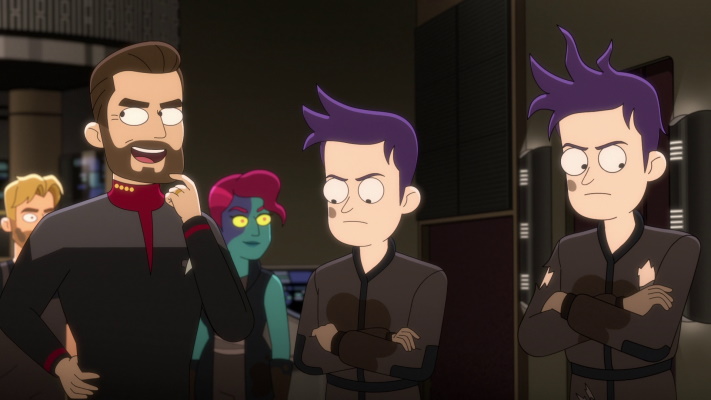


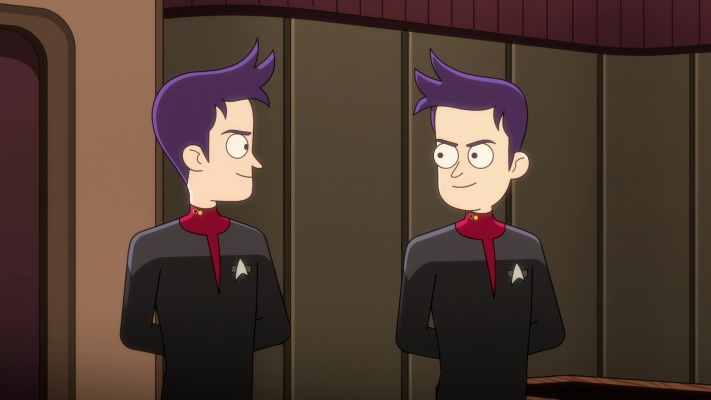


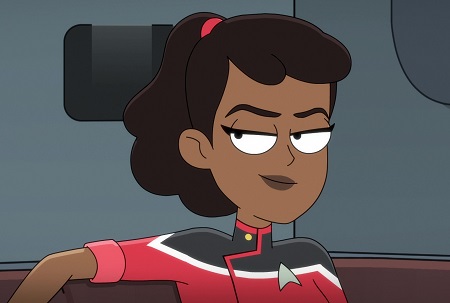


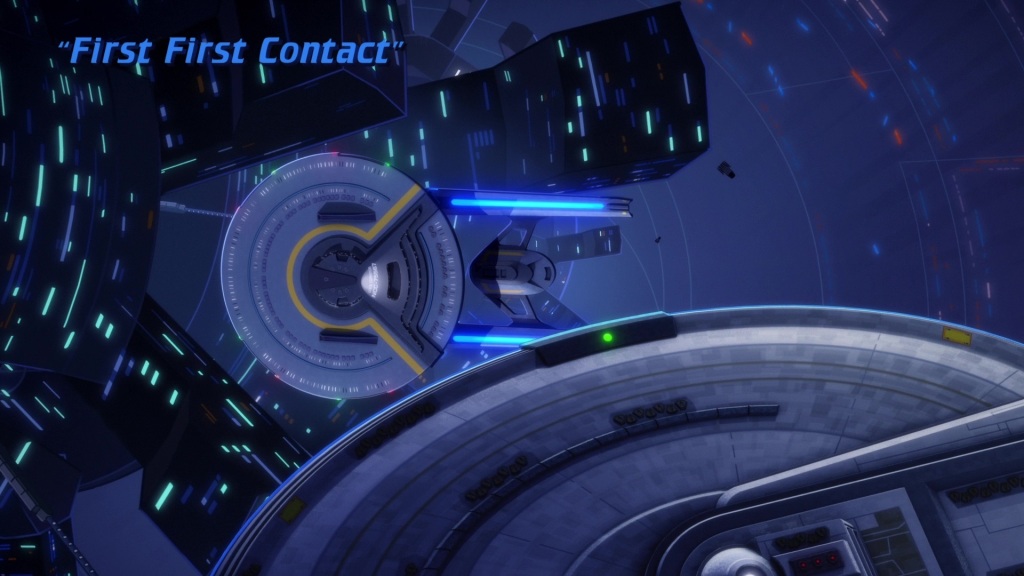
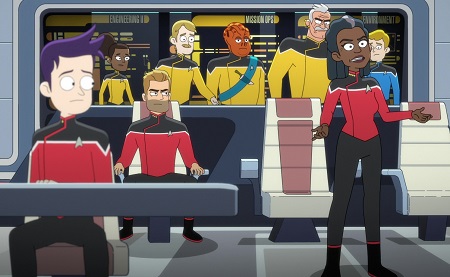
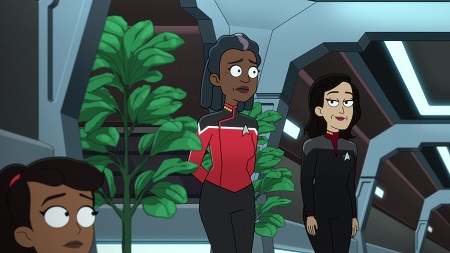
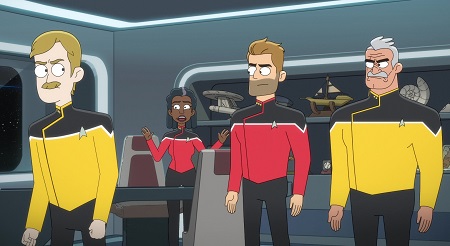

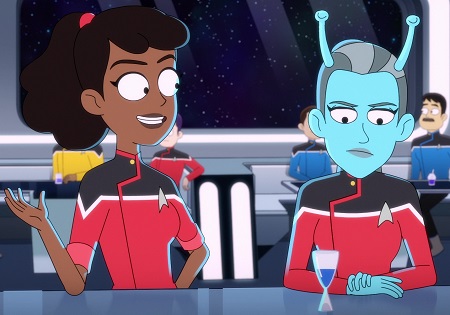


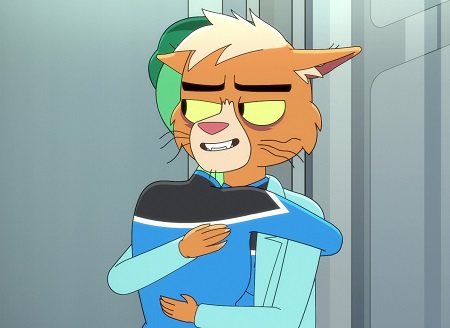
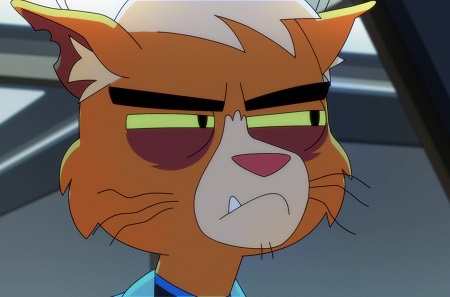

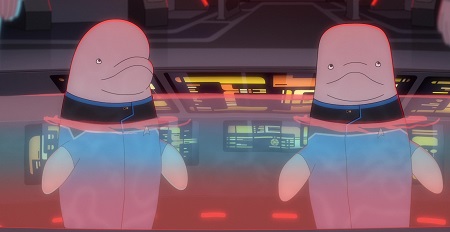
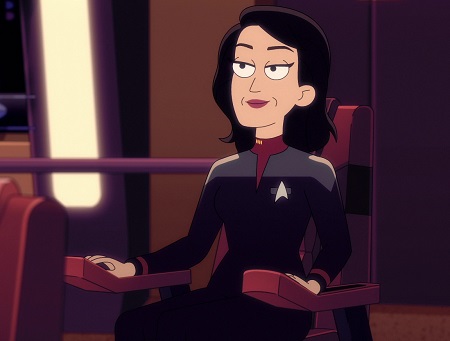
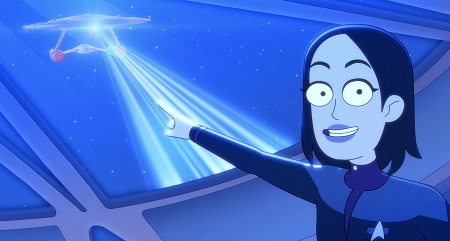
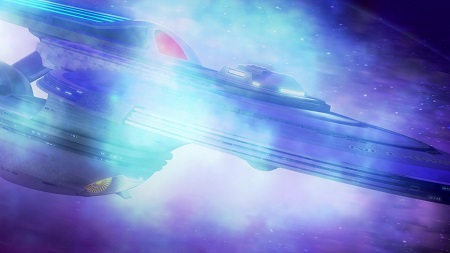
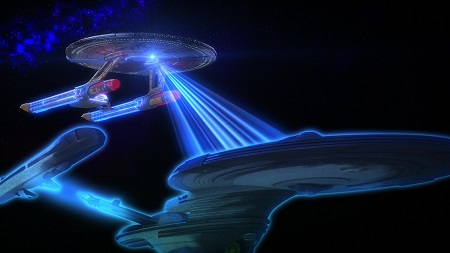
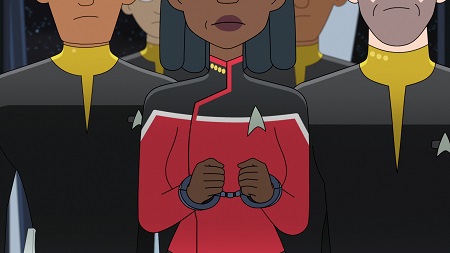


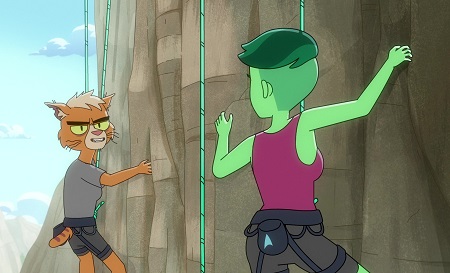
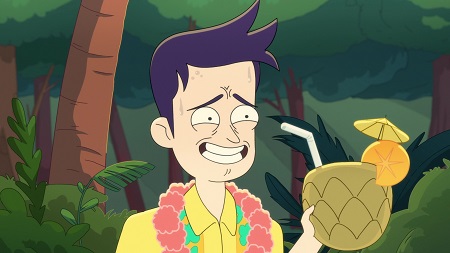
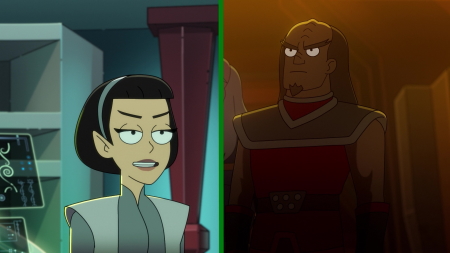



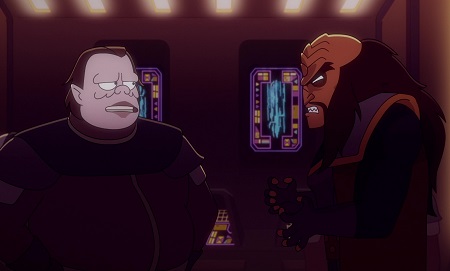


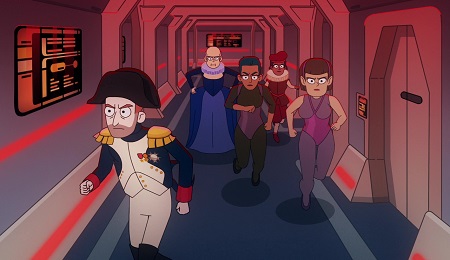
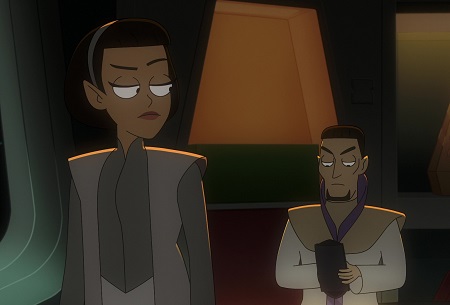



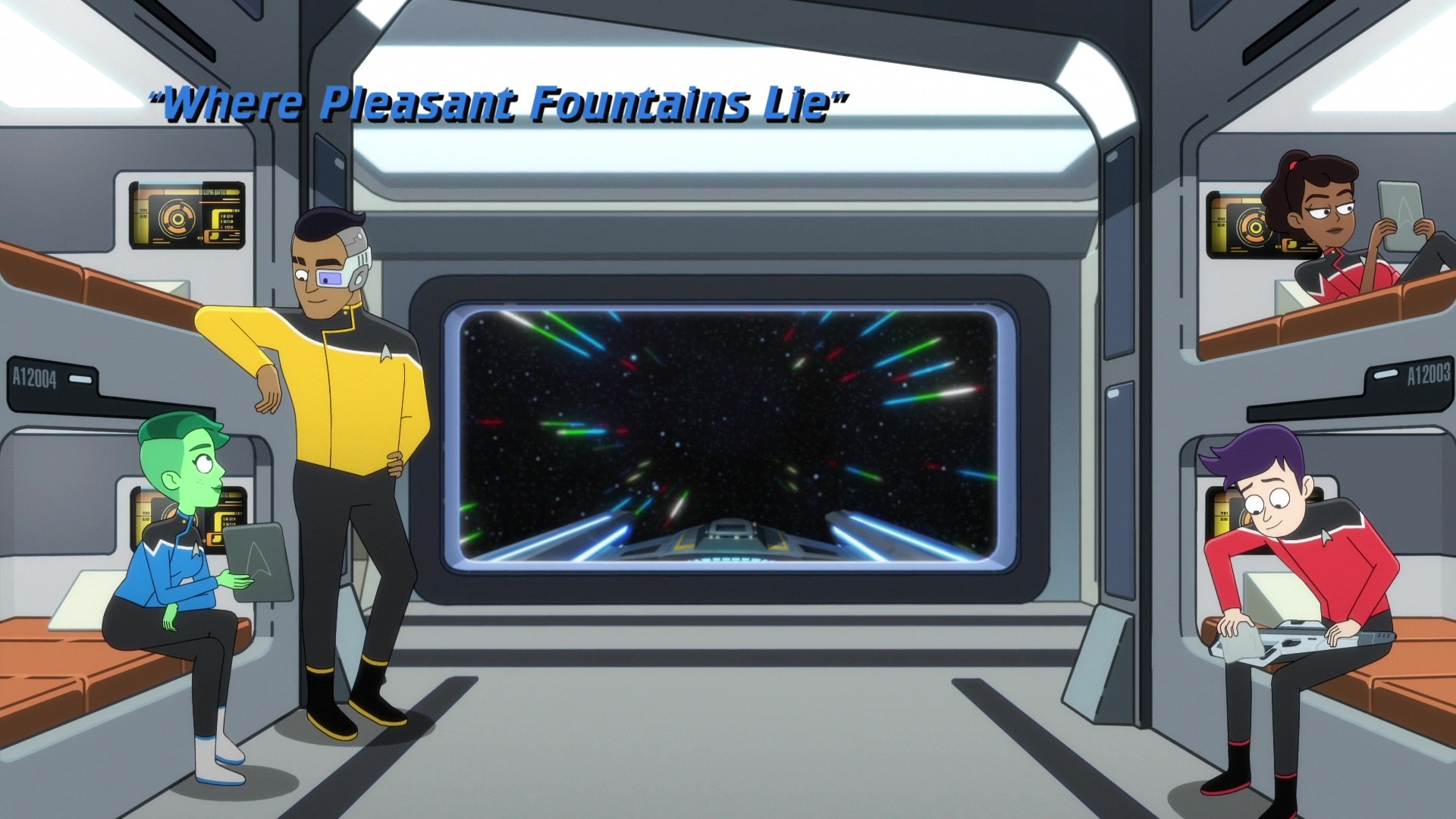
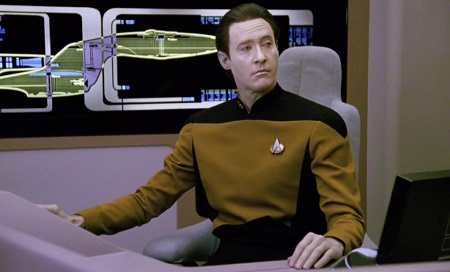
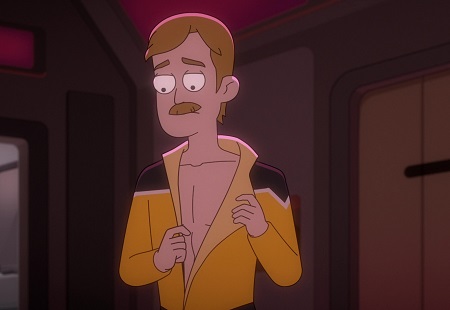
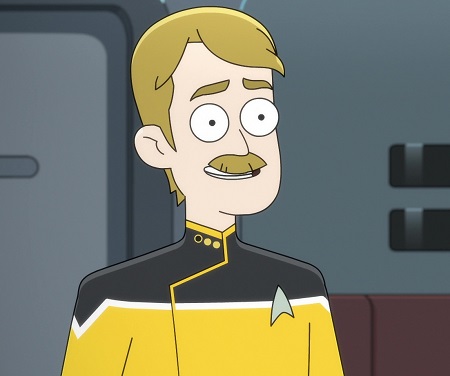


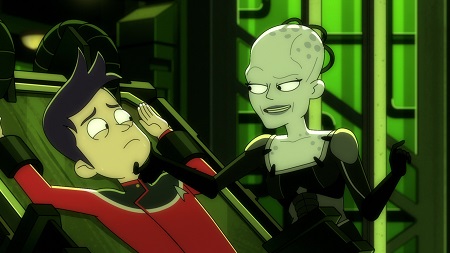

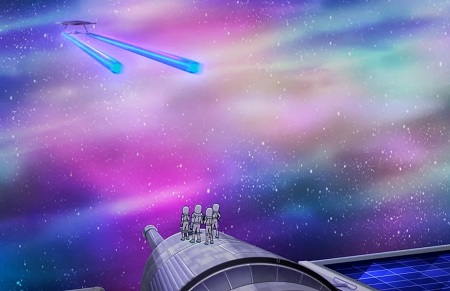

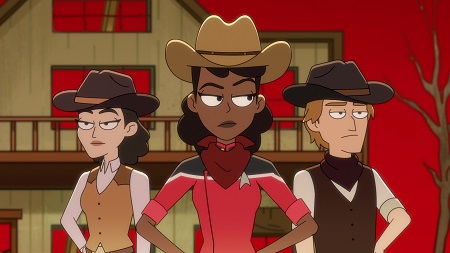


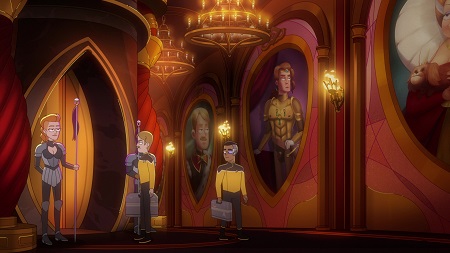
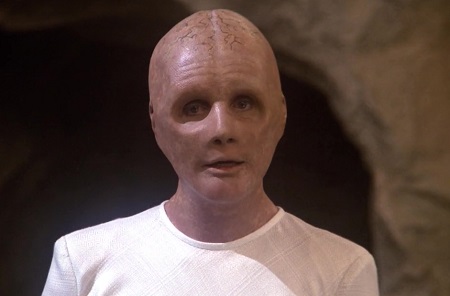


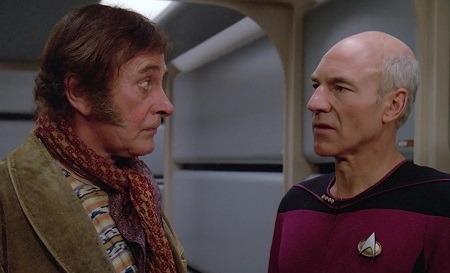


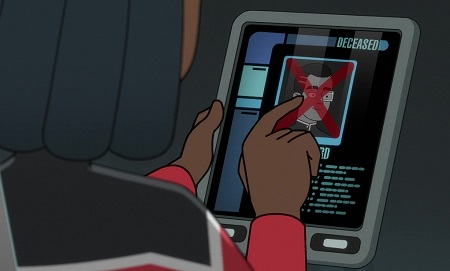


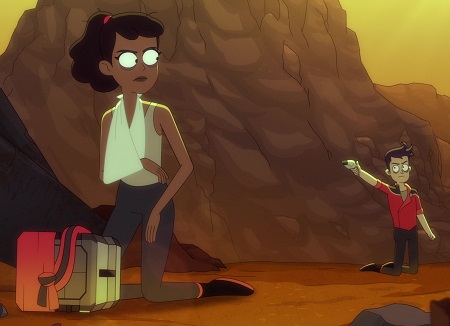







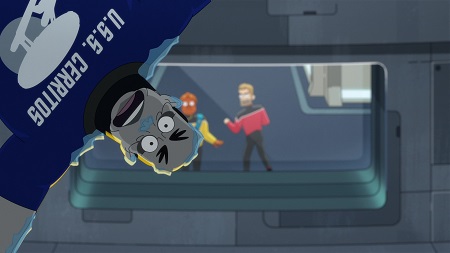
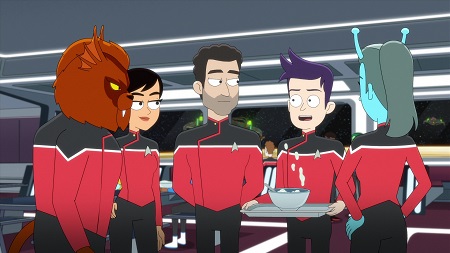
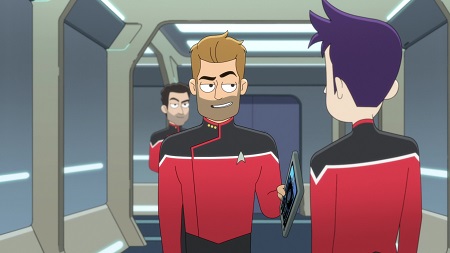

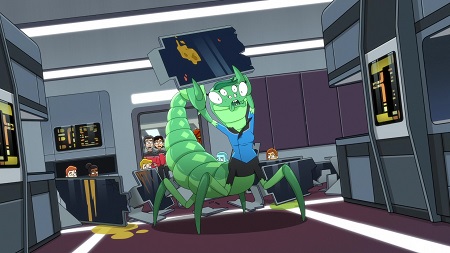
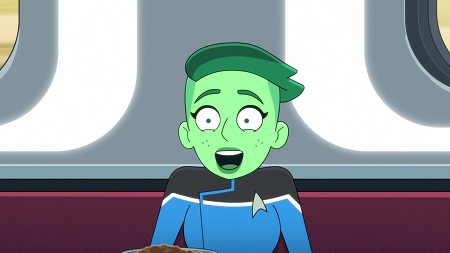




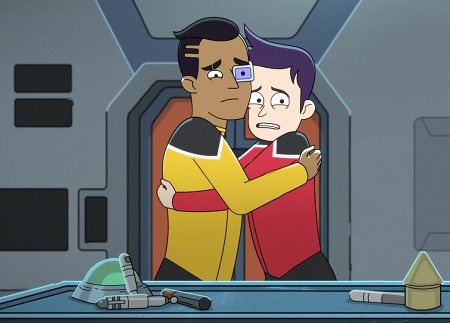


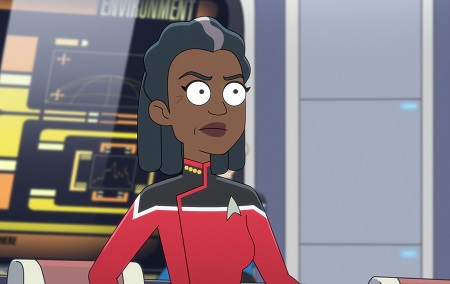

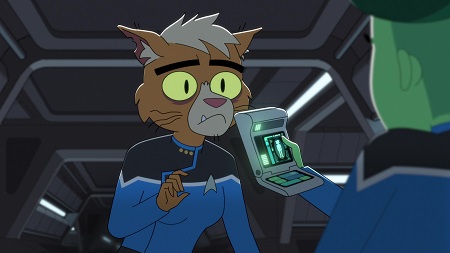
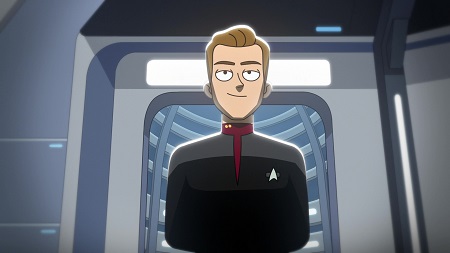

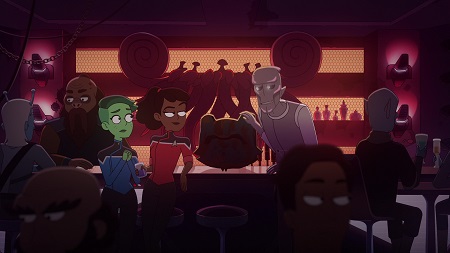
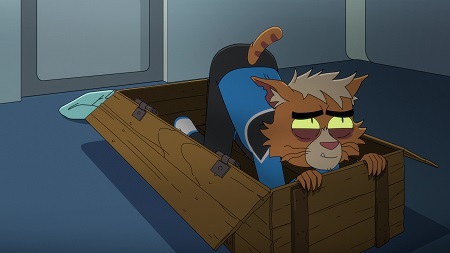
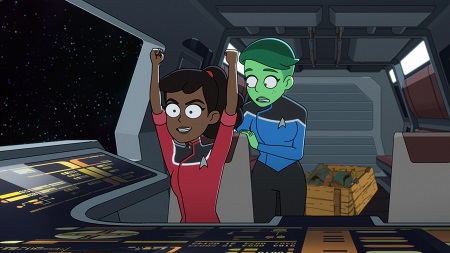
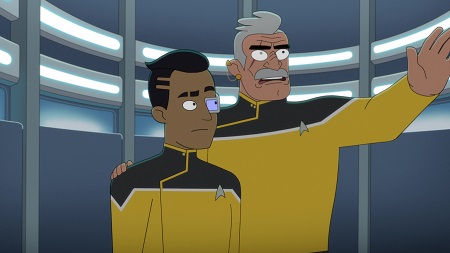
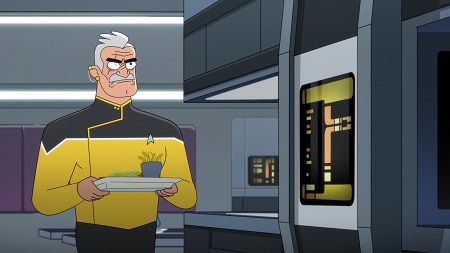
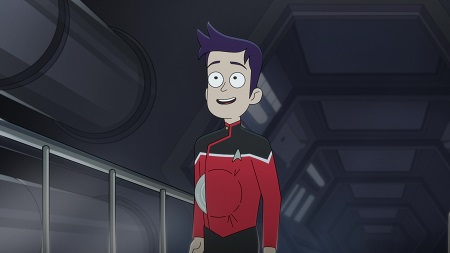
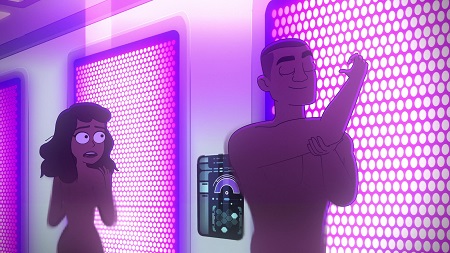
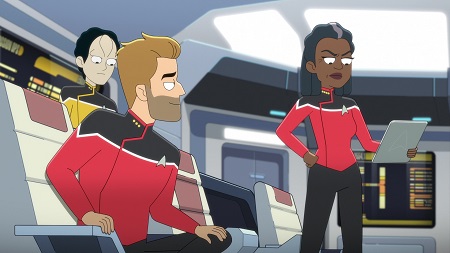
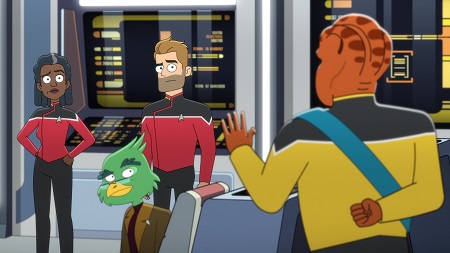
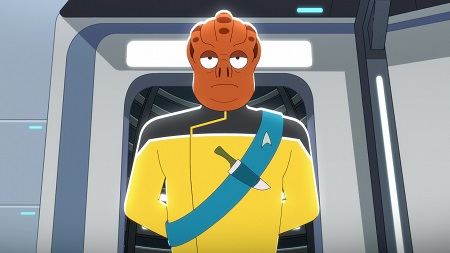
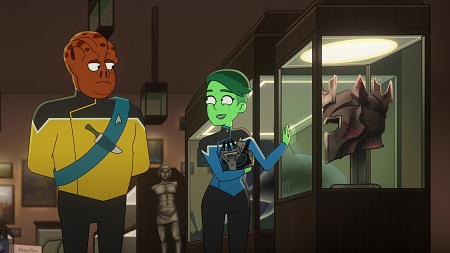

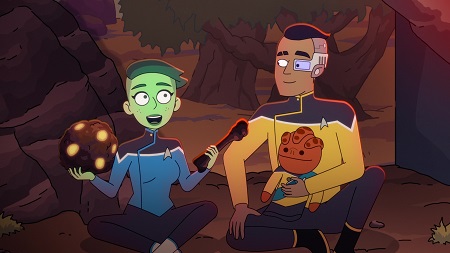
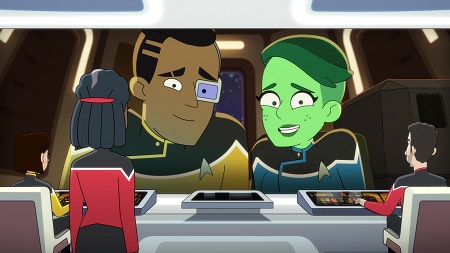


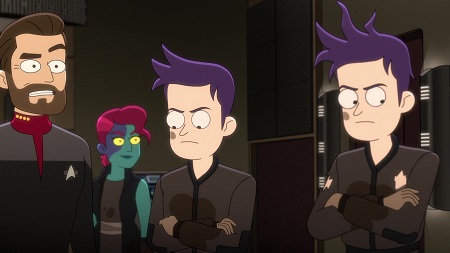
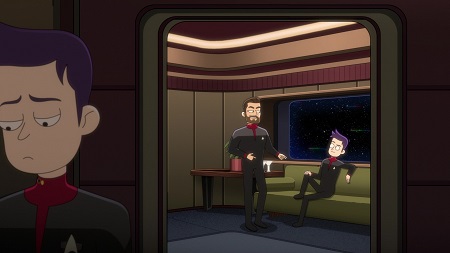


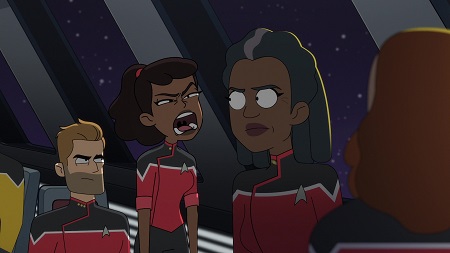

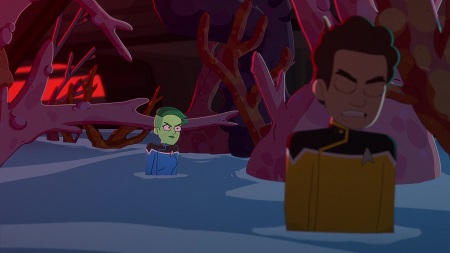
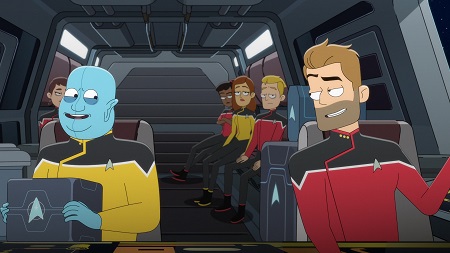
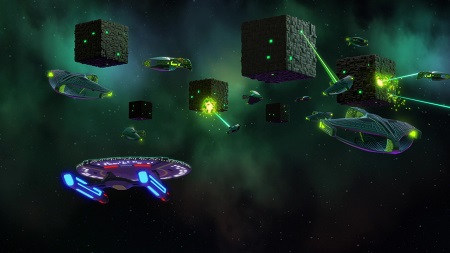

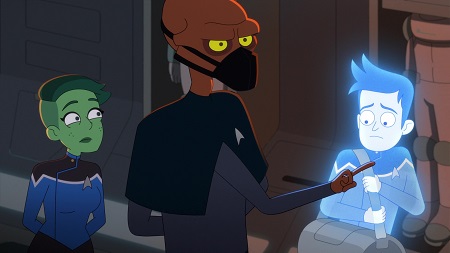

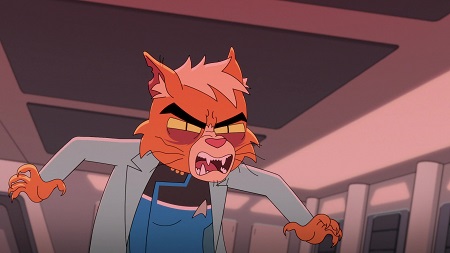

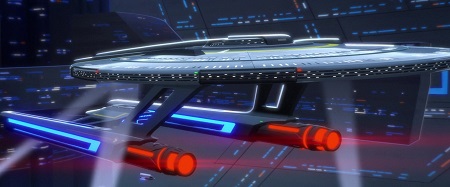

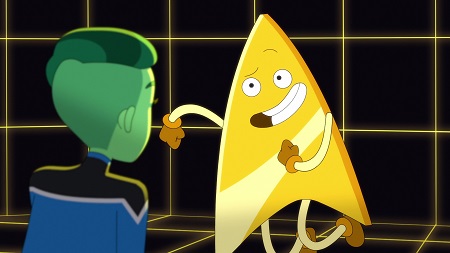
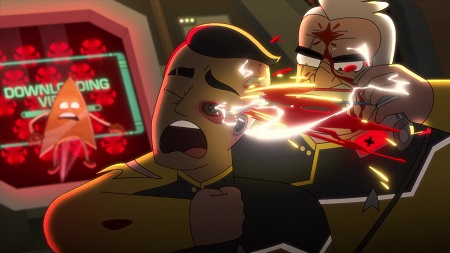


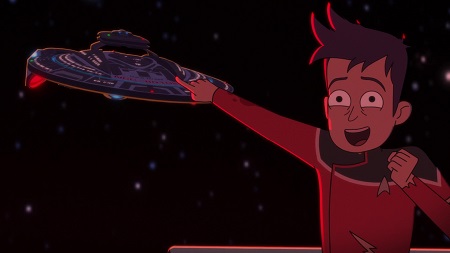

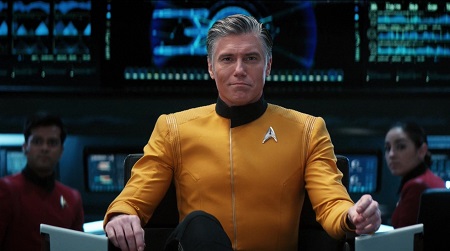

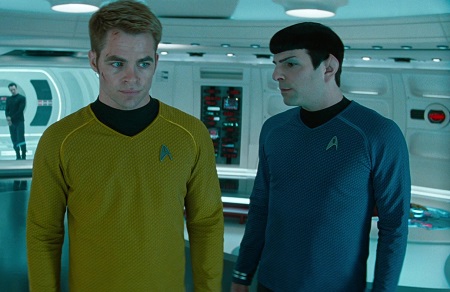




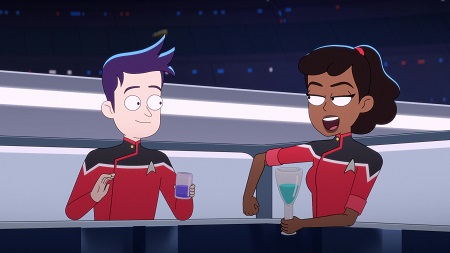

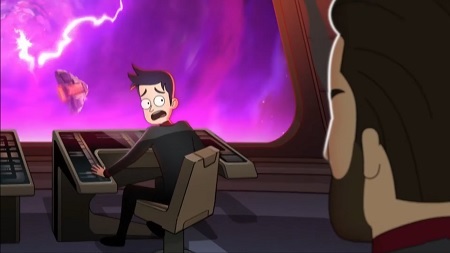


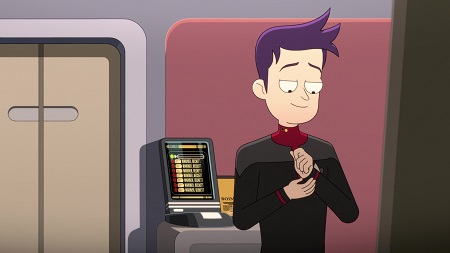
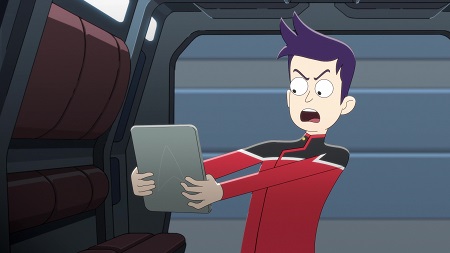
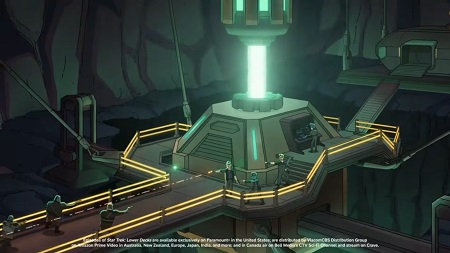

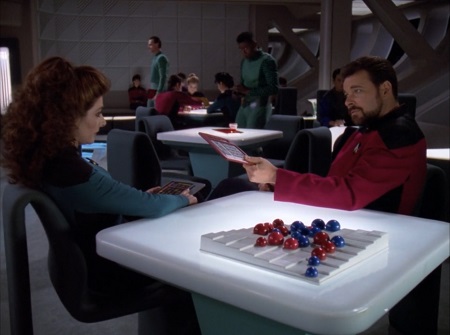

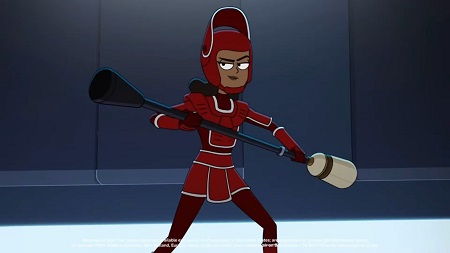

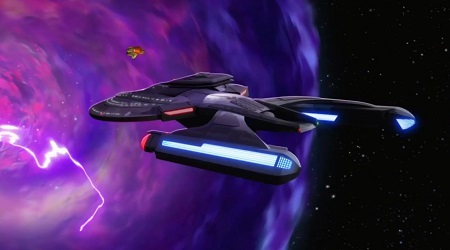
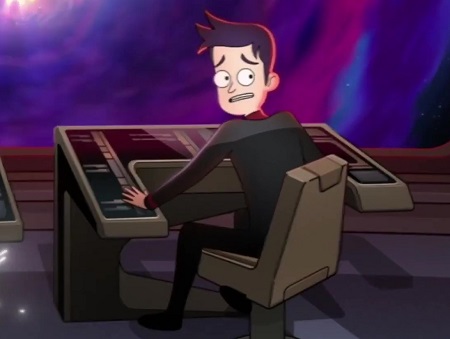
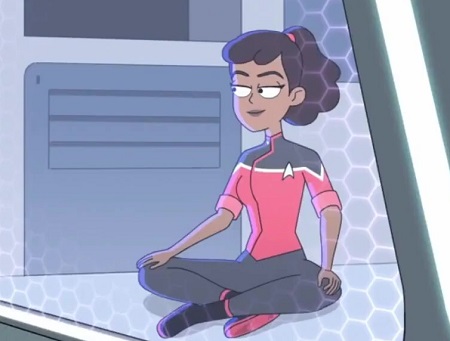


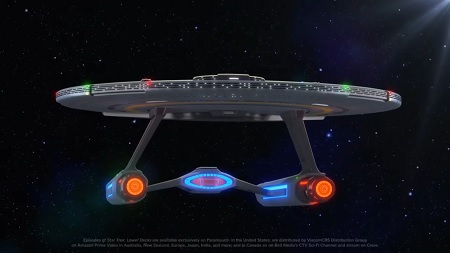

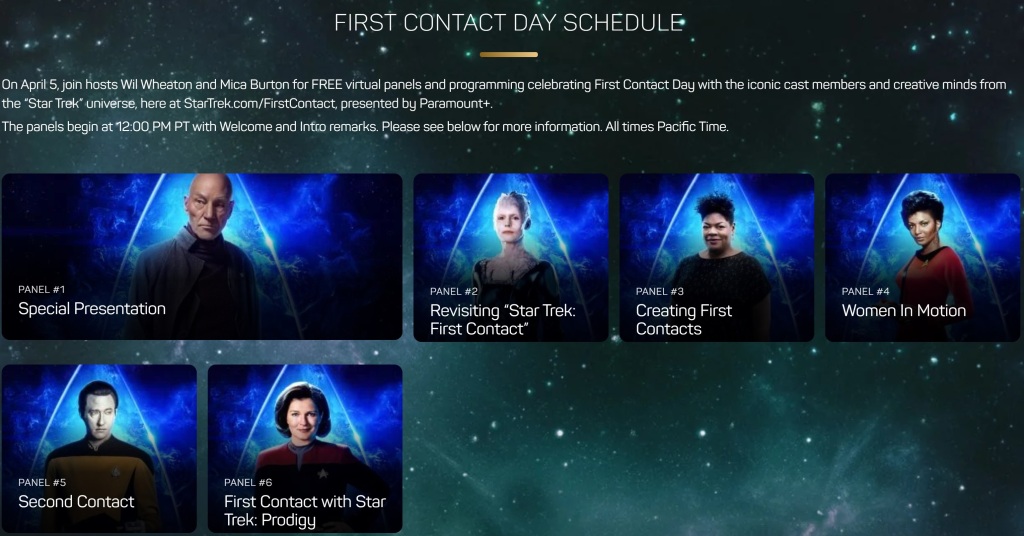


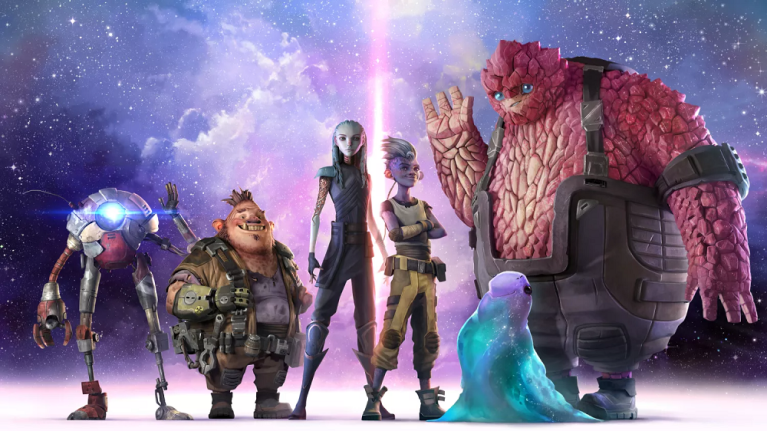


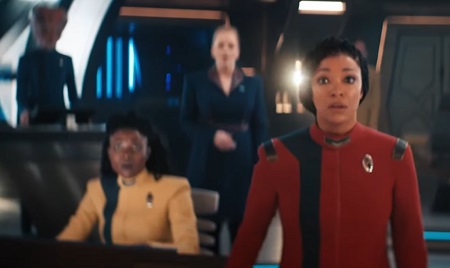






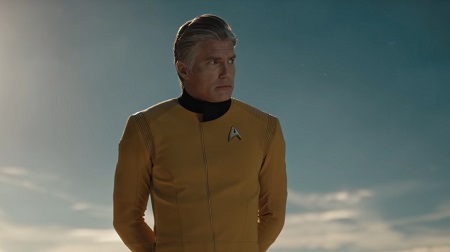


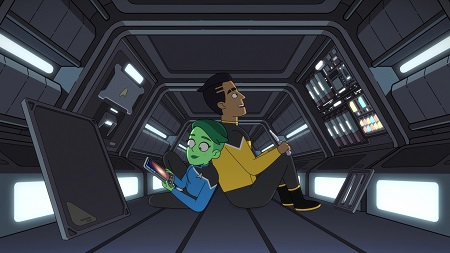

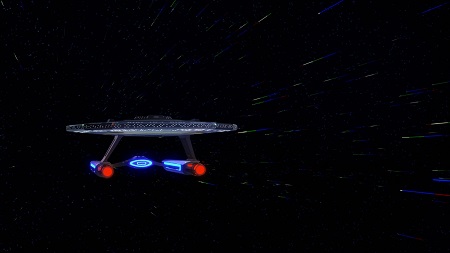







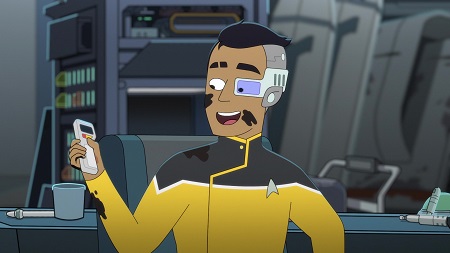



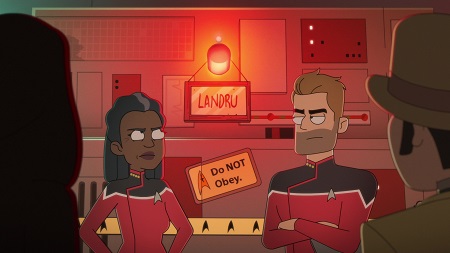

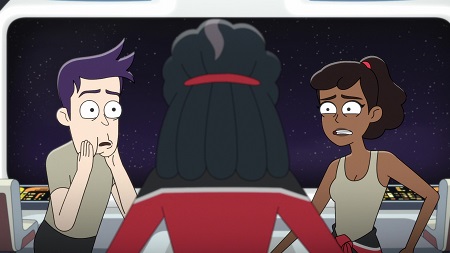
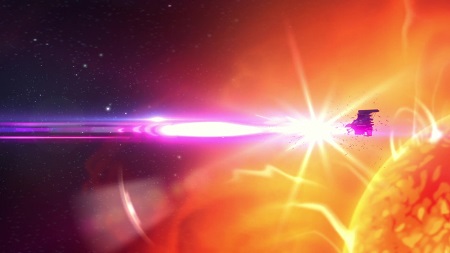
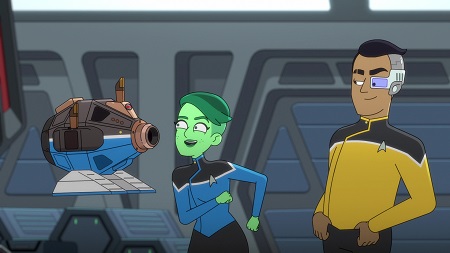

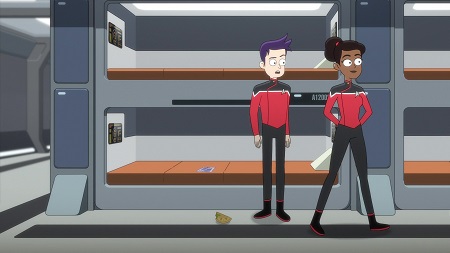
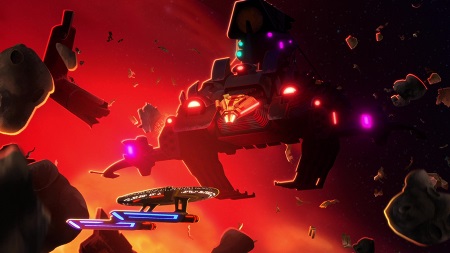
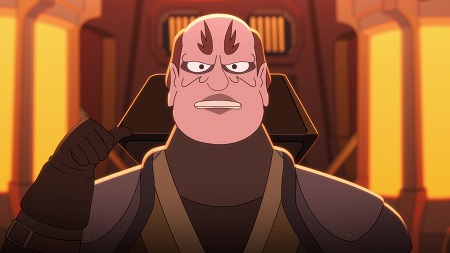
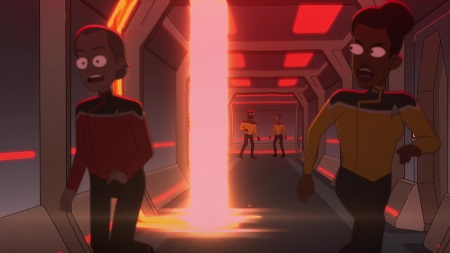
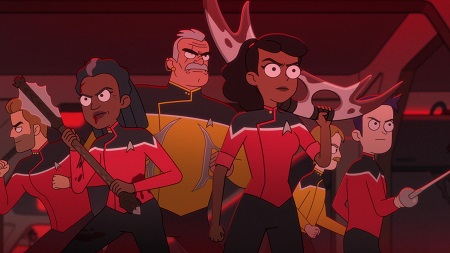

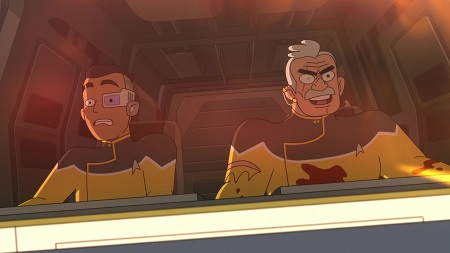
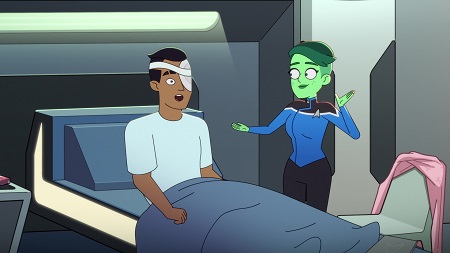





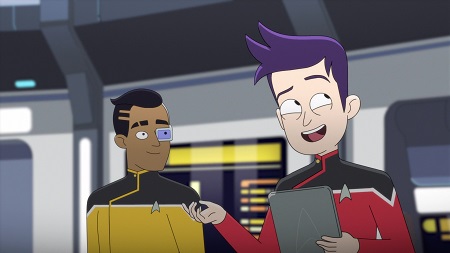
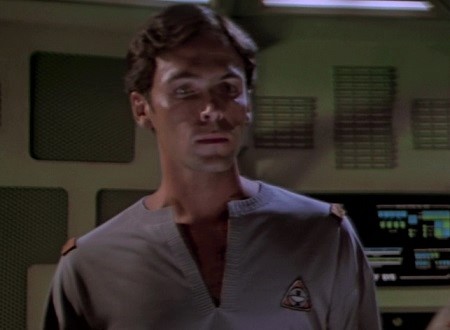
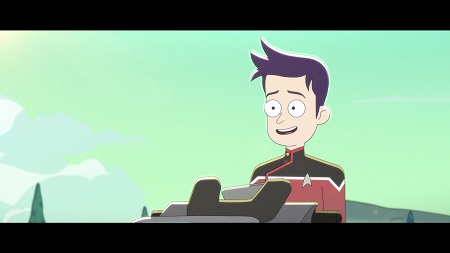
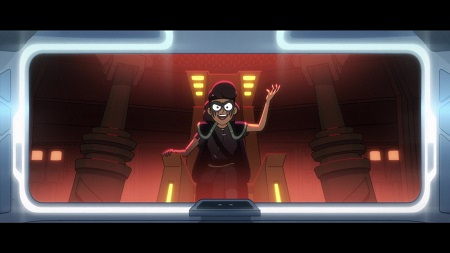
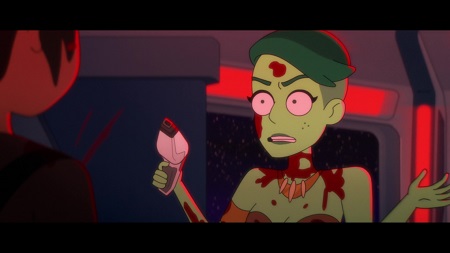
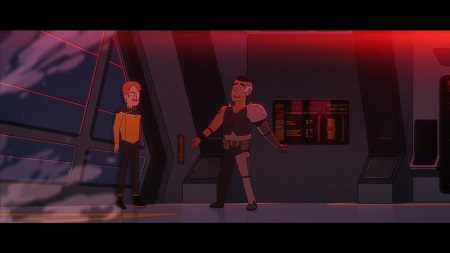

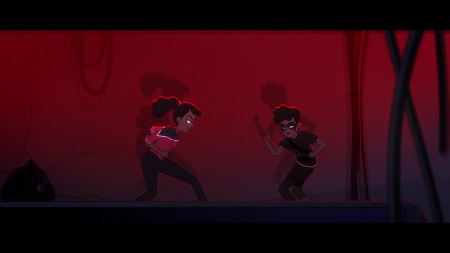

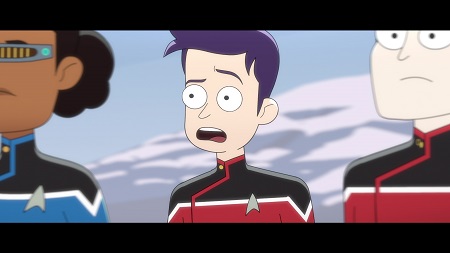
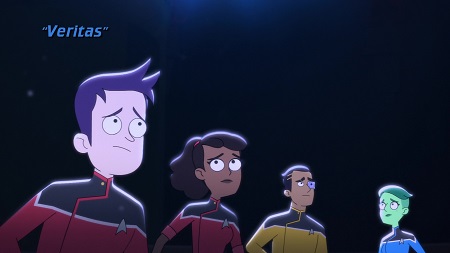

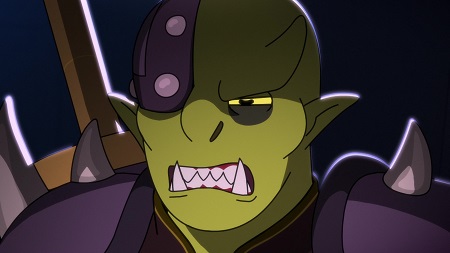
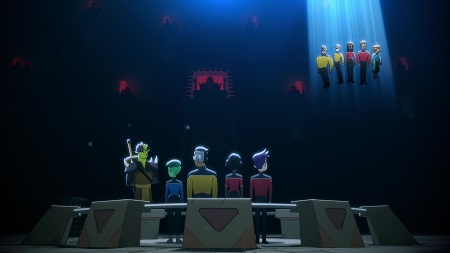
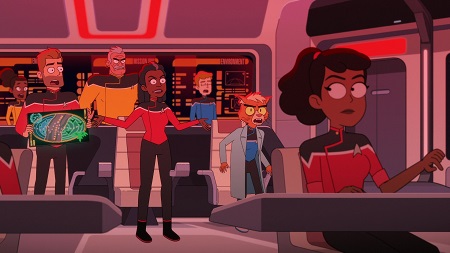
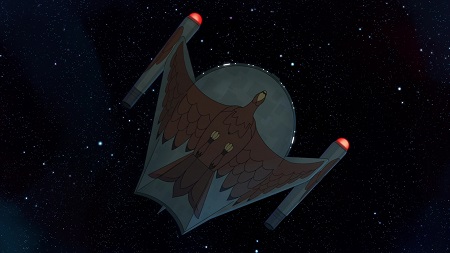

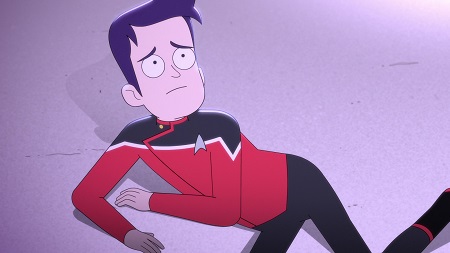
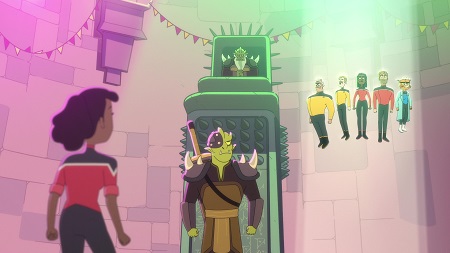
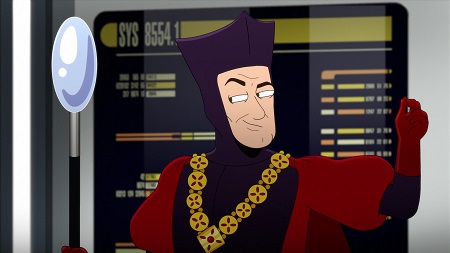




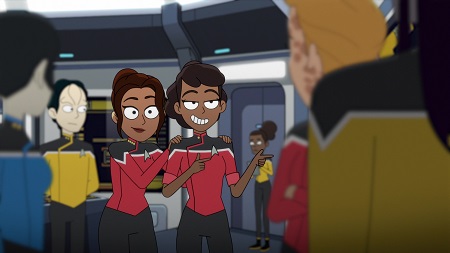
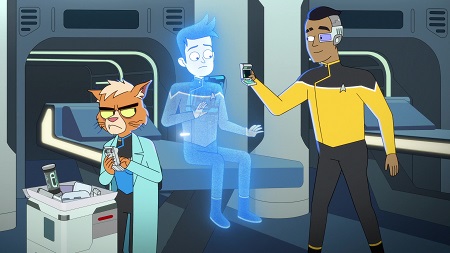
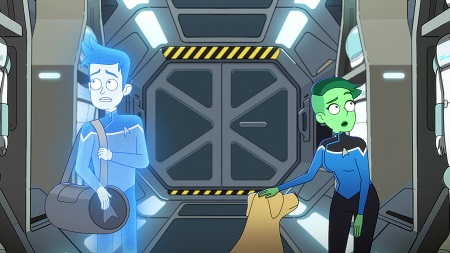

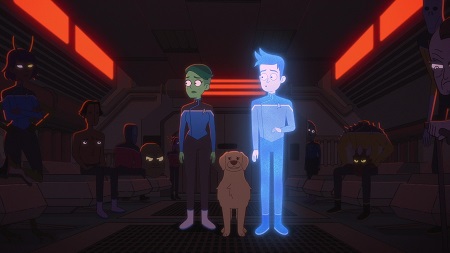

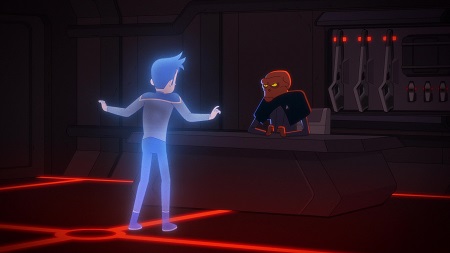
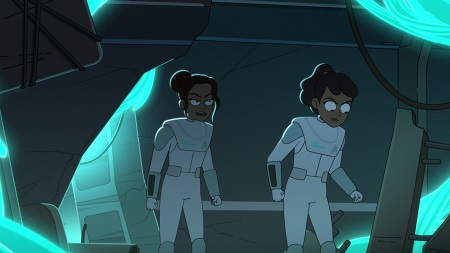
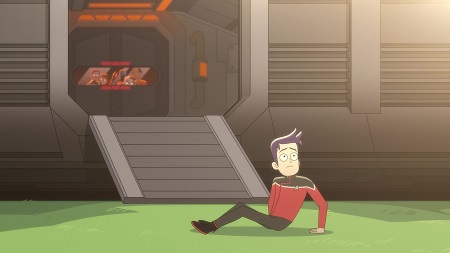
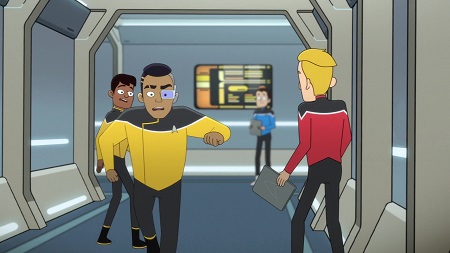

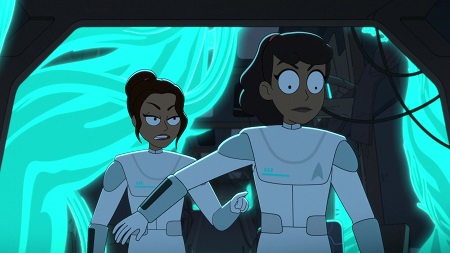

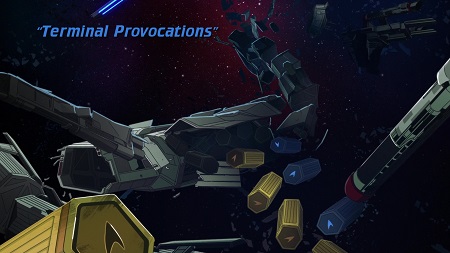

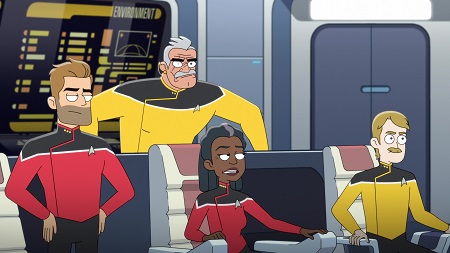


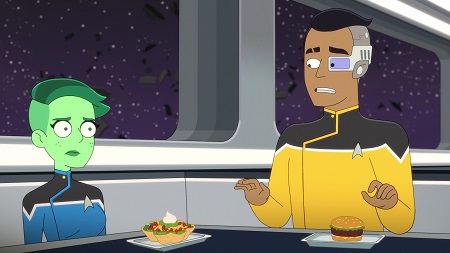
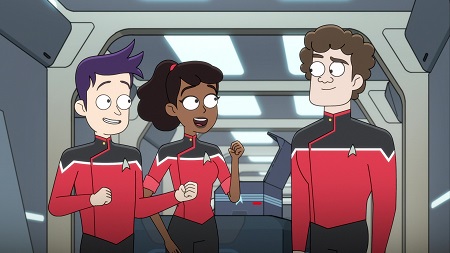

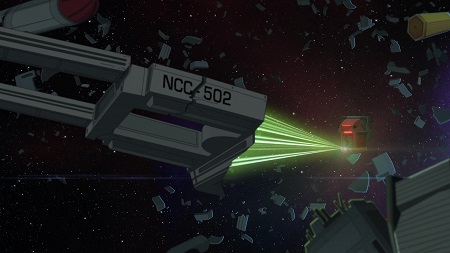
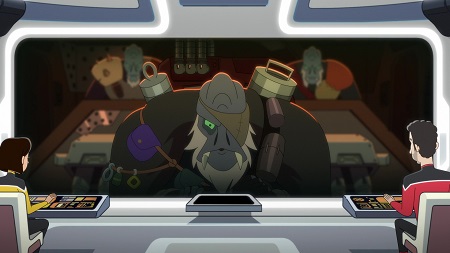
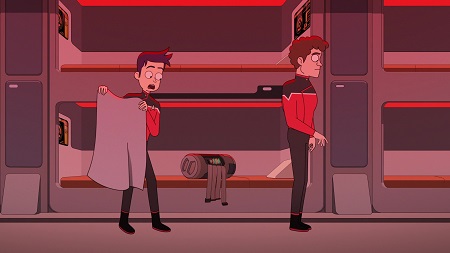


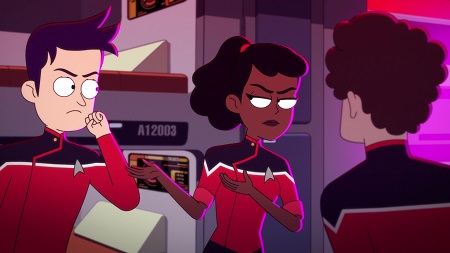

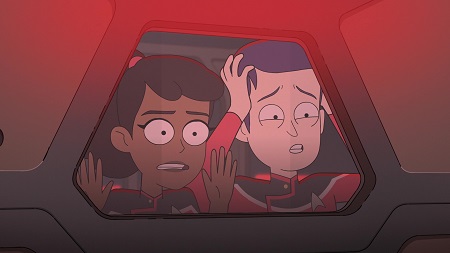

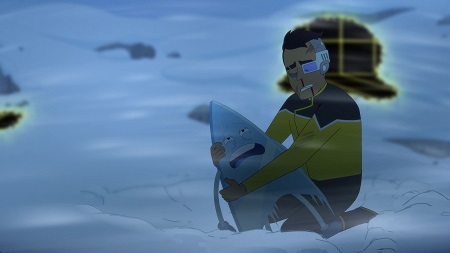
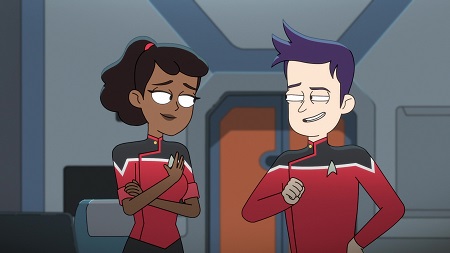
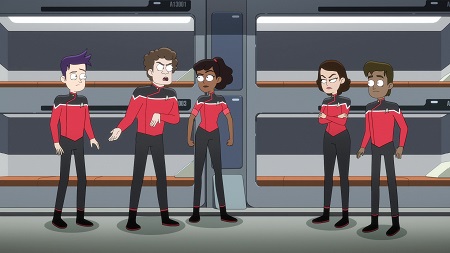


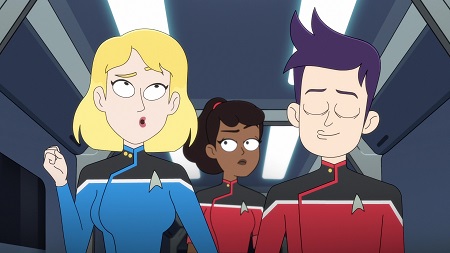
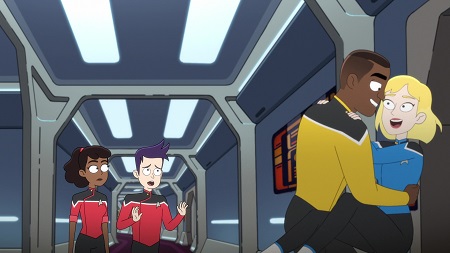


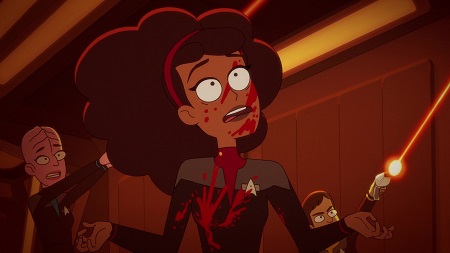


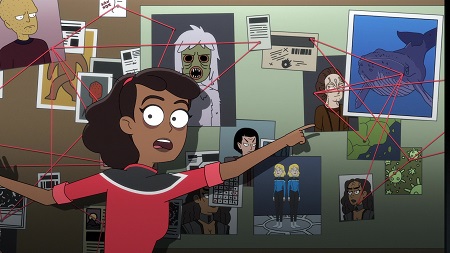
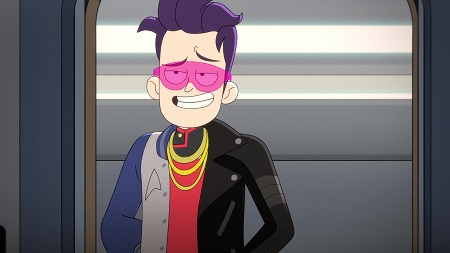

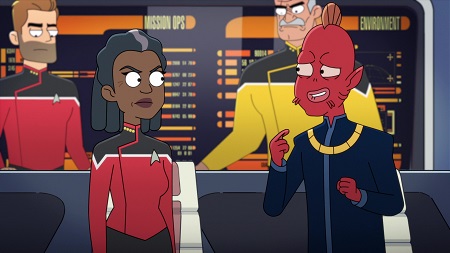
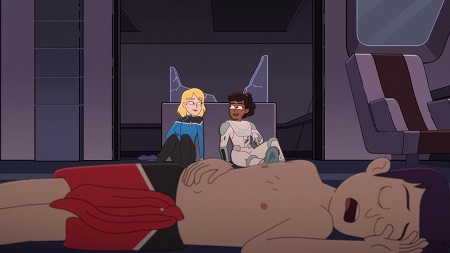



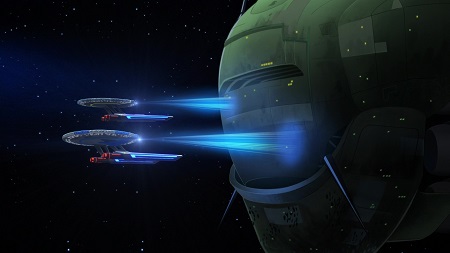
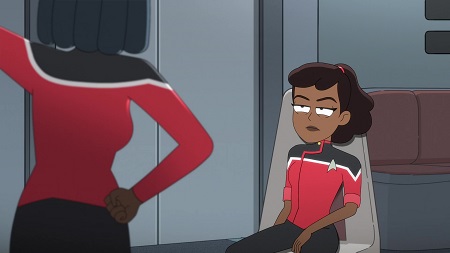


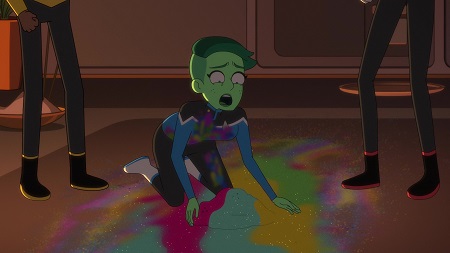
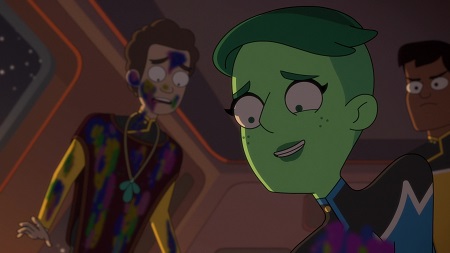

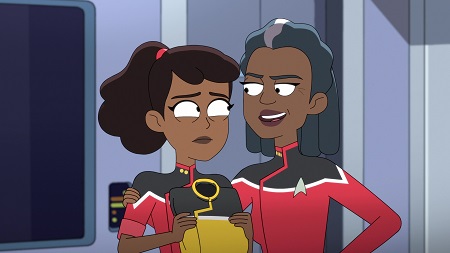
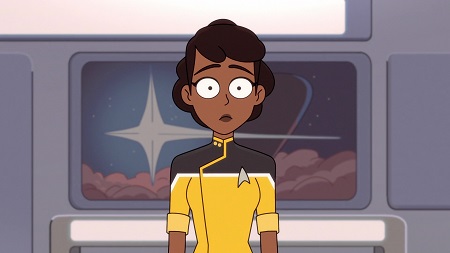
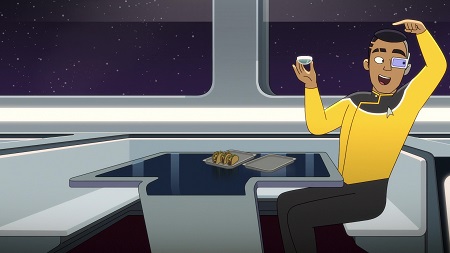
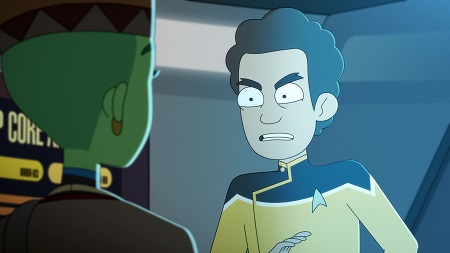
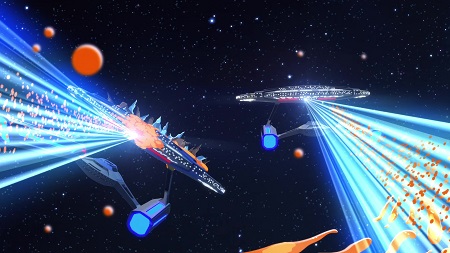


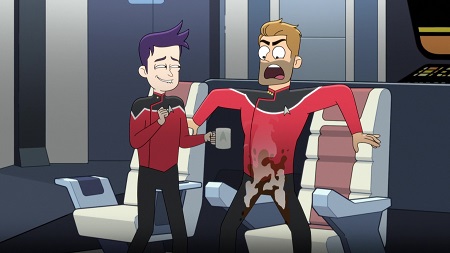


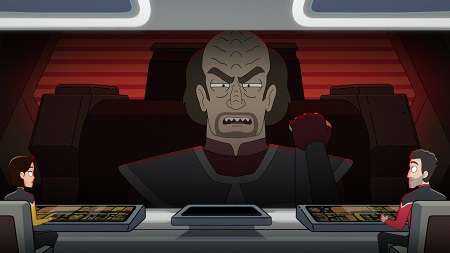


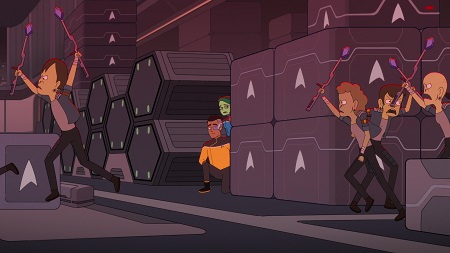


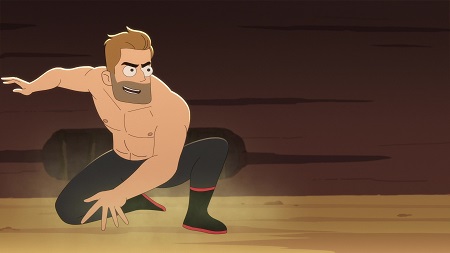

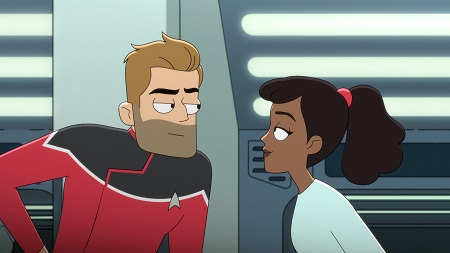
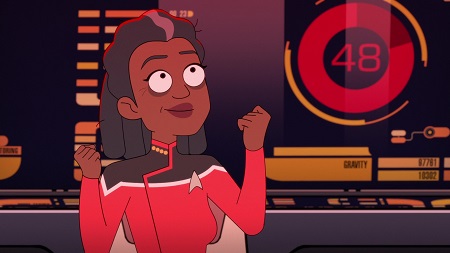



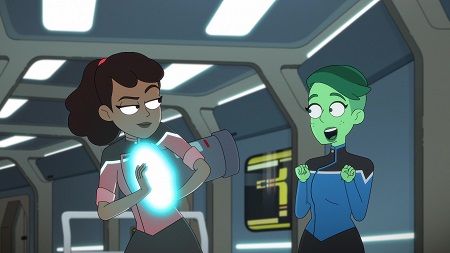

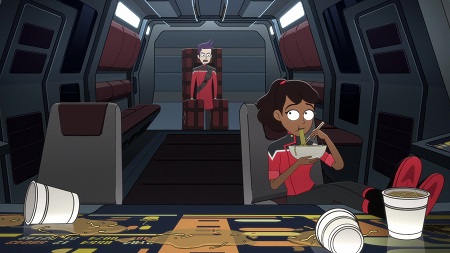
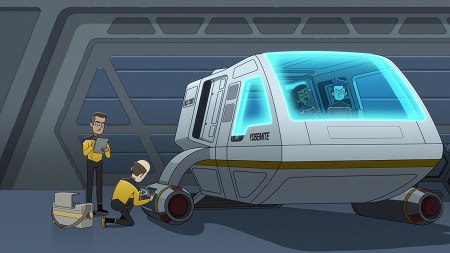
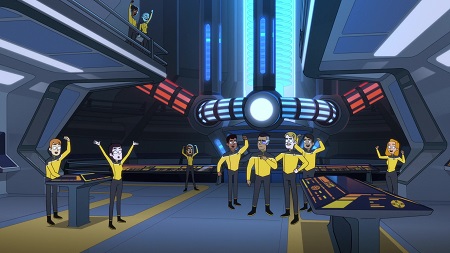





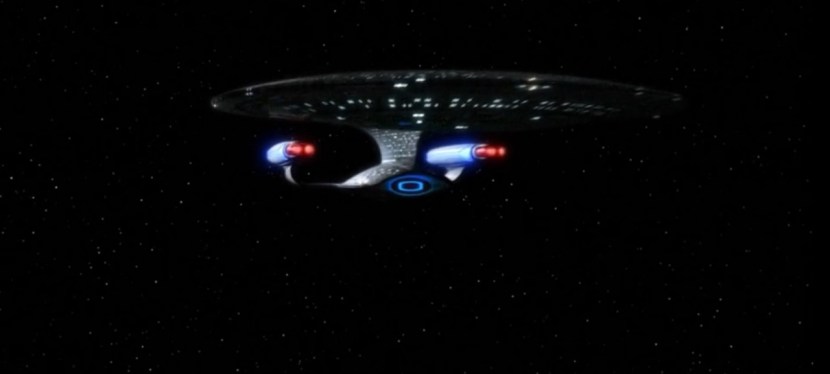


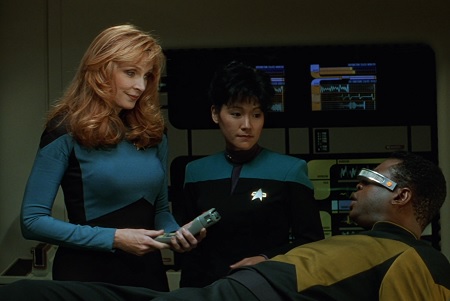
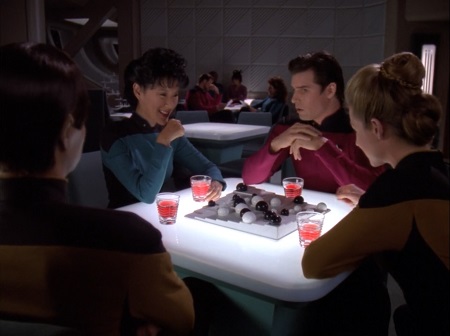
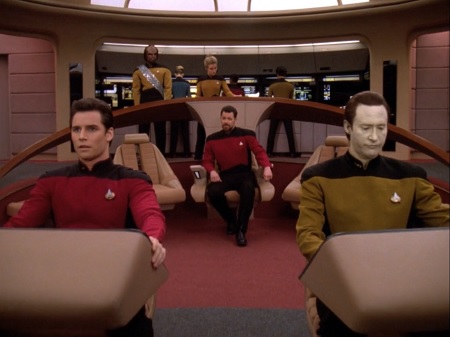
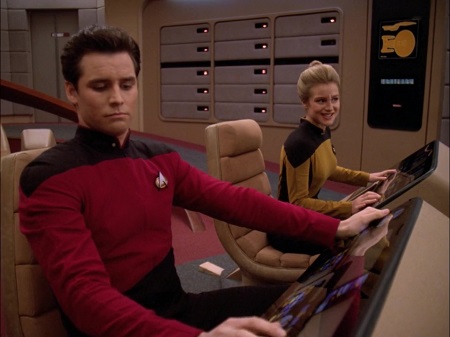


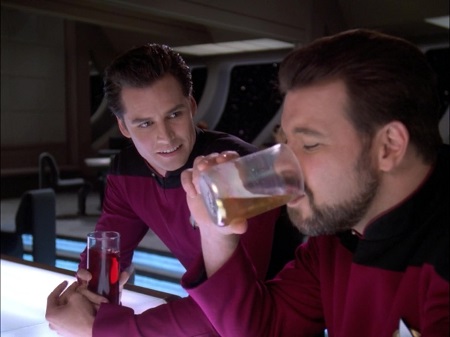

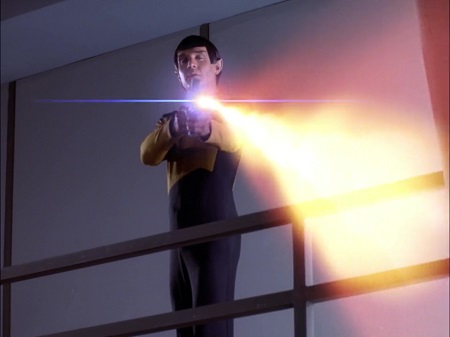

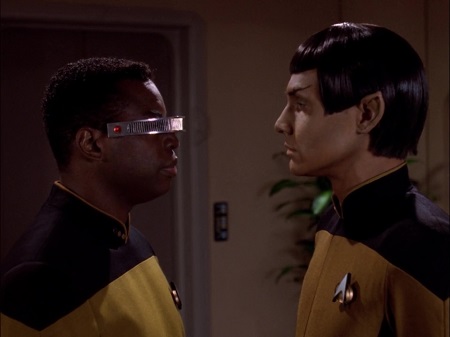
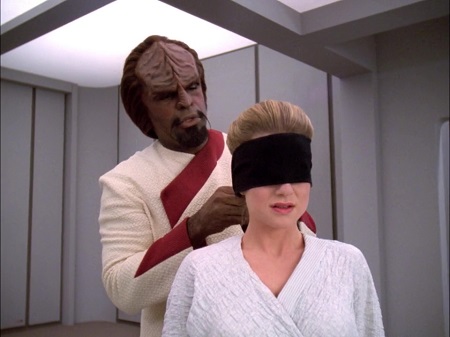

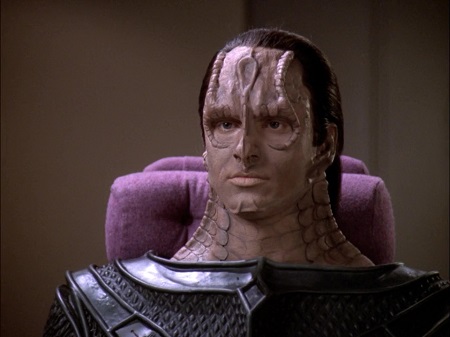
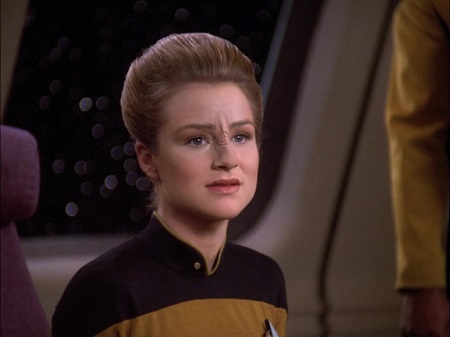
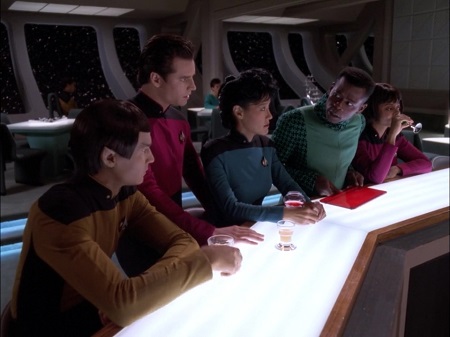
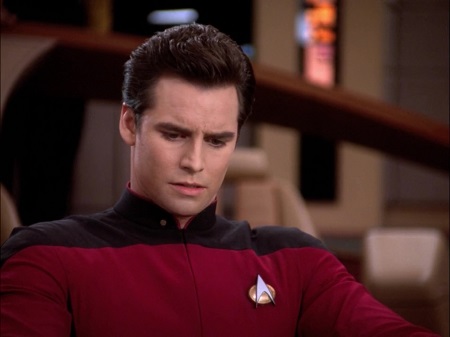

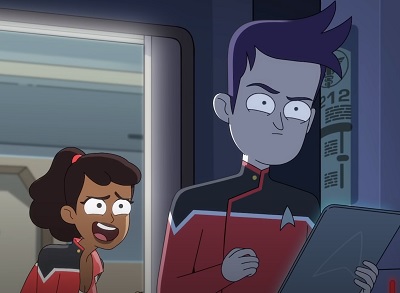

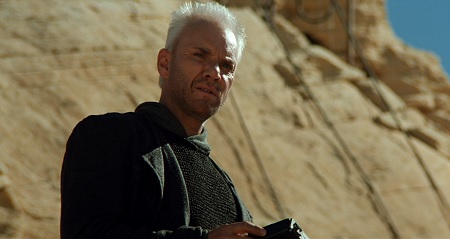
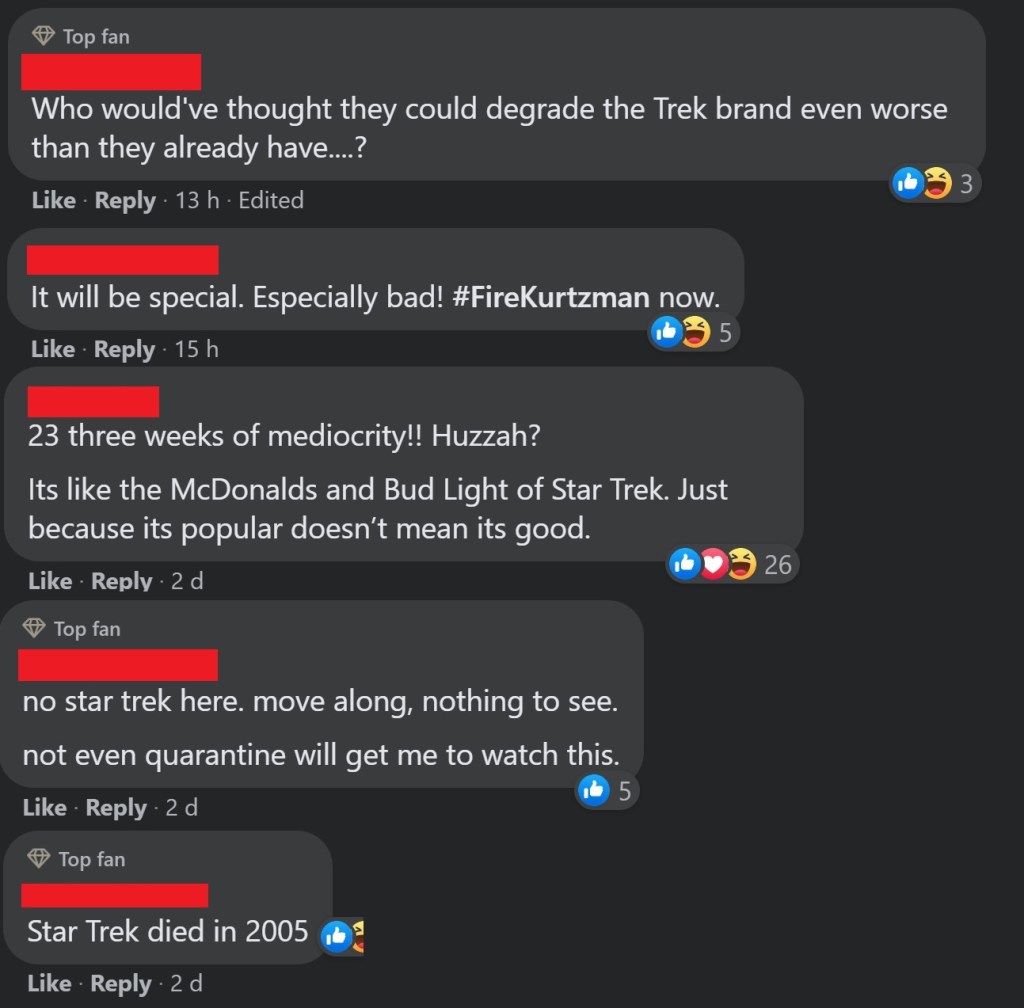


 Trekking with Dennis