
Spoiler Warning: There are spoilers ahead for Star Trek: Strange New Worlds Seasons 1-4. Spoilers are also present for the following Star Trek productions: The Next Generation Season 6, Into Darkness, Lower Decks Season 2, Discovery Season 3, and Starfleet Academy Season 1.
Well… uh… where to start?
Last week, I began my review of A Case of Chiaroscuro by telling you that I always try to keep in mind what an episode of Star Trek was intending to achieve – and how well it measured up to its ambitions – when writing my reviews. That doesn’t mean I’m being “objective” in any sense of the word, but rather than just telling you whether I personally liked an episode or not, I think it’s important – *especially* in a series like Strange New Worlds, which regularly dips its toes in different genres and styles of storytelling – to try to gauge what an episode wanted to be rather than merely make a snap judgement about the final product.
But I gotta be honest: I’m having a hard time doing that with Level-Five Transporter Accident.
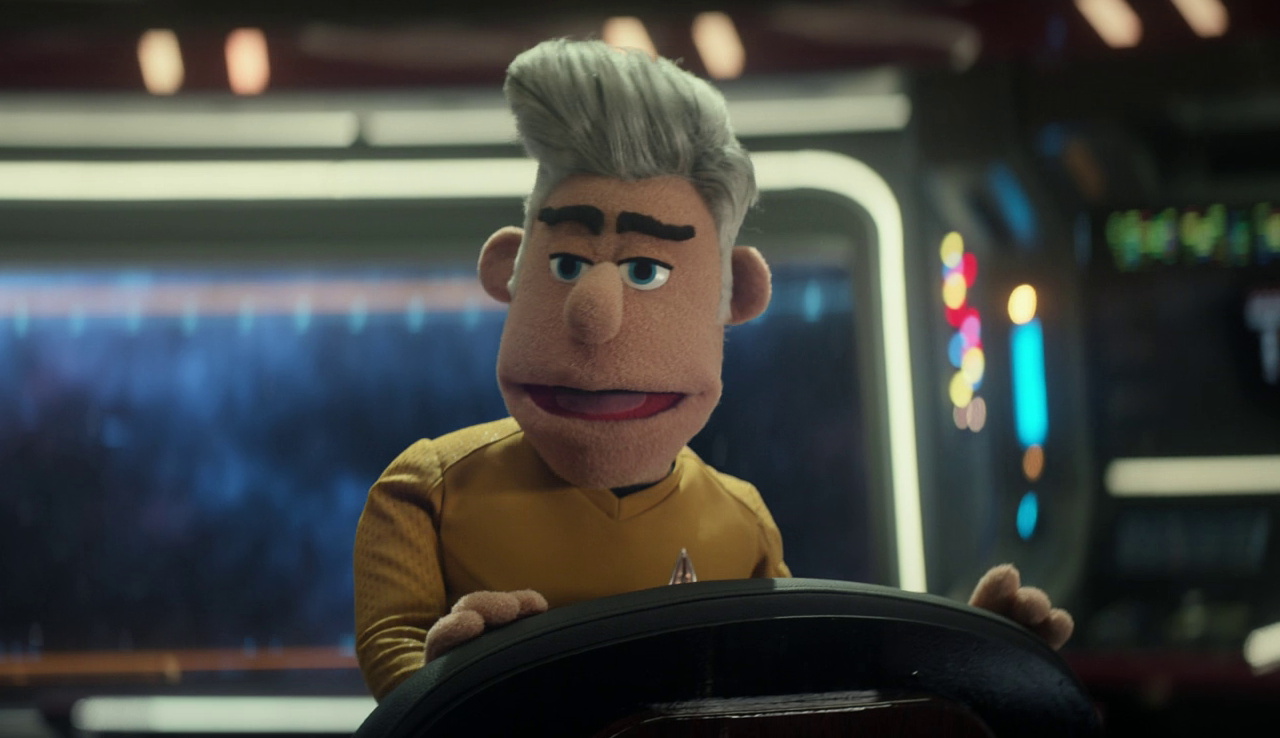
The Muppets, upon which the episode draws inspiration, is inherently silly. And if there’s one word I’d use to describe this week’s episode, it would be “silly.” I mean that in an almost entirely negative way, unfortunately, because while I can respect that Level-Five Transporter Accident knew exactly what it was doing and just went for it in the most honest yet unhinged way… the finished product was, to be blunt, a complete mess.
For a lot of Trekkies, and whatever wider audience might still be watching Strange New Worlds, this will undoubtedly be seen as the moment where the series “jumped the shark,” if it hadn’t already done so after episodes like Subspace Rhapsody.
As I said last week in response to the “film noir” black-and-white episode: I can respect the commitment to the bit. The writers, the director, the designers, the cast… everyone involved knew what kind of story they wanted to tell and they whole-heartedly embraced the silliness. There was even an *attempt* at a message, I think… about trauma and stress, the importance of talking it out, and, perhaps, how leaning into the absurd can be helpful. That messaging, however, was lost in a bumbling, childish mess of an episode, and an ending that utterly ruined whatever could’ve been salvaged.
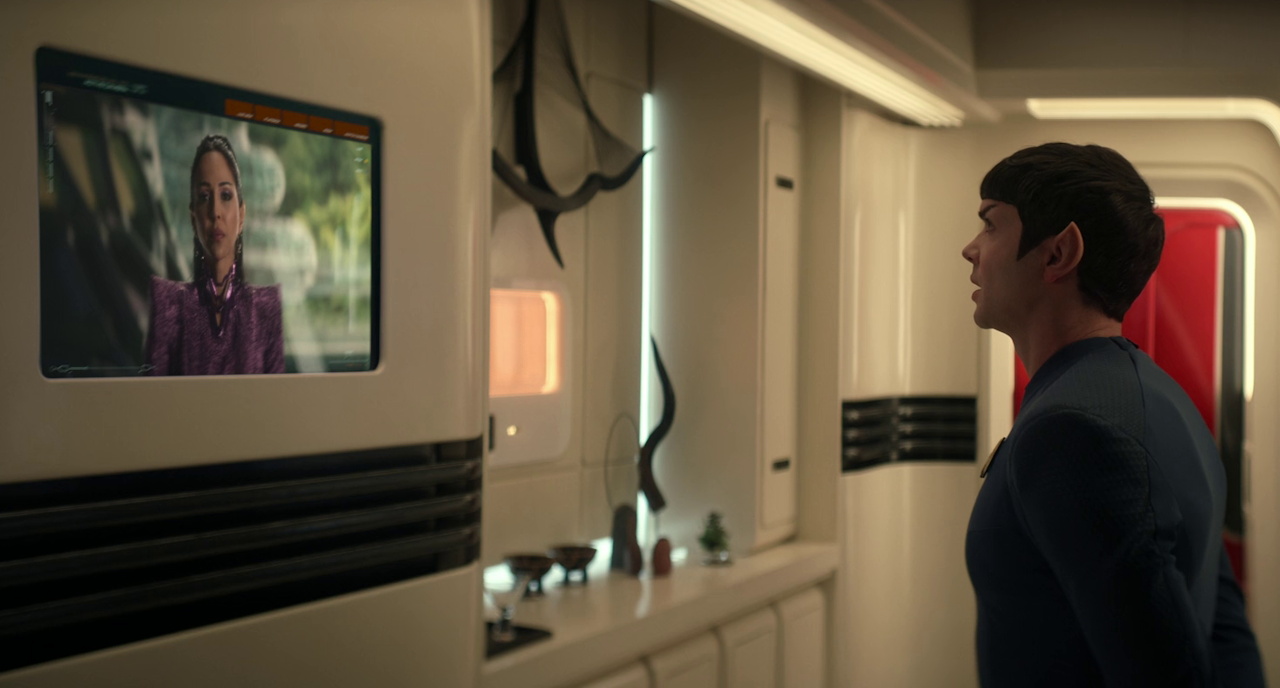
When I write these reviews, I try not to come across as one of *those* Trekkies – the ultra-nerdy folks who hyper-fixate on the tiniest minutiae of “canon,” who can’t accept that Star Trek has a sense of humour, or who refuse to acknowledge that the franchise changes and evolves over time. I don’t want to gatekeep the fandom, rain on anyone’s parade, or sound like I’m insisting that Star Trek should always be uptight and taking itself 100% seriously. Episodes like that can be great, sure, but part of the franchise’s appeal has always been its light-hearted moments and its sense of humour, and the last thing I ever want to be accused of is taking Star Trek “too seriously.” There’s a place for comedy, joking around, and completely unscientific absurd premises in Star Trek… and there always will be for as long as the franchise exists.
But… even with that in mind, and even having appreciated the genuine successes of the likes of Human Best Friend a couple of weeks ago, or some of the more overtly comic offerings in Lower Decks, I’m afraid that Level-Five Transporter Accident was, for me, a bridge too far. There were a handful of interesting ideas in the mix – and I promise we’ll cover them as we go along – and in terms of the way the puppets themselves were designed, operated, and brought to life… I don’t really have much to criticise. But the story just didn’t do it for me at all, and any potentially salvageable moments were completely expunged by what is literally the most clichéd, “avoid-this-at-all-costs-even-if-it’s-your-first-time-writing-anything” ending.
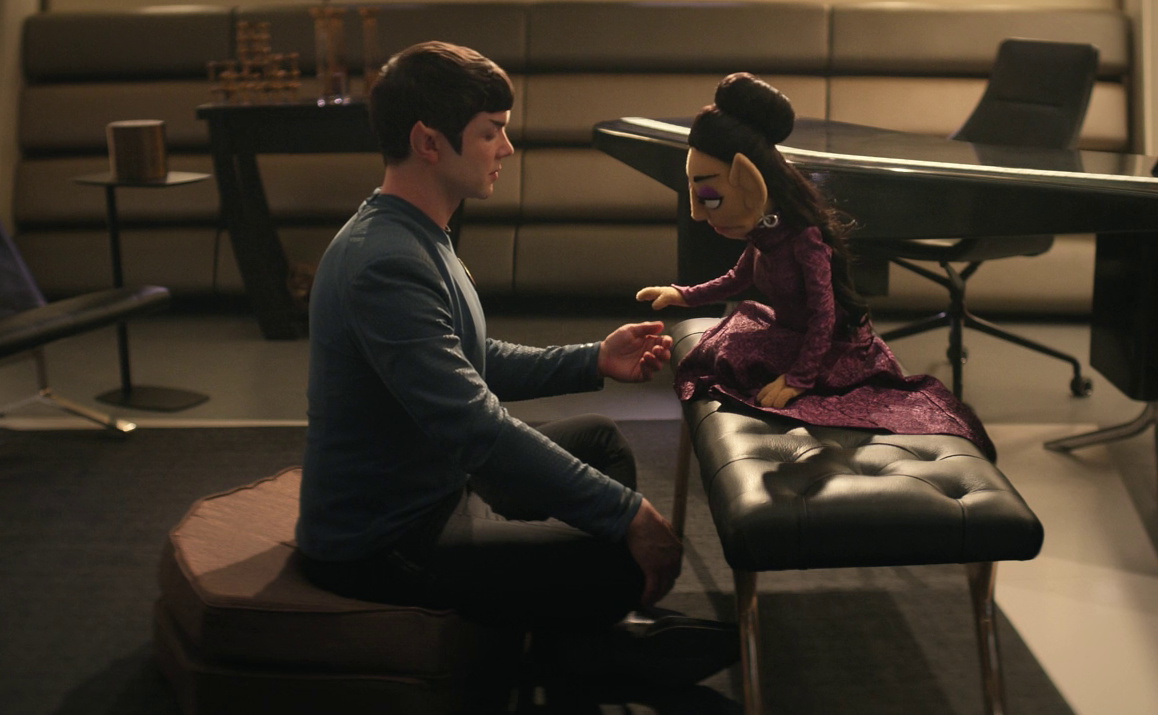
I mean… “it was all just a dream.” Seriously? Is that the quality level we should accept from Strange New Worlds? Or *any* big-budget streaming series? If that’s the best thing this group of writers could come up with to end the story, then thank god Strange New Worlds is almost at the end of its run. I’ve talked before about the potential upsides to Star Trek getting a bit of a refresh in the years ahead, and that kind of absolutely pathetic, awful, clichéd way to end an episode absolutely hammers home the need for new producers, writers, directors, and creatives. I hope the new Skydance-Paramount team is planning to have a proper clearing of the decks.
I will return to discuss the ending a bit later on, but for now… let’s get into the weeds with Level-Five Transporter Accident as best we can.
This was the first Strange New Worlds episode where a big part of the premise – i.e. the Orions’ attempts to capture the Enterprise – felt derivative. Not just because we’ve seen this in Discovery with the Emerald Chain, or as far back as The Next Generation with Starship Mine… but because Strange New Worlds itself literally did a “pirates are taking over the ship” story back in Season 1. The Serene Squall had a very similar setup, minus the puppets, and again, as I said above, if we’re at a point of recycling pretty basic narrative ideas because no one can come up with anything better… it’s time to let someone else take the helm, you know?
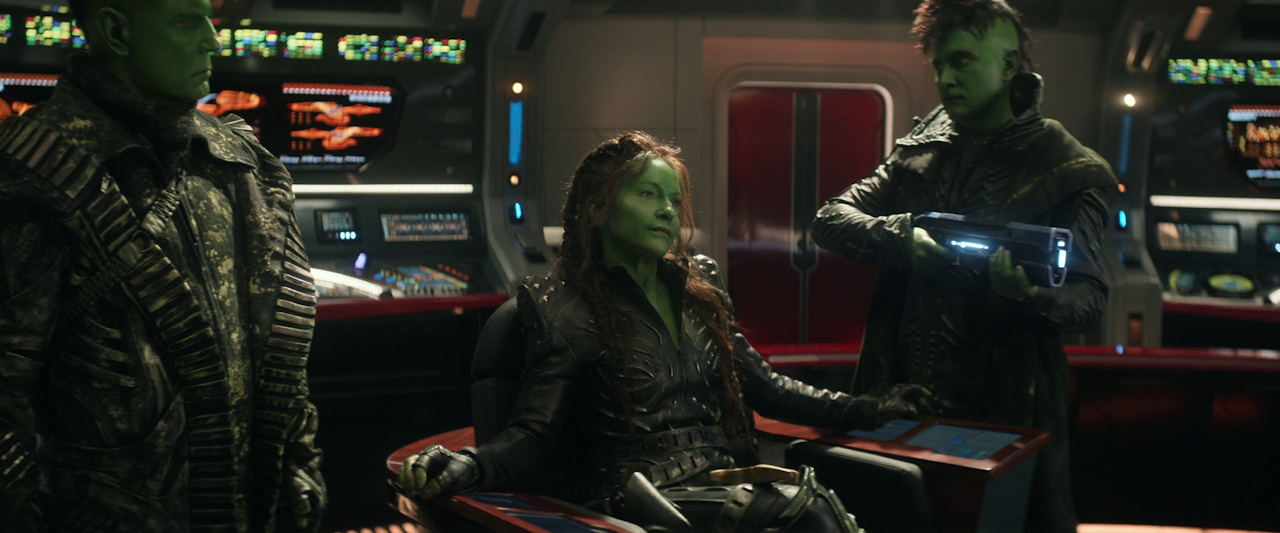
The Serene Squall also put Spock in a comparable position as the pirates’ captive, one of the only main characters aboard the Enterprise able to do anything, and talking about his personal life with one of his captors. It was just derivative and repetitive all around to see so many of those same points re-used this time. And that wasn’t the only “Spock recycled” aspect of Level-Five Transporter Accident, sadly.
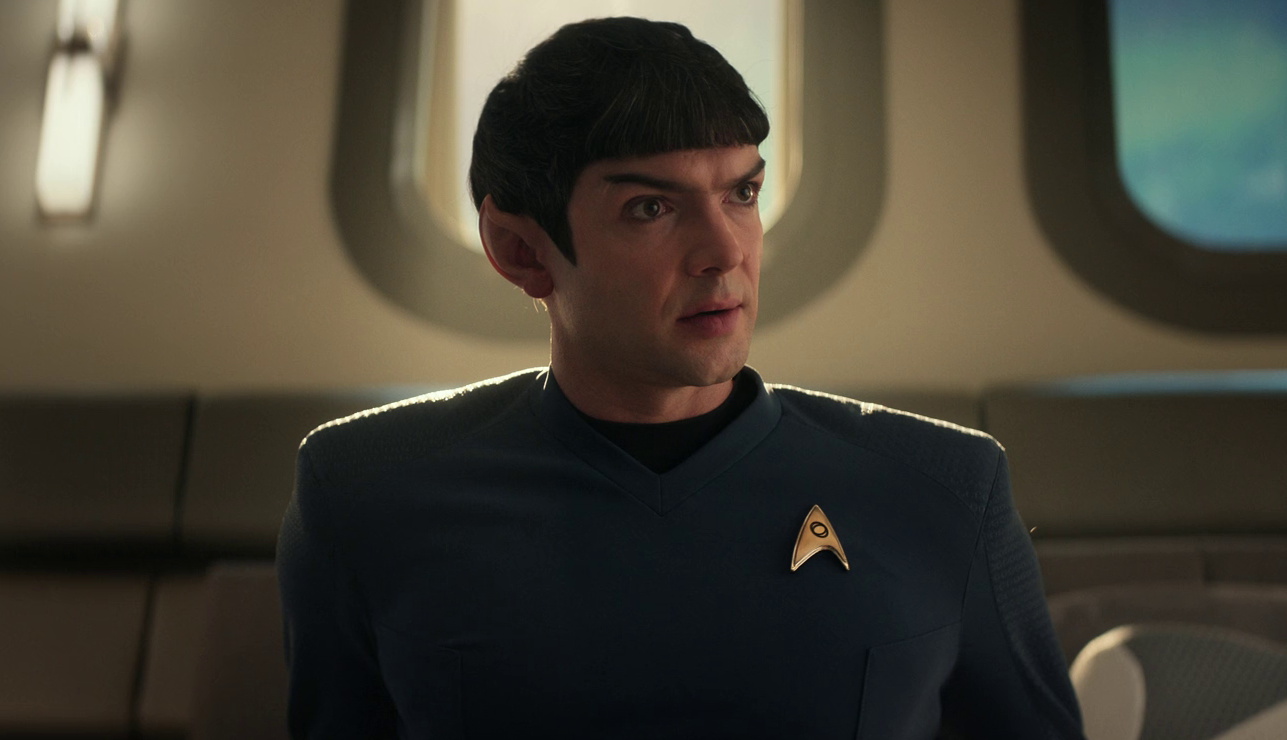
It’s been clear for a while that Strange New Worlds’ writers have latched onto this idea that “these autistic-coded Vulcans are all stuck-up, stoic, and weird… isn’t that just hilarious?” And they seem to want to throw Spock (and other Vulcan characters) into one of two situations: slapstick/cringe comedy or soap opera romance. And both of those were present in Level-Five Transporter Accident. As I said last season (I think it was in my review of Four-and-a-Half Vulcans): if the writers don’t know how else to use Spock, or what other storylines could work for this incarnation of the character… just don’t use him in a major role. It’s okay! Star Trek is sixty years old, and between Discovery, Strange New Worlds, The Original Series, the movies, The Next Generation, and the Kelvin timeline, we’ve spent plenty of time with him! Instead of doing another tired, overused, pretty boring “Spock comedy” or “Spock love triangle” plot for the eighth or tenth time, respectively, just… don’t. Level-Five Transporter Accident would genuinely have been a better story if another character – La’an, Una, Chapel, Dr M’Benga, or even Scotty – had taken over Spock’s role.
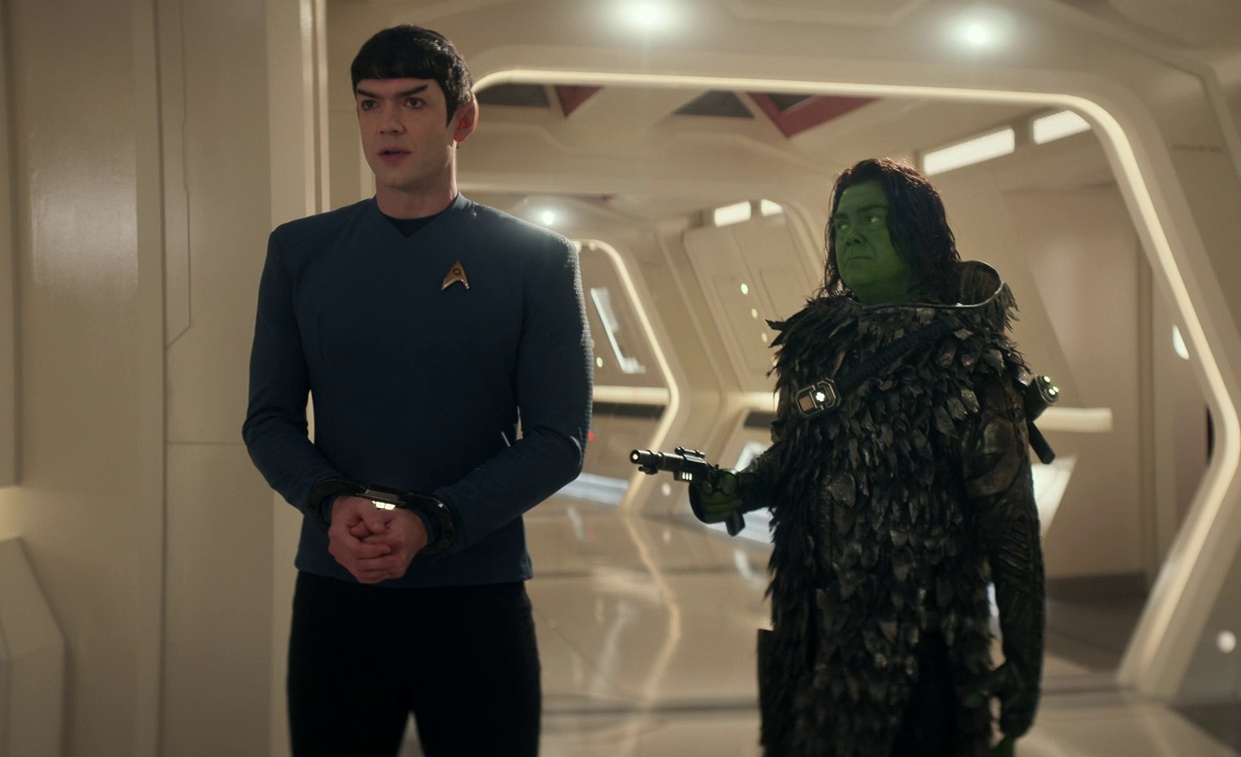
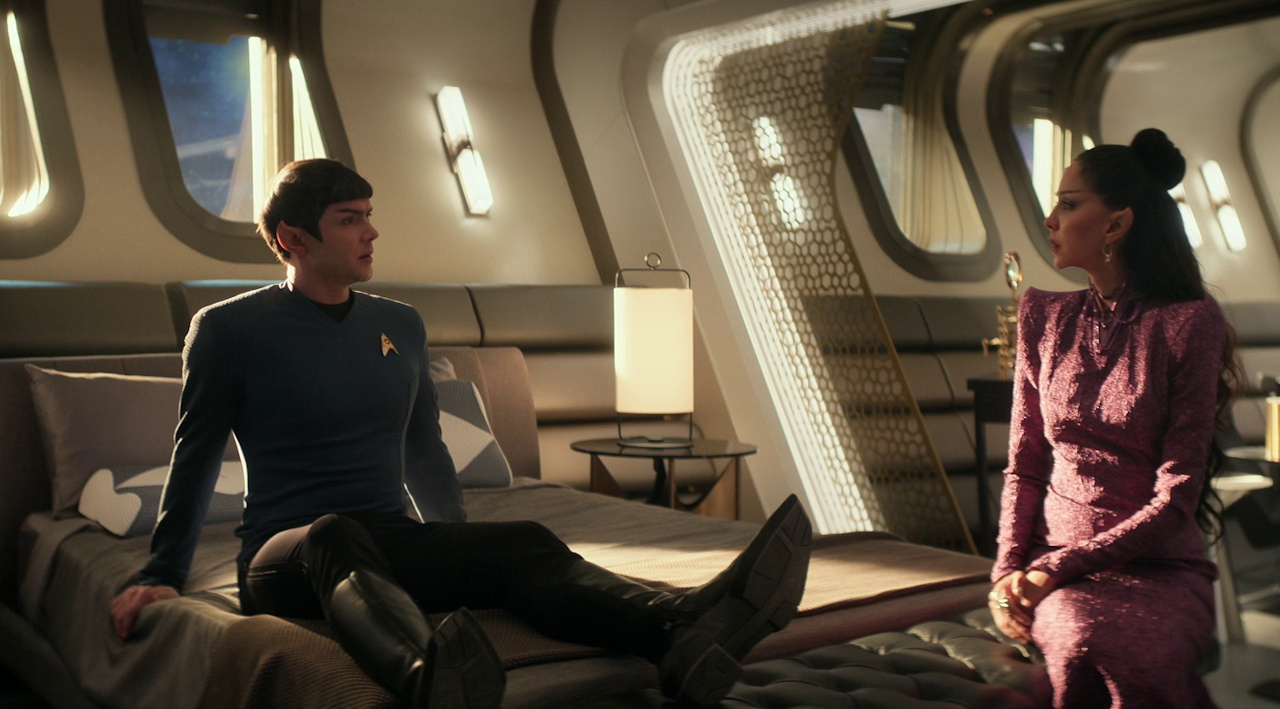
Spock’s break-up with La’an – or rather, hers with him – was fine, I guess, and not unexpected after events earlier in the season. It does seem to stack more evidence in the “La’an might not be long for this world” column; a theory I’ve been toying with since La’an (clumsily) brought up the question of her latent augment DNA in the season premiere. Giving Spock a romantic interest has – as I said above – completely run its course for me as an interesting storyline, and seeing Spock sleep his way through the Enterprise’s female crew complement hasn’t been the best part of the show by any stretch. So I’m fine with this relationship coming to an end.
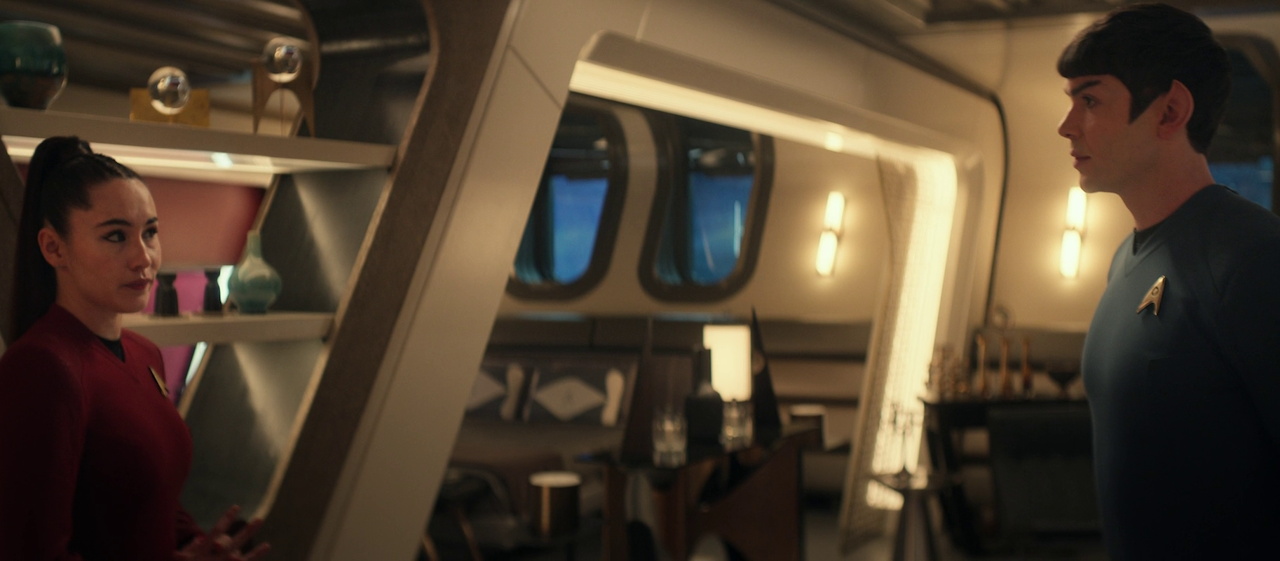
Season 4’s tagline/motto is: “boldly go one step closer to where it all began.” And I think we can see Spock and La’an’s break-up through the lens of the show moving its characters around to get them closer to their Original Series roles. Other aspects of Level-Five Transporter Accident arguably work against that for Spock, but this break-up, and the way both of them handled it, was far from the worst part of the story. Did I roll my eyes when it looked like we were about to get another “Spock in love” or “Spock’s heartbroken” storyline? Yeah, a little. But the positives probably outweigh the negatives, and I did appreciate that both characters referenced the events of The Griffin Incident, noting that what happened aboard that derelict ship has been weighing on them. Whether that’ll set up something more for Spock, La’an, Kirk, or all three, I’m not sure – but I’m glad, at least, that such a traumatic experience wasn’t simply locked away, never to be mentioned again. If this conversation is all the follow-up we get, at least we can say we got *something*.
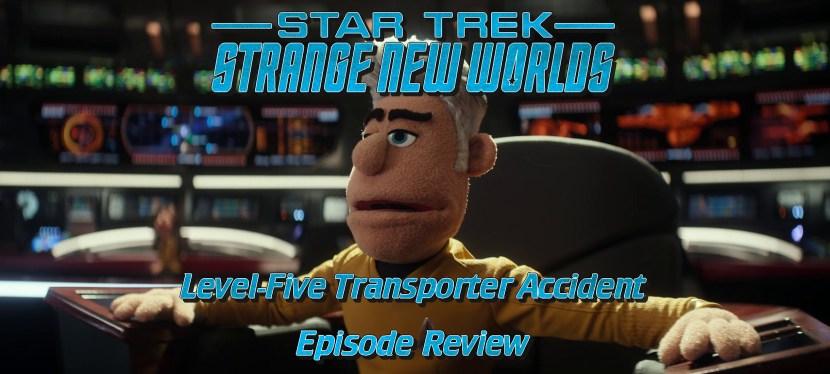
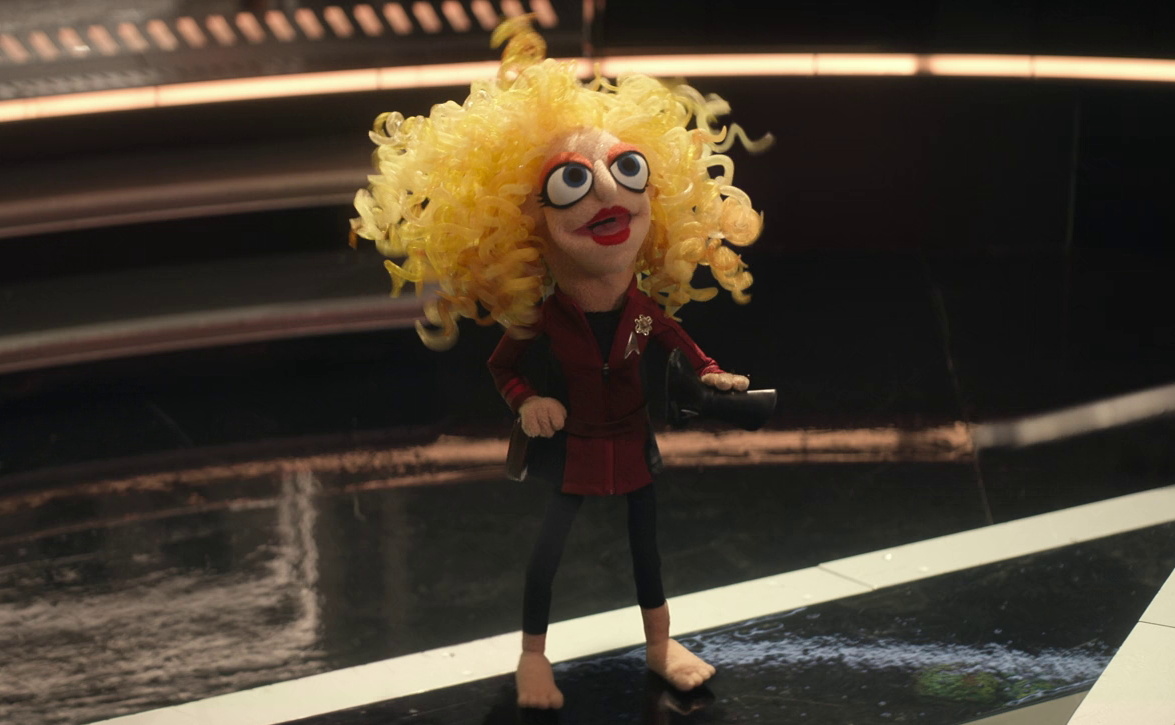
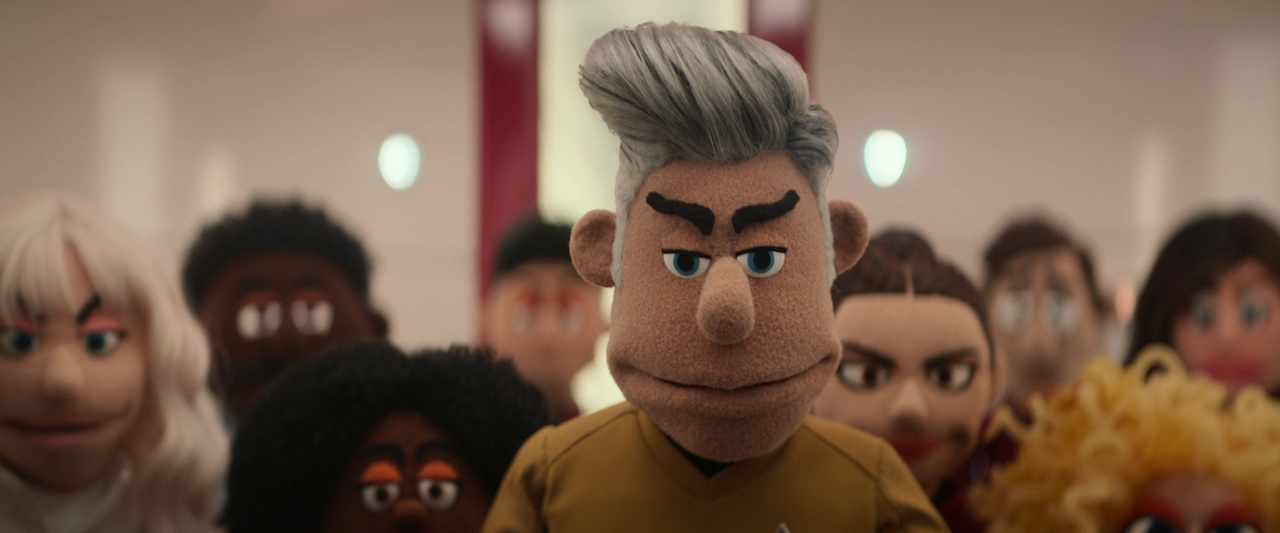
Level-Five Transporter Accident was known as “the puppet episode” for more than a year, I guess, ever since we caught a glimpse of one of the puppets in a pre-season teaser clip. If Star Trek is gonna do an episode featuring puppets, it’s important that the puppets themselves look good – and I gotta say that they really did.
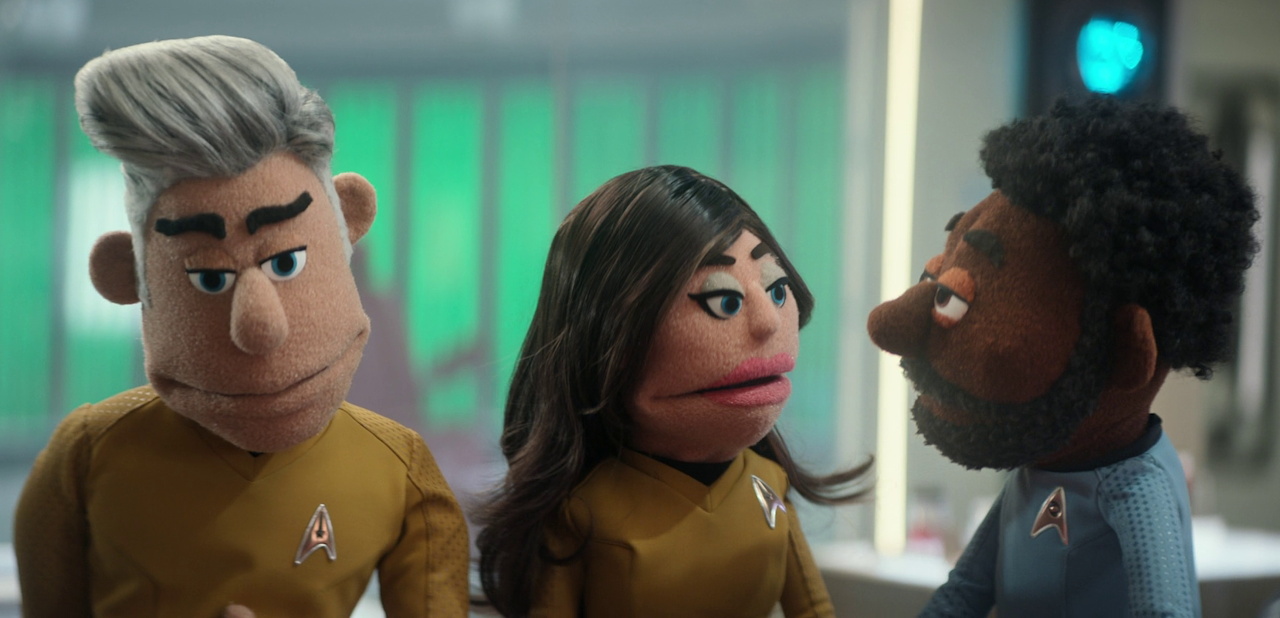
Paramount worked with The Jim Henson Company – famous for its work on The Muppets, Sesame Street, The Dark Crystal, and other puppet-focused projects. And this was a genuinely good choice; The Jim Henson Company is light-years ahead of any other puppet shop in the industry when it comes to creating something like this. And that partnership paid dividends – at least in design and aesthetic terms. All of the puppets – yes, even Pelia’s – looked fantastic, they all resembled the real-life versions of the characters they were supposed to depict, and the way they moved and (for want of a better term) emoted was exaggerated, but mostly in a fun way.

The puppets themselves are not the problem with this story – and I know that sounds a bit weird, given everything we’ve talked about, but let me try to explain what I mean.
I felt that the puppets themselves looked fantastic, they moved well, were well-articulated, and although prone to exaggerated expressions and movements, that kind of thing *could* work if it had been part of a stronger story. Most of the main cast put in solid voice performances – though I would say that Christina Chong and Celia Rose Gooding in particular seemed to over-exaggerate just a bit too much for my ears. But a combination of great-looking puppets and a cast who’ve inhabited these characters for three-and-a-half seasons was generally pretty good.
They were let down, though, by a story that was just too wacky and silly.

What might’ve worked better is if the *entire* episode had been done with puppets – Spock included, and any villains or aliens, too. And, just like last week with the black-and-white, or like Human Best Friend with its “atmosphere that makes you drunk,” some hand-wavey line of technobabble could’ve explained why everything looked like that. Or… maybe it didn’t even need that. Maybe just play it straight: do a regular Star Trek episode, just… with puppets. That would’ve almost certainly been better than what we got.
I almost feel like there’s no point in dissecting Level-Five Transporter Accident’s main narrative because of the absolutely pathetic “it was all just a dream” ending. But I suppose we should, if only to criticise what didn’t work, eh?
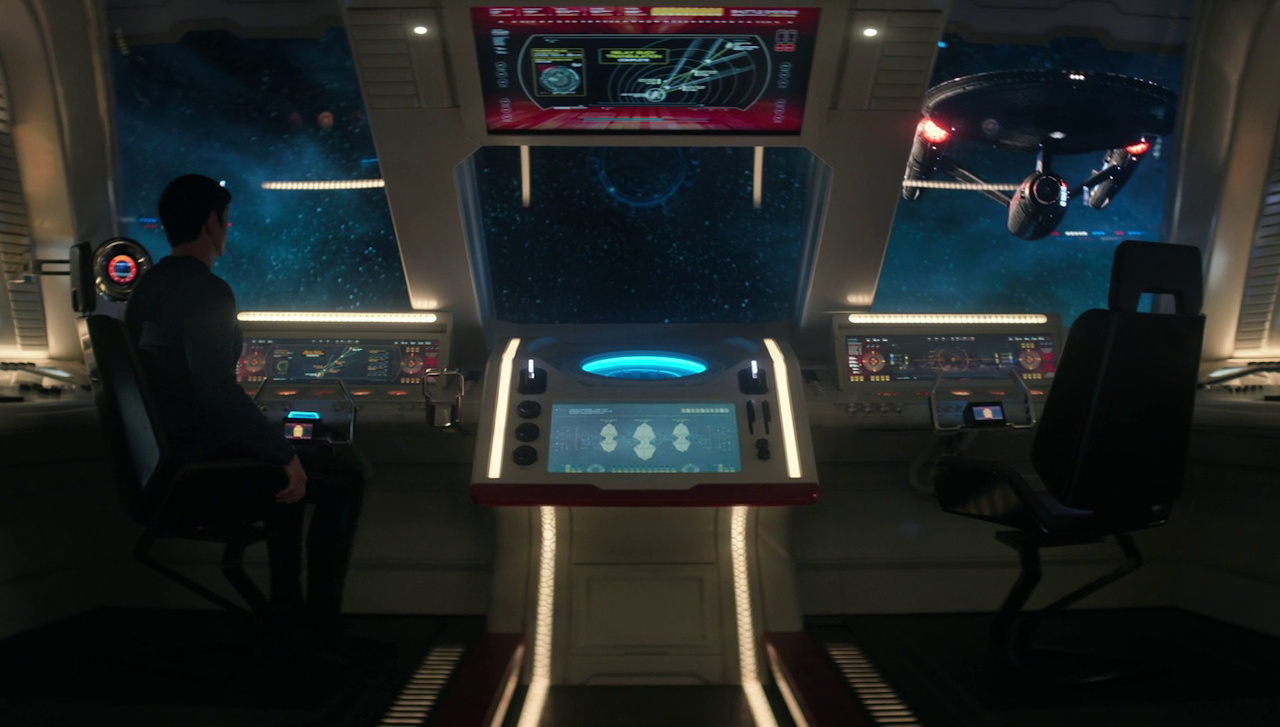
Star Trek has done silly “the transporter done goofed” storylines before. Crossing over to alternate dimensions, fusing two characters together at the molecular level, and perhaps the most apt comparison in terms of both narrative and comedic tone: when The Next Generation turned Captain Picard, Guinan, Ensign Ro, and Keiko O’Brien into children. That premise is not a million miles away from what we got in Level-Five Transporter Accident, with the de-aged characters having to fight off a Ferengi invasion of the Enterprise-D. And the resulting episode is genuinely enjoyable; it was a fun premise that was well-executed.
I had Rascals in my notes ahead of Level-Five Transporter Accident because I wanted to use it as a point of comparison to show that Star Trek has always had this comedic side, and that similar premises have worked well in previous incarnations of the franchise. And when I read the blurb for this week’s episode, it was literally the first thing that came to mind. I thought it could be a fun comparison, but also a reminder to some of *those* Trekkies – the “nu-Trek” haters who seem to insist that Star Trek always has to be straight-laced and super serious – that the franchise has always done similar absurd ideas… and generally made them work.
But I think Rascals now serves as a different kind of comparison: it shows how that kind of story, using a very similar setup, can work well in Star Trek… if you have the writing quality to back it up. And for me, Level-Five Transporter Accident absolutely did not.
I’m saying all of this because I really want two incredibly important points to come across in this review. One: I wanted to like Level-Five Transporter Accident. I wanted to enjoy the comedy, the inherent silliness of the premise, and to get a fun, light-hearted adventure with Pike and the crew. And two: I really gave the episode a chance to impress me. I went into it with an open mind, not pre-judging it or thinking I’d end up disliking it, and I’d even prepared, in my notes, points of comparison from Star Trek’s past to – for want of a better term – defend its honour against some of the lines of criticism that I could tell were going to come from certain corners of the fan community.
The tl;dr? I *really wanted* to come away from Level-Five Transporter Accident having had a whale of a time, and I hoped to be able to tell you that this silly idea, despite what some naysayers might think, had just plain *worked*. But I can’t. Because it didn’t.
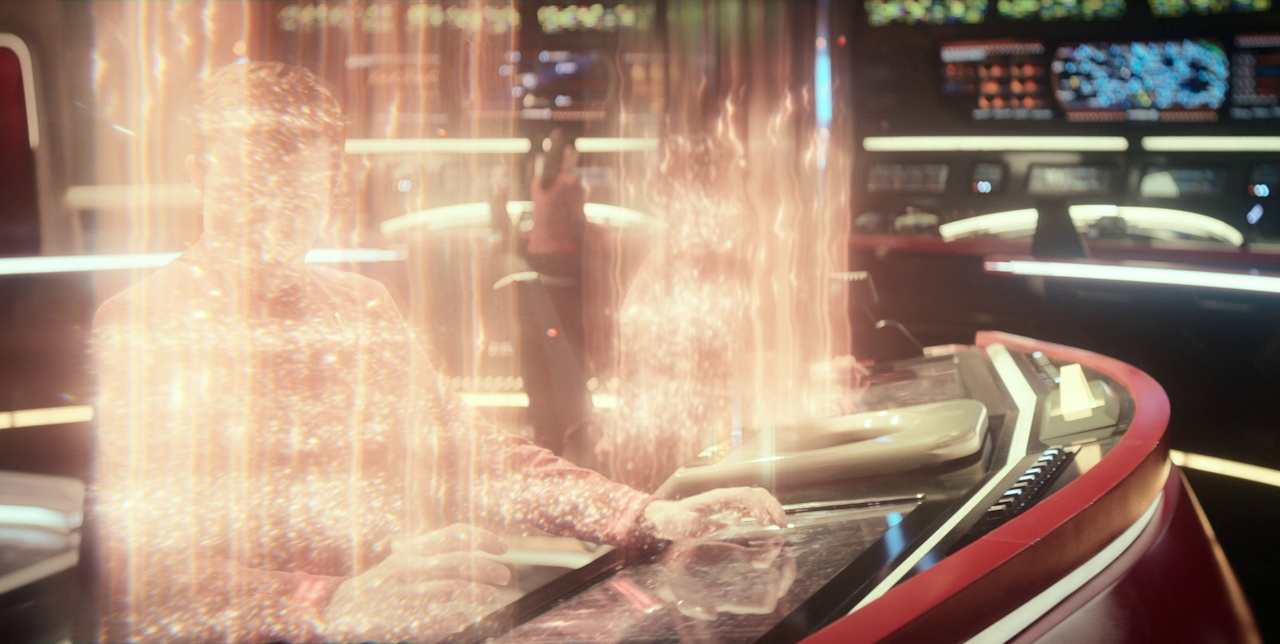
There was enough of a technobabble excuse from Scotty, who had concocted a long-range beaming scheme, to make the core “everyone’s a puppet now” idea believable enough within our understanding of the Star Trek galaxy. Is it unscientific to a ridiculously silly degree? Sure. But so are a ton of things in Star Trek – from brain-stealing aliens and god-like tricksters to time-loop paradoxes and sexy ghosts – so I think we could have overlooked that in a stronger story.
I also felt, on Scotty’s side of the story, that his transporter-range-extension plot made sense. We know, thanks to Star Trek Into Darkness, that Scotty eventually developed something known as “transwarp beaming,” a way of massively extending the range of transporters that enabled someone on Earth to beam all the way to Qo’noS – a distance of dozens of light-years. So, if we look at the season’s core premise – moving these characters closer to their original incarnations – we know that Scotty’s work on long-range transporting is something that fits with his character. And after emerging from transporter suspension in the late 24th Century, he’d continue to work on it.
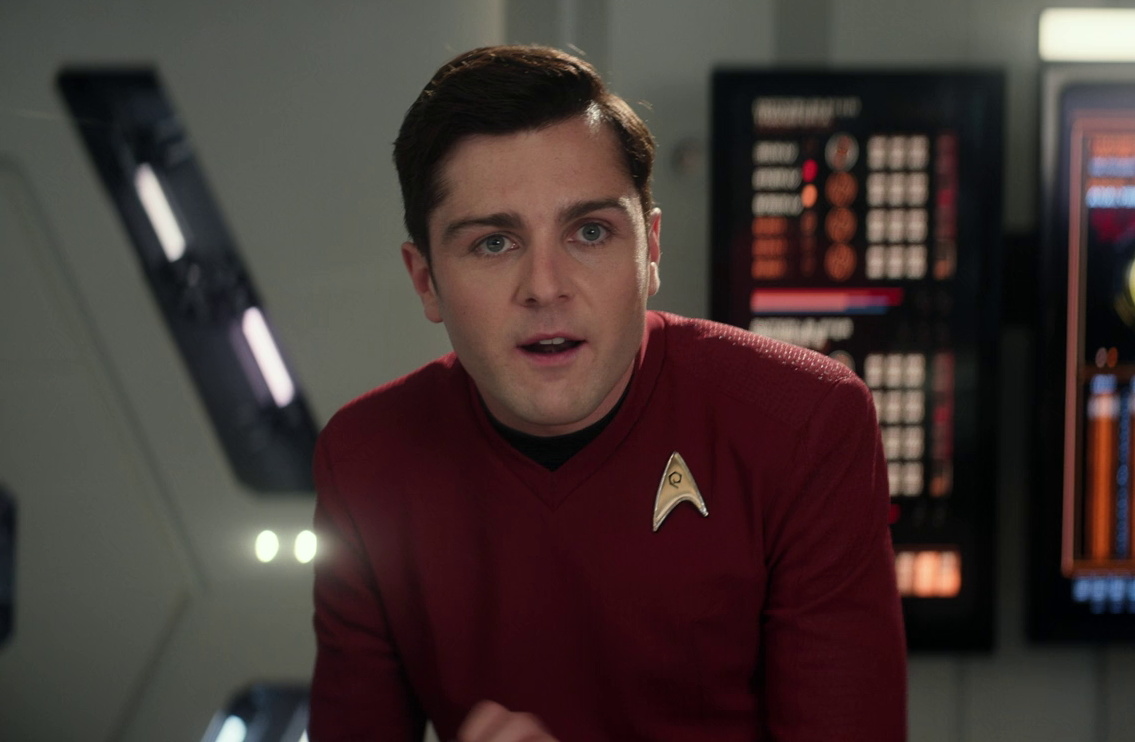
That technobabble, and Scotty’s obsession with outdoing an old Academy rival, could have set the stage for a believable (or believable enough) “the transporter done goofed” story. And in addition, an episode of Lower Decks’ second season also saw a character turned into a puppet, only to have that process reversed so he could continue to serve aboard the USS Cerritos. So if you wanna be technical, we’ve already seen this kinda thing before. In “canon,” puppets can exist in Star Trek, and being turned into a puppet is not necessarily a death sentence!
But… all of that would’ve needed the main thrust of the story to be better, stronger, and more engaging.
And not to be undone with seconds to go right at the end with the “but it was all just a dream” cliché.
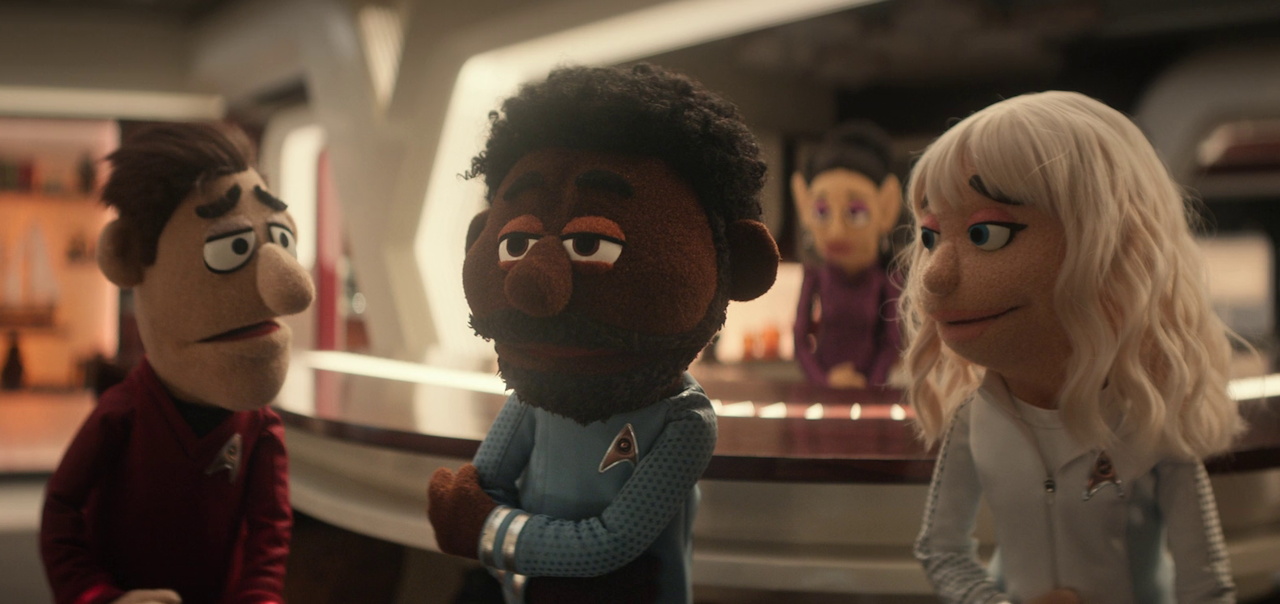
After being puppet-ified, we get into the repetitive “pirate attack” and “Spock’s been captured” storylines from Season 1… only worse. The Orions were so one-dimensional, slapstick, and just plain *stupid* that they were impossible to take seriously as a threat to anyone, and while I can recognise that the way they were written is clearly drawing inspiration from the same slapstick comedy as The Muppets… it just didn’t work in this context. Even going back to the episode to re-watch it, knowing that it’s all just a dream and that they aren’t real people… they just don’t work as villains.
I’ve said a few times, when Strange New Worlds has done one of these “big swings” in terms of genre, that I can respect the commitment to the bit; that fully and whole-heartedly embracing the tropes of whatever genre of style of storytelling the show’s trying out is, in some ways, admirable. Even if I didn’t like the finished product, I can at least acknowledge that the writers and creative team totally went for it, and they jumped in head-first to this kind of Muppets-inspired slapstick comedy.
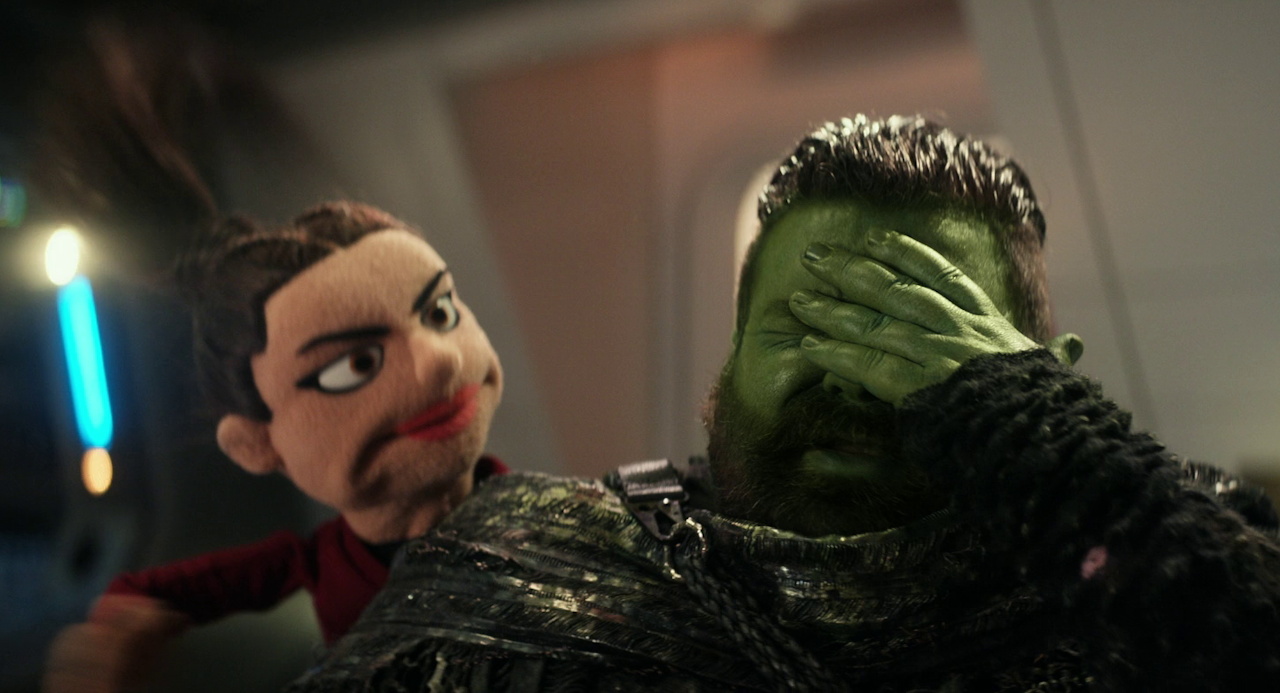
But committing *so hard* to any “bit” means you import all of the genre’s weaknesses and flaws. Last week, that meant Strange New Worlds didn’t just get the black-and-white, the soft-focus close-up shots, and the smoke-filled alleyways of film noir, but the cardboard cut-out secondary characters and unnecessary melodrama, too. And this week, it means that the episode was plagued by ridiculously over-the-top slapstick baddies that came right out of children’s television, a paper-thin, repetitive story that the show has literally already done, and the most pathetic cop-out ending that would earn you a grade F even in a primary school creative writing class.
There were *some* positives and creative ideas, though – at least until the ending ruined all of them.
Pike’s assertion that the crew had to “think like puppets” if they were going to help Spock and retake the ship made sense in context, and I clocked pretty early on that the best way for the apparently immortal puppets to outmanoeuvre the Orions would be to turn off life support. The way it was executed – i.e. the slapstick fight on the bridge – went on a bit too long, but they got to the right answer even if it dragged out a bit.
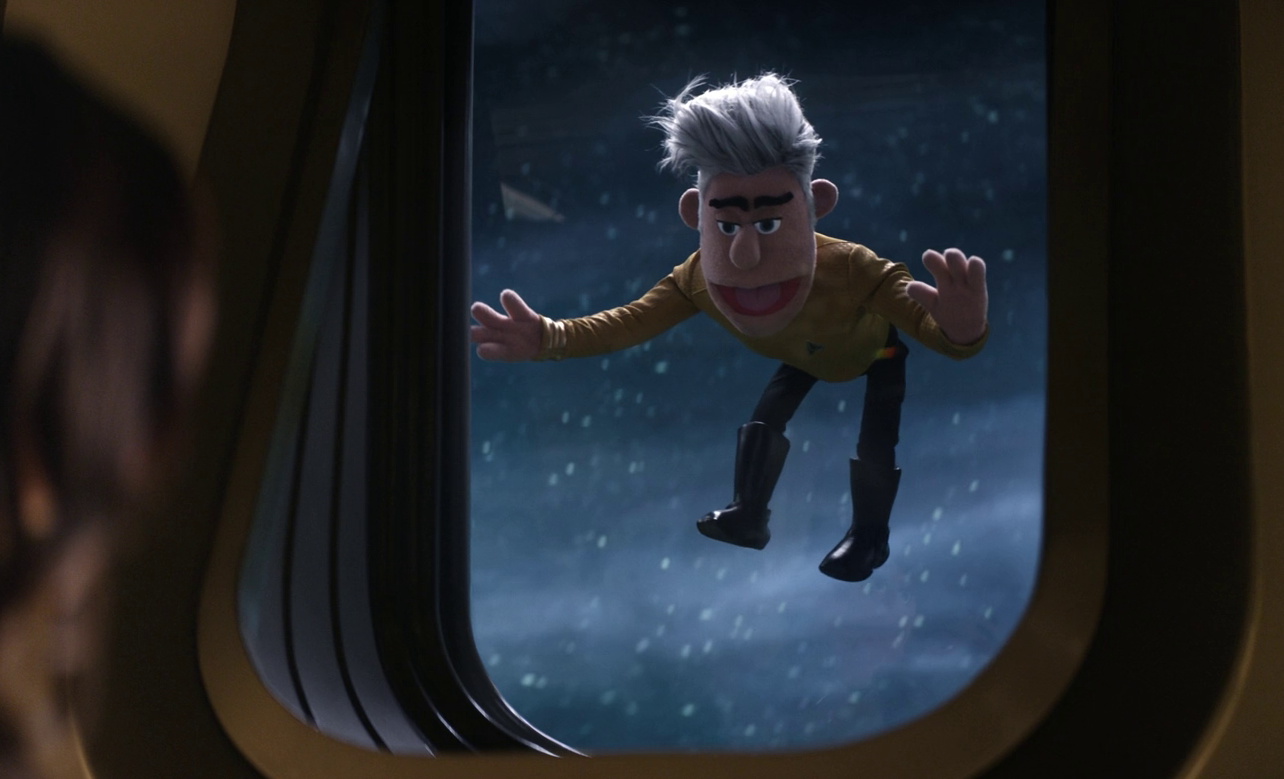
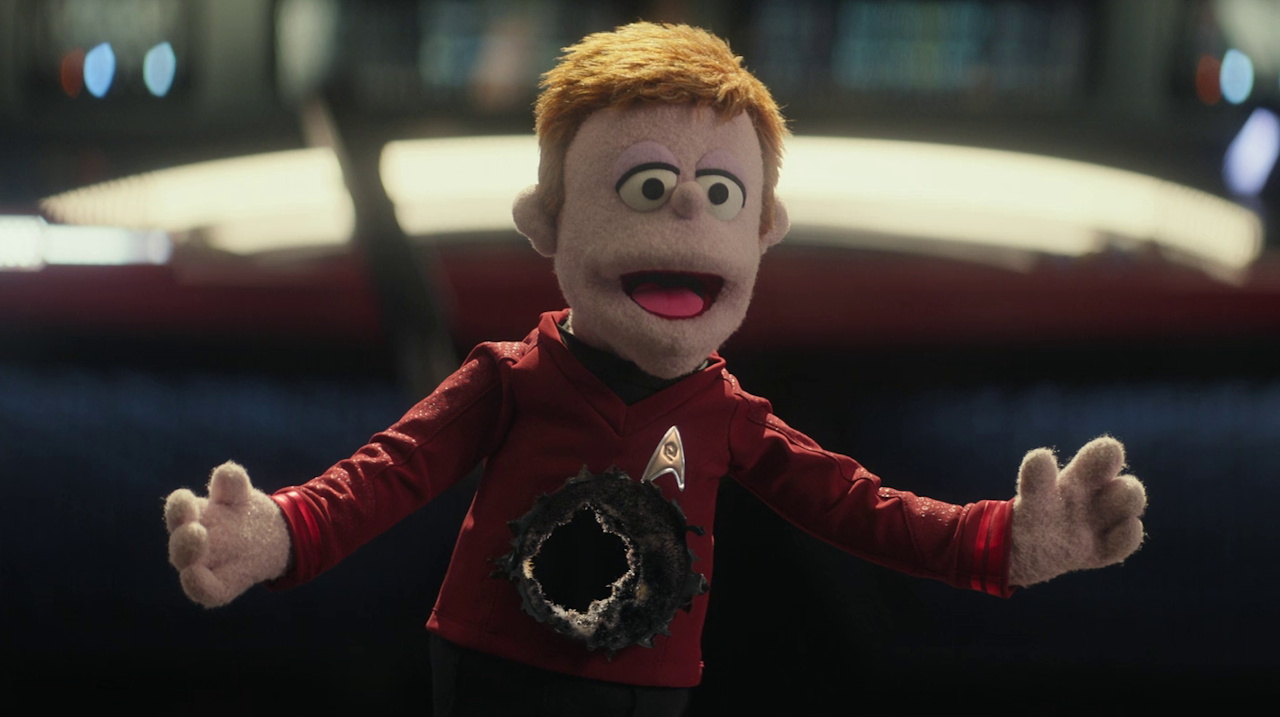
There was creative potential in the “the puppets are basically unkillable” idea that parts of Level-Five Transporter Accident took advantage of. Pelia being sliced in half was simultaneously brutal and kind of funny, the unnamed navigator getting a hole blasted right through him (and then just staying like that for the rest of the episode) was also neat, and there was a genuinely beautiful – if admittedly absurd – moment as the puppet-ified crew floated in space, taking full advantage of their puppet forms to do something they’d never be able to do otherwise.
Star Trek, from its inception, really, told stories that had real-world parallels or messages that could be important. And I can appreciate Level-Five Transporter Accident’s attempt – however flawed and ultimately disappointing it may have been – to showcase how trauma and stress can impact even the most disciplined mind. This was the arc intended for Spock – to show how he’s been struggling, and how piling too much work on one individual, even if there seems to be a good reason for doing so, can lead to burnout and mental health struggles. We can debate whether *Spock* was the right character for this kind of storyline, but I think that’s all pretty much a moot point in light of the way the story ended.
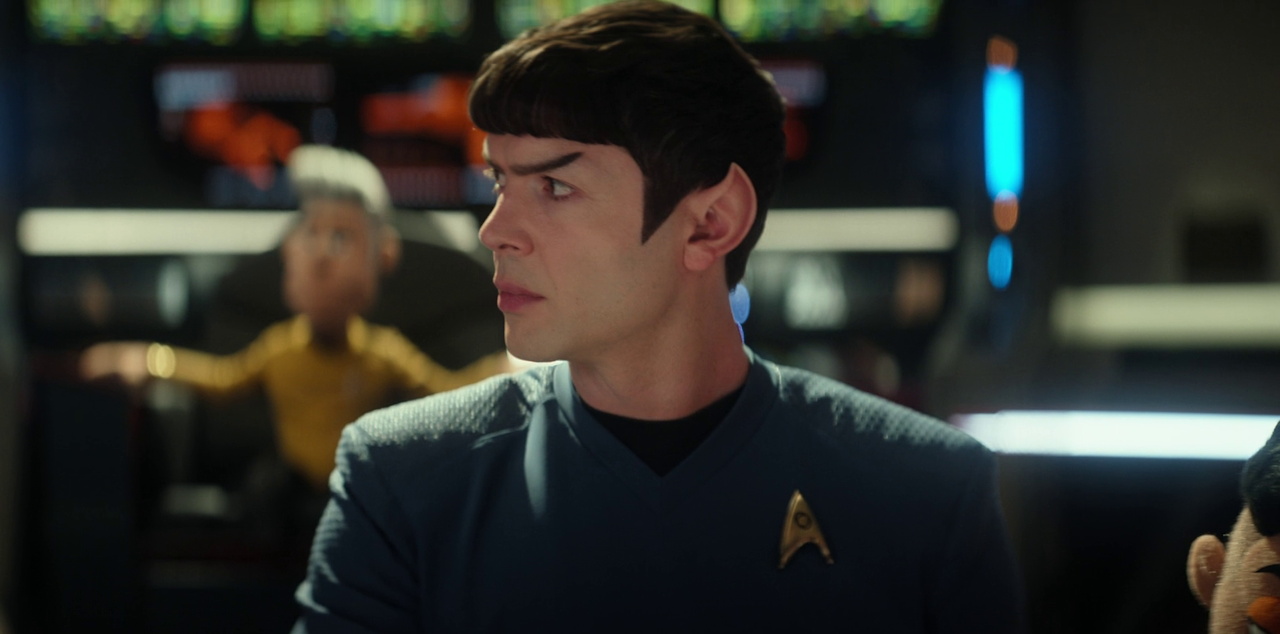
But as a broader point, I’ve always tried to support the Star Trek franchise’s examinations of real-world issues through the lens of sci-fi, and there were some ideas in Level-Five Transporter Accident that a stronger core story could’ve made more of. Spock isn’t just suffering because of workplace stress, but he’s still unsettled by what happened to him aboard the USS Griffin – a traumatic incident – and then, on top of that, his girlfriend dumps him. That sets the stage for Spock to be feeling down and just not at his best, before the stress of being the only one on the ship capable of operating anything at all pushes him over the edge.
A more grounded story could’ve taken a different approach to stress, burnout, and mental health, and what resulted would’ve certainly been more impactful with its messaging. I guess you could argue that the ridiculousness of the puppet dream is part of the point; a character like Spock would only ever have such an absurd dream *because* of the mental health struggles he was going through, and that the way he was forced to play every role on the ship when everyone was puppet-ified was a manifestation of how he’d been feeling. But… well, a story like that needed stronger, more down-to-earth writing if that was the intention, and while I can respect the core idea, and I think there’s merit in Star Trek looking at issues like workplace stress, burnout, and so on, this way of communicating it was poor.
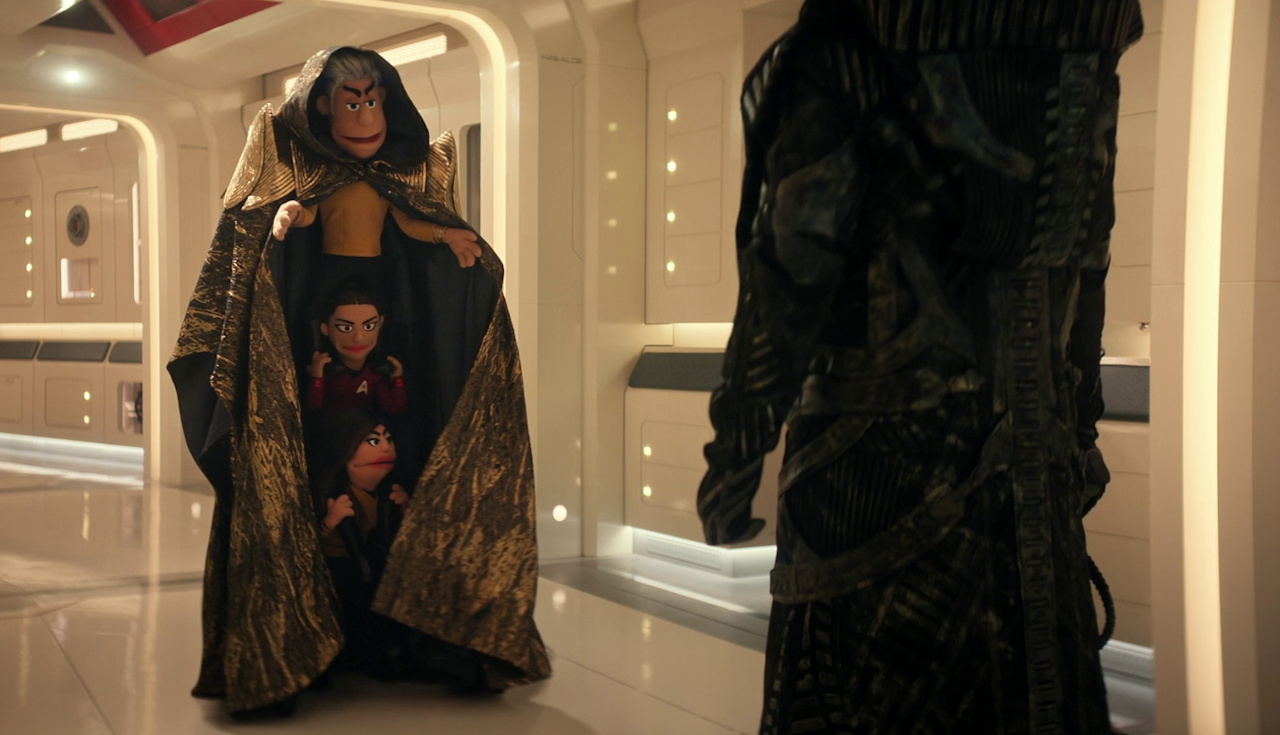
What can I even say about “it was all just a dream,” though?
Literally *any* good points that Level-Five Transporter Accident might’ve been able to claim to have had simply evaporated; they went up in smoke as soon as Spock woke up. I had in my notes that there were some positive ideas in the mix, even if the story’s slapstick comedy and childish tone worked against them most of the time, but when the episode’s final scene revealed that none of it was even real? I was genuinely stunned by the sheer *audacity* of whoever wrote that, whoever approved that story beat, and Strange New Worlds as a whole.
If I’d been the show’s executive producer or showrunner, and you were the writer who showed up with *this* way of ending the story? You’d have been fired on the spot. This is the kind of narrative cliché that literal primary school children are warned to avoid. To see it as the honest-to-god ending to a brand-new Star Trek story in 2026 is… I mean, I don’t have the words for it.
Actually, I lied. I *do* have the words.
Pathetic. Creatively bankrupt. Shoddy. Awful. Amateurish. Childish (though that actually feels like an insult to children, many of whom could write better than this). Appalling. Shockingly bad. Disgraceful. A sacking offence. Feeble. Worthless. Lame. Revolting. Disgusting. Lousy. A festering pile of absolute dog shit.
I want a refund on this month’s Paramount+ subscription. Paramount literally owes me my money back after presenting *that* ending as if it were a genuinely serious way to close out an episode of one of its flagship big-budget streaming shows.
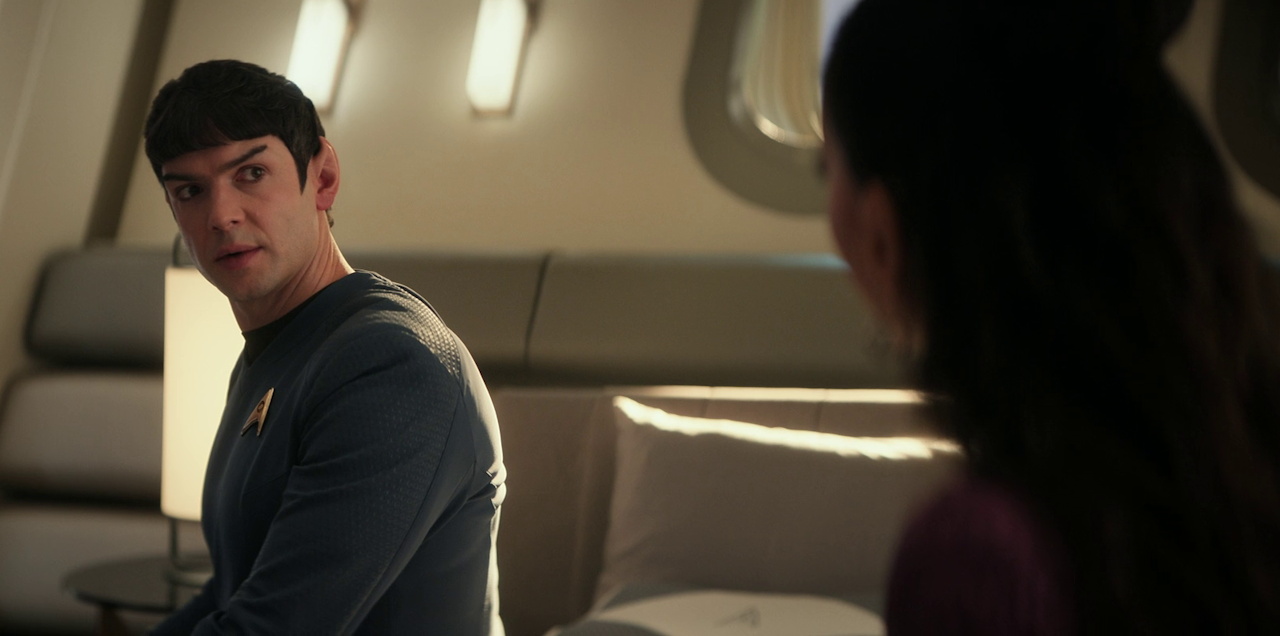
This episode was co-written by Dana Horgan (whose other credits include Subspace Rhapsody, A Space Adventure Hour and Four-and-a-Half Vulcans) and showrunner/executive producer Henry Alonso Myers. And I *never* like to call out individual creators by name, but in this case I’m making an exception because of how shockingly awful that ending was. Unfortunately, Strange New Worlds has already wrapped production on both Season 4 and Season 5, so we can’t take their pens or laptops away from them. I just hope to god that neither of them was trusted to write another *line of dialogue*, let alone an entire story, after this absolutely pathetic abomination of an ending.
I shouldn’t need to do this, but let’s briefly recap why “but it was all just a dream” is such an atrocious way to end a story, for the benefit of both Dana Horgan and Henry Alonso Myers – who evidently slept through that lesson when they were in primary school.

Firstly: it’s a played-out cliché. It’s arguably the *most* clichéd cliché to ever be a cliché in the realm of creative writing. Secondly: it’s a cop-out. It’s a cheap, nasty way to end a story when an incompetent, sub-par writer realises they don’t know how to get out of the narrative corner they’ve painted themselves into. Third: it completely undermines and invalidates *any* points in the story, because if it was “all just a dream,” why should I as the reader or viewer give a shit?
Fourth: it renders any advancement of character arcs or long-running storylines completely dead, because nothing we saw or read actually happened in the characters’ real lives. Fifth: it’s a complete betrayal of the audience’s trust. We were asked, in this case, to get invested in a silly story about puppets, but the ending comes across as *laughing at the audience* for believing it was real. It’s mean-spirited. And finally: none of the characters, Spock included, learned anything, grew in any way, or even experienced anything of consequence. Most dreams fade away within minutes of waking up, and none of the other characters even experienced these events.
So Dana Horgan and Henry Alonso Myers? Please don’t write another Star Trek script (or anything else, for that matter) until you’ve gone back to primary school and sat through that English lesson.
Look, I know how this review comes across. And if this is your first time reading any of my reviews, I want to assure you that I’m not usually this negative about Star Trek. Please go back to earlier seasons of Strange New Worlds to see that, or to my reviews of Picard, Discovery, and Lower Decks. I’m not a hater, I’m not a “nu-Trek” avoider, and I’m not someone who thinks that comedy has no place in Star Trek, or even that the franchise’s modern incarnation is substantially worse than Star Trek was during The Next Generation era. I genuinely wanted to have a good time here, and even when the episode felt too slapstick and silly for my taste… I could at least appreciate the earnestness with which it approached this absurd premise.
Until the ending robbed Level-Five Transporter Accident of any value it could’ve conceivably had.
I think I’d better wrap this up. Truth be told, returning to Level-Five Transporter Accident to take notes and map out this review was not a fun experience, and writing such a negative review just… well, it makes me sad, to tell the truth. There are only a handful of episodes left before Strange New Worlds – my absolute favourite series of Star Trek’s modern revival – will come to an end, so to get one like this that I so utterly detest… it’s just unfortunate.
I don’t know what the Trekkie consensus, the critics’ opinions, or a wider audience’s take on Level-Five Transporter Accident is going to be. I never read other reviews or expose myself to others’ opinions before writing my own reviews if I can possibly help it, and based on my track record across Season 4 so far, I think I’ve been in the minority in all four episodes! I liked stories that others didn’t, and I criticised episodes that others seem to have enjoyed. So… could Level-Five Transporter Accident surprise me by being everyone’s pick for the best of the season? I mean… who even knows any more!
If you did enjoy this episode more than I did, or if you feel my criticism of its slapstick comedy or its ending are unfair or unnecessarily harsh… that’s okay. All of this is subjective, at the end of the day, and there ought to be room within the Trekkie community for differences of opinion when it comes to what makes for a good or enjoyable story. I share my thoughts with you in that spirit, and it’s not my intention to stir the pot, start an argument, or add to the toxicity that exists within certain small corners of the fandom.
And hey, I hope you liked Level-Five Transporter Accident. I hope *someone* did, anyway! I want Star Trek to succeed because I want Star Trek to stick around, or at least to be resurrected sometime soon if a hiatus is coming up. The best way to guarantee that that can happen is if fans share their enjoyment and their love for this franchise, and I’m happy to acknowledge that some fan-favourite episodes – going all the way back across most of the franchise’s various shows – haven’t always been “my thing.” And conversely, that some episodes fans really don’t enjoy are fun for me!
At the end of the day, we’re still talking Trek. And maybe, just maybe, a wacky, wild, unhinged episode like Level-Five Transporter Accident will bring new eyes and new attention to Star Trek at a time when the franchise’s new corporate overlords are still deciding what to do and where to take it. That *could* be a positive thing. But… maybe that’s a little too much positivity after an episode like this one, eh?
Next week, Strange New Worlds will premiere Off-Hour – an episode which promises a “warp emergency” and “pushing the Enterprise to its limits.” Level-Five Transporter Accident certainly pushed me past my own limits, but I’m crossing my fingers and hoping that, after two weeks on the trot of generally unenjoyable episodes – and, to be blunt, four out of five so far this season that were weaker than I hoped for or that came with glaring narrative flaws – Off-Hour will be a return to form. I guess we’ll have to wait and see.
Star Trek’s landmark sixtieth anniversary is only a few weeks away, and throughout 2026 I’ve been writing all about the franchise to celebrate that milestone. In addition to my Strange New Worlds Season 4 reviews, I reviewed Starfleet Academy’s first season, and talked about the Doctor’s role in that series, as well as an unexpected storyline involving another character from The Next Generation era. I also reviewed Across The Unknown – the new video game based on Star Trek: Voyager, and wrote up re-watches of Where No Man Has Gone Before, The Original Series’ second pilot, and The Royale, which was my personal “first contact” with the franchise all the way back in 1991. Also this year, I got to meet William Shatner in person, and I’ve had a bit of fun talking about fan theories and some what-if scenarios. Click or tap any of those links to check out those pieces.
Thanks for joining me for this review. Here’s hoping next week’s won’t be anywhere near as negative. As always… Live Long and Prosper, friends!
Star Trek: Strange New Worlds Seasons 1-4 are available to stream now on Paramount+ in countries and territories where the platform is available. The first three seasons are also available on DVD and/or Blu-ray. The Star Trek franchise – including Strange New Worlds and all other properties discussed above – is the copyright of the Skydance-Paramount corporation. The Muppets and associated properties are the copyright of The Jim Henson Company and/or The Walt Disney Company. This review contains the thoughts and opinions of one person only and is not intended to cause any offence.

