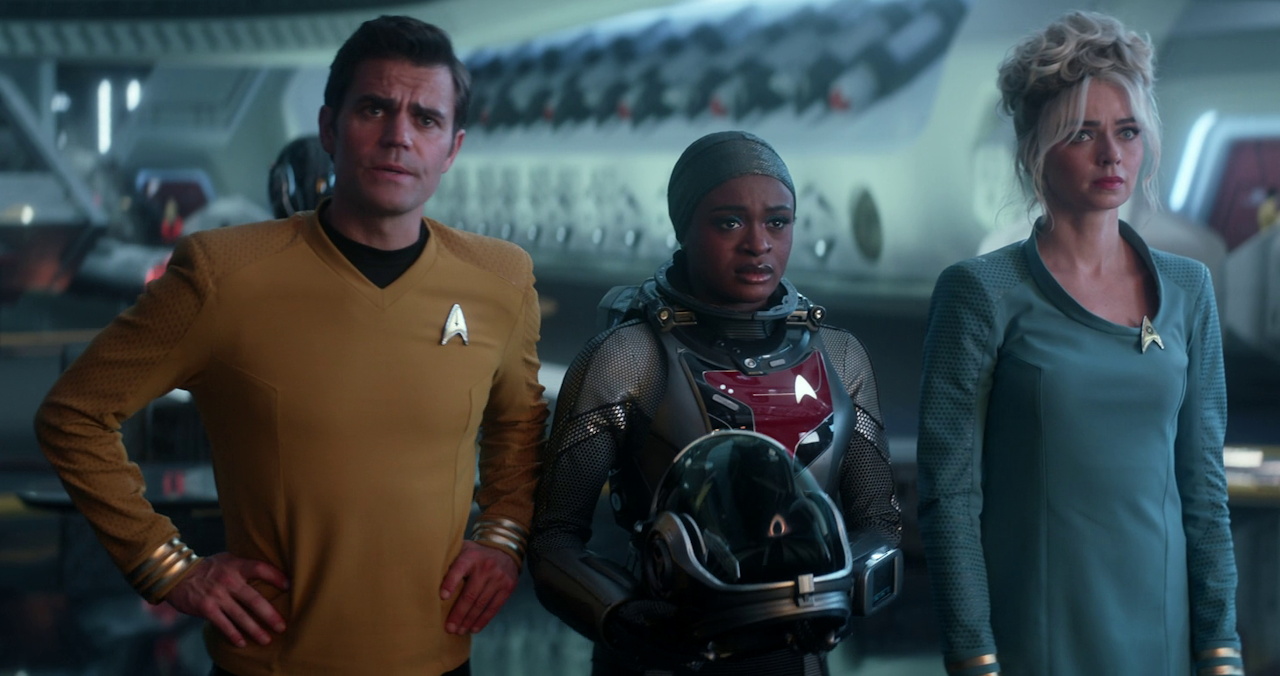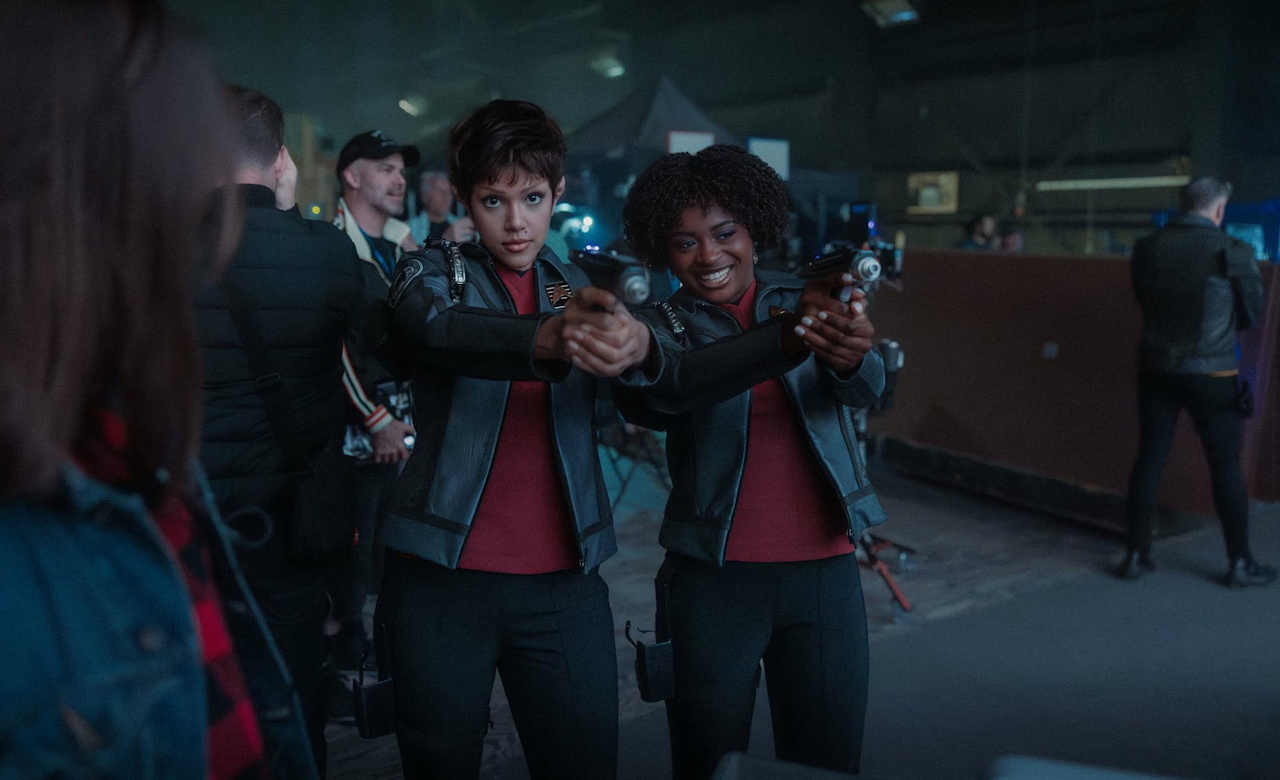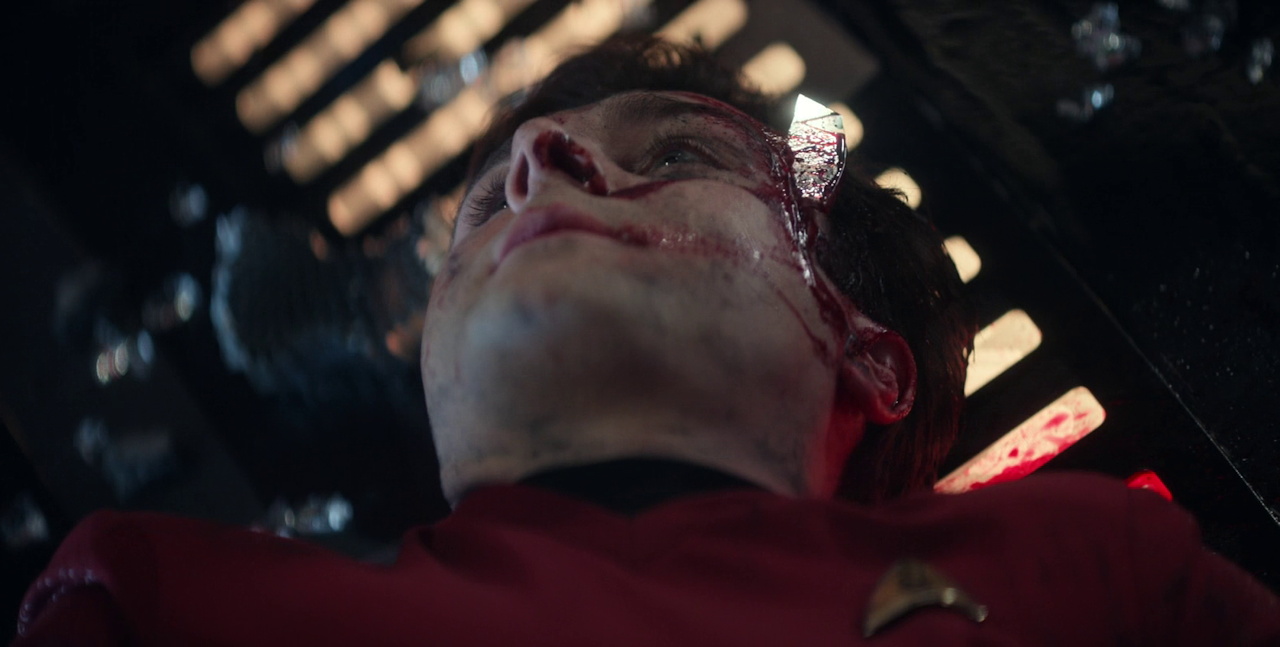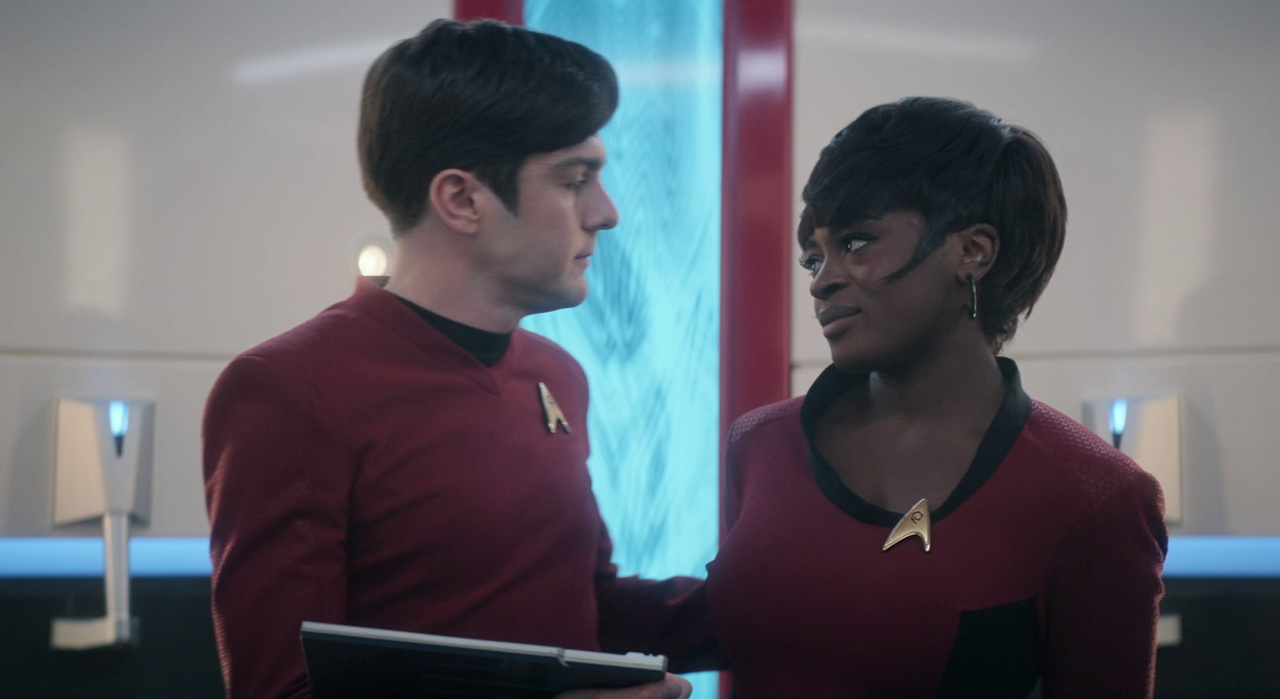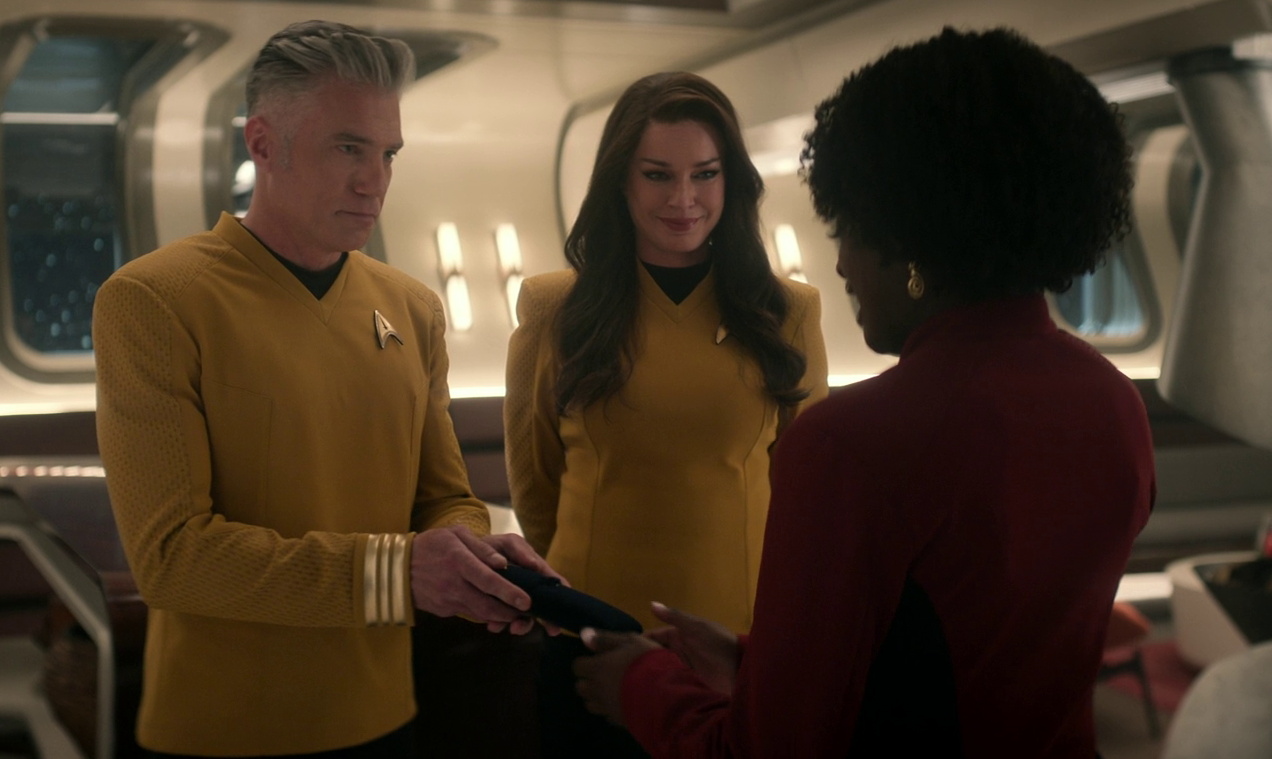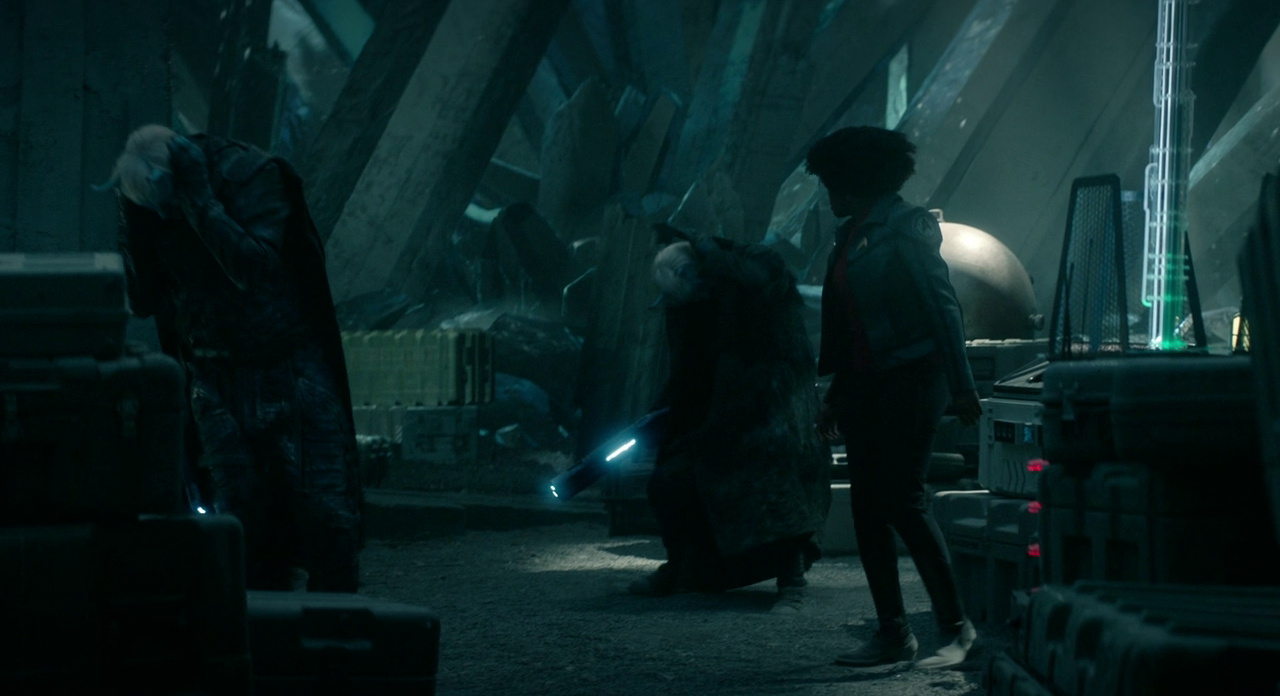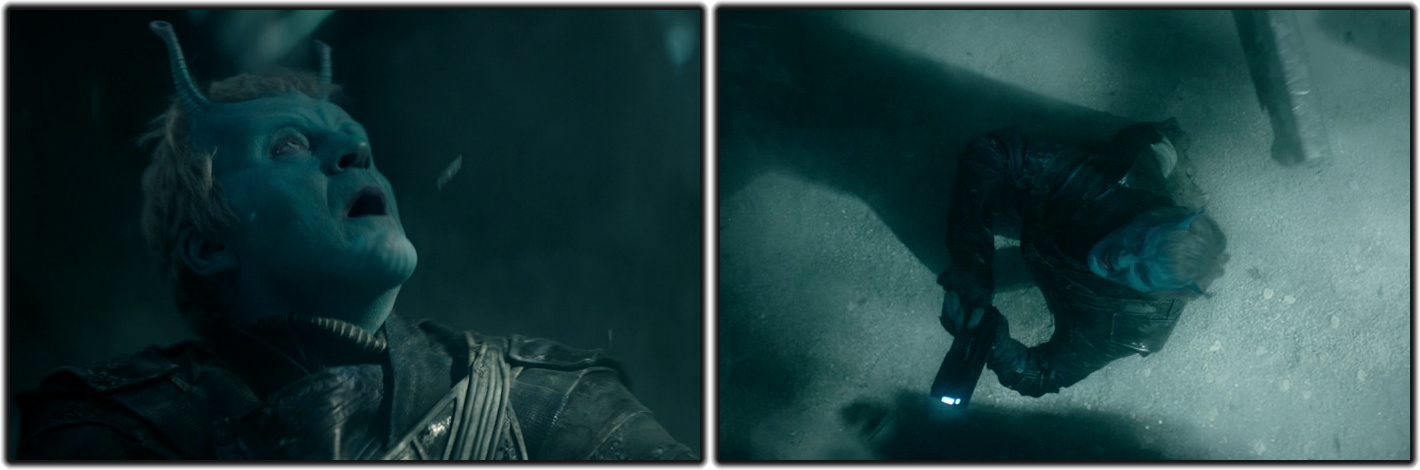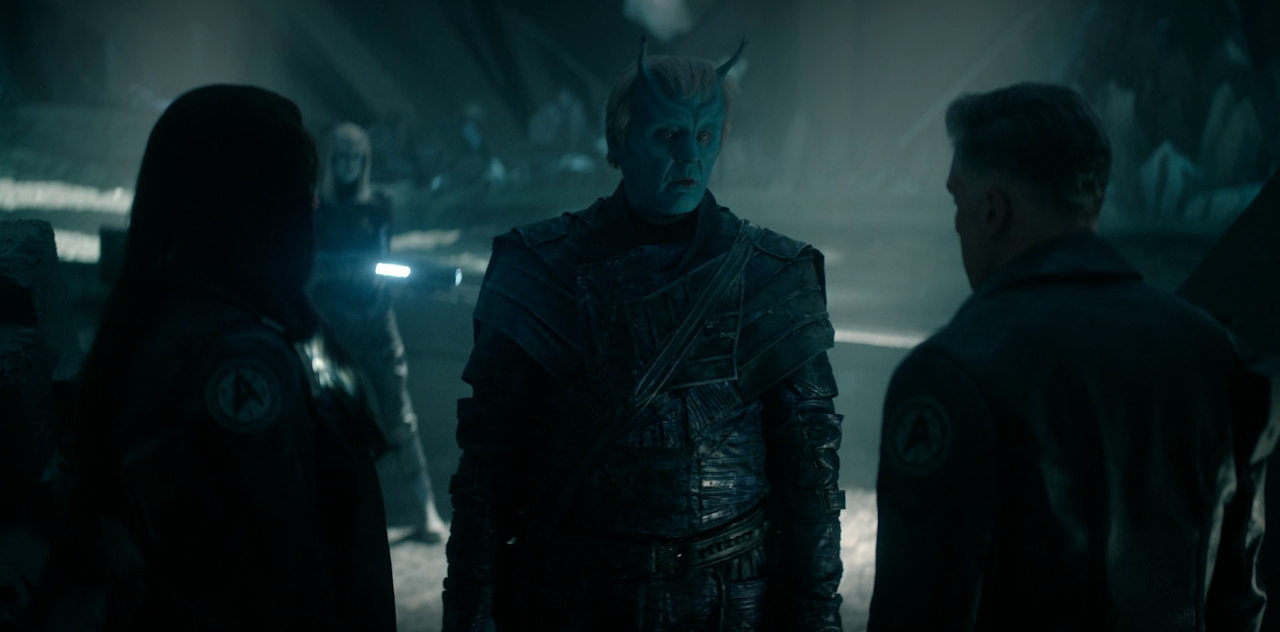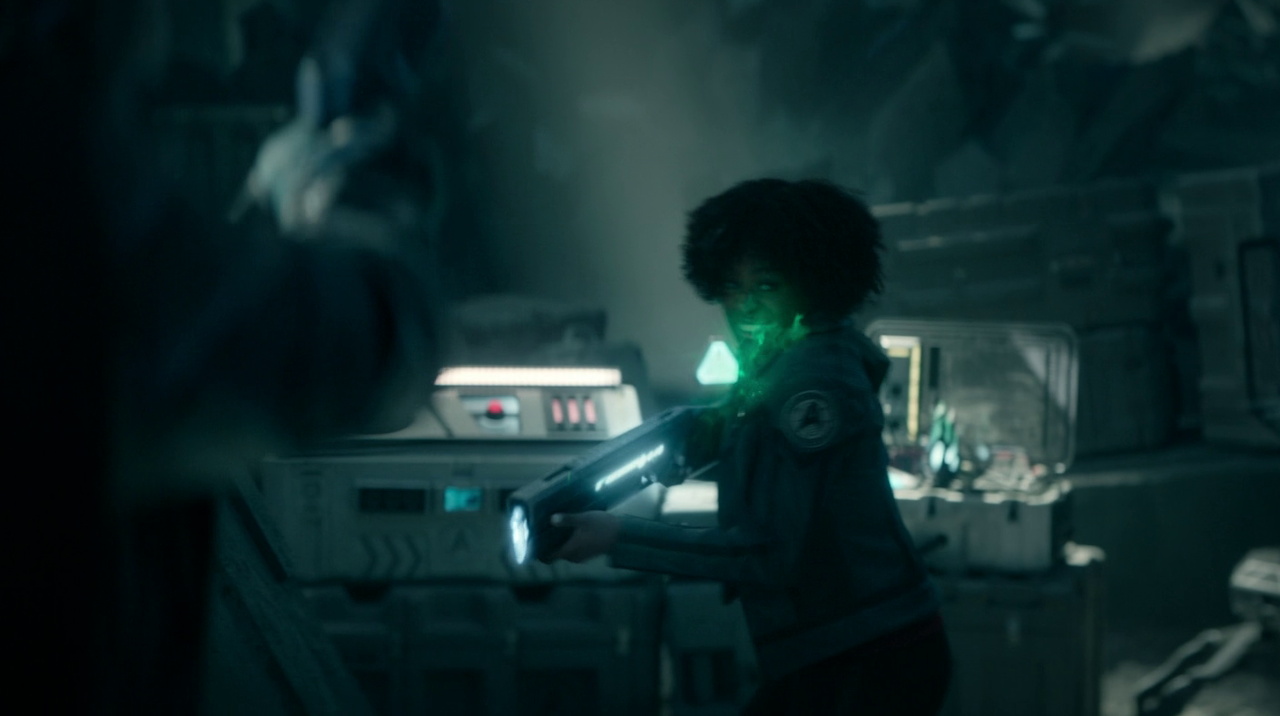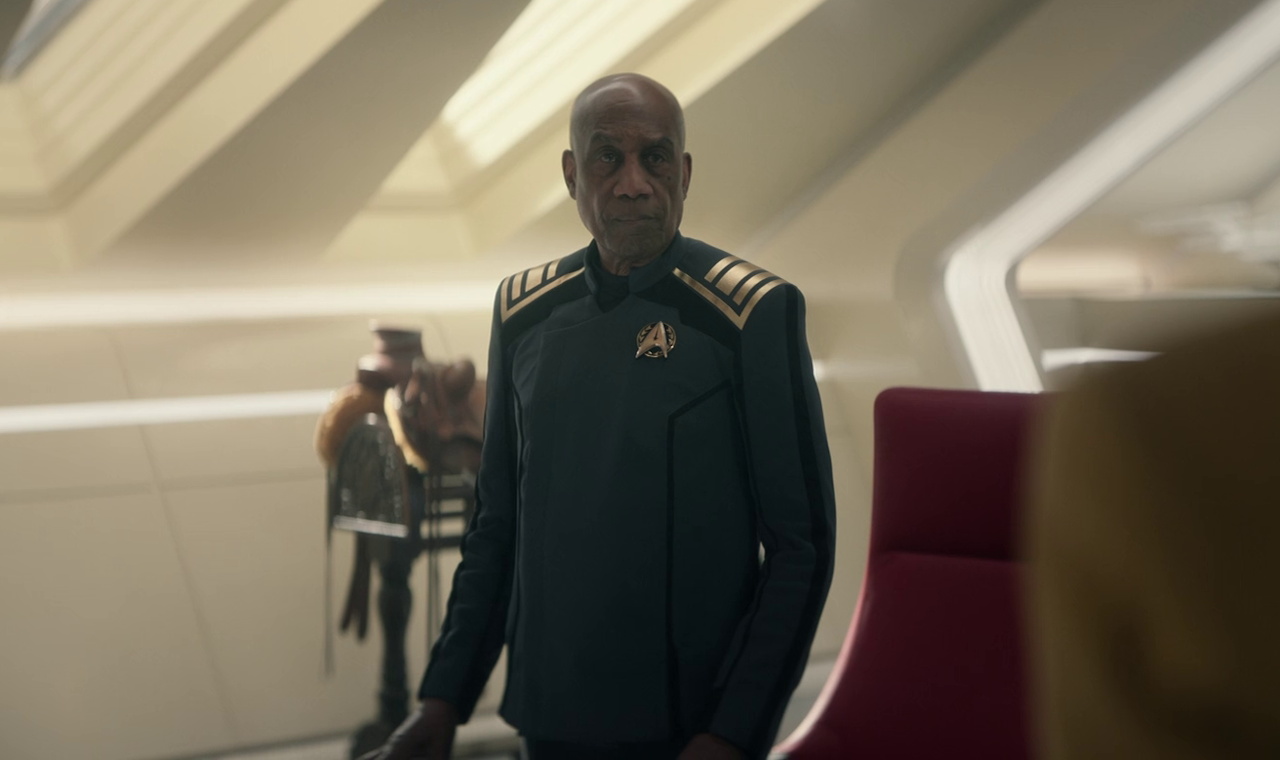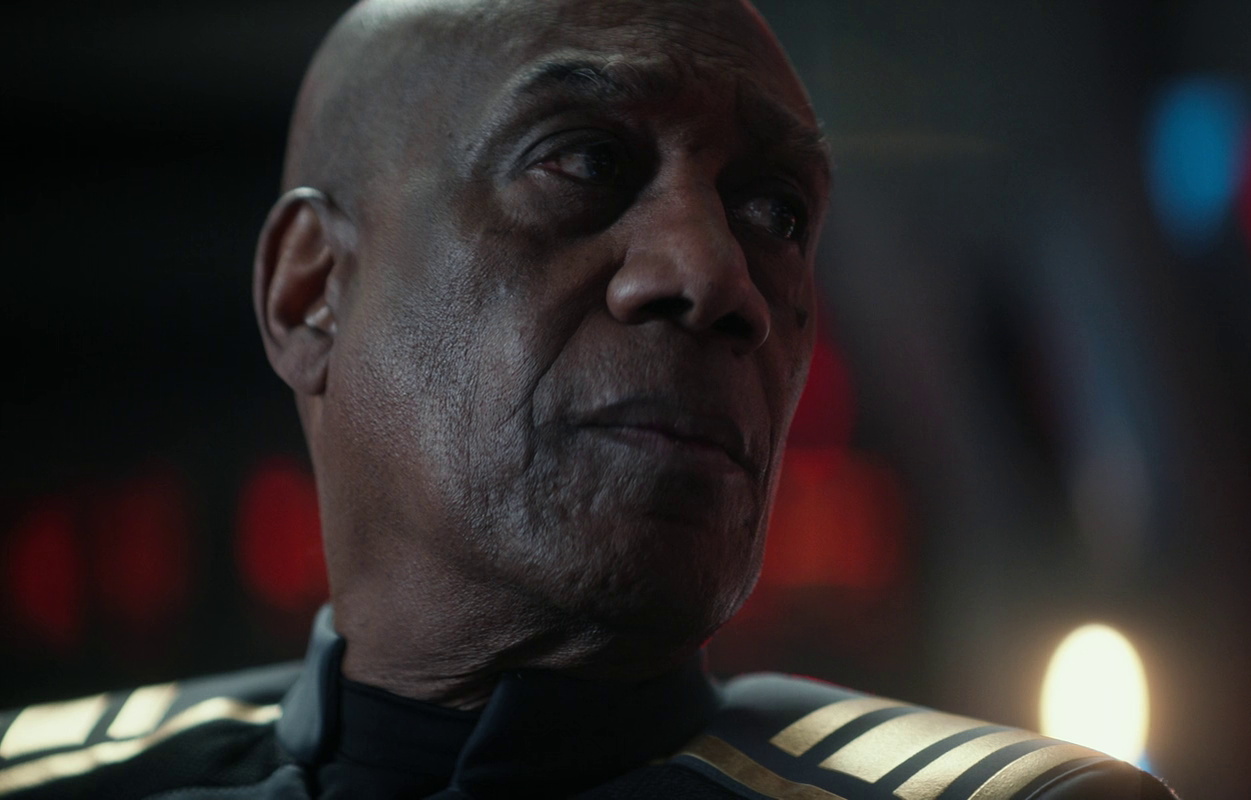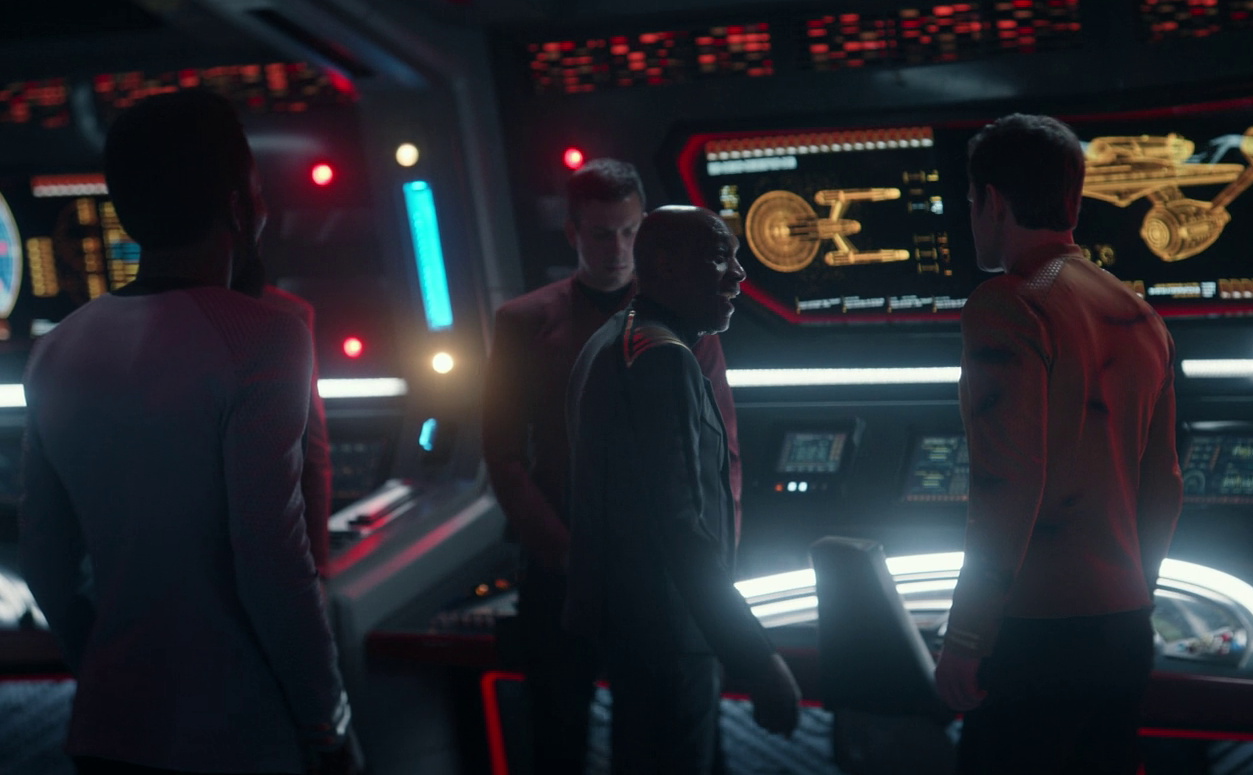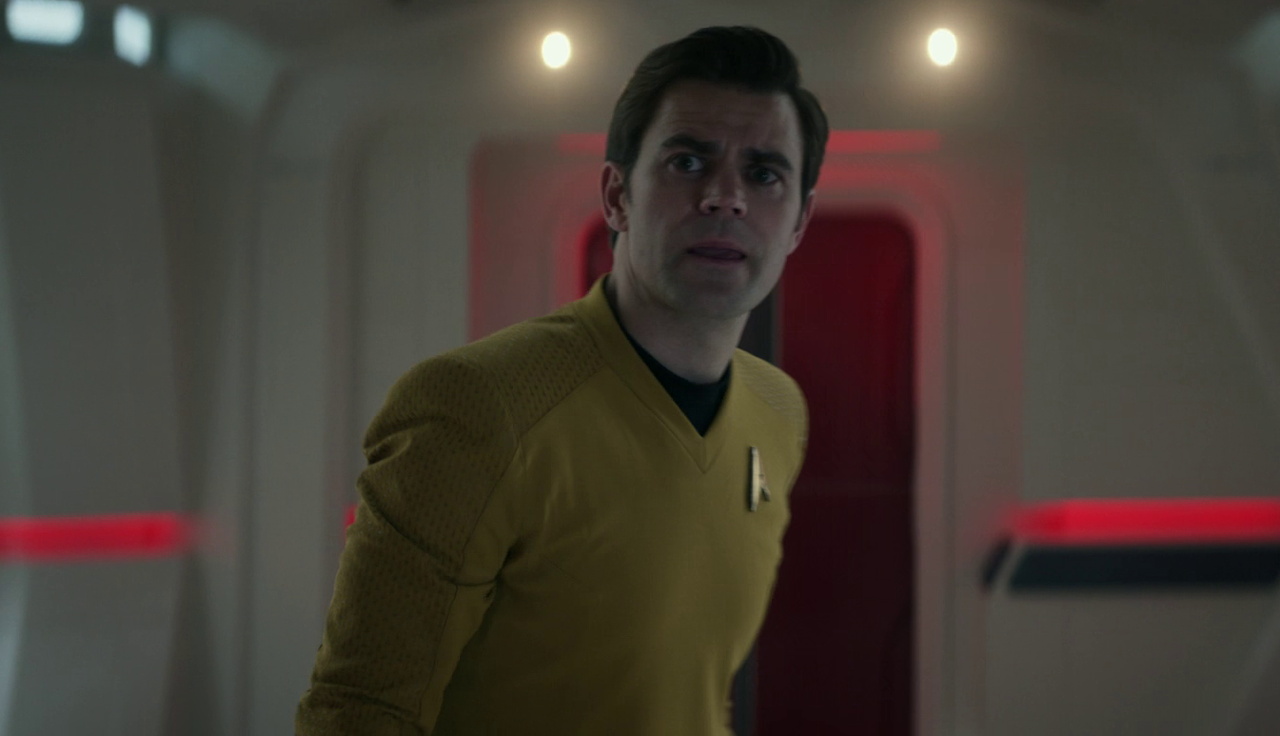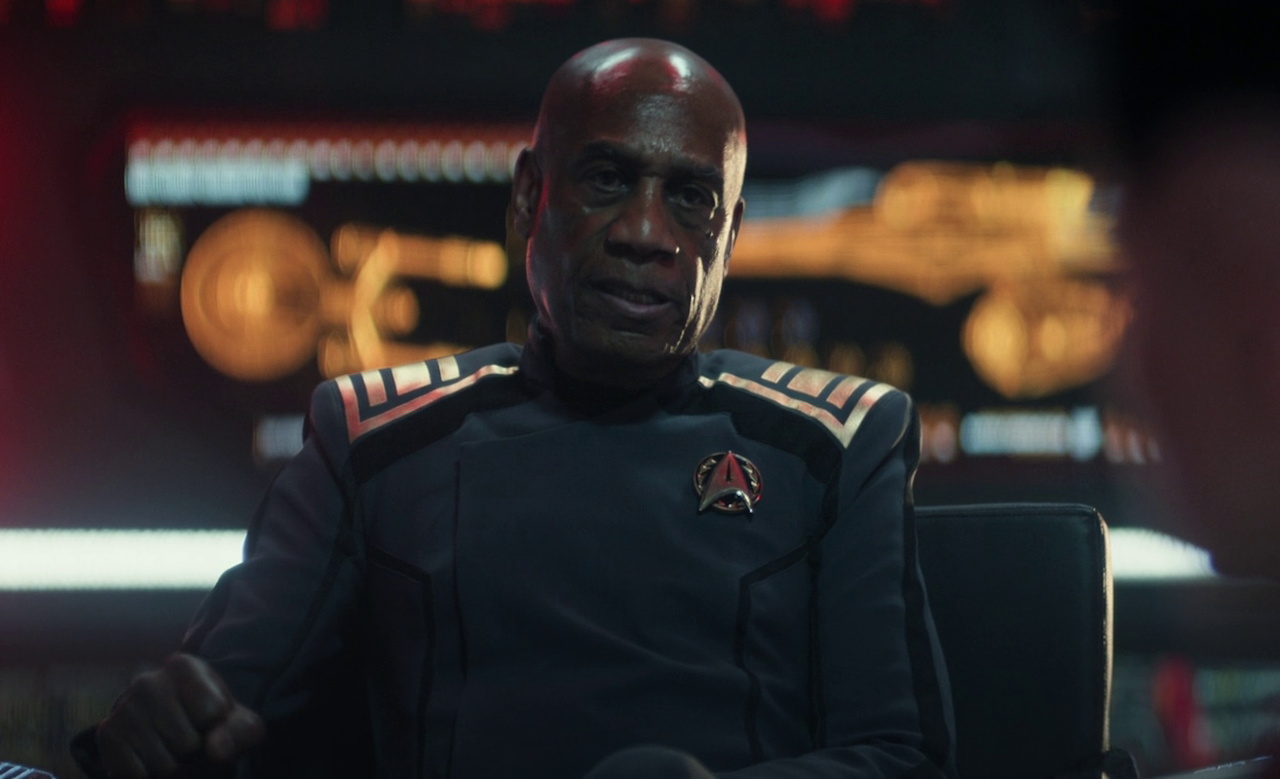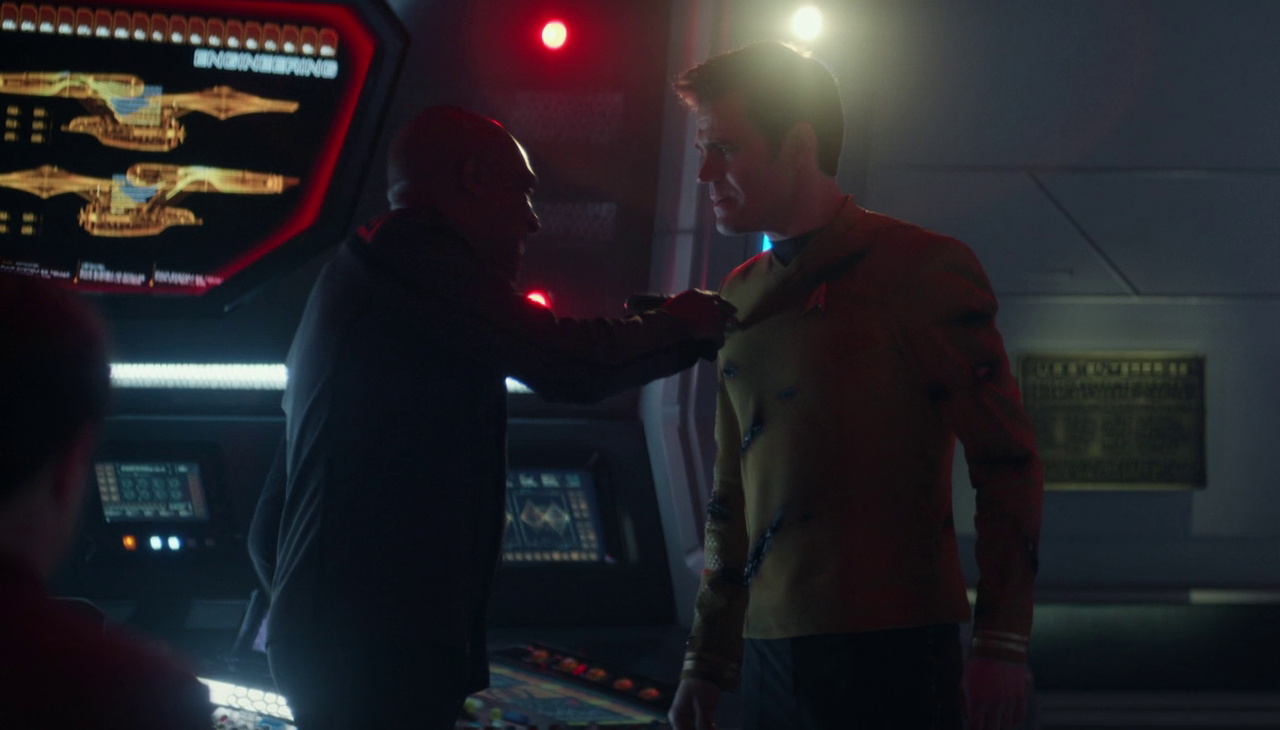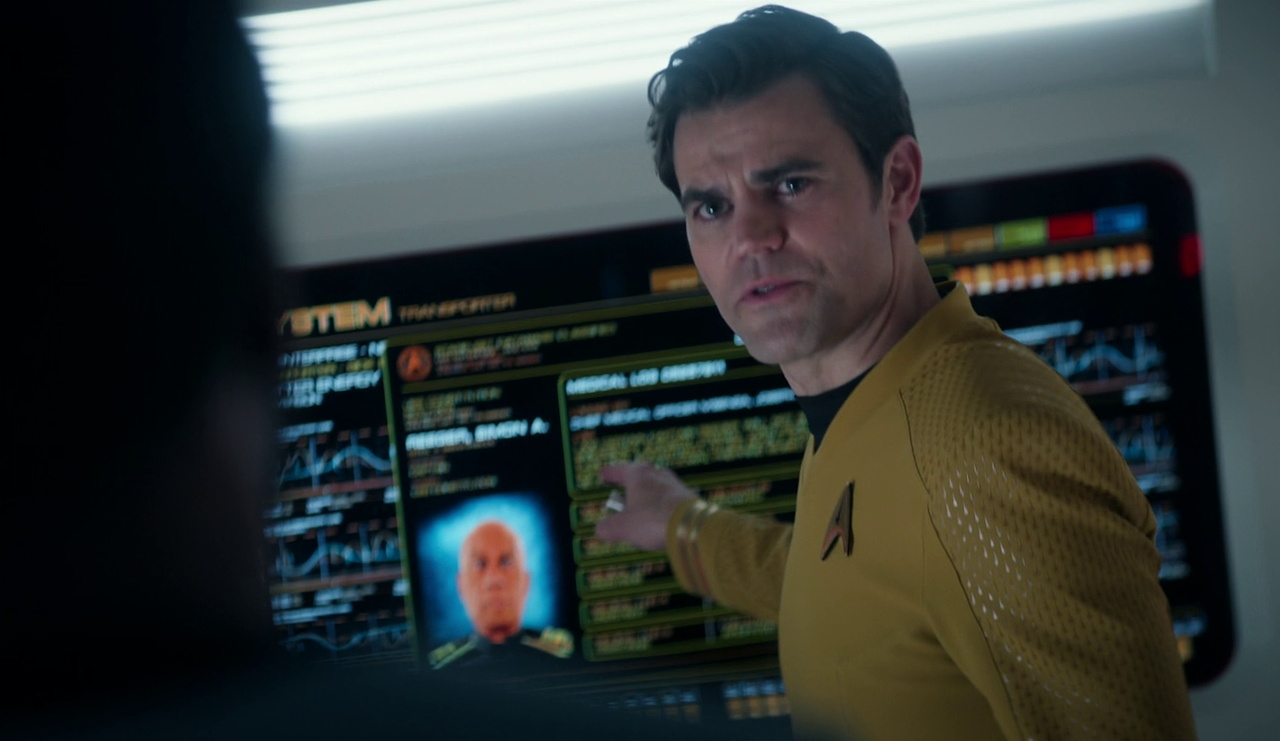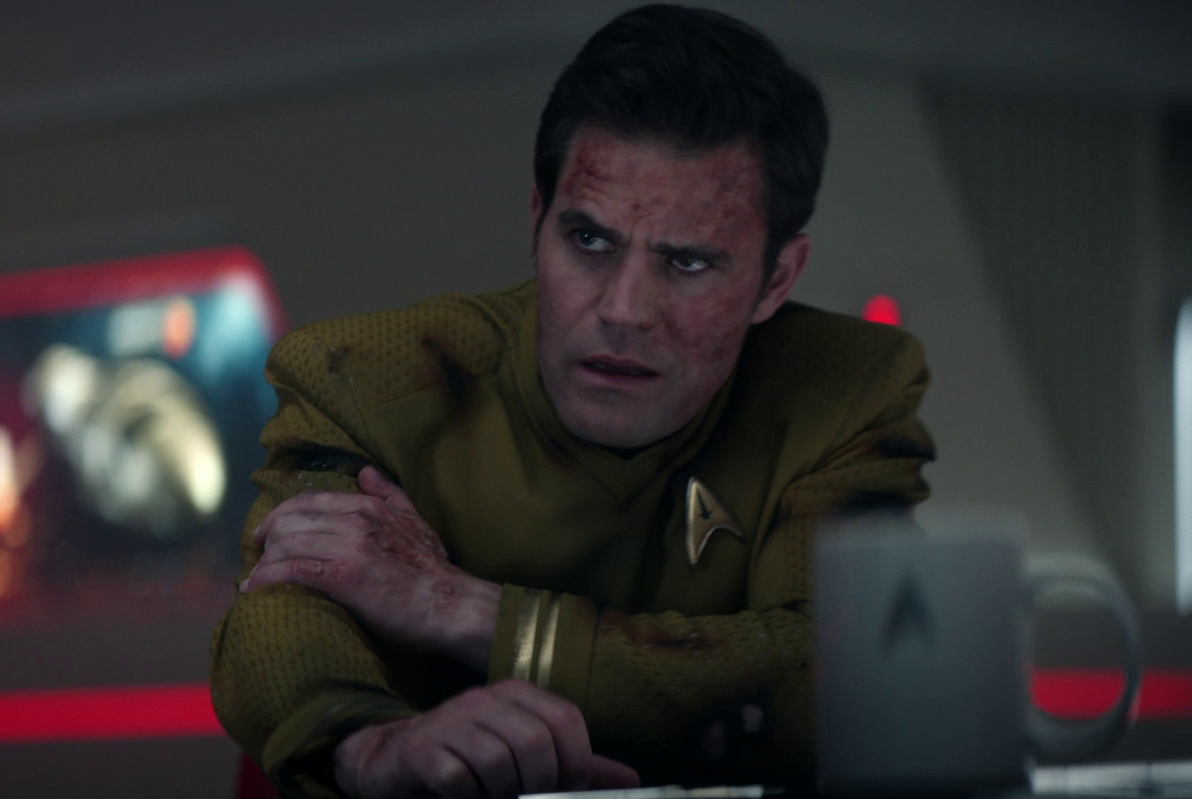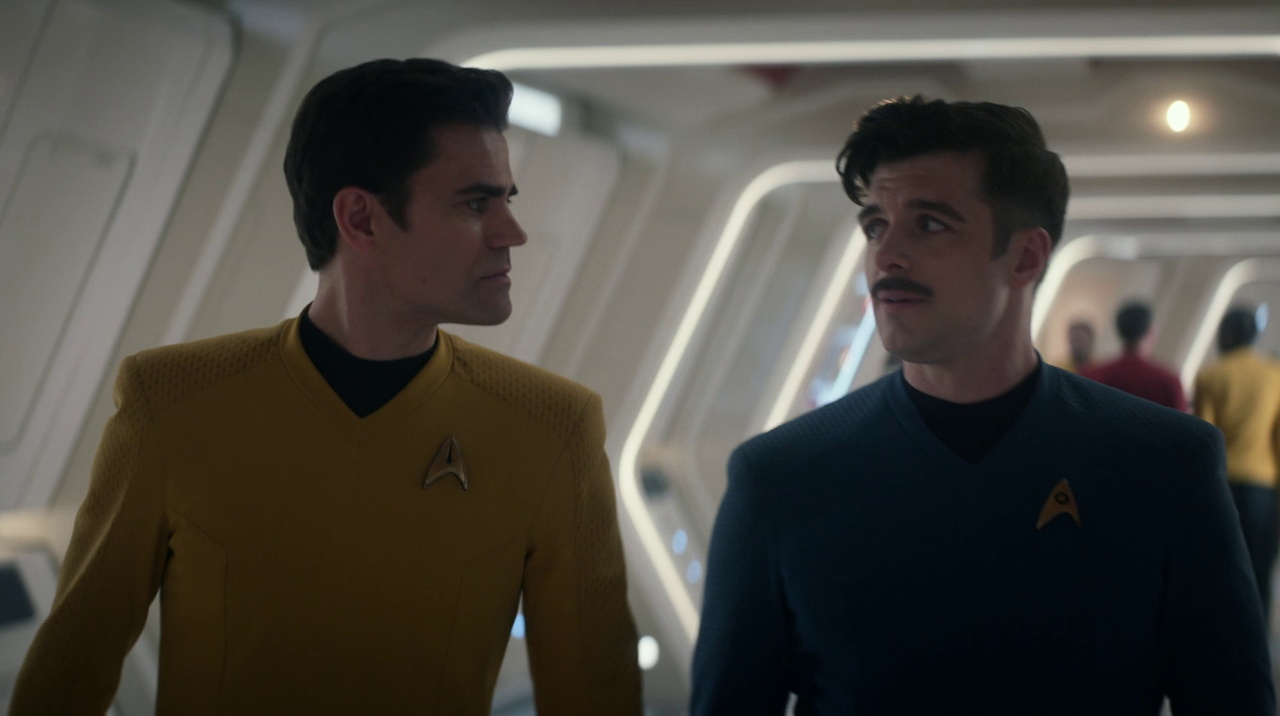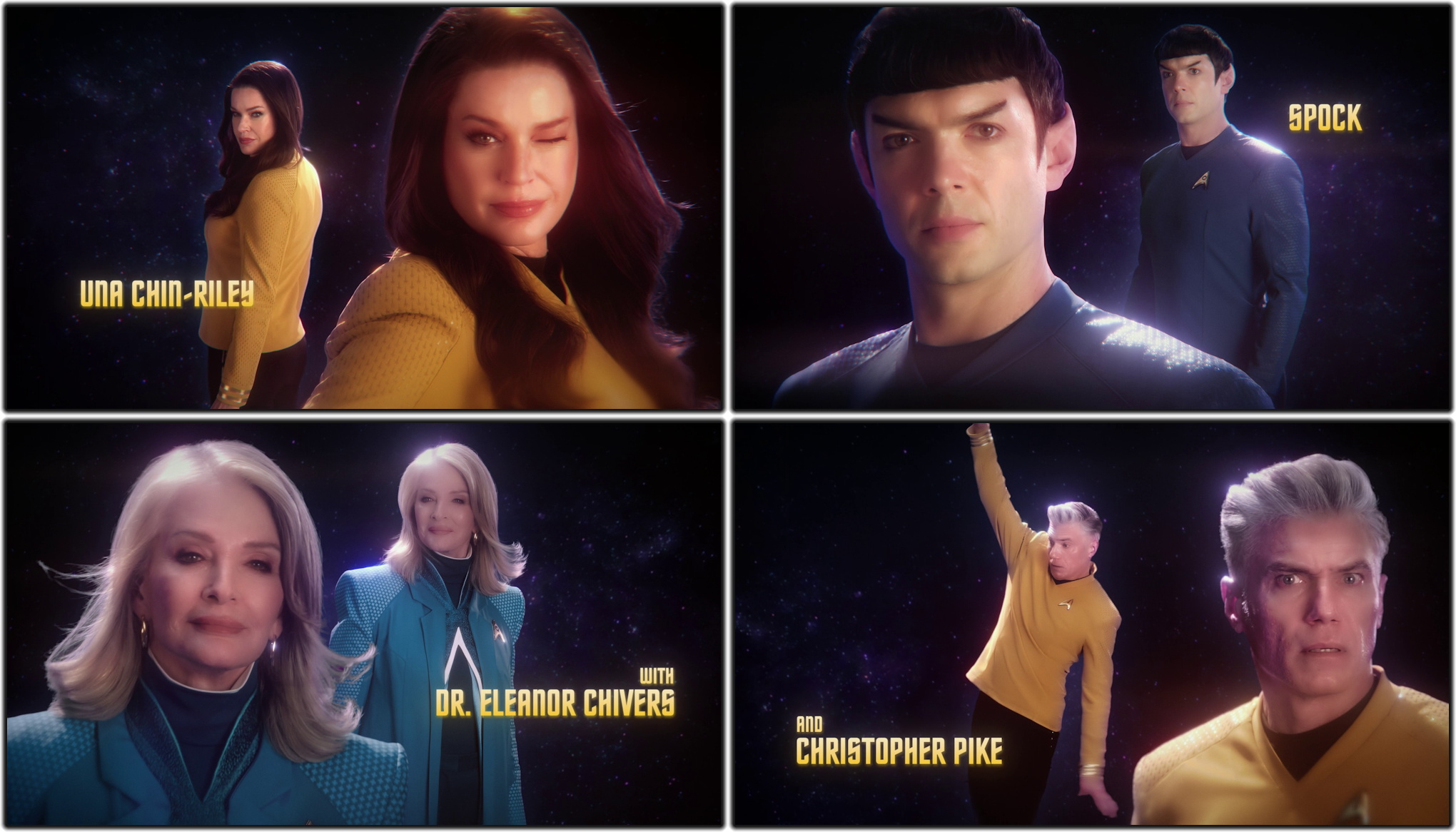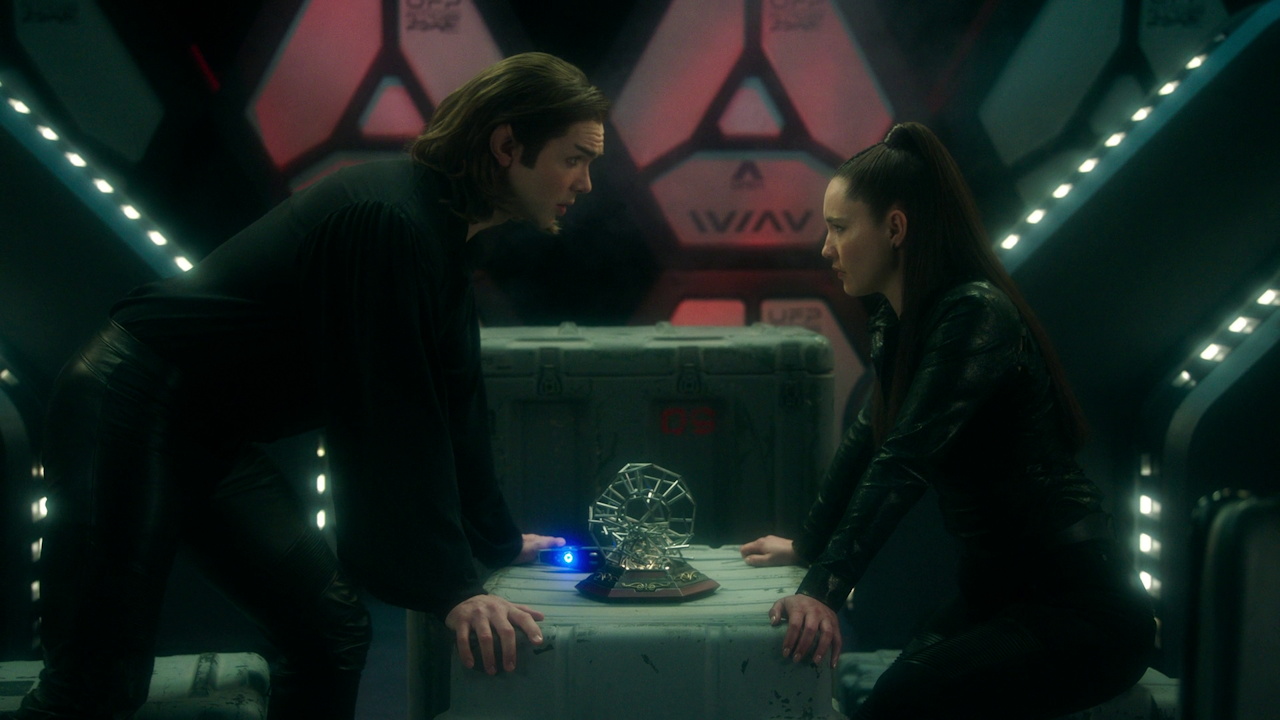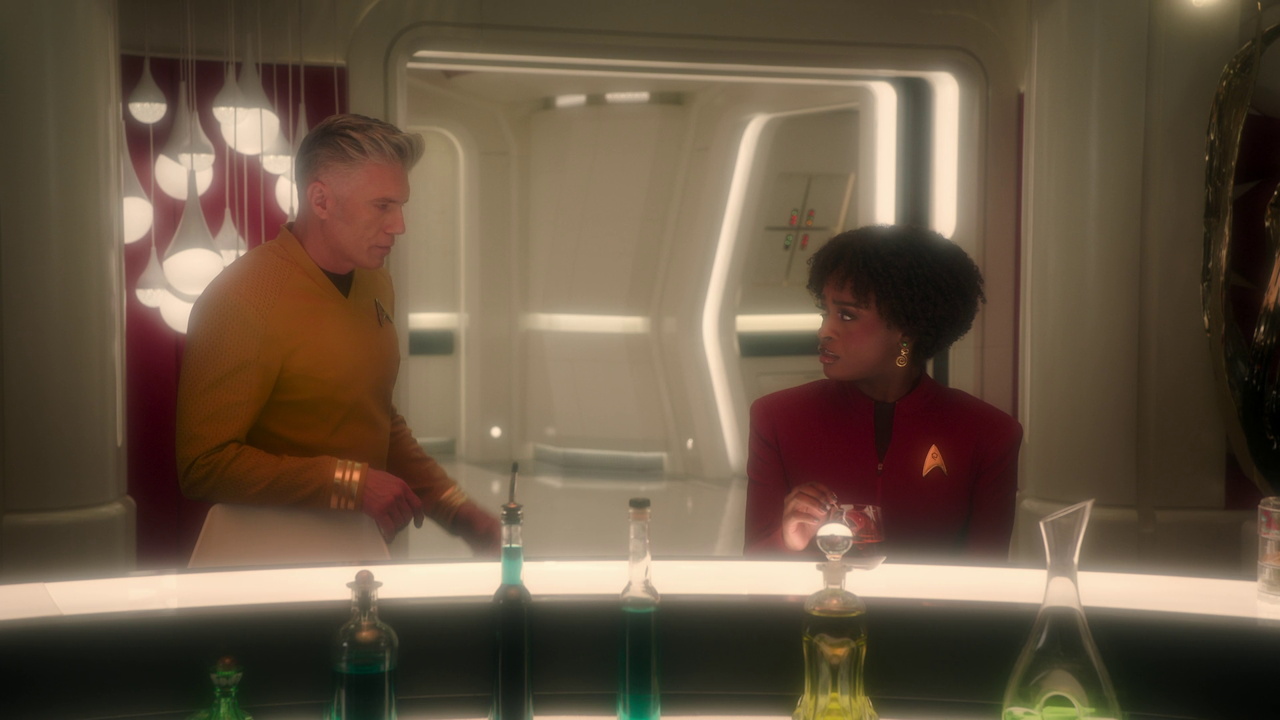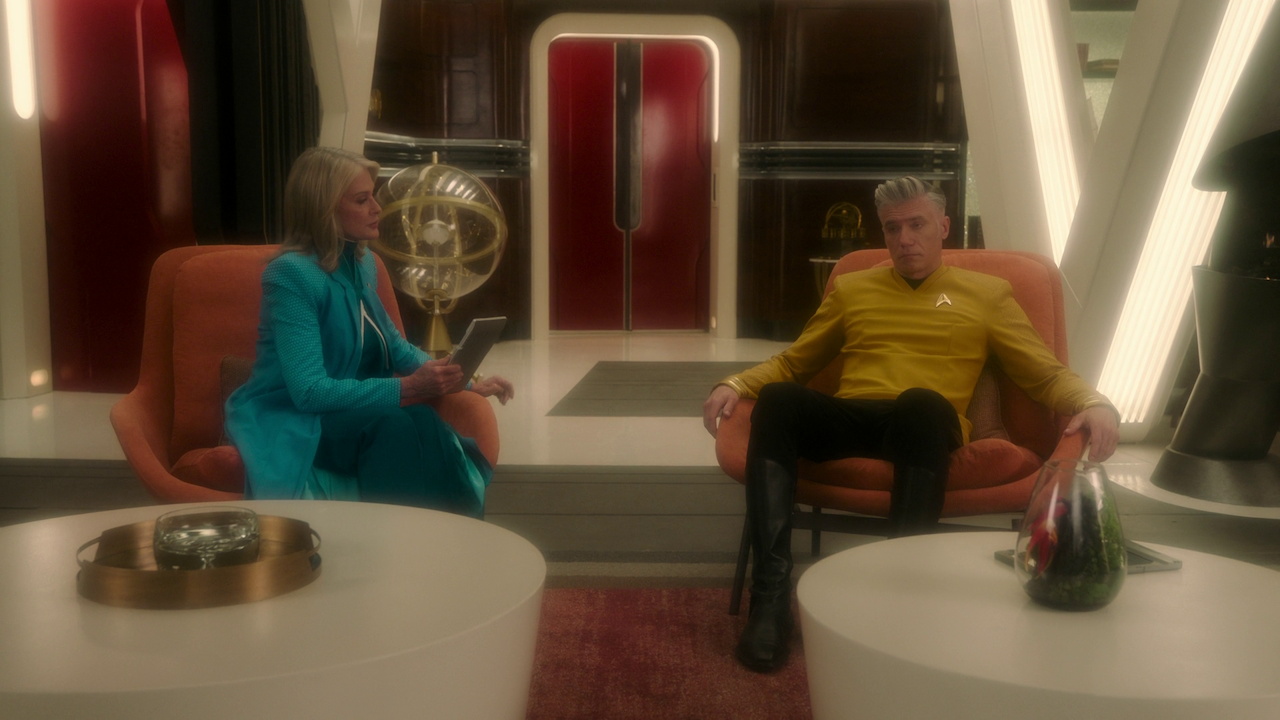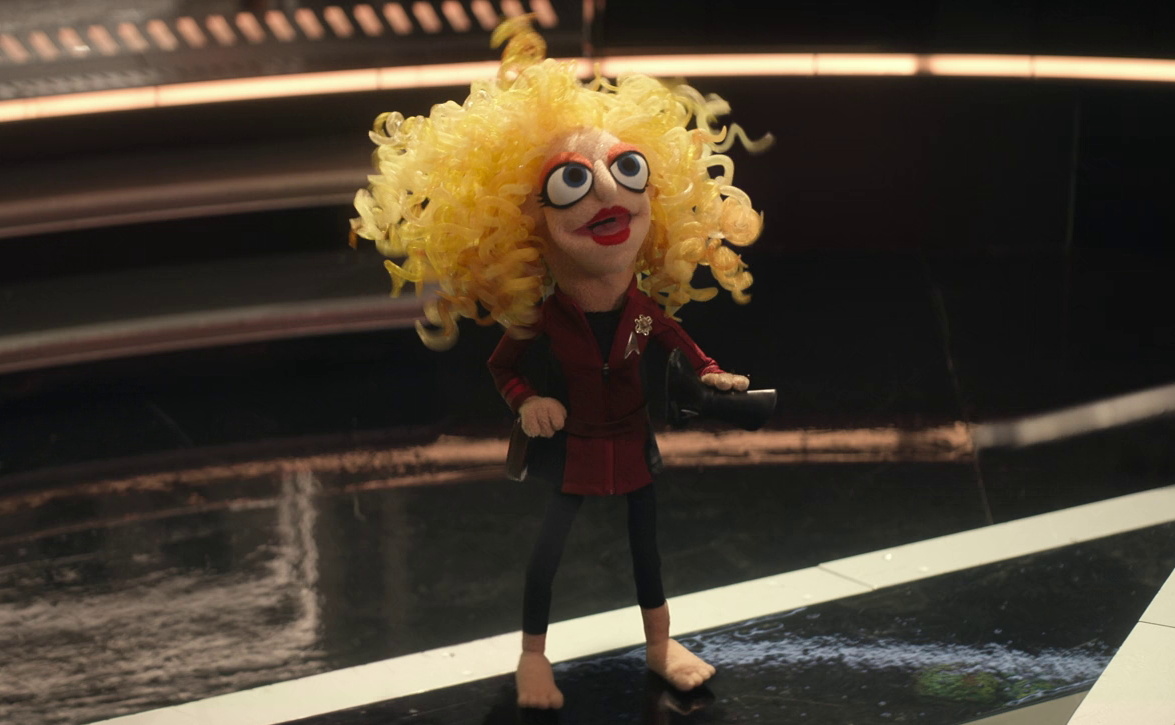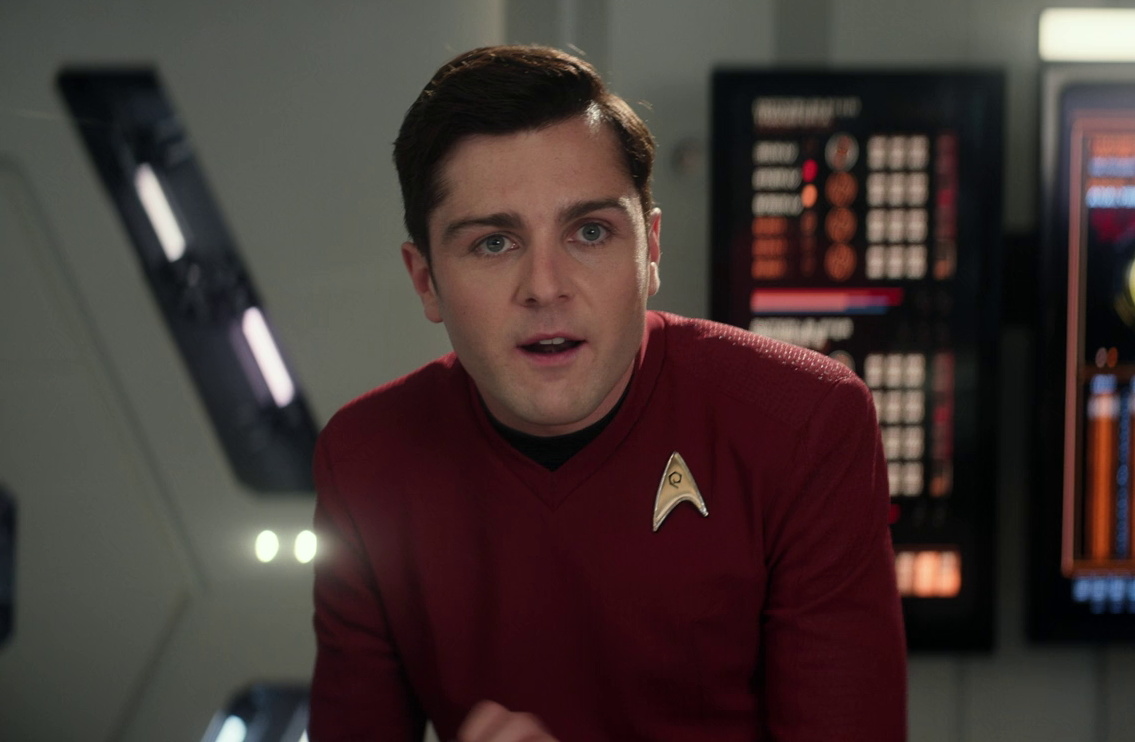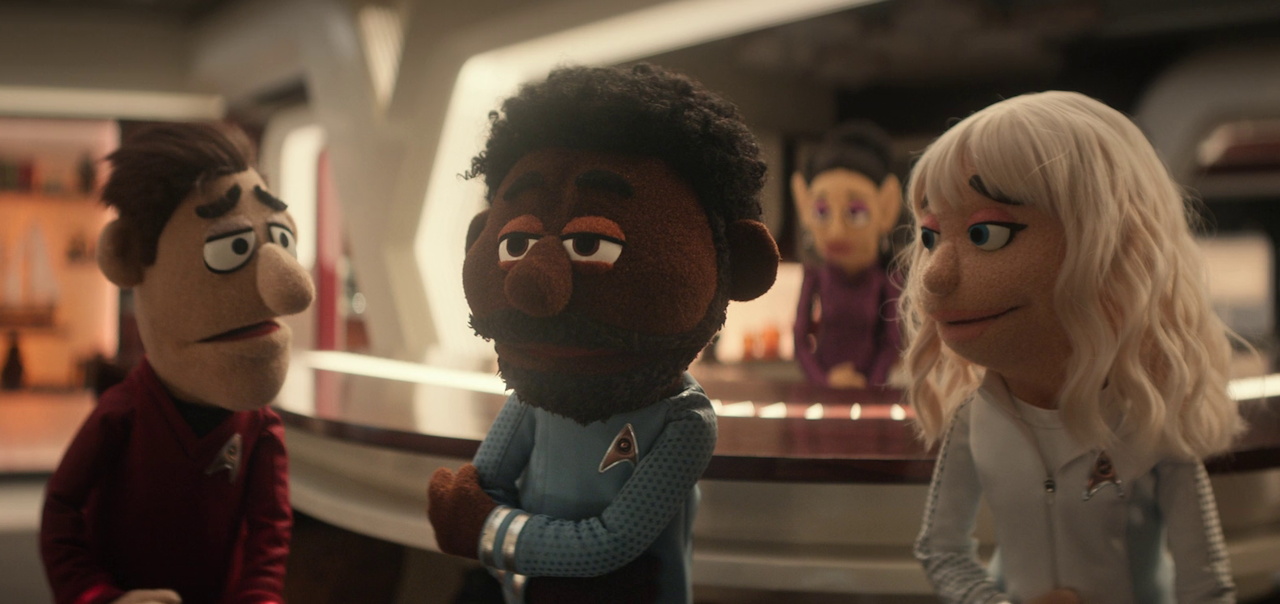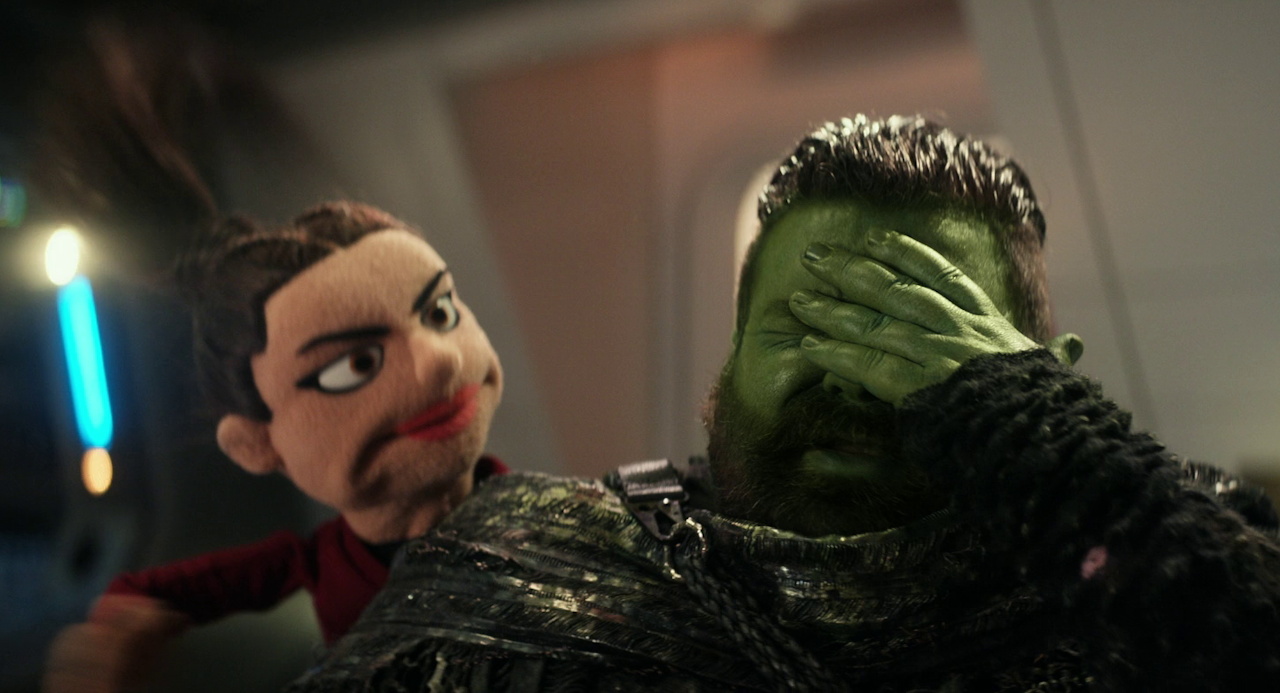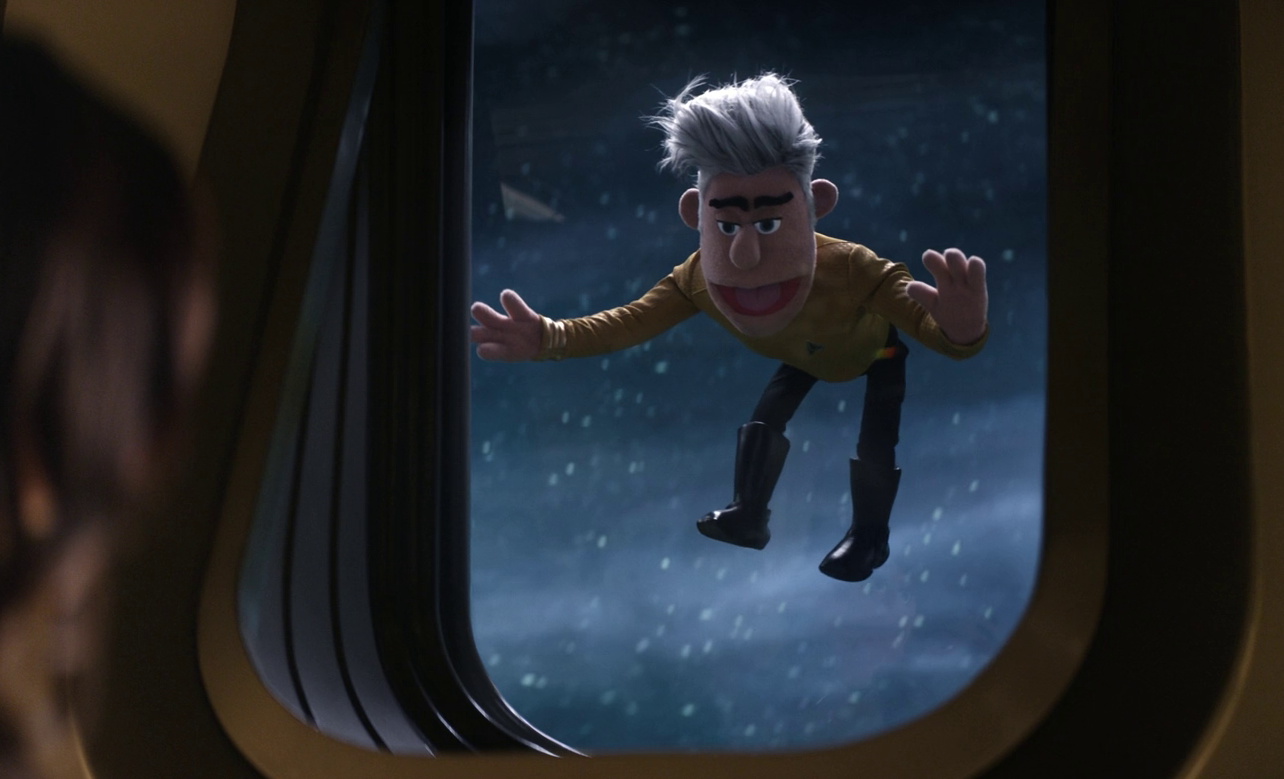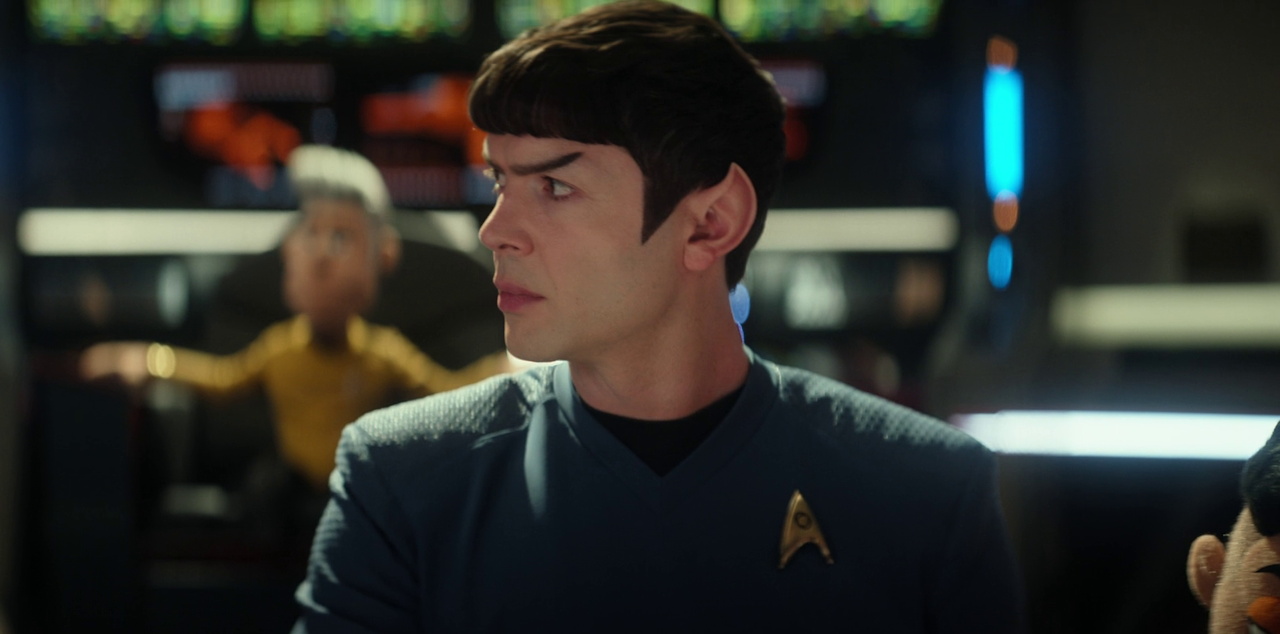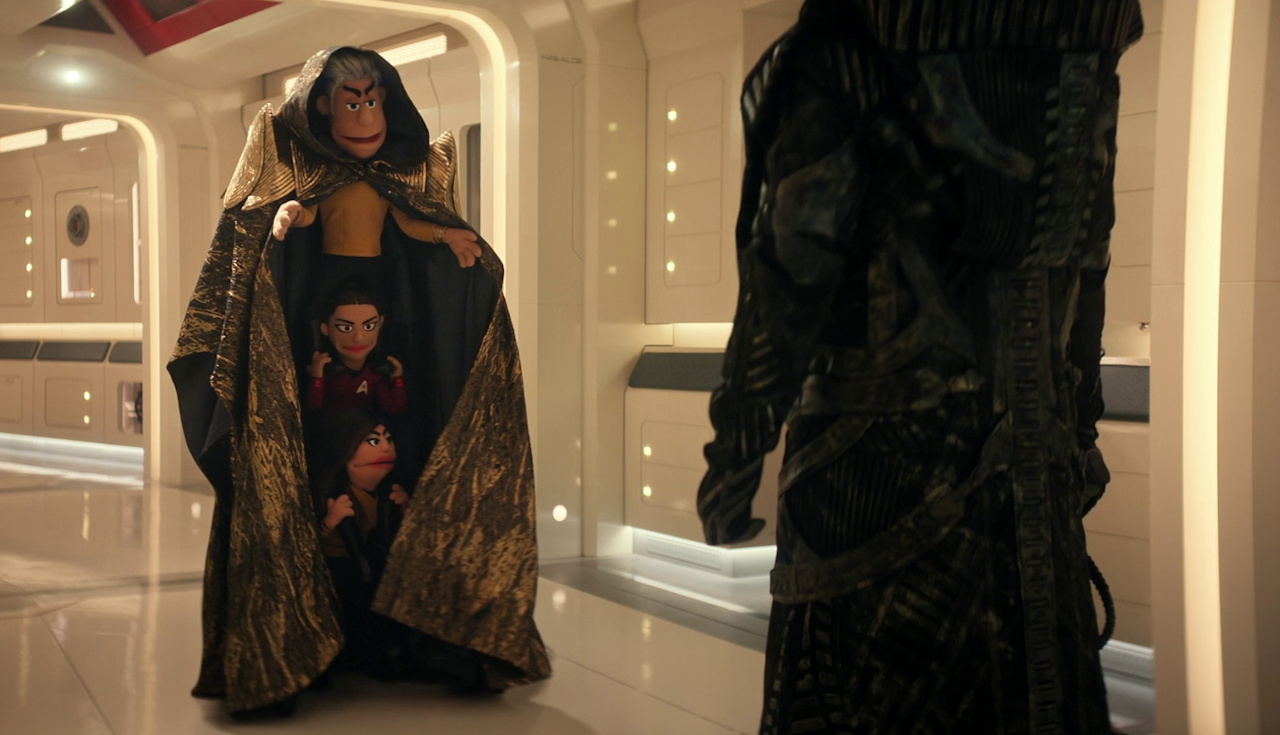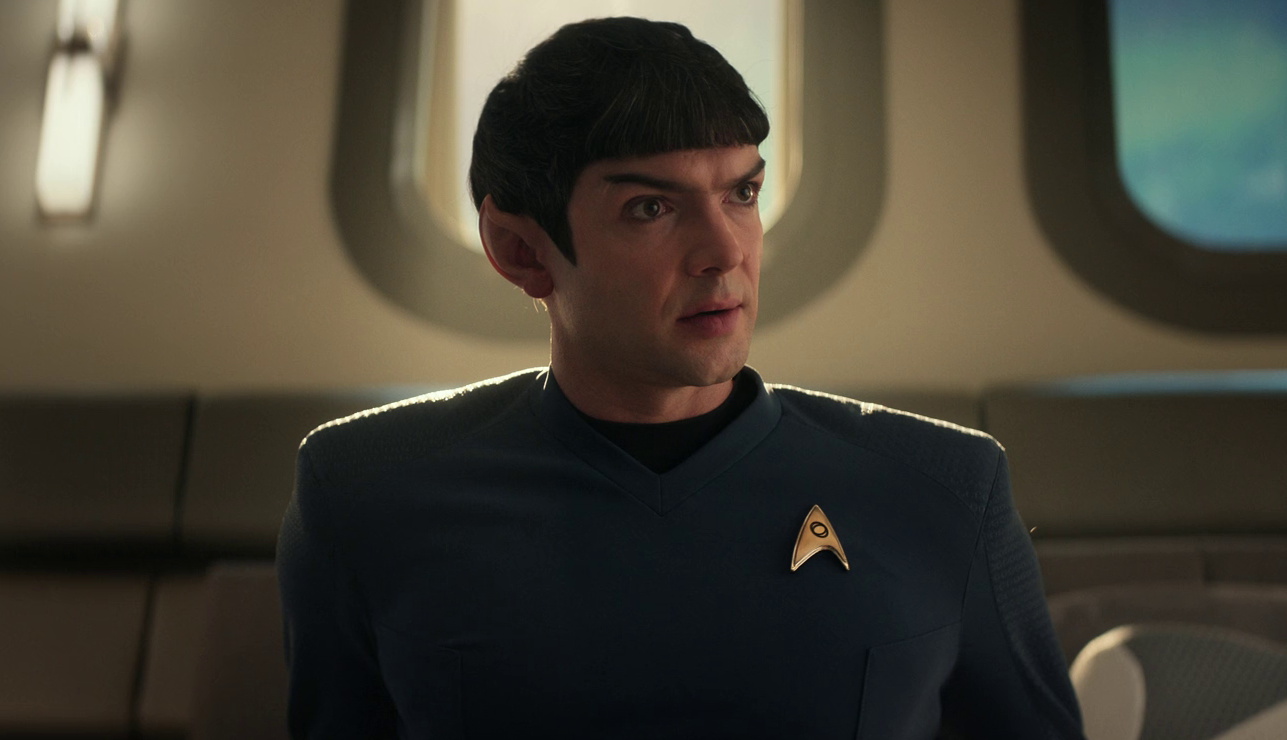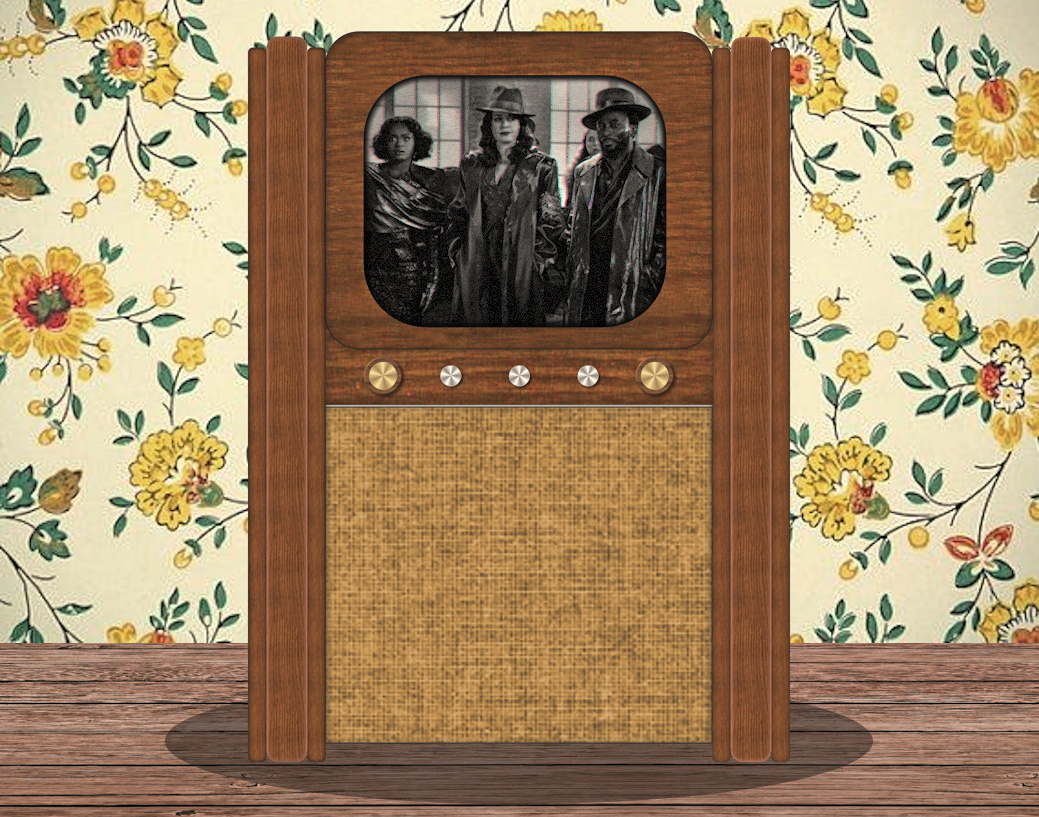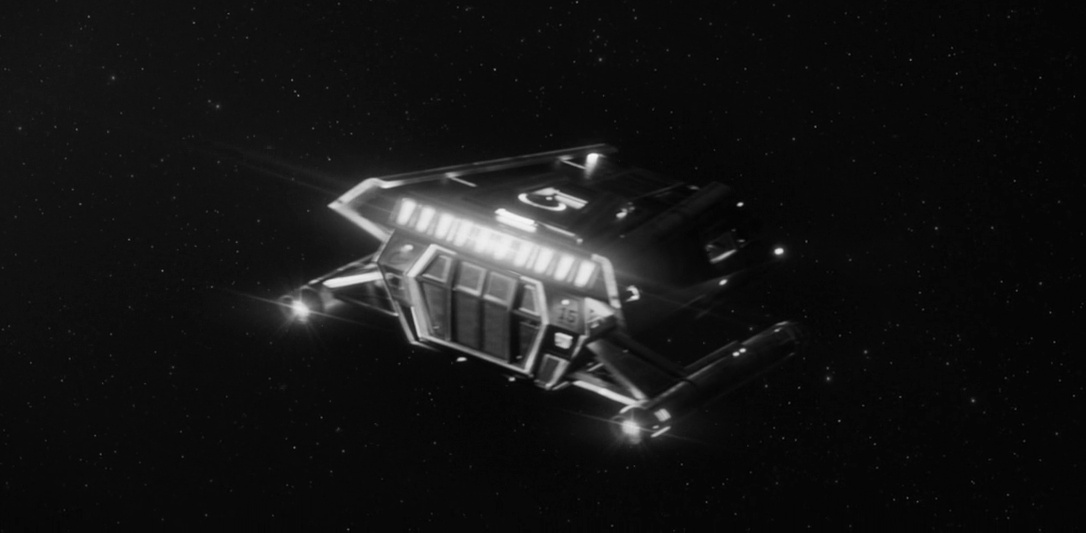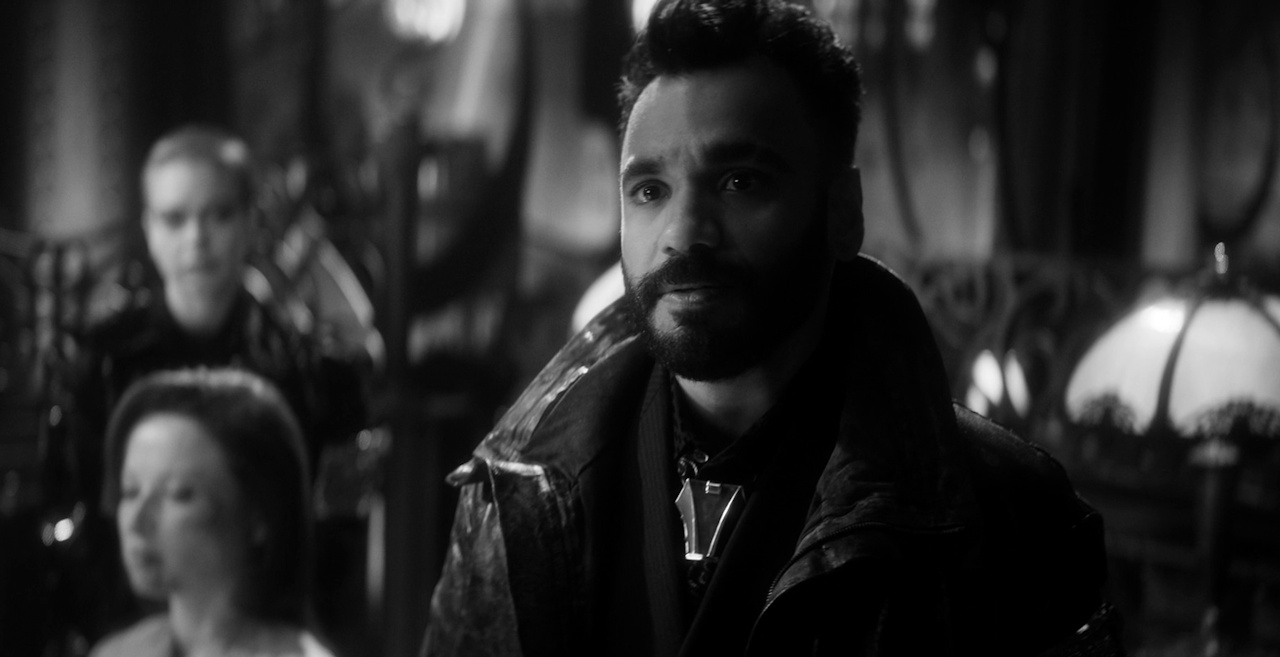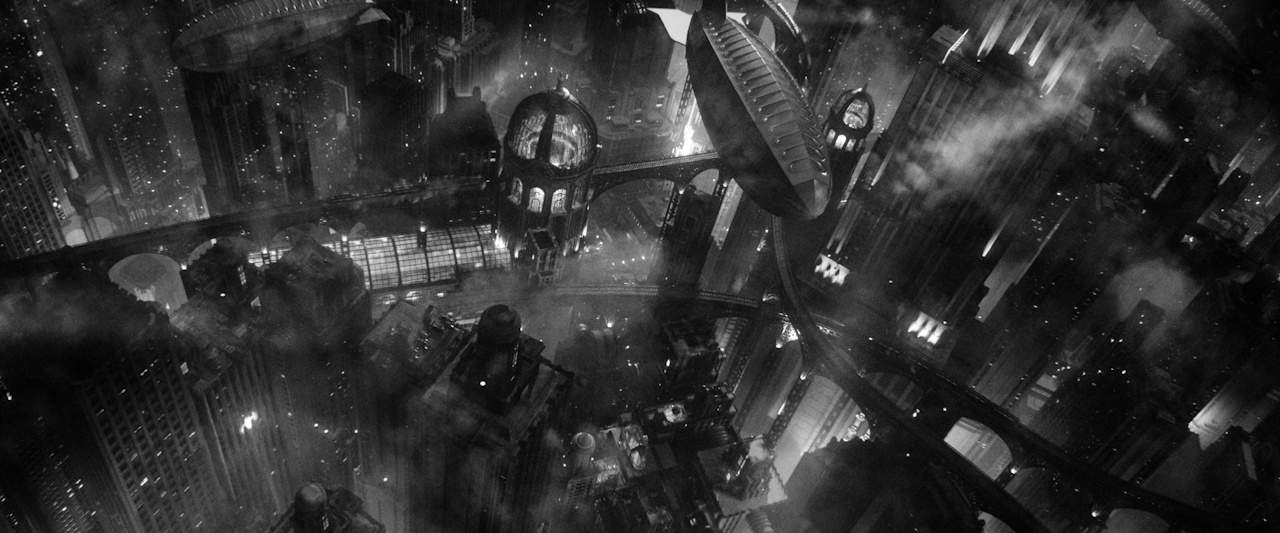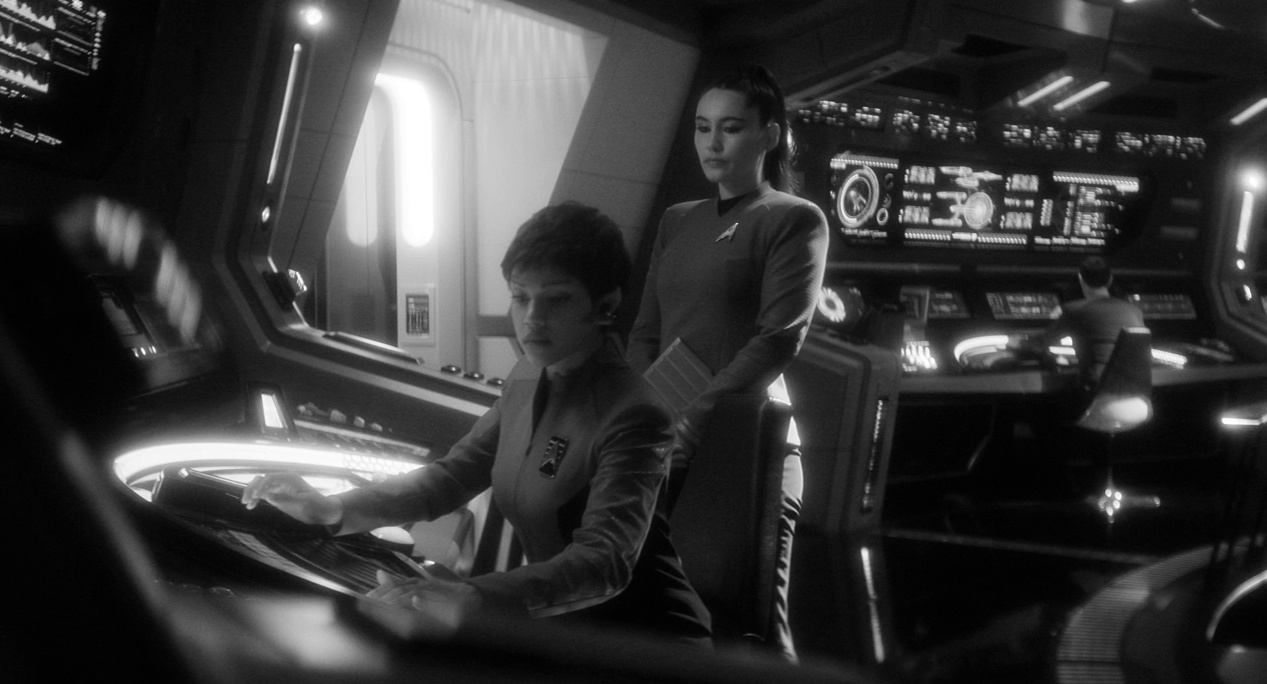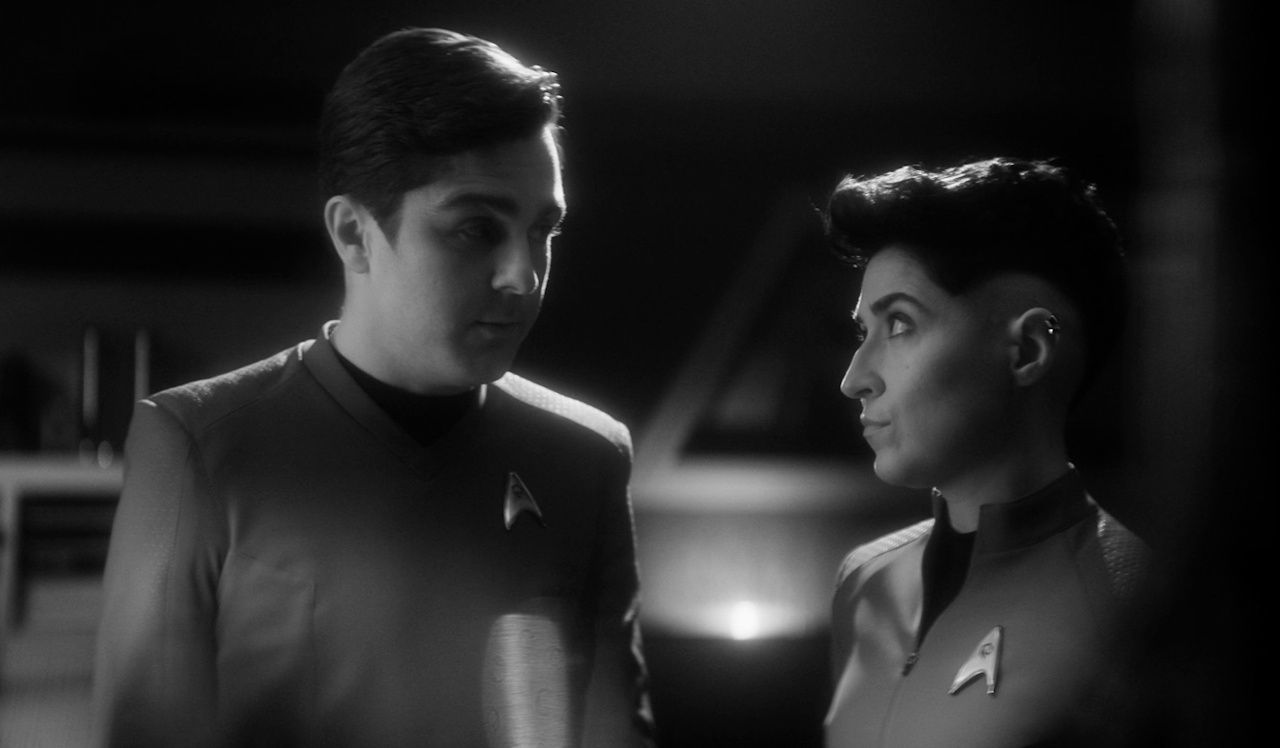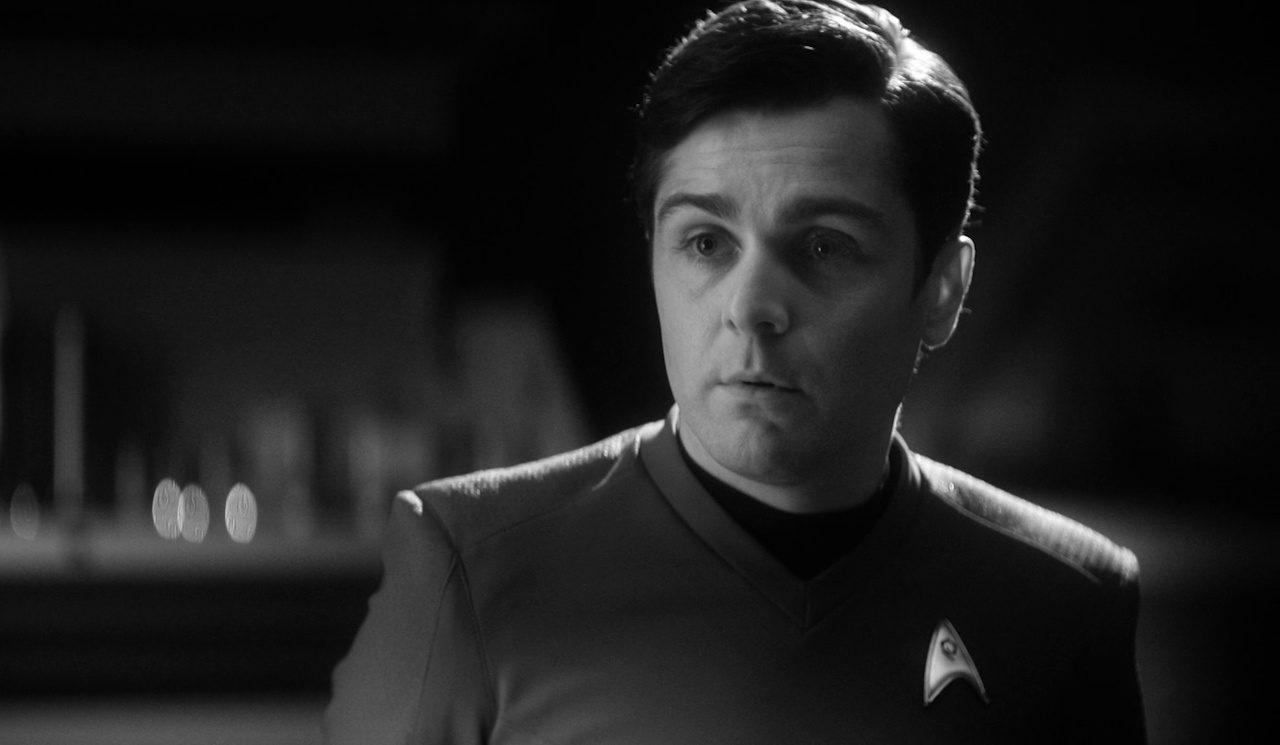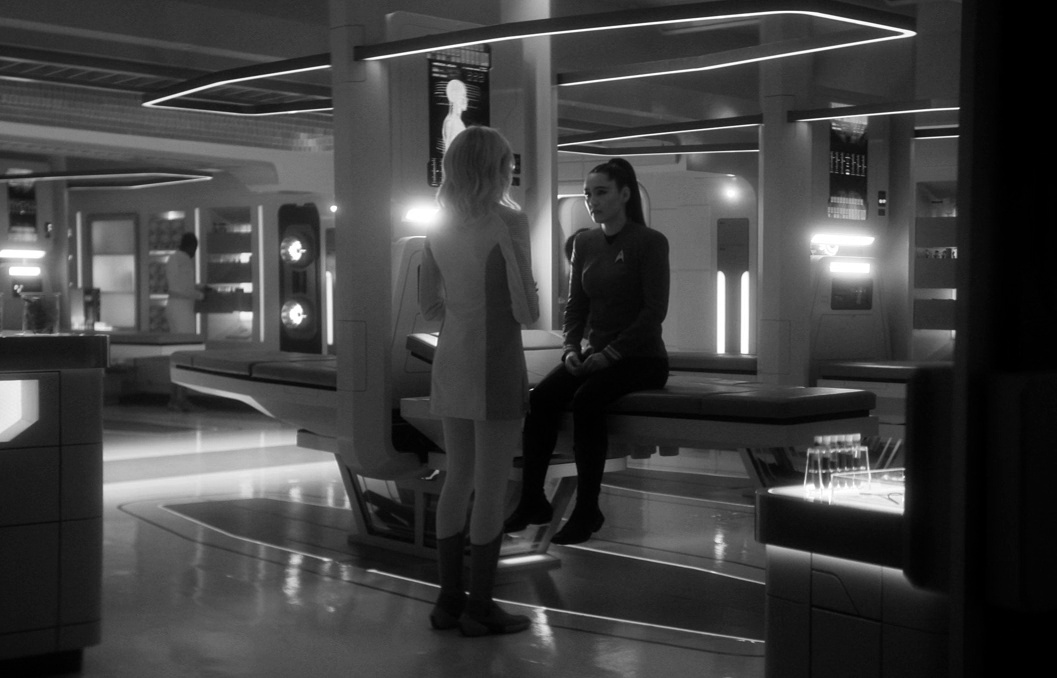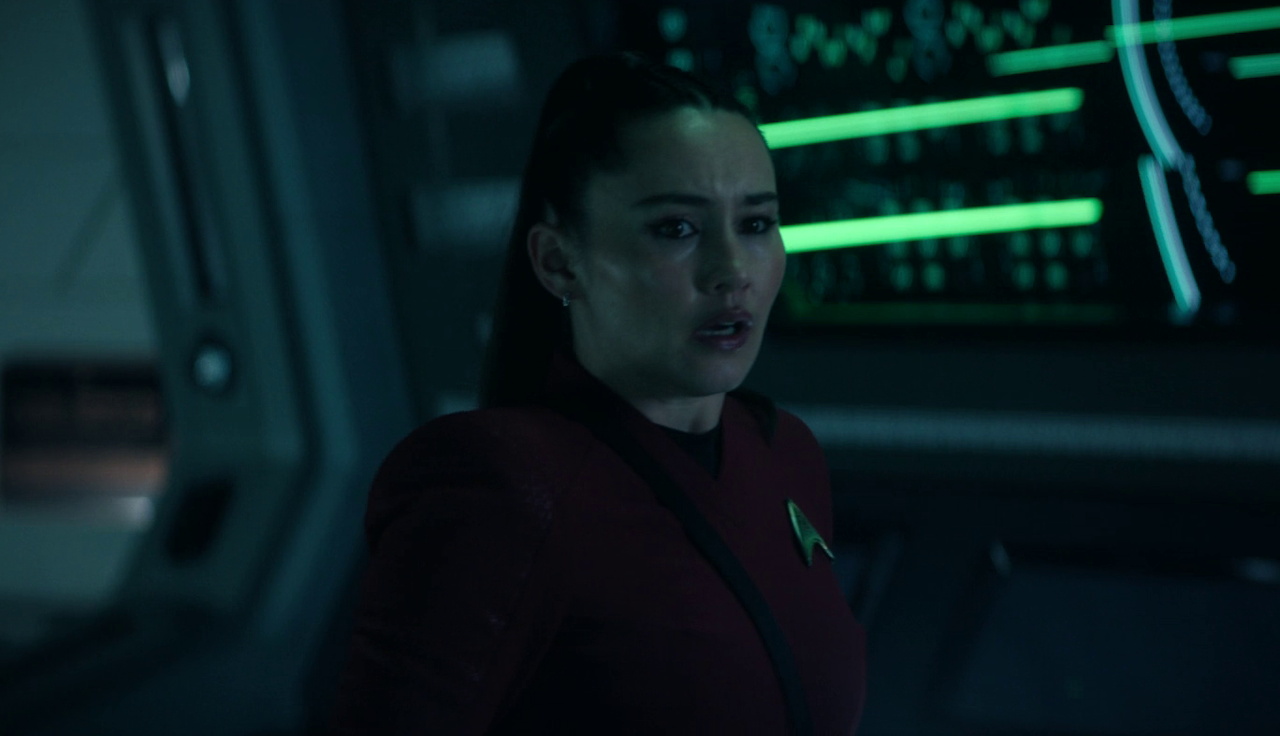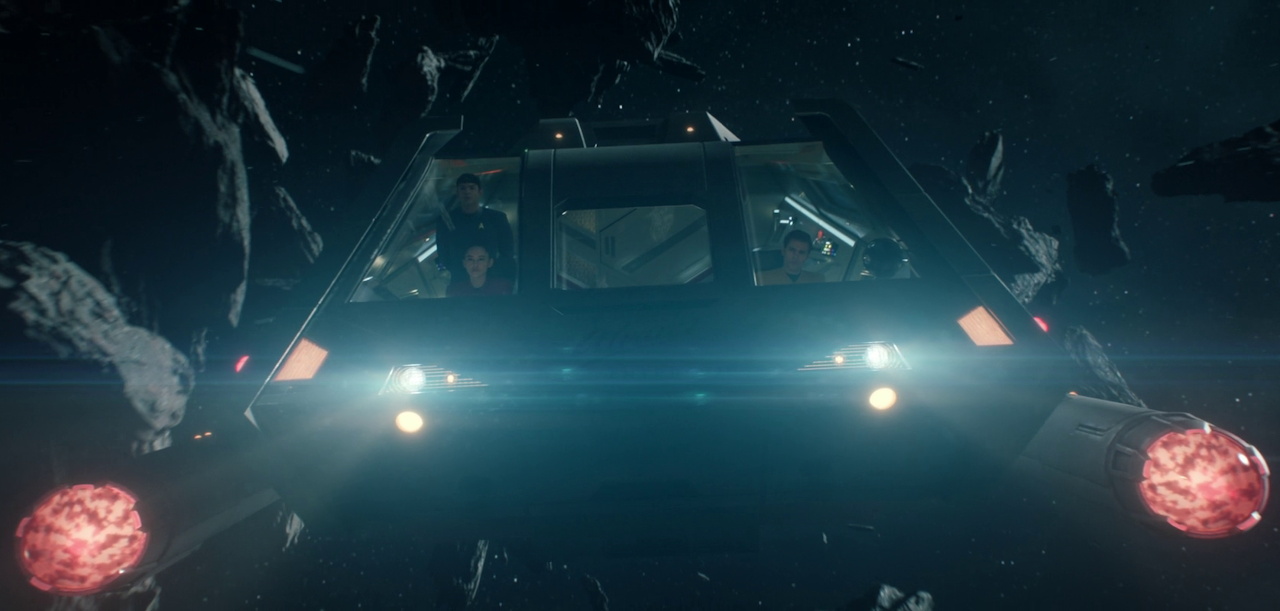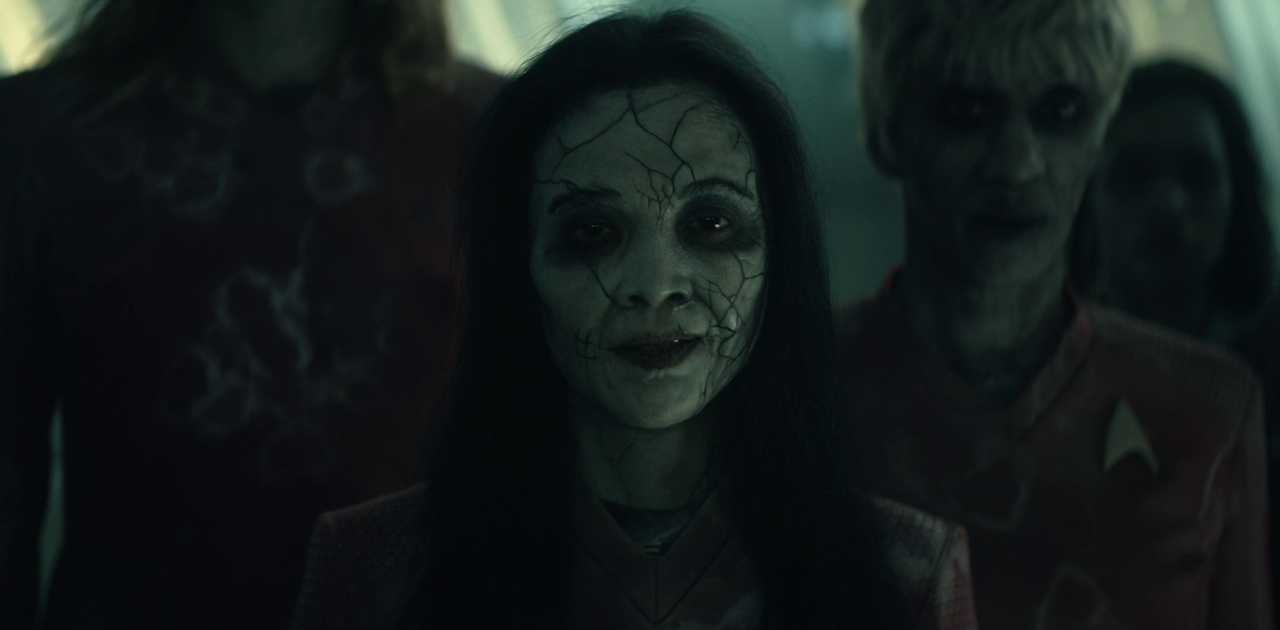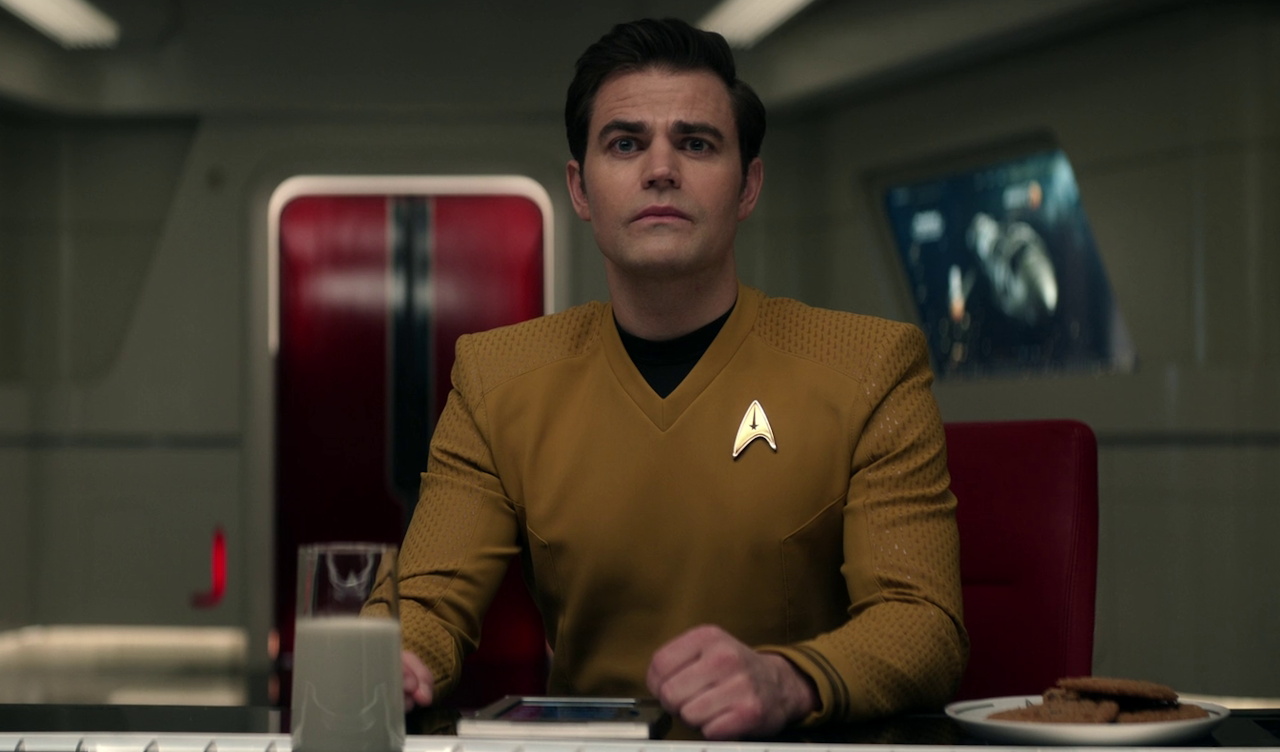
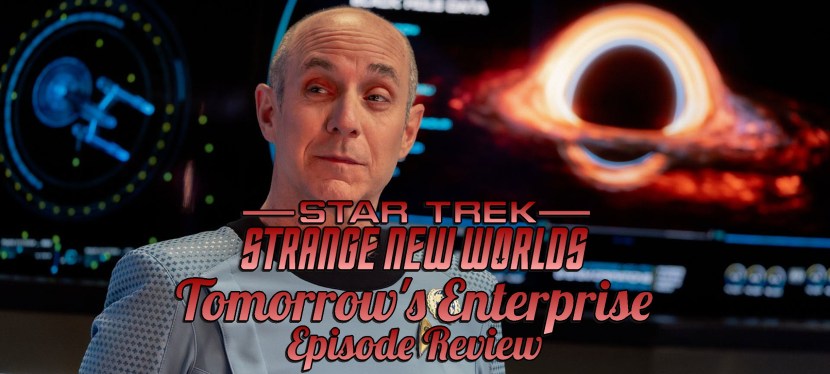
Star Trek: Strange New Worlds Episode Review – Season 4, Episode 7: Like Chronitons Through The Hourglass

A Star Trek-themed spoiler warning.

Spoiler Warning: There are spoilers ahead for Star Trek: Strange New Worlds Seasons 1-4. Spoilers are also present for the following Star Trek productions: The Original Series, The Final Frontier, and The Next Generation.

At the start of 2026, I wrote that Strange New Worlds’ fourth season was almost certainly a top contender for my coveted “TV Show of the Year” award. But now that we’re seven episodes in, I can put my hand on my heart and say that, honestly? I’ve really only enjoyed two of them.

And, as you might’ve guessed, Like Chronitons Through the Hourglass ain’t one of the two.

I’m kind of in two minds about the episode – and, as we go along, I’ll talk about one way that I think its story could’ve been salvaged, because there was a genuinely emotional story for Captain Pike that I think should’ve gotten more attention. On the one hand, the deliberately melodramatic soap opera stuff was so tacky and awful that I’m left scratching my head as to who thought it was a good idea. (As well as who keeps allowing writer Dana Horgan to remain employed). But on the other, Pike’s arc had merit – at least in theory – and I’m disappointed that this story of grief, loss, and mental health wasn’t explored in more depth and in a better way.

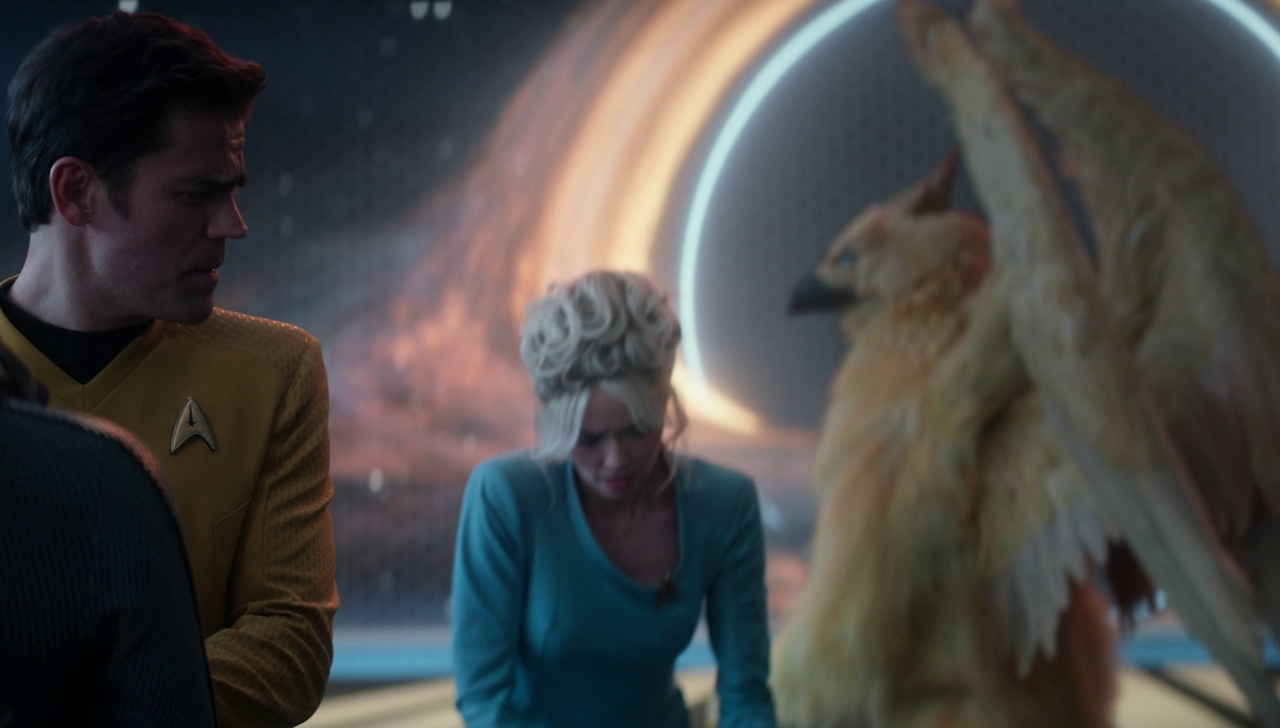
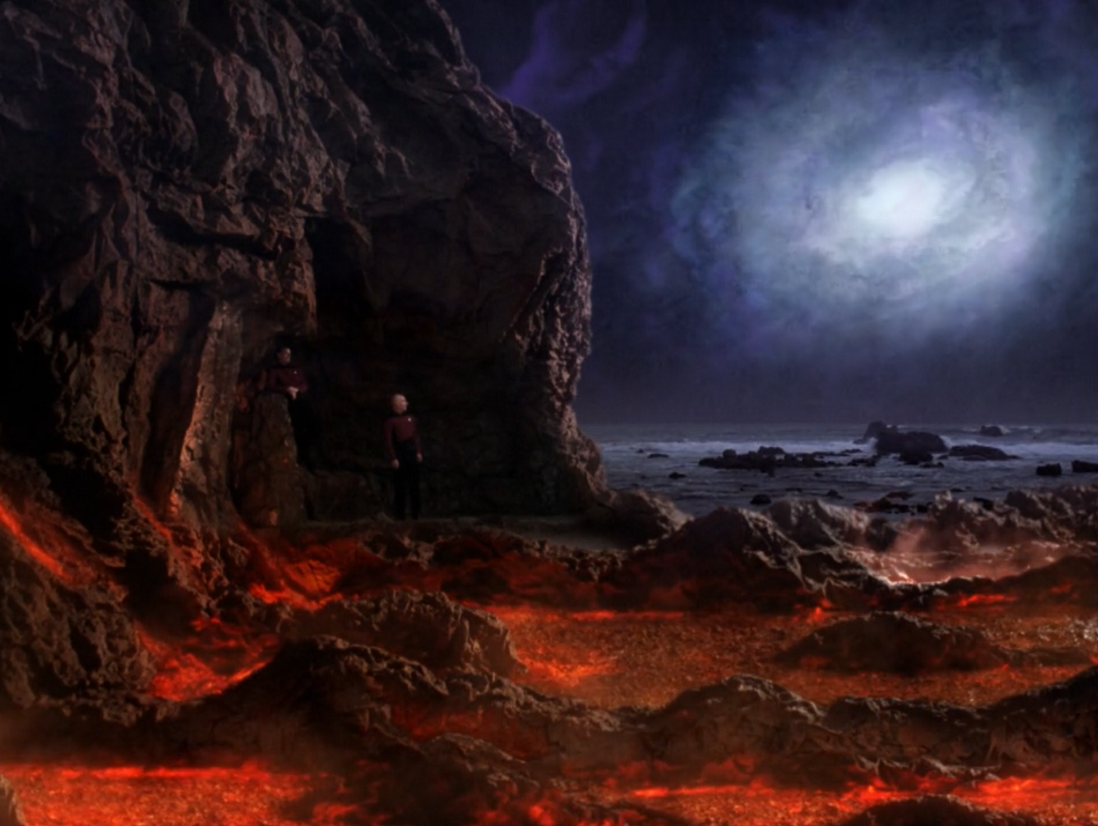
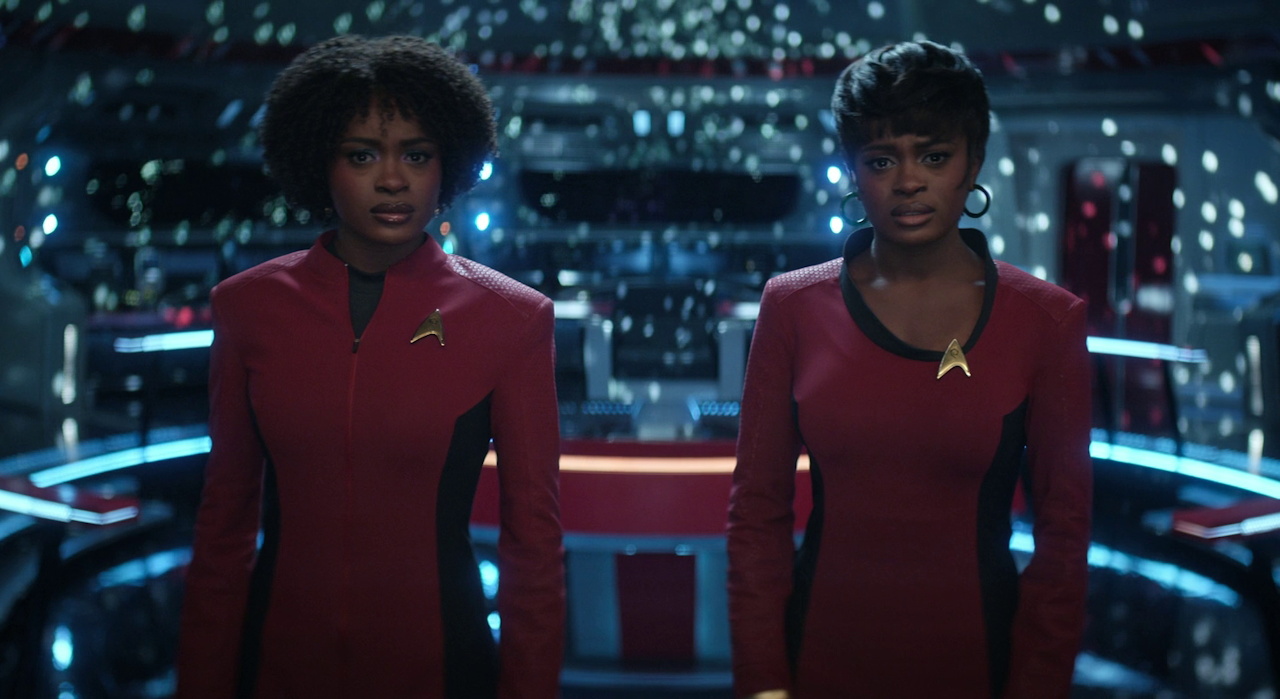
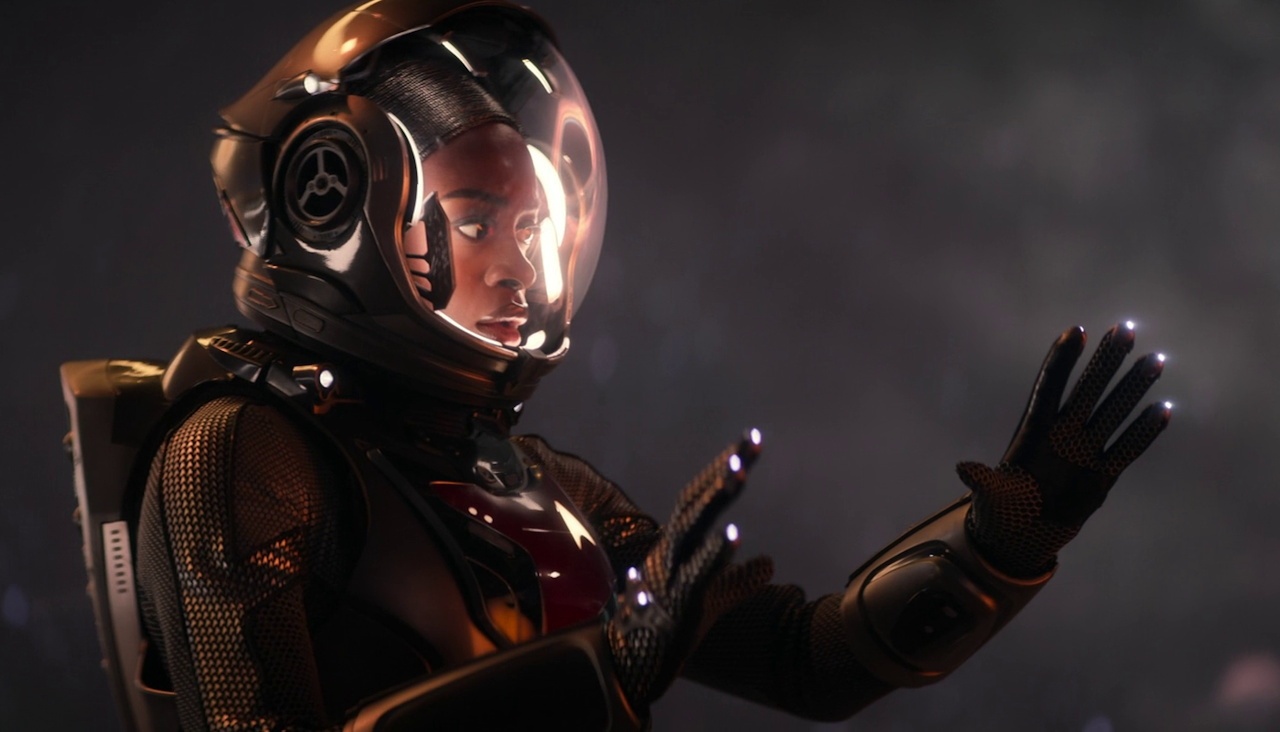
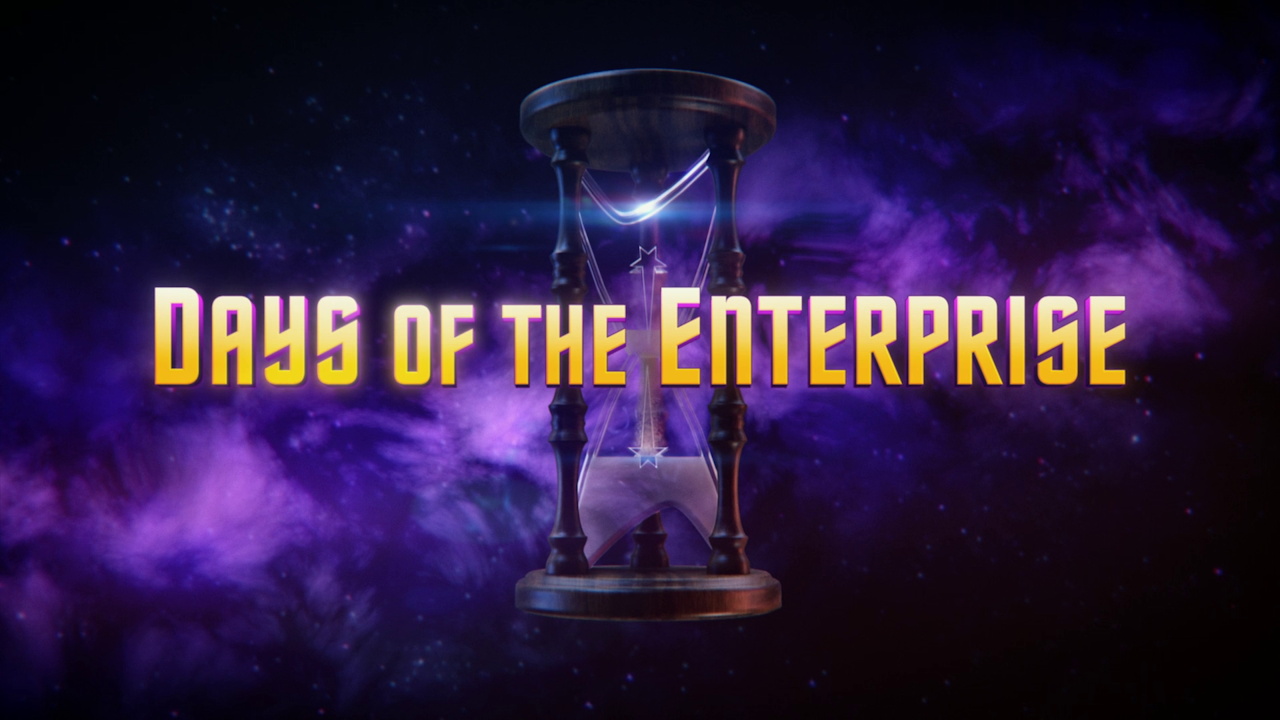
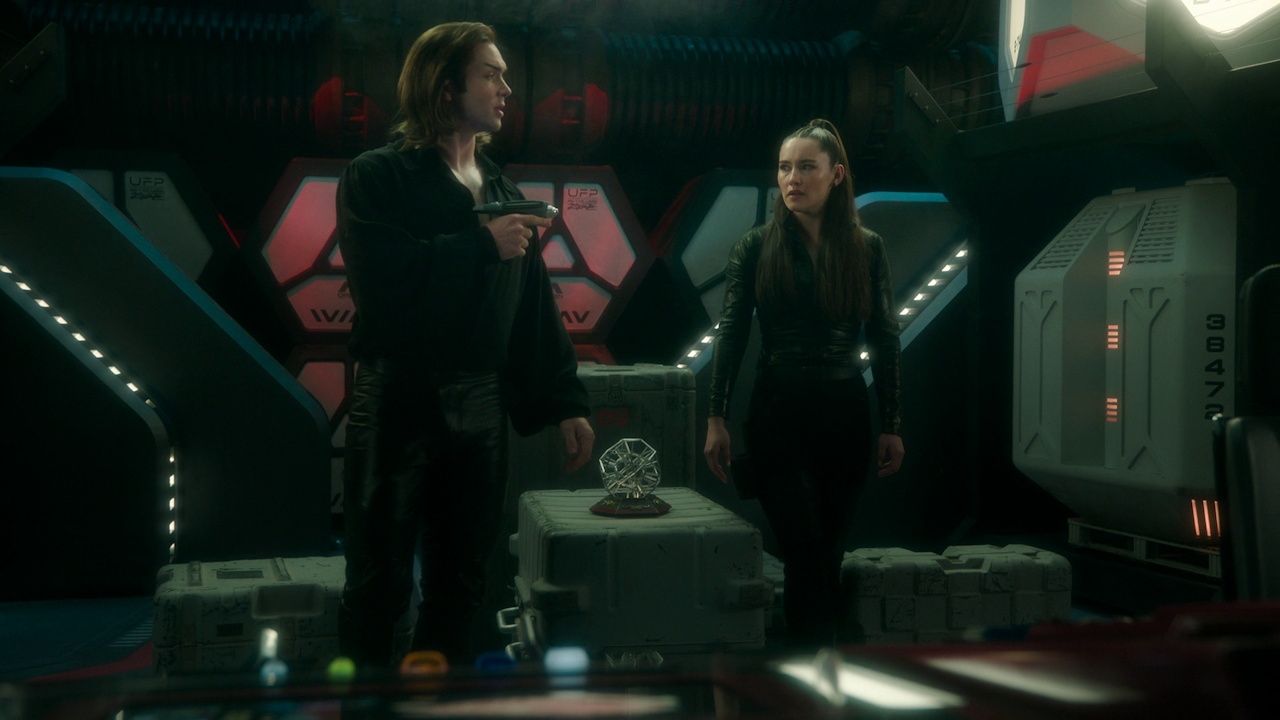
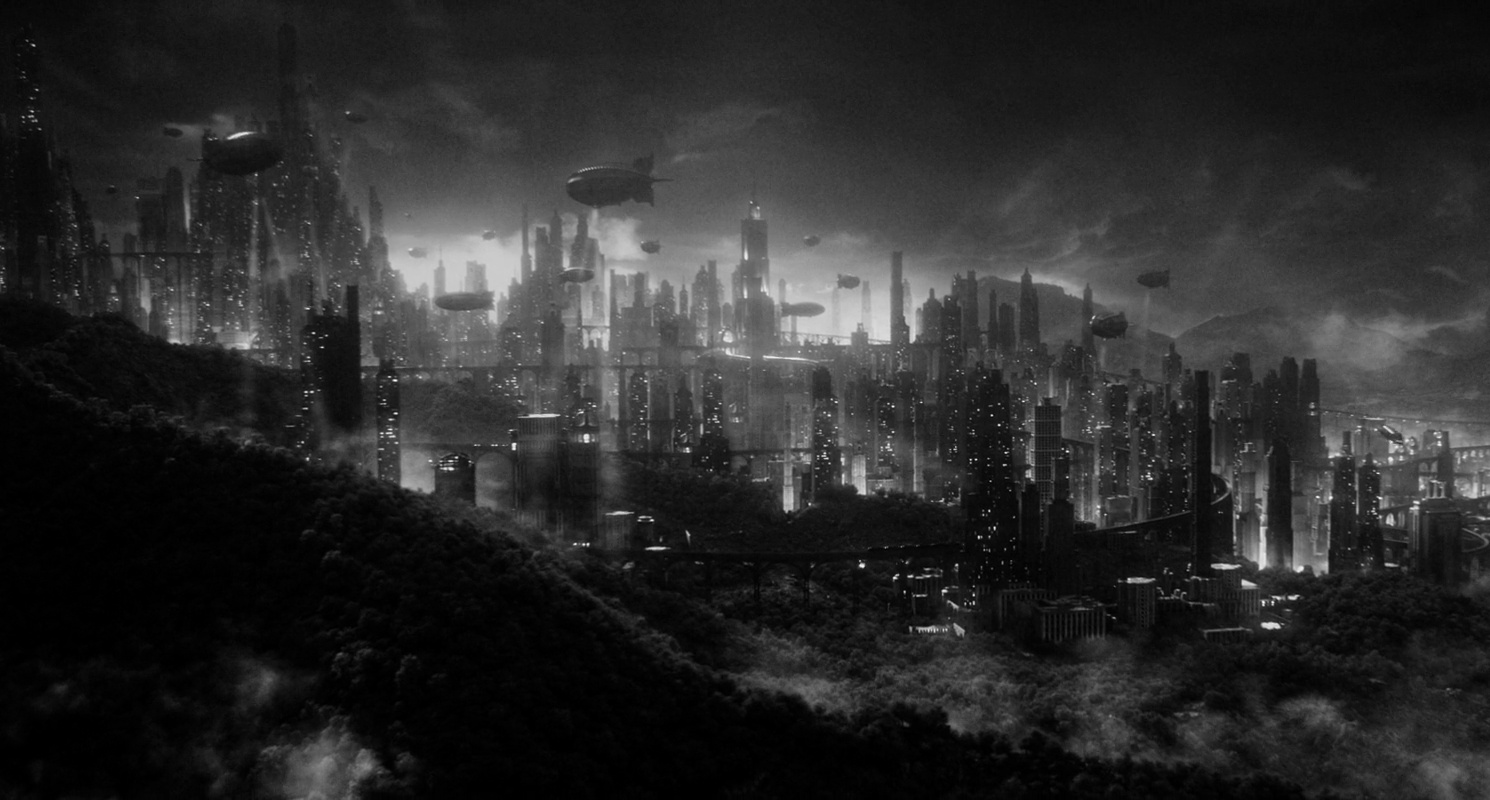
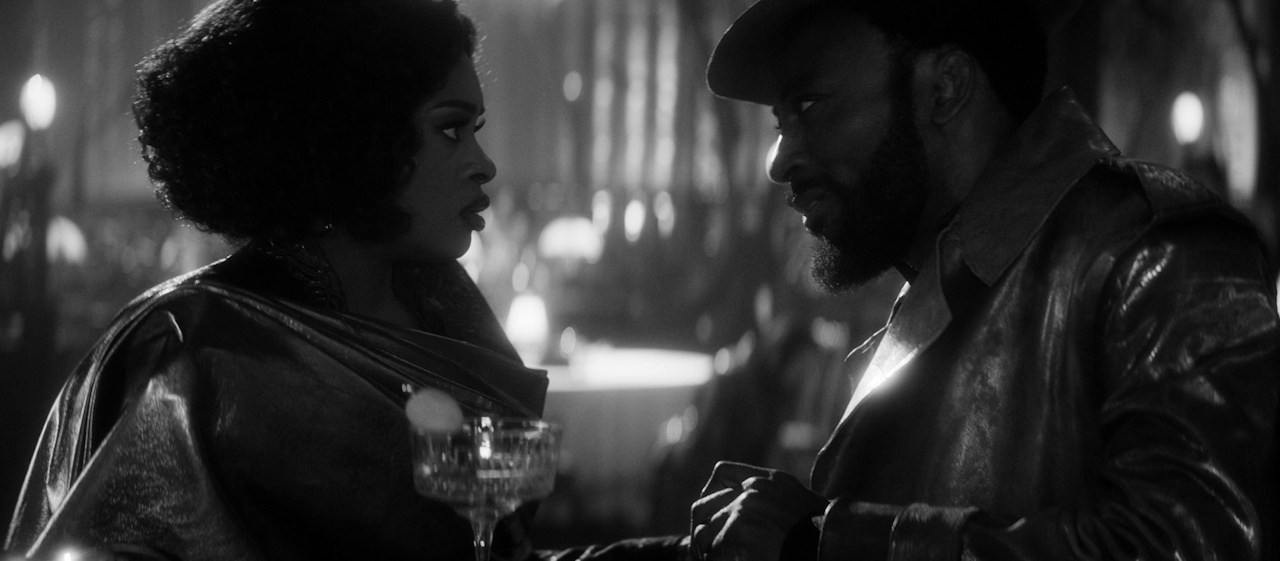
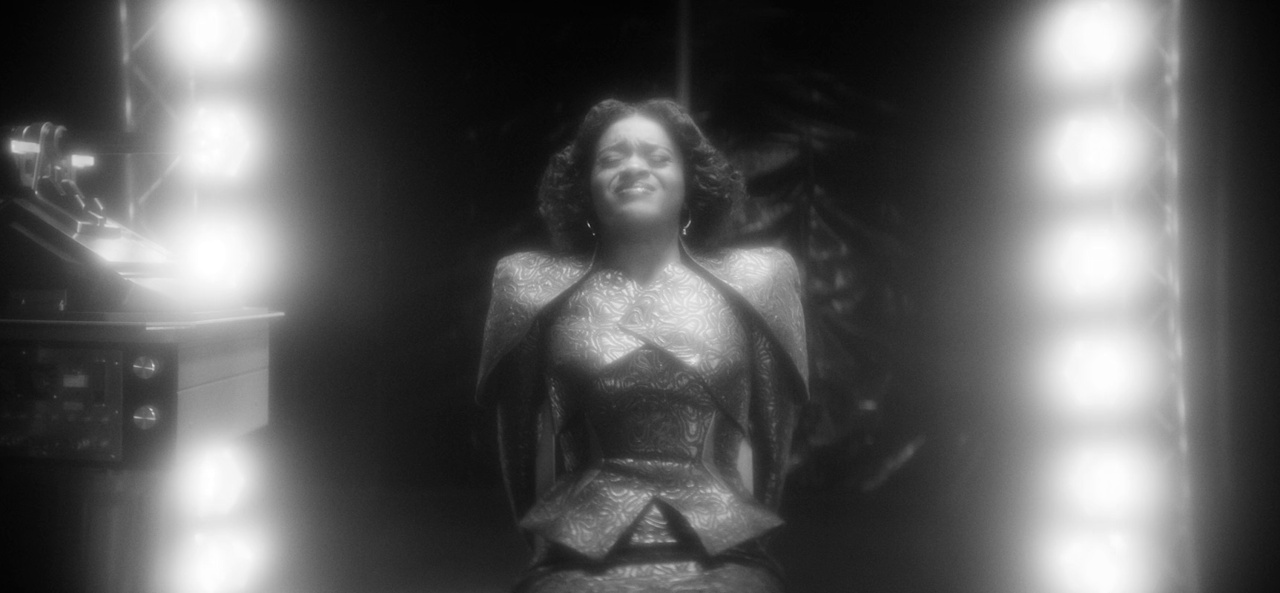
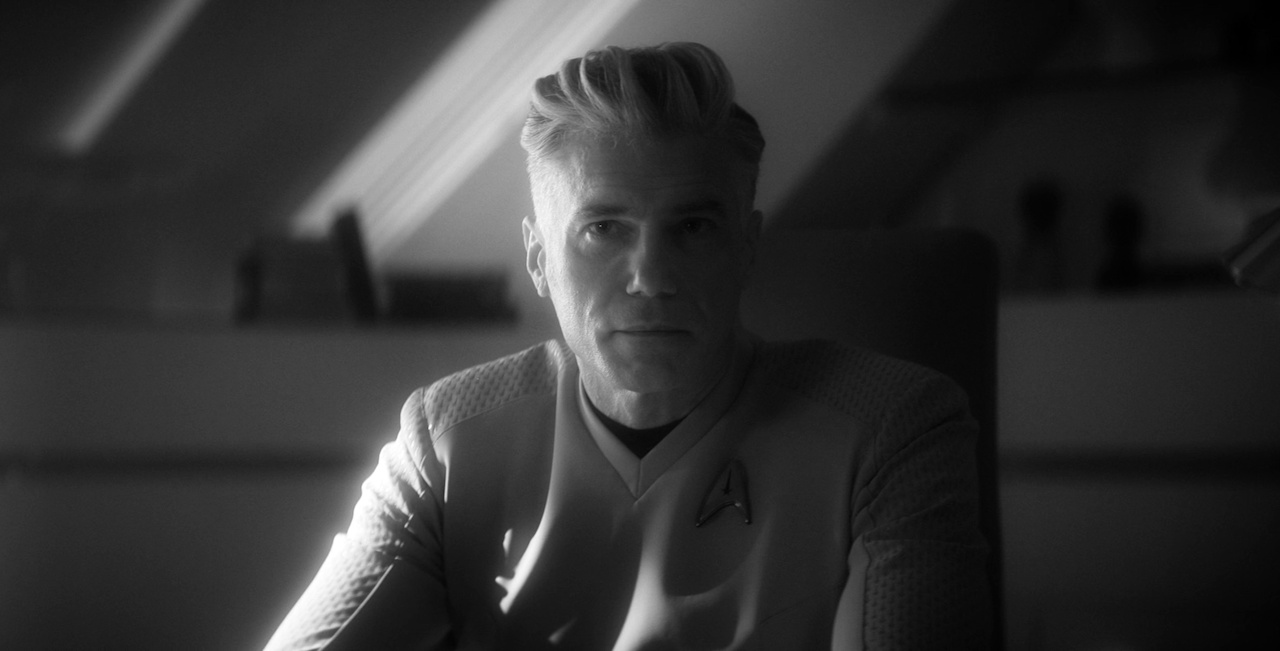
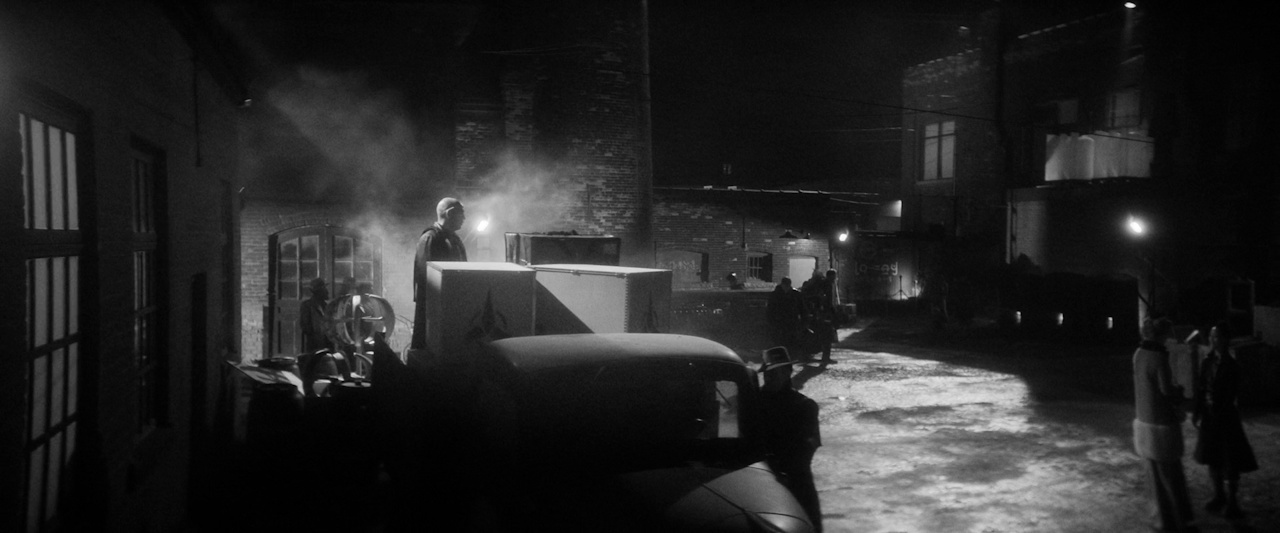
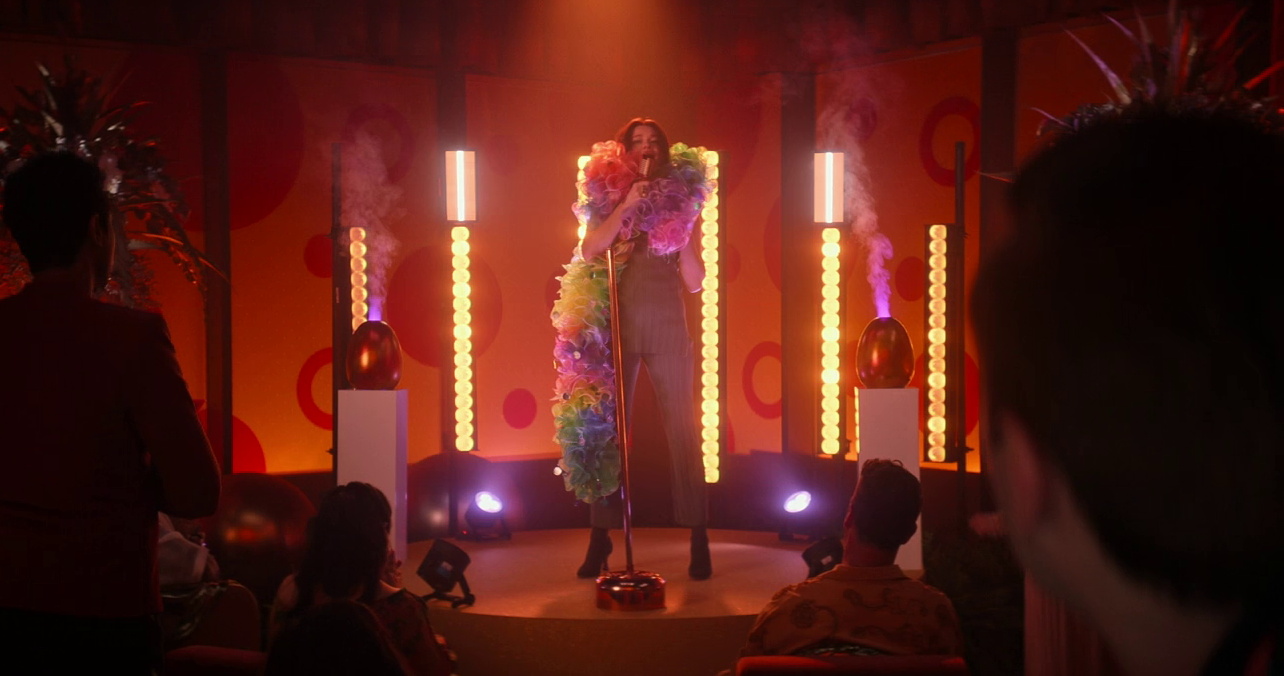
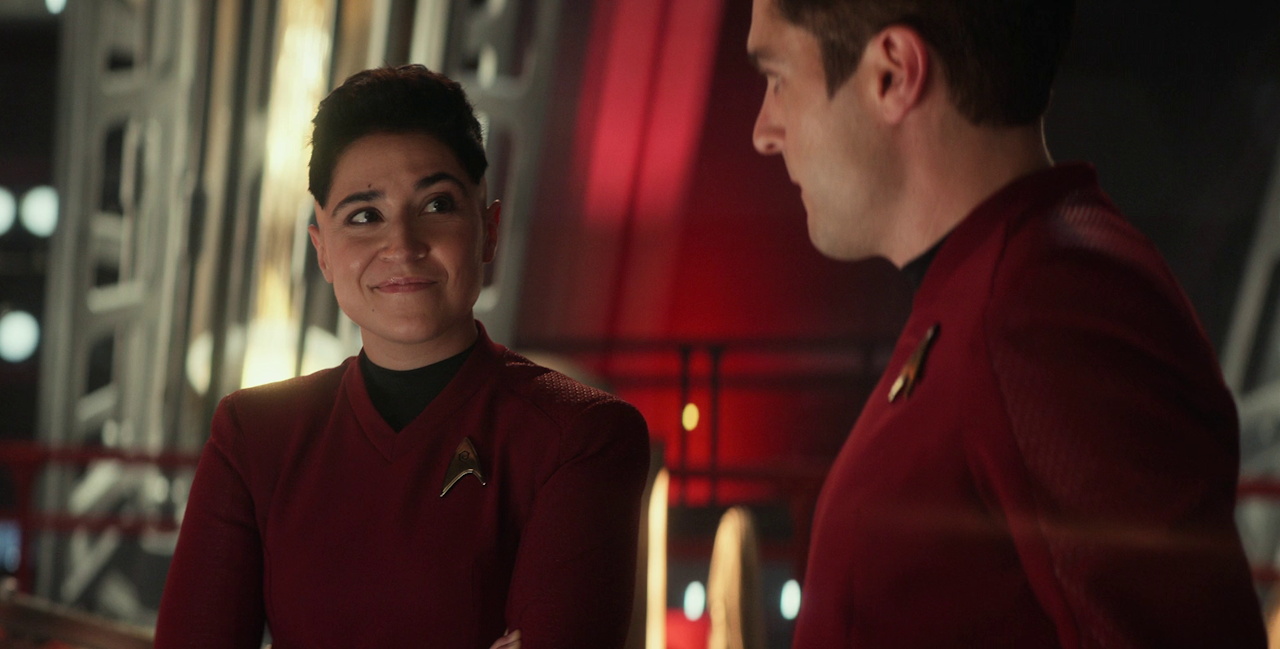
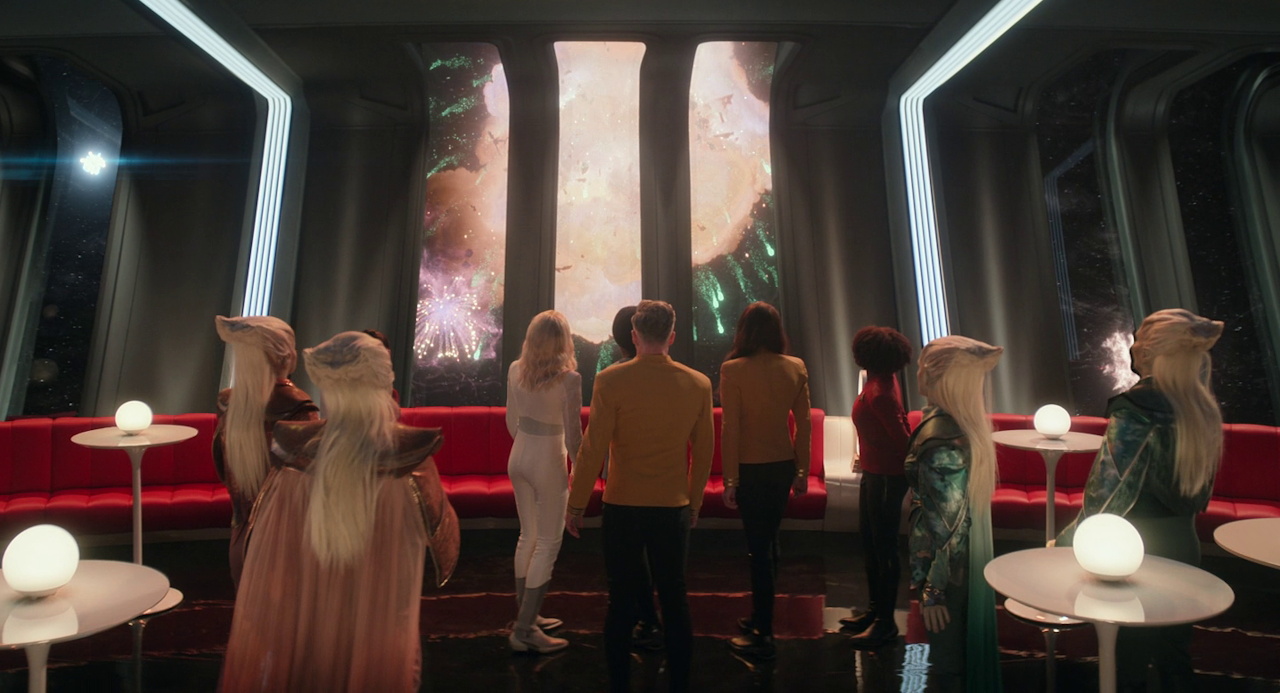
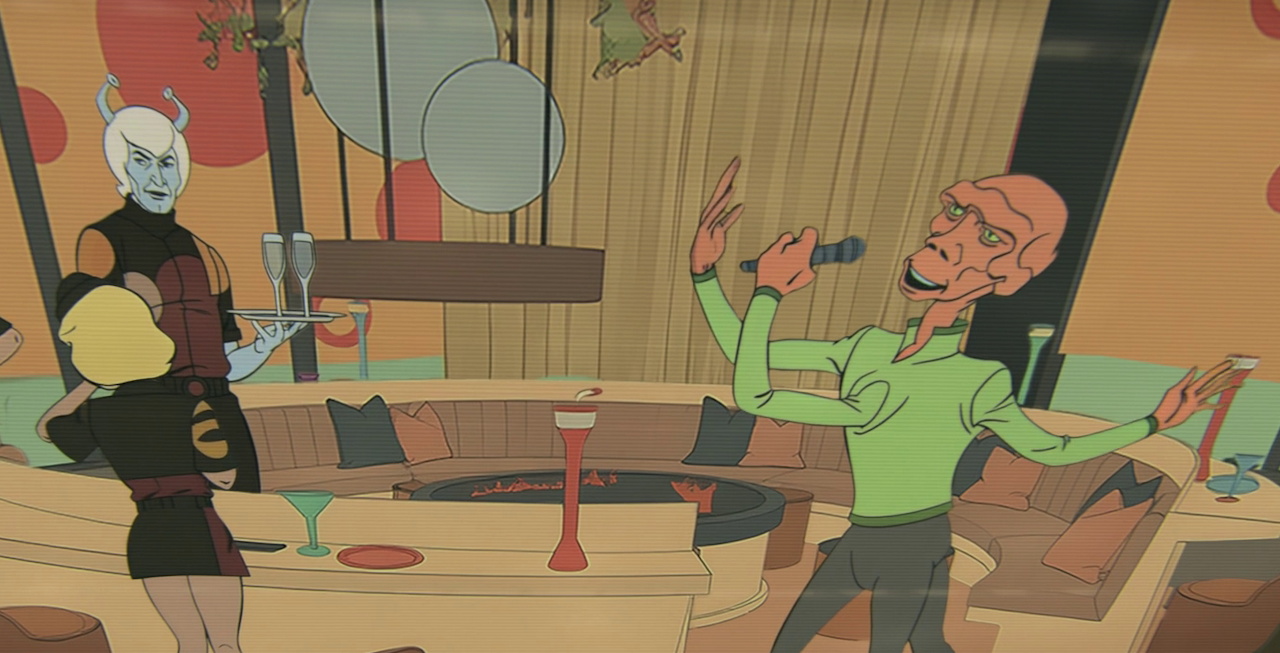
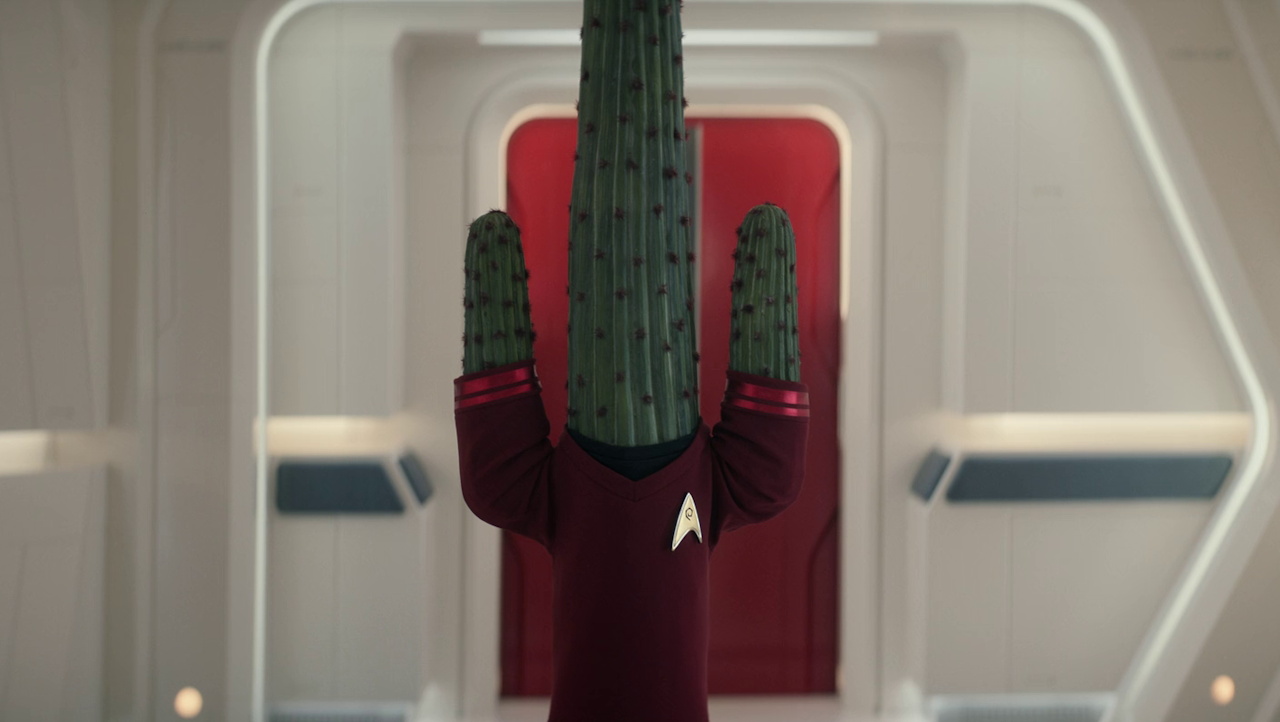
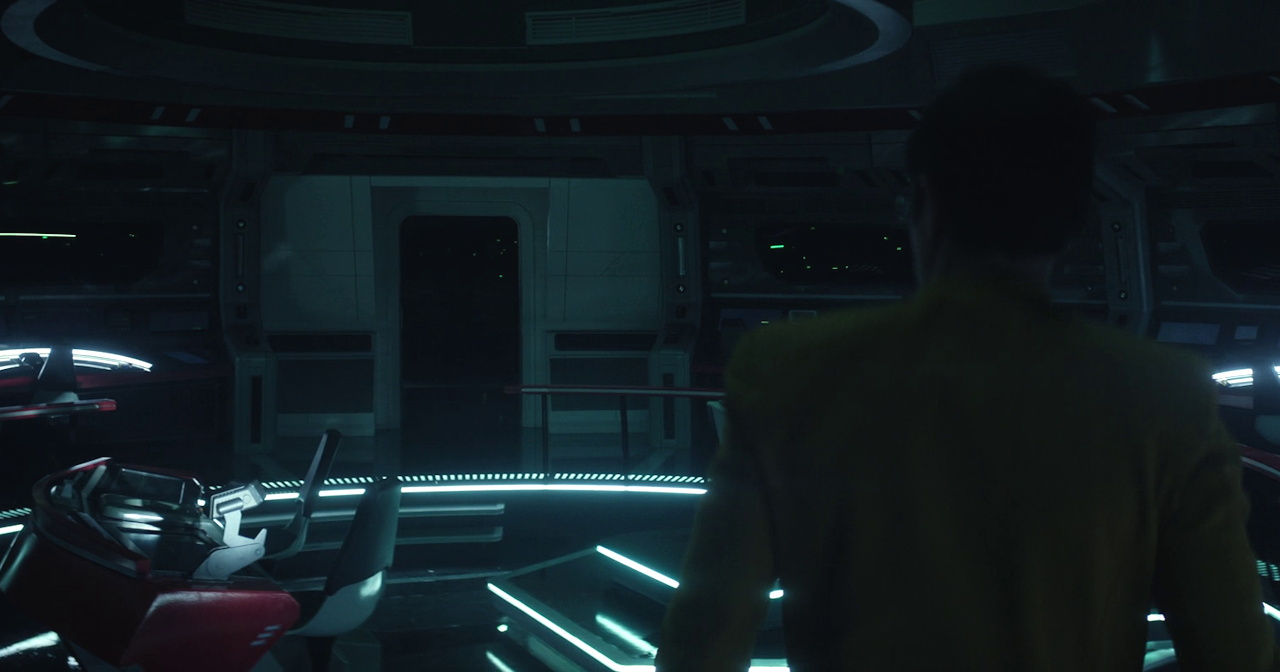
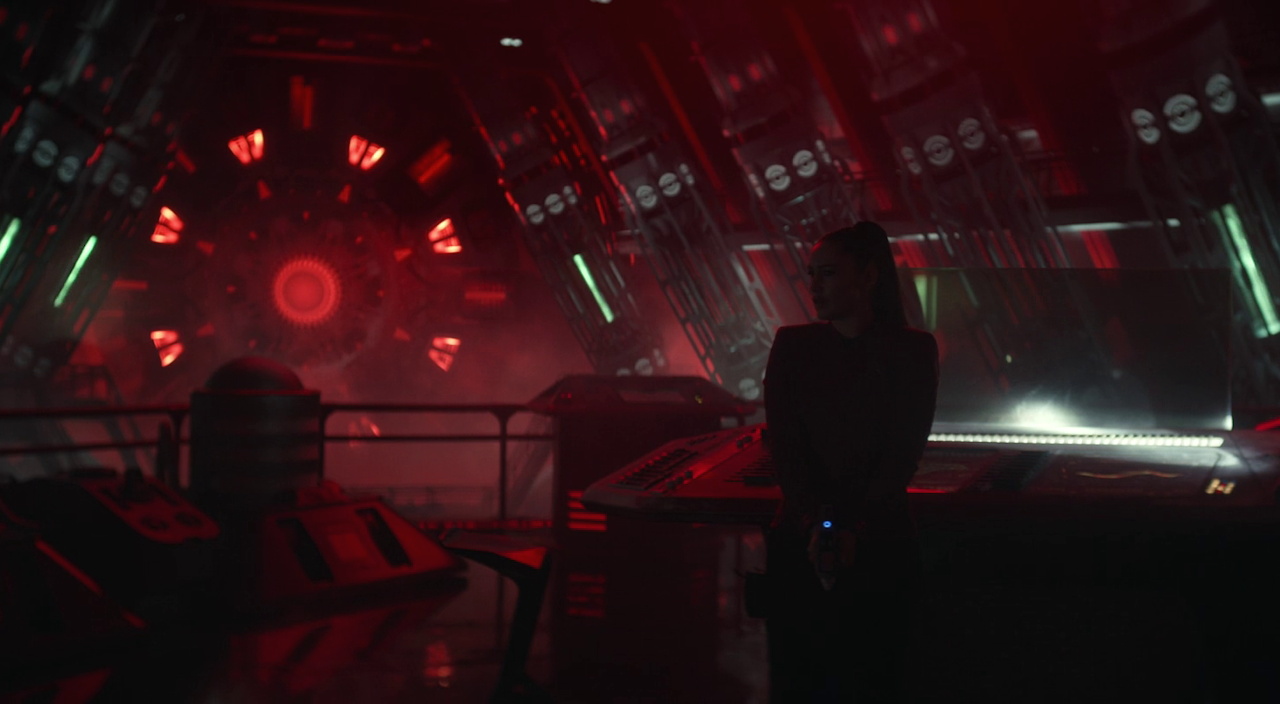
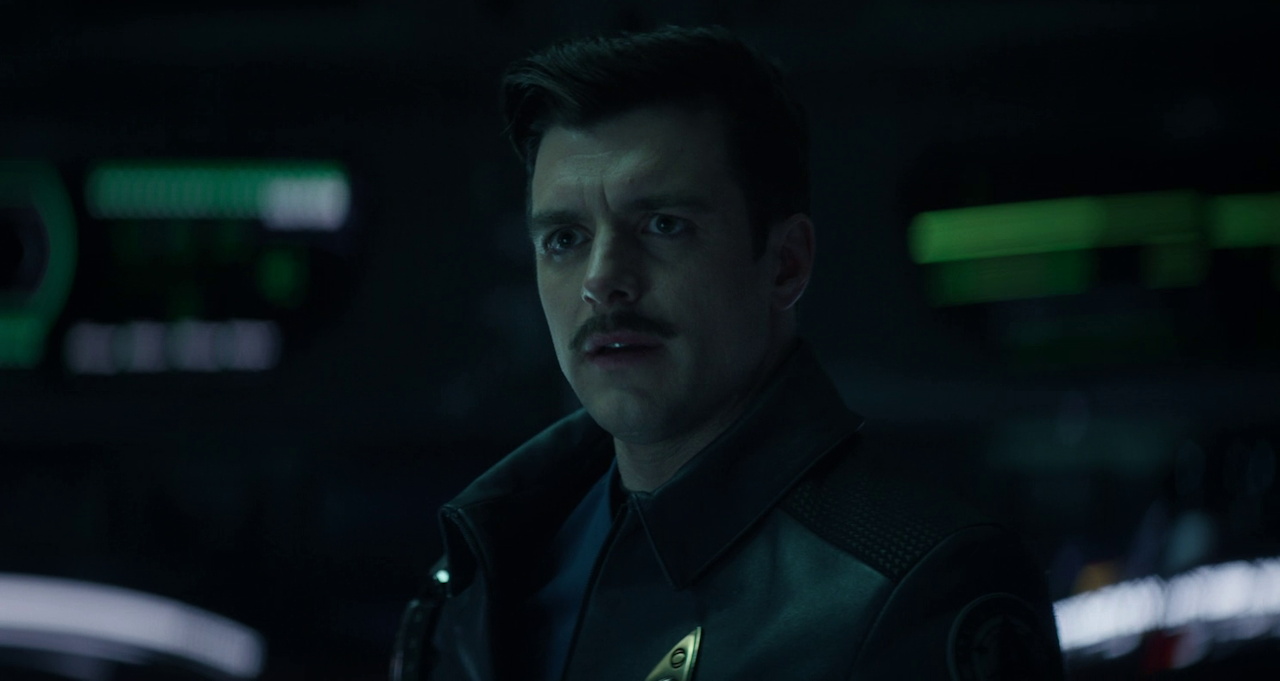
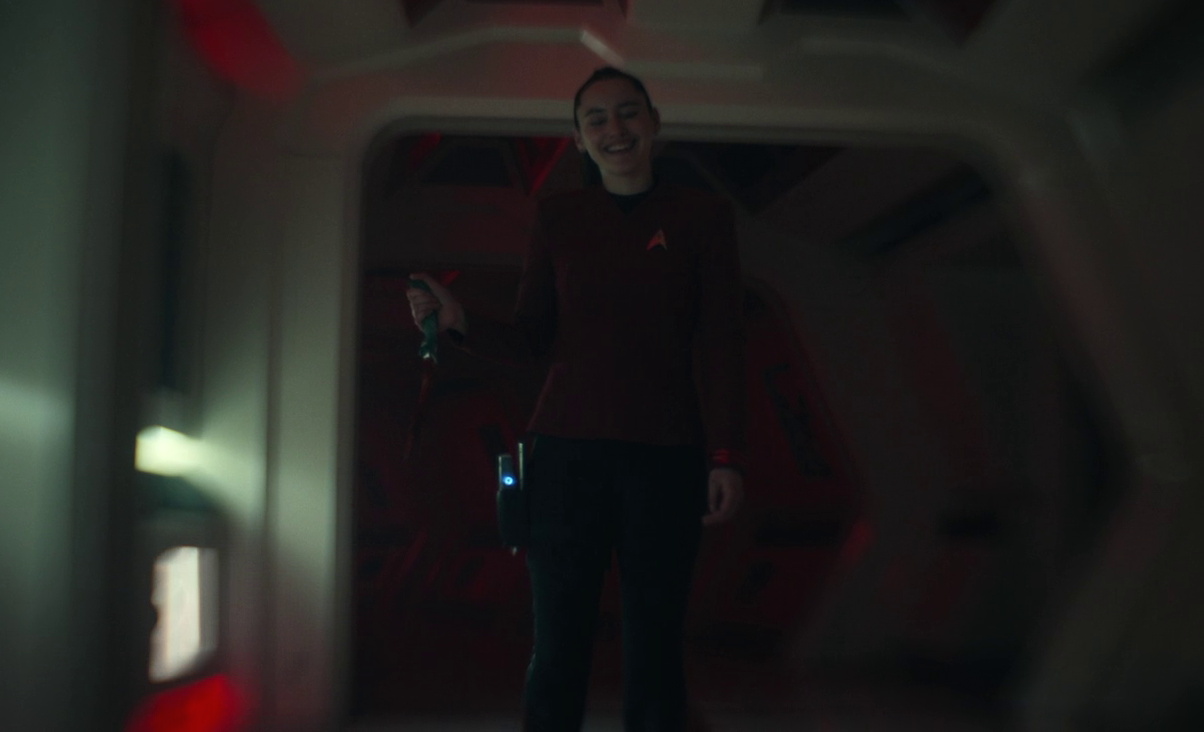
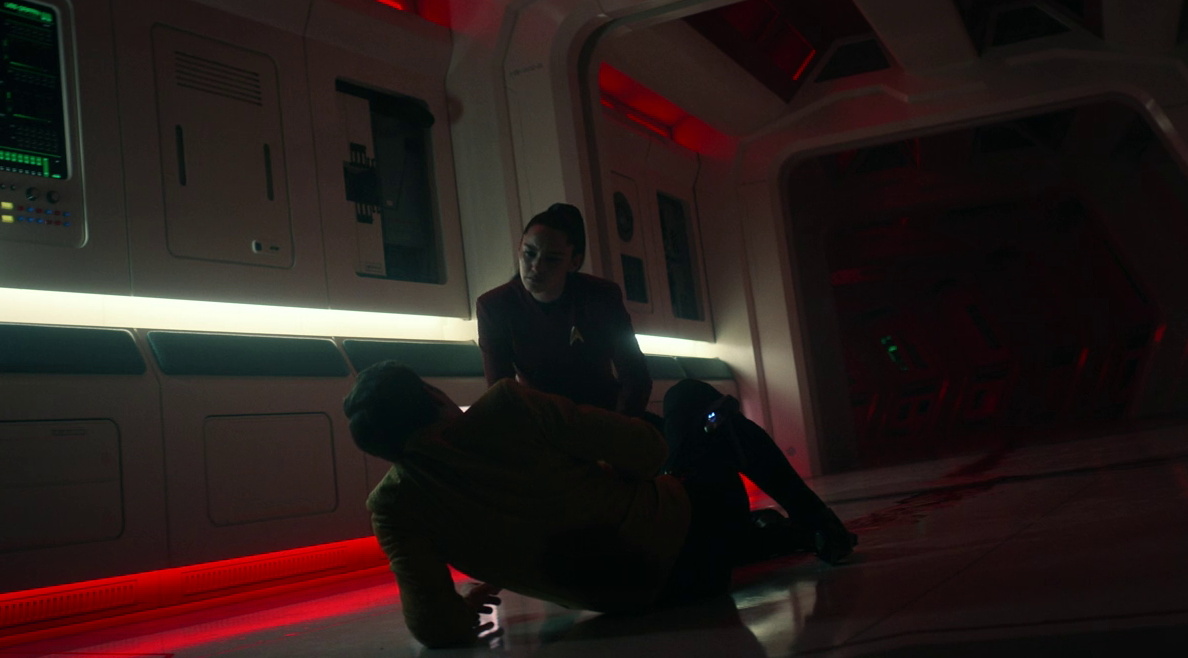
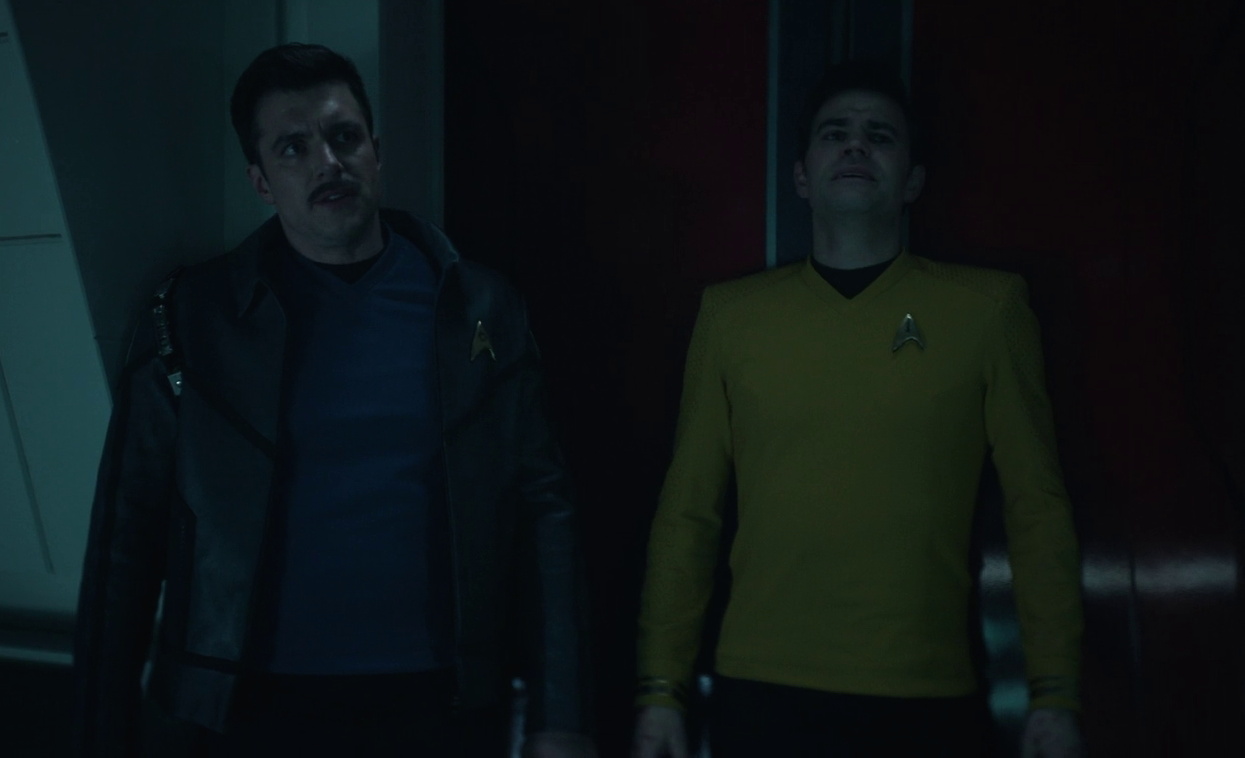
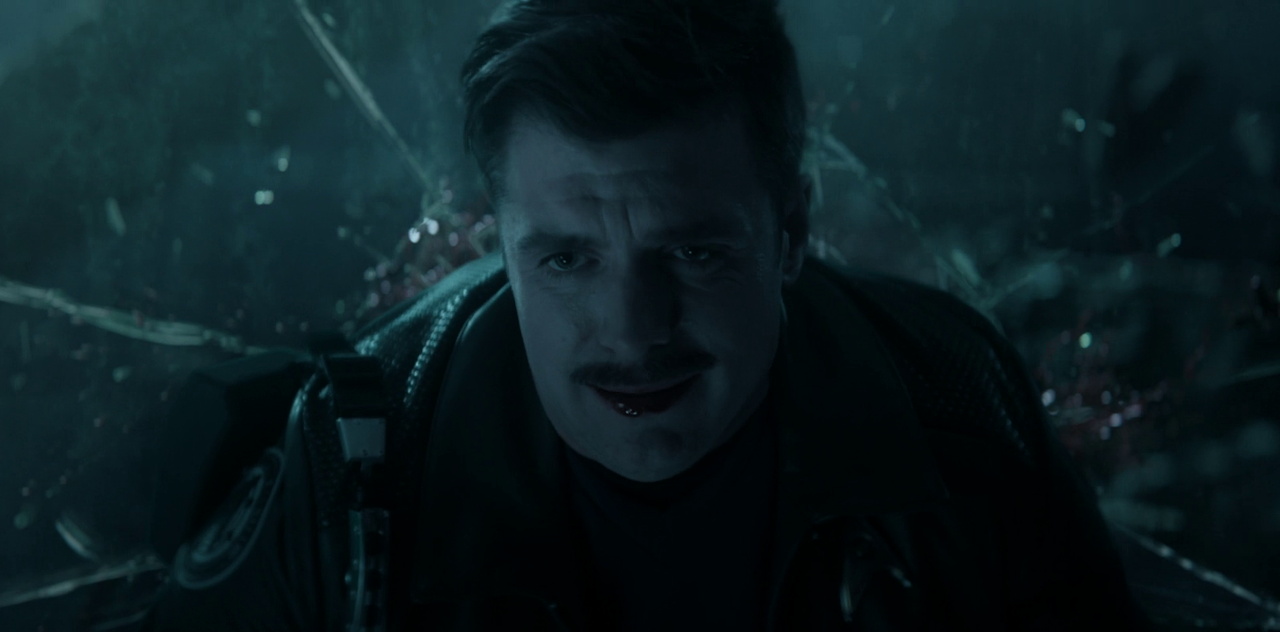
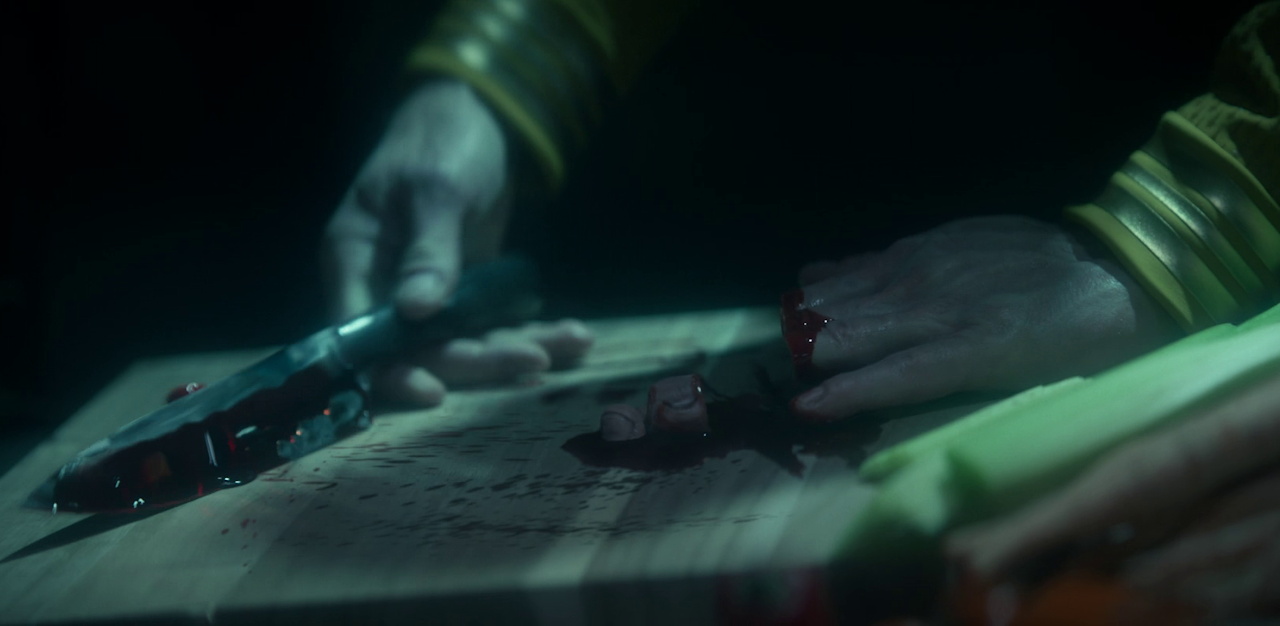
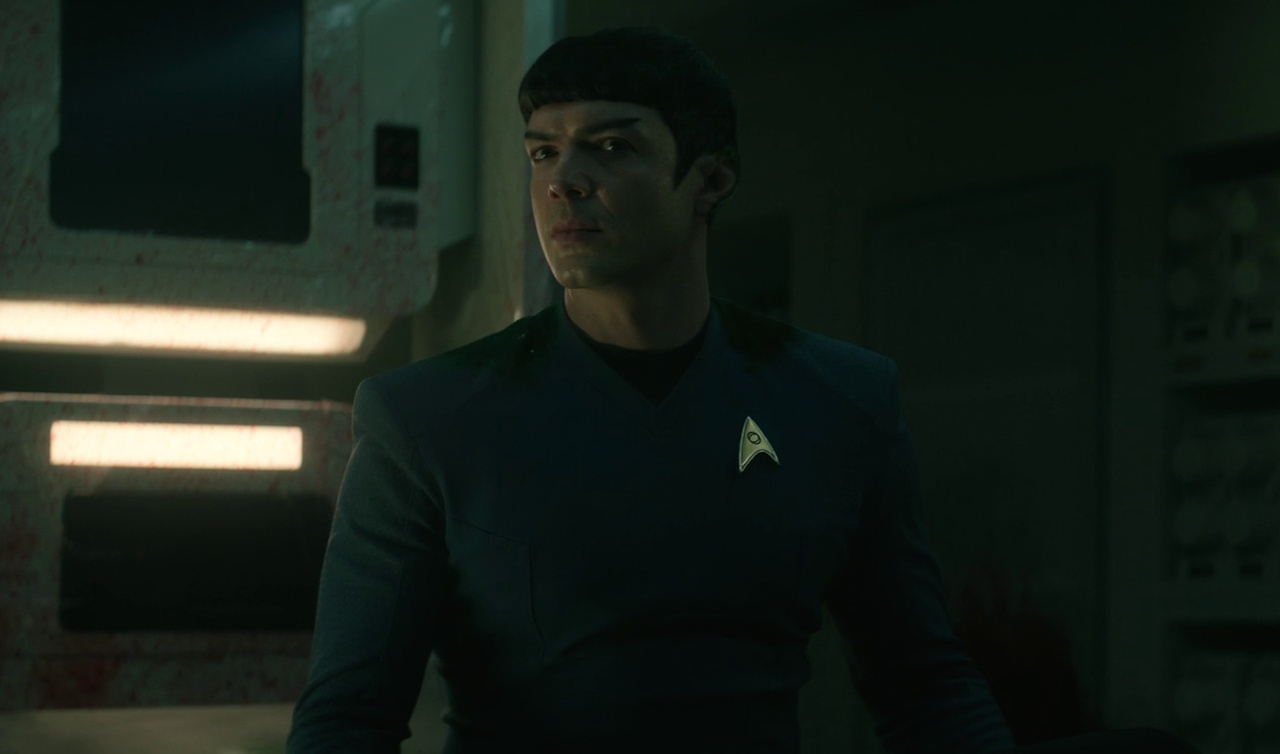
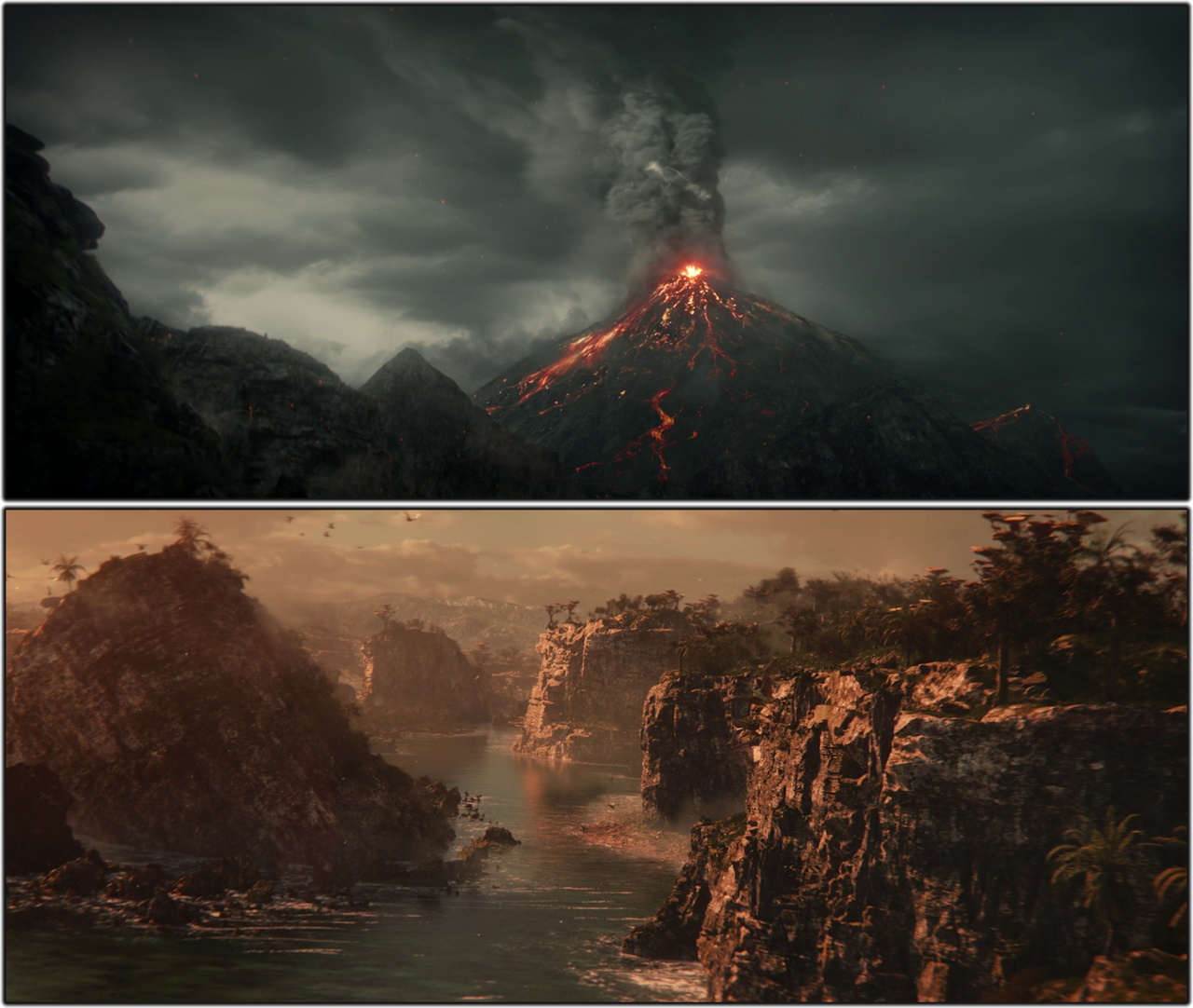
Still frame from Star Trek SNW 4x07 showing the fake title card
Yep. We’re really doing this.

I’ve said this before, particularly with Discovery and Picard, but modern Star Trek has been shockingly bad with its depictions of mental health. There have been some genuinely well-intentioned ideas; storylines involving our favourite characters and their struggles that absolutely are worth exploring. But in almost every instance, the execution of these character arcs and narratives have been, in a word, atrocious.

And so it was in Like Chronitons Through the Hourglass with Captain Pike.

It was a good idea to revisit what happened to Pike at the end of Season 3 and explore how losing a partner – and mourning the life they could’ve led – was causing him pain. This is something Star Trek has always done: looking at real-world issues through the lens of science-fiction. In this case, Pike *literally* saw and experienced that alternate life, but if you take it as a metaphor, many, many people have gone through loss, grief, mourning, and reflecting on the possibility of a different outcome and a different life.

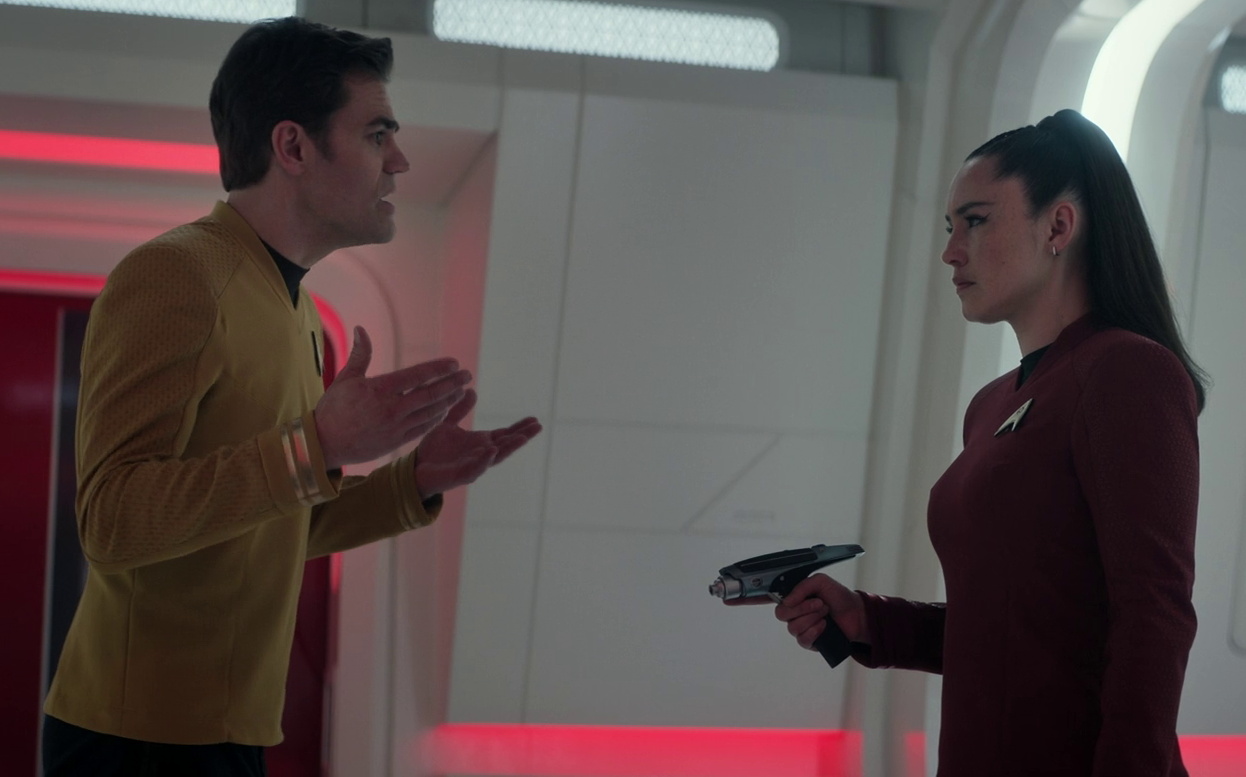
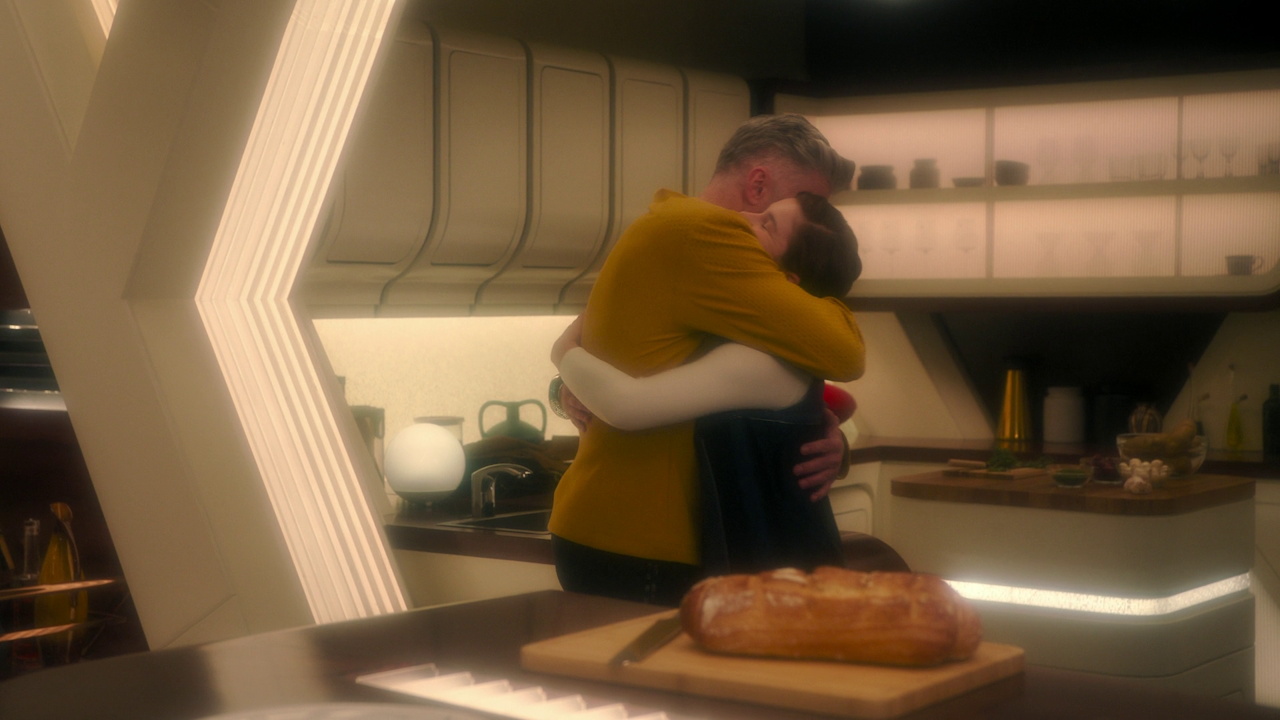
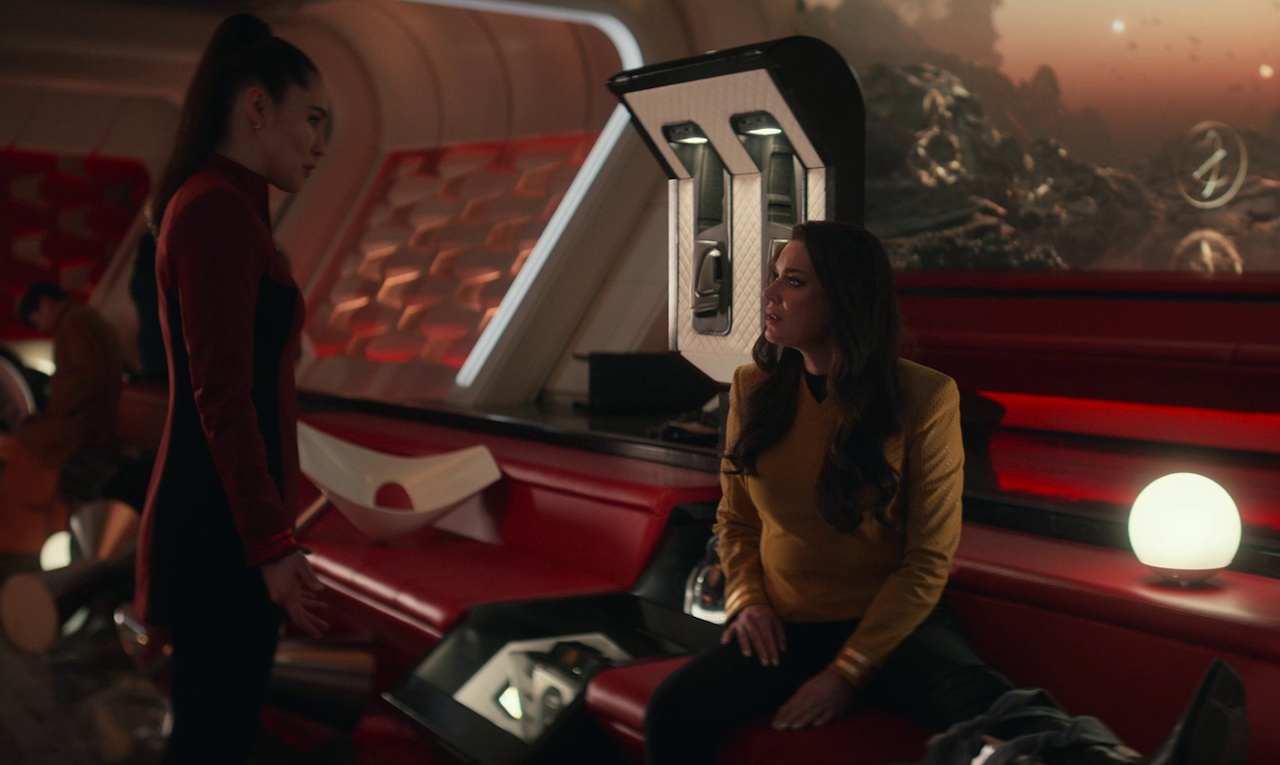
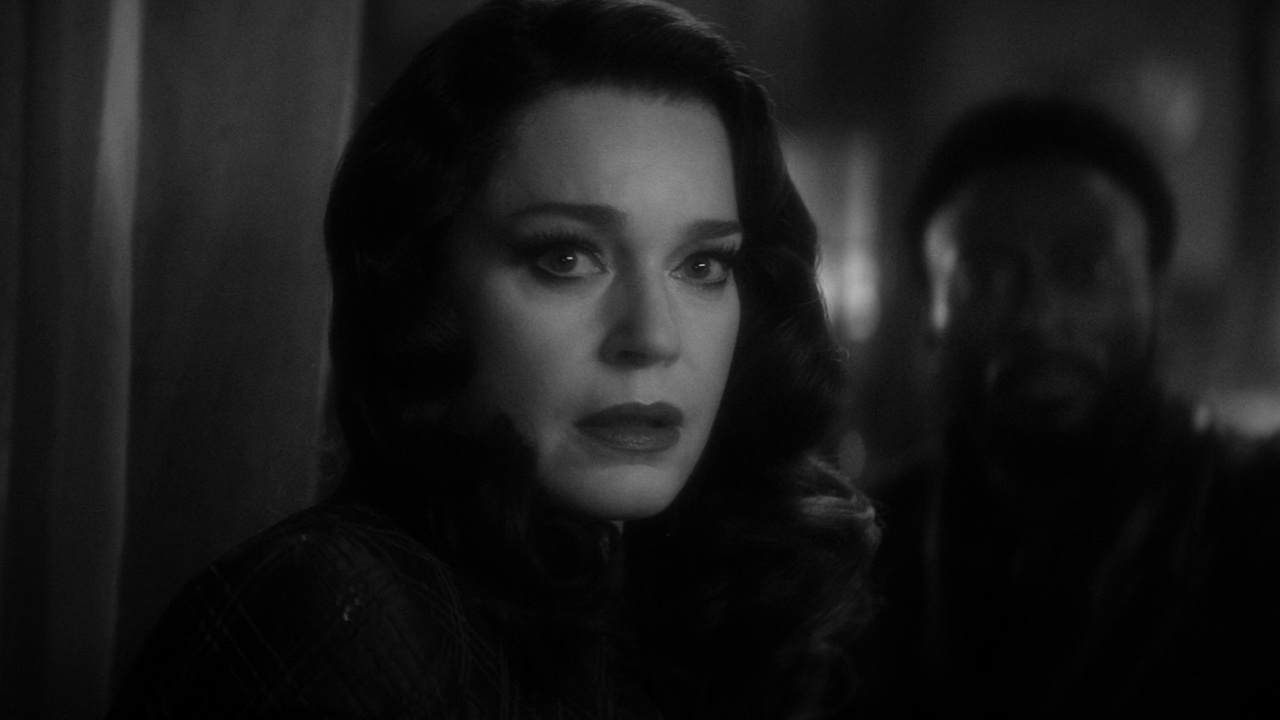
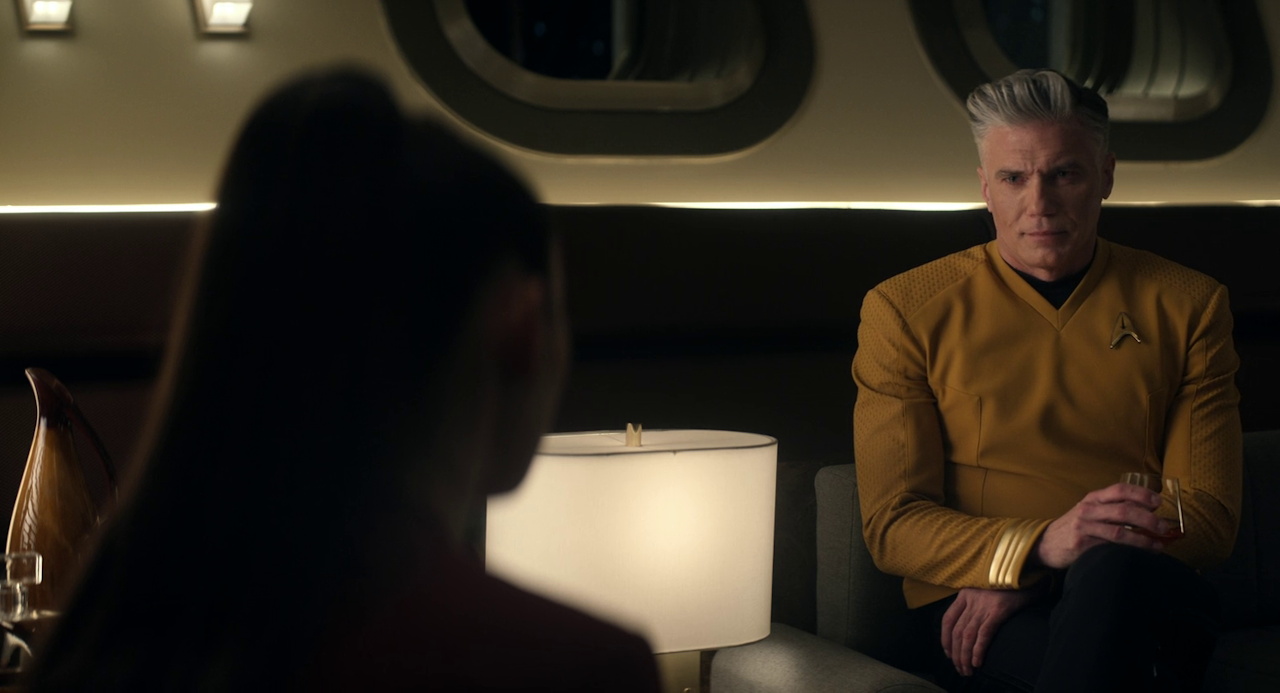
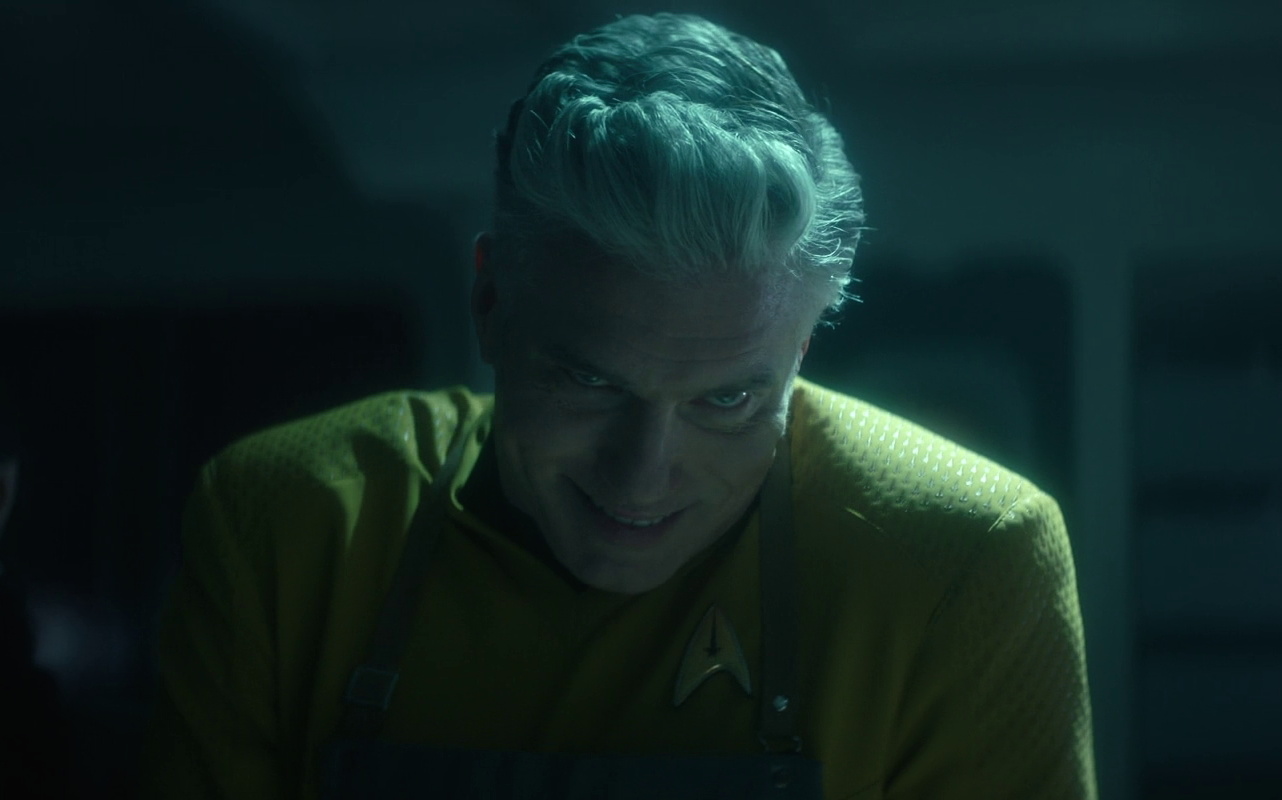
Still frame from Star Trek SNW 4x07 showing Pike and Juliet
Captain Pike with his daughter.

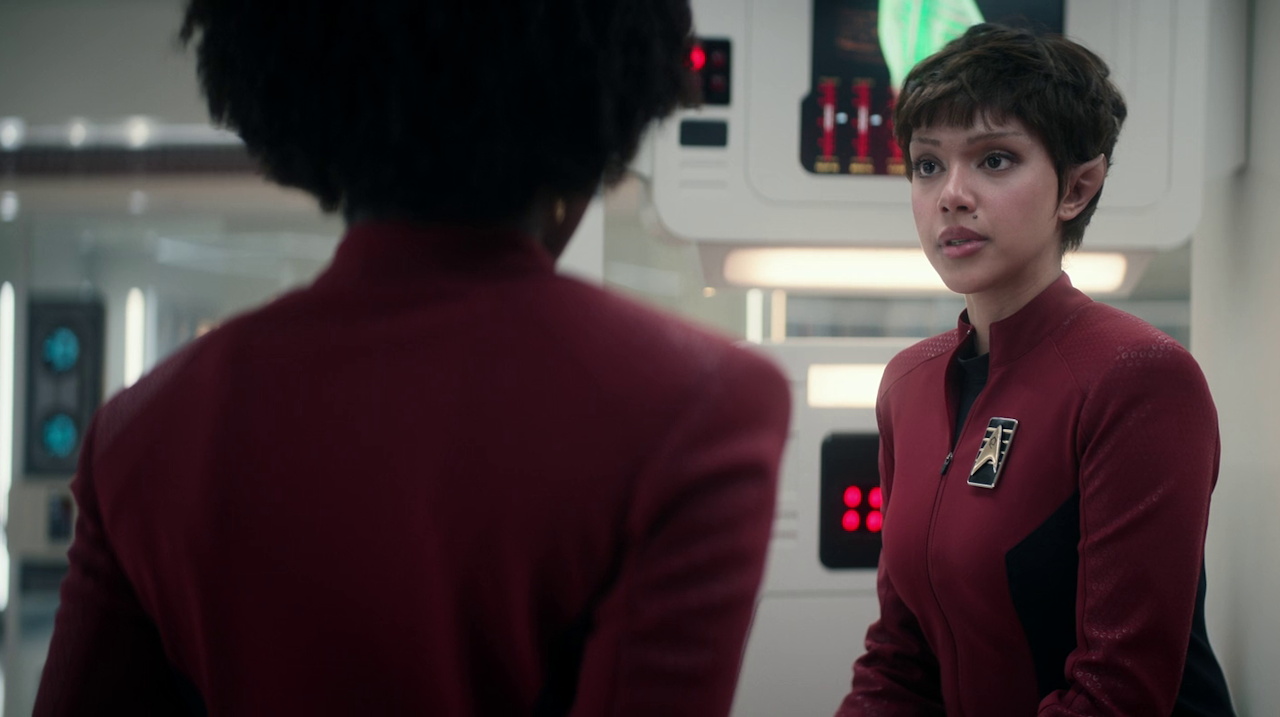
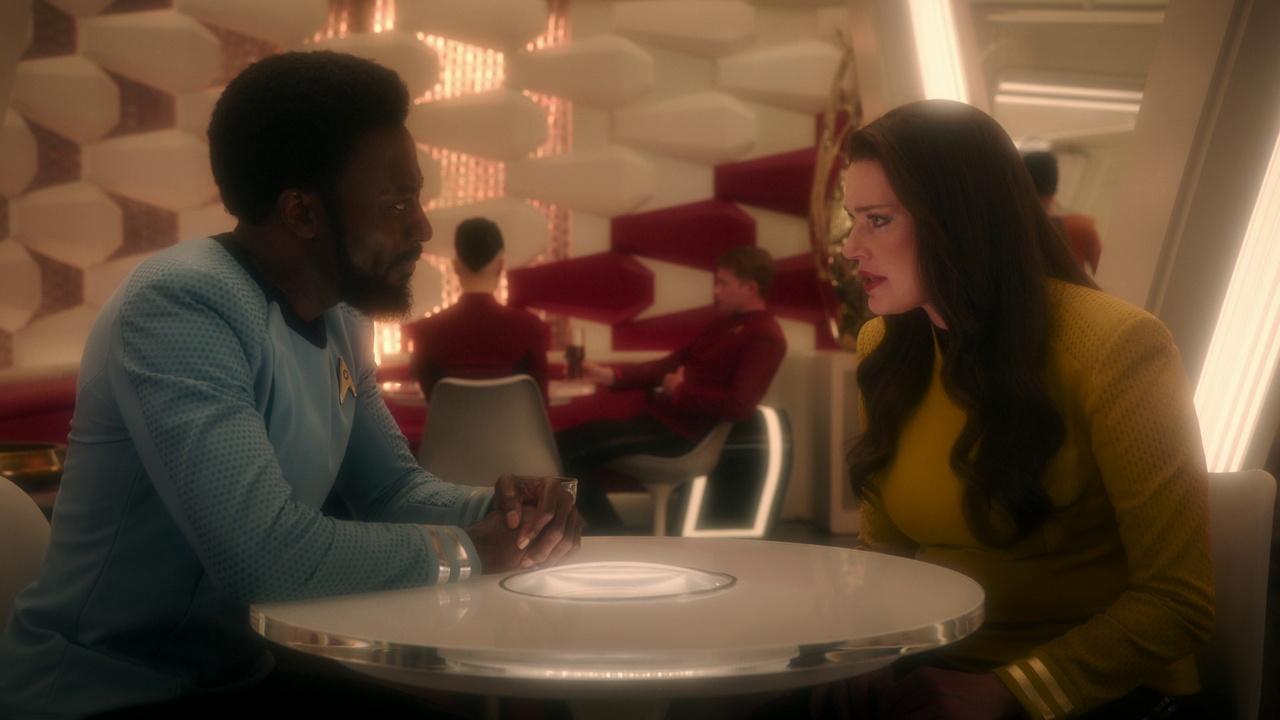
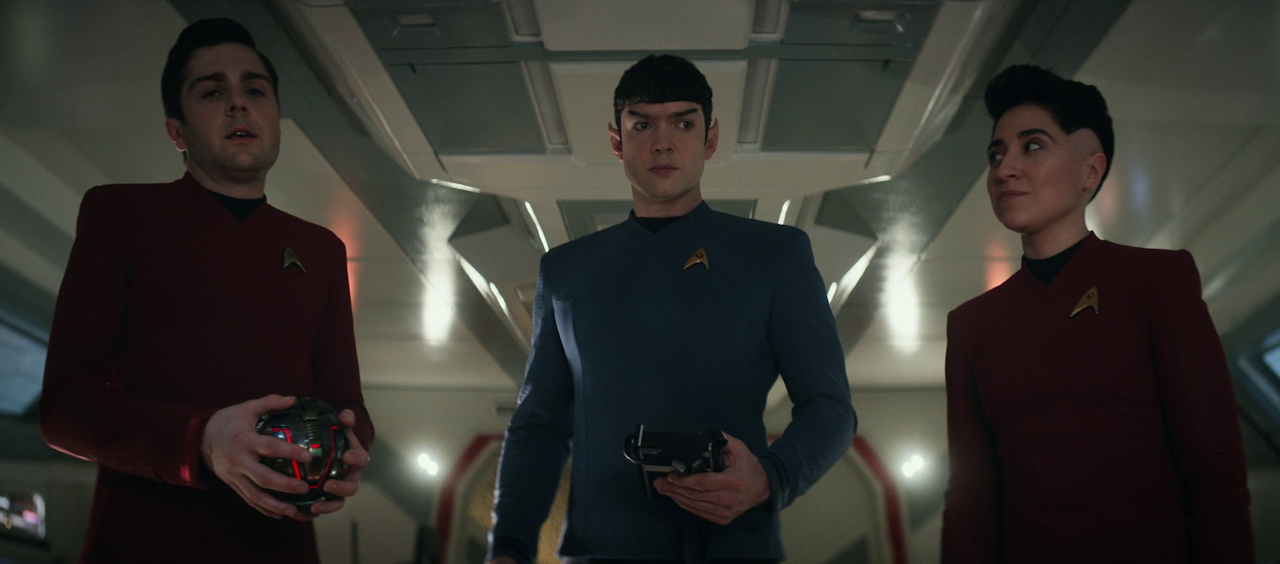
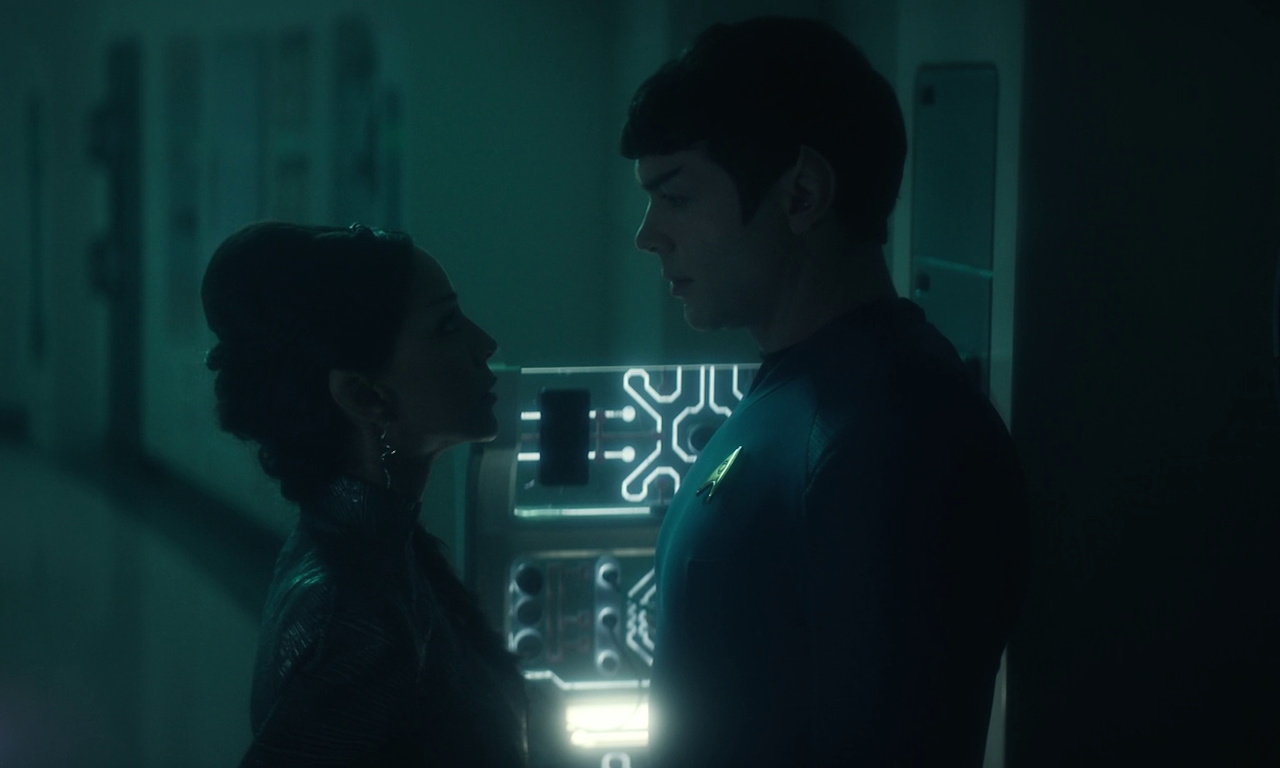
Like Chronitons Through the Hourglass lets us see this from a different angle with La’an and Spock, too. Captain Pike is literally in mourning; grieving the death of not only Captain Batel but the nonexistence of his daughter, Juliet. La’an, though, is metaphorically “grieving” the end of her romantic relationship with Spock, understanding that their breakup was right for both of them, while still feeling that sense of emptiness and wondering what could’ve been.

Those storylines, had they taken place in a stronger, more grounded narrative framework, were absolutely worth examining. There was a point to be made about loss and grief, and how the end of a relationship can be devastating – even if it was the right decision. For La’an, as she potentially gears up for an exit from the Enterprise (in keeping with the season’s idea of “boldly going one step closer to where it all began”; i.e. moving characters into place in time for The Original Series), that could mean stepping away from the ship to help her move on from Spock (and Kirk, I guess). And for Captain Pike… well, we saw a tiny glimpse at the very end of the episode of how he’s still emotionally wrecked by what happened.

Still frame from Star Trek SNW 4x07 showing Pike in therapy
Captain Pike is still reeling from the death of Captain Batel, and the loss of their daughter, Juliet.

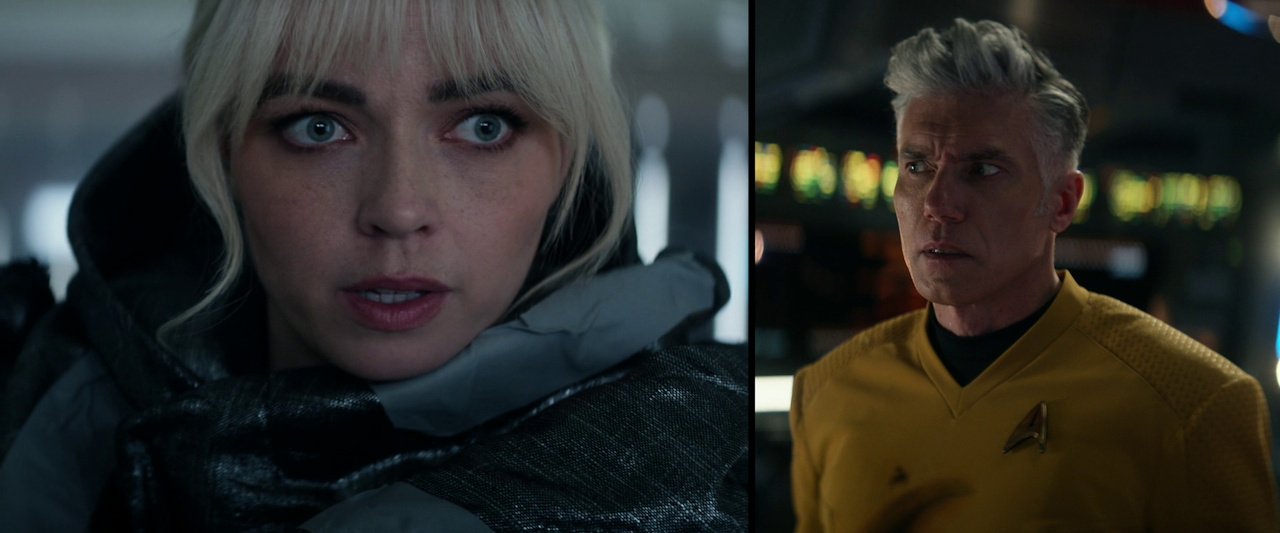
The soap opera story, though, completely ruined any chance of those narrative arcs being successfully explored, and I’m genuinely left feeling shocked at the stupidity of the show’s writers and producers – not for the first time this season, I should say. Did they *genuinely* think that this kind of overly-melodramatic soap opera spoof was the best way to examine complex themes of mental health, mourning, grief, loss, and more? What do they think this soap opera stuff added to the story? Could they not recognise that the tone of such a story is in complete contrast to its serious themes?

There are a couple of ways an episode like Like Chronitons Through the Hourglass could’ve been made to work. One would’ve been to lean fully into the soap opera stuff and treat it like a comedy story. Strange New Worlds has done several episodes with overtly comedic premises, and some of them have worked better than others, admittedly, but when they get it right, it works. Look at Human Best Friend earlier this season as an example: it leaned fully into its “Dude, Where’s My Car” and “The Hangover” inspirations, and what resulted was a genuinely fun, light-hearted story.

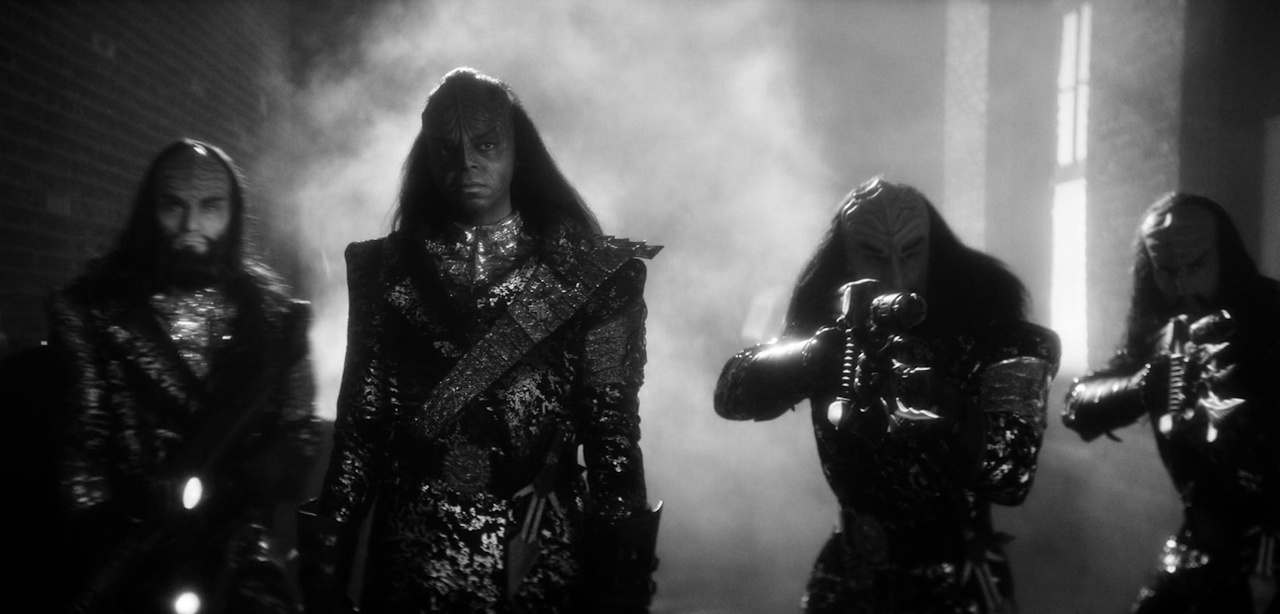
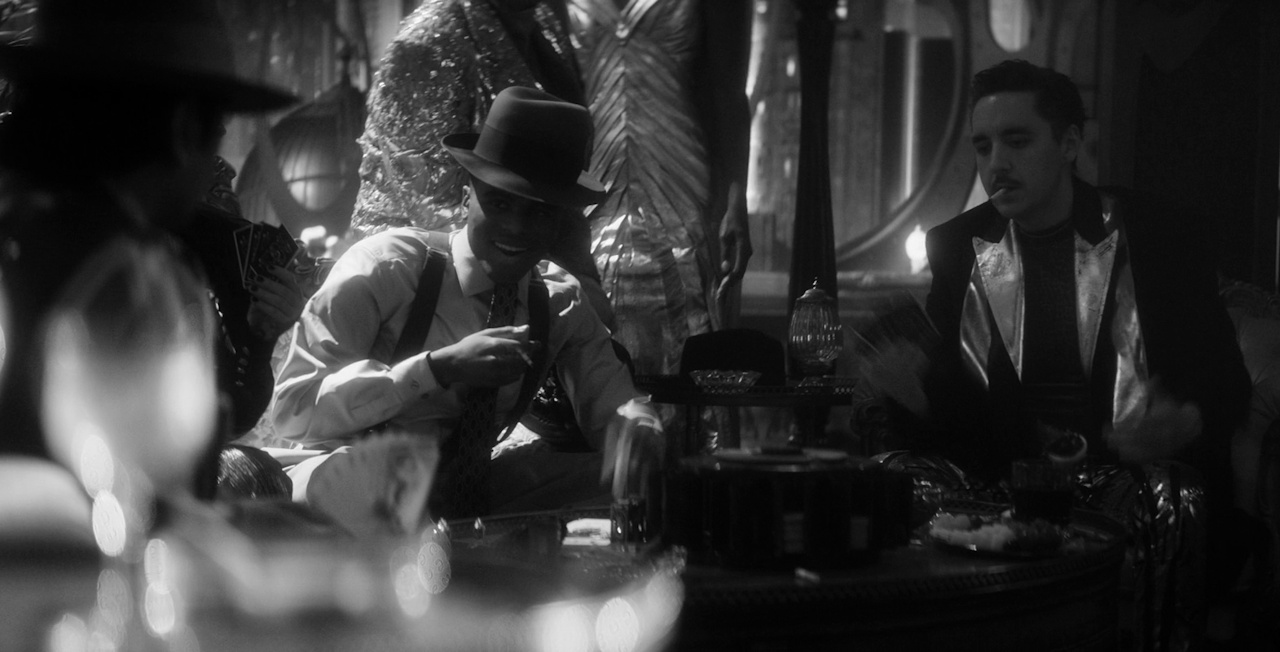
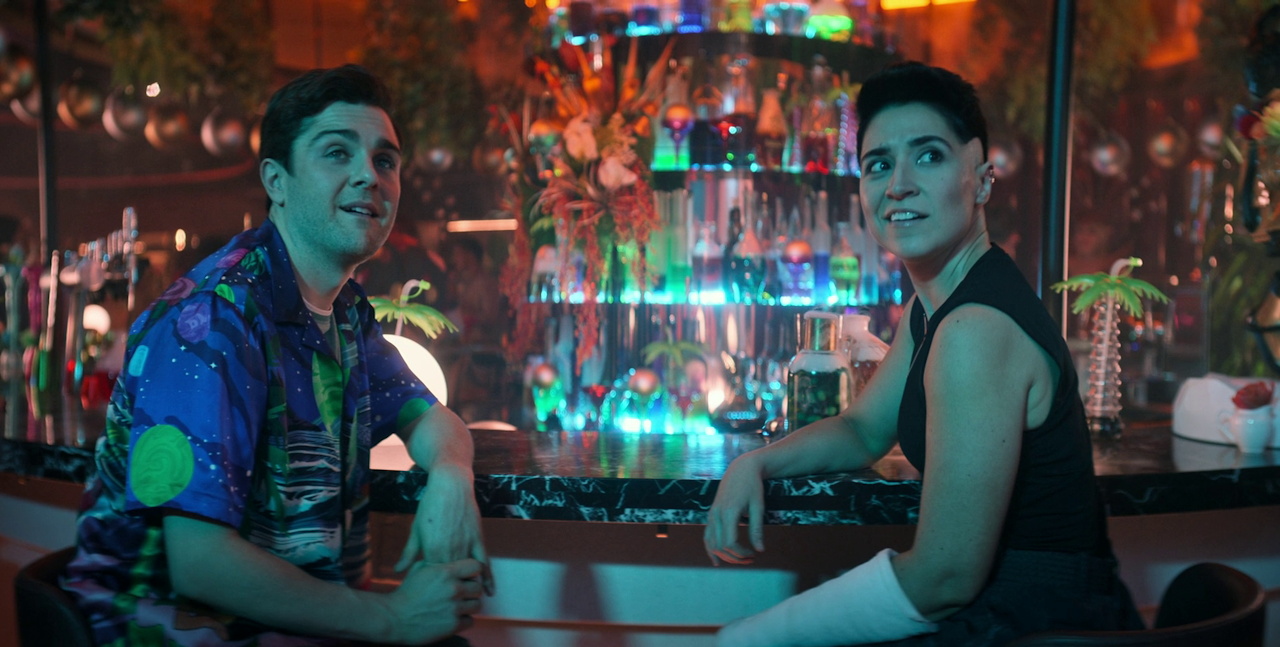
Still frame from Star Trek SNW 4x07 showing four character cards
The soap opera plot detracted from what could and should have been the episode’s core themes.

Alternatively, if the focus of the story was to be on such serious things for two of the show’s main characters, then the soap opera stuff could’ve been limited to short vignettes; we could’ve gotten a taste of Trelane’s meddling but without turning nine-tenths of the episode into a tonally jarring mess.

For me, I think themes as serious as grief and loss really need a dedicated storyline – one that *isn’t* wrapped up in the trappings of Strange New Worlds’ latest genre parody. And I feel the consequences of both modern Star Trek’s cut-down, ten-episode seasons as well as the show’s imminent cancellation in the way two completely, fundamentally incompatible concepts were forced together. The result was a mess; an episode that didn’t know whether it wanted to be silly or serious, tried to be both, and ended up succeeding at neither.

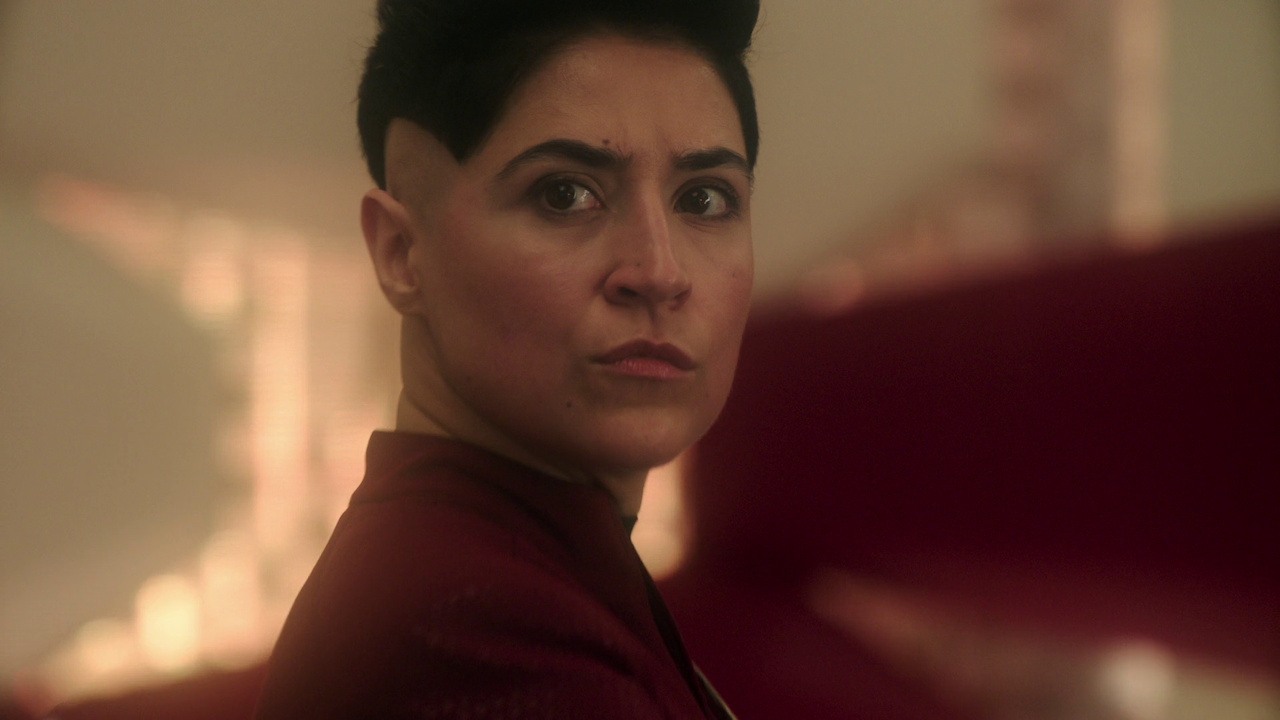
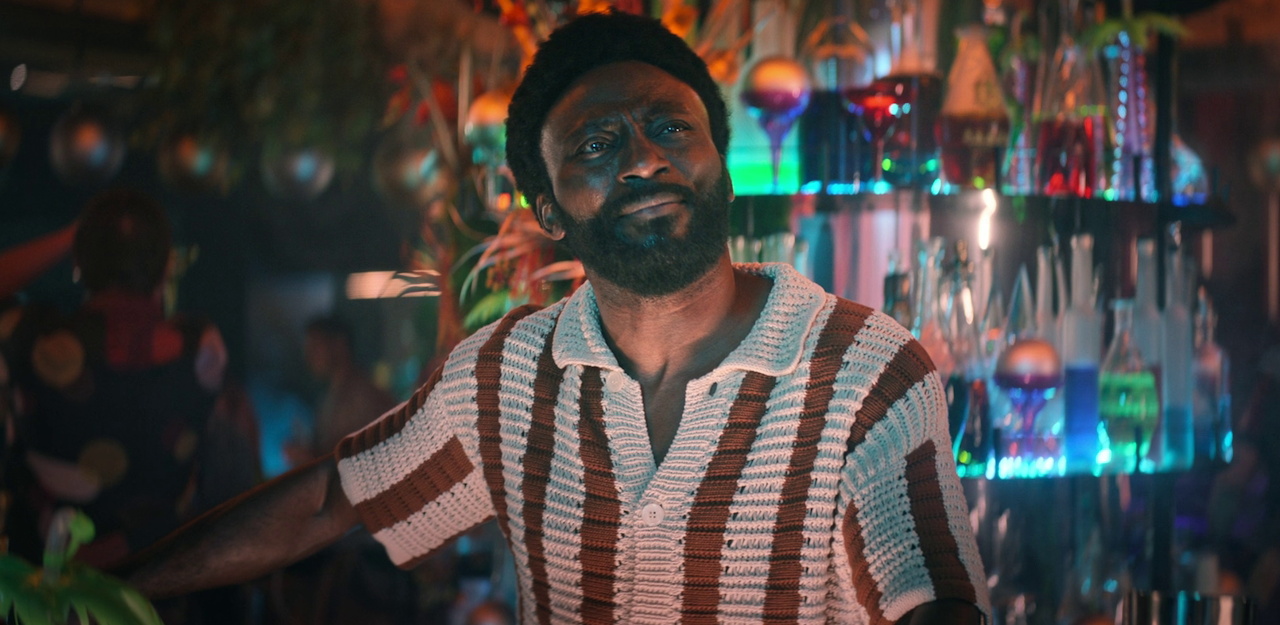
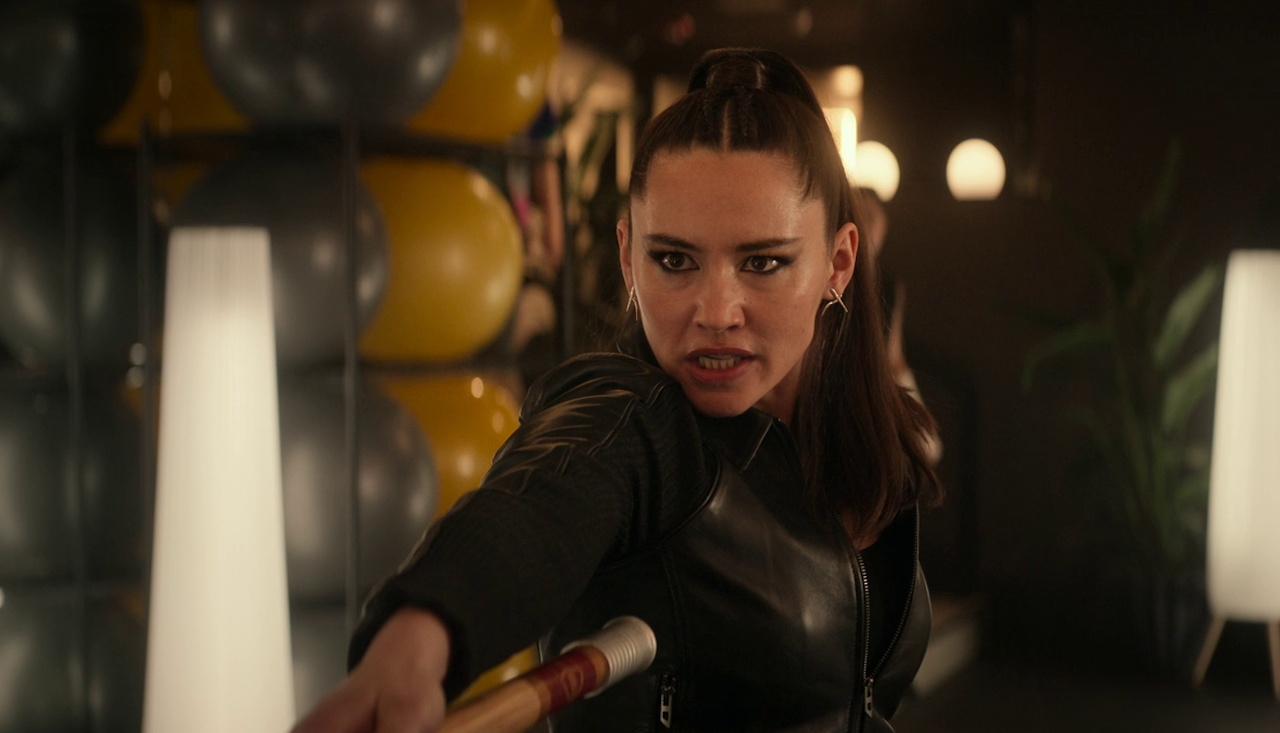
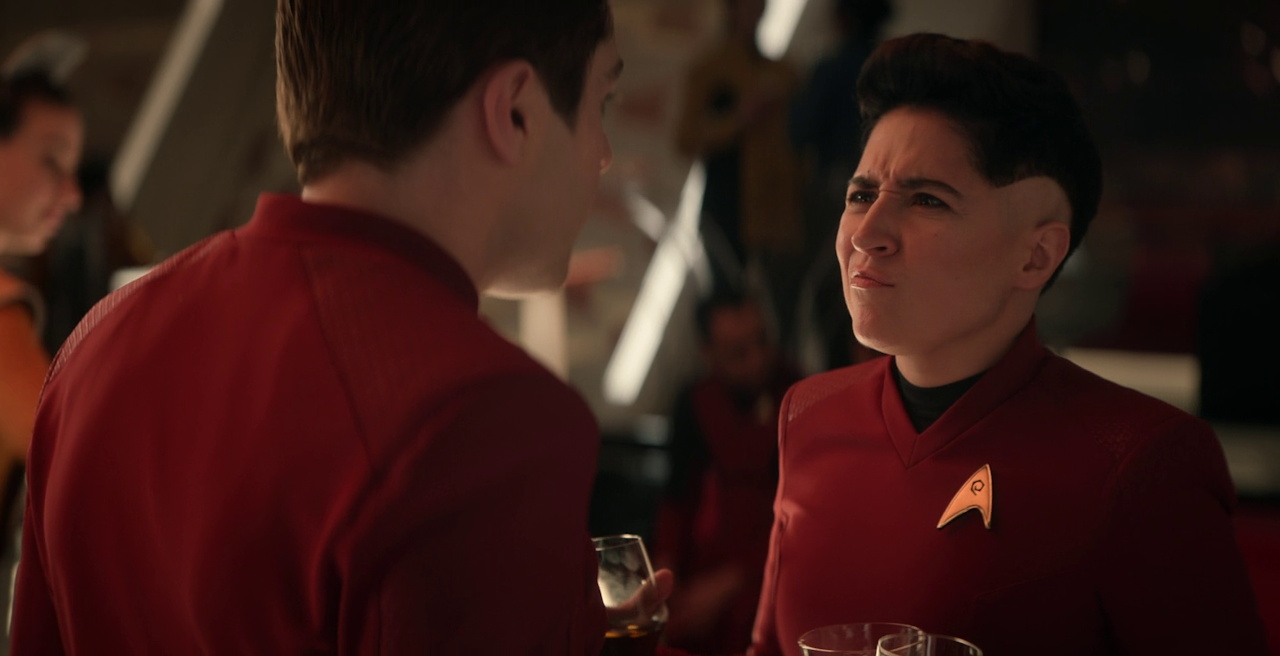
Still frame from Star Trek SNW 4x07 showing Ortegas
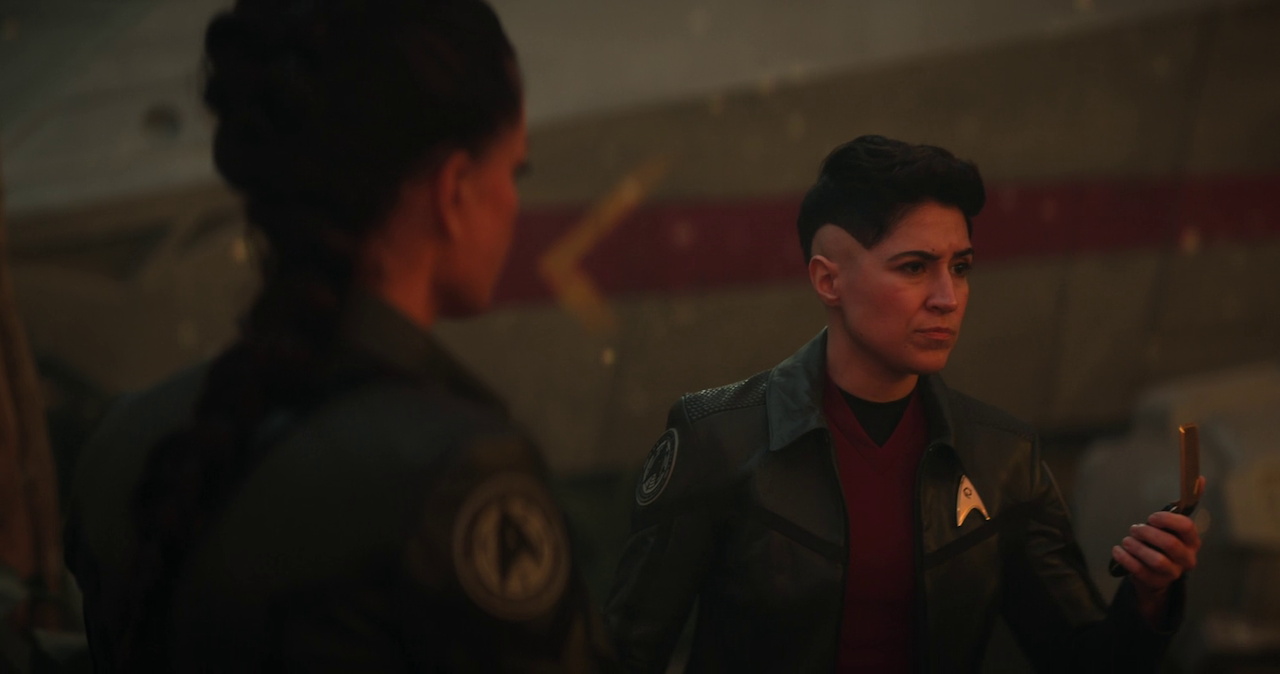
Ortegas.

Two groups of writers and/or producers clearly had competing ideas. One was to revisit Captain Pike’s family from the end of Season 3, and explore these themes of loss, mourning, and how Pike’s imagined reality could be a metaphor for people in the audience who are going through similar grieving processes. And the other idea? “Let’s do a silly soap opera parody with all the dramatic musical stings, close-up shots, and overblown lighting! Won’t that be fun?”

And then, somehow – perhaps because the show only had a few episodes per season, or because cancellation loomed – some utter, abject*moron* decided to put both ideas together into one single episode. Is it a coincidence that both Like Chronitons Through the Hourglass and Level-Five Transporter Accident, with its appalling ending, share a writer? Hmm.

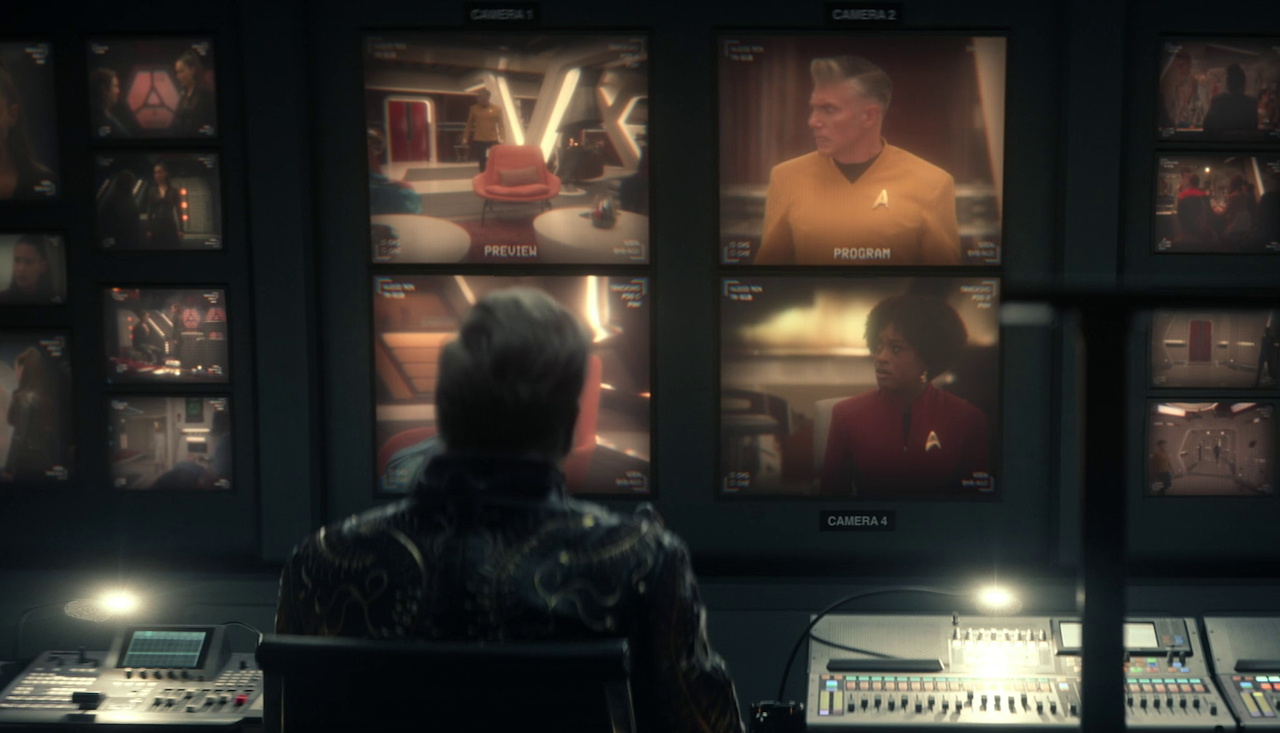
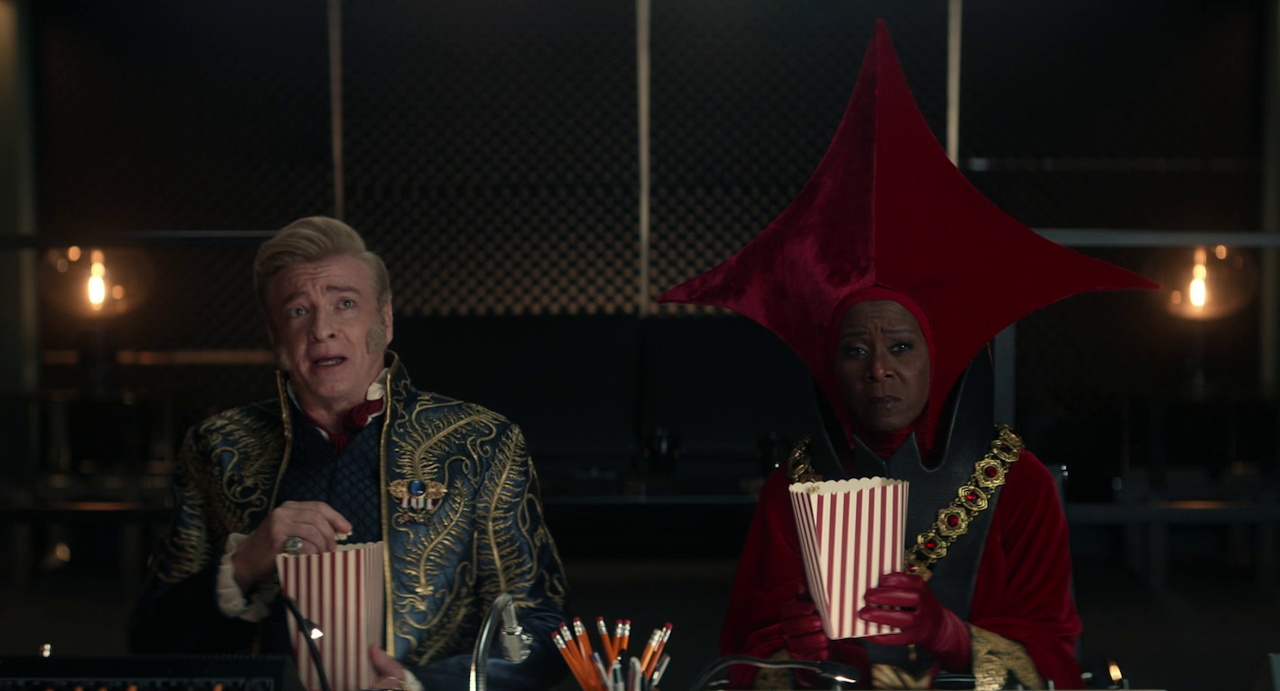
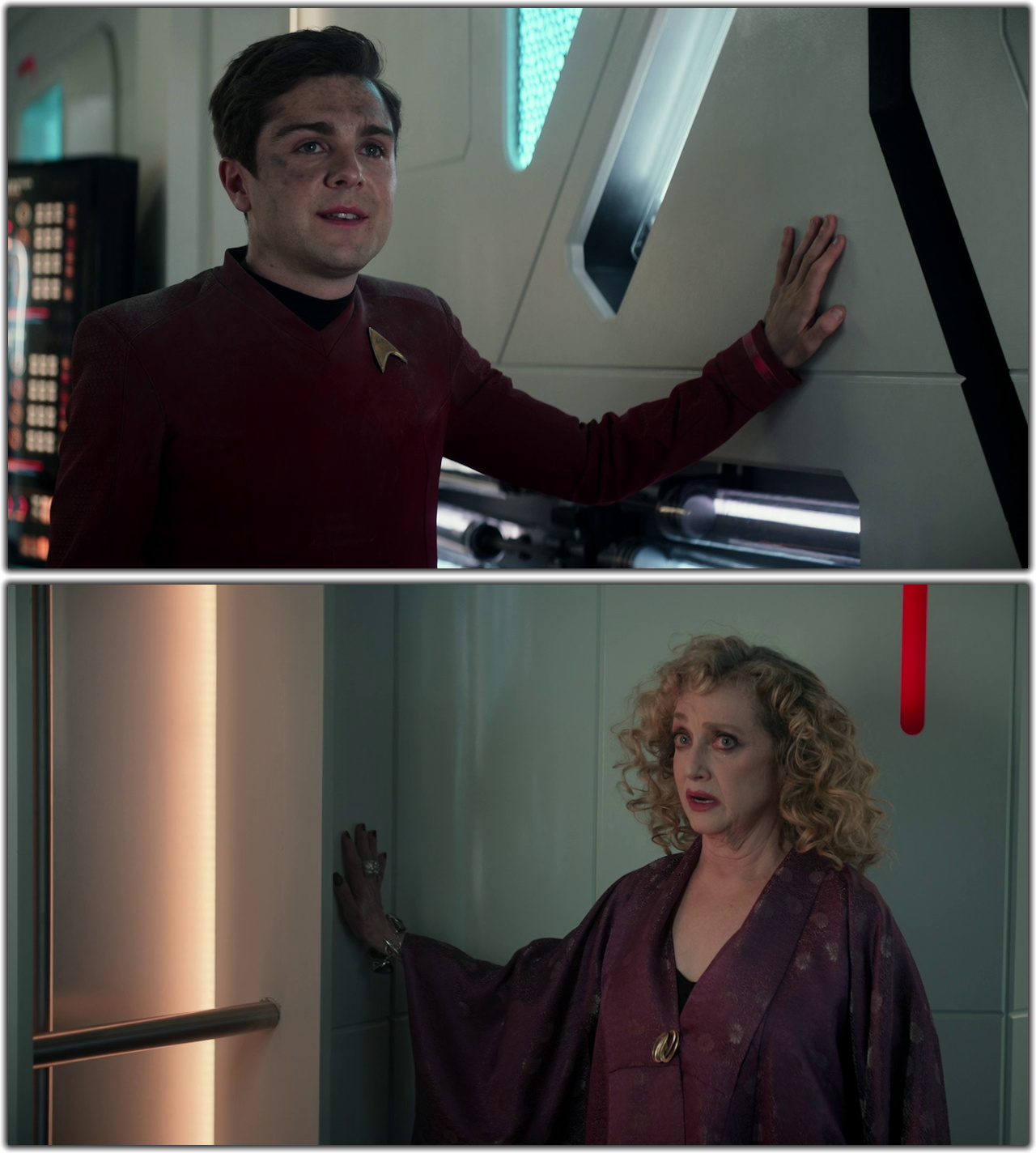
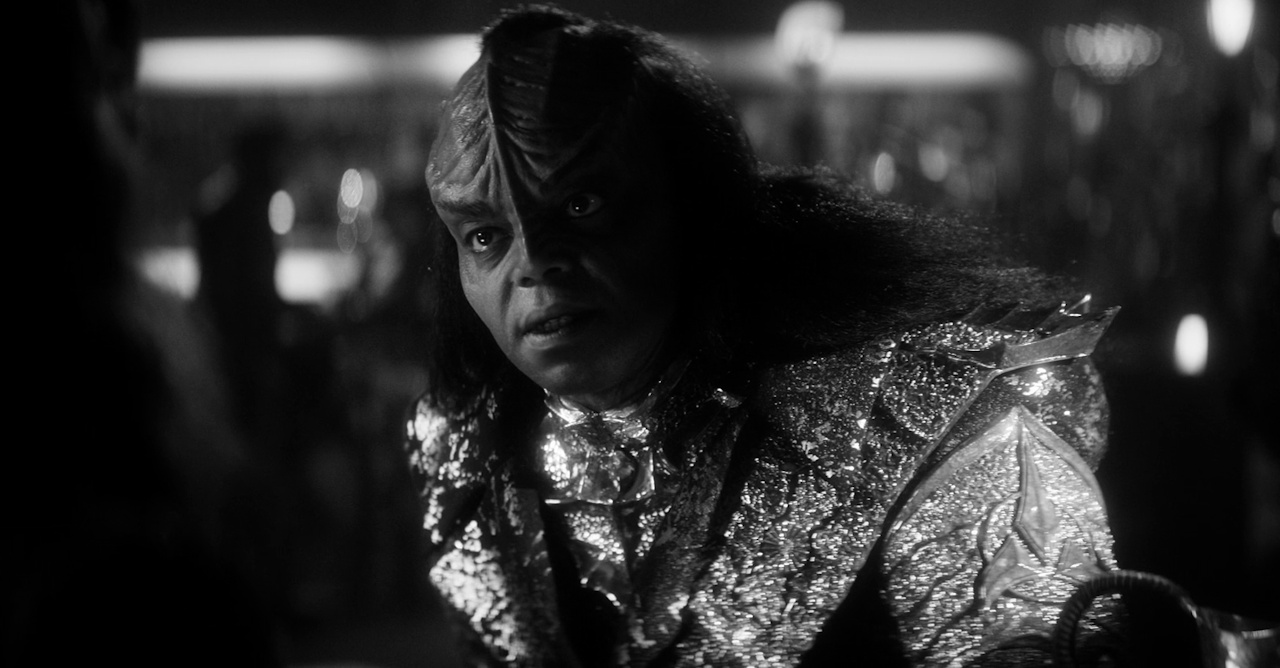
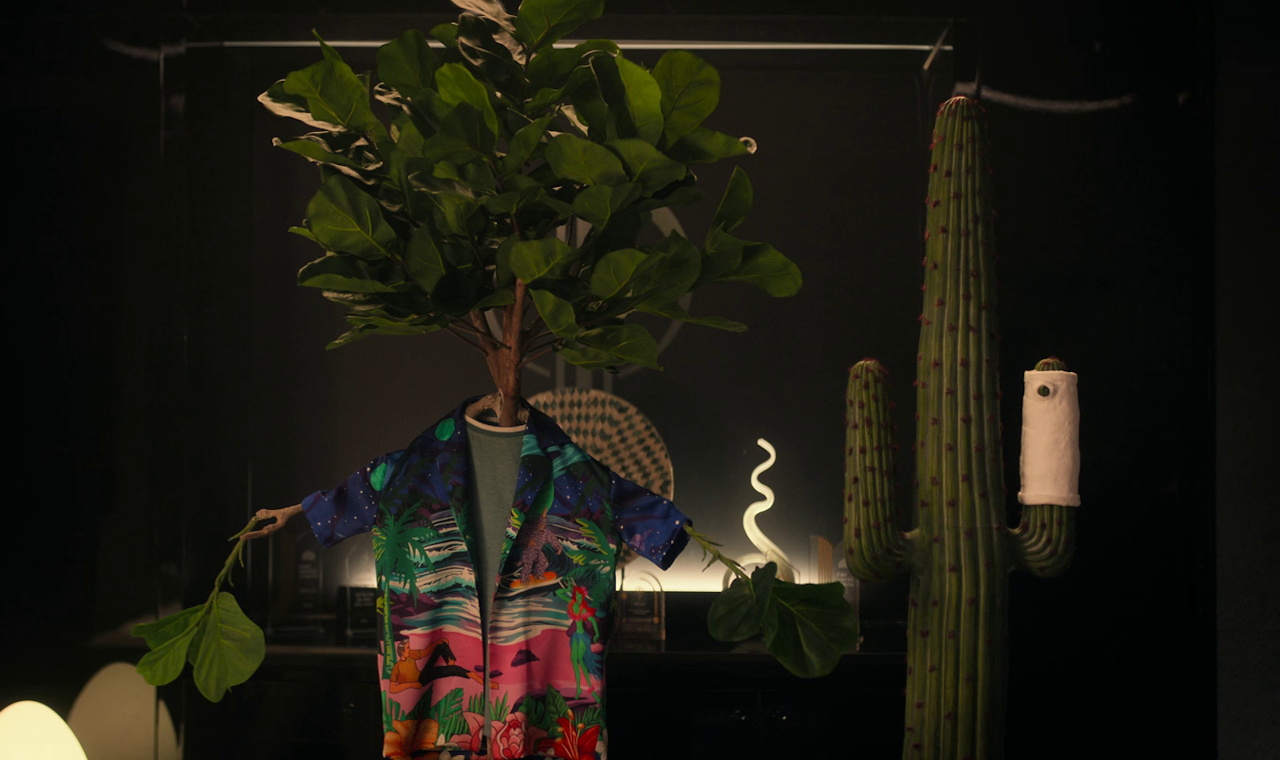
Still frame from Star Trek SNW 4x07 showing Trelane in the booth
Trelane watches his masterpiece unfold…

If I’d been Strange New Worlds’ showrunner, and two groups of writers had approached me with these ideas, I’d have picked the more serious one. That isn’t because Star Trek can’t be silly, Star Trek shouldn’t do comedy, or even because I don’t like genre parodies. All of those concepts can work in Star Trek, have already worked in Star Trek, and can be a lot of fun. But having already had several overtly comedic stories across the show’s run, *and* with several other “big swings” into different genres already on the books just in Season 4… I think I’d have said “no” to the soap opera and insisted on doing a more in-depth look at the themes on Pike and La’an’s sides of the story in a more straight-laced setting.

There *can* be value in contrast; in juxtaposing a serious idea against an inherently silly setting. But doing that successfully requires finesse, and frankly, it requires a level of production and writing quality that I don’t think either Strange New Worlds or indeed modern Star Trek as a whole have demonstrated themselves to be capable of. Ambition is great! We should all endeavour to be ambitious in our writing and with our creative ideas. But there comes a point where ambition runs into the brick wall of reality, and for me… I think some of the show’s producers and writers need to recognise their own limitations.

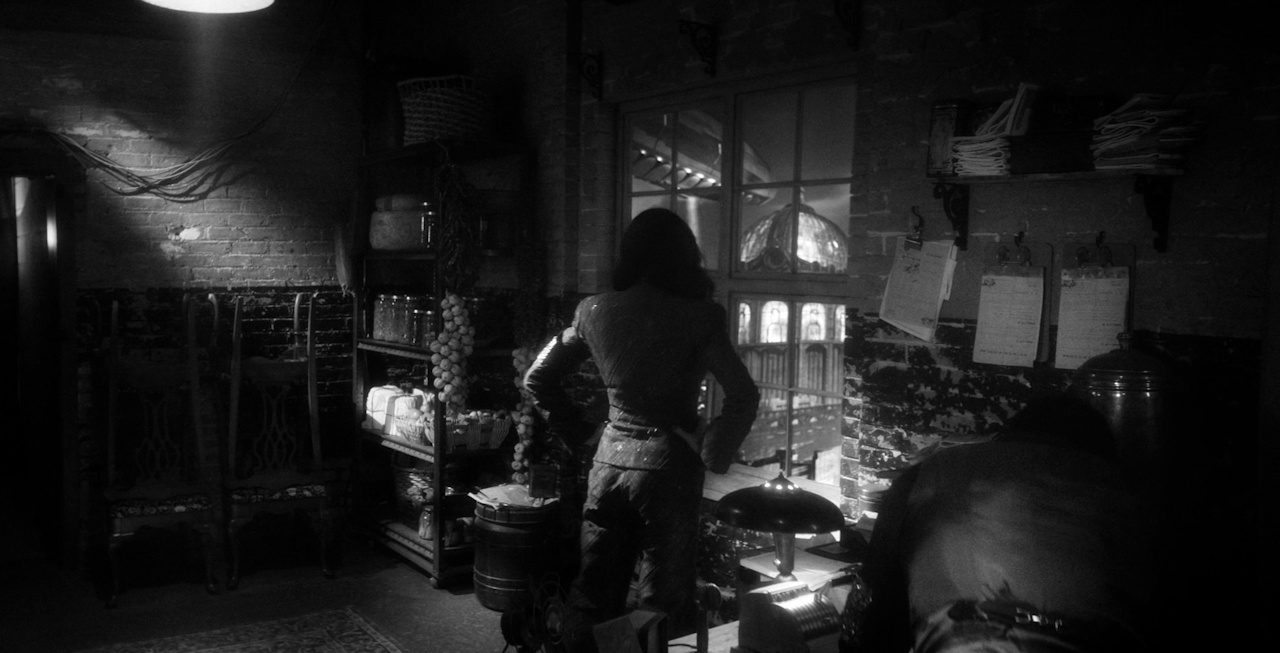
Behind-the-scenes photo from Star Trek SNW 4x07
Behind-the-scenes during production.

Maybe a really exceptional writer-director-producer combo could’ve pulled this off. But clearly, no one in the Strange New Worlds writers’ room or on the production side is at that level.

This episode’s writers *certainly* weren’t.

I’m also hyper-aware of the fact that this is now the *second* episode this season – after Level-Five Transporter Accident – where the bulk of the story didn’t “really” happen. Like Chronitons Through the Hourglass’ ending isn’t as bad as “but it was all just a dream” (though let’s be honest: nothing could be as bad as that), but despite leaving the characters with most of their memories of what took place… it still scrubs those events from the show’s internal reality.

Again: that’s pretty fucking weird, isn’t it?

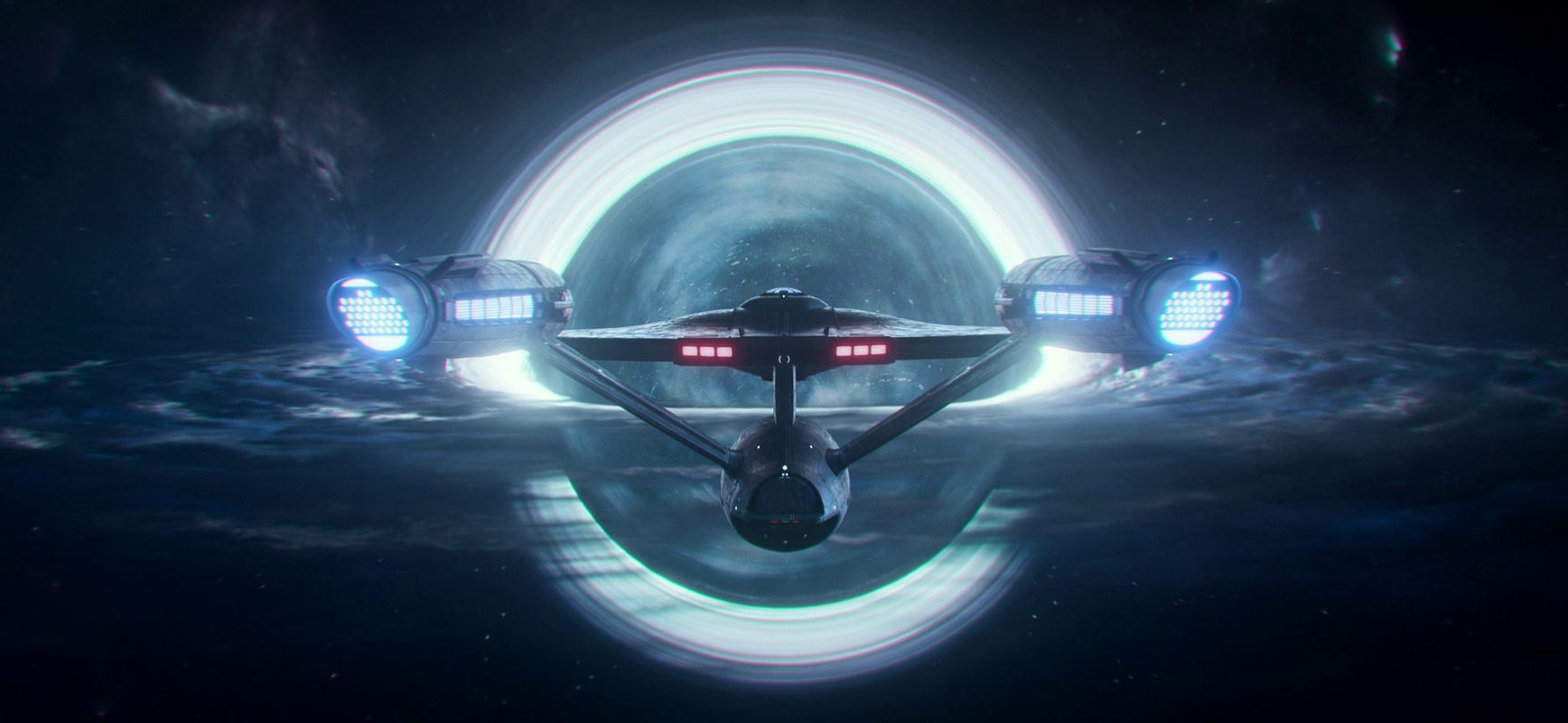
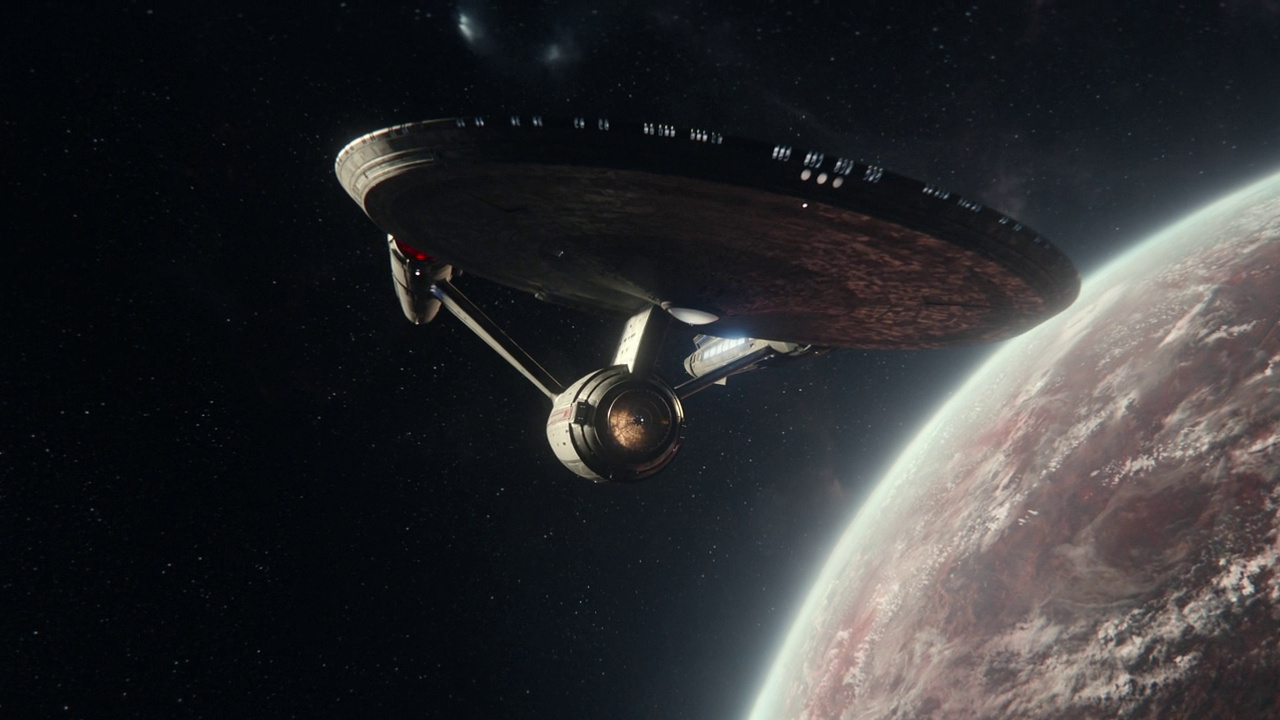
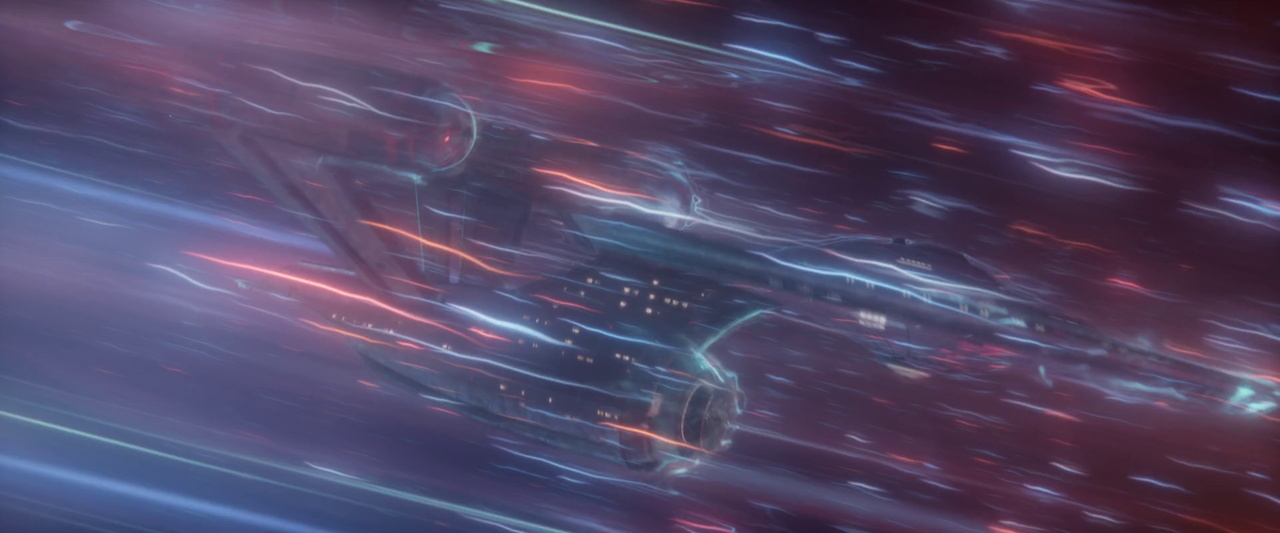
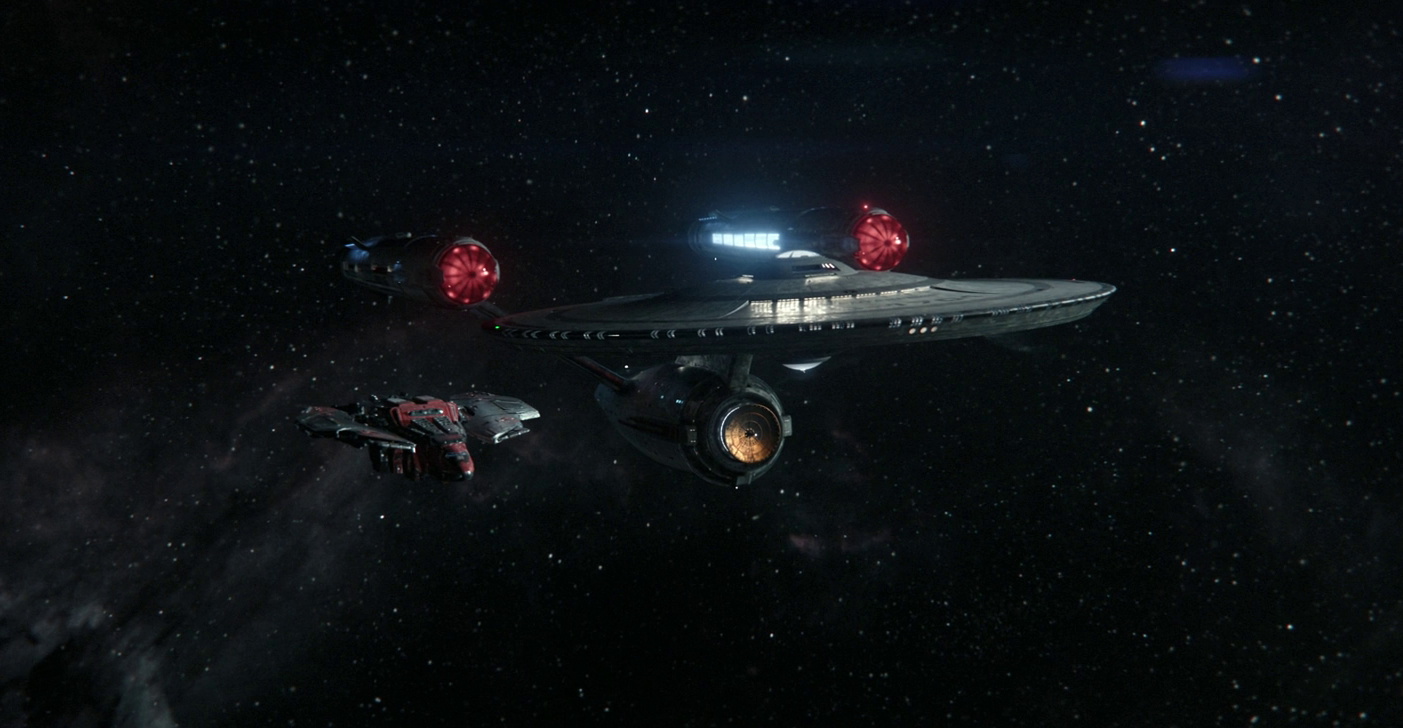
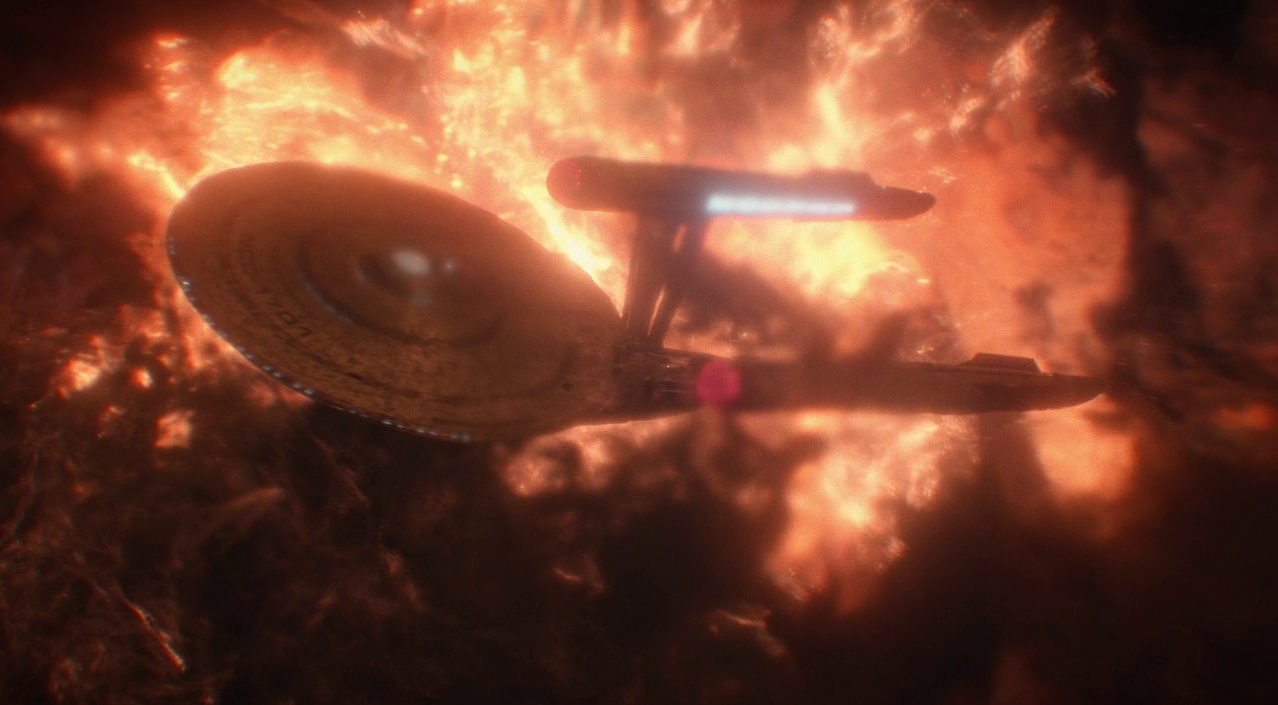
Still frame from Star Trek SNW 4x07 showing the USS Enterprise
The Enterprise is now back to normal.

Maybe there’s supposed to be a point about making emotional connections through fiction, and how the emotions we feel when reading a book or watching an episode of television are no less real just because it was fiction that elicited them. That might be an idea worth exploring – but again, such a concept would require higher-quality writing, a planned narrative arc, and less of a tonal clash between the soap opera silliness and the characters’ real lives.

In a way, I like this idea a lot. My website exists because I find value in fictional worlds like Star Trek; spending more time in those worlds, with those characters, is fun for me and always will be. And I don’t deny the power of all forms of media to evoke strong emotions. The emotional reaction we have to an episode of Star Trek, a movie, a book… those are *real*, even if the stories and characters aren’t. And there’d be value in an exploration of the idea of exploring that kind of emotional connection.

But that isn’t what Like Chronitons Through the Hourglass was going for – and even if it had been, it didn’t work.

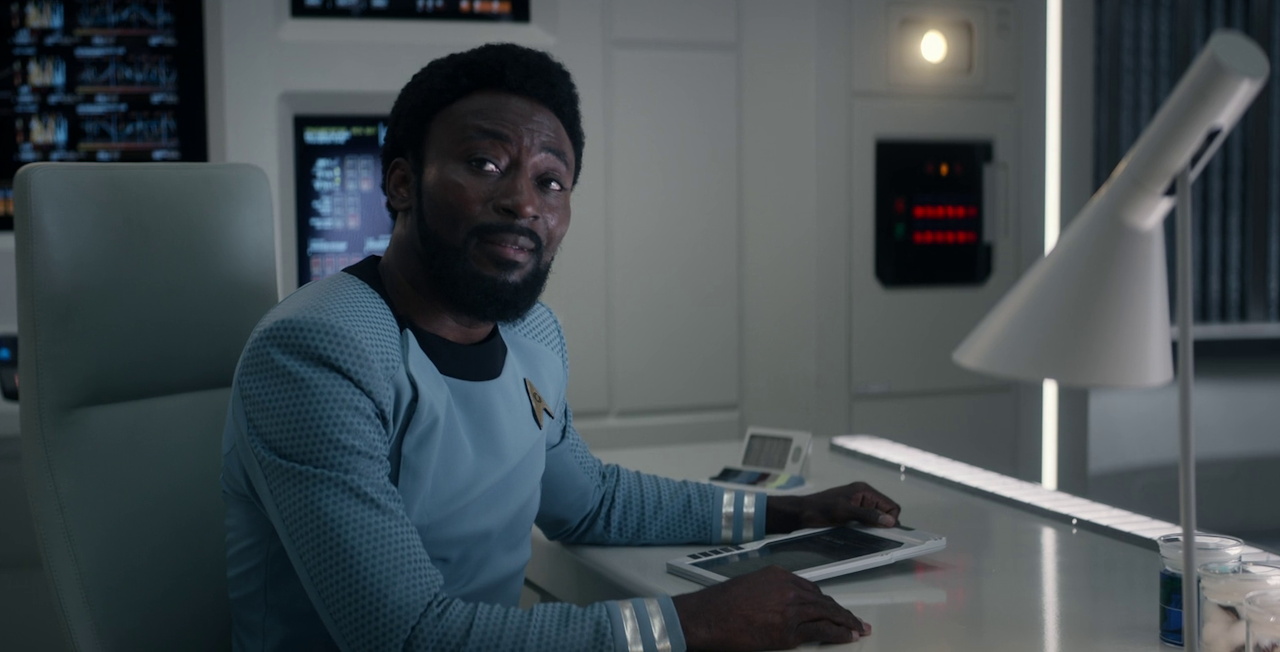
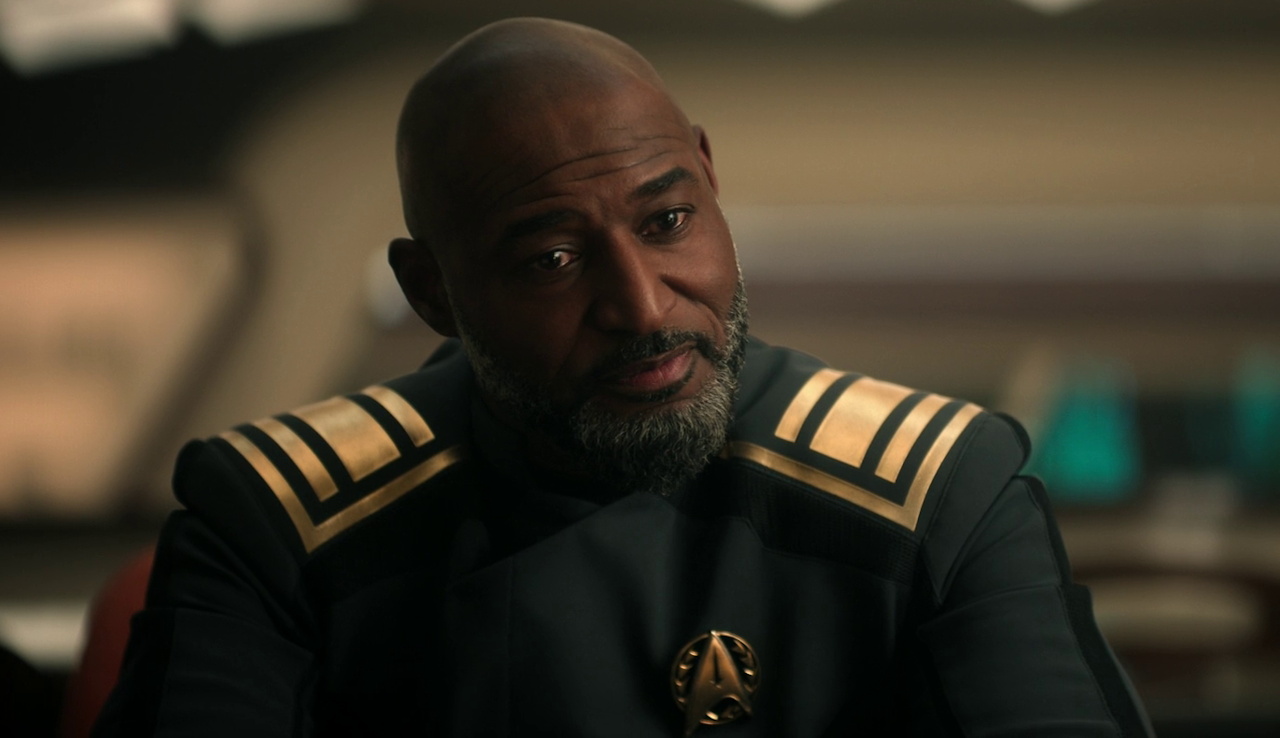
Still frame from Star Trek SNW 4x07 showing Dr M'Benga
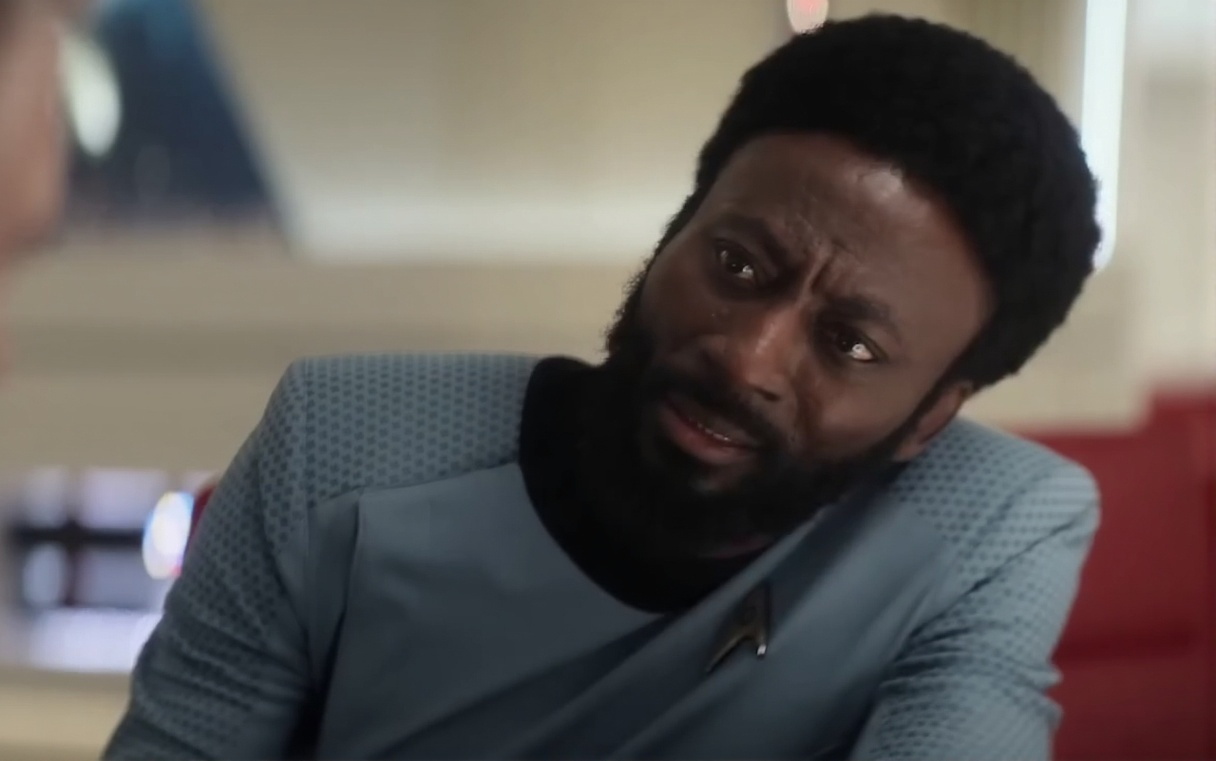
Dr M’Benga.

I feel rather sorry for Anson Mount. After being functionally absent for most of Season 4, his first real spotlight ended up being a tonally muddled episode where two clashing ideas just couldn’t be forced together cohesively. That means that what is objectively one of Mount’s best – and certainly his most emotional – performances in the role of Captain Pike came in an episode that’s honestly better left forgotten, for the most part.

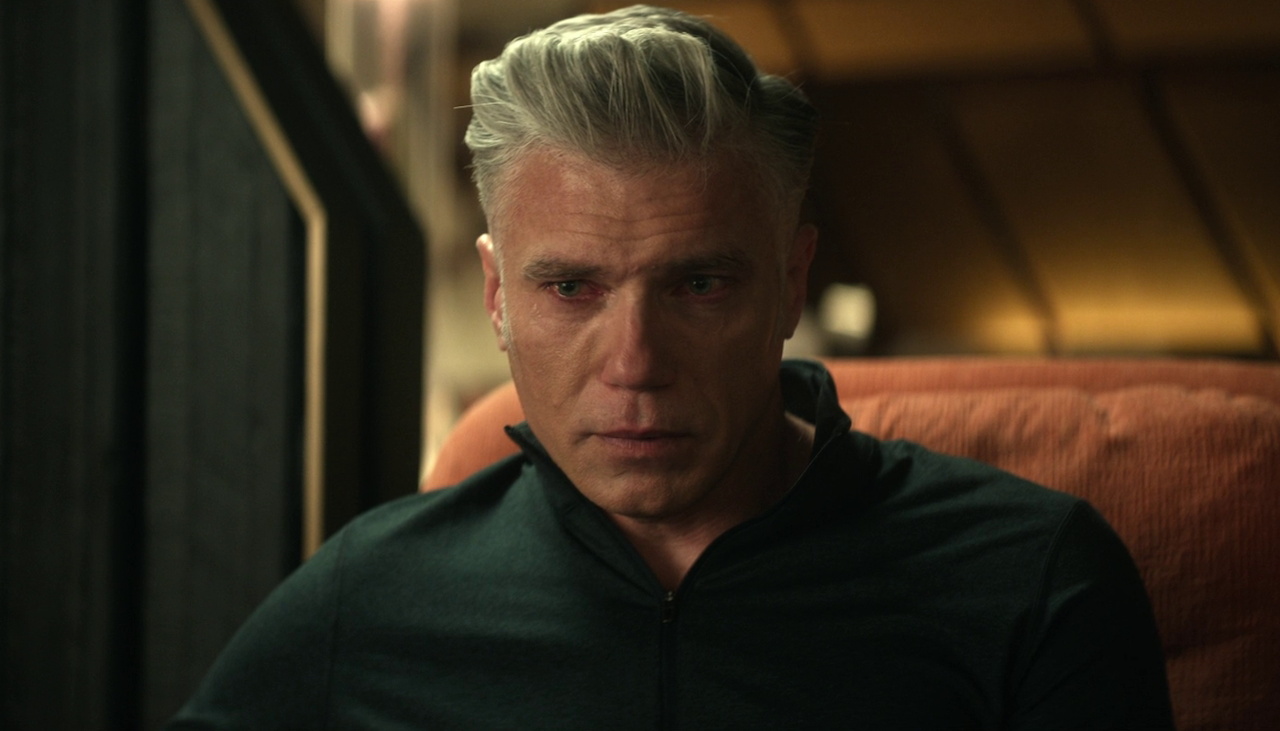
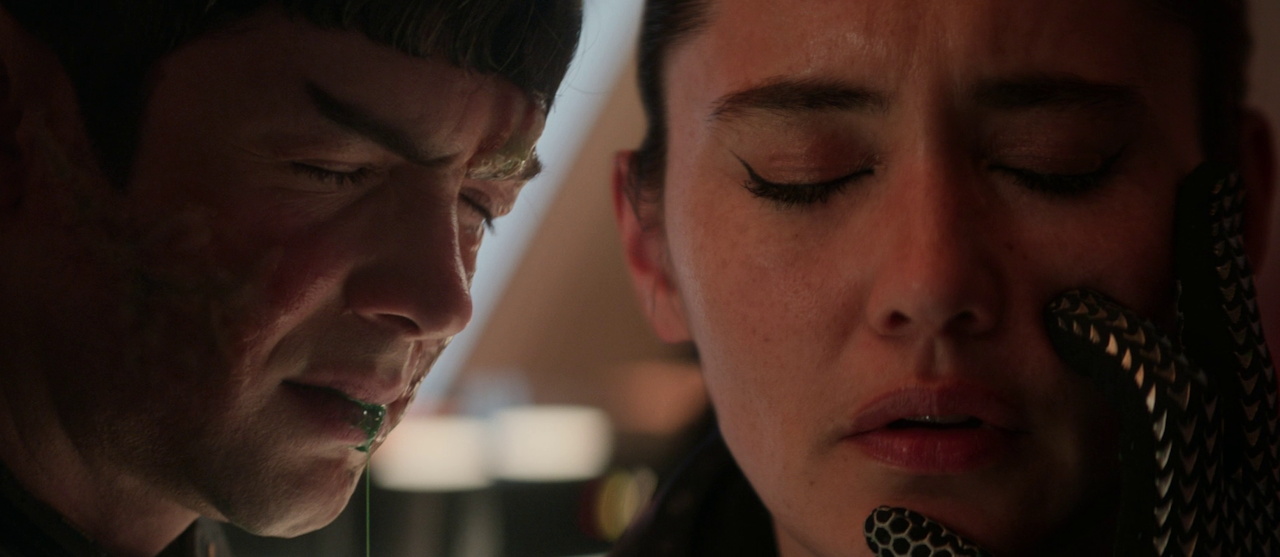
Like Chronitons Through the Hourglass managed to hit the right emotional note with Pike… at the tail end of the story. And seeing him break down, expressing those emotions he’d been holding onto since the end of Season 3 genuinely hit me. But they didn’t hit as hard as they might’ve if the rest of the episode had been stronger and more grounded, and because Pike’s moment of emotion came right at the end of the episode, just as the credits were about to roll… I just don’t think it landed as hard as it should have.

Still frame from Star Trek SNW 4x07 showing Pike in therapy
Captain Pike breaks down.

If Strange New Worlds wanted to do this kind of story, examining Pike’s mental health and his emotional state after losing Captain Batel and Juliet, then it realistically needed to be part of a completely different narrative framework. Trying to squash genuinely complex emotional storytelling for the man who’s (allegedly) the show’s main character up against this bizarre and over-the-top genre parody didn’t work.

What’s more, it should’ve been obvious from the *concept* stage that these two ideas couldn’t work together, which is why I stand by what I said above: the people who came up with this idea, turned it into a complete script, and greenlit it for full production are stupid, idiotic people who shouldn’t be working in this industry! It was *painful* to watch parts of Like Chronitons Through the Hourglass because of how cringe-inducing it was… and that would be bad enough on its own, but when you add into the mix that there was an actual, genuine story worth telling that the soap opera pastiche shat all over? It’s unforgivably bad, to be blunt.

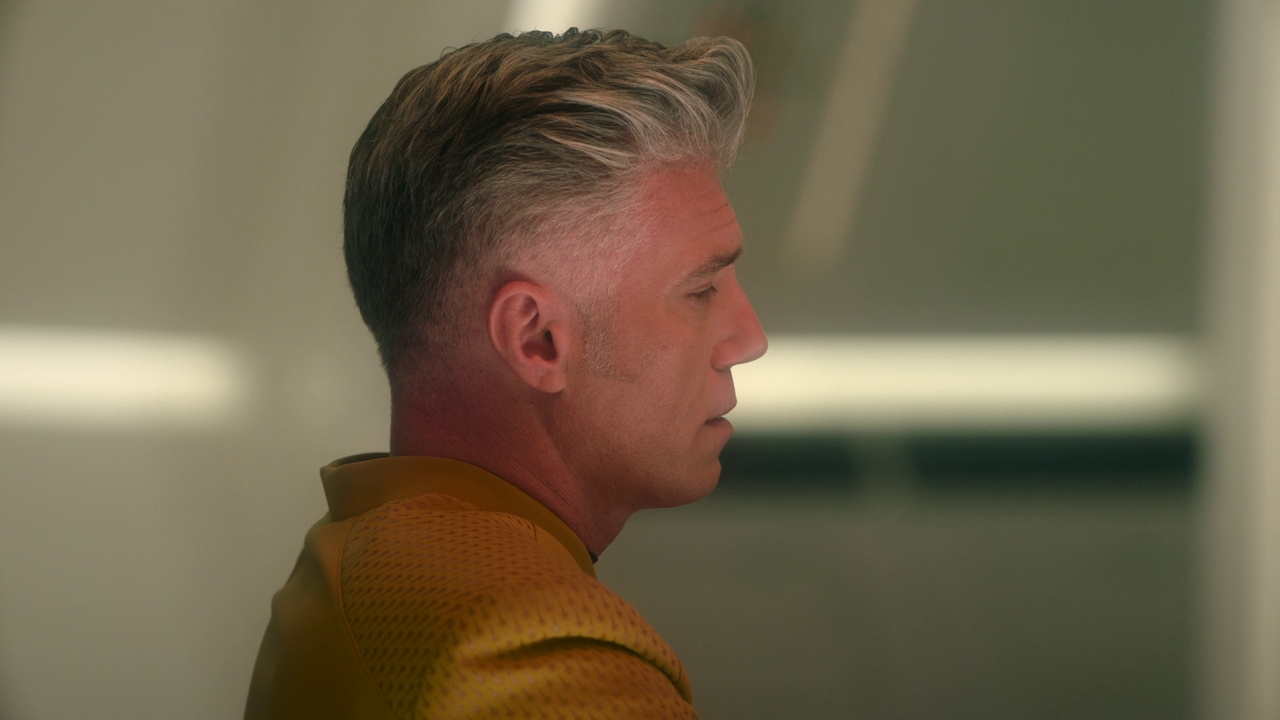
Still frame from Star Trek SNW 4x07 showing Pike (side angle)
There was a story worth telling for Captain Pike (and La’an) that got buried by an unnecessary and over-the-top spoof.

I’m in favour of Star Trek trying new things. And I’m in favour of Star Trek trying out stories in radically different genres and with completely different tones. Part of the franchise’s appeal, at least for me, is its episodic nature, and that the Enterprise can warp away to a new planet, new aliens, a new adventure, and a new kind of story each and every week. I’m not saying “don’t do these kinds of genre stories,” and I’m not saying “Star Trek has to be 100% straight-laced and serious every single time.” That wouldn’t be fun.

But what I am saying, at least in this case, is that the genre parody fundamentally could not work with the more complex themes that the other side of the episode wanted to address, and by trying to force these two diametrically-opposed ideas together, what resulted was neither a successful homage to soap operas nor a clever and relatable exploration of themes of loss and grief. And frankly, that should have been obvious to all involved well before the episode even had a finished script.

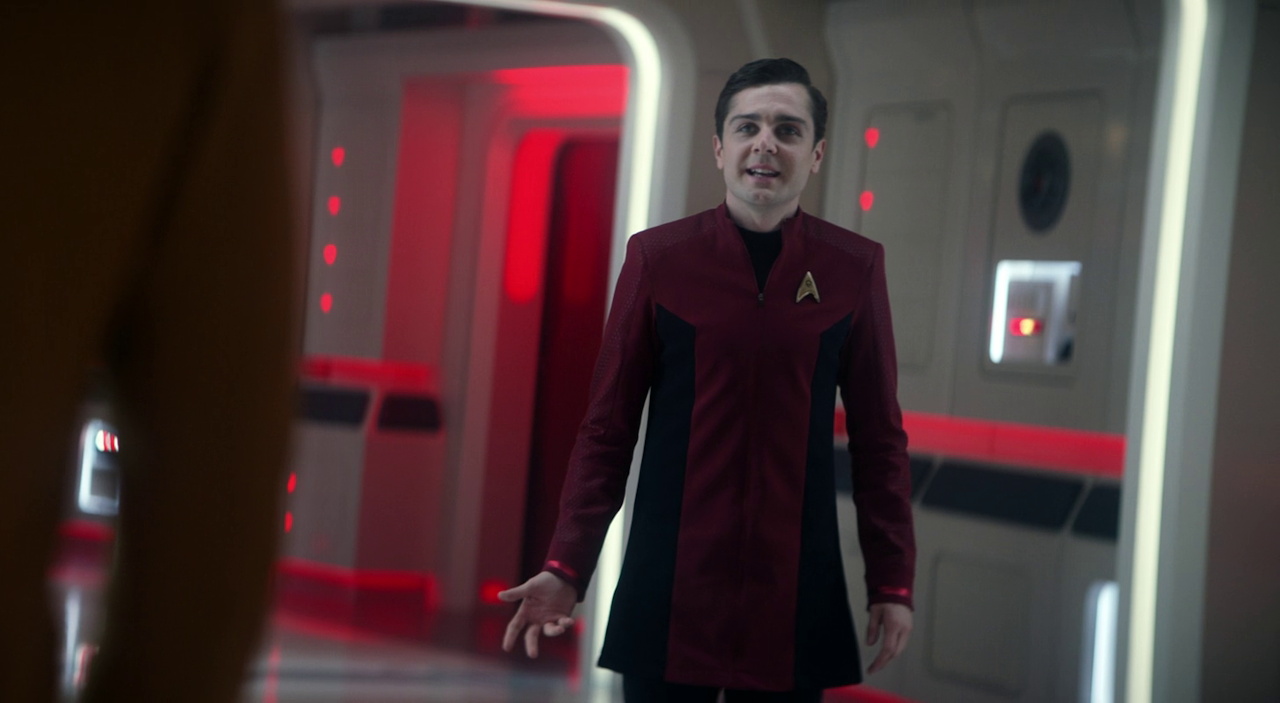
Still frame from Star Trek SNW 4x07 showing La'an with fake Sybok
La’an with Sybok. Sorry: “Sybok.”

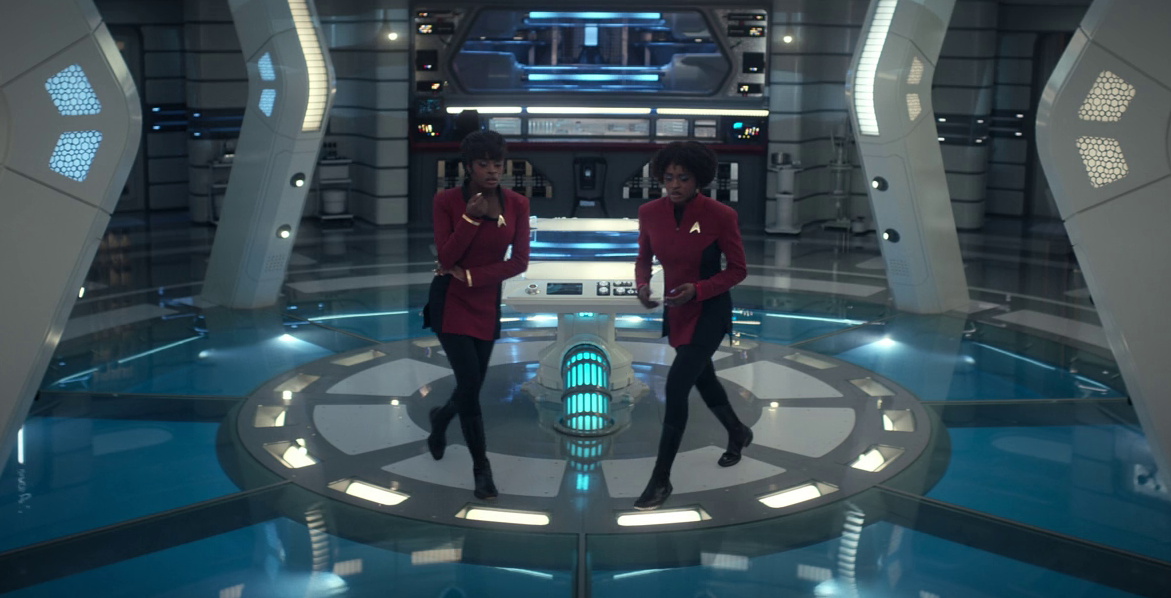
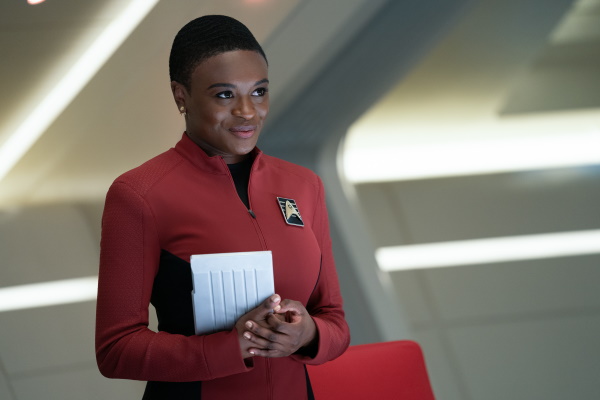
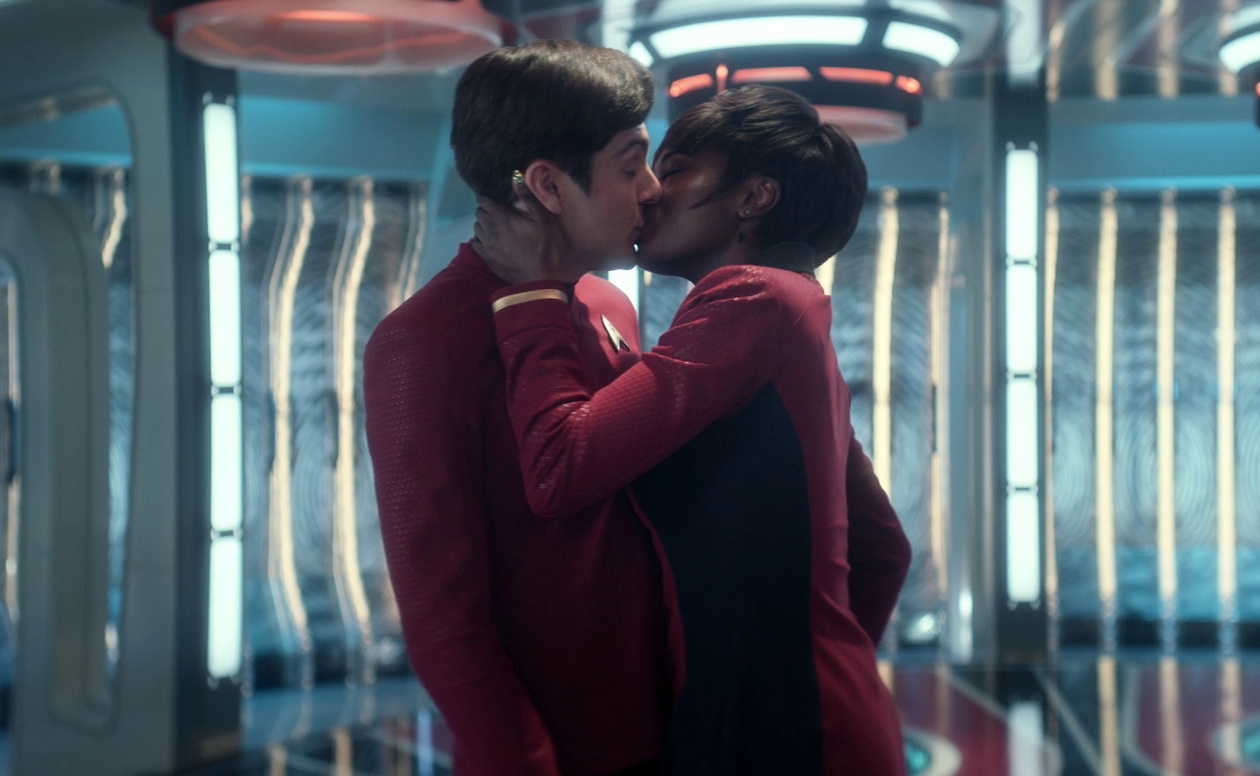
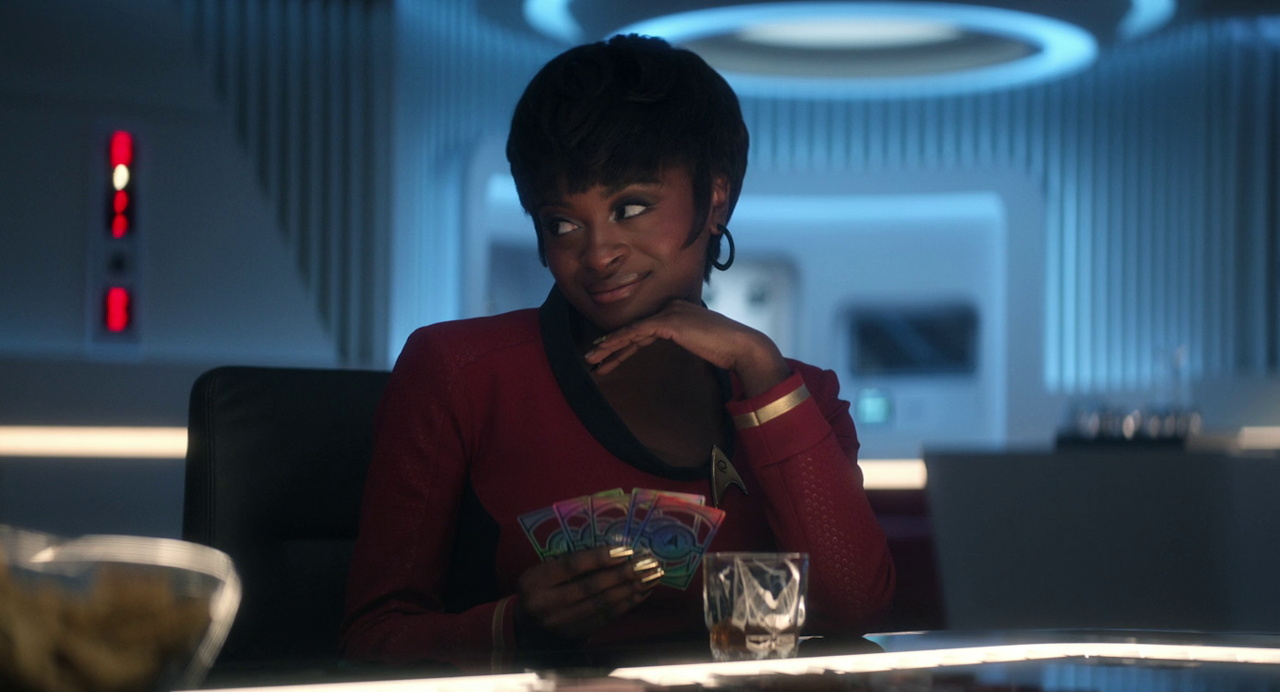
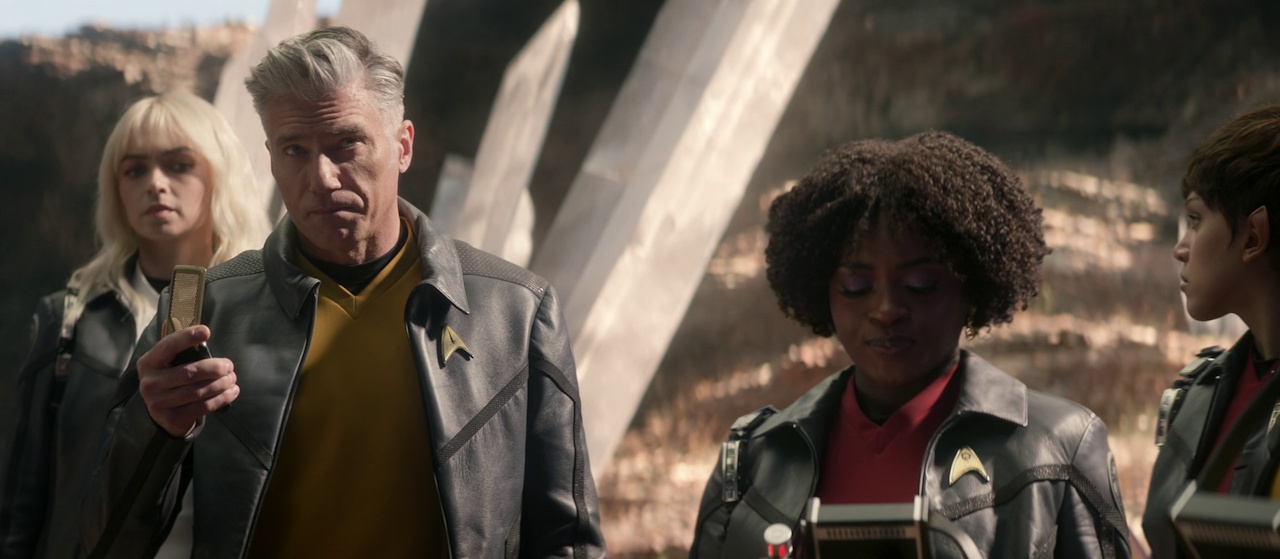
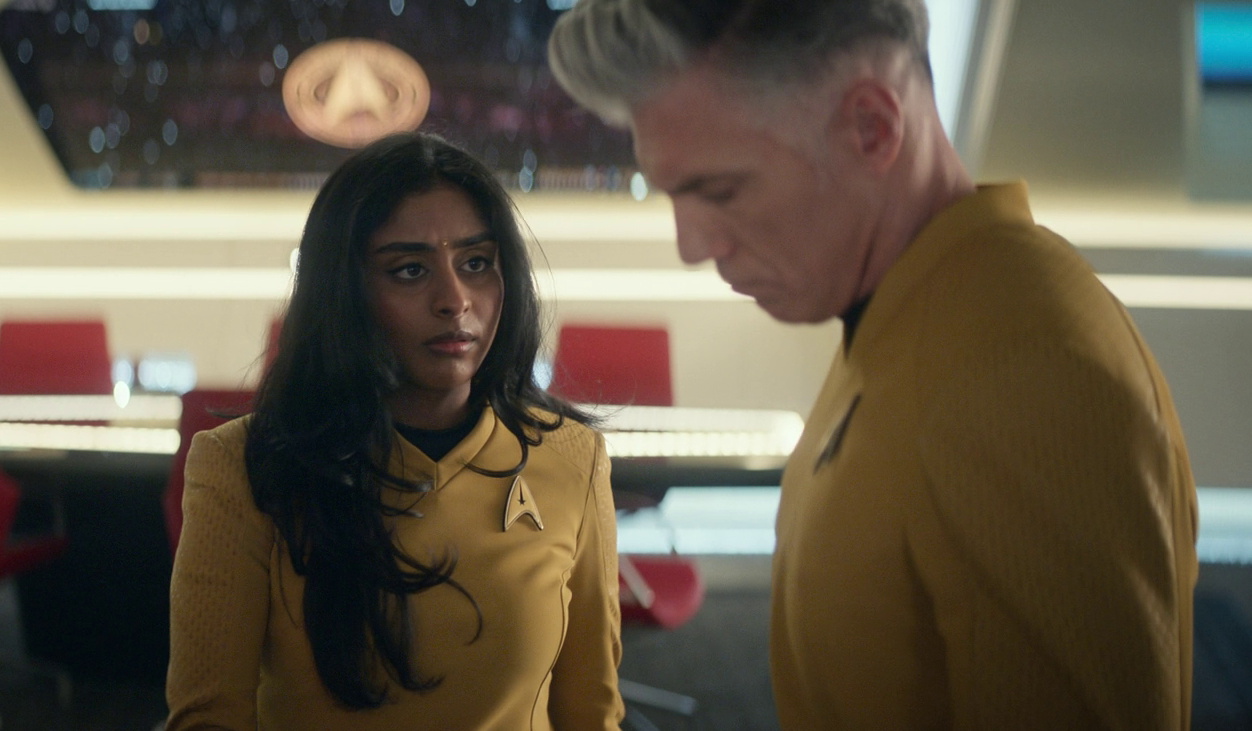
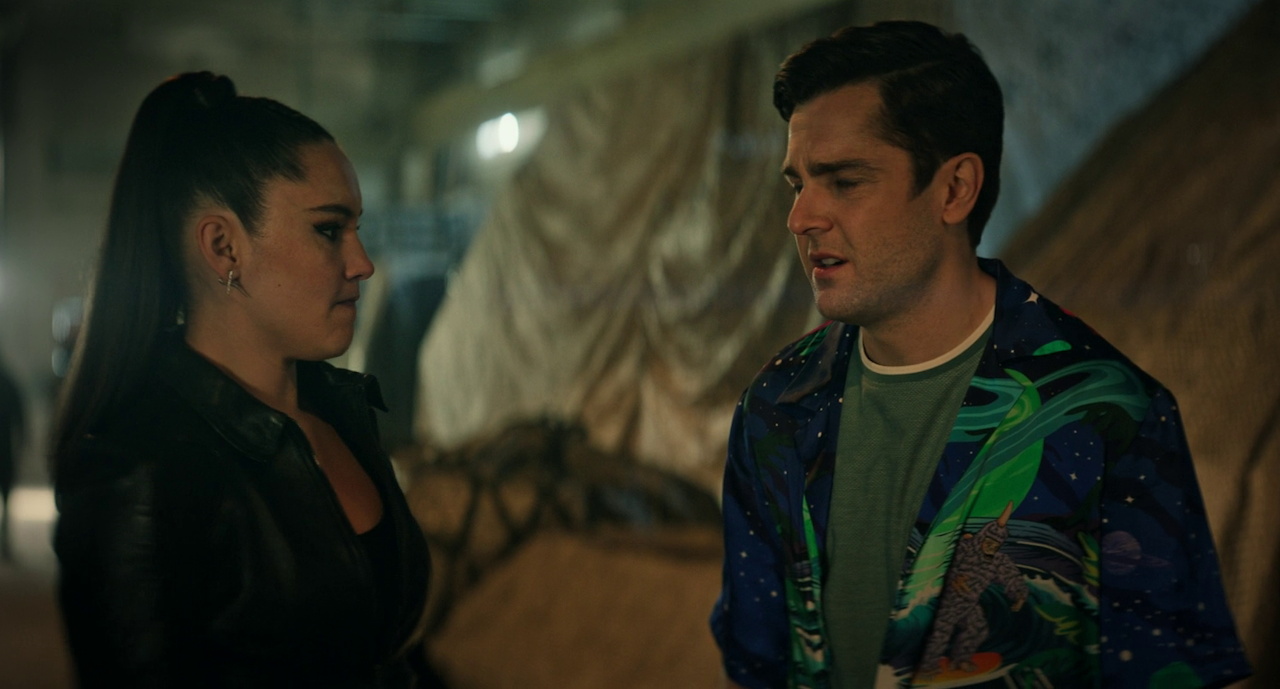
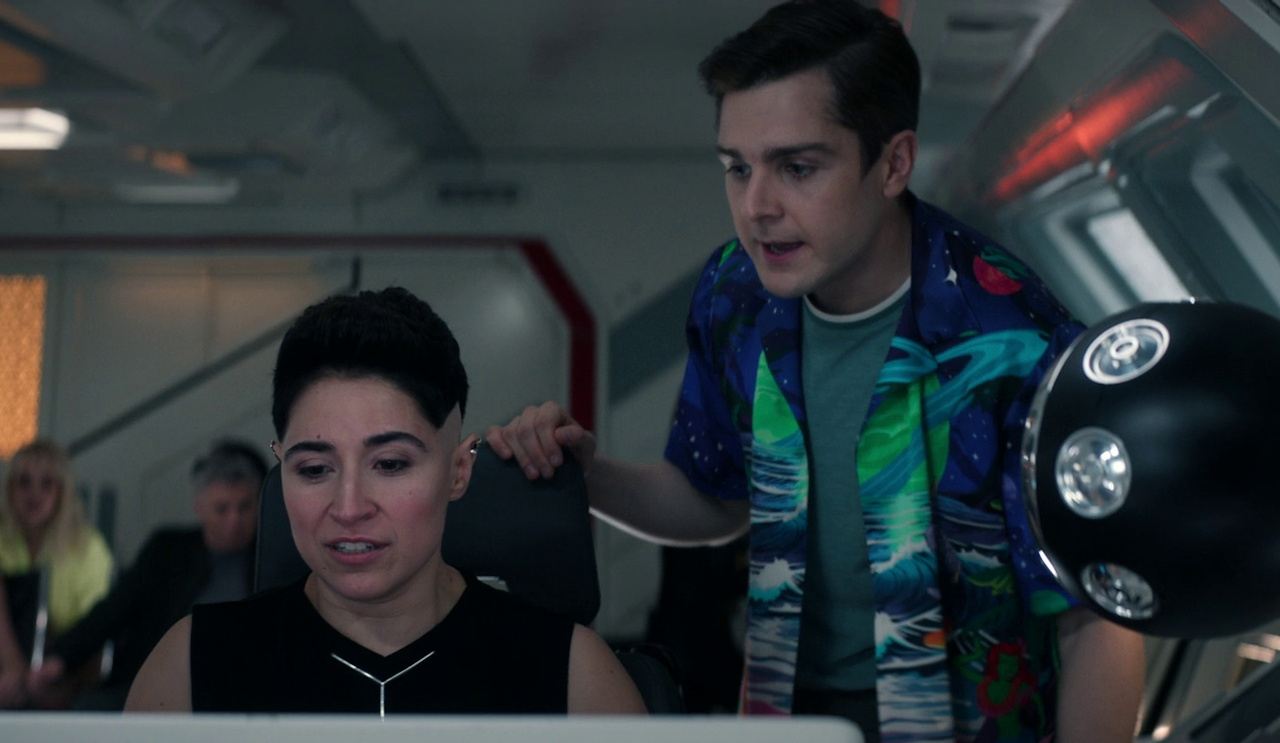
Uhura’s story, seeing Pike as her father (for inexplicable reasons) was little more than a piss-take of similar soap opera plots over the years. And I mean… I get it. Two totally unrelated characters, who viewers have known for years, are suddenly revealed to be father and daughter or mother and son or long-lost conjoined twins. I get it. It’s a soap opera trope. But did it need to be such a big part of Like Chronitons Through the Hourglass? And what was the point of it for Uhura?

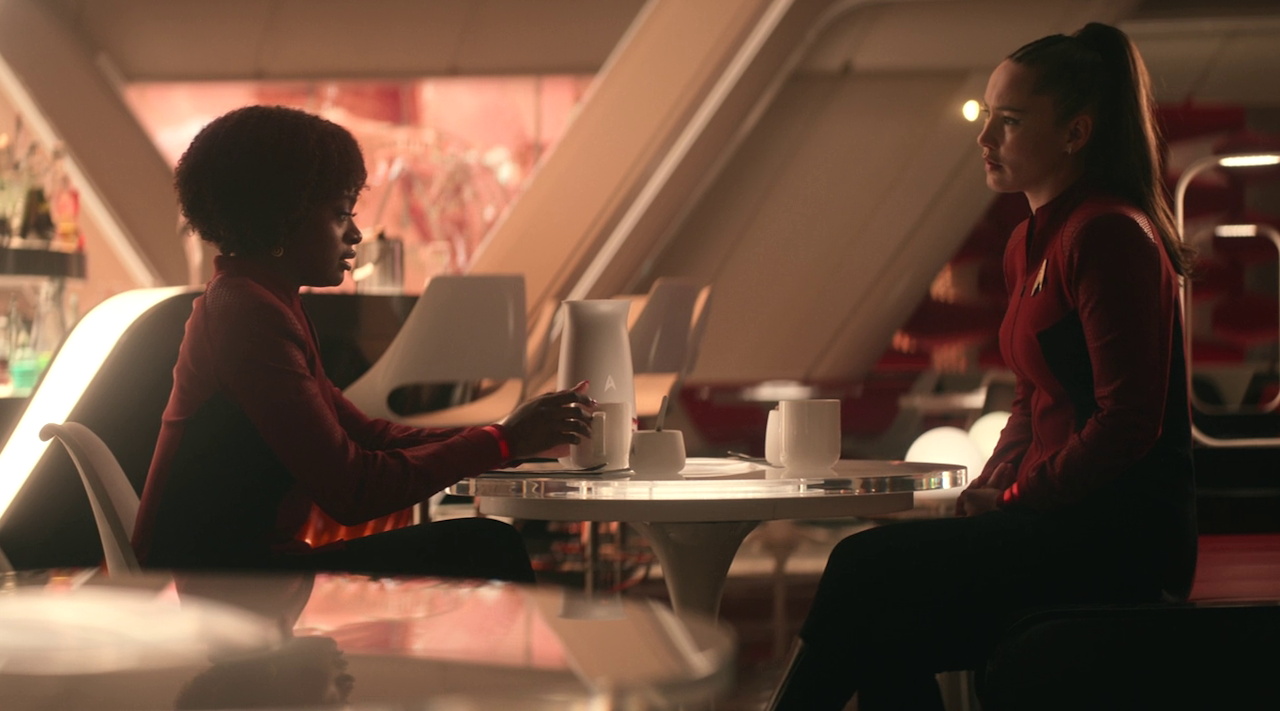
For Pike, this story tracks insofar as it set up his arc of confronting what happened to his family in the life he led and lost. But for Uhura… what are we supposed to get from this storyline? Am I missing something? She sees Pike as an important mentor figure in her life. Great. We knew that already. But given where Uhura is in her character journey – and the season’s stated aim of moving characters “one step closer to where it all began” – what are we gaining by putting her, of all people, into this soap opera plotline with Pike? I know it wasn’t real (and it was obviously not supposed to be real), but still. This was such a big part of the episode – and not just from Pike’s perspective – and yet we gained basically nothing from it.

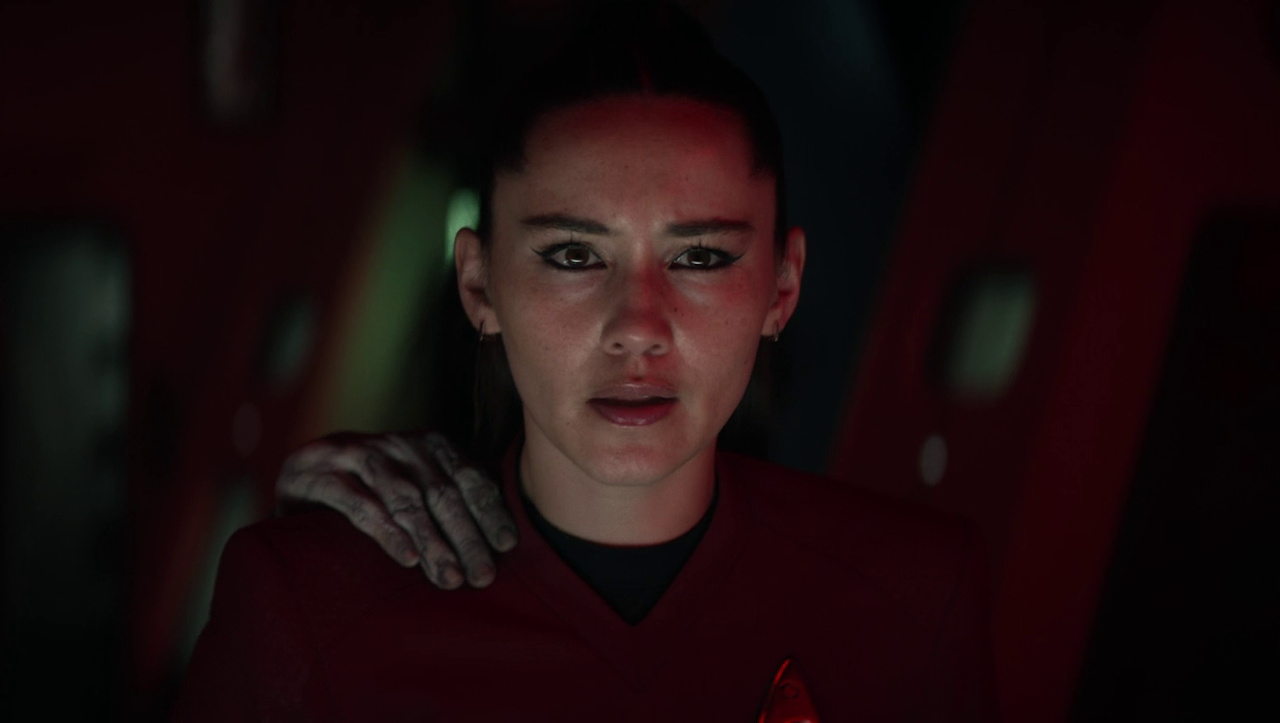
Still frame from Star Trek SNW 4x07 showing Pike and Uhura
What was the point of this story for Uhura?

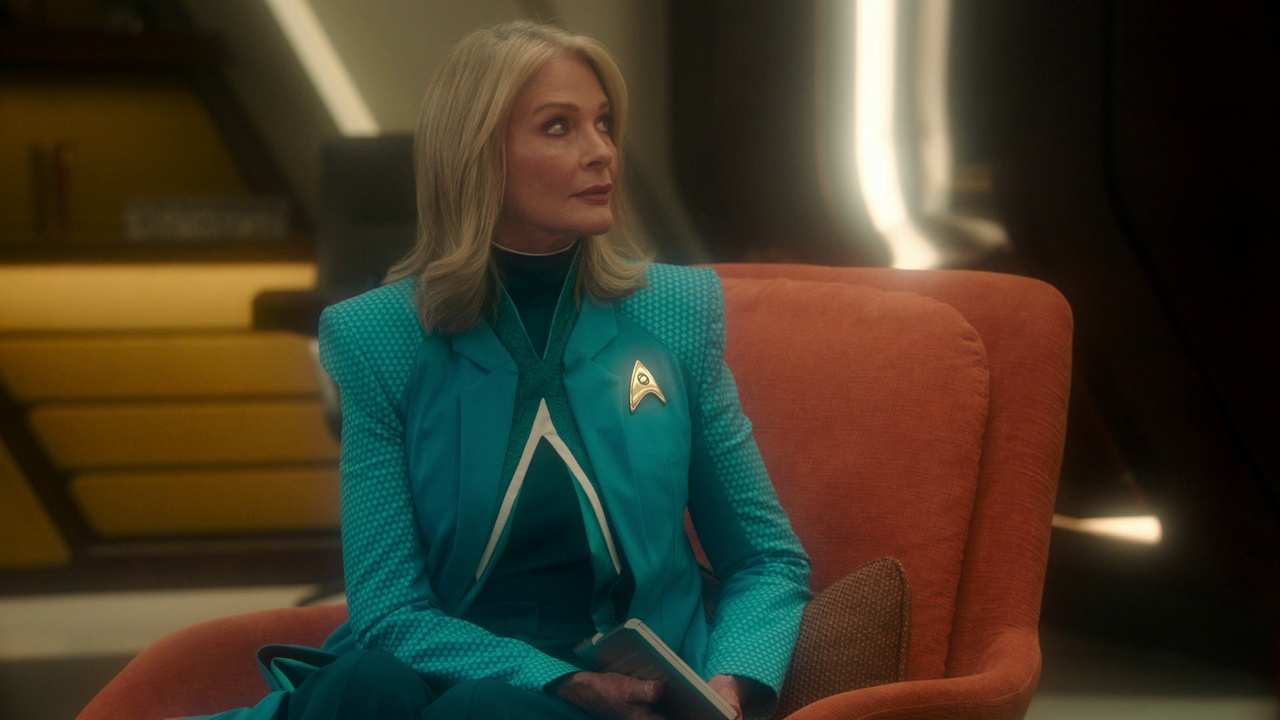
I’m not from the United States (and I’m not a viewer of American soaps), so I confess that I didn’t know who actress Deidre Hall was when she was introduced as Counsellor Eleanor Chivers. If you’re in the same boat as me, Hall has played one of the main characters on the American soap Days of Our Lives since 1976, so bringing her aboard for an episode with this soap opera style was a genuine coup for Strange New Worlds. If you’re British, like me, I guess this would be akin to bringing William Roache (Ken Barlow on Coronation Street) on board for a guest-starring role.

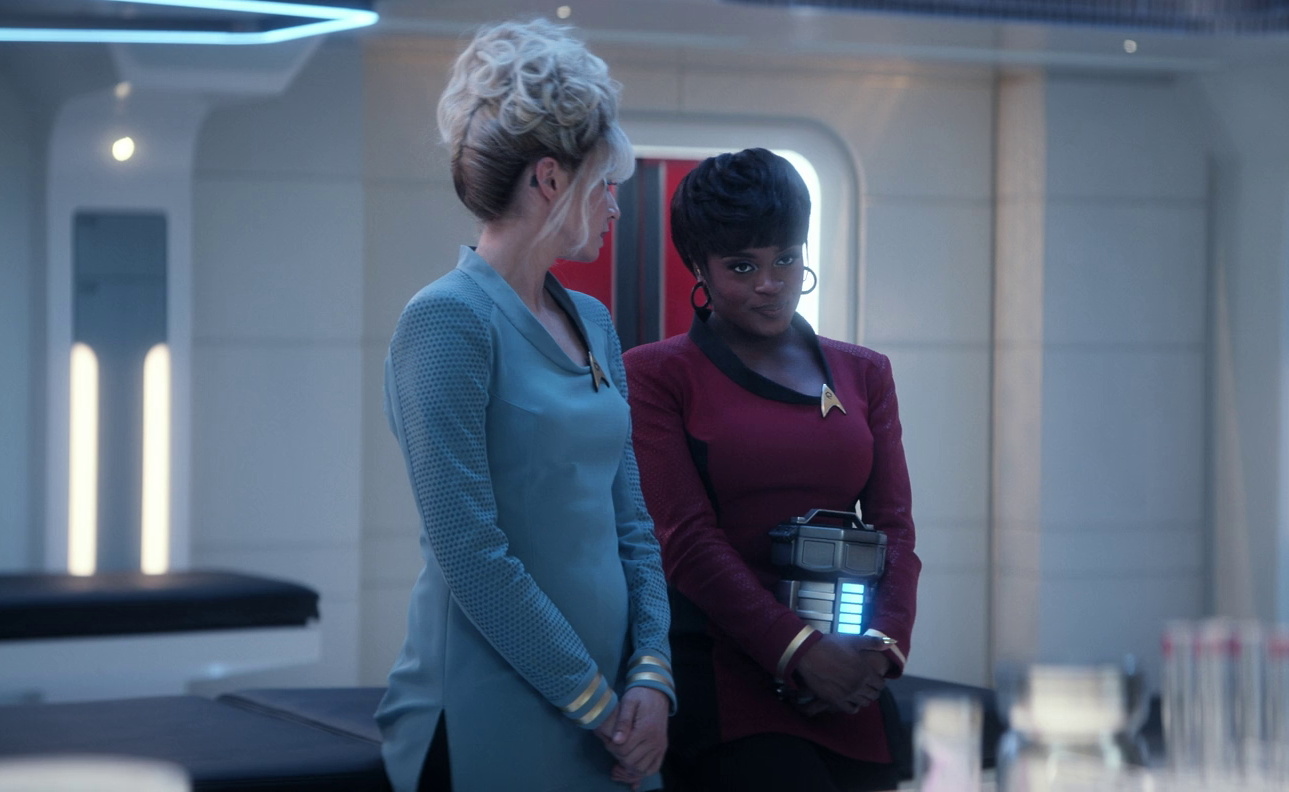
Outside of the soap opera pseudo-reality, we didn’t get to spend too much time with Chivers. I liked her outfit, which I felt drew a little on TNG’s Dr Crusher for inspiration, being a similar length and colour, but obviously a bit more elaborate with its collar and the way it fastened. And I think it’s interesting that, at least in this era, the Enterprise has a counsellor on board.

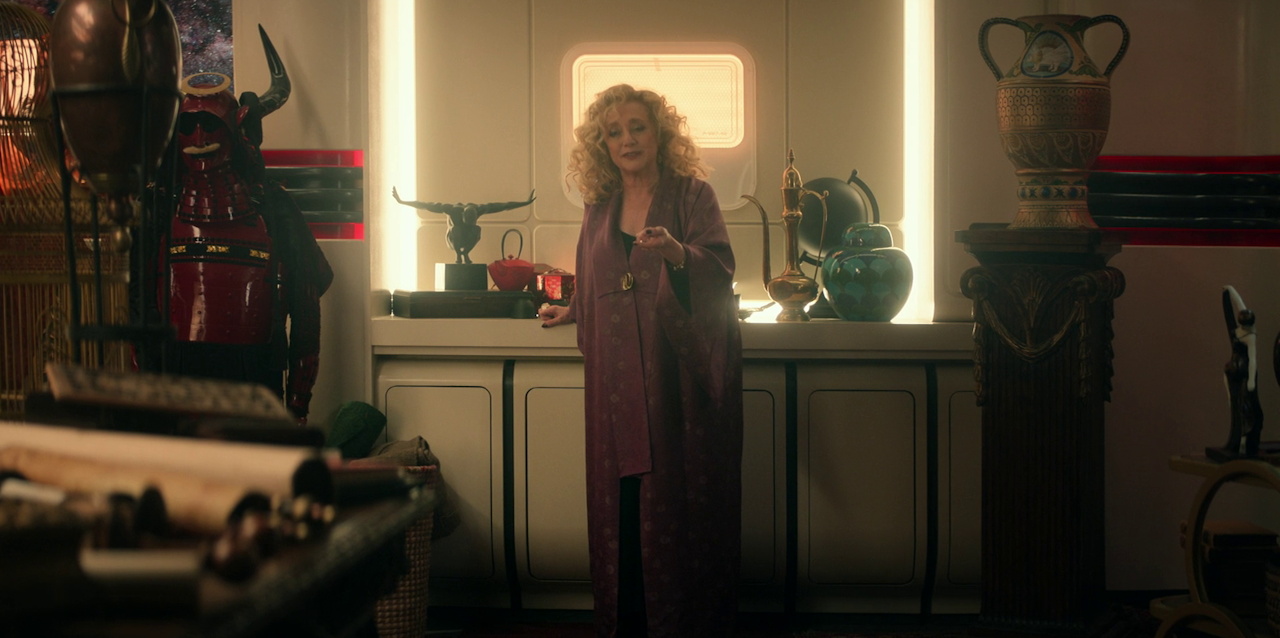
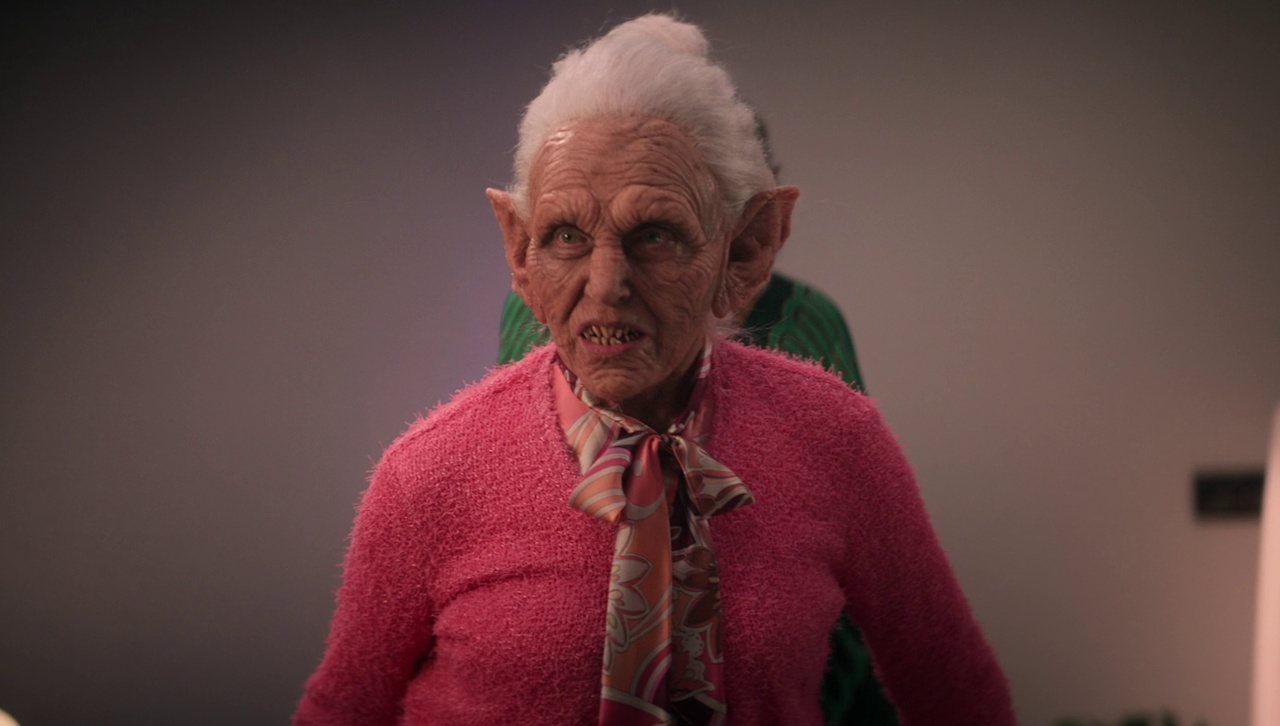
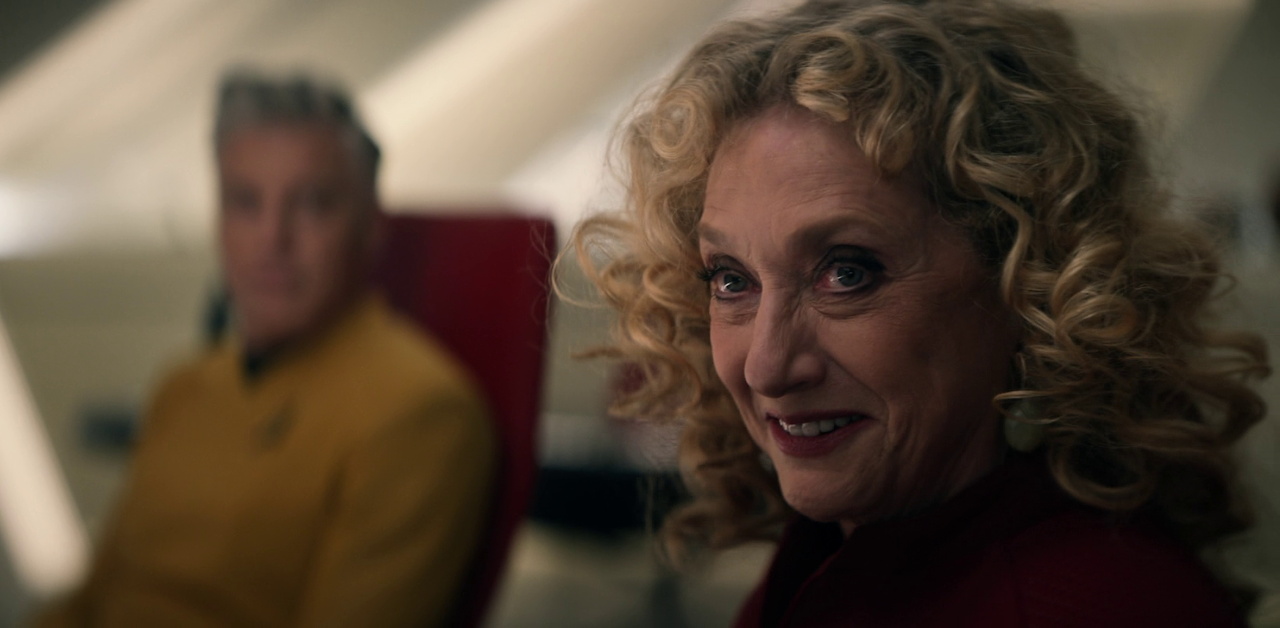
Still frame from Star Trek SNW 4x07 showing Chivers
Doctor (or Counsellor?) Chivers.

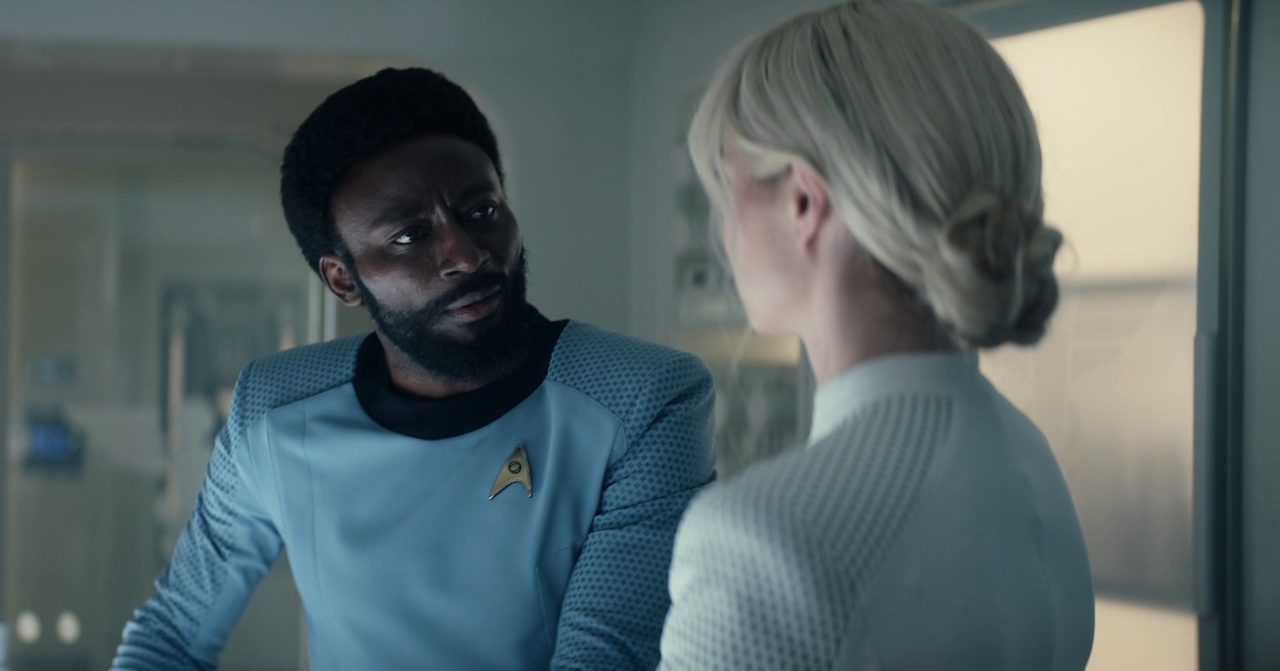
However, given last week’s (re)introduction of Dr Boyce – who, as the ship’s former chief medical officer, served as kind of unofficial counsellor to Captain Pike… well, bringing Counsellor Chivers into the mix as well might arguably complicate things. I thought, at first, we were going to learn that Chivers was one of Trelane’s creations, a fictional character he invented for the sake of his dramatic production. But Chivers is, apparently, a fixture aboard the Enterprise.

I think you could argue that it makes sense for Pike to seek out an *actual* counsellor, given where he’s at emotionally, instead of trying to talk to someone like Dr Boyce, Una, or Dr M’Benga, so it’s not necessarily a *bad* thing. And starships having counsellors is clearly not uncommon for Starfleet in this era; I think there was someone in that role aboard the USS Discovery, or at least I remember it being mentioned.

Still frame from Star Trek SNW 4x07 showing Pike and Chivers
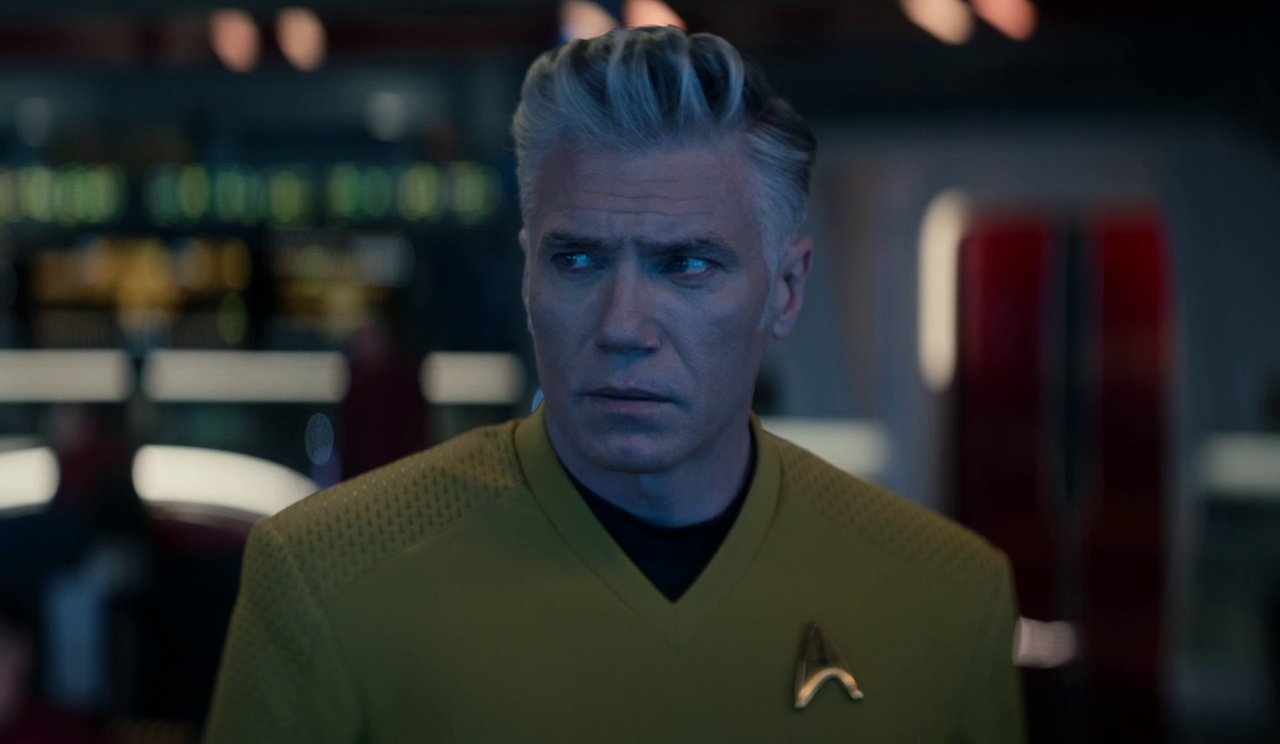
Funnily enough, I had Pike’s expression on my face for almost the entire time I was watching Like Chronitons Through the Hourglass.

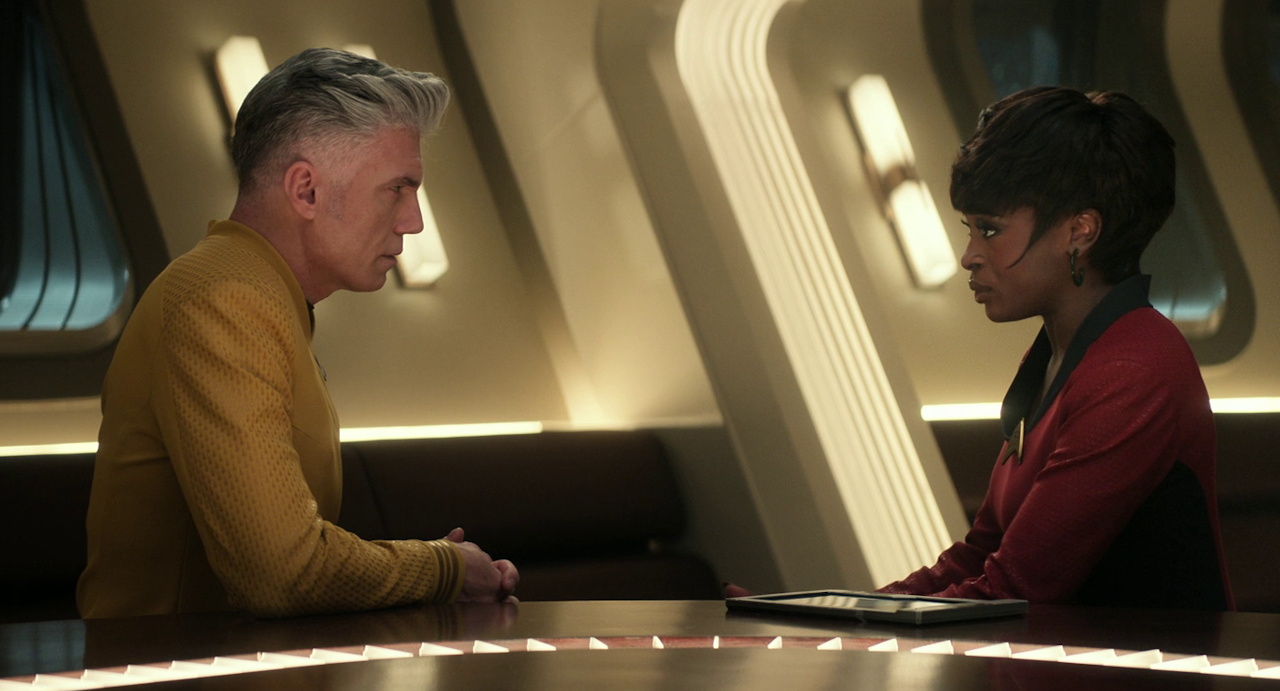
I would’ve definitely liked to have spent more time with Pike and Chivers outside of the soap opera sequences; Pike’s breakdown in her office had all of the ingredients to be the kind of hard-hitting moment that his storyline needed more of, and Anson Mount genuinely gave an exceptional performance in that scene. It was just cut too short for an episode that wanted to do other things.

Within the soap opera reality, though, I don’t really know what to say. Chivers was – surprisingly, perhaps – the least-offensive of the soap opera fluff. Deidre Hall wasn’t hamming it up in the way that most of the show’s regulars were, leaving her character to feel like simultaneously the most-grounded and least-likely to be real at the same time. An odd mix… but then again, that’s Like Chronitons Through the Hourglass in a nutshell, eh?

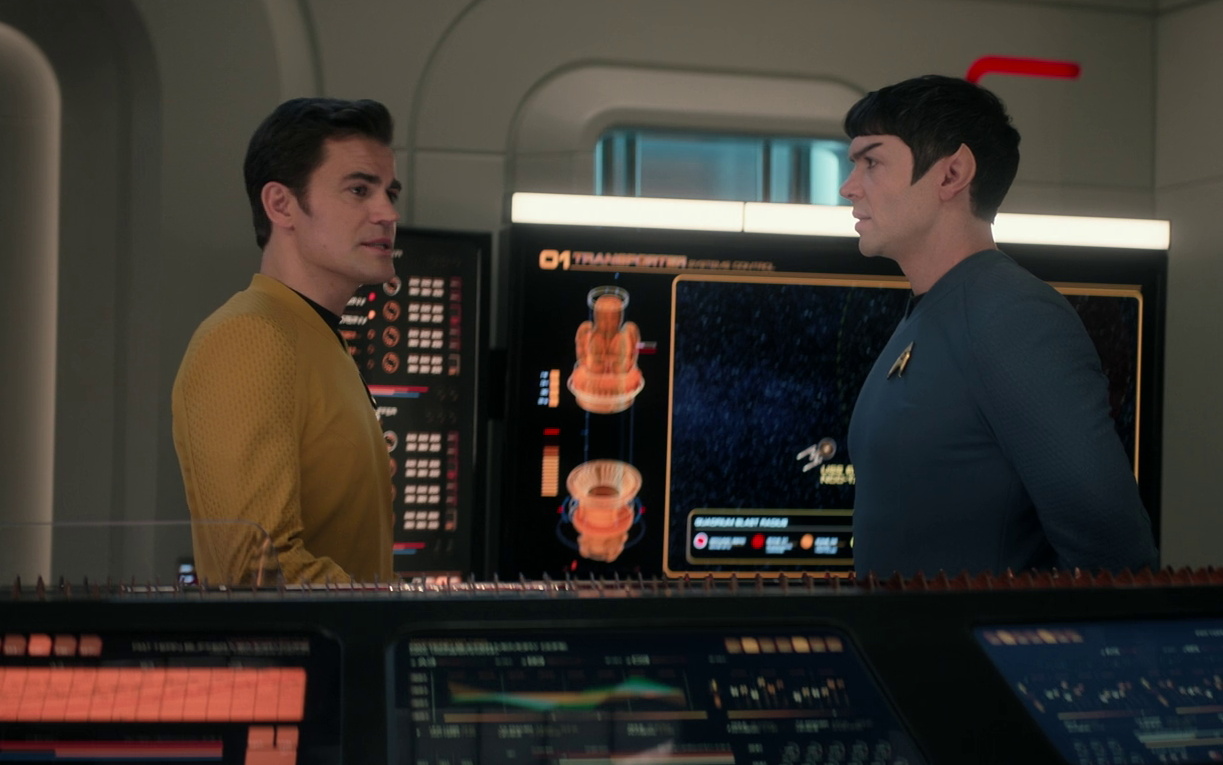
Behind-the-scenes photo from Star Trek SNW 4x07
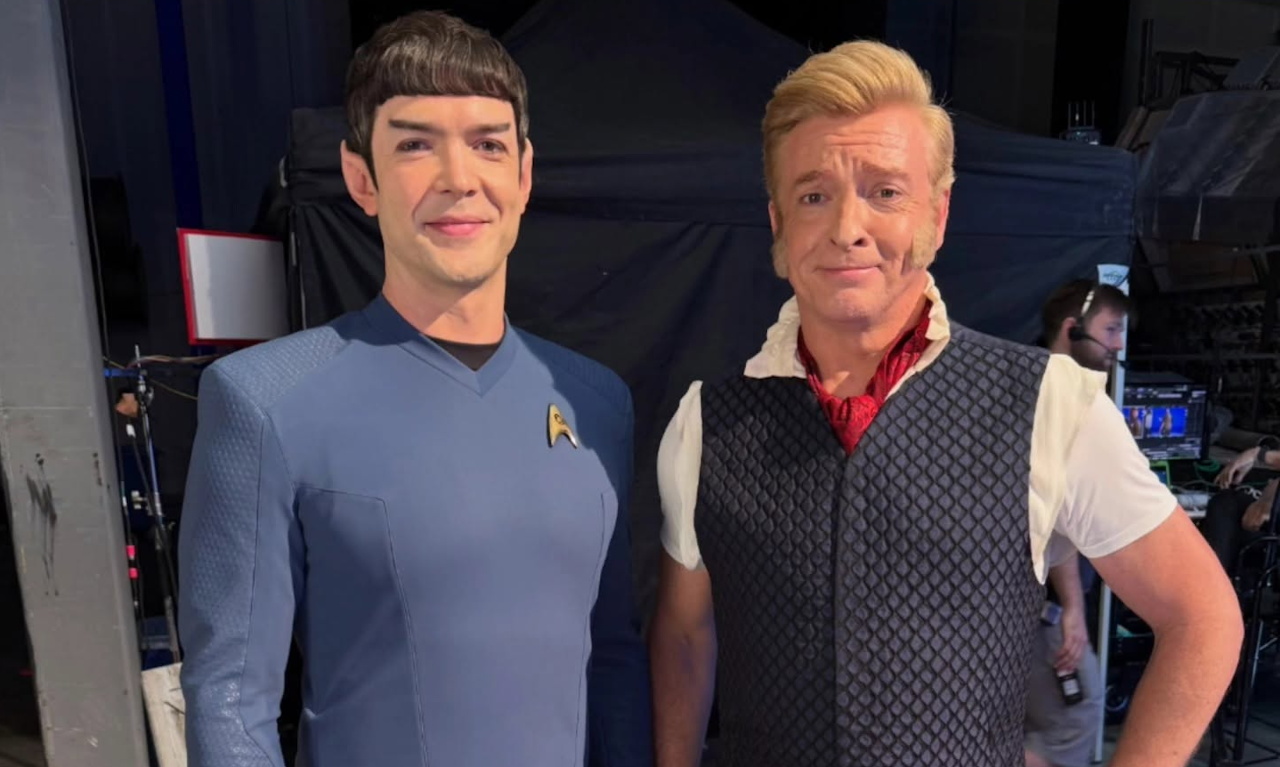
Ethan Peck (left) and guest-star Rhys Darby on the set of Like Chronitons Through the Hourglass.

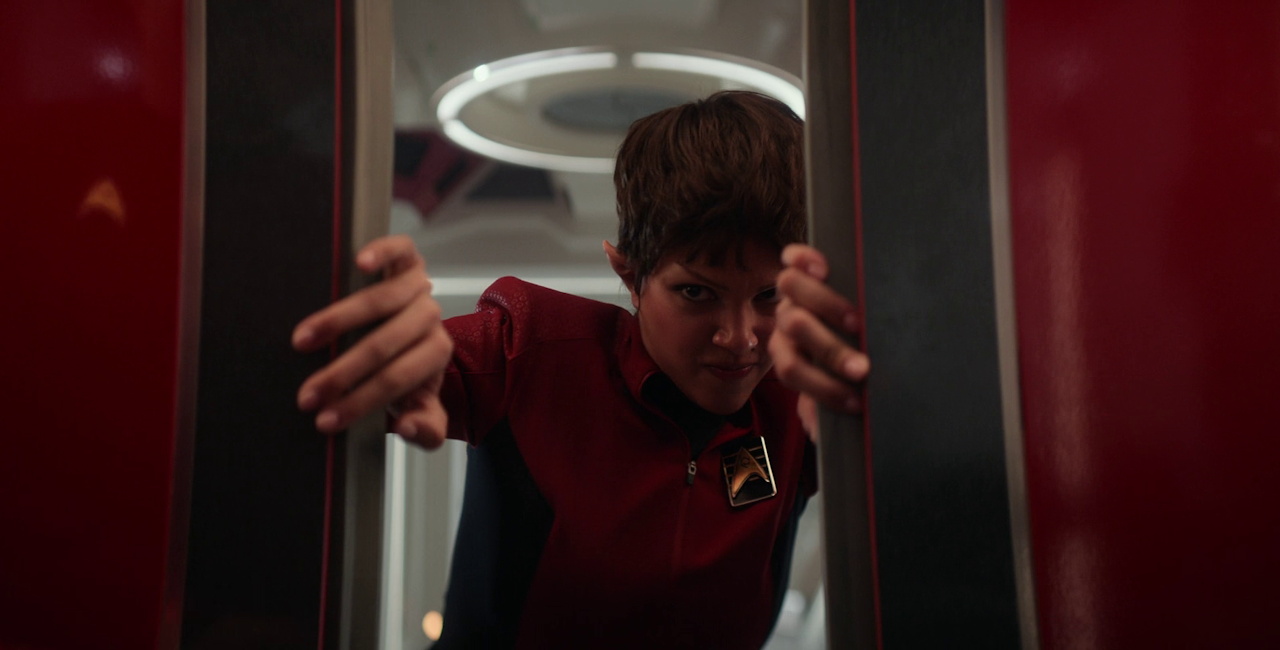
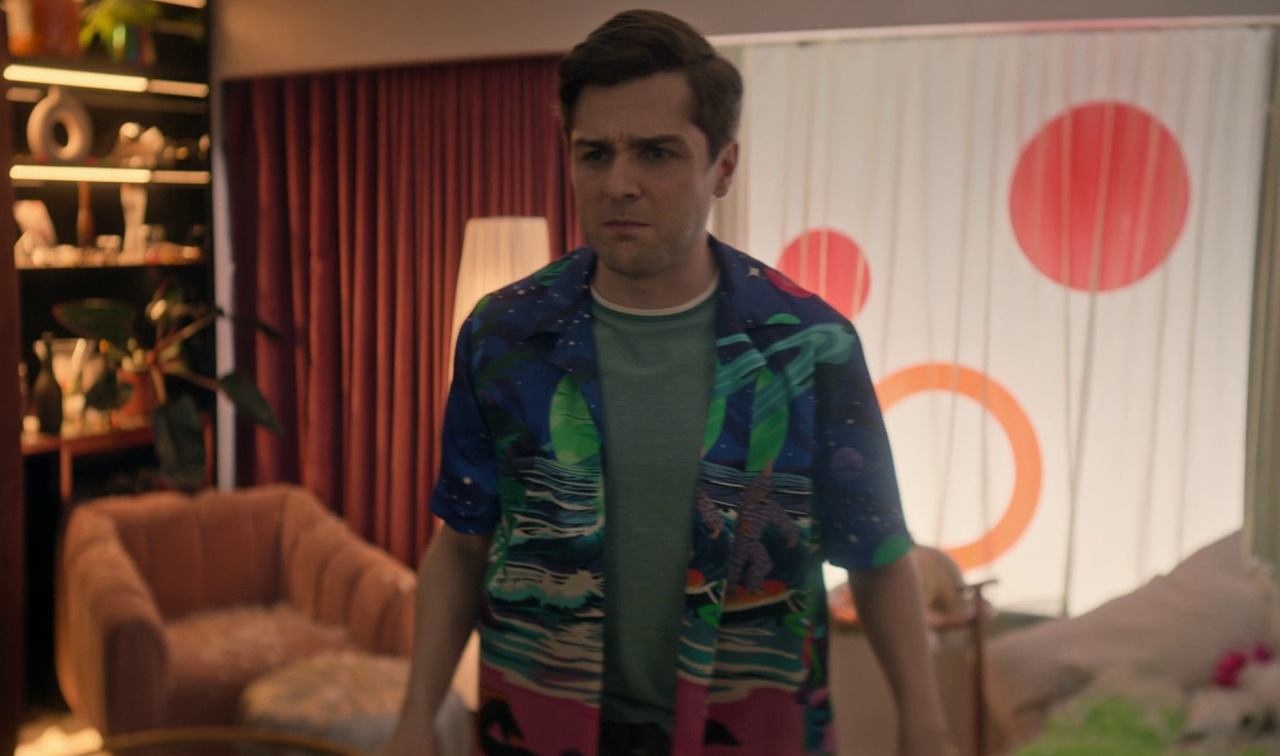
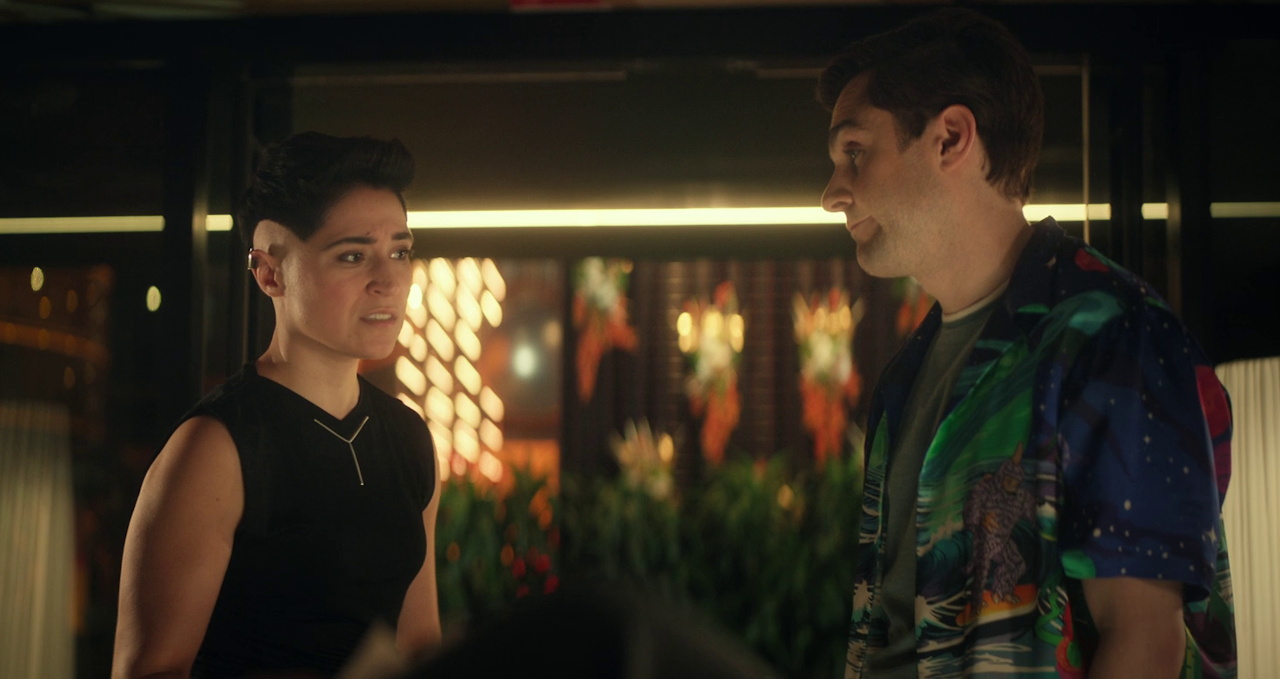
Season 1’s The Serene Squall reintroduced us to Spock’s half-brother, Sybok – albeit only briefly – and ever since, I think a lot of Trekkies have been wondering whether Sybok would be back before Strange New Worlds comes to the end of its run. And as I was saying above with Pike and La’an and their complex storylines… I would not have chosen to bring back “Sybok” in this form, if I had been in charge! In this case, though, that’s for a different reason.

Pike’s story (and La’an’s too, to a lesser extent) needed to be more grounded and serious if the messaging was going to stick the landing. But Sybok, because he’s such a uniquely interesting character within the broader lore and canon of Star Trek… well, I think he deserved to be handled better. Being reduced to essentially a joke; a gag parodying the “evil twin” cliché from bad soap opera storylines… I mean, I think even Sybok – who was a part of what is usually considered the weakest film, at least of The Original Series era – deserved better than that.

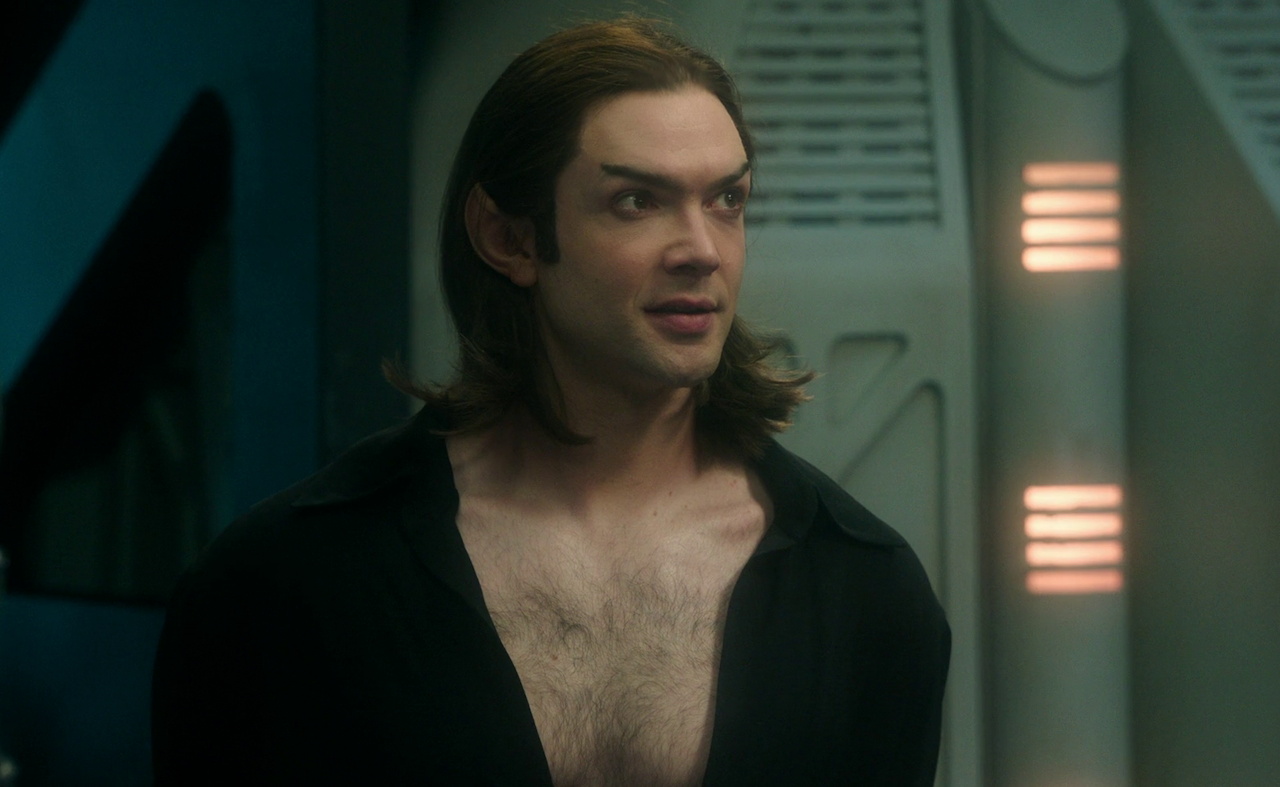
Still frame from Star Trek SNW 4x07 showing fake Sybok
The illusory “Sybok”.

Moreover, there was a chance for Strange New Worlds to explore the feud between Sybok and Spock – and perhaps between Spock and his father, Sarek, too – in more detail than we ever got in TOS or The Final Frontier. If I were making a list of potential characters and stories to return to for a potential “Captain Pike show,” I’m not sure I’d necessarily have picked Sybok. But having teased the character back in Season 1, I can see the value in revisiting him, expanding on his backstory with Spock, and going into more depth about their conflict.

Such a storyline could have set up the events of The Final Frontier, or at least leaned into Sybok’s “share your pain” philosophy that would be so important to the events of that film. And I’m left lamenting, really, that Strange New Worlds took nothing but this character’s name to do a very silly (and far too long) gag or bit with it. Once again… what was the point?

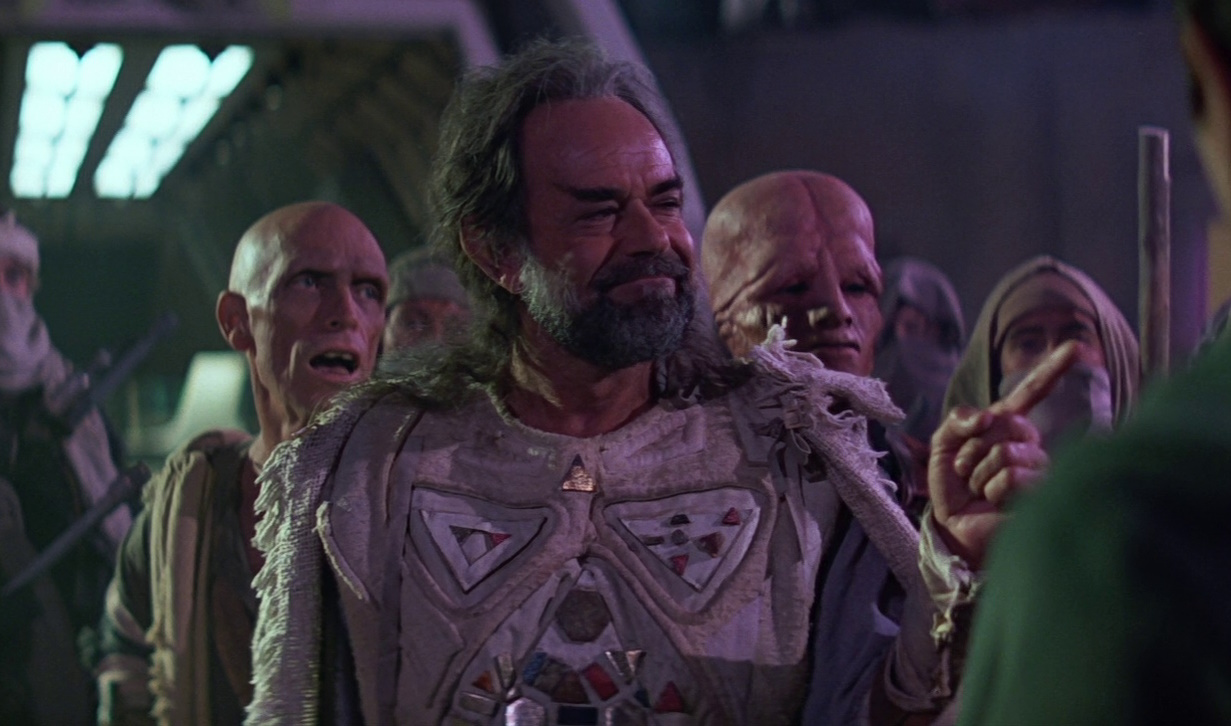
Still frame from Star Trek V showing Sybok.
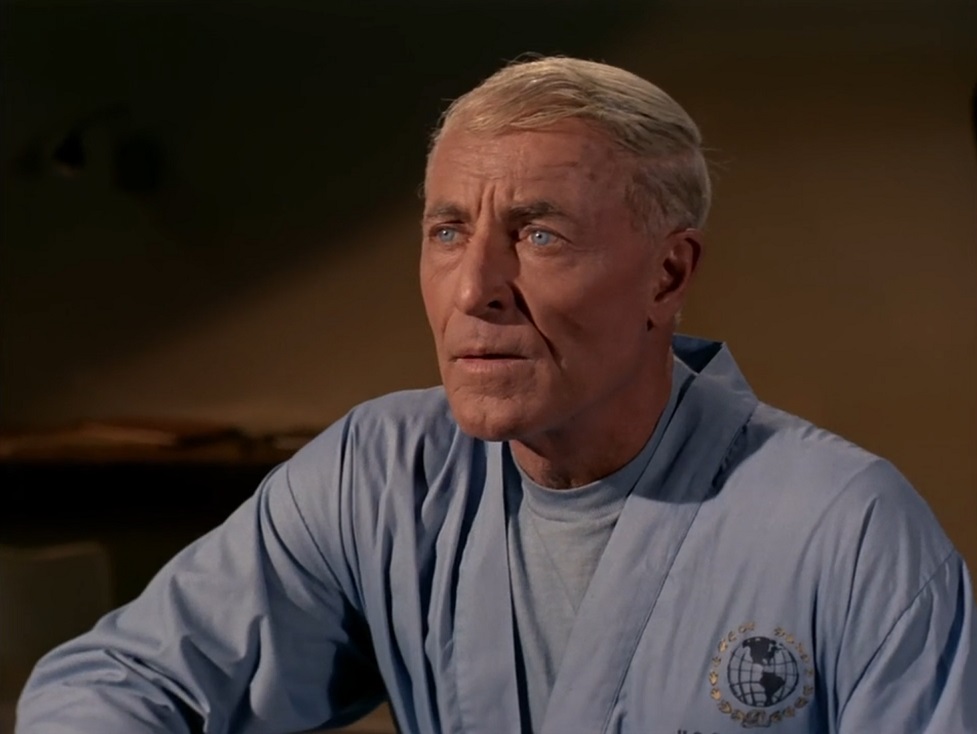
Sybok in The Final Frontier.

That last question – “what was the point?” – could really apply to 90% of the episode, to be honest. Previous genre parodies have (usually) made the case for themselves; even if I didn’t personally like the finished product, I could at least see what the writers and production team were going for. But in this case, I’m really struggling to see what the intention was in doing a soap opera spoof other than… to do a spoof.

And is *that* a good use of the show’s time when there are a mere nine episodes remaining, and fewer than fifty in total?

If this was Season 1 or 2, with Strange New Worlds potentially looking at a six-, seven-, or eight-season run, I still wouldn’t *like* this episode, but I think it might’ve felt less offensive. However, we’re now nine episodes from the show’s finale, and I just don’t think there was time to waste on a genre parody or spoof that not only didn’t have anything to say in and of itself, but that also ended up actively detracting from what should’ve been a powerful, emotional, and relatable arc for two of the show’s main characters.

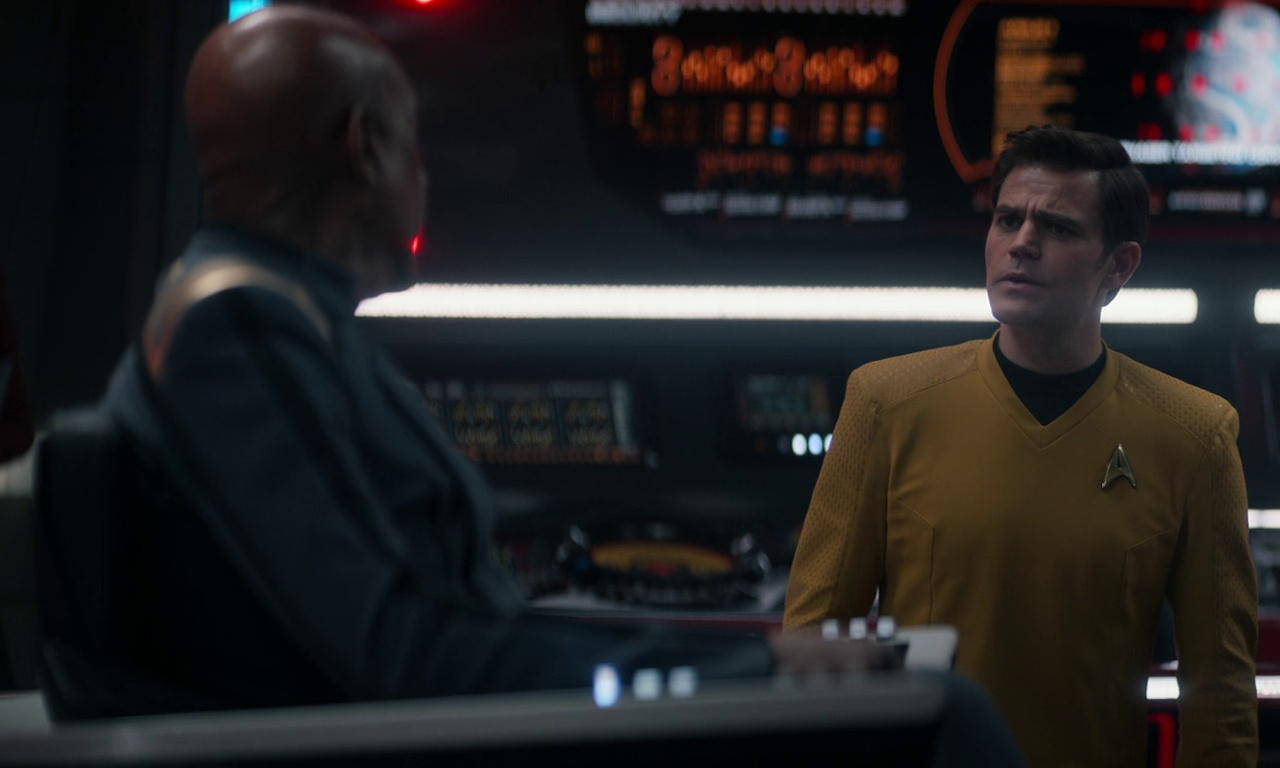
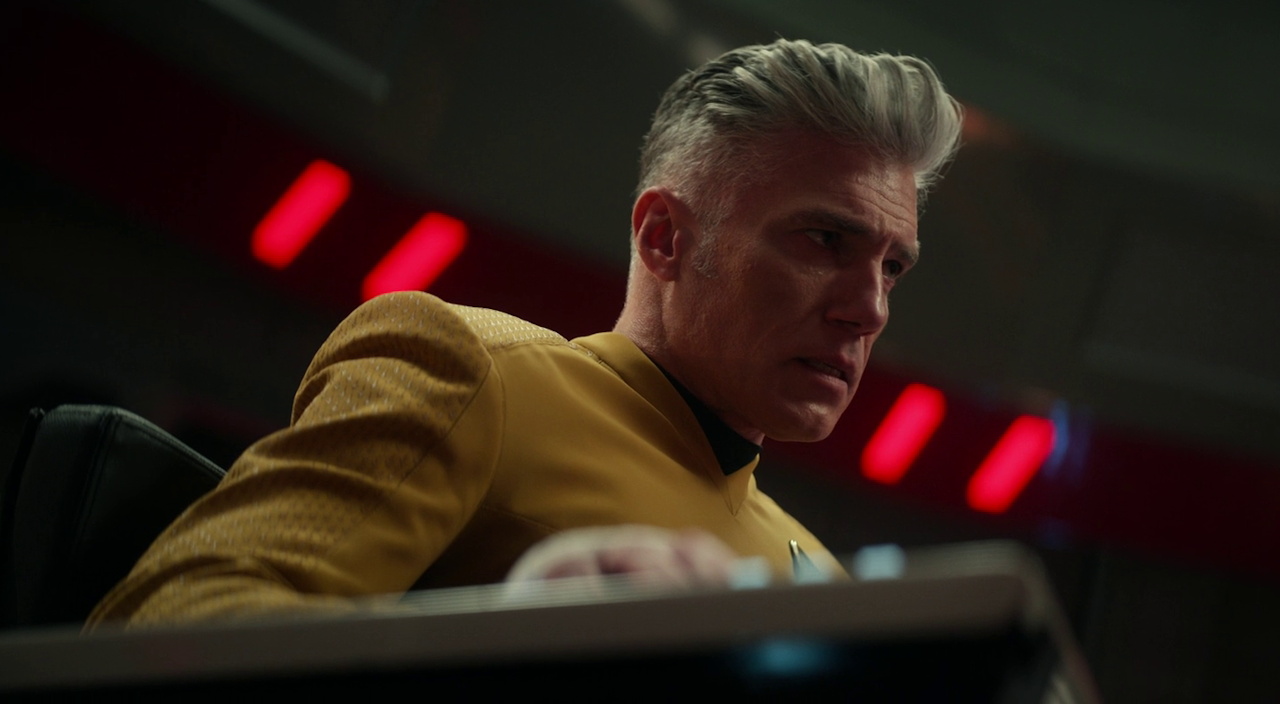
Still frame from Star Trek SNW 4x07 showing Pike
Captain Pike.

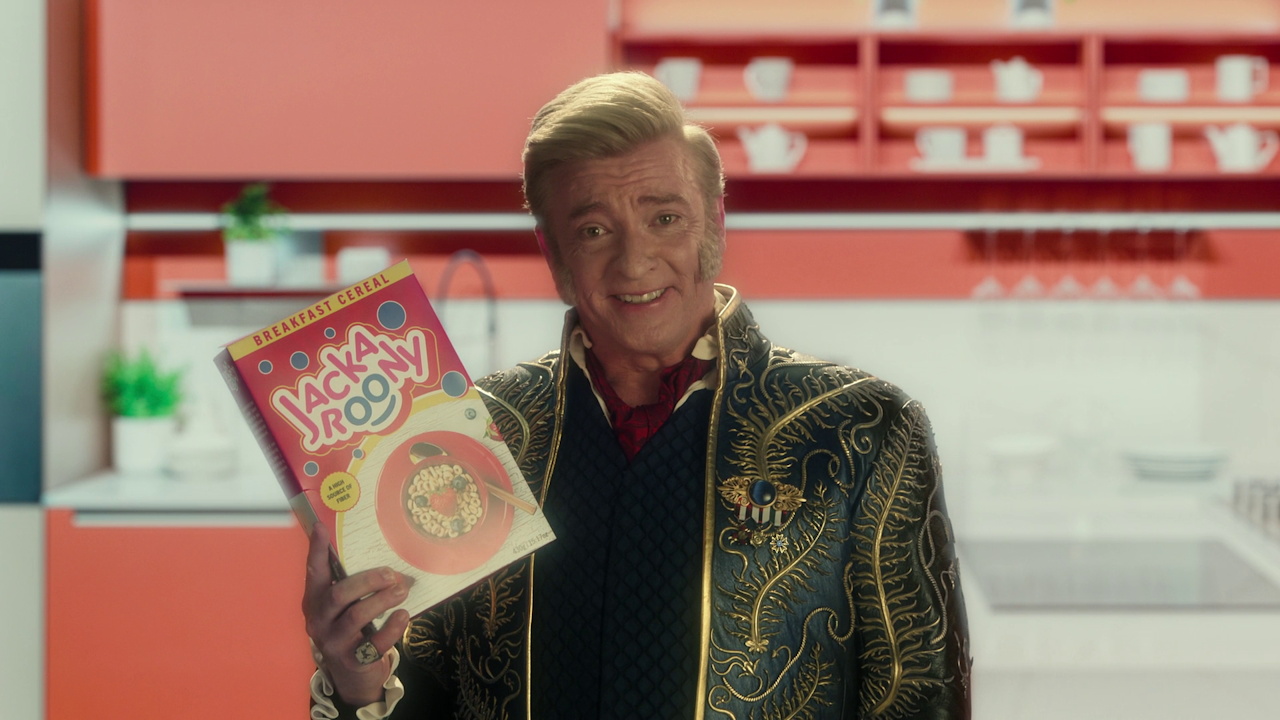
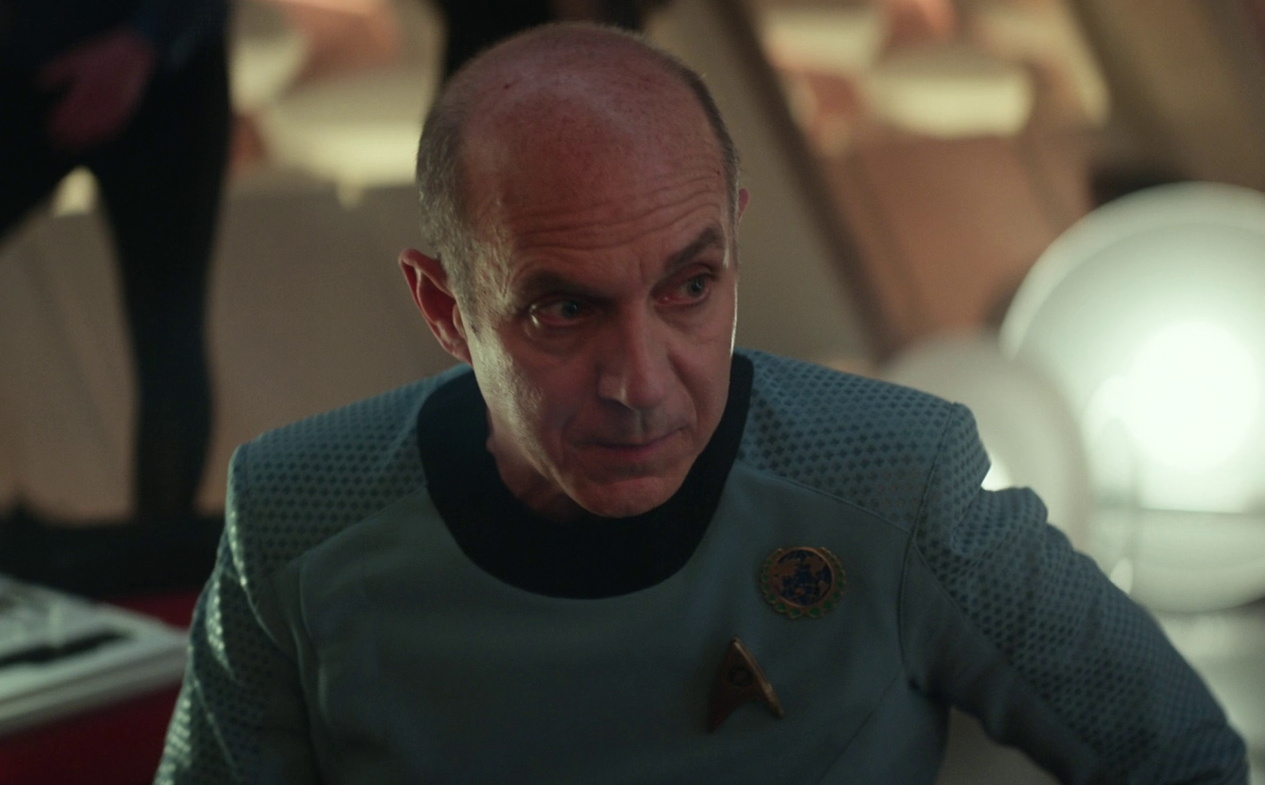
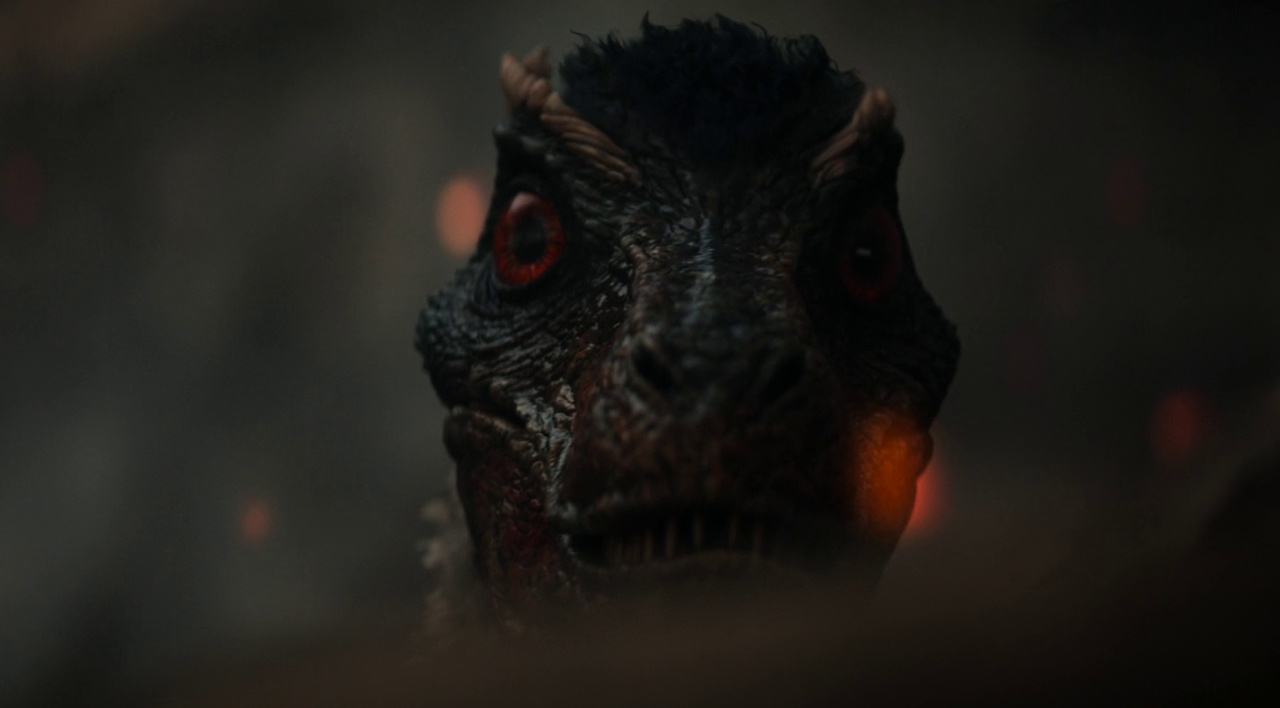
With the exception of Anson Mount, who did well with Captain Pike’s emotional torment, the only other performer I could really single out for praise is Rhys Darby, who reprised his role as Trelane from Season 3’s Wedding Bell Blues. We’re sticking with the idea that Trelane is a kid, and Darby brought almost a sense of childlike wonder to the character, despite having phenomenal powers and abusing them to toy with the emotions of the crew.

I also found it interesting that Like Chronitons Through the Hourglass introduced another member of the Q Continuum as Trelane’s teacher/advisor. I wasn’t wild about the Q-inspired costuming, though: the judges’ robes that Q wore in The Next Generation were meant to be a copy of something from Earth in the mid/late 21st Century, and I felt that leaning on that idea for inspiration kind of misunderstands or muddles that. A very minor point, admittedly, and one that you might say is a nitpick. But I like Star Trek to be consistent with itself, and for me, this other Q wearing an outfit clearly at least partially inspired by those judges’ robes wasn’t right.

Oh, and if you missed it last season: yes, Rhys Darby’s character is the same Trelane as Kirk will encounter in The Original Series, and he’s a member of the Q Continuum. Spoiler alert for Wedding Bell Blues, I guess!

Still frame from Star Trek SNW 4x07 showing Trelane (post-credits)
Rhys Darby is great as Trelane.

There were a couple of funny moments in Like Chronitons Through the Hourglass that successfully won a chuckle, or at least made me smile. Dr M’Benga having a disease as ludicrously-named as “space madness” was one of them, because it was just so utterly absurd and silly.

And it was also a funny bit to see Trelane and his teacher munching on buckets of popcorn as they watched Captain Pike wrangling with the memory of his daughter; neither of them expected that “storyline” in Trelane’s fantasy world, I guess. It was a funny moment, in any case.

But that’s really all the praise I have for this… well, this disappointing mess.

Still frame from Star Trek SNW 4x07 showing Trelane and his Q mentor eating popcorn
This was an admittedly funny visual.

Do I need to tell you, for the fourth or fifth time this season, that I can respect the commitment to the bit; that fully and whole-heartedly embracing everything about a genre in this kind of genre parody is, in some ways, commendable? Because I feel like I’ve been saying that a lot, of late!

Like Chronitons Through the Hourglass is the first episode, really, where I feel that everyone involved should’ve known that the core concept and storylines wouldn’t work. The hammy over-acting, the ridiculous dialogue, and the attempt to blend a full-throated soap opera pastiche with complex themes and long-running storylines for main characters was a genuinely bad idea. And I’d actually quite like to know how this concept made it all the way through the production process. How is it that no one – not one single person from this pretty accomplished group of television writers and producers – didn’t stop for a second and say, “yeah, this ain’t gonna work”?

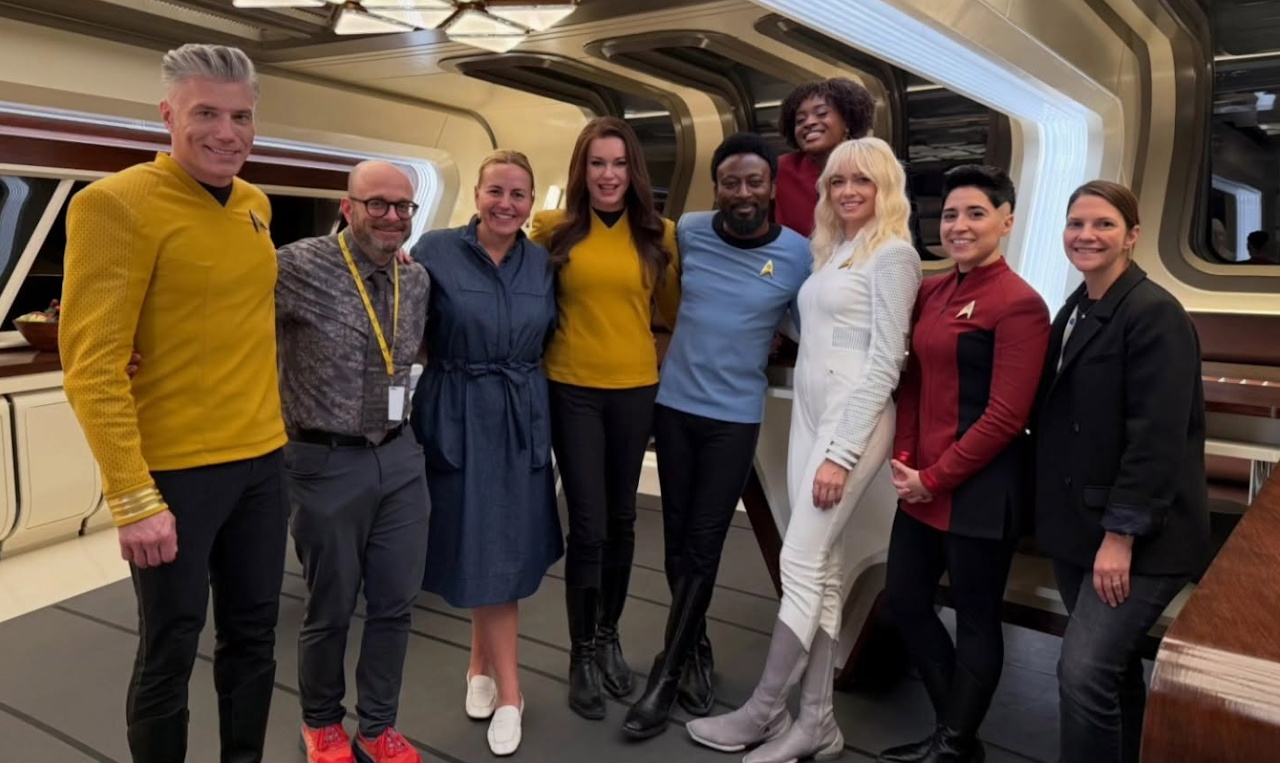
Behind-the-scenes photo from Star Trek SNW 4x07
Cast and crew behind-the-scenes.

Like Chonitons Through the Hourglass is saved from the title of “worst Strange New Worlds episode” by the existence of Subspace Rhapsody and the “but it was all just a dream” ending to Level-Five Transporter Accident. But that’s it. That’s the best I can say about it… and I guess that makes it the third-worst episode of the series.

Like Chronitons Through the Hourglass isn’t just a disappointment because its soap opera parody was over-the-top, hammy, and silly. Those things made me roll my eyes, sure, but as someone who isn’t a soap fan, perhaps that side of the story would never have been “my thing,” and that’s okay. Not every episode is gonna be a ten-out-of-ten for every viewer, especially with such narrative and genre diversity on display. But because the episode’s other side had an important and potentially powerful and emotional message about grief and loss… the failures of the soap opera fluff feel infinitely worse.

Still frame from Star Trek SNW 4x07 showing Una and M'Benga
Dr M’Benga and Una.

I would’ve been down for an episode exploring Pike’s grief, either through a sci-fi lens or just… by playing it straight. And I liked the attempt to draw a comparison between Pike’s grief and La’an’s feelings about her second heartbreak. But those ideas got precious little time and attention in an episode that wanted to be something else – something fundamentally incompatible with those loftier ideas. The choice should’ve been to either massively reduce the soap stuff to a few small vignettes, drop it entirely, or else abandon the serious themes and lean fully into the parody.

I know what I’d have chosen, if I had the option.

Star Trek’s sixtieth anniversary is in just a few days’ time, and we’re going into the anniversary with *this* as the most recent episode. That… would not have been my preference, I’m not gonna lie. And now that Strange New Worlds Season 4 is three-quarters done, there are still only two episodes that I can say I fully enjoyed and didn’t find glaring flaws in. It’s such a shame that this show – which I’ve said repeatedly has been my favourite of Star Trek’s modern revival – just isn’t on top form at the moment.

Next week, we’re going to get Orders of Magnitude – an episode which promises “an alien pursuit that grows far beyond its original orders.” Maybe that’ll be a better, more grounded, or more interesting story. Maybe it’ll be *orders of magnitude* better than a soap opera parody or an episode that ends with “but it was all just a dream.” We can but hope, I suppose.

Thanks for joining me for this review. I really don’t like being so negative about Star Trek, and especially about Strange New Worlds when there are so few episodes remaining. But… here we are, I guess. I’m crossing my fingers and hoping for better things next time.

I’ll be writing something celebratory on the 8th for Star Trek’s official sixtieth anniversary, so I hope you’ll join me for that. And earlier in the year, I wrote up re-watches of Where No Man Has Gone Before, which was TOS’s second pilot, The Royale, which was my personal “first contact” with the franchise, and a few other pieces, too, like my encounter with William Shatner, some “what-if” scenarios, and some fascinating fan theories that I found! I’ve also reviewed Season 1 of Starfleet Academy and the video game Across The Unknown, which is based on Star Trek: Voyager. I hope you’ll check out some of those pieces if you have the time. You can also find the rest of my Strange New Worlds reviews by clicking or tapping here. As always… Live Long and Prosper, friends!


Star Trek: Strange New Worlds Seasons 1-4 are available to stream now on Paramount+ in countries and territories where the platform is available. The first three seasons are also available on DVD and/or Blu-ray. The Star Trek franchise – including Strange New Worlds and all other properties discussed above – is the copyright of the Skydance-Paramount corporation. Days of Our Lives is the copyright of NBC/Corday Productions/Peacock. This review contains the thoughts and opinions of one person only and is not intended to cause any offence.

Star Trek: Strange New Worlds Episode Review – Season 4, Episode 6: Off-Hour

A Star Trek-themed spoiler warning.

Spoiler Warning: There are spoilers ahead for Star Trek: Strange New Worlds Seasons 1-4. Spoilers are also present for the following Star Trek productions: The Original Series, The Next Generation Season 5, Generations, and Discovery Season 2.

After last week’s absolute travesty, Strange New Worlds needed a win. And while the bar for success after Level-Five Transporter Accident was so low that it had melted through the basement like Chornobyl’s elephant’s foot, I’m pleased to say that Off-Hour was a massive improvement – and, in my subjective opinion, of course, the second genuinely good episode of the season.

Note that I said “good” and not “perfect,” though – because, despite being infinitely better than last week’s abomination, Off-Hour dialled up some of its drama just a tad too high for my liking, and when I make the obvious comparison – to The Next Generation’s stellar episode Disaster – I find it to be the lesser offering for that primary reason. We’ll get into all of this in a bit more detail as we go, but I felt the long shadow of Level-Five Transporter Accident hanging over Off-Hour, as I genuinely feared the return of “but it was all just a dream,” or some other kind of pathetic cop-out as the narrative seemed to reach an impossible crescendo.

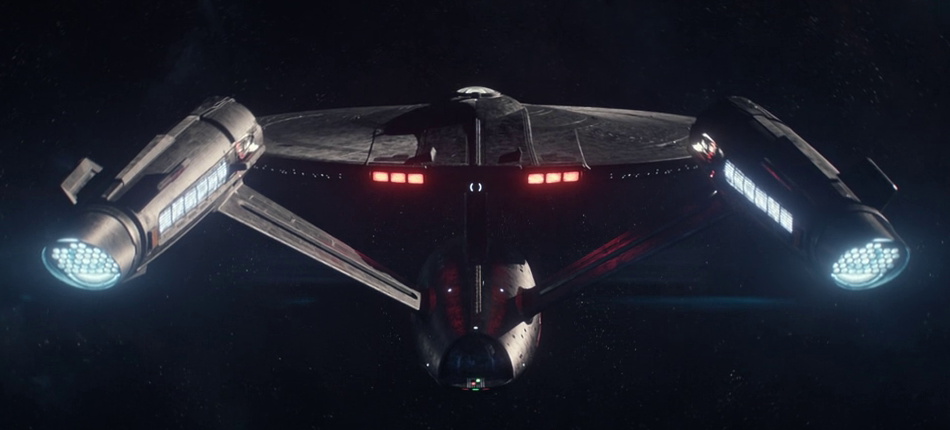
Still frame from Star Trek SNW 4x06 showing the USS Enterprise (cropped)
The Enterprise is about to experience a disaster!

There was also, I felt, a bit of a missed opportunity presented by Off-Hour’s unique narrative framework – something that, again, TNG did better some thirty-five years earlier.

None of this is to say that Off-Hour was in any way a “bad” episode; it’s probably my second-favourite of the season so far, and would easily crack a “top ten” for Strange New Worlds as a whole. I also appreciated several well-written callbacks to past iterations of Star Trek in this anniversary year – from The Cage to Court Martial and even a deep cut to That Which Survives, from The Original Series’ third season. Star Trek’s official sixtieth anniversary is in just over a week’s time, and I have to imagine that the writers and producers were at least aware that Season 4 would arrive sometime around then. Given that Skydance-Paramount as a whole doesn’t seem to be going overboard with the celebrations, it’s nice to get little references like that within the show itself – and we’ll talk about those in a bit more detail momentarily!

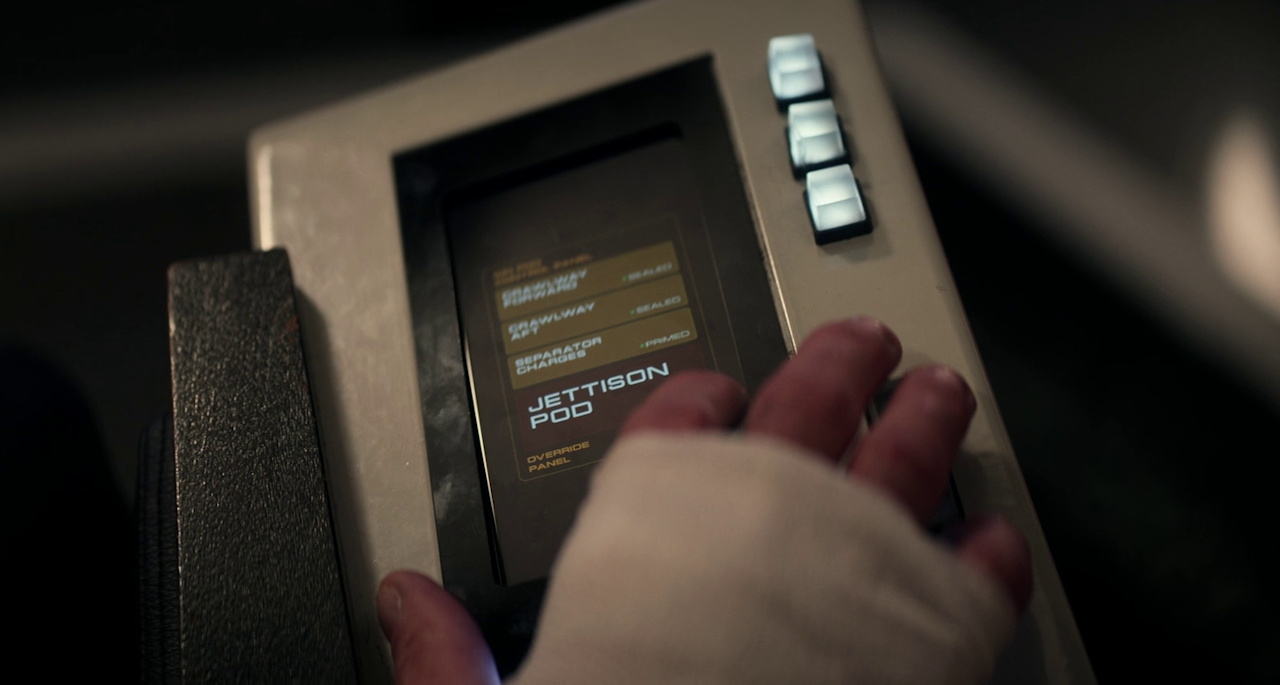
Still frame from Star Trek SNW 4x06 showing "Jettison Pod"
Who remembers Court Martial?

I would also be remiss not to tell you that this is the first Strange New Worlds episode I’m reviewing since meeting Ethan Peck and Christina Chong (Spock and La’an) at a recent Star Trek convention here in the UK. I haven’t written up a full piece about this year’s event; much of what I had to say would’ve felt repetitive, to be honest, after I wrote about my experiences barely twelve months ago. But if you join me later in 2026 for my annual “year in review,” I expect I’ll talk a bit more about Destination Star Trek then.

For the purposes of this review, well… it means I’ve personally met and shaken the hands of *three* of the principal cast, now! I met Martin Quinn (Scotty) last year, and it never ceases to be a strange feeling to look at someone on the screen and think to myself, “huh, I’ve met them!” But I’ll try not to let such things interfere with my analysis of Off-Hour – or, indeed, any future episodes going forwards.

And if you want to see what I made of 2025’s Destination Star Trek event, click or tap here! My thoughts haven’t really changed much after this year’s visit.

Still frame from Star Trek SNW 4x06 showing Spock and La'an's mind-meld
I got to meet both Ethan Peck and Christina Chong last weekend.

Okay, enough boring chit-chat about what I got up to at the weekend! Let’s get into Off-Hour.

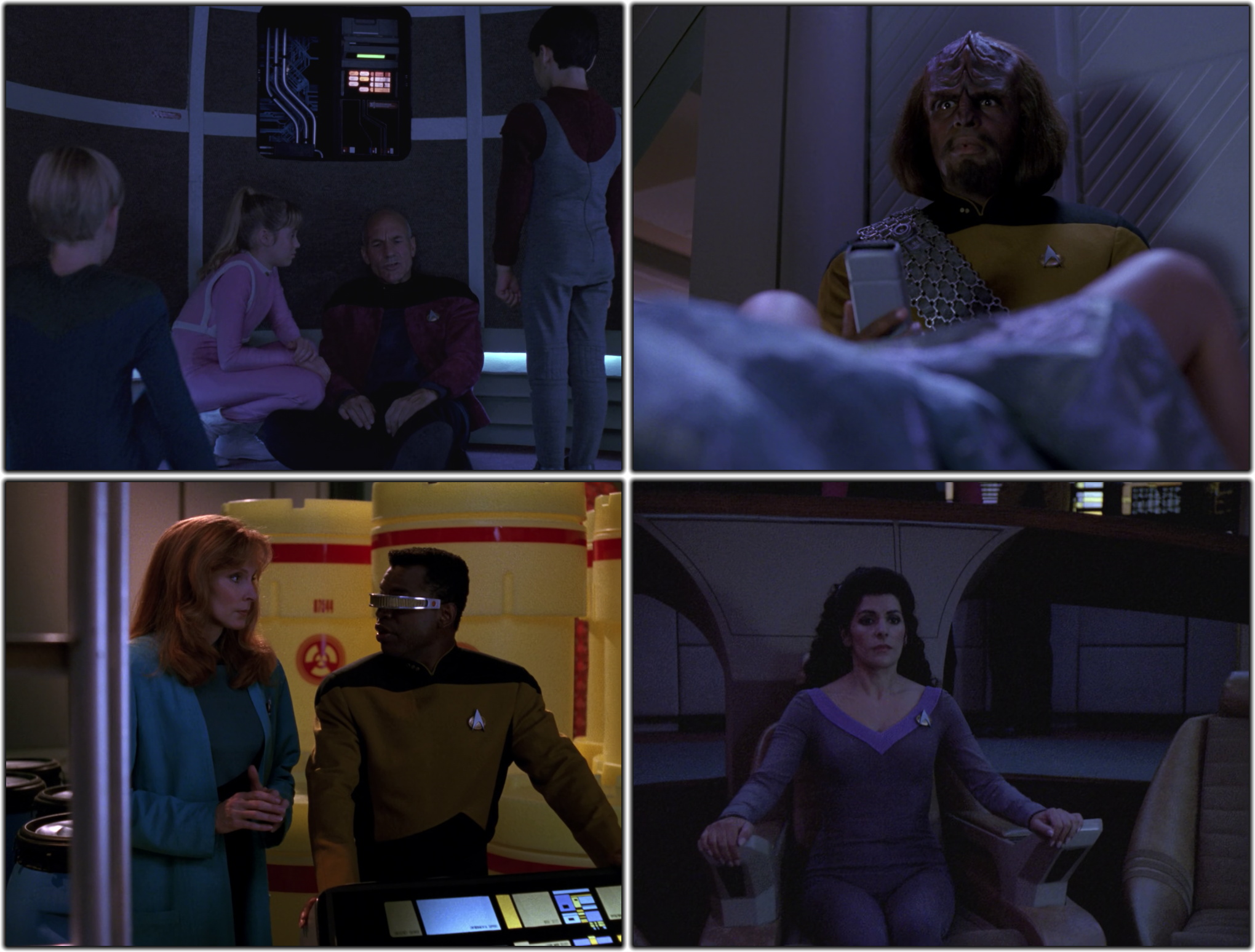
When The Next Generation premiered the fifth-season episode Disaster, the writers and creative team took advantage of the chaos aboard the Enterprise-D to bring together character groups and pairings that we didn’t often get to see. What’s more, the story then plunged several of those characters into situations way outside of their usual roles or areas of expertise – and what resulted is genuinely one of my favourite episodes from the show’s entire run.

We got to see Worf delivering a baby. Geordi and Dr Crusher spent more time together than… well, practically any other story I can call to mind. Deanna Troi took the conn, and had to wrangle with Ro Laren and Chief O’Brien as the ranking officer on the bridge. And Picard got stuck in his own personal hell: trapped with three young children!

Four stills from Star Trek TNG 5x06 showing Picard, Worf, Crusher and Geordi, and Troi
Disaster made creative use of TNG’s main characters.

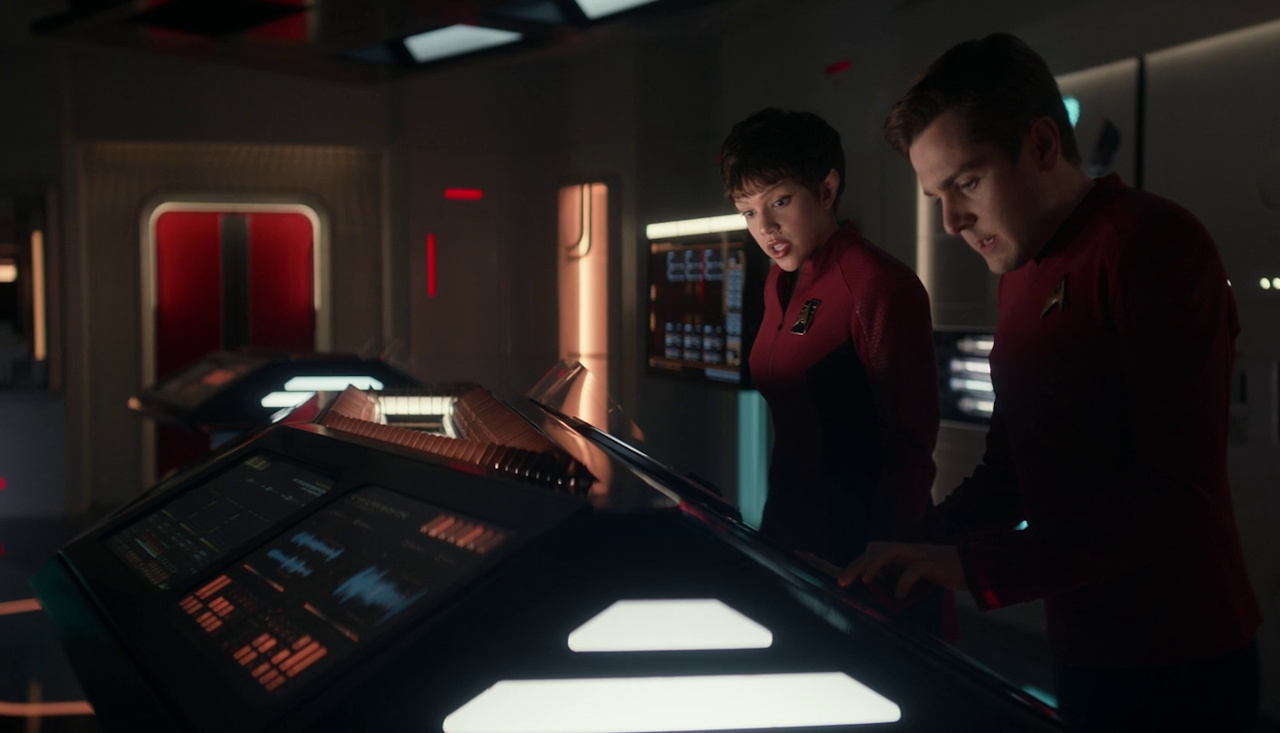
Off-Hour could’ve used its setup to do something similar, but the only “unusual” character pairing we got was Scotty and Cadet A’Sha – and, really, *any* character pairing with A’Sha would be out of the ordinary because of how little screen time she’s gotten across the season so far! I don’t dislike the scenes we got with Uhura and Ortegas on the bridge, Una, Spock, and La’an in the lounge, or Chapel and M’Benga in sickbay – but given the unique premise of the episode, *and* the addition of characters like Dr Boyce to add another medical officer… well, I can’t help but lament, in a way, a missed opportunity.

When we look back at Strange New Worlds’ run to date, how many times have we seen Ortegas and Dr M’Benga interacting? Or Chapel and Scotty, Spock and Una, or Pike and Pelia? There were so many possibilities for pairing up or creating groups of characters who don’t usually spend any time together, and this kind of story provided the *perfect* narrative framework for doing so. But the characters mostly stayed in their established pairings and groups, and when I compare that element of Off-Hour to The Next Generation’s similar offering… I just feel like full advantage wasn’t taken of this concept.

Still frame from Star Trek SNW 4x06 showing A'Sha and Scotty
A’Sha and Scotty formed the only uncommon character pair.

Partly, I’m afraid, the reason for that is that Off-Hour – like several Strange New Worlds stories (and many others in Discovery, Picard, and even Prodigy in recent years) dialled up the drama and stakes just a little too high. Dr M’Benga’s gruesome injury is the main culprit here, but the danger posed to the ship by the “warp slingshot” or “neutrio wormhole” or whatever we’re calling it is a big part of that, too.

And again, TNG’s Disaster is a great point of comparison. That episode had stakes and tension; there were injured characters and others were in mortal danger. But the way it communicated those storylines was ever so slightly less… melodramatic. Because of that, the story opened up, and it meant it was absolutely possible for an injured character like Picard to be stuck with some scared kids, or for Troi, on the bridge, to have to wrangle with potentially fatal decisions without the support of other senior officers. Dialling things back just a couple of notches worked wonders for Disaster, and it allowed the story more freedom to shake up TNG’s characters in fun and creative ways.

If any part of Off-Hour was lacking… well, there it is.

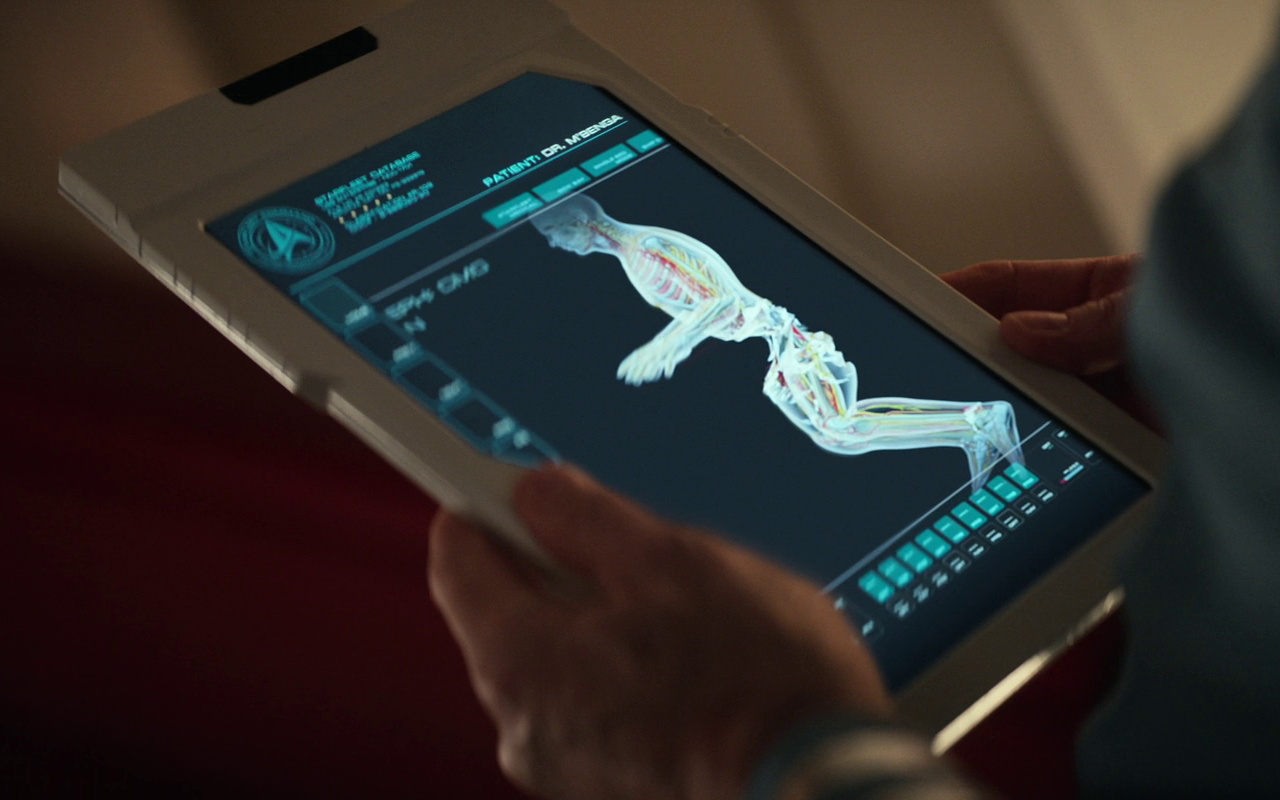
Still frame from Star Trek SNW 4x06 showing Dr Boyce's padd
Dr M’Benga’s injury as shown on a padd.

Since I mentioned Dr M’Benga’s injury, let’s head to Sickbay next.

I’m sorry if this is going to sound crude or facetious, but when Dr M’Benga was almost bisected by the rolling table, I could only think of one thing: the parody of Signs from the beginning of the 2003 “comedy” film Scary Movie 3. I know, I know… cringe millennial humour, right? But honestly, when Chapel revealed the scan of Dr M’Benga’s injury… that thought almost made me laugh out loud. Does that say more about me than Off-Hour? I mean, probably.

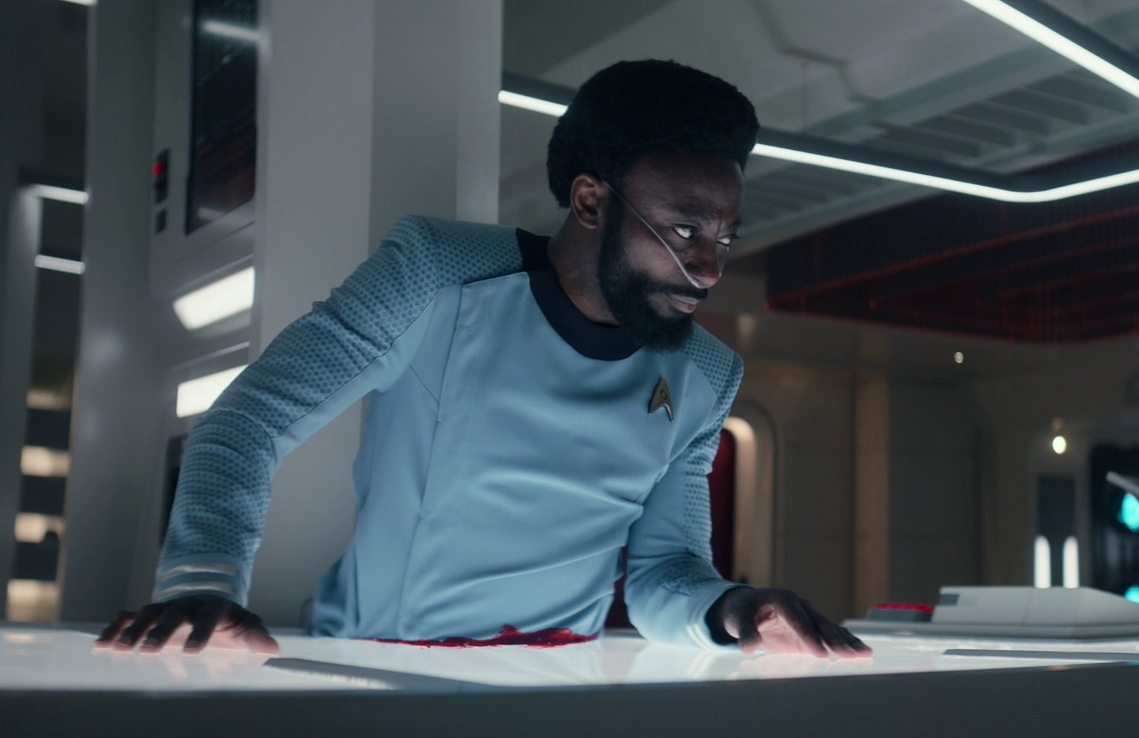
Perhaps a more casual audience isn’t aware of this, but Dr M’Benga is a minor character on The Original Series, making I think three appearances on the show alongside Dr McCoy. What that means, for those of us who did know that, is that Dr M’Benga is basically immortal in Strange New Worlds. And that fairly typical “prequel problem” robbed this storyline of much of its dramatic tension, unfortunately. Plenty of stories can still be thoroughly enjoyable even when you know how they end, but because of Strange New Worlds’ place in the timeline, any TOS character is an odd choice to place in mortal peril. Compare M’Benga’s injury in this episode to Ortegas’ injury at the start of Season 3 as a case in point; Ortegas could have been killed off, just as Hemmer had been in Season 1. But M’Benga is unkillable – and that knowledge detracted from this storyline, at least a little. And maybe that’s why my initial reaction was to recall that dumb scene from a pretty awful early 2000s spoof movie instead of being gripped by the tension that the episode was going for.

Still frame from Star Trek SNW 4x06 showing Dr M'Benga bisected
Half of Dr M’Benga…

The preamble to M’Benga and Chapel’s story saw them get into an argument. And while friends having disagreements and arguments is something that happens every day… this one felt just a little bit forced. It worked in the sense that it gave Chapel an extra motivation to stay with Dr M’Benga after he was injured; she didn’t want to prove him right by walking away, as he’d called her out for having “one foot out the door.” But if we stop to think about that… did Chapel need that as an extra reason to stay by her friend’s side? Aside from Spock, and the complicated romantic relationship there, Dr M’Benga is by far Chapel’s closest friend on the ship. They have a history that extends way back before the events of the series, and we’ve also seen Chapel as being dedicated to her patients on numerous other occasions. I just don’t think the argument and the conversations they had about which of them might be leaving really added much to *this* specific storyline.

However, given that Strange New Worlds is in the process of shuffling some of its characters around ahead of next season’s finale, talk of Dr M’Benga potentially stepping away from the chief medical officer role is noteworthy. This episode (re)introduced Dr Boyce – the Enterprise’s very first CMO from The Cage – and we also know that Dr McCoy has been cast for at least one Season 5 episode. As I said above, Dr M’Benga would serve aboard the Enterprise during Kirk’s time – but not in the chief medical officer’s role, so some kind of exit, or partial exit, seems to be on the cards, and I think we’ve seen the beginnings of that here.

Still frame from Star Trek SNW 4x06 showing M'Benga and Chapel
Is Dr M’Benga really going to leave the Enterprise?

I could appreciate, though, that Chapel got one of her best stories of the show so far – and that Jess Bush really got a chance to show off her range and put in an exceptional performance with this incarnation of the character. Even if the idea of Chapel being a bit “flaky” in her commitment to serving on the Enterprise felt less-than-developed as a premise, her dedication to saving her friend’s life when he was in danger was admirable, and we went through a range of emotions with her as she refused to confront what should’ve been a guaranteed death for Dr M’Benga.

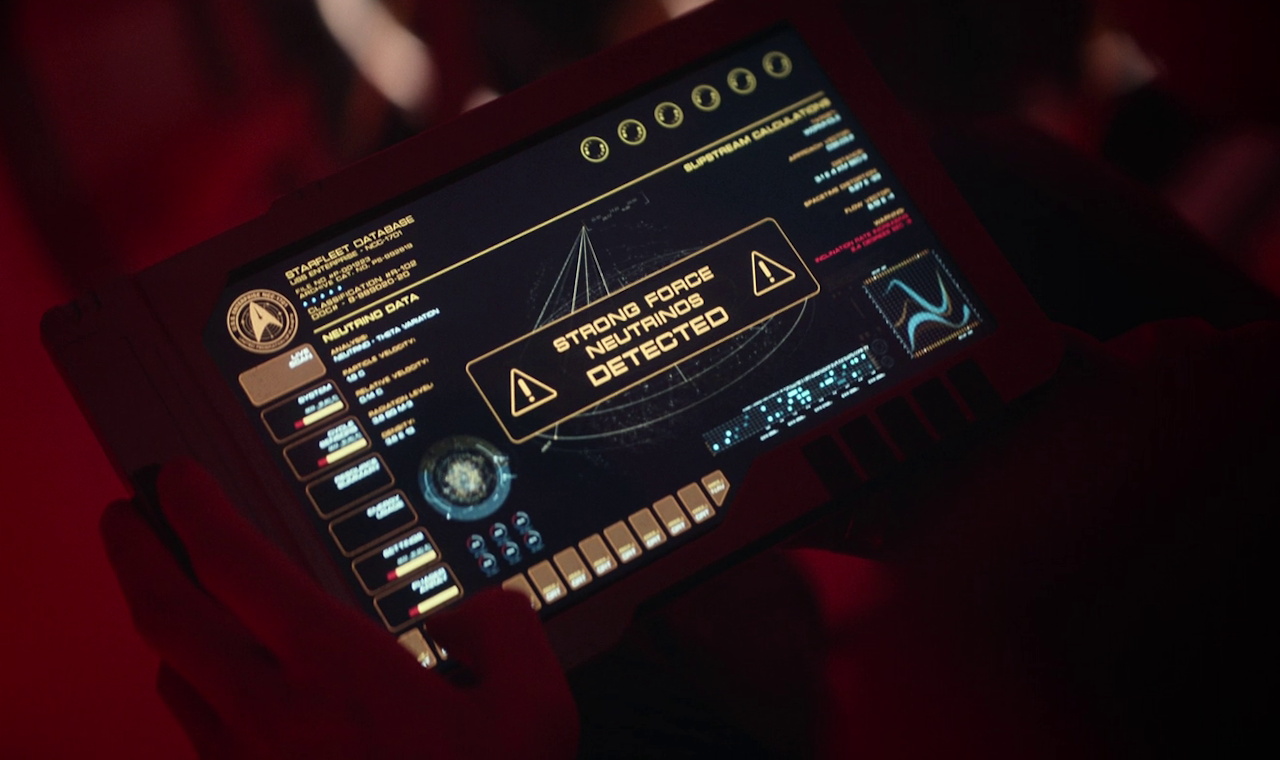
The technobabble macguffin that saved both M’Benga and the ship was, perhaps, a tiny bit lacking in explanation; we got some fun lines between Chapel, Pike, Scotty, and Pelia, but it felt a bit lightweight given the scale of what these “super-neutrinos” were capable of doing. Perhaps a stronger story would’ve used the neutrinos for one role, but not both – and found an alternative way to either save Dr M’Benga or refuel the ship. Again, that comes back to my point about the stakes and tension being cranked all the way up; in a story with marginally lower stakes, the magical neutrinos wouldn’t have needed to do *everything*.

Still frame from Star Trek SNW 4x06 showing a padd with neutrinos
These neutrinos sure are useful, eh?

Sticking with characters that Off-Hour endangered who, realistically, we knew were never in any danger… we also have Spock.

Again, as with Dr M’Benga, Spock was just a really odd choice for this kind of storyline. I appreciated the callback to Court Martial with the ion pod and how it could be jettisoned; that isn’t the issue. When the story really wanted us to feel that a main character was genuinely in danger of losing their life, the writers chose literally the only character from that group who couldn’t die. Dr Boyce, Una, or La’an could all have taken on Spock’s role in heading for the ion pod; there was nothing about it from either an in-universe point of view or for Spock’s character arc that meant it *had* to be him. And any of them – or the likes of Ortegas and other non-TOS characters – would’ve felt in danger in a way that Spock simply never did.

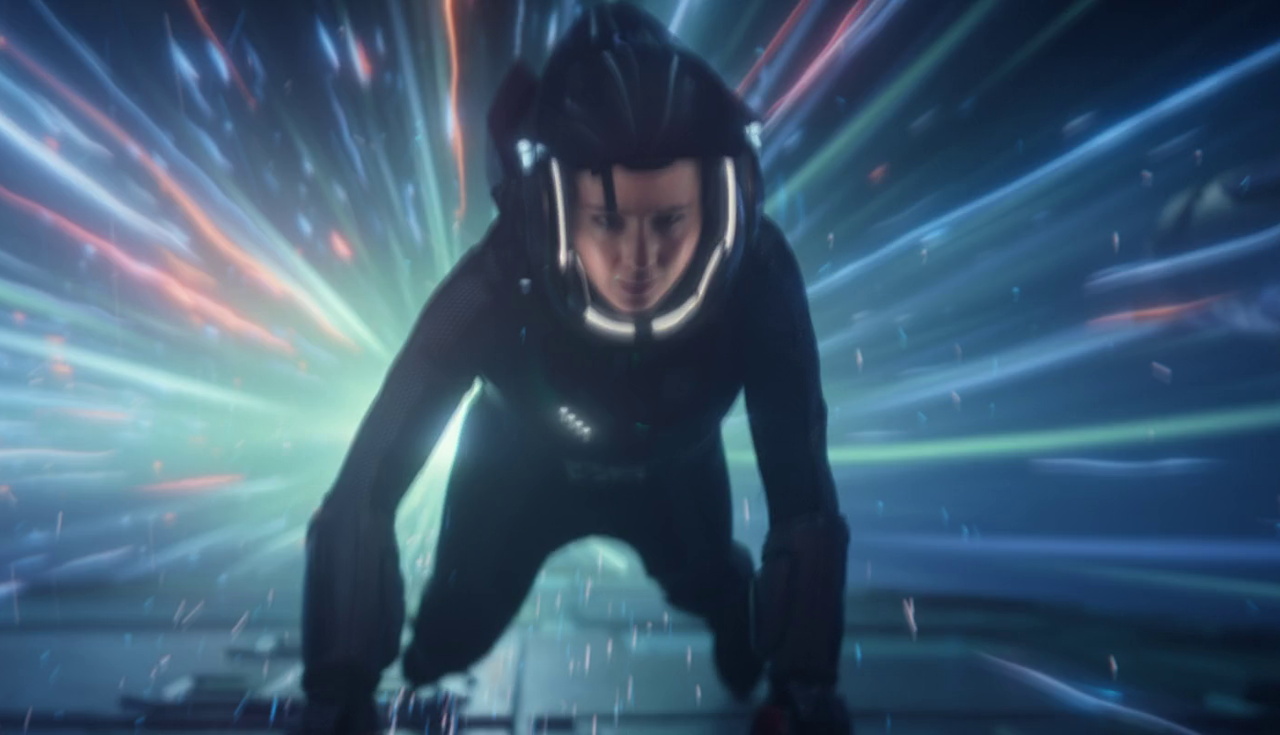
There were some creative visuals on this side of the story – Spock and La’an’s slow, painful climbs across the hull were both impressive-looking and tense. The animation work used to represent the wormhole and the neutrinos was fantastic. And on the practical side, Spock’s painful radiation burns were particularly gruesome, as was the visual of him spitting up blood. But the show’s status as a prequel, and the decision to put the one character who we know couldn’t be in any real danger into this situation, rather worked against this part of the story.

Still frame from Star Trek SNW 4x06 showing La'an in a spacesuit on the hull
La’an climbing over the hull.

La’an said it best herself: she’s “expendable,” at least in a narrative context! And given her concerns earlier in the season about her latent augment DNA, some kind of exposure to super-neutrinos or outer space radiation could be something that we follow up on in subsequent stories. Given that La’an had to go after Spock anyway, and her scene climbing over the hull was very similar to the one we’d just seen with Spock… I can’t help but feel that maybe other choices could’ve been made to make this storyline a bit more tense. Sending both characters out, one after the other, maybe even felt a tad repetitive – though I didn’t really notice that on my first viewing of the episode, to be fair.

La’an and Una had some great moments together in earlier episodes – particularly Season 1’s Ghosts of Illyria and Season 2’s Subspace Rhapsody, and I read their conversation here as a bit of a follow-up to that. That “big sister-little sister” dynamic hasn’t been as present with them lately, but it seemed to be back in play here. If – as I’ve repeatedly theorised this season – La’an may not be long for this world (or may be about to depart the Enterprise in some other way), then taking a moment to remind us of her friendship with Una is no bad thing.

Still frame from Star Trek SNW 4x06 showing La'an and Una
La’an and Una.

Is Strange New Worlds paying Anson Mount by the line, or something? Is that why Captain Pike has been such a small part of the show this season? On its own, Pike’s relatively small role in Off-Hour wouldn’t be noteworthy. He spent a good chunk of the episode unconscious, but he got a good moment of self-sacrifice as he risked his safety to activate the Enterprise’s deflector screens, and then got a moment later in the story when he had to make the tough decision to jettison the ion pod. But given how Pike’s roles across the season so far have been pretty minimal… I dunno. I continue to hope for more Captain Pike in what we used to call “the Captain Pike show,” I guess.

On its own, it wouldn’t matter. Off-Hour had good storylines for Scotty, Chapel, and M’Benga in particular, and Star Trek has *always* done episodes where some characters were more in focus than others. It just feels like we’ve now had five in a row where Pike’s role has been fairly small, and given that the original appeal of Strange New Worlds – the reason fans like myself were clamouring for more from this version of the character after his appearance in Discovery’s second season – was Anson Mount’s wonderful performance… well, it’s become noticeable. And I’d hope that we’ll get to spend a bit more time with the Enterprise’s captain between now and next season’s finale.

Still frame from Star Trek SNW 4x06 showing Pike
We don’t seem to be spending as much time with Pike this season.

Pelia has been one of my favourite characters in Strange New Worlds since she arrived back in Season 2, and I’m so glad to see her in the kind of mentoring role that this younger version of Scotty needs. Although I wouldn’t call Pelia and Scotty a “rare” or “unusual” pairing in the way I described above, they’ve had precious little time together since Scotty came aboard the Enterprise, sadly, and I’m glad that Off-Hour went some way to remedying that deficiency. The whole point of doing a prequel story for characters like Uhura, Spock, or Scotty is to show how they grew to become the people we’re familiar with, and given where Scotty started – and his existing relationship with Pelia – that’s something I’ve felt Strange New Worlds hasn’t really done enough of.

But Pelia got a genuinely enjoyable storyline this time, guiding Scotty less on the technical side and more in terms of boosting his confidence – and that’s *exactly* what this younger version of the character needed. I liked Scotty’s callback to the USS Stardiver (the ship he served on in Season 2, before he joined the Enterprise) and how his conversation with Pelia gave him enough of a boost to play a role in saving the ship.

Still frame from Star Trek SNW 4x06 showing Pelia in her quarters
Pelia’s just fantastic, isn’t she?

The only downside to this part of the story, really, is that Pelia’s confidence-boosting didn’t really lead to Scotty actively *doing* anything differently. He’d already made the adjustments to the ion pod and to the bussard collectors; all he really had to do was have faith that the ship would hold together despite passing its safe limits. And that was important, don’t get me wrong – we saw the genesis of Scotty the “miracle-worker,” willing to push the Enterprise and squeeze every last bit of juice from her engines! But what I mean is that, for all of Pelia’s nice words, it didn’t really change anything that Scotty *did* – with some slight changes, Scotty could’ve listened to something Pelia said and that might’ve given him a final boost to… I dunno. Technobabble something about an extra ounce of power to the deflectors; something to help the ship when it passed that threshold.

But that’s really just a nitpick. This Pelia-Scotty storyline was fantastic, and it’s something I’ve been waiting to see from Strange New Worlds for basically a season-and-a-half at this point! Scotty, since coming aboard, has kind of eclipsed Pelia in several engineering stories, and because she’s such a fun character, that’s been a little disappointing. So I’m really glad to see her in that senior role this time. It was also fun to revisit Pelia’s cabin and see some of the random nonsense she’s accumulated over such a long life! That will never cease to be a fun space to spend time in.

Pair of still frames from Star Trek SNW 4x06 showing Scotty and Pelia
This moment at the end of the episode was incredibly sweet.

A’Sha has been a bit of a non-entity so far this season. After what could’ve been a strong start in her initial scene with Uhura, she faded into the background quite quickly. But given the Strange New Worlds writers’ proclivity to put Vulcan characters into either slapstick comedy stories or soap opera-level romantic plots, it was a breath of fresh air to get a Vulcan who behaved… well, like a Vulcan, for once. And A’Sha’s scenes with Scotty this week were a lot of fun.

Even as the ship was in danger, A’Sha kept her head. She helped Scotty where she could, even coming up with the idea to turn off life support to non-essential areas of the ship, and later beaming him to just the right place to be able to make the modifications to the ion pod. I’m hoping there’s more to A’Sha than just being a “glorified redshirt,” like last season’s Ensign Gamble, but whatever may lay in store for the character, her scenes this week were pretty good – and by far her biggest outing of the season to date.

Still frame from Star Trek SNW 4x06 showing A'Sha opening the turbolift doors
Here’s A’Sha!

I wasn’t a huge fan of the 24-inspired clock or countdown on the screen. It did hammer home that (most) of the episode took place in real-time, which could’ve been fine, but after the first couple of appearances it just began to feel a bit gimmicky, to be honest, and I don’t think it really added a lot. The episode was already tense and dramatic – arguably just a little too much! And adding a ticking clock didn’t really do much for me to ramp that up much further.

What I liked a lot better, though, were the 24-inspired split-screen sections. Some of these were better than others, admittedly; a few of them were little more than just side-by-side close-ups of characters. But when they worked, they really worked, and it’s a creative technique that we don’t often see in Star Trek. The moving “wipes” from one character to another, and how the screen wasn’t always a perfect 50/50 split were also fun visual effects, and that kind of thing definitely helps Off-Hour stand out.

Still frame from Star Trek SNW 4x06 showing Chapel and Pike on a split-screen
One of the split-screen moments.

We mentioned Court Martial and the ion pod, and that was a fun callback. But one reference I never would’ve expected in a million years was to the TOS third-season episode That Which Survives. I don’t mean to be unkind, but is That Which Survives an especially memorable episode for you? Because it isn’t for me! So it was a ton of fun to get a deep cut to a random minor character from that episode: Lieutenant Rahda.

Rahda takes over the conn for the Enterprise’s beta shift (an earlier episode this season mentioned alpha and beta shifts, if I’m remembering correctly), and she’s the one who initially notices the problem of the warp-wormhole (or whatever we’re calling it). In That Which Survives, Rahda takes over for Sulu at the helm, so she kind of plays a similar role in both stories. It was a totally unnecessary callback – this could’ve been a brand-new character and she would’ve served the exact same function. But I love that Strange New Worlds went back to Star Trek’s past and pulled out a minor character like Radha for a moment like this. It adds depth to Star Trek’s world, and makes the franchise’s newest outing feel even more strongly tied to its first. In the sixtieth anniversary year… well, I love to see things like that.

Still frame from Star Trek SNW 4x06 showing Rahda and Pike
Rahda appeared in a Season 3 episode of The Original Series.

As the story unfolded, and especially as it seemed like both Dr M’Benga and the Enterprise were in mortal danger, I’m afraid I felt the hideous spectre of Level-Five Transporter Accident’s ending looming ever larger. If you read my review of last week’s episode, you’ll know that I felt the “but it was all just a dream” ending is probably the worst ending to an episode in the entire six-decade history of Star Trek, and when Off-Hour seemed to be writing itself into a corner, well… I began to fear the worst.

I didn’t think for a second that we’d get another identical “dream” story, but I did wonder whether – through some technobabble, perhaps – these super-neutrinos might rewind time or undo much of the episode’s story. Star Trek has done similar things on occasion, so it wouldn’t have been totally unprecedented. But after last week’s episode had so thoroughly shit the bed, I couldn’t *bear* the idea of another story being erased in any way, and as the tension ramped up and we got closer to the explosive conclusion… it was a real, genuine worry. The stench from Level-Five Transporter Accident’s ending will take time to dissipate, apparently.

Still frame from Star Trek SNW 4x06 showing the USS Enterprise in a wormhole
The Enterprise in the wormhole.

When Strange New Worlds was first announced, and before we knew anything about who would or wouldn’t be joining the cast, I wondered if we might see a new version of Dr Boyce. Boyce was the Enterprise’s doctor – and Pike’s counsellor of sorts – in The Cage, but obviously the Strange New Worlds team chose to adapt Dr M’Benga instead. So it was a real surprise, then, to see Dr Boyce in this episode – and to learn that he’s apparently playing second fiddle to Dr M’Benga after returning to the Enterprise from a different posting.

I gotta be honest: this version of the character seemed a lot harsher and less personable than the Dr Boyce from The Cage, to such an extent that they almost don’t feel like the same individual. I think it’s possible that Dr Boyce might reappear either later this season or next season, so maybe we’ll get to spend a bit more time with him and reestablish that softer or more personable side, or there could be a conflict looming with Dr M’Benga. Given that M’Benga might be on his way out… Dr Boyce could have a role to play in facilitating that, perhaps.

Still frame from Star Trek SNW 4x06 showing Dr Boyce
Dr Boyce.

I did like Dr Boyce’s no-nonsense approach, though. He was calm and professional, even under pressure, and although he might’ve seemed quick to dismiss Chapel’s pleas to try to save Dr M’Benga, that came from an understandable place. M’Benga’s life was only saved by magical nonsense, if you think about it, and Dr Boyce had other patients in need of treatment, so his attitude makes sense. I still think that he didn’t have quite the same charm or bedside manner as he did in The Cage, but given the stressful situation, I could understand where it was coming from.

Again, as with the ion pod and Lieutenant Rahda, this was a fun callback in this big anniversary year. It was also nice to get some (admittedly belated) explanation as to why Dr Boyce was no longer the Enterprise’s CMO after the events of The Cage, as that filled in a little bit of backstory in between events we’ve already seen on screen. As above, this character’s role in Off-Hour could’ve gone to someone brand-new, but returning to someone from Star Trek’s past – someone quite important, in this case – worked well and was a fun little callback for Trekkies.

Still frame from The Cage showing Dr Boyce
Dr Boyce, as he appeared in The Cage.

Speaking of callbacks, the damaged engineering being sealed off reminded me of a similar moment in Generations, shortly before the destruction of the Enterprise-D’s stardrive section. The engineer who sealed the room also had some pretty painful-looking radiation burns (and I have to assume that he, along with several of his colleagues, won’t have survived if they were sealed inside the irradiated engine room). This character was functionally little more than a redshirt, I guess, but it was nice to see engineering so lively and populated at the start of the episode; we’ve hardly spent any time in main engineering, really, even after Scotty joined the show, yet it’s such a fun space.

One thing that confused me was Dr M’Benga’s line about the temperature outside Sickbay being “-400 degrees.” Is that a Fahrenheit thing that I’m too non-American to get? Star Trek has (usually) used metric measurements in the past, and the temperature of outer space is famously -270° C. It just seemed like a very odd thing for Dr M’Benga to say – either he was exaggerating, delusional from his injury, or just… I dunno. It felt like a bit of an oddity, though.

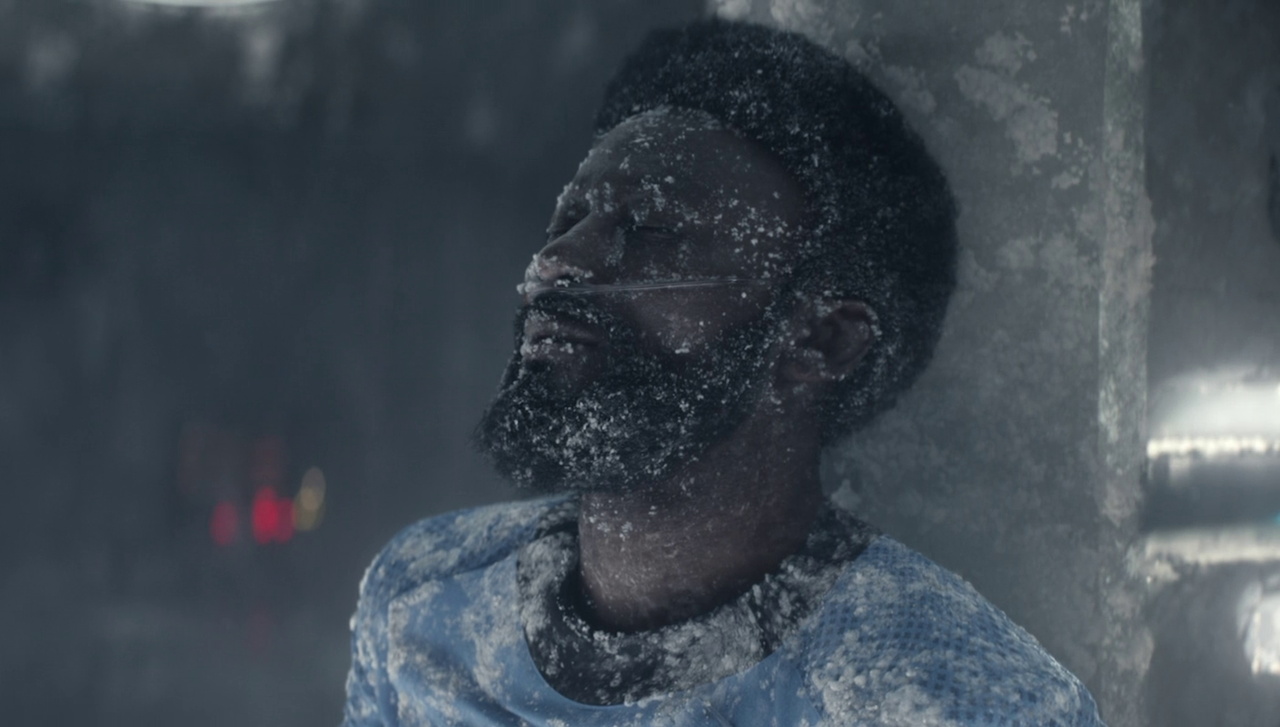
Still frame from Star Trek SNW 4x06 showing Dr M'Benga frozen
A Dr M’Benga popsicle.

So that was Off-Hour. A good episode, but perhaps one that didn’t take full advantage of its unique premise.

Jess Bush and Martin Quinn were, for me, the standout performers this week. Both ran the gamut of emotions, taking their characters through very difficult and complex situations and journeys, and Scotty in particular has taken a massive step closer to the man we remember from The Original Series. There were several fun callbacks to Star Trek’s past, helping Off-Hour to feel just a little bit celebratory with Star Trek’s big anniversary right around the corner, and the episode put together a strong story… albeit one where the drama was just a notch or two too high for my personal taste.

Still, it’s one of the best episodes of the season without a doubt, and as things stand right now, I’d happily put Off-Hour in a hypothetical “top ten” of my favourite episodes from the entire show. After last week, Strange New Worlds desperately needed a palate-cleanser, and I’m pleased to report that Off-Hour successfully delivered on that.

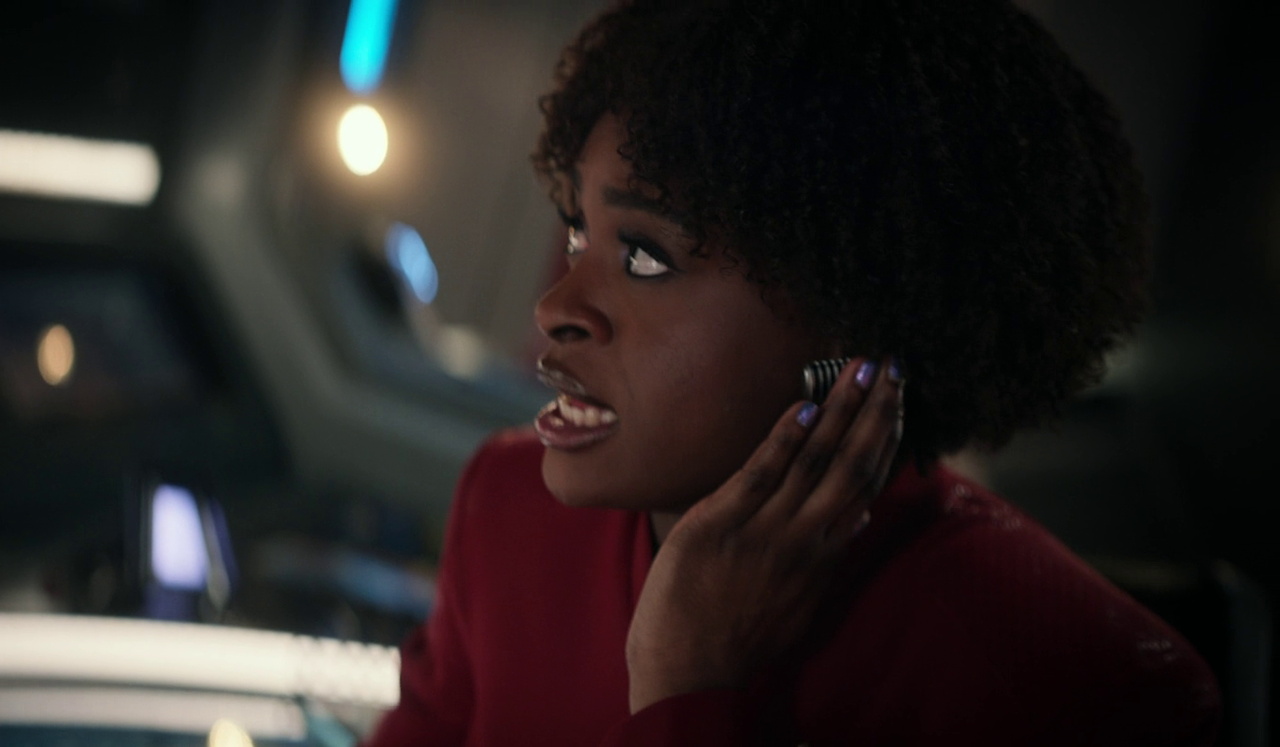
Still frame from Star Trek SNW 4x06 showing Uhura
Uhura.

I hope this has been interesting… and you aren’t *too* jealous that I’ve now met Christina Chong, Ethan Peck, and Martin Quinn! I definitely felt that there was a low bar for this week’s episode after *that* ending last time, but even with that in mind, I think Off-Hour was good.

Next week, Like Chronitons Through the Hourglass promises to trap the crew inside “a soap-opera reality.” So… Star Trek: Discovery, then? Jokes aside, I’m not sure if I like the sound of that premise, to be blunt. We’ve already seen episodes like A Space Adventure Hour and The Elysian Kingdom doing these kinds of “what if Star Trek… but different?” ideas, and they haven’t all worked as well as I’d have liked. However, I shall endeavour to go into it with an open mind, and if nothing else, I like the idea of Captain Pike potentially taking centre-stage again.

So hopefully you can join me next week for that review! Thanks for checking out my thoughts on Off-Hour, and if you missed them, you can find the rest of my Strange New Worlds reviews by clicking or tapping here. And maybe, sometime soon, we should return to TNG’s Disaster for a re-watch! Until next time… and Live Long and Prosper, friends!


Star Trek: Strange New Worlds Seasons 1-4 are available to stream now on Paramount+ in countries and territories where the platform is available. The first three seasons are also available on DVD and/or Blu-ray. The Star Trek franchise – including Strange New Worlds and all other properties discussed above – is the copyright of the Skydance-Paramount corporation. This review contains the thoughts and opinions of one person only and is not intended to cause any offence.

Star Trek: Strange New Worlds Episode Review – Season 4, Episode 5: Level-Five Transporter Accident

A Star Trek-themed spoiler warning

Spoiler Warning: There are spoilers ahead for Star Trek: Strange New Worlds Seasons 1-4. Spoilers are also present for the following Star Trek productions: The Next Generation Season 6, Into Darkness, Lower Decks Season 2, Discovery Season 3, and Starfleet Academy Season 1.

Well… uh… where to start?

Last week, I began my review of A Case of Chiaroscuro by telling you that I always try to keep in mind what an episode of Star Trek was intending to achieve – and how well it measured up to its ambitions – when writing my reviews. That doesn’t mean I’m being “objective” in any sense of the word, but rather than just telling you whether I personally liked an episode or not, I think it’s important – *especially* in a series like Strange New Worlds, which regularly dips its toes in different genres and styles of storytelling – to try to gauge what an episode wanted to be rather than merely make a snap judgement about the final product.

But I gotta be honest: I’m having a hard time doing that with Level-Five Transporter Accident.

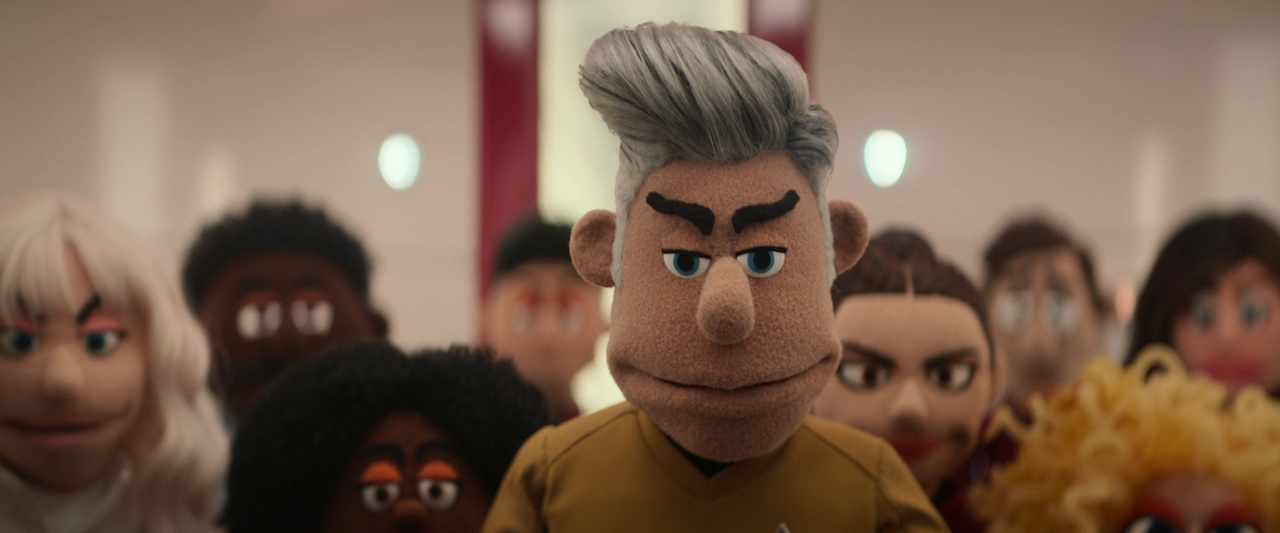
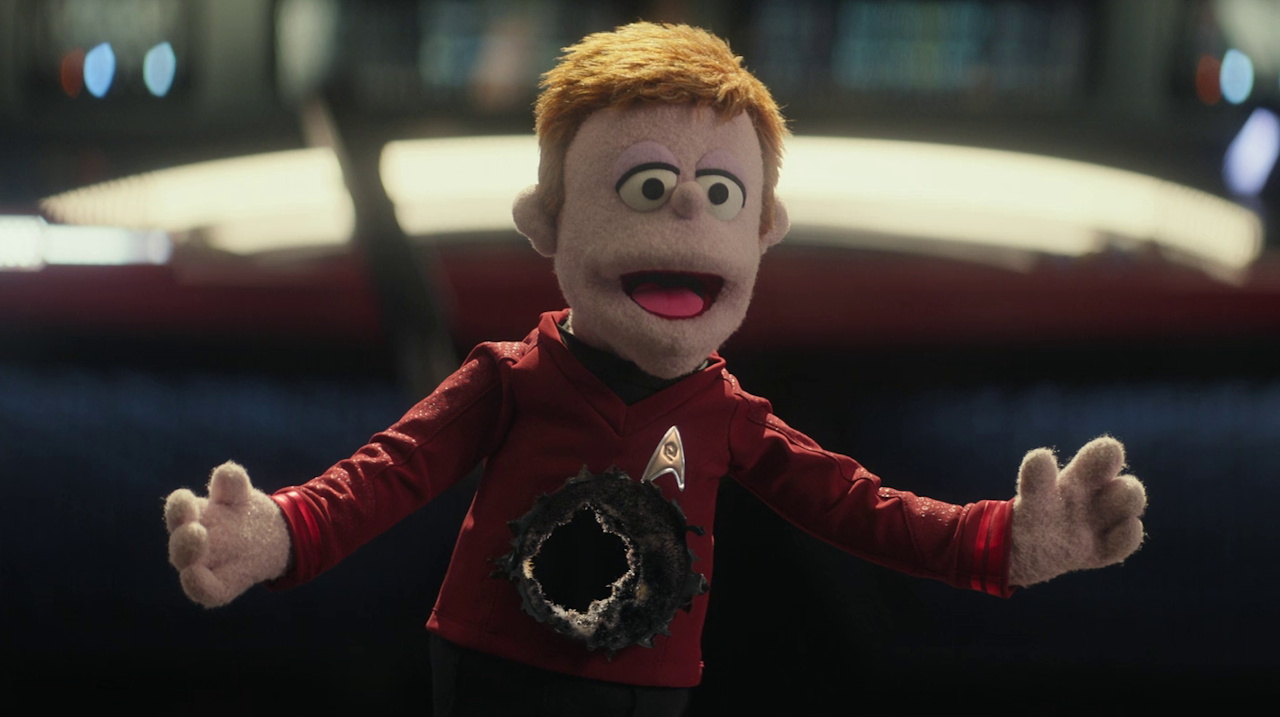
Still frame from Star Trek SNW 4x05 showing puppet Pike
It’s Captain Pike…

The Muppets, upon which the episode draws inspiration, is inherently silly. And if there’s one word I’d use to describe this week’s episode, it would be “silly.” I mean that in an almost entirely negative way, unfortunately, because while I can respect that Level-Five Transporter Accident knew exactly what it was doing and just went for it in the most honest yet unhinged way… the finished product was, to be blunt, a complete mess.

For a lot of Trekkies, and whatever wider audience might still be watching Strange New Worlds, this will undoubtedly be seen as the moment where the series “jumped the shark,” if it hadn’t already done so after episodes like Subspace Rhapsody.

As I said last week in response to the “film noir” black-and-white episode: I can respect the commitment to the bit. The writers, the director, the designers, the cast… everyone involved knew what kind of story they wanted to tell and they whole-heartedly embraced the silliness. There was even an *attempt* at a message, I think… about trauma and stress, the importance of talking it out, and, perhaps, how leaning into the absurd can be helpful. That messaging, however, was lost in a bumbling, childish mess of an episode, and an ending that utterly ruined whatever could’ve been salvaged.

Still frame from Star Trek SNW 4x05 showing Spock's video call with T'Pring
There could’ve been a story about trauma, stress, and burnout.

When I write these reviews, I try not to come across as one of *those* Trekkies – the ultra-nerdy folks who hyper-fixate on the tiniest minutiae of “canon,” who can’t accept that Star Trek has a sense of humour, or who refuse to acknowledge that the franchise changes and evolves over time. I don’t want to gatekeep the fandom, rain on anyone’s parade, or sound like I’m insisting that Star Trek should always be uptight and taking itself 100% seriously. Episodes like that can be great, sure, but part of the franchise’s appeal has always been its light-hearted moments and its sense of humour, and the last thing I ever want to be accused of is taking Star Trek “too seriously.” There’s a place for comedy, joking around, and completely unscientific absurd premises in Star Trek… and there always will be for as long as the franchise exists.

But… even with that in mind, and even having appreciated the genuine successes of the likes of Human Best Friend a couple of weeks ago, or some of the more overtly comic offerings in Lower Decks, I’m afraid that Level-Five Transporter Accident was, for me, a bridge too far. There were a handful of interesting ideas in the mix – and I promise we’ll cover them as we go along – and in terms of the way the puppets themselves were designed, operated, and brought to life… I don’t really have much to criticise. But the story just didn’t do it for me at all, and any potentially salvageable moments were completely expunged by what is literally the most clichéd, “avoid-this-at-all-costs-even-if-it’s-your-first-time-writing-anything” ending.

Still frame from Star Trek SNW 4x05 showing Spock with the T'Pring puppet
The episode’s ending was probably the worst in the entire franchise to date.

I mean… “it was all just a dream.” Seriously? Is that the quality level we should accept from Strange New Worlds? Or *any* big-budget streaming series? If that’s the best thing this group of writers could come up with to end the story, then thank god Strange New Worlds is almost at the end of its run. I’ve talked before about the potential upsides to Star Trek getting a bit of a refresh in the years ahead, and that kind of absolutely pathetic, awful, clichéd way to end an episode absolutely hammers home the need for new producers, writers, directors, and creatives. I hope the new Skydance-Paramount team is planning to have a proper clearing of the decks.

I will return to discuss the ending a bit later on, but for now… let’s get into the weeds with Level-Five Transporter Accident as best we can.

This was the first Strange New Worlds episode where a big part of the premise – i.e. the Orions’ attempts to capture the Enterprise – felt derivative. Not just because we’ve seen this in Discovery with the Emerald Chain, or as far back as The Next Generation with Starship Mine… but because Strange New Worlds itself literally did a “pirates are taking over the ship” story back in Season 1. The Serene Squall had a very similar setup, minus the puppets, and again, as I said above, if we’re at a point of recycling pretty basic narrative ideas because no one can come up with anything better… it’s time to let someone else take the helm, you know?

Still frame from Star Trek SNW 4x05 showing the Orions
Haven’t we already seen this story?

The Serene Squall also put Spock in a comparable position as the pirates’ captive, one of the only main characters aboard the Enterprise able to do anything, and talking about his personal life with one of his captors. It was just derivative and repetitive all around to see so many of those same points re-used this time. And that wasn’t the only “Spock recycled” aspect of Level-Five Transporter Accident, sadly.

It’s been clear for a while that Strange New Worlds’ writers have latched onto this idea that “these autistic-coded Vulcans are all stuck-up, stoic, and weird… isn’t that just hilarious?” And they seem to want to throw Spock (and other Vulcan characters) into one of two situations: slapstick/cringe comedy or soap opera romance. And both of those were present in Level-Five Transporter Accident. As I said last season (I think it was in my review of Four-and-a-Half Vulcans): if the writers don’t know how else to use Spock, or what other storylines could work for this incarnation of the character… just don’t use him in a major role. It’s okay! Star Trek is sixty years old, and between Discovery, Strange New Worlds, The Original Series, the movies, The Next Generation, and the Kelvin timeline, we’ve spent plenty of time with him! Instead of doing another tired, overused, pretty boring “Spock comedy” or “Spock love triangle” plot for the eighth or tenth time, respectively, just… don’t. Level-Five Transporter Accident would genuinely have been a better story if another character – La’an, Una, Chapel, Dr M’Benga, or even Scotty – had taken over Spock’s role.

Still frame from Star Trek SNW 4x05 showing Spock captured by an Orion pirate
Spock is taken captive by pirates. Again.

Spock’s break-up with La’an – or rather, hers with him – was fine, I guess, and not unexpected after events earlier in the season. It does seem to stack more evidence in the “La’an might not be long for this world” column; a theory I’ve been toying with since La’an (clumsily) brought up the question of her latent augment DNA in the season premiere. Giving Spock a romantic interest has – as I said above – completely run its course for me as an interesting storyline, and seeing Spock sleep his way through the Enterprise’s female crew complement hasn’t been the best part of the show by any stretch. So I’m fine with this relationship coming to an end.

Season 4’s tagline/motto is: “boldly go one step closer to where it all began.” And I think we can see Spock and La’an’s break-up through the lens of the show moving its characters around to get them closer to their Original Series roles. Other aspects of Level-Five Transporter Accident arguably work against that for Spock, but this break-up, and the way both of them handled it, was far from the worst part of the story. Did I roll my eyes when it looked like we were about to get another “Spock in love” or “Spock’s heartbroken” storyline? Yeah, a little. But the positives probably outweigh the negatives, and I did appreciate that both characters referenced the events of The Griffin Incident, noting that what happened aboard that derelict ship has been weighing on them. Whether that’ll set up something more for Spock, La’an, Kirk, or all three, I’m not sure – but I’m glad, at least, that such a traumatic experience wasn’t simply locked away, never to be mentioned again. If this conversation is all the follow-up we get, at least we can say we got *something*.

Still frame from Star Trek SNW 4x05 showing La'an breaking up with Spock
La’an and Spock have broken up.

Level-Five Transporter Accident was known as “the puppet episode” for more than a year, I guess, ever since we caught a glimpse of one of the puppets in a pre-season teaser clip. If Star Trek is gonna do an episode featuring puppets, it’s important that the puppets themselves look good – and I gotta say that they really did.

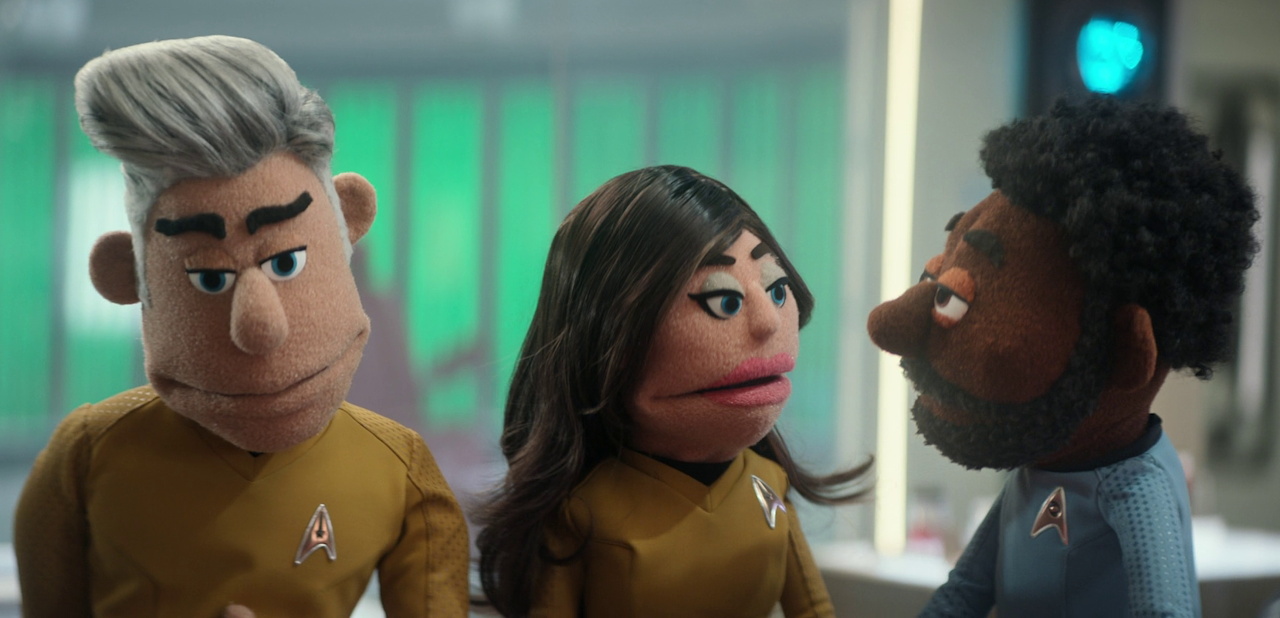
Paramount worked with The Jim Henson Company – famous for its work on The Muppets, Sesame Street, The Dark Crystal, and other puppet-focused projects. And this was a genuinely good choice; The Jim Henson Company is light-years ahead of any other puppet shop in the industry when it comes to creating something like this. And that partnership paid dividends – at least in design and aesthetic terms. All of the puppets – yes, even Pelia’s – looked fantastic, they all resembled the real-life versions of the characters they were supposed to depict, and the way they moved and (for want of a better term) emoted was exaggerated, but mostly in a fun way.

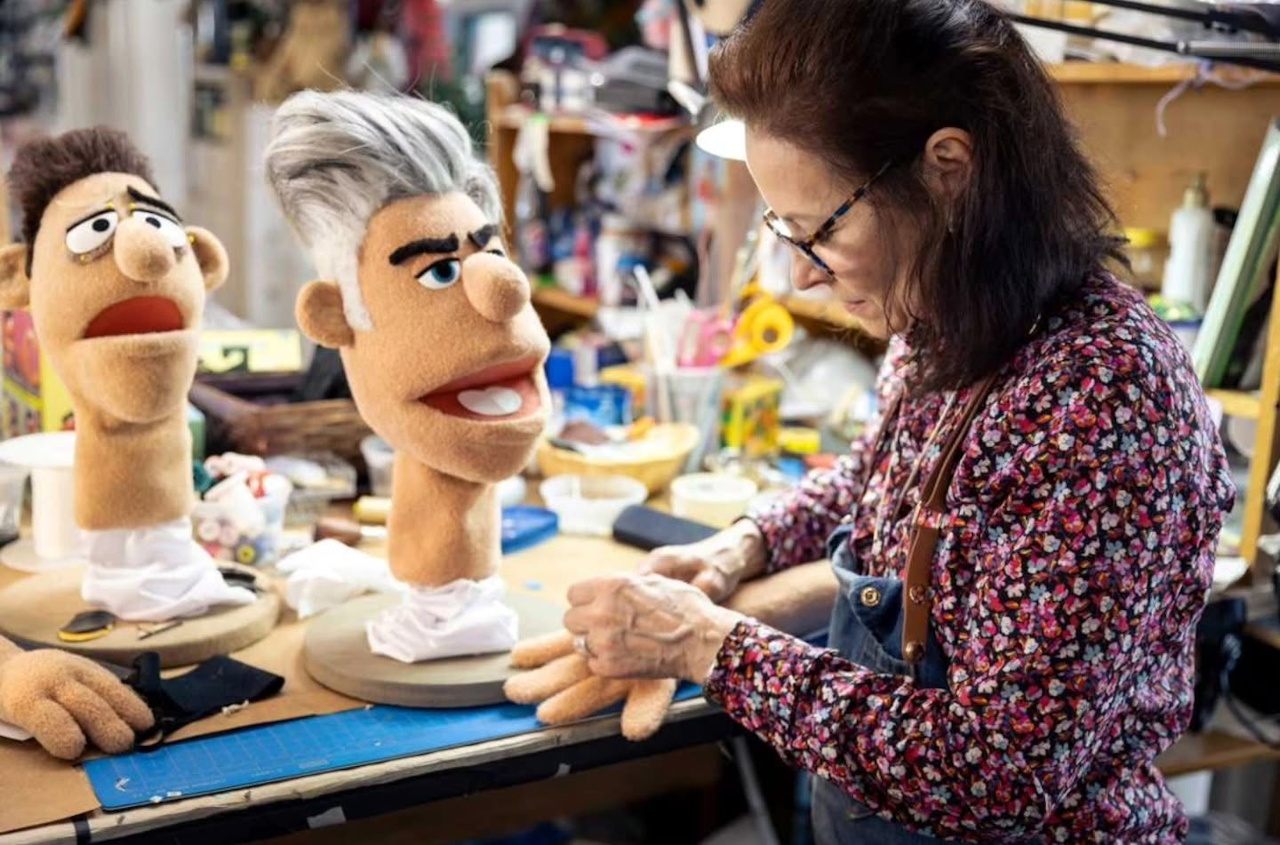
Behind-the-scenes photo from Star Trek SNW 4x05 showing the puppet shop
A puppet-maker creates the episode’s puppets.

The puppets themselves are not the problem with this story – and I know that sounds a bit weird, given everything we’ve talked about, but let me try to explain what I mean.

I felt that the puppets themselves looked fantastic, they moved well, were well-articulated, and although prone to exaggerated expressions and movements, that kind of thing *could* work if it had been part of a stronger story. Most of the main cast put in solid voice performances – though I would say that Christina Chong and Celia Rose Gooding in particular seemed to over-exaggerate just a bit too much for my ears. But a combination of great-looking puppets and a cast who’ve inhabited these characters for three-and-a-half seasons was generally pretty good.

They were let down, though, by a story that was just too wacky and silly.

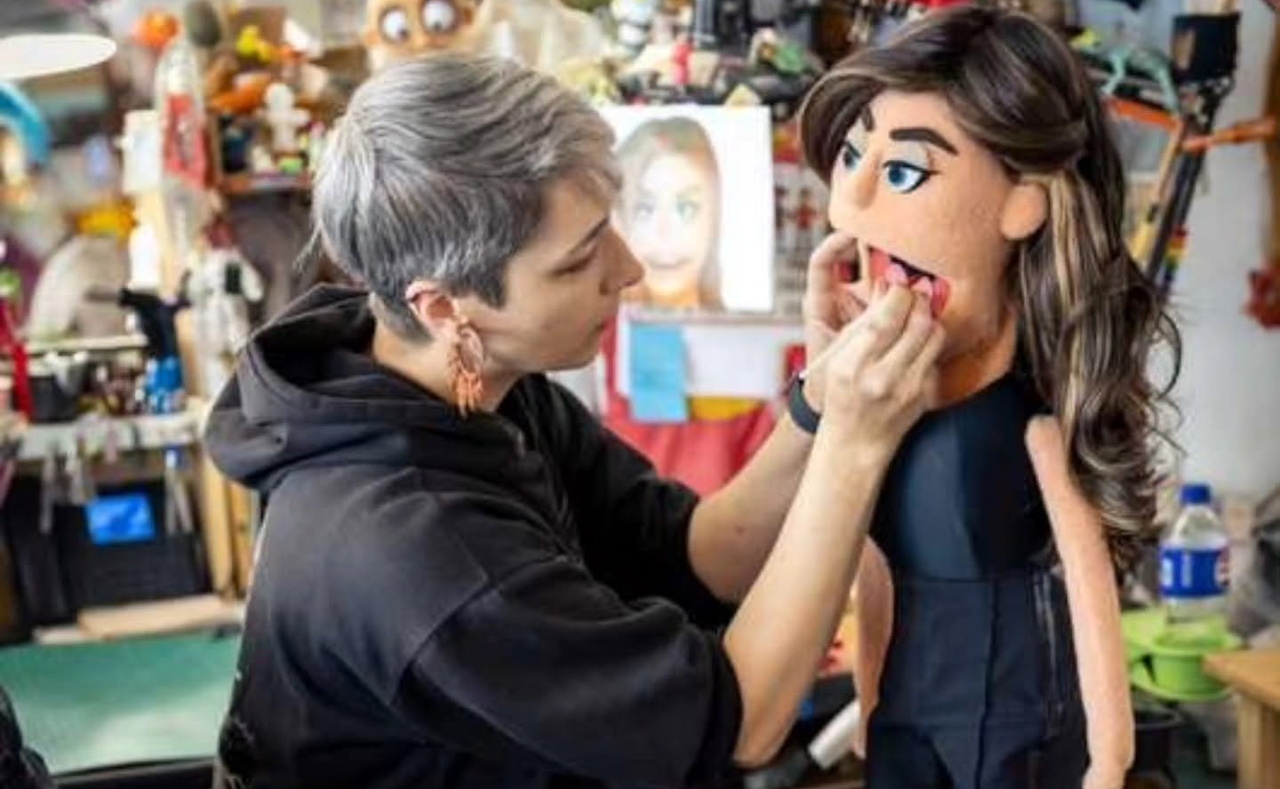
Behind-the-scenes photo from Star Trek SNW 4x05 showing the puppet shop
Una’s puppet being worked on behind-the-scenes.

What might’ve worked better is if the *entire* episode had been done with puppets – Spock included, and any villains or aliens, too. And, just like last week with the black-and-white, or like Human Best Friend with its “atmosphere that makes you drunk,” some hand-wavey line of technobabble could’ve explained why everything looked like that. Or… maybe it didn’t even need that. Maybe just play it straight: do a regular Star Trek episode, just… with puppets. That would’ve almost certainly been better than what we got.

I almost feel like there’s no point in dissecting Level-Five Transporter Accident’s main narrative because of the absolutely pathetic “it was all just a dream” ending. But I suppose we should, if only to criticise what didn’t work, eh?

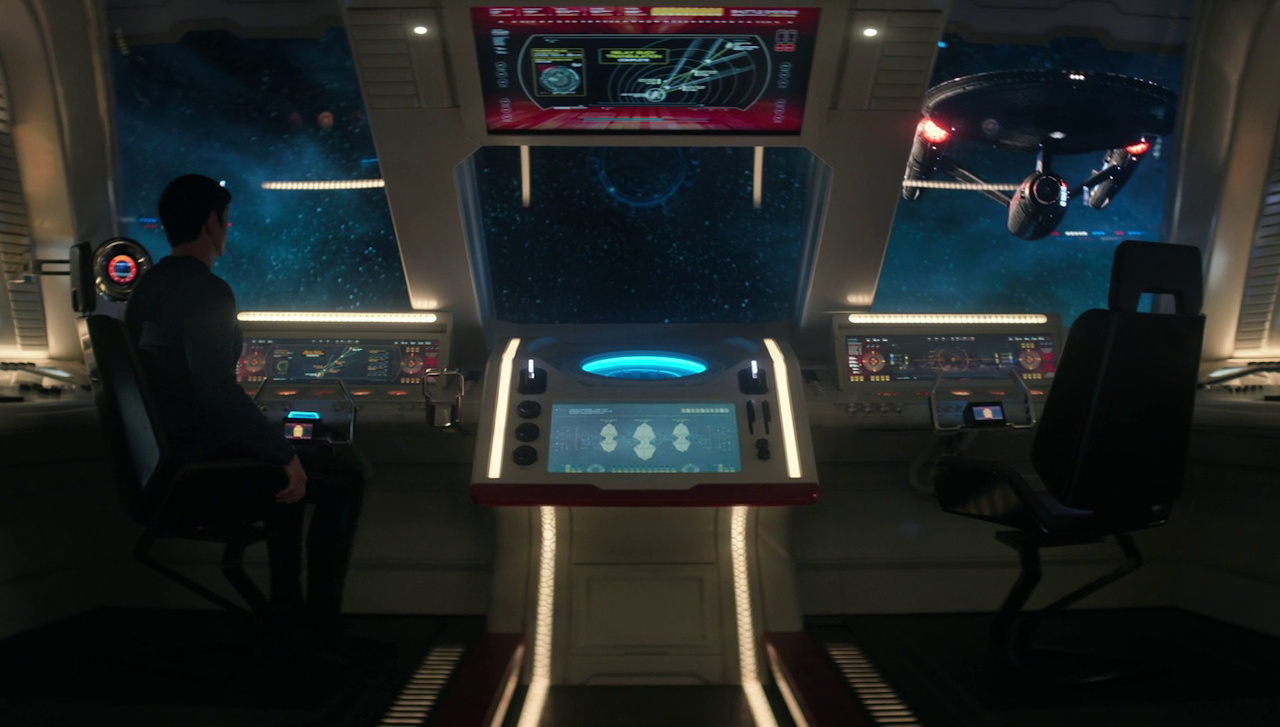
Still frame from Star Trek SNW 4x05 showing Spock, the Enterprise, and a shuttle cockpit
I liked this shot of the Enterprise from the shuttle’s cockpit…

Star Trek has done silly “the transporter done goofed” storylines before. Crossing over to alternate dimensions, fusing two characters together at the molecular level, and perhaps the most apt comparison in terms of both narrative and comedic tone: when The Next Generation turned Captain Picard, Guinan, Ensign Ro, and Keiko O’Brien into children. That premise is not a million miles away from what we got in Level-Five Transporter Accident, with the de-aged characters having to fight off a Ferengi invasion of the Enterprise-D. And the resulting episode is genuinely enjoyable; it was a fun premise that was well-executed.

I had Rascals in my notes ahead of Level-Five Transporter Accident because I wanted to use it as a point of comparison to show that Star Trek has always had this comedic side, and that similar premises have worked well in previous incarnations of the franchise. And when I read the blurb for this week’s episode, it was literally the first thing that came to mind. I thought it could be a fun comparison, but also a reminder to some of *those* Trekkies – the “nu-Trek” haters who seem to insist that Star Trek always has to be straight-laced and super serious – that the franchise has always done similar absurd ideas… and generally made them work.

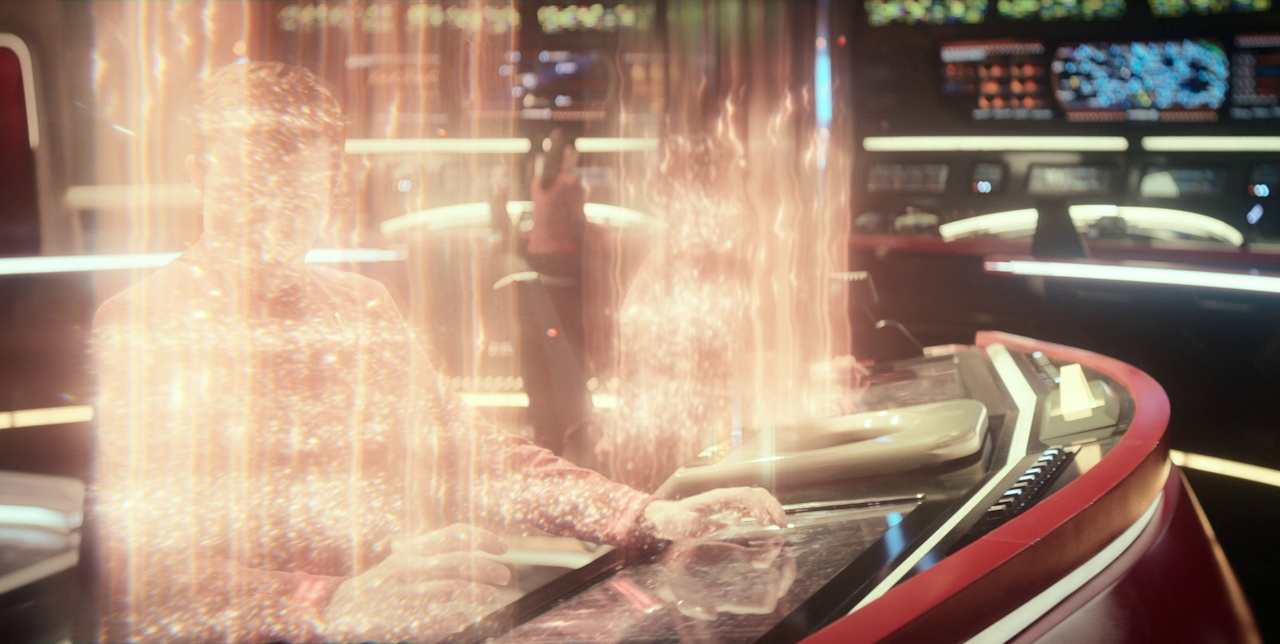
Still frame from Star Trek SNW 4x05 showing Ortegas, the helm console, and transporter beams
Plenty of “transporter accident” stories have worked well in the past.

But I think Rascals now serves as a different kind of comparison: it shows how that kind of story, using a very similar setup, can work well in Star Trek… if you have the writing quality to back it up. And for me, Level-Five Transporter Accident absolutely did not.

I’m saying all of this because I really want two incredibly important points to come across in this review. One: I wanted to like Level-Five Transporter Accident. I wanted to enjoy the comedy, the inherent silliness of the premise, and to get a fun, light-hearted adventure with Pike and the crew. And two: I really gave the episode a chance to impress me. I went into it with an open mind, not pre-judging it or thinking I’d end up disliking it, and I’d even prepared, in my notes, points of comparison from Star Trek’s past to – for want of a better term – defend its honour against some of the lines of criticism that I could tell were going to come from certain corners of the fan community.

The tl;dr? I *really wanted* to come away from Level-Five Transporter Accident having had a whale of a time, and I hoped to be able to tell you that this silly idea, despite what some naysayers might think, had just plain *worked*. But I can’t. Because it didn’t.

Still frame from Star Trek SNW 4x05 showing puppet Pelia
Pelia was great, though. She’s always great!

There was enough of a technobabble excuse from Scotty, who had concocted a long-range beaming scheme, to make the core “everyone’s a puppet now” idea believable enough within our understanding of the Star Trek galaxy. Is it unscientific to a ridiculously silly degree? Sure. But so are a ton of things in Star Trek – from brain-stealing aliens and god-like tricksters to time-loop paradoxes and sexy ghosts – so I think we could have overlooked that in a stronger story.

I also felt, on Scotty’s side of the story, that his transporter-range-extension plot made sense. We know, thanks to Star Trek Into Darkness, that Scotty eventually developed something known as “transwarp beaming,” a way of massively extending the range of transporters that enabled someone on Earth to beam all the way to Qo’noS – a distance of dozens of light-years. So, if we look at the season’s core premise – moving these characters closer to their original incarnations – we know that Scotty’s work on long-range transporting is something that fits with his character. And after emerging from transporter suspension in the late 24th Century, he’d continue to work on it.

Still frame from Star Trek SNW 4x05 showing Scotty
There was a believable enough core to Scotty’s story which this episode could have tried to build on.

That technobabble, and Scotty’s obsession with outdoing an old Academy rival, could have set the stage for a believable (or believable enough) “the transporter done goofed” story. And in addition, an episode of Lower Decks’ second season also saw a character turned into a puppet, only to have that process reversed so he could continue to serve aboard the USS Cerritos. So if you wanna be technical, we’ve already seen this kinda thing before. In “canon,” puppets can exist in Star Trek, and being turned into a puppet is not necessarily a death sentence!

But… all of that would’ve needed the main thrust of the story to be better, stronger, and more engaging.

And not to be undone with seconds to go right at the end with the “but it was all just a dream” cliché.

Still frame from Star Trek SNW 4x05 showing Scotty, M'Benga, T'Pring, and Chapel as puppets
Several of the puppets.

After being puppet-ified, we get into the repetitive “pirate attack” and “Spock’s been captured” storylines from Season 1… only worse. The Orions were so one-dimensional, slapstick, and just plain *stupid* that they were impossible to take seriously as a threat to anyone, and while I can recognise that the way they were written is clearly drawing inspiration from the same slapstick comedy as The Muppets… it just didn’t work in this context. Even going back to the episode to re-watch it, knowing that it’s all just a dream and that they aren’t real people… they just don’t work as villains.

I’ve said a few times, when Strange New Worlds has done one of these “big swings” in terms of genre, that I can respect the commitment to the bit; that fully and whole-heartedly embracing the tropes of whatever genre of style of storytelling the show’s trying out is, in some ways, admirable. Even if I didn’t like the finished product, I can at least acknowledge that the writers and creative team totally went for it, and they jumped in head-first to this kind of Muppets-inspired slapstick comedy.

Still frame from Star Trek SNW 4x05 showing puppet La'an and an Orion
Puppet La’an beating up an Orion pirate.

But committing *so hard* to any “bit” means you import all of the genre’s weaknesses and flaws. Last week, that meant Strange New Worlds didn’t just get the black-and-white, the soft-focus close-up shots, and the smoke-filled alleyways of film noir, but the cardboard cut-out secondary characters and unnecessary melodrama, too. And this week, it means that the episode was plagued by ridiculously over-the-top slapstick baddies that came right out of children’s television, a paper-thin, repetitive story that the show has literally already done, and the most pathetic cop-out ending that would earn you a grade F even in a primary school creative writing class.

There were *some* positives and creative ideas, though – at least until the ending ruined all of them.

Pike’s assertion that the crew had to “think like puppets” if they were going to help Spock and retake the ship made sense in context, and I clocked pretty early on that the best way for the apparently immortal puppets to outmanoeuvre the Orions would be to turn off life support. The way it was executed – i.e. the slapstick fight on the bridge – went on a bit too long, but they got to the right answer even if it dragged out a bit.

Still frame from Star Trek SNW 4x05 showing Pike floating at the window
Captain Pike floating in space.

There was creative potential in the “the puppets are basically unkillable” idea that parts of Level-Five Transporter Accident took advantage of. Pelia being sliced in half was simultaneously brutal and kind of funny, the unnamed navigator getting a hole blasted right through him (and then just staying like that for the rest of the episode) was also neat, and there was a genuinely beautiful – if admittedly absurd – moment as the puppet-ified crew floated in space, taking full advantage of their puppet forms to do something they’d never be able to do otherwise.

Star Trek, from its inception, really, told stories that had real-world parallels or messages that could be important. And I can appreciate Level-Five Transporter Accident’s attempt – however flawed and ultimately disappointing it may have been – to showcase how trauma and stress can impact even the most disciplined mind. This was the arc intended for Spock – to show how he’s been struggling, and how piling too much work on one individual, even if there seems to be a good reason for doing so, can lead to burnout and mental health struggles. We can debate whether *Spock* was the right character for this kind of storyline, but I think that’s all pretty much a moot point in light of the way the story ended.

Still frame from Star Trek SNW 4x05 showing Spock with puppet Pike in the background
A better story could’ve made more of the stress and burnout angle.

But as a broader point, I’ve always tried to support the Star Trek franchise’s examinations of real-world issues through the lens of sci-fi, and there were some ideas in Level-Five Transporter Accident that a stronger core story could’ve made more of. Spock isn’t just suffering because of workplace stress, but he’s still unsettled by what happened to him aboard the USS Griffin – a traumatic incident – and then, on top of that, his girlfriend dumps him. That sets the stage for Spock to be feeling down and just not at his best, before the stress of being the only one on the ship capable of operating anything at all pushes him over the edge.

A more grounded story could’ve taken a different approach to stress, burnout, and mental health, and what resulted would’ve certainly been more impactful with its messaging. I guess you could argue that the ridiculousness of the puppet dream is part of the point; a character like Spock would only ever have such an absurd dream *because* of the mental health struggles he was going through, and that the way he was forced to play every role on the ship when everyone was puppet-ified was a manifestation of how he’d been feeling. But… well, a story like that needed stronger, more down-to-earth writing if that was the intention, and while I can respect the core idea, and I think there’s merit in Star Trek looking at issues like workplace stress, burnout, and so on, this way of communicating it was poor.

Still frame from Star Trek SNW 4x05 showing the puppet tower and cloak
A tower of puppets…

What can I even say about “it was all just a dream,” though?

Literally *any* good points that Level-Five Transporter Accident might’ve been able to claim to have had simply evaporated; they went up in smoke as soon as Spock woke up. I had in my notes that there were some positive ideas in the mix, even if the story’s slapstick comedy and childish tone worked against them most of the time, but when the episode’s final scene revealed that none of it was even real? I was genuinely stunned by the sheer *audacity* of whoever wrote that, whoever approved that story beat, and Strange New Worlds as a whole.

If I’d been the show’s executive producer or showrunner, and you were the writer who showed up with *this* way of ending the story? You’d have been fired on the spot. This is the kind of narrative cliché that literal primary school children are warned to avoid. To see it as the honest-to-god ending to a brand-new Star Trek story in 2026 is… I mean, I don’t have the words for it.

Still frame from Star Trek SNW 4x05 showing Spock and T'Pring at the "but it was all just a dream" ending
Who in their right minds would’ve written an ending like this?

Actually, I lied. I *do* have the words.

Pathetic. Creatively bankrupt. Shoddy. Awful. Amateurish. Childish (though that actually feels like an insult to children, many of whom could write better than this). Appalling. Shockingly bad. Disgraceful. A sacking offence. Feeble. Worthless. Lame. Revolting. Disgusting. Lousy. A festering pile of absolute dog shit.

I want a refund on this month’s Paramount+ subscription. Paramount literally owes me my money back after presenting *that* ending as if it were a genuinely serious way to close out an episode of one of its flagship big-budget streaming shows.

Still frame from Star Trek SNW 4x05 showing Spock and T'Pring on the bed
Paramount, I want my money back.

This episode was co-written by Dana Horgan (whose other credits include Subspace Rhapsody, A Space Adventure Hour and Four-and-a-Half Vulcans) and showrunner/executive producer Henry Alonso Myers. And I *never* like to call out individual creators by name, but in this case I’m making an exception because of how shockingly awful that ending was. Unfortunately, Strange New Worlds has already wrapped production on both Season 4 and Season 5, so we can’t take their pens or laptops away from them. I just hope to god that neither of them was trusted to write another *line of dialogue*, let alone an entire story, after this absolutely pathetic abomination of an ending.

I shouldn’t need to do this, but let’s briefly recap why “but it was all just a dream” is such an atrocious way to end a story, for the benefit of both Dana Horgan and Henry Alonso Myers – who evidently slept through that lesson when they were in primary school.

This episode was co-written by Dana Horgan (left) and Henry Alonso Myers (right).

Firstly: it’s a played-out cliché. It’s arguably the *most* clichéd cliché to ever be a cliché in the realm of creative writing. Secondly: it’s a cop-out. It’s a cheap, nasty way to end a story when an incompetent, sub-par writer realises they don’t know how to get out of the narrative corner they’ve painted themselves into. Third: it completely undermines and invalidates *any* points in the story, because if it was “all just a dream,” why should I as the reader or viewer give a shit?

Fourth: it renders any advancement of character arcs or long-running storylines completely dead, because nothing we saw or read actually happened in the characters’ real lives. Fifth: it’s a complete betrayal of the audience’s trust. We were asked, in this case, to get invested in a silly story about puppets, but the ending comes across as *laughing at the audience* for believing it was real. It’s mean-spirited. And finally: none of the characters, Spock included, learned anything, grew in any way, or even experienced anything of consequence. Most dreams fade away within minutes of waking up, and none of the other characters even experienced these events.

So Dana Horgan and Henry Alonso Myers? Please don’t write another Star Trek script (or anything else, for that matter) until you’ve gone back to primary school and sat through that English lesson.

Still frame from Star Trek SNW 4x05 showing Spock at the "but it was all just a dream" ending
Me when I realised that they were really doing the “but it was all just a dream” cliché…

Look, I know how this review comes across. And if this is your first time reading any of my reviews, I want to assure you that I’m not usually this negative about Star Trek. Please go back to earlier seasons of Strange New Worlds to see that, or to my reviews of Picard, Discovery, and Lower Decks. I’m not a hater, I’m not a “nu-Trek” avoider, and I’m not someone who thinks that comedy has no place in Star Trek, or even that the franchise’s modern incarnation is substantially worse than Star Trek was during The Next Generation era. I genuinely wanted to have a good time here, and even when the episode felt too slapstick and silly for my taste… I could at least appreciate the earnestness with which it approached this absurd premise.

Until the ending robbed Level-Five Transporter Accident of any value it could’ve conceivably had.

I think I’d better wrap this up. Truth be told, returning to Level-Five Transporter Accident to take notes and map out this review was not a fun experience, and writing such a negative review just… well, it makes me sad, to tell the truth. There are only a handful of episodes left before Strange New Worlds – my absolute favourite series of Star Trek’s modern revival – will come to an end, so to get one like this that I so utterly detest… it’s just unfortunate.

Still frame from Star Trek SNW 4x05 showing puppet Pike and the puppet crew
Pike and the crew arrive to re-take the bridge.

I don’t know what the Trekkie consensus, the critics’ opinions, or a wider audience’s take on Level-Five Transporter Accident is going to be. I never read other reviews or expose myself to others’ opinions before writing my own reviews if I can possibly help it, and based on my track record across Season 4 so far, I think I’ve been in the minority in all four episodes! I liked stories that others didn’t, and I criticised episodes that others seem to have enjoyed. So… could Level-Five Transporter Accident surprise me by being everyone’s pick for the best of the season? I mean… who even knows any more!

If you did enjoy this episode more than I did, or if you feel my criticism of its slapstick comedy or its ending are unfair or unnecessarily harsh… that’s okay. All of this is subjective, at the end of the day, and there ought to be room within the Trekkie community for differences of opinion when it comes to what makes for a good or enjoyable story. I share my thoughts with you in that spirit, and it’s not my intention to stir the pot, start an argument, or add to the toxicity that exists within certain small corners of the fandom.

Still frame from Star Trek SNW 4x05 showing the puppet navigator with a hole shot through him
It couldn’t possibly be a visual metaphor, could it?

And hey, I hope you liked Level-Five Transporter Accident. I hope *someone* did, anyway! I want Star Trek to succeed because I want Star Trek to stick around, or at least to be resurrected sometime soon if a hiatus is coming up. The best way to guarantee that that can happen is if fans share their enjoyment and their love for this franchise, and I’m happy to acknowledge that some fan-favourite episodes – going all the way back across most of the franchise’s various shows – haven’t always been “my thing.” And conversely, that some episodes fans really don’t enjoy are fun for me!

At the end of the day, we’re still talking Trek. And maybe, just maybe, a wacky, wild, unhinged episode like Level-Five Transporter Accident will bring new eyes and new attention to Star Trek at a time when the franchise’s new corporate overlords are still deciding what to do and where to take it. That *could* be a positive thing. But… maybe that’s a little too much positivity after an episode like this one, eh?

Still frame from Star Trek SNW 4x05 showing puppets of Pike, Una, and M'Benga
Not my favourite episode…

Next week, Strange New Worlds will premiere Off-Hour – an episode which promises a “warp emergency” and “pushing the Enterprise to its limits.” Level-Five Transporter Accident certainly pushed me past my own limits, but I’m crossing my fingers and hoping that, after two weeks on the trot of generally unenjoyable episodes – and, to be blunt, four out of five so far this season that were weaker than I hoped for or that came with glaring narrative flaws – Off-Hour will be a return to form. I guess we’ll have to wait and see.

Star Trek’s landmark sixtieth anniversary is only a few weeks away, and throughout 2026 I’ve been writing all about the franchise to celebrate that milestone. In addition to my Strange New Worlds Season 4 reviews, I reviewed Starfleet Academy’s first season, and talked about the Doctor’s role in that series, as well as an unexpected storyline involving another character from The Next Generation era. I also reviewed Across The Unknown – the new video game based on Star Trek: Voyager, and wrote up re-watches of Where No Man Has Gone Before, The Original Series’ second pilot, and The Royale, which was my personal “first contact” with the franchise all the way back in 1991. Also this year, I got to meet William Shatner in person, and I’ve had a bit of fun talking about fan theories and some what-if scenarios. Click or tap any of those links to check out those pieces.

Thanks for joining me for this review. Here’s hoping next week’s won’t be anywhere near as negative. As always… Live Long and Prosper, friends!


Star Trek: Strange New Worlds Seasons 1-4 are available to stream now on Paramount+ in countries and territories where the platform is available. The first three seasons are also available on DVD and/or Blu-ray. The Star Trek franchise – including Strange New Worlds and all other properties discussed above – is the copyright of the Skydance-Paramount corporation. The Muppets and associated properties are the copyright of The Jim Henson Company and/or The Walt Disney Company. This review contains the thoughts and opinions of one person only and is not intended to cause any offence.

Star Trek: Strange New Worlds Episode Review – Season 4, Episode 4: A Case of Chiaroscuro

A Star Trek-themed spoiler warning (black and white)

Spoiler Warning: There are spoilers ahead for Star Trek: Strange New Worlds Seasons 1-4. Spoilers are also present for the following Star Trek productions: The Original Series, The Search for Spock, The Next Generation, Deep Space Nine, Enterprise, and Lower Decks.

I think I ought to start this week’s review with a bit of an explanation of how I try to approach new episodes of Star Trek. On the one hand, I’m obviously going to tell you whether I personally enjoyed the story, the character moments, the presentation, the score… all of that *subjective* stuff. But I also try to keep in mind, when writing a review, what an episode was aiming for and how well it measured up to those objectives.

That’s why I can look at an episode like last week’s Human Best Friend and say that I truly enjoyed its sense of humour, its pastiche of films like The Hangover, and its genuinely well-written character moments – and why, conversely, I’ll tell you that the otherwise outstanding horror offering The Griffin Incident came with a glaring narrative flaw. I’ll even admit – however begrudingly – that Season 2’s Subspace Rhapsody was competently made, musically solid, and even had some solid characterisation… even though I will literally never watch that absolute travesty ever again!

Stylised promo photo from Star Trek SNW 4x04 showing a vintage television set
I considered doing all of the still frames like this… but don’t worry, I thought better of it!

Why did I start my review of A Case of Chiaroscuro with that explanation-come-caveat? Well, the truth is… I *really* don’t like watching black-and-white films and TV shows. I realise that’s a horrible generalisation, and there are some exceptions – Christmas films, like Miracle on 34th Street, for instance. But, generally speaking, I just struggle to get immersed in black-and-white media, and *modern* productions which deliberately use black-and-white – as A Case of Chiaroscuro does – almost universally feel gimmicky and silly to me.

Again, this is a *subjective, not objective* take – but I wanted to be up front about my bias here, because my general dislike of black-and-white has undoubtedly coloured (pun very much intended) my thoughts on A Case of Chiaroscuro.

A Case of Chiaroscuro was a faithful recreation of the kind of ’30s and ’40s noir movies that inspired it. Not only in terms of its use of black-and-white, but the entire episode’s visual style and presentation all drew from that source, as did its score. Narratively, A Case of Chiaroscuro also leaned heavily on noir and melodrama from a bygone era. And regardless of whether I *liked* that in a personal sense… I respect the commitment to the bit.

Still frame from Star Trek SNW 4x04 showing the shuttle
A shuttle in black-and-white.

However, more so than any other story so far this season – and really, any other story in Strange New Worlds, save, perhaps for Subspace RhapsodyA Case of Chiaroscuro felt like “a bit.” Its noir inspiration was *so* omnipresent in everything from the set design and music to the soft-focus close-up shots and narrative melodrama that it feels less like an actual story within the Star Trek universe and more like a pulpy television serial. It was hard to take A Case of Chiaroscuro as seriously as I wanted to – because, by turning the dials all the way up and not just drawing inspiration from film noir but actively copying as many aspects of it as possible, the episode imported all of what I’d consider to be the genre’s flaws.

By choosing to employ an outdated kind of storytelling – not just the black-and-white, but a melodramatic narrative with over-the-top twists and turns and cardboard cut-out secondary characters who didn’t feel like real people – A Case of Chiaroscuro feels… vintage. But that isn’t a good thing in this case, if we’re talking about an episode of Star Trek that I want to watch and enjoy. Most of the episode didn’t just look dated, but it also *felt* out-of-date; TV serials and movies like this were past their prime even sixty years ago, when The Original Series was on the air. And while there absolutely are interesting points in A Case of Chiaroscuro that I can wholeheartedly say that I enjoyed… the final product is simply too gimmicky for my personal taste.

Still frame from Star Trek SNW 4x04 showing the collaborator
The collaborator.

I concede, though, that A Case of Chiaroscuro knows exactly what kind of story it wants to tell, and sets out to tell it earnestly and successfully. I can absolutely see this being considered a highlight of the season – and perhaps even of Star Trek as a whole – for Trekkies who have a fondness for these kinds of mystery-thriller noir stories. And, as I’ve said before, it’s to the credit of the former Paramount corporation that the executives were willing to greenlight a project like this, to spend a not insignificant amount of money on scripts and sets, and to – for lack of a better word – allow Star Trek to be “weird.” I can’t think of many other big-budget streaming productions that would’ve so wholeheartedly embraced the kind of genre-shifting that Strange New Worlds has done… and, for all of the many, many flaws and failings of the old Paramount, I think they deserve at least some kudos for giving the thumbs-up to a story like this one.

So… another “big swing” in Season 4, then! Adventure, horror, comedy, and now film noir… and we still have the puppet episode yet to come. I think this season will go down in the history books for just how many different ideas the writers brought to the table – and I can appreciate the diversity, the semi-episodic storytelling, and the willingness to go to places Star Trek hasn’t always gone before. Even if the results, on this occasion, weren’t “my thing.”

Still frame from Star Trek SNW 4x04 showing the city from above
The city on Mat’Aar XII.

Let’s concentrate on the part of the episode which I liked… or at least the part I felt wasn’t as weak as the main story.

Back aboard the Enterprise – but still in black-and-white – we have La’an’s investigation of a mysterious signal. The probe – little more than a macguffin to kick-start the episode’s two main storylines – may have been tampered with, or at least La’an believed so.

I liked the way that the episode framed this, and the way the story convinced us as the audience that what we were seeing was nothing more than La’an overreacting. Even the little recap at the beginning of the episode, which went back to last season, showed how La’an might be succumbing to paranoia. And, as her storyline unfolded, A Case of Chiaroscuro tried very hard to convey to us that La’an was seeing things that weren’t really there.

Still frame from Star Trek SNW 4x04 showing La'an's padd
La’an investigated some missing data.

This made the ultimate reveal – that the probe *had* in fact been meddled with – hit a bit harder. I still don’t think that this storyline was executed perfectly; both Spock’s dismissal of La’an’s concerns and Chapel’s confession felt rushed. But that’s a consequence of this being the B-plot of an episode that had its attention elsewhere. Had we not already got a major La’an storyline already this season, I might’ve said I’d have liked to see this B-plot fleshed out into its own episode. But, that limitation aside, I liked this storyline.

Firstly, the Vulcan cadet – I’ve now learned her name is A’sha – finally got something plot-relevant to do after her introduction in the season premiere. Maybe it’s this episode’s noir tone and double- and triple-crosses, but I can’t help but wonder if A’sha is going to turn out to be a spy or something! But maybe that’s too much of a reach based on her limited screen time. In any case, it was nice to see her on the bridge and for her to get something to do. Modern Star Trek hasn’t always handled its secondary characters especially well, but it’s nice to get *some* conversations and interactions outside of the main cast; it populates the Enterprise and makes the broader world of Star Trek feel more lived-in and real.

Still frame from Star Trek SNW 4x04 showing La'an and A'sha
La’an with Cadet A’Sha.

I wasn’t wild about the speed with which Spock dismissed La’an’s concerns – though, in a noir-style story, it made me question whether *he* might’ve been complicit in… whatever may or may not have been going on, so I guess that’s not all bad. I do wonder, though, what recent events – including last week’s argument in the bar and now this dismissive reaction – might mean for La’an’s relationship with Spock.

We also got a bit of a follow-up to last week’s episode as Ortegas and Scotty were seen hanging out together. I wondered, when they seemed to be in the same quarters, whether this might be another hint at some kind of romantic relationship, but La’an stated they’re “friends now,” at the end of the episode – and I think that’s how we’re meant to read it. In any case, it was cute to see them together after their adventure, and I appreciate how Strange New Worlds retains these character relationships and moments that it develops.

Still frame from Star Trek SNW 4x04 showing Scotty and Ortegas
Scotty and Ortegas are friends now, after last week’s adventure.

Scotty gave us a great line of technobabble about how he was keeping tabs on the Klingon ship, and that was both fun and very “Star Trekky,” for want of another term. I felt Dr M’Benga’s line about why everything was in black-and-white was a bit hand-wavey earlier in the episode, as technobabble goes, but Scotty’s was definitely more in line with what we’ve seen before. Not sure why he was keeping it a secret from the ship’s security officer, of all people, but I guess it worked as an excuse for La’an to chase leads and catch up with other members of the crew.
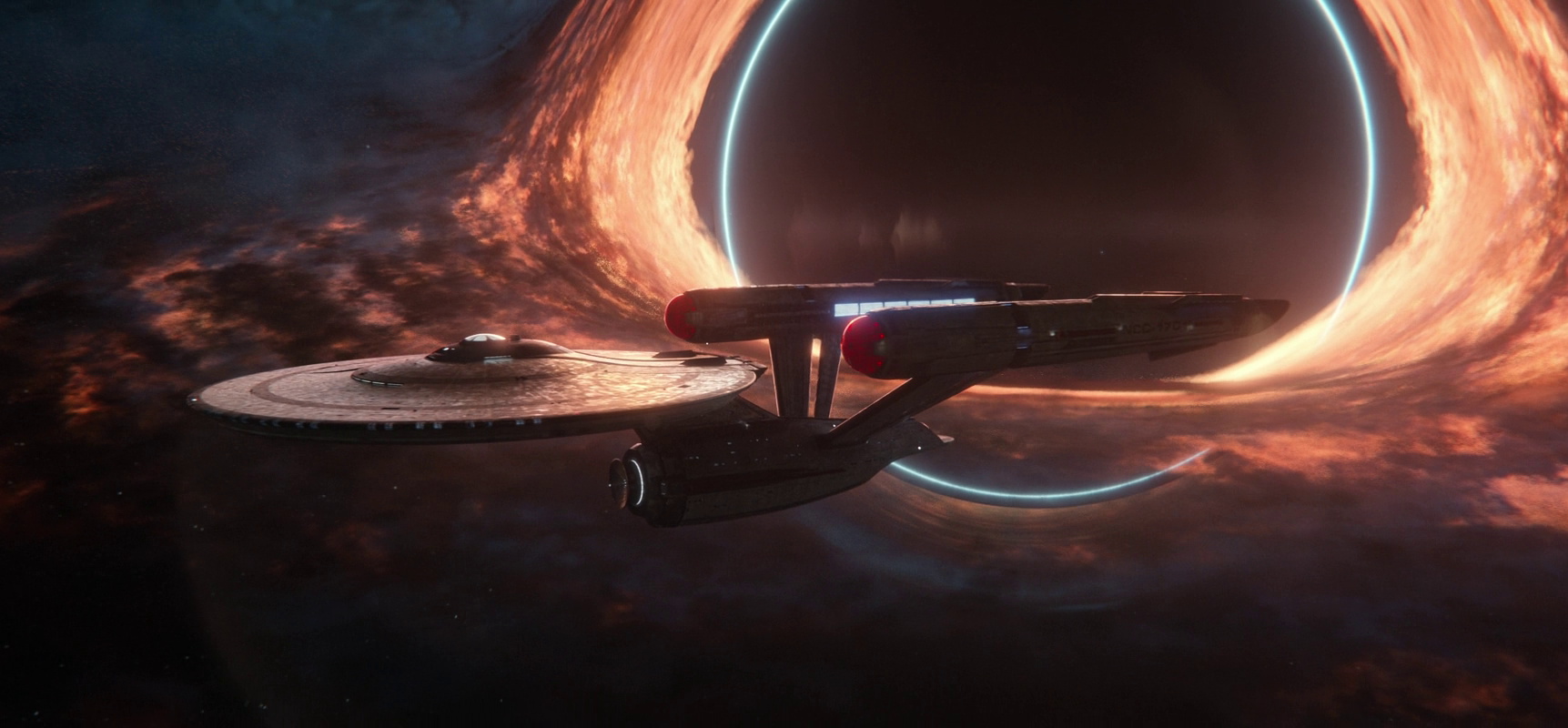
One thing I didn’t really like, though, was Scotty’s line about being “trapped in a transporter buffer;” a reference to his ultimate fate and the TNG episode Relics. If this had been a one-off, I wouldn’t have minded (I think), but so far this season, La’an has called back to The Search for Spock and Dr M’Benga made another reference to Relics just last week. Occasional callbacks to past iterations of Star Trek – or calls forward, I guess, to these characters’ fates and ultimate destinations – are okay, but they really ought to be *occasional*. Otherwise they come across as heavy-handed and overwhelming… and it just isn’t necessary and stops being fun. A single line like this is great; a nod and wink to long-time Trekkies. Too many just feel like navel-gazing, self-referential fluff… or just a plain lack of originality, I guess. And because we’ve had several of these lines in earlier episodes – one of which already featured Scotty – this one was a bridge too far. On its own? Totally okay. But after seeing several others already this season, I felt it crossed that invisible line between being a playful in-joke and becoming excessive.

Still frame from Star Trek SNW 4x04 showing Scotty
Don’t call it “foreshadowing”…

The conclusion of this storyline sees Chapel confessing to being the one who interfered with the probe and deleted its data. Though, as I said, this felt kind of rushed, it was nice that in this kind of storyline, the ending was difficult to deduce and there was still time for a twist. I think both Chapel and La’an got good moments of characterisation here: Chapel didn’t just let La’an think paranoia was overtaking her, instead confessing even though doing so could’ve had real consequences for her, and La’an chose loyalty to a friend over following the letter of the law.

For both characters, those are positive things – and while not “out of character” by any stretch, it’s still good to see both of them doing the right thing and choosing friendship, not blind rule-following. Chapel’s decision to delete the incriminating data felt understandable, even though I wish we’d gotten a longer scene explaining it, and La’an’s choice to keep the issue between them said a lot about her character. If, as I’ve theorised, we could be seeing the beginning of the end for La’an – either aboard the Enterprise or, y’know, alive – moments like this will be all the more important.

Still frame from Star Trek SNW 4x04 showing La'an and Chapel
Nurse Chapel with La’an in Sickbay.

La’an got this week’s secondary story, with the main focus of A Case of Chiaroscuro being on Una. But these two stories were thematically linked, and that made these two otherwise disconnected parts of the episode feel a bit closer together. La’an had to wrangle with her own paranoia and consider whether she was imagining things, or whether there actually was an issue with the probe. But the end of this story saw her choosing to do the right thing by a friend, even if that ment bending the rules.

Una’s story ends in a similar way. She chooses to bend the rules – in this case actively, whereas La’an’s was more passive, I suppose – to facilitate the rebels’ plan on Mat’Aar XII. But both characters had to deal with intrigue, mysteries, and ultimately, both had to decide whether to do the right thing – or what the “right” thing even is when faced with complex and nuanced situations.

Still frame from Star Trek SNW 4x04 showing Una and M'Benga
Una’s storyline was similar, in thematic terms, to La’an’s.

Before we get further into the main thrust of the mysteries on Mat’Aar XII, I want to talk briefly about the Klingons.

A Case of Chiaroscuro wasn’t really a Klingon episode. The Klingons were present, sure, and they played a significant narrative role – but the bulk of the story was focused on the main characters and the intrigue on Mat’Aar XII. But the episode did something for the Klingons that I think is kind of important – and that I approve of!

I’ve said, on the record, that I felt Enterprise’s “Klingon-augment virus” storyline was one of the show’s weakest, and that the change in prosthetic makeup for the Klingons in between TOS and The Motion Picture simply did not need to be called attention to nor given an in-universe explanation. Thankfully, modern Star Trek has walked away from that idea, and we’ve already seen Klingons in Strange New Worlds with the more familiar design. That continued here – even with the character of Kor. Kor is a Klingon who tangled with Kirk in The Original Series and returned in three episodes of Deep Space Nine, too.

Still frame from Star Trek SNW 4x04 showing Kor and three Klingons
Kor with his band of Klingons.

In Kor’s TOS and TAS appearances, he sports the original Klingon aesthetic, but this was updated for DS9. So if you want to be fussy about it, now we have a contradiction! But I don’t really see it as a contradiction at all. Just as when Kor appeared in DS9, prosthetic forehead and all, Star Trek was kind of drawing a line under TOS and updating things without drawing attention to it. And I read this prequel version of Kor in much the same way. Some parts of Star Trek… well, they can (and should) be ignored. Some stories didn’t work, some aesthetic changes could be made as new technologies and higher budgets allowed, and this is the result.

And hey, if you want to be picky and make everything in Star Trek fit? Let’s just say that Kor contracted the virus in between his posting to Mat’Aar XII and his run-in with Kirk!

I felt that Demore Barnes’ take on the character of Kor was one of the best parts of this weaker side of the story. Barnes – who you might recognise from Supernatural, Hannibal, or Twelve Monkeys, among other high-profile TV roles – was absolutely excellent in this villainous role, showing us a nuanced take on a Klingon leader that didn’t just rely on anger, aggression, and murder. In this kind of noir-inspired story, that’s how a villain should behave. Was bringing Kor into the show a bit of cheap nostalgia bait for Trekkies? Well… maybe. And I could entertain the argument that *this* version of Kor doesn’t fully line up with the way the character behaved in TOS and DS9. But that doesn’t mean I didn’t enjoy the performance or Kor’s role in the story!

Still frame from Star Trek SNW 4x04 showing Kor
I enjoyed this new take on the established character of Kor.

The Klingons, in their original incarnation some sixty years ago, were famously meant to be metaphorical stand-ins for the Soviet Union, with the Federation representing the United States or the broader western alliance. And A Case of Chiaroscuro called attention to the “cold war” that exists between the Klingons and Federation in this time period. That little connection was neat, and the lines referring to it were well-delivered.

But in this story, the Klingons felt less like 1960s Soviets and more like 1940s Nazis with the way their occupation of Mat’Aar XII came to life. Roving gangs of collaborators, uniformed soldiers, symbolic armbands, and propaganda messages being broadcast all linked up to create a really unsettling feel to the entire city; even seemingly “safe” spaces like the bar or the office felt like they could be raided or interfered with at any moment.

Still frame from Star Trek SNW 4x04 showing Una in her doppelgänger's office
Una in the doppelgänger’s office.

The sets and stages used to create Mat’Aar XII were genuinely very well done. I got a “Paris in World War II” kind of vibe; that this city was very much under occupation. The ’40s-style barrage balloons, the spotlights, and the art deco-style architecture (which was mostly seen in CGI establishing shots) all added to this sensation, as did the claustrophobic street set with its archway checkpoint. The white steam or smoke – another hallmark of films from this era – was well-used, too. As I said above, every aspect of A Case of Chiaroscuro leaned into this film noir style, and that extends to the way the sets were designed. The city was undeniably atmospheric.

Parts of A Case of Chiaroscuro reminded me a little of A Piece of the Action from TOS – the “gangster episode” where Kirk and co. visit a planet whose inhabitants were inspired by a book about 1920s Chicago. Some of the costumes, sets, and vehicles – all inspired by the first half of the 20th Century – gave me that feeling, and even the Klingons’ disruptors seemed to resemble Tommy guns! Obviously, A Piece of the Action was, itself, drawing on stories from the ’30s and ’40s for inspiration – G-Men, Invisible Stripes, and others – and there’s a difference between the kind of noir story present here and the simplified gangster/crime drama of that older episode. But, as I’ve said before, it can be nice when Star Trek stories… rhyme.

Still frame from Star Trek SNW 4x04 showing the city on Mat'Aar XII
I liked these establishing shots of the city, and how atmospheric they felt.

The main storyline’s central conceit was that Una is the exact doppelgänger of Mat’Aar XII’s resistance leader. And… I gotta be honest: I hated this and the stupid way it was “explained.” Basically, Dr M’Benga says that “well, space is big so we all have doppelgängers,” and that hand-wavey line is the only explanation offered for this really contrived setup. I admit that I don’t see an easy narrative pathway to tell this exact story without having Una share the exact same look as the resistance leader, but the way it was handled left a lot to be desired.

As I said in my review of The Griffin Incident: this is Star Trek. And in Star Trek, we like our technobabble explanations! You don’t have to be 100% scientifically accurate. You can make something up and then invent fancy-sounding technical words to fit. But in Star Trek stories, I don’t think it’s too much to ask that major narrative points receive more of an explanation than we got in A Case of Chiaroscuro. It was just a weaker narrative setup than the story deserved.

Still frame from Star Trek SNW 4x04 showing the doppelgänger's corpse
The doppelgänger’s corpse.

Once you got that out of the way, though, A Case of Chiaroscuro was a good episode for Una’s character journey. Her story intersected with her Illyrian heritage – something that we learned about in Season 2 – and gave her an arc about “doing the right thing” even if that meant breaking the rules. For a character who’s usually portrayed as a by-the-book kind of officer, this was a turn – albeit one that makes sense in context.

One thing I didn’t really follow, on this side of the story, was whether the Prime Directive should’ve been applied to Mat’Aar XII and its inhabitants. The planet’s own technology looked like it was from the 20th Century, with only the Klingons in possession of what might reasonably look like 23rd Century tech. But, despite being undercover the entire time, none of the away team mentioned the Prime Directive even once. Does it cease to apply when a planet meets another interstellar power, maybe?

Still frame from Star Trek SNW 4x04 showing Una and Dr M'Benga with the bartender
So I guess the Prime Directive doesn’t apply…

To get back to Una, there was a lot of noir-style intrigue on this side of the story, as Una’s doppelgänger appeared, at first, to be a collaborator, then a rebel leader, and the episode did a reasonably good job of making it difficult to know who she could fully trust. Most of the Mat’Aar XII inhabitants felt fairly two-dimensional – which, let’s be honest, is kind of a hallmark of many films of the era A Case of Chiaroscuro is mimicking – but the question of which one of them betrayed Una’s doppelgänger still felt like an open one as the story progressed.

One thing I don’t really like in Star Trek – and *especially* in modern Star Trek – is just how many alien races are literally identical to humans! There aren’t enough “alien-looking” aliens in Star Trek’s galaxy, and while this was a contrivance during the early days of The Original Series with all of its budgetary and technical limitations… it’s something I wish modern Star Trek would dump. On this occasion, given that Una needed to be an exact lookalike of this rebel leader, I guess you can say the story wouldn’t have worked. But the episode itself even referenced this, with Uhura wondering aloud what the native population of Mat’Aar XII look like. It’s just something that, in older shows – and TOS in particular – I could overlook, but I don’t think it really fits modern Star Trek or a modern sci-fi setting any more, and I’d rather see the franchise invent more aliens who look truly otherworldly and different. With a few changes, we could’ve said that Mat’Aar XII was a human colony under occupation, or… something.

Still frame from Star Trek SNW 4x04 showing Mat'Aar-ians
Mat’Aar-ians.

That issue also extends into Uhura’s storyline. After being arrested by the Klingons for not showing her ID, Uhura was taken to a Klingon facility to be tortured. But despite having access to 23rd Century scanners, tricorders, and some kind of brain-alyser, the Klingons never found out that she wasn’t actually a Mat’Aar-ian. How’s that possible? Even human-looking aliens, surely, have different DNA or other identifying markers? That’s how sensors and tricorders across Star Trek are able to differentiate between different races.

As an aside, though, I actually really liked the design of the Klingon torture device. It was a retro throwback – and, in this case, I mean that as a positive thing! I suspect that, if the episode was in full colour and trying to employ a more modern visual style, something like that would’ve looked dated and out-of-place, but in this kind of story, the brain-alyser looked pitch-perfect! There’s something about its simple design that just felt like the perfect TOS throwback, and it looked great.

Still frame from Star Trek SNW 4x04 showing the torture machine/brain-alyser
The brain-alyser.

To wrap up Una’s story, I thought the ending was pretty predictable; I clocked what Una had done – planting the macguffin bomb thing on the collaborator – long before the episode revealed it. But at the same time, it says something about her character that she’d get so involved in this planet’s cause and crusade for freedom. Una bent (or broke) the rules in order to help the people of Mat’Aar XII in their fight against the Klingon occupation, despite knowing that doing so could have massive consequences. She took a risk, but it always felt like a calculated risk.

Dr M’Benga referenced his service in the Klingon War – something that’s become a defining trait of his character, especially in more recent seasons. The show’s writers clearly like this idea of “the doctor who’s also a special forces killer,” and they’ve really latched onto that. I would like to see Dr M’Benga in different storylines, though, as I feel his arc with the Klingons and his backstory from his war days has been reasonably well explored, and with limited time remaining to do anything else… well, time’s a-ticking, sadly.

Still frame from Star Trek SNW 4x04 showing M'Benga
Dr M’Benga.

That being said, Dr M’Benga was a great choice to involve in a story like this, not least because of the Klingon element. He managed to be a mentor to both Una and Uhura at different points, offering advice, making note of how the Mat’Aar XII resistance was operating, and kind of serving as an exposition device for us as the audience, too! His war service felt like a natural thing for him to bring up in the context of the story, and while there were some contrivances – like how he could instantly recognise Kor, for example – they’re minor enough to not be bothersome.

Dr M’Benga guided Una, keeping her from making too many mistakes, but this was still Una’s story first and foremost, so we didn’t get any gratuitous scenes of him massacring legions of Klingons, or using his special forces background as an excuse to take the lead. Again, given the kind of story this was, and who it was centred around, that worked pretty well. From an in-universe standpoint, Dr M’Benga has told us many times that he wants to leave his past behind him, so again, his taking a back seat makes sense, too.

Still frame from Star Trek SNW 4x04 showing Uhura and M'Benga
Uhura and Dr M’Benga.

Celia Rose Gooding put in a great performance as Uhura this week. This younger version of the character is still, in some ways, finding her feet – and this mission took her far outside her comfort zone in more ways than one. Uhura’s friendship with Dr M’Benga was on full display, and the two characters played off one another exceptionally well in those supporting roles for Una and the noir-intrigue story.

However, I didn’t really feel like Uhura was ever in any real *danger,* even when she was literally facing the Klingons and their torture machine. Partly this is because Strange New Worlds is a prequel, and we know, in the backs of our minds, that Uhura will make it off-planet, back to Starfleet, and resume her career (relatively) unscathed. However, for a storyline involving literal torture… I think the episode could’ve made more of it. Perhaps Uhura will reference this experience in a future episode; I didn’t get the feeling, though, that this was an “Ortegas with the Gorn” or a “La’an’s DNA” type of situation, where a character’s storyline in one episode is clearly being set up for something more. But I guess we’ll have to wait and see on that front!

Still frame from Star Trek SNW 4x04 showing Uhura being tortured by the brain-alyser
Will this storyline lead to anything more for Uhura?

A couple of final points before we wrap things up.

This is at least the second Strange New Worlds episode where ships (or a shuttle, in this case) have literally been within visual range of one another, but – for no other reason I can discern than “because plot” – the adversary’s ship doesn’t notice or detect our heroes. In this case, a Klingon battlecruiser just wasn’t aware of either the probe or the shuttlecraft until the shuttle passed through the planet’s sensor grid. I know that, in prior Star Trek stories, the range at which sensors are effective can vary a lot depending on the needs of the story… but even with that in mind, this feels like a real stretch.

For the third episode in a row, Captain Pike had very little to do. I think I said this last season, too, but one of the main appeals of “the Captain Pike show” that fans – myself included – were clamouring for back in 2019 was Anson Mount and his incredible take on this character. We’re now a mere twelve episodes away from the end of the show’s run… and I kind of want to get a few more stories with Pike before the curtain falls. Star Trek has always done spotlight episodes where one or two characters are in focus – and this episode was very much an Una story, with supporting roles for Uhura and M’Benga, and a B-plot for La’an. And that’s great! But with limited time remaining, I’d like to spend a bit more time with the Enterprise’s captain.

Still frame from Star Trek SNW 4x04 showing Pike
Captain Pike hasn’t had much to do for several episodes now.

As the dust settles, I’m left with one feeling more than any other: A Case of Chiaroscuro just isn’t an episode I’m in a rush to revisit, and as and when I return to Strange New Worlds in the future, it’s an episode I’m more likely to skip than sit through. Despite its earnestness and the way it fully embraced its film noir and mystery inspirations… it just wasn’t for me. Partly that’s the black-and-white; a gimmick that felt, well… nothing more than gimmicky. But it’s also, at least in part, due to some outdated and two-dimensional tropes among the secondary characters, the melodrama that the episode imports directly from its source material, and the simple fact that this genre is quite a niche thing nowadays.

That being said, I tried very hard to give A Case of Chiaroscuro a fair shake, and not pre-judge it based solely on the fact that it was going to be in black-and-white. And, as I said above, I respect both Strange New Worlds’ creative team and the leaders at Paramount for creating a story like this and getting it across the line in a way that stayed largely true to the kinds of stories that inspired it. It’s something very few other franchises would attempt, and – at least in that sense – it’s a very “Star Trekky” thing!

Still frame from Star Trek SNW 4x04 showing the yard set with vehicles
A Case of Chiaroscuro stayed true to its noir inspirations.

Next week, Strange New Worlds is going to serve up a Level-Five Transporter Accident – the (in)famous “puppet episode” that was teased in pre-season marketing. I honestly don’t know what to expect from that one; I like that they went to the Jim Henson Company to get proper puppets made, and there’s a potential tie-in, I guess, with an episode of Lower Decks that could be interesting. It’s certainly going to be another “big swing” after this week’s noir-style story.

I hope this has been interesting! As I often say: please keep in mind that all of this is just the *subjective, not objective* take of one old Trekkie. If you liked A Case of Chiaroscuro a lot more than I did, feel it’s irredeemably awful, or just don’t agree with my take… that’s okay! There’s plenty of room in the Star Trek fan community for differences of opinion and respectful disagreement.

Thanks for joining me for this review, and as always… Live Long and Prosper, friends!


Star Trek: Strange New Worlds Seasons 1-4 are available to stream now on Paramount+ in countries and territories where the platform is available. The first three seasons are also available on DVD and/or Blu-ray. The Star Trek franchise – including Strange New Worlds and all other properties discussed above – is the copyright of the Skydance-Paramount corporation. This review contains the thoughts and opinions of one person only and is not intended to cause any offence.
Star Trek: Strange New Worlds Episode Review – Season 4, Episode 3: Human Best Friend

A Star Trek-themed spoiler warning.

Spoiler Warning: There are spoilers ahead for Star Trek: Strange New Worlds Seasons 1-4. Spoilers are also present for The Original Series and The Search for Spock.

In the lead-up to Strange New Worlds’ fourth season, much was made of this idea of “big swings” across the ten episodes; i.e. that there’d be episodes in completely different genres, with the show jumping from one to another and trying out completely different styles of storytelling. And after last week’s ghost story? Well, Human Best Friend was *definitely* a “big swing!”

At its core, if you strip away all of the drunkenness, partying, and other fluff, Human Best Friend is a character piece that saw Scotty and Ortegas bring their (short) feud to a climax and then figure out a way to work together. That side of the story genuinely worked well – though I would caveat that, at least a little, by saying that the setup to this feud was both short and felt pretty arbitrary in the first two episodes of the season. But I think Human Best Friend will be most remembered for its lightheartedness and sense of fun – and I really did have fun with this story!

Promo photo for Star Trek SNW S4 showing Romijn, Gooding, and Mount
L-R: Rebecca Romijn, Celia Rose Gooding, and Anson Mount at a Season 4 promo event.
Photo: TrekMovie

I don’t think any individual moment or scene in Human Best Friend eclipsed the high points in either Valles Marineris or The Griffin Incident, by which I mean both of those episodes had genuinely fantastic highlights – the visual beauty of prehistoric Earth, or the shocking twists and turns aboard the wreck of the Griffin. But, as you’ll know if you’ve read my reviews, both of those episodes also came with significant weaknesses. Valles Marineris was so overstuffed with ideas that it didn’t manage to do justice to the “dinosaur episode” idea that I felt had been teased in pre-season marketing, and The Griffin Incident came with a fundamentally unsatisfying lack of an ending. In contrast, while the high points of Human Best Friend may not soar quite as high as its two immediate predecessors, it comes with basically none of their flaws, either, making it a better all-rounder – and, I would argue, the first genuinely *good* episode of Season 4.

What was nice about Human Best Friend when compared to a lot of modern Star Trek – including in Strange New Worlds itself – was that the episode didn’t need to have some giant existential threat hovering over the Federation or the whole galaxy. Even the final act’s bomb plot really only impacted a couple of characters – and it never felt like a true threat (for reasons I’ll elaborate on later). This is something I’ve said before when talking about modern Trek: you don’t need to put the entire galaxy in danger to tell a story that’s worth following. I got invested in Scotty and Ortegas’ quest to locate their missing shuttle because it was… fun. And I know Star Trek’s streaming era is coming to a close, but I hope that’s a lesson that the franchise can truly take to heart one day.

Still frame from Star Trek SNW 4x03 showing the USS Enterprise and an alien ship
The Enterprise with a Rodaxian starship.

Human Best Friend might’ve found a stronger foundation to build upon if we’d heard more about this conflict between the Enterprise’s different shifts before. I don’t remember Strange New Worlds so much as mentioning “alpha shift” and “beta shift” until this episode – though there have been similar references in other Star Trek stories, on occasion. We also don’t know any of the characters who might be part of any of the Enterprise’s other shift rotations, so again, there just wasn’t much to this idea that “those guys got shore leave, so we need it too.”

Where the setup worked, though, was in showing how several members of the crew seemed tired and overworked. Some of this felt a tad exaggerated in the opening montage at the bar; Chapel breaking a glass and La’an and Spock seemingly having some kind of “domestic squabble” seemed to come from nowhere. What might’ve been stronger, perhaps, would’ve been to lean into what happened last time and use *that* as the excuse to divert to a shore leave planet; a couple of lines in Pike’s log could’ve said something like: “After the shocking tragedy aboard the USS Griffin, I’ve determined that a short diversion on the way to our negotiations will give the crew some much-needed shore leave…”

We could start from basically the same place, but without a few moments at the beginning that felt just a little contrived. Is it a huge deal for the episode? Not at all – but worth mentioning, I feel!

Still frame from Star Trek SNW 4x03 showing Pike and Una in the Enterprise's bar
This scene didn’t make for the strongest narrative setup.

Star Trek has always included planets and aliens that, to be blunt, don’t make a ton of sense if you think about them too hard! And the shore leave planet of Cesnar in Human Best Friend, with an atmosphere that makes you drunk? It’s the latest part of a storied tradition of Star Trek being weird and wacky, and in that sense I really liked it as a concept!

It’s also interesting, if you think about it a bit more deeply, that both the planet of Cesnar and the wreck of the USS Griffin from last week’s outing are both settings that cause changes to characters’ mental states. In this case, it was clearly explained from the start that the planet’s unique atmosphere is to blame; The Griffin Incident didn’t come up with an in-universe reason for its ghostly shenanigans. But it’s still noteworthy, I feel, that – despite “big swings” in terms of tone, style, and genre – we got two episodes in a row that both rely on the same “mind-altering” underlying premise. It’s a way for both episodes to feel connected, like their stories conceivably take place in a consistent setting.

Still frame from Star Trek SNW 4x03 showing Uhura holding a glowstick
Both this episode and The Griffin Incident saw characters affected by mind-altering macguffins.

Sticking with Cesnar, I felt that the sets used to depict the planet and its luxury resort were… fine. But they weren’t spectacular, and there were a couple of places where either set redresses seemed pretty obvious – like the bar – or where sets used to depict the inside of the resort didn’t really line up with the exterior, which was a wholly CGI creation. Several of the hotel rooms just looked kinda… generic. If Strange New Worlds was a modern-day series – or this episode was supposed to involve time travel to the 2020s – I’d have just rolled with it. But this futuristic 23rd Century luxury resort on a planet with a funky atmosphere that causes strange effects looked a lot like a modern-day three- or four-star hotel, with a few Enterprise sets redressed for good measure.

The exterior shots which established Cesnar were pretty good, though, and I thought the creations matched the planet’s “Risa but with more booze” idea. There were some creative CGI moments in the story; I particularly liked the shot of the missing shuttle parked on top of a skyscraper, semi-obscured by a billboard. That kind of method of “hiding” something was truly in keeping with the episode’s inebriated characters! It was both a great effort and also kinda silly, which I appreciated.

Still frame from Star Trek SNW 4x03 showing the shuttle parked behind the billboard
The “lost” shuttle.

We’ll cycle through the other main characters first, then come to Scotty and Ortegas in a moment, since their storyline was the main focus of the story.

Captain Pike getting a tattoo was a fun idea. I wish we could’ve seen more of the tattoo he was getting on his arm, as I think the glimpse we got looked really neat – and I can see that kinda thing being something fans would want to recreate (either impermanently for cosplay or perhaps even more permanently!) And in an episode where drunken shenanigans were a big part of the story for most of the characters, it was fun to see Pike joining in, and not locking himself in his room with a padd and trying to get some work done.

It’s a relative rarity, in Star Trek as a whole, to see characters off-duty – captains even more so. Some of my favourite moments with Picard came from stories like Captain’s Holiday, where we got to see some of the things he actually enjoys doing in his time off. And though it was completely different in tone, I got some of that from Anson Mount’s take on Pike this week. Here was the captain, who’s been so focused on his ship and his job – going all the way back to his first appearance in The Cage, where he lamented the weight of command – finally just… letting go of it all, even if it was just for an evening. I liked it.

Still frame from Star Trek SNW 4x03 showing Pike's tattoo
The captain’s tattoo.

Uhura got a pretty typical “let your hair down and unwind” sub-plot. Literally: her hairstyling in this episode was pretty fun! Her mini-arc took her from “but I like working and I’ve got so much to do!” to “let’s just party!” and it was pretty well-executed. It was basic, but for something that wasn’t the episode’s major focus, I think it worked quite well. And her costume in this story was great, too. I liked the kind of “retro” rave aesthetic that her design leaned into.

We know that Uhura can dance – and likes to dance. Just look at Star Trek V: The Final Frontier for an example of Uhura’s dancing being plot-relevant! And her scenes this week felt like they naturally followed on from last season’s Wedding Bell Blues and What Is Starfleet?, which also gave us some off-duty moments with Uhura.

A relatively minor part of the episode, but a good one nonetheless.

Still frame from Star Trek SNW 4x03 showing Uhura in the doorway
Uhura likes to party.

Una got even less of a “story” than any of the others, really – we really only saw her singing on stage. But you know what? I love this entire sequence, and the callback to it during the closing credits!

I’m a big Bonnie Tyler fan – she passed away just a few weeks ago, may she rest in peace – and her music was just such a perfect choice for this kind of moment. First of all, props to Paramount for licensing a *modern* (okay, modern-ish) pop song for an episode of Star Trek for once, instead of relying on out-of-copyright trad-pop numbers! But also… Klingon power ballads? It just makes so much sense that you almost wonder why it’s never been tried before!

Still frame from Star Trek SNW 4x03 showing Una singing
Una on stage.

We’ve had Klingon opera for a long time. And, thanks to Star Trek VI: The Undiscovered Country, we also know that Klingons have a penchant for Shakespeare! But this warrior culture would surely have more than one musical genre, right? Power ballads are just a great fit for the Klingons, and it kinda makes me want: 1) a full recording of this song as an MP3, and 2) an entire album of Klingon covers of power ballads! We could have Livin’ on a Prayer, Don’t Stop Believin’, It’s All Coming Back To Me Now… I mean, you’d buy that album, wouldn’t you?

I liked how Una’s singing also connected back to her role in the Short Treks mini-episode Q&A. If you’ve forgotten, Q&A was a flashback to a young Ensign Spock’s first moments aboard the Enterprise – and it ended with he and Una singing while stuck in a turbolift. I wish Star Trek had done more with Short Treksthere was a lot of potential in it as an idea! But these sequences with Una, short though they were, harkened back to that and felt in keeping with her character.

Still frame from Star Trek SNW 4x03 showing Scotty and Ortegas at the bar
Scotty and Ortegas liked Una’s performance, too.

Dr M’Benga got a turn playing bartender, and again this was a short but fun sequence. It reminded me of The Cage, in a way, where Dr Boyce played barkeep and counsellor to Captain Pike – though obviously with a very different tone. There was also a fun little callback to The Next Generation, where Data presented Scotty with a drink with the line: “it is green,” which M’Benga also said here.

I think too many references or callbacks like that could overwhelm a production, so I’m glad Strange New Worlds doesn’t overdo it! But for long-time fans, small moments like that go a long way to tying different parts of Star Trek together. It’s now canon, if you want to be fussy about such things, that Scotty was *twice* served an unknown green alcoholic beverage!

As above with Pike, it was fun to see Dr M’Benga – who’s usually quite serious – letting his hair down, having fun, and not even caring if he messed up or smashed a bottle.

Still frame from Star Trek SNW 4x03 showing Dr M'Benga at the bar
Joseph M’Benga: bartender.

Chapel’s bingo sequence was funny – but I didn’t really get the aliens she was facing off against. They looked like Vulcans at first, but then seemed to have Ferengi-like teeth, before going almost vampiric when they became hostile. I actually would like to know more about those aliens, because even in such a short appearance, they made a pretty big impression!

Otherwise, though, Chapel being hyper-competitive in such a completely low-stakes environment made for a fun little set-piece, and seeing her carried out of the room as La’an’s group and the bingo players descended on one another was… I mean, it made for a funny visual presentation, and was one of those laugh-out-loud moments that Human Best Friend managed to do really well.

Still frame from Star Trek SNW 4x03 showing Cornelia the bingo player
Who else wants an entire spin-off focused on this character and her friends?

La’an’s story was interesting. Maybe you’ll say I’m overreaching with this, but I felt the Cesnar atmosphere seeming to heighten her inclination towards violence actually furthers a theme we’ve been seeing this season – and, I would argue, going back to Season 3 with her Romulan turn, too. Obviously this was more in focus last week, where La’an succumbed to… whatever was going on aboard the wreck of the USS Griffin, fully giving in to a violent streak that she fears is part of her latent augment DNA. But this time, we saw her also losing her composure, thanks to the atmosphere, and once more going down that violent path.

My theory for this season, by the way, is that this “augment DNA” storyline will – somehow – lead to the end of La’an’s time aboard the Enterprise. It seems too much of a coincidence that it arose now, with the show moving “one step closer to where it all began.” Lest we forget, La’an has left the Enterprise by the time of Kirk’s five-year mission.

Still frame from Star Trek SNW 4x03 showing La'an pointing a stick
Am I right about La’an?

If I’m right, La’an’s story this week furthers her overall arc across the season – losing control, giving in to violent impulses, fearing what that might mean, and potentially seeing her dormant augment genes “awaken” somehow. If that isn’t part of the plan, though… I think it could’ve been a lot of fun to put La’an in a totally different situation. Maybe she could’ve sung karaoke with Una, been at the bar with M’Benga, or partied with Uhura. But I’d have done something a bit different, if I had the choice!

La’an is another workaholic, like Pike, M’Benga, and so on. But she’s also the security officer with a traumatic Gorn past. I’d have liked to put La’an in a totally different – and much softer – mini-story, something that saw her relaxing and unwinding in an unexpected way for her character. Maybe she could’ve had a spa day, or something like that! You see what I mean, right? It would’ve been a twist on what we might’ve expected – but, as I said, I think there are bigger reasons for her to be shown in this kind of light given her potential arc this season.

Still frame from Star Trek SNW 4x03 showing La'an with Scotty
La’an prepares to steal Scotty’s shirt…

That brings us to Spock… and Kirk.

I’ll level with you: I did *not* see the “Kirk actually isn’t a hallucination” twist coming! And I was totally prepared to sit here and write about how it wasn’t exactly strong world-building to say that Spock’s opinion of Kirk is at least partially based on a hallucination that he had on a shore leave planet. But then we got a last-second twist: that Kirk actually was really there all along, and that Spock simply believed that he was hallucinating him because of the effects of the planet’s atmosphere. This was creative, clever, and – for me, anyway – it worked really well!

Spock’s other hallucinations – that Scotty and Ortegas were plants – was such a stupid non-sequitur that it made me laugh out loud both times it appeared. I didn’t think the episode would actually depict both characters *as* plants, but it was such a dumb and ridiculous visual that it caught me completely off-guard. Oh, and Spock “mind-melding” with a plant – complete with a spin on the typical mind-meld line – was another genuinely funny moment. I guess there’s still a tiny bit of room for “Spock comedy” in Strange New Worlds, after all.

Still frame from Star Trek SNW 4x03 showing Spock's plant hallucination
“Are you both plants right now?”

If La’an’s role this week continued a theme that’s part of her season-long arc, so did Spock’s. If we use that tagline again – that Season 4 is going to “boldly go one step closer to where it all began” – then establishing the Kirk-Spock bond is going to be part of that. We saw their first canonical meeting last season, and we’ve since had a couple of episodes where that friendship is strengthened. Spock referenced their mind-meld from the end of Season 3, and I liked this continuation of their friendship.

In my review of New Life and New Civilizations, I said that it would feel kind of underwhelming if Strange New Worlds was going to say that Kirk’s close, brotherly bond with Spock was nothing more than the lingering after-effects of a Vulcan mind-meld. So I’m glad that this season is building on that, referring to it where it makes narrative sense, but not leaning on it as the exclusive reason for Kirk and Spock becoming so close. Though you could argue, I guess, that their friendship being partly built on a misunderstanding (that Spock thought he was hallucinating when he wasn’t) is no better! It’s a sitcom cliché in a way; a character says something aloud, not expecting or realising that the person is really there and able to hear it all. But I still think it’s better than a mind-meld, and for a one-off comedic storyline that *probably* won’t come up again in a big way, I think we can give it a pass. It made me laugh, anyway.

Still frame from Star Trek SNW 4x03 showing Kirk and Spock in the transporter room
Kirk and Spock.

So that brings us neatly to Scotty and Ortegas – the main duo that Human Best Friend focused on.

As I said above, and in my review of the season premiere, I kind of felt that Scotty and Ortegas’ rivalry pretty much came out of nowhere. They were never friends before this season, sure, but I just didn’t feel they’d spent enough time together on screen to really justify that kind of rivalry. I even speculated, when reviewing Valles Marineris, that the writers might’ve been setting up a “rivals-to-lovers” kind of storyline, with Ortegas and Scotty following Pike and Batel, Spock and T’Pring, Spock and Chapel, Spock and La’an, and others to become Strange New Worlds’ next power couple. That seems not to be on the table any more – though I suppose this new friendship could still blossom into something more.

The arc they got over the course of Human Best Friend was a fairly straightforward “enemies become friends” plot, complicated only by the weird goings-on on this strange alien world. It played out almost like a comedy film, in parts, with even the rivalry between the two characters coming over as less-than-serious. Given that we want to see both Ortegas and Scotty as protagonists, letting the story unfold in a way that neither of them seemed annoying, unfair, or like they were instigating things was definitely the right call.

Still frame from Star Trek SNW 4x03 showing Scotty and Ortegas on the shuttle
The episode’s co-protagonists.

We got the comedy cliché of “two characters who hate each other wake up next to each other,” and that made for a fun start. At first, it seemed to reinforce my “enemies to lovers” theory from a couple of weeks ago! But it definitely gave both Scotty and Ortegas a genuinely fun adventure, starting out with a hangover and no memories of the night before… I mean, we’ve all been there, right? Remind me to tell you one day about the time I woke up next to a dumpster!

I also really liked Scotty’s shirt. We talked a bit about costuming with Uhura a moment ago, and her costume was definitely neat. Dr M’Benga and Una also got some fun outfits. Scotty’s shirt was *definitely* a modern-day thing – you couldn’t get away with calling that anything other than the kind of silly shirt people would wear nowadays! But it was a fun design, it suited him, and Martin Quinn wore it well. I liked the “outer space” theming, and again, as with a recording of Una’s songs or Pike’s tattoo, I could see the shirt being something fans would want to own and wear at conventions!

Still frame from Star Trek SNW 4x03 showing Scotty in his off-duty shirt
Do you want Scotty’s shirt as much as I want Scotty’s shirt?

Scotty and Ortegas’ quest took them across the resort, and gave us those little vignettes with all of the other members of the crew. Their initial goal – to deliver the letter to Pike – was so incredibly basic, but it worked really well as an excuse to explore the resort and see what everyone was up to. Then when they had to locate the missing shuttle, the tension did ramp up a notch or two – and this is where we got to see a bit more action, albeit that Human Best Friend kept that same lighthearted and comedic tone.

The mystery of who took the shuttle fed into both characters’ dislike of one another, and it was pretty creative how each of them could be both in the wrong and in the right at the same time; the blame for the missing shuttle and the potentially compromised negotiations seemed to fall on one, then the other, then both of them. And this was in keeping with the episode’s core message for Scotty and Ortegas: that insecurities led to this dislike of one another, that they were each overreacting to perfectly understandable behaviour from the other side, and that they’re not only on the same team, but they even come from similar backgrounds. Star Trek has done stories like this before, but the way it was handled here was particularly smooth – the writers really seem to have thought of everything to make this “rivalry-turned-friendship” arc stick the landing.

Still frame from Star Trek SNW 4x03 showing Ortegas and Scotty
Both characters felt well-written and got enjoyable arcs.

I think I’m right in saying that Scotty’s family and background weren’t ever explored in The Original Series and its films, so there’s plenty of scope to pad out the character with new revelations without treading on the toes of what came before. The same is true for Ortegas – she’s still, really, the main character we’ve spent the least amount of time with across the three-and-a-bit seasons of the show so far. So giving both of them effectively the same Starfleet background (only from opposite angles) was a creative idea and a fun way to help them find common ground.

We tend to look at characters and see them fully-formed – of course Scotty’s an engineer, so he must’ve *always* wanted to be one. And for Ortegas, because she’s so natural and skilled at piloting, we just assume that it’s – for want of a better term – her “calling” in life. But I think it humanises both characters, and makes them feel more real and more well-rounded, to know that they didn’t start out just knowing, innately, where their skills were best utilised.

Still frame from Star Trek SNW 4x03 showing Scotty, Spock, and Ortegas with the bomb aboard the shuttle
We have to remember, sometimes, that we’re dealing with younger versions of familiar characters.

How many folks reading this review right now started out thinking that you’d want to be a teacher or a chef or a professional golfer – only to come to the realisation that it wasn’t right for you, or that the “dream job” didn’t align with your skillset? And how many of us started a job, changed jobs, changed again, and took a while to settle? I don’t want to say those things are “universal” – I know a few people who knew what they wanted to do in life from the age of ten and went on to achieve it! But I think it’s fair to say that I know a lot *more* people who had an idea, tried it out, didn’t stick the landing for whatever reason, and ultimately moved on to something else.

I know I’ve done that more than once in my life.

And I think there’s something about saying that Scotty had dreams of being a pilot, or that Ortegas once aspired to be an engineer that really makes both of them feel more like real people. Sure, it’s a bit of a convenient way to push them closer together for the sake of this one episode, and that’s a point of criticism I’d expect some long-time Trekkies to make. But for me, I just really liked the way this came across; even though it’s arguably not the most original storyline, it was well-executed. And anything that adds to the depth that these characters have is a net positive.

Still frame from Star Trek SNW 4x03 showing Ortegas and Scotty in Engineering
Back aboard the Enterprise… and finally friends.

All of their chasing around and bickering back-and-forth eventually led to them making it back to the Enterprise in time for the peace talks that served as little more than the background to the episode. But it also set up one last twist: the bomb aboard the shuttle!

I’ll be honest: I kind of rolled my eyes a little when I realised that Scotty was holding a bomb. I mean, it just seemed like such a clichéd way to take this kind of “frenemies” storyline to an extreme – and I was also *convinced* that it would be revealed to be just another of the Cesnar Grand’s illusions before the credits rolled. I was still sure of that even as Scotty and Ortegas flew their shuttle away from the Enterprise and Pike tried to give his speech to the delegates.

So when it turned out that Human Best Friend was playing this final act about as straight as possible, under the circumstances… well, I was surprised! It seemed like such a trope, but both Melissa Navia and Martin Quinn played their roles so earnestly that I actually really enjoyed this way of ending their story and bringing them closer together. And on a second watch, knowing what was going on? I think it works even better.

Still frame from Star Trek SNW 4x03 showing the shuttle exploding
The shuttle explodes.

On the visual side of things, I wanted to highlight the cute little Animated Series-inspired clips that played near the beginning of the episode as part of the Cesnar Grand’s advertisement. The animators were clearly leaning into The Animated Series for inspiration; we even caught sight of an Edosian, which was really fun to see. Again, I like when Star Trek harkens back to its past in small ways – especially in this big anniversary year. A few years ago, Very Short Treks even showed off some TAS-style mini-episodes, which were a lot of fun.

The main character from the Cesnar Grand, though, seemed to be set up as some kind of big antagonist-slash-ally… but nothing ever really came of that. In fact, the character – who could’ve been fun if we’d spend much time with him – just felt like a bit of a non-entity in the story. He clearly pulled the strings behind the scenes, setting things up so that everyone would get the right kind of shore leave experience: be that something cathartic, some relaxation, or just blowing off steam. But as a character in a story, I just didn’t really get much of anything from him, to be honest.

Still frame from Star Trek SNW 4x03 showing an Edosian and an Andorian in the TAS style
An Andorian and an Edosian in The Animated Series style.

So that was Human Best Friend.

A fine addition to Strange New Worlds, and an episode I’ll happily revisit when I want a self-contained Star Trek story that doesn’t take itself too seriously! It’s definitely a “big swing” from the time travel adventure of the season premiere and last week’s spooky ghost story, but that’s in keeping with what we’ve come to expect from Strange New Worlds, isn’t it? The show is happy to be more episodic, to dip its toes into different genres and different kinds of storytelling. Or, as in this case, to enthusiastically jump into this kind of unashamedly comedic story.

I didn’t really know what to expect when I sat down to watch Human Best Friend, but I found a lot of things to enjoy. Some sub-plots – like the instigating diplomatic negotiations – didn’t feel fully fleshed-out, and I can see that being a point of criticism. But as a character piece looking at Scotty and Ortegas, it was genuinely well-constructed and well-written. And plenty of smaller moments throughout the story, from beginning to end, literally had me laughing out loud.

Still frame from Star Trek SNW 4x03 showing Ortegas as a cactus
Lieutenant Ortegas.

Next week, we have an episode titled A Case of Chiaroscuro. Some of you might’ve already been able to watch it; the episode allegedly “leaked” prematurely on some international Paramount+ platforms a few days ago. This episode is, if I’m remembering correctly, a “noir-inspired” story, and the blurb seems to hint at Una being involved with a world under Klingon occupation. Sounds interesting, and another “big swing” after this week’s comedy story! I hope you’ll join me for that review, too.

I hope you enjoyed Human Best Friend as much as I did. On the whole, it’s my favourite of the three stories we’ve seen so far in Season 4 – not because it’s exceptional, or anything, but because it was focused on its two main characters and stayed consistent in tone. Star Trek can be funny, Star Trek has always been funny, and it’s nice – every once in a while – to see our characters let their hair down and have a bit of fun, even when things don’t go *entirely* to plan.

Thanks for reading, and as always… Live Long and Prosper, friends!


Star Trek: Strange New Worlds Seasons 1-4 are available to stream now on Paramount+ in countries and territories where the platform is available. The first three seasons are also available on DVD and/or Blu-ray. The Star Trek franchise – including Strange New Worlds and all other properties discussed above – is the copyright of the Skydance-Paramount corporation. This review contains the thoughts and opinions of one person only and is not intended to cause any offence.
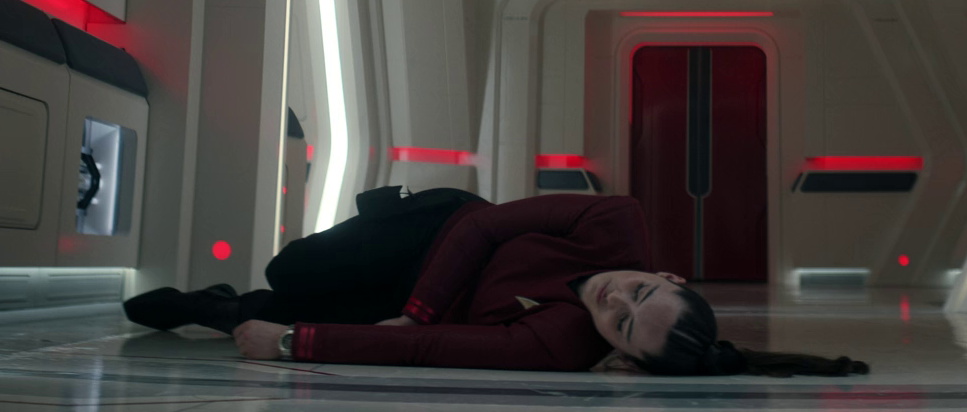
Star Trek: Strange New Worlds Episode Review – Season 4, Episode 2: The Griffin Incident

A Star Trek-themed spoiler warning

Spoiler Warning: There are spoilers ahead for Star Trek: Strange New Worlds Seasons 1-4. Spoilers are also present for the following Star Trek productions: The Original Series Seasons 1 and 2, The Wrath of Khan, The Search for Spock, The Voyage Home, The Next Generation Seasons 1, 2, and 7, Deep Space Nine Seasons 1 and 4, Voyager Season 7, and Discovery Season 2.

Last week saw Strange New Worlds’ fourth season get off to a bit of a lacklustre start, to say the least. An overstuffed story with too many things on the go at once didn’t have the space to do justice to “the dinosaur episode” concept that pre-season marketing material had teased, so I had hopes that this week’s outing – The Griffin Incident – would be a significant improvement.

Going into Season 4, we’d seen a couple of tiny clips from the episode as part of pre-release trailers and teasers, but nothing to really gauge what kind of episode The Griffin Incident was going to be. When it was revealed that this was going to be a horror-inspired story, my curiosity was genuinely piqued! Depending on how we count things, Strange New Worlds has done horror or horror-adjacent episodes about half a dozen times up to this point in its run, and some of those episodes – All Those Who Wander from Season 1 most notably – have been exceptional. So there were reasons to be optimistic heading into this “ghost story.”

Still frame from Star Trek SNW 4x02 showing Harper in the hallway
Hold on to your dookie… it’s about to get spooky!

As always, I’d like to give a caveat. Everything we’re going to get into today is the *subjective, not objective* opinion of just one old Trekkie. If you disagree with me on the strengths and weaknesses of The Griffin Incident, if you don’t like my take on Strange New Worlds in general, or we just have different opinions on what makes for a fun Star Trek episode or a good horror story… that’s okay! The Star Trek fandom is big enough for a wide range of opinions to peacefully coexist, and there’s no need to get into an argument.

Okay, so what did I make of The Griffin Incident, then?

This is a bit of a toughie, to be frank. On the one hand, I spent close to fifty minutes on the edge of my seat, engrossed in a horror mystery that took me right to the edge of my personal comfort zone, with jumpscares, gore, a fantastic soundtrack, great cinematography, and some wildly unhinged (in the best way possible) performances from some of the show’s main cast! But on the other, The Griffin Incident broke what I consider to be one of the fundamental rules of storytelling within Star Trek by failing to provide an in-universe explanation for what happened aboard the titular USS Griffin.

Still frame from Star Trek SNW 4x02 showing the USS Griffin under tow
The USS Griffin at the end of the episode.

The Griffin Incident was, in a sense, a bit of a “bottle episode,” using only a couple of guest stars and no new sets or filming locations; the action took place aboard the Enterprise sets. But working within that limitation, I have to give credit to the set designers, artists, and camera crew for coming up with some incredibly creepy and creative ways to make the familiar seem strange, unsettling, and genuinely frightening. The Griffin Incident, in that sense, reminded me a lot of All Those Who Wander from Season 1, which likewise took advantage of existing sets to tell a horror story. Or, going back even further, we could point to episodes like Voyager’s The Haunting of Deck Twelve, DS9′s Empok Nor, or TNG’s Starship Mine as examples of spooky or creepy stories which mostly relied on their shows’ main stages and sets.

When you have to work with sets that aren’t really designed with horror in mind, figuring out how to make them feel intimidating, unsettling, or spooky is a genuine challenge. It’s never as simple as “just turn the lights off,” or “mysterious blood stains;” episodes like The Griffin Incident have to do more if we, as the audience, are to buy into the idea of being trapped aboard a derelict starship where terrifying things are unfolding. And that comes from a combination of things: set dressing, to take existing sets and “spookify” them. Camera work, using established horror techniques to ramp up the tension. Focus, by keeping certain creepy characters just far enough out of focus that our imaginations run wild. Sound design, including the use of familiar sounds, silence, and unexpected noises. This goes beyond just “bumps in the dark!” And finally, music. The score has to learn from old horror films and episodes to really elevate the tension and fear factor.

For me, The Griffin Incident did all of those things phenomenally well.

Still frame from Star Trek SNW 4x02 showing Kirk on the dark bridge
The episode made wonderful use of light, darkness, the camera, sound, and more.

The lights aboard the USS Griffin weren’t just “off,” there was an ethereal glow to a lot of the scenes set aboard the derelict ship. And computer panels and displays used a shade of green that, in some films and horror stories, is associated with ghosts or supernatural phenomena. In past iterations of Star Trek, that same shade of green is often used for the Borg – another faction with a definite fear factor! There was an almost sickly feel to parts of the USS Griffin: the medical bay and the hallways in particular. Scenes set in these locations, through little more than changes in lighting, conveyed a real sense that something wasn’t right – that spooky shenanigans were afoot.

There can be something inherently unsettling to seeing usually bustling places abandoned or deserted. This is the explanation behind the “liminal space” idea that’s become popular online, and has even translated to big-budget horror films like this year’s Backrooms. Seeing spaces that should be populated left empty and abandoned makes the hairs on the backs of our necks stand up; it’s an instinctual thing, I guess. And, again, this feeling was present in the deserted hallways and rooms of the USS Griffin – elevated by the lighting and an absolutely fantastic musical score.

Still frame from Star Trek SNW 4x02 showing La'an in engineering
La’an in the USS Griffin’s deserted engineering room.

From the moment the trio boarded the Griffin, we were also treated to some fantastic cinematography and camera work. The way the camera would linger over certain shots, or keep spooky ghostly figures just out of focus behind whoever was in front isn’t earth-shattering stuff for the horror genre, but it was pulled off absolutely pitch-perfectly here. The production team had clearly watched plenty of horror films for inspiration, and managed to recreate established techniques to really convey that sense of dread, unease, and fear.

The combination of these techniques – lighting, cinematography, set design, and the camera – would still have fallen flat, though, were it not for music and sound design. The Griffin Incident used silence to great effect, but also brought in recurring noises from everyday life that – thanks to the inherently creepy setting – became genuinely frightening. Hearing a baby cry or a wind-up toy in motion wouldn’t even register most of the time, but these became almost motifs for the episode’s intensely frightening story. And the score, once again, was just perfect for this kind of spooky episode.

Still frame from Star Trek SNW 4x02 showing an illusory Sam Kirk
“Sam” hears a noise.

I’m a bit of a scaredy-cat when it comes to horror, and supernatural stories in particular really give me the creeps! Past Star Trek episodes – including in Strange New Worlds – have occasionally caught me out with a jump-scare or frightening moment, but I think it’s fair to say that The Griffin Incident is unmatched anywhere in the franchise for its unsettling, haunting, and downright creepy atmosphere. From the first moment the away team boarded the USS Griffin, that sense of dread and fear set in… and didn’t let up again until they made it back to the Enterprise.

We got some interesting character moments in The Griffin Incident for each of the three primary characters. I’ll cover each of La’an, Kirk, and Spock in turn.

For La’an, The Griffin Incident seems to further a storyline that last week’s episode raised – but didn’t have enough time to do anything of consequence with. For some context, I felt La’an’s scene with Dr M’Benga and Nurse Chapel in Valles Marineris was little more than clunkily-worded exposition; the worst part of an episode that was already disappointing. But there was scope, I felt, for that storyline to be expanded upon.

Still frame from Star Trek SNW 4x02 showing La'an wielding a knife
What’s going on with La’an?

The Griffin Incident feels like the next chapter of an unfolding La’an story. I’m not one to speculate or theorise (okay, that’s a *blatant* lie) but if I were, I’d stand by what I said in my review of Valles Marineris: that this storyline involving La’an’s recessive augment DNA is, somehow, going to lead to the end of her time on the show. The tagline for Strange New Worlds Season 4 has been “one step closer to where it all began;” i.e. that the season is going to bring the characters on the show closer to where they were at the start of The Original Series. Only… La’an is one of several characters who isn’t serving aboard the Enterprise by that time.

I won’t dedicate too much time to theory-crafting, because the truth is that I really don’t know precisely where this storyline will lead. It could conceivably lead to La’an’s death; Strange New Worlds has already killed off Hemmer, Captain Batel, and others across its three-and-a-bit seasons so far. Or it could see La’an take a leave of absence, quit Starfleet altogether, go rogue and have to be taken out… the list goes on! But this idea – that La’an’s latent augment genes could be becoming more active – is clearly tied to her arc this season, and with this season beginning to set the stage for the end of the series and a transition, of sorts, to TOS, I can’t help but wonder if we’re seeing the first steps down a path which will lead to La’an’s end… one way or another.

Still frame from Star Trek SNW 4x02 showing La'an looking shocked
Could this “augment DNA” storyline be La’an’s swansong?

Kirk and Spock were both able to push past the supernatural nonsense of the USS Griffin, at least to an extent. Spock drew on his inner logic, and Kirk – despite hallucinating wildly – managed to repeatedly tell himself that the noises he was hearing weren’t real, and retained more of his sanity than La’an did. But La’an, by the story’s climax, had been fully claimed by whatever was aboard the USS Griffin, and I think it was implied that that was tied to her augment heritage and DNA. As happened last season, when she was briefly given Vulcan DNA and turned into a Romulan, La’an’s recessive augment DNA seems to have caused her to have more of a reaction to the Griffin and whatever was going on there.

That’s my read on her side of the story, anyway.

La’an was also the one who decided that the group should split up (which, let’s be honest, is a bit of a horror cliché, but I think we can overlook it!) This saw Spock left alone in the abandoned sickbay, and later, Kirk alone on the bridge. La’an seemed to be taking on a leading role, at times, offering suggestions and, while not exactly giving orders, certainly taking charge of the situation in those crucial early minutes. I like this, at least in theory, less for what it does for La’an than what it says about these younger versions of Spock and Kirk. If we return to the season’s promise to take us “closer to where it all began,” we’re seeing Kirk and Spock before they were captain and first officer, and I think I’m right in saying that they’re all the same rank as of this episode.

Still frame from Star Trek SNW 4x02 showing Kirk, Spock, and La'an aboard a shuttlecraft
Kirk, Spock, and La’an aboard their shuttlecraft.

La’an’s storyline also saw her uncovering parts of the story of the USS Griffin’s security officer, Lieutenant Harper. The episode leaves it open to interpretation, I guess, how much of what La’an saw of Harper’s logs was real and how much was illusory, but I think there must’ve been at least some truth to it. We’ll get into a bit more detail about this when I talk about my biggest dislike from The Griffin Incident, but for now, suffice to say that this was an interesting idea that I don’t think the episode managed to make the most of.

Harper’s logs depicted a “descent into madness” that mirrored La’an’s own – though it was ambiguous whether she was the only one affected on the ship, whether she might’ve been immune, at least at first, or whether any of the things she reported actually happened. As I said, we’ll cover this in more detail later on, but for me… this side of the story started out very strongly, but didn’t end spectacularly. If a storyline is going to tease us with an engaging and horrifying mystery, that’s fantastic! But it needs to have an ending. And Harper’s story… doesn’t.

Still frame from Star Trek SNW 4x02 showing Harper with other "ghosts"
The “ghost” of Lieutenant Harper.

I did like, however, the makeup and costume that brought Harper back to “life” in her scenes with Kirk and La’an. The grey, cracked skin and moulded, decaying uniform made her look truly unsettling and spooky; somewhere between a ghost and a zombie, perhaps. Combined with all of the cinematography and lighting stuff we talked about earlier, I got the sense that Harper – or whatever entity was using her form – was almost constantly watching the away team, ready to materialise at any moment. For this kind of story, that’s exactly what the audience should be feeling!

Let’s move on to Kirk.

Kirk’s story bridges a gap between something we learned last season and what we’d eventually see in The Wrath of Khan and The Search for Spock: the birth of David Marcus and Kirk’s relationship with him. In The Wrath of Khan, Kirk didn’t immediately recognise David, but did know who he was when he confirmed his name. The Wrath of Khan makes it pretty clear that Kirk was an absent father – by Carol Marcus’ request. With David being a baby in this era, it doesn’t tread on the toes of canon to say that Kirk might’ve visited Carol and David, attempted to maintain some kind of a relationship with them for a time, and even, as we see in the episode, treated David to gifts and messages.

Still frame from Star Trek SNW 4x02 showing Kirk with milk and cookies
Kirk works on his message to Carol and David.

This is the kind of thing that, in my opinion, modern Star Trek hasn’t always done particularly well. If you’re writing a prequel, or a story which otherwise has to fit in with an existing, long-running franchise, there’s a balance to be struck between doing something new and ensuring your story doesn’t retroactively change things. Moments in The Griffin Incident with Kirk showed that he had an interest, at least in the beginning, in being part of Carol and David’s lives, which I think is actually an improvement for his character. One of Strange New Worlds’ producers, in a pre-season interview, said something along the lines of wanting to transform Kirk into less of a “deadbeat dad,” and while I never really interpreted Kirk and David’s relationship that way in The Wrath of Khan or The Search for Spock, I think you can make the argument that doing something like this is a net positive for Kirk’s characterisation.

When you’re writing a prequel to a well-established story, it’s not difficult to come up with moments that seem to “foreshadow” events which transpire further down the timeline. La’an’s line to Kirk about how his son would die “at the end of a blade” – referencing the famous scene in The Search for Spock – really did hit me, though, because it was such an unexpected callback (or call forwards, I guess). It was an impactful line referencing one of Star Trek’s most brutal and unexpected character deaths, and on a first viewing, not knowing that La’an was about to say it? It really landed.

Still frame from Star Trek SNW 4x02 showing La'an and an injured Kirk
This moment was brutal.

One character I feel that Strange New Worlds has sidelined and hasn’t fully taken advantage of is Kirk’s brother, Sam. When Sam was introduced as part of the crew back in Season 1, I felt it was a good idea – a way for the new show to include someone connected to Captain Kirk but without making Kirk himself so prominent. But I think it’s fair to say that the writers have favoured Jim over Sam in stories where a Kirk has been present! The version of Sam Kirk that we encountered this time was a fiction; a completely illusory character created from his brother’s mind. But it’s still the most significant time we’ve spent with Sam in… ages, really, and we got a few interesting moments from those sequences.

Firstly, I thought it was interesting how the brothers talked about their father and how he’s been absent from their lives. I can’t help but feel it clashes a little with a line from Star Trek ’09, where Spock Prime told JJ-verse Kirk that his father watched him become captain of the Enterprise… but, thematically at least, it was in keeping with Kirk’s storyline in The Griffin Incident, as Kirk contemplated his own role as David’s father and contrasted it with his own memories of his father’s parenting skills.

Still frame from Star Trek SNW 4x02 showing Jim and Sam Kirk
The Kirk brothers.

Sam Kirk also got one of Star Trek’s most genuinely gruesome and brutal deaths, being sucked out of a hole in the Griffin’s damaged bridge. Seeing his intestines ripped out through the hull breach and then his body ejected into space was shocking stuff – and by Star Trek standards, at least, exceptionally graphic and visceral.

This theme of visual brutality was present throughout the episode. We’ve talked about the makeup used for Harper – and for numerous other ghostly apparitions, particularly in La’an’s engineering scene – but there are two other powerful moments that have really stuck in my mind. I think you’ll probably guess which ones they are!

Still frame from Star Trek SNW 4x02 showing "Sam's" death
“Sam” got one of the most genuinely sickening and gory deaths that Star Trek has ever attempted.

First we have Captain Pike.

Anson Mount’s performance as the illusory version of Pike was truly fantastic; he could go from the regular version of the character to this unhinged maniac in a heartbeat. And his smile – or grimace, really – when staring down Spock was menacing. It reminded me of Heath Ledger’s take on the Batman villain the Joker from 2008’s The Dark Knight. There was something so truly unsettling seeing Pike’s instantaneous switch from the captain we all know and love to this dark, twisted vision… and Mount was exceptional at pulling it off.

Then we come to the moment of sheer unhinged brutality. Taking Pike’s love of cooking – long-established in the series – as a starting point, this illusion of the captain slices through his own fingers as if they were carrots or spring onions… and it was truly gut-wrenching stuff to watch. The prop used to represent Pike’s hand in that scene was fantastically detailed, and I think using a physical prop rather than trying to do something with CGI was absolutely the right call for this moment. It was gruesome, shocking, and bloody… and – again, by Star Trek standards – really sickening and unsettling to watch.

Still frame from Star Trek SNW 4x02 showing Pike's chopped fingers
Captain Pike’s fingers…

Then we come to Spock.

We’ll start with Spock’s brutal moment, then talk about the rest of his storyline. Spock’s moment of visceral, bloody insanity saw the pointed tips of his ears sliced off – apparently not by any physical entity, but by Spock himself while his mind was controlled by whatever was happening aboard the USS Griffin. I kept expecting the camera to pan away or for the scene to fade to black before the illusory T’Pring made her “incisions;” the fact that we had to sit through the whole thing was, once again, exceptionally shocking and painful viewing!

The subsequent revelation that Spock injured himself – while under the sway of whatever happened aboard the Griffin – was equally shocking. Though it seemed obvious that T’Pring was just an illusion… there were moments, especially early in Spock’s storyline, where I just wasn’t sure what was going on. Could an entity (like Q, for instance) have beamed T’Pring to the wreck of the Griffin? It wasn’t outside the realm of possibility! The fact that The Griffin Incident could set up such a mysterious storyline is testament to the quality of the writing (in the first, like 90% of the episode, anyway… more on that later) and I was absolutely gripped.

Still frame from Star Trek SNW 4x02 showing an injured Spock
Spock.

I was pleased to welcome back Gia Sandhu as T’Pring for this week’s outing. More than that, though, I was positively *thrilled* that we got a Spock storyline that didn’t rely on a love triangle, his romantic life, or some other kind of cringeworthy “Vulcan comedy” idea. I said multiple times last year that the writers seemed to have latched onto this idea that “Vulcans are all stoic and stuck-up, isn’t that hilarious?” and didn’t really know what else to do with Spock. It had gotten so bad that I genuinely wanted Spock to take a back seat if those were the only kinds of storylines that Strange New Worlds was going to throw him into.

There were brief hints at Spock and La’an’s relationship this week; a line in Kirk’s log, and a kiss between them near the beginning of the away mission. But for the most part, Spock’s romantic life wasn’t in focus – and when it was, it was *finally* played straight instead of as a joke. The illusory T’Pring brought up Spock’s insecurities – his half-human heritage, how she perceived him as lesser than other Vulcans because of his “emotional” side, and so on. And it was far and away more interesting than pretty much any “Spock comedy” storyline has been in the show so far. I might even be tempted to say that this was Spock and T’Pring’s best storyline in all three-and-a-bit seasons of the show to date.

Still frame from Star Trek SNW 4x02 showing T'Pring and Spock
Finally, a Spock and T’Pring moment that doesn’t rely on cringe humour!

What I think could be interesting for Spock and Kirk – we’ll have to see next week, or in subsequent episodes – is whether *this* away mission is going to be one of the inciting incidents in establishing their bond. We’ve seen glimpses in pre-season trailers and heard from producers in interviews that Season 4 is going to bring Kirk and Spock closer together – again, that “one step closer” idea from the season’s tagline coming into play. I was admittedly a bit surprised that the final act of The Griffin Incident didn’t so much as put Kirk and Spock together, let alone give them time to talk about what happened and share their experiences. But maybe that’ll come next time.

Kirk and Spock were both injured during this mission – Kirk more gravely than Spock, but even so. They both experienced hallucinations and other intense psychological effects from whatever happened to them aboard the USS Griffin, and bonding over a shared traumatic experience is an established way of setting up characters as friends. Or more than friends, if Strange New Worlds is bold enough to go full Spirk! I’m going to be very interested to see how the ramifications of this week’s adventure are handled for all three of the main characters; Strange New Worlds is semi-episodic insofar as most episodes offer a self-contained adventure, but characters grow, change, and develop over time, as well as retain what happened in previous episodes. If The Griffin Incident and its traumatic effects are just dropped and never mentioned again, I think that’ll be a bit of a black mark against it; if these events build up Kirk and Spock’s friendship or contribute to whatever’s happing with La’an, I think we can view it more favourably.

But that’s the hard thing about reviewing individual episodes before we know how the season as a whole will unfold, I guess!

Still frame from Star Trek SNW 4x02 showing Spock in the med bay
Will these events strengthen the bond between Kirk and Spock?

I mentioned at the beginning that I felt reviewing The Griffin Incident was tricky because, as much as I enjoyed the vast majority of the episode and its horror-tinged story, it came with a pretty glaring flaw. In short, practically every other Star Trek story that I can call to mind does *something* to explain what happened, resolve its mysteries, or at least provide a definitive-feeling ending… but The Griffin Incident, despite setting up a truly engaging mystery, left things completely unresolved as the credits rolled.

I’ll give a few examples from past iterations of Star Trek, so we’re all on the same page.

The Doomsday Machine, from Season 2 of The Original Series, doesn’t tell us exactly who built the planet killer and why… but we learn enough about the automated weapon over the course of the story to understand its purpose, the threat it poses, and the necessity of stopping it. The Whale Probe, from Star Trek IV, likewise has an unexplained origin, but we understand what Kirk and the crew must do to save Earth in the future, and why they need to undertake their mission. The D’Arsay Archive, from The Next Generation Season 7 episode Masks, presents the crew with a problem to solve and mysteries to unravel, and despite the D’Arsay never being seen in person, we get a satisfactory resolution to the story.

Still frame from Star Trek SNW 4x02 showing La'an
La’an at the end of the episode.

There are many other stories like these across Star Trek’s six-decade run: the nebula aliens from Voyager’s The Haunting of Deck Twelve, the Sphere in Discovery’s second season, the Ennis and Nol-Ennis from Battle Lines in DS9′s first season, the neural parasites, the Conspiracy parasites, the infections from The Naked Time and The Naked Now, the Crystalline Entity… all of these, and many more, were never given full, in-depth explanations about their origins, their species, their overall objectives, etc.; some are still unknown decades later. But we understood their roles in the stories they were part of, and each of these stories and episodes received a proper ending.

That contrasts with The Griffin Incident. In addition to not even pretending to make up a technobabble explanation (negatively-charged ions was pretty much all we got, and that was right at the start), the episode just… ended. As soon as the trio were beamed away from the USS Griffin, La’an snapped back to normal, and Kirk and Spock were already most of the way there, pretty much. The episode provided neither an explanation for what happened nor a resolution to the story… and that’s unsatisfying in a fundamental way.

Still frame from Star Trek SNW 4x02 showing La'an with "ghosts"
Who are these entities? What caused La’an, Kirk, and Spock to hallucinate?

I don’t want to go so far as to say that this lack of ending or explanation “ruins” The Griffin Incident, because – as mentioned – I enjoyed the preceding fifty-plus minutes of the story. But I’m afraid that the ending – or lack of ending, really – does taint the finished product. We got absolutely no explanation for what happened to either our away team or to Lieutenant Harper and the crew of the USS Griffin. Was it a disease or a pathogen, akin to what happened in episodes like The Naked Time or Genesis? Was it an unseen, aggressive alien messing with everyone, like a particularly sadistic Q? Was it technological, like a radiation leak or nano-bot infection? Was it a genuine ghost, spectre, or spirit? No character so much as offered a word of technobabble to explain it… and in some horror stories, that might be okay.

But this is Star Trek.

Star Trek has always been about heading into the unknown, exploring strange new worlds… and trying to make sense of it all. In the episodes and films I used as examples, we don’t always get a fully fleshed-out, down-to-the-millimetre explanation for everything. Sometimes our characters encounter aliens or phenomena in space that are too ancient, too incomprehensible, too different, or too… weird to really have a proper explanation. But in all of those stories, they at least *try* to figure out what happened, and don’t do what Pike did at the end of The Griffin Incident: hand-wave all of that away with a “space is weird, don’t even worry about it” kind of line.

Still frame from Star Trek SNW 4x02 showing La'an drinking with Pike
“Meh, it doesn’t matter what happened. Maybe Division 12 can figure it out, but who cares, really?” is basically Pike’s attitude at the end of the episode.

As I said above, this is an exceptionally unsatisfying way for a story to end *in the Star Trek franchise,* even if such an ending might work just fine in some other sci-fi or horror series. Starfleet sets out to uncover the unknown, and in almost every other story in the franchise – of which there are 1,000 already – they achieve that, one way or another. That doesn’t mean we need to get into the weeds with the minutiae of every alien race or weird space phenomenon, but it does mean that, somehow, a story like this needs to end with either some kind of explanation for what happened or at least with the defeat of a clearly malicious adversary.

The Griffin Incident did neither.

Instead, the story ends with all three characters starting to get back to normal and process their experiences. And there were some genuinely great moments in this final act. I liked how each of Kirk, La’an, and Spock were paired up with a different main character for their epilogue. La’an got a mentoring moment from Captain Pike, which, deficiencies in the plot aside, was a nice moment for his character and hers. Spock got a rare scene with Chapel that was neither sexually charged nor ridiculously cringeworthy – again, a net positive for both of them. And Kirk got far and away the best of these little epilogues with Uhura.

Still frame from Star Trek SNW 4x02 showing Spock's ear being repaired
Spock’s ear being healed by Nurse Chapel.

Season 3 gave us some interaction between Kirk and Uhura, particularly in the episode The Sehlat Who Ate Its Tail – but this epilogue, I feel, did a lot for their relationship. Uhura calls Kirk by his first name for what I think is the first time, and if we’re looking at the story (and the season as a whole) from the point of view of bringing these characters closer to their TOS depictions, that’s a great thing. Kirk and Uhura were clearly on good terms by the time of The Original Series, establishing a firm friendship that saw them get through many different adventures together! Setting up how that began is an interesting idea with these younger, less-experienced versions of the characters.

But the epilogues, for all they brought to the table, still left things open-ended, as emphasised by the final shot of the episode: the ghostly form of Lieutenant Harper in the window of the wrecked USS Griffin. And, as I said, the lack of either a coherent explanation for what happened – alien entity, possession, infection, etc. – or the defeat/destruction of Harper and the Griffin leaves The Griffin Incident feeling unfinished and just unsatisfying.

Still frame from Star Trek SNW 4x02 showing Harper in the window
The final shot of the episode.

As with La’an’s ongoing arc, though, perhaps it’s possible that we’ll revisit the ending of The Griffin Incident later in the season, or even next year in Season 5. If that’s the case, and if the mysterious Division 12 has found something to explain what happened… maybe we’ll be able to revisit the episode with the benefit of hindsight and cross out this line of criticism. I’m not holding my breath for that, given the way Strange New Worlds’ episodes have been structured… but you never know, eh?

A few final thoughts before we start to wrap things up.

This is the second time (after the fantastic episode Terrarium in Season 3) that “Division 12” has been mentioned. Are we going to learn more about this mysterious outfit later in the season, or at least before the series comes to an end? It feels suspiciously like Strange New Worlds is trying to drop hints at something to come, especially given how easy it would’ve been to say something more generic, like “the Starfleet science department” instead. I also wonder, unfortunately, whether this Division 12 might be tied to a story idea that, because of the show’s cancellation, we’re never going to get to see.

Still frame from Star Trek SNW 4x02 showing "Sam's" corpse in space
“Sam” floats in space… dead.

The “future leaders’ summit” was an interesting idea, and I appreciated that The Griffin Incident found a more natural-feeling way to include Kirk, as well as to set up the whole “there’s no immediate help” thing that was so crucial to the episode. It provided a solid way for the episode to get started, and all three characters feel like they could conceivably have been part of something like that – perhaps recommended by their captains, or else volunteering off their own backs.

Among several things left on the table were: was the shuttle really destroyed, or was that just another illusion? Did Spock actually learn the real fates of the Griffin’s crew – were they stabbed and beamed into space as the sickbay computer indicated? How did Pike and co. determine that it was safe to beam the away team to the Enterprise, given the conditions aboard the USS Griffin? Why did all three members of the away team have visions or hallucinations of the same Enterprise away team, and why weren’t any characters “duplicated,” or appearing to be in two places at once? Was that just for the benefit of us as the audience, to sell the illusion that Pike’s away team was real?

Still frame from Star Trek SNW 4x02 showing an illusion of Pike
The Pike illusion…

So that was The Griffin Incident.

A huge improvement on last week’s outing… most of the time. The unsatisfying lack of explanation or a proper ending does, I’m afraid, put a bit of a downer on the final moments of the episode. And that’s such a shame, because not only was this Star Trek’s best and most terrifying horror story ever, but it really wouldn’t have taken much more than a couple of lines of technobabble to completely negate that.

Imagine if the episode ended with Spock saying something like this: “I have determined that a leak in the Griffin’s warp core caused the entire ship to slowly flood with negatively-charged ions, which affected the mental health of the crew – and, in turn, us as well.” Boom. Mic drop, science-y explanation delivered, and we could move on with our lives! Or, alternatively, La’an could’ve said something like this: “Lieutenant Harper’s logs showed that the Griffin visited Beta Sigma IX, where a member of the away team was infected by an unknown virus. I think this virus must’ve spread throughout the ship and compromised the crew. Residual viral spores then infected us – until the transporter cured us when we beamed back to Enterprise.” Again, we technobabbled our way to an explanation and a proper end to the story.

Still frame from Star Trek SNW 4x02 showing La'an with a ghostly hand on her shoulder
There’s something behind you, La’an…

Despite the fundamentally unsatisfying way The Griffin Incident concluded, I can’t lie: I had a lot of fun with the rest of the episode. We got a genuinely unsettling and frightening ghost story set aboard a derelict ship, deliciously evil illusory versions of several familiar characters, some absolutely brutal gore, an interesting idea that could bring Kirk and Spock closer together, and what feels like another step down a difficult path for La’an as she wrangles with her ancestry. There are plenty of wonderful things that the episode brought to the table, and while the lack of a proper resolution does put a downer on the story as a whole… it isn’t fatal, by any stretch.

Next week, Strange New Worlds is going to give the crew shore leave in Human Best Friend, and I’m already intrigued by both the concept and the episode’s title! I hope you’ll join me for a review of that. And if you missed it, I’ve already reviewed Valles Marineris and every episode from Seasons 2 and 3 of Strange New Worlds. Click or tap here to check out any of those reviews. As Star Trek’s sixtieth anniversary approaches, I’ve got a few more ideas for articles and essays, too, so I hope you’ll stay tuned. Earlier in the year, I wrote about the very first Star Trek episode that I can remember watching: click or tap here for that. And if you didn’t know already, I had a wonderful experience in May, when I got to meet William Shatner – Captain Kirk himself – at Comic-Con: click or tap here to check that out.

Thanks for reading, and as always… Live Long and Prosper, friends!


Star Trek: Strange New Worlds Seasons 1-4 are available to stream now on Paramount+ in countries and territories where the platform is available. The first three seasons are also available on DVD and/or Blu-ray. The Star Trek franchise – including Strange New Worlds and all other properties discussed above – is the copyright of the Skydance-Paramount corporation. Some still frames used above have been adjusted for brightness and ease of viewing. This review contains the thoughts and opinions of one person only and is not intended to cause any offence.
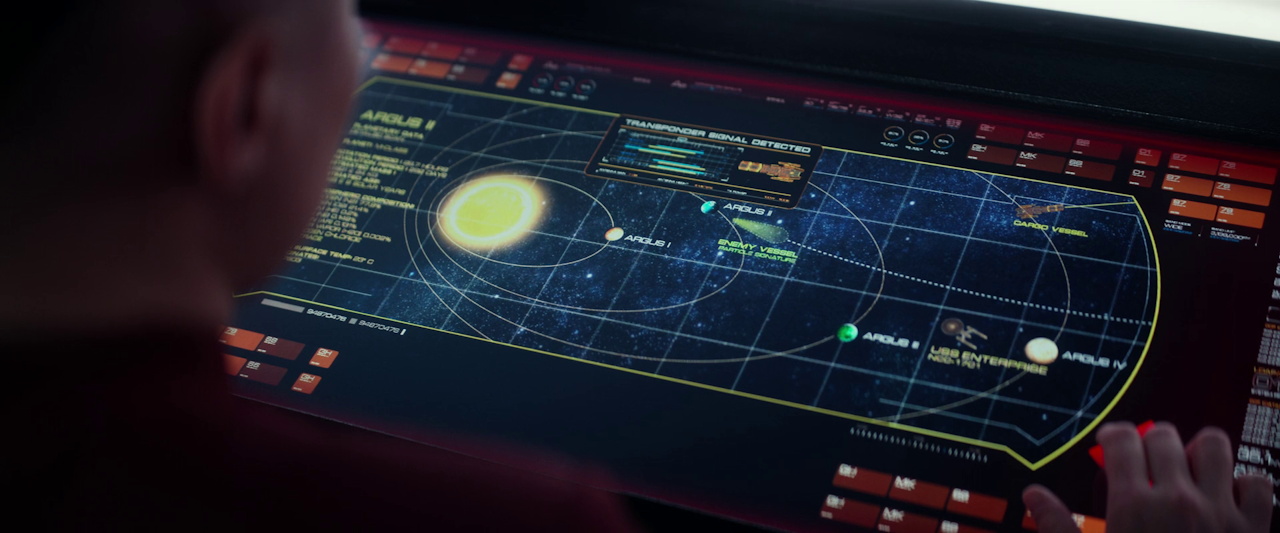
Star Trek: Strange New Worlds Episode Review – Season 4, Episode 1: Valles Marineris

A Star Trek-themed spoiler warning.

Spoiler Warning: There are spoilers ahead for Star Trek: Strange New Worlds Seasons 1-4. Spoilers are also present for the following Star Trek productions: The Next Generation, Voyager, Generations, Discovery, and Starfleet Academy.

And we are back! Strange New Worlds’ fourth season has officially landed on Paramount+, so it’s time for a review of the season premiere. Unlike last time, Season 4 didn’t begin with a double-header, so there’s only one episode to get things started. I think I prefer it this way; Star Trek can be a binge-worthy franchise, but I personally prefer to give new episodes a bit of room to breathe.

As I did for Seasons 2 and 3, I’ll be following along with Strange New Worlds for weekly episode reviews, so I hope you’ll join me over the next couple of months.

As always, an important caveat before we get into the meat of the review! Everything we’re going to talk about today is the *subjective, not objective* opinion of just one old Trekkie. If you hate my take, think I’ve missed something important, or don’t share my opinion of either Valles Marineris or Strange New Worlds as a whole… that’s okay. There’s enough room in the Star Trek fan community for differences of opinion and polite disagreement.

Still frame from Strange New Worlds 4x01 showing a transporter control panel
A new season of Star Trek is beaming in…

The start of a new Star Trek season always feels like a cause for celebration, and there are definitely aspects of Valles Marineris that I can say that I enjoyed. But I’m afraid that I didn’t really think that this episode was an especially strong one, narratively speaking, and that’s really for one main reason: there were too many ideas, too many characters, too many storylines, and too much going on at once. The episode simply didn’t have enough runtime to do justice to, frankly, *any* of the main things it brought to the table. And that’s a pretty big disappointment.
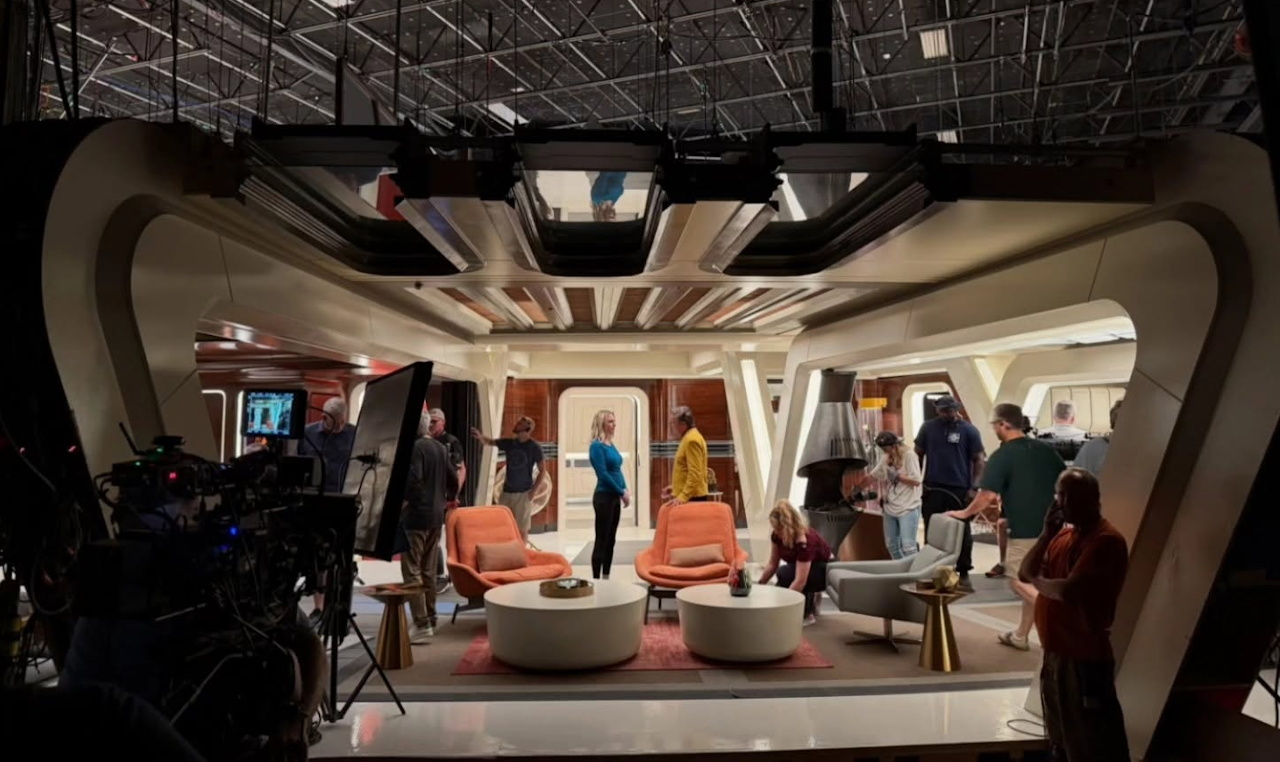
I’ve said this before in several of my Star Trek episode reviews, so I’m sorry for repeating myself! But the disappointing thing about Valles Marineris isn’t that the ideas, concepts, storylines, or character moments were bad… it’s just that none of them really got an adequate amount of time on screen to be fully explored. As a result, we got an episode of Star Trek which felt bitty and scattered, and which left way too many things unsaid or on the cutting-room floor. There were several genuinely fascinating ideas in the mix, but because the writers threw *all* of them into this one single episode, none of them had enough time to shine. And the result? Well… a bit of a mess. A disappointment. An underwhelming start to the season. Take your pick.

Photo of some of the Strange New Worlds cast on a barge at a Star Trek promo event
L-R: Celia Rose Gooding, Ethan Peck, Rebecca Romijn, and Paul Wesley on a barge at a Star Trek promo event in January 2026.
Photo: Paramount

Let’s start with Uhura and her new Vulcan cadet. I’m sure this character (whose name I don’t think we even learned in the episode) will be back in subesequent episodes, and we’ll get to spend a bit more time with them then. That’s at least potentially interesting – and as I said in one of my Season 4 previews, I like the idea of Uhura getting this kind of character arc across the series as a whole – growing from the unsure cadet we met in Season 1 to a teacher and a mentor by Season 4. That’s a positive thing, and I’m happy to see it… at least, in theory.

But because this standoffish Vulcan cadet, and Uhura’s reaction to them, was such a nothing-burger in Valles Marineris, I can’t help but feel like this entire storyline could and should have been moved. Perhaps introducing this cadet next week, or in another episode where they’ll be more plot-relevant, would’ve been the better decision. It could’ve freed up a few absolutely vital minutes of screen time this week that other storylines were desperately lacking.

Still frame from Strange New Worlds 4x01 showing Uhura and a cadet
Uhura with the cadet.

Again, for the sake of clarity: this storyline isn’t bad – or, at least, it isn’t off to a bad start. It’s just that this episode in particular already had so many other things going on that these moments between Uhura and the nameless cadet would’ve been better spent elsewhere. I have to assume that the cadet is going to be part of at least one significant storyline later in the season – and even if not, I like that their presence adds flavour and depth to the wider Star Trek universe. Seeing cadets on assignment like this is like seeing a random Andorian or Caitian in the background; it reminds us that Starfleet is bigger than just our main hero characters. And that’s a positive thing because it helps the Star Trek universe feel lived-in and real.

But on this occasion, Valles Marineris wanted to have storylines about time travel, dinosaurs, the concept of cosmic fate and destiny, Pike coming to terms with what happened to Captain Batel last time, Pike’s promotion, some kind of burgeoning conflict-slash-inevitable romance between Ortegas and Scotty, and brand-new additions to the history of Star Trek’s galaxy. There wasn’t time for everything… not at all. And I’m afraid that, in order for the episode to get across the *main* themes and story ideas that the writers wanted to convey, something should’ve been cut or adjusted. And if I had to pick one place to start cutting? It would be the scenes with Uhura and the cadet, as they were totally disconnected from everything else.

Still frame from Strange New Worlds 4x01 showing Pike, Sam, Uhura, and Cassell
This was a busy episode with a lot going on.

There were two big ideas on the go in Valles Marineris, and while they could – and arguably *should* – have been able to work together… they didn’t. The first was something that we saw teased in pre-season marketing material: Star Trek’s first-ever “dinosaur episode.” And the second was a time travel story about fate, destiny, and the need to allow a horrible catastrophe or crime to take place in order to secure the “correct” version of the present day.

Going back to dinosaur times to set up this kind of story was a creative idea. But the way it was handled in Valles Marineris meant that we neither spent much time with the dinos, having a fun Jurassic Park-inspired adventure, nor was there sufficient time to consider the real ramifications of everything on Pike’s side of the story. We learned, in brief, that: Pike and the Enterprise are literally responsible for the asteroid wiping out the dinosaurs, and by extension, humanity’s existence, that there used to be two other sentient alien races (besides the precursors to the Voth) in the Sol system, that some kind of “fate” or “destiny” exists in Star Trek at the macro level, not just for individuals like Pike, and that a race of humanoid Martians from millions of years ago had some kind of role in seeding the galaxy with their DNA. That’s *a lot* for any story to incorporate, so it’s no wonder that basically none of these points got time to be sufficiently explored.

Still frame from Strange New Worlds 4x01 showing an asteroid approaching a planet
So, uh, Pike (indirectly, I guess) wiped out the dinosaurs.

If you’ve read my review of Discovery’s fifth season, you might remember me saying something similar, but I don’t really like when Star Trek gets into the weeds with massive questions like “where did we come from?” or “who created the races in the galaxy?” because I think it robs the setting – and, by extension, us as the audience – of one of the franchise’s most fundamental building-blocks. We *don’t* always know why certain things happened – like the asteroid that caused the extinction of the dinosaurs – and we don’t *need* to know. There doesn’t have to be a single in-universe reason for why humanity evolved… and it certainly doesn’t need to be tied to some of our hero characters. Those kinds of things are best left unexplained.

This was, in a nutshell, the Discovery Season 5 problem. By going all-in on the Progenitors, the seeding of the galaxy, and so on… the show tried to answer questions that never needed to be asked, let alone given an in-universe explanation. And this side of Valles Marineris suffered the exact same fate. What do we, as the audience, gain by learning that the Enterprise caused the extinction of the dinosaurs? That was never the point of Star Trek; it was never a story that set out to ask the question “where did we come from and why?”, and because Strange New Worlds is still a semi-episodic project, the massive in-universe implications – for humanity at large and for our characters on the show – almost certainly won’t be addressed in a big way.

Still frame from Strange New Worlds 4x01 showing Pike
Captain Pike.

The appeal of Star Trek, to me, is that the Enterprise encounters different aliens, different planets, and goes on different adventures every week. There’s plenty of room in that framework for things like time travel, and even for encountering humanoid races in the distant past. I think both of those concepts could have been made to work. But by doing the Discovery-esque thing of making it this massive, fundamental, history-altering thing – let alone a time-loop paradox that’s hand-waved away with the old “destiny” excuse – I’m afraid that Valles Marineris didn’t stick the landing.

Going all the way back to The Lost World (not the Jurassic Park sequel; Arthur Conan Doyle’s 1912 novel), dinosaur stories have been all about adventure. Conan Doyle imagined a remote plateau in South America where dinosaurs still walked the Earth, Jurassic Park depicted mad scientists bringing the long-extinct creatures back to life to turn a profit… but there’s always been that adventurous tone. Valles Marineris offered the opportunity for Star Trek to have its very own dinosaur adventure… but an overladen episode didn’t have the time for that. The moments we got with the away team were fun – almost certainly the most fun I had with the entire episode. But they were so painfully short that the idea of “Star Trek meets the dinosaurs” fell pretty flat.

Still frame from Strange New Worlds 4x01 showing Una and a T Rex
I had high hopes when I saw the trailers…

Perhaps it’s because “the dinosaur episode” had been so prominent in Season 4’s marketing material and promos, but I really feel this promised episode didn’t live up to expectations. I liked the idea of seeing, for example, Spock using his tricorder and meticulously scanning and categorising different dinosaurs. But, of course, Spock didn’t even join the away mission. The away team encountered precisely *two* dinosaurs: a T. Rex, which they shot and stunned, and some kind of feathered velociraptor, which La’an punched. That’s it. Two dinosaurs. In the dinosaur episode.

There were the beginnings of a fun story here. I like the idea, for instance, of an alien shipwreck on Earth in this era, and a stronger story could’ve considered what that might’ve meant for the history of life on Earth. And I liked the idea of the crew landing on a strange M-class world, without understanding where or when they are because of technobabble. Concealing the truth like that… it could have been a creative way to introduce this story and set up the kind of dino adventure I was hoping to see. But it turned out to be a disappointment, because the episode had too much to do elsewhere.

Still frame from Strange New Worlds 4x01 showing a shipwreck
A wrecked spaceship on the surface of prehistoric Earth.

I will say, on a more positive note, that I liked the way the dinosaurs looked. It was nice to see a feathered dinosaur; since Jurassic Park’s premiere some thirty-odd years ago, palaeontologists have discovered that a lot more dinosaurs had feathers, and I’m glad the designers were able to incorporate that. The T. Rex, too, felt like it could’ve walked straight out of Jurassic Park! And even the plants and trees of prehistoric Earth looked pretty great.

Star Trek’s creative team have clearly gotten a lot more comfortable with the AR wall since its introduction. There are still some occasional misfires; the hideous CGI whale in Starfleet Academy’s premiere, for instance. But for the most part, sets built around the AR wall have looked pretty good, and I think the recreation of prehistoric Earth looked great here. There was some fantastic CGI and animation work to bring this place to life. I just wish we’d had the chance to spend a bit more time hacking through jungles, climbing volcanoes, and dodging dinos with the away team.
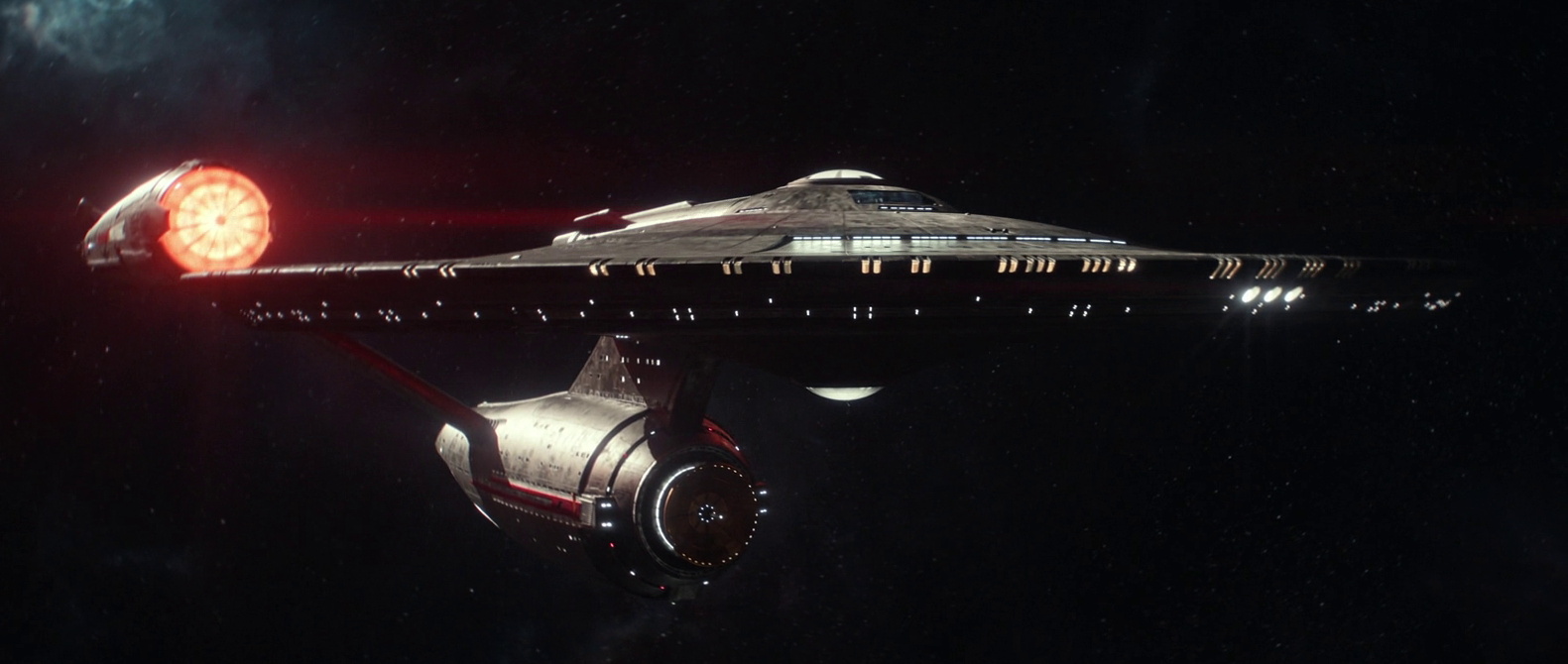
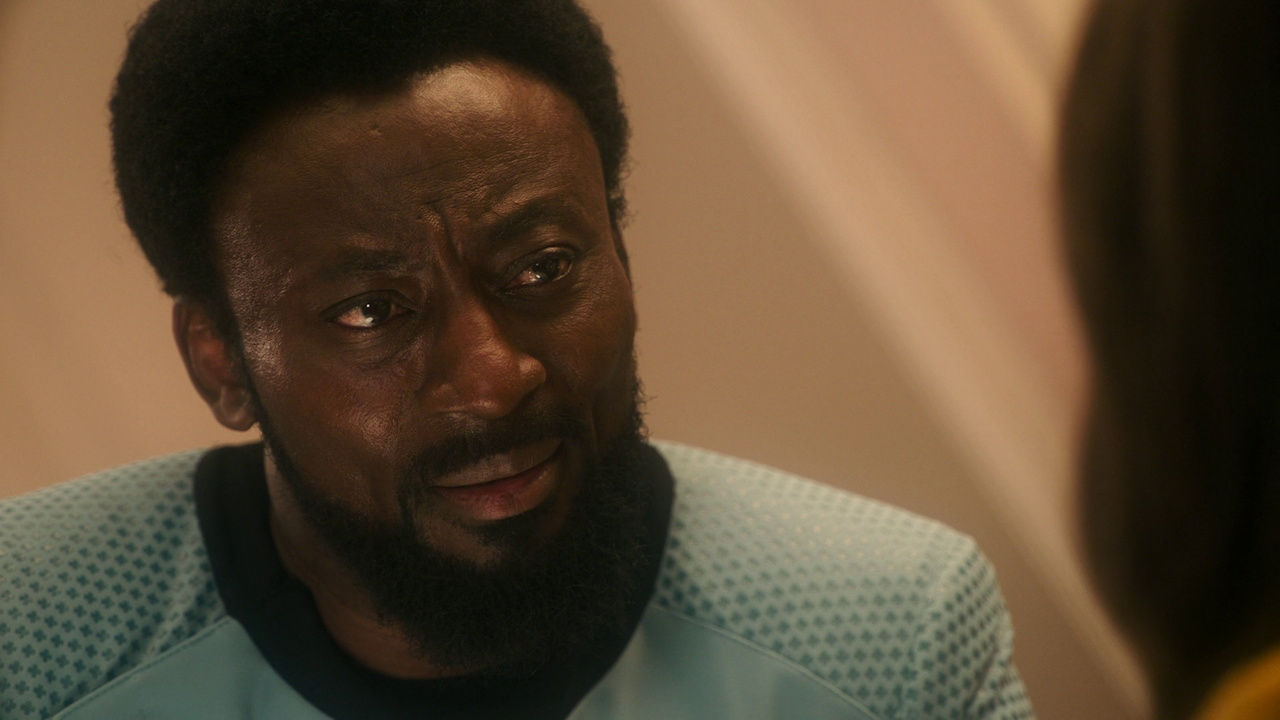
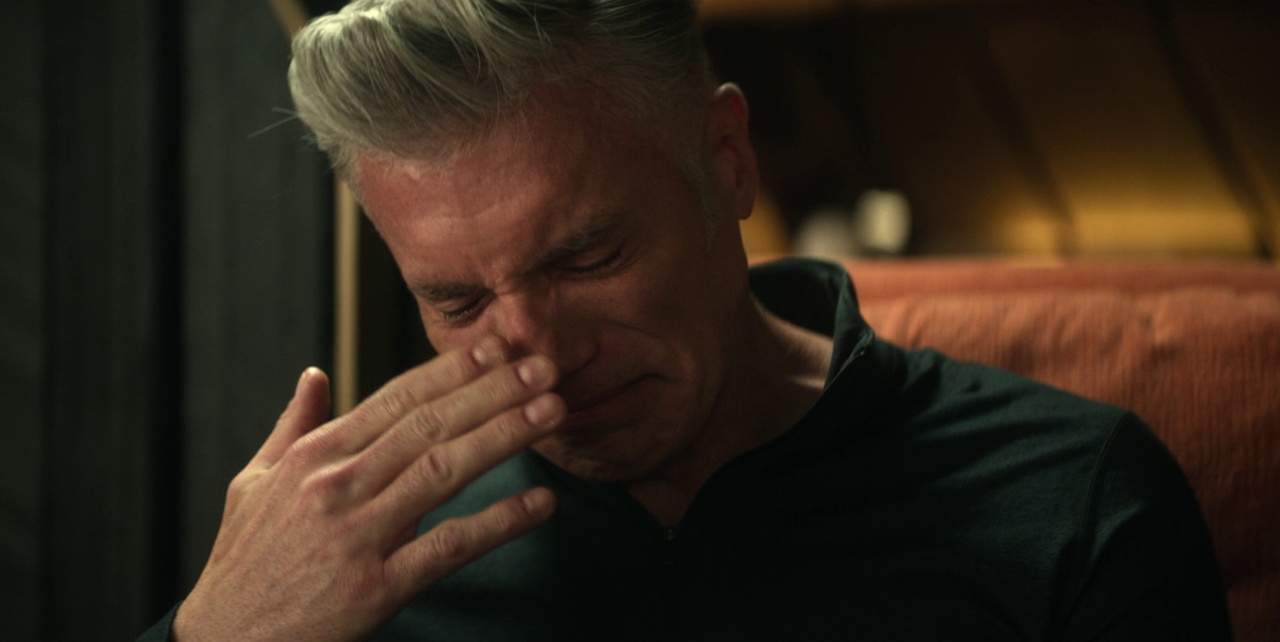
Pair of still frames from Strange New Worlds 4x01 showing animated scenery
Two of the CGI shots of prehistoric Earth.

This next part is going to seem a bit nitpicky, so feel free to disregard it if you think it doesn’t matter!

Voyager’s third season episode Distant Origin introduced us to the Voth – the descendants of a race of sentient dinosaurs who left Earth millions of years ago and eventually settled in the Delta Quadrant. The latest DLC pack for the video game Star Trek: Voyager – Across The Unknown even features this race and a mission based on the episode, which is why it’s so fresh in my mind right now! The Voth were believed to have descended from hadrosaurs – a real-life dino species which existed in the Cretaceous period. So… where were the Voth, or proto-Voth?

When we saw an alien spaceship attaching itself to the Enterprise, I felt certain that we were about to encounter the Voth! That could’ve been a fun way to tie in this adventure to dinosaur times with an existing piece of Star Trek lore. Instead, we were introduced to a race of sentient Martians, and their enemies on another M-class planet in the Sol system. And while I don’t dislike that necessarily (at least, not in isolation), it does make me wonder why the Voth weren’t chosen instead. Was it the prosthetic makeup? I note that the Martians were pretty basic in their design, whereas the Voth’s reptillian makeup would’ve been more complicated (and expensive) to replicate.

Still frame from Strange New Worlds 4x01 showing a dinosaur
A dinosaur.

I don’t wanna spend too much time on this, and I think there’s enough wiggle-room based on dialogue in Distant Origin to argue that the Voth (or their ancestors) might not have evolved into a sentient species by this point in time, let alone have been a technological or spacefaring people. But it would’ve been a fun callback to Voyager if we’d encountered the Voth or proto-Voth in this episode.

I mentioned above that I don’t dislike the introduction of the Martians or the Dol’drm *in isolation*, so let’s expand on that a little.

The history of Star Trek’s galaxy is already… well, let’s just call it “unnecessarily complicated.” There are the Progenitors, who apparently seeded half of the galaxy with genetic material. There’s the Q Continuum, with all of their time travel shenanigans. Then we have all of the time travel episodes to various periods in Earth’s past (or the past relative to the 23rd and 24th Centuries), which often saw various characters getting a little *too* involved in history!

Still frame from Strange New Worlds 4x01 showing Una and Erica
Una and Ortegas on Earth.

In short, if this was the first Star Trek episode to visit the past, or even to touch on events in this exact era, I think I’d be okay with the Martians and the Dol’drm. Their existence adds to our understanding of the Star Trek galaxy. But because Star Trek is some six decades old, closing in on its 1,000th story, and because we’ve had plenty of episodes and storylines dealing with Earth, Mars, human history, pre-human history, and so on… it feels like an unnecessary addition. It complicates elements of the Star Trek galaxy’s fictional history rather than explains storylines that needed to be expanded upon… and I can’t help but feel that the dangling narrative threads that this episode leaves behind will never be addressed.

How, for instance, did the pre-warp Martians manage to travel the galaxy and leave their genetic material in dozens of races? Isn’t that what the Progenitors did in The Next Generation and Discovery, so doesn’t it tread on the toes of that story? And where were the Voth, or the ancestors of the Voth, in an era where we should’ve seen some evidence of them? Star Trek had never before teased the idea of a prehistoric Martian race, nor of a destroyed planet in the Sol system, and while these ideas can be made to work… they’d have worked a lot better if they were painted on a blank canvas instead of having to be shoehorned in between existing pieces of lore from across sixty years of the franchise’s history.

Still frame from the Star Trek SNW S4 trailer showing M'Benga
Dr M’Benga explained that the Martians’ DNA somehow made its way all over the galaxy.

Time travel is not easy to get right. It doesn’t always work well in Star Trek, and even in dedicated films or books where time travel is a major plot point, it’s all too easy for writers to tie their stories in knots with paradoxes, time-loops, and so on. And Valles Marineris falls victim to this. The Enterprise’s direct involvement in the destruction of the Dol’drm homeworld and the Chicxulub asteroid impact is a predestination paradox; a particularly annoying kind of time travel plot hole that the episode tries to just hand-wave away right at the end. Why was the Enterprise there? Because *it was always supposed to be there*, duh. That’s it. That’s all the explanation we’re gonna get.

Even if this was for something small, it would still be infuriating! But the Enterprise is responsible for *literally all of humanity ever existing*, and it’s a fucking paradox! And all the explanation we’re offered is “well, that was supposed to happen. Now shut up and don’t tell anyone, ever.” Doesn’t that piss you off? Because it pisses me off! Throwing out “fate” and “destiny” as ways to get out of a time travel paradox is just so exceptionally lazy. Worse, it’s a massively overused trope; a cliché of time travel stories that’s been seen way too often. Star Trek has done this before, of course, but that doesn’t make it any better. And in a Discovery-inspired “the entire fate of all of history depends on this” storyline? It’s absolutely atrocious, to be blunt about it.

Still frame from Strange New Worlds 4x01 showing Spock at a viewscreen
Spock explaining the origin of the Chicxulub meteor.

I want to talk about the Martians.

I was underwhelmed, to be honest, by the Martians’ visual presentation. The “humans with painted foreheads” thing really didn’t do it for me; they felt neither sufficiently ancient nor adequately alien, and their design didn’t even do what the Progenitors’ did back in The Next Generation, feeling like it could conceivably be a precursor to humans and other humanoid races. Costuming was also pretty uninspired; the Martians’ costumes looked like they might’ve originally been intended for the Romulans to wear.

Then there’s the question of technology. The Martian ship was easily able to pick up the damaged Enterprise, yet it was immediately assumed by Pike and co. that the Martians must be a pre-warp civilisation. Their visually impressive spacecraft apparently possessed no antimatter, because a single antimatter fuel cell from the Enterprise was able to be turned into a powerful weapon. Given that the Martians seemed to possess technology superior to Starfleet’s in some ways – like phasing through walls or language translation – I had a hard time buying that they were a pre-warp, pre-antimatter society. Heck, we can create actual antimatter here on Earth, today, in the real world. So how could the Martians not have that technology given the power of their spaceship, phasing, and so on? It just felt quite jarring to go from “oh no, this incredibly powerful warship has captured us!” to “the Prime Directive applies to these pre-warp simpletons” without sufficient explanation. “Show, don’t tell” – the old adage from Creative Writing 101 – should’ve been applied here, and if we’d seen for ourselves the limitations of the Martians’ technology, the episode would have avoided this. But, as we’ve already discussed, Valles Marineris was already overstuffed with storylines and content.

Still frame from Strange New Worlds 4x01 showing Cassell and two guards
The Martians.

If I might nitpick (again), what do we make of a single starship fuel cell being used to destroy an entire planet? I know that antimatter is powerful – both in the real world and in Star Trek’s technobabble. Photon torpedoes use antimatter in some form, for instance, so we know it can be weaponised. But it seemed a bit of a stretch, to me, that an entire *planet* could be destroyed so casually with something that the Enterprise – and, by extension, every warp-capable ship in the galaxy – just uses for fuel. Why are *all* weapons not antimatter? Could a single torpedo blow up a planet?

In this instance, I get the sense that the writers just didn’t have the attention to detail or level of care that a story set in a long-running fictional universe needs. If a single fuel cell, small and light enough to be carried by a couple of people, can be used to blow up an entire planet… I mean, how are *any* planets left standing in the Star Trek galaxy? Surely the likes of the Klingons, the Cardassians, or the Borg would’ve weaponised antimatter in that way centuries or millennia ago. In other Star Trek stories, planet-killing superweapons – such as the unmanned vessel from The Doomsday Machine, or Red Matter from Star Trek ’09 – were assumed to be rare. They’re analogous to nuclear weapons: exceptionally powerful and dangerous, but very uncommon and difficult to create. Valles Marineris is apparently saying that every ship in the fleet is cutting about with dozens or even hundreds of potentially planet-killing superweapons that they do nothing with except use for fuel. And the only reason no one’s out there blowing up planets all willy-nilly is… just because?

Still frame from Strange New Worlds 4x01 showing the destruction of a planet
The Dol’drm homeworld is destroyed.

In the run-up to Season 3, we learned that Strange New Worlds has been cancelled. And a big part of the marketing material for Season 4 has been this idea that the stories this time will take us “one step closer to where [Star Trek] all began” – i.e. The Original Series. As part of that, I have to imagine that we’re going to learn the eventual fates of several of Strange New Worlds’ original characters, the ones who weren’t part of The Original Series: La’an Noonien-Singh, Erica Ortegas, and Pelia, as well as Una Chin-Riley, who was absent after The Cage. I think Valles Marineris started at least one story arc which could tie into that.

Though, once again, it didn’t get enough time on screen or a sufficient explanation, La’an suffered an injury to her hand in Valles Marineris. The conversation she had with Dr M’Benga and Nurse Chapel made reference to her (in)famous ancestry and her “recessive” augment DNA, though it was a massive dump of exposition and a clumsily-worded scene that was probably the worst in the episode. Given that we know La’an had left the Enterprise before TOS, and that modern Star Trek writers have a penchant for taking things to the extreme… I think it’s fair to say that *at least* one of SNW’s original characters is going to be killed off before the end of the series, right? And what we saw this week with La’an could have set the stage for that. Perhaps she’ll go rogue if her augment DNA activates, and someone will have to stop her. Or maybe, as we saw last time with Captain Batel and the Gorn, something’s going on inside her with this DNA that’s going to accelerate the end of her life. In any case… it was a very barebones foundation, but perhaps it’s something to build on.

Still frame from Strange New Worlds 4x01 showing La'an with Chapel and M'Benga
Goodbye La’an?

In Season 3, Captain Pike got a complex and deeply emotional story with Captain Batel – their relationship expanded and deepened before her untimely sacrifice. I said after the Season 3 finale that I’d have liked to spend a bit more time with Pike to consider the ramifications of what he went through; he seemed to experience an entire lifetime with her before her sacrifice, and then saw that “perfect” life ripped away. It was not only a life he got to lead with someone he loved, someone he had a family with… but it was also a lifetime in which his debilitating accident never occurred. There was scope, I felt, to consider an age-old question: is getting a taste of paradise, for just a moment, worse than never experiencing it at all?
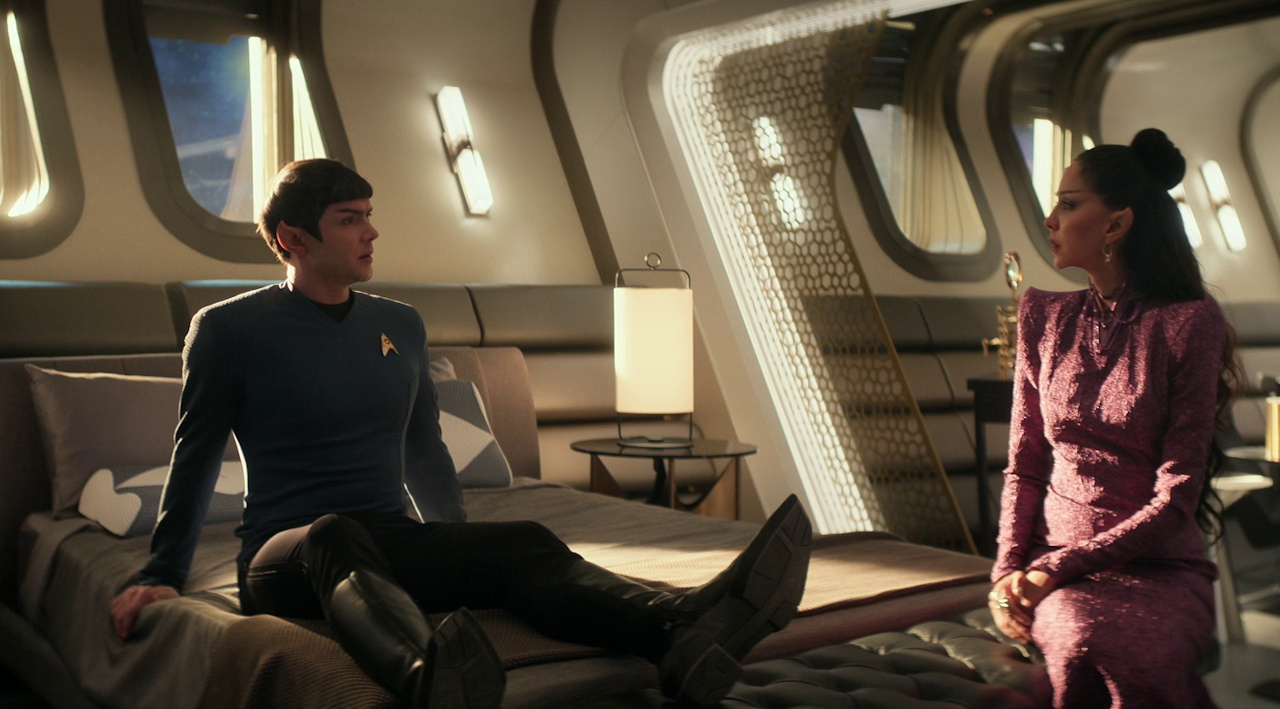
This time, the Martian commander picked up on Pike’s loss, and snippets of conversations with Admiral April and Number One both hinted at or referenced what happened with Captain Batel. But I don’t think we’ve fully explored this idea just yet, and I’ll be curious to see how much further Strange New Worlds takes Pike’s emotional journey in the aftermath of Captain Batel’s loss. As above with La’an, there’s an interesting framework to build upon, and I’m glad that Season 4 didn’t just try to drop it and move on – something modern Star Trek has done with too many storylines, to be honest! But there’s more to do with Pike and his emotional state, I feel.

Still frame from Strange New Worlds 4x01 showing the USS Enterprise caught in a solar storm
The Enterprise.
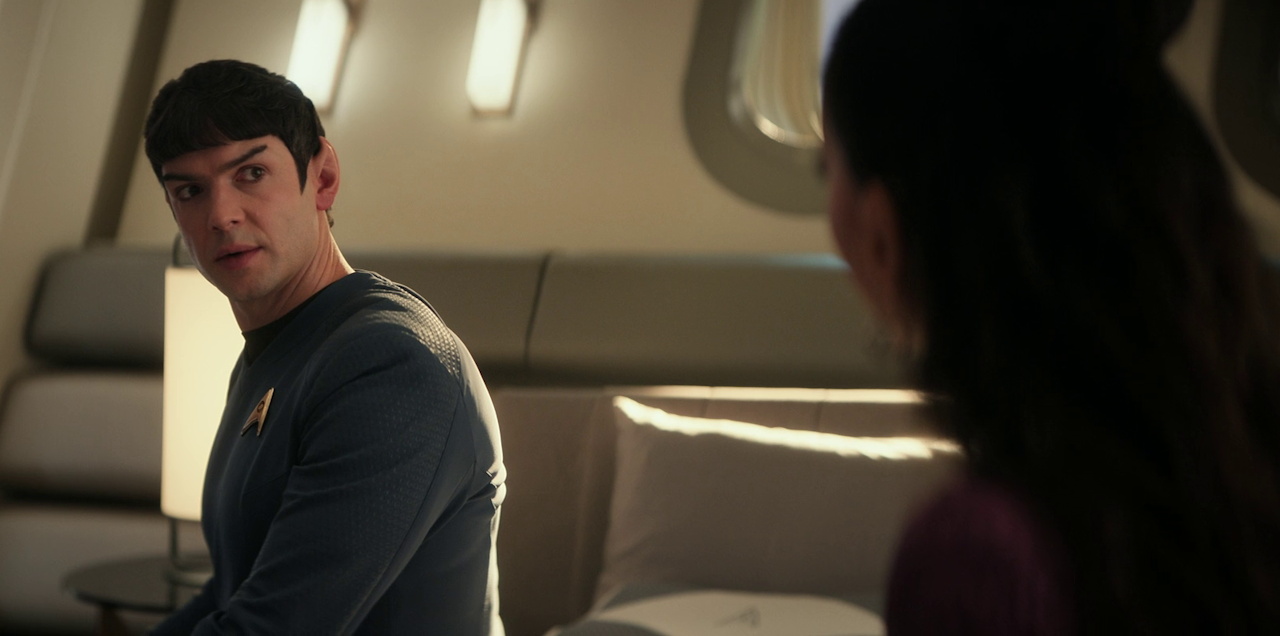
Then we have Pike’s promotion. This storyline reminded me a little of what we saw with Picard and Kirk in Generations – Kirk advises Picard to stay on the bridge of his ship, and not to accept a promotion to Admiral. Admiral April offers Pike the role of Commodore – a half-step to becoming a full Admiral, and role he may one day accept (depending on how we interpret Kirk’s line about Pike becoming a “Fleet Captain” by the time of The Menagerie), but on this occasion, Pike turns him down – though Una does receive a promotion of her own at the end of the episode, which was nice to see.

I think we’re going to see Pike’s promotion at the very end of the series, with him accepting this new role and having to transfer command of the Enterprise to Kirk as a result. But, again, this feels like Strange New Worlds laying the groundwork for that. Starfleet is sufficiently impressed with Pike as to offer him a promotion, and we know that, sooner or later, he *will* take a promotion ahead of his debilitating accident.

Still frame from Strange New Worlds 4x01 showing April
Pike turned down April’s promotion offer… for now.

Before we wrap things up, a few final thoughts.

Is Strange New Worlds setting up a sitcom-y “frenemies to lovers” storyline with Scotty and Ortegas? I don’t remember much interaction between them in Season 3, after Martin Quinn joined the cast, but there was definitely something between them this week. Ortegas complained about Scotty’s safety features and mocked his accent, and the two developed some kind of rivalry between the pilot who flies the ship and the engineer who keeps it flying. Could this arc – if indeed it exists – be tied to Ortegas’ exit from the Enterprise bridge ahead of the season finale? We know, thanks to Paramount’s casting announcement, that Sulu will have some role to play in Season 5… and Sulu will be the Enterprise’s helmsman under Kirk’s command. So where does that leave Ortegas?

Pelia seemed to make a reference to long-running sci-fi series Doctor Who, claiming to have seen one of these solar storms before, while aboard “a phone box.” This is a fun little Easter Egg, of course, but it also ties into something that showrunner Akiva Goldsman has said: a crossover with Doctor Who was actively considered by both the Star Trek team and the Doctor Who team, and that it came relatively close to happening. In Goldsman’s words: “Pelia travelled in the TARDIS. Why not?” I don’t mean to say that this reference was intended to tie in with a specific crossover story idea, but it furthers something we saw in Season 3, and it’s another fun little connection between these two legendary sci-fi properties.

Still frame from Strange New Worlds 4x01 showing Pelia with Pike behind her
It was nice to see Pelia this week.

So that was Valles Marineris. It didn’t wow me, to be blunt about it. And I think, on balance, it’s the weakest of Strange New Worlds’ season premieres, which is a bit of a shame.

However, Strange New Worlds remains a mostly episodic show, and while there are storylines that kicked off this week that will be continued across the rest of the season, there will be a new adventure for Pike and the crew next time – hopefully a stronger, more enjoyable one. I had high hopes for a fun dinosaur-themed adventure when I saw them in the trailers and teasers, but unfortunately, the finished product was a muddled, overstuffed time travel episode with a glaring, overdone paradox at its heart, and an episode that didn’t really have enough time to spend on any of its potentially interesting and fun ideas.

Given that Seasons 4 and 5 were written with the knowledge of the show’s cancellation and ending in mind, I hope this week’s overladen, disjointed episode isn’t a harbinger of things to come. If the writers and creative team have more ideas for stories than there are available episodes… well, we could see more episodes that end up trying to cram in too much content. For me, that would really soil the remaining season-and-a-half, so I’m crossing my fingers that Valles Marineris is a one-off blip rather than an indication of what the rest of Seasons 4 and 5 will look like.

Still frame from Strange New Worlds 4x01 showing Scotty and Ortegas
Scotty and Ortegas… Strange New Worlds’ next couple?

Thanks for joining me for this review. If you missed them, I have reviews of every Strange New Worlds Season 2 and 3 episode here on the website – you can find them by clicking or tapping here. And as this season rolls out, I’ll be following along with weekly episode reviews, so I hope you’ll stay tuned for some of that! In this big sixtieth anniversary year, I’ve also been writing a few pieces celebrating the Star Trek franchise, and I’ve reviewed Season 1 of Starfleet Academy and the video game Across The Unknown, too. I hope you’ll check out some of those articles and reviews if you have the time.

So Strange New Worlds Season 4 has landed… but not with as strong an episode as I’d have hoped to see. However, there’s still plenty of time for things to turn around, and every season of Star Trek, frankly, has these duds or less-interesting stories. As long as it’s a one-off, I think we can survive episodes like Valles Marineris. And hey, if you enjoyed it more than I did… then that’s great! The Star Trek fan community should be a big tent, and there’s always going to be a range of different opinions on which episodes and films are the best.

See you next week for a review of The Griffin Incident, and until then… Live Long and Prosper, friends!


Star Trek: Strange New Worlds Seasons 1-4 are available to stream now on Paramount+ in countries and territories where the platform is available. The first three seasons are also available on DVD and/or Blu-ray. The Star Trek franchise – including Strange New Worlds and all other properties discussed above – is the copyright of the Skydance-Paramount corporation. This review contains the thoughts and opinions of one person only and is not intended to cause any offence.