What If…? Star Trek Edition!

A Star Trek-themed spoiler warning graphic.

Spoiler Warning: Beware of spoilers for the following Star Trek productions: The Next Generation Season 1, Deep Space Nine Season 6, Voyager Season 1, Generations, Star Trek ’09, Discovery Season 2, and Picard Season 2.

Almost four years ago I had a lot of fun writing a piece here on the website called “What If…? Star Trek Edition!” I took the basic concept behind the then-new Marvel miniseries What If…? and applied it to several storylines from the Star Trek franchise that I found interesting. Speculating and getting creative was a blast, so… let’s do it again!

If you missed the miniseries (or my earlier post), I’ll briefly explain how this works! We’re going to look at five stories from across the Star Trek franchise and ask a simple question: what if things went differently? What would the consequences be for Starfleet, the Federation, and some of the characters we’ve come to know and love if, for example, Spock wasn’t resurrected on the Genesis Planet or Captain Janeway and the USS Voyager tried to reach the Gamma Quadrant terminus of the Bajoran wormhole? I covered both of those topics in my post from 2021, by the way, so be sure to check it out – you can find it by clicking or tapping here.
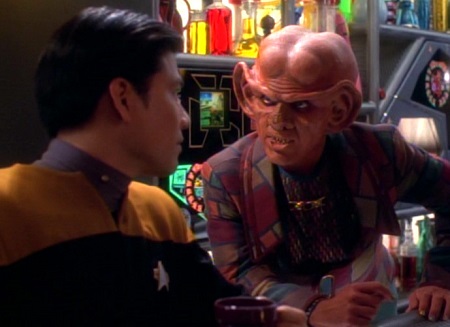
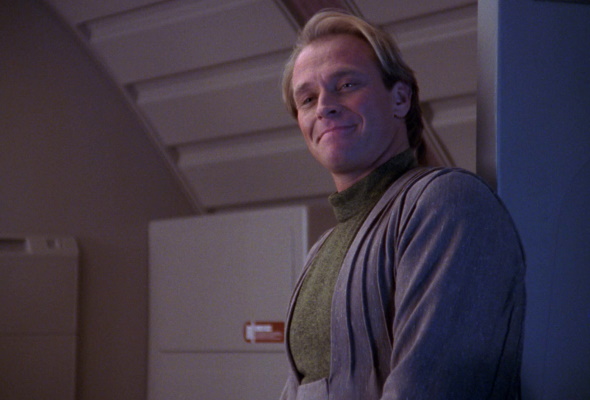
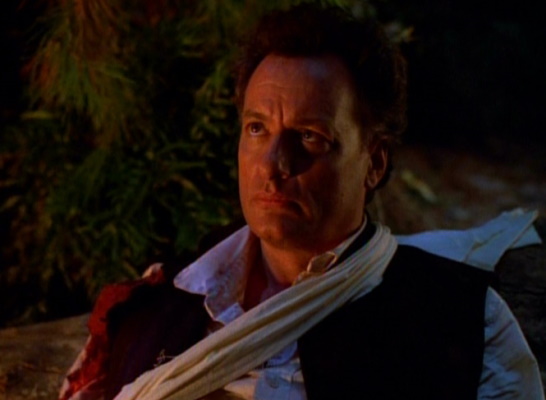
Still frame from Star Trek: Voyager showing Kim and Quark.
Harry Kim and Quark.

Alternate history has been an interest of mine for a long time – so we can consider this an “alternate history of the future,” if you like! With the Star Trek franchise slowly but surely heading toward the 1,000-story mark, there are a lot of places where narratives could branch, and where the Star Trek galaxy could end up in very different situations! As a Trekkie, and as someone who likes to spend time in this setting, it’s a ton of fun to come up with these ideas and consider how they might play out.

As always, a couple of important caveats! All of this is the entirely subjective take of one old Trekkie. If you hate all of my ideas, think I’ve got the wrong end of the stick, or if I miss something that seems totally obvious to you… that’s okay! There ought to be enough room in the Star Trek fan community for differences of opinion. None of this is close to being “canon,” anyway, so there’s even less of a reason to get upset about completely made-up Star Trek stories that will never be seen on screen!

Alright, let’s jump into the “what if” scenarios!

What If…? #1:
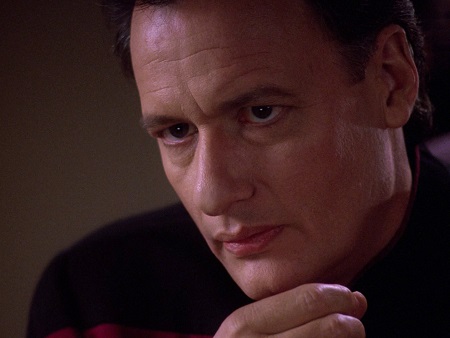
What if… Captain Picard and Q never met?
The Next Generation, Picard Season 2
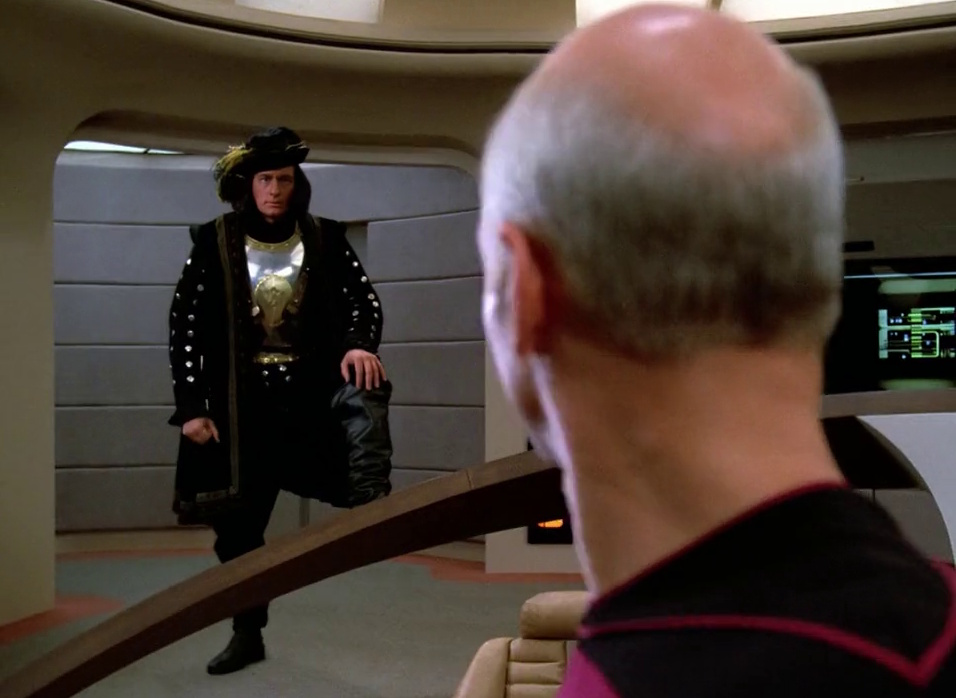
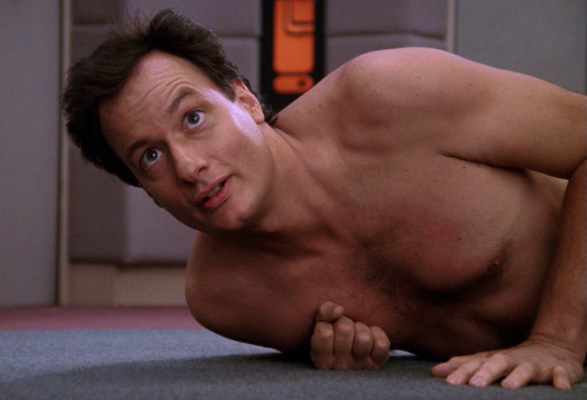
Still frame from Star Trek: The Next Generation Season 1 showing Picard meeting Q for the first time.
Picard’s first encounter with Q.

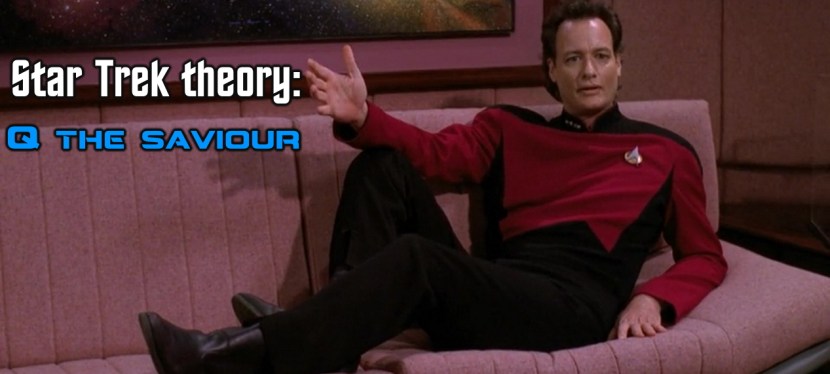
This is a really interesting one – and it might not go the way you think! Looking back over Picard’s run-ins with Q during The Next Generation, there really aren’t many places where we could say that their interactions had wide-ranging consequences. I have my pet theory that Q deliberately saved Picard and the Federation by making them aware of the Borg threat (click or tap here for that one, it’s one of my favourite Star Trek theories!) but that’s not the angle I’m gonna take today. In this case, we’re going to say that – for whatever reason – Picard and Q never met, never developed their complex relationship, and Q never set any puzzles for Picard to solve. In fact, Q stayed away from humanity and Starfleet altogether in this alternate timeline.

As noted, Q’s interactions with Picard and the crew of the Enterprise-D almost always involved problems or scenarios of his own devising. So without Q on the scene, the Enterprise-D’s mission actually proceeds slightly more smoothly than it did in the series; the absence of Q doesn’t matter in a big way to the seven-year cruise. Every other episode and story plays out more or less the same, from the mystery at Farpoint Station to the ship’s destruction over Veridian III. Picard assumes command of the Enterprise-E, then the Romulan rescue armada, before retiring from Starfleet.
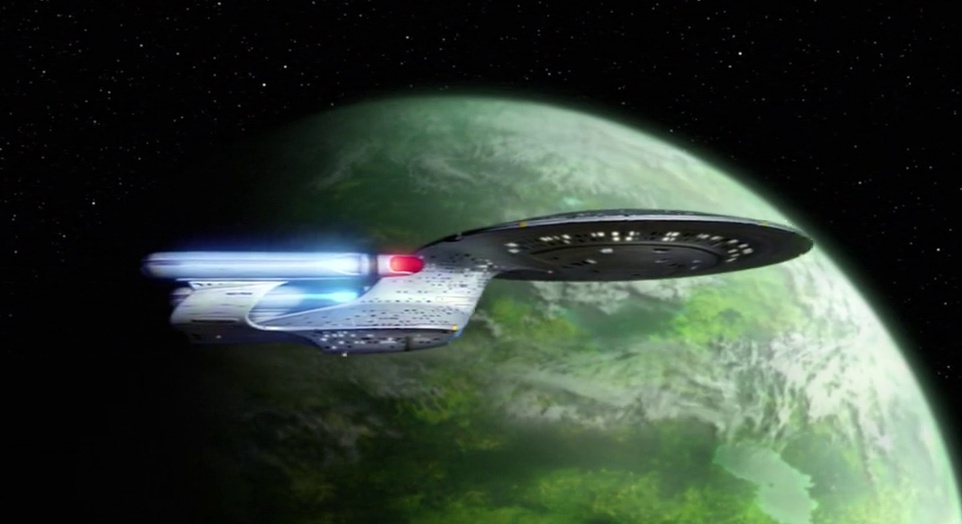
Still frame from Star Trek: The Next Generation showing the Enterprise-D in orbit of a green planet.
The voyages of the starship Enterprise would proceed in exactly the same way… just without Q’s occasional shenanigans!

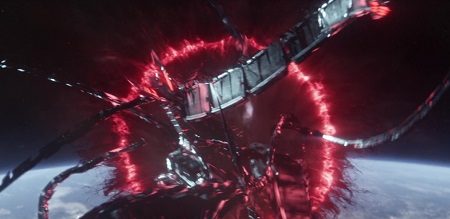
But here’s where things change. After the mission to rescue Soji and being named Chancellor of Starfleet Academy, Admiral Picard is aboard the USS Stargazer when a mysterious anomaly is detected. The Stargazer, the Excelsior, and a handful of other ships race to the scene, where they’re confronted by a massive subspace anomaly that Seven of Nine thinks could be a huge transwarp conduit. Attempts at communication fail, and with only a handful of Starfleet ships on the scene, there’s no way to prevent the conduit from unleashing its triquantum waves.

Aboard the Stargazer, Picard and the crew look desperately for solutions – but there are none. Without the Borg, their vessel, and their knowledge of the situation, there’s no way to stop the transwarp conduit from doing what it was designed to do: launching a massive attack on the Federation. Its triquantum waves blast across several sectors of space, destroying the Starfleet ships as they attempt to escape, as well as several starbases and Federation colonies. Having expended its initial wave of energy, the conduit then falls eerily silent, as if waiting for instructions… or for its operators to emerge.
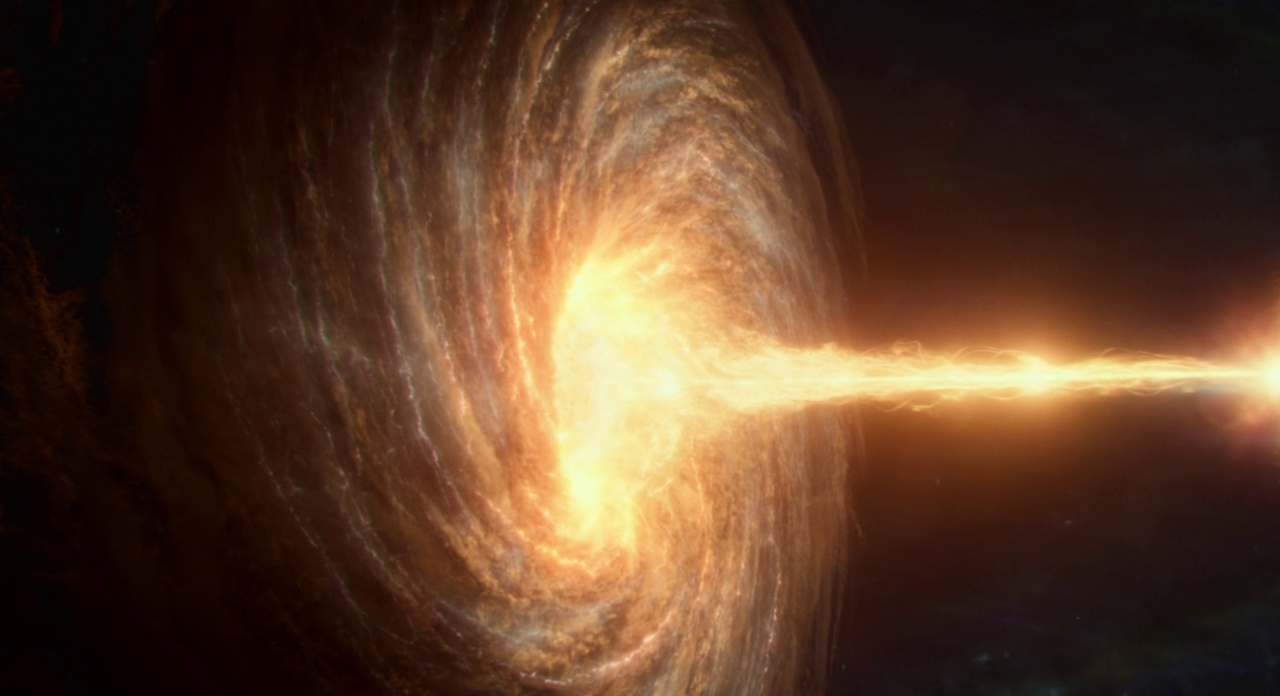
Still frame from Star Trek: Picard showing the mysterious transwarp anomaly.
This time, there’s no one to stop the transwarp anomaly…

Because Star Trek: Picard was a jumbled mess of a show, we don’t know who made the transwarp anomaly. My pet theory is that it’s something to do with Season 1’s super-synths, but it could also be the Borg, the Dominion, or any one of a number of Star Trek baddies! In this timeline, though, the anomaly’s initial attack would be successful – because there’d be no Q to throw Picard and his friends into the alternate reality that eventually led to Dr Jurati’s assimilation and the creation of a Borg splinter group. Without the Jurati-Borg’s presence at the site of the transwarp anomaly, there was no way to stop its energy from being unleashed.

What would happen next? I’d imagine that whoever made the anomaly would be pleased with its success, and if it was a transwarp conduit – as Seven theorised – then it could serve as a gateway for any ships that the attacker had. With a devastated sector and no intact ships remaining in the area, any invader would quickly be able to establish a massive bridgehead right in the heart of Federation territory, and if they have more transwarp conduit weapons… who knows? The next target could be Earth.

What If…? #2:
What if… Section 31 and the Federation accidentally created the Borg?
Deep Space Nine, First Contact, Discovery Season 2
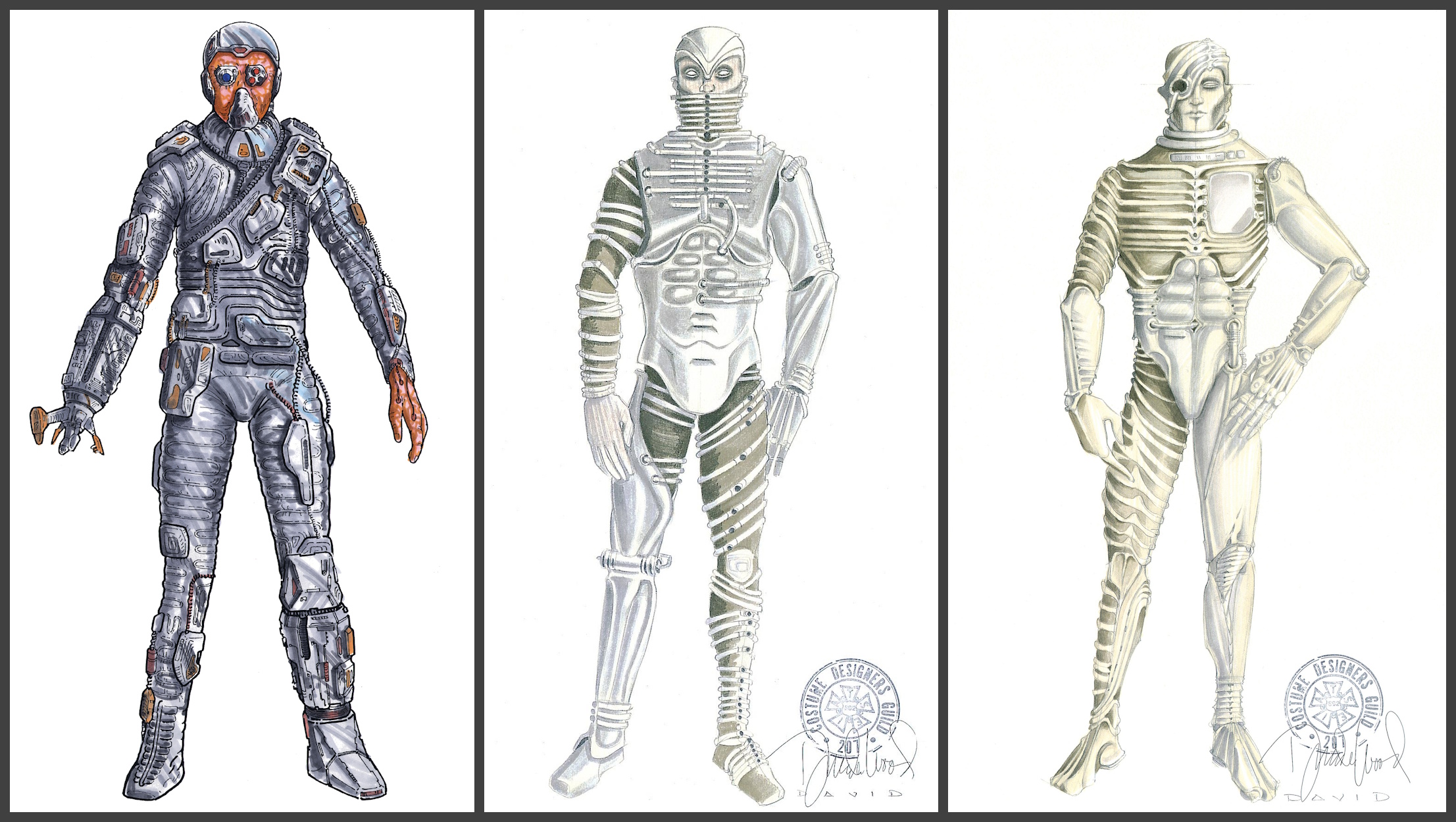
Concept art for Star Trek: The Next Generation showing three Borg designs.
Early concept art of the Borg.

If you’re a regular reader, you might remember my theory that Discovery’s second season – which featured a time-travelling spacesuit and an AI that could “assimilate” humans using nano-bots – was originally pitched as a “Borg origin story.” So what if that’s actually what happened? In this timeline, Section 31 and the Control AI are going to be uncovered as the true progenitors of the Borg!

Here’s how it went down: after chasing Captain Pike and the USS Discovery all over the quadrant, Control and its fleet of automated drone-ships finally have them cornered. Using the assimilated body of Captain Leland, Control boards Discovery and attempts to seize the all-important Sphere Data that it needs – but the battle in space is going poorly, and Control seems to be on the verge of defeat. Not wanting to give up, Control switches tactics. Instead of the Sphere Data, Control races to the science lab and steals the Red Angel suit that Burnham and the crew have finished working on.
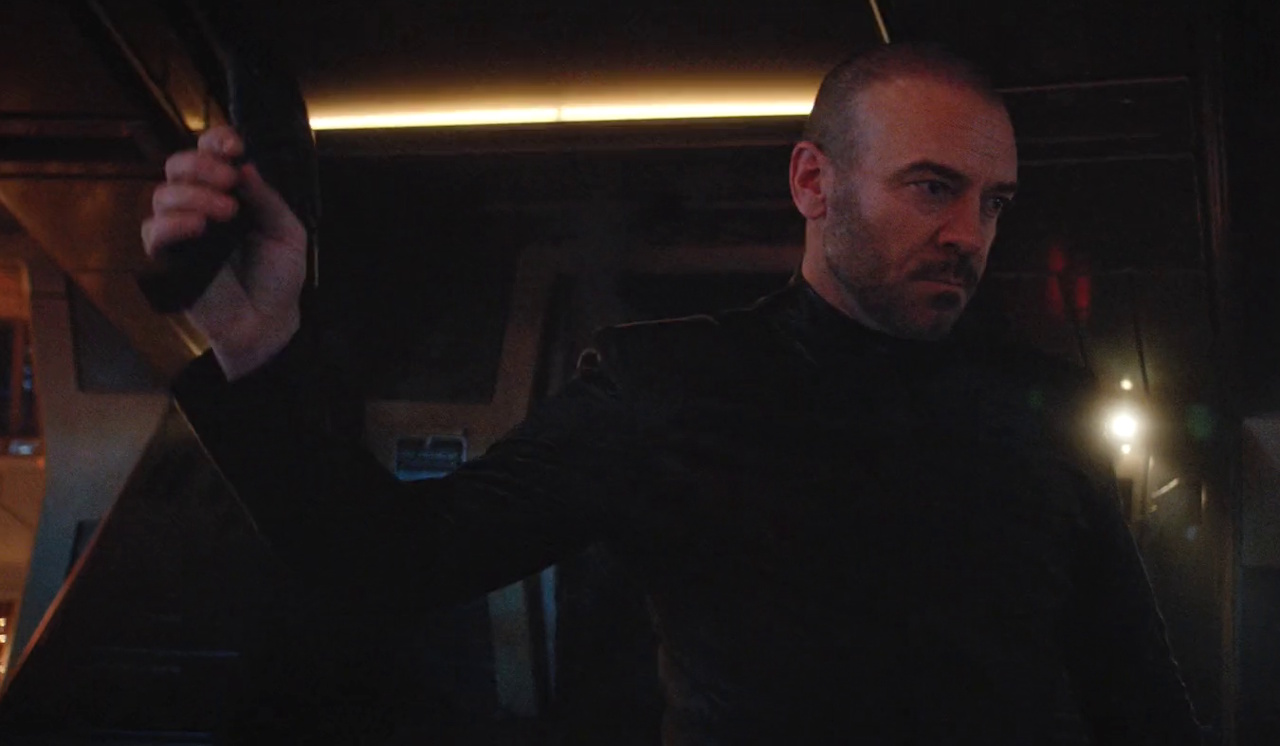
Still frame from Star Trek: Discovery Season 2 showing Captain Leland holding a phaser.
The “assimilated” Captain Leland.

Staring down an armada of allied ships in space and Discovery’s security team just outside the doors, Control is trapped. With no other options, Control uses the Red Angel suit to escape – but because the suit is malfunctioning, Control ends up in the distant past. Trapped on a planet in the far-flung Delta Quadrant, anchored in time the same way Gabrielle Burnham was, Control surveys its surroundings. The planet is primitive, populated by humanoids in an early stage of development – with no spacefaring technology. Control has some nano-bots remaining, and the Red Angel suit… but that’s it. It decides that the best course of action is to assimilate some of the local humanoids and work on producing more technology – hoping to one day return to Federation space and finish what it started.

For me, the biggest question is this: does the Borg Collective still know all of this as of the late 24th Century? Or has the passage of time and countless assimilations over the millennia led to this information being forgotten, buried somewhere in the depths of the Collective’s knowledge? My personal take is that this is something the Borg Queen would know – but in the Collective’s run-ins with Starfleet, it’s gone out of its way to avoid revealing this truth.
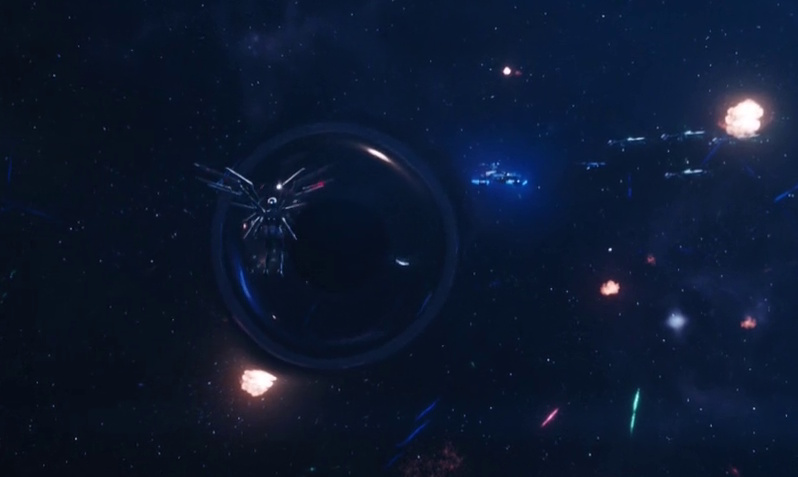
Still frame from Star Trek: Discovery Season 2 showing the Red Angel suit opening a portal.
The Red Angel suit can be used to travel through time.

But the Borg Queen is clearly not the same as Control – so what happened there? Perhaps the Queen regards Control as her “ancestor,” in a sense, or maybe Control merged with a particularly strong personality that it assimilated early on. Dr Jurati, in Picard’s second season, merged with the Borg Queen rather than simply becoming a Borg drone, so the same principle could apply here. It does beg the question, though, as to why the Borg Collective didn’t set its sights on Earth and humanity decades earlier if Control’s desire for revenge is hard-coded into the Collective’s DNA!

More interestingly, I wonder what Starfleet would make of this revelation. Let’s say that, after the Battle of Sector 001, Starfleet was able to analyse the remains of the Borg Cube and found remnants of 23rd Century Federation programming in the Borg’s systems. Further analysis eventually led to one inescapable conclusion: the Control AI is the basis for the Borg, making the biggest threat to the galaxy an accidental Federation creation. Perhaps that knowledge could be used by Starfleet’s Borg experts to find a weakness or a way to communicate… but it would also be a serious blow to morale.

What If…? #3:
What if… the USS Voyager was destroyed over Ocampa?
Voyager Season 1
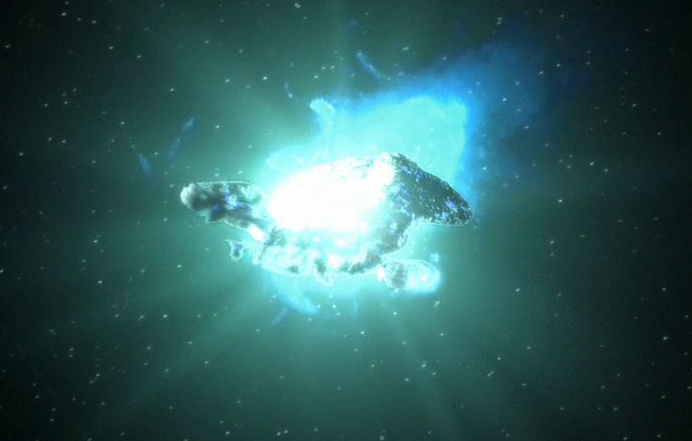
Still frame from Star Trek: Voyager showing the USS Voyager exploding.
The destruction of the USS Voyager!

In this alternate timeline, we’re going to say that the USS Voyager and the Val Jean – Chakotay’s ship – were both transported to the Delta Quadrant as we saw in Caretaker. But during the battle for the Caretaker’s Array, it’s Voyager, not the Val Jean, that ended up being destroyed by the Kazon. Some survivors made it to the escape pods and were taken aboard by the Maquis, with Chakotay ordering B’Elanna to fire up the engines and get the ship out of range of the Kazon as quickly as possible!

The first character we’d miss would be the Doctor – and with no surviving medical staff (and apparently no medically-trained Maquis, either) that would quickly become a problem for the crew of the Val Jean. I’m also going to suggest that Neelix and Kes wouldn’t be a part of this crew – or if they were involved, they’d remain aboard Neelix’s ship rather than try to cram aboard the already-overcrowded and cramped Maquis raider. As to what else would be different… well, it depends on who survived the destruction of Voyager.
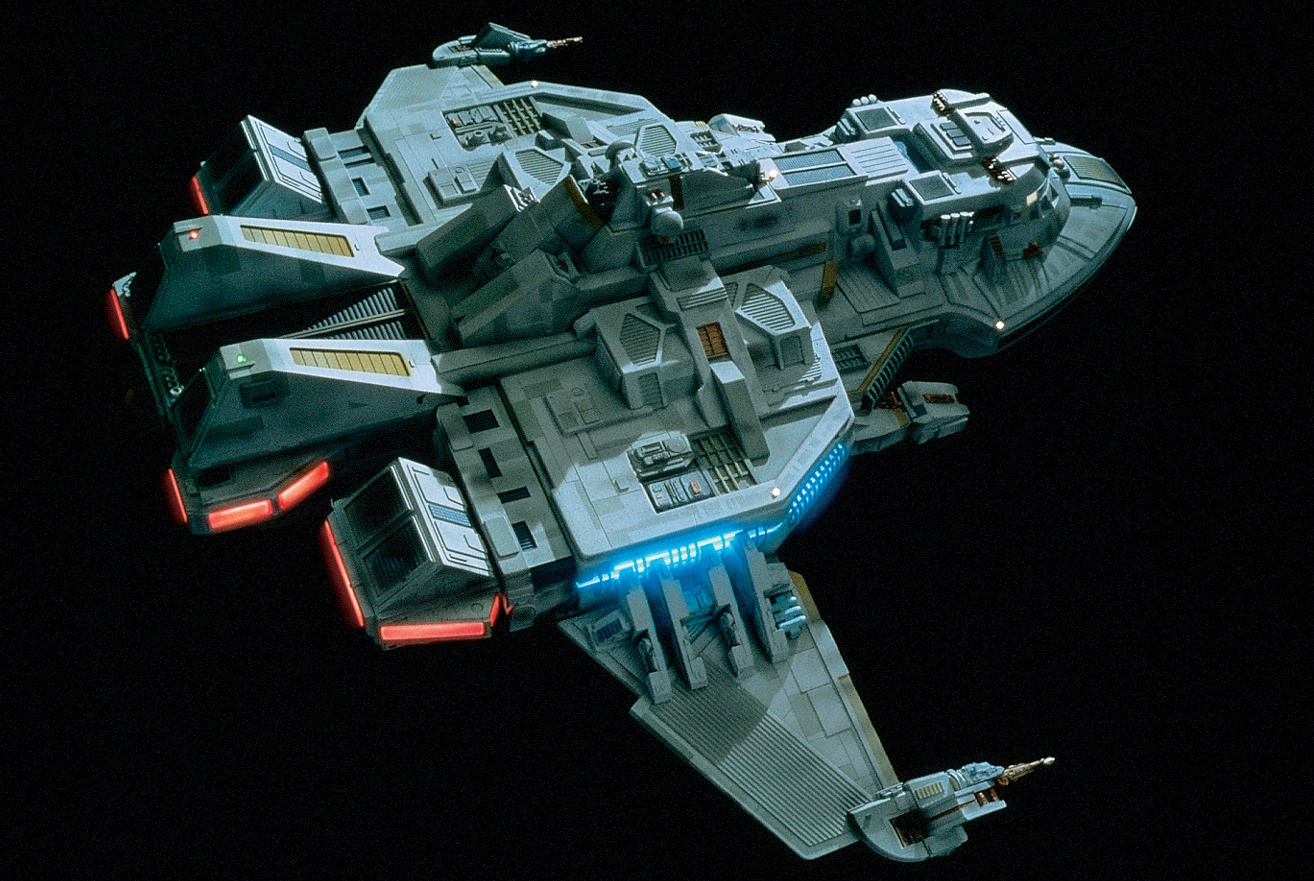
Photograph of the original Maquis Raider model from Star Trek: Deep Space Nine and Star Trek: Voyager.
Chakotay’s Maquis raider – the Val Jean.

I’m going to assume that Captain Janeway went down with the ship – as she once told Naomi Wildman that it’s part of a captain’s duty. That was half-joking, perhaps, but I can’t see Janeway abandoning the ship while any members of the crew were still aboard, so I’m gonna say she was lost with Voyager. Among the survivors, though, would be Tuvok, Harry Kim, Tom Paris, and B’Elanna Torres, as well as Seska, Ensign Wildman, and engineer Carey. There’d likely be a clash between Tuvok and Chakotay over command decisions, but Chakotay would pull rank – figuratively speaking – and remind the Starfleet survivors that they’re aboard his ship, so he’s in charge. However, as a concession given the difficult situation, he’d offer senior roles to Tuvok and Carey, and Kim would take up a role on the bridge.

Living conditions would be difficult, though. Voyager was kind of inconsistent with this, but we got hints in several episodes that there might’ve been about twenty-five or so Maquis aboard Voyager. If we assume that there’d be at least forty survivors from Voyager’s original complement of 150, the Starfleet personnel would outnumber the Maquis – which could lead to a lot more tensions aboard a Maquis ship than it did aboard Voyager. The small raider – which probably wasn’t equipped for a long voyage – would struggle to accommodate so many people, and with fewer replicators (if they even worked at all) the ship would have to make many more stops to forage and hunt for food and supplies.
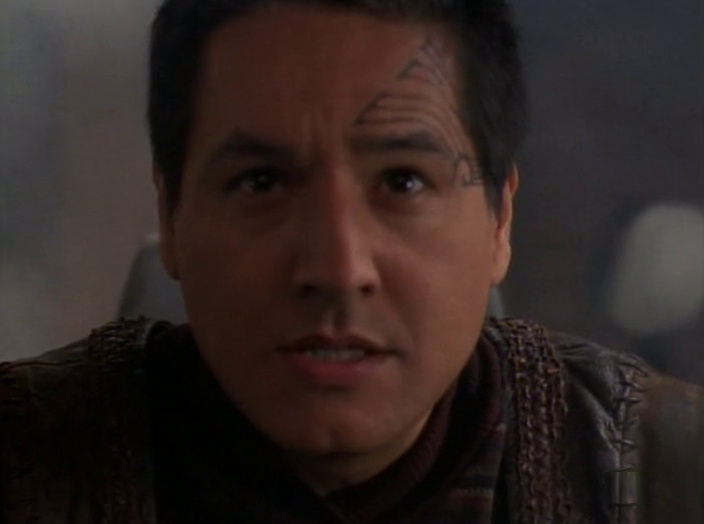
Still frame from Star Trek: Voyager showing a close-up of Chakotay in the series premiere.
Chakotay would remain in command of his Maquis vessel.

Equinox offers an excellent look at how a ship less well-equipped than Voyager might’ve handled being stranded in the Delta Quadrant. Despite the Val Jean’s personnel being arguably better prepared to survive than Captain Ransom’s crew, the limitations of the ship, the difficult living conditions, and the constant danger would all take a toll on the survivors. Morale would be low among the Starfleet personnel after Janeway’s death, and the reality of the situation would sink in for them over the first few days as they struggled to adapt. Having to share bunk beds and malfunctioning replicators would lower morale even further.

Chakotay would do his best to avoid the Kazon, and without the technologically-advanced Voyager to pursue, I daresay they’d be less interested in chasing the Val Jean, so the ship would make slow but steady progress toward the Alpha Quadrant. After several months (or perhaps a year) of planet-hopping, the Val Jean would encounter something strange: an old Earth automobile floating in space. This would lead them to a planet with a human settlement; the descendants of abductees from Earth. Most of the Starfleet personnel would disembark here, choosing to stay on the planet rather than remain aboard Chakotay’s ship. Chakotay and the Maquis would stay for a while, too, enjoying the friendly atmosphere and making repairs to their ship. After an extended stay, though, would anyone want to re-join the mission back to the Alpha Quadrant on a ship dangerously unsuited for such a voyage?

What If… #4:
What if… the Romulans figured out what Sisko and Garak did?
Deep Space Nine Season 6
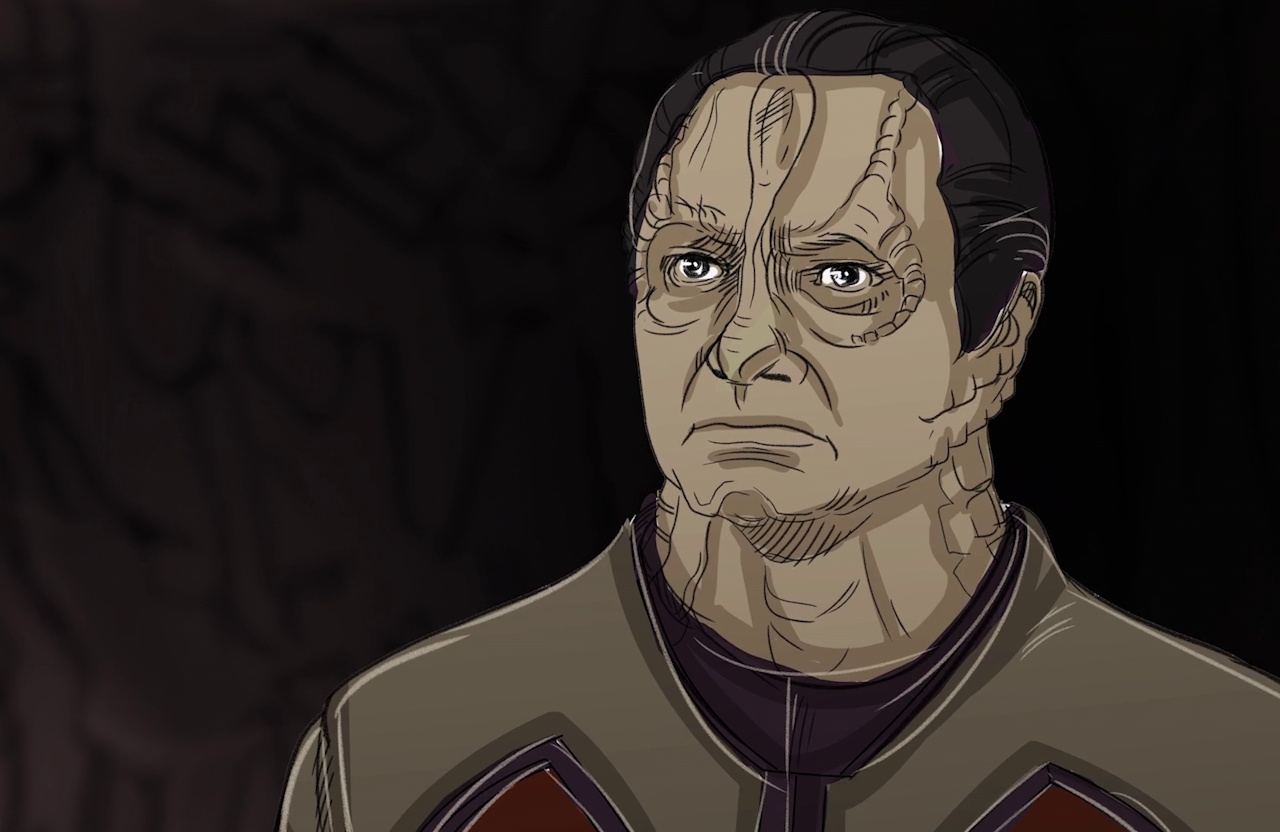
Still frame from What We Left Behind: Looking Back At Deep Space Nine showing a sketch of Garak.
Garak.

Perhaps this one won’t always be a “what if!” One of my fantasy Star Trek episodes is a follow-up to the outstanding Deep Space Nine episode In The Pale Moonlight, and I’d really love to see a sequel of sorts one day. But for now we’re going to make up our own version – and connect it to other parts of Star Trek, too!

There are two time slots for this, and both are interesting – so this is kind of two “what ifs” in one!

Firstly, we have the obvious question: what if the Romulans figured out what happened before the end of the Dominion War?

Still frame from Star Trek: Deep Space Nine showing Senator Vreenak.
The Romulans have figured out that “it’s a faaaaaake!”

Shortly after the Breen joined the Cardassians and the Dominion, the Tal Shiar uncovers the truth behind the assassination of Senator Vreenak. How they figured it out doesn’t matter; all we need to know is that the proof is irrefutable. As a result, the Romulans terminate their alliance with the Federation and Klingons at the worst possible moment – just as Breen weapons are proving to be a tactical and technological hurdle for the allies to overcome. Worse, a few days later the Romulans announce a non-aggression pact with the Dominion, shortly followed up by an official alliance. In short, the Romulans have switched sides.

It’s no secret that the Romulans have long coveted Federation systems, and promises from the Dominion about ownership of Vulcan combined with a need for revenge swayed the Romulan senate. They began collaborating openly with the Dominion, sharing technology like cloaking devices with their new allies. The Cardassian rebellion led by Damar would be quickly crushed by the combined might of the Dominion, Breen, Romulans, and Cardassian collaborators, and would be far less effective and far-reaching. With the axis shored up and bolstered by Romulan troops and Romulan intelligence, they’d be back on the front foot ready to press home their advantage. The obvious first targets are Bajor and DS9; control of the wormhole would be vital. From there, it could be a very short war indeed…
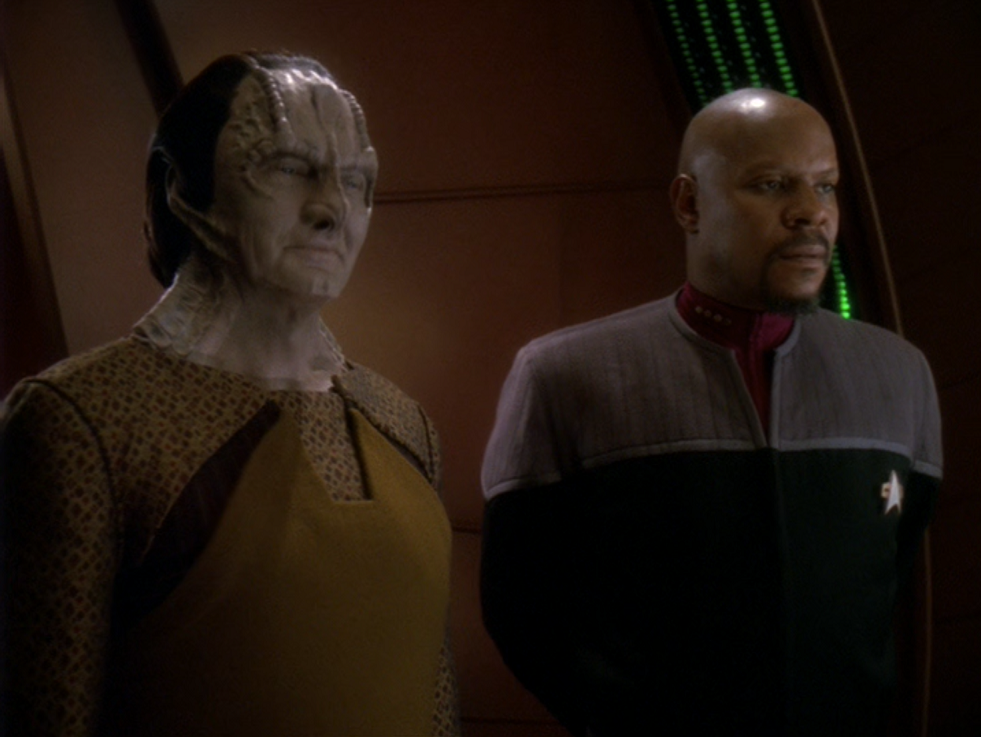
Still frame from Star Trek: Deep Space Nine showing Garak and Sisko.
Garak and Captain Sisko.

The second scenario is the one I still hope to see on screen one day. In this timeline, the Romulans discover what happened – but only years after the war is over. The destruction of their homeworld took a toll, and the Romulan Empire is in a difficult position. Romulan leaders demand the extradition of those responsible, but with Sisko “missing in action” and apparently residing with the Prophets, there’s really no one to prosecute. Garak’s involvement remains unknown, and he wouldn’t stick his head above the parapet!

But the Romulans would make a fuss, doing whatever they could to make life difficult for Starfleet. One action the Romulan government takes is cutting off Federation researchers from a derelict Borg vessel that they control, and ordering all Romulans to leave Federation space. The result? Soji doesn’t head to the Artifact, Laris and Zhaban leave Earth, and the synths at Coppelius Station remain hidden from Starfleet. But not necessarily hidden from everyone

What If…? #5:
What if… Captain Kirk didn’t die on Veridian III?
Generations
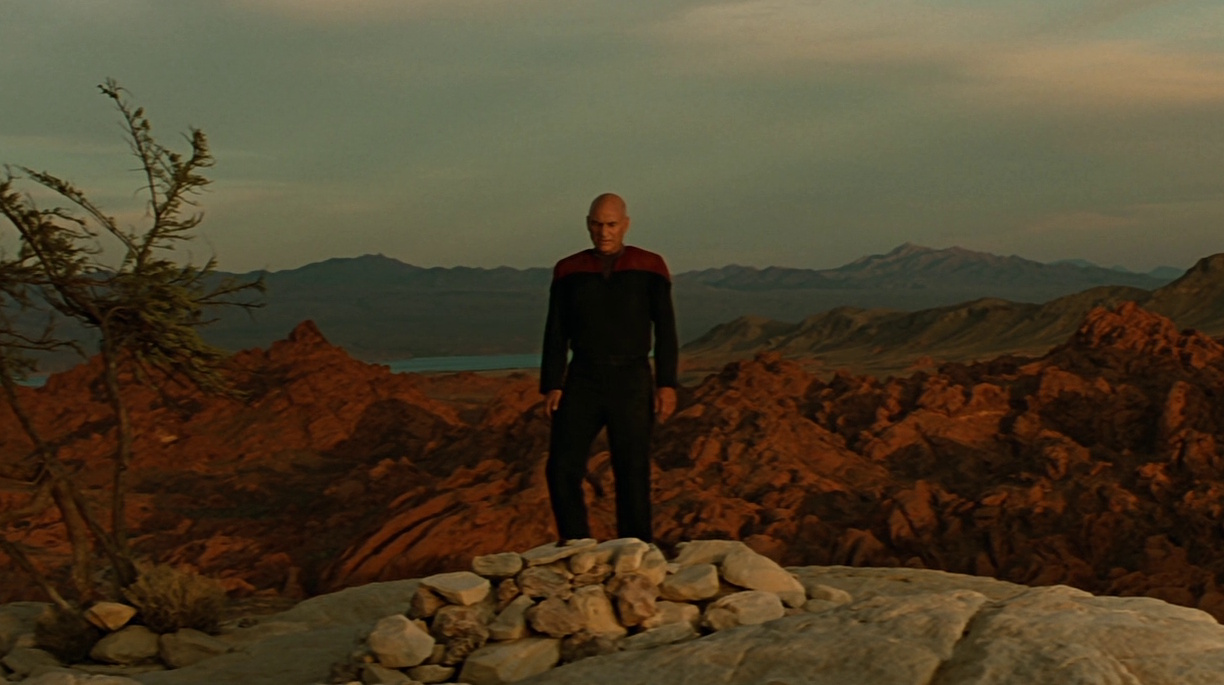
Still frame from Star Trek: Generations showing Picard at Kirk's grave.
Picard stands over Kirk’s grave.

This is one of the biggest “what-ifs” in Star Trek – at least for fans of a certain age! Kirk’s death in Generations was controversial, though I’d argue it was at least fitting for his character that he gave his life in an act of sacrifice, saving the crew of the Enterprise-D and the population of Veridian III from the Nexus. But in this alternate timeline, Kirk and Picard are able to stop Soran without Kirk losing his life.

Kirk would reunite with Picard and then meet up with the crew of the crashed Enterprise-D, before boarding a rescue ship bound for Federation space. Upon reaching a starbase, Kirk would be absolutely stunned to disembark only to be greeted by Spock and Montogomery Scott! Scotty had survived to the 24th Century in a transporter buffer (as seen in the episode Relics) and of course, Vulcans live longer lives than humans so we know that Spock is also still alive. This reunion would be incredibly touching, and Kirk would spend time with his old friends, catching up on almost eighty years of Spock’s life and also learning of Scotty’s 24th Century adventures.
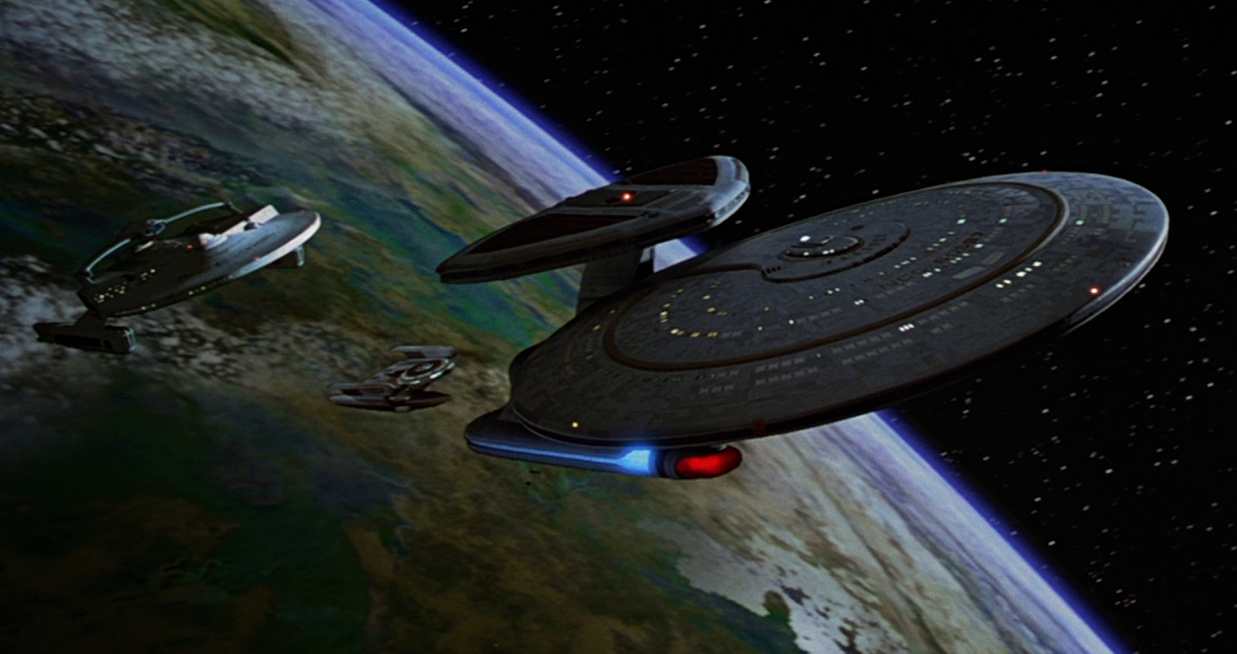
Still frame from Star Trek: Generations showing three starships departing Veridian III.
Kirk would board a rescue ship and return to Earth.

Kirk would be debriefed by Starfleet Command about his time in the Nexus and would also seek out other members of his crew. Dr McCoy would have passed away, but at least one other member of the Enterprise’s bridge crew – someone like Uhura or Chekov – could still be alive in this time period, though they’d be very old! Kirk would visit them at their home, catching up on the events of their lives after he’d last seen them. Having decided to retire from Starfleet around the time the Enterprise-B was commissioned, Kirk would consider returning to his home – which has been preserved as a museum by Starfleet for the last eighty years – but I’m not so sure that that’s what he’d do.

We know that, in between the events of Relics and Star Trek ’09, Scotty was still working in some capacity – it’s in this era that “transwarp beaming” is invented. I’m going to say that, for the purposes of this alternate timeline, Kirk would return to Starfleet. In an unofficial capacity at first, he’d work with Scotty and Spock, and might also be visited by an old rival: the Klingon Captain Kor, now a Dahar master. Kor would invite Kirk to Qo’noS, where he’d see the results of his work to bring about peace between the Federation and the Klingon Empire.
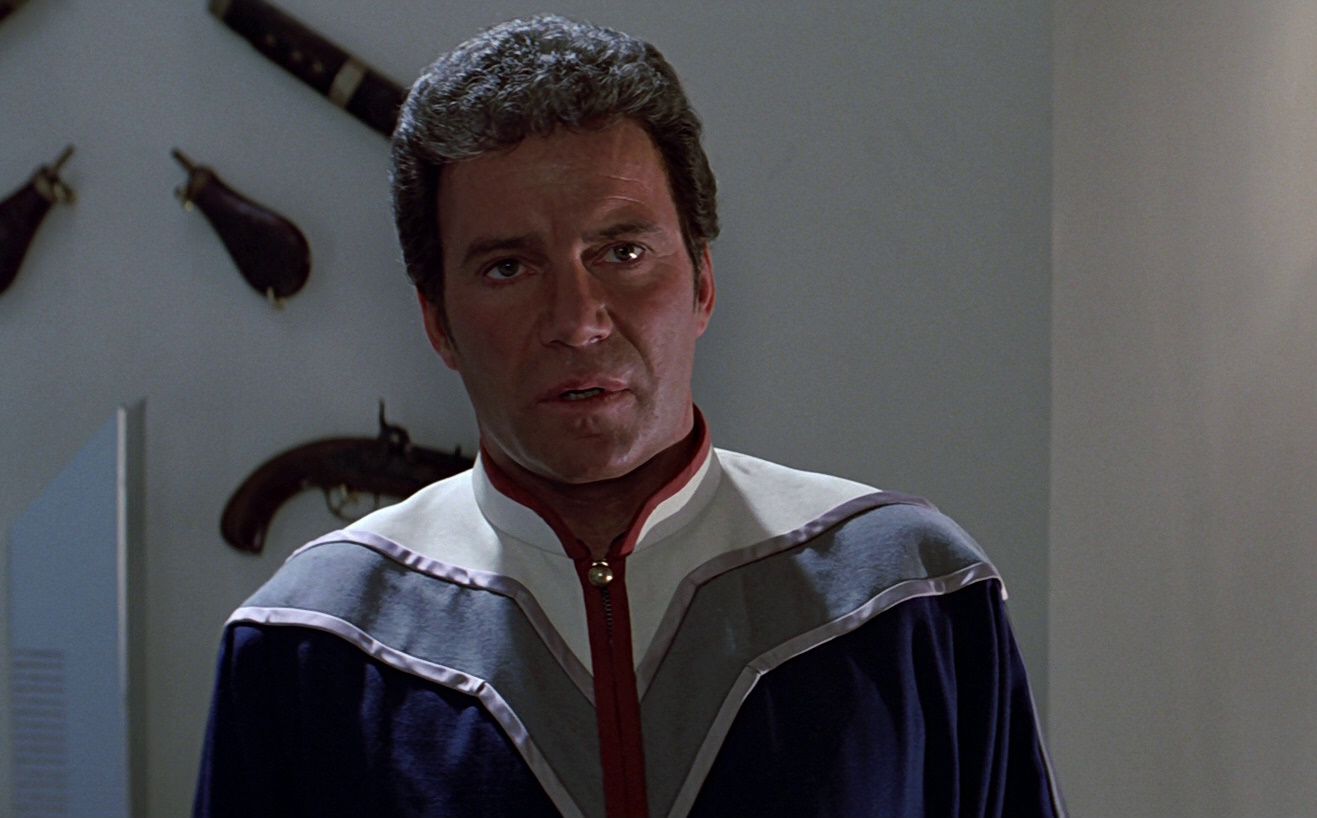
Still frame from Star Trek III: The Search for Spock showing Kirk out of uniform at his home.
Kirk could still have some adventures and new experiences in the 24th Century.

Kirk would also be present at the launch of the Enterprise-E, reuniting with Picard as the ship undertook her first cruise. Scotty would also be present, having opted to join his former captain at the launch of the latest ship to bear the name Enterprise. Kirk and Scotty would have departed the ship shortly before the Battle of Sector 001, though. Kirk would be offered a promotion back to the rank of Admiral, and he’d join Starfleet Command in an advisory role; many senior Starfleet officers and admirals would call upon the famed officer for advice.

Where I think Kirk could be most influential, though, is in the aftermath of the synths’ attack on Mars. In the prime timeline, Picard was unable to convince Starfleet to proceed with their plan to help the Romulans, but I think Kirk would be on Picard’s side here. As a living legend and someone of such high standing in Starfleet Command, Kirk’s word would carry a lot of weight. As a result, Picard’s rescue armada would be rebuilt, and many more Romulan lives could be saved before the Hobus supernova. Among the evacuees would be Nero’s family – meaning Nero never attacks Spock’s ship, the two are never pulled into a black hole, and the alternate reality seen in Star Trek ’09 would never begin.

So that’s it!

Concept art for Star Trek: The Motion Picture showing the USS Enterprise in drydock.
Concept sketch of the USS Enterprise in drydock from The Motion Picture.

We’ve taken a look at five “what if” scenarios set in the Star Trek universe. I hope this has been interesting – and perhaps a bit of fun, too!

There are a lot of places in Star Trek where things could’ve gone very differently, and something as small as the absence (or presence) of a single individual has literally changed the course of history for the Federation and the entire galaxy. I can already think of plenty of other “what ifs,” so stay tuned! I’d love to revisit this idea again one day.

There’s plenty more Star Trek content coming up here on the website. So far in 2025 we’ve talked about some of my head canon, as well as some Star Trek stories that I wish weren’t canon at all! I’ve also reviewed the Section 31 film and finally caught up with Season 2 of Strange New Worlds. Season 3 will premiere later this year and I’ll definitely have something to say about it when it’s here! Until then, see you… out there.


Most Star Trek series and films discussed above are available to stream now on Paramount+ in countries and territories where the service is available. The Star Trek franchise is also available on DVD and Blu-ray. The Star Trek franchise – including all films, shows, and properties discussed above – is the copyright of Paramount Global. This article contains the thoughts and opinions of one person only and is not intended to cause any offence.
Star Trek’s Scariest Alien Monsters!

A spoiler warning graphic.

Spoiler Warning: There are spoilers ahead for the following Star Trek productions: The Original Series Season 1, The Voyage Home, The Next Generation Season 1, Deep Space Nine, Voyager, Picard Season 3, and Strange New Worlds Season 1.

It’s Spooktober – the spookiest month of the year! So I thought we could have a bit of fun and talk about some of the scariest aliens and villains that the Star Trek franchise has brought to screen.

Star Trek isn’t a franchise that’s well-known for being all that frightening. I don’t think that’s a controversial statement at all – in fact, I’d wager that most TV viewers would consider it pretty tame, especially when thinking about the horror genre and alien monsters! But that doesn’t mean Star Trek is never scary. There are some wonderfully atmospheric episodes and stories scattered throughout the franchise’s fifty-eight-year history that have some of those more frightening elements.

Still frame from Star Trek: Picard Season 3 (2023) showing a Borg cube.

Today, rather than talking about individual stories or episodes, what I’d like to do is pick out some of the franchise’s scariest aliens, monsters, and villains – and talk about why they work so well, why they’re so intimidating, and perhaps even just the potential they have to be frightening or scary in future stories.

My usual caveat applies: everything we’re going to talk about is the entirely subjective opinion of one person only. If I miss something you think is blindingly obvious or if I include a “scary” alien that you think isn’t frightening in the least… that’s okay! There’s plenty of room in the Star Trek fan community for disagreement and differences of opinion.

With that out of the way, let’s talk about some of Star Trek’s scariest aliens and villains!

Number 1:
Q and the Q Continuum

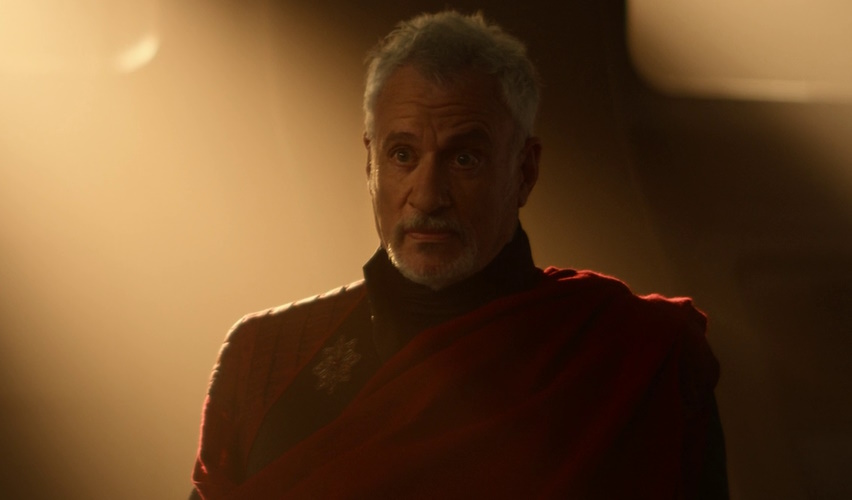
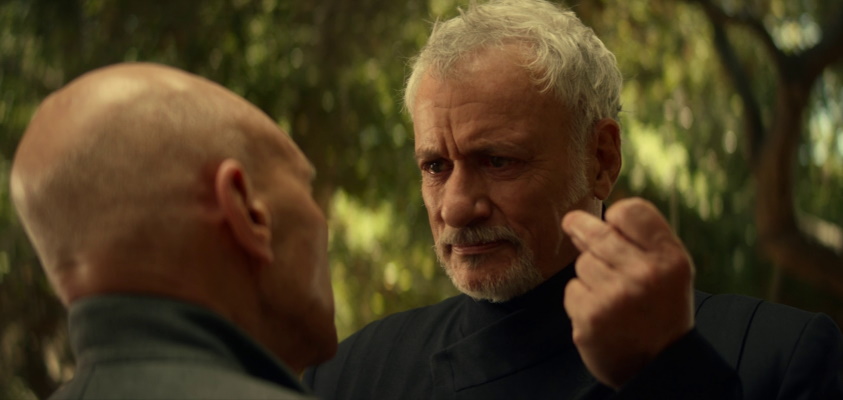
Still frame from Star Trek: Picard Season 2 (2022) showing Q.

The Q are on the list less for their out-and-out fear factor and more for their potential. I don’t think there have been many terrifying or bone-chilling Q appearances – though I will entertain the argument that Q’s penchant for randomness can have an unsettling or unnerving quality. Things like conjuring up aliens in Napoleonic uniforms or a post-atomic courtroom would be incredibly frightening in real life, even if they’re portrayed more as chaotic and wacky when we see them unfold on screen.

The Q Continuum’s real fear factor comes from their apparently unlimited power. No other alien race in Star Trek is as powerful as the Q, and they could quite literally wipe out humanity, the Federation, or even the entire galaxy with a wave of the hand. Although we always see Q as humanoid, their true form is a mystery, and their power seems to be without limit – and without a reliance on technology. No war against the Q seems possible, and if they ever chose to move against the Federation (which they could do for reasons beyond our comprehension, or to prevent some kind of conflict in the far future that we have no inkling of right now) they could be far more destructive than even the Borg.

Number 2:
The Gorn
(As they appear in Strange New Worlds)

Still frame from Star Trek: Strange New Worlds Season 1 (2022) showing a juvenile Gorn.

The Gorn are one of Star Trek’s oldest alien races, appearing in the first season of The Original Series. But after that initial appearance and a few scattered mentions through The Next Generation era, they didn’t show up on screen again until Enterprise. That depiction wasn’t great, in my view – it relied too heavily on CGI that didn’t look great at the time and hasn’t aged well. But the return of the Gorn in Strange New Worlds has been a triumph.

After several episodes built up the terror of Gorn raids on the Federation, it was the episode All Those Who Wander that really showed us what this new depiction of the Gorn can do. Strange New Worlds’ writers unleashed the Gorn in an episode that, more than any other in the franchise, leans into the horror genre. The Gorn are depicted almost like the Xenomorphs from the Alien film series, possessing strength and stealth abilities that left the away team cornered.

Number 3:
The Founders/Changelings

Still frame from Star Trek: Deep Space Nine showing a changeling in their gelatinous state.

Maybe this one is a little controversial, but after the way Changelings were depicted in Picard’s third season I think we have a pretty good case to include them as a frightening bunch! The idea that shape-shifters could infiltrate Starfleet and the Federation was addressed in a fantastic Deep Space Nine two-parter: Homefront and Paradise Lost. These episodes took more of a political thriller/drama approach to the topic, but the core idea is a deeply unsettling one.

With the Dominion playing a growing role in Deep Space Nine, the idea of Changeling infiltrators was scaled back and only used sparingly – probably because it’s not an easy story to write or pull off successfully. But Picard Season 3 brought the idea back in a creative way, showing how deadly Changelings could be and how a Changeling plot could be an existential threat to the Federation.

Number 4:
The M-113 Creature
(a.k.a. The Salt Vampire)

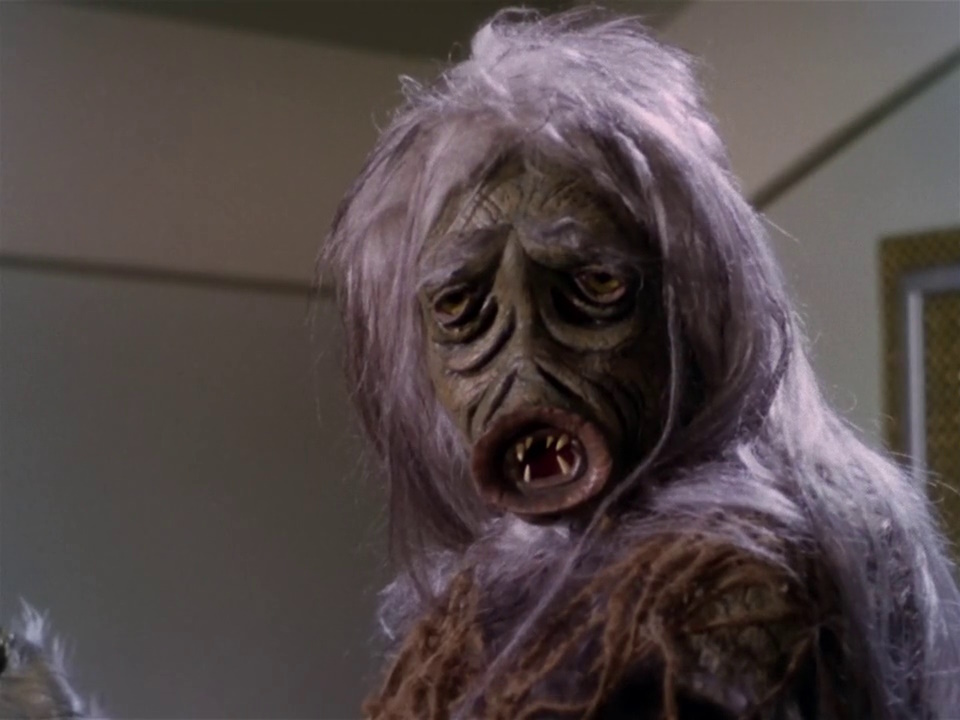
Still frame from Star Trek: The Original Series Season 1 (1966) showing the M-113 Creature.

The first ever alien to appear on The Original Series remains one of the franchise’s most frightening! The episode The Man Trap kick-started the Star Trek franchise back in 1966, and the Salt Vampire was the first alien that audiences saw Kirk and the crew wrangling with. As discussed above with the Changelings, the alien’s ability to change shape and blend in added to its fear factor – but moreover, its true appearance is pretty unsettling even today. There’s something to be said for those old rubber suits, eh?

The Salt Vampire is a sci-fi take on ancient legends and creatures from folklore, and that gives it a uniquely frightening feel. Preying on some of these old primordial fears lends the creature a genuinely intimidating vibe, and its grotesque appearance just adds to that. The Salt Vampire is, however, a tragic figure, as it appears to be the last of its kind; more akin to an animal acting out of instinct than a truly nefarious villain.

Number 5:
The Borg

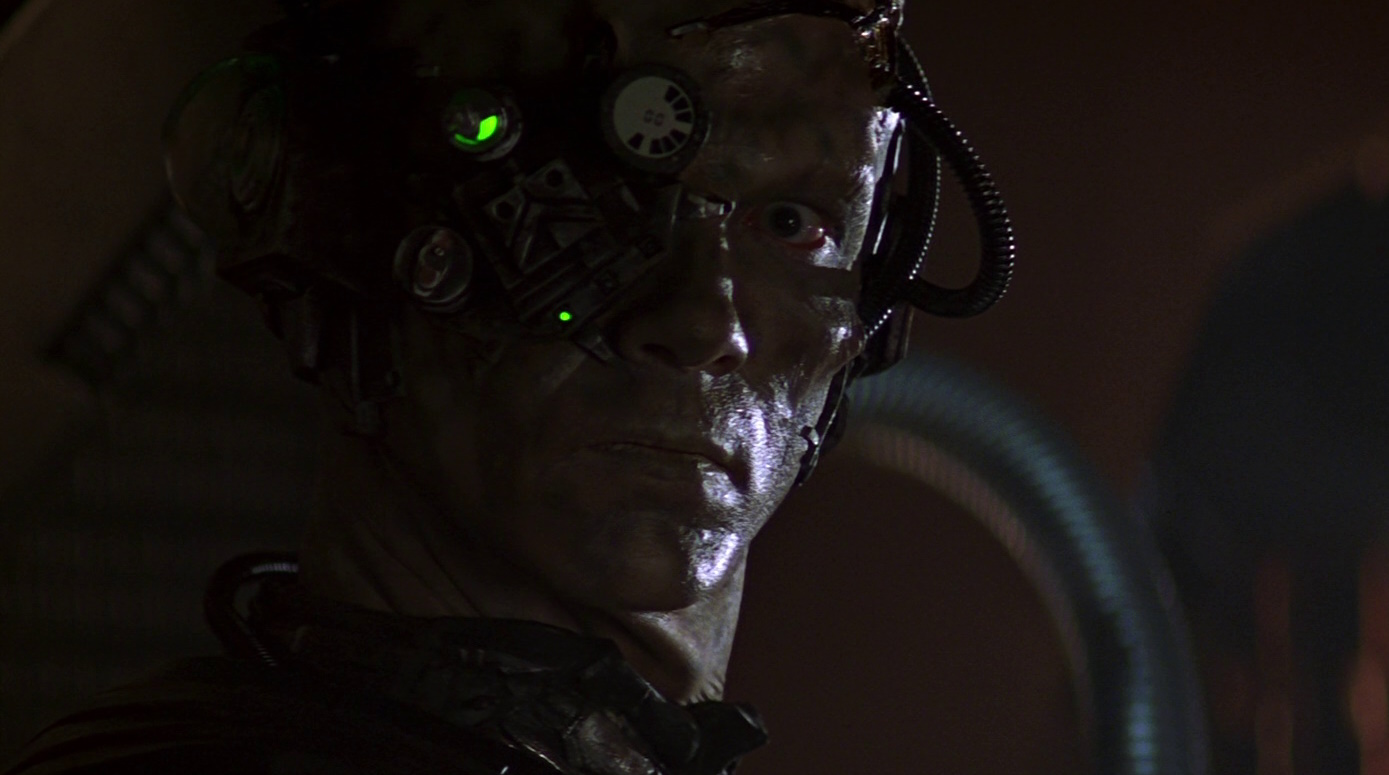
Still frame from Star Trek: First Contact (1996) showing a Borg drone.

In my essay The Borg: Space Zombies, I go into a lot more detail on this topic, but the condensed version is this: the Borg fill a similar role to zombies in horror fiction, while also picking up on both Cold War-era fears of brainwashing and concerns about technology getting out of control. The idea of assimilation is incredibly clever, as it turns every ally the heroes lose into a new enemy to fight, making the Borg grow in strength at the exact same rate as Starfleet weakens.

The idea of being assimilated and losing one’s mind and identity is arguably a fate worse than death – and we’ve got several examples in Star Trek of ex-Borg wrangling with the consequences of what the Collective forced them to do. I would note that the Borg’s fear factor has declined over the years, particularly during the latter part of Voyager’s run. Seeing Starfleet triumph over the same adversary again and again – no matter how intimidating it may be on paper – does start to take the shine off things.

Number 6:
Armus

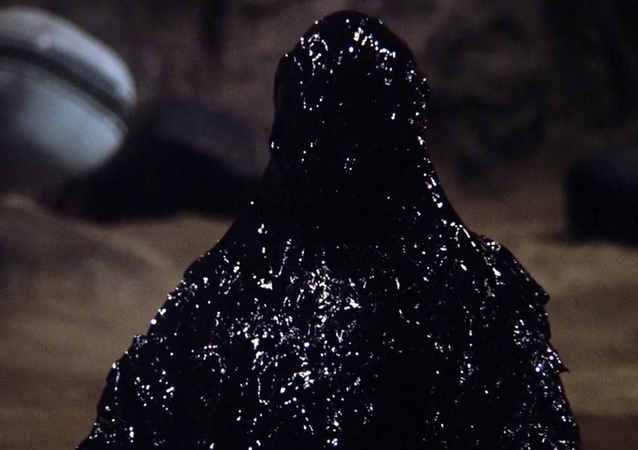
Still frame from Star Trek: The Next Generation Season 1 showing Armus.

Armus has the distinction of being the first alien monster to kill a main character on a Star Trek TV series. There were many ways The Next Generation’s writers could have written out Tasha Yar when Denise Crosby opted to quit the show, but killing her off was a bold move. And doing so in such a brutal way, with Armus not even batting an eye at her death… it was quite something to see.

If you have the DVD or Blu-ray of The Next Generation it’s worth watching the actors and producers talk about working on the episode Skin of Evil, because creating Armus and performing around the inky-black oil slick was incredibly difficult for everyone involved to say the least! Jonathan Frakes in particular had a very tough time with Riker’s scene when he was pulled under the surface. Armus is a scary-looking villain, and also one that had a profound, long-lasting impact on The Next Generation.

Number 7:
The “Whale Probe”

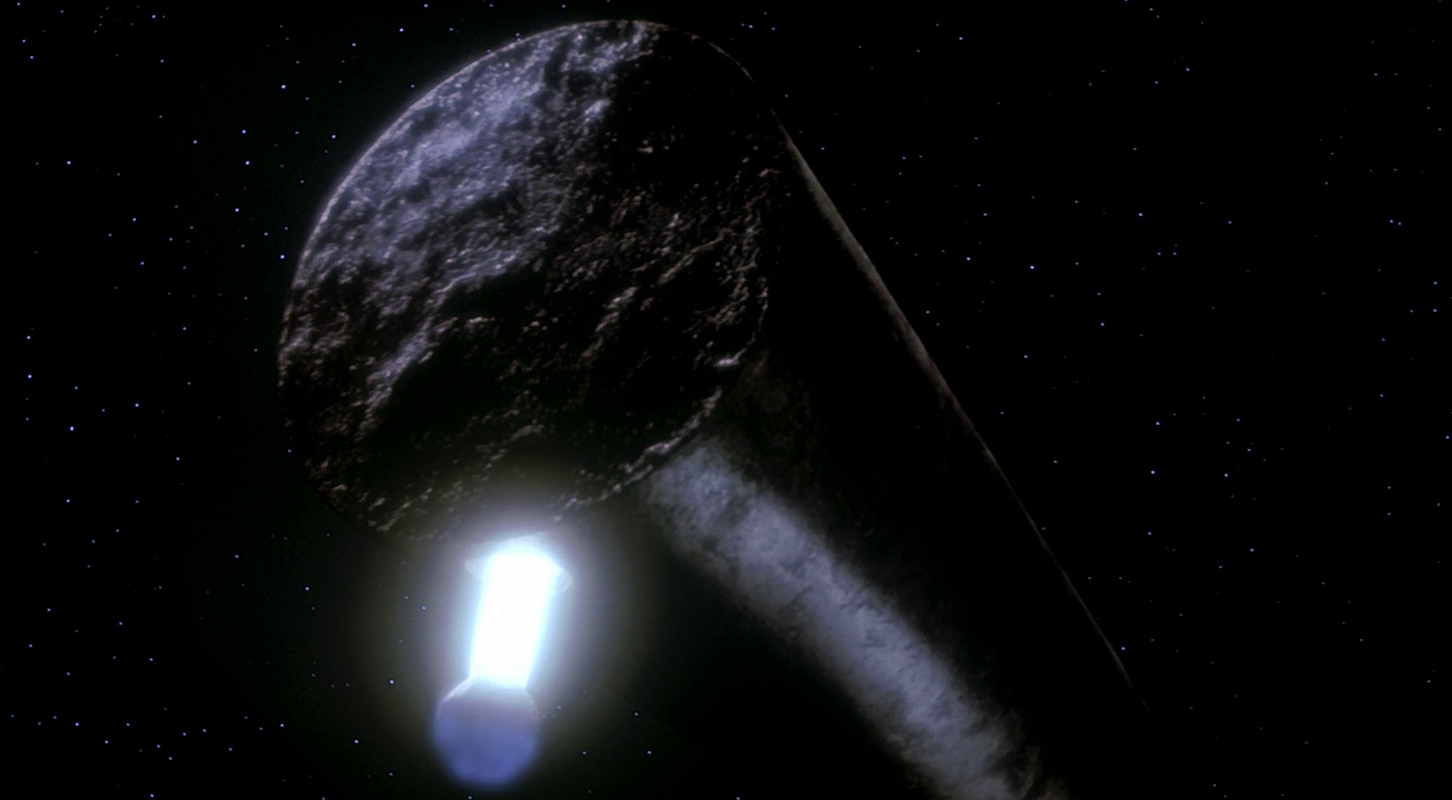
Still frame from Star Trek IV: The Voyage Home (1986) showing the Whale Probe.

Although the tone of The Voyage Home is pretty light-hearted and comedic, the so-called “whale probe” that kicks off the plot is an incredibly terrifying adversary, when you think about it. The probe disables Starfleet vessels with incredible ease, and is resistant to weapons and all attempts at communication. The people of Earth have no idea what it wants, what its purpose is, or how to reason with it.

This monolith simply arrives unannounced, doesn’t declare its intentions, and seems to wreak havoc on Earth and Starfleet. That’s a pretty scary concept, in my view, as it could’ve gone pretty badly for everyone involved if Kirk and the crew hadn’t intervened!

Number 8:
The Pah-Wraiths

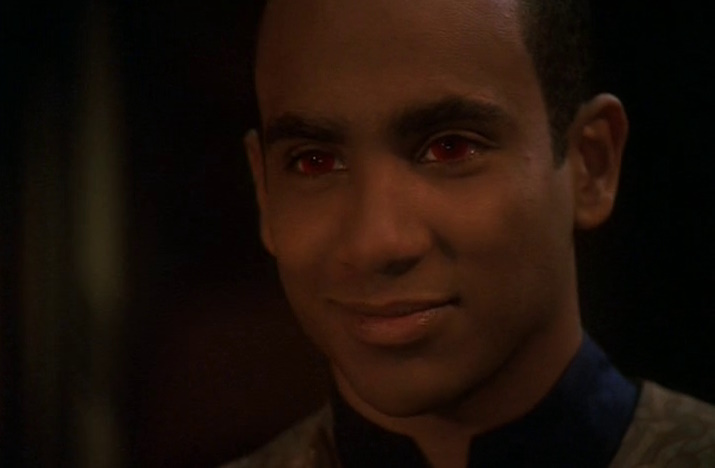
Still frame from Star Trek: Deep Space Nine Season 6 showing Jake Sisko possessed by a Pah-Wraith.

As with Armus, there’s something distinctly “evil” about the non-corporeal Pah-Wraiths. The way they’re presented in multiple Deep Space Nine episodes, where they’re deeply entwined with Bajoran religion, makes them out to be akin to demons or dark spirits – and we even see them “possess” several different characters. Their banishment to Bajor’s fire caves also ties into this demonic analogy.

In later seasons, Gul Dukat gets involved with the Pah-Wraiths, leading a cult on Empok Nor that’s genuinely unsettling in its depiction. The Pah-Wraiths have magical books, the power to turn people blind, and the desire to conquer the Prophets’ domain in the Wormhole; a truly frightening group!

Number 9:
The Conspiracy Parasite-Aliens

Still frame from Star Trek: The Next Generation Season 1 showing a parasite-alien.

The end of The Next Generation’s first season introduced a race of parasitic aliens that infiltrated Starfleet. Allegedly, the parasite-aliens were supposed to be connected to the Borg in some way, but this angle was later dropped. Still, they’re more than frightening enough on their own terms, and the idea that Picard and the crew wouldn’t be able to tell who was infected and who to trust made for an entertaining story.

Here in the UK, one scene toward the end of Conspiracy was cut from the original broadcast because of how gruesome it was! You know the one: where the “mother” parasite is killed and violently explodes. There’s something just unsettling about earwig-like alien parasites… just like the Ceti Alpha eel from The Wrath of Khan. Star Trek hasn’t revisited the parasite idea for a long time – maybe it could make for a fun and horrifying future episode?

Number 10:
The Krenim

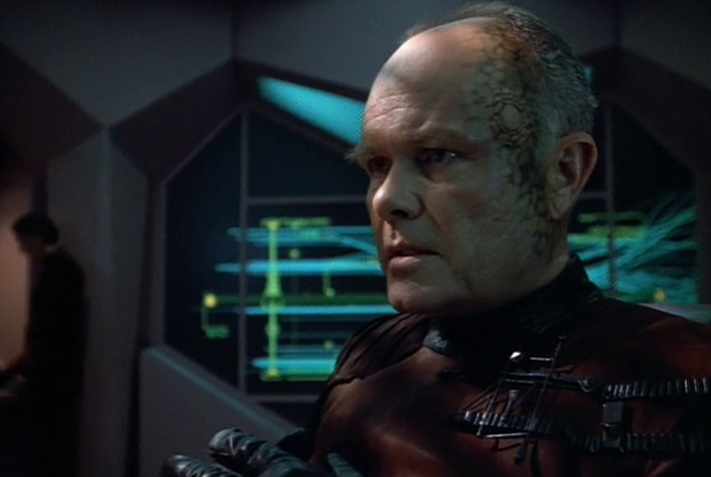
Still frame from Star Trek: Voyager Season 4 showing Annorax.

The Krenim appeared in the Voyager two-parter Year of Hell, using their time-manipulation technology as a weapon. Repeated Krenim attacks against the USS Voyager left the ship in ruins, running on fumes, and many members of the crew dead or maimed. The captain of the Krenim time-ship, Annorax, was Khan-like in his single-minded obsession with restoring the Krenim colony that housed his wife and family, making him a frightening adversary.

Year of Hell is a pretty shocking episode, particularly in its second half. Seeing Voyager badly damaged, with whole parts of the ship uninhabitable, really hammers home how dangerous the Krenim and Annorax are as villains, and for a time their technology really does seem to be more than a match for Janeway and the crew.

So that’s it!

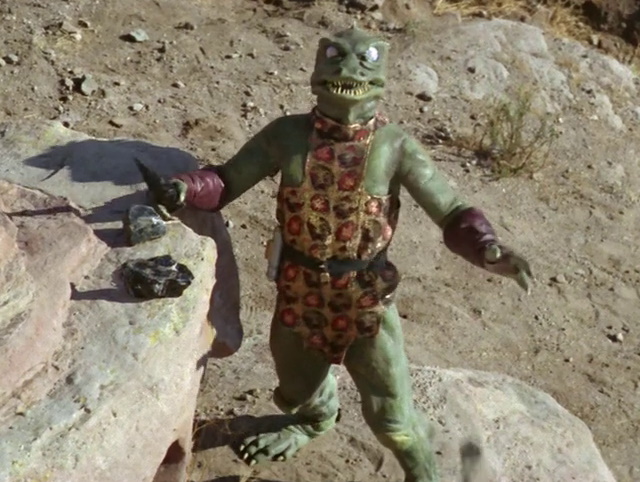
Still frame from Star Trek: The Original Series (1966) showing a Gorn.

We’ve picked out what I consider to be a selection of Star Trek’s most frightening aliens, monsters, and villains to celebrate the spooky season.

There are plenty of others that we could’ve included – either for their fully-blown fear factor or for their potential to do serious harm to our Starfleet heroes. And there are quite a few Star Trek episodes – a surprising number, really – that either lean fully into the horror genre or that have jump-scares or other frightening or unsettling moments. Last year, I put together a list of a few of them, which you can check out by clicking or tapping here if you’re interested!

So I hope this has been a bit of fun! I hope you’re having a fun and spooky October – and stay tuned, because I have a couple of other Halloween-themed ideas that may (or may not, time depending) make their way onto the website before the 31st. Don’t have nightmares!


Most of the films and episodes discussed above are available to stream on Paramount+ in countries and territories where the platform is available. They’re also available for purchase on DVD, Blu-ray, and video-on-demand. The Star Trek franchise – including all films, episodes, and other properties discussed above – is the copyright of Paramount Global. This article contains the thoughts and opinions of one person only and is not intended to cause any offence.

The weirdly contradictory nature of Star Trek: Picard

Spoiler Warning: There are spoilers ahead for all three seasons of Star Trek: Picard – including the series finale and post-credits scene.

For a series that only ran to thirty episodes across three seasons, Star Trek: Picard spent a lot of time overwriting itself! Across all three seasons of the show there were these weirdly contradictory moments where new storylines would appear from nowhere, completely changing what came before. One or two of these instances might pass by relatively unnoticed, or could feel like little more than nitpicks. But for a relatively short series to have so many… it speaks to something bigger, I feel.

I hope in future we’ll get a Chaos on the Bridge-type of documentary or exploration of what went on behind-the-scenes on Star Trek: Picard, because to say that production was “difficult” feels like an understatement. There were clearly major problems on the production side of the series, and I don’t just mean its pandemic-enforced delays. The evidence for this is the contradictory nature of the series itself, and how at the very least there was clearly no overall plan for how the story should be structured. Consistency is an important element of any good story – and Picard absolutely fails on that measure.

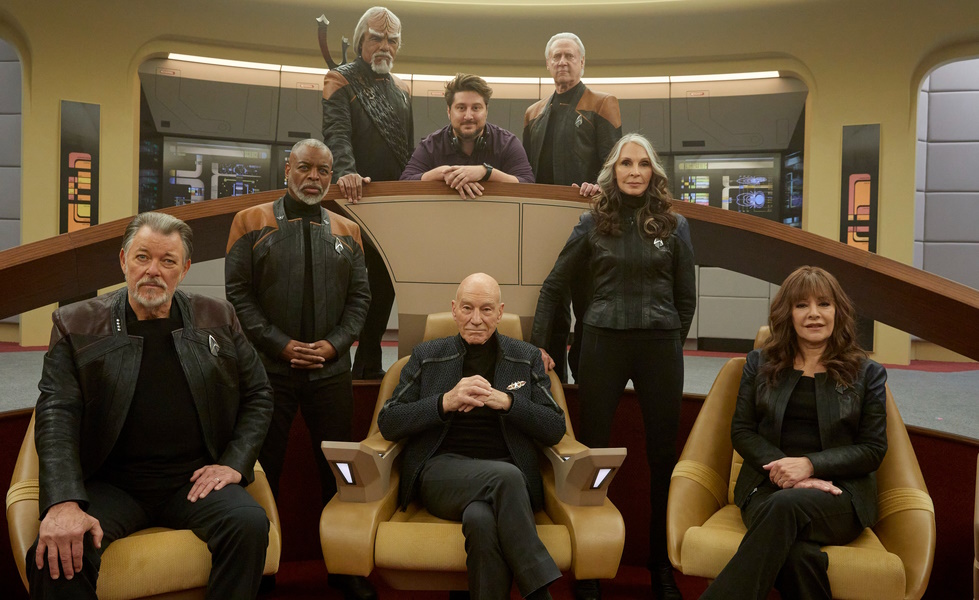
Seasons 2-3 showrunner Terry Matalas with Sir Patrick Stewart and the rest of the cast of The Next Generation.

I have a longer piece in the pipeline about Picard’s abandoned and unfinished storylines, but today I thought it could be interesting to take a short look at ten storylines that ended up being overwritten by some pretty sloppy, messy writing that failed to build on the foundations that had been laid in earlier episodes and seasons.

As always, a few caveats. If you loved all of these stories and felt they were perfectly-executed, or if you hated the original setup and feel that it was right and fitting to overwrite or ignore it, that’s okay! We all have different opinions about what makes for a good Star Trek story, and I’m not trying to claim that I’m somehow objectively right and that’s the end of the affair. In several cases, I’d actually agree that the overwrite or retcon was better than what had been previously established. This is all just the opinion of one old Trekkie, and as I always say, there ought to be room in the Star Trek fan community for polite discussion and disagreement! Although I have my issues with Picard, particularly when it comes to the show’s second season, by and large I’m a fan not a hater.

So with all of that out of the way, let’s take a look at some of Picard’s weirdly contradictory storylines.

Contradictory story #1:
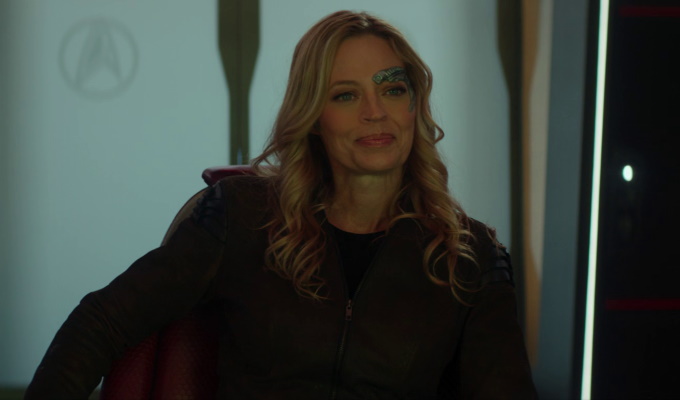
Seven of Nine is a captain! Oh wait, no she isn’t…

Seven in the captain’s chair at the end of Season 2.

At the end of Season 2, Seven of Nine was breveted into Starfleet by Picard as Captain of the Stargazer. This story point was already a bit… odd. Firstly, it raises the question of why, if offering a brevet position to someone outside of Starfleet is so simple, Admiral Janeway didn’t do that for Seven years ago. It also seemed unnecessary, as with Picard on the bridge, the Stargazer already had a senior officer present who could give orders.

But this already flimsy setup ended up being overwritten by the very next episode – when Seven was bumped down to the rank of commander and found herself serving as first officer of the Titan. There are a lot of contradictions in Picard, but this one feels even more peculiar because it’s something that literally changes from one episode to the next – episodes that, in spite of being one season apart, were produced and filmed at the same time.

Contradictory story #2:
Data’s dead. Deader than dead. Lol jk, he’s alive again!

Data awaits his final shutdown.

One of the few redeeming features of the two-part Season 1 finale was the laying to rest of Data, and giving him the emotional send-off that Nemesis didn’t have time to do justice to. It went a long way to making up for other deficiencies in the rushed and muddled end to Season 1, and the sequences with Picard and Data in the “digital afterlife” were powerful and deeply emotional.

But despite Data being as dead as it’s possible to be in Star Trek, with both his physical body and the surviving part of his consciousness having been destroyed and shut down respectively, Season 3 resurrected Data. We’ll have to go into this storyline in more detail in the future, because there’s a lot more to say. But for me, Data’s resurrection never really found a narrative justification, and it felt like the showrunner and writers wanted desperately to reunite the cast of The Next Generation – at any cost.

Contradictory story #3:
Welcome aboard the Stargazer! Wait, I mean the Titan…

The USS Titan.

In Season 2, the ship that Picard and co. didn’t spend enough time aboard was the USS Stargazer. In Season 3, they jumped over to the Titan – even though the sets were all the same (with a few minor tweaks here and there). I don’t really understand why this happened. What was the point of setting Season 3 aboard a nominally different starship? The exact same setup could have brought Riker and Picard to the Stargazer as it did to the Titan.

If the two ships had significant aesthetic differences, maybe it would be okay. And compared with some of the other points on this list, I admit it’s relatively minor. But it still feels odd to introduce the new Stargazer, build CGI models for it, and only use it in one-and-a-bit episodes.

Contradictory story #4:
Q’s dying… oh wait, no he isn’t.

Q at the end of Season 3.

I know what you’re thinking: Q already explained his “return” by telling Jack Crusher not to think about time in a linear fashion. While that’s a perfectly rational in-universe explanation for Q’s return at the end of Season 3, it doesn’t get around the fact that Q, whose death was such a vital part of the entire plot of Season 2, is a profoundly odd choice of character to use for that one epilogue scene.

Picard’s writers pinned the convoluted and disappointing story of Season 2 on Q, and Q’s entire motivation was his imminent death. To undo that – even if there’s a technical explanation for it – only a few episodes later feels wrong. It undermines the already-weak story of Season 2 and makes me wonder what the point of it all was.

Contradictory story #5:
The Borg are back! The Borg are back! The Borg are back!

A Borg Cube.

However you look at it, and whatever nitpicky excuses there may be about who are and aren’t the “real” Borg, there’s no getting away from the fact that across its three seasons, Picard re-introduced the Borg three times. All three of the stories rely, either in whole or in part, on the Borg, and while Picard himself has a connection with the Borg after the events of The Best of Both Worlds and First Contact… there’s a whole galaxy out there filled with alien races that the show’s writers and producers could have used.

While Season 3’s Dominion/changeling rug-pull is probably the worst example of this, it really speaks to a broader problem with the show’s production. Picard’s writers, especially in Season 3, were unwilling to abide by what the show had already set up. The Borg are great fun, don’t get me wrong, but by the time we got to yet another Borg story in Season 3, I was feeling burned out.

Contradictory story #6:
The mysterious anomaly has set up a fascinating story! Let’s never mention it again.

Led by the Borg, a Federation fleet stops the anomaly.

The story of Season 2 was bookended by a mysterious anomaly that the Jurati-led Borg faction believed could be an attack against the Alpha Quadrant. Once the anomaly had been stopped, the Jurati-Queen promised to take her Borg faction and stand watch over the anomaly as a “guardian at the gates.” Her Borg faction were even granted provisional membership in the Federation as they did so.

This story felt like it had huge potential. Who could have been powerful enough to create a weapon on that scale? How would Picard and his friends be able to defeat them? What would it be like to see a Federation-Borg alliance? But alas, this storyline was dumped, orphaned, and never mentioned again. Was no explanation ever written? Why end Season 2 on this cliffhanger if it was never going to be resolved?

Contradictory story #7:
Soji’s a massively important character… let’s dump her.

Promo photo of Isa Briones as Soji.

Soji played a huge role in Season 1, serving as both the reason for Picard’s mission and later as someone who needed to be talked down from making a mistake. We spent a lot of time with her in the show’s first season, watching as she was manipulated by Narek, as she learned the truth of her own origin and who her people were, and as she came to work with and respect Picard.

It was disappointing that Soji was essentially forgotten after the end of Season 1, with a barebones cameo appearance and nothing more. Isa Briones got to play a minor role in Season 2 as the daughter of antagonist Adam Soong, but this storyline was samey and boring. As a new, young character – and a synthetic life-form – Soji had huge potential. It’s such a shame that a role couldn’t be written for her after Season 1.

Contradictory story #8:
Picard has a new relationship with Laris! No wait, Laris has fucked off and now he has a kid with Dr Crusher.

Laris and Picard at the end of Season 2.

The entire story of Season 2 – its raison d’être, at least according to Q – was that Picard was alone, prevented by his childhood trauma from being able to find love. At the end of the season, after ten episodes of shenanigans in the 21st Century, Picard finally returned to his vineyard – and to Laris. The two seemed ready to embark upon a new relationship together.

But nope! Laris made a small cameo appearance at the beginning of Season 3, and was never mentioned again. Picard’s story in Season 3 focused on his past relationship with Dr Crusher, a relationship that led to him having a son he’d never met. The season’s epilogue even showed Picard and Dr Crusher jointly escorting their son to his first Starfleet assignment – with Laris nowhere to be found. As I said above: Season 2 was already a weak, flimsy story. Undermining its ending like this was a poor decision.

Contradictory story #9:
Elnor’s dead. Oh wait, he’s back! No… he’s gone again.

Elnor at the end of Season 2.

Although I wasn’t thrilled to see Elnor killed off in the first half of Season 2, as time went on, it seemed to be working. Raffi’s story of coming to terms with loss and grief was one of Season 2’s stronger elements, and while I would’ve still said I was disappointed in Elnor’s wasted potential, at least his loss had mattered. Until it was all undone with seconds to spare.

If Elnor had a major role to play in Season 3 – and there was absolutely space for him – then I could at least have understood this reversal. But after Elnor was resurrected, he got one very brief scene in which he looked confused on a viewscreen, and another in which his dislike of a beverage made him the butt of a joke. After that, Elnor disappeared from Picard never to be seen or mentioned again. What was the point? Why undo a powerful story for the sake of an overdone sight gag?

Contradictory story #10:
Riker and Troi are happy and settled on Nepenthe. Just kidding, they hate it there.

Picard approaches Riker’s outdoor kitchen.

Nepenthe might be my favourite episode of Season 1. It slowed things down, stepped away from some of the drama, and reintroduced us to Riker and Troi – now happily married and living peacefully outside of Starfleet. In spite of the loss of their son, Riker and Troi seemed settled on Nepenthe with their daughter in a home that was important to their son and their family. It was a surprise, to say the least, when Season 3 tried to undo all of that.

In the episode Surrender, Riker and Troi were reunited as captives aboard Vadic’s ship. And while imprisoned, they both spoke about how they hated the “creaky old cabin” that had been their home. The end of the season implied that one or both of them may be back in Starfleet, and all the emotional storytelling present in Nepenthe was taken away.

So that’s it!

Dr Jurati on stage in Season 2.

Although there were some interesting stories – and some complete ones – overall, it’s not unfair to call Star Trek: Picard a contradictory series, one that either intentionally or unintentionally overwrote or ignored key characters and storylines. We’ll talk about some of these in more detail on another occasion, but for now I think we’ve covered the basics.

Picard was clearly a troubled production, one that jumped from one writing and production team to another, and that’s part of why the series as a whole feels so contradictory. I think I could overlook one or two of these things – and I might even support the decision to drop a character or change a storyline that wasn’t working or that failed to resonate with audiences. But for a series that ran to a mere thirty episodes across three seasons… we shouldn’t be able to pull out ten large contradictions like this.

Stay tuned, because I have a lot more to say about Picard even though the series has concluded! A longer retrospective is in the pipeline, and I’ll also be taking a look at abandoned and unfinished storylines, too.

Star Trek: Picard Seasons 1-3 are available to stream now on Paramount+ in the United States and other countries and territories where the service is available, and on Amazon Prime Video in the UK and around the world. The Star Trek franchise – including Picard and all other properties discussed above – is the copyright of Paramount Global. This article contains the thoughts and opinions of one person only and is not intended to cause any offence.

Star Trek: Picard Season 2 theory – what happened to Q?

Spoiler Warning: There are spoilers ahead for Star Trek: Picard Season 2. Spoilers are also present for Star Trek: Voyager and Star Trek: The Next Generation.

As the dust settles on Season 2 of Star Trek: Picard, there are still questions that remain. Season 3 may build on some of what Season 2 brought to the table – the strange anomaly, most notably – but other narrative elements will fade into the background and won’t be revisited. For me, one of the unexplained elements that I found intriguing as the season wore on concerns Q. Specifically, what was it that caused this once-immortal superbeing to be reaching the end of his life? What caused Q to die?

For the sake of the story that Picard Season 2 aimed to tell, finding a cause for Q’s death was not strictly necessary. The point of Q’s story and Picard’s relationship with him wasn’t to figure out what was happening, find a cure, or reverse it, but to come to accept it and for Q to find forgiveness and redemption at the end of his life. In that sense, there wasn’t really a narrative problem with the idea of Q dying – but as Trekkies and as fans who’ve followed Q’s journey over the span of more than three decades, it definitely feels like there’s a missing piece of the puzzle. Even if Q’s death was inevitable, explaining why it was happening in the first place would have felt satisfying.

I’m such a Q fan that I have this Mego action figure of him!

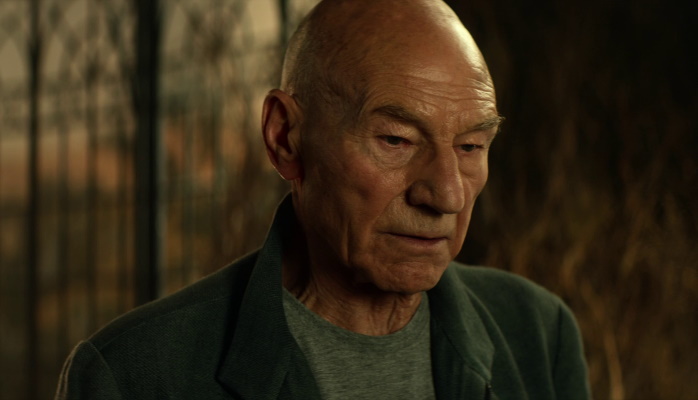
We’ll probably have to address this in more detail when I get around to writing a proper retrospective-review of Season 2 as a whole, but one aspect of Q’s death that I feel wasn’t handled well is how nonchalant Picard seemed to be about it. Despite all the trouble he’s caused, the story here was about Picard finding a way to forgive Q and embrace the friendship he had been offering for decades. Wouldn’t someone like Picard have wanted to find out why his friend was dying? And wouldn’t someone like Picard want to do everything in his power to prevent it?

Even if we drop the “friendship” angle, Q is a unique life-form from Starfleet’s perspective. As a being who had been considered to be functionally immortal – or as close to it as the Federation has ever encountered, at least – learning more about the Q as a race and what could possibly harm them seems like an opportunity that a Starfleet Admiral shouldn’t have passed up. Even if it wasn’t possible to find a way to save Q’s life, I would have expected Picard to offer to try. And even if Q was unwilling to share too much information about his condition, his people, and the state of the Q Continuum, I would have expected Picard to have at least asked – and to have not immediately taken “no” for an answer.

Wouldn’t Picard have wanted to understand why Q was dying – and perhaps have offered to help save him?

Perhaps a longer season (or a season that was better-paced and didn’t waste time reaching its conclusion) could have dedicated more time to Q and included some of those questions. In Farewell, the Season 2 finale, Picard seemed to very quickly acknowledge that Q was dying, accept that fact at face-value, and made no effort to follow up on it or ask questions about it. While I understand why it happened that way in terms of the story, it leaves Q’s death feeling like it’s missing something critical – something that could’ve furthered our understanding of both Q himself and the Q Continuum as a whole.

So today, that’s what we’re going to talk about. We’re going to consider a handful of possibilities for why Q might’ve died at the end of Picard Season 2 and look at the pros and cons of each from both an in-universe and production-side perspective. It goes without saying that all of this is speculative and purely subjective; Q’s cause of death is highly unlikely to be explained on screen in the near future, and if you don’t like my ideas or I miss out something you do like, remember that this is all just the opinion of one person!

With all of that out of the way, let’s begin.

Theory #1:
Q was being punished by the Q Continuum.

Q after having been made mortal. And nude.

In The Next Generation Season 3 episode Deja Q, we saw Q come face-to-face with mortality for the first time. In that story, Q had his powers taken away by the Q Continuum – or whatever passes for the leadership of the Q – and found himself a mortal human. This seems to establish the principle that the Q Continuum has the power – in both a legal and physical sense – to strip individual Q of their immortality.

Though somewhat contradicted by the events of the Voyager episode Death Wish – in which it was strongly suggested that a member of the Q Continuum dying is something its leaders sought to prevent at any cost – Deja Q at least gives us something to work with. It was the first episode that established that certain members of the Q Continuum could inflict this kind of punishment on others, and while the specific nature of the Q Continuum and its power structure (if such a thing exists) is suitably vague, we at least have a starting point of sorts!

Another member of the Q Continuum – someone with the ability to make Q mortal.

Based on what we know about Q himself, and specifically his role in causing the death of a fellow Q, sparking a Q Civil War, and creating the first “baby” Q in thousands of years, perhaps we can piece together that the Continuum were not happy with Q’s behaviour and actions. Could it be possible that, after what Q did in episodes like The Q and the Grey, the leadership of the Continuum turned on him?

Given that we’ve also seen the Q Continuum strip powers – and immortality – away from at least two other Qs, this kind of punishment by the Continuum has to be a pretty high probability for explaining what happened to Q. Regardless of what reasons the Continuum may have had, as far as we know they’re the only ones powerful enough to force a Q to become mortal.

Theory #2:
The entire Q Continuum has been attacked.

The Q Continuum as it appeared in Voyager.

This was a theory that I hatched during Season 2 – so it may be familiar to you if you followed along with my weekly theory posts! In short, it seemed possible to me that one explanation for Q’s condition could be related to the Q Continuum itself. If the Continuum had been attacked by some outside force, maybe that could explain what was happening to Q – and it could also explain a cryptic line in Discovery Season 4. Admiral Vance explained to Captain Burnham that the 32nd Century Federation has had no contact with the Q Continuum in over 600 years – and while the events of Picard Season 2 took place approximately 780 years before that conversation, perhaps the two are linked somehow.

One line from Guinan in Picard Season 2 is also of interest here. Guinan described a “cold war” between her people and the Q Continuum in the past, a conflict that was eventually resolved. But based on what we know of the two races, a “cold war” doesn’t seem plausible, does it? The Q are immortal and god-like, and while the El-Aurians certainly have abilities of their own, they’re very much a race of mortals – a race who were conquered by the Borg. So any conflict between the Q and the El-Aurians should’ve been a one-sided rout. That is, unless the El-Aurians knew of some kind of weakness inherent in the Q.

Did the El-Aurians discover some kind of weakness in the Q Continuum?

Some kind of weak point in the Q Continuum would seem to be the only possible explanation for how the El-Aurians could pose any semblance of a threat. That weakness (whatever it may be) could be something that another faction discovered, and instead of negotiating as the El-Aurians had, they might’ve gone on the attack. Or after the El-Aurians were assimilated by the Borg, the Q Continuum’s weakness could’ve become known to them – which could mean that the Borg are responsible for attacking and defeating the Q.

So there are possibilities here – some of which are more plausible than others, admittedly – based on what we know! It isn’t clear whether the powers of an individual Q are tied in any way to the Q Continuum – but it’s possible that they are. If so, perhaps a weakness in the Continuum weakens every surviving Q, and the defeat or destruction of the Continuum would reduce the power of any Q who remained. It seems a possibility to me – even though it was never stated on screen.

Theory #3:
The Q Continuum was destabilised after its Civil War.

“Colonel Q” led one of the factions during the Q Civil War.

Voyager established that the Q Continuum devolved into civil war in the late 24th Century, with two opposing factions. The war came to an end with the birth of a new Q – the first such child in thousands of years. However, as Captain Janeway suggested toward the end of the episode: it doesn’t seem like having a baby would solve the underlying tensions within the Q Continuum.

While the causes of the war and its details were, in Q’s words: “beyond the understanding of humans,” it stands to reason that not only were the underlying issues not fully resolved, but that the fact that the Q Continuum was at war with itself in the first place would be hugely destabilising. After what seems to have been millennia of peace and quiet the Q Continuum was shattered by civil conflict, and as we know from out here in the real world, the consequences of wars – even brief ones – can be incredibly devastating and long-lasting.

Q was injured during the conflict.

Even if war never resumed between the two factions, there was still a lot of cleaning up to be done, rebuilding to achieve, and the need for reconciliation between one-time enemies. We don’t know for sure what kind of resources the Q Continuum might need to sustain itself, but it’s possible these were reduced or exhausted by the war, too. In the conflict’s aftermath, it’s even possible that two distinct Q Continuums were created.

Taking the Q Civil War as a starting point, we could argue that a general destabilisation of the Q Contniuum itself may have occurred. In the aftermath of the Civil War, perhaps the Q Continuum even collapsed, and individual members of the Q were left to fend for themselves. Without the support and resources of a united and undamaged Continuum, perhaps individual Q began to lose their powers and their immortality.

Theory #4:
Death by natural causes.

Did Q simply reach the end of his natural lifespan?

This seems to be what Picard Season 2 at least implied was happening to Q. Q gave no explanation for his impending death, seeming not to know why it was happening, and the explanation could simply be that Q reached the end of his natural life. To us, members of the Q Continuum may seem immortal, but it’s possible that they have a natural lifespan – even if it’s imperceptible to humans because it’s measured in millions or billions of years.

Q, despite appearances, may be one of the oldest members of the Q Continuum, and could thus be the first – or the first in many years – to reach such a ripe old age. He may not know what’s happening to him because death is incredibly rare in the Q Continuum, and a death by natural causes or old age simply hasn’t happened in a very long time.

Perhaps Q is the first of his race to reach this point.

We also don’t know how long Q has been flitting about the galaxy – nor how long it has been for Q in between visits to Picard. From Picard’s point of view, he last saw Q approximately 30 years ago (during the events of All Good Things at the end of The Next Generation). But has it only been 30 years for Q?

A being that can travel through time could have spent millions or billions of years away from Picard before reuniting with him. Q could have travelled back in time to the Big Bang and done other things for 13.8 billion years… then gone back to the Big Bang again and spent another 13.8 billion years killing time and doing his own thing before finally returning to Picard. In short, Q may be far, far older than we assume, and it might’ve been a lot longer in between visits than the 30 years of linear time that Picard experienced. All of these could explain why Q was coming to the end of his life.

Bonus Theory:
Q didn’t really die or was saved at the last moment.

Q’s final snap.

If there’s no body, is anyone in film or TV really dead? Star Wars uses this trope to an excessive degree! But maybe it’s true in Star Trek, too. After Q’s final “snap” that sent Picard and the crew of La Sirena back to the 25th Century, we don’t know what became of Q. Did his body dissipate into energy? Was he vaporised? Did his empty corpse collapse in a French vineyard while Rios and Teresa looked on?

Though it would completely undermine the powerful and deeply emotional sequence at the end of Season 2, maybe the real end to this story has yet to be written. Somehow – perhaps through the intervention of another member of the Q Continuum – Q actually survived, or was reborn immediately after sacrificing himself.

Q in what he described as “the afterlife.”

This… would not be my choice. As much fun as Q can be, establishing his death – and making it a huge part of the story of Picard Season 2 – was incredibly important and felt final. To undo that in any way would devastate the entire narrative arc of Picard Season 2. Given that most of the rest of that season’s storylines were weak, taking away one of the most powerful and most emotional moments would leave very little left.

There is scope for Q to return. His time-traveling nature could see him pop up in other stories as long as they took place prior to the events of Picard Season 2 from his perspective. His cameo in Lower Decks Season 1 is a case in point. But to bring back Q in a big way and claim that he somehow survived… I can’t see it working. It would take away so much of what made Picard Season 2 matter. With Picard seemingly ending after Season 3 as well, there’s less of an argument for including Q in a big way in future stories. He’s primarily a Picard-centric character, so if Picard is killed off or his departure from Star Trek is made permanent, there’s less of a reason to bring back this individual Q. Other members of the Continuum, sure. But this Q should probably remain dead.

So that’s it!

Picard and Q embrace.

Picard Season 2 didn’t explain what happened to Q. In terms of the way the story unfolded, it was ultimately “unnecessary” in order to get Picard and Q to come together and for Q to send Picard home to the 25th Century. The reason for Q’s declining health could have been built into the story, giving him additional motivation and focus, but again that didn’t have to happen based on the way the story was written. Finally, Q’s decline meant two things for the story: firstly, he wasn’t unbeatable any more, potentially giving Picard and the others a chance to stop him. And secondly, it meant that Q’s final act of the season – and final moment as a Star Trek character – was one of self-sacrifice, giving up his life to get Picard and his friends home.

Whether all of that worked just as well without an underlying cause is debatable. And I definitely believe that there was room within the story of the season to explain why Q was dying – and perhaps even to tie that into some other part of the franchise – even if such an explanation wasn’t entirely necessary for the story. The season’s story may not have been hanging from this one narrative thread, but even so it might have been worth it. It would certainly have been satisfying for returning fans from The Next Generation era.

Q as he appeared in Lower Decks.

I don’t think anything we saw on screen during Season 2 of Picard actively rules out any of the theories above – although I’d certainly entertain the argument that Q might’ve mentioned something incredibly major such as the Borg assimilation of the entire Q Continuum! But with Star Trek seemingly setting Q aside for the foreseeable future, it falls to us as Trekkies to speculate and propose answers to one of Season 2’s biggest unexplained story points.

I hope this was a bit of fun – or at least interesting. Personally I’d have liked the writers of Picard Season 2 to have come up with some explanation for Q’s death that felt conclusive. Although the Q Continuum and its denizens are difficult for humans to understand, that doesn’t mean there’s total free rein to throw Q into all kinds of different stories and just use “it’s a mystery” or “you’d never get it” as excuses to cover up the fact that no real answer to the question was created in the first place! So while the cause of Q’s death may not have been critical for the story that Picard Season 2 aimed to tell, not even attempting to make up some semblance of an explanation for it definitely leaves me feeling like something was missing as the story came to an end.

In a better and more enjoyable season of Star Trek, maybe I could see past that and revel in the story that was told rather than picking at threads and asking “why wasn’t this included?” But because Picard Season 2 was, at best, a mixed bag with episodes of inconsistent quality… the fact that it ended leaving behind something that feels like it could’ve been significant feels all the worse. But that’s a discussion for another time.

Star Trek: Picard Season 2 is available to stream now on Paramount+ in the United States, Scandinavia, Latin America, and Australia, and on Amazon Prime Video in the United Kingdom and the rest of the world. The Star Trek franchise – including Picard and all other properties mentioned above – is the copyright of Paramount Global. This article contains the thoughts and opinions of one person only and is not intended to cause any offence.
Star Trek: Picard Season 2 theory: He didn’t do it!

Spoiler Warning: There are spoilers ahead for Star Trek: Picard Season 1 and the trailers and teasers for Season 2. Spoilers are also present for Star Trek: Discovery Seasons 1-4, Star Trek Into Darkness, and Star Trek: The Next Generation.

What’s the one thing that we know for certain right now about the plot of Star Trek: Picard Season 2? We know that Q interfered with the timeline, “breaking reality” in the process, and causing Admiral Picard and the crew of La Sirena to have to undertake a dangerous new mission to the past. But what if everything isn’t as it seems – what if Q isn’t the one responsible for the damage to the timeline? Or if he is responsible, what if he has an understandable – and possibly even altruistic – motive? Those are the two parts of the theory that we’re going to consider today!

First up, let’s acknowledge some production-side reasons why this theory may pan out in some form, then we’ll jump into in-universe explanations after. Ever since Star Trek returned to the small screen in 2017 – and also during the Kelvin films and even, to an extent, in the latter part of Enterprise’s run – the writers of the franchise have been very keen to bring mysterious elements into Star Trek. The whole reason I got into writing up lists of theories was because there’s been just so much to speculate about in practically all of the franchise’s modern incarnations!

Oh look, it’s brand-new character “John Harrison.”

In Discovery Season 1, there was the hidden identity of Captain Lorca. In Season 2, the Red Angel’s identity (and Spock’s connection to it) formed a huge part of the narrative. In Season 3, there was the Burn. In Season 4 we have the ongoing mysteries of the Dark Matter Anomaly, Unknown Species 10-C, and more. And in Picard Season 1 we had the mystery of Dahj and Soji, Bruce Maddox going missing, Coppelius, the Zhat Vash’s admonition and crusade, and the super-synths.

In all of these cases, everything was not as it seemed. In the run-up to Picard Season 1, Soji’s very existence was kept secret, with Isa Briones claiming to only play the character of Dahj. The show played its cards close to its chest for practically the entire season, keeping secrets about the nature of the Artifact, the Romulans’ plans, the super-synths, and more. The show has precedent when it comes to telling stories that go to unexpected places – and I see no reason at all to think that Season 2 will be any different in that regard.

Dahj in Season 1 of Picard.

The trailers and teasers that we’ve seen so far have been careful not to telegraph too much of the story. I suspect we’ve seen glimpses of scenes from the first two or three episodes at the very most, so the true nature of the story – and Q’s role in it – is still very much in play right now. No trailer or marketing campaign should spoil the finished product, and in some cases trailers can be cut and edited in very specific ways to conceal or outright lie about certain elements of a story. It wouldn’t be the first time that this has happened, not by a long shot!

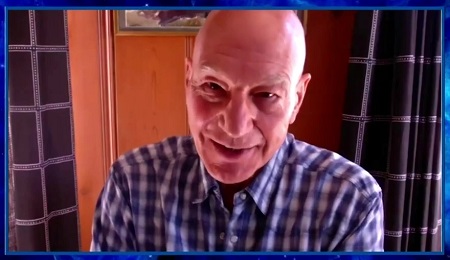
There was also a remark from Sir Patrick Stewart almost a year ago, when Q’s return to the franchise was first announced. At last year’s First Contact Day digital event, Admiral Picard himself seemed to suggest that, while Q was certainly involved with whatever was going on, he wasn’t necessarily wholly responsible for it. That distinction may be key to this theory!

Sir Patrick Stewart at 2021’s First Contact Day digital event.

So let’s leave the real world behind and jump into the Star Trek galaxy. There is, in my view, evidence to suggest that Q wouldn’t do something that so drastically damaged the entire timeline. Ever since his first appearance in Encounter at Farpoint, Q has been viewed by Picard as an adversary – but I would argue very strongly that that isn’t how Q sees himself. By pushing and provoking Picard, Q has arguably sought to expand Picard’s understanding of the universe far beyond what he might’ve otherwise been capable of. In Q’s mind, the ends justify the means – so all of the meddling and provocation was worth it to get Picard (and humanity) ready for whatever the Q Continuum has in store next.

It’s even possible to read some of Q’s more belligerent actions – like placing the Enterprise-D in the vicinity of a Borg vessel – with the benefit of this additional context. In my earlier theory titled Q the saviour, this is exactly the point I tried to make. Q deliberately chose to introduce Starfleet to the Borg because he knew that the Borg were already planning to target the Federation, and he hoped that his intervention would show the Federation how dangerous the Borg threat really was.

In light of the mess that the Star Trek franchise has made of Borg-Federation contact, I think that theory absolutely holds water, but check out the full article because I get into it in way more detail!

Q introduced Picard and Starfleet to the Borg.

Whether you buy into my theory in full or not, I think we can agree at the very least that this is how Q sees himself. He doesn’t see himself as an enemy, provoking Picard out of boredom or malice. He sees himself as a friend, and may even feel that Picard is ungrateful for not reciprocating those feelings of friendship.

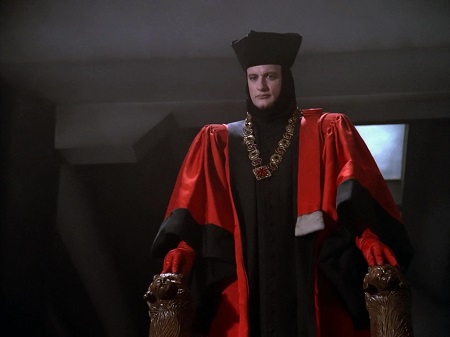
Q accused humanity of being a “dangerous, savage, child-race,” and it’s on these charges that Picard and all of humankind are on trial, and have been since Encounter at Farpoint. But at every stage, Q has seemed smugly satisfied when the puzzles he lays out for Picard (and others) are solved. He seems to see potential in humanity – perhaps even the potential to one day know as much about the universe as the Q Continuum themselves.

Q in his judge’s robes.

In episodes like All Good Things, Q even claims to have helped Picard solve a particularly difficult puzzle. By learning to see time itself not as totally linear, but in a new and different way, Picard was able to solve the anti-time puzzle. Likewise in Tapestry, Q gave Picard a chance to see what his life might’ve been like had it taken a different path. That definitely sounds familiar to his line in the Season 2 trailers about “the road not taken!”

In Tapestry, though, Q wasn’t some nefarious villain. He was making a point to Picard – in his own tricksterish way – about the course of his life, and how being a risk-taker was an inherent part of his personality. He didn’t abandon Picard to the new timeline that he’d created, instead giving him an opportunity to fix his mistake.

Q and Picard in Tapestry.

Q has, on occasion, seemed impressed with Picard and his ability to solve the puzzles he created for him. Even when Picard had to grovel to Q in Q Who and admit that the Federation wasn’t ready to encounter the Borg, and that the encounter was frightening, Q seemed satisfied that he’d made his point. In Encounter at Farpoint and in All Good Things in particular, Q even seemed pleased that Picard had been able to think through a complex situation and find a solution. He helped – but in a limited way – and in an almost-parental way seemed kind of proud of Picard.

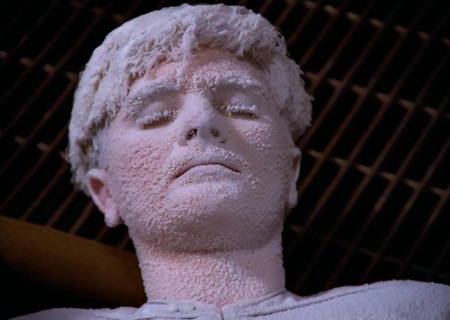
Those feelings, of course, are not reciprocated, and Q has definitely caused death and destruction. Eighteen members of the Enterprise-D’s crew were lost in that first encounter with the Borg, for example, and Q didn’t restore them to life afterwards. However, on other occasions he did undo harm, and even death, caused to humans – such as by un-freezing Tasha Yar in Encounter at Farpoint.

Tasha Yar being un-frozen by Q in Encounter at Farpoint.

Q being the out-and-out villain of Picard Season 2 would, I would argue, represent a fundamental shift in his characterisation. It would take Q from being a trickster and an annoyance into something much more sinister, and while it’s certainly possible that he could have a darker side that we aren’t familiar with, it would be a major change that would require a good deal of explanation. Why, after having seemingly sensed potential in Picard and humankind, would Q try to do something so extreme?

Furthermore, from a narrative perspective Q doesn’t make a good villain. His god-like powers basically mean that Picard and his crew could never win, and Q’s amorality and lack of fair play mean that he would always be in a position to dominate and frustrate Picard if he ever came close to defeating him. This is a problem all overpowered characters in fiction can have, and it applies to Q in Star Trek just as much as it does elsewhere. Given what we know of Q and his abilities, it doesn’t even seem plausible that the Federation could find a technobabble explanation for limiting his powers, either.

Q has god-like powers.

So there are two questions remaining: did Q meddle with the timeline at all? And if not, who did?

There’s a case to be made that Q did still interfere with the timeline, and that all of this is another one of his puzzles for Picard to solve. That’s certainly one possibility, and it wouldn’t be completely out-of-character for Q to behave in this way. Perhaps he saw Picard getting back on his feet after years in seclusion and decided the time was right for another phase of the “trial.” Maybe we’ll learn that Q has visited Picard during his self-imposed isolation, too.

But there’s also another case we can make: Q didn’t have anything whatsoever to do with the event that disrupted the timeline. The extent of his involvement may be shielding Picard and the crew of La Sirena from its effects, allowing them to travel back in time to undo whatever happened. There are many culprits we could point to if Q isn’t to blame: the super-synths from Season 1, the Borg, the Terran Empire, a faction from Discovery’s Temporal War, etc.

The super-synths’ mechanical tentacles in the Season 1 finale.

Q may thus have an altruistic motive for reappearing in Picard’s life. If some external force or faction is responsible for the damage to the timeline, Q might believe that it’s up to him to “save” Picard and humanity. By returning to his old friend, he might do what we know he’s done on multiple occasions already: give him the tools to understand and fix the problem, but without giving him all of the answers right away.

To me, that is Q’s modus operandi. He sets up a problem – or allows Picard to encounter a problem independently – and provides minimal help. In Encounter at Farpoint, Q could’ve just been up front about the nature of Farpoint Station, but instead he forced Picard to solve the puzzle himself. In Q Who he could’ve simply told Picard about the Borg and their destructive power, but instead he made sure Picard encountered them first-hand. In All Good Things he could’ve explained the nature of the anti-time eruption, but instead he watched as Picard figured it out for himself. On each of these occasions (and more) Q provided minimal help and assistance – but the help and assistance he did provide ultimately proved key to resolving the situation favourably.

Q in All Good Things.

If Q wanted to, he could wipe humanity out of existence with a mere thought. If he wanted to kill or seriously harm Picard, he has infinite ways of doing so and unlimited opportunities to do so. He could go back in time and prevent Picard’s birth or turn him into Murf from Star Trek: Prodigy, or a million other ridiculous and sinister things. Sending Picard on a mission back in time, thus giving him a chance to undo whatever damage has been done, is not the way for Q to “win” in any sense of the word.

So it’s safe to say that I believe there’s more going on with Q than meets the eye! His involvement with the event that damages the timeline, and his reasons for getting involved in the first place, may seem suspicious right now – but we’re seeing small glimpses through the eyes of Picard, and thus with Picard’s own biases attached. Considering all of the other things that Q has done, and the many other ways he’s challenged and provoked Picard over the years, my suspicion right now is that there’s something else going on that the trailers and teasers have been careful not to reveal.

Q as he will appear in Season 2 of Picard.

To summarise this theory, then: Q either isn’t responsible for damaging the timeline at all, or he’s doing so for the purposes of testing or challenging Picard. What we’ve seen so far doesn’t depict a serious attempt on Q’s part to harm Picard or even permanently disrupt the Federation or the prime timeline; there’s something more going on that we haven’t yet seen – something that will, perhaps, unfold slowly over ten episodes!

I’m genuinely excited to see Q make a return to Star Trek. His appearance in Lower Decks Season 1 was relatively minor, so it will be neat to have him back in a substantial way – whatever form that ultimately takes and whatever his impact on the season’s narrative. He’s a more complex character than some viewers give him credit for, and as I’ve said before I don’t think it’s fair to call Q a “villain” – at least not in any of his appearances thus far. Perhaps Picard Season 2 will change that, showing us a darker and more sinister presentation of the character. But maybe we’ll get a continuation of this complex presentation, and the return of a truly interesting dynamic between Q and Picard.

Stay tuned when Picard Season 2 kicks off in March, because if there’s any development of this theory I’m sure I’ll have something to say about it!

You can also check out my other big Q theory by clicking or tapping here.

Star Trek: Picard Season 2 will stream on Paramount+ in the United States and on Amazon Prime Video in the United Kingdom and around the world beginning on the 3rd of March 2022. The Star Trek franchise – including all characters and properties mentioned above – is the copyright of ViacomCBS. This article contains the thoughts and opinions of one person only and is not intended to cause any offence.

Star Trek theory: Q the saviour

Spoiler Warning: There are spoilers ahead for the trailers and teasers for Star Trek: Picard Season 2. Spoilers are also present for the following Star Trek productions: The Next Generation, First Contact, Voyager, and Enterprise.

Today we’re going to take a look at Q, the immortal trickster who has tangled with Captains Picard, Sisko, and Janeway – and who will soon be returning to the Star Trek franchise! Q is an unusual character in many ways. He seems to have practically unlimited knowledge of the galaxy, and may have been alive for billions of years. Yet he has an impish, almost childish sense of humour that sees him tease and mess with Starfleet – and many other people too.

I wouldn’t call Q a “villain” in any of his appearances to date. In fact, I would argue very strongly that Q sees himself as a friend, an ally, and a guide to Captains Picard and Janeway in particular, having offered his services more than once. He’s certainly selfish – forcing Starfleet officers to undergo tests and trials of his own devising – but there’s usually more to his games than meets the eye.
Q in his judge’s robe.
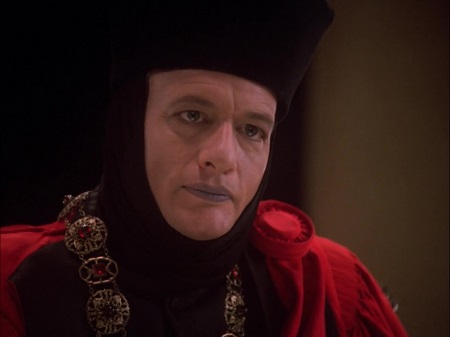
On several occasions – going all the way back to his first appearance – Q has presented Starfleet with puzzles to solve. These puzzles can be dangerous, and more than once Q has gotten people killed. But even so, I wouldn’t characterise him as a typical “villain” for Captain Picard or Captain Janeway to “defeat.”

The puzzles Q has presented – especially to Captain Picard – have actually proven to be deeply satisfying, and arguably helped Picard and Starfleet grow. Recognising that life can take very different forms – as Q helped Picard to see in Encounter at Farpoint – is one such puzzle he presented. He also taught Picard how to view time in a non-linear fashion – understanding that events in the future could have a causal link to events in the past in All Good Things.

All Good Things saw Q present Picard with another puzzle to solve.

Even the teasers and trailers for the upcoming second season of Star Trek: Picard may not be all they seem. Picard says he blames Q for disrupting or changing the timeline, but I think we’ll have to see that story play out before we can assign all the blame to Q. Even if Q is responsible, the question of motivation comes up. Is it really just a game; a trick to mess with Picard? Or is there something bigger going on?

That’s one of my big Picard Season 2 theories! But I’ll save the full write-up for another day. Today we’re not looking ahead to future Star Trek, we’re going to look back at past iterations of the franchise and try to answer a deceptively simple question: did Q save the Federation?

Q will soon be returning to Star Trek…

Star Trek has made a mess of the early history of Borg-Federation contact. The Raven, from Voyager’s fourth season, told us that the Borg assimilated humans and a Federation vessel in the 2350s. Regeneration, from Enterprise Season 2, showed the Borg battling against Captain Archer and his crew – and sending a message to the Delta Quadrant that would be received in the 24th Century. So the question of how the Borg first became aware of the Federation is an open one. Did they receive a message from across the galaxy? Did they first discover humanity when they assimilated Seven of Nine and her family?

Either of these explanations could account for the Borg’s interest in the Alpha and Beta Quadrants in the mid-late 24th Century. Season 1 of The Next Generation first teased the Borg’s appearance with the episode The Neutral Zone, in which both Federation and Romulan colonies had gone missing – “carried off” the surface of their planets, as Romulan commander Tebok put it. The Borg’s responsibility for these attacks would be confirmed in The Best Of Both Worlds – though the connection is easily missed, in my opinion, as it doesn’t take up much screen time.

The Borg were responsible for the destruction of several Federation colonies in the 2360s.

Regardless, one thing is certain: the Borg knew of the Federation’s existence well before the Federation knew of theirs. They had even begun to send scouting vessels relatively close to Federation space; system J-25, where the Enterprise-D first encountered a Borg Cube, was a mere two-and-a-half years away from Federation space at high warp, placing the Borg tens of thousands of light-years away from their Delta Quadrant home.

Were the Borg actively scouting for the Federation, or was it just a coincidence that one of their vessels was operating so far away from their own space? We may never know the answer to that, but someone almost certainly does: Q.

Q was responsible for this encounter.

In brief, here’s my theory: the Borg and the Federation were already on a collision course, but the Federation didn’t know it. Whether it was because of the First ContactRegeneration time travel loop, the assimilation of the USS Raven, the attacks along the Neutral Zone, or simply the Borg’s continued exploration of the Alpha and Beta Quadrants, they had humanity and the Federation firmly in their sights long before Starfleet was aware that there was a problem.

Recognising this, and seeing potential in humanity thanks to his earlier run-ins with Captain Picard and the crew of the Enterprise-D, Q chose to intervene. He knew that if the Federation became aware of the threat the Borg posed, their ingenuity would lead to better defences and they’d be able to protect themselves, so he chose to deliberately introduce them to the Borg for that reason.

A Borg Cube hovering ominously over Earth. The Borg came very close to assimilating humanity’s homeworld.

The events of The Next Generation Season 2 episode Q Who can be reinterpreted through this new lens. Rather than Q trying to frighten Picard for the sake of it or to prove his own superiority, he was – in his own twisted way – helping Picard and the Federation. The events of Q Who led the Federation to begin serious preparations for a Borg incursion, and without that tactical readiness it seems likely that the Borg would have been able to cruise to victory during the events of The Best of Both Worlds.

This fits with how Q operates. In stories like Encounter at Farpoint, Tapestry, and All Good Things, as well as Voyager’s The Q and the Grey, Q never explains everything he knows. Instead he obfuscates, talks around the issue, and forces Starfleet figure out what’s going on for themselves. Sometimes he pushes Picard or Janeway in a certain direction to get things moving, or even devises a puzzle or test of his own, like he did in Hide and Q. But what he never does is simply communicate – he doesn’t just sit down with Picard and tell him about Farpoint Station or the anti-time problem. He pushes Picard to figure those things out for himself.

Q appeared in Season 1 of Lower Decks.

And so it is with the Borg – according to this theory. Rather than contacting Picard and explaining what he knows about the Borg and their intention of targetting Earth, he sends the Enterprise-D to a location where he knows a Borg vessel will be and allows the crew to discover the threat for themselves. He does so knowing that the consequences will be Starfleet ramping up their defences in preparation of a Borg attack.

In All Good Things, Q told Picard that the Q Continuum saw potential in humanity – the potential to one day understand more about the universe than they ever thought possible. From Q’s point of view, perhaps he believed that seeing the Federation attacked and humanity assimilated would be a net loss to the galaxy because that potential would never be realised.

Q has his reasons for “testing” Picard and humanity – even if he chooses not to explain himself.

Q’s motivation for putting Picard and humanity “on trial” seems to be connected to this. In Encounter at Farpoint he accused humanity of being “a dangerous, savage, child race.” Yet even by the end of the episode, Q appeared to be impressed rather than disappointed that Picard and the crew could solve his puzzle. Rather than believing humanity to be dangerous and savage, as he asserted, Q almost certainly sees humanity as something more than that – and thus would feel humanity’s assimilation by the Borg would be a loss. His desire to avoid that fate could have motivated him in Q Who.

All of this could tie into Picard Season 2. Q may feel that Picard and the Federation are ungrateful for his “assistance” over the years, and he could cite the events of Q Who as one example of how his intervention saved the Federation from assimilation. While the latter part is up for debate, I definitely believe that Q feels underappreciated by Picard in particular, and sees his interactions with the former captain of the Enterprise-D as helpful rather than antagonistic.

Q looks annoyed with Picard in the trailer for Star Trek: Picard Season 2.

So let’s recap! The Borg became aware of the existence of the Federation by the mid-24th Century. The Federation had technology and resources that the Borg considered valuable, and they began targetting outlying Federation colonies, including those near to the Romulan Neutral Zone. All the while, the Federation remained ignorant of the Borg’s existence – considering them to be little more than rumour.

Foreseeing disaster and either the total assimilation of humanity or the devastation of the Federation such that humanity could not achieve its full potential, either the Q Continuum or Q independently decided to intervene. Instead of simply contacting the Federation to share his knowledge, Q transported the Enterprise-D to the star system J-25, where they encountered the Borg. This encounter led to the Federation developing anti-Borg strategies and defences that would ultimately save them from assimilation.

Unusually, Q has never taken credit for this. However, it’s at least possible that he considered Picard and the Federation as a whole to be ungrateful for his help, and this could tie in somehow to the events of Picard Season 2 where Q will be making a return to the Star Trek franchise.

Did Q save the Federation from assimilation?

What I like about this theory is that everything feels like it fits together. This theory connects the message sent in Regeneration and the early assimilation of Seven of Nine’s family to the events of The Neutral Zone, giving the Borg a reason to be operating so far outside of their territory. It also fits in perfectly with the way Q behaves – never sharing everything he knows and presenting dangerous and often deadly puzzles to Picard and Starfleet.

Whether it’s true or not is open to interpretation! I would say that Q Who wasn’t written with any of this in mind, and a straight watch of the episode strongly suggests that Q’s motivation is simply to frighten Picard and the crew of the Enterprise-D after his offer to join the crew was rejected. Q felt that Picard was arrogant in assuming that Starfleet could handle any threat the galaxy contained, and wanted to prove him wrong. While that explanation works in the context of the episode, it doesn’t preclude anything included in this theory from also being true; Q could still have been annoyed at Picard’s assertion that the Federation was prepared for anything while also intending to provide them with advance warning of the Borg.

So that’s it for this one! As with all fan theories, anything we see on screen in a future episode or film could render the whole thing invalid. But for now, I think it’s at least plausible that the events of Q Who represent Q trying – in his own unique and twisted way – to help Picard and the Federation. Q has always seen himself as a friend of Picard’s, and based on what we know of both Q and the history of Borg-Federation contact, it seems to me that everything arguably fits together!

The Star Trek franchise – including all episodes and other properties mentioned above – is the copyright of ViacomCBS. This article contains the thoughts and opinions of one person only and is not intended to cause any offence.