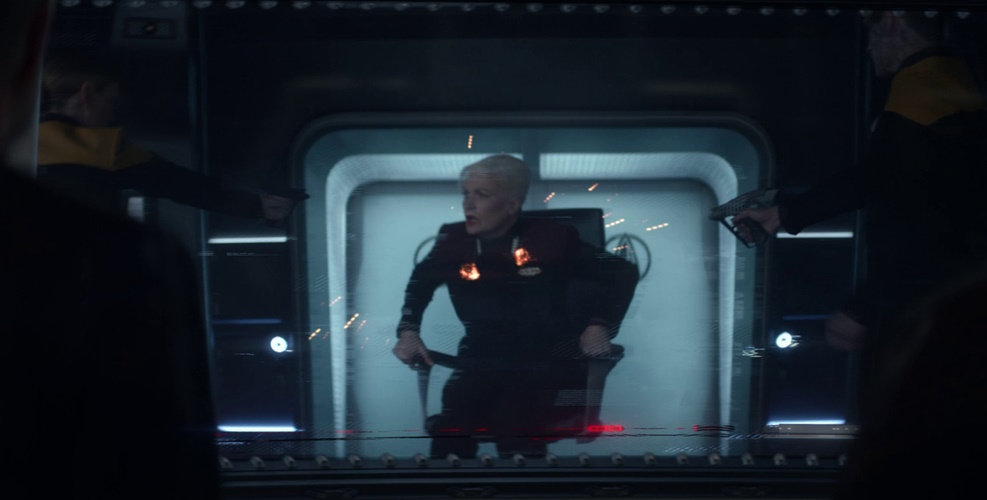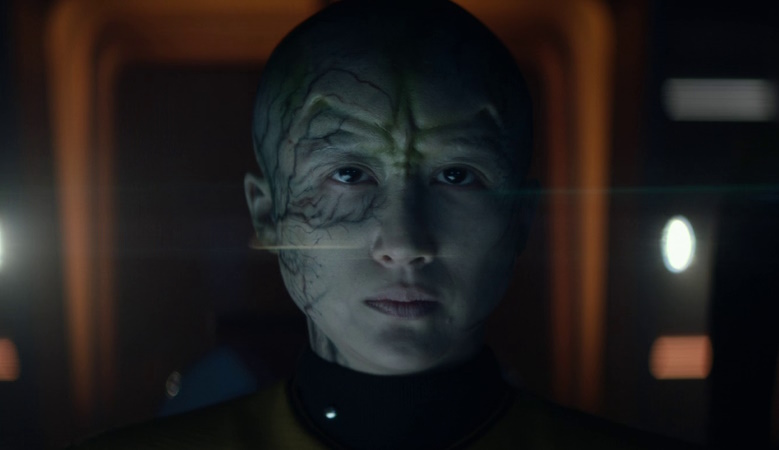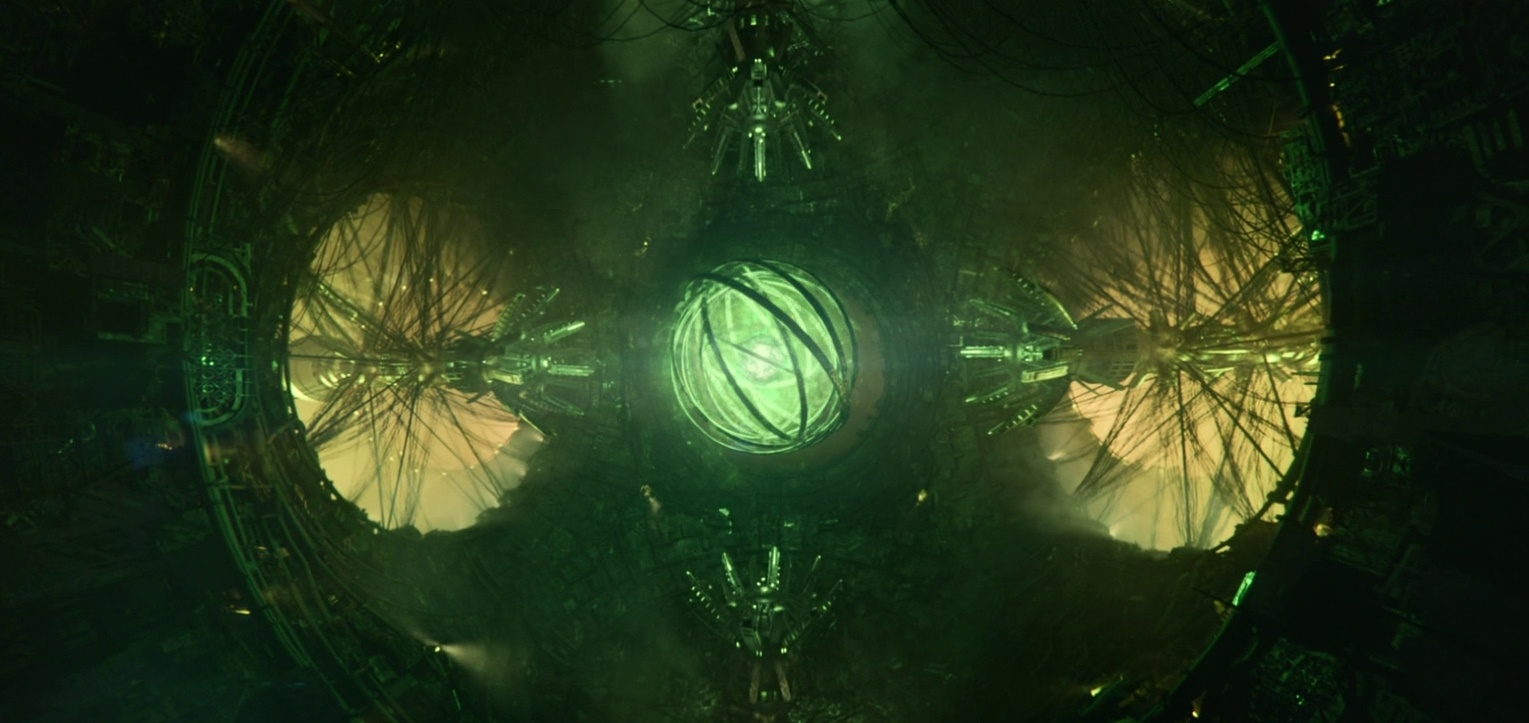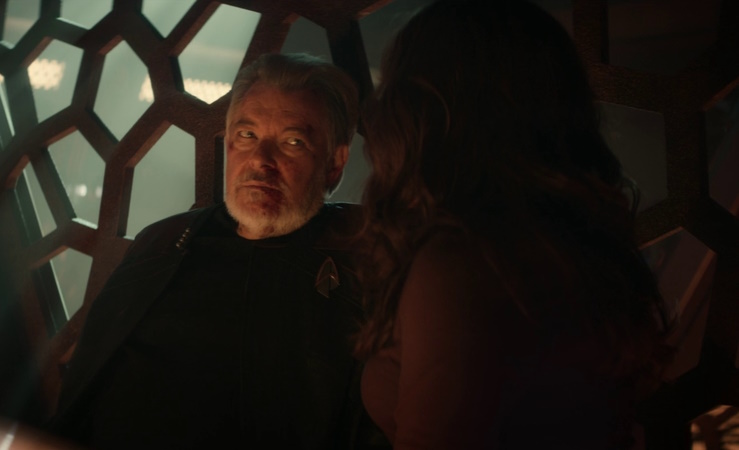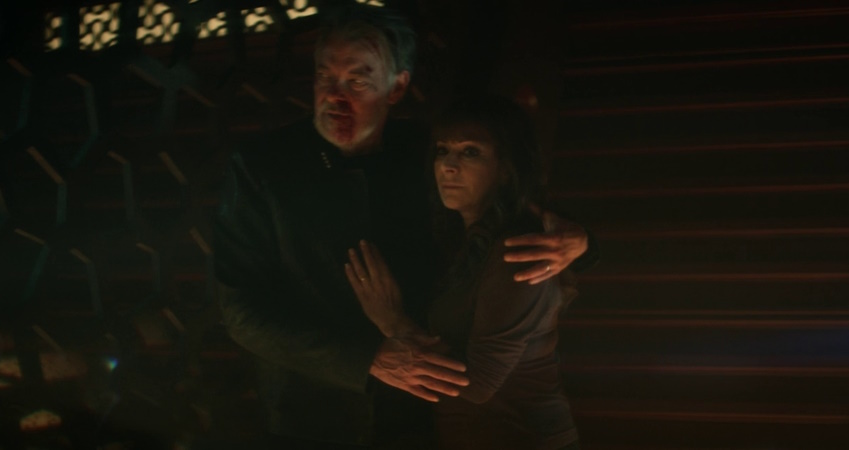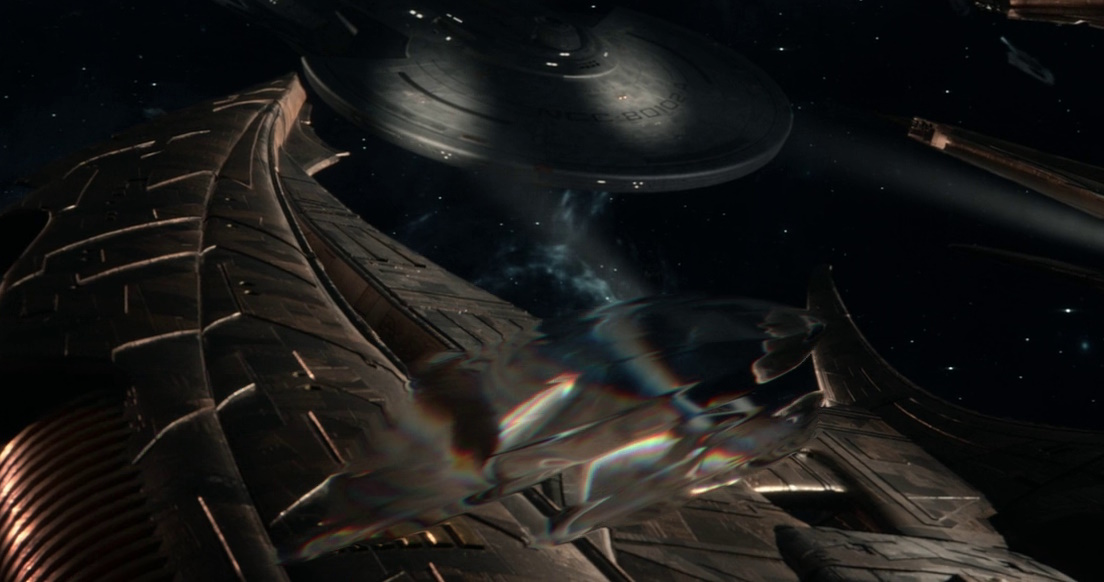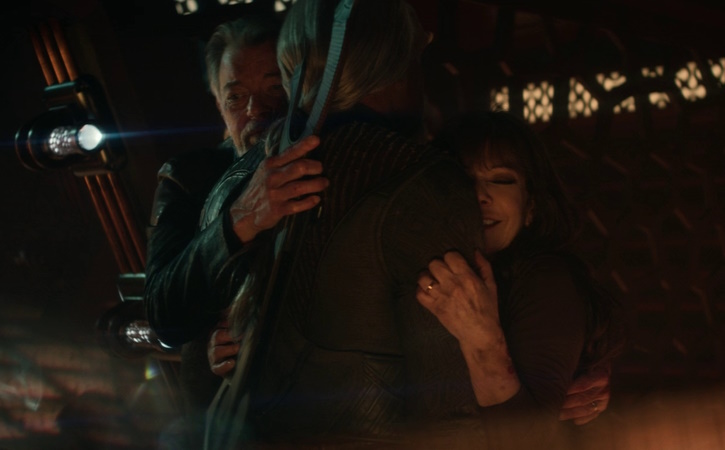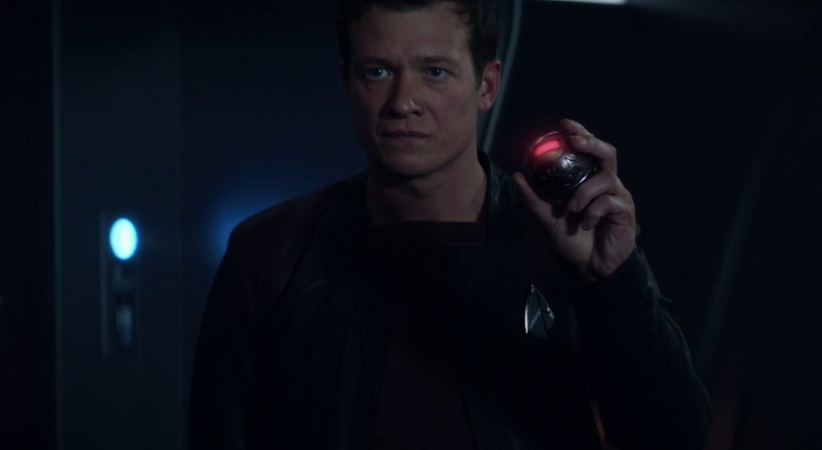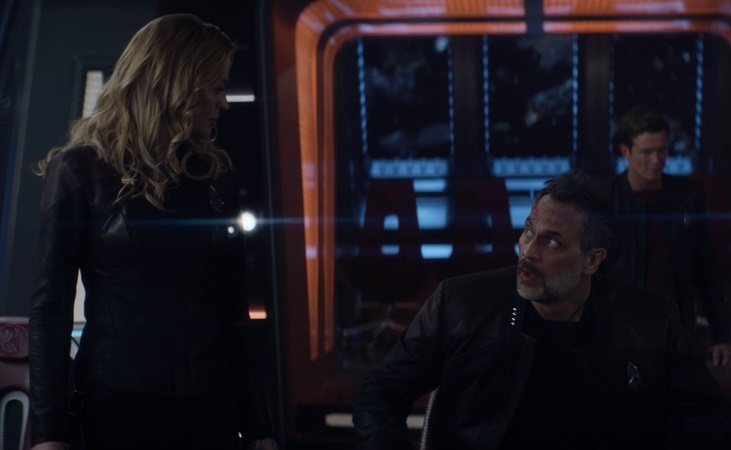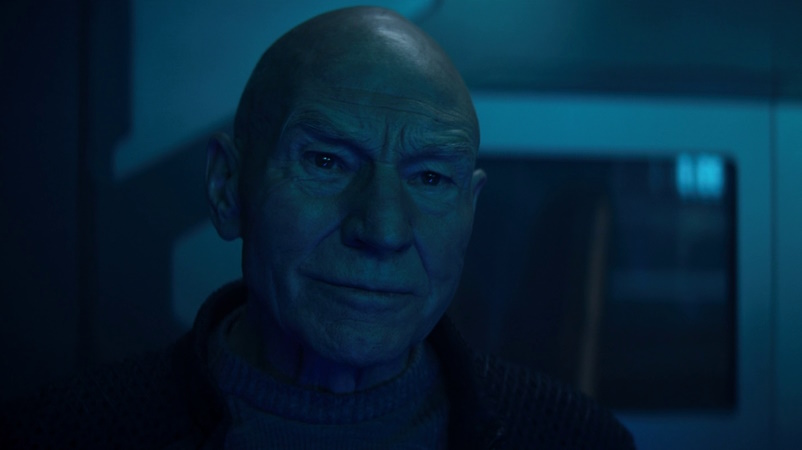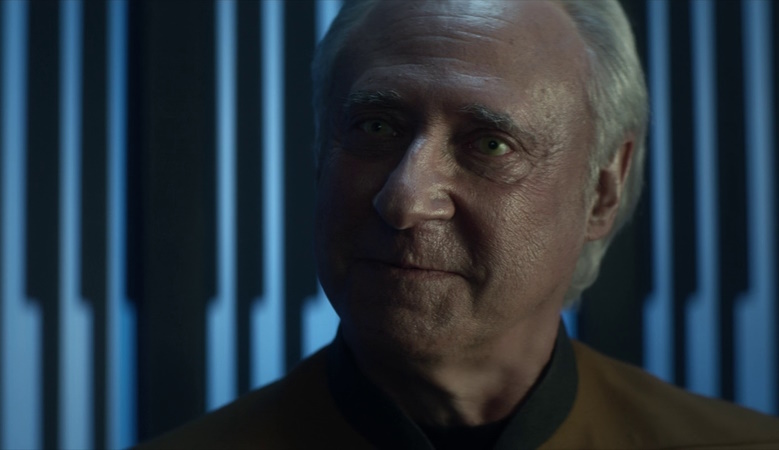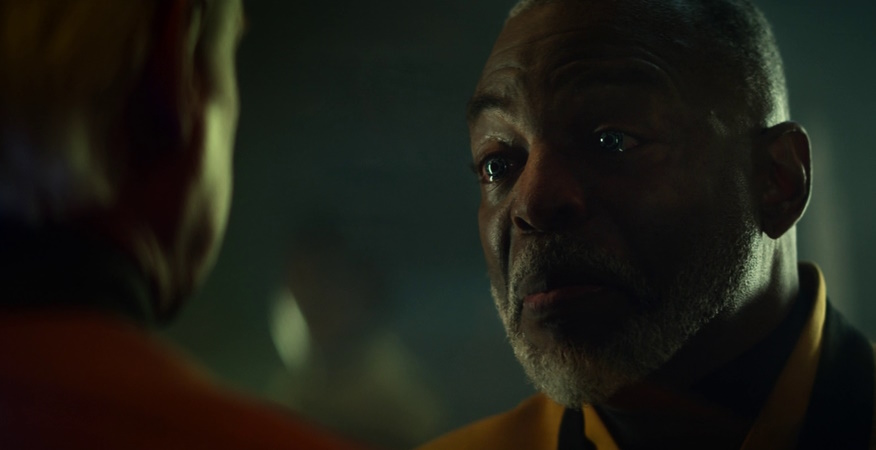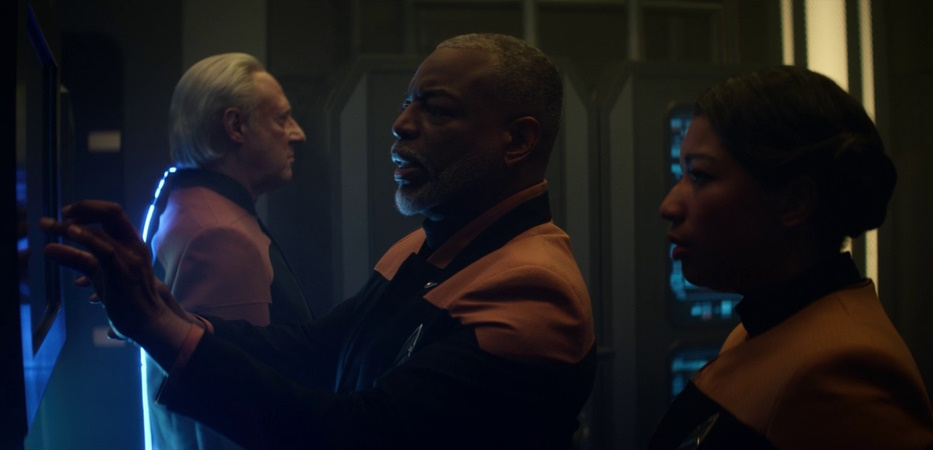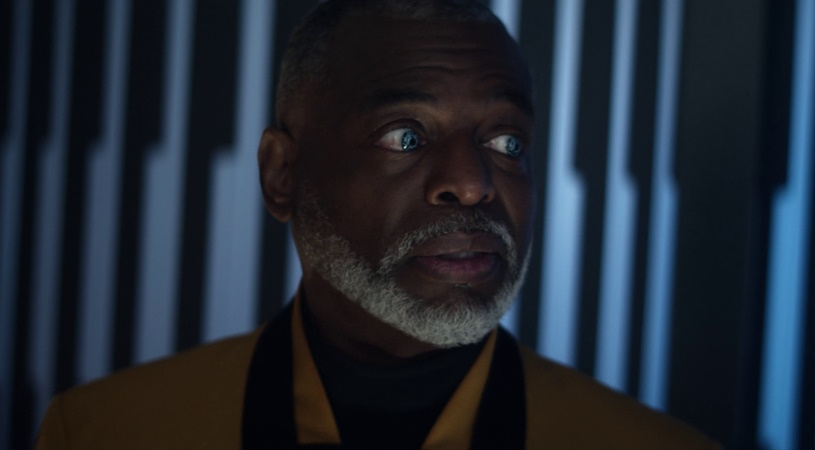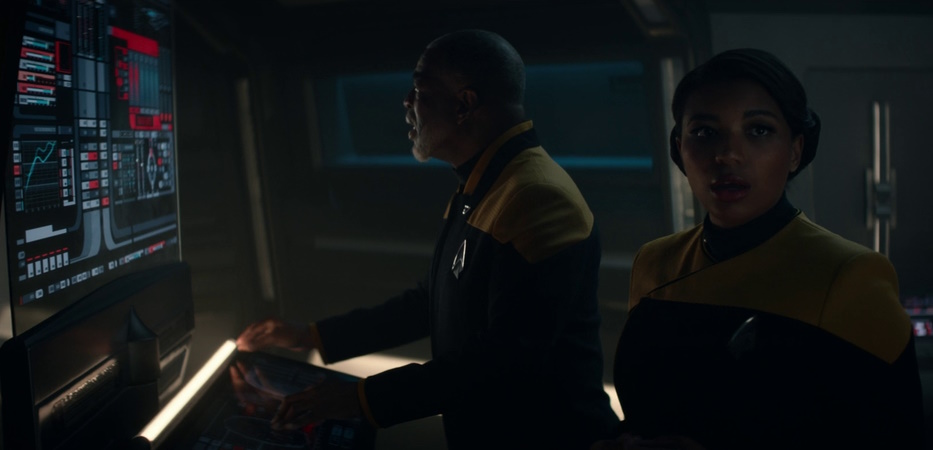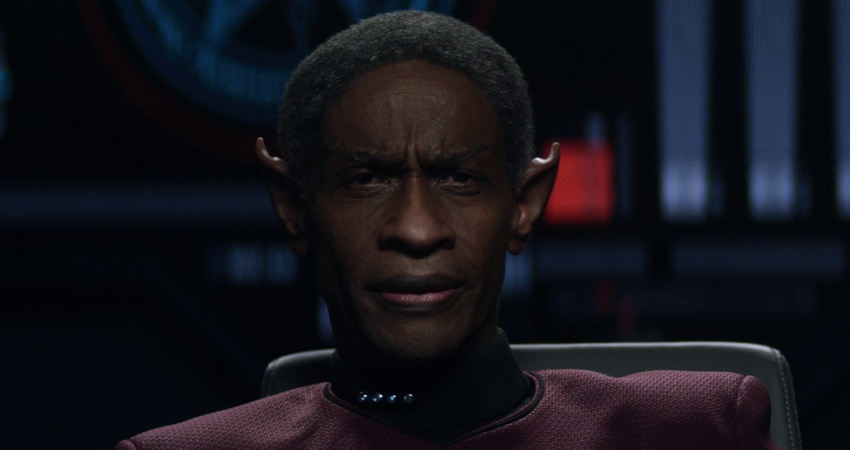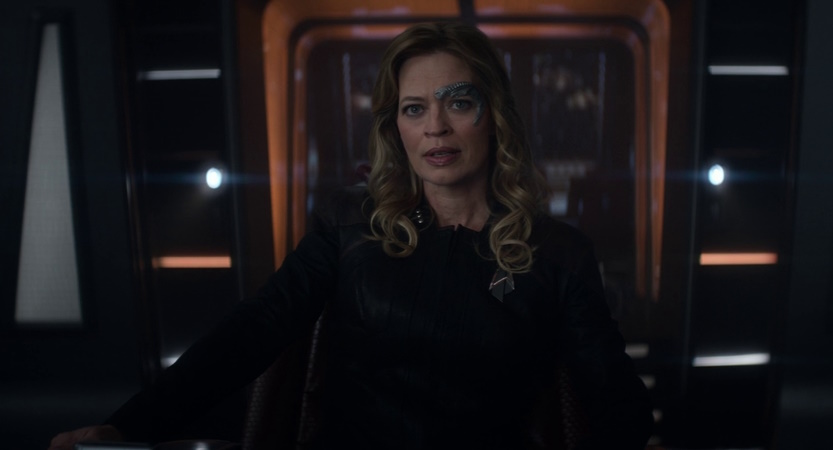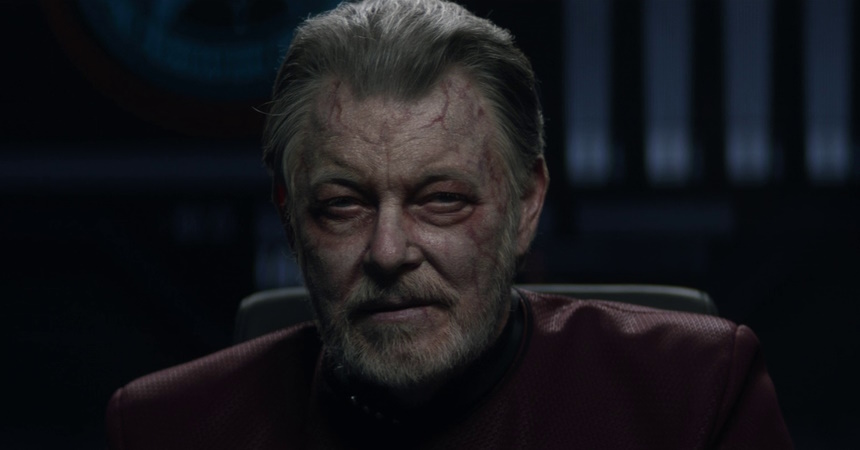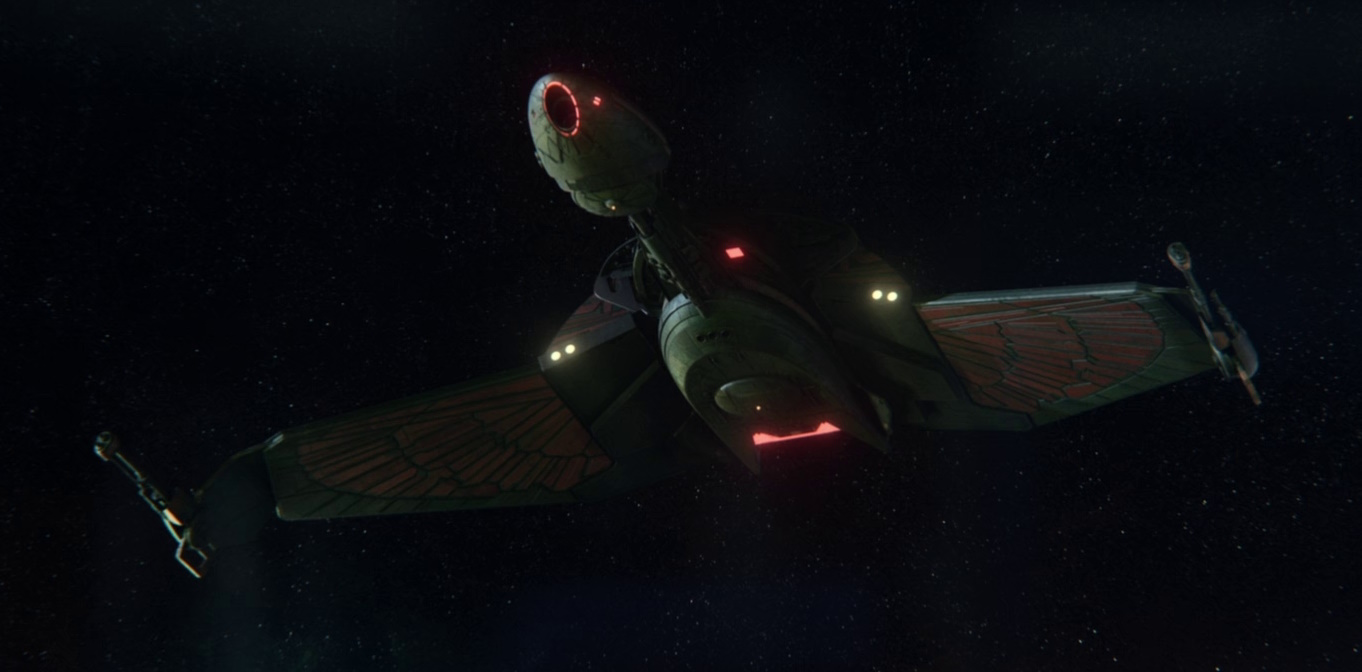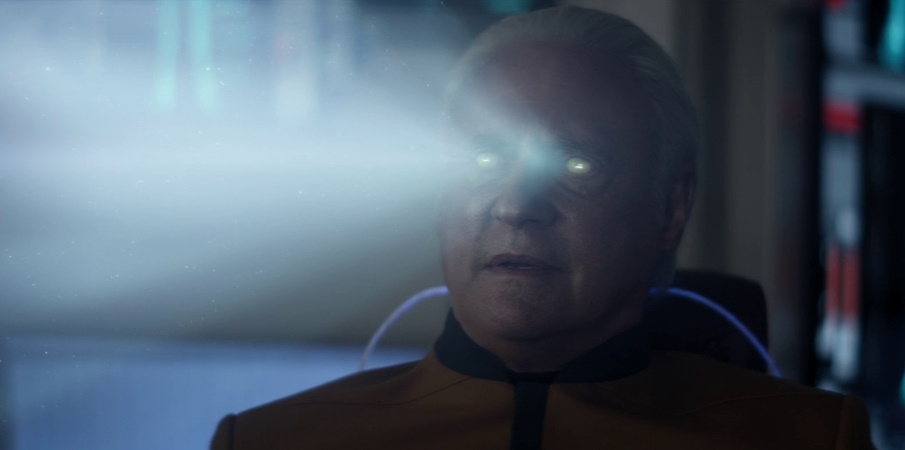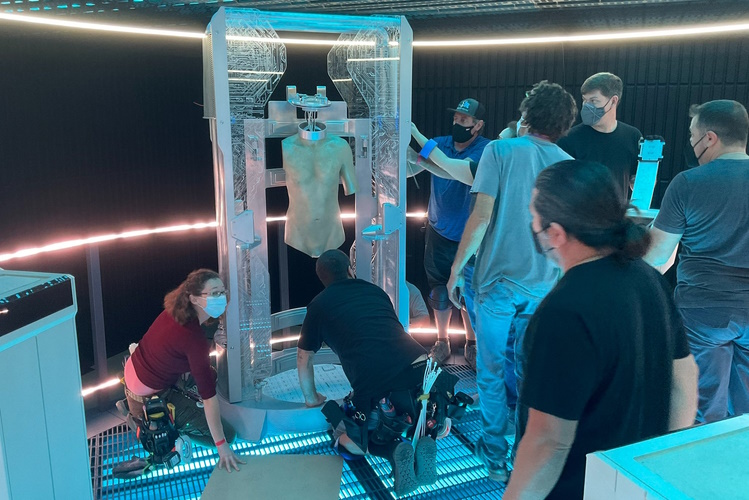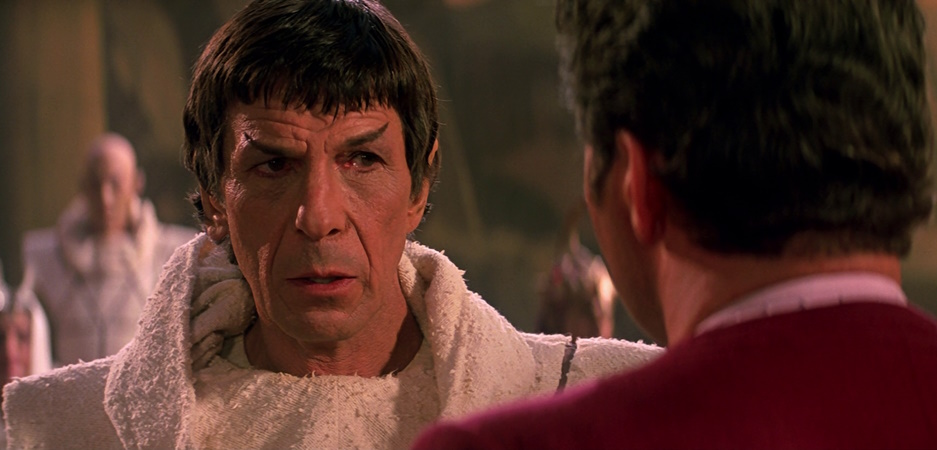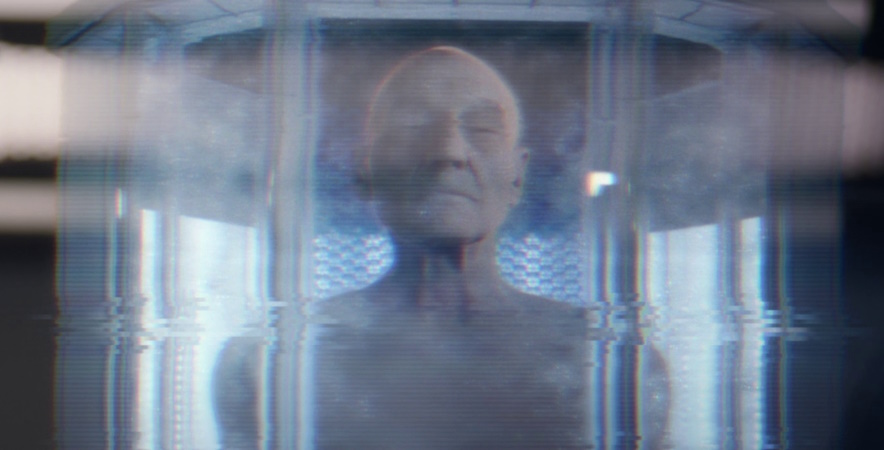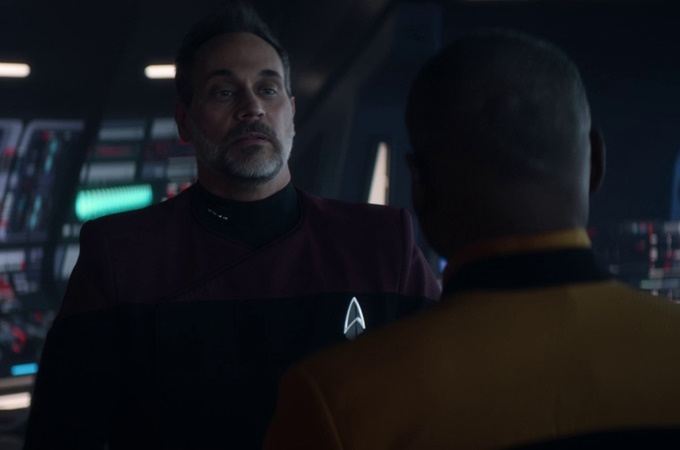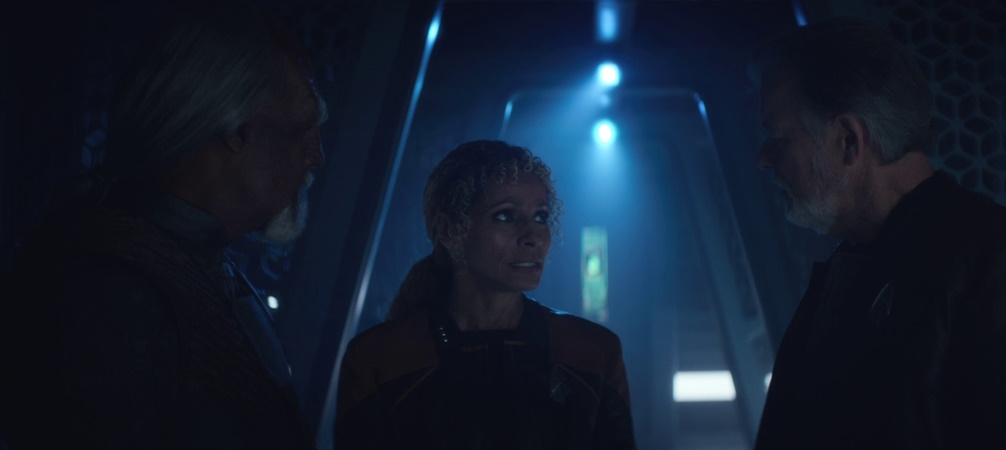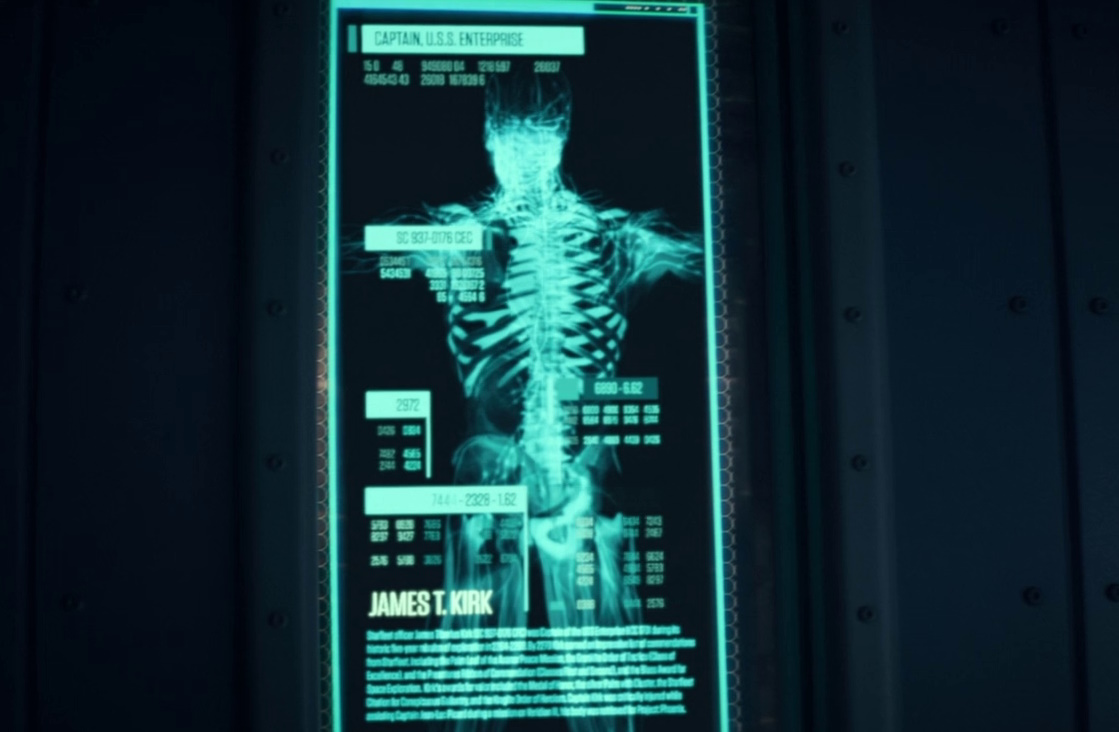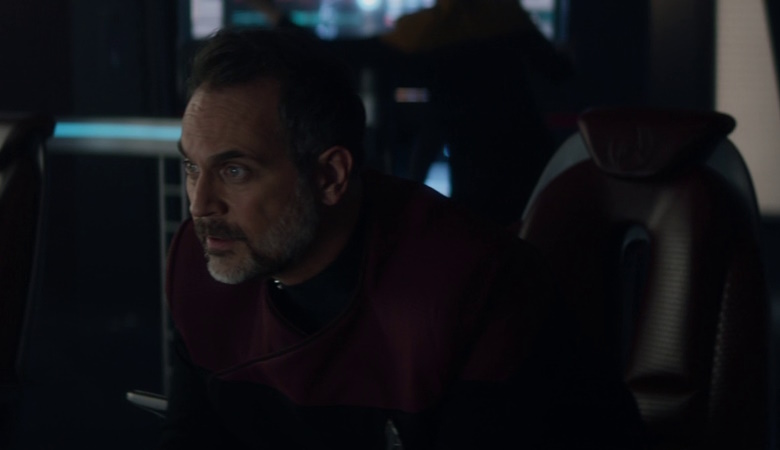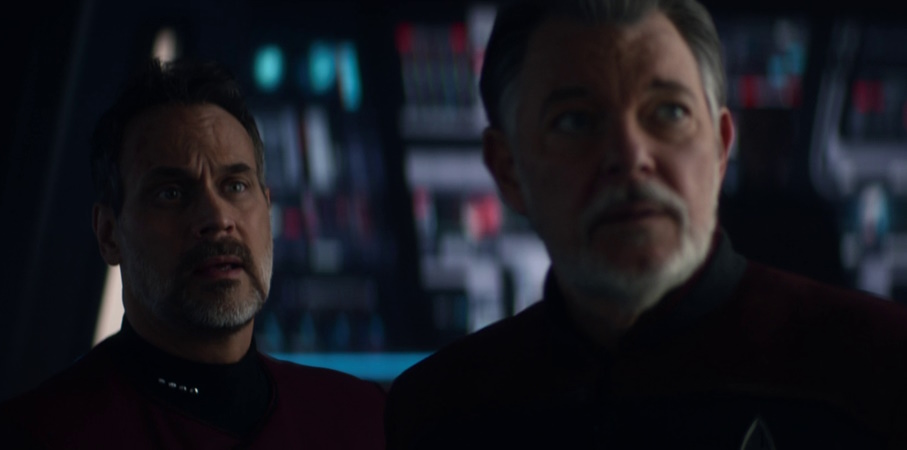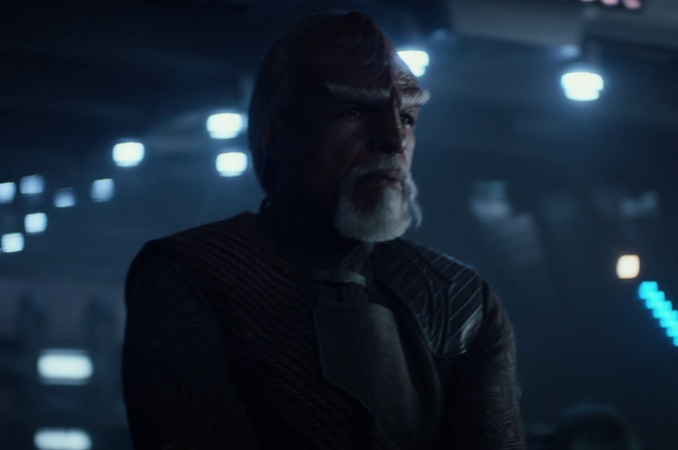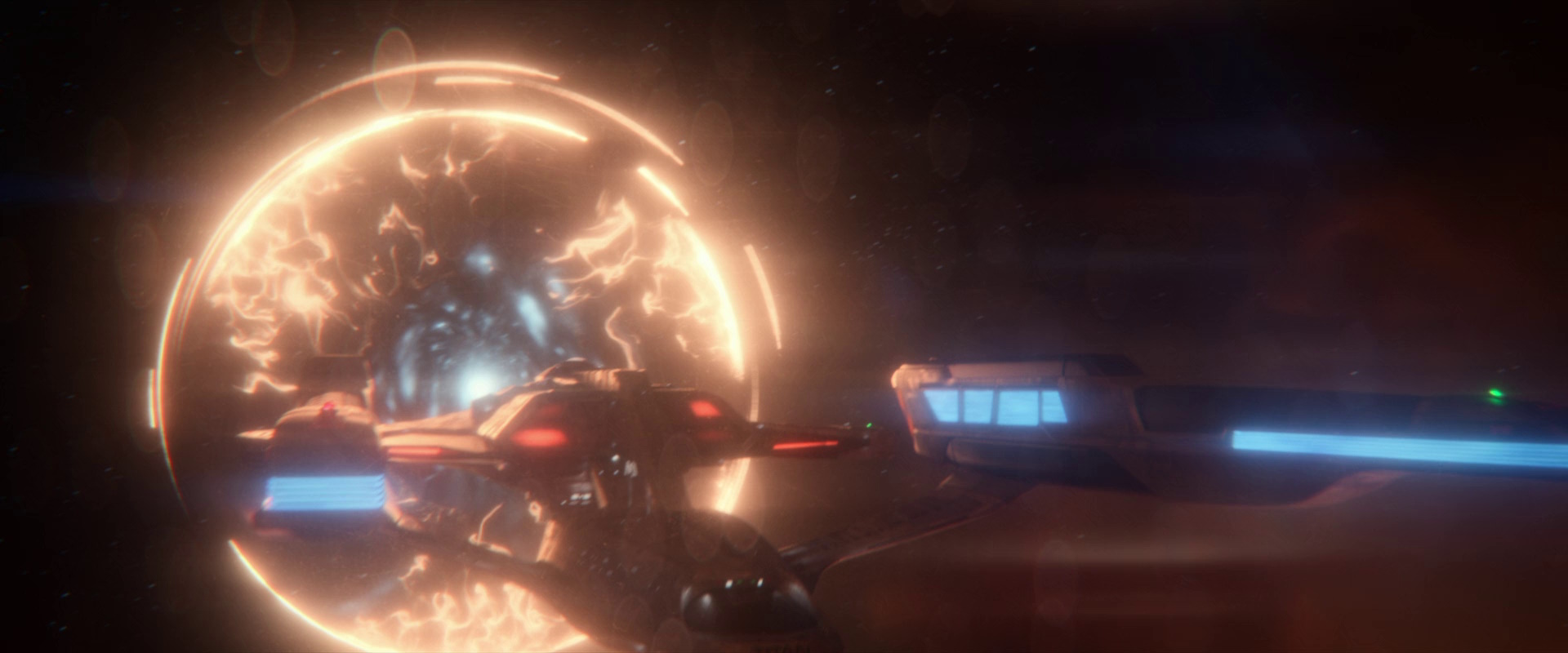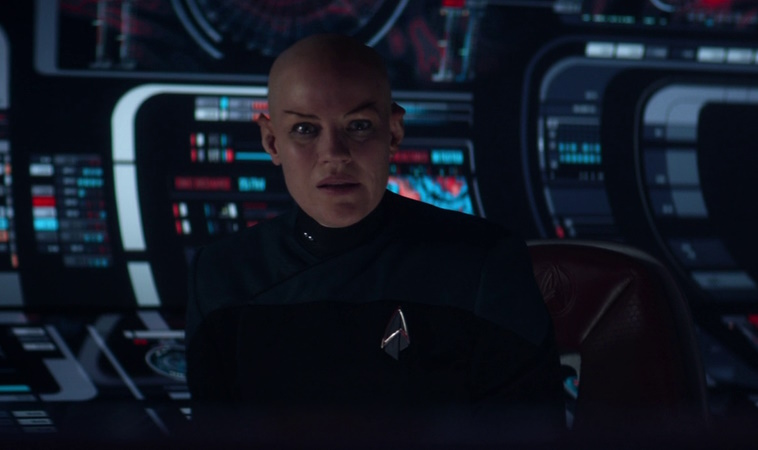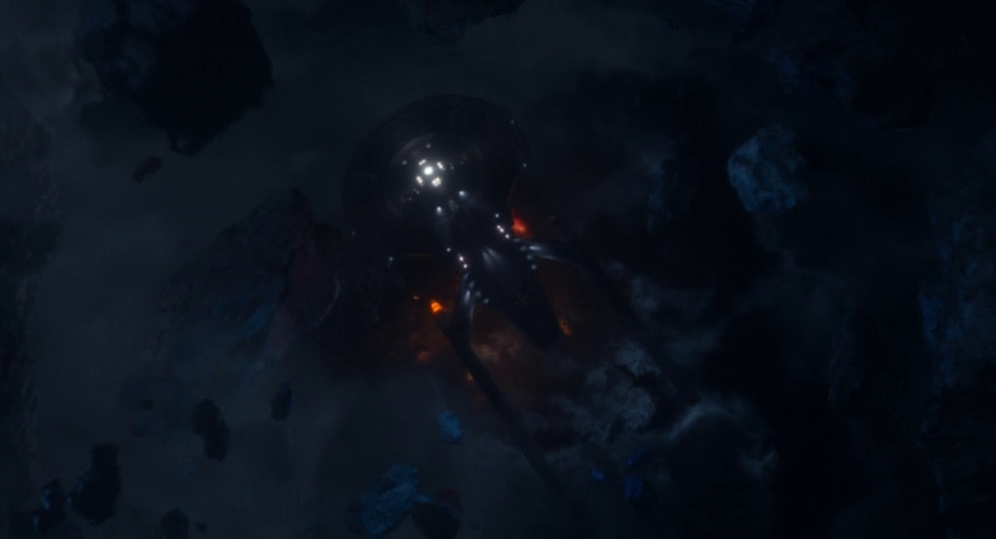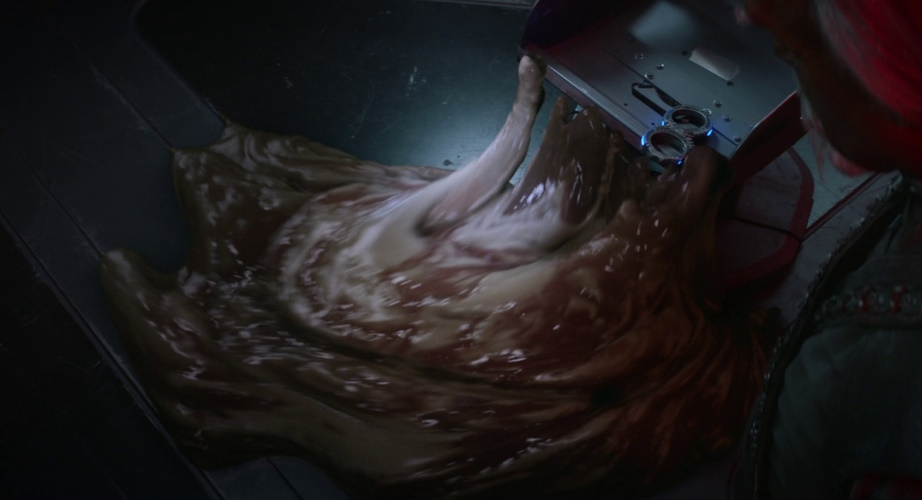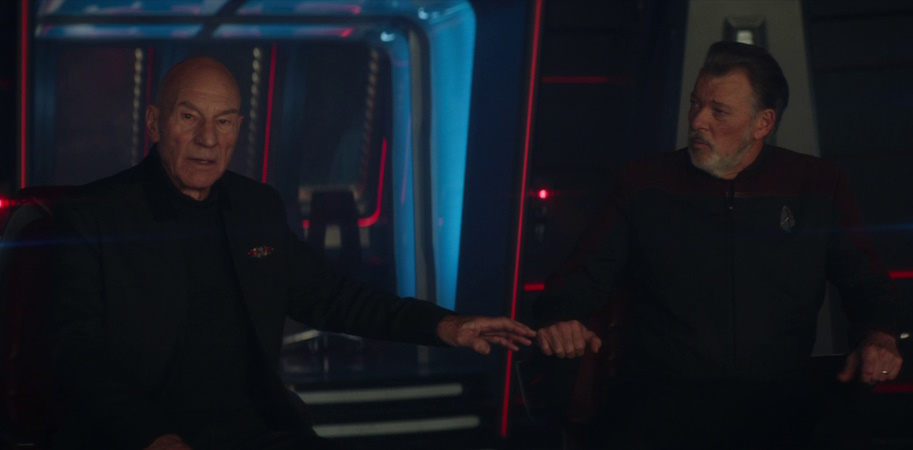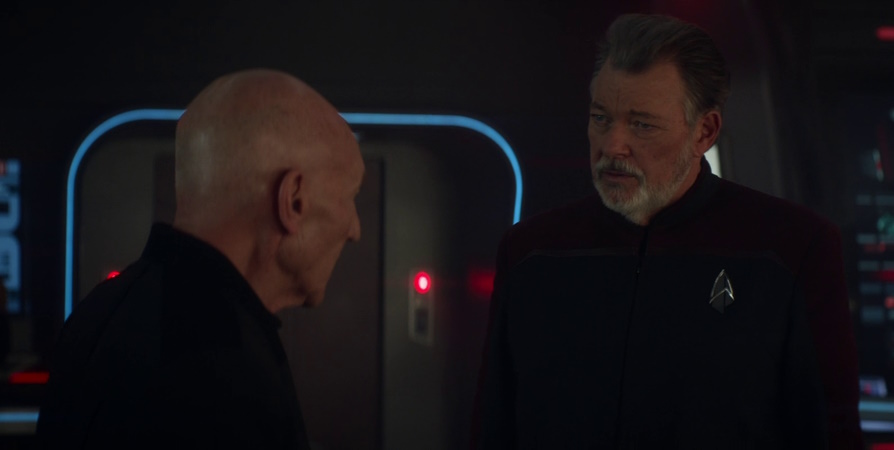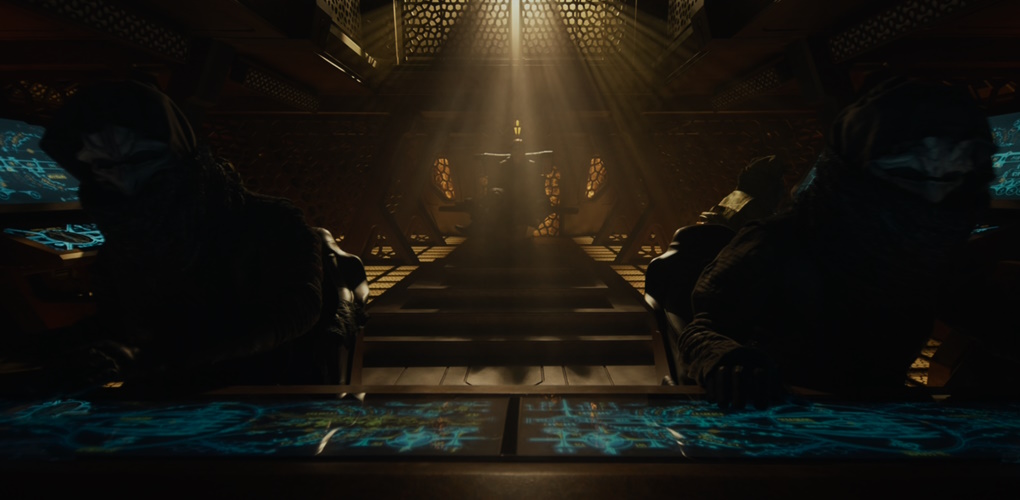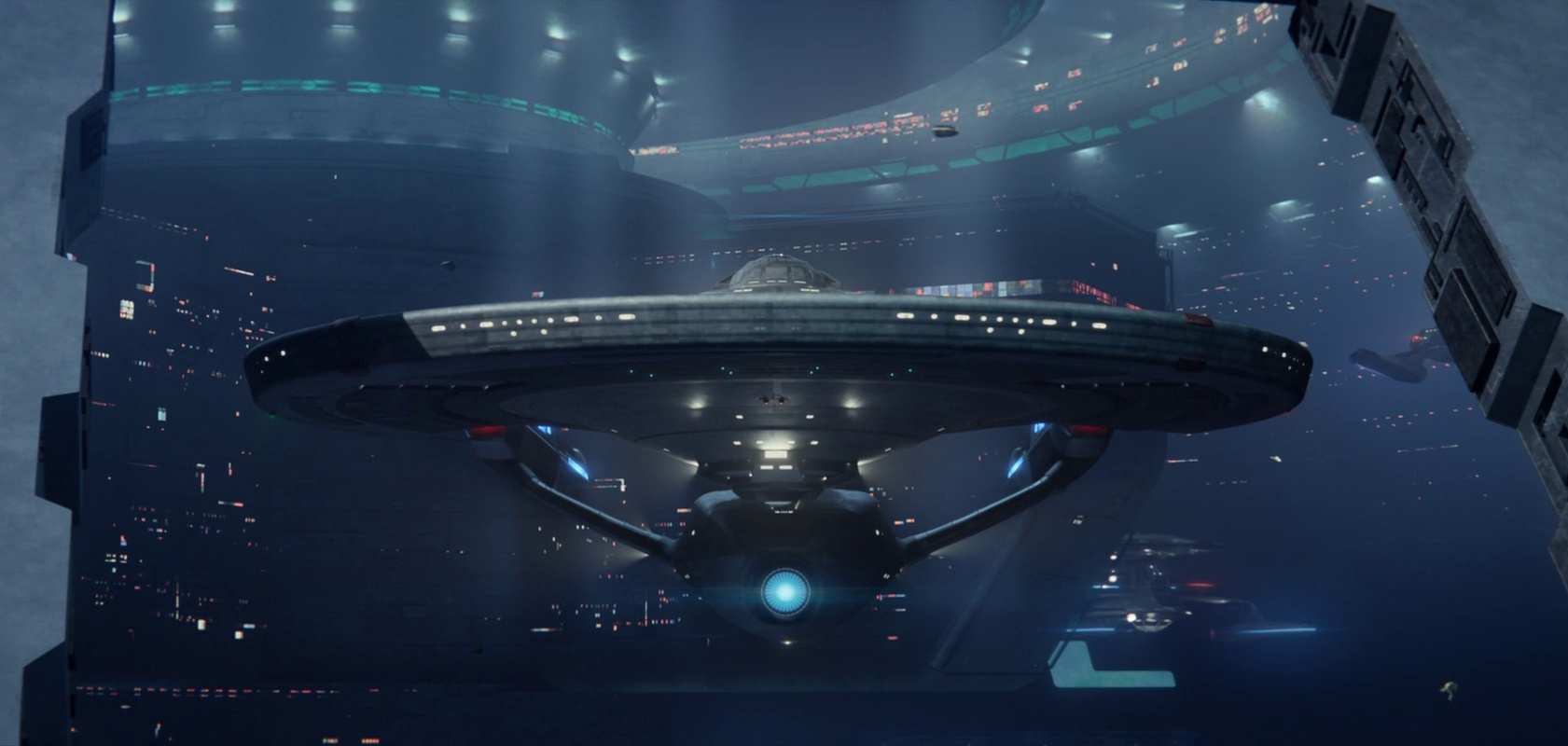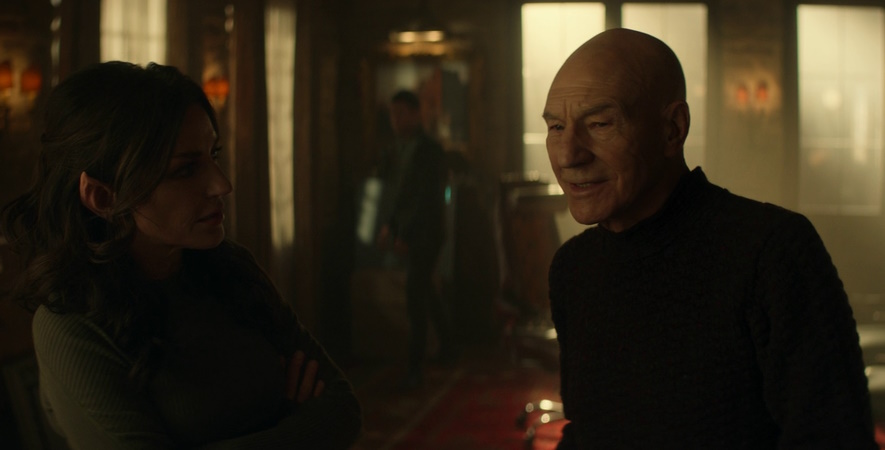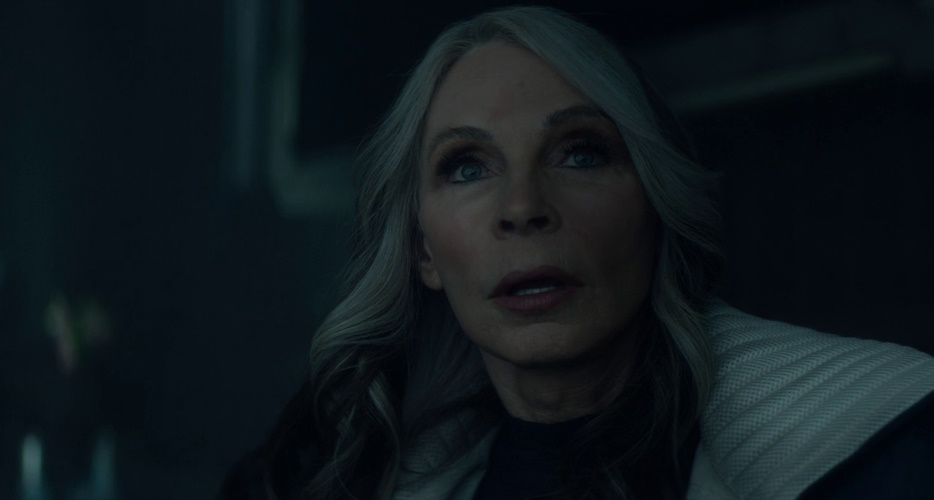
Star Trek: Picard Episode Review – Season 3, Episode 10: The Last Generation

Spoiler Warning: There are spoilers ahead for Star Trek: Picard Seasons 1-3. Spoilers are also present for the following Star Trek productions: The Wrath of KhanThe Next GenerationDeep Space NineVoyager, and Discovery.

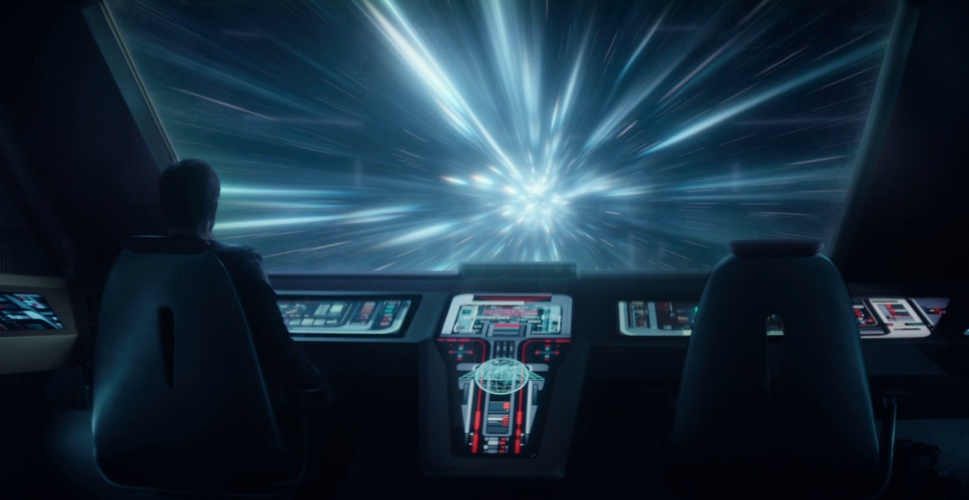
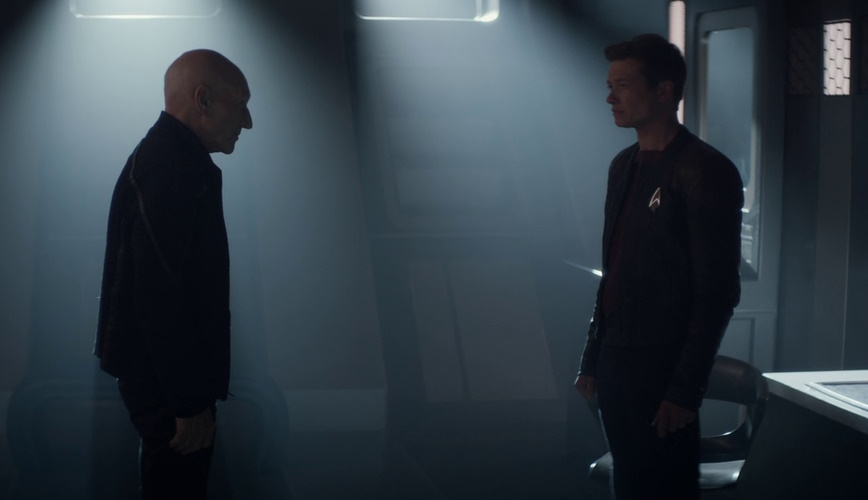
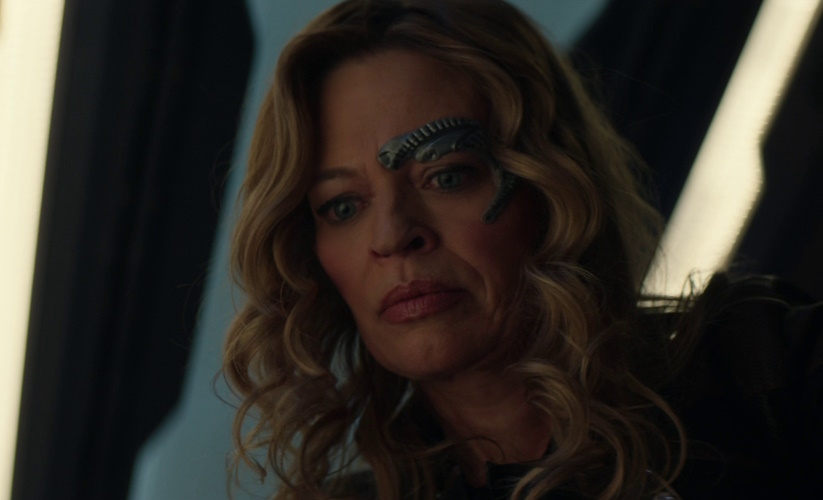
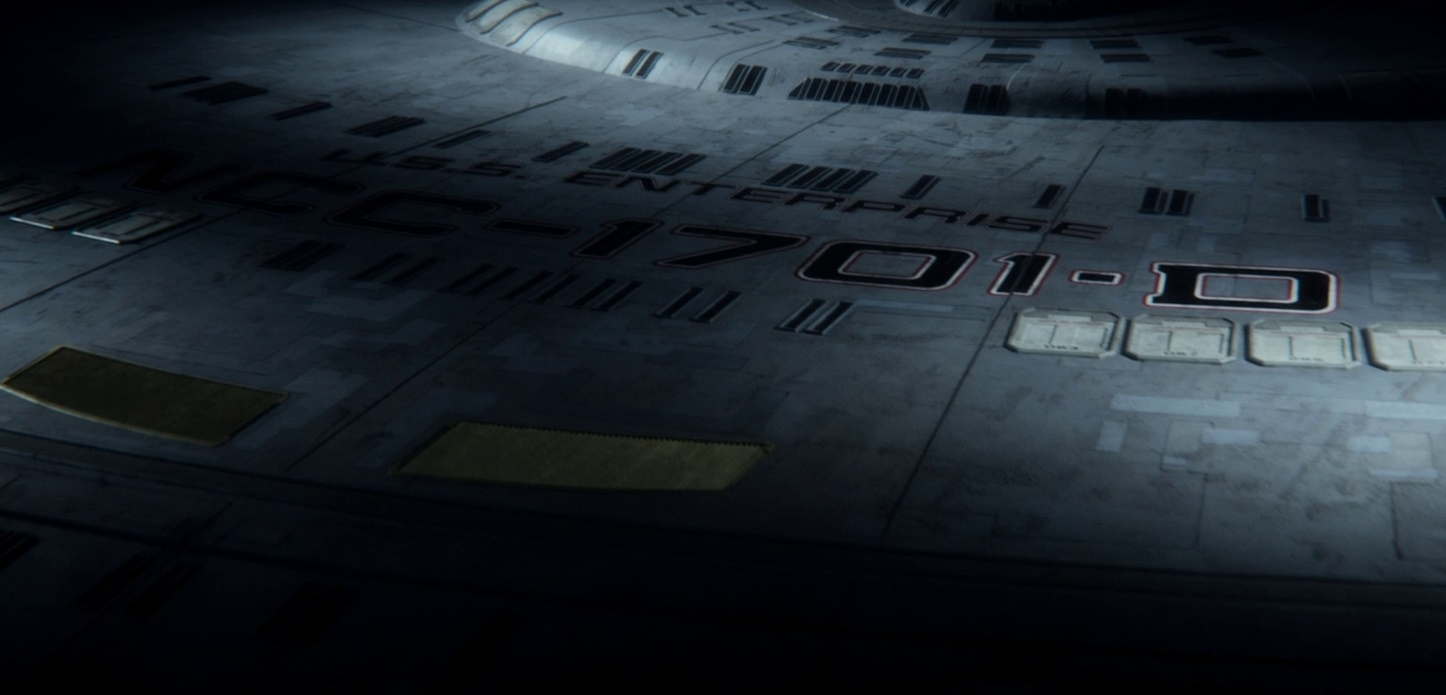
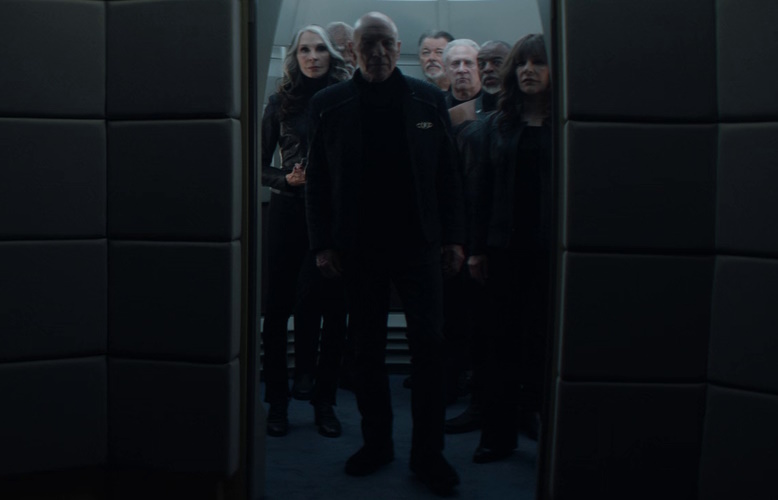
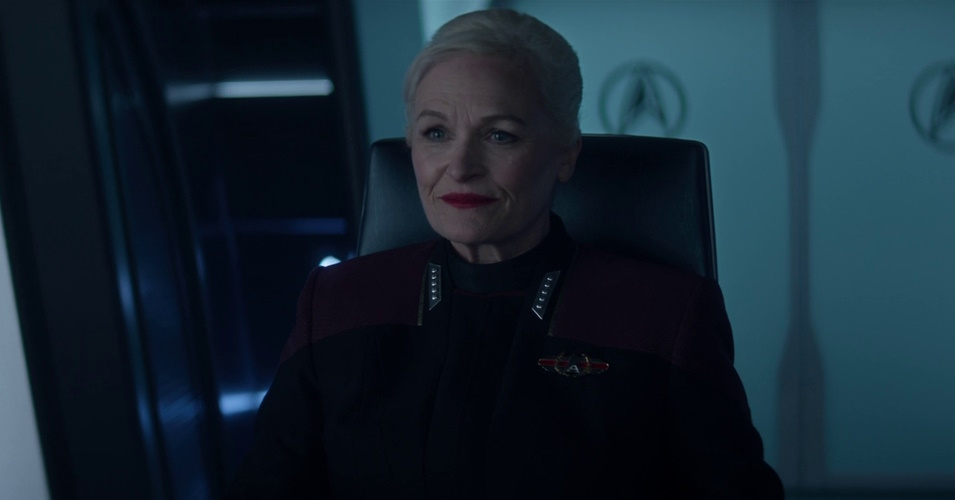
It only really hit me when I was sitting at my desk, creating the header image for this review: this is the final episode of Star Trek: Picard. This will be the last time I crop still frames, the last time I have to warn you about spoilers… the last time I review a brand-new episode of this series. There will be plenty of opportunities in the weeks, months, and years ahead to look back at Picard – and I have no doubt we’ll do just that. But for now, suffice to say that I already feel a swirling mass of emotions as the series comes to an end.

I’d waited more than eighteen years for Remembrance – the premiere episode of Season 1. In all of that time, Star Trek had looked backwards. Prequels, spin-offs, and and alternate timeline had all told some fun stories and kept the franchise going, but my Star Trek era – the late 24th Century – had been sidelined. Picard was the show that brought it back, and that brought back Jean-Luc Picard and other incredible characters. I was so passionately excited when I sat down to watch Remembrance a little over three years ago… and it’s been a journey, to say the least!

The Last Generation got its own poster.

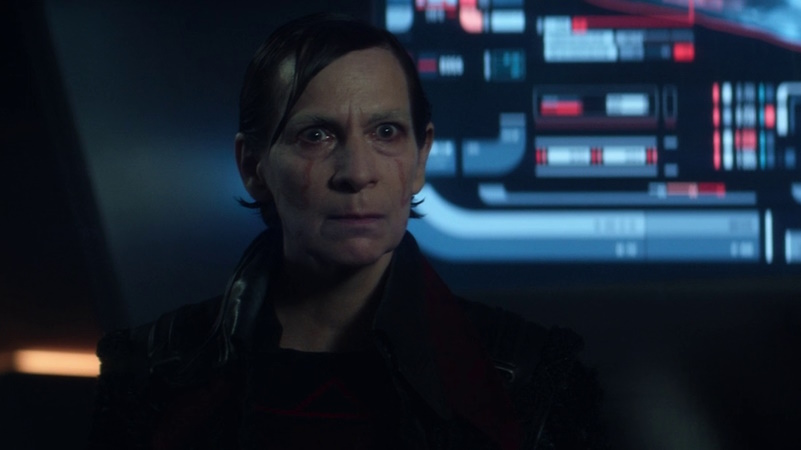
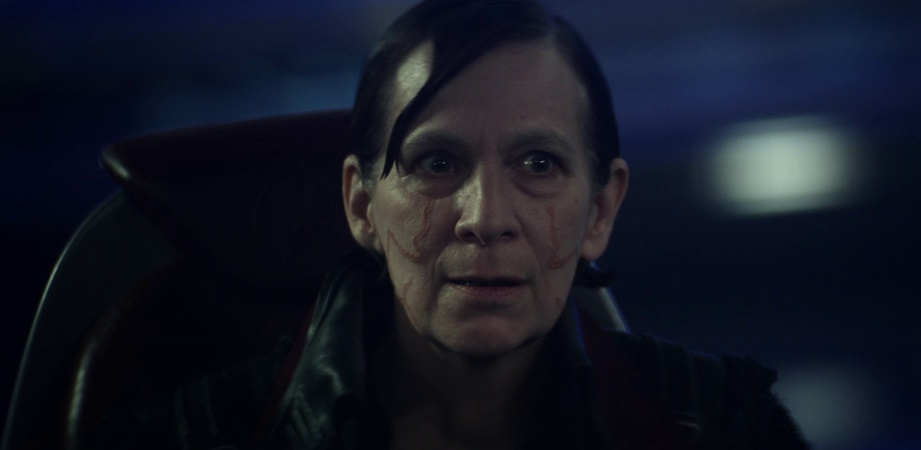
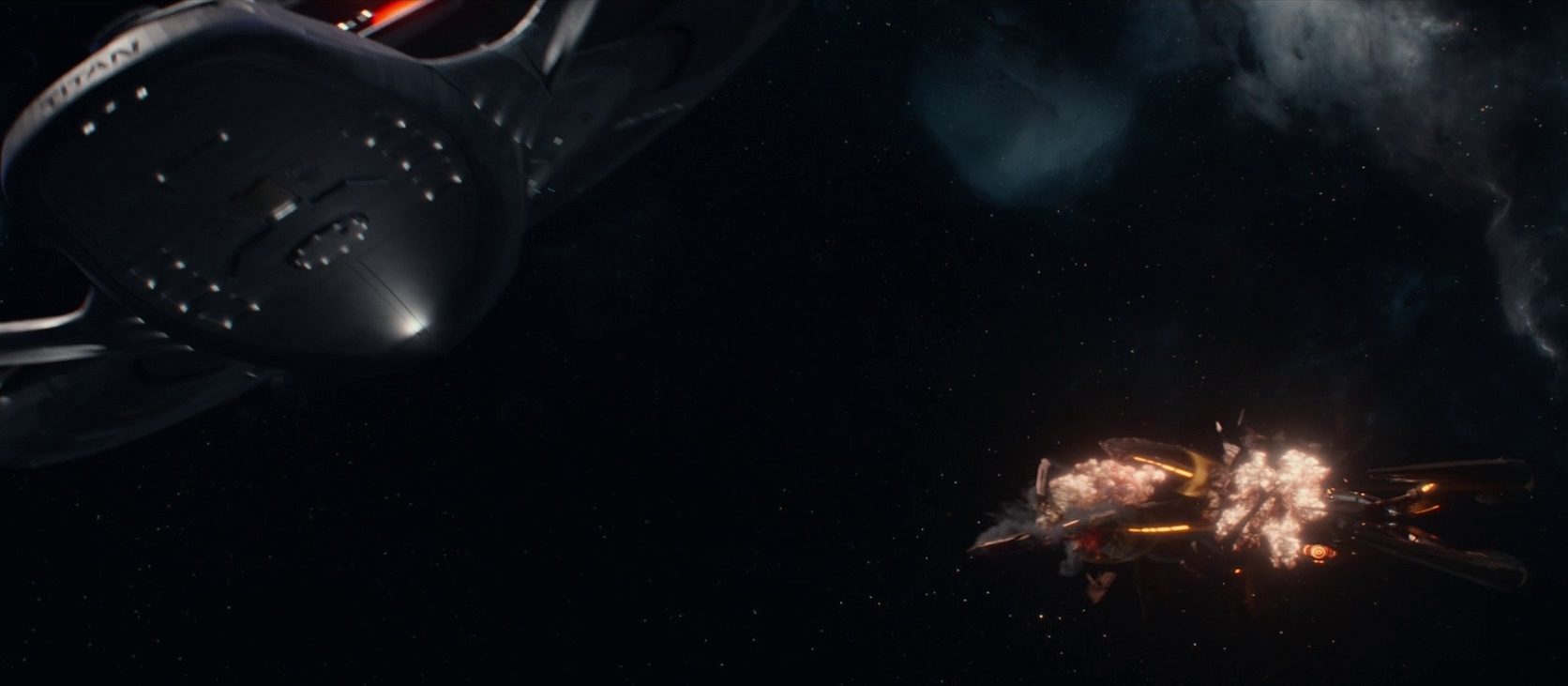
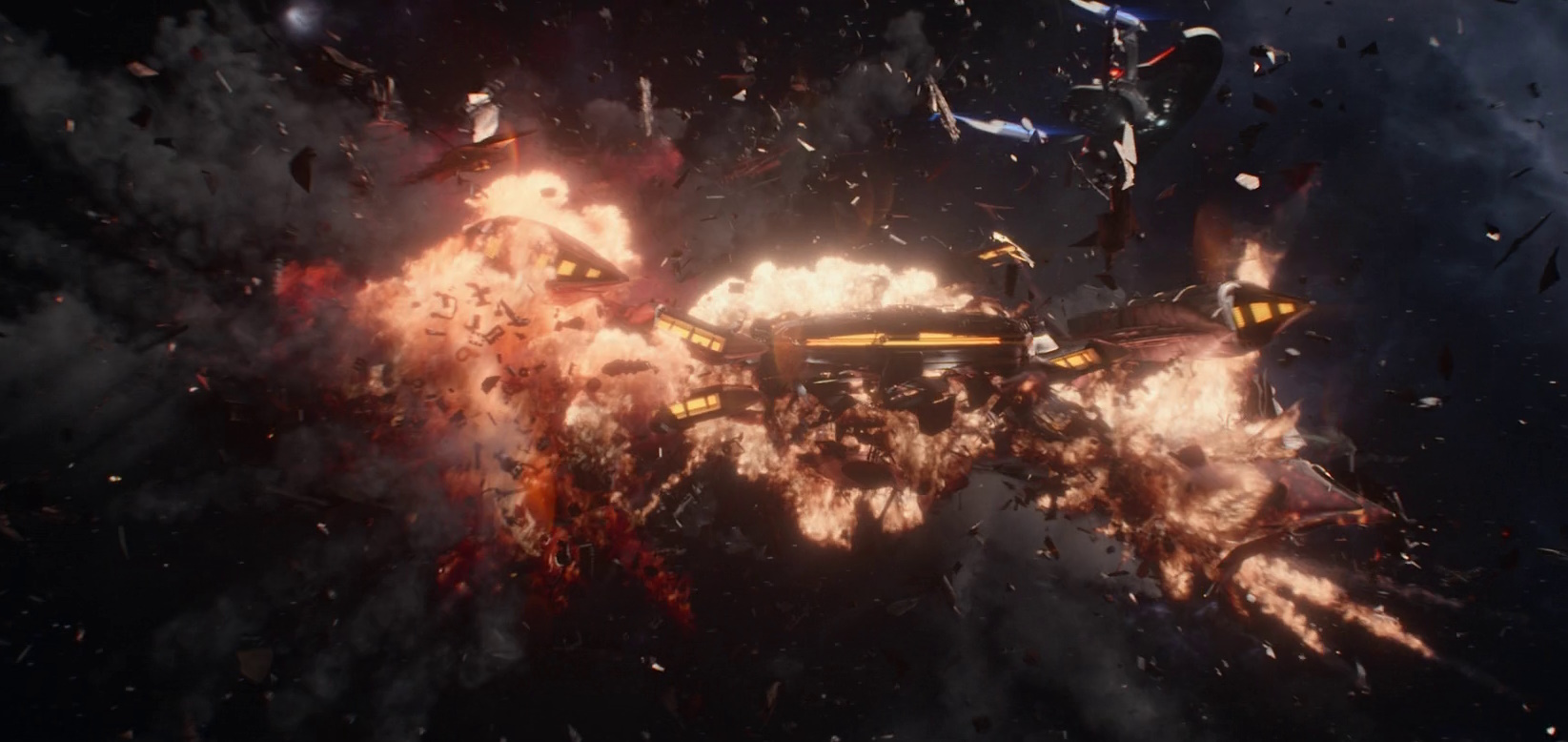
If you read my review of Võx last time, you can probably skip this one! I’m going to say more or less the same thing about The Last Generation as I did about Võx: this was a flawed episode, hamstrung by clichés, contrivances, and a badly-paced second half of the season… but I liked it anyway because of the deeply emotional storytelling that it managed to get right.

For a good hour or more after I’d first watched The Last Generation, I found myself sitting around wearing a big stupid grin – because despite the obvious flaws and issues with the episode that we’ll get into in a moment, by far my biggest takeaway was how it made me feel. That’s the success of The Last Generation – and, in a broader sense, of the final chapter of Picard’s third season as a whole. I didn’t expect to feel this way, and if you write out on paper the elements that were dumped into the story at this late stage, how they came together, how rushed much of it felt, and more, I’d have expected to come away from The Last Generation feeling disappointed. But… I don’t.
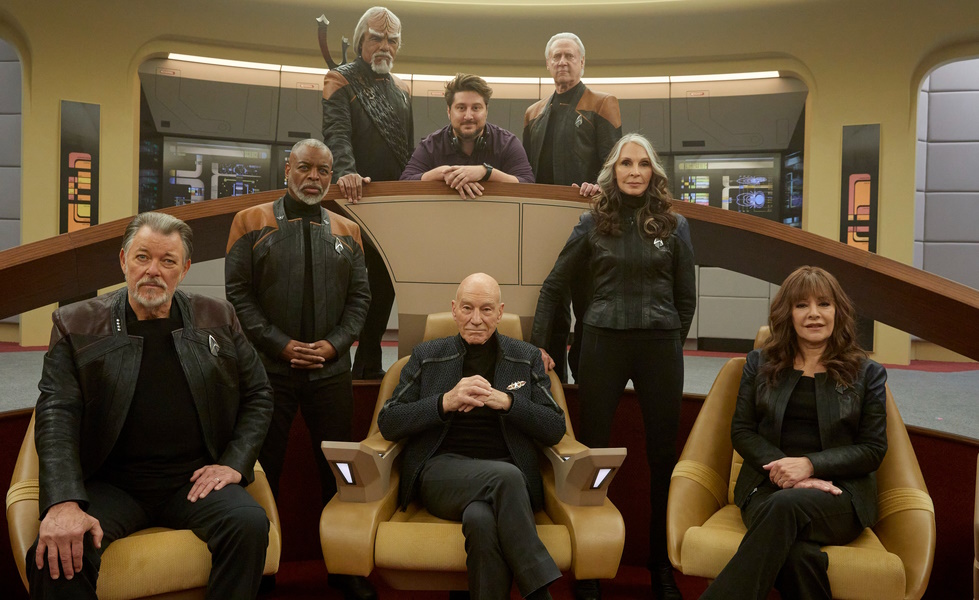
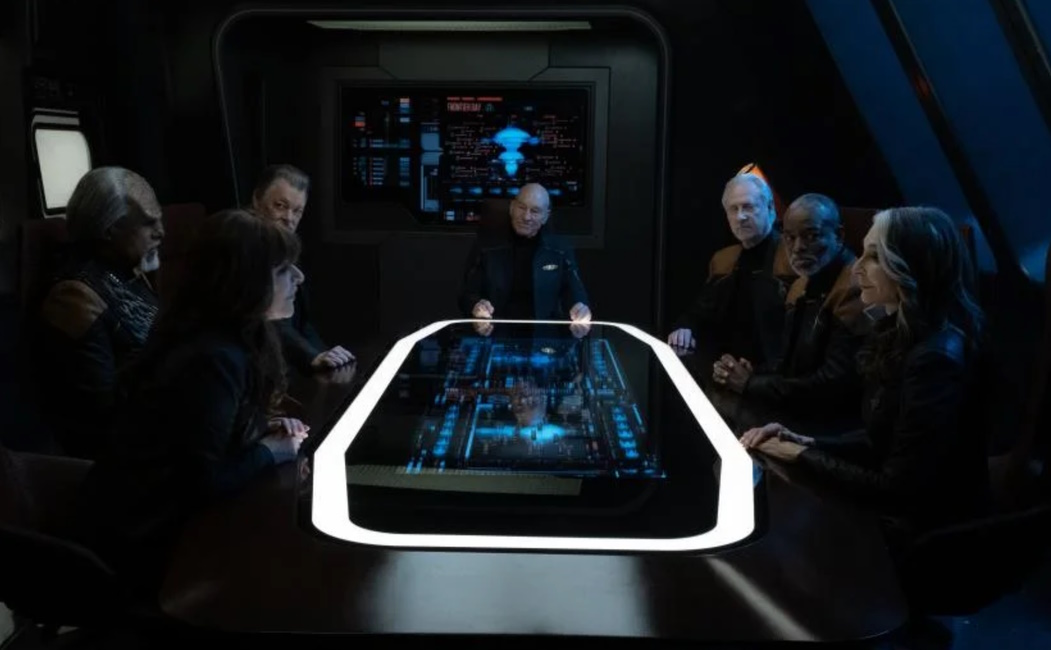
Showrunner/director Terry Matalas with the main cast.

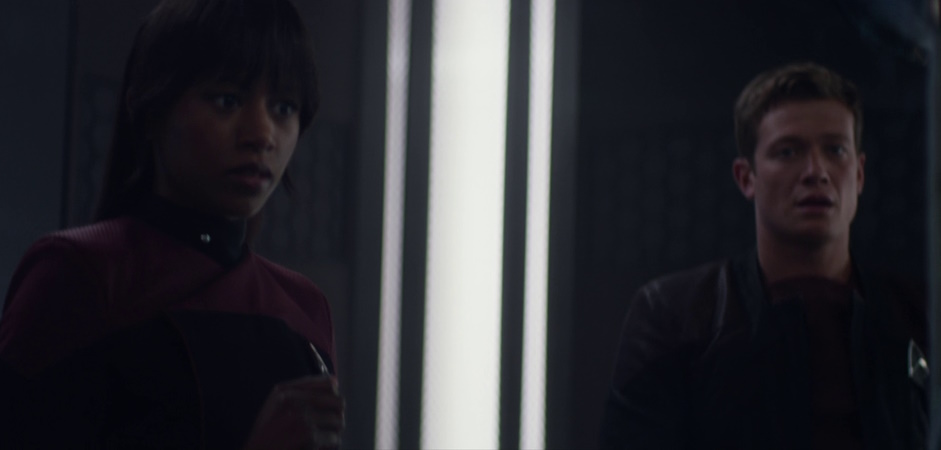
And that’s in spite of The Last Generation being a deeply flawed outing from multiple angles. I’d go so far as to say that the episode doesn’t even feel like a finale or an ending… let alone a definitive one for a crew who should be ready to enter retirement. Think about where everyone ended up at the end of the story: Dr Crusher has been reinstated in Starfleet, Seven, Raffi, and Jack are about to head off on a new adventure, Riker and Troi appear ready to leave Nepenthe behind and find a new home, Data is just beginning to get used to his new body and newfound humanity, and the only characters who might be ready to return to their pre-Season 3 lives are Worf, Geordi, and Picard… though we didn’t see much of an indication of that in the episode itself.

And that’s before we get into the strange implications of the mid-credits scene.

You did stick around for the mid-credits scene, right? After the credits roll over the lingering overhead shot of Picard and the crew playing poker – a callback to All Good Things at the end of The Next Generation – we got one final scene. Go back and watch it if you haven’t! I’ll wait here.
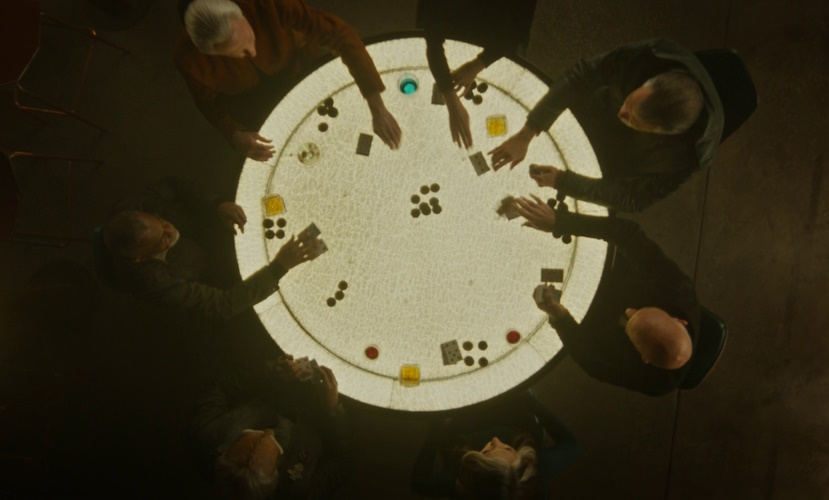
You stuck around after this, right?

I guess we’ll start with what The Last Generation got wrong, as well as talk about the decisions that led to the story reaching this particular ending.

This was a rushed episode, one in which the main villain of the entire season was outsmarted and defeated in a matter of minutes. There were gripping moments of explosive action and tense drama along the way – but practically all of them would’ve benefitted from a few extra minutes. I stand by what I said last week: the decision to change track from the changelings to the Borg came too late, and there wasn’t enough time remaining to have the kind of climactic final battle that the writers wanted.

If this exact pacing problem hadn’t also afflicted Seasons 1 and 2 of Picard, it would still be deeply disappointing to see it here. But given the criticisms that both of the previous seasons of this series received for precisely this issue… quite frankly it’s unforgivable. This isn’t strictly a problem with The Last Generation, but rather with the pacing and structuring of the season as a whole. If showrunner Terry Matalas is to be trusted with a spin-off – as he and some fans are pushing hard for at the moment – then lessons have to be learned. Matalas helmed Seasons 2 and 3 of Picard, and both seasons came to a close in a mad rush, without enough time to fully explain everything.
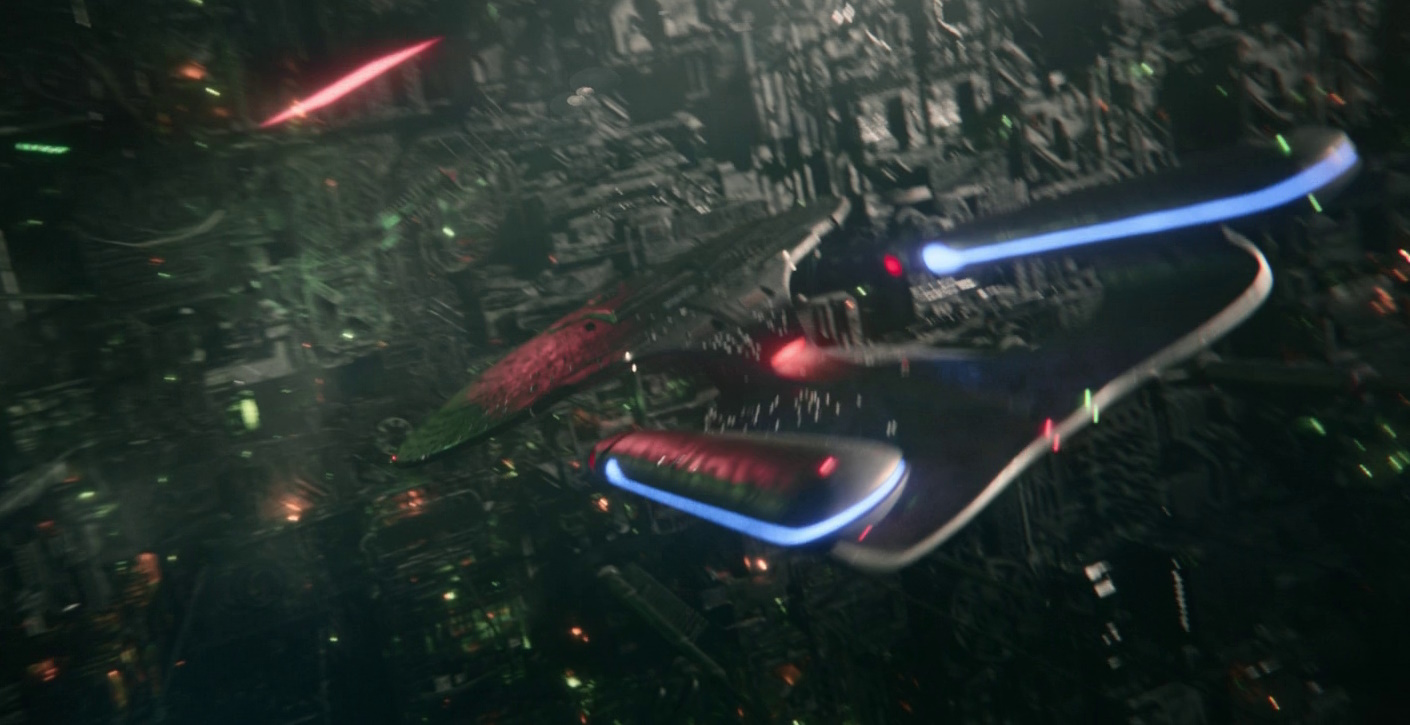
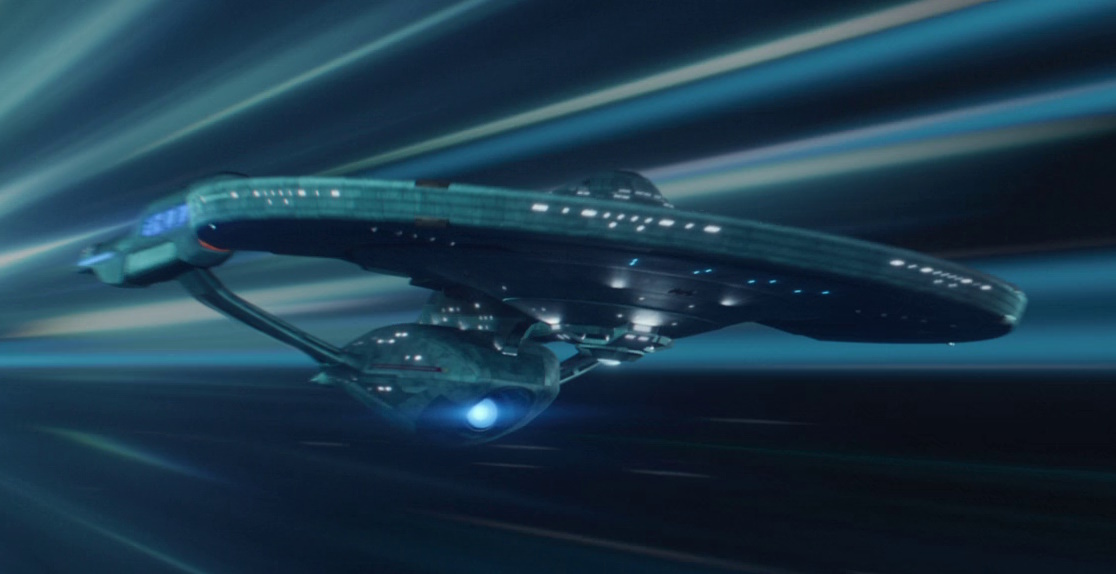
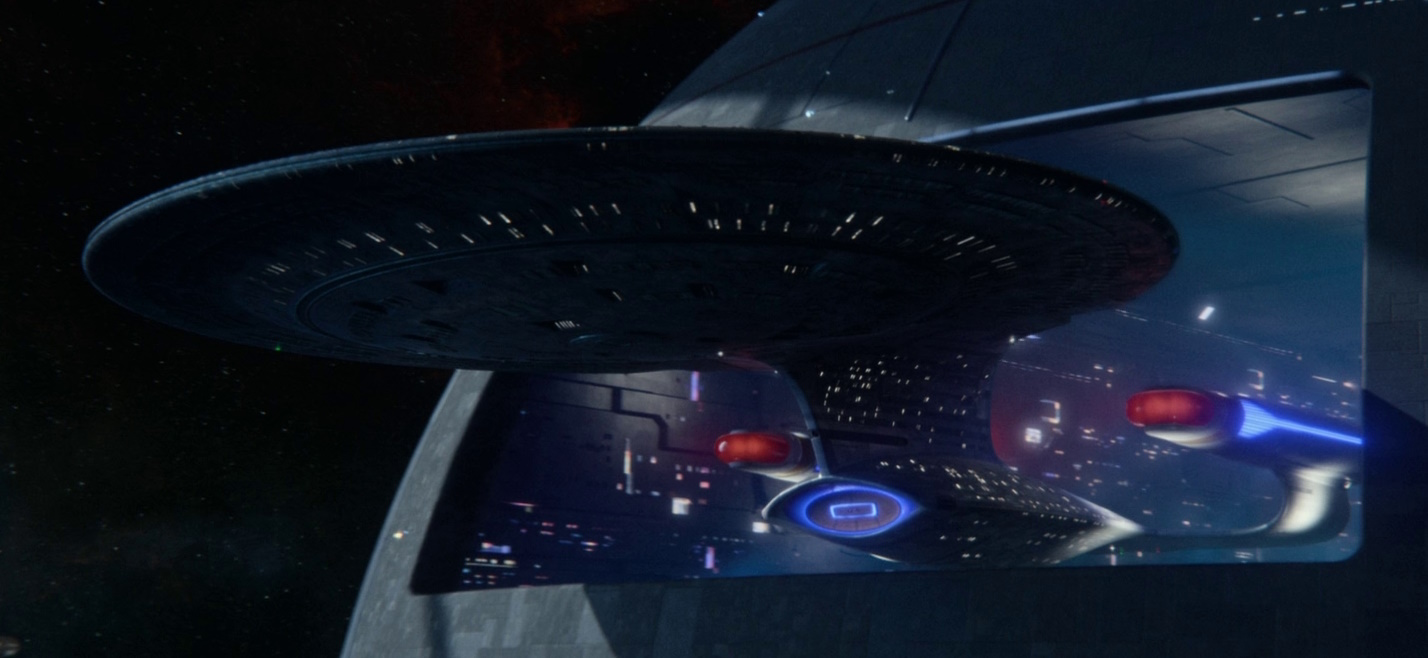
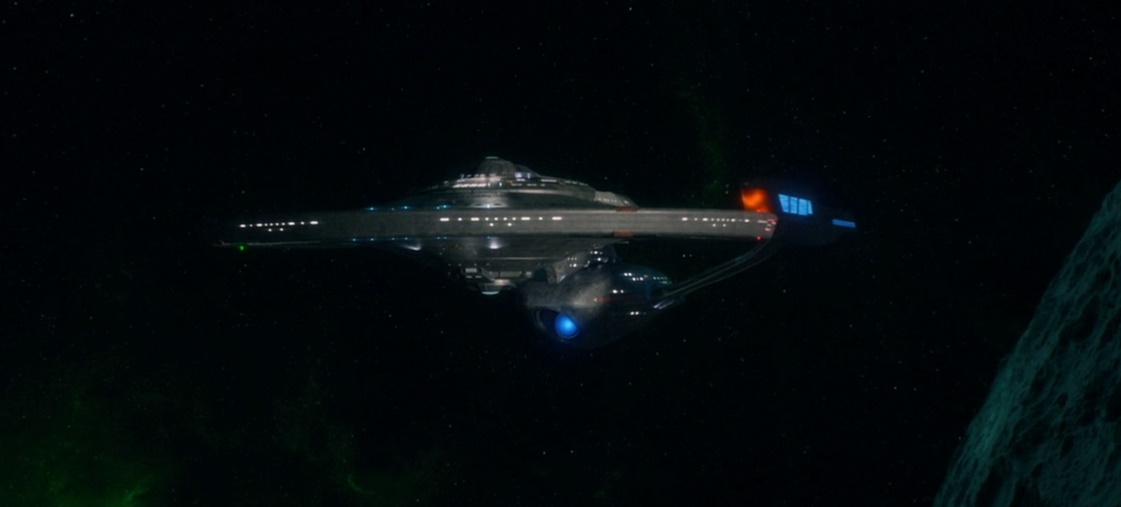
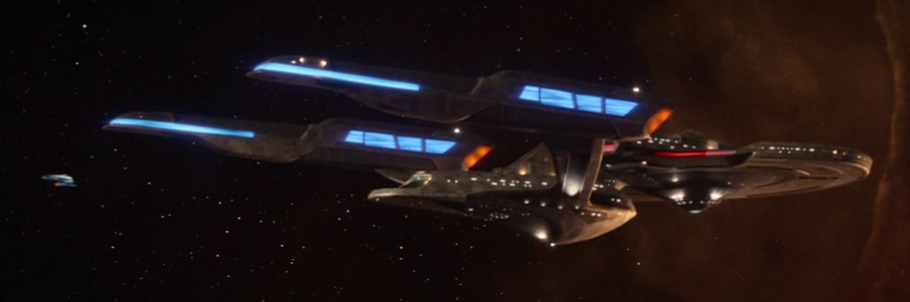
The Enterprise-D in action.

As the dust settles, it isn’t even clear whether Vadic and her rogue changelings actually knew who they were working with, or the extent of the damage done to the Borg Collective. That side of the story evaporated with Vadic’s death a couple of weeks ago, and was barely touched in the epilogue after the Borg’s defeat. For a story that supposedly brought together two of Star Trek’s most powerful villainous factions – the Founders and the Borg – to come to an end without any on-screen interaction between them… again, it’s very odd. Something is missing here.

Realistically, if both the rogue changelings and the Borg were to be included, we needed this revelation to have come earlier. There would still have been secrets to keep – such as the inclusion of the Enterprise-D – but had the Borg reveal come sooner, and been explained better, other story elements that came to a head in The Last Generation would have flowed better and more naturally.
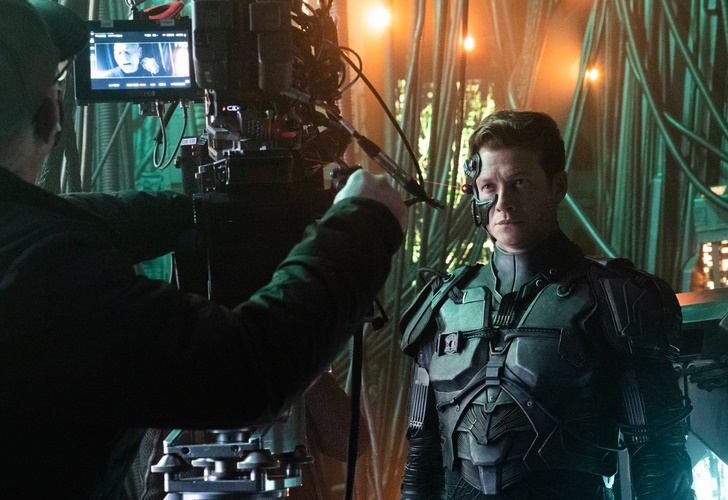
Behind-the-scenes on The Last Generation.

The Last Generation relies heavily on a story from two decades ago that wasn’t explained and only got the most oblique of references earlier in the season. In the Voyager finale, a time-travelling Admiral Janeway infected the Borg Collective with a “neurolytic pathogen,” devastating it. It was this event that the Borg Queen said was the cause of the decrepit state of the Collective – but for such an important story point, this needed far more explanation than it received.

Although the latter part of Picard’s third season has the feel of a production that was “made for fans,” it isn’t just hard-core Trekkies who watch the show. I have friends who aren’t immersed in the world of Star Trek who have enjoyed Picard for the sci-fi series it is on its own merit – and I suspect that a lot of more casual viewers, those who either don’t recall or didn’t watch Voyager, would have been left baffled by the Borg Queen and the Collective in general being in such a state. That this presentation of a different Borg Queen is now the third distinct version of the character to appear in Picard just adds to the confusion.
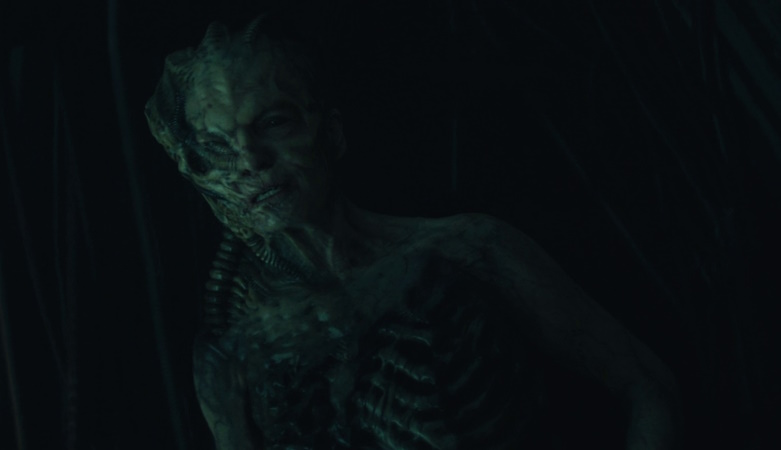
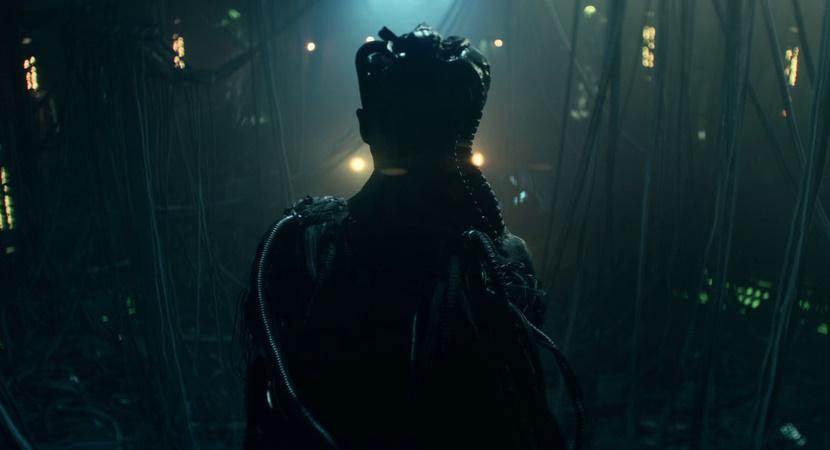
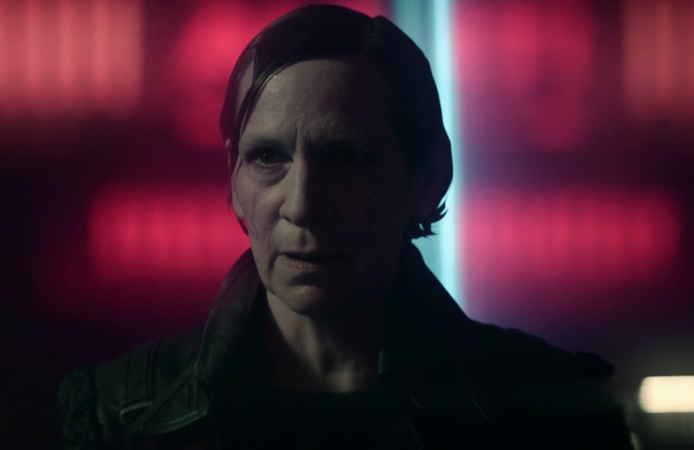
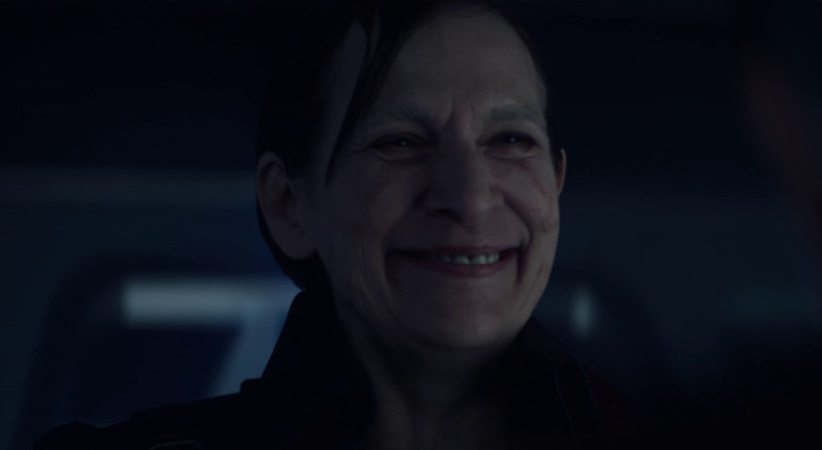
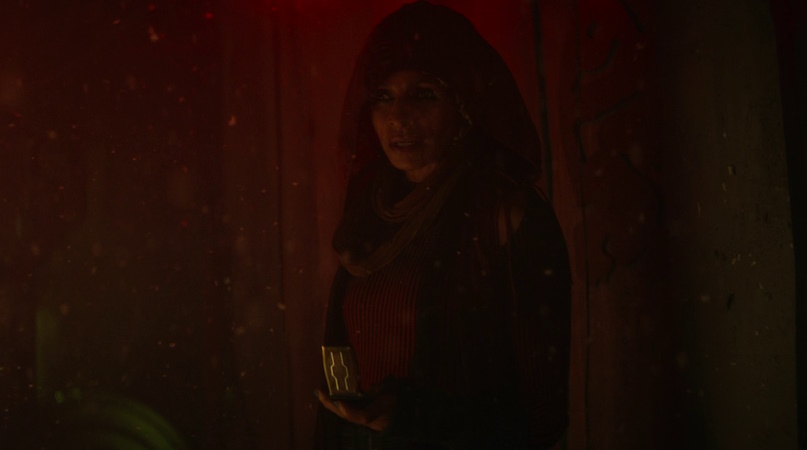
The Borg Queen.

Again, this isn’t a problem with The Last Generation on its own, nor even just of Season 3. Picard’s showrunner and writers chose to bring the Borg into focus in each of the show’s three seasons, offering different and contradictory presentations of the Collective and its leader each time. Given that the changeling storyline had worked so well for the first three-quarters of this season… perhaps a different ending could have been written, one that kept the Borg out of things. Or, alternatively, given that Seasons 2 and 3 went into production together with the same team at the helm, Season 2 could’ve been changed if this Borg ending to the series had already been decided upon.

Though we can argue it’s fitting, in a way, for Picard to be present at what appears to be the final demise of the Borg, given that he was present when the faction was introduced and was assimilated by them, the way this story unfolded doesn’t actually have that much to do with Picard. The Borg’s defeat came at the hands of Janeway, who was mentioned by name several times but didn’t even make a cameo all season long. Picard himself was just sort of… there. As has been the case more or less all season long, Picard – the show’s title character and main protagonist, lest we forget – was swept along by a narrative current that was almost entirely out of his control.
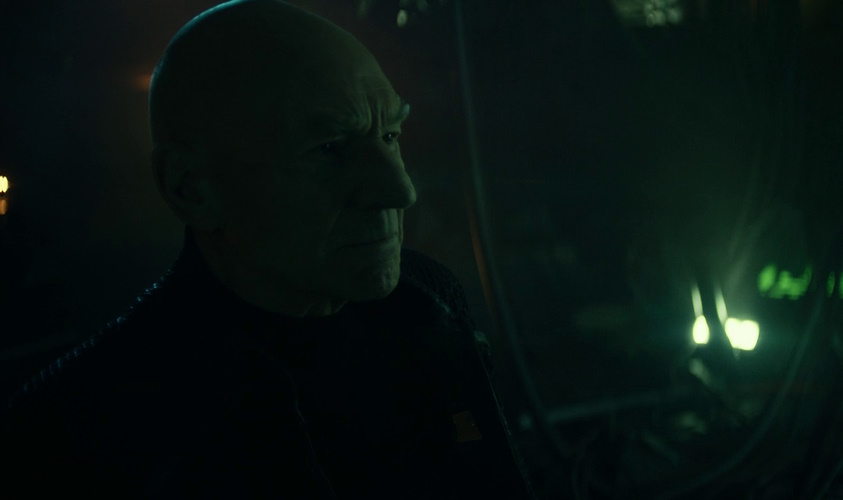
Picard in the Borg Queen’s chamber.

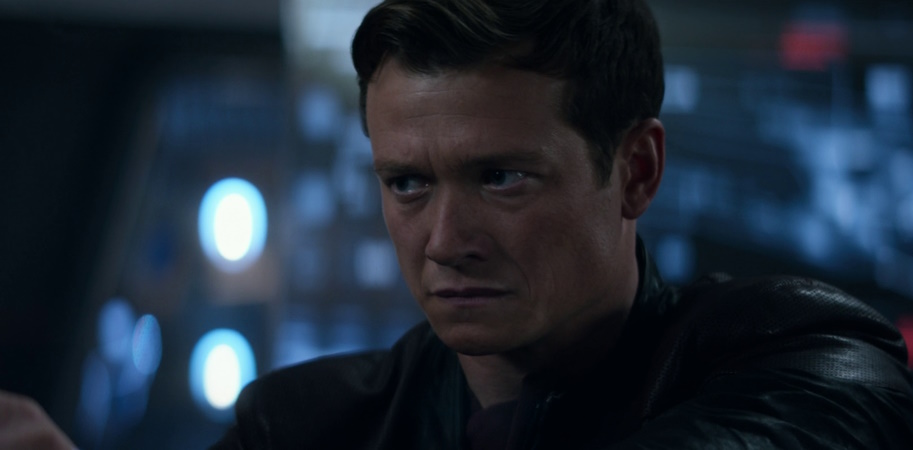
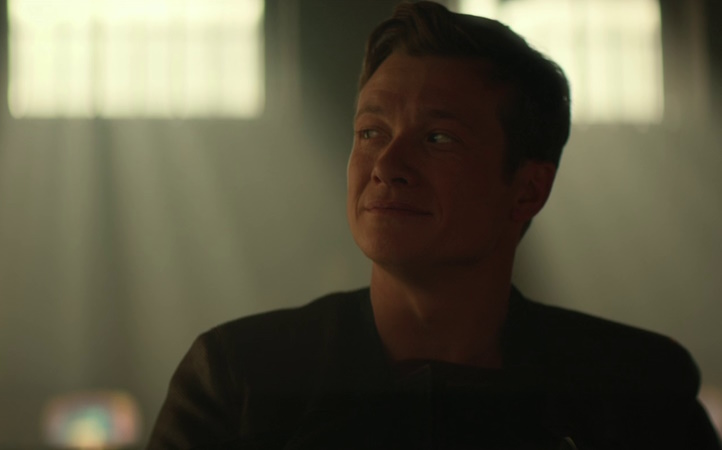
Because the reveal of the Borg’s involvement came so late in the story – partway into the ninth episode of a ten-episode season – Jack’s “defection” to the Collective already felt like it was built on shaky ground. There was the kernel of a good idea here, but again I feel the pacing issue causing a stumbling block. Jack’s powers manifested slowly earlier in the season, and in fact it wasn’t until several episodes in that we saw any indication that he was anything other than human at all. His decision to run away last week was blitzed through in a matter of seconds, and his reconciliation in The Last Generation was likewise rushed.

Reaching out to someone and using “love” to bring them back from a dark place is a bit of a cliché, but it’s hardly the worst that Season 3 has offered up. The way it was handled worked well enough in the moment – though I would argue that Dr Crusher, rather than Picard, would surely have been better-placed to try to convince Jack to stand down. Although we’ve seen a developing relationship between Picard and his son, the events of Season 3 have taken place over a few days at most, meaning the connection between Jack and Dr Crusher is going to be far stronger.
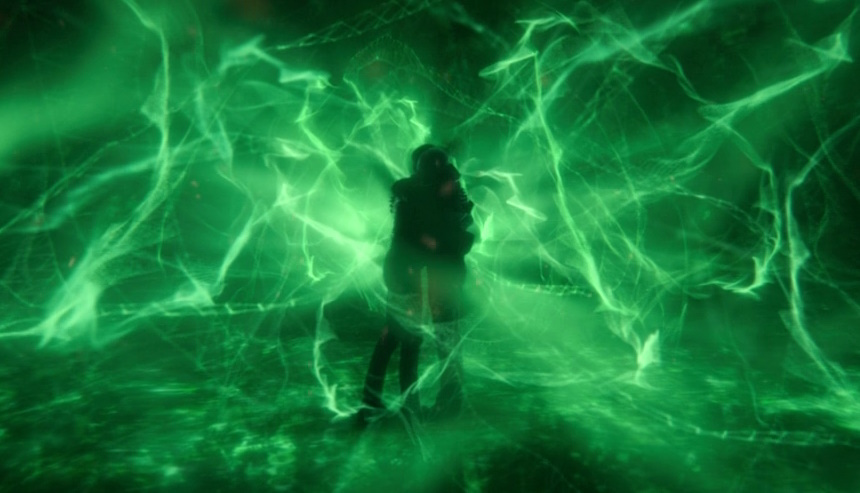
Picard and Jack embrace inside the Borg Collective.

Given the remarkably similar premise between Jack’s story here at the end of Season 3 and Dr Jurati’s toward the end of Season 2, it’s a shame that she and her Borg faction couldn’t appear. In fact, the whole end of Season 2, with the mysterious, unexplained anomaly attacking the Federation, has now passed its last chance to get any kind of resolution. At this late stage I wasn’t expecting that to happen – but it’s again indicative of Picard as a whole being a deeply troubled and poorly-managed production. Lessons need to be learned going forward so that future Star Trek projects don’t suffer similar shortcomings.

As I said last week when discussing the Borg, Jack’s story would feel stronger – and certainly more original – were it not basically a re-hashing of Dr Jurati’s story from last season. Dr Jurati felt lonely, isolated, and without friends – and found those things in the Borg. Jack felt lonely, isolated, and without friends… and also sought out those things from the Borg. Jack’s defection feels weaker, in some respects, because of the way it was set up, and the fact that it’s no longer an original idea further diminishes it.
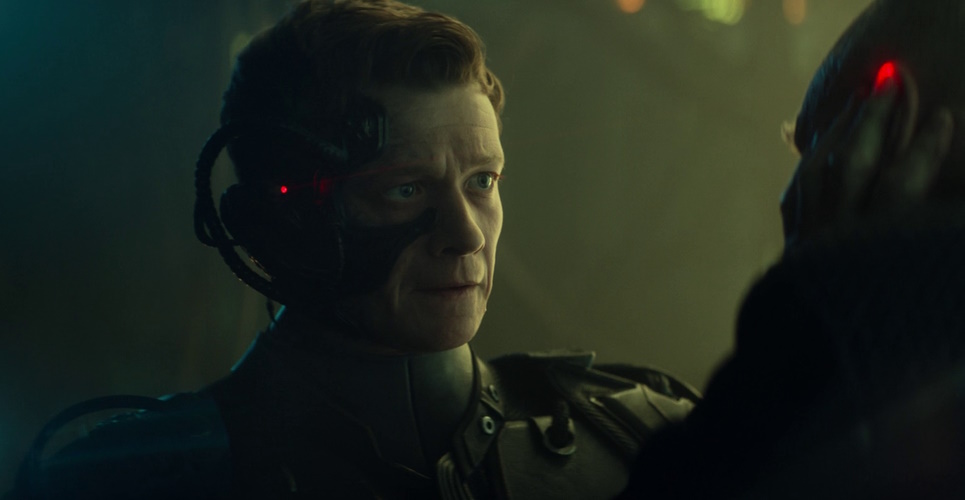
Jack was able to break free of the Borg Collective thanks to Picard.

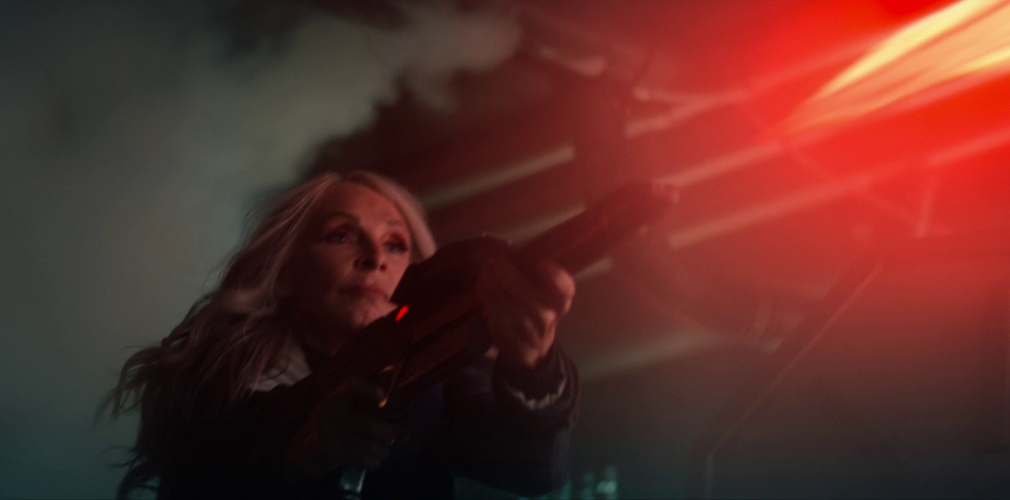
Several characters displayed skills in The Last Generation that are either perfectly aligned with things we’ve seen them do in the past, or that felt like natural evolutions based on the story the season has told. Dr Crusher manning the Enterprise-D’s weapons is a case in point: after two decades away from Starfleet, operating outside of the Federation under dangerous conditions, she knows her way around a phaser bank and torpedo launcher!

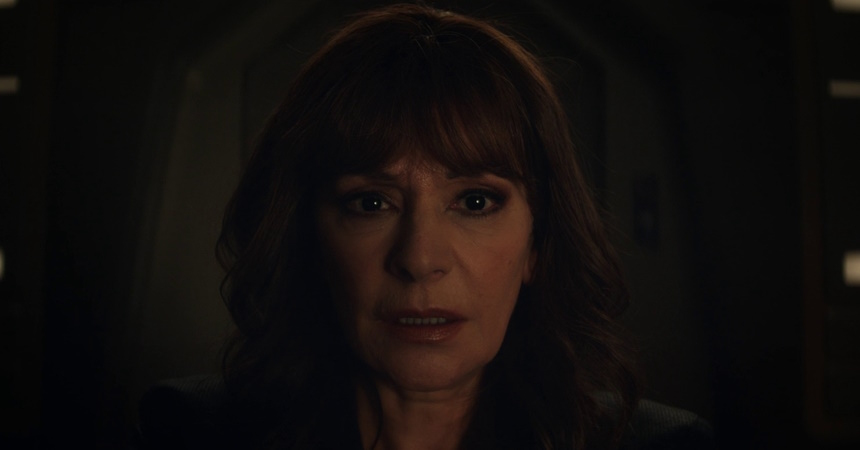
But Deanna Troi exhibited a telepathic skill that we’ve never seen her use before, being able to pinpoint Riker’s location as if by magic. There were opportunities earlier in the season to set this up, such as the conversation Troi and Riker had while imprisoned aboard the Shrike. As it is, this newfound ability felt like a magical solution to a story that had rather written itself into a corner – a cheap way to allow the Enterprise-D to swoop in and save everyone at the last second.
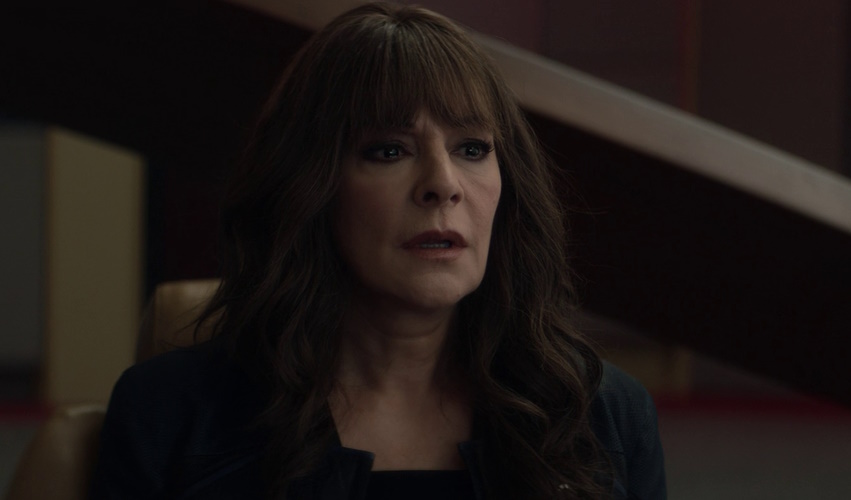
Deanna Troi on the bridge.

Unlike some of the other points I’ve raised, this one isn’t even a question of timing or pacing. It would’ve required an extra handful of lines of dialogue in an earlier episode, explaining that Troi had been honing her abilities or that when she used her “pain removal” skill on Riker she’d done so at a distance. That small amount of setup would’ve allowed this moment to flow far more naturally, and wouldn’t have led to me rolling my eyes quite so much!

A clever and well-executed misdirect can add a lot to a story, particularly if the stakes are high. But even with that caveat, I have to say that the excessive “foreshadowing” of the deaths of Riker and Picard in particular fell very flat for me in The Last Generation. The episode dedicated an inordinate amount of time to setting up that the away team wouldn’t be returning from the sojourn to the Borg Cube… only for everyone to survive. Stripping some of this out would’ve still allowed The Last Generation to keep the tension high, but would’ve blunted the impression that it was deliberately deceitful. Not only that, taking a few of these scenes away would’ve opened up other possibilities, such as spending a bit more time with the Borg Queen.
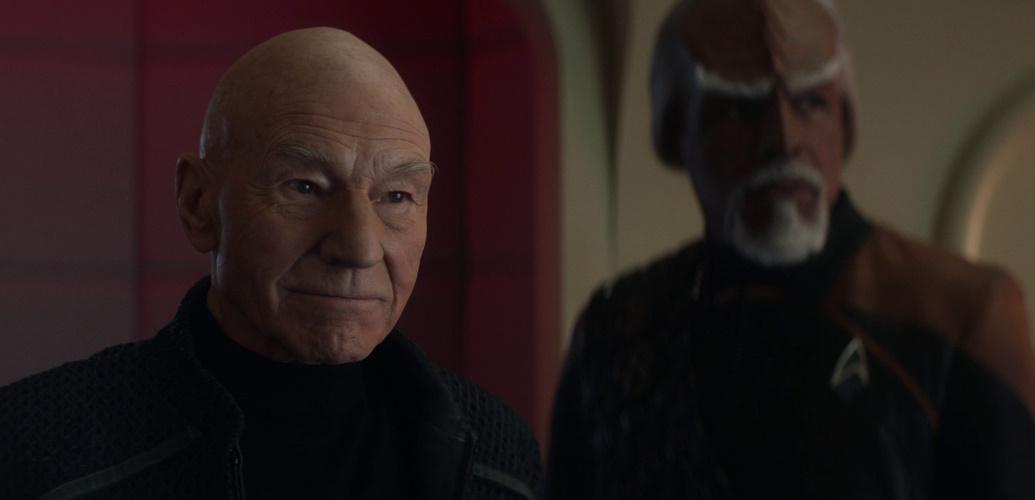
There was a lot of foreshadowing that wasn’t paid off.

There’s nothing wrong with an episode feeling like a throwback to an earlier style of storytelling – especially in a story with such a strong nostalgic component. But even with that in mind, the fact that all of the main characters survived the story was a bit of a surprise. Television storytelling has changed a lot since The Next Generation premiered in 1987, and main characters should no longer consider themselves to be safe just because of their status. To the episode’s credit, it genuinely felt like Picard, Riker, and Worf were all in danger during their mission… but nothing substantial came of that, and we even got a deus ex machina rescue right at the end.

Killing off a legacy character was always going to be controversial, and I’m sure that if someone hadn’t survived, there’d have been criticism from some quarters. But a well-timed character death can feel right, conveying how high the stakes are, paying off a character arc, or making an heroic sacrifice. Star Trek has done all of these things before in different ways, and I feel it would have strengthened not only The Last Generation but Season 3 as a whole if a well-written end could’ve come for one of our main characters.
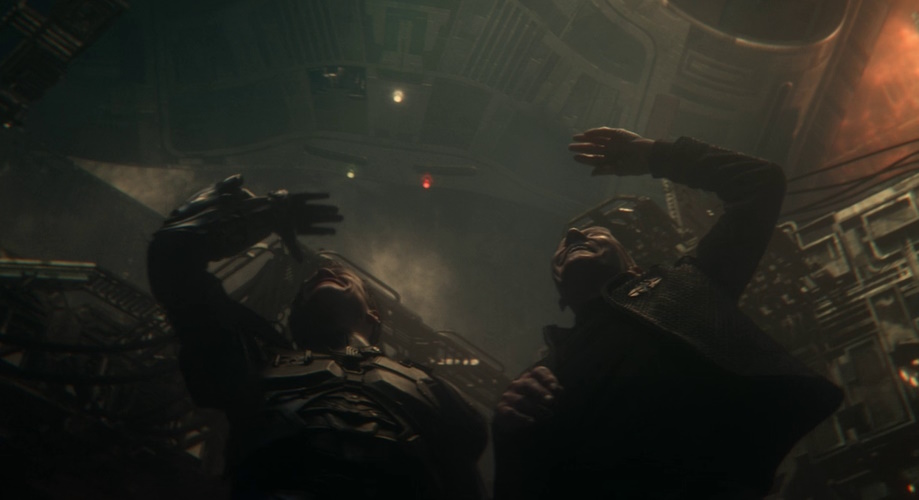
Jack and Picard were both saved at the last second.

Part of the reason for that is that, for all the buildup, The Last Generation doesn’t really feel like an ending. It feels more like All Good Things than The Undiscovered Country, with a new chapter for some or even all of these characters seemingly ready to be written. I’m all for leaving the door ajar, with possibilities on the table… but this season was supposed to be the “final” outing for this crew. Only Picard seems ready to enter retirement – and even that feels questionable as he reunited with Dr Crusher to escort Jack to his first ever Starfleet posting.

All Good Things was clearly part of the inspiration for the epilogue at the end of the episode, particularly the poker sequence. But All Good Things was written and produced at a time when the cast and crew knew that Generations was literally days away from entering production. It didn’t need to be a definitive end… because it was never meant to be. Season 3 as a whole, and The Last Generation in particular, was billed as the final voyage of this crew. And yet it ended in such a way as to suggest that practically everyone has at least one more adventure yet to come.
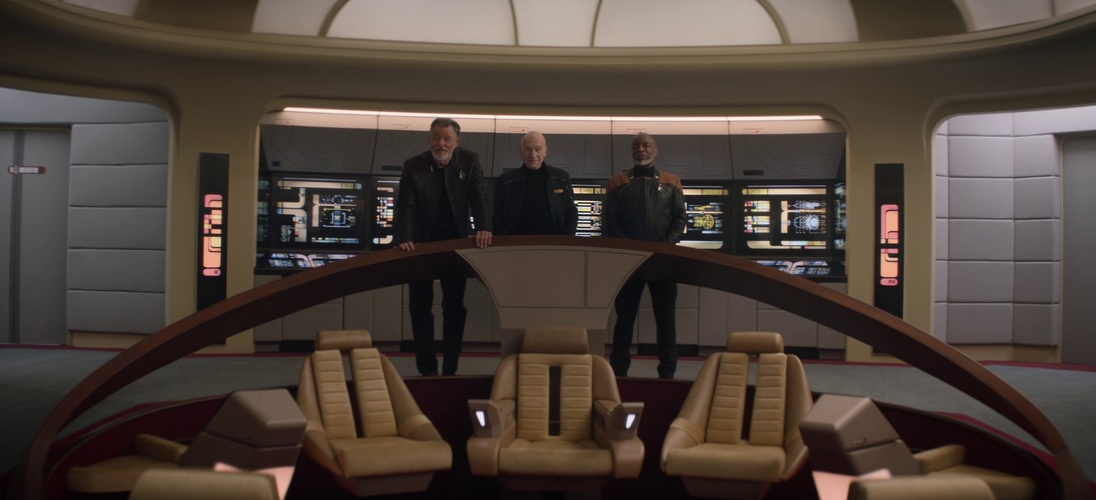
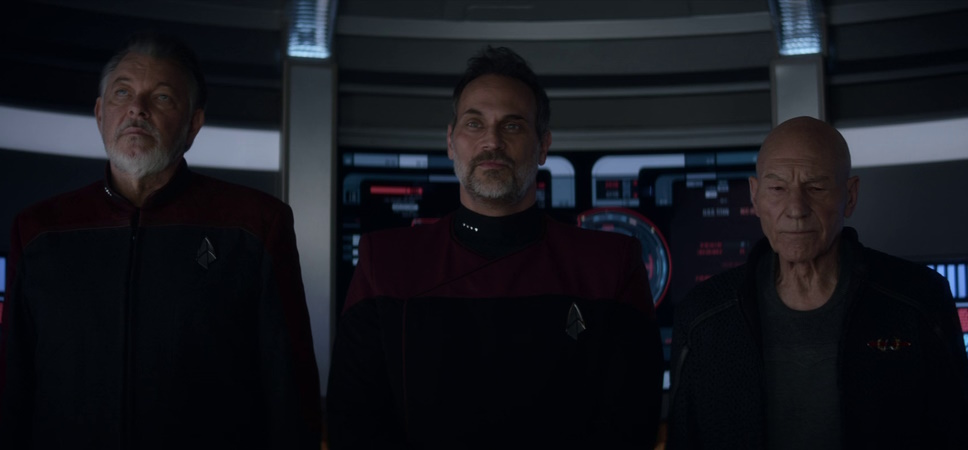
Riker, Picard, and La Forge on the Enterprise-D.

The final fight against the Borg Queen brought with it a lot of tropes. The Enterprise-D blasted its way along the surface of the Queen’s oversized vessel almost like an X-Wing running the Death Star trench in Star Wars, and though this sequence was visually exciting – and technically perfect from an animation point of view – it was again something that was rushed. The buildup to this sequence was blitzed through, thanks in part to the decision to spend so much time setting up character deaths that ultimately didn’t come.

Starships and the way they operate have always been vague; adaptable to different kinds of stories. Given the size discrepancy between the Enterprise-D and the Borg Queen’s mega-cube, I don’t think it’s any kind of “problem” to see the Enterprise-D move as quickly as it does and with such fluidity – and this sequence felt like an updated, modernised version of the starship’s clashes with Borg vessels in episodes like Q Who and The Best of Both Worlds.
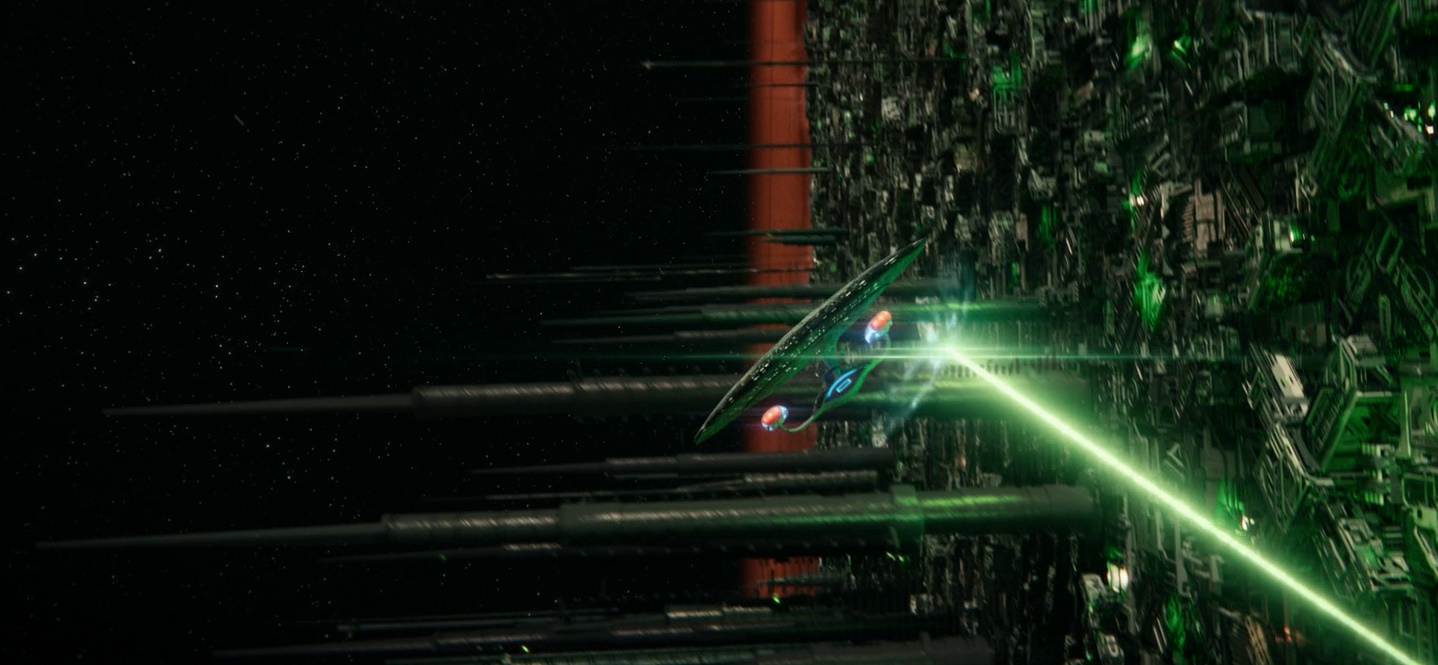
The “Death Star trench run!”

I think my biggest eye-roll in The Last Generation came as the Enterprise-D swooped down for a last-second rescue, literally appearing in the “sky” above the Borg Queen’s chamber. Both in terms of narrative and visual presentation, this was just such an overdone trope. Across the sci-fi genre and into action, adventure, and more… we’ve seen this kind of ending so many times.

Part of the reason why this moment fell so flat for me was, I suspect, because The Last Generation hadn’t made good on any of its foreshadowed character deaths. The rescue of the survivors might’ve been more impactful had one or two of these characters lost their lives along the way. But a combination of the trope itself, its previously-unseen telepathic “magic” setup, and the fact that it rescued all of the main characters from a supposedly impossible situation… it all came together to feel like a clichéd ending.
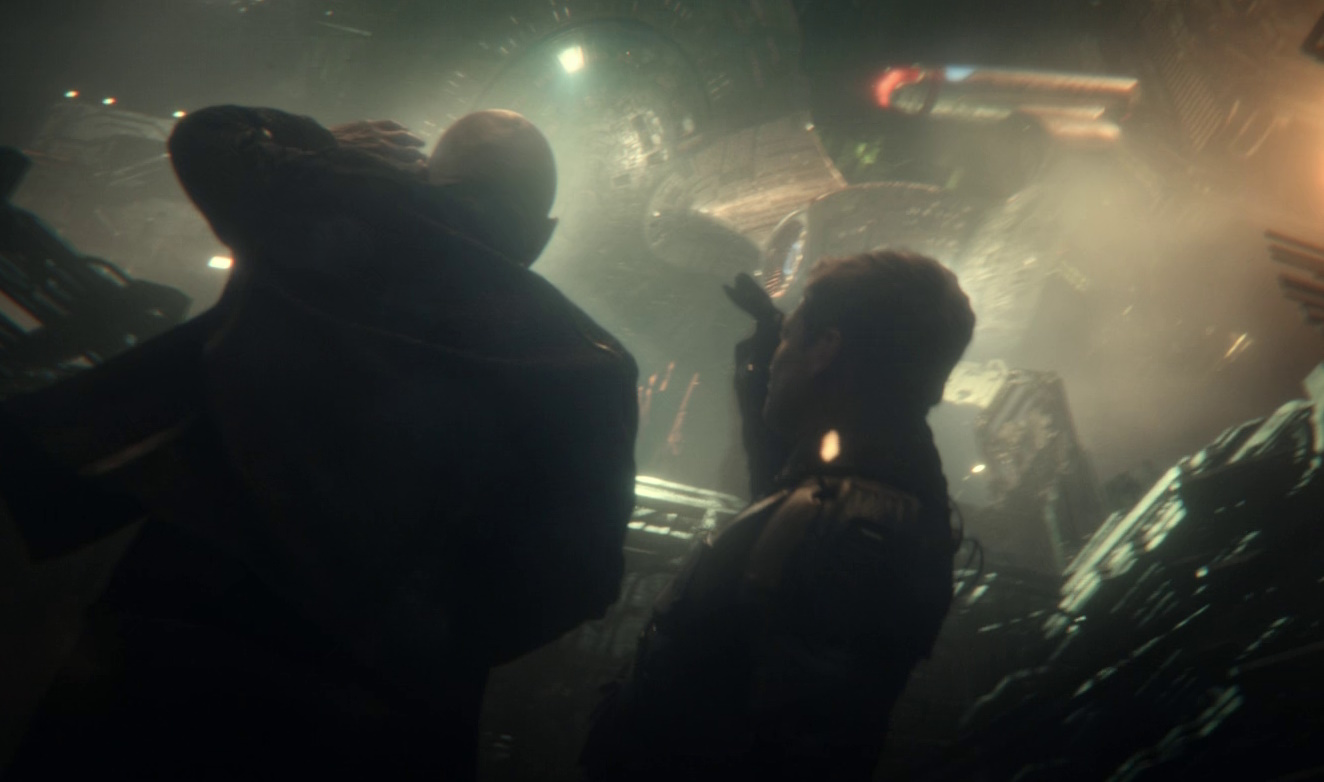
The Enterprise-D saves the day!

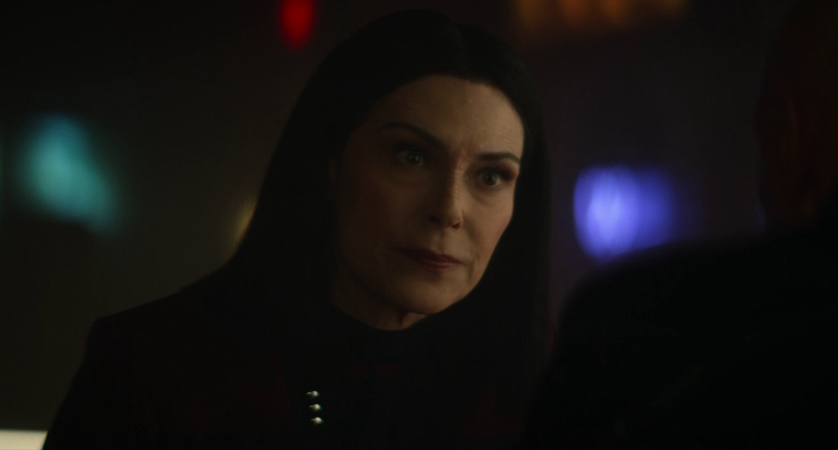
I stand by what I said last time: the presentation of the Borg Queen feels quite diminished in light of what we saw in Season 2. The idea of a decrepit, weakened Borg Queen was an interesting one – but not one that The Last Generation found much time to explore. She leaned very heavily into the “I’m evil for the sake of it” villain trope, far more so than earlier presentations of the Borg Queen, who seemed to have an overarching goal in mind for the Collective. However, I can forgive that trope in light of the collapse of the Borg Collective; the idea that she’d use the last of her power to seek revenge on Starfleet makes sense.

As Jack was liberated from the Collective, and particularly as the Enterprise-D came racing in to save the day, though, the characterisation of the Borg Queen fell apart. Another huge part of why this sequence felt so clichéd was the Borg Queen’s screams of “noooo!” as her plan unravelled. This is the kind of thing that you expect to see from the supervillains of children’s comic books, or the bad guys in a Saturday morning cartoon, as their evil scheme is defeated. Again, this whole sequence was so much less interesting than it could’ve been.
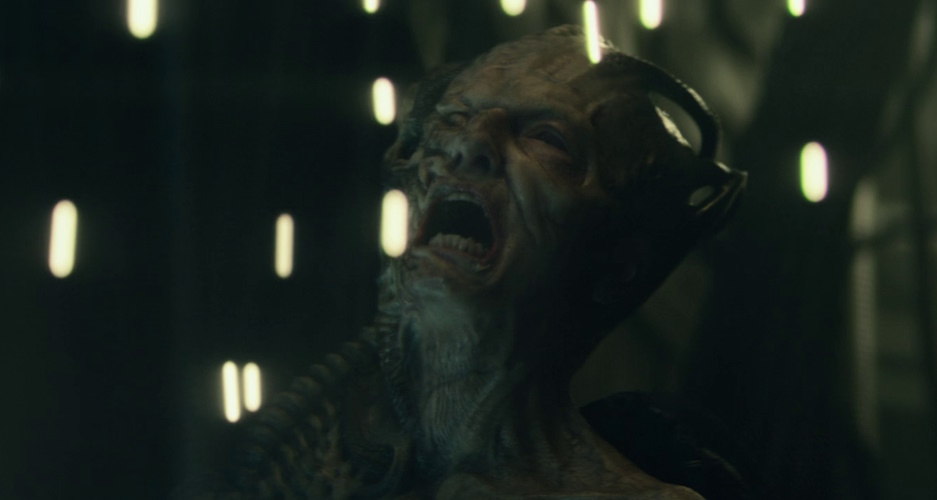
“Nooooooo!” screams the defeated villain.

But now we have to contend with a question that I asked last week: does any of that matter? The clichés, the overused tropes, the basic, formulaic story, the cookie-cutter plot, the poor pacing, the underused yet also played-out villain… none of it really feels like it gets in the way of a fantastic, thoroughly enjoyable romp with Picard and the crew.

Even though The Last Generation absolutely fails to feel like an ending in any sense of the word for basically any of its characters, it’s still a more enjoyable send-off and final mission than the crew of the Enterprise-D got in Nemesis. If this is to be their final outing (and I wouldn’t bet against Paramount considering some kind of Picard TV movie or even theatrical release, given the strong reception to Season 3) then we can finally say that this crew went out on a high.
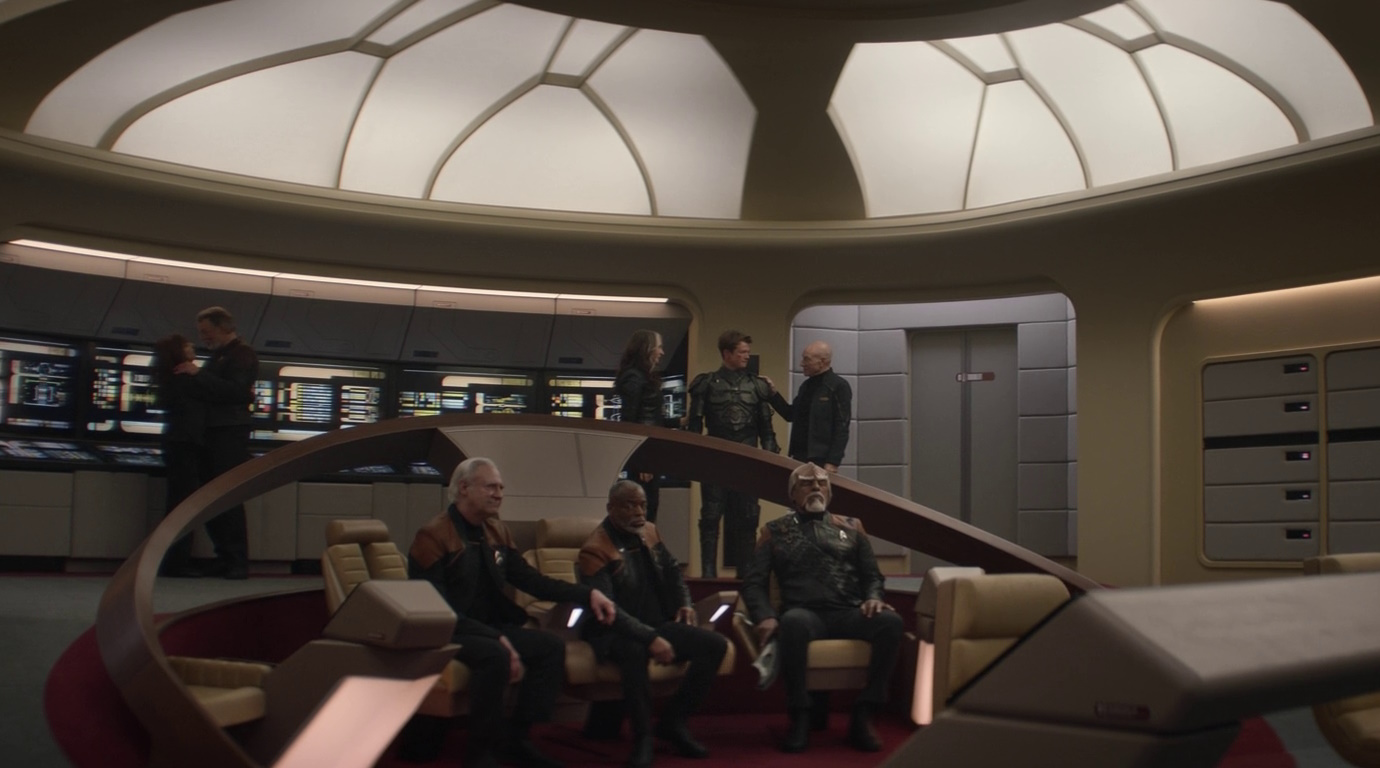
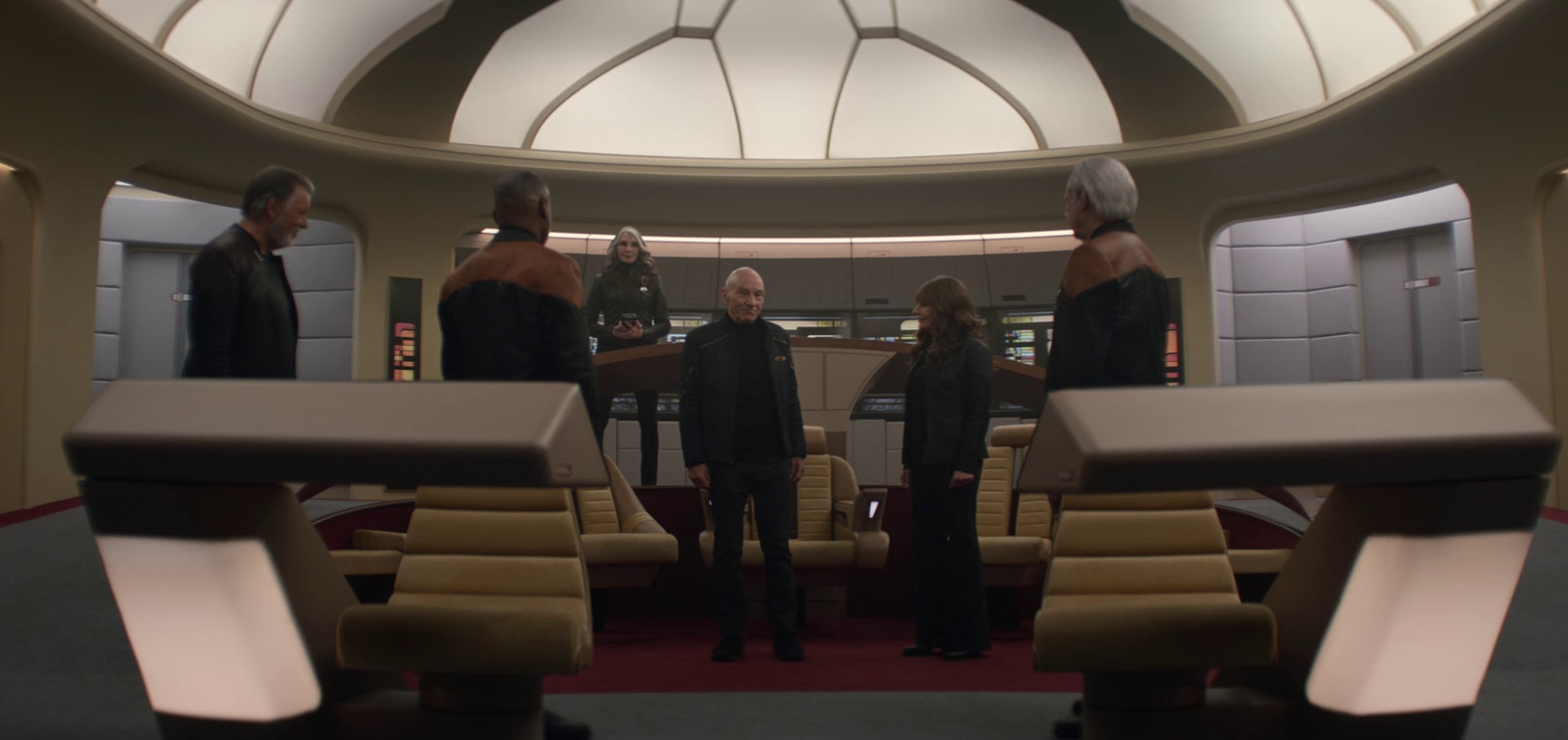
All safe and sound on the bridge.

And it’s a high because of the emotional storytelling that manages to play the nostalgia card in a way that works. This was another “made for fans” outing, one that leaned heavily into The Next Generation, Voyager, and really all of Star Trek’s past. If you’d told me at the start that the season finale would be like this, I’d have been sceptical – fearing that it would come across as a nostalgia overload. And frankly that’s what The Last Generation is: an episode that sacrifices narrative integrity for the sake of nostalgia.

Maybe it’s the blinkers of nostalgia speaking, as The Next Generation was my way into the Star Trek fandom more than thirty years ago, but I can’t hold that against Picard. It worked for me – and if that’s because I’m a basic bitch, blinded by nostalgia to the obvious flaws and gaping holes of a mediocre story… then so be it! I’ll be a basic bitch all day long.
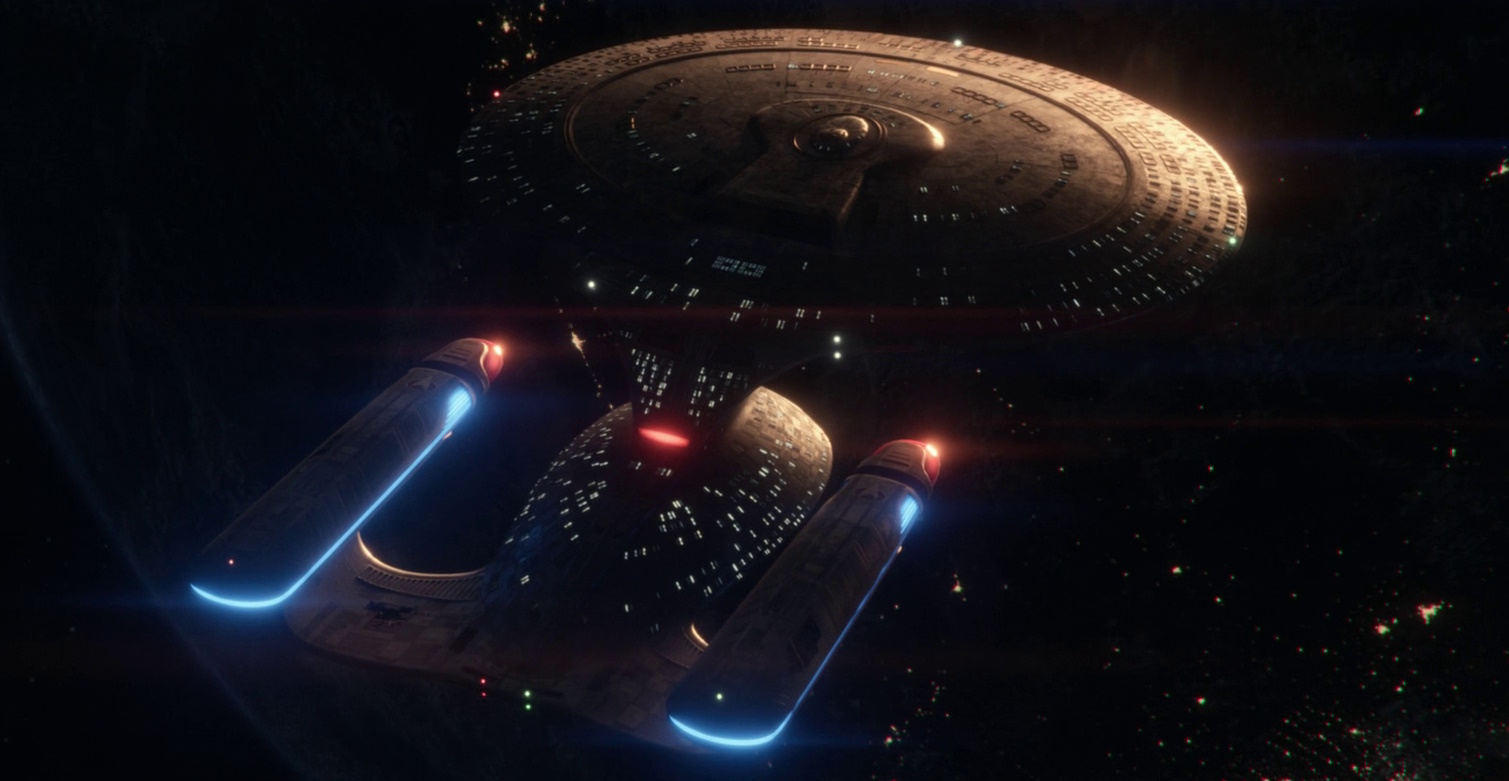
The Enterprise-D arrives at Earth.

There’s more to storytelling than canon, consistency, and even logic. These things all matter, don’t get me wrong – but in a story like The Last Generation, it’s just that they matter far less than how the episode makes us feel. And for me at least, though I recognise with a critical (some might say cynical or jaded) eye that the episode and its narrative have flaws, almost the entire time I was on the edge of my seat, truly going through all of the emotions with Picard, Riker, and the rest of the crew as their mission unfolded.

As happened last week, that’s my real takeaway from The Last Generation. The fact that I was roped in, entertained, and went through a rollercoaster of emotions with Jean-Luc Picard and the crew more than makes up for any logical inconsistencies or narrative missteps that the episode made.
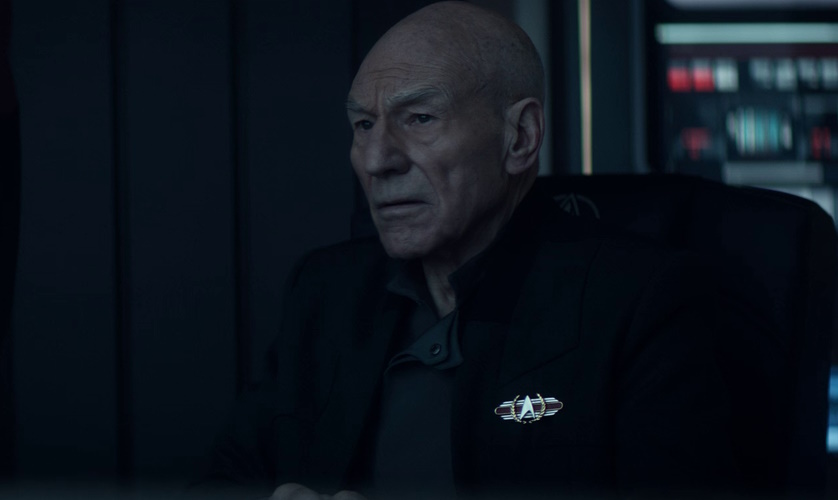
Picard toward the end of the episode.

The idea that Picard, Riker, Worf, or anyone else might actually be killed – as was extensively foreshadowed and hinted at – was gripping, and more than a little upsetting. Death felt like it was stalking the members of the away team – and those on the bridge of the Enterprise-D or trying to remain in control of the Titan scarcely felt much safer, either. This feeling persisted for much of the episode, and though the way in which it ended was ultimately a little unsatisfying because of everyone surviving, in another way that’s very “Star Trek.” Heroes like Captain Kirk famously didn’t believe in no-win scenarios – and Picard managed to pull off the impossible task of saving everyone.

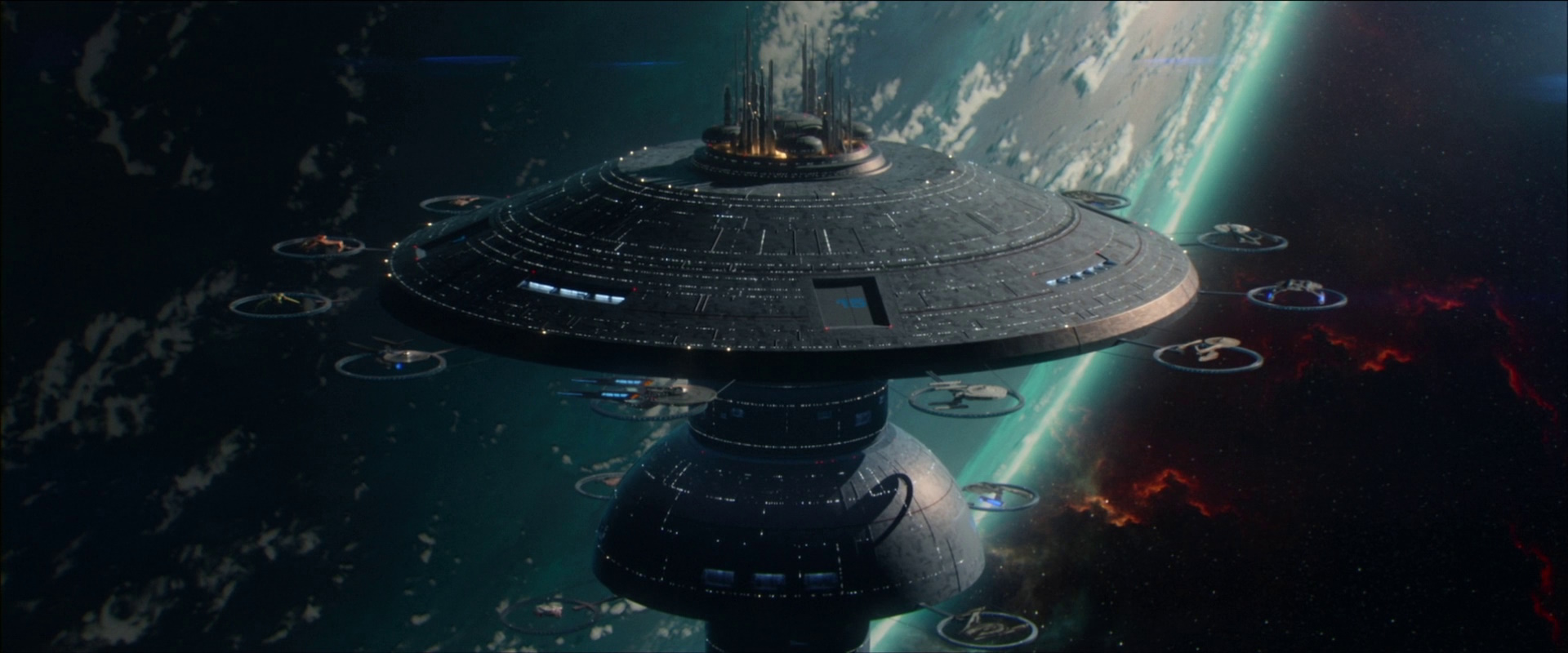
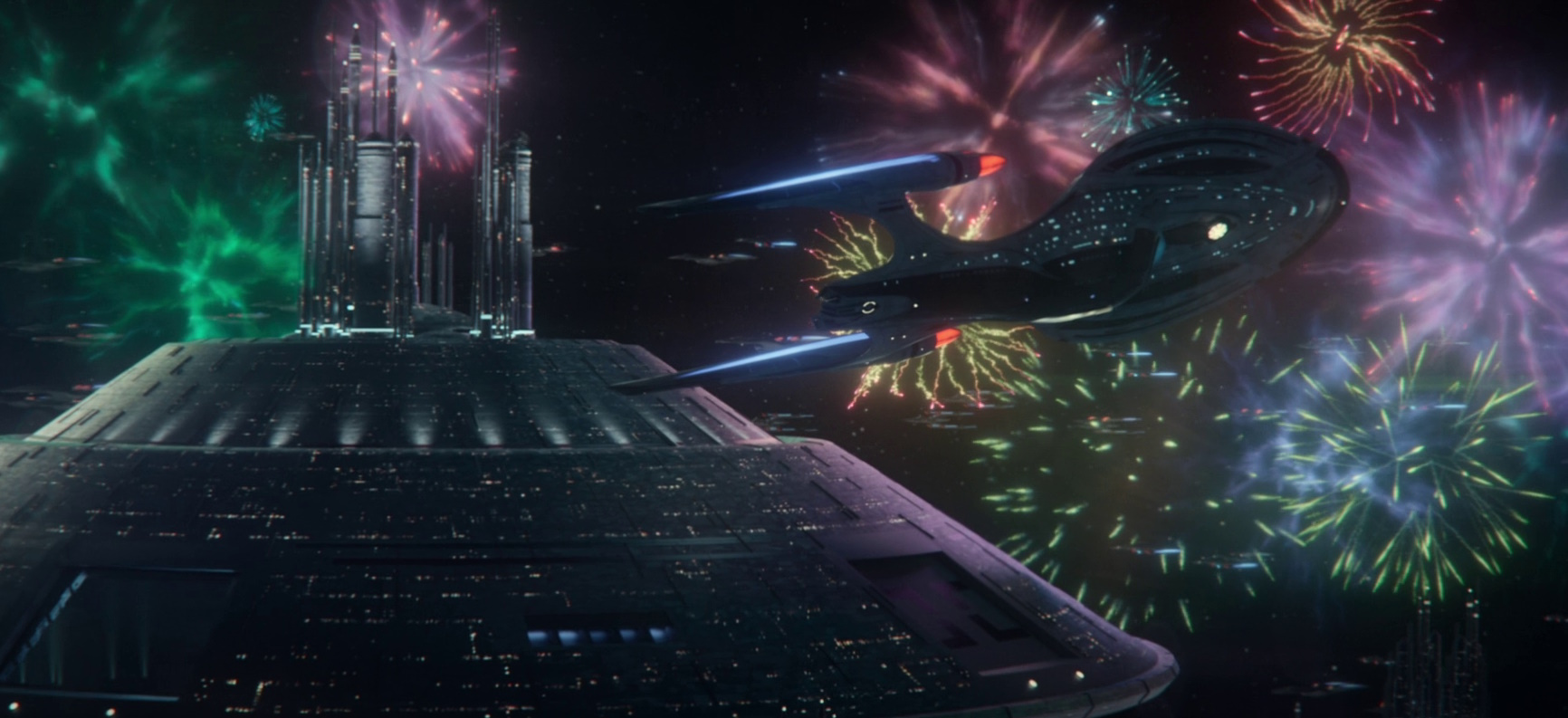
Animation brought these stories to life in spectacular form – and thinking back to the finale of Picard’s first season just three years ago, it’s amazing how far Paramount and Star Trek have come. The fleets and ships seen in The Last Generation were beautiful and diverse, and seeing Spacedock as Earth’s last line of defence against a massive, imposing armada was a truly stunning sight.

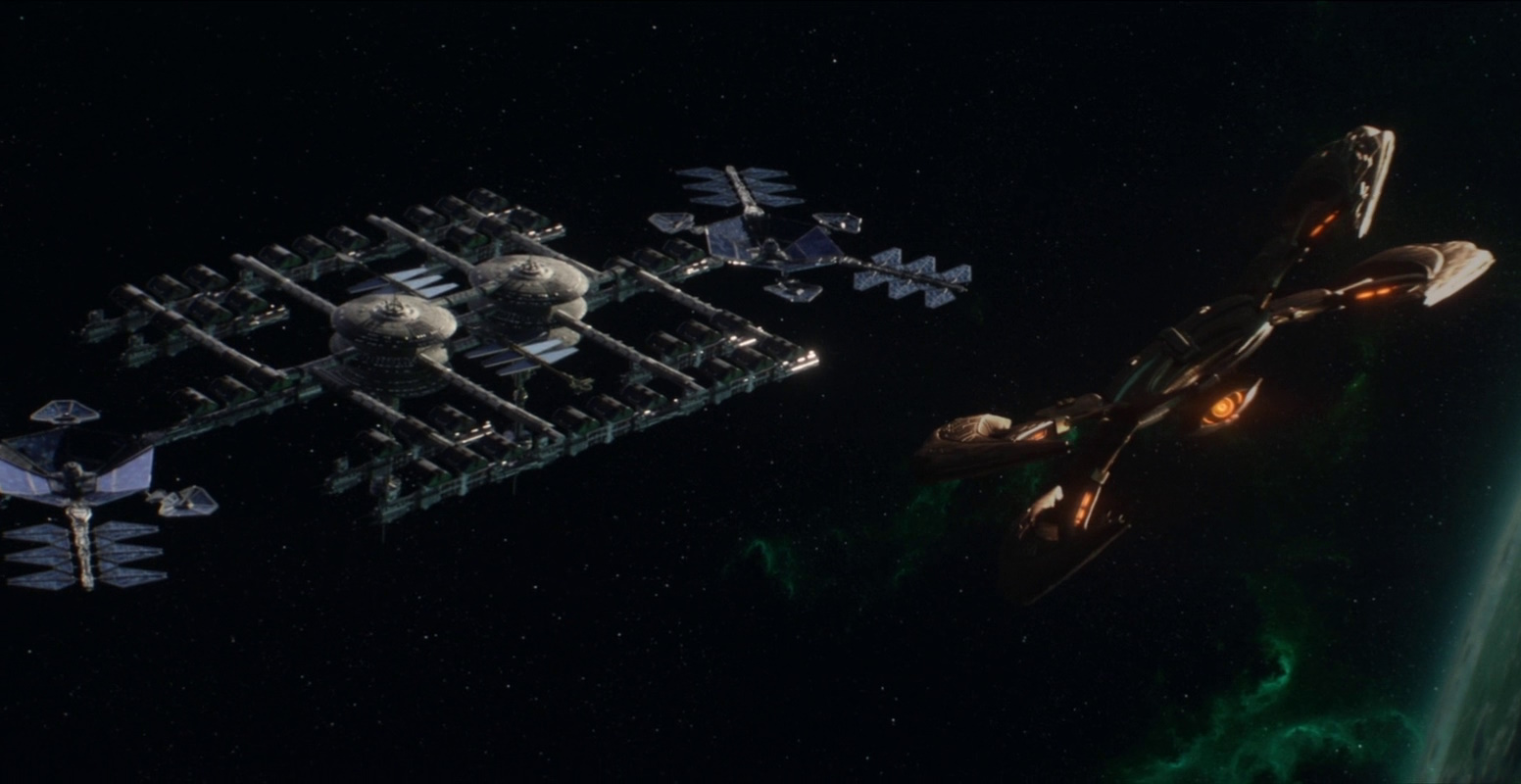
Spacedock and the assimilated fleet.

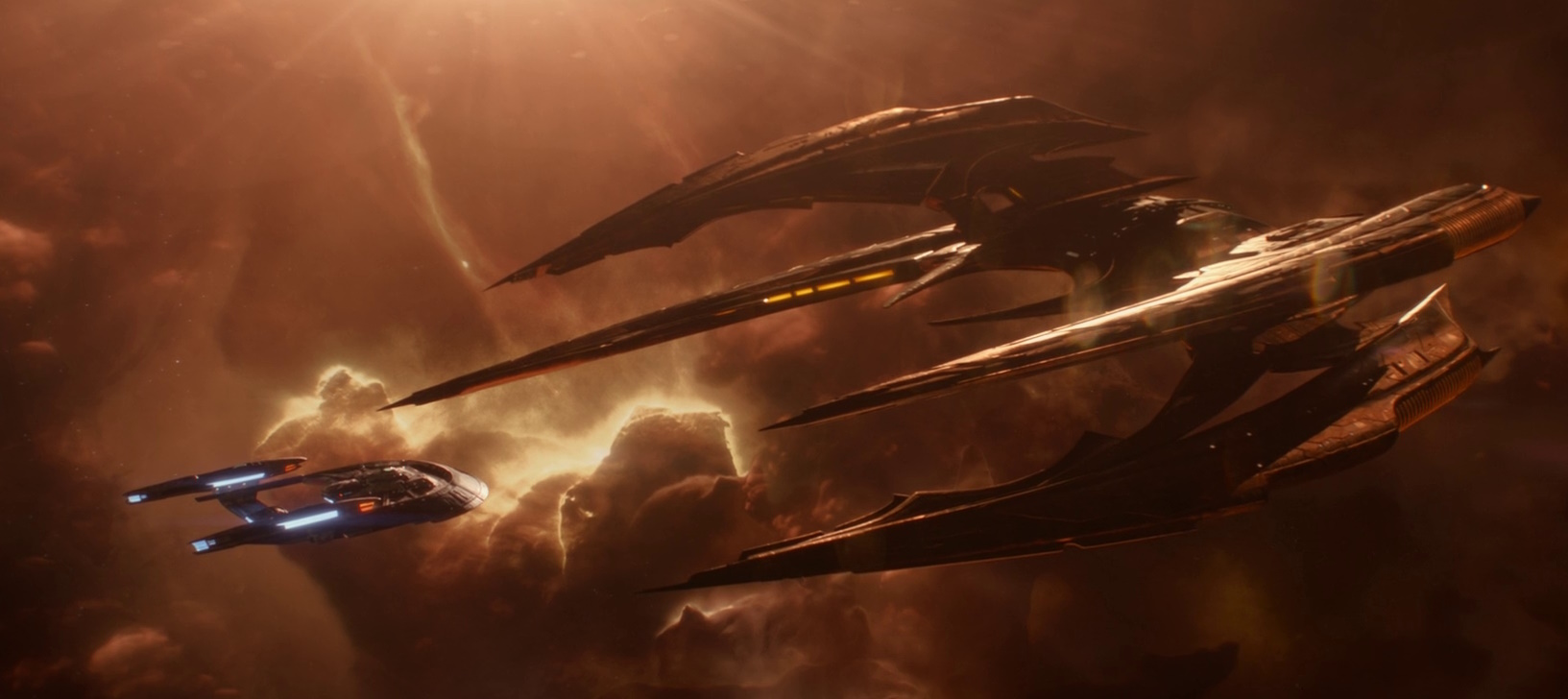
Both the Titan and Enterprise-D were beautiful, too, and both ships performed incredible feats as they battled their foes. Seeing the Titan in action, taking on the entire assembled fleet, was spectacular to see – and it found another narrative justification for the cloaking device that Jack and Sidney “borrowed” a few episodes ago!

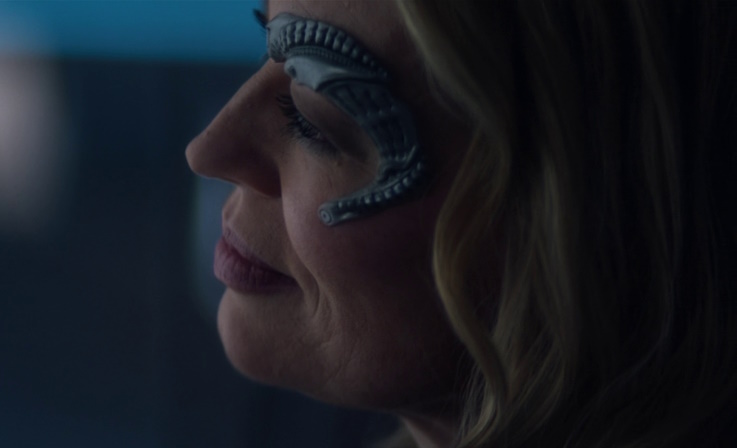
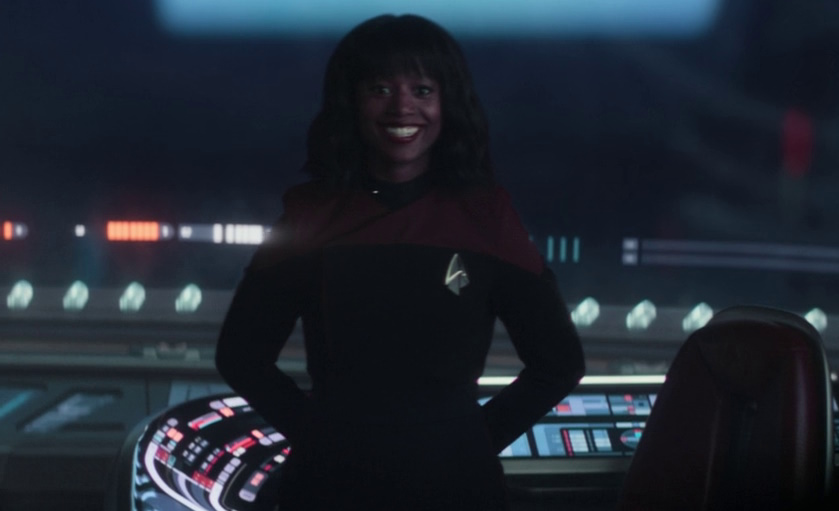
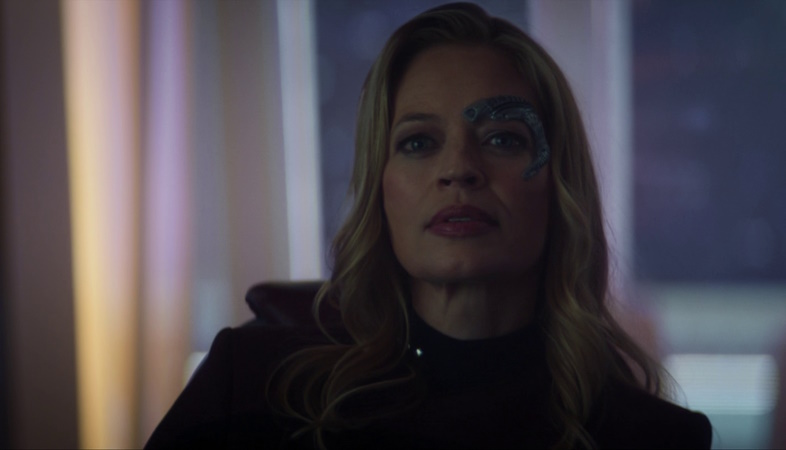
Seven and Raffi hadn’t had as much to do this season as I’d hoped – but the moments they got in The Last Generation showed both characters at their best. Part of the reason fans are so hyped up for a potential spin-off is to see more from Seven of Nine, and The Last Generation added to and rounded out her arc across all three seasons of Picard by placing her, once again, in the captain’s chair. This time, we got to see her people skills – being able to inspire and protect the motley crew of survivors on the bridge was pitch-perfect.
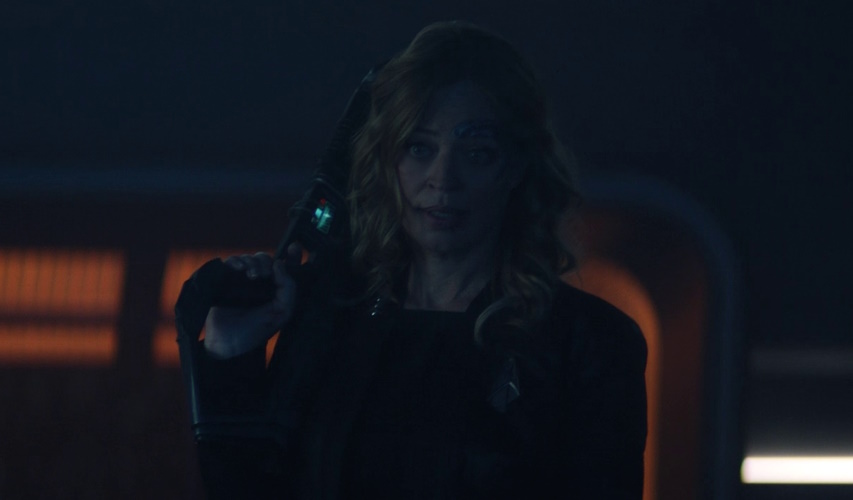
This was a good episode for Seven of Nine.

Again, my only real criticism of this part of the story is that I could’ve happily spent more time with Seven of Nine and the crew of the Titan! As Picard and his crew worked to stop the Borg Queen, Seven and hers provided essential covering fire – and the way that this came across was outstanding. Seven, Raffi, and their assembled survivors felt in danger practically the entire time, especially as the Titan’s cloak was destroyed and its assimilated youngsters made their way back to the bridge.

As unsold as I’ve been on Data’s resurrection this season, the character dynamic between Data and Geordi has been cute – and this trend continued in The Last Generation. Geordi sat beside Data on the bridge of the Enterprise-D – as he had in The Next Generation’s first season – and they had some fun and exciting moments together.
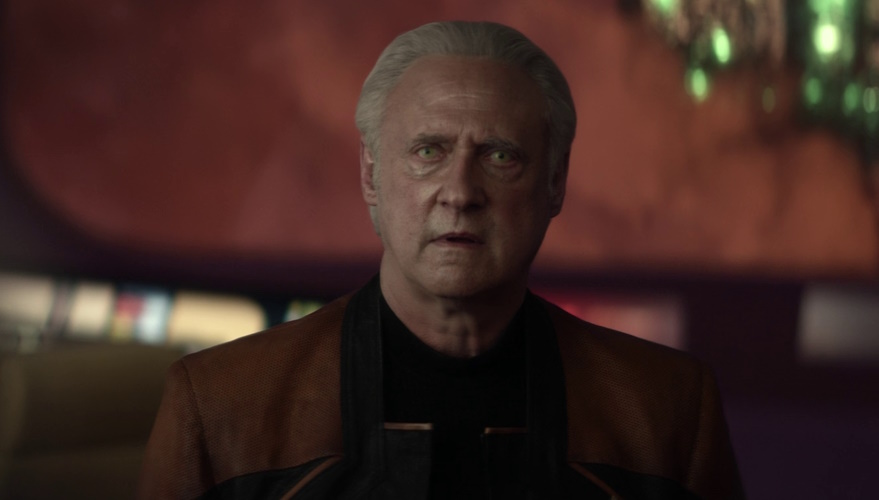
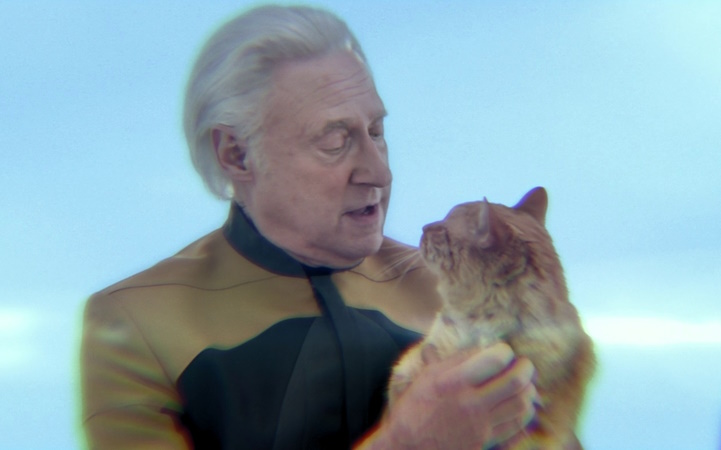
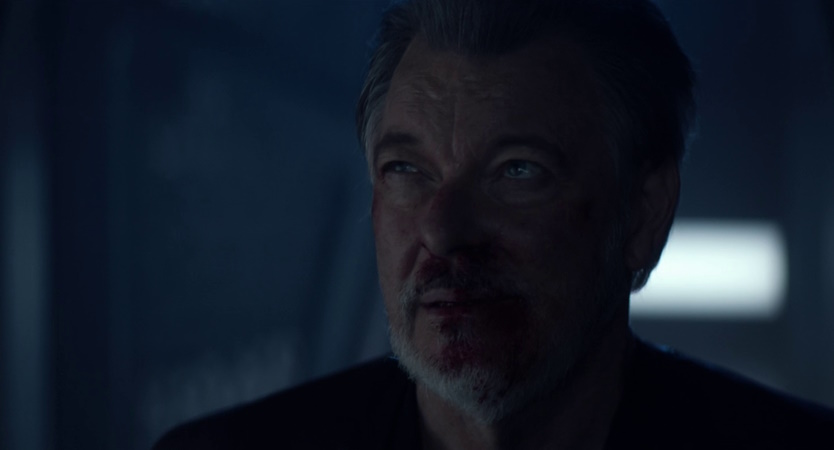
Data.

Likewise Riker and Worf! These two characters had a great relationship during The Next Generation era, serving together and often taking part in away missions. It was a treat to see them teamed up once again, and the dynamic they had aboard the Borg vessel added a lot of comedy to what was an otherwise serious story. Jonathan Frakes and Michael Dorn have great chemistry and comedic timing together, and the moments of lightheartedness through what was a dangerous mission really elevated the sequences aboard the Borg vessel.

Picard’s act of sacrifice required him to “jack in” to the Borg Collective – voluntarily assimilating himself. As the culmination of Picard’s arc with the Borg, this was a fascinating idea. Picard had already come to terms with aspects of his Borg experience in First Contact and in Seasons 1 and 2 of this series, so it wasn’t totally original or new – and that might’ve improved it, perhaps. But making this sacrificial move was clever, and fits right in with themes that the entire series has touched upon in different ways.
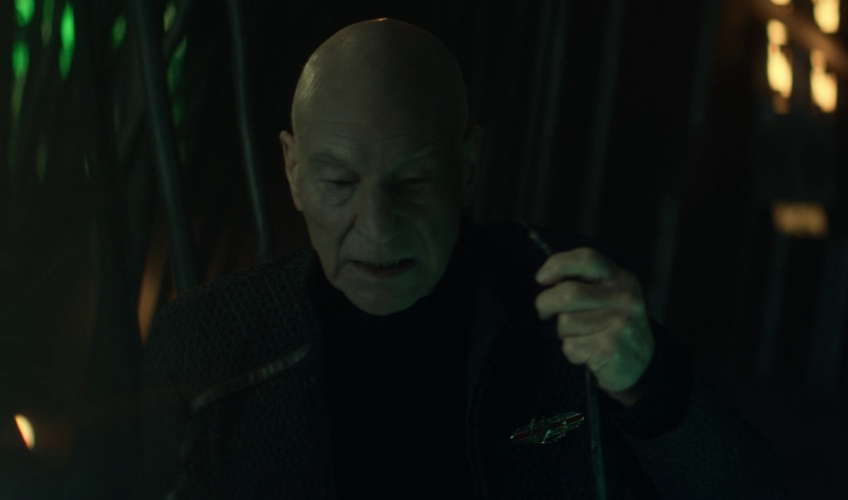
Picard jacks in.

I’m glad that Tuvok survived his ordeal with the changelings – though I would’ve liked to have seen how he and others may have been rescued. Again, this is something a longer season might’ve been able to include. But his scene with Seven, in which she was promoted to captain, was a very sweet part of the epilogue.

I’m not sure how I feel about the return of Q. As I said last year after Q had been “killed” in Season 2, bringing him back to life – especially with the kind of hand-wavey explanation of “don’t think in such linear terms” – undermines one of the few remaining narrative points propping up the entirety of Picard’s disappointing second season. For the sake of such a brief cameo… I wouldn’t have included Q here, I think.
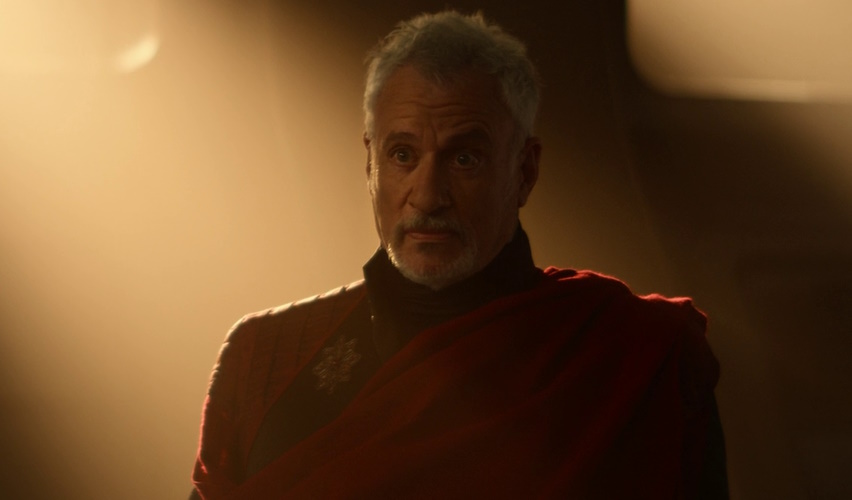
Q is back.

One cameo that I adored was Walter Koenig – who sadly only appeared in audio form – as Anton Chekov, the son (or grandson) of Pavel Chekov. I jokingly said a few weeks ago in one of my theory updates that Chekov would be an unlikely inclusion this season… but it turns out I’m rather prophetic!

The name Anton was presumably chosen in memory of Anton Yelchin, who portrayed the character of Chekov in the Kelvin timeline films. This was a sweet way to memorialize him. Bringing Walter Koenig in for a cameo really brings together all of Star Trek. This finale began last week with a callback to Enterprise, Koenig represents The Original Series, and we have main characters from across The Next Generation era. It really was a celebration of all things Trek!
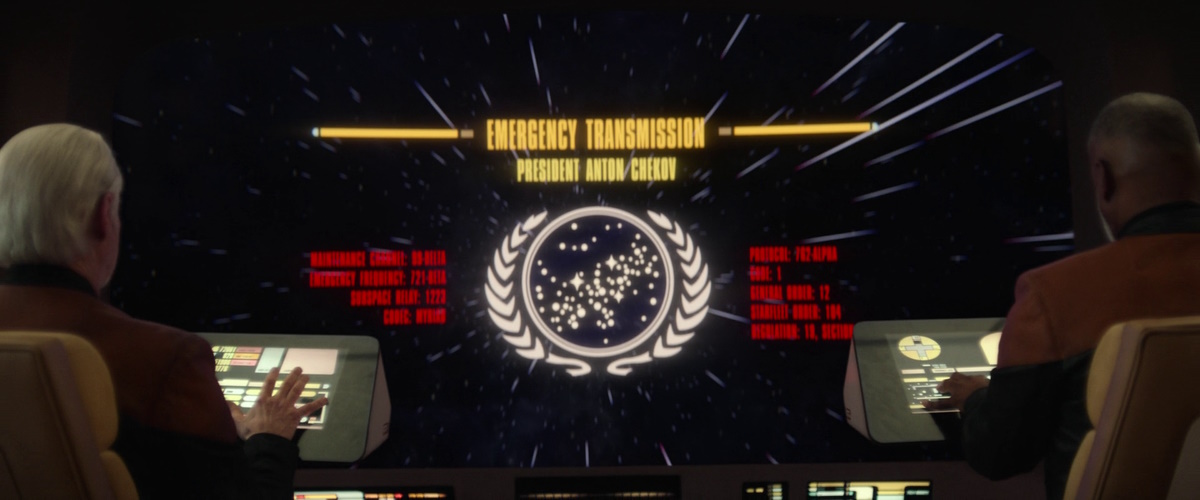
Data and Geordi listening to President Chekov.

There’s more to say – but we’ll have to return to The Last Generation and Season 3 on another occasion.

This review took me a long time to finish, having started it on the day the episode premiered. I had an original draft ready by last weekend, but I wasn’t happy with it so I ended up deleting and re-writing large parts of it. Keeping up with Picard this season has been a struggle, and I think I’m ready for a bit of a break from these reviews! Thankfully, the Star Trek franchise seems to be better-paced this year, and there’s a break before Strange New Worlds Season 2 arrives in June.

I enjoyed The Last Generation – in spite of its shortcomings. It was a great way to end the season, and it potentially sets up a spin-off set in this same time period, which is something I truly hope can happen.

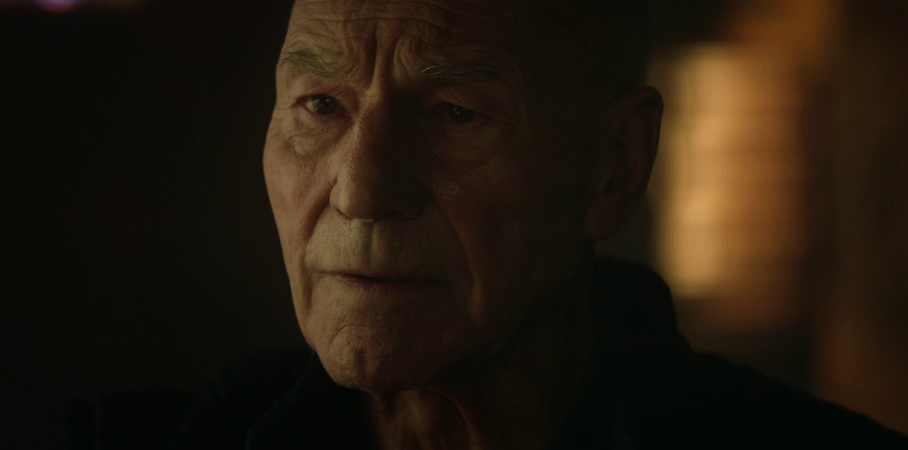
So long, Captain Picard!

So we come to the end of Season 3… and of Star Trek: Picard. In the weeks and months ahead we’ll return to The Last Generation and to Season 3, perhaps taking a deeper look at some of the individual characters, narrative points, and themes – and dissecting them! But for now, I’m about ready to put this review to bed and move on to other topics!

I’ll round up my theory list sometime soon, too. But for now, I hope you enjoyed following along with my Picard reviews this season. Season 3 was an improvement on Season 2, without a doubt, and for the most part I had a good time with it.

Stick around, because the website isn’t going anywhere! There’s Strange New Worlds to come this summer, the video game Star Trek: Resurgence, and Discovery’s final season in early 2024. In between I’ll be re-watching older films and episodes, crafting theories, previewing upcoming projects, and talking about other franchises, too. Thanks for bearing with me while I was writing this review, and I hope to see you soon!

Star Trek: Picard Seasons 1-3 are available to stream now on Paramount+ in the United States and other countries and territories where the service is available, and on Amazon Prime Video in the UK and around the world. The Star Trek franchise – including Picard and all other properties discussed above – is the copyright of Paramount Global. This article contains the thoughts and opinions of one person only and is not intended to cause any offence.
Star Trek: Picard Episode Review – Season 3, Episode 9: Võx

Spoiler Warning: There are spoilers ahead for Star Trek: Picard Seasons 1-3. Spoilers are also present for the following Star Trek productions: The Wrath of KhanThe Next GenerationDeep Space NineVoyager, and Discovery.

First of all, before we say anything else: Võx might be the most important episode of the season to go into un-spoiled. If you’ve somehow stumbled upon this review before watching the episode – and you decided to ignore Captain Stiles issuing a “spoiler alert” above – this is your last chance to nope out before we get into major spoiler territory. I was lucky to have avoided spoilers before watching Võx, and the episode will be infinitely more enjoyable for you if you can do the same.

Võx is a hard one to review with any semblance of objectivity. It’s an episode “made for fans,” and it hit some absolutely incredible emotional notes, particularly in the closing few minutes. As someone who first came to Star Trek in the early ’90s by way of The Next Generation, and who found comfort in that show as a lonely adolescent, it’s hard to even find words to fully express how incredible some of these sequences were with Picard and his reunited crew.

You know me well enough by now to know that there’s a “but” coming, though.

The Enterprise-F.

But at the same time, Võx prioritised these emotional sequences of pure fan-service over narrative cohesion, and my overriding concern is that the story has reached this point too late in the game – leaving the final episode of the season, and the series, with too much work to do to pull out a successful ending. This problem plagued both Seasons 1 and 2 of Picard, and I can’t help but feel that lessons have not been learned from those stories.

There were logically inconsistent moments spread throughout Võx, moments that could have worked if more time and explanation had been dedicated to them, but that fell flat – or even felt downright laughable – because of how unoriginal, trope-laden, or just plain ridiculous they were. Some scenes and sequences that needed more time dedicated to them were blitzed through in minutes or even seconds, and while the incredible sequences with Picard and his old crew basically wipe away many of those criticisms – or at least they did in the moment – when trying to look at the story through another lens, they seriously challenge and even potentially undermine the entire affair.

Picard is back in the captain’s chair.

As I said last week, the eight-episode chase with Vadic has proven to be a complete and utter waste. Vadic was a bland, unoriginal, and boring villain who accomplished very little, and whose over-the-top performance didn’t come close to finding a narrative justification. That on its own was already problematic for the story of the season, but the revelation in Võx that the Borg have been directing this conspiracy now feels like it has come too late in the game.

There have been hints and teases at a Borg connection to the story all season long – and I’m glad that those received a narrative payoff, don’t get me wrong – but is there enough time now to do justice to this story? The preceding eight episodes – a full 80% of the season-long story – now feel like a preamble; the prologue to what will be a remarkably short main event.

Sidney La Borg.

Last week, I made a comparison to The Wrath of Khan, and said that Vadic’s death coming in the eighth part of a ten-part story is akin to Khan having been killed when there was still half an hour left in the film. Now we can add to that metaphor and say that this story compares to Khan having been killed while there was still half an hour left, and it was subsequently revealed that the Klingons had secretly been pulling his strings all along. Would such a revelation have made the film better? Or do stories work best when they have a clearly defined antagonist who fills the role for the duration?

There’s another point that’s been bugging me, and I’ve struggled with finding the right word for it. Picard Seasons 2 and 3 went into production back-to-back, with the same production and writing team involved in both stories. With that in mind, these two seasons feel remarkably jumbled and even contradictory – the story leaps from one version of the Borg and the Borg Queen to another, sees two structurally similar re-emergences of the Borg play out, and seems to completely ignore its own earlier chapters.

Guess who’s back?

This is something we’ll have to tackle in the future when we do some kind of retrospective look at Star Trek: Picard as a whole, but I feel echoes of the Star Wars sequel trilogy, at least in terms of the way in which production was handled. And no, I don’t mean that in any way as a compliment! Like the Star Wars sequels, Picard was cleaved into three parts. Like the Star Wars sequels, one production team took the helm for two of those parts. And like the Star Wars sequels, the decision to split up the story has led to some seriously questionable narrative decisions.

But that’s a conversation for another day!

Not for the first time in Star Trek: Picard, a genuinely interesting, exciting, and engaging storyline has been presented – but was let down by overused clichés, insufficient explanations, and unnecessary time constraints. The idea that the Borg would ally with (or take advantage of) a rogue group of changelings, combining their powers together to take on Starfleet, is a fascinating one – in theory. Likewise, the Borg having biotechnology far beyond the capabilities of the Federation, and insidiously using that to take over Starfleet, was an incredible shock, and a concept that fits right in with everything we know about both of these factions.

This explanation was clever.

But Võx was imperfect in its execution of these fascinating ideas, and Picard’s third season as a whole spent an awfully long time arriving at this point. With only one episode left, which on current form will be somewhere less than an hour long, is there enough time to fully explore this changeling-Borg team-up, undo the damage to the Federation, save Jack and the La Forge sisters, and protect Earth from the “assimilated” Federation fleet?

As the ninth part of a ten-episode story, Võx repeated the problem that Et in Arcadia Ego had in Season 1 by dumping all of this into the story at a very late stage. Surely there must’ve been ways to keep some secrets while revealing others earlier in the season – to move the story along at a more reasonable pace, reaching this point sooner, allowing for more time to do justice to some of these wonderfully creative ideas.

Did we reach this point in the story too late?

Let’s talk about some of these tropes and clichés, because they let down what could have been a far more entertaining episode – and I’m afraid that there really is no excuse for them other than uninspired writing.

Firstly we have Jack’s conversation with Deanna, his confrontation with Picard, and particularly his escape from the Titan. After so many teases of the “red door” that I’ve lost count, having Deanna run away from Jack without revealing what she saw – and without the episode letting us see what she could see – wasn’t the best or strongest way to start. If I were to nitpick, I’d also say that Deanna choosing not to tell Jack what she saw, and experiencing such fear, feels out-of-character for her. That she’d tell Jack’s parents what she knew without informing Jack himself is, in Jack’s own words, “unethical.”

This sequence wasn’t great – though I’m glad Troi finally got something to do!

Jack’s escape from the Titan was poorly-scripted, with practically every character aside from Jack himself behaving in profoundly odd ways. After their clash in Jack’s quarters, Picard simply stood around, not bothering to give chase, contact anyone on the Titan, order a lockdown… or do anything at all to prevent Jack from leaving. Perhaps Jack’s Borg-given superpowers would have made his escape inevitable, but Picard should have done something beyond standing there yelling his name.

I literally laughed out loud when Picard and Dr Crusher were stood at the window, haplessly watching Jack’s shuttle warp away – such was the absolute anticlimax of this sequence. And again, this is a consequence of season-long pacing: had some of the extraneous fluff been cut from the past couple of episodes, we could have had more of an involved sequence depicting Jack’s escape. One that might have felt a little less contrived.

I laughed out loud at this moment.

Technobabble in Star Trek can be used to cover all manner of sins – including weak story points! But even with the caveat that “technobabble solves everything,” the way in which the technology and universe of Star Trek behaves has to be basically internally consistent from one story to the next, and there can’t be too much hacking away at the foundations of how some of these computers, machines, and equipment have been known to operate for literally decades.

With that in mind, the idea that the Titan would be unable to locate Jack’s shuttle – which had departed a matter of seconds earlier with everyone watching – simply because he “deactivated its transponder” doesn’t make sense. It doesn’t gel with how sensors have always been shown to operate in practically every other Star Trek story, and while I will give credit for Võx re-using this idea later with Picard’s crew taking their shuttle using a similar loophole, for me, it was a bridge too far in terms of technobabble. I’ve written before that internal consistency is the bedrock of suspension of disbelief in any story, so when a new chapter makes changes on the fly to established technologies that are too big, the gulf between what we’ve seen before and what’s currently unfolding becomes too large to cross. That’s what happened at this moment in Võx. It was too great a contrivance for me – though in a stronger story, perhaps it’s something that would have felt less of an important point.

Suddenly being unable to scan for a shuttlecraft was a major contrivance.

I can understand Dr Crusher and Picard jumping the gun and rushing to talk to Jack before they were ready. They’re emotionally compromised by their ties to Jack and, in Picard’s case, an overwhelming sense of guilt for passing this genetic condition to his son. But the others – Deanna, Data, and Geordi in particular – should have been the level-headed ones here. We saw moments later that they had been able to learn a great deal about Jack’s condition, so if Picard could’ve gone into his conversation with Jack armed with some of that knowledge, it feels like Jack’s need to run away might have been avoided altogether.

Again, this is a contrivance – characters behaving in illogical ways to serve the plot. Such contrivances can pass by inoffensively, and they have in many other Star Trek stories, I daresay! But here, as I watched the discussion of Jack’s condition and the revelation of what’s happened to him, I couldn’t shake the feeling that this wasn’t particularly well-written.

The situation with Jack could (and should) have been handled better.

The firefight in which Captain Shaw lost his life also played out like a tired trope. Dozens of blasts of phaser fire from assimilated Starfleet crewmen evaporated into thin air the second Shaw was hit, and the convenient end of the battle allowed Seven and Raffi to rush to his side. There are many ways to script and film heroic deaths without falling back on such overdone clichés… and it was a bit of a disappointment that the firefight in the Titan’s hallway ended this way.

Captain Shaw’s death was certainly dramatic, and I felt a pang of emotion in the moment thanks in part to an evocative performance from Jeri Ryan and an excellent musical score. But at the same time, Shaw feels like the lowest of low-hanging fruit to kill off, especially at this late stage in the story. The writers clearly wanted to get the impact of killing off a major character – but didn’t want to risk killing off a legacy character, at least not until everyone had taken their places on board the Enterprise-D.

Captain Shaw died this week.

Shaw served two purposes earlier in the season. He got in the way of Picard and Riker as they tried to jump-start their rescue mission, and his big blow-up with Picard about Locutus and Wolf-359 was the most significant reference to the Borg prior to the events of Võx. But since his emotional outburst, which came all the way back in the episode No Win Scenario half a season ago, Shaw has felt completely listless and unnecessary to the story. He’s been sidelined and kept out of the decision-making on his own ship, showing none of the backbone that he seemed to have in the season premiere.

Worse, Shaw’s continued mistreatment and deadnaming of Seven of Nine passed several opportunities for a resolution – and while there was a sweetness, in a way, to his seeming acceptance of her with his dying breath, it wasn’t the best way for this storyline to have progressed. In some ways, we can argue that Shaw actually regressed as a character after the events of No Win Scenario and Surrender in particular.

Captain Shaw used Seven’s real name with his last breath.

So by the time we arrived at Shaw’s end this week, two things struck me. Firstly, Shaw’s irrelevance to the story for the past few episodes, and the uninspired resolution to his conflict with Seven of Nine, come together to mean that his death could’ve come sooner – and that the story of the season as a whole might’ve been better for it.

Secondly, and perhaps more importantly, Shaw’s death had an impact, demonstrating the high stakes and danger that the crew are now facing. But it wasn’t as impactful as it could’ve been, and killing off someone who is still very much a secondary character is less significant at this juncture than killing off someone more major.

The choice to kill off Captain Shaw – rather than another character – feels like the writers taking the safest route.

The decision for Raffi and Seven to remain aboard the Titan also feels narratively incoherent. Again, the writers and director/showrunner Terry Matalas clearly (and pretty desperately, it seems) wanted the reunion scene on the bridge of the Enterprise-D to consist of only characters from The Next Generation – which is why Seven and Raffi didn’t escape with the others. But the way in which they ended up abandoned aboard the Titan was poor; there was seemingly no reason why they couldn’t have boarded the shuttle with Picard and the others.

Maybe having Raffi and Seven staying on the Titan will lead to something significant next time – and I certainly hope that will be the case, or this will feel even more wasteful than it already does. But even assuming that hope comes to pass, there were better and more natural ways that they could have been trapped or forced to remain behind. Again, I feel the consequences of a season that padded out key storylines over the past few episodes and arrived at this stage with a lot to cram into a forty-five-minute runtime. A couple of extra minutes with Raffi and Seven in the aftermath of Shaw’s demise could have logically explained why they couldn’t board the shuttle, and would have gone a long way to strengthening this sequence.

Seven and Raffi are stuck on the Titan.

One line of technobabble leapt out at me in Võx, and it’s one that I fear could become problematic. One of the key narrative conceits of the episode is the Borg’s newfound ability to transmit their programming through biological means, specifically through a DNA sequence that afflicts the frontal cortex of the brain. I actually thought that this was a really neat idea, one that magnifies the threat that the Borg pose and simultaneously reinforces the idea that the Borg are still light-years ahead of the Federation in technological terms.

It was also a clever idea, especially in a story whose protagonists are older, to have this newfound Borg ability only impact younger members of the crew. That’s something that gives a reason for Picard and his old crew to work together – though it’s a justification for bringing back these characters that comes after they’ve already reunited! But when the story has dealt with themes of family, of parent-child relations, and of inheritance, it’s something that fits.

The Borg have modified Picard’s and Jack’s DNA.

However, there’s a real-world comparison that really bugs me in the way this was explained and brought to screen. I will caveat this by saying that I’m sure this story point wasn’t intended to be taken this way… but there are uncomfortable comparisons that exist nonetheless. In some anti-transgender circles, one line of attack that is particularly deployed against younger trans people is that “their brains aren’t developed enough” to make a decision about their gender identities. Specifically, this attack centres on the development of the frontal cortex and the age at which it supposedly stops developing – something that, of course, varies from person to person.

Although this idea is based on real-world science, I can’t help but feel that its inclusion in Võx may not have been the best idea given the situation out here in the real world. There are already a lot of anti-trans organisations here in the UK that are trying to contort science to support their views, and something like this is unhelpful at best. At worst, it risks adding fuel to the fire. I have no doubt that the writers and creative team didn’t intend for this line of technobabble to be taken so seriously, let alone be used as some kind of anti-trans metaphor. But that interpretation is present and it isn’t a total leap.

Worf and Geordi explaining the DNA modifications.

Võx has all of these imperfections and flaws, and key narrative points rely on tropes and clichés that have been done to death – and done far better in other stories, come to that. It’s worth pointing these out because the issues with the episode aren’t merely a consequence of narrative decisions taken earlier in the season, nor are they problems necessarily with the story of the season as a whole. These moments take what could have been a better episode and drag it down a rung or two, and while there are criticisms of the overall season, how long it took to reach this point, and the apparent irrelevance of much of what came before, it’s worth also noting that Võx is an imperfect offering even when taken on its own.

The question now is this: does any of that matter? All of these criticisms of Võx itself and of the occasionally ambling story… can they be overlooked, or even eradicated, by considering the strengths of the episode, and the nostalgia overload presented? See, the rational part of my mind is screaming “no!” because throwing up the nostalgia card, bringing back the Enterprise-D and the Borg Queen… it all feels so cheap. But the rational part of me is being completely drowned out by another voice, the voice of emotion. And that part of me adores practically everything we got to see this week, and is totally willing to overlook all of the contrivances and flaws that were present along the way.

The big reveal.

I’ve stated several times that I didn’t want Star Trek: Picard to try to be The Next Generation Season 8 or Nemesis 2. I wanted it to do its own thing, stand on its own two feet, drive Star Trek forward in new and different ways, and introduce some fantastic new characters who just might become fan-favourites for a new generation of fans. We’ll have to assess whether and to what extent the series as a whole accomplished any of those objectives after the dust has settled on this final outing.

But as much as I wanted to see more of the new characters, and to get Picard to a place where it could reasonably become a launchpad for other live-action Star Trek projects set in this era… again, a big part of me is on board with this TNG reunion. I genuinely didn’t expect that, especially after the disappointment I felt last year when the news emerged that most of the new characters were being jettisoned. We can argue about whether this was the right way to do it, whether this story is strong enough to move beyond those contrivances, and whether individual storylines and character arcs have worked as well as intended. But at the end of the day, seeing Picard and the crew reunited aboard the Enterprise-D, and getting that flyby of the ship itself… all of the criticisms that I had of Võx and of Season 3 seemed to melt away in the moment.

The crew arrives on the bridge.

Storytelling isn’t just canon, consistency, and logical outcomes. It isn’t just about the strength or weakness of individual storylines, whether a plot point is original or clichéd, or whether lines of technobabble stick the landing. Those points all matter, don’t get me wrong. But they aren’t the only factors.

Where Võx succeeded for me was in its emotional storytelling. It got so much right on this front, and not just the reunion of classic characters that I remember with fondness from my formative years. This was an episode that plucked all of the right emotional chords – even when it wasn’t getting every element perfect or making total sense. And this is a combination of elements: it’s cinematography and camera work, it’s the musical score, it’s visual effects, it’s acting performances, and of course, it’s the script itself. While there are undeniable flaws in Võx, the episode’s ability to pull at the heartstrings and create incredibly powerful emotional moments is its true success.

According to executive producers, this is the original dedication plaque from the set of The Next Generation.

The episode was densely packed with callbacks and references too numerous to list. The inclusion of the USS Pulaski – presumably named for Dr Kate Pulaski – was incredibly sweet, and I appreciated that the story hadn’t entirely forgotten her contributions to Star Trek. The return of Elizabeth Dennehy as Admiral Shelby was also pitch-perfect – Shelby was the up-and-coming young officer who helped Riker and co. battle the Borg in The Best of Both Worlds. As the Borg make their return, Shelby feels like a wonderfully fitting inclusion.

The speech Admiral Shelby gave brought a tear to my eye, and I’ll unashamedly admit that. As she sat on the bridge of the Enterprise-F, Shelby spoke of the NX-01 Enterprise and its original mission of exploration, laying the foundations for what would become Starfleet and the Federation. Enterprise hasn’t always been fully appreciated by Trekkies – myself included at the time of its original broadcast, regrettably – so to build this Frontier Day event on the back of Enterprise was incredibly sweet. Moments like this tie Star Trek together, especially as Enterprise premiered after The Next Generation.

Admiral Shelby’s speech was fantastic.

Shelby’s apparent death was also incredibly dramatic, being gunned down by her partially-assimilated crew as chaos was breaking out across the fleet. Although I think it’s important to concede, given the direction taken by the story and what we knew of the conspiracy by this late stage, that Shelby felt like a goner the moment she appeared on the viewscreen, her death was still dramatic, well-portrayed, and demonstrated clearly the extent of the Borg’s conquest of Starfleet.

Shelby and the captain of the USS Excelsior (which briefly appeared in Season 2) also stand as exemplars of thousands or perhaps tens of thousands of Starfleet officers who suffered similar fates during Frontier Day. The Borg-led scheme has been successful thus far, and the result is the decapitation and perhaps even the decimation of Starfleet as a whole. It wasn’t possible to show the unfolding chaos aboard multiple vessels in the fleet, so Shelby’s shock at what was rapidly transpiring around her, and her quick execution, stand in as the most brutal of examples.

The (apparent) demise of Admiral Shelby.

The Borg make a great metaphor for our collective fears of out-of-control computers, artificial intelligence, and the “technological singularity” that some have argued may lie in our future. This is something that I discuss in far greater detail in my essay The Borg: Space Zombies, which you can find by clicking or tapping here. What we saw in Võx feels – as it should do – like a modern-day adaptation of this same basic concept.

When the Borg Collective was first conceived in the ’80s, there was a technological revolution underway as computers and digitisation were transforming many aspects of life. This was the world of my childhood, and I remember arguing with my parents about getting a computer in the house – something they adamantly refused to do for a long time! But we’re drifting off-topic. The Borg at that time represented “technology gone wrong,” or what could happen to a race of technophiles if they took things to an unreasonable extreme.

The newly-assimilated Ensign Esmar.

In Võx, we see an evolution of this idea, complete with modern-day influences. The Borg in Võx “hack” into both Starfleet and into human beings – using a combination of biology and technology to do harm. The connected, linked fleet represents our globalised communications infrastructure, and the ease with which it was hacked and turned against our heroes is a warning against an overreliance on technology and artificial intelligence. Picard and his crew are forced to turn to the Enterprise-D – because it’s outdated, disconnected, and therefore perfectly-placed to save the day!

I’ve always found the Borg to be fascinating, and this Battlestar Galactica-inspired idea of using a “dumb” ship to combat the connected, “smart” ships feels like it fits perfectly with what we know of the Collective. As with the Borg’s biotechnology, this feels like a natural evolution of the Borg’s story – and of the Federation’s ongoing war against them.

Some kind of Borg transmitter… or something.

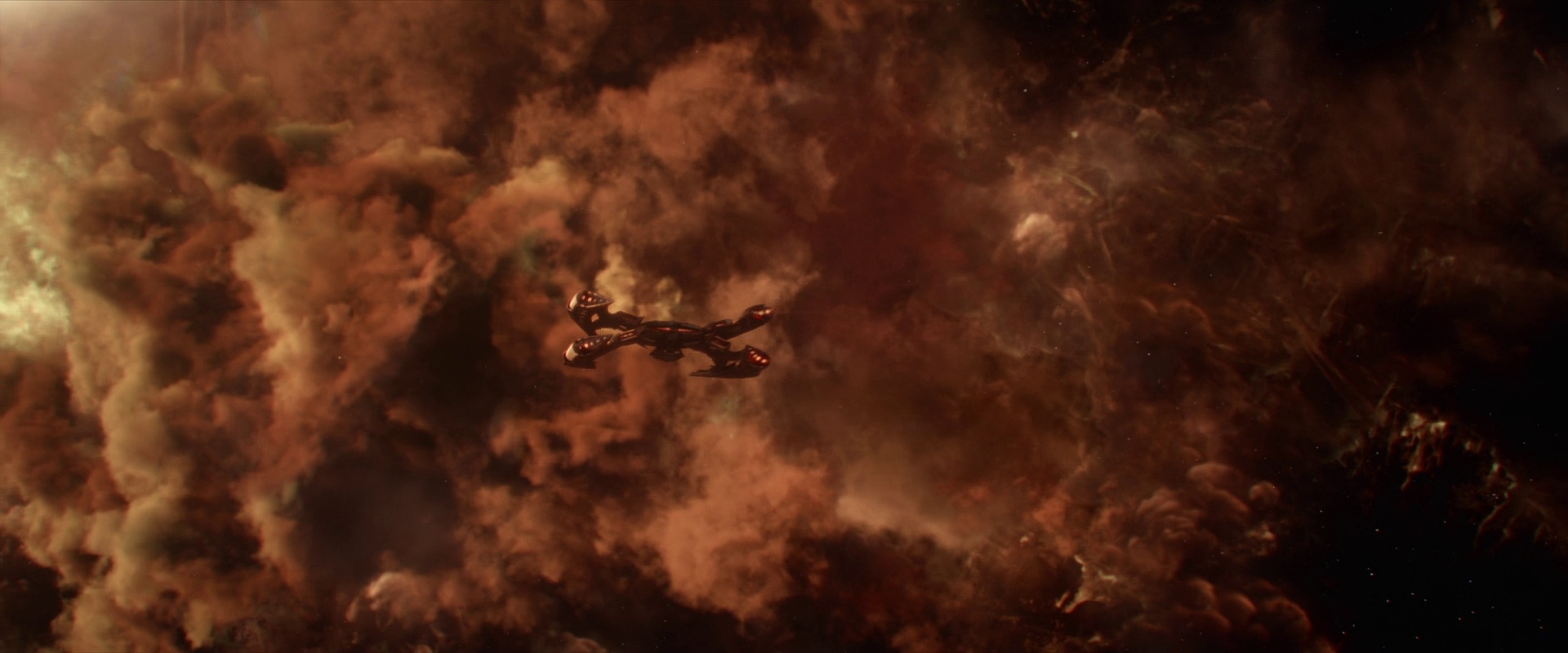
A Borg Cube was beautifully created in CGI, and the visual of it hidden in a nebula or cloud was spectacular, too. The new vessel seemed to have more illumination on the outside when compared to Borg ships seen in past iterations of Star Trek – but I actually quite liked the way it looked. Again, though, there are issues here: Jack figuring out where to go and how to get there is a moment that needed a bit more time, and I could’ve happily spent a scene or two with Jack en route to the Borg, perhaps seeing him struggling with his decision or seeing the Borg side of his mind working to suppress his human side.

Then there’s the interior of the Borg vessel. This was… not great. There were a couple of alcoves that looked decent, but overall I felt that the set design and construction could’ve been better. Looking back to scenes aboard the Artifact in Season 1 and there really is no comparison. If we aren’t going to spend too much time aboard this ship, then I guess it will pass inoffensively enough. But as the climax of a storyline for Jack Crusher that has been running all season long… I was underwhelmed with the small and unimpressive interior of the Borg Cube.

I wasn’t blown away by the set design here.

And this is another example of how the jumbled, muddled production of Star Trek: Picard as a whole series trips up Võx. Had we not seen the Artifact in Season 1, and the spectacularly frightening Borg vessel at the beginning of Season 2, this return to a Borg environment would have been far more impactful – and I could have probably overlooked the deficiencies in the presentation of the Borg ship.

The Borg Queen, played this time by a body double and archive voice recordings, was likewise a bit of a let-down. At the beginning of Season 2, we got a truly shocking and terrifying presentation of a new Borg Queen: hooded, wearing a robe, wielding mechanical tentacles, and able to take over an entire starship completely on her own. The way the Borg Queen came across in that episode was stunning, and because Võx comes barely a year later, this reversion to an older presentation just feels lesser in comparison.

This older presentation of the Borg Queen feels less interesting and intimidating than the version we saw in Season 2.

Tragic news broke in January of this year that Annie Wersching, who played the Borg Queen last season, had passed away. Given that she had been unwell during filming, we can’t say for sure whether she’d have been able to continue to work as production got underway for Season 3. But if the Borg Queen is going to be featured here – for the second season in a row – it would have made sense to retain the same actor if at all possible, surely? Again, given the circumstances we can’t say for sure one way or another – but it feels like something that should have happened if it had been possible.

And again, I feel the consequence of a muddled, mixed-up production here. Having the Borg as Picard’s final, ultimate “big bad” makes a lot of sense, as they’re a faction closely associated with Picard himself and The Next Generation, but also as they’re so powerful and threatening. But having had two Borg stories in previous seasons – one of which was written and produced by the same team that created Season 3 – I just feel that the Borg should have either been saved to be the final villain this time, or else the way in which they were used in Seasons 1 and/or 2 should have been all we got. After all, the changeling idea seemed to be working well all throughout the season – and seeing Picard and the crew face off against a genuinely different threat, one we’d never seen them tackle before, was also a fun idea. One that has been if not overwritten then at least brought to a screeching halt.

The Borg Queen as presented in Võx feels less impactful in the aftermath of the way the Borg appeared in Season 2. And in Season 1.

So we come – as Picard and the crew did – to the Enterprise-D.

This was an exceptionally well-kept secret, and that’s why I said at the beginning that Võx is an episode to watch without spoilers if at all possible. I’m pretty attuned to what’s going on at Paramount, and I keep an eye on the production side of Star Trek as much as possible so that I can follow significant developments and share my thoughts here on the website. But even I was blindsided by the reconstruction of the Enterprise-D’s bridge that we got to see in Võx.

There had been hints and even teases from some folks on the production side of Picard’s third season that we might get to see “more than one” USS Enterprise this season, but after we’d seen the Enterprise-F in trailers and the Enterprise-A at Geordi’s museum, I figured that would be that. The Titan has made a great hero ship this season, feeling smaller and less powerful than vessels like the Enterprise, Intrepid, or the Shrike – but having a plucky attitude and ability to punch above its weight that reminded me of the comparably-sized USS Voyager.

The USS Titan at warp.

But the Enterprise-D is special to me, and seeing it recreated here – inside and out – was beautiful, and it was undoubtedly the highlight of Võx. The emotional impact these ships can have can’t really be overstated, and pairing a beautiful starship, wonderfully rendered with CGI, with a stirring musical score – it hits me just as hard in 2023 as it did when I watched The Next Generation back in the ’90s. Seeing the Enterprise-E swooping in to save the day at the Battle of Sector 001, watching Kirk lay his eyes on the refit Enterprise for the first time in The Motion Picture, and of course getting so many beautiful sequences with the Enterprise-D across The Next Generation’s run… this moment in Võx equalled the very best of them.

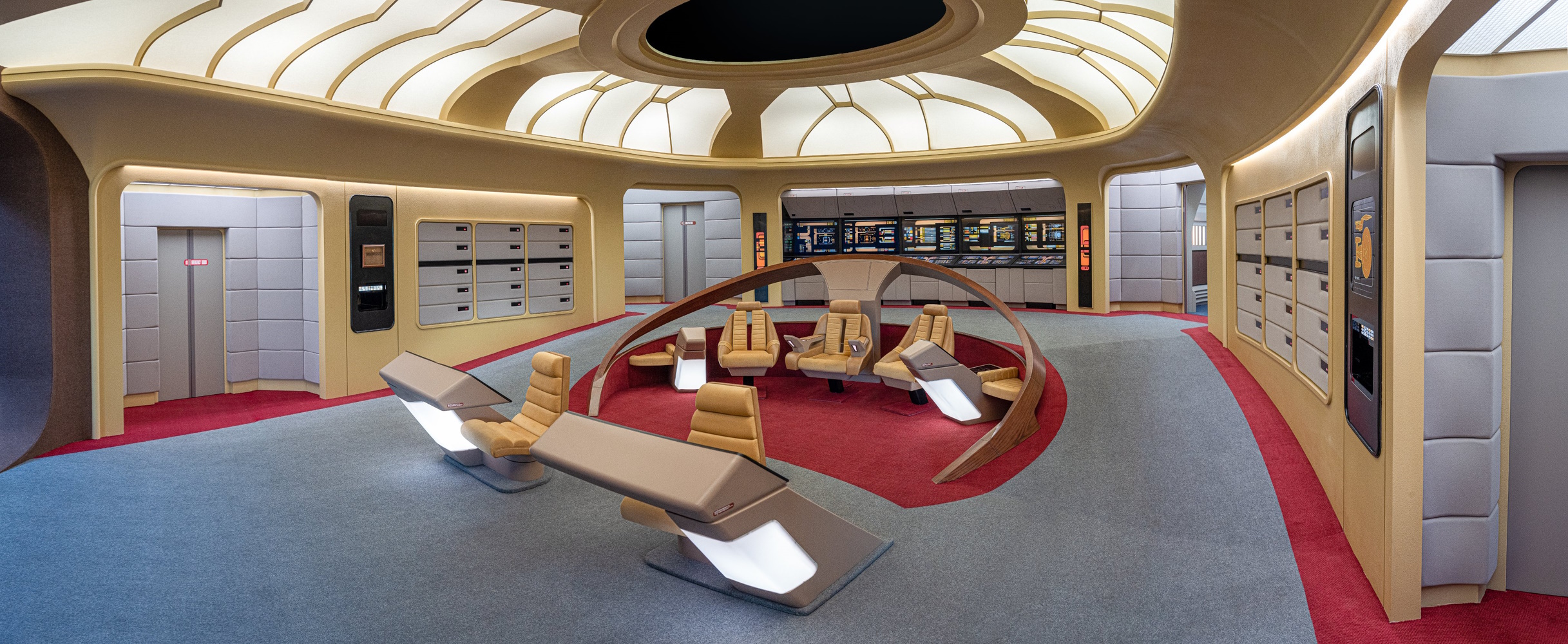
Picard and the crew arriving on the bridge was also an incredible moment. I didn’t know how much of the ship might’ve been rebuilt for Picard – especially with just two episodes in which it would feature. So I wasn’t sure if we were going to get a kind of AR wall/greenscreen mashup as the crew made their way to the ship aboard their shuttle. To my delight, the entire bridge set has been recreated – and it looks absolutely stunning.

The recreated bridge of the Enterprise-D.
Image Credit: Paramount/Dave Blass

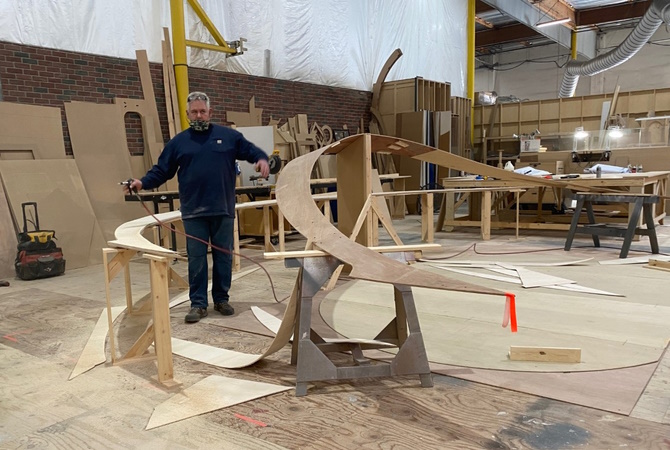
I hope in future the producers and creative team will tell the tale of how they came to recreate the bridge in such detail, because I’d love to hear more about it. A couple of photos have been shown off on social media, but there’s obviously a lot more to say! For my two cents, though, it looks absolutely fantastic – a recreation down to seemingly the last detail, recapturing perfectly the look and feel of the Enterprise-D from The Next Generation.

This is a starship that I’d long ago fallen head-over-heels for, and the Galaxy-class remains one of my all-time favourite Star Trek starship designs. We’d seen a CGI model as far back as Enterprise’s finale, and an up-to-date version in the Season 1 premiere of Picard, but the time dedicated to the flypast in Võx was something special. Seeing the Enterprise-D powering up and departing the Fleet Museum was also something new – though we’d seen similar sequences with other vessels, this is the first time we’d gotten to see it with a Galaxy-class ship.

She’s a beauty!

From Scotty’s love for the Enterprise in The Original Series through to Captain Shaw’s “fanboy” moment with Geordi just a couple of weeks ago, we’ve seen the respect and adoration that Starfleet officers have for their ships. Starships are, in many ways, an additional character in their respective shows – so to see Picard and the crew treating the Enterprise-D as they might an old friend was an incredibly powerful and sweet moment.

This was a starship that was with them through many adventures, a vessel that was their home for seven years, and this reunion feels just as powerful as any interactions between the reassembled crewmates. It actually surpasses some of those moments for me, especially given the weakness of the Data’s resurrection storyline that we’ve discussed over the past few weeks. The restoration of the Enterprise-D is by far the better and more coherent of Season 3’s unexpected resurrections!

Rebuilding the iconic bridge console.

Oh, and I absolutely agree with Picard: starships need carpets! This line was a cute little nod and wink to fans who’ve commented on the lack of carpets aboard vessels in modern iterations of Star Trek – something that has been a minor point of contention in some quarters of the fan community. Beyond mere attention to detail, this is an indication that the writers and producers are fans themselves, or at least are aware of the things that fans pick up on and discuss. Having Picard himself comment on the carpet was cute, but it also shows how the writers and producers are at least trying to keep the fan community on side.

There are absolutely nitpicks and contrivances on this side of the story. Was no one at the Fleet Museum assimilated? How did the shuttle get from Earth to the Fleet Museum so quickly? Will it be possible to operate a Galaxy-class starship with just seven people when it took a crew of roughly 1,000 in The Next Generation? How can one ship – disconnected though it may be – stand a chance against a fleet of newer and more powerful vessels? Why did Geordi install an automatic torpedo launcher on the ship – was he expecting an event like this?

The Enterprise-D departs the Fleet Museum.

These are the structural weaknesses of Võx, and it remains to be seen how and even if they’ll be resolved. As above, several of these points could have been addressed had the season as a whole been better-paced, arriving at this point either an episode or two earlier, or with more explanation and exposition having been dropped in previous chapters of the story. As I said about Seasons 1 and 2 in various ways, the flaw doesn’t lie with the story beats themselves, which are fascinating, but rather with the way in which they were executed.

Even a few days after first sitting down to watch Võx, the emotional side of the story goes a long way to making up for its flaws – but it’s not clear to me whether that will always be the case! If we go back to Picard Season 3 in a few years’ time, will the return to the Enterprise-D still be enough to redeem Võx for all of its contrivances and narrative inconsistencies? Perhaps that’s another conversation we’ll need to have one day!

Picard orders everyone to their posts.

As you can tell by now, I’m conflicted about Võx.

On the one hand, it’s an episode of overplayed tropes and boring clichés, let down by a muddled, incoherent story that didn’t have enough time to properly explain key points. It takes the safest path, killing off the least-important secondary character and finding an incredibly contrived way to ensure that only the characters from The Next Generation would make it to the bridge of the Enterprise-D.

The episode is also hamstrung by what came before it: not only the eight episodes of Season 3, plagued by an over-acted villain who now feels like an utter waste of time, but also by Seasons 1 and 2 and the storylines they introduced. The presentation of the Borg, Borg Queen, and Borg Cube in Võx are very much the lesser versions of those same creations that we saw in earlier seasons – and had those stories not taken place, Võx would be in a much stronger position.

The Enterprise-D prepares for departure.

But despite all of its flaws, I can’t hate or even particularly dislike Võx. The emotional storytelling was fantastic, and maybe this is just the blinkers of pure nostalgia, but I felt that the problems and inconsistencies in the episode melted away in light of the incredible, beautiful sequences with Picard and his old crew – and especially their reunion with the Enterprise-D itself and its wonderfully reconstructed bridge.

It isn’t enough to just throw legacy characters into a story and rebuild sets, and if Võx had presented these elements in a worse way, I think I’d have found it too much, or I’d be saying that the nostalgia card doesn’t cover up any and all storytelling sins. But when watching the episode itself, a combination of clever direction and creative writing, beautiful visuals and a wonderful musical score, and some outstanding and evocative acting performances made the whole thing work. This nostalgia-heavy, deeply emotional story feels like one that was perfectly made for Trekkies like you and me.

Picard and the crew in a promotional photo.

There’s a lot of work for the season finale to do, and I’m really not sure how things will shake out when all’s said and done. I also think we might return to Võx in the years ahead and consider it a little less favourably – particularly if the series ends in unspectacular fashion next time. I’ve tried to treat the episode as fairly as I could, and having sat with it for a few days… the emotional side of the story still really sticks with me, and remains my biggest takeaway from Võx.

I genuinely don’t know what to expect from the finale. There are so many possibilities for where the story could go! Although this feels like an existential threat to the Federation, surely it must be possible for Picard and the crew to save the day, right? But one old starship against an entire connected, Borgified fleet? That’s a tough task right there!

Star Trek: Picard Seasons 1-3 are available to stream now on Paramount+ in the United States and other countries and territories where the service is available, and on Amazon Prime Video in the UK and around the world. The Star Trek franchise – including Picard and all other properties discussed above – is the copyright of Paramount Global. This article contains the thoughts and opinions of one person only and is not intended to cause any offence.
Star Trek: Picard Episode Review – Season 3, Episode 8: Surrender

Spoiler Warning: There are spoilers ahead for Star Trek: Picard Seasons 1-3. Spoilers are also present for the following Star Trek productions: The Wrath of KhanThe Next GenerationDeep Space NineVoyager, and Discovery.

After last week’s admittedly tense and exciting offering took the main storyline of Season 3 to a pretty bland and unoriginal place, I was hopeful that Surrender could steady the ship ahead of the final pair of episodes. What we got this week was, instead, a bit of a misfire.

Parts of Surrender seemed to get stuck in the mud; bogged down, trying to stretch out a story that was too thin instead of moving it along at a more reasonable pace. Yet by the time the credits rolled, I felt that a massive part of the season’s ongoing story had been rushed to an unceremonious – and actually quite disappointing – ending.

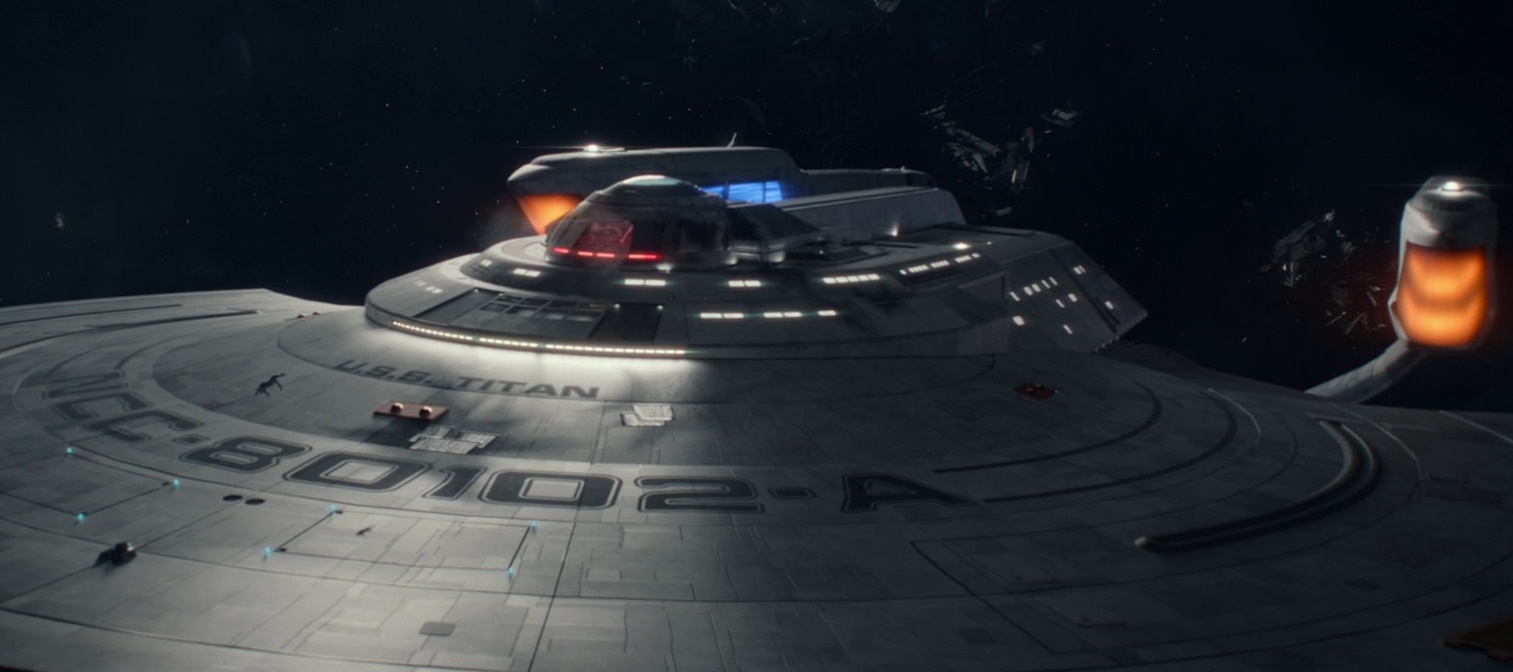
The Titan in this week’s episode.

After teases, brief demonstrations of power, and an acting performance that, to be blunt, was too over-the-top for my taste, Vadic has been killed off. And she died having accomplished… well, remarkably little. The scheme in which she was involved is still playing out, but narratively speaking, Vadic didn’t actually do much of anything except get in Picard’s way and slow down the story.

I’ve said several times as the season has ambled along that we needed to see more of Vadic: to get to know her, where she’s come from, where she hopes to go, and what her plans are for Jack. The reveal of her backstory in Dominion seemed to finally – albeit belatedly – get the ball rolling on that front, but Vadic died this week without telling us anything more. We know that she was a victim of a Section 31 experiment, and that she deliberately took on the appearance of her torturer. But this week, she just… died. And that appears to be all there is to see.

Surrender killed off Vadic prematurely.

Picard is now left with no main villain, no secondary villain, no villain’s starship… but still a conspiracy to defeat. The only possible outcome at this point is a deus ex machina: some kind of Vadic fake-out, Floaty McFloatface’s unexpected re-emergence, or another adversary who will feel like a bolt from the blue. This is the Season 1 problem from a different angle: the final two episodes are going to have to dump a whole lot of exposition, at least one new character, and possibly even an entire new faction all at the last moment in order to have the most basic building blocks of a narrative to work with.

It was always unclear when Vadic and her nameless, faceless goons seized control of the Titan how they would extricate themselves from the situation in one piece – and how Picard and the crew would likewise save themselves. But even as Vadic was blown out into space I was thinking to myself, “okay, she’s a changeling so maybe she can survive the cold.” Then, as Vadic’s body shattered into pieces I was still thinking “well okay, she’s in pieces, but she’s a changeling… maybe she can reconstitute herself… or Floaty McFloatface can do something to pull them out of this situation.” I even wondered if Floaty McFloatface might’ve been left aboard the practically-deserted Shrike. It was only when the Shrike was destroyed that the realisation finally hit me: this is it. They’ve really taken the story down this route.

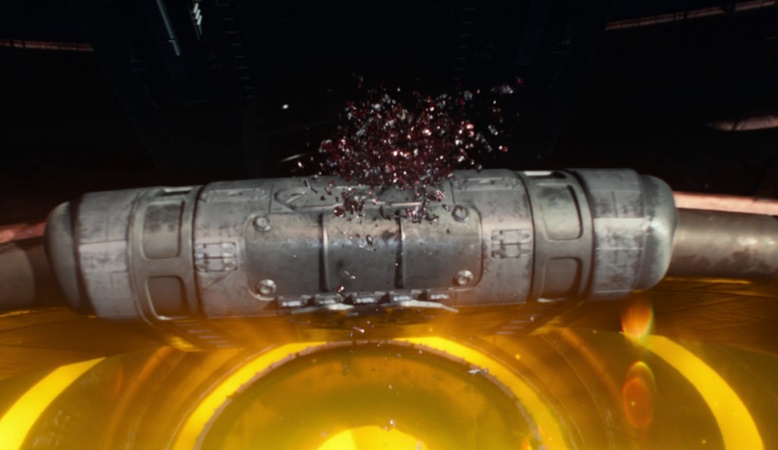
Crunch.

Showrunner Terry Matalas has desperately latched onto the legacy of The Wrath of Khan with Picard’s third season. But can you imagine what The Wrath of Khan would’ve been like if Khan had been killed half an hour before the end of the film – and Kirk and the crew had to rush off to defeat… who, exactly? An unnamed augment ally of Khan’s that we’ve never met? Another villain from The Original Series who hadn’t been mentioned in any way prior to that point? Such a horrible anticlimax would have probably ruined the film.

There’s room for an epilogue in a good story – as we see in The Wrath of Khan itself with Spock’s death and funeral. But there’s a reason why the defeat of the biggest villain in any story should come at the climax of the plot. This is one of the absolute basic, most fundamental rules of storytelling. And I can’t shake the feeling that, whatever may come next, Picard has got it wrong.

The moment of Vadic’s demise.

I said last week that the reveal of Vadic’s history had begun to put her characterisation into some kind of context. But with her death this week, none of that matters. Vadic still feels like a bland, one-dimensional villain stereotype; Khan without any of the interesting bits. A villain needs more than just a vaguely sympathetic backstory – they need a motive, and many of the best ones also have a connection to the hero. Picard and Vadic barely said more than a few words to each other all season long, and her interest in him seems more “business” than anything personal.

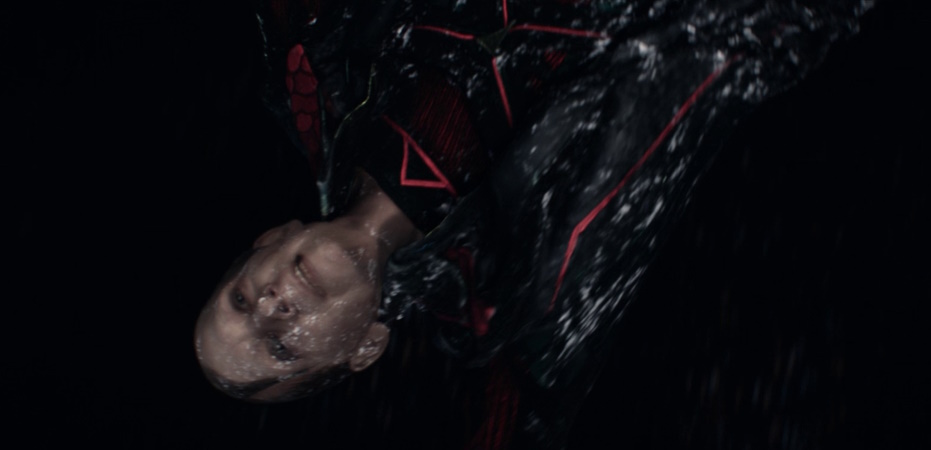
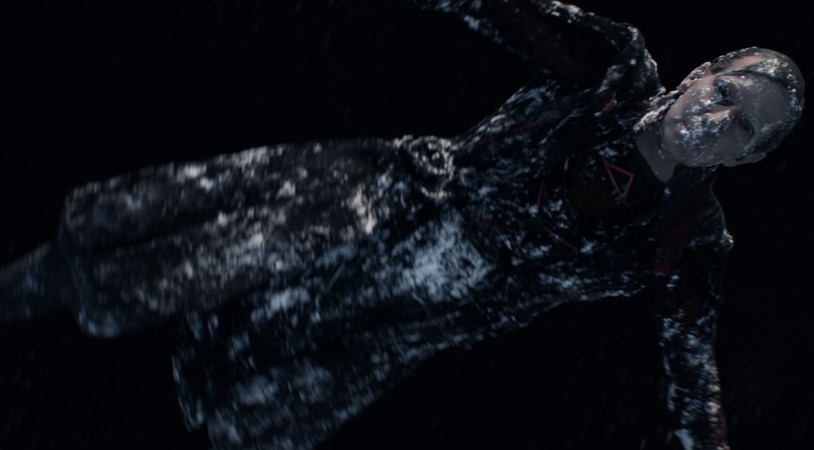
The CGI work used for Vadic’s ejection into space and ultimate shattering end wasn’t spectacular, either, so I can’t even say that this storyline was strangely conceived but at least pretty to look at. As Vadic was blown out into space things seemed to be working, but as soon as the “camera” cut to her icy body, visual quality took a dive. It wasn’t the worst CGI moment I’ve seen in modern Star Trek, but it’s noteworthy that this was supposed to be one of the big climactic moments of the season – and it could’ve looked better.

Welcome to the Uncanny Valley…

Other visual effects work in Surrender was on point, though, and it was really just this moment that didn’t look as good as it should have. Regrettably, this was the most important one to get right – and more should have been done in post-production to shore up what was supposed to be the climactic death of the season’s biggest villain.

This could’ve looked better.

Will we get to find out what Vadic actually wanted? What did she hope to “use” Jack and Picard’s corpse to achieve? These are pertinent questions, and in any other television series I’d say that there are still two episodes remaining, and that we should “trust the process.” After all, the writers and producers wouldn’t just dump entire characters and storylines with no explanation. Right?

But this is Star Trek: Picard – a series with a two-season legacy of doing precisely that. What happened to Narek? What happened to the Zhat Vash, to their beacon on Aia, to the super-synths, to the synths on Coppelius? What was the deal with the devastating anomaly that erupted, and where did Dr Jurati, Soji, and Elnor disappear to? This show has consistently dumped characters and storylines that were half-baked as it rushed off to do other things; Picard feels like the television equivalent of ADHD.

I suspect we’ve seen and heard the last of Vadic.

So I have very little confidence, now that Vadic, Floaty McFloatface, all the goons, and even the Shrike itself are gone that they’ll get so much as a cursory mention next time. Whatever Vadic’s plans may have been for Jack, it seems that they died with her. Although the changelings’ attack on Starfleet and Frontier Day will continue that aspect of the storyline, Vadic and her attempt to capture Jack not only kicked off the entire season, but it’s a plotline that has been running for eight episodes now. For that storyline to end so abruptly, without getting any kind of narrative payoff, is a profoundly strange decision.

Villains die all the time without getting what they want. But we don’t even know what Vadic wanted, what she hoped to use Jack to achieve… and unless I’m being even stupider than usual, I don’t see how it’s something we’re supposed to be able to infer from the scattered pieces of an incomplete puzzle that she leaves behind. Sure, Jack’s powers could be useful to a villain or a changeling, and I can see how Vadic might perceive them that way. But there’s one heck of a leap from “this skill could be useful” to the obsessive chase that Vadic performed – at Floaty McFloatface’s behest, no less. We don’t even know what Floaty McFloatface was, what their objectives may have been, and how all of this was supposed to come together to aid in the conspiracy – a conspiracy that feels already comprehensive and successful enough without whatever additional boost it could have gained from Jack.

Vadic on the bridge earlier in the episode.

All of this leaves Vadic as the one thing she should have never been allowed to become: boring. She’s a bland, uninspired, unoriginal, and just plain boring villain that tried to compensate for it all with a hammy, over-the-top performance. This over-acting could have been justified – had Vadic been more interesting and done… well, anything at all of consequence. But she died as she lived.

For all the flair, for all the ham, and for all the chewing of the scenery, Vadic ultimately did very little. Her two encounters with Picard and the Titan both ended in defeat, and the one possible redeeming quality that she could have had – competence – is also gone, shattered into frozen shards just like her corpse.

Not for the first time in Picard, I find myself saying this: what a waste.

This eight-episode arc has come to an unspectacular end.

It’s hard to see how the next two episodes won’t end up feeling like a complete bolt from the blue; a deus ex machina ending. If Picard was a more episodic series, or one based around multi-episode arcs, perhaps that would be okay. But Season 3 aimed to tell a single story split into ten parts. We’ve defeated the villain at part eight – without explaining who she was, what she hoped to achieve, or really anything about her beyond a tortured past. Where else can the story go from here?

I will caveat everything I’ve just said with two points. Firstly, it can be hard to judge one part of an ongoing story until everything comes into focus. It’s possible, however unlikely it may feel in the moment, that we’ll look back on Surrender much more kindly when the season ends; that something in the upcoming episodes will completely reframe all of this.

Secondly, although my expectations and hopes have been shot to pieces by two seasons of Picard that were difficult at best, I still want to hold out hope for a positive outcome. I don’t make these criticisms out of spite or malice.

The destruction of the Shrike.

Even the better parts of Surrender ask us to overlook things or set logic aside in order for storylines to unfold, and so it was with Riker and Troi. Finally, eight episodes into the promised TNG reunion, Deanna Troi got more than a cameo appearance and had the opportunity to make an impact on the story. That’s fantastic – and while it came too late in the game for my preference, I’m happy that we finally got to see her and spend time with her this week.

I would contend, though, that it’s quite the contrivance for Vadic and the changelings to have put Troi and Riker in the same cell. Their prison wasn’t exactly wanting for empty cells, and having two imprisoned characters sharing their innermost feelings… it’s just a bit of a trope. We’ve seen this before with different characters in more stories than I care to count, and it just didn’t feel especially original.

Riker and Troi shared a cell.

That being said, my only real criticism of this side of the story is that I could have happily spent longer with Riker and Troi. In earlier episodes, the death of Riker’s son had been a big part of his more cautious approach to the captaincy of the Titan, and caused a big fight with Picard. The scenes in which he and Troi talked it out seemed to pass by quite quickly – indicative, perhaps, of Surrender rushing around trying to tie up loose ends ahead of a major change in focus in the next two episodes.

Riker and Troi also seemed to drop into the story a point that could have been explosive – Troi “entered” Riker’s mind to remove some aspect of his emotional pain. Did Troi, who is empathic but not telepathic, learn this skill from Sybok? We’ve never seen her do anything like this before, yet it was raced past as almost a throwaway line in Surrender. You’d have thought Riker might’ve been a bit more angry about such a manipulation – but again, the story didn’t spend very long at all dealing with this idea.

Riker and Troi had a difficult conversation.

I wonder if this notion of Troi “taking” something out of someone’s mind may have been set up in Surrender so that it can come into play in the next couple of episodes. We’ll save the speculation for my theory update, but it could be that Troi may use this ability again to help Jack – or even Picard.

In terms of both emotion and entertainment value, the scenes between Troi and Riker were among the best that Surrender had to offer, and although parts of their conversation felt curtailed by an episode that spent most of its time and focus elsewhere, what we did get to see was good enough to make Deanna Troi’s return to Picard a successful and enjoyable one.

Riker and Troi appear to have reconciled.

Worf’s rescue mission also added a lot to this story – though to nitpick still further, there are a few points that weren’t clear. When did Worf install the stolen cloaking device aboard a shuttlecraft? Why are Worf and Raffi no longer using La Sirena – and have we now seen the last of that ship? After tripping the alarms, how did the away team escape? And when did they find time to lower the Shrike’s shields and deactivate its weapons systems?

Again, this part of the story felt cut down – and when other parts of both Dominion and Surrender seemed to be deliberately slowing things down and padding out a relatively thin story… I could have happily traded some of the scenes with Picard, Jack, and Geordi for a bit more of Worf, Raffi, Riker, and Troi aboard the Shrike.

When was the cloak installed aboard this shuttle?

Worf’s reunion with Troi was cute, though – and I think I detected a nod and a wink at the failed romantic plotline that the two engaged in near the end of The Next Generation’s run. Riker’s reaction to it was Surrender’s moment of comedy gold, and Jonathan Frakes’ comedic timing is as on point as ever!

Since we’re talking about Worf, there is something that’s been bugging me since he returned to Star Trek, and the reunion with Troi kind of shot it back into focus. All season long, Worf hasn’t mentioned his marriage and widowhood. In Deep Space Nine, Worf’s relationship with Jadzia Dax, and his response to her death, was a huge part of his character arc – and to be honest, it went a long way to making Worf into a more relatable character. Worf hasn’t so much as mentioned Jadzia… and even though time has passed and Worf has taken on a more calm and ethereal personality, it wouldn’t have gone amiss if he’d said something about her. As Worf was reunited with Troi, and seemed to be flattering her, harkening back to those episodes in The Next Generation’s seventh season… I felt this absence all the more.

Riker and Troi embrace Worf.

Raffi hasn’t had much to do over the past few episodes really, and that unfortunate theme continued this week. Whatever work she was doing aboard the Shrike when Worf, Troi, and Riker reunited with her seemed to be little more than set dressing; a backdrop for the others to have their conversation in front of. Raffi’s first meeting with Deanna was neat, as both women acknowledged one another and continued to work, but that was all.

Aboard the Titan, Raffi got a well-choreographed sequence of explosive action, and I won’t deny that it looked fantastic – a great performance by Michelle Hurd to pull off some fast moves. But aside from the questionable idea of stabbing changelings to death, when they’re entirely comprised of a nondescript liquid, I just feel like we’ve skipped about a dozen steps. Raffi has clearly been working and training with Worf to hone her skills – but almost all of this has evidently happened off-screen. It’s not bad per se, but it’s another indicator in my view of the fact that Picard still hasn’t found enough time to spend with all of its characters.

Raffi aboard the Titan.

I’ve had a lot to say about Data since his resurrection a couple of weeks ago, and I won’t repeat it all this time. You can go back to earlier reviews to see more details about why I think it’s hard to justify. But I will say that I’m glad that Picard didn’t completely ignore Data’s earlier death in Surrender, and was able to give a passing acknowledgement to the events of the Season 1 finale and Picard’s experience with Data in the digital afterlife. This moment – which was only a couple of lines, really – could certainly have been expanded, but given that the writers have ignored so many other story beats from both Picard’s earlier seasons and from other iterations of Star Trek, I want to give credit where it’s due and say that I appreciate the effort here.

As someone who’s never been much of a fan of Lore, I had a bit of a chip on my shoulder going into Season 3. And in Surrender, we got to see Data and Lore clash for what appears to be the final time. For me, this sequence was an unnecessary stumbling block; a sequence of pure padding that added nothing to either the episode or the season itself. Given the issues with Vadic that we talked about above – and the fact that, to be blunt, we could easily have spent more time with at least half a dozen other characters – this easily-resolved Data-versus-Lore idea is something I wouldn’t have opted to include at all.

I wouldn’t have bothered with Lore.

Similar to Vadic, Lore was relatively easy to defeat and accomplished very little from a narrative point of view. And as with Data, Lore is a character who I didn’t feel needed a resurrection and minor epilogue. His defeat in The Next Generation two-part episode Descent could have been left alone, and for my money, we’d already seen enough of Lore. Bringing him back could have served more of a purpose – he could have been connected, in some way, to the conspiracy, as he’d been present at Daystrom Station during the rogue changelings’ raid, just as one example.

If the decision had been taken to resurrect Data – a decision that I’ve already outlined my fundamental disagreement with – then perhaps in such a busy story, Lore should have been left behind. This aspect of Surrender brought a few sweet moments as Data looked back over some of his treasured memories… but a nostalgia overload on its own is not a justification for such a convoluted story.

This sub-plot felt like padding.

I will hold up my hands and confess that Data’s memories, all of which were represented by props and objects from The Next Generation, was one of Surrender’s most emotional moments. Although this storyline wouldn’t have been one I’d have chosen, Brent Spiner played it exceptionally well, and the sequence hit many of the right emotional notes. As someone who first came to Star Trek in the early 1990s by way of The Next Generation, this walk down memory lane – figuratively speaking – was incredibly sweet for me.

Seeing Spot, Data’s cat from The Next Generation, was perhaps the highlight of this sequence. As a cat owner myself, I always appreciate seeing cats in stories like this, and Data’s line about Spot teaching him how to love was beautiful – and it brought a tear to my eye.

Best moment in the episode.

Perhaps the reason why I found the Data-Lore clash so unsatisfying was that it never really felt that Data was in danger. Even as Geordi and Picard watched the “map” of the golem’s brain being taken over by Lore, Data’s importance to the story meant that defeat here never felt like a realistic prospect. As Data surrendered his memories to Lore, it seemed obvious what he was doing – by taking on Data’s memories, Lore became Data. And so it proved.

As a result, this sequence – and particularly the parts with Picard and the others staring blankly at computer screens – didn’t feel tense and exciting, it felt frustrating. It was padding, and it got in the way of what could have been a more interesting story with Vadic and Jack on the bridge. In spite of the emotional highlights that Data’s reminiscences provided, this entire sub-plot feels like one that could have been skipped.

Picard, Geordi, and the others spent a long time in Surrender just staring at this screen.

Criticisms like this next one can feel like nitpicking, and I suspect that, had the main thrust of the narrative been stronger, we wouldn’t be talking about it. With that caveat in mind, however, two major changes were made this week, and they seem to have come unnaturally at the whim of the plot. The ease with which changelings could be killed is the first one – Vadic and her henchman last week took multiple phaser blasts and shrugged them off, but this week, Raffi and Worf were literally killing changelings left, right, and centre. A single stab wound seemed to take down most of them – and a single phaser blast was enough to vaporise them.

Then there’s the number of people involved; both the changelings and the crew of the Titan seemed to grow in numbers from nowhere. Last week, Jack and Sidney ran through deserted hallways, but in Surrender, there seemed to be dozens of Starfleet personnel still aboard – despite Ro moving most of the ship’s complement to the Intrepid a couple of weeks ago. Vadic’s crew’s numbers also seemed to fluctuate – and apparently she took all but one of them with her to the Titan.

The effort and energy required to kill a changeling seem to shift depending on the desires and whims of the writing team.

These points, in a stronger story, might’ve passed unnoticed – or ended up as nothing more than bullet points right at the end of a review in a kind of “huh, that’s a bit silly if you think about it” way. But because they seem to contribute to a bit of a muddled storyline – one that ended in unexceptional fashion – the sense of disappointment in some of these things is inflated.

Any story has to have a degree of flexibility – and I get that. But one of the foundations of suspension of disbelief, at least for me, is that a story must be basically internally consistent. The number of Vadic’s goons and Titan redshirts, and the damage a phaser hit does to a changeling were all far too inconsistent, serving the whims of the writers in a way that ended up feeling unsatisfying.

Does stabbing a changeling to death make sense? A big part of me says “no.”

The way Vadic spoke to and about Jack in earlier episodes didn’t get any kind of payoff this week, even as the two of them came face to face for the first – and last – time. That was a disappointment, and for all the hot air that was blown on the bridge during their standoff, I don’t feel that their chat moved this plotline in any significant way. We’d already seen Jack’s hallucinatory experiences, and while Vadic hinted at the fact that she knew what he was seeing and, most significantly, what it could mean, she died before she could explain herself.

The fake-out with the grenade was clever, and the prop used for the explosive that Jack was holding was a neat one. We got to see other characters use these explosives in earlier episodes, but even if we hadn’t, I think it was pretty clear what Jack was meant to be holding. This aspect of Picard’s plan actually worked – and it’s the only moment since Vadic and her goons boarded the Titan that actually feels like it was planned. That it relied entirely on Geordi’s work with Data is… well, troublesome! But if we set that aside, I liked that Jack went to the bridge with a clear plan.

Jack with the fake grenade.

Because part of Jack’s plan required him to literally stall and delay Vadic while the Data-Lore clash was going on, some of these scenes on the bridge dragged. Vadic danced around her knowledge of Jack without actually revealing anything significant, and all of that contributed to the sense that Surrender wasn’t an especially well-paced episode. What was intended to be tension ended up feeling more like frustration.

I’m in two minds about the way in which Vadic was killed. On the one hand, it feels like a clever plan – overriding the emergency hatch and blowing her out into space. On the other… the way it was executed came across as unintentionally humourous rather than exciting and action-packed. Seven of Nine – who has had remarkably little to say and do all season long – got the Air Force One hero quip, but that kind of fell flat for me. Again, a bit of an unoriginal idea, and one that has been parodied to death. Because Seven hadn’t said more than two words to Vadic the whole time, it also felt unearned.

Get off my plane… uh, I mean bridge.

Seven finally got her clash with Captain Shaw, and while it probably wasn’t the right moment for an emotional blow-up about deadnaming, it was something that had been a long time coming. Had this conversation come at a better time – when they weren’t in immediate danger, perhaps – more could have been made of it. But as it is, it was fine.

After Vadic had been defeated and Shaw returned to the bridge, he seemed to behave as if he had a newfound respect for Seven. We didn’t get to see much of that, because this sequence was relatively short, but it’s something we might get a second glance at before the end of the season. I’m not sure. If what we got in Surrender is all we’ll see, then I’d give this storyline a grade C: a basic pass. Earlier episodes set up a clash between these characters, built upon it, and Surrender brought it to a head. It wasn’t strictly necessary, especially given the relative unimportance of the two characters involved. But it wasn’t handled badly.

There was a resolution (of sorts) to the Seven-Shaw conflict.

Not for the first time this season, I find myself without much to say about Picard himself – which is odd when you consider the name of the series we’re watching! Picard contributed his ideas to the plan, and at least part of that seems to have worked. However, in Surrender, Picard himself was relegated to standing around, waiting for other characters who were more directly involved in key storylines to actually move the plot forward. Again, this was something that could feel frustrating.

In both previous seasons of the show, Jean-Luc Picard was at the heart of the adventure… for better and for worse. But this time, it feels like he’s being swept along by a narrative current that’s entirely outside of his control. Vadic’s conspiracy got things started, Dr Crusher told him the secret of Jack’s existence, Ro explained how Starfleet was compromised, Worf and Raffi did the legwork, Riker’s away team went to Daystrom Station… and the past couple of weeks, it fell to Jack, Sidney, Geordi, Data, and Seven to take most of the actions involved in advancing the story. Picard spent most of his time standing around, staring at screens.

Picard didn’t have much to do this week.

After Worf, Riker, Troi, and Raffi returned to the Titan, we finally got that “the gang’s all here” reunion, as Picard and the crew sat around the conference table. It was a sweet sequence, and some of the characters exchanged pleasantries and talked about how they’d missed one another. It was also a moment that the series has been trying very hard to build up to. In context, I guess I have to say that it worked as well as it could’ve. And again, there’s no denying that it successfully plucked some of the nostalgic chords that it was aiming for.

I never felt that Picard should try to be “The Next Generation Season 8.” In fact, when the series was first announced, I was looking forward to seeing new characters, new stories, and Star Trek moving its internal timeline forwards for the first time in almost two decades. This reunion is, for me, a bittersweet one. It’s great to see everyone back, and I have to admit that the series has managed to find narrative justifications for everyone’s inclusion – even if some of them are more than a little convoluted! But at the same time, the promised “passing of the torch” never happened, and the new characters that had been created in earlier seasons have all been left behind. Even at the conference table, Seven, Raffi, Shaw, Jack, and the La Forge sisters were absent.

The gang’s all here.

With two episodes left, I fear that Picard has been shot in the foot. The lack of a named villain heading into the final chapter of the story risks making whatever comes next feel like the dreaded deus ex machina, and after all of the problems and flaws in both Seasons 1 and 2… it’s disappointing in the extreme to think that we’re about to walk an all too familiar path. Season 3 has had its highlights, don’t get me wrong, and I’m keeping my fingers crossed that it will end on a high, too. But Vadic’s death this week feels like a major stumble.

Surrender was also an episode with pacing difficulties. It got bogged down in too many places, spending too much time on ultimately unimportant minutiae. It stretched too little story too thinly across the runtime of an entire episode when some scenes could have been shaved down – or cut entirely – to allow for more explanation of Vadic, her connection to Jack, and her ultimate ambition. She died without explaining any of that – and her death leaves her feeling bland, uninteresting, and almost like a parody of better Star Trek villains.

Vadic died before she could reveal her connection to Jack.

Because of the way both of Picard’s earlier seasons landed, I can’t shake the feeling that this episode marks a turn for the worse, and that lessons that should have been learned have not been heeded. I desperately want to be able to tell you that I’m excited to see what comes next and that I’m confident that a solid, creditable, and narratively coherent ending has been written – and that next week will be a roaring return to form. But I can’t in all honesty say that.

In spite of the way Vadic had landed for me, I was hopeful that last week’s exploration of her personal history had set the stage for some of that crucial understanding that had been missing from her character. Because of her death this week, and the apparent wrapping up of her storyline and that of her crew on the Shrike, I don’t believe we’ll get that now. The next chapter of this story will be the unravelling of Vadic’s conspiracy – and the defeat of the remaining changelings. I hope that will be satisfying enough to plug what feels like a gaping narrative hole… but to be blunt, I doubt it.

Troi at the end of the episode.

As we head into the final two episodes of the season – and the series – I’m fighting hard against feelings of disappointment and dejection. The return of The Next Generation characters had already thrown a question-mark over this season for me, especially because of the unfinished stories left behind in Seasons 1 and 2. Vadic’s death feels like the continuation of a particularly disappointing theme, and I’m struggling to see where the story could possibly go from here.

I have desperately wanted to enjoy Picard, and to support the Star Trek franchise as it returns to the characters and stories of my favourite era. So far, despite some strong episodes, wonderful performances, and interesting concepts, the series as a whole has failed to deliver. Can the final two episodes of Season 3 rectify that… or at least ensure that it goes out on a high? I’m crossing my fingers. But I’m sceptical.

Star Trek: Picard Seasons 1-3 are available to stream now on Paramount+ in the United States and other countries and territories where the service is available, and on Amazon Prime Video in the UK and around the world. The Star Trek franchise – including Picard and all other properties discussed above – is the copyright of Paramount Global. This article contains the thoughts and opinions of one person only and is not intended to cause any offence.
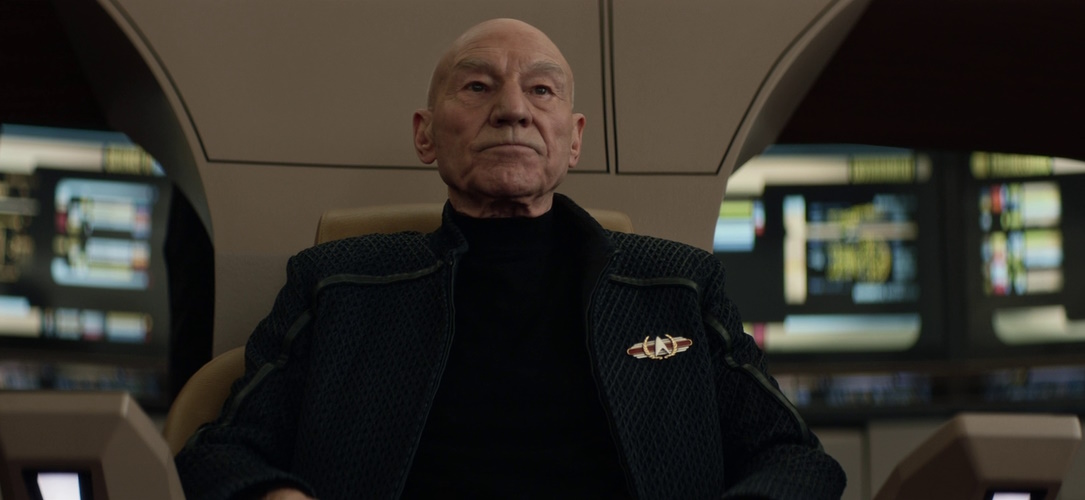
Star Trek: Picard Episode Review – Season 3, Episode 7: Dominion

Spoiler Warning: There are spoilers ahead for Star Trek: Picard Seasons 1-3. Spoilers are also present for the following Star Trek productions: The Wrath of KhanThe Next GenerationDeep Space Nine, and Voyager.

Dominion was undeniably a fun, fast-paced, exciting episode; a thrill ride that kicked Picard’s third season into a higher gear as the plot builds to its climax. It was also an episode that shone a light in some very dark places, and did what Star Trek has always done so well: used its science-fiction setting to think about some of the issues facing us out here in the real world.

Having sat with Dominion for a couple of days, though… it isn’t actually an episode that I particularly enjoyed. It had some explosive moments of action, some engrossing moral quandaries, a sequence between two of my favourite characters from The Next Generation that was tense and emotional, and was backed up all the way by some great writing and some truly outstanding acting performances. But I didn’t actually like much of what the episode brought to the table from a narrative standpoint.

The USS Titan in a scrapyard.

As we discussed last week, the decision to resurrect Data is not one that I would have made. There are some deceased Star Trek characters who, for one reason or another, didn’t get a proper send-off – and I argued just last year that the main characters from Seasons 1 and 2 of Picard are themselves in that category. But Data, more so than practically any other Star Trek character, had been laid to rest. His resurrection not only undid all of that, but it takes away one of the few successful moments from the finale of Season 1 – one of the very few threads keeping the ending of that season together.

And this week, I’m sorry to say that despite incredible performances from both Brent Spiner and LeVar Burton as they wrangled with Data’s apparent return… this storyline hasn’t yet justified itself. I can buy technobabble explanations in Star Trek for all manner of things – that comes with the territory in sci-fi. But you have to admit that few characters in the franchise had been killed as definitively – and as often, in different ways – as Data, so any rebirth or resurrection has a significant obstacle to overcome. I wouldn’t have even attempted it – the technobabble excuse feels like something straight out of fan-fiction – but now that it’s happened, there has to be some kind of narrative or storytelling justification for it. And there isn’t.

The resurrection of Data (and Lore) continues to be a drag on the story.

The resurrection of Data has also brought back Lore – and Lore’s intervention this week led to a storytelling trope that I’ve never enjoyed: the “heroes’ base is captured and they’re all taken prisoner” cliché. Discovery did this a couple of seasons ago, we’ve seen it in Deep Space Nine, too, and on countless other occasions in sci-fi and beyond. To me, these storylines always feel so incredibly forced, as if a particularly uncreative writer couldn’t find a better way of adding tension to a story. And that’s how Vadic’s capture of the Titan feels to me.

If the premise underlying this takeover was stronger, perhaps some of that frustration would’ve melted away. But it came about as a combination of a poorly-defined plan from Picard and Dr Crusher – a plan that was executed terribly, too – and Lore’s shenanigans. What was already a disappointingly overused trope ended up feeling even less appealing as a result.

Vadic in the captain’s chair of the USS Titan.

I’ve never been much of a Lore fan. The “evil twin” angle was an interesting one in some ways… but even after a mere four appearances in The Next Generation, spread out over several years… Lore had already worn out his welcome, at least for me. He’s as one-dimensional as they come, feeling akin to a Mirror Universe character in some respects, and I’ve just never found him to be of much interest. Stories in which he would attempt to take Data’s place or convince his brother to betray his friends just never stood out to me as being among The Next Generation’s best.

And I think I should be up-front about that – I have a bias against this character that’s been running for some thirty years or more! When it was teased that Lore would play a role this season, this feeling being dragged back up is precisely what I feared would happen – and so it proved in Dominion. As we’ve said in earlier episodes about Vadic: a villain needs some kind of motivation. Lore is “evil for the sake of it,” and I find that deeply unsatisfying. It was unsatisfying in The Next Generation and it was unsatisfying in Dominion, too.

I’ve never been the biggest fan of stories that included Lore.

The saving grace on this side of the story should’ve been Geordi – and the wonderfully emotional performance that LeVar Burton put in as Geordi tried to reach out to his long-dead friend. Burton deserves an award for his scenes this week, as they were absolutely riveting to watch. In fact, in just two episodes, Geordi has quickly become one of the best characters in Picard, and LeVar Burton has been hitting all of the right notes consistently. But it’s a scene that just… didn’t need to happen, at least not this way.

We’ve basically had this conversation and this scene before: it came between Data and Picard at the end of Season 1. Geordi’s reunion with Data, and his attempt to reach out to him and break through Lore’s control, feels like a rehashing of those conversations between Picard and Data. In spite of what has to be one of the single best acting performances in all of modern Star Trek, these scenes just don’t add much to the story. Geordi could have expressed his sorrow at Data’s death to Picard, or to Altan Soong if the character hadn’t been unceremoniously killed off. Bringing back Data still isn’t sitting right with me.

This was a masterful performance from LeVar Burton.

I’ve talked before about the “snowball” in media criticism: a few big or fundamental criticisms of a story get things rolling, and before you know it, the “snowball” is picking up speed, finding more and more elements of a narrative to pick on and single out for criticism. And because of how the Data-Lore resurrection has landed for me, I find myself pulling at threads on this side of the story that would have probably passed unnoticed otherwise.

For example: how was Lore able to break out and effectively seize control of the ship? The answer seems to be “because plot,” and that’s just never a very satisfying explanation – especially given the high stakes. It’s hard to see how Vadic would have been able to take control of the ship had Lore not intervened, so the main thrust of Dominion’s narrative now appears to unfold thanks to a succession of unlikely, unpredictable coincidences one after another.

Lore’s escape wasn’t well-explained.

Alright, enough about my gripes about Data’s resurrection and my dislike of Lore! There’s no denying that LeVar Burton’s performance this week was outstanding, and when watching his big emotional scene with Data in particular, it was easy to put all of those concerns and criticisms out of my mind. Burton has made this older, more mature version of Geordi a real tour de force, and he’s brought far more to the table than I could have expected. If there are to be any future Star Trek projects set in this time period, they’d damn well better find a way to include Geordi – because I’m not ready to say goodbye!

It made sense for Geordi to be the one working with the Data-Lore golem, given his experiences with Data in The Next Generation, and I felt the setup for this story was handled about as well as it could’ve been. Geordi’s line that this golem is significantly more complicated than Data was also a helpful bit of exposition! Given that we’ve heard these new generation synths referred to as “flesh-and-blood” creations, maybe Dr Crusher, not Geordi, should have been examining the golem? Food for thought, at least!

Geordi was working on the Data-Lore golem.

I have to admit that I was sceptical about Mica Burton – LeVar Burton’s real-life daughter – playing Geordi’s on-screen daughter Alandra. I’d been vaguely familiar with Mica Burton’s work as a presenter from Star Trek Day a couple of years ago, and her stint on a YouTube gaming channel a couple of years before that. But I felt that she was untested as an actor, having only had a couple of bit-parts before now. This felt to me like “stunt casting;” bringing an actor into the series not on merit, but due to a combination of her parentage and a desire to make headlines. A “nepo baby,” to use some contemporary slang.

And… well, I’m not wrong about that. But I’ve been pleasantly surprised to see that Mica Burton has put in two solid, perfectly creditable performances in the episodes in which she’s appeared so far. The character of Alandra La Forge, while not exactly front-and-centre, adds something to this story, and has given Geordi both an assistant and a dependent, all while managing to feel like a rounded character in her own right. We’ve started to see some great things from Sidney La Forge over the last couple of episodes – and I hope that there will be time before the season ends to give Alandra a moment in the spotlight, too.

Geordi and Alandra La Forge.

Before we get into other big stories, let’s talk briefly about another surprising character: Tuvok! Or should that be “the changeling formerly known as Tuvok,” because after what had been a great sequence between Tuvok and Seven of Nine, this character reunion was ripped apart. It was dramatic and exciting – but perhaps not how I’d have chosen to bring back an actor for what may turn out to be their final Star Trek appearance.

As a moment of pure shock value, I think the revelation that Tuvok was a changeling worked incredibly well. And I’m holding out hope that the real Tuvok might make an appearance before the end of the season – I mean, the changelings have to be keeping all of these prisoners alive somewhere, right? Maybe we should save the speculation on that for my next theory update!

The changeling formerly known as Tuvok.

It was a bold move to bring back a character in this way, perhaps even more so than killing off the likes of Hugh and Icheb in Season 1. Tuvok was a main character for all seven seasons of Voyager, and aside from a tiny voiceless cameo in Lower Decks last year, this is the first time we’ve seen him since. Bringing back Tim Russ to play a changeling imposter feels like a very brave call – one that could’ve backfired. I think Dominion managed to make it work, though – and it was a real twist to bring back Tuvok and seem to set him up as an ally, only to rip it away mere moments later in the same sequence.

I’d love to see more from Tuvok, though – and get a genuine reunion with Seven of Nine. In a story with Worf, there’s also scope to put these two characters together. Worf and Tuvok were both security chiefs and tactical officers – but they were very different characters who had conflicting approaches to the role! Even now that Worf has entered his transcendental meditation phase, it could still be a lot of fun to put him together with Tuvok for a scene or two. A Trekkie can dream, eh?

The scene between Seven and Tuvok was bold… and a lot of fun.

Speaking of Worf, he was absent this week – along with Raffi, Riker, and Troi. There are now only three episodes left for Deanna Troi to make any kind of impact on the story, having had only a couple of blink-and-you’ll-miss-it cameos so far, so I really hope that she’ll have something major to say and do soon.

Despite being billed as a reunion for the characters, there hasn’t yet been a single scene or sequence in which Picard and his old crew are back together – with different characters or pairs of characters largely in their own narrative boxes, not really interacting with one another. Before the season is over, I hope that there will be something for everyone to do – but perhaps more importantly, their effort to stop Vadic and the rogue changelings should feel like a collaborative effort. In Season 2, splitting up the main characters for much of the story led to a number of issues – and I sincerely hope that won’t be the case this time around. But it’s noteworthy, at this stage, that the promised reunion still hasn’t materialised, and that several main characters haven’t gotten as much to do as I’d hoped.

Is Riker, as the changeling claimed, already dead?

As Jack’s superpowers continue to manifest, it’s now more than obvious that there’s more going on with him than we’ve learned so far. This week, we saw him “take over” Sidney La Forge, using his newfound combat skills to defeat a nameless goon who appears to serve as Vadic’s second-in-command.

This sequence, by the way, was exceptionally well choreographed. It must have been one heck of a challenge for actors Ed Speleers and Ashlei Sharpe Chestnut (or their stunt doubles) to perform these difficult acrobatic moves in total synchronisation, but the way it came across on screen was just fantastic. Few sequences in modern Star Trek have managed to feel truly new – but this was something that the franchise hasn’t ever done before, at least not as far as I can remember! It was fantastic to watch, and while it may not have been the most intense action sequence ever brought to screen, it was incredibly clever – and it marks the beginning of a new phase in the stories of both of these characters.

This sequence was exceptional.

The exciting and beautifully choreographed fight was almost enough to make me forget the horrible contrivances that led to it. Almost! I stand by what I said before: Lore’s involvement in this story, messing with forcefields and transporters at precisely the right moment, was one heck of a contrivance. While we got an exciting sequence with Jack and Sidney as a result, that alone isn’t enough to justify it – and too many forced coincidences like this make for a particularly weak narrative foundation.

As the fight simmered down, one moment really stuck with me. As Sidney looked at Jack, she had a mixture of fear and shock in her eyes; that moment, as Sidney realised that she’d just been – for want of a better term – “possessed” by Jack, was exceptionally well done. Once again, Ashlei Sharpe Chestnut excelled.

Dominion was a great episode for Sidney La Forge’s characterisation.

There was potential in the “let’s lure the baddie into a trap” idea that was posited by Dominion, but it quickly fell apart. The writing on this side of the story failed to set up a narratively coherent plan, and when we’re dealing with experienced officers like Picard, Seven, Dr Crusher, and even Captain Shaw, the fact that their plan was so flimsy, and fell apart so easily, doesn’t make for a satisfying presentation. There were other ways to have Vadic commandeer the Titan – if that was the episode’s required outcome – without going through this long and convoluted rigamarole.

Splitting up their forces, having poorly-armed ensigns with little combat experience literally running around the deserted hallways of the ship, and allowing the much more powerful Shrike to transport a group of changelings aboard the Titan are all indicators of a poorly-formulated – and poorly-written – plan, one that was clearly written in order to arrive at a particular outcome. Some of the specifics of this plan feel incredibly flimsy, too: where did the Titan’s crew acquire the wreck of a Vulcan ship, and how were they able to convince Vadic of its authenticity?

This plan was neither well-conceived nor well-executed.

All of this, however, led to two interesting revelations about Vadic. The smaller revelation concerns the character I’ve dubbed Floaty McFloatface (Star Trek: if you don’t want fans to give silly names to your characters and factions, name them yourself). It now seems as if Floaty McFloatface may not be a changeling – or at least, not the same kind of changeling as Vadic herself. We won’t get too deep into speculation here – and I’ve been wrong about Vadic and Floaty McFloatface before – but suffice to say that there’s a complexity to their relationship that was spoken to, albeit rather briefly, this week.

I’ve been saying for weeks that we need to spend more time with Vadic, and to come to understand what’s been driving her all this time. It still seems as if Vadic’s desire to capture Jack Crusher stems from orders from Floaty McFloatface – and not, as Picard and Dr Crusher repeatedly assumed, in order to steal his DNA to make a copy of Picard. But we found out a lot more in Dominion about where Vadic came from – and it was in equal parts incredibly dark and absolutely riveting.

Vadic and Floaty McFloatface have a difficult relationship.

By coincidence, I’ve recently been re-watching Ken Burns’ documentary The Vietnam War, and with all the talk this week of torture and rogue military operations, I felt echoes of that conflict – as well as more recent wars in Afghanistan and Iraq. I think we can absolutely see Vadic’s story in Dominion as a cinematic response to American foreign policy over the past few decades, and a reflection of how the country is coming to terms – or failing to come to terms, in some cases – with its own recent history.

One of the lessons of Vietnam that was sadly not learned by the time of Afghanistan was an oft-repeated line that America was “creating its own enemies.” Every house burned down, every village raided, every bomb dropped… all of these things created more Viet Cong or Taliban fighters, and this is the lens through which I see Vadic’s story. By torturing and experimenting upon Vadic and the other changelings – implied to be the crew of the Shrike – Starfleet has inadvertently created another enemy for itself.

Starfleet (or Section 31, at least) is responsible for making Vadic into the villain she became.

However, there are a couple of queries I have about this revelation. They aren’t yet “problems,” let alone “plot holes,” but parts of this backstory for Vadic seem to come dangerously close to contradicting what we know of the rogue changelings and their scheme from earlier episodes. Worf, for example, specifically told us that this group of changelings had departed the Great Link following a schism, implying that these rogue changelings may be those who rejected Odo’s path of peace.

Secondly, the number of changelings involved in this conspiracy feels massively inflated based on what Vadic told us. She said that she was one of ten changelings being experimented upon, yet there are clearly far more than that. We’ve already seen at least seven killed – and that doesn’t account for Vadic and her crew. While she did say that she could pass along the abilities that she had developed to other changelings, it still doesn’t seem to add up. Ro seemed to think that all of Starfleet was compromised, and that there could be changeling infiltrators aboard multiple ships. If the original group consisted of just ten members, where have all the others come from?

Vadic and her crew.

I’ve always felt that there was a conscious effort on the part of the writers and producers of Deep Space Nine to present the Dominion War as a conflict akin to the Second World War – something we see quite prominently in the show’s finale at the signing of the Treaty of Bajor. But there were definitely Vietnam War influences during Deep Space Nine’s run, too. Episodes like Change of Heart, which prominently featured a “jungle” setting, spring to mind – as does The Siege of AR-558, which was directed by Vietnam veteran Winrich Kolbe.

But there was an even darker tone to the story Vadic told us this week, something that echoed less the Afghanistan War and more the human experiments performed in concentration camps. We’ve always known that Section 31 was willing to go to extreme lengths on behalf of the Federation – even violating Federation law. But when we saw the virus they created in Deep Space Nine, we only saw its effects. This time, we saw the process – the torture that Vadic and her fellow changelings endured.

Vadic’s torturer.

Since its emergence in Deep Space Nine more than twenty years ago, Section 31 hasn’t sat right with a lot of Trekkies – and I get that. This organisation is about as far from Gene Roddenberry’s vision of a more idealistic and enlightened humanity as it’s possible to get. But the idea that Section 31 represented has always been a fascinating one for me: that there’s someone in the background, working behind the scenes, to preserve the enlightened future that humanity has struggled to build. Section 31 sees itself as defending the Federation – even if it has to violate every single Federation principle and law in the process.

In this case, the question is perhaps a bit less interesting. It feels a lot easier to say that Vadic’s torture was wrong – because it was ultimately unnecessary. It was designed, at least according to Vadic, to allow the creation of a weapon – changelings who could bypass all the typical tests and who would report to Section 31 and Starfleet. The virus, in contrast, has always posed much more of an interesting moral question: when faced with conquest and possible extinction, should that kind of biological weapon be off the table?

The experiments that Section 31 performed were intended to create a weaponised changeling.

It’s easy to condemn Vadic’s torturer – and by extension, to feel a pang of sympathy for what Vadic herself has been through. There’s no denying that Vadic is a far more complex and interesting character coming out of Dominion than she was before the episode began – and that’s a good thing. We don’t need to agree with a villain or sympathise with them to understand them – but in order to really get invested in their story, we need something to give them motivation and to explain who they are. Vadic had been lacking this all season long – but we finally got the details this week, and it puts her characterisation into context.

The one disappointing thing, though, is that Vadic lacks any meaningful connection to Picard – and to anyone else on the crew, for that matter. Her torturer was a nameless Section 31 operative, she wasn’t even involved in the Dominion War as far as we can tell, and she certainly didn’t know Picard or any of the others prior to this conspiracy getting underway. They’ve definitely formed an adversarial relationship – but it comes quite late in the story. Contrast this with the likes of Khan or Gul Dukat: characters who had burning, passionate hatred for their Starfleet adversaries.

We know a lot more about Vadic now.

In a series called Star Trek: Picard, that could be the missing piece. In both Seasons 1 and 2, for better or worse, Picard was at the centre of the story. The Zhat Vash conspiracy disrupted Picard’s armada, and he was the one to unravel it years later. Picard’s relationship with Q led to the whole Confederation/time travel plot. And while Vadic’s determination to kidnap/capture Picard’s son gives her some kind of connection to him… I’m still not feeling the personal side of it.

I will say, though, that we’ve seen moves in that direction not just this week, but over the past several episodes. As Picard has gotten deeper into the conspiracy, his determination to do anything to stop it has grown. And there are personal stakes for him: the death of Ro, the capture of Riker, and the threat to the son he didn’t know that he had. All of those things are positive, and while we still don’t have all of the details, we have more than enough to understand Picard’s decision-making process – and his ability to cross a line that we might never have expected him to cross.

Dominion presented Picard with a moral dilemma.

Star Trek has a fantastic collection of morality tales going all the way back to The Original Series. But for me – and I daresay for many fans of my generation, too – fewer hit harder than Deep Space Nine’s Season 6 classic In The Pale Moonlight. That episode, told through flashbacks and a frame narrative, sees Captain Sisko wrangling with breaking all of the rules in order to manipulate an outcome that he and the Federation needed. It was life-or-death, and Sisko took it upon himself to place the Federation’s survival ahead of his conscience – and ahead of following the law.

Dominion sees Picard and Dr Crusher confront the same basic moral quandary. There are laws against the killing of prisoners – yet killing Vadic (and unbeknownst to them, Floaty McFloatface too) would have thrown a spanner in the works of the conspiracy ahead of its targetted date of Frontier Day. We see them agonise over the decision, especially in light of Vadic’s backstory… but they ultimately decide to go for it.

Picard and Dr Crusher ultimately decide to break the law – and their own moral code.

Dominion tries to present this as a choice with a time-limit – it will only be a matter of time before Vadic escapes or before someone breaks her out, so they have to decide relatively quickly. The episode also worked hard to show how conflicted Picard in particular felt about violating one of the foundational laws of war. And in the moments we got with Picard and Dr Crusher, this question of morality versus practicality worked well, and I could feel through the screen how painful it was for Picard to even have to consider a course of action like this.

However, this side of the story was split up at points by Jack and Sidney running around the hallways of the Titan, and by Geordi and Alandra working on Lore and the ship’s systems. I’m not sure that Dominion dedicated enough time to what was meant to be the key dilemma for the show’s title character – because after Vadic had explained where she came from and we’d gotten all of the other scenes and sequences with other characters… the ultimate decision seemed to be reached by Picard and Dr Crusher pretty quickly. It felt, in that moment, as if they’d already decided what they were going to do before we saw them confirm it.

This moment was arrived at rather quickly.

And I’d also like to point out another unenjoyable trope that came out of this side of the story. We saw in Seventeen Seconds a few weeks ago how easily Worf was able to kill a changeling in their liquid state. Seven and Jack were also able to relatively easily kill changelings in their humanoid states, too. But this week – as soon as it became convenient for the story – both Vadic and her second-in-command were able to survive multiple phaser blasts under what appeared to be similar circumstances.

There was a pathway to allow both characters to survive without doing this, and it’s really just a worn-out cliché at this point. There was some fantastic acting and choreography on both sides of the story here – but it all led to such a bland and oft-repeated outcome.

The old “you thought he was dead” cliché…

And I guess that last line kind of encapsulates my thoughts on Dominion as a whole, really. Patrick Stewart, Gates McFadden, and LeVar Burton all absolutely excelled… with the material that they had in the confines of a fairly uninspired story. This was a tense, exciting episode that moved along the plot on the Titan – while ignoring the stories of Worf, Raffi, Riker, and Troi – but that just didn’t take the season’s main narrative to a particularly exciting or original place.

There was scope to make more of Dominion, and there’s a risk, I fear, that its “captured starship” outcome will be easily undone next week, rendering much of the episode a bit… well, pointless. I’m glad we got to learn more about Vadic, and to put her conspiracy and quest into some kind of personal context for her. That was desperately needed as the season passes its three-quarter point. And there were some wonderful performances along the way, both in terms of acting and in terms of a well-choreographed sequence that felt like something new to Star Trek. But overall, I’m not thrilled with where the story went this week.

The Shrike and the Titan.

With three episodes left, there’s still plenty of time for Season 3 to recover, to deepen its mysteries, and to throw in some more twists and turns. And despite my criticisms, I don’t hate Dominion. It told the story it wanted to tell about as well as it possibly could. It can be hard to judge mid-season episodes fairly when the final destination is still unclear – and it’s to Dominion’s credit, in some respects, that the story’s endgame is still obscured through a thick narrative fog.

So I’m trying to stay positive! I’m loving the fact that we’re getting a look at some familiar faces from Star Trek’s past, that Section 31 is in play, and that it feels like Picard is finally taking a look at the broader state of the galaxy in this 25th Century time period. Dominion also put a morality question at its heart, harkening back to some of my favourite complex episodes from Star Trek’s past. There’s potential to build on what was delivered here – and maybe to take the story to a more enjoyable place next time!

A few scattered final thoughts:

  • Repeated mentions of Admiral Janeway – could she appear in the season finale?
  • Vadic didn’t confirm what she wanted with Picard’s corpse… but a look in her eye seemed to suggest he was wrong in his assumption.
  • I’m sure that Geordi’s partner won’t appear now… but I hope it isn’t supposed to be Leah Brahms!
  • Jack is wielding a 23rd Century phaser pistol – which is pretty cool!
  • Tuvok has been promoted – good for him!
  • Captain Shaw is, to my immense surprise, still alive.
  • A reference to the Chin’Toka system – the site of two major battles in Deep Space Nine – did not pass unnoticed!

Star Trek: Picard Seasons 1-3 are available to stream now on Paramount+ in the United States and other countries and territories where the service is available, and on Amazon Prime Video in the UK and around the world. The Star Trek franchise – including Picard and all other properties discussed above – is the copyright of Paramount Global. This article contains the thoughts and opinions of one person only and is not intended to cause any offence.
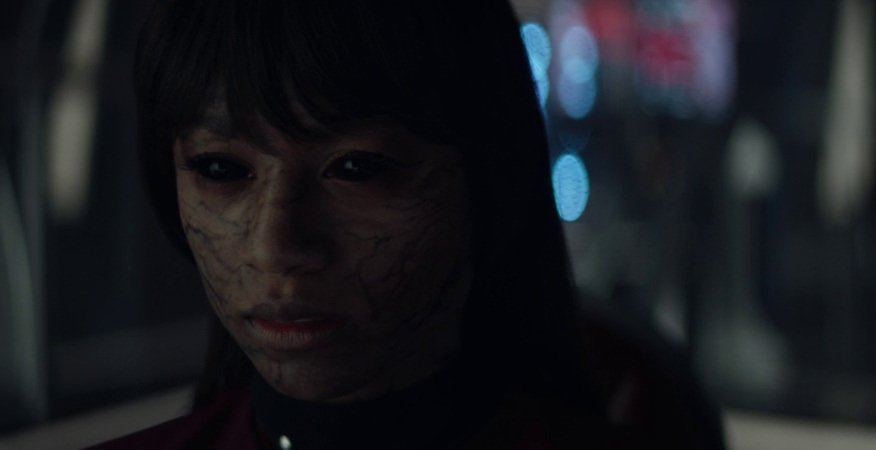
Star Trek: Picard Episode Review – Season 3, Episode 6: The Bounty

Spoiler Warning: There are spoilers ahead for Star Trek: Picard Seasons 1-3. Spoilers are also present for the following Star Trek productions: The Wrath of KhanThe Search for Spock, The Next GenerationDeep Space NineVoyager, and Discovery.

The Bounty feels like an episode that was made for fans. More than any other episode of Picard – at least since Season 1’s Nepenthe – I felt that the writers were leaning as heavily as they could into the lore and history of the Star Trek franchise, plucking some of those nostalgic chords for no other reason than to harken back to classic episodes, films, and stories that Trekkies will remember with fondness. There were some incredibly powerful emotional moments as a result, and I will never tire of seeing close-up shots of some of the franchise’s most beautiful starships!

Despite that, however, The Bounty was an imperfect outing overall – an episode with a couple of story beats that felt incomplete or just abrupt, and that resurrected a character who I felt had been appropriately and perfectly laid to rest. Moments of nostalgia spread throughout The Bounty felt absolutely magical… for the most part. But I fear this side of things was overdone and may have tried to carry the episode just a little too far. There will be repercussions for the story as a whole as the second half of the season – and the final act of Picard – gets underway.

The USS Titan.

Let’s talk first about something that had been teased in pre-season trailers and had got a lot of Trekkies chattering excitedly: the “return” of Professor Moriarty. For me, the way this ultimately came across in The Bounty was a let-down; a textbook example of how not to over-hype a character. Moriarty, in my view, should never have appeared in trailers and marketing material for two reasons. Firstly, his cameo here was incredibly brief, with Moriarty getting only a couple of lines and one very short moment of action. Secondly, and perhaps most significantly, this isn’t actually Moriarty.

This version of Moriarty was revealed to be a projection; an illusion created from the decaying remnants of Data’s memories. And that’s totally fine in the context of the story. Had I gone into the episode not expecting to see Moriarty nor knowing he was going to be included in the season, I’d have almost certainly been surprised and impressed. But the build-up to Moriarty’s return had been a significant moment in pre-season trailers going back several months… and seen through that lens, I felt more than a little let down – as if the promised return was nothing more than a bait-and-switch.

Moriarty’s cameo in The Bounty was minor.

Ro Laren’s surprise return to Star Trek last week had been kept secret – and it worked phenomenally well as a result. I can’t help but feel that Daniel Davis’ return as Moriarty should have been treated the same way, as keeping Moriarty out of pre-season trailers would have made his return feel impactful rather than underwhelming. There was scope to do more with Moriarty – and having wondered for months why he might be involved and what kind of a role he could play… I just feel like this cameo was over-hyped. Partly that’s my own fault… but partly it’s Paramount’s marketing, which deliberately over-inflated Moriarty’s role in pre-season trailers.

Trying to assess this inclusion on its own merit, though, I think it would’ve been a lot of fun were it not for being basically spoiled ahead of time. Visiting a black site like Daystrom Station only to encounter a dangerous foe from the past, having to figure out what was going on and how to defeat him, while at the same time he’s unable to be harmed… it was a setup that should have been tense and exciting, while at the same time being a great deal of fun to welcome back a character that I don’t think anyone could’ve truly expected. But unfortunately it didn’t stick the landing – and that’s all because this surprise was spoiled by pre-season trailers.

Moriarty’s return had been spoiled by pre-season trailers.

Let’s get all of the disappointments out of the way up front and look at another let-down! I always like to caveat these particular kinds of criticisms by noting that Paramount doesn’t have unlimited financial resources, and that it isn’t fair to compare Star Trek to productions from the likes of Disney or HBO that have significantly more money to play with. But even with that caveat… I felt that there was a scene or sequence that was sorely missing from The Bounty.

Jack Crusher and Sidney La Forge teamed up to “borrow” a cloaking device from the titular Bounty – the Klingon Bird-of-Prey used by Captain Kirk and co. during the events of The Voyage Home. But this daring heist took place entirely off-screen… and I just feel disappointed by that.

The titular HMS Bounty.

Even with the caveat that Paramount doesn’t have unlimited money, let’s consider this story beat and see how it could’ve played out. First up, there are only two characters involved, which obviously makes it a lot more manageable from a practical point of view. Secondly, it wouldn’t necessarily have required the construction of multiple sets. Between the AR wall (which I know is in Toronto, not California where Picard is produced) and pre-existing sets, surely it must’ve been possible to recreate a small portion of a Bird-of-Prey – even if it wasn’t the bridge. Just a corridor or something where we could’ve seen Jack and Sidney beaming aboard. Alternatively, the episode could’ve seen Jack and Sidney take the USS Defiant’s cloaking device, and a small part of that ship could’ve been created.

Although some creative(ish) storytelling and writing tried to present this aspect of the story as a bit of a surprise, it was actually pretty clear what Jack hoped to do, and even though I know we don’t always need to see every moment unfold in order for a story to be entertaining… we absolutely could have in this instance. In an episode that was already leaning heavily on the crutch of nostalgia, think how much fun it could have been if we’d actually been able to visit one of the ships at the museum instead of just seeing their recreated CGI husks.

So I’m afraid to say that this aspect of The Bounty feels like it has a pretty glaring omission.

Jack formulated a plan… but his plan took place entirely off-screen.

I can’t wait any longer to talk about Data! This is a huge point, not just for Season 3 and potentially not only for Picard, either, but for Star Trek as a whole. The resurrection of seemingly-dead characters is something the franchise has done before – and done quite well, at least in some instances. Technobabble can be used to excuse and justify these things in a sci-fi setting, so from a technical standpoint there really isn’t much to say about the whole “Data, Lore, B4, and other androids are all stuck inside the same ‘golem’ body” idea that The Bounty introduced. I think it clears the bar from that point of view.

But I can’t forgive it as a narrative point.

One of the few highlights of the two-part Season 1 finale was how poignant and beautiful the scenes between Picard and Data were. Eighteen years after Data’s death in Nemesis hadn’t really been given a sufficiently emotional payoff, Et in Arcadia Ego righted that wrong, and Data was finally laid to rest as Picard entered the digital afterlife. Those scenes did so much to elevate what was an otherwise disappointing finale – but more than that, they felt final and conclusive; a definitive but also appropriate end for a character we first met way back in 1987.

Data’s resurrection is a difficult storyline to get behind.

By allowing Data to permanently die, Picard helped him achieve his lifelong goal of becoming more human – because what could possibly be more human, for an artificial life-form who doesn’t age, than dying? This was one of the most impactful moments in all of Season 1 for me, and seeing Data come to the definitive end of his life, even as Picard was being reborn in a new body, went a long way to making the journey feel worthwhile.

The Bounty has now undermined and even overwritten that powerful emotional moment – and I fear that it has no reason for doing so other than the selfish desire of some of the show’s producers to play with the character of Data once more. I feel like I’m watching children playing with action figures; sure, Data was “dead,” but that doesn’t matter now. Pretend it didn’t happen, pick up the doll, and start playing a new game.

He even kind of resembles an action figure in a box…

One of my biggest concerns going into Season 3 – and really going back a whole year to the announcement of these actors returning – is that the story would end up feeling not only tacked-on and unnecessary, but like a childish mess. Bringing back these characters has to serve a purpose, but it also has to make narrative sense within a long-established world. More than that, it has to feel like it’s being done for more than just nakedly commercialised nostalgia – and the resurrection of Data, who had been permanently killed off twice, has crossed that line for me.

As we saw in both Seasons 1 and 2, there are ways to include Brent Spiner – if that had been deemed necessary – without resurrecting the character of Data. Pre-season trailers seemed to indicate that Spiner would be playing Lore, and while I wasn’t wild about that as I’ve never been a huge Lore fan, it seemed like a passable compromise if the show’s producers wanted to get as close as possible to a TNG reunion.

Data the projector.

I have no doubt that there will be some kind of narrative payoff to Data being “back,” and I’m crossing my fingers and hoping that it will be something I find at least bearable. But based on what we got in The Bounty, I’m sceptical. This resurrection feels like it serves two purposes: the desire of the showrunner and writers to play with their favourite action figures, and the commercial wishes of Paramount as it hopes to offset some of its huge losses by nakedly playing the nostalgia card. Neither excuse, quite frankly, is good enough – and neither comes close to justifying a pretty clunky technobabble explanation for resurrecting this long-dead character.

I keep thinking back to The Wrath of Khan and The Search for Spock as a point of comparison, because I think that may be another factor in Data’s resurrection here; it’s intended to mirror Spock’s. But in that story, Spock’s resurrection had been teed up at the end of The Wrath of Khan in a scene that showed Spock’s coffin lying, undamaged, on the surface of the Genesis Planet. Not only that, but these two stories were told one after the other. Data’s death happened back in 2002 – and his supposedly final end came more than a full season ago. While there are echoes of the Spock story here… that one feels a lot stronger, and seems to have been written with more of a sense of purpose. Data’s story, in contrast, feels muddled and disjointed; the consequence of different writers and writing teams having fundamentally contradictory ideas for where to take the character – and how and even whether to end his life.

A glimpse behind-the-scenes during The Bounty’s production.

Star Trek can successfully pull off a death-and-rebirth narrative, so I don’t think that is a problem in and of itself. We got one such example involving Jean-Luc Picard in the Season 1 finale of Picard – and another even more recently with Book at the end of Discovery’s fourth season. But here, with Data, having seen him so beautifully and sensitively laid to rest in Season 1, and with his death in Nemesis having come more than twenty years ago… it doesn’t work, at least not for me.

Rather than feeling like Spock’s rebirth, or even Picard’s in Season 1, Data’s resurrection reminds me a lot more of Elnor’s, which came at the very end of Season 2. Elnor was, like Data, definitively dead. And like Data, his death had a significant emotional impact. Raffi’s entire Season 2 storyline saw her grieving and coming to terms with his death – and that storyline was, for much of the season, one of the few that seemed to be working. Elnor’s last-second resurrection undid all of that, damaged the overall narrative of the season, felt unearned, unnecessary, and just plain stupid. And many of those same points – particularly those about undermining an emotional storyline and feeling ultimately unnecessary – are present here as well.

As much fun as it could be to have Data back and to get reunions with Geordi, Picard, and the rest of the crew, I’m struggling with this storyline.

Though it may have been intended to echo Spock’s rebirth from The Search for Spock… Data’s resurrection didn’t work anywhere near as well.

Data did tell us something very interesting, though: the “real” theft from Daystrom Station that the rogue changelings wanted to cover up was that of Jean-Luc Picard’s corpse. Precisely why Section 31 wanted to keep Picard’s body, and what they might’ve done with it for the past couple of years, wasn’t made clear… and that’s already kind of odd, when you think about it. Could there be a reason why Picard’s and Kirk’s bodies were both kept at Daystrom Station? Perhaps something connected to the Nexus or the events of Generations?

One thing that we learned from The Bounty that Picard and Jack have in common is a diagnosis of Irumodic syndrome. Given that the rogue changelings are also chasing after him, perhaps that has something to do with it – but we’ll save the speculation for my next theory post. Suffice to say it was an interesting development, and one that brings the conspiracy several steps closer to Picard himself.

Apparently the rogue changelings have absconded with Picard’s corpse.

But all of that came at the end of the episode, and there were plenty of fun or at least interesting moments before we reached those revelations. As I said, The Bounty really feels like an episode that was made for fans – or at least that had moments of pure fan-service that I absolutely lapped up.

Visiting the Fleet Museum was an opportunity to show off some beautiful CGI recreations of some of Star Trek’s most well-known ships. The USS Defiant, the Enterprise-A, and of course the titular Bounty were all present. Seven of Nine and Jack taking a closer look at the USS Voyager was an especially sweet moment, and several familiar musical stings accompanied these ships as they were shown on screen. I adore much of the music of Star Trek – especially the films from the ’80s and the shows of the ’90s – so hearing these short clips was enough, as Scotty once said, to bring a tear to my eye.

The Fleet Museum.

This sequence was a perfect “made for the fans” moment. It was a total nostalgia overload, but one that made sense in the context of the story and that was just the right length. Given what we’ve just been talking about, there must’ve been a temptation to drag this out and perhaps go overboard with the nostalgia plays, talking about each ship in more detail. But here, less was more – and the sequence, which only lasted about three minutes, came across beautifully as a result.

Since reappearing as the Titan’s second-in-command, I hadn’t really been blown away by Seven of Nine’s inclusion in the story of Season 3 so far. She served a narrative function on a couple of occasions – by rerouting the Titan against Captain Shaw’s orders and by identifying the first changeling infiltrator by using her real name – but she hadn’t had that much to say, nor many scenes in which she took centre-stage. Pairing her up with Jack on this occasion was fun – and we got to see how two individuals who are very different from one another, yet have a connection as Starfleet “outsiders,” were able to find some common ground.

Seven became emotional when thinking back to her time aboard the USS Voyager.

Seven’s line to Jack about the USS Voyager having been her home was incredibly touching, and it’s great to see Picard embracing the legacy of Voyager in such an overt way. I’ve said this before going all the way back to Season 1, but Seven’s transformation has been wonderful to see and more than a little cathartic. Seeing her in uniform, geeking out about starship designs with Jack, was another example of this.

Sticking with Jack, I spoke last week about how his hallucinatory experiences were something that hit close to home for me, and I don’t really want to get into all of that again; it isn’t an easy thing to think about or talk too much about! But suffice to say that I’m convinced that there must be more to what’s going on with Jack than simply “Irumodic syndrome” – though the connection between Jack’s hallucinations and the genetic disease that affected Picard was handled well in the story.

Is there more going on with Jack?

Jack’s glowing red eyes from a couple of episodes ago would seem to serve as the best argument for there being more to this story than an illness, as would Jack’s out-of-nowhere combat prowess last week. And that’s before we account for the changelings’ desire to capture him… for some reason. We’ll go into specific ideas about where Jack’s story could go in my next theory update, but for now I think it’s enough to say that there’s more going on here than we’re aware of at this juncture.

I actually really liked Jack in The Bounty. His conversations with both Picard and Seven were great, but for me his standout scenes actually came with Sidney La Forge, who was also excellent in this episode. Like their parents before them, they make a great team – and who knows, maybe romance could be in their future!

Sidney and Jack make a great pair!

Sticking with the La Forge family, I think we’ll briefly talk about Geordi’s other daughter. And “briefly” is all we’ll need, because unfortunately Alandra La Forge didn’t get much to say or do in this episode. There’s potential in the “sibling rivalry” idea that Sidney and Alandra seemed, at first, to embody – but if that’s going to be basically dumped now that the girls are both firmly on the same team… without wanting to be unkind, I just don’t see where Alandra is going to fit.

Sidney La Forge got a genuinely great storyline this week as she confronted her father for both his unwillingness to help with the mission at hand and, by extension, for favouring her sister as she was more inclined toward engineering. Ashlei Sharpe Chestnut, who plays Sidney, absolutely excelled in the scene with the far more experienced LeVar Burton, and genuinely sold me on this family argument. Most of us can relate, in some way I daresay, to having this kind of conversation with a parent or relative, and I was beyond impressed with the performance that she gave.

For the first time in the season so far, Sidney got a lot to do.

As for Geordi himself, I can see some fans potentially taking umbrage with the idea that he’d be unwilling to help Picard, or that he’d be so fearful of repercussions that he’d put his family first. It isn’t necessarily a fun story for Geordi, nor is it one that presents him in the best or most heroic, selfless way. But what I’d say in defence of this story is that it’s very human, and is again something that feels incredibly relatable.

One of the themes of Season 3 that we’ve seen through Picard’s conversations with Dr Crusher and Captain Shaw in particular is the idea that Picard himself is a kind of maelstrom; a figure around whom danger, disaster, war, and even death have a tendency to swirl and coalesce. Geordi’s initial reluctance to throw himself and his family into another Picard adventure is a continuation of this theme – and it fits not only with what’s been established before, but with what we’ve seen of Picard over the course of some thirty-five years.

Geordi was initially reluctant to join Picard’s mission.

Because past iterations of Star Trek were primarily episodic affairs, the franchise hasn’t always been able to take a look at some of the longer-term consequences of the adventures and misadventures that some of its key characters have had. There have been attempts to do so: episodes like Family in The Next Generation, for example, or Worf’s scenes with Ezri Dax in Deep Space Nine’s seventh season. But until Discovery and Picard came along, these were limited to a few episodes or character arcs, and didn’t get to go into as much detail.

Parts of Picard haven’t gotten this quite right, particularly in the show’s lacklustre second season. But here, the idea that even some of Picard’s closest friends would struggle to rejoin his cause because of the danger they know it’ll put them in feels surprisingly natural. Having worked with Jean-Luc Picard for fifteen years or more, Geordi saw first-hand the danger many of Picard’s missions posed, and wanting to keep his children away from that is a perfectly valid and understandable reaction – even if we may not like or agree with it on the surface!

Geordi felt that teaming up with Picard would endanger his family.

There was a danger that this part of the story could’ve felt like an artificial speedbump; a delay to slow down the Titan’s progress so other storylines could unfold at Daystrom Station or with the heist at the Fleet Museum. And part of me wants to call it that – to say that Geordi’s rather abrupt turnaround after an entire episode of dragging his feet makes the whole thing redundant. But actually, having had some time to think about it, the positives outweigh the negatives and Geordi’s storyline not only made narrative sense, but played into key themes that have been running for the duration of the season so far.

It isn’t always fun to see an heroic character behaving in a more rational, self-preserving, and more human way. And I get that – Geordi doesn’t feel like the selfless hero for much of The Bounty. But if every main character was totally virtuous, selfless, and pure of heart… well, that would make for a pretty bland and one-dimensional story, wouldn’t it? Geordi has family considerations here, and the idea of wanting to keep one’s children safe – even if that means risking some big, nefarious scheme being able to unfold… it’s relatable and understandable.

Geordi was very relatable in The Bounty.

Although we’ve had some wonderful adventures and powerful emotional moments with all of these characters over the years, here in Picard is where we’re seeing them at the most human and relatable that they’ve ever been – and Geordi encapsulated that feeling for me in The Bounty. I’d defend his characterisation here as not straying from his presentation in The Next Generation – but rather being an evolution of it, showing how conflicted he feels between the fear he has for his family’s safety and his loyalty to Picard and desire to help.

It almost goes without saying that LeVar Burton nailed this complex presentation. It was always going to be wonderful to welcome him back to Star Trek after such a long absence – but to see such a masterful and nuanced performance from the veteran actor was truly astonishing. The character of Geordi La Forge was cast perfectly in 1987 – and as one of the stars of Roots, LeVar Burton was one of the best-known actors in the cast as The Next Generation entered production on its first season. Geordi got some great spotlight episodes across The Next Generation’s run – The Enemy, I Borg, The Next Phase, and Relics all being examples that jump to mind. But here, in The Bounty, we really got to see what LeVar Burton can do with this wonderful character. And it was riveting.

LeVar Burton gave an outstanding performance and was a joy to watch.

Geordi’s inclusion in the story was also an opportunity for the rather superfluous Captain Shaw to have a fun and light-hearted scene. Having set up Shaw as a former engineer a couple of episodes back, that backstory got a truly cute payoff in The Bounty as the Titan’s captain found himself tongue-tied and starstruck when coming face to face with one of his engineering heroes. I felt echoes of Lower Decks’ protagonist Boimler in the way Shaw reacted to Geordi – and it was a nice change of pace for a character who’s been standoffish.

However, I maintain that the story of Season 3 is not well-served by having so many senior officers concentrated aboard the Titan. Riker’s (surely temporary) absence may have alleviated that for now, but the Titan is still blessed with an Admiral, at least one Captain, and now a Commodore as well. Captain Shaw repeatedly draws the short straw – understandably, perhaps. But as we saw yet again this week, big decisions aboard his ship are taken without much input from him.

Captain Shaw with Geordi.

Here’s a question to ponder: are there too many changelings in the plot?

That might sound silly given that the rogue changelings are our main adversaries, but hear me out. Changelings are, if you think about it, kind of overpowered from a narrative standpoint – and their new ability to mimic humanoids in far more detail than ever before has only increased their relative power. We’re at a point in the story where it’s difficult to know who is and isn’t a changeling – and that could make for an exciting and tense mystery… or a frustrating experience!

Past stories involving changeling infiltrators were more cautious, and I mentioned last time that the Deep Space Nine duology Homefront and Paradise Lost made sure to include the detail that there were only four active changeling infiltrators. If, as Ro Laren told us, Starfleet is compromised and there may be multiple changelings aboard many ships in the fleet, it risks making the story hard to follow, and throwing an uncomfortable cloud of suspicion over practically every character arc and plot point. I don’t think we’re at a stage yet where it’s a huge problem… but it could make the story difficult to follow and needs to be handled with a degree of care.

We aren’t always going to be able to know who is and isn’t a changeling in a story like this one…

That only leaves us with the away mission to Daystrom Station. It was fantastic to see Riker and Worf teaming up for an away mission once again! Worf was often one of Riker’s go-to officers when putting together an away team during their adventures aboard the Enterprise-D, so it felt incredibly appropriate and fitting for them to work together again on this occasion.

Raffi was an interesting inclusion here, and after she and Worf had worked over the past few episodes to uncover the Daystrom connection, it made sense for her to join the mission along with them. But after they accessed the chamber where Data was being held, Raffi kind of felt like a bit of an unnecessary addition. She didn’t have the connection to Data, nor the history with him that Riker and Worf had, to give her much to say, and the few lines she got at this point felt more like exposition than anything else.

The away team at Daystrom Station.

Raffi’s reunion with Seven of Nine was also cut short, and I hope it’s something we’ll see more of before the season ends. As disappointing as Season 2 was, and in spite of the problems Raffi’s storyline ran into in the final episode, the developing relationship between Seven and Raffi was one of the season’s stronger storylines. It humanises both characters, gives each of them something to fight for and reach for, and if there is to be any kind of “Captain Seven” show in Star Trek’s future, this relationship, one way or another, will be part of it. With both characters aboard the Titan, I hope there’ll be time in the remaining episodes to reunite Seven and Raffi for a scene or two.

There are already breakdowns and lists of all of the miscellaneous objects and items that were being stored at Daystrom Station that fans have compiled, so I won’t just list all of them here! But some of these little easter eggs were great fun, and in an episode that was all about callbacks to past iterations of Star Trek, this kind of storage facility was a great way to include many smaller references. I doubt very much that any of the stored items at Daystrom Station will prove to be important to the plot, but it was a cute way for Picard to pay homage to characters and stories from across the franchise’s 850+ episodes and films.

Captain Kirk’s body is apparently stored at Daystrom Station too.

The away mission to Daystrom Station felt tense and exciting – but the sets used for the station were, once again, seriously under-lit and far too dark. This has been a problem that’s been running all season long, but the especially dark corridors of Daystrom Station were perhaps the worst example so far. It wasn’t easy to follow all of the action as Worf, Raffi, and Riker were sneaking around and battling their way into and out of the station’s central chamber.

The fight sequences themselves, despite the aforementioned lighting problem, were decent, though. I genuinely felt that Riker was in danger as he raced off to buy time for the others to escape – and that’s really the first time so far this season that Picard has managed to give me that feeling. After Ro’s death the stakes have been raised significantly, and as I said before the season aired, it’s possible that not all of our heroes will make it to the end in one piece! Riker escaped… this time. But it was touch-and-go for a minute there in an incredibly tense and well-performed fight sequence.

Riker genuinely seemed to be in danger.

I confess that Vadic being a changeling is still something I’m getting to grips with. I said last time that I interpreted her scene with Floaty McFloatface as Vadic being a humanoid who had some kind of symbiotic relationship with a changeling… but it seems, instead, that she’s somehow two changelings in one body? The mechanics of it bug me, at least from an in-universe perspective. We know that changelings can communicate by linking, and we’ve seen in Picard that they also seem to have developed a clicking language of their own – so why does Vadic physically cut Floaty McFloatface off of herself and have a chat with them in English? Obviously the answer is “to make it a more interesting story.” But that isn’t always a satisfying explanation!

But still, we got absolute, indisputable proof this week that Vadic is a changeling. I’m excited to see her finally being able to interact with someone other than her silent crew and Floaty McFloatface, and there’s definitely potential in her interrogations of Riker and Troi – assuming it is the real Troi! I’m a tad disappointed, however, that Vadic now doesn’t seem to have any personal connection to Picard. Something may yet be revealed in that regard, but if she’s a changeling it would seem to rule it out.

Vadic at the end of the episode.

Vadic is clearly based on characters like Khan, and that kind of villain can be truly delicious to watch. But so far, Vadic hasn’t managed to capture much of that feeling for me. Her over-the-top performance actually feels out of place right now, and while I still want to see her defeated and her plan stopped, on a personal level I think there’s a disconnect between Vadic and the audience. Six episodes in and we’ve only had a few short moments with her, we’ve already seen her defeated once, and her over-the-top characterisation feels more like it’s treading water than going anywhere.

But now that she’s captured and assaulted Riker, perhaps we’ll finally start to get some of that burning, passionate dislike that Vadic hasn’t managed to garner so far. I certainly hope so! A villain so maniacal should be able to drum up that sort of a reaction – and now that she’s captured not just one but perhaps two of our heroes… there’s the potential, at least, for an improvement on the villainous side of the season.

The Shrike leaves Daystrom Station.

So I think I’ve touched on all of the points I had in my notes for this outing. The Bounty was a beautiful, nostalgic romp through Star Trek’s past in more ways than one… but an episode that didn’t stick the landing on a couple of key points. It can be difficult to fairly judge these mid-season episodes, though, until we know how character arcs and storylines that have been set up will ultimately be paid off – something I’m especially aware of in Picard, given the way Seasons 1 and 2 both ended. So perhaps we’ll be able to look back at some elements of The Bounty a little more kindly in retrospect.

With Troi, Geordi, and the Data-Lore-Soong-B4 golem now in the picture, the cast is complete and the reunion has finally happened. Was the tail end of the sixth part of a ten-episode season the right moment… or should most of the rest of the characters have gotten back together sooner? I guess that’s another point where only time will tell!

There are four episodes left for this story to come to an explosive and exciting conclusion – and it feels as if most of the pieces are now in play. In spite of The Bounty’s shortcomings, I’m keeping my fingers crossed!

A few scattered final thoughts:

  • For such an important facility, it’s kind of silly that Daystrom Station isn’t fully staffed and well-guarded – especially considering it’s already been attacked and robbed once.
  • What could Section 31 possibly want with Kirk’s dead body? And what is “Project Phoenix?”
  • This is the first mention of Section 31 in Picard – could that be a hint at a resurrection of the Section 31 series that’s been languishing in development hell?
  • I’d have given anything to see Picard and the crew beam aboard the Enterprise-A…
  • Geordi was very concerned about his kids… but was perfectly fine with ditching his wife!
  • Including a sequence from Encounter at Farpoint – and finding a way to make it relevant to the story – was incredibly sweet.

Star Trek: Picard Seasons 1-3 are available to stream now on Paramount+ in the United States and other countries and territories where the service is available, and on Amazon Prime Video in the UK and around the world. The Star Trek franchise – including Picard and all other properties discussed above – is the copyright of Paramount Global. This article contains the thoughts and opinions of one person only and is not intended to cause any offence.

Star Trek: Picard Episode Review – Season 3, Episode 5: Imposters

Spoiler Warning: There are spoilers ahead for Star Trek: Picard Seasons 1-3. Spoilers are also present for the following Star Trek productions: The Wrath of KhanThe Next GenerationDeep Space Nine, and Voyager.

If last week’s episode had been a bit of a dip in terms of quality, Imposters was a roaring return to form. Picard is really ramping up the dangerous conspiracy angle, and that made Imposters a thrilling ride from start to finish. The intensity of the conspiracy, and the idea of not knowing who to trust, surpassed episodes like Conspiracy, Homefront, and By Inferno’s Light – even as these classics from past iterations of Star Trek clearly served as inspiration.

There were a few imperfections along the way, but generally speaking this was a fantastic outing. The midpoint of the season arrived in style, and while I still have some concerns about key character absences and whether or not the ending of this story will be properly executed, as things stand right now I have to say that Picard Season 3 looks to be in great shape.

The Titan meets the Intrepid.

I wrote a couple of weeks ago that I felt a degree of concern that Picard might’ve blown its biggest reveal too early – i.e. the involvement of the rogue changelings. This angle, which serves as a kind of epilogue to the Deep Space Nine story, could’ve been fairly static, but the writers have found an incredibly engaging – and downright frightening – new approach to the changeling threat. The revelation this week that changelings are able to mimic humanoid bodies in incredible detail, bypassing all of the “standard” tests that Starfleet developed during the Dominion War, adds an entirely new – and unexpected – dimension to the threat they pose, and that was well-explored this week.

Imposters also brought back the legendary Ro Laren for one final outing, and that was wonderful to see. Due to the confines of the episode, there perhaps wasn’t quite enough time to delve into the intricacies of Ro’s time with the Maquis and what may have happened to her during the Dominion War – which is something I’d have liked to learn more about. But her inclusion in the story was inspired, and the way in which she was used as a senior security officer felt like the perfect career path based on what we saw of Ro in The Next Generation.

Ro Laren made a wonderful return to the Star Trek franchise.

I thoroughly enjoyed the return of the “prodigal crewman” that had been teased in the episode’s blurb. Ro was the perfect character to use here – not just because it suited her storyline from The Next Generation and provided her a redemption – if one were necessary – for her defection, but because of the dynamic between Ro and Picard that was able to be explored.

Picard has to confront the changeling threat – but before we could reach that point, he had to figure out who to trust. And for Ro, who had been working on this problem for months, she also had to test Picard’s loyalty to see if he really was who he said he was. Using their contentious history not only to set up this conflict, but to resolve it as well, is nothing less than masterful writing. The strong, deeply-held, bitter feelings that Picard and Ro had for one another set the stage for their clash – but also proved to both of them that, in spite of the betrayals and hurt feelings, they could trust one another.

Figuring out if they could trust one another was a great storyline for Ro and Picard.

This kind of complex, nuanced, character-heavy storytelling is precisely what I’d been hoping to see more of from Picard. There have been some fantastic moments like this – even in the show’s disappointing second season – but this time, there was just something that elevated the conversations between Picard and Ro. Maybe it’s because this is a conversation that fans have been hoping to see ever since Ro’s final appearance in The Next Generation almost thirty years ago!

There was genuine emotion here, and both Patrick Stewart and Michelle Forbes absolutely excelled. The passage of time had clearly not blunted the impact of Ro’s decision on Picard – nor Picard’s reaction to it on Ro. And the way both actors were able to convey this long-overdue, cathartic release of feelings that they’d both held onto for decades… it was pitch-perfect.

This emotional conversation was decades in the making.

I wouldn’t describe any aspect of Ro’s story as “disappointing” or “underwhelming” in any way, and I want to make that clear. There are, however, absences from it that I think are noticeable, particularly on watching Imposters more than once. We got no interaction between Riker and Ro, and given the occasionally adversarial nature of their relationship in The Next Generation, it might’ve been nice if they could’ve at least said more than a couple of words to each other. Ro also didn’t even get one second of screen time with Dr Crusher.

Secondly, and for me I think more importantly, was the somewhat confused status of the Maquis, Ro’s role in Starfleet, and the lack of any direct reference to events we know took place during the Dominion War. The Deep Space Nine episode Blaze of Glory told us of the destruction of the Maquis at the hands of the Cardassians, and how the semi-independent Maquis worlds had been decimated. This was followed up in the Voyager episodes Hunters and Extreme Risk, in which the Maquis crew members aboard Voyager would learn of and have to come to terms with what happened.

Ro on the holodeck.

In Imposters, this was entirely ignored, and for viewers who only saw The Next Generation – or who don’t recall those episodes – it would seem as if the Maquis were never defeated. Even one comment from Riker about the Maquis no longer being an enemy would seem to hint at that, too. And while it’s possible, I guess, to argue that not all of the Maquis were killed and that the survivors might’ve led a renewed push for independence, it certainly feels, at best, to be contradictory.

And I suppose it isn’t that big of a deal in the grand scheme of things. For most viewers, I suspect the contradiction passed unnoticed, and as the episode didn’t really deal with the current state of the Maquis, it’s somewhat ambiguous as to what actually happened to the faction and to Ro herself. I freely admit it’s a nitpick to focus on this – but as I’ve said before, too many small points like this risk damaging the overall integrity of the narrative, and if Picard can’t keep up with the internal consistency of the Star Trek franchise, or if there isn’t time to go into more detail on some of these points, then perhaps it’s not the right story to try to tell.

Ro’s defection to the Maquis was a big story point… but the fate of the Maquis was not.

Paramount is clearly squeezing every penny it can out of its investment in the Ten Forward bar set from Season 2… and it’s kind of getting old, to be honest. I already rolled my eyes last week when Guinan’s Bar was the setting for Picard’s conversation with Jack – and his showdown with Shaw – so to drag it up again this week as the setting for the conversation with Ro… I don’t know. Paramount doesn’t have the resources of some other entertainment corporations, so building whole brand-new sets each week for every story is obviously off the table. But the past couple of episodes have really felt like the old “bottle shows,” in a way, and the Ten Forward set just sticks out like a sore thumb.

If we put to one side the specifics of Ro’s reinstatement in Starfleet, why Picard didn’t know it had happened until now, and the defeat or resurrection of the Maquis – all of which would have taken too long to properly explain in a single episode – what we got on screen was fantastic. It was character drama without the “soap-opera” taint; a genuine, two-sided conflict with raw, bitter emotions on full display. And it worked so incredibly well. The scenes between Ro and Picard were riveting.

Picard and Ro in Ten-Forward.

I’ve blown hot and cold about Captain Shaw over the course of my reviews so far, feeling that some elements of his characterisation have worked well… and others have either been a bit flat or, as we saw last week, derivative to the point of being basically plagiarised. The problem I thought seemed obvious a mile away – the pileup of senior officers aboard the Titan tripping over one another – has also been an issue in Shaw’s storyline. But what I loved about him this week was the gleeful way in which he took Picard, Riker, and Seven to task.

As I said in my review of the season premiere: Captain Shaw is right. These people, whom he has his own reasons for disliking and mistrusting, did unlawfully commandeer his ship, placing his crew in incredible danger, and it’s not unfair to say that Picard and Riker treated him with as much disrespect – if not more – as he showed to them, albeit in a more subtle and dare I suggest insidious way. As our hero characters, we understand Picard and Riker’s reasons, and Seven’s reason for giving them her loyalty and support, but at the end of the day, what they did was still problematic.

This scene in the turbolift was hilarious.

There wasn’t any significant follow-up to the revelation that Shaw had been present at the Battle of Wolf-359, and I stand by what I said last time: if the big blow-up in Ten-Forward is all we’re going to get, and that connection isn’t going to matter beyond giving Shaw a bit more justification for being a dick, then I don’t think it passes muster as a story beat. And the lack of any real mention of his bust-up with Picard in Imposters has really just solidified that feeling for me.

But that being said, I enjoyed Captain Shaw’s story this week, and I think even though he is an unpleasant person in more ways than one, it’s possible to empathise with someone who’s forced to work with people he despises, arguably feels out of his depth, and is being swept up in a conspiracy and an adventure that – clearly – he would rather have no part in.

Captain Shaw.

I see Captain Shaw as an officer somewhat akin to Lower Decks’ Captain Freeman. He’s capable, solid, reliable… but unexceptional. He was never going to take command of the flagship and lead Starfleet into battle, but he’s okay with that. He’s settled into his role as the commanding officer of a relatively unimportant starship, and while he may not be the nicest commander to serve with… you get the sense that he runs a tight ship, does things by the book, and wouldn’t be caught dead breaking the Prime Directive or wrangling with alien super-beings.

And it goes without saying that Todd Stashwick has excelled in this role. He brings to life a character who might otherwise feel an unnecessary bump in the road, and ensures that Shaw walks a fine line between being a jerk, but still retaining a degree of sympathy. Captain Shaw has been far more of an interesting and fun inclusion in the series than I’d expected – and much of that is down to a wonderful performance.

I find it hard not to feel for Captain Shaw…

On the other side of the story, Worf and Raffi finally crossed paths with Picard and Riker – albeit right at the tail end of the episode. Their story this week was interesting in some ways, and didn’t quite stick the landing in others. I think we’re skirting the edge of this “chasing down leads” storyline running just a little too long, so I’ll be pleased to see Worf and Raffi finally leaving the criminal underworld of M’Talas Prime behind, hopefully joining the crew of the Titan in the next episode.

Perhaps it’s because I’m a little too jaded when it comes to these kinds of stories, perhaps it’s because I’m a Star Trek superfan, or perhaps the sequence wasn’t especially well-written, but I didn’t find Worf’s fake-out death to be believable. Maybe it wasn’t supposed to be, and we were always supposed to know in the backs of our minds that Worf was about to jump up and defeat the goons… but this whole double- and triple-cross story didn’t quite stick the landing for me.

I didn’t find this fake-out death to be especially convincing.

The pairing of Worf with Raffi continues to be of interest, though, and there’s good chemistry between Michael Dorn and Michelle Hurd that makes their bickering believable. I wouldn’t necessarily have chosen to put Worf and Raffi together – not for quite so long, at any rate – but it’s worked well so far. Again, though, I think we’re probably approaching the limit of how long they could reasonably spend in their own little narrative box off to one side, so it’s probably for the best that this side of the story is wrapping up. I’m quite keen to see Worf getting back together with Picard and the rest of the crew, too.

This calmer presentation of Worf feels like a great progression for his character. Across well over 200 Star Trek appearances, I think we’d probably seen enough of Worf being quick to anger, and this kind of aged wisdom – inspired, perhaps, by the elderly martial arts masters seen in films like Enter the Dragon, Karate Kid… and even Kung Fu Panda – is a great new direction for his character. We still get moments of explosive action, as indeed we saw this week, but they’re tempered by a calmer, more ethereal personality.

Worf has seamlessly stepped into the role of the aged master.

Worf’s meditation also turned out to serve a narrative purpose: by mastering the “Kahless technique” he was able to slow his heart rate, making him appear dead just when the villain’s goons checked his pulse. A clever ruse – if not an original one!

Nevertheless, this story had a degree of tension, and even though I didn’t seriously feel that Worf was in danger of death, there was still the prospect of things going wrong as they tangled with an underworld crime boss. I’m not sure that Imposters had enough time to really do justice to the idea of a Vulcan crime boss – but as a concept it’s a fun one. We’ve seen Vulcans breaking the law in Star Trek many times, not least in Enterprise, so I don’t think it’s in any way incompatible with what we know of them. It’s just something that could’ve been expanded a little, with the character of Krinn given a bit more personality beyond “generic criminal leader.”

Krinn.

Beginning in Season 2, we got to see some wonderful new Starfleet starship designs. Season 3 hasn’t had much time so far to show off new vessels, and the ones we’ve spent the most time with have been the Titan and the Shrike. So it was neat to see the USS Intrepid this week – another ship that feels like an evolution of the design philosophy of the late 24th Century. I liked the idea of having its drive section “backwards,” with the neck set way back behind the deflector dish.

The Intrepid also managed to convey an imposing sensation, almost from the very first moment that it appeared on screen. We could tell that this ship is more powerful than the Titan, and in that sense I felt echoes of Into Darkness, where the USS Vengeance clearly outgunned the Enterprise. The sequence where the damaged Intrepid seemed to rise up to draw level with the Titan was fantastic, and again managed to communicate a sense of imminent danger from the significantly more powerful vessel. The animation work here was again outstanding, and both ships seemed to come alive.

This was such a great moment.

We didn’t see Vadic this week, and again I find myself saying that this is a character we still don’t know very well. If we’re to get invested in her as a villain, and are to be able to revel in her defeat and comeuppance when the moment arrives, we need to start spending more time with her. There’s a reason why her defeat at the hands of Riker’s asteroid manoeuvre in No Win Scenario didn’t really stick the landing: we don’t have any reason to care about Vadic yet. A villain as over-the-top as she is needs some kind of explanation, and her role in this conspiracy is still unclear.

Last week, I said that I thought it was fascinating that Vadic isn’t a changeling – but I seem to be the only person who interpreted her that way, at least based on what I’ve seen online. To me, it looked as if Vadic was removing a changeling from her body, and may be a humanoid who has a kind of symbiotic relationship with them. She’s clearly taking orders from them. Her crew may be changelings – some of them, anyway – based on the clicking language we heard the two changeling infiltrators make this week. But Vadic herself? I’m still not convinced that there isn’t more to be revealed about her – including some kind of connection to Picard.

What is the nature of Vadic’s relationship with this changeling?

For now, I guess it’s sufficient to say that my theory about Vadic not being a changeling remains on the table, and I’m not entirely sure where the story will take her. Sure, she could just be another changeling – the second-in-command of the conspiracy, perhaps. But there’s something about her scarred face, her fearful tone when speaking with Floaty McFloatface, and her generally eccentric demeanour that makes me question all of that. But we’ll be able to talk more about Vadic when she eventually returns to the story. Which I hope will be soon!

Speaking of absent characters, it hasn’t escaped my notice that we’re now at the halfway point and there’s still no sign of Geordi or Lore, and that we’ve only had the barest of cameos from Troi. The promised reunion now only has five episodes in which to make an impact, and while I’ve enjoyed the interplay between Riker and Picard, Picard and Crusher, and even seeing Worf with Raffi… it’s past time for at least Geordi and Troi to show up.

Dr Crusher and the Titan’s doctor performed an autopsy on the dead changeling.

Picard hasn’t been shy about leaving a body count in its wake. In Season 1 we bade farewell to Icheb, Bruce Maddox, Hugh the Borg, Data’s consciousness, and even Picard’s original body if you want to get technical about it! Season 2 killed off Q. And now in Season 3 we’ve seen the final sacrifice of Ro Laren – completing one of Star Trek’s most interesting character arcs.

When Ro first appeared in Ensign Ro during the fifth season of The Next Generation, she was the first recurring character on the show who really stood apart from everyone else. The Original Series and The Next Generation had friendly banter between characters and even rivalries, but Ro was the first character who seemed not to fit in with her crewmates. It took a lot of work on both sides for her to find her place aboard the Enterprise-D – only to end up defecting to the Maquis.

We said goodbye to Ro Laren in Imposters.

Coming back from that defection to go out in a blaze of glory, giving Picard a fighting chance to get ahead of the conspirators, feels like a worthy end for such an interesting character. It’s absolutely a sad turn of events – and I’d have been happy to consider a character like Ro for any potential 25th Century spin-off series! But in terms of this story, it worked exceptionally well and didn’t feel in any way gratuitous. If anything, it raised the stakes for Picard and the crew of the Titan.

A well-timed character death can do this – and the fact that the story has now killed off a returning character from The Next Generation has really succeeded at communicating just how dangerous this conspiracy is. As I said before the season began: I’m not certain that all of our heroes will make it to the end unscathed. Whether Ro’s death will be the only one or just the first… who can say?

Will there be more deaths to come?

Part of the reason this review has taken me so long to write is because of Jack Crusher’s storyline. This week, the story ramped up his hallucinations and his potential connection to Vadic and/or the changelings, which is absolutely a fascinating development. But for me… this kind of story is uncomfortable.

Unlike in Seasons 1 and 2 (and in Discovery and other parts of the Star Trek franchise, too) this mental health-adjacent story doesn’t feel poorly done or tokenistic right now. But to be blunt, it’s uncomfortably close to my own personal experiences as someone who’s been diagnosed with mental health issues and spent time in hospital. It took me a long time to come to terms with precisely the kinds of frightening things that Jack Crusher is experiencing in Picard… and the truth is that I don’t really know how to process these scenes now that they’ve appeared in the show.

Jack Crusher.

As much as I’ve just gushed about how incredible this episode was and how engaging the main story about a changeling conspiracy is… Jack’s storyline is a difficult watch for me personally, dragging up some very difficult experiences and memories – things that, to put it bluntly, I spend most of my time trying not to think about.

This is not a criticism of this aspect of the story, not by any means. In fact, in a strange way it’s kind of a compliment to both actor Ed Speleers and the show’s writing team; that these hallucinatory experiences should be so realistic, and conveyed in such a relatable way that they’re felt viscerally by someone who has had those kinds of experiences… for perhaps the first time, I find myself able to compliment the Star Trek franchise for a realistic, understandable, and sensitive presentation of a complex mental health symptom.

But that doesn’t make these moments any easier to watch, and simply processing recent episodes of Picard hasn’t been easy for me.

This mysterious door is part of Jack’s vision/hallucination.

I’m going to set this aspect of Jack’s story down at this point. Obviously what he’s going through is connected, somehow, to the changelings, Vadic, and the conspiracy; the show clearly isn’t going to turn around and say that none of that is related and Jack’s schizophrenic. But I’m finding it hard to go back to those scenes, to process that side of the story, and I don’t really know what else to say about it at this juncture. If and when that changes, I’ll talk about Jack in more detail.

Perhaps when the season is over and I’ve had some more time to think and to process what unfolded, I’ll write about Jack’s story and how it relates to my own experience in more depth. So… stay tuned, I guess. Hopefully this storyline won’t just fizzle out and will come to a suitable end.

Dr Crusher with her son.

One part of Jack’s storyline that has me a little concerned is his potential tie to the changelings. Having set up Jack as the son of Dr Crusher and Picard, it would not be my preference for a twist in the story to rip that away. For Jack to turn out to be a changeling, or for his “real” parents to be someone else… I don’t think that would work. It would risk undermining not only Jack’s story, but Picard’s and elements of Riker’s, too.

Such a storyline would also be incredibly derivative, as it would basically be a play-for-play repeat of The Next Generation Season 7 episode Bloodlines, in which Picard’s old enemy DaiMon Bok fabricated evidence that Picard had a son as part of a revenge plot. In short, Jack’s storyline has to square this circle without undoing or overwriting some of the powerful and engaging emotional moments that we’ve seen in the season so far. If we get to the end of the story and Jack is revealed as a changeling imposter, meaning Picard never had a son, then that’s going to make some of these scenes between him and Picard feel very different – and I would argue far less meaningful – in retrospect.

I hope Jack’s storyline will have a solid ending.

So I think that’s more or less all I have to say about Imposters.

It was a fun episode, a thoroughly enjoyable ride with plenty of tension, excitement, drama, and mystery. Picard Season 3 seems to be in a good place as we reach the halfway point, and I was thrilled to welcome back Michelle Forbes for one final outing as Ro Laren.

With Picard and the Titan now on the run, I think there’s potential for even more exciting and explosive storylines. What I’m most looking forward to, though, is finally seeing the remaining members of the Enterprise-D’s crew joining the story. This promised reunion only has five episodes left to really make an impact – and I guess my concern is that we may look back on episodes like Imposters less kindly in retrospect if we don’t get to spend enough time with all of these returning characters.

A few scattered final thoughts:

  • Dr Crusher once again felt under-used, and I’d have wanted to spend a bit more time with her.
  • We never really got to see The Next Generation crew during the Dominion War – so it’s fun to see Picard and co. facing off against changelings.
  • Is Ro going to be the only surprise character – or could someone else appear before the end of the season?
  • Terry Matalas has now brought back practically all of the main cast members from Twelve Monkeys – a series he worked on from 2015-18.
  • What was going on with Ro’s hair (or wig?) It didn’t look great…
  • Starfleet’s new phaser pistols remind me a lot of TNG-era Romulan disruptors.

Star Trek: Picard Seasons 1-3 are available to stream now on Paramount+ in the United States and other countries and territories where the service is available, and on Amazon Prime Video in the UK and around the world. The Star Trek franchise – including Picard and all other properties discussed above – is the copyright of Paramount Global. This article contains the thoughts and opinions of one person only and is not intended to cause any offence.
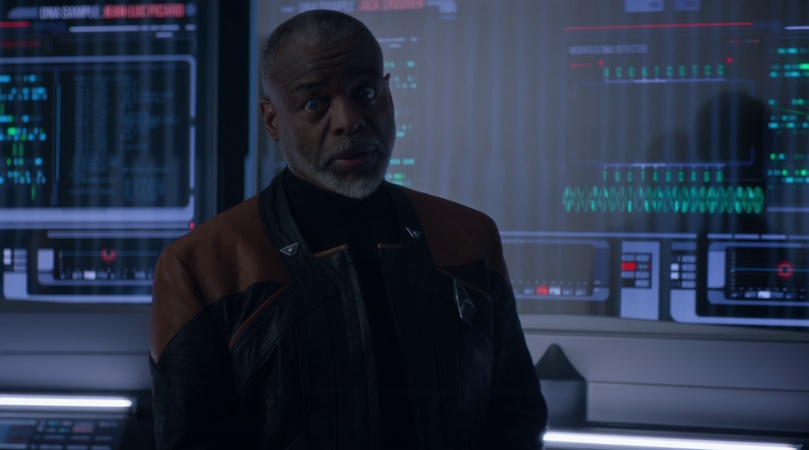
Star Trek: Picard Episode Review – Season 3, Episode 4: No Win Scenario

Spoiler Warning: There are spoilers ahead for Star Trek: Picard Seasons 1-3. Spoilers are also present for the following Star Trek productions: The Wrath of Khan, The Next Generation, Deep Space Nine, and Voyager.

The title of this week’s episode annoyed me! A “no-win scenario” should be written thus, with a hyphen, but Paramount opted not to abide by that particular rule of grammar. Still, I suppose I’m not one to talk!

After Seventeen Seconds had been fantastic across the board last week, I felt the quality dip slightly this time as No Win Scenario couldn’t quite reach that same level. There were a couple of moments where the conversations characters had felt like they were taken from a soap-opera, an incredibly rushed rationalisation for what was going on, and a big, explosive moment as the episode reached its climax that, for reasons we’ll get into, didn’t quite have the impact it was going for.

Picard exits the holodeck.

After last week’s episode ended with Picard and Riker experiencing a major falling-out, I was expecting that No Win Scenario would find a way to bring them back together. However, I wasn’t expecting it to happen so quickly, nor for the conflict to just… fizzle out. Don’t get me wrong, I’m always going to be happier to see Picard and Riker on friendly terms and working in common cause, but after such a spectacular blow-up last week that saw Picard banished from the bridge… I expected some kind of apology-come-resolution to settle this argument. No Win Scenario didn’t really deliver that, at least not in a meaningful way, and this aspect of the story – which had been a major part of last week’s episode and its cliffhanger ending – felt unsatisfying.

As happened more than once in Season 2, I felt that No Win Scenario was in a rush to bring this cliffhanger to a resolution so that there’d be enough time left to crack on with the rest of the story. While it’s possible that there will be ramifications for Picard and Riker if things settle down aboard the Titan, and we could re-visit this character conflict in a future episode to get a more conclusive ending, based on what we saw in No Win Scenario I was left feeling a bit empty; something significant was missing from the way this conflict wrapped up.

Picard and Riker’s argument seemed to fizzle out.

That last sentence also applies to my feelings on the conflict with Captain Vadic, and although the fight between the Titan and the Shrike came at the tail end of the episode, we’ll jump ahead to look at that next.

The use of an asteroid as a weapon was visually spectacular and just plain cool, with the animation work used to bring it to life being absolutely outstanding. There was a kind of poetic symmetry to Riker using the tractor-beam as a weapon after Vadic had done the same in Disengage a couple of weeks ago.

The Shrike was heavily damaged by Riker’s asteroid attack.

But here’s the problem that I have with the way this conflict came across: we still don’t know Vadic. We want to see her stopped and we don’t want her to succeed – but that’s only because we don’t want to see Jack Crusher or our other heroes harmed or captured. At this point in the story, Vadic is no-one… we don’t know who she is, what she wants, what her connection is to the rogue changelings and their scheme, or really anything else about her. She’s an over-the-top villain, almost a caricature of someone like Khan… and seeing her defeated just didn’t feel like it had any significance except insofar as it allowed the Titan to escape.

Think about some of the best, nastiest Star Trek villains from the franchise’s past. By the time the Battle of the Mutara Nebula ended in The Wrath of Khan, we didn’t just want Kirk to win – we wanted Khan to lose. Likewise for villains like Sela, Gul Dukat, or the Kelvin timeline’s Admiral Marcus – their stories were written in such a way that we wanted to see them beaten, defeated, and left for dead. I don’t feel any of that toward Vadic right now, and the reason is simple: I don’t know who she is or what she wants. She’s a speedbump; an obstacle for our heroes to overcome. I want to see her stopped, but only by default.

Picard Season 3 hasn’t earned a moment like this yet.

No Win Scenario set up the Shrike’s return and had the ship standing in the Titan’s way as Riker and Picard tried to guide the ship to safety. And this moment felt tense and exciting, with a genuine threat to our heroes. Jack in particular seemed to be in danger; with no shields to speak of, he could have been beamed away by Vadic, perhaps.

But in terms of Vadic herself… her defeat on this occasion felt unimportant and unearned. Sure, the Titan needed to get the Shrike out of the way to make an escape. But beyond that, seeing Vadic and her crew scrambling around on their damaged vessel just didn’t make much of an impression. Earlier in the episode we started the process of unravelling the Vadic mystery… but we haven’t made enough progress on that front for her to feel like a fully-rounded, fleshed-out character just yet. Unless and until that happens, these moments will continue to fall flat.

The Titan launches an asteroid at the Shrike.

A villain created to be as over-the-top as Vadic is supposed to be someone we can “love to hate.” And I’m hopeful that that feeling will come in the episodes ahead; we aren’t yet at the halfway point. But at this point in the story, Vadic isn’t someone I love to hate. In fact, she isn’t someone I “hate” at all, she’s someone who I don’t yet understand.

Had this moment with the Shrike and the asteroid come later, after we’d learned more about Vadic and what this conspiracy is that Picard and the crew will need to stop, then maybe her defeat in the moment would feel more significant and more impactful. At this point in the story, though, it didn’t. We’ll see more of Vadic, of this I’m sure, but there’s also a risk in defeating a villain at an early stage. The Shrike was incredibly intimidating at first… but we’ve already seen that it can be defeated. That could potentially lower the stakes and reduce the tension when we inevitably encounter Vadic further down the road.

We’ve already seen how Vadic can be beaten. Will that make the next encounter feel less tense?

With all that being said, there was a very interesting aspect to Vadic’s story this week. We knew, thanks to the presence of a changeling infiltrator aboard the Titan, that Vadic had some kind of relationship with the rogue changelings that Worf and Raffi uncovered in last week’s episode. I wasn’t alone in having speculated that Vadic might be a changeling herself – but it seems that isn’t the case. Maybe she truly is the bounty hunter she claimed to be – but there’s a close working relationship with at least one changeling that will be fascinating to see unfold.

As a concept, the idea of a changeling forming a body part is something that Star Trek has never really explored before – perhaps it was too gory for television networks in the ’60s or the ’90s to consider! But the idea that Vadic may have a kind of symbiotic relationship with a changeling is an interesting one, and if we learn, perhaps, that Vadic has had a hand amputated due to a wartime injury or a horrible accident, there’s a chance for such a story point to lead to some of that understanding that’s currently absent from her characterisation.

Vadic has a changeling-hand.

Another interesting aspect of the conversation Vadic had with the changeling was how fearful she seemed to be. In her first appearance in Disengage – her most significant thus far – Vadic had a kind of chaotic energy; a bizarre, unsettling, almost carefree approach. She knew that she was in a dominant position thanks to the power of her ship, but she revelled in the chase and in hunting her prey.

Contrast how she spoke to the crew of the Titan a couple of weeks ago with how she spoke to her changeling attaché in No Win Scenario – and particularly how fearful she seemed and how quick she was to acquiesce when pushed. The changeling clearly has some degree of leverage over Vadic here; there’s a power imbalance. But what could it be? For the second time, I find myself saying that “money” will not be anywhere close to a satisfactory explanation!

Vadic’s boss. I vote that we name him “Floaty McFloatface.”

Villains don’t need to be sympathetic. We just talked about examples of wonderful villains in Star Trek who were nasty pieces of work through-and-through. I don’t need to feel that a villain has a good point in order to understand them. But a villain needs motivation, and right now, Vadic’s true motives are obscured through a thick narrative fog. If a suitable ending to her story has been planned, written, and properly executed, then there’s no need to worry. In time we’ll come to understand what Vadic wants and be able to enjoy her comeuppance when she doesn’t get it.

But I’m afraid that Picard’s track record in these areas is once again ringing alarm bells. Season 1 came totally unstuck because it ran out of road and an acceptable ending couldn’t be constructed in the remaining time allotted to the show. Season 2 had a plethora of issues, but the same problem of a rushed, unsatisfying ending that didn’t have time to tie up enough loose ends was repeated. And Season 2 had the same creative team and showrunner as Season 3. So as we approach the midpoint of the season, I look upon Vadic’s story in particular with more than a little concern. There’s no small amount of work to do to give this character a genuine reason for behaving the way she does while also pulling out a creditable ending.

Why do Vadic do what Vadic do?

That’s enough about Vadic for now. Another character who caused me mixed feelings in No Win Scenario was Captain Shaw – and there are several parts to his story. Some worked better than others, and I’ll start by saying that Shaw is a more interesting and nuanced character than I’d been expecting. There’s also an inspired performance from Todd Stashwick, who really seems to be putting his all into the standoffish Starfleet captain.

You know there’s a “but” coming, though.

But unfortunately, Shaw’s story in No Win Scenario was muddled in more ways than one. First of all, we have the problem I could see coming a mile away: there are too many captains aboard the Titan. Shaw’s injury in Seventeen Seconds was a convenient excuse to bump Riker into the captain’s chair – but that was always implied to be a very temporary move. Shaw’s recovery should have seen him reclaim the chair – especially given his obvious dislike of Riker and Picard. A convoluted story beat involving Shaw being literally the only officer on the Titan capable of performing a technobabble engineering task may have gone some way to excusing his absence on the bridge… but by the end of the episode I fully expected him to come bursting out of the turbolift to reclaim his ship.

Captain Shaw.

We’ve seen other Star Trek stories where more than one character holding the rank of captain was present on the same ship, and that doesn’t have to be an issue in and of itself. In The Wrath of Khan, for instance, we had Admiral Kirk and Captain Spock aboard the Enterprise, and by the time of The Undiscovered Country Sulu had also been promoted and was in command of his own ship. But in this particular story, the way Shaw is written and the uncertain nature of both Riker and Picard’s status as Starfleet or ex-Starfleet or semi-retired officers just makes it feel unnecessarily complicated.

If the reason for Shaw sticking around was to have a big blow-up with Picard about the Battle of Wolf-359 and Picard’s assimilation… then I’m afraid it didn’t stick the landing and wasn’t worth the fuss. This was supposed to be one of the emotional punches of No Win Scenario, and a sequence that explained much of Captain Shaw’s hostility since Picard first came aboard the ship. But I didn’t feel there was sufficient buildup to Shaw’s outburst, which left the resulting scene feeling like it came from nowhere – and with character drama that could rival any soap-opera.

Shaw hated Picard for his role in the Battle of Wolf-359.

In principle, this is a clever idea. It forces Picard to confront a part of his past that he’s still uncomfortable with, and he has to do it in front of Jack at a time when the two are just beginning to get to know one another. But the execution here wasn’t great, nor was the shoehorning in of the Guinan’s Bar set that Paramount seems to insist on re-using as often as possible.

A captain who hates Picard because of what happened at Wolf-359? Why does that sound familiar? Oh, right: it’s because this was also the setup for Benjamin Sisko at the beginning of Deep Space Nine more than thirty years ago. In short, we’ve seen this argument before. There are differences between Shaw and Sisko, of course; Sisko’s anger was more of a slow-burning thing, whereas Shaw’s was a rapid explosion – perhaps influenced by the pain medication he claimed to be taking. But while those differences keep the two sequences and two characters feeling distinct, the underlying premise is so similar as to feel incredibly familiar to any long-standing Star Trek fan.

We’ve been here before…

Picard’s third season promised to draw on the legacy of Deep Space Nine in a way that modern Star Trek hasn’t so far – and by introducing a rogue faction of changelings that Odo warned Worf about, the writers have created a truly engaging epilogue to the Deep Space Nine story. But Shaw’s background being nigh-on identical to Sisko’s feels like it crosses the line from homage into plagiarism, and while it gives us a reason to feel more sympathy for Shaw, or at least to understand him better, it also feels like a pretty cheap recycling of such an important story beat.

With no Borg presence readily apparent in the story of the season (though that could admittedly change), I’m also a little confused as to why the story keeps returning to Picard’s Borg past. We had multiple references to The Best of Both Worlds in the season premiere, and now we have this big reveal that Shaw was present at the Battle of Wolf-359 too… but at this point, which again is nearly halfway through the season, these references don’t seem to be going anywhere.

The Enterprise-D flies past wrecked ships after the Battle of Wolf-359.

In Seasons 1 and 2, Picard’s Borg connection – and the trauma it brought him – were big plot points. We had his first visit to a Borg cube in the Season 1 episode The Impossible Box, which contained a truly excellent sequence looking at Picard’s post-traumatic stress and how being back in that environment was a trigger. And in Season 2, we saw how Picard had grown in regard to the Borg, being willing to at least listen to a Borg proposal – something that later set the stage for Seven of Nine’s character arc, learning to accept the Borg side of herself.

In both cases, though, the Borg connection to current events was readily apparent. We had the Artifact in Season 1, which showed up in pre-season marketing before appearing in either the first or second episode of the season (I forget which exactly). And in Season 2, the very first episode re-introduced the Borg in truly spectacular fashion. Both stories set up their Borg elements early on, meaning that their subsequent Borg connections worked and felt meaningful. That sense just isn’t present here.

Picard confronted his Borg demons in Season 1.

Narratively, I don’t see what we gain by Shaw bringing up Picard’s Borg past, either. As mentioned, Picard has basically come to terms with what his assimilation experience means by this point – from The Next Generation episode Family, the Deep Space Nine premiere, the film First Contact, and episodes in Picard Seasons 1 and 2, we’ve seen him process different parts of this experience. I’m struggling to see what – if anything – has been gained or could be gained in future, in a story all about Jean-Luc Picard, by re-hashing this aspect of his life – especially by re-doing a storyline that we’ve already seen play out.

For Captain Shaw, of course, his outburst was almost certainly a cathartic release; the outpouring of emotions bottled up for more than three decades. But – and I don’t mean this unkindly – I don’t really care about Shaw at this stage. He’s a new character, someone who’s only been on screen for a few minutes in total until now, and while this revelation certainly tells us something in a strictly factual sense about his background, I’m just not feeling its necessity… not to this story, at any rate. With Sisko, who was about to take centre-stage in his own series, it made sense to detail this defining incident in his life to set up where he was going to go over the course of Deep Space Nine’s run. For Shaw, who may or may not have much of a role to play over the remaining six episodes of Picard… again, I just don’t see why it was necessary to take this diversion.

Captain Shaw told his story to Picard and Jack.

I said a couple of weeks ago that I understood why Captain Shaw had been basically subbed in for Chris Rios – the character from Seasons 1 and 2 who had been dumped by the series. But if this connection to The Best of Both Worlds and the grumpy, standoffish persona is the only real reason why Captain Shaw exists… then I think I’d rather have had Rios in the captain’s chair this time around. Creating a brand-new character only to essentially re-do part of the plot of Deep Space Nine’s Emissary just doesn’t feel substantial or satisfying. But perhaps I’m biased in the sense that I felt Rios was treated incredibly poorly by the writers for much of last season!

It’s also worth saying that Shaw may yet have more to contribute. I don’t hate him by any means, and I think he has potential in some ways to be an interesting character, and as someone who isn’t a natural friend to Picard, he introduces a bit of drama and conflict into the story that wouldn’t necessarily be present otherwise. What I am saying, though, is that if this is Shaw’s only big moment – his main contribution to the season’s story – then I’m underwhelmed.

Captain Shaw: grease monkey.

One thing that I absolutely adored about No Win Scenario was the alien-nursery anomaly that the Titan found itself trapped inside of. Nothing could feel more “Star Trek” than seeing a spacefaring lifeform give birth, and it harkened back to the events of the very first episode of The Next Generation – as the characters themselves noted in the episode.

The life-forms that were born as the nursery-nebula erupted were beautiful, too, and the CGI artists and animators deserve so much praise for bringing these creatures to life in such spectacular fashion. The whole idea from concept to execution felt like it had been lifted from a classic episode of The Original Series or The Next Generation, with the threat of Vadic fading into the background and a scientific mystery for Picard, Riker, and the Crushers to unravel.

The Titan surrounded by spacefaring life-forms.

However, there was one aspect of this story that didn’t work particularly well, and because of who it involves it feels like quite a disappointment. In The Next Generation, Dr Crusher didn’t always get enough screen time or a lot to do; her scenes were mainly in sickbay, so in episodes with no medical element, she wasn’t always able to make much of a contribution to the story. Her return in Picard – and particularly having been outside of Starfleet for twenty years, operating independently – is an opportunity to right a thirty-five-year-old wrong, and show Dr Crusher in somewhat of a new light. We saw the beginnings of that in the season premiere as she grabbed a phaser rifle to defend her ship… but this week felt like a regression to the way she’d been treated in The Next Generation – and I don’t mean that in any sense as a compliment.

No Win Scenario had its attention on several storylines at once. There was the Picard-Riker spat, the Picard-Shaw confrontation, Picard’s attempt to get to know Jack, and off to one side was Seven of Nine as she hunted a rogue changeling. Even with a fifty-five minute runtime, Dr Crusher once again felt sidelined.

Dr Crusher didn’t get as much screen time as I’d have liked to see.

This mattered not only because, well, I wanted and still want to see more of Dr Crusher, but because her condensed storyline ended up feeling like it skipped a beat… or more like a dozen beats. Dr Crusher seemed to take a completely irrational leap of logic from “these energy pulses are increasing in frequency” to “the nebula must be a womb,” and it happened in a matter of seconds. In The Next Generation era, this kind of storyline would have played out at least slightly slower, and would have been in focus for longer. Dr Crusher would still have arrived at the same end point, but it seemed like one heck of a contrivance for her to figure out exactly what was going on based on a single piece of evidence and a very shaky hypothesis that she concocted in a matter of seconds.

We’re seeing the consequence of a busy season here. Not only were Worf and Raffi entirely absent this week, but there’s still no sign of Geordi or Lore, and of the characters who were present, not all of them got enough time to shine. We had some fantastic moments with Riker, Picard, Jack, and even Seven and Captain Shaw… but Dr Crusher appears to have drawn the short straw. And not for the first time.

Dr Crusher seemed to figure out what was happening unrealistically quickly.

Last week, I said in my review that I was beginning to feel concerned that Geordi and Troi hadn’t shown up yet, and that Worf and Raffi were off to one side in their own little narrative box, unable to interact with the rest of the cast of characters – and this week’s episode has really ramped that up. I’m less worried about Lore, partly I have to say because I’ve never been a huge Lore fan, but also because Brent Spiner has already been a big part of Picard in its first two seasons. But I have been genuinely excited to welcome back Geordi, and to see Worf getting back together with his old crew.

With Dr Crusher having parts of her story cut this week – or, perhaps more likely, not written in the first place – I feel even more concern for this supposed reunion. Even if Geordi, Troi, and Lore join the story next week, and Worf and Raffi’s storyline finally crosses over with the Titan’s, we’ll still have spent basically half the season without them. And based on what we saw with Dr Crusher this week… I’m not convinced that the writers will have given everyone enough to do.

We still haven’t seen Geordi and Lore, nor had more than a cameo from Troi.

In these truncated ten-episode seasons that have become commonplace not only in Star Trek, but in modern streaming series in general, there’s such a thing as too many characters and too many storylines. That’s part of the reason why, despite my objections, the likes of Soji and Elnor were dropped and didn’t come back this time around: there simply wasn’t space for them in an already-crowded series.

But having promised us a reunion, and talked about how characters who didn’t always get enough to do in The Next Generation might finally have an opportunity to contribute… Season 3 hasn’t yet delivered. Those ideas remain incredibly appealing, but it’s at the very least worth noting that we’re 40% of the way through and they haven’t happened yet. Not only that, but at points where characters could have been used and where this feeling could have materialised – as with Dr Crusher this week – it didn’t work as well as it should’ve.

Dr Crusher with Jack and Picard.

After we saw how Captain Shaw was unkind to and even deadnaming Seven of Nine, it was nice to see them working together and developing their very own kind of begrudging rapport. We haven’t really seen in Star Trek this kind of adversarial dynamic between captain and XO, with such unpleasantness and genuine dislike between them, at least not outside of a handful of one-off guest characters like Jellico. So it’s an interesting element to add to the story – and one that did manage to get a cathartic payoff as No Win Scenario reached its climax.

There was also a reason, of a sort, for the deadnaming, which had been an uncomfortable element earlier in the season. I stand by what I said, though: this kind of deadnaming should be socially unacceptable in Star Trek’s optimistic future, and while it served a narrative function in more ways than one, it’s still deeply uncomfortable in terms of what it says about the state of the Federation and the Star Trek galaxy.

The deadnaming of Seven of Nine got a narrative payoff… but still feels uncomfortable.

But the deadnaming of Seven of Nine provided a satisfying end to the changeling infiltration storyline – one which, again, succeeded at recapturing that elusive sense of “Star Trek.” Seven was able to figure out who the changeling was posing as, partly by working with Riker and partly because she’d developed friendships with other members of the crew – in this case, Ensign La Forge.

One contrivance here that I guess we’ll have to overlook is the changeling’s objective. If they wanted to ensure Jack Crusher’s capture – as Vadic’s changeling “boss” seemed to suggest is their main mission – then why on earth would the changeling wish to sabotage the Titan’s escape from certain death in the gravity well of a nebula? I could believe that they would place the success of their mission ahead of their own survival, but in terms of what we know about the changelings’ objective at this stage, if capturing Jack is priority #1, then the infiltrator shouldn’t have been trying to sabotage the Titan’s escape. We learned this week that Vadic only broke off her pursuit last time because she feared for the safety of her ship, not because killing Jack or trapping the Titan were important objectives, so again: the changeling infiltrator’s motives don’t really make a lot of sense here.

Why would the changeling try to prevent the Titan’s escape if doing so meant their own death and the death of Jack Crusher?

I can overlook this point, as in the context of the story it isn’t massive and is basically a glorified nitpick, but I think it’s worth taking note of these things as they arise. One or two contrivances here and there are almost inevitable – but too many risks damaging the overall integrity of the narrative, so keeping it to a minimum is essential in order to maintain suspension of disbelief.

The way in which the story as a whole was set up this week was again something that harkened back to The Next Generation and even The Original Series – the ship being adrift, trapped by an unknown space phenomenon, with time running out. Those are Star Trek tropes as old as the franchise itself! But the way in which No Win Scenario put a twist on them was unique – and very dark.

The Titan “sinking” into the nebula.

Instead of this story immediately leading to the crew springing into action and preparing their escape, there was a defeatist tone from the very first scene of the episode. Riker in particular was very bleak in the first half of the episode, sinking into dejection and depression as he couldn’t figure out a way to save the ship and crew.

This spin on a classic formula was incredibly well handled, and in many ways feels a lot more realistic than any episodes in those earlier Star Trek series. One thing that Star Trek hasn’t always managed to convey is just how deadly and dangerous space can be – and we saw firsthand this week that it’s possible for even an advanced Federation starship to find itself in an impossible situation. Past Star Trek stories succeeded at conveying a sense of danger, but there was always a positive, optimistic approach – never the kind of “lay down and wait to die” mentality that seemed pervasive on the Titan in parts of No Win Scenario. Yet it makes perfect sense that some people would react that way – and it perfectly fits the darker tone that Picard has when compared to The Next Generation.

Riker was one of the defeatists earlier in the episode.

We talked a little about how Picard has arguably already overcome much of his Borg-related trauma, or at least how we’ve seen him engaged in that process in both Picard and earlier Star Trek productions. One thing that we haven’t always seen is Picard asking for help, reaching out to someone else and saying that he needs them – but we got that through his scenes with Jack this week.

When facing what seemed to be imminent death, Picard asked Jack to spend some time with him, and as they talked, it became clear that Picard wasn’t doing it for Jack’s sake – but for his own. To hear him articulate that was deeply emotional, and both Sir Patrick Stewart and Ed Speleers excelled in that moment. This was, from their point of view, perhaps the only opportunity they were going to get to have this conversation – or any conversation, for that matter – and it was important for Picard to at least ask some of those questions of Jack, and to try to reach out to him.

Jack agreed to share a drink with Picard.

Picard had indicated earlier, I think in last week’s episode, that he felt the bridges between himself and Jack had long ago been burned, but it was great to see Riker encouraging him – albeit with the threat of death spurring them on – to give it a try. As his life seemed to be ending, Picard hoped to spend a moment or two with the son he never knew, and there’s something touching about that. Likewise, for Jack to reciprocate that, even if it was only for a moment, was something very sweet.

Male relationships – and the relationships men have with their fathers – can be difficult, and are often defined by a lack of emotion or warmth. Although I now identify as non-binary, I was assigned male at birth, and I can say from my own experience that my relationship with my father has never been warm, emotional, or loving. My father and I can make small-talk, sure, but he would never have a heart-to-heart with me about, well, anything… and the best I can hope for from him has always been a firm handshake.

Daddy issues…

What I’m trying to say is that, for many men, there may be something cathartic about a scene like the one between Picard and Jack. A father and son having a genuine and deeply emotional conversation is something that a lot of folks frankly just don’t get in their personal lives, and even though Picard’s relationship with Jack is new – and pretty complicated – there’s still something about it that brings almost a sense of emotional release.

Jean-Luc Picard is, for many of us, a kind of “space dad;” a character we’ve known for decades and who has often, through his position in the captain’s chair, felt like the patriarch of a family. I often wished I could be a part of that family when I watched The Next Generation in the early ’90s. So to see this conversation between Jack and Picard… I felt a very strong connection with Jack in those moments.

Jack felt very relatable this week.

I won’t lie, though, it still gave me a bit of a giggle to see Picard asking Jack whether he was 23 or 24. I don’t like to keep bringing this up (the show rather forces it upon us) but actor Ed Speleers, who plays Jack, simply does not pass for someone in his early twenties any more. It’s perhaps not quite as bad as some of those “teen” dramedies from the ’70s or ’80s in which actors in their thirties and sometimes even forties were trying – and utterly failing – to play teenagers… but it’s not far off. It’s no slight against the actor – I’m sure I couldn’t pass for thirty any more, let alone twenty… but I know my limitations so I wouldn’t try!

Picard clearly offended Jack several years earlier, as we saw in that flashback scene. One thing about that bugged me a little, and that’s how it seems to conflict with Picard’s status as a “hermit” in that period. Having retired and left Starfleet behind, it just strikes me as odd that he’d go halfway across the world to eat lunch at an establishment that he must’ve known would be frequented by Starfleet cadets and personnel.

Jack in the flashback scene.

But Picard’s sentiment that he considered Starfleet his “real” family obviously stung Jack, who was potentially considering reaching out to his father in that moment. I couldn’t tell, as the episode came to an end, whether Picard was finally realising that he’d seen Jack before… or whether that moment really is just something he doesn’t recall. Either way, I’m sure it’ll come up in a future episode as a sore spot; based on what Jack said in Disengage, he clearly carries some degree of resentment toward Picard – and that moment may be the crux of it.

So that only really leaves us with Riker, who, as mentioned, seemed to fall into a pretty deep depression this week. The story of the last two episodes has wanted to contrast Picard with Riker, first in their differing approaches to battling the Shrike and then this week as they tried to wrangle with the difficult situation the Titan found itself in. Taking the loss of Riker’s son – something we first learned about back in Season 1 – as a starting point, I think No Win Scenario built up a genuinely engaging new chapter for Riker’s story.

Riker’s story felt important and meaningful.

One of the challenges that a series like Picard faces comes from legacy characters. How can someone like Riker get an epilogue that’s both worth exploring in a narrative sense and that takes him to new thematic places without shaking him up so much that he doesn’t feel like the same person any more? The way in which Riker’s story unfolded over the past few weeks has actually mirrored Picard’s – especially from the show’s first season.

Picard faced defeat when Starfleet shut down his Romulan rescue mission, and instead of continuing to fight, he gave up. He went into (relatively) quiet retirement and left the galaxy to fend for itself. This week, we saw the same thing with Riker. He had the additional motive of wanting to preserve the wreck of the Titan so he could send one last message to Troi – but fundamentally, the same idea of falling into depression when confronted with a seemingly unsolvable problem was present.

Picard has been here too…

As I said in Season 1, what makes such stories meaningful isn’t where the characters begin, but where the journey takes them. And so it proved again with Riker – he found a reason to hope, a reason to try again, and through the whole experience of danger and trauma, he emerged out the other side with a newfound sense of purpose, reaching out to Troi to recommit to their relationship and to working on his personal issues and the issues they jointly had been facing. It’s by no means identical to what Picard went through in Season 1 – but it took him from a similarly dark place to find light at the end of the tunnel.

There is real value in showing heroic characters facing moments of self-doubt and depression. I wrote an entire essay a couple of years ago about how well this worked with Luke Skywalker over in the Star Wars franchise, and while Riker’s story was shorter and didn’t go into as much depth as Picard’s did in Season 1, for all of those same reasons I felt it worked well in No Win Scenario. It was understandable that Riker would feel the way he did – but it was also an inspiring story as we got to see him find a spark of hope and use that to regain at least some of his lost confidence.

How a story like this starts isn’t nearly as important as where it takes us…

So let’s start to wrap things up. No Win Scenario wasn’t as good as Seventeen Seconds had been last week. It crammed a lot in – and seems to have brought to a close the first chapter of Season 3’s story – but it skipped one whole storyline entirely, cut down Dr Crusher’s involvement to a mere contrivance, and had a couple of moments of soap-opera-level dialogue that just didn’t fit with the dark tone of the rest of the story.

However, it was a Star Trek episode through-and-through, one that recaptured much of the magic of The Next Generation era – but still found a way to update the formula, giving it a new spin fit for a streaming series in 2023. There were some deeply emotional, cathartic moments with Picard and Jack, an interesting twist in Captain Shaw’s story that led to a reconciliation of sorts with Seven, and some great CGI and visual effects to bring the starships, the nebula, and the spacefaring critters to life. I had fun with No Win Scenario in more ways than one.

A few scattered final thoughts:

  • Could Vadic also be a veteran of Wolf-359? I’ll expand on this idea in my next theory post!
  • Why didn’t the changeling either vaporise or revert to their liquid state when Seven killed them?
  • Too bad there’s already a “Riker manoeuvre,” because that’s what we could’ve called that tractor-beam/asteroid attack!
  • It was interesting to learn that the changeling was already aboard the Titan… makes me wonder how many rogue changelings are out there, and whether there may be more aboard other vessels.
  • Paramount is obviously trying to get its money’s worth out of the Ten-Forward bar set…
  • The actors playing the bridge crew each got a line or two of dialogue this week, which was nice to see.
  • Picard is still ridiculously dark and under-lit, and I wish they’d fix that. I needed to turn up the brightness on several of the still frames used in this review to compensate.

Star Trek: Picard Seasons 1-3 are available to stream now on Paramount+ in the United States and other countries and territories where the service is available, and on Amazon Prime Video in the UK and around the world. The Star Trek franchise – including Picard and all other properties discussed above – is the copyright of Paramount Global. This article contains the thoughts and opinions of one person only and is not intended to cause any offence.
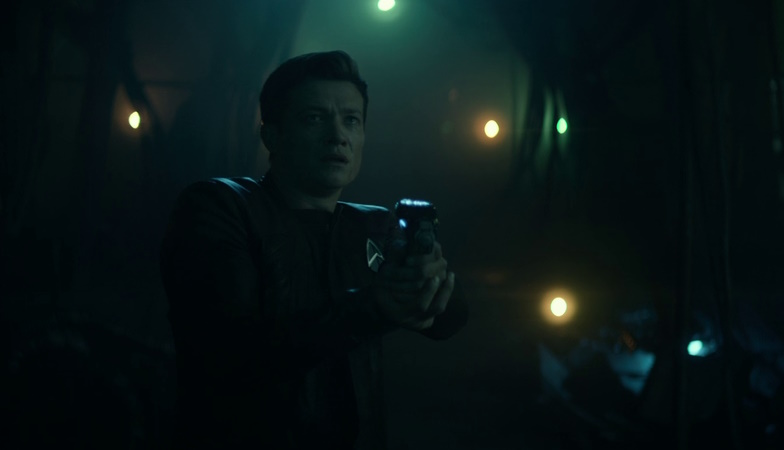
Star Trek: Picard Episode Review – Season 3, Episode 3: Seventeen Seconds

Spoiler Warning: There are spoilers ahead for Star Trek: Picard Seasons 1-3. Spoilers are also present for the following Star Trek productions: The Wrath of Khan, The Next Generation, Deep Space Nine, and Discovery.

For the first time since the beginning of Season 2, I had a genuinely wonderful time with Star Trek: Picard. This week’s episode, Seventeen Seconds, had none of the pacing concerns that were present earlier in the season, and practically every moment was tense, exciting, and thoroughly enjoyable. Season 3 is finally hitting its stride, and if the next seven episodes reach the high bar set by Seventeen Seconds, we’ll be able to consider it a rousing success by the time the curtain falls.

But as the dust settles on Seventeen Seconds, there’s a question burning at the back of my mind that I can’t seem to shake. And here it is: did Picard blow its big reveal too early? I mean, we’re only three episodes into a ten-episode season, and it now feels like we know who the “real” big bad of the season is going to be: the rogue changelings. Should this have been dragged out for another episode or two, perhaps with Worf and Raffi taking longer to figure things out?

Worf was instrumental in finding out what was going on.

So let’s talk about this big revelation, because it’s something that a lot of fans had been wondering about. Pre-season interviews with members of the cast and crew had promised a connection with Deep Space Nine – the one Star Trek show from the ’90s that hasn’t gotten as much attention or love from the modern franchise. This connection came with the inclusion of the changelings, seemingly a rogue faction; an offshoot of the Founders who are bent on causing havoc for Starfleet and the Federation.

This angle is a genuinely interesting one to explore – but it has to be handled delicately in more ways than one! Similar to the Borg, the Founders can be completely overpowered as a faction if the story isn’t well-balanced – and we saw how, in Deep Space Nine, the idea of changeling infiltrators was used sparingly. Too many changelings in too many positions of power will completely throw the story off-balance, and risks making a win for our heroes feel like a bit of a deus ex machina!

Changeling infiltrator Titus Rikka.

Also, a story bringing back the Dominion and the Founders has to be careful not to tread on the toes of the truly wonderful ending to Deep Space Nine. It was incredibly touching to hear Worf speaking so highly of Odo – his friend in the Great Link – especially in light of the sad passing of René Auberjonois in 2019. But a huge part of Odo’s story in that final chapter involved communicating to his people that peace was an option and that the Federation didn’t pose a threat, so undoing that would obviously not be my preference.

And I think that’s where the real genius of this “rogue” faction of Founders could come into play! Rather than saying the Dominion are on the march, what Worf and Raffi have uncovered seems to suggest that only some members of the changeling race are involved – that a schism has been created in the Great Link between followers of Odo’s peaceful path and those who disagreed.

Seventeen Seconds paid homage to Odo.

In short, the line to walk here is a tricky one. It requires the story to keep Odo’s reputation intact, with the touching end to his story not being in any way damaged, undone, or overwritten. But at the same time, it has to find ways to make the rogue Founders engaging and menacing – and to give them motivation for their actions that doesn’t merely boil down to “we’re evil for the sake of it.” On the evidence presented in Seventeen Seconds, there’s reason to hope that the writers and producers have struck the right balance.

Having changelings on the loose also raises the stakes in terms of mystery! We know that Picard isn’t a changeling, and it seems safe to assume that Jack and Dr Crusher aren’t, either. But practically everyone else should fall under some degree of suspicion – and perhaps that could explain why Picard will turn to synthetic beings like Lore and Professor Moriarty: they may be the only ones he can be certain haven’t been replaced by changelings! But we’ll save the speculation for my next theory update.

*ahem*

I’m a huge Deep Space Nine fan – it could well be my favourite Star Trek series, all things considered. So bringing back a major faction from that series is fantastic, and it feels like Picard is leaning into Deep Space Nine in a way that modern Star Trek really hasn’t until now. Sure, there have been appearances in Lower Decks and a couple of obscure references in Discovery… but this feels like our first real opportunity to add some kind of epilogue to the Deep Space Nine story. The inclusion of Worf – who was, of course, a main character in the second half of DS9′s run – means that Picard can make these connections in a way that the series really wouldn’t have been able to before, and I guess my only real concern is that this clear fan-service won’t be too offputting or confusing for people who enjoyed The Next Generation but either haven’t seen Deep Space Nine in a while or who may have skipped it during its original run!

Making content “for fans” always carries this kind of risk. As Trekkies, you and I have almost certainly seen every episode of Deep Space Nine multiple times – even the irredeemably crap ones like Move Along Home. But Picard is trying to appeal not only to Trekkies like us, but to a more casual audience, including people who may not have liked Deep Space Nine or who didn’t stick with it for its entire run. I know several people in my personal life who are in that category – fans of The Next Generation and even of Voyager, but who for whatever reason didn’t stick with Deep Space Nine.

Seventeen Seconds provided just enough of a recap of the events of Deep Space Nine to inform viewers without getting in the way of the story.

In Seventeen Seconds, we got enough exposition and backstory to cover the basics. The show can’t spend all of its runtime bringing viewers up to speed on what happened in 175 episodes of Deep Space Nine, but what it has to do now is convey the basic points so that the story will be understandable for folks who didn’t watch or don’t remember those narrative arcs. Seventeen Seconds got this right, providing enough of an explanation without wasting too much time getting bogged down in it.

Again, Worf was well-used here. He didn’t simply drop heavy-handed exposition, he explained who the Founders were and who this rogue group may be in a brief but informative sequence. This older version of Worf, having had many off-screen experiences over the past thirty-plus years of in-universe time since we last saw him, feels like a mentor or elder statesman – precisely the kind of character to provide this kind of exposition in a way that feels natural. And natural is exactly how it felt!

We got an older, calmer presentation of Worf this week.

Sticking with returning classic characters, pre-season marketing focused on the return of the Enterprise-D’s crew for almost a year… so it’s odd, in a way, that three episodes in we still haven’t seen all of them, and that those we have seen aren’t all working together. Seventeen Seconds gave us Dr Crusher’s first significant on-screen interaction with Picard, and of course we’ve had Picard and Riker teamed up for three episodes now. But Worf is still off in his own little narrative box with Raffi, and there’s no sign of Geordi or Lore. Deanna Troi was briefly seen via a flashback, but again, that was hardly a major appearance.

One of the criticisms fans have made in the years since The Next Generation and its films were on the air is that not every character got enough to do. Everyone got spotlight episodes, of course, but genuine ensemble pieces where everyone made a significant contribution to the story were relatively uncommon, and in some episodes, characters like Dr Crusher would only get a handful of lines. Picard Season 3 was an opportunity to fix that – or at least to give these characters a final mission in which they could all collaborate and work together across a single, ten-episode-long narrative. I’m acutely aware that this is Picard’s final outing, and with basically one-third of the season already over, time is running out to make good on those pre-season promises of major roles for all of the returning characters. I’m hopeful that there will be enough time to have an enjoyable reunion with everyone – but it’s at least worth noting that it hasn’t happened yet!

Geordi still hasn’t made an appearance this season.

Another character who played a big role in pre-season marketing was Amanda Plummer’s Vadic. I said last week that I was a little concerned about Vadic, and how her claim to only be interested in Jack Crusher for the sake of money didn’t really justify her over-the-top presentation. As we learned in Seventeen Seconds, Vadic has at least one changeling ally: the spy embedded aboard the Titan. That ties her in some way to the rogue changelings and their conspiracy – and the portal-weapon that she used was similar (or identical?) to that used against the Federation base at the beginning of the season. But the extent of Vadic’s involvement is still up in the air – and I don’t think we have enough evidence at this stage to say that she is definitely a changeling herself!

In fact, I was struck by Vadic’s absence in Seventeen Seconds. She had a couple of moments in which we saw her happily deploying her portal-weapon, but we didn’t get to spend much time with her at all, which is certainly an interesting decision. As the main named villain of the season so far, I think it’s important to get to see her side of the story – and not merely to hear it second-hand via Worf or some other character. Obviously that doesn’t mean we need to have a lot of scenes with her in every episode, nor that her side of the story needs to be told at such an early stage… but it should happen some time!

Captain Vadic didn’t get much screen time this week.

Since I’ve already mentioned Vadic’s portal-weapon, let’s talk about that for a moment. I… was not blown away by this new piece of tech, to be honest. Don’t get me wrong, it’s far from the worst macguffin that Star Trek has thrown at us, but I felt that there was a considerable disconnect between its visual appearance and the way in which the narrative presented it.

In brief: the way the portals appeared on screen made it look like they should be relatively easy to avoid, even for a starship like the Titan. In this specific case, where Vadic’s goal appeared to be to force the Titan to remain inside the nebula, it makes sense to use a portal in this fashion… but that’s a very niche use case, and the military applications of such a device, especially in three-dimensional battles in outer space, don’t seem readily apparent – which also calls into question parts of Worf and Raffi’s story. It’s a powerful weapon, as we’ve seen, but one that I’d argue has some pretty big limitations.

The Titan encounters a portal.

The portal-weapon is also kind of unoriginal, with similar designs having appeared in everything from hard sci-fi all the way through to the likes of Who Framed Roger Rabbit. The most readily apparent point of comparison is to the video game Portal, which shares a name with this device. Again, I don’t necessarily hate it – and I concede that my criticisms are rather nitpicky – but I really feel a disconnect between the relatively small portals that appeared on screen and the way in which the crew of the Titan seemed to respond to them!

But there may be more to the portal-weapon that is yet to be revealed, and it may have additional uses later in the season. I can certainly see it being a useful tool… perhaps it could be used at the last second to transport characters away from danger, for example. I also suspect that Captain Vadic may meet her end by being spliced through her own portal-weapon! But maybe we should save that for my theory update.

The Titan and a portal aperture.

After a couple of weeks in which Picard looked faded, washed-out, and far too dark, I was pleased to note that this week, Seventeen Seconds only looked far too dark! The problems with colour temperature that had been present in the first two episodes of the season appear to have been fixed, at least on Amazon Prime Video, and I hope that particular issue won’t reoccur. It was a shame that it happened in the first place – and it makes Paramount look pretty unprofessional and incapable, let’s be honest – but at least it has been belatedly repaired.

The darkness issue is still ongoing, though, and this one feels much more like a creative choice. The lights on the Shrike, the Titan, the Eleos, La Sirena and in flashbacks in Guinan’s bar too, were all turned down, and the low brightness is noticeable even when compared to Seasons 1 and 2. With the colour temperature being corrected, there weren’t any scenes this week that I felt were unwatchably dark, or where main events couldn’t be perceived, but there are details in the periphery that I’m sure are functionally invisible as a result of this very deliberate choice of cinematography.

Picard Season 3 is still very dark – even now that the faded, washed-out look has been corrected.

CGI and visual effects were good in Seventeen Seconds, though, and I felt none of the dreaded “uncanny valley” that I flagged up in the season premiere. Whether that’s because there’s been any kind of change in the visual fidelity of Picard or whether I’m just getting reacclimated to the way Paramount and the Star Trek franchise handle their animation and visual effects… well, who can say, really? I’m just satisfied that I’m not being pulled out of the immersion every time the action cuts to the ships in space!

One particular sequence that I’d like to draw your attention to came right at the end of Seventeen Seconds. The moment where the disabled Titan appeared to “fall” – i.e. be dragged – into the nebula’s gravity well was spectacular, and successfully conveyed a sense of helplessness as the ship appears to be headed to its destruction. The effect was akin to a watercraft “sinking” under the surface – and that point of comparison feels apt. It was incredibly well done, and the perfect way to set up a cliffhanger ending.

The Titan falls into a gravity well.

One visual effect that could have been difficult to pull off was that of the changelings in their liquid form. In the 1990s, when Deep Space Nine was on the air, the effect used for Odo and other changelings looked good – by the standards of the time. In 2023, however, that “smooth and shiny” CGI effect is outdated, and the way in which it was brought up to modern spec was solid. The new “changeling goo” feels like a natural progression, and the kind of look that a remastered Deep Space Nine might want to adopt!

There are subtle changes, though. The Deep Space Nine effect was an amber, almost honey colour, whereas the new animation created for Seventeen Seconds had a duller, slightly greyer tone, perhaps closer to an organic compound than anything we’d seen in Deep Space Nine. In addition, the new visual effect feels much more substantial and textured, seeming to flow or ooze in a natural way. I like it, and I think it’s a great update to a classic visual effect!

The updated visual for a changeling in their liquid form.

As mentioned, I feel that the visual effect created for the Shrike’s portal-weapon may have clashed somewhat with the way the weapon was talked about and presented on-screen. But despite that, the effect itself was a clever one, and the way it seemed to unnaturally “bend” the light around it was really neat to see. It reminded me a little of Discovery’s black hole effects in Seasons 1 and 2 – a visual style influenced by the film Interstellar.

The battle sequences between the Shrike and the Titan were great, too, and the technobabble of the nebula “blinding” the Titan’s sensors really amped up the tension. Seventeen Seconds channeled the Battle of the Mutara Nebula from The Wrath of Khan in some of these sequences – but with the addition of forty years’ worth of improvements in visual effects!

The Titan’s crew had to be on lookout duty!

The only thing I’d say about the battle as a negative point is that – to quote Mr Spock from that same film – it “indicates two-dimensional thinking.” The Shrike and the Titan seemed, for the most part, to operate on a two-dimensional plane, not a three-dimensional space, and that was apparent particularly toward the end of the episode as the Shrike was able to “block” the Titan’s escape from the nebula by basically getting in the way. A line or two explaining how the Shrike could accelerate faster than the Titan, or some similar technobabble, could have negated part of this, perhaps.

This was also apparent in the operation of the portal-weapon, at least as presented visually. The relatively small portals opened in front of the Titan, but the ship had multiple routes to avoid it: up, down, left, right, or even simply coming to a halt. Again, this seems to clash with the way the weapon was emphasised in dialogue. Are these nitpicks? Absolutely!

Parts of this battle felt rather “2D.”

It would have been more impactful had we met the Titan’s changeling infiltrator before he was revealed. This anonymous character may go on to be a bigger part of subsequent episodes, but the revelation that there was a spy aboard the ship was blunted, at least a little, by the fact that it was an anonymous “extra” in that role. Had the officer been someone we’d met, even briefly, it would have been more exciting – especially if we’d never suspected that there was anything unusual about him!

This is, I suspect, a consequence of the relatively short ten-episode season. However, I really do believe it would have been worth doing – it’s something that would have turned up the surprise factor in the episode if it had been done well. A short scene or two featuring this character in his role as a Starfleet impostor would have been good enough to achieve this effect.

The changeling spy.

Star Trek has told stories that deal with impostors within Starfleet on many occasions, from episodes like Conspiracy and films like The Undiscovered Country through to the changeling stories in Deep Space Nine like Homefront – and, of course, Discovery’s first season. These stories usually work well and manage to be tense and exciting – but a common hallmark is that we’ve gotten to know the impostor or impostors, at least a little, before the truth of who they are is revealed. In fact, I’d argue that this is a big part of the way this narrative framework is intended to operate; it’s nowhere near as satisfying to say “there’s a spy in our midst!” and then reveal that the spy is just some anonymous background character that we’ve never met.

Look at how well the Michael Eddington story worked in Deep Space Nine, because that’s probably the best example of this kind of storyline in the Star Trek franchise. We got to know Eddington over the course of half a dozen episodes prior to his big reveal, so when he turned out to be a Maquis operative, it was a heck of a shock! The way the changeling infiltration storyline unfolded in Seventeen Seconds worked well, and there was some clever direction and editing to have Worf and Raffi’s uncovering of the plot followed up immediately by Jack’s confrontation with the changeling… but the sequence overall could have been improved, in my view anyway, if we’d met this spy ahead of time.

Michael Eddington was a Maquis infiltrator/rogue Starfleet officer in Deep Space Nine.

When the Titan’s science officer repeated multiple times that the nebula the ship was trapped in was behaving abnormally, my first thought was simply this: I sincerely hope that the story isn’t going to say that this whole thing is one elaborate trap! It’s too much of a contrivance to say that Vadic was purposefully trying to trap Picard and the Titan in the Rykon system given the difficulty involved in getting there and the seemingly obscure location of this nebula.

On the other hand, the fact that this isn’t a normal nebula – and could even be “life, Jim, but not as we know it” – could open up some genuinely interesting story ideas! I feel certain that the “organic” elements of the nebula wouldn’t have been emphasised so prominently were they not going to be significant to the plot later on – but how, exactly, is shrouded in mystery right now.

What’s going on with this nebula?

There were two conflicts central to the character stories present in Seventeen Seconds: one between Picard and Dr Crusher and a second between Picard and Riker. We’ll talk about each in turn, but I think that both worked well in the context of the story.

It was interesting to see Picard and Dr Crusher having this deep and intense conversation about their son – and before we get into specifics, there’s one thing that jumped out at me. Here we have two older characters engaged in what is typically a storyline we’d associate with younger characters: pregnancy, paternity, and raising a child. It wasn’t lost on me that Sir Patrick Stewart is now in his 80s and that Gates McFadden is in her 70s, yet here they were having a discussion that would suit characters a generation younger!

Picard and Dr Crusher had a difficult conversation.

One of the themes that we’ve started to see in Picard’s third season is that of age – something that was also present in The Wrath of Khan, which serves as part of the season’s inspiration. Entering retirement, leaving friends and colleagues behind, and coming to terms with changes to both oneself and the wider world have all been touched upon – though not to quite the extent I’d been expecting, perhaps.

But this storyline – and especially Picard’s conversation with Dr Crusher – felt like it rolled back the years for both of them significantly. The intense discussion of whether Dr Crusher should have told Picard about her pregnancy is something we might’ve expected from far younger characters, so to see it handled – and handled so well – in Seventeen Seconds was great. It completely twisted the expected theme of age, and arguably also reinforces the notion that, in Star Trek’s advanced and optimistic future, humans can live longer, healthier, and more active lives.

Dr Crusher had a child later in life.

There was also a moment in the turbolift after Jack’s injury – the titular “seventeen-second” ride that Riker had talked about in a flashback sequence – in which Picard felt very much the new father, which again gives his story a far more youthful edge than I’d been expecting. Although the focus was on Jack’s injury and survival, those seconds with Picard in the turbolift felt akin to watching an anxious soon-to-be dad in the delivery room, waiting on the birth of his son.

There was deliberate symmetry to the turbolift ride that cut through the Picard-Riker fight, and perhaps has set the stage for their potential reconciliation next week. It’s also noteworthy that Riker was hardly youthful when he became a father – and as someone whose parents were older when I was a child, I appreciate that Star Trek is putting older characters into this position. Not every child is born to young parents – increasingly so, in some communities and cultures – and while many television shows and films do a wonderful job of highlighting the particular problems and issues facing teen parents, for example, it’s actually really nice – and dare I say a little cathartic, personally speaking – to see Star Trek acknowledging that some people become parents later in life. That wasn’t the main focus of Seventeen Seconds in any way, but it’s something that I personally can take away from the story.

Picard’s turbolift ride echoed Riker’s.

Before we get into the weeds too much, let me just say this: I suspect that the decision to pit Picard against both Dr Crusher and Riker in the same episode may not go down well with every fan! Part of the appeal of Picard Season 3 was in reuniting the cast of The Next Generation, and while the characters had disagreements during that show’s run, by and large they were on great terms. Some might say their friendships were a little too perfect, which is why Deep Space Nine and Voyager tried to insert more disputes between characters, and created characters from different backgrounds who had conflicting motivations.

But if the draw of an Enterprise-D reunion was bringing people back together for one last adventure, there’s a danger that these kinds of conflicts – especially if they drag on for multiple episodes – could detract from that, and I understand that argument even if I’m not personally fully signed-up with it. I hope that both conflicts will come to a satisfying conclusion, and that in fairly short order we can see Picard and his crew back on friendly terms – after all, that is a big part of what made this season interesting as a concept in the first place!

Picard and Riker on the bridge of the Titan.

My take on the first conflict is this: Dr Crusher is both correct in her belief that the son of Jean-Luc Picard would be in danger, while also being horribly inept when it comes to keep him “safe.” By leaving Starfleet and the Federation behind to go on a twenty-year unsanctioned medical mission, Dr Crusher has placed Jack in at least as much danger – if not more – than she ever would have if she’d remained in Starfleet. And that’s where this argument and this whole storyline could come unstuck.

Based on everything we know about Starfleet and the Federation, it’s generally a very safe environment. I could absolutely entertain the idea that Dr Crusher would feel a need to resign her commission in order to dedicate herself to raising Jack full-time… but the idea that she felt she had to do so beyond the borders of the Federation, in what is clearly a very complex and dangerous galaxy, risks undermining this aspect of the story. At best I guess we’ll have to call it a contrivance, something necessary to drive this part of the plot forward. At worst… well, it makes Dr Crusher look like a bit of an idiot. A dangerous idiot.

Did Dr Crusher get it wrong? Or are her reasons understandable?

This side of the story also feels as if it’s chafing uncomfortably against a massive part of the main plot from Season 2 – which was on our screens less than a year ago. The entire reason for the Confederation timeline, the mission back in time, and Q’s scheme was, at least as Q explained it, because Picard himself had been unable to let go of childhood trauma enough to settle down in a relationship. We’ve learned in Seventeen Seconds that he and Dr Crusher were once again pursuing a romantic relationship in the months or years after Nemesis, and Picard even stated that he would have been willing to be a husband and father, and that his reasons for not fully committing to Beverly were more to do with Jack Crusher Senior – his deceased best friend.

The story of Season 2 was already a terribly convoluted one that was on shaky ground, so anything that undermines it is a problem. And unfortunately, there’s no escaping the fact that parts of this storyline, as presented in Seventeen Seconds at least, are in that position. The writers tried to throw a bone to this, with Picard making an oblique reference to last season’s events, but that didn’t really go far enough and certainly hasn’t saved this aspect of the story.

Picard’s complicated romantic history with Dr Crusher treads on the toes of last season’s story.

We’ll have to go into more detail about this on another occasion – perhaps after having seen the entirety of Season 3 – but there are actually quite a few areas where these two productions seem to grate against one another. What’s so surprising about that, of course, is that Seasons 2 and 3 went into production back-to-back, with the same production team and showrunner present for both. I’m not saying I wanted or expected Seasons 2 and 3 to form a single ongoing story – though they certainly could have if a suitable story had been written – but it feels odd to see so many small and large points of conflict.

But we’re drifting off-topic! Picard’s second conflict was with Riker, and while the two men seemed to work together seamlessly at first, a radical difference in approach became apparent as the episode wore on.

Picard and Riker had different ideas about how to tackle Vadic and the Shrike.

So there’s a dichotomy here for me. On the one hand, I don’t particularly dislike this idea, and I feel that Seventeen Seconds handled it well. The conflict felt organic and natural, and it was presented as exactly what it was: a genuine difference of opinion and approach. The episode didn’t frame either Picard or Riker as being right or wrong, and there are interpretations as to how to approach a battle of this nature.

But on the other hand… the more I think about it, I can’t escape a simple reality: pitting Picard and Riker against one another would not be my choice, if for no other reason than the story, at least at this point, doesn’t seem to need it. I’ve spoken about this before, particularly in relation to Discovery, but it feels as if this extra element of drama has been concocted and then forced into a story that was already so tense and dramatic that it didn’t need it. Picard, Riker, and the rest of the crew of the Titan were already in a life-or-death, impossibly high-stakes confrontation, so throwing in a personal spat between two main characters didn’t really ramp that up; the tension and drama were already turned all the way up to eleven.

I think a lot of people were surprised by this conflict…

That being said, I have a theory about Riker that, were it to pan out, would completely explain this and basically negate all of those points of criticism. Even if my theory is wrong, the disagreement may end up resolved within the next episode, and that would set the season back on what feels like the “right” path: the path where these characters get back together for one final mission.

Just because I wouldn’t have chosen to tell a story in which Picard and Riker find themselves at loggerheads doesn’t mean that it didn’t work well in Seventeen Seconds, and the way in which their disagreement was built up and then spilled over into argument was well handled. By the time Riker banished Picard from the bridge, we had a solid understanding of both men’s positions and perspectives – and under the circumstances, that’s the most we could have asked from this storyline!

Riker at the end of the episode.

So let’s wrap things up!

Seventeen Seconds was a tense, exciting, and thoroughly enjoyable ride from start to finish, and probably the best episode of Picard since the Season 2 premiere last year. There are nitpicks, as there almost always are, but they melt away when confronted with such an outstanding episode of television.

I’d felt that Season 3 had gotten off to a slow start, but the pacing this week felt perfect. There were no truncated or cut-down moments, and practically everyone got something significant to do. All in all, a great episode!

A few scattered final thoughts:

  • I liked the interaction between Seven and Ensign La Forge, showing how Seven has won respect and friendship from her colleagues, even if she doesn’t get it from Captain Shaw. After the “deadnaming” over the past couple of episodes, it was great to see La Forge call her “Seven!”
  • Captain Shaw is injured – but not dead! Will he remain in sickbay for the next few episodes… or will he come roaring back, take command of the ship back from Riker, and find a way out of the nebula?
  • Surely we’ve gotta see Geordi and Troi next week, right?
  • Worf and Raffi were able to track their target pretty easily… is that because of Worf’s skill, or because the story has its focus elsewhere?
  • With the Titan disabled, why did Vadic abandon her pursuit? Is capturing Jack no longer her objective?
  • Time is a bit of an issue: Dr Crusher says she found out about her pregnancy shortly after she last saw Picard – circa twenty years ago. And I don’t mean to be unkind, but actor Ed Speleers, who plays Jack, is clearly not twenty. A poor casting choice, or are we okay with giving a bit of “soap opera ageing” flexibility here?

Star Trek: Picard Seasons 1-3 are available to stream now on Paramount+ in the United States and other countries and territories where the service is available, and on Amazon Prime Video in the UK and around the world. The Star Trek franchise – including Picard and all other properties discussed above – is the copyright of Paramount Global. This article contains the thoughts and opinions of one person only and is not intended to cause any offence.
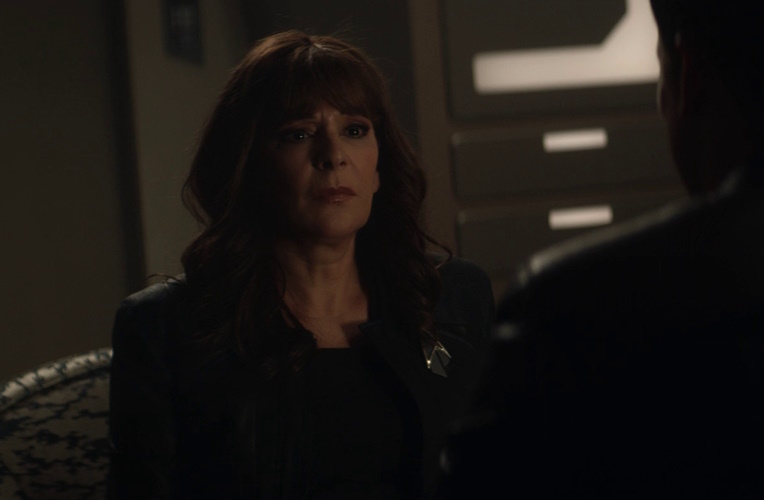
Star Trek: Picard Episode Review – Season 3, Episode 2: Disengage

Spoiler Warning: There are spoilers ahead for Star Trek: Picard Seasons 1-3. Spoilers are also present for the following Star Trek productions: The Wrath of Khan, The Search for Spock, The Undiscovered Country, The Next Generation, Deep Space Nine, and Voyager.

If you read my review of the season premiere last week, there’s almost no need to read this! In short, many of the points I made last time are the same this time: Disengage was an episode with the same contradictory feel as The Next Generation, one in which the main storyline seemed to edge along at a very slow pace while several story beats rushed past too quickly, or else didn’t get enough time dedicated to them.

And those story beats are more or less the same ones as last time, too: Raffi’s undercover mission seemed to race by, some of the scenes between Picard and Jack could have been extended, Riker didn’t get a lot of time to shine, and even the intrigue on the Titan with Captain Shaw and Seven didn’t get a lot of time in the spotlight. As I said last week, it’s a story with a contradictory feel.

The Shrike looms over the Eleos.

Let’s talk visuals. Both last week and this week, Picard looked incredibly washed-out and faded on my 4K HDR display. I tried adjusting my screen manually, but I could either get the default faded, washed-out look or I could get a horribly over-corrected, over-saturated look. Neither is right or natural, and the colour temperature of the season so far feels off. I hope this is something that Paramount can fix – but I doubt it.

In addition to the colour temperature issue, both episodes of the season so far have been incredibly dark. In multiple scenes and sequences – particularly those set in Raffi’s underworld city, but it wasn’t entirely restricted to that setting – it hasn’t always been easy to see what’s going on. Areas that should be in focus are poorly illuminated, and the washed-out effect doesn’t help here either. Again, this is something I’d hope Paramount would have been able to correct behind-the-scenes when it became apparent… but so far, no luck. I did manage to, shall we say, “source” a second copy of Disengage, but this was also plagued by the same issues.

Picard Season 3 has a dark, faded look in many scenes.

There are really two parts to this complaint. The first is that this is a deliberate choice of cinematography, presenting scenes in a dark, under-illuminated way to try to achieve a certain visual effect. The limitations of this are apparent, and one need only look at similar complaints in other television shows to see why turning the brightness down isn’t a good idea.

Secondly we have the way episodes are compiled and compressed for streaming, and I think there’s a technical issue here that Paramount has yet to get to grips with. Because the episodes were dark to begin with, compressing them down for streaming may have contributed to this faded, washed-out look. My screen isn’t a cheap model by any means, but it’s a problem if the only time Picard can look reasonable is when it’s seen on an expensive, high-end OLED television set.

For illustrative purposes, here’s a promo photo for Disengage featuring Seven of Nine and Captain Shaw…
…and here’s the photographed scene as it appeared in the episode. Note the radical difference in brightness, colour temperature, and tone.

So let’s take a step back. Where are we in terms of story? After two complete episodes – a full 20% of the season – it still feels like we’re at the beginning. The main events of both The Next Generation and Disengage appear to have taken place, for the most part, over the span of a few hours; the exception being Raffi’s sequences, which, despite being rushed, actually seem to take place over a longer spell of time.

This episode focused on Jack Crusher, the character who many of us had guessed was the son – somehow – of Jean-Luc Picard and Beverly Crusher. This focus on Jack’s identity and backstory was worth doing, and although some moments didn’t quite stick the landing, it’s an interesting and engaging story – one that has me wanting to learn more. But again, in terms of the overall narrative arc of the season, it feels as though Disengage crawled along at a pretty slow pace.

Is the main story progressing at the right pace? Or am I overthinking things?

Two episodes in and we’ve barely gotten off the starting line. Dr Crusher’s plea for help and Picard and Riker’s off-the-books rescue was the starting point for this story, yet after two entire episodes have passed, we haven’t moved much beyond that yet. It makes me feel as though some of the moments in Disengage could and perhaps should have been included last week.

The ten-episode seasons of modern television shows are a double-edged sword. On the one hand, Picard would almost certainly never have been made if Paramount insisted on twenty episodes or more per season! And the serialised nature of these stories makes a ten-episode season akin to a ten-part movie, which is a great thing in many ways. But on the other hand, these truncated seasons don’t have as much room for manoeuvre, so getting bogged down at the starting line – or spending too long on side-quests – can end up having a serious knock-on impact. We saw this with Picard in both its first and second seasons… and I can’t shake the feeling, even at this relatively early stage, that the same problem is about to reoccur.

Captain Vadic and her crew on the Shrike.

Now for the contradiction! At several points, I felt that all we were getting of Riker were clips; cut-down snippets of what should’ve been longer scenes. There was scope to spend a lot more time with Riker as he tried to convince Picard of what he already knew: that Jack is his son. Having Riker realise that first was a genuinely great story point – one that showed just how close these two old friends are, and how Riker has a perceptiveness, even years later, that Picard can rely on. But it was blitzed through so quickly that there wasn’t enough time to really showcase this angle, and that’s a shame.

Re-establishing and evolving the relationship between Riker and Picard has been one of the best things about Star Trek: Picard, and feels like a real, solid justification for providing these characters with new storylines after such a long time. But it’s only really when the action slowed down in Season 1’s Nepenthe that the show truly excelled in terms of this kind of character-focused storytelling.

Picard and Riker had an all-too-brief chat about Jack.

I’d have wanted to spend a bit more time with Riker this week, and the moments we got with him felt somehow cut-down. The problem, as I’ve said before in Picard, isn’t that the core idea is in any way bad, it’s that it needed more screen time to properly unfold. There was merit in Riker seeing the obvious, and using him as the point-of-view character to convey the truth of Jack’s parentage; revealing to us as the audience something Picard couldn’t – or wouldn’t – see. But that got lost because of how short most of Riker’s scenes were, unfortunately.

We continue to rush through Raffi’s story to such an extent that certain elements, such as the inclusion of her ex-husband, felt almost gratuitous; the story clearly doesn’t have time to delve into this relationship in a big way. I wouldn’t be surprised if this is the last we see – or even hear – of Raffi’s ex, and as I’ve said about narrative elements in Picard more than once: good idea, not enough time to do anything meaningful with it.

Raffi with her ex-husband.

Once again, Michelle Hurd excelled – but she did so in spite of the way the season has been scripted and/or edited. And despite jumping from point to point as she tried to chase down the terrorist or terrorists responsible for the attack, her storyline again feels like it hasn’t made a lot of progress from its start point.

Last week, Raffi was desperately trying to hunt down the person who stole “experimental weapons,” and this week she continued to do that. She found the broker who arranged the sale – but that’s all. Again, all of this could turn out to be okay… but I’m just worried about the pacing of the story in light of what happened in Seasons 1 and 2.

Parts of Raffi’s story continue to feel rushed.

All that being said, the moments we got with Raffi this week were among my favourites in the episode – and are probably among Raffi’s most interesting scenes, from a narrative point of view, that we’ve gotten in the entire series to date. It’s absolutely true that Raffi’s underworld planet borrows a lot both visually and thematically from Star Wars and dystopian sci-fi, but I think there’s more than enough room in the Star Trek galaxy for places like this to exist. We’ve caught glimpses of such worlds in past iterations of the franchise, too, so I think it works well.

The scenes with Sneed – the Ferengi broker – were fantastic. At first, I wondered if there might be some kind of connection to Quark or perhaps DaiMon Bok with the introduction of a Ferengi character, but Sneed was perfectly interesting on his own. And the last-minute arrival of Worf to save the day – revealing himself as Raffi’s “handler” – capped off this story in pitch-perfect fashion. There are nitpicks here, sure, but overall I felt it worked well.

Worf is back!

Let’s talk about Vadic, who made her first appearance of the season. I’m convinced that there’s more to Vadic than has been revealed so far – though it was noteworthy in Disengage that no one recognised her, or had even heard of her. That certainly calls into question some of the ideas that I and others may have had for who she could be and how she may be connected to Picard and the crew… but I don’t think it totally destroys all but the most outlandish of fan theories, so we’ll come back to that perhaps in my next theory update.

My concern about Vadic’s presentation in Disengage comes down to a single factor: her motivation. A villain this over-the-top (and Vadic was, for better or worse, certainly over-the-top in Disengage) needs to have a reason for being so. Khan – the character I and others compared Vadic with after her initial appearance in pre-season trailers – had a single-minded quest for vengeance. Like Captain Ahab in Moby-Dick, he was willing to do anything and sacrifice anything to get his revenge on Kirk for years of being abandoned in a desolate wasteland, and that came across in his on-screen presentation.

Vadic lighting a cigarette.

If Vadic is motivated solely by money – as she claims – that seriously undermines her characterisation. Sure, Jack Crusher may be a valuable target – but does that justify the kind of “Khan meets the Wicked Witch of the West mixed with Dr Doofenshmirtz” presentation? Amanda Plummer really dialled it up to eleven with her villainous performance, letting every word, every syllable, drip with malice, and throwing in a wonderful cackle for good measure. But if Vadic only cares about money… I just feel there’s a disconnect between the character and the performance if that’s the case.

But there are still eight episodes left for Vadic’s story to unfold, and for her to become more than just a one-dimensional villain trope. I’d hoped we might’ve seen the beginnings of that in some way this week, and going into the episode I was probably more excited to meet Vadic than I was about any other character. While I wouldn’t describe her as a “let-down,” she’s definitely a character I think we need to see more of before we can really assess whether or not she’s going to work, and whether her inclusion will end up being a positive thing for the season… or might end up detracting from it.

If we’re to see Vadic as something more than a bog-standard villain trope, we need to know more about her and what’s driving her.

What we’ve heard about Vadic and her crew from Jack – as well as a couple of remarks of a rumoured ship matching the Shrike’s design from Seven of Nine – tells us that she has resources at her disposal. The Shrike was armed to the teeth, and more than outmatched the Titan – which Captain Shaw described this week as a vessel of exploration, which I thought was interesting. But that doesn’t really speak to who Vadic is or what her overall motivation might be – especially if, as the season seems to be suggesting, she’s the terrorist mastermind that Raffi and Worf have been chasing and who attacked the Federation facility last week.

So again, we need to learn more about this character. We obviously weren’t going to get her entire backstory and an explanation of her mission in a single episode, and I wasn’t expecting to. But I was expecting to at least see the beginnings of that – and so far, it feels that Vadic’s true identity and motivation is rather obscured. I don’t believe that “money” will be all there is to it… but just in case I’m wrong about that, let me say right now that it will be monumentally unsatisfying if that somehow were to be the case.

The Shrike’s tractor beam attack was neat, though.

In The Wrath of Khan, Kirk learned that he had a son: David Marcus. Continuing the theme of Season 3 being “Picard does The Wrath of Khan,” we have Jack Crusher being Picard’s own son. This revelation – that at least some fans saw coming – is an interesting one, though I hope the mechanics of how it came to be will be explained… somehow. I don’t need a detailed, no-holds-barred flashback sequence (please no) but some kind of explanation of the events surrounding Jack’s conception wouldn’t go amiss.

As I said last week: there’s a question of timing that I find particularly interesting. According to Riker, Dr Crusher has been absent from her friends’ lives for approximately twenty years, but Jack is clearly not twenty years old or younger – no offence to actor Ed Speleers! – which means he had to have been around before her unannounced departure. Could we learn that a threat against Beverly, Jack, or perhaps against Picard might’ve prompted her to take him and leave?

Why did Dr Crusher take Jack and leave everyone behind?

The question of safety is also a pertinent one. Based on one of Dr Crusher’s lines from pre-season trailers, in which she says something to Picard about “attempts on [his] life,” I’d been wondering whether Dr Crusher may have taken her son as far away as possible in order to keep him safe. But Jack’s long list of criminal offences and the huge bounty seemingly placed on his head would seem to run completely counter to that; at the very least, if this was Dr Crusher’s intention, she hasn’t done a very good job of it!

If we’re sticking with comparisons to The Wrath of Khan, will Jack Crusher end up meeting the same fate as David Marcus? And if so, will his death have the same kind of effect on Picard as David’s did on Kirk? It would be cruel to introduce this character and begin to explore his background and his relationship with both his mother and Picard only to see him killed off – but it could be poetic symmetry, too.

What will become of Jack in the end?

We’ve already seen Jack offering himself to Vadic in an attempted act of self-sacrifice – something not incomparable to how David stepped in to save Saavik’s life in The Search for Spock. Saavik’s name was seen, briefly, this week – used for the doomed shuttle that Picard and Riker piloted to the Eleos. According to background details released by Paramount, Saavik was the commanding officer of the original USS Titan in the late 23rd Century.

These references could be to honour the late Kirstie Alley, the first actress to play the role of Saavik, who passed away late last year. They could also just be coincidental references to tie Picard Season 3 into past iterations of Star Trek. But there’s also a very deliberate connection to The Wrath of Khan once again… and in light of what happened with David Marcus and Saavik, I can’t help but wonder whether the season is setting up Jack Crusher for a similarly sacrificial end.

Debris from the shuttlecraft Saavik…
…and Kirstie Alley as Saavik in The Wrath of Khan.

I hope that there will be time to explore some of what Dr Crusher and Jack have been doing. Jack’s crimes can’t and shouldn’t just be hand-waved away by the story; such an important part of his background needs to be fleshed out. It won’t be enough to say “Jack’s a criminal,” and leave it at that – we need to know some of the details of why he broke the law, whether some or all of it could be morally justifiable, and why, when he’s supposedly on a “mission of mercy,” such law-breaking was required in the first place.

As with Raffi’s criminal underworld, I think there’s scope to show off a side of the Star Trek galaxy that hasn’t always been front-and-centre, and there’s definitely a pathway to explain Jack’s criminality in a way that feels natural and even sympathetic. Saying that he “did what he had to do” in order to provide medical assistance is going to be part of that, for sure – but I hope there will be time to go into a bit more detail.

Jack has an extensive criminal record… and a list of aliases.

There’s also clearly more to Captain Shaw than meets the eye. Vadic alluded to his “psychological profile,” and I think that could potentially connect with his anti-Borg prejudice that we saw in last week’s episode. If Captain Shaw had lost someone to the Borg, such an event could have had an impact on him – and could explain why he’s so openly hostile to Picard and Seven of Nine in particular. I keep expecting Captain Shaw to be killed off – but there may be more of an arc for this character than I’d been expecting.

What I liked about Shaw’s story this week was the moral ambiguity of it. It’s tempting to portray Shaw as being cowardly; turning over Jack to Vadic in order to save himself. But there’s clearly more to it than that – he takes the responsibility of command very seriously, and his number one overriding priority seems to be to keep his crew safe. He’s outside Federation space, with no immediate hope of backup, facing an opponent that clearly outmatches him in terms of firepower… so risking the lives of everyone on his ship to save a wanted criminal is a big ask – even if we as the audience would want to see the son of Jean-Luc Picard and Beverly Crusher kept safe.

Captain Shaw is growing on me.

Am I warming up to Captain Shaw?! That’s certainly not something I expected! But under the rude, unpleasant, and even bigoted exterior, I think we’ve seen glimpses of a good, upstanding captain. Putting aside the anti-Borg prejudice, Shaw reminds me, as I said last time, of the likes of The Search for Spock’s Captain Stiles, Discovery’s Captain Lorca, and The Next Generation’s Captain Jellico. Shaw isn’t wrong in his read on Picard and Riker – who snuck aboard his ship and took it on an unsanctioned mission. His anti-Borg attitude may be extreme, and targeting the wrong people, but I feel we may be on the verge of finding out how it came about. And finally, when he realised the true circumstances he was faced with, Shaw did the right thing – albeit at the last possible moment.

So Captain Shaw has turned out to be more complex than I expected. What’s more, he’s different enough from Chris Rios to provide some kind of justification for the latter’s departure from the series. These storylines wouldn’t have worked with Captain Rios, and while others could have been created to get the rest of the characters to similar narrative places, it would have been a lot more friendly and less adversarial. That’s more “Star Trek” in some ways – but perhaps less interesting in others!

Captain Shaw in the briefing room.

Picard seemed to be struggling with the idea of Jack being his son, and only really came to accept it at the end of the episode. As mentioned, I think there was scope to do a bit more with this idea – explaining why Picard felt that way, and whether he was trying to push those questions aside simply as a point of practicality given the time constraint, or whether it was because he feared the truth. The way Disengage presented Picard left it open as to which it might’ve been – I can see clear cases for both explanations, and the episode doesn’t seem to have picked a side.

The scene in which an injured Dr Crusher wordlessly conveyed the truth, though, was spectacularly well done, and the emotional high point of Disengage. The wordless scene was set to a fantastically evocative piece of music, and told us what I think most viewers already knew: that Jack is Picard’s son.

This was a fantastic scene all around.

Though this story was, overall, a tad rushed, and I’d have liked to have spent more time with Picard, Riker, and Jack in the moments leading up to it, there’s no faulting the final “reveal” itself. This moment also cemented Captain Shaw as an albeit begrudging ally, and has set the stage for the next chapter of the story as the Titan fled into a dangerous nebula.

A battle in a sensor-blind nebula? That sounds like yet another story beat from The Wrath of Khan! This season really is going all-in with the Khan comparisons… and so far, I’m really into that! It isn’t a straight copy; there are enough differences that we can consider it a variation on a theme. But the overt callbacks to one of the best things Star Trek has ever done are not going unnoticed – and after two muddled, lacklustre seasons, maybe this kind of big all-action blow-out is just what the doctor ordered.

The Titan opens fire on the Shrike.

Aside from the danger of coming across as repetitive – which Season 3 has thus far avoided, I have to say – the other potential pitfall here is that this story just feels a bit… safe. Not safe for our characters – not all of whom will make it to the end alive and unscathed, I’m fairly confident of that – but in terms of how the story comes across. This narrative framework is one that Star Trek has used before, and that could mean that we’ll end the season feeling it played things a bit too safe. We’ll have to see – but it’s worth keeping in mind.

So let’s start to wrap things up! Disengage finally saw the season move beyond its starting point, and we now have some idea of how the two main narrative arcs may come together. It was a treat to see Worf again after so long – but a shame he was on screen so briefly. The same can be said for Riker, whose contributions to the episode were a little too rushed for my liking.

Ensign La Forge.

Visually, Disengage was a bit of a disappointment due to a washed-out, faded look that didn’t suit an already dark episode. However, the CGI and other effects work was perfectly okay, and unlike last week I didn’t feel too much of the dreaded “uncanny valley” in CGI sequences featuring the Shrike and the Titan.

Whether Disengage did enough to advance its two main narratives is still an open question, and one that I feel particularly attuned to after the disappointments of Seasons 1 and 2. I’m crossing my fingers that it will all be alright, and that the next eight episodes will see the story advance and unfold at just the right pace. Both this week’s episode and last week’s have left me worried, though.

Time will tell…

Overall, I had a good time with Disengage. I don’t think it’s the best episode of the series or anything, but it feels like there’s the potential to consider it a solid addition, one that advanced key storylines just far enough. I certainly hope so, anyway!

Aside from pacing, my biggest point of concern – or rather, my biggest question-mark – coming out of Disengage has to do with Vadic and the way she’s both written and presented on screen. I feel that we’re going to learn something significant about Vadic in the weeks ahead that will completely reframe her characterisation, and give meaning and purpose to someone who feels a bit out-of-place right now. “Money” can’t be all there is – at least, I hope not!

So that was Disengage. Let’s see what Season 3 has in store for us next time.

Star Trek: Picard Seasons 1-3 are available to stream now on Paramount+ in the United States and other countries and territories where the service is available, and on Amazon Prime Video in the UK and around the world. The Star Trek franchise – including Picard and all other properties discussed above – is the copyright of Paramount Global. This article contains the thoughts and opinions of one person only and is not intended to cause any offence.
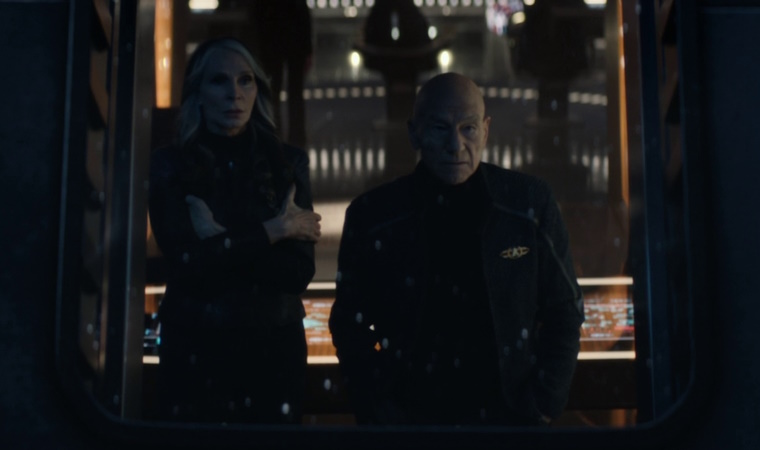
Star Trek: Picard Episode Review – Season 3, Episode 1: The Next Generation

Spoiler Warning: There are spoilers ahead for Star Trek: Picard Seasons 1-3. Spoilers are also present for The Next Generation and Voyager.

Before I’d even watched a single second of Star Trek: Picard Season 3, I was sceptical. In both Seasons 1 and 2, incredible premiere episodes gave way to stories that either failed to pull out a decent ending… or just failed across the board. Regardless of how The Next Generation landed, it’s the first chapter of a season-long story where success or failure will ultimately be determined over the next nine weeks. Having been burned by Picard twice now, I’m afraid that I begin this new season feeling more than a little jaded.

Taking the episode on its own merit, however, The Next Generation feels like a solid start. I wouldn’t say it was perfect – it’s an episode of contradictions, where a couple of story beats seemed to rush past in a heartbeat whilst its contribution to the overall narrative of the season may turn out to be too slow. But there were points of high excitement, fun little character moments, and more than enough intrigue spread across two distinct – yet surely connected – narrative threads to drive things forward and keep me engaged.

The new season has officially launched!

I said as Season 2 came to a close that I was bitterly disappointed to see most of the main cast being jettisoned in order to bring back characters from The Next Generation, and how I hoped their absences would be addressed somehow. Perhaps the most important of these characters was Laris, who, despite making only a handful of appearances across Seasons 1 and 2, was absolutely essential to last season’s story. Although we didn’t get to spend a great deal of time looking at Picard’s new relationship with her, I was pleased that Laris was able to be included and that we got to spend a little time with her before the main story took over.

I said in Season 1 that Laris and Zhaban served a similar role in the story to the residents of Hobbiton in The Lord of the Rings – being the familiar and comforting faces of home that Picard had to leave behind as he set out on his adventure. And Laris once again seems to serve a similar function in Season 3 as Picard sets off on a new quest. It was great to welcome back Orla Brady, and to catch a glimpse of Picard’s newfound home life with Laris before the main story kicked off. I’m glad there was time to include those sequences – and it gives me hope that we might get to hear something of Elnor, Soji, and the Borg Queen-Dr Jurati hybrid as well.

We got to catch a glimpse of Picard’s life with Laris before the main story got underway.

One of the biggest problems that has tripped up Star Trek: Picard in both of its seasons so far has been pacing. This is something that we won’t be able to judge fairly until we’ve seen most of the rest of the season, but there are causes for concern at this early stage – at least in my opinion. The Next Generation introduced us to some kind of mysterious threat that seems to be hunting Dr Crusher… but after setting up that she was in danger, the main story arc of the season didn’t really progress beyond that. Picard and Riker arrived at her ship, the Eleos, but there wasn’t any time left to go into detail about who might be hunting her or what they want.

And that could be okay… if the rest of the season has time to explain all of these points and tie together the different character arcs and narrative threads. But it’s also worth noting that The Next Generation didn’t bolt out of the gate. We met several new characters, but not the villain hunting Dr Crusher, and the episode ended more or less in the same place as it began: with Dr Crusher having fended off an attack, and the help she had called for – Riker and Picard – having only just arrived. In both Seasons 1 and 2, pacing issues across much of the season meant that too much story was left on the table, with whole storylines and characters literally ignored and dumped as time ran out. I sincerely hope that this problem hasn’t been repeated, and that The Next Generation hasn’t set up the season for a disappointingly familiar end.

In terms of the main story of the season, I’m not sure how far we’ve progressed.

Conversely, parts of The Next Generation seemed to race through – or rush past – potentially-interesting story beats. There were quite a few different elements crammed in to kick off storylines and character arcs, and the result was that not all of them seemed to get enough time in the spotlight – even though the episode as a whole wasn’t in a horrible rush.

It’s a contradiction! Raffi’s story in the criminal underworld was a bit of a whirlwind, taking her from off-the-wagon junkie to undercover operative in a heartbeat, and then culminating mere moments later in her failure (or what she will undoubtedly see as her failure) to stop an attack against a Federation facility. This storyline didn’t necessarily need more time, but it certainly could have had longer to play out. In past iterations of Star Trek, a story like this could have been an episode (or even a two-parter) in itself; Picard’s own undercover mission in Gambit comes to mind!

Raffi on her undercover assignment.

I would have liked to have spent more time with Raffi. Although she and her nameless “handler” made mention of stolen weapons, I didn’t really feel that The Next Generation properly conveyed the stakes. It was only when the Federation facility was destroyed (a moment that had been shown in pre-season trailers) that the extent of the threat that Raffi was staring down became apparent – and by then this part of the episode was pretty much over.

If this storyline had a few more minutes dedicated to it, we could have had a bit more of a conversation about what this missing weapon was, why it was so dangerous, how long it had been since it was stolen… and more background that could have set up the attack on the base. As it is, it’s hard to get too invested in this story. We never saw the base, nor met anyone who might’ve been stationed there, and we don’t know if the weapon used to destroy it was the only one stolen or one of many. Without more information to put these points into some kind of context… it just feels a tad rushed.

The attack on the base and missing weapons could’ve used a bit more context.

That being said, Michelle Hurd did everything she could with the material she had and the limited screen time afforded her to really sell this storyline, and her emotional performance was deeply impressive. Given that she was working on her own for practically the entire time, it wasn’t an easy challenge to really sell the idea of Raffi being in this dark place, but Hurd rose to the occasion.

In terms of visual effects, The Next Generation had a couple of unspectacular moments. Generally, the quality of the animation work was high – and far better than the lacklustre visuals we saw in parts of Season 1. But there were a few moments with the USS Titan that I felt were just a bit “last-gen” and not quite up to modern standards, especially when we look at what other sci-fi series and franchises are doing.

The Titan in spacedock.

This is a consequence of Paramount and Star Trek not having the budget or resources that the likes of Disney and Star Wars do, and that’s okay. In a season in which a big return to space is clearly on the agenda, though, it’s at least noteworthy that not all of the CGI moments in The Next Generation stuck the landing.

At first I couldn’t quite figure out what it was about a couple of shots of the USS Titan that I didn’t like, but I think I’ve finally nailed it down. In short, the ship is in the “uncanny valley,” looking real, but not quite real enough. Between the “lens” and the “model” there was just a bit too much smoothness; panels and lines don’t have the textural variation we’d expect to see on a real object. This problem plagued CGI through the 2000s, and if you look at Enterprise or the Star Wars prequels you’ll see far more extreme examples. While it wasn’t terrible, it was noticeable enough to pull me out of the immersion on more than one occasion – and to leave me lamenting the loss of physical starship models!

Picard and Riker’s shuttle leaves the Titan.

Aside from the heavy-handed nostalgia play, I’m genuinely not sure what the title of this episode was supposed to be about. The characters who were in focus for the vast, vast majority of the time were very decidedly not the titular “next generation,” and those who arguably might be – Sidney La Forge and the character who identified himself as Dr Crusher’s son – were only on screen for a couple of minutes at the most.

This isn’t a big deal really, but when the title of the episode clearly indicates the same kind of passing of the torch that we got back in 1987, we didn’t really feel any of that as the story unfolded. Perhaps someone cleverer than I am might be able to pick up on what the writers and producers were going for here, but I’m struggling to see it!

Ensign Sidney La Forge.

A few points that The Next Generation glossed over could’ve used some additional clarification. The last time we saw Admiral Picard he’d just taken up a new role as Chancellor of Starfleet Academy, and the pin/combadge he wore during this episode was the same one we saw him wearing on the bridge of the Stargazer in Season 2. Yet Captain Shaw made the point that Picard had now retired from Starfleet – and used that to deny his request to change course. So did Picard cease to be Chancellor of the Academy in between Seasons 2 and 3? I guess he must’ve – perhaps while deciding to move to a new planet with Laris – but it wasn’t clear.

If he did retire, how was Captain Shaw convinced to allow him and Riker to “inspect” the Titan? Captain Shaw clearly didn’t want the two of them to be there, and wouldn’t have voluntarily allowed them on board, so the question of exactly what status a retired ex-Admiral and ex-Captain occupy is a bit up in the air. The episode seemed to want to have it both ways: to tell the story of the retired old guard, but also make sure they had a pathway to commandeering a starship.

The specifics of Picard’s place in Starfleet weren’t made clear.

Captain Shaw is a great character – though I’m still convinced he won’t last very long, one way or another! I noted influences from the likes of Captain Stiles from The Search for Spock and Edward Jellico from Chain of Command, as well as perhaps a dash of Discovery’s Gabriel Lorca, in his characterisation. The strict, rigid, no-nonsense approach that we’ve often seen other characters come up against was on full display, and where Captain Shaw could have come across as a bit of a wet blanket – an unnecessary bump in the road as our protagonists set out on their journey – I think it worked well in context. Starfleet is bound to be populated by career officers like Shaw, and while he comes across as unsympathetic and even malicious due to his treatment of Seven, Riker, and Picard… in a way he isn’t wrong. These two were trying to take his ship and crew on an unsanctioned, dangerous, clandestine mission, and he was right to be suspicious of them and call them out on it.

In terms of the narrative of this first chapter of the story, though, I can’t help but wonder whether it might’ve been better for Picard and/or Riker to have called in a different favour! Instead of sneaking aboard the Titan and trying to secretively reroute the ship, couldn’t they have called in a favour from someone else in Starfleet – someone who could have hooked them up with a ship, or at least gotten them a spot aboard a ship with a captain who likes and respects them? I know that Dr Crusher warned them not to involve Starfleet – but they did anyway, and so I guess my question is: was this their only option? Maybe that’s a bit of a nitpick… and if I’m wrong and Captain Shaw sticks around, perhaps he’ll have a contribution to make to the story that will be more than worthwhile. Time will tell!

Captain Shaw may be an unpleasant man… but he was right, in a way, to be suspicious of Picard and Riker.

So let’s talk about Dr Crusher’s son. As of the last time we saw her, Dr Crusher only had one son: Wesley. And as we saw at the end of Season 2, he’s off doing his own thing with the Travellers and Supervisors. So who is this new character really – and if he is Dr Crusher’s son, will we learn who his father might be?

The obvious connection – especially in a show called Star Trek: Picard – is that he’s Picard’s son, and especially considering that Laris mentioned earlier in the episode that Picard and Dr Crusher had “tried” to become lovers, that could very well play out. We’ll take a look at this in more detail when I update my theory list, but for now suffice to say that this seems to be the most likely outcome.

I’m sure we’ll find out a lot more about Crusher Jr. in the episodes ahead!

But even if we’ve figured out this character’s parentage, there are still a lot of unanswered questions. Riker and Picard both noted that it’s been about twenty years since they last saw or heard from Dr Crusher… but her son is clearly not twenty years old or younger, so he must’ve been around during the years before she disappeared. That doesn’t mean she would have told her friends about having another child – but it does raise questions. If he’s Picard’s son, and Picard seemed to be in danger, could that explain why Dr Crusher chose to leave her friends behind? Was it all for his sake?

Again, that’s something we can consider in more detail in my theory update. This revelation of Dr Crusher’s colleague being her son raised a lot of questions – but it was also a story point that was blitzed past pretty quickly in The Next Generation. The character emerged, pointing a phaser at Riker, revealed his connection to Dr Crusher, and then it was time for a close-up look at the Shrike before the credits rolled. There was definitely scope to spend a minute or two more on this revelation – both for the sakes of Riker and Picard and for us as the audience. This bombshell didn’t get more than a few seconds in the spotlight before the episode rushed to its next point.
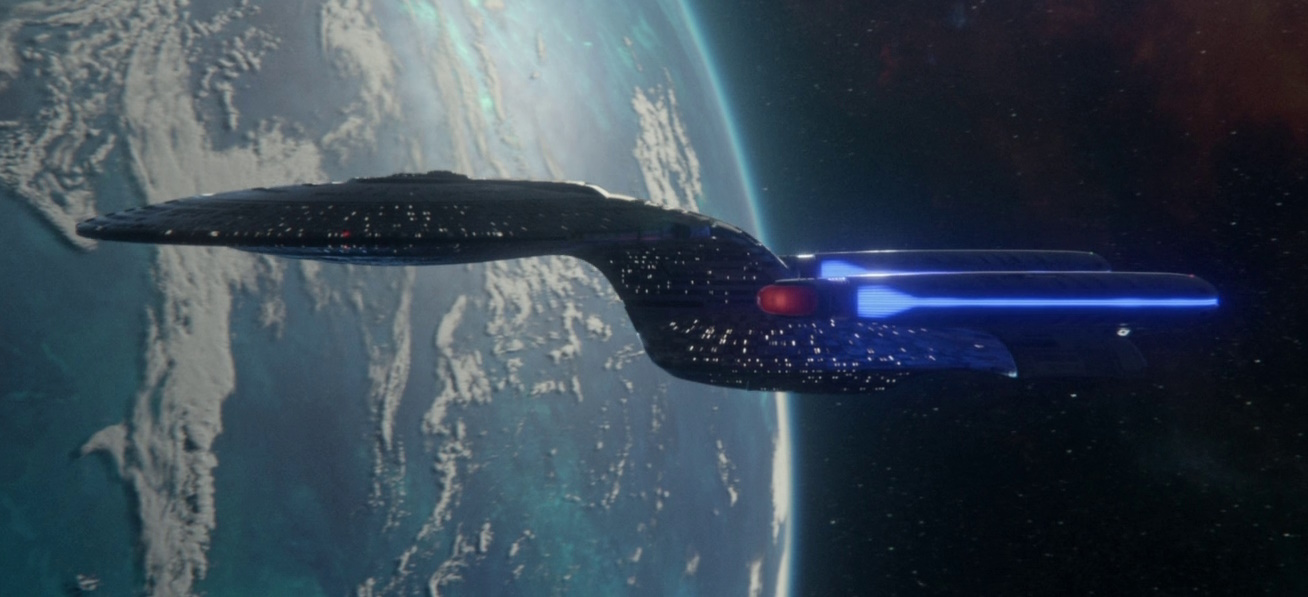
We could – and perhaps should – have spent a couple of minutes more on this moment.

Last season, I argued that an apparent studio-mandated decision to have every single episode end on a cliffhanger was to the story’s detriment, and with The Next Generation ending with not only one but arguably four shocking moments, I feel a tad worried that that trend might continue. In retrospect, Season 2 feels like it was chopped up quite artificially, with a strong focus on these cliffhanger endings to such an extent that it didn’t serve the story, splitting up storylines across multiple episodes unnecessarily. We’ll have to judge this aspect of Season 3 when it’s over, but it’s certainly noteworthy at this early stage that The Next Generation also ended in similar fashion.

Who was the mysterious stranger eavesdropping on Riker and Picard? It seems a safe assumption that he’s some kind of friend or ally of Vadic – the season’s main villain who was teased in pre-season trailers but is yet to make an appearance. He could also be a Starfleet operative, or perhaps someone aligned with Dr Crusher. But it felt like quite a played-out trope to have Riker and Picard meeting up in a bar to have their private chat about secretive and sensitive issues. I know it’s another nitpick – but couldn’t Riker have met up with Picard at the vineyard? If this character’s spying is going to be relevant to the story later on – and surely it will be in some form – it just feels a bit clichéd to have him overhear them speaking in such a public setting.
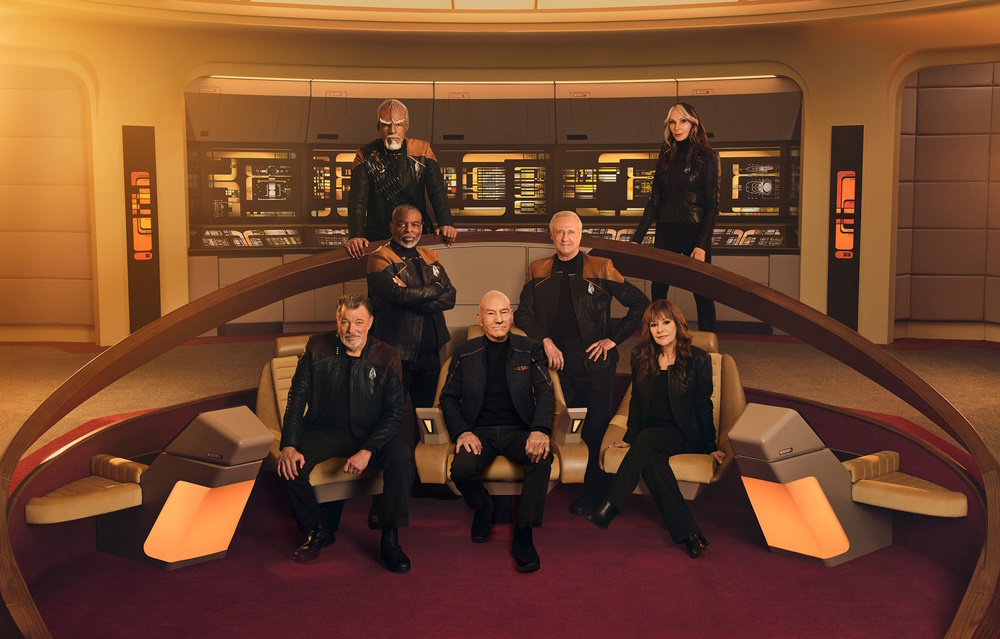
The stranger in Guinan’s bar.

One of the best things Picard did in its first season was re-establish the relationship between Riker and Picard, taking it beyond anything we ever saw in The Next Generation and the films of that era. No longer serving together opened up the possibility of a genuine and deep friendship between the two, and the episode Nepenthe was the perfect way to revisit Picard, Riker, and Troi and establish a new, post-Starfleet dynamic for them.

And The Next Generation picked up that thread from Season 1 and has begun the process of exploring it further. Picard turned to his old friend for help – and with both men being retired or no longer on active duty, there was the opportunity to really examine how well they work together and how close they’ve become. Although Riker and Picard worked well together, and there was trust and mutual respect between them really from the first season of The Next Generation, it’s only in Picard that we’ve seen this friendship genuinely blossom and come into its own. It’s been great to see – and it feels like the perfect and natural evolution of this relationship.
This episode did great things with the Riker-Picard relationship.

The themes of age and how we treat older people were present in The Next Generation, though perhaps not quite to the extent that I’d been expecting. We got a moment where Picard was unaware of the closure of a starbase and had to be corrected, and a comment from Riker about how both men were past their physical peak, but Riker’s story seems to be teeing up some kind of relationship or family dysfunction angle between himself, Troi, and their daughter Kestra. Jonathan Frakes seemed to suggest in a pre-season interview that Riker has felt unsettled and has been keen on returning to Starfleet, and that could be the source of the tension there.
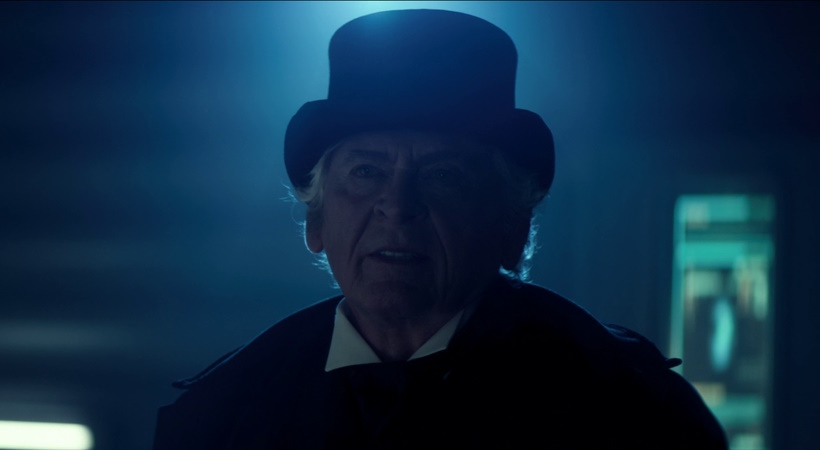
Having seen Riker and Troi in semi-retirement in Season 1, seemingly doing the best that they could to have a happy family life and provide for their daughter, I hope that this story doesn’t end up coming across as a kind of gratuitous and unnecessary shake-up. I’d have been happy, quite frankly, to have left Troi and Riker behind, with Nepenthe serving as their post-The Next Generation epilogue. With them returning this time, I just hope that if there is to be a relationship dispute, it won’t feel tacked-on or overplayed.

Riker seemed to suggest that all may not be well in his marriage.

But we’ll have to wait for Troi’s return before we can assess how that particular storyline will land! For now, suffice to say it’s enough to cause a little concern, because undoing or otherwise overwriting what we got in Season 1 would not be my choice – especially if it seems only to be there to inject a sense of drama into an already-dramatic season of television.

I was surprised to see how heavily The Next Generation leaned on visual and musical callbacks to The Original Series films. The Wrath of Khan, The Search for Spock, The Undiscovered Country, and even The Motion Picture were all influential, with everything from fonts to musical motifs being directly lifted from those titles. I said before the season aired that I was getting a kind of “Picard does The Wrath of Khan” vibe from some of the clips we’d seen in trailers, but I wasn’t expecting to see the series lean so heavily on the feature films of the ’80s for inspiration. Don’t get me wrong – as a child of the ’80s, that style of sci-fi is exactly my kind of thing! And it worked well in The Next Generation. I just wasn’t expecting it!

There was a real ’80s flair to parts of The Next Generation.

Dr Crusher didn’t always get a lot to do in The Next Generation and the films that followed. She had some episodes in the spotlight, and we saw her take on a commanding role on the bridge in later episodes like Descent and All Good Things, but for the most part her role as the ship’s doctor was a limiting factor. Stories with medical mysteries or where characters had to visit sickbay were where we saw her most often.

With that in mind, where The Next Generation excelled was in ensuring that Dr Crusher stayed true to her characterisation, but took on much more of a leading role in an action-packed storyline. Traits like her courage, that we remember from her earlier appearances, came to the fore in a new way, and this bold direction for her character didn’t feel in any way forced. On the contrary, it felt like the natural evolution for her – especially if she’s been operating independently for such a long time.

Dr Crusher firing her phaser rifle.

The semi-automated Eleos was an interesting vessel, and I hope we get to spend a little more time with this starship. Dr Crusher and her son seem to rely on the ship’s computer for things like propulsion, where in past iterations of Star Trek we’d have expected to see people operating those stations and departments. But, as Seven reminded Picard aboard the Titan, it seems that Starfleet is embracing more and more automation. An analogy for things happening here in the real world, no doubt!

The “deadnaming” of Seven of Nine by Captain Shaw was something I was uncomfortable about at first, especially after Seven’s arc in Season 2 was all about embracing the Borg side of herself. Captain Shaw clearly has a chip on his shoulder about the Borg, as he made clear in a comment to Picard, so perhaps that’s something we’ll learn more about next time. He might’ve lost someone to the Borg, or even aboard the Artifact.

Commander Seven… uh, I mean Commander Hansen.

That being said, this kind of deadnaming – forcibly referring to someone by an old name with which they no longer identify – may have been a way of quickly communicating to us as the audience that Captain Shaw is someone we should dislike, and that kind of shorthand can work well in a story with time constraints. But in a broader sense, when we step back and think about Star Trek’s positive, progressive future and how far we’d have expected society to advance by the dawn of the 25th Century… surely something like deadnaming would be socially unacceptable, even for someone in a position of power like Captain Shaw.

In short, I can see why the writers chose to include this aspect of Shaw’s character. Seeing how uncomfortable it made Seven of Nine was a quick and relatively easy way to get across the message that this character isn’t someone we should be rooting for – and I get that. But it has an implication for the Star Trek galaxy as a whole that feels a little uncomfortable. I hope we’ll learn that the rest of the crew of the Titan have more respect for Seven and are willing to treat her better!

Captain Shaw is being set up as an antagonist.

So let’s start to wrap things up.

Season 3 is off to a solid start. My scepticism about the pacing of the episode is probably more to do with the muddled and mismanaged first and second seasons and the way those stories ended. I certainly hope that The Next Generation has set up this new story for success, and if nothing else it was nice to spend some more time with Riker and Picard, as well as Dr Crusher, Seven of Nine, and Raffi.

Seeing how these stories will come together is genuinely interesting, and while we could’ve spent a bit more time on Raffi’s side of things, with some more context provided about the stolen weapons and attack on the Federation outpost, it worked well enough. Captain Shaw was the only new character that we got to spend a lot of time with, and while I don’t like him, I can see where he’s coming from and can certainly appreciate that an organisation such as Starfleet must be populated with people just like him. Dr Crusher’s son and Ensign La Forge were on screen so briefly that we didn’t really get a good read on either – but there’s more than enough time in the episodes ahead to rectify that.

The final shot of the episode: the Eleos and the Shrike.

As I said a couple of weeks ago: it’s probably time to watch The Wrath of Khan if you haven’t seen it in a while! That film seems to be serving as inspiration for Season 3 right now, though the story is far from identical.

I had a good time with The Next Generation, taken on its own merit. It wasn’t perfect, and I don’t think it hit the same high notes as Season 1’s Remembrance or Season 2’s The Star Gazer – but if the story that it’s set up has been meticulously planned and will reach a better, more definitive end point than either of the show’s past outings managed, then none of that will ultimately matter. I’m keeping my fingers crossed that that will turn out to be the case.

Star Trek: Picard Seasons 1-3 are available to stream now on Paramount+ in the United States and other countries and territories where the service is available, and on Amazon Prime Video in the UK and around the world. The Star Trek franchise – including Picard and all other properties discussed above – is the copyright of Paramount Global. This article contains the thoughts and opinions of one person only and is not intended to cause any offence.