Ten Things That Have Always Bugged Me In Star Trek

A spoiler warning graphic.

Spoiler Warning: Beware spoilers for the following Star Trek productions: The Original Series, The Next Generation, Deep Space Nine, Voyager, Enterprise, Discovery, Picard, Generations, and First Contact.

Let’s have a little bit of fun today at the expense of the Star Trek franchise! I’ve been a Trekkie for almost thirty-five years at this point, and I’ve seen a lot of Star Trek in that time! For a franchise that now runs to over 900 individual episodes of television, Star Trek’s internal consistency and the attention to detail shown by the writers and creative teams are generally incredibly good, and there aren’t many true inconsistencies or things to get worked up about. But that doesn’t mean there are zero!

If you’re a regular reader, you might’ve seen me use the expression “glorified nitpick” in some of my Star Trek episode reviews. Sometimes I’ll point out something that I felt didn’t work very well or that seemed to run counter to what we already knew about a situation or character. Well… most of what we’re going to talk about today doesn’t even rise to that level! These aren’t things that I’m cross about or that “ruined” an episode or story for me. They’re just, as the title says, little things that bug me!
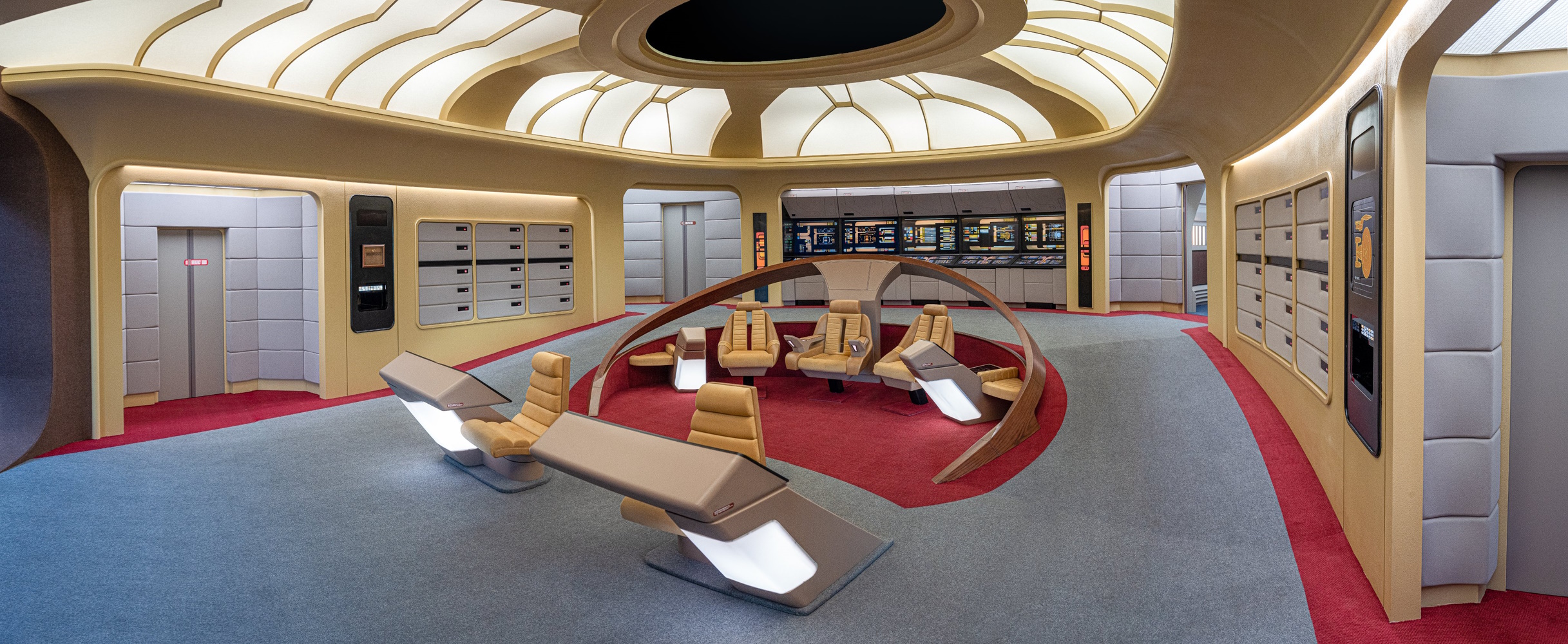
Publicity photo for Star Trek: Picard showing the rebuilt Enterprise-D bridge.
The bridge of the Enterprise-D.

Before we go any further, here are my usual caveats! Firstly, all of this is my entirely subjective opinion. If you disagree with any or all of the points below, think I’m “overreacting,” or feel that I’ve totally got the wrong end of the stick… that’s okay! These are just a few stray thoughts that I have about Star Trek, and most of them are so minor that they’re not gonna be worth getting into an argument about! Secondly, this is intended as light-hearted, tongue-in-cheek fun – so I encourage you not to take me too seriously and to engage with this article in that spirit!

Finally, I’m not counting the old excuses of “it’s just a story” or “because the writers thought it worked better that way” as explanations! Sure, everything in Star Trek is “just a story,” and if the writers needed to move characters into place or kick off certain storylines in a way that opens up a minor inconsistency, that’s just the way it goes sometimes. But as a fan, and as someone engaged with this fictional setting, that excuse doesn’t really work for me – and it never has. So it’s true that “none of this is real,” but that doesn’t change anything for me!

With all of that out of the way, let’s get started!

Number 1:
Why was the unfinished Enterprise-B the only ship within several light-years of Earth?
Star Trek: Generations

Still frame from Star Trek: Generations showing the launch of the Enterprise-B.
The Enterprise-B embarks upon her ill-fated maiden voyage.

Kicking off the plot of Generations is the maiden voyage of the Enterprise-B under the command of Captain John Harriman. Joining him for the voyage are Captain Kirk, Montgomery Scott, and Pavel Chekov, but during what was supposed to be a short shakedown cruise entirely within the Sol system, a distress call was received that took the Enterprise-B right into the path of a dangerous energy ribbon called the Nexus.

But here’s my question: why did Starfleet have no other ships anywhere close to the SS Robert Fox and SS Lakul? This is Sol – the home system of the Federation and Starfleet, where Starfleet Headquarters, the Federation government, and Spacedock are all located. With the Enterprise-B on a glorified joy-ride to show her off to a gaggle of journalists, and with weapons and other essential systems still not installed… why would she be the only ship in the area?
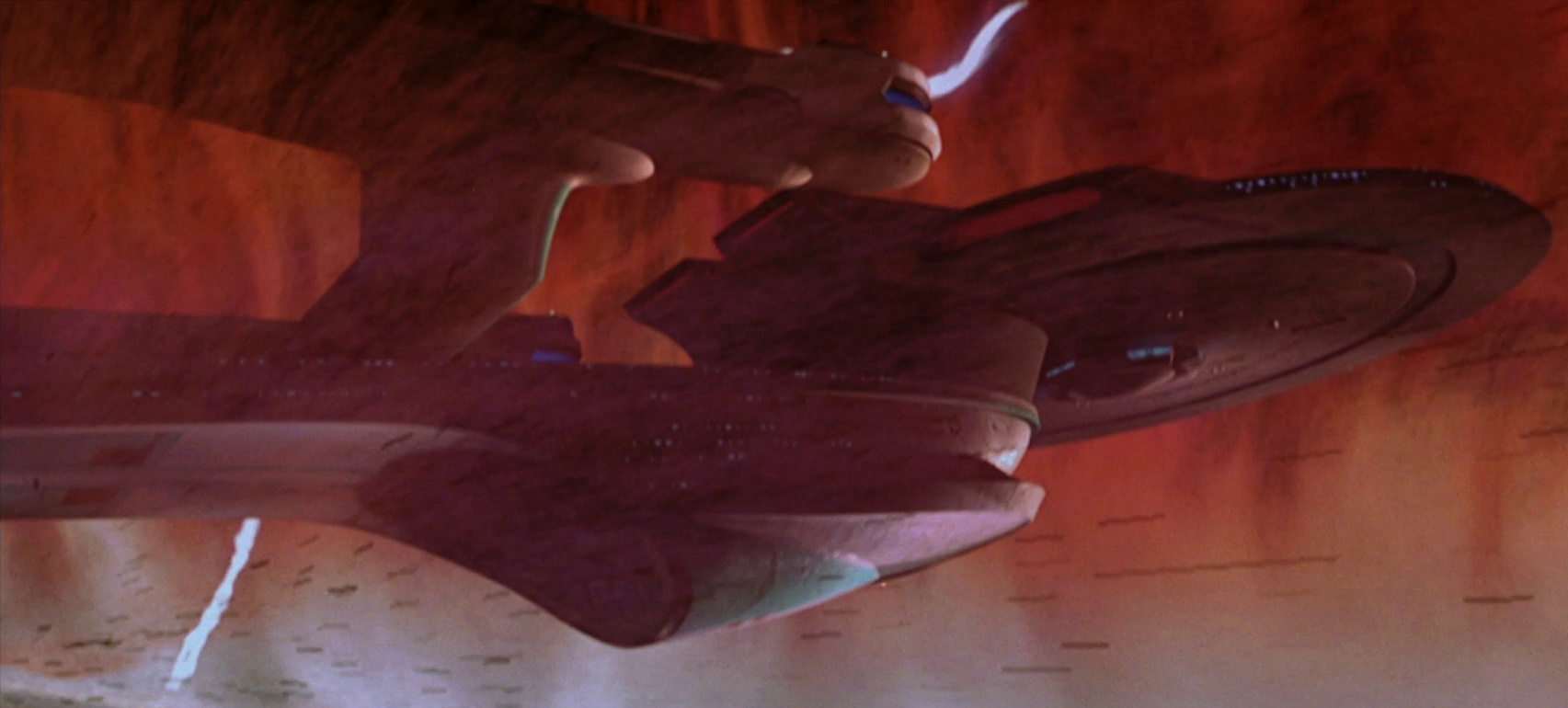
Still frame from Star Trek: Generations showing the Enterprise-B in the Nexus.
The Enterprise-B encounters the Nexus.

Think about it: this would be like the only military unit within a hundred miles of Washington DC being a single brand-new tank without its gun barrel. If the Enterprise-B’s shakedown cruise had taken her beyond Sol, then things might feel a little better. But having no other starships anywhere close to the stricken refugee vessels always struck me as bizarre!

If Starfleet leaves its home system and institutions of government so sparsely defended, it’s a miracle that the Klingons, Romulans, or Borg haven’t been able to warp into the system and conquer Earth! Jokes aside, I think the opening of Generations is pretty great – and the film in general is one of my personal favourites. But that doesn’t mean I can just overlook what appears to be Starfleet’s atrocious planning and non-existent defences!

Number 2:
What’s the United Earth Space Probe Agency?
Star Trek: The Original Series
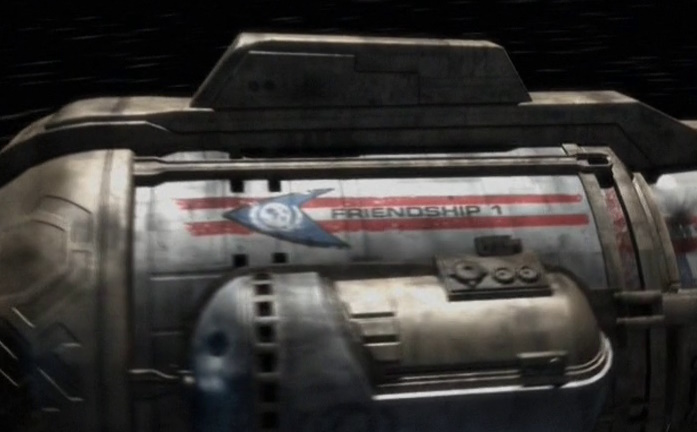
Still frame from Star Trek: Voyager showing the probe Friendship One.
Friendship One, a probe launched by the UESPA.

Prior to settling on more familiar terms like the United Federation of Planets and Starfleet, the United Earth Space Probe Agency (or UESPA) was an organisation that was mentioned in a couple of early Star Trek stories. But what the organisation is and what its relationship is with Starfleet and the Federation was never elaborated upon, and plot points in Enterprise have further muddied the waters.

The out-of-universe explanation for this one is simple enough: as Star Trek was being created and those early episodes were being written, some titles and names were still being decided upon. It wasn’t even settled until well into production on The Original Series’ first season that the show was set in the 23rd Century – the original pitch for the series didn’t specify an exact time period, and the 27th Century was also suggested as a possibility.

But as I said at the beginning, out-of-universe explanations don’t count!

Still frame from Star Trek: The Original Series showing Kirk and Spock.
The UESPA was mentioned a handful of times in the first season of The Original Series.

Enterprise could have put this to rest, but instead the series – quite understandably – wanted to use familiar names like Starfleet, so the UESPA wasn’t included in a big way. Occasional references to it have popped up, including in Voyager where the UESPA had sent out at least one unmanned probe, but nothing to definitively explain what it was and whether it was independent of Starfleet.

To me, the “United Earth” part of the name seems to suggest that it’s a human-only organisation, but with humanity’s ships all seemingly flying under the Federation flag, what role there could be for a United Earth fleet – and where any of its ships or probes actually are – remains unknown.

Number 3:
Why was Starfleet unable to detect the octonary star system?
Star Trek: Picard
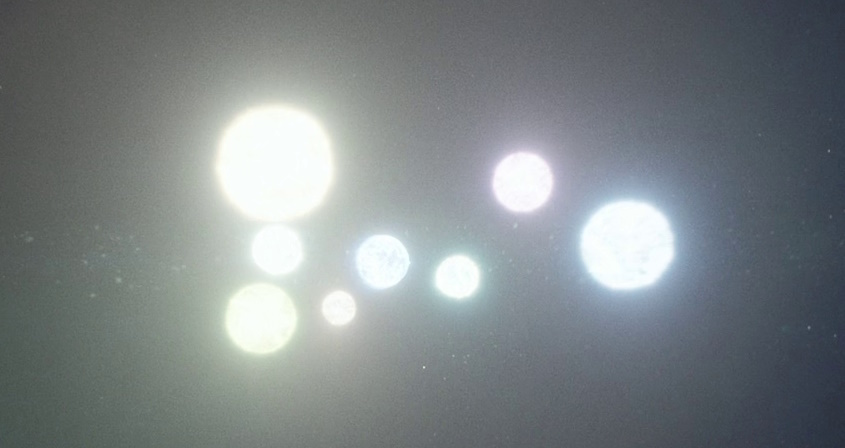
Still frame from Star Trek: Picard showing eight stars in formation.
Eight stars in perfect gravitational harmony.

In Season 1 of Picard, the ancient super-synths that I nicknamed the “Mass Effect Reapers” literally moved eight stars to form a stable octonary star system. They did so to make their presence known, and on the planet in that system they left their beacon behind. But… how did Starfleet – with all of its sensors, missions of exploration, advanced telescopes, and stellar cartography departments – fail to notice such an apparently obvious and incredibly interesting stellar phenomenon?

Using technology that we have right now – today, in the early 21st Century – we can look not only at stars, but detect the planets orbiting them, view distant galaxies, and even find black holes. I find it impossible to believe that Starfleet hasn’t at least scanned the entire Milky Way, detecting every star and star system – so how did they miss something so obviously artificial in nature?
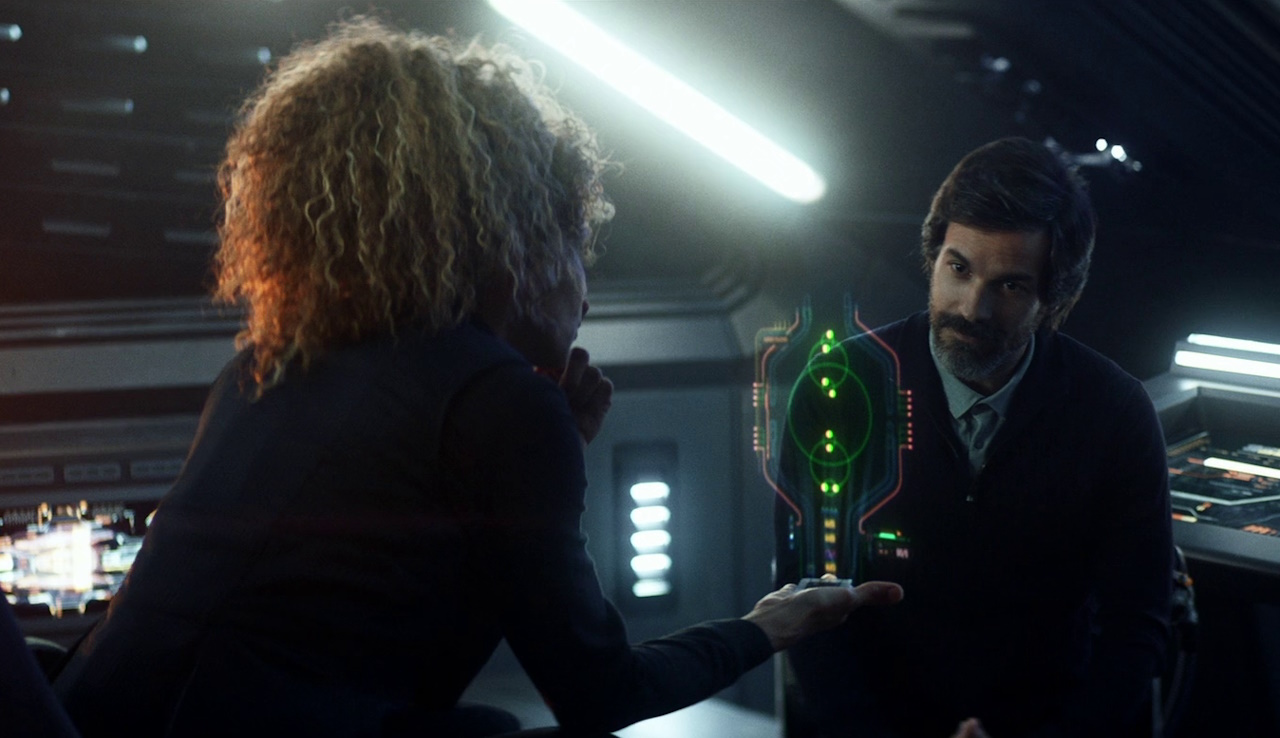
Still frame from Star Trek: Picard showing Raffi and the ENH.
The symbol representing the octonary star system.

If Picard had explained that, for instance, the Romulans deployed a cloaking device to shield the octonary system, or that Starfleet did know about the system but couldn’t explore it because of its location behind the Neutral Zone, then I’d have nothing to complain about. But a fairly sizable plot point in one episode involved the crew of La Sirena finding out that this star system had been deliberately hidden from Romulan star charts… when surely the Federation, who aren’t that far away from it in the same region of the galaxy, would have been able to see it through their telescopes! Again, if this system was in a far-flung part of the Gamma or Delta Quadrants, I’d still argue that Starfleet should’ve detected it, but its distance could be its saving grace. However, the octonary star system was supposedly in or near Romulan space – meaning it’s a mere stone’s throw away from the Federation.

In The Next Generation, the Enterprise-D is transported by Q to a system that would’ve taken them years to reach at top speed. But Starfleet already had a designation for this system: J-25. To me, that implies that the Federation has already categorised at least the Alpha and Beta Quadrants, even if ships haven’t been able to explore all of these systems yet. So once again… how did Starfleet miss an entire eight-star solar system?

Number 4:
How did the Enterprise-E reach Earth so quickly from its position near the Neutral Zone?
Star Trek: First Contact

Still frame from Star Trek: The Original Series showing a map on the main viewscreen.
A map of part of the Neutral Zone.

Star Trek’s geography has always been kept vague, and I think that’s been to the franchise’s overall benefit! But there are a few places where the distance between planets and systems seems to be inconsistent. At the beginning of First Contact, for example, we have the Enterprise-E sent away from the main fleet to patrol the Neutral Zone – despite an imminent Borg incursion. But when the battle turns against the Federation fleet, Picard is able to get the Enterprise back to Sector 001 in what seems to be a matter of hours, if not minutes.

Prior Star Trek stories, including in The Original Series and The Next Generation, had seemed to depict the Romulan Empire as being on the Federation’s far border, with outlying colonies disappearing in The Neutral Zone and “Earth Outposts” in Balance of Terror all being depicted as far-flung places. Even if we assume that Romulus is relatively close to Earth, and that the Enterprise-E was very conveniently positioned at the near end of the Neutral Zone, getting back to Earth while the battle was still raging still feels like a tall order.

Still frame from Star Trek: First Contact showing the Enterprise-E firing phasers.
The Enterprise-E at the Battle of Sector 001.

Warp factors in Star Trek are kept pretty vague – so that could account for some of this apparent discrepancy, I suppose. If the Enterprise-E could travel significantly faster than the Enterprise-D, the travel time from the Neutral Zone could be reduced. Again, it still seems to rely on the ship being fortunate with its positioning, but maybe that’s something that could be accounted for by Captain Picard preparing for this eventuality!

Still, it’s always struck me as more than a little odd that the Enterprise-E was able to reach Earth in time. Not only was Picard able to follow the Borg Sphere through the portal it created, but there was even time to save the USS Defiant and Worf before destroying the main Borg Cube. A very quick turnaround indeed!

Number 5:
Why wasn’t there a debate about which route to take?
Star Trek: Voyager
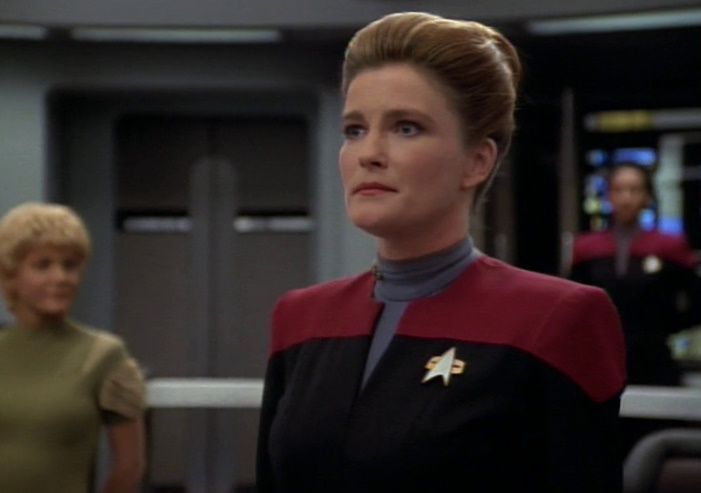
Still frame from Star Trek: Voyager showing Captain Janeway.
Captain Janeway ordered her crew to take the most direct route back to Earth.

After the crew of the USS Voyager found themselves stranded on the far side of the galaxy, Captain Janeway very quickly ordered her crew to set a course for Earth. But the most direct route to Earth, through the Delta Quadrant and later the Beta Quadrant, took the ship right into the heart of Borg territory. Janeway knew this – Starfleet had at least some idea of where the Borg’s territory was located. Even if the Delta Quadrant offered the quickest way home, I’m surprised that nobody objected or tried to propose an alternative – especially when there was a good one.

Before getting transported to the Delta Quadrant, the USS Voyager made a stop at Deep Space Nine. And what’s located right next to the station? The Bajoran Wormhole! The wormhole offers a shortcut to the far side of the Gamma Quadrant – and heading in the direction of the wormhole rather than directly for Earth is something that Janeway and the crew could have considered.
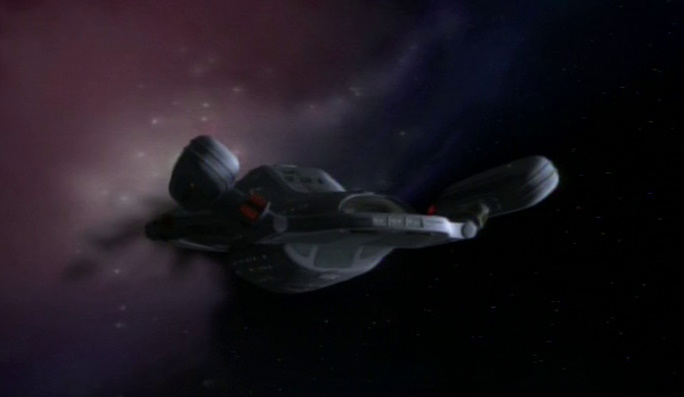
Still frame from Star Trek: Voyager showing the rear of the USS Voyager.
The USS Voyager prepares to begin its long journey.

At this point in the timeline, the Dominion War hasn’t started – so that can’t be used as a justification for not heading that way. And while all we have to go on are non-canon sources, there’s at least some tentative evidence that the wormhole’s terminus is located roughly the same distance from the Ocampa homeworld as Earth. If that’s the case, it would be no slower to head that way. Based on the Borg threat alone, I would have argued that heading for the wormhole is actually the smarter play.

Obviously Voyager was pitched as “the Delta Quadrant show,” and we got some fantastic stories out of that premise. But given the way that Voyager’s writers handled the Borg when that time came… maybe there’s an out-of-universe argument to be made here, too! In any case, even if Janeway had ultimately made the decision to head back to Earth via the most direct route, some discussion or debate would have been an interesting inclusion as the series got going. It could’ve been a way to draw some dividing lines between Starfleet and Maquis characters – making more of the “one ship, two crews” idea that Voyager never really explored in much depth.

Number 6:
Why did Michael Burnham and the USS Discovery head into the far future?
Star Trek: Discovery

Still frame from Star Trek: Discovery showing the Red Angel opening a time-wormhole.
The USS Discovery approaches the time-wormhole.

Wait, stop! I know what you’re thinking: “this is the entire plot of Season 2 and was well-explained! They had to leave the 23rd Century to stop Control from wiping out all life in the galaxy!” And you’re correct, of course – but I’m not looking at the season as a whole or the entire plan. I’m focusing in on the final moments before Burnham opened the time-wormhole and the ship disappeared.

During the climactic battle against Control, the “assimilated” Captain Leland boarded the USS Discovery to attempt to seize control of the ship and its invaluable Sphere data. But after being cornered by Georgiou, Leland – Control’s human avatar – was defeated and killed. At that moment, the entire battle seemed to stop, and as Pike and his crew noted aboard the Enterprise, Control’s entire fleet of drone ships were simply hanging there, apparently dead or deactivated.

Still frame from Star Trek: Discovery showing Control's fleet.
Control’s fleet of drone-ships.

At this moment – before Burnham had entered the time-wormhole and before Saru, aboard Discovery, had followed her – there should have been a moment’s pause. Maybe Burnham herself couldn’t see what was going on, but Saru and Pike could, and even communicated with one another confirming the death of Captain Leland. There was still time for the time-wormhole to be closed, for Discovery and Enterprise to regroup, and potentially for Discovery to remain in the 23rd Century.

Even if Pike and Saru had decided that the risk of Control re-establishing itself was too great, it’s bizarre to me that neither of them even considered the possibility for a moment. With their enemy apparently vanquished – at least temporarily – and with Discovery’s spore drive meaning the ship could’ve evaded Control by jumping to a different part of the galaxy, there was time to regroup and come up with a plan that didn’t involve stranding everyone in a totally different century.

Number 7:
How could Starfleet possibly prioritise anything other than hanging onto Bajor and the wormhole?
Star Trek: Deep Space Nine

Still frame from What We Left Behind showing Deep Space Nine.
Deep Space Nine remastered, from the documentary What We Left Behind.

I adore Deep Space Nine’s Dominion War arc – it’s one of the best (and most under-appreciated) in the franchise, in my opinion. But as the war got started, Starfleet made what appears to be a catastrophic strategic blunder. In the episode Call to Arms, which ended the show’s spectacular fifth season, Sisko informs his crew that Starfleet won’t be sending any reinforcements to hold DS9 – their priorities lie elsewhere.

We later learn that Starfleet used the diversion of the attack on DS9 to destroy a Dominion-Cardassian shipyard… but given the strategic importance of the wormhole, and the fact that the Dominion is more than capable of producing vast quantities of ships and Jem’Hadar troops in the Gamma Quadrant, it never made sense to me that Starfleet wouldn’t have thrown every available resource at the galaxy’s most strategically vital location.

Still frame from Star Trek: Deep Space Nine showing a battle in space.
DS9 could only hold off the Dominion-Cardassian attack for a short time.

The minefield that the crew of DS9 erected bought the Federation some time (as did the subsequent intervention by the Prophets), but Starfleet must’ve known that, even with the best will in the world, the minefield wouldn’t last forever. With the Dominion in control of Bajor and DS9, they could work on shutting it down without interference. The successful attack on the Toros III shipyard may have been little more than a morale-boosting pyrrhic victory.

In war, you’d almost always rather be defending a position than having to attack – and it would have been far easier to try to hold onto DS9 while the station was still under Federation control than to try to re-capture it later after the Dominion had been given a chance to entrench. For a number of reasons, the decision to essentially abandon the station is questionable at best! If part of the story had been to show Starfleet’s admiralty as out-of-touch or incompetent, that might’ve worked. But that didn’t happen, either, so I’m just left wondering what went wrong at Starfleet Command! Still, at least we got some spectacular episodes out of this storyline.

Number 8:
What happened to Dr Pulaski?
Star Trek: The Next Generation

Still frame from Star Trek: The Next Generation showing Diana Muldaur as Dr Katherine Pulaski.
Dr Pulaski in the episode Time Squared.

Although I really liked the character of Dr Pulaski in Season 2 – you can find a longer piece about her here, if you’re interested – I think it’s fair to say that she didn’t really knock it out of the park! A letter-writing campaign from viewers and an intervention by Patrick Stewart contributed to Gates McFadden being re-hired in time for Season 3… and then Dr Pulaski was just never mentioned again.

The nature of her departure always struck me as odd, and it feels more than a little disrespectful to both an actor and a character who, for better or worse, had been a part of the series for an entire season. When Dr Crusher disappeared at the beginning of Season 2, there was at least some effort to pay lip service to her absence – it was explained that she was on another assignment at Starfleet Medical on Earth. Dr Pulaski didn’t even get that, and to the best of my knowledge has never been so much as mentioned since.
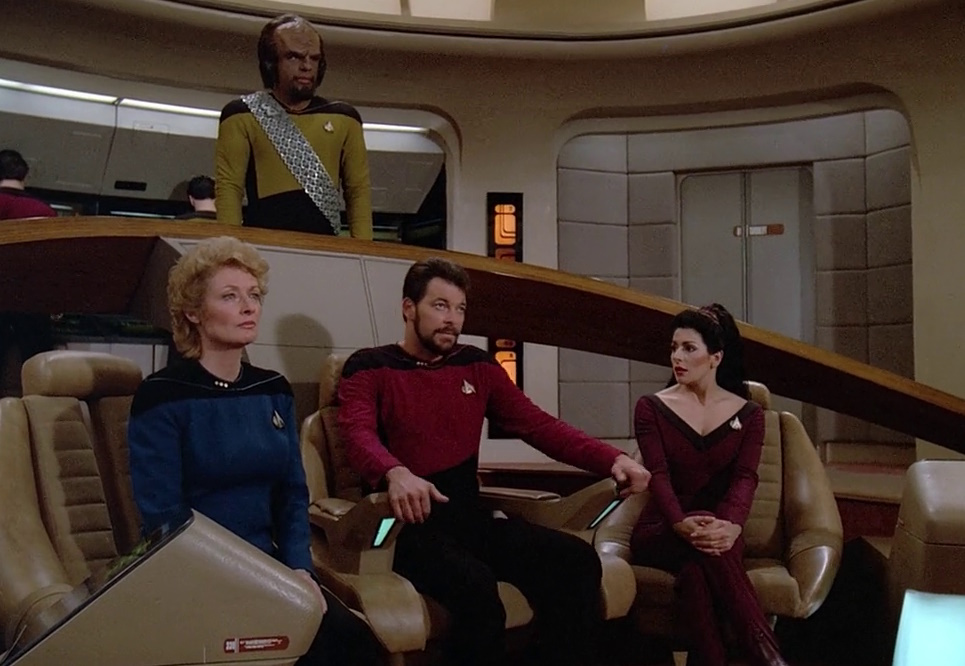
Still frame from Star Trek: The Next Generation showing several characters on the bridge.
Dr Pulaski with Riker, Worf, and Troi on the bridge.

We can argue the toss about the benefits or drawbacks of keeping her around – and I go over that in a bit more detail in my character study which I’ve linked above, if you want to see my thoughts on that. But whether you think she was a fun addition to the crew, an annoyance, or whether you just liked Dr Crusher better… you gotta admit that it’s odd that she didn’t get so much as a log entry from Captain Picard to acknowledge her departure.

The second season of The Next Generation was my “first contact” with the Star Trek franchise. The first episode I can solidly remember watching is The Royale – which Dr Pulaski is barely in! But maybe that’s why I’ve always had an appreciation for her character. I like the dynamic that she brought to the crew as someone a bit older, a bit less personable, and who had history with some characters and seemed to be developing new relationships with others. There have been opportunities in recent years for Dr Pulaski to have returned – or at least to have been mentioned. But I doubt that will happen now!

Number 9:
Who invented the cloaking device and when did Starfleet first encounter it?
Star Trek: Enterprise

Still frame from Star Trek: Enterprise showing Enterprise and two Romulan ships.
Two 22nd Century Romulan vessels de-cloaking.

This is a point that I have a personal “head canon” explanation for that I’d love to elaborate on in a full article one day! I’ll get into that in a moment, but for now, suffice to say that this is a classic example of a “prequel problem.” In short, The Original Series first season episode Balance of Terror clearly established that the Federation had never encountered a ship that could cloak, but Enterprise and Discovery – both set prior to The Original Series but produced decades later – show Romulan and Klingon ships operating under cloak and Starfleet being fully aware of this.

This raises several questions! What are cloaking devices, how do they work, and why would Starfleet not share the details of their existence with its captains, at the very least? Kirk and his crew seemed shocked that the Romulan vessel could cloak – but the Romulans had been seen cloaking and de-cloaking more than a century earlier, as had other races like the Suliban. We can debate whether the words “cloak” or “cloaking device” were spoken in those episodes – but the technology appears to be functionally the same, so semantics won’t cut it here!

Still frame from Star Trek: Strange New Worlds showing a Romulan vessel cloaking.
A Romulan ship engaging its cloaking device in the 23rd Century.

When Enterprise was on the air I wasn’t a regular viewer, but I remember that I did catch the episode Minefield – in which a Romulan vessel is seen de-cloaking – and that led to me creating my own “head canon” explanation for this problem. I remember seeing debates on Star Trek message boards in the early 2000s about this topic, and I felt that all the producers would need to do would be to explain, somehow, that there are different types of cloaking devices. Perhaps Starfleet felt that they’d cracked the code, but the Romulans then invented a newer and better cloak. Perhaps there was even a cloaking and un-cloaking arms race between the factions.

In short, I think Star Trek can just about get away with this one by explaining that, when Starfleet figured out how to penetrate one style or type of cloaking technology, the Romulans or Klingons would refine it, re-modulate it, or invent something new. It’s not a perfect explanation, but it plugs most of the hole that Enterprise and Discovery have dug. I still think it would be nice to see something like this made official, in-universe – and let’s be honest: it would be better if these prequel-created plot holes didn’t exist in the first place!

Number 10:
What’s up with the inconsistent uniform changes?

Still frame from Star Trek: The Next Generation showing Captain Rachel Garrett.
Captain Rachel Garrett of the Enterprise-C.

The series premiere of The Next Generation established that the Enterprise-D’s voyages took place almost 75 years after Kirk’s tenure in the captain’s chair, but the “monster maroon” uniforms from The Original Series films would often make appearances in flashbacks or episodes set in the past. Starfleet appeared to have stuck with that design for decades, albeit with a few minor tweaks. Using those uniforms for such a long time already felt odd, but then things started to take a turn!

The Next Generation switched uniforms at the beginning of Season 3 for its main characters, but the Season 1-2 uniform variant was still showing up on secondary characters and background characters well into Season 4. There was also a total mess in Generations, which seemed to depict a moment of transition from one uniform style to another – although Deep Space Nine seemed to have established that space stations might use different uniforms from starships? I’m still not sure about that!

Still frame from Star Trek: Lower Decks showing the four main characters.
Two different uniform styles seen in Lower Decks.

Deep Space Nine made an abrupt switch to the gray-shouldered uniforms midway through its run (to coincide with First Contact’s premiere), and that was okay, I guess. Far more of an instant transition than we’d seen in Generations or The Next Generation, but not necessarily a problem. But then the alternate reality films and post-2017 TV shows have really shaken things up! I’ve said before that I don’t like to get hung up on minor things like aesthetic choices, and I was generally accepting of Discovery’s all-blue look, even if it was supposedly set in between The Cage and The Original Series whose uniforms are well-known. But Lower Decks definitely complicated things by seeming to suggest that different “tiers” of starship would get different uniforms… for some reason.

In short, Star Trek hasn’t always been consistent or clear with the way Starfleet uniforms are used, how long they’re in use for, or which types of officer/crewman should wear what type of uniform. When watching an individual episode – or even a whole season of TV – this doesn’t really seem all that noticeable. But when you pick out different stories or take a big-picture look… these inconsistencies stick out.

So that’s it!
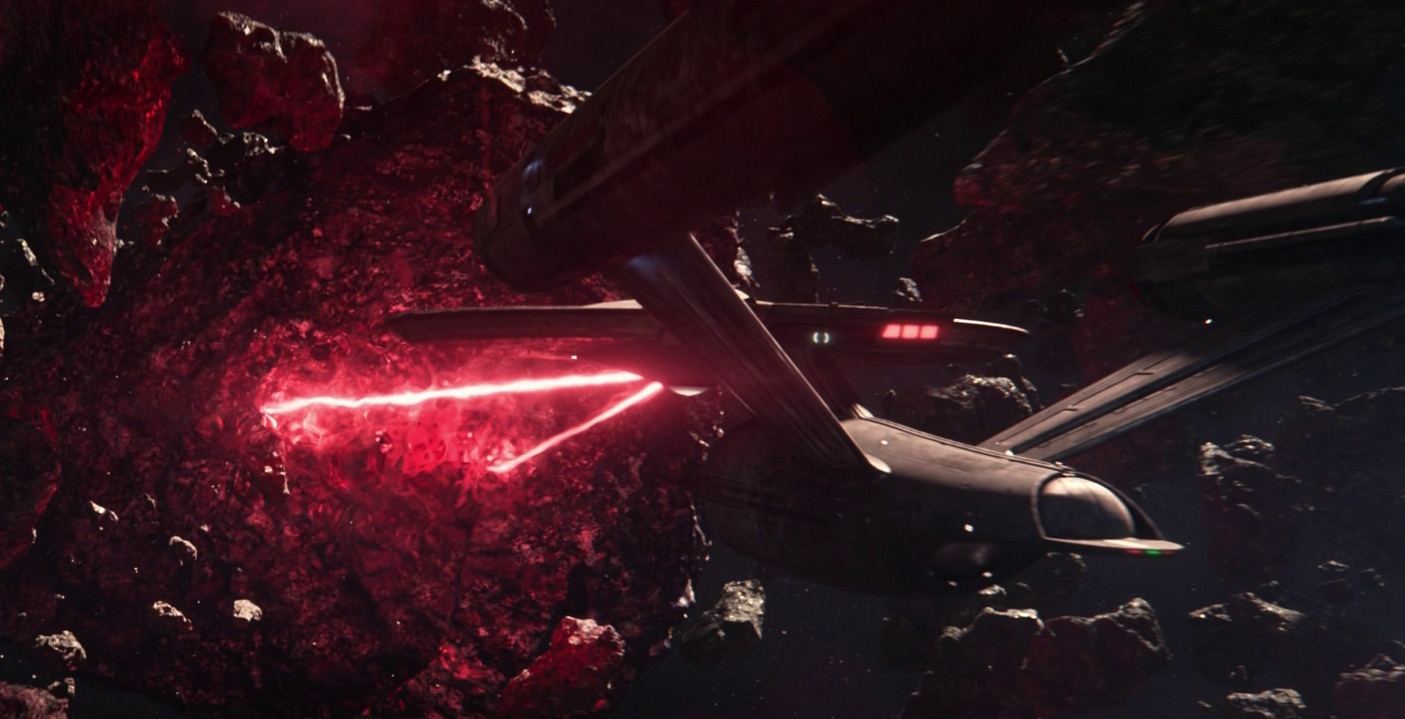
Still frame from Star Trek: Strange New Worlds showing the USS Enterprise.
The USS Enterprise in Strange New Worlds.

We’ve nitpicked the Star Trek franchise and pulled out ten little things that have always bugged me! As I said at the beginning, none of these really spoil Star Trek for me, and I’m more than willing to overlook minor inconsistencies or small plot holes – especially in strong, otherwise entertaining stories. But when you step back and take a look at Star Trek – or any fictional world, come to that – there are always gonna be things that don’t quite make sense or that don’t seem to fit with the rest of the setting.

All of this was just for fun, and I hope it was an interesting look at a handful of minor issues that have emerged over the years. When a franchise has been running on and off for close to sixty years, that kind of thing is inevitable! Although I’ve been feeling a bit burned out on Star Trek of late, it was still enjoyable to jump back into some of these stories – several of which I hadn’t seen for years – to put together this list.

Until next time – and Live Long and Prosper!


The Star Trek franchise – including all films and series discussed above – is the copyright of Paramount Global. Most Star Trek films and episodes are available to stream on Paramount+ in countries and territories where the service is available. This article contains the thoughts and opinions of one person only and is not intended to cause any offence.

Twelve Star Trek episodes to watch before Picard Season 2 arrives!

Spoiler Warning: There are spoilers ahead for Star Trek: Picard Season 1 and the trailers and teasers for Season 2. Spoilers are also present for the following Star Trek productions: The Original Series Season 1, The Next Generation, Deep Space Nine Season 3, Voyager Seasons 2, 3, and 7, and First Contact.

It seems an age ago that we were eagerly anticipating Season 1 of Star Trek: Picard. In those sunlit, rosy days before the pandemic hit, this website was brand-new, and I spent a lot of time in December 2019 and January 2020 looking ahead and wondering what we’d see when the Star Trek franchise finally returned to the 24th Century – after an eighteen-year wait!

With Season 2 of Picard now only days away, I thought it could be fun to revisit a concept from the early days of the website: a list of episodes that I think could make for interesting background viewing, potentially informing story points and characterisations in the new season of Picard. In the run-up to Season 1 I focused on episodes of The Next Generation that strongly featured Captain Picard himself, as well as a few stories about the Romulans, and a few more stories which could’ve potentially led to big changes in the two decades following the events of Endgame and Nemesis.

We’ll soon be on another adventure with Jean-Luc Picard!

This time, we have a little bit more information to go on! Season 2 will tell a story that involves (to a greater or lesser degree) the following elements: the Borg Queen, Guinan, Q, time travel, and, of course, Admiral Picard himself. On this occasion, then, I thought it could be fun to pull out twelve stories from Star Trek’s past that might just be useful background viewing for Season 2 of Picard. It goes without saying that Season 1 is mandatory viewing, so I’m not putting any of those episodes on this list! You should really watch, or re-watch, all ten before the season kicks off!

My usual caveats apply, as they always do! Firstly, everything listed below is entirely subjective. If I miss out an episode that you think is incredibly important, or you hate all of my picks, that’s okay! We all have different opinions about Star Trek, and there’s no need to fight about it. Secondly, I don’t claim to have any “insider information.” I’m basing my theories and guesses about Season 2 on publicly released material, such as trailers and interviews. And finally, the episodes are not ranked; they’re merely listed below in the order in which they were originally broadcast.

With all of that out of the way, let’s jump into the list!

Number 1:
Tomorrow is Yesterday
The Original Series Season 1 (1967)

I’m pretty sure this violates the Temporal Prime Directive…

Though The City on the Edge of Forever is perhaps the best-known of The Original Series’ time travel stories, Tomorrow is Yesterday preceded it by several months. It was the first episode of the Star Trek franchise where time travel played a major role in the story, and it was also the first in which the crew paid a visit to the modern day. Tomorrow is Yesterday established what went on to become a mainstay in terms of the franchise’s time travel story tropes: being sent back in time by accident!

Aside from being a fun episode in its own right and well worth a watch, Tomorrow is Yesterday is also the episode which introduced the Star Trek franchise to something that appears to be making a return in Picard Season 2: the slingshot method of travelling through time, referred to in this episode as the “light-speed breakaway factor.”

The USS Enterprise using the “light-speed breakaway factor” to travel through time.

Almost every Star Trek series has included the occasional time travel story, and we can look to episodes like Tomorrow is Yesterday for creating that premise. Visiting the modern world would go on to be significant later in The Original Series, in Star Trek IV, and on several other significant occasions in the franchise. For me, some of these stories can feel rather dated, but I think Tomorrow is Yesterday largely avoids that trap!

As we get ready for Picard Season 2 and the franchise’s latest foray into time travel, stepping back to see where it all began during the first season of The Original Series is no bad thing. Tomorrow is Yesterday has a fairly straightforward premise that should be easy enough to follow even for fans who aren’t as familiar with The Original Series, and is well worth a watch on its own merits.

Number 2:
Encounter at Farpoint
The Next Generation Season 1 (1987)

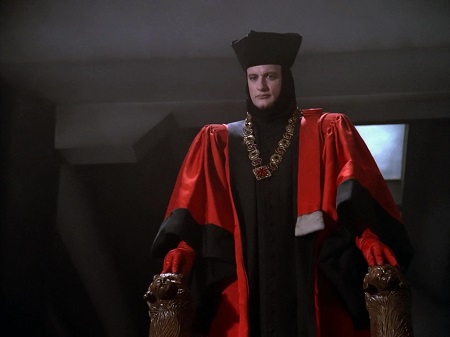
Judge Q.

In the first teaser trailer for Picard Season 2, we heard Q’s voice proclaiming that “the trial never ends.” Encounter at Farpoint is the episode in which Captain Picard first encountered Q, and the episode in which the referenced “trial” began. Q accused humanity (and by extension, the Federation) of being a “dangerous, savage, child-race” who are unfit to travel the stars. Picard and his crew defended themselves against the accusation.

The task Q set for Picard was to unravel the mystery of Farpoint Station, which he and the crew of the Enterprise-D were en route to. However, figuring out the puzzle wasn’t the end of the trial, and even after bringing the Farpoint saga to a successful conclusion, Q departed in ambiguous fashion, hinting that he would return. He did, of course, on a number of occasions!

Worf, Picard, and La Forge on the bridge of the Enterprise-D.

Encounter at Farpoint was the premiere of The Next Generation and established the characters of Picard and Q (as well as many other familiar faces). As we approach Picard Season 2, it’s worth going back to see where it all began. This was the first big puzzle that Q tasked Picard with solving, and seeing how Q operates and what the point of it all is, from his perspective, is well worth taking into consideration.

This is also the beginning of “the trial.” We don’t know to what extent the idea of Picard – and humanity – being on trial will feature in Picard Season 2, but if Q has returned to set up a new mystery there could be a connection – and there could be consequences if Picard and the crew of La Sirena can’t figure it out. Q has toyed with Picard on a number of occasions; Encounter at Farpoint was the first.

Number 3:
Q Who
The Next Generation Season 2 (1989)

Q threw Picard and the Enterprise-D into danger.

Q Who is the episode that introduced us to the Borg – and it’s a pretty scary one by Star Trek’s standards! Captain Picard and the crew of the Enterprise-D have never faced a villain like this, and the Borg represent an existential threat. Q made good on his promise to show Picard that there are dangers in the galaxy that he couldn’t even imagine… and eighteen members of the Enterprise-D’s crew paid the ultimate price.

In a way, Q Who shows Q at his most aggressive, devious, and villainous. By throwing the Enterprise-D into the path of the Borg, he proved his point to Picard about the Federation’s unpreparedness in the most painful way possible. But I don’t believe that’s all there is to the story.

The first Borg seen in Star Trek.

I have a theory about Q Who that you can find by clicking or tapping here. To briefly summarise: Star Trek has made a mess of the history of Borg-Federation contact, and it seems likely that the Borg were already aware of humanity and Earth long before the events of this episode. They may have already been preparing for an attack or assimilation attempt, and Q hoped to prevent that by giving the Federation advance warning.

My theory goes into much more detail! But suffice to say the complicated history of contact between humanity and the Borg makes it seem plausible, at least to me, and shows off an aspect to Q’s character that I think could come into play in Picard Season 2. Q Who also establishes the existence of history between Q and Guinan – something that may come up in Picard Season 2 given that both characters are returning.

Number 4:
Yesterday’s Enterprise
The Next Generation Season 3 (1990)

The Enterprise-C.

Though it’s a fantastic episode in its own right, Yesterday’s Enterprise is on this list for one reason: Guinan. When a rift in the space-time continuum sends the Enterprise-C forward through time, decades’ worth of history are changed, leaving the Federation in a very bleak timeline in which it’s fighting a losing war against the Klingons.

Aboard the warship Enterprise-D, Captain Picard and the rest of the crew are completely oblivious to the change; this version of the characters have only ever known the war timeline. But Guinan alone realises that something has gone wrong, and argues with Captain Picard about how to set things right.

Guinan presents her case to Captain Picard.

Despite a recent controversy, Whoopi Goldberg will be reprising the role of Guinan in Picard Season 2, bringing the character back for the first time since Generations in 1994. Given that we know Season 2 also features a radically changed timeline, not dissimilar to the one seen in Yesterday’s Enterprise, perhaps Guinan will be aware of the change.

Guinan could be the one to talk to Picard about the possible point of divergence, as we know she’d visited Earth in the 19th Century. She may also be one of the only people other than the crew of La Sirena to be aware that something has changed. Guinan also has a history with Q, as we saw in the episode Q Who – so that could also come into play!

Number 5:
Time’s Arrow Parts I-II
The Next Generation Seasons 5-6 (1992)

R.I.P. Data…

Guinan also plays a key role in the two-part episode Time’s Arrow. Thanks to time travel, this is the episode where she and Captain Picard actually have their first meeting, and although the nature of their relationship is still shrouded in mystery, we get a little bit more information about how they came to meet in the first place.

Guinan’s fascination with Earth appears to date back to at least the 19th Century, as she visited undercover during that time period. We know from the most recent Picard Season 2 trailer that Guinan appears to be running a bar on Earth at the dawn of the 25th Century, giving her an association with Earth and humanity that stretches back over five hundred years.

Guinan and Picard in the 19th Century.

Time’s Arrow is an interesting story that mostly focuses on Data, who was of course a huge part of the story of Picard Season 1. It seems as though Brent Spiner will be playing a new role in Season 2 – perhaps another ancestor of the Soong family – so getting a bit of extra data on Data could be worthwhile, too!

One thing I’m personally curious about in Picard Season 2 is if we’ll get any further backstory on the Picard-Guinan relationship. Although Time’s Arrow depicts their first meeting from Guinan’s perspective, we’ve still never learned how they came to meet in the 24th Century from Picard’s point of view. All we know is that it likely happened prior to his assuming command of the Enterprise-D. I don’t know if Picard Season 2 will expand on that in any way… but it would be interesting!

Number 6:
Tapestry
The Next Generation Season 6 (1993)

Q and Picard.

Tapestry is a really interesting episode that deals with the dynamic between Q and Picard, and specifically looks at the nuances present in their relationship. Picard has always viewed Q as an adversary, but I’ve argued in the past that Q doesn’t see himself that way. He views Picard as a friend, and himself as a guide or even an ally – and the way Tapestry unfolds kind of shows why that is.

When Picard is injured on an away mission, he finds himself close to death. At that moment, he encounters Q – who claims he’s already dead. Q gives Picard a chance to avert his death by changing a key event in his past – getting stabbed shortly after graduating from Starfleet Academy – but doing so sets Picard’s life and career on a completely different path.

Lieutenant Picard in an alternate 24th Century.

The important thing here is how Q views the whole affair. We can entertain debates on whether or not Q actually sent Picard back in time or whether it was all an elaborate illusion, but that’s entirely beside the point. Q genuinely believed that he was helping – that by showing Picard an alternate life, he gave him an appreciation for the life he had actually led, even if that meant it was about to end.

I firmly believe that there’s more going on with Q in Season 2 than meets the eye. It’s possible that he didn’t change the timeline at all, and is merely responsible for shielding Picard and the crew of La Sirena from it. It’s also possible that he did change it as part of an elaborate puzzle, one which he hopes and expects that Picard will be able to solve. Speaking of which…

Number 7:
All Good Things…
The Next Generation Season 7 (1994)

Q and Picard in the distant past.

All Good Things is the best example of this aspect of the dynamic between Picard and Q, and could – in theory – be a template for the events of Picard Season 2. In All Good Things, the Q Continuum sets a puzzle for Picard – an eruption of “anti-time.” Thanks to the time-travelling interventions of Q, Picard is able to hop between three different periods of his own past to solve the mystery.

The solution to the anti-time eruption required Picard to challenge his own way of thinking, specifically his linear perception of cause-and-effect. Being able to recognise that events in the future had a causal link to events in the past greatly impressed Q, who seemed to suggest that it was the first step on a path that could one day see humanity evolve into beings comparable to the Q themselves.

Q in his judge’s robes.

All Good Things was also Picard’s last dalliance with Q prior to the events of Picard Season 2. As far as we know at this stage, Q hasn’t been to see Picard in the approximately twenty-five years since the events of All Good Things – but that could change as we get into the new season. It’s possible, at least in my opinion, that Q might’ve been interested to see Picard at his lowest ebb, possibly showing up to see if he could provoke him into action. But we’ll save a detailed explanation of that for my next theory post!

It’s possible that the trailers and teasers for Season 2 have already revealed the nature of Q’s involvement in the story: that he is directly responsible for changing the timeline, he did so on purpose, and he will be the main villain of the season. But I would argue that the “villain” monicker does not fit with Q’s past characterisation, and thus I suspect that there’s much more going on than meets the eye. All Good Things is both a piece of evidence in favour of that argument, as well as a potential blueprint for how a time travel puzzle set by Q could unfold.

Number 8:
Past Tense, Parts I-II
Deep Space Nine Season 3 (1995)

Dr Bashir and Commander Sisko.

We know, thanks to a voiceover in the most recent trailer, that at least some of the events of Picard Season 2 take place in the year 2024. But Picard Season 2 isn’t the first Star Trek production to visit that specific year! In Deep Space Nine’s third season, Commander Sisko and the crew of the USS Defiant found themselves accidentally sent back in time to the exact same year.

Past Tense is an interesting story, as it will mark the first time that any episode of Star Trek set in “the future” at the time it was broadcast will be reached, and I’m sure I won’t be alone in doing a full write-up of its story when we hit the end of August 2024! We could talk for hours about how its depressing presentation of the 2020s seemed a long way from reality once upon a time, but with the growth of homelessness and other economic issues, today’s society feels far too close for comfort to the world of the Bell Riots.

The USS Defiant in orbit over Earth.

I’m not sure how much of Deep Space Nine’s presentation of a fictionalised 2024 will make it into Picard Season 2. It’s possible that the new series will entirely ignore this two-part episode… but I think we should keep an eye open for references or callbacks to some of the characters, events, or even things like brands and products.

Regardless, this will be the first time that two very different Star Trek productions have travelled back in time to the same year, and it might be interesting and informative to take a look at Past Tense to see how Deep Space Nine told us that the year would unfold. It seems as though Picard Season 2 will be set, in part, in California – which is also where Past Tense was set, so that’s another point of connection. I’m not expecting a huge crossover with this one single Deep Space Nine story, but there could easily be references made to it.

Number 9:
Death Wish
Voyager Season 2 (1996)

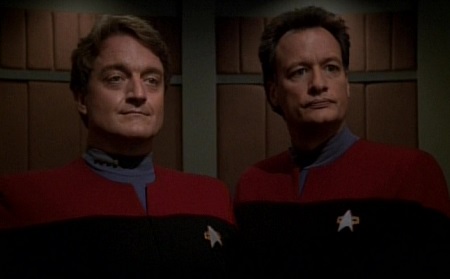
Two Qs?!

Captain Picard wasn’t the only Starfleet officer to tangle with Q. After making a sole appearance in Deep Space Nine, Q hopped over to the Delta Quadrant, where he had several run-ins with Captain Janeway during Voyager’s journey home. Q presented a bit of a puzzle for Voyager; his abilities mean that he could have sent the ship and crew back to Earth with a snap of his fingers. But if we can look beyond that narrative hurdle, Q’s appearances in Voyager added a lot to his characterisation.

In Death Wish, we got our best look to date at the Q Continuum itself. Depicted in a manner that humans could comprehend, the Continuum resembled a rather dilapidated roadside house in the middle of the desert. For the first time, we got to see more members of the Q Continuum as well, and got a glimpse of how Q himself is a bit of a radical by the standards of his people.

Captain Janeway and Tuvok visit the Q Continuum.

The idea that the Q Continuum is not an entirely stable, homogeneous place is an interesting one, and was explored in more detail in the episode The Q and the Grey. But Death Wish also presented a very complex moral question – in the longstanding tradition of Star Trek! This episode can be a difficult watch for some folks because of its discussion of suicide, and it’s absolutely fine to skip it if that subject hits too close to home. If the debate around suicide and end-of-life care is something you’re interested in, though, this is a uniquely “Star Trek” attempt to tackle it.

Q emerges from this story as a reformer – or even a radical – by the standards of his people. We also know, thanks to a line in All Good Things, that he was responsible for assisting Picard when the Continuum set the anti-time puzzle. It’s stories like this that make me think that there’s a goodness in Q; that he isn’t just a trickster or a pure villain.

Number 10:
Future’s End, Parts I-II
Voyager Season 3 (1996)

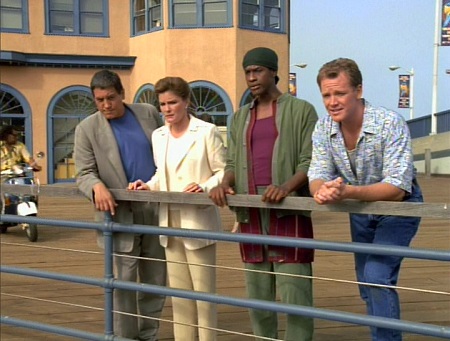
Chakotay, Janeway, Tuvok, and Paris on Earth.

The two-part time travel story Future’s End sees Captain Janeway and the crew of the USS Voyager sent back in time to Earth, circa 1996. It’s another story set in the California area, and I think it’s an interesting episode – albeit one that I feel has become very dated by Star Trek standards!

If Picard Season 2 sticks with things like the Borg and the slingshot method, it seems that the kind of time travel depicted in Future’s End won’t be a factor. But there are still interesting points to consider, such as the Temporal Prime Directive and how Starfleet in the future would come to police the timeline, watching out for changes.

It’s Los Angeles – where Picard and the crew of La Sirena appear to be headed!

There aren’t a great many Star Trek episodes that visit the modern day, and as I’ve already explained I feel that a modern setting can make such stories feel very out-of-date very quickly. Future’s End definitely falls into this trap; its depiction of Southern California has a very ’90s flavour. But it’s a bit of fun, and dare I say almost a guilty pleasure!

I’m including Future’s End here for its modern day time travel story and its focus on California, both of which are elements that we know will be part of Picard Season 2. As with Past Tense, I don’t expect to see a huge tie-in between the new season and the events of this episode, but there may be smaller callbacks and references to some of the characters and events it depicted.

Number 11:
Star Trek: First Contact
Film (1996)

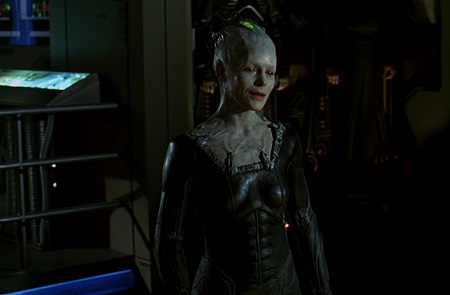
The Borg Queen.

First Contact introduced us to the Borg Queen for the first time, and went into a lot more detail about Picard’s assimilation experience. The Borg Queen was presented as the embodiment of the Borg rather than their leader, and she became a fearsome adversary for Picard and Data over the course of the story.

Season 1 of Picard saw the retired Admiral face his lingering Borg assimilation trauma when he beamed aboard the Artifact in the episode The Impossible Box, but Season 2 will see him come face to face with a Borg Queen for the first time in twenty-five years. For someone who’s clearly suffering from some form of post-traumatic stress, we don’t know what effect that could have.

Data and Picard lead the battle against the Borg.

Picard was violently anti-Borg in First Contact, and we saw hints of that in Picard Season 1 as well. His conversation with Dr Jurati and Elnor in The Impossible Box, as well as the way he responded to some of the xB’s in later episodes, was in line with his attitude to the Borg in First Contact – and I wonder how encountering a Borg Queen will make him feel!

Many Trekkies hold up First Contact as one of the absolute best Star Trek films, and it’s hard to disagree. As an action-packed work of sci-fi with some truly scary elements thanks to the way the Borg are depicted, it’s an exciting ride from start to finish. It also goes into a little more detail about World War III – an event in the history of the Star Trek timeline that could play a role in Picard Season 2. Check out my full World War III theory by clicking or tapping here!

Number 12:
Endgame
Voyager Season 7 (2001)

Some of Voyager’s crew in an alternate 25th Century future.

Almost five years after First Contact depicted the Borg’s biggest attack on Earth to date, Endgame brought back the Borg Queen in a significant way. The interventions of a time-travelling Admiral Janeway from the future saw the USS Voyager make it home to Earth, and in the process dealt a significant blow to the Borg Collective.

Even though it’s been more than twenty years since Endgame, we don’t actually know what became of the Borg in the aftermath of Admiral Janeway’s attack. I’ve always assumed that the Borg Collective was large enough, clever enough, and adaptable enough to survive the neurolytic pathogen that she introduced into the Borg Queen… but because the Star Trek franchise has yet to return to the Borg post-Endgame, we can’t be certain of that.

Admiral Janeway and the Borg Queen.

Even Season 1 of Picard, which depicted the disabled Borg Cube known as the Artifact, didn’t settle the issue. So it’s an open question at this juncture whether the Collective survived, whether it was significantly damaged by Admiral Janeway’s pathogen, or whether it was able to easily shake off the attack. It seems as though no major Borg activity occurred in Federation space in the twenty-plus years after Endgame, though.

Endgame makes this list because of the Borg Queen’s role in Picard Season 2, and I think it could be very useful background viewing, possibly even setting up a story about the Queen herself or the state of the Borg Collective at the dawn of the 25th Century. On a vaguely related note, I took a deeper look at Admiral Janway’s actions in Endgame, and you can find that article by clicking or tapping here.

So that’s it!

Admiral Picard is coming back in just a few days’ time!

Those are twelve episodes (alright, eleven episodes and a film) that I think might make for useful or interesting viewing prior to Picard Season 2! I think we’ve hit most of the key subjects – at least, those that we’re aware of at this early stage – and got a good mix of stories focusing on Captain Picard, Q, Guinan, time travel, and the Borg Queen.

At the end of the day, though, Star Trek’s past didn’t prove all that important to unravelling the events of Picard Season 1 – nor to recent storylines in Discovery, either. So it’s quite likely, in my view, that Picard Season 2 will bring plenty of brand-new characters and story elements into play. That doesn’t mean it isn’t worth going back to these stories and others, but my suspicion at this stage is that the new story won’t rely excessively on what came before.

When Picard Season 2 arrives at the end of next week, I hope you’ll stay tuned for individual episode reviews, theories, and more. Despite the somewhat underwhelming end to Season 1, Picard Season 2 has been one of my most-anticipated shows for almost two years, and I can’t wait to jump in and have another adventure with Jean-Luc Picard and the crew of La Sirena.

Star Trek: Picard Season 2 will premiere on Paramount+ in the United States on the 3rd of March 2022, and on Amazon Prime Video in the United Kingdom and elsewhere 24 hours later. The Star Trek franchise – including Picard and all other properties mentioned above – is the copyright of Paramount Global. This article contains the thoughts and opinions of one person only and is not intended to cause any offence.