

Spoiler Warning: There are spoilers ahead for Star Trek: Strange New Worlds Seasons 1-4. Spoilers are also present for the following Star Trek productions: The Original Series, Deep Space Nine, Voyager, and Discovery.
A whimsical fairytale, a sequel to a Season 1 episode, and La’an wrangling with her feelings and personal history all came together this week in Once La’an A Time. The episode was better than I feared it might be when I saw the promos and read the blurb, though in a season where we’ve been treated to soap opera spoofs and “but it was all just a dream,” to be honest… there’s kind of a low bar! However, this isn’t going to be anyone’s idea of an all-time classic Strange New Worlds story, and with so little time remaining before the series goes off the air for good… I can’t shake the feeling that this kind of “big swing” is, yet again, not something I’d have chosen to indulge in.
I’m also of the opinion – and not for the first time this season, I should say – that this episode crammed too much into its runtime, meaning some ideas really didn’t get much time at all in the spotlight. And while I’m happy to have a La’an-focused episode, and to see her facing off against her own doppelgänger (and various fairytale monsters and tropes), I’m yet again unconvinced that taking a serious, introspective character moment and trying to jam it into the show’s latest pantomime or parody was the right call. Sometimes, playing it straight is just… better.
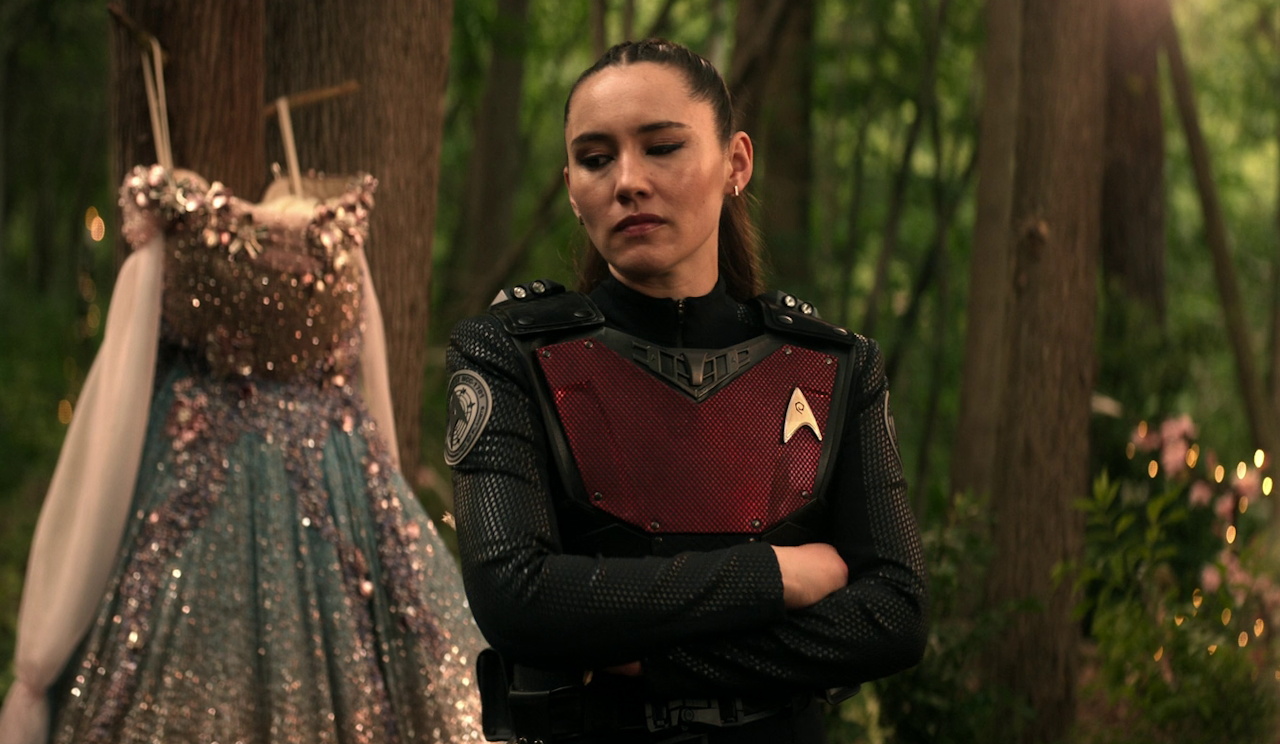
That being said, La’an’s story this week felt stronger and just better all around than Pike’s did in Like Chronitons Through the Hourglass – and, again, that’s definitely a low bar, but it’s still a point in this episode’s favour. There were a few contrivances to get La’an into the spotlight – and several missing ingredients, too, when considering Season 1’s The Elysian Kingdom – but when she was there, I at least felt that her struggle and her inner conflict were handled better than Pike’s grief had been in the soap opera spoof episode.
However, despite La’an working through her issues and getting a resolution to her lingering family/ancestry/anger issues… the way these issues were set up earlier in the season (and at the beginning of this episode, too) was poor. In addition, La’an’s arc has taken her backwards in one sense – back to a relationship of some kind with Kirk, something she already wrangled with and eventually moved past in Season 2. And finally, because of the episode’s fairytale and almost pantomime theming, some of the more complex, nuanced, and serious ideas that this kind of storyline *could* have offered were either entirely absent or just muddied by the earnest and complete way that Strange New Worlds leaps into these kinds of genre parodies.
As you can see… a bit of a mixed bag, then!
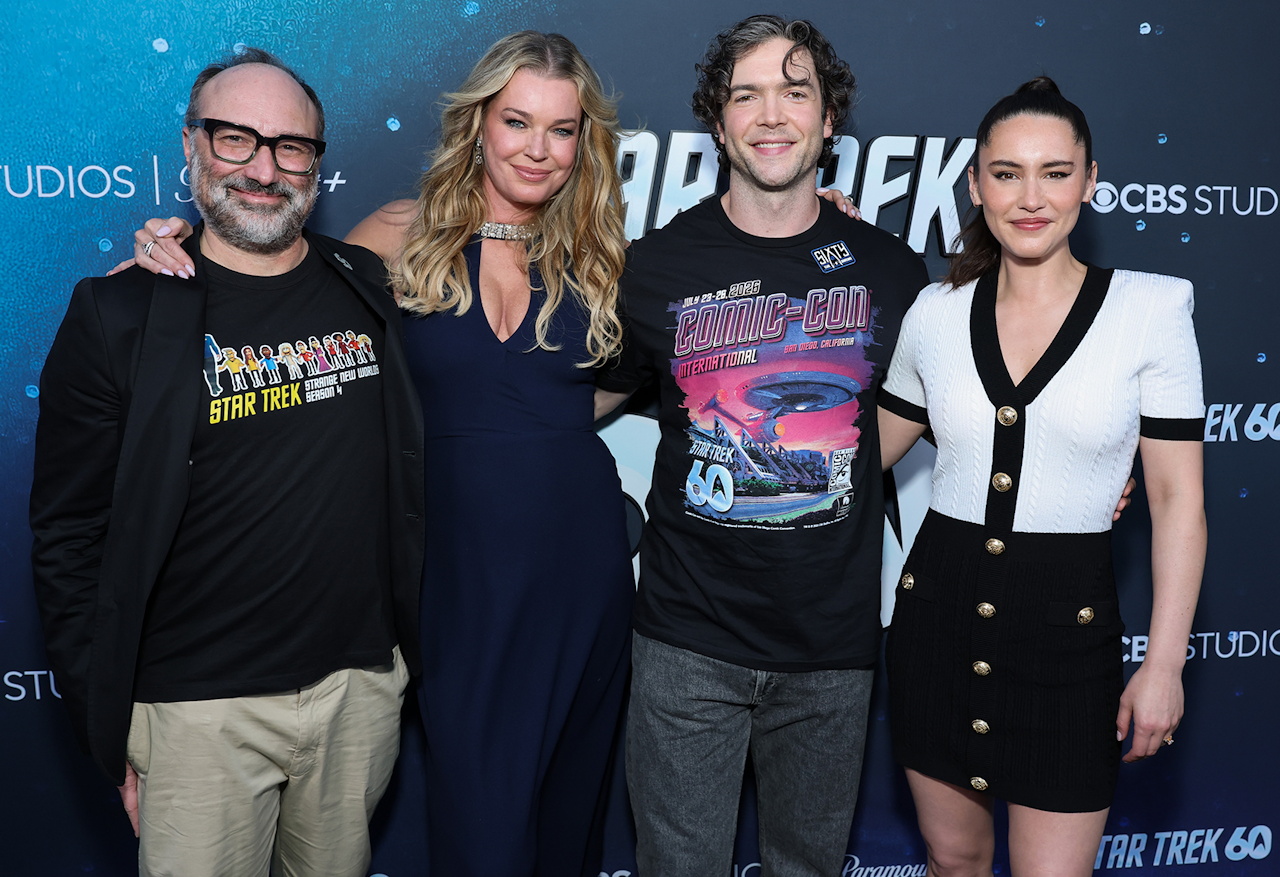
We’ll deal with other aspects of the episode, as well as the other characters (and their doppelgängers) first, and save La’an for the end. There’s more to say for her storyline (obviously), so structuring the review that way makes the most sense to me!
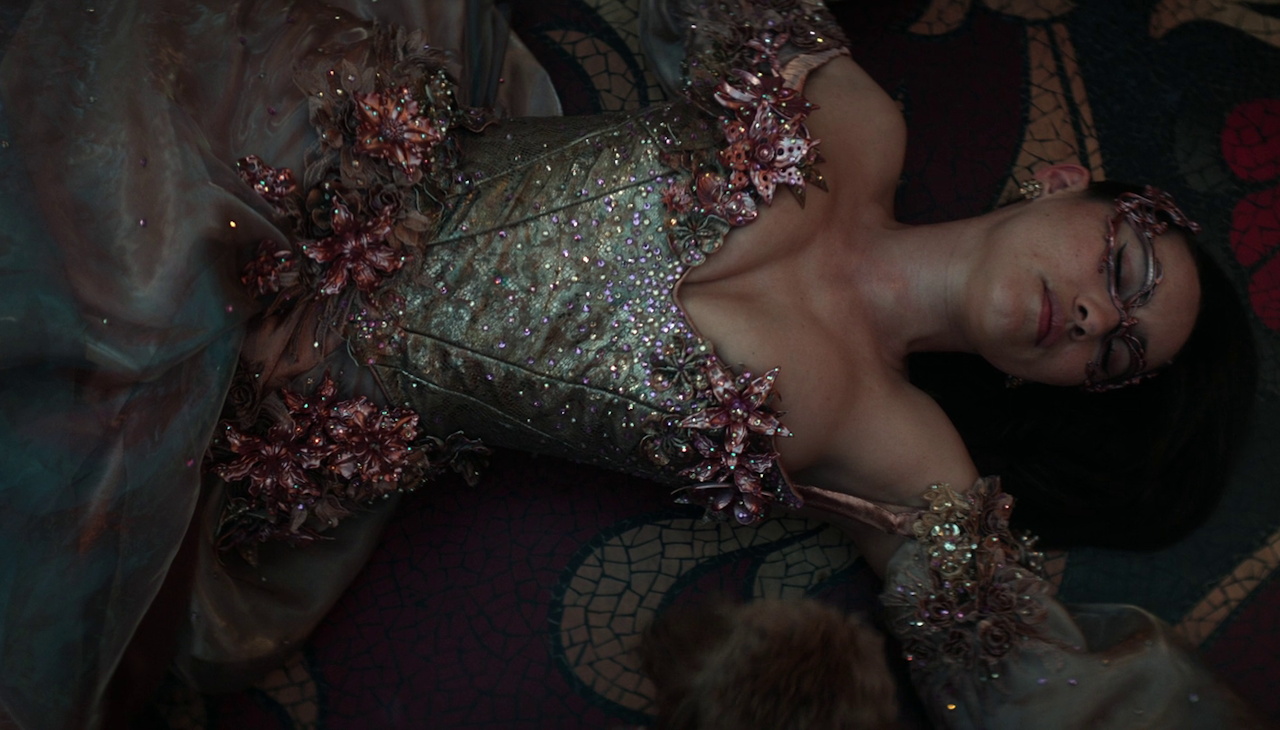
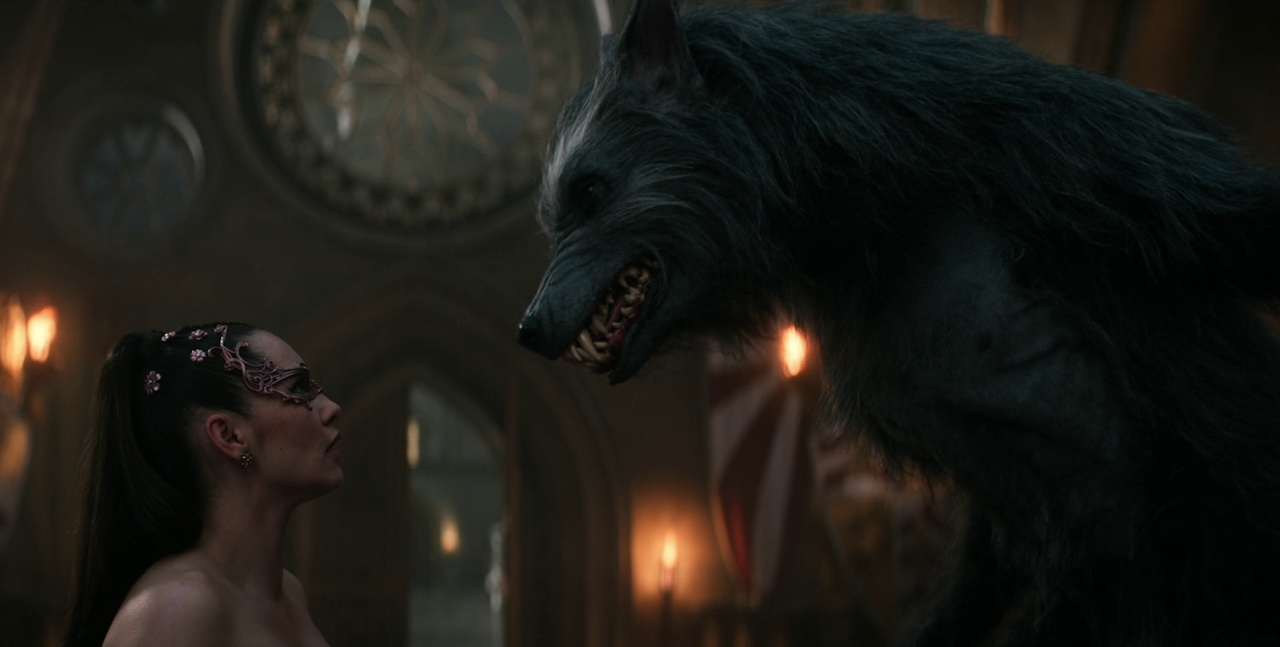
In terms of visuals, and the way Once La’an A Time was presented, I really don’t have anything bad to say. I liked the costumes – some, but not all, of which were recycled from The Elysian Kingdom – and there were some creative and fun locales to visit when the away team were on the fairytale planet. Most of these were tropes of the genre, of course, but the way things like the castle and the swamp were brought to the screen were generally well done. Werewolf-Kirk was also a highlight!
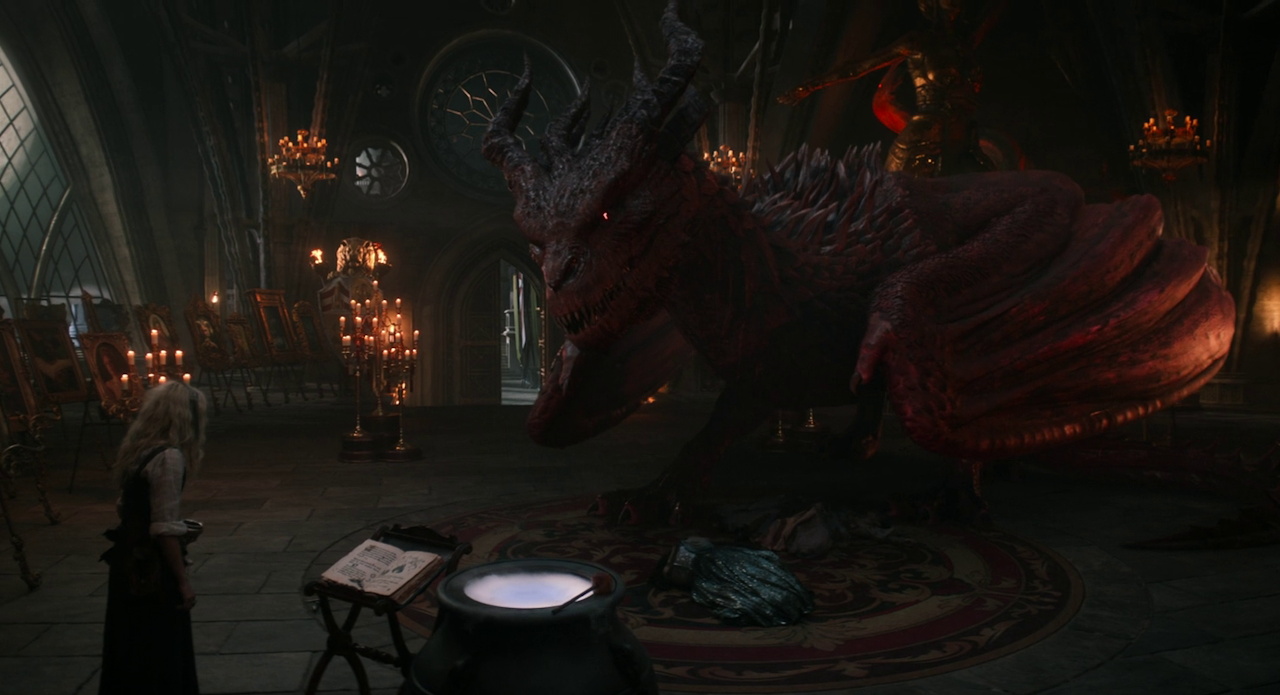
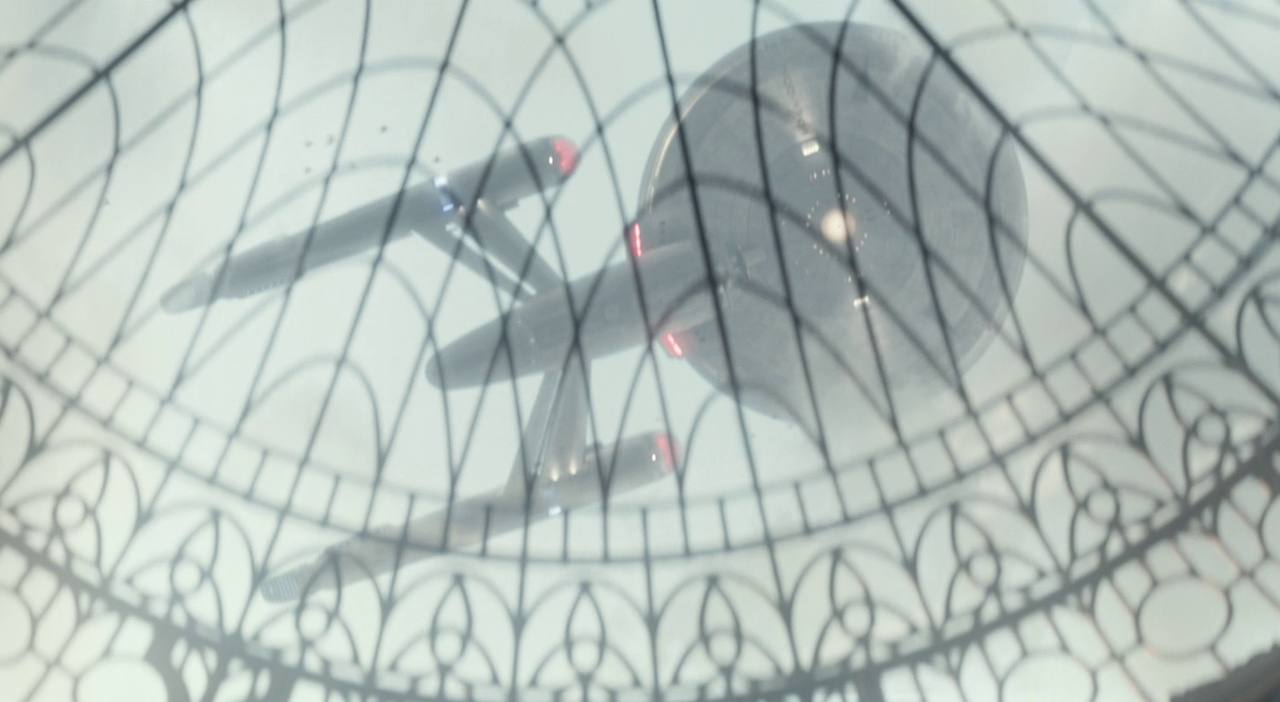
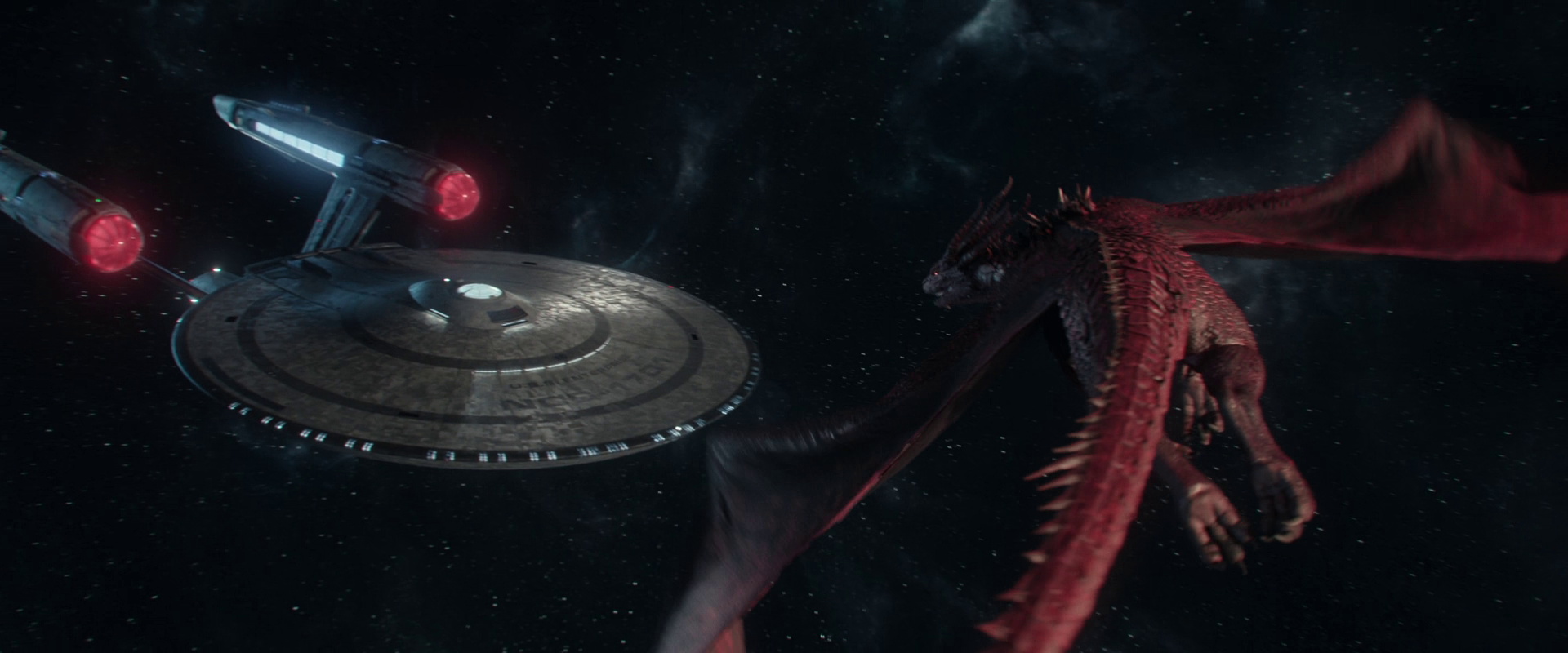
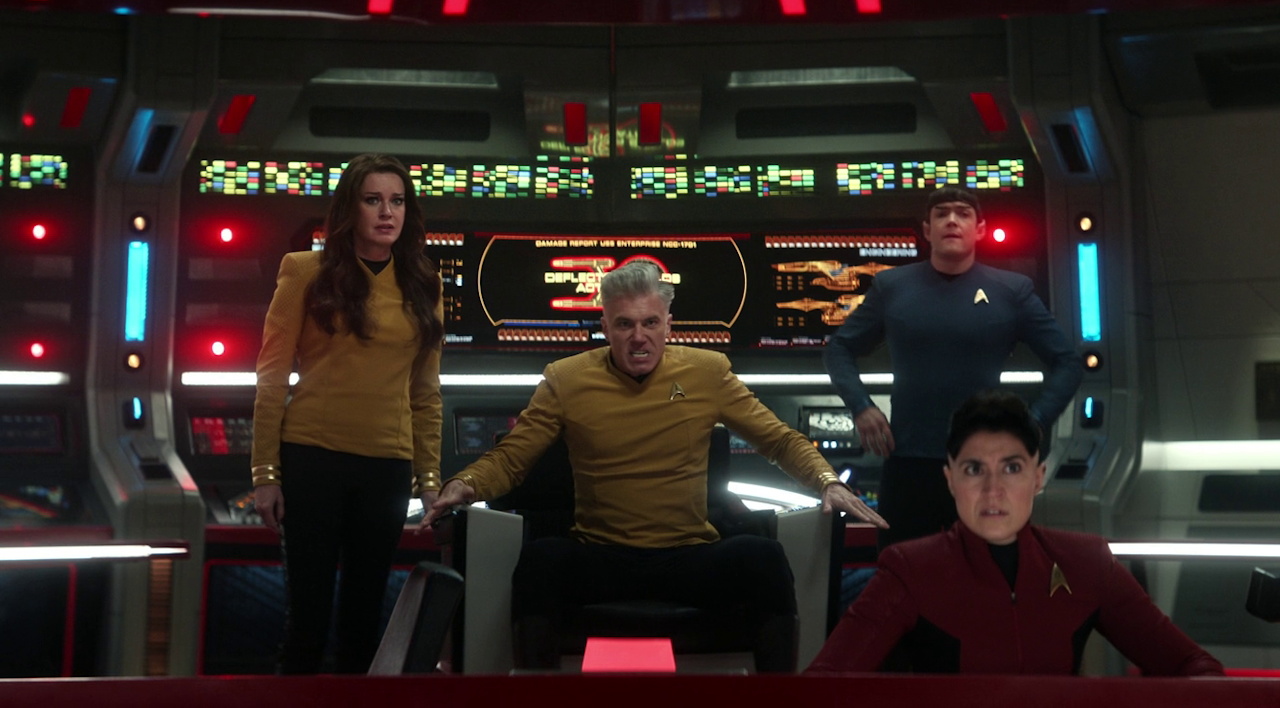
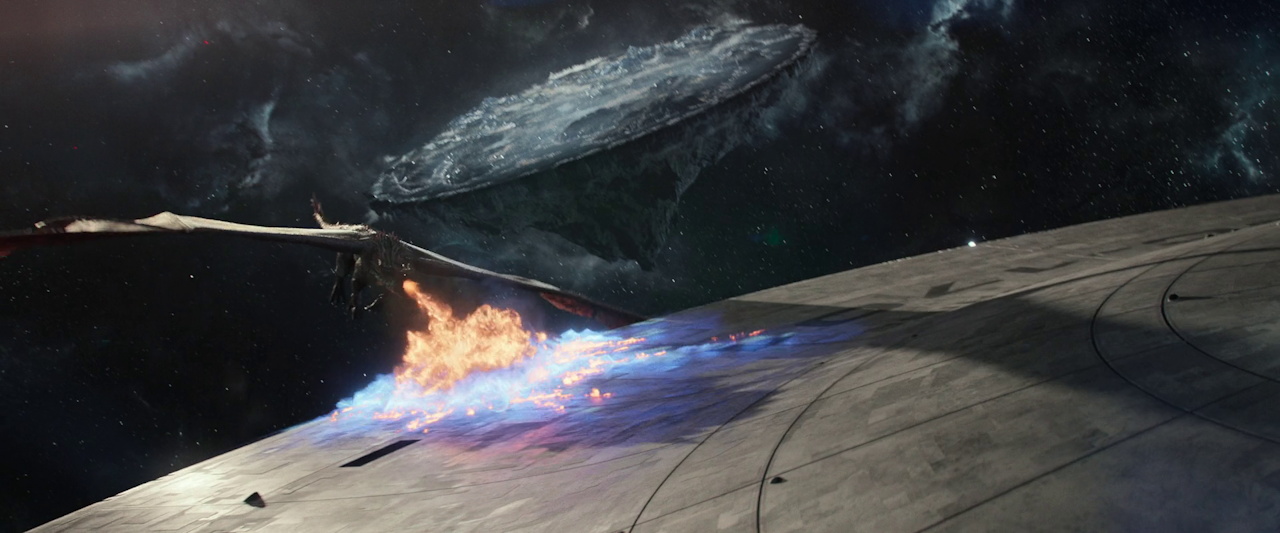
When it came to the episode’s climactic stand-off between the dragon and the Enterprise, if you set aside the inherent silliness of the premise, the fight itself looked pretty darn cool. And the Uhura-dragon, while perhaps not as visually impressive as something from the likes of Game of Thrones, was pretty intimidating. It made for an exciting final act, and Uhura’s doppelgänger transforming, like Sleeping Beauty’s Maleficent, was a fun – albeit tropey – way for the story to take its one-dimensional villain.
I’m in two minds about Pelia’s story this week – and I’m crossing my fingers and *hoping* that this won’t be her final appearance.
The final mention of Pelia in Once La’an A Time was from Captain Pike telling us that Pelia chose to remain behind aboard the Elysian Kingdom planet-ship-thing, and that *immediately* rang alarm bells for me. Firstly, if this is going to be Pelia’s swansong, she didn’t even say goodbye or get a single moment with… anyone. Not Pike, not Una, not Scotty, no one at all. So there’s no closure for this fun character and no proper send-off.
And secondly, after Pelia had gotten a pretty fun storyline (or a collection of fun smaller moments, I guess) in Once La’an A Time, she disappeared quite abruptly. I would’ve liked to have seen Pelia learning more about how the ship worked, working with some of the denizens of the fantasy world, and figuring things out. In fact, I’d have happily enjoyed an entire *episode* based around Pelia, Scotty, and an Enterprise engineering team working on a strange, otherworldly, and distinctly alien craft. That would’ve been fun.
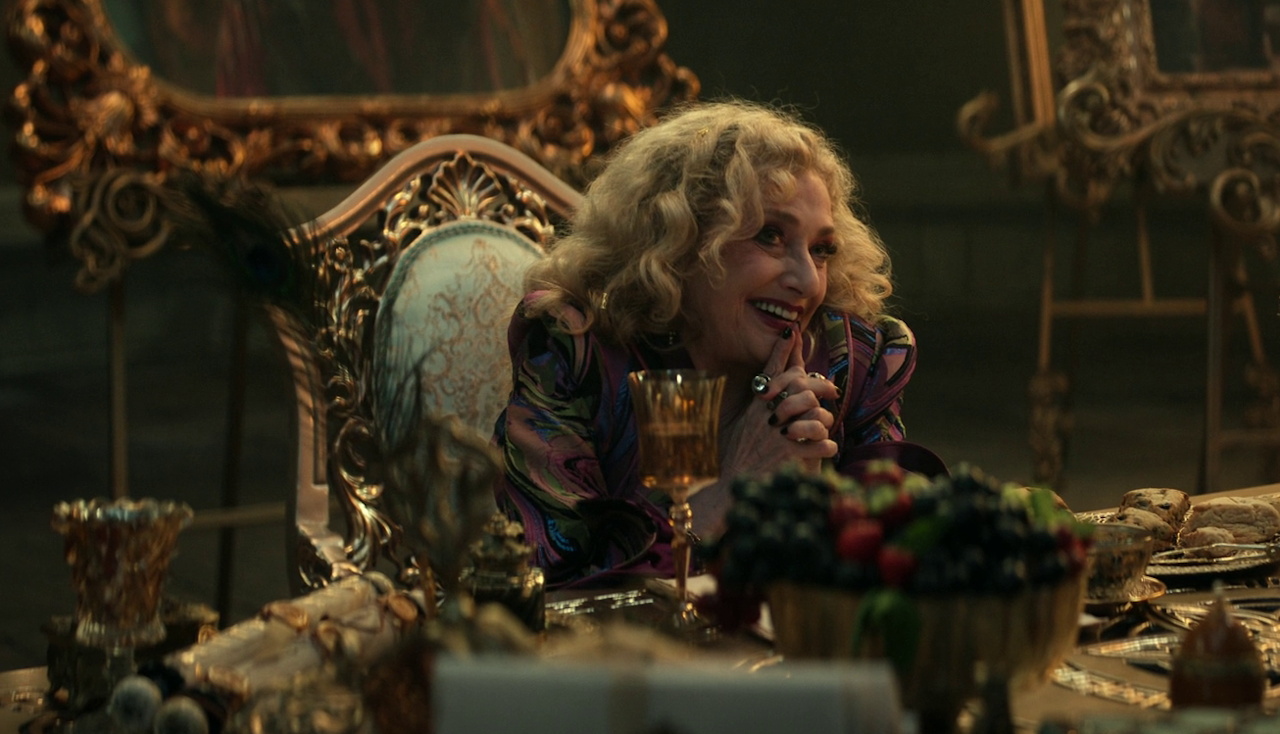
If, however, this isn’t a poorly-written way to get Pelia off the show, and a proper goodbye will happen later on, then I guess I can rescind that line of criticism somewhere down the line.
Based on what we got, I thought Pelia had another really fun moment in the spotlight this week. She’s been one of my favourite characters since she was introduced – though still, sadly, she hasn’t had a full episode or spent as much time on screen as I’d have liked! But Pelia was a great fit for a story like this, and I liked how her absence from Season 1 not only wasn’t a hindrance, but actually worked to everyone’s advantage. That was a creative way to acknowledge that she was missing from Season 1 while incorporating it into the story.
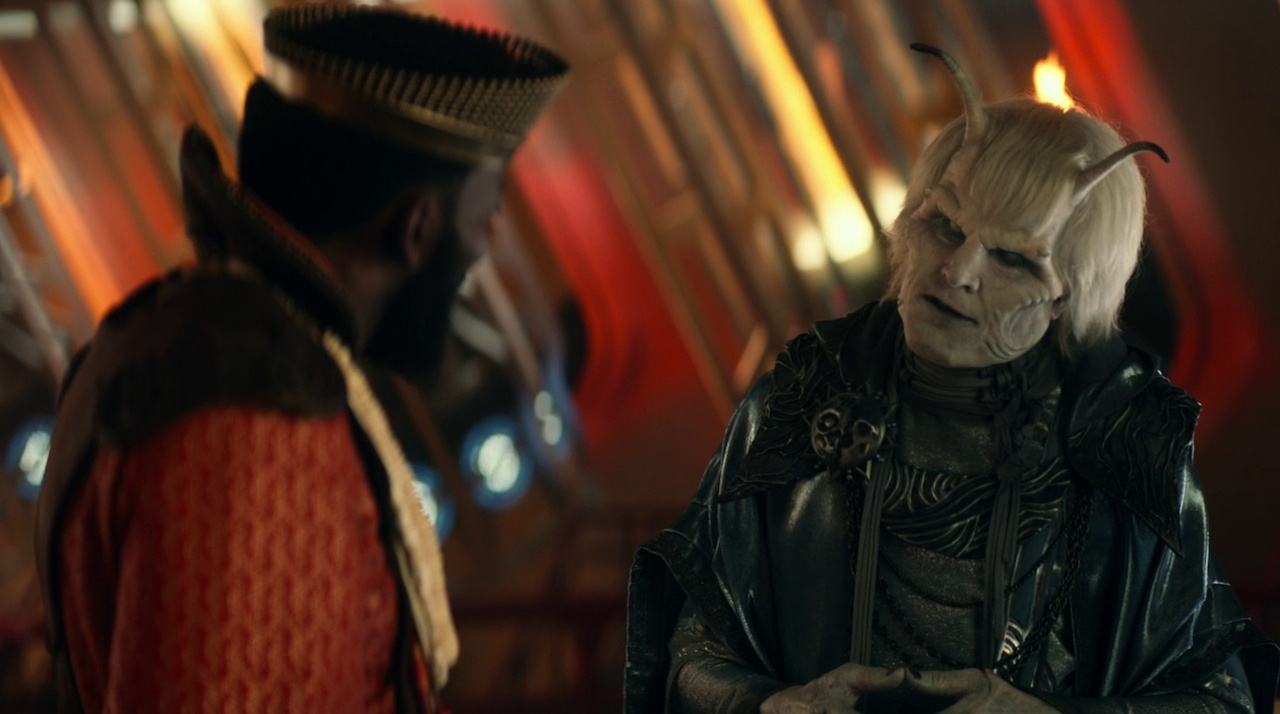
There was, I felt, a potential role for Hemmer here. Bruce Horak, who played Hemmer in Season 1, reprised his role in illusory form in Season 2, and also played a Klingon commander later in the season, so he clearly has been up for a return in the past. It could’ve added a completely different dimension to the story if, in addition to having to deal with strange doppelgängers, Pike and co. also had to confront the living, breathing embodiment of a deceased friend. Given Pike’s arc a couple of weeks back, dealing with grief and loss, that could’ve even been thematically relevant.
However! Rather than lamenting what we *didn’t* get – and for all I know, Bruce Horak may have declined such an offer if one had even been attempted – let’s return to Pelia.
Season 1 established that Benny Russell (a reference to Benjamin Sisko’s alter ego in the Deep Space Nine episode Far Beyond the Stars) was the author of the original Elysian Kingdom book. And Pelia being assigned that role – because she was new and hadn’t been part of the original group of doppelgängers – made sense. I liked that we got that little callback to DS9; at this point, as a huge DS9 and Sisko fan, I’ll take whatever crumbs I can get!
Because she’s a light-hearted and whimsical character who almost never seems to be bothered or thrown off by any of the shenanigans that the Enterprise gets into, Pelia was a great choice to bring into a fairytale story like this. I loved her line near the beginning about how she always misses out on the fun stuff; could that be a tiny bit self-referential, too, given Pelia’s sparse appearances across the three seasons she’s nominally been a part of? I wonder!
On a more serious note, I want to take a diversion to Dr M’Benga.
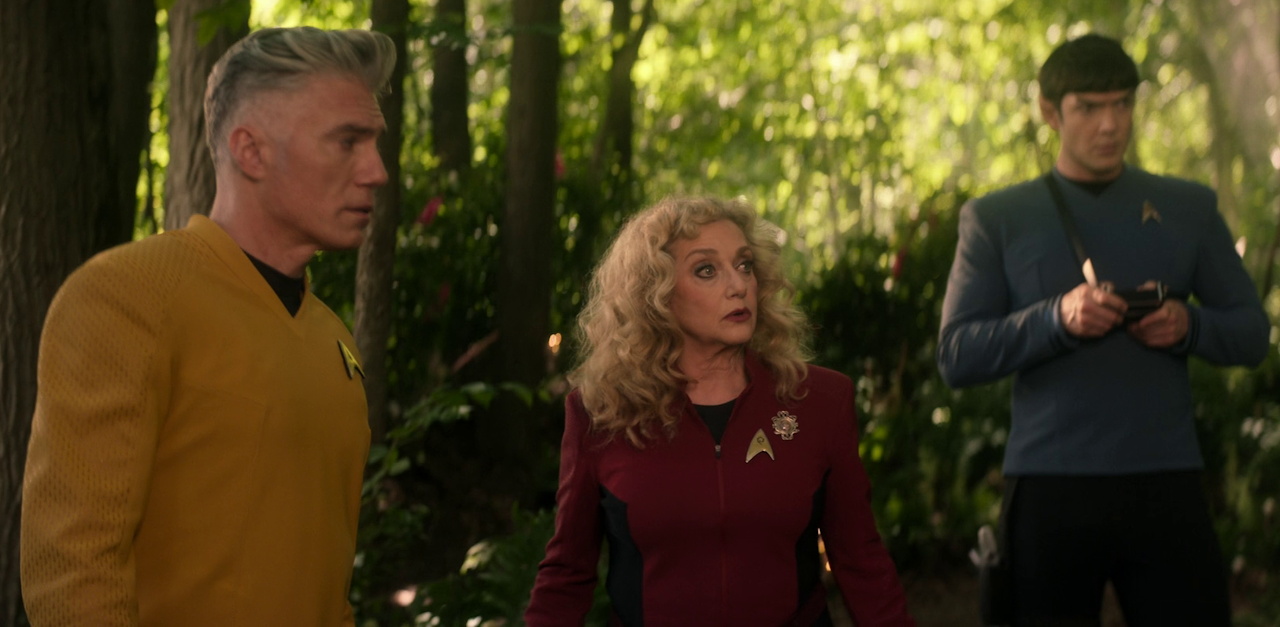
This week, Dr M’Benga played a very minor role, dumping a bunch of exposition onto Pike and the away team, catching them (and us as the audience) up on the events of The Elysian Kingdom. But because that episode and its story had been so important to Dr M’Benga’s entire Season 1 arc – and literally saw him lose his only daughter – I can’t help but feel that we should’ve seen more from him, gotten some kind of acknowledgement of how this was all making *him* feel, or done more to reference what happened to Rukiya.
And maybe… the fact that Once La’an A Time couldn’t do that means that this specific narrative framework wasn’t a great idea.
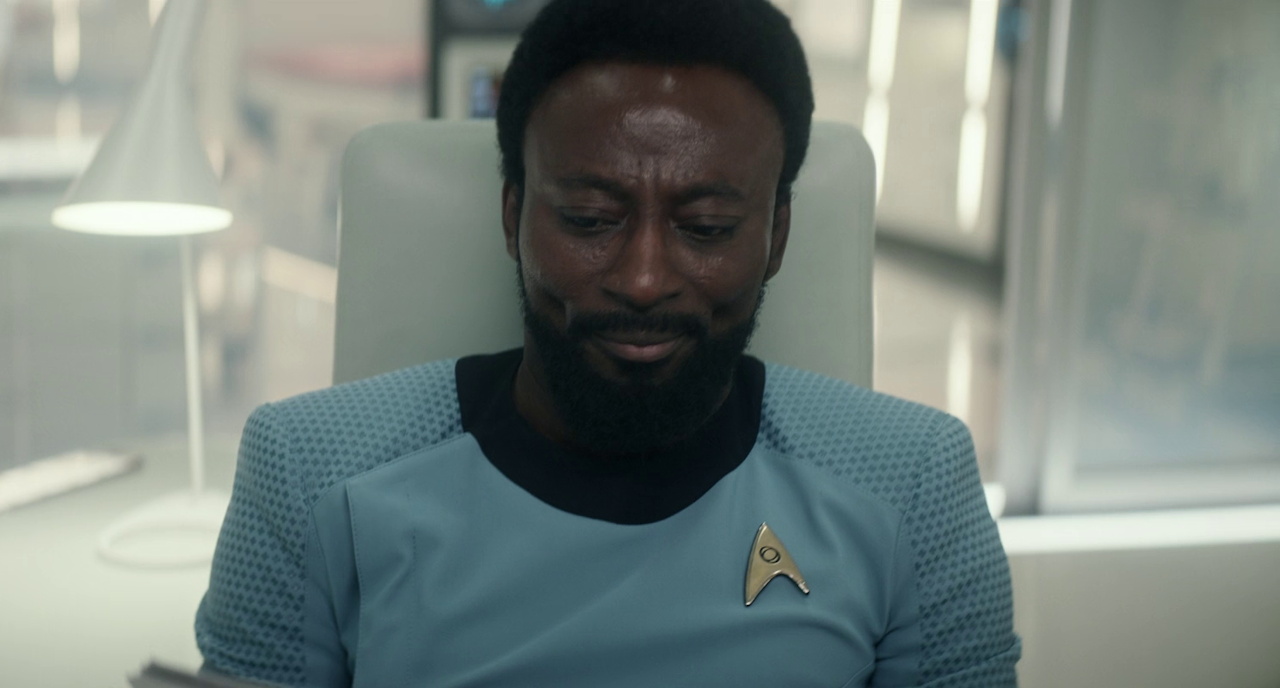
There are a million-and-one ways that La’an could’ve confronted her inner demons, her lingering feelings about her ancestry, and her childhood trauma. It didn’t *need* to come in the form of this pantomime thing, and given that The Elysian Kingdom was such an important episode for Dr M’Benga, and how Rukiya had chosen to stay with the entity (and was, therefore, presumably present in some form aboard the planet-ship-thing), it feels profoundly *odd* that Dr M’Benga played functionally no role in the episode whatsoever beyond “lore dump.”
And I realise that we’re yet again tackling what *wasn’t* present in the episode rather than what actually was, but don’t you think it’s a very strange omission? The Elysian Kingdom may not have been everyone’s favourite part of Season 1 (which makes it kind of an odd choice for a sequel, if you think about it), but it was a very important story for Dr M’Benga. If we’re talking about themes of family trauma, children losing their parents and parents losing their children, and coming face to face with complex and difficult emotions… why was Dr M’Benga relegated to this incredibly minor role when his only daughter – someone he was willing to make all manner of sacrifices for – could’ve been right there?
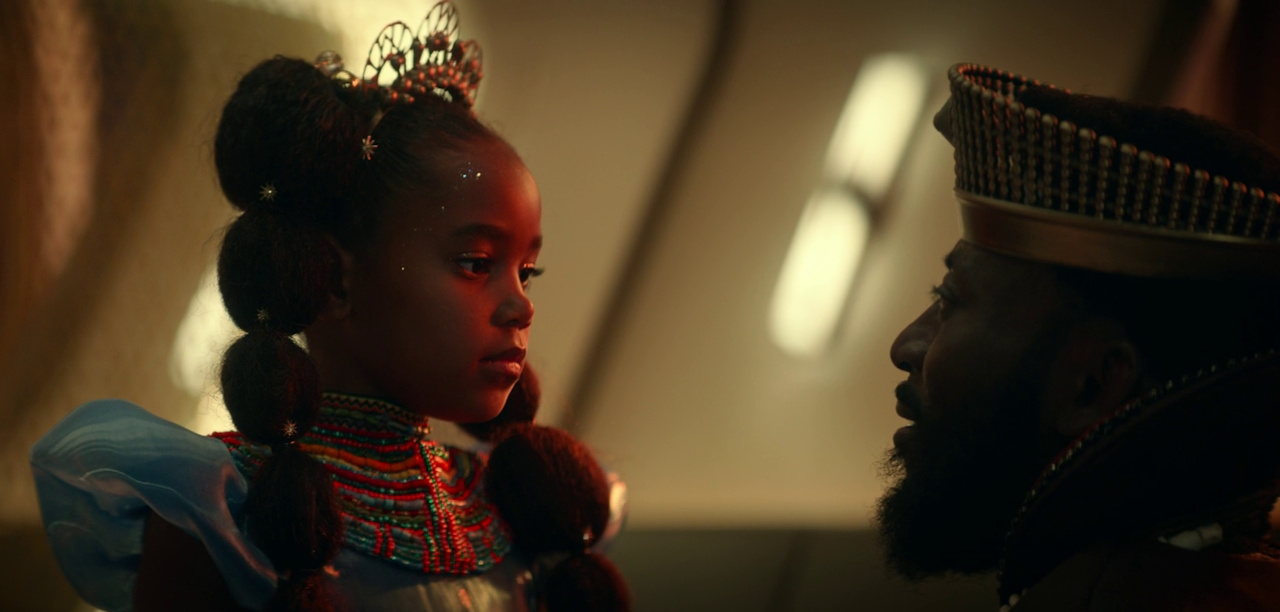
To me, this reads kind of like Strange New Worlds’ writers not really knowing what they were doing. They wanted to do a (second) fairytale-inspired story, so a return to the basic world of The Elysian Kingdom must’ve seemed – superficially, at least – like a good fit. Only, the character they wanted to shine a spotlight on this time was La’an, and with other fairytale nonsense going on for Pike, Spock, and Pelia… there was no effort made to include Dr M’Benga at all.
Given that basically nothing in Once La’an A Time would’ve changed if this had been a *different* doppelgänger-populated fairytale planet… why bother calling back to The Elysian Kingdom at all? The only characters who really behaved like their Season 1 counterparts were Pike, as the cowardly knave, and La’an, as the spoiled princess. The rest of the characters were so one-dimensional as to be little more than fluff, and the whole “iron dragon” prophecy was also brand-new to the setting. There was a pathway to telling not just a similar story, but this *exact* story (if someone had decided it was worth telling) without complicating Dr M’Benga’s arc from back in Season 1. And while I get that those events are a few years ago, it wasn’t a great episode, not everyone is gonna remember it all, and blah, blah, blah… it still feels odd to me that we’d revisit this exact setting, where Dr M’Benga’s beloved daughter presumably still resides, and he would get absolutely no role in that story whatsoever.
Strange New Worlds’ writers seem to have a penchant for throwing the main cast into silly situations which force them to take on either completely new roles or else play different versions of themselves. We’ve had five just this season: the evil doppelgängers in The Griffin Incident, the drunk or drugged characters from Human Best Friend, the dream puppets in Level-Five Transporter Accident, the soap opera in Like Chronitons Through the Hourglass, and now these pantomime/fairytale characters this week. And that comes after some or all of the main cast were acting out-of-character in: Spock Amok and The Elysian Kingdom in Season 1, Among The Lotus Eaters, Charades, and Subspace Rhapsody in Season 2, and Wedding Bell Blues, A Space Adventure Hour and Four-and-a-Half Vulcans in Season 3.
That’s thirteen out of a total of forty-six episodes – more than a quarter of the entire show’s run – in which a major storyline involves one or more of the show’s main characters being duplicated, transformed, changed, or forced to act out-of-character.
If you’re a regular reader, you might remember an article here on the website a few months back, written in response to the news that Starfleet Academy had been cancelled and that, consequently, no new Star Trek was in production for the first time in a decade. I said then that one potential upside to the franchise taking a bit of a break could be an injection of fresh blood and new talent on the production side; people with new, different, and creative ideas for where to take Star Trek in the future. Given how repetitive Strange New Worlds has been with this “isn’t it funny when people don’t act like themselves” schtick, well… case in point, eh?
Pike and Spock – or rather, their fairytale doppelgängers – got a reasonably fun side-story as they schemed to take over the “iron dragon.” I think you have to work *hard* to suspend your disbelief for parts of this one; the idea that the likes of Una, Ortegas, and Uhura (as well as dozens of crew members in the bar) wouldn’t notice that the people in front of them weren’t *really* Pike and Spock – when they knew for a fact that they’re orbiting a planet of doppelgängers – takes a bit of effort to push out of your mind! And for some Trekkies, especially the detail-oriented canon sticklers, I can see that being a bridge too far.
For me, though, when I got into the flow of Pike and Spock’s silly pantomime thing, I was content to go along for the ride. There might’ve been a way to do a bit more with this idea, and the way it just kind of disappeared right at the end did feel quite abrupt. But in terms of what we actually got, it was okay, and there were some genuinely fun moments as the doppelgängers tried to blend in with the crew, but just weren’t able to do so. If you think of it as a campier, sillier take on Mirror, Mirror’s core concept, I guess it’s fine.
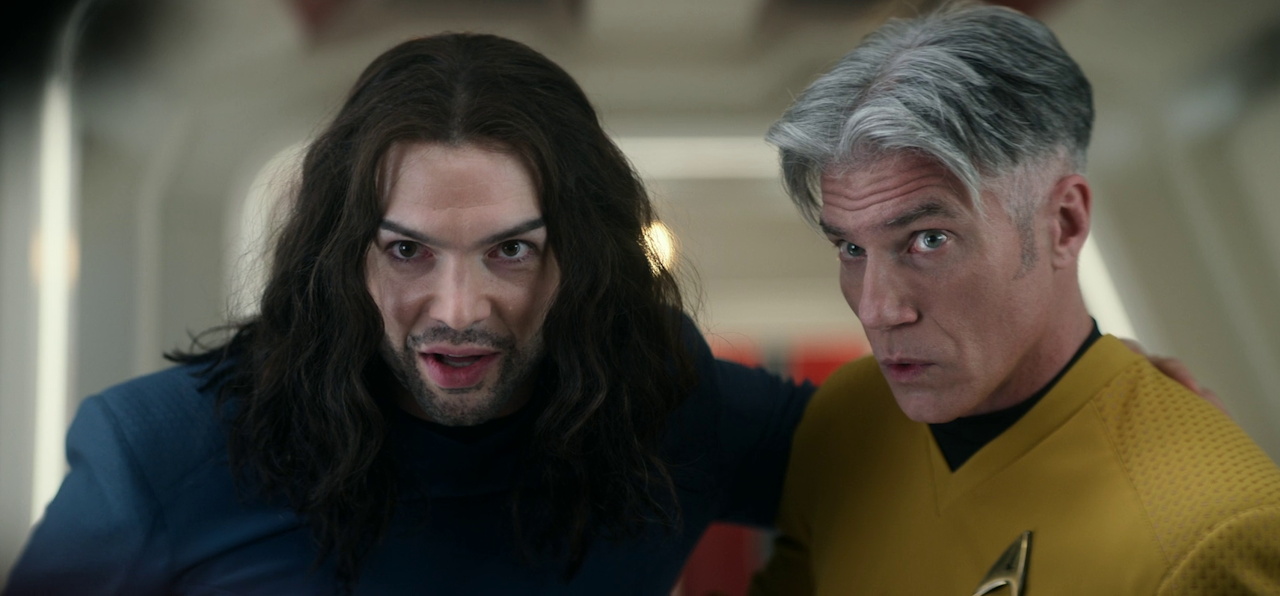
The decision to pair up Una and Ortegas’ doppelgängers felt a bit… forced. It felt like the writers were aware that Strange New Worlds hasn’t had much by way of LGBT+ themes or characters and decided to use the excuse of “but they’re just doppelgängers” to throw something like that in. Compare it to Deep Space Nine’s Rejoined, where Jadzia Dax gets a same-sex parnter storyline, or even episodes in Discovery with Culber and Stamets, and it really just feels tokenistic.
Una and Ortegas – the real versions of their characters, at least – have absolutely no romantic chemistry whatsoever; they’re work friends, not even particularly close friends – or at least that’s how I’ve always interpreted their relationship. So it wasn’t even like this was a great choice of characters to pair up; there’d have been more chemistry between, say, Kirk and Scotty’s doppelgängers or even Chapel and Uhura’s.
And that reminds me: did Scotty not get a doppelgänger? Seems a shame to leave him out!
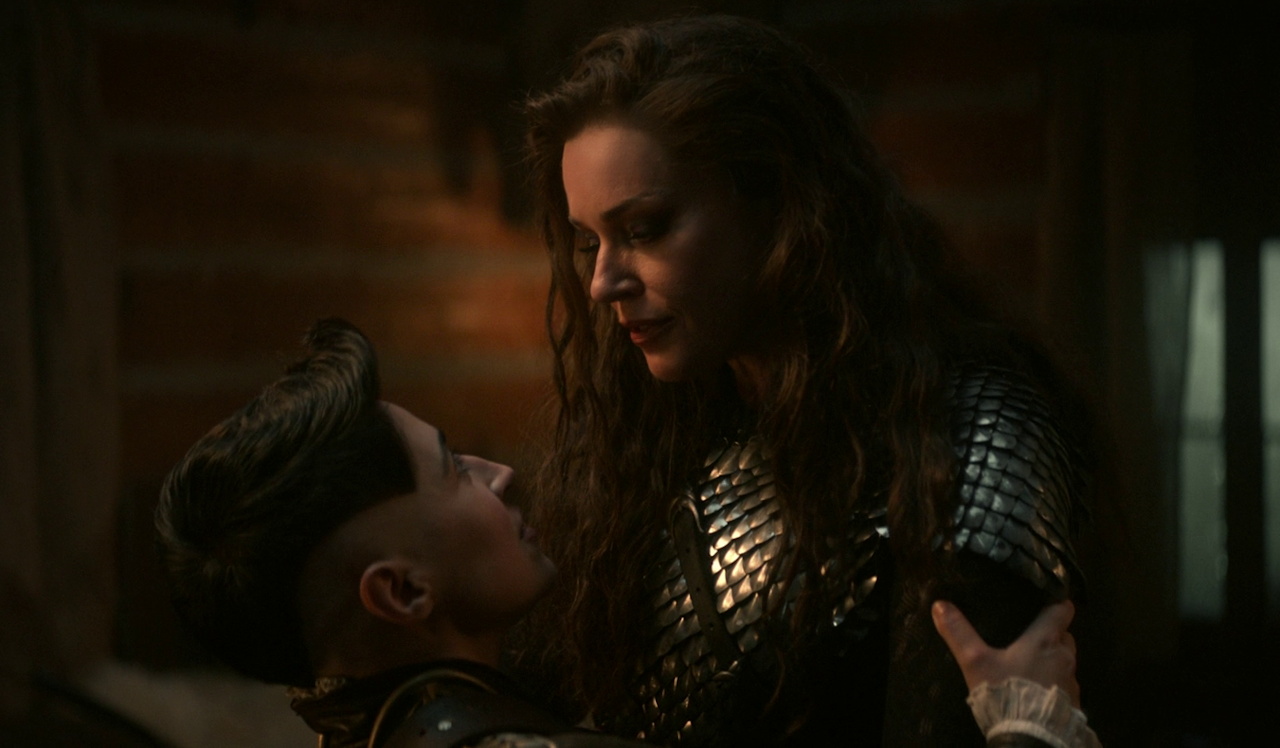
I’ll lump all of the other doppelgängers together, because they all felt incredibly one-note and basic; pantomime caricatures rather than real people. Uhura’s was just an “evil queen” trope that you’ll see in countless stories from Snow White to Narnia and beyond. Chapel’s was basically a sillier take on the insidious advisor or wicked witch who props up an evil ruler. La’an’s – despite her importance to the main character’s story – was a cheap damsel in distress, M’Benga’s doppelgänger got literally no screen time at all, and Kirk’s was, again, just a typical fairytale swashbuckler.
We’ll get into Kirk in more detail in a moment, though.
As I said above, this is the thirteenth episode (out of a total of forty-six that the series is gonna get) where characters behave unnaturally or where main cast members have to play completely different people. And that idea has *already* worn out its welcome, to be blunt. In isolation, there’s nothing wrong with doing a fairytale panto, or even doing a sequel to Season 1’s fairytale panto. But this is not merely the first or second time we’ve been here, and when the doppelgängers are all so exceptionally boring, tropey, bland, forgettable, and basic, and behave like the most one-dimensional clichés… well, it’s got old already. Thankfully, most of them weren’t on screen long enough to *properly* irk me, and I can appreciate that this episode gave (almost) everyone something to do. But it’s my sincere hope that we won’t be back to this overdone story idea again. In fact, if Star Trek makes a triumphant return to the small screen a few years down the line, Strange New Worlds’ overuse of these “everyone’s acting out-of-character” or “aren’t these doppelgängers just hilarious?” ideas should be enough to make any similar episode pitch receive an immediate “no” from the new production team!
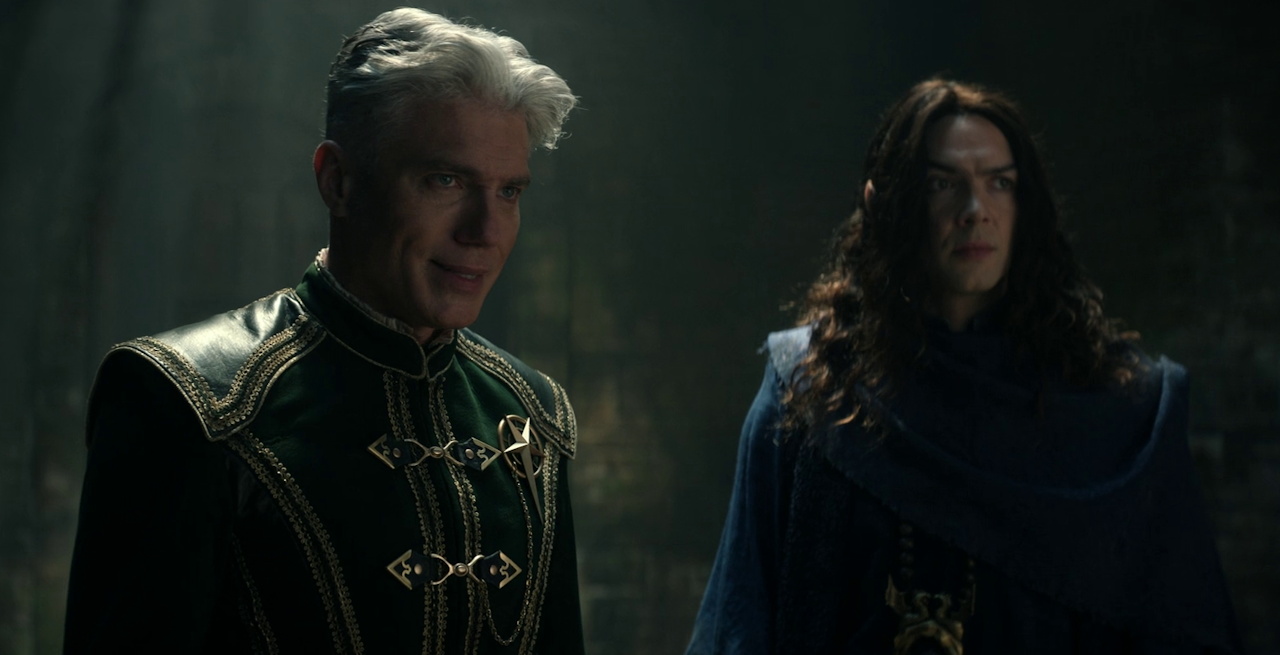
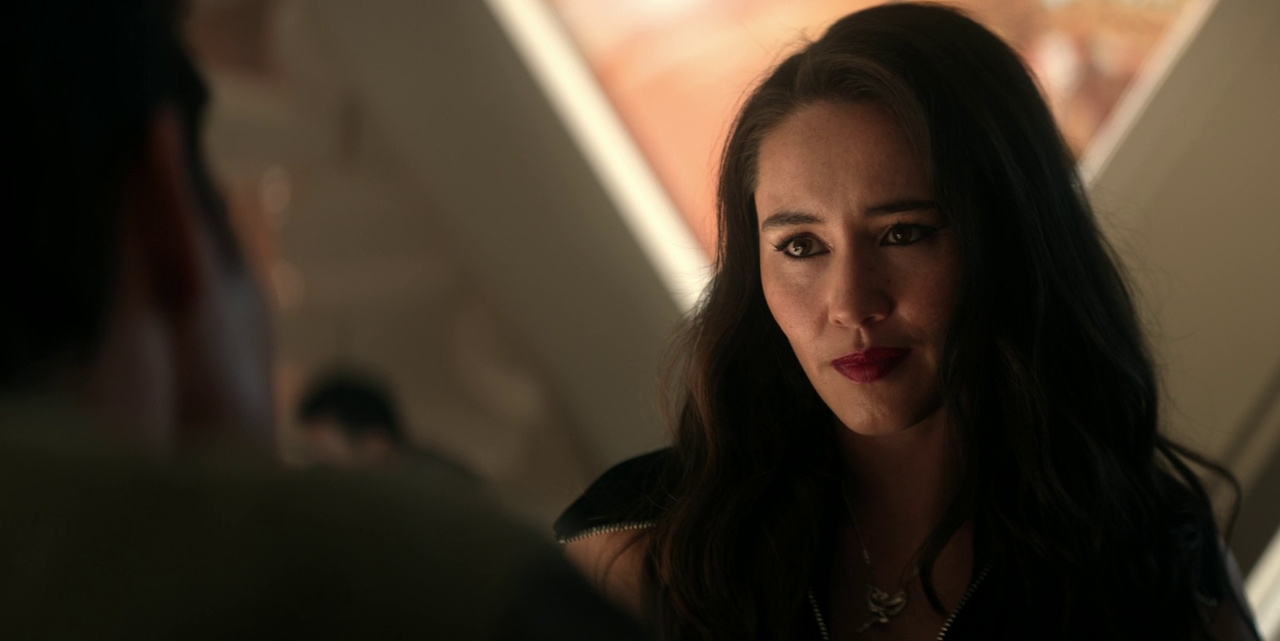
Earlier this season, I felt that La’an’s “latent augment DNA” thing wasn’t set up particularly strongly. The best that we got from this storyline came in The Griffin Incident, though, and by that point I thought there was merit in exploring the idea that La’an might be struggling – or might be about to face something bigger, something that could even lead to the end of her time aboard the Enterprise.
I will be honest: I could not have predicted *this* kind of episode being the culmination of that arc!
However, I’m sticking to my guns in one sense: I still think, somehow, that La’an might not be long for this world. Allow me to explain!
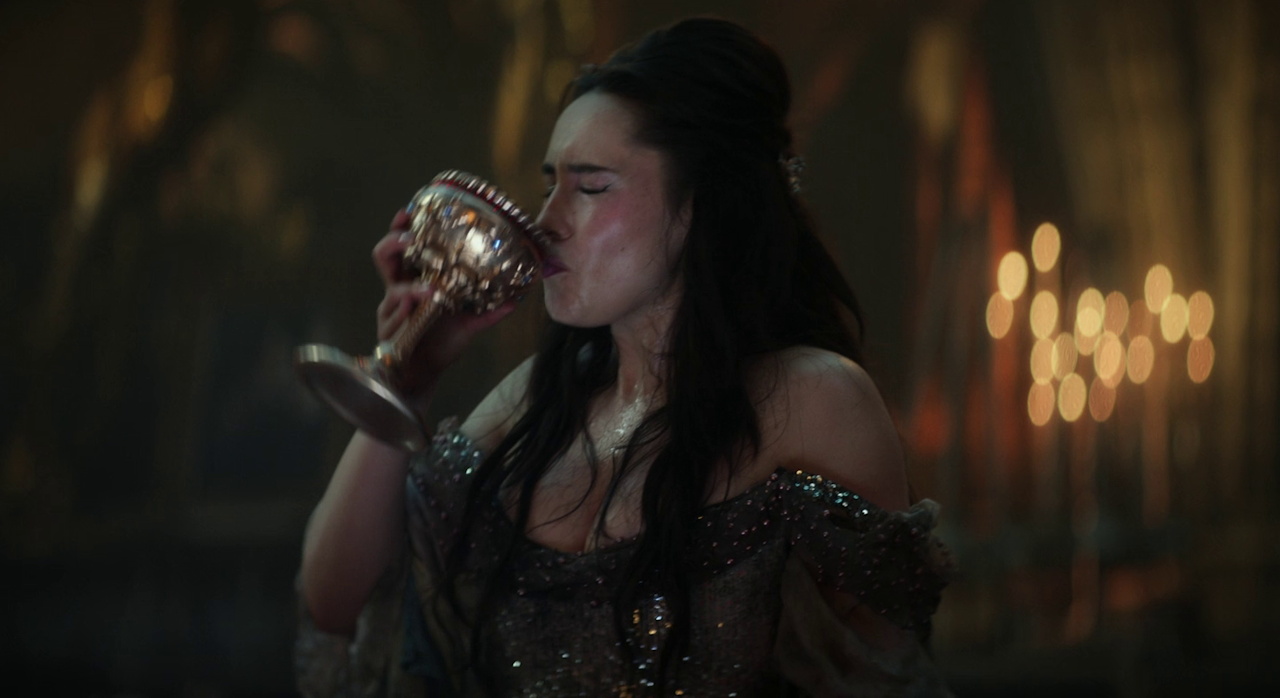
What’s the point of getting Kirk and La’an back together a mere seven episodes from the end of the series? La’an doesn’t have any role (that we know of) aboard the Enterprise by the time Kirk assumes command. And for both of their character arcs – Kirk’s prequel arc and La’an’s overall arc across the show – they’d already been through this and come to a resolution. But what if one episode, either at the end of Season 4 or sometime in Season 5, is going to see Kirk having to deal with La’an’s death?
And for La’an, there’d be something quietly tragic about a character having finally gotten to a place where, in her own words, she might be able to begin to feel “happy,” only for that to be ripped away. Star Trek doesn’t always do character deaths with such brutality, but given where Strange New Worlds is going, I’ve felt really since Season 3 that *at least* one more main character is gonna kick the bucket to make way for their TOS counterparts! And La’an, having set up this “latent augment DNA” idea at the beginning of the season, still feels like candidate number one on my “death watch” list.
But that’s a theory for the future. Let’s concentrate on her arc in Once La’an A Time for now.
Firstly, while there have been moments in Season 4 where La’an has seemed grumpy or standoffish, most of the time she’s just seemed like herself. So that made her “I’m in a bad mood” thing (and apparently punching and kicking people off-screen, too) just not work as well as intended. “Show, don’t tell” is great advice in your first Introduction to Creative Writing class, and I think we needed to *see* more of the way La’an had been feeling – and how those feelings had been causing her to push friends away, damage her relationships, take risks, or just misbehave (for want of a better word) – before we reached this point. Forcing her to confront this complex part of her personality just didn’t seem to get the setup that it needed.
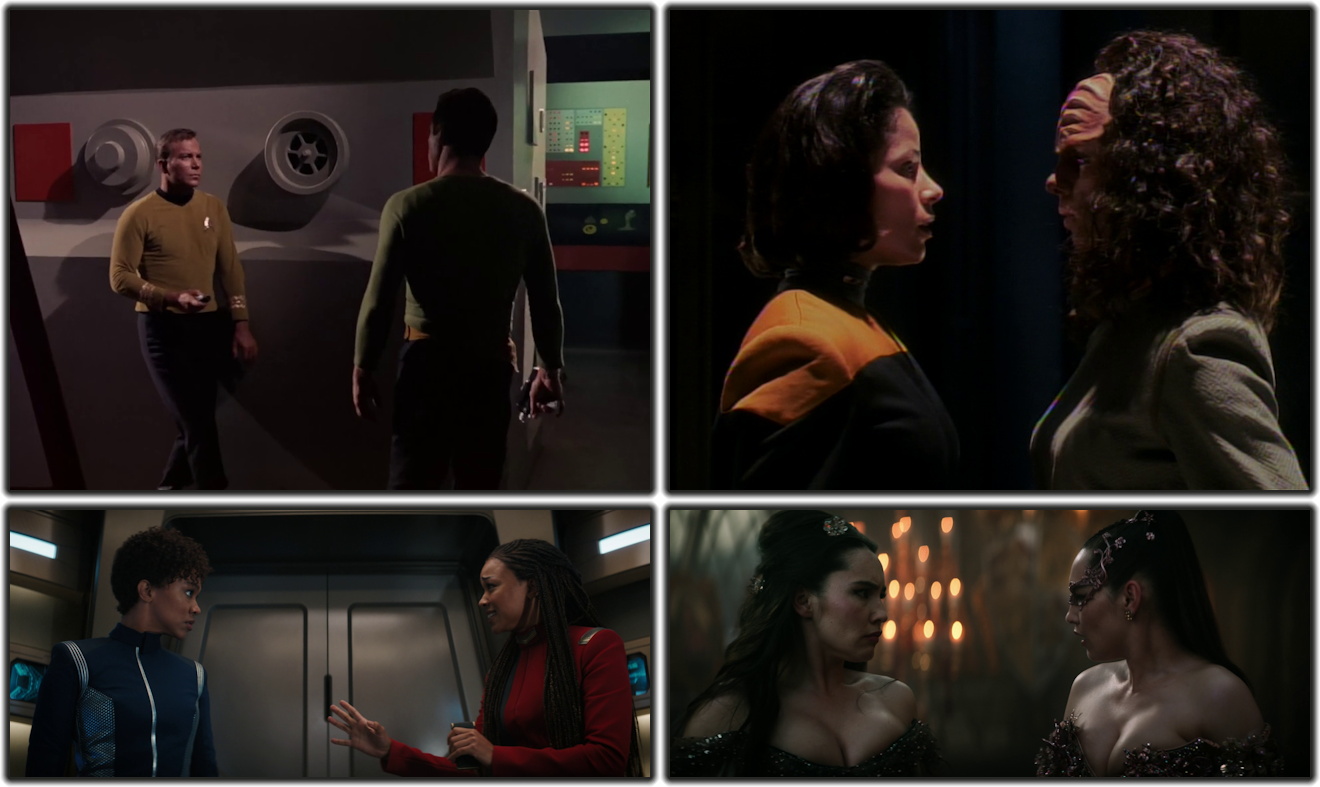
I felt echoes of Voyager’s first-season episode Faces, as well as the TOS classic The Enemy Within, in the way La’an had to come face-to-face with a side of herself that she’s been trying to suppress. And there is undeniably merit in the idea of a character recognising that they need different aspects of their personality working in tandem; that they can’t completely excise an integral part of themselves, no matter how ashamed, frightened, embarrassed, or anxious they might be about it. That’s something Star Trek has *always* done: used a sci-fi lens to tell relatable, meaningful stories. All of us have parts of our past, aspects of our personalities, or something within that we aren’t proud of or don’t want to show to the world, but you can’t entirely cut out that part of yourself without losing something valuable. That’s the message the episode was going for.
Whether that message came across as well as intended, though… that’s another matter.
As happened to Pike’s story about grief in Like Chronitons Through the Hourglass – though, thankfully, to a slightly lesser extent – La’an’s story of wrangling with a side of herself she’s frightened of or doesn’t want to acknowledge *was* impacted by the decision to set it amidst this pantomime-fairytale story. The setting, the one-dimensional characters, the silly B-plot aboard the Enterprise… all of those things pulled against what should’ve been the episode’s defining storyline and key character arc.
If this was a one-off; a single episode out of almost forty so far in which the main idea in the episode clashed in a way that was jarring at best and irreconcilable at worst with its setting or narrative, I guess I’d be a little more lenient. But this *exact* issue has reared its head in Strange New Worlds before. Pike had what could’ve been a genuinely relatable story about loss and grief… but a soap opera spoof that didn’t even feel particularly respectful or good-natured shat all over it. And even this episode’s predecessor – The Elysian Kingdom – arguably had the exact same problem with Dr M’Benga and Rukiya; the core idea and theme of loss just couldn’t be made to work with the silly, light-hearted tone of the rest of the script.
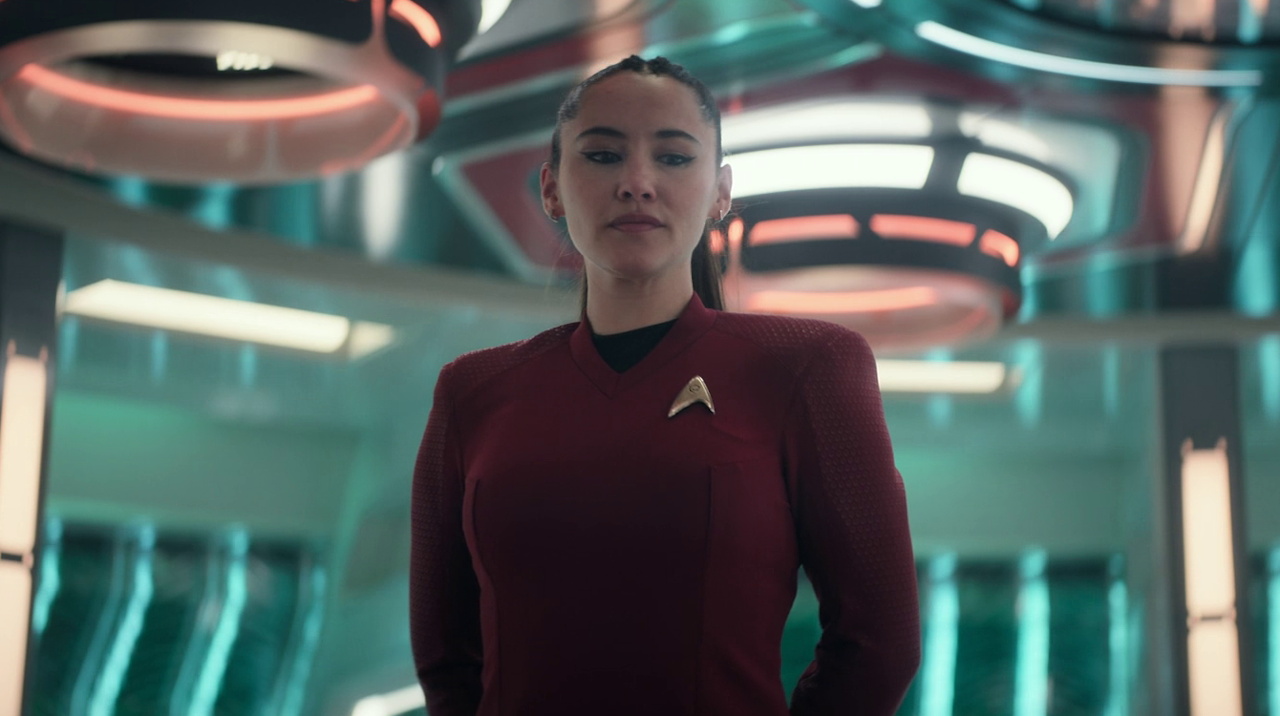
Look at the Strange New Worlds character pieces that have worked the best: Season 3’s Terrarium, which saw Ortegas dealing with her lingering trauma from the Gorn conflict. Season 2’s Under the Cloak of War, in which Dr M’Benga had to come to terms with his Klingon war experiences when he came face-to-face with a war criminal. And Season 1’s A Quality of Mercy, where Pike had to accept that his impending accident and disability are truly inevitable.
What do these stories have in common? Yes, they’re sci-fi, and yes, they rely on aliens, spaceships, and technobabble in places, but they also take their core, important ideas and play them straight. They don’t force these heavy themes to sit awkwardly atop light-hearted scripts, they aren’t tonally jarring, and because of that… they work a lot better not only at conveying their intended messages, but also as enjoyable, interesting, relatable, and emotional episodes of television, too.
I think one vital thing we’ve learned from Strange New Worlds is simply this: Star Trek can be hilarious when it leans fully into comedy, and Star Trek can be dramatic, intense, emotional, and educational when it examines important real-world issues and ideas through its sci-fi lens.
But it can’t be both at the same time.
You can’t be a hilarious send-up of soap opera clichés and then try to tack on a serious story about a dad grieving his daughter. You can’t be a serious, introspective character piece about someone coming to terms with who they are as a person only to bury that message in a wacky slapstick plot about dream-puppets or characters turned into Vulcans. And, in this case, you can’t tell a story about La’an wrangling with a part of her personality that she tries to keep buried while at the same time doing a fairytale pantomime. The two ideas simply cannot be made to work together, no matter how hard you try.
The sad thing is that there’s so much in La’an that we *could* have explored if we’d gotten a more focused and serious episode. For me, outside of Season 2’s Tomorrow and Tomorrow and Tomorrow, Strange New Worlds hasn’t done anywhere near enough to justify making La’an a descendant of the iconic Star Trek villain Khan. Her last name – and what it represents in this fictional world – would have been ripe for an introspective character piece like this. A more focused episode could’ve either gone full sci-fi, with La’an’s latent augment DNA being a metaphor for generational trauma, the burden of ancestry, and so on, or it could’ve been much more literal, with La’an having to confront something that her ancestor did and how it impacted the wider Star Trek universe.
Being a descendant of Khan Noonien Singh in a world that remembers him as an evil tyrant is like being a descendant of any one of a number of real-world dictators and despots. And, more broadly, it could be a metaphor for, say, the children of empire; those of us who grew up in a world shaped by the *bad* decisions of our ancestors. The British Empire did appalling things, the American “Empire” has plenty to answer for, and it could be cathartic to see a fictional character wrangling with the legacy of her ancestor and the lifelong burden that placed upon her.
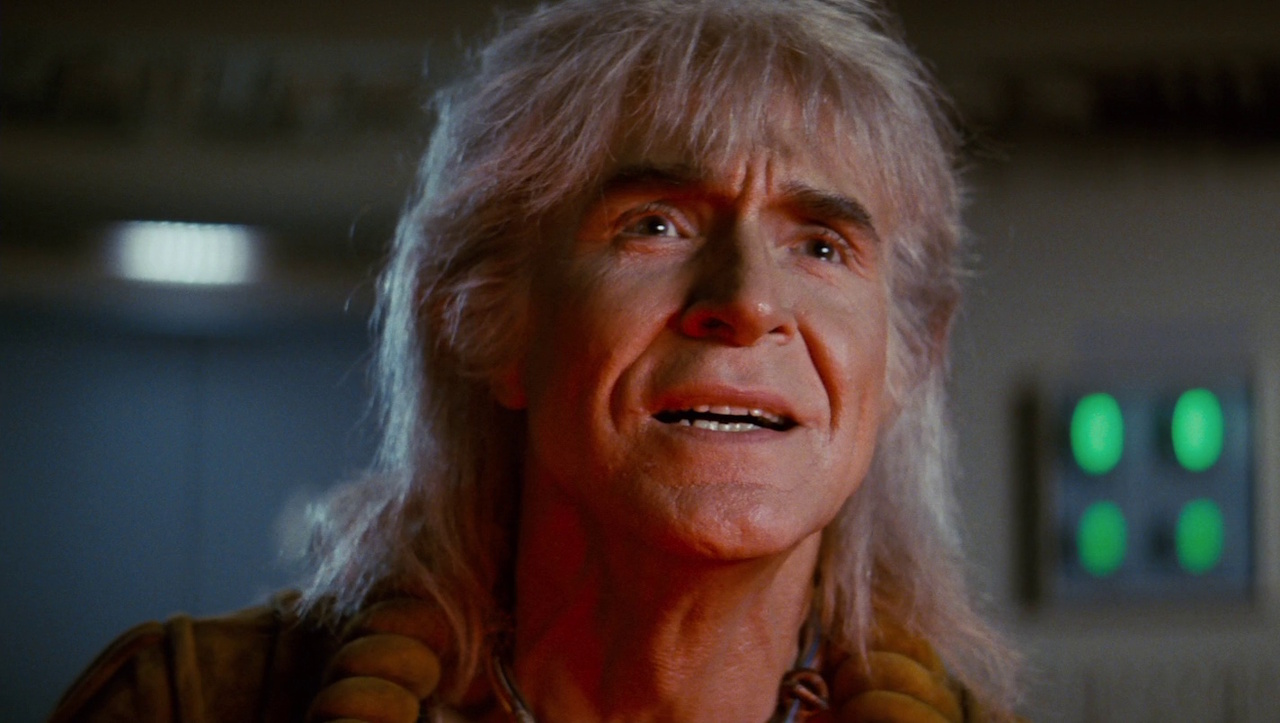
Strange New Worlds has never really done that – and this feels like it might just have been the last chance to take La’an’s identity, her family legacy, this core part of who she is, and tell a story with it that justified its controversial inclusion.
But because this is “the big swings show,” and because Strange New Worlds just *had* to cram in yet another genre spoof – one it’s literally already done before, in this case – we didn’t get that. Yes, La’an had to confront a part of herself that she doesn’t like. And yes, there was merit in that idea, imperfectly executed though it may have been. But when you stack up what we got against what we could’ve got in a more serious and straight-laced story… I dunno. I’m underwhelmed, I guess.
I try not to come across as *that* kind of Trekkie; someone who thinks Star Trek should never be light-hearted or that the franchise shouldn’t ever attempt new or fun ideas. And this season, my reviews of Strange New Worlds have tended to be quite critical of some of these genre spoofs and parodies in a way I wouldn’t have wanted. But this time, as in several previous cases across Season 4… I just feel that the silly spoof idea clashed with what could’ve been a genuinely great storyline if it had been taken more seriously. And when the show’s running out of time, and there’s not gonna be time to do everything, sometimes you have to choose one narrative concept or the other. Trying to push two things together didn’t work a couple of weeks ago, and it didn’t work here, either – though Once La’an A Time is, at least, less of a failure than Level-Five Transporter Accident or Like Chronitons Through the Hourglass.
For whatever that’s worth.
When I mentioned Kirk above, I said that there *could* yet be a payoff to this La’an relationship angle if something like my theory is borne out. However, if we assume that (as usual) my theories are all wrong, then I gotta say that this Kirk-La’an storyline just feels like a waste. Why, after going to so much trouble to give La’an an arc in which she had to get over Kirk, would Strange New Worlds bring her back to him two seasons later? What’s the point? It feels genuinely regressive for her character in a way that I’m struggling to excuse.
It’s also a pretty tropey idea, if you think about it. “Character confronts an internal issue or overcomes some big personal struggle only to celebrate by immediately getting into a relationship” is about as boring an outcome to this kind of storyline as you can possibly get. If – *if* – there’s a bigger narrative function to this relationship, as suggested/theorised above, then we may be able to revisit this episode and judge this ending a bit more kindly in hindsight. But right now? It does not feel great to drag La’an back more than two seasons and throw her into a second Kirk love affair, especially after having just settled her down after her entanglement with Spock came to an end.
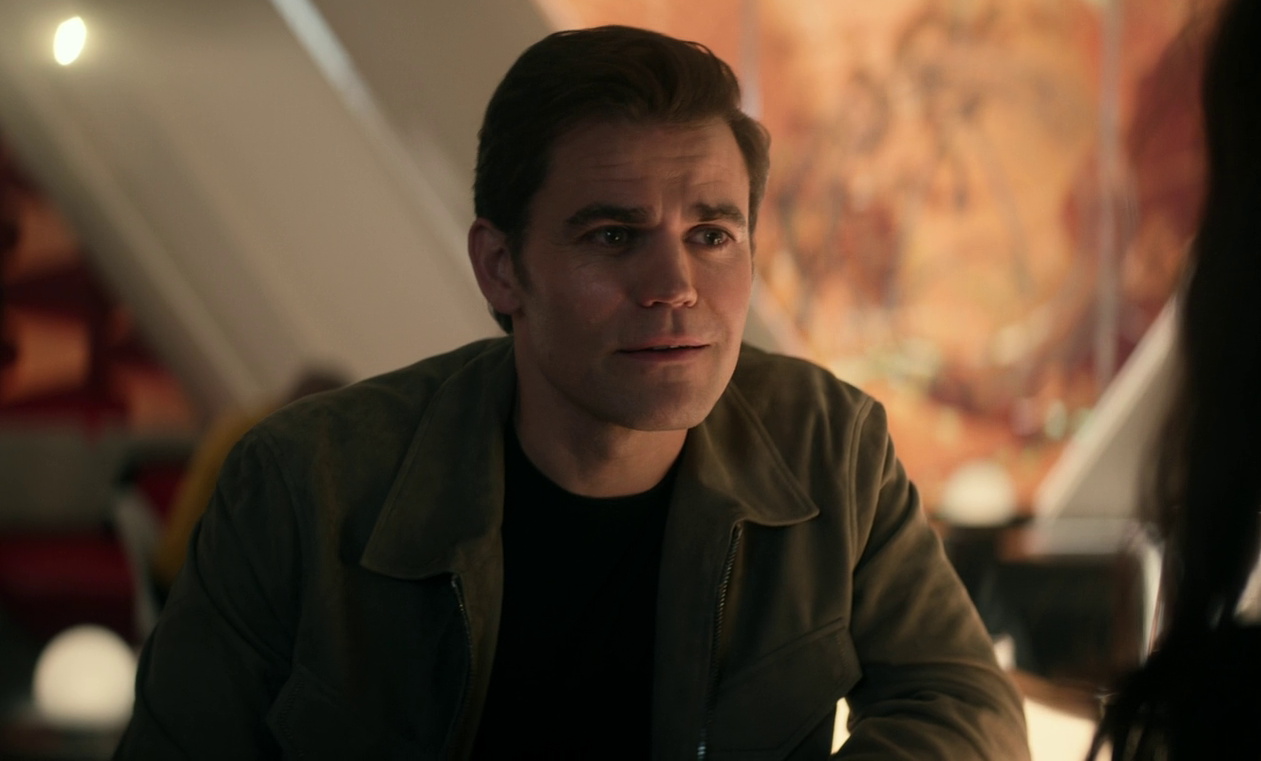
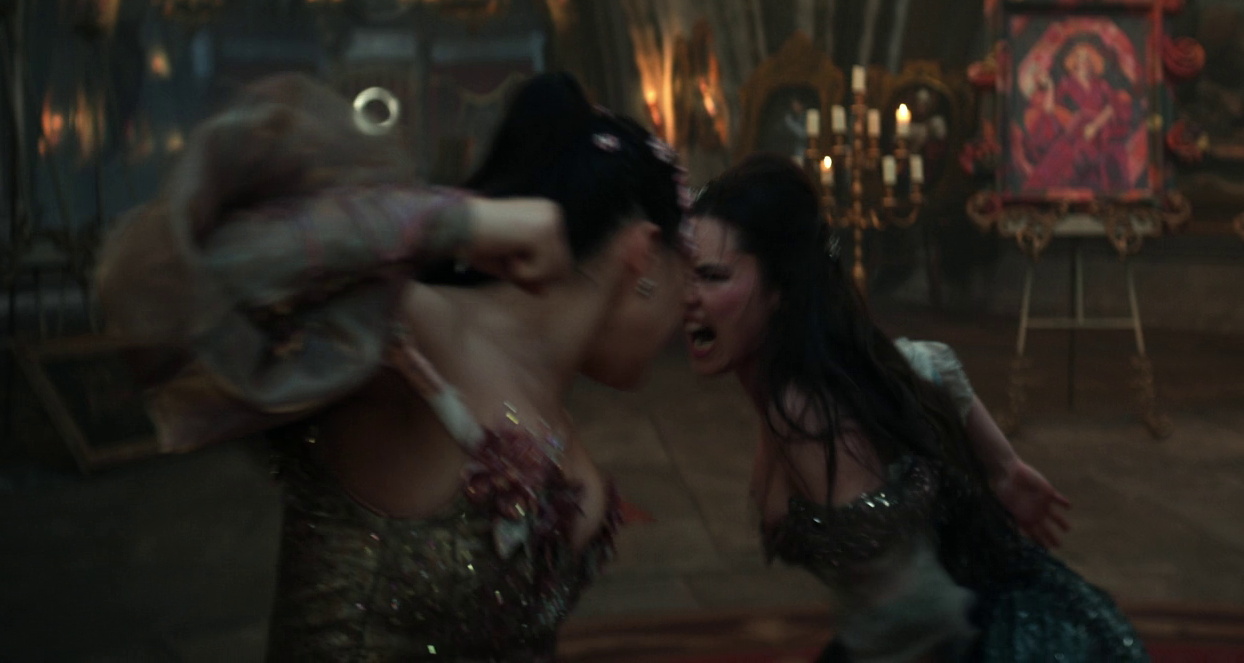
On a more positive note, I will say that Christina Chong (whom I have met!) did a great job playing two very different versions of her character. It can’t be an easy challenge to have to act against oneself – especially when camera trickery and/or CGI are needed to get both versions of “you” into the same scene. La’an and her doppelgänger felt distinct, and their climactic clash was genuinely well-acted, well-choreographed, and landed about as well as it could’ve.
And Chong has great on-screen chemistry with Paul Wesley, both in his guise as “Dashing” and as his more familiar character of Kirk. Even if I’m not wild about the way in which this episode brought the two characters together, the performers work well together, play off each other well, and I can buy into the idea that La’an has a thing for Kirk and that Kirk might just be into her, too.
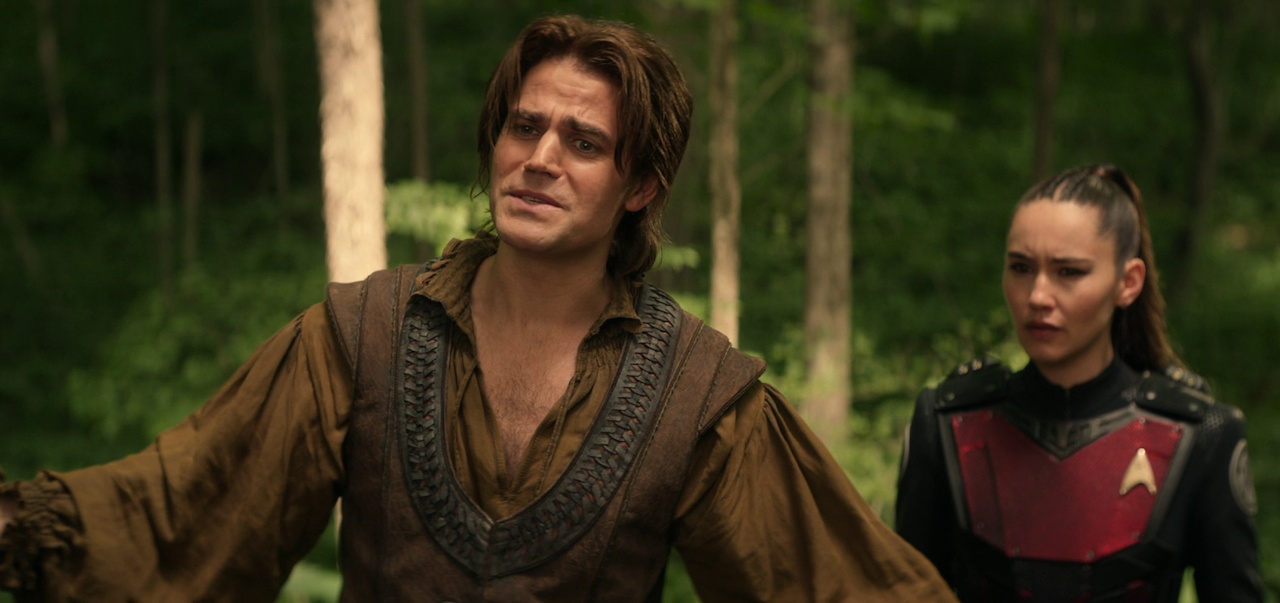
In terms of the episode itself, La’an gets a character arc that doesn’t start particularly strongly, builds to a reasonably entertaining and interesting climax, before closing with an epilogue that – theories and potential future storylines aside – feels regressive, at least right now. There were fun moments along the way, don’t get me wrong, and werewolf-Kirk taught her a valuable lesson about fully embracing *every* aspect of herself, even the ones she’s tried to run away from or hide from others.
But this arc was not only ill-suited to the kind of fairytale that surrounded it, but the pantomime trappings arguably detracted from the core message that the episode was aiming to tell.
I would’ve happily gone along for a fun pantomime romp, even knowing that a story like that would never be a “top-ten greatest episodes of the series” contender for me. And I would’ve enjoyed and related to a more serious, introspective character piece focusing on La’an and her inner conflict, her struggle with her ancestry, and her lingering trauma from her childhood. But Once La’an A Time struggled – and ultimately failed – to bring these two diametrically-opposed ideas together into a single, cohesive story. And what we got, while a damn sight better than the worst offerings so far this season, is still a bit of a mess.
That being said, Pelia made me smile, seeing the Enterprise facing off against a dragon was visually stunning, were-Kirk will always be a fun metaphor, and Christina Chong stepped up to the plate when it came to taking on a difficult acting challenge. I smiled, chuckled, and even laughed out loud in places, when the episode’s humour hit just right, and as someone who once dabbled in amateur dramatics a long time ago, I can appreciate the episode’s fairytale and pantomime inspirations, even while acknowledging that those elements took away from a more interesting and serious message.
That, in a nutshell, was Once La’an A Time.
I don’t “rank” episodes, nor do I put a numerical value or a letter grade on my reviews! But what I will say is this: in a stronger year, this would undoubtedly be considered the worst episode of the season. It’s only because we’ve had two complete and utter farces already this season – and three other episodes that had notable flaws and weaknesses, too – that Once La’an A Time is spared that ignominy. And the episode is – somewhat perversely, perhaps – given a bit of a boost by those earlier failures; a sense of “well, at least it’s not *that* bad” may have crept in.
Thanks for joining me for this review.
Next week is the season finale, Tomorrow’s Enterprise. The episode’s title intrigues me, and although a direct connection to The Next Generation era (and the episode Yesterday’s Enterprise) is all but certain to be off the table, I’m hoping that we’ll at least get a strong, engaging, and just plain *fun* episode to round out the season. Surely, after Season 4 has served up more misses than hits, we can manage to finish strongly! Right?
So I hope you’ll join me again next week for that! If you missed them, I’ve reviewed every Season 4 episode – as well as episodes from Seasons 2 and 3 as well – and you can find all of those by clicking or tapping here. And if you’d like to check out my article celebrating the Star Trek franchise’s sixtieth anniversary, you can find that by clicking or tapping here. See you next week, and as always… Live Long and Prosper, friends!
Star Trek: Strange New Worlds Seasons 1-4 are available to stream now on Paramount+ in countries and territories where the platform is available. The first three seasons are also available on DVD and/or Blu-ray. The Star Trek franchise – including Strange New Worlds and all other properties discussed above – is the copyright of the Skydance-Paramount corporation. This review contains the thoughts and opinions of one person only and is not intended to cause any offence.

