Spoiler Warning: There are major spoilers ahead for Star Trek: Starfleet Academy Season 1. Spoilers are also present for Star Trek: Deep Space Nine, Star Trek: Strange New Worlds, and the comic series Star Trek: Godshock.
We’re going to get into serious spoiler territory for one of the recent episodes in Starfleet Academy’s first season, so if my little spoiler warning graphic didn’t put you off… just beware. I don’t want to ruin the show for anybody!
This isn’t going to be a “review” of the episode Series Acclimation Mil. I’m not doing individual episode reviews for Starfleet Academy this year, and in this piece, we’re really only going to get into one of the episode’s storylines. There will be a review of Season 1 as a whole in March, and I’m sure I’ll touch on the episode (and this storyline) again at that point. So check back for that if you want to get my thoughts on the entire season more broadly. And I have a review of the two-part premiere, which you can find by clicking or tapping here.
Sam “confronts the unexplainable” in Starfleet Academy.
Series Acclimation Mil returned to Star Trek: Deep Space Nine in a pretty big way, and I wanted to talk about that element in a longer format, in a way that I don’t think I could do justice to in my season review piece. DS9 is a hugely important series for me, and this episode was clearly well-intentioned, with writer Tawny Newsome wanting to draft a “love letter” to the series and to Captain Sisko in particular.
But… is that how it came across?
Captain Sisko is, on balance, almost certainly my favourite Star Trek captain. And if you put my back against the wall and pushed a phaser to my head, forcing me to choose, I’d also name Deep Space Nine as my favourite Star Trek show. Out of all the Star Trek shows, DS9 got what is arguably the most definitive and complete series finale, but Captain Sisko’s story was deliberately left ambiguous. In Starfleet Academy, the episode Series Acclimation Mil picked up this narrative thread and aimed to tell a story about the intersection of religion and science, as well as one that really celebrated the legacy of Star Trek’s first African American captain and series lead. I admire the intention, and I don’t doubt that everyone involved, from the writers and producers to the performers, came into this story for the right reasons and genuinely intended for it to be a celebration of Sisko and DS9.
Tawny Newsome (left) wrote and had a role in Series Acclimation Mil, along with series regular Kerrice Brooks (right).
Fundamentally, I think Starfleet Academy was the wrong choice of series for an episode like this for one simple reason: its place in the timeline. If this were a Picard-era series (as I argued it should be once upon a time), we might be having a different conversation. But because Starfleet Academy takes place in the 32nd Century, more than 800 years after the events of DS9′s finale… the story it was able to tell, far from celebrating Sisko and his legacy, arguably detracts from it.
When work on What You Leave Behind was ongoing, Sisko actor Avery Brooks insisted on a change to the script. The original version of DS9′s finale saw Sisko “ascending” to become a Prophet, permanently leaving the world behind as he moved to live in the Celestial Temple. But Brooks felt that the idea of a black man (Star Trek’s first African American captain, too) effectively “abandoning” his pregnant wife and son wasn’t the right message for Sisko’s story to end on. And so that ambiguity was written into What You Leave Behind, allowing Sisko to one day “return,” as he said to Kassidy in his final vision.
Sisko’s final appearance to Kassidy.
For years, that was the end of it. DS9 was over, but fans could speculate about how and when Sisko would return. There was even a comic series – Star Trek: Godshock – in which Sisko returns from the Wormhole about three years after the events of DS9′s finale. I’m not a comic book fan myself, but this was an officially-licensed publication, and while comics aren’t strictly part of Star Trek’s canon, they can be a good format for telling stories involving legacy characters who can no longer be involved in Star Trek on the screen.
Avery Brooks, who played Sisko in all seven seasons of DS9, has effectively retired. His last on-screen credits came shortly after Deep Space Nine ended, and his final involvement with the Star Trek franchise came in the 2006 video game Star Trek: Legacy (not to be confused with the proposed Picard spin-off of the same name), in which he reprised his role in voiceover form. Following DS9, Brooks worked as a professor at Rutgers University, and was also involved with the Smithsonian Institution. As far as I know, an on-screen return to Star Trek or the role of Sisko was never officially proposed, but it seems, from what I can gather, that Brooks would have turned down such an approach. He may have done so if the writers of Starfleet Academy had asked.
Jake and Ben Sisko’s reunion in Godshock.
Recasting such an iconic and important character wouldn’t sit right with me – nor with a lot of other Trekkies, I suspect. So with Brooks effectively out of the picture, not wanting to return as Sisko… the idea of a Godshock type of story, in which Sisko very definitely kept his word and came back from the Celestial Temple, is off the table. Starfleet Academy was left without the most important element of any Sisko story – the man who portrayed the character – but tried to go there anyway.
I will concede that, given the restrictions and limitations placed on the story by Avery Brooks’ absence, the kind of story told in Series Acclimation Mil was probably about as good as it could get. But that’s not really the point. My argument is that, without Avery Brooks being involved, and without Sisko able to keep his word and return from the Wormhole during the lifetime of his wife, son, and other friends… this story shouldn’t have been attempted. If they asked Brooks to return and he said no, or if it was communicated to them clearly that Brooks was unavailable, this story should simply have been set aside, and something else written for the character of Sam.
Sam in Series Acclimation Mil.
There are other ways to celebrate DS9, and other characters from that series who could’ve been included. Series Acclimation Mil introduced us to a brand-new host for the Dax symbiont, for example – something I argued Discovery should’ve done during its various Trill episodes – but we spent very little time with her and learned practically nothing about her. Or Starfleet Academy could’ve picked up on Lower Decks’ idea that O’Brien was widely celebrated in the far future, doing something with that character’s legacy. The Klingon story could’ve revisited Worf and his ties to Starfleet, with Starfleet Academy having already visited Bajor there was scope to do something with Kira, or we could finally learn more about Cardassia, perhaps touching on the legacy of someone like Garak.
But really, DS9 wasn’t the point. This was an episode intended to celebrate the legacy of Star Trek’s first African American captain. So… what else could Starfleet Academy have done to acknowledge Star Trek’s African American connections? A great choice would be Uhura – the first African main character in Star Trek. I’d have loved to see a crossover, perhaps involving Cadet Sam meeting Strange New Worlds’ Uhura on the holodeck. Or the show could’ve called back to the legacy of Geordi La Forge, or Travis Mayweather – two characters brought to life by African American performers. Avery Brooks may have been the first to be a series lead, but there are other African American performers Starfleet Academy could’ve called on for this kind of celebratory story.
Uhura in Strange New Worlds Season 3.
And I am firmly in the camp that says “celebrate DS9″ and “celebrate Star Trek’s African American performers and heritage!” I think those are fantastic ideas, especially in this landmark 60th anniversary year. The Original Series was groundbreaking for African American representation on television, thanks to Nichelle Nichols’ main role, with even the venerable Martin Luther King saying so. There is a lot to celebrate on that front, and I don’t begrudge the writers of Starfleet Academy wanting to do so.
Unfortnately, though, the very celebratory episode that they set out to create has, I would argue, done a bit of damage to Sisko’s character – turning him into the very “delinquent dad” that Avery Brooks argued against almost three decades ago. By choosing Sisko over other characters, and because of the limitations placed on the story by both Starfleet Academy’s place in the timeline and Brooks’ retirement from acting, Series Acclimation Mil answered one of Star Trek’s “unanswerable” questions in pretty much the worst way possible.
Sisko’s first words after returning in the comic Godshock.
Regardless of where you stand on the episode’s crucial question of “did Sisko die or enter the Celestial Temple,” Series Acclimation Mil confirmed that, in Star Trek’s canonical prime timeline, Sisko never returned. He stayed away from the galaxy for more than eight centuries, breaking his promise to his wife, never seeing his son grow up, and never contacting Dax or any of his other friends.
And I would further argue that the episode’s central question, which Sam sets herself the task of answering, *was already answered a quarter of a century ago*!
Deep Space Nine’s finale didn’t end with Sisko falling into the Fire Caves. There was one final scene involving Sisko: his vision to Kassidy Yates. This was presented in the story as a vision from the Prophets, and the character was not a random Prophet impersonating Sisko, but Sisko himself. What You Leave Behind definitely and clearly stated that Sisko didn’t die and was taken by the Prophets to their Celestial Temple. And his final words to his wife? “But I *will* be back.”
Sisko promised Kassidy that he would return.
I never read that scene in What You Leave Behind as leaving any room for doubt or ambiguity. Sisko didn’t die – he was taken to the Wormhole by the Prophets. And he intended to stay with them only for as long as necessary to learn whatever they needed to teach him, but he absolutely, categorically planned to return.
So what does Series Acclimation Mil have to say about that? What does this episode now mean for Sisko, the Prophets, and DS9?
There are a couple of ways we can interpret things, I guess, if we go back to DS9′s finale. Firstly, we could say that Kassidy either didn’t receive a vision from the Prophets at all, and hallucinated a reunion with Sisko out of grief, or that she received a vision from a different Prophet who pretended to be Sisko to give her a bit of hope to tide her over. That kinda sucks.
Captain Sisko.
Alternatively, we could say that Sisko wanted to leave the Wormhole… but was unable to do so in time. Maybe his lessons with the Prophets went on longer than he thought. Maybe he “lost track of time” in a dimension that exists… outside the normal flow of time? Maybe the Prophets kept him prisoner and prevented him from leaving, even though he really wanted to. Or maybe only Sisko’s “soul” still exists, and with his physical body having been destroyed, he had no way to come back.
Again, none of those ideas hold *any* appeal whatsoever, at least not for me.
So we’re back to some fundamental questions: was this the right moment for an episode like this? Was Starfleet Academy the right series – or the right *kind* of series? Without Sisko himself, and without recasting the character, was it wise to attempt this kind of story? Could other ways have been found to celebrate Star Trek’s African American performers, Deep Space Nine as a series, or both?
Kerrice Brooks, who plays Sam in Starfleet Academy.
I wouldn’t have given the green light to this episode, if I had the opportunity over at Paramount. Not because I don’t want to pick up the dangling thread of Sisko’s story, and not because I don’t want Star Trek to do more with DS9, but because of what this story does to Sisko’s character. Despite what Newsome, Cirroc Lofton, and others have said on behalf of Avery Brooks – that he gave the episode “his blessing,” and that that was important to them – Series Acclimation Mil, in my view, harms Sisko’s characterisation, it harms Star Trek as a whole, and it gives a fundamentally unsatisfying answer to a question that didn’t really need to be asked.
We already knew that Sisko was alive in the Celestial Temple; Starfleet Academy didn’t even need to ask that question. And we already knew that he planned to return. What We Left Behind – Looking Back at Star Trek: Deep Space Nine even saw the show’s original creators and writers putting together their own idea of what Sisko’s return might’ve looked like. Combine that with the comic book, fan theories, and more… and I think us Trekkies have had more than enough ways to envision Sisko’s return, even if none of that could ever be “officially canon.”
Sisko’s return as imagined in What We Left Behind.
By sidelining all of that, Starfleet Academy’s writers set out to answer the question of what happened to Sisko using their own ideas – but also being severely hampered by the unavailability of Avery Brooks, and the show’s place in Star Trek’s timeline. The result was an episode that betrayed Brooks’ final intervention on Sisko’s behalf at the end of DS9′s run, turning the character into the “absent black father” trope that has been so harmful on TV and in movies. Whatever in-universe reasons we might try to concoct to excuse Sisko, or whatever successes Series Acclimation Mil may have had elsewhere – and there absolutely were highlights and successes – that point is so basic, so existential, and so fundamentally awful that it would warrant scrapping the entire thing and writing it off.
In defence of the episode, I will say that Cirroc Lofton’s appearance hit all of the right emotional notes for me, and especially towards the end, I felt myself tearing up. Jake Sisko’s return to Star Trek – in holographic and visionary forms – made the best of a bad situation, and I don’t want to take away from Lofton’s masterful performance in Series Acclimation Mil. Nor from the work of Kerrice Brooks, who stepped up to take on a spotlight episode for the first time and really nailed it. Both performances were exceptional, and I can tell that Lofton, in particular, really wanted to celebrate the legacy of his on-screen dad and the series he’d been a part of.
It’s just such a shame that, to tell a story about Sisko at this moment and in this series… it had to be *this* story.
Concept art of Jake Sisko, created for Starfleet Academy.
Series Acclimation Mil conflicts with, or changes how we have to interpret, other Star Trek episodes, too. What was the message of The Visitor? Widely considered to be one of DS9′s finest episodes, The Visitor depicted an older Jake Sisko trying to figure out a way to rescue his father from a temporal anomaly. The older Jake argues passionately that his younger self needed his father, and it also seems as if Sisko’s absence from the timeline ultimately proved harmful to the Federation – DS9 had fallen into disrepair, and Starfleet needed to get permission from the Klingons to even enter the Bajoran system.
That timeline’s Jake Sisko gave his life to send his father back to the Defiant, so that his younger self would have the dad he needed. Now we know that Jake’s sacrifice bought Ben… what? A couple of extra years? And that Kassidy had to raise their child alone, while Jake’s writing career seems to have unfolded similarly to how it did in The Visitor, with only a couple of books being published. I just… I just don’t like what it says about Sisko, his promise to return, and how he ultimately ended up abandoning the family he seemed willing to do anything for.
Anslem, Jake Sisko’s finished book.
I respect the good intentions behind Series Acclimation Mil, both as an episode that aimed to celebrate Deep Space Nine and Star Trek’s first African American captain. And Jake Sisko’s appearance, in particular, did a lot to elevate the story, connect it back to DS9, and lean into the legacy of Benjamin Sisko. This wasn’t an episode concocted thoughtlessly, nor purely as a business decision to play the nostalgia card and make money. There was genuine artistry behind it, and it was a well-intentioned effort.
Which makes it all the more disappointing, in a way, that the final cut of the story does so much harm to Sisko’s character. If Series Acclimation Mil had been just a cheap overplaying of the nostalgia card by a corporation running out of ideas… maybe I’d feel less bad or less guilty at tearing into it so much. Because this isn’t an easy essay to write, to be blunt about it. I don’t take any pleasure in writing these words, nor in crapping all over the hard work and good intentions that went into the story’s creation. But I have to be honest with you at how the episode made me feel, and how I feel it harms the last words of the man who is still my favourite Star Trek captain.
Captain Sisko.
When Picard went off the air, and Lower Decks came to the end of its run… that was realistically the last chance to do a Sisko story that could’ve worked, and that might’ve felt right. I would have thoroughly enjoyed a story about cadets learning about Captain Sisko and his legacy in that era, too, had Starfleet Academy been a different show. But because of its place in the timeline, and because of the kind of episode it had to be in the absence of Avery Brooks… I’m firmly of the opinion that no episode at all would have been better than this.
I’ve said this before, and I’ll probably have to say it again before too long: stories end. Every story eventually reaches a natural end point. While, as fans, we might like to imagine what came next for our favourite characters… when the credits roll, the curtain falls, or we reach the last page, that should be it. Too often in the modern entertainment industry, characters or stories are unnaturally resurrected for unnecessary epilogues, telling us more than we needed or wanted to know about what came next. And for me… Series Acclimation Mil falls into that category, even if there were genuine reasons for its creation beyond a mere corporate nostalgia play.
DS9′s Cirroc Lofton (left) with Kerrice Brooks (centre) and Tawny Newsome.
It’s no exaggeration to say that I’d rather have seen no continuation of Sisko’s story than this one. And even with Avery Brooks’ “blessing,” and his willingness to allow the Starfleet Academy team to use one of his spoken-word recordings to close out the episode… I’d rather Sisko had remained in What You Leave Behind, his fate confirmed, his return scheduled… and for Star Trek to never acknowledge it again. That would have been better, and more respectful, than the story this episode told.
So that’s my take on how Sisko was handled in Series Acclimation Mil.
This is a delicate subject, as it touches on themes of race, and modern Star Trek’s handling of the franchise’s first African American captain. As you may know, I’m British, not American, so I don’t have the same connection to Sisko as perhaps some folks out there might. But he’s a character I love and I’ve always respected, and I really do mean it when I say that a better end to Sisko’s story would have been his ambiguous promise to return at the end of What You Leave Behind. I can’t *hate* the episode Series Acclimation Mil, because seeing Jake again was a treat, it’s nice to know Dax is still around, and the cadets got into some interesting scrapes while Sam was chasing down Sisko’s legacy. But, damn… what a horrible fate for Sisko in canon, just to disappear and never be heard from again.
The final shot of the episode.
If you made it this far, thank you for reading. I tried to approach the subject as sensitively as possible, and despite my feelings about Series Acclimation Mil, this piece shouldn’t be interpreted as an “attack” on the writers, producers, performers, or behind-the-scenes folks. I genuinely respect and appreciate the intentions behind the story, even if the end result isn’t something I enjoyed or wanted to see.
Next month, when Starfleet Academy’s first season wraps up, I’ll write up a full review, which may touch on other elements of Series Acclimation Mil that I didn’t discuss this time. I wanted this piece to be laser-focused on Sisko and what the episode said about him, rather than a broader review of the episode. So I hope you’ll join me for that.
Thanks again for reading… and Live Long and Prosper.
Star Trek: Starfleet Academy Season 1 is streaming now on Paramount+ in countries and territories where the service is available. The Star Trek franchise – including Starfleet Academy, Deep Space Nine, and other properties discussed above – is the copyright of the Paramount-Skydance Corporation. This article contains the thoughts and opinions of one person only and is not intended to cause any offence.
Spoiler Warning: There are spoilers ahead for practically the entire Star Trek franchise, including recent seasons of Picard, Strange New Worlds, and Starfleet Academy.
I like to engage in a bit of theory-crafting here on the website! If you’re a regular reader, you might’ve followed along with my weekly Discovery and Picard theories while those shows were on the air. Or perhaps you clicked on one of my viral theories speculating about Unknown Species 10-C, Q, or Vadic. Or maybe you’re brand-new to Trekking with Dennis… in which case, welcome! But my point is that I like Star Trek fan theories, I write a lot of Star Trek fan theories, and I get a *lot* of things utterly wrong.
I give that caveat for one important reason: this piece, in which I’m going to demolish some fan theories that I’ve found doing the rounds in the online Trekkie community, is meant to be tongue-in-cheek! I’m trying to have a bit of fun with the Star Trek franchise in this landmark sixtieth anniversary year, and picking apart some fan theories I’ve come across on social media seemed like it could be a way to do that. But I’m not taking this too seriously, and you only need look at my own fan theories to see how bad some of them were.
Brace yourself. Things are about to get… silly.
More than ever, I encourage you to keep in mind that this is entirely *subjective, not objective*, and that we’re dealing with non-canonical fan theories which are likely never to be confirmed nor even referenced on screen. This is just for fun, it’s supposed to be a light-hearted exploration of some of the Trekkie community’s “wilder” and more “out there” ideas, and it’s just one person’s take on things, at the end of the day. So please try to keep all of that in mind as we go through these theories!
I visited a few different Star Trek social media pages and channels, collecting twenty-five theories that I thought sounded… well, to be blunt, I thought they sounded kinda silly. Some of these seem to have been written almost as parody, but others did seem to have elicited debate, and clearly have believers. But in any case, all of these made interesting (or weird) points, and I thought breaking them down could be a bit of fun as we continue our year-long celebration of the franchise’s sixtieth anniversary.
The Enterprise-D. Bonus points if you know where this image comes from!
These theories cover all kinds of topics, and span the breadth of Star Trek’s history, from The Original Series all the way through to some of the most recent episodes of Starfleet Academy. Some fans have been, shall we say, especially *creative* with their ideas! Which is fantastic. I adore the Star Trek fan community and how passionate folks can be. As I’ve said many times here on the website: crafting a theory is a great excuse to spend a bit more time in Star Trek’s wonderful galaxy, and even though I may disagree vehemently with a theory, I love that Trekkies all over the world are so invested in this franchise.
We’re going to get into the theories now, so consider this your final content warning. This is your last chance to jump ship if you need to avoid spoilers or if you don’t want to come across some potentially controversial Star Trek opinions! The theories below are in no particular order.
Theory #1: Dr McCoy knows that he’s a character in a TV show.
Leonard “Bones” McCoy.
In The Original Series, there were a handful of moments that seemed to break the fourth wall – i.e. where characters within Star Trek seemed to acknowledge the audience, or that what was unfolding on screen might not be real. Dr McCoy was a key part of one of the most (in)famous fourth wall breaks in The Original Series: the closing scene of the Season 2 episode Journey to Babel. In this scene, Dr McCoy remarks that he “finally got the last word,” after shushing Kirk and Spock – seemingly referencing other episode endings in which Kirk, Spock, or another character would say the closing line or remark on what had transpired. Furthermore, McCoy seems to say this while looking *almost* straight into the camera.
Without getting too nitpicky, I think we can debunk this one by explaining that McCoy was simply commenting on Kirk and Spock’s tendency to talk over him in-universe, rather than anything more meta! And the choice of camera angle, rather than hinting at McCoy somehow being self-aware, was merely a close-up. The Original Series did close-up shots like that all the time, and McCoy’s gaze is slightly off to one side, not straight down the lens. There’s nothing in canon to suggest that Dr McCoy is somehow self-aware of his status as a character, and anything that hints otherwise can be written off as a quirk of the show’s production or writing.
Theory #2: The show T.J. Hooker depicts Kirk’s adventures on a holodeck.
It’s Captain Kirk!
T.J. Hooker stars William Shatner in the lead role, and if you don’t know it, it’s a police procedural show from the ’80s. Besides Shatner’s role, Leonard Nimoy had a small role in one episode (and directed another), and James Darren (DS9′s Vic Fontaine) was a regular character. The series was in production alongside three Star Trek films – The Wrath of Khan, The Search for Spock, and The Voyage Home. But… that’s it. There are no overt references to Star Trek in T.J. Hooker, nor to T.J. Hooker anywhere in Star Trek – at least, not that I can recall.
If fans want to watch the show and make this inference… I mean, there’s nothing stopping you anymore. A few years ago, I might’ve said that the holodeck is a 24th Century creation, but Strange New Worlds has blown that theory out of the water. Holodecks clearly did exist at the time of The Wrath of Khan, and to be honest, I could see Kirk choosing to play make-believe as a cop in the ’80s. Obviously this isn’t and never will be canon… but don’t let that stop you!
Theory #3: Borg “transwarp” is actually the mycelial network (from Discovery).
A Borg Cube exiting a transwarp aperture into normal space.
I think we have enough context to fully debunk this one, right? Discovery’s mycelial network and Borg transwarp behave completely differently to one another, with the USS Discovery able to “jump” instantaneously to points across the galaxy, whereas Borg vessels enter a transwarp network and are accelerated to vast speeds. Borg transwarp is way quicker than warp speed and clearly allows for much faster transport than anything 24th or 25th Century Starfleet is capable of. But it lacks the instantaneous movement or the “jumping” effect of Discovery’s mycelial network. So I think that alone rules it out.
One thing that Star Trek’s writers usually do well is keep the intricacies of different technologies pretty vague. We know that dilithium crystals moderate the antimatter reaction in a warp core… but what that technobabble actually means, or how it all truly works, is a mystery. And you could argue that Borg transwarp is even more mysterious; just because no Borg character ever said the words “mycelial network” doesn’t mean they don’t have access to that technology. I will concede that it stands to reason that, if the mycelial network is a known phenomenon in the Star Trek galaxy, the Borg would be aware of it. But that doesn’t mean it’s how their transwarp network operates, and there are enough differences between how they appear on screen as to render this one null and void for me.
Theory #4: Transporters beam out everyone’s bodily waste.
Yuck.
Uh, sure… *that’s* what the Federation uses transporters for. Rather than going to the toilet, no one in the future is potty trained, and instead, transporters automatically empty everyone’s bladders and bowels every time they start to fill up. That’s why you never see a toilet aboard a starship, and why only the most oblique references are made to “waste extraction.”
But… this is just plain *silly*, isn’t it? “Waste extraction” was only ever mentioned in DS9, and only on a few occasions. There are few direct depictions of toilets in Star Trek, but there are references to them. Kirk sits on a toilet (clothed) in The Final Frontier, and Boimler says he dropped his tricorder in the toilet in Lower Decks. If we count non-canon sources, like starship blueprints, toilet facilities can be seen on a few different 23rd and 24th Century vessels, too. There are types of toilet today that don’t use water or a flushing system, and it’s conceivable that, in the future, refinements or brand-new designs could have been invented. Considering the energy cost, the number of transporters required, and the constant need to be in transporter range… I can’t see this being realistic. A fun, jokey idea? Sure. But something to take seriously? No!
Theory #5: The USS Riker (from Starfleet Academy) is crewed entirely by Will Riker’s descendants.
One of these ships (probably the one on the far left) is the USS Riker.
The USS Riker has (at time of writing) appeared in one episode of Starfleet Academy – a blink-and-you’ll-miss-it cameo in Vox in Excelso. Someone online suggested that the Riker’s entire crew are the descendants of TNG’s Will Riker – famous, somewhat, for his womanising ways and romantic liaisons with a variety of different characters across the show’s seven-season run. Riker would later settle down with Deanna Troi, as we saw in Picard, and had two children – only one of whom survived to the dawn of the 25th Century.
But could Riker’s many flings and one-night stands across The Next Generation have led to more… offspring? This theory says so! And while I think it’s a cute joke within the fandom at the expense of how Riker was sometimes written, I don’t think it has an ounce of actual merit. Firstly, we don’t even know for sure that the USS Riker is named for *William* Riker and not some hypothetical other character. Riker’s father, Kyle, also worked for the Federation, the transporter clone known as Thomas may have survived the Dominion War, and Riker’s daughter may also have gone on to achieve something significant, just to give three examples of characters we know to exist. So… this cameo was cute, and appreciated by this old TNG fan. But the idea of a ship crewed entirely by the descendants of Riker’s various liaisons? Silly!
Theory #6: Discord (from My Little Pony: Friendship is Magic) is actually Q.
Discord.
We could’ve done an entire article on *just* theories involving crossovers with other franchises, I guess! But this one really does make me smile, because it’s just so silly. I concede that Q and Discord have some pretty obvious similarities: their personalities, their penchant for trickery, and the fact that they’re both ancient beings who form a bond with a mortal protagonist. But c’mon, guys… these are two completely different franchises with very little in common, totally different target audiences, and which are owned by two competing corporations.
John de Lancie portrays both characters, which is where this idea seems to have originated, but that’s really as far as it can go. The same voice actor has found himself somewhat typecast into playing a role which may have been directly inspired by his earlier character. That’s it. Q can’t exist in a franchise where… Q doesn’t exist. It’s a fun head-canon, I guess, if you’re a fan of both universes. But there’s no way it can be anything more than that.
Theory #7: Benny Russell is real, and Gene Roddenberry stole Star Trek from him.
Sisko sees a reflection of Benny Russell.
There are a few variants of this theory. Some posit that, in-universe, the episode Far Beyond the Stars suggests that Star Trek as a whole exists as a fictional creation. I don’t agree with that at all (it’s always seemed logical, to me, that Benny Russell is a vision from the Prophets and nothing more), but I don’t, like, viscerally *object* to fans subscribing to that idea or exploring it. But I have seen fans propose – I *hope* entirely in jest – that there was a real Benny Russell once upon a time, and Gene Roddenberry either got the idea for Star Trek from him… or stole it.
If this is a total joke, which I believe it is, then… I mean, sure. Humour is subjective, and just because I don’t personally find it all that funny… I’m not the joke police. I can’t imagine any Star Trek fan taking this idea seriously, though, because it implies that not only did Gene Roddenberry steal these stories and this world-building, but then the DS9 writers – who must’ve known or been in on it – created a fictionalised version of Benny Russell as a character in their show… for… reasons? As a “confession?” A fun joke, maybe, but not something to take seriously.
Theory #8: Saavik and/or Tuvok are transgender (because of Vulcan naming customs).
Saavik and Tuvok.
In The Original Series, every named Vulcan we met had a name beginning with S if they were male or T if they were female. But then, in The Wrath of Khan, we met Saavik – the first female Vulcan whose name begins with an S. Cue the fan theories! In short, this theory posits that, because of Vulcan naming conventions that were established in TOS, Saavik and Tuvok “must” be transgender. Saavik would be a trans woman and Tuvok a trans man.
Setting aside the silly premise for a moment, let’s think about this. There are some transgender folks who keep their birth name after transitioning, but it’s more common in the trans community to choose a name more befitting of one’s true gender. For Saavik and Tuvok to keep their deadnames wouldn’t make a lot of sense. Then there’s the fact that there’s absolutely no trans storytelling for either character… at all. In a way, you might say that’s great – that the Federation just accepts everyone and doesn’t make a big deal of it. But for a writer to introduce a character who is intended to be trans and then make no effort to tell a single trans or trans-adjacent story with them? And for fans to have to infer, years after the stories were first told, that these characters are meant to be trans? We’re hitting “Harry Potter” levels of fake inclusivity. If you find something relatable in Tuvok or Saavik as a trans person, I don’t wanna take that away from you. But it’s not how I read either character, and there are other explanations for their names.
Theory #9: Star Trek V: The Final Frontier didn’t happen; it’s all just Kirk’s bad dream.
Did it really happen?
Have you ever taken a creative writing class? One of the first things the teacher warns you about is the importance of avoiding tired narrative clichés… like “but it was all just a dream.” And to me, that’s how this fan theory comes across. I get that not everyone likes The Final Frontier; I personally rank it as one of the lesser Star Trek films, too. But just because it isn’t popular… that doesn’t mean its events can be scrubbed from canon altogether. Not to mention that the film does genuinely have redeeming features and moments of characterisation (like Kirk, Spock, and McCoy camping) that I wouldn’t want to lose.
This theory hinges on Kirk’s starring role, and the fact that some of his worst fears seem to come true. Sybok’s presence (and Spock never having mentioned him) seems to threaten their special bond. His ship is stolen from him. Members of his own crew turn against him. And there are discrepancies, like the number of decks the Enterprise-A seems to have, or the “Galaxy-class” feel to the ship (caused by recycling sets from The Next Generation). But to me, this one feels like wishful thinking at best… or clutching at the tiniest of straws at worst.
Theory #10: Nick Locarno and Tom Paris are the same person.
Tom Paris… or should that be Nick Locarno?
I think it’s safe to say that Lower Decks has debunked this one (though I still need to get caught up on that show!) But before Locarno made a return to Star Trek, fans speculated that “Nick Locarno” was actually a pseudonym adopted by Tom Paris prior to enrolling in Starfleet Academy. The theory went that Paris wanted to keep his connection to his father (who is a senior officer) a secret – either to be judged on his own merits, or for some other reason.
There are similarities between Locarno and Paris, besides the obvious point that both characters were played by Robert Duncan McNeill. They’re both able pilots, they both have a cocky or arrogant streak, and both have an ambivalent relationship with the Federation and its rules. On the production side of things, it’s long been rumoured that Voyager’s creators wanted to use Nick Locarno, but were concerned about having to pay royalties to the writer of The Next Generation episode in which he originated, so a new, very similar character was created. A photo of McNeill in his role as Locarno can be briefly seen in Voyager, representing a younger Tom Paris in his father’s office. So there’s merit to this in theory… but Lower Decks has completely debunked it by now. And if it were true, I’d have expected Paris to have said so, or for it to have been noted by Janeway early on in the series. The “Locarno” persona might’ve worked for a while, but the scandal would surely have blown his cover, and his identity would be common knowledge by the time of Voyager – at least among senior officers.
Theory #11: Section 31 isn’t a real Federation organisation – it’s a criminal syndicate pretending to be one.
Section 31: Federation black-ops division or crime syndicate?
The way Section 31 has been depicted in Star Trek has fluctuated a lot. There’s been the clandestine, shadowy agency we encountered in DS9 and later in Enterprise. Then there’s the out-in-the-open branch of Starfleet Intelligence from Discovery. And finally, the “rag-tag gang of misfits” from the TV movie. But one thing that has remained consistent in Section 31 is that the people involved are all Federation die-hards doing things they believe to be in the Federation’s best interests… even as they answer to no one and wield almost unfathomable power.
I can see a world in which a criminal syndicate would side with Starfleet to help prevent, say, the Federation’s total conquest by the Dominion. Or in which Starfleet would make deals with shady crime lords to acquire some kind of biological weapon when faced with an existential crisis. And I can even see a world where a clever criminal would *claim* to be from a government agency or black-ops division as a tactic. But do any of those things apply to Section 31? I would argue no. The closest Section 31 has come to that kind of presentation came in the TV movie, but even then, it was clear that Starfleet was involved – albeit that the mission was still off-the-record. So this idea is simply debunked by what we’ve seen on screen – as fun as it might seem.
Theory #12: Jean-Luc Picard is Wesley Crusher’s biological father (and he treats him the way he does out of a sense of guilt or obligation).
Picard with Wesley on the bridge of the Enterprise-D.
Sometimes you come across a theory – even one that’s been doing the rounds for years – and you just feel… gobsmacked. I simply don’t read Picard and Wesley’s relationship in this way, and any paternal feelings Picard has for the younger Crusher is pretty clearly explained within the context of the show as stemming from his close friendships with Jack and Beverly. Picard does come to appreciate Wesley’s talents, even giving him a role on the bridge of his ship… but not out of any kind of obligation or guilt – it’s in recognition of Wesley’s skills.
I will admit that Picard’s third season complicated my rebuttal somewhat, as we learned that Picard and Dr Crusher did have a child together, and that Dr Crusher kept this a secret. If she did it once, could she have done it years earlier? It could have been an interesting plotline in The Next Generation or even in Picard, if it had been handled well, but despite having some merit in theory, nothing in the show itself leads us to that conclusion. And such a complex story would require a very sensitive and well-written episode or arc, and I’m not sure it would’ve been handled well or been well-received by a large portion of the fanbase. So this one… it can be your head-canon, if you like, but it goes no further in my opinion!
Theory #13: The Progenitors evolved into the Founders.
A Progenitor in The Next Generation.
I don’t know if this theory came about because the same actress (Salome Jens) played both the ancient alien hologram in The Chase and the Female Changeling on DS9, but I suspect that has something to do with it! In any case, this theory posits that the “Progenitors,” as Discovery would later dub them, didn’t go extinct or disappear from the galaxy, but instead evolved to become the Founders of the Dominion. And on the surface, it doesn’t seem totally impossible. The Founders claim to have once been fully solid. And the Founders are capable of genetically engineering entire races. But if the Founders *were* descendants of the ancient aliens who seeded the entire galaxy with life… you’d think they might’ve mentioned it.
For me, that’s where this theory falls down. Something so monumental to who the Founders are – and most Founders seem to be almost ageless – would surely be preserved knowledge, handed down through the millions of years of their existence. Yet the Founders not only don’t bring this up, but they’re distrustful of any non-shapeshifters to the point of paranoia – not something you’d expect to see in the grandparents of the galaxy’s races. I don’t really like the way the Progenitors’ storyline went or what it says about the Star Trek galaxy, and perhaps that’s my own bias showing through when I rule out this theory. But I do believe that something so important would be known to the Founders, and it would be something they’d have at least tried to communicate in their various dealings with “solids.” Not to mention that, for a race that would need to be billions of years old… it’s weird that their technology got to a 24th Century level and apparently stayed there.
Theory #14: Every film and episode that premiered after First Contact takes place in an alternate reality, due to the changes made to the timeline.
The launch of the Phoenix.
Time travel is a pain in the arse, isn’t it? Time-loops, paradoxes… all of that. It’s very difficult to write a compelling time travel story and pull it off flawlessly – even more so in a long-running franchise with a timeline that has to be basically consistent from one episode to the next. This theory posits that the changes Picard and co. made in the 21st Century were so serious that the Star Trek franchise can essentially be divided into two alternate realities: pre- and post-First Contact stories.
I don’t know how to word this without using terms like “destiny” or “fate,” but I think the way we’re meant to read the events of First Contact is that the interventions by the Borg and Enterprise-E were always “meant” to happen; i.e. they happen in every timeline. That’s why there was no Department of Temporal Investigations inquiry, and no ramifications for Picard for meddling in the timeline. We could also ask why First Contact should be the divide – why not other time travel stories, like The City on the Edge of Forever, Assignment: Earth, Past Tense, or even Endgame. All of these made major changes to the timeline that, by the same logic this theory uses, could create an alternate reality.
Theory #15: Discovery Seasons 3-5 didn’t happen – and what we saw are Pike’s imaginings during his convalescence on Talos IV.
Tilly, Saru, and Burnham in the 32nd Century.
I don’t see how you could subscribe to this theory without also writing off Starfleet Academy, Section 31, and probably Strange New Worlds, too, as they’re all connected. But setting that aside… this theory reminds me more than a little of the Star Wars so-called “theory” that one or more of the sequel trilogy films is “about to be removed from canon!!1!” In short, it feels like a bit of a cope from folks who don’t like Discovery, the 32nd Century setting, and in particular, the Burn.
My personal view, by the way, is that – somehow – a future Star Trek production should find a way to gently push Discovery’s 32nd Century out of the prime timeline, partially because of how depressing the Burn is as a future destination, but also because of how it turns any potential future film or TV show into a de facto prequel to Discovery. But that isn’t the issue here: this theory posits that nothing we saw on screen in Discovery’s 32nd Century actually happened to begin with. That simply isn’t true; Discovery, Strange New Worlds, Section 31, and Starfleet Academy all coexist in the prime timeline. You can choose to disregard different parts of Star Trek from your personal head-canon; fans have been doing that for decades. Or you can choose not to tune in to any new shows set in that era. That’s totally okay. But this theory can be nothing more than head-canon, and a heavy hit of copium for folks who hate where Discovery went.
Theory #16: Dr Zimmerman used the Professor Moriarty hologram when creating the EMH.
Dr Lewis Zimmerman.
In the episode Elementary, Dear Data, we saw the creation of a sentient, self-aware hologram: Professor Moriarty, Sherlock Holmes’ nemesis. Moriarty would later be re-activated and trapped in a holographic world, before apparently being transferred to Section 31’s Daystrom Station by the early 25th Century. As one of the first truly sentient holograms, it’s not impossible to think Starfleet would’ve wanted to study Moriarty, figuring out how a simple miscommunication with the Enterprise-D’s computer could lead to such an entity coming to exist.
This theory goes a lot further, though, suggesting that Dr Zimmerman – the creator of the EMH programme – used Moriarty in some way, either as a “template” or just to further his own research. And while nothing on-screen explicitly contradicts this idea, it’s just not something I think makes a ton of sense. Zimmerman is presented as egotistical and selfish, so the idea that he’d rely on someone else’s work instead of developing his own holograms doesn’t make a lot of sense. And it’s strongly implied in DS9 and Voyager that the EMH Mark I (i.e. the Doctor) had a long and difficult creation process, with some of Zimmerman’s more basic holograms coming first. So while the idea of Starfleet researching Moriarty makes sense, I don’t think Zimmerman being involved really does.
Theory #17: Enterprise’s mysterious “Humanoid Figure” is Archer from the future, and he’s trying to sabotage his own earlier missions. For some reason.
Archer meeting… himself?
This theory has the benefit of having been discussed by some of the original writers of Enterprise – with a suggestion that this was even a seriously-considered plot point for what would’ve been Season 5. But as we said above: time travel, time-loops, and paradoxes are really difficult to get right, and the idea of an older, jaded Archer somehow deciding that he wants to sabotage his own earlier mission and his own life… such a story would be difficult to write in a way that made sense, and it would be a challenge to pull it off successfully.
I’ve always interpreted the “Humanoid Figure” as simply being one of the leaders of a faction from the Temporal Cold War/Temporal Wars, though to be honest, I try not to think too hard about this element of Enterprise. Time travel stories just aren’t my favourites in Star Trek, and a significant portion of Enterprise was taken up by these kinds of plotlines. If the “Humanoid Figure” was meant to be Archer – which he wasn’t, at least not originally, as no identity was built into the character at first – it raises too many questions, and would realistically have needed a multi-episode arc. Given what we know of Archer’s future – his captaincy of the NX-01 and his later role in the founding and leadership of the Federation – this villainous turn (and his apparent acquiring of time travel tech) doesn’t make sense, and I struggle to see how a story could be written to take Archer from the textbook definition of a Starfleet captain to a man who tries (and fails) to sabotage… himself.
Theory #18: We (the audience) are living in the timeline that ultimately becomes the Mirror Universe.
Soldiers of the Terran Empire.
Do you ever read something and just think to yourself, “god, you were *so close* to understanding the point… but then you blew it?” The Mirror Universe is *intended* to be uncomfortably close to reality – any sci-fi dystopia is! That’s the point of the genre, and Star Trek’s Mirror Universe is meant to be a mirror (get it?) of our current society’s darkest impulses, moral failings, and inclination towards autocracy. That’s the entire point! It’s Star Trek showing us a dark reflection of ourselves to make us pause and think.
If you see elements of the Mirror Universe in today’s world, that isn’t because we’re in some dark timeline that Star Trek predicted… it’s because the stories were deliberately written that way to show us some of our own failings and societal problems. The point isn’t to fall into depression and pessimism, to say that we’re on a dark path and there’s nothing we can do but wait for the Terran Empire to emerge. We’re meant to look at these stories and say, “let’s do something about that. Let’s make changes for the better.” The Mirror Universe, with its pantomime-level overacting and one-dimensional baddies, has never been my cup of tea, and as a metaphor I think it’s almost too basic and too unserious. But in a way, that’s part of how it works: it’s storytelling by fable. The point was never that we’re locked into a dark path to the “bad outcome,” the point is that we have these dark impulses, but we can overcome them. Bad things can happen, and bad leaders can rise to power – but we can stop them.
Theory #19: The Genesis Device and replicators are the same technology.
The Genesis Planet.
This one made me smile. In a way, I like the idea of Starfleet looking at the Genesis Project and saying, “yeah, let’s not use it to terraform planets, let’s use it to make bowls of tomato soup.” It’s just kind of small-scale and silly. And it’s true that, out here in the real world, technological innovation often comes from unexpected places. An attempt to create a high-strength adhesive famously led to the weak glue used for post-it notes, for instance!
Star Trek works best when its technologies are deliberately kept vague. That allows for maximum wiggle-room when telling a story, and it also allows for head-canon like this to exist. I guess you could say that, based on what we know of both the Genesis Device and replicators, they both use subatomic particles to change one form of matter into another. But does that mean that one was developed from the other, or that Starfleet shut down Project Genesis only to use the same technology in a totally different way? I don’t see it.
Theory #20: The entire Soong family are clones – which is why they all look the same.
A family portrait…
This theory exists for one reason and one reason alone: every member of the Soong family that we’ve met is played by the same actor! Brent Spiner took on the role of Data’s creator in The Next Generation, and this was later expanded in Enterprise and Picard to include new ancestors and descendants of the Soong family. They all look the same because they’re all Brent Spiner. But could there be more to it than that?
Adam Soong, the earliest-known Soong ancestor, was interested in genetic engineering, so could he have cloned himself in the mid-21st Century, sometime after the events of Picard’s second season? I mean, it’s not *impossible*, I suppose. But we know in the prime timeline that genetic engineering has been outlawed, so the practice can’t have continued through the generations all the way to Altan Soong in the late 24th Century, surely.
Theory #21: Worf has an incorrect (or incomplete) idea of what it means to be a Klingon, because he only learned about his culture from Federation books.
Worf.
Worf is a Klingon… but he was raised from a young age by humans. That’s a core part of his character background, and having lived away from his homeworld and his people, Worf can feel torn between his loyalties to Starfleet and to the Klingons. But does Worf truly know what being a Klingon means, having only learned about his culture from books? Some fans seem to think he doesn’t, arguing that it explains why Worf seems to lack the famous Klingon sense of humour, being very dour and serious almost all of the time. Others have even suggested that Worf might have a form of “Klingon autism.”
There is the kernel of an interesting idea here, and I think it could’ve been fun to put Worf into a Klingon story as a “fish out of water,” or better, as someone who *thinks* they know everything… until they’re confronted by people who’ve been immersed in that culture from day one. But Star Trek never went down that route, and there are other examples of stoic Klingons who share some of Worf’s traits. It’s an interesting theory, in some ways, but we’ve spent so much time with Worf over the years, and he’s had so many encounters with a huge number of Klingons, that if this theory were even close to true… we’d have seen something more concrete.
Theory #22: Romulans are the “true” Vulcans, and Vulcans are the ones who left.
A 23rd Century Romulan.
This just flat-out isn’t true. It’s established multiple times in Star Trek that the Romulans were the ones who left their homeworld behind after rejecting the Vulcans’ moves to embrace logic and purge their emotions. Now, if this theory had said that Romulan culture is the original Vulcan culture, I guess we could have more of a conversation, because there’s a way to read the Romulan-Vulcan split that would say the Romulans preserved a pre-Surak, pre-logic culture that the Vulcans may have possessed. But that’s never been confirmed on screen.
What I think would be a way more interesting theory is this: the Vulcans have *always* known the Romulans’ true identity, but chose not to share that with Earth and humanity, perhaps out of a sense of shame or fear. I think there’s a great case to be made that the Vulcans either kept track of the Romulans or else were able to scan their bio-signs, analyse their language, or something after re-encountering them. It’s always seemed likely to me that Vulcan leadership, at least, was aware of their shared history – even if individuals like Spock may not have been. But this idea that the Vulcans are the offshoot… it just doesn’t line up with what we’ve seen on screen in many different stories.
Theory #23: There is no “Q Continuum;” there’s only one Q, and after billions of years of isolation and loneliness, he’s developed some kind of multiple personality disorder.
Q in Star Trek: Picard.
Again, we have a theory that directly contradicts things we’ve seen on screen. As far back as The Next Generation, Q was confirmed to be just one member of a species, and we even met other Q in the show. I guess this theory would also propose that all of those individuals were the same Q, but that doesn’t make a lot of sense, does it? Nor does the idea of a Q civil war, as seen in Voyager, or one member of the Continuum committing suicide. If we’d only met Q a few times, and never seen other members of his race, I’d at least have to concede that this one was plausible. But having met dozens of other Q and literally visited the Continuum itself… I think there’s more than enough evidence to dump this one in the “debunked” pile.
There are mysteries associated with Q, though – not least what became of the familiar John de Lancie character after his apparent “death” in Picard’s second season. I just don’t see this as being a plausible theory, or even something mysterious at all. The Q Continuum exists, other Q exist, and trying to overwrite that would mean dozens of stories would be adversely affected. It’s an interesting thought, for sure, but one that just feels thoroughly debunked by what we see on screen.
Theory #24: The species that abandoned Armus were the Founders.
Armus.
This theory obviously comes from Armus and the Founders both existing in a liquid state, and I can see why it might seem plausible on the surface. But there are two pretty big issues which, in my view, render it null and void. Firstly, Armus lives in the Alpha (or Beta) Quadrant, whereas the Founders and Dominion are native to the Gamma Quadrant. Without access to the Wormhole (which the Founders canonically did not know about until they met the Federation), that’s a decades- or centuries-long journey.
Secondly, and perhaps most importantly, if the point of creating and abandoning Armus was for the Founders to shed their “skin of evil,” and to leave all of their negative traits and qualities behind… it didn’t exactly work, did it? The Founders are paranoid, hateful, and view themselves as superior to most other forms of life. So… how is Armus alone the sum total of all of their negative qualities? Between that and the distances involved, I have to say that I don’t find this one to be plausible. The fact that both the Founders and Armus are liquid doesn’t do enough to outweigh that.
Theory #25: Apparent discrepancies between The Original Series and the rest of Star Trek are because TOS is a holonovel being viewed from the 24th Century.
Kirk, Spock, and Dr McCoy.
I admire the lengths some fans are willing to go to in order to smooth out inconsistencies in Star Trek’s canon. A similar theory states that These Are The Voyages didn’t happen as shown, because it was an exaggerated or misremembered holo-programme. But in this case… I mean, firstly there’s just no evidence at all that a single part of TOS is a holo-programme. Then there are episodes like Trials and Tribble-ations, which very clearly show that TOS and the 24th Century share a setting. And while there can be inconsistencies within Star Trek’s canon, I’m not even convinced at this point that the line should be drawn between TOS and the rest of the franchise. Why not between, say, Voyager’s finale and everything that came after?
This will sound unsatisfying, especially for folks who love to theorise – and I get that, believe me. But the plain and simple fact is that these discrepancies and inconsistencies exist because Star Trek is a long-running franchise, and these are stories. Sometimes, a new story seems to overwrite or retcon something, or makes a change that’s inconsistent with what came before. While I have argued in the past that internal consistency is important, I’m also not a stickler for the tiniest minutiae of canon, and I believe there’s enough wiggle-room in Star Trek for all of the various parts of its universe to coexist in a single setting.
So that’s it… for now!
We’re flying too close to the sun…
I hope this has been fun. Twenty-five theories was a lot, but at the same time… I feel there’s more to this idea. So if your favourite bad theory didn’t make the cut, stay tuned. I may revisit this concept in the future, if I can find more fan theories to pick on.
As I said at the beginning, this was meant to be a bit of fun, and not something to get too wound up or upset over. While I don’t personally subscribe to any of these theories – for reasons I’ve tried to explain – I found all of them to be interesting, and I don’t want to dent anyone’s passion for Star Trek. I’m a theory-crafter myself, so I respect and appreciate other folks putting their theories out there to be discussed.
It’s DS9!
I’ve got a few more ideas for articles and columns as Star Trek’s huge sixtieth anniversary year rolls on. How many TV shows and franchises can say they’ve made it this far, eh? Not many, that’s for sure! It’s a testament to how amazing this franchise is that so many years later, people like us are still discussing and debating every aspect of Star Trek, and still enjoy getting lost in this fantastic setting.
So please stick around throughout 2026 for more pieces celebrating all things Star Trek! Next month, I daresay I’ll be writing a review of Starfleet Academy’s first season. And I’m still hopeful we’ll see Strange New Worlds before the year is out. And there are other theories, discussions, and episode re-watches to get into, too.
Thanks for tuning in this time… and Live Long and Prosper, friends!
The Star Trek franchise – including most films and TV series discussed above – can be streamed now on Paramount+ in countries and territories where the platform is available. Many are also available on DVD and/or Blu-ray. The Star Trek franchise is the copyright of Skydance-Paramount. This article contains the thoughts and opinions of one person only and is not intended to cause any offence.
Spoiler Warning: Spoilers are present for the following Star Trek productions: The Original Series, The Next Generation, Deep Space Nine, Voyager, and Enterprise.
A couple of months ago, I wrote a piece here on the website in which I looked at the “top five” episodes from each of the first five series… at least, according to the randos who rate episodes over on IMDB! There were some predictable picks… and a few surprises. Seriously, who would’ve expected that Blink of an Eye would be everyone’s favourite Voyager episode? Not me, that’s for sure!
So today, we’re going to do something similar… but with the lowest-rated episodes from those first five Star Trek shows. I think it could be a lot of fun to look at some of the stories that other fans and viewers don’t like, and consider some of the reasons why. I’m bracing myself for a few surprises here, too!
My usual caveat applies: everything we’re going to talk about is subjective, not objective. If I dump all over one of your favourite episodes, or talk positively about a story you hate… that’s okay! There’s enough room, and enough maturity, in the Trekkie community for differences of opinion and respectful disagreements that don’t descend into toxicity and argument.
This post, like my earlier one, will cover the first five live-action Star Trek shows: The Original Series, The Next Generation, Deep Space Nine, Voyager, and Enterprise. No Animated Series or films are included. I’ll start with TOS and move forward chronologically; the episodes will be ranked according to their IMDB ratings, from highest to lowest – i.e. beginning with the fifth-worst and finishing on the worst-rated episode for each of the five shows. The IMDB ratings are taken as of September 2025 (and might change over time!)
I’ll discuss what I don’t like (or do like) about each episode, and then I’ll answer a simple question: does it deserve the hate? Or, to put it another way: would I personally rate the episode as being among the worst in the franchise?
Now that all of that’s out of the way, let’s jump into the episodes.
The Original Series Episode #5: The Omega Glory, Season 2 IMDB Rating: 6.1/10
Gene Roddenberry intended to hold up a mirror to society, using Star Trek episodes as “morality plays” to comment on or critique things out here in the real world. Many of these episodes are wonderful. The Omega Glory is arguably too on-the-nose, though, with its very literal depiction of the aftermath of a Cold War turned hot. Roddenberry himself wrote The Omega Glory, so it’s a bit of a shame to see it rated so lowly by viewers and fans.
There’s a lot of competition in TOS’s second season, and compared to stronger offerings like The Doomsday Machine, Journey To Babel, The Trouble With Tribbles, and The Ultimate Computer, I can see why The Omega Glory struggles to keep up. There’s also, by modern standards, somewhat uncomfortable racial stereotyping – which Roddenberry intended to flip on its head with The Omega Glory’s big revelation – but I’m not sure it works as well as he’d hoped.
Does It Deserve The Hate? ☑️Yes.☑️
The Original Series Episode #4: Spock’s Brain, Season 3 IMDB Rating: 5.7/10
No list of “the worst Star Trek episodes” would be complete without Spock’s Brain. And this is a trend we’re about to see a lot more of; Season 3 of The Original Series is generally considered to have a number of weaker offerings, in part due to the show’s reduced budget. But I’ll be honest: I’ve always found Spock’s Brain to be weirdly fun… in a “so bad it’s almost good” kinda way.
I also think the episode has become iconic, or at least symbolic of a particular moment in the history of Star Trek. This was the first episode of Season 3 – a season that wouldn’t have existed at all without a letter-writing campaign by fans. It’s also a story that showed how far Kirk (and Spock’s other friends) were willing to go to save him when he was in danger. Is it a ridiculously silly premise? Yes. Is it executed perfectly by all involved? No. But do I watch it anyway and smile? Yes!
Does It Deserve The Hate? ⛔No.⛔
The Original Series Episode #3: The Alternative Factor, Season 1 IMDB Rating: 5.7/10
The Alternative Factor is the episode with Lazarus (and Anti-Lazarus, his counterpart from an alternate universe). To be honest, I’d pretty much forgotten about The Alternative Factor; nothing about it leaps out at me as being particularly memorable. “Forgettable” is not synonymous with “terrible,” but I think it’s at least noteworthy that The Alternative Factor just didn’t leave much of an impression on me. None of the special effects or locations stand out, Lazarus and Anti-Lazarus don’t have any unique makeup or prosthetics, and the whole look of the episode is just a bit bland.
In terms of story, The Alternative Factor is small and kind of silly – with Lazarus in particular being quite over-the top – while simultaneously trying to present its core conflict as a multiverse-ending threat. It’s worth noting that there were production issues with The Alternative Factor, including an extensive re-write to remove a romantic sub-plot and the original actor contracted to play Lazarus failing to show up for work when production had already commenced.
Does It Deserve The Hate? ☑️Yes.☑️
The Original Series Episode #2: The Way To Eden, Season 3 IMDB Rating: 5.4/10
I don’t think The Way To Eden is all that bad, to be honest – especially not for a Season 3 episode which was produced with a lower budget. Maybe there are some issues with the way Chekov is written, but on the whole I really don’t dislike this episode at all. It’s very much a product of its time – the followers of Sevrin are clearly based on the American countercultural movement, which was reaching its peak in 1969 – but so are many Star Trek episodes, and I don’t think that alone should count against it.
It’s also not the only Star Trek story to involve a cult-like group who are seeking paradise (or some other prophecy fulfilment). I actually quite like some of the details in the script – one of the members of the group is the son of an ambassador whose people are negotiating with the Federation, which I feel adds a lot to the broader lore of the Star Trek galaxy. Is The Way To Eden the strongest TOS episode, or a great way to introduce new fans to the franchise? Probably not. But I don’t think it’s atrocious, either.
Does It Deserve The Hate? ⛔No.⛔
The Original Series Episode #1: And The Children Shall Lead, Season 3 IMDB Rating: 5.2/10
As with The Alternative Factor above, this isn’t an especially memorable episode for me. The core premise of an alien entity manipulating a group of children isn’t necessarily bad, but the execution leaves a lot to be desired. The way the story was resolved, too, leaned on a pretty big cliché, and some less-than-spectacular acting performances.
There were interesting ideas in And The Children Shall Lead, like several members of the crew seeing visual manifestations of their fears. Gorgan’s powers, too, could have been tense and even frightening if handled better. There’s also something distinctly eerie about a child or group of children in this kind of story; that’s why films like The Exorcist work so well. But again, the execution rather than the premise is what lets the episode down.
Does It Deserve The Hate? ☑️Yes.☑️
The Next Generation Episode #5: Angel One, Season 1 IMDB Rating: 5.7/10
Angel One wanted to be a Roddenberry-style “morality play,” using Star Trek’s sci-fi setting to consider the real-world issues of sexism and a patriarchal society. It did that by turning the tables and depicting a civilisation where women, not men, were the dominant ones. That aim may have been worthwhile or even admirable – but the execution was clumsy, at best. The B-plot, depicting a virus spreading on the Enterprise while the away team was on the planet, wasn’t particularly strong, either – though I enjoy the visual of Data, alone, on the bridge!
Angel One might be best-remembered among Trekkies for some of its costumes! The costumes worn by the male inhabitants of Angel I, as well as by Riker later during the away mission, were typical Season 1 silliness, reminiscent of some of the costumes created twenty years earlier for TOS. And that’s Angel One in a nutshell, really – it’s one of several Season 1 episodes that plays out like an Original Series story.
Does It Deserve The Hate? ⛔No.⛔
The Next Generation Episode #4: Man of the People, Season 6 IMDB Rating: 5.7/10
I’ve always felt that Man of the People had an interesting premise. And Star Trek stories have often posed deep moral questions to the audience; in this case, we’re considering whether “the greater good” can be served by a man who harms people around him. There’s a metaphor there, buried in the story, about bad people doing good things, and the age-old question of whether the ends can justify the means when significant harm is being caused.
However… Man of the People doesn’t execute its ideas flawlessly, and the focus on Troi “acting out” earlier in the episode is a bit much for me. Apparently, there were issues on the production side – which led to the script being rushed and the story being bumped up the filming schedule. I daresay that’s noticeable in the finished product.
Does It Deserve The Hate? ☑️Yes.☑️
The Next Generation Episode #3: Code of Honor, Season 1 IMDB Rating: 5.1/10
I might’ve ranked this one even lower! Code of Honor is a complete misfire; an episode featuring a civilisation of “African stereotypes in space” that’s so utterly awful it’s hard to know where to start. I’ve said before that the fact that this episode was produced for The Next Generation in the 1980s genuinely boggles my mind, and it’s an example of how, despite Star Trek’s lofty ambitions, the franchise hasn’t always gotten it right.
If I were to find any positive notes in this mess, it would be that Tasha Yar gets something to do, and that the episode is an early example of Captain Picard being willing to go out on a limb for a member of his crew. But those points, unfortunately, are completely lost in an episode swarming with awful production decisions. I can barely even re-watch Code of Honor as a result.
Does It Deserve The Hate? ☑️Yes.☑️
The Next Generation Episode #2: Sub Rosa, Season 7 IMDB Rating: 4.8/10
I… I’m sorry, everyone. I’m almost ashamed to admit this… but I actually kinda like Sub Rosa. And, if I may defend its honour for a moment, I’d suggest that the memes that the episode spawned are at least partially to blame for its low rating. Yes, Sub Rosa’s “sex with a ghost” storyline is silly. Got it. Message received! But there’s more to the story than that, and the episode treats Ronin as an alien entity, not as a “spirit.” I also really like the sets used for the Caldos Colony – the place feels very different to almost anywhere else in Star Trek, at least up to this point in the franchise.
Star Trek hasn’t always been great at depicting aliens that feel, well… alien. And if there’s one thing to say about Ronin, it’s that the idea of a non-corporeal parasitic entity is, if nothing else, very alien. Caldos Colony is a fun setting, we got to learn more about Dr Crusher’s early life, and there was a bit of silliness in the story, too. Plus, Star Trek got some great memes out of this one! Honestly, what’s not to love?
Does It Deserve The Hate? ⛔No.⛔
The Next Generation Episode #1: Shades of Gray, Season 2 IMDB Rating: 3.3/10
I’m astonished to see Shades of Gray receiving any support whatsoever; this is a rare 1/10 or even a 0/10 episode for me – and for most Trekkies I’ve spoken with, too. It absolutely deserves its place as the worst-rated TNG episode… and I suspect the production team knew that when they put it together. If you’ve been a Trekkie for as long as I have, you know the story by now: production on TNG Season 2 overran both its schedule and budget, and a compromise had to be made late into production. Shades of Gray – a clip show – was the result.
Because television production has changed over the years, I doubt we’ll ever get another episode like Shades of Gray in the Star Trek franchise – and that’s for the best. It’s an especially weak episode, and its only original element – the frame narrative depicting Riker’s injury and illness – does nothing to hold its random assortment of clips together. It was a poor way to say goodbye to Dr Pulaski, too, and a serious disappointment as the show’s otherwise fantastic second season came to an end.
Does It Deserve The Hate? ☑️Yes.☑️
Deep Space Nine Episode #5: Profit and Lace, Season 6 IMDB Rating: 5.8/10
Profit and Lace is DS9′s “trans” episode… kind of. Star Trek has wrangled with questions of gender on many occasions, and even in the ’90s, when the topic of gender and being trans was usually treated just awfully on television, the franchise largely got it right. Quark’s temporary sex change, as it’s presented in this episode, though… I dunno. As an examination of attitudes toward gender, and how females are treated in a society which still sees them as second-class… there were interesting ideas. But the execution of all of it was just flawed.
There’s a tonal clash between the heavier themes, as interpreted by Alexander Siddig (who directed the episode), and the lighter way Profit and Lace was originally written. A different director might’ve taken the episode in much more of a comedic direction – which would’ve suited the way it was written, though it would’ve come at the expense of being just another late ’90s “trans comedy” story. I get what the episode was going for, and I think a more serious approach to the subject matter – both the gender division in Ferengi society and Quark’s “transition” – was the right call. But the script didn’t carry the themes, and what resulted was a bit of a mess.
Does It Deserve The Hate? ☑️Yes.☑️
Deep Space Nine Episode #4: Resurrection, Season 6 IMDB Rating: 5.7/10
Oof, Season 6 is not doing well in these rankings so far! To be honest, though, I get it when it comes to Resurrection. If you know me, you’ll know I’m not really a fan of the Mirror Universe as a setting; it’s one-note, and has a tendency to trick even competent performers into putting out hammy, over-acted, one-dimensional performances – all of which are on display with Mirror Kira and Mirror Bariel, unfortunately. Prime Kira also seems to act out-of-character, falling so easily for Mirror Bariel so long after the original Bariel’s death.
DS9′s executive producer, Ira Steven Behr, has suggested that Resurrection’s place in the season – coming after the intense opening phase of the Dominion War, Starfleet’s recapturing of the station, and then Worf and Dax’s wedding – contributed to fan dissatisfaction, feeling that “nothing” the show had done immediately after those intense stories would’ve been satisfying. I’m not convinced on that, I’m afraid. Season 6 has some of my favourite DS9 episodes. The likes of Who Mourns for Morn, The Magnificent Ferengi, and One Little Ship are all standalone stories that, had they taken this broadcast slot, wouldn’t have been as poorly-received as this uninspired Mirror Universe story.
Does It Deserve The Hate? ☑️Yes.☑️
Deep Space Nine Episode #3: The Muse, Season 4 IMDB Rating: 5.6/10
I feel a bit sorry for The Muse! Jake Sisko was too often overlooked in Deep Space Nine, so to rank one of the rare Jake-focused episodes so lowly wouldn’t have been my preference. However, if I may be so bold, it isn’t Jake that’s upset people (mostly). Rather, it’s The Muse’s Lwaxana Troi and Odo B-plot that, I would suggest, is the reason for such a low rating. Lwaxana wasn’t always well-received by Trekkies, despite her illustrious performer, and her relationship with Odo was, to the best of my recollection, never especially popular.
On Jake’s side of the story, I like the idea of a kind of parasitic entity latching onto his creativity. The Muse does a lot to establish Jake’s writing career, and it’s just an interesting idea to see Onaya taking advantage of his talent. There’s a great moment between Jake and Ben toward the end of the episode, something we’d see less and less of as DS9 continued its run. And while this side of the story was imperfect, it was at least a creative idea.
Does It Deserve The Hate? ⛔No.⛔
Deep Space Nine Episode #2: Meridian, Season 3 IMDB Rating: 5.6/10
It sounds like Meridian – whose story concept was based on a novel set in Scotland – had a bit of a troubled production. An expensive location shoot for the planet Meridian seems to have led to some scenes being rewritten or cut altogether, which may have affected the finished product. The main gripe folks seem to have, though, is the behaviour of Jadzia Dax. As with Kira in Resurrection, which we discussed above, Dax falls head-over-heels for someone she’s just met – and that leads to her wanting to give up her life on DS9, leave her friends behind, and move to this random planet which can’t exist in normal space.
I would suggest that everyone involved – the entire cast, guest stars, and director Jonathan Frakes – did the best they could with that concept, but it was just a fatally flawed premise to begin with. Meridian has some neat ideas, like the disappearing planet, which feels “very Star Trekky;” i.e. something you wouldn’t see in any other sci-fi universe! But the way it handled Dax was poor, and a B-plot about Quark selling perverted holosuite programmes does nothing to help the episode, either.
Does It Deserve The Hate? ☑️Yes.☑️
Deep Space Nine Episode #1: Let He Who Is Without Sin…, Season 5 IMDB Rating: 5.5/10
I gotta be honest: I’m surprised to see this as the “most-hated” DS9 episode. I knew Let He Who Is Without Sin wasn’t wildly popular, but I don’t think I expected it to be considered the absolute worst in the series! There are definitely some issues, though. I think it’s universally agreed nowadays that Leeta and Bashir didn’t work as a couple, so that’s part of it. But then there’s how the episode handles Worf – setting him up as the Star Trek equivalent of Mary Whitehouse, crusading against the supposed immorality of the Federation.
I think there was the kernel of an interesting idea here, if Let He Who Is Without Sin had taken it in a different direction. There are folks who live in tourist-focused places who feel the incursion of tourists is detrimental to their communities. And there was also a way to use the New Essentialists to comment on the growing Christian purity movement in the United States, for example. But for a variety of reasons, this isn’t Deep Space Nine’s strongest episode. I don’t think I’d personally say it was the very bottom of the barrel, but I get where much of the dissatisfaction is coming from.
Does It Deserve The Hate? ☑️Yes.☑️
Voyager Episode #5: Favorite Son, Season 3 IMDB Rating: 6.0/10
I genuinely had a hard time remembering Favorite Son at first. But it’s the episode where Harry is transformed into a Taresian – a Delta Quadrant species dominated by murderous females. An episode about a female-dominated society ending up as one of the worst-rated in its series? Huh… I’m starting to see a pattern emerging!
I actually quite like both of the core concepts here. An alien race that reproduces by forcibly converting members of other species could make for a genuinely interesting antagonist, and a kind of “praying mantis” alien that murders its mate after intercourse could also be a dangerous threat. Maybe Favorite Son didn’t execute these ideas perfectly, but I’m not sure it warrants a place on this list for that reason alone.
Does It Deserve The Hate? ⛔No.⛔
Voyager Episode #4: Sacred Ground, Season 3 IMDB Rating: 5.8/10
Sacred Ground does something Star Trek has always done – used a sci-fi lens to examine things out here in the real world. The topic in question this time is faith: can the scientifically-minded Captain Janeway be persuaded to take a “leap of faith” in order to save someone she cares about? I really like that idea, and I think Sacred Ground does interesting things with it. Where it was arguably let down was its focus on the Spirits themselves, perhaps, as well as some of Janeway’s tribulations not being visually spectacular.
However, I think the episode works well. It’s coherent, well-directed, and while we can argue whether or not it’s in character for Janeway or whether a Star Trek story should come down on one side or the other of the “science-versus-faith” question, I didn’t feel the way it was handled in the episode was in any way poor. It’s slow-paced, esoteric, and “weird,” for want of a better word – but so is a lot of Star Trek, and that’s why we like it!
Does It Deserve The Hate? ⛔No.⛔
Voyager Episode #3: Elogium, Season 2 IMDB Rating: 5.8/10
Elogium is a Neelix-Kes relationship story about Kes going through Ocampan “puberty” and deciding whether or not to conceive a child with Neelix. Should I go on, or have I already explained enough about why it absolutely deserves to be ranked so low?! Joking aside, I think I’m not alone in saying that Neelix’s infatuation with Kes was one of the absolute worst elements of Voyager’s first couple of seasons, and if it had been in focus in the way it is in Elogium more often, it would genuinely have ruined his character.
Elogium takes that icky foundation and somehow manages to make it even worse, by suggesting that, prior to this story, Kes wasn’t even fully-developed as an adult! I really struggle to find any redeeming features in this episode – or the wider Neelix and Kes relationship.
Does It Deserve The Hate? ☑️Yes.☑️
Voyager Episode #2: Threshold, Season 2 IMDB Rating: 5.3/10
Threshold has basically become a meme in the Star Trek fandom at this point, so I’m not surprised to see it on this list. It’s an undeniably silly idea, even within the confines of Star Trek’s universe – accelerating past Warp 10 causes Paris and Janeway to “hyper-evolve” into a kind of salamander-like lifeform. They then proceed to… mate.
What’s worse, though, and where I’d really take issue with Threshold, is that Chakotay, Tuvok, and the rest of the crew basically infested a random Delta Quadrant planetoid with Paris and Janeway’s mutant offspring. Rather than collecting the salamander babies, they just left them there, presumably contaminating that planet’s entire ecosystem! I don’t like the idea of Warp 10 as this kind of impenetrable barrier, either, and I think Star Trek works best when these things aren’t overexposed in the way warp drive was here.
Does It Deserve The Hate? ☑️Yes.☑️
Voyager Episode #1: The Fight, Season 5 IMBD Rating: 5.0/10
Although I’d never try to argue that The Fight is a shining example of the best of Star Trek, I will defend it to a point. It’s weird, esoteric, and probably a little too confusing, feeling like a fever dream in places. But that’s kind of the point; it’s a story that wants to show a very different kind of alien species and their attempts to communicate. As a concept, these aliens – and their “chaotic space” realm – were not inherently bad, and Star Trek has never shied away from seeking out very different forms of life.
I liked Boothby’s return here, and his connection to Chakotay, which had been explored earlier in the season. I get why this episode feels confusing, and I gotta admit, I can feel that way too when watching it! But I’m not sure it deserves to be called Voyager’s worst, either. Not when the likes of Threshold and Elogium exist!
Does It Deserve The Hate? ⛔No.⛔
Enterprise Episode #5: Fortunate Son, Season 1 IMDB Rating: 6.5/10
I think Fortunate Son introduced some genuinely interesting lore about pre-Starfleet human spaceflight, and I found that side of the episode to be fascinating. Travis Mayweather comes from a family of spacers – spacefaring humans who transport cargo to and from Earth and human colonies in this pre-Federation era – and getting to meet some of these spacers was a ton of fun. I liked the conflict that Ryan and Mayweather had; Mayweather’s decision to leave his ship and join Starfleet being a sore spot for the spacer.
The Nausicaans made for fun antagonists, too. As a relatively unexplored alien race, I think they were much better here than, say, the Klingons might’ve been. The episode presented a moral conundrum for both Archer and Mayweather, too, and ended on what I felt was the right note. It’s the kind of story that Star Trek productions in the 23rd or 24th Centuries would have struggled with – the ECS Fortunate is explicitly shown to be outside Archer and Enterprise’s jurisdiction.
Does It Deserve The Hate? ⛔No.⛔
Enterprise Episode #4: Precious Cargo, Season 2 IMDB Rating: 6.4/10
I’ll be honest: I’d forgotten all about Precious Cargo! In theory, the idea of an episode with a strong connection to The Next Generation is not a bad idea, and that premise could have been made to work. However, I think it’s pretty well agreed that there were issues with the story, which probably weren’t helped by last-minute re-writes.
There are worse Star Trek episodes, and worse Enterprise episodes, at least in my opinion. But I will concede that Precious Cargo isn’t a particularly strong – or memorable – instalment, as indicated by the fact that I’d forgotten all about it. There are some things I like, like seeing Archer willing to help out a random ship in distress, but overall, I can see why it’s not held in higher regard.
Does It Deserve The Hate? ☑️Yes.☑️
Enterprise Episode #3: Daedalus, Season 4 IMDB Rating: 6.2/10
I did not expect to see Daedalus anywhere near this list, to be blunt about it. I genuinely enjoy this episode in its entirety, and I’m honestly struggling to see what it is that folks don’t like. We get to meet the inventor of the transporter, which is one of the really cool things that only a prequel like Enterprise could’ve done, and we get a genuinely interesting character piece that looks at the “burden of genius,” and how an inventor struggled with the idea that he’d peaked too young.
You may have seen me refer to some Star Trek episodes as “the transporter done goofed,” which has become a stock narrative concept in the franchise. But Daedalus takes that idea and really runs with it, digging into the history of the transporter, how it works, how it was originally tested, and how badly wrong it went. The episode has great guest stars, an unnerving “entity” in the form of the corrupted transporter signal, and a fun story for Archer, too. I don’t really get why it’s so disliked.
Does It Deserve The Hate? ⛔No.⛔
Enterprise Episode #2: Extinction, Season 3 IMDB Rating: 6.0/10
Extinction feels like a cross between TNG’s Genesis and Voyager’s Favorite Son – the latter of which is also on this list! I suspect its biggest problem is its place in the series – coming just three episodes into the season-long “stop the Xindi” storyline. It’s a bit of a diversion, stepping away from that story just as it had begun, really. In that sense, I can understand some of the disappointment fans might’ve had at the time.
Perhaps that sense of repetition from those other Star Trek stories doesn’t help, but I’d argue that Extinction doesn’t really do as well with the core idea as either of those other episodes. There are some creative designs and prosthetics in the story, and it’s fun to see Mayweather taking the captain’s chair. But all in all, it’s just not a very strong or engaging episode.
Does It Deserve The Hate? ☑️Yes.☑️
Enterprise Episode #1: These Are The Voyages…, Season 4 IMDB Rating: 5.3/10
I doubt any of us are surprised to see that These Are The Voyages is considered Enterprise’s worst episode. Originally conceived as a “love letter” to Star Trek fans, the episode just doesn’t work as a series finale, unfortunately. Relegating the entire main cast to the status of holograms aboard the Enterprise-D was such a weak way for fans to part ways with these wonderful characters. Even though the intentions were good… the end result wasn’t.
This episode also caused a lot of controversy for killing off Trip Tucker. There were some interesting elements in the mix: seeing Archer at the founding ceremony of the Federation was creative, and not inherently a bad idea. I like crossovers, and I think a story like These Are The Voyages – putting Enterprise’s crew on the holodeck with this kind of frame narrative – could have worked. Just not as a way to end the entire show – and, for a time, the entire Star Trek franchise.
Does It Deserve The Hate? ☑️Yes.☑️
So that’s it!
The Enterprise-D at Deep Space Nine.
We’ve looked at the top five lowest-rated episodes (or the bottom five, if you prefer) for the first five Star Trek shows. There were a few surprises along the way, but by and large, I think I expected to see most of these episodes rated quite lowly – even if I don’t necessarily agree with all of the criticisms Trekkies have of them!
This piece complements my earlier “top fives” piece, which you can find by clicking or tapping here. I hope you’ll take a look at that one if you missed it earlier in the year; it’s basically the same format, just with the five highest-rated episodes from the first five Star Trek shows.
A render of the NX-01 as seen in Strange New Worlds.
I don’t think any of the modern Star Trek shows have enough episodes to really justify doing the same thing, but in the months ahead I might do something like a top and bottom three episodes from some of the recent productions as a kind of follow-up to this. So if that’s the kind of thing you’re interested in… stay tuned, I guess!
I hope this has been a bit of fun, at any rate. I’d genuinely forgotten all about a couple of these episodes, so it was fun to step back into these shows and watch them for what must be the first time in years. And even when Star Trek’s at its worst… I think we can agree that there are still things to enjoy or view in a positive light. That’s my takeaway from this thought experiment, at any rate!
There’s more Star Trek content on the way here on the website, so I hope you’ll join me again sometime soon. Until then… Live Long and Prosper!
All five Star Trek series discussed above can be streamed on Paramount+ in countries and territories where the platform is available. The Star Trek shows are available to purchase on DVD; The Original Series, The Next Generation, and Enterprise are also on Blu-ray. The Star Trek franchise – including all shows, films, and other properties mentioned above – is the copyright of Paramount Global. Credit to IMDB for the episode ratings, which were accurate at time of publication in September 2025. This article contains the thoughts and opinions of one person only and is not intended to cause any offence.
Spoiler Warning: There are spoilers ahead for Star Trek: Deep Space Nine.Minor spoilers are also present for Star Trek: Strange New Worlds Season 2.
We’re marking a very strange anniversary today! See, the 30th of August 2024 is when the Deep Space Nine Season 3 two-part episode Past Tense is set! Well alright, parts of it take place over the next couple of days, too. The episode featured a time travel story that saw Commander Sisko and the crew of the Defiant thrown back in time to the early 21st Century, accidentally taking part in a major historical event. I thought it could be fun to mark this unusual occasion by revisiting the episode and its mid-90s vision of what today might’ve looked like.
Although Star Trek has done time travel episodes in practically every season going all the way back to The Original Series, moments like this one are rare. The franchise’s time travel stories tend to fall into one of three categories: they visit an older time period, like the classic episode The City on the Edge of Forever or The Next Generation’s Time’s Arrow. Then there are stories that visit part of Star Trek’s own fictional timeline – such as when characters from Lower Decks crossed over to visit Captain Pike’s ship, or the Deep Space Nine episode Trials and Tribble-ations, which was created to mark the franchise’s 30th anniversary. Finally, there are stories like Tomorrow is Yesterday, The Voyage Home, Voyager’s two-parter Future’s End, and the Strange New Worlds episode Tomorrow and Tomorrow and Tomorrow – all of these episodes see characters visit modern-day Earth (i.e. Earth in the year the episodes were written).
Kirk and La’an in the 21st Century.
Past Tense is unusual for a Star Trek episode in that the story took its characters to a time period thirty-odd years after it was made; it’s a unique look at what the franchise’s writers thought 2024 could look like in 1995, based on their own beliefs but also, at least in part, on other stories that referenced the 21st Century. This is almost certainly the only chance I’m gonna get to talk about a Star Trek story on the day it was set; the next such opportunity won’t come until April 2063 – First Contact’s anniversary. And I’m reasonably confident that I won’t still be around by then!
One of the themes of Past Tense, according to the episode’s producers, was an examination of how society reached Gene Roddenberry’s “utopia.” Star Trek’s future has always been presented as a goal that should be within reach; a society which has overcome war, poverty, disease, and division thanks in no small part to technological progress. As Star Trek was continuing to expand, Past Tense was one of the first episodes to ask the questions “how did we get here?” and “what hardships and disasters did humanity have to overcome on the way to this utopia?”
The Sanctuary District seen in the episode.
The biggest issues that the episode’s writers saw were homelessness, poverty, the government’s abdication of responsibility, overcrowding/overpopulation, and wealth inequality. Those factors led their vision of America in the 21st Century to create Sanctuary Districts – areas in which impoverished and homeless citizens could be essentially dumped and ignored by the rest of society. The real world doesn’t have such rigidly-defined, legally-mandated districts… but when you look at many big cities in America and across the western world, there are encampments of homeless people that bear striking resemblance to what we’ve seen in Past Tense.
In addition, people with mental health problems – referred to as “dims” by the characters in Past Tense – are often unable to access the help and support that they need. Many of the “tent cities” that have sprung up in towns and cities around the world are inhabited by people with mental health struggles, addictions, and so on. At least on that front, Past Tense wasn’t far off the mark in its depiction of groups of people ignored and left behind by society.
Dr Bashir and Commander Sisko in the past.
Parts of Past Tense are undeniably bleak; a deliberate choice that might seem antithetical to Star Trek’s depiction of a utopian, enlightened future. But this was intentional on the part of the writers – there was a desire to expand the franchise’s story and look at how that future came to exist in the form that we’re more familiar with. This is something I’d argue that Past Tense didn’t create from nothing – it borrows from The Next Generation’s brief glimpses of an illusory 21st Century as well as comments from Kirk and Spock in episodes like Space Seed from The Original Series. The idea that the late 20th and/or early 21st Centuries were rough times for Earth and humankind is something that has always been a part of Star Trek!
What Past Tense does that those earlier stories didn’t is take a deeper dive into what that might’ve looked like – taking advantage of Paramount’s extensive backlot filming location. The Sanctuary District was created from the “New York Street” portion of the backlot – which had previously been seen in The Next Generation both on the holodeck and in Time’s Arrow. It would reappear multiple times in Deep Space Nine, representing both San Fransisco and New Orleans, as well as appearing in Voyager and Enterprise.
The Bell Riots erupt.
The episode’s story revolves around a major historical event in Star Trek’s fictional timeline: the Bell Riots. Named for Gabriel Bell, the riots changed the course of history. The United States abolished its Sanctuary Districts and was forced to confront the issues that led to their creation in the first place – and if the Bell Riots were removed from the timeline, the alternate future that was created didn’t even have the Federation in it.
There’s a really interesting parallel to The City on the Edge of Forever. In that story, Kirk fell for a woman from 1930, but later learned that her death was essential to preserving the timeline. Sisko, already aware of the importance of the Bell Riots, has to be the one to trigger them – knowing full well what the consequences will be and that many lives will be lost. There’s an element of “fate” to this in some ways, but the way it’s presented in both stories feels a little more scientific. We could argue the toss about whether the Bell Riots should be so influential given that World War III – which broke out a few years later – was surely a more significant factor in driving societal change… but that’s not really the point of the story!
Gabriel Bell… a.k.a. Benjamin Sisko.
Past Tense succeeds because it throws Sisko into this incredibly difficult situation, forcing him to assume the role of Gabriel Bell after Bell is killed. Sisko has to act to preserve the timeline and ensure that the course of history proceeds as it should – even though doing so sparks a riot that leads to many casualties. And this isn’t something abstract for Sisko, either: he’s right there in the Sanctuary District in 2024, face-to-face with the people who will be impacted. It makes for a powerful story.
While we’re mainly focused on Sisko, Dax gets to see 21st Century society from the other side – she ended up materialising on the literal other side of town, and finds herself in the company of one of the city’s more well-off individuals. The contrast between how she and her host live with what Dr Bashir and Sisko find in the Sanctuary District really hammers home the episode’s point about wealth inequality and the need to do something about it.
Dax got to see how the other side of 21st Century society operates.
This is one of many episodes we can point to when some Star Trek viewers try to claim that “everything is politicised nowadays” and that “Star Trek never used to be political!” Can you imagine the reaction in some quarters if an episode like Past Tense was made today as part of a series like Discovery? There would have been an outcry with plenty of allegations of the franchise “going woke” – whatever that even means any more!
Because of its place in the timeline, Past Tense doesn’t feel as dated as, say, Voyager’s two-parter Future’s End or even The Voyage Home – stories set in the year they were produced. It’s still a ’90s production – but in some ways it’s more interesting to look at an imagined near-future than to look at characters simply visiting the modern day. There’s humour in the latter setting, as some of Star Trek’s time travel stories have shown, but there’s more to Past Tense because of its choice of setting.
The USS Defiant in orbit of Earth.
What started with a typical “the transporter done goofed” setup turned into one of the more interesting time travel stories in Star Trek’s back catalogue. Past Tense is an exploration of what was then the near-future – and as of today, our present day. It took on the challenge of explaining how society had developed and how incremental steps were made that led to the idealistic presentation of Earth and the Federation in the 23rd and 24th Centuries. And looking at it today, on the date it was set, parts of Past Tense feel unnervingly accurate.
The legacy of the episode is still present in the Star Trek franchise – a couple of years ago, during the second season of Picard, Sanctuary Districts were mentioned, albeit in a slightly different context. I think this shows how Star Trek grows and incorporates different pieces of its fictional universe into one cohesive setting. Several clips from Past Tense were also remastered for What We Left Behind – the crowdfunded Deep Space Nine documentary that was released back in 2018, where the episode briefly features.
A sign referencing a Sanctuary District from Picard Season 2.
So as we mark this strange anniversary, looking back at an episode and a story that tried to predict the future, there are things the writers of Past Tense got wrong and some they got right. I guess that means that the warning the episode tried to give about poverty, homelessness, and how society should respond to those challenges wasn’t entirely heeded – which is a pretty depressing thought. But in other ways, we haven’t gone to quite such extremes as Past Tense’s writers might have feared. So there is a glimmer of hope, perhaps.
I hope that this has been an interesting look back. As far back as 2022 – when Picard’s second season was on the air – I had in mind that Past Tense’s anniversary was coming, and I wanted to do something to mark the occasion. As I said, it’s quite unlikely that I’ll be here for the next one! Though it would be neat to see First Contact Day for myself. If there’s still a Star Trek fan community in 2063, I wonder what they’ll do to mark the occasion? If, by some miracle, I’m still around by then – and still blogging away here on the website – maybe you’d like to check back and find out.
Until then, I hope you have a very happy Past Tense Day! And do us both a favour: don’t start a riot!
Star Trek: Deep Space Nine is available to stream now on Paramount+ in countries and territories where the platform is available. The series is also available on DVD. The Star Trek franchise – including Deep Space Nine and every other property discussed above – is the copyright of Paramount Global. This article contains the thoughts and opinions of one person only and is not intended to cause any offence.
Spoiler Warning: There are spoilers ahead for the entire Star Trek franchise, including Picard Season 2, Discovery Season 4, Prodigy Season 1, Strange New Worlds Season 1, and more.
With Season 3 of Star Trek: Picard purportedly being the series’ last, I’m not ready to give up the 25th Century! Ever since Nemesis in 2002, I’d been desperately keen to see Star Trek show us what happened next; to move its timeline along. After the briefest of glimpses in 2009’s Star Trek, it was Picard that finally scratched that itch! Although Discovery is still in production with a fifth season being worked on, that show’s 32nd Century is far removed from the characters, factions, and themes of The Next Generation era. That’s why today I wanted to consider ten possibilities or concepts for shows that could pick up the baton from Picard.
For me, The Next Generation era – i.e. the late 24th Century setting that also includes Deep Space Nine and Voyager – is the franchise’s “golden age.” These shows – and the four films made during that time, too – represent the bulk of Star Trek’s 800+ episodes, and while there are definitely points of interest in the 22nd Century and 23rd Century that the franchise could revisit, for me it’s this time period that I’d like to see picked up for more adventures.
Captain Picard.
With Star Trek: Picard having established the dawn of the 25th Century as its setting, I really do feel that there’s scope to build on what’s been created so far. Season 3 may spend more time with Starfleet, but as of the end of Season 2 at least, there’s a lot we haven’t seen of this era. Picking up some of the characters, factions, storylines, and themes from past iterations of Star Trek is a big part of why spending more time in this era is worthwhile, but that doesn’t mean that every potential 25th Century project has to be a straight-up sequel to something that’s come before. I’d be thrilled to see a Strange New Worlds-style semi-episodic exploration-focused series with a brand-new cast, for example, set in this time period.
Although Picard Season 3 is still being worked on and likely won’t hit our screens until next year, I sincerely hope that the creative teams over at Paramount have already considered their next move. Alex Kurtzman (who is in charge of the Star Trek franchise for Paramount) has stated that there are other concepts in early development, and that as the current shows come to the end of their runs, these new shows would begin to be worked on. Whether any of the series concepts that he was referring to are going to be set in the 25th Century is unknown – but there are significant advantages to doing so.
Alex Kurtzman was interviewed by Wil Wheaton for Star Trek Day back in September and commented on the potential Starfleet Academy series.
I would wager that a significant portion of the Star Trek fan community would rank at least one of The Next Generation, Deep Space Nine, or Voyager in their top two favourite shows. And fans under the age of forty literally won’t be able to remember a time before The Next Generation! Most fans of my age will have either come to Star Trek during The Next Generation era or will have encountered it soon after becoming a fan; The Next Generation era was dominant from 1987 to 2002.
Fans who were invested in storylines like the Dominion War, the Maquis, Voyager’s journey home, and many, many more are interested to know what came next for their favourite characters. Picard has shown us a little of this – with a focus on Admiral Picard himself, naturally – and there have also been teases and glimpses in Lower Decks, Prodigy, and potentially in Discovery’s 32nd Century, too. But there’s a heck of a lot of room to do more.
The new USS Stargazer.
With Strange New Worlds flying the flag for the 23rd Century, and Discovery off doing its own thing in the far future, there’s a gap in live-action Star Trek that at least one 25th Century project needs to fill. Having established a few interesting details about what we must now call the Picard era, it would be positively criminal for Paramount to just abandon it. There are so many characters who we could catch up with, so many incomplete storylines to resume, and so many codas and epilogues still to be written.
Time is marching on, too – a sad reality for all of us. It won’t always be possible to bring back original actors and the characters that they portrayed, so it’s really a case of “if not now, when?” Wait too long to greenlight projects set in this time period and it may be too late to bring back certain characters.
So with all of that in mind I’ve put together a list of a few Star Trek projects that I personally think could be interesting and could pick up the baton from Picard. Although I feel confident that conversations are happening about future projects set in this era behind closed doors, my usual caveat applies: I have no “insider information.” I’m not trying to claim that any of these ideas will be picked up and make it to screen. This is a wishlist from a fan, and nothing more! It’s also entirely subjective, so if you hate all of my ideas or I don’t include something that you think should obviously be included, then that’s okay! There’s plenty of room within the Star Trek fan community for respectful disagreement and civil conversations!
Concept #1: Starfleet Academy
The emblem of Starfleet Academy.
When Lieutenant Tilly departed the USS Discovery early in Season 4, she became an instructor at Starfleet Academy in the 32nd Century. With her departure episode feeling like somewhat of a backdoor pilot thanks to introducing us to a handful of cadets, I’m sure I’m not alone in assuming that the heavily rumoured Starfleet Academy series will be set in the 32nd Century with Tilly as a major character. So that’s a big caveat to this potential project!
But a 25th Century Starfleet Academy series has a lot of potential, too. As a direct spin-off from Picard it could bring back characters like Raffi and Elnor, the latter of whom has already been established as a Starfleet cadet. That could even give meaning to Elnor’s unexpected survival at the end of Season 2.
Cadet Elnor in Picard Season 2.
A 25th Century Starfleet Academy series would be perfect for bringing back all sorts of characters from Star Trek’s past. We could learn, for instance, that Miles O’Brien is still at the Academy teaching engineering – as was established at the end of Deep Space Nine. Even if Chief O’Brien wasn’t a major character he could still make occasional appearances in that role.
One of the big advantages to a Starfleet Academy series right now is how it could serve as a kind of soft landing for new, younger fans who’ve been enjoying Prodigy. A series starring young adult cadets (or featuring cadets in major roles even if they aren’t the exclusive focus) would be a natural next step in so many ways, and could be a gateway into the Star Trek fandom for legions of newcomers. Just as holo-Janeway has been a guide in Prodigy, a returning character could fill a similar role here.
Concept #2: The Seven and Raffi show
Seven of Nine and Raffi in the Picard Season 2 finale.
When Season 2 of Picard premiered, I really thought that a USS Stargazer spin-off with Captain Rios in command would be a fantastic new series. That can’t happen now (and after Rios’ disappointing regression in Season 2, I don’t think I’d want it anymore anyway), but there is still the possibility to see a direct spin-off. This version would feature Seven of Nine and Raffi.
Although Seven of Nine’s captaincy of the USS Stargazer in Farewell felt very much like a brevet or a temporary thing, I feel there’s potential to see her given a commission in Starfleet. Raffi certainly felt that she would make an excellent captain! So maybe the next Star Trek series could be Star Trek: Stargazer with Captain Seven and XO Raffi taking the USS Stargazer on all kinds of adventures.
Captain Seven.
Seven of Nine is particularly well-suited to feature in stories that focus on the Borg, but there’s more to her character than that. I’m not sure whether a traditional exploration-focused series would be the best fit; maybe Seven and Raffi’s ship would be a rapid-response vessel designed for combat and tactical missions. An overtly action-oriented series would be new to Star Trek, so this could be a fun experiment to see how well it could work.
I’ve thoroughly enjoyed Seven of Nine’s arc across the first two seasons of Picard. It’s been cathartic to see a character I once disliked for her dull and repetitive storylines undergo genuine and lasting growth, and we might just be reaching a point where Seven of Nine is a strong enough character to take on the challenge of headlining a brand-new series of her own… supported by Raffi, of course!
Concept #3: Captain Sisko’s return
Captain Sisko.
Perhaps better-suited to being a miniseries or limited series, I really love the idea of Captain Sisko finally returning to the galaxy after spending time with the Prophets. At the end of Deep Space Nine, Sisko promised us that he wasn’t really gone and that he would return “one day.” After more than twenty years, could “one day” finally be just around the corner?
It’s worth acknowledging that Avery Brooks has seemed less willing than some other former Star Trek actors to reprise his role, and although there has been speculation as to why that may be, there’s never been any definitive statement from the man himself. I wouldn’t want to see Sisko recast at this moment in time (nor recreated through some kind of CGI process), so if Avery Brooks isn’t interested, the project won’t get off the ground.
In The Pale Moonlight is one of my all-time favourite Star Trek episodes.
One massive advantage to bringing back Captain Sisko is that he’d make a wonderful point-of-view character for us as the audience. As someone who’s spent decades away from the galaxy, Sisko would be just as interested as we are to learn what happened to his friends, to Deep Space Nine, to the Cardassians and Dominion, and so on. A Sisko-focused series could get away with dropping a lot of exposition in a way that feels natural, bringing us up to speed on the events of the past couple of decades without it feeling out-of-place.
More than that, though, I want to spend more time with Captain Sisko. Although picking favourites is hard, Sisko has always been one of the best and most interesting characters of The Next Generation era, and one of the best captains in the Star Trek franchise. Bringing him back would be just as impactful as bringing back Picard has been, and providing an epilogue and closure to Sisko’s story would be absolutely worth doing.
Concept #4: Section 31
A black Section 31 combadge in the mid-23rd Century.
The untitled Section 31 series was announced in 2019, shortly before Season 2 of Discovery aired. But since then, the supposedly ready-to-go project has been sidelined. Lack of interest from fans was part of the equation, perhaps, but Strange New Worlds certainly stole its thunder too!
The proposed series was to follow ex-Terran Empress Georgiou as she worked with the shadowy organisation that was first introduced in Deep Space Nine, and after Georgiou went through some significant character growth in Discovery’s third season, she finally seemed to get to a place where she could potentially take on the role of a morally ambiguous Section 31 leader without feeling like someone who resorts to violence and literal genocide at the drop of a hat.
Empress Georgiou’s departure.
To briefly recap, Georgiou had to leave the 32nd Century due to suffering from a technobabble illness that appeared to be fatal, and she was permitted to do so by the Guardian of Forever. If a suitable explanation could be found, Georgiou could potentially emerge in the 25th Century, setting the stage for her to play a role in Section 31 in this time period.
Alternatively, a Section 31 show set in this era could drop Georgiou altogether and focus on new characters instead. With Borg, Romulans, super-synths, strange anomalies, and other potential threats to the Federation that we’ve glimpsed in Picard, Section 31 could have a lot of work to do in this era!
Concept #5: A new exploration-focused series
The original USS Enterprise.
Strange New Worlds is currently flying the flag for semi-episodic “old school Star Trek” with a big focus on exploration. But this is the foundation of Star Trek; the franchise’s roots. Returning to this format in the 25th Century could be absolutely fantastic – and it could be a fun way to include a mix of new and legacy characters.
One of the limitations faced by Strange New Worlds is that it’s set a decade before The Original Series. There’s still a lot of wiggle room in that time period, and we could see Captain Pike make first contact with new and familiar alien races alike. But there are still constraints on which alien races can be included and how, and what stories Captain Pike and the crew could reasonably take part in.
Captain Pike.
In contrast, a new exploration series set in the 25th Century would basically have free rein to hop all across the galaxy, meet brand-new aliens, and bring back classic factions without treading on anyone’s toes. As long as such a series avoided Unknown Species 10-C (basically the only major new faction introduced in Discovery’s far future that Captain Burnham made first contact with), a show like this one could do what The Original Series, The Next Generation, and to an extent Voyager all did: set out on a mission of exploration with a blank canvas.
Seeking out strange, new worlds is where Star Trek began; it’s the core mission of Starfleet and the main goal of the Federation. Strange New Worlds is already proving that fans enjoy a series with that kind of focus, so picking up that concept and reworking it to be set in the Picard era absolutely could work.
Concept #6: Hospital ship
The USS Pasteur – a Federation medical ship.
In the ’90s, when I was watching and enjoying the shows of The Next Generation era, this was a concept that I thought could be a ton of fun! I imagined “ER in space,” with a hospital ship like the USS Pasteur being the show’s main setting and a chief medical officer as the main protagonist. My original version of this concept would’ve seen characters like Dr Pulaski and Dr Bashir return; a team-up of some of my favourite medical characters from other Star Trek shows.
Although Dr Pulaski is unlikely to be part of such a series now, there’s definitely scope to bring back the likes of Dr Bashir or Voyager’s EMH, as well as secondary medical staff like Nurse Ogawa, as part of a series that also introduces new characters.
Nurse Alyssa Ogawa.
The hospital ship would travel around the Federation and beyond, lending its services to planets, bases, and starships in need. There’d be illnesses and diseases to cure, natural disasters to bring aid to, and the ship could even be part of major military engagements and battles, tending to wounded soldiers and crewmen. Star Trek has shown us all of these basic concepts before, but this time they’d have an overtly medical focus.
There’s a huge audience for shows like House, ER, and Grey’s Anatomy, and a medical Star Trek series could have an appeal that extends far beyond the franchise’s typical sci-fi niche. Without the constraints of the real world, and with numerous aliens as both staff and patients, there’s almost unlimited potential in terms of creativity as well. We could see new deadly diseases created that could be timely reflections of our pandemic-afflicted world, and we could even take a deeper dive into diseases and medical conditions that have been referenced in past iterations of Star Trek.
Concept #7: Captain Kim
Ensign Harry Kim.
It’s become a bit of a joke in the Star Trek fan community: Harry Kim spent seven years as an ensign without being promoted. Perhaps he could finally get the command he’s always wanted and headline a new Star Trek show in the process!
Harry Kim would be the second major character from Voyager to play a role in this era of Star Trek, and that could lead to crossovers. It could be a lot of fun to see an older and more mature Harry Kim reunite with Seven of Nine – perhaps for the first time in many years. The series could even feature a Voyager reunion of the kind seen in Endgame. And of course, any time we’re talking about Voyager these days there’s the potential to tie in with themes and ideas present in Prodigy.
An older Harry Kim (from an alternate future) in the episode Timeless.
Captain Kim could show us a different side of Starfleet. Perhaps he’s in command of a hospital ship as we were discussing above, or perhaps his vessel is much more scientific in its mission; charting anomalies and stellar phenomena rather than making lots of first contact missions. A series like that would be more personality-driven and serialised rather than episodic with a “monster-of-the-week” to engage with, and I think someone like Harry Kim would excel in that kind of role.
Out of everyone on Voyager, I’d suggest that Harry Kim has perhaps the most potential for growth if he were to return. Considering that we met him on his first mission after graduating – and that he stuck with that “young and eager” characterisation for a long time during Voyager’s run – there’d be something rather cathartic about being reintroduced to an older, more mature Captain Kim.
Concept #8: A Klingon series
General Martok, a 24th Century Klingon leader.
This one would be quite a radical departure from anything that Star Trek has tried before. Leaving the Federation and Starfleet behind, this show would be set aboard a Klingon vessel. A Starfleet officer could be present as a point-of-view character and a way to help us as the audience find both a way in and a frame of reference, but the rest of the characters would be Klingons.
With Worf returning for Picard Season 3, he could become a recurring character on a Klingon-focused series. A character like Worf bridges the gap between the Klingon Empire and Starfleet, and along with a Starfleet officer aboard the ship he could also help ground the series.
Kol, a 23rd Century Klingon who recently appeared in Discovery.
What I like about this idea is that it would be something genuinely bold and different. We’ve spent a lot of time with the Klingons across various iterations of Star Trek – they’re probably the faction we know the most about after the Federation itself. But there’s still plenty of room to expand our understanding of the Klingons, and to show us the next chapter for their Empire in the aftermath of the Dominion War and their alliance with the Federation.
What kind of mission would a Klingon vessel have? If it’s exploration, how different would their approach be to what we’d expect from Starfleet? A Klingon series could also show off different roles for Klingons beyond that of “warrior.” How does a Klingon crew treat its engineers, scientists, and medical personnel, for example? Far from being one-dimensional “baddies,” there’s plenty of room for nuance and to show us a different side to the Klingons, and different Klingon personalities.
Concept #9: Captain Worf
Could Michael Dorn finally get his Captain Worf series?
Sticking with the Klingons, Michael Dorn has been talking about his pitch for a Captain Worf series for the better part of a decade at this point! Although I confess that I remain sceptical of the proposal for a number of reasons, with Worf’s imminent return in Picard Season 3, it has to be considered at least a possibility that there’ll be some kind of backdoor pilot or an attempt to test the waters to see if a Captain Worf series could be viable.
As the character who’s made the most Star Trek appearances (280+, not counting upcoming appearances in Picard Season 3), I feel that we’ve seen more than enough of Worf! We’ve seen his inner conflict between his Klingon and Starfleet identities, his struggles with fatherhood, his marriage and the grief he felt at losing Jadzia… and I’m just not sure where else there is to go.
Worf as he appeared in Season 1 of The Next Generation.
But despite my personal reservations, a Captain Worf series could prove me wrong and be the right move for Star Trek once Picard ends. Like Picard itself, a Captain Worf series would be anchored by its familiar face but perhaps rounded out with a fun group of new characters. There would be potential, perhaps, depending on how things go in Season 3, to bring in someone like Raffi as Worf’s first officer, tying the show to Picard in an even greater way.
As with Seven of Nine and Raffi above, a Captain Worf series could go all-in on action, with Worf commanding a tactical vessel and rushing into dangerous situations and combat missions. Or, in an attempt to put a completely different spin on the character, maybe Captain Worf would be in command of a lightly-armed science vessel on a mission of exploration! That could be a fun way to go and a twist on the expected premise of the series.
Concept #10: Super-synth invasion
The mechanical noodles of the super-synths.
Spoiler alert for a future theory article, but one of my guesses about Picard Season 3 is that the Admiral and his friends will have to face off against the super-synths from Season 1 – and that they’re responsible for the anomaly in Season 2. That would be a neat way to tie all three seasons of the show together!
But assuming that doesn’t happen, I’d love to revisit the super-synths that we only caught a glimpse of in the Season 1 finale. Assuming that their intentions were hostile, and that they planned to attack organic life in the Alpha Quadrant, could a new spin-off revisit that concept and perhaps show the super-synths making their invasion attempt?
Did Soji paint a target on the Alpha Quadrant thanks to her beacon?
This is a reworking of another concept that I’ve had kicking around for some time: a Borg invasion series. But with the Borg having already played a big role in Season 2, perhaps the super-synths could be subbed in to become the antagonists of a series (or miniseries) that sees the Federation involved in a war for its very survival.
This kind of existential threat has been used and re-used in Discovery, and I could understand if some fans wouldn’t want to see it brought back so soon! As I’ve said recently, it’s my hope that Discovery will try something different in Season 5! But it would be fun to bring back the super-synths and to revisit the Federation at war for the first time since Enterprise’s conflict with the Xindi – and it could be a great way to bring in a mix of new and legacy characters.
So that’s it!
Admiral Picard.
Those are ten concepts for Star Trek shows that I think could pick up the baton from Star Trek: Picard in the years ahead, sticking with the early 25th Century and potentially expanding on what Picard has already done.
My “first contact” with Star Trek back in the early 1990s was The Next Generation, and I was a big fan of Deep Space Nine and Voyager during their original broadcast runs as well. With live-action Star Trek series set in the 23rd and 32nd Centuries, it seems to me that Picard’s eventual finale is going to leave a pretty significant hole in the franchise. Even if every major character from The Next Generation returns and gets an amazing goodbye, there are still characters, themes, storylines, and more from Deep Space Nine and Voyager that I’ve been longing to see picked up for more than two decades!
Deep Space Nine.
If it were up to me, the early 25th Century would probably be the main setting that I’d want to use for the majority of new Star Trek projects. There was even scope a couple of years ago to bring Captain Burnham and Discovery into this time period, and I think that could’ve worked exceptionally well too. I don’t think that Picard necessarily needs a direct spin-off, bringing back main characters in a huge way, but I’d dearly love to see the setting and time period re-used in future.
I’m hopeful that Season 3 will be a fun adventure with the crew of The Next Generation, and that it can serve as a launchpad for one or more new Star Trek projects set in this era. Whether any of my own ideas will make it… well, I doubt it. But who knows! More than ever it feels like Paramount is listening to Star Trek fans; without a massive fan campaign we would never have seen Strange New Worlds. So there’s a possibility, perhaps, if Picard Season 3 is well-received that a spin-off or follow-up could indeed make it. Time will tell!
Star Trek: Picard Season 3 will be broadcast on Paramount+ in the United States and on Amazon Prime Video around the world sometime in the next year or so. The Star Trek franchise – including Picard and all other properties discussed above – is the copyright of Paramount Global. This article contains the thoughts and opinions of one person only and is not intended to cause any offence.
Spoiler Warning: There are spoilers ahead for the following Star Trek productions: Picard Seasons 1-2, Discovery Season 3, Strange New Worlds, the Kelvin timeline films, Deep Space Nine, and The Next Generation.
Today I thought we could have a bit of fun! There are many so-called “hot takes” about the Star Trek franchise flitting about online, and I thought it could be a change of pace to share a few of my own. These are – based on my limited engagement with the wider Star Trek fan community, at least – opinions that aren’t widely held or especially popular. I’ll do my best to explain why I feel the way I do about each of the six subjects we’re going to consider below.
More than ever, I ask you to keep in mind that all of this is subjective, not objective! I’m not saying that these opinions are factual and unquestionable; this is just my singular perspective on a handful of very complex topics. As with everything in media, there are going to be a range of views, and while I’ll try to justify my opinions below, I know that a lot of people can and do disagree. And that’s okay! There’s room in the Star Trek fan community for respectful disagreement about all manner of things.
With all of that out of the way, this is your last chance to jump ship if you aren’t interested in some potentially controversial Star Trek opinions!
“Hot Take” #1: Star Trek: Picard transformed Seven of Nine into an enjoyable character for the first time.
Seven of Nine in Picard Season 2.
Star Trek: Picard hasn’t been perfect across its first two seasons, but one thing that it absolutely got right is Seven of Nine’s characterisation. Seven was an unexpected character for the series to introduce – she’d never interacted with Jean-Luc Picard on screen before, and the pair hadn’t even the barest bones of a relationship to build on. In that sense, I was surprised (and maybe a little concerned) when it was made clear that she’d be featured in a big way in the first season.
Perhaps I should explain myself before we go any further. Seven of Nine was introduced midway through Voyager’s run in the two-part episode Scorpion. At first she seemed to be a character with a lot of potential, and I enjoyed what she brought to the table in early Season 4 episodes such as Scientific Method and The Raven. But Seven very quickly became repetitive. Week after week she’d learn some lesson in “how to be more human” from the Doctor or Captain Janeway, but she’d seem to forget all about it and revert to her semi-Borg self by the next episode. This was exacerbated by the fact that Voyager’s latter seasons seemed to include a lot of Seven-heavy episodes and stories, making her a prominent character.
Publicity photo of Seven of Nine during Voyager’s run.
That’s how episodic television works, and I get that. Most other Star Trek characters up to that point in the franchise’s history also “reset” in between episodes, and we could talk at length about how characters like Miles O’Brien could go through some horrible trauma one week only to be happily playing darts at Quark’s a few days later as if it never happened. But with Seven of Nine, a combination of her prominence and storylines that often revolved around learning and taking to heart some aspect of what it means to be human and exist outside of the Borg Collective meant that her week-to-week resets and lack of significant growth really began to grate. Toward the end of Season 7, Seven was given an arc of sorts that threw her into a relationship with Chakotay – but I’m hardly the only person who feels that didn’t work particularly well!
So by the time Voyager ended, I was burnt out on Seven of Nine. Out of all the main characters from Voyager, she was perhaps the one I was least interested to see picked up for a second bite of the cherry – but I was wrong about that. Where Seven had been static and repetitive in Voyager, Picard gave her that development I’d been longing to see, and it was incredibly cathartic! Even though Seven’s post-Voyager life hadn’t been smooth, it had been human, and seeing her experience genuine emotions like anger, betrayal, and later through her relationship with Raffi, love, was something I didn’t know I wanted. Having seen it now, though, there’s no way I’d want to lose this element of Picard.
Seven with Admiral Picard.
The death of Icheb, which was shown in one of Picard Season 1’s most gory sequences, became a key part of Seven’s character arc. His loss devastated her – and the idea that Seven of Nine could be devastated was already a colossal leap for her character. That it spurred her on to one of the most human of desires – revenge – is even more significant for her. And this growth continued across the rest of Season 1, with Seven coming face-to-face with the Borg and even becoming a leader (of sorts) for the liberated ex-Borg on the Artifact.
Even though Season 2 was a mixed bag (at best) with some lacklustre storylines, Seven of Nine shone once again. Her relationship with Raffi added a whole new dimension to her character, and after seeing her experiencing anger and negative emotions in Season 1, Season 2 gave her a chance at love. Season 2 also saw Seven revelling in a new experience, having hopped across to a new timeline and found herself in a body that had never been assimilated. That set her on an arc to accepting herself for who she is – including her Borg past.
Seven without her trademark Borg implants.
Seven’s journey has been beautiful to see, but also cathartic. To me, her journey in Picard feels like it’s righted a twenty-year wrong, finally giving Seven of Nine genuine development and an arc that stuck. While I’m sure fans can and will debate individual plot points (like Icheb’s death or Seven’s off-screen involvement with the Fenris Rangers), taken as a whole I’ve really enjoyed what Picard did with what had been one of my least-favourite characters of The Next Generation era.
I’m keeping my fingers crossed for more from Seven of Nine – and if you’d told me in 2000-2001 that I’d write those words I wouldn’t have believed you!
“Hot Take” #2: I don’t like The Inner Light.
Picard/Kamin in The Inner Light.
Often held up as an example of The Next Generation at its best, I’ve never enjoyed The Inner Light. It’s an episode I usually skip over without a second thought when re-watching The Next Generation, but I put myself through the chore of viewing it recently; it’s part of what inspired me to put together this list!
The Inner Light steps away from the exciting adventures of the Enterprise-D to show us a pre-warp civilisation living on a random alien backwater planet, and while exploring strange new worlds is part of the gig, the way this episode in particular does that is just not interesting or enjoyable in the slightest. It’s certainly “different” – and I will concede that point. Star Trek has never been shy about experimenting, after all! But this particular experiment didn’t work, which is probably why we haven’t really seen another episode quite like it.
Picard with the Kataan probe.
I don’t like to say that something “doesn’t feel like Star Trek,” not least because that vague and unhelpful phrase has become associated with a subgroup of so-called fans who use it to attack everything the franchise has done since 2009. But to me, The Inner Light feels about as far away from what I want and hope to see from an episode of Star Trek as it’s possible to get.
By spending practically its entire runtime in the past, with Picard taking on the role of an alien blacksmith in a pre-warp society, The Inner Light abandons not only the entire crew of the Enterprise-D, but also many of the fundamental adventurous elements that are what makes Star Trek, well… feel like Star Trek. Its deliberately slow pace doubles-down on this sensation, and The Inner Light seems to drag as a result, coming across as boring.
Picard/Kamin playing the flute.
I’m not particularly bothered by the way the Kataan probe operates – that seems technobabbley enough to get a pass. But after Picard has been hit by the probe and the majority of the episode is then spent on Kataan with Kamin and his family… I’m just not interested. Sir Patrick Stewart is a great actor, and what happened to the Kataan people is both tragic and a timely reminder of our own burgeoning environmental catastrophe (something that we haven’t even tried to fix more than a quarter of a century later). But despite all of the elements being in place, the story just doesn’t grab me like I feel it should. At the end of the day, I can’t find a way to give a shit about Kataan, nor about Kamin or anyone else.
There are many episodes of Star Trek with races and characters who only appear once, and yet very few of them manage to evoke that same “I just don’t care” reaction. Just within Season 5 of The Next Generation we have characters like Hugh the Borg and Nicholas Locarno, or aliens like the Children of Tama and the Ux-Mal, all of which manage to hook me in and get me invested in their storylines. I’d generally consider The Next Generation’s fifth season to be one of its best, with many of my favourite episodes. But The Inner Light isn’t one of them.
Picard/Kamin overlooking the village of Ressik.
There are points to The Inner Light that did work. The Ressikan flute theme, for example, is a beautiful piece of music, and Picard’s flute-playing ability (which he learned during the events of The Inner Light) would become a minor recurring element for his character going forward, notably appearing in episodes like Lessons. And the underlying premise of a probe that transmits a message in this way could have worked; it feels quite Star Trek-y in and of itself.
But for me, The Inner Light just isn’t fun to watch. It’s boring, uninspiring, and I can’t find a way to get invested in the story of Kataan and its people – despite good performances from Sir Patrick Stewart and the other actors present.
“Hot Take” #3: Modern Trek needs to pick a single era (and timeline) and stick to it.
Admiral Vance and Captain Burnham in the 32nd Century.
Star Trek, perhaps more so than any other major entertainment franchise, is convoluted. As Trekkies, we love that! The fact that modern Star Trek can explore different timelines, different eras, and broadcast different shows that are entirely separate from one another makes for a diverse and interesting presentation. It also means that we can simultaneously step back in time to before Captain Kirk’s five-year mission while also seeing what came next for Captain Picard twenty-five years after the events of Nemesis.
But try to look at Star Trek from the point of view of a newcomer. Every single one of the five shows currently in production is set in a different time period and location, and just figuring out where to start with Star Trek – or where to go next for someone who’s enjoyed watching one of the new shows – is the subject of essays, articles, and lists. It’s beginning to remind me of Star Wars’ old Expanded Universe – a combination of games, books, comics, and so on that had become so convoluted and dense after decades in production that it felt offputting.
Cadet Elnor in the 25th Century.
In order for Star Trek to successfully convert viewers of one of its new iterations into fans of the franchise, it needs to simplify its current output. A fan of Strange New Worlds might think that their next port of call should be Picard or Lower Decks – but they’d be completely lost because those shows are set more than a century later.
The lack of a single, unified setting also prevents crossover stories – and these aren’t just fun fan-service for Trekkies like us! Crossovers link up separate Star Trek outings, bringing fans of one show into close contact with another. Just as The Next Generation did with Deep Space Nine (and DS9 did with Voyager), modern Star Trek should make the effort to link up its current shows. There are links between Discovery and Strange New Worlds – but any crossover potential has evaporated due to Discovery shooting forward into the far future.
Beckett Mariner and Jennifer the Andorian in the late 24th Century.
This also applies to alternate realities, most significantly the Kelvin timeline which is supposedly being brought back for a fourth film. The Kelvin films served a purpose in the late 2000s and early 2010s, but as I’ve argued in the past, is it really a good idea to bring back that setting – as well as its presentation of characters who have recently been recast for Strange New Worlds – with everything else that Star Trek has going on?
In 2009, it was possible for new fans to jump from the Kelvin films to other iterations of Star Trek and keep up with what’s going on. But we’ve had more than 100 new episodes of Star Trek since then across several different eras, some including recast versions of characters who appeared in the Kelvin timeline films. I’m not so sure that a new Kelvin timeline film serves its intended purpose any more.
Captain Pike in the 23rd Century.
I wouldn’t want to see any of the shows currently in production shut down before their time. We’ve only just got started with Strange New Worlds, for instance, and I’m hopeful that that series will run for at least five seasons (to complete Captain Pike’s five-year mission!) But as the current crop of shows wind down, the producers at Paramount need to consider their next moves very carefully. Where should Star Trek go from here, and where should its focus be?
Discovery’s 32nd Century is certainly a contender, and setting the stage for new adventures years after the stories we know provides a soft reboot for the franchise while also opening up new storytelling possibilities. But it would also be great to see Star Trek return to the late 24th or early 25th Centuries of the Picard era, picking up story threads from The Next Generation era – Star Trek’s real “golden age” in the 1990s. Setting all (or almost all) of its films, shows, miniseries, and one-shot stories in a single, unified timeline has many advantages, and would be to the franchise’s overall benefit.
Stay tuned, because I have a longer article about this in the pipeline!
“Hot Take” #4: Far Beyond The Stars is an unenjoyable episode, albeit one with a very important message.
Benny Russell in Far Beyond The Stars.
This is my way of saying that “I don’t like Far Beyond The Stars” while still giving credit to the moral story at its core. Star Trek has always been a franchise that’s brought moral fables to screen, and Far Beyond The Stars does this in a very intense – and almost brutal – way, shining a light on America’s racist past and present.
But as I’ve already discussed with The Inner Light above, the way in which this story is presented doesn’t really work for me. I find Benny Russell’s story sympathetic… but because what’s happening is so far removed from the events of Deep Space Nine, it’s difficult to turn that investment over the course of a single episode into anything substantial. The “it was all a dream or a vision” explanation also hammers this home; whatever was happening to Captain Sisko was taking place outside of the real world – perhaps inside his head, perhaps as a vision from the Prophets – and thus it doesn’t feel like it matters – in the context of the show – in the same way as other, similar stories.
Julius and Benny.
Far Beyond The Stars is comparable to The Inner Light insofar as it steps out of the Star Trek franchise’s fictional future. In this case, the story returns to our real world a few short years in the past. While there are occasional flashes of Star Trek’s signature optimism, the darker tone of the story combines with its real-world setting to feel different; separate from not only the events of Star Trek, but its entire universe.
“But that’s the whole point!” fans of Far Beyond The Stars are itching to tell me. And I agree! Far Beyond The Stars knows what it’s trying to be and knows the kind of story it wants to tell and goes for it, 100%. I’d even say that it achieves what it set out to. But that doesn’t make it a fun watch, an entertaining story, or an episode I’m keen to revisit. As with The Inner Light, I almost always skip over Far Beyond The Stars when I’m watching Deep Space Nine.
The unnamed preacher.
Perhaps if I were an American, more of Far Beyond The Stars’ real-world elements would hit closer to home. But when I first saw the episode in the late ’90s here in the UK, I confess that at least parts of it went way over my head. That’s perhaps my own bias showing – but the whole point of this exercise is to discuss parts of the Star Trek franchise beginning with my own biases and opinions!
Having re-watched Far Beyond The Stars after spending time living in both the United States and South Africa – two societies which continue to wrangle with legacies of structural and systemic racial discrimination – I definitely felt its hard-hitting message a lot more. In fact, Far Beyond The Stars could be a great episode to use as a starting point for a broader conversation about race and structural racism. But having a moral message – especially a very on-the-nose one – doesn’t always make for the most interesting or enjoyable story.
Sisko sees himself reflected as Benny Russell at the end of the episode.
I don’t find Far Beyond The Stars to be “uncomfortable” to watch. The racial aspects of its story have purpose, and even with the progress that America has made since the turn of the millennium, many of the racial issues that Far Beyond The Stars highlights are just as relevant today as they were twenty-five years ago. But I guess what I’d say about the episode is that it doesn’t deliver what I personally find interesting and enjoyable about an episode of Star Trek.
Taken as a one-off, I can put up with Far Beyond The Stars. It didn’t become a major recurring thing in Deep Space Nine, and while Captain Sisko would recall the events on more than one occasion, it didn’t come to dominate the latter part of Deep Space Nine’s run in any way. So in that sense, I’m content to set Far Beyond The Stars to one side, acknowledging what it brought to the table in terms of allegory and morality while being content to rewatch it infrequently.
“Hot Take” #5: Canon matters – up to a point.
The original USS Enterprise.
There seems to be a black-and-white, either/or debate in the Star Trek fan community when it comes to the franchise’s internal canon. Some folks are adamant that the tiniest minutia of canon must be “respected” at all costs, criticising things like the redesign of uniforms or even the recasting of characters because it doesn’t fit precisely with what came before. Then there are others who say that “it’s all just a story,” and that canon can be entirely ignored if a new writer has an idea for a story. I don’t fall into either camp!
Canon matters because internal consistency matters. Internal consistency is – for me, at least – an absolutely essential part of the pathway to suspension of disbelief. If I’m to believe that transporters and warp cores exist, the way they work and the way they’re presented on screen has to be basically consistent from one Star Trek story to the next.
The USS Discovery at warp.
The same applies to characters. If a character has a background as an assassin and that’s a central part of their characterisation in one story, the next episode can’t arbitrarily change that and make them into a marine biologist because the plot demands it. Characters need to feel like real people, and the world they inhabit needs to operate by its established rules.
Luckily for Star Trek’s writers, there is a lot of flexibility in those rules! Most of the specifics of how individual pieces of technology work have never been delved into in any detail, and there’s a lot we don’t know about even the most basic of things within the Star Trek universe. So new writers find themselves with considerable leeway if they want to make a change or do something differently for the sake of a story.
A combadge from an alternate timeline.
But there is a limit to that – or at least there ought to be. And the Star Trek franchise has tripped up by introducing new elements that seem to tread on the toes of what has already been established, even if they don’t technically overwrite anything. Spock’s family is a case in point. The Final Frontier gave Spock a half-brother who had never been mentioned, and then Discovery came along and gave him an adopted sister as well. Neither of these additions overwrote what we know of Spock’s family history… but they definitely came close.
On the other side of things, I’m quite okay with Star Trek making changes and updates to its visual style. The redesign of the USS Enterprise that debuted in Discovery and has been expanded upon for Strange New Worlds is a great example of one way that the franchise has modernised its look without really “damaging” established canon. All that’s required to get around the apparent visual changes – for anyone who feels it’s necessary – is to say that the Enterprise must’ve undergone some kind of retrofit in between Pike’s command and Kirk’s.
Sarek and Michael Burnham in Discovery’s premiere.
Where canon matters to me is in terms of characterisation and story. If we’ve established, for example, that the Vulcans and Romulans are related to one another, then future stories must remain consistent with that; there can be no “Romulan origin story” that tries to say that they evolved separately, for example. Likewise for characters. We all love a good character arc – but if a character’s personality and background are established, changing those fundamentals in an arbitrary manner should be off the table.
So to the canon purists, my message is going to be “loosen up a little!” And to the canon ignorers, what I’d say is “internal consistency matters.”
“Hot Take” #6: The Kelvin films got a lot right – and could be textbook examples of how to reboot a franchise.
Spock, Kirk, and Dr McCoy in Star Trek Beyond.
Even today, more than a decade after 2009’s Star Trek kicked off the Kelvin timeline, I still have Trekkie friends who have refused to watch them. Other fans who showed up at the cinema were unimpressed with what they saw, and the Kelvin films can feel like a controversial part of the Star Trek franchise sometimes. For my two cents, though, although the Kelvin films were imperfect and certainly different to what had come before, they managed to get a lot of things right. I’d even say that Star Trek and Star Trek Into Darkness could be used as textbook case studies in how to reboot a franchise successfully!
Modern Star Trek – from Discovery to Picard and beyond – would simply not exist without the Kelvin films. When Enterprise was cancelled in 2005, it really did feel as though the Star Trek franchise itself had died and wouldn’t be returning. Even as someone who hadn’t been a regular viewer of Enterprise, that still stung! But if there had been doubts over the Star Trek brand and its ability to reach out to new audiences and bring in huge numbers of viewers, 2009’s Star Trek shattered them.
Transwarp beaming.
Into Darkness eclipsed even the massively high numbers of its predecessor and remains the cinematic franchise’s high-water mark in terms of audience figures and profitability, so it’s not exactly shocking to learn that Paramount hopes to return to the Kelvin cast for a fourth outing next year! These films took what had been a complicated franchise with a reputation for being geeky and nerdy and skimmed off a lot of the fluff. What resulted was a trio of decent sci-fi action films that may just have saved the franchise’s reputation.
The Kelvin films also gave Star Trek a visual overhaul, modernising the franchise’s aesthetic and visual style while still retaining all of the core elements that longstanding fans expected. Transporters were still there – but they looked sleeker and prettier. Warp drive was still present – but a new visual effect was created. Many of these aesthetic elements have remained part of the franchise ever since, appearing in the various productions that we’ve seen since Star Trek returned to the small screen in 2017.
The USS Enterprise.
By establishing an alternate reality, the Kelvin films found scope to take familiar characters to very different places. We got to see how Kirk and Spock met for the first time at Starfleet Academy – a premise that Gene Roddenberry had considered all the way back during The Original Series’ run – but with a twist. Star Trek reintroduced us to classic characters, but put its own spin on them, providing a satisfactory in-universe explanation for why so many things were different.
But at the same time, the inclusion of Leonard Nimoy’s Spock from the prime timeline anchored the Kelvin films, providing a link to what had come before. This reboot wasn’t about erasing anything; it was an expansion of Star Trek into a new timeline, one that had basically unlimited potential to tell some very different stories. The trio of films took advantage of that, and while I would argue that there’s no pressing need to revisit the Kelvin timeline right now, I absolutely do appreciate what they did for Star Trek.
Two Spocks.
As a reboot, the Kelvin films succeeded in their ambition. They reinvented Star Trek just enough for mainstream audiences to discover the franchise – many for the first time. Some of those folks stuck around and have become big Trekkies all off the back of what the Kelvin films did. They updated Star Trek without overwriting anything, and they set the stage for further expansion and growth. By every measure, the Kelvin films were successful.
That isn’t to say they’re my favourite part of the franchise! But as a fan who wants Star Trek to stick around and continue to be successful, projects like the Kelvin films are essential.
So that’s it!
Were those takes as hot as a supernova?
I hope that this was a bit of fun rather than anything to get too seriously upset about. Everyone is entitled to their own opinions about the episodes, films, characters, and storylines that Star Trek creates, and whether I’m thrilled about something, hated it, or have mixed feelings, I will always try to explain myself and provide reasons for why I feel the way that I do. But at the end of the day, all of this is just the subjective opinion of one person!
We’re very lucky to have so much Star Trek content coming our way in the next few years. It seems like the franchise will make it to its sixtieth anniversary in 2026 with new films and episodes still being produced, and there can’t be many entertainment franchises that could make such a claim to longevity!
There are definitely points on the list above that I could expand upon, and I’m sure I could think of a few more “hot takes” if I tried! So stay tuned for more Star Trek content to come here on the website as we move into the summer season.
The Star Trek franchise – including all properties mentioned above – is the copyright of Paramount Global. This article contains the thoughts and opinions of one person only and is not intended to cause any offence.
Spoiler Warning: There are spoilers ahead for Star Trek: Picard Season 1, Star Trek: Deep Space Nine, and for other iterations of the Star Trek franchise.
The Star Trek franchise has an aesthetic all its own, and a big part of that is the way starships are designed. Many Trekkies have said over the years that a ship is like an extra member of the cast; a vital part of any Star Trek series or film. While there have been some visual misses, of course, for the most part Star Trek’s ships have been fantastic to look at.
Aesthetics are always going to be a matter of personal taste, and there are many factors at play in considering what makes for a “good-looking” starship. Because the ships and most of their technologies are wholly fictional, designers and artists have a fair amount of leeway when it comes to designing a new starship. Technobabble can always be employed to explain away inconsistencies – like how the USS Defiant’s warp nacelles work, for example.
The USS Defiant.
Over more than half a century, Star Trek has featured many different designs of starship. Many of these, even the newest ones, take inspiration from the original USS Enterprise, which was designed by Matt Jeffries (with some input from others, including Gene Roddenberry) for The Cage in 1964. The basic saucer section, drive section, plus two nacelles on pylons style has been present in most Federation ships – and, in some form, all of the “hero” ships – ever since.
On this list I’m going to pull out ten of my favourite designs of both Federation and non-Federation starships. The list is by no means exhaustive, and it may be a topic I revisit in future as I can already think of several more I could have easily included! As indicated, this whole thing is entirely subjective. So without further ado, let’s jump into the list – which is in no particular order.
Number 1: The Klingon Bird-of-Prey
A Bird-of-Prey seen in Star Trek V: The Final Frontier.
The Bird-of-Prey is absolutely iconic as a Klingon vessel, at least on par with the D-7 battlecruiser from The Original Series. The vessel debuted in Star Trek III: The Search for Spock, before going on to appear in four more films, all of the 24th Century shows, and even recently in Lower Decks. Few non-Starfleet ships are as iconic or recognisable, and even many non-fans would easily identify the design.
In cinema, the Bird-of-Prey has had starring roles in five films, making it one of the most well-known enemy or villainous ships. Iconic adversaries like General Chang and Dr Soran used Klingon Birds-of-Prey in their nefarious schemes. But as Klingon-Federation relations improved in The Next Generation, we began to see the iconic vessel as an ally; a workhorse of the Klingon fleet. By the time of the Dominion War in Deep Space Nine we were rooting for the Klingon-Federation alliance, and some of the ships most often seen on the front lines were these wonderful Klingon ships.
Based loosely on the earlier Romulan Bird-of-Prey, the winged design captures the warrior philosophy of the Klingons perfectly. The small ship is incredibly powerful, armed to the teeth with disruptor cannons and photon torpedoes. The way the wings change position for combat or while at warp is clever, too, and the green colour scheme makes the craft stand out when compared to Federation ships.
Number 2: The Excelsior Class
The USS Enterprise-B.
Another starship that would be a workhorse for decades, the Excelsior is a really neat, futuristic design. It manages to look smarter and newer than the Constitution class that it would eventually replace, yet at the same time is clearly manufactured by the same organisation. It retains the saucer, drive section, and nacelles on pylons of older Federation ships, but switches up the design too. The ship is flatter, with a shorter “neck,” and has nacelle pylons that are shorter and have a ninety-degree bend instead of coming out of the drive section on a diagonal.
The Excelsior class also debuted in Star Trek III: The Search for Spock – the film succeeded at introducing us to two of the most iconic designs in the franchise! Though we’ve never seen a show or film set entirely aboard an Excelsior class starship, Excelsiors have been featured in five films and all three of the 24th Century shows.
By the 24th Century the Excelsior class was still in use, and while it had taken a back seat to the likes of the Galaxy class and other newer ships, many Excelsior class vessels were still in service in a variety of roles. Some would even see action in the Dominion War, meaning that the Excelsior class was still being deployed almost a century after its inception. That must be one solid ship!
Number 3: The Runabout
A Runabout seen in The Next Generation.
I adore the Runabouts that debuted in Deep Space Nine. They remind me of camper vans (or RVs) in terms of size and design, incorporating most of the mod-cons a 24th Century Starfleet officer might expect – just in a much more compact vessel. If I could pick any starship for myself (and the cats) to have for cruising around the galaxy, I’d definitely pick a Runabout.
When Deep Space Nine was being developed, there was a sense that setting a series on a static space station might be too far removed from Star Trek’s past, and thus there was a need to give Commander Sisko and the crew something to keep them mobile. From an in-universe perspective, too, the station needed to have some way for the crew to leave in an emergency – or just to make routine visits to nearby planets. Hence the Runabout was born – larger than a shuttlecraft but smaller than any starship we’d seen before.
These cute mini-starships each have their own name and registration, but from what’s shown on screen they seem to be assigned to bases and starships as auxiliary craft rather than being fully-independent vessels in their own right. Despite that, Runabouts are depicted as highly capable, versatile vessels. Early exploration missions into the Gamma Quadrant often utilised Runabouts based at DS9, and the ships were more than capable of surveying planets and charting star systems.
Number 4: The Constitution Class (original configuration)
The USS Enterprise from The Original Series.
The original Constitution class has to make any Trekkie’s list of great starship designs, right? Though it may feel dated in some respects, this is the source from which basically all of the other designs on this list were created. Federation starships are pretty much all designed with the Constitution in mind – the saucer, drive section, and nacelles design is emblematic of Starfleet, and thus of Star Trek. Even non-Federation ships are designed to stand in opposition to the Constitution (and the ships derived from it) so it’s undeniably the most significant and important starship design in the franchise.
The original design was simple, mid-60s futurism at its finest. The saucer is a design that had been synonymous with spaceships for decades thanks to myths of UFOs and flying saucers, so the decision to incorporate that kind of design was genius. The ship’s engines with their glowing tips became inseparable from warp speed and faster-than-light travel. And of course the deflector dish was reminiscent of satellite dishes – a new technology at the time.
Most importantly, this is where Star Trek began. The Constitution class USS Enterprise kicked off the franchise and became one of the most iconic sights in all of science fiction. Even today it’s instantly recognisable, even to folks who don’t watch Star Trek or know anything about the franchise.
Number 5: The Constitution Class (refit configuration)
An iconic moment in The Motion Picture.
As much as I love the original Constitution class, I think I like the refit even more. The refit Constitution class is the subject of one of my favourite sequences in all of Star Trek – where Admiral Kirk and Scotty approach the newly-refitted Enterprise when it’s still in drydock in The Motion Picture. That sequence is so beautiful (and with an amazing musical score to boot), showing off the starship in all its glory.
If the original configuration of the Constitution class had design features emblematic of its 1960s space race origins, the refit is much more “up-to-date,” replacing the satellite dish-style deflector with a glowing light, toning down the grey colour, and generally adding more lights and more features that make it an icon of the ’80s. In fact, I’d argue that many ’80s and ’80s-inspired sci-fi ships can trace some part of their design back to the refit Constitution class.
At the same time, though, the refit doesn’t completely abandon what made the original starship so iconic. The saucer section, drive section, nacelles, and pylons are all still present. The domed bridge is still there at the top of the ship, and even though a lot as been changed, it’s still clear that this is supposed to be an updated design, not a wholly new one.
Number 6: The Galor Class Warship
A Galor class ship under fire from a Maquis fighter in the premiere of Star Trek: Voyager.
The Cardassians – and their Galor class warships – debuted in The Wounded, a fourth-season episode of The Next Generation which, in many ways, began to lay the groundwork for Deep Space Nine. And it was in the latter show that the Galor class would be seen most often; a vehicle for the villainous Cardassians.
Its design is, in some respects, a blend of Starfleet and non-Federation ships. The semi-circular “mini saucer” that juts out at the front, as well as the deflector array it sits atop, kind of resemble Starfleet designs, but the wings and elongated “tail” – as well as the yellow colour scheme – make it clear that this is definitely not a Federation starship!
The Galor class would be seen as the mainstay of the Cardassian fleet, serving in combat roles before and during the Dominion War. Some engagements during the Dominion War would see dozens – perhaps hundreds – of Galor class vessels deployed alongside their Dominion and Breen allies, and they could look incredibly intimidating en masse. Seeing Galor class ships open fire on the Breen and Dominion indicated that the Cardassians had switched sides during the war’s closing hours, and that sequence is absolutely outstanding; one of the best space battles in the entire franchise.
Number 7: The USS Pasteur
The USS Pasteur.
Unlike the ships mentioned above, the USS Pasteur was only seen in one episode – All Good Things, the season finale of The Next Generation. Despite its limited screen time, however, I like the design. Its spherical “saucer” section is distinctive, and gives it a look all its own. The spherical design was based on an unused concept Matt Jeffries had for the original USS Enterprise during early development on The Original Series, which is a cool little fact!
As I’ve said before, I really like the concept of a hospital ship in Star Trek. I’d be quite happy to see a “Star Trek-meets-ER” series one day, and such a series would surely make use of a ship like the USS Pasteur. Modern navies have hospital ships, so it stands to reason that Starfleet would too, and the USS Pasteur was our first up-close look at such a support vessel.
A Pasteur-type ship was seen in Season 1 of Lower Decks (albeit in a flashback) so the design isn’t dead. Perhaps one day we’ll see more of these ships and get to know a little more about them. Regardless, I love the design.
Number 8: The Borg Cube
A Borg cube in orbit of Earth.
Few adversaries in Star Trek are as genuinely frightening as the Borg – for reasons that I discussed in my essay on the faction. An intimidating villain needs an intimidating starship, and the Borg cube delivers. There’s something frighteningly mechanical about a plain cube. There are no engines, no obvious bridge or command centre… everything about the vessel from all sides looks the same.
The Borg’s hive mind sees them operate as one entity, and their ships are part of that. The “philosophy” of the Borg – for want of a better term – is perfectly expressed in the design of their most commonly-seen starship. Every part of the ship is the same, just as every Borg drone is the same.
When we first see a Borg cube in Q Who, the sheer scale of the ship is impressive, too. The Borg vessel dwarfs the Enterprise-D, and then its powerful weapons and tractor beam overcome the Galaxy class ship’s defences with ease. Even though we’ve seen Borg cubes defeated in subsequent stories, remembering that a single vessel was able to destroy 39 Federation ships and almost succeed at assimilating Earth reminds us that these ships are incredibly powerful. Even by the time of First Contact, defeating a single Borg cube was a tall order for Starfleet.
Number 9: La Sirena
La Sirena in The Impossible Box.
Captained by Chris Rios and chartered by Admiral Picard, La Sirena made its debut in Star Trek: Picard Season 1. Everything I said about the Runabout feeling like a fun-sized ship could also apply to La Sirena, but the visual style makes it distinctive. La Sirena is basically a Runabout mixed with a hot rod!
The red and white colour scheme suits the ship perfectly, and there are even echoes of Star Wars’ Millennium Falcon in La Sirena’s design and concept. It’s the perfect vessel for Picard; small enough to be run by a skeleton crew (plus holograms!) but large enough not to feel cramped. It’s definitely not Starfleet, but there are Federation design elements present throughout.
Star Trek hasn’t really had many opportunities to showcase civilian starships, so La Sirena represents a look at a completely different side of the Star Trek galaxy, one we haven’t seen before. Though the franchise keeps these things deliberately vague, there must be a great deal of interstellar traffic, including transporting passengers and cargo. People like Captain Rios – and also others like Kassidy Yates – show us a glimpse of that world.
Number 10: The Sovereign Class
The first shot of the Enterprise-E in First Contact.
Perhaps it’s because Nemesis was the furthest forward the Star Trek timeline had got for almost twenty years, but to me the Soverign class has always seemed like one of Star Trek’s most modern and futuristic starships. The design represents a complete overhaul from the previous Galaxy class, flattening the “neck” of the ship again so the elongated saucer is almost contiguous with the drive section.
It’s a shame that the Sovereign class Enterprise-E only had the opportunity to make three appearances, as I would have dearly liked to see more of it in action. In some ways it has more of a militarised feel than the Galaxy, especially in terms of its interior, and perhaps we can say that’s a response to Starfleet taking on board threats from the Borg and Dominion during the design process.
The most iconic Sovereign class moment for me is the Enterprise-E’s arrival at the Battle of Sector 001. Swooping in to take on the Borg cube when the Starfleet armada was falling apart – accompanied by another beautiful piece of music – is one of the best moments in First Contact!
So that’s it! Ten great Star Trek starship designs.
Star Trek: Discovery’s new take on the Constitution class.
There were many other ships I could’ve picked for this list, so stay tuned for “part two” in future! The Star Trek franchise has some great starships, and by keeping a relatively consistent aesthetic – generally speaking – has carved out a niche within sci-fi. Star Trek’s starships are almost always distinctive, and seldom feel like they could easily be part of some other film or franchise.
Everybody has their own favourites, though! There are some starships that we see often, either because they’re a “hero” ship or because they’re a frequently-used secondary design, and some of these have become iconic and emblematic of the whole Star Trek franchise. Other ships only make a handful of appearances, yet still manage to leave a lasting impression.
The Star Trek franchise – including all properties mentioned above – is the copyright of Paramount Global. This article contains the thoughts and opinions of one person only and is not intended to cause any offence.
Spoiler Warning: There are spoilers ahead for Star Trek: Picard Season 1, Star Trek: Lower Decks Season 1, Star Trek: Discovery Seasons 1-3, and the casting of Star Trek: Prodigy. There are further spoilers for older iterations of the Star Trek franchise.
A few days ago I took you through a short list of five main characters from past iterations of Star Trek that I’d love to see come back. This time, in a similar vein we’re going to look at five secondary or recurring characters that likewise could make for interesting returns to the franchise. Though most Star Trek shows have primarily focused on a main cast of characters, every series to date has featured at least one or two recurring characters as well.
For this list, I’m counting characters who appeared on more than one occasion – not one-off guest stars. And as with my previous list on this topic, these are characters I’d like to see return to the franchise in a general sense, not characters I’m predicting will appear in any specific upcoming show or film.
As always, I have no “insider information!” This is purely for fun and a chance to highlight some of these characters, as well as speculate about what their futures (or pasts) might be like beyond what we saw of them in their original appearances.
Number 1: Shran
We don’t know for sure how long Andorians live, but it’s at least a possibility that Shran – who appeared in Enterprise as an antagonist and later ally to Captain Archer – could still be alive in the 23rd Century. If he is he’d be well over 100 years old, but that doesn’t necessarily count against characters in Star Trek!
Jeffrey Combs played Shran, and also played recurring characters Brunt and Weyoun on Deep Space Nine. As someone who has close ties to the franchise, it would be wonderful to bring him back. It was amazing to hear JG Hertzler’s voice in Lower Decks last year, and it would be amazing to welcome back Jeffrey Combs as well.
Shran offers the Star Trek franchise an opportunity to tie in Enterprise in a significant way. At the moment, Enterprise is very much an outlier in the Star Trek canon; cut off all on its own in the 22nd Century. Despite there being opportunities in the three films and two seasons of television set in the 23rd Century, only the briefest references to Enterprise have been made since it went off the air in 2005.
Strange New Worlds is the prime candidate for Shran to reappear, but if the untitled Section 31 series uses a 23rd Century setting, he could potentially appear there as well. Shran was depicted primarily as a soldier, but the passage of time could have softened that side of him, and I would love to see him occupy a less-aggressive role, perhaps as a Federation ambassador. However, if there were a story featuring the Andorians in a major way, we could certainly see him included there as well.
Number 2: Garak
We got to know Garak very well across the latter part of Deep Space Nine, and his backstory as a spy was given plenty of attention. What we don’t know, of course, is what came next – what happened to Garak after the Dominion War was over?
Sooner or later, I hope Star Trek takes us back to Bajor and Cardassia in a major way, looking at the aftermath of that conflict. I know that the Dominion War wasn’t wildly popular with everyone – some of my Trekkie friends regard it as the worst part of ’90s Star Trek! But it was a major event in the fictional history of the franchise, one which seriously impacted the Federation. Exploring its aftermath, and looking at how the Federation managed to rebuild, would be worth doing.
Garak was last seen on Cardassia Prime at the end of the Dominion War. With Damar dead and the Dominion withdrawing, it’s possible he would have been in some kind of leadership role, at least temporarily. His years living with the Federation on DS9 would have put him in a unique position to liaise between Cardassia and the Federation alliance.
However, I don’t think Garak would have necessarily stayed in a leadership position. As a former agent of the Obsidian Order he represents Cardassia’s past – an empire governed from the shadows. Having fought hard to overthrow their Dominion oppressors, the Cardassians may have wanted to look to civilian leadership. I doubt Garak would have been re-exiled or returned to DS9, but may have gone into quiet retirement instead.
Number 3: Morn
Morn was really just a background character in Deep Space Nine, but the fun alien design was unique and made him instantly recognisable. As a result he became a somewhat ironic fan favourite, and ultimately got his own episode in Season 6: Who Mourns for Morn? Though he never spoke a line in the series, Morn was a significant character at points, and during the Dominion War smuggled information to the Federation from the occupied station, allowing for the success of Operation Return.
In at least one future timeline, Morn took over Quark’s bar, so perhaps a story that revisited DS9 could see him in that role. If Quark’s is still around, perhaps Morn is simply seen there as a regular patron – he appeared to be semi-retired, after all. Even if a return to DS9 simply saw him in his familiar background role, that would be good enough!
Who Mourns for Morn already explained a lot of his backstory, so there really isn’t a lot of room to go into more detail in that regard. A story that brought back almost any of the Deep Space Nine cast could include Morn, though, perhaps as a trusted confidante. With Picard and the crew of La Sirena operating outside of Starfleet, if they found themselves in Bajoran space perhaps they’d need someone like Morn – he seems like the type who could be very helpful at flying under the radar!
Maybe this would completely ruin things, but I would dearly love to see Morn speak if he did return. Even a single line of dialogue would be more than enough! I’m sure some fans will scream and say “no! Leave Morn alone!” but I think it could be a really sweet moment if done well. If we did return to DS9, seeing Morn sitting on his usual barstool would feel like a homecoming of sorts – almost as though no time had passed.
Number 4: Naomi Wildman
Naomi Wildman made 19 appearances across Voyager, the majority of which came in Seasons 5 and 6. The show tried to explore the idea of her being the only child on a ship full of adults, but only really managed to land that kind of story once – in the episode Once Upon A Time. The introduction of Icheb and the other ex-Borg children potentially gave Naomi playmates, but we never truly saw much of this. And on at least one occasion, Naomi was not included in a story that focused on the Borg children – the episode The Haunting of Deck Twelve.
As a character who quite literally grew up in space, and aboard the lost USS Voyager no less, Naomi may have a rather unique perspective after growing up. How did she react to Voyager’s return to Earth – which would have happened when she was around six years old? In at least one future timeline she’d joined Starfleet, but whether she’d do so in the prime timeline is unknown.
Naomi had a close relationship with Seven of Nine, who is currently a recurring character in Picard. She was also close with Icheb, who we know was killed a few years prior to the events of Picard. Exploring her post-Voyager relationships with those two characters could prove very interesting. If Picard Season 2 – or any future seasons of the show – spend more time with Seven, we could be reintroduced to Naomi and learn what she’s been up to.
The death of Icheb, if explored in more detail, could also be an opportunity to bring her back. Did they remain in touch after returning to the Alpha Quadrant? Icheb joined Starfleet – did Naomi join too? If so, maybe they served together before Icheb’s untimely demise. Otherwise we could see Naomi return in any story featuring main cast members from Voyager. So perhaps an appearance in Prodigy – where Captain Janeway is set to return – is on the cards?
Number 5: Jack Crusher
Jack Crusher was the deceased husband of Dr Beverly Crusher and father to Wesley Crusher. He served on the USS Stargazer under Captain Picard’s command, and that’s about all we know. He was killed during an away mission, and it was at least implied that Picard bears a degree of responsibility for that, either through something he did or didn’t do.
As a deceased character, Jack Crusher could only come back via a flashback, time-travel story, or story set in the past. But where I think there’s scope to see more of him is in Star Trek: Picard, particularly if Beverly and/or Wesley Crusher return. We could learn the circumstances of his death, and it could be a very interesting story if Jack Crusher’s death were somehow connected to some event taking place in the current Picard era.
For example, Picard, Dr Crusher, and the crew of La Sirena may have to travel to the world where Jack was killed, only to learn that the beings responsible for his death were the super-synths, the Zhat Vash, or someone else that we met in the new series. There would be something cyclical about bringing back, even if just in flashback form, Jack Crusher.
In the future timeline shown in The Next Generation’s finale, Picard had married Dr Crusher. While there was no evidence for or against that outcome in Picard Season 1, any story that explores Picard and Dr Crusher’s post-Nemesis relationship could be made to include flashbacks to Jack. He was a significant character in both of their lives, and in addition, his legacy may have been a factor in Picard and Dr Crusher never taking their relationship beyond friendship in the prime timeline. A story that took them back to his death could be interesting for both of them.
So that’s it! Five recurring or secondary characters who I believe could be welcomed back to the Star Trek franchise in some form.
This was the second part of a two-part miniseries looking at the possibility for certain characters to reappear in the franchise. It’s unlikely to be the last time we talk about such things – with so many different Star Trek projects on the go, practically anyone from the past could come back in some capacity!
Aside from those who have been definitively killed off within the prime timeline, I would argue that basically any character could return. Not all of them would be suitable for the current crop of shows, but if the franchise continues its renaissance… who knows? Maybe we’ll finally get Star Trek: Morn after all!
The Star Trek franchise – including all series mentioned above – is available to stream now on Paramount+ in the United States and other territories where the service exists, and on Netflix in the United Kingdom and elsewhere. The Star Trek franchise – including all properties mentioned above – is the copyright of ViacomCBS. This article contains the thoughts and opinions of one person only and is not intended to cause any offence.
Spoiler Warning: There are spoilers ahead for Star Trek: Picard Season 1, Star Trek: Discovery Season 3, and for other iterations of the franchise.
This is going to be the first part of a short two-part series in which I look at a few significant characters from past iterations of Star Trek that I would love to see return. Rather than tying these characters to a specific series, film, or ongoing project, this list is more general. I’m not advocating, for example, for any of these characters to necessarily appear in Picard or Strange New Worlds, but rather to return to the franchise at some point, when a suitable story could be written.
The Original Series Season 2 cast (without George Takei).
It goes without saying that practically every major character (at least those who weren’t killed off) could be brought back in some capacity, and with the franchise continuing to expand I think it’s increasingly likely that we’ll get some significant moments where characters reappear. For the sake of this list I’m not counting characters who are starring in shows that are currently in production, so I’ll be limited to characters from The Original Series, The Next Generation, Deep Space Nine, Voyager, Enterprise, and the films.
The Next Generation cast in Season 4 – plus Whoopi Goldberg as Guinan.
By my count there are 42 characters across those five series that we could call “major” – i.e. they regularly had their names listed in the main credits, and weren’t considered guest stars or just recurring secondary characters. This time I’m picking on just five, and my usual caveat applies: I don’t have any “insider information!” This is just a short list of characters that I think could be fun to bring back in some capacity, nothing more.
The Deep Space Nine cast in Season 4.
Of the 42 characters that occupied major starring roles in at least one season of the five aforementioned shows, I’m excluding five: James T Kirk from The Original Series, Data and Tasha Yar from The Next Generation, Jadzia Dax from Deep Space Nine, and Trip Tucker from Enterprise. All the exclusions are for the same reason: those characters have died in-universe. While there could be convoluted ways to bring back alternate versions (such as we saw with Sela, for instance) the original character can’t return after death.
The Season 2 cast of Voyager.
Though it may be controversial, I don’t believe that the death of an actor necessarily excludes a character from returning. The Kelvin films recast the entire main cast of The Original Series, and Star Trek: Picard recently recast a couple of legacy characters as well. So characters whose primary actors have passed away are still in contention.
Now that we’ve laid down the ground rules, let’s take a look at my choices.
Number 1: Chakotay
This one is inspired by the return of Seven of Nine in Season 1 of Picard. I’ve written about this before, but Seven’s return to Star Trek was cathartic for me, because the passage of time allowed her to be a very different, more emotional, and much more human character than she ever was in Voyager. Seven was sometimes annoying and difficult to root for, especially toward the end of Voyager’s run, and basically the reason was that she’d always seem to “reset” after learning what should have been a big and important lesson in how to be human. It made her character bland and repetitive. But we’re not here to talk about Seven of Nine!
Chakotay didn’t have a lot to do in Voyager, despite being the first officer. There were a handful of episodes in which he was given a storyline, but a lot of the time he was just a presence, someone there for other characters to bounce ideas off or to tell Captain Janeway he didn’t recommend she do something we all knew she’d end up doing anyway. In short, bringing back Chakotay is something I would see as a chance for his character to get a Seven of Nine-like “redemption,” with some genuine development and a significant storyline.
One thing Voyager touched on briefly but never really explored was the way Chakotay felt about the deaths of the Maquis. The episode Extreme Risk focused on B’Elanna as she struggled to come to terms with what happened to their former colleagues, but Chakotay never really got a similar moment. As part of a larger story looking at the aftermath of the Dominion War, learning what happened to the Maquis’ colonies in the aftermath of that conflict could include Chakotay, as one of those worlds was his home.
We could also learn that Chakotay was allowed to remain in Starfleet following Voyager’s return to the Alpha Quadrant, and may even have been given his own command. Given that Voyager quite quickly dropped the Maquis angle, I’m not sure this is the route I’d go down because it doesn’t seem like it offers a lot of development or growth potential for his character, but it’s a possibility.
The final few episodes of Voyager’s seventh season saw a burgeoning relationship building between Chakotay and Seven of Nine. With Seven now a recurring character in Picard, and with the possibility of her entering into a relationship with main character Raffi, we could potentially explore what happened between Seven and Chakotay. Voyager’s finale certainly suggested that he had strong feelings for her, even after her death in that timeline.
Unfortunately, for reasons that aren’t especially clear, the producers of Voyager lost interest in – or didn’t know what to do with – the “one ship, two crews” concept that had been part of the show’s inception. Chakotay and the rest of the Maquis were absorbed into the crew by midway through Season 1, and while lip service was paid to Chakotay’s Maquis past at numerous points, I think that’s one aspect of his background that would be ripe for exploration. In any 24th or early 25th Century story that looked at Bajor, Cardassia, and the aftermath of the Dominion War, I’d spend at least an episode or two considering the legacy of the Maquis, and Chakotay could play a major role in such a story.
Number 2: T’Pol
I’ve mentioned T’Pol before in relation to Strange New Worlds, and that series is certainly one where we could see her crop up. Because of Enterprise’s place in the timeline, unless Star Trek plans on returning to the 22nd Century for some other story, there aren’t many characters who could realistically still be active and able to play a major role. The 23rd and 24th Centuries (as well as Discovery’s 32nd Century) are where current Star Trek projects are focused – and I have to say I think that’s the right call. Enterprise was an interesting experiment, but I see no pressing need to return to the 22nd Century at this stage.
The story I’d include T’Pol in would go something like this: she’s a senior Federation ambassador by the mid-23rd Century, and accompanies Captain Pike on a diplomatic mission. The mission would make first contact with a race we met in The Next Generation era, such as the Cardassians. We’d thus tie together all three of Star Trek’s eras in one story! I think an episode like that would be incredibly rewarding for longstanding fans of the franchise; a “love letter” to the fans.
But there are many other roles T’Pol could occupy. Having spent so long with humans during those early days of humanity striking out into space, she could prove an invaluable guide or advisor to a young Spock. Whether Spock is “the first Vulcan in Starfleet” is a point of contention without an obvious answer, but even if he wasn’t it’s clear that the Vulcans continued to operate an independent fleet into the 23rd Century, and thus Vulcans serving in Starfleet seem to have been rare. T’Pol is well-placed to be a kind of mentor to Spock for this reason.
However, both of those story concepts take T’Pol out of her usual scientific role, and perhaps a story could be devised which would be better-suited to her career as a scientist. I’m still thinking of a 23rd Century story, but one which perhaps requires high-ranking Federation scientists to work on a mystery or puzzle.
Number 3: Dr Pulaski
I’ve never met a fan of The Next Generation who likes Dr Pulaski as much as I do. I understand why she wasn’t popular with fans, replacing Dr Crusher after one season and especially because of her early run-ins with Data that amounted to anti-android bigotry. But where Dr Crusher could be fairly bland, Dr Pulaski had a really strong personality that shone through.
On another occasion we’ll talk about Dr Pulaski and how her introduction in Season 2 of The Next Generation was an attempt to shake up the new series and bring in a Dr McCoy-type character. But for now I want to consider how she could return, and what sort of role she could have.
Picard Season 1 missed an opportunity to bring back Dr Pulaski – or another medical officer from The Next Generation like Alyssa Ogawa – in the second episode. Picard receives bad news from a doctor he knew while serving aboard the USS Stargazer, Dr Benayoun. This was a new character created for Picard, and if I’d been writing it I might have chosen to bring back Dr Pulaski at this moment instead. I don’t know if that was ever suggested, because it’s well-known that actress Diana Muldaur didn’t have a great time working on The Next Generation. But it would have been neat to see!
One series that has been doing great with references to less well-known parts of canon is Lower Decks, and perhaps that means Dr Pulaski would be a good fit to return there. I don’t know if Diana Muldaur is still working, nor whether she’d be well enough or willing to reprise the role. But it was at least a little sad that Dr Pulaski was dropped in The Next Generation Season 3 with no explanation. There’s scope, I feel, to learn what came next for her – even if the character has to be recast.
Almost any medical story or story involving characters from The Next Generation Season 2 could see Dr Pulaski return, and of course Star Trek: Picard has to be the prime candidate of the shows currently in production. She could, for example, be one of the chief medical officers assigned to help the surviving ex-Borg now that they’re (presumably) under Federation protection. Or how about this: in a storyline that clearly shows how much she’s changed her attitude to synthetic life, she could be the head of a Federation medical team sent to Coppelius to help the synths. This would cement her “redemption” from her earlier interactions with Data, and would perhaps provide a suitable epilogue to her role in The Next Generation Season 2.
Number 4: Benjamin Sisko
Captain Sisko is probably the character whose return I’ve touted the most! Because of the unique nature of his disappearance in the Deep Space Nine finale – vanishing into the realm of the Bajoran Prophets – he could return literally anywhere, in any time period. The Prophets don’t experience time in the same linear manner as humans, so they could send him to a point in his future, his past, or anywhere along the Star Trek timeline.
This is why I’ve proposed Sisko as a character who could appear in Picard, Strange New Worlds, and Discovery – because he could be sent back by the Prophets at any moment in time. I would argue he would have more to do in a story set in the late 24th or early 25th Centuries than he might in the 23rd or 32nd, but in any story that brought back Bajor, Sisko could play a major role.
He could also be part of a story looking at the aftermath of the Dominion War, at Cardassian relations with the Federation, and of course at Deep Space Nine itself. I think Sisko has the potential to be a useful character too. If he joined the story right at the moment of his return to normal spacetime, he could potentially be a point-of-view character, and an excuse for a film or episode to dump a lot of exposition that could otherwise feel clunky and out-of-place. This would be done under the guise of other characters bringing Sisko up to speed on what he’s missed – and we could catch up on galactic affairs right along with him!
Of all the characters on this list, Sisko is the one whose story feels the most unfinished. There was almost a cliffhanger ending to his role in Deep Space Nine, with a tease that one day he’ll be coming back. Whether we’ll ever see that on screen is another matter, of course, and Avery Brooks has seemed less willing to reprise the role than some other Star Trek actors. But you never know!
Number 5: Montgomery Scott
It would be relatively easy for Scotty to crop up in Strange New Worlds as a junior engineer – or in any other 23rd Century series, for that matter. But that’s not really what I’m proposing this time. That idea has merit, and I think I included Scotty in one of my character ideas lists for Strange New Worlds. However, this time what I’m suggesting is Scotty in the 24th Century.
Relics, the Season 6 episode of The Next Generation, established that Scotty had been kept alive in a form of transporter stasis of his own devising for over eighty years, finally rematerializing when the crew of the Enterprise-D encountered his crashed ship. After working briefly with Geordi La Forge, Captain Picard, and others, Scotty was given a shuttle and set out to explore the new century on his own. We would later learn in 2009’s Star Trek that Scotty had gone back to work, developing a method of “transwarp beaming” that became important to the plot of that film.
After that, however, what became of Scotty is a mystery. He had initially intended to retire, so did his stint with Starfleet continue? Or did he resume his planned retirement in the 24th Century, catching up on the eight decades of galactic history that he’d missed? He reunited with Spock, apparently, and it’s at least possible he would have been able to visit the elderly Dr McCoy as well.
Scotty offers a “coming out of retirement” story, perhaps prompted by some horrible event or disaster that requires an engineering solution. We could learn, for example, that he’d worked alongside Geordi La Forge in preparing the Romulan rescue fleet, or even that he was helping to rebuild the Mars shipyards after the attack by the Zhat Vash. Those are two ideas based on events from Picard Season 1, but of course there are many, many other ways Scotty could have contributed to Starfleet and the Federation in the late 24th Century.
So that’s it… at least for now. The second part of this short series will look at five secondary or recurring characters who I also think could be fun to bring back!
With so many ongoing and upcoming Star Trek projects occupying different places in the timeline, there really is scope to bring back almost any major character, and I hope the creative team don’t feel constrained! As a Trekkie I think I’d be happy with literally any of them making an appearance, though of course it would have to make sense in-universe as well as not be offputting for casual viewers.
The cast of Enterprise during Season 1.
We mentioned the episode Relics, and I think that story manages to walk that line exceptionally well. For fans of The Original Series, Scotty’s return was an amazing treat. But for folks who weren’t familiar with the older series, his inclusion in the episode still managed to make sense. The story was well-written, and while knowing more about who Scotty was and where he’d come from certainly added to it for Trekkies, it didn’t put off casual viewers by demanding a lot of knowledge of Star Trek canon. That’s the kind of model any future episode, film, or story that brings back a character should try to emulate.
We can also point to If Memory Serves, from the second season of Discovery. That episode began with a short recap of the events of The Cage, establishing what happened to Captain Pike on Talos IV, who the Talosians were, who Vina was, and so on. By beginning an episode which features a returning character with a clip or compilation of their past Star Trek exploits, almost any character could be integrated into an ongoing production.
The Discovery Season 1 cast (without Wilson Cruz).
The Star Trek franchise has been running for over five decades, and has a huge roster of wonderful characters. The fact that there are too many to put on the list – or the fact that the list could literally include every single one – is testament to the quality of the franchise and the creative teams who’ve contributed to it over the years.
Stay tuned for the next part in this series, where I’ll look at five secondary or recurring characters who I’d also love to see come back!
The Star Trek franchise – including all series mentioned above – is available to stream now on Paramount+ in the United States and other territories where the service exists, and on Netflix in the United Kingdom and elsewhere. The Star Trek franchise – including all properties mentioned above – is the copyright of ViacomCBS. This article contains the thoughts and opinions of one person only and is not intended to cause any offence.
The most popular article I’ve written here on the website is about Star Trek: Deep Space Nine and Star Trek: Voyager, and how neither series has been remastered. In the late 2000s and early 2010s, The Original Series and The Next Generation were given a complete overhaul and rebroadcast, then re-released on Blu-ray (and HD DVD, if anyone remembers that failed format!)
For a number of reasons, though, The Next Generation in particular didn’t see great sales numbers on Blu-ray. Because of the significant cost involved in upscaling and remastering it, and the lack of a significant return on that investment, ViacomCBS hasn’t been willing to spend money on Deep Space Nine or Voyager. As a result, both series remain in “standard definition,” a.k.a. DVD quality. On today’s ever-larger television screens, the difference between a remastered episode of The Next Generation and a non-remastered episode of Deep Space Nine is incredibly noticeable.
Captain Picard in The Next Generation remaster (left) and Deep Space Nine DVD quality (right). Even allowing for image compression, the difference in quality is easy to spot.
Star Trek has been one of the big franchises that ViacomCBS has used to push its rebranded Paramount+ streaming service. Paramount+ is now the digital home of all things Star Trek – yet two of its flagship series that many folks remember with fondness from the 1990s don’t look great. As I noted last time, that’s a problem. It makes Paramount+ look cheap, as though ViacomCBS simply can’t be bothered to put in the effort.
Netflix runs some shows in DVD quality, but by far the majority of its content is in high definition. As Paramount+ attempts to position itself as a competitor to Netflix, Disney+, and other platforms in a very crowded market, having two big flagship shows in low quality standard definition is not a good look, and it’s something that needs to be addressed.
But last time the company made a significant investment in remastering Star Trek it didn’t pay off, so how should they proceed?
The Next Generation did not sell particularly well on Blu-ray.
There are a few factors at play here. The first is that ViacomCBS (and its predecessor, CBS) measured the success of the remastered Star Trek series purely by Blu-ray sales. The problem with this approach is that, even by the early 2010s, optical media in general was in decline. Fewer people had made the switch to Blu-ray than DVD, and with the rise of on-demand streaming platforms it seemed only a matter of time before Star Trek would be available to watch. I owned a number of The Next Generation stories on VHS, I’d also bought the entire series on DVD, and in the early 2010s I just wasn’t prepared to spend that money all over again on the same show – especially when it seemed inevitable that eventually the series would be available online. I was right.
Physical media sales are a poor measure of success in the days of on-demand streaming, and the value in investing in any project – be it a remaster or the commissioning of a new series – is less about pure sales numbers and more about the number of subscribers it will drive to your streaming platform. ViacomCBS has invested in Paramount+, so why not go the extra mile and remaster these classic shows for the service too?
One of the commercials for Paramount+ focused on Star Trek.
That’s the first aspect of this issue – the business side and how to calculate a return on investment. Raw sales numbers are less and less valid as a metric of success in a world that’s moved on to streaming, so making that calculation isn’t easy. But I bet that remastering Deep Space Nine and Voyager would drive new subscribers to Paramount+, as well as convince wavering subscribers that it’s worth sticking around. Both of those things are what any streaming service needs to survive.
The second point to consider is that the cost of remastering any television series is dropping all the time. There is software that uses AI that can produce creditable results from DVD-quality sources, such as the existing versions of Deep Space Nine and Voyager. Consumer-grade versions of this software exist, and can be bought for less than $100. You can even find homemade upscaled clips of Deep Space Nine and Voyager on YouTube and elsewhere online – and they look pretty darn good.
There are many fan-made upscales of clips from Deep Space Nine and Voyager online.
As software continues to improve and come down in price, the cost of a project like this drops dramatically, and we may only be a few years away from fans being able to fully upscale their DVD collections at home. In some ways, we’re arguably there already. Rather than ViacomCBS having to spend huge sums of money recruiting new artists and animators to recreate whole sequences from scratch, it’s going to be possible to run entire episodes of the show through software and just have a small team of people make tweaks on the resultant upscaled version to knock it into shape. It’s far less of a project than it was ten years ago – so there are fewer and fewer reasons not to do it.
With ViacomCBS having the original tapes of these shows, it should be even easier to get a good result than it is for someone using the DVD version. I’m not saying it can all be done from home for a few dollars – the project will still cost money – but it’s a far less significant expense than it was last time the company chose to send Star Trek to the remastering suite, and waiting even just a couple of years could see those costs fall yet further.
Sisko and O’Brien in Emissary, the Deep Space Nine premiere.
I really hope that ViacomCBS will consider giving both shows a proper remaster at some point in the future. It’s something that would undoubtedly provide Paramount+ a boost, especially if the service were the only place to access the newly-upgraded shows. And it surely would be, because why bother with a Blu-ray release? Physical media continues its decline, with fewer people than ever upgrading to the latest 4K Blu-ray standard, so there’s almost no point. Remaster the shows, stick them on Paramount+, and enjoy a nice subscriber boost.
I truly believe AI and software offer a path to remastering these shows – and a lot of others, too. There are a few other series from the ’80s and ’90s that are yet to be properly remastered, and the same solution potentially exists for those as well. I’m not a tech expert, but I think the results speak for themselves. When I’ve seen upscaled clips online, created incredibly inexpensively by amateurs using commercially-available software, it really feels like ViacomCBS is missing a trick. Maybe upscaling the series this way wouldn’t be as good as spending huge amounts of money to do it from scratch, but it would be something – and the result would almost certainly be a better-looking show than the currently-available SD version.
Paramount+ would get a boost if both shows were remastered.
As I mentioned at the beginning, the most popular article I’ve written is about Deep Space Nine and Voyager needing a remaster – so there is clearly huge interest there from both Trekkies and casual fans. People who watched the shows years ago may want to rewatch them. New Star Trek fans who’ve joined the fandom since the release of the Kelvin films or Discovery may want to go back and watch older Star Trek shows. And of course us Trekkies would love nothing more than to see the two series get an overhaul. There’s a sizeable audience out here asking for a remaster, an upscaling, or whatever you want to call it. AI could be a good solution – saving money while giving fans what we’ve been asking for for years!
At the very least, I think it’s worth considering. And if ViacomCBS never does it… maybe someone else will. These pieces of software get better and cheaper all the time, and we could be in a position in a very short span of time where fan-made remasters of whole episodes, not just clips, will be widely available.
Deep Space Nine and Voyager were a big part of Star Trek’s most successful era to date, and a lot of casual viewers and Trekkies remember them with fondness. While there’s nothing wrong with the DVD versions, as screen technology improves and televisions get larger, what viewers expect from their programming has changed. For a lot of people in 2021, standard definition isn’t good enough – especially on a streaming service that costs $9.99 per month. If ViacomCBS is serious about continuing to invest in the Star Trek franchise, a portion of that investment needs to be directed backward, to remastering these two shows that have been sidelined. Part of the marketing for Paramount+ highlighted that it was the place to watch every episode of Star Trek – some fans will have been disappointed to learn that over 300 of those episodes don’t look great.
AI and software offer a solution to this problem, one ViacomCBS should take advantage of as soon as possible.
Star Trek: Deep Space Nine and Star Trek: Voyager are available to stream now (in SD quality only) on Paramount+ in the United States, and on Netflix in the UK and other countries and territories. Both series are also available on DVD. This article contains the thoughts and opinions of one person only and is not intended to cause any offence.
Spoiler Warning: There are minor spoilers ahead for the episodes on this list.
Love is in the air! Happy Valentine’s Day – even though 2021 promises to be the strangest in a long time. If you have a special someone to spend today with, I bet you’re wondering what to watch to put you both in the mood. And if you don’t… perhaps you’re just wondering what to watch. So without further ado, here are a few Star Trek episodes worth watching on the most lovey-dovey day of the year – or at least tangentially related to it! As always, the list is in no particular order.
Number 1: The Dauphin (Star Trek: The Next Generation)
Wesley’s first love is the story of The Dauphin.
It’s been a while since we talked about The Next Generation’s most controversial major character: Wesley Crusher! He’s the main focus of this episode, falling in love with the ruler of a war-torn planet. In a classic case of “bad timing,” Salia and Wesley’s relationship wasn’t to be. He learned a valuable lesson about love along the way, though, and while the episode has some cute moments and some awkward ones, it manages to be distinctly “Star Trek” all the while.
Number 2: Choose Your Pain (Star Trek: Discovery)
Dr Culber and Stamets in Choose Your Pain.
I often call the relationship between Stamets and Dr Culber the “emotional core” of Discovery, yet looking back on the show’s 42 episodes, there are relatively few in which they are the main focus. Choose Your Pain has a lot going on, but one of the most significant points is how Hugh and Paul clash over the tardigrade – the space-dwelling lifeform that appears to be the key to making the Spore Drive work as intended. They’re able to resolve things, of course, but only when Stamets does something life-changing to himself in order to save the tardigrade’s life.
Number 3: Threshold (Star Trek: Voyager)
Ah, Threshold.
When we think about Tom Paris, who’s his romantic partner? B’Elanna Torres, of course. But in Threshold – widely regarded as one of Voyager’s worst episodes – Paris and Janeway get together and even have kids! Had you forgotten about that? After passing the Warp 10 barrier and experiencing “hyper-evolution,” Paris kidnaps Janeway and flees to an uninhabited planet. The two hyper-evolve into lizards and apparently “do the nasty,” resulting in at least three offspring. The crew of Voyager opted to leave the hyper-evolved children behind when they rescued Paris and Janeway, though, and for some reason the events of Threshold were never mentioned again. I wonder why?
Number 4: Amok Time (Star Trek: The Original Series)
One of the most memorable fights in all of Star Trek.
Amok Time is certainly one of the most iconic Star Trek episodes, having been imitated and parodied many times. It focuses on Spock and introduces us to the concept of pon farr – the Vulcan biological mating need. The Vulcans evidently practice arranged marriage, and when Spock’s betrothed chooses another man, Kirk and Spock must engage in a ritual fight to the “death.” As one of the first episodes to explore the Vulcans in depth, as well as our first visit to the planet Vulcan, Amok Time is incredibly important within the history of Star Trek. And as a love story, well there’s something kind of romantic about T’Pring choosing to escape her arranged marriage to be with someone she cares about… right?
Number 5: Change of Heart (Star Trek: Deep Space Nine)
Jadzia and Worf in Change of Heart.
Workplace romances are bound to cause problems! After Worf arrived on the station at the beginning of Deep Space Nine’s fourth season, he and Jadzia Dax struck up a relationship. They eventually got married in the episode You Are Cordially Invited, and continued to work closely together. In Change of Heart they’re assigned a dangerous mission to evacuate a Federation spy at the height of the Dominion War. But when Jadzia is injured, Worf is forced to choose whether to save her life or complete the mission.
So that’s it. Five somewhat Valentine’s Day-related Star Trek episodes! Try not to take it too seriously; this was just a bit of fun to mark the occasion!
On a more serious note, Valentine’s Day can be difficult. It can be a day that brings home feelings of loneliness, that we aren’t loved or even that we’re unworthy or undeserving of finding someone special. If you feel that way, listen to me: it’s bullshit. You’re a King, a Queen, or non-binary Royalty and you are amazing. If you haven’t found somebody yet, that’s okay. There’s no pressure or time limit. I know people who found love well into their seventies and eighties, and a few years ago attended the wedding of a neighbour of mine who finally was able to marry his boyfriend – at the age of 85! Just because some people manage to find their special somebody early in life doesn’t mean you have to conform to that too. One thing I wish I’d learned a lot sooner is that it’s better to be single than to be in a bad relationship! So please try not to worry or let Valentine’s Day become an excuse to feel rotten. Your time will come. Until then, I wish you a very happy Valentine’s Day – platonically, of course!
The Star Trek franchise is available to stream now on CBS All Access (soon to be rebranded as Paramount+) in the United States, and on Netflix and/or Amazon Prime Video in the United Kingdom and elsewhere. Star Trek and all episodes and series listed above are the copyright of ViacomCBS. This article contains the thoughts and opinions of one person only and is not intended to cause any offence.
Spoiler Warning: In addition to spoilers for the Deep Space Nine episodes on this list, minor spoilers may be present for other iterations of the Star Trek franchise, including Star Trek: Discovery and Star Trek: Picard.
In the previous two entries in this series of articles, I picked out ten great episodes from both The Next Generation and The Original Series. This time, it’s the turn of Deep Space Nine to get a closer look. Thus far on the blog I haven’t spent much time with Deep Space Nine, which is mostly due to Star Trek: Picard taking up a lot of time, and because practically nothing from Deep Space Nine crossed over to that show. So this is a first!
The Next Generation had successfully proven that the Star Trek brand was bigger than Kirk, Spock, and McCoy in the late 1980s. With Gene Roddenberry terminally ill, Rick Berman took over the running of the Star Trek franchise, and by 1990, when the fourth season of The Next Generation debuted, was in full control. It was around this time that the concept of a spin-off from The Next Generation began to be taken seriously. It was decided that the show should be set on a space station so as to differentiate it from The Next Generation, which was still on the air at the time it premiered. Returning to the franchise’s western inspirations from way back in the mid-1960s, Deep Space Nine was based on the idea of a frontier town from those kind of stories – complete with a town sheriff, bartender, “mayor”, and “natives”.
Deep Space Nine represented the biggest change in the Star Trek franchise so far, and even in 2020 remains unique as a series not set on a moving starship. The fixed setting meant that the producers could bring in a number of secondary recurring characters in addition to the main cast, several of whom would go on to have increasingly large roles as the seven seasons of the show rolled out. Two major characters from The Next Generation crossed over to Deep Space Nine – Chief O’Brien was present from the beginning and Worf joined in the fourth season. This continuity of characters, combined with crossover episodes, firmly tied the two series together as separate parts of a larger ongoing fictional universe in a way that was unprecedented at the time. The Next Generation had gone out of its way to stand apart from The Original Series at least in terms of its characters and setting, but Deep Space Nine leaned into its sister-show.
The opening titles for Deep Space Nine.
Thematically, however, The Next Generation and Deep Space Nine were worlds apart. From the very beginning there were tensions and conflicts among the crew, which was now made up of Federation and non-Federation personnel. The show would diverge even more from previous iterations of the franchise as time went on, becoming much darker in tone and eventually portraying a long, bitter war between the Federation and the Dominion – a new faction created for Deep Space Nine. The Dominion War storyline, which built up slowly between Seasons 2 and 5 and would explode into all-out war for the entirety of Seasons 6 and 7, marked Star Trek’s first foray into serialised storytelling. This more modern style of television storytelling would be employed in Enterprise, Discovery, and Star Trek: Picard as well.
For all of these reasons, Deep Space Nine was controversial in some Trekkie circles, and some fans of the two earlier shows weren’t keen on its static setting, darker tone, and serialised stories. Conversely, though, some Trekkies cite Deep Space Nine as their favourite entry in the franchise by far, precisely for those same reasons. I place myself somewhere in the middle; while it is different to what came before, that doesn’t make it worse and it is still greatly enjoyable Star Trek fare.
One final point worth making note of is that, as of 2020, Deep Space Nine has not been remastered and remains in its original broadcast format from the 1990s. I consider this to be a major mistake and oversight on ViacomCBS’ part, especially as they’ve been so keen to use the Star Trek franchise to drum up support for their streaming platform, CBS All Access. As a result, Deep Space Nine doesn’t look as good as most of the other shows (along with Voyager, which has the same limitation). I did write a piece about this, calling on ViacomCBS to remedy this situation. You can read it by clicking or tapping here.
If you missed the other posts in this series, here’s a recap of how the format works: this isn’t a “Top Ten” list of my all-time favourites. Instead, it’s a list of ten episodes (or rather, ten stories, some of which are multi-episode arcs) which I think are great and well worth watching – especially if you’re finding yourself with lots of time for entertainment at the moment. I’ve picked at least one episode from each of the show’s seven seasons, and the episodes are not ranked, they’re simply listed in order of release.
Let’s jump in and look at the episodes, and please be aware of spoilers.
Number 1: Emissary (Season 1, premiere)
Commander Sisko and Chief O’Brien in Emissary.
It’s rare for a series to kick off with one of its best episodes. What often happens in television is that it takes time for a show to find its feet as the actors and crew get used to working together and as characters and story elements develop. In the Star Trek franchise this is true too, but Emissary bucks the trend. Until very recently I’d have said it was easily the best opening episode of any Star Trek show, but it must now share that crown with Remembrance, the premiere of Star Trek: Picard – a review of which you can find by clicking or tapping here.
The episode begins with a flashback to the events of The Next Generation episode The Best of Both Worlds, around three years previously. Sisko, it turns out, had been aboard the USS Saratoga, one of the ships destroyed by the Borg. His wife had been killed but he escaped the exploding ship with his son Jake. Cut to the present day, and the Cardassians had finally withdrawn from Bajor after decades of occupation. Both factions had been introduced in The Next Generation too, so the audience would have been familiar with them. Both of these elements tied Deep Space Nine to its sister-show in a way that hadn’t really been seen before. Star Trek was expanding, but it was expanding in such a way that the shows being produced together would share a setting – we’d also see this in Voyager, and I’ve written previously about why it worked and why doing something similar would be good for Star Trek going forward. But we’re off-topic again.
Sisko and Jake travel to the Bajoran system and arrive aboard the newly-christened Deep Space Nine, a former Cardassian station. The episode introduces us to the crew – O’Brien, who’s obviously crossed over from The Next Generation, as well as Dax, Quark, Kira, Odo, and Dr Bashir. Interestingly, the role of Kira Nerys was intended to be filled by Ro Laren, another recurring character from The Next Generation, but actress Michelle Forbes declined the offer.
The episode sets up tension between Sisko and Picard; the former blaming the latter for what happened at Wolf 359. Sisko seems on the verge of resigning from Starfleet, but after discovering the Bajoran wormhole and encountering the noncorporeal Prophets, Sisko realises why he’d been unable to move on from those events, and approaches his new role with renewed vigour.
The only criticism I’d have of Emissary might be this: the story almost immediately took DS9 from being a minor frontier outpost to being a vitally important location. There was scope, I feel, for the show to have spent a little more time looking at DS9 as an unpopular posting, and at Bajor as a slowly-recovering backwater before introducing the Gamma Quadrant. I mentioned that Emissary stands up as being a pilot that’s one of the series’ best episodes and that’s true – in part because the discovery of the wormhole storyline could have been moved to later in the show!
Number 2: The Homecoming, The Circle, and The Siege (Season 2)
The Siege sees Bajoran rebels capture DS9.
I believe this trio of episodes form Star Trek’s first “three-parter”, and kicked off the second season of Deep Space Nine with an explosive story. It would’ve felt wrong to pick just one of the three episodes considering they form a single story, and I wanted to talk about it in its entirety.
One aspect of the story in Season 1 designed to cause tension was the idea that some Bajorans resented the arrival of the Federation so soon after the Cardassians had left. While Major Kira expressed this view in Emissary, she had largely stepped back from overt criticism of the Federation’s presence, yet it was something the show wanted to address. In this story, an aggressive group of Bajorans want the Federation gone. They don’t realise it, but they’re being manipulated by the Cardassians, and the whole scheme is a Cardassian plot to retake the station and the Bajoran system – which is now strategically valuable because of the wormhole.
DS9 would come under attack a number of times across the series’ run, but this is the first time we really see the station and its crew forced into such a difficult combat situation. Despite Starfleet’s order to withdraw – they were only there, after all, at the request of the Bajoran government – Sisko and the crew stay behind to fight off the Bajoran soldiers involved in the coup.
The character of Li Nalas, played by Richard Beymer, is one of the best one-time characters that appeared in the show, especially in the early seasons. A resistance hero who Kira rescues, Li is assigned to the station and ultimately loses his life to save Sisko from the rebels.
Vedek Winn – who would later be elected Kai, the Bajorans’ spiritual leader – returns in this story from her sole appearance in Season 1. While she had been presented as a thoroughly dislikable character in the episode In the Hands of the Prophets, it was here, at the beginning of Season 2, that her role as a villain begins to be fleshed out, as she is shown to be collaborating with the Cardassians and is clearly someone for whom power is the ultimate goal.
Number 3: The Wire (Season 2)
Dr Bashir tends to Garak in The Wire.
Elim Garak, the sole Cardassian aboard DS9, was an enigmatic and interesting character in his early appearances. Later episodes would flesh him out much more, especially during the Dominion War which of course affected Cardassia greatly. But The Wire was one of the first Garak-centric episodes, and it looked in detail at his past as a spy.
In fact, The Wire is the first episode to introduce the Obsidian Order – the Cardassian Empire’s secret police/intelligence agency. This faction would go on to be further developed as later seasons of the show rolled out, but here is where it was first introduced. We also meet its former head, Enabran Tain, for the first time. Tain would reappear several more times in Deep Space Nine.
Garak had been an enigmatic character, but prior to The Wire his status and his past were unclear, and his conversations, particularly with Dr Bashir but also with others, could be taken in different ways. It wasn’t until this episode that we get outright confirmation that not only was he once a spy, but that he’s in exile. His lies cloud the story somewhat, and even by the end of the episode the reason for his exile is not clear, but what is clear is that Dr Bashir had been right about him in a roundabout way – Garak had once been a spy.
Over the course of more than thirty appearances in Deep Space Nine, Andrew Robinson would make Garak just as much a part of the show as its main cast – especially in later seasons. It’s hard to imagine the series without him, as he would become such an important character, and from that point of view the story of The Wire is important. But as a work of mystery, and as an episode focusing on Dr Bashir as he tries to save a patient who, at times, treats him awfully, it’s a great work of drama too.
Number 4: The Search, Parts 1 & 2 (Season 3)
The Search introduced the USS Defiant.
The finale of Season 2 introduced the Dominion, the aggressive Gamma Quadrant faction that would become Deep Space Nine’s major antagonists. The Season 3 premiere picks up the story in the aftermath, and the crew set out to search for the Dominion – in the brand-new USS Defiant.
The Dominion were intended to be an anti-Federation faction. Where the Klingon and Cardassian Empires were monoethnic, the Dominion would incorporate several races under its banner, just like the Federation. But instead of being a democratic society with a focus on peaceful exploration, the Dominion would be a dictatorship, and its races would be split into castes – with the Founders being treated with god-like reverence, akin to something we might see in Imperial Japan before 1945 or North Korea. The Dominion also answered a burning question for Deep Space Nine, namely what to do with the Gamma Quadrant. The show was supposed to be set on a static station with less focus on exploration, but with the Gamma Quadrant beckoning just beyond the wormhole, a number of episodes had basically been about going there and exploring. The Dominion, and their iron grip on the territory beyond the wormhole, gave Deep Space Nine an excuse to cut back on exploration, and by extension, avoid becoming The Next Generation or Voyager, which was about to premiere. Voyager’s upcoming launch also changed the name of the USS Defiant – it was originally to be named the USS Valiant, but Rick Berman and other Star Trek producers didn’t want two ships whose names began with the letter V!
The introduction of the Defiant allowed for more stories away from the station featuring the full crew, not all of whom could seemingly fit on one Runabout. It shook up the show, and would set the stage for the more military direction that the showrunners intended to take.
The Search also introduces two key recurring characters – Michael Eddington, the Starfleet officer who would go on to become a leader in the Maquis, and the unnamed female changeling, who would be the Founders’ representative throughout the Dominion War. Odo discovering his people and realising for the first time that he isn’t alone was a major turn for his character too, one which worked brilliantly, especially in later stories. Indeed, much of what would come later in Deep Space Nine in terms of successful storylines premiered or was at least hinted at in this two-parter.
The Dominion here are shown to be very powerful, but their intentions are not yet clear. The Founders clearly have a major problem with any non-changelings, but they do concede to Odo at the end and allow everyone to return home. Obviously, however, this wouldn’t be the last we’d see of the Dominion or Odo’s people.
Number 5: Homefront and Paradise Lost (Season 4)
Admiral Leyton was the antagonist in Homefront and Paradise Lost.
Since discovering the Dominion and their shape-shifting Founders, the Federation had become increasingly worried – to the point of paranoia, in some cases – about being attacked or infiltrated by changelings. The basic story of Homefront and Paradise Lost sees a former commander of Sisko’s recall him to Earth to work on strategies to protect the Federation – but this officer, Admiral Leyton, played by Robert Foxworth, has another scheme in mind.
Believing the democratic government to be impotent and paralysed in the face of the Dominion threat, Leyton plans a coup to seize power for himself on behalf of a cadre of Starfleet officers, in a story with a genuinely sympathetic antagonist. What’s so engrossing about Leyton is that he’s not a typical villain. He and Sisko actually have the same morals and the same motivation – they just have very different ways of going about engaging the Dominion. Leyton genuinely believes he’s doing the right thing – and while in the episode itself he’s presented as being in the wrong, we can at least entertain the argument that the later Dominion War would prove that he was right to take the threat seriously.
We’ve visited Earth in Star Trek on a number of occasions, but this was our first significant look at 24th Century Earth outside of Starfleet Academy. The action takes place in several locations on the planet, including Sisko’s hometown of New Orleans. It also gives Nog, now a Starfleet cadet, something significant to do for the first time in a number of episodes, and sets the stage for his future development as a Starfleet officer.
I’ve always liked the character of Joseph Sisko, played by veteran actor Brock Peters. In this story, he’s presented as a voice of reason, standing up to Sisko’s increasingly paranoid behaviour as he searches for changeling infiltrators. Giving that role to Joseph Sisko worked so well in the story, and it’s one of my favourite storylines from this duology.
Number 6: Nor Battle to the Strong (Season 5)
Nor Battle to the Strong was a rare Jake-centric episode.
Despite being credited as a main cast member for all of Deep Space Nine’s seven seasons, Cirroc Lofton’s character of Jake Sisko made only 71 appearances out of the show’s 176 total episodes. For a long time, the show’s creators didn’t really know what to do with the character. Having him try to become a Starfleet officer would have been too similar to Wesley Crusher’s storyline in The Next Generation, and I have no doubt that there was an awareness on the part of the producers that Wesley had been, shall we say, not well-received by every fan. So there was a need to do things differently, but without any real sense of direction as to what that might be. Jake Sisko was created to be less a character in his own right than to give Benjamin Sisko a dependent, and it shows.
However, by the fifth season, the idea had been conceived to make Jake into a writer. Initially he wrote poetry and planned to write a novel, but in the episode Nor Battle to the Strong he branches out and begins writing articles and profiles about current events – in this case he uses the opportunity of writing about Dr Bashir as an excuse to get off the station, but ends up in a warzone when their ship is diverted. At this point in Deep Space Nine’s story, the Federation and Klingons are engaged in a brief war which had been set in motion by a Dominion infiltrator, but that really is’t the focus of the episode.
Jake is thrown into a warzone completely unprepared for what he’d find. He goes from enthusiastic to terrified in a matter of hours, and in a very powerful sequence finds himself alone with a badly-wounded Federation soldier, who dies in front of him.
Toward the end of the episode the Klingons attack, and Jake finds himself trapped and terrified in the Starfleet base. Firing his phaser randomly he inadvertently causes a cave-in, which stops the Klingons in their tracks. Hailed as a hero, Jake feels dejected and depressed, feeling that after abandoning Bashir and the dying soldier, he doesn’t deserve the label. He writes up his experiences in a powerfully honest piece which we see both Sisko and Bashir read.
Nor Battle to the Strong is an incredibly powerful story about the reality of war, told through the eyes of the kind of enthusiastic young man that our armies arguably consist of. At the beginning of the episode Jake is longing for action, to get away from the boredom of the station and a medical conference. He’d love to thought of as a hero, too. Yet by the end, after the horrors he saw and the trauma he went through, not only does he reject the label of “hero”, but he’s more than happy to be back aboard the station.
While he labels himself a coward, and perhaps not unfairly so, we sympathise with Jake. He wasn’t ready for what he saw, as indeed nobody can be until they see if for themselves, and he acted on instinct and out of fear. Jake could be any of us, and the episode challenges us as the audience as if to say: “you think you’d act any differently?” Nor Battle to the Stong also sets up Jake for his decision to remain aboard DS9 when it’s occupied by the Dominion at the end of the season. Having seen warfare first-hand, he’s more experienced and perhaps feels a little more ready for taking a big decision like that.
Number 7: Call to Arms (Season 5), Favor the Bold, & Sacrifice of Angels (Season 6)
The Federation fleet in Favor the Bold, en route to DS9.
This trio of episodes forms a single story, with several other episodes in between at the beginning of the sixth season. In Call to Arms, the cold war between the Federation and the Dominion finally boils over into all-out conflict, and as the gateway to the Gamma Quadrant DS9 is in the firing line. In an attempt to stop the Dominion’s military build-up in Cardassian space, Sisko and the crew plant a minefield at the mouth of the wormhole – self-replicating mines, designed by Rom, Dax, and O’Brien, which would also be cloaked for maximum effectiveness. While it had been clear for some time that the Dominion War would happen one way or another, in the end it would be Starfleet and the Federation who would trigger it.
We’ve touched on Deep Space Nine being darker before, and this decision is another example of that. Starfleet had evidently given up on the idea of a negotiated settlement, and as they could no longer stand a military buildup on their frontier, they took the first step – aggressive action which had no other possible outcome. In this sense, Starfleet is presented in a much more military light than usual, akin to some of the conspirators in The Undiscovered Country, which is perhaps the closest we can get within the franchise.
The minefield ultimately leads to the anticipated Dominion-Cardassian attack, and with the Federation’s resources focused elsewhere, DS9 is surrendered to their forces at the end of Season 5, and remains under their control for the first third of Season 6. I’d argue, by the way, that DS9 was so vitally important to the war effort, as it controlled the only travel route between Dominion space and the Alpha Quadrant, that all steps should have been taken to keep it safe. But a) there’s no denying it was a dramatic turn as a story beat, and b) we don’t know the state of Federation-Klingon forces at the time, and they may well have decided that trying to hold the station and the Bajoran system would be massively costly and ultimately futile. But we’ve gone way off-topic!
Favor the Bold sees Sisko come up with a plan to recapture the station, but with the Dominion close to destroying the minefield and unleashing a vast wave of reinforcements, they have to launch the plan ahead of schedule. I loved the way that they were able to communicate the information from DS9 to Sisko – Morn would become a courier, and I loved this way of using his character.
The story arc is finally concluded in Sacrifice of Angels in dramatic fashion, and features what is still one of Star Trek’s biggest space battles to date, possibly only behind a couple of later battles in Deep Space Nine and the one seen in Discovery’s Battle at the Binary Stars. The battle is also one of Star Trek’s finest, with the last-minute arrival of the Klingon fleet clearing a path for Sisko to make it back to the station. The next twist involves the Prophets, who finally involve themselves in the war on the side of the Federation – at least for a moment.
Practically every character gets a turn across this story arc, from Jake Sisko, who opts to stay behind aboard the occupied station, to Kira, who sees herself as a collaborator with the Cardassians, to side-characters like Rom, Nog, and Garak, who all have roles to play. Gul Dukat sees a massive turnaround in his character, going from achieving his wildest ambitions to tasting bitter defeat and painful loss, setting the stage for what would come next for him. Overall, a stunning story to kick off the Dominion War arc.
Number 8: Who Mourns for Morn? (Season 6)
Morn and Odo in Who Mourns for Morn?
In the midst of a what was a very dark season overall, Who Mourns for Morn? stands out as being a much more light-hearted episode. Focusing on the character of Morn, who was less of a recurring character than a true background character, this episode sees him “killed”, and Quark scrambling to recover his fortune.
Taking a break from the war and returning to the Quark-versus-Odo dynamic that had worked so well in previous seasons, the episode also brings in a number of guest stars to play Morn’s criminal associates. Each of these characters was fairly one-dimensional and even a little over-the-top, but in the context of a fun heist/mystery story they worked wonderfully, and gave Deep Space Nine some much-needed time off from the war.
René Auberjonois and Armin Shimerman worked so well together, not just here but throughout their stories together in Deep Space Nine. The two actors built up a chemistry and, reportedly, a genuine friendship – helped, no doubt, by the long sessions spent together having makeup and prosthetics applied.
Morn had been a part of Deep Space Nine from the beginning, but in a non-speaking role. This episode took a more detailed look at him, particularly his past as a criminal. It was genuinely funny to see the characters talking about Morn as someone who would never shut up in light of the fact that we never heard him speak on-screen, though the episode wasn’t universally well-received, as some fans felt it was too un-serious in the middle of a war, and that Morn was somehow “unworthy” of an episode dedicated to him. Some people are real killjoys!
Number 9: In The Pale Moonlight (Season 6)
In The Pale Moonlight spawned an early internet meme!
Deep Space Nine was much darker than any Star Trek show had been before, as we’ve already mentioned. It looked at themes like warfare and morality from a wholly different place than Gene Roddenberry had done, and In The Pale Moonlight sees the show at one of its darkest moments. What results is an episode that is divisive, at least in some circles. Fans of the more optimistic tone of The Original Series and The Next Generation may dislike what it brings to to the table, particularly in the way it shows how 24th Century humanity is susceptible to the same flaws and problems that we are today – but I’d argue that simply makes it more relatable, or even realistic.
With the Dominion War raging and many Starfleet officers dying on a daily basis, Sisko hatches a plan to bring the Romulans into the fight on the side of the Federation-Klingon alliance. Other episodes of Deep Space Nine had looked at the gritty reality of war from different angles, but In The Pale Moonlight showed the crew looking through reams of names of the dead and missing in a powerful sequence that showed just how many casualties were being inflicted.
The Dominion had been created to be an equal for – and to outgun, at points – the Federation-Klingon alliance. We’d seen even going back to their pre-war appearances how powerful their ships and weapons could be, so by this point in the show the fact that the war would see the Federation somewhere between a WWI-esque stalemate and actually being on the back foot is not unrealistic. The storyline builds masterfully on what has come before, especially earlier in Season 6, to present Sisko’s decisions in a sympathetic light.
Sisko employs Garak to aid in his scheme to convince a Romulan senator that the Dominion plans to attack them. As with any big lie, Sisko finds himself falling deeper and deeper into the scheme, crossing more and more lines in his quest to do what he believes is right. The episode thus looks as the concept of moral relativism and the question of whether the ends can in fact justify the means under exceptional circumstances. Sisko was ultimately okay with lying, forging evidence, pitting two powerful factions against one another, and dragging a foreign power into a war that they didn’t need to participate in. He was even content to cover up murders, all in the name of victory for the Federation. As Section 31 would say, sometimes saving the Federation means doing very un-Federation things.
Number 10: The Siege of AR-558 (Season 7)
Nog receives a serious injury in The Siege of AR-558.
Deep Space Nine’s seventh and final season was a war story, and the latter part in particular was one long serialised arc. It can be difficult to pull out single episodes from such a story, but for me, The Siege of AR-558 encapsulates perfectly what the show wanted to say about war.
Directed by Vietnam War veteran Winrich Kolbe, who directed a number of other Star Trek episodes too, The Siege of AR-558 has a claustrophobic feel, no doubt informed by its director’s own experiences. The fact that the planetoid is not even given a proper name adds to the sense of futility, and while there is a good reason to defend the captured position – it hosts an important Dominion communications relay – that hardly matters to the soldiers stationed there.
Nog’s character arc in Deep Space Nine, from petty thief to outstanding officer and war hero, sees major development as he suffers a serious injury. The way Aron Eisenberg approached the role of Nog is commendable, because he took what could have been a one-dimensional minor character, and foil for Jake Sisko, and turned him around into someone we could root for and feel for. Sadly, Eisenberg passed away last year.
The Siege of AR-558 is also a reminder that all wars see small acts of heroism on a regular basis, many of which go unnoticed and unreported. Sisko’s decision to stay and fight is one, Nog’s injury is another, but also we have the soldiers already present on the planetoid – not all of whom survive the episode. These characters show different reactions to life on the front lines, and the episode is much better for their inclusion.
The Siege of AR-558 also gives Ezri Dax something to do away from the station. Ezri was brought in at the beginning of Season 7 to replace Jadzia Dax – who had been killed at the end of the sixth season. Nicole deBoer played her very well in all of her appearances, but with only one season left before the show would end, Ezri didn’t have a lot of time for us to get to know her. Thus her role in an episode like this one, while not the main focus, is important for her character as the season unfolds.
So that’s it. Ten great episodes from Deep Space Nine. I tried to pick a couple of non-war stories to go along with all of the war-themed episodes. There’s more to the show than the war, but war and its associated themes are prevalent throughout the series, even from its opening scene which was set midway through a battle.
There are many other episodes which almost made this list, and Deep Space Nine has some great options to revisit time and again. I’ve seen the Dominion War arc more times than I can count, and even on a repeat viewing the war is still incredibly dramatic, tense, and exciting. For me, “modern” Star Trek began partway through The Next Generation’s run, perhaps around the third season, and Deep Space Nine carried on the trend of modernising the storytelling, taking Star Trek away from its 1960s roots. While some fans of The Original Series may not appreciate that, for me personally it works. I have friends on both sides of the argument of whether the Dominion War arc was a great idea or a terrible one, but again it’s a storyline that worked for me.
As I said last time when looking at The Next Generation, there were many other episodes that I could have chosen for this list. Deep Space Nine can be divided into at least three distinct parts – Seasons 1 and 2, prior to the introduction of the Dominion, Seasons 3-5 before the outbreak of the war, and Seasons 6 and 7 while the war raged. Within that framework there were changes, the two biggest ones being the introduction of Worf in Season 4 and Jadzia Dax being replaced by Ezri at the beginning of Season 7.
While I wouldn’t pick Deep Space Nine to be someone’s first introduction to Star Trek – especially as it hasn’t been remastered – it is nevertheless a great show, and one that takes the franchise to different places both in terms of its static location and thematically. It’s a very interesting part of Star Trek’s history, and one that I hope will be the inspiration for a new series in the future.
Star Trek: Deep Space Nine is available to watch now on CBS All Access in the United States, and on Netflix in the United Kingdom and other countries and territories. The series is also available on DVD. The Star Trek franchise – including Deep Space Nine and all other properties mentioned above – is the copyright of ViacomCBS. This article contains the thoughts and opinions of one person only and is not intended to cause any offence.


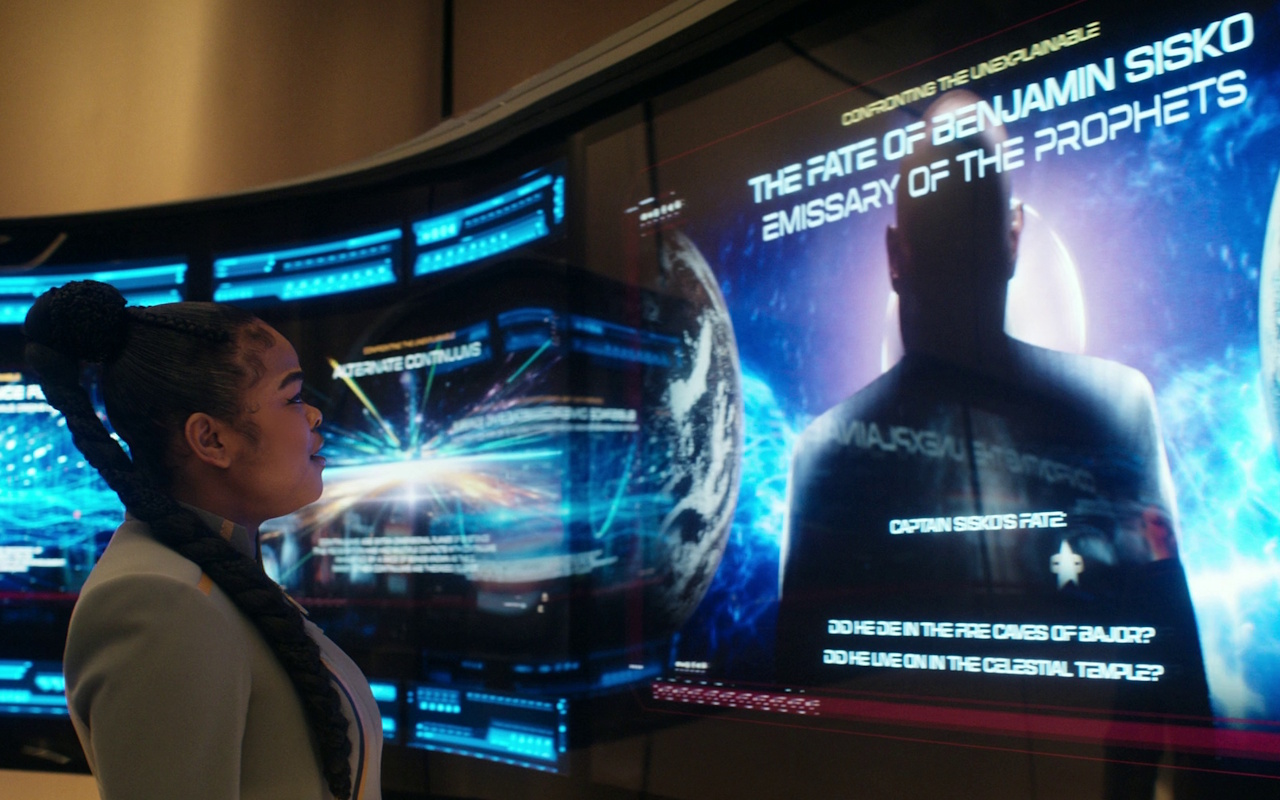
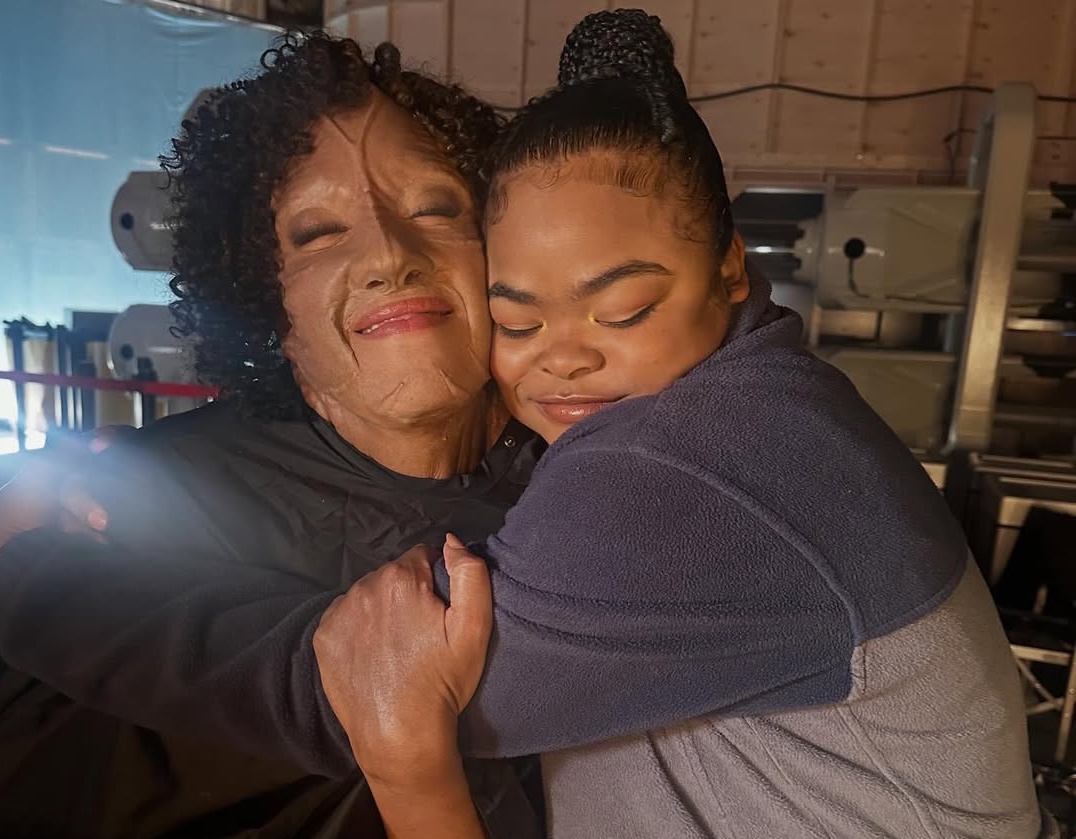
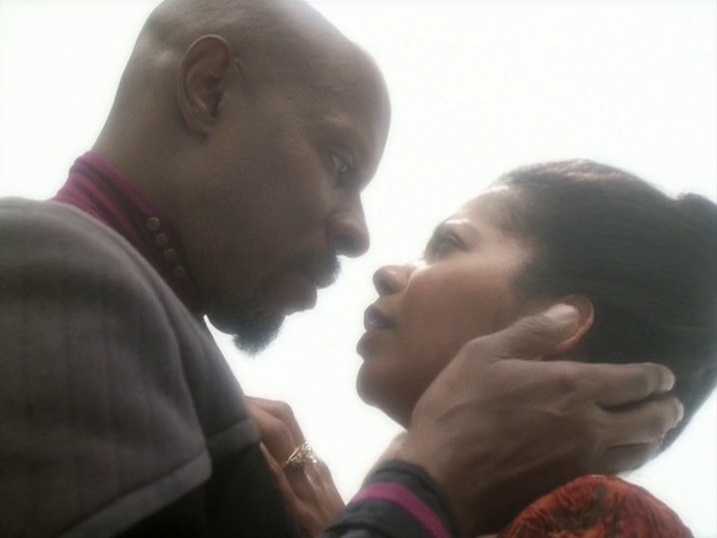
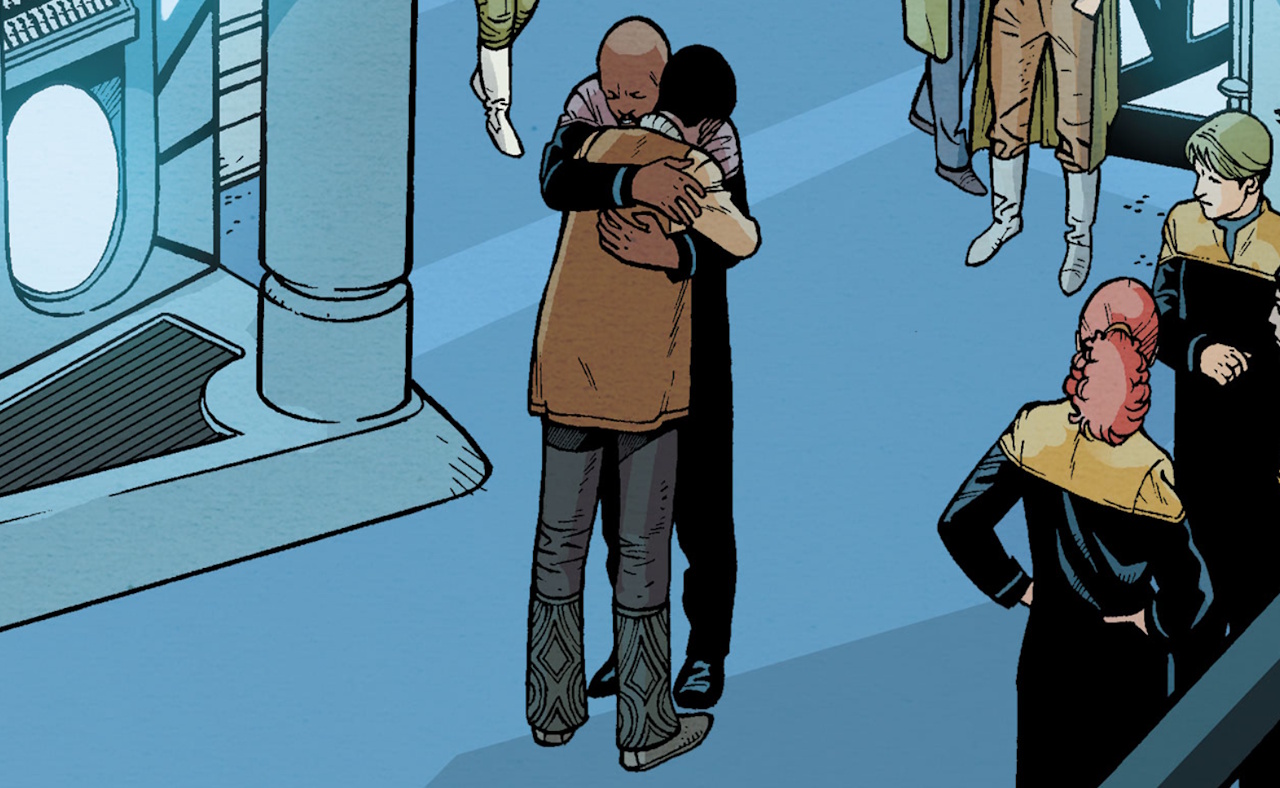
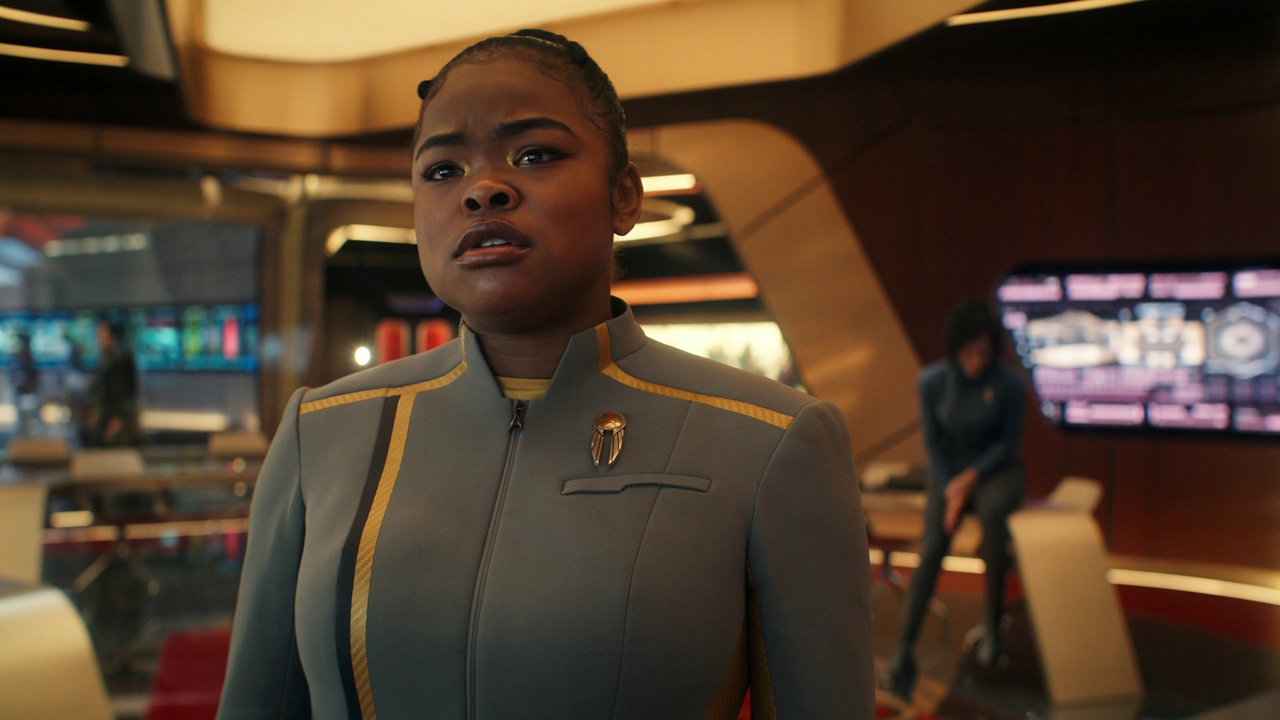
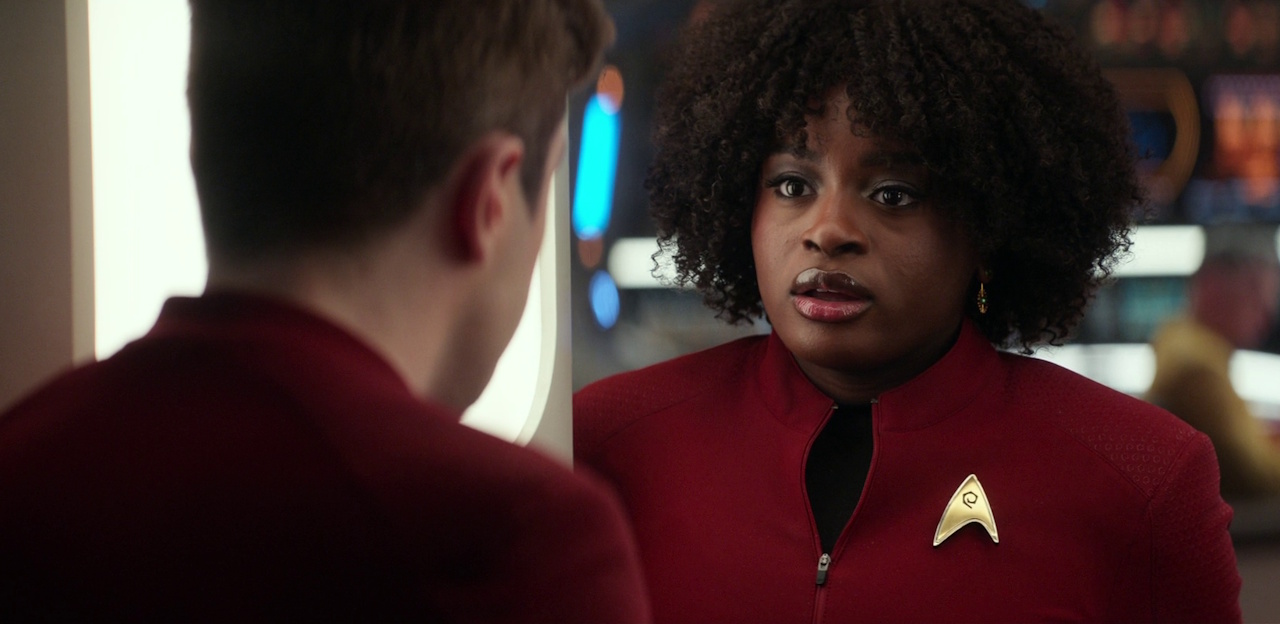
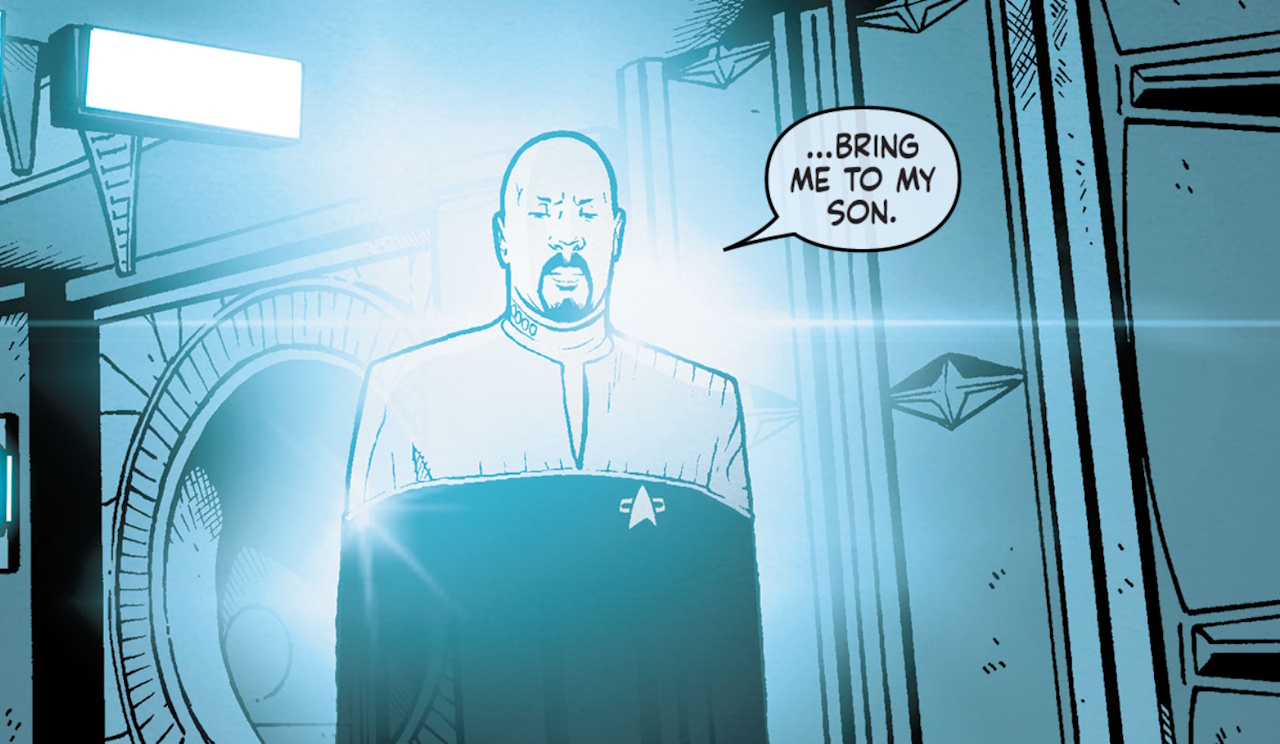
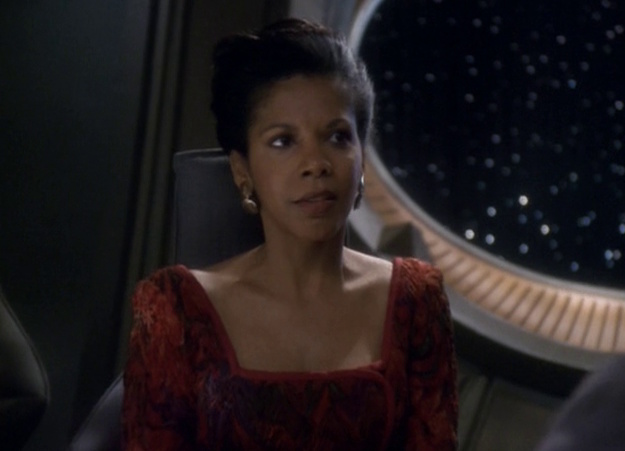


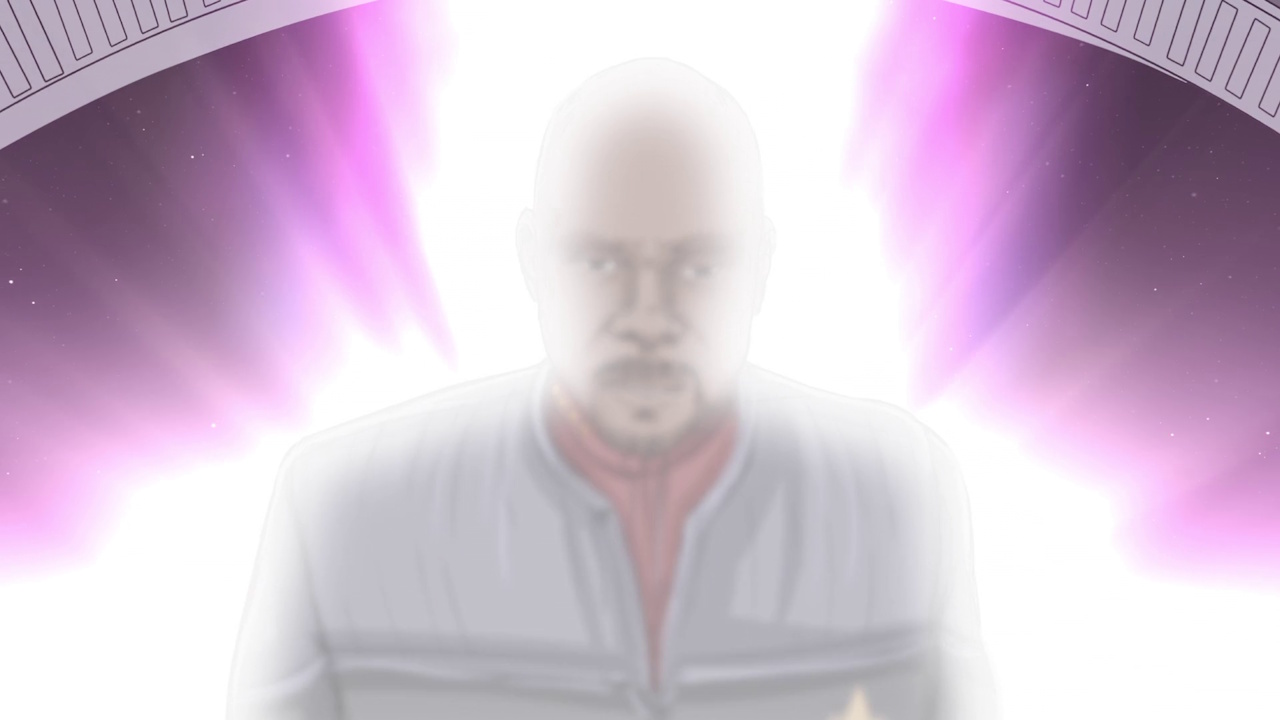
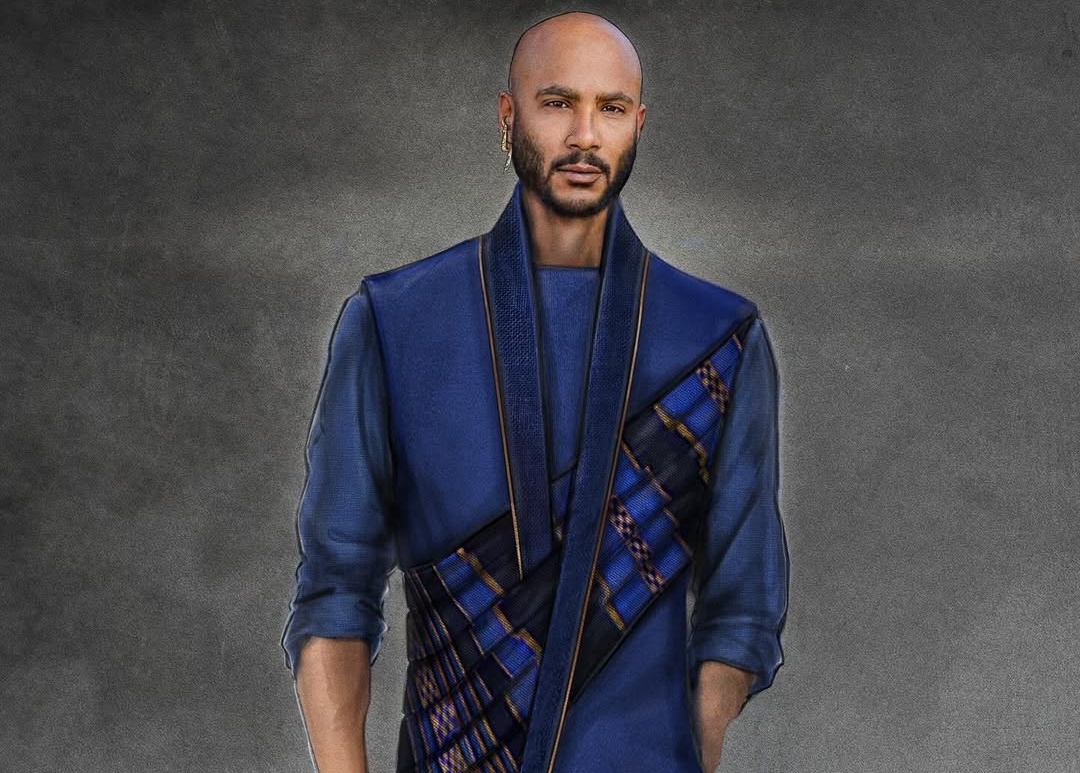
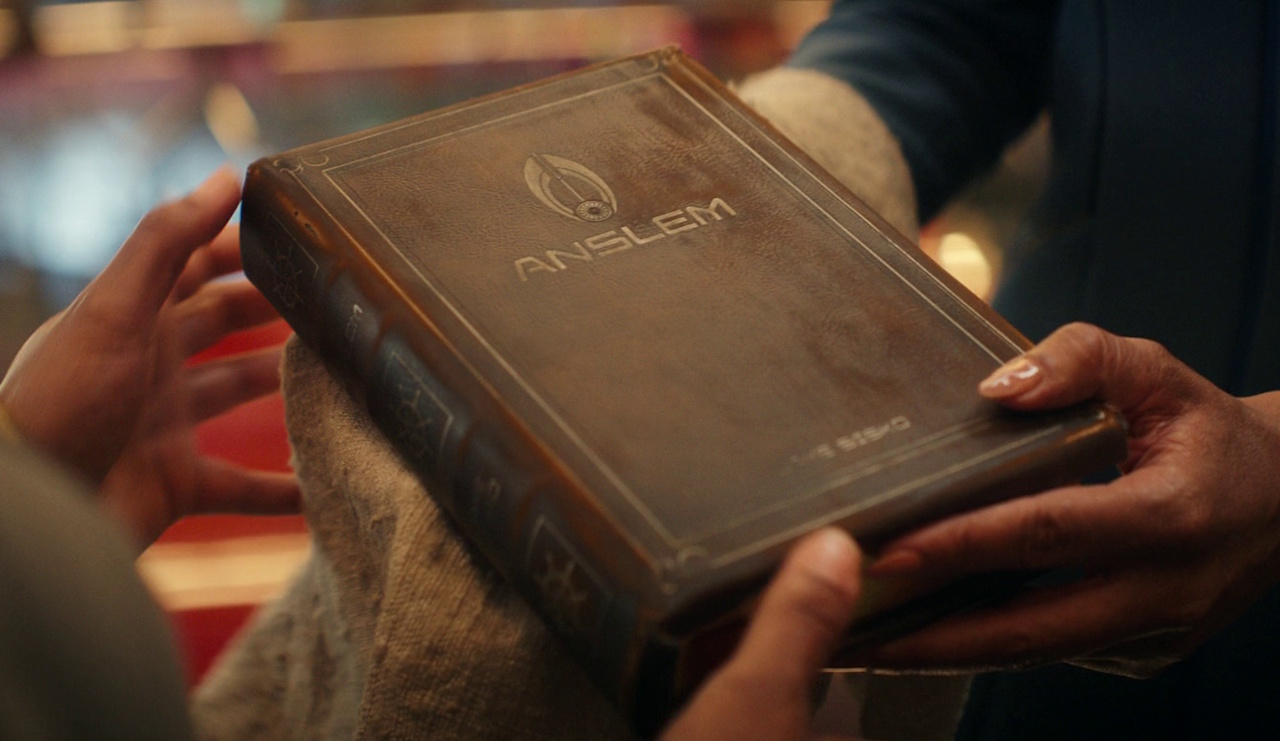
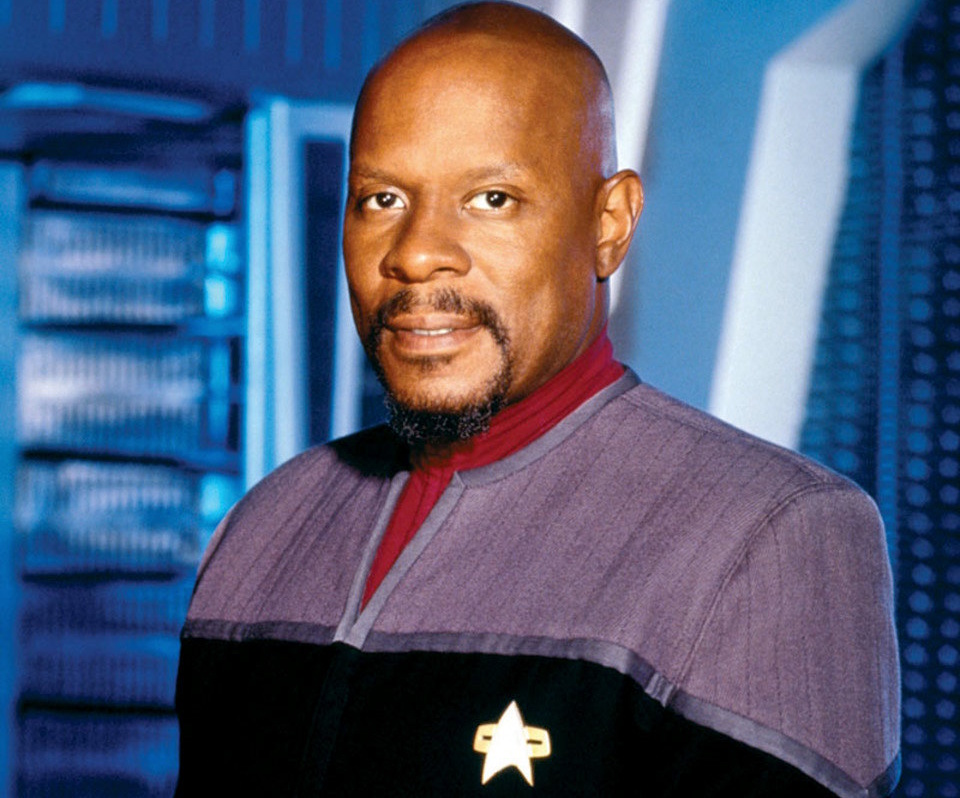
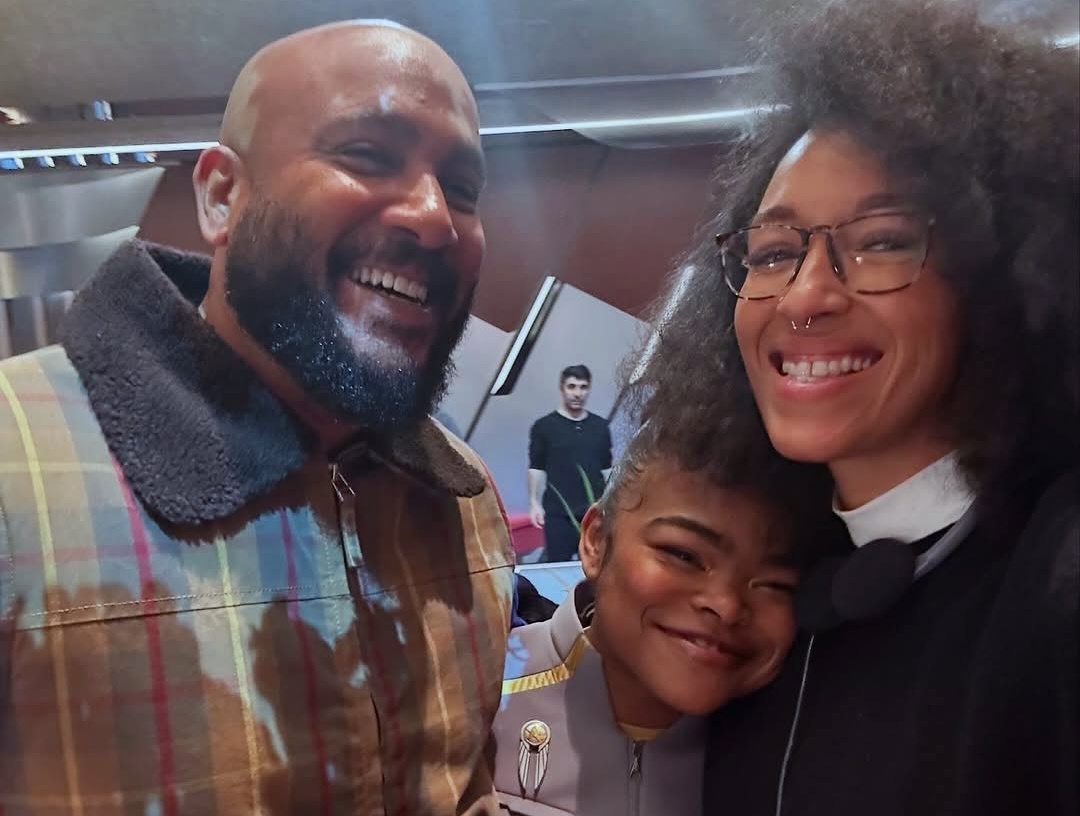
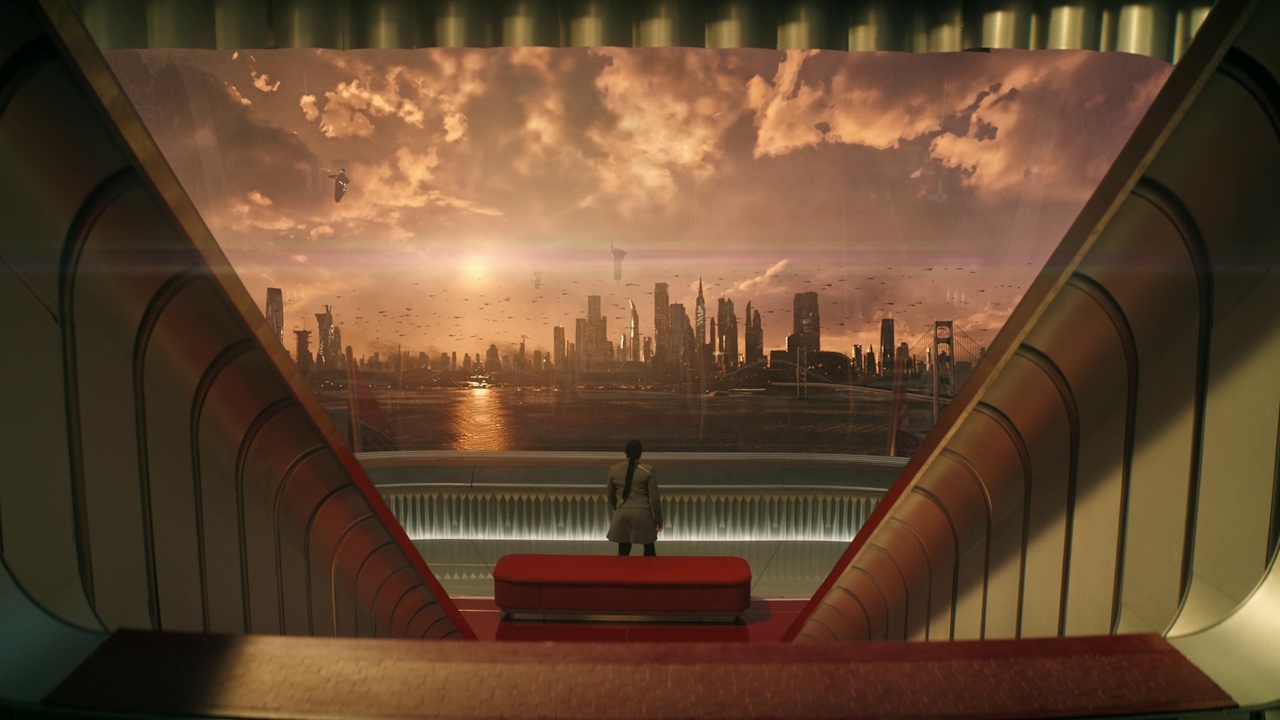

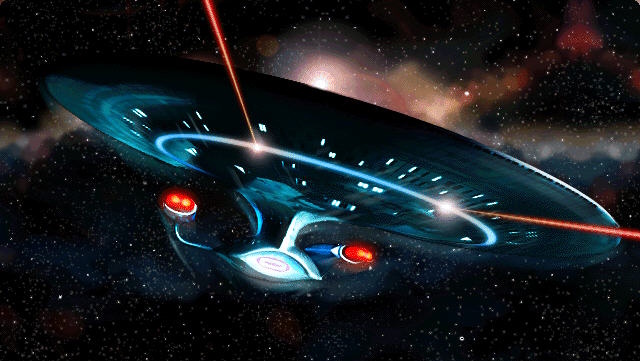
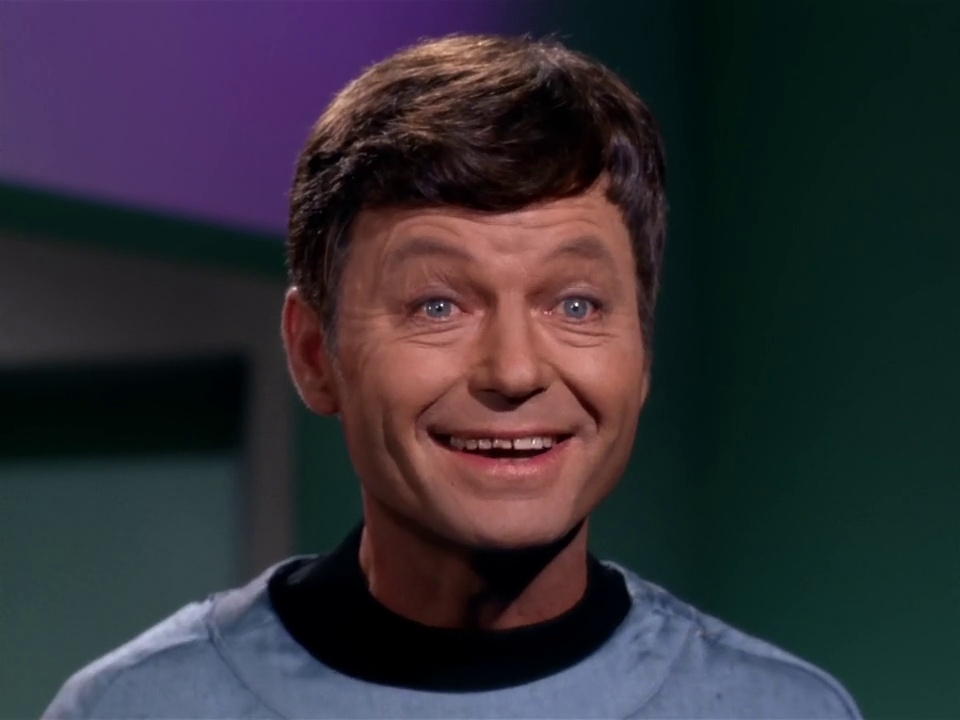
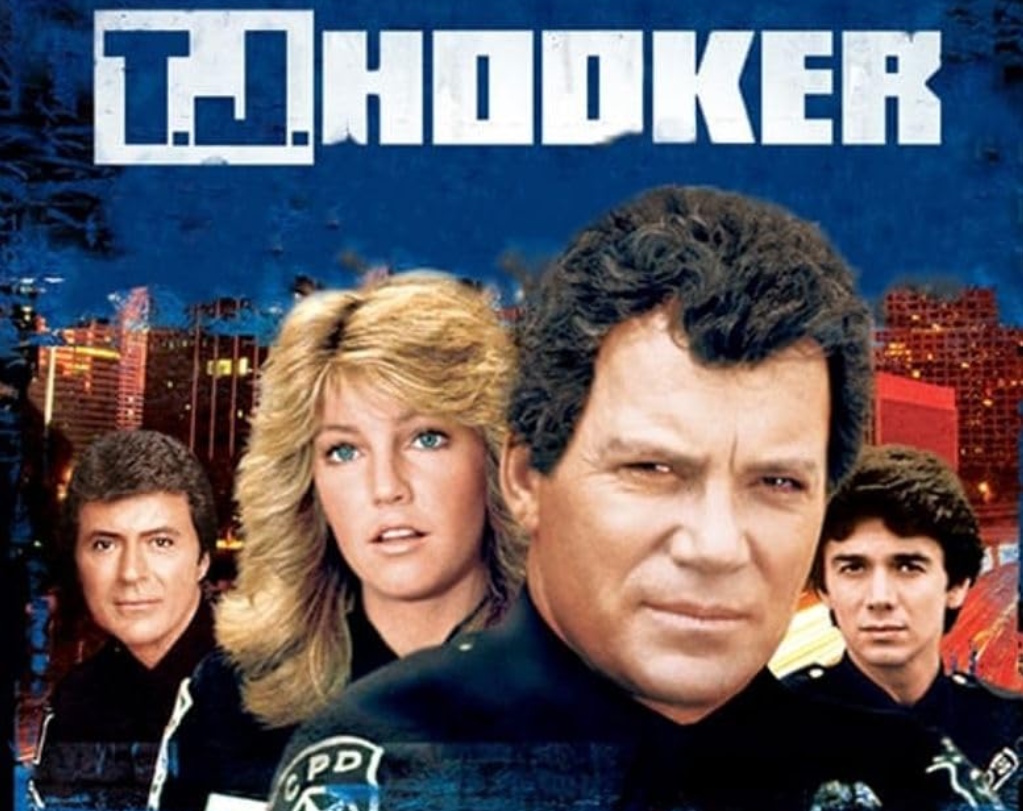
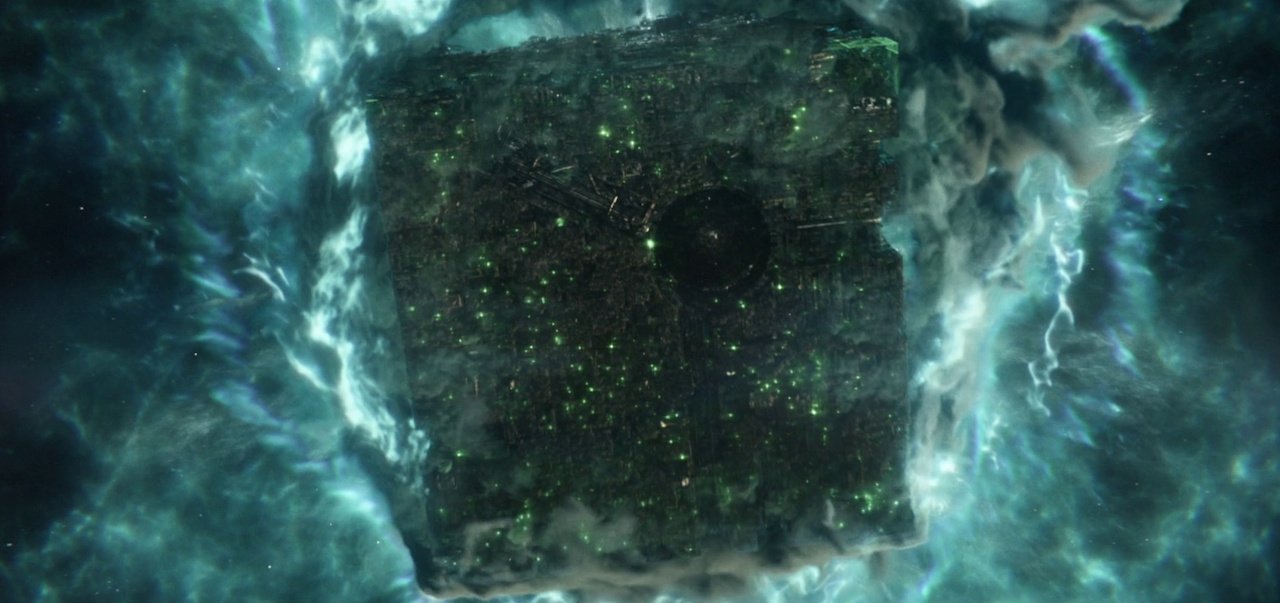
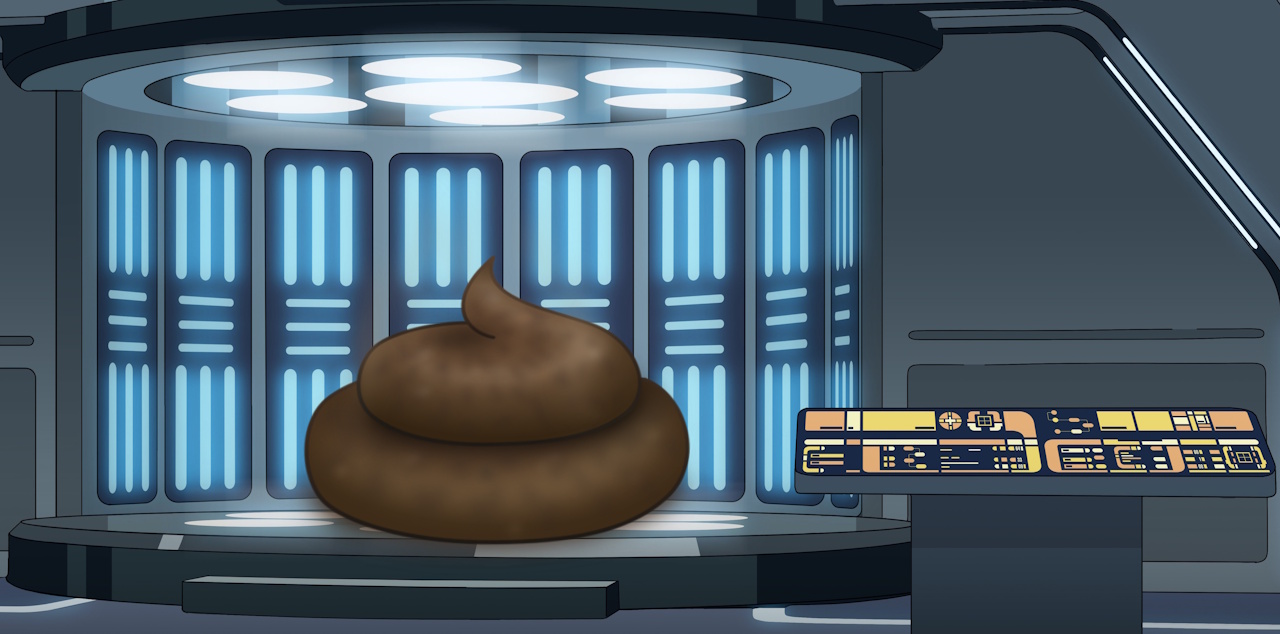
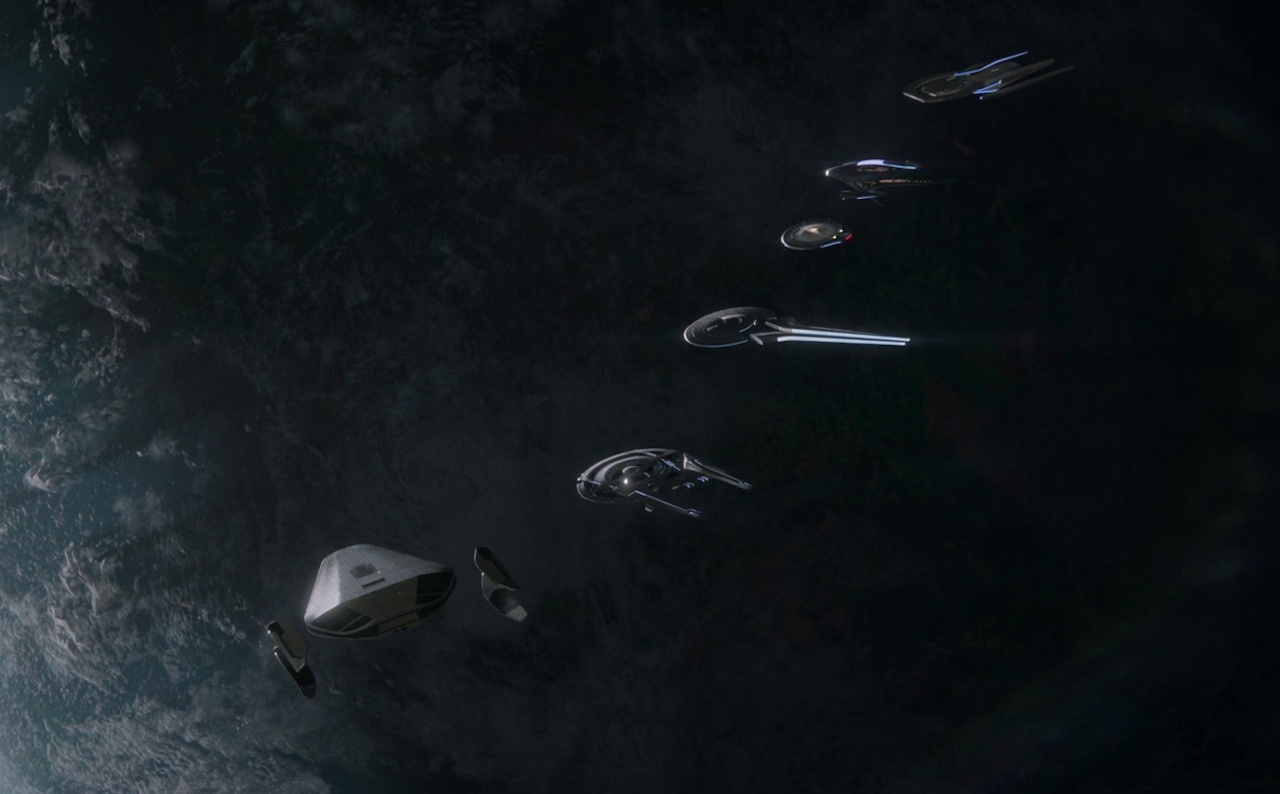
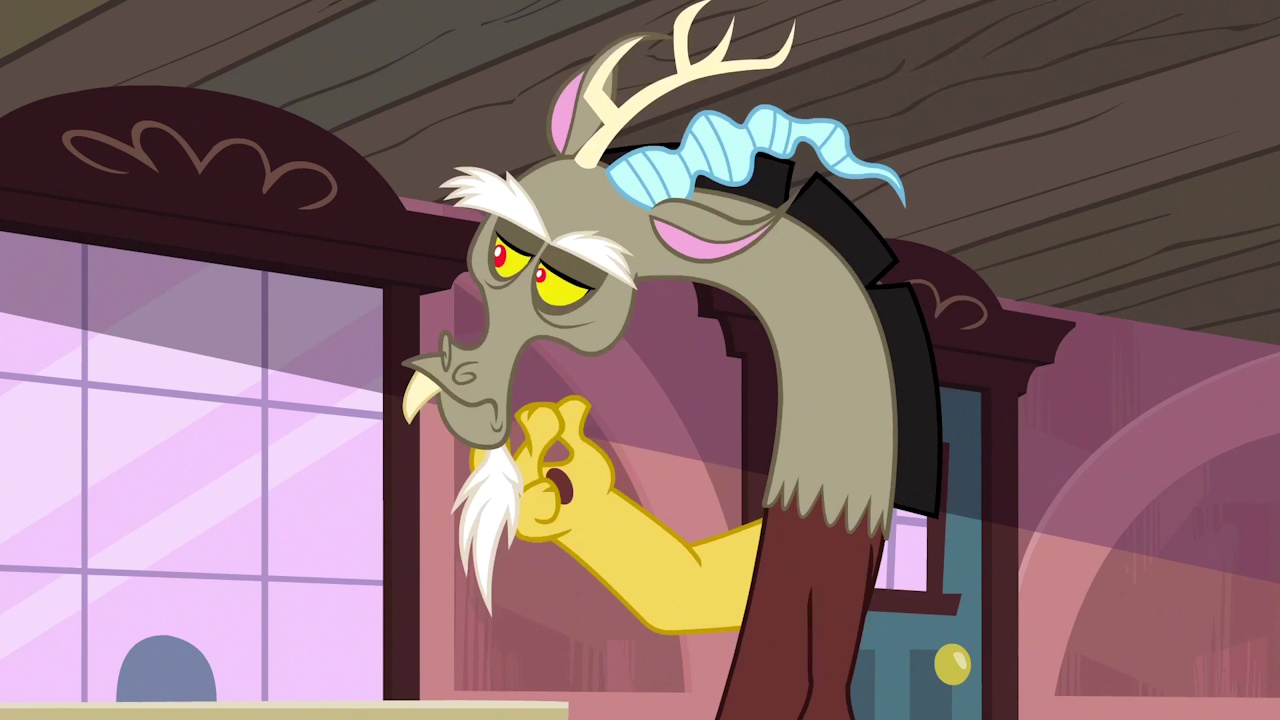
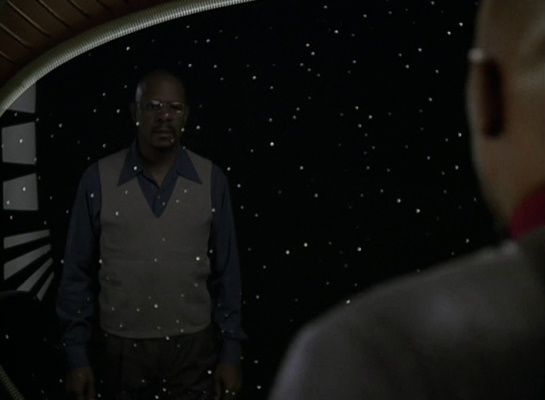
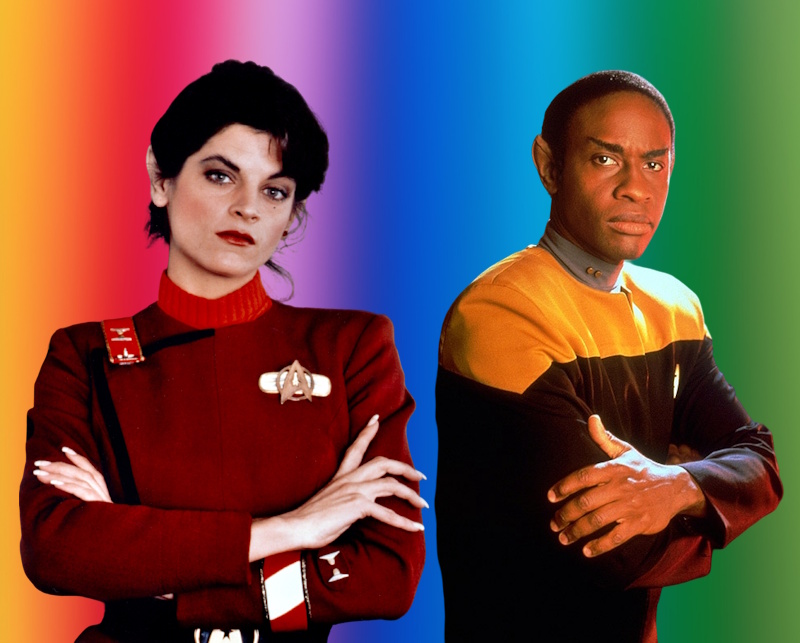
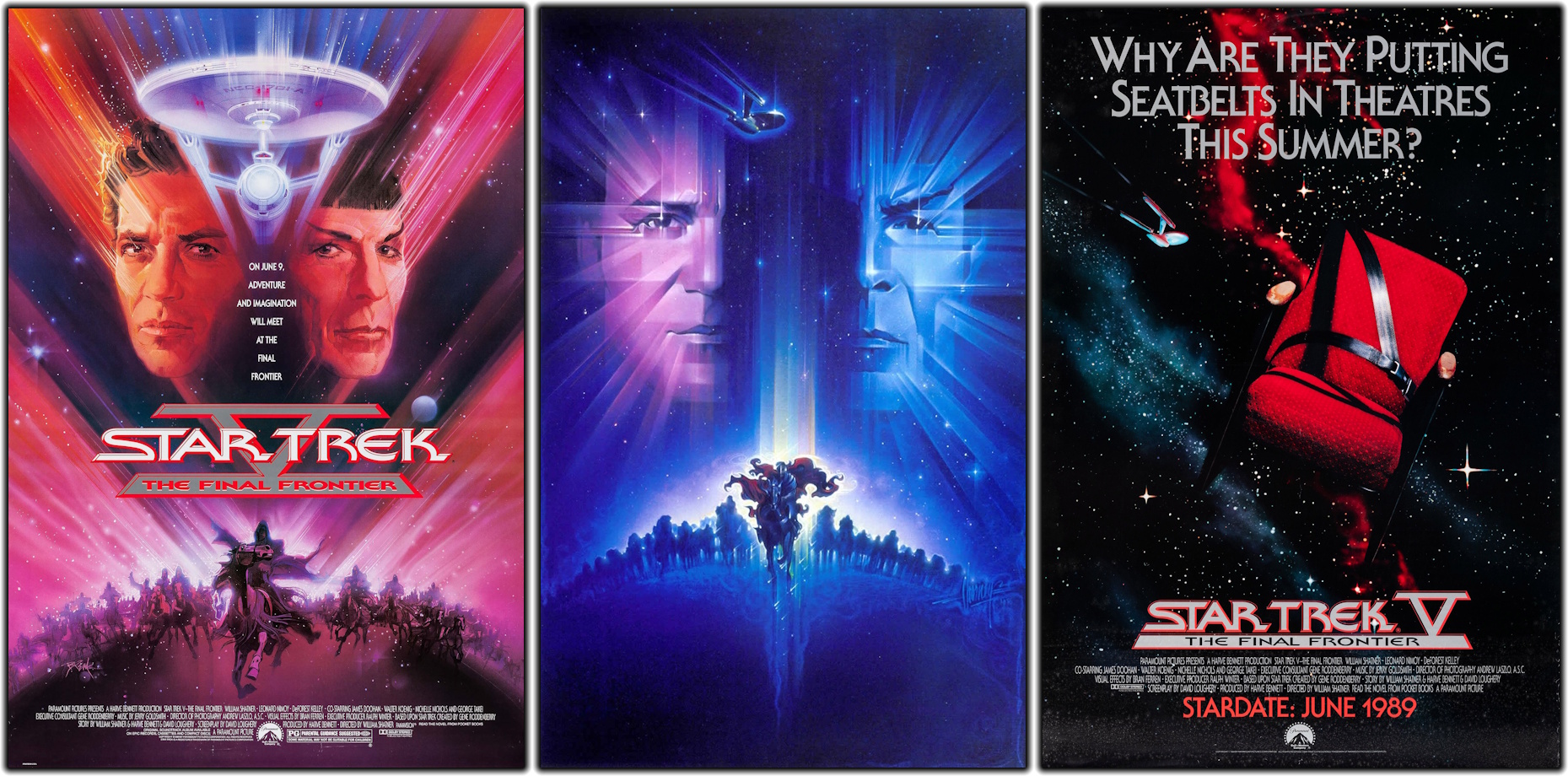
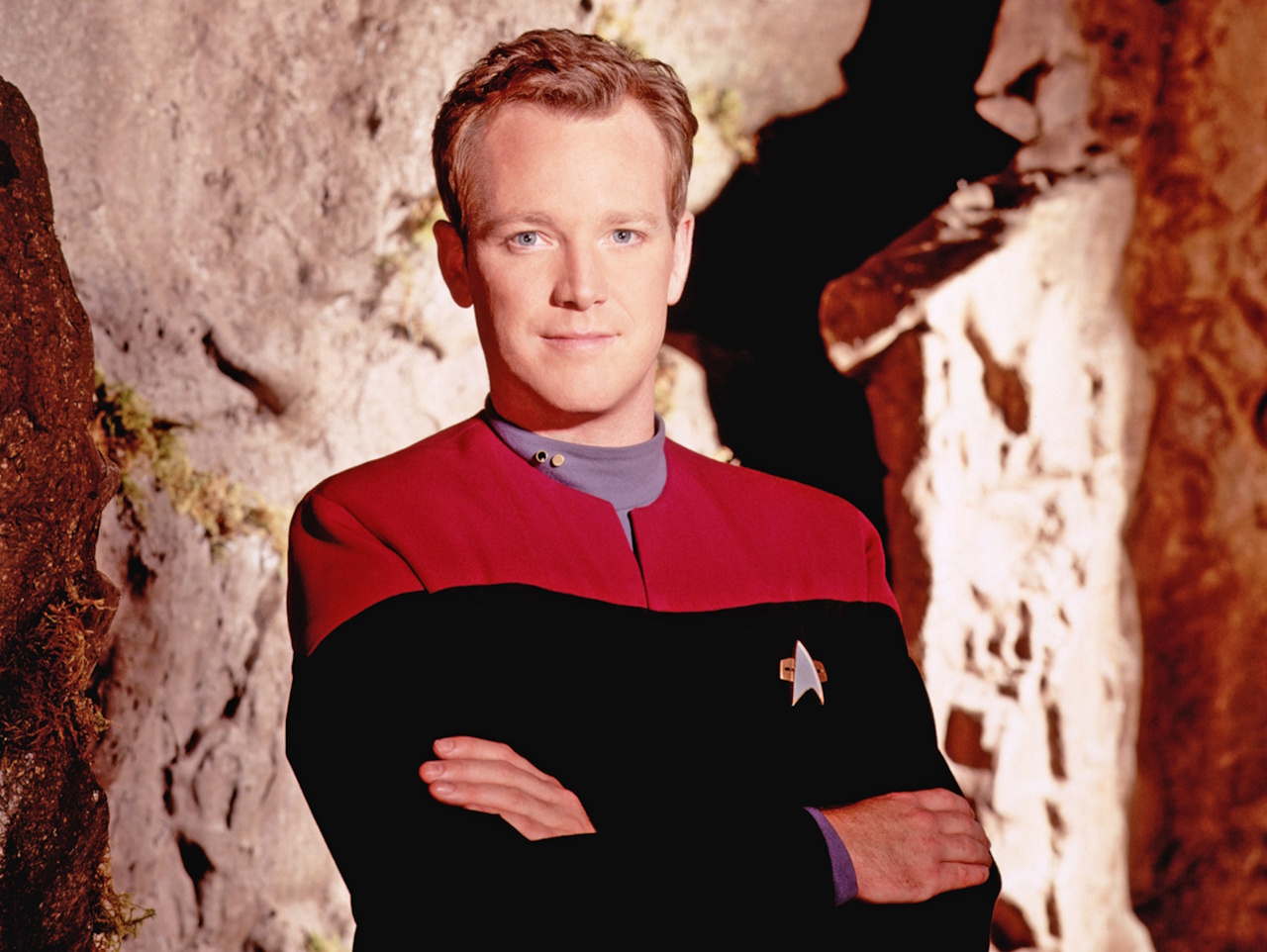
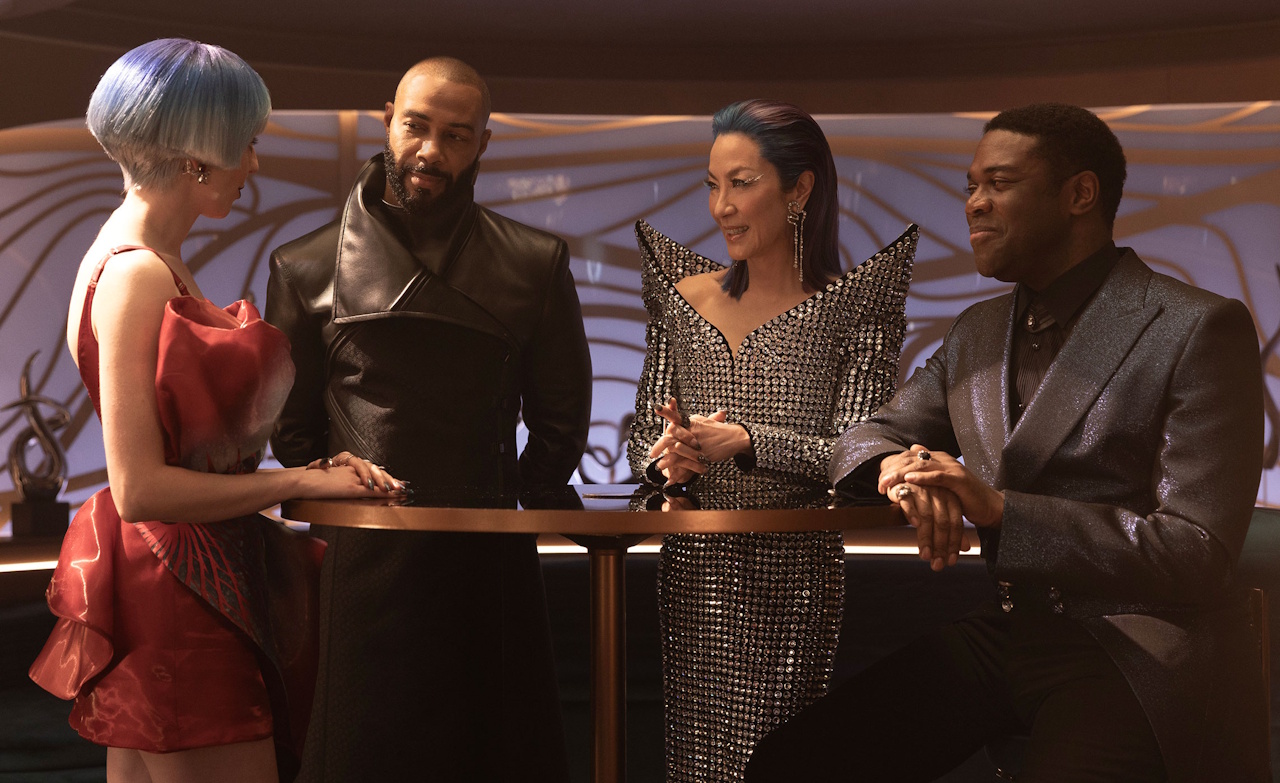
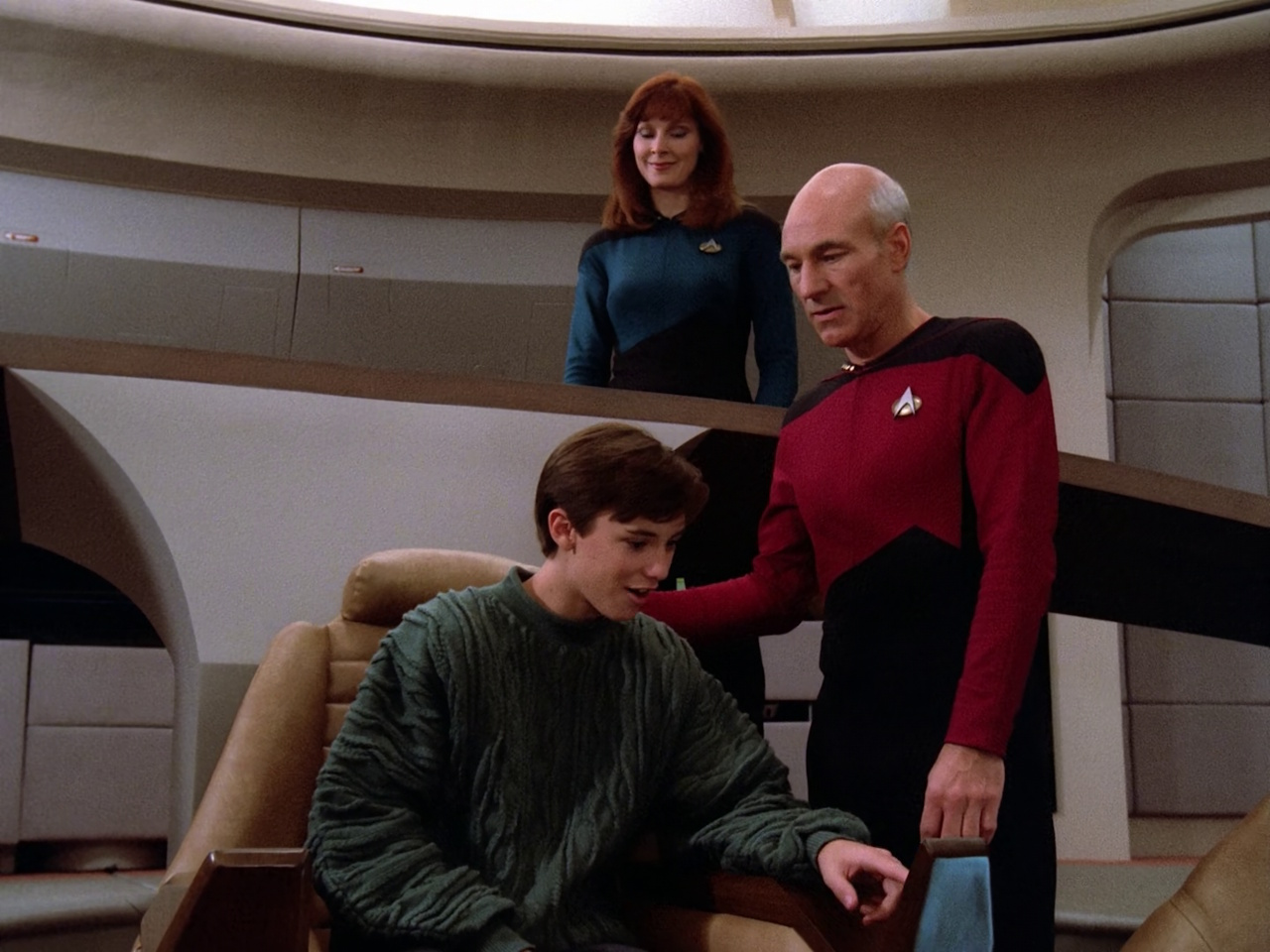
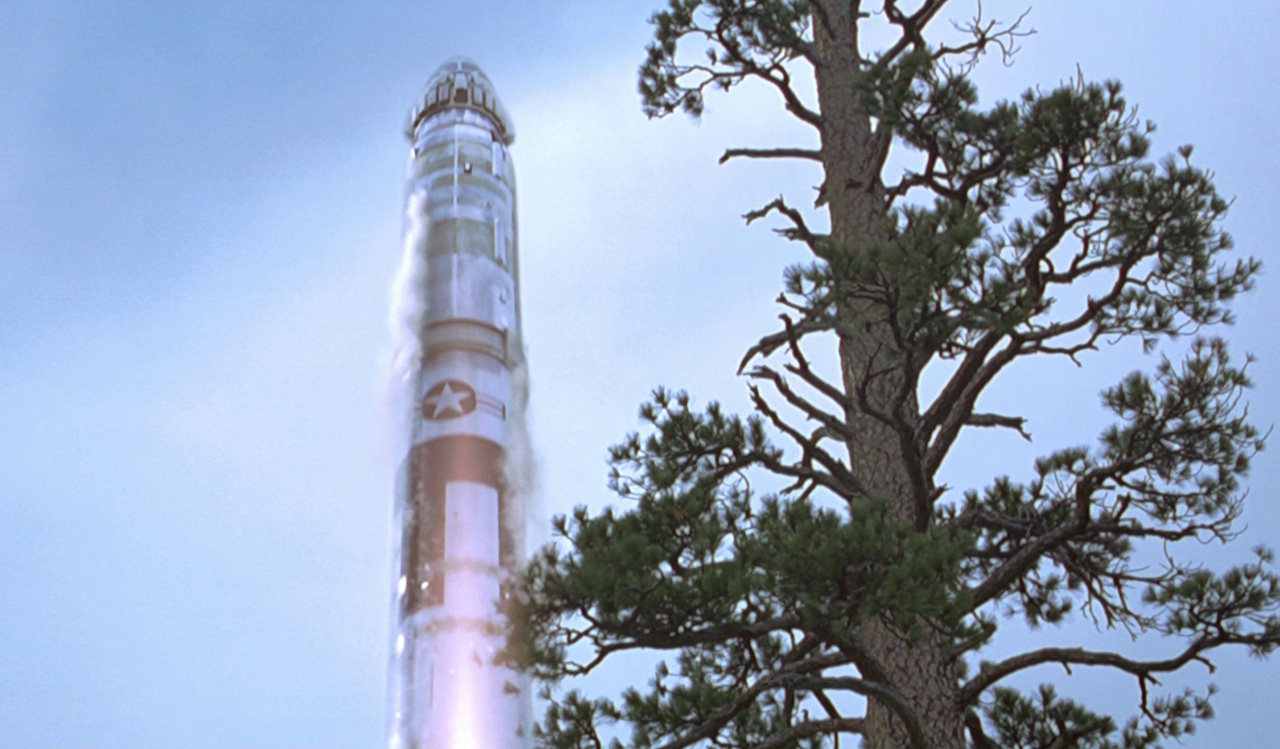
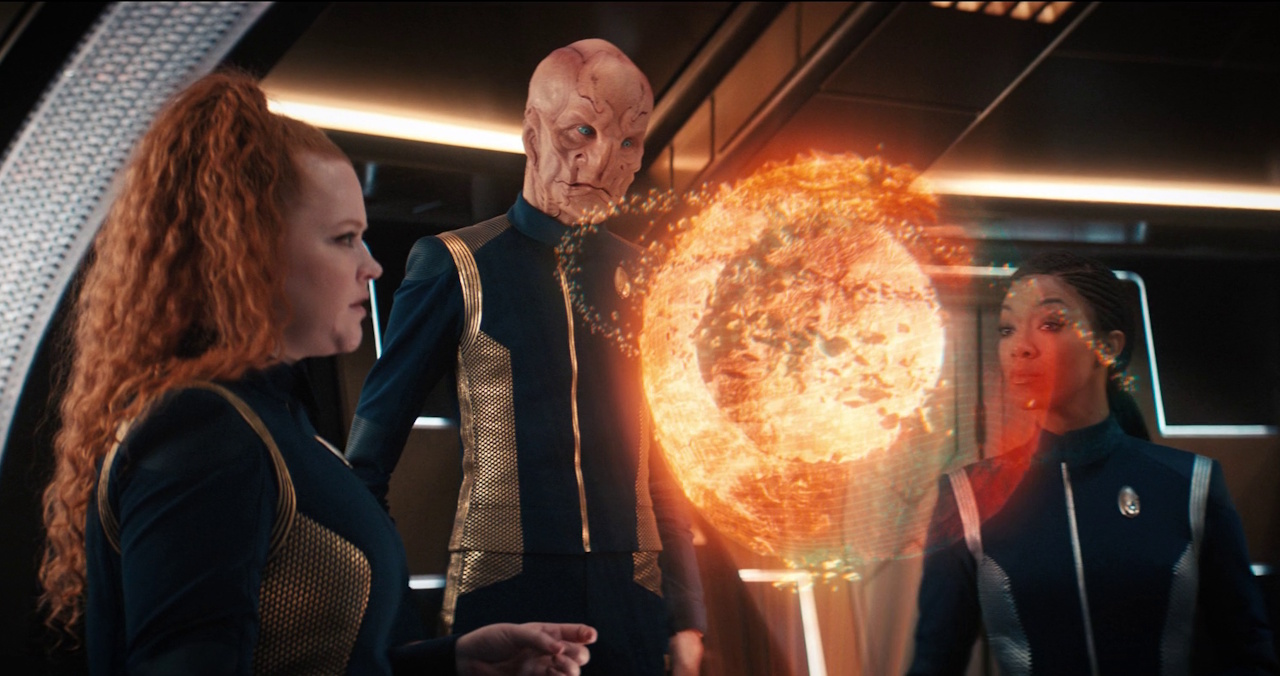
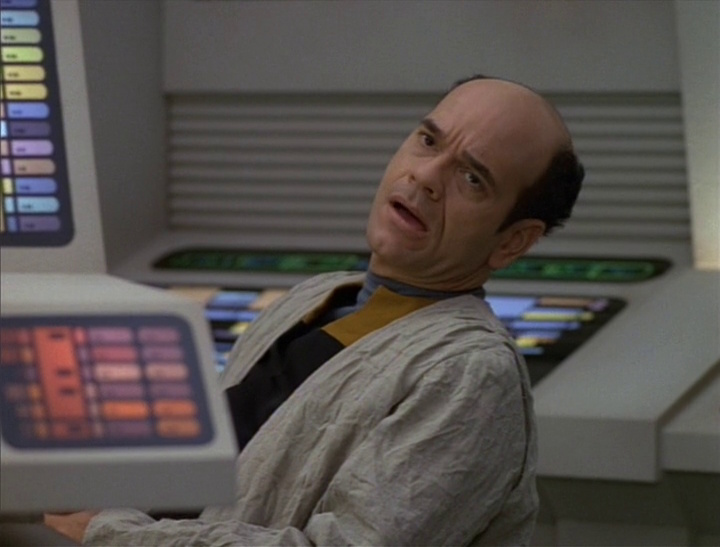
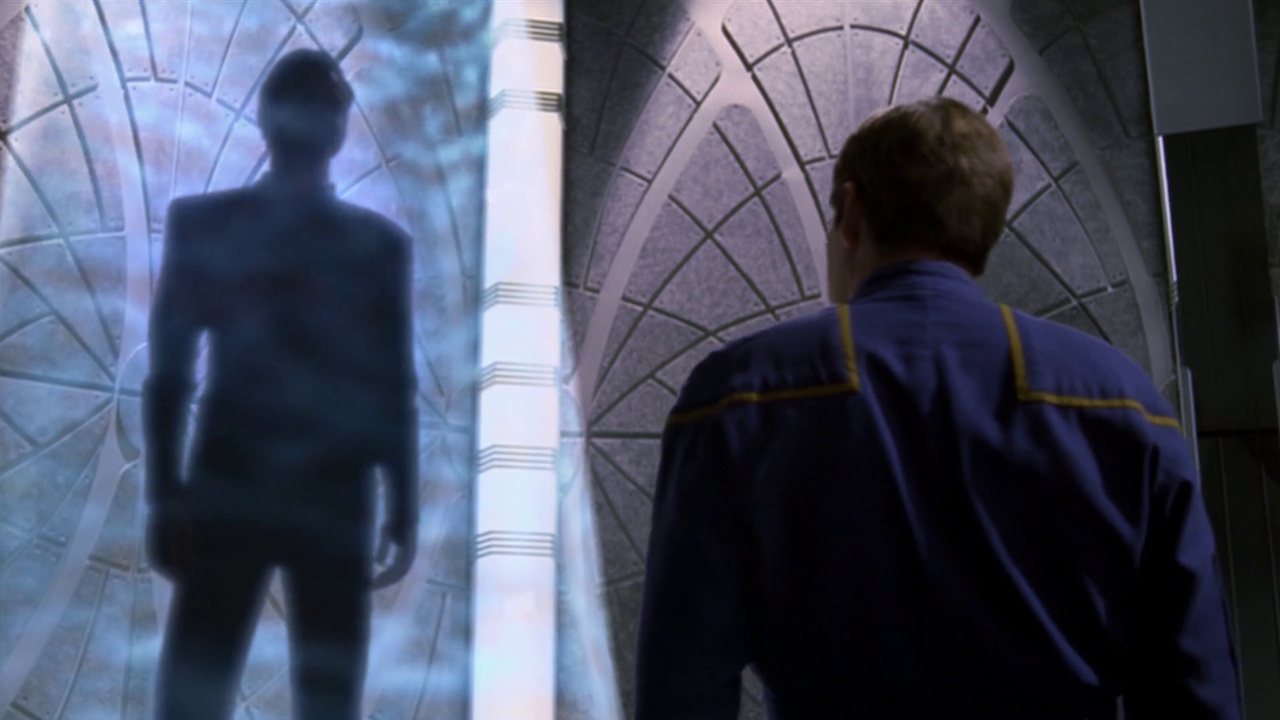
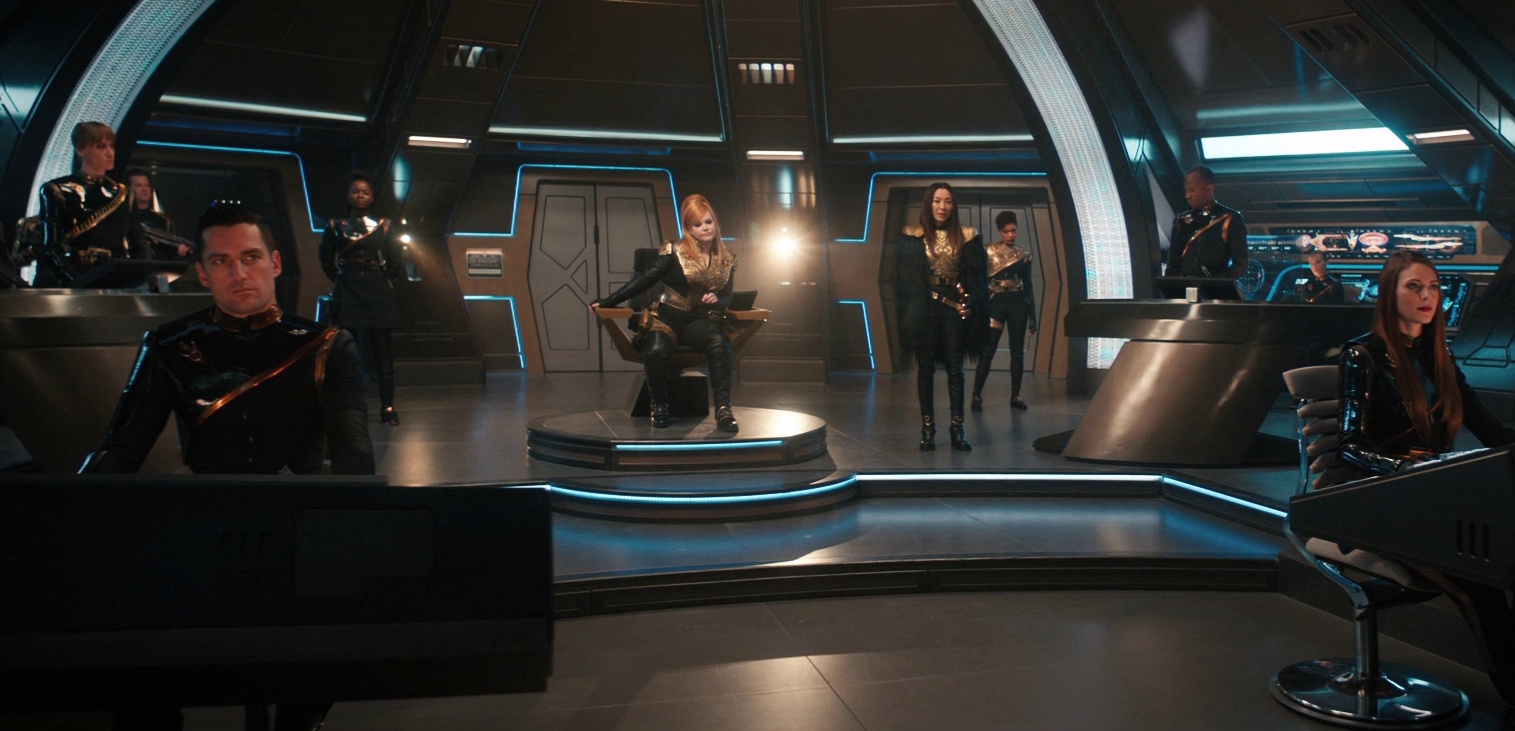

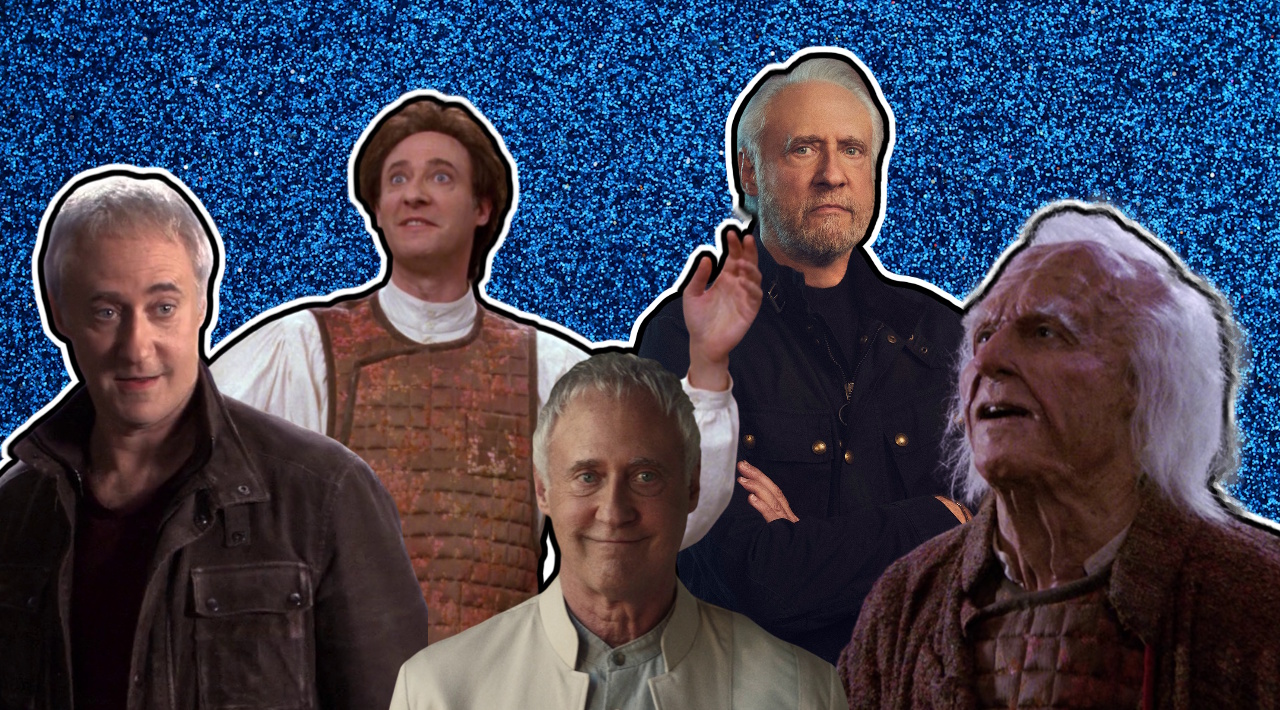

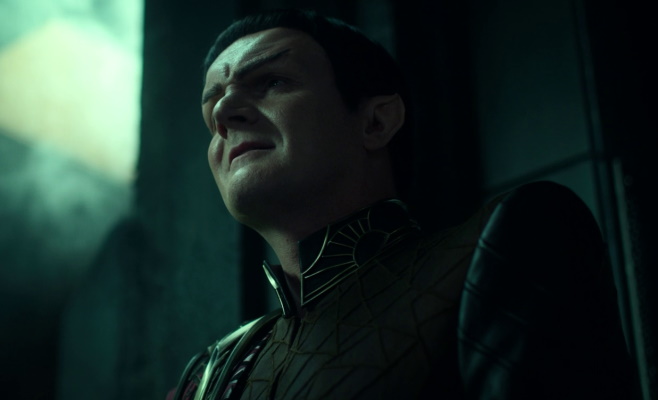

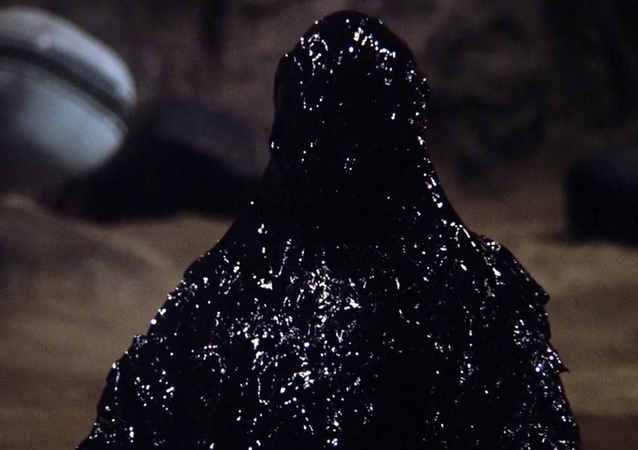
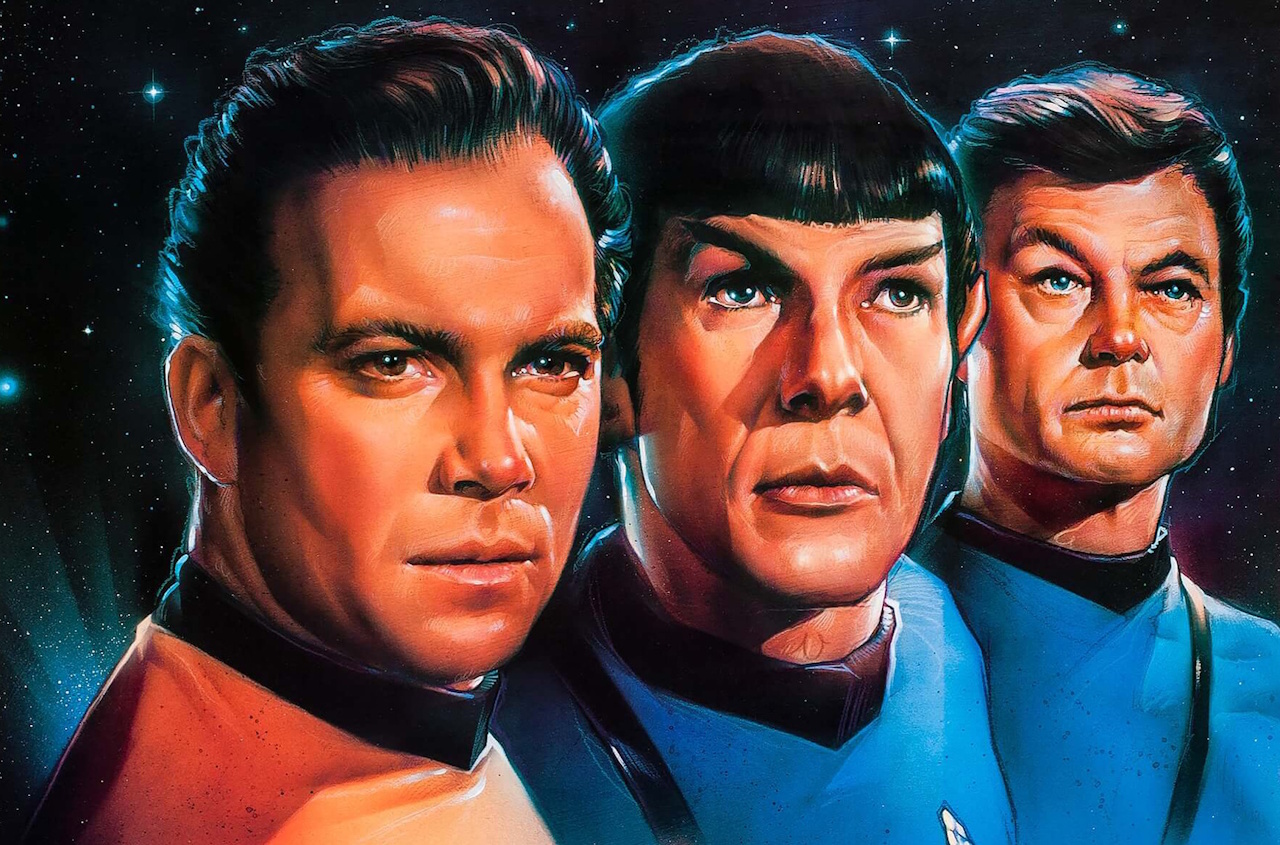
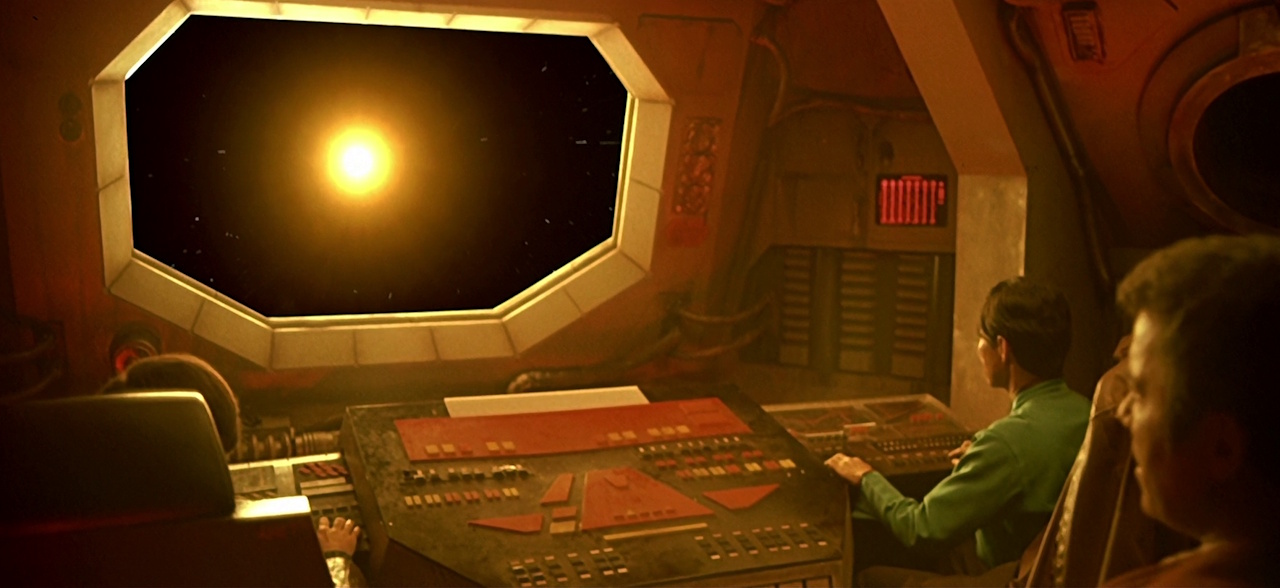
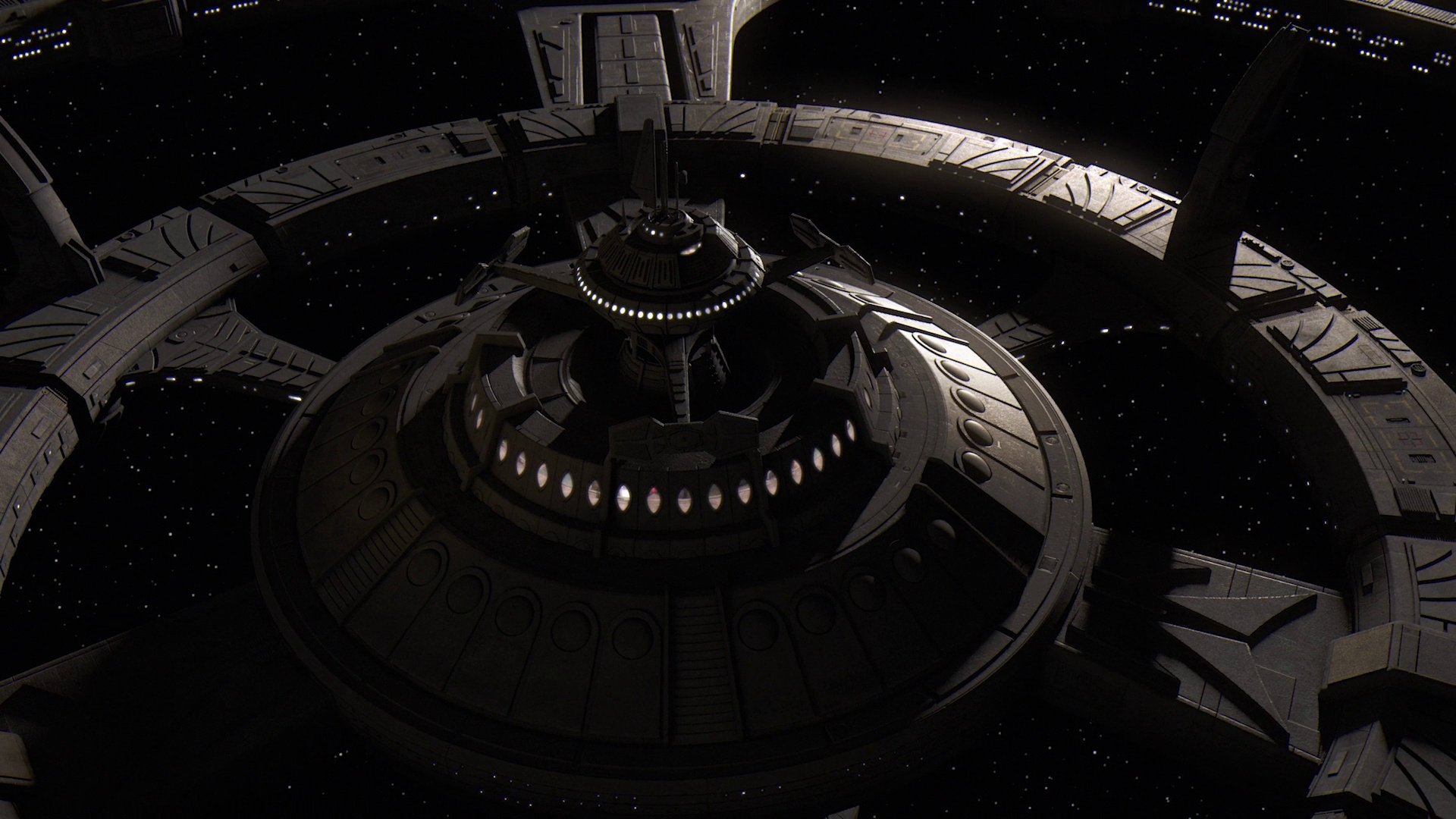
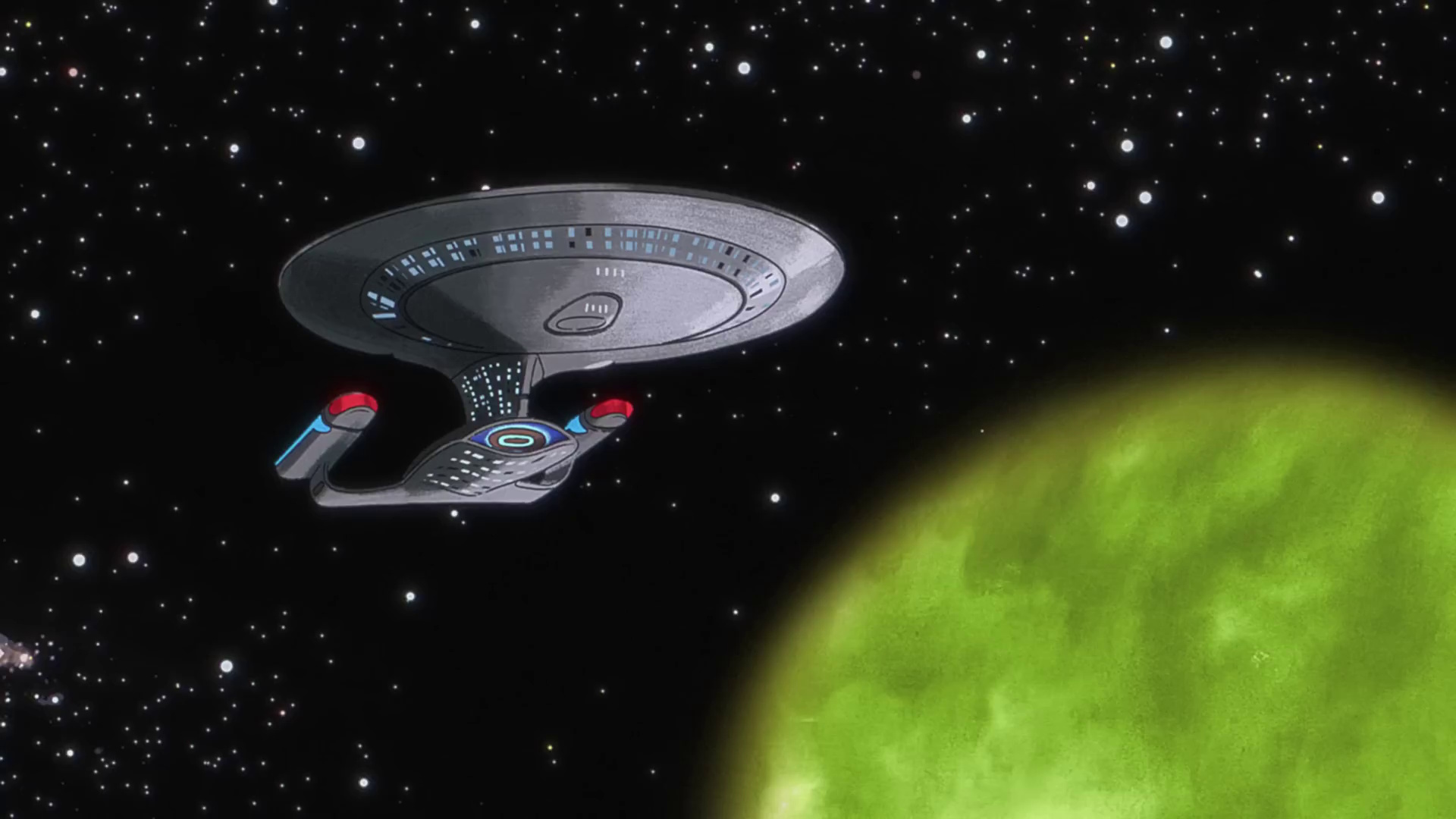
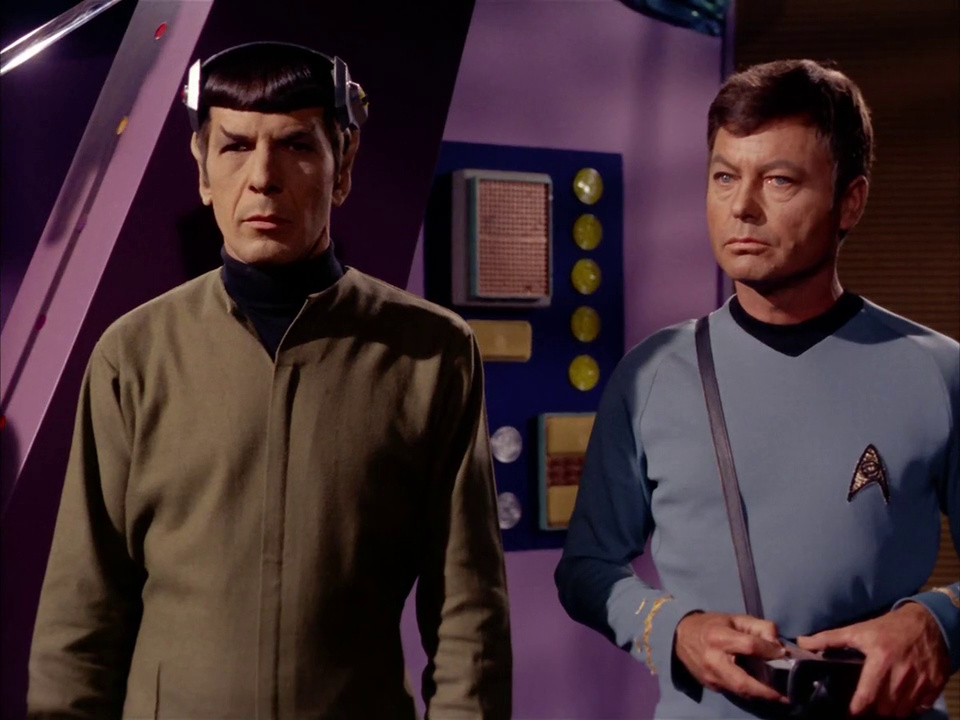
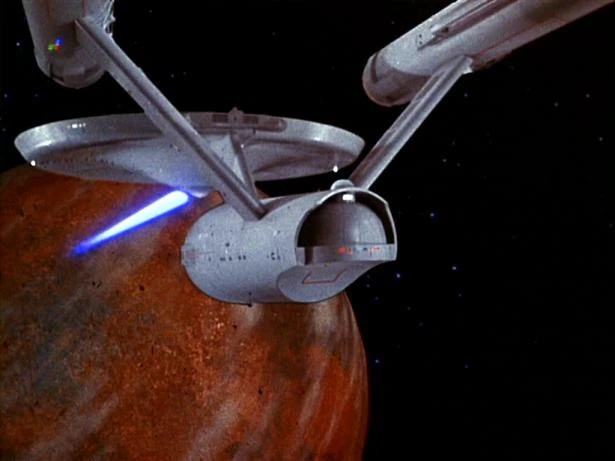
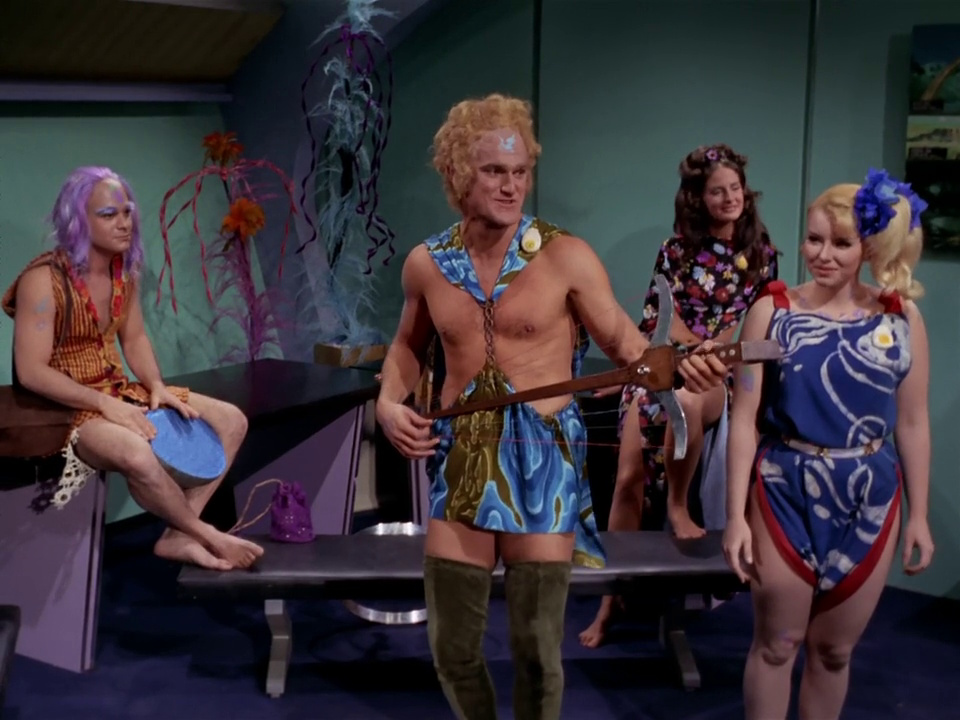
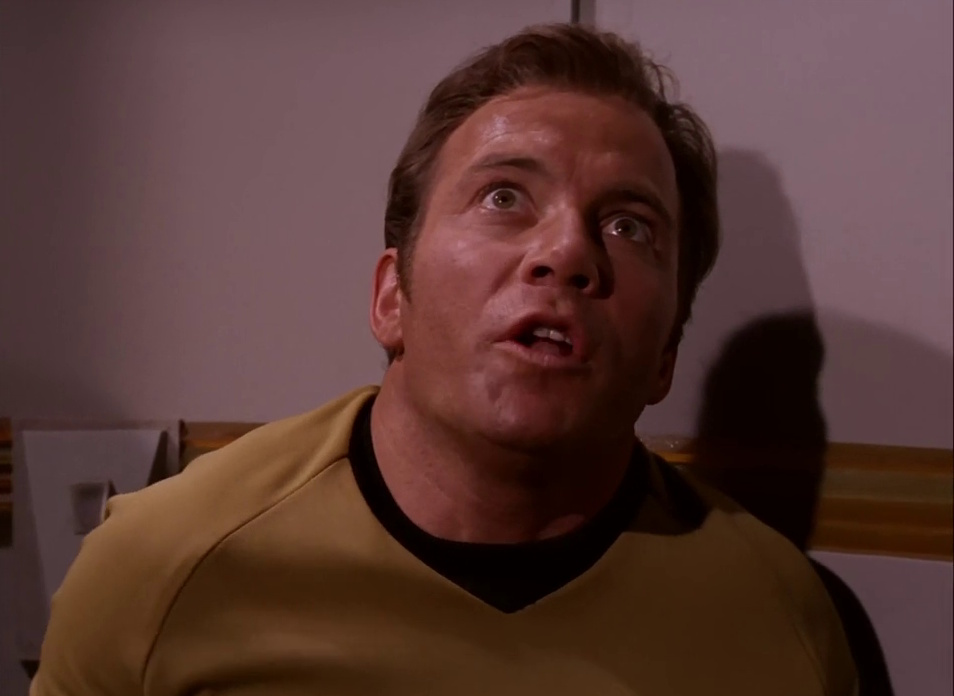
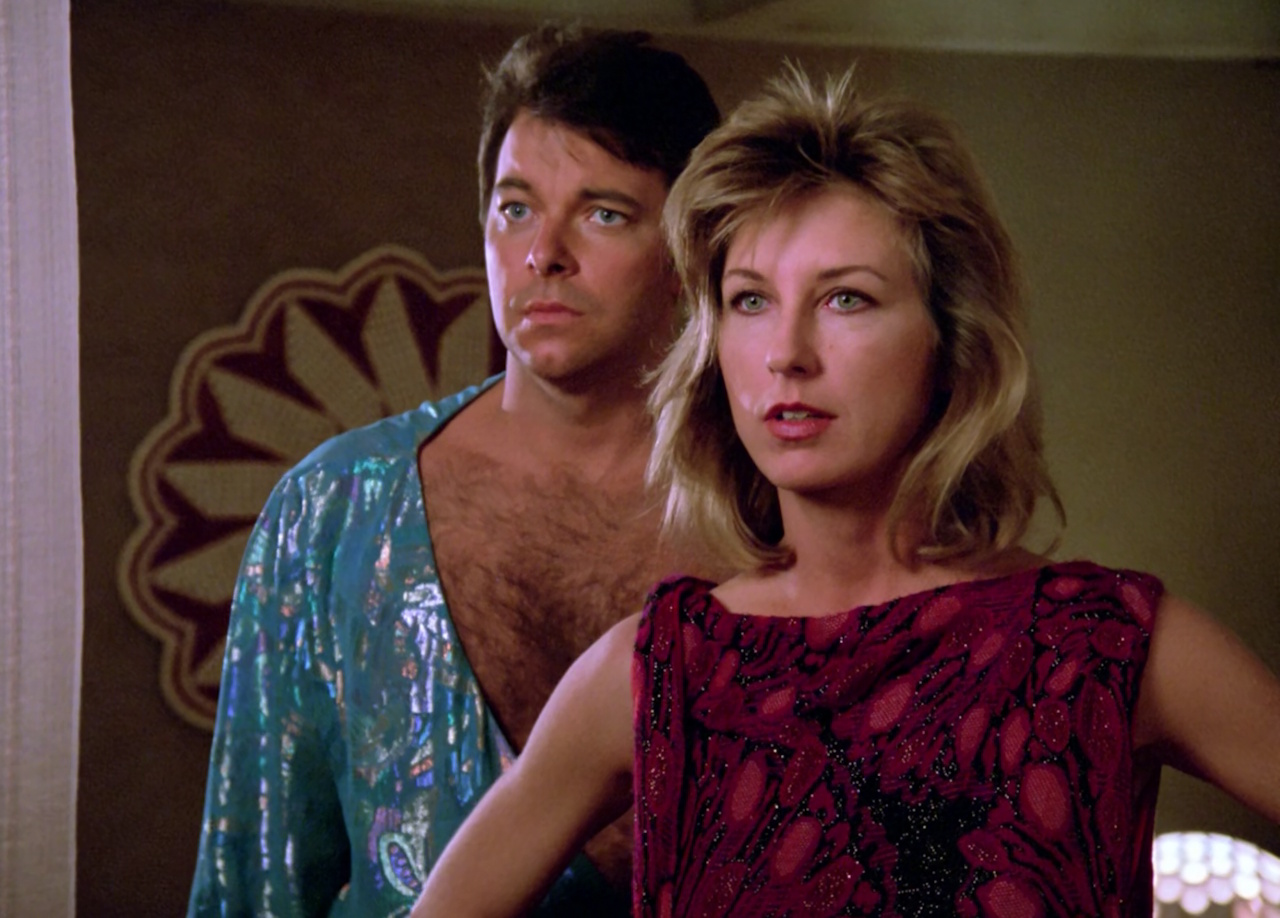
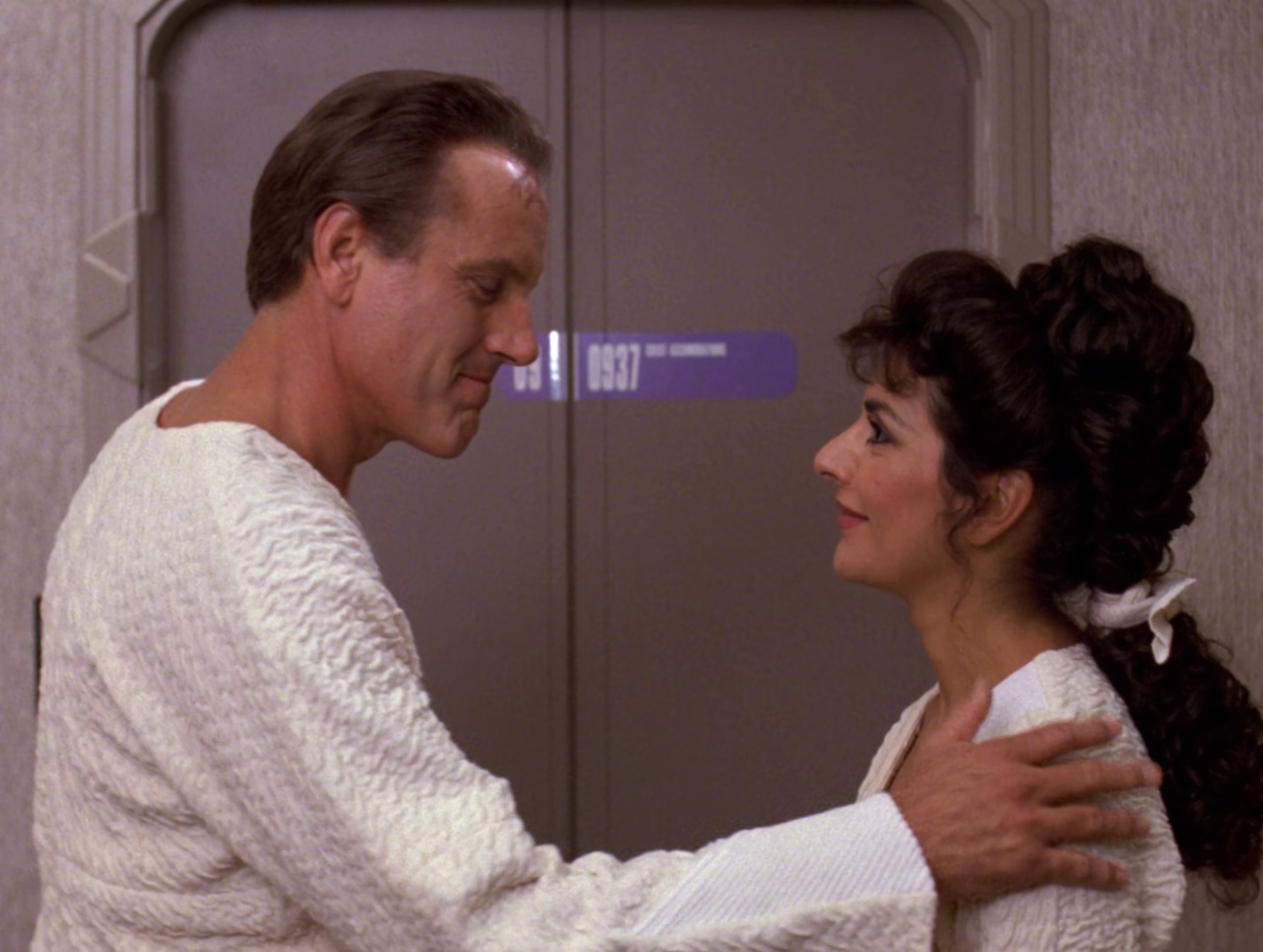
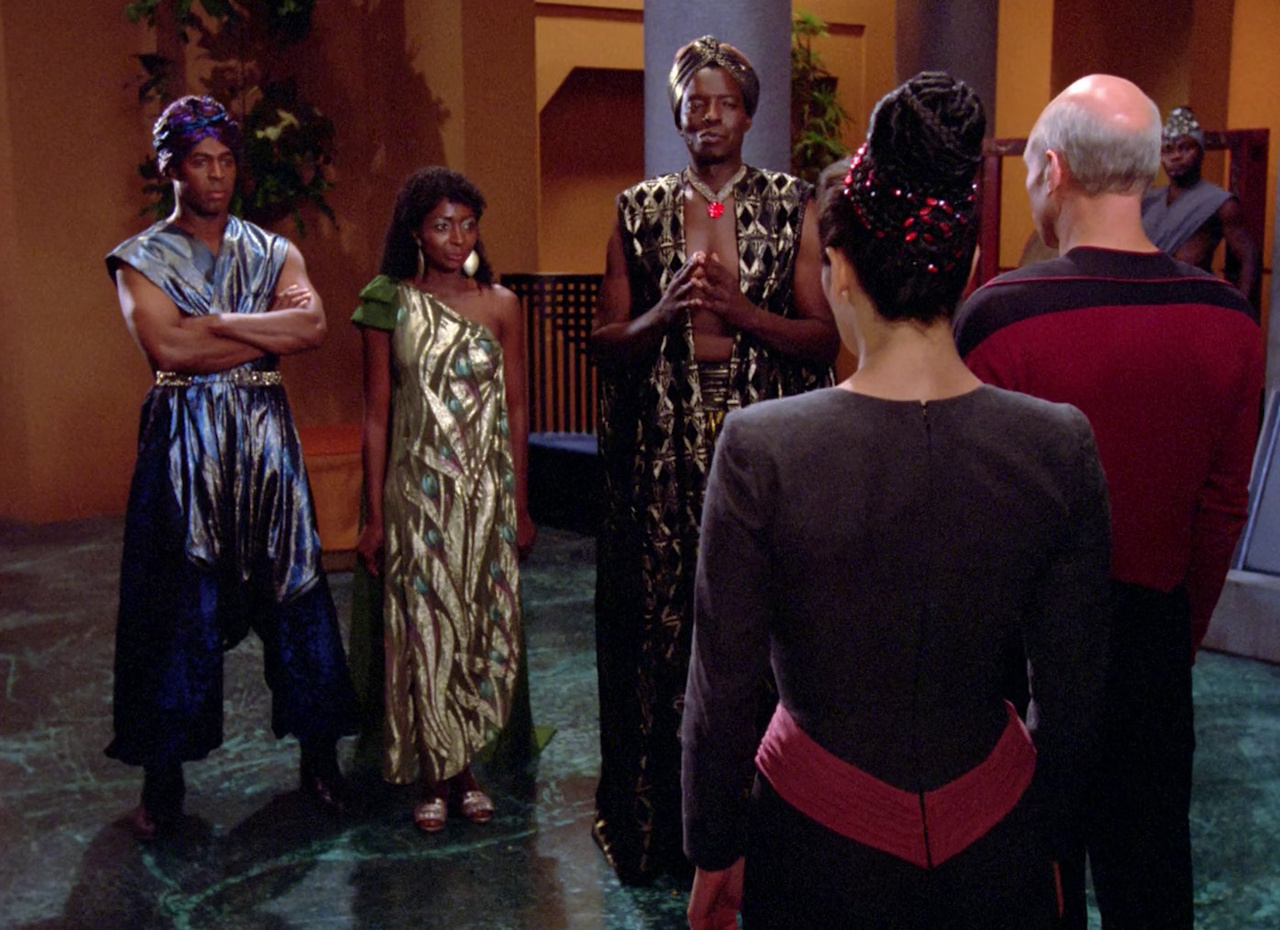
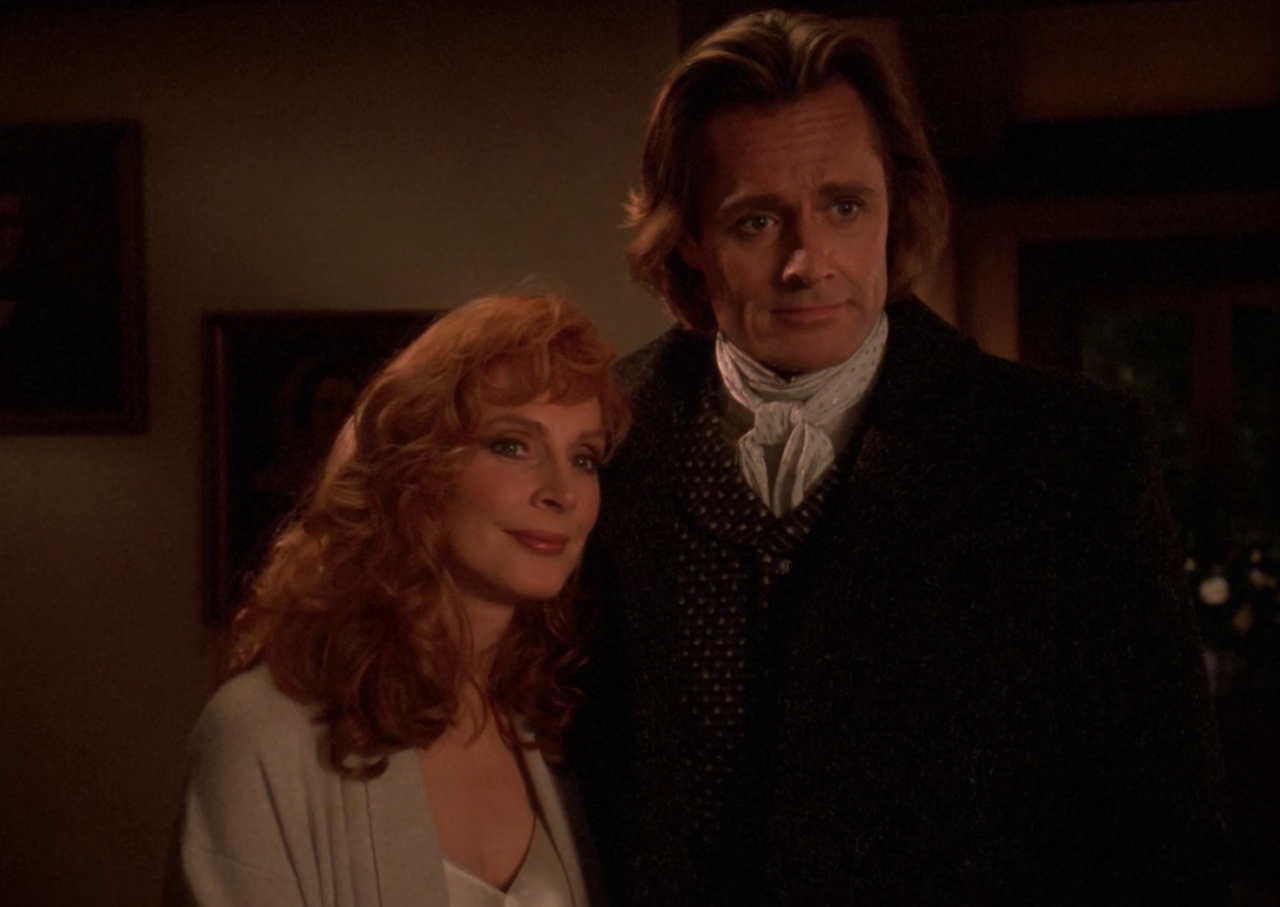
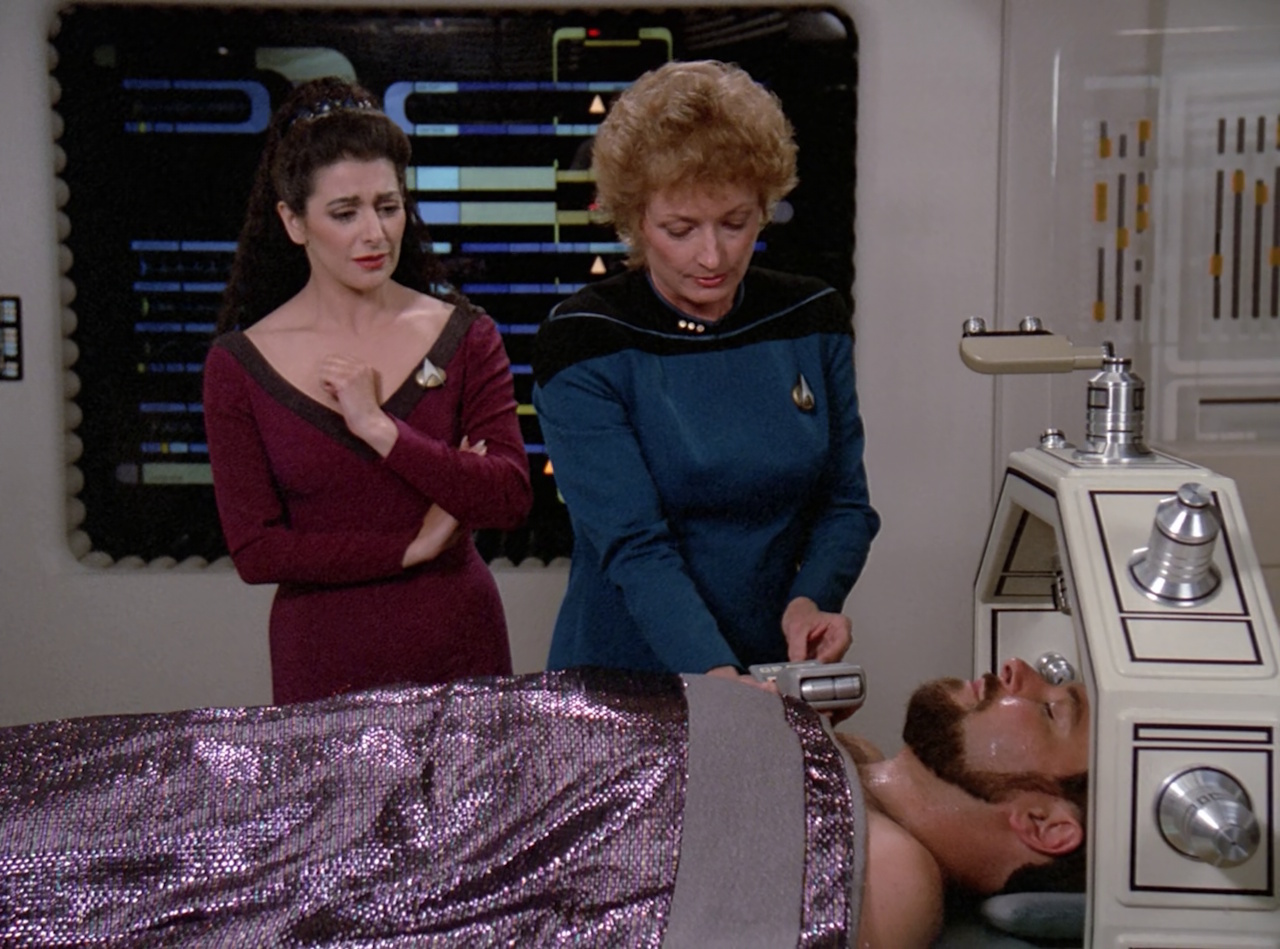
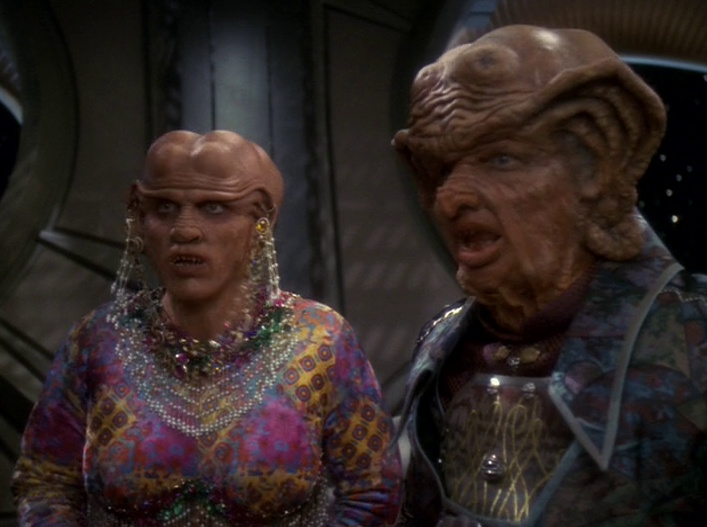
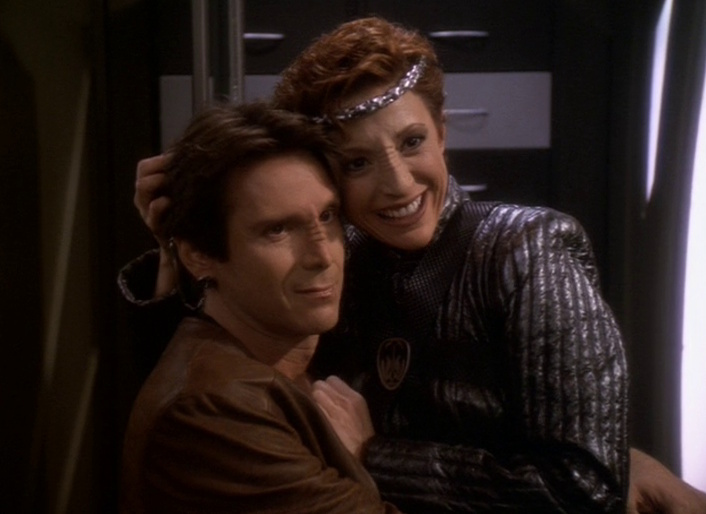
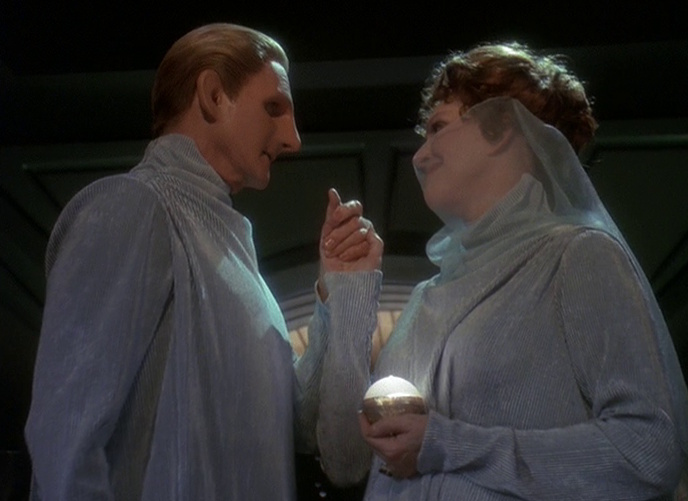
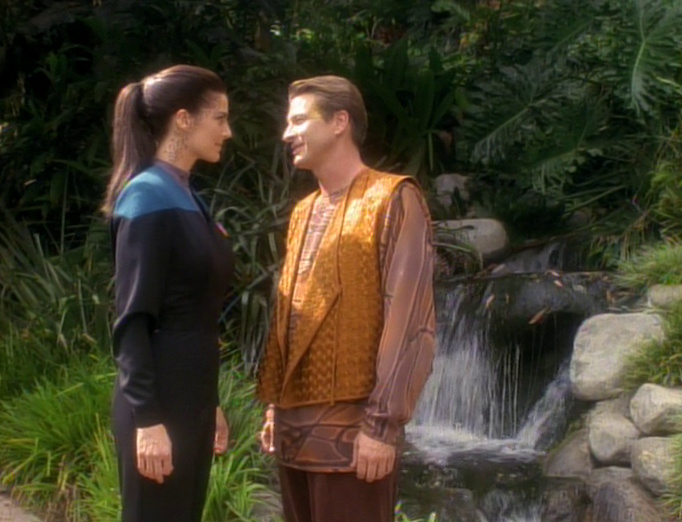
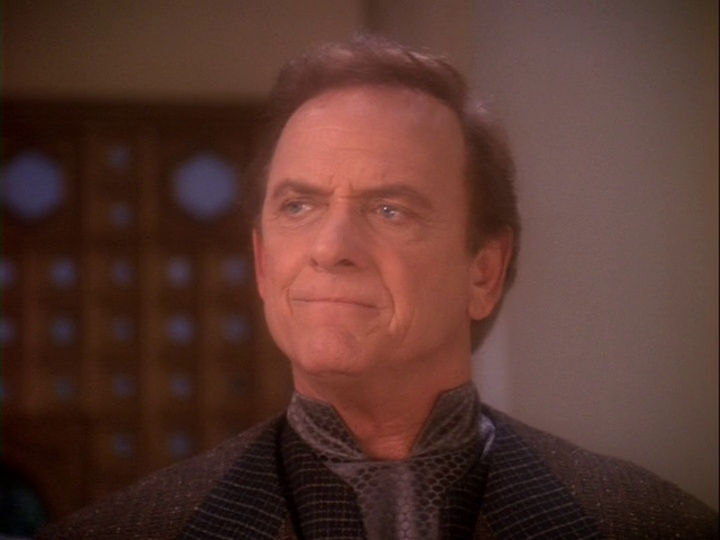
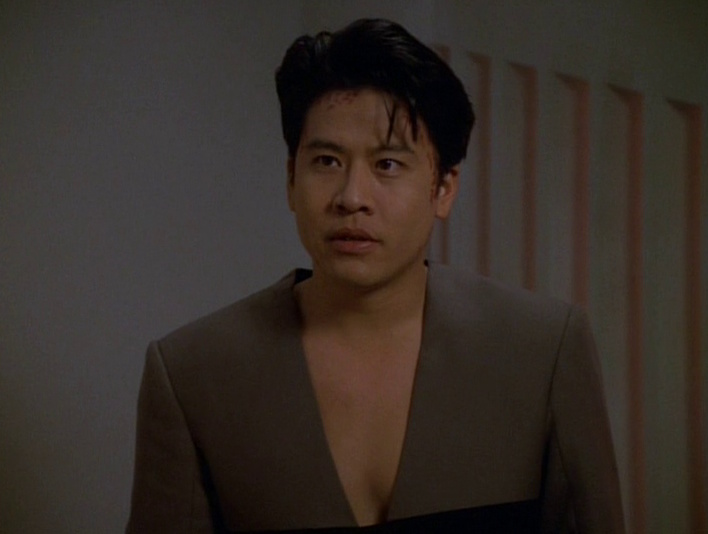
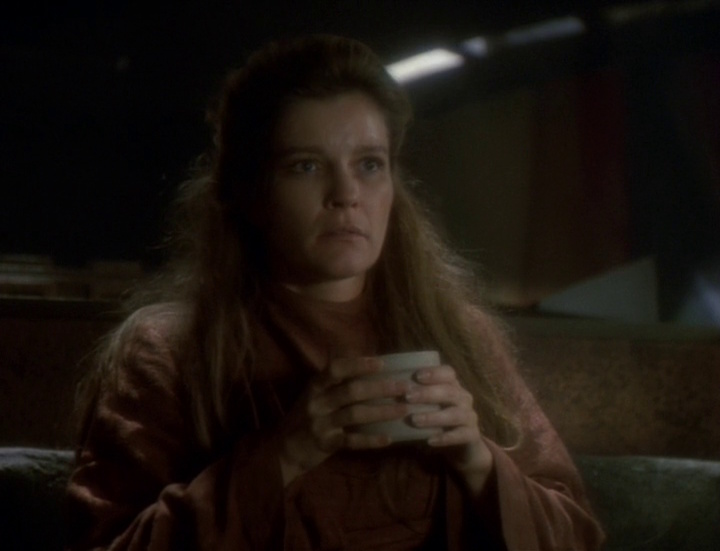
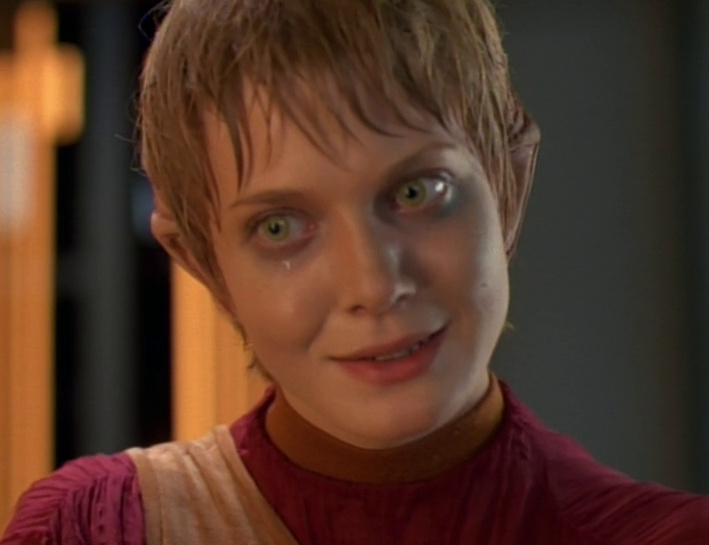
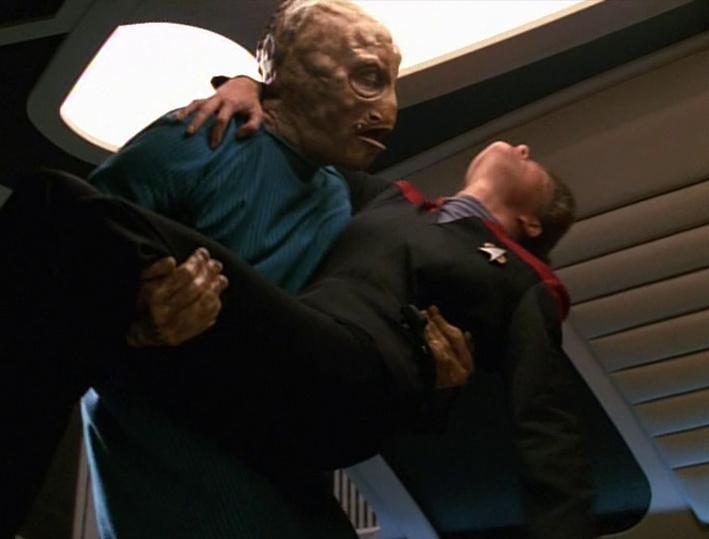
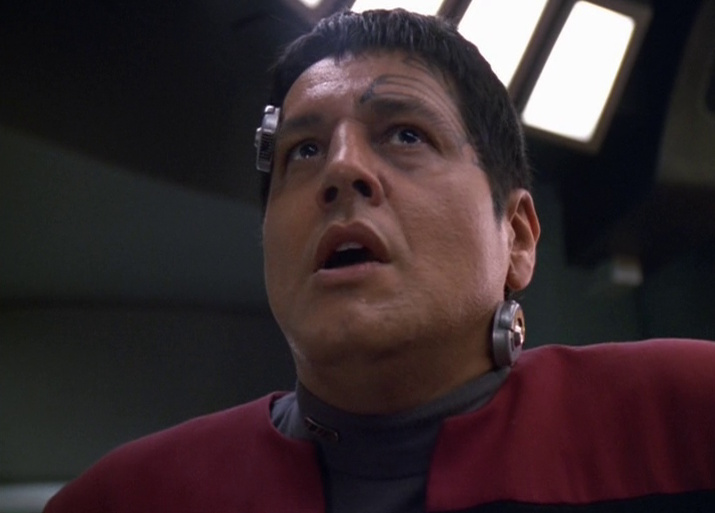
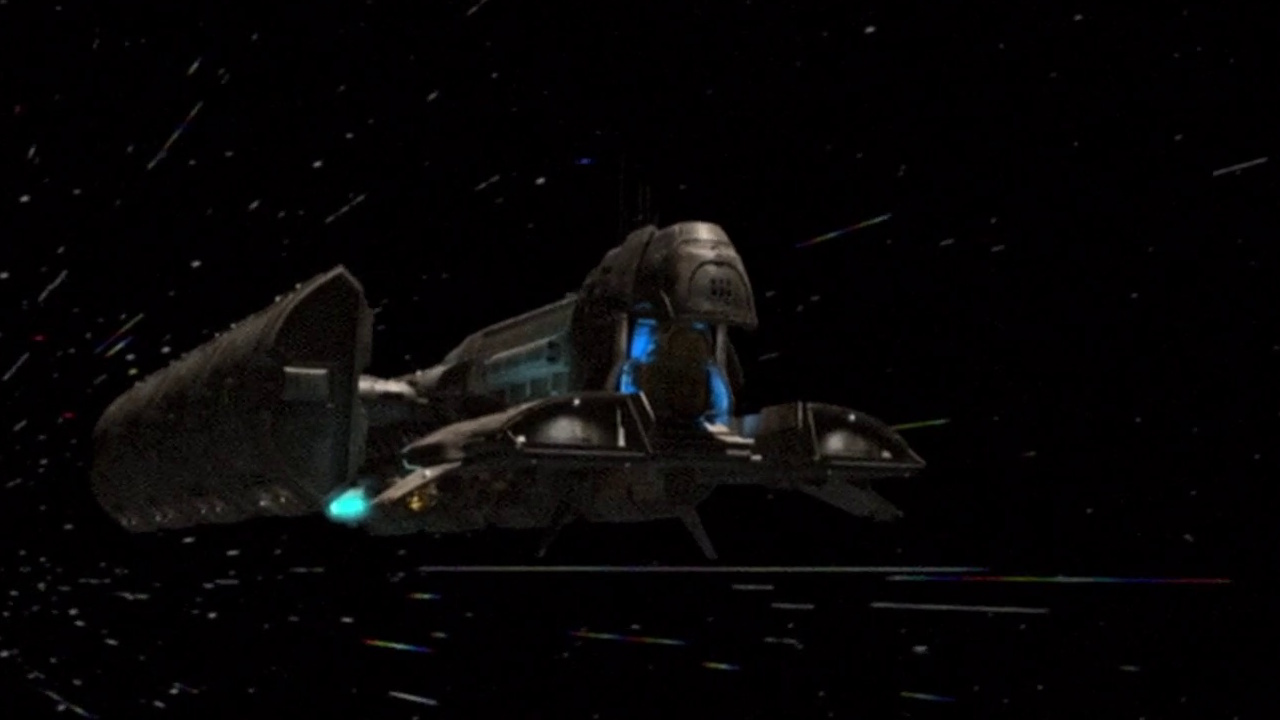
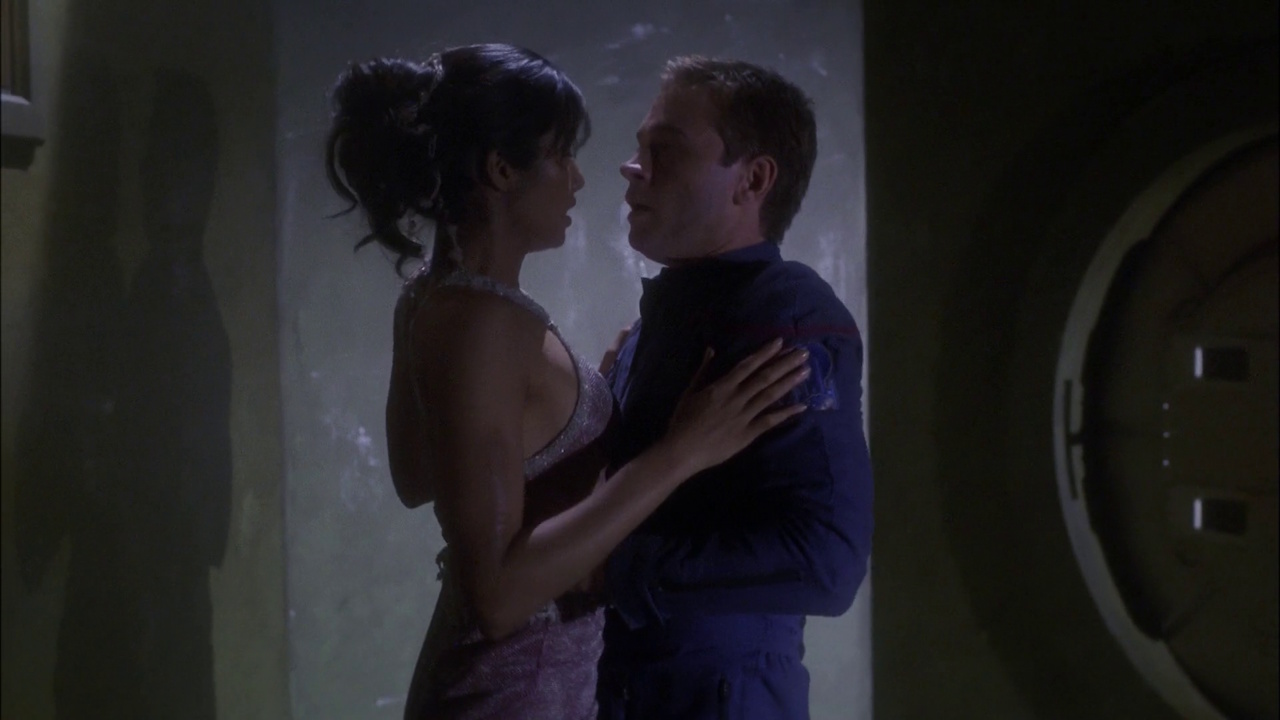
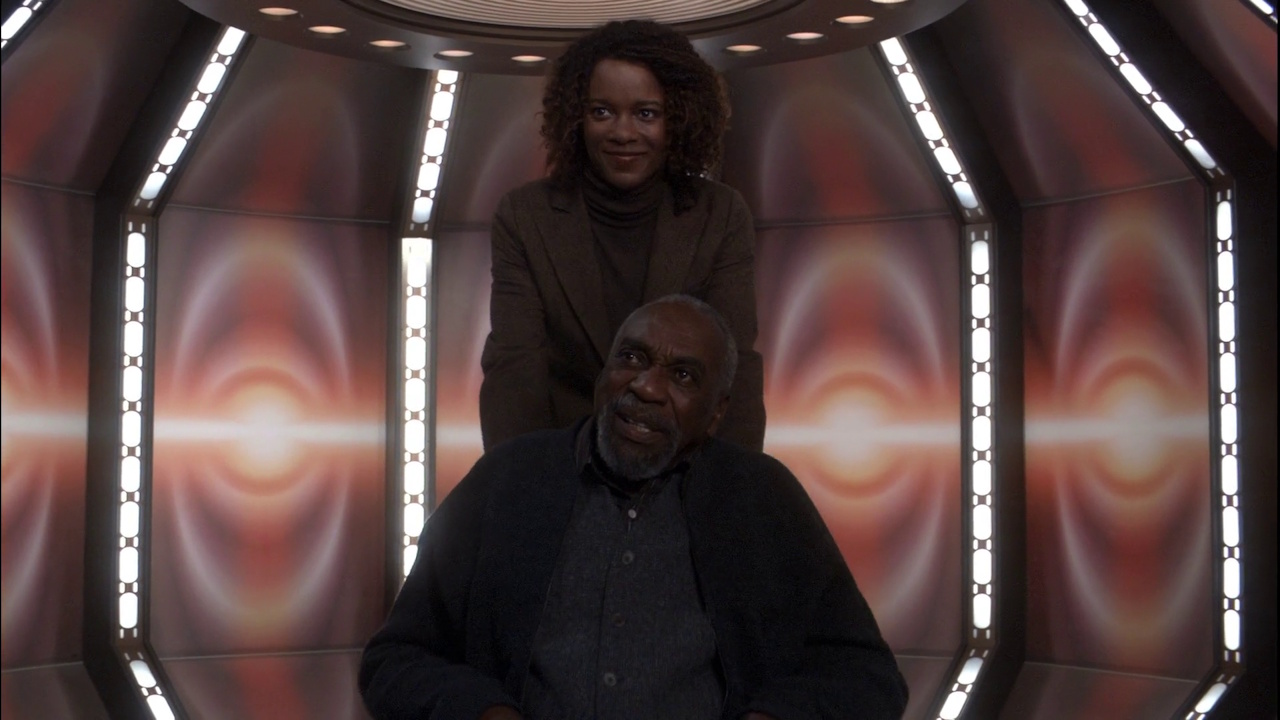
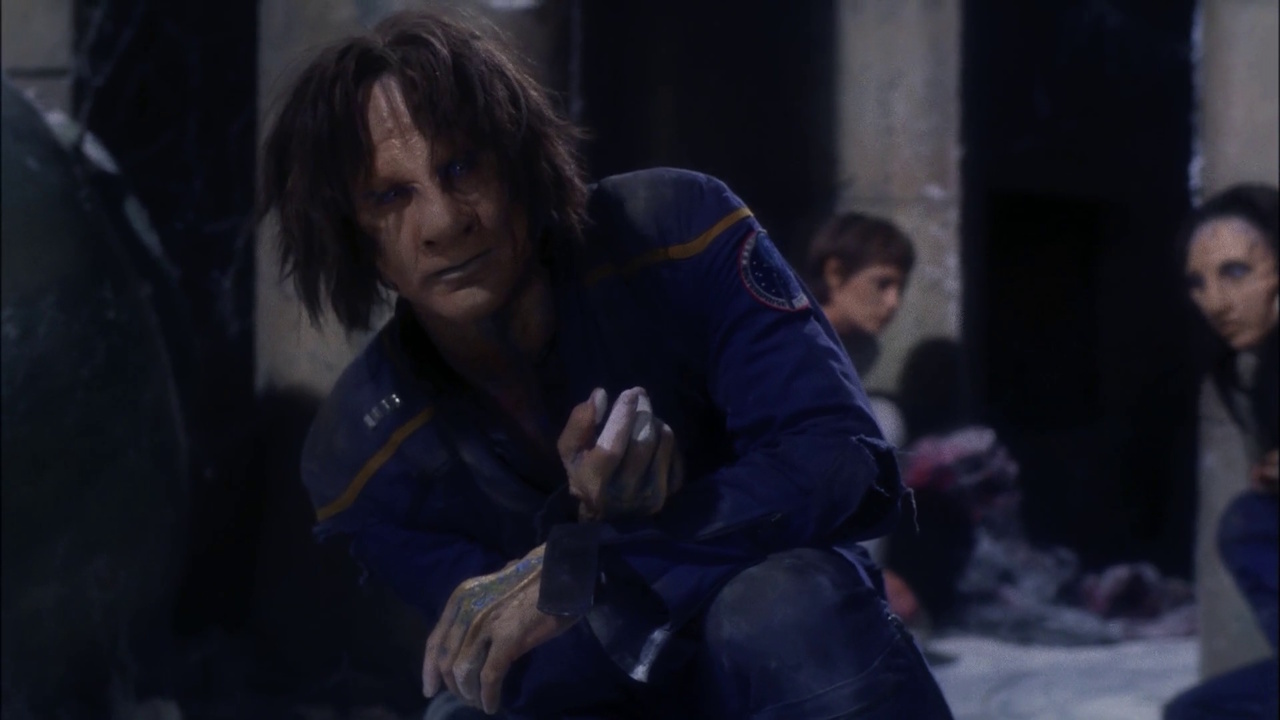
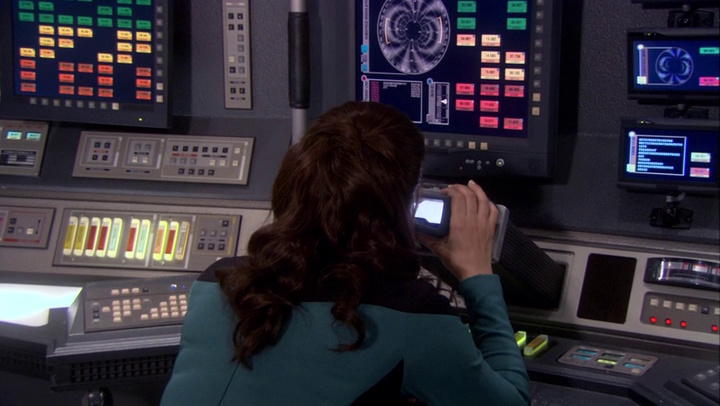
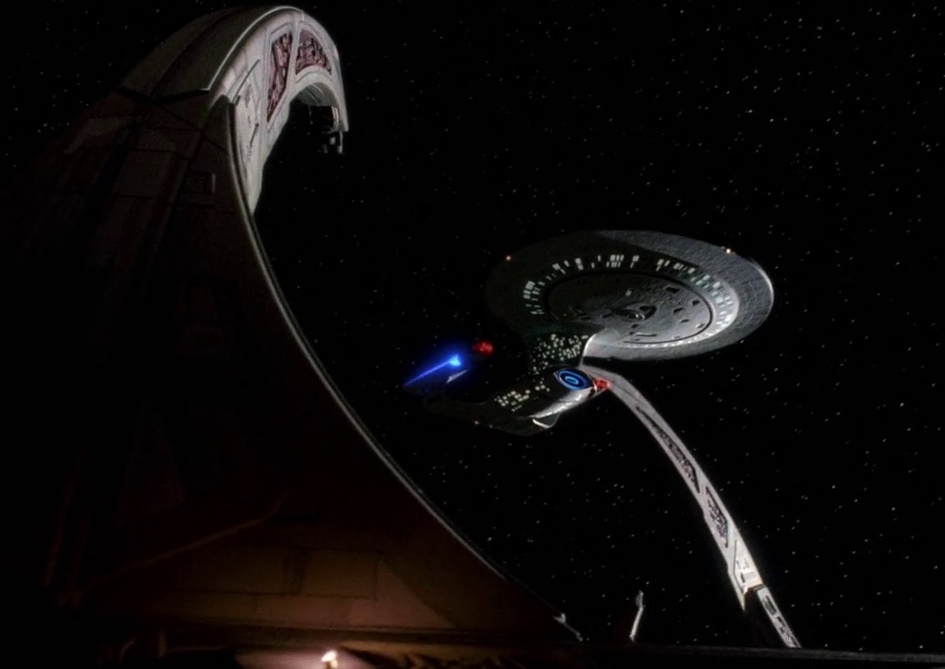
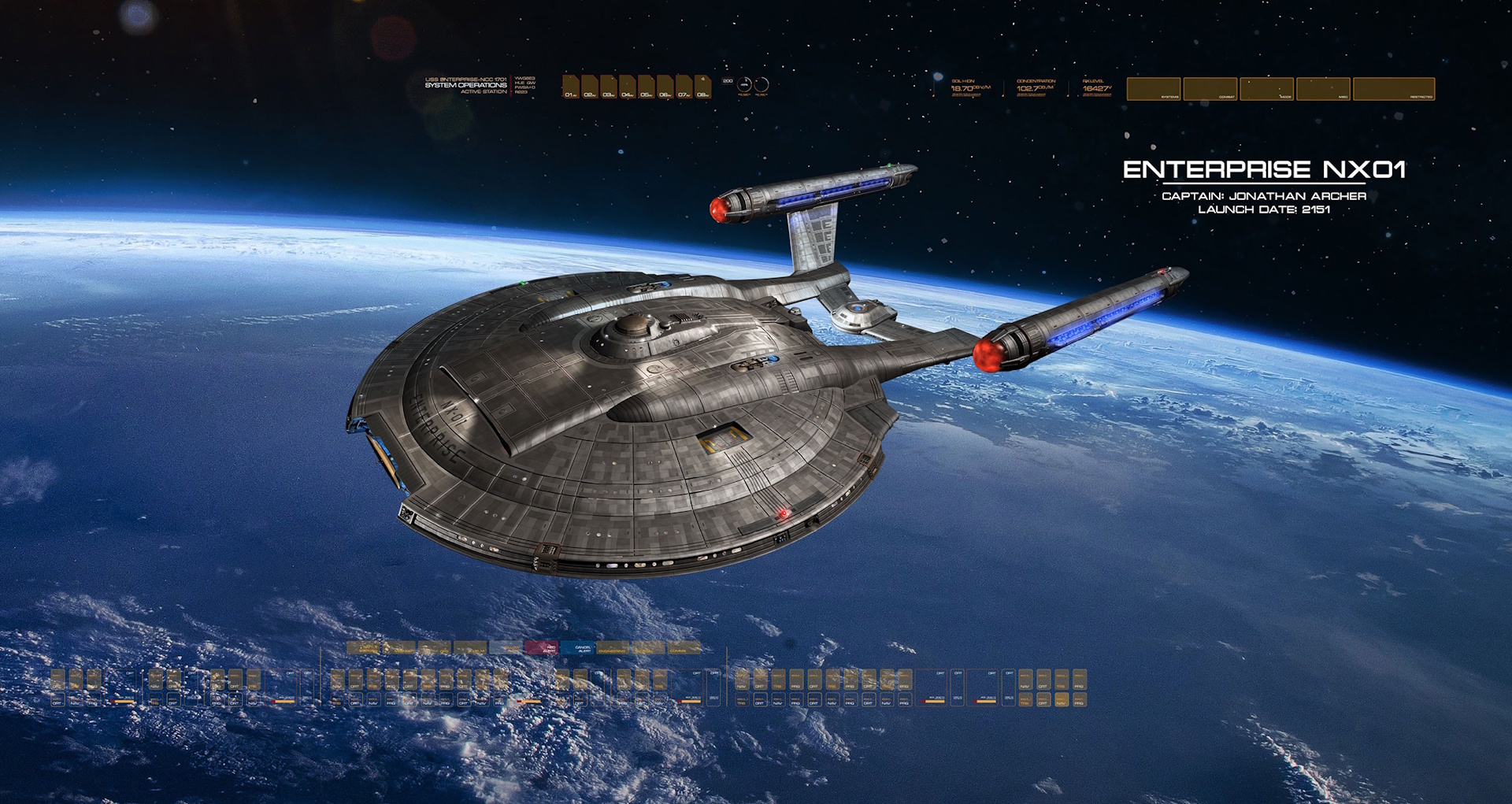

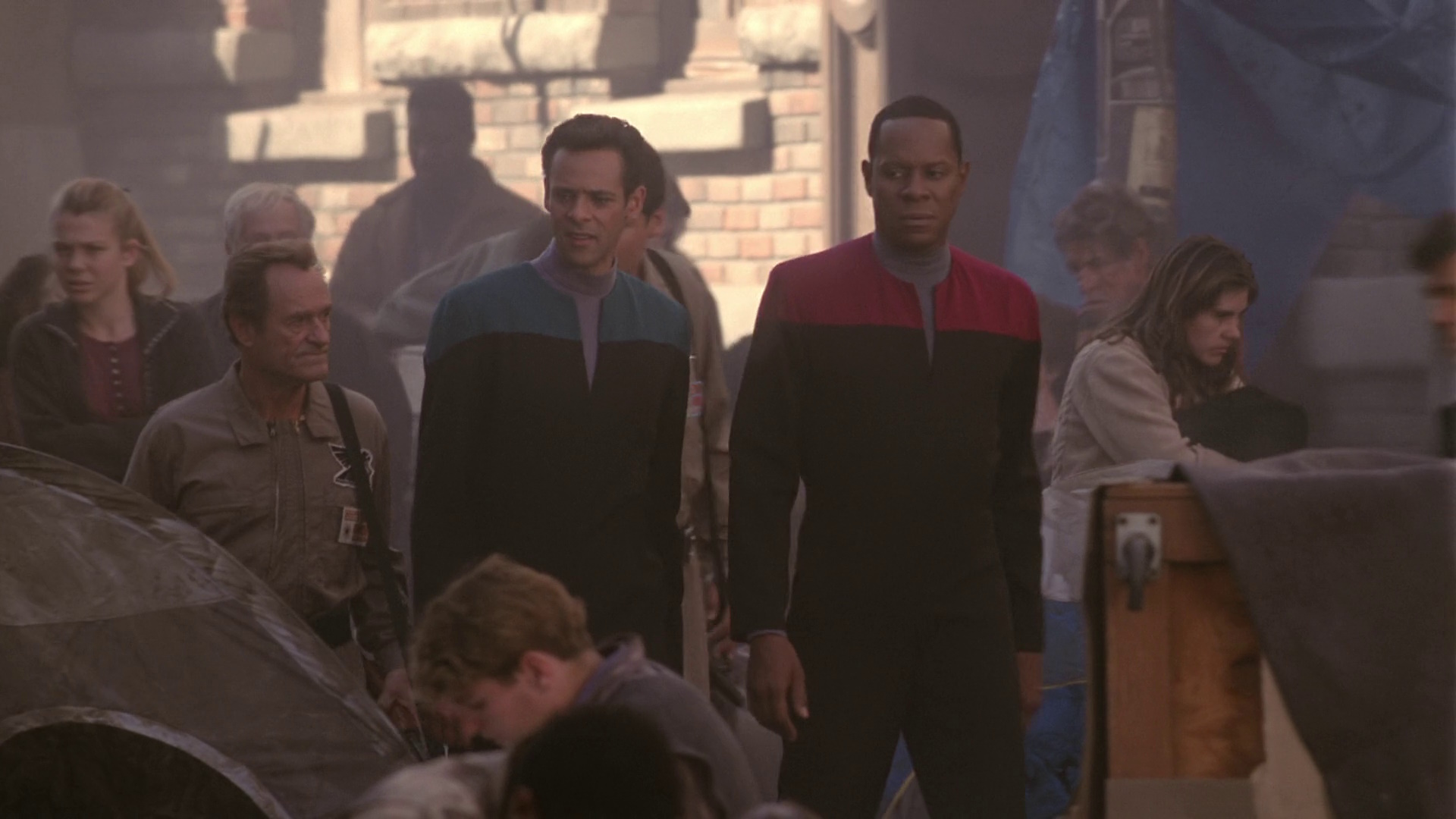
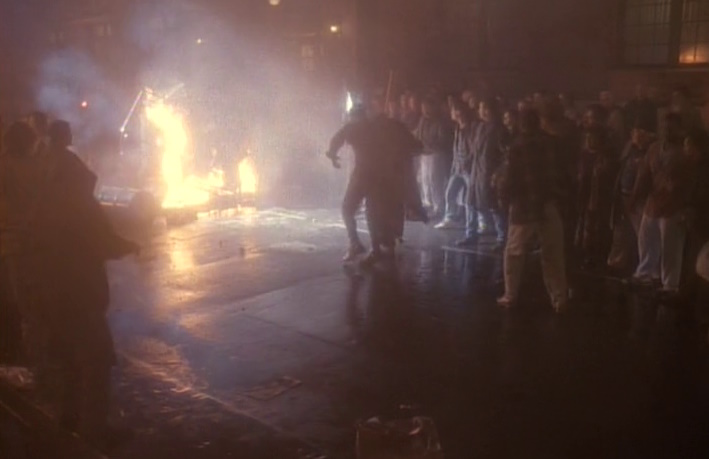
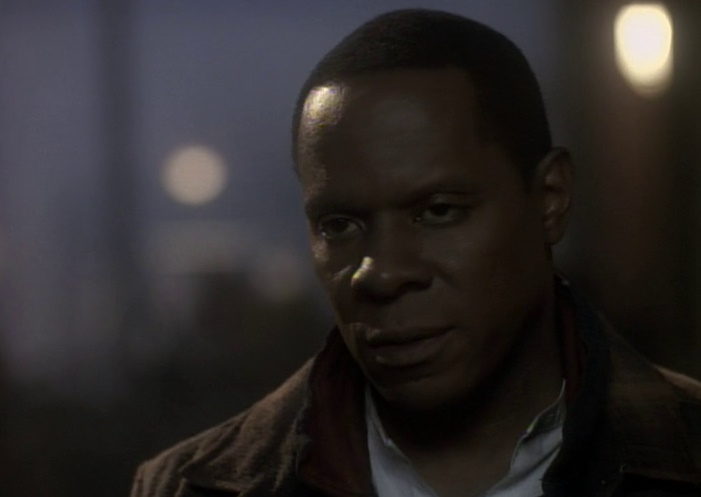
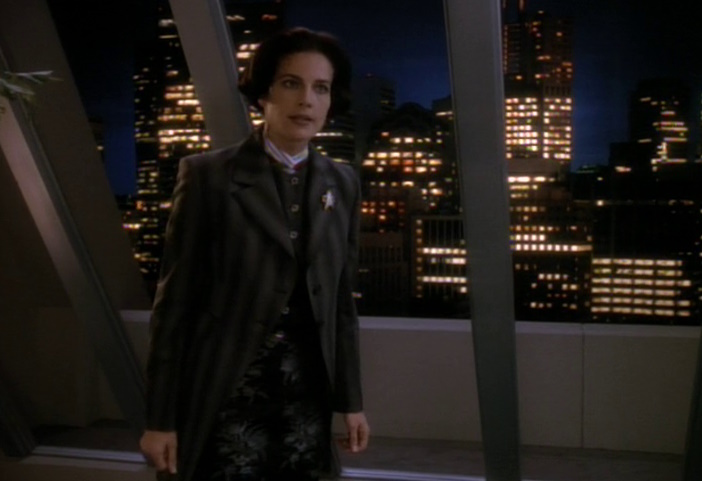
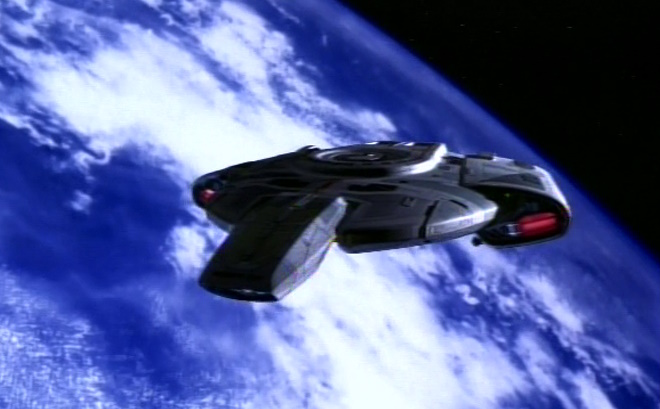


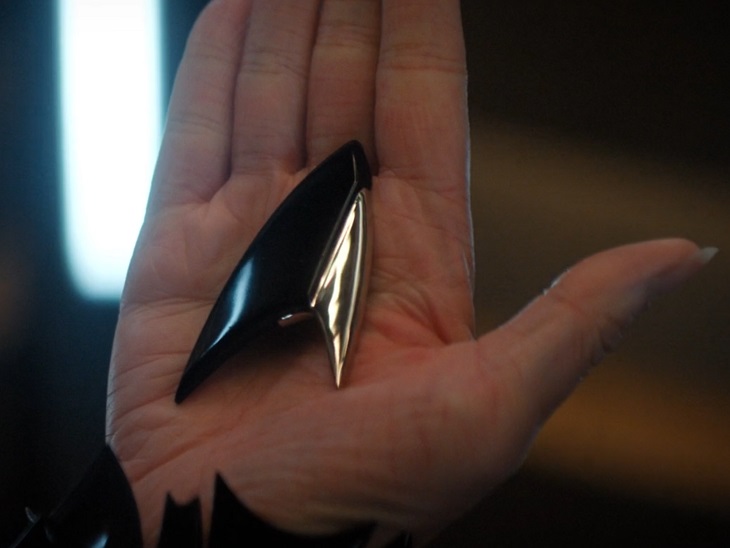


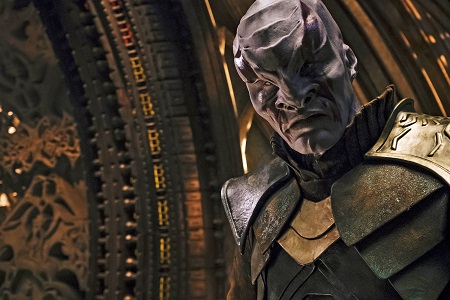
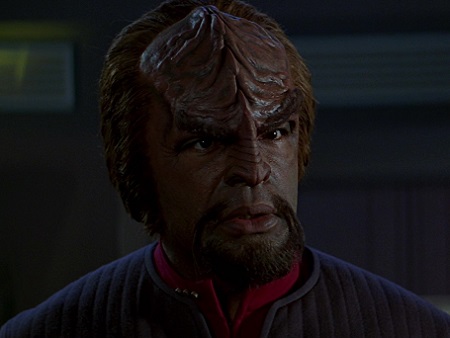

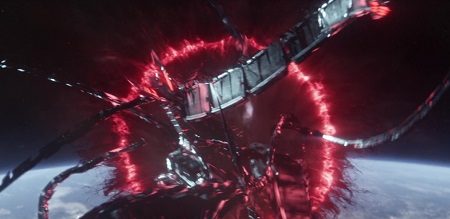




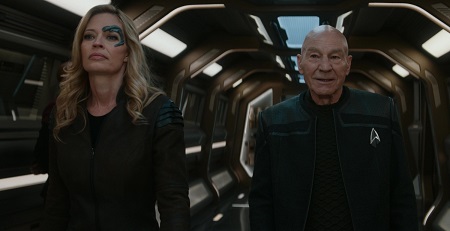


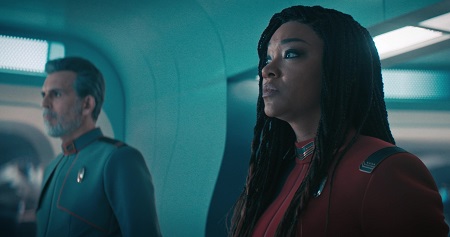
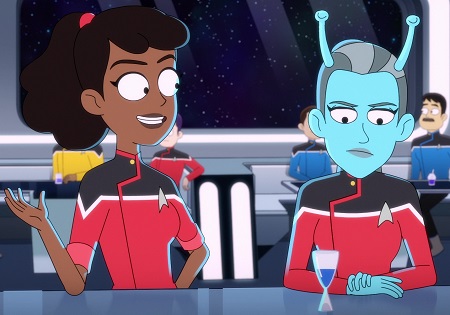




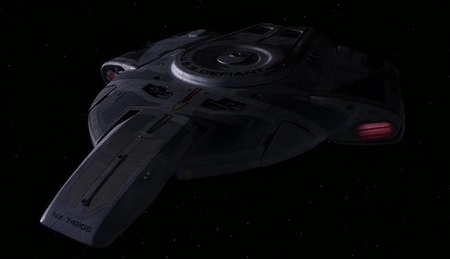

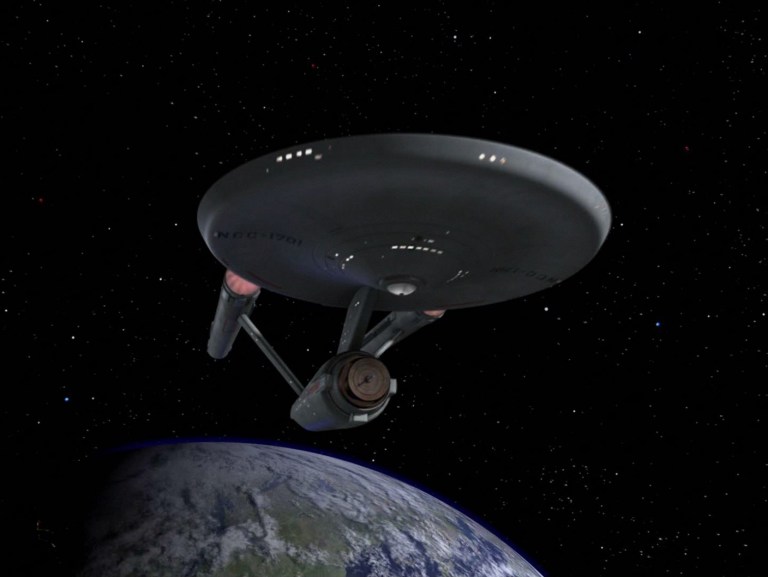
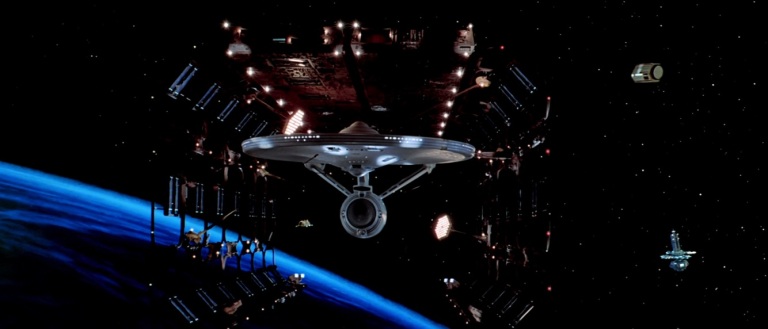


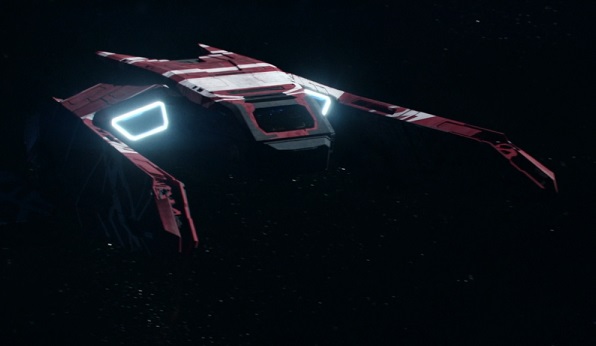



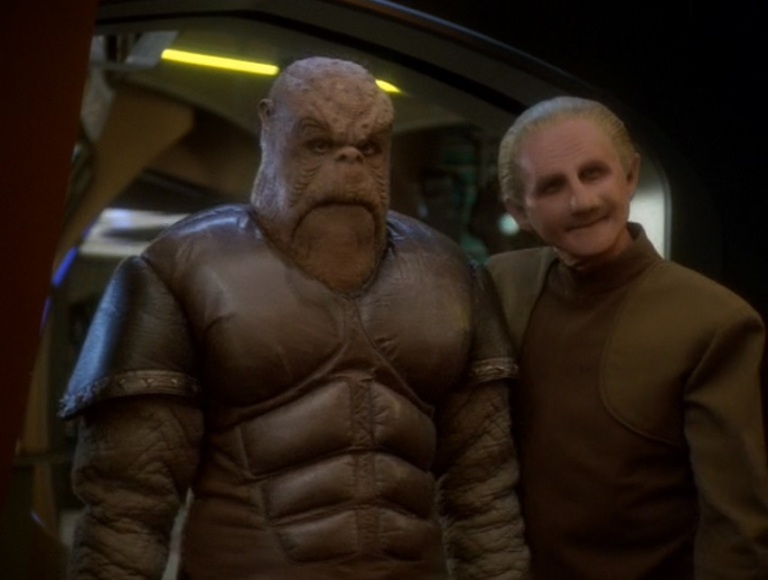
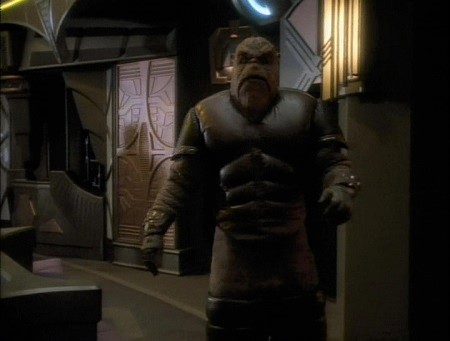


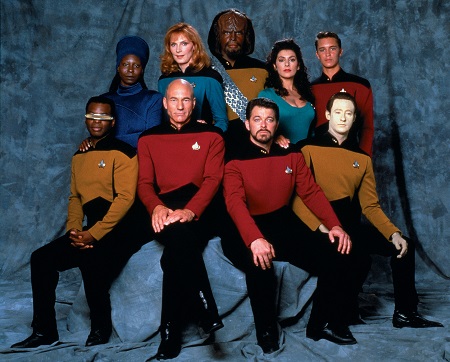


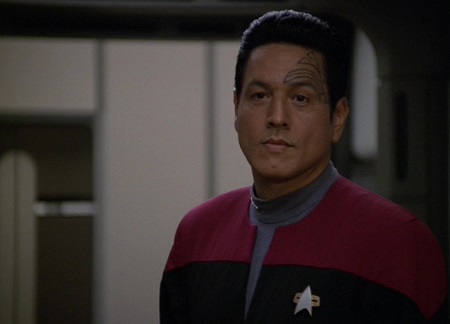
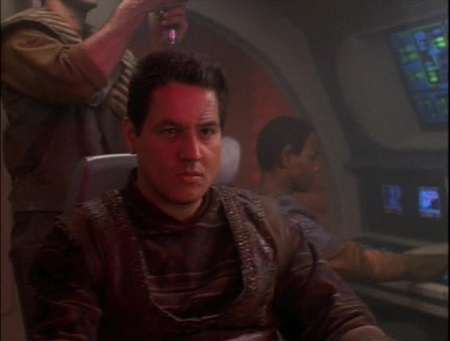

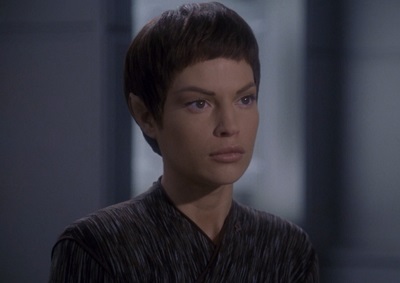





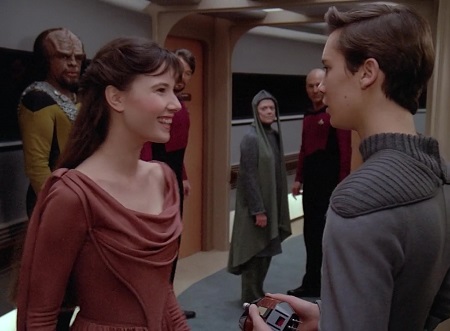
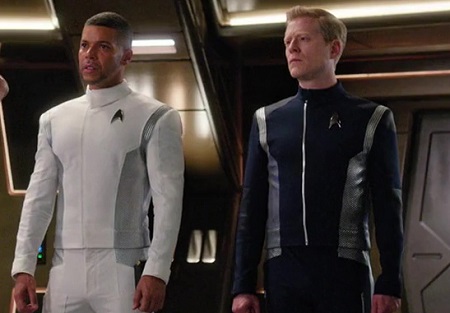
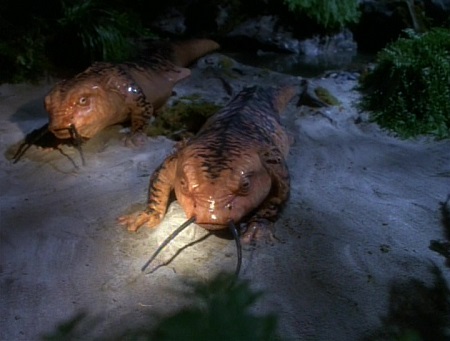

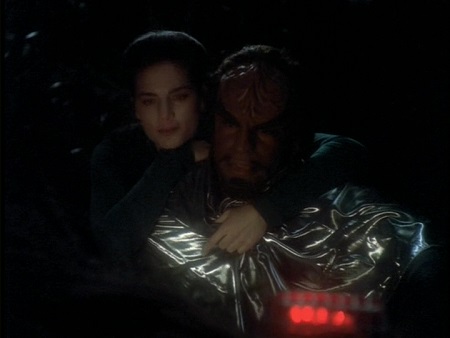


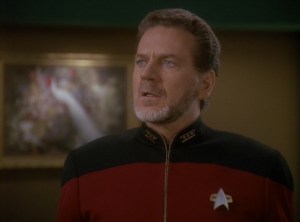
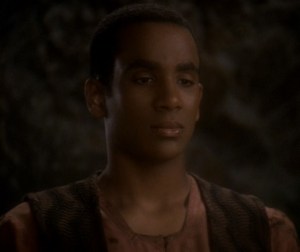
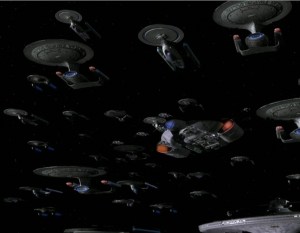
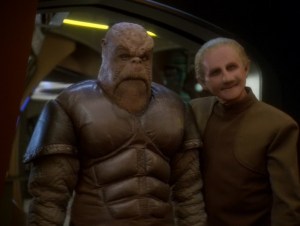
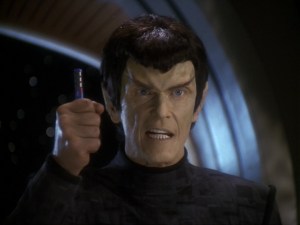
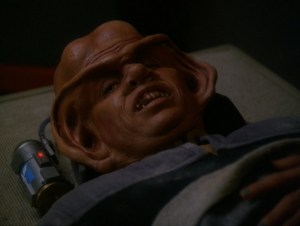
 Trekking with Dennis