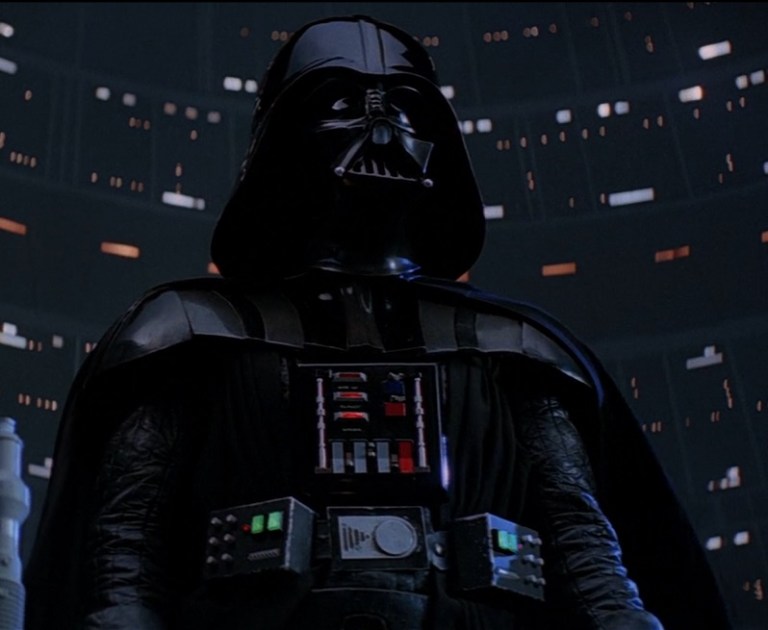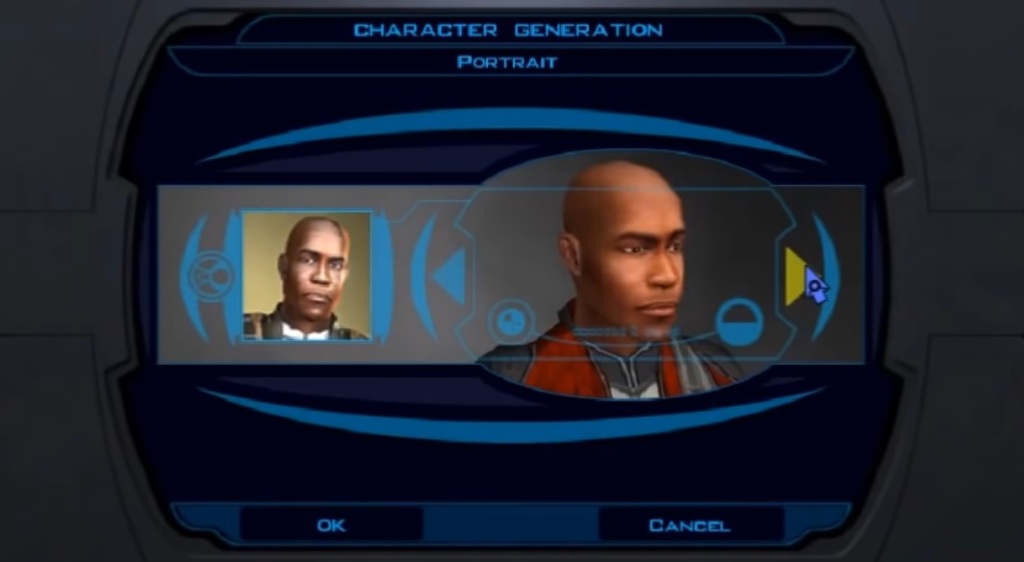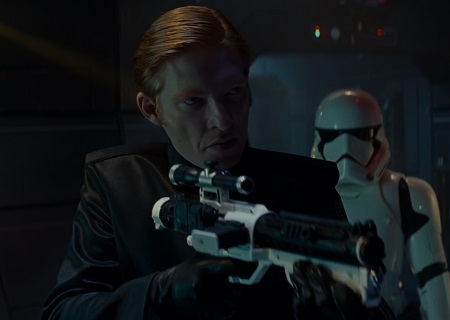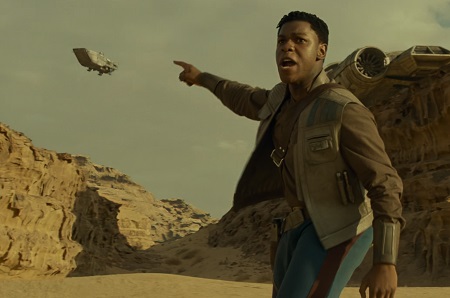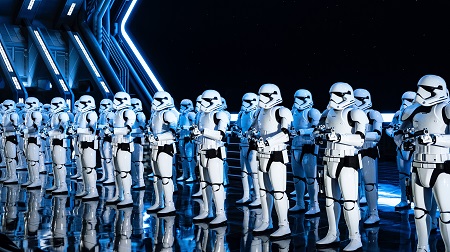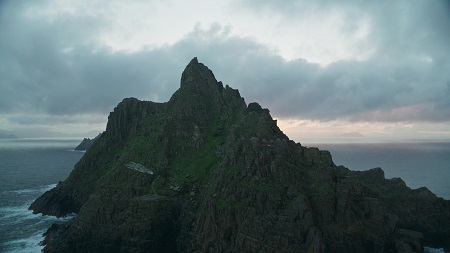
The Force Awakened… A Decade Ago

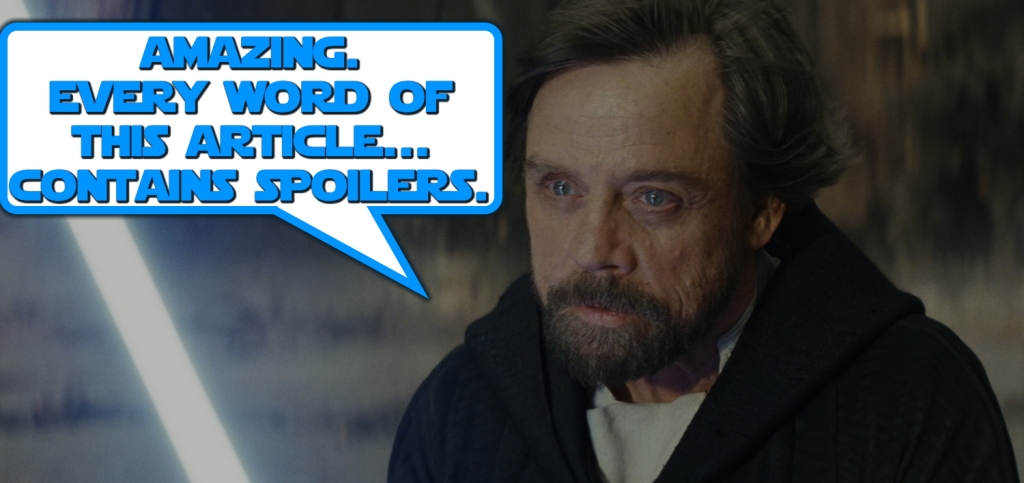
A Star Wars-themed spoiler warning.

Spoiler Warning: There are spoilers ahead for the Star Wars sequel trilogy.

Today (the 17th of December 2025) marks the tenth anniversary of the release of Star Wars Episode VII: The Force Awakens here in the UK. With it came a brand-new era for the franchise. I thought the occasion would be a great opportunity to talk about the film, its legacy, what it got right… and where it went wrong. So that’s what we’re gonna do today!

Three years earlier, the Walt Disney Company had purchased Lucasfilm, and with it, the rights to the Star Wars franchise. Ever since that moment in 2012, fans had been wondering what might lie in store – and when it was confirmed that 1983’s Return of the Jedi would be getting a sequel… I think it’s fair to say that the fan community was *beyond* excited! As Star Wars prepared to turn the page on its controversial prequels, and with a new creative team in charge, there was plenty of room for positivity in the months leading up to the release of The Force Awakens.
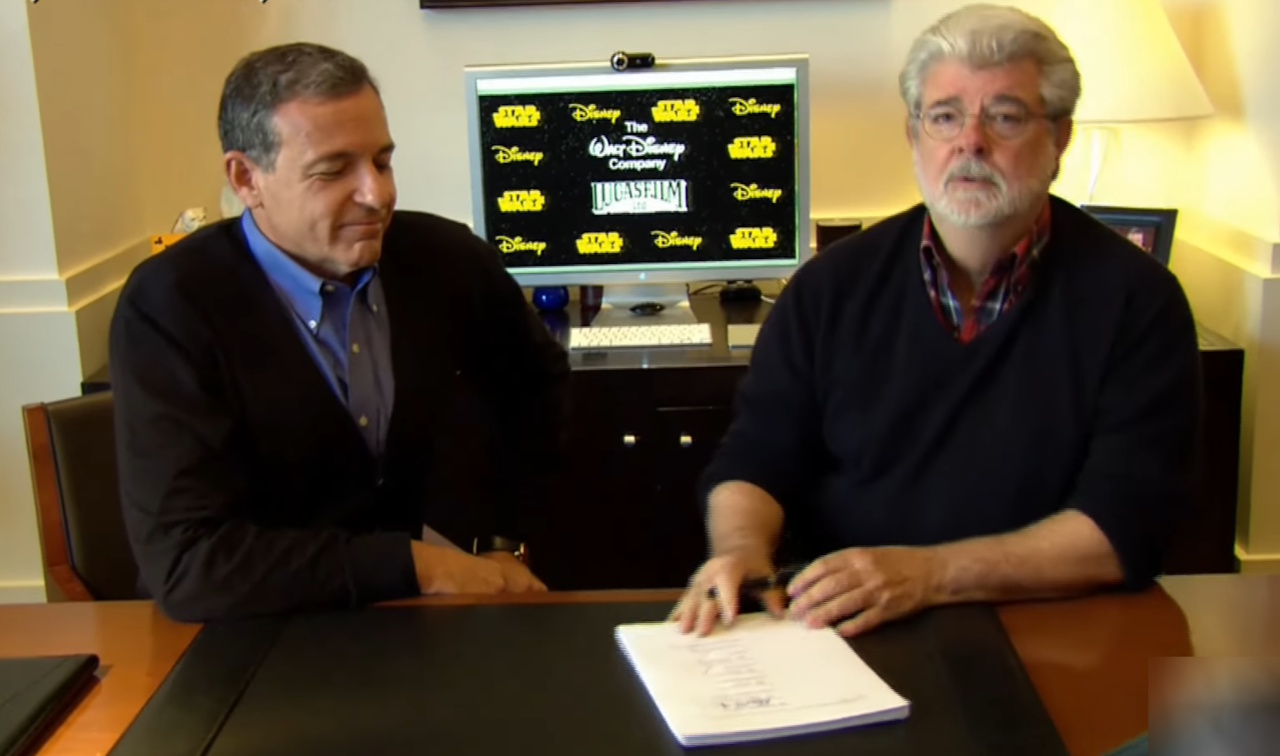
Still frame of Disney's Bob Iger and Lucasfilm's George Lucas at the offical sale of Lucasfilm in 2012.
Bob Iger and George Lucas signing the documents to confirm the sale of Lucasfilm in 2012.

I think I’ll start by talking briefly about my personal history with the Star Wars franchise, and how I found my way to the fan community – or, at least, to its periphery! In the early ’90s, at the insistence of a schoolfriend, I watched the original trilogy on VHS. By this point, I was already a huge Trekkie, and I remember being a bit underwhelmed on that first viewing. Perhaps I was comparing Star Wars to “my” fandom, and getting a bit tribal with it… I dunno! But I soon came to appreciate the original trilogy and the story it told, and quickly branched out to play the Super Star Wars games on the SNES, TIE Fighter on PC, and later, games like Shadows of the Empire and Rogue Squadron on the N64.

The prequel trilogy was another story, however, and I was left decidedly underwhelmed by both The Phantom Menace and Attack of the Clones. In this era, it was really only Knights of the Old Republic that kept me engaged with my Star Wars fandom. Revenge of the Sith was better, in some ways, but the prequel trilogy as a whole was a disappointment. If you’d asked me about Star Wars in 2012, that’s what I’d have told you. I was sceptical of a new film at first, but I was also encouraged when George Lucas stepped away and passed the torch to a new generation of filmmakers. When Disney promised to expunge the old Expanded Universe – much of which, from what I’ve seen, reads like low-quality fan fiction – I felt that was the right call. Disney was setting up a totally fresh setting for their new trilogy that wasn’t going to be constrained by decades’ worth of other stories, nor by being a prequel that had to tie in with what’s already been established. That was a hugely positive thing for me.
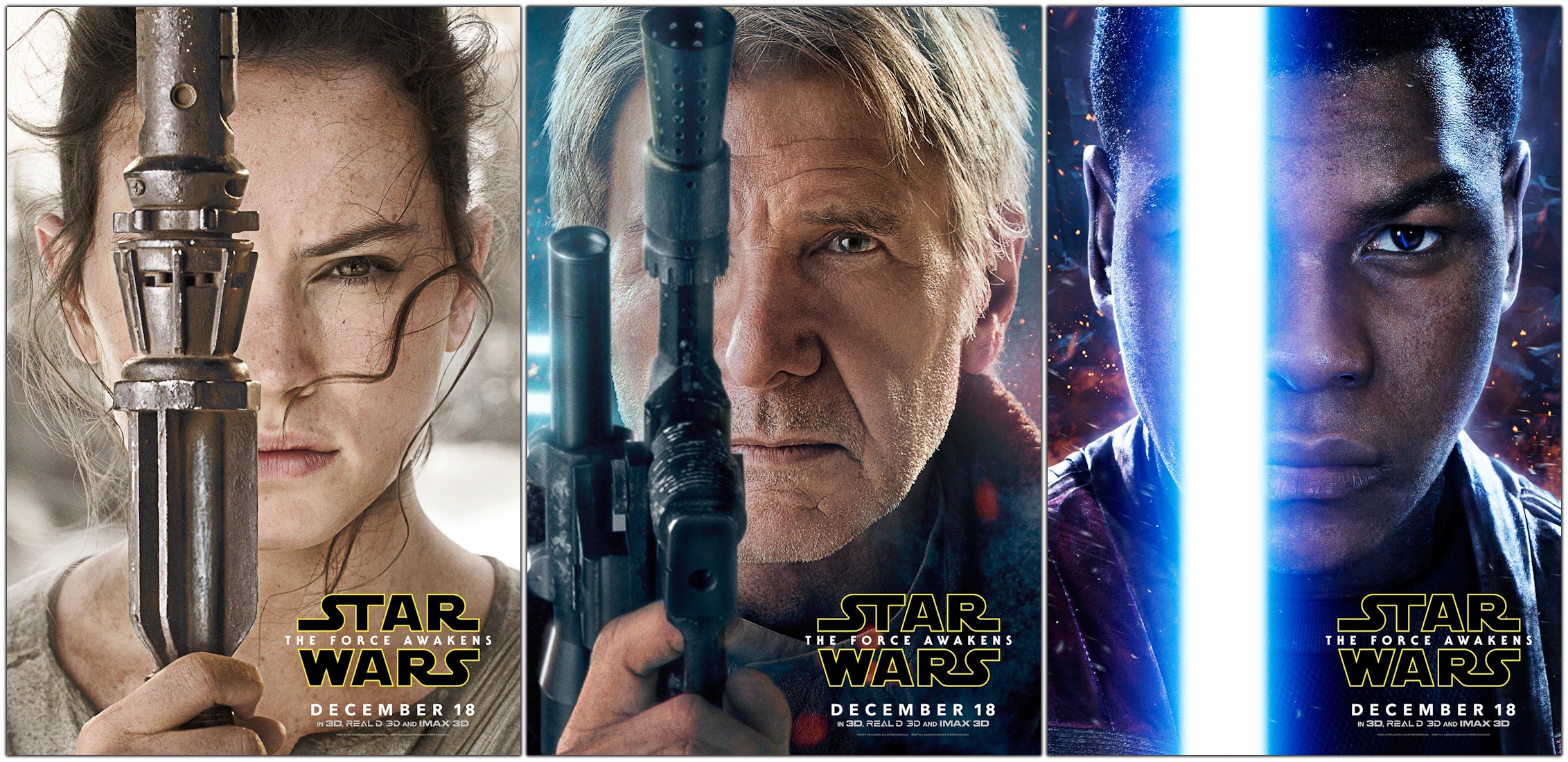
Three promo posters for The Force Awakens (2015)
A trio of posters.

By the time details of the film were being announced, I was cautiously optimistic! I remember feeling a little conflicted about J.J. Abrams’ involvement; he’d done such a great job rebooting the Star Trek franchise at the cinema that seeing him “jump ship” to Star Wars felt like a bit of a blow. Remember, this was before CBS had announced that Star Trek would be returning to the small screen, and with the franchise’s fiftieth anniversary approaching… I wasn’t thrilled to lose a filmmaker of Abrams’ calibre. But Star Trek’s loss seemed to be Star Wars’ gain, with Abrams being able to take the same approach and “reboot,” for want of a better word, the franchise for a new generation.

Above all, I hoped that The Force Awakens could put the disappointment of the prequel trilogy behind us, and tell a more interesting and engaging story than those films ever had.

So… did it do those things?
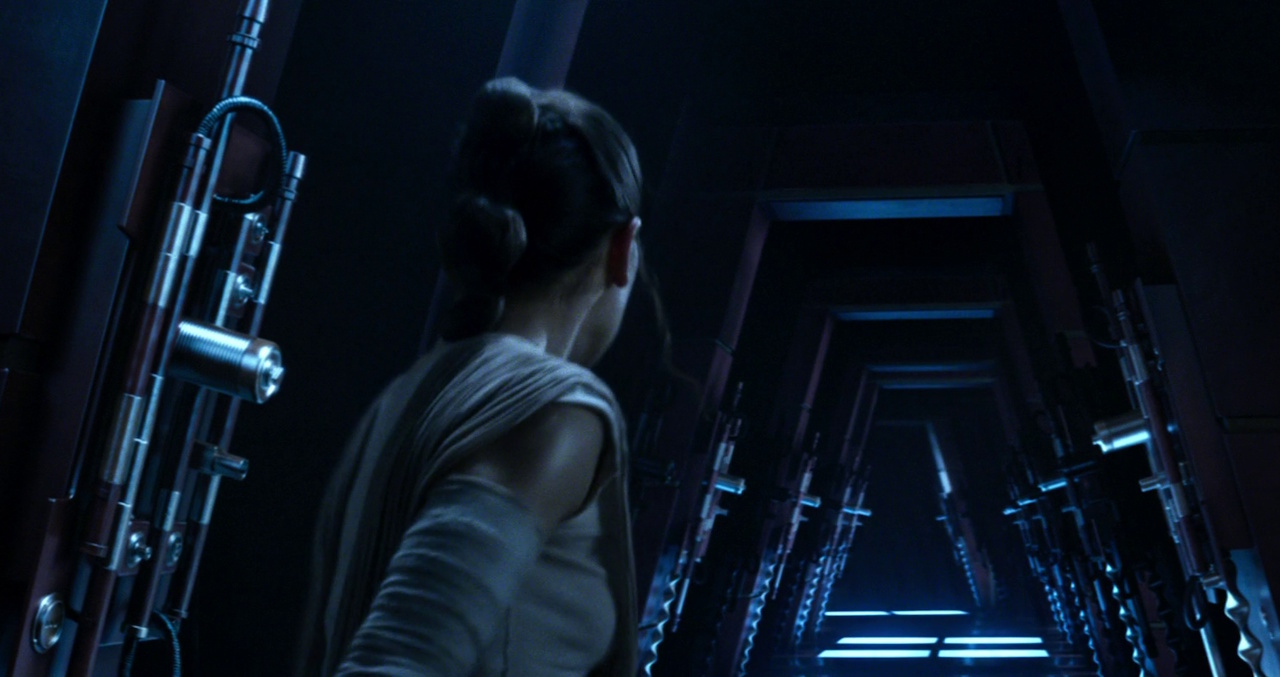
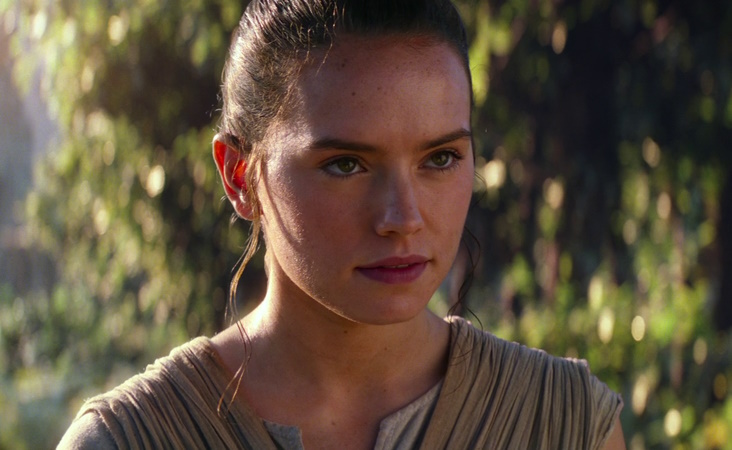
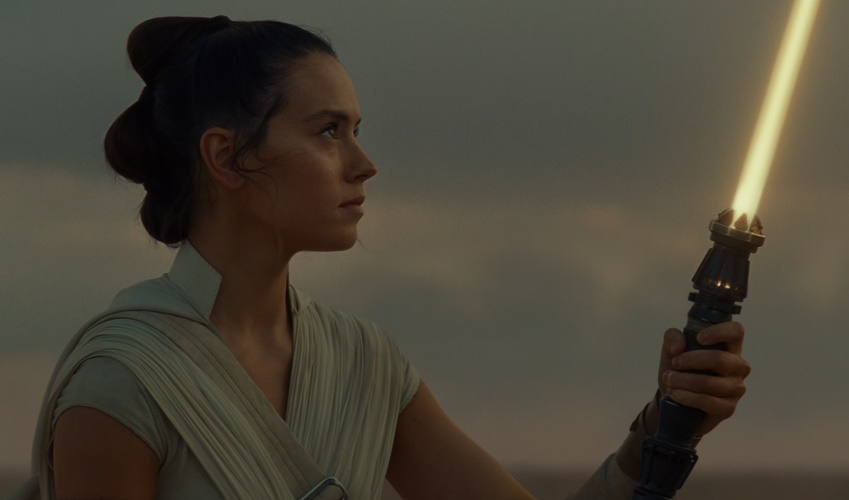
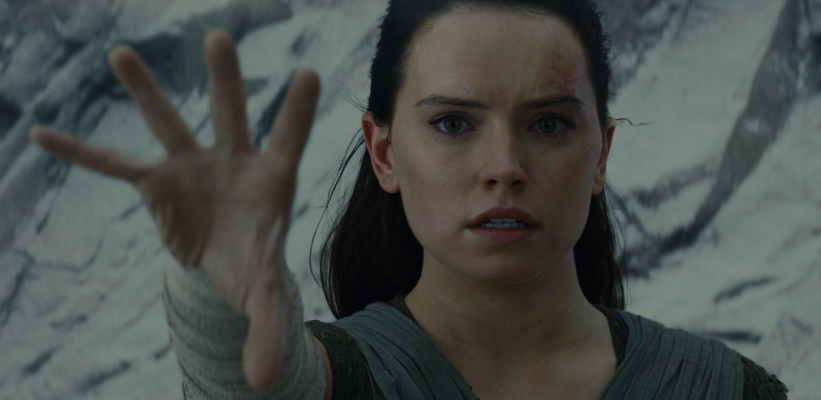
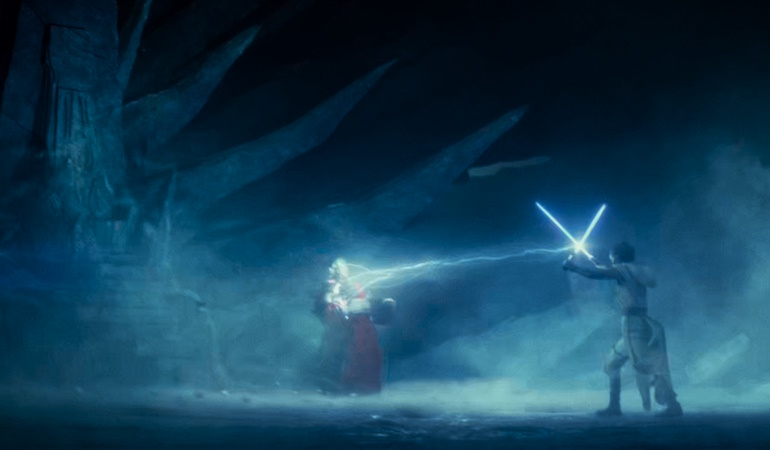
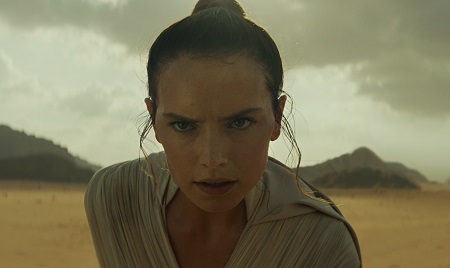
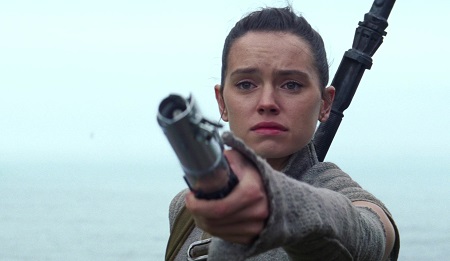
Still frame from Star Wars VII: The Force Awakens (2015) showing Rey having a vision.
What’s the legacy of The Force Awakens ten years later?

The Force Awakens is a film that we absolutely cannot judge fairly without placing it in context. As a result of that context – i.e. the last ten years’ worth of Star Wars projects since it premiered – The Force Awakens is probably the only film I can think of where my opinion has shifted so dramatically since that first viewing in December 2015.

Because I’ll be honest: I walked out of the cinema ten years ago with a great big smile on my face! After the disappointment of the prequel trilogy, a film that re-played Star Wars’ “greatest hits” felt like just what the doctor ordered, and I remember feeling that, while the film obviously *was* derivative and harkened back to 1977’s Star Wars in a huge way… that didn’t seem like a terrible idea. Re-establishing the core of what Star Wars is, and showing that to a new audience as well as to returning fans, is what a reboot is supposed to do. And The Force Awakens felt like a solid foundation for Disney to build a new era of Star Wars on.
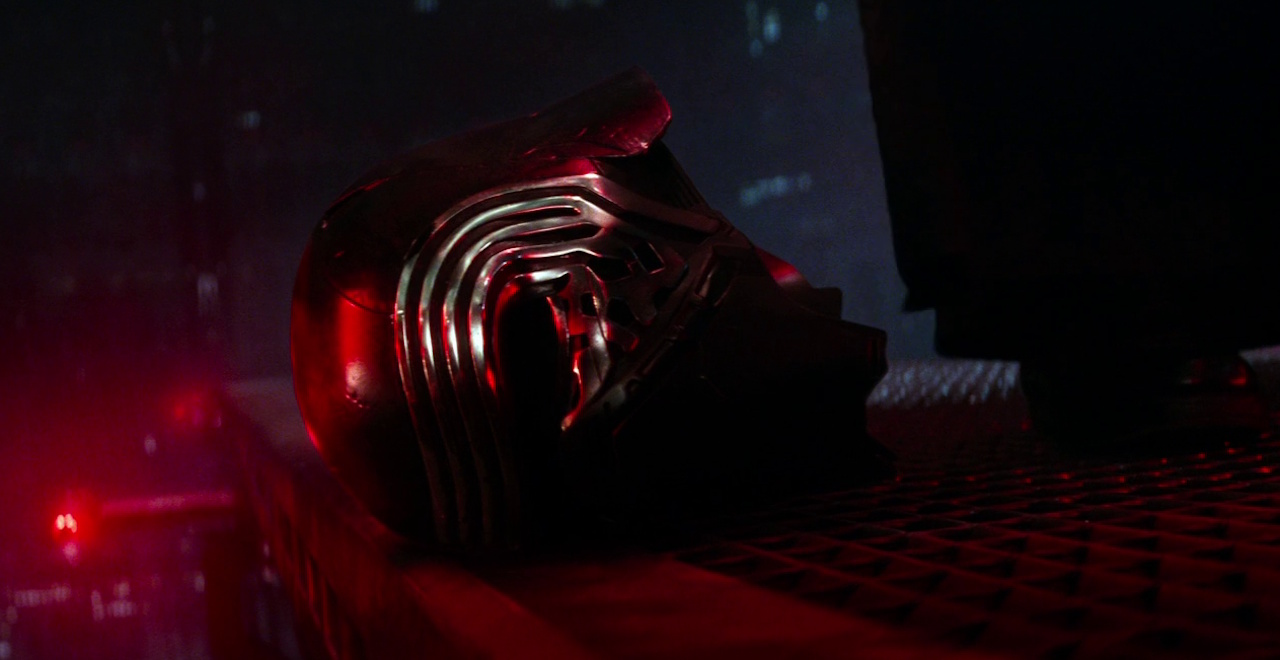
Still frame from Star Wars VII: The Force Awakens (2015) showing Kylo's helmet.
Kylo Ren’s helmet.

There were stormtroopers. There was an “evil empire” ruled by an enigmatic, scarred leader. There was a helmet-wearing Dark Side user who was the scion of a powerful family. The Jedi were nowhere to be found. There was an orphan from a desert planet who got swept up in a rebellion. There was a “trench run” against a planet-killing superweapon. Han Solo and Chewie were back in the Millennium Falcon. And Princess Leia was still leading the rebellion. Everything that Star Wars had been in its original form was here, reimagined and repainted, ready for that new generation of fans to fall in love with.

What’s more, The Force Awakens’ director and producers seemed to be going out of their way to recapture the way Star Wars looked prior to the prequels and George Lucas’ awful “special editions.” Gone was the janky, not-ready-for-prime-time early 2000s CGI. And to replace it, Disney had commissioned physical props, puppets, and even robots. BB-8, the cute little spherical droid, *actually works!* That’s an actual, physical droid, not a video-gamey CGI monstrosity. As a child of the ’80s, who grew up on films like The Neverending Story and Flight of the Navigator, which had excellent puppets, props, and prosthetics… I absolutely *adored* the way The Force Awakens looked, and I still have a huge respect for J.J. Abrams, Kathleen Kennedy, and the rest of the folks at Disney and Lucasfilm for leaning much more heavily on physical creations over CGI.
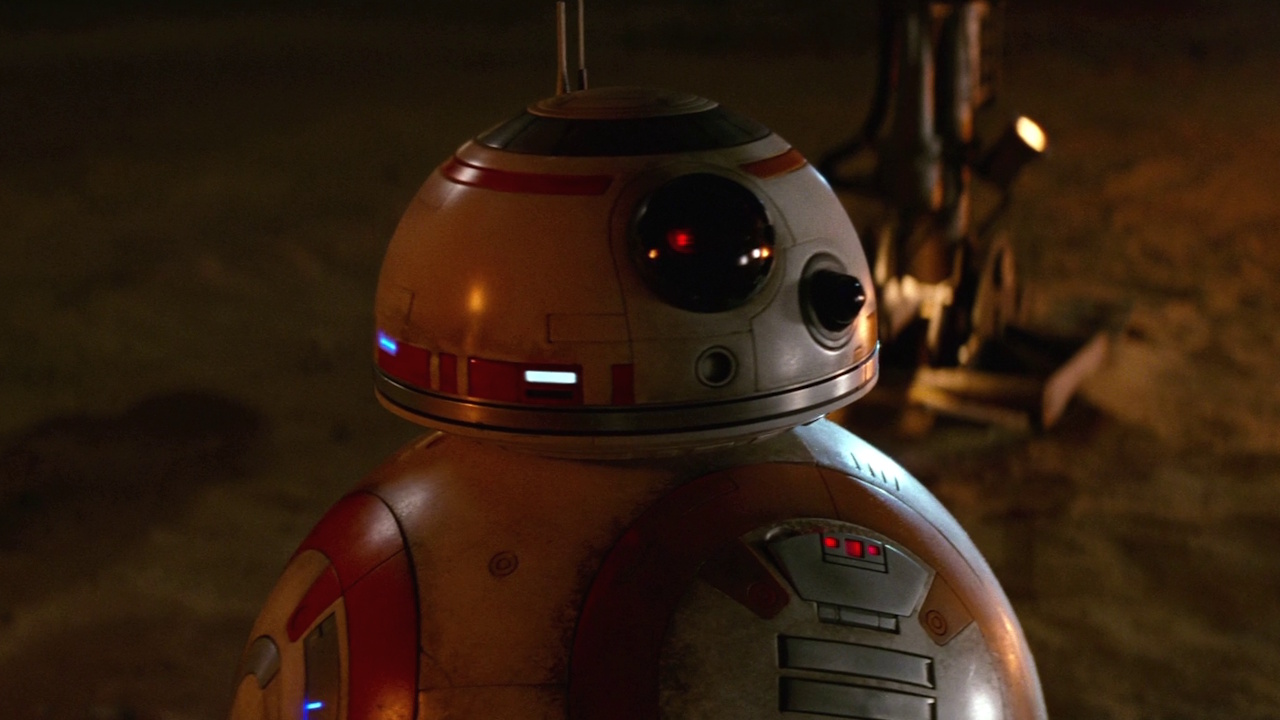
Still frame from Star Wars VII: The Force Awakens (2015) showing BB-8.
BB-8 was a physical prop.

If The Force Awakens had been a one-and-done film, that’s where this essay would end. The film recaptured the magic of Star Wars in a way that the prequels had failed to do, the new owners of Star Wars had successfully killed off the fan-fiction-y Expanded Universe, and put to bed the idea that *everything* with the Star Wars name attached should be considered canonical, and the original look and feel of the franchise, from its ’70s and ’80s heyday, had been successfully recreated. Add into the mix some fun new characters – a rebelling Stormtrooper, whose humanity wouldn’t let him take part in atrocities, a young, clearly powerful Force-wielder, a phenomenal pilot, and the son of Han Solo and Leia, now fallen to the Dark Side – and you had all of the pieces in place for an entertaining story.

Unfortunately for The Force Awakens and its legacy, though, this isn’t where things end.

J.J. Abrams, who penned and directed the film, is a big believer in the “mystery box” style of storytelling: set up an intriguing mystery, then let it unfold. But while Abrams is great at *starting* these kinds of stories… he doesn’t usually seem to have an ending in mind. And because of the way Disney and Lucasfilm set about making the Star Wars sequel trilogy, Abrams and his “mystery box” were simply the wrong choice for the first part of the story. And even as I stepped out of the cinema wearing that silly grin ten years ago, the cracks in the foundation of this story were already beginning to grow – cracks that would eventually lead to the complete and utter ruination of Disney’s sequel trilogy. The Force Awakens was a fundamentally flawed story – but the damage those flaws would do wouldn’t become obvious for a few more years.
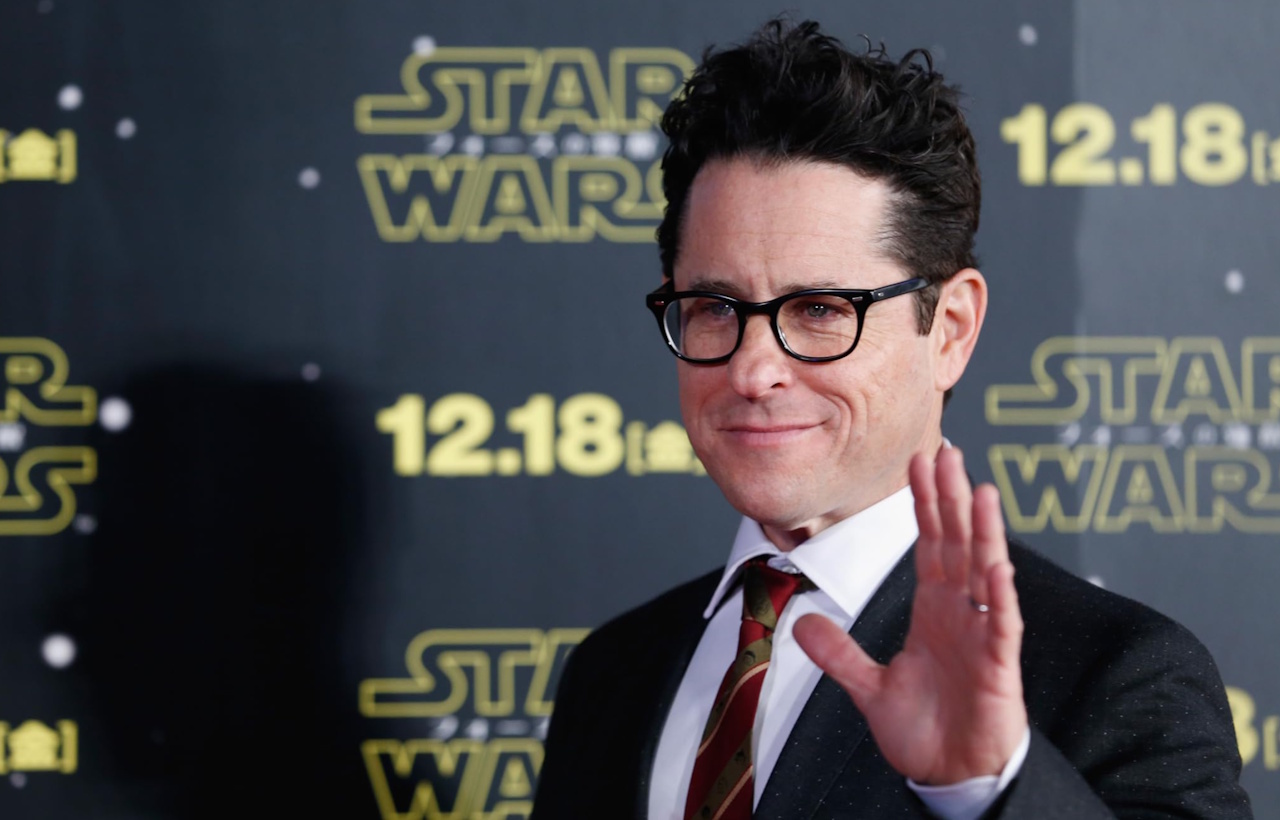
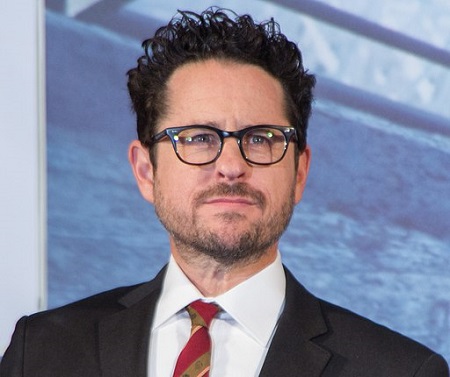
Photograph of filmmaker JJ Abrams at the premiere of Star Wars VII: The Force Awakens (2015).
J.J. Abrams at the film’s premiere.

J.J. Abrams had written questions into his script that he did not have answers for. In fact, not only had he not written a solution to his “mystery box,” but there really wasn’t a way for this story to unfold – when the baton was inevitably passed to Rian Johnson and Colin Trevorrow – that even made sense. Abrams screwed over Johnson and Trevorrow (who would later leave the project that became The Rise of Skywalker) by writing the beginning of a story that had no plan, no middle, no ending, and that was, in a word, inept. It is the “original sin” of the sequel trilogy, and while fans may dislike The Last Jedi or The Rise of Skywalker far more than The Force Awakens, it was here, in 2015, that the sequels’ undoing had already been set in stone.

“Luke Skywalker is missing!” announced the film’s opening crawl. But without establishing *why* Luke had disappeared – nor even really explaining the extent of his legend and legacy in the galaxy at large – The Force Awakens set up a mystery that had no explanation. And by leaving the choice for why Luke had squirrelled himself away on a hidden planet to the next film and the next writer/director, Abrams abdicated the tremendous responsibility that Disney, Lucasfilm, and generations of Star Wars fans had placed on his shoulders.
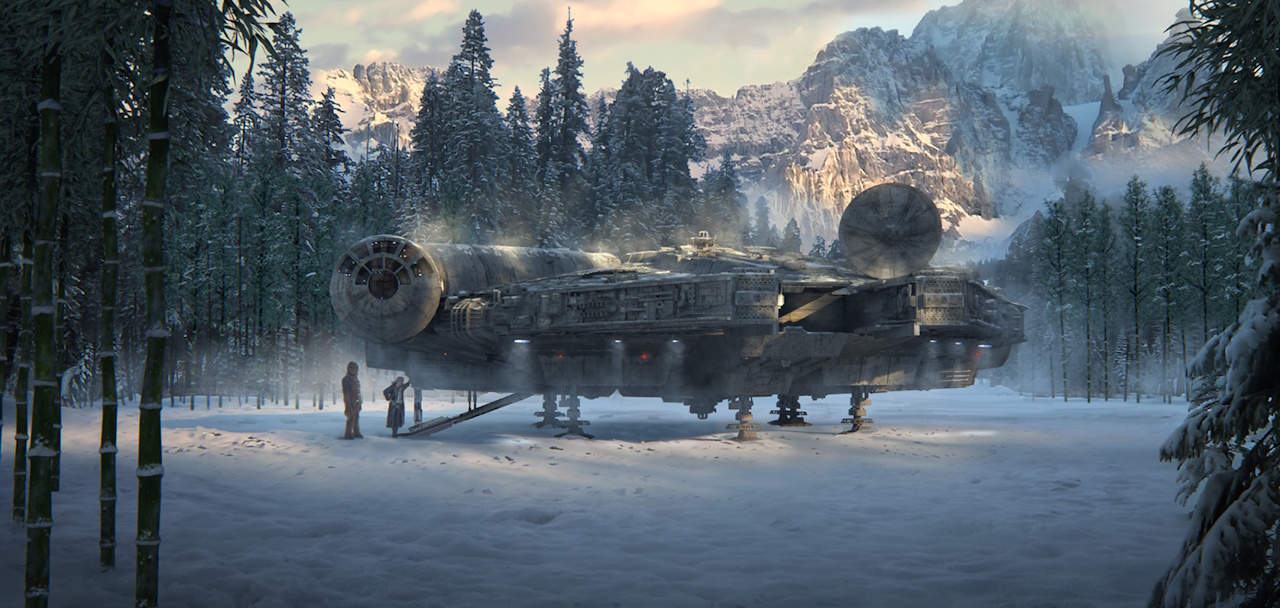
Concept art for Star Wars VII: The Force Awakens (2015) showing the Millennium Falcon.
Concept art of the Millennium Falcon.

I wrote several years ago that it boggles my mind how an accomplished group of filmmakers – people who created and worked on titles like the Indiana Jones trilogy, Lost, Jurassic Park, E.T., and many more – could have made such a genuinely bone-headed, idiotic, stupid decision when approaching the sequel trilogy. The Force Awakens was never envisioned as a standalone film, it was always meant to be the first instalment of a trilogy. And a trilogy that plans to tell a single story *needs* someone in overall creative control. J.J. Abrams, with his penchant for starting stories he has no intention of finishing and doesn’t know how to finish, was the wrong choice for that role. But Kathleen Kennedy, president of Lucasfilm, and Disney CEO Bob Iger should have known better – and should have taken a more structured, planned approach.

The decision to split up the writing and directing of the three sequel films was taken before work got underway on The Force Awakens – and even at that early stage, the damage was done. Splitting up the trilogy in this way was *always* going to be the wrong decision, and the predictable result is a trio of films that jump around in terms of tone, story, and even characterisation, as each of the subsequent instalments tries to undo something from its predecessor. And I do not exempt The Force Awakens from that criticism – it is the foundation upon which the trilogy should have been built, but because it was so weak and derivative, and because the decision was taken to split up the filmmaking process, it would be firmly tarred with the same brush even if it had been a perfect standalone title.

Which it wasn’t.
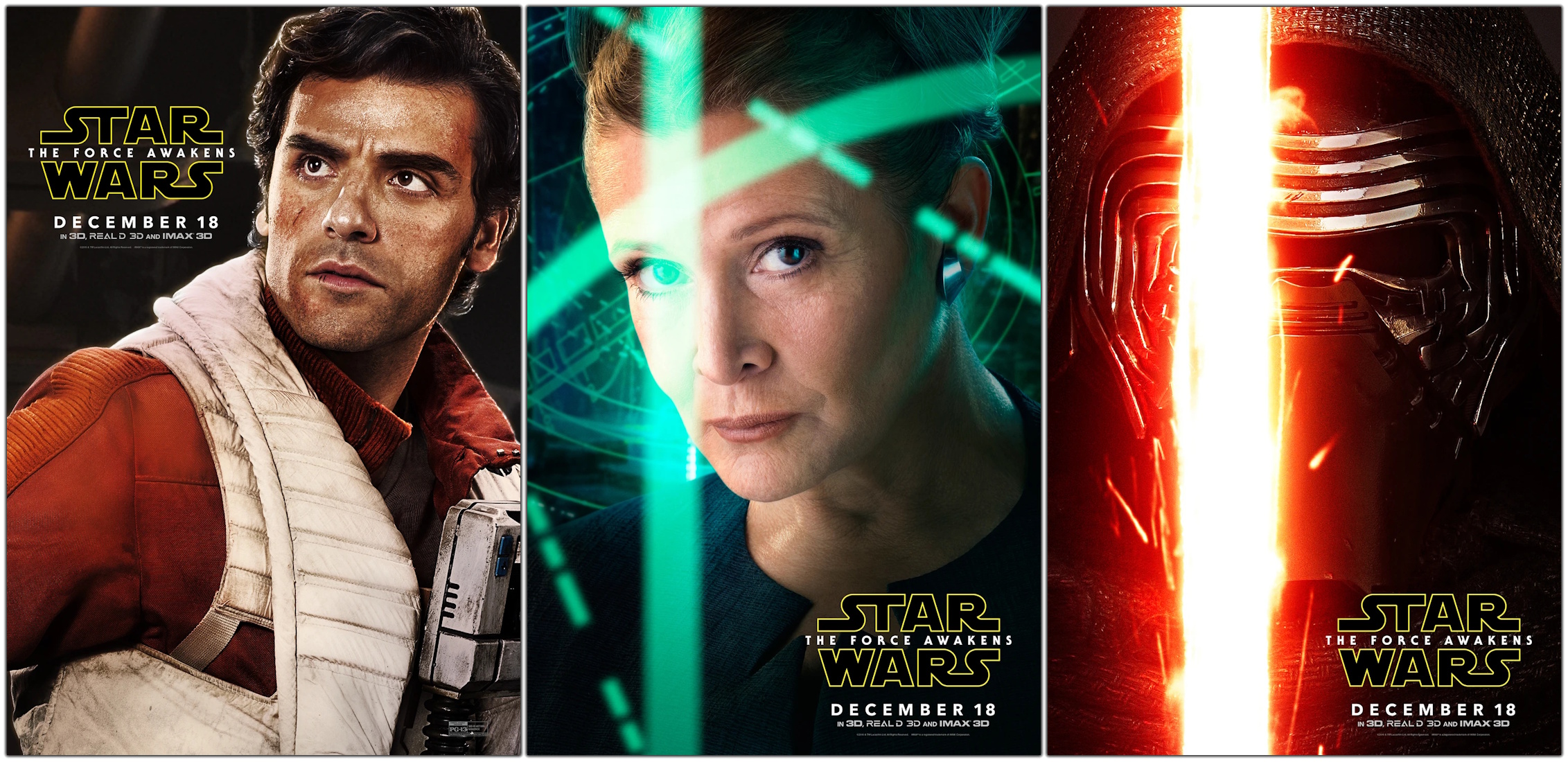
Trio of promotional posters for Star Wars VII: The Force Awakens (2015)
Poe, Leia, and Kylo on promo posters for the film.

What I felt had been the film’s biggest strength on that first viewing a decade ago now, in retrospect, feels like one of its most egregious faults and its most significant weakness. By choosing to replay, almost beat-for-beat, 1977’s Star Wars, the film fails to do what any sequel can and should aim to do. Questions that fans had all the way back in 1983 about what the galaxy would look like after the Empire’s defeat not only didn’t get answered, they were totally ignored; sidelined, as Abrams and co. tried to re-tell the same story as before, just with a different coat of paint.

Think about where Return of the Jedi had ended: the Emperor and Vader were dead, theoretically ending the Sith once and for all. The Death Star had been destroyed, and the Rebellion had won the Battle of Endor… but the Empire still existed in much of the rest of the galaxy, and there was no guarantee that the Emperor’s death would mean there could be a return to democracy. And with the deaths of Obi-Wan and Yoda, only Luke could carry on the legacy of the Jedi Order.
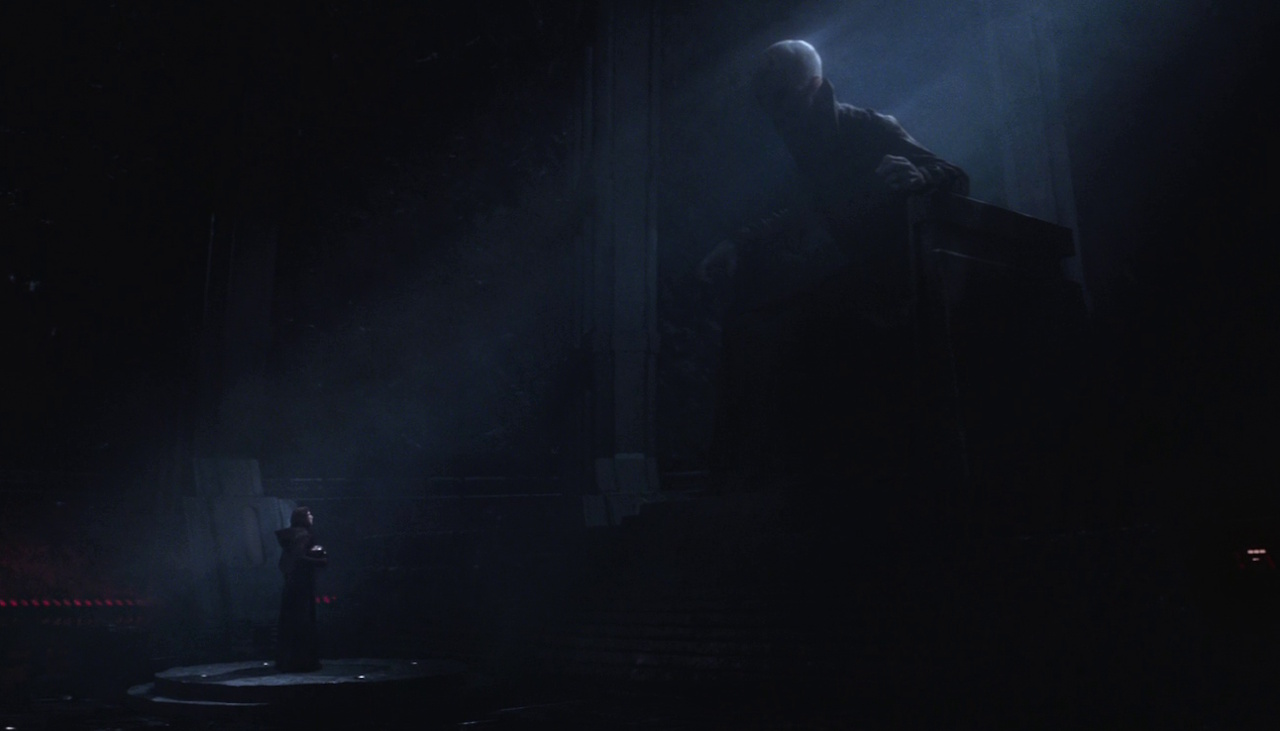
Still frame from Star Wars VII: The Force Awakens (2015) showing Kylo with Snoke.
Kylo Ren with Snoke.

The Force Awakens basically ignored all of that. In the aftermath of the Emperor’s death, the remaining Imperial factions basically gave up, and the New Republic took control of much of the galaxy. But then, in secret, some Imperial survivors founded the First Order – ruled over by Snoke, a mysterious Dark Sider. Snoke’s apprentice was the helmet-wearing Kylo Ren, the grandson of Vader. And Luke’s Jedi were nowhere to be seen, with his first attempt to train students ending in disaster. This set up a remarkably familiar story about a Dark Side power on the march, a rag-tag group of rebels (sorry, “the resistance”) trying to stop them, a planet-killing superweapon, and a youngster from a desert planet who gets swept up in all of it thanks to a droid carrying an important document.

Is that all Star Wars is? And… is that all Star Wars ever can be? J.J. Abrams and Kathleen Kennedy seemed to think so a decade ago.

And their attitude remains in the franchise to this day. The Book of Boba Fett, Obi-Wan Kenobi, Ahsoka, Rogue One, Solo, Andor and The Bad Batch, all of which have been created since 2015, rely on increasingly minor characters and smaller and smaller pieces of the *only* real story that the Star Wars franchise has ever told: the so-called “Skywalker Saga,” which should really be called the “Palpatine Saga,” since he’s the only character who seems to have acted of his own volition and who had any control over events. That’s the legacy of The Force Awakens ten years later: a franchise that has doubled- and tripled-down so hard on nostalgia plays and copying what came before that it’s become narratively exhausted and just plain *boring*.
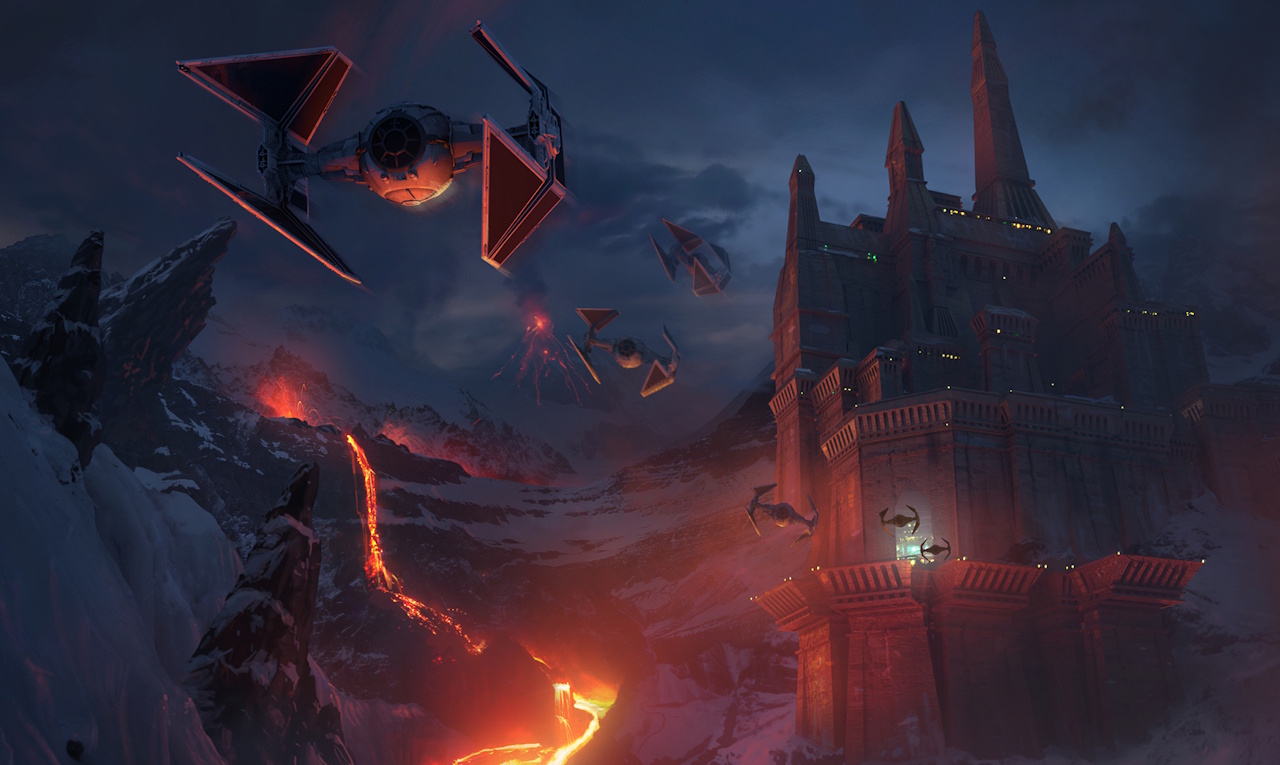
Concept art for Star Wars VII: The Force Awakens (2015) showing TIE Fighters and a castle with a lava moat.
TIE Fighters and a castle in concept art created for The Force Awakens.

Thanks to the decision to have Kylo kill Han Solo at the climax of the story – a genuinely shocking moment at the cinema – The Force Awakens robbed Star Wars fans of the opportunity to get *any* on-screen interaction between the three heroes of the original trilogy: Luke, Han, and Leia. Han and Leia got some scenes together, and Luke and Leia had a moment in The Last Jedi. But we never got to see Han and Luke together, nor the trio reunited. And that’s really quite sad, if you think about it.

Obviously no one could’ve known, when The Force Awakens entered production, that Carrie Fisher would pass away before the sequel trilogy was complete. But it seems to me that Abrams, Kennedy, and the rest… didn’t really think about how the new trilogy could or should use its legacy characters. There was no Lando Calrissian until The Rise of Skywalker, nor any acknowledgement of his existence. And while The Force Awakens made it clear that Leia and the Resistance believed Luke Skywalker needed to be brought back into the fold… we never really got a good explanation as to *why*.
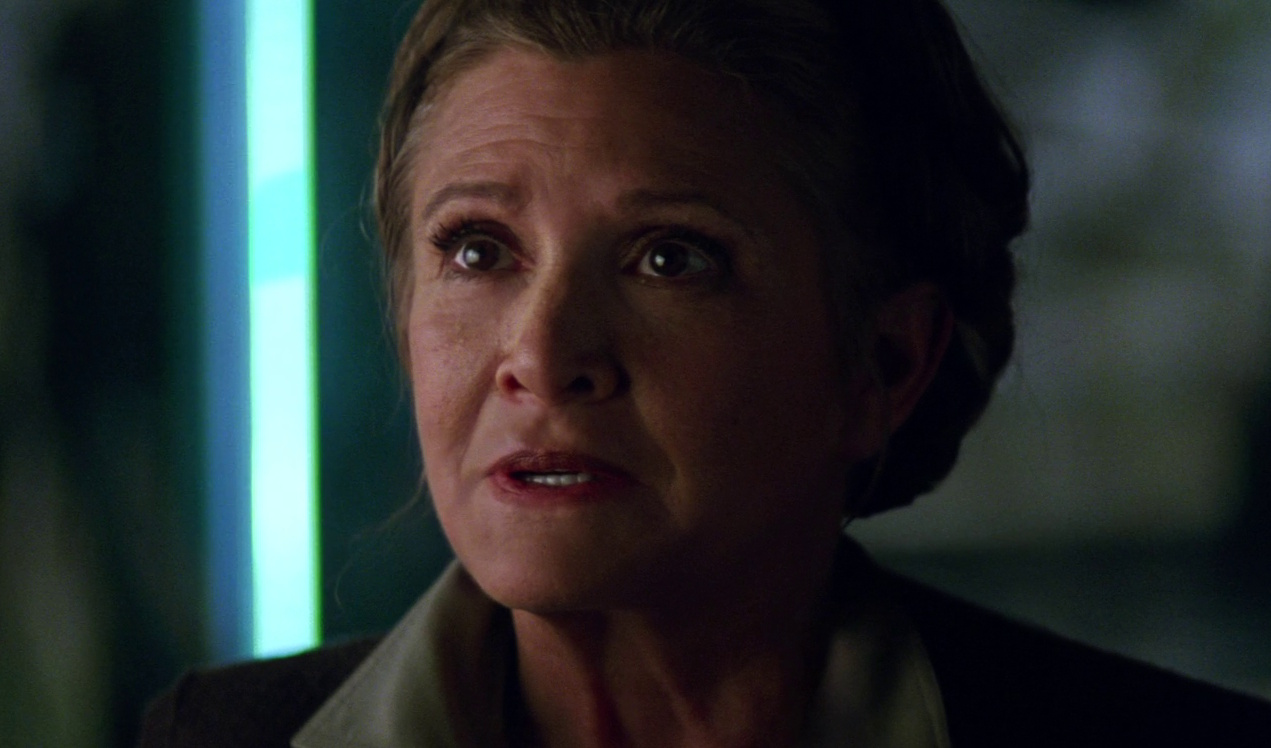
Still frame from Star Wars VII: The Force Awakens (2015) showing Leia.
General Leia of the Resistance.

So as we mark the film’s tenth anniversary… I don’t think there’s all that much to celebrate, to be blunt about it.

The story that The Force Awakens began was supposed to expunge what Star Wars had got wrong, and lay the foundations for a better future. But if you look at the state of the fan community today, the sequel trilogy is disliked, on the whole, *at least* as much as the prequels had been a decade ago, if not more. By playing it too safe, copying too much of what had come before, and failing to really answer any of the questions that a sequel should have been able to, The Force Awakens ended up being a poor film, a weak start, and a major contributing factor to Star Wars’ undeniable decline in the 2010s and 2020s.

We’re at a point now where practically no new Star Wars projects elicit the kind of excitement as The Force Awakens had done a decade ago. Oversaturation is part of that, sure – I haven’t even watched all of the various Disney+ Star Wars shows, because there’s just too many of them at this point. But a big part of it is also that this franchise feels rudderless. By doubling- and tripling-down on repetition, The Force Awakens set the tone for Star Wars’ current direction, and after the controversy of projects like The Last Jedi and The Acolyte, the temptation must be for Disney and Lucasfilm to do more of the same – which feels wrong for a franchise with such a well-constructed and interesting setting.
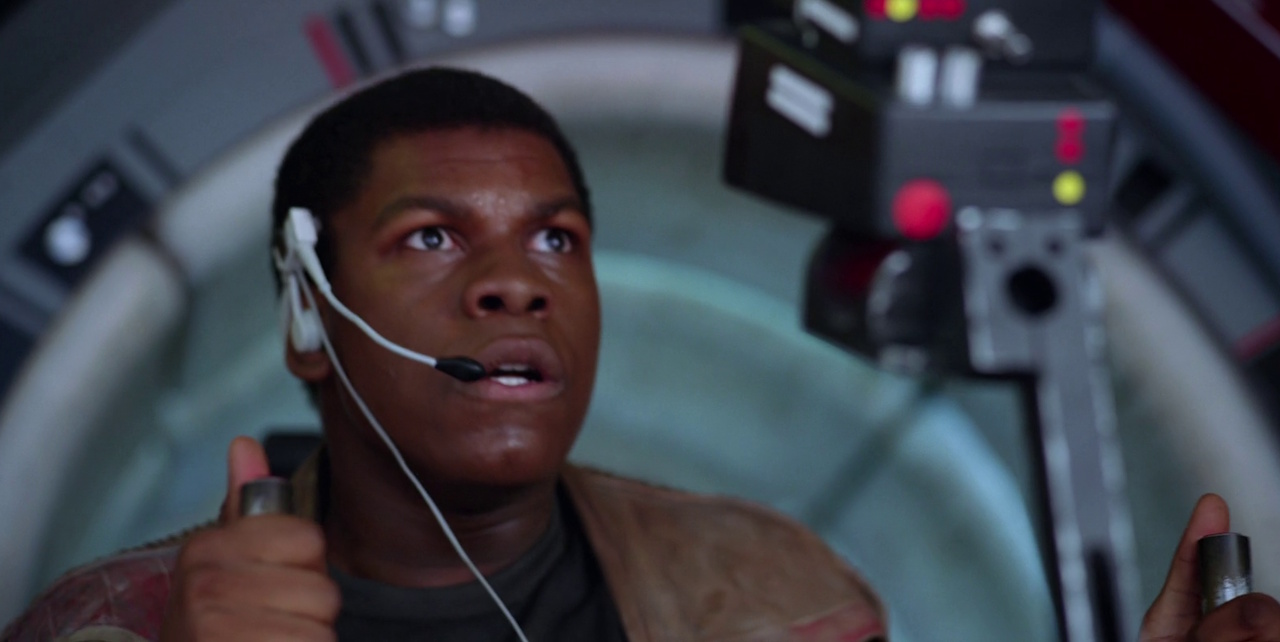
Still frame from Star Wars VII: The Force Awakens (2015) showing Finn aboard the Millennium Falcon.
Finn.

“Fundamentally flawed.” That’s my two-word summary of The Force Awakens a decade later. It was, I do not deny, a well-intentioned film, and there was merit in the idea of “resetting” some of Star Wars after the prequel trilogy. But by playing things *so* safe, and by basically copying many of the plot points from the original trilogy and A New Hope in particular, Star Wars was left with nowhere to go.

Most stories… end. And they should be allowed to end. In-universe, obviously there was work to do for Luke, Han, Lando, and Leia after the Battle of Endor. But given everything we’ve seen since – both the fan-fiction mess of the Expanded Universe, depicting a flawless, all-conquering hero in Luke Skywalker, and now the sequel trilogy with its repetition of the original story – I’m increasingly of the opinion that there shouldn’t have been a Star Wars sequel. Return of the Jedi wasn’t a perfect film, but it killed off Palpatine and Vader, gave the Rebellion a huge win, and saw Luke embrace the legacy of the Jedi. That’s where the story needed to end.
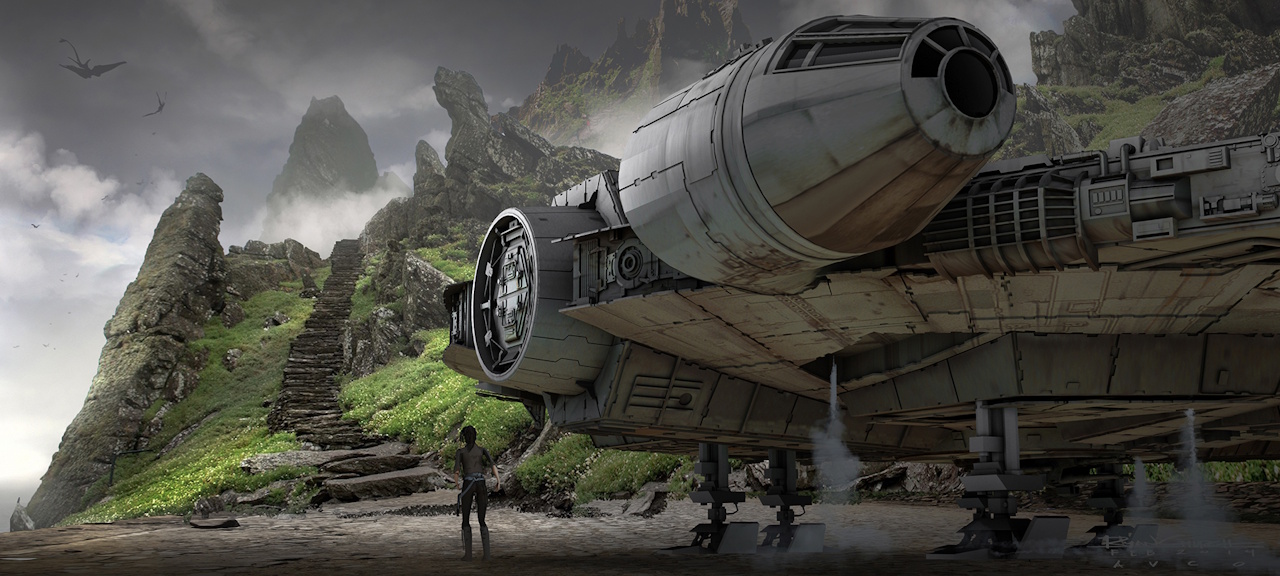
Concept Art for Star Wars VII: The Force Awakens showing Rey's arrival at Ahch-To.
Concept art of Rey arriving at Ahch-To at the end of the film.

In the 21st Century, though, it seems as if no story is allowed to come to a dignified end. And that kind of explains why The Force Awakens came to be in the first place. Rather than create something new, Disney wanted to buy something successful – something that, they believed, would print them endless amounts of cash. It worked with Marvel, so why not Star Wars, too? We’re seeing the limitations of that approach now, and The Force Awakens is really just the first chapter in a sad decline – not only for Star Wars, but for Marvel, Disney’s animated films, and more. Disney’s attitude at the moment is one of franchises, sequels, and remakes. Originality has left the building. And that isn’t *all* the fault of The Force Awakens by any stretch. But the film is symbolic of a moment in time, a moment where things began to change – and not for the better.

So, yeah: ten years ago, I had a great time with this film. Rey, Finn, and Poe were all fun characters that I felt we were just beginning to get to know, and I was curious to see where this story would go and how the First Order would be defeated. But the flaws in that story were already on display, and now that we know how badly off the rails the sequels went, and how poorly-planned the entire project was… it adds a lot of context to The Force Awakens. And it makes it pretty hard to go back and watch the film at all, in all honesty.

I continue to hope for better things from the Star Wars franchise. And there have been some projects over the last decade that worked: Rogue One, for example. But as we mark the tenth anniversary of this landmark film… I can’t help but feel there are way more negatives than positives. Star Wars will continue, of course – there are new projects on the horizon in 2026 and beyond. But are you as excited about *any* of them as you were ten years ago for The Force Awakens? I’m not. And that’s part of this film’s legacy.


Star Wars: Episode VII – The Force Awakens is available to stream now on Disney+. The film is also available on DVD and Blu-ray. The Star Wars franchise – including The Force Awakens and all other properties discussed above – is the copyright of Lucasfilm and The Walt Disney Company. This article contains the thoughts and opinions of one person only and is not intended to cause any offence.
Fate of the Old Republic: Thoughts and Concerns

A Star Wars-themed spoiler warning graphic.

Spoiler Warning: Beware minor spoilers for Star Wars: Knights of the Old Republic and Knights of the Old Republic II.

The so-called Game “Awards” was pretty shit, wasn’t it? I didn’t watch the actual broadcast, because if the organisers don’t actually care about their made-up trophies at this glorified marketing event, why should I? But I did check out the announcements and a few of the trailers after the fact, as I usually do, and there was one that caught my eye. As you probably guessed, it was Star Wars: Fate of the Old Republic.

I was huge Knights of the Old Republic fan during the original Xbox era, and I still consider both that game and its sequel to be among the best RPGs I’ve ever played – as well as two of the best pieces of Star Wars media, too. KotOR II left things open-ended more than twenty years ago, but the story was never continued. More recently, a remake of the first KotOR had been announced, but that project seems to have suffered from a difficult and troubled development process, with a publisher withdrawing, a development studio being kicked off the project, and no official word on it for a long time.

So Fate of the Old Republic’s announcement should be a time of joy! Right?

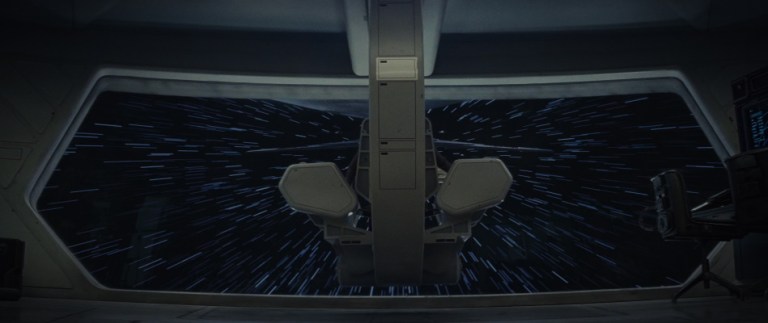
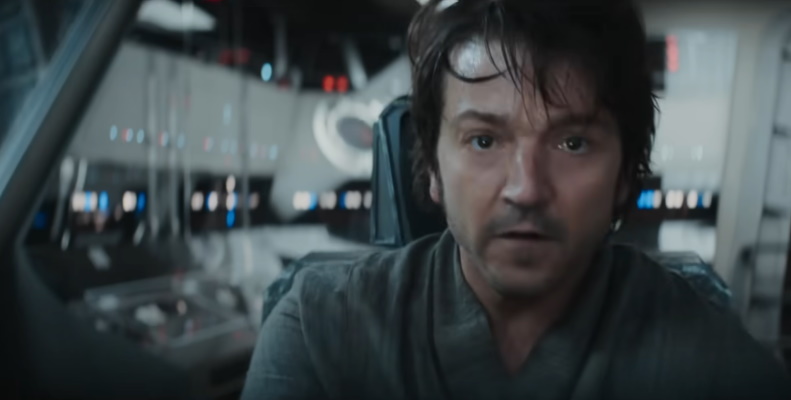
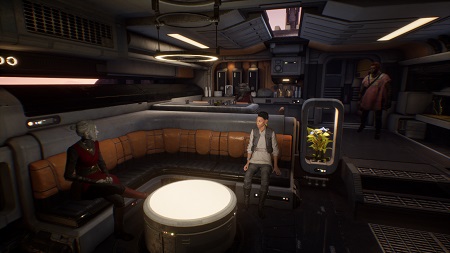
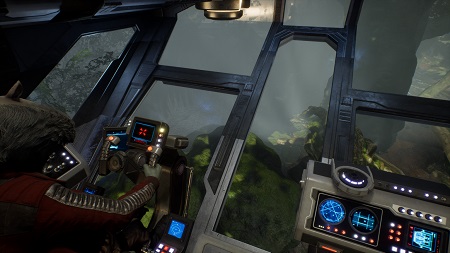
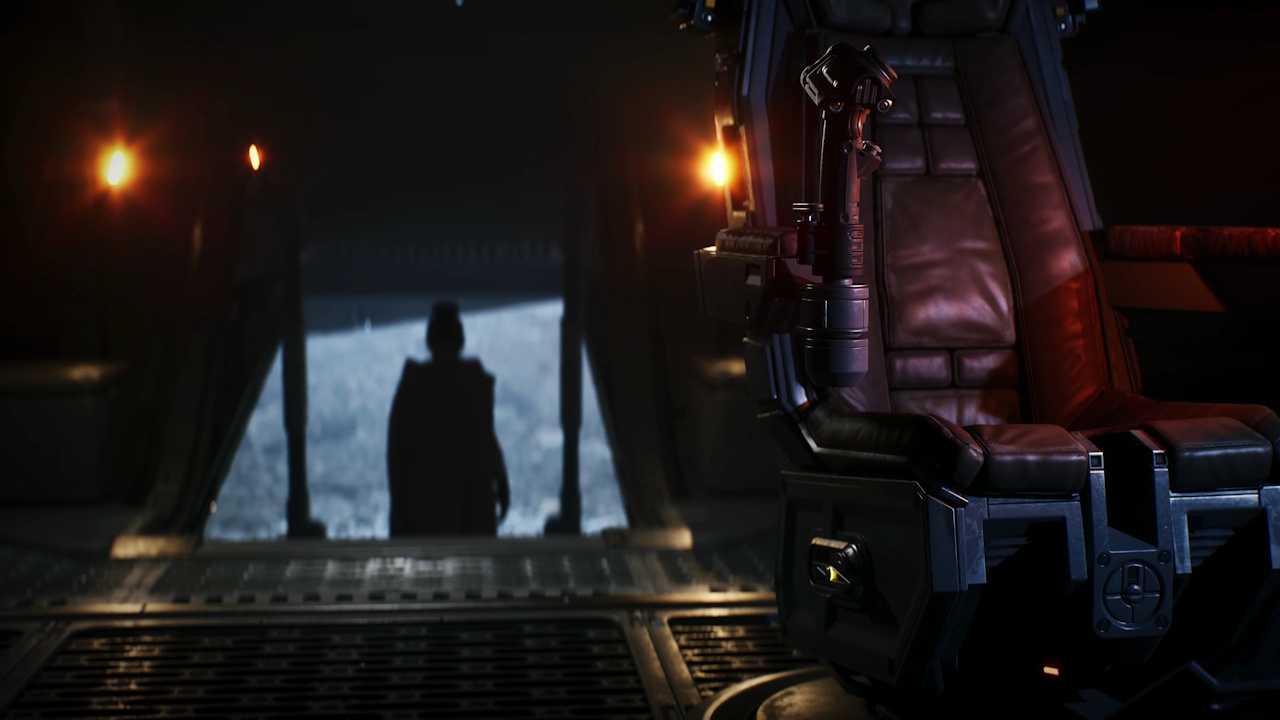
Still frame from the Star Wars: Fate of the Old Republic teaser showing the pilot's seat.
Star Wars: Fate of the Old Republic has been teased.

Well, let’s talk about that.

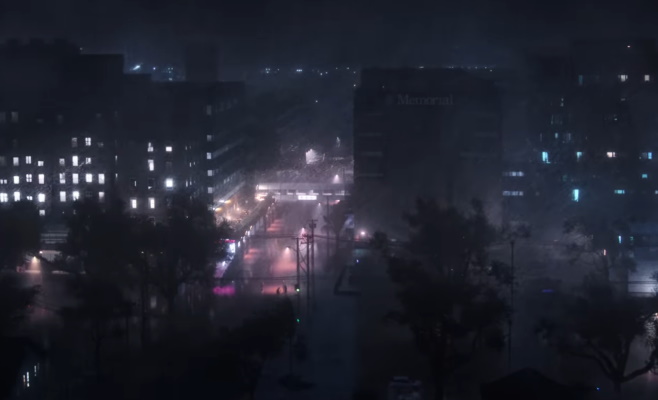
Truthfully, I’m not exactly blown away by this announcement. We didn’t actually see Fate of the Old Republic with our own eyes at the Game “Awards.” We saw a CGI trailer that told us next to nothing. That’s not unexpected for a game which is clearly at a very early stage in its development, but after being burned once by a cinematic KotOR remake trailer that hasn’t actually gone anywhere… well, there’s less to get excited about the second time around.

But if Fate of the Old Republic is, as has been reported, five-plus years away from its potential release window… I can’t be alone in thinking that its announcement has come too early, can I? Star Wars has been guilty of this before, not just with the aforementioned KotOR remake, but also with Eclipse – another single-player title we haven’t so much as glimpsed in over four years at this point. So… why announce this now? It wasn’t like Fate of the Old Republic was being leaked, and teasing fans with a nothing-burger cinematic clip five years or more ahead of release feels almost mean. I might not still be here (or still able to play games if my arthritis gets worse) come 2030.

Fate of the Old Republic still seems a long way off.

So far, I haven’t been able to find out what Fate of the Old Republic’s existence may or may not mean for the status of the KotOR remake and – potentially – a KotOR II remake that I’d want to see follow it up. Is the KotOR remake still happening? Or does this announcement mean that Disney, Lucasfilm, and their development/publishing partners are now going in a totally different direction? I wouldn’t expect the developers of Fate of the Old Republic to discuss that – but hopefully soon, someone from Disney, Lucasfilm, or Saber Interactive can clear things up.

I want a new KotOR game, don’t get me wrong. But having been excited about the remake – and having deliberately not played KotOR or KotOR II since the remake was announced – I don’t like the idea of losing that game. In an ideal world, I’d like to see both titles release: the KotOR remake first, then hopefully KotOR II, and finally Fate of the Old Republic. But it would be nice to get some clarity from the people involved whether the remake is still happening… because it seems odd to me to announce this new game if the remake is also going ahead. The KotOR remake, with the best will in the world, isn’t launching in 2026. So if that game would be 2027 or later, then it starts to butt up against Fate of the Old Republic if it might make a 2030 release. The timings of all these things leaves me scratching my head.

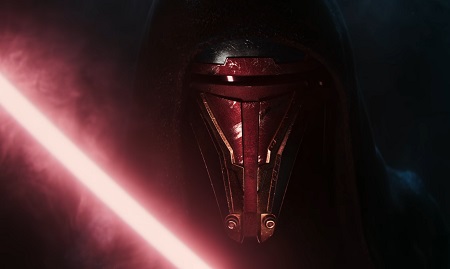
Still frame from the KotOR Remake teaser showing Revan.
What does this mean for the KotOR remake?

Then there’s the typical Star Wars “oversaturation.” Will people pick up the KotOR remake knowing that Fate of the Old Republic might be just a couple of years away? And if the KotOR remake does well, will that risk overshadowing Fate of the Old Republic, given how strong the game’s story is and the incredibly powerful impact of its big twist? It just feels like a totally unnecessary risk.

The ideal way to do this would’ve been to launch the KotOR remake, then get straight into remaking KotOR II using the same team and the same process. Only then would work on a new entry commence. But my biggest concern at this stage, really, is whether the KotOR remake is still happening at all. If I had to choose between a remake and a new game, I’m always gonna pick a new game! But having been teased with the idea of replaying one (or perhaps two) of my favourite RPGs of all-time… I’ll be a little disappointed if the promised remake now isn’t happening.

Still frame from the Star Wars: Fate of the Old Republic teaser showing the protagonist's eyes.
A mysterious character.

Much has been made of KotOR director Casey Hudson’s involvement in this project – and I’m definitely pleased to see him back in the director’s chair. Hudson – who also directed the fantastic Jade Empire and all three games in the original Mass Effect trilogy – is fantastic, so any game he’s involved with, even if it wasn’t Star Wars, would have attracted my attention! But can the same be said for any of his colleagues at the brand-new Arcanaut Studios?

Fate of the Old Republic will be Arcanaut’s first-ever video game. And it isn’t easy to build up a brand-new studio from scratch in the modern games industry. Building a studio around a talismanic figure from the past doesn’t always work – just ask Build A Rocket Boy and their failed game MindsEye. Even in the Star Wars franchise, such things don’t always work out – Amy Hennig’s Star Wars game ended up being cancelled before it even launched, and that was coming from an established studio with a track record. So… there are causes for concern, unfortunately. One big name, no matter how influential they may once have been or what their track record may look like, is not a guarantee of success on its own, and a game like Fate of the Old Republic feels like a massive project for a brand-new studio to be tasked with.

Splash page from the website of Star Wars: Fate of the Old Republic developer Arcanaut showing their logo and a graphic.
This will be Arcanaut Studios’ first game.

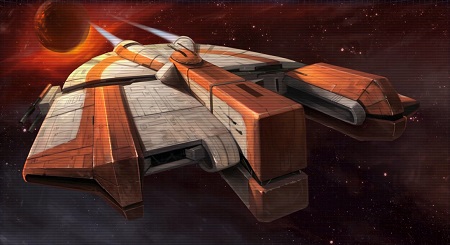
Finally, there was one phrase in Fate of the Old Republic’s marketing material that I didn’t like to see. The game is being described as a “spiritual successor” to Knights of the Old Republic. But a “spiritual successor” is not a true sequel, is it? So will this game pick up the stories of Revan and the Jedi Exile? Or will it be a brand-new thing that doesn’t continue their storylines at all? The studio’s website promises “new characters for an all-new story,” which sounds to me like they’re not planning to even touch on what happened to Revan and the Jedi Exile. And I would add that nothing in the Fate of the Old Republic trailer looked familiar – the character, the starship, the planet… none of it.

And that leaves me baffled, to be honest.

Why make a big deal of Casey Hudson’s involvement, name-drop KotOR so often, and even use the “of the Old Republic” branding in the game’s name if it’s gonna be a different thing altogether? It almost feels like it could be a bait-and-switch; using the KotOR name to entice fans of those games to show up for a new, unrelated project.

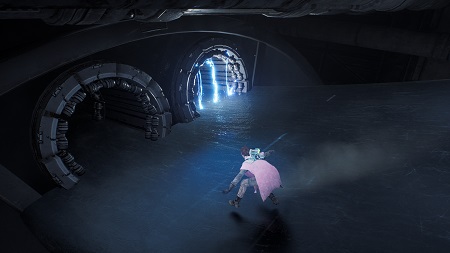
Still frame from the Star Wars: Fate of the Old Republic teaser showing the character entering a door.
Is this game going to connect back to KotOR in a big way? Or… at all?

I’m still hopeful that Fate of the Old Republic will be a solid and enjoyable game in its own right… when it’s ready in 2030 or beyond. And if I’m still here and still capable of writing and gaming, I’ll do my best to play it and review it right here on the website! But, for all the reasons discussed above, I’m not exactly “hyped” for this new game at this too-early stage, and I’m more concerned, in some ways, for what this announcement could mean for the KotOR remake that I’d been looking forward to.

So I realise this was a dump of negativity, and I apologise for that. But KotOR and KotOR II are still games I’m passionate about, and I’ve longed for a continuation for literally decades at this point. I’m not sure, based on what I’ve seen and read, whether Fate of the Old Republic will be that game. It certainly won’t be KotOR III. However, it could be a fantastic standalone title, and maybe there will be more connections to Revan and the Jedi Exile, even if those characters and their friends don’t end up forming a core part of the new story. In any case, I will check out Fate of the Old Republic when it’s ready, assuming I’m able to.

Stay tuned here on the website, because I’m currently writing up my thoughts on The Force Awakens ahead of its tenth anniversary. And later in the month, I’ll be handing out some of my own made-up statuettes and trophies to some of my favourite entertainment experiences of 2025! I hope you’ll join me for that. Until then… may the Force be with you, friends!


Star Wars: Fate of the Old Republic is in early development and may not launch for several years. Star Wars: Fate of the Old Republic is the copyright of Arcanaut Studios, Lucasfilm Games, and The Walt Disney Company. Star Wars: Knights of the Old Republic is the copyright of BioWare, Electronic Arts, Lucasfilm Games, and The Walt Disney Company. This article contains the thoughts and opinions of one person only and is not intended to cause any offence.
Trying To Be Positive About The Rise of Skywalker

A Star Wars-themed spoiler warning graphic.

Spoiler Warning: There are spoilers ahead for the Star Wars sequel trilogy.

Y’know, the more I think about it, the more convinced I become that this particular article would’ve been a better fit for April Fool’s Day rather than Star Wars Day. But I’m committed now… so here we go!

Happy Star Wars Day, friends! May the Fourth be with you… and all that. This year, I thought it could be a bit of fun to mark the occasion by revisiting one of my least-favourite Star Wars films – and probably one of the worst films I’ve ever seen – 2019’s The Rise of Skywalker.

Cropped promo poster for the IMAX version of Star Wars: The Rise of Skywalker (2019) featuring rebel and imperial spaceships.
X-Wings and Star Destroyers on a promotional poster.

It was in late 2019 that I embarked on the project that eventually became this website, and for a sometime Star Wars fan, that was a bit of a strange period. The Last Jedi had proven to be massively controversial within the fan community, and the discourse around that film had become incredibly toxic. Solo: A Star Wars Story had flopped, I really wasn’t keen on the first season of The Mandalorian, and it seemed as if the only bright spark in the franchise was Jedi: Fallen Order. I desperately hoped that The Rise of Skywalker could do the impossible by bringing the fan community back together and ending the sequel trilogy on a high.

It did not do those things, and that’s putting it mildly.

Though I consider the Obi-Wan Kenobi miniseries to be the worst piece of Star Wars media that I’ve seen, The Rise of Skywalker isn’t far behind. It was an atrocious film, one that I’d seriously consider putting on a list of “the worst films I’ve ever seen.” But re-hashing what I didn’t enjoy about the film isn’t the purpose of today’s exercise!

Still frame from Star Wars: The Rise of Skywalker (2019) showing Rey sinking in quicksand.
Surely this can’t be a visual metaphor…

Because it’s Star Wars Day, and in the spirit of positivity, I want to talk about some of the things The Rise of Skywalker got right – or at least got less wrong. Despite my overall feelings about the film, its story, the thought process that went into creating it, and more… there are some highlights worth mentioning. You might remember some of these if you read my two separate articles about the film in 2020 and 2021, but I’ve also added a couple of points that I didn’t mention in those earlier pieces.

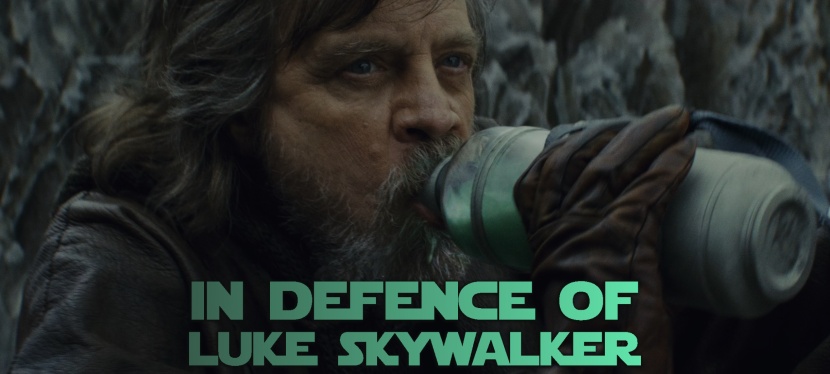
In my essay titled In Defence of Luke Skywalker, I talked about how the depiction of Luke’s depression in The Last Jedi was generally well-written and conveyed an important message. It may not have been what fans wanted or expected from Luke Skywalker – particularly folks who’d bought into the old Expanded Universe stories, which depicted him as a flawless all-conquering superhero – but it was powerful and it resonated with me. The idea that anyone, even someone heroic, can fall victim to the “black dog” of depression is an important message, and it was well-told in The Last Jedi.

Still frame from Star Wars: The Last Jedi (2017) showing Luke's final moments.
Luke’s depiction and death were controversial aspects of The Last Jedi.

The Rise of Skywalker undid most of that, unfortunately. But it couldn’t entirely erase what had come before. If you take Luke’s story across the sequel trilogy, you can read it as recovering from depression – and that is a positive, hopeful, and uplifting message. The Force Awakens and The Last Jedi show Luke at his lowest: suffering a catastrophic defeat, almost giving in to a dark impulse, grieving the loss of his students, failing at his life’s mission to restore the Jedi Order, and succumbing to depression. He retreated to Ahch-To to die.

But after the events of The Last Jedi, Luke found a reason to believe again. And The Rise of Skywalker takes that concept and expands upon it, showing us Luke – in ghostly form – happier, more connected to the Force, and more willing to lend a hand when the galaxy needed him. To drag out the depression metaphor from The Last Jedi, this is the recovery phase. Not everyone who suffers with depression gets to that point, but seeing it depicted on screen like this can give hope and inspiration to people in that situation.

Still frame from Star Wars: The Rise of Skywalker (2019) showing Luke Skywalker's Force ghost.
Rey with Luke’s ghost.

Sticking with deceased characters, Han Solo got more of a send-off in The Rise of Skywalker than he did in The Force Awakens. Han’s death was shocking in that film, but its suddenness was immediately followed up by action set-pieces and the “trench run” over Starkiller Base – meaning we didn’t get to sit with the impact of it for very long. Bringing Han back – albeit for a role that was clearly intended for Leia – was somewhat cathartic, and getting to spend a little more time with him was a net positive for the film.

Because this sequence was told from Kylo’s perspective, we got to experience some of the feelings of grief, loss, and regret that he felt at killing his father. We can debate whether such an action is ever forgivable or redeemable, but The Rise of Skywalker wanted to give Kylo a redemption arc akin to that of Darth Vader in Return of the Jedi. Seeing this vision of Han Solo helped with that, or at least didn’t detract from it. And Adam Driver put in a stellar performance in these sequences – as he did across the entire film, really.

Still frame from Star Wars: The Rise of Skywalker (2019) showing a close-up of Han Solo.
The Rise of Skywalker gave us a bit more closure on Han’s death.

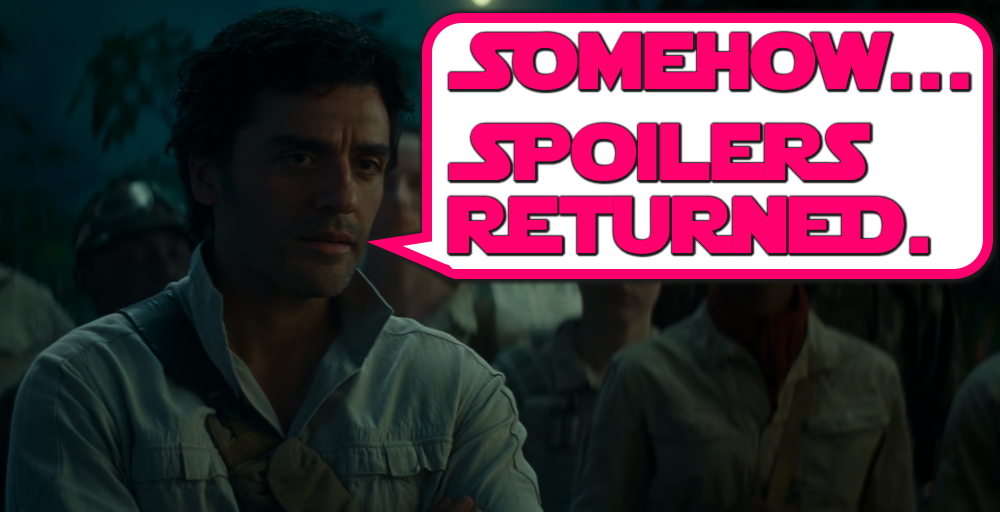
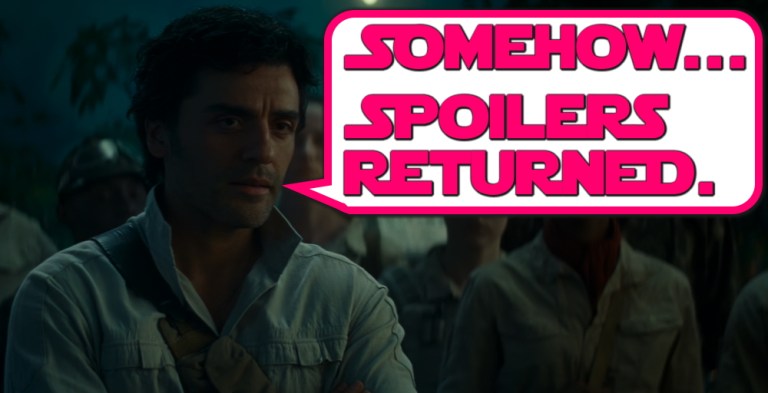
I know we’re trying to be positive about The Rise of Skywalker and this next point is very much a backhanded compliment (at best), but it’s my article so I’m gonna include it! The line “somehow Palpatine returned” has become one of those “so bad it’s good” moments for me. It wasn’t when I first watched the film, but the more I’ve sat with that line the funnier I find it to be. I still think everyone involved with writing, approving, and directing this line should be blacklisted from the entertainment industry for life… but on days when I don’t want to take Star Wars too seriously, or where I’m so depressed I need a good laugh, “somehow Palpatine returned” is there for me.

The line has also become one of my go-to examples of poorly-written dialogue, as well as an example of Star Wars’ overreliance on other works of media to set up important narrative beats in mainline films. Not only that, I think there’s something encouraging and even inspirational about this line. “Somehow Palpatine returned” reminds me that I’d have to do an exceptionally poor job to write something worse, and that there’s apparently a very low bar for pitching scripts for big-budget films. So maybe my Hollywood dreams haven’t entirely evaporated, eh? Jokes aside, this line is awful, and it’s become emblematic of the failures of The Rise of Skywalker and the sequel trilogy as a whole. But it’s also unintentionally hilarious as the film’s writers and Disney’s executives tell on themselves; no one could be bothered to write an explanation for Palpatine’s stupid resurrection, and this storyline was set up as part of a merchandising tie-in deal with the video game Fortnite. For all those reasons and more, it’s an excellent example of what not to do in filmmaking.

Still frame from Star Wars: The Rise of Skywalker (2019) showing Poe at the rebel base.
“Somehow Palpatine returned.”

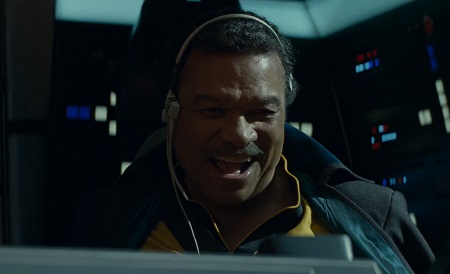
To get back to something a bit more genuinely positive and inspiring, I’d like to highlight Lando Calrissian’s role in The Rise of Skywalker. I don’t know why Lando was absent in The Force Awakens and The Last Jedi, but Billy Dee Williams made the most of his return to the role in the third instalment of the sequel trilogy! In fact, I could’ve happily spent a lot more time with Lando; watching him heading out across the galaxy, rallying the citizens to the cause would’ve been quite something to see.

Lando’s last-second arrival at the head of a massive fleet was pretty much the only moment in The Rise of Skywalker where I felt a twinge of emotion. I’m a sucker for a “desperate last stand” kind of story, and seeing the ordinary citizens of the galaxy rising up in unison against Palpatine and the Sith felt good in the moment. As Poe, Finn, and the rest of the Resistance seemed to be on the cusp of defeat, Lando raced in to save the day, leading the galaxy in a unified last stand against autocracy and fascism. The scene where he and his fleet dropped out of hyperspace was powerful, and was probably one of the best individual moments in The Rise of Skywalker.

Still frame from Star Wars: The Rise of Skywalker (2019) showing Lando grinning aboard the Millennium Falcon.
Lando arrives to save the day!

Although I wish the sequel trilogy as a whole had done more with the idea of a Force dyad, some of the moments between Rey and Kylo were at least interesting. There was also some creative cinematography employed as Rey and Kylo had visions of one another despite being far apart. The scene where Rey was in Kylo’s room was one such moment, and I think the way the film transitioned between two different locations was creative.

I would’ve liked to have gotten more of an explanation of the Force dyad; how it came to be and what else Rey and Kylo could’ve done with it would have been fun to see. The idea of two characters with totally opposing points of view and objectives having this unintended bond – one they couldn’t rid themselves of – was also an interesting concept in theory, and I think we saw at least some of that potential in The Rise of Skywalker.

Still frame from Star Wars: The Rise of Skywalker (2019) showing Rey attempting to heal Kylo.
Kylo and Rey formed a rare Force dyad.

Finn’s story was not great in The Rise of Skywalker – or really across the sequel trilogy as a whole. But as a concept, the idea of a rogue stormtrooper breaking free of his indoctrination was interesting. And The Rise of Skywalker made at least a bit of an effort to expand upon that with the new character of Jannah – another defector that Finn encountered during the mission to Endor.

If Luke Skywalker’s story was an analogy for depression and mental health, Finn and Jannah’s can be seen as deprogramming from a cult or escaping an autocratic society. There are real-world parallels that are interesting – and open to interpretation. I don’t think The Rise of Skywalker was perfect in its execution of this idea, but I will give the film credit for trying, and for expanding our knowledge of ex-stormtroopers and the reasons why some might defect or abandon their posts.

Still frame from Star Wars: The Rise of Skywalker (2019) showing Finn and Jannah. Brightness adjusted.
Finn with fellow ex-stormtrooper Jannah.

Sticking with Finn, his “bromance” with Poe was certainly an enjoyable part of his story and characterisation, and one which was in focus in The Rise of Skywalker more than it had been in The Last Jedi. The two worked well together, and although I felt Oscar Isaac was rather phoning it in with his performance, the same can’t be said of John Boyega. Boyega did his best to carry this character relationship, and I could’ve happily spent longer with Finn and Poe.

There are a few other acting performances that stand out to me. I think being able to separate one’s thoughts about a performance from how we might feel about the script or narrative decisions is important – so it’s worth crediting actors and actresses who give it their all, even when they’re part of a train wreck! I mentioned Adam Driver above, and he’s literally never been anything less than outstanding in any film I’ve seen him in. One day he’s going to win one of the big awards – mark my words.

Still frame from Star Wars: The Rise of Skywalker (2019) showing Kylo holding his lightsaber, surrounded by trees and corpses.
Kylo on the battlefield.

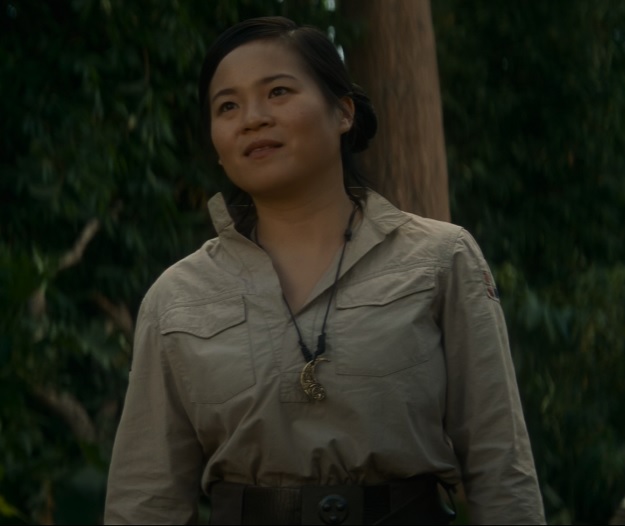
Though the sequel trilogy was never meant to be Palpatine’s story, Ian McDiarmid clearly relished reprising his role, and threw himself into it. Palpatine dripped with malice every time he appeared on screen. I may loathe what the film did with General Hux, but I’d be remiss not to include Domhnall Gleeson’s performance as being praise-worthy. Hux’s pure hatred for Kylo really came through thanks to Gleeson’s work, and even though the storyline was a tough sell, he clearly gave it his all. Kelly Marie Tran, though only on screen for a couple of minutes, did well with the material she had, and I think it’s a shame we didn’t get to spend more time with Rose.

So I think that’s about it.

I wish I could tell you that it was fun to revisit The Rise of Skywalker. But at the very least, I think we managed to find a few notes of optimism amidst the wreckage; small things here and there that achieved some measure of success, struck the right emotional or narrative chord, or just didn’t fail as comprehensively as the film around them. Maybe you enjoyed The Rise of Skywalker more than I did – and that’s great. The Star Wars franchise should be big and diverse, and there’s plenty of room for differences of opinion when it comes to the best and worst parts. Nothing about this is “objective,” at the end of the day!

Still frame from Star Wars: The Rise of Skywalker (2019) showing Finn, Poe, and Rey with the wreck of the Death Star.
Looking at a wreck. Seems fitting, eh?

There’s more Star Wars to come – which is genuinely good news! Andor’s second season is currently airing, a second season of Ahsoka is planned, and there are several upcoming films on the schedule, too. Upcoming films include pictures based on Rey and Lando, a spin-off from The Mandalorian, a new trilogy, and the intriguing-sounding Star Wars: Starfighter. So despite the controversial reception the film got, The Rise of Skywalker didn’t doom Star Wars’ future prospects!

I hope this has been a bit of fun to mark Star Wars Day – or at least something a little different. I wanted to try to take one of the worst films in the franchise and talk about some of its better aspects, partly as a challenge to myself and partly because it’s Star Wars Day. Thanks for reading, and May The Force Be With You!


Star Wars Episode IX: The Rise of Skywalker is available to stream now on Disney+ and is also available on DVD and Blu-ray. The Star Wars franchise – including The Rise of Skywalker and all other films and properties discussed above – is the copyright of Lucasfilm and The Walt Disney Company. This article contains the thoughts and opinions of one person only and is not intended to cause any offence.
The Official* Star Wars Tier List

A spoiler warning graphic.

Spoiler Warning: There are spoilers ahead for practically the entire Star Wars franchise.

I don’t know who first came up with the format, but I really like the way tier lists work. Instead of trying to rank every film or episode in a series in perfect order, we can just give them a grade – which is a nice and easy way of expressing how we feel! So today, I thought it could be fun to make The Official* Star Wars Tier List… of all the shows and films that I’ve seen, at any rate.

I first came to Star Wars in the early 1990s, when I watched the original trilogy at the insistence of a schoolfriend. He had just bought the films on VHS, and even though I’d been getting into sci-fi with TV shows Star Trek: The Next Generation, Space 1999, Captain Scarlet and the Mysterons, and films like Flight of the Navigator, E.T., and Back to the Future, somehow Star Wars had completely passed me by. I might’ve seen a few toys in the shops, but that was all. I grew up in a rural part of England in the ’80s and ’90s – but I was too young to have seen any of the Star Wars films at the cinema, so I just hadn’t engaged with the franchise at all.

The Star Wars trilogy on VHS on a starry background.
I first watched the Star Wars trilogy on VHS in the early ’90s.

I was aware of the Star Trek-versus-Star Wars rivalry that fans at the time were still battling out, and as such I recall being unimpressed with Star Wars on that very first viewing. I felt it was somehow in opposition to “my” fandom – Star Trek: The Next Generation – and that some of its storylines were pretty basic and violent compared to what I guess I considered to be the more sophisticated and “grown-up” Star Trek. But that attitude didn’t last long – and after watching the films a couple more times and playing Super Star Wars on the SNES, as well as spending more time with my Star Wars-loving chum, I was officially a convert! I was a Star Wars fan!

And a Star Wars fan I remain to this day – even if I haven’t loved everything that the franchise has put out in the thirty-plus years I’ve been following it. But that’s a brief summary of my history with Star Wars to give you a bit of background as we put this tier list together.

A blank tier list.
Let’s fill out this tier list together!

Before we jump into the list, a couple of important caveats. As I always say, all of this is the entirely subjective opinion of just one fan. If you hate all of my rankings, if I put a film you hate way too high, or a series you adore way too low… that’s okay! Nothing about this is in any way “objective,” and while I will try to justify my rankings and explain why I placed each production in its tier, you are free to disagree vehemently. There should be enough room in the Star Wars fan community for civil discussion and polite disagreement.

Secondly, I will be ranking a number of Star Wars films, television shows, and – perhaps somewhat controversially – video games. I don’t know about you, but speaking for myself some of the best Star Wars stories have come from interactive media, and there are a couple of Star Wars games that I genuinely believe surpass the films and TV shows in terms of the quality of their storytelling, characterisation, and so on. It wouldn’t feel right to exclude those stories from this tier list… so I’m not!

Lego Star Wars minifigures.
We won’t be including every single Star Wars production this time!

Finally, I won’t be including any production that I haven’t seen for myself. What would be the point in pretending to rank a series or film I haven’t seen, after all? At the end I’ll make a note of these, but for reasons that I hope are obvious they aren’t going on the list.

I will be giving each Star Wars production one of the following grades: S, A, B, C, D, and F. These work like grades you might remember from school: F-tier is reserved for the worst of the worst, D-tier is pretty bad but a step up, C-tier is mediocre but not terrible, B-tier is generally good, A-tier is pretty great, and S-tier is the absolute cream of the crop! I will rank each production that I’ve seen/played in release order, beginning with the original Star Wars in 1977 and going through to 2024’s The Acolyte – which is the most recent Star Wars production at time of writing.

Phew! With all of that out of the way, let’s jump into the list.

Star Wars
(Episode IV: A New Hope)
1977
Tier: A

Still frame from Star Wars (1977) showing the main characters aboard the Millennium Falcon.

I think we have to rank the original Star Wars pretty highly, right? This is the film that created the entire franchise; without it, Star Wars wouldn’t exist. It introduced us to some great characters, established a setting that was crying out to be expanded upon, and above all told a really engaging story about the Rebel Alliance, the evil Empire, and a young man caught in the middle of it all. Luke Skywalker is a wonderful protagonist, point-of-view character, and introduction to this world.

The Death Star trench run has become iconic, as have the designs of ships like the X-Wing and Millennium Falcon. The characters of Ben Kenobi, Princess Leia, and Han Solo all felt like they had their own personalities and motivations, seeming to be real people inhabiting this fictional setting. The villainous duo of Darth Vader and Grand Moff Tarkin had weight, meaning our heroes felt like they were in constant danger. All in all, a wonderful start to the franchise and a film I’m always happy to revisit.

Episode V: The Empire Strikes Back
1980
Tier: S

Still frame from The Empire Strikes Back (1980) showing Luke Skywalker's crashed X-Wing.

I’m not alone in considering The Empire Strikes Back to be Star Wars’ high-water mark, and I think you’ll see it right at the top of many folks’ ranked lists! And it’s easy to see why: this is a fantastic film. The opening scenes on Hoth set the tone for a story where the villains are on the march, and everything our heroes accomplished last time is at risk of being undone. Luke is able to follow in his father’s footsteps and pick up his Jedi training with the absolutely iconic Yoda, while Han and Leia are betrayed on Cloud City.

The Empire Strikes Back also contains one of the most iconic scenes in all of cinema: when Luke finds out that Darth Vader is his father. This was a pretty shocking twist, and one that reframed much of the story. Lightsaber duelling stepped up about ten notches in this film, and we were also introduced – albeit briefly – to Darth Vader’s master: the Emperor. Iconic designs like the AT-AT and Snowspeeder debuted here, and the Battle of Hoth is still one of the most tense and exciting that the franchise has ever produced. No doubt that The Empire Strikes Back is a top-tier Star Wars production.

Episode VI: Return of the Jedi
1983
Tier: C

Still frame from Return of the Jedi (1983) showing Princess Leia holding a blaster.

On that first viewing of the Star Wars films that I told you about, my friend’s father insisted that Return of the Jedi was a crap film and a poor way for the trilogy to end. And this was not an uncommon view at the time: a second Death Star already feels pretty derivative, the conflict at Jabba’s palace drags on too long, and the Ewoks were an army of teddy bears that disrupted the Emperor’s carefully-laid plans! I wouldn’t say Return of the Jedi is “bad,” but I would say it’s nowhere near as good as its predecessors.

Return of the Jedi also retconned the relationship between Luke and Leia. I maintain that this decision was a mistake, one that’s been compounded by subsequent productions. Having Luke be Vader’s son was a shocking twist that worked; having Leia be Luke’s sister was an attempt to replicate that… but it didn’t live up to what had come before and doesn’t make a ton of sense, either. Return of the Jedi is also the film that introduced “from a certain point of view;” an overly complicated work of semantic gymnastics to justify the retcon in The Empire Strikes Back – and something that was not only entirely unnecessary, but that has also proven damaging to other stories as the franchise has doubled-down.

The Super Star Wars trilogy
1992-1994
Tier: B

Box art for the SNES game Super Star Wars.

The first part of this trio of SNES games was my first introduction to Star Wars in the video game realm – and it was a lot of fun. These games are challenging 2D platformers, and they don’t always succeed at faithfully adapting the story of the films! In order to make some Star Wars scenes and settings fit the 2D platforming mould, some pretty big liberties were taken and the games diverge from those stories in a significant way. However, there’s plenty of enjoyment to be had jumping and blasting your way across a variety of Star Wars environments… or at least there was in the early ’90s!

X-Wing and TIE Fighter
1993/1994
Tier: B

Screenshot of TIE Fighter (1994) showing a space battle.

Although undeniably dated by today’s standards, I loved playing TIE Fighter in the mid-90s. I didn’t go back to play X-Wing for several years (I didn’t own a copy at the time), but when I did I enjoyed that game, too. Both of these titles really let players feel like they were genuine starfighter pilots in a galaxy far away – even more so if you played with a joystick! These games were tremendous fun… but also pretty difficult! I imagine returning to them nowadays would be pretty hard, and I admit that I’m definitely cruising on my gamer nostalgia here!

Shadows of the Empire
1996
Tier: A

Box art for Shadows of the Empire (1996).

Shadows of the Empire was one of the first games I bought after getting a Nintendo 64 for Christmas in 1997, and I had a blast going on my very own Star Wars adventure. Shadows of the Empire introduced a brand-new character – Dash Rendar – and dropped him into the story of The Empire Strikes Back. After playing through the Battle of Hoth, Dash has his own adjacent adventure that sees him team up with all of the heroes of the original trilogy while battling against the likes of Boba Fett and IG-88.

This was the first game to really give me the sense of being part of the Star Wars galaxy on my own terms, and I think that’s because of how well-written Dash is as a protagonist. He feels like a real character with his own story to tell, and unlike in games like Super Star Wars, where you’d play as Luke and other characters, introducing someone brand-new really expanded the story. It was a ton of fun to go on this adventure through some wonderfully diverse levels – and the combination of gameplay in space and on the ground was neat, too.

Rogue Squadron
1998
Tier: B

Screenshot from Rogue Squadron (1998) showing an X-Wing.

Another classic from the Nintendo 64, Rogue Squadron felt like a huge step up from TIE Fighter thanks to its 3D models and more diverse levels. It was also a lot easier than those other titles, with a better control scheme and more forgiving gameplay. There were also different spaceships to pilot: the X-Wing, of course, but also the A-Wing, Y-Wing, and Snowspeeder, each of which had different weapons that could be useful in different missions.

Episode I: The Phantom Menace
1999
Tier: F

Still frame from The Phantom Menace (1999) showing the pod race.

I went back and forth on this, trying to decide if The Phantom Menace does enough to scrape its way into D-tier. But unfortunately it doesn’t, and the film remains one of the low points of the Star Wars franchise for me. I remember the buzz and excitement The Phantom Menace generated on its release in cinemas… and I also remember the controversy and disappointment it caused.

I’ve addressed this before, but the short version is that The Phantom Menace kick-started a story that just didn’t need to be told. We knew everything we needed to know about Anakin, Palpatine, and Obi-Wan Kenobi from the original trilogy, and seeing the rise and fall of Anakin Skywalker just wasn’t necessary. The Phantom Menace also contained some poorly-written dialogue, a convoluted storyline, some questionable character inclusions, and more. However, I will give the film credit for successfully bringing a whole new generation of Star Wars fans on board – and that, more so than anything else, was its objective.

Episode I: Jedi Power Battles
2000
Tier: B

Screenshot of Jedi Power Battles (2000) showing a Jedi fighting battle droids.

Although less well-remembered than Episode I: Racer these days, Jedi Power Battles was a surprisingly fun action-platformer. The film it was based on may have been a disappointment, but Jedi Power Battles turned out to be a genuinely good time. I picked it up on the Dreamcast, and playing it co-op with a friend on the couch was a lot of fun (especially after a few drinks!)

Jedi Power Battles expanded the roster of characters, with some minor and background Jedi from the film becoming playable. As with Shadows of the Empire above, taking on different roles and playing as new and unknown characters felt pretty good, and the additional characters played well with the game’s expanded story. All in all, a fun romp – albeit held back by the source material’s weak story.

Episode II: Attack of the Clones
2002
Tier: D

Still frame from Attack of the Clones (2002) showing the CGI clone army.

Attack of the Clones was Star Wars’ chance to redeem itself after The Phantom Menace… and if that was its objective, the film failed miserably. The writing and dialogue could be shockingly bad (“I don’t like sand,” anyone?) and the film’s overreliance on green screens and CGI that just wasn’t at the level it needed to be has meant it’s aged incredibly poorly. Seriously: the original trilogy, made more than two decades earlier, looks a heck of a lot better than Attack of the Clones, which looks like a Dreamcast-era cut-scene in places.

Attack of the Clones also continued Star Wars’ annoying trend of making every major and minor character related to someone else. In this case we meet Jango Fett – father of Boba Fett and the “template” for the Kaminoans’ clone army. I like watching Palpatine’s scheme unfold, and Count Dooku – played by the late great Christopher Lee – is a fine addition as a villain. But overall, the film still struggles. Attack of the Clones also has characters and story beats that were either set up or expanded upon in comics or other spin-off media, and this left it feeling somewhat incomplete when the credits rolled.

Knights of the Old Republic
2003
Tier: A

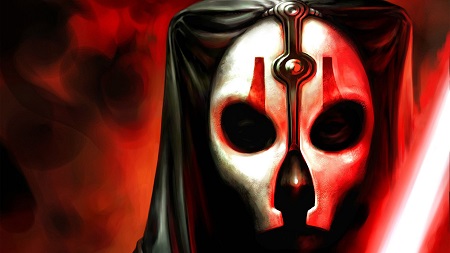
Concept art for Knights of the Old Republic showing Darth Malak.

Now we’re getting somewhere! Knights of the Old Republic helped me to fall in love with Star Wars all over again and put the disappointment of the first two prequel films to bed. There are prequel-era references throughout, of course, but KOtoR told a story that stood on its own two feet, fully separate from the characters of both the original films and prequels for the very first time. I absolutely adored this adventure, and creating my own character and taking them across the galaxy was just fantastic.

KOtoR’s innovative light side-dark side system was a blast, giving the game more replayability. The companion characters and villains were all absolutely incredible, and the variety of levels and missions on offer was outstanding, too. And the twist! I genuinely did not see the game’s big revelation coming until almost the last second, and when it was revealed I can vividly remember sitting on my couch, holding my Xbox control pad with my mouth just hanging open in shock. After the Vader-Luke reveal in The Empire Strikes Back, KOtoR’s twist is the best the franchise has ever pulled off.

Knights of the Old Republic II: The Sith Lords
2004
Tier: S

Screenshot from Knights of the Old Republic II showing a Quarren character.

As great as the first KOtoR had been, its sequel was even better. Despite being a rushed game with some content having to be cut, the story is just absolutely phenomenal, with stunning planets to visit, a war-torn protagonist still suffering the effects of their service and choices they made, and a stellar cast of secondary characters who all feel like real people. My Star Wars love is Visas Marr, by the way, and her arc from Sith assassin to Jedi apprentice is one of the best and most touching in any Star Wars production to date.

There are some wonderful set-pieces in KOtoR II, as the Jedi Exile travels the galaxy in search of the few remaining Jedi Knights and the Sith Lords who had been hunting them. Boss fights against these Sith – and the final climactic fight against Darth Traya – are tense and a ton of fun, and the game’s story is gripping from start to finish. Twenty years later and I’d still love nothing more than to get a proper sequel to this game.

Battlefront and Battlefront II
2004-2005
Tier: B

Screenshot from Battlefront II (2005) showing a Stormtrooper engaging Rebel soldiers.

The original Battlefront games – before EA sunk its money-tainted claws into the series – were great fun. I’m not really a multiplayer gamer, and I like games with strong narratives first and foremost, but there was a lot of enjoyment to get from both of these games. Even the levels focused on the prequel trilogy were solid, and fighting wave after wave of enemy soldiers was something that most games at the time didn’t offer – not like this, at any rate.

In multiplayer was where Battlefront and Battlefront II really excelled, though, and if you could find three friends to play with on the couch, you were definitely in for a fun night!

Episode III: Revenge of the Sith
2005
Tier: C

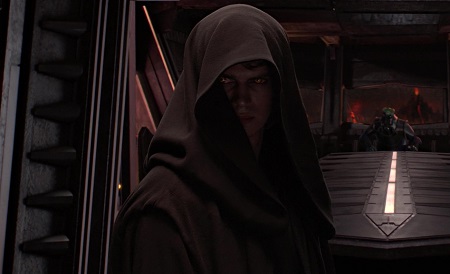
Still frame from Revenge of the Sith (2005) showing Anakin Skywalker in a hooded robe.

The final part of the prequel trilogy went some way to redeeming the story, and was certainly a cut above what had come before. There are still issues with visuals and CGI as well as some clumsily-written dialogue, but there are also some tense and exciting moments as the Jedi Order falls and Anakin loses himself to the dark side. The main lightsaber duel between Anakin and Obi-Wan runs way too long for me, but other fights earlier in the film – including against Grievous and Count Dooku – were pretty great.

A critic far smarter than I am once suggested that an extended Revenge of the Sith could have replaced the prequel trilogy, and I don’t think that’s a bad idea on the whole. There would’ve been more time for Anakin’s premonitions and slide to darkness to be shown, and for Palpatine’s manipulation of the situation to play out. All in all, though, Revenge of the Sith may not be perfect, but it’s by far the best part of the prequel trilogy.

Lego Star Wars: The Complete Saga
2007
Tier: A

Screenshot of Lego Star Wars: The Complete Saga (2007) showing two characters on Tatooine.

I wasn’t sure whether to include this game, but it’s a ton of fun so why not? This compilation brought together the two earlier Lego Star Wars titles into one package – and with Star Wars apparently complete as a six-film series, it took a comedic romp through the entire story. Lego Star Wars: The Complete Saga was just overstuffed with content – so many characters to unlock, things to collect, and areas of levels that weren’t accessible on a first run. The lack of dialogue and mumbling also made the game feel light-hearted and funny – and after the relative disappointment of the prequel trilogy, putting a different spin on Star Wars to make it fun and entertaining again was just what I needed!

Episode VII: The Force Awakens
2015
Tier: D

Still frame from The Force Awakens (2015) showing Kylo Ren holding a lightsaber to Rey's neck.

In 2015, I adored The Force Awakens. Returning to Star Wars’ “greatest hits” seemed to be just what the doctor ordered as a new era for the franchise got underway. However, with the benefit of hindsight the film’s weaknesses come into full view. The decision to have Luke Skywalker go missing – with no reason for why he’d disappeared being written – was a mistake, and with the death of Han Solo, any chance of reuniting the trio of heroes from the original trilogy was gone. The film is also incredibly derivative to the point of outright copying: a young Force-sensitive person from a desert planet joins a rebellion against a faction of space fascists and helps them blow up a planet-destroying super-weapon. There’s even a “trench run,” for goodness’ sake.

Unfortunately, The Force Awakens was a weak foundation upon which to build the rest of the sequel trilogy, and the decision to allow each writer/director free rein to do whatever they wanted led to a jumbled narrative mess. There were positives in The Force Awakens – the character of Finn, for instance, and his story of defecting from the First Order and overcoming his indoctrination, as well as a story that involved an older Han and Leia reuniting to try to save their son. But there were too many missteps and mistakes – and I just can’t forgive that the film squandered so many of the opportunities that a Star Wars sequel should have had.

Rogue One: A Star Wars Story
2016
Tier: S

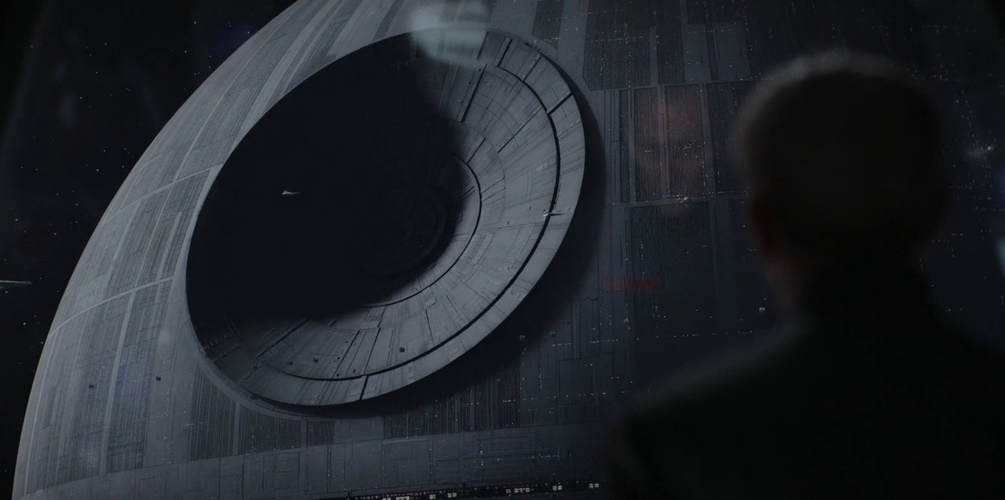
Still frame from Rogue One (2016) showing the Death Star being assembled.

I didn’t really have high expectations for Rogue One when I heard about it. A prequel all about stealing the Death Star plans just didn’t sound all that exciting – but I was wrong about that! Jyn Erso made for a wonderful protagonist, and her story took her from being apathetic and sitting on the sidelines to leading the mission that inspired the Rebellion. Cassian Andor was such a great character that he ended up getting his own spin-off. The decision to kill off practically all of the main characters was also incredibly bold for this franchise.

There are so many great moments and sequences in Rogue One that we’d run out of time trying to list them all! The mission to Jedha was incredible, characters like Krennic and Saw Gerrera have become iconic, and while I never felt that the destruction of the Death Star needed an in-universe explanation, learning how it came to be sabotaged was genuinely interesting. An unexpected story that expanded upon the lore of Star Wars in a really fun way.

Episode VIII: The Last Jedi
2017
Tier: A

Still frame from The Force Awakens (2017) showing the Holdo manoeuvre.

The Last Jedi is a great film. It isn’t as great as it wants to be, and there are places where it misses the mark or where its storytelling gets too in-your-face. But it represents a brave attempt to take the franchise in a different direction, far away from the copycat narrative of its predecessor. Some of the things introduced here really work well and expand our understanding of the Star Wars galaxy. I really like the Holdo manoeuvre, for example, and how the film took a look at the galaxy’s mega-rich citizens who are content to sit out the war, knowing that whichever side wins they’ll still come out on top.

Moreover, the film puts two big twists on the story of the sequels. First, Rey turned out not to be descended from a known character. For me, this made her far more interesting and set her up as a protagonist in her own right. Secondly, Kylo rejected any pull to the light side and tried to seize power for himself, setting himself up as the ruler of the First Order. Both of these twists worked exceptionally well… before they were immediately undone in the final instalment of the trilogy.

Solo: A Star Wars Story
2018
Tier: C

Still frame from Solo: A Star Wars Story (2018) showing Lando and Han in the cockpit.

There’s nothing wrong with the main thrust of the plot in Solo: A Star Wars Story… but nothing about the film feels all that special or interesting, either. The story basically doubles down on Star Wars’ prequel problem; we just didn’t need to see this chapter of Han Solo’s life to understand who he is or what his priorities are. We’d already been able to infer all of that from his earlier appearances, and while we learned a bit more about Han in a strictly factual sense… none of that really mattered.

I also loathe the resurrection of the obviously-dead Darth Maul and his insertion into Disney-era canon. Star Wars has continually struggled to let go of characters – even relatively minor and unsuccessful ones – and to see Maul popping up as a “crime lord” of all things was just… ugh. I hated it. The central heist at the film’s core was good enough and there were some solid moments of characterisation. But the film was let down by its fundamental premise.

The Mandalorian
2019-Present
Tier: C

Still frame from The Mandalorian Season 1 (2019) showing the title character knocked down on the ground.

The Mandalorian has some fun scenes and great design elements, introduces some creative new characters, takes us to new worlds, and tells a story that dives deeply into a little-known faction. But for me, The Mandalorian didn’t really hit the mark. Its premise of following “the adventures of a gunslinger beyond the reach of the New Republic” sounded spectacular… but within two episodes the show brought the Force back into play. Things only got worse from there, with Luke Skywalker eventually showing up in person to hammer home that this series can’t escape the clutches of nostalgia.

Worse, though, was the protagonist himself – who seemed, for the first season-and-a-half at least, to have no understandable motivation for doing… anything. Mandy seemed to act at the behest of a room full of TV writers, and it showed, with massive story points like betraying his client to save Baby Yoda coming from nowhere. The series is also too short, with Seasons 1 and 2 barely amounting to the runtime of just one season of television – and sharing two halves of a story that would’ve been a lot better if it had played out in a single season instead of two. Things have improved and the series has grown on me, but I can’t escape the feeling that there’s some wasted potential here.

Jedi: Fallen Order
2019
Tier: A

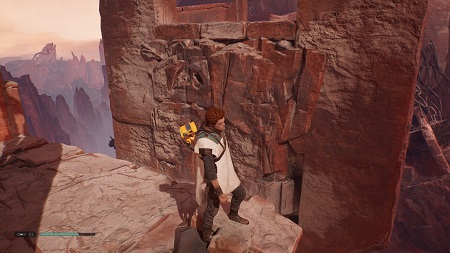
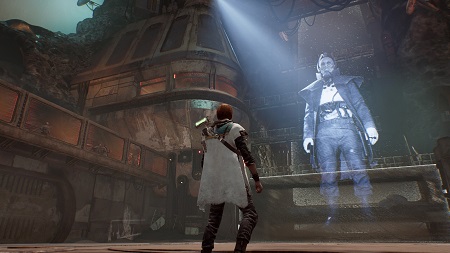
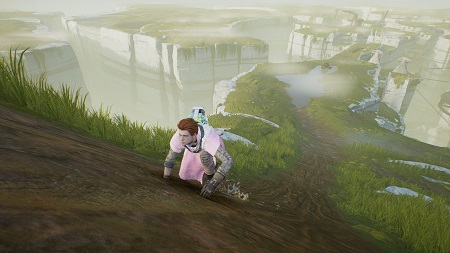
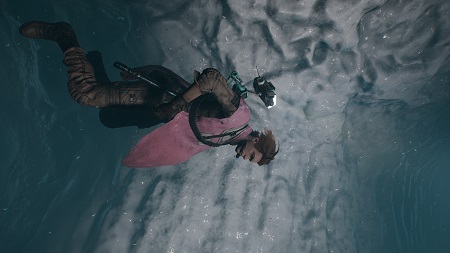
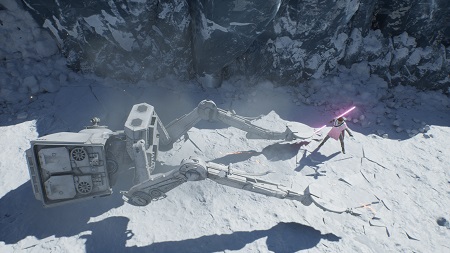
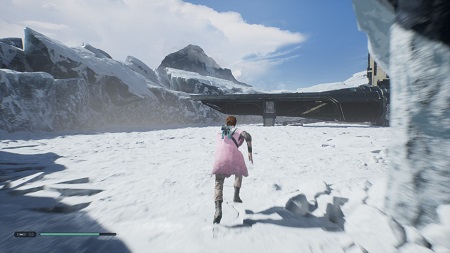
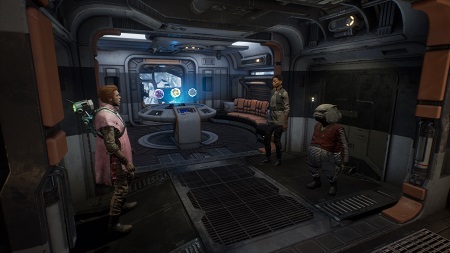
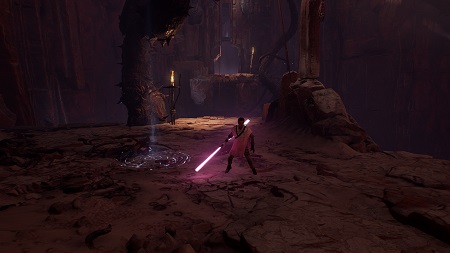
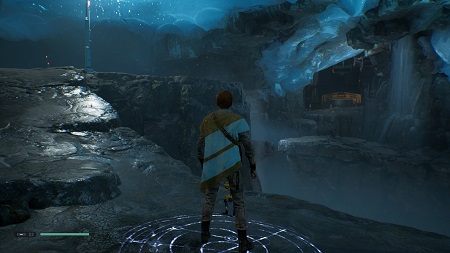
Screenshot of Jedi: Fallen Order showing the player character sliding down an icy canyon.

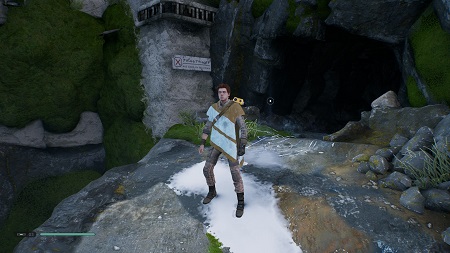
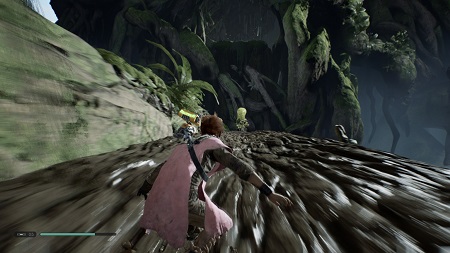
I had a great time with Jedi: Fallen Order. After the disappointments of both The Mandalorian and The Rise of Skywalker (which I watched before playing the game), I was glad to see that I hadn’t entirely fallen out of love with Star Wars. Cal’s story of re-establishing his connection to the Force, rediscovering his Jedi side, and going on a rip-roaring adventure across the galaxy was great, and I felt like I was right there with him thanks to some outstanding voice acting and animation work.

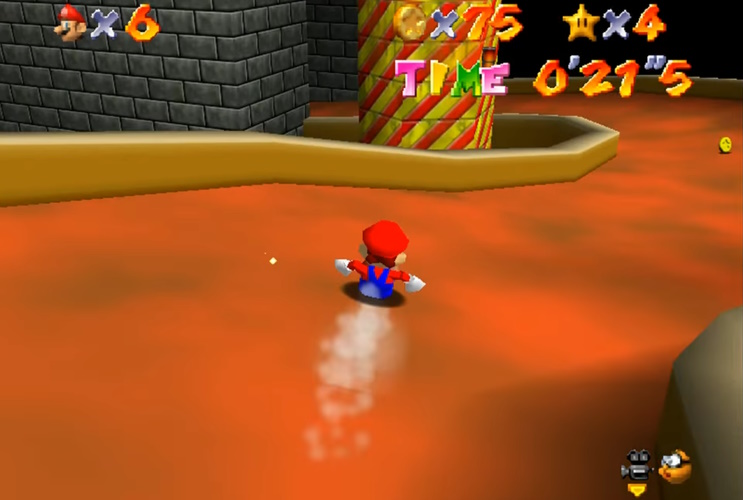
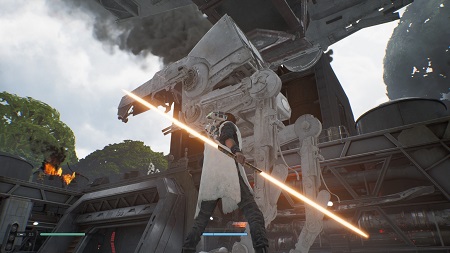
Jedi: Fallen Order also gave me what is probably my favourite Star Wars video game moment: piloting an AT-AT! This sequence is one of the best in the game and is just perfectly-paced. There are a few points that come together to deny Fallen Order S-tier status, though: overuse of Super Mario 64′s sliding mechanic, having to both re-play levels and backtrack through them after finishing an objective, and a confusing false choice early in the game all took some of the shine off of what was an otherwise fantastic experience.

Episode IX: The Rise of Skywalker
2019
Tier: F

Still frame from The Rise of Skywalker (2019) showing General Hux wounded.

What an atrocious film. The Rise of Skywalker jumps around, barely spending more than a few seconds per scene, desperately trying to undo the big story points from The Last Jedi. It basically tries to cram two films’ worth of plot into the runtime of a single title, and so many of the storylines it tries to include just fall flat on their face. The clumsy insertion of Palpatine into a story that was never meant to be his not only ruins this film, but manages to make the rest of the sequel trilogy and even the original trilogy feel worse in retrospect.

The Rise of Skywalker betrays or completely misunderstands most of the characters it includes, like Kylo, Rey, and General Hux, undoing key parts of their stories and characterisations. It ignores altogether major characters like Rose and Finn, relegating them to the sidelines and having no idea how to use them. And finally, it contains probably the single worst line of dialogue in the entire Star Wars franchise: “Somehow Palpatine returned.” I don’t like to single out individual writers or creatives for criticism, but I genuinely hope that the people who wrote that line, approved it, and got it into the film never work in the entertainment industry again.

Star Wars Squadrons
2020
Tier: B

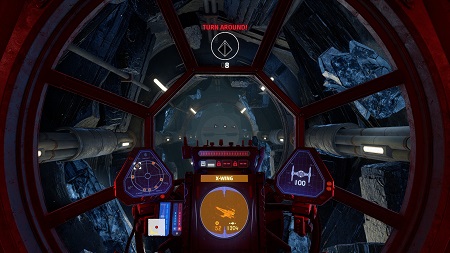
Screenshot from the Star Wars Squadrons trailer showing a starfighter cockpit.

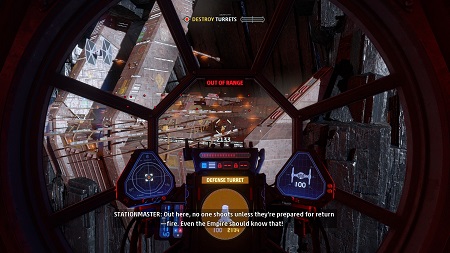
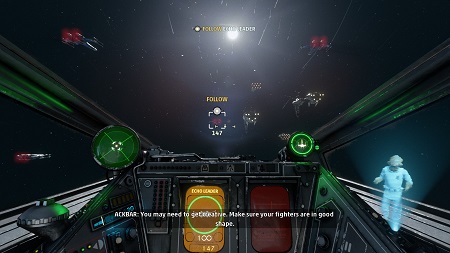
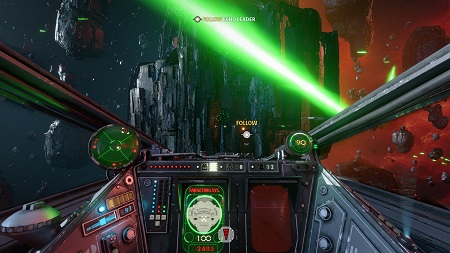
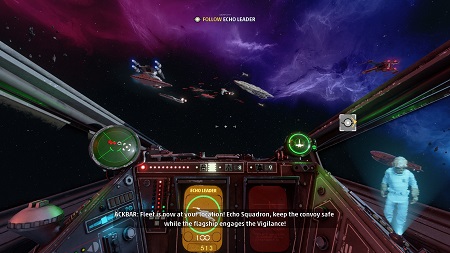
Squadrons feels like an updated TIE Fighter or Rogue Squadron – and yes, those are compliments! Thanks to major advances in graphics, sitting in the pilot seat of a starfighter has never looked more beautiful, and the game really succeeds at capturing that sensation in a way few titles ever have. Narratively there wasn’t a lot to say, but the story was worth following to its conclusion, and the side characters were solid in their own ways. I haven’t fired up Squadrons for a while, but I really should jump back in and have another go – it really is the best Star Wars simulator out there right now.

The Disney+ Lego Star Wars Specials
2020-Present
Tier: A

Still frame from The Lego Star Wars Holiday Special showing the main characters and a Christmas tree.

There have been three Lego Star Wars specials made for Disney+ at time of writing – though a fourth is arriving imminently. And all of them have been great fun! I like the less serious tone of these specials, and how each one so far has had a seasonal theme. Terrifying Tales also did more to give backstory to Ben Solo and the Knights of Ren than the entire sequel trilogy had done, and it was quite cathartic to see that!

Star Wars shouldn’t be taken too seriously all the time, and these Lego specials really lean into the more fun, light-hearted, and casual side of the franchise. At the end of the day, Star Wars is supposed to be entertaining – and if there’s one thing I can say about the Lego Star Wars specials it’s that they absolutely entertained me!

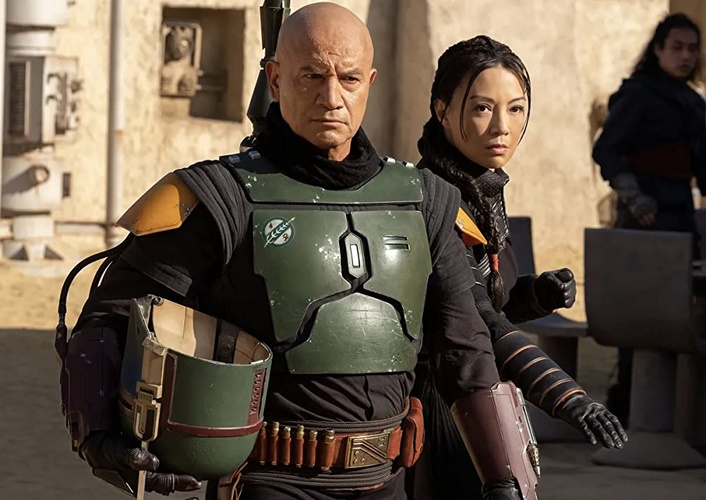
The Book of Boba Fett
2021
Tier: A

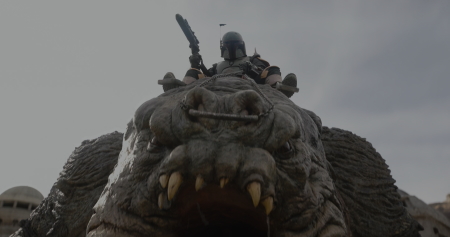
Still frame from The Book of Boba Fett showing the famous "like a bantha" scene.

I really did not expect to like The Book of Boba Fett. Boba himself always felt like a non-entity to me; a minor character elevated, somehow, through high sales of his action figure, but who did nothing of consequence in the original films and who died incredibly easily in his only big fight! The series also had a huge hurdle to overcome: how did Boba survive dying in Return of the Jedi? I wouldn’t have chosen to greenlight The Book of Boba Fett if I’d been in charge!

But I was wrong, and I found a surprisingly entertaining series with heart. Boba’s adventure on Tatooine was just plain fun in a way that I really hadn’t been expecting, and this miniseries about a character I’d always been underwhelmed by was much, much better than I could have expected. It wasn’t perfect, of course, and in some ways it felt closer to The Mandalorian Season 3 than a standalone project. But I had fun with The Book of Boba Fett for what it was, and I enjoyed its contribution to the Star Wars galaxy.

Obi-Wan Kenobi
2022
Tier: F

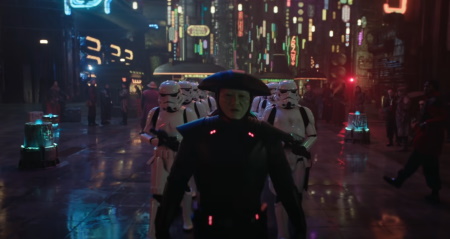
Still frame from Obi-Wan Kenobi showing an Inquisitor and a large group of Stormtroopers.

Obi-Wan Kenobi has done the impossible: it has eclipsed both The Phantom Menace and The Rise of Skywalker to become my least-favourite Star Wars project of all time. The series was already going to tell the least-interesting chapter in Obi-Wan’s life, but it ended up completely ruining his character and undermining one of the most powerful moments in A New Hope. It’s the textbook example of why prequels and mid-quels have to be handled with care, and honestly I could write a book about all the things this series got wrong.

In principle, the idea of Obi-Wan leaving Tatooine to rescue Leia could have worked, but it would’ve needed to be a completely different story, one that kept Darth Vader completely out of it. Bringing back Vader for yet more lightsaber duelling with Obi-Wan just felt desperate and tacky, and the entire series fell apart. It was unnecessary in the first place, poorly-written, and with a central premise that completely undermines Ben Kenobi’s role in A New Hope.

Jedi: Survivor
2023
Tier: D

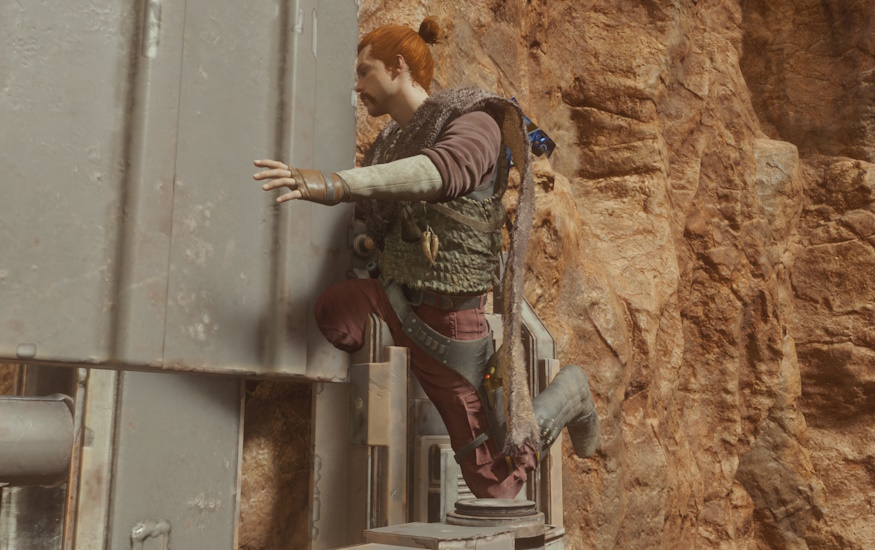
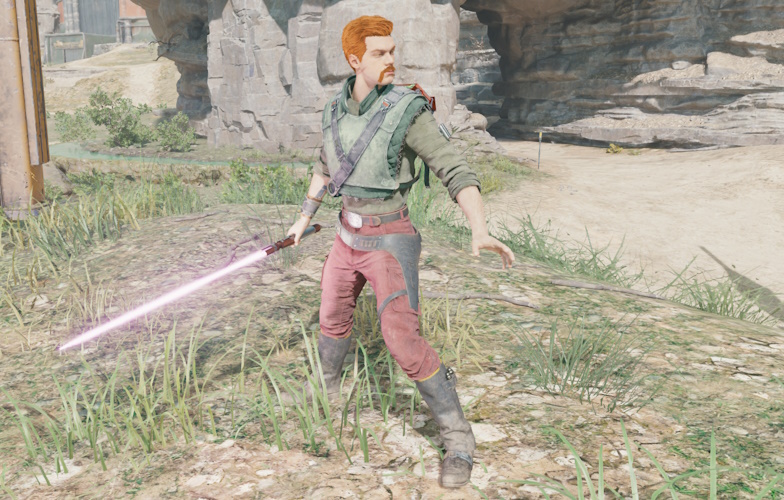
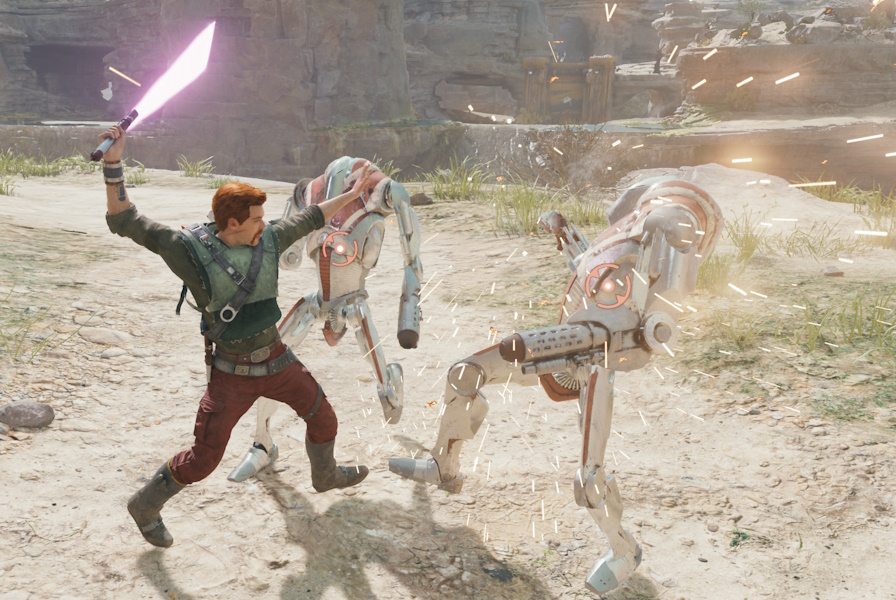
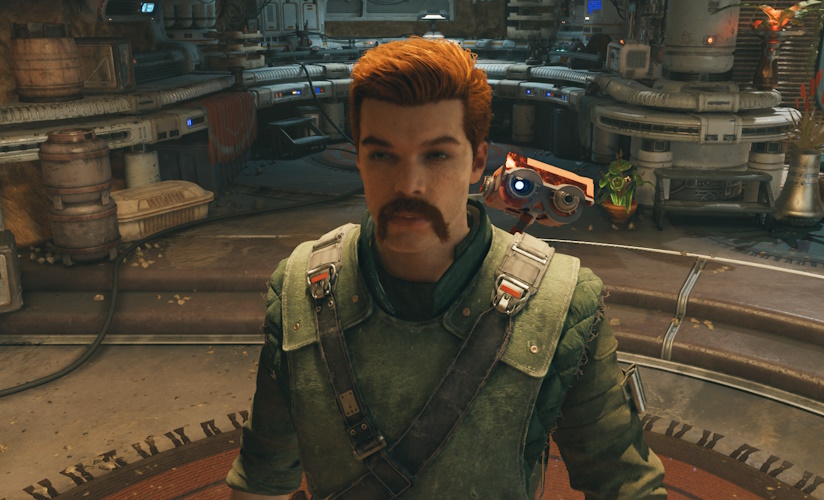
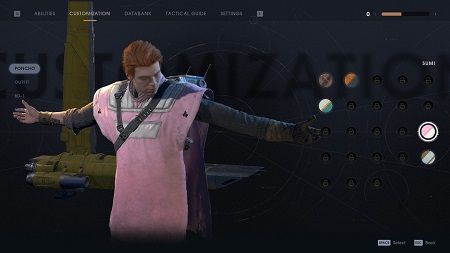
Screenshot from Jedi: Survivor showing a customised Cal Kestis.

I was properly excited to get a sequel to Fallen Order and to get back out in the Star Wars galaxy with Cal and the crew of the Stinger Mantis. But the story Jedi: Survivor told was pretty weak and convoluted by comparison. The sheer randomness of parts of the story – like Greez just accidentally building his cantina atop ancient Jedi ruins – went a long way to undermining it, the surprise return of Master Cordova completely fell flat, an ancient Jedi sealed in a bacta tank for centuries was kind of silly, and a “lost” planet that no one could reach just felt like a boring macguffin. Fallen Order gave Cal a quest that I could follow and that seemed to flow naturally from point to point. Survivor felt much more artificial and constructed.

The game was also let down, in my view, by a reliance on open-world level design that just didn’t fit the story. The supposedly hidden, off-the-beaten-path settlement of Ramblers Reach was located a stone’s throw from two huge Imperial bases and the headquarters of a pirate warlord, and the Jedi outpost on Jedha was walking distance from two massively important areas, too. And of course, there was a traitor in Cal’s group who was so incredibly obvious from his first second on screen that he might as well have had the words “secret bad guy” tattooed across his forehead. The game being released way too early while unfinished and full of glitches didn’t help matters, either.

The Acolyte
2024
Tier: B

Cropped promo poster for The Acolyte.

So we come to The Acolyte – the latest Star Wars series at time of writing! Although it proved to be controversial, I generally liked what I saw in this one-and-done series. Stepping away from the “Skywalker saga” to tell a story in a different time period is something I’d been wanting to see on the big or small screen for a long time, and a focus on the Sith was also something interesting. I don’t think The Acolyte hit all of the high notes it was aiming for, but it was decent nevertheless.

If Star Wars is going to survive long-term, stepping away from familiar characters and the time period of the Empire will be necessary, and The Acolyte is the franchise’s first real attempt to do so. That is admirable, even if it comes a bit late in the day! The story also framed the Jedi Order in somewhat of a negative way, showing how it can fall prey to internal politicking, emotion, and disagreement – all of which were themes that were present in the prequel and sequel trilogies.

So that’s it!

Still frame from Star Wars (1977) showing Old Ben Kenobi.
It’s Old Ben Kenobi!

I’m pretty sure that those are all of the Star Wars films, games, and TV shows that I’ve spent enough time with to place on this list. You’ll note some absences: the animated Star Wars shows of the 2000s/2010s, as well as Andor, Ahsoka, and the Force Unleashed games, to name but a few. I haven’t watched or played everything in the Star Wars franchise – and I probably won’t get around to all of them. That’s why they’re not part of this list.

Let’s take a look at how the final tier list looks:

A tier list showing various Star Wars productions.
You can open this image in a new tab if you want a closer look!

Putting this tier list together has been great fun, and it’s been interesting to revisit some of these Star Wars projects. It’s been a long time since I so much as thought about the TIE Fighter game, and I haven’t re-watched the likes of The Mandalorian Season 1 since it premiered, so going back to them has certainly been something different.

I hope none of these opinions proved to be too controversial! At the end of the day, I’m a Star Wars fan – but I don’t enjoy every single thing that has been produced for the franchise. Still, whether we agree or disagree on what the highlights are, I think you can see that there are more positives than negatives in this wonderful space epic!

All that remains to say is this: May the Force be with you! And I hope you’ll check back soon for more Star Wars discussion here on Trekking with Dennis.


*Obviously this list is not official in any way. The title is a joke!

Most films and TV shows in the Star Wars franchise can be streamed on Disney+ or purchased on DVD, Blu-ray, or digitally. Some games discussed above are out-of-print, others may be available on PC, Xbox, PlayStation, and/or Nintendo consoles. The Star Wars franchise – including all films, games, and television shows discussed above – is the copyright of Lucasfilm and The Walt Disney Company. This article contains the thoughts and opinions of one person only and is not intended to cause any offence.

Star Wars – The Acolyte: TV Series Review

A spoiler warning graphic.

Spoiler Warning: There are spoilers ahead for Star Wars – The Acolyte. Minor spoilers are also present for other Star Wars productions.

I recently got around to watching The Acolyte – the latest made-for-streaming series in the Star Wars franchise – so it’s time for a review! Before The Acolyte premiered, I had the show on my radar as one of the more interesting-sounding Star Wars projects. For the first time on the big or small screen, here was a project that promised to step away from the familiar characters and time period that have anchored every other Star Wars project to date. With a focus on the Sith, too, I felt that The Acolyte had a lot of potential.

Because I came late to The Acolyte, I’m aware that the series has proven to be controversial in some quarters of the Star Wars fan community. I always like to review a film or show without having been exposed to other people’s thoughts and opinions, but the volume of criticism that has been flung in the direction of The Acolyte has proven to be inescapable over the last few weeks. To be honest, that’s part of why I decided to watch it and review it for myself; a sense of “surely it can’t be that bad” ended up combining with my earlier interest in the show’s setting and time period!

Cropped promo poster for episode 8 of Star Wars: The Acolyte.
Promo poster for The Acolyte.

As you might expect when the criticism and hatred reaches that kind of fever-pitch: no, The Acolyte was nowhere near as bad as some fans and “influencers” were trying to paint it as being. That’s not to say it was a perfect production by any stretch – there were a couple of pretty in-your-face narrative flaws, some underdeveloped secondary characters, and despite the show’s promise of accessibility to new viewers, a lot of the density of “lore” that can make a franchise like Star Wars offputting to folks who are unfamiliar with its galaxy, factions, and technologies.

I will let you know right off the bat that I am not a stickler for the minutiae of “canon,” nor someone who insists that stories within a franchise must be constrained by every little detail that came before. It’s fine if you feel that way, but this review isn’t going to pick on the very minor appearances of a couple of prequel-era characters and dive into their fictional backstories! Some of the nitpicking I’ve seen online about The Acolyte felt just plain silly to me, and I think the series did a good enough job of avoiding stepping on the toes of the mainline Star Wars films in a big way. The biggest secret to keep in that regard was the existence of the Sith in this time period – and when the series ended with every Jedi who’d seen the Sith assassin dead, and the only survivors believing him to be a “fallen Jedi,” I think we can say that that particular “plot hole” simply isn’t a thing. As the credits rolled on what I assume will be the only season that The Acolyte will get, its story’s loosest ends were tied up.

Still frame from Star Wars: The Acolyte showing a character wielding a lightsaber.
Master Sol confronts the Sith assassin.

At time of writing, Disney and Lucasfilm haven’t confirmed or denied that The Acolyte will be cancelled, but given the fan reaction and the show’s relatively low viewership – according to reports, The Acolyte was doing a lot worse than The Mandalorian, Obi-Wan Kenobi, and even the maligned Book of Boba Fett – it’s hard to see it being renewed as things stand. Although Disney is keen on this High Republic time period in some spin-off media, I’m not sure that alone will save The Acolyte. Disney’s biggest event of the year – the D23 expo – has just come and gone at time of writing, as has the year’s biggest Comic-Con event, and no announcement of a renewal was made. The first season’s story left things deliberately open, but also wrapped up the main events we’d been following – so it’s not like there’s a cliffhanger desperately waiting to be resolved. All things considered, I’d say cancellation feels likely.

So let’s talk about the series itself. On the whole, I had a pretty good time with The Acolyte – and even though that may be a minority position, I’ll do my best to explain what I enjoyed, as well as criticise what I didn’t.

Still frame from Star Wars: The Acolyte showing a group of Jedi in yellow robes.
A couple of main characters and some Jedi redshirts. Should that be “Jedshirts?”

Stepping away from the “Skywalker Saga” is something I’ve argued that the Star Wars franchise has needed to do for a long time, and while some recent productions have taken steps in that direction, The Acolyte is the first time we’ve seen Star Wars move so far away from that story on the small screen. There were a couple of crossover characters – but their appearances were so minor as to barely even count as cameos. Speaking for myself, I was pleased that The Acolyte went down this road, and that after relying on the crutch of nostalgia and familiar characters for such a long time, Disney and Lucasfilm have finally been bold enough to try something a little different.

That being said, there’s still a lot of familiarity in The Acolyte. For brand-new viewers, a group that The Acolyte’s producers claimed to be targeting, I think there was still quite a lot of fairly dense lore and background to wade through in order to fully understand what was going on, which faction was which, and so on. There was an admirable attempt to open up Star Wars to new fans – which is something the franchise was going to have to do sooner or later – but for me, at least some of that seemed not to stick the landing. My impression is that this was a series that new fans could approach a bit more easily than, say, Obi-Wan Kenobi or The Book of Boba Fett, but still not the softest of landings for someone totally unfamiliar with Star Wars. The first couple of episodes in particular throw a lot at the audience with the Jedi Order, droids, hyperspace, and other elements that weren’t really explained.

Still frame from Star Wars: The Acolyte showing the Jedi Temple.
The Jedi Temple on Coruscant.

And this is actually a trend that continued across all eight episodes – and extended to other plot points, too. The Acolyte didn’t always take the time to fully lay out what was going on in an easy-to-follow way, leaving some scenes and sequences feeling cut short. More time was needed in some of these moments to either add context or an explanation of what was going on. Occasionally the series would revisit events through a flashback that added to something we’d seen earlier – but not always.

This is a problem I’ve had with many made-for-streaming shows over the last few years: they’re too short. The Acolyte, for instance, across its eight episodes runs to a scant five hours, and when several plot-crucial scenes and sequences felt curtailed or in need of additional framing and context, I can’t help but feel that Disney and Lucasfilm have repeated a mistake they’ve already made with other Star Wars shows. Streaming isn’t like broadcast television – there’s no need to stick to rigid schedules. Episode runtimes can be expanded, and even whole new episodes can be added to a season if necessary. Sure, there are budgetary constraints – but when we’re talking about moments that can make the difference between a scene being easily understood and just plain confusing… it’s gotta be worth it, right?

Still frame from Star Wars: The Acolyte showing Osha firing a blaster pistol.
Osha firing her blaster pistol.

To give one example from The Acolyte: at one moment in the second episode, Osha draws her blaster pistol to shoot at Mae – her twin – while she’s trying to make her escape. Osha misses, and the way the scene was framed left it totally unclear as to whether she missed on purpose or by accident. The difference that makes to the tone of the rest of the episode – and to how we are meant to perceive Osha as a character as she deals with Master Sol and other Jedi – is massive. Not knowing how to read that moment made subsequent scenes and sequences feel muddled and confused – and it’s all because The Acolyte’s director, editors, and producers failed to add the necessary context to make that moment easy to follow.

While we’re talking about confusing moments, I felt that it wasn’t always easy to tell which twin was Osha and which was Mae during some of the flashback scenes. Identical twins dressed in identical costumes made it difficult to keep track of who was who – something not helped by the editing and camera angles. Perhaps this was deliberate… but if that’s the case, I struggle to see why. Knowing that Mae was the one who wanted to stay with her coven and learn Force magic while Osha was the one who wanted to leave was essential to both of their character journeys.

Still frame from Star Wars: The Acolyte showing young Osha and Mae.
Young Mae and Osha (or Osha and Mae).

Since we’re talking about the twins, I find it odd that The Acolyte’s production team didn’t cast a real set of identical twins in the lead role. The younger versions of Osha and Mae were played by twins, but the adult characters were both played by the same actress. This isn’t to criticise Amandla Stenberg’s performance, by the way, as I felt she did a solid job with both Osha and Mae. But rather that it’s worth pointing out that there are relatively few high-profile roles for twins, and just like how casting an able-bodied person to play someone with a disability (or worse, having someone made up to appear to be from a different race) is something most mainstream productions now try to avoid, it’s a bit of an oddity – and one I haven’t really seen mentioned in the conversations surrounding the show.

The Acolyte’s story portrayed the Jedi Order in arguably the most negative way we’ve ever seen on screen – showing how the organisation and its members easily fell prey to internal politicking, arrogance, and self-righteousness. This is a narrative thread that links up with the prequel trilogy – though the prequels were arguably less extreme and still painted the Jedi as the “good guys” in a relatively black-and-white story. It also connects with something Luke Skywalker said in The Last Jedi about the hubris of the Jedi Order.

Still frame from Star Wars: The Acolyte showing Master Sol in a flashback.
Master Sol in a flashback sequence.

Moreover, there was a distinct creepiness to some of the Jedi – Master Sol in particular. Think about it: he spied on two eight-year-old girls from the bushes, followed them back to their home, formed an instant, one-sided “emotional connection” with one of them, and then insisted on taking her away from her family to be his apprentice. That has undertones that are genuinely uncomfortable, and contributes to the sense of the Jedi Order as being a strange, almost corrupt organisation. I mean, we’ve known for a long time that the Jedi would “recruit” children at a very young age – and we caught a glimpse of how this worked with Anakin Skywalker in The Phantom Menace – but there was something about seeing Sol so… interested in Osha that made the hairs on the back of my neck stand up.

That’s to say nothing of the Jedi’s attack on the Force-witches. Does that organisation/coven have a name in canon, by the way? Perhaps I missed it in The Acolyte, but either way, I felt it was really interesting to see how other Force-sensitive people and groups might behave and how they exist outside of the Jedi/Sith dynamic. These witches clearly used the Force, but they weren’t Jedi or Sith, and that gives us a look at a part of the Star Wars galaxy that we really hadn’t seen much of before. Other Force-sensitive groups have been glimpsed in spin-off media, of course, but this was a deeper dive into an unknown organisation and I appreciated the attempt to expand the Star Wars galaxy beyond what we’ve already seen on screen.

Still frame from Star Wars: The Acolyte showing the Force-witch coven.
The Force-witches are new to Star Wars (at least as far as I’m aware).

During the flashback depicting the Jedi’s attack on the Force-witches’ compound, The Acolyte gave us perhaps its weakest narrative moment. Torbin, the youngest Jedi padawan in the group, fell completely flat for me. His one-note “I hate it here and I wanna go home” was so unbelievable and childish that it seriously put a downer on the entire sequence, as this was such a pathetically weak way to set up his involvement. The concept of individual Jedi making bad decisions when confronted with the witches is a good one, and I think other elements worked as intended. But the series clearly didn’t have enough time to properly develop Torbin or give him a proper reason for his actions. When the actions he and Sol took are key to the entire rest of the plot… that’s an issue.

The idea of a “vergence” in the Force is something that Star Wars has delved into before. Most significantly, The Phantom Menace set up the idea of Anakin as being either a vergence himself or perhaps having been conceived by one. Mae and Osha seem to follow suit in The Acolyte, with the witches’ coven having somehow created them through the Force. While I’m not concerned about matters of “canon” all that much, and I don’t feel The Acolyte really overwrites or invalidates what we know of Anakin from the earlier films, I would’ve liked to see more explanation of both the vergence and the twins’ conception. Both were left pretty open-ended – which could be great if the show gets picked up for more episodes, but as already discussed, I doubt that’s gonna happen. It could be that this part of the story is never resolved, and that would be a bit of a shame because it seemed interesting.

Still frame from Star Wars: The Acolyte showing the Force-witches.
Will we learn more about the vergence and the “creation” of Osha and Mae?

The decision to include cameos from the prequel trilogy has been a source of some controversy. Speaking for myself, I think these cameos were handled quite well – and there’s more than enough wiggle-room for both the minor character of Ki-Adi-Mundi and the more significant character of Yoda to have been present at the Jedi Temple without being too involved in the events we saw unfolding on screen. For me, it doesn’t tread on the toes of what we knew about either character, and what they have to say in the prequel films and beyond doesn’t seem to be contradicted by their very brief appearances in The Acolyte. The same is true of a character many are assuming to be Darth Plageius – glimpsed toward the end of the series at the Sith base.

As fans, I think all of us can fall prey to nitpicking and to prioritising minor things – throwaway lines of dialogue, secondary characters, or non-canon resources like books or comics – over and above everything else. And from what I’ve seen based on my admittedly limited engagement with the discourse around The Acolyte, I think that’s what’s been happening in some cases. Having heard of the drama before watching the series, I seriously expected Ki-Adi-Mundi in particular to have a massive role – but he was on screen in one episode for a matter of seconds, had no noticeable impact on the plot, and as far as I can tell wasn’t necessarily aware of what transpired. The controversy that some fans have tried to stir up (perhaps because their social media income has become increasingly dependent on the “anti-Star Wars” crowd) feels overblown at best. A storm in a teacup!

Still frame from Star Wars: The Acolyte showing Ki-Adi-Mundi and another Jedi character.
Ki-Adi-Mundi – a character first introduced in the prequel trilogy – made a small cameo appearance in The Acolyte.

In terms of production values, I thought that The Acolyte was decent – but there were a couple of missteps. On a couple of occasions the way real actors interacted with fully-CGI environments was sub-par and strayed into the dreaded uncanny valley. Musically, the series was fine – in line with other Star Wars projects, perhaps, but by no means exceptional. My rule of thumb for any film or TV show is that the music shouldn’t be a distraction, and in that sense The Acolyte did okay. But nothing from its soundtrack was particularly original or memorable, and if you played it for me right now, I’d struggle to remember what production it was from or even whether I’d heard it before.

Acting performances were generally pretty good. I particularly enjoyed Lee Jung-Jae’s take on the conflicted Master Sol, and Dafne Keen gave a solid performance as the young Jedi Padawan Jecki Lon. Amandla Stenberg had the challenge of playing two very different characters – but rose to the occasion. The only performance I felt didn’t reach the heights it should’ve was Harry Trevaldwyn’s – he played the role of Mog, a junior Jedi aide-de-camp to Master Vernestra. Playing Jedi roles can be tricky; they have deliberately stifled emotions, making it difficult for some performers to really know what to do. Mog was, thankfully, a minor character who wasn’t on screen all that much. Still, there are far better Jedi performances out there!

Still frame from Star Wars: The Acolyte showing Master Vernestra and Mog.
Master Vernestra and Mog.

Speaking of performers, I felt that Carrie-Ann Moss was almost wasted in the role of Master Indara. Moss’ role in the series played a big part in The Acolyte’s early marketing material, yet she was only present in a big way in a couple of episodes, with her character having been killed off right at the beginning of the story. I could’ve happily spent more time with Master Indara; compared with the broken Torbin, emotional Sol, and politicking Vernestra, she was the closest the series got to having a Jedi Master in the more heroic style we’ve come to expect.

Stepping away from the rise and fall of the Empire to look at a different era in the Star Wars galaxy is something that the franchise has needed to do for a long time. I’m happy that we finally got to see some of this High Republic era on screen, and I liked some of the subtle changes made to things like Jedi robes. Setting the scene in a different – but still familiar enough – way helped The Acolyte stand out, even if its basic Jedi-versus-Sith idea didn’t feel all that fresh.

Still frame from Star Wars: The Acolyte showing two characters engaged in a lightsaber duel.
A lightsabre battle.

There were standout moments in the series, and I feel the criticism it’s received in some quarters has been unnecessarily harsh. Personally, I’d like to see Disney and Lucasfilm greenlight more projects set in different locales and different time periods, and I hope that the backlash to parts of The Acolyte won’t dissuade them from doing so. There’s only so many times I can see Luke Skywalker, Han Solo, or their descendants saving the day – and if Star Wars is to survive long-term, we’ll need to see more projects like this one. That’s not to say The Acolyte was perfect – it wasn’t. But it was a step in the right direction for a franchise that has felt increasingly stale.

Despite claims made in the run-up to its broadcast, I didn’t feel that The Acolyte would be the easiest and smoothest way into Star Wars for someone brand-new to the franchise. It has the advantage of not relying on familiar characters, but it’s still got some deep cuts to parts of the Star Wars franchise that, I would argue, weren’t particularly well-explained within the series itself. That’s nothing new for Star Wars, of course!

Still frame from Star Wars: The Acolyte showing Mae.
Mae at the end of the story.

The Acolyte held my attention and got me invested in its main characters and storyline. Some of the secondary characters and sub-plots felt under-developed, and I think the series as a whole might’ve benefitted from being ten episodes long instead of eight. This would’ve allowed for scenes and sequences to be extended, for some additional character development, and for some of the show’s B-plots to be expanded upon. This isn’t an issue unique to The Acolyte by any means – but some producers and directors are clearly better at making the most out of eight episodes than others!

At the end of the day, though, I can’t say I didn’t enjoy The Acolyte. Its focus on a Sith assassin was intriguing, its portrayal of the Jedi Order as out-of-touch and arrogant lined up with both the prequels and sequels, and its core story of human characters making decidedly human mistakes was one that was, in a way, relatable. The Acolyte may have done more than any other Star Wars project to date to really humanise the Jedi Order and make some of its members feel like real people. Whether that’s something every fan wanted to see from Star Wars, or whether they prefer to think of Jedi Knights as flawless paragons of virtue… well, I think the backlash in some parts of the fan community answers that particular question!

Of the Disney+ Star Wars shows I’ve seen so far, I’d put The Acolyte in second place – behind The Book of Boba Fett but ahead of The Mandalorian. And light-years away from the awful Obi-Wan Kenobi series!


Star Wars: The Acolyte is available to stream now on Disney+. The series will also be released on DVD/Blu-ray at a later date. The Star Wars franchise – including The Acolyte and all other properties discussed above – is the copyright of Lucasfilm and The Walt Disney Company. This article contains the thoughts and opinions of one person only and is not intended to cause any offence.
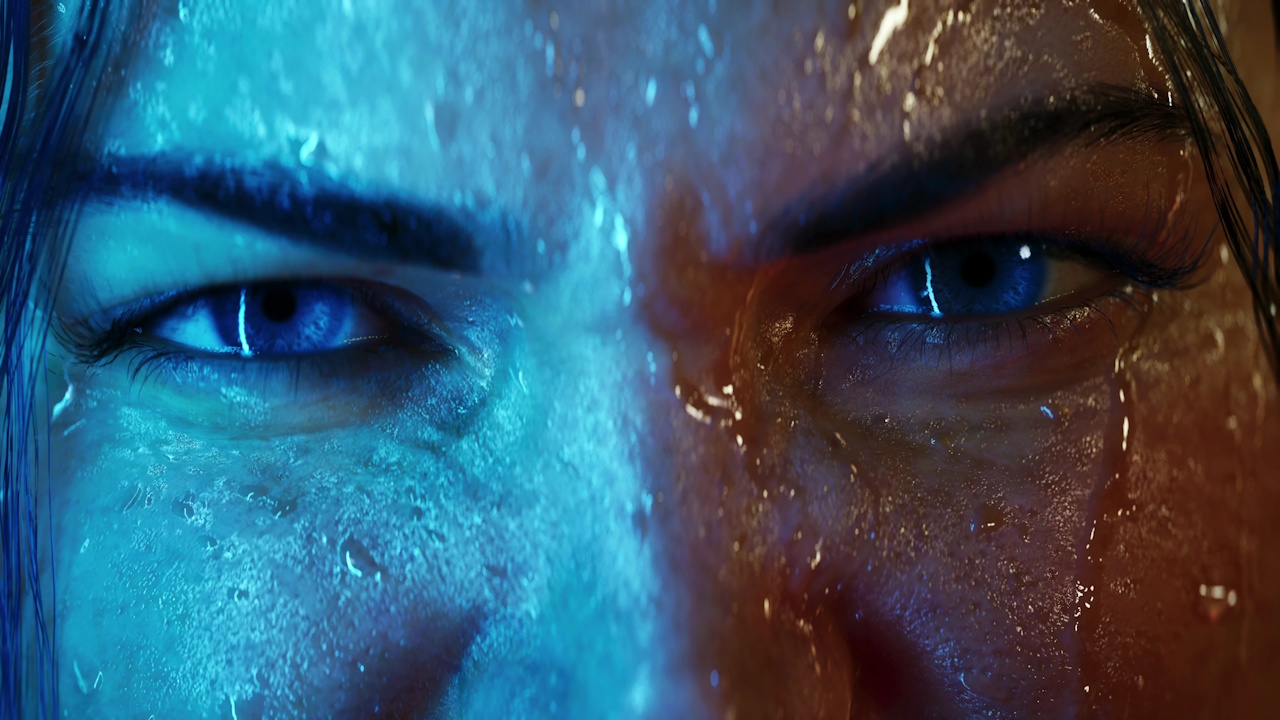
We’re Halfway Through 2024!

A Spoiler Warning graphic.

Spoiler Warning: Beware minor spoilers for some of the titles below.

Although I can scarcely believe I’m writing these words… 2024 is officially halfway over! The summer solstice has passed, the nights are getting longer, and before you know it the leaves will be falling from the trees and we’ll be thinking about getting the Christmas decorations out of storage! Maybe that’s a depressing thought for some of you, but I gotta be honest: I love the autumn and winter seasons!

The last day of June marks the halfway point of the year, and I think that makes it a good opportunity not to look behind, but ahead. In late December I’ll dish out my annual End-of-Year Awards, but today is about looking forward to some of the entertainment experiences we might enjoy between now and Christmas. I’ve picked six films, six video games, and six television shows that I think could be fun to watch or play in the second half of 2024.

Still frame from the BBC's New Year's Eve coverage showing Big Ben and the London Eye.
Have you started making plans for New Year’s Eve yet?

As always, a couple of caveats! This list is just one person’s subjective opinion, so if I highlight a production that looks just awful to you, or if I miss something that you think is super obvious… that’s okay! There are loads of things to get excited about and I can’t cover all of them. Secondly, with strikes, pandemics, and other possible issues, it’s possible that some or all of these titles will miss their intended release dates or even slip back into 2025. Everything listed below is scheduled for 2024 at time of writing, but things can change!

With all of that out of the way, let’s look ahead to some of the entertainment experiences we might be enjoying between now and New Year’s Eve.

Films:

Stock photo of a popcorn bucket.
Shall we go to the movies?

I have to be honest: I haven’t seen any brand-new films so far this year! There are a couple on my radar from the first six months of 2024: Civil War, for instance, and the two-part Rebel Moon, but I just haven’t made time for any of them yet. Hopefully that’ll change… I’d love to get a review or two written in the weeks ahead!

Film #1:
The Lord of the Rings: War of the Rohirrim

Promo image for War of the Rohirrim showing a girl wielding a sword.
Promo image for War of the Rohirrim.

2024 is shaping up to be an interesting year for Tolkien fans. The Rings of Power is returning for its second season, but we’re also getting the first of several brand-new projects: War of the Rohirrim. Set a hundred years before the events of The Hobbit and The Lord of the Rings, War of the Rohirrim will focus on the “Riders of Rohan” and the King of Rohan Helm Hammerhand. Helm and his men will defend their kingdom… and presumably establish the legendary fortress of Helm’s Deep.

One interesting thing about this film is that it’s animated rather than live-action, and its success could pave the way for more animated Middle-earth projects, perhaps. Director Kenji Kamiyama is well-known in Japan for his work on anime titles like Ghost in the Shell and Eden of the East. As someone who doesn’t know the first thing about anime… I’ll be very curious to see what comes of this fusion of Tolkien’s world with a uniquely Japanese filmmaking style.

Film #2:
Megalopolis

Title card for Megalopolis.

Francis Ford Coppola’s epic film has been decades in the making, and the legendary director has poured a lot of his time, effort, and talent into creating it – and no small amount of his own money, too. I genuinely don’t know what the result will be; are we going to get a picture comparable to the likes of Coppola’s own Apocalypse Now… or a truly spectacular flop? Some folks seem to have already decided that Megalopolis will be the latter, but until I’ve seen it for myself I don’t want to pass judgement!

The film is set against the backdrop of a New York-inspired city having been destroyed, and the attempts to rebuild it being hampered by a corrupt elite. There could be an interesting message there, perhaps, given events out here in the real world. Either way, I’ll be curious to see what this long-awaited film actually looks like when the dust settles.

Film #3:
Horizon: An American Saga
Parts 1 & 2

Cropped poster for Horizon: An American Saga showing Kevin Costner's character.
Kevin Costner wrote, produced, directed, and stars in Horizon: An American Saga.

Some folks will tell you that the western died a long time ago… but I don’t think that’s really true! There have been fewer westerns produced in recent years than there were at the genre’s peak, but new titles are still making their way to the big screen. Kevin Costner’s Horizon: An American Saga is one of them – and the first two of a purported four-part series are slated to be released this year. I love a good western, and some recent titles in the space have done very different things, from gritty realism to flipping traditional narrative archetypes on their head.

Horizon: An American Saga is set before and after the American Civil War, and all we really know at this stage is that it will depict different characters and families as they settle the western portion of the United States. There are some good actors in the ensemble cast, including Kevin Costner himself, Avatar’s Sam Worthington, Will Patton, and Michael Rooker from The Walking Dead.

Film #4:
Moana 2

Promo artwork for Moana 2.
Maui and Moana (and a bioluminescent whale) in a promo image for Moana 2.

I felt it was a tad unfortunate that the original Moana was released the same year as Zootopia, as the latter film seemed – for a time, anyway – to have really captured the attention of a younger audience! Over time, however, I think Moana has done very well for Disney, and is arguably one of the corporation’s last animated feature films to have been a major success in its own right. Disney has since pivoted to sequels and live-action remakes… which is why we’re getting not only Moana 2 but a new adaptation of the original film!

Disney’s sequels have always struggled with one problem: what comes after “happily ever after?” For most of the company’s animated films, the answer has been “not much,” with the resultant pictures going straight-to-video or being worked into Disney Channel series! But Frozen II showed that Disney can do high-quality sequels on the big screen… so there’s hope for Moana 2, at least.

Film #5:
Red One

Promo photo for Red One showing Santa's sleigh and reindeer.
Ho ho ho…

Santa Claus gets kidnapped? And his chief of security, The Rock, has to rescue him? That sounds like the setup for a film that could be absolutely awful… or maybe brilliant! Truth be told, I love a good Christmas story, and Red One seems to be putting an action-comedy spin on the whole “Christmas is in danger” concept that’s become a timeless holiday staple.

Red One features a stellar cast, including Chris Evans, J.K. Simmons, and Lucy Liu alongside Dwayne Johnson. A couple of years ago I was hearing talk of the film being the first part of a kind of “expanded universe” of holiday-related films. Not sure if that’s still going ahead, but Red One could be a fun title regardless. Whether it’ll be the kind of classic that we’ll want to return to at Christmas time every year… I’m not sure! But you never know.

Film #6:
Wallace and Gromit: Vengeance Most Fowl

Promo image for Wallace and Gromit: Vengeance Most Fowl showing Feathers McGraw's mug shot.
Guess who’s back?

The most evil penguin in the world – and one of cinema’s great villains – is finally returning this Christmas! Vengeance Most Fowl will see the long-awaited return of Feathers McGraw, and he seems set on getting his revenge on those who wronged him all those years ago! I’m genuinely looking forward to this one – the Wallace and Gromit pictures have all been a ton of fun, and stop-motion with plasticine figures is something genuinely different in an animation landscape overrun by CGI.

As to the plot… I confess that I’m not entirely convinced that returning to a storyline from a previous adventure is the right move. I could certainly have entertained the idea of telling an entirely new story. But I’m definitely going to be checking out Wallace and Gromit’s latest adventure no matter what!

Television:

A dusty CRT television set.
What’s on the haunted fishtank this year?

The first half of 2024 has seen some interesting TV shows. My current favourite has to be Netflix’s 3 Body Problem, which has belatedly been renewed for two further seasons. I have a review you can find by clicking or tapping here if you’re interested! But there’s more to come, and the next six months promise some new and exciting programmes to enjoy.

TV Show #1:
Lego Star Wars: Rebuild the Galaxy

Promo image from Lego Star Wars: Rebuild The Galaxy showing Jar Jar Binks holding a lightsaber.
Did Disney just confirm the “Darth Jar Jar” theory?!

Here at Trekking with Dennis, we love and support the Lego Star Wars specials on Disney+! There have been three so far: one Christmas-themed, one Halloween-themed, and one set in the summertime. All have been fantastic, light-hearted takes on Star Wars… and given the bitterness and division in the Star Wars fan community, that can be just what we all need to see sometimes!

Rebuild the Galaxy sounds like it will be a time-travelling tale of undoing mistakes and restoring the correct timeline… with a few fun alternative ideas about Star Wars in the mix, too. Darth Jar Jar, anyone? Hopefully it’ll be a ton of fun, with Mark Hamill and Ahmed Best joining in to voice their iconic characters.

TV Show #2:
The Lord of the Rings: The Rings of Power
Season 2

Still frame from The Rings of Power Season 2 trailer showing a tower and a desolate landscape.
Sauron’s tower rises…

As I said when I took a look at The Rings of Power’s upcoming second season a few weeks ago, there are reasons to be positive as the series returns after a two-year hiatus. But I also don’t see any kind of reboot or resetting of a series that, in some quarters, has proven to be controversial, which could mean that this incredibly expensive production will continue to struggle to win over both longstanding fans of Middle-earth and a wider audience.

For what it’s worth, I enjoyed what The Rings of Power did. Particularly when the series stepped away from big questions about Sauron’s reign and the shape of the world and told smaller, more character-oriented stories, I felt there were sparks of genius. And I will never not be interested in a high-budget production that expands our understanding of one of the original, foundational fantasy worlds. Maybe The Rings of Power is imperfect, and maybe Season 2 won’t be the soft reboot that it arguably needed… but I’m still looking forward to it!

TV Show #3:
Phineas and Ferb
Season 5

Still frame from Phineas and Ferb showing Candace looking at the boys on a TV screen.
Phineas and Ferb will be back on our screens before too long!

This one is tentative, but Phineas and Ferb’s return is supposedly still on the schedule for 2024. We don’t have anything official on that, and we haven’t seen any trailers, but it would be great to see Phineas and Ferb back on our screens this autumn or winter. I felt that the TV film Candace Against the Universe was fantastic, and if the writers have found new and exciting storylines for the kids and Dr Doofenshmirtz, we should be in for a fun time!

Phineas and Ferb has become one of my “comfort shows,” and I often drift back to it on days when I’m struggling with my mental health. From my perspective, I’m really happy at the prospect of getting some new adventures with Phineas, Ferb, Perry the Platypus, and the rest of the gang. The challenge for any revived or renewed series is finding a way to recapture the magic of those earlier seasons… and finding a better justification for a return than “because money.” I’m crossing my fingers… but I’m more than happy to wait until 2025 or even 2026 if it means better episodes and stories.

TV Show #4:
Those About To Die

Promo photo for Those About To Die showing the Roman Emperor.
Anthony Hopkins in Those About To Die.

Those About To Die is a series focusing on gladiators in the Roman Empire. It will star Anthony Hopkins as the Roman Emperor… and that’s about all I know at this stage! The trailer left me with echoes of Game of Thrones (and not just because of the presence of actor Iwan Rheon) with themes of politicking, backstabbing, and control of the Empire all seemingly in play.

There hasn’t been a big-budget production set in ancient Rome for quite some time, so I’ll be curious to see what director Roland Emmerich can do with this unique setting. Hopefully we’ll get some action and excitement at the very least!

TV Show #5:
Star Trek: Lower Decks
Season 5

Still frame from Star Trek: Lower Decks Season 2 showing the four main characters at at table.
The four ensigns in Season 2.

I really need to climb out of my Star Trek doldrums and watch Season 4 of Lower Decks before I can get too excited about Season 5! Unfortunately, this is set to be the final outing for Mariner, Boimler, and the rest of the crew of the Cerritos, as Paramount cancelled the series earlier this year. Hopefully we’ll get a fitting send-off for an enjoyable series and cast of characters.

Lower Decks has been an interesting experiment for the Star Trek franchise – one that would probably have worked better were it not drowned out, at times, by too many other Star Trek productions on our screens all at once. But I hope this won’t be the end for the franchise’s flirtation with animation – it’s a format that has worked well. Lower Decks also took Star Trek back to an older, more episodic style of storytelling, which is something I continue to appreciate.

TV Show #6:
Leonardo da Vinci

A page from Leonardo da Vinci's sketchbook.
One of da Vinci’s designs.

I’ve been a big fan of Ken Burns’ work for a long time, and Leonardo da Vinci will be the acclaimed filmmaker’s first documentary about a non-American subject. Da Vinci led a fascinating life, and I have no doubt that we’ll all learn a lot about the legendary scientist and artist through this new two-part miniseries.

Ken Burns has a unique style that makes his documentaries for PBS really stand out, so I’m looking forward to seeing what his take will be on one of the greatest polymaths of the Renaissance era.

Video Games:

Photo of a young child playing a racing video game.
There are some fun games on the horizon.

Don’t tell anyone, but I think I already know what my “game of the year” will be when I hand out some imaginary statuettes in December! Little Kitty, Big City is an adorable and incredibly fun title, but I’ve also had fun in the first half of 2024 playing EA Sports PGA Toura golf game. There’s a lot more to come before Christmas rolls around, though!

Video Game #1:
Star Wars: Outlaws

Promo image for Star Wars: Outlaws showing the main character.
Protagonist Kay Vess and her pet… lizard-axolotl-thing.

One of the things I’ve argued that Star Wars needs to do is step away from the Jedi, Sith, and the Force and show us more about how the regular citizens of the galaxy live. Outlaws seems poised to do just that, focusing on the criminal underworld that we’ve caught glimpses of in other productions. This is, however, a Ubisoft open-world title – and Ubisoft’s particular formula for making games like that is arguably played out at this point. Not to mention there are about a dozen different “editions” of the game, all of which offer some kind of exclusive content and cost a lot more money!

I wouldn’t say that I have sky-high expectations for Outlaws, and having come away from last year’s Jedi: Survivor feeling pretty disappointed, this is a game I admit that I have reservations about. If it all comes together, though, I think we could finally get that personal Han Solo-inspired adventure that many Star Wars fans – myself included – have been interested in for a long time. Just please… don’t make protagonist Kay Vess another “secret Jedi in disguise!”

Video Game #2:
Life By You

Title card of the cancelled Life By You.
What a disappointment.

I was all ready to tell you about how genuinely excited I was at the prospect of a proper competitor to The Sims… only to belatedly learn that publisher Paradox cancelled Life By You just months before it was scheduled to be released. That’s disappointing – not only for those of us who might’ve wanted to play it, but for the developers who’d been working on it for over five years at this point.

The Sims has had this genre almost all to itself for a long time, and the result has been a game drowning in expensive add-ons and “content packs.” Life By You could, perhaps, have shaken up a stale genre and done things differently. We’ll never know what might have been.

Video Game #3:
Star Trucker

Promo image for Star Trucker.
Ready to get behind the wheel… or control stick?

Euro Truck Simulator meets science fiction! If that sounds like fun to you, maybe you’ll like Star Trucker. As the name suggests, it’s a game about piloting – or should that be driving? – cargo ships in a sci-fi setting. It looks like a ton of fun; the kind of “cozy game” that I can find myself losing hours of my life playing!

Star Trucker hadn’t been on my radar at all until I saw it at Xbox’s Summer Showcase event a few weeks ago, but now I’m definitely curious to give it a go. I’ve played a fair amount of games like Euro Truck Simulator and Train Simulator, and taking that kind of gameplay to a weirder outer space setting seems like it could be a blast.

Video Game #4:
Indiana Jones and the Great Circle

Promo image for Indiana Jones and the Great Circle showing first-person gameplay.
Let’s punch some Nazis!

I have to be honest with you: I’m not sure about this one. Something about the marketing material for Indiana Jones and the Great Circle is just rubbing me the wrong way, and the game’s visuals feel decidedly underwhelming, too. Still, as a child of the ’80s I feel a strong connection with the Indiana Jones series… and after recent films have failed to impress, surely Indy is overdue for a hit?

The likes of Tomb Raider and Uncharted have shown that video games can do incredibly well with these kinds of historical mystery-adventures, so it could be great to give the granddaddy of the genre one more chance in the video game realm. Maybe, just maybe, I’m wrong about this one and Indiana Jones and the Great Circle will be the kind of rip-roaring adventure I’m looking for. Fingers crossed, eh?

Video Game #5:
Super Mario Party Jamboree

Promo image for Super Mario Bros Jamboree.
Promo image for Super Mario Party Jamboree.

I’ve had a soft spot for the Mario Party series since I played the first entry on the Nintendo 64 way back when! It’s great to see that Nintendo is keeping this fun, family-friendly party series around, and even more so to see that a couple of game boards from those early N64 titles are being recreated this time around. It looks like there will be plenty of fun to be had for Mario and the gang!

As the Nintendo Switch begins to wind down and rumors of a new console have even been confirmed by Nintendo, Super Mario Party Jamboree could end up being one of the last big first-party titles created for the machine. With more than 100 mini-games, seven game boards, and a robust online mode, it seems like it’ll be a great send-off for the Switch.

Video Game #6:
Tales of the Shire

Promo image for Tales of the Shire (2024).
Hobbit-holes!

Tales of the Shire feels like it could be The Hobbit meets Animal Crossing! Pitched as a life sim set in the world of Tolkien’s Middle-earth, it looks like there will be a lot of customisation for both player characters and their Hobbit-holes, and a lot of fun, cozy gameplay to get stuck into.

There’s a lot of Middle-earth content on the way, including several new films that were announced earlier in 2024. There’s definitely space for a title like Tales of the Shire… let’s just hope it fares better than Gollum did last year!

So that’s it!

Two coconut beverages with straws on a pier overlooking the sea.
What are your plans for the summer?

We’ve taken a look at a handful of films, TV series, and video games that I think are worth keeping an eye on as the second half of 2024 gets underway. Though it scarcely seems like any time has passed since we were taking down the last of the Christmas ornaments (and I still have an uneaten Christmas pudding in my cupboard), time’s marching on, and the autumn and winter seasons will be upon us before too long!

I hope I’ve given you an idea or two, at any rate. There are plenty of interesting-sounding titles that didn’t make the list this time around, and as I noted just last year, some of my favourite entertainment experiences came out of nowhere and completely surprised me! So I hope there will be some unexpected titles in the mix in the second half of 2024, too.

As the summer season gets underway, I wish you all the best.


All titles discussed above are the copyright of their respective owner, distributor, studio, broadcaster, publisher, etc. Some images and promotional artwork courtesy of IMDB and IGDB. This article contains the thoughts and opinions of one person only and is not intended to cause any offence.
Answering Ten of the Biggest Geeky Questions!

A spoiler warning graphic.

Spoiler Warning: Spoilers may be present for some of the franchises/properties discussed below.

There are a handful of “big questions” that define one’s place in geekdom – and today it’s my turn to answer some of them!

I thought it could be a bit of fun to consider some of the biggest questions that geeks like us have to wrangle with. Which fictional character is stronger? Which gaming platform is the best? These questions are contentious, especially here on the interweb – but I hope you’ll engage with this piece in the spirit of light-hearted fun! That’s how I’m choosing to present my answers, in any case.

As I always like to say, nothing we’re going to talk about today is in any way “objective!” These are my wholly subjective takes on questions that are intended to evoke strong reactions, so I hope you’ll keep that in mind! Although I’ve said that these are ten of the “biggest” geeky questions, I’m sure you can think of others – so this is by no means a definitive list.

A stock photo of a contemplative man surrounded by question marks.
Let’s contemplate some big questions together!

I’ve considered myself a geek – and been considered a geek by others – for basically my whole life. As a kid and a teenager, I moved in nerdy circles and friend groups where the likes of fantasy, sci-fi, horror, and video games were frequent topics of conversation. And in the ’80s and ’90s, those things were far less “mainstream” than they are nowadays! It’s actually been really cool to see the likes of The Lord of the Rings, Star Wars, and Marvel become some of the biggest entertainment properties on the planet – as well as the explosion in popularity of video games. When I was at school, and even into my young adulthood, admitting to being interested in those kinds of things could lead to mockery and even bullying!

For these questions today, I’ve set myself the rule of providing an actual answer – no cop-out, fence-sitting, “I like both equally” answers here! As I’ve already said, all of this is just one person’s opinion – and at the end of the day, this is supposed to just be for fun. So please try not to take it too seriously; none of this is worth getting into an argument over!

With the introduction out of the way, let’s answer some tough geeky questions!

Question #1:
Who’s the best Doctor?
Doctor Who

A promo image for Doctor Who showing all of the various incarnations of the titular character.
All of the Doctors – so far!

I don’t really remember watching much Doctor Who as a kid. The original incarnation of the long-running BBC sci-fi series was coming to an end when I was younger, and by the time I was getting interested in the genre, it was Star Trek: The Next Generation that really captured my imagination. As a result, I’m going to exclude all of the pre-2005 Doctors from consideration; I simply haven’t seen enough of any of them to really have a favourite.

Of the Doctors that have been part of the revived series, the Twelfth – played by Peter Capaldi – is my favourite… but with a big caveat! Capaldi gave the best individual performance as the Doctor in the role – hands down. No disrespect meant to any of the others… but I don’t think it’s even close. He’s a performer with exactly the right style, look, and gravitas – and in my view, he played the role absolutely perfectly. That’s why I didn’t hesitate when it came to naming him as my favourite!

Still frame from Doctor Who (2005) showing Pearl Mackie and Peter Capaldi.
Peter Capaldi’s Twelfth Doctor is my personal favourite.

But there’s a catch, as I said. Capaldi’s seasons as the Doctor – Seasons 8 through 10 of the post-2005 series – were almost universally terrible. There was one decent companion (Bill, played by Pearl Mackie) but her character was treated almost as an afterthought and she met a stupid and unsatisfying end. There were hardly any decent villains or antagonists, no truly standout episodes, and really very few memorable moments at all. In fact, Capaldi’s tenure as the Doctor marked a significant decline in Doctor Who’s quality… and the series doesn’t seem to have recovered.

In terms of the best seasons of the revived Doctor Who, I’d have to give the award – somewhat begrudgingly – to Seasons 2 through 4, which starred David Tennant in the title role. The quality of the stories produced at that time was so much higher, with some truly outstanding adventures in the mix. If only there was some way to go back in time and combine Capaldi’s performance with Tennant’s storylines. Where’s a Tardis when you need one, eh?

Question #2:
Who would win in a fight: Batman or Superman?
DC Comics

Cropped poster for Batman vs Superman (2016) featuring the title characters.
Wasn’t there a mediocre film dedicated to answering this question?

Uh, this one should be obvious. It’s Superman, right? It has to be – if you gave any other answer then I don’t think you’ve been paying attention! Who would win in a fight between an overpowered demigod and a billionaire with some expensive gadgets? Yeah… the demigod is gonna win this one. He could launch Batman into the sun, punch him so hard that every bone in his body would shatter, use his heat-vision on him from half a mile away… the list of ways in which Superman could not just defeat but murder and utterly annihilate Batman is nearly endless!

Superman is, I would argue, increasingly difficult to depict in film because of how blatantly overpowered he is. If you read my review of Zack Snyder’s Justice League a couple of years ago, you might remember me saying that the film flopped around, desperately trying to find a way to include the rest of its cast of superheroes… but to no avail. There was no getting away from the simple fact that Superman could do it all single-handedly without even breaking a sweat.

Cropped cover of Action Comics #19 showing Superman.
Superman on the cover of Action Comics #19 in 1939.

At the time the character of Superman was first created, all the way back in 1938, it wasn’t a problem. In fact, creating an “all-round, all-American hero” for comic books aimed at children was exactly the point. Superman is textbook escapism – he’s the perfect hero archetype that can do it all. In context, Superman works, and when all you want is a “good guy” to save the day and stop the evil villains, he’s perfect for the part.

But any story that puts Superman in genuine danger has to come up with a reason why. The man’s basically invincible, save for the mysterious crystal known as kryptonite, and I think at least some of Superman’s big-screen and small-screen adventures suffer as a result of that. But to get back on topic: Superman would win in a fight, and he’d win incredibly quickly and incredibly easily!

Question #3:
Console or PC?

A Super Nintendo console on a red background.
A Super Nintendo – or SNES.

In the early ’90s, the first home console I ever owned was a Super Nintendo. From then on, all the way through to the middle of the last decade, console was my preference. I liked the pick-up-and-play nature of consoles, with no need to check system requirements or fiddle with settings to just get a game running. The underpowered PCs that I had in the ’90s weren’t much good for gaming, so I think that’s part of it, too. But you have to also remember that, for a long time, consoles were just better in terms of performance – and especially in terms of value – than PC.

But nowadays I’m firmly on Team PC! I built my own PC for the first time a couple of years ago, and prior to that I had a moderately-priced “gaming” PC. Since about the middle of the 2010s, PC has been my platform of choice for practically everything. I will consider picking up Nintendo’s next machine when it’s ready, but my Nintendo Switch has been gathering dust since I stopped playing Animal Crossing and Mario Kart 8… so I’m not sure how great of an investment that’ll really be!

Stock photo of a gaming PC.
A very pretty gaming PC setup.

PC offers the best of both worlds. Wanna play an in-depth strategy game or city-builder with loads of options and menus that really need a mouse and keyboard to navigate? PC can do that. Wanna plug in a modern control pad to play a third-person adventure title? PC can do that too. Wanna install a virtual machine and play games from the Windows 95 era? PC can do that! Wanna emulate every console from the Atari 2600 to the Dreamcast and play games that are out-of-print everywhere? PC can do that too!

With Game Pass bringing a lot of new titles to PC on launch day, and with Sony even porting over some of its previously-exclusive titles too, PC really feels like the place to be. It’s a lot more expensive to get started with – and that’s still a massive point in favour of consoles for players on a budget. But once that initial expense is out of the way, the abundance of sales on platforms like Steam means that a lot of titles – even newer ones – can be picked up at a discount. I’m really happy with my PC as my main gaming platform, and I doubt I’ll be picking up an Xbox or PlayStation this generation.

Question #4:
What would be the best fictional world to live in?

There are plenty of fictional worlds to choose from!

There are loads of absolutely awful answers that people give to this question! Who’d want to live in Star Wars’ fascist-corporate dystopia, for example, which seems absolutely terrible for anyone not blessed with space magic? Or any fantasy setting with a medieval level of technology? Sure, you might have a magic elf as your buddy… but if there’s no central heating, antibiotics, or flushing toilets… you’re gonna have a bad time!

My pick is simple: Star Trek’s 24th Century. There are things to worry about, sure: the Borg, the Cardassians, and the Klingons to name but a few threats! But there are so many wonderful inventions and technologies that would make life so much better. For me, as someone with disabilities, the idea of some or all of my health issues being cured is perhaps the biggest – but there are plenty of others, too.

The USS Enterprise orbiting Earth.

Star Trek does not depict, as some have tried to claim, a “communist utopia.” As we see on multiple occasions throughout the franchise, private property still exists, and people have a great deal of freedom and autonomy. Star Trek’s future could be more accurately described as a post-scarcity society – one in which technological improvements have brought unlimited power generation, food, and other resources to the people.

There are some dark spots in Star Trek’s future – but these tend to be places outside of or separate from the Federation. Assuming I could live somewhere in the Federation, and have access to replicators, warp drive, weather-controlling satellites, and Starfleet for defence… I think it would be bliss! And so much better than anywhere else I can think of.

Question #5:
Martin or Tolkien?

Who’s the superior author?

I don’t need to think too long about this one! JRR Tolkien is, for me, one of the greatest authors of all-time. George RR Martin, in contrast, can’t even finish his own story, and seems far too easily distracted by other projects – including writing TV episodes and working on video games. And c’mon… he literally copied the “RR” part of Tolkien’s name for his own pen name!

Jokes aside, I think both writers are pretty great. Tolkien could be, in places, a little too black-and-white with his protagonists and antagonists, with the goodies being pure and virtuous and the villains being corrupt and evil. Martin’s work deliberately upends many of those notions, and he places imperfect and even selfish characters at the heart of his stories. Some of George RR Martin’s characters feel more nuanced – and dare I say more human – than Tolkien’s.

The Fellowship of the Ring at Rivendell from the 2001 film adaptation.

But Tolkien was a pioneer, writing the first modern fantasy epic. Martin, and countless other writers, are simply following in his footsteps. While Martin’s work is hardly derivative, some of the choices he makes in his writing are a reaction to the way Tolkien’s worlds and characters were set up. It’s impossible to critique A Song of Ice and Fire without making multiple references to Tolkien – whereas Tolkien’s work has always stood on its own two feet.

I would love it if George RR Martin would finish his magnum opus, but as time passes I feel less and less sure that he’s even interested in doing so. Now that Game of Thrones has finished its run on television, and Martin has seen the overwhelmingly negative reaction to its ending – which will have contained at least some elements that he planned to include in the remaining books – I just don’t get the impression that his heart is in it in the same way it was a few years ago. Tolkien’s work, in contrast, is complete and has been for decades – and people are still interested in new adaptations.

Question #6:
Who’s the best Star Trek captain?

Promo banner for Star Trek Day showing multiple characters.
Multiple captains on a promo banner for “Star Trek Day.”

I’ve always struggled with this question. But I’ve gone on record several times here on the website as saying that if you put a gun to my head and forced me to choose – as this question is metaphorically doing – I’d pick Deep Space Nine’s Captain Benjamin Sisko. So that’s gonna be my answer!

There’s a lot to be said for Captain Kirk – Star Trek’s first captain. He paved the way for all of the others, and without him, Star Trek would not be the same today – if it even existed at all. And Captain Picard was my personal first captain; it was through The Next Generation that I became a Trekkie in the early ’90s. Without him and the crew he led, there’s a chance I would never have fallen in love with Star Trek in the way that I did. And all of the other captains from Janeway and Burnham to Archer and Pike all have wonderful qualities that make Star Trek into the franchise it is today.

Still frame from the documentary What We Left Behind showing Avery Brooks as Captain Sisko in a remastered clip.
Captain Benjamin Sisko.

But Captain Sisko has always stuck out to me. In the first few seasons of Deep Space Nine he only held the rank of Commander, so we got to see his rise to the rank of captain as the story of that show unfolded. He was also a man with a deeply traumatic past, having to come to terms with the death of his wife while raising his son alone. He was a fantastic leader – not just of a crew, but of a community. Sisko could reach out across the cultural divide to Ferengi, Klingons, changelings, Bajorans, and more. He turned DS9 from a military outpost into a friendly place to visit and a bustling port.

Although words like “scientist” and “explorer” might not be the first ones that spring to mind when we think of Captain Sisko, he had those traditional Starfleet qualities, too. We’d see him as a pioneer of exploring the Gamma Quadrant and the wormhole, as well as interacting with the non-corporeal Prophets – the very definition of seeking out new life! Sisko could also be a soldier and a diplomat when he needed to be – and to me, he embodies the very best of Starfleet in the 24th Century.

Question #7:
Marvel or DC?

The logos of both Marvel and DC.

I don’t read comic books – and I never did, even as a kid. So my limited knowledge of both of these brands comes from their cinematic outings, not the original source material! I wanted to get that caveat out of the way before we got into the weeds with this one.

If you were to ask 100 people on the street to name a superhero, I think Superman and Batman would probably be the two names you’d hear most often. So DC, at least in my opinion, has produced the two most memorable and noteworthy superheroes. But Marvel, at least on the big screen, has a bigger and stronger ensemble – as we saw when Avengers Endgame briefly became the highest-grossing film of all time.

Still frame from Batman & Robin (1997).
Batman & Robin (1997).

Although I want to say that I’ve gotten roughly equal enjoyment from DC and Marvel over the years, I promised you no fence-sitting and no cop-outs! Based on the strength of characters like Batman, who have starred in some really great films over the years, I think I have to give the win to DC. Marvel’s output is becoming increasingly convoluted, and just keeping up with the franchise to know who’s who and what happened last time can feel like a full-time job! At least DC still produces some standalone or semi-standalone films and TV shows that I can dip in and out of.

Aside from Batman and Superman, though, DC hasn’t really been able to successfully capitalise on its other superheroes – let alone turn them into household names. Wonder Woman, Aquaman, the Flash, and Green Arrow have all had limited success in a single film or TV series, but others have struggled. Batman may drag DC over the finish line this time… but there’s still room for improvement!

Question #8:
Star Wars or Star Trek?

Still frame from Star Wars (1977) showing the Death Star.
The Death Star at Yavin IV in Star Wars.

If you’ve read the name of this website, I’m sure you can guess which way this one’s going to go! Thankfully the whole “Star Wars versus Star Trek” rivalry that was a big deal a few years ago has more or less died out, and fans no longer feel quite so tribal about which is the best. There’s been a lot more crossover in recent years, with Trekkies and Star Wars fans happy to enjoy both franchises.

I consider myself a Trekkie first and foremost – so I’ll answer this question by saying that I prefer Star Trek over Star Wars. But that doesn’t mean I hate or dislike Star Wars by any stretch. In fact, some of my favourite entertainment experiences of all-time have come courtesy of the Star Wars franchise: games like Knights of the Old Republic and films like Rogue One are genuinely fantastic.

Promo photo of the main cast of Star Trek: The Next Generation Season 2 (1988).
The cast of Star Trek: The Next Generation Season 2.

What I like about Star Trek is that many of its stories aren’t about fighting a villain or defeating an adversary – but about exploration, science, engineering, and just what it might be like to live in space in the future. Star Wars, by its very nature, is more violent, with more of a focus on conflict. That’s fine when I’m in more of an action mood – but there are times when a story about seeking out new life or learning to communicate is what I’m looking for.

It’s also worth pointing out that there’s a heck of a lot more Star Trek than Star Wars! At the time I first encountered the franchises, it wouldn’t be totally unfair to say that there were two good Star Wars films and one okay-ish one – at least in the opinion of a lot of folks! Star Trek already had more than 100 episodes of TV and five films under its belt, so there was plenty to get stuck into as a viewer in the early ’90s! Quantity over quality is never a good argument, of course… but if I’m enjoying something I’m always going to be happy to get more of it! Star Wars is slowly catching up to Star Trek now that Disney has commissioned several made-for-streaming series, but there’s still a long way to go to reach Star Trek’s 900+ episodes!

Question #9:
Sci-Fi or Fantasy?

The NeverEnding Story (1984) was one of my favourite films as a kid.

This may come as a surprise, but fantasy was my first love long before I got interested in sci-fi, space, and the “final frontier!” Among my earliest memories is reading The Hobbit – a book that was originally intended for children, lest we forget. I can even remember pointing out to my parents that there was a typo on one page; the word “wolves” had been misprinted as “wolevs.” Aside from Tolkien’s legendary novel, I read other children’s stories including Enid Blyton’s The Faraway Tree, and watched films like The Neverending Story.

But it’s not unfair to say that sci-fi became a much bigger deal for me by the time I was reaching adolescence. Inspired by Star Trek: The Next Generation I immersed myself in science fiction, reading as many books about space and the future as I could get my hands on, and watching films like Alien and the Star Wars trilogy. TV shows like Quantum Leap, Space Precinct, and Buck Rogers in the 25th Century graced my screens in the ’90s, as did more kid-friendly offerings like Captain Scarlet.

Star Trek: The Next Generation turned me into a sci-fi fan!

So while I can happily say that I enjoy both genres for what they offer, sci-fi has been my preference going back more than thirty years at this point! Star Trek opened my eyes to science fiction and remains one of my biggest fandoms to this day! But there are many other sci-fi films, shows, books, and video games that I’ve enjoyed – everything from Mass Effect and Foundation to Battlestar Galactica and Halo. Sci-fi is great escapism, and I love the feeling of being whisked away to another world or another moment in time.

Though I haven’t forgotten my roots as a fan of fantasy, and still enjoy many fantasy titles across all forms of media, if I had to choose I’d definitely say that I’m a fan of sci-fi first and foremost. Sci-fi feels broader and more varied in some respects – there are radically different presentations of humanity’s future, the kinds of aliens we might engage with, and so on. Modern fantasy tends to stick to a medieval level of technology and use the same kinds of magical spells and the same handful of races – Elves, Dwarves, Orcs, and so on – in different combinations depending on the story.

Question #10:
What’s your favourite anime/cartoon series?

Still frame from Shenmue: The Animation showing Ryo and Fangmei.
There’s an anime adaptation of Shenmue.

I have to confess something at this point: I’ve never seen any anime. I don’t know why exactly – I’ve never really been in friendship groups where anime was a topic of conversation, and when I was a kid, there wasn’t any anime on TV or in the cinema that I can recall. I’ve yet to encounter an anime series that felt like a must-watch – with the only exception being the adaptation of Shenmue that I really ought to get around to watching one of these days! But until I do… no anime for me.

I had to think about this question for a while, though. There are some great adult animation programmes: Lower Decks, Futurama, Rick and Morty, South Park, and The Simpsons all come to mind. The Simpsons in particular was a pioneer of adult animation, and a series I remember with fondness from its ’90s heyday here in the UK! The fact that my parents – and many others of their generation – absolutely loathed The Simpsons was a huge mark in its favour for a renegade adolescent!

Still frame from the Phineas and Ferb Season 3 episode What A Croc showing the kids on jet skis.
Phineas and Ferb.

But on this occasion, I’m giving the award to Phineas and Ferb. Regular readers might remember me talking about this series as one of my “comfort shows;” a programme I often return to when I need a pick-me-up. I recall watching a promo for the series circa 2007-08, and although kids’ cartoons on the Disney Channel should’ve held no appeal… something about Phineas and Ferb called out to me. I tuned in and I was hooked from almost the first moment.

Phineas and Ferb’s two-and-a-half story structure – with the kids making an invention, their sister trying to bust them for it, and special agent Perry the Platypus on a mission to fight evil – felt incredibly fun and innovative, and more often than not the storylines would intersect in creative and unexpected ways. There are also some fantastic moments of characterisation in Phineas and Ferb, particularly with the breakout character of Dr Doofenshmirtz. I was thrilled to learn that the series will be returning for two new seasons and a whopping forty new episodes, and I really hope it will be as good as it was the first time around.

So that’s it!

The famous "that's all folks" card shown at the end of Looney Tunes cartoons.
That’s all for now!

I hope this has been a bit of fun – and maybe bolstered my geeky credentials just a little. As I said at the beginning, I don’t think any of these subjects are worth fighting about or losing friends over, but I’ve had fun sharing my thoughts and nailing my colours to a few different masts!

The great thing about sci-fi, fantasy, gaming, and the wide world of geekdom is just how much of it there is nowadays. There are so many high-budget productions on the big screen, the small screen, and in the gaming realm that we’re really spoilt for choice. As much fun as it is to play favourites and pick one series or franchise over another… more than anything else I’m just glad to be living through a moment where geekdom is having its turn in the spotlight! That may not last forever – a return to action movies, westerns, or whatever else might be on the cards one day. So we should all make the most of it and enjoy it while it lasts!

It’s been interesting to consider some of these questions, and I hope reading my answers has been entertaining for you, too!


All properties discussed above are the copyright of their respective owner, company, distributor, broadcaster, publisher, etc. Some stock photos courtesy of Unsplash. This article contains the thoughts and opinions of one person only and is not intended to cause any offence.
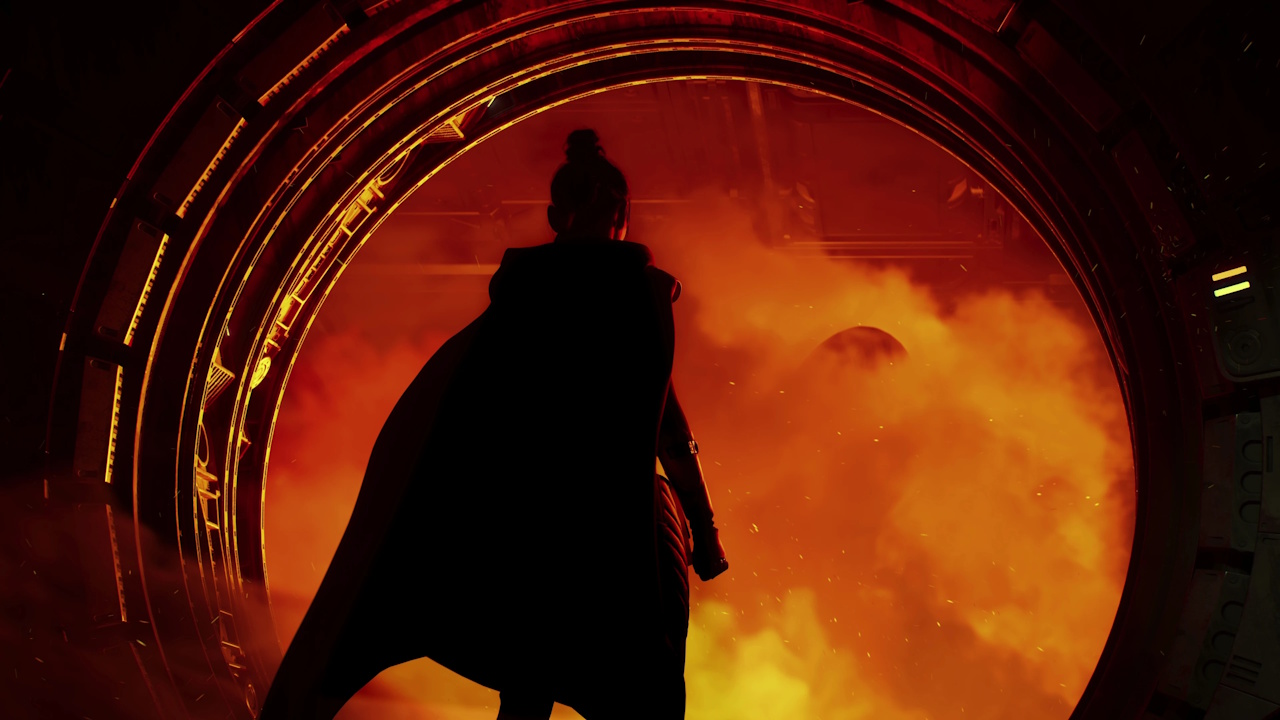
Six More Star Wars “Hot Takes”

Spoiler Warning: There are spoilers ahead for the Star Wars franchise, including Return of the Jedi, The Last Jedi, The Mandalorian, The Book of Boba Fett, and the video game Jedi: Survivor.

A couple of years ago, I shared six of my “hot takes” about Star Wars. But it’s always fun to stir the pot, so I’ve come up with six more! These are all controversial takes that I have on Star Wars; opinions that seem to be a minority position based on my limited engagement with the fan community. I thought it could be entertaining and interesting to share some more of these with you today!

This is just for fun, and while I do genuinely hold all of these opinions – I’m not just making up stuff for the sake of clickbait – there’s no need to get into a big argument! Everything we’re going to talk about here is subjective, not objective, and I’m keenly aware that I’m in the minority. They’re called “hot takes” for a reason, so feel free to disagree with me vehemently on any or all of the points I raise!

If you want to check out my first set of “hot takes,” you can find them by clicking or tapping here. Otherwise, this is your last chance to nope out if you don’t want to read some potentially controversial Star Wars opinions!

“Hot Take” #1:
The Book of Boba Fett is probably the best Disney+ Star Wars series so far.

Promo poster for The Book of Boba Fett.

I went into The Book of Boba Fett with low expectations. I’ve never been wild about The Mandalorian, thanks in no small part to its decision to bring the Force and Luke Skywalker into a story that was originally pitched as “the adventures of a gunslinger beyond the reach of the New Republic.” Boba Fett has always felt like a non-character to me ever since I first watched the original trilogy in the early ’90s. Add into the mix Disney and Lucasfilm grossly overplaying the nostalgia card in the sequel trilogy, and I truly did not expect to get anything out of The Book of Boba Fett whatsoever.

But I was surprised to find an exciting and interesting story that was just plain fun. It was a nostalgia overload for sure, but it managed to keep me entertained regardless – and by the time Boba and his friends were fighting for their very lives on the streets of Mos Eisley, I was gripped. Maybe it’s because of those low expectations that I had such a good time with it… but whatever the reason may be, I thoroughly enjoyed the series.

Like a bantha!

When I compare it to the other Star Wars offerings that I’ve seen on Disney+, it tops the charts easily. The Mandalorian isn’t great, in my opinion, and I find the show’s protagonist difficult to root for because of how utterly monotone he is. I once described Din Djarin as an “unemotional helmet-wearing slab of nothing;” a character who seems to act at the behest of a room full of TV writers, and not because of any motivation or character trait that I can detect.

Obi-Wan Kenobi was a show so utterly dire that it put me off Star Wars for months afterwards! Trying to write a review of that appalling mess was likewise so unpleasant that I ended up taking a break from writing anything at all here on the website – and I still haven’t finished that review! The mere thought of going back to Obi-Wan Kenobi just leaves a bad taste in my mouth.

Inside the Sarlaac monster…

I haven’t seen Andor yet – thanks, in no small part, to Obi-Wan Kenobi causing me to turn away from the Star Wars franchise for a while! But I suppose when I get around to watching it it could dethrone The Book of Boba Fett. As could The Acolyte – a project I’m definitely looking forward to as it promises to step back in time to a wholly different era of the Star Wars galaxy.

But The Book of Boba Fett isn’t just my favourite Disney+ Star Wars show by default. The others have their problems, sure… but The Book of Boba Fett could’ve been just as bad. I was surprised at just how entertaining it was, and how a character I had no interest in was able to be transformed into a genuinely fun protagonist. There were themes of loss and revenge as Boba navigated Tatooine’s criminal underworld, but my biggest takeaway was how positive, fun, and light-hearted the show could be. I admit that I’m surprised to see that it wasn’t received more positively by other Star Wars fans.

“Hot Take” #2:
“From a certain point of view” is patent nonsense and always has been, and Star Wars is made worse by continually trying to justify it.

What a crock of shit!

Are you old enough to remember when Return of the Jedi was regarded as the weakest Star Wars film? Before the prequels came out, that was the general consensus! When I first watched the Star Wars trilogy it was at the insistence of a friend, and his father was adamant that Return of the Jedi was an awful film and a poor way for the story to conclude. So it seems that divisiveness in the fan community is nothing new – but more on that later!

One of the reasons for Return of the Jedi being held in lower esteem than its two predecessors is the clumsy and just plain stupid line from Obi-Wan Kenobi to Luke Skywalker that coined the phrase “from a certain point of view.” I’ve always considered this explanation to be absolute dog shite, making no sense whatsoever. And Star Wars has since doubled- and tripled-down on this idea… when it really should be ignored and pushed aside.

Luke asked Obi-Wan how his father died in Star Wars.

Let’s step back and set the scene. In Star Wars (a.k.a. A New Hope, the first film in the series), Obi-Wan Kenobi explained to Luke Skywalker that Darth Vader “betrayed and murdered” his father. That line was unambiguous and not subject to interpretation! But by the time The Empire Strikes Back rolled around, the decision had been taken to retcon the relationship between Vader and Luke, transforming them into father and son – leading to one of the most iconic scenes in all of cinema.

As with many other things in Star Wars, though, something that should’ve been left alone… wasn’t. We could’ve ignored what Obi-Wan said in that first encounter, accepting that the retcon overwrote it. It would’ve been an inconsistency, sure… but it would have been one that the story could’ve survived. There are also legitimate in-universe reasons for Obi-Wan not wanting to tell Luke the truth; he could’ve apologised or explained his reasoning and left it at that.

The Obi-Wan Kenobi series revisited this idea.

But instead we got this ridiculously convoluted work of semantic gymnastics, with Obi-Wan justifying his lie – and it was made into a lie by the retcon in Empire – by trying to claim that, somehow, Anakin Skywalker and Darth Vader aren’t the same person. Even though they’re literally the same person, with the same body, “soul” or essence, Force abilities, and so on. Anakin made a decision to defect from the Jedi to the Sith… but it doesn’t mean he stopped being Anakin. Even thinking about it in the most abstract and poetic terms… he’s still the same person.

Since this line was uttered, Star Wars has continually stumbled by trying to justify it and make the concept stick. The prequel trilogy made a big deal about Palpatine granting Anakin his “new” Sith identity, and the aforementioned Obi-Wan Kenobi series also tried to double-down on this idea, with Obi-Wan saying that the man he knew “is truly dead.” But… he isn’t. He’s different, sure. But he isn’t dead. This whole “from a certain point of view” idea just doesn’t work for me. It didn’t when I first saw it in Return of the Jedi thirty-plus years ago, and every attempt that the franchise has made to lean into it hasn’t helped. I wish Star Wars would quietly drop this idea and move on!

“Hot Take” #3:
Franchise fatigue is beginning to set in.

This is just a snapshot of part of the Star Wars category on Disney+.

Though not as oversaturated as Star Trek has been in recent years, I’d argue that Star Wars is very much in danger of running too hot. Too many shows and films in too short a span of time is going to lead to franchise fatigue – and while there will always be fans who will turn up for every new project, the more casual audience that any series relies on will begin to drift away.

I think we’re already seeing this, at least to a limited extent. Solo: A Star Wars Story was the first film in the franchise to make a loss at the box office, and it was released only a few months after The Last Jedi. On Disney+, too, it seems that more recent shows and seasons have attracted less attention and excitement. Fewer people turned up for Obi-Wan Kenobi or The Book of Boba Fett than had for the first season of The Mandalorian, for instance.

A Star Destroyer as seen in the opening shot of Star Wars in 1977.

Since the Disney acquisition of Lucasfilm went through more than a decade ago, Star Wars has hardly been off our screens. The sequel trilogy came along in the back half of the 2010s, with Rogue One and Solo in cinemas as well. And since the launch of Disney+, there have been new live-action and animated shows every year. With several of these projects overlapping each other or being spin-offs that rely on older films or shows to set them up, keeping up with Star Wars and knowing what’s what and who’s who can feel like a full-time job!

With Disney+ in poor shape financially, the corporation is relying heavily on its biggest brands to bring in and retain subscribers. But the likes of Star Wars and even Marvel are in danger of burning out; turning away audiences due to convoluted interconnected storylines or just because there’s a desire to look for something new and different. A few years ago, a massive audience would’ve been hyped for a live-action Star Wars series. But now? I can almost hear the collective sigh as yet another season gets sharted out onto Disney+.

I haven’t seen much excitement for the likes of Skeleton Crew recently…

I genuinely don’t know what the solution is here. The truly hard-core Star Wars fans will, of course, keep showing up for any and every new project. But how long can the franchise rely on those folks if a wider audience of more casual viewers can’t keep up or loses interest? As Disney recently found out to its cost with the Galactic Starcruiser hotel at Disney World… there are only so many of those hard-core fans.

Maybe you don’t feel a sense of franchise fatigue just yet – and that’s okay. If you don’t, I’m genuinely happy for you! But with so much Star Wars content on the horizon, with new series, films, and video games coming every few weeks… how long can that last? How long will it be before you say, “eh, I think I’ll skip this one and watch something else?” In my opinion, no franchise can keep up this frenetic pace for very long. Star Wars has already been pushing it for several years, and I wonder when it will have to slow down.

“Hot Take” #4:
Jedi: Survivor was crap.

Battling battle droids in Jedi: Survivor.

I absolutely adored Jedi: Fallen Order when I played it. Going on that adventure with Cal Kestis and the crew of the Stinger Mantis was fantastic, so I was incredibly excited for the game’s sequel in 2023. But as you’ll know if you read my review of the game… I really didn’t like it. Mechanically and narratively, the game failed – and that’s before we get into the bugs and glitches that have come to define its poor launch.

An open-world design is not something that suits every game, and Jedi: Survivor was made significantly worse than its predecessor by attempting to go down this route. The clumsily-designed maps, particularly on the main planet of Koboh, really got in the way of the story and immersion. It made no sense to me that Cal and his friends would hide out in a “quiet, out-of-the-way” settlement like Ramblers Reach… when that settlement was a stone’s throw from both a massive pirate base and two Imperial outposts.

The game’s open-world design put Ramblers Reach literally a few metres away from the Empire and pirates.

In terms of story, I found Jedi: Survivor to be an unimpressive relation to its illustrious predecessor. Cal was teamed up with a character who was obviously, from almost his first second on screen, a “secret bad guy in disguise.” This plot point was so flagrantly telegraphed that it might as well have been lit up in neon. And the return of Master Cordova, a character who played a huge role in the story of the first game, was handled incredibly poorly.

There were some narrative highlights: Cere’s story took her full-circle, for instance, and while I could see Bode’s betrayal coming from a mile away, Cal’s reaction to it was genuinely emotional. But the foundations of this story felt weak and almost random, with Cal stumbling into a random cave, Greez accidentally building his cantina atop ancient Jedi ruins… and a convoluted plot involving an ancient Jedi sealed in a bacta tank and a “lost” planet that no one knew how to reach. Compared to the story of Fallen Order, Jedi: Survivor came up short.

A duel in Jedi: Survivor.

Obviously we can’t discuss Jedi: Survivor without commenting on the game’s shockingly poor condition. I’ve uninstalled it now and haven’t touched it since September, so I can’t comment on its current state. But I saw the reviews Jedi: Survivor received upon launch and chose to wait several months before jumping in – only to find that it was still in an absolutely appalling state, with bugs, glitches, frame-rate problems, stuttering, and low-res textures all getting in the way of the experience. The fault for this lies with publisher Electronic Arts, who chose to force Jedi: Survivor to be released before it was ready.

At the beginning of 2023, I genuinely expected Jedi: Survivor to be in contention for my “game of the year” award. Instead, for a variety of reasons it ended up as one of the biggest disappointments of the year. A sequel is in the works, and while I’m going to be much more sceptical this time around… I have to at least cross my fingers and hope for something better.

“Hot Take” #5:
The sequel trilogy won’t ever be retconned out of existence.

The Holdo manoeuvre is canon. Suck it, haters!

I’m not sure how hot of a take this really is, because I think most folks understand that Disney and Lucasfilm aren’t going to turn around one day and announce that the sequel trilogy is suddenly non-canon! But in some corners of the Star Wars fan community, this fantastical notion has taken root. I’ve heard some big-time fan blogs and channels with sizeable audiences pushing the idea that some or all of the sequel trilogy – and The Last Jedi in particular – are about to be “erased” from canon or overwritten.

Like any franchise, Star Wars has grown and evolved over the years. Stories, characters, and themes that may have been controversial or hated at first tend to be more accepted with the passage of time, as we’ve seen with both Return of the Jedi and the prequel trilogy. The same is sure to happen for the sequels, given enough time. Fifteen years from now, they’ll just be part of the furniture; inseparable from the rest of Star Wars.

Rey in The Force Awakens.

In 1999, I really didn’t like The Phantom Menace. In fact, the only part of the prequel trilogy that I even considered to be passable was Revenge of the Sith – and that dim praise comes with multiple caveats! But as time has passed, the prequels have been folded into the broader lore and canon of Star Wars quite effectively – to the point that I’d never even consider the idea of overwriting them at this stage.

Many of the fans who seem to be arguing most passionately in favour of the sequel trilogy being scrubbed are – somewhat ironically, perhaps – younger folks who first came to Star Wars when the prequels were in cinemas. The prequel trilogy was their way into the Star Wars fan community, so the idea that those films could’ve been disliked or hated as much as the sequels are today doesn’t seem to register for a lot of folks. But they were… and the fan community was able to recover!

“Somehow, Palpatine returned…”

I don’t know what the future holds for Star Wars. Maybe it will go on for years and years, producing new content all the while. Or maybe it’ll take another decades-long break before triumphantly returning, as it has in the past. But either way, the sequel trilogy will remain part of that story. It may not be beneficial to Disney and Lucasfilm to put it front-and-centre right now, particularly as fans seem to long for more stories set during the prequel era or the time of the original trilogy. But the sequel era is developing stories, spin-offs, and a lore all of its own – and building on that will be a key part of Star Wars’ future.

The idea that a billion-dollar trilogy of films, complete with spin-offs, merchandise, and more would ever be dumped or retconned out of existence is nothing more than a juvenile fantasy; the ultimate “cope” from folks who can’t stand those films. And look… I agree that the world would be a much better place if The Rise of Skywalker had never existed. That film was an absolute catastrophe! But it won’t ever be erased or overwritten – and I’m okay with that. I’m still content to give Star Wars a chance to impress me with what comes next.

“Hot Take” #6:
Writing a sequel to Return of the Jedi that didn’t feel like tacked-on fan fiction was probably impossible.

The main characters at the end of Return of the Jedi.

Stories end. Every story eventually comes to an end, with its character arcs, sub-plots, and main narrative threads all being drawn to a close. And for better or worse, Return of the Jedi was the end of Star Wars; the final, climactic battle of the Palpatine-versus-Skywalker saga. The Emperor was dead, Imperial forces were implied to be in disarray, the threat of the Death Star had been removed, and it seemed as if the Rebel Alliance had won the day. After three films – or six, if we include the prequel trilogy – the story had come to an end.

And what an end it was! Saving the galaxy, destroying both Sith Lords, restoring the Jedi Order, and setting the stage for a return to freedom and democracy after two decades of oppressive autocracy is a great place for the curtain to fall and the credits to roll. And having seen both the impotent fan fiction of the old Expanded Universe and Disney’s sequel trilogy, one thing seems abundantly clear to me: that should have been the end. There just wasn’t space to add a new story after the events of Return of the Jedi.

The Death Star explodes above the forest moon of Endor.

It’s ironic that Disney is the company that purchased the Star Wars brand, because the sequel trilogy is a great example of what I like to call the “Disney sequel problem.” Every Disney film – of the classic and renaissance eras, at any rate – ended with a “happily ever after” moment, with the heroes celebrating a hard-fought victory and the baddies vanquished. It proved impossible to make a sequel to those kinds of stories that didn’t feel either tacked-on or derivative.

And both of those labels apply to the Expanded Universe and the Disney-created sequel trilogy. The First Order basically picked up where the Empire left off, and the revelation that Palpatine had been secretly pulling the strings the whole time completely undermined whole narrative arcs from the original and prequel films. The Force Awakens was basically a carbon copy of A New Hope, and The Rise of Skywalker tried its best to be Return of the Jedi. No part of the story was original, and as I wrote once, the entire sequel trilogy feels like a bait-and-switch. Instead of answering questions about the Star Wars galaxy that fans had been asking for years, the films simply re-told the same story with a different coat of paint.

Kylo Ren and General Hux in The Force Awakens.

And I don’t see how it could’ve been different. After killing the Emperor and Darth Vader, there was no “big bad” left to defeat. Mopping up the leaderless remnants of the Empire would’ve felt anticlimactic, and replacing the Emperor with Snoke and Vader with Kylo Ren was just cheap and derivative. The same feelings would have arisen if a new Emperor had emerged, a new Sith Lord had been discovered, or the First Order had been given a different name to match one of the silly Expanded Universe stories.

Unfortunately, modern entertainment franchises can’t be allowed to come to a dignified end. They must be resurrected and kept on life-support at all costs, with new stories being churned out to suit the needs of corporate shareholders who are too cowardly to invest in new stories and characters. After saving the galaxy and defeating the Sith, Return of the Jedi left Star Wars with nowhere to go narratively – but Disney and Lucasfilm went there anyway.

So that’s it!

The Jedi Council.

I hope I didn’t upset too many people with this list!

There’s still plenty to enjoy with Star Wars, even if I’ve found a few things to pick on this time. In 2024, I’m looking forward to The Acolyte on Disney+ and to getting my hands on the remastered Dark Forces video game – so I’m still engaged with the franchise. I also like to keep up to date with big developments, and I’m sure that I’ll eventually get around to watching most of the live-action series and seasons that I’ve missed.

I hope this has been a bit of fun, and perhaps thought-provoking in places. Although these are “hot takes,” it wasn’t my intention to upset anyone or cause anger and division. The Star Wars fan community has more than enough of that! At the end of the day, we all have things we like and things we dislike in our favourite films and franchises.

Until next time… and may the Force be with you!

The Star Wars franchise – including all films, games, and other properties discussed above – is the copyright of Lucasfilm and The Walt Disney Company. This article contains the thoughts and opinions of one person only and is not intended to cause any offence.
Star Wars Jedi: Survivor – A Review

Spoiler Warning: There are spoilers ahead for Star Wars Jedi: Fallen Order and Star Wars Jedi: Survivor. Minor spoilers may also be present for parts of the Star Wars franchise.

It’s been a while since I shared my first impressions of Jedi: Survivor here on the website. I’ve since returned to the game, despite its performance issues, and beaten the main story, so I’m now in a position where I can put metaphorical pen to paper and share my full thoughts with you. Sorry that it took so long!

For some context, I adored Jedi: Fallen Order. I documented my first playthrough of that game here on the website back in 2020, and I was thrilled to see Lucasfilm and Electronic Arts recognising the strength of feeling in the Star Wars fan community for a linear single-player game. Jedi: Fallen Order had a high budget, but it proved definitively – as if any such proof were really needed – that single-player games can still be profitable, and that players still long for those kinds of experiences. Moreover, at a time when both The Rise of Skywalker and The Mandalorian had been disappointing, Jedi: Fallen Order came along and showed me that I hadn’t entirely fallen out of love with Star Wars.

I definitely felt optimistic about Jedi: Survivor.

I was genuinely thrilled at the prospect of a sequel to one of my favourite Star Wars games of all-time, and to see what would come next for Cal Kestis and the crew of the Stinger Mantis – and that was how I felt in the weeks leading up to the launch of Jedi: Survivor. If things went well, I believed that it might’ve been in contention for my “game of the year” award come December.

But things did not go well.

The Jedi: Survivor story is an all-too-familiar one: Electronic Arts forced the game to be released too early, despite knowing that there were serious technical issues. The game is a “release now, fix later” title, replete with bugs, performance issues, and other such problems. Although these issues afflicted the game and harmed players’ enjoyment across all platforms, as is often the case it seems that the PC version of the game was in the worst shape. Unfortunately, as I don’t own a PlayStation 5 or Xbox Series console, PC was where I played Jedi: Survivor.

One of many bugs that I encountered. Nightsister Merrin crouching in an out-of-bounds area.

I actually thought I’d been smart. Having read the reviews of the game when it launched and having seen performance reports from players and professional critics, I shelved my plans to buy Jedi: Survivor. I waited a couple of months and kept my eye on the game as patches were rolled out, and mistakenly believed that six patches later, things would have improved. Spurred on by having inadvertently come across a couple of story spoilers, I picked up the game at the end of June.

Unfortunately, however, the performance issues hadn’t been fixed – and in spite of another patch having been rolled out since then, those issues are still present on PC at time of writing. I described Jedi: Survivor as a “release now, fix later” game… but the fix still hasn’t been made, and the game remains in a poor state even five months after its troubled launch. In fact, having returned to the game to grab a few screenshots, I felt that its performance was worse in September than it had been in June and July.

A levitating Stormtrooper.

The blame for this lies with Electronic Arts, and the company has transformed what should have been a guaranteed hit into a game surrounded by controversy thanks to pathetically poor decision-making at the highest levels. Developers Respawn Entertainment were placed in an impossible position, and while I have no doubt that talented, passionate folks did their absolute best to get Jedi: Survivor as ready for launch as possible, they were screwed over by EA. It’s a tale as old as time in the games industry: a greedy publisher shits all over the hard work of talented developers, then seeks to blame them for the game’s poor condition and lower-than-expected sales.

My first few hours with Jedi: Survivor were spent messing about with settings rather than actually playing the game. Every time I thought I’d improved things, the stuttering and frame-drops would inevitably return – and they were far from the only problems. I encountered dozens of bugs across my playthrough, with Cal and other characters getting stuck in the environment or clipping through solid objects, as well as items not rendering properly or even disappearing. These issues didn’t just affect gameplay, but were also prevalent during cut-scenes – something I hadn’t seen in a supposedly “complete” game in a very long time.

And I have no doubt that Jedi: Survivor’s performance problems have tainted my view of the game as a whole.

Clipping through and getting stuck in the environment was a recurring problem throughout Jedi: Survivor.

When I sit down to play a game like Jedi: Survivor, it’s because I want to be immersed in a story. I want the game to transport me to a galaxy far, far away, and lose myself for a few hours in the life of a Jedi Knight on the run from the Empire. The occasional bug or glitch would be tolerable, but when a game is in such shockingly poor shape, dogged by performance issues, stuttering, broken animations, and bugs galore… it rips the immersion away. I struggled to really get into Jedi: Survivor and its story, and even its better moments were spoiled or diminished by the unacceptable state that it was released in.

But that’s enough about bugs for now, because there are other issues with the game that we need to talk about.

I have two major gripes with Jedi: Survivor aside from the bugs. One is mechanical; a choice that was made in terms of the way the game was designed and its levels were crafted. And the second is with parts of the story itself, as well as with the way in which certain new and returning characters were handled. We’ll look at each of these points in turn.

Optimising game files and compiling shaders appears to make fuck all difference.

Firstly, an open world (or semi-open world) did not suit Jedi: Survivor. The game’s story was hamstrung by this decision, and crafting a couple of open stages that actually felt condensed and small really damaged that sense of immersion that I was talking about. On the main planet of Koboh, the village of Rambler’s Reach was a few dozen metres away from the base of a massive gang of pirate-raiders and also a few dozen metres away from two Imperial outposts. Hardly the out-of-sight hiding place that it was presented as in-game.

One day we’ll have to talk more about the open-world trend, and how it simply isn’t the right choice for every game. Jedi: Survivor, to me, stands as perhaps one of the best recent examples of that. The design of both Koboh and Jedha was hampered by this attempt to move in an open-world direction, and the game would have benefitted from tighter, more curated levels, as well as areas of the map that had more distance between them. By all means, have raiders and Imperials on Koboh if that’s necessary for the story – but why not have Cal travel to the other side of the planet in a cut-scene before encountering them? The design of those parts of the map could have been similar, but breaking them off from the Rambler’s Reach hub would have improved the game from a narrative and immersion standpoint.

The saloon in Rambler’s Reach.

I also felt that the move to broader, more expansive levels should have been accompanied by more cosmetic items and loot. It became frustrating to explore a whole area, climbing onto hidden ledges, wading through rivers, and so on only to find… absolutely fuck all. There are more cosmetics in Jedi: Survivor than there were in Jedi: Fallen Order – and that’s great. I had fun customising Cal and unlocking some of these options. But this was something that felt unbalanced.

I’d explore a whole section of the map, kill dozens of enemies, and find nothing. No in-game currency, no cosmetics, no chest with an item… just nothing at all. And to me, that reinforces what we were talking about with Jedi: Survivor’s open-world style: it just doesn’t fit the game. It didn’t fit the story and it didn’t fit the amount of content that had been created, either. A good game strikes a balance, making exploration feel fun and worthwhile. There were moments of that in Jedi: Survivor, but they were too few and far between.

Battling battle droids.

Jedi: Survivor bills itself as a “souls-like” game; i.e. a “difficult-for-the-sake-of-it” title. But to its credit, the game offers an easier mode to play on – something I took full advantage of. However, even on the easiest difficulty there were some particularly finicky and challenging moments. While I found the game’s combat to be okay, there were some moments where Jedi: Survivor required frame-perfect button presses that I found near-impossible. Because I suffer from arthritis that affects my hands and fingers, some rapid button combos are nigh-on impossible for me to perform. At several points in the game, I was almost entirely locked out from progressing because I couldn’t complete a particularly intensive button combo.

On one occasion it took me almost forty tries to navigate just a single section of the map on Jedha – a particularly convoluted wall-run, jump, and swing combination that my hands and fingers just couldn’t manage. The game offered no help with these things, no accessibility options, and no way to skip ahead to bypass these moments. This is poor, and while I will give Jedi: Survivor some well-earned praise for offering a story mode, more accessibility features need to be present, and developers need to be aware that easier combat isn’t the only thing that players are looking for. Many games offer the option to skip ahead if players can’t make it past a certain puzzle or area of the map; these things are not that difficult to implement.

Cal on Jedha.

Stories are incredibly subjective. What works for you might not work for me, and vice versa, so everything I’m going to say about Jedi: Survivor’s narrative choices have to be taken in that way. Nothing about this is “objective” at all!

Where I’d felt gripped by Jedi: Fallen Order’s story, Jedi: Survivor came up short. Cal felt listless, rushing from place to place at the behest of the plot but not in a particularly understandable way, and there were moments of sheer randomness in the story – particularly at the beginning – that really detracted from the adventure.

A customised Cal.

In Jedi: Fallen Order, Cal was being hunted by the Imperial Inquisition after he used his Force powers, but was rescued by Cere. She already had a mission of her own: to open the holocron. Cal slotted into that story perfectly, and at every stage it felt like it unfolded naturally as Cal visited different worlds to unlock the holocron’s mysteries.

Jedi: Survivor begins with Cal falling into a hole that leads to a random cave – entirely by accident. It just so happened that Greez built his Cantina on top of some ancient Jedi ruins, and Cal stumbled into those ruins completely by mistake. That mistake kicked off a convoluted plot about a planet lost in an impenetrable nebula, a fallen Jedi who’d been sealed in a bacta tank for hundreds of years, and an Imperial spy who was so obvious that he might as well have had the words “secret bad guy” tattooed across his forehead.

Yup.

I admit that the performance issues and bugs in Jedi: Survivor made it harder to fully get into the story, as did the open-world mechanics described above. And those two things have undoubtedly impacted the way I view certain character decisions and the game’s narrative path. But even keeping that in mind, and doing my best to separate my thoughts about the state of the game and its design choices from its narrative… I still find it to be a weaker and less engaging story than its predecessor.

Any Star Wars story set during the reign of the Empire has a tightrope to walk – and for me, Jedi: Survivor created narrative issues for itself as a result of a couple of key decisions. Bringing back Master Eno Cordova for what was, unfortunately, an underwhelming and unimpressive role seriously challenges the idea of Cal as the game’s protagonist and leading figure in any kind of Jedi restoration. Cere had appointed herself as a kind of librarian or preserver of Jedi knowledge, but Cordova – a Jedi Master, lest we forget – should have been in a strong position to play a leading role in the preservation and restoration of the Jedi Order.

Master Cordova’s role was unimpressive.

Instead, Cordova’s role was a disappointment. He hand-waved away Cal’s destruction of the holocron that he’d gone to such extreme lengths to protect in the first game, then just stood around doing fuck all. He didn’t help, he didn’t offer guidance, he didn’t do… well, anything. And then he died remarkably easily at the climax of the game’s “twist” – a twist so thoroughly telegraphed that it might as well have been lit up in neon. Ever since the “no, I am your father” moment back in 1980, Star Wars has been obsessed with putting these kinds of twists into its stories. As I said once, recapturing that magic moment isn’t gonna happen, and Jedi: Survivor was made worse by trying to pull off something like this – and doing it so unsuccessfully.

When the dust settled, I also felt that Bode’s reason for his betrayal of Cal was paper-thin and didn’t make a lot of sense. Did Bode really plan to take his child to an uninhabited, uncharted planet and stay there – completely alone? What were they gonna eat? Without access to technology, what were they gonna do? Sure, they’d be “safe” from the Empire, and Bode would be wiped off the Empire’s list, but there doesn’t seem to have been any real planning on his part for the long-term.

Bode didn’t make for a particularly compelling villain.

In a “linear, story-driven” game – tags that Jedi: Survivor’s publishers love to draw attention to – the story is more important, in many ways, than the gameplay. Jedi: Survivor’s third-person exploration, parkour, and lightsaber combat could be fantastic… but if they’re let down by a poor story or one that feels convoluted, there’s no salvaging the game. And while I wouldn’t say anything in Jedi: Survivor was as bad, narratively speaking, as something like The Rise of Skywalker… that’s an incredibly low bar.

There were some genuinely tense, thrilling, or otherwise fun moments scattered throughout the story, as well as callbacks to the first game and references to other parts of the Star Wars franchise that I appreciated. So it wasn’t a total narrative collapse or anything like that; Cal’s story, while built on weak foundations, was still worth following to its conclusion. Even though I saw Bode’s betrayal coming from a mile away, Cal’s raw emotional reaction to it definitely hit the notes it was aiming for. While Master Cordova’s death felt like a waste, Cere’s demise at the hands of Darth Vader not only took her story full-circle after the events of Jedi: Fallen Order, but it was a heartbreaking moment that was handled well.

Cere was hunted down by Darth Vader.

The weakest part of the story of Jedi: Fallen Order was one that I hoped its sequel might address. The Haxion Brood storyline – in which Greez and Cal were pursued by a gaggle of unimpressive bounty hunters – was left unresolved by the time the credits rolled on the first game, and I had hoped to see a resolution in Jedi: Survivor. There was a bounty hunter side-story in the game, with several different bounty hunters to defeat that served as kind of mini-bosses. The ending of this questline was neat, but here’s my gripe: it didn’t resolve the Haxion Brood storyline!

As of the end of the game, Cal and Greez are still wanted by the bounty hunters, and the faction’s leader, who we met in the first game and who seemed like the kind of arrogant dick that it would be so satisfying to kill, wasn’t even mentioned this time. Again, this storyline just feels half-baked, and I had hoped that Respawn might’ve taken that feedback on board after the way the bounty hunter story just fizzled out in the first game.

Bounty hunter Caij Vanda offered what amounted to side-missions.

I liked that there were more cosmetic options in Jedi: Survivor, and I had fun playing with Cal’s appearance, BD-1’s appearance, and Cal’s lightsaber. I wasn’t wild about the way these cosmetics were unlocked, however, as I felt the game was particularly stingy with its currencies and lootable containers. That being said, I was able to unlock most of the items that I had my eye on, and by the time I was halfway through the campaign (or thereabouts) I’d got Cal, BD-1, and Cal’s weapons looking the way I wanted them to.

The expansion of lightsaber styles from Jedi: Fallen Order was nice – but these felt a little restrictive. I loved the way the crossguard lightsaber looked, but the incredibly slow and cumbersome fighting style that accompanied it basically rendered it non-viable for me. It would have been nice if there were options to mix and match fighting stances with cosmetics – in my case allowing Cal to use a crossguard lightsaber in a different way, but this could also open up double-bladed and dual-wielding stances to other styles of play.

Cal with a crossguard lightsaber.

Jedi: Survivor retains the Dark Souls-inspired “checkpoint” save system, instead of allowing players to freely save. This is a particularly irritating trend that many “souls-like” games (or should that be “souls-wannabes?”) implement, and it just feels annoying and outdated in 2023. Having to re-do chunks of a level because of the lack of a proper save system is just silly, it doesn’t increase the difficulty nor add anything to a game, and with Jedi: Survivor’s meditation spots not exactly being ubiquitous, I felt this choice got in the way of the fun.

One thing I did appreciate was that Cal’s Force powers carried over from Jedi: Fallen Order. Given the way in which that game weaved Cal’s connection to the Force into its narrative, it would have felt strange if he’d begun the sequel having to re-learn those same skills, and I will give credit to the writers for keeping Cal’s growth going instead of going for the typical video game sequel “reset” of his powers.

Customising BD-1.

I expected better from Jedi: Survivor, at the end of the day. The follow-up to one of my favourite games of the last few years was a title that I genuinely expected to compete for the coveted “game of the year” title come December, but instead it’s going to go down as one of the biggest disappointments of 2023 for me personally. The unacceptably poor state that Jedi: Survivor was in at launch – and remains in more than five months later – is a big part of that. But even if those performance issues and bugs had been kept to a minimum, the game itself feels like a poor relation to its illustrious predecessor.

Narratively, Jedi: Survivor built a weak, convoluted, and random story that split up the first game’s crew and saw Cal team up with an incredibly obvious turncoat. And mechanically, the game was forced into an open-world mould that simply didn’t suit it. It was hard enough to get invested in the story because of the poor shape that the game was in, but every time I got close, either the bland open-world formula would trip it up or I’d find myself annoyed by a story that was so much weaker than that of the first game.

Improperly rendered low-res textures.

So that was my experience with Jedi: Survivor. It’s hard to recommend it right now, given the performance issues and bugs that remain present. Electronic Arts and Respawn Entertainment have massively slowed the rollout of patches and fixes since the game launched, and I fear that Jedi: Survivor is being quietly abandoned and may never reach the level of basic playability and mechanical competence that should have been present at launch. This is already a huge disappointment and should be enough to put off all but the most ardent Star Wars fans.

Your mileage may vary when it comes to the game’s story, though, and my take is clearly not shared by all players. I’ve seen plenty of comments hailing the story as one of the best that the Star Wars franchise has to offer, and while that’s certainly not my opinion, it’s worth keeping in mind that these things are subjective. As I said earlier, I have no doubt that my overall impressions of Jedi: Survivor have been coloured by its bugs and performance issues.

I have no plans to return to Jedi: Survivor right now, and having stepped back into the game to capture a few screenshots for this piece, I’ll probably be uninstalling it. If a huge patch is released, or the game receives significant DLC that could add to its story, I might consider going around again. But unfortunately I must report that Jedi: Survivor was not the fun and engaging Star Wars adventure that I wanted it to be.

Star Wars Jedi: Survivor is out now for PC, PlayStation 5, and Xbox Series S/X. Jedi: Survivor is the copyright of Electronic Arts, Lucasfilm Games, and Respawn Entertainment. The Star Wars franchise is the copyright of Lucasfilm and The Walt Disney Company. Some promo artwork and images used above courtesy of IGDB. This article contains the thoughts and opinions of one person only and is not intended to cause any offence.
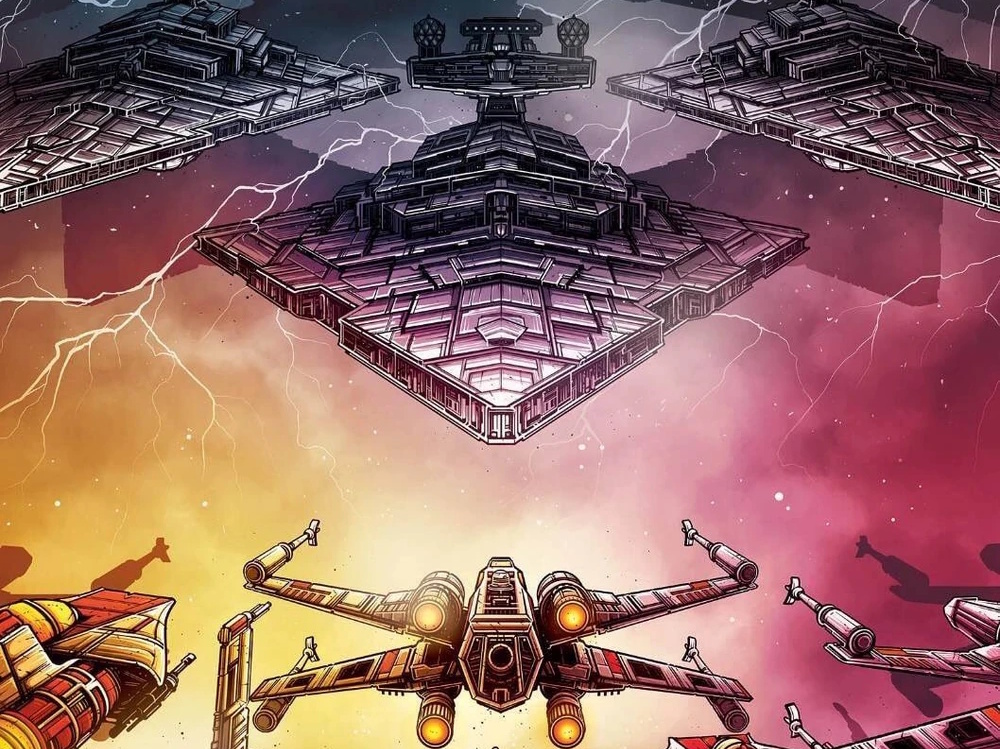
Star Wars Jedi: Survivor – First Impressions

Spoiler Warning: There are minor spoilers ahead for the first couple of levels of Jedi: Survivor. Spoilers are also present for Jedi: Fallen Order.

I have made a mistake.

With Jedi: Survivor having been released two months ago, and with six major patches rolling out for the PC version of the game in that time, I made the ignorant assumption that the game would have been fixed by now – or at least substantially improved. Having held off on purchasing the game when it was first released given its broken, unfinished state – and even worse PC port – I had hoped that some extra development time and post-release patches would have fixed things up.

Despite trying my best to avoid spoilers for the game, I’d come across a couple of seemingly pretty big ones over the past couple of months, and I wanted to play Jedi: Survivor without encountering any more. I was also keen to fill the void while I wait for Starfield – all of which are factors that led me to purchase Jedi: Survivor.

Cal Kestis – with his trademark moustache and pink lightsaber, of course.

On PC, the game is in a poor state even two months and six patches later. My PC far exceeds the game’s recommended system requirements, and should be capable of running Jedi: Survivor with detailed graphics and ray-tracing enabled without any issues. For comparison, I can run demanding titles like Red Dead Redemption II and Cyberpunk 2077 at their highest resolution, with ray-tracing enabled, and easily get a smooth 60 frames-per-second.

Jedi: Survivor runs poorly. Most of the time, walking around and exploring a level isn’t an issue. But as soon as combat begins, or even when Cal has to perform an acrobatic move like a double-jump or running along a wall, there are noticeable frame drops and stuttering issues. With some levels requiring fairly specific button-presses to navigate areas, inconvenient frame drops can mean the difference between successfully completing a section and having to replay it. This got old fast.

Cal stuck in the environment due to a glitch.

And this is in spite of turning down all of the in-game settings. I tried Jedi: Survivor in 4K at first, then 1440p, then finally 1080p. I tried the “high” preset, before dropping down to medium, and then again turning some settings – like shadows and the draw distance – all the way down to low. I refuse to drop the settings any further; playing the game in 720p with all settings on low would make it look no better than an Xbox 360 title, and what’s the point?

Some of these frame-drops occur during cut-scenes, which is something I haven’t encountered in a game in a long time. Although this kind of problem is annoying during gameplay, at least it’s understandable to an extent… but for cut-scenes to be similarly afflicted is actually quite shocking. It speaks to how unready Jedi: Survivor was when it was forced into a premature launch.

This “optimisation” takes place every time the game is started.

The frame-rate and stuttering issues are indicative of a game that is poorly-optimised. Despite Jedi: Survivor taking its sweet time to “optimise files” every time it boots, there’s no indication that this does anything at all. The game simply isn’t running well on PC. This isn’t an issue on my end, either – take a look at tech breakdowns from people far more skilled than I am and who have significantly more powerful computers. Similar issues are also impacting performance on PlayStation 5 and Xbox Series X – though I don’t have those consoles so I can’t speak to that for myself.

Jedi: Survivor has some visually interesting locations, but the experience of these – and the sense of immersion that I was hoping to find – has been ruined; soiled by just how janky and unfinished the game still is. When it works, these sights are definitely something to see, but the sad fact is that the game doesn’t work far too often.

Some of Jedi: Survivor’s levels should look great.

I’m now considering abandoning Jedi: Survivor, despite only being a couple of hours into the game. If future patches come along that will genuinely address the performance problems that are plaguing the game on PC, it will be worth revisiting or restarting. But at the moment, I find that I’m spending almost as much time battling poor performance as I am battling enemies – and that just isn’t a lot of fun. Jedi: Survivor isn’t the only game this year to arrive in an unfinished state, especially on PC, but it’s so disappointing to see that this godawful “release now, fix later” approach has really put a downer on what should have been an exciting and fun experience.

But there’s more to say. In the time I’ve spent with the game so far, I have a couple of thoughts to share on the narrative and gameplay. This all comes with the major caveat that I’m only at the beginning of the main story, and that my thoughts may very well shift depending on how things go later on. How a story begins isn’t nearly as important as the journey it takes us on, after all!

Concept art for Jedi: Survivor.

That being said, the first couple of hours of Jedi: Survivor haven’t exactly blown me away narratively. I’ll avoid as many major spoilers as I can, but there will be some minor spoilers ahead – so if you ignored my spoiler warning at the beginning, this is your last chance to nope out!

When we’re reintroduced to Cal, he’s working with a new crew, with the friends he met in the first game having gone their separate ways. I’m not averse to that idea, as several years have passed since the events of Jedi: Fallen Order. Unfortunately, however, the members of Cal’s crew that we’re introduced to just feel incredibly one-dimensional and bland. Their dialogue was laden with clichés – something clearly designed to convey Cal’s friendliness with them all – but it all ended up falling flat. I couldn’t find a way to care about any of these people when they were in danger – because the game didn’t succeed at getting me invested in them or their fates.

Some of the game’s new characters felt bland and uninteresting.

Contrast this with Prauf, Cal’s scrapper friend from the opening act of the first game. Prauf felt like he had personality, and I genuinely felt his connection with Cal from almost the first moment he appeared on screen. When Prauf was killed, Cal’s reaction was genuinely heartbreaking because the game had successfully set up their relationship.

I’m also a little concerned that Jedi: Survivor is going to retread parts of Jedi: Fallen Order by seeing Cal seek out the same people that he met last time. Reuniting a crew that had been together the last time we saw them is a risk; it’s something that could feel underwhelming in the extreme. Though there are new characters to get to know, part of the appeal of a sequel is to catch up with all of the characters we met last time – and I’m concerned that the way Jedi: Survivor plans to handle this will feel repetitive and just less interesting as a result.

Promo screenshot featuring Cal and Merrin.

In Jedi: Fallen Order, Cal was guided to a succession of specific locations on his quest. He had to visit the tombs of Zeffo, the forested world of Kashyyyk, the scorched desert of Dathomir, and the frozen wasteland of Ilum – but he went to each of these locations with a goal in mind. The first part of Jedi: Survivor sees Cal seemingly by accident fall into a cave – and from that random cave discover a hidden Jedi artefact. It just feels a little too convenient.

Out of all the places in the galaxy that Cal could have ended up, he finds himself on just the right part of just the right planet – and not because he was guided there by Cere or by Master Cordova’s holocron, but by sheer random chance. Star Wars fans may say “that’s the Force!” and pedants will say “it’s just a story!” but to me, neither of those excuses feel especially strong. Last time, Cal had a purpose, and was guided on his quest to particular locations. This time, things feel a lot more random.

Jedi: Fallen Order’s story seemed to take Cal on a more natural journey – rather than a random, incredibly convenient one.

Mechanically, Jedi: Survivor has a couple of issues, too. Larger levels can be more confusing, and the in-game holo-map still isn’t particularly user-friendly. In just the first couple of stages I found myself getting lost, and partly that’s because the way to go wasn’t well-signposted. Areas that looked accessible weren’t, areas that were supposed to be reachable looked blocked off or too far away, and while I don’t want a Skyrim-style waypoint on my screen the entire time… there’s got to be a way to make some of these pathways more visible, surely.

Jedi: Survivor is leaning into more of an open-world style, at least with one of the planets Cal has visited so far… and that can be a double-edged sword. On the one hand, larger and more expansive levels are a welcome change from linear paths, but on the other, some open worlds can get in the way of story progression. There are also more hiding places for items and chests… and it can be frustrating, sometimes, to explore a whole chunk of a level, climbing on every ledge and jumping into every cave only to find nothing at all.

Battling battle droids.

I like the expanded customisation options for Cal – and I’ve already found a suitably silly moustache for him to plaster on his face. I wish more customisation options were unlocked at the start, though; the available cosmetics felt pretty threadbare at first. I love a game with good customisation options, though, and Jedi: Survivor appears to have a bunch of fun cosmetics to play about with.

The game is larger than Jedi: Fallen Order was – with more characters, more skills, more quests, and more cosmetic variety. All of those things are positive, and so far I don’t feel overwhelmed or like the game is too large. Some open-world games can feel like they dropped you in the middle of a mass of stories and quests with little to no direction; at least in its first couple of hours, Jedi: Survivor manages to avoid that sensation.

A closer look at Cal’s moustache.

I want to progress further with this game. I adored Jedi: Fallen Order and I was really excited about its sequel, reuniting with Cal and the Stinger Mantis, and having another adventure in a galaxy far, far away. Although there are a couple of story complaints that I’ve found so far, by far the worst issue with Jedi: Survivor is that it just doesn’t play very well. The game probably needs at least two or three more significant patches and updates to knock it into shape – and when the most recent patch took over a month to be rolled out, that could mean Jedi: Survivor will have to go back on the shelf for a while.

Electronic Arts fucked up what should have been a guaranteed success by doing what they’ve done too many times before: forcing the release of an unfinished game too early. Had Jedi: Survivor been delayed to, say, September or October, to allow Respawn more time to actually finish working on it, we could be talking about one of the best games of the year – and one of the best Star Wars games in a long time.

Instead, Jedi: Survivor will always have an asterisk; a little caveat next to it. No matter what happens to the game in the months ahead – and I sincerely hope that more patches and fixes are coming – it will always be tainted by the poor shape it was in when it launched. That didn’t have to happen… and I wish I’d taken my own advice and waited a little longer before purchasing it.

Star Wars Jedi: Survivor is out now for PC, PlayStation 5, and Xbox Series S/X. Jedi: Survivor is the copyright of Electronic Arts, Lucasfilm Games, and Respawn Entertainment. The Star Wars franchise is the copyright of Lucasfilm and The Walt Disney Company. Some promo artwork and images used above courtesy of IGDB. This article contains the thoughts and opinions of one person only and is not intended to cause any offence.
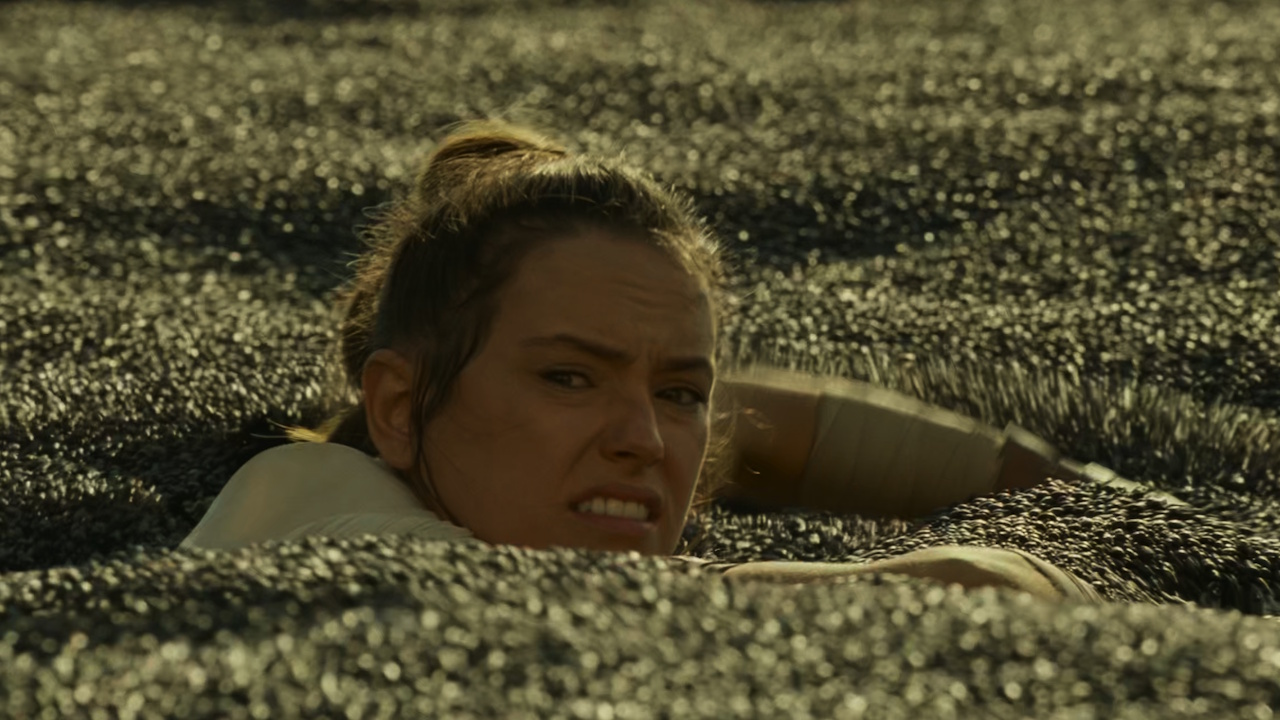
Somehow Rey returned…

Spoiler Warning: There are spoilers ahead for the Star Wars sequel trilogy.

One of the most disappointing things about the Star Wars sequel trilogy was that it didn’t actually advance the overall story of the saga in a meaningful way. Think about where it began and ended: a Dark Side, authoritarian power had been defeated in battle, but the war was still to be won. Palpatine had been killed. The galactic government had been destroyed and democracy would have to be restored. One young Jedi survived and hoped to rebuild the Jedi Order. Questions that we had all the way back in the ’80s about what would come next after Return of the Jedi weren’t answered; they were given a new lick of paint and asked again.

All of which is to say that there’s a lot of potential in a story set after the sequel trilogy and the “final” defeat of Palpatine. Seeing what will come next for the Star Wars galaxy as it takes steps toward a restoration of democracy and a recreation of the Jedi Order – in some form, at least – is something I’ve been genuinely interested in seeing since I first watched Return of the Jedi all those years ago.

Rey is coming back to Star Wars… and soon.

I confess that I’m surprised to see Disney and Lucasfilm creating a “sequel sequel” so soon after The Rise of Skywalker. The trilogy proved divisive overall, and regardless of which part fans consider to be the worst, the general consensus is that these films weren’t as strong or enjoyable as they could and should have been. Returning to the sequels’ principal character is, therefore, a bold move.

I felt that there was a ton of potential in Rey as a character. The idea of a Force diad – light rising to meet the darkness – was an interesting one that the sequels, sadly, didn’t do justice to. However, as a young, inspirational character that others could look to for leadership, Rey had a lot going for her. Far from being just a “female Luke Skywalker,” as some dismissively suggested, there were nuances in Rey’s characterisation that took her to different thematic places – at least in the first two parts of the sequel trilogy.

Rey at the end of the sequel trilogy.

Although we’ve caught a glimpse of Luke Skywalker and his attempt to rebuild the Jedi Order, those sequences in both the sequel films and the Disney+ spin-off shows are impacted by the knowledge of the tragedy that will ultimately befall Luke and his new generation of Jedi. He tried his best, but ultimately all Luke could do was pass the torch to Rey – and the task of creating a new and improved Light Side order now falls to her.

That idea holds genuine appeal, as does seeing the galaxy recovering from decades of oppression and civil war. There’s the possibility of telling an inspiring and uplifting story all about finding hope in dark times, and rebuilding from a fascistic dystopia. These are things that have real-world parallels that could prove incredibly timely!

A massive fleet of Star Destroyers.

Is Rey the right character to take the lead in such a story, though? After a disappointingly regressive and arguably quite bland arc across the sequel trilogy, Rey ended in a pretty uninteresting place. As the granddaughter of Emperor Palpatine, Rey’s story seems to continue Star Wars’ disappointing trend of seeing the Force as a kind of metaphor for aristocracy; that those who are entrusted with power must derive that power from their bloodline, instead of discovering it on their own.

There’s also the question of whether the Jedi Order deserves to be reconstructed. In The Last Jedi, Luke was acutely aware of the failures of the old Jedi Order – and that’s also one of the key themes of the prequel trilogy: that the Order had grown complacent and arrogant to such an extent that its members couldn’t fathom the idea of somebody like Palpatine operating right under their noses. This is Star Wars, though, and the Jedi are an unshakable part of the franchise, so surely the name won’t be dropped!

The failure of the Jedi Order is one of the themes of the prequel trilogy – and The Last Jedi.

The Rise of Skywalker ended in such a way as to tee up future stories, just as Return of the Jedi had done four decades earlier. The question on my mind, though, is this: is it too soon? It took more than thirty years for Return of the Jedi to get a sequel, and with the disappointment of the sequels still fresh in the minds of many fans, I’m struggling to see how this new film could hope to find success.

At best, a new story featuring Rey will prove to be divisive, continuing the divisions in the Star Wars fan community that have persisted for the past few years at least. Doubling-down on a character that many fans were unimpressed with at best is admirable in some ways… but it doesn’t strike me as being a particularly smart business or storytelling decision. The simple fact is that Rey’s presence in the story is a challenge; a hurdle that the new film will have to overcome.

Rey using her Force powers.

Again, this is something that the passage of time would almost certainly damp down. Look at the reputation the prequel trilogy has today: it’s held in high regard by many fans, especially younger ones, and while there are still grumpy old holdouts like myself who remain unimpressed… the prequels on the whole have gone through somewhat of a renaissance. As fans who watched and loved those films as kids have grown up and continued to participate in the Star Wars fan community, the prequels have been – to an extent – rehabilitated.

The same is true of Return of the Jedi. Though never as controversial as the prequels, when I first encountered Star Wars in the early ’90s, Return of the Jedi was considered its weakest part by far. And it’s easy to see why: “from a certain point of view” is patent nonsense, Luke and Leia being retconned to be brother and sister was just silly, and the Ewoks were an army of teddy bears who defeated the Empire and ruined Palpatine’s carefully-laid plan! Yet you just don’t hear those criticisms any more outside of a small subset of Star Wars fans; Return of the Jedi has been rehabilitated by the passage of time.

Are you old enough to remember when everyone hated the Ewoks?

In time, many of the most divisive and heavily-criticised aspects of the sequel trilogy will be absorbed into Star Wars’ broader canon. We’ve already seen moves in shows like The Mandalorian and films like Rogue One to flesh out story points and new additions like cloning or hyperspace tracking, and as Star Wars continues to expand – both on the screen and beyond, with books, comics, games, and so on – Rey’s status as the grandchild of Palpatine and other controversial (and silly) elements of the sequels will likewise become more broadly accepted.

But this process takes time.

With the sequel trilogy still fresh in the minds of most fans, and with the general consensus being that either The Last Jedi or The Rise of Skywalker are among the worst films in the entire franchise, building a new story atop that so soon feels like it’s asking for trouble. Return to Rey by all means – expanding her story might go some way to making up for its deficiencies in the sequel trilogy. But not yet. It’s too soon.

The “final” demise of Palpatine.

There’s also the point that I’ve made before a dozen times or more: Star Wars has only ever told one real story. Despite existing for more than 45 years, with nine mainline films, two major spin-offs, several live-action TV shows, animated series, books, games, and more… Star Wars has still only told one real story: the “Palpatine saga,” focusing on the rise, fall, rise again, and fall again of Emperor Palpatine. A new story focusing on Rey wouldn’t do the one thing that I’ve been calling on Star Wars to do for years: move on.

The Star Wars galaxy is one of the finest fictional settings ever created, in my view. It has millions of inhabited planets, thousands of alien races, space magic and sci-fi technology, dozens of named factions, and tens of thousands of years of galactic history. But every mainline Star Wars project has been denied access to the vast majority of this sandbox, being forced to return to the same time period, the same planets, the same factions, and even the same handful of characters and families time and again. Surely it’s time to knock it off now and try something genuinely new and different. Because of her involvement in the sequels, and because she’s been retconned to be a member of Palpatine’s family, Rey can’t achieve that objective on two counts.

Rey in The Force Awakens.

Can we have any confidence that Lucasfilm has learned the lessons of the sequel trilogy? Not only was the decision to split up the writing and directing of the trilogy a catastrophic mistake, but allowing someone like J.J. Abrams to essentially re-tell large parts of the original trilogy with a different coat of paint was poor. With Star Wars so intent on doubling-down on the only story it’s ever told, and a lack of boldness in the Disney boardroom seemingly refusing to consider other options, there’s a very real danger that a new sequel will repeat many of the mistakes that the franchise has made in recent years.

Several recent Star Wars projects have been little more than fan-servicey mess, with the utterly illogical or regressive inclusions of characters for no reason other than to compensate for a weak story. Some of these – like Obi-Wan Kenobi – actually ended up damaging the original films and the characters they included. So I feel more than a little concerned that a sequel featuring Rey – and thus continuing, in some form, the “Skywalker saga” – will do the same.

Rey in The Last Jedi.

So I guess that’s where I’m at when it comes to this “sequel sequel.” My main message isn’t “never do this, it’s a terrible idea,” but rather “now isn’t the right time.” As the dust settles on the sequels, and upcoming projects – both on screen and off – incorporate that story into the broader landscape of Star Wars, passions will surely settle. As younger fans who first came to Star Wars with the sequels grow up and come of age, the fan community as a whole will shift to becoming more supportive of those films. When that’s happened – say in fifteen to twenty years time – then it might finally be the right time to return to Rey. But not yet.

If I was in charge of planning the next steps for Star Wars over at Disney and Lucasfilm, I wouldn’t have given the green light to this project. My focus would be on diversifying Star Wars – stepping back in time to the days of the Old Republic, taking a look at new characters, and shining a spotlight on the denizens of the galaxy who aren’t blessed with space magic! Rey will undoubtedly have her moment to return to Star Wars… but for me, it feels incredibly premature to even be considering bringing her back now.

The Star Wars sequel trilogy (The Force Awakens, The Last Jedi, and The Rise of Skywalker) is available to stream now on Disney+. The films are also available on DVD and Blu-ray. The Star Wars franchise – including all titles discussed above – is the copyright of Lucasfilm and The Walt Disney Company. This article contains the thoughts and opinions of one person only and is not intended to cause any offence.
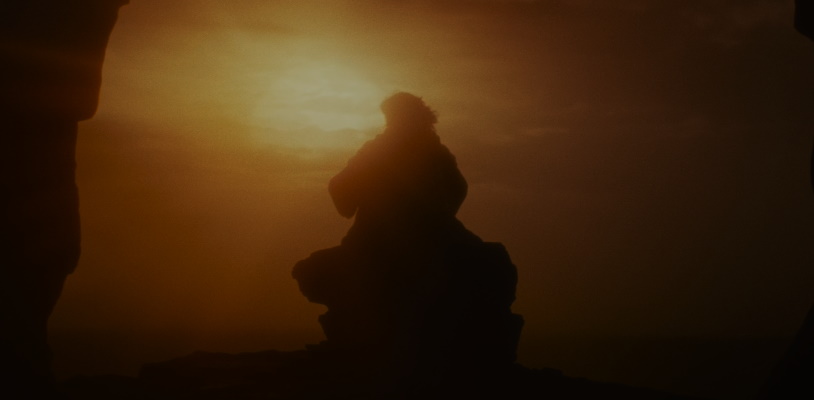
Disney Star Wars: Five highlights

Spoiler Warning: There are spoilers ahead for the following Star Wars productions: Rogue One, The Book of Boba Fett, Jedi: Fallen Order, and The Rise of Skywalker.

Happy Star Wars Day! May the Fourth be with you… and all that.

Today is a day of celebration for Star Wars – and I like to try to say something positive about the franchise every Star Wars Day! So this year, I thought it could be fun to run through five of my favourite Star Wars experiences that have been released since Disney acquired Lucasfilm back in 2012.

I felt quite optimistic when I first heard this news more than a decade ago. I’d been disappointed, on the whole, by the Star Wars prequel trilogy, and with Disney promising a sequel that would take the story beyond Return of the Jedi, I truly felt that there was the potential for some exciting and engaging storytelling. It’s absolutely true that not every Disney project has hit the high notes that I’d been hoping for – but conversely, it’s not the case that Disney has added nothing of value to Star Wars, either. There have been some misfires and unexceptional stories… but there have been some fantastic ones too.

Porgs!

So on this illustrious day, let’s celebrate some of the successes that Disney has rolled out! I’m going beyond the films to include television shows, specials, video games, and more on this list, because Star Wars has always been a very diverse franchise. There are plenty of highlights worth celebrating that I didn’t get a chance to include this time… but who knows? Maybe they’ll make the cut next year!

As I always say: all of this is just the subjective opinion of one person, so if you disagree with my picks and hate everything I have to say… that’s totally fine! There’s plenty of room in the Star Wars fan community for polite disagreement.

Let’s jump into the list!

Highlight #1:
Jedi: Fallen Order (and Jedi: Survivor)

Cal Kestis.

Jedi: Survivor has had a very rough launch, especially on PC, and that has sadly detracted from what sounds like a sequel with a fun story. I haven’t gotten to play it for myself yet, but when the bugs are patched out and the game is more stable, it’s one I hope to pick up. I adored Jedi: Fallen Order, though, and I’ve played through it twice already!

Jedi: Fallen Order is one of the most interesting standalone Star Wars stories of the past decade, exploring a setting and time period that was relatively unknown, and telling a story all its own. I genuinely got roped in by some fantastic writing, and felt as if I was taking part in my very own Star Wars adventure with former Jedi Padawan Cal Kestis and the crew of the Stinger Mantis.

Promo artwork for Jedi: Survivor.

Jedi: Fallen Order also gave me one of my favourite experiences in any Star Wars game ever: piloting an AT-AT walker! This sequence might just be the best in the entire game; it was tense, perfectly-paced, and exciting, with the controls of the clunky machine feeling exactly as I’d expected when I first saw an AT-AT ambling across the battlefield on Hoth decades earlier!

After feeling disappointed by some of the narrative decisions taken elsewhere in the Star Wars franchise in the year or so before I played the game, it was somewhat of a cathartic experience to know that I hadn’t totally fallen out of love with Star Wars, and that the franchise can still tell the kinds of fun, exciting, and adventurous stories that I enjoy the most.

Highlight #2:
Rogue One

The Death Star under construction.

I adore Rogue One, which was Disney’s first attempt to create a spin-off from the main Star Wars saga. The film told the story of Jyn Erso and the birth of the Rebellion, including the theft of the original Death Star plans that set up the events of A New Hope. It was a fantastic action-packed romp with some great moments of characterisation. Not only that, but it was an incredibly bold move for the film to kill off practically all of its major characters.

Although Rogue One featured some (rather gratuitous) sequences involving Darth Vader, by and large it stood apart from other entries in the franchise by leaving the Force, the Jedi, and lightsabers behind. This is something I think Star Wars needs to try to do more of; there’s a whole galaxy out there away from the Jedi, the Sith, and other Force-wielders that’s crying out to be explored!

Stealing the Death Star plans.

At the time of its release in 2016, Rogue One truly felt like something dramatically different from Star Wars. After the disappointment of the prequels and the relatively safe ground of the copycat production that was The Force Awakens, here was a cinematic demonstration that Star Wars could push the boat out and try new and different things. Although it was still a prequel that was very closely tied into the original films, it was also a work that existed in its own narrative space and could be enjoyed on that basis. Again, this is something I’d love to see more of from Star Wars.

I’ve lost track of how many times I’ve seen Rogue One! I’ve definitely seen it more times than all of the prequels and sequels, and it’s a film I’m happy to return to time and again. It got its own spin-off last year: Andor. I haven’t yet found time to check out that series, but I hope to in the weeks and months ahead.

Highlight #3:
Galaxy’s Edge and Rise of the Resistance

First Order Stormtroopers.

I dearly wish that I could visit Walt Disney World and experience Galaxy’s Edge and Rise of the Resistance for myself! Unfortunately I’m in poor health and can’t travel, so I’ll have to settle for enjoying this immersive experience from afar.

Galaxy’s Edge is a themed attraction at Walt Disney World in Florida and Disneyland in California, and it’s set on a brand-new planet in the Star Wars universe. The area includes a cantina, shops, and two rides: Smuggler’s Run and Rise of the Resistance. Smuggler’s Run is set aboard the Millennium Falcon, with riders able to take the controls of the famous vessel. But Rise of the Resistance is the showstopper: a trackless, immersive ride experience.

The official map of Galaxy’s Edge.

If, like me, you aren’t able to get to Disneyland right now – and with those prices, who is? – then you can find video tours of Galaxy’s Edge and even full videos of the rides on YouTube and other video platforms. It’s not the same, of course, as being able to ride for ourselves, but it’s the best a lot of us can hope for!

Although I’d say that Galaxy’s Edge is probably limited, in some ways, by its sequel-era setting, it looks to be an incredibly immersive experience, by far the best that Disney’s Imagineers have built for the parks in recent years. Being able to build a lightsaber, drink cocktails and blue milk in a cantina, or just soak up the atmosphere of a galaxy far, far away… it looks like a ton of fun! If you’ve been able to visit, I hope you know how jealous I am!

Highlight #4:
The Book of Boba Fett

Concept art of Boba Fett and his ship.

As I said in my review of The Book of Boba Fett: this is a series that I’d have expected to find pretty boring and disappointing! It was such a nostalgia overload, especially in the final couple of episodes, that it could feel like watching overgrown children playing with action figures rather than a scripted television series! But there was something about the fun, lighter tone and the smaller-scale story that made it thoroughly enjoyable for me.

It’s surprising to me that The Book of Boba Fett hasn’t been greenlit for a second season, and I wonder why that is. The overall consensus seems to be less positive, unfortunately, and perhaps that’s the reason. But for my money, The Book of Boba Fett was far more enjoyable than its cousin The Mandalorian.

Boba Fett and Fennec Shand.

Star Wars can take itself very seriously sometimes… and that can be okay. But The Book of Boba Fett didn’t fall into that trap, and the show’s lighter elements helped it to stand out. By telling a story mostly set on one planet, focusing on a small cadre of characters, and without much of an emphasis on the Force and the Jedi, The Book of Boba Fett also managed to feel like something a little different.

I was never particularly taken by Boba Fett as a character in the original films. He had an interesting visual style, but in his only real combat encounter he died pretty easily! The Book of Boba Fett took this bland, faceless character and truly fleshed him out, giving motivation, understanding, and even a sympathetic presentation to the galaxy’s most famous bounty hunter.

Highlight #5:
The Lego Star Wars specials

Palpatine is not amused!

At time of writing there have been three Lego Star Wars specials on Disney+: The Holiday Special, Terrifying Tales, and Summer Vacation. And all of them are fantastic! The Lego Star Wars specials are cute, funny homages to the Star Wars franchise, bringing in elements from across the prequels, sequels, and original films and putting a distinctly comedic, light-hearted spin on them.

Fans who want to take everything seriously might not enjoy what these specials have to offer, but everyone else should be able to find at least something to enjoy! I’d even go so far as to say that the Lego Star Wars specials can make some of the weaker elements of cinematic Star Wars seem better – or at least less bad!

Palpatine and Vader.

I can’t pick a favourite out of these three specials. Each one has so much going for it – and each one is also tailored to fit a certain theme or time of year. The fact that all three specials are so strong is testament to the quality of the writing, and to Disney’s commitment to this unexpectedly fun idea.

The fact that Disney was willing to commit a decent amount of money to non-canon comedy is fantastic, and shows that the corporation can do more with Star Wars than just make carbon copies of what came before. These specials were, once again, something genuinely different for the Star Wars franchise – and all three are well worth a watch if you can find them on Disney+.

So that’s it!

Poe’s X-Wing fighter.

We’ve celebrated Star Wars Day by looking at five recent highlights from the Disney era. There are plenty of others that I could’ve chosen to include, but I think we’ve managed to put together a pretty fun and diverse list.

I’m not fully caught up on all things Star Wars, having missed Andor and The Mandalorian’s third season. The franchise might be beginning to get a little unwieldy as it continues to expand… but I suppose for fans who are more into Star Wars than I am, that’s a good thing! There are several projects on the horizon that hold genuine appeal, and I’m looking forward to seeing what else Disney and Lucasfilm have in store.

So I suppose all that remains to be said is this: may the Force be with you! Happy Star Wars Day from Trekking with Dennis.

The Star Wars franchise – including all films, games, and other properties discussed above – is the copyright of Lucasfilm and The Walt Disney Company. This article contains the thoughts and opinions of one person only and is not intended to cause any offence.
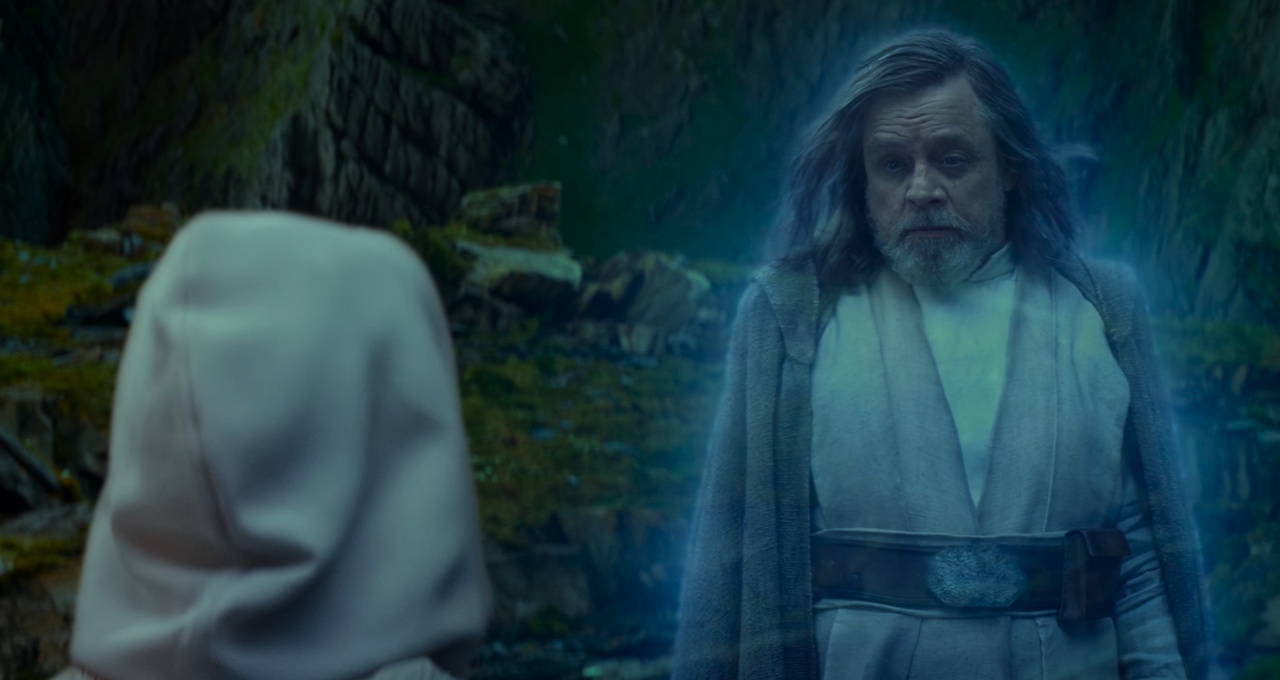
My Jedi: Survivor wishlist

Spoiler Warning: There are spoilers ahead for Star Wars Jedi: Fallen Order.

In 2020, I played through Star Wars Jedi: Fallen Order – and I had an amazing time with the game! It’s one of my favourite single-player experiences of the past few years… and one of the better Star Wars stories, too! Rumours of a sequel were confirmed a while ago, and Star Wars Jedi: Survivor is set to launch in a few weeks’ time following a short delay. This time, I’m going to talk about a few things that I’d like to see from the upcoming title.

Jedi: Fallen Order was great – but it wasn’t entirely without flaws. I have no doubt that EA and Respawn Entertainment – the publisher and developer of Jedi: Fallen Order respectively – will have listened to fans and critics on at least some of the points that were raised. Although I wouldn’t say any of these things were horribly damaging, the sequel is an opportunity to take on board feedback, tone down things that didn’t work so well, and generally hone and refine the experience.

Promo art for Jedi: Survivor.

So this list will fall into two parts: things from Jedi: Fallen Order that I’d like to see changed, and new additions that I’d like the game to include. As I always say: this is just the subjective opinion of one person! I feel hopeful that Jedi: Survivor will be a fun ride whether or not any of these wishes are included when the game is released. If I suggest a change you’d hate, or exclude something that you think should be blindingly obvious, well, just keep in mind that all of this is just one person’s take. There’s plenty of room in the Star Wars fan community for different points of view.

It also goes without saying that I have no connection to Electronic Arts, Respawn, Disney, or Lucasfilm! These ideas are mine and mine alone, and I’m not trying to claim that anything listed below can, will, or must be part of Jedi: Survivor. This is a wishlist from a fan that’s been written up for fun – and should be taken in that spirit!

With all of that out of the way, let’s jump into the list.

Part 1:
Changes from Jedi: Fallen Order
Cal Kestis in Jedi: Fallen Order.

As great as Jedi: Fallen Order was, it wasn’t an entirely flawless experience from my point of view. I covered a few of these points in less detail when I reached the end of my playthrough back in 2020, and having recently replayed the game I’ve found a couple of other issues that are worth discussing.

Although I’d still say I had a wonderful time with Jedi: Fallen Order, there’s always room for improvement! The benefit of several years’ worth of advancements in game design, as well as a new console generation releasing since Jedi: Fallen Order was launched, should mean that there’s scope to make improvements to the way Jedi: Survivor plays.

Change #1:
A better in-game map.

Jedi: Fallen Order’s holomap.

I found Jedi: Fallen Order’s holo-map clunky, unwieldy, and difficult to use. I appreciate that it’s “lore-accurate,” very closely resembling projections that we’ve seen droids like R2D2 make elsewhere in the Star Wars franchise, but its design really got in the way of its utility – at least for me. The all-blue look, the 3D design, and large, expansive levels all came together to make the map hard to use, with it being difficult to pinpoint one’s location. The ability to set waypoints on the map would be useful, even if they didn’t appear outside of the map during regular gameplay, and a general overhaul to bring the map in line with maps used in other titles would be incredibly helpful.

Because of Jedi: Fallen Order’s large-scale levels, having a good map is incredibly useful, especially on a first playthrough. By the time I came back to Jedi: Fallen Order, a few well-trodden areas of some levels were familiar to me – but even then, it would still have been helpful if the map was easier to use.

Change #2:
Fewer sliding sections.

Wheeeee!

During the scripted opening level of Jedi: Fallen Order there was an incredibly tense and exciting sliding section, as Cal and Prauf found themselves caught on a wet and slippery piece of a junked starship as it fell apart. But this mechanic was repeated too many times in Jedi: Fallen Order, with several long, boring sliding sections that added nothing at all to the game.

I’m sure sliding will be back in some form in Jedi: Survivor, and that could be okay as sliding is a fairly common 3D platforming mechanic. As noted, sliding sections can be fun – if they’re done right and if there’s a narrative reason for their inclusion. But I hope the new game tones this down, doesn’t make sliding a mandatory part of every level, and in a more general sense, uses this particular trope of 3D platform-adventure games far more sparingly. I don’t want to feel like I’m playing a 3D platformer from the 1990s when I sit down to enjoy Jedi: Survivor!

Change #3:
No more backtracking.

I lost count of the number of times I had to backtrack through levels…

A trope of many adventure games, going all the way back to the very beginnings of the genre in the ’80s, is that when the end of a level is reached, there’s an easy shortcut to the exit or overworld that doesn’t force a player to backtrack. In Jedi: Fallen Order, this unwritten rule of gaming was ignored for the most part – and that’s something I’d like the sequel to address.

Having crawled through a dungeon, solved puzzles, beaten enemies, and defeated the boss, it can be quite frustrating to have to then spend a significant amount of time running the whole route in reverse, going back through now-empty areas, past already-solved puzzles, with nothing to do and no objective except “get back to the ship.” These sections felt like unnecessary fluff; padding that may have been intended to make Jedi: Fallen Order’s relatively short twenty-hour runtime last a little longer.

Change #4:
No more revisiting past levels.

BD-1 looking at several holographic planets.

In the same vein, Jedi: Fallen Order saw Cal return to the same levels multiple times over the course of his quest – with only a couple of smaller levels just being played through once. There’s scope to re-visit the same planet, if that’s necessary narratively, without revisiting the exact same part of the planet – and I think that’s where Jedi: Fallen Order tripped up.

I’d rather have eight smaller levels that I only play through one time apiece than four bigger levels cleaved in two that I have to return to later on in the game. This would allow for much more diversity in terms of level design, too, as only Kashyyyk’s two sections really managed to feel distinct from one another in Jedi: Fallen Order. I don’t want to see Jedi: Survivor go open-world, either, but I think it should be possible to do what many games have done since the inception of the medium and play through different levels or areas without returning to the same ones.

Change #5:
No false choices.

The Stinger Mantis on Dathomir.

Jedi: Fallen Order was a linear game without many places where the path before Cal seemed to branch. But at one point early on in the game, Jedi: Fallen Order seemed to give the illusion of choice – whether to visit the planet of Dathomir or Zeffo. But there’s no way to progress beyond the opening area of Dathomir until Cal has levelled up and learned a new skill – a skill which can’t be learned until other levels have been beaten. There’s no way to describe this as anything other than a totally false choice.

There was a technical reason for offering players the opportunity to visit Dathomir, as that planet was the only place in the game where players could get a double-bladed lightsaber. But this option could have been moved or relocated to Bogano or Zeffo – it wasn’t, if I’m remembering correctly, something that had to be on Dathomir for some narrative reason. The game’s story also worked better and made more narrative sense if Cal went to Zeffo first, then to Dathomir later. In short, it wasn’t a great idea to offer this false choice – and I hope there won’t be others like it in Jedi: Survivor.

Change #6:
Ditch the checkpoints.

Cal at a checkpoint.

Checkpoints in older games came about as a result of limitations in hardware and programming. In the very olden days you’d have to write down a passcode on a piece of paper to be able to get back to the same area or level, but as games moved to 3D in the ’90s, checkpoints became the go-to way to save progress. By the turn of the millennium, though, this too had become outdated! It became possible for players to freely save their progress, and as a result there was no longer any need for fixed checkpoints.

Unfortunately, however, some recent games – particularly those inspired by the Dark Souls series – have brought back checkpoints… and I’m not wild about that. Checkpoints can mean players end up having to replay whole chunks of levels – and checkpoints in Jedi: Fallen Order were not exactly ubiquitous. In short, there’s no real reason why a free save system can’t be implemented in a game like Jedi: Survivor – so I’d like to see it happen!

Bonus:
Current-gen only.
Wish: Granted!

A PlayStation 5 console and DualSense control pad.

I would have put this on my wishlist, but we already know from Jedi: Survivor’s developer that the game will be current-gen only. That’s fantastic news, as it means the game won’t need to be constrained by being compatible with the Xbox One and PlayStation 4 – consoles that will be ten years old in just a few months’ time. This is a model that many more modern titles ought to adopt! Now that we’re well over two years into the current generation of consoles, it’s getting silly that so many games are still limited by decade-old hardware requirements.

There are still issues for some folks in terms of acquiring a current-gen machine, and I get that. That’s the fault of Sony and Microsoft for not producing enough consoles to meet demand. But if the games industry is to evolve and improve, at some point older machines from the previous generation will have to be left behind. Jedi: Survivor is one of a handful of titles on the horizon that will do just that – and I hope we’ll see some visual and mechanical improvements as a result.

Part 2:
Additions and New Features
Is this Jedi: Survivor’s main villain?

So those are a handful of things from Jedi: Fallen Order that I’d like the sequel to change or just remove outright. Up next, we’ll talk about a handful of additional features that I think it could be fun to include.

For this section, I’ll try to stick to things that seem plausible based on the kind of game Jedi: Survivor will be. I’m not going to suggest that Jedi: Survivor should be transformed into a role-playing game or an on-rails shooter! Instead, these are a few additional features and gameplay mechanics that I think could work well in this kind of linear, narrative-heavy, action-adventure title.

Addition #1:
A vehicle or two to pilot.

It probably won’t be a Star Tours Starspeeder 3000…

One of my absolute favourite parts of Jedi: Fallen Order – and indeed of any Star Wars game that I’ve ever played – was when Cal took control of an AT-AT walker. Everything about that sequence was perfect: it was just the right length, the movement and shooting felt fluid and fun, and the walker felt unwieldy in exactly the way I’d have expected when I first saw them in The Empire Strikes Back decades earlier. This sequence was also a one-off, which made it all the more special.

I don’t think we need a second AT-AT in Jedi: Survivor – though that’s certainly a possibility! And I’m not suggesting that Cal should take control of the Stinger Mantis, with every journey between worlds turned into a mandatory spaceflight section. But if Jedi: Survivor could introduce a vehicle or two, similar to Jedi: Fallen Order’s AT-AT sequence, I think that could be incredible. Maybe Cal could take the controls of a starfighter for one mission, drive a landspeeder to reach an objective, or even do something as bold as hijack a star destroyer! Any of these vessels and vehicles could be a ton of fun to play with.

Addition #2:
Carry over progress from Jedi: Fallen Order.

A maxed-out skill tree.

A big part of the story of Jedi: Fallen Order, and particularly the way in which narrative and gameplay intersected, involved Cal learning or re-learning a handful of Force skills. BD-1 also learned new skills along the way – and these skills became essential for completing puzzles and progressing through levels. With that in mind, I really hope that Jedi: Survivor won’t reset Cal.

Many sequels do something like this – where the player character, who may have been at a high level and mastered all of their skills by the end of the last game, appears to have lost all of those same skills at the start of the new game. In many cases it works fine, or at least passes by inoffensively enough. But because Jedi: Fallen Order did such a great job of weaving these gameplay mechanics into its story, it would be profoundly odd if Cal started Jedi: Survivor unable to use his basic Force powers like push and pull, or if BD-1 was likewise limited and unable to slice droids or climb ziplines.

Addition #3:
Carry over at least some cosmetics from Jedi: Fallen Order.

A customised lightsaber.

This would really require some kind of integration between Jedi: Fallen Order save files and Jedi: Survivor – but it’s doable, as many other games have proven. In brief, it would be nice if players could retain their customised lightsabers from Jedi: Fallen Order, or at least if the cosmetic options that had been unlocked in the first game could be unlocked by default in the sequel.

We don’t know at this stage how other cosmetics will work, but many players – myself included – found a particular appearance for “our” version of Cal that came to define our playthroughs, so again it would be nice if this could be carried over somehow.

Addition #4:
More cosmetic options.

It would be great to get more costumes and other cosmetics.

A game like Jedi: Survivor isn’t going to come with a character creator – nor does it need one! But Jedi: Fallen Order was pretty basic in terms of its cosmetic options, so it would be great to see more outfits and more variety in the sequel. Cal could be given hair and facial hair options, for example, in addition to different types of outfit.

Jedi: Fallen Order included jumpsuits and ponchos, and there were quite a few different colours of each. Naturally, as soon as I found a pink poncho, Cal wore nothing else for the rest of the game! But this is an area ripe for expansion, and it would be great to see customisation options for pants, tops, jackets, shoes, and more. Some of these could be unlockable via exploration, and others could be found at in-game vendors, perhaps.

Addition #5:
A story that doesn’t rely too heavily on the minutiae of Star Wars lore.

Promo screenshot of Cal and Merrin.

Some franchises can feel difficult to keep up with, and Star Wars is definitely one of them. I felt hopeful a few years ago, with the erasure of the old Expanded Universe, that the wider franchise might become more accessible… but a decade of films, television shows, animated kids’ shows, books, comics, games, and more has led to the same feeling of an overcomplicated franchise beginning to arise.

With that in mind, it can be a fine line to walk between creating a story that fits in with all of that lore and is still accessible to newcomers and a more casual audience. The inclusion of references and even characters from elsewhere in the franchise is totally okay – and expected, at least to an extent. But an over-reliance on minuscule details that most people won’t understand or know anything about can trip up a story.

Addition #6:
Wrap up the bounty hunter story from the first game.

This side-story focused on Greez.

One of the odd things about Jedi: Fallen Order was its bounty hunter side-story. This storyline arrived in pretty spectacular fashion, with Cal being defeated and captured by bounty hunters. But it felt rushed, with the escape from the bounty hunters’ prison taking only a few minutes, and it was definitely incomplete. I don’t think there was a single mention of the bounty hunters after that episode, even as they’d occasionally show up as random enemies for the rest of the game.

There’s scope to do a lot more with this storyline. Heck, it could even become the sequel’s main story! But at the very least, I think we need to get some closure on this, somehow, by the time the credits roll. It could take the form of a single mission, multiple missions, or even just cut-scenes and dialogue… but one way or another, by the time the game ends this storyline should be wrapped up.

Addition #7:
A story that doesn’t feel tacked-on.

Case in point.

Jedi: Fallen Order’s main storyline ended quite conclusively. The holocron was retrieved and then destroyed – and there was nothing left for Cal, Cere, and Merrin to do. There are plenty of opportunities for them to have another adventure, but any sequel story has to be careful – because it’s all too easy to wind up feeling unnecessary.

This is perhaps the most important point that we’ve talked about today. A story that brings back these characters needs to serve a purpose, and if it comes across as feeling like nothing more than a corporate-mandated sequel, that will be very disappointing. Star Wars hasn’t always gotten this right, with prequels and sequels telling unnecessary, tacked-on stories even in big-budget productions. So whatever this story is, and whatever Cal does next, I sincerely hope it’s going to feel worthwhile.

So that’s it!
Hang on, Cal!

That’s my Jedi: Survivor wishlist! I’m not sure when I’ll be able to play the game – money is tight at the moment, and with some hefty increases to some of my bills coming in April, I doubt I could really justify buying a brand-new, full-price game on release day – even if it’s one I’m as excited to play as Jedi: Survivor. But you never know, and I’ll certainly try to make space for it in the budget! I’d love to be able to play the game this year, at any rate.

I hope this was a bit of fun, and an excuse to look ahead to one of the most-anticipated single-player titles of the year.

After some disappointing entries in Star Wars’ cinematic canon, Jedi: Fallen Order felt like a breath of fresh air. As Star Wars continues to struggle, in my view at least, by doubling-down on legacy characters and stories of decreasing importance, I’m hopeful that Jedi: Survivor will see Cal, Cere, Merrin, and Greez continue to chart their own path. There are plenty of reasons to be excited for the game – and I can hardly wait to jump in!

Star Wars Jedi: Survivor will be released on the 28th of April 2023 on PC, PlayStation 5, and Xbox Series S/X. Star Wars Jedi: Survivor is the copyright of Electronic Arts and Respawn Entertainment. The Star Wars franchise is the copyright of The Walt Disney Company and Lucasfilm. Some promotional art and screenshots used above courtesy of IGDB. This article contains the thoughts and opinions of one person only and is not intended to cause any offence.
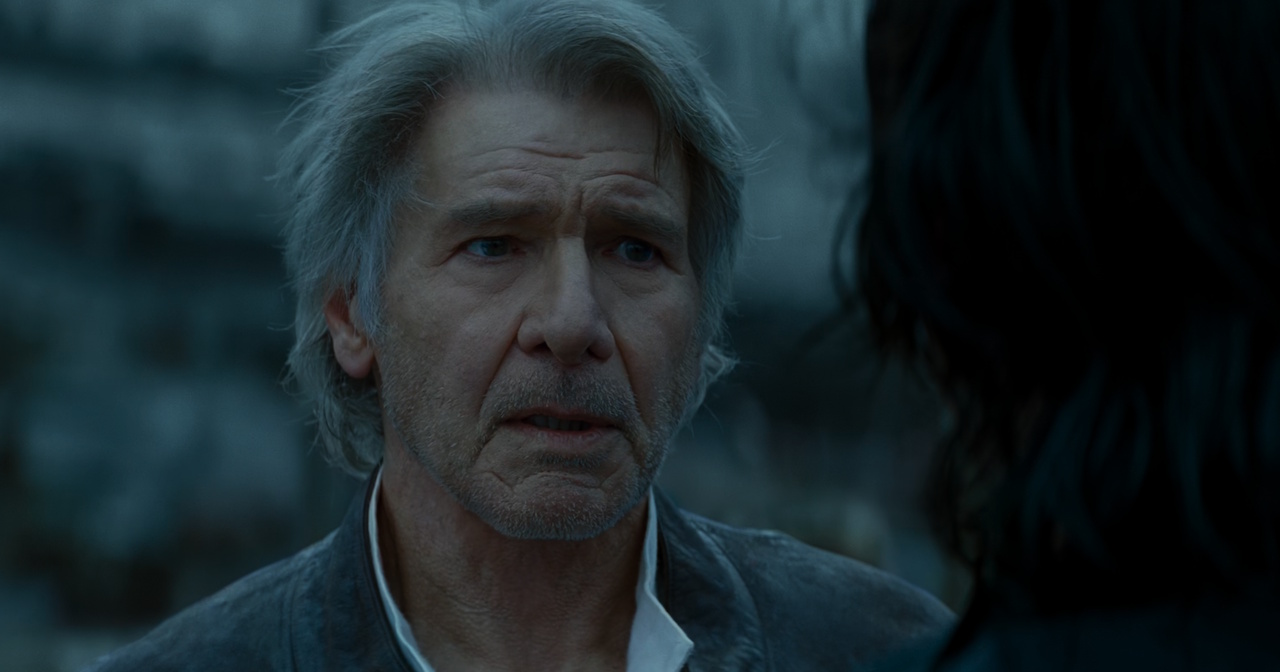
Six Star Wars “Hot Takes”

Spoiler Warning: There are spoilers ahead for the entire Star Wars franchise, from A New Hope to Obi-Wan Kenobi and beyond.

A little while ago I gave six of my “hot takes” on the Star Trek franchise, so this time it’s Star Wars’ turn to receive some controversial opinions! These are all opinions on the Star Wars franchise that, at least based on my limited engagement with the broader fan community, are either unpopular or will prove to be divisive.

This is supposed to be a bit of thought-provoking fun, so more than ever I ask you to keep in mind that all of these opinions are subjective, not objective! I’m not trying to claim that my perspectives on these broad and complex topics are in any way factual or unquestionable; I’m simply offering up my singular take on these points for the purposes of entertainment. I’ll try to explain why I feel the way I do – but I already know that many folks can and will disagree. And that’s okay! The Star Wars fan community is big enough for respectful and civil disagreement about all manner of subjects.

With all of that out of the way, this is your last chance to jump ship if you aren’t interested in some potentially controversial Star Wars opinions!

“Hot Take” #1:
The sequel trilogy having problems hasn’t magically redeemed the prequel trilogy or made it any more enjoyable.

Darth Maul in The Phantom Menace.

One of the strangest arguments, in my view, that has been put forward in recent years by critics of the Star Wars sequel trilogy is that the prequels look so much better by comparison. Although I find Revenge of the Sith to be an okay film, I’ve never been wild about the first two parts of the prequel trilogy in particular, and the fact that The Rise of Skywalker and, to a lesser extent, The Force Awakens have issues doesn’t change any of that.

The prequels had a planned story from the start, and George Lucas knew which characters he wanted to include, what roles he wanted to give them, and what their arcs would look like from beginning to end. There were changes and edits along the way, but the broad strokes of the story had been planned in advance. This is something that the sequel trilogy lacked, with different writers and directors being given free rein to tell whatever stories they wanted – something widely considered to be a mistake. But just because the producers of the sequel trilogy screwed this up, that doesn’t mean that the uninspiring, overexplained backstory that comprised much of the prequels is any better as a result. It was a planned story, sure, but an unnecessary, bloated, and occasionally just plain boring one that did a lot to detract from the intimidating nature of Darth Vader in particular.

Padmé and Anakin in Attack of the Clones.

Though it’s difficult – and perhaps even a little unfair – to try to summarise the main issue with an entire trio of films in just a few words, I’d say that the sequels went wrong by trying to be too much of a copy of the original films, and then by trying to course-correct following the divisive reaction to The Last Jedi. But the prequels went wrong by telling a story that was ultimately unnecessary; we didn’t need three films chronicling the minutia of Anakin Skywalker’s rise and fall to know that he was an evil villain who could be redeemed by the residual love that he had for his son.

And in many ways, the prequels undermined the story that the original trilogy had told. The inclusion of things like a nine-year-old Anakin being the builder of C-3PO was just plain dumb, and smaller things like Yoda not being the Jedi who trained Obi-Wan, as he would later claim to Luke, ended up contradicting points in the original films. Some of these are arguably nitpicks, but in a story that was weak and muddled, smaller points like these become much more noticeable and begin to pile up.

A Republic battle cruiser in Revenge of the Sith.

At the end of the day, many of the prequels’ biggest defenders are folks who grew up watching them as kids. For many people in their teens and twenties, these films were their first point of contact with the Star Wars franchise. And there’s nothing wrong with loving the prequel trilogy – there are points from all three films that I enjoyed, and I even put together a list of some of my favourites for Star Wars Day a couple of years ago.

But just because the sequel trilogy had issues with its production and its narrative, that doesn’t mean that the prequels are somehow made better in hindsight. For me, the prequels remain a disappointment, and although I was scathing in my review of The Rise of Skywalker when I saw it in 2020, for me it’s still a toss-up as to whether it’s marginally better or worse than The Phantom Menace.

“Hot Take” #2:
Star Wars needs to end its overreliance on the same handful of legacy characters.

Darth Vader loomed very large indeed over the Obi-Wan Kenobi series.

Since it premiered all the way back in 1977, the Star Wars franchise has focused on a tiny number of characters, only a few of whom have been explored in any detail. Prequels, sequels, spin-offs, and even supposedly-unrelated projects have all brought back into play the same handful of characters again and again, and sooner rather than later I’d like to see that stop.

The Star Wars galaxy is, in my view, one of the finest fictional settings ever created. It has both a breadth and a depth that other settings could only dream of: dozens of factions, hundreds of alien races, thousands of inhabited planets, and tens of thousands of years’ worth of galactic history – all of which could be explored in a way that would be absolutely riveting. But so far, writers and creatives have been limited to one tiny corner of this potentially vast sandbox, forced to re-use the same characters, revisit the same planets, and stay within the confines of the same relatively short sixty-year span of galactic history centred around the rise and fall of the Empire.

Boba Fett reappeared in The Mandalorian Season 2.

One of the reasons I love the video game Knights of the Old Republic so much is because it stepped away from much of what was familiar about Star Wars. There were some recognisable planets, and of course we spent time with the Republic and the Jedi, but beyond that the story took place thousands of years prior to the events of the films and introduced an entirely new cast of characters. There were definite inspirations from the original and prequel trilogies, but Knights of the Old Republic was separate from them.

That’s what I’d like to see Star Wars do more of. Instead of telling us another story about Obi-Wan and Darth Vader, tell us something else. Introduce us to a new Jedi, a new Sith, or better yet, new Light and Dark Side factions. Or abandon the Force altogether for once and show us how the 99.9% of the galaxy who aren’t blessed with space magic live! That’s what I hoped that a series like The Mandalorian might do.

Luke Skywalker in The Book of Boba Fett.

George Lucas once spoke of symmetry in Star Wars, saying that its stories should “rhyme.” But there’s a huge difference between rhyming and being a carbon copy of what came before, or between rhyming and diving ever deeper into less and less important chapters of backstory. Unfortunately, because Star Wars has never broken away from its previously-established characters, doing so now is something that must feel like a risk to the suits at Lucasfilm and Disney – and if there’s one thing that makes corporations uncomfortable, it’s risk.

However, as I’ve recently argued, Star Wars can’t just coast forever on nostalgia for its original films and the only real story it’s ever told. Sooner rather than later those characters and settings will be exhausted, spent of all storytelling potential. Then the only remaining choice will be to either try something genuinely new and different… or to bring the entire franchise to an end.

“Hot Take” #3:
The Last Jedi will be highly-regarded in fifteen or twenty years’ time.

Luke Skywalker heads out to meet the forces of the First Order.

I unapologetically love The Last Jedi – it’s the highlight of the sequel trilogy for me by far. But I recognise that it was divisive in the fan community, and that some narrative decisions seem to have been made to be deliberately challenging to the expectations its audience had. For me, those points succeeded – and just like Star Wars fans eventually came to accept patent nonsense like “from a certain point of view,” or the arbitrary and unexplained decision to make Luke and Leia into brother and sister at the last moment, in time I think many of The Last Jedi’s story beats will just become accepted part of Star Wars lore.

Moreover, as fans who are kids today grow up and look back on the sequels, we’ll probably see a reappraisal of those films within the wider discourse of the fan community. Just as the prequels are supported today by fans in their teens and twenties, in fifteen or twenty years’ time I think we’ll see a similar movement in support of the sequels from fans for whom those films were their first contact with the Star Wars franchise.

Ben Solo’s turn to the Dark Side was shocking and unexpected.

In particular, the merits of The Last Jedi will come to be reappraised. The film wasn’t perfect, but it got a lot of things right, and after The Force Awakens had played it very safe by basically copying large parts of the plot of A New Hope, The Last Jedi really tried hard to take Star Wars to completely different narrative and thematic places.

Unfortunately many of its successes were overridden by The Rise of Skywalker – which itself will gradually become accepted as part of the wider lore of Star Wars, too – but that doesn’t mean that the film can’t be enjoyed on its own merits. Decisions like Rey’s parents being “no one” of consequence or Kylo Ren fully embracing his inner Dark Side to claim the mantle of Supreme Leader are – at least in my opinion – storylines that had massive appeal and huge potential. I’m sure that they’ll be looked upon much more kindly in the years ahead.

The Holdo Manoeuvre.

If the Star Wars franchise continues its current trend of doubling-down on cheap nostalgia plays and samey, almost repetitive storylines, then The Last Jedi’s attempts to shake things up will come to be seen in a new light. Star Wars is in real danger of becoming stale – if every story focuses on the same few characters, or characters who are so similar as to fill functionally the same role, then the franchise will feel like it’s lost a step and stopped innovating.

It may take a while for attitudes to shift, and there will of course be some fans for whom The Last Jedi will always remain one of the worst parts of the Star Wars franchise. But I really do believe that in a few years’ time the film will find more defenders than detractors, and will come to be an accepted and even celebrated part of Star Wars’ cinematic canon. Hopefully there’ll still be a Star Wars at that point, with new films and shows being created!

“Hot Take” #4:
So-called “Jedi Robes” were originally just typical desert attire and not something ceremonial or unique to the Jedi Order.

“Old Ben” Kenobi with Luke and R2D2 in A New Hope.

One thing that’s always bugged me, even as far back as Return of the Jedi, is how so-called “Jedi Robes” are basically just the typical outfit one would expect to wear in a desert environment like Tatooine. Obi-Wan Kenobi’s outfit in the original film was never intended to be some kind of ceremonial marker of the ancient Jedi Order, but rather a costume inspired by desert cultures around the world.

Look at typical outfits worn in North Africa and on the Arabian peninsula as examples. The typical thobe (thawb) and bisht that are worn by men in those regions was part of the inspiration for the outfit, along with outfits worn by Bedouin and nomadic peoples. These outfits are designed to be worn in hot desert conditions, and that’s exactly what we see in “Old Ben” Kenobi’s costume when he encounters Luke Skywalker.

This mistake was first made with Anakin’s ghost in Return of the Jedi.

Luke is actually dressed very similarly to Kenobi at that point. The outfit he wears is similar to what Kenobi was wearing under his cloak – a kind of loose-fitting belted tunic. Again, this is something pretty standard in desert regions and makes sense for a planet like Tatooine. There’s nothing about either of their outfits that screams “religious order,” and it’s always struck me as odd – and more than a little arbitrary – that Kenobi’s desert cloak ended up being the basis for the ceremonial robes worn by everyone in the Jedi Order.

In-universe, it doesn’t even make sense for “Old Ben” to be cutting about Tatooine in his Jedi robes – if indeed that’s what they’re supposed to be. He’s in hiding on that world, and as we saw in the opening act of the Obi-Wan Kenobi series, changing out of his robes into civilian attire would help him blend in. Putting his robes on to go exploring would draw unnecessary and unwanted attention to him at a time when he’s still one of the Empire’s most-wanted Jedi survivors.

Members of the Jedi Council in their robes in Attack of the Clones.

It would’ve been nice to see more diversity in the outfits worn by Jedi Knights and Masters, particularly during the prequel era. We could have seen a whole new range of costumes introduced, including elaborate ceremonial attire if there was a need for that. But simply copying what “Old Ben” wore on Tatooine and slapping it on every Jedi character has never made sense.

While I accept that this is now an established part of the lore of Star Wars and isn’t going to change, it’s something that’s always bugged me!

“Hot Take” #5:
Star Wars doesn’t need the Jedi and the Force to tell fun stories.

Rey and Kylo Ren in The Last Jedi.

When The Mandalorian was announced a couple of years ago I felt that it had a truly exciting premise. Following “the adventures of a gunslinger far beyond the reach of the New Republic” sounded absolutely fascinating, and would have been a huge departure from anything we’d seen the franchise do before.

But within two episodes the Force came back into play, and by the end of the second season we’d been reintroduced to Luke Skywalker himself. I still find The Mandalorian to be disappointing as a result; it didn’t live up to expectations and very quickly fell back to retread the same ground as other Star Wars projects.

Finn wielding a lightsaber in The Force Awakens.

The Book of Boba Fett likewise brought the Force and Luke Skywalker into its story, and again there was a missed opportunity to show us how the 99.9% of the galaxy who aren’t Force-users live. I’m hopeful that one day a Star Wars project will be bold enough to leave the Force behind entirely – and perhaps it’ll finally happen in Andor, Rogue Squadron, or one of the upcoming films or television shows!

As I said above, the Star Wars galaxy is massive and densely-populated – and the vast, vast majority of the population doesn’t use the Force or rely on it in any way. Characters like Han Solo didn’t even believe that the Force existed at first – and that attitude could well be prevalent across much of the population. Showing us characters like that could take all manner of different forms, and I’d be really interested to see some completely different projects set in the Star Wars universe.

A New Republic pilot in The Mandalorian.

Just as a couple of examples, we could see a kind of noir-inspired crime drama set in the underworld of a planet like Coruscant. Or we could see an ER-esque medical drama that follows the exploits of doctors and nurses at a hospital. There’s more to Star Wars than just Jedi Knights, Sith Lords, and the Force, and while we all love a good lightsaber duel… Star Wars can be more than that, if there’s someone bold enough in creative control to make those decisions.

So far, every Star Wars project has included the Force or Force-wielders to a greater or lesser degree. I’d like to see a film or TV show that completely sets the Force aside. Not only would it expand our knowledge of the Star Wars galaxy away from those familiar elements, but it would be thematically and narratively different by default. And telling new and different stories is something that the Star Wars franchise needs to start doing!

“Hot Take” #6:
The prequel trilogy told a story that was ultimately unnecessary.

Young Anakin in The Phantom Menace.

This isn’t saying “the prequels were bad” and commenting on things like the quality of the writing or specific narrative choices. Instead, what I’m saying is that the story of the prequel trilogy didn’t actually add anything of consequence to the Star Wars saga. Everything we knew about characters like Palpatine, Obi-Wan Kenobi, and of course Darth Vader had already been explained in the original films.

At best, the prequels were padded backstory. They showed us the Clone Wars firsthand, instead of the conflict being left as a rather ambiguous part of the saga’s lore that was referenced but unexplained. They explicitly showed us things like the original duel between Darth Vader and Obi-Wan that had been referenced, and confirmed that Obi-Wan had been responsible for causing Darth Vader’s life-limiting injuries. But nothing that they brought to the table was necessary or couldn’t be inferred from the original films.

Palpatine seizes power in Revenge of the Sith.

By the time it had been decided to make Darth Vader Luke’s father in The Empire Strikes Back, his pathway toward redemption was possible. He was an evil villain, but he had enough residual goodness and light inside him thanks to the love he had for his son that it was possible for him to betray the Emperor. We didn’t need three films charting Anakin’s rise and fall to tell us that.

Nor did we need to see Obi-Wan Kenobi training Anakin to inform their conflict. Darth Vader told us all we needed to know in a single line when they were reunited aboard the Death Star. Even Palpatine’s scheming and the way he played both sides in the Clone Wars didn’t really do much to explain his role in The Empire Strikes Back or Return of the Jedi – and certainly wasn’t necessary to understand his position or role in either story.

The “birth” of Darth Vader.

There are things to celebrate about the prequels, don’t get me wrong. And there’s nothing inherently wrong or problematic about stepping back in time to look at characters in their younger days or to go into more detail about some of the events that preceded what we’d seen in the original films. But the Star Wars prequel trilogy padded out that story without really adding to it anything of substance.

The simple fact is that we knew all we needed to know at the time of the original films for those stories to be exciting and engrossing. I never felt that I was missing any crucial context to understand Luke, Leia, Han, Palpatine, or Vader, and while the prequels certainly expanded the story of Star Wars – and in many ways set the stage for its ongoing success – I feel that the reason the story never really resonated with me is because it never seemed like it was one that needed to be told.

So that’s it!

Han Solo.

I hope we’re still friends after all of that! Just remember that these are simply the opinions of one person, presented here for a bit of fun and perhaps to be thought-provoking.

Despite criticisms of some individual films and stories, I consider myself a fan of Star Wars. I’ve been a Star Wars fan since I first sat down to watch the original trilogy at the insistence of a friend in the early 1990s, and I’ve supported Star Wars at the cinema, on television, and in the gaming realm ever since. There’s a lot to love – even if I have some controversial “hot takes” on the franchise sometimes!

Just this year I’ve enjoyed The Book of Boba Fett and Lego Star Wars: The Skywalker Saga, and I’m looking forward to seeing what Andor and Lego Star Wars: Summer Vacation will have to offer, too. So I hope this was a bit of fun as we look ahead to some of those upcoming Star Wars projects.

The Star Wars franchise – including all films, games, and television shows discussed above – is the copyright of Lucasfilm and The Walt Disney Company. This article contains the thoughts and opinions of one person only and is not intended to cause any offence.

We’re halfway through 2022!

Spoiler Warning: There may be minor spoilers for some of the entries on the list below.

The end of June marks the halfway point of the year, and I think that makes it a great time to take a step back. There are a lot of entertainment experiences that lie ahead over the next few months, and with the nights already starting to get longer it’ll be autumn and then Christmas before we know it! There’s a lot coming our way before we must bid farewell to 2022, though, so today we’re going to take a look at a few of the projects on my radar.

Since the vaccine rollout peaked last year we’ve seen an easing of pandemic restrictions, including in the entertainment industry. That bodes well for at least some of the projects that have been in development! While there are still regulations and guidelines being enforced on film and TV sets, it’s much easier for many productions to work than it has been for the past couple of years. There may be disruptions to come thanks to lockdowns in China and the war in Ukraine, though… so watch this space!

I’ve broken down my choices into three categories – films, television shows, and video games – and I’ve picked six titles in each category that I’m hoping to pick up and enjoy before the sun sets on New Year’s Eve!

Film #1:
Avatar: The Way of Water

I took a look at Avatar: The Way of Water when we got a brief teaser trailer earlier in the year, but suffice to say I’m curiously interested to see what writer-director James Cameron has to offer this time around. I never felt that the original Avatar was the genre-defining epic that its creators hoped it would be, and over the course of the past decade I don’t think it’s unfair to say that the world of Avatar has largely dropped out of the cultural conversation.

The Way of Water has a lot to do, then, to reintroduce viewers to a fictional universe that many haven’t revisited since 2009 or 2010. It also has the task of expanding the world of Avatar beyond the events of the first film, showing us more about the world of Pandora, the Na’vi, and this future version of Earth and humankind. There have been some clever technical feats that have gone into the production of this sequel – including gruelling underwater motion-capture shoots – so I’ll be interested to see if it all comes together when the film releases in December.

Film #2:
Jurassic World: Dominion

Technically Jurassic World: Dominion has already been released – but as my health prevents me from doing things like taking trips to the cinema these days, I’m waiting for it to become available to stream! The teaser trailer for the film, which was released back in December, looked great, and the prospect of a reunion of the main cast members from the first film – Sam Neill as Dr Alan Grant, Laura Dern as Dr Ellie Sattler, and of course Jeff Goldblum as Dr Ian Malcolm – is a pretty significant draw.

There is always going to be the question of whether the premise of the original Jurassic Park – which was based on a novel by Michael Crichton – can really sustain a multi-film franchise. The first film was brilliant in both premise and execution, but was it a one-trick pony? I’m curious to see what director Colin Trevorrow can do to make dinosaurs both fun and intimidating once more! I’ve been trying to avoid reading reviews and spoilers for this one, and when it’s available to stream I hope to get a review written here on the website – so stay tuned for that!

Film #3:
Minions: The Rise of Gru

Despicable Me was a fun film that managed to be surprisingly heartwarming, and the franchise it spawned has gone on to become one of the biggest animated properties of all-time. The last Minions film was released back in 2015, and this sequel will reintroduce Gru – the antihero/evil villain from Despicable Me – as he teams up with his Minions for the first time.

There’s potential for a lot of fun, kid-friendly hijinks in The Rise of Gru, and I’m genuinely looking forward to another outing with the Minions. Steve Carell has been on top form in previous entries in the franchise, and the film will also feature Star Trek: Discovery’s Michelle Yeoh as part of a star-studded cast.

Film #4:
Glass Onion: A Knives Out Mystery

I had a good time with Rian Johnson’s “whodunnit” Knives Out a couple of years ago, so this follow-up definitely holds appeal. Without wanting to give away any spoilers for the first film, suffice to say that I’m excited for one character in particular to make a return!

From what I can gather, Glass Onion isn’t so much a direct sequel as it is a follow-up; a film set in the same world and that will bring back at least one familiar face, but that will also introduce an ensemble cast of new characters and perhaps a new setting as well. Hopefully what results will be just as fun and dramatic as the original!

Film #5:
Hocus Pocus 2

I missed the original Hocus Pocus when it was released in 1993, and it wasn’t until years later that I finally sat down to watch it at the insistence of a friend. What I eventually found was a fun, even somewhat clever film; a light-hearted take on Halloween that’s just right for someone who isn’t a big fan of horror!

The sequel aims to bring back Sarah Jessica Parker, Bette Midler, and Kathy Najimy as the three witches from the original for a new adventure that sounds like it will be a riff on the original concept. Keep an eye out for Star Trek: Discovery’s Doug Jones, who will also be reprising his role from the original film. Hocus Pocus 2 might be just right for Halloween 2022!

Film #6:
Beast

Could Beast be “Jaws but with a lion?” Because the marketing material released by the studio makes it sound like that! I quite like a good thriller or monster flick, so maybe Beast will be a bit of fun. I don’t have especially high expectations; it’s unlikely to be a cinematic masterpiece. But it might just be entertaining enough to waste a little time.

Idris Elba is always fun to watch regardless of what he’s doing – see last year’s The Suicide Squad as a case in point! So at least on that front there’s a solid star in the leading role, and the film’s South African setting appeals to me as I used to live there. I’m curiously interested to see what Beast will have to offer when it’s released in August.

Television Show #1:
Lego Star Wars: Summer Vacation

Lego Star Wars: Summer Vacation will be the third Lego Star Wars special released on Disney+, and the first two were fantastic! 2020’s Holiday Special was a barrel of laughs, and last year we enjoyed Terrifying Tales in October, a lightly spooky Halloween special featuring Poe Dameron. The trailer for Summer Vacation had me in stitches, so if the special itself lives up to its marketing then we’re in for a wonderful time!

Expect to see some cheeky marketing for Disney’s “Galactic Starcruiser” themed hotel (which hasn’t been doing particularly well) in a special that will star “Weird Al” Yankovic and will bring back Finn, Poe, Rey, Rose, and other Star Wars characters.

Television Show #2:
Star Trek: Lower Decks Season 3

At time of writing we don’t have a confirmed premiere date for Season 3 of Lower Decks, but if it follows the same pattern as it did in 2020 and 2021 we might see it in late summer, perhaps mid-to-late August. Season 2 actually ended on a cliffhanger – which I won’t spoil – and I still have a few theories and ideas kicking around that I’ll try to get written up before the new season arrives!

Lower Decks took a couple of episodes to fully get going, but it’s been an absolute blast across its first couple of seasons. Consistently high quality has left the series with only a couple of boring or unenjoyable episodes, and there’s a surprising amount of emotion at the heart of the Lower Decks crew. It’s a Star Trek show through-and-through, and one I find myself getting surprisingly invested in. I’m hopeful for more of the same when Lower Decks returns.

Television Show #3:
The Lord of the Rings: The Rings of Power

Although The Rings of Power is already (and prematurely, in my view) proving to be controversial in some quarters, I have high hopes for what will be the most expensive television show ever produced! A return to Tolkien’s world is, of course, hugely enticing, but The Rings of Power is aiming to be a spiritual successor to Game of Thrones, telling a multi-season serialised story set in the realm of high fantasy. With a massive budget to back it up, I couldn’t be more excited about that concept!

However, with a high budget and high expectations come dangers. The Rings of Power has a long way to fall if it fails to live up to expectations, and no matter what the producers and creative team try to do, the Peter Jackson Lord of the Rings trilogy will be the yardstick by which this new series is measured. I hope it can compare favourably!

Television Show #4:
House of the Dragon

Take everything I said in the entry above, copy-and-paste it, and that’s how I feel about House of the Dragon as well! This Game of Thrones prequel is one of several projects currently in production, but as far as I can see the biggest hurdle it has to surmount is not its predecessor’s reputation as one of the best television shows of all time, but the deep disappointment practically all Game of Thrones fans felt at its finale.

Just convincing people to show up for House of the Dragon in light of Game of Thrones Season 8 feels like a big ask… but if the show learns from those mistakes and makes changes, we could be in for something genuinely exciting. The first five-plus seasons of Game of Thrones were some of the most tense, atmospheric, and exciting ever brought to the small screen, so a return to Westeros – and to the writings of George R R Martin – could be fantastic. Could be.

Television Show #5:
Star Wars: Andor

A prequel to a prequel (or should that be a spin-off from a spin-off?), Andor will follow Rogue One’s Cassian Andor in the years before the events of the film. We might get to see more detail about the early days of the Rebel Alliance prior to the Battle of Scarif, which would be interesting in itself, but more than that I’m curious to see what Star Wars can do with a genuinely different premise. In this case, we’re talking about a spy thriller.

Is there room in the Star Wars galaxy for stories that aren’t just about Jedi Knights, the Force, and lightsaber duels? The Mandalorian and The Book of Boba Fett could’ve begun to show us what the Star Wars galaxy looks like away from those familiar elements, but chose not to do so. So it falls to Andor to potentially become the first Star Wars series to really broaden the franchise’s horizons and show us what’s possible. Is that too much to hope for? Maybe… I guess we’ll have to see!

Television Show #6:
Five Days At Memorial

When done well, a miniseries can be a great format for storytelling. Five Days At Memorial aims to adapt the true story of doctors and nurses working at Memorial Medical Center in New Orleans in the immediate aftermath of Hurricane Katrina. Based on a book from 2013, the miniseries will take a look at some of the events that transpired – including how patients were triaged when the hospital’s systems failed and supplies ran low.

Most controversially, some patients were euthanised by doctors at the hospital – leading to a legal case against them in the months and years afterwards. Hopefully the miniseries will be faithful in its adaptation and won’t try to over-sensationalise these difficult events. I’m really curious to see how it turns out.

Video Game #1:
Star Trek: Prodigy – Supernova

You wait years for a Star Trek video game and then two come along at once! This year should see the release of Star Trek: Resurgence – a narrative adventure game – as well as Star Trek: Prodigy – Supernova, a kid-friendly adventure title based on the new animated series. With new episodes of Prodigy’s first season set to air later this year, the time is right for a tie-in.

I was disappointed (and a little concerned) that Prodigy kicked off its first season with no toys or tie-in products, but that is slowly being addressed. Supernova looks a little last-gen in terms of its graphics, and I’m not going to pretend it doesn’t, but I’m still hopeful for a fun game that ties in with the show, and one that can appeal to the younger audience that the show has been targetting.

Video Game #2:
Stray

Stray has been on my radar for a while, and it’s finally due for release in July! Getting to play as a cat is already a huge part of the appeal, but it sounds as if Stray will have a genuinely interesting mystery at its core: what happened to all of the humans in its world? Players will assume the role of a stray cat in a cyberpunk-inspired city, and solving that mystery will be top priority.

I’m really looking forward to what I hope will be a different experience with Stray. Many games do mystery, third-person exploration, and create atmospheric worlds, but Stray feels like it could offer something that I haven’t experienced before.

Video Game #3:
Grounded

If a game has been in early access for more than two years, should its “release” even count on a list like this? Regardless, I haven’t played Grounded yet – because I largely avoid early access titles – so I’m looking forward to seeing what the full release will have to offer. I loved Honey, I Shrunk The Kids, and even visited the attraction at Disney World… could Grounded let me live out a long-held childhood fantasy?

There are survival aspects to Grounded that could either work exceptionally well… or feel annoying, depending on how good the rest of the game is and how much fun I’m having! But I’ve heard good things from players who’ve enjoyed the early access version, so I’m going to give Grounded a shot when it officially releases in September.

Video Game #4:
Return to Monkey Island

Despite loving the first three games in the series, I seem to have fallen behind on my Monkey Island adventures! The fourth and fifth games in the series ended up on my “pile” of unplayed games, and despite meaning to get around to them I still haven’t! Perhaps I should rectify that before Return to Monkey Island – the sixth game in the series – arrives.

Updated versions of the first three Monkey Island games proved that point-and-click adventure titles could still find an audience when they were released a few years ago, and there’s still an appetite for this kind of comedy-adventure. I’m hopeful that Return to Monkey Island will deliver more of the same humour and excitement as the series did in its early days.

Video Game #5:
The Lord of the Rings: Gollum

After being on my radar for a while, The Lord of the Rings: Gollum has finally set a release window. All being well we’ll see the weird-sounding game in September. I honestly don’t know what to expect from this one, as Gollum would never be the kind of character I’d have expected to build a game and a story around. However, there’s clearly more to his story than we saw in the films – or even the books – so this could be an interesting adventure!

With a renewed focus on the world of Tolkien and high fantasy thanks to the Amazon show and other fantasy films and TV shows, The Lord of the Rings: Gollum could be a surprise hit. I don’t want to go overboard with the hype, but I’m definitely interested to see what the developers have come up with.

Video Game #6:
Saints Row

It does the Saints Row series a grave disservice to call it simply a “Grand Theft Auto clone,” even if that’s where it might’ve begun. This soft reboot of the series aims to take it back to its roots, setting aside at least some of the over-the-top hijinks of the third and fourth games in favour of a return to the gangland roots of the original Saints Row from 2006.

With no Grand Theft Auto VI on the horizon any time soon, Saints Row might just scratch that open-world crime itch for players who are getting tired of Grand Theft Auto V – but hopefully Saints Row can continue to carve its own niche and stand on its own two feet.

So that’s it!

Those are just some of the projects that we can look forward to in the weeks and months ahead. There are plenty more, of course, and I’m sure there’ll be some surprises along the way, too! Although 2022 has been much better than the past couple of years, there’s still the potential for disruption and delays, so keep in mind that any of the shows, films, and games listed above may not make their currently-scheduled launches. Such things happen, unfortuately!

I hope that this was a bit of fun and a glimpse at what lies ahead. It’s always interesting (to me, at least) to research different upcoming projects to see what piques my curiosity, and as someone who takes an interest in the world of entertainment I’m always keeping my ear to the ground to see what might be coming up! I hope you’ll stay tuned here on the website for reviews, impressions, and write-ups of at least some of the projects we’ve talked about today.

Until next time!

All films, television shows, and video games listed above are the copyright of their respective owner, company, distributor, broadcaster, publisher, etc. This article contains the thoughts and opinions of one person only and is not intended to cause any offence.
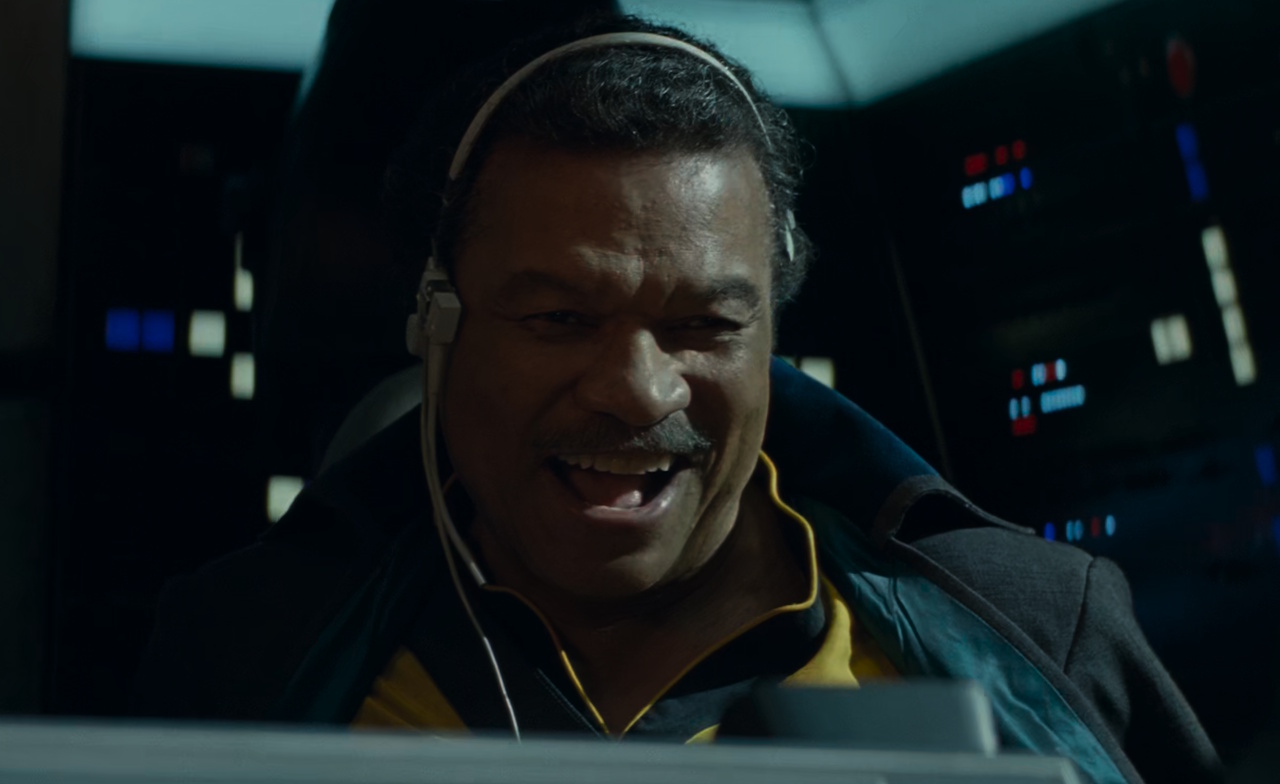
Can Star Wars survive on nostalgia alone?

Spoiler Warning: There are spoilers ahead for the Star Wars franchise, including The Book of Boba Fett and The Mandalorian Seasons 1-2.

At time of writing we’re halfway through Obi-Wan Kenobi – the Disney+ miniseries following the Jedi Master’s adventures in between the prequel films and the original trilogy. This article was partly inspired by that project, but I’ll try to avoid spoilers for those who haven’t seen it yet. And I’m trying to avoid jumping the gun and being overly critical of Obi-Wan Kenobi until I’ve seen the remaining episodes.

So the question I want to wrangle with today is a complicated one, and we can look at it in different ways and from different angles. Can the Star Wars franchise survive if all it does is look backwards? Can it coast indefinitely on past successes? Are these deep dives into minor chapters of its sole original story all we can ever expect to see? Or maybe, one day soon, will Star Wars have to try something genuinely new and different?

Can Star Wars continue to rely on bringing back characters like Obi-Wan Kenobi?

For all the talk of prequels, sequels, and spin-offs, Star Wars has really only ever told one single story since it premiered in 1977. Every project that we’ve seen since then padded out that story; the prequels provided background information about characters like Anakin and Obi-Wan, the sequels picked up the stories of Han, Luke, Leia, and of course Palpatine, spin-off projects like Rogue One fed directly into the events of the original films, and even The Mandalorian and The Book of Boba Fett brought back the Force and Luke Skywalker.

The Star Wars galaxy has tens of thousands of years of history; the Republic existed for millennia prior to the rise of the Empire. And it has an uncertain future in the wake of Palpatine’s schemes. Yet every single Star Wars project brought to screen so far across more than forty-five years of the franchise’s existence has taken place within the same sixty-year span of galactic history centred around the rise and fall of the Empire.

Every Star Wars project to date has been set within the same sixty-year period.

In addition, of the tens of thousands of inhabited planets that exist in the vast Star Wars galaxy, the franchise continues to revisit the same ones over and over again. Tatooine, for instance, has been a major setting despite its purported status as an “unimportant backwater.” Most recent Star Wars projects have, to their credit, visited a new planet or two… but the same handful of old ones keep cropping up over and over again.

Star Wars feels like it has an incredibly rich and deep setting, one with millennia of history and a vast landscape of different worlds inhabited both by humans and some very interesting non-human aliens… but on both the big screen and in the new streaming shows, we’re continually shown the same few years and the same few locales over and over again. It’s like going to an all-you-can-eat buffet and finding row upon row of dishes from all across the world, then constantly refilling your plate with chicken nuggets. I like chicken nuggets as much as the next person… but let’s try something different next time.

The Jedi Temple on Coruscant during the prequel era.

None of this is to say that I haven’t enjoyed at least some of what Star Wars has offered up over the last few years. I named Rogue One my favourite film of the 2010s, and with good reason – it really is an outstanding story. And despite the heavy nostalgia plays, I was surprised to find myself having a good time with The Book of Boba Fett earlier this year. So Star Wars can, at least for the moment, continue to find enjoyable ways to play in the tiny corner of the vast sandbox that it’s been restricted to. But can that continue for very much longer?

I suppose this gets at a more fundamental question: is Star Wars defined by the handful of characters that we’ve met so far? Are the likes of Darth Vader and Luke Skywalker all that Star Wars can ever be? Or is there room for fans to find brand-new characters to fall in love with; characters who are different from the hero and villain archetypes that the franchise has introduced so far?

Is Star Wars bigger than Luke Skywalker? And do fans even want a Star Wars project without these familiar characters?

Many Star Wars fans seem happy to continue to explore the lives of characters like Obi-Wan Kenobi, Boba Fett, and Luke Skywalker, seeming to prefer that the franchise take a path not dissimilar to the old Expanded Universe. In the EU, that same handful of characters was thrown haphazardly into multiple stories set before, during, and after the events of the films – and with modern Star Wars retaining a focus on those classic characters in that same time period, it feels like we could be going down a familiar path.

However, there are other options available if someone higher up at Disney or Lucasfilm is feeling bold. Set aside characters like Leia and Han Solo and step away from the rise of Palpatine. Tell a story set in a completely different era, perhaps one that doesn’t focus on the Jedi and the Force. Visit completely different worlds, introduce a new alien or two, and tell a story that isn’t simply a riff on what the franchise has already done.

Darth Vader’s castle on Mustafar.

The Star Wars galaxy could be a setting for all kinds of different projects. There’s no reason why we couldn’t see everything from an ER-inspired medical series to a hard-boiled film noir crime drama – all set in the Star Wars galaxy. Forget the story outlines that have been seen already and take the setting as a blank canvas. Instead of telling a repetitive tale about a young Jedi from a desert planet who fights a nasty but ultimately redeemable family member/villain, do something else. Literally anything else.

Would Star Wars fans want to see a show in this setting that steps away from the Jedi, the Force, and the Empire? Surely there has to be room for that in a setting as vast and untapped as the Star Wars galaxy. By diversifying the way it tells stories, Star Wars could build a solid foundation for the future.

Would anyone be interested in a medical drama set in the Star Wars galaxy, for instance?

It seems obvious that this nostalgia-heavy, backwards-looking Star Wars can’t last forever. Heck, it can’t last more than a few years at most, because sooner or later the franchise is going to exhaust all of the characters and settings that the original films and the prequel films had to offer. What will come next after The Book of Boba Fett and Obi-Wan Kenobi? Will it be Jar-Jar: A Star Wars Story? Even if Star Wars pulls out every single minor character and tries to expand their role into a fully-fledged Disney+ series, there’s a hard limit on how long that can last.

And there’s a real danger, too, that revisiting classic characters to give them additional stories could detract from powerful moments in the original Star Wars saga. The Book of Boba Fett may have gotten away with bringing its obviously-dead title character back to life, but one thing fans seem to universally agree on is that The Rise of Skywalker failed to successfully resurrect Palpatine, and that his ham-fisted inclusion in a story that was never meant to be his ended up being a weight around the neck of the sequel trilogy.

“Somehow Palpatine returned.”

This was my concern going into Obi-Wan Kenobi – and no, there aren’t going to be any major plot spoilers here, don’t worry. But in a general sense, I was worried that any story featuring Kenobi set in this time period would have to be incredibly careful not to overwrite or damage moments like his reunion with Darth Vader aboard the Death Star.

Even if it could avoid those pitfalls, there was still an open question about how ultimately necessary a series like Obi-Wan Kenobi would be. We’ve already seen the most interesting and most important parts of Kenobi’s story; what could this miniseries add to that that wouldn’t end up feeling incredibly tacked-on? How would it avoid the trap of sending Kenobi on a rip-roaring adventure that you’d think he might’ve mentioned?

Darth Vader and Obi-Wan Kenobi’s duel aboard the Death Star.

Several of Star Wars’ recent projects – including ones I personally enjoyed, like Rogue One – could have been reworked to be set at a different time, in a different location, and featuring different characters. The same fun stories could be present, but by stepping away from the familiar into something different and new, there’d be no danger of treading on the toes of any of the powerful and impactful moments from earlier Star Wars stories.

When I think about the idea of expanding Star Wars and telling new stories in its wonderful galaxy, my mind doesn’t immediately go to Luke Skywalker and a handful of other classic characters. We’ve seen their lives play out already, and adding new chapters partway through – or unnecessary epilogues – just doesn’t feel worthwhile. Moreover, what we’ve seen so far are the most interesting and most important chapters of their lives, dealing with the rise and fall of the Empire, the death and rebirth of the Jedi Order, the Galactic Civil War, and so on. At best, anything else feels tacked-on, and at worst it undermines parts of that original, powerful saga.

The twin suns of Tatooine.

Both for the sake of telling engaging and exciting stories and as a point of simple practicality, Star Wars can’t keep relying on the same few characters, the same few planets, and the same tiny sliver of its vast and expansive setting. Sooner or later the creative team will have exhausted the potential of every major and minor character from the originals, the prequels, the sequels, and spin-offs… and what then? The choice will be either to bring Star Wars to an end or to try something else.

There’s so much untapped potential in a setting as wide and deep as the Star Wars galaxy. There are tens of thousands of years of history to explore, an uncertain future to chart, and more planets, aliens, and factions to explore than we could reasonably list. We could see a story charting the very beginnings of the Republic and Jedi Order, or the franchise could step away from its familiar niche into completely different genres; mystery, crime, horror, adventure, even romance or comedy. All it would take is a degree of boldness on the part of the producers in charge – a willingness to try something experimental with the franchise they own.

So that’s my answer to the question posed above. Star Wars can’t keep doing this forever. Something’s going to have to change if the franchise is to survive long-term, and the sooner attempts are made to make the switch – to figure out what might work and what won’t – the smoother the transition will be. After forty-five years, it’s time for Star Wars to set aside the Skywalkers, Palpatines, and Kenobis.

The Star Wars franchise – including all films and television shows discussed above – is the copyright of Lucasfilm and The Walt Disney Company. This article contains the thoughts and opinions of one person only and is not intended to cause any offence.
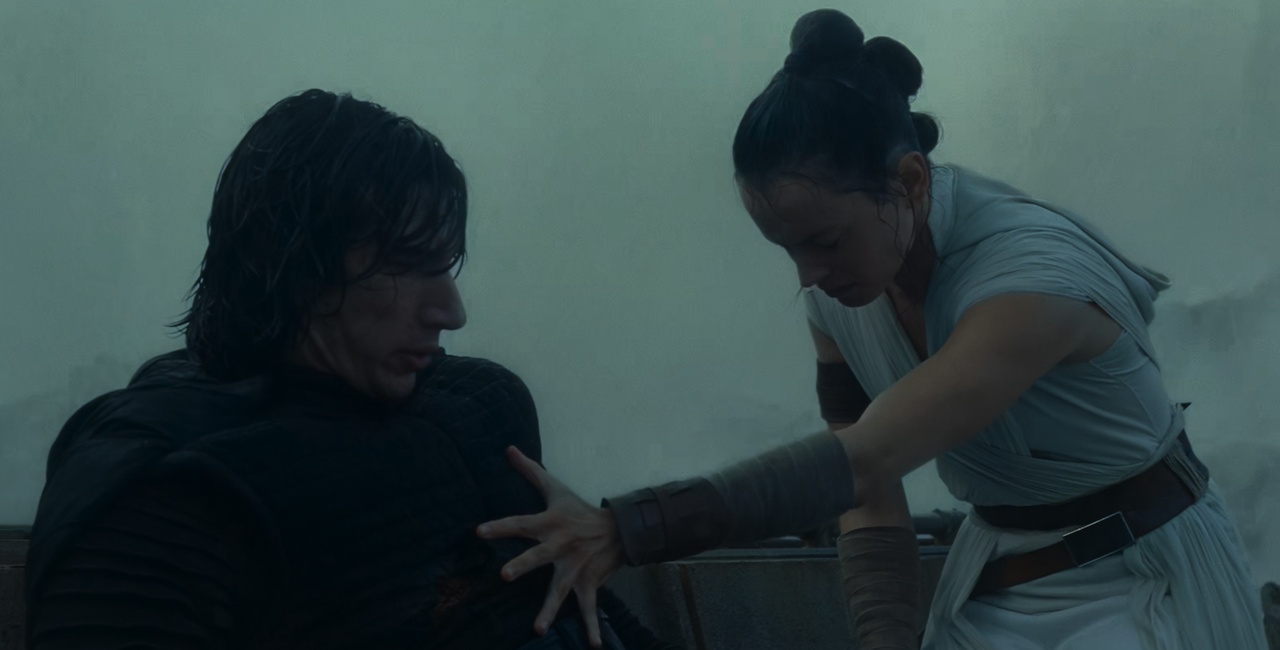
Knights of the Old Republic remake: a wishlist

Spoiler Warning: There are spoilers ahead for the Star Wars franchise, including Knights of the Old Republic and Knights of the Old Republic II.

The remake of Knights of the Old Republic is one of the games that I’m most looking forward to at the moment. I’ve talked about this before, but in the early 2000s – when Star Wars had been damaged by two disappointing films – Knights of the Old Republic and its sequel did an awful lot to rescue the franchise’s reputation for me. After twenty years, a remake that brings the game into a new engine and in line with modern titles could be a great way to re-experience it – as well as for new players to experience it for the first time.

Today we’re going to look ahead to the Knights of the Old Republic remake and put together a wishlist; these are things that I truly hope the new version of the game will include.

It goes without saying that I have no “insider information” and I’m not trying to claim that anything on the list below will actually be a part of a new Knights of the Old Republic game. This is a wishlist from a fan – and nothing more. With that disclaimer out of the way, let’s get started!

Number 1:
An updated combat system.

Revan’s red Sith lightsaber as seen in the teaser.

Even by the standards of role-playing games in 2003, KOTOR’s combat system was pretty “old-school.” That’s fine, and while turn-based combat isn’t my favourite way to play there was nothing necessarily wrong with the way the game approached battles and fights. But if KOTOR is being remade from the ground up with a view to being modernised for a new audience, I think a new approach is needed.

Turn-based combat feels clunky and slow, and it interrupts the natural flow of gameplay. Combat in the original version of KOTOR feels like a wholly separate event from exploration and the rest of gameplay with a noticeable transition, and I think a less rigid approach would be to the game’s overall benefit. Dropping the strictly turn-based approach in favour of a more fluid combat system doesn’t mean things have to be lightning-fast requiring the reflexes of a professional player! But a redesigned approach to combat would help the game feel like a more natural adventure and less like, well, a video game from the early 2000s.

Number 2:
A proper character creator.

KOTOR’s original character creation screen.

The original version of KOTOR had an incredibly basic “character creator” that only allowed players to choose from about a dozen pre-made portraits. There’s more to a character than the way they look, of course… but in a role-playing game – particularly a third-person role-playing game with cinematic cut-scenes and conversations that routinely show off the player character – being able to really customise the game’s protagonist is something I’d like the remake to offer.

Recent years have seen some truly remarkable character creators. Despite its problems, Cyberpunk 2077 has an excellent character creator, with more customisation options than you can shake a stick at! There’s scope for the KOTOR remake to implement something like that, and doing so would go an awfully long way to improving the role-playing experience.

Number 3:
Additional character classes.

The original game’s class selection screen.

While we’re talking about the game’s character creation, it wouldn’t hurt to add in some new classes. The original version of KOTOR included three starting classes and three Jedi classes that were unlocked partway through, and I think there’s scope to either add some new ones or to perhaps let players pick and choose to create their own custom class.

Classes which combine stealth and combat or Jedi abilities with engineering/tech would be a lot of fun, and would mix things up to make every new playthrough of the game feel different and unique. Look to how the Mass Effect trilogy offers six main character classes as a basic example of what I mean.

Number 4:
A fully-voiced protagonist.

Dialogue options in the opening level of the original KOTOR.

In Knights of the Old Republic every character was fully-voiced – except for one. The player character never spoke, with their dialogue being shown during conversations and cut-scenes as text only. This may have been a creative choice, but I suspect it was done to save file space! Hundreds of lines of recorded dialogue take up space, after all! But this limitation doesn’t exist in the same way in 2022, so there’s no reason not to give KOTOR’s protagonist their own voice after all this time.

Some games have multiple voices available to choose from – the Saints Row series offered this option, for example – and the KOTOR remake could certainly go down that road. But even to just have one masculine and one feminine voice as options, like the Mass Effect games or Cyberpunk 2077, would be fantastic.

Number 5:
Redesigned levels.

The Ebon Hawk touches down on Tatooine.

This one was originally going to be “expanded levels,” but bigger doesn’t necessarily mean better! However, twenty years of progress has been made in game design since the original KOTOR was released, so I feel there’s scope to redesign some of the game’s levels to reflect that and make the game feel even more immersive.

For example, the city of Taris could be populated with larger crowds of non-player characters to feel more like the dense urban jungle that the story portrays it as. The deserts of Tatooine could be enlarged to provide more of a sense of scale. Or the forests of Kashyyyk could be remade with a wider variety of plant life – like the version seen recently in Jedi: Fallen Order.

Number 6:
PlayStation 5/Xbox Series X only.

An Xbox Series X box.

And PC, of course! But what I mean is this: the KOTOR remake should take advantage of the latest generation of home consoles and not even try to be compatible with the Xbox One and PlayStation 4 generation that’s now almost a decade old. By ditching last-gen in favour of current-gen only, the KOTOR remake will ultimately be a better, more enjoyable, and more visually impressive experience. And isn’t that the main reason to do something like this?

Fans are looking for a game that can take full advantage of two decades’ worth of improvements in technology; if the KOTOR remake tries to remain compatible with last-gen machines, that won’t be possible and at least some of its potential will have been wasted. Although there are still availability issues for the Xbox Series X and PlayStation 5, those consoles are the future and more are being sold every day.

Number 7:
Don’t be shy when it comes to delays.

Cyberpunk 2077. Enough said.

We recently talked about delays when Bethesda and Microsoft announced that Starfield was being pushed back to next year. Without repeating myself too extensively: delays are a good thing! It’s infinitely better for both players and the developer and publisher of a game to delay it until it’s ready rather than trying to force it out too early to meet some arbitrary deadline. So far, we don’t have an official release date for Knights of the Old Republic… but when we do, there’s no need to stick to it if the game needs more time.

Having been burned by recent titles like Mass Effect: Andromeda and Cyberpunk 2077, more and more players are coming around to this way of thinking. A game delay is never fun, but increasingly players understand why it has to happen. I’d rather play a good, bug-free KOTOR remake in 2026 than a bad, rushed, glitchy version in 2023!

Number 8:
No DLC or microtransactions. One complete story.

It shouldn’t cost a packet to play the full version of KOTOR.

Microtransactions in single-player titles are unjustifiable in my view, and I hope that the KOTOR remake avoids this irritating trend. I’m also hopeful that there are no day-one DLC packs, nor any “special editions, “ultimate editions,” etc. The game should be in a complete state at launch, with the full experience available to everyone.

It might be tempting to cut off certain cosmetic items – like lightsaber colours, for instance – and sell them as DLC or as part of a “special edition,” but I really hope this can be avoided. The original version of Knights of the Old Republic didn’t have any of that nonsense – let’s keep the remake free of it as well.

Number 9:
Remake Knights of the Old Republic II!

Could a KOTOR II remake be on the agenda?

Obviously the KOTOR remake is just going to be the first game – but if it’s successful I really hope to see a remade version of Knights of the Old Republic II as well. KOTOR II is probably my favourite part of the duology, with levels like Dxun and Onderon that are truly outstanding. Given the positive reaction to news of a KOTOR remake, could the team working on it be already considering their next move? I hope so!

KOTOR II is a semi-standalone story, and an incredibly fun one in its own right. It would be amazing if a successful and profitable KOTOR remake could be followed up a year or two later by a KOTOR II remake – especially if such a remake could restore some of the content that Obsidian had to cut from the original version of the game due to time constraints.

Number 10:
Set the stage for Knights of the Old Republic III!

The Ebon Hawk.

If remakes of KOTOR and possibly KOTOR II are successful, could a third game finally be in the works? After a twenty-year hiatus, that might be the longest gap in between releases in the history of the games industry… well, unless we count Shenmue III – but the less said about that the better!

Although the MMO The Old Republic made reference to events in the KOTOR games, nothing has been conclusively resolved. And without getting too deep into spoiler territory, both games ended in a pretty open way. There’s absolutely the potential to bring back main and secondary characters for a third entry… so I guess we’ll have to watch this space.

So that’s it!

Darth Revan as glimpsed in the teaser.

That’s my Knights of the Old Republic remake wishlist. I’m hopeful that the remake will be a fun update to the original game and I’m definitely planning to check it out when it’s ready. Knights of the Old Republic isn’t just one of my favourite Star Wars games – it’s one of my favourite games of all time! I can understand why some folks are wary of a remake after lacklustre projects like Mass Effect: Legendary Edition or Warcraft III: Reforged, and the games industry in general doesn’t have a great track record when it comes to remakes and remasters sometimes. But I think there are reasons to be optimistic.

Even if none of my “wishes” end up in the finished game, just having the opportunity to replay Knights of the Old Republic with modern graphics will be fun. The original game was made during the Xbox-PlayStation 2 era and it’s definitely beginning to show its age by now! So any upgrade will be greatly appreciated. I feel optimistic at this early stage that Knights of the Old Republic will get a decent remake. Whenever it’s ready, be sure to stop by the website for my thoughts and impressions.

Star Wars: Knights of the Old Republic is being developed by Aspyr and will be published by Lucasfilm Games for PC and PlayStation 5. No release date has been announced. The Star Wars franchise – including all titles and properties mentioned above – is the copyright of Lucasfilm and The Walt Disney Company. This article contains the thoughts and opinions of one person only and is not intended to cause any offence.
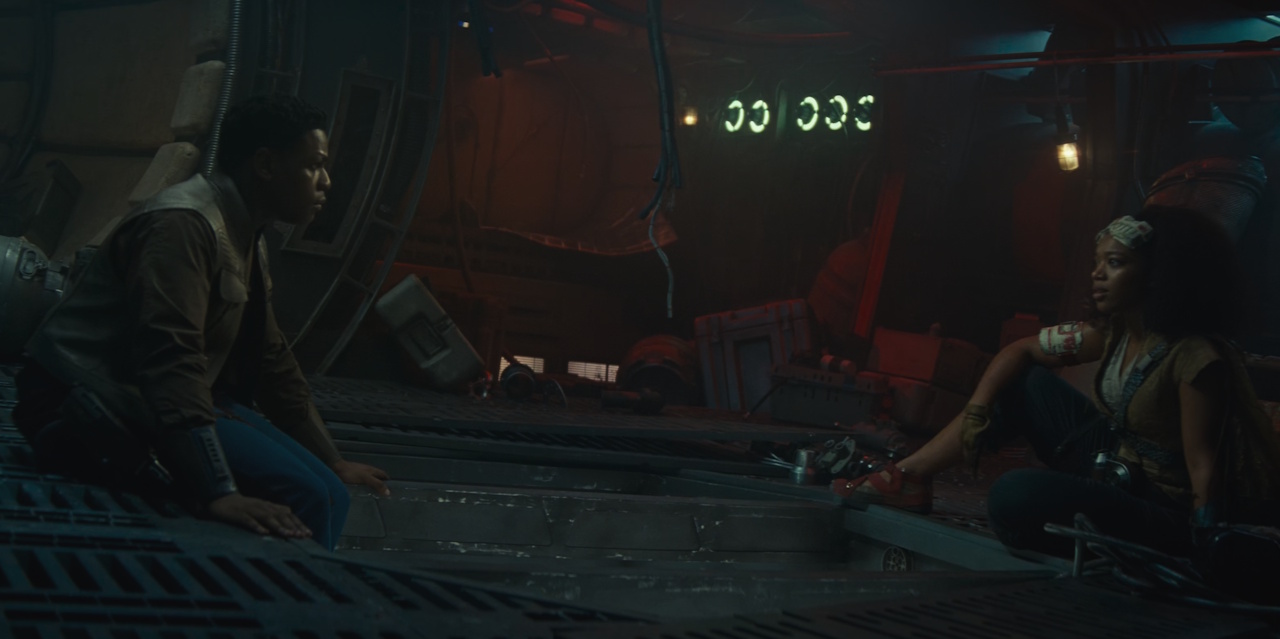
To recast or not to recast?

Spoiler Warning: There are spoilers ahead for The Book of Boba Fett. Minor spoilers are also present for Solo: A Star Wars Story and Star Trek: Strange New Worlds.

President of Lucasfilm Kathleen Kennedy recently made a statement that has drawn a lot of attention. In an interview with magazine Vanity Fair, Kennedy stated that one of the lessons that the Disney-owned studio learned from the lukewarm response to Solo: A Star Wars Story in 2018 was that recasting classic characters isn’t possible. In her words, “it does seem so abundantly clear that we can’t do that.”

This has kicked off a discussion online, not least among fans of the Star Wars franchise and Solo in particular. Today I want to add my two cents to the conversation and use the debate around Kennedy and Solo to talk about recasting characters in a general sense, as well as touch on some alternatives that studios have turned to in recent years.

Lucasfilm President Kathleen Kennedy.

First of all, I encourage you to read the full piece in Vanity Fair so you’re aware of what was said and its context. Online debate often centres around a single phrase, soundbite, or fragment of a sentence, and it isn’t always clear how someone’s words were intended. In this case, for example, Kennedy seems to have been talking about the need for Star Wars to move on – something I’ve talked about at length here on the website – and expand beyond the confines of the “Skywalker Saga” and the handful of familiar characters who made up those stories.

I absolutely agree with that sentiment! The Star Wars galaxy is such a vast and exciting setting, one with thousands of years of history, an uncertain future, thousands of planets, trillions of inhabitants, and so much potential! So far, the Star Wars franchise has doubled-down on showing us the same handful of characters and the same tiny sliver of that setting over and over again, and I for one am starting to get sick of it! Star Wars can be more than Luke Skywalker – if it’s willing to put in the effort.

Canto Bight, one of many interesting locales in the Star Wars galaxy.

So in that sense, I agree with Kathleen Kennedy! But taken as a starting point for a discussion about recasting characters, I couldn’t disagree more.

It’s profoundly ironic that Kennedy made this statement during the build-up to the broadcast of Obi-Wan Kenobi… a series that centres around a character who was recast from the original Star Wars films! The Star Wars prequel trilogy recast a number of characters – and recast characters were even ham-fistedly edited into the so-called “special editions” of the original films, with the original voice of Boba Fett being re-dubbed, the original Emperor Palpatine being overwritten in The Empire Strikes Back, and most notoriously, the Force ghost of Anakin Skywalker being changed in Return of the Jedi.

Disney and Lucasfilm panicked in the late 2010s. The divisive reaction to The Last Jedi and underwhelming numbers for Solo: A Star Wars Story saw the Star Wars franchise refocused to bring back a lot more of what corporate leadership hopes will pass for nostalgia. This accounts for the existence of shows like The Book of Boba Fett and Obi-Wan Kenobi, as well as certain narrative decisions in The Rise of Skywalker. It isn’t the first time that corporate cowardice has got in the way of entertainment, and it likely won’t be the last.

The Book of Boba Fett is an example of Star Wars recycling characters.

I’d argue that the wrong lesson has been learned from Solo if Disney and Lucasfilm believe that the biggest takeaway is that they should never try to recast characters. Alden Ehrenreich’s performance was far from the worst thing about that film, and if audiences and Star Wars fans felt that he “didn’t feel” like Han Solo, the blame needs to be placed with the way the script was written and the way the story was told. Solo was a fairly clumsy overplaying of the nostalgia card in my view; a film with an interesting premise that was hampered by shoehorning in characters from the original trilogy and that made the same mistake with Han Solo as the prequel trilogy had with Anakin Skywalker: overexplaining his backstory.

But all of that is incidental. Even if we accept the premise that Solo was a failure and that the performance of its lead was a significant factor – neither of which I’m fully on board with, but I’ll grant for the sake of argument – is the right response really to say that no classic characters should ever be recast again? That seems like a horrible overreaction!

Alden Ehrenreich in Solo: A Star Wars Story.

The Star Wars franchise has done some very interesting things with digital de-ageing and CGI character creation. The way Luke Skywalker was brought to screen in The Book of Boba Fett as an entirely CGI character was technologically stunning, and at first I thought I was watching a lookalike. The technology needed to create CGI characters and perfectly replicate the face – and even voice – of real actors is already here, and while Disney may be a pioneer of the technology, they’re far from the only ones to be using it. We’ve recently seen digital de-ageing make an appearance over in the Star Trek franchise, for example.

I’ve had an article in the pipeline for well over a year that I really ought to get around to finishing one of these days! It’s all about CGI characters in film and television, because I’m convinced that we’re not far away from a film or TV series bringing back to life a dead actor to play a leading role. I can already picture a snooty director who insists that the lead role in their film could only ever belong to someone like Lawrence Olivier or Orson Welles and decides to digitally recreate them rather than cast someone else!

A CGI recreation of Mark Hamill was used to bring Luke Skywalker into The Book of Boba Fett.

That’s connected, in a way, to what we’re talking about here. Some actors and performers are so iconic that I can absolutely see a time – perhaps very soon – when a film or TV series will use a CGI lead mingling with real actors. A digital creation with a fake face and fake voice that are indistinguishable from the real thing. And as that technology improves and becomes more accessible, it may even become possible for amateurs to do something similar. Imagine a Star Trek fan-film where a fully-realistic CGI Captain Picard is the lead. We’re edging closer to that kind of reality!

But is Sir Patrick Stewart inseparable from Captain Picard? Is Mark Hamill the only possible Luke Skywalker? Or are these roles – and many others across the realm of entertainment – more than just one actor? Look at Shakespeare as an example: how many actors have taken on the role of Hamlet, Prospero, or Richard III? And even in cinema, how many different performances have there been of characters like Count Dracula or Ebenezer Scrooge?

Is Christopher Lee the only possible Dracula in all of cinema?

If the argument is that certain characters can only ever be portrayed by one person, doesn’t that limit them and restrict them to a single possible interpretation? There have been very different takes on iconic characters over the years, and while audiences may have a preference for one or another, that doesn’t mean that only one interpretation is valid. Taking a character and giving them to a new actor expands the potential of that character.

In the Star Trek franchise we’ve seen the main characters from The Original Series recast for the Kelvin films, and while I know of some Trekkies who absolutely hated that idea, as time has passed since the 2009 reboot, more of those folks have come around. 2009’s Star Trek did a lot of things right as a reboot of the franchise, and a big part of its success was down to the way those classic characters were reinterpreted.

Star Trek hasn’t been shy about recasting characters!

Some Star Trek characters have been recast multiple times – by my count, Strange New Worlds features the fourth actor to play Captain Pike and the third to play Spock. Early reactions to Strange New Worlds have been incredibly positive – and the series has even drawn praise from some fans who hadn’t enjoyed anything else that modern Star Trek has had to offer. Recasting Pike, Spock, and other classic characters has clearly not harmed Strange New Worlds.

And the same could be true for Star Wars. Maybe Solo wasn’t the best film the franchise has put out, but that shouldn’t mean that experimenting with different takes on classic characters should be entirely shut down. There’s scope for new actors to take on the roles of Luke, Leia, and others – just as there was for Ewan McGregor to become Obi-Wan Kenobi or Alden Ehrenreich to become Han Solo. Arbitrarily deciding that recasting can never work off the back of a single underwhelming film is an unnecessary overreaction – especially considering that recasting has already worked in Star Wars, with an upcoming series standing as testament to that fact.

Obi-Wan Kenobi was recast in 1999 – and the recast character was so popular that he’s about to get his own spin-off series.

At the same time, there’s a place for digital character creation, recreated characters, and CGI characters, and I fully expect to see a lot more of that type of thing in the years ahead. For my two cents, digital de-ageing and CGI characters probably work best as side-characters rather than main protagonists – and I think Star Wars has got away with using them in that context so far. It will be a new challenge to see a film or TV series where the leading role is taken over by a CGI character.

So in conclusion, I’m glad that Kathleen Kennedy is finally willing to consider expanding the Star Wars franchise beyond the tiny fragment of its wonderful and vast setting that we’ve seen so far. That part is the good news! However, I don’t agree that there’s no place for recasting characters in a general sense. New actors have the potential to bring a new interpretation to the role, and if you look across at other films, franchises, and TV shows, it’s abundantly clear that recasting can and does work.

All properties and franchises discussed above are the copyright of their respective studio, distributor, corporation, etc. This article contains the thoughts and opinions of one person only and is not intended to cause any offence.
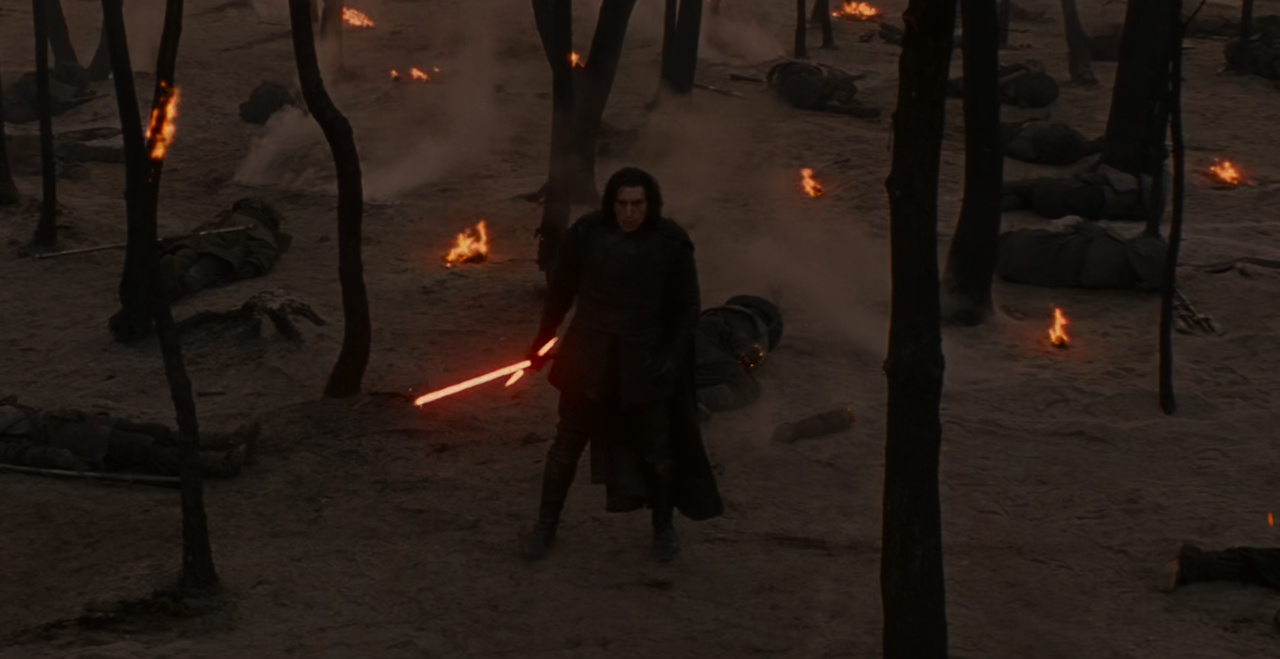
Ten great things about Star Wars: Episode VIII – The Last Jedi

Spoiler Warning: There are spoilers ahead for the entire Star Wars franchise, including the prequels, original trilogy, and sequels.

Happy Star Wars Day! Today is the 4th of May – or as they say in America, May the 4th. So May the 4th be with you! Today is a day for positivity in the Star Wars fan community, so I thought it could be fun to take a look at a few of my favourite things from The Last Jedi. It goes without saying that The Last Jedi was a divisive film among Star Wars fans. However, it was one I generally enjoyed. It wasn’t “perfect,” and I don’t think it hit all of the high notes that it was aiming for, but I found it to be enjoyable.

This article isn’t an attack on anyone else’s position or opinion! If you don’t like The Last Jedi or some of the things we’re going to discuss, that’s totally okay. Practically everything in cinema is subjective, not objective, and there’s a range of opinions on practically every film. Because today is about celebrating Star Wars, I wanted to pick out some of the things that I liked from the film and talk about why they worked well for me. If you want to see how critical I can be of Star Wars… check out my reviews of The Rise of Skywalker or The Mandalorian Season 2!

Yoda in The Last Jedi.

With all of that out of the way, a brief introduction is in order, I think! Star Wars Episode VIII: The Last Jedi was released theatrically in the UK on the 14th of December 2017 – but I didn’t see it until a few months later in the Spring of 2018. My health is poor, and things like trips to the cinema are no longer practical for me, unfortunately. By the time I got around to seeing the film I’d already heard the outcry from some in the Star Wars fandom, and I set my expectations pretty low for what seemed to be a divisive film. Suffice to say that I was pleasantly surprised to find a film that I enjoyed a lot more than I’d been expecting.

After The Force Awakens had played it very safe two years earlier, The Last Jedi attempted to take Star Wars in a very different direction. Rather than repeating what the original trilogy had done, the film took its characters to completely different thematic places, introduced new sub-plots, and potentially set up the sequel trilogy for a radically different ending. The Rise of Skywalker tried to undo some of the most significant points from The Last Jedi, which was a real shame, but taken on their own merit many of these points succeed. For me, The Last Jedi is the high-water mark of the sequel trilogy, and it’s a film that I firmly believe will be considered much more favourably in years to come. Just look at how a new generation of fans has come to celebrate the once-panned prequel trilogy; The Last Jedi’s best days may lie ahead.

So let’s get started on my list! I’ve picked ten things that I admire about The Last Jedi or feel that the film did well. They’re listed below in no particular order.

Number 1:
A subtle and unexpected Rogue One connection.

Jyn Erso in Rogue One.

How was the First Order able to track the Resistance’s fleet while they were in hyperspace? This was a story point that some fans who weren’t paying very close attention didn’t like – but it was actually something that had been set up a year earlier. Rogue One, which was released in 2016, saw Jyn Erso and a rag-tag crew steal the plans to the Death Star in the days immediately prior to A New Hope. Part of their mission saw them travel to the planet of Scarif, where the plans were kept at an Imperial facility.

While looking for the Death Star plans in amongst other Imperial data tapes, Jyn found a record of the Empire’s research into hyperspace tracking. The scene was very brief, with the data tape quickly being discarded in the rush to secure the Death Star plans – but it was a great moment of connection between two disparate parts of the Star Wars franchise!

Jyn and Cassian with the Death Star plans.

Considering that Rogue One and The Last Jedi were set decades apart, these moments of connection are incredibly helpful to bind modern Star Wars together. Far from being just a throwaway line, the scene in Rogue One established that hyperspace tracking technology was something being actively researched by the Empire – while the destruction of the Imperial facility on Scarif provides a convenient narrative excuse for why it wasn’t successfully rolled out during the era of the original films.

It can be an incredibly difficult task to thread the needle like this; to insert a story element in between the pieces of the story that we already know. But Rogue One and The Last Jedi did this perfectly. If only other story beats in the sequel trilogy had this much forethought and this much setup!

Number 2:
Rey is related to nobody.

Rey learned a harsh truth.

For two years leading up to The Last Jedi, speculation was rife in the Star Wars fan community about who Rey was. Many fans concocted elaborate theories suggesting that she was the daughter or granddaughter of Luke Skywalker, Obi-Wan Kenobi, Emperor Palpatine, and other Force-wielding characters. But when it was revealed in The Last Jedi that none of those things were true, it was a perfectly-executed twist.

Rey being “no one” isn’t just great because it’s a subversion or because it ignores some pretty mediocre fan theories – it works because it has something important to say. The Force can manifest in anyone, and just because that person comes from a humble background it doesn’t mean that they can’t be important. This is the story that the original Star Wars film tried to tell: Luke was the farm boy from an unimportant backwater world who went on to save the galaxy. That story was muddied by the decision to create a connection to Darth Vader in The Empire Strikes Back, and completely erased by the time talk of prophecy and “chosen ones” entered the equation.

Kylo explained to Rey that her parents were “no one.”

In that sense, Rey’s parents being no one important and no one familiar took Star Wars back to a narrative space that it hadn’t occupied since 1977. It established that its hero truly could be anybody, that destiny and ancestry don’t matter half as much as we might’ve thought. I found that message to be incredibly uplifting and inspiring, and the idea that anyone could be a hero or do great things without needing to be related to someone important is a message that resonated. In a franchise that has been so thoroughly dominated by a handful of individuals and a single family, it was a narrative worth including.

It also presented Rey in stark contrast to Kylo Ren. Both characters were defined by their family, but in different ways. Rey waited for her parents believing they’d come back for her, only to learn that they didn’t care about her at all – they sold her at the first opportunity. Kylo was both proud of his relationship to Darth Vader and ashamed of the role that his parents played in the Rebellion. Kylo came from Rebel royalty as the son of Han and Leia, but had succumbed to the temptation of the Dark Side and wanted to dominate the galaxy. In contrast, Rey came from nowhere and wanted to save it.

Rey using the Force at the film’s climax.

Rey’s struggle wasn’t to live up to some legacy from Luke or Obi-Wan, nor to rebel against a darker ancestor like Palpatine, but to chart her own path – a new path for herself, for the Resistance, for the Jedi, and for the Star Wars franchise. Rey represented the new against the old, the people against the aristocratic elite, and an unexpected journey for the protagonist of the latest chapter of the long-running saga.

I adored this about Rey. It took her on an unpredictable and open-ended journey, threw out of the window outdated notions of legacy and destiny, but at the same time it returned Star Wars to a familiar place; a place it hadn’t been since Darth Vader and Luke were retconned to be father and son. Had this aspect of Rey’s character been retained, I think the sequel trilogy as a whole could’ve been far more interesting.

Number 3:
Hyperspace ramming.

The aftermath of hyperspace ramming.

In the very first Star Wars film, Han Solo gave us a decent explanation for why travelling through hyperspace was so dangerous. “Without precise calculations,” he told Luke, “we could fly right through a star or bounce too close to a supernova.” Hyperspace, at least according to Han Solo, did not somehow transport ships to another dimension; they could still interact with the rest of the galaxy – with potentially deadly consequences!

This was elaborated on by the old Expanded Universe which explained that charting new hyperspace routes was incredibly dangerous for precisely the same reason: it’s very easy to crash into a star, a planet, or even another starship. So hyperspace ramming has always been possible in Star Wars – even if no one thought of it before Admiral Holdo!

Admiral Holdo.

Hyperspace ramming is the kind of desperate, last-ditch manoeuvre that no one would dare to try unless there weren’t any other options. Here in the real world, aircraft had been around for decades before anyone thought of inventing the kamikaze suicide attack, so I can absolutely believe that hyperspace ramming was either totally new in the Star Wars universe or hadn’t been attempted in hundreds or thousands of years. Nothing about it “broke” continuity, and as stated it was perfectly in line with what Han Solo had told us about travelling through hyperspace all the way back at the beginning of the franchise!

The criticisms of hyperspace ramming felt very nitpicky to me, and I think it’s something that came about because of how other aspects of the film landed for some fans. If hyperspace ramming had made its debut in The Mandalorian, for example, where most fans seem to have been having a good time, I think it would’ve generated a lot less anger!

Holdo accelerates her ship to hyperspeed.

I’m always a sucker for the “doomed last stand” concept in fiction, and the entire hyperspace ramming sequence was executed incredibly well. Admiral Holdo managed to be stoic and brave in the face of death, making the ultimate sacrifice to allow her friends to escape and to give the Resistance a fighting chance.

The cinematography and visual effects used to bring it to life were outstanding, too, and the hyperspace ramming sequence has to be one of the absolute best in all of Star Wars for me. The use of silence at the moment of impact was so incredibly poignant – in part because silence is used so sparingly across the franchise. The CGI animation used to bring to life the crash and its aftermath was likewise fantastic.

Number 4:
Kylo Ren seizes power.

Kylo Ren at the moment of his coup.

The Force Awakens seemed to be setting up Kylo Ren as the “new Darth Vader” – an evil but ultimately redeemable villain. The Last Jedi chose to avoid recycling that character trope and set Kylo on his own path, a path that would lead him to become the Supreme Leader of the First Order. By embracing the darkness within him and extinguishing the pull to the light that he’d been feeling, Kylo Ren cemented his position as the primary antagonist of the sequel trilogy.

After being bullied and belittled by Supreme Leader Snoke, Kylo’s hatred for his master had been building. Blamed unfairly for the loss of Starkiller Base and Rey’s escape, Kylo nursed a grudge against Snoke for practically the whole film, culminating in him killing him in one of the film’s most shocking sequences.

The death of Snoke.

Kylo killing Snoke was not an empty subversion, designed for shock value and nothing else. It was a masterstroke of writing, one that sought to take Star Wars and the film’s main characters to entirely different thematic places than either the prequels or original trilogy had. In the span of a few minutes it seemed that Rey had been able to get through to Kylo, convincing him to betray the First Order… but then that idea was pulled away as Kylo saw his chance to seize power.

Turning the idea of “reaching out” on its head, it was Kylo who asked Rey to join him, to rule the galaxy at his side. Rather than returning to the light, Kylo had taken a massive leap further into the dark – going so far, surely, as to never be able to come back. With Snoke out of the picture, only Kylo and Hux would remain as major antagonists going into the final act of the trilogy, so it seemed like the idea of “Darth Vader 2.0” was well and truly gone.

Rey and Kylo prepare to battle Snoke’s guards.

Again, this was a moment with a message. Part of that message was epitomised by Luke’s line: “this is not going to go the way you think!” and that’s kind of built into the film’s entire philosophy. But beyond that, the concept that someone like Kylo Ren could be irredeemable has merit. There are some people – some fascist leaders, which is what Kylo Ren is at this point – who go “full Dark Side.” There’s no way back for some people, and we shouldn’t want to see a redemption arc for people who have done unspeakably evil things.

It’s also connected to the point above about destiny and ancestry. Kylo came from Rebel royalty as the son of Han Solo and Leia, but instead of using that legacy and power in a positive way he became corrupted, trying to rule the galaxy instead of fighting for freedom. The lure of power can corrupt even the most well-meaning of individuals, and Kylo’s arrogance, elitism, and belief in his own special place led him down a dark path.

Number 5:
The presentation of Luke Skywalker.

Luke with the famous blue milk.

This is a point I’ve tackled before in a standalone essay, but I found what The Last Jedi did with Luke to be absolutely incredible. It was a powerful and relatable mental health story, one that showed how anyone – even heroes – can fall into melancholy and depression. Maybe that story isn’t what some viewers wanted, but I firmly believe it’s a story that was needed – and worth telling.

Not only that, but Luke’s story was a sympathetic and realistic portrayal of mental health; one of the better depictions of depression that I’ve seen in fiction in recent years. Having tried to rebuild the Jedi Order, Luke ultimately failed – and failed in such a catastrophic way that he got people killed. He allowed that failure to fester and turn into depression, ultimately secluding himself and merely waiting around to die, totally uninterested in the galaxy around him.

Luke’s failure and depression was a major focus of the story.

Anyone who’s suffered from depression – regardless of whether there was a cause – can relate to that. The idea of cutting oneself off from everything and everyone, of being unable to face the world outside a small bubble of safety – these are things that people suffering from mental health issues can recognise. And the fact that it happened to someone as powerful, virtuous, and heroic as Luke Skywalker has an incredibly powerful point to make: this is something that can happen to anyone.

As mental health issues – particularly in men – continue to be ignored and stigmatised, this is something that people need to see and hear. The depiction of one of the main protagonists in one of the biggest cinematic franchises around suffering from depression in a realistic and relatable way has done so much to raise awareness of the problem. To me, this is sci-fi at its best: using a fantasy setting to consider real-world issues.

Luke’s death at the end of the film.

As always in these kinds of stories, how Luke was feeling at the beginning is not as important as where he ended up, and the arc he goes through in The Last Jedi provides a genuine feeling of hope. Thanks to Rey’s intervention, Luke found a way to believe in a cause again, and found a way to become a symbol of hope for the entire galaxy. Luke being depressed at the beginning was incredibly important for people to see, but what was just as important is how he found a pathway out of it.

Depression isn’t something easily cured. Luke couldn’t just “snap out of it,” but he came to realise that, despite his failings, despite his flaws, and despite the way he’d been feeling, there was still something he could do to contribute. He could still be a Jedi – and thanks to his intervention, not the titular Last Jedi!

Number 6:
Recognising the massive failings of the old Jedi Order.

The Jedi Temple during the prequel era.

The prequel trilogy touched on the idea that the Jedi Order had grown arrogant and complacent over centuries of peace and after being unchallenged by the Sith and the Dark Side in a major way. But at the same time, characters like Obi-Wan Kenobi, Yoda, Qui-Gon Jinn, and Mace Windu were presented as the heroes – the paragons of virtue who we were rooting for. The Last Jedi takes a much more critical lens to its examination of the Jedi Order, particularly in the prequel era.

Luke explained to Rey that the hubris of the Jedi is what allowed Palpatine to rise to power in the first place, and that the Jedi Order failed not only at keeping the peace but at preserving the Republic itself. Though this wasn’t something that the film spent a huge amount of time on, I think it was an important acknowledgement to recognise that the Jedi Order – by the time of the prequel films, at least – was not the irreproachable organisation that some considered it to be.

Luke explained how the Jedi Order failed.

This is also something that could inform Star Wars’ future. We don’t know what will become of the Jedi in the aftermath of the sequel trilogy, but it seems to me that one of the lessons Rey learned from Luke is that simply trying to reconstruct the Jedi Order exactly as it was before the Empire is not only impossible, but undesirable as well. What comes next for the Light Side of the Force has to be different – it has to be better.

This potentially opens up the future of Star Wars to go in some very different storytelling directions. Rather than simply a return to the pre-Empire status quo, in which the era of the Galactic Civil War may end up looking like little more than a blip in the grand scale of galactic history, what happened to Luke and Rey could be a turning point for the Light Side of the Force, with a new organisation bound by different rules rising in the Jedi’s stead. Perhaps the name “Jedi” will survive (it’s an integral part of Star Wars, after all), but maybe what comes next will be significantly different from the prequel-era Jedi Order, setting the stage for some genuinely different and unpredictable stories in the years ahead.

Number 7:
Timely social commentary.

The casino on Canto Bight.

How often have we felt that, no matter what we do, the rich always manage to get richer while we stay poor? The Last Jedi took Finn and Rose to one of the meeting places of the galactic elite, showing us how the mega-rich of the galaxy gamble and play both sides in the conflict. To them, who wins the war isn’t important – because they know that either way, they’re going to come out on top.

This isn’t just about the arms dealers who were selling weapons to both sides – although that was a very in-your-face analogy – but really the entire gaggle of the super-rich that Finn and Rose encountered on Canto Bight. Just like the 1% here in the real world, the problems of the galaxy don’t affect them at all. It was, in a sense, a glimpse behind a curtain that we rarely get to see – and the fact that the people of Canto Bight were laughing, joking, gambling, and greedily stuffing their faces seemed to spit in the face of our heroes and their war effort.

Outside the casino.

This was a side of the Star Wars galaxy that we’d never really seen. We’d been introduced to bounty hunters in shady cantinas before, as well as seeing the corrupt decadence of Coruscant’s politicians in the prequels, but it makes sense that a society as complex as the Star Wars galaxy would have these kinds of places inhabited by these kinds of people. They’re the Wall Street gamblers, the bankers, the financiers who survived the Republic, the Empire, the New Republic, and the First Order all by owning and controlling the vast majority of the galaxy’s money.

One of the themes that I took from this side-story is that, in a sense, it doesn’t matter who wins or loses in the struggle for power. Either a new Republic or the First Order will eventually have to cut deals with these people; they’re the real powerbrokers in the galaxy. Their money can shift the tide of the war – it can literally see states rise or fall.

Rose and Finn at Canto Bight.

Perhaps Canto Bight hit too close to home for some folks, or perhaps this look behind the curtain was a little too bleak! But there was something powerful about it nonetheless, particularly in the aftermath of some turbulent political times here in the western world. As above, when sci-fi turns a spotlight on real-world issues, what results can be powerful storytelling if it’s done right.

From an in-universe point of view, Star Wars stories have generally focused on underdogs – scrappy groups of rebels fighting against the powers that be. Even the prequels didn’t explore much of this side of the galaxy – so it was something new, something interesting, and something that could be ripe for further exploration one day.

Number 8:
Porgs!

A small group of porgs.

The Last Jedi introduced us to porgs – beakless bird-like critters that inhabited Luke’s island on the isolated Jedi planet of Ahch-To. Porgs are adorable and they made an excellent addition to the Star Wars galaxy. Was their pretty sizeable appearance in the film purely a merchandising ploy that did nothing whatsoever to service the plot? Well, probably. But Star Wars has always been about the merch!

I had the porg variant of the film’s poster on display for a long time and I also bought a porg plushie, so I guess I’m a sucker for cute merchandise. Paul the porg is now a permanent fixture in my living room, and I have The Last Jedi to thank for that!

Number 9:
General Leia’s leadership.

General Leia speaking with Poe.

The film’s release was bittersweet due to the death of Carrie Fisher a year earlier, making her posthumous role in The Last Jedi all the more poignant. Having had limited screen time in The Force Awakens, which focused more on Han Solo, The Last Jedi became a strong film for Leia’s character, showing her leadership skills and expanding on her role in the aftermath of the events of the original films.

There was a clash between the “hot-headed” Poe Dameron and the cooler, calmer Leia and Holdo at the head of the Resistance. Unfortunately Leia was sidelined for part of that, but her return just in time to stop Poe from sabotaging a carefully-laid out plan was one of the film’s strongest moments – and one that showed Leia’s no-nonsense attitude!

Luke with Leia near the end of the film.

Leia also got a sweet moment with Luke shortly before his last stand against the First Order’s forces, and considering that the sequel trilogy didn’t have many moments where it put the original characters back together, this was all the more significant. Fans needed to see Luke and Leia back together one final time – it was certainly one of the things I wanted from the sequels.

Even in the original trilogy, Leia was no “damsel in distress.” She helped Luke and Han escape from the Death Star, saved Luke’s life on Cloud City, killed Jabba the Hutt, and led the mission to take down the second Death Star’s shield! Seeing her continuing the fight against evil – even when it meant standing against her own son – was incredibly powerful.

Number 10:
Taking Star Wars to new thematic places.

Kylo Ren in his mask.

I talked about this above when discussing Kylo and Rey in particular, but The Last Jedi did more than any film in the franchise before or since to try to take Star Wars to different thematic and narrative places. That’s incredibly important, because without changing with the times and adapting, Star Wars as a whole will remain stuck in place.

Star Wars hasn’t yet been able to successfully move on from the one story that has been told. Palpatine, Anakin, Luke, Leia, Kylo, Rey, and the other main characters have come to utterly dominate Star Wars in every cinematic and television adaptation so far, even appearing in the likes of The Mandalorian and The Book of Boba Fett. The Last Jedi, as a sequel, obviously had to include many of those same characters, but the way it framed them was as close as Star Wars has got so far to going to different places.

Rey on Ahch-To.

If the franchise is to survive long-term, it will have to find a way to leave Luke, Leia, Anakin, and the others behind; to branch out into different eras with wholly different casts of characters to whom names like “Skywalker” or “Palpatine” mean nothing. There’s a limit to how many different ways the same few characters can save the galaxy over the span of a few short years, and by making massive decisions such as killing off Luke Skywalker, The Last Jedi tried to guide the franchise to a new destination.

The board at the Walt Disney Company is now pushing back hard against that, and we’ve seen the results not only in The Rise of Skywalker, but also through decisions to include characters like Luke Skywalker in The Mandalorian or to bring back Obi-Wan Kenobi for his own miniseries. Partly that’s corporate cowardice – Disney wants to retreat to what it sees as safe, comfortable ground. But that ground is getting overtrodden, and there’s a danger that Star Wars could get bogged down. The Last Jedi, for whatever faults you may think it has, tried to do something genuinely different – and trying new things is how a franchise grows and comes to learn what works.

“Broom boy” at the end of the film.

As the dust settles and the film’s divisiveness abates, I think we’ll start to see a reevaluation of this aspect of The Last Jedi in particular. It may not have succeeded at taking the sequel trilogy to a very different end point, but it stands as a piece of the franchise’s cinematic canon that wasn’t afraid to try different things with its characters and storylines. Perhaps, in time, fans will come to appreciate that – particularly if Star Wars continues to double-down on recycling characters and shining spotlights on increasingly irrelevant chapters of its only real story.

Killing off its main villain early in the story, setting his apprentice on a dark path instead of the path to redemption, tearing down the arrogance of the old Jedi Order, reflecting real-world issues like mental health and the gilded indifference of the super-rich… these are all things that Star Wars had never even considered. The Last Jedi tried them for the first time. Did it all work perfectly? Probably not. But in a franchise that is in serious danger of becoming stale and fixated on its own past, trying new things, exploring new themes, dealing with new character types, and making an effort to stay grounded and relatable are all deserving of praise in my view.

So that’s it!

Luke Skywalker standing against the First Order.

Those are ten things that I think are pretty great about The Last Jedi. Despite the controversy the film generated, there are signs that the Star Wars fan community is coming back together. Shows like The Mandalorian have gone a long way to bringing back into the fold fans who’d been ready to give up on modern Star Wars. And just like the prequels – which are being revisited by a new generation of fans who were kids when they were released – in a few years’ time I think we’ll see a similar reappraisal of The Last Jedi by newer and younger fans who first came to Star Wars during the sequel era.

Although The Rise of Skywalker did what it could to overwrite or ignore some of what I consider to be The Last Jedi’s highlights, I still find it an enjoyable experience to go back and re-watch it. In a way, it’s a time capsule of where the franchise was in 2017 – or a window into an alternate timeline where Star Wars continued on this trajectory instead of panicking and trying to course-correct.

As we celebrate Star Wars day, don’t forget The Last Jedi.

Star Wars: Episode VIII – The Last Jedi is available to stream now on Disney+ and is also available on DVD and Blu-ray. The Star Wars franchise – including The Last Jedi and all other properties mentioned above – is the copyright of The Walt Disney Company and Lucasfilm. This article contains the thoughts and opinions of one person only and is not intended to cause any offence.
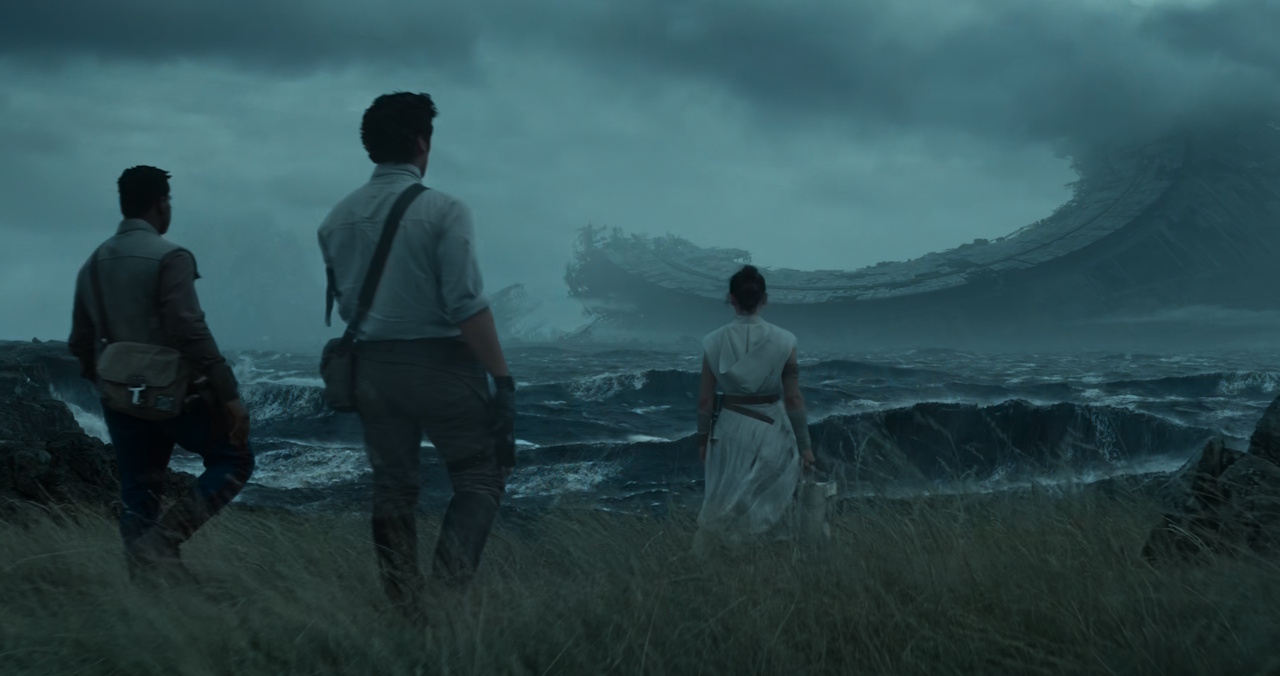
The Obi-Wan Kenobi series: hopes, fears, and expectations

Spoiler Warning: There are spoilers ahead for the Star Wars franchise, including Obi-Wan Kenobi, The Book of Boba Fett, and recent films such as The Rise of Skywalker.

I’ve made no secret through my commentary here on the website that I’m not thrilled by many of the decisions and announcements that have come out of Disney and Lucasfilm lately. The Star Wars franchise as a whole feels stuck; bogged down by nostalgia and led by a team whose creativity is being stifled by a corporate board that is unwilling or unable to move on from successes that are now decades in the past. The divisiveness of the sequel trilogy will eventually abate, but for now the Star Wars franchise is intent on looking backwards.

This is why we have projects like Obi-Wan Kenobi in the first place. The very concept of the series is backwards-looking, and all it really offers, at a fundamental level, are more of the same nostalgia plays that tripped up projects like Solo: A Star Wars Story. As I said last time I took a look at the upcoming series – which is now less than a month away – if I were in charge over at Disney and Lucasfilm, a project like this would’ve never been greenlit!

Obi-Wan in a teaser for the upcoming series.

That isn’t all there is to say, of course. Another recent Star Wars project that I had relatively low expectations for was The Book of Boba Fett. Arbitrarily bringing back from the dead a relatively minor character and dedicating an entire spin-off project to him felt like it should’ve been the epitome of everything I’ve come to dislike about modern Star Wars. But as you’ll know if you read my review of the first season, I actually had a good time with The Book of Boba Fett. It was far from perfect, but it hid its imperfections in a story that was, for the most part anyway, just plain fun.

So as I look ahead to Obi-Wan Kenobi, there are reasons for optimism. Ewan McGregor’s performance as the titular Jedi Knight was one of the prequel trilogy’s highlights, and he did well to bring to life a younger version of the character we’d originally met in 1977. Though I’ve never been wild about the prequels – the first two parts in particular – McGregor inhabited the role of Obi-Wan Kenobi and showed us, at least in part through Kenobi’s eyes, the rise and fall of Anakin Skywalker, as well as the hubris that led to the demise of the Jedi Order itself.

Hello there!

My biggest concern when it comes to Obi-Wan Kenobi is how it will find a story to tell that fits into the existing saga of Star Wars. The series has to be very carefully-crafted to be able to slot neatly into place like the last piece of a jigsaw puzzle. Unlike The Book of Boba Fett, which could’ve gone in all kinds of different directions as an epilogue to Boba’s story, Obi-Wan Kenobi has to show us a chapter of the Jedi Master’s life that falls in between the parts we already know. It has the very difficult task of being interesting, exciting, and dramatic without overwriting anything we already know, nor robbing any of the other stories of their impact.

Between what we saw in the prequels and the original films, we know the story of Obi-Wan’s life. I’d argue that we’ve seen the most interesting parts already: how he rose from being a padawan apprentice to a master in his own right, the role he played in the Clone Wars, and how the Empire rose around him. We’ve seen him take on Luke Skywalker as his apprentice, and then sacrifice his life in a duel with Darth Vader. What can Obi-Wan Kenobi add to this story that we don’t already know or can’t infer from the parts we’ve already seen? How can it give its protagonist an arc that takes him from where we left him at the end of Revenge of the Sith to where we picked up his story in A New Hope? And how can it make that story something worth watching without feeling either incredibly tacked-on or like a bolt from the blue?

“Old Ben” Kenobi in A New Hope.

Those are just some of the narrative challenges that the new series faces, and they’re by no means small ones! Obi-Wan Kenobi has to thread the needle; it can’t stray too far from what we already know, but it also has to find a way to chart its own path despite that limitation. I guess another of my worries is that the story the new series ultimately tries to tell will ignore some or all of those points and blaze a trail that will take Obi-Wan on an adventure that undermines his arc in either the prequels, original films, or both.

For the show’s writers, it must be sorely tempting to pit Obi-Wan and Darth Vader against one another – but doing so would utterly ruin one of the most powerful sequences in A New Hope. As much fun as it might be for the writers and creative team to stage another duel between the former master and apprentice, these classic characters need to be treated more carefully than that. Star Wars is already in a strange place thanks to things like Palpatine’s survival after Return of the Jedi; to throw Obi-Wan and Vader into a conflict against one another a decade before A New Hope would take away one of the few significant moments that remain unaltered from the original trilogy.

Obi-Wan Kenobi mustn’t undermine the meeting between Obi-Wan and Vader in A New Hope.

In their rush to recapture the magic of Star Wars, the franchise’s current executives and producers have actually erased a good deal of what made the original films as meaningful as they were. The story of Anakin’s redemption and return to the light in Return of the Jedi, for example, is hideously twisted and undermined by the subsequent revelations that Palpatine was able to survive, live for another thirty years, start a new Sith Empire, and even corrupt Anakin’s own grandson. Obi-Wan Kenobi simply can’t repeat this kind of mistake. If it does, Star Wars will have very little left.

Part of what made the duel between Obi-Wan and Vader aboard the Death Star so powerful is that it was their first meeting in many years. Even when watching the original film years before the prequels came out, it was obvious that the hate Vader had for Obi-Wan had been building for a long time. Add into the mix the backstory that the prequels gave us and the moment takes on a different and even greater significance. For Vader, this was his opportunity to get revenge on the man who left him badly injured and dependent on his hated suit. It became one of the most powerful sequences in the film – and in the entire saga.

The iconic lightsaber duel.

A few months ago I took a look at a similar project over in the Star Trek franchise: Ceti Alpha V is a proposed miniseries that would revisit iconic villain Khan. Having already seen the two most interesting parts of Khan’s story – his awakening in the 23rd Century and his battle against Kirk in The Wrath of Khan, I argued that such a project is ultimately not necessary. What would we learn about Khan from that miniseries that hasn’t already been explored either by Space Seed or The Wrath of Khan? It’s almost certainly the least-interesting part of his story, one that would not only be kind of a waste of time, but if given too much leeway, one that could undermine one of the high points of the entire Star Trek franchise.

And it’s hard not to look at Obi-Wan Kenobi with a similar degree of scepticism. Since we clearly aren’t just going to watch Obi-Wan sit around in his desert hut for six episodes, the question of what exactly he’s going to do comes to the fore. What makes this chapter of his life worthy of a six-episode miniseries, and how will it balance the need to be exciting and entertaining with the constraints of a very definite beginning and end point?

An Imperial Inquisitor seen in the teaser.

All that being said, Disney+ has a pretty good track record with its original productions. Obi-Wan Kenobi will likely have a per-episode budget that fans of other franchises could only dream of, so on the technical side of things we can almost certainly look forward to a polished production that looks great and makes creative use of CGI and other visual effects. Recent Star Wars projects have brought back more of the puppets and practical effects that defined the franchise’s look in its original incarnation, and that’s something I’ve enjoyed seeing. And in terms of special effects, things like the de-ageing and digital character creation that we’ve seen employed in The Book of Boba Fett and The Mandalorian are nothing short of technological marvels.

Famed composer John Williams is returning to the Star Wars franchise yet again to compose the show’s theme, which is another neat inclusion. Just like The Mandalorian, Obi-Wan Kenobi will make use of an AR wall (similar to the one used in recent Star Trek productions), which should also look fantastic. In addition to Ewan McGregor, Hayden Christensen is reprising his role as Darth Vader, and the inclusion of actors like Rupert Friend rounds out what seems to be an excellent cast. Director Deborah Chow has a good track record, too, with directing credits in series as diverse as Turn: Washington’s Spies, Fear the Walking Dead, and The Man in the High Castle. She also directed two episodes of The Mandalorian, so she’s not a newcomer to the franchise.

A company of Stormtroopers in the teaser.

All of those things give me hope! There’s potential in Obi-Wan Kenobi, and there’s no denying that Disney and Lucasfilm have put together a great team, backed them up with a significant budget, and given the project a shot at success. For me, the biggest potential pitfall remains the premise of the series itself, and the limited storytelling directions it could reasonably take.

I’m trying to rein in both my scepticism and excitement on different sides of the project, and I guess I’ll wrap this up by saying I’m cautiously optimistic. The success of The Book of Boba Fett earlier in the year, which was similarly a series I had reservations about, has perhaps led me to feel a little more hopeful than I otherwise might about Obi-Wan Kenobi’s prospects.

One final note: it’s worth saying that Obi-Wan Kenobi exists, like several other recent and upcoming sci-fi and fantasy projects, largely because fans were asking for it. Fans who grew up with the prequel trilogy, viewing those films as “their” Star Wars, have generally reacted very positively to news about Obi-Wan Kenobi, and I’m happy for them that Disney and Lucasfilm have been listening. I hope they get the series they’ve been looking for – and with any luck it’ll be something that I can enjoy too!

Obi-Wan Kenobi is scheduled to premiere on Disney+ on the 27th of May 2022. The Star Wars franchise – including Obi-Wan Kenobi and all other properties mentioned above – is the copyright of Lucasfilm and The Walt Disney Company. This article contains the thoughts and opinions of one person only and is not intended to cause any offence.
Lego Star Wars: The Skywalker Saga – first impressions

Spoiler Warning: There are minor spoilers ahead for Lego Star Wars: The Skywalker Saga and the nine mainline Star Wars films.

I had a lot of fun in the days when I owned an Xbox 360 with Lego Star Wars: The Complete Saga. That game brought a lot of lightheartedness to the Star Wars franchise, and was also a surprisingly complex game, with many characters to unlock and collectables to find. Going back and replaying levels didn’t feel like a chore, making it a great game to play solo or co-operatively. I had high hopes when a new Lego Star Wars title was announced, and it’s finally here after several lengthy delays!

I’m not even going to attempt a thorough playthrough in time to write a review; it will take a long time to go through the game and truly experience all that it has to offer. But for now I thought it would be worth sharing my first impressions! I’ve spent just over six hours with the game over the past couple of days, and I’ve jumped into two of the game’s stories/campaigns. I feel that’s long enough to get a feel for how the game plays – as well as to spot any major flaws or problems!

Promo art/banner for Lego Star Wars: The Skywalker Saga.

Lego Star Wars: The Skywalker Saga is split up into nine parts – one for each of the nine mainline films of the Skywalker Saga. On booting up the game for the first time, only three are available: The Phantom Menace, A New Hope, and The Force Awakens. Completing these unlocks the next part of that particular trilogy, and so on. It’s a neat way to organise it, and I liked that I was able to choose which trilogy I wanted to get started with. If the campaign had been entirely linear, with players having to unlock each film one by one, it would probably have been less enjoyable – and likewise, if all nine campaigns were unlocked from the start there’d be less to accomplish. All in all, this approach feels like it strikes the right balance.

I chose to start with The Phantom Menace – it’s my least-favourite film (well, tied with The Rise of Skywalker), but it’s often been my starting point when I go back to re-watch the mainline Star Wars films. As a film with a child-friendly atmosphere, it’s also one that I felt could translate well to the world of Lego! After spending a bit of time progressing through The Phantom Menace I hopped out of that campaign and loaded up A New Hope. It took me a second to figure out how to change campaigns on the fly, but it’s something the game allows you to do.

Qui-Gon Jinn with Obi-Wan Kenobi and Jar Jar Binks.

As someone who hasn’t played a Lego game in years, I wasn’t sure what to expect. I was pleasantly surprised to note that, despite major visual improvements, the feel of playing a Lego game is still present. There’s a cartoon silliness that doesn’t merely begin and end with the game’s visual style, it permeates many different aspects of the gameplay as well – and that less-than-serious take has been a hallmark of Lego Star Wars games (and Lego games in general) going back to the very first iteration. All of that is still present in The Skywalker Saga.

Half the fun of Lego games has always been in roaming around the environment, looking for things to destroy, studs to collect, and hidden collectables. I have no idea how many different things are hidden across the game – but in the few hours I’ve spent with it so far I’ve found dozens, and I’ve barely scratched the surface! What I love about these hidden collectables is that it isn’t just a case of wandering around until you find an obscure part of the map that’s off the beaten track; in order to find or unlock many of them you have to solve a puzzle, run through an optional extra assignment, and things like that. Not all of these puzzles are easy, either, despite the game being aimed at kids!

C-3PO and R2D2 on Tatooine.

The Skywalker Saga would absolutely be the perfect first Star Wars game for a younger fan. Of the Star Wars games released in recent years, it’s by far the easiest to get started with – and it’s also the most complete in terms of telling the classic story of the films. Some scenes and sequences are skipped over during the story, but so far I’ve found both of the stories that I’ve played to be surprisingly deep; there’s certainly more than enough context provided by the game that even someone unfamiliar with the films could follow the story.

One thing that surprised me at least a little was the diversity of environments on display in The Skywalker Saga. The Star Wars galaxy is huge, canonically speaking, and we’ve seen a huge variety of different locales and biomes on display in the films and TV shows. But because The Skywalker Saga is a Lego game and has a cartoon feel, I wasn’t sure how well some of that would translate. It was great to see that the different interior and exterior environments all look and feel distinct from one another; that’s something that really captures the sense of scale present in Star Wars.

Promotional screenshot showing an Ewok and AT-ST on Endor.

Speaking of diversity, there’s more than one type of level in The Skywalker Saga! In addition to levels which characters must traverse on foot, there are ship-based sections where players can pilot a variety of different ships from the Star Wars galaxy. I can’t remember if this is something that has been present in prior Lego Star Wars games, but it was neat to see it here. Being able to hop into everything from starfighters to submarines adds a heck of a lot to the experience, making it feel deeper and richer. Programming and developing different modes of gameplay is no mean feat, and even though we all might have our preferences when it comes to the kinds of levels we prefer, I’d say that The Skywalker Saga is significantly better for including these different styles of gameplay.

The Skywalker Saga is being pitched by publisher Warner Bros. as the definitive Lego Star Wars experience. It brings more characters to the table than ever before, as well as more levels based on all nine of the mainline Star Wars films. It’s hard to argue that – at least in 2022 – this really is as good as it gets for a fan of Lego Star Wars!

Promotional screenshot showing prequel-era Republic starships.

There are new elements that are clearly designed to modernise the familiar formula. The fact that it’s possible to level up your characters and give them gameplay upgrades is a nod to the way that this aspect that originated with role-playing games has become omnipresent in video games today. But none of that feels intrusive, and while it’s certainly possible to spend a lot of time chasing down enough studs or Kyber bricks to unlock the next upgrade, it’s also possible to have fun playing the game without paying too much attention to that side of it. I wouldn’t call these things entirely “optional,” but they’re inoffensive for players who aren’t interested or who just want to have fun playing the game.

Getting to grips with the gameplay felt easy enough. There are a few different moves and attacks that player characters can perform, and the nature of these will depend on whether the character is a Jedi, a gunslinger-type, a droid, and so on. There are ranged shots, melee attacks, jumps, and it’s possible to perform combos. Sometimes these combos will be required (enemies can block certain attacks) meaning it isn’t always possible to race through a level mindlessly hitting the X button!

Promotional screenshot showing Boba Fett.

I didn’t encounter a single bug, glitch, or graphical issue with The Skywalker Saga through my six hours of gameplay, and considering the state of some recent highly-anticipated games I think that’s pretty good! I played on PC, but the game is also available on Xbox One, Xbox Series S/X, PlayStation 4, PlayStation 5, and Nintendo Switch.

The Switch version in particular holds a lot of appeal! Being able to play the game on the go is something I’m sure a lot of fans will appreciate, but it also just feels like a good fit in general for Nintendo’s family-friendly machine. I’m glad that The Skywalker Saga was able to get a Switch release; even more so that it was released on Switch at the same time as on every other platform.

Qui-Gon Jinn using the Force to lift a Lego object.

So I guess that’s it. Lego Star Wars: The Skywalker Saga has been a lot of fun so far, and I can’t wait to jump back in and play some more! I’ll be curious to see how the Lego treatment works for The Rise of Skywalker; that film is tied with The Phantom Menace for being my least-favourite in the saga. The Phantom Menance managed to be fun, so I feel reasonably optimistic that, despite not enjoying the film, I’ll at least have fun with its gameplay adaptation!

I’d happily recommend The Skywalker Saga to anyone who enjoys either the Star Wars franchise or this style of kid-friendly gameplay. You won’t get a massive Elden Ring-style challenge out of it, and in terms of multiplayer you’re limited to playing with a single friend only (and I hear it works far better locally than online). But with those caveats, Lego Star Wars: The Skywalker Saga is something I think a lot of players will be able to find enjoyment in. For kids, especially younger kids looking to get started with perhaps their first big Star Wars game, I think it’s a no-brainer.

So far, Lego Star Wars: The Skywalker Saga has been great. For me personally, while I had fun with Lego Star Wars: The Complete Saga during the Xbox 360 era, I don’t feel the same nostalgic pull to these games as some younger folks who grew up playing them as kids might. But even so, I’m having a lot of fun and I’m happy to recommend the game to anyone still on the fence.

Lego Star Wars: The Skywalker Saga is out now for PC, PlayStation 4, PlayStation 5, Nintendo Switch, Xbox One, and Xbox Series S/X. Lego Star Wars: The Skywalker Saga is the copyright of Traveller’s Tales, Warner Bros. Interactive Entertainment, and/or the Walt Disney Company. The Star Wars franchise is the copyright of Lucasfilm and the Walt Disney Company. This article contains the thoughts and opinions of one person only and is not intended to cause any offence.

The Book of Boba Fett review

Spoiler Warning: There are spoilers ahead for The Mandalorian, The Book of Boba Fett, The Last Jedi, and other iterations of the Star Wars franchise.

I wasn’t sure what to expect from The Book of Boba Fett when it was unexpectedly announced at the end of The Mandalorian Season 2. I was hopeful for a new series set in the Star Wars galaxy – only the second-ever live-action TV show in this setting – but I’d also felt underwhelmed by both The Mandalorian and a slew of announcements from Disney and Lucasfilm that seemed to be relying far too heavily on Star Wars’ past at the expense of trying anything even slightly new and different.

The Book of Boba Fett was, in many ways, the nostalgia overload that I expected it would be. The show could feel, at times, like executive producers Jon Favreau and Dave Filoni were two Star Wars-loving kids playing with life-size action figures of their favourite characters. Whether it was Boba Fett riding a Rancor monster, Luke Skywalker building his Jedi Academy, the Mandalorian wielding a lightsaber, or characters from The Clone Wars making significant appearances, The Book of Boba Fett had this almost child-like tone that harkened back to the Star Wars adventures kids have enjoyed making up for decades.

Boba Fett riding a Rancor in the series finale.

A friend of mine (who is far smarter and more astute than I am) also noted, with a degree of disappointment, that The Book of Boba Fett had a “lighthearted Disneyfied edge” at times, with some of the show’s potentially dark themes of violence and criminality being blunted or just outright ignored in favour of creating something that would work for younger kids as well as teens and adults. And I can’t deny that – several sequences in The Book of Boba Fett could have been transposed into the most basic of Disney Channel comedy shows with barely any adaptation required.

In addition, The Book of Boba Fett relies very heavily on The Mandalorian, to such an extent that anyone who hasn’t watched the previous two seasons would be, I suspect, rather lost – especially in the final two or three episodes in which the titular Boba Fett scarcely features. There was the return of Grogu (Baby Yoda) at Luke Skywalker’s Academy, Din Djarin (Mandy) seeking out the survivors of his Mandalorian clique, the residents of Mos Pelgo and their sheriff, and even the Tatooine mechanic who found him a brand-new ship to replace the destroyed Razor Crest. Though the way in which Mandy was written into the story made a degree of sense – as I can believe he’d feel he owed something to Boba Fett after the way he helped out in The Mandalorian Season 2 – it made the final three episodes of what was only a short seven-episode season feel like the first part of The Mandalorian Season 3.

Mandy returned in a pretty big way.

All of the pieces fell into place for The Book of Boba Fett to be a series I’d expect to find completely disappointing… but I didn’t. Even the incredibly weak, hand-wavy explanation for Boba’s survival after Return of the Jedi couldn’t dampen my enthusiasm for what was an enjoyable romp in the Star Wars galaxy, and when I would’ve expected to find myself sighing with disappointment at the overuse of classic characters and other nostalgic crutches, I found myself so immersed in what was a thoroughly engaging story that I just… didn’t. That isn’t to say that The Book of Boba Fett was “perfect,” not by any stretch. But it was fun – despite its imperfections.

It’s words like that that I’d use to describe The Book of Boba Fett. It was a series that had huge entertainment value, depicting a rip-roaring adventure across the sands of Tatooine. Perhaps it’s specifically because of the “Disneyfied” toned-down darker moments, but the show managed to have this incredibly positive, energetic atmosphere that cut through all of the nonsense and amplified the exciting and emotional moments in its story, making it a fun watch almost all the way through.

Boba with Fennec Shand and a Gamorrean guard.

I’m always a sucker for stories about outnumbered heroes, bad guys with “hearts of gold,” and heroic last stands, and The Book of Boba Fett gave me all of those things. Whether it was Boba Fett sneaking into Jabba the Hutt’s palace to steal back his ship, learning to fight like a Tusken raider in the Dune Sea of Tatooine, or the gang coming together to fight off the forces arrayed against them, The Book of Boba Fett packed these exciting and often emotional punches in just the right way for the story to be incredibly enjoyable for me.

If I look at The Book of Boba Fett with a more critical eye, there are absolutely things that I would have changed or chosen not to include. I don’t think, for example, that the sequences with Luke Skywalker and Grogu were especially satisfying when I think about them more deeply. The Mandalorian Season 2 spent basically its entire runtime getting Mandy and Grogu to attract Luke’s attention, and for Luke to then present Grogu with a binary choice – to go with Mandy or train as a Jedi – then to have that choice happen entirely off-screen, effectively rendering everything Mandy did in Season 2 pointless… it leaves a bit of a bad taste. It’s “The Rise of Skywalker problem” – where the next chapter in the story effectively undoes the big narrative moments from the chapter that preceded it.

Luke offered Grogu a choice, and he apparently came to his decision off-screen.

Also, as some fans far smarter than I am have already pointed out, it feels wrong for Luke Skywalker to offer Grogu such a choice to begin with. We don’t know how much time had passed since the events of The Mandalorian Season 2, but it could perhaps be a few weeks or a few months – a year at the very most. Grogu hadn’t spent much time there nor done much training, so for this choice to be presented to him while he’s at such a young age – and for Luke, whose entire arc in Return of the Jedi had centred around his own attachment to his father while simultaneously being a Jedi Knight – to be the one forcing this choice onto Grogu, are likewise things that feel wrong.

It feels like this side of the story was contrived in such a way as to get Grogu to leave Luke’s Jedi Academy – perhaps so he can have a role in The Mandalorian Season 3, perhaps because there’s something else going on with his character that we don’t yet know, or perhaps because the creators and producers realised that, as things stand, Grogu would almost certainly end up among Kylo Ren’s victims when he betrays Luke – something we saw in the sequel trilogy. As I remarked in my review of The Mandalorian Season 2, this makes Grogu’s whole story feel bittersweet, and given the cute critter’s huge popularity with Star Wars fans and a wider audience in general, maybe this decision was made to save him from that fate.

Was an executive decision taken to “save” Grogu from the fate of Luke’s other students?

When I took a look at The Mandalorian Season 2, I also said that Luke Skywalker felt like a story crutch for a series – and a franchise – that was too reliant on its own past and on nostalgia plays. The same could apply to The Book of Boba Fett, too. In a series that was already throwing Star Wars’ greatest hits at viewers, the inclusion of Luke Skywalker was pure fan-service. I think it worked better here having been set up in Season 2 of The Mandalorian, and thus didn’t come from nowhere in quite the same way, but I would question whether or not it was strictly necessary to have these sequences in a show that was already so intent on looking backwards.

As I watched the first couple of episodes of The Book of Boba Fett, I thought to myself that, although the reintroduction of this seemingly-dead character was itself a huge “hail Mary” nostalgia throw, at least the series would finally take Star Wars away from the Force, the Jedi, and the Skywalker family. It ultimately failed to do that, bringing all of those elements back into play, and again I just feel that this is indicative of a franchise that doesn’t really know what to do or how to act without the crutch of those safe, comfortable, familiar elements. Star Wars teases viewers with a massive galaxy to explore, but every film and series so far has returned in one way or another to the same handful of characters and the same absolutely minuscule slice of that vast, tantalising setting. I would love for Star Wars to try something genuinely new and different one day, and while I didn’t really expect that from a series based around Boba Fett, it would still have been a bold decision to cut Luke Skywalker and Grogu from the story altogether, and leave the Force behind.

The Book of Boba Fett relied very heavily on elements and characters from past iterations of Star Wars.

The Book of Boba Fett, perhaps because it was relatively short at a mere seven episodes, wasn’t great at communicating the passage of time. This is also a complaint I’d raised about The Mandalorian, specifically in its first season, but in this case it was made worse by the fact that we were seeing different parts of Boba’s story that seemingly took place months or years apart. From his escape from the Sarlacc and capture by the Tuskens to his acceptance of Tusken culture and raid on the train to his meeting with Fennec Shand, their raid on Jabba’s palace, and then Boba laying claim to the throne… it wasn’t at all clear how much time had passed from one sequence to the next.

At one point Boba mentioned something about “years,” but that felt like little more than clumsy exposition – and didn’t even make clear how long it had been between some of the scenes we saw. Presumably his escape from the Sarlacc and his initial capture by the Tuskens took place within hours of Return of the Jedi – but the rest of it was decidedly muddled and unclear.

It wasn’t at all clear how long Boba spent with the Tuskens… or how much time had passed between flashback sequences and the show’s present day.

So let’s talk about Boba Fett’s survival, because this was one point I was really interested in prior to the series. For almost forty years it seemed as though Boba Fett was dead. Maybe some works in the old Expanded Universe found fan-fiction nonsense that brought him back, but canonically speaking, Boba Fett was dead. That’s how I interpreted the very unambiguous scene of him falling into the Sarlacc’s maw in Return of the Jedi when I first saw it in the early ’90s – and on every subsequent viewing, come to that. Overcoming that hurdle was something that The Book of Boba Fett had to at least try to do.

In the end, the answer was pretty lame, the sequence raced through pretty quickly, and the answer to this almost-forty-year-old puzzle hand-waved away. Boba Fett survived by essentially shooting and exploding his way out, then collapsed on the sand near the Sarlacc pit. His armour was stolen by scavenging Jawas, and Boba was later rescued – or captured – by Tuskens. It was all over pretty quickly, and while I don’t necessarily feel there’s much to dispute in terms of the basic mechanics of his escape from the Sarlacc – he still had his armour and most of his weapons and explosives as he fell, after all – it was just a bit rushed. It felt like The Book of Boba Fett was trying to brush the details of his survival under the rug so it could race ahead to tell other stories.

Boba Fett’s escape from the Sarlacc was quite rushed.

In a series that generally got the feel and tone right, there were a couple of odd choices. The Twi’lek character played by comedian David Pasquesi largely felt out-of-place; an overtly comedic character in what was, for the most part, a series that didn’t seem to be trying too hard to be funny. The biker gang that Boba Fett recruited to his cause were perhaps the oddest-looking group, visually speaking, and their speeder bikes definitely looked out-of-place, being far too bright and colourful in a setting that was otherwise comprised of tans, browns, and other desert tones.

Putting these two together created what was perhaps the worst sequence in the entire series: a slow-speed comedy car chase that felt like it had been lifted out of a Disney Channel movie aimed at a pre-teen audience. Tonally speaking it was just wrong for The Book of Boba Fett, it dragged on far too long, and ultimately added nothing of substance to the show.

The Book of Boba Fett did not need a comedy car chase sequence.

But really, all of those points are glorified nitpicks, and didn’t really detract too much from what was a fun romp. Though there were things I would’ve changed or chosen not to include, taken as a whole package The Book of Boba Fett worked far better than I would have imagined. If you’d told me at the start that the climax of the series would’ve been Boba riding on a Rancor monster fighting alongside Mandy, a Wookie, and Baby Yoda I might not have even bothered to tune in… but the way it got to that point, and even the climactic fight itself, were just plain fun.

Visually, The Book of Boba Fett looked amazing. The CGI work used to create Luke Skywalker was so convincing on my 4K television that I honestly thought I was looking at a real person at first. The Star Wars franchise – and, to be fair, Disney in general – is setting an incredibly high standard for other streaming shows in terms of visuals and special effects, and I hope this high standard of competition will see others raise their game. I’m looking at you, Star Trek – at the very least it would be nice to start getting Star Trek episodes in 4K HDR!

Boba Fett without his trademark helmet.

So I think that’s about all I have to say about The Book of Boba Fett. It was a technically polished series with a combination of great practical and digital effects that made it look absolutely fantastic. And it’s set a very high bar for digital character work that other shows – and even films – will struggle to match. Acting performances were fantastic across the board, with everyone giving it their all. The show also had a great, somewhat understated musical score that was pitch-perfect.

Above all, though, The Book of Boba Fett was far more fun than I could have possibly expected. Somehow, a combination of individual elements that seemed on the surface to be weak or otherwise uninspiring came together to build a far better and more entertaining series than should have been possible! I had a hugely enjoyable time with The Book of Boba Fett, and it even succeeded at getting me interested – and, dare I say, even a little excited – for Season 3 of The Mandalorian, which is rumoured to be coming before the end of the year.

After feeling underwhelmed or even disappointed with some recent Star Wars projects, it was nice to be able to kick back and enjoy an exciting, action-packed romp across Tatooine with Boba Fett and his motley crew. At time of writing, a second season of the show hasn’t been confirmed – but it seems almost unfathomable to me that there won’t be more adventures with Boba and Fennec Shand.

The Book of Boba Fett is available to stream now on Disney+. The Star Wars franchise – including The Book of Boba Fett and all other properties mentioned above – is the copyright of Lucasfilm and The Walt Disney Company. This article contains the thoughts and opinions of one person only and is not intended to cause any offence.
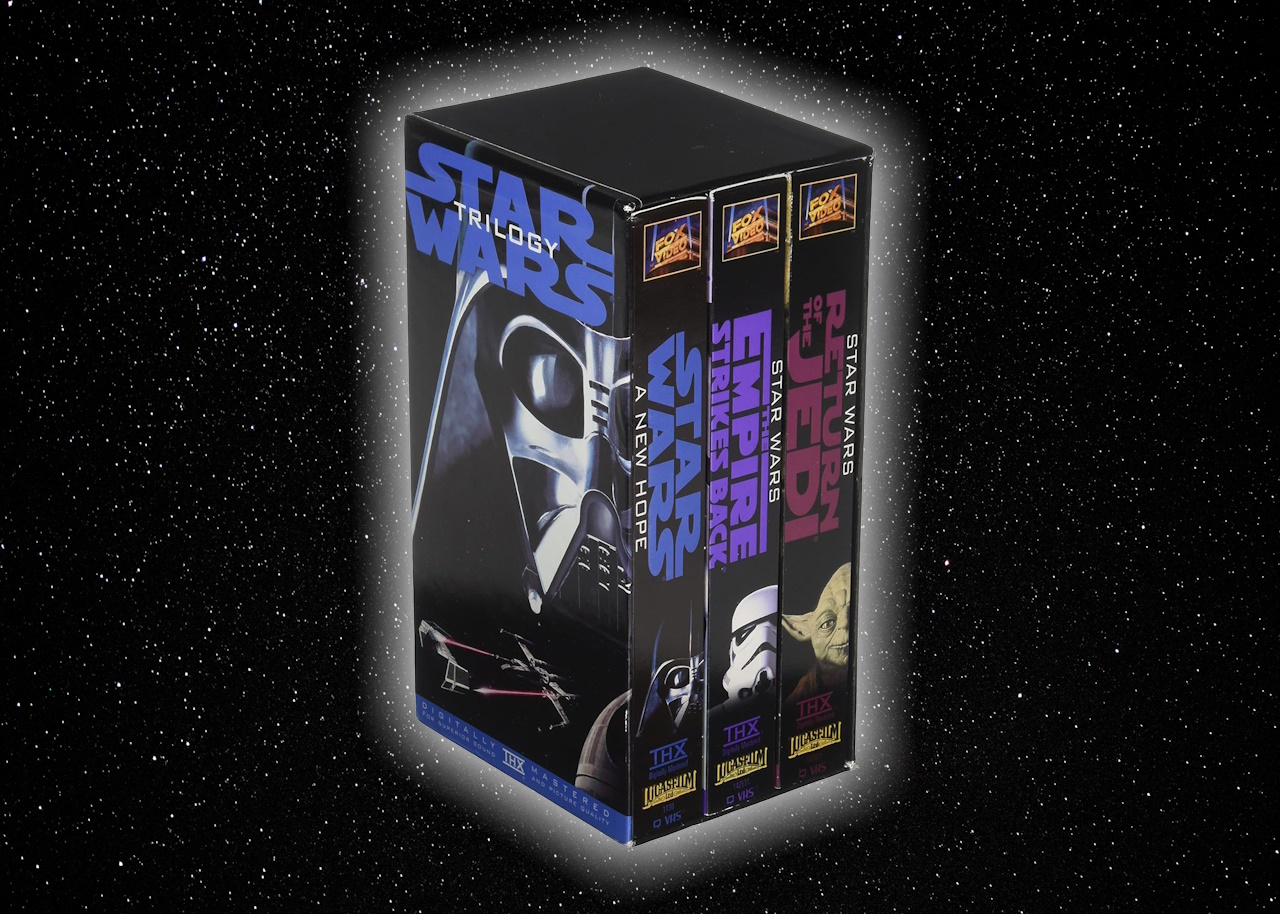
It’s disappointing that Rangers of the New Republic has been axed

Spoiler Warning: There are minor spoilers ahead for The Mandalorian and the Star Wars sequel trilogy.

I’ve made no secret here on the website over the past couple of years that I’m not exactly thrilled with the direction of the Star Wars franchise. In the aftermath of the total narrative failure of The Rise of Skywalker, Lucasfilm has doubled down hard on overplaying the nostalgia card in practically all of its upcoming projects.

There’s some kind of series or miniseries focusing on R2D2 and C-3PO in development. There’s a prequel to Rogue One focusing on Cassian Andor. There’s Obi-Wan Kenobi, which will bring back the classic character to look at his life in between the prequels and the original films. There’s The Book of Boba Fett, in which Boba Fett is inexplicably back from the dead. There’s Ahsoka, a spin-off from The Mandalorian focusing on a character from the animated shows.

Boba Fett is one of several minor characters returning to Star Wars.

All of these projects indicate to me that the higher-ups at Disney and Lucasfilm don’t really know how to handle the Star Wars franchise. They’re intent on looking backwards at Star Wars’ past, seeming to think that what the franchise was is all it can ever be in the future. The result is spin-offs from spin-offs, prequels to prequels, unimportant chapters being thrown under the microscope, and characters of decreasing importance thrust into the spotlight.

Though it was purported to be a spin-off from The Mandalorian, one of the few announced projects that seemed to have any semblance of originality was Rangers of the New Republic. The series was to have looked at the New Republic – the galactic government which was created by the Rebel Alliance following the events of Return of the Jedi – in far more detail than ever before. However, Rangers of the New Republic has now been cancelled.

Logo for Rangers of the New Republic.

The New Republic hasn’t been explored in much detail in Star Wars’ main canon, instead being relegated to a background role in both The Mandalorian and the sequel trilogy. In The Force Awakens, we see Starkiller Base deployed against the New Republic’s capital system, destroying its government institutions and much of its military. By the time of The Last Jedi, the First Order is said to be in control of much of the galaxy, and the New Republic isn’t mentioned thereafter.

The Mandalorian showed us a glimpse of the New Republic, including how it tries to police outlying star systems and enforce its laws – and how it’s relatively ineffective at doing so. There was potential to expand on this depiction, showing both the governmental side of the New Republic, hampered by legislative inefficiencies, as well as the actual Rangers themselves.

A New Republic pilot seen in The Mandalorian.

A lot of Star Wars projects currently in production look at morally ambiguous characters. The Mandalorian focuses on a bounty hunter – someone who primarily operates outside of the law, albeit that he has a heart of gold underneath his armour. The Book of Boba Fett will focus on another Mandalorian bounty hunter, and if it stays true to its premise will show us Star Wars’ seedy underworld in more detail.

Andor will follow Cassian Andor – a character whose moral ambiguity was on full display in Rogue One, and who will do anything to advance the Rebels’ cause. Ahsoka is going to follow the titular Ahsoka Tano, an ex-Jedi who appears to be off doing her own thing rather than helping Luke Skywalker and the Rebels. The only series following an out-and-out hero – or one of the unambiguously “good guys” – is Obi-Wan Kenobi.

Cassian Andor will be the focus of a new Disney+ series.

Rangers of the New Republic had the potential to show us a different side of Star Wars – arguably one closer thematically to the original films, yet still distinct and independent of them. While other shows would look at the underworld of the galaxy, at criminals, or at spies who’ll do anything for their cause, Rangers of the New Republic could’ve been a breath of fresh air. The series could’ve presented an optimistic cast of characters who were genuinely trying to help the new government succeed.

Characters who are too pure and excessively virtuous can be boring, and that would’ve been a pitfall that Rangers of the New Republic would’ve needed to avoid. But had the show managed to walk that line, we might’ve seen something a bit different from Star Wars’ other current and upcoming offerings: a show that would’ve happily looked at the “good guys” as they tried to shore up the New Republic and tackled everything from criminals to ex-Imperial officers.

Emblem of the New Republic.

In part, the decision to cancel Rangers of the New Republic is probably tied to the situation with Cara Dune actress Gina Carano. Though it was never officially stated that the show would star Carano, many fans and commentators assumed that she would have a significant role to play, so following her dismissal from Lucasfilm in the aftermath of some very stupid social media posts, perhaps the show was always living on borrowed time.

We won’t get into the Gina Carano situation here. Suffice to say that anyone with any kind of profile needs to be incredibly careful what they say on social media, and she wasn’t. She upset a lot of people, doubled down on some of her controversial remarks, and that ended up costing her a potential recurring gig with Lucasfilm. She only has herself to blame.

Gina Carano as Cara Dune in The Mandalorian Season 1.

I would argue, though, that Rangers of the New Republic didn’t need to be all about Cara Dune. We met a couple of New Republic characters in The Mandalorian, and they could’ve served as a gateway into the show, keeping it connected to The Mandalorian and potentially building up to a crossover event with one or more of the other shows that were in production at the same time.

There was potential in Rangers of the New Republic. Not only was it a series that could’ve been something different from the likes of The Mandalorian and The Book of Boba Fett by looking at the post-Return of the Jedi government, but it was also a series that could’ve left familiar characters behind to strike out on its own. All of the other Star Wars projects currently in production have this kind of backwards-looking, nostalgia-heavy focus, and Rangers of the New Republic was one of the few offerings that had the potential to be something a little different. As Star Wars continues to double down on nostalgic throwbacks, I fear we’ll come to regret the cancellation of Rangers of the New Republic.

The Star Wars franchise – including all films and series mentioned above – is the copyright of Lucasfilm and The Walt Disney Company. This article contains the thoughts and opinions of one person only and is not intended to cause any offence.

Five amazing Nintendo 64 games

Spoiler Warning: Minor spoilers are present for some of the entries on this list.

Nintendo recently launched the so-called Switch online “expansion pack” – representing incredibly poor value, but that’s beside the point. Included with the subscription are a handful of Nintendo 64 titles which the Switch can emulate. It just got me thinking about one of my favourite consoles and some of the amazing games I enjoyed back in the late 1990s and early 2000s.

I upgraded from a Super Nintendo (or SNES) to a Nintendo 64 at Christmas 1997, and the console was my primary gaming machine for about three years until I picked up a Dreamcast shortly after the turn of the millennium. Though I had a PC as well at the time, it was underpowered compared to the console and couldn’t come close to matching it. Though we often think of PC gaming in 2021 as being the gold standard that consoles have to try to measure up to, it wasn’t that long ago where even an expensive PC would struggle in gaming performance next to a dedicated games console – and the Nintendo 64/PlayStation generation was certainly part of that era!

A transparent blue Nintendo 64 console – and its controller.

The Nintendo 64 was my first experience with proper 3D graphics. I’d played PC games with 3D environments before, and other games with 3D sprites, but it was only when I sat down to play Super Mario 64 that I got to fully experience a 3D virtual world. It felt like the future back then – and considering that the Nintendo 64 pioneered a number of features that are still part of gaming today, I guess I was right about that!

Aesthetically, I love the design of the Nintendo 64 and its controller. The chunky three-armed device was intimidating at first; “I don’t have three hands,” I remember thinking, “so how am I supposed to hold it?!” But having an analogue stick was a neat feature, one that felt like a massive upgrade from the wobbly joysticks or D-pads of past consoles I’d been able to play on. Navigating the new 3D environments needed a controller suited to that purpose, and the Nintendo 64’s analogue stick delivered – even if it seems a little primitive when compared to the controllers we enjoy today! Having a “trigger” also made shooting games feel all the more immersive.

A Nintendo 64 controller. What a weird design!

The Nintendo 64 had a stellar lineup of games – several of which I only got to play years later as they were unaffordable to me when I was younger and broke! Now I’m old and still broke – but at least there’s emulation! Actually, the Nintendo 64 was the console that got me into the emulation scene back in the early 2000s. After upgrading to a more powerful PC I found that I could emulate the console quite well, and had a blast re-playing a few favourites as well as playing titles I missed out on first time around. I can’t condone emulation – it’s a legal minefield and you should be careful – but if you have a decent computer and know what you’re doing you’ll have a far better (and cheaper) time than you would if you paid for a Switch online “expansion pack!”

Looking back with the benefit of hindsight, I’d say that the games of this era represent a transitional stage for the video games industry as a whole. Most Nintendo 64 titles feel like a half-step between the rather basic, toy-like games of earlier generations and the bigger, more in-depth and cinematic titles that we’d enjoy a few short years later. The move from 2D to 3D didn’t immediately lead to masterpieces like Shenmue or Knights of the Old Republic, but the rapid pace of technological change meant that those kinds of games were finally possible. The Nintendo 64 has some games that tried very hard to tell more adult-oriented stories, and it was around this time that I felt video games as a whole had a heck of a lot of potential to be something more.

This was an era of transition for video games.

So on this occasion – twenty-five years on from the Nintendo 64’s 1996 debut – I thought it would be fun to look at five of my favourite titles. These are just a few of the games that, for me anyway, made the Nintendo 64 great. My usual caveat applies: I’m not saying these five games are “objectively the best” Nintendo 64 games out there. If you hate all of them or don’t see your favourite on the list, that’s okay! There are plenty of Nintendo 64 games out there, and we all have our personal favourites. These are just a few of mine!

With that out of the way, let’s take a look at the list – which is in no particular order.

Number 1: Star Wars: Shadows of the Empire

The Battle of Hoth.

A few years before Knights of the Old Republic would come along and absolutely blow me away, Shadows of the Empire took me on an outstanding Star Wars-themed adventure. A third-person action-adventure game with nary a Jedi nor the Force in sight, players take control of the Han Solo-inspired Dash Rendar for a wild romp across the galaxy – set during and just after the events of The Empire Strikes Back!

What I adored about Shadows of the Empire was the diversity of gameplay on display. Not only could Dash run and gun in a 3D world that looked so much better and felt way more immersive than any 2D Star Wars game I’d played previously, but he could also pilot several different vehicles – a Snowspeeder taking on AT-AT walkers on Hoth, his own spaceship, swoop bikes, and more.

Shadows of the Empire came at a time when the old Expanded Universe was really ramping up, and along with a novel and comic was technically considered canon until Disney expunged the Expanded Universe in 2013. However, being an official project with a high degree of involvement from Lucasfilm meant that the game slotted in well to the Star Wars universe, feeling genuinely connected to the events and characters of the films.

Number 2: Super Mario 64

Wheeeeeee!

Of course we’re going to talk about Super Mario 64! This was the only Nintendo 64 game I had at first, and I played it for hours and hours! Though I’d played some games on the PC – like Doom – which used pseudo-3D environments, and others which used 3D sprites for 2D gameplay, Super Mario 64 was the first truly 3D game that I played. The difference in how immersive and realistic the game felt, and how it conveyed a sense of scale that really made me feel part of its world are feelings I have never forgotten even a quarter of a century later!

Booting up Super Mario 64 for the first time was a wild experience, one that has stuck with me ever since. But the game itself was fantastic, too, with Mario on a quest to save Princess Peach by battling Bowser and his minions inside painting worlds. The unique premise allowed Super Mario 64 to show off a range of different levels and different environments, and new gameplay mechanics – some of which were inspired by past Super Mario titles – allowed a far greater degree of environmental interaction than ever before.

One level in Super Mario 64 that stands out is Wet-Dry World. Players could change the amount of water in the level, raising and lowering it both by jumping into the painting at different heights and within the level itself by touching special items. The idea that Mario could change the environment in real-time, and then use that gameplay mechanic to solve puzzles, was absolutely genius! And the game is full of other examples of this kind of radical, utterly transformative gameplay.

Number 3: GoldenEye 007

Pew! Pew!

GoldenEye took the first-person shooter concept and honed it, making excellent use of the Nintendo 64’s control pad and analogue stick. Without GoldenEye it’s hard to see how other first-person shooters on console – like the Halo series, which arrived a few years later – would have been possible. It was a pioneering title, and surely one of the best film adaptations of all time!

The Nintendo 64 upped the number of control pads and thus the number of players from two on the SNES to four – meaning four-way deathmatches were possible! Split-screen was the order of the day, of course – this was long before online gaming was commonplace – and among my friend group four-player matches were relatively rare. But when we could get a few friends together, playing GoldenEye was a blast! It had fun, fast-paced shooting, well-designed levels with plenty of variety – from maze-like corridors and small rooms to expansive larger environments – and 3D graphics that put you right in the action.

GoldenEye didn’t create the first-person shooter genre. But it took full advantage of the Nintendo 64’s impressive hardware to feel streets ahead of earlier titles – and even many games that were released around the same time. Fully 3D environments and characters instead of 2D “billboard” sprites and a plot that vaguely followed the events of the film made for a fantastic all-around title. Rare would further hone many of the techniques on display when they created Perfect Dark a few years later.

Number 4: F-Zero X

Try not to crash!

You might’ve expected me to put the venerable Mario Kart 64 on this list – especially considering how many times I’ve talked about that game here on the website! But F-Zero X doesn’t get the love it deserves, so on this occasion we can put Mario Kart 64 to one side and look at a different Nintendo 64 racer. F-Zero X is a futuristic-themed racing game, with players in spaceship-like hovercars – and they go really fast!

F-Zero X is an incredibly fast-paced racing game, meaning you often need lightning-fast reflexes! It was a blast, and the unique futuristic aesthetic set it apart from practically every other racing game on the market at the time.

Maybe F-Zero X didn’t have the best graphics. It certainly didn’t push the Nintendo 64 to its 3D limits in the way some other titles did. But despite that, it was an incredibly fun racing game, and were it not for Mario Kart 64 I might be tempted to call it my favourite racer of the era! There’s an odd charm to F-Zero X that I can’t quite put into words; it’s a genuinely different game, and that alone made it a ton of fun.

Number 5: Jet Force Gemini

Rescuing a Tribal in Jet Force Gemini!

Had it been made today, Jet Force Gemini would surely have kicked off a whole franchise! As it is, this Rare-developed title remains a one-off, but it’s an incredibly fun and exciting sci-fi adventure. Jet Force Gemini is one game I would absolutely pick to bring back for a full remake, because it seems such a shame to me that it’s all but forgotten, abandoned in the Nintendo 64 era.

An action-adventure title set in a unique sci-fi world, Jet Force Gemini had a fun and engaging story. It also had smooth shooting and a trio of fun main characters who each got a turn in the spotlight. The game had beautifully-designed levels, with some being pretty big and expansive offering different paths to get to the end.

Rescuing the Tribals – cute teddy bear-like critters – was an additional gameplay element that added a lot to each level, though the game’s insistence on finding every single one could feel like padding sometimes! But the Nintendo 64 era saw games trying out new gameplay mechanics, and the idea of having hidden collectibles would be honed and refined in future titles. Overall, Jet Force Gemini was a lot of fun – and I’d love to see its world and characters return one day.

So that’s it! Five amazing Nintendo 64 games.

The familiar Nintendo 64 logo.

There were loads more titles I could’ve chosen, so stay tuned! This is a topic I may revisit in future. The Nintendo 64 was a great console with some fantastic games. Though it does represent a half-step between older, more basic games and the immersive, cinematic experiences that were soon to come, it’s also a console that pioneered or refined many of the concepts upon which newer games – and even games today – rely.

The Nintendo 64 also had plenty of amazing games in its own right, and while it is an interesting machine from an interesting era in video game history, it’s also a console that I had a lot of fun with in the late 1990s. Back then it didn’t feel like a half-step – it felt cutting-edge, bringing 3D worlds to life and showing off far more realistic graphics than I ever thought possible! It isn’t just the nostalgia talking – the Nintendo 64 was a fantastic machine.

All titles mentioned above are the copyright of Nintendo and/or their respective developer, publisher, owner, etc. Some images courtesy of IGDB. This article contains the thoughts and opinions of one person only and is not intended to cause any offence.
Lego Star Wars Terrifying Tales – a review

Spoiler Warning: There are spoilers ahead for Lego Star Wars Terrifying Tales. Spoilers are also present for other iterations of the Star Wars franchise, including the following films and shows: The Mandalorian Season 2, Solo: A Star Wars Story, and The Rise of Skywalker.

It’s Spooktober – the spookiest month of the year! To celebrate Halloween at the end of the month, Disney and Lucasfilm released Lego Star Wars Terrifying Tales on Disney+, a Star Wars-themed kid-friendly Halloween special. Last year’s The Lego Star Wars Holiday Special – which I didn’t get around to reviewing in time for Christmas – was a ton of fun, so I had high hopes going into Terrifying Tales. Stay tuned for a review of The Lego Star Wars Holiday Special in late November or December, by the way, as I’m adamant that I’ll finally review it this year!

Terrifying Tales was incredibly funny, at least equalling last year’s Lego Star Wars offering. It was the kind of silly, irreverent style of humour that Lego Star Wars is known for, and also drew on a number of different classic horror tropes. I had a wonderful time with the forty-five minute special, and if I had one criticism it would be that I wish we got these Lego Star Wars special episodes more often!

Poe Dameron and BB-8 with new character Dean.

I’m not the world’s biggest fan of horror. Some horror stories can be a mental health trigger for me, so I tend to avoid the genre as a whole unless I’m really sure that I’m in the right frame of mind. But Terrifying Tales was exactly the kind of child-friendly light horror that appeals to me. The animated special made use of a horror-themed aesthetic and horror-based stories, and played up some familiar tropes, but it did so without being frightening. If you’re concerned about younger kids or anyone of an especially sensitive disposition, I didn’t see anything in Terrifying Tales that I feel would be particularly scary or upsetting.

Lego Star Wars has been something I’ve adored since the release of the first video games in the mid/late 2000s; 2007’s Lego Star Wars The Complete Saga is undoubtedly one of the best video games I played during the Xbox 360 era. I’ve also been eagerly awaiting the newest Lego Star Wars video game which is due for release in the spring. Watch this space again, because I hope to review the game when it’s released!

I’m already looking forward to the next Lego Star Wars project!

Last year’s Lego Star Wars Holiday Special managed to get a great balance of prequel era, original era, and sequel era references and stories, and I was incredibly pleased to see Terrifying Tales managed to do the same. At first I was worried that the special was going to lean very heavily on the sequels, with Poe Dameron as its primary character. However, while the frame narrative focused on Poe, there were plenty of references and callbacks even then to past iterations of Star Wars. Overall, Terrifying Tales managed to get the right mix of characters and storylines from the cinematic franchise’s three main eras.

The frame narrative was typical Lego Star Wars silliness, with a Hutt having taken over Darth Vader’s abandoned Mustafar castle. Planning to turn the Sith fortress into a Las Vegas-style hotel, the setting was a great mix of creepy and silly – there was more than enough light-heartedness in the modifications made to the intimidating castle to tone it down and take the edge off the spookiness. At the same time, the castle was a great setting. It had a fairly typical “haunted castle” vibe, complete with darkened hallways and imposing architecture. Even in the lobby, which was brimming with Vegas-inspired (or perhaps Disneyland-inspired) kitsch and souvenir shops, there was still a creepy background note, as though the place wasn’t entirely safe.

Darth Vader’s castle – now with gift shop!

As the characters ventured further into Vader’s castle, however, the setting took on a different feel. It became less of a haunted castle and more akin to an ancient temple – or a pyramid from a classic mummy film. Deep within the bowels of Vader’s abandoned fortress, hidden rooms with unclaimed – yet cursed – treasures and cleverly-operated switches and traps awaited Poe, BB-8, and the rest of the cast. The castle thus served a dual purpose, and to cram both settings into one locale in a way that felt natural and that didn’t feel rushed shows some pretty great writing.

The only thing that the frame narrative perhaps lacked were more recognisable characters. I’ve argued on a number of occasions that the Star Wars franchise is overly-reliant on characters from its past and that I wanted to see more original creations – but Terrifying Tales isn’t really where I expected to meet a whole bunch of newbies! To see Poe without Rey or Finn was just odd, and as much fun as characters like Vaneé and Graballa the Hutt were, the frame narrative could’ve found a way to include more familiar characters. Lego Star Wars is the one place where bringing back classic characters makes sense – and it’s also where logic and internal consistency matter far less, so there’s plenty of ways to do so! It wasn’t a fatal flaw by any means, and I enjoyed Poe’s mentoring of young Dean in particular. But it was certainly noteworthy that this part of the story really only had Poe and BB-8 in terms of familiar faces.

Poe was the main character in Terrifying Tales.

Graballa the Hutt gave me almost a Ferengi vibe with his unchecked capitalistic greed, and though we didn’t get much time for any of these characters to be truly fleshed-out, there was enough of a moral shadiness to him that left me in no doubt the kind of character this was. Graballa’s the kind of money-driven dodgy boss who’ll cut any corner to save a buck and would’ve sold out Poe and Dean and everyone else for his own safety. He made a fun addition to the group as comic relief, but at the same time he was a constant cause for concern – he’d trade everyone’s lives for a shot at his own survival, and in horror stories those kinds of characters can cause a lot of trouble!

Vaneé is a character who first appeared in Rogue One, and whose role was expanded upon in the novelisation of the film. He’s also made appearances in a number of Star Wars comics – none of which I’m familiar with. For all intents and purposes, though, the character we met in Terrifying Tales was a blank slate upon which the animated special could craft a suitably over-the-top villain!

This character from Rogue One, seen bowing to Darth Vader and informing him of Krennic’s arrival, is Vaneé.

Vaneé definitely had a creepiness to him during the story. He set up the three vignettes in a suitably spooky manner, and the voice performance from Tony Hale was an exquisite parody of these kinds of characters from classic horror films and shows like The Twilight Zone. The downtrodden, overlooked butler or apprentice with an evil streak is an archetype of the genre, and Vaneé slotted into that role perfectly in Terrifying Tales.

At the climax of the story, after we’d been treated to the three vignettes, Vaneé made his grab for power via a Sith artefact that looked an awful lot like the wayfinder from The Rise of Skywalker. From that moment on he was no longer a creepy character but a completely over-the-top pantomime villain – and I loved that transformation! In a story like Terrifying Tales, with all of the silliness and light-heartedness of the Lego Star Wars brand, a villain who goes completely hell-for-leather into wanting to rule the galaxy was pitch-perfect.

The villainous Vaneé!

But we’re racing ahead of ourselves! Before we get to Vaneé’s endgame and thus the end of Terrifying Tales we first have to look at… well, the titular terrifying tales themselves!

The first of the three was titled The Lost Boy, and focused on Ben Solo and the Knights of Ren some time prior to The Force Awakens. And it was surprisingly fun! The Knights of Ren were presented as basically a motorcycle gang, wreaking havoc on a village or community somewhere in the vicinity of Luke’s new Jedi Temple. The idea that the Knights of Ren already existed before Ben Solo became Kylo Ren is actually an interesting one, and the cameo from Christian Slater as the leader of the gang was neat as well.

The Lost Boy lasted six minutes, yet managed to contain more backstory for Kylo Ren than the entire sequel trilogy! And no, this isn’t going to turn into another rant about The Rise of Skywalker, but I really felt that the way we saw Ben Solo presented in this short story was far better and more sympathetic than we ever saw in the live-action films. We saw his bad attitude as a student, his arrogance and desire to learn the Force more quickly, and these things informed his fall as the story ran on. Feeling constrained and restricted by his uncle, he was tempted by the Knights of Ren and their charismatic leader, and that set him on a dark path.

The Lost Boy gave us Kylo Ren’s backstory that was missing from the sequel trilogy!

Sadly that isn’t canon! But it was surprisingly cathartic, especially after the way The Rise of Skywalker ended, to get some kind of origin story for Ben Solo that we could see for ourselves and not hear second-hand from other characters.

The dream sequence during this short story was fantastic. It was incredibly well-animated, and had a very trippy presentation that really did feel like we were following Ben Solo into a nightmare. The way Ben was haunted by a face seeming to come out of the ceiling, then was transported into a creepy dream-world was incredibly well-done, and by far the highlight of this part of the story. As the leader of the Knights of Ren appeared to Ben in his dreams I got a Nightmare on Elm Street vibe – as if something deadly was about to happen.

The leader of the Knights of Ren.

Though this was an “alternative” take on Kylo Ren’s creation and Ben Solo’s fall, I really liked it. There were some great moments of humour, particularly Ben commenting on Luke training for “like twenty minutes” on Dagobah – a reference to The Empire Strikes Back and how Jedi training seems to progress very differently for Luke compared to other characters! But it was also a story of teen angst, rebellion, and the fall of a character to the Dark Side. Because we didn’t get to see Ben’s fall in canon, I found it particularly interesting.

The second vignette brought us a battle between General Grievous and Darth Maul. Terrifying Tales called out how patently ridiculous it was for Darth Maul to have been revived – finally! The Star Wars franchise apparently loves to bring back characters who were clearly and unequivocally dead: Palpatine in The Rise of Skywalker, Boba Fett in The Mandalorian, and of course Darth Maul in The Clone Wars television series and Solo. But the fact that such “back from the dead” moments are ridiculous needed to be called out, and it was done so here in incredibly fun fashion!

Darth Maul’s return from being dead was always ridiculous… and Terrifying Tales pointed that out!

Maybe you’ve always wondered who would win in a fight between Grievous and Maul. I hadn’t, but their duel was still action-packed and fun to watch. This was perhaps the least “terrifying” of the three stories, by which I mean it had the least focus on any horror trope or element. The cursed lightsaber was an interesting macguffin, but I didn’t really feel that it had much of an impact on either mechanical monstrosity as they fought over it. If anything, it had a similar effect to the Ring in The Lord of the Rings, giving both characters a Gollum-like craving.

The real standout star of The Duelling Monstrosities, though, was Palpatine. This version of Palpatine as a nonchalant, almost casual manager of his Empire is never not funny! If you’re familiar with the way Palpatine was parodied in the likes of Robot Chicken and the Family Guy Star Wars specials, this depiction is comparable. If not, go and watch the Robot Chicken Star Wars specials at the very least, because they’re hilarious!

Palpatine was hilarious in this vignette.

Palpatine carried this segment and provided much of its comedy. He was hilarious as he pitted Maul and Grievous against one another – accidentally, of course! And then betrayed the victor to claim his prize of the broken cursed lightsaber. We never did find out why he wanted it, but it didn’t matter!

The third vignette was inspired by the 1902 short story The Monkey’s Paw, and there were elements of the 1960 Twilight Zone episode Man in the Bottle too – itself a loose adaptation of that short story. It was by far the creepiest short story in terms of its setup and premise, and Vaneé gave his best Twilight Zone-inspired speech to tee up the tale.

The Twilight Zone-inspired title card for The Wookie’s Paw.

Luke Skywalker and Darth Vader were the stars this time around, with Luke wishing upon a Wookie’s paw to grant wishes for himself. In this alternate version of A New Hope, Luke becomes an Imperial pilot and Darth Vader’s Dark Side protégé. If you’ve ever wondered what might’ve happened had Luke been trained by Vader, The Wookie’s Paw gives us a glimpse into that alternate reality!

In true Monkey’s Paw fashion, though, everything is not what it seems. Luke’s wishes come with a price – and after using the cursed Wookie’s paw to rise through the ranks and become a pilot and Sith apprentice, Luke goes too far. By wishing for fame he actually gets notoriety, accidentally blowing up the Death Star while trying to defend it from a Rebel attack. It was actually pretty funny to see him make such a catastrophic mistake!

Luke Skywalker and Darth Vader.

The interplay between Luke Skywalker and Darth Vader was surprisingly cute in The Wookie’s Paw. Though both remained blissfully unaware of their familial connection, Vader took on a similar mentor/fatherly role to Luke as Obi-Wan had in A New Hope, and seeing Luke go through a Dark Side version of some classic training scenes – from the training droid to carrying Vader on his back – was both sweet and funny at the same time.

If you’ll forgive a short detour, what I liked about this story was that the cursed Wookie’s paw didn’t actually change the outcome of A New Hope. Princess Leia stepped up to lead the assault on the Death Star in Luke’s absence, aided by Obi-Wan Kenobi, who survived in this alternate timeline. Luke still fired the torpedoes that destroyed the battlestation, even if he didn’t mean to. The message, aside from “be careful what you wish for,” is one of fate and destiny. Even if Luke Skywalker were removed from the equation – or fighting for the other side – the Rebellion still prevailed.

Be careful what you wish for, Luke!

So we come to the finale! Once the three vignettes were over and Poe had been led deep into the heart of Darth Vader’s fortress, Vaneé revealed his ultimate plan. Using Dean to open the Sith holocron, he used it to seize the power of the Dark Side. Cloaking himself in armour he resembled a Sith monster, and he used his newfound power to turn an army of zombified battle droids on Poe, Dean, and Graballa.

This was perhaps the most intimidating battle droids have ever felt in Star Wars! From their first appearance in The Phantom Menace all the way through the prequels battle droids were presented as cheap cannon fodder and even comic relief to be laughed at. Turning them into zombies with glowing red eyes, and pitting a small band of heroes against them and their master, was an interesting and surprisingly fun turn. One of the battle droids even got a moment inspired by classic film The Shining, which was absolutely hilarious!

Zombified battle droids!

After a conversation between Poe and the charming Dean about how fear is natural and something everyone experiences, the duo were able to save the day and defeat Vaneé. There was a neat battle between Poe and Vaneé that showed off Lego versions of the AT-ST and AT-AT walkers, before Vaneé was finally thrown into Mustafar’s lava just like his master before him! It was a tense yet fun battle, and giving Dean the opportunity to save the day was perfectly in line with the kind of story that Terrifying Tales aimed to be.

I had fun with Terrifying Tales. It was a cute Lego Star Wars parody that delivered everything I wanted and expected, and even managed to throw in a few neat surprises and things I didn’t even know I needed to see! The animation work was fantastic, a perfect blend between computer-animated Star Wars locales and a distinctive Lego aesthetic for the characters and vehicles. A project like this could’ve come across as an extra-long toy commercial, but I didn’t get that sense at all. It was a fun Star Wars-themed Halloween romp.

Terrifying Tales was a great way to kick off the spookiest season of the year for me! There’s only a little over three weeks left until Halloween, and I have a few more spooky ideas up my sleeve before the month is over, so I hope you’ll come back for some of those! Happy Spooktober!

Lego Star Wars Terrifying Tales is available to stream now on Disney+. The Star Wars franchise – including Lego Star Wars Terrifying Tales and all other properties mentioned above – is the copyright of Lucasfilm and The Walt Disney Company. This article contains the thoughts and opinions of one person only and is not intended to cause any offence.

The Book of Boba Fett: Thoughts, hopes, and expectations

Spoiler Warning: There are spoilers ahead for the Star Wars franchise, including The Mandalorian Seasons 1-2 and Return of the Jedi.

“Mixed feelings” might be the best phrase to describe my attitude toward the upcoming Disney+ Star Wars series The Book of Boba Fett. I have no doubt that the series will do a lot of things well, from visual effects to exciting action sequences. But if you recall my criticisms from 2020 when it was first rumoured that Boba Fett might be included in Season 2 of The Mandalorian, the bare premise of the series is enough to leave me underwhelmed.

Let’s be blunt for a moment. Boba Fett was a dull character whose entire popularity in the early 1980s came from his unique-looking armour. This led to sales of action figures, models, and dolls – and an oversized, undue gravitas given to a minor, one-dimensional foil for Han Solo. Boba Fett does have a unique, cool look, I won’t deny that. But his role in The Empire Strikes Back and Return of the Jedi was minor, and his death in the latter film was a fittingly unspectacular end for an unspectacular character.

Boba Fett’s popularity stems from toys and action figures. By the way, does anyone else really dislike Pop Vinyl/Funko Pop? I just can’t get on board with the design of practically any of their figures…

However, Boba Fett’s popularity endured over the years, helped in no small part by his character being fleshed out in a fan-fictiony way by writers of the old Expanded Universe books and comics. So by the time of the prequels, George Lucas and others involved in the production of those films clearly felt an obligation to include backstory for him as well.

I don’t hate Boba Fett, but when I watched the Star Wars trilogy for the first time I just didn’t get the hype. Why was this character so remarkable considering he did one thing – captured Han Solo – then died in a pretty stupid way when his jetpack misfired? And he didn’t even capture Han Solo himself, he had to enlist the help of Darth Vader and a whole legion of Stormtroopers. In short: cool-looking armour, but that’s about as much as I can say about Boba Fett in his original incarnation.

Boba Fett’s first appearance in The Empire Strikes Back.

However, The Book of Boba Fett isn’t following the character as he appeared in the original films. As I noted in my review of Season 2 of The Mandalorian, the character introduced to us as “Boba Fett” feels a long, long way removed from the bounty hunter we met in The Empire Strikes Back. His entire demeanour was so radically different that I said in my review that the two characters feel entirely separate. The plot of The Mandalorian Season 2 wouldn’t have been any different had that character been given a different name and Boba Fett never been mentioned.

One thing I will credit The Mandalorian’s Boba Fett with is that I felt the character got a more nuanced portrayal than he ever did in the films. There was a sense that this man was a weary veteran, ready to hang up the armour and live a quiet life somewhere. He’d fought all the battles he wanted to fight and was ready to try something new – at least until we saw him in the final moments of the season seemingly intent on seizing control of Tatooine’s underworld.

Boba Fett as he initially appeared in The Mandalorian Season 2.

Just like The Rise of Skywalker had done before it with Palpatine, The Mandalorian Season 2 completely ignored what has to be the most important point about Boba Fett: how on earth is he still alive? If the new series can find a way to pull an answer to that question out of its backside that even makes a degree of sense, it’ll have made progress. And I think that’s my biggest single request when it comes to the storyline of The Book of Boba Fett: find some way to give us a plausible explanation for the main character’s survival.

Remember that Boba Fett fell into the gaping mouth of a giant monster in the Tatooine desert. The Sarlaac monster in the Pit of Carkoon was presented as a truly awful torturous death, supposedly taking a long time in its inescapable digestive tract. Jabba the Hutt was said to favour this method of execution, and planned to execute Luke Skywalker and Han Solo there in Return of the Jedi. Boba Fett fell into the monster’s mouth, and that seemed to be a very definitive end for him!

How did Boba Fett survive? Finding a plausible answer is key to the show’s success.

One aspect of the story of The Mandalorian Season 2 has potentially complicated any story of Boba’s escape. The fact that his armour had been lost on Tatooine, recovered by Jawas and later sold to Cobb Vanth clearly indicates that Boba didn’t simply blast his way out of the creature as soon as the battle on Jabba’s barge was over. Because he fell into the pit wearing his armour – and thus carrying at least some of his weapons – the show might’ve been able to argue that he didn’t die and simply shot his way out. But if so, he’d have kept his armour.

So the question of his survival remains, and in the aftermath of just how poorly the awful line “somehow Palpatine returned” went down in The Rise of Skywalker, I can’t imagine that The Book of Boba Fett would try to ignore this point. Even if all we get are a few lines of dialogue saying that he climbed out and was saved by roaming scavengers or Chewbacca’s great-aunt, I think we need some kind of closure before we can take seriously the fact that Boba Fett is back.

Boba Fett, moments before dying like a chump.

Then we come to the premise of the series itself, and this is perhaps what I’m most interested in. One of my biggest disappointments when it came to The Mandalorian was that the show’s basic premise remains unfulfilled despite sounding incredibly promising. I wanted to see “the adventures of a gunslinger away from the reach of the New Republic,” but instead the show brought Baby Yoda, the Force, the Empire, and even Luke Skywalker into play in a story that increasingly felt like Return of the Jedi II as Season 2 wore on.

The Book of Boba Fett promises us the following: “Legendary bounty hunter Boba Fett and mercenary Fennec Shand navigating the galaxy’s underworld when they return to the sands of Tatooine to stake their claim on the territory once ruled by Jabba the Hutt and his crime syndicate.”

Though I stand by my criticisms of the Star Wars franchise making desperate nostalgia plays for characters and settings from the original films, that premise doesn’t sound half bad. Though I don’t want to get my hopes up too high after being burned by The Mandalorian, maybe we can finally get a look at the Star Wars galaxy away from the Force and the Skywalker family.

Hopefully The Book of Boba Fett won’t be repeating scenes like this one…

Boba’s survival after falling into the Pit of Carkoon risks coming across as cheap, fan-servicey, and just plain dumb. But if the show can find some way to navigate that sizeable pitfall (pun intended), then Boba Fett could actually prove to be an interesting point-of-view character for exploring the darker side of the Star Wars galaxy.

As an ex-bounty hunter, Boba Fett used to inhabit this seedy underworld that the show’s official description is teasing us with. But as someone who’s been out of action for almost a decade at this point, things have moved on in his absence. The biggest change, most likely, is the fall of the Empire. Without the Empire to crack down on criminals, and with the New Republic taking a different approach, it’s possible that the criminal underworld has grown since Return of the Jedi.

What will the criminal underworld be like after the fall of the Empire?

Boba Fett will have to navigate a changed world, and that offers up a lot of potential for exposition and explanation to be dropped into the series in a way that makes sense. There’s a high probability of learning more about the Star Wars galaxy – and particularly its criminal side – than we ever have before. That idea is definitely an interesting one, and though I wouldn’t personally have chosen to bring Boba Fett back from the dead in order to tell this kind of story, as a concept it’s hard to fault.

As a character, Boba Fett is perhaps open to further exploration. As I noted above, in his original appearances he was fairly one-dimensional, and his role in The Mandalorian Season 2 came with a degree of mystery to it. There’s scope to learn more about Boba Fett the man: who is the person underneath the armour? What drives him? What are his ambitions now that he’s got his armour back and taken over Jabba’s former throne? All of these things could potentially lead to interesting moments of characterisation, and as a concept the idea of an anti-hero or a villain with a heart and understandable motivations can work exceptionally well.

Din Djarin with Boba Fett in The Mandalorian Season 2.

All of this could come to pass if the show stays true to its premise! And this is where my concerns kick in. As Boba Fett’s return proves in and of itself, the Star Wars franchise is completely and utterly dependant on its original films and the characters and concepts that were present there. The Mandalorian brought us Baby Yoda, the Force, Ahsoka, the Empire, and Luke Skywalker in its first two seasons – along with dozens of other throwbacks to Star Wars’ past. Some of these elements came close to working, but overall they drowned out any originality the series could’ve had. I fear that The Book of Boba Fett will meet a similar fate.

There are all manner of ways this could happen. Off the top of my head, here are a few: Boba Fett comes into conflict with Luke Skywalker and his new Jedi Order somehow, perhaps even seeking revenge for his encounter with the Sarlacc. Maybe Han Solo will be a target of Boba Fett’s over the course of the show, again looking for revenge. Some other Jedi could emerge, perhaps a character from the prequels or one of the kids’ shows. Boba Fett could encounter Jedi or Sith artefacts, which would bring the Force into the series. And so on. There are many ways that we could see the show fall back on these nostalgia plays and fail to live up to its potential.

Promotional poster for The Book of Boba Fett.

I’d love for The Book of Boba Fett to have more to offer than nostalgic throwbacks, good visual effects, and well-constructed moments of action and excitement. Whether it will or not… well, the jury’s still out. I’m hopeful, but cautious.

The Book of Boba Fett exists in a strange space for me. I should feel more excitement for what is only the second ever live-action Star Wars television series, especially considering the huge budget afforded to shows made for Disney+ and the platform’s excellent track record with visual effects. Star Wars has literally never looked better in terms of visuals and special effects, and with the franchise taking a different turn to perhaps visit the seedier underworld in depth for the first time, there are things that pique my interest. I’m just having a hard time jumping on the hype train.

Despite that, I will do my utmost to give The Book of Boba Fett a fair shake. It will premiere on the 29th of December – right in the middle of Star Trek: Discovery’s imminent fourth season. I can’t promise I’ll have time to review every individual episode with so much else happening in December, but I’ll certainly share my thoughts on the series at some point, so I hope you’ll stay tuned for that. I’d love to be able to come back after the show’s first season and say that my fears and doubts were unfounded.

The Book of Boba Fett will premiere on Disney+ on the 29th of December 2021. The Star Wars franchise – including The Book of Boba Fett and all other properties mentioned above – is the copyright of Lucasfilm and The Walt Disney Company. This article contains the thoughts and opinions of one person only and is not intended to cause any offence.
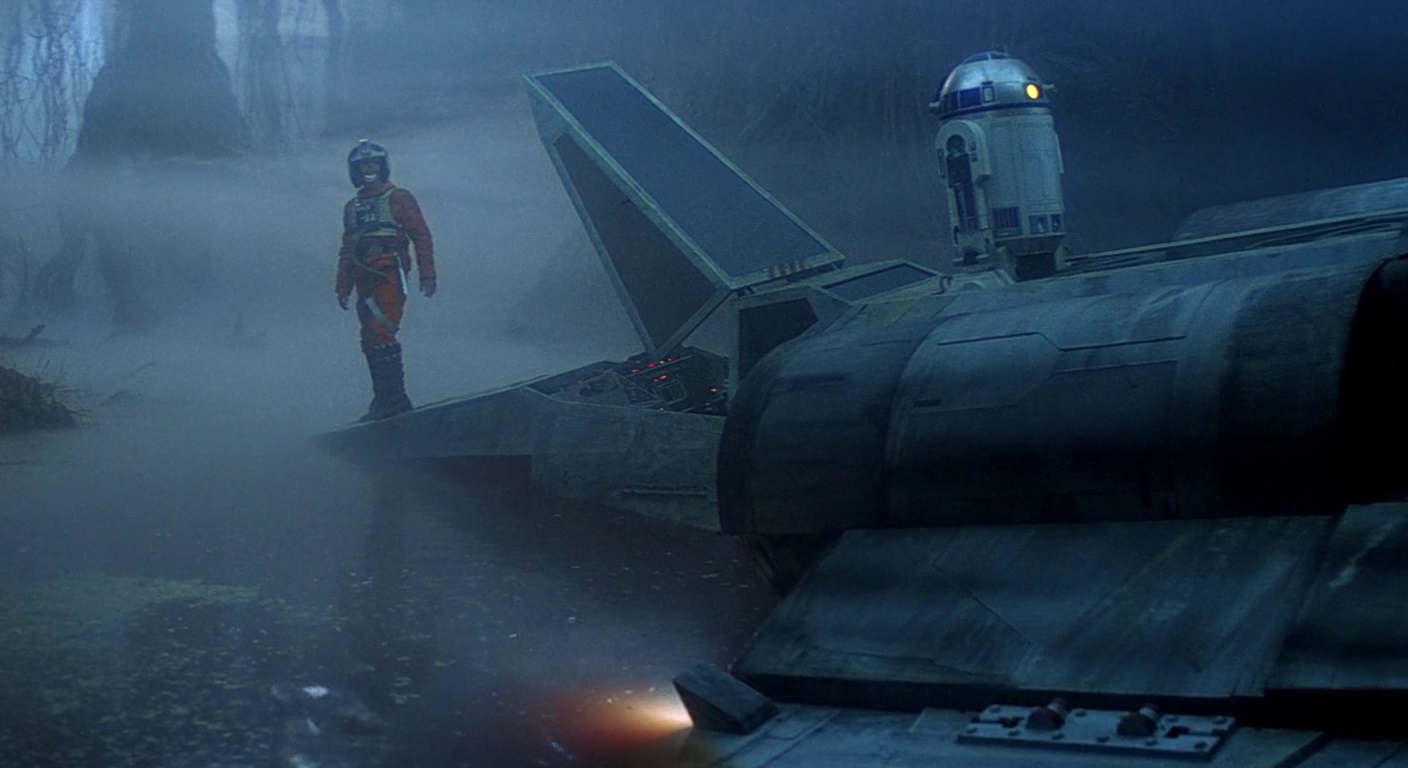
Darth Vader in the Obi-Wan Kenobi series

Spoiler Warning: There are spoilers ahead for the Star Wars franchise, including The Mandalorian Seasons 1-2, Jedi: Fallen Order, and the upcoming Obi-Wan Kenobi series.

We’ve known for a while that the upcoming Obi-Wan Kenobi series will feature Darth Vader – somehow. Hayden Christiansen, who played Anakin Skywalker in the Star Wars prequels, has even signed on to play the role, something which has excited at least some Star Wars fans. Today we’re going to consider what kind of role the Obi-Wan Kenobi series could offer to the franchise’s most iconic villain, and how the show will have to navigate a tricky situation of its own making.

Regular readers will know that I haven’t exactly been wild about many of the recent decisions taken by the Star Wars franchise. The Mandalorian, which seemed to offer such promise when it was announced, very quickly returned to the Force and the Skywalker family, and brought in a number of characters and settings that were lifted directly from the original trilogy. When Lucasfilm announced a slate of upcoming Star Wars projects last December, I felt that the franchise was doubling down on this kind of nostalgia play, unwilling to step out of the shadow of the original films and tell new stories. The inclusion of Darth Vader in the Obi-Wan Kenobi series – and indeed the very existence of the show itself – is a case in point.

Iconic villain Darth Vader is set to return to Star Wars very soon.

Regardless of what I and others may think, this is the direction Lucasfilm and Disney have chosen for the franchise. The most generous thing I could say about it is that, following the controversy generated by the sequel trilogy, they’re retreating to what they consider to be safe, comfortable ground for the foreseeable future. Returning the franchise to characters fans know and (mostly) love may be indicative of a franchise aiming for a grade C – a basic pass – but perhaps after the controversies of recent years, the higher-ups think that will be good enough.

Although the decision to return to classic characters may seem to be the safe path in the aftermath of the sequels, it’s not one that is free from danger. Darth Vader and Obi-Wan Kenobi may indeed prove to be bankable characters – along with the likes of Boba Fett in his upcoming spin-off – but fans won’t forgive Disney and Lucasfilm if the way these characters are used undermines their previously-established arcs.

What role will Vader play in the upcoming series?

When it comes to Darth Vader’s inclusion in the Obi-Wan Kenobi series, to me the single most important thing is that the two characters simply can’t be permitted to meet. A New Hope was their first face-to-face meeting since their duel on Mustafar, and were they to meet in the series it would seriously undermine the power of that moment.

We could talk at length about the failures of the prequel trilogy – and I have in the past – but to me their most egregious fault was the harm done to the character of Darth Vader. In the original films we’d learned all we needed to know about this character – he had once been good, then fell to the dark side, but had enough residual love for his son to be ultimately redeemed in the moments before his death. He was an intimidating villain, but one we could feel a pang of sympathy for. Seeing him as a child and a whiny teenager detracted from that; his background was over-explained.

I would argue that we didn’t need to see Anakin as a child and young man to understand Darth Vader in the original films.

Vader has already been undermined by the prequels, and it’s difficult to see him in the same frightening way as I did on first watching the Star Wars films in the early 1990s. But throwing him into a face-to-face meeting with Obi-Wan years before their iconic duel aboard the Death Star would rob the original film of one of its most significant moments. It would feel like cheap fan-service and accomplish nothing.

There are ways for Darth Vader to play a role in the new show’s story – even a major role – without having him and Obi-Wan meet. The show is set at least a decade after the events of Revenge of the Sith, meaning that Darth Vader’s role as the second-in-command of the Empire is well-established by this point. He’s a senior leader who answers directly to the Emperor with his own dedicated Stormtrooper corps, and has spent much of his time chasing surviving Jedi and enforcing the Emperor’s rule on wayward systems.

More than a decade after the events of Revenge of the Sith, Vader’s role in the Imperial hierarchy should’ve solidified.

We also know that Darth Vader has an intense hatred of the planet Tatooine. Obi-Wan chose the planet for his and Luke’s hiding place specifically for that reason, so Vader shouldn’t set foot on the planet for the entirety of the story. And really, Obi-Wan shouldn’t leave the planet either! It was strongly suggested in Revenge of the Sith and the original trilogy that he and Yoda wouldn’t leave their respective exiles, and Luke Skywalker seemed to have known “Old Ben” for his entire life.

This was something that led me to be sceptical of the Obi-Wan Kenobi series from the outset; how much of an adventure can “Old Ben” have within a few miles of Mos Eisley and his desert hut? I assume, though, that he will ultimately leave the planet at some point – it would be a pretty dull series otherwise!

What did “Old Ben” do in the years prior to A New Hope?

But if a significant portion of the action takes place on or in the vicinity of Tatooine, and Vader won’t set foot on the planet, then we have a pretty good reason for keeping the characters apart and preserving the special moment in A New Hope. But that still raises the question of what kind of role Darth Vader will have in the series.

If I were writing it, I’d use Darth Vader sparingly. He could be the overarching villain, sending out his troops or henchmen on missions for the Empire without ever having to interact with Obi-Wan personally. He might have a minor role in a couple of episodes, or he could appear toward the end of the season, with the revelation being that whoever Obi-Wan has been battling is actually one of Vader’s henchmen. This would still have to be done in a way that kept the knowledge of Obi-Wan’s survival and location from Vader, and that’s a difficult line for the series to walk.

Darth Vader with some of his loyal Stormtroopers in A New Hope.

It isn’t impossible for Darth Vader to be included in a Star Wars story in this fashion. The video game Jedi: Fallen Order did something similar – players spend much of the game facing off against the Second Sister and other forces of the Empire, only for Darth Vader to reveal himself at the story’s climax. In the case of Jedi: Fallen Order there wasn’t a pressing need to keep protagonist Cal Kestis away from Vader in the way there is in the Obi-Wan Kenobi series, but the game was better for having more original characters, at least in my opinion.

Although some prequel fans are undoubtedly looking forward to Vader’s return, I’m more interested to see what original characters the Obi-Wan Kenobi series will introduce us to. Will the titular ex-Jedi be facing off against the forces of the Empire? Presumably the inclusion of Darth Vader means there’ll be some kind of Imperial involvement in the story somehow. But I’m just as interested to see what Obi-Wan might get up to on Tatooine, outside of Vader’s reach.

Darth Vader appeared in the video game Jedi: Fallen Order.

At the end of the day, I wouldn’t have chosen to greenlight a series like this one. And if I were tasked with picking it up after it had already been greenlit, I’d have certainly kept characters like Darth Vader far away from the new show. Even though we’ve spent more time with him than we arguably needed to, Darth Vader can still be used to great effect in Star Wars, and I don’t want to say that there’s no room whatsoever for the franchise’s first and most iconic villain going forward. But the Obi-Wan Kenobi series just feels like a bad fit.

These are two characters who spent a long time apart, totally disconnected from one another for almost two decades prior to their fateful meeting aboard the Death Star. Maybe there’s a way for Obi-Wan to learn that Anakin survived and became Darth Vader – we know he was aware of his former apprentice’s identity by the time of A New Hope. Maybe there’s a way for Vader to be included in some kind of flashback, dream, or vision. But I can’t imagine that the series could get away with having the two face off against one another or have another duel. How would such a meeting end? If Vader so much as knows that Obi-Wan is alive – let alone meeting or fighting him – it undermines a key part of the original film.

The Obi-Wan Kenobi series will have to tread very carefully so as not to further undermine Darth Vader’s character and the story of the original films.

Having made this announcement and gone to a lot of trouble to include Darth Vader in the conversation surrounding the Obi-Wan Kenobi series, some fans will feel let down if Vader’s role is reduced to some kind of dream or flashback. I still think he could be included as some kind of overall villain, provided it was handled in such a way as not to overwrite anything we learned in A New Hope. But to me, this is a pretty egregious example of Star Wars skirting too close to canon for comfort. It’s not as bad as bringing Palpatine or Boba Fett back from the dead with no explanation, but it’s straying into that territory.

I’d love to say I’m excited for the Obi-Wan Kenobi series… or any upcoming Star Wars project, for that matter. At best, though, what I can muster is cautious interest. I’m curious to see what Obi-Wan got up to during the years we all assumed he was living in quiet seclusion on Tatooine. I just hope that the story doesn’t go off the rails. The decision to bring Darth Vader into the story has me more nervous than excited, and if I’d been in the room I’d have argued very strongly against it.

The Obi-Wan Kenobi series will be broadcast on Disney+ in 2022 or 2023. The Star Wars franchise – including all properties mentioned above – is the copyright of Lucasfilm and The Walt Disney Company. This article contains the thoughts and opinions of one person only and is not intended to cause any offence.
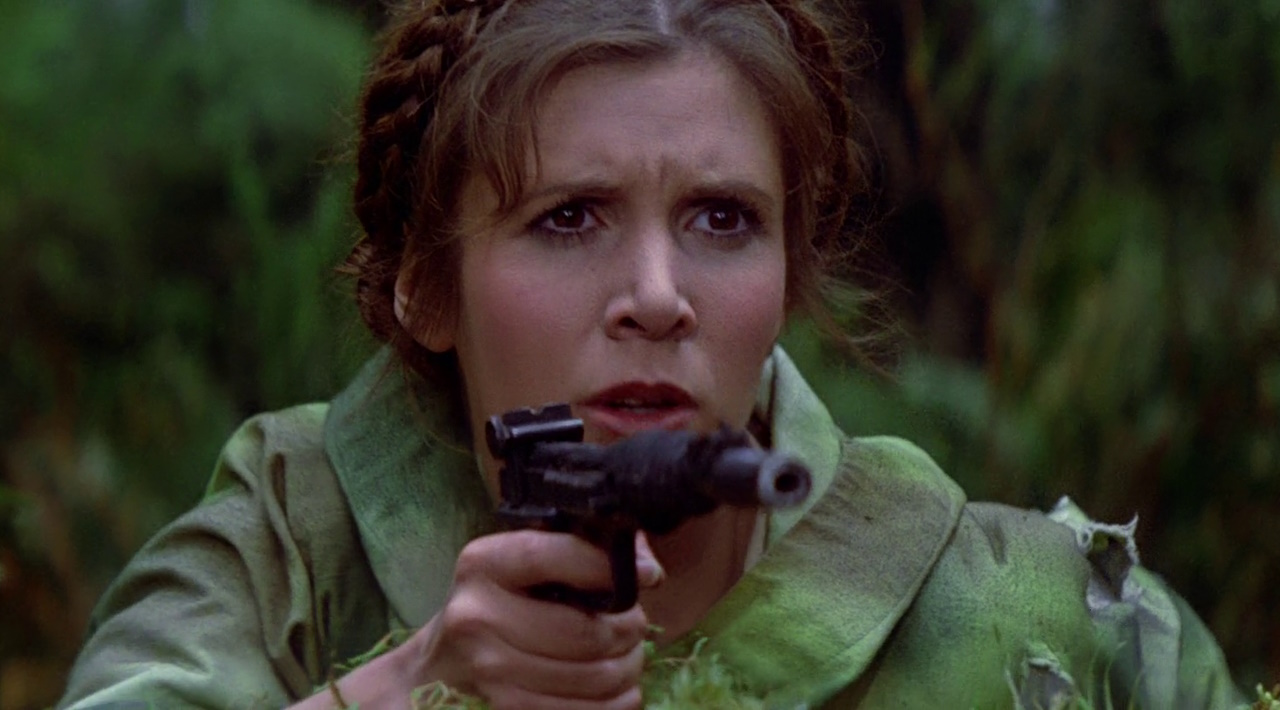
Knights of the Old Republic is being remade!

Spoiler Warning: There are spoilers ahead for Knights of the Old Republic and Knights of the Old Republic II: The Sith Lords. Minor spoilers are also present for other iterations of the Star Wars franchise.

Remember that rumour earlier in the year about a new Knights of the Old Republic game? Well the project was officially revealed at a recent PlayStation event, and instead of being a sequel or spin-off, it’s a remake of the first title!

Unfortunately all we were treated to was a tiny CGI clip of the villainous Darth Revan. The project seems at a relatively early stage of development and likely won’t see a release for at least a year. Interestingly, the remake is being handled not by BioWare – who developed the original title – but by Aspyr, a studio known primarily for porting games to new platforms. Aspyr has previously worked on Knights of the Old Republic, bringing the game to Mac, iOS, and Android over the years. So at least they have some experience with the title!

Darth Revan was seen in silhouette in the CGI teaser.

If you’re not familiar with the plot of the original game, I encourage you to stop reading now. Not only that, but try to avoid any Knights of the Old Republic spoilers from now until release; the game is so much more enjoyable if you can experience its story unspoiled.

Speaking of story, then, while Lucasfilm Games and Aspyr have pledged to stay true to the original narrative, there is already talk of the game being “re-written” and writers are known to be attached to the project. It’s possible, then, that there will be some incidental changes along the way, even if the overall thrust of the plot remains intact.

For my two cents, I think that’s actually a positive development. Remakes should aim to be ambitious, and to adapt the stories they tell for new audiences. There’s nothing wrong with Knights of the Old Republic in its original form, but shaking up things like side-missions would be no bad thing. Remember that we’re dealing with a game from 2003 that was released on the original Xbox; there’s room to potentially expand the game beyond what it was. Levels could be redesigned to be larger and more densely-populated, for example, and characters could be given additional lines of dialogue.

The remake is being developed by Aspyr.

With the game being a full-blown remake, it seems that the dialogue will be re-recorded. This opens up possibilities for expanding the things that characters have to say, as mentioned, and it could be possible to give the game’s protagonist a voice as well. In the original game, the player could choose what to say at certain points, but the player character wasn’t fully-voiced like NPCs were. Redoing the dialogue also means that at least some characters – including fan-favourites – will be recast. However, as voice acting in video games has arguably improved since 2003, that’s not necessarily a bad thing! Interestingly, Star Trek: Voyager’s Ethan Phillips (Neelix) had a voice role in the original game. I wonder if he’ll come back?

Though Knights of the Old Republic got an Oblivion-developed sequel a year after its release, the stories of Darth Revan and the Jedi Exile were left unfinished thereafter. Though it’s very early for such speculation, it seems at least plausible to think that Knights of the Old Republic II – my personal favourite of the duology – could also get the remake treatment if this project is deemed a success. From there, could the story finally get the sequel that fans have been asking for for more than fifteen years? Perhaps that’s too much to hope for right now and we should just be happy that Knights of the Old Republic is coming back at all! But I can’t help feel that there’s at least a glimmer of hope in that regard!

Is a sequel on the cards if this remake proves to be a success?

One area where Knights of the Old Republic could definitely do with an upgrade is its character creator. The original game offered players a handful of pre-designed male and female faces to choose from, and one of three starting classes. Three additional Jedi classes were available later in the game as well. This is one aspect that has huge room for improvement! Firstly, I’d love to see a non-binary gender option alongside male and female, perhaps with the character creator including a choice of pronouns. Secondly, a detailed character creator – like the kind seen in recent games such as the Saints Row series, Black Desert Online, or even Cyberpunk 2077 – would allow players to craft their own unique character, which is something I’d argue is an essential component of any role-playing game.

There’s a lot to be hopeful for when it comes to this project, and I can add it to the list of upcoming titles I’m looking forward to. Last year I had a great time playing through Jedi: Fallen Order as well as Star Wars Squadrons, so after a few years where there weren’t many Star Wars games the franchise has enjoyed some successes in the video game space. Coming after the disappointing way the sequel trilogy ended, a return to Knights of the Old Republic and a setting millennia before the films could be the palate cleanser that Star Wars fans desperately need.

The original game’s basic character creator is one element crying out for a major update!

Ironically, it was after two disappointing Star Wars films that the original Knights of the Old Republic appeared on the scene. The game (and its sequel) went a long way to rehabilitating the Star Wars franchise for me at the time, and gave me a reason to be excited for Star Wars after The Phantom Menace and Attack of the Clones had left me decidedly underwhelmed. Hopefully this remake is poised to do the same.

After several recent hotly-anticipated titles have crashed and burned due to being launched too early, my advice to Aspyr and Lucasfilm is to keep working on Knights of the Old Republic until they get it right. Don’t try to push out the game before it’s ready; the “release now, fix later” business model has been a plague on the modern games industry and players shouldn’t have to put up with bug-riddled, disappointing titles. This is a remake that many Star Wars and role-playing fans have been waiting for for a long time – it’s incredibly important to absolutely nail it!

A closer look at Revan and his lightsaber in the CGI teaser.

One of my favourite memories as a gamer is sitting with the Xbox control pad in my hand, mouth open in shock as Knights of the Old Republic dropped its huge story twist. I hadn’t been expecting it as the game’s wonderful storyline unfolded, and it hit me in a way that very few moments in all of fiction ever have. It’s got to be right up there with “no, I am your father!” in The Empire Strikes Back as one of the best twists in all of Star Wars, and I can’t wait to see how the remake will approach that amazing moment. Even though I’ll know it’s coming this time, I’m still ready to be blown away all over again!

So as you can tell, I’m quite excited for Knights of the Old Republic! But I’ll do my best to avoid boarding the hype train and to keep a level head. We don’t know much more about the project at this stage, other than it’s planned as a timed PlayStation and PC exclusive, so it’ll probably be at least a year after release before it’ll come to Xbox. I hope you’ll stay tuned here on the website, because if we get any significant news about the project I’ll try my best to break it down and analyse it. When the game is finally ready, I’ll almost certainly review it – and maybe do a complete playthrough too!

Star Wars: Knights of the Old Republic is being developed by Aspyr and will be published by Lucasfilm Games for PC and PlayStation 5. No release date has been announced. The Star Wars franchise – including all titles and properties mentioned above – is the copyright of Lucasfilm and The Walt Disney Company. This article contains the thoughts and opinions of one person only and is not intended to cause any offence.
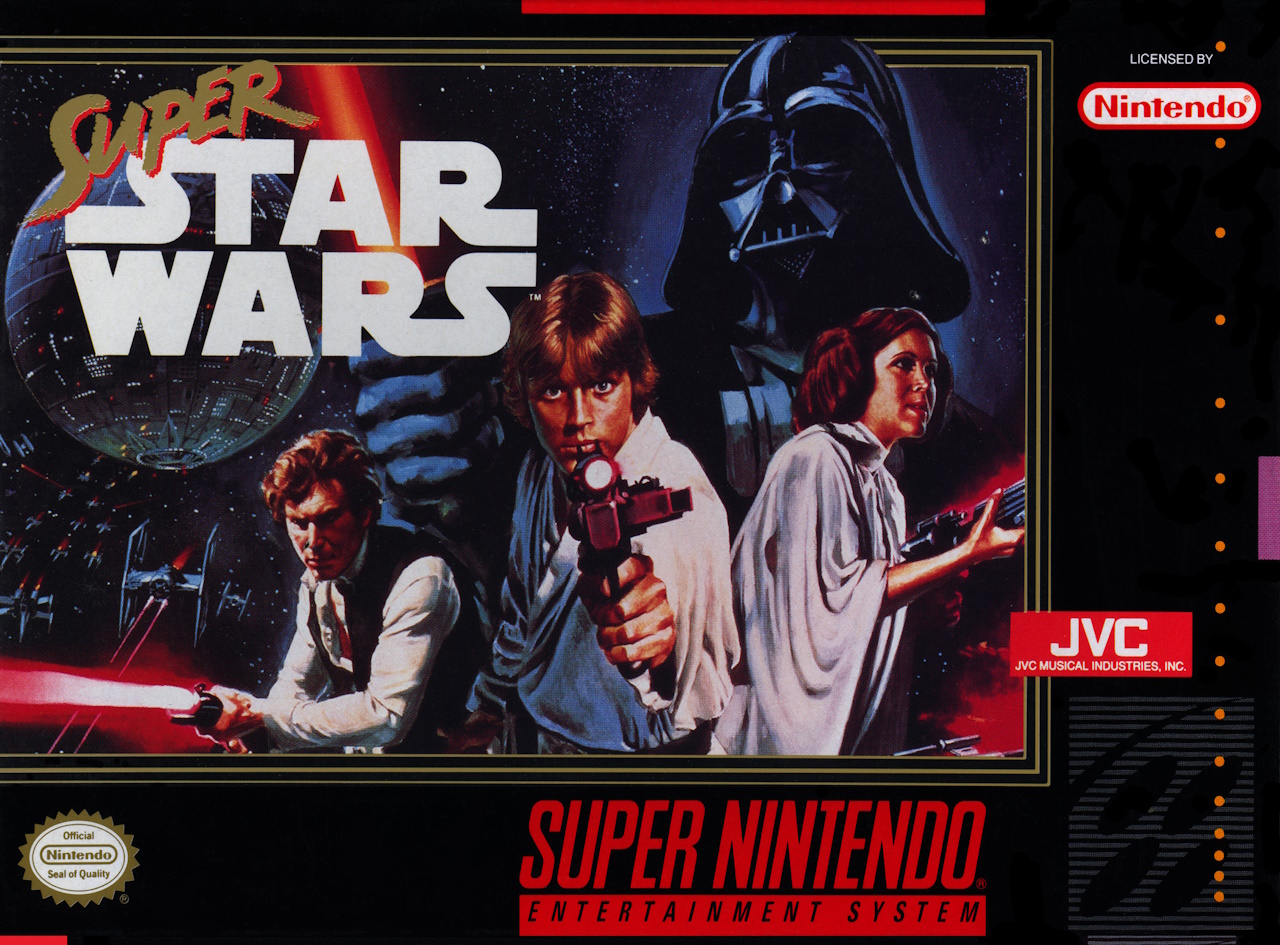
The Mandalorian theory – Baby Yoda

Spoiler Warning: There are spoilers ahead for The Mandalorian Seasons 1-2. Further spoilers are present for Jedi: Fallen Order, Rogue One, The Last Jedi, the prequel trilogy, and the original trilogy.

Let’s get a couple of things straight right off the bat: I don’t think The Mandalorian is an especially good show, and I don’t want either of these theories to turn out to be true. In both cases the reason is pretty much the same: the Star Wars franchise as a whole, and The Mandalorian in particular, greatly overplays the nostalgia card, and were either theory I’m about to discuss prove to be true, it would represent yet another example of the show’s writers and producers being unwilling to let it stand on its own two feet.

With that caveat out of the way, I’ve got a couple of theories regarding The Mandalorian that I’ve finally decided to write down. I’m sure I’m not the only one who’s come up with these concepts; it seems like it would be a pretty easy way of joining up some of the dots present in the franchise. But regardless, we’re going to talk a little about Baby Yoda – or to give him his proper name, Grogu.

Today we’re looking at the cutest little critter in Star Wars – Baby Yoda!

In Star Wars’ main canon – not including anything from the now-overwritten Expanded Universe – there have only been three members of Yoda’s species shown on screen. Yoda himself of course debuted in The Empire Strikes Back, then in The Phantom Menace we briefly met Yaddle, another Jedi Master who served on the Jedi Council. Finally we have Grogu himself, and that’s it. Of all the races and species in Star Wars, few are as mysterious and under-explored as Yoda’s species – it doesn’t even have a name.

This is odd, actually. Star Wars’ old Expanded Universe delved into the backstories of countless minor characters and background races, and while much of that has been overwritten, some elements have made their way back into canon. But even in old Expanded Universe projects that did feature members of Yoda’s species, like Knights of the Old Republic for example, we still didn’t learn anything about them – not even a name. When you consider that the Expanded Universe dived deeply into the backgrounds of races like the Quarren or the Rodians, neither of which had major characters in any of the films, for Yoda’s species to be left alone is certainly unusual. You’d think it would’ve been ripe for an Expanded Universe author to have explored at some point.

Yoda’s species has never been explored – not even in the old Expanded Universe.

The rarity of Yoda’s species also raises interesting points, one of which is connected to the two theories we’re discussing today. Every member of Yoda’s species that we meet in canon is Force-sensitive, which is already a point of interest. But the fact that the race seems to be so uncommon, and doesn’t have a known homeworld suggests that there is something strange going on. Is Yoda one of the sole survivors of his species, perhaps?

If so, perhaps Yoda – and possibly Yaddle – are the parents of Grogu. Though Yoda explained in Revenge of the Sith that for a Jedi, attachments and romantic entanglements are off-limits due to their opening up a path to the Dark Side, if he’s a member of a dead or dying species, the needs of his people may have overcome this. It would make sense that we had never met Grogu before the events of The Mandalorian, as Yoda would not have played any role in his upbringing – merely delegating that role to the Jedi Order once the infant had been conceived. This theory could also account for Yaddle’s absence after The Phantom Menace, as she may have been more involved with Grogu or even left the Jedi Order to raise him.

Yaddle was a Jedi Master during the events of The Phantom Menace.

This theory relies on Yoda – at well over 800 years old – becoming physically intimate with another member of his species. Sorry for giving you that particular mental image! But as we learned in The Mandalorian Season 2, Grogu’s M-count – assumed to be short for his midichlorian count – was said to be exceptionally high. This could be natural for Yoda’s species, as Yoda was said to have a high midichlorian count himself, but it could also be a genetic trait passed from parent to child. If Grogu’s parents were two Jedi Masters, that could explain his abnormally high level of midichlorians.

It could also explain Luke Skywalker’s interest in Grogu. Though it seems as though Luke would’ve been interested in recruiting any Force-sensitive child for his nascent Jedi Academy in the years after the Battle of Endor, if he knew Grogu’s true identity after conversing with the ghost of Yoda that may have given him an extra incentive to rescue the youngling. It could also explain how Ahsoka knew Grogu’s name – he didn’t communicate it to her, as she implied when she spoke with Din Djarin, but she’d already met him during her time as a Jedi apprentice.

Luke Skywalker in The Mandalorian Season 2.

With cloning technology featuring prominently in both The Mandalorian and The Rise of Skywalker, another possibility is that Grogu is in fact a direct clone of Yoda. As above, this would account for his unusually high level of midichlorians, but would avoid the need for Yoda to have had any role in conceiving an offspring. Though we do know that Grogu spent some time prior to Order 66 at the Jedi Temple, if he were a clone of Yoda that doesn’t mean that the Jedi played any role in his creation.

It would be possible for some nefarious faction – perhaps even the Sith themselves – to have attempted to create a clone of Yoda, hoping to turn Grogu into a powerful Dark Side user. The prequels showed us Yoda’s capabilities in much more detail; suffice to say that a Dark Side clone of Yoda would be an incredibly useful weapon for the Sith – or anyone else. Perhaps such a scheme was uncovered by the Jedi during the years prior to Order 66, and Grogu came to reside at the Jedi Temple after being rescued.

The Jedi Temple on Coruscant was Grogu’s home prior to the downfall of the Jedi Order.

Cloning would tie in thematically to points already present in The Mandalorian, as well as in the broader Star Wars franchise, so I could certainly see the story going in this direction. It would require a bit of backstory to explain who created Grogu and how he came to be rescued, but it wouldn’t be impossible to pull off from a narrative point of view. With cloning having already been introduced into the series and prominently featured, it could even be argued to make sense.

There is one more dimension to this theory, though, and it’s one that I’ve been wary of since Baby Yoda first appeared in the show in late 2019. Rather than being a child or clone of Yoda, could it be that The Mandalorian is setting up a story where Grogu is, in fact, Yoda himself?

Could Grogu actually be Yoda?

This might sound preposterous, and if it weren’t for Star Wars’ overreliance on characters and storylines from the original trilogy I probably wouldn’t consider it a realistic possibility. But given that the franchise is intent on looking backwards, and that The Mandalorian has already brought two major characters from the original films into its narrative, nothing would surprise me any more!

So here’s another caveat: I’m not familiar with everything that happened in the animated shows The Clone Wars and Rebels. But as I understand it, time travel is possible and has been depicted in those shows. Ahsoka Tano, who appeared in Season 2 of The Mandalorian, had her life saved thanks to the intervention of a time traveller who used something referred to as the “World Between Worlds” to rescue her from certain death at the hands of Darth Vader. The World Between Worlds also showed up in last year’s Lego Star Wars Holiday Special – but I’m pretty sure that appearance is non-canon!

Could Grogu travel back in time through a portal like this one?

The point is that time travel in some form does exist within Star Wars. Not only that, but at least one character present in The Mandalorian has some experience with the World Between Worlds. Suddenly it doesn’t seem to be impossible to think that Grogu might be sent back in time – either intentionally or accidentally.

One of the tragedies of The Mandalorian – as things sit right now, anyway – is that Grogu isn’t safe with Luke Skywalker. The events of The Mandalorian occur years before the sequel trilogy, before Luke’s Jedi Order was destroyed by Kylo Ren. According to what we learned in The Last Jedi from Luke himself, the only students who survived went on to serve the Dark Side as the Knights of Ren. Grogu seems to have been too young to have joined the Dark Side, so the logical conclusion is that he was killed along with Luke’s other students.

Luke’s new Jedi Order was destroyed by Kylo Ren. All of his apprentices were killed. But was Grogu among them?

Star Wars has certainly told stories with unhappy endings before. Heck, the entire prequel trilogy was a story that led to a very dark place, with characters like Padmé ultimately dying at the end. Rogue One likewise ended with the deaths of Jyn, Cassian, and everyone else involved in the mission to steal the Death Star plans. So it wouldn’t be out of character for the franchise to go to all of this trouble to set up a story in which Grogu ultimately dies and never gets to train and become a Jedi.

However, something about the way the story has been told – particularly in the final few episodes of Season 2 that really tried hard to ramp up the emotional connection between Din Djarin and Grogu – seems to be telling me that it might not end the way we currently think. It’s certainly true that there are ways Grogu could survive the attack on Luke’s Jedi Order that don’t involve time travel, and in many ways such a story would be much easier to construct. But there are possible points in its favour – by which I mean points that seem to make this storyline at least a possibility, not points that would make it a good story!

Grogu aboard the Razor Crest.

We know that Yoda’s species are very rare in the Star Wars galaxy. It’s not impossible to think that the race could have gone extinct with the passing of Yoda and Yaddle; they may have been two of the last survivors. We also have the presence of Ahsoka Tano, whose life was saved by time travel. And finally, we know that Grogu has a way of instinctively using the Force at key moments; it’s a power that’s beyond his control in some respects, yet one he has used repeatedly to save himself and others. He’s also potentially very powerful in the Force – perhaps as powerful as Yoda.

It’s not impossible to think that, before or during the attack on Luke’s new Jedi Order, Grogu would call on the Force to help him escape Kylo and the Knights of Ren. We’ve seen a couple of different ways to open a portal to the World Between Worlds, and Grogu could summon one himself – or someone already inside the World Between Worlds might open a portal and arrive to rescue him.

Might Grogu use the Force – intentionally or accidentally – to escape from Kylo Ren?

Once in the World Between Worlds, Grogu might be sent back in time, either intentionally or accidentally, emerging 900+ years in the past. From there, it’s a short hop to joining the Jedi Order, which would still exist in this time period. Without adding anything new to Star Wars, it’s possible, based on what we already know, for Grogu to “become” Yoda.

From the moment I saw Baby Yoda in the first couple of episodes of The Mandalorian, I began to worry that this would be the character’s ultimate destination. I mentioned at the beginning that I don’t think this theory would make for an enjoyable or satisfying story, and I stand by that. The Mandalorian has been a let-down for me because of its overuse of elements from Star Wars’ past, and if its entire story were ultimately revealed to involve yet another classic character, well I just don’t think that would be to the show’s overall benefit.

From the moment “Baby Yoda” appeared I began to wonder if the show would ultimately go down this route.

This kind of time travel story also happens to be one of my least-favourite tropes of the genre: the time-loop. Grogu was saved by Luke because Luke was trained as a Jedi by Yoda, who was saved as a baby by Luke. The whole thing becomes circular, and while Star Wars has often tried to tell stories that were symmetrical or that used comparable settings and character concepts, this would be a step beyond that. It would become a paradox; how could Yoda train Luke without Luke first saving him? And how could Luke save Grogu if he hadn’t first been trained as a Jedi? There’s no solution to such a storyline, and I personally find this type of time travel narrative annoying.

Time travel, as I find myself saying all too often, is exceptionally difficult to get right. It’s far too easy for a story to trip over itself and get all tied up in knots trying to explain away inconsistencies and paradoxes. For me, the idea that Grogu might be sent back in time to become Yoda is a classic example of such a story. Even if Luke hadn’t been involved in saving his life from the Dark Troopers at the end of Season 2, I still wouldn’t want the story to go down this road – nor for Grogu to be revealed to be Yoda’s clone or offspring.

Luke Skywalker with Grogu.

The Mandalorian teased a concept that I still find genuinely interesting: “the adventures of a gunslinger far from the reach of the New Republic.” But by bringing the Force, Boba Fett, and the Skywalker family into its storyline in significant ways, that premise hasn’t really been fulfilled – at least not yet.

Grogu’s departure at the end of Season 2 could be the soft reboot The Mandalorian needs. It could offer the series a fresh start, with Din and his companions setting off for new adventures away from the Jedi and the Skywalker family. For Star Wars this would be huge – it’s impossible to overstate how big of a deal finally breaking away from the Skywalkers and the Force would actually be. Season 3 or 4 bringing Grogu back and setting up this kind of time travel or cloning storyline would feel regressive in a series which, for me, already relies far too heavily on nostalgia for the franchise’s past.

Saying goodbye to Grogu could set the stage for new stories in Season 3 and beyond.

Shows like Obi-Wan Kenobi and The Book of Boba Fett can carry the torch for classic characters. Perhaps The Mandalorian can continue to chase down Moff Gideon, the Dark Troopers, and the cloning facility that I swear was creating Snoke. Tying the series into the sequel trilogy, not the original trilogy, would be a bold move, and might even go some way to rescuing some of the sequels’ less successful story elements.

Anyway! Those are all fantasies that may yet play out in future seasons and future stories. For now, I’ll bring this piece to a close by summarising my theories: Grogu is either a clone of Yoda, a child of Yoda, or will be sent back in time somehow in order to become Yoda himself. Even though I don’t necessarily want to see any of these theories make it to the screen, I will be very curious to see if any of the upcoming Star Wars projects give us more information about Grogu, Luke’s recreated Jedi Order, or anything else we’ve talked about today. Something tells me that Grogu’s story isn’t complete and that he won’t meet the ignominious end of being killed by Kylo and the Knights of Ren. Stay tuned, because if it turns out I’m right I’ll be sure to have something to say about that!

The Mandalorian Seasons 1 and 2 are available to stream now on Disney+. The Star Wars franchise – including The Mandalorian and all other properties mentioned above – is the copyright of Lucasfilm and The Walt Disney Company. This article contains the thoughts and opinions of one person only and is not intended to cause any offence.
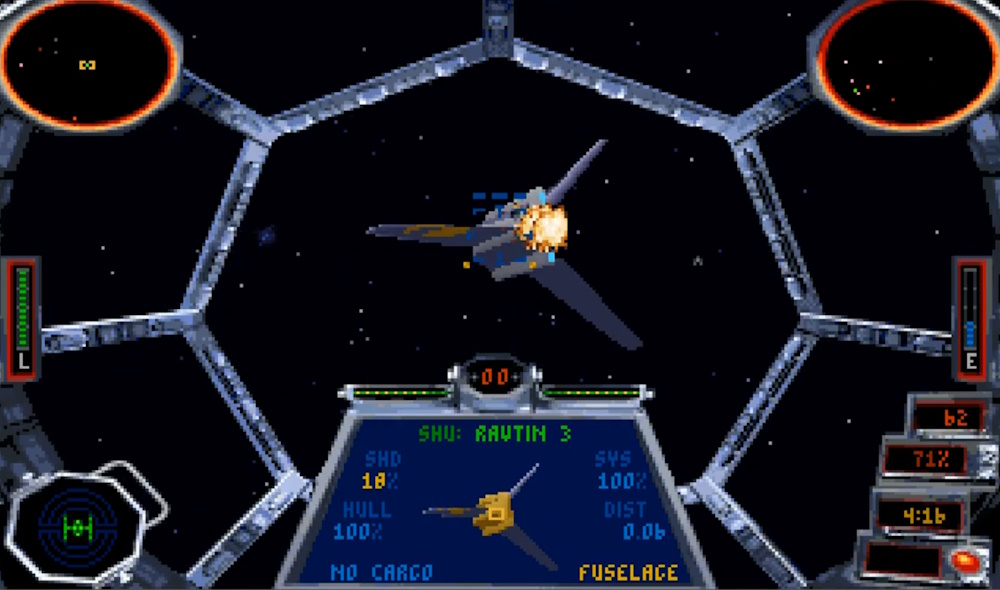
The Skywalker Saga: rewriting the final chapter

Spoiler Warning: There are spoilers ahead for the entire Skywalker Saga, including The Last Jedi and The Rise of Skywalker.

I’ve made it clear more than once that I didn’t like The Rise of Skywalker. The film failed for a number of reasons, but the most egregious for me was its narrative – one which betrayed established characters, overwrote others, and tried to re-tell Return of the Jedi using characters and story threads that were simply not suited for that purpose.

It’s easy to criticise a story that someone else has written, to pick apart story beats and character moments and say they don’t work. What isn’t as easy is creating a new story – hopefully a better one. That’s the task I’ve assigned myself on this occasion.

Can I write a better film than The Rise of Skywalker?

Here are some basic ground rules:

  • Everything up to and including The Last Jedi happened exactly as shown on screen. We aren’t going back and undoing anything from previous films. The task at hand is to rewrite the final chapter of The Skywalker Saga assuming that the first eight films unfolded the way they did in the real world.
  • No dei ex machina. The story has to be brought to a conclusion using characters and elements already in play; no adding new pieces to the chessboard at this late stage!
  • No Palpatine. Palpatine’s inclusion was a deus ex machina in The Rise of Skywalker, and even if everything else wrong with the film went away his inclusion would still have ruined it.
  • Characters must stay true to their established personalities. In The Rise of Skywalker, General Hux’s betrayal was an out-of-character moment so truly awful that I don’t even know what to say about it.
  • Characters’ established backgrounds can’t be overwritten. Rey isn’t going to be a descendant of Palpatine any more than Kylo is suddenly going to learn he’s actually the result of an affair Leia had with Chewbacca.
  • Real-world events must be taken into account. This means that Leia’s role can’t be expanded – the actress who portrayed her, Carrie Fisher, had passed away before the film entered production.
  • As with The Rise of Skywalker, a reasonable time-jump of 1-2 years has taken place since the end of The Last Jedi.

Obviously I’m not going to write an entire script! This is just going to be a basic outline, a story treatment highlighting the broad strokes of the plot and how things would go. I feel no obligation to include anything from The Rise of Skywalker, as this is my own take on how the final chapter of the Skywalker Saga would have unfolded.

Palpatine can fuck off. This is not his story.

It goes without saying that this is fan fiction. Nothing about this story outline will ever make its way into actual Star Wars, nor should anyone interpret it in that manner. Everything in this article is also entirely subjective. If you liked The Rise of Skywalker and wouldn’t want to see it remade, that’s great. If you hate all of my ideas, that’s fine too. The Star Wars fandom is big enough for people with different ideas to peacefully coexist, and getting mad at one another over fan fiction that will never be anything more than text on an obscure website will accomplish precisely nothing.

Now that we’ve got all of that out of the way, let’s get started.

As the film begins, Kylo Ren has declared himself Supreme Leader of the First Order, succeeding the deceased Snoke. With the New Republic’s capital system destroyed, and the Resistance having been reduced to a handful of individuals, the First Order had a clear shot at taking over large parts of the galaxy. Systems like Coruscant, Corellia, and even Tatooine have fallen under the First Order’s sway.

Kylo Ren has established himself as the First Order’s Supreme Leader.

Kylo’s wavering commitment to the Dark Side has solidified in the wake of his power grab, and the pull to the Light that he felt in earlier films has been all but extinguished. His arc across the final chapter will see him descend further into darkness, culminating in his embrace of the Sith ideology of Palpatine and his beloved Vader.

General Hux despises Kylo, but has managed to distance himself from the Supreme Leader by taking command of First Order forces in different parts of the galaxy. The exact power structure of the First Order is left ambiguous, but it seems that Hux is a senior commander in the First Order. In this version of the story, he remains loyal to the cause.

General Hux will stay true to his characterisation.

Early in the film, perhaps even in the opening crawl, we learn that General Leia has been killed fighting the First Order. Her brave sacrifice allowed thousands of new Resistance recruits to escape the planet, laying the groundwork for the Resistance’s comeback and making her an icon and a martyr to the cause. Though killing her off in this fashion may be controversial, when the only alternative is ham-fistedly using cut footage from The Force Awakens that isn’t fit for purpose it’s pretty much the only option. Recasting Leia or using CGI wouldn’t feel right, so the next best thing is making her sacrifice meaningful. By saving thousands of Resistance fighters, Leia laid the groundwork for the Resistance’s ultimate victory.

Rey has been training as a Jedi, with the Force ghosts of Luke Skywalker, Obi-Wan Kenobi, Yoda, and Qui-Gon Jinn supervising and advising her. She begins the film on Ahch-To, where she relocated to train in private.

Rey has been training as a Jedi.

Poe has taken over from Leia as the leader of the Resistance, having taken to heart the lessons he learned in The Last Jedi. Inspired by the sacrifices of both Luke and Leia, citizens from all across the galaxy have joined or aided the Resistance, bringing it back up to strength. One of the people who’s joined up is Lando Calrissian, who saw Cloud City taken over by the First Order. He expresses regret at not helping sooner.

Finn begins the film as Poe’s right-hand man, using his knowledge of the inner workings of the First Order to coordinate strikes and attacks. He’s Force-sensitive, and has done some training with a lightsaber, but broke off his training to help the Resistance. He’s also in a relationship with Rose Tico, continuing a theme established in The Last Jedi and taking it to its logical conclusion.

Finn is going to have more to do than just shouting at Rey.

The opening act of the film sees Finn and Rose receiving a message from a group of Stormtroopers who want to defect. Along with Poe, they undertake a mission to a new planet to help get the Stormtroopers to safety. In the course of this mission, a small space battle occurs between a handful of Resistance ships and starfighters and the First Order forces in control of the new planet. During this mission, General Hux is killed – his death is necessary for the story of the trilogy to feel complete, and having him die trying to stop more Stormtroopers defecting to the Resistance feels somewhat like an arc in light of Finn’s story. Finn could be the one to fire the killing shot.

The Stormtroopers bring with them knowledge of a Sith superweapon that Kylo Ren has found and plans to use to secure the First Order’s dominance. The superweapon is essentially a macguffin that uses the Dark Side of the Force to send out a powerful shockwave across the galaxy, killing all who oppose the Supreme Leader.

A group of defecting Stormtroopers bring news to the Resistance of a horrifying plan.

The superweapon is an existential threat to the Resistance, and if Kylo is able to use it it will mean the end of all our heroes and establish Kylo and the Sith as the rulers of the galaxy permanently. Unlike the Death Star, Starkiller Base, or Snoke’s command ship, the macguffin is small – handheld – and thus can’t be destroyed in a conventional battle.

Despite her asking to be left alone so that she could focus on her training and become a Jedi, Poe decides that the only option is to contact Rey. Finn is the only one who knows where Rey is (as he had visited her on several occasions to further his own training in the Force) so he sets out alone to track her down.

Finn travels alone to Ahch-To to find Rey.

On Ahch-To, Rey is initially reluctant to leave her training incomplete, and cites what happened to Luke on Cloud City when he tried to face Vader before he was ready. Finn tells her that without her, their planned mission to Kylo’s fortress to retrieve the macguffin won’t succeed; they need her skills if they’re to have any hope of destroying the macguffin before Kylo can use it.

While Finn waits for an answer, Rey has a heart-to-heart with Luke. He admits that he made mistakes when he was younger, acting too rashly. But he also says that he and the other Force ghosts will be with her, offering their guidance along the way. Rey is concerned about having to go to a place so strong in the Dark Side, and Luke acknowledges that concern. But ultimately, he says, there is no other way.

Force ghost Luke advises Rey to go on the mission with Finn.

Rey consults the ancient Jedi texts and learns that the macguffin was actually created by the Jedi, not the Sith, but the Sith corrupted it with Dark Side sorcery millennia ago. The macguffin was considered lost, but Luke says that Vader or Palpatine may have found it during their years in power. Regardless, Kylo has it now and it’s an existential threat.

Finn spends a little time with the Force ghosts on Ahch-To, and as the two prepare to leave Rey presents him with his own lightsaber.

At the Resistance base, Poe, Rey, Finn, and Rose debate how best to undertake the mission. Kylo’s fortress is on Mustafar – he converted Darth Vader’s castle into his personal headquarters and base of operations. It’s perhaps the best-defended location in the galaxy, according to one Resistance pilot who pipes up.

At the Resistance base, Poe and the others formulate a plan.

Attacking Kylo’s base head-on would be a suicide mission, especially given the disparity between the First Order fleet and the cobbled-together band of Resistance starships. Lando has been working to bring in more people and ships to the Resistance cause, so Poe dispatches him to assemble as many ships as he can. The plan is set in motion – a Resistance attack in a neighbouring star system will lure the First Order fleet away from Kylo’s fortress long enough for Rey and Finn to infiltrate the base and destroy the macguffin. Poe will lead the Resistance fleet in person, and Rose will also stay behind on the fleet as her mechanic skills are more likely to be needed there.

At his fortress, Kylo is laughing at the death of General Hux. He had considered Hux to be one of his few remaining rivals for power; the loyalty Hux commanded from his troops posed a potential threat to Kylo’s leadership. With Hux out of the way, Kylo can appoint a loyalist to his position, further cementing himself as the Supreme Leader of the First Order.

Kylo moved into Darth Vader’s castle and made it his HQ.

Resistance forces led by Poe arrive in the neighbouring system, and frightened First Order admirals choose not to tell Kylo right away, hoping they could defeat the Resistance before having to tell him that they were able to launch a strike close to the heart of his territory. The battle in space begins.

With First Order ships moving out of position to join the battle, the Millennium Falcon – piloted by Rey – is able to make it to Kylo’s fortress. However, during the landing stage the ship is targeted by ground troops. Rey and Finn are able to bail out at the last moment, but the Millennium Falcon is destroyed.

The Millennium Falcon is destroyed while bringing Rey and Finn to Mustafar.

The destruction of a ship that’s been at the heart of Star Wars since the beginning is emblematic of this film bringing the Skywalker Saga to an end. Like Hedwig’s death in Harry Potter and the Deathly Hallows, it marks the end of an era for the characters and the franchise, and in lieu of having any major characters left to kill off, the destruction of the ship fills that role.

Rey and Finn are on the ground on Mustafar, but have to trek for miles to reach Kylo’s fortress from the crash site. Meanwhile, the space battle is not going well. First Order ships have arrived from all sides, and are using a special kind of hyperspace jammer to prevent Poe and Rose’s Resistance forces from escaping.

The First Order has a large fleet and is attacking the Resistance with everything it can muster.

After reaching the fortress, Rey senses that Kylo is inside. He knows that they’re coming, and he’s close to activating the magical Sith macguffin. They will have to move quickly. But standing in their way are Kylo’s personal guards – the Knights of Ren. Armed with red lightsabers, the dozen or so Dark Side knights try to stop Rey and Finn, who draw their own sabers and engage in a duel in Kylo’s palace.

It seems like the Knights of Ren have Rey and Finn on the ropes, and the action cuts back to the space battle. Poe’s forces are losing too, and it appears for a moment like the mission – and the Resistance itself – is doomed.

Finn and Rey engage the Knights of Ren in a duel.

In the duel at the palace, Finn and Rey are able to get the upper hand long enough to jump through a blast door or forcefield, trapping the Knights of Ren in a part of the palace where they can’t reach them. As Kylo continues to work on the macguffin and Poe’s forces fight a last stand in space, Rey and Finn rush to Kylo’s throne room to confront him.

In the second duel of the film, Rey and Finn work together against Kylo, who has gone “full Dark Side” despite Rey’s pleas to come back to the Light. After defeating him in the duel, Rey hesitates, unwilling to kill him. She turns to Finn and tells him that he was able to break his own indoctrination and leave the First Order, so maybe Kylo can too. In that moment, Kylo uses the Force to send his lightsaber into Finn’s chest.

Kylo uses the Force to hurl his lightsaber at Finn.

Rey has no choice now but to kill Kylo, and as she grieves for Finn she finds the macguffin. Before she can destroy it, the Force ghosts appear beside her. They believe they can use their energy to turn the macguffin back into a tool of the Light, and then Rey will be able to use it to spread Finn’s story to every indoctrinated soldier and trooper in the First Order. Luke, Yoda, Obi-Wan, and Qui-Gon join with the macguffin, sacrificing their ghostly forms in order to restore the corrupted artefact.

Rey picks up the macguffin, and while holding Finn’s hand activates it. A shockwave of bright white light eminates from Kylo’s palace and shoots out into space. In the nearby space battle, thousands of First Order soldiers and troopers switch sides, turning on each other. Several dozen First Order ships turn on the rest of the fleet, and in the unfolding chaos, Poe’s survivors are able to escape.

A Light Side shockwave (similar to the Praxis Effect from Star Trek VI: The Undiscovered Country) shoots out into space.

In Kylo’s palace, his guards turn on each other and Rey is able to make it to a shuttle and escape in the chaos, bringing Finn’s body with her. She returns to Resistance HQ. After mourning Finn’s loss, Poe explains that with Lando’s new reinforcements and millions of soldiers and troopers fighting alongside them, the Resistance has been able to defeat the bulk of the First Order’s forces.

An epilogue shows Rey training young children – including “broom boy” – on Ahch-To, where she has established a small, out-of-the-way Jedi base. Pictures of Finn and Luke are displayed prominently. The Republic has been re-established, and Senator Rose names Poe as Admiral of the Republic fleet.

The end.

The Skywalker Saga is over; the line of Skywalkers from Anakin to Luke and Leia to Ben having been finally broken. The Sith, too, appear to be finally defeated, with no known Sith remaining to reclaim the mantle of Sith Lord or Supreme Leader. Rey has proven that destiny and ancestry are no guide as to how one’s life will turn out. She came from nowhere to save the galaxy, while Kylo came from Jedi and Rebel royalty and almost conquered it. Poe showed how to be brave in the face of insurmountable odds, and Finn made the ultimate sacrifice to save the galaxy from the people that once considered him nothing but a disposable footsoldier.

By removing Palpatine and simplifying the story into one connected sequence of events, I think a film following this outline would have been easier to follow and more enjoyable. It would have also drawn a line under Star Wars’ first story, allowing the franchise to step away from the characters and themes it included to chart a new path in future.

The Star Wars franchise has concluded its first story. Where should it go next?

Where The Rise of Skywalker failed for me was the time it wasted trying to undo events from The Last Jedi in favour of fan theories. Rey’s parents remain no one of consequence in my story outline, and I think that allows her character to shine. Instead of her power being drawn from an important man she’s related to, her power is her own. There’s no destiny, aristocracy, or ancestry involved; Rey’s successes are her own, her victories her own, and by defeating Kylo Ren, the character who defined himself by his lineage, the story makes a point. Heroes can come from anywhere, even the most humble origins.

The destruction of the Millennium Falcon, as mentioned, underlines the idea that this film is the final entry in the series. Whatever Star Wars may be in future, it won’t be more jaunts in the Falcon with Chewbacca, looking backward at the “good old days!” The ship’s destruction is a symbol of the franchise leaving its past behind and looking ahead to different stories.

The story about lineage, ancestry, and destiny was inverted.

Finn’s death is a rarity in the Star Wars franchise, the loss of a hero. Though the sequel trilogy killed off Han and Luke, it did so at a point where the baton had already been passed to a new generation of heroes. Finn was one of those heroes, and his story could have continued. He could have trained hard and become a Jedi, but instead he was cut down by Kylo right when he was on the cusp of victory.

This version of the story brings into play elements that have been part of Star Wars films in the past, and would assemble them into what I feel could be an action-packed and exciting film. We get two big lightsaber fights and a giant space battle, a magical Force macguffin with the power to destroy the Resistance, Sith Lords, Jedi Knights, starfighter pilots, and a desperate, last-ditch mission to save the galaxy.

My story had many of the elements that Star Wars fans know and love about the franchise.

My objective here was to show that it would have been possible to pick up where The Last Jedi left off and tell a different kind of story, one which didn’t try to overwrite everything that film did. At the same time, I wanted the ending to feel conclusive, and not like the Resistance had a huge amount of work left to do to convert victory in one battle into victory in the overall war. The magical Sith macguffin managed to play a double role, both by setting up the main story and by providing that conclusion. I tried to connect the main parts of the story so points felt like they naturally flowed, and I tried to use each character where they seemed to fit best.

It’s been a while since I tried my hand at creative writing, and more than anything I was curious to see how the ideas I’ve had in my head would look on the page. Maybe one day I’ll revisit this and see if I can flesh it out a little more. It was a bit of fun, at any rate!

The Star Wars franchise – including all properties mentioned above – is the copyright of Lucasfilm and The Walt Disney Company. This article contains the thoughts and opinions of one person only and is not intended to cause any offence.

The Mandalorian – Season 2 review

Spoiler Warning: There are spoilers ahead for The Mandalorian Seasons 1-2, including the Season 2 finale and post-credits scene.

As Season 2 of The Mandalorian approached, I debated whether or not to review each episode as they were broadcast. However, with Star Trek: Discovery’s third season running at the same time I concluded that two large reviews every week would probably be too much to manage. So this is what you’re getting instead – the full season reviewed all at once… seven months later.

I wasn’t the biggest fan of The Mandalorian Season 1. Though the series did some things very well, there were – in my subjective opinion, of course – a number of missteps. The worst problem I felt the show had in its first season was the protagonist himself – who was without even a name until the season finale. A combination of factors left me unimpressed with Mandy: sparse dialogue, a monotone, unemotional delivery of the scant lines he did have, the full face helmet making it hard to read any emotion or get any sense of how the character was feeling, and a lack of clarity on his aims and motivations. Mandy felt as though he was doing things because a room full of television writers decided that’s what he was going to do, and when it came to massive life-altering decisions such as betraying his client and the bounty hunters’ guild to save Baby Yoda, there was practically nothing from the man himself to inform that decision. Crucial backstory that should have been communicated sooner was included in the season finale, but by then it was too late. Some stories work well that way – but for a number of reasons this one didn’t.

Oh, Mandy. You came and you gave without taking…
If you got that Barry Manilow reference then congratulations, you’re as old as I am!

The first season also left me underwhelmed by its short runtime. Eight episodes in total, most of which averaged around 30-35 minutes was not a lot to get stuck into; there are children’s shows that run longer than that. Several episodes felt poorly-paced as a result; rushed stories that would have benefitted enormously from simply a few extra minutes to allow events to unfold and better depict the passage of time.

Finally, I felt that Season 1 massively overused elements from Star Wars’ original trilogy to the point that it was drowning in nostalgia. The Rise of Skywalker fell into a similar trap, though that film had a far weaker story under the nostalgic veneer. Elements like the freezing in carbonite of Mandy’s bounties – something which had been presented in The Empire Strikes Back as a terrifyingly unique punishment for Han Solo – or the large amount of time spent with a Jawa sandcrawler all felt cheap and fan-servicey. And that’s before we get to Baby Yoda and the inclusion of the Force in a series billed as “the adventures of a gunslinger far from the reaches of the New Republic.” I hoped The Mandalorian could have left much of this behind and instead told a new, original story in the Star Wars universe, expanding that setting rather than overtreading the same ground.

Bounties frozen in carbonite.

So by the time the first season of The Mandalorian drew to a close I was, at best, underwhelmed. While I appreciated that the series had succeeded in bringing many fans back into the franchise after they’d been left disappointed by the sequel trilogy, on a personal level I was unimpressed with what the show had offered. In between Seasons 1 and 2 came the announcement that Boba Fett would be joining the show in its second season, and as I wrote at the time that news was breaking, I felt it was another backwards step for the show and for Star Wars in general.

Though I did consider reviewing each episode for the website, when I ruled that out for practical reasons I then very seriously debated whether or not to watch Season 2 at all. I don’t like to seek out things I don’t think I’ll enjoy, and having had a disappointing experience with Season 1, and been put off by some of the announcements in the run-up to Season 2, I gave consideration to skipping the show altogether. There are plenty of other things to watch, after all! But curiosity got the better of me, and even though I knew I wouldn’t be reviewing each episode one by one, I thought there was the possibility to talk about the season as a whole, or elements from it, here on the website. And as you can tell by the fact this article exists, I did eventually settle in to watch Season 2.

Baby Yoda.

Runtime was once again problematic. In a short season which consisted of only eight episodes, five were less than forty minutes long, with two of those barely reaching the thirty-minute mark. For a flagship programme on a streaming platform, I find that incredibly difficult to excuse. Though the season premiere approached fifty minutes, none of the other episodes felt sufficiently long, and just as happened last season there were issues which arose from that. The entire runtime of The Mandalorian thus far – including titles and credits – stands at less than ten-and-a-half hours, which is simply not enough for two “full” seasons. It’s actually shorter than a single season of Star Trek: Discovery, and I can’t shake the feeling that Disney has stretched out a single season’s worth of plot over two seasons.

On the other hand, I do appreciate that Disney+ streams The Mandalorian in 4K resolution. It’s also available with HDR (high dynamic range) so there’s no denying that the show is visually beautiful. In addition, Disney+ has reached a far greater worldwide market than it had when the first season was rushed out the door in 2019, meaning that Star Wars’ considerable international fanbase was able to watch the series together. Both of these points are worth other companies taking note of – the Star Trek franchise in particular could learn from that!

Ah yes, the old “you thought he was dead” cliché…

The story of Season 2 is quite odd. Season 1 was, for the most part, a single story with a relatively clear line from point to point. Season 2 feels far more episodic; Mandy takes off on a variety of what can best be described as side-missions, with the long-term aim of reuniting Baby Yoda with his people. The Season 1 finale gave us crucial information about why Mandy wants to do this, and at least from that point of view the story doesn’t feel arbitrary in the way it did for much of last season. But it does certainly jump around a lot! Personally I like episodic television; I think it can be done very well. But The Mandalorian is a show with one overarching story, and several of these episode-long side-quests left the overall show feeling rather rudderless.

If these side-missions had felt important to the story, or perhaps if there had been fewer of them, I don’t think it would have become such a problem. But almost every episode felt like Mandy’s mission had slowed to a crawl as he got sidetracked by job after job. Instead of feeling like integral parts of a greater story, these side-missions became annoying – they got in the way of the main story. Though several of them were interesting enough in their own right, it was the way in which they were set up that caused the problem. It would have been possible to write the season in such a way as to make each of these stories feel like they were part of Mandy’s overall quest; instead they felt like obstacles to his mission and thus they came across as obstacles to the story the show wanted to tell.

Mandy with Bo-Katan on one of his many side-missions.

Modern Star Wars appears to find it impossible to step out of the shadow of its original films, and the greatest evidence of this in Season 2 of The Mandalorian came with the inclusion of Boba Fett. Just like Palpatine’s ham-fisted return dragged down the story of The Rise of Skywalker, Boba Fett inexplicably coming back from the dead likewise harms the story of The Mandalorian, and I don’t see a way around that. His role in the show was so different from the Boba Fett we met in The Empire Strikes Back that he may as well have been a different character, and the story of The Mandalorian Season 2 would have been absolutely no different if this character had been called Dennis or Engelbert Humperdinck.

But if I thought Boba Fett’s return was striking the wrong tone for the series, the season finale brought an even worse and far more desperate nostalgia play: the return of Luke Skywalker. There was, for a moment, something visually cool about seeing a Jedi cut through a squad of troopers with ease, but when this character was revealed to be Luke, whatever semblance of originality remained in The Mandalorian evaporated.

The Mandalorian was supposed to be a chance for Star Wars to step away from the Skywalker family.

Does every Star Wars project have to be about Luke Skywalker and the Jedi? Or maybe, one day, can Star Wars be more than that? A big part of the reason why both seasons of The Mandalorian have been so disappointing is that they took a premise that sounded genuinely appealing – “the adventures of a gunslinger far from the reaches of the New Republic” – and turned it into Return of the Jedi II. There is scope to see more of Luke’s adventures in between Return of the Jedi and the sequel trilogy… but I didn’t want that here.

At the risk of repeating myself, Star Wars feels stuck. It’s a franchise trapped by its original incarnation with producers, writers, and corporate leadership unwilling to step away from that and genuinely try something even slightly different. The return of Luke Skywalker and Boba Fett in Season 2 are symptomatic of this, but this problem doesn’t stop there. It extends to the sequel trilogy and to practically all of the recently-announced upcoming projects.

For the second time since 2019, the Star Wars franchise revived a dead character with no explanation.

At least Luke Skywalker, unlike Boba Fett and Palpatine, hadn’t been killed off. His appearance, while irritating, does make a certain kind of sense for the sake of the story, and it’s not a complete non-sequitur in the way those other two characters’ returns were in their respective stories. Even with those caveats, though, I felt it was pretty weak for The Mandalorian to already be relying on Luke Skywalker as a story crutch.

The Star Wars galaxy is one of the best fantasy settings ever brought to life in the entertainment realm. It’s a setting that feels vast and genuinely lived-in in a way that many franchises can only dream of, yet the producers at Lucasfilm and their corporate masters in the Disney boardroom seem dead set on only ever letting us see the same tiny sliver of this potentially wonderful setting over and over and over and over again. The Mandalorian had a chance to do something different, to take Star Wars to new places both literally and thematically. Its retreat to the safe ground of the original trilogy and the warm embrace of Luke Skywalker feels utterly regressive.

Though I freely admit this was a well-staged, action-packed sequence, I maintain that the story didn’t need Luke Skywalker.

There were a couple of visual misses in Season 2, despite the production as a whole being pretty good in terms of CGI and special effects. A few of the practical models and puppets didn’t look quite as good as they had done in Season 1. I’m thinking of the newborn alien-lizard in episode 3 in particular, but there were several other examples of practical effects that didn’t make the cut. Perhaps that’s a consequence of shooting in 4K HDR and viewers having better screens!

The second visual miss is the character of Ahsoka Tano. Though I haven’t seen the animated children’s shows The Clone Wars and Rebels in which Ahsoka Tano was a main character, when she made her live-action debut there was something off about the way she looked, and it took me a moment to figure out what it was. Ahsoka is a Togruta, a species with head-tentacles. Others of this species, and other tentacle-headed species, have been seen in other Star Wars projects since the prequel era. In The Mandalorian, Ahsoka is depicted with her tentacles being a different colour to her face, and not only that but a weird kind of leather-tiara right at the point where the two skin tones meet. The effect of this made it look like she was wearing a weird hat instead of being an alien with a tentacle head, and it was pretty distracting at points!

See what I mean? It looks like she’s wearing a hat!

Now that we’ve talked about the bad, how about some good points? There must be some, right?

Although the numerous disconnected side-missions were distracting, I appreciated the fact that, unlike in the first season, I knew what Mandy’s overall objective was and why he was doing the things he did. Mandy himself showed a little more emotion than in Season 1, and combined with seeing him without his helmet a little more often, that made him start to feel like an actual person for the first time – not just a walking, heavily-armoured plot device.

The dark troopers were neat; I liked their vaguely Vader-inspired aesthetic combined with the fact that they’re droids – something which we could argue ties in thematically with the droid armies of the prequel era. They managed to feel genuinely threatening in a way that many Star Wars villains don’t, and perhaps something about their inhuman nature and red eyes contributed to that. Though the dark troopers didn’t get much screen time, I’m hopeful we’ll see more of them in future.

The dark troopers were intimidating adversaries that I hope we see more of in future Star Wars productions.

The Mandalorian has enjoyed well-designed sets and a wide variety of filming locations that made most of its planets and locales feel different from one another. The only planet which definitely felt like southern California was Tython – the planet with the Jedi “seeing stone.” Compared to the likes of Star Trek: Picard – which relied far too heavily on outdoor filming locations in southern California that all looked alike – this was a success, and shows what’s possible when a big streaming show has a suitably high budget.

Season 2 gave us the briefest of glimpses at the New Republic – the faction which aimed to replace the Empire in the years prior to the rise of the First Order. I would’ve liked to have seen more of the New Republic, but with Rangers of the New Republic in early production, and other spin-offs like The Book of Boba Fett also in the works, perhaps that’s something we’ll get more of in future.

Season 2 gave us a brief glimpse of the New Republic.

Perhaps the most interesting story reveal came in the form of how Moff Gideon wanted to use Baby Yoda. Baby Yoda’s blood or DNA was being used to create Force-sensitive clones, and some of those clones looked an awful lot like the sequel trilogy’s Supreme Leader Snoke. Though this remains officially unconfirmed, my theory is that the clones seen in the fourth episode are supposed to be Snoke.

Snoke, as we learned in one of the worst moments in The Rise of Skywalker, was a clone and a puppet of Palpatine, and The Mandalorian appeared to drop a hint as to how Snoke came into being. Despite that particular storyline going down like a lead balloon in the final act of the so-called Skywalker Saga, it was nevertheless interesting to see it expanded upon here, and it finally provided Moff Gideon with a logical motive for his Baby Yoda obsession.

Is this clone in a tank supposed to be Snoke? It looks that way to me!

Speaking of Moff Gideon, like Star Trek: Picard’s Narek before him, he appears to have vanished in the season finale. Captured by Mandy and his squad when they attacked his ship, Gideon eagerly awaited his liberation by the dark troopers before being knocked unconscious as Luke Skywalker was making his way to the bridge. And then… he dropped out of the story. Did he remain in captivity with Mandy? Did Bo-Katan and the other Mandalorians take him? Was he turned over to Cara and by extension the New Republic for interrogation? Did he escape in the chaos surrounding Luke’s arrival? We just don’t know, and his absence from the season’s closing moments was noteworthy for a story that otherwise did a reasonable job at wrapping things up.

Overall, I’d say that The Mandalorian Season 2 feels like it should’ve been the second half of Season 1. It completed the story that was left unfinished last time, and the short runtime of both seasons makes it feel like fans didn’t really get two full seasons’ worth of action and adventure for their money. There were some solid character moments – Mayfeld coming to terms with his Imperial past being one of the better ones. The season saw Mandy develop as a character – or rather, develop into a character for the first time, and having a protagonist to root for instead of an unemotional helmet-wearing slab of nothing was a transformation the series desperately needed.

Season 2 saw the show’s protagonist grow into a character with understandable motivations.

Despite some decent growth and a main story that was worth pursuing, the disjointed nature of the side-missions meant that the season as a whole seemed to drift. There was direction to its main story, but at the same time that took up basically two of the eight episodes, with the other six comprised largely of fluff; obstacles in Mandy’s way as he attempted to complete his quest.

Season 2 was better than Season 1, but had the two halves of the story been united in a single season instead of being split up like this, perhaps I would’ve come away from the show with a better overall impression. I’m still disappointed that the basic premise of The Mandalorian, which seemed so appealing in 2018-19, hasn’t been fulfilled, and that the show has been overwhelmed by a tidal wave of nostalgia plays.

To me, The Mandalorian will always represent the Star Wars franchise missing an open goal. There was a chance to step away from the Force, the Jedi, and the Skywalker family for the first time, to open up the vast, unexplored Star Wars galaxy and tell some genuinely different and interesting stories. Instead, the show retreated to the same comfortable, overtrodden ground as the films that spawned it, and as a result it’s so much less than it could have been.

The Mandalorian Season 2 is available to stream now on Disney+. The Star Wars franchise – including The Mandalorian and all other properties mentioned above – is the copyright of LucasFilm and the Walt Disney Company. This article contains the thoughts and opinions of one person only and is not intended to cause any offence.
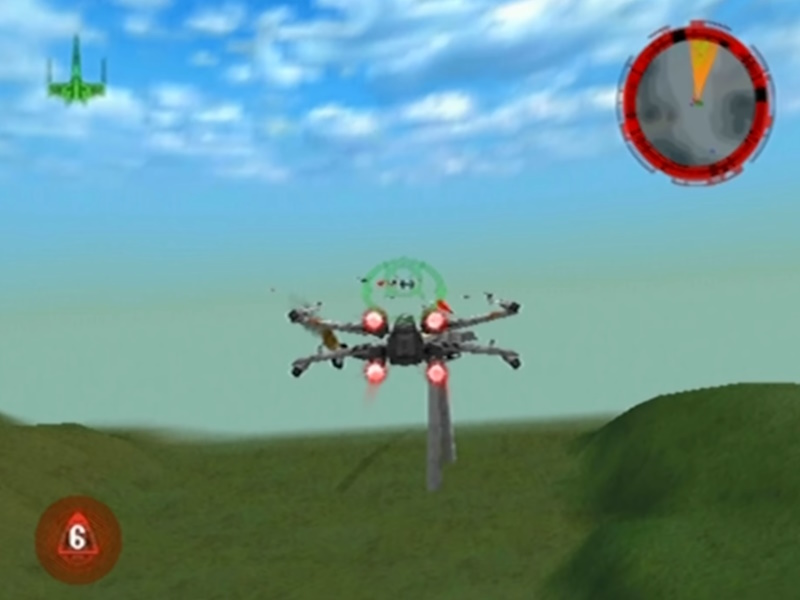
The moment that Star Wars simply can’t live up to

Spoiler Warning: There are spoilers ahead for the entire Star Wars franchise, including The Rise of Skywalker and Knights of the Old Republic.

There’s one very powerful moment in the film most fans agree is the best in Star Wars’ cinematic canon that is both the high point of its success and a weight around its neck. This one moment defines Star Wars’ place in popular culture, and was a twist so unexpected and shocking that it transformed a couple of exciting space fantasy films into a franchise that continues to this day. You know the moment I’m referring to, right?

“No, I am your father!”

But this has been a double-edged sword. After the incredible success of The Empire Strikes Back, the next film in the series – which rounded out the Star Wars trilogy and concluded the series for almost two decades – felt, to some fans at least, like a bit of an anticlimax. It’s difficult to remember now, given all of the other controversies Star Wars has endured from the prequels to the sequels and beyond, but for a long time, Return of the Jedi was considered the weak link in the trilogy.

I vividly remember the first time I watched Star Wars – at the behest of a friend who was a pretty big fan – in the early ’90s. He had all three films on video, and as we sat down to watch them, his father, who was also a Star Wars fan and had introduced the films to his son, insisted to us that the first two films were great, but Return of the Jedi was absolute crap! Part of the reason why some fans felt – or still feel – this way is that Return of the Jedi has nothing that comes close to comparing to the “I am your father!” moment. Nor does any other Star Wars film.

Star Wars has tried – and failed – to come up with something that compares to this moment, even going as far back as Return of the Jedi.

Though the prequel trilogy didn’t try to outright replicate that moment, I think it’s not unfair to say that nothing in those three films compares to the revelation of Vader being Luke’s father – and perhaps that’s because fans already knew the broad strokes of the prequels’ storyline before sitting down to watch any of the films. There were bumps and twists along the way, but we all knew before we sat down to watch The Phantom Menace in 1999 that Anakin would betray the Jedi and become Darth Vader, and that the mild-mannered Palpatine was a Sith in disguise. It’s hard to have a shocking twist under such circumstances!

But the sequel trilogy definitely tried to recapture the magic of the moment between Luke and Vader on Cloud City – not once, but at least three times. In The Force Awakens, Kylo removing his helmet for the first time was an attempt at a shocking surprise. In The Last Jedi we can point to the reveal of Rey’s parents as “nobody,” as well as the death of Snoke, and in The Rise of Skywalker we again have Rey’s parentage but this time Kylo explaining to her that “you are a Palpatine” – one of the worst lines in the trilogy.

This moment between Kylo Ren and Rey was clearly intended to recreate the magic of the scene between Vader and Luke in The Empire Strikes Back.

None of these moments, and many others in Star Wars, have come close to achieving the success of the Darth Vader line in The Empire Strikes Back, and it feels like the franchise doesn’t really know how to respond to the overwhelming power of that one moment. It wouldn’t be fair to say that Star Wars’ entire success is based on one moment in one film, nor that it’s the franchise’s sole accomplishment. But it’s undeniably one of the high points in the whole franchise, so if Star Wars is to see continued success the creative team in charge need to understand what the moment represents, why it worked, and most importantly they need to understand why recent attempts to replicate it have fallen flat.

For me, the closest Star Wars has ever got to recreating the magic of that Darth Vader reveal came not in a film but in a video game. In Knights of the Old Republic, toward the end of the game it’s revealed that the player character is, in fact, one of the game’s principal villains – a Sith Lord named Darth Revan. Revan had their mind erased after being captured by the Jedi, and was re-trained in order to follow the path of the light side. I remember sitting there with the Xbox control pad in my hand with my mouth hanging open, stunned!

The revelation that the player character is Darth Revan in Knights of the Old Republic was shocking, and about as close as Star Wars has ever managed to get to the Luke-Vader moment.

So why don’t I feel that way when Kylo is revealed to be Ben Solo? Or when Rey is revealed to be a descendant of Palpatine? Figuring this out is important, because I’m not the only one who recognises that Star Wars is trying and failing to live up to this moment.

By the time of The Rise of Skywalker, Rey’s parents had been established, and changing that arbitrarily to follow a fan theory just felt wrong – and more than a little stupid. Not to mention that the execution was clumsy and it came in a film with myriad other problems. But the reveal that Kylo Ren is, in fact, Ben Solo – the son of Han and Leia – should have garnered more of a reaction, surely? After all, this is the son of two of Star Wars’ principal characters and biggest heroes, yet he’s the villain having fallen to the dark side.

The buildup to Kylo Ren’s reveal wasn’t as intense, and by the time it’s finally understood who we’re dealing with, perhaps elements of that had already been teased in such a way as they weren’t as big of a shock. Then there’s the fact that The Force Awakens is where we first met Kylo Ren; he didn’t have an entire film to grow on us as his own character – mere minutes after meeting him for the first time we learn his true identity. Darth Vader had almost two entire films as the “big bad” before it became known to us who he really was – and I think that has a bearing on how we perceive these different moments in the two films.

Kylo Ren’s unmasking – and the reveal that he’s Ben Solo – just doesn’t compare to the Luke-Vader moment on Cloud City.

Partly this is a consequence of the way the original trilogy was created. Darth Vader was not Luke’s father in the original film; this is an addition that came later, during the writing of The Empire Strikes Back. There was nothing in the first film to set up or telegraph this moment – because no one, even those involved with the film, knew that the moment was coming. In The Force Awakens or The Rise of Skywalker, the moments which attempt to recreate it were planned, and the films were almost constructed around what the creative team hoped would be the big shocking twist.

Overall, though, I think the fundamental problem is this: The Empire Strikes Back didn’t set out to create a story that all depended on a single moment. The film has many other truly fantastic sequences that would still make it an outstanding film even if the Luke-Vader moment didn’t exist or came in a different film. The creative team behind The Empire Strikes Back weren’t trying to recreate something from a prior story, they were pioneering something new. And while they knew it was going to be a seminal moment in the film, I don’t think anyone involved could have predicted just how important that one moment would turn out to be for the entire Star Wars franchise.

The story of Darth Vader was not known or planned out in the first couple of films – which made the revelation all the more shocking.

But even by the time of Return of the Jedi a couple of years later it was apparent that Star Wars was in danger of feeling like a one-trick pony. A new Death Star had been created to replace the one Luke destroyed in the first film, which is hardly anything original, and after the big twist of the Luke-Vader connection in The Empire Strikes Back, Return of the Jedi made the first attempt to recapture that moment by arbitrarily making Luke and Leia siblings. Neither moment lived up to the comparable moments in previous films, and perhaps that’s a contributing factor to why some fans felt let down. Star Wars had already begun living in its own shadow.

Mimicking or recreating a story or narrative moment almost never results in something better. The most that Star Wars can hope for is to hit the same high notes – but trying to copy something it’s already done won’t ever lead to the franchise exceeding it. The Empire Strikes Back succeeded because it pioneered a storyline that no fan could have expected. Subsequent Star Wars projects – from Return of the Jedi to The Rise of Skywalker – failed to live up to that moment because they didn’t try to create their own unique moments, they tried to copy the successful one from The Empire Strikes Back.

Star Wars won’t ever succeed at recreating this moment – and the sooner the writers and producers realise that, the sooner the franchise can move on!

I’ve spoken on a number of occasions about Star Wars as a franchise being trapped by its own past, unable to move on from the shadow of the original trilogy and tell truly new and different stories. But because the new films rely so heavily on nostalgia for the originals they weren’t allowed to stand on their own two feet – and when The Last Jedi tried in its own way to branch out and do something different, the result was controversy and a divided fanbase. It’s almost unsurprising, in that context, that Star Wars would simply choose to retreat to safer, more comfortable ground – even if that means it won’t ever surpass its original incarnation.

For me the question is this: is that moment in The Empire Strikes Back all Star Wars can ever be? Or will it one day aspire to do something different, maybe even something better? Right now the answer is that Star Wars seems to want to stay firmly in that nostalgic space, chasing the one moment the creative team knows fans adore; the moment on which Star Wars’ modern iterations hang. But for all the films and television shows produced since that moment in 1980, forty-one years ago, the franchise has never succeeded at recreating its magic.

Perhaps it’s time to stop trying to emulate past success, to move on to newer and different things. There are amazing stories in the Star Wars galaxy waiting to be told – but first the creative team in charge of the franchise has to come to terms with the fact that nothing they do will ever match the revelation Darth Vader gives to Luke in The Empire Strikes Back. When they finally realise that, and desist from trying to forcibly make it happen, the franchise can finally start making its own magical moments again.

The Star Wars franchise – including The Empire Strikes Back and all other properties mentioned above – is the copyright of LucasFilm and the Walt Disney Company. This article contains the thoughts and opinions of one person only and is not intended to cause any offence.
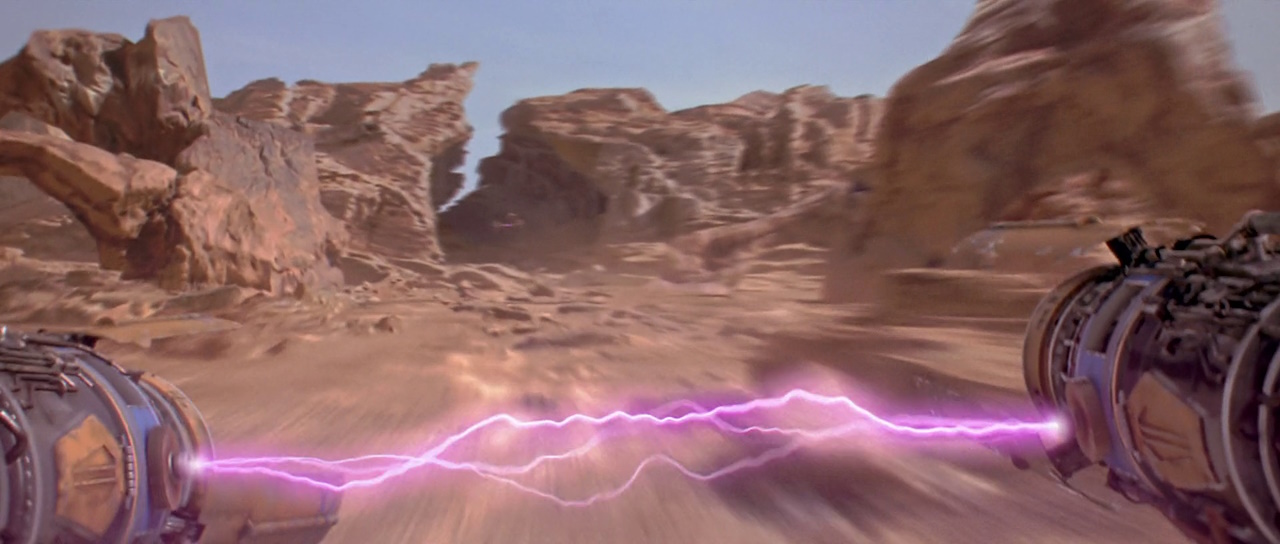
Star Wars Biomes is a cute and clever way to spend twenty minutes

Released to mark Star Wars day, Star Wars Biomes is a short film that’s simultaneously something different yet very nostalgic. A silent tour over several locations from the original trilogy, prequel era, sequels, and even The Mandalorian, Star Wars Biomes was not the sort of thing I was expecting from the franchise. It’s “slow TV” – something to watch for relaxation or to have on in the background while doing something else, and it’s unusual for a major franchise to produce something like that.

In other ways – and you probably know what I’m going to say if you’ve read some of my recent critiques of the overall direction of the Star Wars franchise – this was Star Wars once again retreating to largely safe, well-trodden ground. The short film only visited planets we’ve previously seen in other iterations of the franchise, and made no attempt to branch out and look at anywhere new. But you know what? On this occasion, with this unusual short film, I think that’s okay.

The Millennium Falcon departs Ahch-To in Star Wars Biomes.

A work like this is 100% about the visuals. And on that front, Star Wars Biomes largely delivered. The animation and CGI work was streets ahead of many high-budget television shows of recent times, and far beyond anything the prequel trilogy or special edition edits of the original trilogy were capable of. For example, I would say that Star Wars Biomes showed off the single best representation of Tatooine’s twin suns that has ever been put to screen.

There were a couple of moments in the eighteen-minute broadcast where I felt the CGI strayed into looking a little unrealistic and video-gamey, but generally speaking the animators did a good job. The vistas – or I suppose we should really be calling them “biomes!” – looked fantastic, even stunning in places, and that’s exactly what a short film of this nature aimed to deliver.

I don’t think Tatooine’s twin suns have ever looked this good!

When I first heard the name “Star Wars Biomes,” I wondered if we were going to get something akin to a nature documentary, looking at some of the wildlife or flora of the visited locations. But it was clear from the start that that’s not what the objective was! That’s fine, and it’s not the purpose of a review to say “well I wish it had been a totally different kind of film,” so I’m happy with what was put to screen. That being said, a pseudo-documentary looking at galactic flora and fauna would be an interesting project – as I said when I proposed something similar for Star Trek a little while ago!

Of the locations visited in Star Wars Biomes, I would suggest that the salt-crusted surface of Crait was perhaps the boldest choice. There were only six planets that Star Wars Biomes took us to, and considering the incredibly controversial nature of The Last Jedi, picking one that was featured prominently in that film was very daring on the part of whoever was making that decision! I think we even saw the crashed ski-speeders of Finn and Rose, which was a plot point that was not popular with many fans. Perhaps that’s Star Wars sticking up a cheeky middle finger as if to say “The Last Jedi is still canon!” But perhaps I’m reading too much into it. I still think it was a bold choice, regardless of the behind-the-scenes reasoning!

The crashed ski-speeders on Crait.

Hoth looked beautiful in all of its snow-capped glory. I do love wintery, snowy scenes, and Star Wars Biomes rendered the snow on Hoth perfectly. Moving like a helicopter (or drone, I suppose) the camera panned across the snowy landscape, and spotted a probe droid – which made the familiar, slightly menacing whirring noise it made in The Empire Strikes Back. We also saw AT-AT walkers, and I think it was the first time seeing them from so high up or at such an angle. Both the droid and walkers contributed to a sense of nostalgia, but at the same time it felt new.

As Star Wars Biomes wrapped up its time on Hoth, we got the first of several typical Star Wars “wipes” – the transitions from one scene to another that the Star Wars franchise has always done with a particular flair! This was new in the ’70s, but modern films have largely left this style of wipe behind, with the result being that it feels unique to Star Wars – even though you can find similar transitions in other films of the original trilogy era.

AT-AT walkers seen on Hoth.

Tatooine is up next, and as already mentioned, its twin suns look amazing. Rendered to look similar to our own sun, the shot at the end as the camera panned up was really stunning. Sand, like snow, is more or less a single colour and texture, so perhaps the Tatooine section of Star Wars Biomes relies more on other visual elements – droids, skeletons, Jawas, and a landspeeder – in order to retain visual interest. It was a well-done segment, though.

After Tatooine, Star Wars Biomes heads to Sorgan – a planet whose name I had to Google! This is the planet with the rustic village that was visited in The Mandalorian, and we saw the Razor Crest flying in as the camera panned overhead. Sorgan was the first point in Star Wars Biomes where I felt the CGI – in this case used for some of the huts in the village – strayed from being 100% realistic into video game territory, at least toward the end as the camera zoomed in and got closer. It wasn’t bad by any means, but as we got closer to the village it was possible to tell it was CGI.

The village on Sorgan.

Crait, as mentioned, was the boldest choice in my opinion. The camera angle used here was odd, looking down at a 90-degree angle the entire time. I kept waiting for the camera to pan, showing us more of the surface of Crait, but it never did. The way the vehicles depicted left red trails in the salty surface of Crait was neat, though, and very well done – even if a couple of the large walkers depicted looked a tad video gamey!

Mustafar came next, and was probably my favourite segment. The lava fields were rendered beautifully, and Darth Vader’s castle looked suitably menacing, dominating the scene. Mustafar is, of course, the planet from Revenge of the Sith where Vader was badly injured. A shuttle and a couple of TIE fighters were seen during this segment, too, and they were done well.

Darth Vader’s castle on Mustafar.

Finally we came to Ahch-To, the planet Luke travelled to to hide away, as seen in all three sequel films. We saw a couple of porgs in flight – but not up close – and at Luke’s island, the Millennium Falcon taking off which was neat to see. The island looked like it might’ve been a real shot taken from the Ahch-To filming location off the coast of Ireland, but it could just be very well-made CGI – at this point it isn’t always easy to tell! One CGI misfire during this segment came with a sea monster – the way it breached the surface then sank back beneath the waves didn’t make the right movements on the surface of the water. I know that’s a nitpick!

So that was Star Wars Biomes. Whether you sit and watch it intently – as I did – or put it on in the background as a screensaver, I think it’s worth a look. It’s a bit of fun, and a cute and clever way to celebrate Star Wars without going all-out on a movie marathon! Generally I think it was well-made, with just a couple of moments where the CGI was imperfect. It’s the kind of short film you can put on while you relax and unwind, and its short runtime means it doesn’t feel like a huge commitment.

I had fun with Star Wars Biomes, and I daresay I’ll come back to it again at some point to take another look and see if I can spot anything I missed! It’s the kind of thing I can see myself putting on in the background on a loop while I’m doing something, or even if I have people over (once coronavirus is over and done with). If you decide to check it out, I hope you enjoy Star Wars Biomes as much as I did.

Star Wars Biomes is available to stream now on Disney+. The Star Wars franchise – including all properties and titles mentioned above – is the copyright of Lucasfilm and The Walt Disney Company. This article contains the thoughts and opinions of one person only and is not intended to cause any offence.
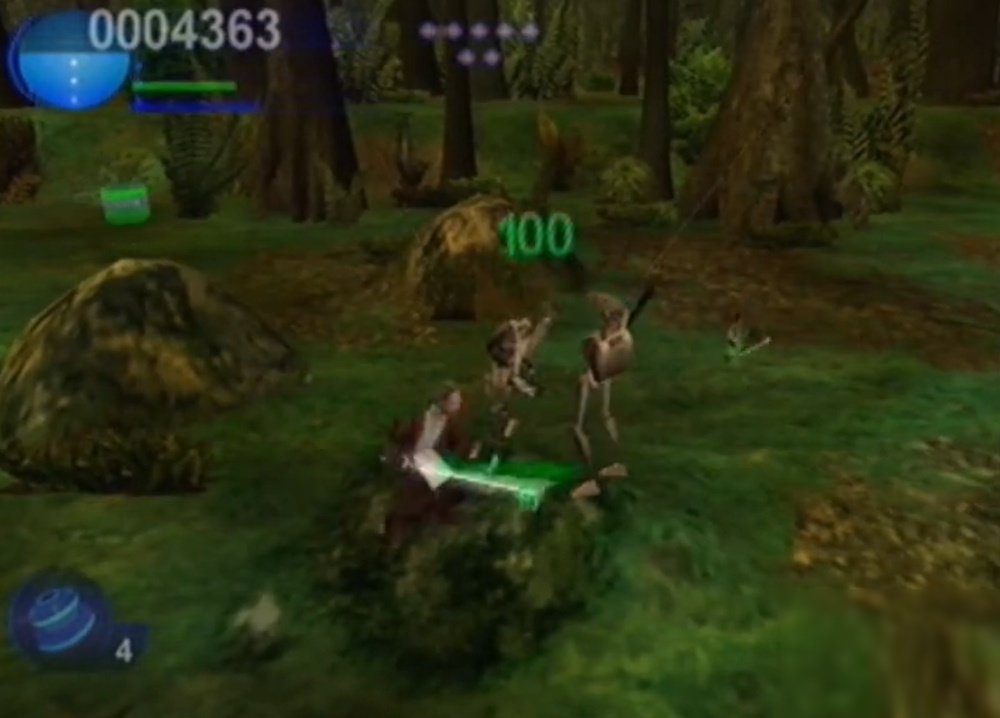
Ten things that the Star Wars prequels got right

Spoiler Warning: There are spoilers ahead for the Star Wars prequel trilogy (The Phantom Menace, Attack of the Clones, and Revenge of the Sith). In addition, spoilers are present for the sequel trilogy, including The Rise of Skywalker, and for Knights of the Old Republic.

Happy Star Wars Day! In celebration of today’s event, I thought we could take a look back at the Star Wars prequel trilogy. Though this isn’t my favourite part of the franchise by any means, today is a day for positivity within the Star Wars fandom, and despite my overall feelings, the prequels did get some things right. It’s easy to criticise and complain, but no film is 100% awful. Not even The Rise of Skywalker.

I became a Star Wars fan in the early ’90s, having watched the original trilogy at the prompting of a friend. It was thus a very exciting time when the prequel trilogy was announced, and even though I wasn’t particularly thrilled with the first two films in particular, Revenge of the Sith managed to churn out an adequate end to the trilogy and set up the original films.

Trekking with Dennis talking positively about the Star Wars prequels?!
“A surprise, to be sure, but a welcome one!”

For a decade after the prequels concluded, Star Wars was said to be complete. Six films, and that’s it. Of course we now have sequels and spin-offs, with many more in the works, and it looks like the Star Wars franchise will continue to roll on and bring in money for parent company Disney. Though no major plans are afoot to revisit the prequel era right now, the Obi-Wan Kenobi series will bring back at least two prominent characters from the trilogy and serve as a continuation of sorts.

As always, this list is just my personal opinion. The prequel trilogy is going through somewhat of a renaissance in the minds of some Star Wars fans – particularly those who grew up with the films. If you adore the prequels, that’s okay. We all have preferences; things we like and dislike, even within a single fandom. There’s no need for discussions about Star Wars to descend into arguments!

With that out of the way, let’s jump into my list of things the prequels got right.

Number 1: Showing the Jedi Order at full strength.

Anakin Skywalker, Obi-Wan Kenobi, and Qui-Gon Jinn meeting with the Jedi Council in The Phantom Menace.

At the time The Phantom Menace premiered, Star Wars’ cinematic canon had only ever shown five Force users – only one of whom could reasonably be said to still be “a Jedi” when he appeared on screen. Though Luke Skywalker appeared to take on the mantle of Jedi Master by the end of Return of the Jedi, we were still curious to see how the Order appeared in its original form.

All three films spent a decent amount of time with the Jedi Order, showing the organisation if not at its peak then certainly in far better shape than we’d ever seen it before. The Jedi maintained a huge temple as their headquarters and base of operations, and hundreds of Jedi Knights and Jedi Masters were seen on screen, taking on various roles across the three films.

Young Jedi train while Yoda and Obi-Wan Kenobi observe.

Prior to this, all we really had to go on was hearsay. Ben Kenobi and Yoda had told Luke Skywalker a little about the former Jedi Order across the original films, but there’s a big difference between hearing a character explain something and actually seeing it firsthand. The legend of the Jedi Order made it to screen in a big way, and told us a lot about the history of the Star Wars galaxy as well.

We also got to know several key members of the Jedi Order in this era, and see the Jedi take on leadership roles to try to bring about peace and stave off the separatists. We arguably learned more about the minutiae of the Jedi in the prequel trilogy than in the originals, sequels, and spin-offs combined, and while it wasn’t all perfect – the Jedi robes being just one example of that – the prequels undeniably expanded the lore of Star Wars in this regard.

Number 2: Starship designs.

A Republic starship during the Battle over Coruscant.

Many of the starship designs used during the prequel trilogy were cleverly designed with the original trilogy in mind. It’s not an easy task to take an existing design and try to work backwards from it, creating a new design that’s supposed to look like a realistic predecessor to something that was supposedly built later. But the prequel trilogy does a creditable job in this regard, especially insofar as starships are concerned.

There were two issues that the prequels faced: on the production side, technology had changed a lot regarding how special effects were made, meaning some of the original films’ starships looked very much “of their time.” And secondly, the Imperial ships seen in the original trilogy were designed to look villainous and menacing as the Empire was the antagonist faction in those films. Thus the designers had to create something that looked like a reasonable precursor to the Empire without looking too “evil” and also without looking like it came straight from the 1970s!

Obi-Wan Kenobi’s Jedi starfighter has elements of both X-Wings and TIE Fighters in its design.

This is a design challenge unlike many others in cinema, and the prequels got it largely right. The Republic’s ships, both large capital ships and smaller starfighters, retained enough design elements from the original trilogy to look like plausible ancestors of things like TIE Fighters and Star Destroyers, but the brighter colours and softened edges made them look at least a little friendlier.

In any fantasy film, things like design and aesthetic world-building are easy to overlook, but they’re absolutely essential to the sense of immersion that viewers need. The best films work hard to ensure their designs are iconic, and while perhaps very few things in the prequels are as iconic as designs from the original trilogy, the designs blend together well. Nothing was outright copied, and nothing was overwritten.

Number 3: The musical score.

The prequel trilogy had a great soundtrack.

John Williams, who had composed and conducted the music for the original trilogy, returned to Star Wars for the prequels, and his music has to be considered one of the high points of all three films by anyone’s standards. Pieces like Duel of the Fates have become iconic and emblematic of the whole franchise, and it’s impossible to imagine Star Wars without Williams’ compositions.

Considering the budget and creative freedom George Lucas had when making the prequels, he could’ve chosen to approach any composer to create the film’s score. He didn’t have to go back to John Williams if he felt he wanted someone else, but he did. And the films are undeniably better for the inclusion of Williams’ compositions.

Number 4: Palpatine’s scheming.

The story of Palpatine’s rise was interesting.

Though I have argued that seeing the rise and fall of Anakin Skywalker was ultimately unnecessary to explain anything from the original films, one thing that absolutely was interesting was seeing how Palpatine schemed and manipulated events to allow himself to rise to the position of Supreme Chancellor – and ultimately Emperor.

I’m having a hard time, in light of The Rise of Skywalker, truly appreciating this aspect of the prequels, because Palpatine’s clumsy insertion into that film has done a heck of a lot to detract from his characterisation. But if we set that aside as best we can for a moment, one of the prequel trilogy’s themes – and best-executed narrative elements – was Palpatine’s rise. Though he was treated as a secondary character when compared to the likes of Anakin and Obi-Wan, I would suggest that his story was actually handled better than almost everyone else’s.

Palpatine meeting with Count Dooku, the separatist leader. He played both sides during the Clone Wars, having planned everything to allow a smooth rise to power.

Say what you will about George Lucas and his storytelling, but when it came to Palpatine in the prequels, there was a meticulous and detailed plan from day one – and it actually made sense. Taking inspiration from the rise of Julius Caesar, who transformed Rome from a Republic into a dictatorial Empire, Palpatine’s scheme was cleverly written, with just enough shown on screen to leave an air of mystery – that the character knew more than he was letting on.

Considering that the prequels overall, and The Phantom Menace in particular, had a kid-friendly tone and plenty of action going on, this kind of political manipulation is a very adult theme, and in other films or series, the juxtaposition of politicking and scheming with space wizards and magic would have fallen completely flat. It succeeded here, in part due to being set up well and planned from the beginning, and in part thanks to Ian McDiarmid’s stellar performance.

Number 5: The Knights of the Old Republic games.

Promo art for Knights of the Old Republic II.

This one is a bit of a cheat since the games were not related to the films, but they were released around the same time (2003-04) and made use of a number of aesthetic elements and settings that had been established in The Phantom Menace and Attack of the Clones. I’ve said before on a number of occasions that the Knights of the Old Republic games aren’t just among my favourite video games, they’re two of the best stories ever told in the Star Wars universe.

Though distinct from the prequels, it’s hard to imagine either game being made were it not for the renewed interest in Star Wars that the prequel films generated. The use of things like Jedi robes and a Jedi Council were borrowed from the prequel trilogy as well, and Knights of the Old Republic leaned into the notion of the Jedi Order remaining a constant part of the galaxy, barely changing over millennia. This was a big part of the mythos of Star Wars at the time – the idea that the Republic had existed for thousands of years until the Empire overtook it.

The Knights of the Old Republic games were fantastic.

The big twist in the first Knights of the Old Republic was one of the few moments where I was genuinely blown away by a storyline in a video game, and I remember sitting there with the control pad in my hands just in shock! It was a fantastically-executed narrative point, and while it isn’t really taken from the prequels, it mirrors in some respects the idea of Anakin Skywalker being a Jedi, then falling to the dark side, before ultimately being redeemed – which was, of course, a major theme in the prequel trilogy.

A third Knights of the Old Republic title was rumoured to be in production earlier in the year, so perhaps we’ll finally get a sequel! Even if that isn’t the case, or turns out to be unconnected to the original duology, they’re two of the best games I’ve ever played.

Number 6: Better lightsaber fights.

Obi-Wan Kenobi duelling Count Dooku.

The original trilogy had a couple of solid lightsaber duels, both between Luke and Darth Vader. But the prequel trilogy in general has more exciting lightsaber combat. Not only the duels between Sith and Jedi, but also seeing Jedi in combat against non-Jedi opponents was generally done better – in my subjective opinion, at least – in the prequel films.

In terms of specific lightsaber duels, I’d point to the fight between Qui-Gon and Obi-Wan against Darth Maul in The Phantom Menace, and Obi-Wan, Anakin, and Yoda duelling Count Dooku in Attack of the Clones as two of the better ones put to screen in the franchise.

The moment Darth Maul ignited his lightsaber’s second blade was jaw-dropping for many fans in 1999!

The prequels changed the way we imagine lightsaber combat, expanding the idea of duelling to encompass different styles and “forms” of wielding the weapon. This has been picked up in video games, films, and television shows produced in the wake of the prequel trilogy, and has gone on to be a defining part of the way lightsaber combat looks on screen.

We also got to see different designs of lightsaber hilt, and a new purple colour for Mace Windu. All of these things made a difference to the way the franchise as a whole handles its signature weapon, and a good deal of what we know about lightsabers and lightsaber duelling comes from the prequel trilogy.

Number 7: Solid acting performances.

Natalie Portman as Padmé and Hayden Christensen as Anakin in Attack of the Clones.

One area of criticism of the prequel films that I fundamentally do not agree with is that the acting performances were somehow stilted or poor quality. Practically every actor involved did the best with the material they had, and some of the harshest criticism levelled at people like Hayden Christensen (Anakin Skywalker) or Ahmed Best (Jar Jar Binks) should really be aimed at George Lucas for his writing and direction.

Not only would I say that much of the criticism of the acting is unfair and overly harsh on the performers, but there are some genuinely outstanding performances in the prequel films. Ian McDiarmid’s performance as Palpatine, as we noted above, is stellar, but I’d also point to Ewan McGregor’s stint as Obi-Wan Kenobi, in particular the incredibly pained emotional moments he shares with Anakin on Mustafar.

Number 8: A planned story.

The prequel films had a narrative that was planned from day one.

This is one which has come into sharper focus given the complete lack of overall direction afforded to the sequel trilogy. As I’ve said before, the sequel trilogy having its own narrative issues does not magically make the prequels any better, but it is worth acknowledging that the prequels had a planned story from the beginning.

Not only that, but the prequel trilogy does a creditable job of executing that story in an understandable manner. There aren’t many moments where viewers are left thinking “who’s that character?” or “what’s going on?” The narrative runs as smoothly as possible from point to point, and main characters like Anakin, Palpatine, and Obi-Wan had their arcs pre-planned.

The prequel trilogy had a story planned from the ground up to reach this moment.

Partly, it has to be said, this is because the films are prequels – they have a definite end point that they absolutely must reach. But there were many different ways to tell the rise and fall of Anakin Skywalker, Palpatine’s ascent to the Imperial throne, and so on. There is no denying that Lucas and others planned the story, knew where they wanted it to go, and put that to screen about as well as possible.

Whatever you may think of the story itself, this is the way filmmaking – and any storytelling, come to that – is supposed to work. If you’re going to create a trilogy of films with a view to focusing on the adventures of a few characters, planning out where the narrative and character arcs are going to go is essential.

Number 9: Tense and exciting action sequences.

There were some well-executed moments of action in the prequel trilogy.

Though not every action set piece worked perfectly, the Star Wars prequels do have several exciting and tense sequences. The starship crash-landing early in Revenge of the Sith is a great example of a sequence that didn’t drag on too long and kept the excitement going practically the whole time.

Parts of the Battle of Geonosis in Attack of the Clones – though a CGI mess at points – managed to be stirring and exciting too, with the last-minute arrival of a Jedi “Strike Team” to save Anakin, Obi-Wan, and Padmé achieving at least some of the feelings it was going for. Star Wars can do battles and action very well, and the prequels have some sequences that demonstrate that.

Number 10: Reinvigorated Star Wars for a new generation of fans.

A lot of kids who saw the prequels are big Star Wars fans today – and big defenders of those films!

I’m not surprised to see many Star Wars fans in their teens and twenties defending the prequels with such vigour. These films are theirs – perhaps the first Star Wars films they ever saw, and they’re films which, for many younger fans, started a lifelong love of a galaxy far, far away. Without the prequel trilogy, it’s likely Star Wars would be nowhere near as big as it is today. It would be a well-remembered trilogy of films from the late ’70s with a bunch of spin-off fan-fiction.

The prequels proved that there was more to Star Wars than just the original films, even though they relied heavily on those films in large part. From a business point of view, all three films were massively profitable, with the films themselves and, crucially, their merchandise bringing in literally billions of dollars. The Walt Disney Company would never have been interested in Star Wars and Lucasfilm had the prequels not demonstrated beyond any doubt that the Star Wars franchise could be more than its original trilogy.

Moments of humour, comical characters, and fun designs in the prequels all appealed to kids.

Whatever you may think of the films Disney has made over the last few years, there’s more to come from Star Wars. I personally loved Rogue One, and I’m interested to see what some of the upcoming television series have to offer. Without the prequels, we’d never have seen Rogue One, the sequel trilogy, or The Mandalorian – or at least, they’d have taken a very different form.

Any successful franchise builds on the accomplishments of its earlier iterations, and we can see attempts for Star Wars to do so too. Those attempts aren’t always successful, but the legacy of the prequel trilogy is that Star Wars still exists and is expanding to become bigger than anyone expected it could be twenty years ago. The success of current and future projects is, to a greater or lesser extent, built on what the prequel trilogy achieved. Though I may not be wild about these three films on their own merits, the prequels’ biggest achievement may be in rejuvenating Star Wars for a new generation of fans, pushing the franchise forward.

So that’s it.

I wanted to try something positive for Star Wars to mark today, and I thought revisiting the prequel trilogy would be a good place to start.

Anakin Skywalker – a.k.a. Darth Vader.

Star Wars is in a strange place right now, in some ways. The sequel trilogy has wrapped up, but it ended in a pretty ambiguous way, and we’re still not sure exactly what will happen to the galaxy after the “final” defeat of Palpatine. Disney has shifted its focus back to the original trilogy era with most of its upcoming projects, and depending on the success of shows like Obi-Wan Kenobi, perhaps a more serious attempt will be made soon to revisit the prequel era. Time will tell!

Regardless, having watched The Phantom Menace a few days ago I thought I’d also go back and re-watch Attack of the Clones and Revenge of the Sith to complete the set, and that led to this article in celebration of Star Wars day. It’s possible that Disney (or other companies affiliated with Star Wars, like EA) might use today to make announcements of upcoming projects, so if there’s significant news I hope you’ll check back as I daresay I’ll try to break it down.

Now, where’s my review of The Mandalorian Season 2? It’s been six months… better get cracking on that!

The Star Wars franchise – including The Phantom Menace, Attack of the Clones, Revenge of the Sith, and all other titles mentioned above – is the copyright of The Walt Disney Company and Lucasfilm. The prequel trilogy can be streamed now on Disney+ and is also available on DVD and Blu-ray. This article contains the thoughts and opinions of one person only and is not intended to cause any offence.
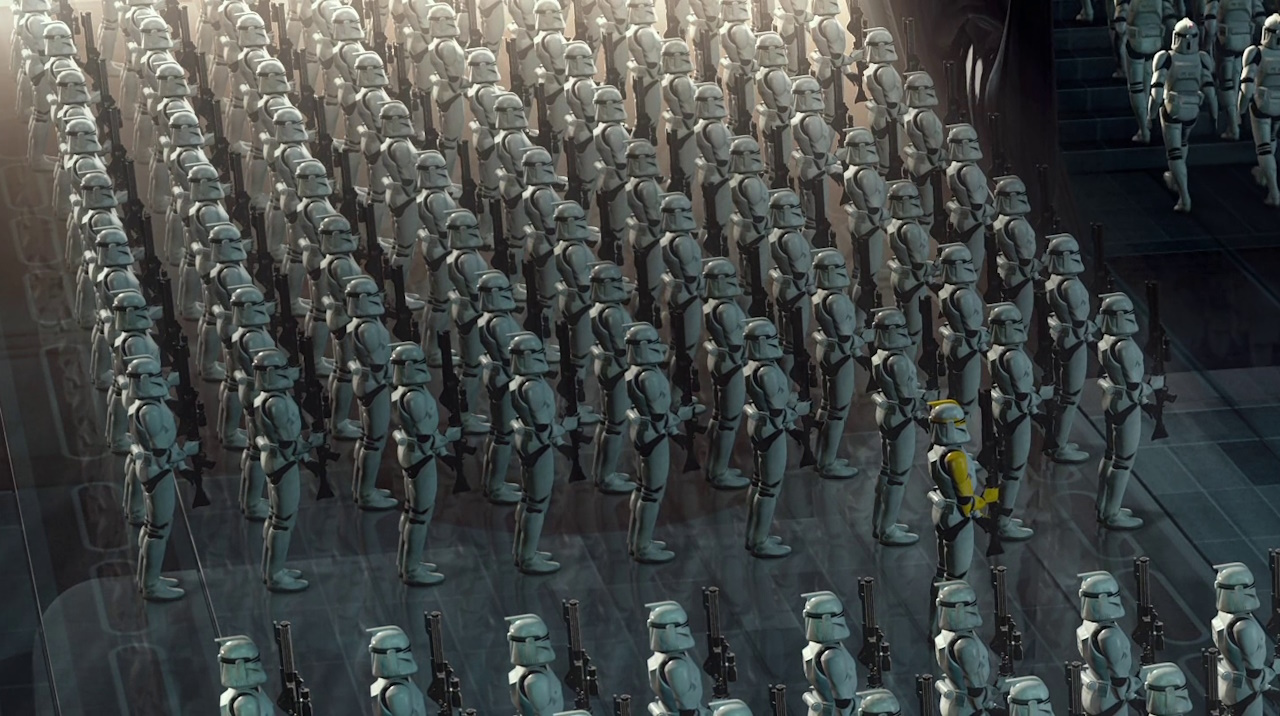
Ten of my favourite Disney World rides and attractions

It’s been a long time since I visited a Disney theme park, but with the re-opening of Disneyland in California recently hitting the headlines, I’ve been thinking about past visits. I’ve been very lucky to have visited three of the six Disney parks in my life, and though California’s Disneyland is the original and thus a classic, for my money you can’t beat Walt Disney World in Florida. There’s just so much more going on and so much more to do!

The last time I visited Walt Disney World was in 2006, and there have been many changes to the resort and its four constituent parks since then. This list won’t reflect those changes, so don’t expect to see me talk about Galaxy’s Edge and Rise of the Resistance. I would love to try that ride for myself one day, but my health prevents me from travelling (even if there weren’t a pandemic going on) so I doubt I’ll ever get to experience it for myself.

Cinderella’s Castle is the centrepiece and icon of Walt Disney World.

Luckily, though, I had several wonderful Disney experiences earlier in my life while I was able, and I’ve visited the parks both with family and with friends. Disney World – and the other parks – are presented as family-oriented attractions, but even as an adult you’ll find plenty going on and lots of things to have fun with.

So let’s celebrate all things Disney by picking out ten of my favourite rides and attractions! For the record, because I know people like to argue: I’m not saying these are objectively the best things to do at Disney World. These are simply ten rides and attractions that I enjoyed at the park on my earlier visits. If you have your own favourites and don’t like these ones, that’s okay! There’s a broad range of things to do at Disney World, with rides and attractions to cater to many different folks and the things they enjoy. We don’t all have to like the same things!

With that out of the way, let’s take a look at my list.

Number 1: The Tomorrowland Transit Authority/PeopleMover

The Tomorrowland Transit Authority/PeopleMover track.

I said at the beginning that this isn’t a top ten list of my absolute favourite rides. But if it were, the Tomorrowland Transit Authority would be my number one! It’s almost certainly my favourite ride at the Magic Kingdom and the whole of Disney World, which might come as a surprise considering it’s very tame. Unlike other slow rides at Disney, the Tomorrowland Transit Authority doesn’t really have its own theme, instead making a loop of Tomorrowland – one part of the Magic Kingdom – from about one storey up.

The Tomorrowland Transit Authority is fun and interesting, passing through several rides in Tomorrowland and a shop, giving you a birds-eye view over much of the future-themed area of the park. It’s gentle, so it’s perfect for young kids and others who don’t enjoy fast-moving rides, and unlike many of Disney’s other slow rides it isn’t in the dark, which again makes it great for kids who might not be so happy in the dark.

There usually isn’t a horribly long queue for the Tomorrowland Transit Authority (or at least, not as far as I remember from past visits) which, combined with its gentle nature, means it’s something relatively easy to do in between “bigger” attractions. Riding the Tomorrowland Transit Authority can nicely punctuate a visit to the Magic Kingdom, providing a way to slow down while still enjoying a ride. But it’s absolutely great fun on its own merit, and well worth a visit. If I ever go back to Walt Disney World, I’m making a beeline for the Tomorrowland Transit Authority as soon as I walk through the gate!

Number 2: El Rio del Tiempo (Mexico Pavilion at Epcot)

The entrance to El Rio del Tiempo.
Photo Credit: Disney Wiki

Sadly, El Rio del Tiempo has been re-themed since I last visited the parks, with the dark ride now taking on a theme based loosely on The Three Caballeros, a 1944 film featuring Disney mainstay Donald Duck. I believe the ride layout remains the same, though, despite the re-theming, so I imagine the gentle pace of the attraction has been retained.

Epcot’s World Showcase is an eclectic mix of different countries, with themed areas representing different parts of the world. There are points of interest and lots of places to eat, but what World Showcase doesn’t have in abundance are rides. The Mexico Pavilion contained my favourite, which is/was a dark ride set inside the attraction’s Mayan pyramid. The version of the ride I remember was a gentle boat ride, with no big drops or splashes, and after trailing around World Showcase in the Florida heat, it was great to take a break and sit down in the shade – and air conditioning!

A lot of theme parks (especially here in the UK) go all-in on thrill rides, trying to outdo each other with bigger and faster rollercoasters. Walt Disney World has always been great at having slower, gentler attractions that aren’t just rides for kids, and El Rio del Tiempo was a great example of an adult-oriented dark ride, one which paid homage to Mexico and Mexican history in a respectful way. I haven’t ridden the updated Donald Duck version, but I hope it managed to keep some of what made the original attraction so pleasurable.

Number 3: The Great Movie Ride

A recreation of Hollywood’s famous Chinese Theater served as the building for The Great Movie Ride.
Photo Credit: The Walt Disney Company

Another attraction that, sadly, can no longer be ridden, The Great Movie Ride was one of the original rides and showpieces of Disney’s MGM Studios/Hollywood Studios. It closed in 2017, being replaced by Mickey and Minnie’s Runaway Railway. As with El Rio del Tiempo above, this reflects a move on Disney’s part to introduce its own characters and brands into all of the rides at Disney parks.

What I loved most about The Great Movie Ride was that a cast member (i.e. a real person) was present throughout, serving as a guide as the ride took you through clever recreations of scenes from famous films like Casablanca, The Wizard of Oz, Raiders of the Lost Ark, and even Alien. There was an incredible diversity of films on display, and having a live performer along with the wonderful animatronics brought the world of Hollywood to life in a way I’d never really experienced before.

The Great Movie Ride was a love letter not just to the “Golden Age” of Hollywood, but to cinema in general. The queue area contained actual props from more than a dozen films – including the famous ruby slippers from The Wizard of Oz and a dress worn by Kate Winslet in Titanic. While it makes sense in some ways for Disney to want to stick to its own brands, I think something significant was lost with the closure of The Great Movie Ride that took away from Hollywood Studios’ premise as a park.

Number 4: Star Tours

The StarSpeeder 3000!
Photo Credit: Disney Wiki

Galaxy’s Edge was not the first Star Wars-themed attraction at Disney World. Not by a long shot! Star Tours opened in 1989, and is still open today – albeit having been given a makeover! Unlike most attractions at Disney World, Star Tours is a simulator, meaning that it stays in one place and doesn’t follow a track.

I can still remember the thrill of boarding Star Tours in the early 1990s, not too long after having seen the Star Wars trilogy for the first time. Actually boarding a starship, complete with a droid pilot, and going on my own Star Wars adventure was a geeky kid’s absolute dream, and the sense of wonder I had as the doors to the simulator opened that first time is a memory that has stuck with me for decades.

The simulator itself was clever, and the ride managed to really give you the sensation of being a spaceship passenger, lurching from side to side and up and down as the ship tried to escape Imperial attacks! The “story” of the ride was, of course, a bit silly, but the experience of being part of Star Wars – even just for a few minutes – is something I’ve never forgotten. I haven’t been able to ride the updated version of Star Tours, but I’m sure it’s just as much fun, and that there are young Star Wars fans today about to have that same kind of experience!

Number 5: Pirates of the Caribbean

Pirates of the Caribbean exterior (at Disneyland Paris).
Photo Credit: Trekking with Dennis

Pirates of the Caribbean was a ride long before anyone conceived of Jack Sparrow or the film franchise! And it’s a fun pirate-themed boat ride perfect for Adventureland. It wasn’t the first ride to be given the feature film treatment – that dubious honour goes to Hollywood Studios’ Tower of Terror, which saw a truly mediocre adaptation in 1997 – but it’s not unfair to say it’s been the most successful to date.

The ride itself – at least the classic version, prior to being updated with characters from the films – didn’t have a strong story, instead comprising little more than a set of pirate-themed scenes loosely bound together. Thus there wasn’t much to “adapt” to bring it to screen, just a theme and a song.

Though the ride has now been updated to reflect the popularity of the films, which makes sense, the original version was plenty of fun. The ride is a step in between something like El Rio del Tiempo and more thrilling, faster-paced rides, containing several short drops and faster sections rather than simply being a slow boat tour in the dark. Pirates of the Caribbean is a Disney classic, and one that nobody should miss when visiting!

Number 6: The Monorail

A Walt Disney World Monorail train.

Though you aren’t technically supposed to… this is the only ride on this list you can ride for free! Because the Monorail runs outside of Disney World itself, connecting the theme parks to several resort hotels and the main entrance, it’s possible to hop aboard even if you don’t have a ticket for the theme park – or at least, it used to be!

The Monorail is a lot of fun to ride, and offers great views of both the Magic Kingdom and Epcot. As a kid, I was seriously impressed with the way the Monorail glides through the inside of the Contemporary Resort – one of the hotels near the Magic Kingdom. The idea of a train going inside of a hotel blew my mind!

It’s designed to be a practical method of transportation, providing guests with an easy connection between their hotels or the car park and the theme parks. But the Monorail is so lovingly designed and well maintained that it’s a fun ride in itself. It also bookends a day at the parks – and even a whole Disney trip – perfectly, by beginning and ending with a ride.

Number 7: Spaceship Earth

Spaceship Earth is symbolic of Epcot.

Epcot’s talisman is a perfect representation of the concept behind the Epcot theme park. It’s a dark ride that goes through a summarised version of history, specifically the history of communication, with great animatronics and excellent narration. Epcot was originally intended as a park with a greater emphasis on imagination and education, showing off a particular vision for a possible future. Spaceship Earth is one of the few remaining elements of that original vision, with others having been closed or Disney-fied.

Spaceship Earth is the first thing you seen upon entering Epcot, and the huge geodesic sphere can be seen from all over the park. Its futuristic design still looks great as the park approaches its fortieth anniversary, and it’s become absolutely iconic. I hope that a planned renovation of the ride, which was due to start last year before the pandemic delayed things, doesn’t take away its educational charm.

Because Spaceship Earth is the first attraction inside the gate, it’s easy to make it your first port of call in Epcot. In my recollection, the queue wasn’t especially long on any of the occasions I wanted to ride, and inside a combination of moving walkways and continuously-moving ride vehicles seem to provide a smooth experience. The final part of the ride, which takes you through a field of stars “into the future” always feels moving and beautiful, and the ride ends on a very optimistic and hopeful note.

Number 8: Kilimanjaro Safaris

The sign welcoming guests to Kilimanjaro Safaris.

In 1998 my family and I were fortunate to be among the first guests ever welcomed into Disney’s Animal Kingdom. The new theme park was fantastic, and coming a few short years after The Lion King had been in cinemas, it was wonderful to see Disney really embracing the animal theme. Kilimanjaro Safaris is, as you might expect from the name, a safari ride.

Growing up, my family visited South Africa on a few occasions to visit an aunt who had moved there, and I lived in South Africa for a time shortly after graduating from university, so I’ve been lucky to have been on a real safari on a number of occasions. And I have to say, Kilimanjaro Safaris compares positively to the real thing! Because the ride is relatively compact, it’s possible to see many different animals – real animals, not animatronics – during the course of your expedition, which is fantastic.

There is a story to the ride, and like The Great Movie Ride above, Kilimanjaro Safaris has a cast member driving the ride vehicle to serve as your guide, adding a whole extra level of immersion. The animals at Animal Kingdom are well cared-for, and while it is still a “zoo” of sorts, knowing that the animals have space to roam and aren’t confined to small cages is nice to know. Getting up close and personal with some of these wild animals might otherwise be impossible, so Kilimanjaro Safaris offers a unique experience that really can’t be found elsewhere.

Number 9: Splash Mountain

Splash Mountain looms large over Frontierland!

After putting so many slower rides on the list, I suppose we need at least one “thrill ride” before we wrap things up! Splash Mountain is a log flume with a slow and tense build-up to a long drop, and it’s very easy to get absolutely soaked while riding! The ride is being re-themed at some point in the near future, following criticism of its present theme, which includes elements from the controversial film Song of the South. The new theme will draw on The Princess and the Frog, and based on concept art looks fantastic.

Splash Mountain slowly builds up a sense of tension. A couple of smaller drops get you riled up for the big one, and the slightly creepy vibe present in some of the animatronic scenes really ramps things up as you… go up the ramp! By the time the big drop is imminent, the ride has done its job of building anticipation!

I’ve always enjoyed Splash Mountain, and though I don’t expect to be able to see the re-themed version any time soon, it sounds like it’s in good hands. It’s one of the main attractions in Frontierland, and one of the “three mountains of the Magic Kingdom” along with Space Mountain and Big Thunder Mountain. Doing all three in a day makes for an amazing and thrilling time!

Number 10: Peter Pan’s Flight

Entry to Peter Pan’s Flight.
Photo Credit: Disney Wiki

Peter Pan’s Flight is a dark ride that vaguely follows the story of the 1953 film, taking you on a journey to Neverland with Peter and the Darlings. The gentle ride is great for young kids, and the adventure of following Peter Pan as he flies above London and battles Captain Hook is rendered beautifully with Disney’s animatronics.

Clever use of forced perspective really does give you the sensation of flight – being high above London and Neverland, looking down. It’s a very well-designed ride to get that sense of scale, and I’ve always appreciated that about Peter Pan’s Flight. Most of the characters from the film are present, including Tinker Bell and Captain Hook, and it’s just a cute, fun ride.

Given the recent controversy surrounding the way Native Americans were depicted, and Peter Pan’s restricted access on Disney+ that has resulted, I wouldn’t be surprised if Peter Pan’s Flight is reworked or even closed and entirely re-themed at some point in the near future. So this might be one to ride while you can!

Bonus: Fireworks displays

Fireworks in the Magic Kingdom.

Few places in the world do fireworks displays as well as Walt Disney World. Even though I’m not the world’s biggest fan of fireworks, which I feel can be a tad boring, the displays Disney World puts on at the Magic Kingdom and Epcot in particular are absolutely fantastic, and well worth sticking around for after dark.

Seeing the fireworks pop over Cinderella’s Castle, while also watching performers in costume as Mickey, Minnie, the Princesses, and other Disney favourites is one of the must-do experiences while in Disney World, especially if you’re visiting with kids. Not only is it a quintessential Disney World experience in itself, it’s also one of the best fireworks shows you’re ever likely to see!

Most places around the world are only treated to fireworks once or twice a year, so seeing a live display – especially a professional one on a large scale – does still present a sense of wonder and excitement, even to an old cynic like me! It’s a great way to end a day at the parks.

So that’s it. Ten of my favourite attractions at Walt Disney World.

No Rise of the Resistance for me… yet!

Did your favourite(s) make the list? If not, I hope you’ll stay tuned. This is a subject I’m sure I’ll revisit at some point in future, as there are at least ten more rides and attractions I can think of that didn’t make this first list! Disney World really has something for everyone, in my opinion. Whether you want the thrill of a fast rollercoaster, an immersive story-based ride, something gentle to do with young kids, or a show to sit down and watch, there’s so much going on that kids and adults of all ages should be able to find something to enjoy. I greatly enjoyed my visits to the park, and I’m glad to have been able to attend while I was capable of doing so.

The great thing about Walt Disney World is – as Walt Disney himself said – that the parks are “never finished.” There will always be changes, additions, and updates to keep things fresh and interesting, and while the trend in recent years has been for including more of Disney’s own characters and intellectual properties, that may not always be the case, and we could see more changes in future that bring back ideas like The Great Movie Ride or Epcot’s Innoventions.

Regardless, I hope this list was a bit of fun, and maybe a trip down memory lane for those of you who, like me, haven’t been able to visit the parks in a number of years.

All rides and attractions listed above are the copyright of and owned by Disney Parks and/or The Walt Disney Company. Some images courtesy of the Disney Wiki and Unsplash. This article contains the thoughts and opinions of one person only and is not intended to cause any offence.
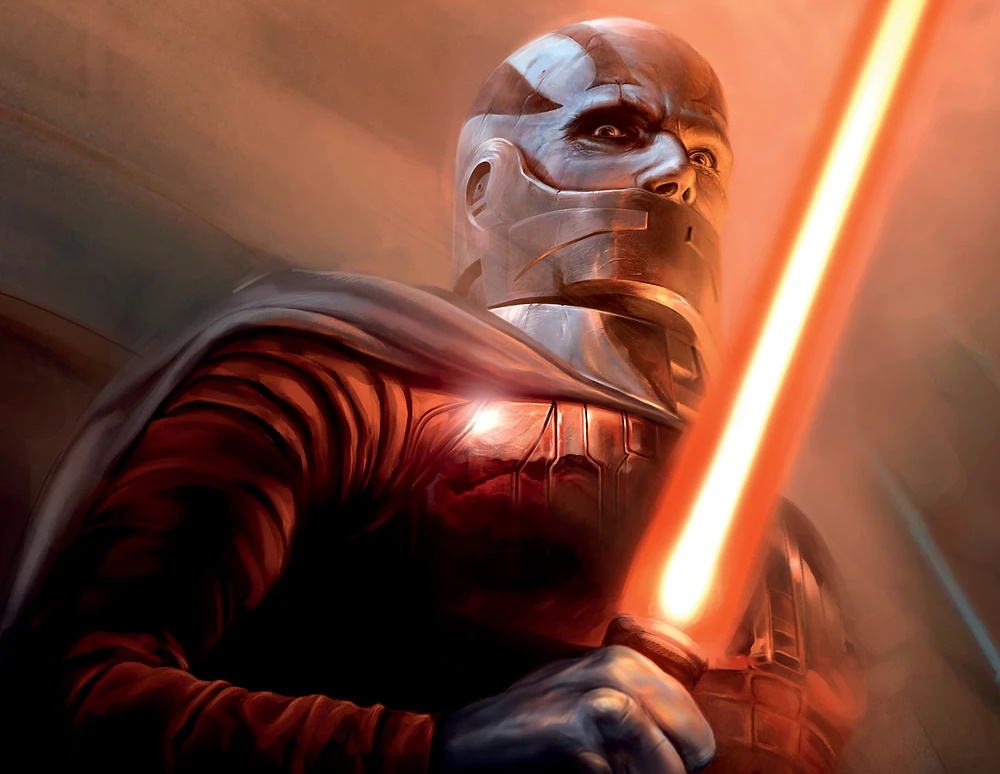
A year later, have I softened my tone on The Rise of Skywalker?

Spoiler Warning: There are spoilers ahead for Star Wars Episode IX: The Rise of Skywalker, and for the entire Star Wars franchise.

You can find my original review of The Rise of Skywalker by clicking or tapping here.

Star Wars Episode IX: The Rise of Skywalker premiered in December 2019, but it wasn’t until the spring of 2020 that I was able to see it. As I’ve explained on a few occasions, my health now prevents me from taking trips to the cinema, so I had to wait until it was available to watch digitally. It’s now been a year since I published my review (or should that be tear-down?) of the film, so I thought I’d revisit it and see what, if anything, has changed in that time.

Attitudes can soften with the passage of time, and a film or series that was once considered dire can find a new audience later on. The Star Wars franchise itself contains great examples of this: not only can we point to the growing popularity of the prequel trilogy, especially among fans who first saw those films when they were children, but even Return of the Jedi, which was once considered the weak link in the trilogy, is now held up alongside the original film and The Empire Strikes Back, with most fans not differentiating between any parts of the Original Trilogy.

Remember when everyone hated and derided the Ewoks?

Part of this is to do with age and when fans first encountered Star Wars, of course. And one year isn’t a lot of time to allow passions to settle, so perhaps I’m entering this with too high hopes! But despite that, I hadn’t re-watched The Rise of Skywalker since I first reviewed it until a couple of days ago, and if nothing else I was curious to see if I still found the film to be as bad as I did then.

Here’s my basic summary from last time: The Rise of Skywalker has problems with pacing and editing, with the film rushing from story beat to story beat never allowing the audience to catch a breath and process anything that’s happened. That makes it feel like nothing more than a mindless action film on par with the worst parts of series like Transformers or Sharknado. Then the film went out of its way to overwrite basically everything that happened in The Last Jedi.

Promo art for The Rise of Skywalker.

Whether you like The Last Jedi or not – and I do respect that there are strong feelings on this – you have to accept that, in a three-part trilogy, the third film simply cannot waste time doing this. By trying to overwrite The Last Jedi, The Rise of Skywalker ended up having to condense two films’ worth of story into one title – something which goes some way to explaining the awful pacing issue noted above.

Then there were story beats left unexplained or unseen. Palpatine’s message to the galaxy informing them of his (incredibly dumb) plan. Where was it? Surely we needed to see that on screen for ourselves instead of just seeing the reactions of other characters or reading it in the opening crawl. Oh, that’s right: Palpatine’s incredibly important message that set up the entire story of The Rise of Skywalker was only available to players of battle royale video game Fortnite. You read that right – Palpatine’s message was recorded, but thanks to a marketing tie-in with Fortnite it could only be heard in that game.

You could hear Palpatine’s message – the driving force behind the entire plot of the film – but only if you played Fortnite.

How did Lando Calrissian, making his return to the franchise two films too late, manage to recruit literally the entire galaxy for a mission to attack Palpatine? He just turns up at the end with the biggest fleet the film franchise has ever seen at his back, with no explanation given and not even a single frame dedicated to how he managed to convince everyone to join him. That might be a film worth watching.

The decision to get rid of the backstory established for Rey in The Last Jedi was fan-servicey and dumb. It was as if writer/director JJ Abrams spent twenty minutes looking at fan-fiction online and said “that’ll do,” then ham-fistedly inserted it into the script. Palpatine’s plan to launch a huge fleet of starships from his hidden base might make sense… but announcing it to the galaxy before the ships are in position and while they’re still vulnerable to attack doesn’t survive any degree of scrutiny.

Rey’s backstory was overwritten in The Rise of Skywalker.

I could go on, but this summary is already too long. In short, I considered The Rise of Skywalker to be an irredeemably bad film, the worst film I saw in all of 2020. So have I changed my mind now I’ve seen it again? Spoiler alert: no.

I won’t be all cliché and tell you it was worse this time around, but as I re-watched the film that was supposed to conclude the “Skywalker Saga,” the disappointment I felt a year ago is still there. The passage of time has not magically made bad storytelling good.

To provide some context, I also put myself through the torrid chore of re-watching The Phantom Menace, the film I considered Star Wars’ worst prior to The Rise of Skywalker. It’s been a while since I saw The Phantom Menace, and I likewise wondered if my attitude had shifted any. Both films are unenjoyable, but they fail for fundamentally different reasons. The Phantom Menace has a story that was carefully designed from the ground up. The problem was that story was disappointing and unnecessary fluff. The Rise of Skywalker has no real story, with the plot being made up of a cobbled-together mix of side-quests, failed twists, and fan-fiction.

I re-watched The Phantom Menace as well. It’s been a shit few days for films, to be honest.

Having re-watched both films, the one thing I would say has probably changed since last time is this: as much as I don’t enjoy The Phantom Menace, and indeed the prequel trilogy overall, The Rise of Skywalker is probably worse.

One thing I commented on last time that I definitely want to bring up again is the Sith dagger maguffin. This one prop is arguably the most important in the entire film, being the driving force behind a significant portion of what we’ll generously call the “plot.” But it just looks awful. The blade looks nothing like metal at all, not even old rusted metal. It’s made of some kind of plastic or foam rubber, and that’s incredibly obvious every time it’s shown on screen. In a film which otherwise manages to nail the visual effects, this prop should have been done better. And when it became apparent to the producers how bad it looked, some digital effects could have been added in post-production to smarten it up, at least in frames where it’s clearly visible on screen.

I have a second monitor which is a different make to my primary display, and I tried looking at the dagger there to see if it looked any better; perhaps it looked uniquely bad on my screen for some reason. I also tracked down still images and photos of the dagger to see if the Disney+ version of the film had some kind of weird visual quirk. But having investigated as much as I can (or can be bothered for a film this crap) I have to conclude that the Sith dagger, a maguffin integral to the story of the film, for whatever reason looks bad on screen. Other weapons in Star Wars look fine, and even in The Rise of Skywalker practically all of the other props were inoffensive. But this one, the most important one, manages to look like a cheap child’s toy; something you’d pick up in the bargain bin of a discount supermarket to keep a kid entertained for a few minutes.

For such an important prop, the Sith dagger looked awful.

Finn and Rose were both unceremoniously dumped by The Rise of Skywalker as its focus shifted to trying to mimic Luke and Vader using Rey and Kylo Ren. Both characters had potential in their first appearances, yet nothing ever came of that. Rose was the mechanic who lost her sister to the war and wanted nothing more than to do her bit to fight for freedom, yet she was insultingly given a few seconds’ worth of screen time and chose not to accompany Finn and Rey on their series of side-quests.

Finn was the first Stormtrooper we’ve spent much time with in Star Wars’ main canon. There was scope for his story of overcoming indoctrination and fighting back to turn into something genuinely inspirational, but he was relegated to a minor role that seemed to mostly consist of shouting at Rey – so much so that it became a meme. Finn was one of the “big three” – the three main characters of the trilogy, or so we were told. Yet while Poe and Rey got some attention in The Rise of Skywalker, Finn was essentially sidelined for the entire film. He played third fiddle to Rey and Poe, never really able to come into his own. It was a waste of a character – but that could be said of many characters across the sequel trilogy, really.

“Rey!” shouted Finn, repeatedly. For two-and-a-half hours.

John Boyega, who plays Finn, has been vocal about this, suggesting that Star Wars wasn’t sure what to do with his character. And I sympathise with that, because while Finn had some degree of character development, it all happened in the first few minutes of The Force Awakens, much of it wordlessly, and after that he just felt like a spare part.

The treatment of Rose was frankly just offensive, though, and it’s this decision that deserves the most criticism. Kelly Marie Tran, who plays the character, had been subjected to an absolutely vile torrent of abuse online in the weeks after The Last Jedi premiered, all of which came from complete morons who are incapable of separating their feelings about a fictional character from the actress who plays her. Though director Rian Johnson stuck up for Tran, as did some of her co-stars, Star Wars as a whole was largely silent. The decision to give Rose such a minor role was clearly the franchise pandering to those sexists and racists who went after the actress, and honestly that’s just appalling. Almost everything else wrong with The Rise of Skywalker concerns plot, characterisation, and so on. But this is something that actually affected a real person, and whatever you may think of Rose’s character in The Last Jedi, the decent thing for Star Wars and its producers to do would have been to take a stand in support of their actress. Cutting her from The Rise of Skywalker is nothing more than pandering.

Rose was entirely sidelined.

For some reason, The Rise of Skywalker needed to have a “shocking twist.” And this played out in perhaps the dumbest, most obvious way possible. General Hux was the First Order zealot we met in The Force Awakens. He works alongside new character General Pryde, and the film clumsily sets up that there’s a spy in the First Order. Naturally, the audience are supposed to think it’s Pryde. But no! In a truly stunning turn of events, Hux is the mole, feeding information to the Resistance because of his hatred of Kylo Ren.

Not only was the setup for this poorly handled in a jam-packed film that simply didn’t have enough time to set up a “mystery” of this nature, but the absolute stupidity of Hux being the traitor leaves me at a genuine loss for words. Seriously – ever since I first saw the film I’ve had a piece in my writing pile tentatively titled “General Hux,” with a vague plan to talk about how truly bizarre and stupid this character betrayal was. But every time I start it I genuinely cannot get more than a few lines in. The decision to go down this route is staggeringly dumb in a film that’s already overflowing with ridiculous character and storytelling decisions. I don’t even know where to start or how to unpack this utter nonsense.

Hux’s character betrayal was awful and didn’t even achieve its purpose as a “shocking twist.”

Hux, more than any other character in the Star Wars sequel trilogy, was steadfastly loyal to his cause. Even if we can accept the premise that his personal dispute with Kylo Ren had soured him, surely the arrival on the scene of Palpatine offered a better way out for Hux than betraying the entire First Order. And betraying the organisation to which he had dedicated his life when it was on the brink of victory makes no sense. It’s a “lesser of two evils” situation, from his perspective. Kylo might be someone he viscerally hates, but the First Order is more than just one man, and Hux’s desire to impose “order” on a chaotic galaxy is his driving force.

And so we come, inevitably, to Palpatine.

Even if everything else that was wrong with The Rise of Skywalker went away – and that would be no mean feat considering how much of an abject failure practically every aspect of the story was – Palpatine’s insertion into a story that was clearly never meant to have anything to do with him would ruin whatever remained. There’s no getting away from that.

Palpatine ruined the film.

Palpatine was not part of The Force Awakens or The Last Jedi, and the sole reference to him in the latter film was a throwaway line. JJ Abrams and others involved with the production of The Rise of Skywalker absurdly tried to claim that Palpatine’s return was “always the plan,” but that simply is not true. If it was the case, it was set up so badly across the previous two titles that everyone involved with writing, directing, and managing Star Wars should resign in shame and never try to tell another story again. But it wasn’t true. JJ Abrams arrived on the scene after The Last Jedi, and with Snoke dead and Kylo at the head of the First Order he clearly had no idea what to do or where to take the narrative.

Abrams was obviously in love with the idea of re-telling the basic story of Return of the Jedi, just as he’d re-told A New Hope four years previously. Rey was substituted in for Luke, Kylo Ren for Vader, but there needed to be a “big bad,” another villain at the top to make Kylo’s redemption and return to the light possible. In Abrams’ original vision for the trilogy – if such a vision existed, which is debatable – that villain was Snoke. But with Snoke dead and Kylo having assumed the mantle of Supreme Leader, the sequel trilogy’s story had already gone in a radically different direction. This was not something that could be halted or renegotiated; it had already happened.

Snoke’s death and Kylo’s elevation to the role of Supreme Leader could’ve led to The Rise of Skywalker going in a very different direction.

Instead of trying to tell a new story, or adapting the existing one to make it work with new or existing characters, the disastrous decision was made to bring back Palpatine. I can’t emphasise enough how utterly stupid this is. The one thing any fictional universe needs to have is internal consistency. It’s fine to have the Force, a magical power to move objects, perform mind tricks, etc., but when it’s been established roughly what’s possible, internal consistency kicks in and future stories have to be constrained by what’s already been established. This is a basic tenet of storytelling and of fiction in general.

Palpatine died. At the end of Return of the Jedi he was absolutely 100% dead. Not only that, but his absence in The Force Awakens and The Last Jedi, coupled with the rise of Snoke and the First Order instead of some continuation of the Empire, emphatically and solidly confirmed that Palpatine was dead. Say it with me folks: “Palpatine was dead.”

This moment in Return of the Jedi clearly and unambiguously showed Palpatine’s death.

Not only does The Rise of Skywalker bring him back, his return is not explained. Did he survive the Death Star’s explosion? Was he reborn? Is he a clone? All we got is an ambiguous line that isn’t even new for The Rise of Skywalker – it’s a word-for-word copy of a line spoken by Palpatine in Revenge of the Sith: “the dark side of the Force is a pathway to many abilities some consider to be unnatural.” The Rise of Skywalker can’t even be original with its shitty dialogue.

The worst line in relation to the Palpatine clusterfuck was spoken by Poe: “Somehow, Palpatine returned.” That line encapsulates how The Rise of Skywalker doesn’t care one bit about the detail of its story, and how the film is content to treat its audience like idiots. Rather than lingering over this point, the film skips ahead and then races through the rest of the plot. Perhaps the writers and producers knew that no explanation for Palpatine’s return could ever make even the tiniest modicum of sense, so they just opted not to add one. I would say that’s bold, but actually it just compounds how dumb the original decision was. If even the writers can’t find a way to explain or defend this awful story point, then it’s an awful story point.

“Somehow, Palpatine returned.” A contender for the title of worst-written line of dialogue in the franchise.

As I mentioned earlier, Rey’s backstory had been established in The Last Jedi. It wasn’t to everyone’s liking, perhaps, but considering the other sources of controversy that film generated, I think most fans were at least tolerant of it as the first stage of explaining her power and origin. The idea of the Force trying to balance itself by elevating Rey to match the growing power of Kylo was a theme present in both prior parts of the trilogy, and when Kylo explained Rey’s parents were “nobody” in The Last Jedi, that settled things.

That explanation worked very well, and it meant that Rey was in a unique position in Star Wars. Though we’ve known many Jedi characters, the main ones we met were Anakin and Luke, and the familial relationship between them demonstrated that the Force can be passed down from parent to child. But not every Jedi has to be the offspring of another Jedi, and there was something powerful in “Rey the nobody” that The Rise of Skywalker trampled in its mad rush to fetishise and copy the Original Trilogy.

Kylo Ren delivered the shocking(ly awful) news to Rey – and to us as the audience.

Rey’s background as the daughter of nobody special meant her rise and her skills were her own. She achieved the position she was in – and her status as a Jedi – on merit. By removing this key part of her character, The Rise of Skywalker throws away something incredibly valuable: the message that anyone can be a hero. For young people – and especially young girls – sitting down to watch the film, the idea of Rey as a heroine to aspire to, someone who came from nowhere and saved the galaxy, was stripped away, replaced with the laziest and most clichéd of all fantasy tropes: destiny.

Rey’s inheritance as a descendant of Palpatine explained her power. That was it. The Force in Star Wars’ cinematic canon functions like an aristocracy, with power passed from Anakin to Luke and Leia, then from Leia to Ben Solo, and from Palpatine to Rey. Gone is the concept, embodied in the “broom boy” scene at the end of The Last Jedi, that the Force can be present in even the most lowly individuals. What replaced it was fate, destiny, and the power of bloodlines – an amazing and powerful message cast aside for a cheap fan-fiction theory.

Rey learns her true origin… for the second time.

The climactic battle involving Palpatine’s fleet and Finn and Poe’s Resistance forces is incredibly dumb and makes no sense. Not only was the idea of fighting on the exterior hull of a starship so phenomenally stupid, but the very concept of a fleet that doesn’t “know which way is up” and has such a patently obvious weakness was ridiculously poorly handled.

Star Wars has previously introduced us to forces and machines that seem overwhelming, only to offer a “million-to-one shot” way to destroy them; at this point it’s almost a trope of the franchise, being present in two of the three original films and The Force Awakens. But in all prior cases – even with The Force Awakens’ Starkiller Base, which was a patent rip-off of the Death Star – it was handled so much better and made more sense in-universe.

A moment of brainless action designed for the trailer and pre-release marketing material.

Palpatine’s fleet is the only fleet ever seen in Star Wars to require some kind of external navigation aid; this concept is just plain dumb for a technological civilisation. Not only that, but the idea that without this maguffin the ships will be trapped and unable to move is awful. Really, irredeemably awful.

What this all means is that Palpatine’s fleet looked superficially large and intimidating, especially in the film’s trailer and other marketing material, but was ultimately incredibly easy to defeat; cardboard cut-out opposition for our heroes. What could have been a satisfying victory over seemingly overwhelming odds felt incredibly cheap and hollow as a result.

The Sith fleet was clearly designed to be easily defeated.

As mentioned above, Lando’s last-second arrival with half the ships in the galaxy at his back was designed to be a feel-good moment; “we the people” rising up against tyranny. But because we didn’t get to see any of Lando’s recruitment efforts, nor understand why the galaxy would turn out to help him when they ignored Leia at the end of The Last Jedi, it was nothing but an incredibly hollow moment that felt more like a deus ex machina than a rousing victory.

Given the lukewarm reaction to the sequel trilogy, Disney’s roadmap for upcoming Star Wars projects seems to be putting this era on hold. But if they ever do choose to revisit the sequel era in future, one story I think would be absolutely worth exploring is Lando’s mad rush to bring the galaxy together and lead them to Exegol – of all the things in The Rise of Skywalker, that might be the one story worth digging into.

How did Lando manage to get so many people to back him? Might’ve been worth showing a bit of that on screen, no?

I’ve already written far more than I intended to for what was supposed to be a short revisit to a crap film, so I think we’ll wrap things up. I didn’t even touch on the ridiculous Force healing power that Rey developed, nor how the plot seemed to take our heroes precisely where they needed to go by completely random chance. We also could talk about the dumb limitation imposed on C3PO and how he couldn’t translate the dagger, Palpatine growing Snoke-clones in a tank, and the fake-outs of Chewbacca’s death and C3PO’s memory wipe. There are so many ridiculously poor elements of The Rise of Skywalker that they don’t all fit in a single essay.

In summary, then, the film is still just as bad as it was first time around. Though visually impressive most of the time, especially when compared to the shoddy CGI of the prequel trilogy, and with a couple of successful moments of comedy, the film is a complete and total narrative failure. It was an appalling and disappointing end to the so-called “Skywalker Saga” – which should really be called the “Palpatine Saga,” apparently, since he’s been manipulating everything from behind the scenes and is thus the only character who has been able to act of his own volition.

Despite some adequate performances from its lead actors, The Rise of Skywalker remains a truly dire film and an unenjoyable watch from beginning to end.

In 2017-18, when some Star Wars fans were vocal about their hatred of The Last Jedi, I was pleased that I was still enjoying Star Wars. But The Rise of Skywalker threw a wrench into the whole sequel trilogy, and was so bad in the way some of its storylines unfolded and concluded that it makes both of its predecessors – and to an extent the Original Trilogy as well – significantly worse and less enjoyable to go back and watch.

Even though I’m not a big fan of The Mandalorian, there are some Star Wars projects on the horizon that seem to have potential, despite the fact that the franchise is still very much living in the shadow of its Original Trilogy. I’ve expressed on a number of occasions my wish to see Star Wars break away from that and try something new, and I remain hopeful that it will happen one day. Even though The Rise of Skywalker was a disappointment and a complete narrative failure, there’s still life in Star Wars as a franchise. I recently enjoyed Jedi: Fallen Order, for example, and I’m very much looking forward to its sequel. And at Christmas last year, The Lego Star Wars Holiday Special was good fun on Disney+.

Despite the failure of The Rise of Skywalker and my disappointment in the film, I remain a Star Wars fan. Having returned to the film to give it a second look, I’m now content to put it back on the shelf and concentrate on what comes next for the franchise. There’s no need to revisit this film again, and this will probably be the last time I ever watch it.

Star Wars Episode IX: The Rise of Skywalker is available to stream now on Disney+. The film is also available on Blu-ray and DVD. The Star Wars franchise – including The Rise of Skywalker and all other titles listed above – is the copyright of LucasFilm and The Walt Disney Company. This article contains the thoughts and opinions of one person only and is not intended to cause any offence.
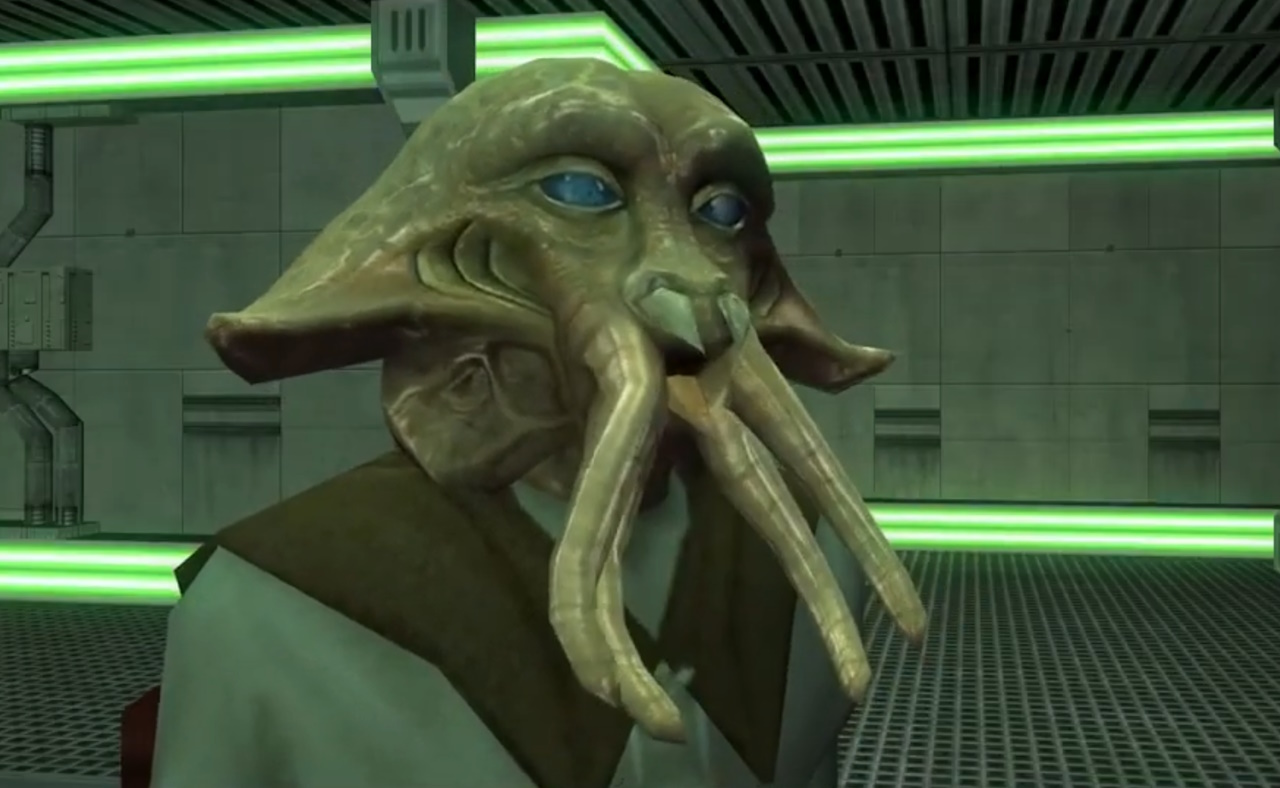
If Star Trek had behaved like Star Wars…

Spoiler Warning: There are spoilers ahead for the Star Wars franchise – including recent projects such as The Rise of Skywalker and The Mandalorian. There are also minor spoilers for the Star Trek franchise too.

Let’s step through the looking-glass, across the divide between universes, into a strange new world. This world is very much like our own, but with one major difference: Star Trek behaved like Star Wars. The Original Series ran from 1966 to 1969, just as it did in our reality, but then… things started to change.

Join me on a weird and wonderful journey through what Star Trek might have been… if it had acted like Star Wars. Don’t worry, I promise we’ll make it home safe and sound.

Are you ready to go through the looking-glass?

We begin our journey in the 1970s. Star Trek is being rebroadcast in syndication, and its fanbase is growing. Some of these fans begin to organise and ask for more Star Trek on their screens, and the company that owns Star Trek in this alternate reality – let’s call them CiacomVBS – thinks long and hard about what to do. They have a popular series on their hands… what should they do with it?

Eventually the people in charge of Star Trek hit upon a brilliant idea: a Star Trek prequel, looking at Kirk, Spock, McCoy, and other familiar characters in their Starfleet Academy days and before their five-year mission. The main roles were re-cast, and the first new Star Trek project in almost twenty years was finally greenlit in 1988. Called the “Kelvin films” for the involvement of a starship called the USS Kelvin, this prequel trilogy was popular with some Trekkies, but wildly disliked by others. When the third film finished its theatrical run, CiacomVBS decided to shelve Star Trek and proclaimed that the franchise was complete.

Fans were split on Star Trek by this point. Some proclaimed that The Original Series was the only good part, whereas other (primarily younger) fans were thrilled with the Kelvin films. As time passed, Star Trek appeared to be complete. Its stars moved on to other projects, or faded into obscurity. But the fanbase remained, and with the passage of time those younger fans grew up, leading to a minor resurgence in the popularity of the Kelvin films.

In the 1990s, a massive media empire called the Dalt Wisney Company approached CiacomVBS about a buyout. When the multi-billion dollar deal went through, Wisney announced a plan to bring Star Trek back – this time for a sequel. Star Trek: The Next Generation premiered a few years later, and starred a younger cast of characters – alongside the return of The Original Series’ crew. Their first adventure was to find Captain Kirk, who had gone missing.

Kirk eventually agreed to train the new crew of Starfleet officers, along with help from Spock, Dr McCoy, Scotty, Uhura, Chekov, and Sulu. The returning characters took up a lot of the new show’s screen time, leaving many Trekkies to say that the new crew were undeveloped and underused. To make matters worse, a lack of overall direction by the Dalt Wisney Company meant that each of the three seasons of The Next Generation was helmed by a totally different team of writers. The consequence of this was a jarring change in tone between each of the three seasons.

The Next Generation’s third and final season was its worst by far, with a confused mess of a story that seemed to be trying to overwrite much of what happened in Season 2 – including the backstory of Captain Picard, the major character introduced in Season 1. By far its most egregious fault, though, was bringing back Khan as a villain – Khan had been killed off decades earlier, and his return was called “the worst kind of deus ex machina” by critics.

There were also two “standalone” projects produced during this time. The first saw a team of renegade Starfleet officers go on a secret mission to steal the plans to the Klingon D7 battle cruiser, and ended with them transmitting the plans to Kirk aboard the Enterprise. The second was titled Chekov: A Star Trek Story, and it told the tale of the young Pavel Chekov before he joined Starfleet.

Despite the lacklustre response to The Next Generation and Chekov, Wisney had invested a lot of money into Star Trek, and putting their expensive acquisition on hiatus was not possible. They announced another spin-off: Deep Space Nine. This promised to finally take a look at the Star Trek galaxy away from Captain Kirk and Starfleet for the first time, being set on a space station in a new region that had never been seen before.

Fans seemed to respond well to Deep Space Nine at first, but its short runtime, bland main character, and overreliance on the aesthetic of The Original Series were all points of criticism of the show. By Season 2 it seemed to be doing better and was beginning to stand on its own two feet – but for some inexplicable reason Season 2 of Deep Space Nine brought back the character of Sulu – who had been killed off in The Next Generation. Fans were confused as to how he had survived being eaten by an alien monster, but this was never addressed.

The Season 2 finale was perhaps the most egregious example of Wisney forcing fan-service into Deep Space Nine, though. As Sisko and his crew were cornered, staring down a seemingly-unstoppable villain, the shuttlecraft Galileo was spotted approaching DS9. The shuttle door opened, and there, in all his glory, stood Captain Kirk. Kirk dispatched the villain’s henchmen with ease, and gave Sisko – and the show’s stunned audience – a nod and a wink.

In the aftermath of Deep Space Nine Season 2, the Dalt Wisney Company put together a presentation where they announced what’s coming next for Star Trek – and to no one’s surprise, it was more of the same. Nostalgia, throwbacks, and not much else.

The actor who played Scotty in the Kelvin series was given his own spin-off. Next was Star Trek: Nurse Chapel, which promised a look at the franchise’s second-most famous medical officer. Then there was The Harry Mudd Show, looking at lovable rogue Harry Mudd, and Star Trek: Balok, which promised a deep dive into the backstory of the character fans first met in The Corbomite Maneuver. There was a miniseries looking at Kor, the Klingon captain, and finally there was Star Trek: That Guy Who Flew The Shuttle In That One Episode – which was immediately given a three-season order. Some fans were thrilled with these offerings… but a lone voice spoke out.

On a website called Dennising with Trek, an independent critic wrote that it was time for Star Trek to move on. The Original Series had become a weight around the neck of the franchise, holding it back and stopping it from properly moving on to new adventures. The Star Trek galaxy offered such an interesting and exciting setting, they wrote, that it was positively criminal to only look at such a tiny sliver of it over and over and over again. Star Trek can be better than this.

Apparently this website is incredibly popular in the alternate reality.

So that, my friends, is where we end our journey through this strange mirror universe. We step back across the divide, and find ourselves firmly back in our own reality. I promised I’d get you home safe and sound!

What was the point of our little interdimensional sojurn? As I’ve said many times already, Star Wars is stuck. It has never been able to move beyond its original trilogy, and it’s gotten to a point where those films are now holding it back from making any meaningful progress.

You might look at some of the Star Trek projects that exist in the alternate reality we visited and say that they sound like fun – but they represent an incredibly narrow vision of what Star Trek could be. If Star Trek had behaved like Star Wars, with a total and unshakable reliance on The Original Series and its characters, we’d never have got to see some absolutely incredible characters and stories. We’d have missed out on Picard’s transformation into Locutus of Borg in The Best of Both Worlds, or on Sisko’s painful decision in In The Pale Moonlight. We’d never have met Captain Janeway and her crew at all, nor Captain Archer and his.

Avery Brooks put in one of his best performances as Sisko in the Season 6 episode In The Pale Moonlight.

There is a place for prequels, for looking back, and for nostalgia. The very reason franchises like Star Trek and Star Wars were revived is because the companies behind them see nostalgia as a way to attract audiences. But in my opinion – my subjective opinion – Star Wars goes too far and overplays the nostalgia card. The Star Wars galaxy is a sandbox of almost infinite proportions, with not only trillions of inhabitants, countless alien races, and millions of planets to explore, but also tens of thousands of years of history. We could look at events and characters that are entirely disconnected from Luke, Han, and Leia – but Star Wars has never even tried to do that.

The Mandalorian brought back Boba Fett and Luke Skywalker in what was pure fan-service. Fans lapped it up, and I’m happy for the people who enjoyed the way that story went. But for my money I think Star Wars can do better. I think it can be broader and deeper, and can step away from relying on those old characters. Star Wars is a fantastic franchise, and its setting is so vast and interesting that it doesn’t need the crutch of those old characters… but for some reason Disney can’t see it.

Luke Skywalker returned in The Mandalorian.

Star Trek moved away from its original incarnation decades ago, and in the years since we’ve had a heck of a lot of exciting, memorable shows and films that have become iconic parts of the franchise in their own right. And that innovation and willingness to try new things continues today, with Star Trek recently branching out into animated comedy and with a kids’ show on the horizon. Star Wars could do that too.

Star Trek realised a long time ago that the galaxy Gene Roddenberry and others had created was crying out to be explored. New characters and new ships came along and have had some incredible adventures. Star Wars hasn’t been brave enough to try anything genuinely different yet. I hope one day that will change.

Some names, titles, and properties above have been used in a satirical manner for the sake of parody and criticism. The Star Wars franchise and all related properties are the copyright of the Walt Disney Company and LucasFilm. The Star Trek franchise and all related properties are the copyright of ViacomCBS. Stock photos courtesy of Unsplash. This article contains the thoughts and opinions of one person only and is not intended to cause any offence.
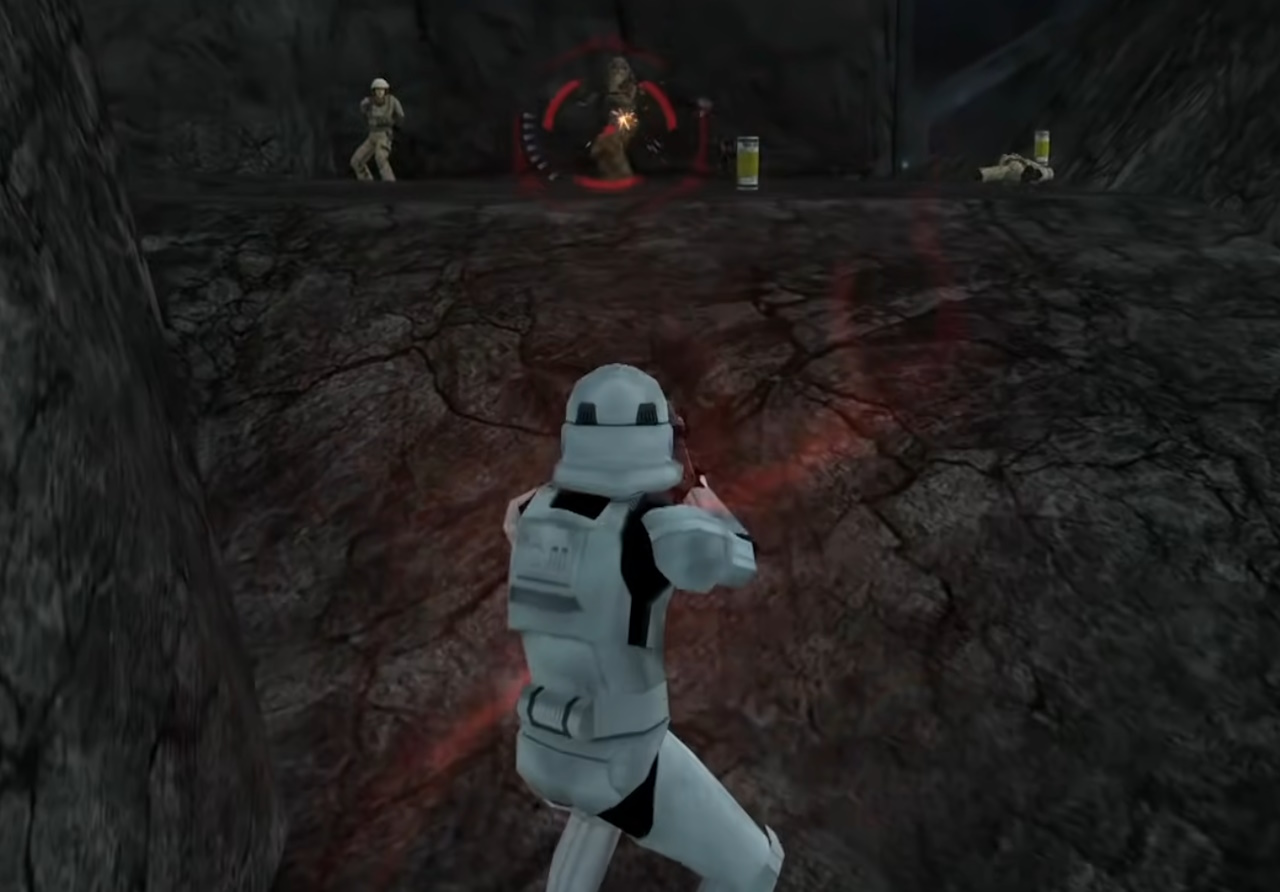
A willingness to change is the key difference between Star Trek and Star Wars in 2021

Spoiler Warning: There are spoilers ahead for the following: The Mandalorian Seasons 1-2, The Rise of Skywalker, Star Trek: Discovery Seasons 1-3, Star Trek: Picard. Minor spoilers may be present for other iterations of both the Star Wars and Star Trek franchises.

I’ve been working on my review of Season 2 of The Mandalorian, which was shown on Disney+ at the end of last year, and I found myself saying the same thing several times. I will (eventually) finish that review, but for now I wanted to take a step back and look at two of the biggest sci-fi/space fantasy franchises, and one crucial difference between them.

Whether it’s the prequel trilogy, sequel trilogy, spin-offs, or even the recently announced slate of upcoming projects, Star Wars is intent on sticking close to its roots. I’ve made this point before, but Star Wars as a whole has only ever told one real story – that of Palpatine, Anakin, Luke, and Rey. Every film and television series in Star Wars’ main canon either directly tells part of that story or is inextricably tied to it. The inclusion of Luke Skywalker and other legacy characters in The Mandalorian doubles down on this.

Luke Skywalker recently appeared in The Mandalorian.

In contrast, Star Trek has continually tried new and different things. The Next Generation took its timeline 80+ years into the future and left much of the franchise’s first incarnation behind. Deep Space Nine took the action away from starships to a space station. Enterprise was a prequel, but not one which told the early lives of any classic characters. The Kelvin films attempted to reboot Star Trek as a big screen popcorn blockbuster. Discovery took a serialised approach to its storytelling, and Picard picked up that format but used it to tell a very different type of story. Lower Decks is perhaps the biggest departure to date, branching out beyond sci-fi into the realm of animated comedy. Though there are common threads binding the franchise together, each project is one piece of a much larger whole, and the Star Trek galaxy feels – to me, at least – much more vast as a result.

Where Star Wars has told one overarching story, Star Trek has told hundreds, many of which are totally separate and distinct from one another. And that concept shows no sign of slowing down. Indeed, both franchises are doubling down on what they do best: Star Wars is focusing on classic characters and looking inwards, Star Trek is expanding and trying new things.

Captain Burnham will take Star Trek: Discovery to new places.

That willingness to change, to explore totally different and unrelated aspects of its setting, is what sets Star Trek apart from Star Wars right now – and arguably is one of the big points of divergence going all the way back to the mid-1980s. It may also explain why so many fans are excited about The Mandalorian and even the dire Rise of Skywalker, while some Star Trek fans have never been interested in Discovery, Picard, and Lower Decks.

Nostalgia is a big deal in entertainment, and while I would argue Star Wars has overplayed that particular card far too often, there’s no denying it has seen success with that formula. That’s why we’re seeing the Obi-Wan Kenobi series, the Ahsoka series, the Lando series, and even the Cassian Andor series all getting ready to debut on Disney+ in the next few years.

Star Wars continues to bring back characters, themes, and designs from its past.

Someone far cleverer than I am said something a while ago that really got me thinking. If a franchise – like Star Wars, in this case – relies so heavily on nostalgia to the point of never trying anything new, it won’t survive beyond its current generation of fans. Because bringing in new fans – the lifeblood of any franchise – is increasingly difficult when every project is designed exclusively with existing fans in mind. How can Star Wars survive when its current fanbase moves on if everything it does is fan service? What kind of appeal does the Obi-Wan Kenobi show have to someone new to Star Wars? Basically none.

With the exception of Star Trek: Picard, which did rely on the strength of its returning character, I think any Star Trek project has the potential to bring in new fans. Some shows and films are definitely enhanced by knowing more about Star Trek and its setting, but even in Discovery, where main character Michael Burnham is related to classic character Spock, there really wasn’t anything that required a lot of background knowledge.

Spock in Star Trek: Discovery.

Star Trek is not only trying new things, but the people in charge are conscious to allow each project to stand on its own two feet. They are parts of a greater whole – and while I have argued many times here on the website that Star Trek could do more to bind its ongoing series together, it’s still possible to watch one show and not the others without feeling like you’ve missed something important.

What we see are two very different approaches to storytelling. Both Star Trek and Star Wars were reborn in the mid-2010s out of a desire on the part of their parent companies to use nostalgia as a hook to bring in audiences. That should not be in dispute, and I don’t want to say that Star Trek somehow avoids the nostalgia trap. But where Star Wars really only has nostalgia going for it, Star Trek continues to branch out, using nostalgia as a base but not allowing it to overwhelm any project.

“Baby Yoda” is symbolic of Star Wars’ reliance on nostalgia in many ways.

Neither approach is “right” or “wrong;” such things are subjective. I don’t want to sound overly critical of Star Wars either, because despite my personal feelings, there’s no denying many of the creative decisions made are popular – even The Rise of Skywalker, which was eviscerated by critics, was well-received in some areas of the fandom. It just strikes me as interesting and noteworthy that these two major franchises are taking very different approaches to the way they construct their narratives.

Whether it’s the inclusion of Luke Skywalker himself, the aesthetic of practically everything in the show, or a storyline which returns the franchise to the Jedi and the Force, The Mandalorian oozes nostalgia from every orifice – and if that’s what fans want and will lap up, then that’s okay. It was too much for me, and I stand by what I said last year during the show’s first season: I was expecting to see “the adventures of a gunslinger far from the reaches of the New Republic;” a show which would take Star Wars away from some of those themes to new places. That was my preference – a personal preference, to be sure, and judging by the positive reaction not only to The Mandalorian but to spin-off announcements like the Obi-Wan Kenobi series (and the return of Darth Vader to that series) I’m in the minority.

Mandalorian armour (i.e. Boba Fett’s armour) seen in The Mandalorian.

Star Trek takes a different approach. Both Picard and Discovery in their most recent seasons moved the timeline forward, brought in new characters, and dealt with contemporary themes. There were touches of classic Star Trek in both shows, including in aesthetic elements like set design and costuming, but in both cases the franchise feels like it’s moving forward.

Costuming is an interesting point to consider, as it’s representative of where both franchises find themselves. As early as 2015’s The Force Awakens, Star Wars was stepping back, relying on Stormtrooper armour, First Order uniforms, and especially the costumes worn by Rey that were practically identical to those seen in the original films. This was continued in The Mandalorian, not only with the main character’s Boba Fett armour, but with the use of Original Trilogy Stormtrooper armour and costumes for many villains. In contrast, Star Trek took its main characters out of uniform entirely in Picard, and Discovery has introduced a whole new set of uniforms and a new combadge for the 32nd Century. Where Star Wars looks back to its heyday, Star Trek looks forward, incorporating some of its classic designs into wholly new variants.

Discovery’s new combadges (as seen in the opening titles).

What we see in these costuming choices is a reflection of where both franchises are narratively. Star Wars continues to look back at the only truly successful films the franchise has ever made: the Original Trilogy. Frightened of trying anything truly new and unwilling to leave that comfortable ground, it’s stuck. As I wrote once, the Original Trilogy has become a weight around the neck of modern Star Wars, as projects not only become constrained by those films, but continue to fail to live up to them.

Star Trek looks forward, tries new things, and embraces change. Not every new project will win huge support and be successful, but some will, and every project has the possibility to be a launchpad for others, taking the evolving franchise to completely different places.

The Original Trilogy is – in my opinion at least – holding Star Wars back.

It’s clear which approach I prefer, and that I’d like to see more innovation and change from Star Wars. Though I was certainly underwhelmed by some of the recent announcements made by Disney and LucasFilm, I’m hopeful that, despite being held back in many ways by an overreliance on nostalgia, some decent films and series may stumble out the door.

Each franchise could learn something from the other, though. Star Trek’s projects are split up, and while Discovery’s third season made an admirable effort to connect to Picard, that was not reciprocated. Lower Decks had many callbacks and references to ’90s Star Trek, but otherwise stands alone. The franchise could work harder to bind its different projects together, reminding audiences that they’re watching one piece of a greater whole.

The Qowat Milat, who debuted in Picard, later appeared in Discovery. But the franchise could do more to bring its projects together.

Star Wars could see how a successful sci-fi franchise doesn’t need to be constrained by its original incarnation, and that shaking things up can work. The Mandalorian felt to me as though it was retreating to Star Wars’ comfort zone, and while that move may be popular right now with the fandom, it doesn’t really provide a solid foundation for expansion in the way Star Trek’s shows and films have done.

At the end of the day, both franchises are testament to the power of nostalgia to bring fans back. But they undeniably take very different approaches to that. Star Wars is conscious to try to make everything feel like its first couple of films – to the point that it can be overwhelming. Star Trek certainly doesn’t overwhelm anyone with nostalgia – to the point that some recent projects have been criticised for feeling like they aren’t part of the franchise at all.

Whichever approach you ultimately feel works best, one thing is clear: neither franchise is disappearing any time soon! The first half of the 2020s -and hopefully beyond – will see several different projects from both Star Trek and Star Wars, and as a fan of both and of sci-fi and fantasy in general, that’s great news. Long may it continue!

The Star Trek franchise – including all properties mentioned above – is the copyright of ViacomCBS. The Star Wars franchise – including all properties mentioned above – is the copyright of LucasFilm and Disney. This article contains the thoughts and opinions of one person only and is not intended to cause any offence.
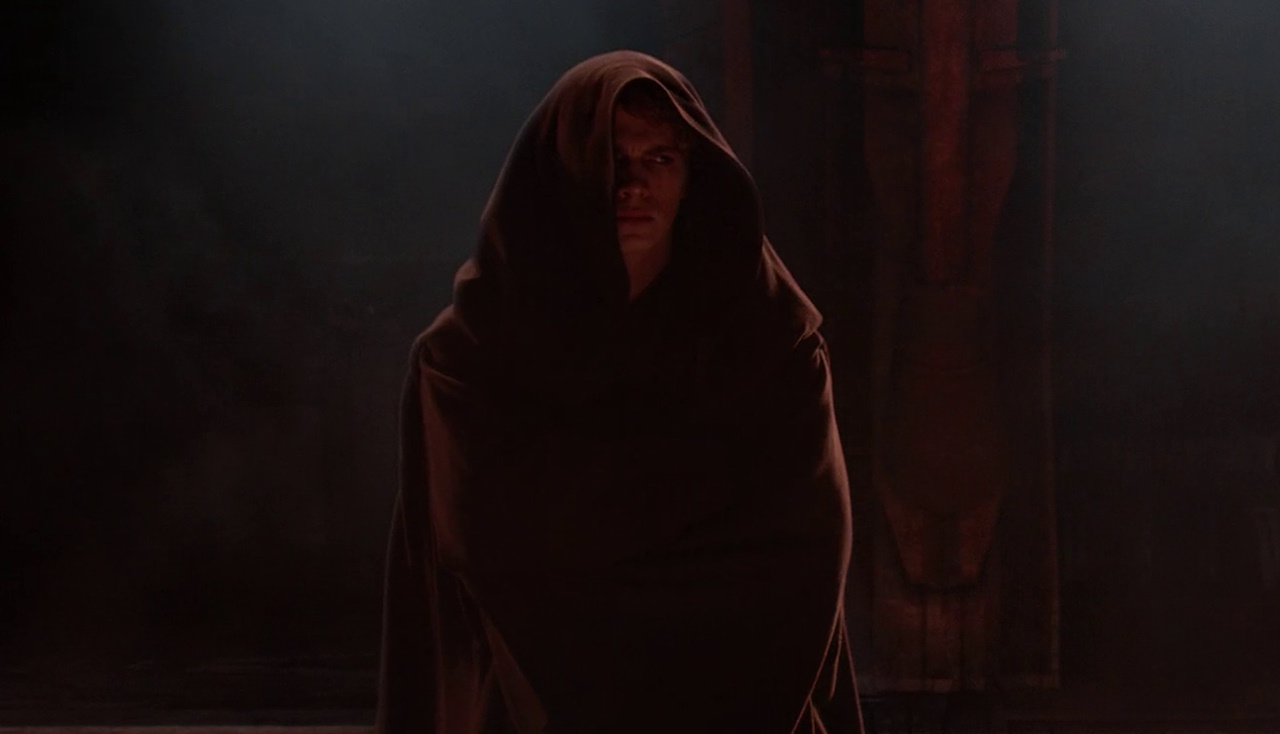
A new Star Wars: Knights of the Old Republic game rumoured to be in development

Spoiler Warning: There are spoilers ahead for Star Wars: Knights of the Old Republic and Star Wars: Knights of the Old Republic II.

I don’t usually cover rumours here on the website. There are always unsubstantiated rumours flying around every corner of the entertainment industry, and many are either completely wrong or entirely made-up. Sometimes covering a rumour and getting all worked up about it can make you look rather foolish! But the rumour of a new Star Wars: Knights of the Old Republic game feels like it has some weight to it, with multiple news outlets all picking it up.

I adored Knights of the Old Republic and its sequel. The two games were released in 2003 and 2004 for PC and Xbox, and if you’re unfamiliar with them they’re single-player role-playing games. At a time when the Star Wars franchise had released two pretty crap films, Knights of the Old Republic did a lot for rehabilitating the franchise’s reputation in my mind.

The two games told connected but separate stories focusing on two Jedi Knights – Revan and the Exile. They were set millennia before the main Star Wars films, and while they did borrow some aesthetic elements and themes from the films, they stood alone and apart from Star Wars’ cinematic output. At the time, with Star Wars being dragged through the mud by The Phantom Menace and Attack of the Clones, that was precisely what I needed!

A screenshot from Knights of the Old Republic.

Bioware developed the first Knights of the Old Republic, and in many ways you can see the legacy of that game in their subsequent Mass Effect trilogy. In fact, the first time I sat down to play Mass Effect I considered it to be little more than a generic Star Wars knock-off! The sequel was developed by Obsidian Entertainment, and though it didn’t sell quite as well, and had some issues due to being rushed, it was still a fantastic title.

Both games told genuinely engaging stories with fleshed-out characters who felt real. They allowed a great degree of player choice – which at the time was still a novelty – and in addition to expanding the Star Wars map, visited just enough familiar locations and themes as to clearly be part of the franchise. If someone asked me to describe the “perfect Star Wars game,” it would be one of these two titles. The story, the freedom of choice, the excellent characters… they’re absolutely outstanding.

Other Star Wars games had previously allowed players to fight for the Empire or wield Sith weapons, so being a bad guy was nothing new. But Knights of the Old Republic and its sequel had a Light Side-Dark Side system which allowed players not only to choose which path to follow, but sometimes forced difficult decisions. Sometimes you’d encounter a puzzle or situation where the preferred option would result in pushing your character toward the Dark Side – and if you wanted to do a 100% Light Side playthrough that was difficult! Many smaller moments like this across both games made each playthrough unique.

A screenshot from Knights of the Old Republic II.

In the second game, the characters you would recruit for your party would differ not only by your Light or Dark inclination but also by gender. Male characters recruited one ally, females another. And the characters would have a big impact on your playthrough, with whole side-missions and cut-scenes featuring them. I must’ve played both games half a dozen times by now, even revisiting them as recently as 2017 when I bought them on Steam. Speaking of which: you can pick up both games for less than £15, and they’re usually discounted at sale time. Well worth a buy!

But we’re not here to advertise the first two games! Let’s consider what a third entry in the series could be.

There has already been a sequel of sorts: Star Wars: The Old Republic, a massively-multiplayer online game which is still running almost a decade after its initial release. I only played it for a short while – I don’t enjoy MMO titles as you may recall if you’re a regular around here – so I’m not 100% up to speed on everything that came out of The Old Republic. However, I do remember that it was set a few hundred years later, but managed to bring back some locations, themes, and story points from the original two titles.

Promo art for Knights of the Old Republic II.

A new entry in the series must surely be a single-player title. Though this is unconfirmed right now (as with everything else to do with this game) reusing the Knights of the Old Republic name for a multiplayer title or “live service” would not endear whichever company is developing it to Star Wars fans! And that’s another good point: no developer or publisher has been confirmed for this title yet.

Knights of the Old Republic II ended with some unanswered questions. Where had Revan gone? What would he find beyond the Galactic Rim? Would the Jedi Exile (i.e. the second game’s protagonist) be able to find him? These questions were never addressed, though they may have been touched on in The Old Republic, and thus could be answered by a new title.

One thing we’ve been assured of by this rumour is that the new Knights of the Old Republic will not be a remake or reimagining of either of the first games. That strongly suggests we’re looking at a sequel or prequel, and raises the prospect of bringing back some of the original characters. There could be copyright and/or licensing issues there, as studios have changed hands since the original games were made. But it seems at least possible that we could see the return of characters like Carth, Bastilla, and HK-47.

HK-47 in Knights of the Old Republic.

A direct sequel would certainly be popular with fans of the first two games. I’d be truly happy with that, and being able to pick up where the second game ended and carry on the story would be something absolutely wonderful. But would that have widespread appeal? How many gamers and Star Wars fans have played Knights of the Old Republic? PC or Xbox gamers in the early 2000s had access to these titles, and they were subsequently re-released on Steam and even iOS/Android. But there are undoubtedly a lot of gamers and fans who have never touched either title. The games are both approaching their 20th anniversaries, after all.

In that sense, perhaps a direct sequel is less likely, and what will follow will be a new game with new characters occupying a similar position in the galaxy and timeline. There may be references and even a degree of overlap, but not a straight continuation of Revan and the Exile’s stories. While that may disappoint some hardcore fans, it would arguably offer the broadest possible appeal.

It’s possible that this new game could connect in some way to the ongoing High Republic setting that Star Wars has been pushing recently. The High Republic era is set around 300 years before the main films, during the Republic but millennia after Knights of the Old Republic. Though cinematic Star Wars and Disney+ shows seem focused on prequels and spin-offs at the moment, the High Republic era is the setting for a number of apocryphal works like novels – and perhaps games. So while we’re calling this game Knights of the Old Republic, perhaps what it’ll actually be is Knights of the High Republic!

The High Republic is currently a focus for non-filmed Star Wars stories.

We’ll have to wait and see what a new Knights of the Old Republic will bring. It certainly seems as though the game is a long way off; with no official announcement to go on it could be a long while before we see any gameplay or even a trailer. However, the reinvigorated LucasFilm Games has certainly got off to a flying start in 2021. First came the announcement of an Indiana Jones game, then the new Ubisoft-published Star Wars game, and now this Knights of the Old Republic rumour. It seems that there will be plenty of new games on the horizon to get stuck into in the years ahead – and that’s wonderful.

The opportunity to revisit Knights of the Old Republic would be fantastic, and one of the things I enjoyed about Jedi: Fallen Order when I played it last year was that the game took me back to the planet of Kashyyyk – the homeworld of the Wookies that I first explored in Knights of the Old Republic. Whether it ultimately ends up being a true sequel or just a related story, I think there’s a lot of potential to have a truly amazing time back in the Star Wars galaxy.

Star Wars: Knights of the Old Republic was released in 2003 by Bioware and Electronic Arts. Knights of the Old Republic II was released in 2004 by Obsidian Entertainment – now owned by Microsoft. The Star Wars franchise – including all titles mentioned above – is the copyright of Disney and LucasFilm. Some screenshots and/or promo artwork courtesy of IGDB. This article contains the thoughts and opinions of one person only and is not intended to cause any offence.
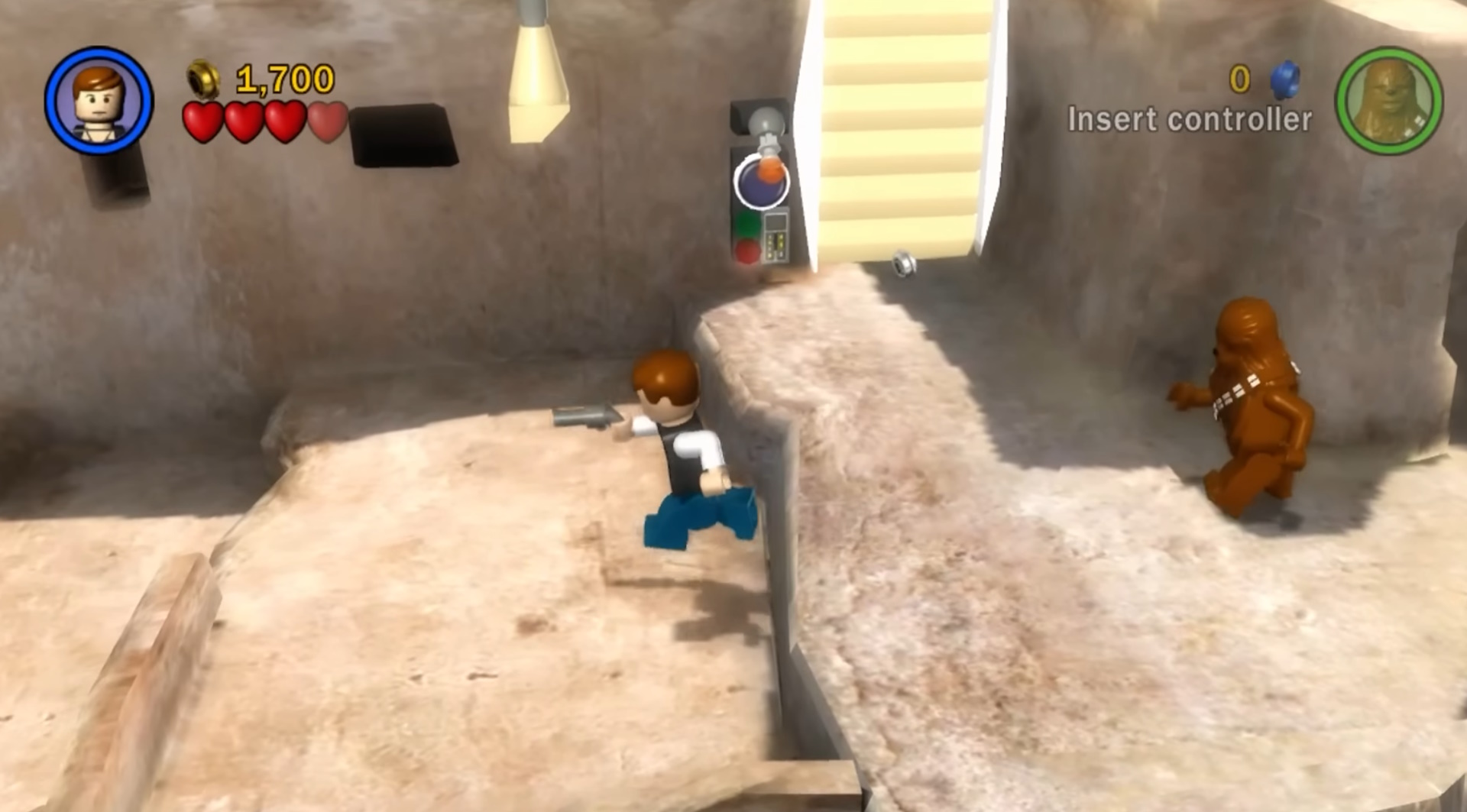
Electronic Arts seemingly loses its exclusive rights to Star Wars

For almost a decade following Disney’s acquisition of LucasFilm, only one company has been able to make Star Wars video games: Electronic Arts. A deal between Disney and EA gave them exclusive rights to the Star Wars license, and in the years since there have been four mainline Star Wars games, one Lego tie-in, one VR game, and a handful of mobile titles.

Both 2015’s Battlefront and of course 2017’s Battlefront II proved controversial and divisive; the former being disappointingly threadbare and the latter for its aggressive in-game monetisation. 2019 saw Jedi: Fallen Order, which I played through last year and was a fun title, and finally 2020 saw Star Wars: Squadrons, which I’ve also been enjoying. However, four games in nine years is perhaps less than many fans were expecting, especially with two of them having serious issues.

2015’s Battlefront was disappointing to many fans.

Calls for Electronic Arts to be “stripped” of the Star Wars license began after Battlefront’s release in 2015, but reached fever pitch in the weeks after Battlefront II’s launch. There was even a petition that hundreds of thousands of folks signed to ask Disney to revoke EA’s exclusive arrangement. That went nowhere, of course – fan petitions never achieve anything – but is indicative of the strong feelings over EA holding the rights.

The well-received Jedi: Fallen Order and Squadrons, combined with updates and patches which greatly improved Battlefront II, led to a cooling-off period, and as of early 2021 cries for the Disney-EA deal to be somehow undone had largely abated. It was a surprise, then, when LucasFilm announced a new Star Wars game… published not by EA but by Ubisoft!

“A surprise, to be sure, but a welcome one.”

Ubisoft has been honing its style of open-world games for years, with franchises like Assassin’s Creed, Far Cry, and Watch Dogs. It seems, from the teaser announcement made yesterday, that the new title will be an open-world game in a similar style, though no mention has yet been made whether it will be a single-player title like those in Ubisoft’s other open-world series, or a multiplayer “live service.” From my point of view I’m hoping for the former!

The game itself may be several years away, though Star Wars does have a recent track record of announcing games closer to release – that’s what happened with Squadrons last year, for example. No release window has been suggested as yet, and in fact we know precious little about the game itself beyond the publisher responsible.

Star Wars: Squadrons.

The upcoming game is just one part of this story, though. Most industry watchers agreed that Electronic Arts had a couple of years remaining on their deal with Disney, which raises the question of how and why this Ubisoft game has been able to enter development. It’s possible that the original contract was incorrectly reported, in which case it may simply have run its course. Or there may have been clauses regarding a number of titles, profit made, etc. that Electronic Arts didn’t live up to, allowing Disney to open up Star Wars to other companies. We don’t know the details – and unless someone senior breaks ranks to tell us, we likely never will!

Exclusivity arrangements can be difficult, and the Disney-EA deal over Star Wars is pretty much a textbook example of why. An exclusive contract like the one Disney offered EA effectively gives that company a monopoly over the license, and anyone who knows anything about basic economics can tell you why monopolies are a bad idea in practically every industry.

No, not that kind of Star Wars monopoly…

Having a monopoly meant there was no threat of competition, and this allowed EA to sit on the Star Wars license, cancelling titles that senior executives didn’t think would bring in “recurring user spending” and not feeling under any real pressure to develop or release anything. They could afford to be complacent because no one else was contractually allowed to even pitch a concept for a Star Wars title.

This attitude was changed when Electronic Arts saw the scale of the backlash to Battlefront II. The effects of that debacle are still being felt, and the game opened the eyes of parents, journalists, and even politicians to the shady practice of in-game gambling. But we’re off-topic. Too late, EA shifted focus away from cash-grabs, putting out the single-player Jedi: Fallen Order and following up with the space-sim Squadrons.

2017’s Battlefront II controversy may have triggered a change in thinking at EA – and at Disney.

Fans had been clamouring for a single-player story-driven Star Wars game for years, and while Battlefront II had a creditable single-player campaign, it wasn’t until Jedi: Fallen Order’s release in November 2019 that the single-player itch was truly scratched for most fans. By then the damage had been done for Electronic Arts, though, and their earlier complacency and attempts to swindle players with truly awful monetisation came back to bite them.

Though Electronic Arts will continue to work on Star Wars titles – most significantly the upcoming sequel to Jedi: Fallen Order – they will no longer be the only company Disney trusts with their incredibly expensive, incredibly lucrative license. The Ubisoft game may be the first of several upcoming Star Wars projects to be taken on by other companies, and hopefully what results will be a broader range of genres and styles of game.

Protagonist Cal Kestis in Jedi: Fallen Order.

In December 2020, LucasFilm announced half a dozen or so upcoming Star Wars films and television shows. There will be a lot of Star Wars content to come over the next few years at least, and while not all of the shows and films will be suitable for a video game adaptation, some may be. Disney and LucasFilm need to ensure they have access to the broadest possible range of talents in the video game industry if they hope to make the most of Star Wars.

I wasn’t especially excited by the film and television announcements made last month, to put it politely. Too many of them seem to be spin-offs, prequels, and deep dives into uninteresting side-characters rather than expanding Star Wars beyond its original incarnation. But even so, several of these projects seem ripe for video game tie-ins, and the end of the Skywalker Saga of films coupled with this expansion into new films and television projects may have been a contributing factor to Disney ending or not renewing its exclusive arrangement with EA.

Could a game based on the upcoming series Rangers of the New Republic be in the works?

For my two cents, I see the ending of this kind of exclusivity deal as a good thing. Monopolies are problematic for consumers for precisely the reasons the Disney-EA arrangement shows, and in future it could even be used as a case study for why these kinds of deals are a bad idea. Opening up Star Wars games to other companies allows for different points of view, competition, and hopefully what will result at the end of the day will be better games. Not necessarily more games. But better ones.

It is worth noting that Ubisoft is a company that hasn’t exactly escaped controversy recently. There have been serious problems within the company, including sexual harassment accusations against senior executives, and the accusation that the company itself tried to cover this up and cover for abusers. Company culture and institutional problems count against Ubisoft, and while Star Wars fans are rightly excited to learn that the franchise will be moving away from the EA exclusivity deal, it’s worth noting that Ubisoft has issues – and Disney should also be aware of this. The last thing the Star Wars brand needs right now is further controversy, yet a team-up with Ubisoft risks precisely that.

So that’s it. The end to Electronic Arts’ monopoly over the Star Wars license. Now if only someone would make a Star Trek video game…

The Star Wars franchise – including all titles mentioned above – is the copyright of Disney and LucasFilm. Star Wars: Battlefront, Star Wars: Battlefront II, Star Wars Jedi: Fallen Order, and Star Wars: Squadrons were published by Electronic Arts. Some screenshots and promo art courtesy of IGDB. This article contains the thoughts and opinions of one person only and is not intended to cause any offence.
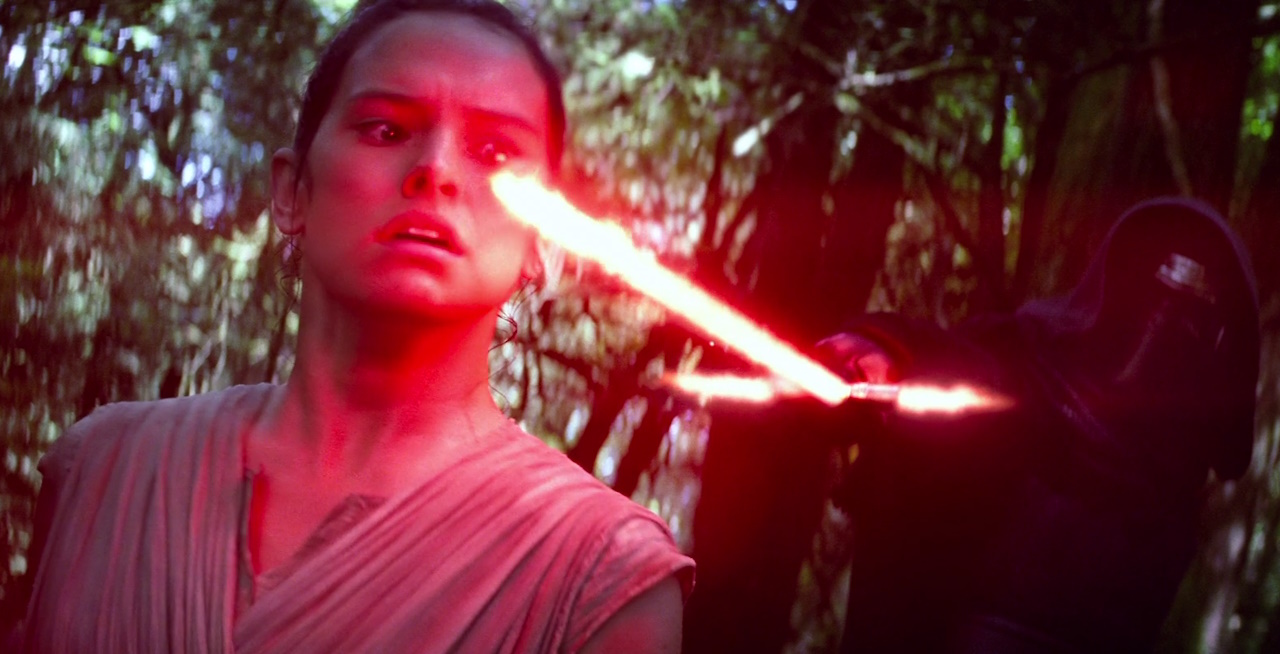
What might we watch and play in 2021?

Happy New Year! As we put the calamitous 2020 behind us, let’s look ahead to some of the entertainment experiences we might enjoy between now and Christmas. There’s only 51 weeks till the big day, you know. Better start your Christmas shopping!

The effects of 2020’s disruption are still being felt, and while we should hopefully see a return to normalcy slowly building over the next few months, there will undoubtedly be changes to come. From my point of view as a Trekkie, the big question is this: how much Star Trek will we get this year? After 2020 saw the release of three different Star Trek projects, it’s not inconceivable that the only episode we’ll see in 2021 will be next week’s finale of Star Trek: Discovery Season 3!

We do know, at least, that some big projects still intend to release this year. Let’s look at a few – in no particular order.

Cinema

The pandemic has not magically gone away with the arrival of the new year, and many cinemas look set to remain closed in the weeks ahead. The distribution of vaccines will be key to their re-opening, and thus to the release of at least some big films. However, there have been plans announced to bring some of 2021’s big releases to streaming platforms – either instead of or in addition to a theatrical release. How well this will work, and whether many of these plans go ahead if the pandemic is brought under control is up in the air right now – but it remains a possibility.

Number 1:
Dune

The latest adaptation of Dune is the first part of a duology, and was originally supposed to be released in 2020. Of course that couldn’t happen, and Dune is now set for a December release, and will supposedly come to HBO Max at the same time. Though the story has been notoriously difficult to adapt, this version has a huge budget, a stellar cast, and what look like wonderful visual effects based on the trailer. It feels like a film with great potential, and I’m eagerly awaiting its release.

Number 2:
No Time To Die

The latest Bond film – which is set to be Daniel Craig’s final outing as 007 – has been delayed by over a year. It was originally scheduled for an April 2020 release, but that has been pushed back to April 2021. There are no current plans to bring the film to streaming, and as it’s supposedly the most expensive Bond film of all time, perhaps that makes sense. April feels optimistic, but we’ll see how things go! Regardless, I’ve always enjoyed the Bond franchise, and it’ll be interesting to see what happens as this chapter of the 007 cinematic saga draws to a close.

Number 3:
Jungle Cruise

I love Disney World and the other Disney theme parks! When I heard that the House of Mouse was planning to make a film based on their Pirates of the Caribbean ride in the early 2000s I thought it sounded like a terrible idea – yet Pirates of the Caribbean: The Curse of the Black Pearl was an incredibly fun film with heart. Jungle Cruise is likewise based on a Disney World/Disneyland ride, one which, if memory serves, is cute and action-packed! The film adaptation will have to try hard to retain at least some elements of what makes the ride enjoyable, but if it can succeed it could grow to become an ongoing series like Pirates of the Caribbean.

Number 4:
The Matrix 4

As I said last time, I really don’t know where The Matrix 4 could possibly take the story of the series. However, I’m still fascinated to find out! This will be our first time back in this setting since 2003’s The Matrix Revolutions, and I’m sure a lot of fans are excited and nervous in equal measure. The idea of the world being artificial was somewhat of a novelty for the big screen when The Matrix did it in 1999, but we’ve since seen other takes on the concept. Will it stick to the late-90s/early-00s aesthetic for scenes set in the simulated world? Will there even be a simulated world if humanity broke free? We’ll soon find out.

Number 5:
Raya and the Last Dragon

After Disney saw success with the Polynesian-themed Moana, they have turned to Southeast Asia for inspiration for Raya and the Last Dragon. Kelly Marie Tran will voice the titular Raya, and Disney animated films have always been worth watching so I’m expecting an enjoyable film. Disney appears to be going through somewhat of a second renaissance in the aftermath of Frozen’s huge success in 2013, and hopefully this will be a continuation of that. I’m also rooting for Kelly Marie Tran after the awful treatment she had to endure at the hands of some so-called “fans” of Star Wars. Raya and the Last Dragon will take the approach pioneered by Mulan and be released on Disney+ for a fee.

Number 6:
The Suicide Squad

2016’s Suicide Squad won an Academy Award. Just in case you forgot! Was it an outstanding cinematic triumph that I’m happy to rewatch time and again? Not exactly, but it was a decent action-packed blockbuster that was an okay way to kill a couple of hours. And that’s what I expect from this direct sequel – nothing groundbreaking, but a solid film with some cute comic book elements.

Number 7:
The King’s Man

Kingsman was a surprisingly fun film when it was released in 2014, and the third entry in the series is a prequel. The King’s Man looks set to examine the outlandish spy organisation’s past and possibly its origins, as well as throw together another action-comedy that takes inspiration from the likes of James Bond. I think that sounds like fun! The King’s Man will feature some pretty big names, including Ralph Finnes, Charles Dance, and Rhys Ifans.

Number 8:
Uncharted

Films based on video games have not often performed well. Though some have become cult classics in their own right, most films adapted from video games have not been successful. Will Uncharted be any different? The project has been in development for a long time and seen many behind-the-scenes changes, but having settled on a script and director, Tom Holland was cast in the role of Nathan Drake. At the very least there’s potential for a summer popcorn flick; a blockbuster adventure film. Whether it will succeed at becoming “the new Indiana Jones” is up for debate – but maybe!

Number 9:
Death on the Nile

2017’s Murder on the Orient Express was great fun, and Death on the Nile is a sequel of sorts. Adapted from a 1937 novel by famed murder-mystery author Agatha Christie, Kenneth Branagh both directs and stars in the picture as detective Hercule Poirot. The cast list reads like a who’s who of British and international stars, including Jennifer Saunders, Rose Leslie, Russell Brand, and Gal Gadot. If you’re familiar with the book or one of the two earlier adaptations the ending will no doubt be known – but that doesn’t mean the journey there won’t be mysterious and thrilling!

Number 10:
Free Guy

Free Guy is about a non-player character in an open world video game who becomes sentient and tries to escape the game. And he’s played by Ryan Reynolds. Are you sold yet? Because that premise (and casting choice) was all it took to hook me in and decide that Free Guy would be worth a look! It sounds like fun, and Reynolds has great comedic timing as we’ve seen with titles like Deadpool. At the very least it’s a unique premise for a film, and one that seems like it could be really funny.

Gaming

With two new consoles barely a month old, both Sony and Microsoft will surely make moves to shore up their player bases this year. There are some titles on the schedule that look absolutely fantastic, and while the release of many of these on what is now last generation’s hardware will mean we won’t see the full power of the next-gen machines just yet, we should begin to see some improvements in what games are capable of. I better get on with upgrading my PC!

Number 1:
Mass Effect: Legendary Edition

Rumours swirled for much of last year of an impending Mass Effect trilogy remaster, and the project was finally announced a few weeks ago. Despite its controversial ending, the three games tell a deep and engaging story in a unique sci-fi setting, and were great fun during the Xbox 360 era. Has enough time passed to make updating the trilogy worthwhile? Mass Effect 3 was only released eight years ago, after all. And will the remaster do everything needed to bring these games up-to-date? With Mass Effect 4 on the distant horizon, it will have to! I’m cautiously interested in this one – it could be wonderful to replay these games, but as we’ve seen with some recent remasters, not every company manages to hit a home run when it comes to updating a beloved title.

Number 2:
Lego Star Wars: The Skywalker Saga

Though I didn’t have time to review it before Christmas, The Lego Star Wars Holiday Special was great fun over on Disney+. I had hoped to see Lego Star Wars: The Skywalker Saga last year, but it got pushed back and is currently due for release in “early 2021” – whatever that may mean! The first couple of Lego Star Wars games, which were released in the mid-2000s, were really great fun, and I’ve been looking forward to the latest bricky reimagining of the Star Wars saga since it was announced. Lego games have never tried to take themselves seriously, and the end result has always been titles which are just a lot of fun.

Number 3:
The Lord of the Rings: Gollum

What could a game starring Gollum possibly bring to the table? I have absolutely no idea! But games – and stories in general – focusing on an antihero can be wonderful, so I’m very curious to find out. It’s also great to see another big single-player title given the glut of live services and always-online multiplayer games. I’m a fan of Middle-earth and the world Tolkien built, so hopefully this game will be a fun return to that setting. Taking on the role of Gollum will offer a different look at Middle-earth, and whether it focuses on the main story from the books or not, has the potential to be fascinating.

Number 4:
Skull & Bones

Assassin’s Creed IV: Black Flag demonstrated that there’s still a lot of appeal in pirate-themed titles. Skull & Bones wasn’t something I was especially interested in at first, but upon learning it will feature a single-player campaign I was happy to add it to the list. It seems to be a game that will deal with the naval combat side of things, and as long as it can really nail ship-to-ship combat within its game engine it should at least be a solid title. Naval games are relatively rare in the combat/strategy/action genres, so perhaps Skull & Bones will offer something a little different.

Number 5:
Outriders

Outriders was one of the first next-gen games that reviewers really had a chance to get to grips with before the launch of the PlayStation 5 and Xbox Series X. The consensus was that it seems like a fun third-person shooter, even if it wasn’t quite as “next-gen feeling” as some had hoped. Regardless, Outriders has continued its development and will be released this year. The basic premise feels like a mix of sci-fi and superhero comics, and at the very least it’s a brand-new setting at a time when a lot of studios are focused on sequels and franchises.

Number 6:
GhostWire: Tokyo

I honestly don’t know what to expect from GhostWire: Tokyo. It’s a game shrouded in mystery! One thing we know for sure is that it will feature a supernatural storyline, and that alone sounds like it has potential. A teaser trailer released last year didn’t show much, but we know that the game will draw on Japanese mythology and will be a first-person action-adventure game with some supernatural horror elements. It might be wonderful… or it might not be my thing! We’ll have to wait and see.

Number 7:
Diablo IV

After disappointing fans with Diablo Immortal, and then messing up with the controversy around their decision to censor a professional player who supported the protests in Hong Kong, it’s not unfair to say that there’s a lot riding on Diablo IV for Blizzard’s reputation. Early indications are that the dungeon-crawler looks good, and could be a return to form. Diablo III had issues at launch, so this is very much one to take a “wait-and-see” approach with, but if the studio can recreate the magic of older titles then Diablo IV should offer a fun experience.

Number 8:
Super Mario 3D World + Bowser’s Fury

My most recent foray into Mario’s 3D adventures was underwhelming, as Super Mario 3D All-Stars was not actually all that great. However, Super Mario 3D World + Bowser’s Fury might be! The base game was released on the Wii U, but Bowser’s Fury is something altogether new. How substantial it will be remains to be seen, but taken as a whole the package seems to offer good value. I love the cat suits introduced in Super Mario 3D World, they’re cute and add a different element to Mario and the gang’s 3D adventures.

Number 9:
Humankind

Humankind initially attracted me because of how similar it looks to Civilization VI – one of my most-played games of the 2010s. But there’s more to it than that, and the concept of creating a unique civilisation by combining different historical empires and cultures is, at the very least, innovative. I love a good strategy game, and Humankind could be a big time-sink for me this year – if it can deliver on some pretty big ambitions!

Television

After 2020 saw major disruption to cinema, 2021 could be television’s turn. Though shielded from the brunt of the pandemic, a number of television shows planned for 2021 have seen major delays to production. Despite that, there are still plenty of options on the horizon, including some that look absolutely phenomenal.

Number 1:
Zack Snyder’s Justice League

I can’t actually remember if Justice League is one of the DC films I’ve seen or not. If you’re a regular around here, you’ll know I’m not a big comic book fan generally speaking. And it’s not unfair to say that DC is the lesser of the two comic book powerhouses right now! I honestly did not expect the so-called “Snyder cut” of Justice League to ever see the light of day, but after a campaign by fans the film will be released – as a four-part miniseries on HBO Max. I’m at least somewhat interested to see what all the fuss is about!

Number 2:
Star Trek: Prodigy

After Lower Decks took the Star Trek franchise in a different – and very funny – direction in 2020, I’m curious to see what Prodigy will bring to the table. Some shows made for kids can actually tell very meaningful and interesting stories, and it’s my hope that Prodigy will manage to offer at least something to Trekkies beyond its target audience. The addition of Kate Mulgrew to the cast – reprising her role as Captain/Admiral Janeway – is tantalising too, and although that’s about all we know at this stage, the series aims to have a 2021 release. That could be pushed back, but fingers crossed we’ll see Prodigy some time soon.

Number 3:
Amazon’s Lord of the Rings series

Despite not having so much as a title, Amazon’s Lord of the Rings series has been targeting a 2021 release. It seems certain that, if this is to happen, it will have to be later in the year; filming is still ongoing at time of writing. However, a return to the land of Middle-earth is truly an exciting prospect, as is a look at the setting away from most of the characters we remember. The series will take place thousands of years before The Hobbit and The Lord of the Rings, so there’s the potential to tell some very different fantasy stories in Tolkien’s world.

Number 4:
Station Eleven

Based on a 2014 novel of the same name, Station Eleven is a post-apocalyptic drama set after the world has been devastated by a pandemic. Timely, right? Though filming began in early 2020 the series is still being worked on, but could finally see the light of day on HBO Max at some point this year. It feels like a project that, simply due to bad timing, may be controversial – but that could simply increase its appeal! Regardless, I’ll be keeping an eye out for it.

Number 5:
Foundation

Isaac Asimov is one of the grandfathers of science fiction. Whether his work will translate well from page to screen is an open question… but one I’m very curious to see answered. This adaptation of Asimov’s Foundation series will star Jared Harris, an absolutely incredible actor you might recall from 2019’s Chernobyl. It’s being produced for Apple TV+ as one of their first big-budget productions – or at least, the first one I’ve come to care about. 2021 looks set to be a big year for some of these second-tier streaming services!

Number 6:
Star Trek: Lower Decks

Lower Decks has finally secured an international broadcast agreement, more than five months after its first season premiered for viewers in North America. That’s good news, because a second season is already in development and will be able to be shared by fans around the world when it’s ready. Season 1 ended with some surprising twists for an animated comedy, and it remains to be seen what the end result of those storylines will be for our young ensigns aboard the USS Cerritos. Lower Decks took a few episodes to really hit its stride – and there were some missteps along the way – but for my money it’s up there with the best animated comedies of recent years, and I hope that the combination of its international debut and second season will see the show get the admiration it warrants.

Number 7:
The Expanse

I haven’t yet sat down to watch Season 5 of The Expanse, which premiered last month on Amazon Prime Video. However, the first four seasons were outstanding, and Season 6 is set to be the show’s last. Hopefully it will go out on a high! The Expanse is a wonderful science fiction series, one which has tried to take a more realistic look at the dangers of space travel and alien life. Many sci-fi stories treat these elements almost as mundane, yet The Expanse approached them with wide-eyed wonder, making things like accelerating a spacecraft integral parts of its story. It’s a wonderful series, and its final season should be explosive, entertaining, and ever so slightly sad as we bid it a fond farewell.

Number 8:
The Witcher

I half-expected to see the second season of Netflix’s The Witcher last year, but for whatever reason the streaming powerhouse is taking its time. Henry Cavill was great in the title role in Season 1, and hopefully the second season will keep up the high quality. I always appreciate a new fantasy series, and while the show owes its existence to the popular video games, it’s distinct from them at the same time, drawing more on the original book series for inspiration. Its return to our screens – which may not be until later in the year – is highly anticipated!

Number 9:
Star Wars: Andor

I wasn’t exactly wild about the recent announcements of upcoming Star Wars projects. As I wrote at the time: “spin-offs to spin-offs and the increasingly minor characters given starring roles is indicative of a franchise out of ideas.” Part of that criticism was aimed at Andor, the series which will focus on Rogue One’s Cassian Andor. However, on its own merit the show – which bills itself as a “spy thriller” – may very well be decent, and I’m cautiously interested to see what Disney and Lucasfilm bring to the table. Rogue One was certainly one of the better offerings since Disney began producing Star Wars projects, so maybe Andor will surprise me and tell some genuinely different stories in the Star Wars galaxy.

Number 10:
Clarice

Alex Kurtzman’s latest project for ViacomCBS will focus on Clarice Starling – the FBI agent introduced in Silence of the Lambs. How well will a show about Clarice work without Hannibal Lecter? Well that’s an open question, quite frankly, because as far as we know, complicated licensing and rights agreements mean Dr Lecter can’t appear. The show is being pitched as horror, though, following Agent Starling as she investigates sexual crimes in the aftermath of the events of Silence of the Lambs. It certainly has potential!

So that’s it.

You may have noticed some exclusions – notably Star Trek: Picard, Star Trek: Discovery, and Star Trek: Strange New Worlds. While all three are in pre-production for their upcoming seasons, none have been confirmed for 2021 at this juncture. Given the state of the world and how badly production has been impacted, while I remain hopeful that at least one live-action Star Trek show will make it to air, it’s entirely plausible that none will. That’s why they didn’t feature on the list.

If all goes well, 2021 should be a good year for entertainment. I see a lot of projects in film, gaming, and television that have the potential to tell wonderful, engaging stories. If lockdowns and quarantines remain in place – where I live in the UK restrictions just got a lot tougher – then we’ll need all the distractions we can get!

Mark your diary for some upcoming releases!

The year ahead is unpredictable, and it’s possible that some of the projects I’m excited for won’t make it to release – or will end up being less enjoyable than expected. But on the flip side, there are undoubtedly films, games, and television shows waiting in the wings to surprise me; titles that didn’t make this list that I will come to greatly enjoy as the year rolls on. There were several wonderful surprises in 2020 that, had you asked me in January of last year, were not even on my radar. The same will perhaps happen this year too!

With everything going on in the world, having something to look forward to is important. Even if all you can think of that excites or interests you is a television show or video game, that’s okay. It gives you something to hang on to; light at the end of the tunnel. I wish you a very Happy New Year, and all the best for 2021.

All titles listed above are the copyright of their respective company, studio, developer, publisher, broadcaster, distributor, etc. Some promotional artwork and images courtesy of IGDB. Stock photos courtesy of Unsplash. This article contains the thoughts and opinions of one person only and is not intended to cause any offence.

Star Wars doubles down HARD

Spoiler Warning: There are spoilers ahead for the Star Wars franchise, including The Rise of Skywalker, The Mandalorian, and announcements for upcoming productions.

A few months ago I wrote an article titled “Star Wars needs to move on.” In that piece I looked at how the Star Wars franchise has only ever told one real story since it debuted in 1977. Prequels, sequels, and spin-offs all played into or expanded the only real story the franchise has ever told – that of Palpatine and minor characters like Anakin, Luke, and Rey who apparently don’t get to act of their own volition. I argued that, just like Star Trek had done with The Next Generation in 1987, Star Wars needed to put the Skywalker Saga behind it and genuinely move on, telling new stories with new characters.

The Mandalorian should have done this, but hasn’t. The inclusion of Baby Yoda, the Force, Boba Fett, and so many elements copied from the Original Trilogy overwhelmed that series and left me disappointed. I was desperately hoping that, after the reaction to The Rise of Skywalker, the team at Disney and Lucasfilm would think hard about what to do next.

The inclusion of Palpatine ruined The Rise of Skywalker.

Instead they’ve once again retreated back to the Original Trilogy, its spin-offs, and familiar characters. I would have hoped that the failure of Palpatine’s ham-fisted insertion into The Rise of Skywalker would have served as a warning, and that with the only story the franchise has ever told now at a seemingly-final end, the franchise could genuinely move on.

The Star Wars galaxy is up there with Tolkien’s Middle-earth as one of the finest fantasy worlds ever brought to life, yet the creative team at Disney and Lucasfilm seem intent on never exploring the wonderful sandbox they paid $4 billion for. They’re instead going to show us the same tiny sliver over and over again, bringing to life ever more ridiculous spin-offs looking at characters of decreasing importance. What a disappointment.

Star Wars: Andor is a spin-off from a spin-off and a prequel to a prequel.

Let’s look at these disappointing announcements. A Droid Story will focus on R2-D2 and C-3PO. The Bad Batch is a spin-off to The Clone Wars, which was itself a spin-off to Attack of the Clones. Andor is the previously-announced series based around Rogue One’s Cassian Andor. Lando is bringing back Donald Glover, who took on the role of the smuggler in Solo: A Star Wars Story. Rangers of the New Republic is a spin-off from The Mandalorian. Ahsoka is another spin-off from The Mandalorian. And in the previously-announced Obi-Wan Kenobi series, we have the return of Darth Vader.

The only announcements which seem to have any potential to tell new stories are 2023’s Rogue Squadron, a project called Acolyte about which no information was revealed, and an as-yet-untitled film helmed by Taika Waititi. Everything else falls into the same trap that the franchise has fallen into repeatedly since the prequel era: overtreading the same ground, forcing fans to look back, and overplaying the nostalgia card. There’s nothing bold or innovative in any of these announcements. They represent a backwards-looking cowardly corporation, desperate to rekindle the magic of the Original Trilogy but without any clue of how to do so.

Do we really need a Star Wars film about these two droids?

Spin-offs to spin-offs and the increasingly minor characters given starring roles is indicative of a franchise out of ideas. There’s absolutely no creativity in any of these projects that I can see. At a fundamental level they’re all trying to do the same thing – use nostalgia as a hook to bring fans back. If the Star Wars galaxy looked bland and uninteresting, perhaps that would be a necessity. But it’s always been presented as such a vast, interesting setting that it’s positively criminal to only ever look at a tiny portion of it. There are tens of thousands of years of galactic history to dive into, as well as an uncertain future in the years after the war against the First Order. Could we see some of that, maybe?

And how about new characters? The idea of a show based on the two droids is patently ridiculous, as are those focusing on minor characters from spin-off projects. Donald Glover’s portrayal of Lando was certainly one of the better elements of Solo, but does that mean he needs an entire project of his own? What will Disney and Lucasfilm do when these projects run their course? Are we going to see Star Wars: Snowtrooper #7 and Star Wars: That Two-Headed Podrace Announcer? At this rate that’s what’ll happen.

Is this guy getting his own spin-off too?

The sequel trilogy got two things wrong when considering the fundamentals of its storytelling. Firstly was the inexplicable decision to split up the writing, leaving it with no direction and no overarching story. But secondly, and perhaps most importantly, was the decision to re-tell the Original Trilogy, drag Star Wars full-circle back to where it started, and spend too much time looking backwards. The sequel trilogy was an opportunity for Star Wars to lay the groundwork for future success, but instead it’s dragged the franchise backwards.

The Original Trilogy is a weight around Star Wars’ neck. The popularity of those three films compared to any others means that cowards in a corporate boardroom can’t see beyond it. Instead of looking at ways to take Star Wars forward to new adventures, all they know how to do is look backwards at the only successful films the entire franchise has ever produced.

Star Wars is being run by a corporate boardroom that clearly has no idea what to do with the franchise.

The end of the Skywalker Saga saw Luke, Han, and Leia killed off. It saw the final demise of Palpatine. And despite the story of Star Wars having been dragged through the mud, there was an opportunity that hasn’t really existed before – an opportunity to move on to greener pastures. With the only story Star Wars has ever told brought to a conclusion, it was hardly an unrealistic expectation to think we might get something new.

I’m disappointed, as you can tell. The lack of vision and the lack of boldness on the part of Disney and Lucasfilm means that we’re once again looking at the same miniscule fraction of the Star Wars galaxy that we’ve always been shown. There’s nothing interesting about that, and even though I have no doubt that, on an individual level, many of these projects will be at least decent and watchable, I just feel Star Wars could do better. These shows and films are a franchise aiming for a grade C. They’re middle-of-the-road attempts to scrape by, coasting on past success.

If the franchise ever wants to do more than get a basic pass, they’ll have to be bold and aim higher. Do something genuinely different. Step out of the ever-growing shadow of the Original Trilogy and do what Star Trek has been doing for thirty years – tell new stories.

The Star Wars franchise, including all films, series, and upcoming projects listed above, is the copyright of Disney and Lucasfilm. This article contains the thoughts and opinions of one person only and is not intended to cause any offence.

In Defence of Luke Skywalker

Spoiler Warning: There are spoilers ahead for The Last Jedi, The Rise of Skywalker, and other iterations of the Star Wars franchise.

This article deals with the sensitive topics of depression and mental health and may be uncomfortable for some readers.

The Last Jedi was an incredibly controversial film within the Star Wars fan community. Many people I’ve spoken with greatly disliked it, ranking the film as the worst in the franchise, with some even becoming “anti-Star Wars” as a result. Though recent projects like The Mandalorian have brought a lot of those folks back into the fold, there is still a significant contingent of ex-fans; people who have come to hate modern Star Wars.

There were many points of criticism from The Last Jedi’s detractors – the confrontation between Admiral Holdo and Poe, the hyperspace ramming manoeuvre, the death of Snoke, the Canto Bight storyline, and the character of Rose Tico being just a few off the top of my head. In this essay I’m not going to look at any of these in detail, though I would make the case that, by and large, while I understand the criticisms I don’t feel that any of them overwhelmed the film or made it unenjoyable. Instead I want to focus on what I feel is the most misunderstood point of criticism: the characterisation of Luke Skywalker.

We aren’t going to dive into every aspect of The Last Jedi on this occasion.

Of those fans who hated The Last Jedi most vehemently, many had been invested in the old “Expanded Universe” of novels, comic books, games, and the like. The Expanded Universe told a wholly different story to that of the sequel trilogy – a generally poor quality, incredibly convoluted and overcomplicated story, in my opinion – but one which put Luke Skywalker at the centre as an invincible hero, taking on all manner of enemies and challenges in the aftermath of Return of the Jedi. To fans who fell in love with that version of Luke – the all-conquering unstoppable hero of fan-fiction – the new version presented by Disney and Lucasfilm in the sequel trilogy is understandably jarring.

Even to fans who weren’t invested in the Expanded Universe, many had built up in their heads over more than thirty years a vision of where the Star Wars galaxy may have gone after Return of the Jedi. At the forefront was Luke and his plan to rebuild the Jedi Order – he was the embodiment, after all, of the “return of the Jedi.” There was an expectation, perhaps not unrealistically so, that Luke would succeed in this task, and that any sequel films which focused on him would depict that. He could be a wise old Master, having trained potentially hundreds of new Jedi in a rebuilt order that would, like the Jedi of the Old Republic, serve as peacekeepers and a check on the power of evil.

The Jedi Council in The Phantom Menace.

The Force Awakens set up a far bleaker view of both the galaxy as a whole and Luke himself in the years after Return of the Jedi. A new wannabe-Empire was on the rise, led by a dark side user named Snoke. And Luke’s attempt to rebuild the Jedi Order ended in failure when Ben Solo betrayed him, killing most of the students and swaying others to the dark side. Luke himself had vanished.

All of this was a “mystery box;” a style of storytelling common to many projects helmed by The Force Awakens’ director JJ Abrams. Initially contracted to tell the first part of a three-part story – a story that would, unfortunately, be split up and have practically no overarching direction – Abrams did what he does best and created a mystery. Where had Luke gone and why? Was he secretly training more Jedi? That’s what fans hoped, and as Luke stood in his Jedi robe in the final moments of The Force Awakens, that was at least a reasonable assumption.

JJ Abrams directed and co-wrote The Force Awakens, and was responsible for the “Luke is missing” storyline.

Photo Credit: Dick Thomas Johnson from Tokyo, Japan, CC BY 2.0 https://creativecommons.org/licenses/by/2.0, via Wikimedia Commons.

There was a two-year break in between The Force Awakens and The Last Jedi. For two years, fans speculated wildly about what the new film would bring, crafting intricate theories about all manner of things, including Luke. Many of these were appalling and would have made for awful stories, but fans latched on to some of the popular ones, convincing themselves that their pet theory was true and that The Last Jedi would surely prove it. When I write fan theories of my own – as I often do in the Star Trek franchise, for example – you’ll see me say that these are just theories, and that no fan theory is worth getting upset about. The reaction to The Last Jedi is a big part of why I feel the need to add in that little disclaimer.

Though it can be hard to look back even a few short years and remember the way people felt and the overall mood, especially in the aftermath of the film and its controversial reception, in 2017 the hype around The Last Jedi was growing, ultimately building to fever-pitch in the weeks before its release. This would be Luke Skywalker’s big return to Star Wars having been almost entirely absent in The Force Awakens. What happened after he met Rey on the clifftop on Ahch-To?

Fans speculated for two long years what would come next.

This moment had been built up for two years – and for more than thirty years since Luke’s appearance in Return of the Jedi. There were lofty expectations for what Luke would be and how he might act, informed in part by the Expanded Universe, fan theories, and the like. Those expectations were not met for many fans, because far from being the invincible hero they hoped to see, Luke was jaded, depressed, and uninterested in galactic affairs. When his attempt to rebuild the Jedi Order failed, he didn’t try again. He cut himself off from his friends and from the Force itself, and retreated to Ahch-To to die.

Luke Skywalker suffering from depression is not what fans wanted or hoped to see, but not only is it an incredibly powerful story, it’s one that many fans needed to see, whether they realised it at the time or not. There is an incredibly important message burning at the core of Luke’s story in The Last Jedi – and continued, to a degree, in The Rise of Skywalker. That message is simply this: anybody can fall victim to depression and mental health issues. I absolutely see Luke’s characterisation as a mental health story, and not only that, but one of the better cinematic attempts to depict mental health in recent years. It’s also a story which strongly resonated with me.

I found Luke Skywalker very relatable in The Last Jedi.

My health is complicated. In addition to physical health conditions which have resulted in disability, I also suffer from mental health issues, including depression. When I saw the way Luke Skywalker was presented: apathetic, lonely, withdrawn, and bitter, I saw myself reflected in Mark Hamill’s wonderful portrayal. Depression isn’t just “feeling sad,” as it’s often simplistically presented in fiction. Depression can be social withdrawal, apathy, a lack of sympathy, unintentional rudeness, and many other things. Luke doesn’t sit around on Ahch-To crying, he sits there overthinking, letting the intrusive thoughts dominate his life. He refuses to let anyone – even his sister or his closest friends – know where he is or help him, taking on the burden of his mental state alone. I’ve been there. I’ve been Luke.

One of the worst arguments put forward by The Last Jedi’s critics was some variant of this: “Luke Skywalker is a hero! He would never have run away. He would never act like this!” People making that argument are, in my opinion, incredibly lucky. It would seem from that ignorant statement that they’ve never had to deal with mental health or depression, either in their own life or with somebody they love and care about. If they ever had, they would recognise something in Luke that would elicit empathy, and a recognition that life isn’t as simple as it seems when you’re a child or teenager – which is when many critics first encountered Luke.

Luke’s story says that anyone can fall victim to depression.

I was born after Star Wars’ 1977 premiere. So anyone of my age or younger quite literally grew up considering Luke to be an epic hero, particularly if they encountered the original films in childhood. I first watched the original trilogy in the early 1990s, and I have to confess that much of the nuance was lost on me in my youth. It’s only going back, decades later, and re-watching the films with a more critical eye that I can spot elements within Luke’s character that clearly set up what The Last Jedi would do.

Luke made a mistake. He may have made a series of smaller ones leading up to it, but the big mistake we see on screen is his wordless confrontation with a sleeping Ben Solo. Luke, fearing the power of the dark side growing within his nephew, very briefly considers killing him. It was a flicker of a thought that lasted mere seconds, but when Ben noticed Luke’s presence and sensed what he was feeling, that was enough to tip him over the edge. What came next was Ben’s transformation into Kylo Ren and the destruction of Luke’s new Jedi Order.

Luke made a mistake – or a series of mistakes – and sunk deeply into regret and depression as a result.

Who among us hasn’t made a mistake? Who among us hasn’t considered or fantasised about – for the briefest of seconds – using violence in a certain situation? Who among us hasn’t had an intrusive thought that makes us feel uncomfortable or ashamed? If you can honestly raise your hand to all three of those points, then you’re very lucky indeed, and perhaps having never had such an experience, it’s easier to criticise others for it. The fans who attacked this characterisation of Luke are either conveniently forgetting their own mistakes, or they haven’t lived. Many are young, and perhaps that’s part of it too. As we get older we experience more, we grow, and we come to realise that no one is invincible, and no one is perfect. Luke Skywalker isn’t perfect, and he never was.

Upon seeing Ben Kenobi killed by Darth Vader, Luke’s reaction was to seek revenge, desperately firing his blaster in the vague direction of Vader. He then sat, depressed and dejected, aboard the Millennium Falcon. Princess Leia – who had very recently seen her family, friends, and practically everyone she knew murdered in the destruction of Alderaan – tried to comfort him, but did Luke ask if she was alright? No. He sat there sulking, selfishly absorbed in Ben’s death not thinking of others.

Luke sitting depressed and dejected aboard the Millennium Falcon following Ben Kenobi’s death.

In The Empire Strikes Back, Luke rashly cuts short his Jedi training, casting the Jedi Order aside to do what he believed was right. He ignored the advice of Yoda and Obi-Wan, believing he could take on Vader alone. That hubris ended up costing him his hand, and while he did return to his training afterwards, acting on a whim and doing things while unprepared are innate parts of Luke’s character.

And finally, Luke was tempted by the dark side of the Force in Return of the Jedi. In his final duel with Darth Vader he drew upon the dark side to give him the power to defeat his father, even considering killing the disarmed and defenceless Sith after beating him. That moment alone should be enough to prove to even the hardest of hardcore Luke Skywalker fans that there is, at the very least, a flicker of darkness within him. That he can suffer from those intrusive thoughts that we talked about. That he can act “out of character” when under pressure or in dire circumstances.

Luke was tempted by the dark side in Return of the Jedi.

So those points all show that Luke has at least a sliver of darkness, and that he’s capable of making mistakes. He was never the perfect, invincible hero of amateurish fan-fiction in the Expanded Universe. If he had been such a one-dimensional, boring character, the original trilogy would have been an exceptionally dull watch; what made it interesting was the nuance and conflict within Luke.

We also have to keep in mind that it’s been decades since we last met Luke, both within the story and outside it. The Expanded Universe was expunged, and though some fans may still cling to it, it has no bearing on The Last Jedi. Those events, canonically speaking, did not happen. The last meeting we had with Luke prior to The Last Jedi was 1983’s Return of the Jedi, and in the intervening decades he’s been through a lot. No one is exactly the same at age 60 as they were at 30; people change. Sometimes those changes can be positive, sometimes neutral, and sometimes they can be for the worse.

Luke’s new Jedi Order was destroyed by Kylo Ren.

Expecting Luke Skywalker to be the same man we left at the end of Return of the Jedi was naïve in the extreme, and fans should have known that. The experiences of half a lifetime have shaped his character, changing him in many respects into the man we meet at the beginning of The Last Jedi. Because some of those experiences have been incredibly powerful and transformative, there was no way to know how he’d be feeling, but one thing should have been clear: he was not going to be how we remembered him.

We can absolutely argue that seeing Luke’s transformation for ourselves would be a story worth showing within Star Wars, and indeed it could have been an entire trilogy of films all by itself. That’s a valid argument, and perhaps would have quelled some of the detractors’ criticisms had his descent into depression been allowed to unfold on screen. Of all the criticisms of The Last Jedi, this might be the one I consider to have the greatest merit, as it is an undeniable change in the way Luke’s character is outwardly presented, even if many of the elements and much of the groundwork already existed.

Perhaps seeing more of Luke between Return of the Jedi and The Last Jedi would have made his transformation easier to understand.

Regret can be a very powerful emotion. Anyone who’s actually lived a life will have regrets, some bigger than others. When the feeling of regret becomes overwhelming, depression may not be far behind. That’s what I see in Luke: regret, heartbreak, shame, and depression. His depression was caused by circumstances he believes himself responsible for, so he withdrew. Feeling himself a failure, considering himself incapable of guiding a new generation of Jedi, and ashamed of his actions, he became bitter and jaded, and travelled to Ahch-To to hide away and await the end of his life.

When you try your utmost at something and truly give it your all – as Luke did when training his young Jedi – failure can be devastating; even more so if that failure feels like it’s your own fault. Telling someone in such a situation to “just try again” is missing the point and demonstrates a clear lack of empathy. Luke wasn’t ready to train anyone else. He felt that the rise of Kylo Ren and the deaths of his students was his own fault; training anyone else could lead to a similar disaster, and he just can’t handle the thought of that. It takes time for someone feeling this way to even be willing to try, and it isn’t something that can be forced.

It took time – and the arrival of Rey – for Luke to confront and overcome his depression.

The lack of empathy for Luke shown by some critics of The Last Jedi was truly sad to see. Even with very limited knowledge of mental health, seeing someone suffering as Luke was should prompt a degree of empathy – at least, in anyone with a heart. When I saw the misunderstandings and the lack of empathy from people attacking the film, saying things like “Luke Skywalker is a hero, he would never be depressed!” I honestly felt upset. These kinds of statements, born of ignorance, not only went after what I saw as the film’s core emotional message, but they also showed that, on a fundamental level, as a society we have a long way to go when it comes to understanding mental health.

And this is why someone like Luke Skywalker becoming depressed is so important. It shows clearly that anyone, no matter how “strong and brave” they seem on the surface, can fall victim to this insidious illness. In Luke’s case we can find the cause – the loss of Kylo Ren to the dark side, and the deaths of his students, all of which he blames himself for. But in many cases, depression can hit someone from nowhere, coming out of the blue and bringing someone’s world crashing down. Seeing a character like Luke Skywalker go through this is incredibly powerful because it tells people suffering from depression that they aren’t some kind of freak; depression is normal and can happen to anyone.

The story of Luke becoming depressed is incredibly powerful and shows how anyone can suffer from mental health issues.

Young men in particular need to hear that message. The availability and quality of mental healthcare is improving compared to even a few years ago. But there is still a huge stigma around mental health, particularly for men. There’s a sense among men that in order to be “macho” or “masculine” you mustn’t show any weakness or vulnerability, and admitting to something like depression carries with it a stigma as a result. To take one of the most important characters in a massive entertainment franchise which probably still has a majority-male audience shows to young men that depression is real, it’s nothing to be ashamed of, and maybe, just maybe, the way Luke was presented in The Last Jedi actually helped someone out here in the real world. I know that it helped me.

It’s okay to be disappointed in a work of fiction, especially if it’s something highly-anticipated. I don’t pretend to tell anyone how to feel about The Last Jedi or the way Luke is portrayed in it; works of fiction are, despite what some of the film’s detractors like to say, subjective. But where I absolutely feel that people need to be willing to consider things from “a certain point of view” (as Ben Kenobi said in Return of the Jedi) is the way the film deals with mental health. You can disagree with me about Luke till you’re blue in the face if you believe he acted “wrong” or you didn’t like the performance or the storyline or for any one of a number of reasons, but don’t make the ignorant, asinine argument that “Luke would never be depressed.” Depression does not work that way; you don’t get to choose if it afflicts you, and being a strong, heroic character is no guarantee of avoiding it.

We can disagree about Luke’s characterisation in The Last Jedi. But mental health is an important subject that shouldn’t be ignored in fiction.

I sat down to watch The Last Jedi several months after it premiered in cinemas. My health precludes me from going in person these days, so I’d heard much of the criticism already. I had relatively low expectations for the film as a result, but I was pleasantly surprised. Not only did it tell a different story within the Star Wars universe, one which didn’t attempt to be a beat-for-beat retelling of a previous title, but specifically because of how Luke was presented. Here was the hero of Star Wars shown to be human. Vulnerable. Relatable. And as much as I disliked The Rise of Skywalker when I saw it earlier this year, it continued a theme we saw in the final act of The Last Jedi: hope.

Yes there was hope for the resistance, for Rey, and for ultimate victory in the galactic war. But that wasn’t all. Luke himself had found hope; he found a reason to believe in something again. Depression isn’t usually something one can just “snap out” of, and in that sense perhaps it’s the least-realistic part of the narrative. But it’s hard to tell a story about depression in two hours that doesn’t have at least an element of that if a character is to find a way out of depression by the end, so I give it a pass on that front.

Luke eventually found something to believe in again.

Not only did Luke himself find hope, but The Last Jedi conveys to sufferers of depression a sense of hope. After everything Luke experienced, he was able to move on. He found inspiration and was able to begin the process of getting back to his old self, a process we see continued in his ghostly appearances in The Rise of Skywalker. The way Luke came across in The Rise of Skywalker can feel like fan-service and certainly was a conscious effort to overwrite his portrayal in The Last Jedi, but if you remember that they’re two parts of one story, it’s possible to see the way Luke behaves as indicative of his overcoming depression.

I find that to be a powerful message to end a powerful storyline. Luke became depressed, just like anyone can. But he found a way out. For my two cents, different groups of fans needed to hear those messages, but in different ways. Folks going through their own difficulties needed to see someone like Luke falling victim to this condition to normalise it, to make them consider the way they feel, and perhaps even as a prompt to seek help. They could also see that, despite the way Luke was feeling at the beginning of The Last Jedi, by the end he found a way out; there is light at the end of the tunnel. And fans who have been lucky enough never to have to deal with mental health either in their own lives or with someone they care about needed to see that it’s real. That it can happen to anyone.

The Rise of Skywalker tried to overwrite large parts of Luke’s characterisation. But taken as two parts of a larger story they show his recovery from depression.

The way Luke was presented in The Last Jedi may not have been what fans expected or hoped to see. But it was a powerful story, one which resonated with me and, I have no doubt, with a lot of other people too. It built on what we already knew about Luke from the original trilogy in different, unexpected ways, but ways which were true to his character. His flicker of darkness, his occasional rashness, and his struggles were all present in those films and made Luke the kind of flawed protagonist worth supporting. Those elements remained in his characterisation in The Last Jedi, but so did his innate decency and ability to reach for the best in others and in himself. It just took him some time to rediscover that about himself; a journey that will be familiar to anyone who’s been in that position.

I don’t want to tell anyone disappointed by The Last Jedi that they have to like it. Nor do I want to say that the way Luke was portrayed is something they have to like either. Instead I wanted to present the other side of the argument, to defend Luke’s characterisation, and to explain why it resonated with me. We can disagree vehemently on this topic – and myriad others across fiction – and remain civil.

I’d like to close by saying that, however we may feel about Luke in The Last Jedi, in my mind there’s no way he wasn’t Luke. Some fans latched onto a comment by Mark Hamill saying the character felt like “Jake Skywalker” and not Luke, but I have to disagree. He was always Luke.

The Star Wars franchise – including The Last Jedi and all other titles listed above – is the copyright of Disney and Lucasfilm. This can be a controversial topic, so please keep in mind that this is all subjective. This article contains the thoughts and opinions of one person only and is not intended to cause any offence.
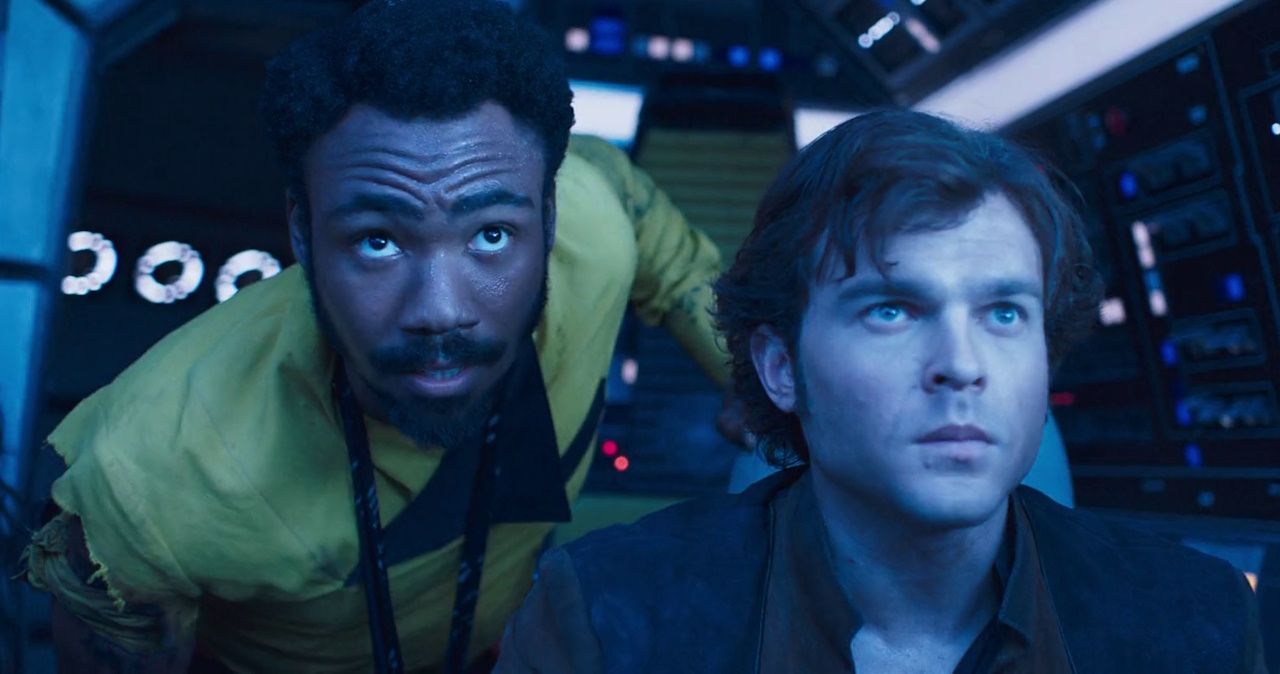
Star Wars: Squadrons – First Impressions

Spoiler Warning: There are spoilers ahead for the story mode prologue missions of Star Wars: Squadrons. Further spoilers may be present for other iterations of the Star Wars franchise.

It’s a rarity these days for me to pick up a new game the day it’s released, but that’s what I did for Star Wars: Squadrons. I remember with fondness titles like Rogue Squadron, which I played on the Nintendo 64, as well as the spaceflight sections of the first Battlefront II, and I’d had Squadrons on my radar (pun intended) since it was shown off at EA Play in June. I don’t pre-order as a rule, but when the game was released I picked it up on Steam. My slow internet connection meant that I had to leave it overnight to download and install, but I got up the next morning eager to jump into the cockpit!

First, Squadrons needed me to download and install the latest Nvidia graphics card driver. It’s been a while since any game insisted on something like that! But that didn’t take too long and I was ready to go – only to be confronted with a strange graphical issue when the game booted up. I have a 4K display, and for some reason Squadrons had cut off the majority of the display, only showing a small portion stretched out to full-screen. If anyone else encounters this issue, here’s how I fixed it: pressing Alt + Enter to exit full-screen mode. From there, I was able to access the graphics settings and change them from whatever bizarre resolution Squadrons thought I wanted to a standard 1080p full-screen experience.

This was all I could see at first! Not the best start…

When the game restarted I got the proper experience. I appreciate that Squadrons offers a range of options for colour-blind players; though I’m not colour-blind myself my brother-in-law is, and I know some titles can be almost inaccessible for people with visual impairments. Any accessibility features like that are a welcome addition.

Despite being marketed as a game with a multiplayer focus, Squadrons insists that you first play the prologue of its campaign. It’s also recommended to complete the campaign, but after the prologue is complete it’s possible to jump into multiplayer. As someone who isn’t big on multiplayer gaming I was planning to play the campaign anyway, but it’s worth knowing that it isn’t possible to go straight to multiplayer if that’s what you’re buying the game for. All told, the prologue took less than an hour to complete, so it isn’t a huge time-waster for people who want to dive right in.

You’ll receive this message upon clearing the prologue.

The campaign has an unusual format in that players are assigned two playable characters, one on each side of the conflict. The main setting is post-Return of the Jedi, looking at the conflict between the remains of the Imperial forces and the New Republic, but the prologue takes place years earlier, just after the destruction of Alderaan (as seen in A New Hope). This narrative choice won’t be to everyone’s taste, and I’ve already seen criticism online from players who wanted to be able to pick a side and stick with it all the way, but I don’t mind that. It’s different, interesting, and it gives a more rounded view of events (as well as allowing players to fly both Imperial and Rebel/New Republic ships).

The destruction of Alderaan, as seen in-game.

The character creator is rather basic. In fact, I wouldn’t even call it a “creator,” rather there are a dozen or so pre-created faces and two body types (male or female) to choose from. There are a few different voices, and although the player character doesn’t seem to talk much, that’s a nice touch. The game is played entirely in first-person mode, so perhaps a character creator is unnecessary. You do get to choose your character’s name, though, and there’s a “randomise” option if you want the game to generate a Star Wars-sounding name.

My Imperial pilot…
…and my Rebel/New Republic pilot.

The voice options and the name are the more important points. The voices are good, and although there are only a few types, they are all clearly different from one another. Names will be shown in subtitles (if you have subtitles enabled; I always do). After customising the two characters, the prologue began, and it was a moderately interesting story surrounding a convoy of refugees fleeing Alderaan. The Empire tasks a squad of TIE fighters with finding and destroying the convoy, and the Rebels task a group of X-wings with defending it.

The game begins with the Imperial mission, and this is where I got my first taste of gameplay. Squadrons is not a cakewalk, and it takes time to get the hang of the controls. I’d say it’s closer to a simulator experience than an arcade-style game such as Rogue Squadron, so be prepared for a learning curve.

The view from the cockpit of a TIE fighter.

I’m someone who prefers to play with a gamepad, but even so I didn’t find the controls easy at first. The control pad is mimicking – in a very basic way – a HOTAS or dual-stick cockpit, with the left thumbstick used to throttle up and down and the right for turning. I found this counterintuitive at first; most games use the two triggers – right to accelerate, left to slow down or reverse. Using the thumbstick for this takes some getting used to.

The throttle controls.

In that sense, players who use a proper HOTAS setup – which Squadrons does support – may find it easier and more immersive. I have seen reports online that it takes time to calibrate a HOTAS for Squadrons, but I think that’s true for many titles, and as someone who doesn’t have a HOTAS I can’t verify that. However, if I find myself getting really into the game, perhaps getting that kind of setup is something I’d consider.

Squadrons gives you plenty of time to acclimate to the controls, though. The first few minutes of the mission consist of gently following the lead TIE fighter around the fleet, and from there the action amps up slowly rather than dumping you right into a huge battle. This is not only greatly appreciated, but arguably necessary! Perhaps the most ardent combat flight sim players don’t need this level of hand-holding, but I’d suggest that most gamers will.

It was definitely helpful that the game didn’t launch right into a huge firefight.

The prologue offered an interesting – if somewhat predictable – story of an Imperial pilot (not the player character) who defects to the Rebel Alliance. During the aforementioned mission to chase down a fleeing fleet of refugees from Alderaan, the TIE squad’s captain chooses to defect, and after a firefight and a chase, the action then switches to Rebel forces. This is the dual narrative at work.

Taking on Rebel X-wings.

I did die once during this section; Squadrons will automatically destroy your ship and force you to respawn if you fly out of bounds of a given section of a mission, and I chose to investigate a tunnel before it was time. The tunnel would turn out to be where the refugees were hiding, and where Captain Javes would defect, but the linear narrative doesn’t want players straying from the course laid out, which is fair enough. There’s a short timer to give you a chance to turn around before having to restart.

Going the wrong way leads to dying and having to restart.

I’m not sure whether this applies to all the different classes of starfighter – I assume it does – but it’s possible to be out of weapons range. Even when a target appears to be relatively close, the game will designate it “out of range” unless it’s within 1000 metres (or whatever the Star Wars galaxy’s equivalent of metres is!) Again, once you get the hang of this it’s fine, and targets all have floating distance numbers when locked-on to tell you how far away they are. 1000 is a nice round number that should be easy to remember!

An out of range target.

After the defection, the action switches to Rebel forces, and I got a chance to pilot an X-wing! This was great fun, and both ships have incredibly detailed cockpits. I’m sure the other vessels that can be played will also be created in such stunning detail too. The visuals in Squadrons are truly impressive and offer an immersive Star Wars experience as a result. I know some people will insist that “graphics aren’t everything,” and while this is true, there’s no denying that a title like this works exceptionally well when it offers players the best visual experience possible.

The X-wing cockpit.

After another “fly around the fleet and get used to the controls” section, the X-wings are called into action to assist the refugee fleet that we’d been pursuing as the Empire moments earlier. These missions work well back-to-back, and I enjoyed the different perspectives. Both the Rebel and Imperial missions offer a lot to do, with different objectives to complete in addition to dogfights against enemy fighters.

My X-wing came under attack!

Captain Javes, the defecting Imperial pilot, is welcomed into the Rebel family and provides information that helps the Rebels defeat the Imperial forces and protect the refugee fleet. It was a fun sequence to play though, and while I feared for the defector’s life, he appears to have survived the events of the prologue!

The refugee fleet.

There was a great sequence which involved attacking a Star Destroyer at close range. After defeating a handful of TIE fighters, the Imperial defector insists we need to take out the capitol ship’s ability to track the fleeing refugees, otherwise they’ll just follow and catch up to them later. I believe that this is the first taste of Squadrons’ “fleet battles,” in which players team up in multiplayer (or against the AI) to take on larger fleets. Each ship has several weak points that have to be knocked out. Here in the prologue we just had to destroy one before retreating with the rest of the Rebel forces.

Jumping to hyperspace.

Overall the prologue serves as a great starting point for what seems to be a fun title. Its control scheme and semi-simulator style will mean it isn’t to everybody’s taste, and players looking for a more casual experience may be disappointed. There’s only one viewpoint: a first-person, in-cockpit view. This means you can’t switch to get a third-person view from behind your spacecraft, and again this is something that won’t be to everyone’s taste.

Electronic Arts has shown a great deal of respect for the Star Wars brand here, not only by avoiding microtransactions, but also by pricing the game below the standard “full price” of £55/$60. I almost certainly wouldn’t have picked it up on release at that price, but for £35 it feels fair and a reasonable purchase. The short campaign (estimated at around 6 hours) may have a bearing on that, but as we’ve seen recently, some other titles – such as the remake of Resident Evil 3 – have been content to try to charge more for campaigns of a similar length. Credit to Electronic Arts for not doing so.

The Rebel player character.

Squadrons is a simple game with complex gameplay that will take time to master. But it’s fun! I had a great time earlier in the year playing through Star Wars Jedi: Fallen Order, and this looks set to be my second fun Star Wars experience of the year. Even while I’m writing up my first impressions I’m itching to jump back in and have another go at piloting an X-wing or a TIE fighter and having my own crack at being a pilot in the Star Wars galaxy.

For this price, it’s hard not to recommend Star Wars: Squadrons if you’re someone who enjoys this kind of gameplay. If you aren’t, but still want that Star Wars pilot experience, there’s always Battlefront II, which has a starfighter mode, or you could even go back and look at older titles like Rogue Squadron.

Star Wars: Squadrons is out now for PC, Xbox One, and PlayStation 4. Star Wars: Squadrons was developed by EA Motive and published by Electronic Arts. The Star Wars franchise is the copyright of Lucasfilm and Disney. This article contains the thoughts and opinions of one person only and is not intended to cause any offence.
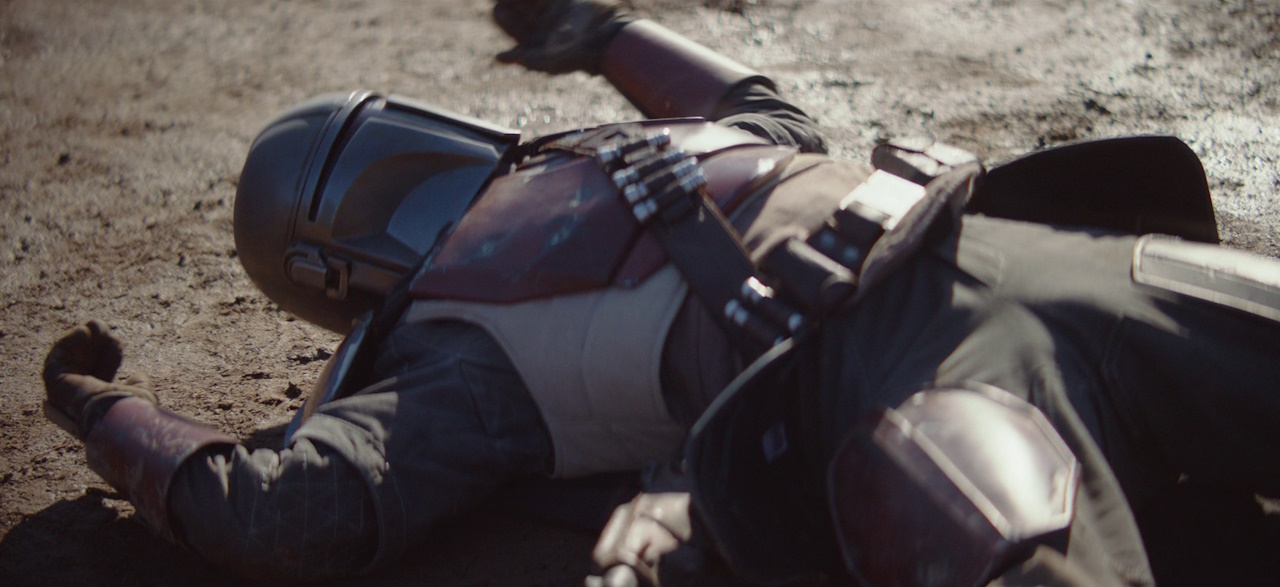
Star Wars needs to move on

Spoiler Warning: There are spoilers ahead for the Star Wars franchise, including casting information for The Mandalorian Season 2,The Rise of Skywalker, and other recent projects.

One of my favourite parts of the Star Wars franchise isn’t a film, it’s the two Knights of the Old Republic games from 2003-04. While I generally found the Expanded Universe – now re-branded as Star Wars Legends and no longer in production – to be unenjoyable, Knights of the Old Republic was an exception. It took a setting and a story that was thousands of years distant from the Original Trilogy, and while it’s certainly true that some elements were derivative, especially in the first game, as a whole it was something different that took Star Wars fans to different places and a different era. It expanded on the overall lore of Star Wars without overwriting anything, and it was a great look at the Star Wars galaxy away from Luke, Anakin, and Palpatine.

When it was announced in 2012 that Disney would be acquiring Lucasfilm I was excited. Ever since 1999, when Star Wars expanded to be more than just a trilogy of films, the vague prospect of a sequel to Return of the Jedi had been appealing to me. Learning what came next for Luke, Han, Leia, and others was something I was interested in, as I also was interested to learn what came next for the galaxy as a whole following the Emperor’s death. It’s easy to forget, but Return of the Jedi didn’t end with a full-scale victory for the Rebel Alliance. The Death Star was gone and the Emperor was dead, but practically the whole galaxy was still under Imperial control. I was fascinated to see how the Rebels turned victory in a battle into victory in the overall war.

The destruction of the Second Death Star. The sequel trilogy was supposed to tell us what became of the galaxy after this moment.

The Expanded Universe attempted to tell this story, but it was a convoluted, poor-quality tale hampered by having different writers with different ideas – seemingly Lucasfilm’s policy when it came to the Expanded Universe was that anyone could write anything. Many of these stories came across as fan-fiction, pitting a seemingly invincible Luke, Han, and Leia against all manner of obstacles. Over the years, the Expanded Universe grew to such an extent that it was convoluted and incredibly offputting for newcomers – several hundred books, several hundred more comics and graphic novels, over a hundred video and board games, two kids’ television shows, and myriad others, all of which required roadmaps, suggested reading lists, and of course a number of encyclopaedias and reference works to keep up with it all. All of this meant that the Expanded Universe was impossible to get to grips with without making it a full-time commitment. I was pleased when it was announced that Disney would be overwriting it.

By wiping the slate clean, not only would Disney not be constrained by some of the Expanded Universe’s poor storytelling, but the canon of Star Wars post-Return of the Jedi could be restarted, hopefully in a more concise way that would be easier to follow. That seemed to succeed at first, but now – a mere six years on from the cancellation of the old Expanded Universe – Star Wars is once again pretty convoluted with books, games, comics, and even a theme park attraction all officially canon. While I don’t want to spend too much time making a comparison with Star Trek, in that case the issue of canon has always been incredibly simple: television episodes and films are canon, everything else is not.

With so many books, comics, games, and other media, the old Expanded Universe was convoluted and offputting.

But we’re drifting off-topic. The Expanded Universe being dumped was a good thing, because I hoped what would replace it would be superior. And for the most part that’s been the case, though The Rise of Skywalker certainly dragged the overall story of the sequels down a long way.

Star Wars has a truly interesting setting: there’s a whole galaxy with countless worlds, trillions of inhabitants, and thousands of different species. But for the most part, the franchise has spent decades focusing on an absolutely minuscule fraction of this vast, potentially interesting setting it’s created.

The Expanded Universe spent a lot of time with Luke, Han, and Leia, as well as later with characters like Anakin, and by far the majority of its stories are set between The Phantom Menace and the couple of decades after Return of the Jedi. Where Knights of the Old Republic succeeded was in taking its audience away from that overtrodden ground and showing us a glimpse of the Star Wars galaxy without those familiar characters.

Knights of the Old Republic II was a great game that told a story far removed from Star Wars’ original trilogy.

The prequels dedicated three films to overexplaining the background of Darth Vader – a story I’d absolutely argue was unnecessary and didn’t really do anything to improve or inform the Original Trilogy in any substantial way. That was part of why I found those films so disappointing. While the third entry, Revenge of the Sith, was better than the first two, all three films didn’t really bring anything new or interesting to the table. As I sat down to watch The Force Awakens a decade later, I hoped that we’d start to see something different.

The five films made since Disney acquired Lucasfilm in 2012 have been a disappointment in that regard. We’ve had The Force Awakens and The Rise of Skywalker, which essentially remade A New Hope and Return of the Jedi only worse, Solo: A Star Wars Story which made the same mistake of unnecessarily overexplaining Han Solo that the prequels did with Darth Vader, and Rogue One, which was a great standalone story but was a prequel feeding straight into the plot of A New Hope. The Last Jedi tried to take things in a different direction, but was still a story primarily about Luke – and is now effectively non-canon after being overwritten by its sequel.

The Last Jedi was the most recent Star Wars film to even try to do something differently – but was still constrained by being a sequel using familiar characters.

I know I said I wouldn’t make too many comparisons with Star Trek, but there’s one that’s too important not to mention. In 1987, Star Trek: The Next Generation premiered. And aside from a cameo appearance, that show basically did its own thing and didn’t worry about The Original Series. The Star Trek franchise thus established that it could be so much more than its original incarnation. Star Wars has never done that – in its cinematic canon it hasn’t even tried, despite existing for over forty years. Where Star Trek consists of three time periods, an alternate reality, and nine distinct sets of main characters, Star Wars has been unable to move beyond the story of its original trilogy. The prequels lent backstory to the originals. The sequels and spin-offs expanded that same story. Even The Mandalorian brought in themes, concepts, and characters that weren’t as far-removed from the original films as they should’ve been – a decision compounded by the silly decision to bring in Boba Fett in Season 2.

Star Was could be so much more than it is. But at every opportunity, decisions have been taken to narrow its focus and dive deeper into unimportant parts of its only actual story; after more than forty years, the Star Wars franchise has still only told one real story. The decision to shoehorn Palpatine into The Rise of Skywalker makes this infinitely worse, as apparently he’s been manipulating everything and everyone from behind the scenes for the entire saga of films. As I wrote once, this transforms the Skywalker Saga into what is really the “Palpatine Saga”, as he’s the only character who seems to act of his own volition. But this isn’t supposed to be (another) critique of that incredibly poor narrative decision!

The deus ex machina of Palpatine ruined The Rise of Skywalker… and really the entire sequel trilogy.

The decision to bring Palpatine back is indicative of a franchise that has no new ideas. It was categorically not “always the plan” to bring him back in the sequels, or this would have been established in The Force Awakens. Instead, Palpatine became a deus ex machina because Star Wars as a whole has been unable to move out of the shadow of its first three films. Those films could have laid the groundwork for an expanded franchise – as The Original Series did for Star Trek – but instead they’ve almost become a ball and chain; a weight around the neck of the franchise, keeping it locked in place and unable to move on.

It shouldn’t be because of a lack of ideas. The Star Wars galaxy is a massive sandbox for any writer or director to play in, with almost unlimited potential to tell genuinely new and interesting stories. Instead it’s a lack of vision and a lack of boldness on the part of a large corporation; Disney wants to play the nostalgia card over and over again, and because Star Wars had never previously tried to escape its Original Trilogy, doing so now seems – from a corporate point of view – too big of a risk. How else does one explain the decision to allow The Rise of Skywalker to overwrite The Last Jedi? Corporate-mandated cowardice, retreating to nostalgia and safe, comfortable ground. Trying something even slightly different requires a boldness that simply isn’t present in most boardrooms.

Star Wars is being run by a corporate boardroom unwilling to take risks or do things differently.

Two-thirds of the sequel trilogy re-told the original trilogy. The prequels were glorified backstory, and the two spin-off films were also prequels to the originals. Star Wars has only ever made three original films – everything else either overexplained that story or tried to re-tell it. The Star Wars “saga” is thus nothing more than one story. One main character – Palpatine – controls and manipulates it, and only a handful of characters get any significant screen time and development.

I wrote recently that the overall story of Star Wars has been dragged full-circle, with the questions fans had about the state of the galaxy and the Jedi Order after Return of the Jedi simply not being answered in any meaningful way. The galaxy is once again in a position where Palpatine is dead, there’s one remaining young Jedi, an autocratic state controls much of the galaxy but has suffered a major defeat, and the survivors will have to finish the war and try to rebuild. That’s where both Return of the Jedi and The Rise of Skywalker left things. Far from answering the questions posed by the original films, the sequels just asked the same questions again with a different coat of paint.

By re-telling the same story – albeit in a worse way – the sequel trilogy as a whole has entirely failed to accomplish anything.

The end of the sequel trilogy left the Star Wars galaxy in exactly the same state it was in almost forty years ago.

The announcement of The Mandalorian came with what I thought was an exciting premise: the adventures of a gunslinger far beyond the reach of the New Republic. Wow! Finally, something genuinely different in Star Wars. It didn’t last, of course, as the second episode of the show brought the Force back into things. While in some respects The Mandalorian tried to be different, in too many ways it was samey. The aesthetic, the reuse of elements from the original trilogy like Boba Fett’s armour, the Jawas and their Sandcrawler, and of course the return of the Force made what was already a boring show with episodes that were too short even less interesting. I found the whole experience a disappointment.

The two upcoming Disney+ shows – based around Obi-Wan Kenobi and Rogue One’s Cassian Andor – look set to repeat the same mistakes. Ewan McGregor’s portrayal of Kenobi was definitely one of the prequels’ better elements, but do we need yet another prequel? In-universe, Kenobi went into exile on Tatooine after the rise of the Empire. Anything he does in the show would either be constrained by taking place within a few miles of his desert hut or else feel awfully tacked-on. And the Cassian Andor show is a prequel to a prequel. Rogue One was a great film, but does it need its own prequel show?

Cassian Andor was a great character in his sole appearance. Not sure he needs a prequel series of his own, though.

Can’t the investment being made in these properties be reallocated to something genuinely different? There’s so much potential in the Star Wars galaxy, yet Disney and Lucasfilm seem intent on showing us the same tiny sliver over and over and over again. When people talk of franchise fatigue and the feeling that Disney is milking Star Wars dry it’s because of this! When every Star Wars project feels samey and repetitive, it’s much easier to get burnt out on the franchise.

There are some exceptions – I recently played through Jedi: Fallen Order, and despite that game using a familiar time period, it was a mostly-original story with only one returning character from the films playing a role. It was different enough to feel like a half-step away from what had come before.

Jedi: Fallen Order told a decent standalone Star Wars story.

For the franchise to survive long-term and remain viable, it needs to step away from the original trilogy for the first time. New films and shows, whenever they may come, should look at wholly new characters in a setting and even time period that’s distinct from what came before. There also needs to be a plan – the rudderless sequel trilogy can’t be repeated. Any new project needs to have someone at the helm to guide its story. Questions need to be asked at the beginning about where the characters are going and what the endgame of the story is, so that the franchise doesn’t just keep making the same mistakes.

Not every recent Star Trek project has been to everyone’s taste. But since the 2005 cancellation of Enterprise – and in some respects even before then – Star Trek hasn’t been afraid to try completely new things. Action films, a serialised drama show, and now an animated comedy have all joined the lineup. Some of these have brought in new fans, and at the very least, no one in 2020 can accuse Star Trek of being stale. Star Wars, in contrast, has absolutely become stale. The one story it’s been telling for forty years has finally ended, so now is the moment for Star Wars to properly move on.

The Star Wars franchise – including all films and other media mentioned above – is the copyright of Lucasfilm and Disney. Stock photos courtesy of Unsplash, Knights of the Old Republic II screenshot courtesy of the press kit on IGDB. This article contains the thoughts and opinions of one person only and is not intended to cause any offence.
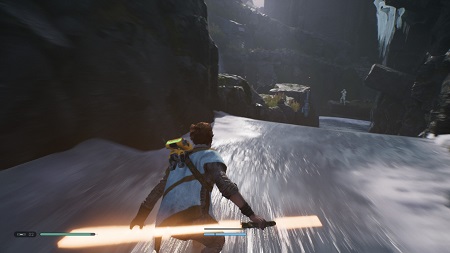
A look at Project 4K77

A lot of Star Wars fans haven’t seen the original Star Wars. Oh sure, they’ve seen A New Hope, but not the original film as it appeared in 1977 and the years after. In the late ’90s and early 2000s the original film was edited – heavily, in some places – and given the “Special Edition” monicker. It’s this version of the film that’s been the only one available to watch on DVD, Blu-ray, and streaming platforms ever since. So as I said at the beginning – many Star Wars fans haven’t seen the original film.

Even I hadn’t until recently. I’d been lucky enough to see the pre-Special Edition cut on VHS in the early 1990s, but even that version of the film had at least one significant edit – the title. In 1977, Star Wars was just Star Wars. A New Hope was the revised subtitle given to the film after the release of The Empire Strikes Back in 1980, which was also the time it was retroactively declared “Episode IV”. So even I hadn’t seen the original theatrical version!

In one of the most notorious changes made in the Special Edition of A New Hope, Greedo shoots at Han Solo in the Cantina.

The subtitle doesn’t really bother me. I tend to refer to the first film in the series as Star Wars anyway, unless discussing the wider franchise. Then it becomes necessary to differentiate the first film – just like how Star Trek can be called The Original Series. But what does bother me – at least a little – are many of the other edits and changes.

In a way, I can appreciate what George Lucas was trying to do. In 1977, a combination of budget and technical limitations meant that some of his ideas for how scenes could look had to be curtailed, and with the unlimited resources thrown his way in the late 1990s and early 2000s, he evidently felt he could bring the original films more in line with his vision by using CGI.

The opening crawl from the original theatrical version of Star Wars. Note the lack of a subtitle – the film was not called A New Hope in 1977.

The problem is, of course, that CGI in the late ’90s was pretty crap. Heck, CGI can be janky even today – just look at the catastrophic Cats film from last year for an example of that. The result of Lucas’ edits to Star Wars is that the film is, at best, a visually weird mix of poor-quality CGI and the original practical effects. At worst, the crappy CGI can be totally immersion-breaking.

There have been numerous other edits to Star Wars, including when it recently arrived on Disney+. Some fans noted that the currently-available version on both Blu-ray and streaming looks darker and washed-out, as if a filter has been applied.

CGI Stormtroopers, creatures, and ships in the Special Edition.

So what is Project 4K77? It’s a fan-made remaster of the original theatrical release of Star Wars – the 1977 version, digitally transcribed and available to watch in 4k resolution. None of the Special Edition features are included, and there are two versions – with and without digital noise reduction, which can help clean up the old film grain, but at the expense of not being as “pure”. The title is simply a reference to the fact that the finished version is in 4K resolution, and that the original Star Wars was released in 1977. Hence, Project 4K77.

It’s worth noting that the project is completely unofficial and unsupported by Lucasfilm or parent company Disney. The completed film exists in a legal grey area – it’s a copyrighted work, wholly owned by Disney and Lucasfilm, but the team behind Project 4K77 argue that the original version of the film has been abandoned by its parent company and thus is fair game. Big companies like Disney often jump on fan projects as they become aware of them; Project 4K77 has been out in the open since at least 2018, when the finished remaster of Star Wars was released, and in the two years since nothing bad seems to have happened and the website is still online. Perhaps Disney and Lucasfilm simply don’t care – I can’t imagine they’re unaware of the project after two years. But if you’re desperately worried about things like copyright, you should be aware of its status. The people behind the project also say that they expect everyone who downloads it to already own at least one copy of the film through official means.

The original version (top) and Special Edition revision (bottom). Note the difference in colour temperature and lighting for Obi-Wan and the two lightsabers in particular.

I have great admiration for anyone who takes on a big project and sees it to completion, but these fans have gone above and beyond. They’ve worked on this project basically for free in their spare time, and the result has been a complete restoration of the original film. Return of the Jedi has been remastered too, under the title Project 4K83, and The Empire Strikes Back is supposedly still being worked on. The expression “labour of love” can be thrown around very casually sometimes, but it absolutely fits here. There’s no other way to describe what these fans have accomplished.

Star Wars is in an unusual place as a piece of film history. It’s a classic film that spawned an entire franchise, but unlike many other classic works of cinema, the original film that accomplished so much has, in effect, been out of print for decades. When considering other comparable works, even within the sci-fi and fantasy genres, that hasn’t happened before. Alien, Star Trek: The Motion Picture, and even films like Flash Gordon can still be found and watched in their original forms. Star Wars can’t – or it couldn’t until recently.

This scene – featuring a crap-looking CGI Jabba the Hutt – wasn’t even included in the pre-Special Edition cuts of the film.

I don’t think it’s possible to understate the importance of what Project 4K77 has done. When future historians come to look back at late-20th Century cinema, there was a real risk that one of the most important works in the sci-fi/fantasy genres would only be available in a reworked, heavily-edited form. Thanks to this project, that’s no longer the case. The original film has been preserved in its original form, and the importance of that is profound.

While we may look at Project 4K77’s remastered Star Wars as an interesting curiosity, it’s so much more than that. And not only for Star Wars fans like myself who hasn’t seen the film in this form – but for countless current and future fans of sci-fi/fantasy and cinema in general. It’s a piece of history, and I’m all for the preservation of important historical documents and artefacts – by whatever means necessary!

Luke’s X-Wing in its original form – a physical model, not a CGI creation.

If you’re going to go looking for a copy, I daresay you’ll be able to find it through the usual methods for acquiring such content. But bear in mind the file size is particularly large – it hasn’t been compressed in any way. I watched it on my television – a 4K display, but just an LCD one, nothing special. On an OLED display it would look stunning, I’m sure – and even better if you have a proper home cinema setup with a 4K projector and screen!

The more copies of Project 4K77 that exist out there in the wild, the greater the chance it will survive long-term, which is important for the reasons discussed. But it’s something I feel every Star Wars fan needs to see at least once; this is where the franchise truly began. Everything that’s happened since in a galaxy far, far away is built on the shoulders of this film – and in particular, this version of the film. It’s a piece of cinematic history that George Lucas tried to bury. Fans decided not to let him, and Project 4K77 is the result.

The Star Wars franchise – including Star Wars and the rest of the original trilogy – remains the copyright of Lucasfilm and Disney. Project 4K77 is unofficial, and it’s your responsibility to stay on the right side of copyright law. This article contains the thoughts and opinions of one person only and is not intended to cause any offence.
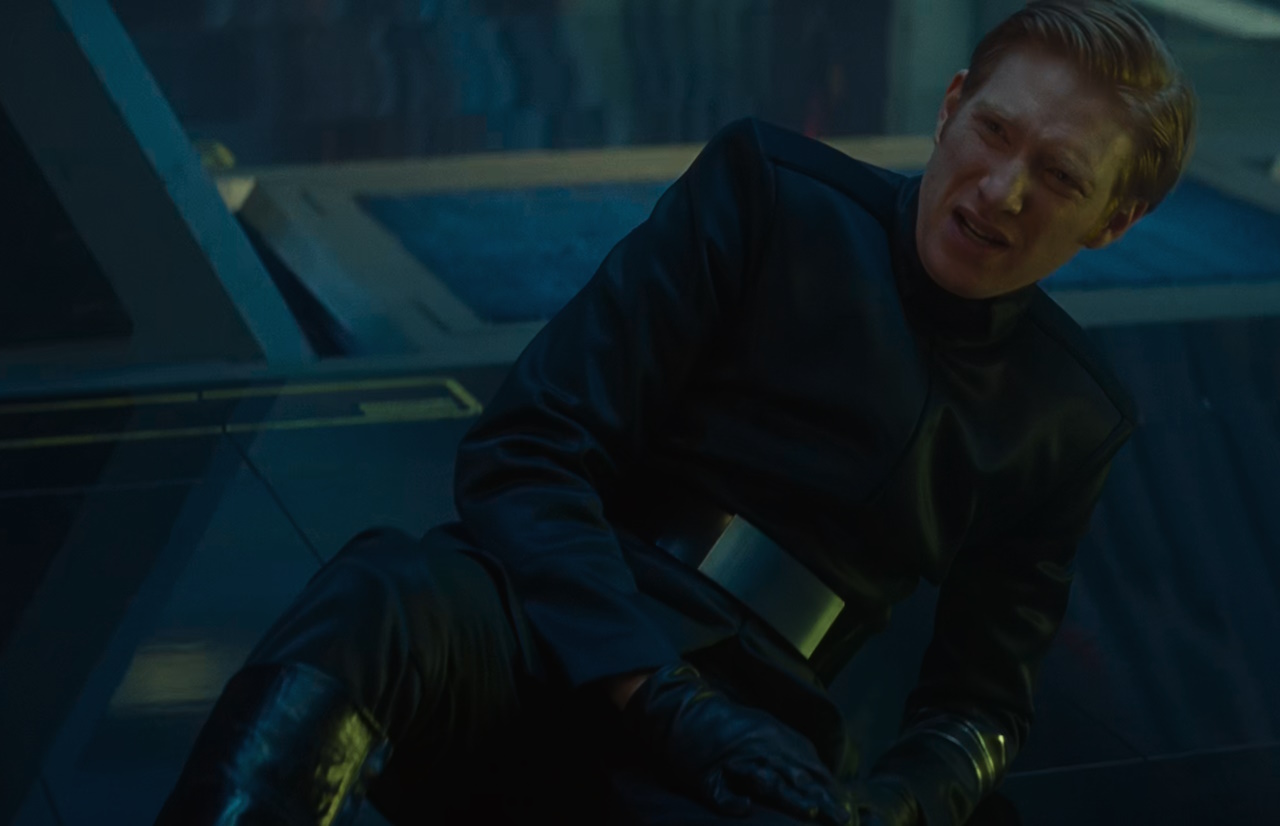
Let’s Play Jedi: Fallen Order – Final Thoughts

Spoiler Warning: There are spoilers ahead for the entirety of Star Wars Jedi: Fallen Order, including its ending. There may also be spoilers for other iterations of the Star Wars franchise.

At the end of July I completed Star Wars Jedi: Fallen Order. If you missed it, I documented my playthrough of the game, and you can find the entire series by following this link. However, that won’t be required reading for this piece, which will serve as a review/summary of what I thought of the game as a whole. So let’s get started!

My recent history with the Star Wars universe has been complicated. Due to disability, I haven’t been able to go to the cinema in person for several years, meaning that the most recent Star Wars films had been spoiled for me, and I was aware of their basic storylines before I could sit down to watch them. The last film I got to see unspoiled was 2016’s Rogue One. I enjoyed that film a lot, and at the time I enjoyed the first and second parts of the sequel trilogy – The Force Awakens and The Last Jedi, despite its controversial nature. Solo was okay, I guess I’d call it average. But I didn’t enjoy The Rise of Skywalker at all, and I found The Mandalorian to be bland and uninteresting, as well as a show that struggled to break away from the franchise’s past.

The Rise of Skywalker was a visually impressive film let down by a truly awful story.

Enter Jedi: Fallen Order. I’d been very much looking forward to the game since Electronic Arts announced it at E3 2018. It had actually been a long time since I played a Star Wars game when I first heard of Jedi: Fallen Order – though I would subsequently play the Star Wars Battlefront II campaign in late 2018 or early 2019. The only thing I was concerned about with the game before I played it was its difficulty; any time something is described as “Souls-like” (a reference to the Dark Souls series) I tend to think it probably isn’t something I’ll enjoy. However, the subsequent revelation that the game features an easier mode made me feel better. I bought Jedi: Fallen Order when it was on sale on Steam in the spring of 2020, a few months after it was released. Unfortunately around that time my PC was having issues, which meant I couldn’t play it immediately. I ended up replacing my graphics card – though the whole machine needs an overhaul at some point soon – and I was finally able to sit down and play.

I had a pretty good idea of what to expect from a game described as a “linear, story-driven, action-adventure” title, and from a gameplay perspective Jedi: Fallen Order was more or less what I was expecting. Cal had a lightsaber that he used as his only weapon, and a handful of Force powers that could be used both in combat and for puzzle-solving. As strange as it sounds when discussing a video game, I wasn’t particularly interested in the gameplay side of things. I wanted it to function correctly with no major bugs, and of course I wanted it to be an enjoyable and not-frustrating experience, but my real reason for playing the game was its story. As long as the gameplay didn’t get in the way of that I expected to be at the very least satisfied with the way Jedi: Fallen Order played.

Protagonist Cal Kestis.

My playthrough lasted 19.8 hours according to Steam – though a few minutes of that was taken up with the first-time setup, connecting to Origin, and a couple of updates that needed to be downloaded before I could play the game. Having looked it up online, the average seems to be around 20 hours, so I think my 19.8 hours is pretty much bang on what you could expect. I only died a handful of times (thanks in part to playing on the aforementioned easiest difficulty setting), so players who go for the hardest difficulty and end up having to respawn a lot more frequently than I did may find the game takes a little longer.

In my 19.8 hours I feel I accomplished as much as I could. I completed the game’s story, and there weren’t really side-quests of the type that many modern titles have, so the only things I could have done that I didn’t were collecting more cosmetic items and finding a few more “secrets” on each of the levels. These secrets mostly seem to be Force echoes – Cal can use the Force on certain objects or at certain locations to sense the past, and this would usually play out in an audio clip and perhaps an entry in the game’s databank. In short, as someone who isn’t a completionist who has to visit every last cave and open every single chest, I got as much out of the game as I reasonably could have. Backtracking simply for the sake of a few short audio clips and perhaps an extra outfit or lightsaber hilt colour doesn’t hold much appeal to me – so I didn’t.

Lightsaber customisation was a small part of the game – but a fun one.

Let’s talk about backtracking, because this is one of the few complaints I’d have about Jedi: Fallen Order. The game consists of seven planets – each planet forms one “level” for the purposes of our discussion. The first planet, Bracca, is a tutorial level, it’s very scripted, and within the first hour or so, Cal has left and there’s no option to return. Two of the other levels, Ilum and Nur, are relatively linear and compact, and may only be visited once. That leaves four levels: Bogano, Dathomir, Kashyyyk, and Zeffo. These are where the bulk of the game takes place, and they’re larger levels with some degree of exploration required to progress. However, the game’s story takes Cal from one planet to the next… then back to the previous one. This formula plays out for each of these four worlds, and frankly it got repetitive. I’m not averse to the idea of Cal revisiting the same planet – in the context of the story it made sense. But what I think would have worked better is if the levels had been broken down into two smaller chunks, with Cal visiting one location each time. This would have avoided the feeling of repetitiveness while still allowing the game to make use of many of the same assets for terrain and the environment.

The downside of bigger levels is that they can be confusing to navigate. Jedi: Fallen Order does provide an in-game map, but I found it difficult to get the hang of, especially on those bigger levels where a map would’ve really come in handy. The map is 3D, it’s entirely in shades of blue which made identifying any features difficult, there was no way to see the entire level all at once without completely losing my bearings, and generally the map was unhelpful most of the time. It was useful for seeing things like blocked doors and unnavigable passages, as these were usually highlighted, but for finding my way around a level and getting from point to point I have to give the holo-map a failing grade.

The holo-map.

Because Jedi: Fallen Order didn’t offer many shortcuts or ways back to the beginning of the level (i.e. where Cal’s ship was) after completing the level’s objectives, having a good map would have been very helpful when it came to backtracking through each of the levels. This was definitely something I found to be frustrating – with the mission over, I was keen to get on with the story and having to spend twenty minutes or more finding my way back through a level I’d already completed wasn’t a lot of fun. I can’t think of many games that do this – at least, not ones I’ve played – and it feels like padding. With the objective complete and the mission over, having to waste time going back through an already-completed level can hardly be described as anything else.

At a couple of points, Jedi: Fallen Order felt as though it was trying to present itself as a game that offered me a choice of things to do when really no such choice existed. In the worst example, after completing the tutorial level and visiting Bogano for the first time, Cal had a choice of two planets to visit. I chose to go to Dathomir, as I thought it may contain a side-mission and I didn’t want to miss out on it if the story moved on too quickly. The game didn’t make clear that there was absolutely no point in going there – Cal would be unable to progress in any meaningful way on that planet until far later into the game. This fact wasn’t even acknowledged while at the section of the level where Cal was blocked from progressing. In short, Cal needed to jump across a gap in a damaged bridge, but the gap was too wide. After trying and failing once, he says to himself something like “it’s too wide to jump.” After saying that once, that was it. It took me looking up a walkthough online to realise that there was no way at all to progress further on that level, and that’s just something which shouldn’t happen.

The impossible jump.

This ties into a much bigger theme that was present throughout the game – there were many points where an extra line or two of dialogue would have gone a long way to improving the story. In the case of Cal failing the jump on Dathomir, we needed more explanation than a single ambiguous line, something to make it clear the way was shut. But at numerous other points the same issue was present. While I wouldn’t say the story was confused as a result, there were a number of places where it wasn’t as clear as it could’ve been. I pointed these out as I found them, and it’s something I seemed to say often in my playthrough posts!

While Jedi: Fallen Order had one main story – Cal’s quest to find a Jedi holocron – it made an attempt to introduce a B-plot involving the Stinger Mantis’ pilot Greez and a faction of bounty hunters. But this storyline was not properly developed and seemed to be abandoned toward the end of the game with no conclusion. A sequel to Jedi: Fallen Order is in the works, and it’s possible it may come back at that point. But the storyline didn’t feel like it ended on a cliffhanger. One minute Cal was captured by bounty hunters, a few minutes later he’d escaped. For the rest of the game bounty hunters would periodically show up – even in places where it seemed illogical to find them – but they never said anything or did anything of consequence. They were just slightly annoying enemies to fight. The storyline just fizzled out, and as of the game’s finale felt like it had been abandoned; it wasn’t even mentioned once during the final couple of hours of the game.

Cal speaks with the leader of the bounty hunters. The character was seen only once in the game.

There were a handful of moments which I felt were immersion-breaking, where Jedi: Fallen Order stopped feeling like an unfolding Star Wars adventure and started feeling like just another video game. I looked at these moments as they happened, but the worst one was the escape from Ilum. After Cal retrieved his lightsaber crystal from the old Jedi temple, it was a race back to the Stinger Mantis with Imperial reinforcements on the way. Cere jumped on the radio to tell Cal to hurry – Star Destroyers were inbound! But when Cal made it back to the ship, Cere and Greez just stood there. And I had to walk Cal over to the galaxy map to choose the crew’s next destination. What should have been a daring last-second escape turned into a horrible anticlimax and completely robbed what had been a great part of the story of much of its dramatic effect.

As a whole, however, I liked Jedi: Fallen Order’s story. The idea of chasing a hidden holocron in what was a kind of archaeological/historical puzzle felt like something Jean-Luc Picard would have done in Star Trek: The Next Generation! As a history buff myself, I felt that the galactic history angle was fascinating and added a lot to the story. As far as I know, the Zeffo are new to Star Wars; they were certainly new to me. And in that sense, the story really did feel mysterious much of the time – I was never quite sure, especially early in the game, just was I was going to discover.

One of the Zeffo tombs.

The characters all felt real and added to the story, too. Cal himself is perhaps the least-interesting of the main characters, but as someone who has to be the “everyman” protagonist that’s fair enough. And he did have a backstory – a padawan who survived Order 66. Cere and Greez were interesting too, though as mentioned part of Greez’s story – his gambling debt and the trouble with the bounty hunters – feels incomplete. But perhaps my favourite character was Trilla, the Second Sister.

When she was first introduced near the beginning of the game, Trilla felt rather flat. Slightly over-the-top and leaning into being evil meant that there didn’t seem to be much depth to her character; she felt like she could’ve ended up being one-dimensional. But the subsequent revelation that she had been Cere’s padawan, and had turned to the dark side after being tortured by the Empire, was not only a fascinating story twist that rivalled some of Star Wars’ best (and far exceeded some of its worst), but one which transformed her into a character who was complicated and even sympathetic. Her death at the end of the game – when she seemed on the cusp of forgiveness and perhaps even redemption – was heartbreaking.

Trilla was a great character.

Though it worked well for me, I can understand why some players may have felt that the ending of the game wasn’t its strongest point. We can set aside the accusation of Darth Vader being a “deus ex machina”, because in the context of the Star Wars universe I feel it worked. But Cal and Cere’s mission, for the entirety of the story, had been to retrieve the holocron for the express purpose of using it to track down and train the Force-sensitive kids. The setup of the story strongly implies that this has been Cere’s quest for a long time – perhaps even years. Cal’s decision to renege on that, and to destroy the holocron instead, didn’t exactly come from nowhere, but it was a story point that was less developed that it could’ve been. His motivation for doing so comes from Merrin, but they only had two very brief conversations on the subject before the pivotal moment – one of which was an optional conversation that would have been easy to miss. So I can understand why some fans will have felt that the ending was unsatisfying.

However, I’d like to explain why it worked for me. Firstly, Cal changed a lot over the course of the game. He came to realise that putting Force-sensitive kids through Jedi training would lead to them being hunted by the Empire. He lived much of his life since Order 66 in hiding, and having experience the Empire’s Jedi-hunters firsthand was not content to see other kids go through what he went through. Secondly, the vision on Bogano showed him how training the kids could go wrong and lead to them being captured or killed. And finally, the conversations with Merrin were what pushed him over the edge and convinced him to destroy the holocron rather than keep it. For me, he has more than enough motivation from his background and his recent experiences to feel that destroying the holocron makes sense – and from out perspective as the audience, keeping the kids safe from the Empire is still a huge victory.

Cal destroyed the holocron at the end of the game.

Finally, let’s look at a couple of minor things that I didn’t like in terms of gameplay. Firstly, Jedi: Fallen Order was not as polished as I would have expected from a major release. There were a number of bugs and glitches, which mostly consisted of the environment or characters behaving incorrectly – characters would float in mid-air, stand on an invisible ledge, fall through the scenery, etc. The worst two glitches involved Cal getting stuck in the environment. At one point he was unable to cross a narrow beam because the game didn’t register where he was stepping correctly, and on another occasion he got stuck in the scenery after climbing an invisible wall. If I found these issues in a standard playthrough, QA testers must have spotted them during development. Between the game’s release and when I played it there were eight months in which a patch could have been rolled out; it’s a shame that these things were there in the first place but there’s been more than enough time to fix them.

Climbing an invisible wall.

There were a couple of gameplay features that I wasn’t wild about either. Both of these were creative decisions and not glitches or bugs, so I respect the decision to include them. But from my point of view, they didn’t work very well. The first is the checkpoint system. I haven’t played a game since the ’90s that had fixed checkpoints instead of allowing players to save freely, and even though it wasn’t something I had to make use of all that often, it’s not my favourite way to play. In the past it was a limitation of computing power that games had to get around because there was no alternative; in 2020 that isn’t the case. It’s a creative decision, one which aimed to bring Jedi: Fallen Order in line with titles like the Dark Souls series, and I respect that. I just don’t like it.

The second point wasn’t something I disliked per se, it’s just a feature that got old pretty fast: sliding. In the first level, the brief sliding section was wild and very fun. But the feature was repeated multiple times throughout the game and honestly it lost its appeal. Where it felt unique and fun the first time, after several mandatory sliding sessions the novelty wore off. Not to mention that several of these sections required milisecond-perfect button presses which could be very difficult.

Jedi: Fallen Order.

On the plus side, Jedi: Fallen Order gave me what might just be my favourite ever experience in a Star Wars game: piloting an AT-AT. Unlike the sliding feature, which was reused multiple times, the game only gave me one shot at this, but it was so much fun. Cal and BD-1 stayed in the vehicle’s cockpit, and over a fifteen-minute section blasted their way through other AT-ATs, ground forces, and even Imperial ships on the surface of Kashyyyk. It was undoubtedly the most fun section in the game purely from a gameplay perspective!

Speaking of Kashyyyk, it was fun to revisit a planet I’d played through years ago in Knights of the Old Republic. Though on my first visit the level looked quite different to the Kashyyyk I remembered from the older game, the second mission to the Wookie homeworld definitely brought back memories, and at points felt like playing an upgraded version of that classic from the original Xbox era.

Wookie chieftain Tarfful on Kashyyyk.

There were some great scripted moments in Jedi: Fallen Order. When Cal is dreaming while on the train on Bracca, there was a moment where the train was suddenly replaced with an Imperial ship. It was seamless and perfectly shocking. I liked the voice acting performances that the characters gave – at no point did I feel they misspoke, over- or under-acted a scene, or were anything other than competent throughout. BD-1, Cal’s droid, is absolutely adorable and I love him. There were some genuinely emotional moments in the story, such as where BD-1 encouraged Cal not to give up in the crystal cave. But above all, Jedi: Fallen Order was fun to play. I enjoyed myself most of the time, and came out of it with a renewed appreciation for the Star Wars franchise after the disappointment of the most recent film.

I’m not going to give Jedi: Fallen Order a score out of ten. Metacritic and others have plenty of numbered reviews if you need to put a score on it. What I’ll say instead is that I enjoyed the game, and it’s one I would recommend to anyone who either likes Star Wars or who likes Tomb Raider-esque action/adventure titles. Even non-Star Wars fans who like that style of game would find something to enjoy here, but obviously for a fan of the franchise the game offers a lot more.

Cal and Merrin.

Having completed the story, I’m in no rush to play Jedi: Fallen Order again. It isn’t a game which offers branching storylines or even a light/dark system to increase its replayability. However, I enjoyed my time with the game and definitely recommend it to anyone who’s on the fence about trying it. If you’re playing on PC and you’re on a budget, the game was recently discounted during the Steam summer sale, so I think there’s a better than average chance that in December, during Steam’s holiday sale, you might find it at a steep discount. I don’t think there’s any real advantage to be gained from buying the deluxe edition – it seemed to offer a couple of customisation options and nothing more, and given how many customisation options are picked up just from playing the game, unless you desperately want an orange lightsaber or yellow skin for BD-1, I’d say skip it and save the few pounds/dollars.

It was fun to document a playthrough in this way. I’ve already started a much more casual playthough of a second game – Disneyland Adventures. That series is ongoing and I’ll be updating it occasionally as we go through August and into the autumn. I haven’t decided what game in the style of Jedi: Fallen Order I might play next. I was initially considering Control, but after my recent bust-up with the Epic Games Store that’s not an option right now. I do have several other titles I’m considering, though, both modern and retro.

I hope you’ll check back regularly for more game reviews, gaming discussion, and articles about Star Wars, Star Trek, and the wide world of geekdom. Until next time… May The Force Be With You!

Star Wars Jedi: Fallen Order is out now on PC, Xbox One, and PlayStation 4. Star Wars Jedi: Fallen Order is the copyright of Respawn Entertainment and Electronic Arts. The Star Wars franchise is the copyright of Lucasfilm and Disney. This article contains the thoughts and opinions of one person only and is not intended to cause any offence.
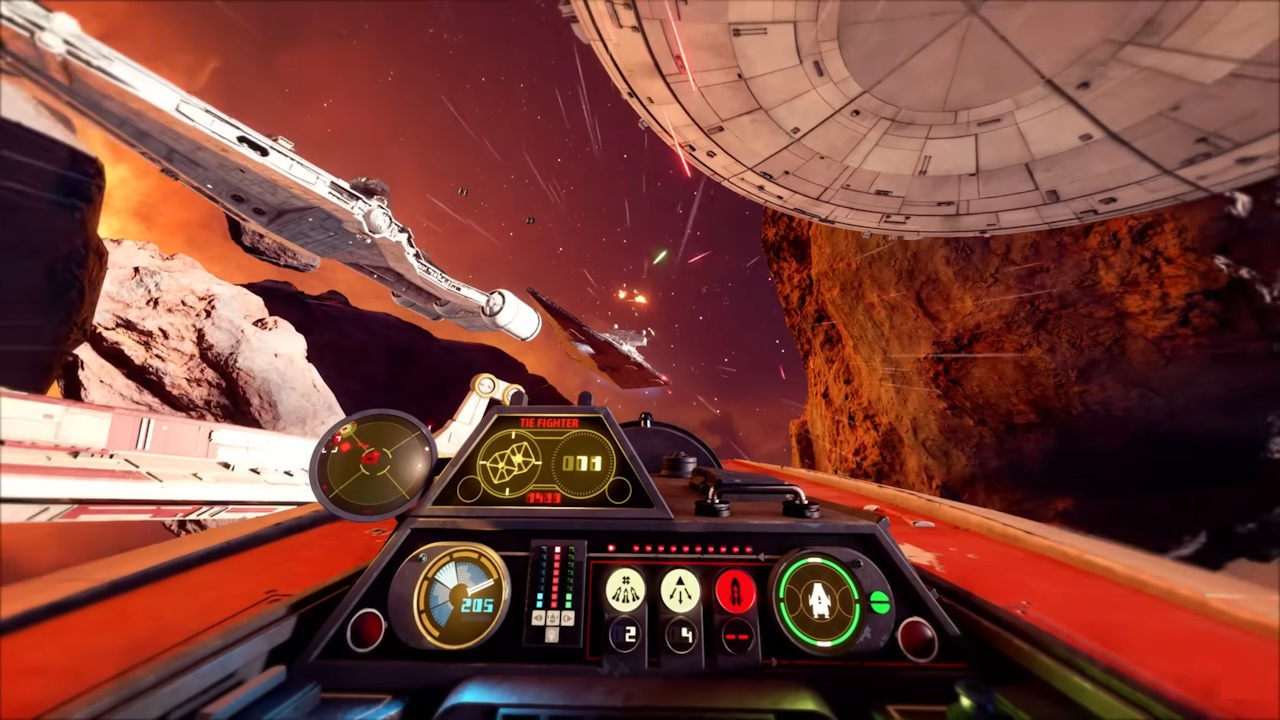
Let’s Play Jedi: Fallen Order – Part 12

Spoiler Warning: There will be spoilers ahead for Star Wars Jedi: Fallen Order as well as for other iterations of the Star Wars franchise.

Welcome to the final part of my playthrough of Jedi: Fallen Order. Yes, that’s right – this session was the last one as I made it to the end of the game! This won’t be the final piece I write about Jedi: Fallen Order, though – I plan to write up a conclusion/review of the game as a whole at some point soon, so I hope you’ll stay tuned for that. Last time Cal had finally acquired the Zeffo Astrium in the tomb on Dathomir. He defeated Taron Malicos and brought a new ally – Night Sister Merrin – aboard the Stinger Mantis.

Merrin and Cal aboard the Mantis.

After loading into the game, I chose Bogano from the galaxy map on the Mantis and the ship took off. I wasn’t sure what to expect; it didn’t seem as though Bogano would be the immediate end of the game – though the story was approaching its climax – so I was wondering if something might happen en route or upon arrival (this is why I’ve usually been saving before setting course for Cal’s next destination!) Choosing to go to Bogano triggered a cut-scene between the Mantis crew. Cal set the Zeffo Astrium on the table, and Merrin, Cere, and Greez all had something to say.

The Zeffo Astrium.

The moment with Greez was very sweet – Cal and Cere both expressed their appreciation for getting them safely from place to place, and Greez seemed genuinely overwhelmed for a moment. Merrin piped up and offered her opinion on the holocron – is it fair to the children to force them to become Jedi when that will mean the Empire will hunt them the way they’re hunting Cere and Cal? Definitely something to ponder, but at the very least Cal says he needs to keep the holocron out of the Empire’s hands.

Merrin, Cere, and Cal discuss the holocron.

The flight was uneventful, as was landing on Bogano. After disembarking, Cere, Greez, and Merrin were all standing outside the ship, and optional conversations with each of them had a definite finality to them. “We’re in this together” was a phrase that came up a couple of times with Greez, and Cere warned Cal that there may be unexpected dangers in the vault. Merrin’s conversation was the most interesting, and in light of what happened later I think should have been a mandatory cut-scene instead of a chat which players could easily have missed or skipped. She asked Cal a very pointed question – whether the children whose names are in the holocron would have even been in danger had he and Cere not intervened. Merrin sowed doubt in Cal’s mind about what to do with the holocron and the children, and also suggests to Cal that taking them away from their families to fight as Jedi may not be their choice.

The crew of the Mantis socially distancing on Bogano.

I liked these optional conversations, but they definitely had an air of finality to them, which led me to believe that the game might end soon after Cal arrived at the vault. Crossing Bogano to reach the vault was no issue, as practically all of the hostile creatures were once again absent, as they had been when we revisited Bogano in search of supplies. The only monster was the large three-eyed mini-boss near the entrance to the vault, but I chose not to fight it this time (that fight was annoying, and I felt Cal was already as levelled-up as I wanted him to be). It only took a couple of minutes, using the unlocked shortcuts and with abilities like wall-running and double jumping, to arrive at the vault.

Cal scrambles up the hill that leads to the vault.

One thing that surprised me (though it really shouldn’t have, since Cal is the only one who’s been here) is that no one bothered to re-seal the vault after Cal first opened it. Though it’s a tight squeeze to crawl inside, given that Trilla and the Empire are trying to get the holocron too, it might’ve been prudent to lock it down after Cal’s first visit. Inside the vault I was aware of how this large circular room would make for a perfect boss battle arena! I’d been half-expecting Trilla or a squad of Purge troopers to have been there, but to my surprise it was empty. I did take a moment to look around, just in case there was anything I hadn’t seen or any loot to grab, but aside from a spot in the centre of the room to interact with, there was nothing. Pressing the button led to a cut-scene in which Cal seemed to put the Astrium in a spot on the floor. This in turn caused the vault to move – Cal described the vault itself as being akin to a large holocron. Now this is something I don’t understand – for the first time while in the vault, Cal looked up, and there’s no roof! Cere made a huge fuss about accessing the vault, which appears to be just inside the door/crawlspace on the hilltop. Yet once inside, apparently it has no roof!

The roofless vault.

At first I thought the lack of roof may have been connected to the vault moving when Cal used the Astrium, but looking back that isn’t the case – it had always been open. Given that, I wonder why Cere needed Cal to access it in the first place. The entryway to the vault didn’t seem to be transporting Cal to anywhere other than a couple of metres along inside the hill, so presumably near to the vault entrance it should be possible for anyone to just jump into it from above. I guess I just found this to be confusing, and aside from Cere at the beginning of the game saying it needed the Force to open, there’s no real explanation of how the vault works. Is it cloaked somehow? Or hidden to anyone other than a Force user? Considering the Zeffo placed a record of their civilisation inside that they wanted someone to find, why would they hide it instead of putting it out in the open? Not for the first time I’m left thinking we needed a little more explanation of part of the game’s story. The vault’s movement opened up a mirror on the far wall, and Cal walked over to it.

The mirror in the vault.

Touching the mirror caused Cal to have a vision. Initially he was spoken to by a member of the Zeffo race, who briefly explained that they created the vault to serve as a record of their people, who for some reason were going extinct. I actually interpreted what this Zeffo leader had to say as being cult-like: he said his people had become decadent and strayed from “balance”, and that he would lead them “into the great unknown”, which sounds an awful lot like a metaphor for mass suicide to me. Did the Zeffo drink the proverbial Kool-aid? It wasn’t explained any further. I stand by what I said about the Zeffo looking at least somewhat similar to the Protheans from the Mass Effect games, though.

The Zeffo leader who created the vault.

This vision was similar to the one Cal had of Master Tapal – it was very dark and cloudy, with characters and the environment being blurry and out of focus. This gave it an incredibly creepy feel throughout, and I was constantly expecting to be ambushed and attacked by someone – or something – hiding in the shadows.

The vision. Note the blurriness, shadows, and how Cal can’t see more than a few feet in front of him.

Though the Zeffo leader only spoke for a moment, Cal’s vision wasn’t over. Progressing through this level led to Cal seeing the children he hoped to train. Initially he saw their progress as they called him “Master”, but the next section saw their home under attack by Stormtroopers. If this was a premonition of the future, it was bleak. But Cere had warned Cal that he would be tested, and perhaps this was part of the test. None of the characters could be interacted with, and none of the enemies could be battled; these scripted sequences played out as Cal walked through each area, but even if he wanted to he couldn’t do anything.

Cal sees a vision of the children he hopes to train.

The vision grew bleaker as Cal progressed. I liked one section which saw him climbing up a wall – the scenery was designed to make it look as though, rather than climbing, Cal was crawling through a trench. It was very well done. Eventually he was confronted by a vision of Trilla, who drew her lightsaber. If Cal surrendered she promised to spare the children’s lives, so he knelt before her. Surrendering saw Cal fall into an Imperial facility of some kind, where the vision showed him the children imprisoned and a very dangerous-looking machine.

One of Cal’s padawans in the vision.

Walking further through the Imperial facility saw visions of Stormtroopers and other Imperials, and in this section Cal would walk toward an open doorway only for the door to slam shut. It happened several times, yet still managed to make me jump each time! Ultimately Cal ended up in a small hallway where the lights went out, leaving the screen black for a moment. Cal ignited a red double-bladed lightsaber, and had a vision of himself as an inquisitor, dressed in the same black uniform as Trilla.

Cal the inquisitor.

After seeing himself in the inquisitor’s uniform, Cal was in a long hallway. At the end of the hallway seemed to be the mirror in the vault on Bogano. I approached it cautiously; there had been no enemies to fight in the vision yet, and I was expecting something at any moment. However, Cal made it back to the mirror, and seemed to stare at his reflection in a cut-scene. One thing that Jedi: Fallen Order has done that I really liked has been to always show Cal in whatever outfit I chose for him, even during cut-scenes. Yet at this moment, for some reason Cal was in his original outfit from Bogano, with no poncho. It kind of detracted from this moment a little, as it was supposed to show Cal – our Cal in the real world – confronting the dark vision of himself. Yet without those customisation elements it didn’t quite feel like our Cal, and the fact that the original outfit was a dark navy colour didn’t provide a great contrast with the black inquisitor uniform either. I would have liked to have seen Cal in the outfit I’d chosen for him in this moment, and because Jedi: Fallen Order has done that in every other cut-scene, I don’t know why it didn’t happen here.

Cal vs. Cal.

Despite anticipating a boss battle of some kind during the vision, as Cal confronted his dark self the vision came to an end. Cal had apparently cracked the mirror, perhaps from hitting it or pressing on it while he experienced the vision. Behind him in the centre of the room, above the spot where he’d placed the Astrium, was the holocron. Cal approached it to pick it up… but this seemed too easy!

Cal approaches the holocron.

It was, of course, because the moment Cal collected the holocron, Trilla revealed herself. How long had she been here? Had she just been standing there watching Cal as he completed his vision? Seems a little voyeuristic… Regardless, she ignited her weapon and, in true villain style, thanked Cal for doing the hard work for her. She believed the holocron would “win her the Emperor’s favour”, presumably elevating her position among the inquisitors. A duel was inevitable, and compared to the earlier fight against her on Zeffo, I felt it wasn’t especially difficult.

Trilla and Cal duelling.

Trilla had a few moves at her disposal, and as with the fight against Taron Malicos, the hardest part was getting her guard down long enough to land a blow. Cal’s Force powers were mostly useless – Trilla was immune to pushes and pulls, though some of the fancier moves, like the lightsaber throw, did work against her. I wouldn’t rank it as one of the game’s toughest boss battles, though – which certainly should’ve been an indication that this wasn’t the end!

Crossing lightsabers during the duel.

Eventually I was able to grind Trilla’s health bar all the way down. I rather naïvely thought that the fight was over and that Cal could leave with the holocron! A cut-scene triggered which showed Cal knock Trilla’s weapon from her hands. He picked it up – at which point it was clear the fight was over. But Cal has the ability to sense Force echoes from places and objects, and touching Trilla’s weapon caused him to have a vision of what she experienced – all the pain and rage that her weapon had been through had left a powerful impression in the Force. Cal couldn’t control it, and while he was temporarily incapacitated, Trilla stole the holocron.

Cal holds Trilla’s lightsaber and experiences a Force echo.

The Force echo – which we got to see in full this time, not just hear – was interesting. Cal witnessed Cere attempting to draw the Empire’s forces away from Trilla and another young Jedi, as well as Trilla’s capture and torture by the Empire. This culminated in her becoming an inquisitor, putting on her mask for the first time in front of Cere. The vision also showed the beginning of Cere’s escape from Imperial captivity. One thing that was interesting was Trilla’s helmet – it doesn’t allow a very wide field of view (as we might’ve guessed from looking at it). While aesthetically that might look “cool” (if the Sith care about coolness/intimidating looks) it’s hardly very practical to purposefully limit the vision of some of their top soldiers. In addition, the mask seems to give everything she looks at a red hue, which may be useful in dark environments but again can’t be practical most of the time.

This is what Trilla could see with her mask on.

When the Force echo was over, Trilla was nowhere to be seen, having fled the vault. After Cal regained his composure he headed back outside, as there was nowhere else to go from here. I took advantage of the meditation spot in case another big fight was looming, and while there was a squad of Stormtroopers outside, they were very easily avoided as Cal retraced his steps to get back to the Mantis. The Stormtroopers were busy anyway; the large monster had also spawned and as Cal snuck past the troopers were engaged in a fight against it.

The Stormtroopers battled this monster while Cal escaped.

Once again this had a very “video gamey” feel to it, and the story didn’t seem to have a natural flow. The Mantis was sitting a few hundred yards away, out in the open, yet no Stormtroopers were bothering the ship and crew. In fact, the small squad immediately outside the vault were all the troops that the Empire had bothered to send to Bogano. Trilla had successfully got the holocron, but if the Empire still wanted to capture and/or kill Cal and Cere, they missed a golden opportunity. As it is, Cal was able to gently stroll back to the Mantis, and talk to those on board before taking off.

Cal returns to the Mantis. An unobservant Stormtrooper can just be seen in the upper-right.

Despite the fact that Cal had fought Trilla again, and that she had stolen the holocron, the Force echo seemed to be another hint at her possible redemption – a theory I’d been tossing around since she was given a name and backstory when Cal faced her on Zeffo. Upon returning to the Mantis Cal apologised to Cere, not only for losing the holocron but for not understanding what she’d been through.

Cal explains what happened in the vault to Cere, while holding Trilla’s weapon.

Cere told Cal that Trilla is her responsibility – she still felt responsible for allowing her to be captured and turned into an inquisitor. She knew where Trilla would take the holocron – the inquisitor’s home base: Fortress Inquisitorius. To me that name sounds like it comes right out of the Warhammer 40K universe, but that’s okay! The fortress was where Cere escaped from, and is where the inquisitors take Jedi and other Force-sensitives to turn into more inquisitors. She was very anxious about going back, but seemed to snap out of it pretty quickly. She used the Force to pull Trilla’s lightsaber to her, and in a scene reminiscent of the knighting of Brienne in the final season of Game of Thrones, knighted Cal, making him officially a Jedi.

The knighting ceremony.

This was a real emotional moment in the story for me – Cal had come a long way from hiding out amongst the scrap and dead ships on Bracca. Even though the Jedi Order was all but gone, he had managed to become a Jedi Knight. Cal had been a great protagonist thus far, definitely channelling some of the same energy as Luke Skywalker in the original film. Cal’s journey in some ways parallels Luke’s – a young man from an out-of-the-way planet, thrust into a galactic adventure by events outside of his control. Yet at the same time, Cal’s background as a padawan, his deliberate decision to stay in hiding, and his willingness to confront his own guilt and past make him very different from Luke – and taking steps away from the original films is something Star Wars as a brand needs to do if it’s going to survive and be successful. But we’ve strayed off-topic! After the knighting ceremony, to my surprise I had control of Cal again. At the holotable on the Mantis, all the previous planets – Dathomir, Zeffo, Ilum, and Kashyyyk – were available to travel to. There was also a new destination: Nur.

The galaxy map.

Nur had two Star Destroyers in orbit on the galaxy map, which looked pretty intimidating! But there was no point going anywhere else. The story had reached its climax; Nur was surely the game’s final level. The galaxy map shows as a percentage how much of each planet has been explored, and how many secrets and hidden chests have been discovered. For every planet I was between 85-90% explored, which I think is pretty good, and I’d found over half of the secrets and about two-thirds of the hidden chests (which contain cosmetics like lightsaber parts, Mantis and BD-1 paint schemes, and ponchos for Cal). As someone who isn’t a 100% completionist, I consider all of that to be pretty decent, especially for the first run through a game. With all that in mind, I selected Nur and the Mantis headed out.

The crew of the Mantis assess the situation on Nur.

Upon arriving in the system, two Star Destroyers were present in orbit of the moon. Greez told the crew that their usual methods of avoiding detection would not be good enough, and worried about how they’d be able to get to the surface safely. Merrin had a solution – using a spell to cloak the ship. Despite Greez’s initial unease, this worked perfectly, and the ship disappeared from view.

Merrin performs the ritual…
…and the Mantis vanishes.

With the ship safely cloaked, approaching the moon wasn’t an issue. Cere and Cal would both be going; Cere planned to disable the fortress’ scanners and defences while Cal retrieved the holocron. This reminded me of Luke and Obi-Wan splitting up during their mission aboard the Death Star, and I didn’t expect Cal to see Cere again. However, it also felt like Cere had finally overcome her fear of using the Force and had embraced her Jedi nature once again, which has been a very satisfying character arc to see play out.

Cere and Cal part ways.

After using the Mantis’ escape pods to land on the moon – which is covered by an ocean, at least in the vicinity of the fortress – Cal was on his own, though Cere would check in by radio. After Cal’s pod splashed down, the area immediately outside the pod was not well-laid out and was confusing to swim through. There was no obvious path through the water, and no landmarks to allow me to get my bearings. Cal also couldn’t swim to the surface, despite the surface being visible only a few metres above his head. And finally, during swimming sections the holo-map can’t be used, all of which contributed to a very confusing few minutes of blindly swimming around.

Swimming near the fortress.

The fortress itself is apparently constructed largely underwater – the idea being that sections or even the whole thing could be flooded if necessary to prevent Jedi prisoners from escaping. In the aftermath of Order 66, this is the facility the Empire used to hold Jedi, torture them, and turn the survivors into inquisitors. As a concept I quite liked it; it definitely seems like a tactic the Empire might have used. Though it raised the question of how Cere was able to escape a facility with such a permanent and deadly failsafe!

Fortress Inquisitorius on Nur. Most of the facility, including its prison, is underwater.

After eventually figuring out where to swim to, Cal made it into the fortress via one of its underwater airlocks. This section contained a few Stormtroopers and little else. In fact the base as a whole – except for the latter areas that we’ll come to in a moment – was mostly uninteresting. There were a few hallways, some of which had windows to the outside underwater environment, but aside from a single puzzle (one of those connect-the-power-cable ones we’ve seen quite a few times) there wasn’t much of note.

Cal uses Force pull to drag a Scout trooper to him.

Over the radio, Cere made contact to tell Cal she’d succeeded in disabling the fortress’ shields. Cal flooded this section of the base and then swam to the next – fortunately this swimming section was less of an issue than the first. After entering the next dry section of the base, Cal found himself at a training dojo where a couple of Purge troopers were practicing. This room would soon become a battle arena, with several waves of all kinds of Stormtroopers and Purge troopers to defeat – by far the largest fight in terms of numbers in the whole game.

One of the many waves of Stormtroopers to fight in the training dojo.

One part of the floor of the dojo opened up to reveal a pit, and though the troopers weren’t hard to fight one-on-one, as with the zombie Night Sisters back on Dathomir, in numbers they were a challenge. The pit in the middle of the room created an additional danger, but was also useful for Force pushing troopers into – a favoured tactic of mine throughout the game! Eventually Cal prevailed, and a meditation spot emerged as a reward. I checkpointed my progress here before heading further into the fortress.

Sending a Stormtrooper to his demise in the dojo.

The next room was the prison – though it was lacking any prisoners, as presumably there are fewer and fewer Jedi for the Empire to hunt down these days! Cal also had his first run-in with Cere since arriving at the base, opening a blast door for her and seeing a pretty cool scripted sequence as she defeated several Purge troopers using Trilla’s lightsaber.

Cal watches from behind glass as Cere takes out a squad of Purge troopers.

Cere was able to unlock a route for Cal to leave the prison and get to the holocron, which was being kept in the heart of the fortress – the interrogation chamber. For some reason – it wasn’t clear why – the fortress was built atop a lake of molten lava. Makes you wonder why the Empire is always doing things like that! It gave this part of the level a weird aesthetic: a mixture of Star Wars’ Empire with a Bowser’s Castle level from Super Mario! One thing I thought as we arrived on Nur was that the fortress (or the part of it above the water, anyway) vaguely resembled Darth Vader’s castle in Rogue One – his castle is similarly built above molten lava on Mustafar, the planet where he lost the fight against Obi-Wan.

The fortress is built above a lake of lava.

The route to the interrogation room was eerily deserted. Cal noticed a turbolift and suggested to BD-1 it could be an escape route. Otherwise he was walking across a long, open-sided bridge that led from the prison room to the interrogation chamber, but there were no troopers or enemies of any kind. Two large, intimidating gun-turrets were silent too; I wondered if Cal would have to battle them on the way out!

One of the gun-turrets near the entrance to the interrogation room.

After entering the interrogation room, Cal was confronted by Trilla. He made an admirable attempt to get through to her, offering her a chance at redemption and a return to the light, but she attacked him and a duel began. This was the hardest battle in the game, no question. Trilla was 10x stronger than she had been in the earlier fight on Bogano, and landing even a single hit on her required jumping, dodging, parrying, and split-second timing.

The duel in the interrogation room.

Trilla was a difficult opponent, and Cal needed to use most of his stim-packs to survive the fight. The duel also included a couple of quick-time events, which involved mashing the X or B buttons to survive as Cal and Trilla locked blades.

Trilla during the duel.

Eventually, however, Cal was able to grind down her health bar, defeating Trilla and ending the duel. As the fight ended, Cere arrived. She spoke to Trilla, telling her that the fight was over and to try to let go of her pain and anger. For a moment, it seemed as though she’d got through to her former apprentice, and Trilla listened, expressing her regret for holding onto her hate for Cere for so long. Before the two could fully reconcile, however, Trilla was paralysed. Out of the smoke behind her, a familiar mechanical breathing could be heard…

Cere reaches out to the defeated Trilla.

I couldn’t believe it at first! Surely we weren’t going to see Darth Vader himself! In a way, it makes a lot of sense that he’d make an appearance. Not only for the story, but because it’s a Star Wars game and players love to face off against one of the biggest villains in the franchise. But I wasn’t expecting it at all, so it was a genuine surprise. The mechanical breathing grew louder, and then Darth Vader himself emerged from the smoke. “This can’t be good,” remarked Cal.

Darth Vader emerges.

Unlike Palpatine’s return in The Rise of Skywalker, Darth Vader’s appearance here worked very well. It was a genuine surprise – a shock, really – and in the context of the story facing off against a bigger, badder foe makes sense. I can understand why some people may feel that Vader’s arrival at this point in the story seems like a deus ex machina, and perhaps if the game was detached from the Star Wars brand, the sudden arrival of a new supervillain at the last moment could be seen that way. However, this is Star Wars, and given the game is taking place during the years before the original film, when Darth Vader was the Empire’s second-in-command, it doesn’t feel that way to me. Darth Vader, and original trilogy characters in general, can definitely be overused in Star Wars; I would suggest that Vader’s scenes in Rogue One didn’t really add anything to that film’s story, for example. But here it really did succeed, and not just because of a sense of nostalgia. Vader is a terrifying opponent, especially for someone like Cal who barely scraped through the fight against Trilla!

Darth Vader’s helmet.

One point I want to mention just before we go on: there was something ever so slightly “off” about Vader’s appearance. The best way I can explain it is that he looked to have the wrong proportions, being slightly broader and – for want of a better word – chunkier, than how he appears in the films. His helmet, too, seemed slightly different, perhaps squashed or just a fraction different in its scale. None of these factors really bothered me in the moment, nor dragged me out of the story, but I thought it worthwhile to mention. I daresay any such minor issues were a result of the game being, well, a game.

Darth Vader in the interrogation room.

The first thing Vader did upon arriving in the interrogation chamber was kill Trilla, whose last words to Cal and Cere were “avenge us!” I’d like to think that, had she survived, Trilla was on the cusp of redemption and a return to the light. Her conversation with Cere seemed to be moving in that direction, and it will be a tragedy for both Cal and Cere that they never got to find out, nor to save Trilla from Vader’s blade. Cere shouted at Cal to run, before making a leaping attack on Vader. Using the Force, he casually threw her aside and she toppled over the edge of one of the platforms – seemingly to her death.

Cere makes a desperate attempt to attack Darth Vader.

The next part of the game was initially confusing to me, as Vader grabbed Cal with the Force. Though I was in control of Cal, I couldn’t see any way to attack Vader (Cal couldn’t ignite his weapon, nor move) and after being held in the Sith Lord’s grip for a few seconds, Cal was dead. I was initially worried that I’d respawn before the duel with Trilla and have to do the whole thing all over again; luckily this wasn’t the case. On the second go around I figured it out – Cal used the Force to throw a large barrel or tank at Vader, and in the momentary lapse in the Sith Lord’s concentration, made a run for it.

Darth Vader chokes Cal. Trilla’s body can be seen behind them.

Darth Vader was an unstoppable killing machine – Cal had nothing in his arsenal that could even come close to matching the Sith Lord’s power and abilities. All he could do was run – sprinting back along the bridge toward the turbolift as Vader literally tore the bridge itself apart with the Force. This sequence was the most tense in the whole game, as Cal had mere seconds to run and jump across each gap and over each obstacle, lest Vader would catch him and it would all be over.

Cal attempts to flee while Darth Vader gives chase.

Vader gave chase – but at a slow pace, and Cal was able to leap across the wrecked bridge, making it to the turbolift. After bashing the controls to make the lift move, it seemed as though Vader had caught up to him, but despite the Sith’s lightsaber cutting through the doors, the turbolift moved and Cal made it to an upper level of the facility. With the holocron safely in his possession he signalled the Mantis – informing Greez of Cere’s death and requesting extraction. Running down a hallway led to a locked door, which Vader came crashing through!

Surprise! It’s Darth Vader again!

I loved this next part. As Vader and Cal briefly crossed blades, little BD-1 hopped up onto the Sith Lord’s shoulder. Using the skill he’d acquired earlier in the game he tried to slice (hack) into Darth Vader’s mechanical suit! For a second it seemed as if this might’ve worked, but then Vader grabbed the droid. It seemed like the end of BD-1…

Vader grabs BD-1.

Cal, who had been knocked off his feet, tried to use the Force to retrieve his lightsaber. Vader demanded that Cal give him the holocron; Cal of course refused. Using the Force, Vader held Cal’s lightsaber out of reach, but then activated it and stabbed Cal through the abdomen. The wound didn’t go all the way through, and while wounded, Cal wasn’t dead yet. Things looked grim, however. BD-1 beeped at Cal to get up, but it seemed like Vader had the pair thoroughly beaten.

Cal is stabbed with his own lightsaber.

But that just goes to show that in Star Wars – and in these kinds of stories in general – you shouldn’t trust that a character is dead unless you see their corpse! Cere came roaring back out of nowhere, attacking Vader! Though still outmatched by the Sith Lord, her intervention saved Cal and BD-1. Vader told Cere that her strength with the dark side would have made her an excellent inquisitor. The pair duelled for a moment, before Vader disarmed Cere.

Cere uses the Force to slow and block Darth Vader’s attacks after being disarmed.

Cere was able to use the Force to paralyse Vader, using a move that looked like he was being crushed. Cal intervened before she could go too far, and by breaking a window in the underwater facility, the trio were able to escape. Vader, whose mechanical suit is – I assume – vulnerable to water, was left holding the torrent back with the Force, unable to pursue.

Leaving Darth Vader to hold back a flood of water, Cal drags Cere to safety.

Cal gave Cere his breather (the small device that allows for breathing underwater) and attempted to swim to the surface. A combination of his wound and exhaustion meant he was struggling, however. At the last moment, Merrin intervened, diving into the water. The screen went dark…

Merrin arrives in the nick of time.

Cal awoke aboard the Mantis to see Greez looking over him. Cere was fine, he was told, and so was BD-1 (thank goodness!) After struggling to his feet, Cal joined the others in the Mantis’ main cabin. Cal and Merrin shared a hug and a touching moment – a budding romance, perhaps? Then he sat down with Cere to look at the holocron.

Merrin and Cal share a moment.

Cere told Greez that her contract with him was up; Greez said he was planning on sticking around. This was another sweet moment, as the curmudgeon had fully softened after all of his adventures with Cere and Cal. The crew gathered around the holocron, and Cal opened it to access the list inside. Cere reiterated her mission statement from the beginning of the game: they should use this to rebuild the Jedi. She did note, however, that doing so would forever change the lives of the children as the Empire would hunt for them.

The holocron opens…

Cal had other plans. Evidently swayed by what Merrin had said about the children having no choice, and that Cal may have been the one putting them in danger, as well as the visions he had on Bogano of their capture and torture, he suggested that the fates of the children “be trusted to the Force”. Implied in that is that if their destiny is to be Jedi, they would be found and be able to train. If not, they should be left alone. With a silent Cere seeming to give her blessing with a look, Cal destroyed the holocron, preventing the Empire from ever finding the children.

Greez, Cere, and Cal stand over the broken pieces of the holocron.

This was the end of the game. Cal asked the crew where they should go next, and then the credits rolled. I have to say that I liked this ending, and the idea of trusting the will of the Force and not forcing the children into a life on the run. However, I think it will be controversial with some fans. The objective Cal and especially Cere had was to use the list to find Force-sensitive children and raise them to be a new generation of Jedi. Even at the last moment, this was Cere’s hope. Cal had one mandatory conversation with Merrin in which she sowed a seed of doubt, and one further optional conversation. He also had the vision in the vault. Those two things changed his mind, and while it was more than enough motivation from my point of view, and I regard keeping the list out of the Empire’s hands as a solid victory, it wasn’t the original mission which had been at the heart of the game for most of its runtime, and for that reason I expect some fans may not have enjoyed the ending.

The final scene before the credits started to roll.

So that was it. Jedi: Fallen Order. As with many games, it took me a little while to get around to playing it – it was released in November last year – but I’m glad that I finally did. After a very disappointing experience with The Rise of Skywalker, it was nice to genuinely enjoy a journey in the Star Wars universe again. And this is also the first Star Wars project since Rogue One that I went into unspoiled. I got to enjoy the story as it unfolded, allowing the surprising moments to be genuine surprises, and that was a good feeling too.

Cal’s journey has been amazing, and it seems as though the ending of the game has been careful to leave the door open for a potential sequel. Rumours abound that it may even be scheduled for a 2022 release – but we’ll wait and see on that! All in all, Jedi: Fallen Order took me just shy of 20 hours to complete – and having looked online that seems about average. I enjoyed myself for most of that time – though there were a couple of frustrating sections and some unnecessary fluff. As I mentioned at the beginning, I’ll be doing a retrospective/review of the game at some point soon, before my memories fade too much, so I hope you’ll come back to see that. For now, all that’s left to say for those of you who’ve been following this playthrough is thank you! I hope you enjoyed this format of a written playthrough illustrated with screenshots; I certainly feel like I learned a lot since I made my first entry in this series, and I’m keen to try again with another game. I already have several possibilities in mind!

So until next time… May The Force Be With You!

Star Wars Jedi: Fallen Order is out now on PC, Xbox One, and PlayStation 4. Star Wars Jedi: Fallen Order is the copyright of Respawn Entertainment and Electronic Arts. The Star Wars franchise is the copyright of Lucasfilm and Disney. This article contains the thoughts and opinions of one person only and is not intended to cause any offence.

Let’s Play Jedi: Fallen Order – Part 11

Spoiler Warning: There will be spoilers ahead for Star Wars Jedi: Fallen Order as well as for other iterations of the Star Wars franchise.

Welcome to the next part of my playthrough of Jedi: Fallen Order. I had a couple of other things I wanted to write about over the last couple of days, including Star Trek’s Comic-Con @Home event, so I apologise to those of you who were waiting for this! After the last play session had some interesting story elements, but was let down by frustrating gameplay and a long section that felt like it was simply there to pad the game’s runtime, I was hoping for something different and exciting – and I definitely found it! After Cal broke his lightsaber in the tomb on Dathomir following a confrontation with a dark vision of his old Master, Cere took him to a strange snowbound planet – the first truly new location since our first visit to Kashyyyk way back in Part 6 of this playthrough. Cere handed Cal her own lightsaber, and he was ready to set off into the snow in search of something to repair or replace his broken weapon…

Cal prepares to head out into the blizzard.

Speaking with Cere aboard the Mantis revealed that this planet was called Ilum – a name I vaguely recognised from the Star Wars galaxy. After looking into it, it turns out that Ilum was the planet that the First Order would ultimately convert into Starkiller Base in The Force Awakens, though in this era (remember that Jedi: Fallen Order is taking place about fifteen years before the original trilogy) there was no sign of the famous laser! Ilum was a wintry environment, similar in some respects to Zeffo but with much more snow and ice. After being initially excited at the prospect of visiting a wholly new planet for the first time in ages, the terrain was actually quite samey. If you’ve ever been in a strong blizzard you’ll know it can sometimes make the environment seem like it’s monochrome – and Ilum definitely had that feel to it as Cal set out from the Mantis.

The monochrome environment of Ilum.

Ilum has a Jedi Temple, and getting there through the blizzard was Cal’s objective. It felt like the task he was to complete was a little vague at first – yes he had to fix his lightsaber, but how? And what did he expect to find on Ilum to help him with that task? A few extra lines of dialogue would have fixed this – and it’s not the first time I’ve said that during my playthrough. With the new climbing ability that he’d acquired on Dathomir, Cal was able to scale ice walls, and climbed to the top of a large frozen area. In this section was a Force echo of a former Jedi Master. It turned out that the Jedi came to Ilum as part of some kind of trial or ritual, as well as to gather kyber crystals – the mysterious objects that power lightsabers, and which would later be co-opted to power the Death Star’s weaponry.

Near the entrance to the Jedi Temple.

Inside the entrance to the Jedi Temple – which was little more than an icy cavern, really – was a puzzle to complete. The archway leading further inside had iced over, and there were three doors that had to be opened letting in “magnified light” which had to be refracted through a large crystal in order to melt the ice and gain access. This puzzle wasn’t too hard, but it took me a moment to realise that the doors – which had to be opened by pulling a chain – didn’t need to be permanently opened; Cal simply needed to hold the chain long enough to melt the ice.

Using the giant crystal to melt the ice.

I don’t think the giant crystal in this area was supposed to be a kyber crystal (which I always want to spell Khyber, with an H, like the mountain pass and region of Pakistan) if it was, Cal could’ve just broken a piece off and been on his merry way! Cere made a big deal of giving Cal her lightsaber, so I expected to be traversing this region armed. However, Cere’s lightsaber doesn’t work – another thing that a line or two of dialogue should have explained – so Cal remained unarmed despite carrying two weapons. The in-game databank said that Cere sold parts of the weapon to pay for Greez’s gambling debts, and I guess that could also explain how she’s been able to keep him on the payroll for what seems to be a long time, which was a question raised earlier in the game for me.

Cere gave Cal her lightsaber last time… but could’ve mentioned that it doesn’t work! (Or maybe it’s Cal’s turn to sing during karaoke night on the Mantis)

Melting the ice wall let Cal explore further into the Temple, and as I said this was really just a cave with a few statues in it. It seems like the Jedi offered up some pretty tough challenges – this cave was meant to be traversed by apprentices and children, but it seems like a difficult task for them! There were a lot of sheer drops, and several places where it took a moment to figure out what was the right path. Just inside the entrance to the Temple was a meditation spot, and I’d been saving up Cal’s skill points – spending three meant that BD-1’s stim-packs now totally refill Cal’s health no matter how low it gets, which seems like it will be a very useful upgrade! The ice cave on Zeffo – which is actually fairly similar to this section in appearance – contained a number of monsters to fight, and with no lightsaber I was wondering what this cavern would throw at Cal and how to avoid it. So far, though, there had been no enemies at all – just silence. Cal came upon a section of water to swim through to access the next part of the cavern.

Swimming in the icy water on Ilum.

This was quite cleverly done – there were several hydrothermal vents which obviously explained how there could be areas of liquid water in an otherwise-frozen environment. But Cal must’ve got very cold swimming through this water! The next area of the cavern contained a shocking and ominous revelation – probe droids were present on Ilum! Luckily BD-1 had acquired the skill to hack into them some time ago, and Cal was also able to use Force pull and Force push on them to defeat them – but how had the Empire found him here? A radio call to Cere and Greez led to the two of them worrying that the Mantis was being tracked.

A probe droid in the cavern on Ilum.

There were a number of statues in the cavern, and these were kind of creepy – hooded and faceless figures in Jedi robes. They reminded me of the statues seen on Jedha in Rogue One, which similarly had a ghostly vibe. Perhaps this is because – as Cal says at one point – knowing that the Jedi are gone makes it feel like being surrounded by ghosts. Any hooded figure with a shrouded face plays on deep-rooted cultural and historical fears of figures like the Grim Reaper, or even the Ghost of Christmas Yet to Come from Dickens’ A Christmas Carol, and I think that’s part of why they felt so haunting and eerie in this section of the game. Credit to the developers for achieving that sensation – it made progressing through the caverns very tense indeed, something that married well with Cal being essentially unarmed and defenceless.

Ghostly statues in the cavern.

After heading deeper into the cavern and defeating another couple of probe droids, Cal spotted a glittering object. While making his way through a narrow crevice, the ice below him gave out and he fell into another pool of water. Clearly freezing cold (and suffering from hypothermia) he had a vision of his younger self leading him out of the water in what was a very strange, ethereal moment in the game.

Cal has a vision of his younger self.

Inspired by the vision, Cal forced himself to climb out of the icy water and collapsed – but the kyber crystal was close. He stumbled his way toward a large crystal formation and plucked the tip from one of the pointy shards – this was the glimmer that he’d seen that led him to this part of the cave. As he held the small piece of crystal in his hand it broke in two. Cal broke down, believing he’d failed and that his quest was over. And at this point perhaps someone knew more about Star Wars’ wider lore or expanded universe (the stuff not included in the films) might’ve known what was happening or why Cal became so dejected… but I didn’t.

Cal approaches the kyber crystal.

There was a line earlier in the level about how the “crystal chooses the Jedi” and not vice versa (kind of like wands in the Harry Potter series, I guess). So perhaps Cal was upset that the crystal that chose him was broken. But he’s sat in a cavern literally surrounded by giant crystals, and with a small amount of effort could have broken off another piece using the Force or even just with his bare hands. So I don’t really understand this moment, and just taking what we know from the game without interjecting with lore from other Star Wars properties, it didn’t make sense and didn’t feel sufficiently explained.

Cal looks at the crystal seconds before it shatters.

Are the other crystals in the cavern not also kyber crystals? What happens if a Jedi chooses his own crystal instead of using one which chose him? Cal has been using Master Tapal’s lightsaber (containing Tapal’s crystal, presumably) very effectively for the entire game up till now, so it doesn’t seem like it’s the case that crystals are somehow bound to one Jedi. If a Jedi is chosen by a crystal but then loses or breaks that crystal, can they come back and get another one? And since Cal is literally still in the cavern surrounded by other crystals, can’t he just take another one – or wait for another one to choose him? I feel like this moment, which was the most emotional in the story so far, needed more explaining. Luckily, what came next washed a lot of that disappointment away and cranked up the emotion.

The broken kyber crystal.

As Cal sat feeling sorry for himself at the foot of the crystal formation, Master Cordova’s voice could be heard. BD-1 had made it to the cavern and Cal was very pleased to be reunited with him – having told BD-1 not to follow him as he fell into the icy water a moment ago. BD-1 played a recording from Master Cordova in which he discusses failure. Master Cordova sensed “the doom of the Jedi Order” – perhaps this was the moment of Order 66. He locked BD-1’s memories with an encryption that could only be broken if the droid made a trusted connection with someone new; BD-1 has chosen Cal, and told him (in beeps and trills, of course) that he believes in him.

BD-1 plays Master Cordova’s final recording.

Inspired by this, Cal gets up. It isn’t over yet! Somehow – and again I’m not sure how – he pressed and squished the two shards of the crystal back together, forming a single, working crystal. This next part was fun – I had eight different colour options for the fixed crystal. I chose pink (or magenta as the game calls it) and after a short cut-scene, Cal had his weapon back.

Choosing the kyber crystal’s colour.

This can be customised later at a workbench, but I see no reason to change from pink. Orange had been fun up till now, though! Cal used parts from Cere’s lightsaber and Master Tapal’s to form the new weapon. In addition to being double-bladed, it can now also be pulled apart and duel-wielded, giving Cal a new kind of attack – one that looks pretty darn cool too. I took this opportunity to further customise the weapon before leaving the cavern, including giving it a shiny red colour for the hilt.

The red hilt.

In addition to blue and green, which are available in the base game, and orange, which I had from buying the deluxe edition, the colours now available for Cal’s weapon are: purple, pink/magenta, yellow, a pale blue or teal, and a darker cobalt colour. The weapon can be symmetrical, looking the same at both ends, or each end can be different. I haven’t unlocked anywhere near all of the options yet, and there must be hundreds of possibilities for how the finished saber can look.

The colour options for the blade.

After tinkering with the saber for a while, I was satisfied and ready to get back to the ship. But of course it wasn’t going to be a simple case of backtracking! The probe droids we’d seen earlier weren’t the only Imperials on Ilum – the Empire had a whole base here with legions of troopers. When the probe droids spotted Cal they presumably scrambled their forces, and on the way out, Cal ran head-first into an Imperial mining facility! There were a number of troopers to defeat here, and more kept dropping in by ship. Cal put his new weapon through its paces, and eventually prevailed!

Cal battles Stormtroopers near an Imperial mining facility.

In this area, the Empire seemed to be digging a long, deep trench. Given that Ilum would later become Starkiller Base, I wonder if this trench is meant to be the beginnings of that. In The Force Awakens, Starkiller Base had a huge trench that cleaved the planet in two, and this was where the super-laser was mounted. I think these two things are connected, and if so it was a great little reference to the sequel trilogy. Beyond the landing pad was a doorway that BD-1 was able to hack. Inside was a whole squad K2SO-type security droids – the ones I’ve had trouble with on other levels.

The room full of droids.

Thankfully they didn’t all attack at once, and after a long fight Cal was able to take them out. Off to one side, in some yellow storage containers, BD-1 and Cal found huge numbers of kyber crystals – the Empire is mining them. He reported his findings to Cere back on the Mantis, and she and Greez got the ship ready for takeoff. The only accessible door in this room led back into the cavern, and from here Cal was mostly backtracking to get back to the ship – though the cavern was now packed with troopers.

A group of Scout troopers in the cavern.

Cal had to battle his way through the cavern, which contained probe droids, K2SO droids, Purge troopers, and a variety of regular troopers too. It was a hard fight, not so much because of any one individual opponent – this wasn’t a boss battle, after all – but because of the numbers Cal was up against. On the radio, Cere checked in to tell Cal that the Empire was bringing in reinforcements, including by Star Destroyer from neighbouring systems. Though this part of the level wasn’t timed (at least it didn’t seem to be) it was still a very tense sequence as Cal raced back to the ship!

Defeating a trooper while racing back to the Mantis.

After surviving the cavern, Cal was back at the archway where we’d melted the ice earlier. There was a meditation spot here which I used before progressing – though Cal had no more skill points to use. Unless more options open up on the skill tree, by the way, I think I’ve chosen all of the ones that seem useful to me. Perhaps that’s just because we’re entering the latter part of the game. Before exiting the temple and getting back to the surface of Ilum, there was a Snowtrooper! These guys were seen in The Empire Strikes Back and it makes perfect sense that they’d be here on another snowbound planet. It was a great little bit of nostalgia.

A Snowtrooper.

Back on the surface, the blizzard had almost fully cleared. It looked like a straight shot back to the Mantis, but from behind a rocky outcrop came not one but two AT-STs. They attacked Cal in tandem, and it was difficult to separate them long enough to attack one without getting blown up or blasted by the second! Eventually I brought the first one down, and from there the second one was less of a challenge.

One down, one to go!

Cal sprinted back to the Mantis – Imperial reinforcements were inbound and if he didn’t get back before the Star Destroyers arrived it might’ve been impossible to leave the planet! All that tension and buildup… was kind of spoilt by Greez and Cere just standing there on the Mantis when Cal arrived. I even had to walk over to the holotable (Cal can’t run on the Mantis) and manually choose a destination. After Cere had been so jumpy, rushing Cal to race back to the ship before they’re all blown to smithereens by the Empire, this was just anticlimactic and completely snapped me out of what had been one of the most exciting parts of the story so far.

Cal sprints back to the ship.

The gang even had time for a chat as Cal boarded the ship. He told them about BD-1’s memory wipe, and expressed his thanks for believing in him. It was a sweet moment – or it would have been had the timing been different. I expected a cut-scene like the escape from Dathomir, with the Mantis pulling away as Stormtroopers chased Cal, escaping the system in the nick of time to avoid the Star Destroyers… but none of that transpired. If Cere hadn’t been on the radio telling Cal to run because of how imminently doomed they all were it would’ve been fine – but the rapid switch in tone from “run, Cal, run!” to “we’ve got loads of time to stand and chat” was incredibly jarring.

There doesn’t exactly seem to be a great deal of urgency to take off and flee the system…

The obvious destination was Dathomir. I saw no point in any more backtracking, and I wanted to resolve the situation there to continue the story. With the course laid in the Mantis took off and arrived at Dathomir moments later. After a short bit of banter with the crew, which included the revelation that they’re on the bounty hunter guild’s most wanted list, Cal headed out. With the climbing gloves, he could climb up the ramp I noticed last time and use that as a shortcut to get back to the bridge leading to the dark tomb. There were a few zombified Night Sisters to battle en route, but nothing Cal and his new weapon couldn’t handle.

Oh look, it’s that meditation spot again.

At the entrance to the temple was another bounty hunter ambush. A hunter and a droid were both present and again this was an annoying fight. Eventually, however, Cal was able to get the better of both of them (apparently Force pushing over a cliff still works if you use it on a guy with a jetpack…) and enter the tomb. There were no enemies to fight inside, and Cal used the meditation spot before re-entering the dark vision he had of Master Tapal.

The dark vision.

Master Tapal began by taunting Cal again, and then the duel was on. Once again I was expecting a difficult boss battle, yet once again I was wrong. Though I had control of Cal during this sequence, he had no health bar and nor did Master Tapal. After a brief duel it became obvious that the only way out of the vision was to take it peacefully – not fighting back or trying to strike at Tapal.

Cal and Master Tapal during their brief duel.

By choosing the peaceful path – which is, of course, the Jedi way – the vision of Tapal relented and ended the fight. Cal told his former Master that he would honour his teachings and remember his sacrifice, letting go of his guilt. The vision of Tapal then disappeared, and the pathway to the next part of the tomb finally opened.

Cal brings the duel to an end.

Having completed the vision-quest, Cal was able to access the rest of the tomb. He had beaten the darkness in the tomb – and within himself. I’m never sure with things like this whether what transpired was taking place in Cal’s head, whether it was something more real, something based in the Force, etc. At the end of the day it doesn’t really matter, it’s just something to ponder. I tend to assume for a vision like this that it’s in his head, perhaps amplified by the Force, but not something tangible.

Master Tapal walks away, ending the vision.

Beyond the doorway were several Night Brothers. They weren’t particularly difficult to dispatch, and it was nice to try the duel-wielding move on them. Seeing Cal pull his double-bladed weapon apart and use both pieces independently is very cool. It’s certainly not something I’ve seen in Star Wars before. The Night Brothers in this area had a marking painted on their chests – the same one we saw as a scar on Taron Malicos. Interestingly, when I went back to look at screenshots of the previous visits to Dathomir, the Night Brothers all had that same symbol – though many were faded. The paint on those in the tomb was much fresher.

A Night Brother with the painted symbol.

After entering this area, the Night Sister appeared. Her name is Merrin. Instead of just attacking this time, she spoke to Cal, which gave him a chance to reason with her. Malicos lied to her, he said, and the Jedi weren’t conquerors who would have wanted to wipe out her people.

Cal and Merrin talk.

The two realise they have something in common – Cal may be the last Jedi, and Merrin may be the last Night Sister. Malicos had promised her revenge in exchange for sharing the secrets of the tomb, but instead he became corrupted by the dark side. The two formed an alliance (albeit one of convenience) to take down Malicos. Cal didn’t have far to go for this confrontation. Down a wide hallway, Malicos was waiting. He stood on a circular platform which had a sheer drop into red mist on all sides – it reminded me so much of the Bowser fights in Super Mario 64… and that’s the third thing in Jedi: Fallen Order which seems to draw on that game, after the slides and the underwater chests! I never expected to get even one thing in a game like this to remind me of Super Mario 64, let alone three.

Can you say “obvious boss fight arena”?

After crossing over to the arena, Malicos seemed happy to see Cal return. He tried once again to convince Cal to join him, and talked at length about how reviving the Jedi Order would be a waste of time – the Order failed, he said, stifled by tradition and its own past successes. As with Luke in The Last Jedi who said similarly critical things of the Jedi Order in its last days before the rise of the Empire, Malicos isn’t exactly wrong. The whole story of the rise of the Sith in the prequels is on the back of Jedi hubris, believing themselves to be better than they were. Regardless of how I may feel about the Jedi, Cal rejected everything Malicos has to say. And it’s clear, of course, that Malicos’ idea of a replacement for the Jedi would put him firmly in control. He had been wholly corrupted by the dark side after years on Dathomir. A duel began.

Malicos with his weapons drawn.

I said way back in Part 4 of this series, when Cal first met “the wanderer” – aka Malicos – that I was sure they’d end up fighting. It’s nice to be right sometimes! This was a difficult fight – up there with the duel against Trilla on Zeffo. Malicos had a number of Force powers at his disposal, but more than that it was very hard to land a blow on him. He kept his guard up, and hitting him required split-second timing. He was also immune to things like Force push – which of course makes sense.

Malicos attacks Cal with the Force.

Merrin showed up during the duel, and at a couple of scripted moments used her magic to attack Malicos. When Cal had finally ground his health down, Merrin stepped in and used her magic one final time, entombing Malicos in the ground in a cut-scene that reminded me of a horror film called Drag Me To Hell.

Merrin sends Malicos to his grave.

With the battle over, Merrin and Cal had another chance to talk. Interestingly, Merrin is unaware of the Empire – or any galactic affairs beyond what was happening on Dathomir. Cal explained that he’s searching for the Zeffo Astrium, an object which will help him access a list of Force-sensitive children. He told Merrin he wants to save them from the Empire, a cause she can get behind. The Astrium wasn’t far away, and after jumping over a couple more platforms, Cal finally found it.

Cal holds the Zeffo Astrium.

Merrin returned as Cal found what he was looking for. She was very happy for him, as the Astrium may be able to save the children and revive the Jedi Order. But she is still alone; nothing can revive her people the way the Astrium and the holocron might for the Jedi. Cal and Merrin connected over their shared experiences as the last of their kind. Cal also referenced what Prauf said to him at the beginning of the game – in the aftermath of the Master Tapal vision he’s also taking on board what Prauf told him too. To my surprise, Merrin said she would join Cal on his mission. I don’t think she will be a constant companion as Cal goes on quests – Jedi: Fallen Order isn’t that kind of game – but she will perhaps hang out on the Mantis, be available to talk to, and participate in cut-scenes.

Cal shows Merrin the Zeffo Astrium.

Merrin told Cal she’ll meet him back at the ship, leaving Cal once again to backtrack through the level. Fortunately this tomb was small compared to the two on Zeffo, but there were no shortcuts to get back outside. A couple of large monsters had spawned in the tomb, and Merrin sat to one side as Cal took them on alone. In these moments, Jedi: Fallen Order feels like a typical game and not an interactive Star Wars experience, and it can make suspending my disbelief more difficult. However, taking on the monsters wasn’t a huge challenge this time.

Merrin in the tomb.

I like that we can see Merrin’s face now that she’s taken down her hood. It humanises her – despite the ash-grey skin – and we can see her more emotive and expressive. I still think she reminds me of Visas Marr from Knights of the Old Republic II, though! Merrin apparently didn’t tell her zombified Night Sisters that she and Cal are allies now, as several attacked him on his way back to the ship. However, these fights weren’t particularly challenging. Back aboard the Mantis, Cal introduced Merrin to the crew. They were standoffish at first, and they don’t trust her – but they do trust Cal, so Merrin was welcomed aboard. The next destination is Bogano – back to the vault. But I chose to save my game at this point and save Bogano for next time. Exploring two planets is enough for one session!

Merrin sits at the table on board the Mantis with the rest of the crew looking on.

So this was another long one! Repairing the lightsaber was great, and despite Ilum being kind of bland, it was nice to finally get to see a different planet after hopping between the same three worlds for a long while. The emotional moment with BD-1 in the cavern was incredibly sweet, and I’m even more in love with the cute little droid than I already was. In fact the story of this entire section was great – the only part I didn’t like was the kyber crystal breaking and the lack of explanation for why that was an issue.

I feel certain the trip to Bogano won’t go smoothly – but join me next time to find out!

Star Wars Jedi: Fallen Order is out now on PC, Xbox One, and PlayStation 4. Star Wars Jedi: Fallen Order is the copyright of Respawn Entertainment and Electronic Arts. The Star Wars franchise is the copyright of Lucasfilm and Disney. This article contains the thoughts and opinions of one person only and is not intended to cause any offence.

Let’s Play Jedi: Fallen Order – Part 10

Spoiler Warning: There will be spoilers ahead for Star Wars Jedi: Fallen Order and for other iterations of the Star Wars franchise.

This section was a long one, even by my standards, so I hope you’ve got a drink at the ready as we could be here for a little while! Last time we left Cal and the gang on Kashyyyk, having determined that the next destination was Dathomir. Cal had defeated the Ninth Sister, befriended a shyyyo bird I named Buckbeak, and after listening to another recording of Master Cordova, had made it back to the Mantis. Upon loading into the game, Cal was standing outside the ship and got a couple of lines of dialogue from Cere and Greez, mostly just discussing the situation on Kashyyyk. At the galaxy map I was all ready to set course for Dathomir when Greez suggested we backtrack to Zeffo – he thought there might be some loot worth getting in the wreckage of the crashed ship. Despite wanting to get on with the story, the return to Bogano last time proved very fruitful so I decided to go along with it.

The view from the cockpit of the Mantis as Cal leaves Kashyyyk behind.

The flight to Zeffo was uneventful, and after landing at the usual spot, Cal spoke to Cere and Greez again. It turned out that Cere had once been a Jedi seeker – using her skills to locate Force-sensitives for the Jedi Order. Teaching Trilla what she knew led to the latter becoming a particularly successful Jedi-hunter. Cal headed in what I hoped was the direction of the Venator’s wreckage. At one point I got turned around in the ice caves, and it took a little while to find my way out. Another duo of bounty hunters beset Cal near the entrance to the first tomb, and this was another tough fight.

Taking on a bounty droid on Zeffo.

I didn’t go back into the tomb; I’m not even sure if the tombs were still accessible, but even if they were there’s no point. Eventually Cal made it to the wreckage of the Venator-class ship, and to be fair there was a lot we hadn’t explored here. Last time Cal basically looked over about 10% of the ship en route to the Imperial excavation site, and after escaping Trilla and the tomb was captured by the bounty hunters, precluding a return to the crashed ship. This time, I ignored the route that led to the dig site and proceeded deeper into the wrecked ship. The ship is sitting in a large body of water, and now able to dive below the surface, Cal found a hidden chest. An ice slide then led further into the ship, seemingly through one of its engines. The ship still had some power – during the slide Cal had to avoid some dangerous-looking electrical columns and vents.

Sliding into the Venator wreck.

Inside the wreck, Cal spoke briefly to BD-1 about his earlier life. As a Jedi padawan he lived aboard a Venator-class ship with Master Tapal; demolishing them as a scrapyard worker on Bracca was hard for him. There were several Force echoes amongst the wreckage, telling the story of a Jedi Master and her apprentice who were attacked and killed during Order 66. Cal eventually found their remains.

Exploring the wreckage.

Also in the wreck were a number of troopers, including a Purge trooper. Once again, I have no idea how the troopers got to be in the parts of the level where they were. For Cal to get there took a lot of climbing, swimming, swinging, and using Force powers, so it kind of makes no sense that Stormtroopers would be able to be in these hidden areas in my opinion. There was another bounty hunter to fight in the wreck too, and I’m increasingly convinced that the bounty hunter attacks are not scripted and their locations are random. As usual I found the bounty hunter fight difficult, but was eventually able to prevail.

Cal defeats the bounty hunter.

The reward for half an hour’s worth of exploration was meagre – a few customisation options, which were mostly lightsaber parts, and a single new stim for BD-1. Additional stim-packs are useful, there’s no denying that. But Zeffo is a large level and the Venator wreck took time to navigate; I was hoping for something more, I suppose. After collecting the stim-pack upgrade there was also the matter of making a safe return to the Mantis which was all the way on the other side of the level.

BD-1 receives another stim-pack. He can now carry six.

While exiting the Venator wreck I spotted a smaller area off to the side of the main crash site that I also explored. Inside was a holo-recording of a Clone Trooper commander, and another bounty hunter to fight. These guys definitely have it out for Cal! This section was thankfully smaller and took less time to explore, but also contained nothing of value. A couple of Force echoes added to the story of the Jedi Master and padawan, but that was it. I headed back to the Mantis via the ice caves as I remembered that there was a cable-car in there.

The recording of the Clone Trooper.

Aside from one annoying puzzle which involved moving a box, wall-running, and jumping to cross a gap, the Venator wreck was an easy enough level. And it was a nice change of scenery from Jedi: Fallen Order’s previous levels, as well as being somewhat reminiscent of Rey’s exploration of the wrecked Star Destroyer on Jakku in The Force Awakens. After backtracking through the ice caves and fending off a few more Stormtroopers, Cal made it back to the Mantis. Cere piped up, suggesting another diversion back to Bogano, but as I’m fairly confident I got everything worth having last time I decided to ignore her and go to Dathomir this time. I was itching to continue the story – even if I wasn’t excited at the prospect of battling those Night Brothers again!

The Mantis lands on Dathomir.

After landing, Cal spoke to Greez and Cere. Greez was frightened of Dathomir and insisted on staying aboard the ship, but Cere was standing just outside. Greez told Cal to go easy on Cere following the revelation about Trilla, and in this conversation dropped a nice little easter egg about a “castle on Takodana” that makes great cocktails – a reference to Maz Kanata from the sequel trilogy. Outside the ship I spotted a rock formation that I hadn’t seen last time – it looked like it could be a shortcut into the level but there was no way to climb it. Before heading off to get back to the crumbling bridge that thwarted Cal’s first attempt to explore Dathomir, Cere wanted to chat. She basically warned Cal to be careful, and in an optional conversation they spoke about Cal healing his connection to the Force. Despite their differences, Cere appears in this moment to care for Cal and act as his mentor.

Cere and Cal speak outside the Mantis.

The path through Dathomir to the bridge was familiar to me after having spent time here earlier in the game. After that debacle, I was half-hoping that the double-bladed lightsaber upgrade Cal acquired on that trip would prove itself useful at some point. Unfortunately it didn’t; aside from a single special move that Cal could learn (throwing the double-bladed weapon around him in a wide circle) it seems to make no difference, and Cal could have stuck with using the single-bladed variant. That first visit to Dathomir was thus a complete waste of time, and detracts from what has otherwise been a decent story. The wanderer Cal met last time is still standing on the bridge in the same spot, and it’s as if no time has passed at all. As I said previously, I’m happy with a linear game that requires me to take a specific path. Jedi: Fallen Order is clearly this kind of game. But with that being the case, the game should not have presented itself as one with optional routes – pretending to offer player choice where none exists is clearly an attempt to mimic more open titles (like the older Knights of the Old Republic games as well as modern open-world ones) but without the substance to back it up. Instead of Dathomir feeling like an intimidating place to visit at this point in the game, it ended up feeling like yet another backtrack, and the first part of the level’s layout was very familiar as I’d spent a lot of time scouting it out looking for a way across the bridge.

Remember this meditation spot?

I had unlocked a couple of shortcuts on my first visit to Dathomir, and it only took a few minutes to get back to the bridge. The wanderer was still there, but as we’d exhausted the conversation options last time, he had nothing left to say to Cal. Double-jumping across the gap that halted his progress last time led to Cal being confronted by three Night Brother archers, and after taking them out a cut-scene triggered which saw another Night Brother attack a wooden platform on the bridge, sending it and Cal crashing down. This next sliding section has to be the worst in the game so far, and seems to have a major glitch or bug. A short slide after the cut-scene ends with Cal needing to double-jump across a gap to continue sliding, but for some reason this jump proved impossible. No matter how many times I tried, aiming Cal was impossible. He’d end up leaping off to one side, and the rare time he didn’t the double-jump wasn’t enough to clear the gap. At one point Cal even got stuck on a branch above the slide, unable to move or progress further.

Unable to clear the gap despite double-jumping.
Stuck in the scenery above the slide.

This slide was way harder than it needed to be. And the double-jump feature is to blame – for some reason, what was happening was that Cal would jump up from the slide and immediately double-jump, despite the fact that I was only pressing the button once. This meant he lacked the momentum to clear the gap in the slide, and pressing the button a second time did nothing as the game believed he had already double-jumped. I tried switching over to the keyboard and mouse input, but the same issue occurred. I quit the game and re-loaded my save file, but the issue persisted. I was eventually able to clear the gap and continue down the slide, but it took over thirty attempts. Luckily, as I’d seen while stuck in the scenery, there was a meditation spot near the bottom of the slide. After checkpointing, I was tempted to take a break after all the fuss with that stupid slide, but I decided to press on as I was curious to see more of the story and we hadn’t actually done anything of consequence on Dathomir yet. Around the next corner and through a gap in the wall, the Night Sister who confronted Cal last time was back.

The Night Sister.

The Night Sister reminds me of Visas Marr from Knights of the Old Republic II, something about the hooded robes and mysterious Force abilities, I think. But that’s incidental. She is furious at Cal, as she believes it was the Jedi who attacked her people (as I think we covered last time, I think this was something included in the Clone Wars television series, but I haven’t seen it). She said she wants to exact revenge for the attack, and used her Force-magic to raise a number of zombified Night Sisters to attack Cal.

A Night Sister zombie.

These Night Sister zombies weren’t hard to defeat one-on-one, but as is often the case with zombies in video games – and in the wider genre of zombie fiction – en masse they were much harder opponents. The Night Sister is able to raise several at a time, and over the next section of the level Cal would be beset by multiple groups of these non-sentient enemies. Despite the fact that the game’s databank describes them as “mummified”, they absolutely behave like typical fast-moving zombies, so that’s what I’m calling them.

A closer look at a zombie.

This section of the game, as Cal tackled the lower levels of Dathomir, felt once again like the game was being padded out. Nothing in this area contributed to the story; there were no major puzzles and only one boss fight. Cal’s journey across the game has had several of these moments – detours which neither added to his personal story nor the overall story of the game. The entire objective of this section – which probably took a good hour to complete – was to get back to the section of the bridge where Cal fell and thus access the tomb. While it was at least a new, unexplored area and one that didn’t involve a lot of backtracking, it wasn’t particularly interesting, and the enemy types thrown at Cal were the same two Night Brothers – the melee and archer variants – and the zombified Night Sisters.

The lower levels of Dathomir.

I mentioned a boss fight, and this was a big one. Earlier, Cal had spotted a large creature flying around, and after progressing as far as possible through the lower levels, eventually ended up facing a room that was very clearly a “boss fight arena”. It even had a meditation spot directly preceding it! On the far wall was a dead Night Brother and what looked like a section Cal would be able to climb. While investigating, the winged monster Cal had spotted earlier arrived – this must be its nest. The fight was difficult as the monster had a number of moves at its disposal, including unblockable attacks and a screech that could temporarily stop Cal from moving. It could also fly quickly from one side of the arena to the other, and its size meant its attacks had a broad range, making them hard to dodge.

The large monster during the boss battle.

The creature – which I thought resembled a giant owl – was hard to take down. Eventually, when its health bar was around three-quarters depleted, it fled the area and Cal thought he’d won. He’s clearly not a gamer, because if he was he’d know that the monster was sure to be back! The Night Brother that Cal had begun to examine before being interrupted turned out to have special gloves that made it easier to climb walls – but only walls with a certain pattern, of course. Cal was thus able to climb out of the arena and on to the next part of the level. I found these gloves worked very well, but at several points there were glitches where Cal was able to use them to climb invisible walls. One time this led to getting stuck in the scenery and I had to again quit the game and re-load my save.

Climbing on thin air.

The monster did eventually come back, and in a scripted sequence grabbed Cal and took off flying through the air. This section saw Cal and the monster fight in the air, with Cal having to jump onto its back several times – these moments required split-second timing and perfect accuracy, neither of which are my speciality, so this section took multiple tries! Eventually the monster and Cal crashed back to the ground, and the monster was finally dead. As an aside, I often find myself feeling sorry for creatures like this in games – it was just minding its own business when Cal showed up, after all. It’s for this reason that I was never interested in games like Monster Hunter World – I just don’t want to harass and kill monsters for no reason!

Cal diving toward the winged monster.

With the boss defeated, this section didn’t have much more to offer. Cal had to make his way back up to the surface, and some Night Brothers stood in the way, as did a long, winding, and complicated route. There were a couple of Force echoes which seemed to imply that the wanderer had crash-landed here in a ship and was taken prisoner by the Night Brothers. There were also a couple of customisation options in chests.

A Night Brother.

At one point Cal entered what was described as the Night Brothers’ village. This section contained another slide – thankfully an easier one than the one that led here from the surface – and a number of enemies to battle. Presumably being a Night Brother is more fun than it first appears if the way around their village is by slide. Cal was finally making his way up, back toward the surface, when he had a very ominous conversation with Cere on the radio. Apparently Greez, who has locked himself aboard the Mantis, insisted he’s seen something or someone snooping around the ship. This wasn’t an optional conversation; it triggered automatically as Cal made his way through the level. I was sure that this would lead to consequences later! In a chest in this area I unlocked another paint job for the Mantis. Despite enjoying its yellow design, I chose to apply this mostly-black variant just for a change of pace.

The Mantis in its new colour scheme.

The climb up from the Night Brother village overlooked the Mantis, as you can see from the screenshot above. But this was still a long way from where Cal needed to be, and I was beginning to get frustrated with this incredibly long detour. Fortunately, however, Cal did eventually make it back around the level, unlocking a shortcut back down to the lower level (as if I’m going back there on purpose) in the process.

Cal during the climb back to the bridge.

Back at the bridge, the wanderer was gone and the three Night Brother archers had respawned. Defeating them was not particularly difficult, but one of them fired an unblockable shot that, because of where I was standing in that moment, knocked Cal off the bridge and back onto the glitchy slide. Well there was no way I was going through all that again, and after failing to jump back up to the bridge, I re-loaded the game for the third time in this session. Luckily there was a checkpoint in the area just before the bridge – but I’d loaded in here three times now, and the same three Night Brothers appeared each time as the game always loads the same enemies in the same areas. I wondered to myself how many darn times I’d have to complete this one fight! This time I made it across the bridge without falling and to my surprise there were no enemies in the area. It was a straight shot from here to the entrance to the tomb.

Finally made it to the tomb entrance.

There were two paths available, one which led directly to the tomb and one off to the side. Off to the side was only a chest, and after picking up another customisation piece I headed into the tomb. To my surprise, there was nothing in here. In a large room, Cal walked to the back where there was a wall or door that contained carvings – these looked like the Zeffo script we’d seen elsewhere. But as Cal “interacted” with the wall, nothing seemed to happen.

Cal and BD-1 examine the Zeffo tomb.

An audio log from Master Cordova provided a little more information – the Night Sisters allowed him to access the tomb, which he described as hidden and secluded, but he felt it was a dark place. Checking the holomap confirmed that this door was blocked, and with nothing else to see inside the room I turned to leave. There was a meditation spot right by the blocked doorway – strangely I hadn’t seen it on the way in. I decided to make use of it before heading outside to see what I’d missed, though Cal didn’t have any points to use. However, exiting the meditation spot didn’t bring me back to the tomb – it was another flashback of Cal in his youth!

This is what I saw immediately after exiting the meditation menu.

I absolutely love the way this was done. Jedi: Fallen Order has used one of its most basic features – the checkpoint-save – to pull a complete surprise on players. As Cal knelt down to meditate I had no inkling of what was about to transpire! When I got over the initial shock, however, it seemed obvious that in a place of darkness, Cal was going to see a very dark vision – could this be the day of Order 66? Unlike previous flashbacks, where Cal was in a bland grey training room, he first appeared in a cabin aboard a ship, and curiously I could see what looked like a Jedi holocron (just like the one we’re chasing) on one of the beds.

Is this object in Cal’s cabin a holocron?

Where previous flashbacks had been fairly short, designed to show Cal a new skill (or rather, to re-learn an old one), this section was long. It also contained the first difficult puzzle since arriving on Dathomir – in the training room Cal had to use all of his skills from wall-running to double-jumping to get from the ground to Master Tapal’s location in a room high above. And my goodness was this just the dumbest puzzle! It wasn’t bad per se, it was just not at all obvious where to go at one point. Cal had to jump from a floating platform and hang onto part of the wall of the room, but the wall was grey and the hand-hold was also grey, meaning it wasn’t obvious where to jump or what to aim for when Cal reached that point. The jumps between platforms and especially at the wall-running section were also right on the limit of Cal’s abilities, meaning each jump had to be timed perfectly to avoid Cal falling to the floor and having to repeat the whole obstacle course. On the plus side, I got a taste of what it must be like to be a Jedi padawan… suffice to say I would’ve failed padawan school.

The training room.

After eventually completing this obstacle course, Cal arrived in the upper room where Master Tapal was waiting. Here it was revealed that they’ve been on or in orbit of Bracca for some time – presumably why Cal went there during or after Order 66. Bracca had been secured – presumably from forces loyal to General Grievous and the separatists – and the ship was getting ready to move to another destination. However, the Clone Trooper in the room received new orders, and we heard the familiar line from Revenge of the Sith: “Execute Order 66”.

The Clone Trooper and Master Tapal.

Despite being momentarily overwhelmed by sensing the deaths of many Jedi through the Force, Master Tapal was able to defeat the lone trooper. He encouraged a frightened Cal to make his way to the escape pods, promising to rendezvous there after taking care of business. The next section of the game saw Cal make that journey, and he had to fight Clones who had been his friend moments earlier.

Cal with Master Tapal.

The Clones were no harder to defeat than Stormtroopers; despite being young in this sequence, Cal was armed with a lightsaber (blue this time) and just as capable of standing up against the troopers as he has been in the rest of the game. Making it through the ship was thus not an issue from a gameplay point of view – in fact I expected Cal’s youth, and the lack of BD-1 to carry stims – to make it harder than it was.

A Clone Trooper firing at Cal.

A particularly cool sequence saw Master Tapal take out a whole squadron of Clones in a corridor below Cal, who was using the ship’s Jefferies tubes to avoid detection en route to the escape pods. Escaping the ship, while it posed no real challenge from a gameplay perspective, was one of the most tense and exciting in the game so far. It really felt as though Cal had mere moments to get away from the ship and the violent Clones, and his own shock at was happening came through in the animation and voice performance perfectly. At one point Cal had to climb through a turbolift shaft and lost his lightsaber – this explains why he uses Master Tapal’s saber instead of his own.

Cal loses his lightsaber.

Upon reaching the escape pods, we saw Cal witness his Master’s death. A squadron of troopers blasted away at Master Tapal, and though Cal was able to open the escape pod and help him inside, it was too late and he died in Cal’s arms. His last words to Cal were to wait for a signal from the Jedi Council – despite everything that transpired, Master Tapal still had hope that some Jedi would survive and be able to help Cal. The escape pod launched, and Master Tapal had his revenge as the ship exploded – this is perhaps why we see an exploding Venator-class ship on the game’s title screen.

Master Tapal’s final moments.

The escape pod was presumably bound for Bracca, or else ended up there shortly after, as we know the ship was in that system. How Cal came to hide out, where he landed, and other questions are unanswered, but perhaps we’ll learn more later in the game. However, none of that really matters – this moment is the heart of Cal’s backstory. Order 66 led to the death of his Master, and he feels a great sense of guilt. Not only survivor’s guilt, but that he couldn’t do anything to save him, that he wasn’t quick enough or skilled enough. As the flashback ended, a new vision began. In a dark, shadowy arena, Master Tapal confronted a fully-grown Cal, saying that it was his fault he died, and that he was weak and a traitor. Cal duelled the vision of Tapal, and unfortunately this serious moment was somewhat spoilt by a silly visual glitch – Master Tapal’s head seemed to twist unnaturally.

The glitch affecting Master Tapal.

The duel between them was short; I expected a boss battle but it was really just a couple of blows. As Cal struck his Master with his lightsaber a cut-scene triggered. Cal plunged his blade into Tapal, who says that his blood is on Cal’s hands, as it always had been. This is a representation of Cal’s feelings of guilt, amplified by the dark side of the Force – or at least that’s how I interpreted this vision.

Killing Master Tapal in a dark vision.

Snapping out of the vision, Cal realised in the real world that he’d been holding his lightsaber tightly – and crushed the crystal inside in his hands. The weapon was now broken; regular button-pressing wouldn’t activate it. With no way into the tomb, and now unarmed and unable to defend himself, a dejected Cal left the tomb. The wanderer was waiting outside, and revealed himself to be a former Jedi. Just as I was wondering how I’d be able to fight him with no weapon, the Night Sister appeared.

The wanderer revealed.

The wanderer – whose real name is Taron Malicos – seemed to be armed with two lightsabers. Either that or he has a very ornate belt buckle! I wondered if Cal would be able to steal one or might even be given one, but it turns out that years on Dathomir have turned Malicos to the dark side. He even controls at least one faction of Night Brothers. He attempted to recruit Cal into whatever cult he has going on, which angered the Night Sister as she believed all Jedi need to die as punishment for the attack on her coven. After a brief conversation, the Night Sister raised another group of undead, and the race was on for Cal to make it back to the Mantis!

The Night Sister uses her magic.

I didn’t see what happened to Malicos in all the confusion. He may have escaped – and it seems like, from a story point of view at least, Cal will still have to deal with him somehow. My immediate concern, however, was that Cal was unarmed and now being pursued by the largest group of zombies seen so far. These zombies can jump, meaning crossing the bridge provided no safety. More zombies appeared as Cal raced back through the level, barking at Greez and Cere to prepare the Mantis for takeoff. The ramp I spotted before was a shortcut – and I was able to utilise it to return to the Mantis with the zombies in hot pursuit!

The escape from Dathomir.

Cal made it back to the ship in one piece, and though a number of zombies tried to climb aboard, Greez was able to take off and flee the planet. Cere and Cal sat down for a heartfelt conversation, as Cal revealed his broken lightsaber to her. Cal was sure he could have saved Master Tapal – all the guilt he’s felt for years came spilling out. Cere responded by telling Cal that she cut herself off from the Force because in order to escape the Empire she gave in to the dark side. The pull of the dark side is something every Jedi will have to deal with, she says. Learning about the holocron snapped her out of her rage and anger at the Empire and at herself – providing her with hope that there could be a brighter future.

A dejected and defeated Cal aboard the Mantis.

What will happen next is unclear. The Mantis flew to a snowy location that I initially thought may be Zeffo, but now I’m sure is not, and after landing Cere told Cal it was time to build himself a new lightsaber. She offered him her own, and he took it. This planet may be some kind of Jedi training ground – Cere was a former Jedi seeker, after all. After landing on the snowbound planet, I checkpointed my progress and stepped away from the game.

The Mantis lands on the snowy world.

So this was a very long session, with some quite frustrating points but a great story. Jedi: Fallen Order has taken Cal – and me along with him – on a rollercoaster ride so far. Conquering his fears and guilt seem to be the key to entering the tomb – but first Cal will need to rebuild his broken weapon. Hopefully the Zeffo Astrium will be worthwhile when he finally gets it. I’m assuming that won’t be our final visit to Dathomir. Not only does Cal need to access the tomb, but both the Night Sister and Malicos need to be confronted to conclude that section of the story satisfactorily.

Join me next time and we’ll see what happens next – and where we are!

Star Wars Jedi: Fallen Order is out now on PC, Xbox One, and PlayStation 4. Star Wars Jedi: Fallen Order is the copyright of Respawn Entertainment and Electronic Arts. The Star Wars franchise is the copyright of Lucasfilm and Disney. This article contains the thoughts and opinions of one person only and is not intended to cause any offence.
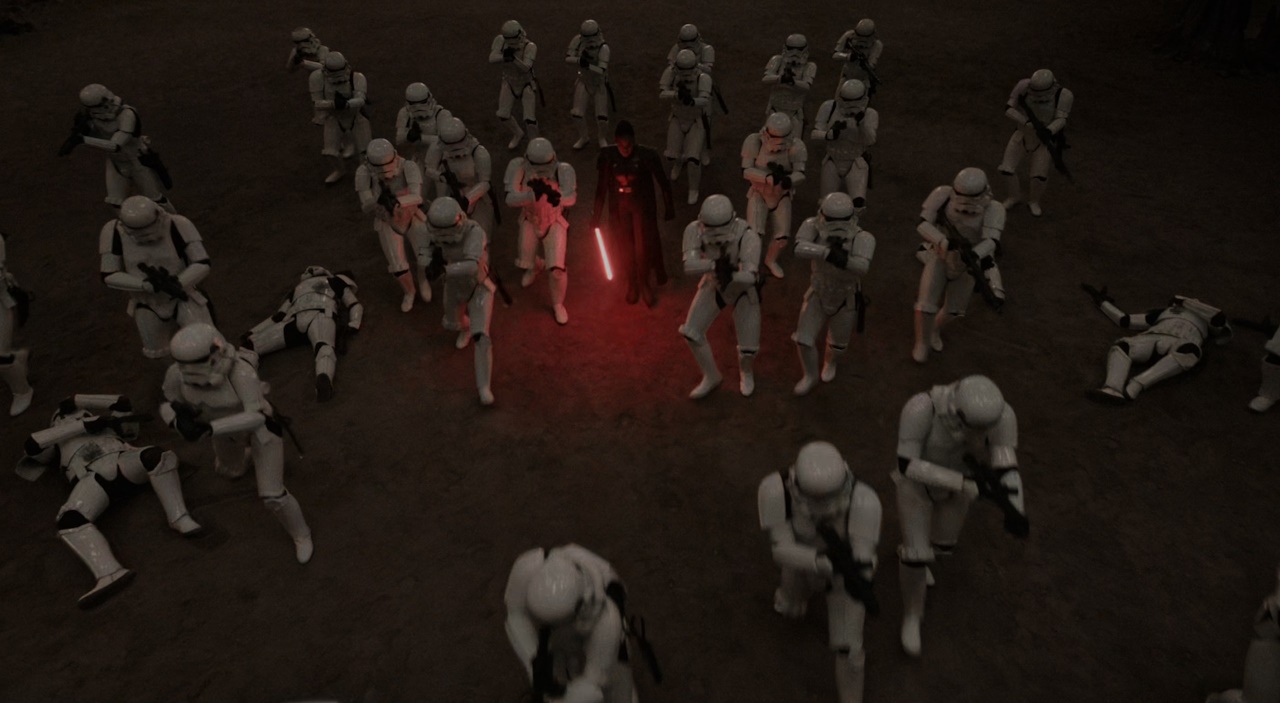
Let’s Play Jedi: Fallen Order – Part 9

Spoiler Warning: There will be spoilers ahead for Star Wars Jedi: Fallen Order and for other iterations of the Star Wars franchise. There is also a spoiler for Game of Thrones Season 8.

Welcome back to Jedi: Fallen Order. After avoiding the Second Sister’s forces on Zeffo, and escaping imprisonment by a gang of gambling-obsessed bounty hunters, Cal and the gang got a lead on the location of Wookie chieftain Tarfful. I was all set to head back to Kashyyyk when Cere suggested a return to Bogano in search of hidden caches of supplies. At the end of the last part of this playthrough, we had just landed on Bogano, so that’s where we’ll pick up now.

Cal and the Stinger Mantis at the landing zone. The spire in the background is the vault we’re trying to access.

I haven’t exactly been wild about Jedi: Fallen Order’s style of sending me back-and-forth between the same levels. Returning to a previously-visited level is fine for completionists who have to unlock every last item, but generally speaking I’m here for the story. However, the chance to acquire some new loot was enticing enough to convince me to backtrack, and I’m very glad I did. After landing, Cal spoke with both Greez and Cere – these were basically continuations of the chats he had with them last time. Cere expressed her regret at not telling Cal about Trilla and her past with the Empire sooner. Greez had a line that I found interesting: Cere is the one “paying the bills” for their expedition; he’s literally just a hired pilot, though they have become friends. This raised a question for me that may be wholly irrelevant, but I can’t help wonder where Cere got the funds for all this star-hopping. Though the economy of the Star Wars galaxy has always been suitably ambiguous, Cere must be reasonably wealthy to be able to afford to keep hiring Greez and the Mantis. Yet as an ex-Jedi and fugitive from the Empire, where did she get her money?

Cal and Greez chat near the Mantis.

At the landing site there was a ramp that led down into a small chamber. Inside was a little fox-like creature; Cal rescued it and it will now have a home aboard the Mantis. Also in this area was another sphere-and-socket puzzle, which upon completion opened up an area containing a chest. We’d found one of these chests during our first visit to Zeffo, and inside was an upgrade for BD-1, allowing him to carry one more stim (health pack). This alone made the trip worthwhile, and after thinking I wasn’t going to spend much time here in my rush to get to Kashyyyk, I was suitably buoyed by gaining an extra stim to revisit more of Bogano in the hopes of finding more loot!

BD-1 acquires an extra stim-pack.

Outside of this area were a few more of the fox-creatures, but the hostile enemies that we encountered on Bogano the first time all seemed to have vanished. I used the holomap to try to scout out unexplored areas and places where previously-blocked paths were now accessible. In what had presumably been Master Cordova’s camp – where Cal met BD-1 for the first time – was a surprise, though! A large droid was waiting for Cal, and seemed to speak with a human voice as if being controlled remotely. After defeating it, it turned out to be affiliated with the bounty hunter collective that Cal escaped last time. This felt like a bad sign: was Cal being hunted by two groups now?

The bounty droid.

After collecting a couple of lightsaber components, Cal faced off against another large monster. We fought one of these after exiting the vault on Bogano the first time, and more recently in the bounty hunter’s arena. It was a tough fight, but Cal received a great reward – another new poncho. This one is my favourite: it’s pink! Unless he later finds one covered in sequins or rhinestones I doubt I’ll be changing outfits for the rest of the game. Cal looks like a pretty princess.

Cal’s pretty new outfit.

There were a couple of other things to see on Bogano; at one point Cal and Cere spoke on the radio about her time as Master Cordova’s apprentice. They enjoyed playing holo-chess together, which was a cute little story adding to Cere’s background. There was one final unexplored area left, and to my great surprise when I got there I found another chest with a stim upgrade. This means BD-1 can now carry five stims as opposed to the two he was equipped with at the start of the game. This obviously helps a lot, as a couple of times Cal has run out of stims during particularly difficult sections. After retrieving this second stim I was content that I’d picked up as many of the supplies as I was going to find, so back at the Mantis I set course for Kashyyyk.

Cal and the gang on the bridge of the Stinger Mantis.

I wasn’t sure what to expect on Kashyyyk. Mari – the resistance fighter Cal befriended last time – had said the Empire’s counter-attack led to them taking back control of the facility we attacked last time. It always felt like the resistance was fighting that kind of engagement; expecting them to keep control of an Imperial facility didn’t seem feasible. However, their situation appears grim. With Saw Gerrera having retreated away from Kashyyyk, it wasn’t clear who would still be there, or even where the Mantis would be able to land. As it turned out, the Mantis was able to land at the same Imperial landing pad as last time – though given the Empire is now in full control of this area, I’m not exactly sure how or why that was possible other than “because it’s a game”. As I said before about Zeffo, given that we’re going to be taking a different route this time and exploring a different area away from the Imperial base, I’d have preferred to see the Mantis pick a new landing zone. Splitting Kashyyyk and Zeffo into two wholly separate levels for the two visits Cal had to make to each would have gone some way to making these sections feel less repetitive and less like backtracking.

The fox-creature Cal found on Bogano now lives aboard the Mantis!

There were no enemies to fight at the landing pad, and though both Cere and Greez were stood outside the ship, neither had anything to say. Presumably we’d used up their dialogue on the jaunt to Bogano. There was evidence of a battle on the landing pad, as Cal sensed a Force echo from a discarded resistance fighter’s helmet. Trilla had been here in search of Cal, and had killed the resistance fighter while looking for him. Cal felt very guilty at unleashing the Jedi-hunters on these resistance fighters; while they would have had a hard time holding out against the Empire, they were no match for Trilla and her Purge troopers.

The dead resistance soldier’s helmet.

Also at the landing pad were Mirienna and Choyyssyk – Mirienna was the woman from Zeffo who Cal met; her husband had been killed by the Empire. Choyyssk was a Wookie who Cal freed from the prison; he was the one who set up the meeting with Tarfful, the chieftain we’re here to meet. Tarfful wasn’t here, though, he was at a rendezvous point in Kashyyyk’s Shadowlands. After a brief chat in which Mirienna revealed she too is leaving the planet, Cal wished them well and headed out. I was excited at the prospect of heading into the Shadowlands. I mentioned this area on our last visit to Kashyyyk as I’d played through it in Knights of the Old Republic. Compared to that game, the presentation of Kashyyyk in Jedi: Fallen Order was quite different; less like a massive forest with kilometres-tall trees and more like a dense jungle. However, all that was about to change!

Cal with Mirienna and Choyyssyk at the landing zone.

A cable-car took Cal to the Imperial facility’s rooftop, where last time we’d defeated the AT-ST and listened to Saw Gerrera’s speech. From here, the only way forward was to take an elevator into the facility and find a way out into the forest from there. I had a bad feeling about the elevator – last time Cal rode one the doors opened to reveal Trilla! And this time was almost as bad: Cal arrived in the Imperial facility only be confronted by two bounty hunters. This was one of the hardest fights so far in Jedi: Fallen Order for me. Both bounty hunters had a variety of weapons and stun-gadgets at their disposal, including flashbang grenades which turned the screen white, blinding Cal temporarily. However, after focusing on one opponent at a time (and using a couple of stim-packs) Cal was able to defeat one of them, before a well-timed use of Force push sent the second falling to his death. Thank goodness for enemies who choose to fight on ledges and platforms!

The two bounty hunters.

I can’t tell if the bounty hunters are always in this location, or whether their appearances are somewhat random. However, one thing is clear – having encountered the droid on Bogano and now these two, the bounty hunter guild is hunting Cal. Surprisingly this wasn’t mentioned at all; I wondered whether Cal might’ve told Greez what had happened, but he never did. After this fight there were several Stormtroopers and a Purge trooper to defeat, before BD-1 was able to take down a forcefield allowing Cal to exit the base and head into the forest.

The way out of the Imperial base.

After exiting the base, Kashyyyk finally started to take on a similar feel to how I remembered it from Knights of the Old Republic in the early 2000s. At points, Jedi: Fallen Order’s Kashyyyk Shadowlands felt like a visually-improved version of the level from the older game, and I absolutely adored the nostalgia trip of exploring this dangerous forest floor. Gone were most of the jungle elements that Cal saw on the route to the Imperial base last time, replaced with a dense forest. I have no doubt Kashyyyk’s wroshyr trees are based on California’s giant redwoods, and while I’ve never seen those for myself I’ve seen photos and at least one documentary! A short distance from the base were several Stormtroopers armed with rocket launchers in a treehouse-platform, and credit to the game’s designers here because the platform looked just like the ones seen in Revenge of the Sith. Yoda was in such a treehouse when Order 66 occurred.

The treehouse.

From here a zipline led deeper into the forest, and there were a variety of animal and plant(!) enemies to battle. Tarfful sure picked an out-of-the-way location for a meeting! But that makes sense as he wouldn’t have wanted to get any closer to the Imperial base than necessary. There was a Force echo in this area which showed Saw and Mari arguing – believing Kashyyyk lost, Saw has withdrawn as we already knew. But Mari insisted on staying behind to help the Wookies in their resistance to the Empire. I’m still hopeful Saw will reappear in the game, as Cal’s story with him doesn’t feel complete. This section contained several giant venus fly trap-like plants, which are more than big enough to eat Cal! Luckily there’s a couple of seconds between stepping on one and it snapping shut, which is enough time in most cases to jump off before having a problem.

A jaw plant.

After battling a few more troopers, Cal was able to advance deeper into the forest. Another Force echo saw Cal learn about the resistance’s retreat from the Imperial base; at one point they were overrun and a number of soldiers were killed. After climbing through a cave, Cal dropped down into a body of water called Origin Lake, and was getting closer to Tarfful – whose rendezvous location was marked on the holomap.

Cal learns the fate of many of the resistance soldiers.

There was another Purge trooper to battle in this area as well as the standard troopers and monsters, and Cal had some swimming to do to get out of the lake. Climbing up eventually led to a couple of vines, and after swinging across like a fabulously pink Tarzan, Cal made it to the meeting with Tarfful. For some reason Choyyssyk was there too, having apparently raced there from the landing pad. Having a companion during this section of the game could have been interesting, and it could have been fun for Choyyssyk and Cal to journey through Kashyyyk together. The meeting itself was a complete let-down, as Tarfful basically says that he once told Master Cordova to climb a large tree – the Origin Tree. And that was it. No big reveal or useful information, and the conversation with Tarfful and Mari was over in a couple of minutes. At least there was a reason for Cal to head to his next objective, though; you’ll recall my complaining several times at the game dumping objectives and map markers on Cal with no explanation given!

Tarfful and Mari at the rendezvous.

I was really expecting something more substantial from Tarfful, especially after all the buildup to meeting him. Even if he’d still given Cal the same basic information and quest, the conversation at the meeting could have been so much more than it was. It wasn’t even a cut-scene, as Cal stood there stoically while Mari translated Tarfful’s Wookie growls. Mari gave Cal a breather – the device used by Qui-Gon and Obi-Wan in The Phantom Menace – to allow him to breathe underwater, as the way in to the Origin Tree will require a lot of swimming. As an aside, Electronic Arts, who published Jedi: Fallen Order, have an online store/game launcher called Origin. Is it just a coincidence that the Origin Tree and Origin Lake share its name? Probably. An optional extra chat with Mari revealed that before taking up arms against the Empire she was a cartographer, making maps of backwater planets. Little moments like this go a long way to humanising characters and making them feel like real people. While I expect we’ve seen the last of Mari, this moment was sweet and it showed how the rise of the Empire affected people across the galaxy.

Getting the breather from Mari.

After the anticlimactic rendezvous, Cal set off in search of the tree. Equipped with the breather, he can now dive underwater and seemingly spend as long under the surface as he likes. Swimming is something many games struggle to get right, and unfortunately some of the same issues that have plagued other titles are present in Jedi: Fallen Order. I’ve already spoken several times about the game’s relatively clunky controls, and in a three-dimensional underwater environment, Cal controls like a drunk hippopotamus. It was very difficult to get him to navigate even the widest of caves and openings, and the fact that Kashyyyk’s murky water doesn’t allow for great visibility when swimming made these sections of the game frustrating to play at points. However, there were several chests underwater which contained various lightsaber parts, which was nice. And for the second time while playing Jedi: Fallen Order I got a Super Mario 64 flashback – opening the chests while underwater felt so much like it does in that game to me!

An underwater chest. Note the limited visibility.

Surprisingly – and thankfully, given how tricky it was – the swimming sections contained no underwater monsters or aggressive piranha-like fish to fight off or escape from, and after uncovering a couple of chests, Cal made his way to the next area of the level, which was presumably the base of the Origin Tree (though nothing appeared in-game to confirm this). There were Stormtroopers in the area as well as plenty of monsters; the large spiders being perhaps the most difficult to fight as they could immobilise Cal with their webs (think what happened to Frodo in Lord of the Rings!)

Caught in a spider’s web.

The ascent was slow-going in places, and I debated taking a break. But there were no meditation spots in the vicinity, and I wasn’t keen to have to start all over again from the bottom. By the way, how many games in recent years have this kind of old-school “checkpoint” system instead of letting players save their progress on the fly? Though I’ve never played the Dark Souls series, I think this is something those games brought back as a way to increase the difficulty, and it’s something Jedi: Fallen Order mimics. It definitely has the desired effect, and while the ability to freely save would be nice, I can’t criticise the game for sticking to this model. Cal did eventually make it to the point the holomap was sending him to.

Approaching the objective marker.

This turned into an ambush, however, as the Ninth Sister – another Inquisitor who we briefly saw on Bracca – appeared in her ship! I thought she was going to jump down and duel with Cal, but she remained aboard and started blasting at him, triggering a long sliding sequence as he escaped. This was particularly annoying, as the sliding sections have difficult controls and require perfectly-timed button presses and perfect aiming to complete jumps and avoid Cal falling to his death. This was even worse than the ice slide on Zeffo and took many attempts to get right. At one point Cal was propelled through the air by several well-placed bouncy plant-things (I know that’s a horrible description, sorry) in a sequence that reminded me of the barrel-cannons from the Donkey Kong Country games. The Ninth Sister’s ship was eventually taken down by one of Kashyyyk’s huge animals, though it seemed clear that wouldn’t be the end of her.

Sliding to escape the Ninth Sister.

Luckily there was a meditation spot shortly after the sliding section, which I took advantage of. I opted to improve Cal’s Force push ability; it will now affect groups of enemies, provided they’re standing close enough to one another. This has the potential to be very useful, as I’ve found Force push to be one of my most frequently-used powers during combat. As Cal had slid back down to the forest floor, it seemed as though he’d have to climb back up the Origin Tree to find whatever he was looking for up there, but it wasn’t long after he began the climb that he had a flashback to his time training under Master Tapal. This time Cal was able to learn the “Jedi flip” that he needed to get across that bridge on Dathomir, and after the flashback was over, Cal states that he’s finally re-learned the skills Master Tapal had taught him; he’s “back to where he was” before Order 66 and the rise of the Empire brought his Jedi training – and the whole Jedi Order – to an abrupt end. As previously mentioned, the Jedi flip is basically a double jump, allowing Cal to cross wider gaps and stay in the air longer.

Learning to double jump in a flashback.

Re-learning these skills means that Cal unlocks more upgrades when meditating, but of course having just used the only two skill points he had on the Force push upgrade, the next meditation spot was only used to checkpoint my progress climbing up the Origin Tree. A Force echo showed Cal that Master Cordova had been this way – so at least we were on the right track! There was also a Clone Wars/prequel era ship that had crashed partway up the tree, prompting Cal to talk about how the war on Kashyyyk never truly ended, and how the last few years have been rough for the planet and its people.

Cal on his way up the Origin Tree.

The creature that had taken out the Ninth Sister’s ship was back. I hadn’t really seen it clearly earlier, but it turned out to be a large bird with strangely translucent wings – a shyyyo bird. The fight against the ship had injured it, and Cal found it laying down partway up the tree feeling sorry for itself. Like something from an old fable, Cal was able to remove a piece of debris from its wing and heal it with a stim-pack, becoming fast friends with the creature in the process.

Healing the shyyyo bird.

The bird was grateful for Cal’s help, and flew away from the area where it had been resting. There was another chest in this area that unlocked a different colour scheme for the Mantis, but I like its yellow “space banana” hue so I didn’t apply the new one this time. The shyyyo bird was waiting for Cal, and in the most wholesome and adorable cut-scene it let him climb on its back and flew him higher up the Origin Tree. This scene was reminiscent of the final sequence in the film version of Harry Potter and the Prisoner of Azkaban, where Harry soars through the sky on Buckbeak the hippogriff!

Flying high on the shyyyo bird.

I was in love with the shyyyo bird – and very worried that it was going to be shot out of the sky like Rhaegal the dragon had been near the end of Game of Thrones’ final season! As you may remember I’m easily swayed by cute animals in films and games, and despite its gigantic size, the shyyyo bird definitely qualifies. After the cut-scene Cal dismounted, and the shyyyo bird left. This area was fairly small and contained the remains of Master Cordova’s camp, as well as a workbench. I took this opportunity to customise Cal’s lightsaber once again – you know I like to play with the various customisation options, and we’d unlocked half a dozen or more lightsaber options since the last time I was at a workbench.

The shyyyo bird coming in for landing.

Thanks to the shyyyo bird, Cal was exactly where he needed to be. Just beyond the area with the workbench, BD-1 played the next recording from Master Cordova. When he passed this way he was able to acquire a Zeffo Astrium – the macguffin Cal is chasing that he hopes is the key to accessing the vault on Bogano.

Master Cordova found a Zeffo Astrium here.

Unfortunately the Zeffo Astrium that was here is long gone – Master Cordova will have taken it with him, but who knows where it ended up. However, he gives Cal his next destination – Dathomir contains another Astrium, but this one is trapped in a tomb that Master Cordova described as being “dark”. Surely this means the dark side of the Force, though what exactly Cal will find when he heads back is unclear. Master Cordova had tried to find the Astrium on Dathomir without success; Cal must now accomplish what a seasoned Jedi Master could not. A tough task indeed.

Cal learns where he must go next.

Immediately beyond the area where the recording played was a meditation spot. Then the shyyyo bird returned to fly Cal back down the tree. However, after landing the Ninth Sister’s ship was back and shot the poor bird! It looked like the end for the shyyyo – which was pretty devastating – and then the Ninth Sister herself jumped down for a duel with Cal. And she’s a big lass.

The Ninth Sister. She’s chunky.

Apparently the Second Sister (Trilla) considers Cal to be “important”, though the Ninth Sister can’t figure out why. She’s content to just cut Cal down, and after a brief conversation in which Cal tells her she will no longer be able to terrorise Kashyyyk, the combatants draw their lightsabers – the Ninth Sister’s has a handguard like Trilla’s – and engage in a difficult duel. While the fight against the Ninth Sister was hard, I actually found the battle against the bounty hunters earlier to be trickier. The Ninth Sister has a few tricks up her sleeve, but nothing as bad as paralysing weapons or flashbangs.

Preparing to duel.

The fight went on for a little while, as Cal had to frequently dodge and parry the Ninth Sister’s powerful attacks. At several points the game would jump into a quick-time event, where mashing the X or B button was required to stop one of the Ninth Sister’s strikes. However, after persevering and striking at her whenever possible, Cal gained the upper hand and ground down her health bar.

One of the quick-time events.

Eventually Cal was able to damage the Ninth Sister’s helmet and – in true Star Wars style – eventually cut off the hand she used to hold her weapon. Despite this she tried to continue the fight, but a final strike from Cal sent her over the edge of the platform. Did she fall to her death? Unclear. Cal definitely believes that this was the end of her, but without seeing a dead body I’m not 100% convinced! Star Wars villains have a tendency to pop back up, and I wouldn’t be shocked if the Ninth Sister makes a return.

The Ninth Sister loses her hand.

Regardless, the Ninth Sister’s demise ended the duel, and Cal stood for a moment in shocked silence at having beaten a full-fledged Inquisitor. While wounded, the Ninth Sister told him something interesting – she used to be a Jedi! Like Cere, she was captured and tortured by the Empire, and while Cal still hasn’t fully forgiven Cere for not telling him everything about Trilla and the mission, he now has a better understanding of what she must’ve been through. Despite the way it was presented, I must admit I find this a little ominous; if the Ninth Sister and Trilla were both converted, and we know that Cere used the dark side too in that moment, is she really someone Cal can trust? The shyyyo bird – Buckbeak, as I’m calling it – survived the Ninth Sister’s attack and returned to fly Cal back down the tree.

Buckbeak is alive!

After disembarking and bidding farewell to Buckbeak, Cal headed back to the Imperial base, which wasn’t too far from where he’d been dropped off. The troopers had all respawned, but it wasn’t too hard to cut through them and make my way back into the base.

Force push sent this rocket trooper falling to his death.

I was worried that the bounty hunters would have respawned too, but aside from a lone Purge trooper, there were only regular Stormtroopers to worry about as Cal made his way back to the Mantis. En route Cal found the body of a Wookie near an empty tank, and a Force echo over his or her corpse led Cal to realise that the tanks of brown liquid were a toxic byproduct of the Empire’s refinery on Kashyyyk – this would have been great to know on our first visit to Kashyyyk as it would have explained why Cal instantly died if he touched the liquid. But never mind, at least now we know! It wasn’t too difficult to get back to the cable-car, and from there it was a short ride back to the Mantis.

Cal boards the Mantis.

Despite the fact that the Empire is in full control of this area, neither Greez nor Cere seem particularly bothered or on alert. The Mantis is sat on an Imperial landing pad – presumably illegally – and after what happened on Zeffo I have to assume that the Empire knows Cal is using the vessel. Could they be ignoring it on purpose to track it? That’s one possibility. Greez and Cere were sitting down to eat lunch, and Cal joined them to explain what had happened. Neither seemed especially impressed at his defeating the Ninth Sister, but he informed them of their new destination – Dathomir.

Lunchtime aboard the Mantis… despite being in hostile territory!

Cere apologised again for the business with Trilla, but Cal tells her – in a rather standoffish manner – that it’s okay. After his duel with the Ninth Sister he has a better understanding of what it must’ve been like, and was impressed that she didn’t end up joining the Inquisitors even if she sacrificed Trilla. Though there’s still tension between the two of them, they have at least arrived at an understanding, or at least that’s the way it seems for now. When the lunchtime conversation was over, I used the Mantis’ meditation spot to checkpoint my progress before taking a break.

Cal has a well-deserved drink back aboard the Mantis.

So this part of the game was pretty good. The Tarfful scene, which had a lot of buildup, was kind of a miss for me, but I absolutely adored soaring high above Kashyyyk on Buckbeak the shyyyo bird, and returning to a massively-upgraded version of the Shadowlands that I remembered from Knights of the Old Republic was a nostalgic treat. Cal accomplished his mission and seems to have possibly defeated the Ninth Sister to boot, which if true is great news. The Mantis has a new destination – albeit a planet we’ve already visited – so it’s next stop Dathomir! Come back next time when we’ll confront the darkness in search of a Zeffo Astrium.

Star Wars Jedi: Fallen Order is out now on PC, Xbox One, and PlayStation 4. Star Wars Jedi: Fallen Order is the copyright of Respawn Entertainment and Electronic Arts. The Star Wars franchise is the copyright of Lucasfilm and Disney. This article contains the thoughts and opinions of one person only and is not intended to cause any offence.
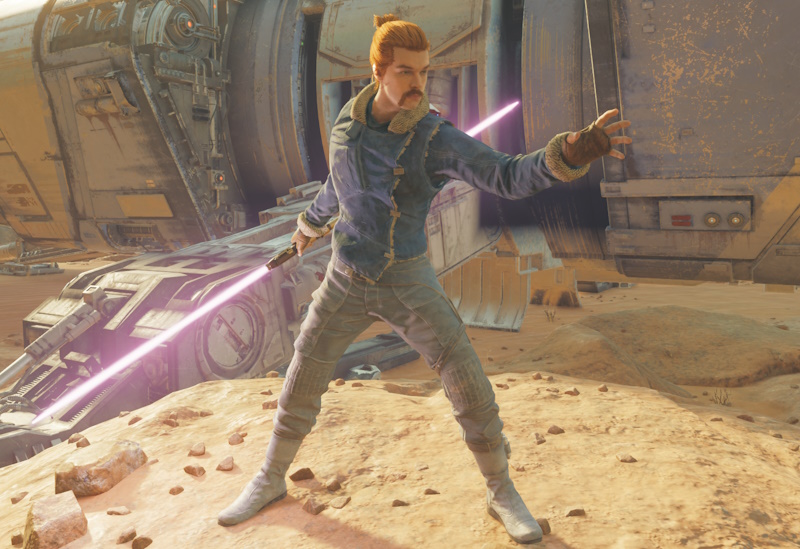
Let’s Play Jedi: Fallen Order – Part 8

Spoiler Warning: There are spoilers ahead for Star Wars Jedi: Fallen Order as well as for other iterations of the Star Wars franchise.

Welcome back to the next part of Jedi: Fallen Order. The previous section of the game was absolutely wild as Cal returned to Zeffo. Exploring an Imperial base, a crashed Republic ship from the Clone Wars/prequel era, and an excavation site culminated in a duel against the Second Sister – and a shocking revelation about her past with Cere! That moment might be my favourite in the story so far, providing a great twist and raising the stakes dramatically. When we left Cal he’d escaped the Second Sister – who had seemed to be on the cusp of defeating him – and made it to the second Zeffo tomb.

The entrance to the tomb.

Before we go inside, I just wanted to update you on one point from last time. I mentioned the game’s title screen depicts a damaged starship – having looked at it a little more closely I’m wondering whether it’s a Venator-class ship, like the crashed one on Zeffo. If so, it may be a representation of that very ship! Perhaps there’s more to the crashed ship than we know so far. On his approach to the tomb – which looks to be a whole building constructed inside a large cavern – Cal gets another “bad feeling”. His last one was building up to the fight against Trilla, so this can’t be anything good! At this point it felt like Cal’s real objective was to escape; exploring the tomb was incidental as he tried to make his way back to the Stinger Mantis. After all, if Trilla knew he was on Zeffo, she might know about Greez, Cere, and the ship too.

The tomb.

Cal made an attempt to radio the Mantis, but instead of Greez or Cere it was Trilla who replied! She explained that Cere is an expert at hacking comms, and she learned the skill from her. I liked this exchange, as not only did it set up Trilla taunting Cal during his exploration of the tomb, but it had a believable explanation as to why she could do so, as well as giving some background as to why Cere was able to hack Imperial communications so easily earlier in the game. This section of the game, similarly to the first tomb, will involve a lot of platforming and puzzles, and the way in was no exception, as Cal had to jump, run on walls, and swing on vines to make his way inside.

Swinging on a vine near the way in.

Squeezing through a narrow gap led Cal to a room where a couple of Stormtroopers had triggered a Tomb Guardian – the laser-wielding mechanical golems left behind by the Zeffo. The troopers were easy prey for the automaton, but here’s where I began to have an issue with the level’s layout and how it related to the story. Jedi: Fallen Order has a great story – one of the better Star Wars offerings in recent years – yet it’s too often undermined by sacrificing logic and consistency for the sake of giving the player more enemies to fight. This tomb, for example, has multiple areas that are blocked off behind walls that Cal needs to break with the Force, or small platforms that need to be accessed via complicated jumps and climbs, yet the whole place is crawling with Stormtroopers. How did they get there? In some areas, perhaps it makes sense that they came in via a dropship, as indeed we’ll see. But other areas are wholly inaccessible. This room could only be accessed by the narrow passage, yet it had two Stormtroopers inside, for example. Of course Jedi: Fallen Order is a game, and games need enemies to battle a lot of the time. But I’d rather see that done in a way that made a bit more sense.

Cal approaches the Tomb Guardian.

Beyond the Tomb Guardian was a large room. Similar to the previous tomb, this one had a divot in the floor – one of those huge metal spheres lay broken a few metres away. Great… another one of these puzzles! The previous tomb had been at least slightly annoying with its “put the sphere in the hole” puzzles, and I wasn’t exactly thrilled at the prospect of repeating that all over again. However, there was no intact sphere at ground level to interact with, so I kept exploring. At this point I encountered another visual bug, as Cal climbed on a pile of debris in the middle of the room and seemed to levitate in mid-air, his feet nowhere near what he should have been walking on.

Cal appears to levitate.

A room off to one side of this large circular chamber prompted an audio recording from Master Cordova – apparently the tomb has some areas that can be magnetised, which he says may be part of an ancient ritual. This was interesting, and of course will be important for puzzle-solving later. However, this room also contained something which had no explanation at all – an ongoing theme in Jedi: Fallen Order. A staircase is blocked by some vines or tree roots, and Cal’s lightsaber and Force powers have no effect on them. As a concept that’s fine – it means Cal will need to figure out a way to destroy or get around them. But… why was there no explanation at all of what these vines were? Even if something had popped up in the databank to read that would have been enough, yet there was nothing. An arbitrary video game barrier/puzzle piece dumped in Cal’s path with no explanation. There have been too many points where the game has not offered any explanation for what’s going on, these roots or vines are just the latest example. Cal is a Jedi armed with a lightsaber – weapons which can cut through almost anything. I feel these vines needed some kind of explanation – even a single line of dialogue – to explain why they’re lightsaber-proof.

Cal after defeating the vines.

The vines (as I’ll stick to calling them) can only be destroyed by fire, as it turns out. And luckily this tomb has a neverending supply of what are described as candles but which I’d probably say were closer in appearance to old-fashioned oil lamps. Activating a switch in this room caused three of these to shoot across the room – propelled by the magnets in the wall – and set the vines ablaze. The unlocked pathway led up a staircase to the upper level, and there was a meditation spot (but Cal didn’t have any skill points to use). A doorway led into a hallway that contained an inactive Tomb Guardian – I’m used to these things waking up when they spot Cal, so I’m not sure why this one didn’t; it just stood there silently. Another doorway led to the upper level of the main circular chamber, where a number of Stormtroopers were present. These were easily taken care of.

A Scout trooper commander falls to his death after Cal used Force push.

Trilla came back on the radio, telling Cal that her men found an “artefact” of interest in the tomb. They recovered it for her to study, but Cal tells her he doesn’t need it in a conversation that got uncomfortably close to Cal telling her the nature of his mission with BD-1! Trilla knows how to push his buttons, that’s for sure. A few moments later she was back on the radio, threatening Cal with sending more soldiers into the tomb. At this point it began to feel as though Cal was trapped – or walking into a trap. However, with the way behind him shut (and presumably under heavy guard) the only way to escape was to continue to go forward. After climbing up and defeating a couple of larger monsters, there seemed to be two routes – one across a bridge where a squad of troopers stood, and one that seemed to go into a smaller room. As someone who likes to explore as much of a level as possible (as well as grab more customisation items) I chose to explore the small room – but this led to a series of pathways that took me deeper into the level; I saw the bridge in the distance when I’d gone a fair way beyond it!

The bridge I accidentally bypassed.

The next area of the level was a large chamber. Switches activated another of the magnets that Master Cordova talked about; these platforms would have to be moved forward and back a few times to allow Cal to cross over to the next part of the level. Several troopers – including a Purge trooper – were present in this area. Shortly after Cal arrived, an Imperial dropship appeared. At first I thought it was going to be a boss to fight, like the AT-STs had been, but it only dropped off some troopers before departing.

The dropship in the large cavern.

One part of the magnet-platform puzzle was very annoying, as it required pressing a switch then immediately sprinting to grab hold of the platform before it moved. Split-second button presses aren’t exactly my area of expertise, but to make matters worse, both buttons that needed to be pressed on the controller were the thumbsticks! The right thumbstick is used as an “interact” button for things like switches, and the left thumbstick needs to be clicked before Cal will sprint. Needless to say, this puzzle took several attempts. The level’s lone flame trooper was present in this area, but easily defeated. Cal pressed on into the tomb, when Trilla came back on the radio. She said Cal was too late – she’d taken the important artefact to her ship and was leaving. At this point I was worried that the level had been secretly timed and I’d have to do it all over again! Luckily that wasn’t the case, and I have to assume that no matter how fast Cal might’ve raced through the tomb, this conversation would always play out the same way.

Climbing around this section of the tomb.

After a lot more platforming and a few more enemies, Cal made it to the room indicated on the holomap. A meditation spot was here, which I took advantage of as Cal had lost some health. There were a couple of options to choose from for levelling up, and I put Cal’s lone skill point into an upgrade to his Force regeneration – granting him faster recovery of Force points while in combat. Like a bad smell, Trilla was back again – this time claiming to have lured Cal to the central burial chamber to “dispose” of him. There were a number of troopers on a platform up ahead, but it didn’t seem like an impossibly hard fight. However, partway through the battle the dropship from earlier showed up and started blasting!

The dropship gave Imperial ground troops reinforcements before activating its weapons.

The battle transitioned from gameplay to a cut-scene perfectly smoothly once again. The dropship’s firing had caused the chains holding up this platform to break, sending Cal and the troopers falling into the pit below! Cal dropped his lightsaber and seemed to be reaching out with the Force to grab hold of it when he heard Master Jaro Tapal’s voice. In the flashback that followed, we saw a young Cal learning to use the Force to pull his training lightsaber toward him, with Master Tapal’s encouragement. Drawing on this memory, Cal re-learned Force pull, and was able to retrieve his lightsaber.

Master Tapal teaching Cal in a flashback.

Cal found himself hanging from the platform in the tomb, and using Force pull on one of the candles was able to destroy some of those indestructible vines to clear a path out of the burial chamber. Trilla immediately learned of Cal’s survival, and said she had a backup plan in case the trap failed to kill him. But as we’ll see on the way out, the backup plan basically consisted of sending a few more troopers into the tomb. The only way out was back the way I’d come, as was the case in the first tomb. Jedi: Fallen Order has a lot of backtracking and repeating areas, and while some of these sections bring in different opponents or new puzzles, sometimes it can feel repetitive, and as I mentioned last time, as if the game’s runtime is being artificially padded out.

The only way to damage these vines is with fire… for some reason.

Upon escaping the burial chamber and returning to the large main part of the cavern, Cal was confronted with a fairly large group of enemies. In typical video game fashion they stood in a line down a wide corridor, and while I don’t hate that as a concept – though it’s hardly original or particularly immersive – what was annoying is that at the back, behind a cadre of Stormtroopers and probe droids, was a Tomb Guardian just standing there. Elsewhere in the tomb, the Tomb Guardians had fought Stormtroopers, yet this one seemed to be allied with them waiting for Cal. It would have made way more sense to make the mini-boss at the head of this group a Purge trooper instead of a Tomb Guardian. The whole effect kind of ruined my suspension of disbelief for a moment, and made the whole thing feel very much like any old video game instead of the immersive Star Wars story I wanted to enjoy.

The Imperial force with a Tomb Guardian at the rear makes no sense… they should be fighting each other.

From a gameplay point of view this section was fine; the wide hallway had a couple of bottomless pits that Cal could send troopers tumbling into with his new Force pull ability, which was kind of fun. After defeating the various enemies, Cal was back in the main circular room, and in another random objective given to him with no explanation, was tasked with “raising the spire” of the tomb. Once again I’m left asking how Cal knew he needed to do that, where he got the information from, and all of the questions we’ve already covered when one of these seemingly-important parts of the story is unceremoniously plopped on Cal with no explanation. A line or two of dialogue – or even just an entry in the game’s databank – would have made this so much better. This puzzle was particularly annoying. Cal needed to move a chain – using Force pull – into a socket. That part should be simple, but for some reason when Cal was holding the chain, the camera became locked at a weird low angle, making it impossible to see where to go. I thought this was a bug unique to this area, but this chain-to-socket puzzle would be repeated later and the camera was locked then too.

This camera angle made the puzzle frustrating, and there was no need for it.

It took a little while to figure out what to do next. The objective was to move one of the candles in the wall over to a chain which has vines wrapped around it – this will cause the chain to break and the sphere in the ceiling to fall. The sphere can then be moved into the socket on the ground floor. But the tomb is wet and there are torrents of water gushing from the ceiling – the candles are extinguished if they touch it. I spent ages messing about in a side room getting a candle through a small gap only to find that route was a dead end that only led to a Force echo! Eventually I figured out the solution – there was a magnet switch on one side of the room, and the casings of the candles are metal, meaning they’re attracted to it. It was a simple case of activate magnet, Force push a candle into the magnetised area, retrieve it, and then send it into the vines with Force push. Once again, Jedi: Fallen Order’s clunky controls let me down, and it took several attempts to launch the candle into the right place on the chain, but eventually I managed and the sphere fell to the floor. After Force pulling it into the socket, a room opened up.

Using the magnet-wall to move the candle during the puzzle section.

Entering the room which had risen up from the floor led to BD-1 to display a recording from Master Cordova. He talks about something called a “Zeffo Astrium” which Cal describes a a key. This object will allow a Force user to “perceive the mysteries of the vault”… whatever that may mean! Whatever it does exactly, this Astrium seems like the key to gaining the holocron stored in the vault on Bogano – perhaps it will allow Cal to see something else in that large empty room. This small room was also the way out of the tomb – the spire that needed to be raised.

Master Cordova’s latest recording.

Once back outside, Trilla told Cal that she wanted him to raise the spire, claiming it was all part of her plan. I thought her plan had been to trap Cal in the tomb and kill him, but there we go. Unable to contact Cere and Greez on the radio, Cal urgently said he needed to head back to the Stinger Mantis. Presumably the artefact Trilla pilfered from the tomb is this Astrium, but that wasn’t confirmed at any point. This section led back into the Imperial base, and on the way BD-1 received another upgrade, this time allowing him to hack into probe droids. Not sure how useful this will be in combat, unless there’s a particularly large group of enemies, but it may have other uses. I also took this opportunity at the workbench to change Cal’s lightsaber from its orange colour to green for no other reason than I fancied a change.

BD-1 receiving the upgrade.

Aside from the Scomp Link and the ability to climb zip-lines, BD-1’s upgrades appear to be optional. This workbench was along the main route back to the Mantis, but I think it would be possible to walk past it without getting the upgrade at this point. Perhaps that means it won’t be essential to the story. Back inside the Imperial base, and most of the troopers had respawned. Cal was able to defeat them, though, and backtracking through this area was uneventful.

Cal stands over a defeated Stormtrooper showing off his green lightsaber.

I’m not sure if you remember from our last excursion to Zeffo, or from earlier this time as I kind of blitzed through it to get to the story, but the way to access this part of the level from the Stinger Mantis involved one of those Super Mario 64 ice slides. Climbing back up that was a no-go, but there was an alternate path by jumping on rocky outcrops that overlooked the ice slide. It was a hop, skip, and a jump back to one of the shortcuts that led to the village.

Climbing the platforms next to the ice slide.

After jumping across the final gap near the top of the ice slide, I spotted the doorway leading to the shortcut. There might be a few more troopers en route, but other than that it seemed as though Cal was home free… until he was beset by a new enemy, someone named Atticus Rex. This vaguely Boba Fett-like character had a jetpack and a variety of weapons at his disposal. Regardless, Cal was doing well hacking away at him and using Force powers to wear his health down.

Atticus Rex firing at Cal.

I liked this moment, as the appearance of a new enemy from nowhere was a surprise. Jedi: Fallen Order has handled surprises very well, and as this is my first playthrough, I was expecting an uneventful backtrack through the level to see what was happening on the Mantis. This fight came out of nowhere and I like that! Despite Cal seeming to have the upper hand, the fight ended in a scripted moment where Atticus Rex used a gadget to render Cal unconscious…

The “reawaken” screen displayed after the fight.

Having only died a handful of times so far in Jedi: Fallen Order (not to brag, I’m playing on easy mode after all) I couldn’t remember if the screen displayed on Cal’s death said “reawaken” or something similar. However, after seeing it for a moment, it was clear that a cut-scene was playing. Cal woke up in a prison cell, unarmed, and missing BD-1.

Cal awakens in the bounty hunter prison.

It turns out Atticus Rex was a bounty hunter, and because of Greez’s gambling, the bounty hunter guild came to know about Cal. Earlier in the game during one of the flights between worlds, Cere reprimanded Greez for his gambling, and this moment is a consequence of what Greez did. I like this as a story point, and as we’ll see later, it has the potential to bring Cal and Greez closer together. But as a gameplay section, this prison was a complete dud. Rescuing BD-1 was easy, he was in another nearby cell. After that, Cal ascended to an upper level on an elevator, where he found himself in an arena. The chief bounty hunter or head of the guild pitted Cal against a variety of the game’s monsters while a crowd of spectators looked on and – presumably – bet whether Cal would win or lose. Almost all of the monsters encountered so far were present in the arena, and after defeating several waves, Atticus Rex returned for round 2. Rex was relatively easy to defeat, but before Cal could do anything else – like break out of the arena and take on the other bounty hunters, the Stinger Mantis arrived and rescued him. The whole section took about five minutes to complete from waking up in the cell to defeating the final boss, and as a result it just felt like something completely tacked-on.

The chief bounty hunter addresses Cal and the spectators.

I know I’ve complained about Jedi: Fallen Order reusing levels and sending Cal back through areas multiple times. And I stand by those criticisms, as they often feel like unnecessary padding. However, this new section managed to feel like unnecessary padding too – unless Cal’s escape and killing of Rex leads to some as yet unknown consequence, this sub-plot with the bounty hunters just didn’t do much of anything. It was a minor interruption to the story – and actually if anything it got in the way of Cal learning what happened to the Mantis on Zeffo and how Greez and Cere were able to escape the Empire. Overall, I feel it was kind of a waste of time, and particularly a waste of development resources put into such a short and unnecessary section of the game. I’m also not sure why Atticus Rex was given a name – he never spoke, and aside from his presence in two short fights appears to be dead and no longer a part of the story. It’s possible he might make a comeback later, but it doesn’t seem like it right now.

Cal escapes aboard the Mantis.

The one good thing to come out of this is that Cal and Greez got some genuine development in their relationship. We saw last time Cal thank Greez for his safe piloting, and this time it’s Greez who speaks up, expressing his regret that his gambling addiction put Cal in danger. Seeing the characters develop is a key part of any story, and this section – while bland and uninspired – did at least have a positive effect on Cal and Greez’s relationship.

Cal and Greez’s heartfelt conversation.

Speaking of interpersonal relationships, once safely aboard the Mantis, Cal jumped on Cere, telling her what happened with Trilla and asking her if Trilla’s accusations are true. Before they could really get stuck into what happened between Trilla and Cere, they were interrupted by the resistance fighters from Kashyyyk. Tarfful, the chief Cal needed to meet, has been located, but Saw Gerrera left the planet following an Imperial counter-attack. I’d hoped to get more time with Saw, but it may be that the first time on Kashyyyk was his only appearance; we’ll have to wait and see. With Tarfful found and no further information to go on, Cal plans to head to Kashyyyk.

The call from Kashyyyk.

When opening the galaxy map, however, Cere piped up and suggested that Master Cordova may have hidden supplies on Bogano, and says it could be worth a trip back there to take a look. This was presented as an option rather than something mandatory; Cal could have chosen to go straight to Kashyyyk. However, the thought of more loot – and perhaps more customisation options – was enough to entice me and I opted to to to Bogano. The Mantis dropped out of hyperspace and landed back in the same place as last time. Before ending this section of the playthrough, I used the Mantis’ meditation spot to use the skill points Cal had acquired – this time spending two skill points to further increase his maximum health.

Back on Bogano to search for hidden supplies.

So that’s all for this time. The tomb was partly interesting, partly frustrating. I liked that Trilla was able to hack Cal’s radio and be present throughout the exploration of the tomb, as it elevated the tension during that section of the game. From a story perspective, we’ve learned that we need to acquire a certain artefact – the Astrium – which may or may not be in the hands of Trilla. Perhaps the excursion to Kashyyyk will reveal a path to finding another one. Either way, it seems as though this artefact may be essential to gaining the holocron in the vault.

Next time we’ll take a second look at Bogano to see if we can find anything of use, and probably head to Kashyyyk too. So swing by then for the next part of the adventure!

Star Wars Jedi: Fallen Order is out now on PC, Xbox One, and PlayStation 4. Star Wars Jedi: Fallen Order is the copyright of Respawn Entertainment and Electronic Arts. The Star Wars franchise is the copyright of Lucasfilm and Disney. This article contains the thoughts and opinions of one person only and is not intended to cause any offence.
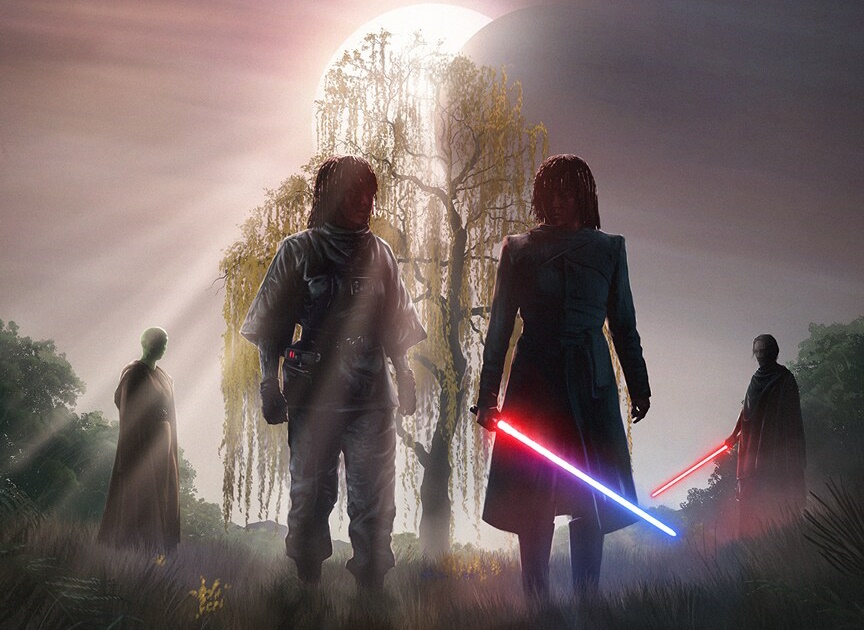
Let’s Play Jedi: Fallen Order – Part 7

Spoiler Warning: There are spoilers ahead for Star Wars Jedi: Fallen Order and for other iterations of the Star Wars franchise.

Oh my goodness! This section of Jedi: Fallen Order was tense, dramatic, and incredibly exciting. I’m having a great time with the game so far, and aside from getting to drive an AT-AT last time – which is now one of my all-time favourite experiences in any Star Wars video game – this might be the best section of the game so far. From a story perspective it was a wild ride! Last time we defeated an Imperial force – including another AT-ST – on Kashyyyk and freed a number of Wookies from slavery. However, the tribal leader Cal and Cere wanted to meet was nowhere to be found – though one of his friends promised to get in touch when they located him – and after Cere picked up an Imperial transmission regarding Project Auger, Cal and the gang were about to return to Zeffo.

Cal and Saw Gererra’s resistance fighters were victorious last time.

I haven’t talked about this before (because I hadn’t really noticed) but the game’s title screen depicts a ship that seems to be destroyed or severely damaged. I can’t tell exactly, but this looks to be some kind of Star Destroyer or similar Imperial craft. It clearly isn’t the Stinger Mantis, but I’m not 100% sure what it is. While I doubt it’s some kind of massive spoiler, I’m sure the title screen is depicting an image related to the game’s story.

The title screen shows a damaged or destroyed ship.

Before setting off I took a moment to look around the Stinger Mantis. There are a couple of doors which don’t open, as well as a ladder that looks like it leads to a second deck below the main one, and I’m curious if we’ll ever get to explore those other rooms and areas. I know I bring up Knights of the Old Republic a lot in these playthrough posts, but in that game the player’s ship – the Ebon Hawk – was able to be fully explored.

Two sealed doors aboard the Mantis.

The galaxy map offered Dathomir and Bogano as destinations, but I can’t see any point going to either of those at the moment. While the option still technically exists, Jedi: Fallen Order feels like it’s corralling me down a specific path. I don’t mind games with a linear story, but it seems as though Jedi: Fallen Order is trying to give itself the appearance of allowing more freedom of choice than it really has – in addition to the travel options we’ve seen a couple of optional conversations and a couple of conversations where dialogue choices pop up, yet none of these things really feel like they make a difference. The journey from Kashyyyk back to Zeffo was smooth; with the Empire on Cal’s tail I keep expecting the Stinger Mantis to come under attack, yet nothing transpired. The ship landed in the same spot as before, though this time Greez and Cere were standing around outside on the landing pad.

In its yellow colour scheme, the Stinger Mantis kind of looks like a giant space banana.

The defeated AT-ST was still on the landing pad – though not in the same place as before, but that’s probably just how the game works – so I assumed no one else had been here since the Mantis’ last visit. It isn’t very clear how much time has passed in-game – Cal was rescued from Bracca, and aside from getting some rest on the Mantis while en route to Bogano that first time, he hasn’t taken a break. That would seem to suggest the action has mostly taken place over one day, unless Cal spends hours at a time meditating at the meditation spots. It doesn’t really matter, I suppose. During a conversation with Cere on the landing pad, another dialogue option popped up. As mentioned, these don’t really do much as there’s no in-game reputation system nor relationships with characters to build up.

The dialogue options.

Last time I said that the return to Zeffo could be disappointing if there was a lot of backtracking and retreading old ground, and when I saw the Mantis approach the same landing zone I thought that seemed like a bad sign. Unfortunately I was right – in order to get to the new Imperial excavation site, Cal has to follow the same paths as on his first visit. Having previously opened up a couple of shortcuts some of this wasn’t so bad, but with most of the enemies (troopers and monsters) appearing in identical spots to last time, it feels like this back-and-forth planet-hopping that Jedi: Fallen Order has us engaged in is, at least in part, a way to pad the game’s runtime. I don’t think it would have been too difficult to break up Zeffo into two or more smaller levels – most of the same assets could be reused, but in such a way as each visit would feel unique and different, with the Mantis landing at different locations each time.

Taking a previously-unlocked shortcut.

While battling troopers en route to Cal’s destination, I encountered two more glitches. The first one was fairly minor – as a trooper climbed up onto a ledge he seemed for a few seconds to be standing on thin air on the wrong side of the ledge:

The floating trooper.

The second one was worse, however. Cal was engaged in a fight when all of a sudden the trooper disappeared through the floor, before shooting up a couple of seconds later way above Cal’s head in a weird kind of “rubber-band” effect. As I mentioned previously, Jedi: Fallen Order is less polished than I expected; even if these issues couldn’t be fixed before release, there have been months in which to release a patch.

The flying trooper.

Being back in the abandoned village, Cal was able to use Force push on that drawbridge we saw last time – the one with the red “aura” that I thought could be interacted with. Deploying the bridge provided an alternate (and slightly less time-consuming) route through the level. After retreading more old ground, including an ice slide, Cal had arrived at the spot on the map that he’d been pointed towards – a large Zeffo monument. This was an area we passed by last time, but armed with his new Force push, Cal was able to get inside.

The way in to the monument.

At several points in Jedi: Fallen Order so far, I’ve felt that an extra line or two of dialogue explaining what was happening would have gone a long way to filling in some gaps. The story is great – but at several points now, Cal seems to be doing things for no reason other than “game says so”. Inside the monument, the objective was declared complete and the holomap updated with a new location to reach – yet none of this was even mentioned. Was there supposed to be some dialogue here that didn’t trigger because of another bug? Why is Cal suddenly supposed to make his way to a crash site? The crash site wasn’t on the map until now – did Cal even know it existed five minutes ago? It wouldn’t have even needed a cut-scene, literally a couple of lines of dialogue could have played during gameplay explaining what was going on. As it is, Cal found a workbench to upgrade BD-1 further – this had slightly more explanation, as Cal at least acknowledged he’d found a part he could install in BD-1. Obviously BD-1’s new upgrade will come in handy momentarily, which is why Cal was pushed to go to this location – yet with no acknowledgement or explanation it feels so arbitrary and not like a natural moment in the story.

BD-1’s repaired scomp link was almost immediately put to use.

I had expected that entering this area would have marked the beginning of taking a wholly new path through Zeffo, yet after climbing a short way up and defeating a handful of troopers, Cal was back outside. A zip-line took him back to the same area as before, but at least there was a meditation spot; Cal had a skill point to spend, and I chose to allocate it to increasing his maximum Force points – allowing for more uses of Force powers while in combat. With BD-1’s Scomp Link repaired, the way in to the Imperial base that was sealed on our last visit to Zeffo was accessible. It wasn’t too far from the meditation spot, so Cal and BD-1 hot-footed it there and were able to enter the base with ease.

Cal deflects a blaster bolt inside the Imperial base.

After taking out a small group of troopers in the area immediately inside, I stopped to look around. There was an elevator that didn’t work – presumably another shortcut to unlock for later – a room that BD-1 could open with his new skill, and a staircase leading outside to an area that looked like it could be climbed. The room contained a Force echo – something about a lost artefact from the Imperial excavation – and another meditation spot, which I took advantage of to checkpoint my progress. Jedi: Fallen Order has really captured the aesthetic of Star Wars’ original trilogy perfectly, and though it’s a minor detail, I loved the look of the computer screens in this part of the Imperial base. They just seem so “Star Wars”, with their clunky ’70s design and retro-future graphics.

The screens inside the Imperial base.

After leaving this area, the only way to go was to climb up on a series of ledges. Cal worked his way up to the landing pad where we saw the Project Auger ship take off the last time we were on Zeffo, and after making it to the top, one of the large ice monsters we defeated in the caves was on the platform battling a group of troopers. Rather than jump in the middle and battle two kinds of enemy I left them to it and climbed around the outside. At one point there was another visual glitch, as Cal’s body clipped through a hanging hose or cable. After climbing onto the landing platform, there was only one way to go and that was back into the base. Immediately inside the door was another group of troopers, including a couple of the more difficult variants, but they were soon taken care of.

Ice Monster vs. Scout trooper – with Cal as a spectator!

This part of the base contained a few other troopers, and there were a couple of platforming sections and sections where Cal needed to use both of his Force powers (push and slow) in order to make it through. None of it was particularly challenging or noteworthy, until we encountered another Purge trooper! These are the specialist anti-Jedi troopers that are new to me and haven’t appeared in any other Star Wars games or films, but they didn’t debut in Jedi: Fallen Order; apparently they made their first appearance in a comic book series. The Purge trooper was a difficult mini-boss, but a well-timed use of Force push sent him falling to his demise from the bridge where he fought Cal.

The Purge trooper is defeated.

The area beyond the Purge trooper was uneventful and a door led Cal back outside. A short ice slide (these keep bringing up happy memories of Super Mario 64!) led to another meditation spot, and then we arrived at the crashed ship that had been unceremoniously dumped onto the holomap earlier. It was a Venator-class ship – the kind used by the Republic in the prequel films. The sight of the crashed ship, and seeing how massive in scale it is, was comparable to seeing Rey in the Star Destroyer on Jakku in The Force Awakens, and whether intentional or not, I liked that little tie between two different parts of the franchise. These ships are massive, and exploring it will take some time. A couple of monsters near the ship were easily dispatched, and then there was a sweet moment between Cal and Greez as Cal spotted a smaller crashed vessel. He told Greez he appreciated his piloting and how he always got him safely to the surface, and it was a very wholesome conversation between the two of them. Greez has been a little standoffish at times, and seeing the characters get closer together over the course of the story is great. Hopefully this doesn’t mean something horrible is about to happen to Greez!

Cal speaks to Greez on the radio.

Other than the monsters, the main enemies Cal encountered at the crashed starship were probe droids. These floating robots debuted in The Empire Strikes Back, where one was used to find the Rebel base on Hoth, and we also saw one briefly at the beginning of the game. They made the same noise that they did in the films, and I appreciated that! I speculated early on that the probe droid may have been how the Imperial Jedi-hunters were able to find Cal so quickly after his one brief moment of Force use, and I think that seeing them here and having Cal comment about being “watched” may not 100% confirm that theory – but it certainly lends it more credibility.

A probe droid near the crashed starship.

The probe droids are particularly annoying enemies. They fire standard blaster bolts at Cal, which can be reflected back, but when they become damaged they go into a kind of self-destruct mode and chase after Cal in a kamikaze attack. These proved difficult to outrun and dodge, and several exploding probe droids wounded Cal in this section.

Fighting probe droids in the wreckage.

Inside the wreckage, Cal found a Force echo. This one felt very ominous, as it seemed to show a Clone trooper who was aboard the ship being killed by someone with a lightsaber. This could, of course, be something that happened during Order 66 or even earlier, particularly as a Clone trooper was mentioned, but it could also mean there’s a Sith or other Force-using opponent somewhere. Whether they’re still in the wreckage – which has presumably been here for years – is unknown. Cal made his way down a couple of zip-lines, and at the bottom BD-1 received another upgrade – this time allowing him to climb up zip-lines, opening up different areas and allowing for backtracking. This area contained two of the K2SO-type droids, which I find to be among Jedi: Fallen Order’s most difficult enemies. Taking on two at once was a challenge; Cal ended up needing to use a stim-pack.

The defeated droids.

Another Purge trooper was at the excavation site, and this fight was another tough one. These troopers are great at blocking and dodging, and often have unblockable attacks. These mean an instant button-press is required to dodge, and that can be difficult for me to get right! Occasionally, Jedi: Fallen Order shows what I guess I’d call a “finishing move” when Cal defeats an opponent. These stylised death-blows often involve acrobatic jumps or throws, killing an opponent in style – like something you might see in an old-school fighting game! I was finally able to capture one of these using the game’s photo mode, and I think it looks pretty darn cool!

Cal defeats the Purge trooper.

This next section involved a fair amount of platforming as Cal had to jump, climb, swim, and run along the cavern walls to get further and further into the dig site. There were no troopers along the way, which was very eerie! On the way here in the cable-car, Cal said to BD-1 that he had a bad feeling about what he was going to find here, and the music in this area was perfect. It was incredibly tense and ramped up the apprehension. After arriving at a meditation spot, I wasn’t sure where to go next. There was a zip-line, but Cal couldn’t reach it, and there was a locked door. Eventually I found an elevator, and after stepping inside it began to descend. When it reached its destination the doors hissed open only to reveal… the Second Sister!

The Second Sister on Zeffo.

I knew Cal had a bad feeling about this second leg of his journey on Zeffo, but the fact that it was the Second Sister herself – the game’s biggest villain – was a surprise! I was expecting some kind of tomb-related enemy or perhaps to learn who wielded the lightsaber aboard the crashed ship. The Second Sister knew Cal’s full name, but more importantly she knew about Master Cordova. Cal ignited his lightsaber.

Cal and the Second Sister about to duel.

The Second Sister had been unbeatable – by design – in Cal’s first encounter with her back on Bracca, and the reason I was so surprised to see her on Zeffo at this point in the story is that she’s the game’s main villain, or at least the most significant villain so far. Defeating and/or killing her only partway into the story didn’t feel right; this had to be setting up something else! This was the toughest boss fight in Jedi: Fallen Order so far, way worse than the Tomb Guardians, Purge troopers, or even the AT-STs. The Second Sister is a powerful Force user – I assume some kind of Sith apprentice too – and wields a red lightsaber. She can perform many unblockable attacks as well as use Force powers – including the ability to leap great distances and sprint at Cal.

No, that isn’t a bug. She can jump that high!

The duel was long, and every time Cal seemed to get the upper hand or reduce the Second Sister’s health, she’d come at him with a new attack or dodge the next one, making it hard to land more than a couple of blows on her at a time. Her health meter at the top of the screen was slowly ticking down with each strike, but by the time it was hovering around the halfway point, Cal had already used two of his three available stim-packs! I was getting nervous – this was difficult! When the Second Sister had lost a little over half of her health, she grabbed Cal using the Force in what looked like a Vader-style Force choke, before throwing him across the arena.

The Second Sister uses the Force against Cal.

The transition from the duel to this scripted moment was seamless; a perfect blend of gameplay and an inevitable moment, and it seemed for a second as though she was simply using a new Force power that would make the fight more difficult! However, as Cal crashed through the side of the arena, a cut-scene triggered. The Second Sister approached, lightsaber in hand, and it seemed as though Cal was doomed! But in an instant, BD-1 saved the day by activating a forcefield between the two combatants. This undoubtedly saved Cal’s life!

BD-1 puts up the forcefield.

With Cal safe behind the forcefield, the Second Sister opted to try to sway him and break his resolve through talking. And she had a lot to say. She’s looking for the list of names of Force-sensitive children that Master Cordova hid on Bogano. It didn’t seem possible she could know about it, until she revealed something truly shocking – she used to be Cere’s padawan! When Cere was captured by the Empire, she betrayed her padawan so she could escape, choosing to save herself instead of Trilla – the Second Sister’s real name. She removed her helmet revealing a young woman who couldn’t be much older than Cal.

Trilla – the Second Sister.

Star Wars has had some great unmasking moments over the years! Seeing Darth Vader as a scarred, broken man in Return of the Jedi was an amazing moment, and the reveal of Kylo Ren as a young man in The Force Awakens was pretty good too. I liked this moment with Trilla, as it fits a pattern that goes through other Star Wars titles. As I’ve said before, these moments make Jedi: Fallen Order really feel like I’m taking part in an actual Star Wars adventure.

Trilla talks to Cal through the forcefield.

Unable to get past the forcefield, Trilla had a warning for Cal – beware of Cere. Not only did she choose to save herself, betraying Trilla, but she used the dark side of the Force. Though Cal seemed dismissive at first, I’m sure these accusations will stick in his mind and we’ll eventually see him confront Cere with what he knows. I’m positive she knows who the Second Sister really is – but if she doesn’t that could be a shocking revelation for her. This scene, where Trilla accused Cere of being a dark side user, reminded me of the revelation in Knights of the Old Republic II that Kreia is similarly a dark sider. Both characters have taken on similar roles – mentor figures to the protagonist – and both seem to have a dark secret. Though Trilla may not be the most reliable bearer of information, the game wouldn’t bring up something this significant only for it to turn out to be a lie. Right?

Trilla and Cal end their conversation.

After escaping the situation, Cal was clearly very shaken. I was surprised that he didn’t immediately radio Cere and Greez – but perhaps he needs time to process what Trilla told him. Is it true about Cere? Was Trilla really her apprentice? She can’t be telling the whole unvarnished truth – there are two sides to every story, and I think we deserve to here Cere’s side. After all, if nothing else she did save Cal’s life on Bracca. Cal paused to thank BD-1 for saving his life with the forcefield, and this was a touching moment.

The path toward the tomb.

Escaping Trilla has led Cal to the entry to a new tomb, and there was a meditation spot nearby which I used to restore Cal to full health and replenish BD-1’s supply of stims. Though the forcefield stopped her temporarily, Trilla is still on Zeffo, and if her mission is to kill Cal I feel like we haven’t seen the last of her. There must be another way into the tomb, after all. After checkpointing my progress, I decided to step away and save the exploration of the tomb for next time.

The way in to the tomb.

Wow. What a wild ride it was this time! At first I was disappointed to be covering so much ground from earlier in the game – and I still feel this aspect of the game could have been handled better. But when the second mission to Zeffo got going it really got going! The crashed starship was a sight to behold, we’ve uncovered several mysterious story threads, upgraded BD-1, and then of course, the climax of this part of the story was the duel with the Second Sister.

Learning her identity was an amazing reveal, up there with Star Wars’ best. And if what she said is true, that Cere is a dark side user, then that sets up a potentially very interesting and exciting conflict later in the game. At the very least, Cere has some explaining to do! Something about the way Trilla presented herself, particularly the twinge of sympathy at learning what she’d been through – being betrayed by her Master and captured by the Empire – leads me to wonder if she has a path to redemption and a return to the light side. Whether it happens or not, the fact that the possibility seems to exist is enticing. And I absolutely love that the Second Sister wasn’t another standard evil-for-the-sake-of-it enemy. She has a story – a betrayal, a kidnapping, and a fall to darkness. All of this makes her infinitely more interesting than a lot of villains, and I hope we get to explore more of this fascinating character before the game is over.

Sorry that this part took a couple of days to write up! I hope you’ll stop by next time to see Cal investigate the second Zeffo tomb.

Star Wars Jedi: Fallen Order is out now on PC, Xbox One, and PlayStation 4. Star Wars Jedi: Fallen Order is the copyright of Respawn Entertainment and Electronic Arts. The Star Wars franchise is the copyright of Lucasfilm and Disney. This article contains the thoughts and opinions of one person only and is not intended to cause any offence.
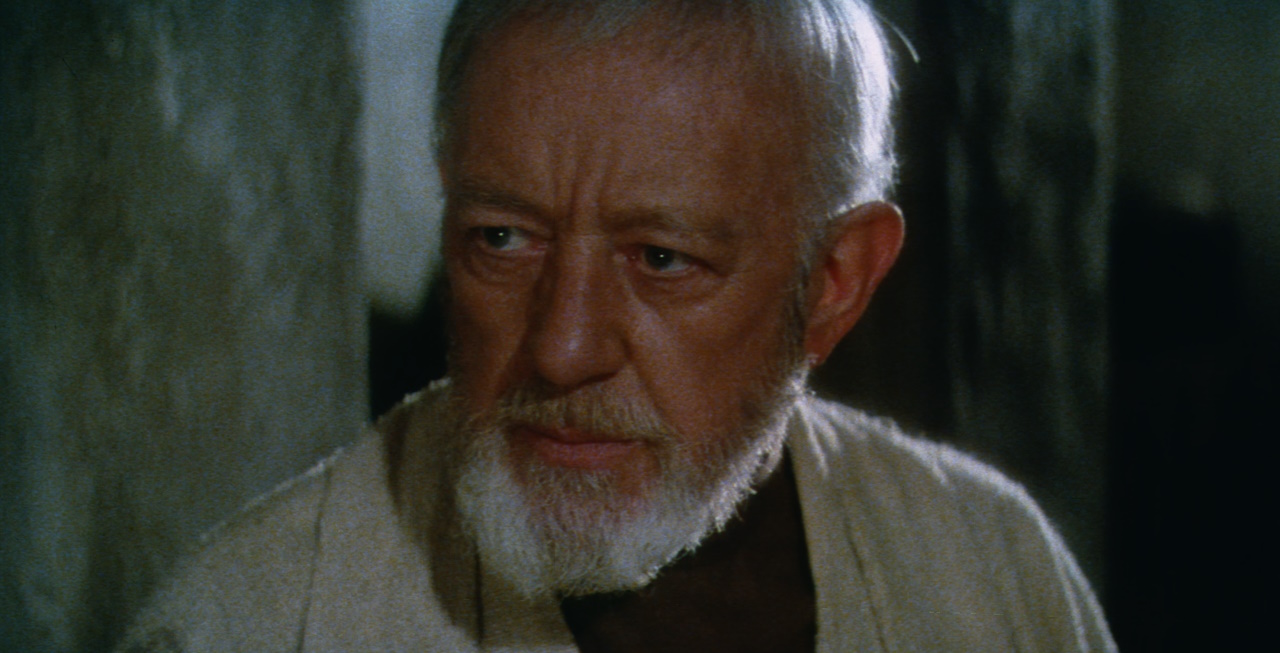
Let’s Play Jedi: Fallen Order – Part 6

Spoiler Warning: There will be spoilers ahead for Star Wars Jedi: Fallen Order and for other iterations of the Star Wars franchise.

We’re making good progress in Jedi: Fallen Order after a couple of longer gaming sessions this week. Last time, we left Cal and the gang on Zeffo, about to depart and head to the Wookie homeworld Kashyyyk in search of a chieftain who was friends with Jedi Master Eno Cordova.

Cal in the cockpit of the Stinger Mantis before takeoff.

Before we battled the AT-ST last time, Cere had informed Cal on the radio that the Empire had identified him as the Jedi who escaped them on Bracca. I was half-expecting the departure from Zeffo to trigger some kind of attack on Cal, perhaps involving the Second Sister (the Imperial Jedi-hunter who attacked Cal and who seemed to get to Bracca impossibly fast at the beginning of the game). That’s why I ended the last part of the playthrough before leaving the planet! However, no such attack transpired, and the Stinger Mantis was able to depart Zeffo with no issues.

Kashyyyk had been added to the map.

The crew chatted a little en route to Kashyyyk, but nothing particularly important came up. It was nice to see the surface of Zeffo receding from the Mantis’ cockpit, as well as seeing the jump to hyperspace. Being free to move around during takeoff is one of my favourite things about these sequences. The hyperspace flight was very short – and I’m not sure if that’s just because it’s a game and people don’t want to sit through long flight sequences, or if hyperspace flights in general are short. However, in other Star Wars media – including most of the films – hyperspace wasn’t presented as allowing for near-instantaneous travel, so I assume it’s the former. The Mantis emerged from hyperspace and was immediately surrounded by Imperial Star Destroyers!

The Stinger Mantis with three Star Destroyers over Kashyyyk.

Cere calmly explained that the Mantis is “transmitting Imperial codes”, and they were able to enter Kashyyyk’s atmosphere with no trouble – though at least one Stormtrooper seemed to look at the ship as it flew in. As I guessed last time, the Empire is on Kashyyyk at least in part to capture and enslave Wookies – we saw this in Solo: A Star Wars Story and also in Knights of the Old Republic. However, there is resistance to this attack, and while the Mantis looked for a landing spot, a group of resistance fighters came under attack by AT-AT walkers. Cal believed he could sabotage one, as he worked with AT-ATs on Bracca, so with Greez bringing the ship in low, Cal jumped out to take on the AT-ATs.

Cal arrives on Kashyyyk.

After confirming both he and BD-1 survived the fall intact, Cal set out swimming after the AT-ATs which weren’t too far ahead. They were moving fairly slowly, so catching up to them wasn’t too difficult. One of the AT-ATs was covered in vines, meaning Cal was able to climb up the legs. For the first time, I really got a sense of the scale of an AT-AT. For the most part, we’ve seen these giant machines included in large-scale battle sequences, even in their debut in The Empire Strikes Back. This was the first time I can remember getting up close to an AT-AT on foot, and it really did feel massive and intimidating for Cal to take on by himself with no support. Credit to the way the AT-ATs were designed and included in Jedi: Fallen Order; this section really gave them a sense of scale that I hadn’t experienced before.

The AT-ATs are huge.

Climbing the vines was fun, and after making his way around the outside of the AT-AT, Cal got to the roof. A scripted sequence saw a ship swoop down and kill a Stormtrooper (it may have been the Mantis but it was so fast I didn’t see) and from there, Cal was able to make it inside via a hatch. After dispatching a handful of Stormtroopers, Cal and BD-1 made it to the AT-AT’s cabin (the “head” at the front) and in a moment of slapstick comedy, took out the two pilots by bashing their heads together!

Cal and BD-1 sneak up on the AT-AT pilots.

This next section is one of my favourites – not just in Jedi: Fallen Order but in any Star Wars game I’ve ever played. Cal took control of the AT-AT and got to pilot it, using it to attack Imperial forces. The first target was the other AT-AT targeting the resistance fighters, and after that came crashing down in a fireball, Cal turned his attention to ground troops and Imperial turrets. This was so much fun! I’m not sure if this is the first ever Star Wars game to let players pilot an AT-AT, but it’s the first time I can remember having the opportunity to do so. Not only that, but the camera stayed in the cockpit and didn’t switch to a less-personal view outside the vehicle. The AT-AT’s cockpit felt small and cramped, and despite being elevated high above the battlefield, it felt like a vulnerable position when the blaster bolts started firing!

AT-AT vs. AT-AT: Cal and BD-1 score a direct hit!

Marching the AT-AT from the lake through the wilds of Kashyyyk was amazing, and despite taking a number of hits, the vehicle held up. Group after group of Imperial troopers fell, and before long we saw a familiar face: Rogue One’s Saw Gerrera, the leader of a group of resistance fighters. I’m using the term “resistance fighters” as opposed to “Rebels”, by the way, because in-universe the Rebel Alliance was formed much closer to the events of A New Hope. While there was resistance to the Empire at this time, it was mostly smaller-scale, like Saw’s band of fighters that we’re about to meet.

Meeting Rogue One star Saw Gerrera.

Actor Forest Whitaker reprised his role from the film, which must have been a strain on Jedi: Fallen Order’s budget! His presence and performance were amazing, though. Regular readers will know I’m a big fan of Rogue One, and having this tie-in to one of the best Star Wars films was absolutely amazing to see. Saw’s band of rebels were attacking an Imperial facility and landing pad, and he asked Cal to lend a hand. This meant more blasting away at ground troops, and I even took the opportunity to destroy a couple of docked TIE Fighters – I was worried if I didn’t they’d take off and attack the AT-AT!

Blowing up a ship on the Imperial landing pad.

Eventually a large ship took off from the landing pad, and a boss fight commenced. The AT-AT had both regular blasters and some kind of heavier explosive-based cannon at its disposal, and after pounding away at the ship for a while, Cal was victorious. However, the ship crashed into the AT-AT, bringing it crashing down in front of the landing pad. After a cut-scene Cal was fine, and he and BD-1 escaped the wrecked vehicle. Cal said to BD-1 he was “never doing that again” – but I hope he’s wrong because that section of the game was outstanding!

Cal and BD-1 survived the crash.

After a dressing-down from Saw for wrecking the AT-AT – the resistance group could have found a use for such a vehicle – the Mantis landed at the Imperial facility with it now being under resistance control. Saw and Cere had a short chat, explaining who Cal was and what their objective was on Kashyyyk. Bad news – Tarfful, the Wookie chief Cal is looking for, is in hiding as the leader of another resistance band. But someone may know where he is – there are a group of imprisoned Wookies who Saw plans to rescue, and one of them knows Tarfful. With the Mantis here, I took this opportunity to go back aboard and use the meditation spot. Cal had several options this time while levelling-up, and I chose to make stims (the health packs BD-1 can dish out) more potent, meaning each stim will recover more health. I also had Cal change back into his blue-and-white outfit from earlier, as well as giving BD-1 a similar blue-and-white paint job that made him look like a cute R2-D2 wannabe. I do love customisation options!

One of the resistance fighters by the Stinger Mantis.

At the landing pad, Cal stopped to briefly talk to a woman who mentioned leaving Zeffo. This was the villager whose partner had been killed during the Imperial attack on the village – Cal sensed echoes of his life and death through the Force while exploring that world. He was able to give her the news of his death, which only stiffened her resolve to fight harder against the Empire. In an area beyond the landing pad, BD-1 received an upgrade at a workbench. Unlike on Dathomir, where Cal found a workbench and silently upgraded his lightsaber, a line of dialogue preceded this, giving it a little more explanation. BD-1 can now “overload” certain types of circuits, which can do things like turn machinery off and on as well as open doors and activate lifts. It will come in handy, as we’ll soon see!

BD-1 on the workbench.

After upgrading BD-1, Cal was immediately attacked by a giant spider-creature in Jedi: Fallen Order’s first jump-scare. And I have to confess, it did make me jump! The creature came out of nowhere, and it had an unblockable attack that required some serious button-mashing to escape from in a quick-time event. Cal was able to defeat it, however, and I then took advantage of the presence of a workbench to make some changes to Cal’s lightsaber. We’d picked up a few different lightsaber pieces on Dathomir and particularly on Zeffo, meaning many more customisation options were now available. I don’t think these have any impact on gameplay; they aren’t upgrades, just changes to modify the appearance of the weapon.

The modified lightsaber.

I kept the orange blade colour, because I think it looks fantastic, but I changed almost everything about the hilt, including giving it a new copper colour that I think looks pretty neat in close-up shots. During normal gameplay it’s pretty hard to see the hilt – Cal’s holding it and it takes up only a small part of the screen. Leaving this area and making my way along a clearly-defined path led Cal back to Saw, who is planning his attack on the Imperial facility. Saw is aware of Cal’s status as a Jedi, and the two split up, with Cal being entrusted his own mission to rescue the Wookies while Saw leads the main assault. A little bit of platforming and jumping through the wilds of Kashyyyk led Cal to the Imperial prison.

Saw and Cal discuss their plan.

Kaskyyyk, by the way, looks very different to how I expected. In Knights of the Old Republic the planet was densely forested and very dark – the wroshyr trees were several kilometres tall, with the Wookies living in treehouses in the upper branches. The forest floor was almost devoid of sunlight and was very dangerous. Here, the planet is presented more like a dense jungle – something akin to Vietnam or the Amazon rainforest rather than the tall-treed planet I remembered. While this isn’t a bad thing, I thought it worth mentioning.

The landscape of Kashyyyk.

Knights of the Old Republic was released in 2003, before Revenge of the Sith brought the mainline films to the Wookie homeworld for the first time – perhaps this explains the difference, as the version of Kashyyyk seen here is much closer to that seen in the final prequel film. After killing a few Stormtroopers, Cal made it inside the Imperial base. A black R2-D2-type droid was the first to spot him, but ran away as soon as he entered. A few more troopers were easy prey for the double-bladed lightsaber, and there was a meditation spot inside at which I was able to further upgrade Cal’s maximum health.

This droid looks like someone slapped black paint all over R2-D2!

In the next hallway was a new type of enemy never seen before: a Purge trooper. Presumably related to the Jedi purge, this trooper was a mini-boss and was quite hard to take down. He was armed with a melee weapon, and was very skilled at parrying and dodging Cal’s attacks. He seemed to know who to expect, and I think these Purge troopers may be related to the Inquisitors we know to be pursuing Cal. However, after defeating him no entry was added about Purge troopers to the game’s databank.

The defeated Purge trooper.

There was another new type of enemy here, too. Flame troopers – Stormtroopers armed with flamethrowers, whose weapons can’t be blocked or parried, were a pain to defeat, especially in groups!

A closer look at a Flame trooper.

This Imperial base was large, and there were several indoor and outdoor sections – packed with different troopers – to navigate en route to the prison. Most of these sections were fairly straightforward, but one was rather annoying, and as I’ve said at a couple of other points in Jedi: Fallen Order now, an extra line or two of dialogue would have gone a long way to fixing it. Close to the part of the base where the Wookies are held, Cal comes across a large pit filled with what looks like dirty water or sewage. There’s no indication that stepping in this liquid will be a problem, yet it’s instant death for Cal. A single line saying something like “better watch out for that toxic waste” would have solved this problem, and I don’t really know why no mention was made of this. To make matters worse, I encountered a glitch in this area. Cal has narrow pipes to walk across to get over the toxic liquid, but on one of these pipes, Cal couldn’t find his feet. And no, this isn’t a feature of the game – other pipes and narrow walkways saw Cal find his balance, but this one behaved like it was normal ground, meaning any movement in any direction led him to fall straight into the liquid. I was eventually able to jump across this section, but it was a pain and bugs like that should really have been patched by now – we’re well over six months past the game’s launch.

The glitched pipe. Note how Cal’s feel are clipping through the pipe, and how he isn’t facing the right direction.

Cal finally made it to the prison, but before he could free the trapped Wookies, a K2SO-type droid attacked him. This boss fight may have been the hardest so far, as the droid grabbed Cal and would bash him on the ground as well as attacking with its long arms. However, this was another great little reference to Rogue One, so it’s hard to be mad! I was able to prevail against the security droid – though it took at least one stim to survive the fight – and then Cal headed back to the prison console to release the captives.

Battling the security droid in the prison.

So far, Jedi: Fallen Order has looked absolutely fantastic. I’m running it on its highest settings on my PC – albeit on a mid-range graphics card in an older machine. But here on Kashyyyk, we got a pretty major fail as far as the game’s aesthetic is concerned – the Wookies. They look horrible! Hair has long been a challenge for game designers (Cal’s hair isn’t the best part of his appearance, for example) and Wookies are covered head-to-toe in hair, so perhaps that was always going to be difficult to get right. But the chosen effect simply doesn’t work on them; the Wookies end up looking like they’re covered in brown string or rope, and while I admire the effort to try to animate some kind of hair, it would have been better to use a flat texture because they ended up looking truly awful. It’s a shame, too, because we’re on the Wookie homeworld and they’re such an iconic race in Star Wars. But when I think back to how older games handled it – Knights of the Old Republic, for example – I really feel that Jedi: Fallen Order didn’t make the right call here. Maybe after trying to get it right but seeing the end result, someone should have stepped in and made the decision to try something else.

A closer look at the raggedy string-like texture used for the Wookies.

While sneaking around the prison, Cal came upon another Purge trooper chatting to a Stormtrooper. The Purge trooper was itching for a fight with Cal, but as the two of them were standing by a ledge, it was too tempting to use Force push to send them tumbling over – so that’s exactly what I did! The base has a couple of unexplored areas that are blocked off behind locked doors, but otherwise, we did what we came to do and Cal then had to make it to the roof to reunite with Saw. On the roof, however, a huge battle was raging. After taking down some troopers, an AT-ST was dropped in by ship, resulting in Cal’s second one-on-one with these smaller walkers! Unlike the last fight on Zeffo, this one was much harder. There was nowhere to pin the AT-ST this time (on Zeffo I pinned it against the Mantis and hacked at it until it died) so it took a lot of jumping and dodging and a couple of stims to survive the fight and bring it crashing down!

The AT-ST arrives… cue a boss fight!

Defeating the AT-ST led to a cut-scene in which Saw gave a rallying speech to the resistance fighters and freed Wookies. He offered Cal the opportunity to join his resistance group, saying they could use a Jedi to help in their fight against the Empire. However, Cal declined as he has the mission with Cere to complete – but I don’t think this will be the last we see of Saw! One of the freed Wookies does, as promised, know who Tarfful is, but doesn’t know where he is. I loved that Cal said he didn’t understand the Wookie language here – Han Solo was fluent, of course, but it always seemed like a tricky language for outsiders to learn! I thought we’d be heading off elsewhere on Kashyyyk to find him, but Cere has been on the radio to inform Cal that the Empire is doing something with Project Auger back on Zeffo – so our next destination is backwards to the planet we just left.

Cal and Saw part ways on the rooftop of the Imperial base.

There was a shortcut back to the Mantis from the Imperial base, so Cal headed back to see what Cere had to say. For the first time, Jedi: Fallen Order gave me two dialogue options when speaking with Cere – though there’s no reputation or karma system, and I don’t think it made any substantial difference on the story. Cal informs Cere and Greez that they rescued a Wookie who’s now with the resistance. This Wookie and his resistance friends will hopefully be able to track down Tarfful, but for now the gang is heading back to Zeffo.

Back at the Mantis.

While Kashyyyk definitely wasn’t a waste of time, I’m not sure how I feel about hopping back-and-forth between levels! We’ll clearly have to come back to Kashyyyk sooner or later – whether that’s immediately after Zeffo or later in the game. And we’ve already seen the Dathomir mission be a total bust, meaning we’ll have to go there for a second time at some point too. As long as the story remains engrossing and fun, perhaps it won’t matter. But backtracking in a game doesn’t always feel great, and a lot will depend on where we go on Zeffo. If we land at the same point and take the same route through the abandoned village and the caves, that might feel like Jedi: Fallen Order is trying to pad itself out. If we go somewhere new and different, or if we find a transformed area with more enemies to fight, perhaps it won’t seem so bad.

I ended the playthrough here, before departing Kashyyyk, and we’ll save the return to Zeffo for next time – I wonder what will happen with Project Auger?

Star Wars Jedi: Fallen Order is out now on PC, Xbox One, and PlayStation 4. Star Wars Jedi: Fallen Order is the copyright of Respawn Entertainment and Electronic Arts. The Star Wars franchise is the copyright of Lucasfilm and Disney. This article contains the thoughts and opinions of one person only and is not intended to cause any offence.
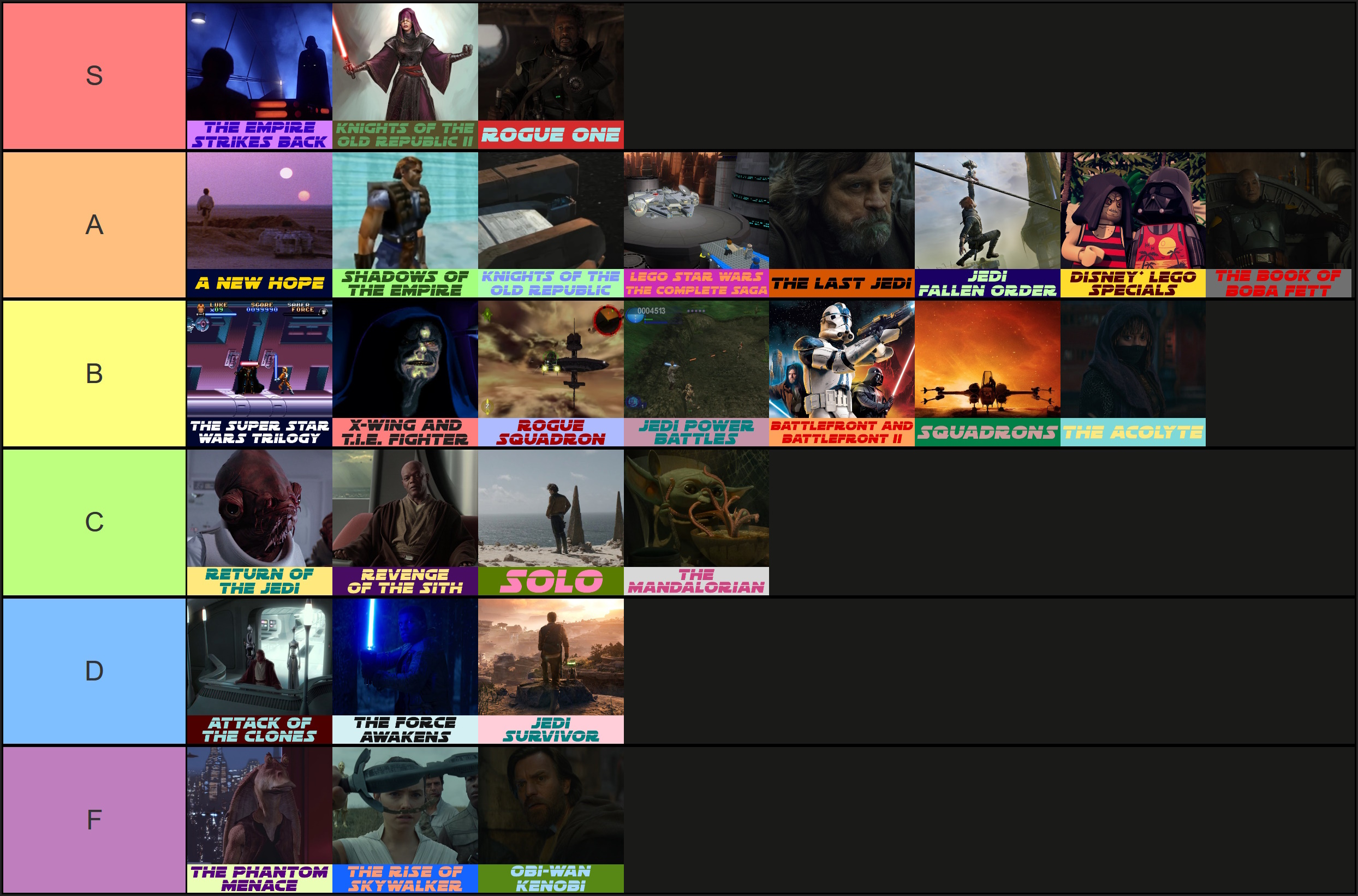
Let’s Play Jedi: Fallen Order – Part 5

Spoiler Warning: There are spoilers ahead for Star Wars Jedi: Fallen Order, and for other iterations of the Star Wars franchise.

Welcome back to the adventures of Cal Kestis in Star Wars Jedi: Fallen Order. Last time, after being unable to progress on the planet of Dathomir having been thwarted by a metre-wide gap in a bridge, Cal and the gang flew away and ended up on the Zeffo homeworld. After exploring the landing zone and a village the Empire forcibly evicted, we left Cal at a meditation spot near a dark and mysterious cave.

Cal at the entrance to the cave.

Before I started playing properly, I decided to have a bit of a look at Jedi: Fallen Order’s photo mode. By opening this mode the game pauses, and I have free movement of the camera to set up and take screenshots. This has potential advantages over just taking screenshots during regular gameplay, as many different aspects can be controlled – extra lighting, changing angles, changing what’s in or out of focus, etc. I’ve played games that had photo modes before – albeit not many – but this was my first real time messing around with the options and settings. While it may be useful at certain points in Cal’s adventure, I don’t see myself using it for every screenshot, as it’s rather fiddly to use. That’s no criticism of Jedi: Fallen Order, I think that’s just the nature of this kind of free-camera photo mode.

Testing out photo mode on this unfortunate Stormtrooper.

After my photo mode experiment, Cal headed into the cave to see what was inside. The darkness meant he had to once again use his lightsaber as a torch, and after finding a crate with another customisation option or lightsaber part (I forget which, we picked up several of each this time) Cal eventually managed to jump, climb, and tiptoe around the cave to find a switch that illuminated it. Exiting the cave – which was fairly small – led to a path overlooking the village we passed through last time. Here I felt there was some influence of the Himalayas on the design of Zeffo. The long flags, the mountaintops, and the ancient village seemed to give it a Tibetan or Bhutanese feel.

Overlooking the village.

A lone Scout trooper on the path – who ignored Cal while I spent ages lining up the perfect screenshot – was no match for the double-bladed lightsaber. After defeating the trooper, I encountered a glitch. A mountain goat-creature charged at Cal, but fell partway through the path before it could reach him. At first I thought this was something scripted – perhaps a patch of quicksand to be avoided – but it was actually not intentional. The mountain goat remained stuck, and Cal was easily able to kill it as it had a hard time fighting back.

The mountain goat-creature stuck in the terrain.

There have been a few bugs in Jedi: Fallen Order so far, and I’ve documented them as they’ve cropped up. The only really significant one was the camera getting stuck in that narrow hallway on Dathomir, the others – like this one – have really been quite minor. But minor issues can stack up in a game, and Jedi: Fallen Order is certainly not as polished as I might’ve expected it to be. Further along this mountain pathway, and after jumping across a couple of obstacles, Cal stumbled upon a group of oblivious Stormtroopers.

Cal was able to get very close to these troopers.

I suspect that if I cranked up the difficulty to one of the higher settings, Cal might’ve been spotted by the troopers sooner – it seems like that’s how the game should work anyway! The troopers put up a fight, but Cal got the better of them in the end and was able to progress further along the path. This section featured several rotating platforms that Cal had to use the Force on in order to jump on them, making this section of the game – and indeed Zeffo in general, as we’ll see later – much more akin to a 3D platformer than a standard action game. I mentioned in one of the earlier parts that the game is clearly inspired by titles like Tomb Raider, and I think this hits that point home.

One of many rotating platforms.

Beyond the platforms were more mountain pathways (without the Force, how can the Stormtroopers get from place to place? Hmm…) and after a short walk, Cal stopped to look at a statue carved into a nearby mountain. This is supposedly a representation of a Zeffo – though I would’ve said it looked at least somewhat similar to the Prothean character from Mass Effect 3, particularly in terms of the shape of the head. Cal noted that the statue must indicate that he’s going the right way – and in a game which has occasionally been unclear about which way to go, confirmation I was on the right track was nice.

The Zeffo statue.

After a little more jumping and climbing, Cal battled a handful of Stormtroopers and a couple of monsters before sliding down an icy path to the next part of the level. The sliding feature seemed really fun and innovative when we first saw it on Bracca, but it’ll be used several more times on Zeffo (as well as at least once on Bogano) and as fun as it was that first time, it isn’t my favourite element of the game. Variety is good, but as we’ll see more acutely later, some aspects of Jedi: Fallen Order’s controls can feel very clunky and ham-fisted – pushing a stick a fraction of a centimetre should send Cal a short distance or make a minor adjustment, but both Cal and the camera swing around wildly, making aiming during some of these sliding sections difficult. Several of the sliding sections end with a sheer drop, requiring a perfectly-angled jump to hit the next path or to grab a vine, and with the clunky, inaccurate controls it’s too easy to mess up and see Cal fall to his death multiple times in the same place.

One of the icy slides.

Beyond the ice slide, and past a few more hapless Stormtroopers, Cal witnesses an Imperial ship departing a facility. I liked the design here, it was reminiscent of the base used by Galen Erso in Rogue One. The Star Wars franchise has always been good at keeping a similar aesthetic across its titles, and this base could easily have been lifted from that film. Cal also passed a wall that had the same glowing red aura as the bridge we had to bypass in the last part of the playthrough – I was certain by this point that Cal was en route to a place where he could learn a new Force power!

An Imperial ship departs the base on Zeffo.

Over the radio, Cere tells Cal that the ship is carrying “artefacts” bound for the Imperial capital of Coruscant. There’s a very ominous line in this conversation about the Emperor potentially being involved, though whether we’ll actually see old Palpatine appear in person isn’t clear! The level so far has been a fairly linear path, sending Cal more or less in one direction – culminating in the scene where the ship departs. On this ledge is a doorway that presumably leads into the Imperial base, but it’s sealed and there’s no way in. After backtracking and getting a little lost, I ended up pulling up the in-game holomap to find where to go.

There’s no way in!

However, I have to confess that I don’t find the holomap particularly easy to use. It’s necessary, given Jedi: Fallen Order’s large levels, to find some way to represent areas at different elevations, but the holomap is clunky and awkward to use, and its all-blue appearance doesn’t make finding things any easier. I also found out later on that opening the holomap doesn’t pause the game, meaning Cal can be attacked while checking the map.

The in-game holomap.

Map issues aside, the next section of the level was quite fun. There was some more platforming to do, including balancing on a narrow ledge, and a variety of different Stormtroopers have now popped up. In addition to the standard blaster-wielding troopers, there are rocket troopers, who are unsurprisingly armed with bazookas, and heavy troopers, who carry a minigun with a small shield. The minigun blasts come at Cal very fast, but luckily only in short bursts. I found it was possible to deflect or block most of them most of the time. The rocket troopers were harder to avoid, however, as not only can their shots not be blocked or deflected, but they explode on impact, and even if they don’t hit Cal directly if they’re close enough they can still hurt him.

The two new trooper types.

After the platforming came another short ice slide, and beyond that was a dark hallway. Inside, Cal found a computer console and played a recorded message from a Stormtrooper. Something called “Project Auger” was mentioned – I’m sure this won’t be the last time we hear about this secret Imperial mission! The story of Jedi: Fallen Order has been great so far, and Project Auger fits in perfectly with what Star Wars fans expect from the Empire. Moments like this make it feel like I’m taking part in a real mission in that galaxy far, far away.

Listening to the Stormtrooper.

Whatever Project Auger is – for now we still have no idea – it’s bigger than just this one site on Zeffo. If I were to speculate I’d say it’s something connected with tracking down Force-sensitive people, since that’s Cere and Cal’s overarching quest right now. But the trooper mentioned looking for data and artefacts – not people – so perhaps what they’re looking for are ancient relics connected to the Force? Something like a holocron, perhaps? I’m sure we’ll come to know more later, but I like to guess! Theorising is all part of the fun! After listening to the trooper, Cal headed back outside to an area where large platforms were rapidly moving in and out of the moutainside. Cal needed to use the Force to slow the platforms down one by one in order to make it across, but this was a relatively straightforward puzzle.

Use the Force, Cal!

A meditation spot beyond the platforms made for a nice spot to rest and checkpoint my progress, but I wasn’t ready to stop playing. Cere jumps on the radio again to inform Cal his presence has been noticed by the Imperials – and to be fair he has cut down at least a couple of dozen by this point, so that’s to be expected. A dropship appeared in the area beyond the meditation spot, and a number of troopers jumped out. This fight was tricky, as there were a variety of troopers including two of the stronger Scout trooper commanders, but Cal was eventually able to prevail – and I’m kind of proud of taking on such a big fight without dying once!

The vanquished Scout trooper commanders.

Another icy slide after defeating the group of troopers led Cal to an underground area with a few monsters to defeat. Beyond that, we finally found what we came to Zeffo for: an ancient tomb. A storm swirling around the tomb hindered the Empire’s communications, but there were no troopers in sight, just a handful of monsters and a meditation spot. In fact, we wouldn’t see any more Imperials for a long time! The storm raged, swirling in circles around a single point. Cal was able to use his Force power to slow the storm and cross safely into its eye – an area containing a giant metallic ball.

Approaching the eye of the storm.

BD-1 scanned some more ancient Zeffo symbols, then Cal stepped on a switch – revealing that the whole platform, ball and all, was a large elevator. The descent into the tomb was slow, but there was plenty to see on the way down, as well as another recording from Master Cordova to listen to. I stand by what I said earlier, though. Despite what Cere said about BD-1 being an “encrypted” droid, I bet a black market hacker could get Cordova’s logs out without needing to visit all of these places to see the recordings! The large ball/sphere in the centre of the elevator platform had the same red aura that we’ve seen several times on Zeffo, indicating it may be possible to interact with it in future.

Ancient Zeffo symbols on the elevator.

The tomb was huge! I think it’s fair to treat the tomb and the surface of Zeffo as two different levels, despite them being connected. There was a whole new aesthetic for the tomb, different obstacles, and fewer enemies. Where the surface of Zeffo had some platforming elements and a lot of monsters and troopers to fight, the tomb is a maze of passageways with several puzzles and only a couple of mini-bosses. We could take a break here and split this into two parts, but as I played it all in one sitting I think I’m going to stick with writing up one play session at a time. So refill your drink if you need to, and let’s crack on!

Entering the tomb.

After the elevator touched down, there were two paths. One was a dead-end, but the other had a weird exploding plant thing, which Cal and BD-1 agreed looked disgusting, and a narrow passageway to squeeze through. This led into the first hallway of the tomb. The lighting in this section deserves a lot of credit. We’ve seen pitch-black areas several times in Jedi: Fallen Order, and for short sections that can work well and provide mystery and a sense of danger. But as mentioned, the tomb we’ve entered is so large that despite it seeming logical to make it fully dark, I feel that would have made it far too difficult – some of the puzzles were tricky enough as it is! Instead of total darkness, Jedi: Fallen Order has turned the brightness down a little, giving everything a slightly washed-out blue-grey hue that I think did a good job conveying that this is a dark area but without being too dark to be enjoyable to play through. Things like this can seem minor – who cares about lighting in a game compared to the story, right? But they go a long way to making a level fun to play, and for me, Jedi: Fallen Order did this perfectly.

Shortly after entering the tomb, with another of the weird plant-things.

After a short section of jumping between platforms, Cal ended up going down another icy slide into a large room. There was one of those large metallic spheres that we saw on the elevator, and several switches on the sides of the room. Activating a switch caused a jet of air to shoot out of the wall. If the ball was in the way of the jet, it would roll around the outside of the circular room. The objective was to get the sphere into a clearly-marked cavity in the centre of the room (think like a ball-and-socket and you’re on the right track). The only way to do this was to activate the right air jets in the right order, but there weren’t many and this wasn’t particularly difficult. Cal acquired the second of three “Force Essences” for his trouble – getting the third would give him more Force points, which would mean he’d be able to use more Force powers in combat.

Puzzle complete!

Leaving the circular room behind, Cal headed to a hallway which opened out into a large chamber. Opening another switch caused a jet of air to roll another sphere into a divot, which in turn caused platforms to rise from the floor. Climbing these led Cal into another hallway, and by this point I was getting excited! The holomap seemed to indicate that Cal was perhaps one or two rooms away from the objective, so I thought it would be a hop, skip, and a jump to the end of the level. But that didn’t quite turn out to be the case! Below the raised platforms I could see a statue that resembled the Zeffo carving we saw on the surface, only smaller. It felt like a trap, and I was right! As Cal got closer the golem sprung to life, shooting a laser from its chest and trying to stomp him! After dodging and wildly swinging the double-bladed lightsaber (which still looks awesome in its orange hue, by the way) Cal was victorious.

Cal vs. the tomb guardian.

We’ve been seeing objects with a red glow or aura since last time, and I was sure Cal would eventually be able to interact with them somehow. Finally, in this next area, Cal re-learned the necessary skill: the trusty old Force push that every Jedi should know! After coming upon a wall blocking his path, Cal drew upon an old memory to re-learn the skill.

About to learn the Force push ability.

This took the form of what appeared at first to be a Force echo, but after appearing to get hit by a rock while using his ability to sense what had happened, Cal ended up having a full-on flashback to his time training under Jedi Master Jaro Tapal. We’ve seen one prior glimpse of this training – and I still think more effort could have gone into the training room used for these flashbacks, as it’s awfully bland. The training session consists of Cal using the Force to push a ball into a target, under Master Tapal’s watchful eye.

Master Tapal training Cal in a flashback.

The flashback jogged Cal’s memory, and he’s now able to use the Force to push objects – even breaking weak walls or damaged doors in some places. And of course he can now push those spheres around too! Force pushing the wall caused it to break, finally opening up the chamber that the map has been pointing us toward this whole time. The chamber beyond contained a single tomb guardian (the golem things I mentioned earlier) who was difficult to defeat, but not impossible.

A closer look at a tomb guardian, courtesy of the game’s databank.

This chamber is the heart of the tomb, and it’s what Master Cordova wanted whoever came after him to find. BD-1 displays a recording of Cordova talking a little about the Zeffo and the tomb. However, from our point of view the key thing we needed to know was where to go next in this scavenger hunt/wild goose chase that Master Cordova has set up. He looked at the detail in one of the stone carvings and surmised it to be representing a wroshyr tree from the planet Kashyyyk – that’s right, Cal is headed to Chewbacca’s homeworld!

Master Cordova with the tree carving.

One thing that’s fantastic in any game is when optional cosmetic customisation options are reflected in cut-scenes. While a lot of games get this right – even going back to the early 2000s, where Knights of the Old Republic would show off the player character – some games to this day still have pre-recorded cut-scenes that show the player character sans any customisation. Jedi: Fallen Order shows Cal and BD-1 in whatever outfit and paint job is chosen for them, and the Stinger Mantis is equally represented in its takeoffs and landings, and I really appreciate the little extra effort it takes to make that happen.

Cal – in his appropriate attire – listens to Master Cordova’s recording.

You know those games where upon completing the mission or the level you’re taken to the next one straight away, maybe with a cut-scene in between? Or those other games where completing a long and complicated dungeon or level unlocks a shortcut back to the entrance to make it easy to get on with the story? Yeah… Jedi: Fallen Order is neither of those games. After listening to the recording in the tomb (and making sure the giant Zeffo sarcophagus wasn’t, in fact, another golem waiting to attack) Cal must make his way back to the Stinger Mantis from here.

I really thought this was going to wake up and be a boss to fight!

Puzzles in games can be great fun. And in a tomb like this, ancient puzzles that are well-designed can make getting to the objective a challenge to enjoy and take pride in overcoming. But the driving force in a game like Jedi: Fallen Order is its story, and having acquired a new destination for Cal and the gang, I was keen to get on with it and get back to the ship. I didn’t want to spend more time in a tomb that I’d already completed, and if I’d been designing this level I’d have moved all of the next puzzles to before the Cordova recording, and provided an immediate pathway out – I think that would have made it more enjoyable.

Moving these balls was hard work.

Perhaps this is just sour grapes on my part, though! After using a meditation spot outside of the room with the sarcophagus, it took me about twenty minutes to figure out how to get two more of the large metal spheres and move them into the right spots on the ground to open a pathway out – if you recall, the way in was down an icy slide, and Cal can’t climb up those.

One of the balls in flight.

This puzzle was annoying in part because, as mentioned, the story on Zeffo (for now, at least) has concluded, meaning the only objective was to get back to the ship and continue the plot. It was also frustrating, though, because of how Cal’s new Force push ability works. In order to get the spheres into the right place (after locating them) Cal had to use Force push as the spheres are too large to do anything else with. However, while Force push is great on things like walls or for pushing enemies, when it comes to fine control and aiming, Jedi: Fallen Order’s clunky controls became a problem for me. The spheres were very difficult to aim and manoeuvre, and while the game allows a little leeway in getting them into place there isn’t a lot of room for error. This whole section felt like trying to play a bad game of mini-golf or something, and I found the puzzle to be more annoying than fun overall. While searching for spheres I found the third Force Essence and increased Cal’s Force points, which was a bonus.

The sphere on the elevator.

After I did eventually get the balls placed correctly, it was a fairly smooth route backtracking through the upper levels of the tomb to get back to the elevator. After resetting the elevator and riding it back up, Cere jumps on the radio. She and Cal agree to go to Kashyyyk to speak to a Wookie chief who was a friend of Master Cordova. The elevator emerges back at the entry to the tomb, which is now crawling with Stormtroopers – has Cal led them there? And if he has, will they learn the secrets of the Zeffo too? It’s hard to see how the Empire can learn very much without BD-1 and the recordings from Master Cordova, but it’s possible that they’re looking for something else in the ruins, something connected to this Project Auger. It’s also possible that they’re hunting Cal!

The exit to the tomb with a squad of Stormtroopers!

After defeating the troopers, I was expecting to go back through the level and perhaps take advantage of one or two points where Cal could use his Force push ability to create shortcuts. There were also the shortcuts from the village to the hangar that we found last time. However, I’m not entirely sure whether I took a wrong turn or if this is the way the game sent me, because Cal ended up riding an Imperial cable-car thing into an ice cave where an excavation is taking place. There was another meditation spot here, and at one of these (I forget which) Cal was able to level up and learn a new skill.

The ice cave.

This ice cave featured a very annoying ice slide. Most of the others have been fairly straightforward, even the one where Stormtroopers were shooting at Cal! But this one had a jump, a U-turn, and then a second jump that required perfect aiming to hit an updraft and a perfectly-timed button press to avoid Cal falling to his death and having to replay the whole slide over again. It took several attempts to complete, and all the while I was reminded of the snowy mountain level in Super Mario 64. Only the ice slide there was more fun.

Welcome to Jedi: Fallen Order… apparently.

In addition to a couple of Stormtroopers, the ice cave had a large monster to fight; another mini-boss. Though each of its attacks did a fair amount of damage, Cal was able to defeat it, and even severed one of its limbs with his lightsaber in the process. I’d seen Cal’s lightsaber bisect monsters before but this was the first time I’d seen it specifically take off a limb. Though it may be fairly gruesome, I felt overall it added to the immersion, as we know lightsabers should be able to do that, and we’ve seen it in the Star Wars films. I understand why they chose not to let this happen to human opponents, though!

Don’t worry, he’s ‘armless!

While riding the next cable-car out of the ice cave, Cere tells Cal over the radio that the Empire has identified him as being the Jedi they encountered on Bracca. I felt sure this would mean the Second Sister – the Imperial Inquisitor who tried to kill Cal at the start of the game – would make an appearance, so I hot-footed it back to the Mantis. A shortcut opened up, finally allowing Cal to emerge from the caves near to the landing zone. However, there was a pretty big obstacle between Cal an the ship: an AT-ST walker!

The AT-ST.

The walker was attacking the Mantis, and I was reminded of the episode in The Mandalorian where the protagonist and his mercenary ally must similarly take on an AT-ST to defend a group of villagers. With the usual caveat that I’m playing the game on its easiest difficulty, I found the fight wasn’t as tricky as I expected. The AT-ST could shoot and also drop explosive charges, all of which had to be dodged as they cause major injuries to Cal. But I was able to basically pin the AT-ST against the Mantis, and after dodging the explosives, hammer away at it with the various attacks Cal has learned. Repeating this a few times brought the walker crashing down. I thought that was it, but its pilot then got up and started blasting at Cal! Luckily he was easier to defeat than his machine had been.

The vanquished AT-ST and pilot.

With the AT-ST being the final boss of the level, it didn’t seem as if we’d get to face off against the Inquisitor. Cal boarded the Mantis and a cut-scene triggered as he talked to Cere and Greez about what he’d discovered in the tomb. Going to Kashyyyk was what both Cal and Cere wanted, but Greez was nervous, telling them the area is crawling with Imperials who have been trying to suppress the Wookies. Though I think the film is set a little later in the timeline than this, we saw in Solo: A Star Wars Story that Wookies would be taken by the Empire for slave labour – I wonder if we’ll see some aspect of that when we get to Kashyyyk.

Explaining to the others what happened, and where to go next.

After the cut-scene, there was nothing left but to head to Kashyyyk. Cal’s Force push ability still won’t help him jump that small gap on Dathomir that he can’t get over, so Kashyyyk is the only destination we have right now. I retired to the Mantis’ rear cabin to use the meditation spot, and that’s where this section of the playthrough finally ended.

Cal hanging out on the Mantis.

This was a long session, so thanks for sticking with me all the way to the end. We basically completed two levels here – the surface of Zeffo and the tomb. However, I think we’ll be coming back this way in future, even if only to access that Imperial base and see what’s going on inside. The Zeffo are beginning to remind me somewhat of Knights of the Old Republic’s Rakatan Empire – both are ancient, supposedly-vanished races that were powerful millennia ago. Are we going to encounter some surviving Zeffo? I wonder.

I had a great time in this section of the playthrough, despite the frustrating puzzle section in the tomb. Jedi: Fallen Order has an engrossing story, and that goes a long way to covering up any minor imperfections in its gameplay, at least in my opinion. It’s always going to be more enjoyable for me to play a game with occasionally frustrating gameplay and a great story than vice-versa!

So that’s it, join Cal and I next time for our excursion to Kashyyyk. This is a world I visited in Knights of the Old Republic, so I have some idea of what to expect! I wonder if it’ll match my expectations?

Star Wars Jedi: Fallen Order is out now on PC, Xbox One, and PlayStation 4. Star Wars Jedi: Fallen Order is the copyright of Respawn Entertainment and Electronic Arts. The Star Wars franchise is the copyright of Lucasfilm and Disney. This article contains the thoughts and opinions of one person only and is not intended to cause any offence.