Silo: Season 2 Review

A spoiler warning graphic.

Spoiler Warning: There are spoilers ahead for Silo Seasons 1 & 2.

In 2023, I awarded Silo’s first season the highly-coveted Trekking with Dennis Award for best TV show of the year. It beat off Star Trek: Picard’s third season – which was, in hindsight, probably that show’s best offering. If you know me, you’ll know I’m a Trekkie and a big fan of Jean-Luc Picard – so Silo must’ve been pretty darn good, then! It’s no exaggeration to say that I was really excited for Season 2 and the continuation of this engaging sci-fi mystery story.

It can be difficult to render judgement on the middle part of a fully-serialised story, so that’s a big caveat to everything we’re going to talk about. With Silo confirmed to be returning for two more seasons, we may look back at Season 2 with that context and revise some of these talking points and criticisms – and I wanted to be clear about that. With that out of the way, here’s the headline: Silo Season 2 was good but not great. One side of the story was a thrilling, enigmatic mystery populated by a wonderful cast of characters. The other felt like an overblown video game side-quest, complete with unnecessary stumbling blocks that seemed to exist only to slow things down, and was padded out with a handful of very barebones, one-dimensional characters.

In short, Season 2’s good side was let down by its less-good side.
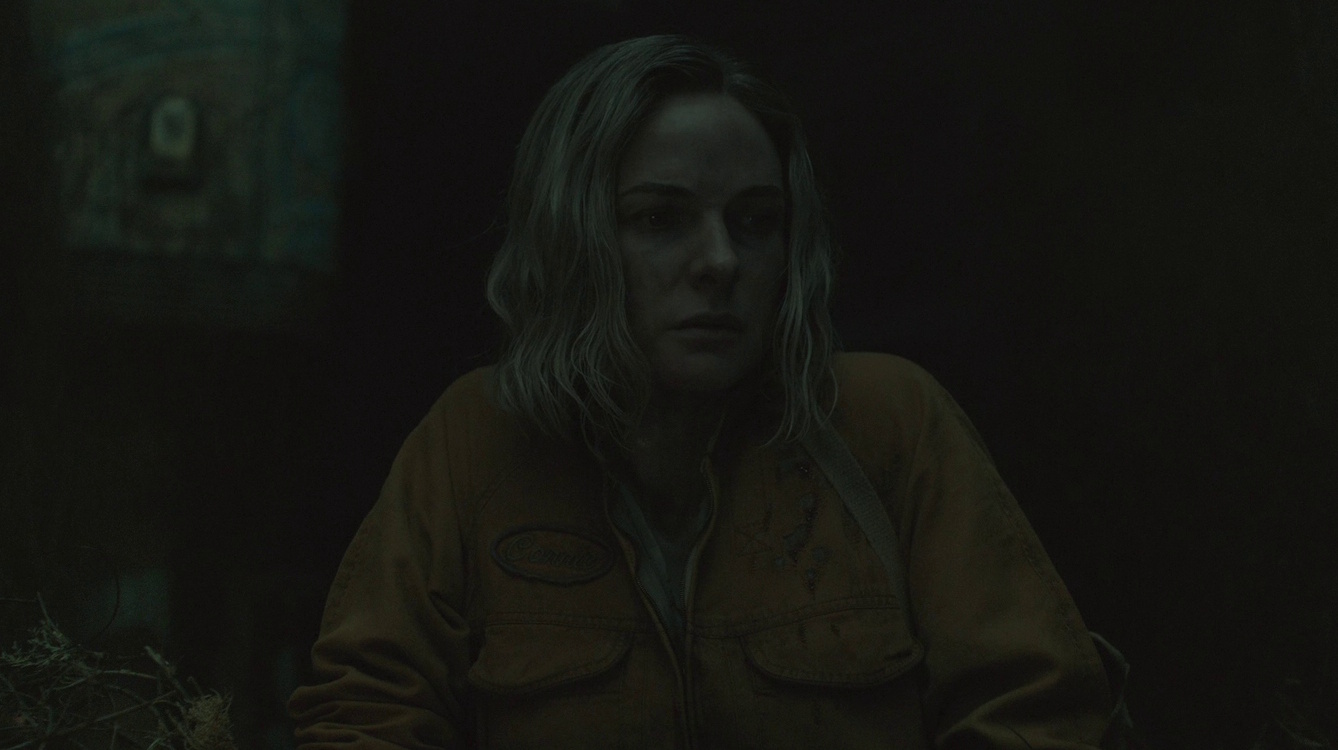
Still frame from Silo Season 2 (2024-25) showing Juliette after her arrival in the second silo.
Juliette in the second silo.

So… which side is which? Unfortunately, I found Juliette’s story this time to be the weaker one. And that’s such a shame, because Rebecca Ferguson – who also gets an executive producer credit for Silo – has put in a fantastic performance across both seasons of the show. Last season, Juliette was at the centre of the story, unravelling the mysteries of the silo piece by piece. But this time, she was isolated from most of the rest of the cast, trapped in her own little narrative box. And that box, for me at least, felt like it was mostly comprised of unnecessary hurdles to a story that was almost instantly a “back-and-forth” that aimed to shuffle Juliette right back to the first silo.

On the other side of things, the story of the rebellion in the Down Deep, complete with double- and triple-crosses, as well as Sims’ scheming and Bernard and Lukas trying to uncover more of the silo’s secrets… that was all fantastic. These characters, who we met last time and have more of a foundation to build on, all felt real, their actions seemed to flow naturally from the circumstances they were in, and it was a truly gripping and fascinating mystery with stakes. Given that we know the world immediately outside the silo is still deadly and toxic, the danger to everyone was communicated well – and having gotten invested in these characters and their world, that gave this side of the story a lot more weight.
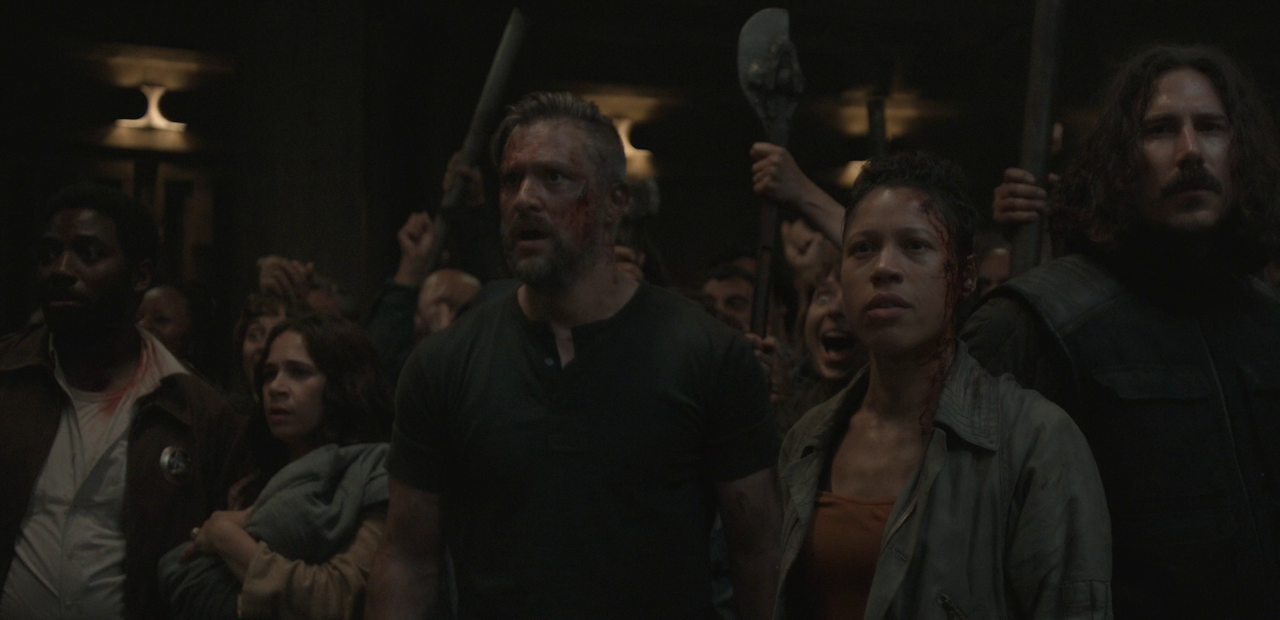
Still frame from Silo Season 2 (2024-25) showing a crowd of rebels.
Sheriff Billings, Knox, Shirley, and Deputy Hank.

Stepping back from the moment-to-moment narrative beats, Silo has constructed a world that feels – to me, at least – like a dark mirror of the United States. Leaders are left to rely on increasingly unclear instructions left for them by the nameless “founders,” communicated through a legal document that, for many in the silo, has taken on the status of scripture. I don’t know if you’re familiar with the term “American civil religion.” It’s a theory in American Studies/sociology that posits many Americans view documents like the Declaration of Independence, the Constitution, and the Bill of Rights as akin to scripture, with some of the founding fathers elevated to the positions of prophets. It’s an interesting idea, and one far too complex to detail in a few sentences. Whether you buy into it or not in the real world, Silo is definitely drawing on similar themes and concepts for its depiction of its underground society.

Silo also holds up a mirror to our modern-day surveillance society. Cameras are everywhere in the underground city: in people’s homes, in common areas, and workplaces. And spying on the citizens are a hidden group who seem to exist outside of the official heirachy and structure of the government, reporting directly to the mayor. As a metaphor for CCTV, facial recognition, and even online surveillance by the likes of the NSA, you could hardly get more explicit!
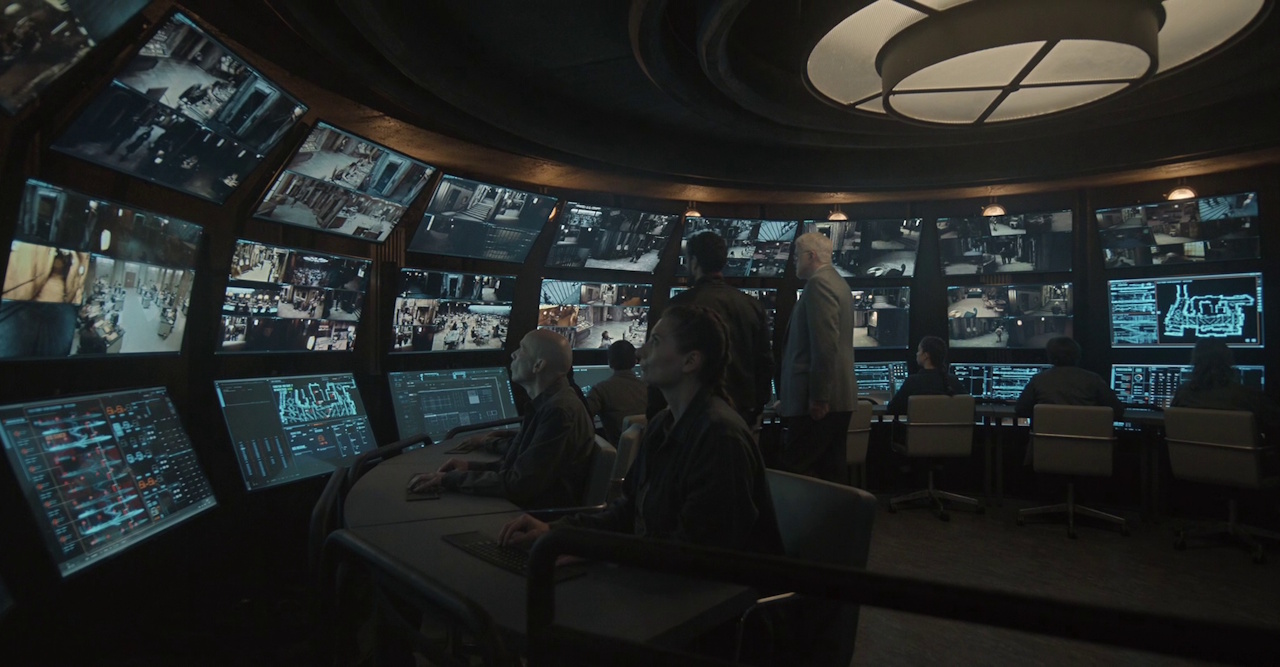
Still frame from Silo Season 2 (2024-25) showing Mayor Hollins in the surveillance room.
The hidden camera room in the silo.

Both of these feel pretty timely. Silo goes to town with the idea of governments spying on their citizens – without their consent or knowledge. The dangers of such a sophisticated spyware network are obvious, including the ease with which someone could use that knowledge to become a dictator or autocrat, and we get to see that through Bernard’s characterisation. I read Bernard as someone who is out of his depth, but tries to use the immense power at his fingertips to retain – or regain – control of the situation as it begins to spiral. Again, there are real-world parallels there.

Silo also wants to reflect a class divide: the “Up Toppers” and “Down Deepers” representing the upper and working classes respectively. Becuase the action in Season 2 mostly focused on the mechanics and engineers on the lower levels, I don’t think we got as much of a look at the way society differs on the upper levels of the silo. We caught glimpses of it when we saw the larger, better-furnished apartments of people like Bernard and Judge Meadows, but with fewer characters in focus there was perhaps less of this in Season 2 than there had been in Season 1. The class war angle was interesting, though – and another place where Silo was clearly drawing on real-world issues for inspiration.
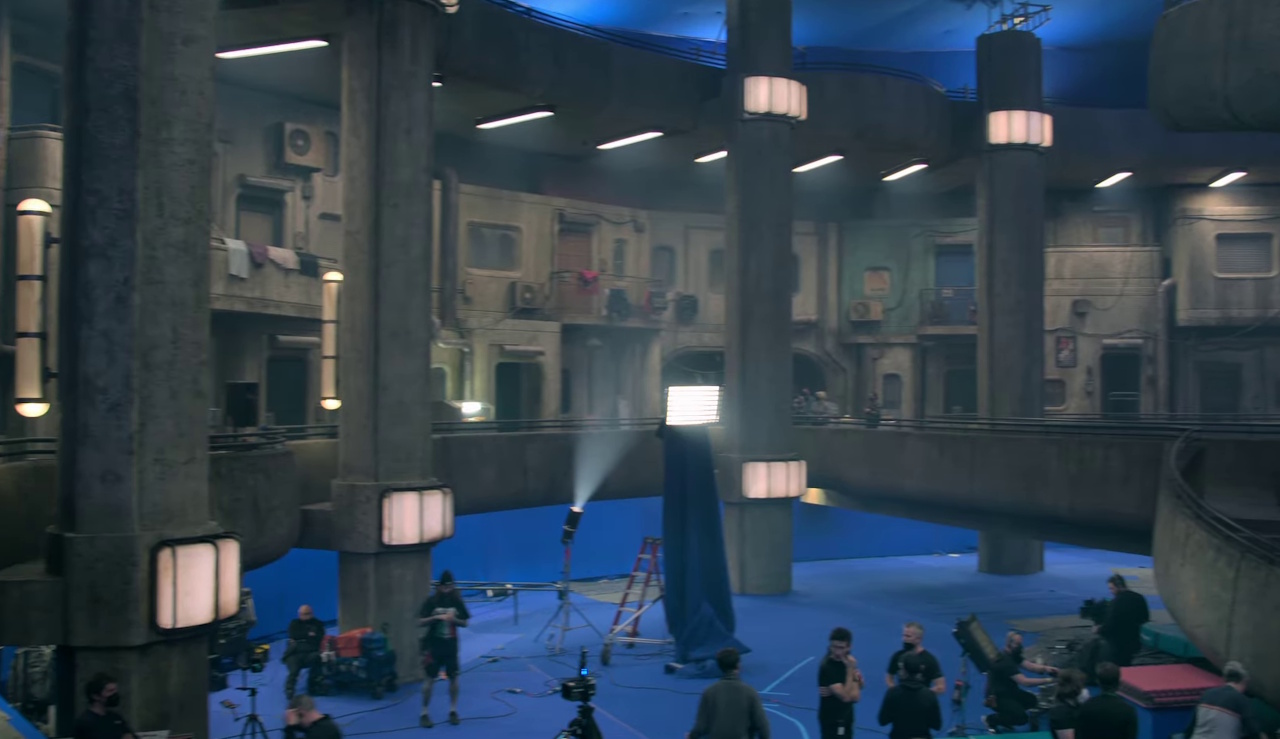
Still frame from Silo: An Inside Look showing one of the sets build to represent the silo.
Behind-the-scenes during production on Silo.

Juliette’s dramatic exit from the silo at the end of Season 1 left her friends and former allies on edge. By refusing to clean the camera and walking out of sight, she inadvertently left people believing that the world outside is safe – and we know that it isn’t. Arriving at a nearby abandoned silo, Juliette comes to learn the potential consequences of this: the rest of the citizens will rebel and try to break out, resulting in their deaths. This kicks off her story of… needing to immediately get back to her original silo.

I gotta be honest: I already felt this was a pretty weak setup. Having survived when survival seemed impossible and escaped from tyranny… all Juliette is left with is “I need to go back right now,” seeking to save her friends. As the setup for what was ultimately a slow storyline that seemed to spin its wheels too much, I was underwhelmed from almost the first episode. Then, things seemed to plod along, with Juliette teasing tiny pieces of information out of the mysterious sole survivor of this silo… only to belatedly learn that there were several other younger survivors, too. She apparently didn’t notice them or their settlement while exploring.
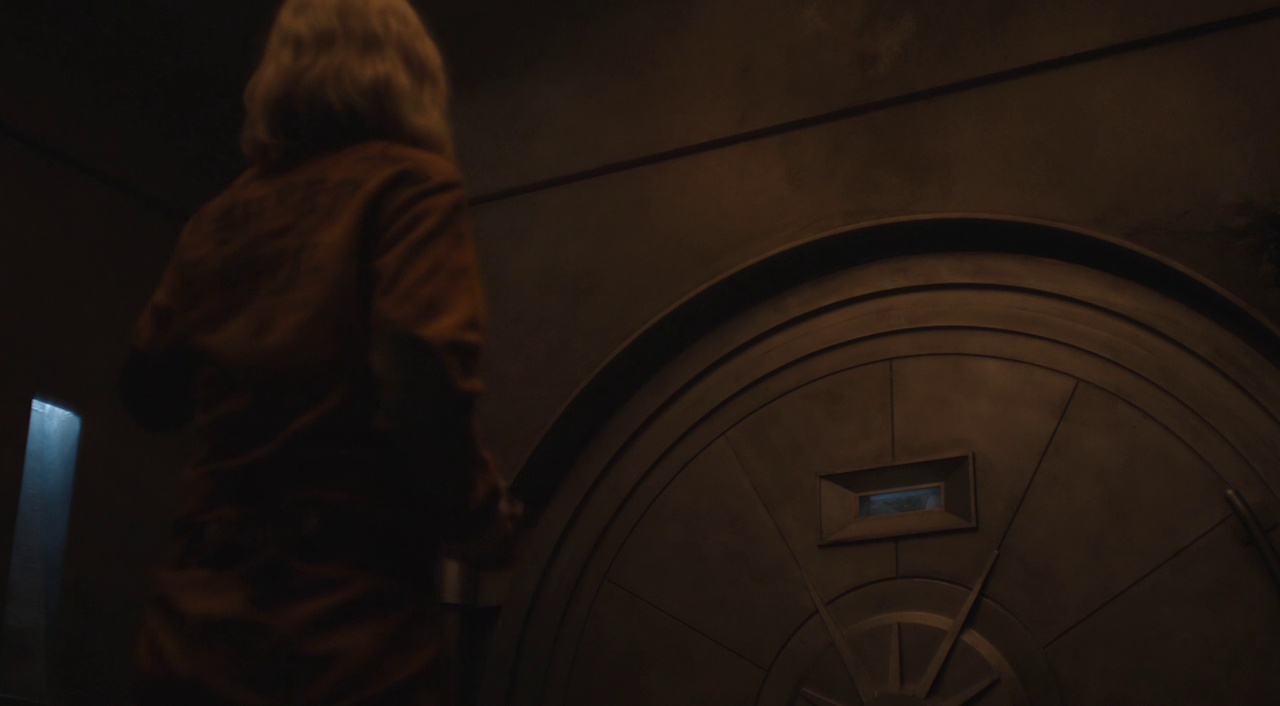
Still frame from Silo Season 2 (2024-25) showing Juliette talking to Solo through the vault door.
The locked door to Solo’s vault.

These younger survivors were pretty uninteresting, and their storyline came too late in the season to give most of them any real depth or interest. Audrey, whose sole defining trait seemed to be that she wanted to take revenge for the death of her parents, instantly gave up on that. And the others – Eater/Hope and Rick – got even less background than that. I struggled to believe that these characters had really been living their whole lives in the ruins of this silo, trying and failing to break into Solo’s vault and scratching together whatever food they could.

Silo just didn’t give these characters enough depth, and what little story was afforded them seemed to evaporate pretty quickly. For no other reason than “maybe don’t,” Audrey abandoned her apparent lifelong mission to seek revenge for the death of her parents, and for no other reason than “maybe open the door though,” Solo abandoned his lifelong mission to keep the door to the vault sealed. It wasn’t even clear that Solo knew anyone else was still alive inside the silo – which might’ve been useful information. Had Audrey and Rick ever visited the vault door? If so, why’d they leave their parents’ corpses unburied? And how did their settlement have power when it was explained that only the IT department – at least one level below – had its own power source and the rest of the silo’s power was out? There are a few too many contrivances, cut-down moments, and characters lacking depth on this side of the story for my liking.
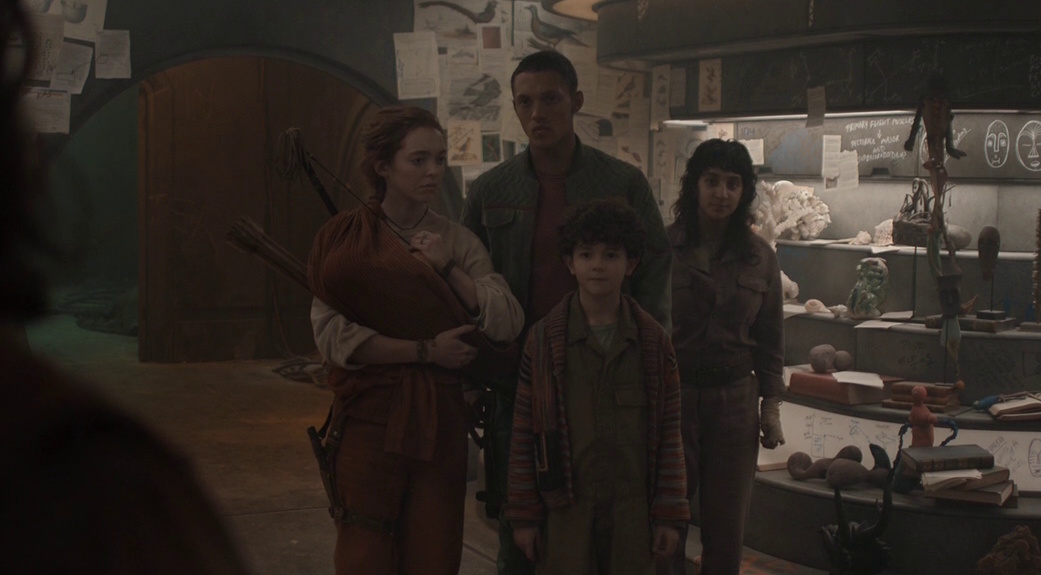
Still frame from Silo Season 2 (2024-25) showing Audrey, Rick, Eater/Hope, and their baby.
I felt these characters lacked any real depth or interest.

And that’s part of what gives it a “video game side-quest” feel. Every time Juliette seemed to get close to her new goal of returning to her original silo… something would get in the way. First it was finding a replacement suit. Then it was Solo holding her suit hostage until she activated an underwater pump. Then it was the kids kidnapping Solo. Then it was Juliette and Eater/Hope having to search for the code to get into the vault… it just went on and on. Solo had potential as an interesting character, and there were moments of that on this side of the story. But even before the kids emerged from hiding, the action in this second silo was really grinding along at far too slow a pace.

Speaking of the second silo… I’m afraid I was a tad underwhelmed by the setting, if I’m being honest. Do you know the term “bottle show?” It was originally coined in the 1960s to describe episodes of a television series made cheaply by recycling sets that have already been built, using only a handful of characters, and that are heavy on dialogue. Fans of the Star Trek franchise are very familiar with “bottle shows,” and parts of this side of Silo felt, to me, just like that. The sets were redressed to add vines and other obvious symptoms of decay, but they were otherwise identical… and for such an expensive series (Silo reportedly costs $30-$40 million per episode) the end result felt pretty cheap.
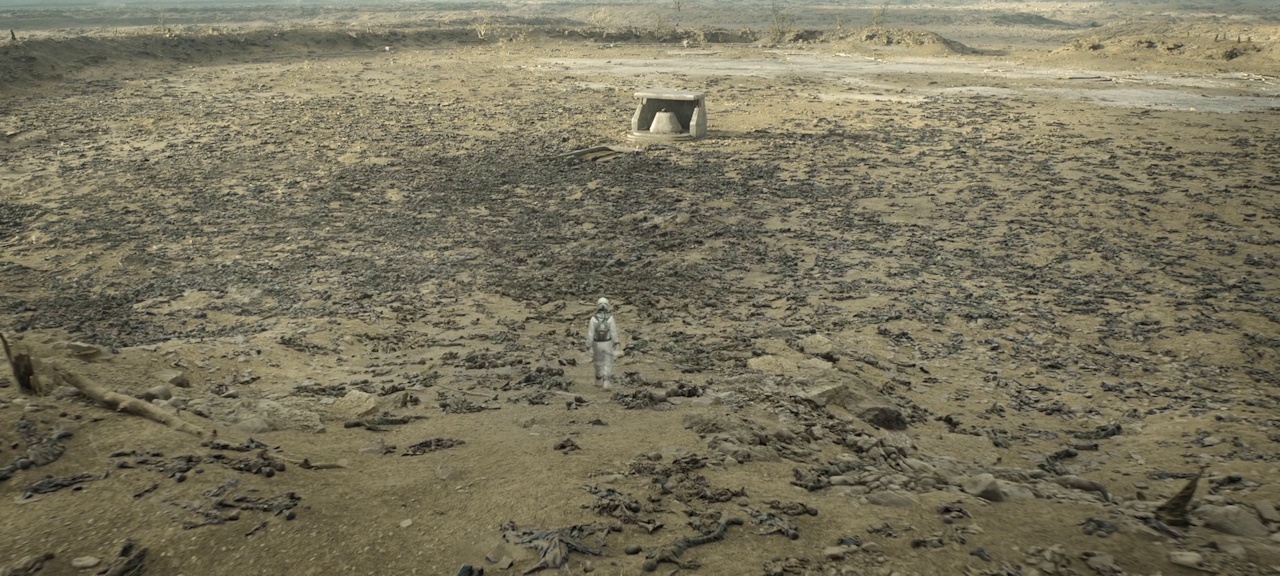
Still frame from Silo Season 2 (2024-25) showing Juliette walking through a field of dead bodies to reach the second silo.
Juliette arrives at a second, identical silo.

In-universe, there’s a good reason for silos looking identical. Or at least, I assume there is. But watching the show as a viewer… the fact that Juliette escaped one silo only to land in another, basically-identical silo didn’t quite sit right. And while the second silo did a good job of conveying how wrong things could go and what the stakes were for Juliette’s friends if she couldn’t fix the mistake she inadvertently made, the visuals most of the time were unimpressive. The only exception were this silo’s flooded levels, which were genuinely interesting to see – not to mention tense!

As I said at the beginning: this is the middle of Silo’s story. There are two seasons to come after this, and if the characters we met in the second silo feature in a big way, getting more development in the process, it’s not impossible to think we could revisit their introductions and look upon it a bit more kindly. But despite a wonderful performance from Rebecca Ferguson, I felt she was hampered rather than helped by the writing and the way her side of the story was structured in Season 2.
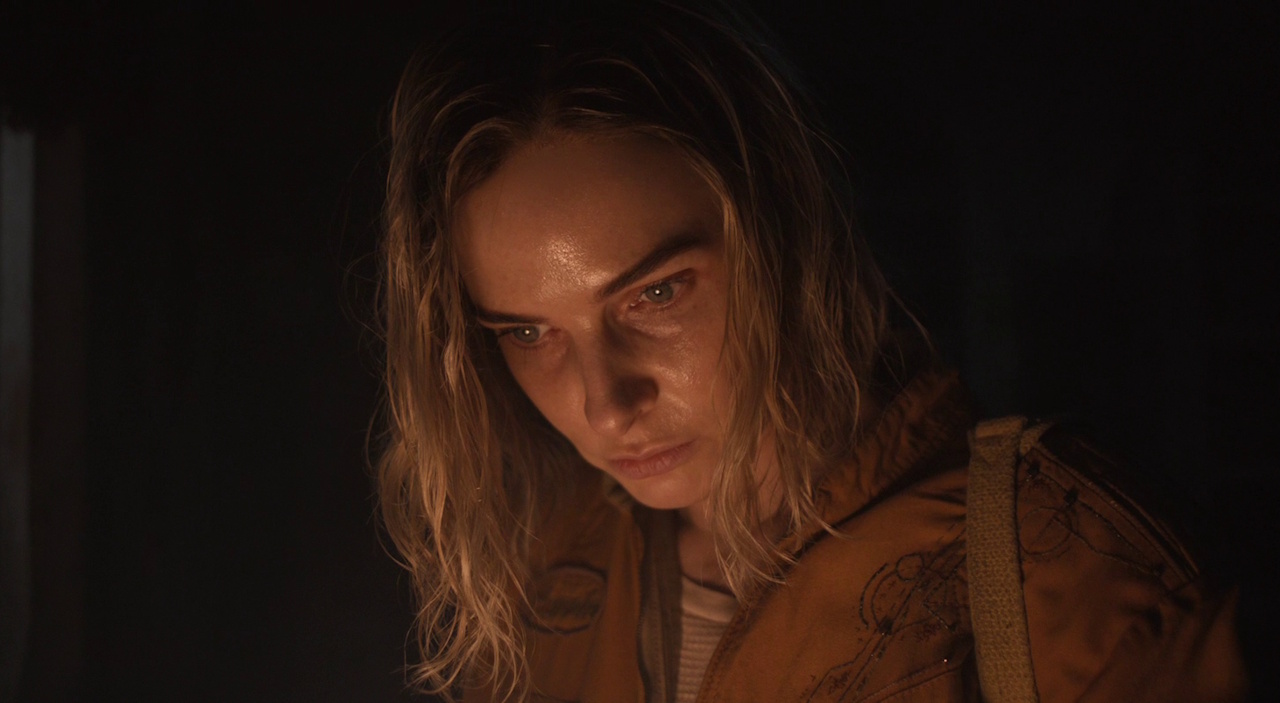
Still frame from Silo Season 2 (2024-25) showing Juliette's face illuminated by a torch.
Rebecca Ferguson plays Juliette Nichols in Silo.

Juliette’s evolving relationship with Solo definitely had its moments, though. Solo losing his temper and shouting at Juliette – and her cowering, afraid to look at him – definitely had uncomfortable echoes of real-world abusive relationships, as did his decision to hold her captive by denying her access to her suit. This metaphor was, perhaps, a little deeper, but it was there. Solo’s childishness masked that side of his character, but he can be quick to anger and manipulative. There was definitely an uncomfortable side to him – even if it was understandable how the traumatic life he’d led might’ve left him in that position.

We need to hop over to the original silo, though! That was the side of the story that I found much more engaging.

On the lower levels, there were double-crosses, triple-crosses, and multiple characters all working toward different ends to fit different agendas. No one – not even Bernard, spying from up top – knew everything, and that left Silo to be a truly engaging series. Even when Juliette’s story seemed to be spinning its wheels or distracted with another side-quest, there were fun characters and mysteries back in the original silo to keep the show on the rails.
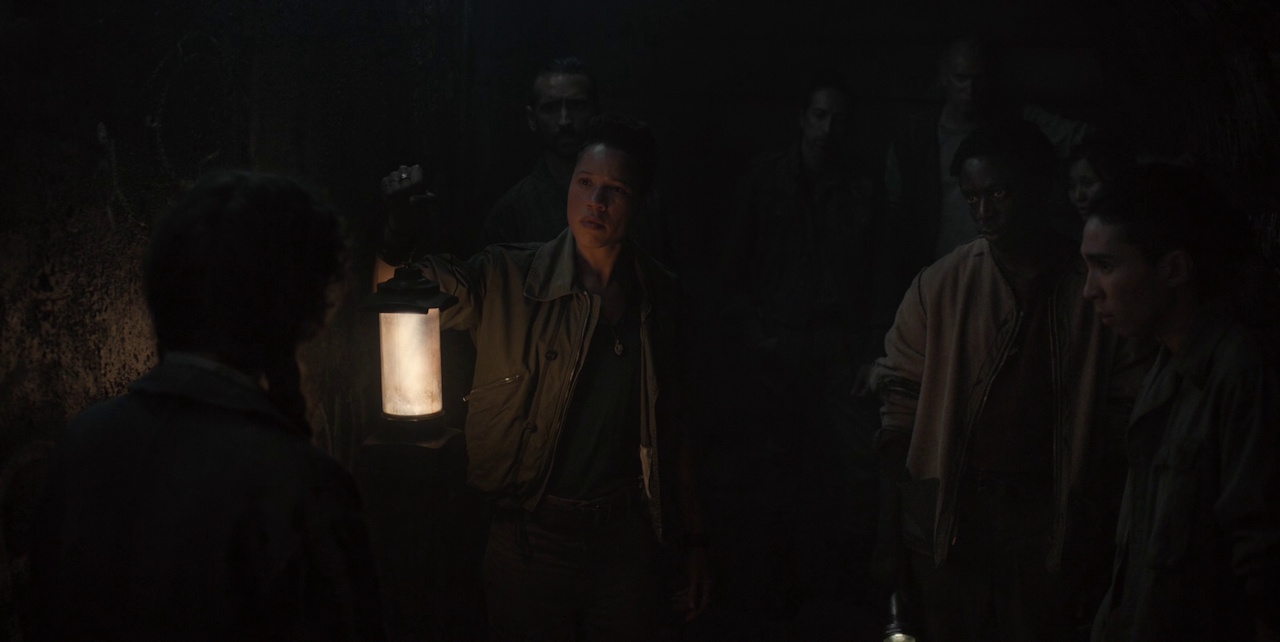
Still frame from Silo Season 2 (2024-25) showing Walker, Shirley, and other conspirators in the Down Deep.
The conspirators gather…

I have to be honest: going into Season 1 in 2023, I really did not expect much from Common. I’d seen him in Hell on Wheels – a series starring Strange New Worlds’ Anson Mount – a few years ago, but many musicians try their hand at acting and don’t really leave much of an impression. I was pleasantly surprised with his performance in Season 1 as the scheming Robert Sims, and Common excelled again in Season 2. Sims’ story expanded to include his wife this time, and they worked exceptionally well together as they tried to play both sides of the burgeoning rebellion to try to elevate their position in the silo’s heirachy.

Sims turned out to have more nuance in Season 2 than he did last time. After trying repeatedly to convince Bernard to let him in on the secrets of the silo and being spurned every time, ultimately being consigned to the important-sounding but powerless role of judge, Sims began scheming more overtly. The final rug-pull that it would be Camille, not Robert, who would be let in on the silo’s secrets by its AI controller… that was a fun and genuinely unexpected twist.
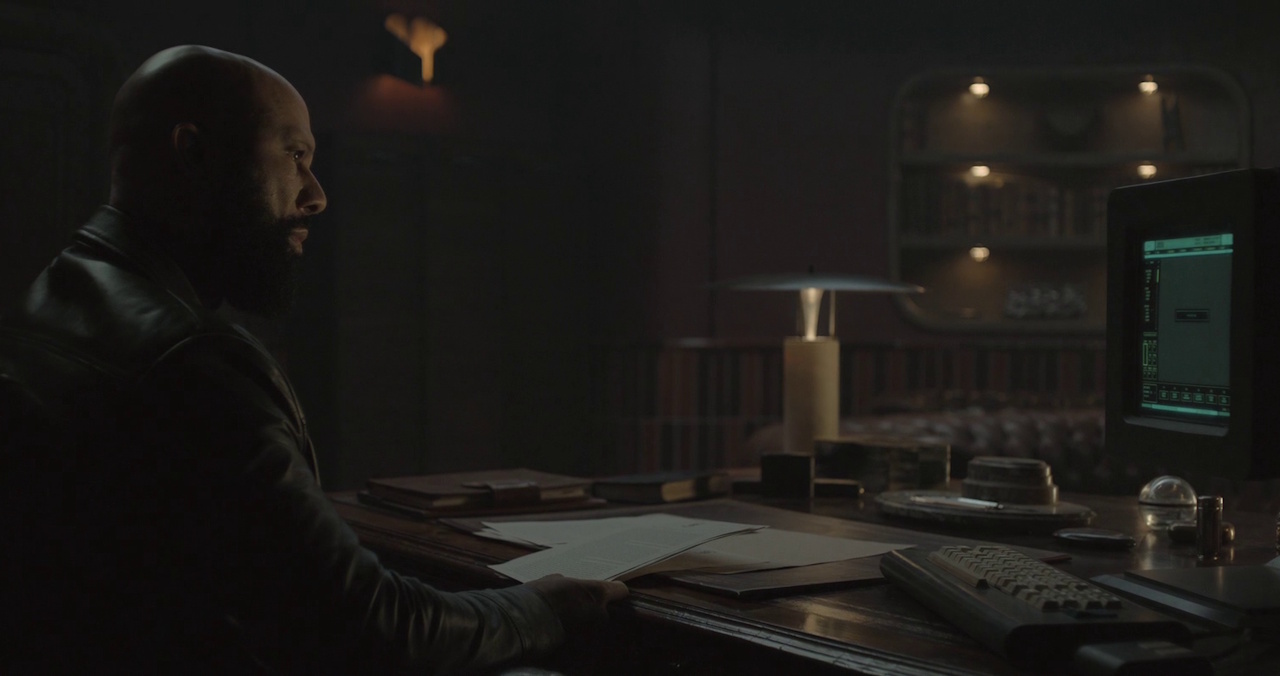
Still frame from Silo Season 2 (2024-25) showing Sims using a computer terminal.
Robert Sims.

Unlike Juliette’s disconnected sequence of objectives in the second silo, Bernard and Lukas’ attempts to figure out the mysterious code unfolded in a much more natural-feeling way. I can see some folks making similar criticisms as I did of Juliette’s story, because Lukas seemed to run into several dead ends before progressing. But this code-breaking story – and the subsequent revelation of the hidden vault with its library and advanced computers – felt a lot more interesting, and I was much more engaged with both Lukas as a character and the consequences of this storyline.

Knox, Shirley, and Walker made for a fun trio – and the additions of both Sheriff Billings and Dr Nichols (Juliette’s father) added a lot to the character dynamics on this side of the story. The only criticism I have, really, is that I never bought Walker’s fake betrayal of her friends, seeming to sell them out to Bernard in exchange for Carla’s safety. I had in my notes words to the effect of “this doesn’t feel like a realistic turn for her character,” so the ultimate reveal that she was double-double-crossing Bernard wasn’t as big as perhaps Silo’s writers wanted it to be. There was still a very real sense that the story could’ve gone the other way… but all that would’ve done is spoiled her characterisation! In that sense it was still a twist, but one that wasn’t built on the strongest foundations.
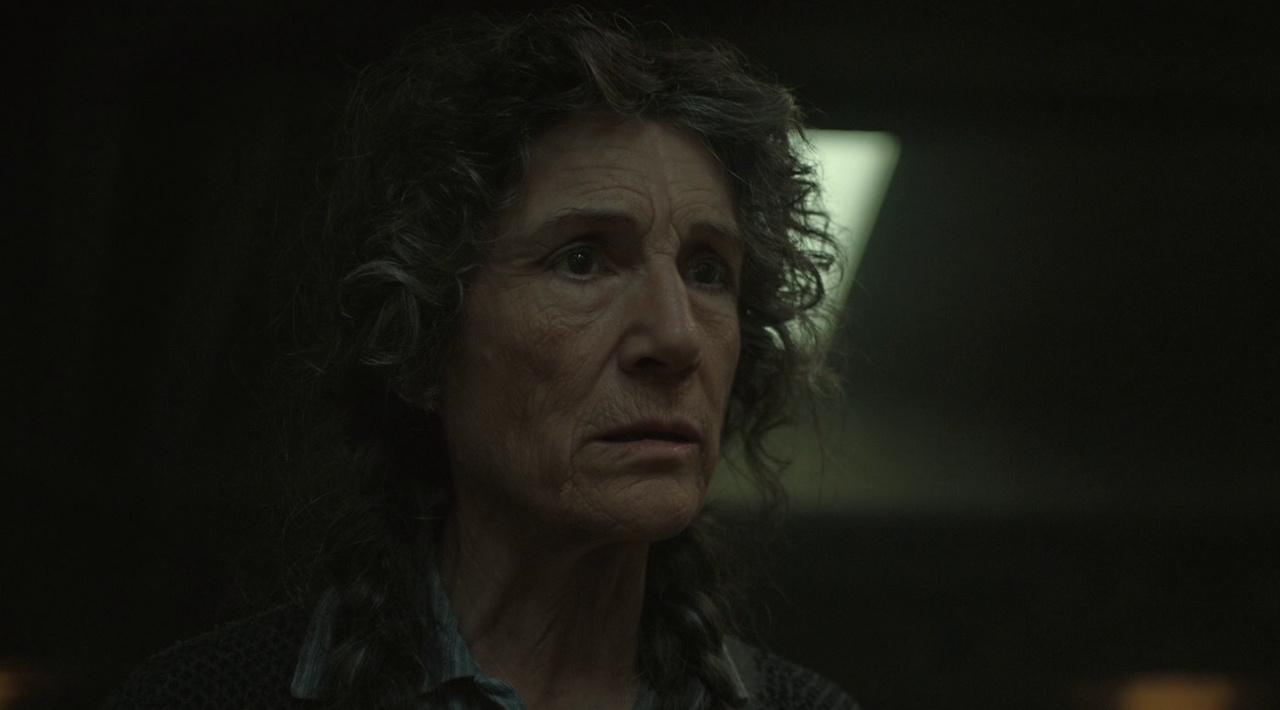
Still frame from Silo Season 2 (2024-25) showing a close-up of Walker.
Walker played double-agent in Season 2.

So Silo leaves us on a cliffhanger! What will happen to Juliette and Bernard – and will Juliette’s firefighter suit prove to be the difference in that burning decontamination chamber? What did the AI say to Lukas, and why did Bernard react by falling into such a depression? If Meadows was given the same information, why did she not communicate it to Bernard all those years ago? And what will become of the rebels – will some still try to break out, even after Juliette’s message?

Season 3 better hurry up and get here, that’s all I can say!

Seasons 3 and 4 are actually already in production; filming began in October, and both seasons will be produced back-to-back. I haven’t read the novel series that Silo is based on, but apparently there will be longer flashback sequences to the congressman and reporter we met in the Season 2 epilogue. I’m certainly curious to find out who they are and what their connection is to the silo.
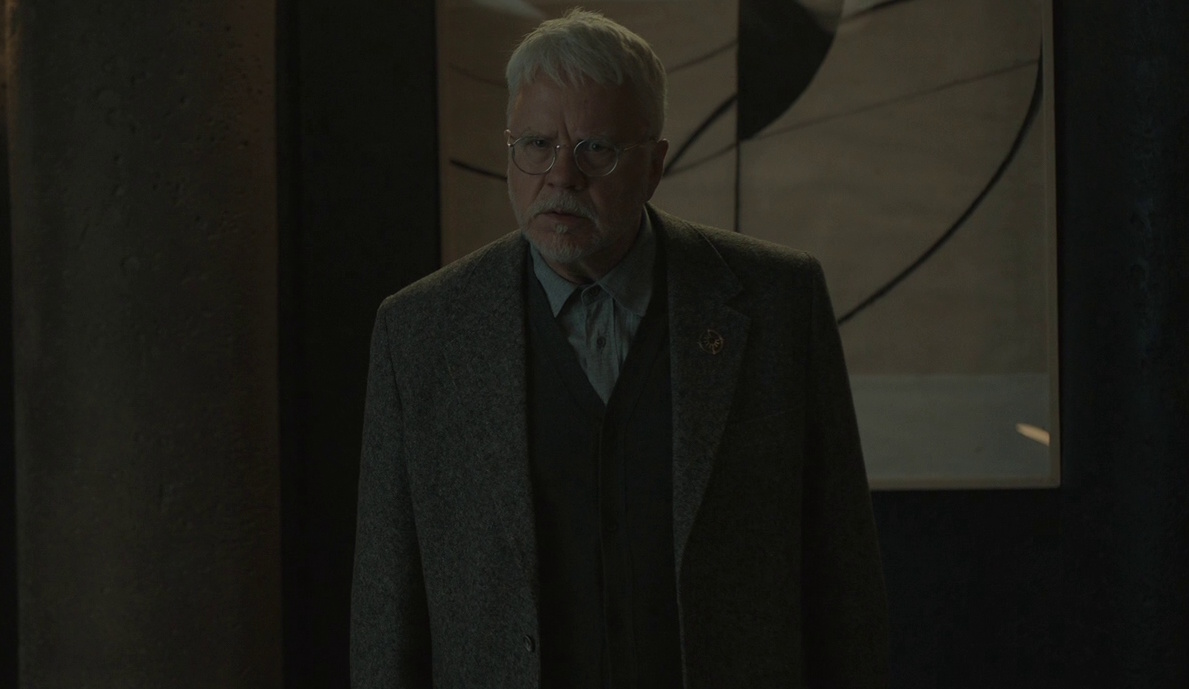
Still frame from Silo Season 2 (2024-25) showing Mayor Bernard Hollins.
What more does Bernard know?

I stand by what I said at the beginning: Silo’s second season had one incredibly strong and entertaining storyline… and one noticeably weaker one. I hope that Seasons 3 and 4 can do more with the second silo and the characters we met there; it might re-frame my thoughts on the way they were introduced and their arcs this time. However… part of me also hopes that, now Juliette is back, there won’t be a need to revisit these less-interesting characters or waste as much time on them going forward.

Silo continues to be mysterious, and I really can’t predict what’s gonna happen next. Bernard hinted at knowing more – he claims to know who is responsible for building the silo, but not why. And whatever Lukas told him in the final episode seems to have utterly destroyed his faith in the project – so what could that mean for the world outside? Is the entire world toxic, or – as Solo and Juliette seemed to be on the verge of discovering – is something within the silo itself poisoning the air in its immediate vicinity, trapping people inside? If so… why? What purpose could that serve? The fact that I have so many questions that I want answered is, quite frankly, an indication of how invested in the story I am and how much of a good time I’m having!
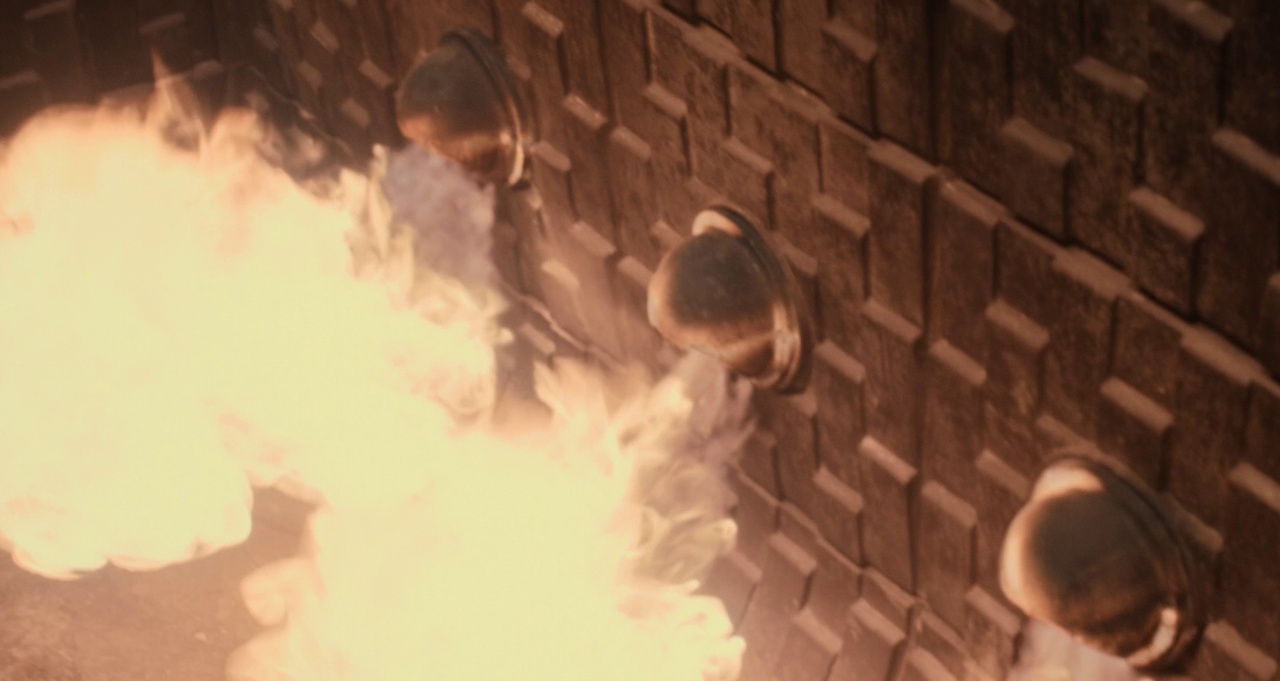
Still frame from Silo Season 2 (2024-25) showing jets of fire.
Season 2 ended on a firey cliffhanger!

So that was Silo Season 2.

I really can’t wait to find out what’s coming next – and I hope we’ll see Season 3 within the next twelve months or so. Some made-for-streaming shows take a long time in between seasons, but with production on the next chapter of Silo already well underway, I think there’s hope that we might see it at the tail end of 2025 or early in 2026. I’ll be keeping my fingers crossed, anyway.

When Season 3 premieres, I’ll do my best to review it here on the website – so I hope you’ll stay tuned for that. Silo was my favourite TV series of 2023… will its second season repeat that feat this year? There’s still a long way to go and a lot of exciting TV coming our way, but if you swing by in late December, you’ll find out.


Silo Seasons 1 and 2 are available to stream now on Apple TV+. Silo is the copyright of Apple Studios, AMC, and Apple TV+. This review contains the thoughts and opinions of one person only and is not intended to cause any offence.

End-of-Year Awards 2021

Spoiler Warning: Minor spoilers may be present for some of the entries on this list.

It’s the end of 2021, so it’s time to look back on a few of the entertainment highs (and lows) of the year! Like I did last year, I’ve picked out a few of my favourite entertainment experiences from the worlds of cinema, gaming, and television, and I’ll be giving each a totally official Trekking with Dennis award!

Most categories have a winner and a runner-up; some just have one title and in those cases they’re the winners by default. I’ve put Star Trek episodes into their own category, otherwise I’d just be saying that every TV show that I liked this year was Star Trek!

Caveat time! Obviously I haven’t watched or played anywhere close to everything that was published or released this year! The exclusion from these awards of titles such as The Last Duel or For All Mankind doesn’t mean they aren’t good; I just have no experience with them so I can’t comment. It goes without saying that everything here is entirely subjective! This is just one person’s opinion – so feel free to disagree vehemently with some or all of my choices!

With that out of the way, let’s get started!

Best Documentary:

🏆 Winner 🏆
Half-Life Histories series; Kyle Hill

There have been some interesting documentaries this year, but I wanted to highlight a semi-professional series that has been quietly ticking up views on YouTube. Kyle Hill has crafted a series of absolutely fascinating documentaries about nuclear power, nuclear weapons, and nuclear accidents – some of which were familiar to me, but several of which actually weren’t.

Nuclear weapons are an incredibly controversial topic, of course, but nuclear power is something I firmly believe that we as a species need to embrace. At least in the short-to-medium term, nuclear power offers a reliable way for humanity to meet our growing power needs while phasing out fossil fuels.

Kyle Hill’s documentaries show how early nuclear experiments could and did go wrong, but they aren’t alarmist. Hill has a gentle, almost understated style that tells these serious (and occasionally fatal) stories with due dignity and gravitas, but without sensationalising the events in question. For anyone interested in the likes of the Chernobyl disaster or the early history of nuclear weapons and nuclear power, the entire series is well worth a watch.

Best Web Series:

🥈 Runner-Up 🥈
The Jimquisition; Jim Sterling

I’d like to highlight a fellow non-binary creator here. Jim Sterling – also known as James Stephanie Sterling – is a video games critic on YouTube. Their main weekly series, The Jimquisition, often highlights bad practices in the games industry and draws attention to misbehaving corporations. The Jimquisition was one of the first shows to criticise the practice of lootboxes a few years ago, for example, and this year Sterling has worked relentlessly to call out the likes of Ubisoft and Activision Blizzard.

Too many publications – even blogs and social media channels – now work hand-in-glove with big corporations in the video games industry, leading many so-called independent publications to, at the very least, be cautious in what they say about both their corporate friends and the games they review so as to maintain their level of access. The Jimquisition has always been different because it’s self-funded, leaving Sterling free to criticise as they see fit.

On a personal note, seeing Jim Sterling come out as non-binary was one factor among many as I made my own decision earlier this year to discuss my gender identity in public for the first time, and I want to thank them for their brave decision.

🏆 Winner 🏆
Tasting History with Max Miller

There really isn’t anything quite like Tasting History. There are a plethora of cooking shows and channels online – many of which are fantastic! And there are some great history shows as well, everything from mini-documentaries to living history re-enactments. Tasting History blends these two things together, as host Max Miller cooks a variety of different historical dishes, and uses those as an entry point to talk about some of the historical events and personalities associated with the food.

I love history and I love cookery shows, so Tasting History is absolutely the kind of thing that was going to appeal to me! But a fun premise alone wouldn’t be enough, and Tasting History has a well-spoken host who makes both sides of the show entertaining as well as interesting. I’ve learned a lot about different dishes and historical cultures this year, things I never would have found out about if not for Tasting History.

Best TV Special:

🥈 Runner-Up 🥈
Lego Star Wars: Terrifying Tales

After 2020’s Lego Star Wars Holiday Special had been a ton of fun, I was pleasantly surprised to see Disney+ bringing back Lego Star Wars for another outing this year. Terrifying Tales was a fun Halloween special, one which drew on many classics of the thriller and horror genres for inspiration while maintaining a child-friendly atmosphere. I’m not a huge fan of horror, so this lighter tone was just perfect for me!

Focusing on Poe Dameron, Terrifying Tales used a frame narrative to tell three different spooky stories set in all three of the Star Wars franchise’s main eras. The first short, which focused on Kylo Ren, contained more backstory for the character than the entire sequel trilogy – and I would argue that it was actually better than the minuscule character development that Kylo/Ben Solo got in the films!

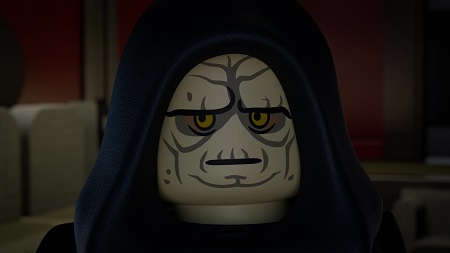
Palpatine was hilarious in the vignette that featured him, and I adored the way that Terrifying Tales used the character. The third and final vignette was a parody of a Twilight Zone episode and featured Luke Skywalker, and that was pretty fun to see as well. Overall, Terrifying Tales was a cute, funny, and lightly spooky way to get ready for Halloween!

🏆 Winner 🏆
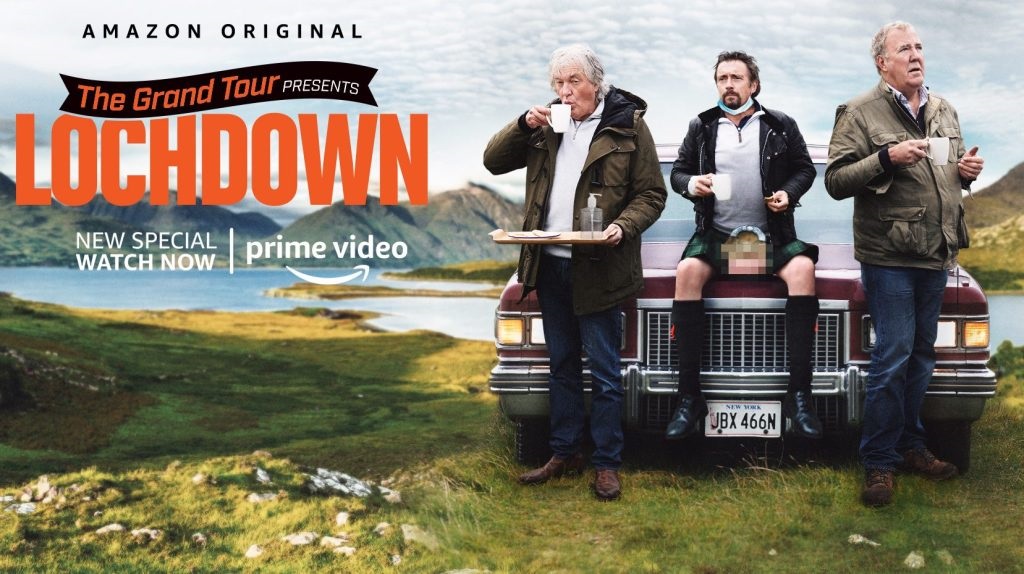
The Grand Tour: Lochdown

As we approach the pandemic’s second anniversary, we need things like Lochdown to poke fun at what’s been going on in the world. In a unique way that only Hammond, Clarkson, and May can really pull off, The Grand Tour’s special episode made a trip to Scotland one of the funniest and most entertaining bits of television I enjoyed all year.

The trio have found great success at Amazon, and free from the constraints of the BBC (both financially and in terms of content), I’d argue that The Grand Tour is leaps and bounds ahead of Top Gear. As the show has switched its focus to these kinds of special episodes, there’s been a lot of fun to be had!

I’m not really a car person. Cars have always been a means to an end for me; a mode of transportation. But the enthusiasm of the three hosts for their vehicles is infectious, and the fun they have on their wacky adventures always manages to succeed at pulling me in and making me feel like I’m right there with them.

Worst TV Series:

🏆 “Winner” 🏆
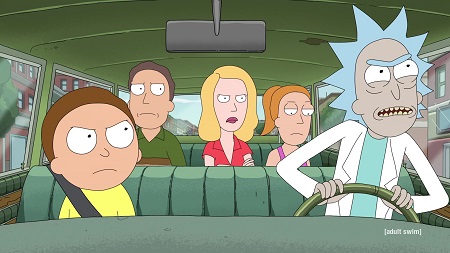
Rick and Morty Season 5

After four pretty strong and funny seasons, Rick and Morty stumbled this year. It felt to me like the writers had become a little too aware of the show’s success and place in pop culture – and didn’t really know how to handle that. Season 5 was bland and forgettable, with several episodes that didn’t even win a smile, let alone a laugh.

Rick and Morty crossed over from being a fun series with a cult following and really hit the mainstream somewhere around its third season, and clearly that’s been a double-edged sword. Too many of the attempted jokes this year came across as either desperate or else simply as gross-outs or edginess for the sake of it.

Though the show had a few successful moments, such as the scenes between Rick and Birdperson toward the end of the season, Season 5 has to be considered a failure.

Best TV series:

🥈 Runner-Up 🥈
Foundation

The first season of Foundation was imperfect but nevertheless good. The novels upon which Foundation is based are incredibly dense works that can, at points, feel more like philosophy than sci-fi, so bringing something like that to the small screen was no small challenge – but Apple TV+ stepped up.

Jared Harris put in a wonderful performance as Hari Seldon, and was joined by several actors with whom I was less familiar – but who all did an outstanding job. Foundation is also a visually beautiful series, one which makes great use of Apple’s high CGI budget. A second season has already been confirmed – so that’s something to look forward to in 2022!

🏆 Winner 🏆
The Wheel of Time

The Wheel of Time was the first of Amazon’s two big-budget fantasy shows to make it to screen. We’ll have to wait until next year for the corporation’s Lord of the Rings prequel/adaptation, but The Wheel of Time is definitely a show worth watching in its own right. It has struggled, at times, to break out from the shadows of both Game of Thrones and the aforementioned Tolkien adaptation, but I’m so glad that I gave it a chance to impress me on its own merits.

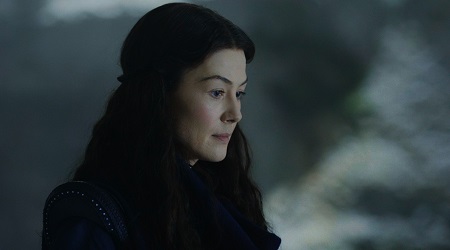
Outside of the Star Trek franchise, The Wheel of Time is unquestionably the best television show I’ve seen all year. Amazon managed to adapt the first part of a long and complex story in a way that was understandable and easy to follow, bringing a new high fantasy world to the screen for the first time. There are some fantastic performances from Rosamund Pike and Madeleine Madden in particular, making The Wheel of Time a series to get lost in.

The first season concluded recently, and a second is already on the way! I can hardly wait.

Worst Video Game:

🏆 “Winner” 🏆
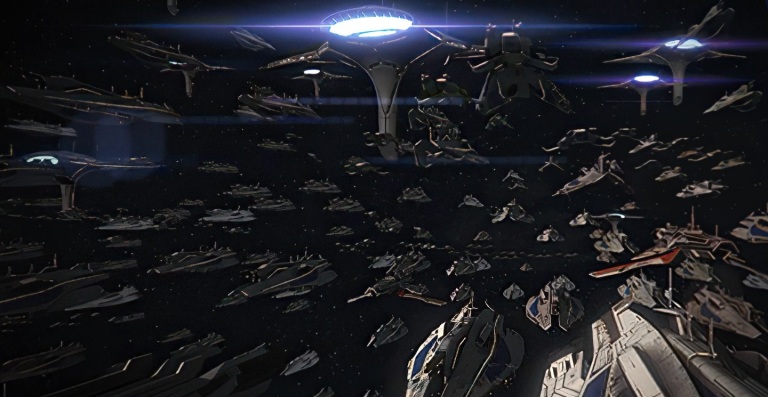
Mass Effect: Legendary Edition

This is a difficult one. There were plenty of bad games this year – games with horribly intrusive monetisation, overladen with bugs, or that just plain sucked. But for me, the year’s most egregious video game failure is a so-called “remaster” that was lazy, that didn’t feel like much of an upgrade, and that left me incredibly disappointed when I consider what might have been.

Mass Effect: Legendary Edition contains a number of bugs that were present in the original versions of its three constituent games; bugs that BioWare failed to fix. Its visual upgrade, coming less than ten years after the third game in the series, was already going to be a hard sell, but there seem to be many textures that BioWare either didn’t touch at all or else did the absolute bare minimum to.

And that’s Mass Effect: Legendary Edition in a nutshell: it’s a “remaster” that tried to get away with doing the absolute bare minimum. The sad thing is that I adore the Mass Effect games – but this version was so much less than it should’ve been.

Best Video Game:

🥈 Runner-Up 🥈
Road 96

Road 96 is quite unlike anything else I’ve played all year – and probably for quite a long time before that too! The game focuses on characters, introducing players to dozens of completely unique NPCs during a branching quest to escape a totalitarian state. It’s a road trip game… but that definition scarcely does it justice.

Road 96 has a beautiful art style, too, one that really brings to life its characters and American Southwest-inspired locales. There’s a wonderful soundtrack that accompanies the game, one with a definite ’80s inspiration – which I’m totally there for! It’s hard to go into too much detail without spoiling Road 96, and it’s an experience I really think you should try for yourself in as unspoiled a manner as possible.

🏆 Winner 🏆
Kena: Bridge of Spirits

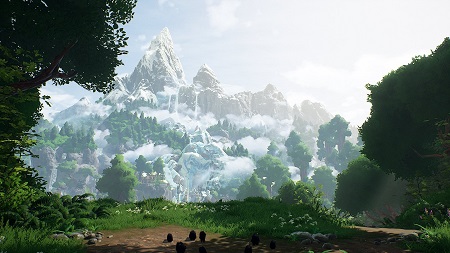
When I was thinking about my pick for “game of the year,” there was never any doubt in my mind that Kena: Bridge of Spirits would take the trophy. It’s one of the most visually beautiful games that I’ve ever played, bringing an almost Disney-esque art style to life in the most fantastic way possible.

Kena: Bridge of Spirits is a modern-looking game with a distinctly old-school feel to it. The game combines elements of puzzle-solving and 3D platforming with some tight, focused combat, and the addition of the Rot – little critters that accompany Kena – is both adorable and incredibly useful. Collecting things in video games can feel like busywork, but because Kena’s power grows with every Rot she picks up, even this aspect of the game manages to feel worthwhile.

Kena: Bridge of Spirits had been one of my most-anticipated games of the year. It didn’t just meet my expectations – it surpassed them by a country mile.

Worst Film:

🏆 “Winner” 🏆
Zack Snyder’s Justice League

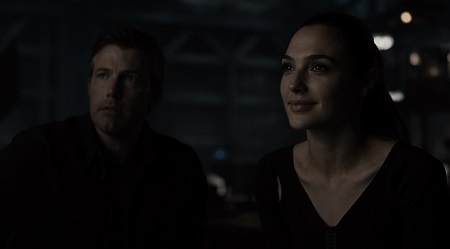
Zack Snyder’s Justice League is a film that tried to be dark and edgy and in doing so ended up robbing its source material of any of the fun and entertainment value it could’ve had. DC Comics has struggled to compete with Marvel, failing to recognise that it’s Marvel’s blend of humour and action that makes those films so appealing to many viewers. Zack Snyder’s Justice League is a case in point – and a great example, in my opinion, of a film that completely misses the mark.

Perhaps to distinguish it from the likes of The Avengers, Zack Snyder’s Justice League was packed with gimmicks, too. An incredibly dark and boring colour palette drowned the film in grey, black, and brown tones, and some scenes were so poorly-lit that following the action became difficult. It was also shot in a weird 4:3 aspect ratio – again, seemingly for the sake of a gimmick.

I’m genuinely happy for fans of DC who worked hard to secure the so-called “Snyder Cut” after a long campaign. But the end result was, for me, the worst film I’ve seen all year. And this was a year where I watched Space Jam: A New Legacy.

Best Film:

🥈 Runner-Up 🥈
Raya and the Last Dragon

I paid a lot of money (by my standards, at least) to watch Raya and the Last Dragon on Disney+! Maybe I should’ve waited the extra couple of months, but I was genuinely interested to see the latest big Disney animated picture. The one surprise was the lack of any musical numbers, but despite that I had a good time with Raya and the Last Dragon.

Kelly Marie Tran put in an outstanding performance as the titular Raya, a young woman on a quest to restore the life of a dragon and reunite a fractured land loosely based on Southeast Asia. The film was dramatic and exciting, with a fun cast of characters. It’s also noteworthy that all of the main characters – heroes and villains – were women.

Now that it’s on Disney+ (and out on DVD and Blu-Ray) it’s definitely worth a watch.

🏆 Winner 🏆
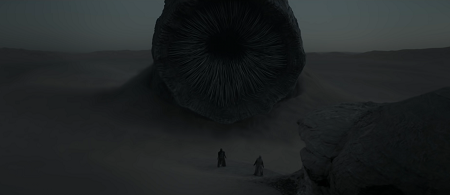
Dune

I was worried that Dune would once again prove to be too difficult to adapt, but I was thrilled to see that I was wrong! Dune is a sci-fi masterpiece, and if its second instalment comes anywhere close to living up to this first part, I think we’ll be talking about the duology alongside the likes of The Lord of the Rings in years to come as being an absolute classic.

Dune is a long and occasionally dense book, so condensing it down and keeping a cinematic adaptation with a large cast of characters easy to follow was no mean feat. Director Denis Villeneuve did an outstanding job, and every aspect of the film, from its dialogue to its visual effects, are pitch-perfect.

I’ve had a review of this one in the pipeline for a while, so stay tuned in the new year – I might finally get around to finishing it!

Most Exciting Announcement:

🥈 Runner-Up 🥈
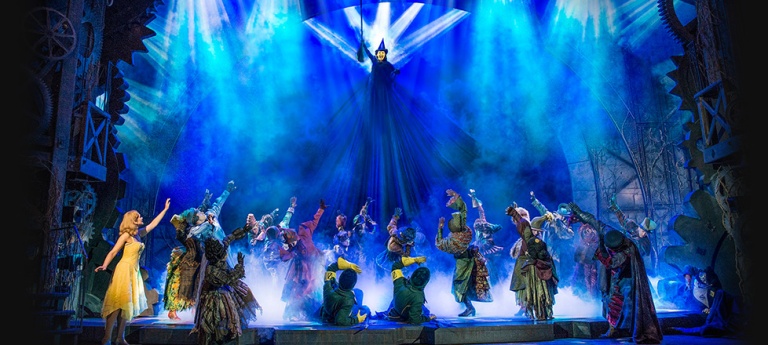
Wicked

Picture Credit: Wicked the Musical London.

I was very lucky to have seen Wicked on the stage in London early in its run, and the soundtrack has to be up there as one of the best modern musicals. The announcement of a film adaptation came as a truly welcome surprise this year, and I will follow its progress with anticipation!

A spin-off from The Wizard of Oz, Wicked purports to tell the story from “the other side” – i.e. the Wicked Witch’s point of view. Disney in particular has shown in recent years that this concept can work exceptionally well, and Wicked pulls it off. The musical and the book that inspired it are very different, but both are enjoyable in their own ways – and I hope the film will be as well!

🏆 Winner 🏆
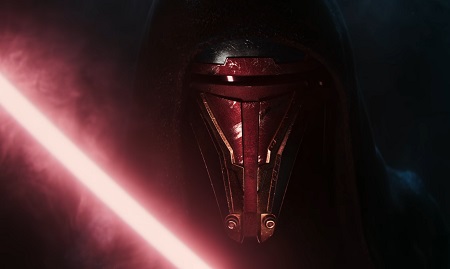
Star Wars: Knights of the Old Republic Remake

Early in 2021 there were rumours of a Knights of the Old Republic game being in development, but it wasn’t until September that its existence was finally confirmed. A full-scale remake of the first game in the series is being worked on, and the idea of being able to go back and replay one of my favourite Star Wars games of all time is a truly exciting one!

So far all we’ve seen has been a CGI teaser, so the game is probably a couple of years away. But it’s still good to have something like this to look forward to! After several years of very limited success under Electronic Arts, Star Wars games are now being tackled by more developers and publishers – meaning we should see more from the franchise in the years ahead. I’m keeping my fingers crossed for a remake of Knights of the Old Republic II after this one!

Best Star Trek Episode:

🥈 Runner-Up 🥈
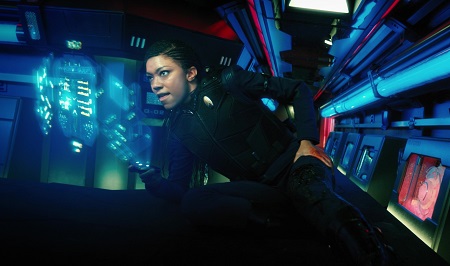
There Is A Tide…
Discovery Season 3

There Is A Tide is basically “Star Trek does Die Hard!” If that sounds like fun to you, then we are definitely on the same page! Featuring a desperate plan to re-take the USS Discovery following its capture by a villainous faction, Michael Burnham, Tilly, and several members of the bridge crew all get their chances to be action heroes.

It isn’t an entirely self-contained episode, as it brings to a head Starfleet’s conflict with the aforementioned villainous faction that had been running for much of the season, as well as containing other ongoing story threads. But it works well as a single episode, too, with an explosive and action-packed story that feels like it was lifted right out of an action blockbuster!

There Is A Tide is a great episode for Michael Burnham, but it’s also good for Admiral Vance as well. He truly seems to embody the values that Starfleet and the Federation have always held, and anyone who feels that Discovery has placed less of an emphasis on that should pay attention to Vance’s scenes in particular.

🏆 Winner 🏆
First First Contact
Lower Decks Season 2

First First Contact is an incredibly well-done episode of Lower Decks. The series’ trademark sense of humour is still present, but we see the entire crew of the USS Cerritos working hard to overcome an incredibly difficult challenge and save not only an ailing Starfleet ship but also an entire planet. The crew rise to the occasion as we always knew they could, and First First Contact hits all of the emotional highs you could ever want from an episode of Star Trek.

It’s also an episode that truly embraces the spirit of the franchise. The Cerritos’ crew aren’t faced with some horrible monster or alien to defeat, instead the puzzle that lies before them is scientific – and the solution to it has to be as well. All of the main and secondary characters get moments in the spotlight, and First First Contact even found time to further advance the relationship between Ensign Mariner and Captain Freeman.

Finally, there was an incredible moment of symmetry toward the end of the episode, as the Cerritos saved the day in a very similar fashion to how it had to be saved in the Season 1 finale. That moment was pitch-perfect – and I won’t lie… I teared up!

So that’s it!

We’ve dished out a handful of awards to some of the best – and worst – entertainment experiences of the year. 2021 is a difficult one to summarise. The ongoing disruption caused by the pandemic has been noticeable, with delays and even some cancellations getting in the way and spoiling the fun. But there were some fantastic projects across cinema, television, and video games too – including some brand-new titles that I feel have the potential to lead to ongoing franchises, or to be talked about a lot in future as classics of their various genres.

As 2022 approaches, I hope you’ll stay tuned for a lot more to come from Trekking with Dennis! In the days ahead I plan to look forward to some of the films, games, and television shows that we could enjoy throughout the coming year, so definitely stay tuned for that! And I have a number of reviews and other articles in the pipeline.

So the only thing left to do is to wish you a very Happy New Year! Whatever you have planned for tonight, I hope you have an amazing time. See you next year!

All titles listed above are the copyright of their respective owner, company, studio, broadcaster, developer, distributor, publisher, etc. This article contains the thoughts and opinions of one person only and is not intended to cause any offence.

Check out reviews or articles featuring some of the films, games, and TV shows mentioned on this list by clicking or tapping the links below:

Lego Star Wars: Terrifying Tales

Rick and Morty Season 5

The Wheel of Time

Mass Effect: Legendary Edition

Kena: Bridge of Spirits

Zack Snyder’s Justice League

Raya and the Last Dragon

Wicked

Knights of the Old Republic Remake

Discovery 3×12 There Is A Tide…

Lower Decks 2×10 First First Contact

How Sega and the Dreamcast offer a valuable lesson for streaming platforms

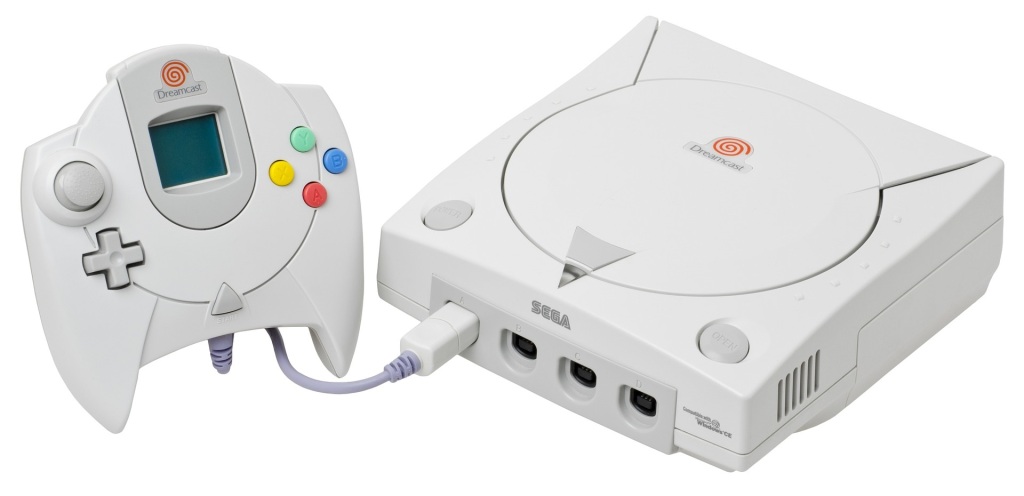
In 2001 I was bitterly disappointed by the failure of the Dreamcast – a console I’d only owned for about a year and had hoped would carry me through to the next generation of home consoles. For a variety of reasons that essentially boil down to mismanagement, worse-than-expected sales, and some pretty tough competition, Sega found itself on the verge of bankruptcy. The company responded not only by ending development on the Dreamcast, but by closing its hardware division altogether.

At the time, Sega seemed to be at the pinnacle of the games industry. For much of the 1990s, the company had been a dominant force in home video game consoles alongside Nintendo, and as the new millennium approached there were few outward signs of that changing. It was a massive shock to see Sega collapse in such spectacular fashion in 2001, not only to me but to millions of players and games industry watchers around the world.

The Sega Dreamcast failed in 2001.

Thinking about what happened from a business perspective, a demise like this was inevitable in the early 2000s. Both Sony and Microsoft were arriving in the home console market with powerful machines offering features like the ability to play DVDs – something that the Dreamcast couldn’t do – but at a fundamental level the market was simply overcrowded. There just wasn’t room for four competing home consoles. At least one was destined for the chopping block – and unfortunately for Sega, it was their machine that wouldn’t survive.

But the rapid demise of the Dreamcast wasn’t the end of Sega – not by a long shot. The company switched its focus from making hardware to simply making games, and over the next few years re-established itself with a new identity as a developer and publisher. In the twenty years since the Dreamcast failed, Sega has published a number of successful titles, snapped up several successful development studios – such as Creative Assembly, Relic Entertainment, and Amplitude Studios – and has even teamed up with old rival Nintendo on a number of occasions!

The end of the Dreamcast was not the end of Sega.

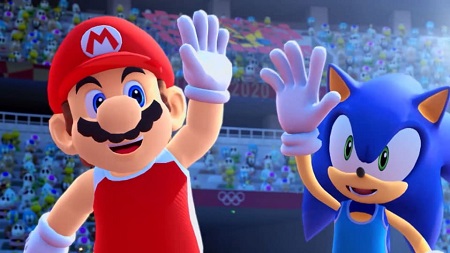
I can’t properly express how profoundly odd it was to first see Super Mario and Sega’s mascot Sonic the Hedgehog together in the same game! The old rivalry from the ’90s would’ve made something like that impossible – yet it became possible because Sega recognised its limitations and changed its way of doing business. The board abandoned a longstanding business model because it was leading the company to ruin, and even though it does feel strange to see fan-favourite Sega characters crop up on the Nintendo Switch or even in PlayStation games, Sega’s willingness to change quite literally saved the company.

From a creative point of view, Sega’s move away from hardware opened up the company to many new possibilities. The company has been able to broaden its horizons, publishing different games on different systems, no longer bound to a single piece of hardware. Strategy games have been published for PC, party games on the Nintendo Wii and Switch, and a whole range of other titles on Xbox, PlayStation, handheld consoles, and even mobile. The company has been involved in the creation of a far broader range of titles than it ever had been before.

Sega’s mascot Sonic now regularly appears alongside old foe Super Mario.

So how does all of this relate to streaming?

We’re very much in the grip of the “streaming wars” right now. Big platforms like Netflix, Amazon Prime Video, and Disney+ are battling for subscribers’ cash, but there’s a whole second tier of streaming platforms fighting amongst themselves for a chance to break into the upper echelons of the market. The likes of HBO Max, Paramount+, Apple TV+, Peacock, BritBox, and even YouTube Premium are all engaged in this scrap.

But the streaming market in 2021 is very much like the video game console market was in 2001: overcrowded. Not all of these second-tier platforms will survive – indeed, it’s possible that none of them will. Many of the companies who own and manage these lower-level streaming platforms are unwilling to share too many details about them, but we can make some reasonable estimates based on what data is available, and it isn’t good news. Some of these streaming platforms have simply never been profitable, and their owners are being propped up by other sources of income, pumping money into a loss-making streaming platform in the hopes that it’ll become profitable at some nebulous future date.

There are a lot of streaming platforms in 2021.

To continue the analogy, the likes of Paramount+ are modern-day Dreamcasts in a market where Netflix, Amazon, and Disney+ are already the Nintendo, Xbox, and PlayStation. Breaking into the top tier of the streaming market realistically means one of the big three needs to be dethroned, and while that isn’t impossible, it doesn’t seem likely in the short-to-medium term at least.

Why did streaming appeal to viewers in the first place? That question is fundamental to understanding why launching a new platform is so incredibly difficult, and it’s one that too many corporate executives seem not to have considered. They make the incredibly basic mistake of assuming that streaming is a question of convenience; that folks wanted to watch shows on their own schedule rather than at a set time on a set channel. That isn’t what attracted most people to streaming.

Too many corporate leaders fundamentally misunderstand streaming.

Convenience has been available to viewers since the late 1970s. Betamax and VHS allowed folks to record television programmes and watch them later more than forty years ago, as well as to purchase films and even whole seasons of television shows to watch “on demand.” DVD box sets kicked this into a higher gear in the early-mid 2000s. Speaking for myself, I owned a number of episodes of Star Trek: The Next Generation on VHS in the 1990s, and later bought the entire series on DVD. I had more than enough DVDs by the mid-2000s that I’d never need to sign up for any streaming platform ever – I could watch a DVD every day of the year and never run out of different things to watch!

To get back on topic, what attracted people to streaming was the low cost. A cable or satellite subscription is easily four or five times the price of Netflix, so cutting the cord and going digital was a new way for many people to save money in the early 2010s. As more broadcasters and film studios began licensing their content to Netflix, the value of the deal got better and better, and the value of cable or satellite seemed ever worse in comparison.

Streaming isn’t about convenience – that’s been available for decades.
(Pictured: a 1975 Sony Betamax cabinet)

But in 2021, in order to watch even just a handful of the most popular television shows, people are once again being forced to spend cable or satellite-scale money. Just sticking to sci-fi and fantasy, three of the biggest shows in recent years have been The Mandalorian, The Expanse, and The Witcher. To watch all three shows, folks would need to sign up for three different streaming platforms – which would cost a total of £25.97 per month in the UK; approximately $36 in the United States.

The overabundance of streaming platforms is actually eroding the streaming platform model, making it unaffordable for far too many people. We have a great recent example of this: the mess last week which embroiled Star Trek: Discovery. When ViacomCBS cancelled their contract with Netflix, Discovery’s fourth season was to be unavailable outside of North America. Star Trek fans revolted, promising to boycott Paramount+ if and when the streaming platform arrived in their region. The damage done by the Discovery Season 4 debacle pushed many viewers back into the waiting arms of the only real competitor and the biggest danger to all streaming platforms: piracy.

Calls to boycott Paramount+ abounded in the wake of the Star Trek: Discovery Season 4 mess.

The streaming market does not exist in a vacuum, with platforms jostling for position solely against one another. It exists in a much bigger digital environment, one which includes piracy. It’s incredibly easy to either stream or download any television episode or any film, even with incredibly limited technological know-how, and that has always represented a major threat to the viability of streaming platforms. Though there are ethical concerns, such as the need for artists and creators to get paid for their creations, that isn’t the issue. You can shout at me until you’re blue in the face that people shouldn’t pirate a film or television show – and in the vast majority of cases I’ll agree wholeheartedly. The issue isn’t that people should or shouldn’t engage in piracy – the issue is that people are engaged in piracy, and there really isn’t a practical or viable method of stopping them – at least, no such method has been invented thus far.

As more and more streaming platforms try to make a go of it in an already-overcrowded market, more and more viewers are drifting back to piracy. 2020 was a bit of an outlier in some respects due to lockdowns, but it was also the biggest year on record for film and television piracy. 2021 may well eclipse 2020’s stats and prove to have been bigger still.

The overcrowded streaming market makes piracy look ever more appealing to many viewers.

Part of the driving force is that people are simply unwilling to sign up to a streaming platform to watch one or two shows. One of the original appeals of a service like Netflix was that there was a huge range of content all in one place – whether you wanted a documentary, an Oscar-winning film, or an obscure television show from the 1980s, Netflix had you covered. Now, more and more companies are pulling their content and trying to build their own platforms around that content – and many viewers either can’t or won’t pay for it.

Some companies are trying to push streaming platforms that aren’t commercially viable and will never be commercially viable. Those companies need to take a look at Sega and the Dreamcast, and instead of trying to chase the Netflix model ten years too late and with far too little original content, follow the Sega model instead. Drop the hardware and focus on the software – or in this case, drop the platform and focus on making shows.

Some streaming platforms will not survive – and their corporate owners would be well-advised to realise that sooner rather than later.

The Star Trek franchise offers an interesting example of how this can work. Star Trek: Discovery was originally available on Netflix outside of the United States. But Star Trek: Picard and Star Trek: Lower Decks went to Amazon Prime Video instead – showing how this model of creating a television show and selling it either to the highest bidder or to whichever platform seems like the best fit for the genre can and does work.

Moves like this feel inevitable for several of these second-tier streaming platforms. There’s a hard ceiling on the amount of money folks are willing to spend, so unless streaming platforms can find a way to cut costs and become more competitively priced, the only possible outcome by the end of the “streaming wars” will be the permanent closure of several of these platforms. Companies running these platforms should consider other options, because blindly chasing the streaming model will lead to financial ruin. Sega had the foresight in 2001 to jump out of an overcrowded market and abandon a failing business model. In the two decades since the company has refocused its efforts and found renewed success. This represents a great model for streaming platforms to follow.

All films, television series, and video games mentioned above are the copyright of their respective owner, studio, developer, broadcaster, publisher, distributor, etc. This article contains the thoughts and opinions of one person only and is not intended to cause any offence.
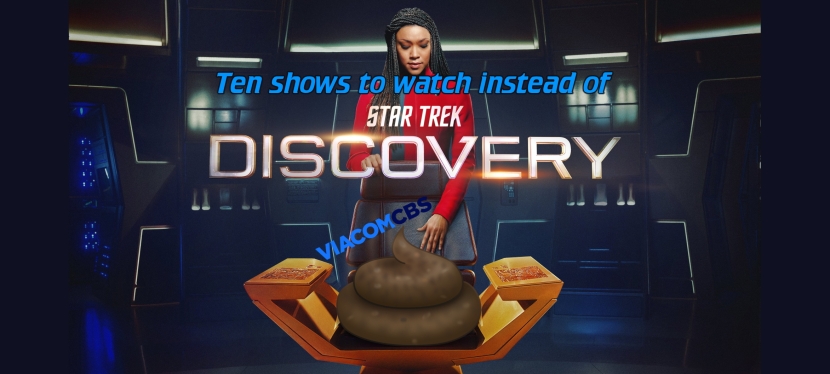
Ten shows to watch instead of Star Trek: Discovery Season 4

Spoiler Warning: There may be minor spoilers for some of the shows on this list.

The person who coined the phrase “there’s no such thing as bad publicity” evidently never met the marketing team at ViacomCBS. The Star Trek: Discovery clusterfuck continues to damage the company, the Star Trek brand, Paramount+, and everything else it touches, with Discovery’s fourth season now being soiled, stinking of shit even for those fans in North America who’ve been able to sit down and watch it.

Whether you’re pirating Discovery Season 4 or not – and honestly, you’re 100% morally justified in doing so if you choose to – I thought that today we should consider some alternatives. Maybe you’ve decided not to pirate the series, or to wait and see how things go. Or maybe you’re still so darn mad at Discovery that watching it wouldn’t feel appropriate right now. So let’s take a brief look at ten television shows that you could watch instead. I’ll try to keep spoilers to a minimum!

Oh, and if you’ve tuned in looking for my weekly Discovery Season 4 reviews or theories, I’ve made the reluctant decision to put those on hold for the time being due to what’s happened.

Number 1: The Wheel of Time

Promotional image for The Wheel of Time.
The Wheel of Time premieres today, so I can’t claim to have watched it for myself at time of writing! But Amazon has invested heavily in this fantasy epic, one which is based on a long-running series of novels by Robert Jordan and Brandon Sanderson. It’s been a long time since I read any of the books (and I didn’t come close to finishing the set) but from what I remember, The Wheel of Time has a complex story full of magic, wonder, and nuanced characters.

Several big-budget fantasy shows were commissioned in the aftermath of the success of Game of Thrones, and initial reviews of The Wheel of Time sound promising. I’ve been looking forward to watching the show all year, and it’s finally here! The first three episodes are being made available at the same time as a kind of extended premiere, with the remainder of Season 1 following on a weekly basis. This could be a great replacement for Discovery between now and Christmas.

Number 2: Foundation

Jared Harris and Lou Llobel star in Foundation.

One of Apple TV+’s first big-budget shows, Foundation has been interesting to follow across its first season. Is it perfect? No, but for an adaptation of a very dense series of books that I would’ve considered borderline unfilmable, I think the series makes a creditable effort to bring the story to screen.

Foundation stars Jared Harris in a key role, and he’s an absolutely fantastic actor who brings a lot to the series. At time of writing there’s one episode left in Season 1, and a second season has already been confirmed for next year.

Number 3: The Expanse

Several of The Expanse’s main cast aboard the Rocinante.

The Expanse is one of the finest science fiction TV shows I’ve ever seen outside of the Star Trek franchise. Its world-building is absolutely fantastic, showing us a look at a near-future where Mars and parts of the asteroid belt have been colonised, but where faster-than-light travel and many other common sci-fi technologies don’t yet exist.

Originally debuting on the SyFy network, The Expanse was later picked up by Amazon following a fan campaign. There are five seasons already, with a sixth and final season scheduled to premiere next month – so you’ve got time to binge the show and get caught up!

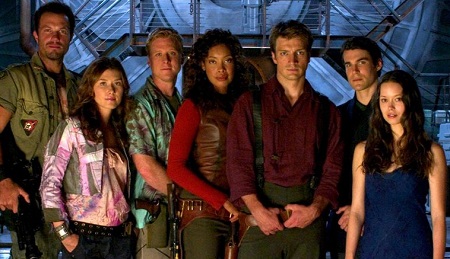
Number 4: Firefly (and Serenity)

The main cast of Firefly.

The big caveat with Firefly has to be that the show was never given a chance to live up to its full potential, being cancelled after just one season. But the feature film Serenity brought the cast back and provided the story with closure (of a sort) so it’s absolutely worth watching if you haven’t seen it already.

Firefly brought to screen a uniquely western-themed sci-fi universe that felt truly real and lived-in in a way few franchises manage to do. It’s positively criminal that one season and one film are all we ever got – but what a fantastic season it was!

Number 5: Fortitude

Several members of the Fortitude Season 1 cast.

We’re returning to Earth for this entry on the list! I thought I knew what to expect from Fortitude when I sat down to watch the show. It’s set in a small town in the Norwegian arctic, and I was expecting it to be a fairly standard crime drama. But the show took a series of turns, going from crime to mystery to thriller and even touching on horror and science fiction.

It’s hard to explain Fortitude without spoiling it – and I would say that some of its storylines go a bit wild toward the end. But if you get stuck into it, as I did, you’ll have an amazing time.

Number 6: Star Trek: Picard

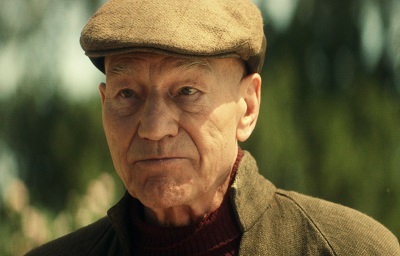
Sir Patrick Stewart reprised his famous role last year.

Chances are if you’re reading this you’re a Trekkie and you’ve already seen Picard Season 1. And I would absolutely understand if the Discovery debacle has soured you on Star Trek at the moment. But whether you missed Season 1 or just haven’t seen it since it was broadcast in early 2020, it’s a fine drama series worth going back to.

Remembrance, the season premiere, is one of the finest episodes of Star Trek – and one of the finest episodes of television in general – that I’ve ever seen. The season’s story builds slowly to a conclusion that was, unfortunately, more than a little rushed, but if you can look past the imperfections present at the story’s end, Picard Season 1 is a fun Star Trek adventure.

Number 7: The Mandalorian

Mandy the Mandalorian.

I have to confess that I’m not wild about The Mandalorian. It’s okay – and it contains some great action set-pieces and moments of drama. But my disappointment stems from the fact that the show’s promised “different look” at the Star Wars galaxy kind of fell by the wayside due to the inclusion of too many elements from the films.

Despite that, The Mandalorian has some great moments, and is well worth watching for any Star Wars fan. Two seasons have been put to screen thus far, though I’d argue that their short runtime and serialised story means you only really get one full season’s worth of content. Two spin-offs and a third season are coming next year, so if you’re not caught up on Star Wars yet, now could be a good moment!

Number 8: The Falcon and the Winter Soldier

The titular duo.

I’m not the world’s biggest Marvel fan, but this miniseries on Disney+ was less about superheroes and was more of an action-adventure romp with the titular characters. There were callbacks to a lot of previous entries in the Marvel Cinematic Universe, but even as someone who doesn’t follow the MCU religiously I found the series approachable.

The Falcon and the Winter Soldier tells a largely self-contained story, and it was one that aimed to be uplifting as well as entertaining. I published a review of the miniseries a few months ago, and you can find it by clicking or tapping here – but beware of spoilers!

Number 9: Chernobyl

“Not great, not terrible” would be a bad way to describe 2019’s Chernobyl.

Chernobyl was a sensation when it was first broadcast in 2019, and for good reason. The miniseries, which documents the 1986 Chernobyl nuclear disaster, is one of the finest ever put to screen. This is a story you’re probably at least vaguely familiar with, but Chernobyl goes into detail, looking at the disaster from all angles.

I find it hard to say anything negative about Chernobyl at all; as both a work of drama and a serious historical piece it’s perfect. It even contains a great scene explaining the basics of how a nuclear reactor works!

Number 10: The Center Seat

Logo for The Center Seat.

The History Channel is currently a couple of episodes into its documentary all about the Star Trek franchise. There will be eight more episodes over the coming weeks, documenting the history of Star Trek from the production side going all the way back to Gene Roddenberry’s initial pitch for the series in the early 1960s.

I love a good documentary, and as the Star Trek franchise celebrates its fifty-fifth year, why not take a look back? As Trekkies we should aim to be knowledgeable about the production of the franchise we love, and The Center Seat aims to present its history in an easily understood form.

So that’s it. Ten shows to watch instead of Star Trek: Discovery Season 4.

I think a lot of Trekkies feel the way Book’s feeling right now.

Those are words that I never thought I’d have to write. Discovery’s fourth season had been my most-anticipated television show of 2021, and even now that we’re a couple of days out from the news that we wouldn’t be getting the series, the sense of disappointment and anger with the corporate morons in charge of ViacomCBS remains. But I hope, after a couple of days of outright negativity, this list has been a bit of a break.

Each of the shows above are absolutely fantastic in their own ways, and while it’s true that nothing can fully replace Star Trek: Discovery for a big fan of the series, hopefully you’ve found a few ideas to at least take your mind off things. Social media has been reflecting the outrage directed at ViacomCBS over the past couple of days, and while there’s nothing wrong at all with registering your disgust with the way that the corporation has behaved, please keep in mind that the actors, directors, and other behind-the-camera crew had nothing to do with this decision. In many ways, it harms them too because it’s tainted their hard work and left even North American Trekkies feeling upset and angry. Negativity and division within the Star Trek fandom is never a good thing. It’s such a shame ViacomCBS chose to inflict it upon us on this occasion.

All television series mentioned above are the copyright of their respective owner, network, broadcaster, streaming platform, etc. This article contains the thoughts and opinions of one person only and is not intended to cause any offence.