

The first part of this review is free from story spoilers for inKonbini: One Store, Many Stories. The end of the spoiler-free section is clearly marked.
Have you ever played a game that you didn’t want to complete, not because you didn’t like it… but because you were enjoying it so much? That was my experience with inKonbini: One Store, Many Stories. The gameplay was so relaxing that it was almost soothing, the story was low-stakes but still relatable, there were some fun characters to meet and engage with, the setting and music were beautiful, and – to coin a phrase – the vibes were just immaculate.
This is, for me, a “Game of the Year” contender, without a doubt.
I was a huge fan of Shenmue and Shenmue II back in the Dreamcast days (click or tap here for more on that, if you’re interested!) and I find it really sweet that games like inKonbini are still drawing inspiration from that genre-redefining saga all these years later. Even the name of inKonbini’s development studio – Nagai Industries – is a reference to the similarly-named organisation in the first Shenmue, and Shenmue’s creator, Yu Suzuki, is thanked in the end credits.
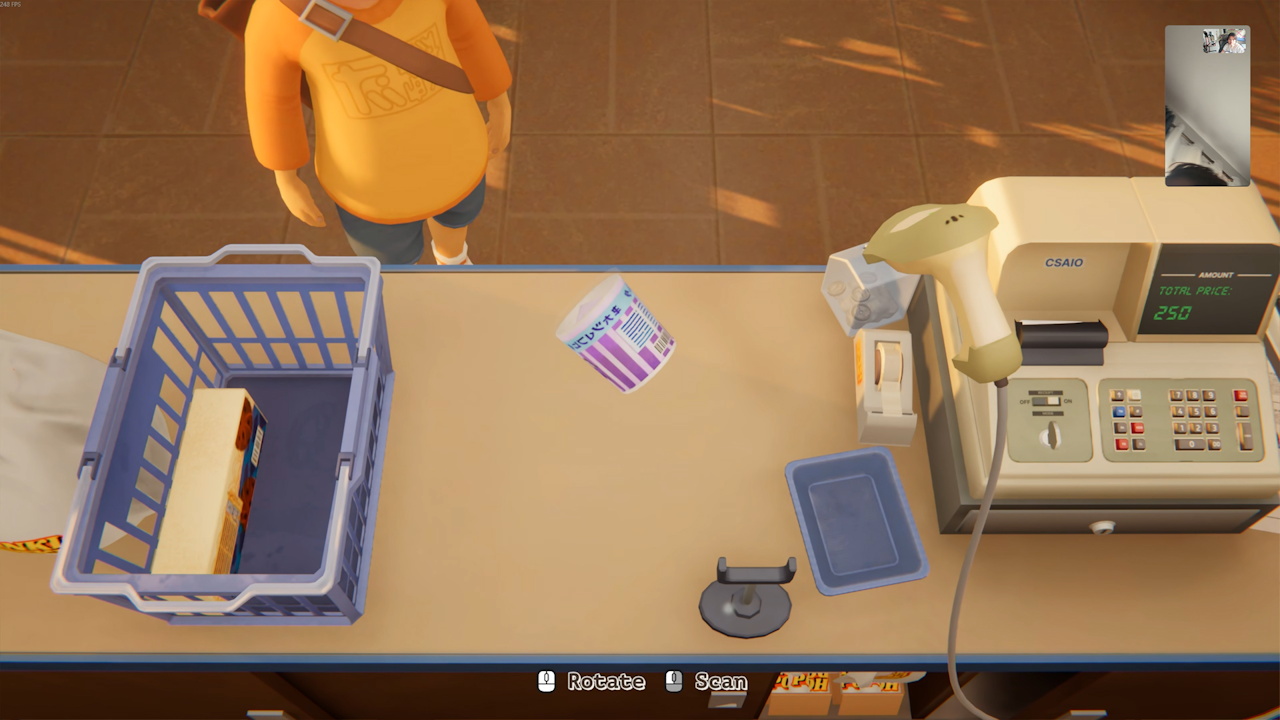
However, there is a little bit of a controversy surrounding inKonbini – and it’s one I didn’t notice at first. Long story short, if you don’t speak/read Japanese, you probably didn’t notice that many of the in-game items and products use characters *inspired by* Japanese hiragana, katakana, and kanji… but which aren’t *real* Japanese text. As someone who doesn’t know Japanese, I didn’t notice this at first, but when it was pointed out by someone elsewhere online… I found that I couldn’t *not* notice it, if that makes sense.
And… well, I don’t know why this happened. Perhaps it’s simply the case that the developers – who seem to be based in Japan, but none of whom have Japanese names – may not be fluent Japanese speakers? Or maybe visual artists hired to work on the game (Nagai Industries seems to employ several remote workers) weren’t familiar with the Japanese language well enough to use it convincingly, so the decision was taken to use “fake Japanese characters” that look good enough to a casual western eye? The developers have sworn, on the record, that no generative A.I. was used in the making of inKonbini… which isn’t something I’m personally bothered about either way, but I know that matters a lot to some folks.
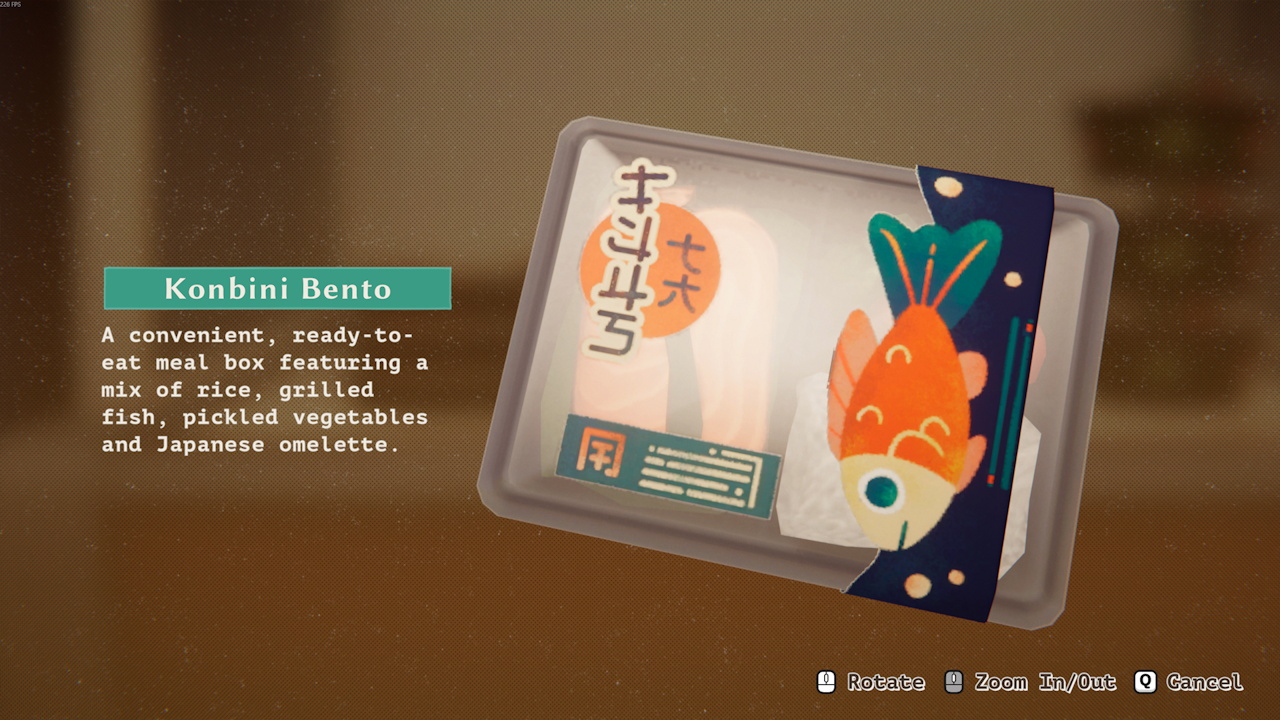
However… it strikes me as odd, at the very least, that a game explicitly set in Japan, with Japanese people who have Japanese names, would have all of these art assets, products, in-game images, and more… that all use fake, nonsense characters that might look superficially “Japanese” to a non-speaker, but aren’t.
I don’t know if that kind of thing matters to you, but for me… I think there’s something to be said for authenticity. And as I said a moment ago, I don’t really know *why* a developer would choose to do something like this when the products in the shop are such a large part of the game. You can make the case for artists choosing a deliberate style, or that these designs evoke a kind of ’90s Japanese aesthetic without needing to be actual, intelligible Japanese. And that’s fine, it’s fair enough. But it is, if nothing else, strange to me that a game so heavily influenced by Japan, developed by at least some folks who live and work in Japan, wouldn’t use real Japanese text for its in-game images and models. Nagai Industries hasn’t explained this, as far as I can find out – all they’ve done is deny that they used A.I. tools to generate any of the imagery used in-game.
Alright, we’ll set that aside for now. I think it’s more of a mystery than anything outright negative, and unless you’re fluent in Japanese, chances are it isn’t something you’d notice on a standard playthrough. But I think it’s worth being aware of, at any rate.
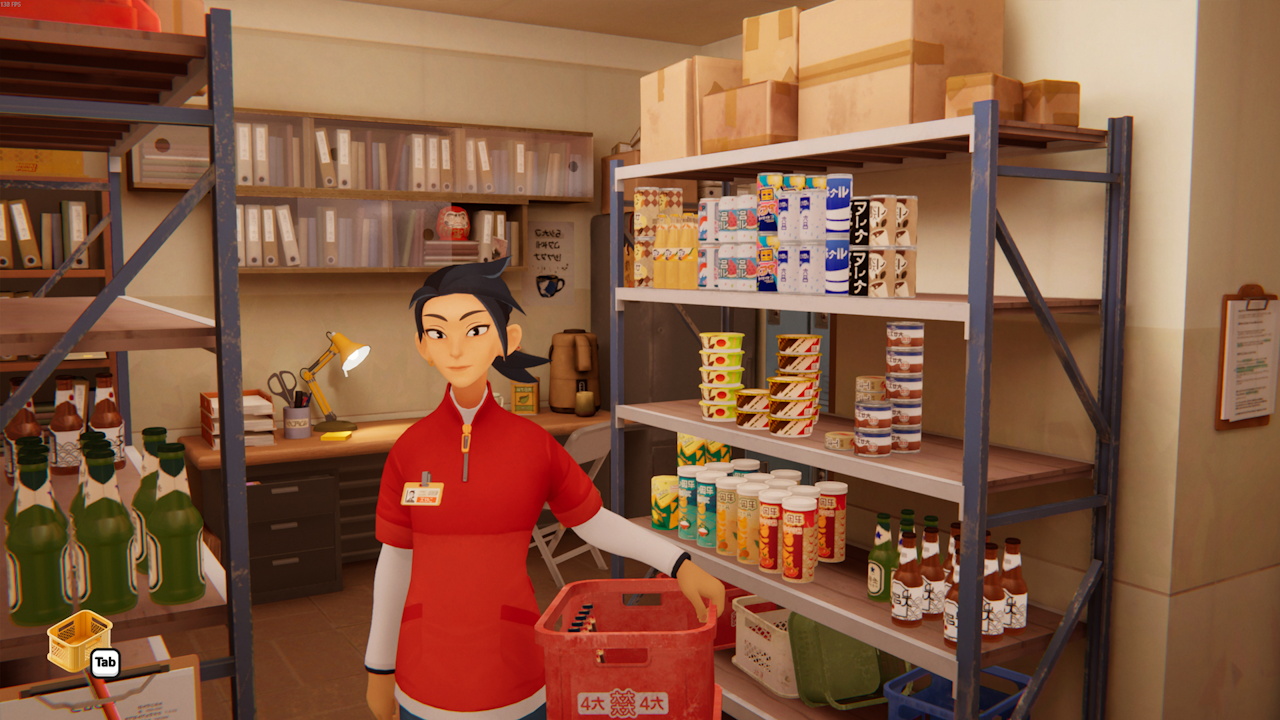
inKonbini is a slow-paced game without massive, earth-shattering stakes. There are no boss battles – actually, there’s no combat of any kind – and you’ll spend your time in-game performing a variety of small tasks around a Japanese convenience store and interacting with the customers. However, inKonbini is not open-ended; there’s a distinct story that you’ll follow over the course of five in-game shifts. The tasks are different on each shift, as are the customers you’ll encounter, and I found there was a really cozy, relaxed vibe to the game – or at least there was about 95% of the time!
My playthrough took about six hours, which I spread out over several sessions because I really didn’t want to rush it! For that length, I felt inKonbini was more than fair with its price point, and I certainly got plenty of enjoyment out of the game the whole way through. Some moments, as we’ll get into if you stick with me to the spoiler-filled section below, were genuinely emotional, and the game’s characters almost all have a philosophical side that’s designed to make you think.
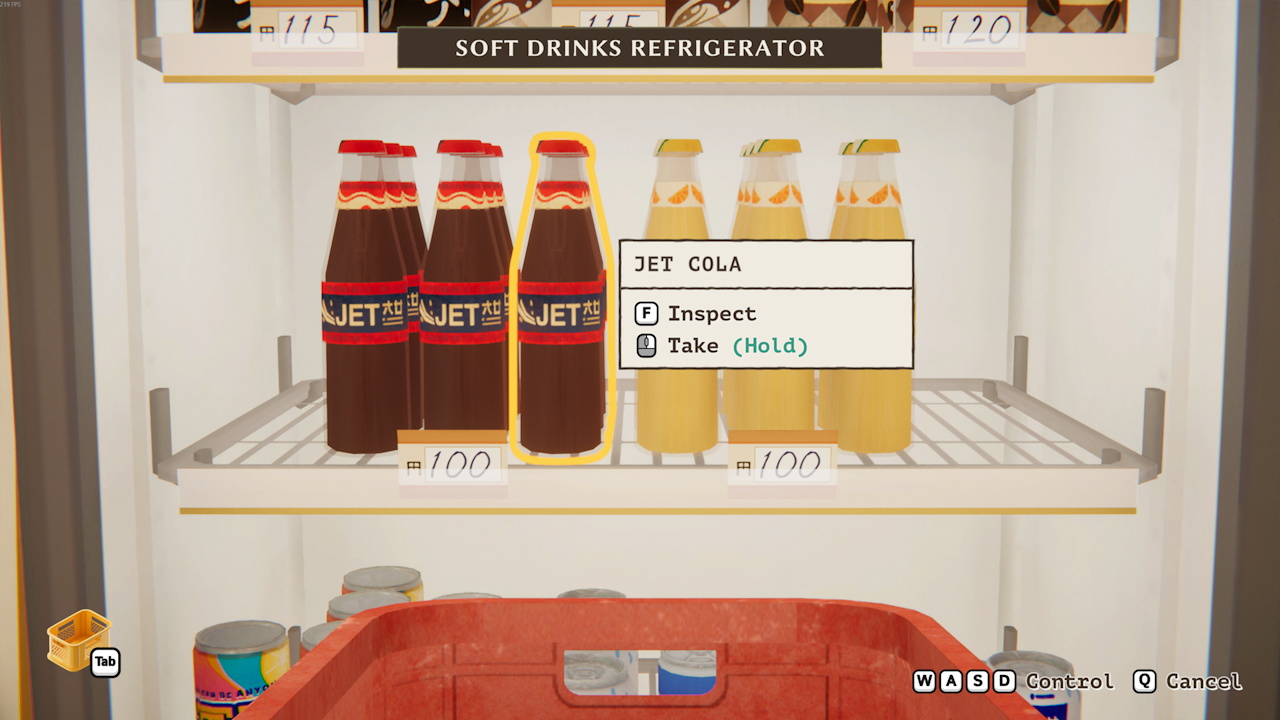
I can be quite forgiving when it comes to minor issues and bugs in indie games; I want to see them succeed! But I’m pleased to report that inKonbini ran well on my self-built PC, and didn’t have any noticeable graphical or gameplay issues at all. I even got the game running in native 4K – which my PC can struggle with, sometimes, in other titles – without any problems whatsoever. It’s a smaller game, sure, and it isn’t one that’s designed to punish high-end hardware with hyper-realistic graphics! But a game that runs well is not a guarantee in 2026, so I think it’s worth celebrating that inKonbini’s performance was great from the start.
Although I really adored my time with inKonbini, it’s a game I’m reluctant to recommend to a general audience; I think you have to be specifically interested in slower-paced, casual, narrative adventures that verge on “walking simulator” types of games. If you want to have a surprisingly philosophical chat with some of the store’s customers, and if arranging digital products on virtual shelves sounds like fun, or if you like atmospheric, cozy games? inKonbini is an easy recommendation. However, if you’re an online multiplayer gamer, a souls-like “git gud” type of player, or you just need something a bit faster-paced, perhaps it won’t be right for you.
A recommendation, then – but for a specific type of player! If you stick with me to the next part of the review, we’ll get into a couple of the characters and story beats in a bit more depth.
This is the end of the spoiler-free portion of the review. There are spoilers for inKonbini: One Store, Many Stories from here on out.
My first job – when I was younger than inKonbini’s protagonist, Makoto – was in a small shop. And I worked in several others after that, too. It surprised me just how familiar that side of inKonbini felt to me, even some twenty-plus years after I last set foot in a place like that as an employee! In those days, most things were still pen-and-paper, at least here in the UK, and I have vivid recollections of things like filling out inventory sheets, stamping and signing delivery invoices, and manually walking the aisles to check if a product was in stock, in the right place, and so on. I hadn’t thought about those jobs or those memories in *decades*, but inKonbini brought them back!
This is the second game I’ve played in the last few months with a ’90s setting… and it’s the second time I’ve been hit with that bittersweet wave of nostalgia. The first was Mixtape – another excellent title which, if you enjoyed inKonbini, you may also like – so I guess the second half of 2026 has been a bit of a nostalgia kick for this old gamer, eh? Between those memories of working those jobs and all of the imagery and subtle nods to Shenmue, inKonbini turned out to be a surprisingly emotional experience… and that’s before we even get into the characters and story.
Those retail jobs I had… they were never much fun. I actually got harassed coming home on the train one evening, as a drunk man smashed a train window and then got in my face as I was just trying to make my way home from the station! What I’m saying is… working those kinds of jobs is rarely the fun, laid-back, cozy experience that inKonbini offers. But I think that’s part of why the game is so enjoyable – it’s almost cathartic, all these years later, to see a fictionalised take on that kind of role that feels real enough to be believable… but without any of the drawbacks, like boredom and rude customers!
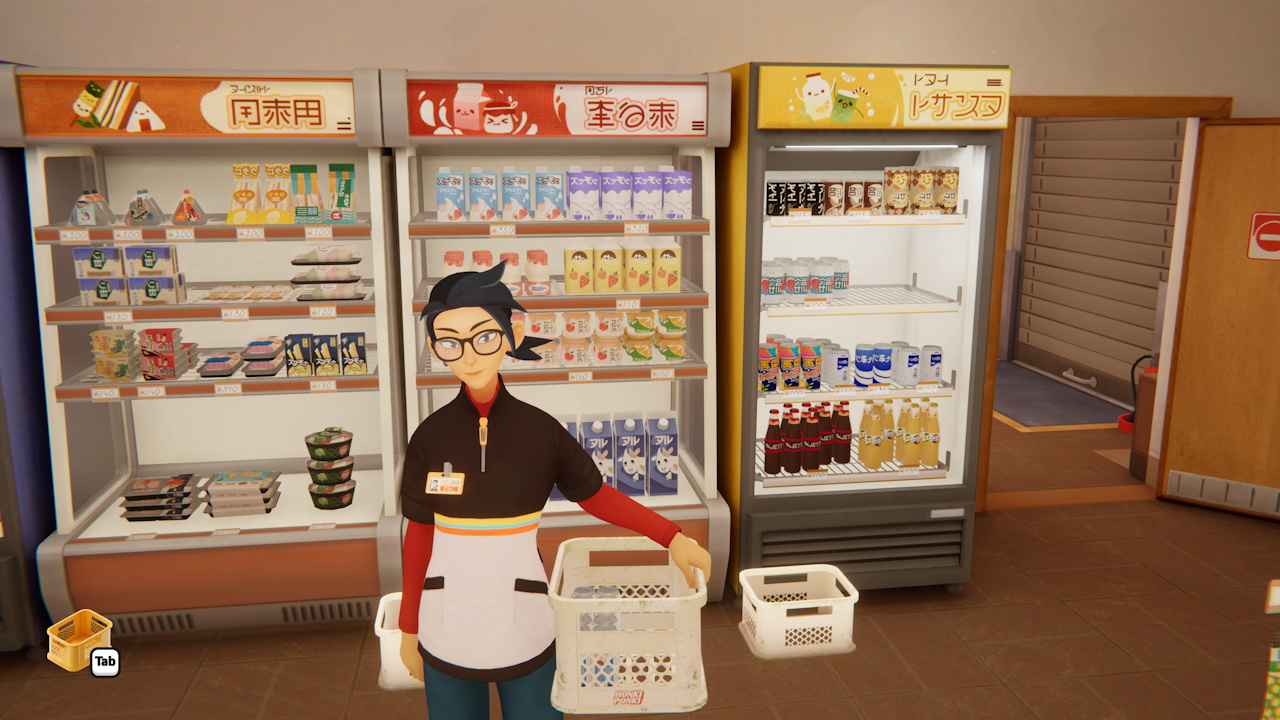
Even inconveniences that Makoto experiences – like a leaky roof, a missing product, or a broken appliance – become fun little distractions or mini-games to take part in. And when a customer is looking for help, choosing the right product at the right moment for them turned out to be a lot of fun. I actually found myself getting a little bit anxious, a couple of times – like I used to do when I worked those jobs, only to a much lesser extent! – as Matoko raced to find a missing item, set up a display, or get the shop ready in time for the evening’s first arrival.
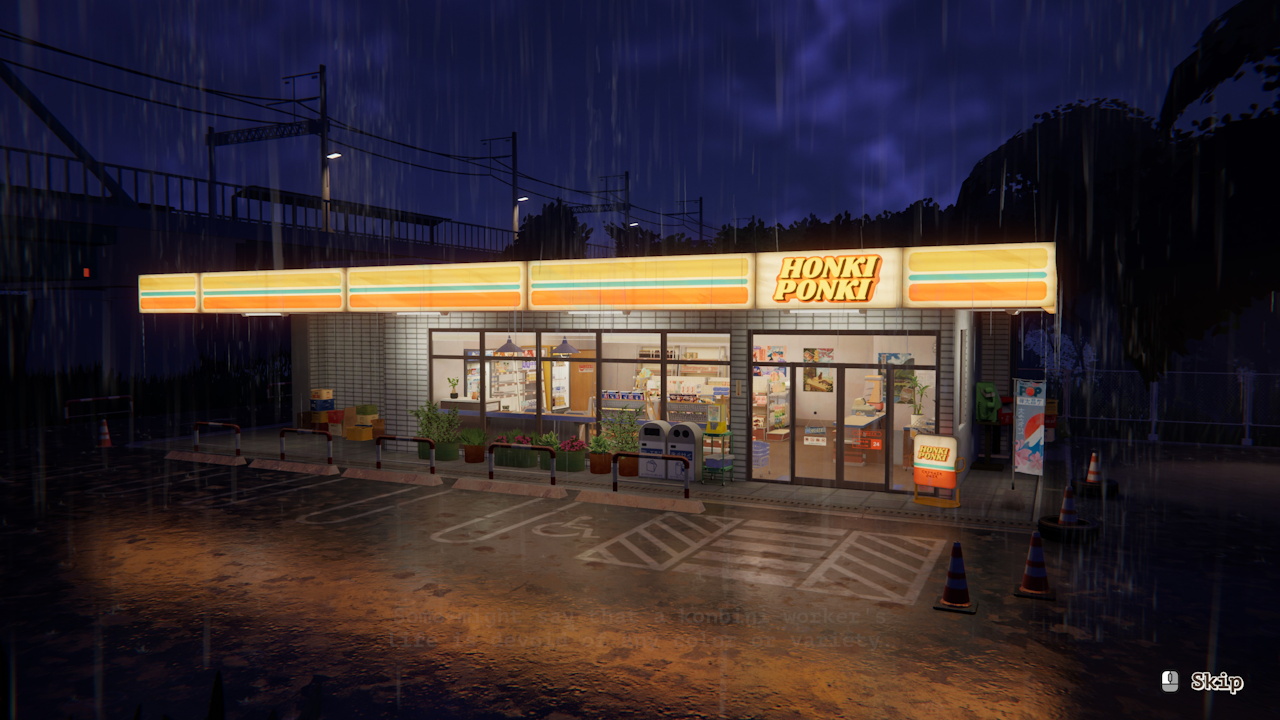
The decision to set the game entirely on the night shift works in inKonbini’s favour, and goes a long way to making it feel cozy and atmospheric. There’s a peacefulness to those overnight hours; genuine quiet while much of the world sleeps. I’m a bit of a night owl myself, and I used to enjoy doing things like overnight shopping (back in the pre-Covid days when supermarkets would be open 24 hours) just for the peace and quiet! A sleeping town (or rural area) has a totally different feel than it does in the daytime hours, and inKonbini perfectly captures that.
Again, that’s part of the whole “cozy” vibe that the game has going for it; Matoko is part of a bigger world that exists just outside the shop’s door, but that world is sound asleep, save for a few people here and there. I’m sure most of us have pulled an all-nighter at some point – I’d challenge you to play inKonbini and not feel at least *some* of that reflected in the game’s world.
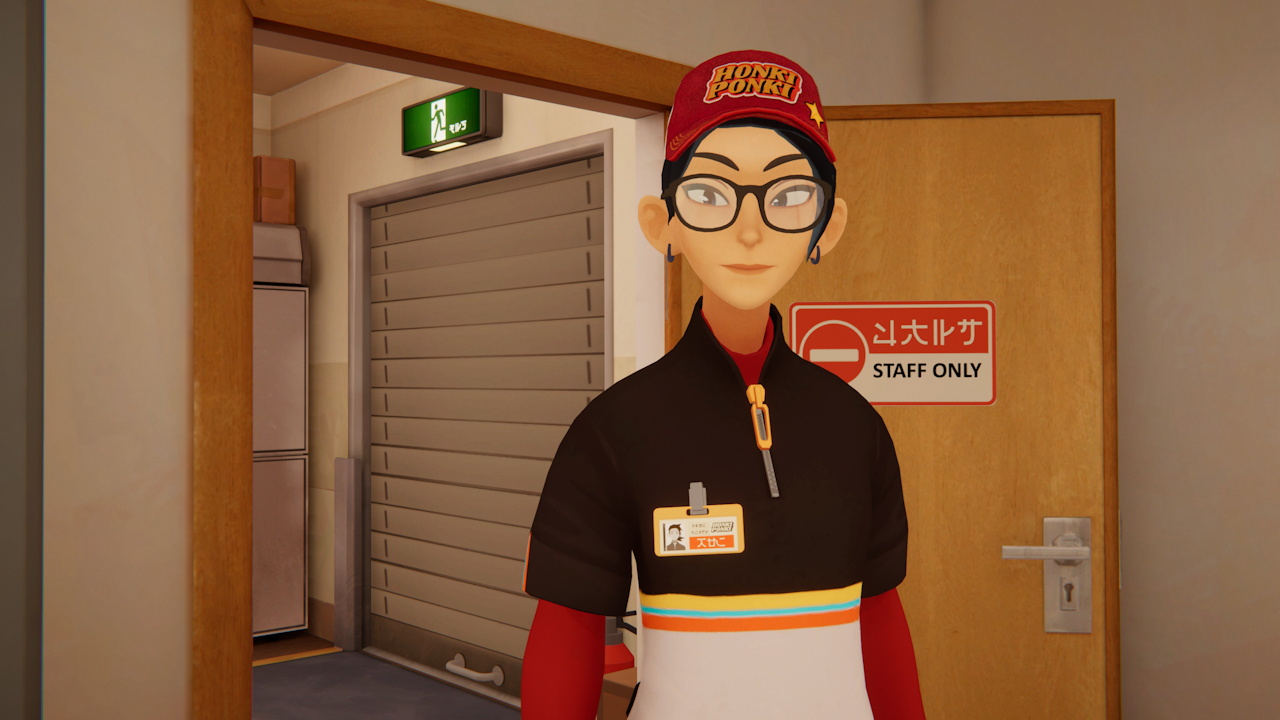
Lots of different games can be cozy or comforting – and what’s cozy to one player may not be to another. Speaking for myself, this kind of gameplay – which I guess you could describe as being kind of “job simulator-adjacent” in some respects – really nails that calming, cozy feel. Again, to use a Shenmue analogy: this is akin to the forklift-driving part of the game. Some people might find putting items on shelves or organising a shop display dull or repetitive, which are criticisms some players *definitely* had of those parts of Shenmue! But if it’s your kinda thing… I think you’ll enjoy this aspect of inKonbini just as much as I did.
On that note, gameplay and setting come together really well, each bringing a piece of that coziness to the table. The setting and the atmosphere it creates – both inside the store and, by implication and inference, the world outside its walls – form the perfect backdrop for this kind of slower-paced gameplay, moving items around, setting up little displays, running through a checklist, and so on. The gameplay and setting compliment one another really well, and it takes a combination of both to really get to that cozy feeling that inKonbini gave me.
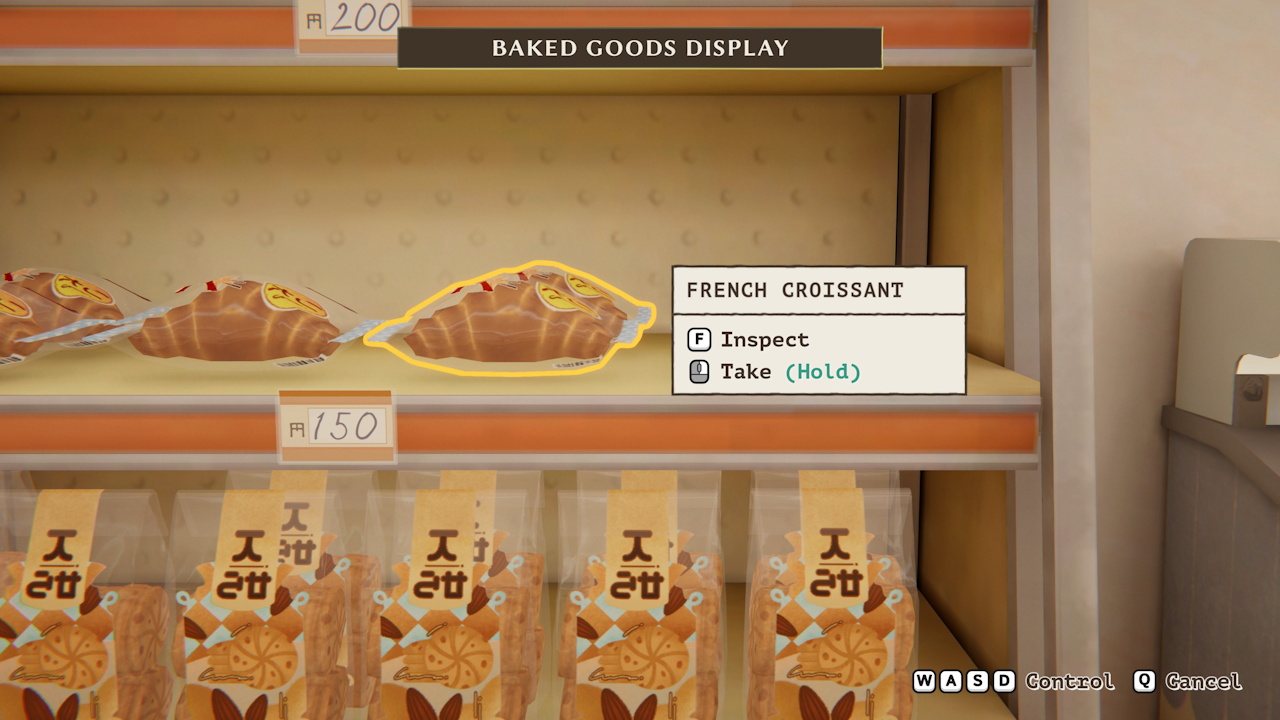
Some folks might want to see an open-ended game like this; for inKonbini to be the kind of game you can just play for a long time, with shift after shift of stacking shelves and checking out customers. But for me, I think that would misunderstand the kind of story that inKonbini aims to tell – not to mention make the few shifts you get to experience feel less important and special. While, in pure gameplay terms, I could see why some folks might want to take inKonbini and open it up… I think I like the game the way it is.
Matoko’s story is one that I think a lot of folks can relate to. Coming back to one’s home town – while in the middle of that first great adventure younger people look for after moving out – can be a bit anticlimactic. But the game wants to point out the value in hometowns, small communities, and the connections made between people. The four characters Matoko meets on the night shift all embody different parts of this in different ways – and all of them manage to feel like fun, well-rounded characters in their own rights, too.
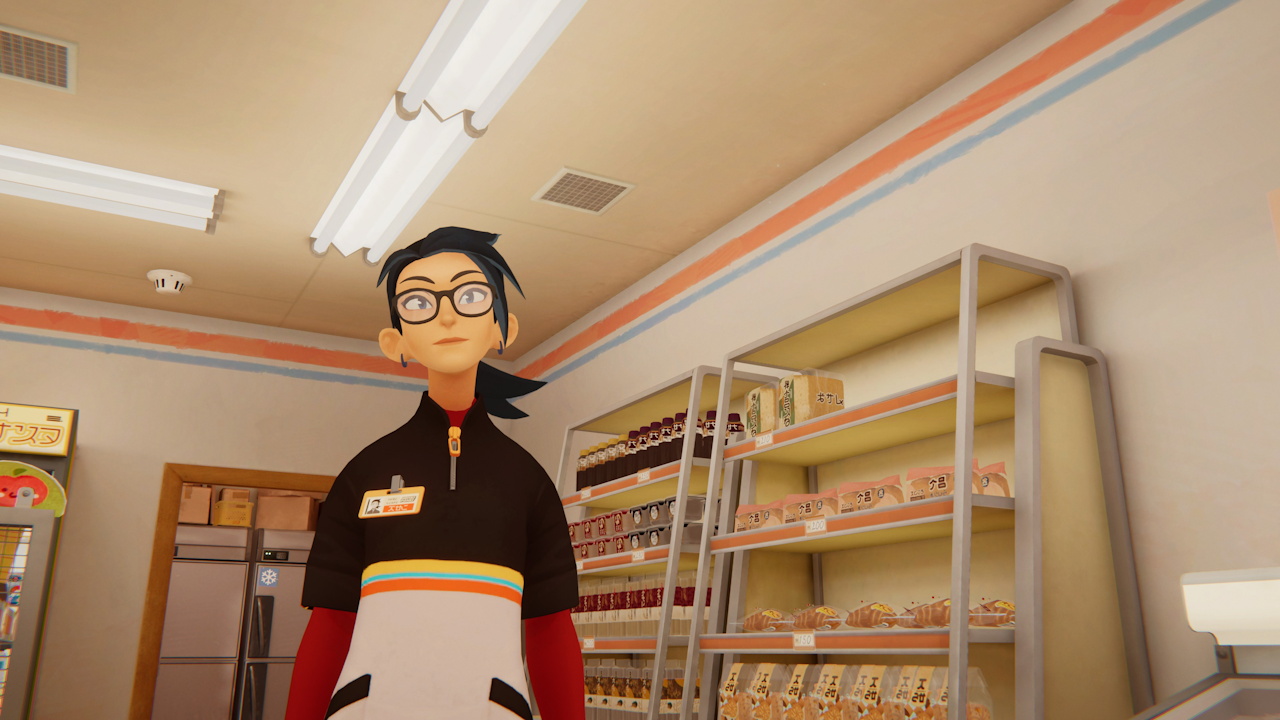
Parts of inKonbini could feel a little high-minded, a little philosophical. And that could come at the expense of the kind of gritty “realism” that audiences today might look for. Some characters come out with quite abstract philosophical takes on everything from writing and business to the literal meaning of life… and if you’re just not in the right headspace for that, or you prefer your in-game dialogue a bit less floaty and more grounded, I could see that being a point of criticism. But, again, speaking for myself… I enjoyed my time with these characters, and I liked how each of them had something to say that wasn’t just gossip or small talk.
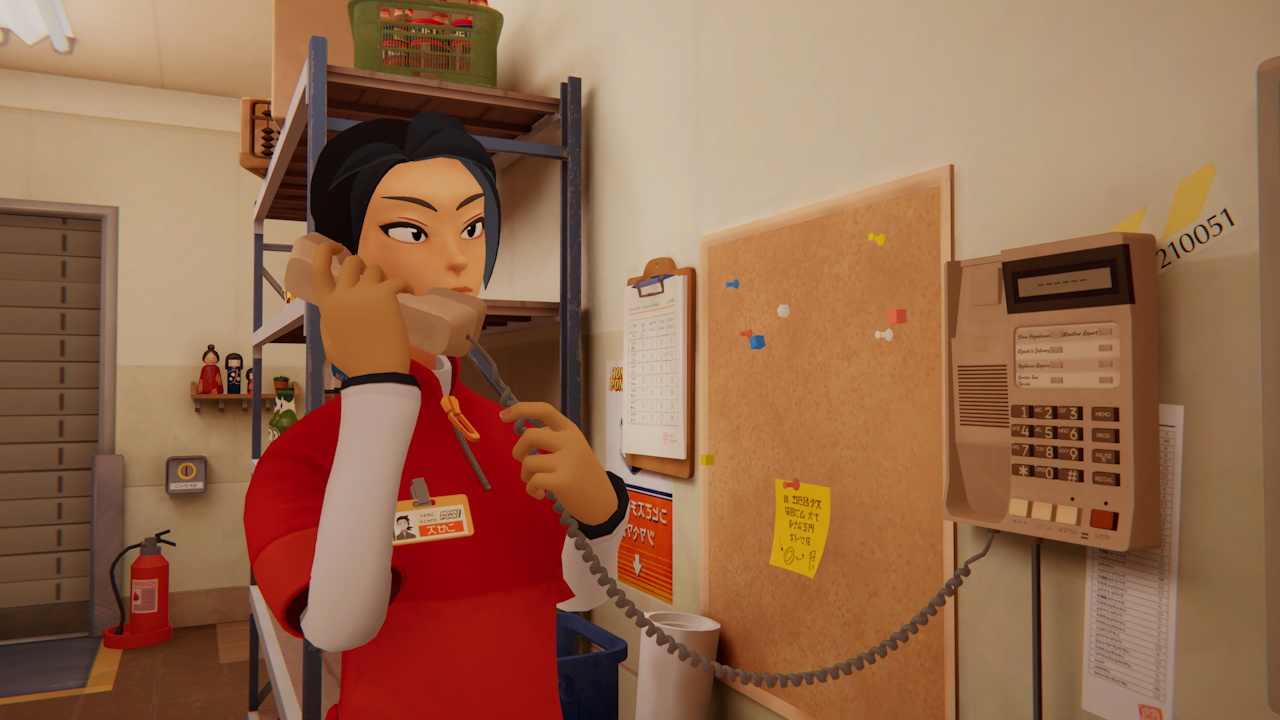
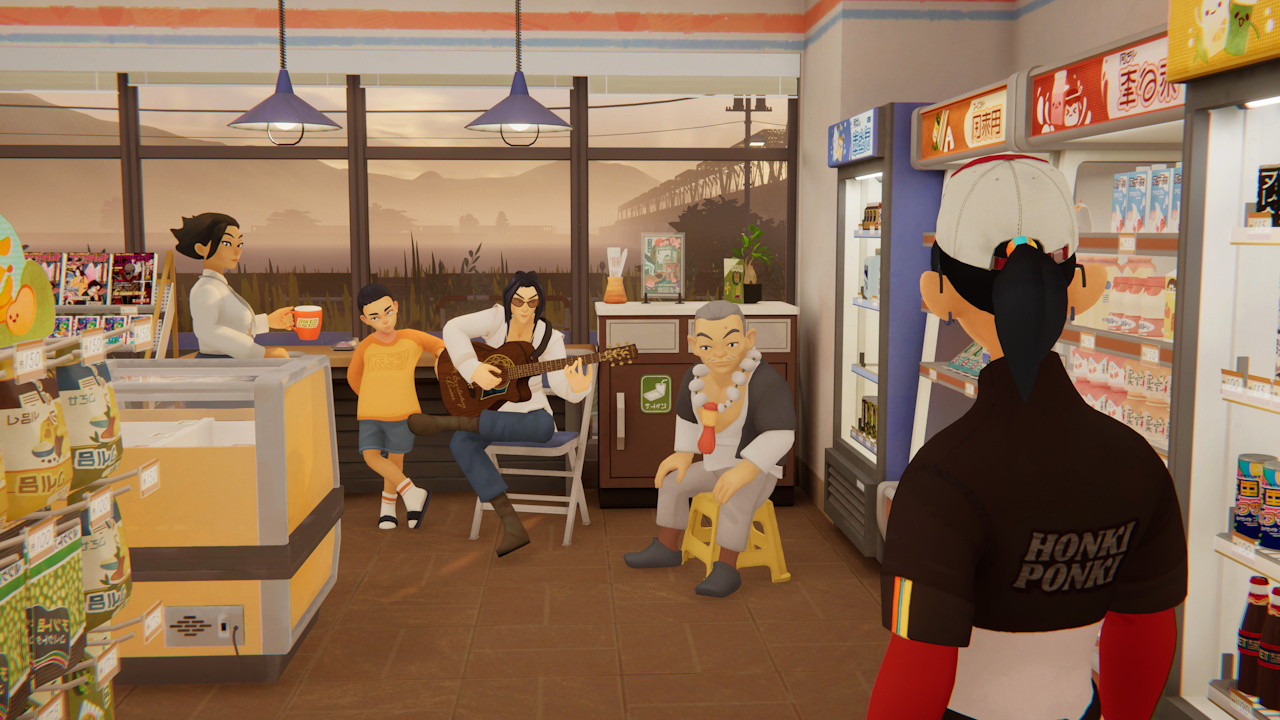
Each character also feels completely distinct. Satoshi has his burgeoning delivery business, Naomi shows up from the city looking to write an article, Chief is a local institution who’s fallen out with Matoko’s aunt, and the “Mysterious Man” has his backstory unfold in a really fun, unexpected, and occasionally weird way! Matoko keeps it all together, feeling like the most realistic and grounded of the core characters, and her phone calls to her aunt (and to a few others) give her something to do even when there aren’t any customers to serve.
Perhaps it’s the Shenmue fan in me, or perhaps inKonbini just plucked the right combination of nostalgic and philosophical chords… but I really, thoroughly enjoyed my time with the game. I genuinely did not want to see the credits roll… because that would mean it was over.
However, there’s some replayability in inKonbini, despite the game having an otherwise linear story. There are some achievements I didn’t unlock the first time around that I’ll definitely go back and try to get, a few optional little quests or stories off to the side that I missed or didn’t see through to the end, and plenty of capsule toys that I didn’t find. So my adventure at the Honki Ponki konbini isn’t over yet! And I find that thought to be quite comforting.
I hope my thoughts on the game have been interesting. And I hope I was able to properly convey just how enjoyable an experience this was. 2026 has been a pretty good year for video games, all things considered, and inKonbini is, without a doubt, one of my favourite experiences of the year.
If you missed them earlier in the year, I’d like to direct you to my reviews of Forever Ago and Mixtape – two comparable titles that, if inKonbini was your thing, you might also enjoy. And given that we’ve talked so much about Shenmue, please consider taking a look at my twenty-fifth-anniversary celebration pieces for both Shenmue and Shenmue II.
And I have a couple of other games on my list for 2026 that I *hope* to get to before the end of the year, so stay tuned for those!
Thanks again for checking out my review of inKonbini. This was a game that had been on my radar for a little while, and I’m so glad that I finally had the chance to try it for myself. It’s one of those games that I just… got lost in, and I didn’t want to reach the end. I had a blast with Matoko and her new friends, and I’m sure it won’t be long before I head back to the konbini for another night shift.
inKonbini: One Store, Many Stories is out now for Nintendo Switch and Switch 2, PC, PlayStation 4 and 5, and Xbox One and Xbox Series consoles. inKonbini: One Store, Many Stories is the copyright of Nagai Industries and/or Beep Japan, Serenity Forge, and Smilegate. This review contains the thoughts and opinions of one person only and is not intended to cause any offence.

