Slow Roads: Video Game Review

Sometimes it can be fun to play an action-packed car game, maybe where you have to steal cars, act as a getaway driver, or do drive-by shootings on your character’s enemies! I wonder if any games like that have been released in the last few days? But on other occasions, it can be just as enjoyable to kick back with a driving game that doesn’t demand anything like that of you: to just cruise an endless open road, with a few different cosmetic options for variety.

That’s exactly what Slow Roads delivers.

I first encountered Slow Roads through its release on Steam earlier this year, but the game has been around for a little while in a smaller, web browser form, as well as an offline version that can be downloaded from itch.io. The Steam version is, from what I can tell, more fully-featured, but the browser version is still available and will continue to be supported, so you can think of it as a good way to try out Slow Roads to see if it could be right for you before you commit any money. A demo version is also available on Steam.
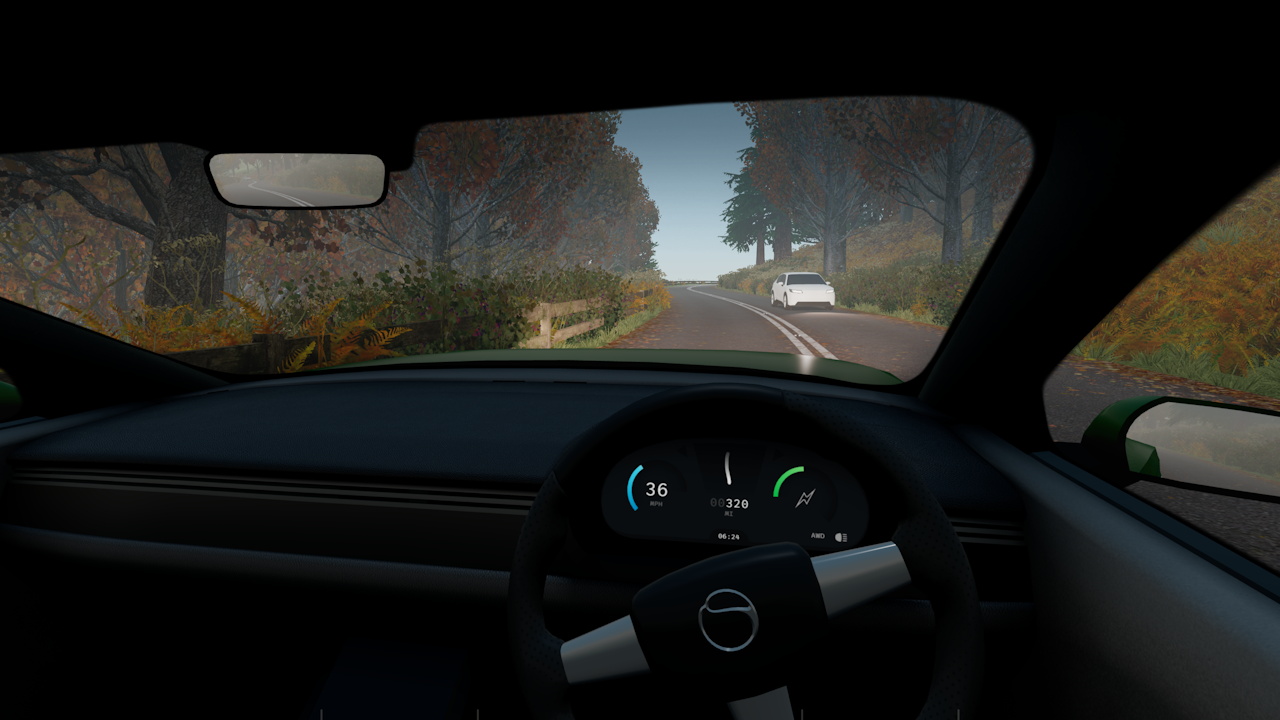
Screenshot of Slow Roads showing driving in first person
Let’s drive down some Slow Roads.

For a while, I’ve been interested in slower-paced gaming experiences that are – for want of a better word – “cozy.” And it’s in that space that I would firmly place Slow Roads. The Steam version of the game offers two main environments, and procedurally generates an endless driving experience based on a few customisable parameters that you can set. And then… you start driving.

Thanks to the never-ending shit-show that we call “global events,” the prices of petrol, diesel, and electricity (for charging your electric car) have shot up, so going on a real road trip – driving to an unknown destination just for the sake of it – is currently out of reach (and out of budget) for a lot of folks. And for people like myself, who have disabilities and health issues, road trips may never have been an option in the first place. But there’s something calming or relaxing about taking a drive – especially in a digital environment where there aren’t any dangers or risks – and I’ve really enjoyed my road trips in Slow Roads.
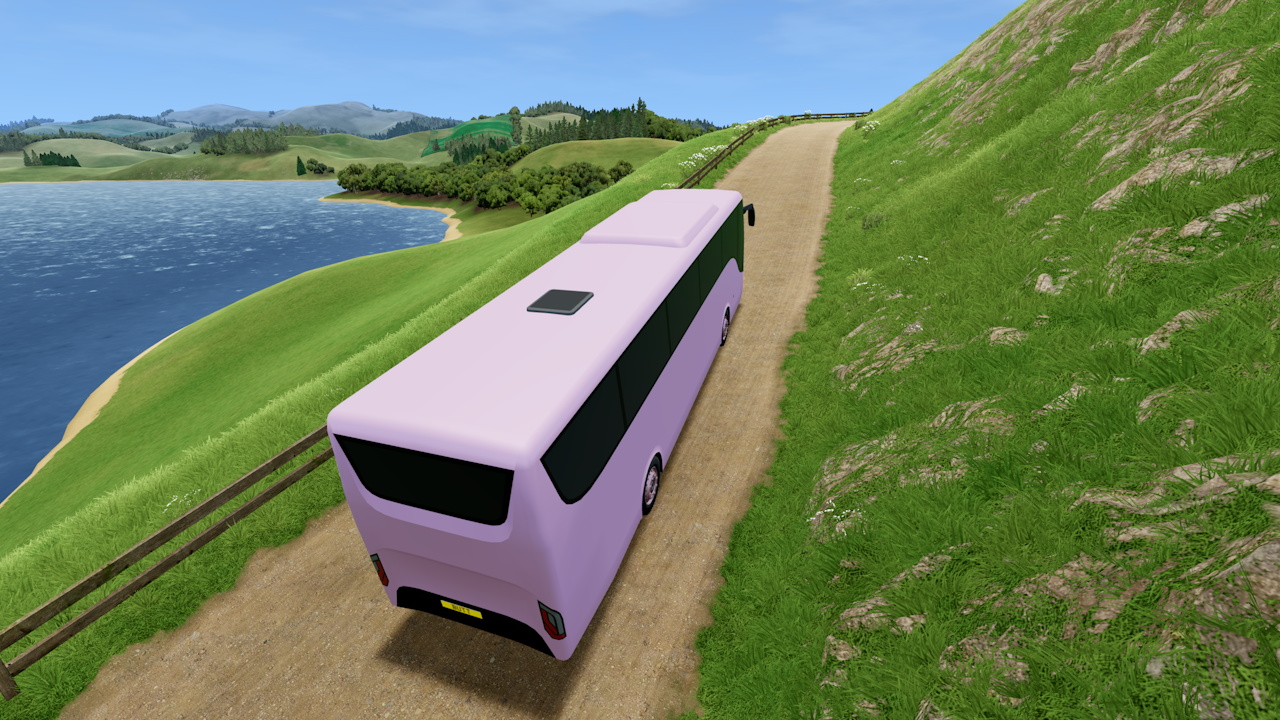
Screenshot of Slow Roads showing a pink bus
Ah, this makes me nostalgic for the bus ride to school…

On booting up the game, your main choice is between a simulation of England’s Peak District (a hilly national park) and California’s Pacific coast. There’s a third option to drive across various solar system bodies – the moon, Mars, or Venus – but those were a bit bleak and less visually interesting to me, so I’ve mostly stuck to one of the two Earth-bound locales! As someone who grew up in a rural part of the UK, the Peak District landscape feels… well, like home.

Driving those roads – especially from a first-person view – reminded me of being on the school bus many years ago, or being driven home by a friend’s parents after a busy day of getting into mischief. The cars and vehicles in Slow Roads are modern; you won’t mistake the in-game traffic or your own vehicle for one from the ’80s. But they’re also generic enough that they don’t feel too out-of-place, and they still give off that cozy, relaxing, and – for me, anyway – nostalgic vibe.

Three screenshots from Slow Roads showing environment choices
The three choices of scenery for your drive.

California’s coast was a bit of a different experience! Rather than the pure nostalgia of driving through rural England, I got to experience one of the most iconic routes in the world: Slow Roads’ procedurally-generated version of California’s famous State Route 1, which, in real life, runs from the redwood forests of northern California to just south of Los Angeles. Again, though, this route takes on a distinctly rural character in Slow Roads, with no towns or buildings to get in the way of the views of the Pacific.

One thing that’s been a ton of fun for me in Slow Roads is importing my own music into the game. Remember when you used to be able to do that on the original Xbox in titles like Grand Theft Auto III? I think music licensing issues pretty much killed that idea in bigger titles, but Slow Roads has a great in-game music player that lets you choose individual tracks or whole folders full of MP3 or FLAC files for your road trip playlist. I think I’ve listened to way more music over the last few months because of Slow Roads!

You can also tune into real-world radio streams, and I guess you could listen to podcasts or any audio that way, too – but that’s not something I’ve played around with as I have a pretty big digital music library on my PC.
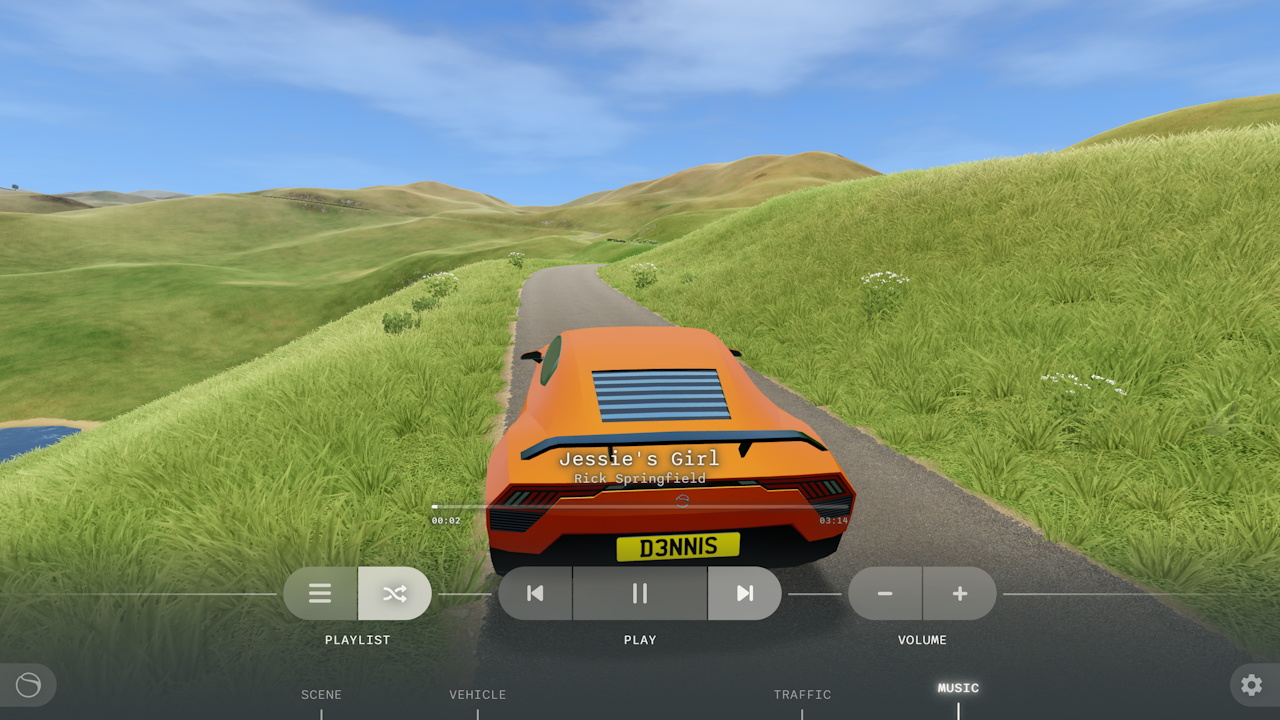
Screenshot of Slow Roads showing music selection
You can play any song you want.

The game has a few options for weather conditions, seasons, and time-of-day – though these are more extensive in the Peak District setting than they are in California, at time of writing. However, Slow Roads is still being worked on, and more weather options – like rain – are promised for sometime in the future. In addition, new settings to take the game beyond its current two-and-a-bit locations (or to expand the current ones with more variety; I wasn’t entirely clear on that) are also planned.

However, Slow Roads is the passion project of a solo developer – and has been worked on for more than five years already, as of its 2026 Steam release. I’m always blown away by the *talent* that goes into any solo project, let alone one involving such complicated tech as procedural generation! It does mean, though, that future updates to the game will proceed at the pace of just one person, so if you’re holding off because you’re waiting for a promised future update or new feature, it’s worth being aware of that and keeping it in mind.
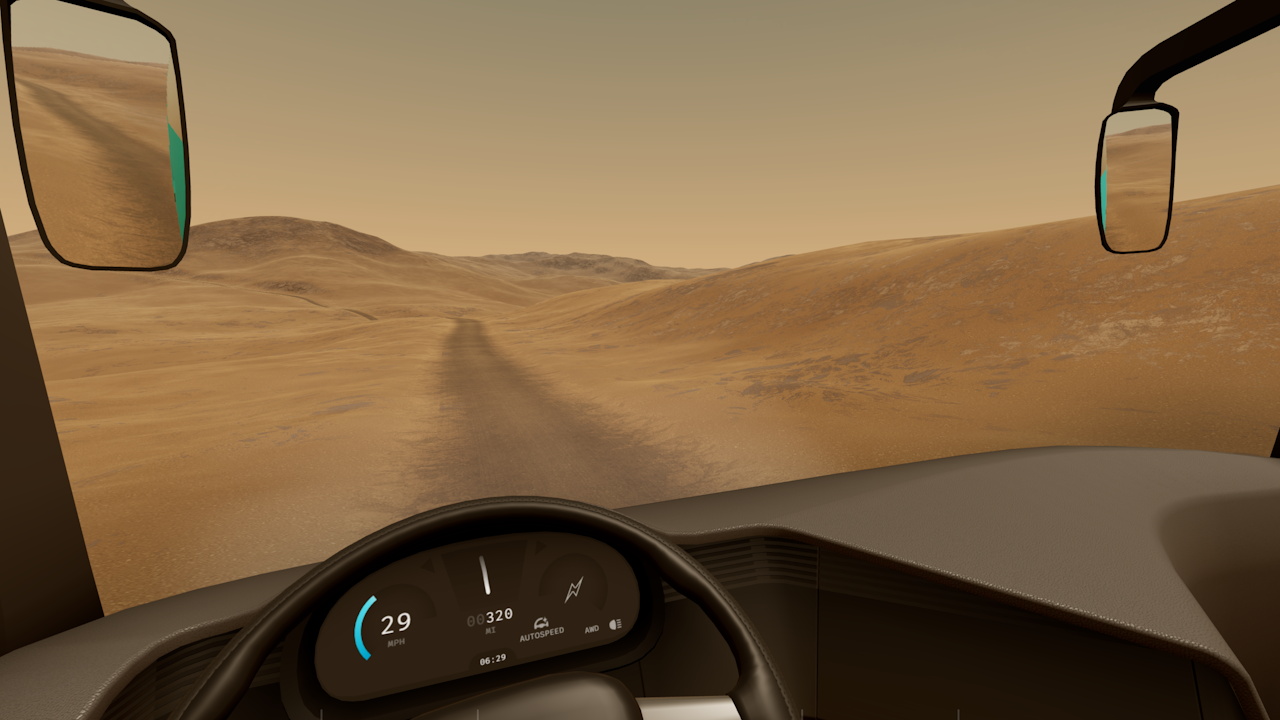
Screenshot of Slow Roads showing a bus on Mars
More content may be added to the game in the future.

Personally, generative A.I. doesn’t really bother me in most cases; indie games in particular get a lot of leeway when it comes to that suite of new technologies. But I know A.I. is a contentious topic in gaming, so if you’re part of the anti-A.I. crowd, rejoice! Slow Roads hasn’t used any generative A.I. in its development process.

A sad sign of the times that reviews have to start discussing generative A.I., but there we are.

I played Slow Roads using a control pad, but it’s worth highlighting that there are other options. As a PC game, you obviously have mouse and keyboard support – but there are also options for keyboard-only and mouse-only controls. The game also supports racing wheel and pedal setups, so if you have something like that, you can get even more of an immersive experience!

Screenshot of Slow Roads showing snow in winter
There are multiple control options.

There are a few different in-game vehicles – a couple of different styles of car, a motorcycle, and a coach/bus. Each performs slightly differently, but if you ask me, Slow Roads isn’t a game that you’ll need to spend a ton of time tinkering with even if you’re a car nut. I like the option to choose between combustion engines and electric ones – it doesn’t make a ton of impact on gameplay, but the sound of the vehicle changes, which can affect the mood. And Slow Roads is very much a “mood” game!

Vehicles can be recoloured at will, even in the middle of a drive, and you can swap vehicles on the fly, too. There aren’t things like complex paint jobs or vehicle decals, but you can make your car any colour of the rainbow, which is nice! For me, I like to play games like this in first-person – though several camera angles are available – so the colour doesn’t matter as much to me in that case. Still, customisation is always welcome in any game, and being able to get your car to be a colour you like is great!
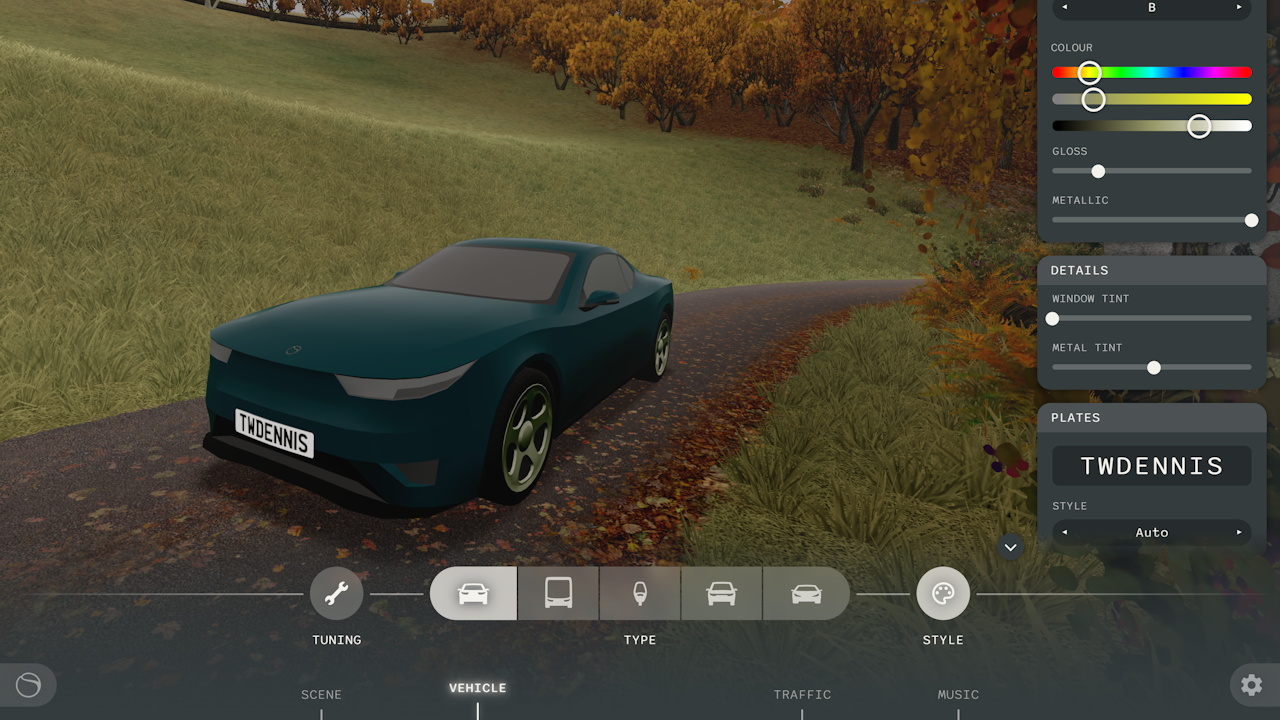
Screenshot of Slow Roads showing car options
Repainting your car has never been easier – and you can get a custom number plate, too.

Slow Roads features several “auto-drive” options; these vary from auto-accelerating (that’s akin to cruise control) to turning your car into a full-blown self-driving vehicle. The former is fun if you want to retain some control over the game without having to constantly push a button or hold down a trigger (which is great for my arthritis during long sessions!) and the latter is great if you just want to kick back, listen to music, or even literally use Slow Roads as a screensaver or a way to block your screen to keep yourself from doomscrolling. There are a ton of uses for these features, and they’re great accessibility options, too.

You’ve been looking at screenshots from my playthrough of Slow Roads throughout this review, so you have an idea of what the game looks like. I run the game in full 4K on an Nvidia RTX 3070Ti graphics card, and it runs smoothly at its maximum settings with that setup. I’d describe the graphics as modern and aesthetically pleasing – but not as boundary-pushing or hyperrealistic as some AAA racing games! But if you were expecting that from a small indie game… what’s wrong with you?
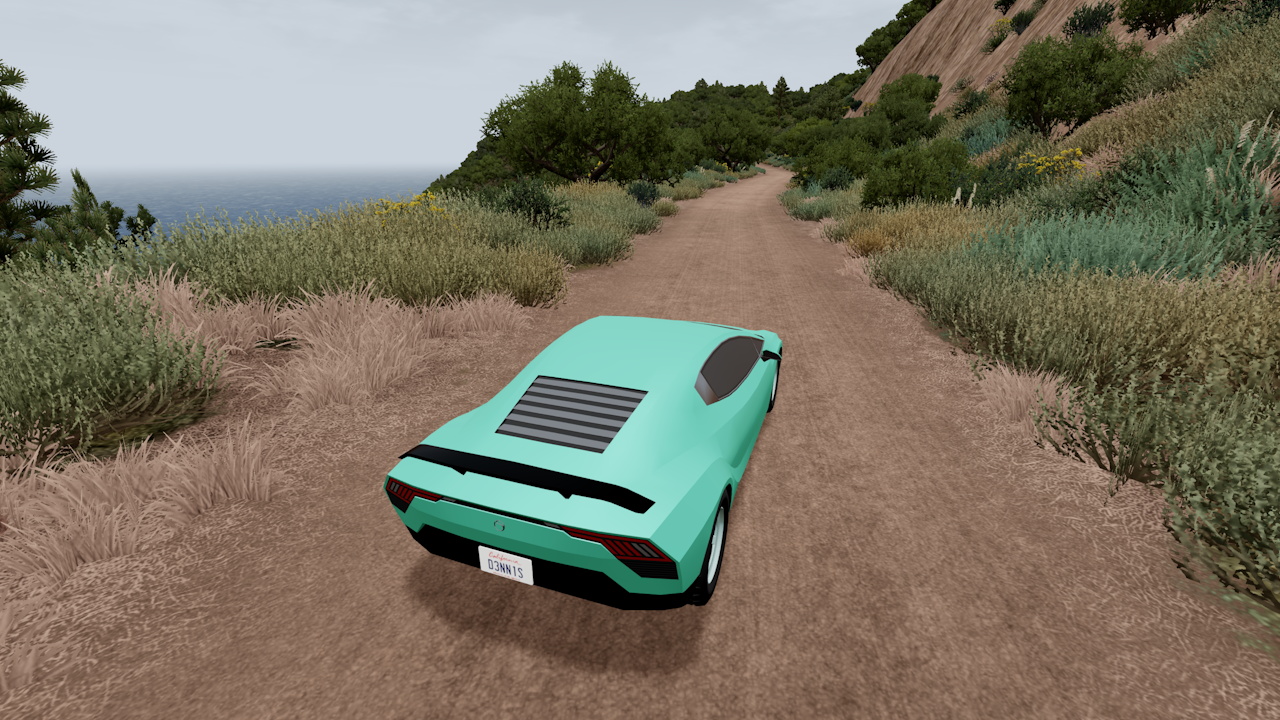
Screenshot from Slow Roads showing a car on a dirt road in California
A sports car on the Pacific coast.

Slow Roads’ visual style is realistic, and if you have the same connection to rural England as I do (or to the Pacific coast), I think it’s easy to get lost in the game’s world, even if the graphics might seem a generation behind what cutting-edge games with huge development teams might be pushing for. For me, that’s just fine – and as long as you set appropriate expectations, given the game’s price and development situation, there’s really nothing to complain about in that regard.

I’ve really been having a blast with Slow Roads over the last few weeks. I think, at time of writing, it’s my second-most-played game of 2026, behind rhythm game Melody’s Escape 2 – which is also a game that lets you use your own music, albeit in a very different way! I wouldn’t have spent so much time cruising down these roads if I wasn’t enjoying myself, and the simple, understated, cozy vibes of Slow Roads have been just pitch-perfect for me. Sure, it can be fun to play a racing game like Sonic Racing: CrossWorlds sometimes, but there’s a lot to be said for a slower-paced, relaxing experience, too.

So I’m very happy to recommend Slow Roads – albeit to a specific kind of player. If you’re someone who needs non-stop excitement, high-octane racing, and guns-blazing adventures… this might not be for you. But if you want to slow down, sometimes, even just for a little while, you could do a lot worse than taking a drive down some… Slow Roads.


Slow Roads is out now on PC via Steam. A smaller version of the game is also available online via the web or via itch.io. Slow Roads is the copyright of Topograph Interactive. This review contains the thoughts and opinions of one person only and is not intended to cause any offence.
inKonbini: One Store, Many Stories – Video Game Review

The first part of this review is free from story spoilers for inKonbini: One Store, Many Stories. The end of the spoiler-free section is clearly marked.

Have you ever played a game that you didn’t want to complete, not because you didn’t like it… but because you were enjoying it so much? That was my experience with inKonbini: One Store, Many Stories. The gameplay was so relaxing that it was almost soothing, the story was low-stakes but still relatable, there were some fun characters to meet and engage with, the setting and music were beautiful, and – to coin a phrase – the vibes were just immaculate.

This is, for me, a “Game of the Year” contender, without a doubt.

I was a huge fan of Shenmue and Shenmue II back in the Dreamcast days (click or tap here for more on that, if you’re interested!) and I find it really sweet that games like inKonbini are still drawing inspiration from that genre-redefining saga all these years later. Even the name of inKonbini’s development studio – Nagai Industries – is a reference to the similarly-named organisation in the first Shenmue, and Shenmue’s creator, Yu Suzuki, is thanked in the end credits.

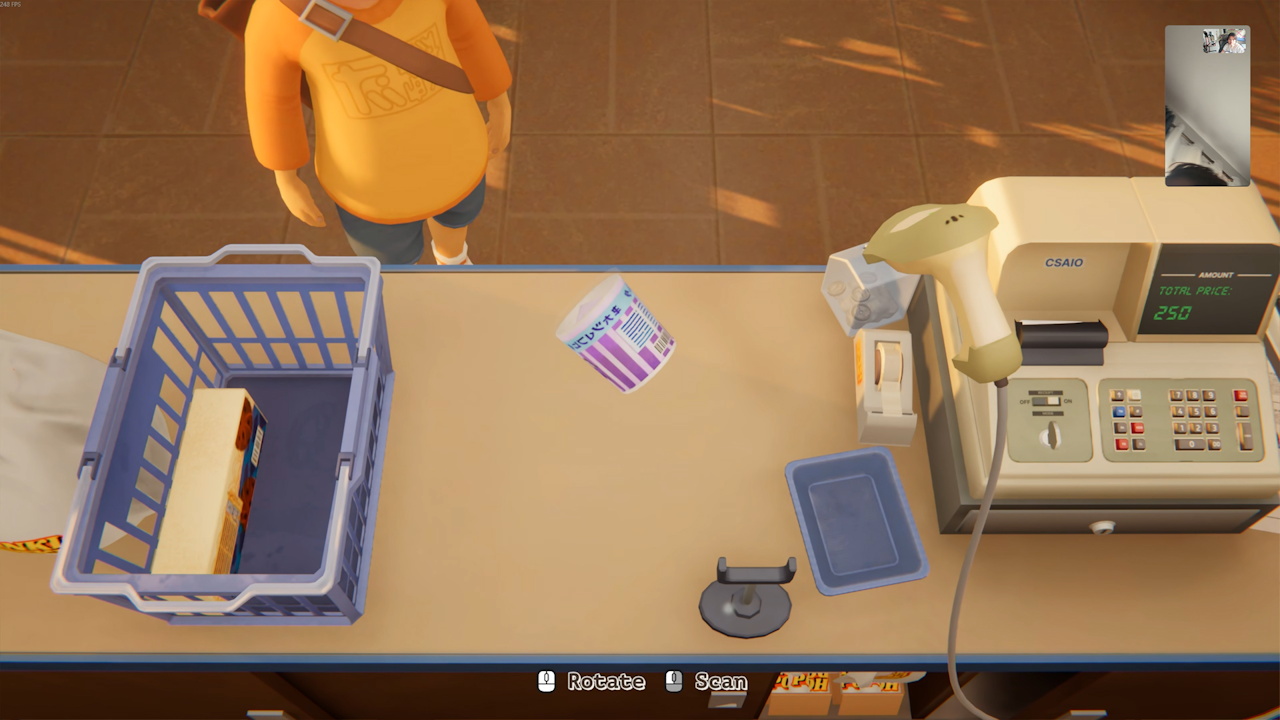
Promo screenshot for inKonbini showing the checkout
Checking out a customer’s items.

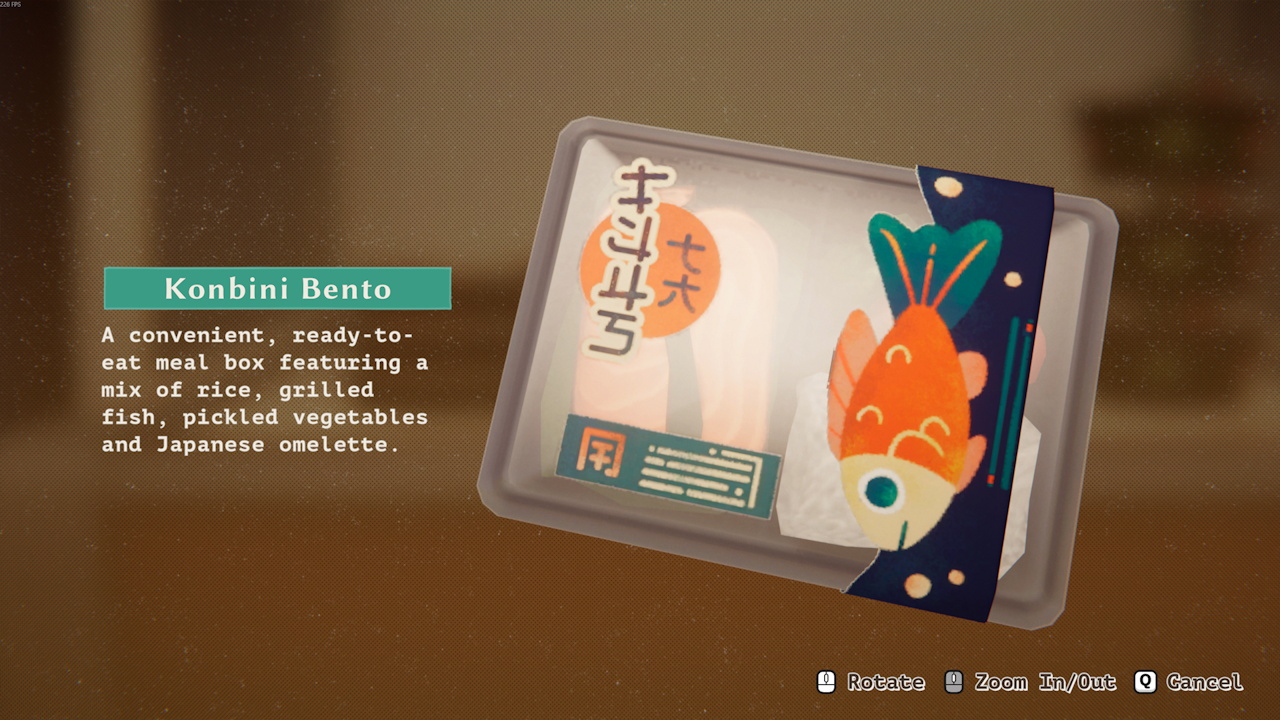
However, there is a little bit of a controversy surrounding inKonbini – and it’s one I didn’t notice at first. Long story short, if you don’t speak/read Japanese, you probably didn’t notice that many of the in-game items and products use characters *inspired by* Japanese hiragana, katakana, and kanji… but which aren’t *real* Japanese text. As someone who doesn’t know Japanese, I didn’t notice this at first, but when it was pointed out by someone elsewhere online… I found that I couldn’t *not* notice it, if that makes sense.

And… well, I don’t know why this happened. Perhaps it’s simply the case that the developers – who seem to be based in Japan, but none of whom have Japanese names – may not be fluent Japanese speakers? Or maybe visual artists hired to work on the game (Nagai Industries seems to employ several remote workers) weren’t familiar with the Japanese language well enough to use it convincingly, so the decision was taken to use “fake Japanese characters” that look good enough to a casual western eye? The developers have sworn, on the record, that no generative A.I. was used in the making of inKonbini… which isn’t something I’m personally bothered about either way, but I know that matters a lot to some folks.

Promo screenshot for inKonbini showing a product
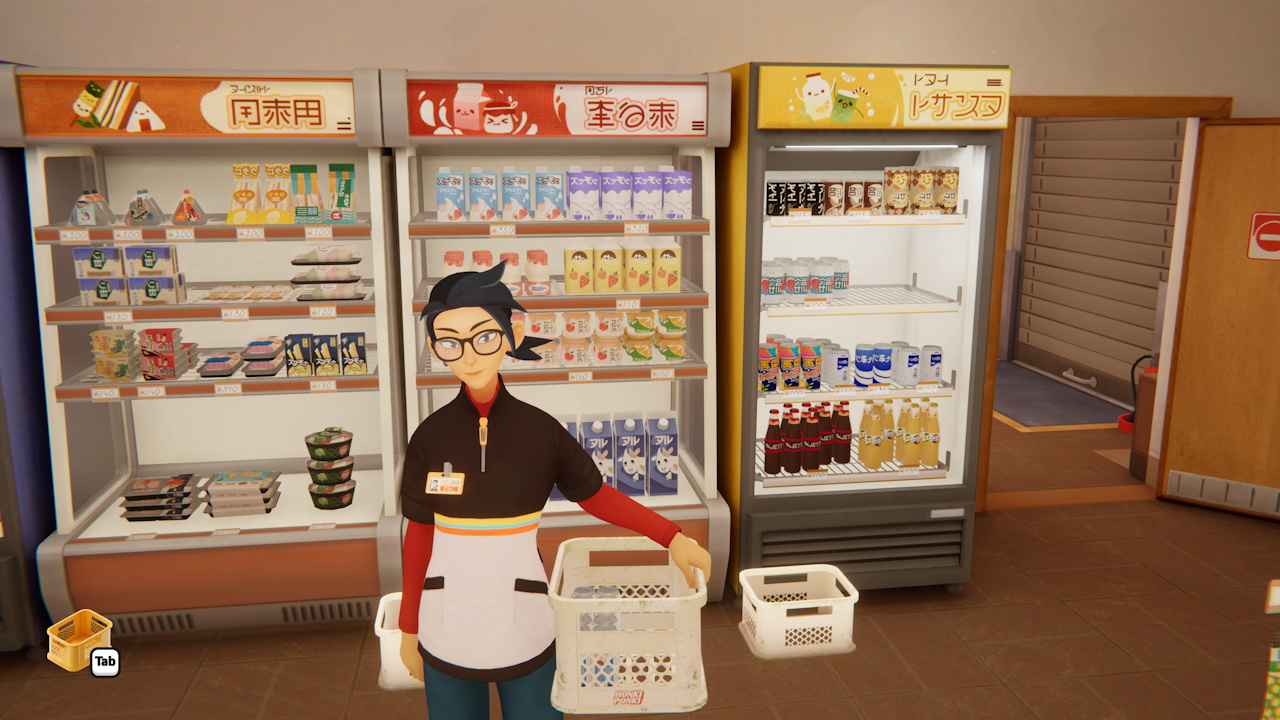
Much of the in-game text on items like this is “pseudo-Japanese,” not real Japanese.

However… it strikes me as odd, at the very least, that a game explicitly set in Japan, with Japanese people who have Japanese names, would have all of these art assets, products, in-game images, and more… that all use fake, nonsense characters that might look superficially “Japanese” to a non-speaker, but aren’t.

I don’t know if that kind of thing matters to you, but for me… I think there’s something to be said for authenticity. And as I said a moment ago, I don’t really know *why* a developer would choose to do something like this when the products in the shop are such a large part of the game. You can make the case for artists choosing a deliberate style, or that these designs evoke a kind of ’90s Japanese aesthetic without needing to be actual, intelligible Japanese. And that’s fine, it’s fair enough. But it is, if nothing else, strange to me that a game so heavily influenced by Japan, developed by at least some folks who live and work in Japan, wouldn’t use real Japanese text for its in-game images and models. Nagai Industries hasn’t explained this, as far as I can find out – all they’ve done is deny that they used A.I. tools to generate any of the imagery used in-game.

Alright, we’ll set that aside for now. I think it’s more of a mystery than anything outright negative, and unless you’re fluent in Japanese, chances are it isn’t something you’d notice on a standard playthrough. But I think it’s worth being aware of, at any rate.

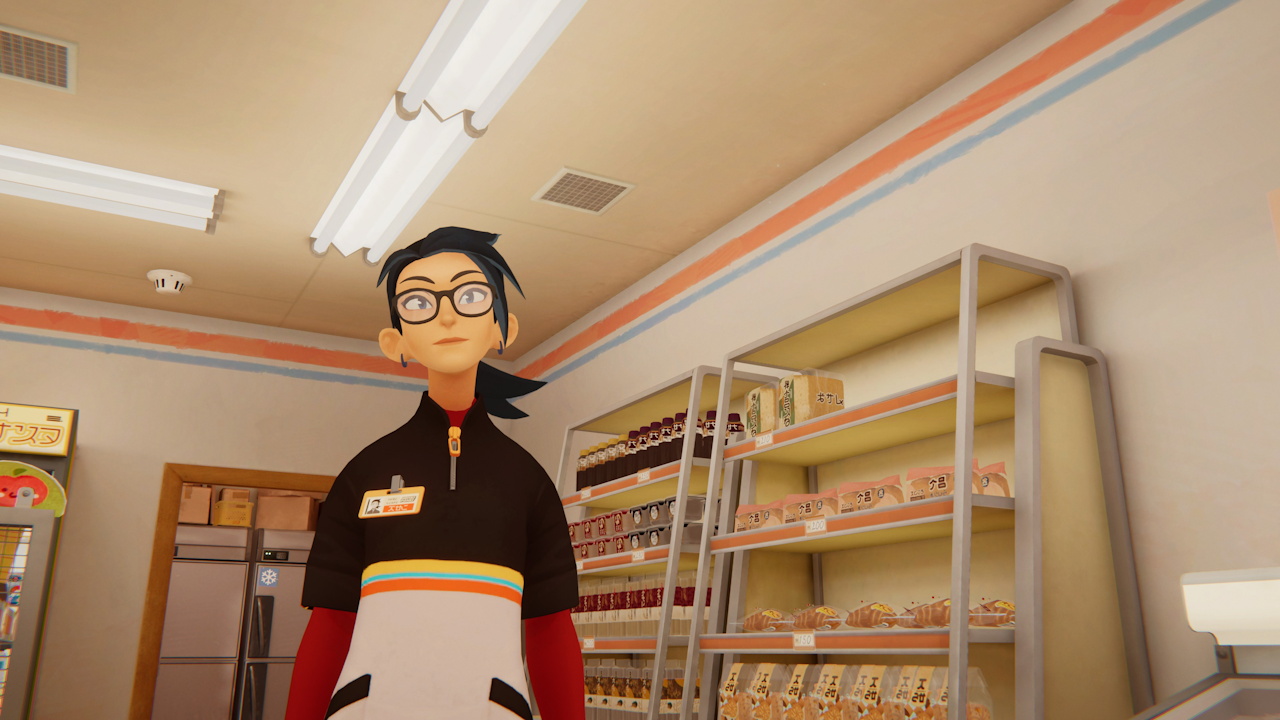
Promo screenshot for inKonbini showing Makoto
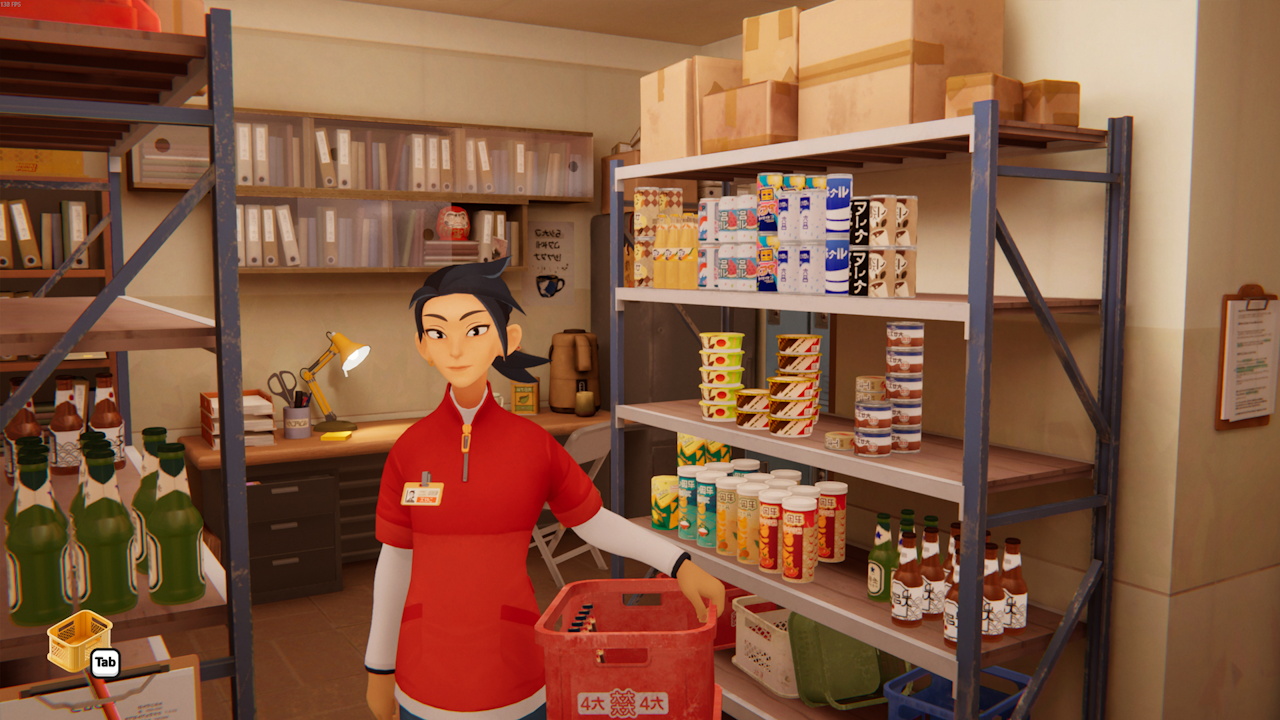
Makoto, the game’s protagonist.

inKonbini is a slow-paced game without massive, earth-shattering stakes. There are no boss battles – actually, there’s no combat of any kind – and you’ll spend your time in-game performing a variety of small tasks around a Japanese convenience store and interacting with the customers. However, inKonbini is not open-ended; there’s a distinct story that you’ll follow over the course of five in-game shifts. The tasks are different on each shift, as are the customers you’ll encounter, and I found there was a really cozy, relaxed vibe to the game – or at least there was about 95% of the time!

My playthrough took about six hours, which I spread out over several sessions because I really didn’t want to rush it! For that length, I felt inKonbini was more than fair with its price point, and I certainly got plenty of enjoyment out of the game the whole way through. Some moments, as we’ll get into if you stick with me to the spoiler-filled section below, were genuinely emotional, and the game’s characters almost all have a philosophical side that’s designed to make you think.

Promo screenshot for inKonbini showing bottles of cola
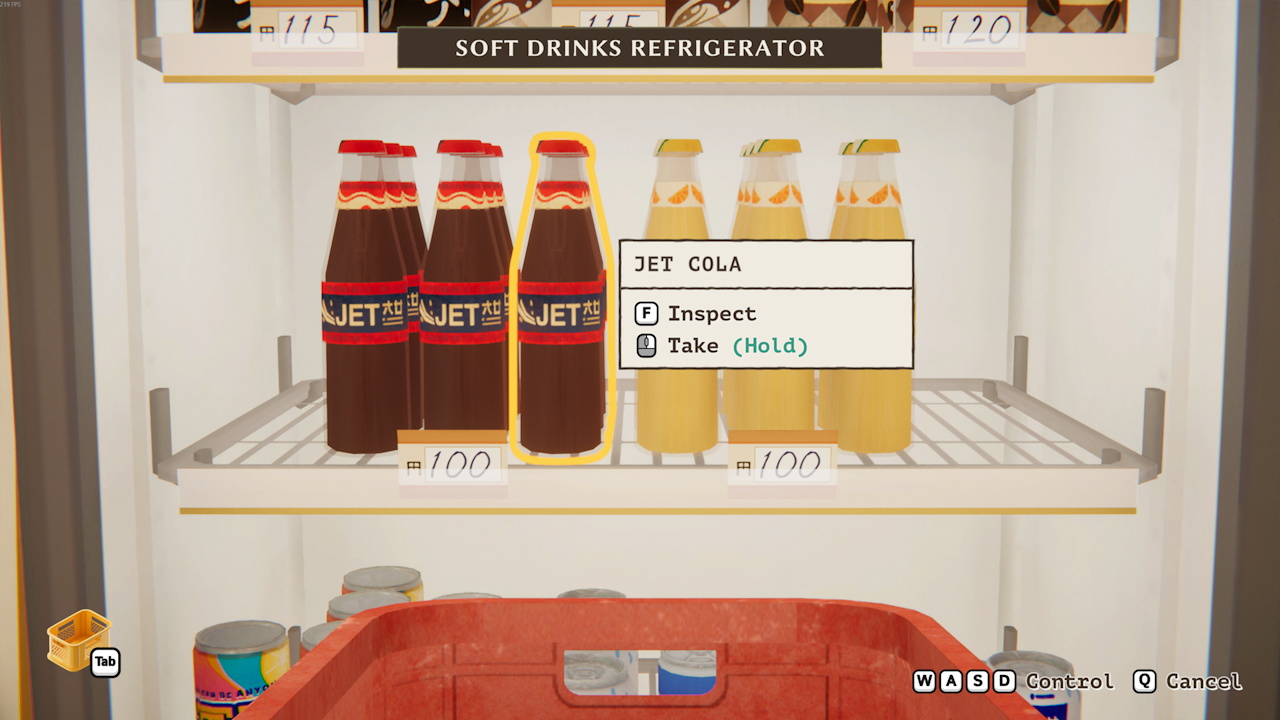
Bottles in a refrigerator.

I can be quite forgiving when it comes to minor issues and bugs in indie games; I want to see them succeed! But I’m pleased to report that inKonbini ran well on my self-built PC, and didn’t have any noticeable graphical or gameplay issues at all. I even got the game running in native 4K – which my PC can struggle with, sometimes, in other titles – without any problems whatsoever. It’s a smaller game, sure, and it isn’t one that’s designed to punish high-end hardware with hyper-realistic graphics! But a game that runs well is not a guarantee in 2026, so I think it’s worth celebrating that inKonbini’s performance was great from the start.

Although I really adored my time with inKonbini, it’s a game I’m reluctant to recommend to a general audience; I think you have to be specifically interested in slower-paced, casual, narrative adventures that verge on “walking simulator” types of games. If you want to have a surprisingly philosophical chat with some of the store’s customers, and if arranging digital products on virtual shelves sounds like fun, or if you like atmospheric, cozy games? inKonbini is an easy recommendation. However, if you’re an online multiplayer gamer, a souls-like “git gud” type of player, or you just need something a bit faster-paced, perhaps it won’t be right for you.

A recommendation, then – but for a specific type of player! If you stick with me to the next part of the review, we’ll get into a couple of the characters and story beats in a bit more depth.


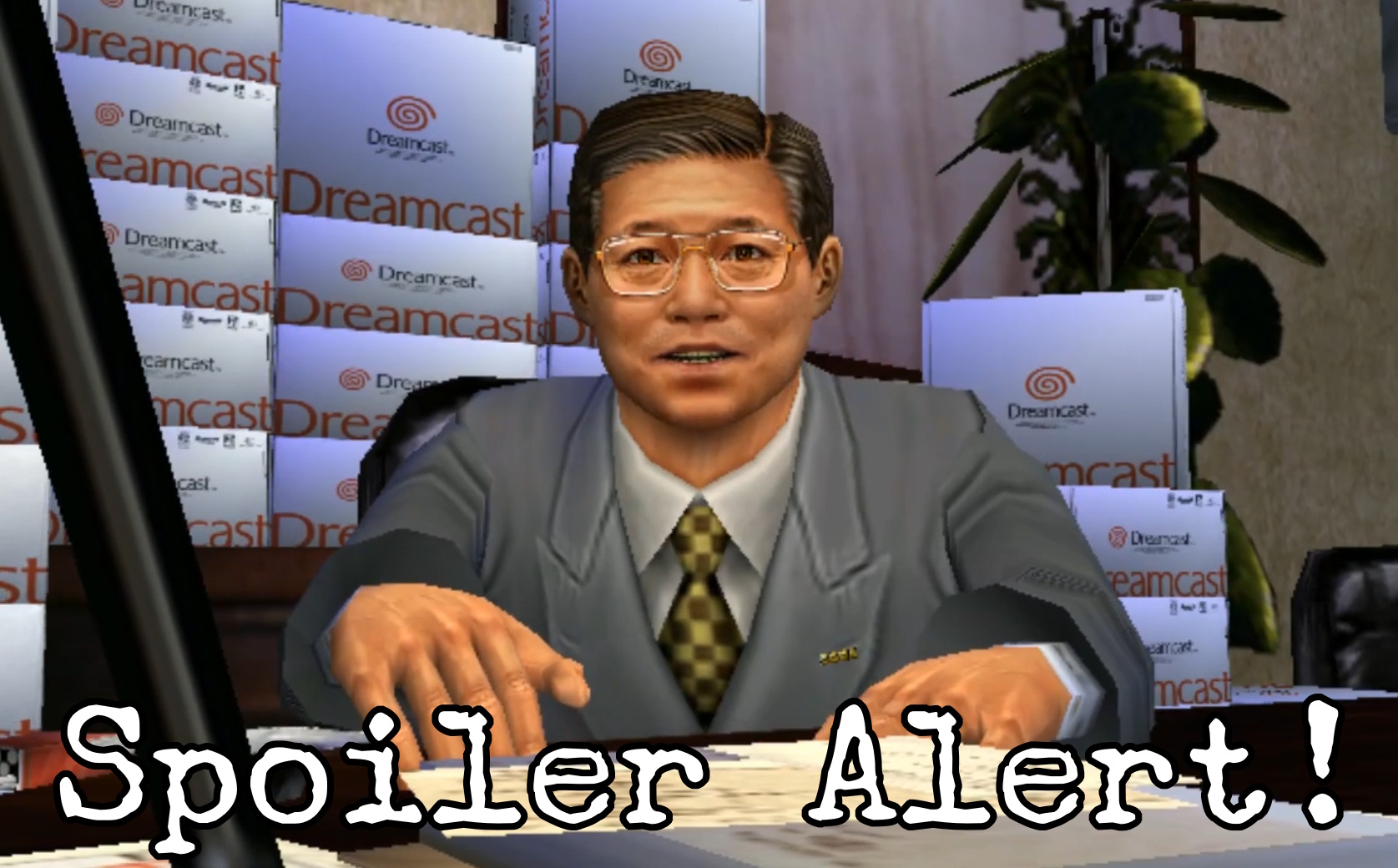
A Shenmue-themed spoiler warning.

This is the end of the spoiler-free portion of the review. There are spoilers for inKonbini: One Store, Many Stories from here on out.

My first job – when I was younger than inKonbini’s protagonist, Makoto – was in a small shop. And I worked in several others after that, too. It surprised me just how familiar that side of inKonbini felt to me, even some twenty-plus years after I last set foot in a place like that as an employee! In those days, most things were still pen-and-paper, at least here in the UK, and I have vivid recollections of things like filling out inventory sheets, stamping and signing delivery invoices, and manually walking the aisles to check if a product was in stock, in the right place, and so on. I hadn’t thought about those jobs or those memories in *decades*, but inKonbini brought them back!

This is the second game I’ve played in the last few months with a ’90s setting… and it’s the second time I’ve been hit with that bittersweet wave of nostalgia. The first was Mixtape – another excellent title which, if you enjoyed inKonbini, you may also like – so I guess the second half of 2026 has been a bit of a nostalgia kick for this old gamer, eh? Between those memories of working those jobs and all of the imagery and subtle nods to Shenmue, inKonbini turned out to be a surprisingly emotional experience… and that’s before we even get into the characters and story.

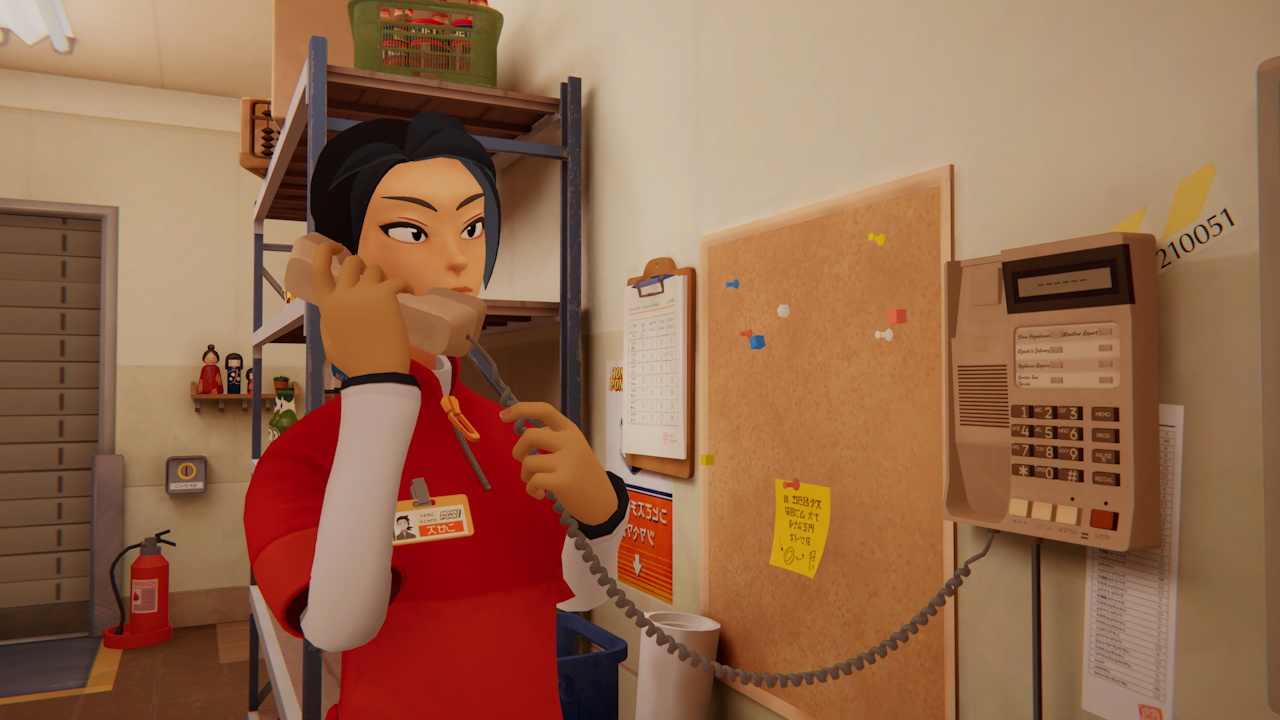
Screenshot from inKonbini: One Store, Many Stories showing Matoko on the phone
Talking on the phone.

Those retail jobs I had… they were never much fun. I actually got harassed coming home on the train one evening, as a drunk man smashed a train window and then got in my face as I was just trying to make my way home from the station! What I’m saying is… working those kinds of jobs is rarely the fun, laid-back, cozy experience that inKonbini offers. But I think that’s part of why the game is so enjoyable – it’s almost cathartic, all these years later, to see a fictionalised take on that kind of role that feels real enough to be believable… but without any of the drawbacks, like boredom and rude customers!

Even inconveniences that Makoto experiences – like a leaky roof, a missing product, or a broken appliance – become fun little distractions or mini-games to take part in. And when a customer is looking for help, choosing the right product at the right moment for them turned out to be a lot of fun. I actually found myself getting a little bit anxious, a couple of times – like I used to do when I worked those jobs, only to a much lesser extent! – as Makoto raced to find a missing item, set up a display, or get the shop ready in time for the evening’s first arrival.

Screenshot from inKonbini: One Store, Many Stories showing Matoko holding a box
Makoto is hard at work!

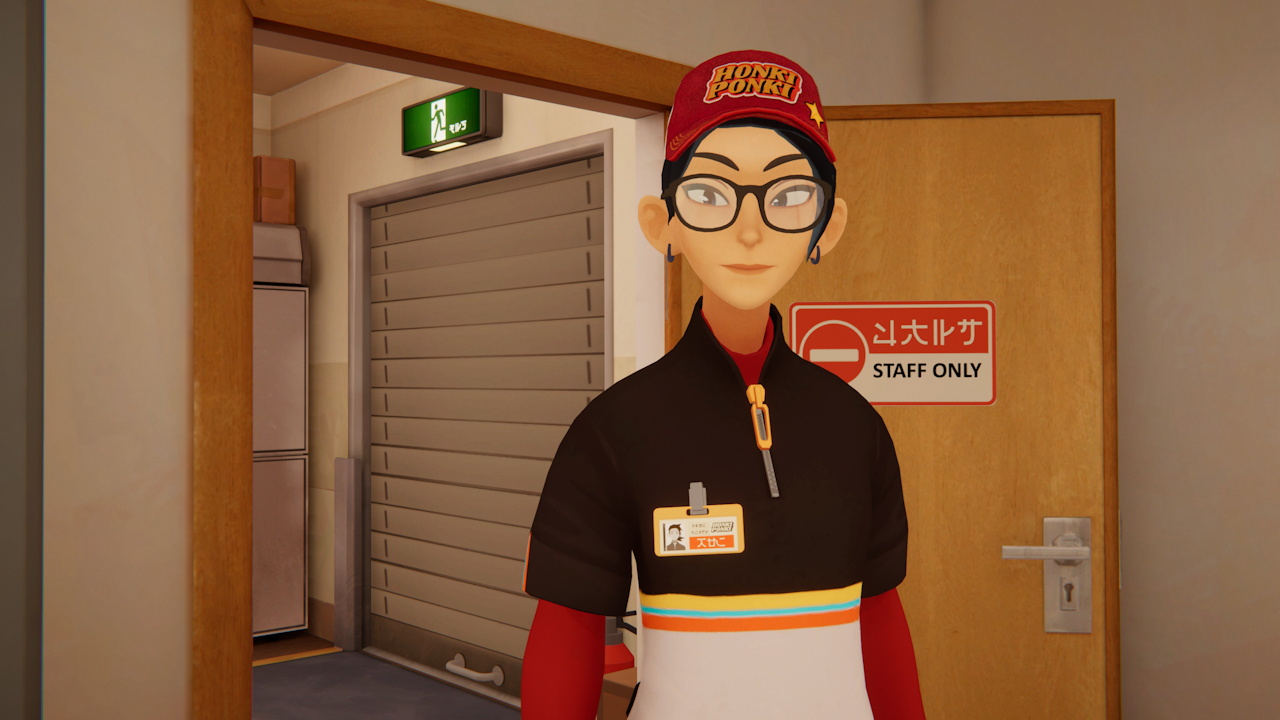
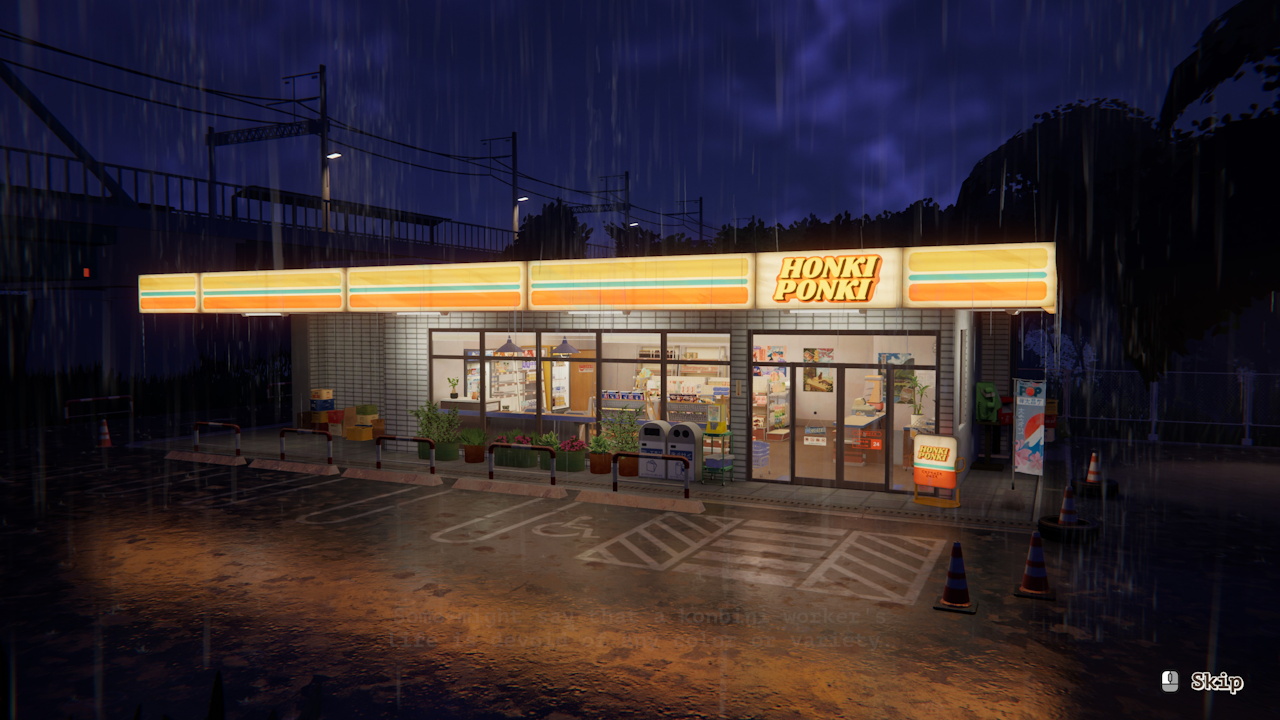
The decision to set the game entirely on the night shift works in inKonbini’s favour, and goes a long way to making it feel cozy and atmospheric. There’s a peacefulness to those overnight hours; genuine quiet while much of the world sleeps. I’m a bit of a night owl myself, and I used to enjoy doing things like overnight shopping (back in the pre-Covid days when supermarkets would be open 24 hours) just for the peace and quiet! A sleeping town (or rural area) has a totally different feel than it does in the daytime hours, and inKonbini perfectly captures that.

Again, that’s part of the whole “cozy” vibe that the game has going for it; Makoto is part of a bigger world that exists just outside the shop’s door, but that world is sound asleep, save for a few people here and there. I’m sure most of us have pulled an all-nighter at some point – I’d challenge you to play inKonbini and not feel at least *some* of that reflected in the game’s world.

Screenshot from inKonbini: One Store, Many Stories showing Makoto wearing a hat
Working the night shift feels surprisingly cozy.

Lots of different games can be cozy or comforting – and what’s cozy to one player may not be to another. Speaking for myself, this kind of gameplay – which I guess you could describe as being kind of “job simulator-adjacent” in some respects – really nails that calming, cozy feel. Again, to use a Shenmue analogy: this is akin to the forklift-driving part of the game. Some people might find putting items on shelves or organising a shop display dull or repetitive, which are criticisms some players *definitely* had of those parts of Shenmue! But if it’s your kinda thing… I think you’ll enjoy this aspect of inKonbini just as much as I did.

On that note, gameplay and setting come together really well, each bringing a piece of that coziness to the table. The setting and the atmosphere it creates – both inside the store and, by implication and inference, the world outside its walls – form the perfect backdrop for this kind of slower-paced gameplay, moving items around, setting up little displays, running through a checklist, and so on. The gameplay and setting compliment one another really well, and it takes a combination of both to really get to that cozy feeling that inKonbini gave me.

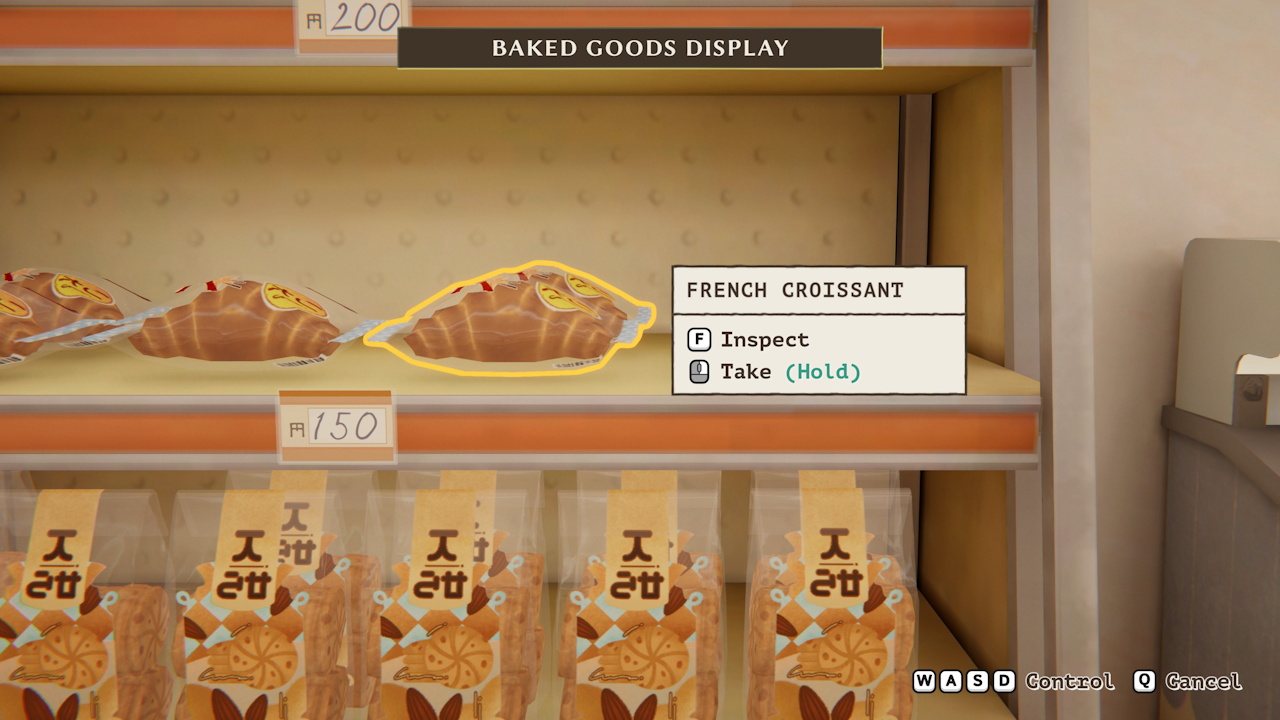
Screenshot from inKonbini: One Store, Many Stories showing a croissant
Restocking a shelf.

Some folks might want to see an open-ended game like this; for inKonbini to be the kind of game you can just play for a long time, with shift after shift of stacking shelves and checking out customers. But for me, I think that would misunderstand the kind of story that inKonbini aims to tell – not to mention make the few shifts you get to experience feel less important and special. While, in pure gameplay terms, I could see why some folks might want to take inKonbini and open it up… I think I like the game the way it is.

Makoto’s story is one that I think a lot of folks can relate to. Coming back to one’s home town – while in the middle of that first great adventure younger people look for after moving out – can be a bit anticlimactic. But the game wants to point out the value in hometowns, small communities, and the connections made between people. The four characters Makoto meets on the night shift all embody different parts of this in different ways – and all of them manage to feel like fun, well-rounded characters in their own rights, too.

Screenshot from inKonbini: One Store, Many Stories showing Makoto
Makoto, the player character.

Parts of inKonbini could feel a little high-minded, a little philosophical. And that could come at the expense of the kind of gritty “realism” that audiences today might look for. Some characters come out with quite abstract philosophical takes on everything from writing and business to the literal meaning of life… and if you’re just not in the right headspace for that, or you prefer your in-game dialogue a bit less floaty and more grounded, I could see that being a point of criticism. But, again, speaking for myself… I enjoyed my time with these characters, and I liked how each of them had something to say that wasn’t just gossip or small talk.

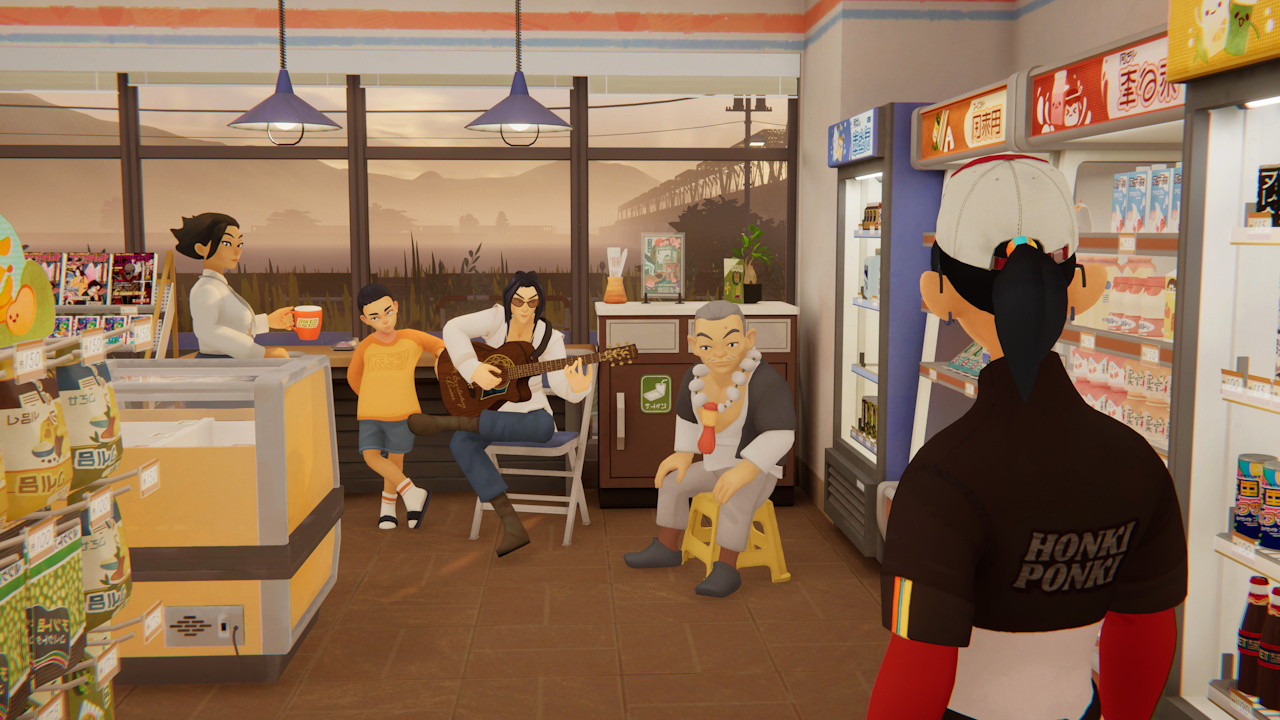
Each character also feels completely distinct. Satoshi has his burgeoning delivery business, Naomi shows up from the city looking to write an article, Chief is a local institution who’s fallen out with Makoto’s aunt, and the “Mysterious Man” has his backstory unfold in a really fun, unexpected, and occasionally weird way! Makoto keeps it all together, feeling like the most realistic and grounded of the core characters, and her phone calls to her aunt (and to a few others) give her something to do even when there aren’t any customers to serve.

Screenshot from inKonbini: One Store, Many Stories showing the characters
Makoto with all of her customers.

Perhaps it’s the Shenmue fan in me, or perhaps inKonbini just plucked the right combination of nostalgic and philosophical chords… but I really, thoroughly enjoyed my time with the game. I genuinely did not want to see the credits roll… because that would mean it was over.

However, there’s some replayability in inKonbini, despite the game having an otherwise linear story. There are some achievements I didn’t unlock the first time around that I’ll definitely go back and try to get, a few optional little quests or stories off to the side that I missed or didn’t see through to the end, and plenty of capsule toys that I didn’t find. So my adventure at the Honki Ponki konbini isn’t over yet! And I find that thought to be quite comforting.

I hope my thoughts on the game have been interesting. And I hope I was able to properly convey just how enjoyable an experience this was. 2026 has been a pretty good year for video games, all things considered, and inKonbini is, without a doubt, one of my favourite experiences of the year.

Screenshot from inKonbini: One Store, Many Stories showing the store in the intro
The convenience store.

If you missed them earlier in the year, I’d like to direct you to my reviews of Forever Ago and Mixtape – two comparable titles that, if inKonbini was your thing, you might also enjoy. And given that we’ve talked so much about Shenmue, please consider taking a look at my twenty-fifth-anniversary celebration pieces for both Shenmue and Shenmue II.

And I have a couple of other games on my list for 2026 that I *hope* to get to before the end of the year, so stay tuned for those!

Thanks again for checking out my review of inKonbini. This was a game that had been on my radar for a little while, and I’m so glad that I finally had the chance to try it for myself. It’s one of those games that I just… got lost in, and I didn’t want to reach the end. I had a blast with Makoto and her new friends, and I’m sure it won’t be long before I head back to the konbini for another night shift.


inKonbini: One Store, Many Stories is out now for Nintendo Switch and Switch 2, PC, PlayStation 4 and 5, and Xbox One and Xbox Series consoles. inKonbini: One Store, Many Stories is the copyright of Nagai Industries and/or Beep Japan, Serenity Forge, and Smilegate. This review contains the thoughts and opinions of one person only and is not intended to cause any offence.