

Spoiler Warning: There are spoilers ahead for Star Trek: Strange New Worlds Seasons 1-2. Minor spoilers are also present for the following Star Trek productions: The Original Series Season 1, The Undiscovered Country, and Lower Decks Season 2.
I’m kind of glad that it’s taken me such a long time to finish watching Season 2 of Strange New Worlds. A lot of you have been sitting with the cliffhanger ending to Hegemony for over a year already, but I’ll glide smoothly into Season 3 in just a matter of weeks! Are you jealous?
Joking aside, Hegemony was a great episode – and the Star Trek franchise’s first big cliffhanger ending to a season in a while. There are a couple of narrative beats that I wasn’t as keen on, which we’ll get into in due course, but Hegemony was a fantastic way to end the season. There was a constant sense of tension throughout, which peaked at key moments in the story, a fun re-introduction of a classic character from The Original Series, and plenty of action to boot. I’d probably say that Hegemony doesn’t quite hit the same level as A Quality of Mercy did at the end of Season 1, but that’s an exceptionally high bar for any episode to aim for!
In The Next Generation era, it seemed that almost every season would end with the words “to be continued!” From The Best of Both Worlds at the end of TNG Season 3 to Zero Hour at the end of Enterprise’s third season, there were only three seasons of Star Trek that didn’t end on a cliffhanger. But since the franchise returned to the small screen in 2017, we’ve tended to get self-contained serialised stories that run for a single season apiece. The closest is arguably Discovery Season 2, which ended with the ship and crew heading into an uncertain future – but that season also wrapped up all of its other key storylines by the time the credits rolled (probably because cancellation was a legitimate concern).
I respect the confidence of Strange New Worlds’ writers and producers to create a story like this as a way to end Season 2. It was bold because a third season was not confirmed (at least, not publicly) at the time Hegemony was being written. A season-ending cliffhanger also feels like “classic Star Trek” in the best possible way, and coming at the end of a largely episodic season that’s seen Pike and the crew thrown into a mix of different adventures… it just feels right. I’ve said more than once that Strange New Worlds is the high-water mark of modern Star Trek, and Hegemony with its cliffhanger ending is yet another example I can point to when critics ask what I mean by that!

Hegemony’s cliffhanger ending does leave me feeling concerned, though, at least in one sense. Obviously we know, and have known for a while, that Seasons 3 and 4 are coming – and that’s great! Strange New Worlds isn’t going to be abandoned with this ending left unresolved. But one of the best things about Strange New Worlds has been its return to a more classic style of episodic storytelling – something which, I would argue, really suits the Star Trek franchise. Particularly after the wholly-serialised Discovery and Picard, bringing Star Trek back to its roots – while retaining character arcs and other modern trappings – has been wonderful to see.
Because Hegemony ended in such a way as to tease a longer story – perhaps a season-long arc involving a conflict with the Gorn, akin to Deep Space Nine’s Dominion War – I’m a little concerned about Season 3 stepping away from that episodic style. I hope I’m wrong, and the very small glimpses of Season 3 that we’ve caught so far don’t seem to be all about the Gorn, which is positive. I’m just hoping that what’s made Strange New Worlds such a joy to watch over the past couple of years won’t be watered down by the Gorn story that debuted in Hegemony, as it’s a storyline that could easily lead to that kind of longer arc.
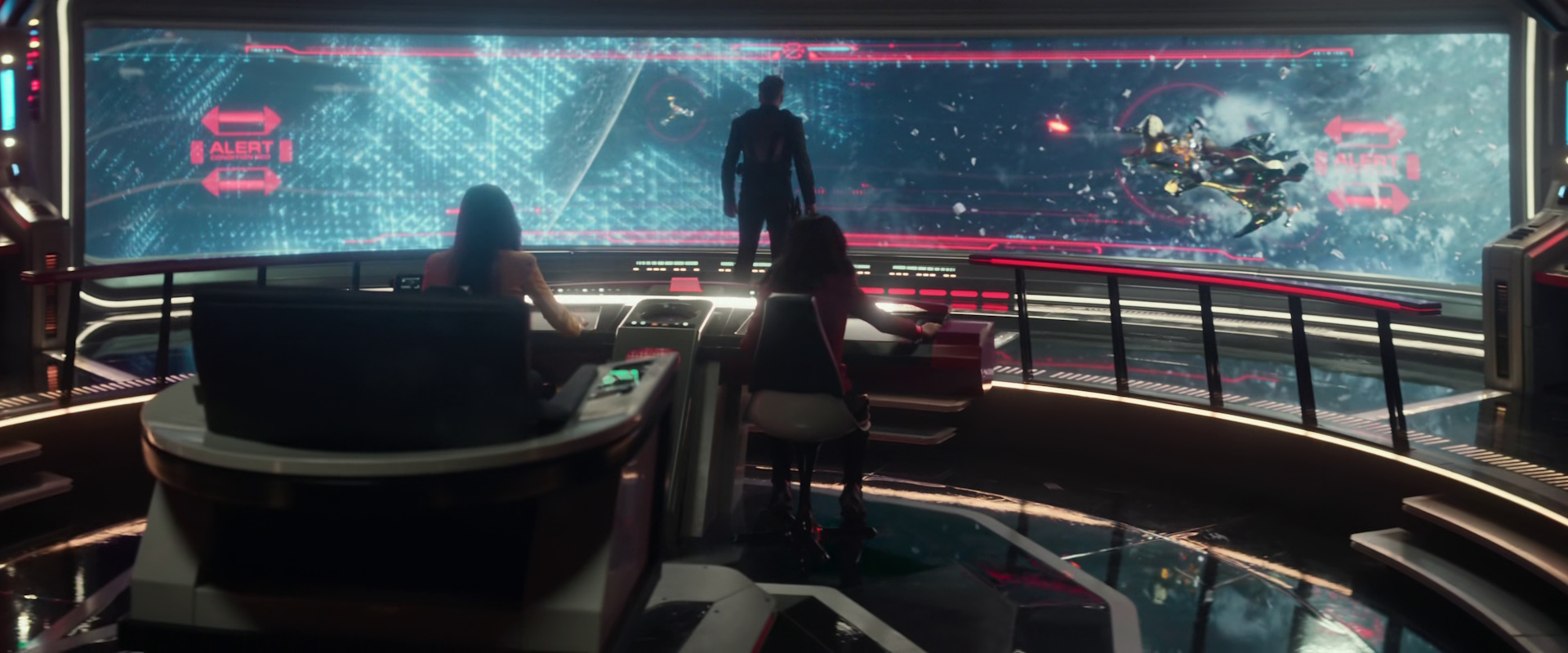
That being said, I won’t deny that I love a good battle or war story in Star Trek – and the aforementioned Dominion War arc in Deep Space Nine happens to be one of my favourites. Within Deep Space Nine’s longer seasons, there was still plenty of time for one-off stories alongside episodes about the war, and if the Gorn war is to continue in Strange New Worlds across Season 3, I’d hope the writers and producers will be able to strike a similar balance. It’s more difficult to do that in an age of cut-down ten-episode seasons than it was when Star Trek shows would regularly churn out twenty-two or even twenty-six in a year… but getting a mix of different stories should still be possible.
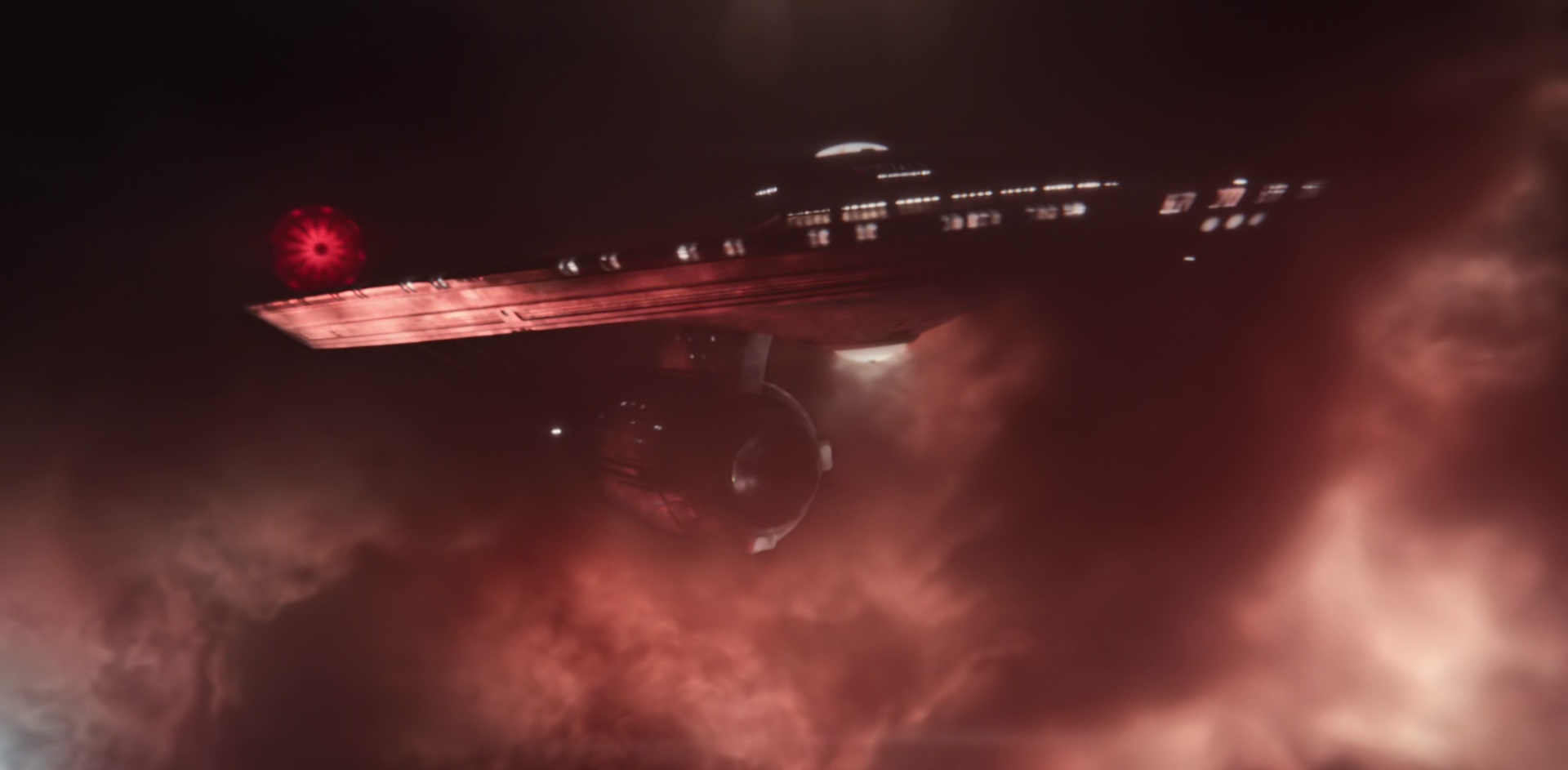
Hegemony built on Season 1’s excellent episode All Those Who Wander in more ways than one, and if there is going to be a longer, more protracted conflict that plays out over several episodes, we can re-frame that story as a serious bit of foreshadowing. After Memento Mori had re-introduced the Gorn in style, All Those Who Wander ramped up the fear factor, making the classic Star Trek race feel more like the Xenomorphs from Alien. It was this horror tone that continued though Hegemony, both in scenes set on the planet Parnassus Beta and aboard the wreck of the USS Cayuga.
As an aside: I love the name Parnassus Beta for a planet! It feels like something straight out of The Original Series, using a Latin- or Greek-sounding word for the name of the system. Where I was less keen, unfortunately, was the very generic “21st Century North American town” design used for the planet’s surface. Hand-waved away with a “but they wanted it to look like this, though” line from Captain Batel… I just felt the designers could’ve done something to make Parnassus Beta look a little more futuristic.
And look, I get it: there are limited budgets for any episode of Star Trek, so decisions have to be taken and compromises need to be made. Given that we mostly saw Parnassus Beta in the dark and boarded up after the Gorn attack, I think it was passable enough. Its introduction reminded me a little of The Original Series episode Operation – Annihilate! parts of which were filmed on location in California. In that sense that “classic Trek” vibe was present… but I’m not sure that’s necessarily a positive in this case! I guess I’d just have preferred to see a more futuristic take on a human colony rather than one that very clearly took place on a studio backlot (the Parnassus Beta scenes were filmed on a set created by Amazon Prime Video for the series Reacher, according to Memory Alpha).

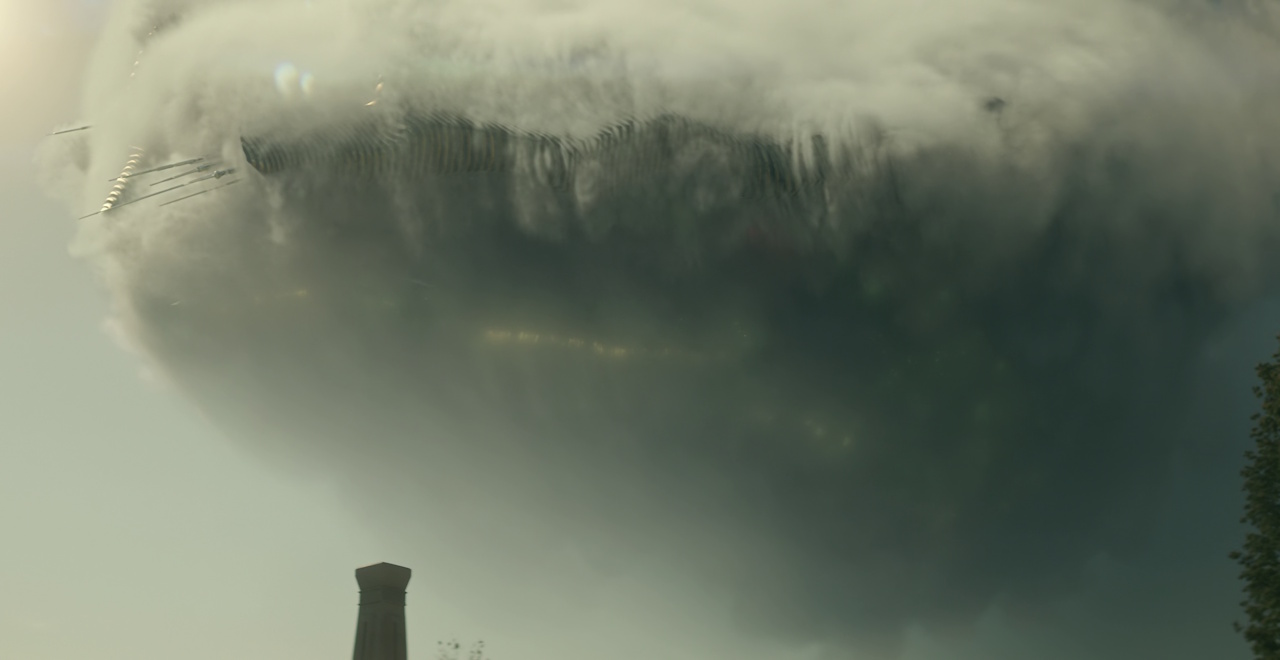
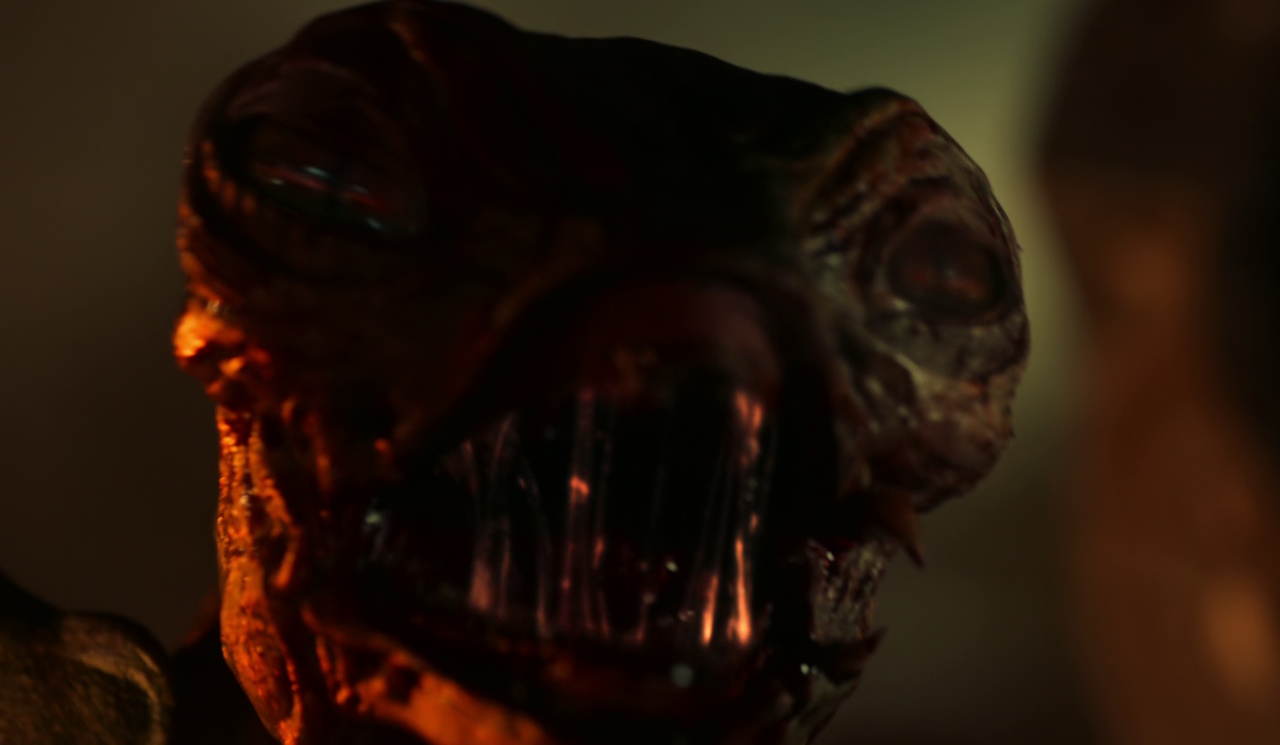
As underwhelming as Parnassus Beta may have been in daylight, after the Gorn descended – and seemingly blocked out the sun – the place took on a completely different atmosphere. There were elements borrowed from both the horror and war genres on this side of the story. Parts of Parnassus Beta felt like they were from a World War II film with commandos parachuting into occupied Europe; others felt more like a werewolf or vampire flick. The monstrous young Gorn even reminded me of Jurassic Park’s velociraptors.
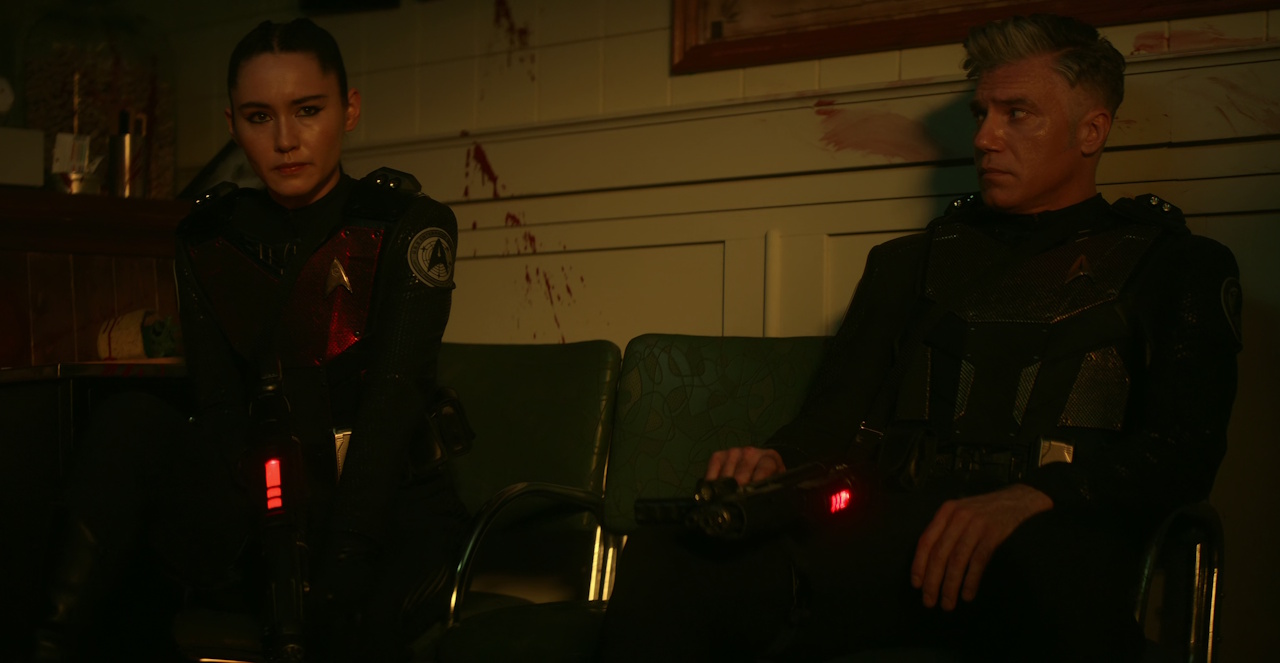
And this was reflected in the way the sets were designed and dressed. Boarded-up windows, thrown-together shelters, blood-stained walls showing the aftermath of a battle or abduction… this blend of horror and war tones soaked Parnassus Beta and turned a really bland and uninspired 21st Century settlement into a colony under siege. The aftermath of the Gorn attack was chaotic and bloody, with the few survivors that Captain Pike and the away team encountered hiding from the aggressors outside.
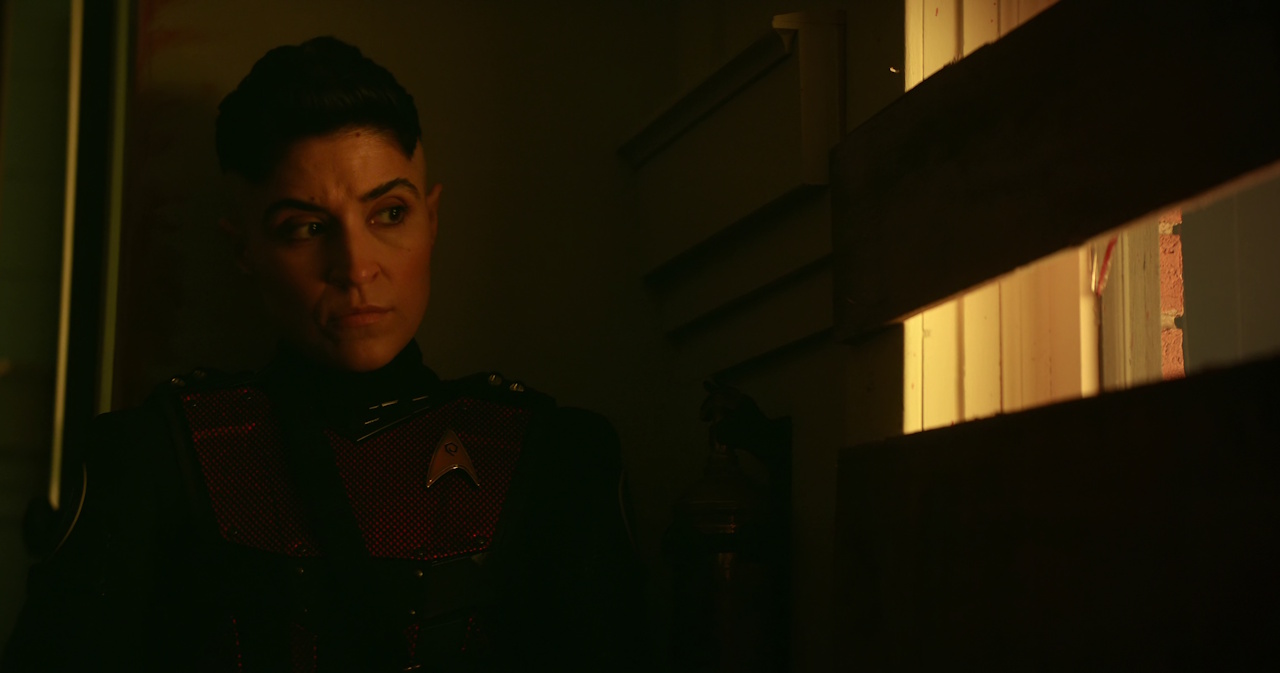
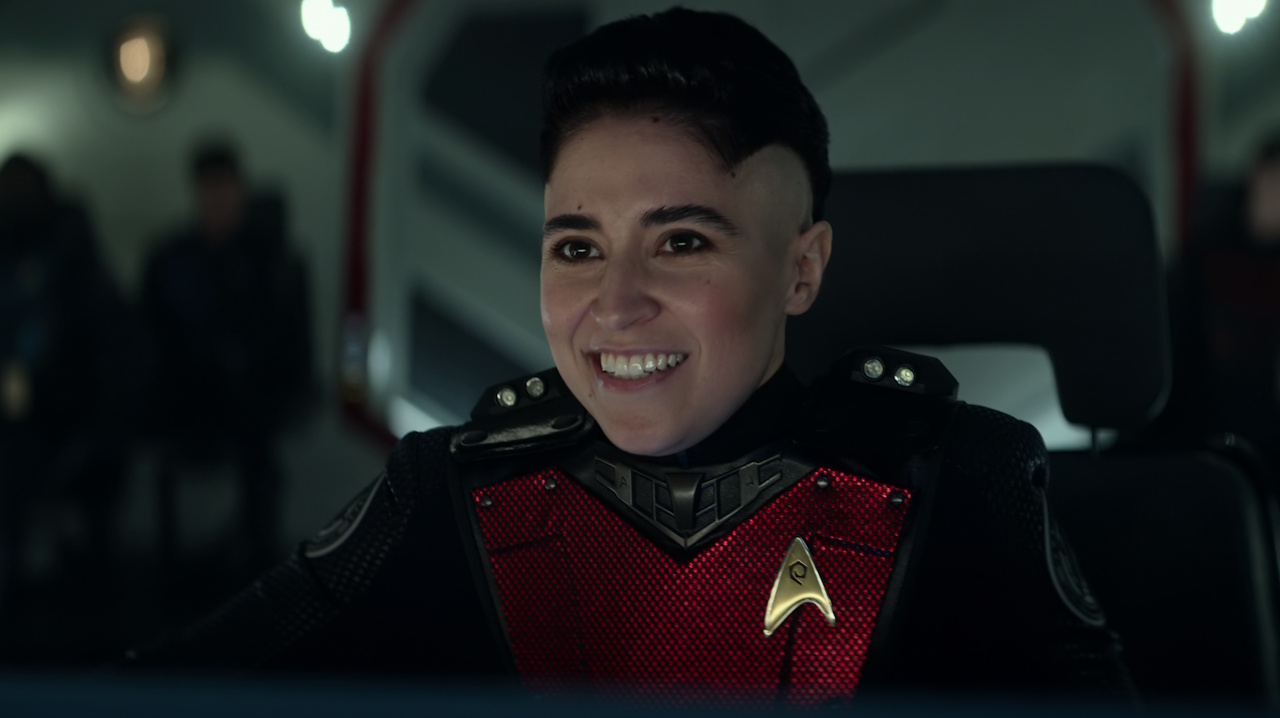
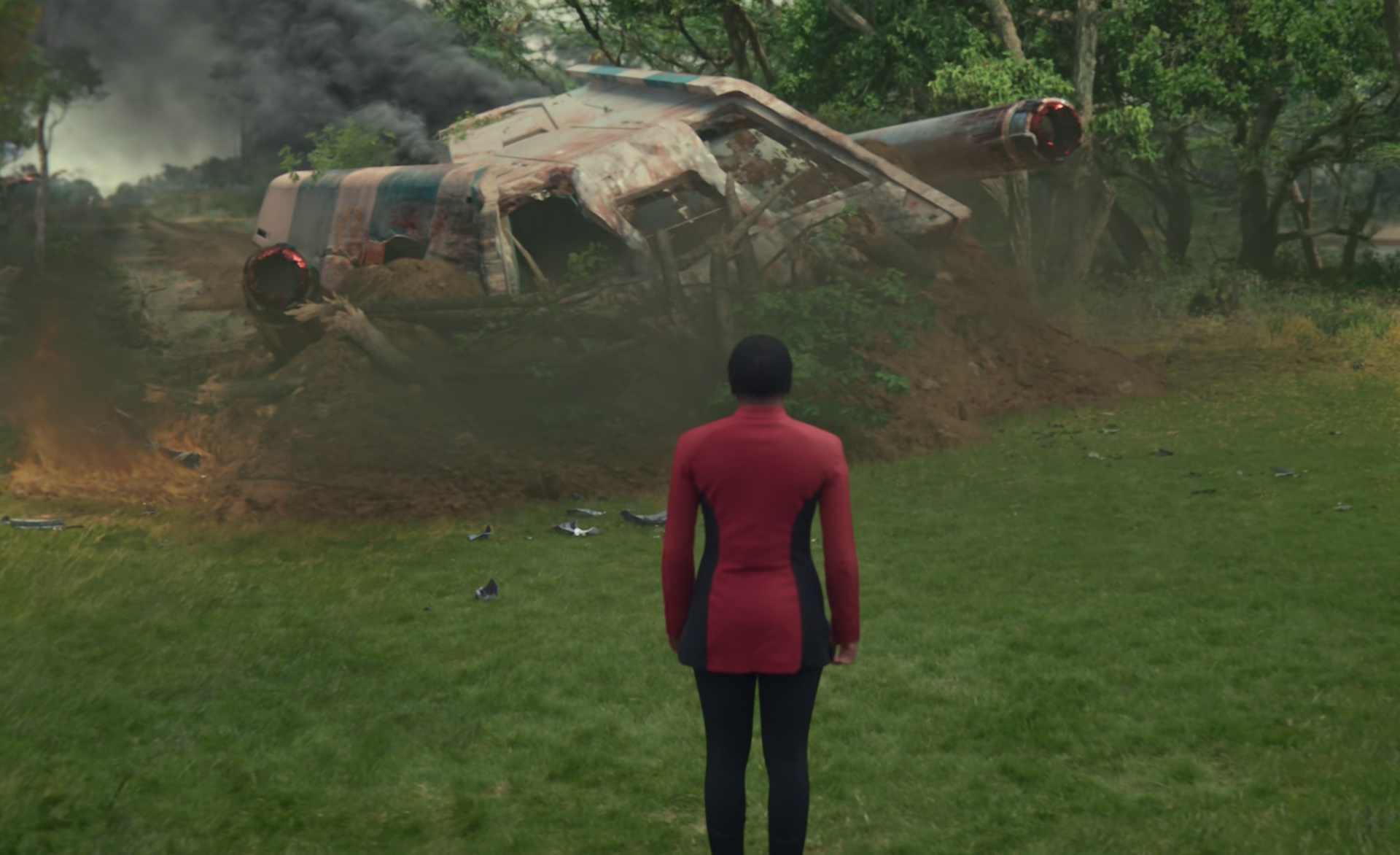
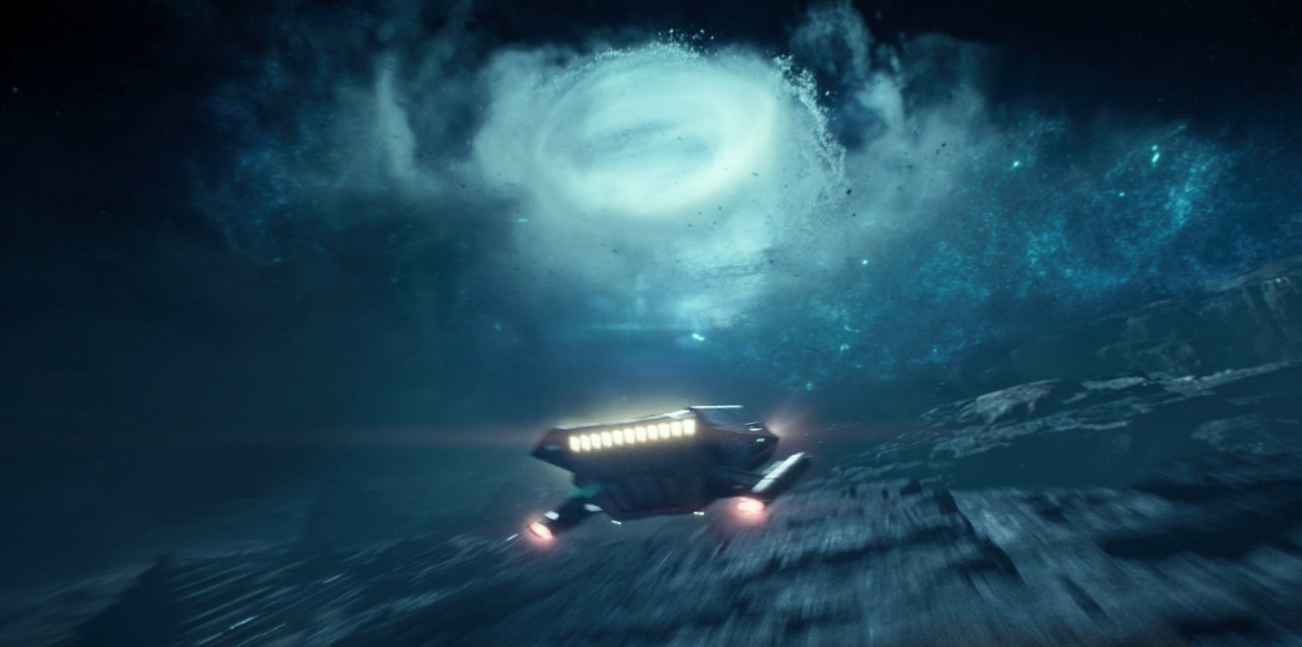
The descent to Parnassus Beta in the shuttle was a fun sequence. It was great to see Ortegas in her element; she’s up there with Tom Paris, for me, as one of the few bona fide pilots in Star Trek, and it’s clear how good she is at her job and how much she loves it. There was a NASA vibe to her line about being a test pilot, and I liked that little harkening back to the early days of spaceflight.
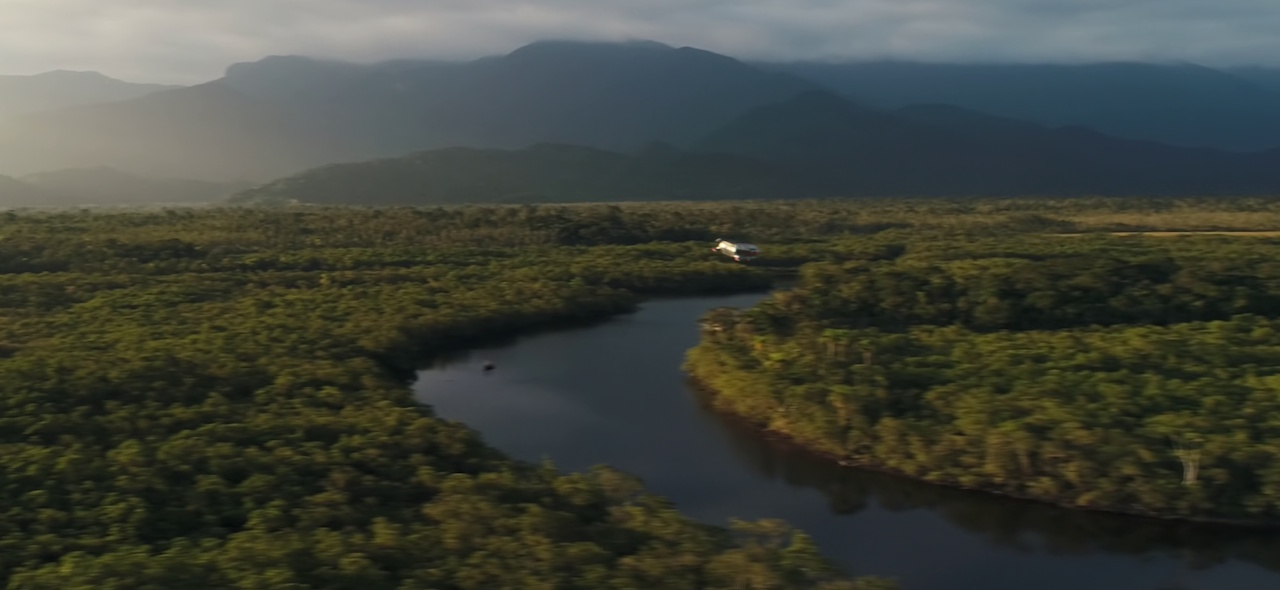
Melissa Navia, who plays Ortegas, had asked for a reduced role in Season 2, so I was glad to welcome her back for this sequence. The “dropship” idea was creative, and we got to catch a glimpse of the surface of Parnassus Beta beyond the confines of the colony. It looked like a jungle or rainforest, at least at first glance, which was neat.
Let’s talk about Parnassus Beta’s status as a non-Federation human colony – and how that relates to both the episode Hegemony and the rest of Star Trek! As Trekkies who like to get lost in this world, it’s genuinely interesting to learn more about the galaxy, and how not every human colony is founded with Federation membership in mind. I think the existence of a colony like Parnassus Beta ties into classic episodes, not only where non-Federation worlds have been featured… but where Starfleet repeatedly encounters very human-like “aliens!”
I made the same point during Lower Decks’ second season after we were introduced to the Hysperians: a non-Federation group of humans who’ve based their society around medieval chivalry. The way in which these colonies are established and governed could account for the existence of planets like 892-IV in Bread and Circuses, the Earth twin world in Miri, and even Sigma Iotia II from A Piece of the Action. All of these feature societies inspired by old Earth civilisations… and I kind of like the idea that, somewhere in the 21st or 22nd Centuries, before the Federation existed and kept meticulous records, humans settled on distant worlds and brought aspects of their culture with them. You could even throw in the Irish stereotypes from Up The Long Ladder as another example… though maybe the less said about that the better, eh?
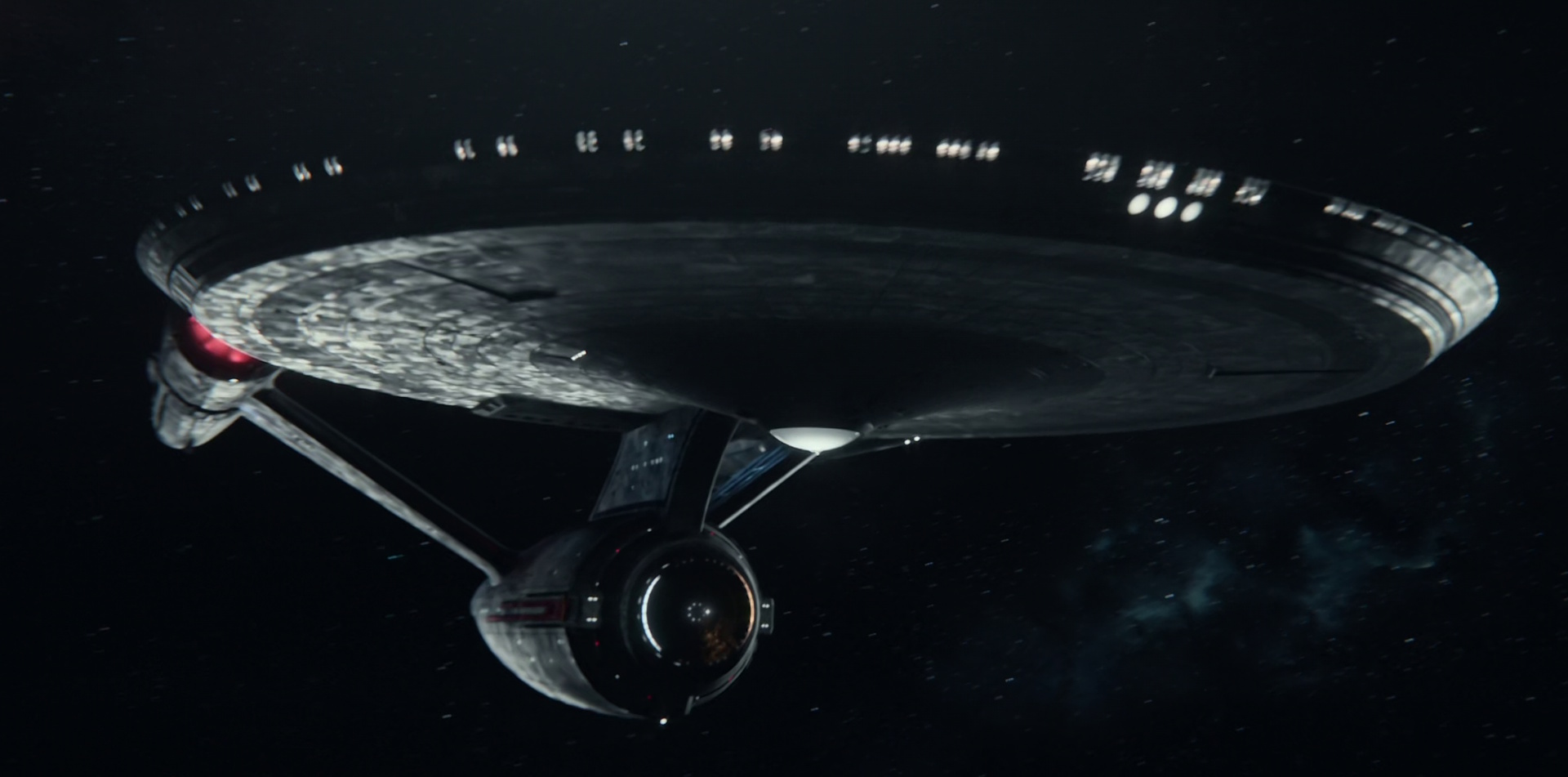
The point is… as disappointing as Parnassus Beta may have been from a visual standpoint, it does match up with other Star Trek stories about human colonies, particularly colonies outside of the Federation’s jurisdiction. Star Trek was first imagined, in the 1960s, as taking inspiration from America’s “Wild West,” and what could be more fitting than independent groups striking out on their own to settle the “wilderness?” And – if we continue to stretch the metaphor – what could be more fitting than the existing residents of that wilderness, whom the colonists apparently didn’t care enough to find out about, striking back?
So does that make the Gorn the Native Americans in our analogy? I guess that’s a little uncomfortable, too. But never mind! Parnassus Beta was an interesting setting in concept, and the relationship between Starfleet and some of these outlying human colonies is something I’d like to see explored in more detail in the future. Knowing what we know about the Maquis and other human settlements beyond the borders of the Federation, it was really interesting to get a tease of that in a 23rd Century context.
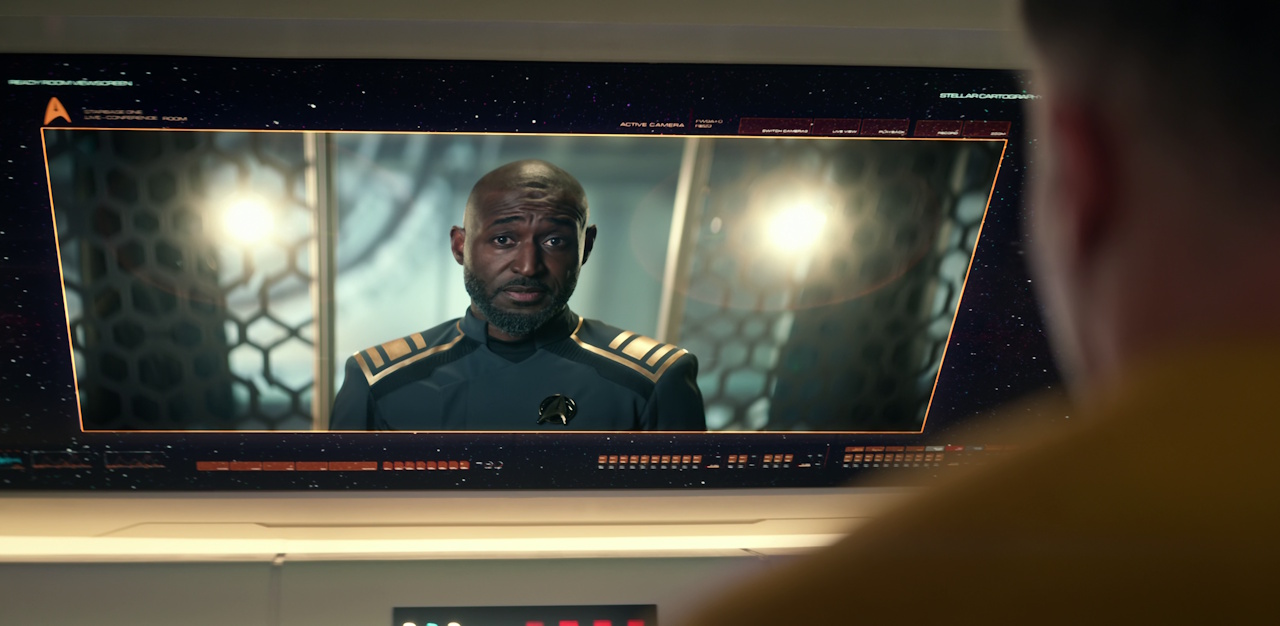
However, Parnassus Beta and its non-Federation status led to one of the biggest contrivances in Hegemony. Admiral April explained to Captain Pike that Starfleet wanted to avoid all-out war with the Gorn… which is fair enough. And to that end, the Federation was willing to essentially sacrifice the thousands of settlers on Parnassus Beta by refusing to sanction a response or a rescue operation, effectively ceding the planet to the Gorn and abandoning the colonists to a rather grizzly fate. That part tracks, and as much as we might be on Pike’s side and want to help, there’s an internally consistent logic to this side of the story.
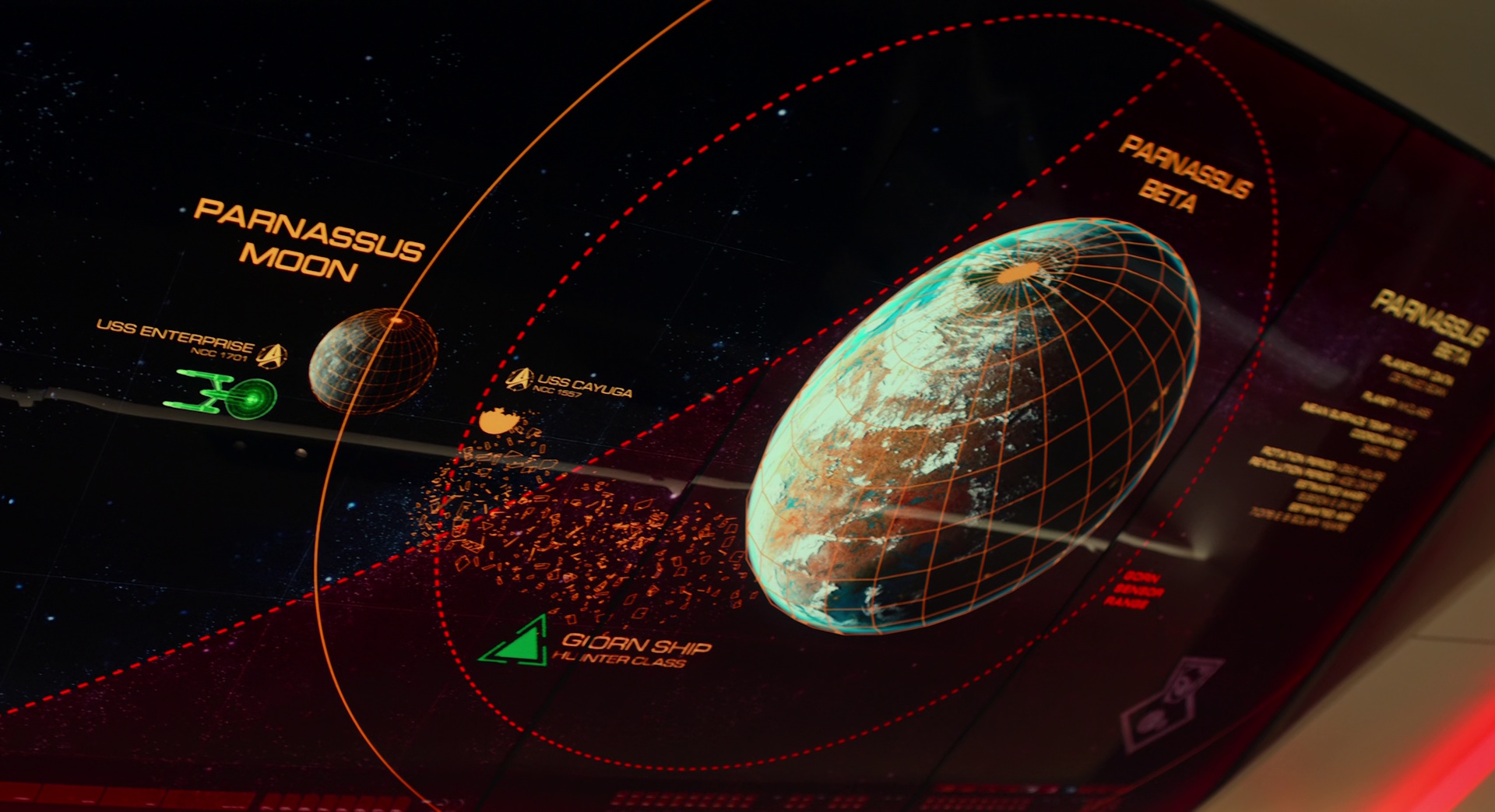
But the attack on the USS Cayuga changes the dynamic completely – and no one in Hegemony so much as mentioned that. The Gorn didn’t only attack a non-Federation colony: they also attacked and destroyed a Starfleet ship. The Federation may have no jurisdiction over Parnassus Beta, and I could believe that they’d be willing to abandon the planet to its fate in an attempt to appease the Gorn. I mean, we have similar stories in The Next Generation and Deep Space Nine with human colonists near the Cardassian border, and the same thing happened there. But the attack on the Cayuga was an attack on Starfleet and the Federation; it was an act of war.
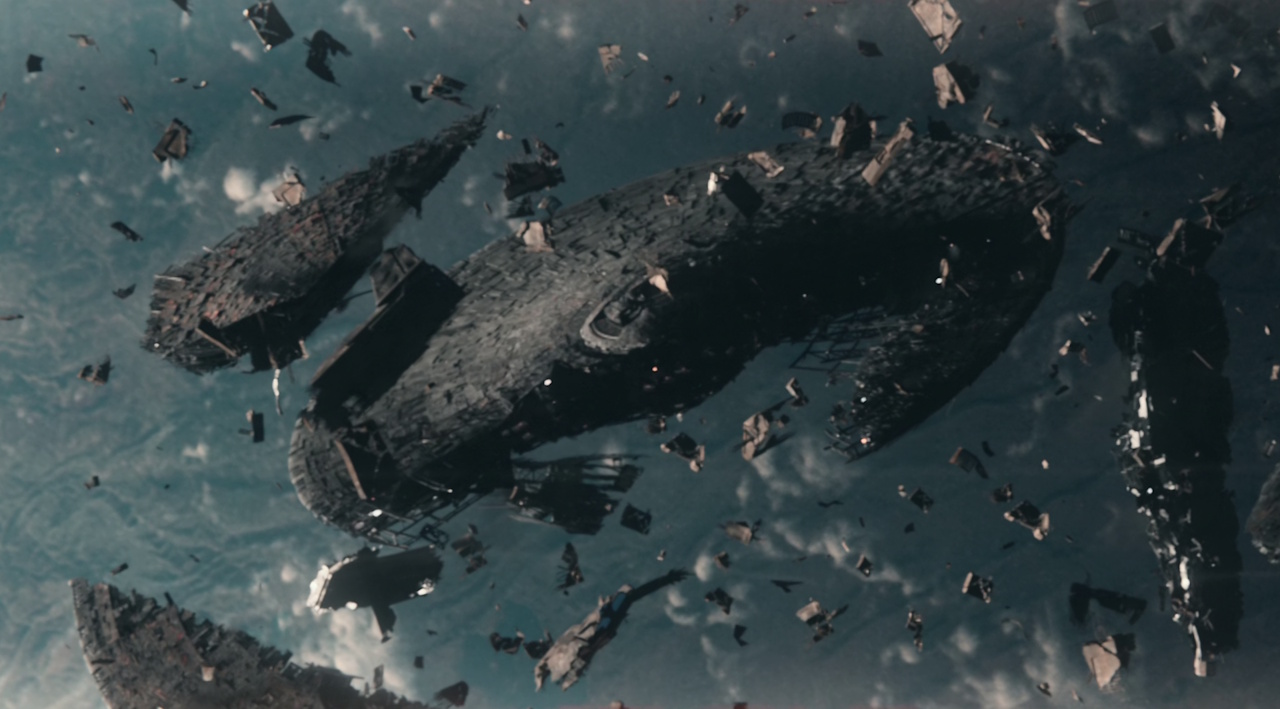
This is the central conceit of Hegemony, and it doesn’t work. In order for us to believe that Starfleet and the Federation want to avoid war with the Gorn, we have to believe that they’re willing to do so at all costs, including sacrificing their own officers and ignoring the attack on two of their own ships. Because we later learn from Scotty that not only was the Cayuga destroyed, but so was his ship, the USS Stardiver. Starfleet may not have known about the Stardiver at the time of April’s message, but they did know about the Cayuga.
In order to get to the rest of the episode and its genuinely wonderful and engaging story, we first have to get around this narrative obstacle. And try as I might to rationalise it, it doesn’t make a lot of sense. “Open war is upon you, whether you would risk it or not.” Those were Aragorn’s words in The Lord of the Rings, as he explained to King Theoden that Saruman and Sauron were on the march, and there was no way to avoid taking part in the battles to come. In the case of Hegemony, the Gorn have declared war on the Federation by the attacks on the Stardiver and Cayuga, no matter what Starfleet’s Admirals might want. By refusing to sanction a rescue mission or allowing the Enterprise to retaliate, forcing Pike to stay on one side of an arbitrary, Gorn-designated demarcation line, Admiral April and Starfleet were not acting rationally within our understanding of Starfleet and the Star Trek universe.
And I think this is why I’d rank Hegemony lower than last season’s All Those Who Wander. Gorn attacks on Starfleet are a regular enough occurrence that Starfleet has contingencies in place, but when the Gorn obliterate a Federation starship they’re unwilling to recognise the reality of the situation. Maybe there’s meant to be a metaphor there, something about the drawbacks and limitations of appeasement or the necessity of smaller states being protected under the umbrella of larger alliances. But I don’t believe that’s how it comes across – it reads, to me, like everyone in the episode basically ignored this massive event in order to skip to the action set-pieces and to give Pike’s mission a “disobeying orders” foundation.
If we take our Wild West metaphor from a moment ago and drag it out further, this would be akin to the United States in the late 1800s seeing an army unit attacked on the frontier and doing nothing to respond because the town they were visiting happened to be outside of US jurisdiction. Would that have happened? Would any modern-day military accept an attack on one of its units and refuse to respond in kind? Starfleet is the Federation’s military – and while the attack on the USS Cayuga need not lead to all-out war, at the very least it would give Pike and Starfleet some leeway to respond instead of blindly agreeing to the Gorn’s terms without so much as attempting to negotiate. If we were solely dealing with the attack on the colony, this story would’ve worked so much better. But by bringing the Cayuga into it, it complicates things – and not in a good way, unfortunately.
There’s something inherently un-Starfleet about abandoning officers to their fate – especially when that fate has been shown to be nothing short of an agonising death. We could point to dozens of episodes across the history of the franchise – from The Galileo Seven in The Original Series to First First Contact in Lower Decks – where Starfleet officers have done everything in their power, including breaking the rules, to avoid leaving someone behind. And while that’s exactly what we see Pike and the crew do… they’re forced to disobey a very un-Starfleet order in the process.
Some Star Trek stories have a “badmiral” as either a quasi-antagonist or a straight-up villain. Others have shown admirals who are out of touch or even incompetent. And occasionally, as in a couple of notable Deep Space Nine episodes featuring Admiral Ross, we’d catch a glimpse of the weight of command. These stories could show how someone in a senior position has to deal with more than what we see on screen; our protagonists aren’t always privy to all of the information or don’t have a bigger-picture view of the situation.
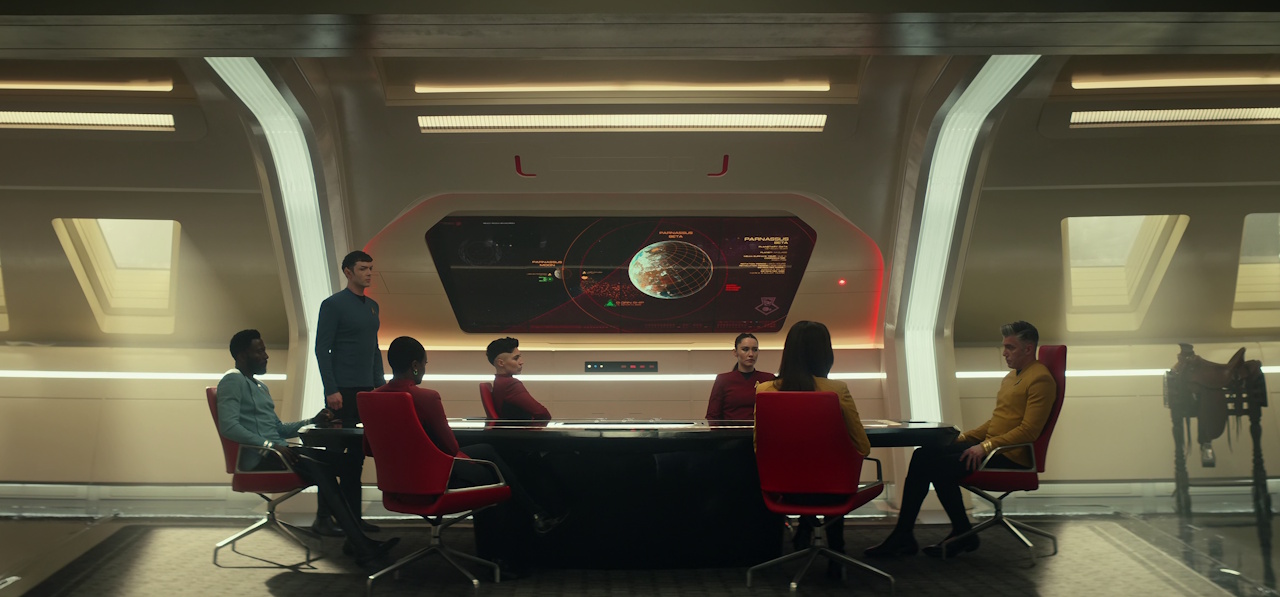
The best spin I can put on Hegemony’s Admiral April is that he isn’t sharing everything he knows, or that he’s struggling with the burden of command at a time of war. However… I don’t think that’s really how it comes across, and it feels like the writers of the episode far too quickly brushed aside the implications of an attack on the USS Cayuga and the USS Stardiver in order to tell a story about Pike and the crew disobeying orders to do the right thing. The problem, at least for me, is that the weak setup risks undermining that story. When it’s a story that works so well and has so many highlights… that’s just a bit of a shame.
But I guess, in the grand scheme of things, all of this probably feels like a glorified nitpick. Hegemony did explain that Parnassus Beta was outside the Federation, and Admiral April’s orders were clear. Perhaps I’ve overthought this aspect of the story somewhat… but it didn’t sit quite right with me for the reasons I’ve tried to explain.
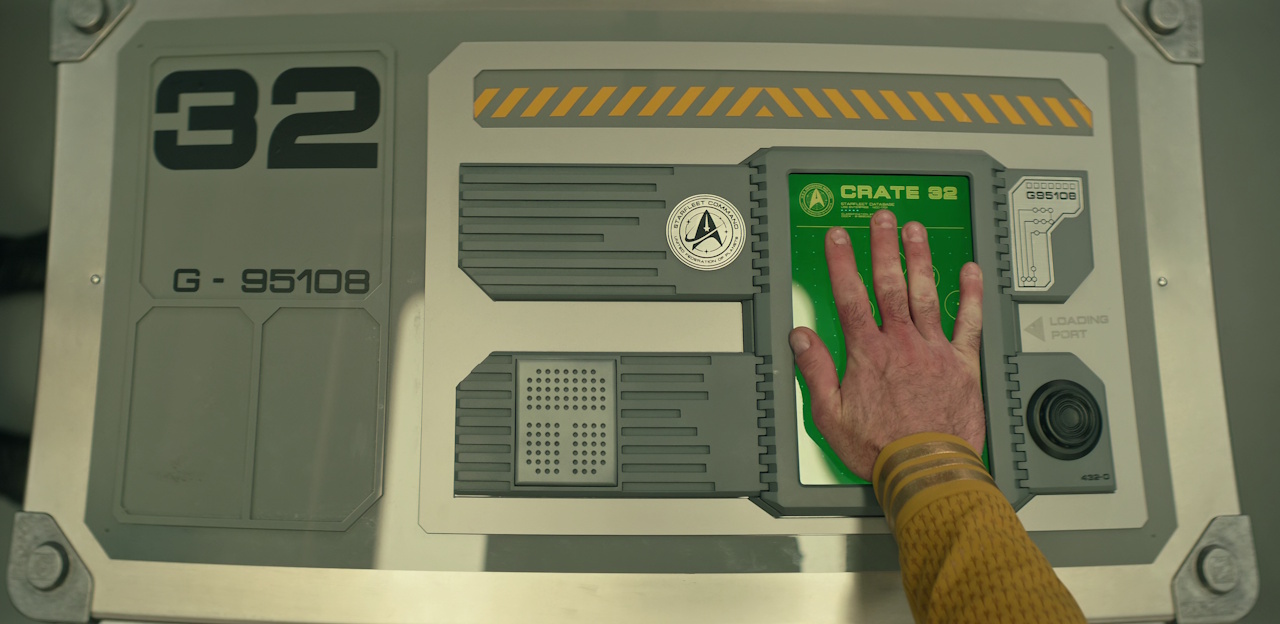
Captain Pike’s storyline in Hegemony works… in the context of his relationship with Captain Batel and of his relatively small arc across Season 2. By the way: am I imagining things, or was Pike less of a presence in most of the stories this season? It felt like he was all over Season 1 but had been taking more of a back seat this time around. Perhaps we’ll have to explore that subject on another occasion.
To get back on topic: when I look at Pike’s story in Hegemony, I’m also looking at it in the context of Season 1. In particular, Pike doesn’t seem to have learned the lessons of A Quality of Mercy – at least insofar as triggering a potentially massive, Federation-threatening war goes. Pike’s personal story in last season’s finale was all about his impending disability and finding a way out of it… but it was also a story that touched on how to deal with a challenging adversary and how a few seemingly small mistakes can lead to conflict.
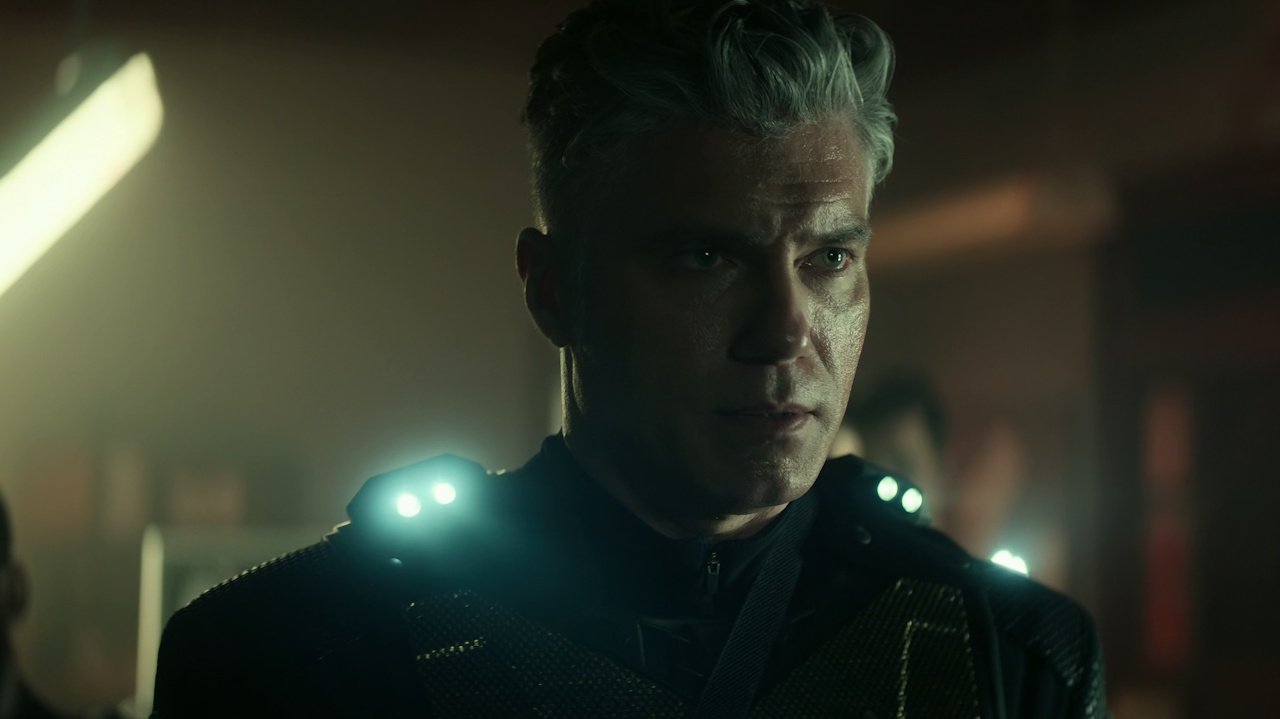
To me, it seems as if the Captain Pike of Hegemony hasn’t even met the Captain Pike of A Quality of Mercy. Sure, he has a personal stake in rescuing any potential Cayuga survivors due to his relationship with Captain Batel. But the actions he takes are deliberately provocative, disobeying an order from Admiral April and putting himself and his entire crew at ground zero of a potential war with the Gorn. For him to not even acknowledge the events of last season as he starts down this path feels… strange.
Both episodes put Pike face-to-face with a complex situation, a powerful enemy, and a potential conflict. Both episodes make clear that one mistake could lead to all-out war. Pike sees firsthand – and also hears from his future self – what the consequences of the Romulan war would end up being. Shouldn’t one of the lessons he learned last season be to be more cautious? Or are we going to try to argue that Kirk’s “shoot first, ask questions later” approach was the right one, so that’s what Pike ultimately took away from the situation?
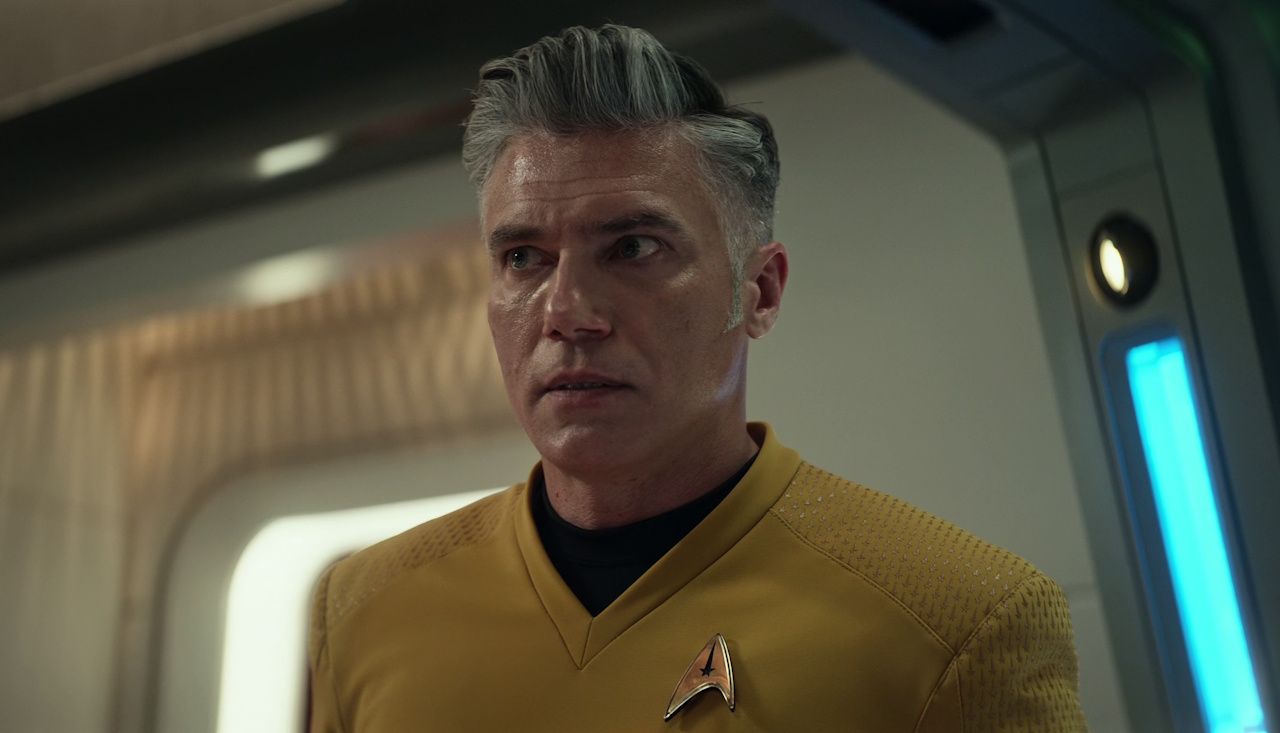
It just feels a bit of a narrative oddity that Pike is in a comparable situation just ten episodes later, but doesn’t appear to acknowledge it in any way. Maybe he’d still prioritise his relationship with Captain Batel and want to do everything he could to rescue her, the colonists, and any other survivors. I mean, that seems like the right outcome based on everything we know of the character. But how a character reaches their destination is just as important – and is often more important – than the destination itself. Pike could still have led this unsanctioned rescue mission, but having seen A Quality of Mercy and the difficult challenge he faced when coming into conflict with the Romulans… I just feel this episode could’ve done something to acknowledge that and make it clear how Pike felt and how he was drawing on those earlier experiences.
We talked about Strange New Worlds as an episodic series, and that’s genuinely one of the best things about it from my perspective as a Trekkie. But it’s never been an entirely episodic show, and that blend of the “monster of the week” with characters who grow and evolve feels like the perfect mix of classic and modern television storytelling. While I guess this probably seems like another big nitpick, for me it felt odd that Captain Pike was thrust into two comparable situations just ten episodes apart… and the latter story made no attempt to acknowledge that fact.
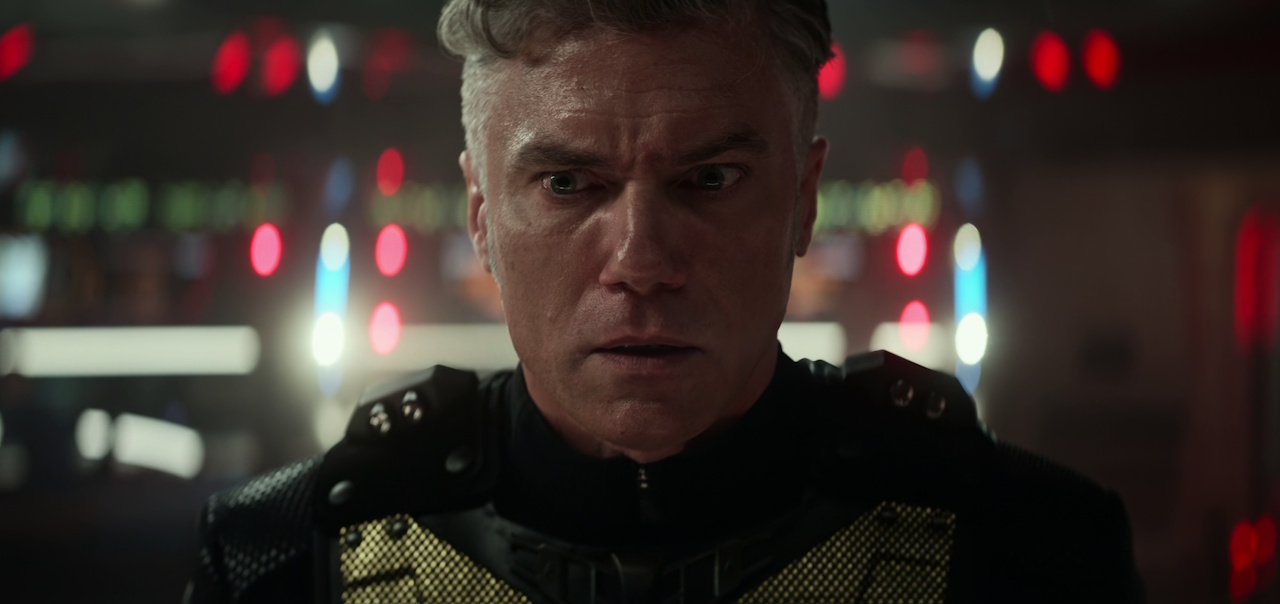
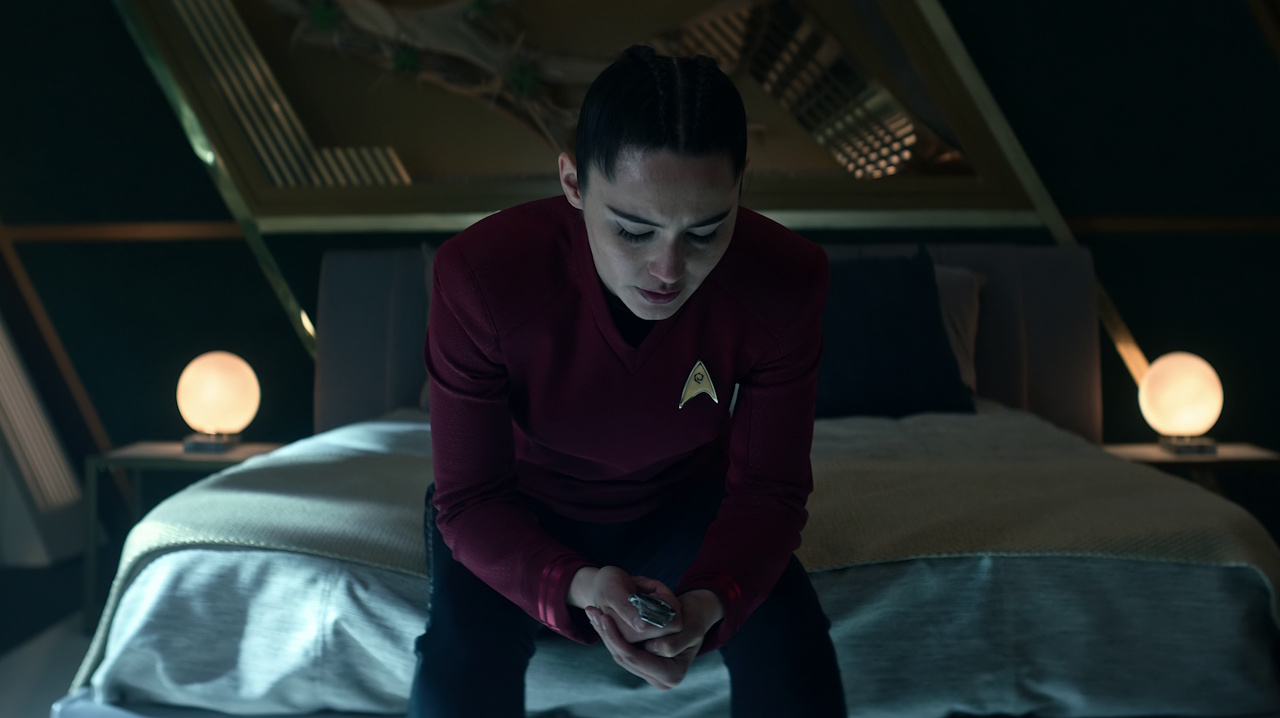
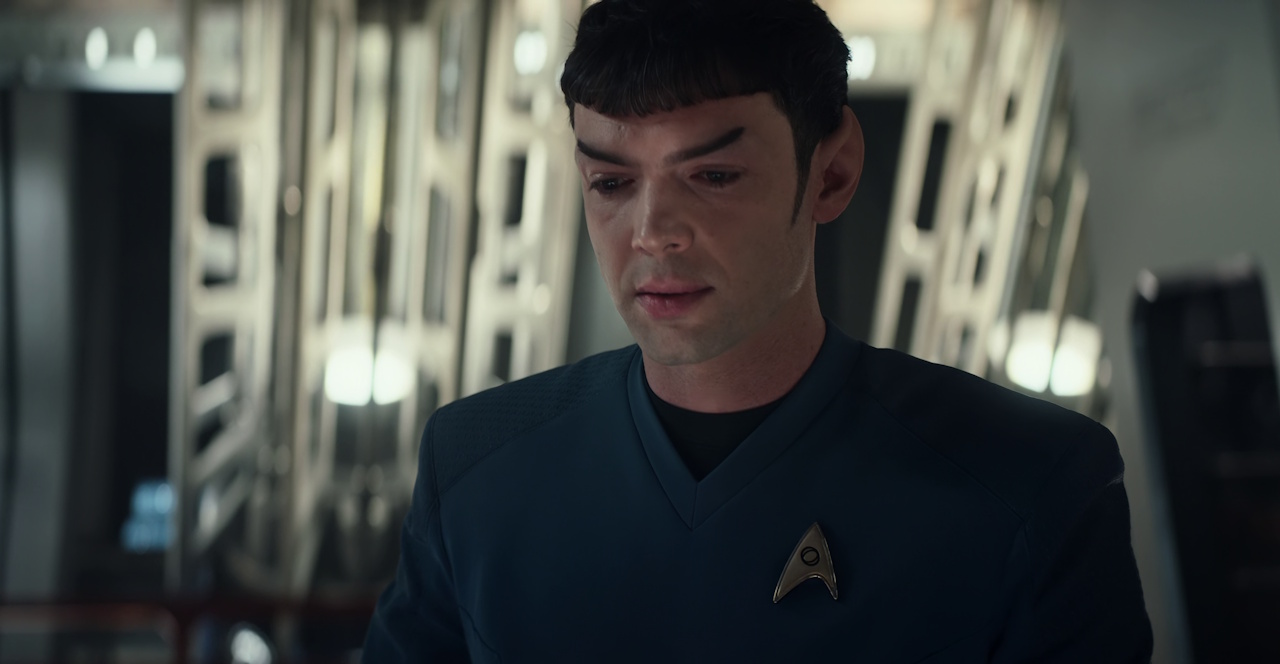
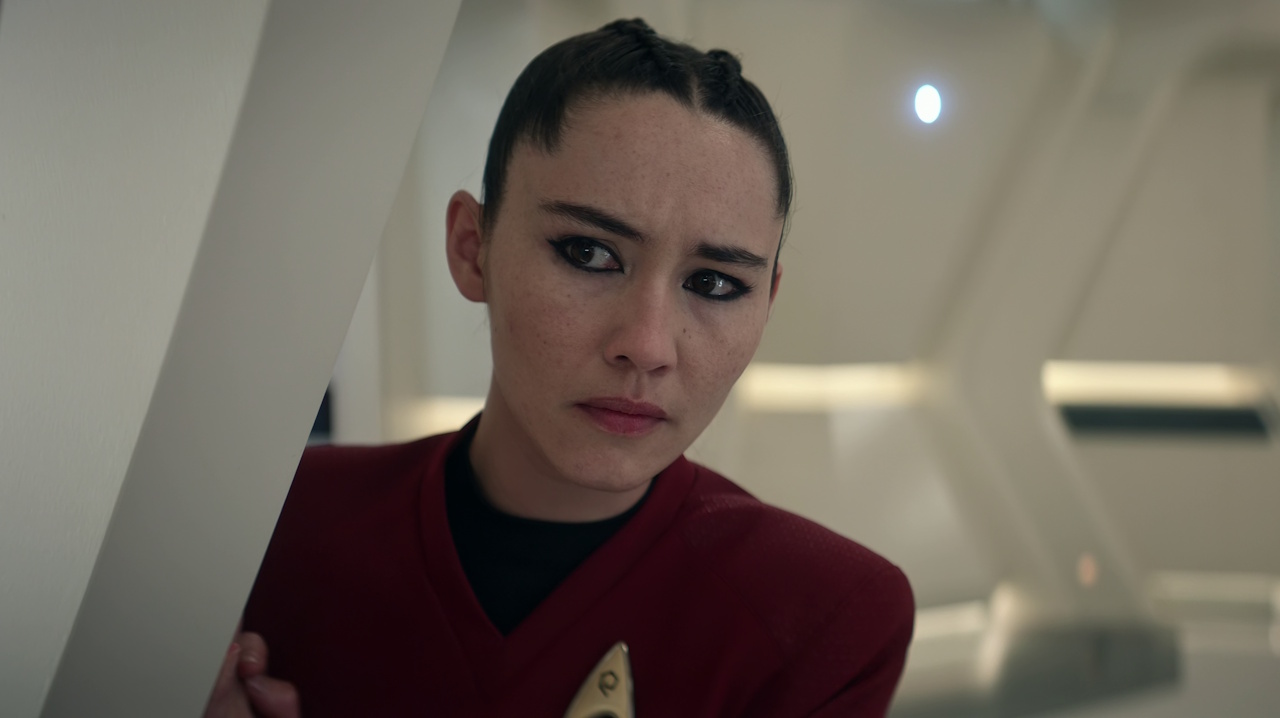
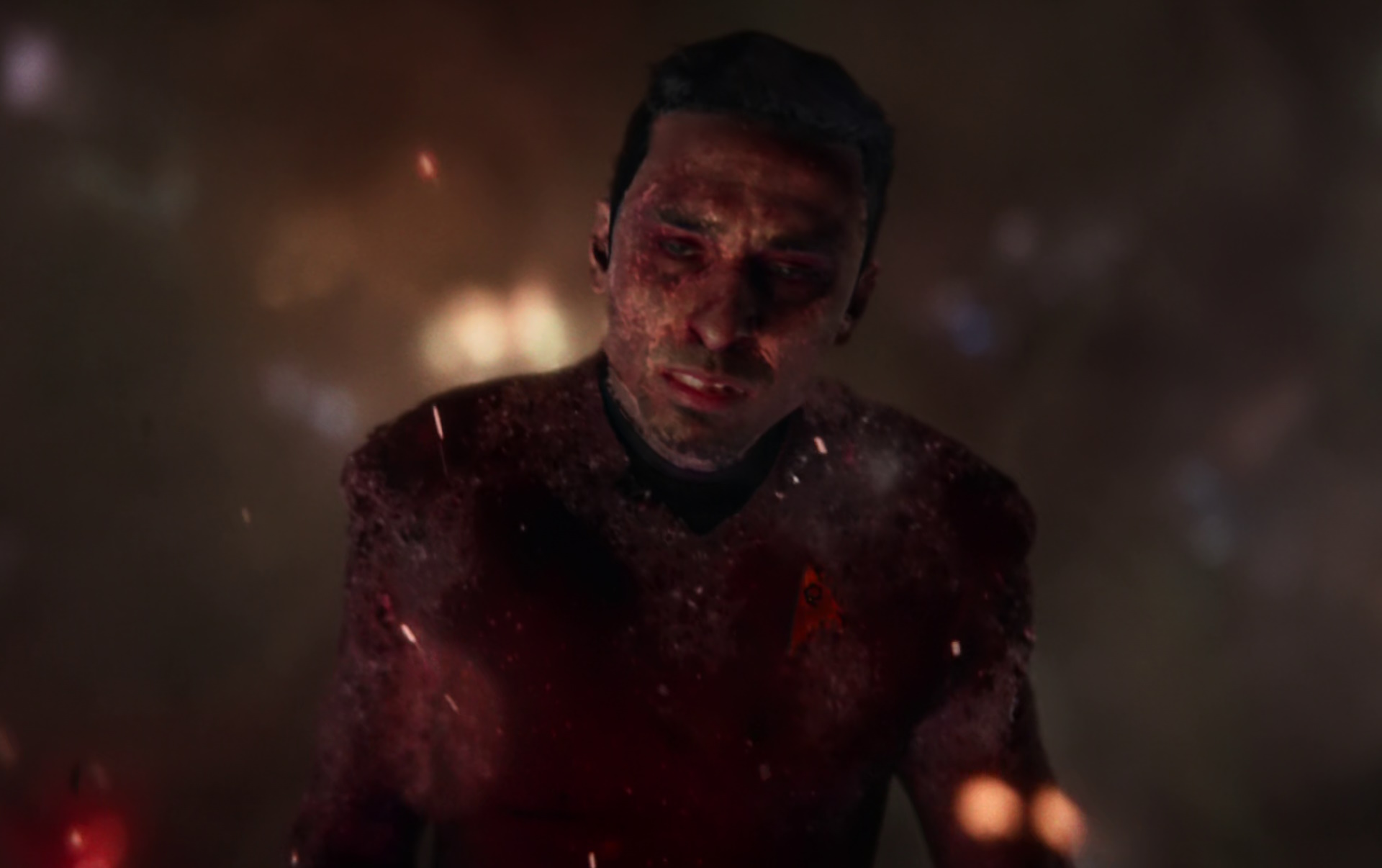
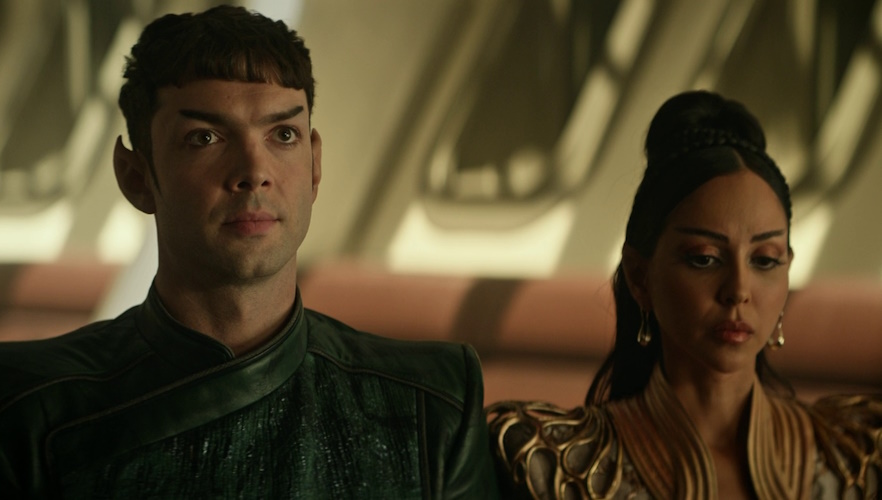
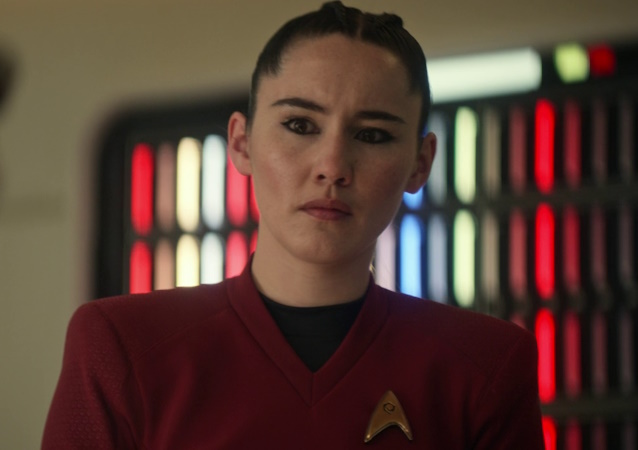
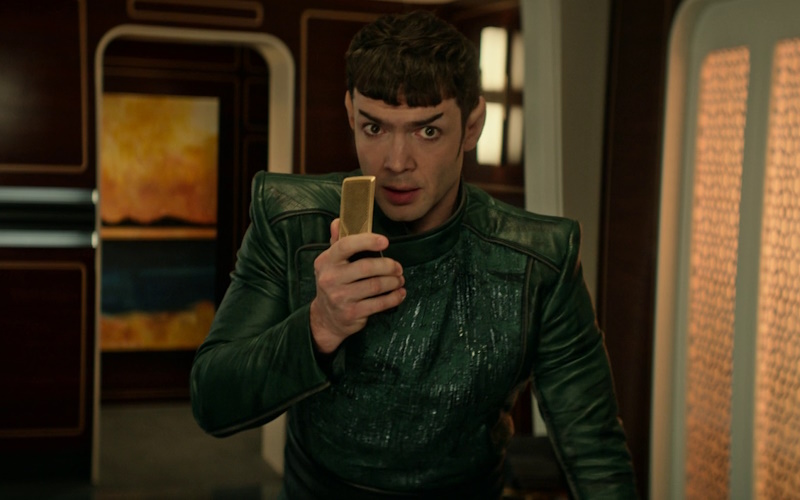
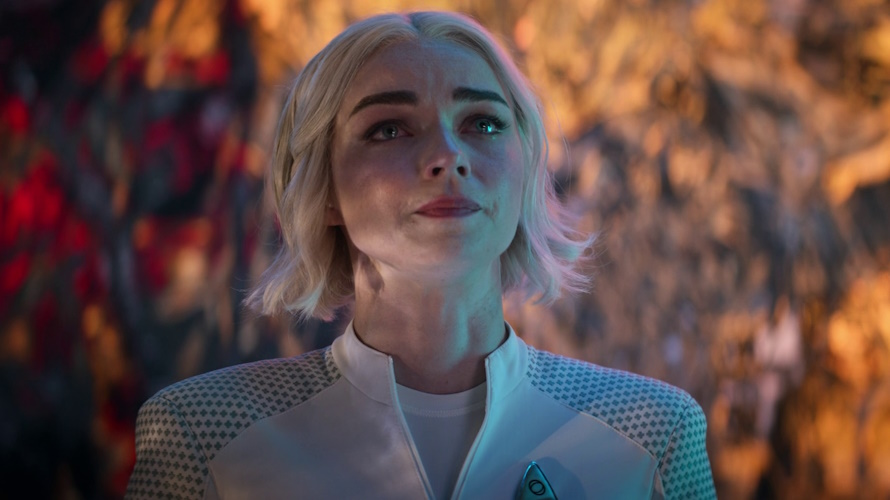
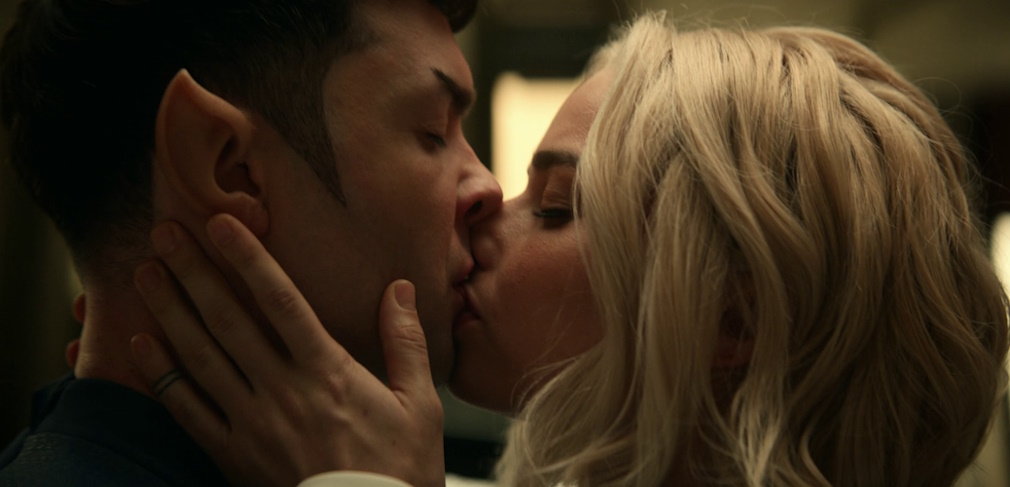
We’ll shelve that for now, and focus on one of the weaker elements of Hegemony for just a moment. I found Spock and Chapel to be a wonderful pair across the first two seasons of Strange New Worlds, and Spock’s reaction to Chapel’s apparent death or abduction genuinely did a lot to carry the storyline. His scenes with Una in particular were powerful, and I don’t want what I’m about to say next to detract from that. This was great character-focused storytelling.
But… Chapel was one of a handful of characters whose presence, for a storyline like this, dramatically lowers the stakes. Strange New Worlds is a prequel to The Original Series, so anyone who’s seen it or has more than a passing familiarity with it knows that the likes of Uhura, Spock, and Nurse Chapel are characters on that show. That means, from the point of view of Strange New Worlds, they’re indestructible. For a storyline that wanted to have high stakes, and to put a character in danger… picking one of the characters that fans know will still be around when the credits roll took a lot away from it.
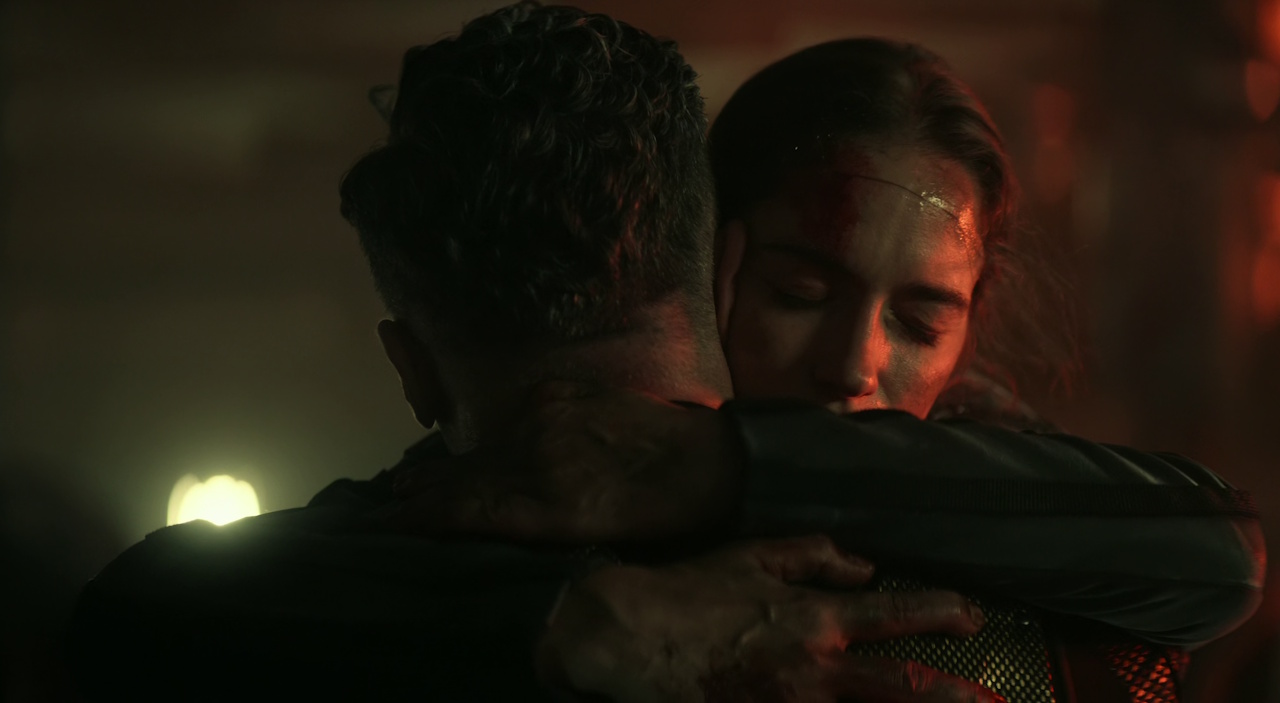
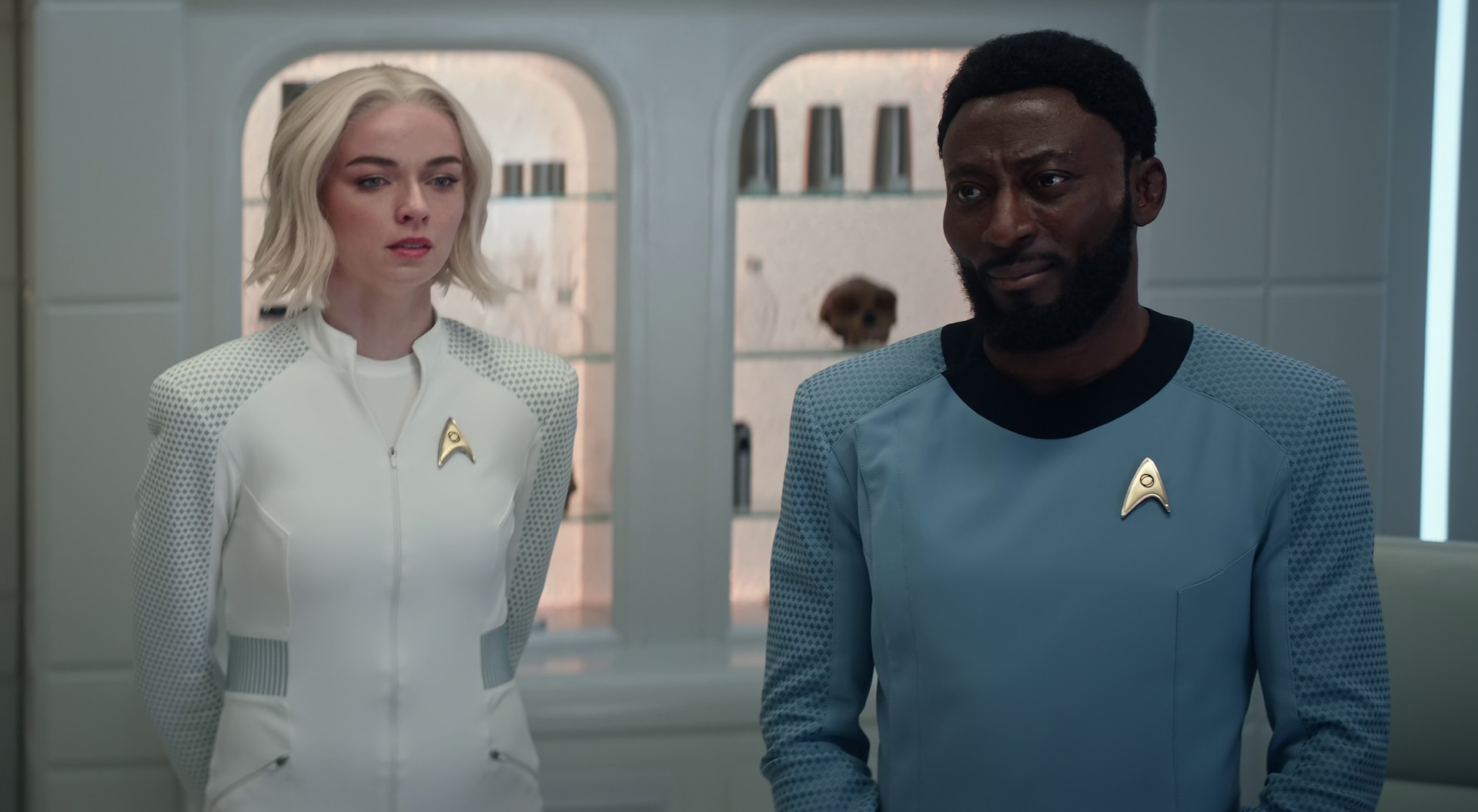
When Captain Batel was missing, I could genuinely believe that Strange New Worlds was about to kill her off. When she revealed to Captain Pike her parasitic Gorn infection, I likewise believed that her death could be imminent (though we’ll talk about that more in a second!) But when Nurse Chapel was apparently dead, killed along with the rest of the Cayuga’s crew… it simply wasn’t possible. And that knowledge lowered the stakes for me on this side of the story. Spock’s reaction to it did a lot to help this part of the episode and carry it across the line, as did Pike’s embrace of Chapel when he realised she’d survived. But on its own, I’m afraid it was a victim of the “prequel problem” that some storylines end up facing.
Although this storyline did a lot for Spock, giving him an emotional problem to tackle that he struggled with, I can’t help but feel there were other characters Strange New Worlds could’ve chosen to endanger. Someone like Pelia, Una, or La’an would’ve genuinely felt at risk of death in a way that Chapel didn’t, and the reaction of Spock – or a different character who might’ve been closer to the person in danger – could’ve still been present. Again, this is a consequence of Strange New Worlds being a prequel and using so many legacy characters. In future seasons, that constraint may get even tighter.
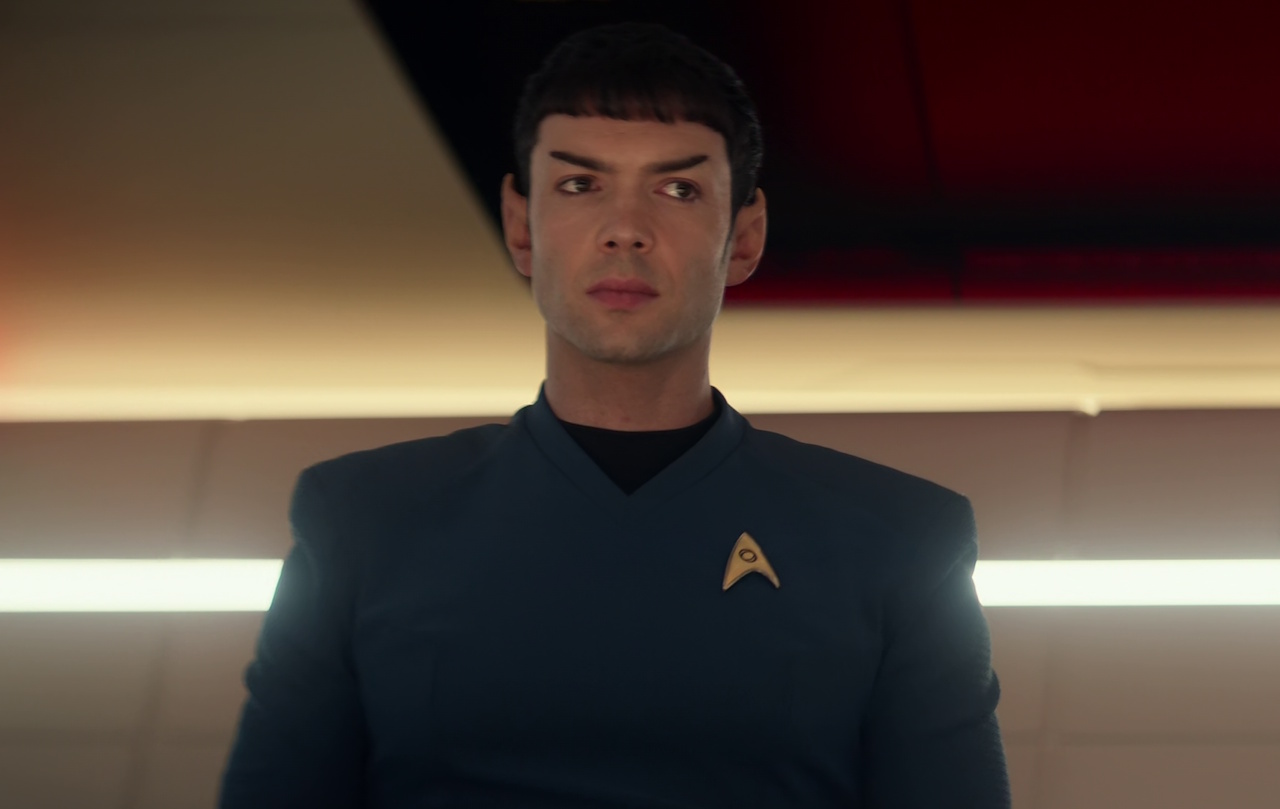
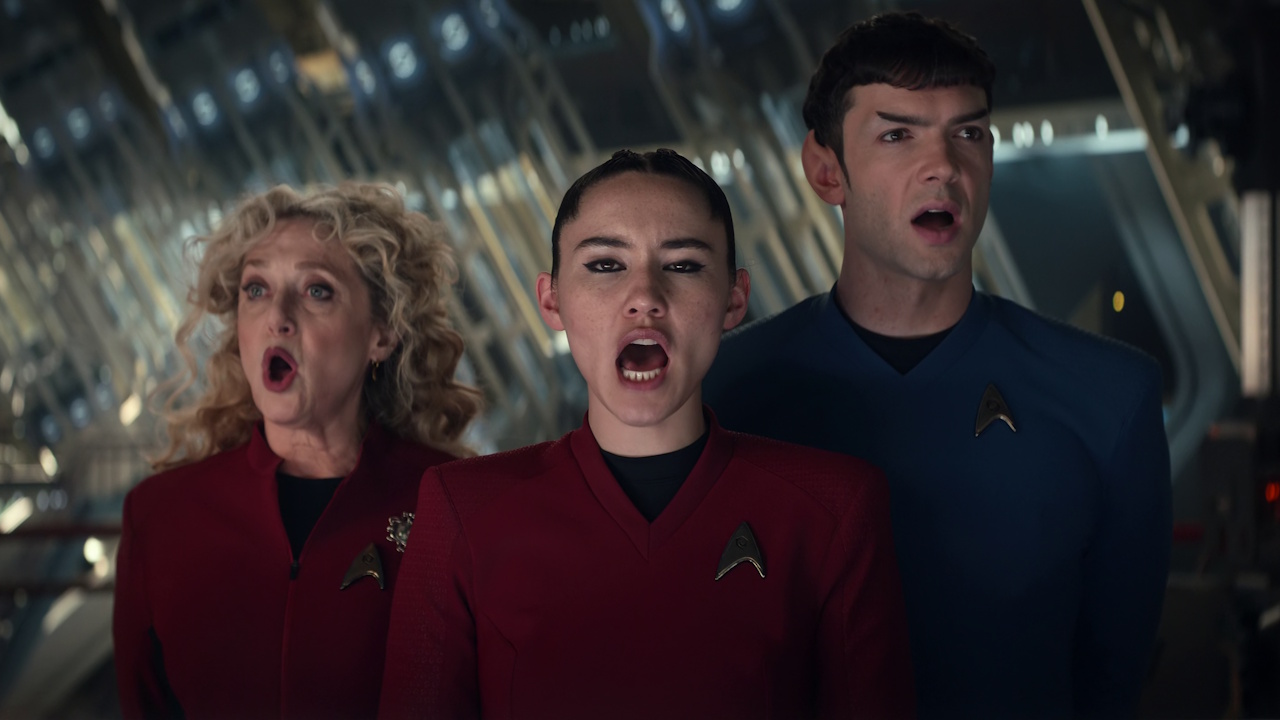
Spock excelled in Hegemony, for me, in his scenes with Una. I know not everyone watched (or liked) Short Treks, but if you remember the short episode Q&A… I felt their conversation was built on those foundations. That short episode saw Spock’s initial arrival aboard the Enterprise – several years before The Cage and Discovery’s second season – and put Spock and Una together as they got stuck in a turbolift.
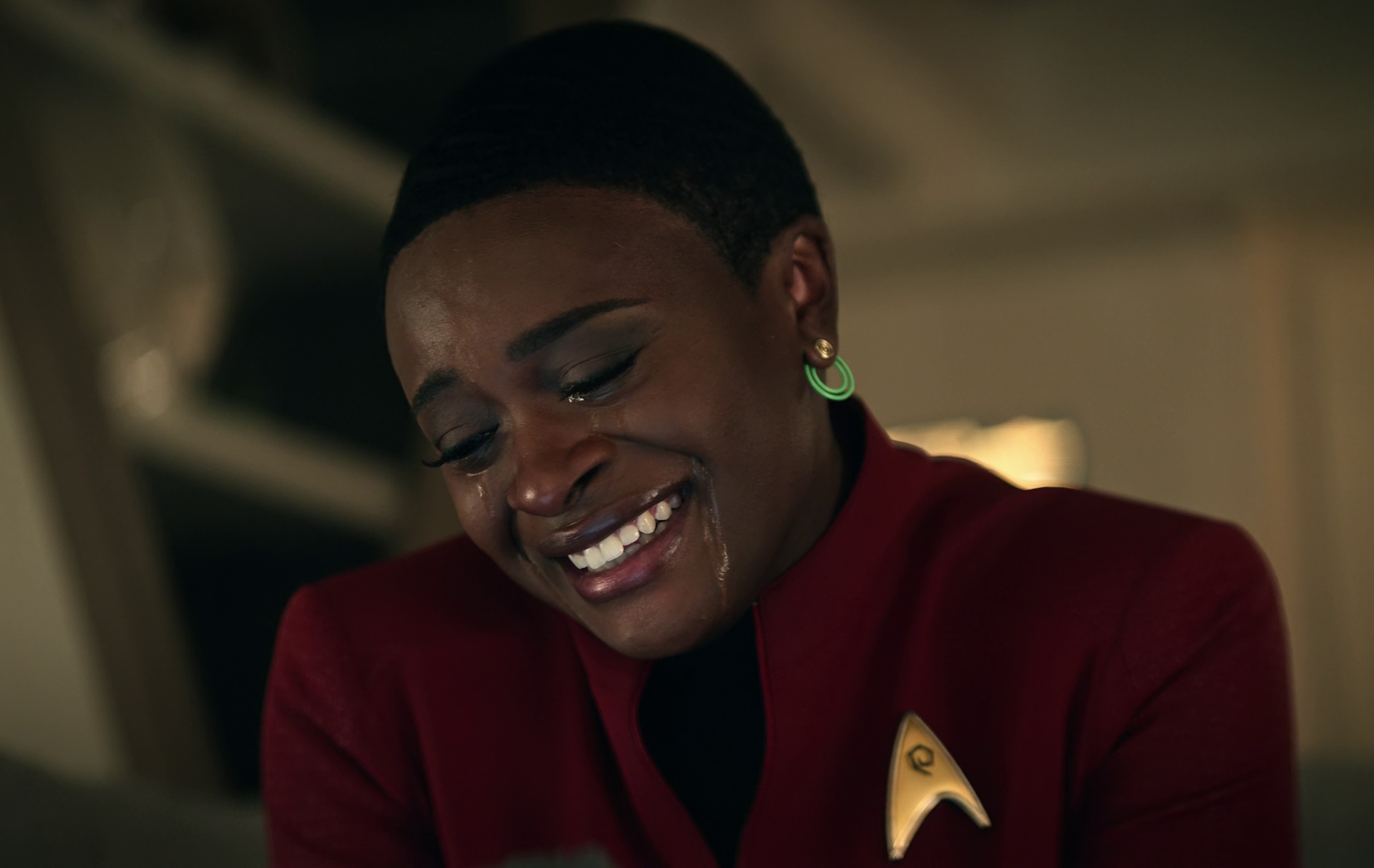
This sequence leaned into their relationship – the beginnings of which had been shown in Q&A – and it also gave Una an excellent opportunity to shine. In this moment she wasn’t merely a commander, taking over from Pike on the bridge as he led the dangerous away mission, but a mentor, counsellor, and friend. It was absolutely worth the detour to remind us of that side of Una – and her capabilities as a leader who could inspire and offer comfort to those under her command.
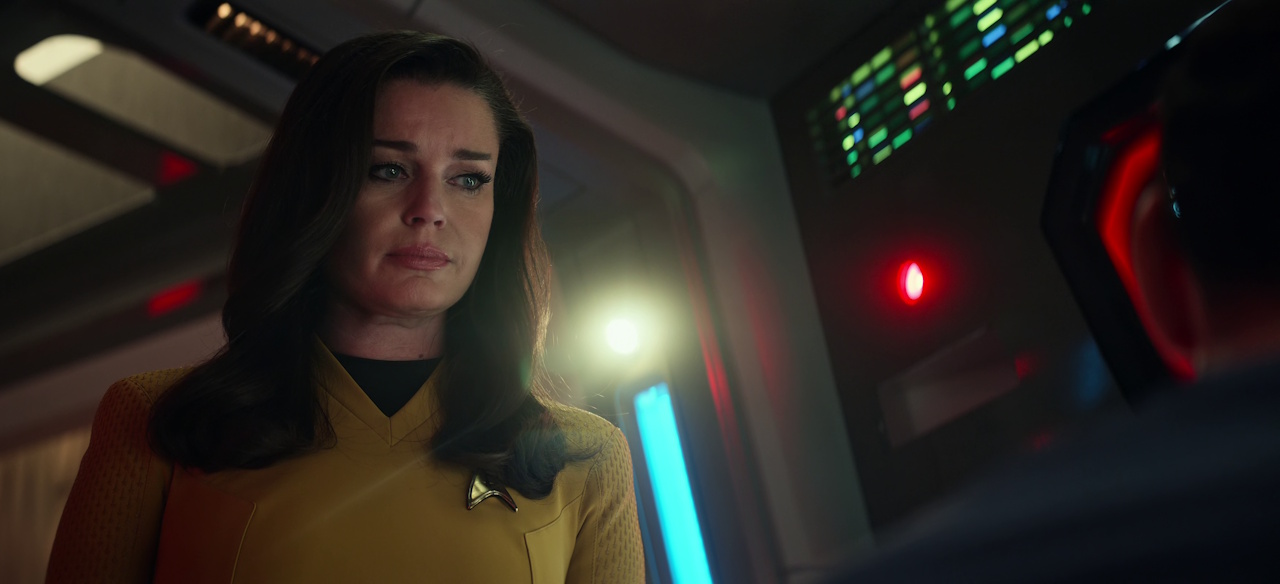
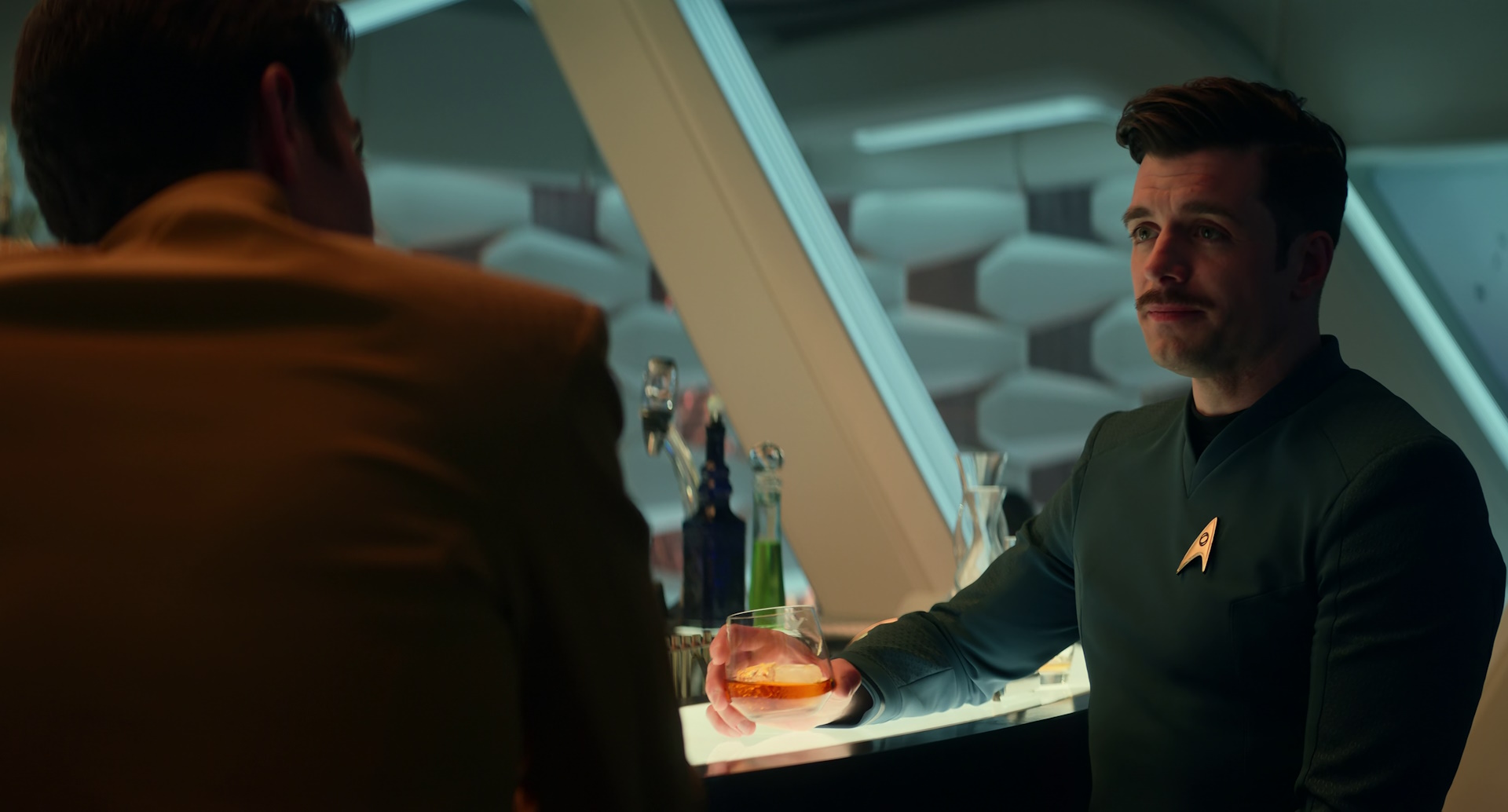
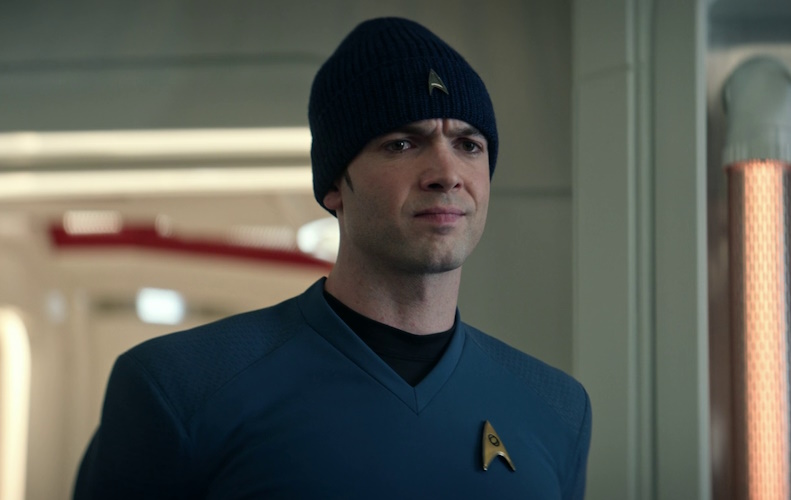
Scotty – this younger version of the character – got one of the best introductions in modern Star Trek. It reminded me more than a little of Star Trek ’09 and how that incarnation of Scotty first appeared, only with much darker undertones. For the first time in Star Trek, Scotty is being played by a Scottish actor, which is great to see. James Doohan did a fantastic job as Scotty in The Original Series, becoming one of the franchise’s most iconic and oft-quoted characters, so there are big shoes to fill for Martin Quinn – assuming Scotty will stick around in Season 3. Based on what we saw in Hegemony, I’m impressed.
Strange New Worlds has been transformative for Nurse Chapel, taking a secondary character from The Original Series and giving her some genuine depth. For Uhura and Spock, we’ve seen them as younger, less-experienced, slowly growing and evolving into the characters we’re familiar with. Scotty, for me, would probably lean more on the Spock side than the Chapel side, and I think there’s room to show where he came from before he became the miracle-worker that we all remember!
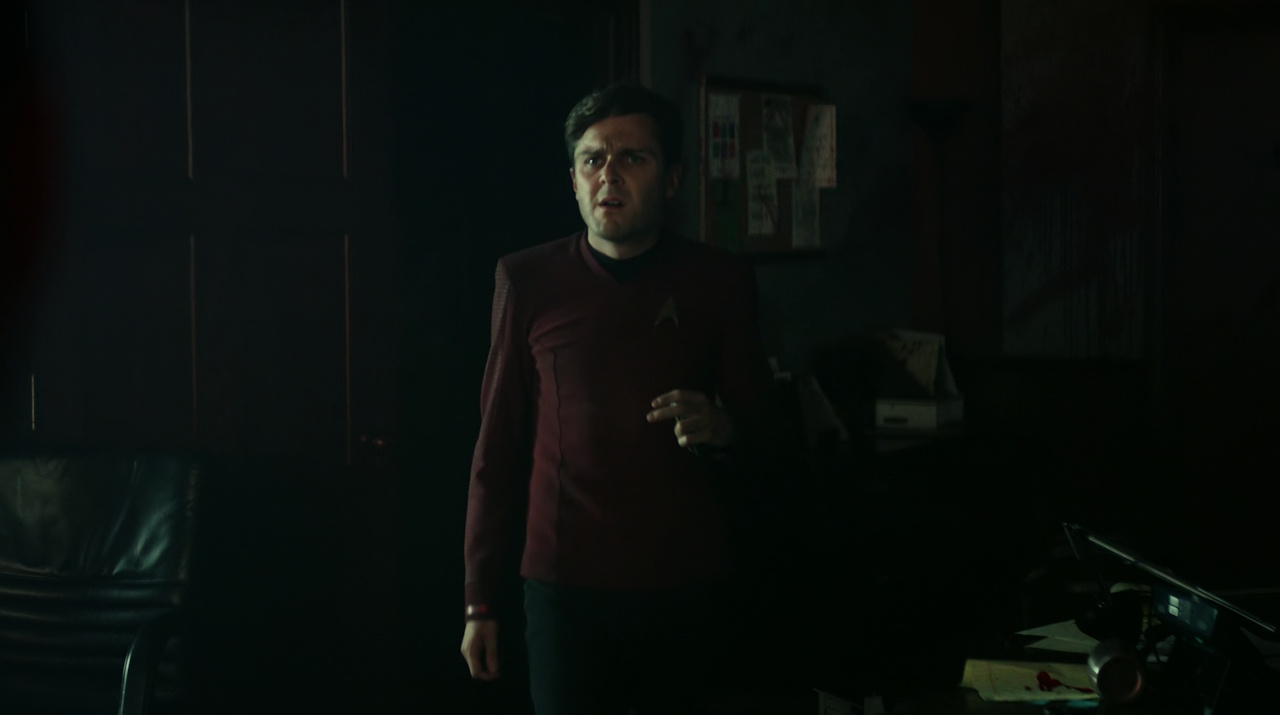
I’m going to assume Scotty will be at least as present in Season 3 as Paul Wesley’s Kirk has been in Season 2, and there really is a ton of potential in this introduction. I’d love to explore more of his relationship with Pelia, which was hinted at in Hegemony, perhaps learning why this brilliant engineer didn’t get a good grade in her class at Starfleet Academy. There seems to be a bit of tension there, and a power imbalance, but I could see Pelia guiding Scotty as he grows into the role of the Enterprise’s chief engineer.
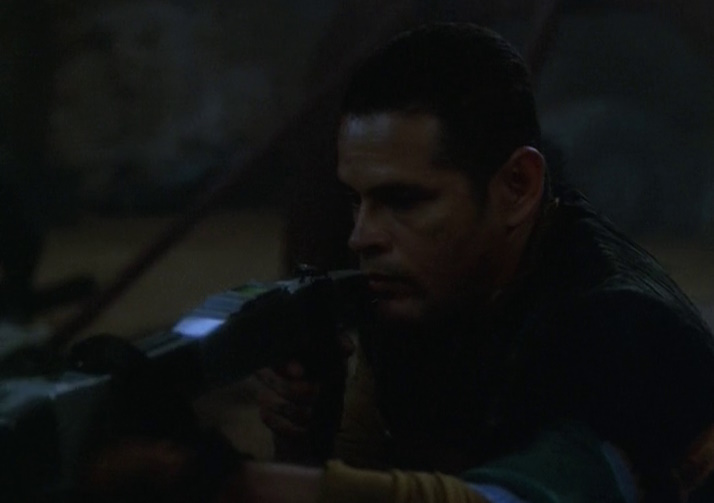
On the other hand, Scotty’s introduction and his technobabble explanations of force-field traps and Gorn transponders means he arrives almost fully-formed – at least in terms of his technical mastery. Scotty’s janky, thrown-together Gorn transponder is one piece of evidence that was highly significant to the story, but also his force field trap and the lure he created should be included there as well. Scotty clearly possesses all of the ingredients to become the chief engineer we’re familiar with – even the confidence to interrupt two senior officers when they were having a conversation!
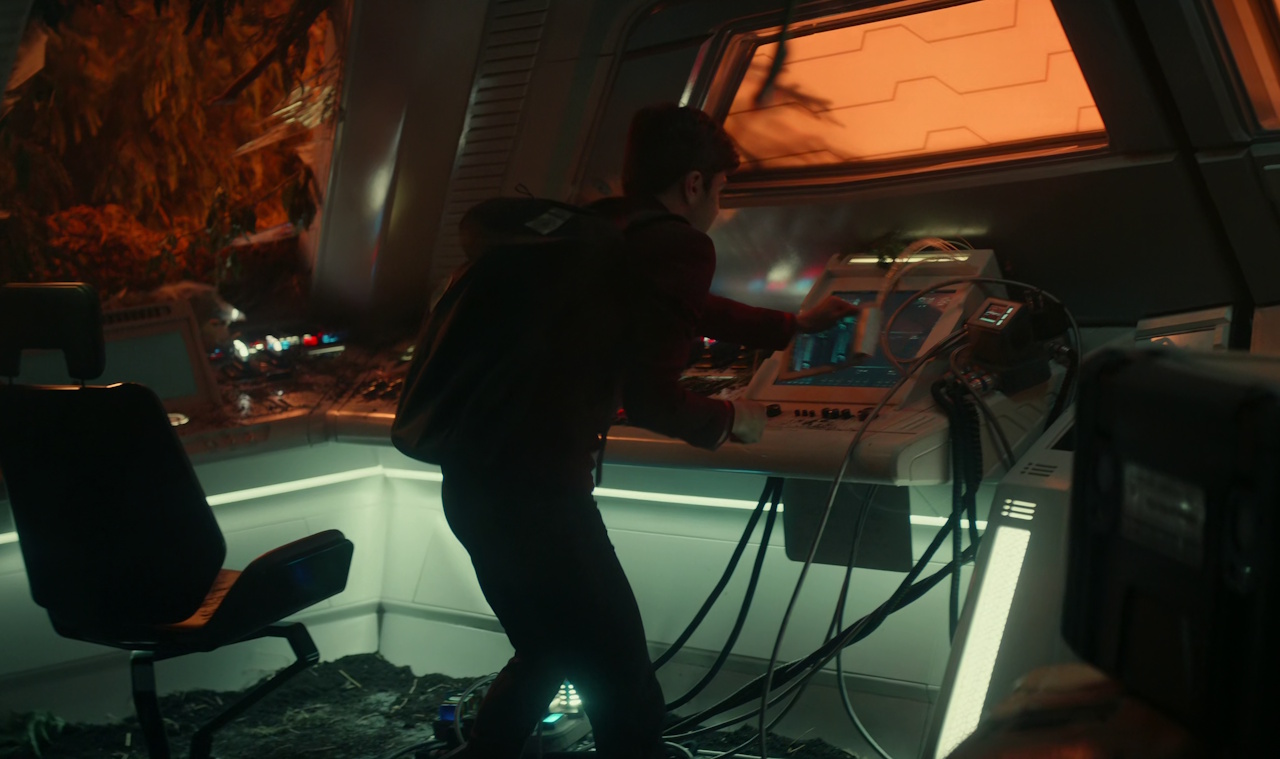
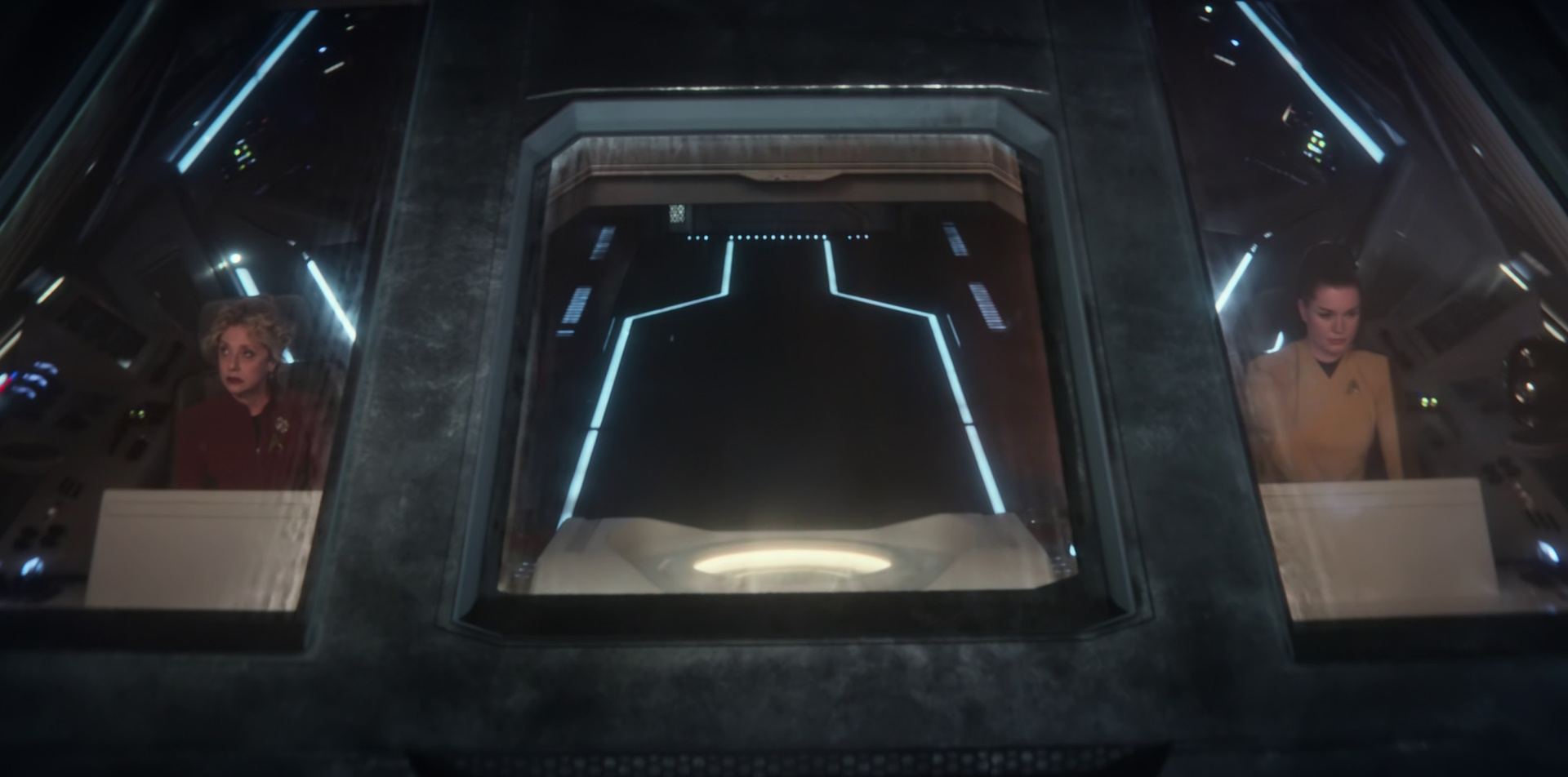
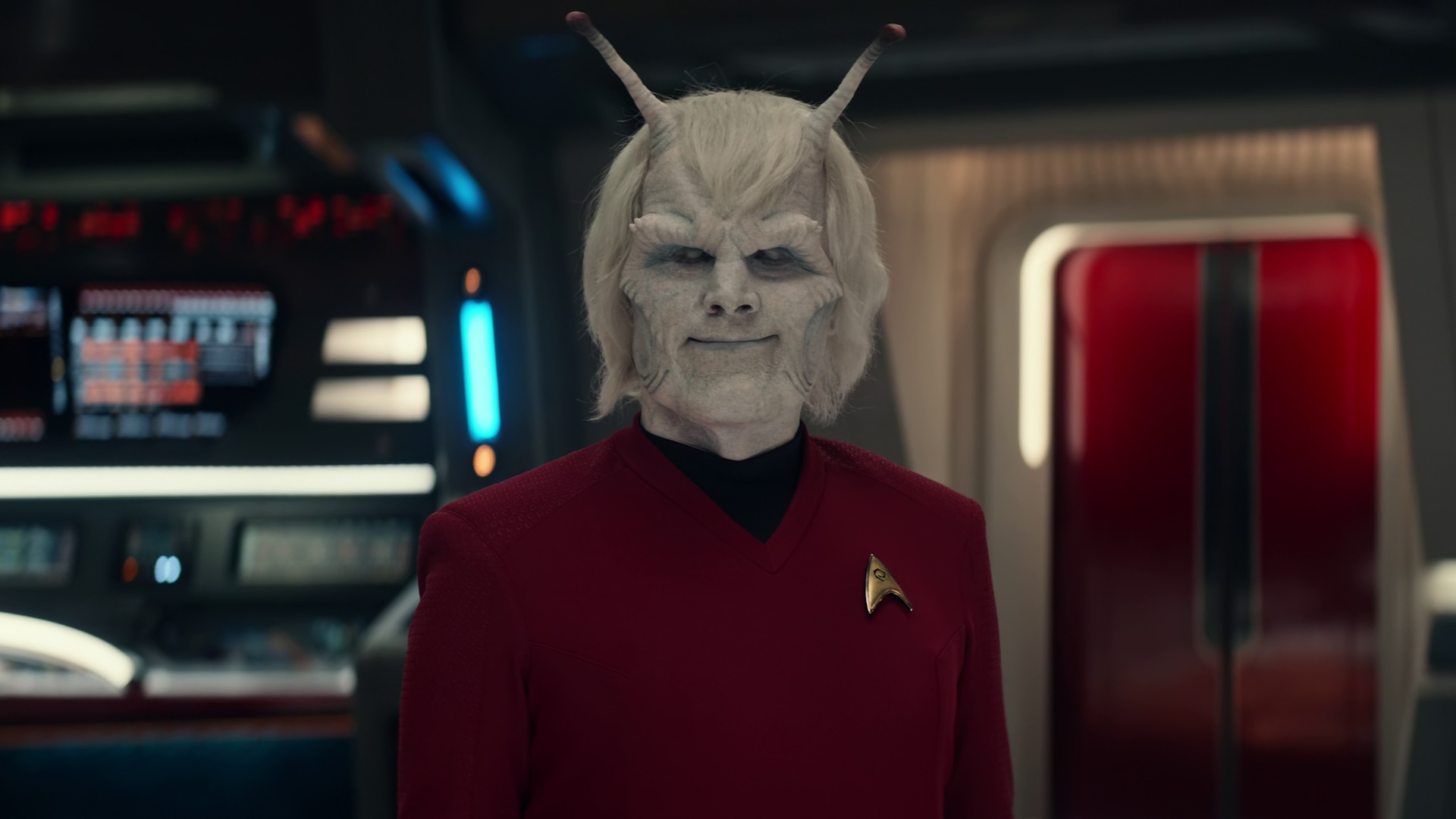
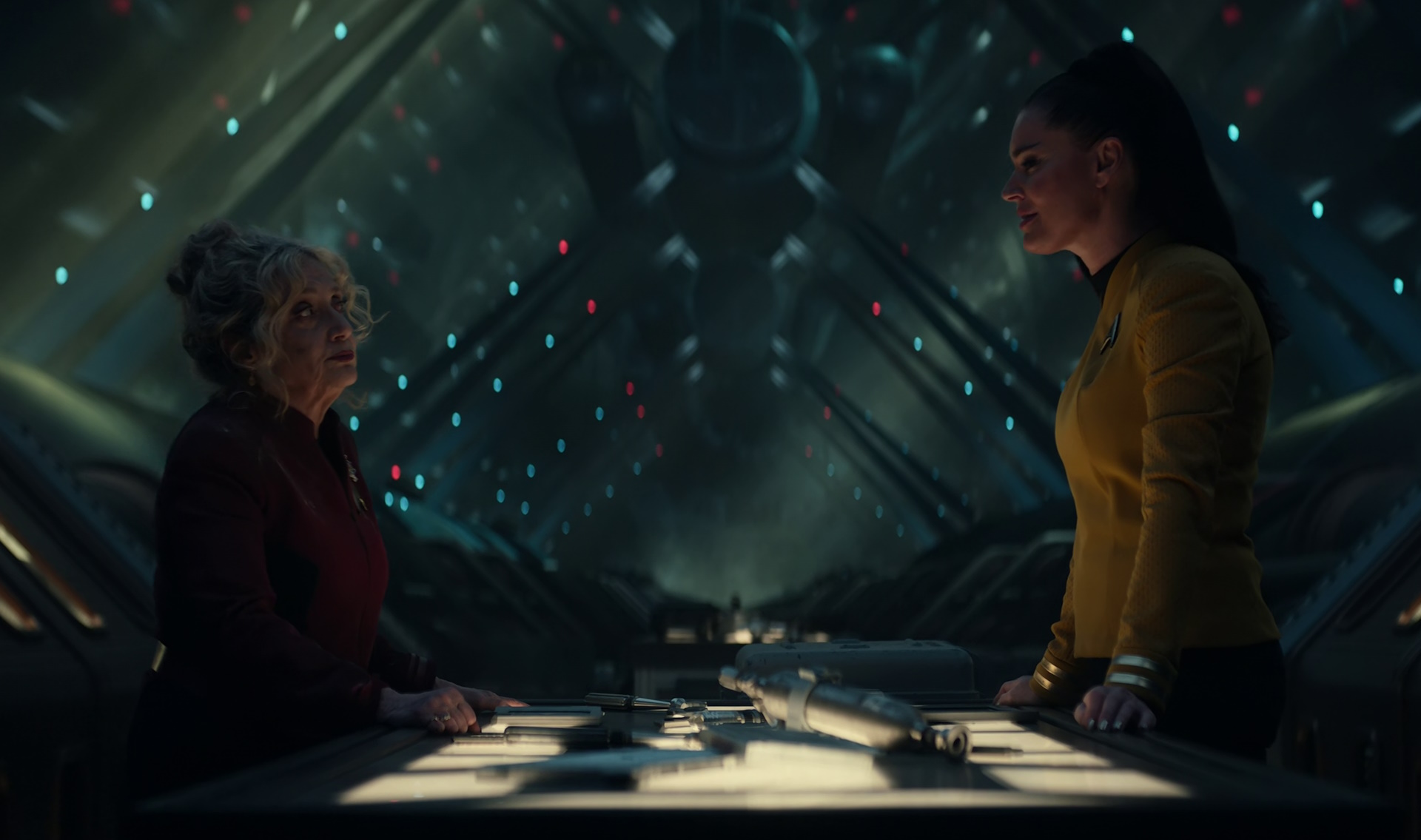
The question I have, with Scotty’s introduction, is what will become of Pelia? Pelia has been, for me, a bit of a disappointment this season. Not in terms of her moments on screen; I think she’s fantastic, and Carol Kane has done a wonderful job bringing her to life. But rather, Pelia has been almost absent since she joined the crew. Her biggest moment arguably came in Tomorrow and Tomorrow and Tomorrow – but that was a version of the character from more than two centuries in the past. Moments where engineering solutions have been needed have instead fallen to characters like Spock, Ortegas, and even Uhura, with Pelia playing a much smaller and more supporting role than I’d have expected from the chief engineer in a Star Trek series.
So if Scotty is about to join the crew of the Enterprise on either a temporary or permanent basis, becoming even a secondary character as Kirk has been… where does that leave the already-reduced role for Pelia? I think it would be a shame if she was brushed aside to give more screen time to Scotty; as much as I like bringing back legacy characters and bridging the gap between Pike’s Enterprise and Kirk’s, I don’t want all of the show’s time to be spent on that. There needs to be a balance between old and new characters – and with Pelia already seeming to play second fiddle, even in her own department, bringing Scotty aboard could make things worse.
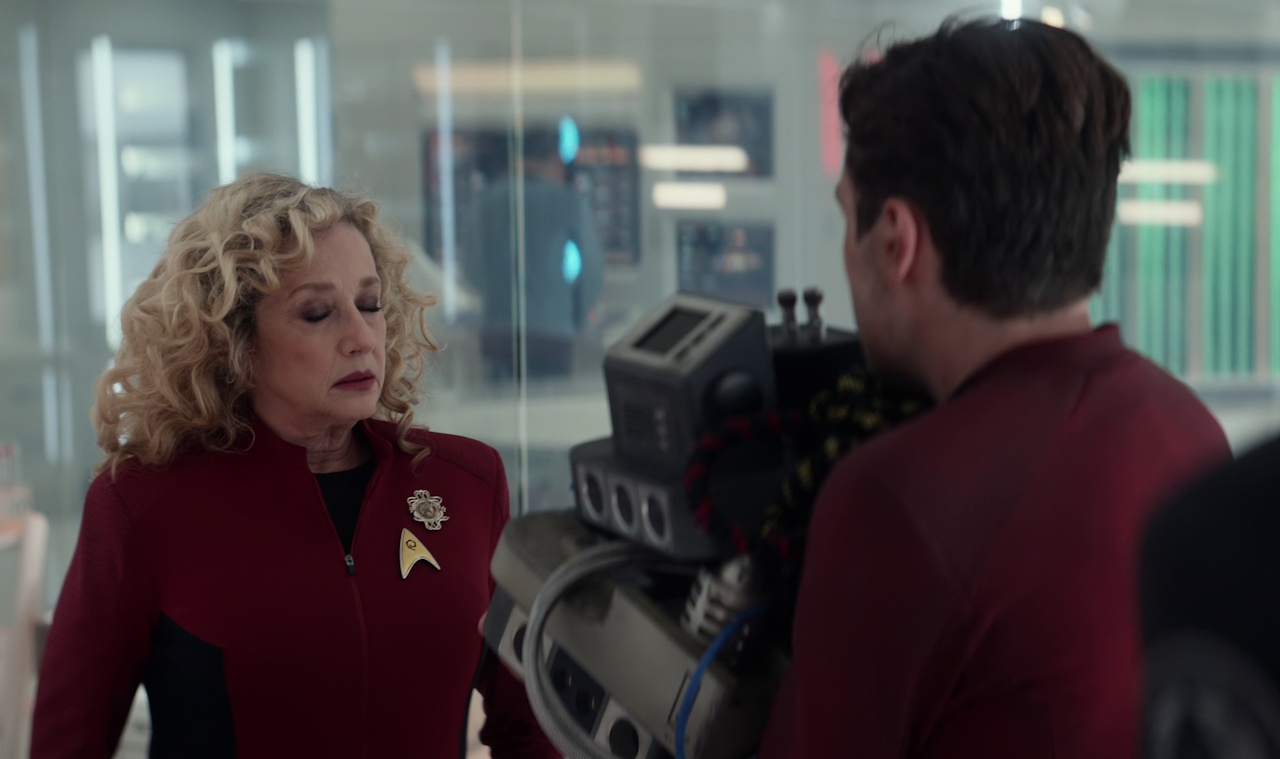
The counterpoint to that, of course, is that with an established relationship to build on, and with Pelia’s knowledge of the Enterprise and her systems, we could get a kind of mentor relationship going on. Seeing Scotty grow – in confidence, if not in ability – into the character we’re familiar with under Pelia’s tutelage could be fun to see. And furthermore, it could give the writers more of a reason to include her in stories set in engineering.
The technobabble on Scotty’s side of the story, though – to get back on track – was wonderful. His explanations for how he threw together the false sensor reading generator and the Gorn transponder were pure technobabble and pure Star Trek, and I really do love that! It felt like classic Star Trek in the best way possible, and technobabble explanations with big, random words thrown in have always been a part of what made the franchise so fun. The props created to represent these pieces of kit were also throwbacks, resembling things we’ve seen in The Original Series. Again, I’m absolutely there for all of that!

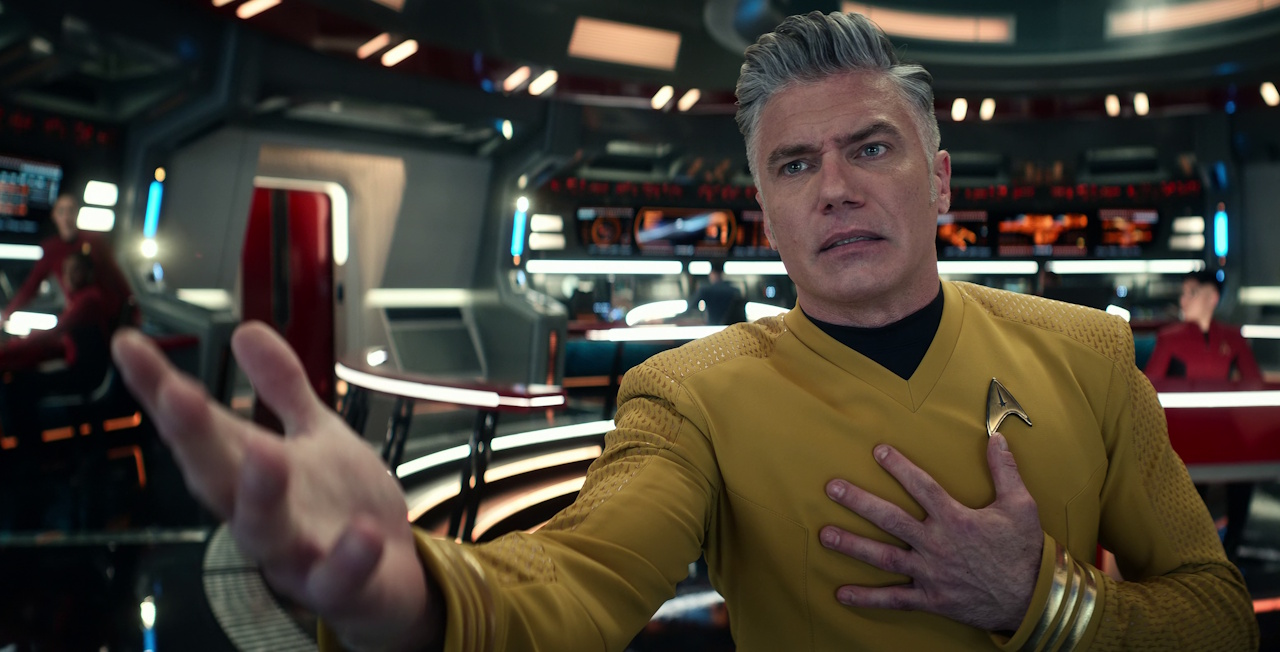
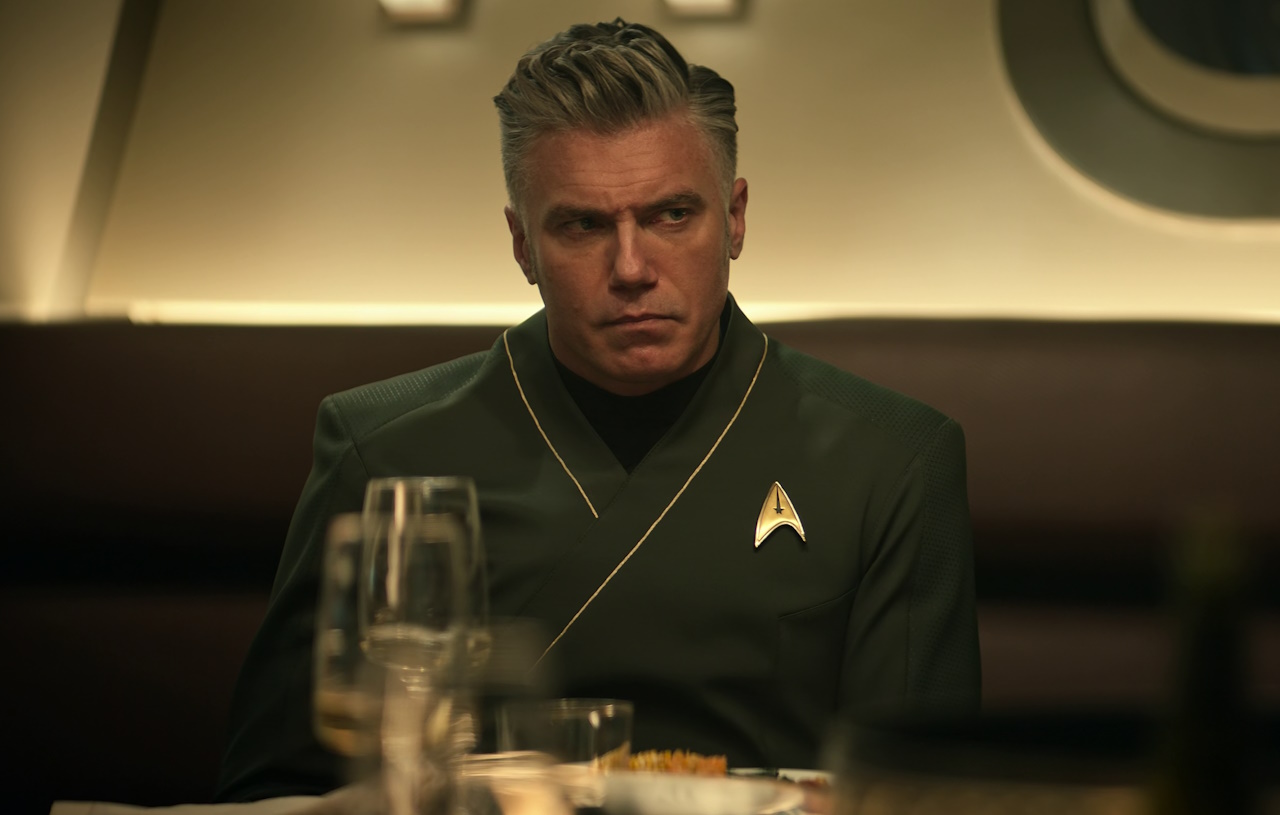
I touched on Captain Batel a moment ago, and I’d like to get into her storyline in a bit more detail. Batel is very much an auxiliary character to Captain Pike – she’s giving him a reason to keep going in light of his impending accident, and the relationship they’ve embarked on is cute, sweet, and a little awkward, sometimes. They make a fun, very relatable pair. Pike’s fear of losing her – and his relief at discovering that she was still alive – was expertly emoted by Anson Mount.
Gorn eggs, though… was it too soon to bring back this idea after All Those Who Wander? I mean, it’s only been eleven episodes since Hemmer was infected and killed off, and I felt that Hegemony might be straying a little close to repetitive territory with Captain Batel’s infection. If this idea was brand-new for the episode, I think it would’ve been a lot more powerful – but it would’ve needed setting up, and there probably wasn’t time for that! If Strange New Worlds limits this infection to Hemmer and Batel, it will probably be okay. But I’d encourage the writers to avoid adding even more Gorn egg infections in Season 3!
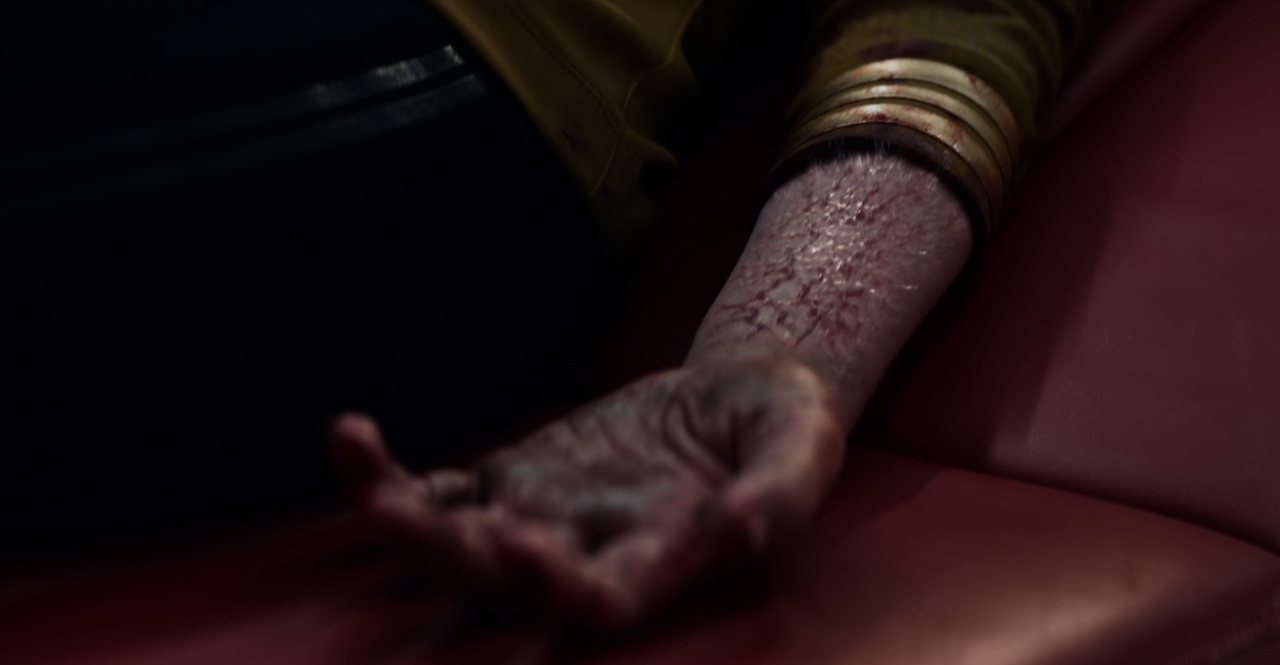
Batel’s infection raises a big question, though: is she going to survive? On the one hand, it would be a profoundly odd storytelling move to have her infected but alive at the cliffhanger only to say “oops, we can’t save her” and kill her off in the first episode of Season 3. But on the other hand… Captain Batel kind of has to go, one way or another. I don’t mean that because I don’t like her character; on the contrary, she’s been a wonderful addition to the series, she’s given Pike a whole new dimension that we hadn’t really seen before, and Melanie Scrofano has put in a truly exceptional performance. She brings the right balance of command authority and personal warmth to make Batel a believable character – and a sweet partner for Captain Pike.
But at the same time, Pike’s knowledge of his future means their relationship can’t be sustained. Either they’ll have to break up, or… well, the writers will find another way to get Captain Batel out of the way. There could be an engaging story there, with Pike having to come to terms with grief and loss. Batel was a great character for Hegemony to put in danger (twice) because her departure from the show feels like an inevitability one way or another. Unlike with Chapel, who we all knew had to survive somehow, Captain Batel really did feel – and still does feel – like she could be about to be killed off.
Partly this is because of the kind of show Strange New Worlds has been. Killing Hemmer before the end of Season 1 was a serious loss for the show… but it also really raised the stakes for all of the other new characters. With the exceptions of those we know survive to The Original Series or beyond, no one is safe. I criticised Discovery and Picard during their runs for putting their characters into dangerous situations, but refusing to go one step further and killing off all but the most minor secondary characters. Strange New Worlds has successfully raised the stakes in that regard, and if Captain Batel joins Hemmer in the “murdered by Gorn eggs” grave… that feeling will only grow.
Main character deaths are a hallmark of modern television storytelling, and in that sense Strange New Worlds is taking the lead of shows that pioneered what I’ve termed the “disposable cast” – the likes of The Walking Dead and Game of Thrones, where no character could feel safe. There are limitations to this, due to the presence of legacy characters and the show’s prequel status, but as we saw this time with Captain Batel, Strange New Worlds can still elicit those feelings – and do so in style.
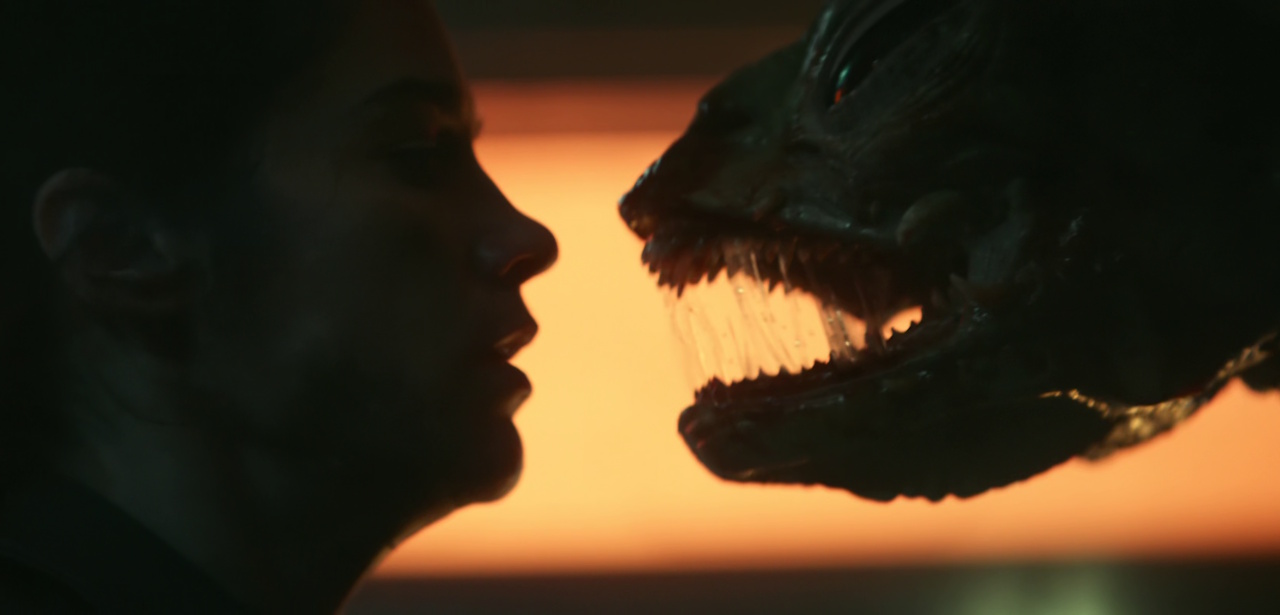
I liked the zero-g battle between Spock, Chapel, and the adult Gorn aboard the wreck of the USS Cayuga. It felt a little silly to me that other areas of the ship retained their artificial gravity… I mean, did you see the state of the wreck? There was hardly anything left of the Caygua, so how was gravity still functioning?! But on the damaged bridge, in spacesuits and without gravity, the fight was genuinely exciting. Slowed by the lack of gravity and air, Spock wasn’t able to grab his phaser in time, and as it went spinning across the vacuum, I felt a lot more of the tension and excitement than I had until that point.
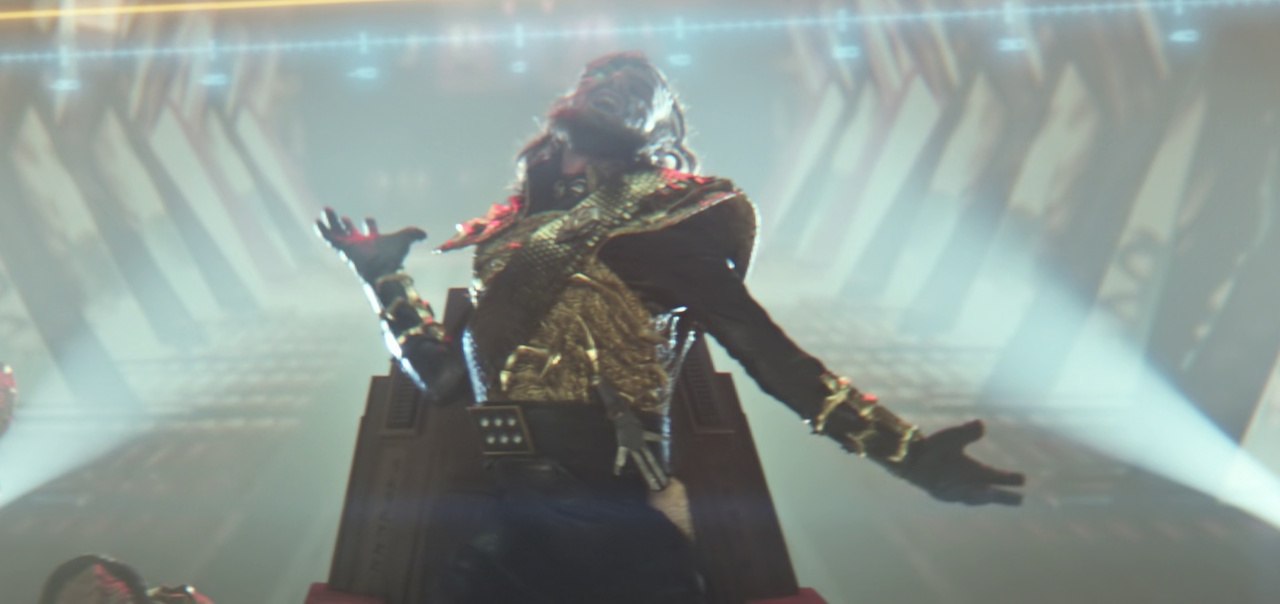
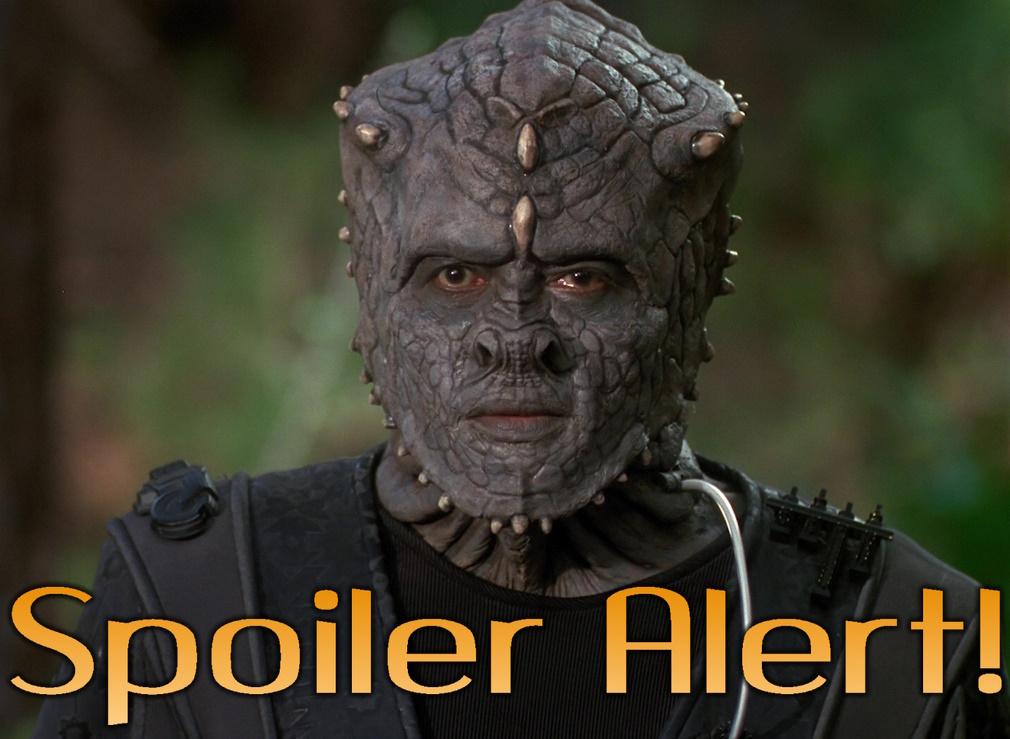
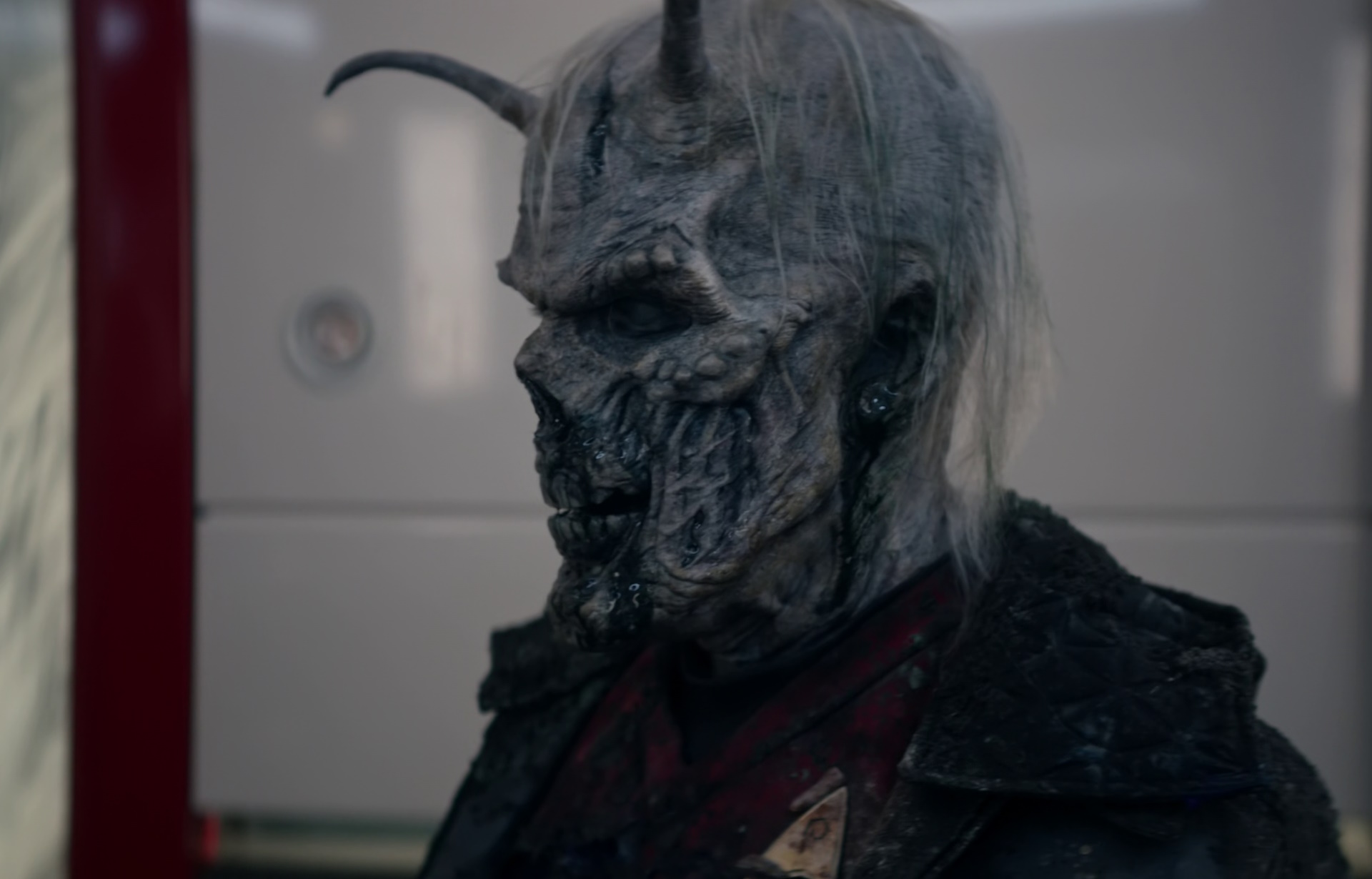
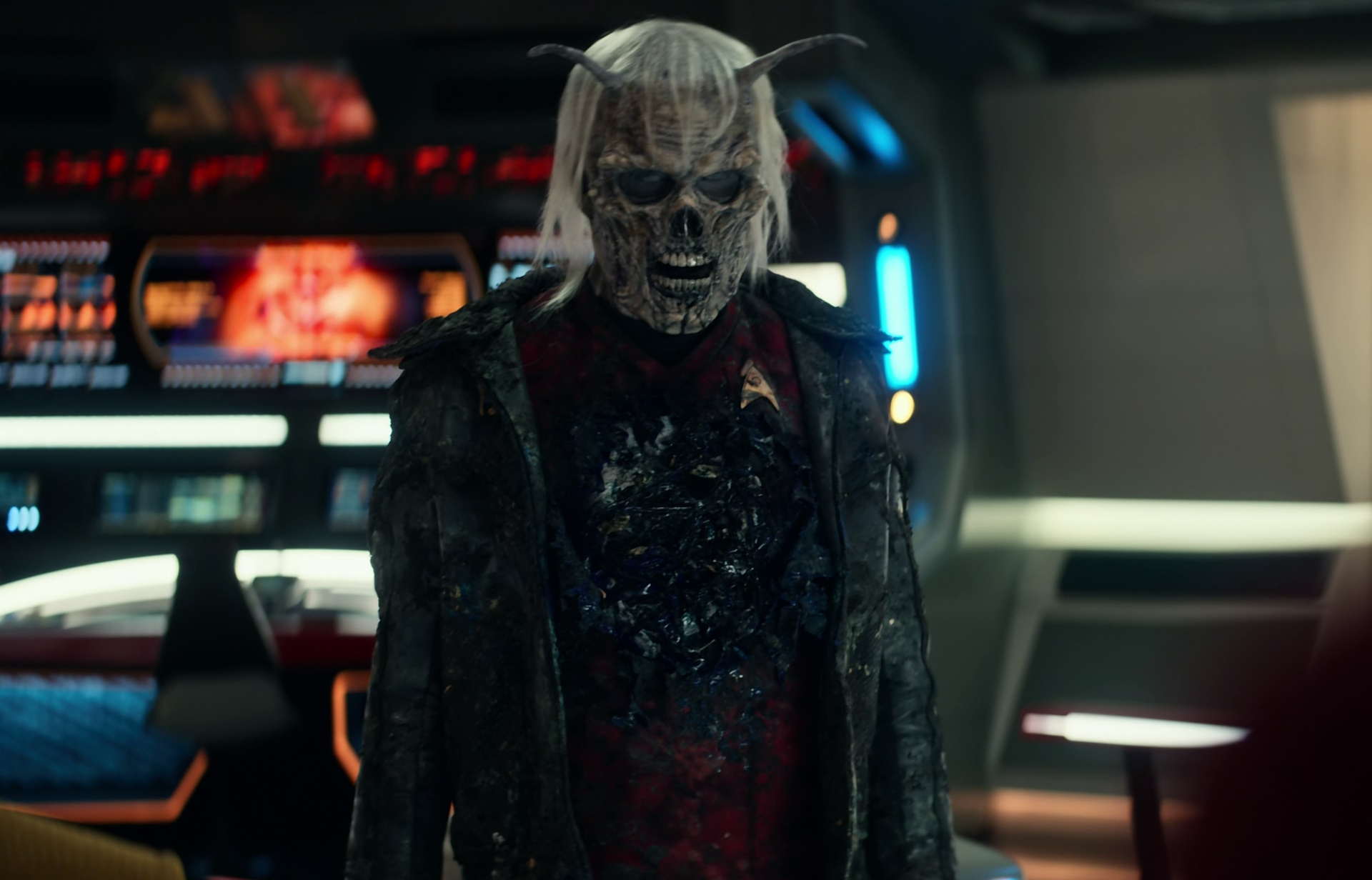
I think I’m right in saying that this is the first adult Gorn to be seen on screen in Strange New Worlds. I confess that I have a real die-hard appreciation for the old rubber suit from Arena; there’s just something special about those old practical effects that the modern redesign can’t touch. But for the way this version of the Gorn are being depicted, as scarily intelligent monsters, I liked the way this character looked. And I appreciate that there was an effort to use real practical effects for this sequence – a performer in a Gorn suit – rather than making the entire thing a CGI creation.
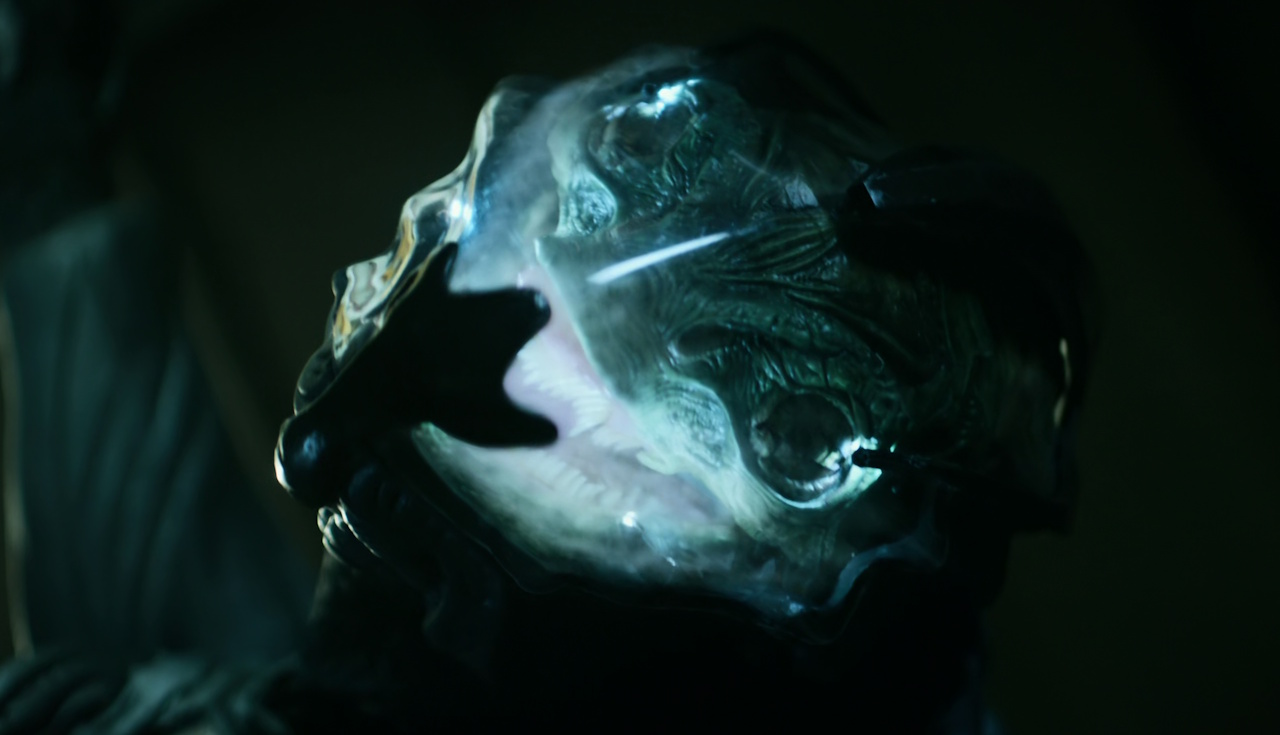
After the tense fight with the Gorn commander, his death actually felt pretty brutal. Drifting out into space with a damaged helmet, injured and leaking air… that’s a pretty gruesome way to go for anyone! The fact that it happened to a monstrous Gorn might’ve taken something away from that, but I actually found it to be an incredibly brutal moment – at least by Star Trek’s usual standards.
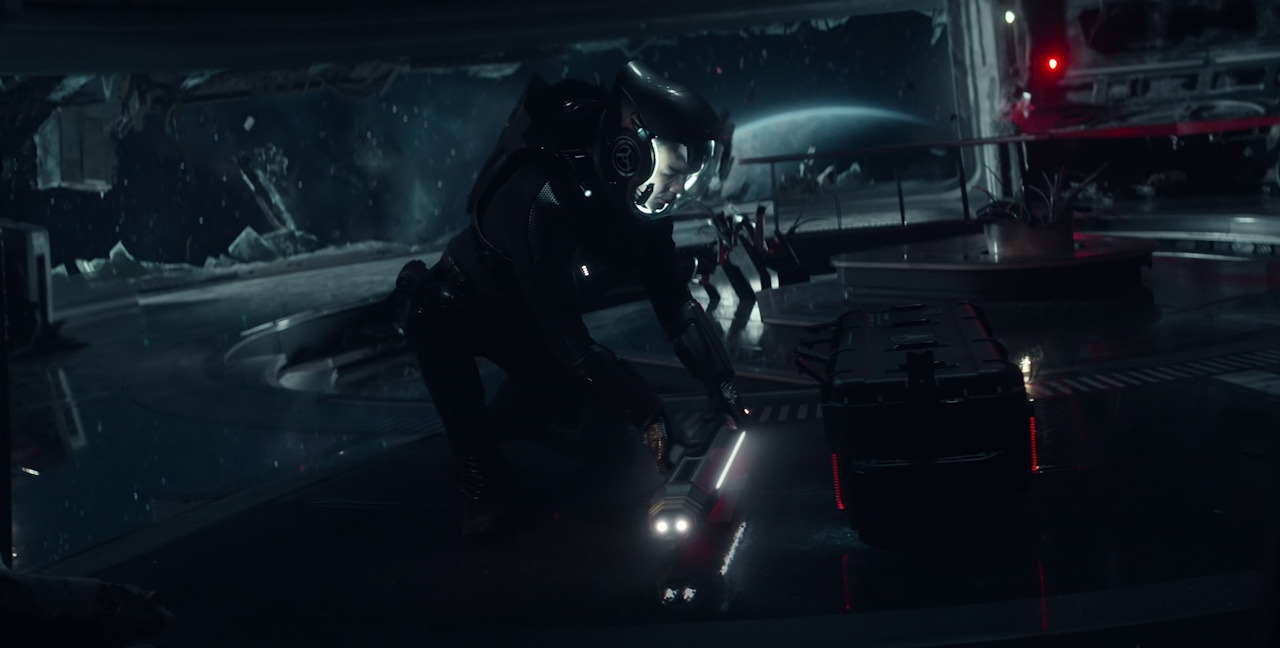
Sticking with the wreck of the Cayuga, I thought the set redresses worked pretty well. Sometimes in Star Trek, it can be pretty obvious when an existing set is being recycled and is supposed to be a new setting – Discovery’s transporter room trying to pass itself off as a Ba’ul prison cell in Season 2 is still one of the worst, and the first example that comes to mind! But the changes made to the corridor and especially to the damaged bridge really sold me on the wreck of the Cayuga as a real place, and it made a fun setting for Spock’s stand-off with the Gorn.
Should we address the status of Gorn-Federation contact? I mean, we’ve done other nitpicks so far in this review… so why not? If you wanna get technical about it, The Original Series first season episode Arena made it pretty clear that Starfleet hadn’t encountered the Gorn before. Because I didn’t review individual season 1 episodes of Strange New Worlds (the show wasn’t “officially” available outside of the United States for months after its premiere) I didn’t get a chance to address this at the time.
Long story short… I don’t really give a shit if Strange New Worlds contradicts Arena. Internal consistency and “canon” are important up to a point, but given the quality of the writing in all of Strange New Worlds’ Gorn episodes so far, I really don’t think it matters. If we were dealing with a bigger faction, one that had played a role in numerous episodes across multiple shows, then I might be more on the side of the canon purists. But given that the Gorn only ever appeared once in The Original Series and once in Enterprise, I’m content for Strange New Worlds to explore this faction in more depth. I think they work better as antagonists because of how unexplored they are than Discovery’s Klingons did, and I’m genuinely enjoying this “spacefaring monster” idea.
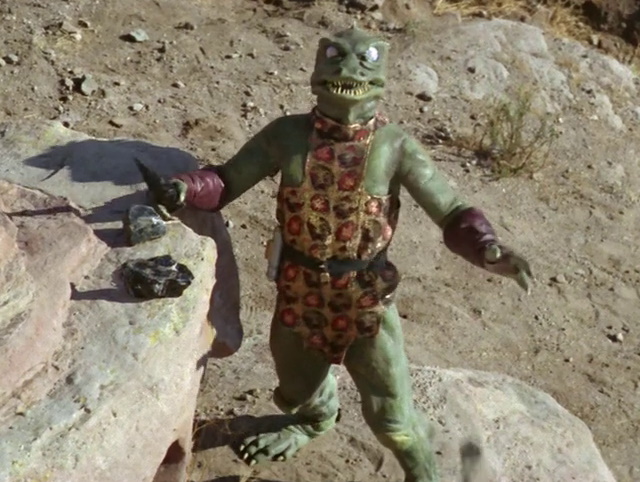
This depiction of the Gorn led to an interesting conversation between characters. How do we define a “monster,” and given that the Gorn are clearly at least as intelligent as humans, do they even fit that definition? In fact, seeing as the Gorn appear to have access to technology that surpasses the Federation’s capabilities – a jammer that can block transporters, sensors, tricorders, and warp engines all at once is clearly much more advanced than anything Starfleet has – is “monster” even close to accurate?
As an aside: did it seem like the Gorns’ jammer affected their own sensors? Because it felt that way to me, and I wonder if we might learn more about how the Gorn acquired this technology in a future episode. The idea that their most powerful weapon also renders their own ships and soldiers blind is an interesting one – and after Scotty’s comments about a solar flare sending the Gorn into a hunting frenzy, we could be primed to learn more about them. My theory? I wonder if there’s someone behind the scenes manipulating the Gorn or pushing them to attack the Federation.
Maybe we’ll have to elaborate on that idea one day!
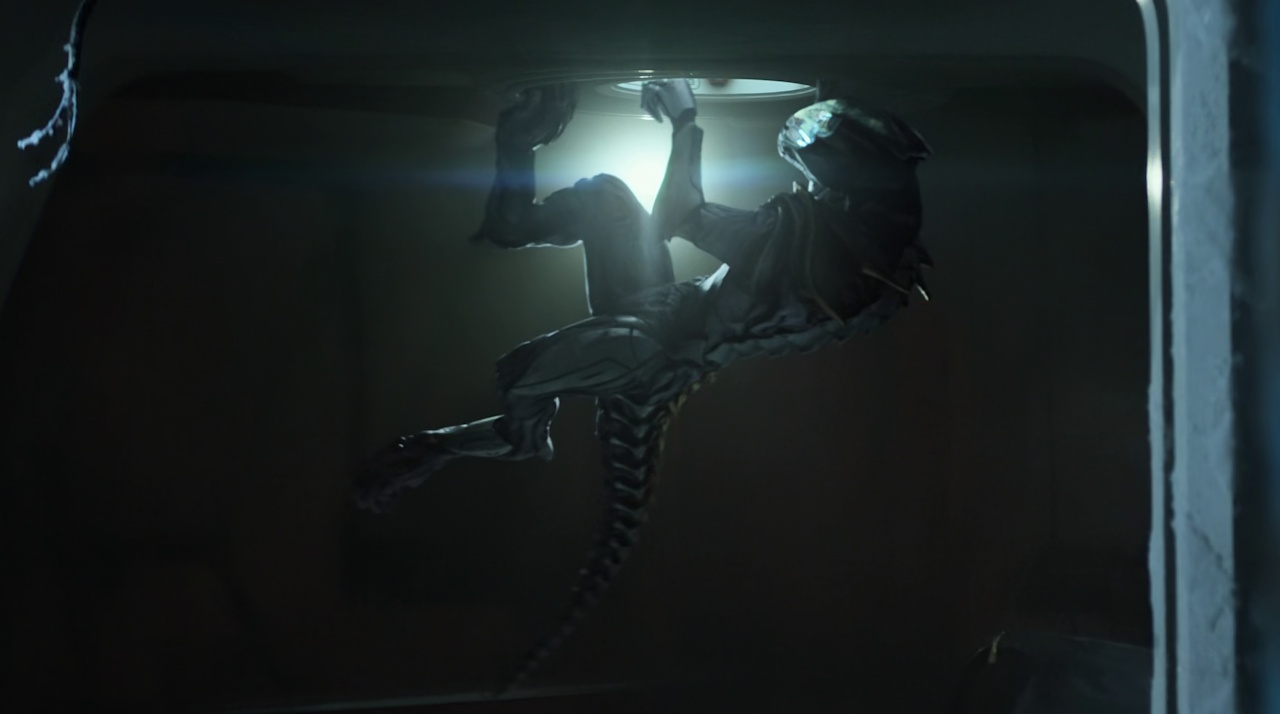
The “monster” conversation was a genuinely interesting one. It reminded me a little of Kirk’s anti-Klingon feelings in The Undiscovered Country, and it could’ve been a great way to make a point about how all of us can very easily “other-ise” cultures and peoples that we don’t understand. All-out war is a very real possibility here, but Star Trek has always been a franchise that promoted understanding, bridging cultural differences, and peaceful exploration. Perhaps there’s a story, somewhere, about how the Gorn don’t see humans as equals, and how it’ll take negotiation and convincing to get them to, y’know, stop eating us.
I could’ve happily spent longer on this conversation, and I think La’an would’ve been an interesting character to linger on. We’ve already seen her history with the Gorn, her fear, and how her feelings toward them can drive her… but how would she react to negotiation and peace? That could be an interesting angle for the series to explore. I love a good alien monster as much as the next sci-fi fan, don’t get me wrong, but the Gorn aren’t mindless animals – they’re warp-capable and intelligent, and I’d like to see that side of things explored in more detail one day.
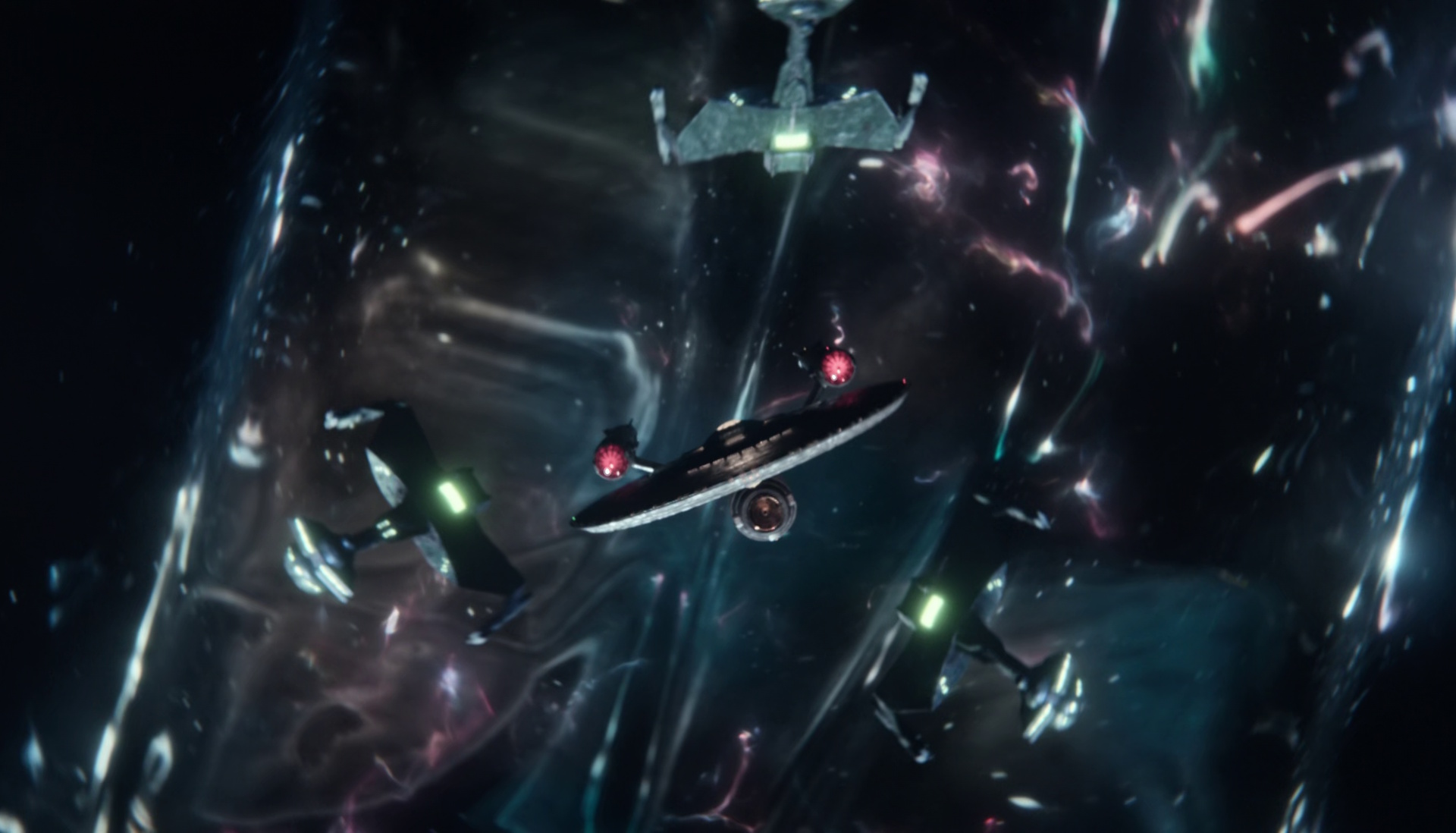
This review is already running long, so I think we’d better start to wrap things up. Hegemony was an outstanding episode, up there with the best of the best from Seasons 1 and 2. It was a fantastic way to close out Strange New Worlds’ wonderful second season, while also teeing up a story that could – in theory – run for multiple episodes across Seasons 3 and 4. The conflict with the Gorn is fascinating, and the Gorn themselves make for a wonderfully monstrous and intimidating adversary. My only concern is that Strange New Worlds has been a breath of fresh air with its return to episodic storytelling, exploration, and even some of Star Trek’s more ethereal and “weird” storylines… and I don’t want to sacrifice that for a serialised season-long story. Discovery and Picard already burned me out with repeated “the entire Federation is in imminent danger” storylines… so I hope that Hegemony can be a two- or three-part story and nothing more.
There were a couple of contrivances that saw Starfleet Command (and everyone else in the story) skip over the Gorn’s attack on a Federation vessel, and I confess I found that difficult. But once I got past that, the rest of the episode played out in truly exciting style, closing out the season with a bang. I had a truly wonderful time with Captain Pike and really the entire crew – and I can’t wait to find out what happens next when Season 3 arrives later this year.
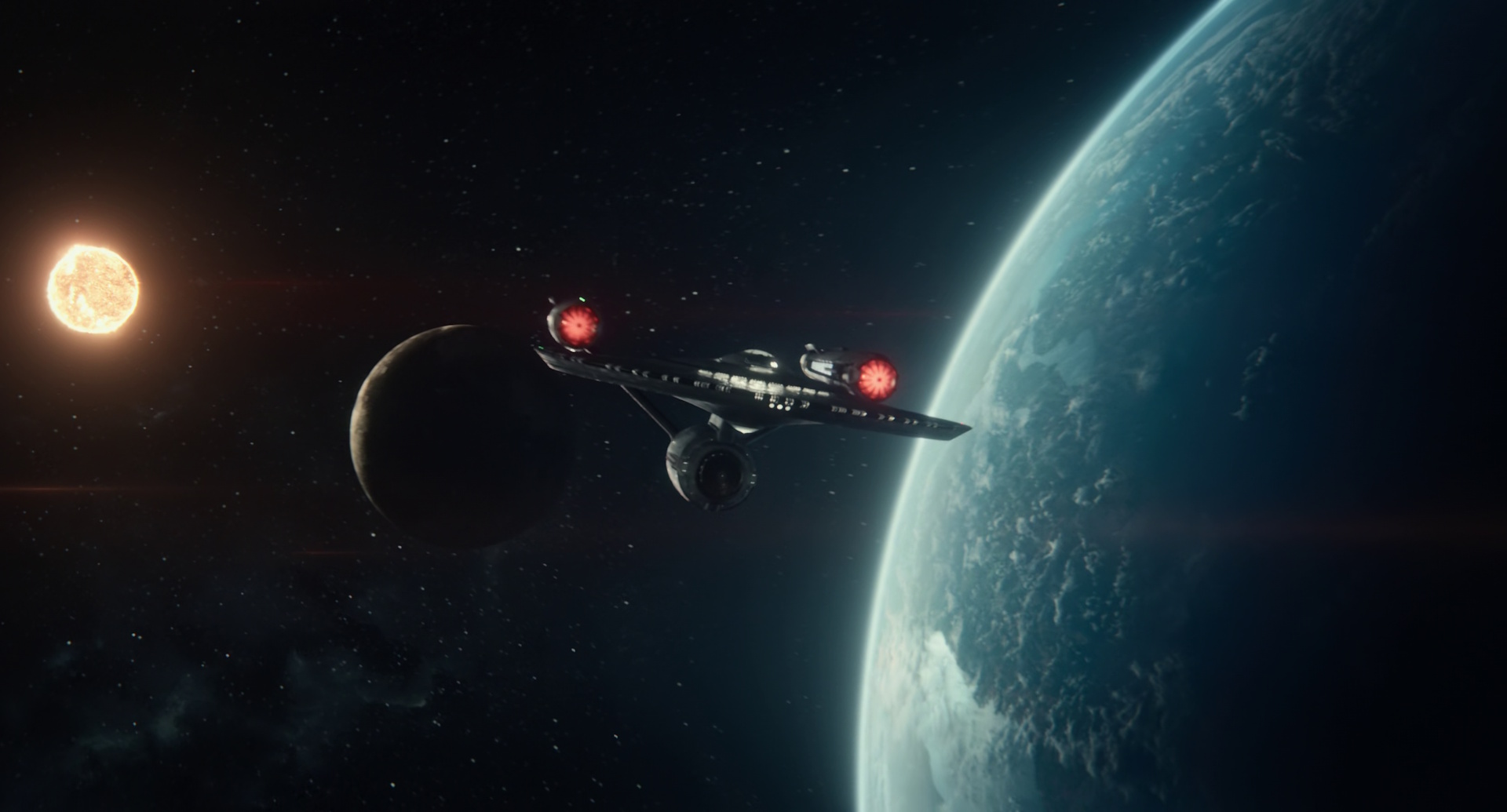
This finally finishes my Strange New Worlds Season 2 episode review series – a series that I began when the show was first airing back in 2023. It took me so long because I basically burned out on Star Trek for a while, and I still have two full seasons of Lower Decks and some Prodigy episodes to get caught up on before I’m fully back up to speed with Star Trek. I’m probably the only reviewer who watched Section 31 before Subspace Rhapsody and Hegemony, so I hope you’ll forgive the lateness of these final reviews.
As I said at the beginning, though, it kind of worked out well for me, because now I don’t have so long to wait for the continuation of this wonderful story! Season 3 is well into post-production, and while we don’t have a broadcast date just yet, I would expect to see it in the summer or perhaps early autumn. There’s less congestion to the schedule this time around, so hopefully Paramount will give Star Trek room to breathe. That’ll give me time to get caught up on some of those other shows, right?
Season 3 will be on our screens before too long, though, so I hope you’ll join me for more reviews and perhaps a dash of theory-crafting. No promises, but I’d like to think I’ll get through Season 3 in a more timely fashion this year! And until then, stay tuned here on the website for more Star Trek content. In the first couple of months of 2025, I’ve already reviewed Section 31 and written up my recollections of Voyager to celebrate that show’s thirtieth anniversary. There’s more to come, so until then… Live Long and Prosper!
Star Trek: Strange New Worlds Seasons 1 and 2 are available to stream now on Paramount+ in countries and territories where the platform is available. The series is also available on DVD and Blu-ray. The Star Trek franchise – including Strange New Worlds and all other properties discussed above – is the copyright of Paramount Global. This review contains the thoughts and opinions of one person only and is not intended to cause any offence.





 Trekking with Dennis