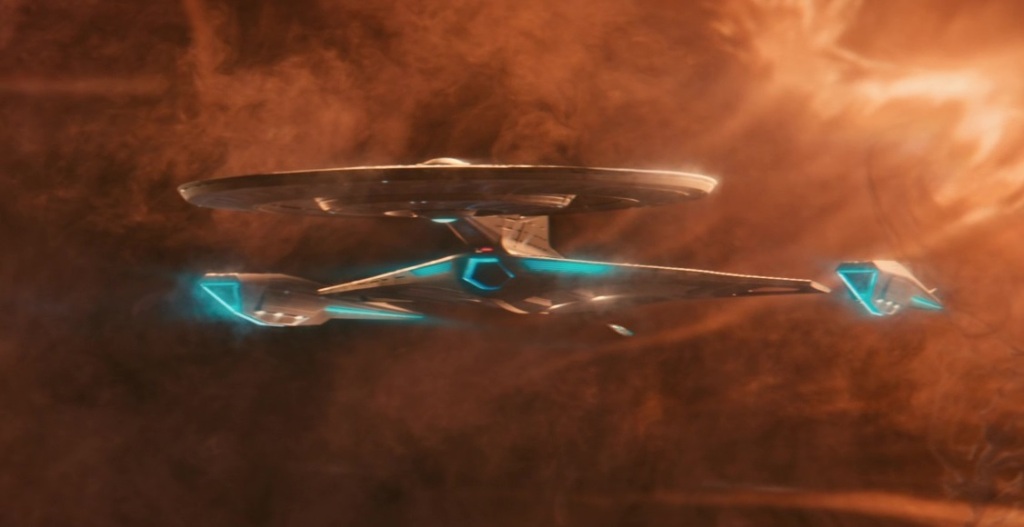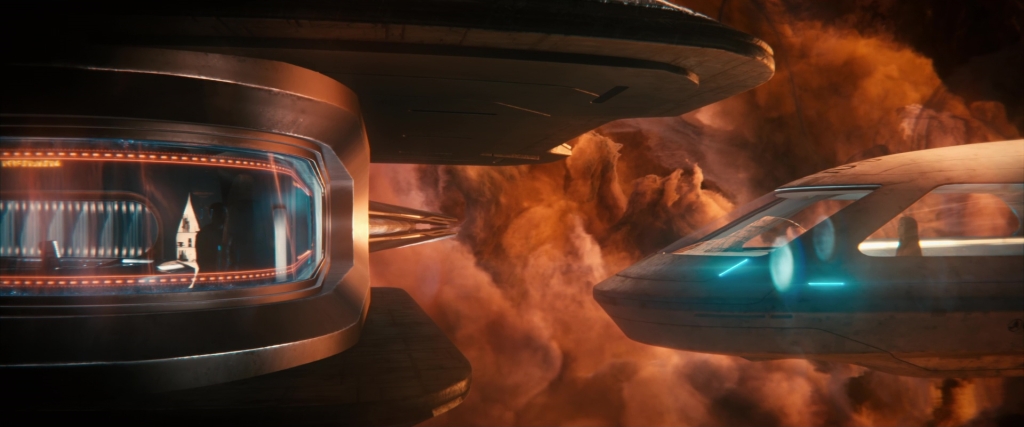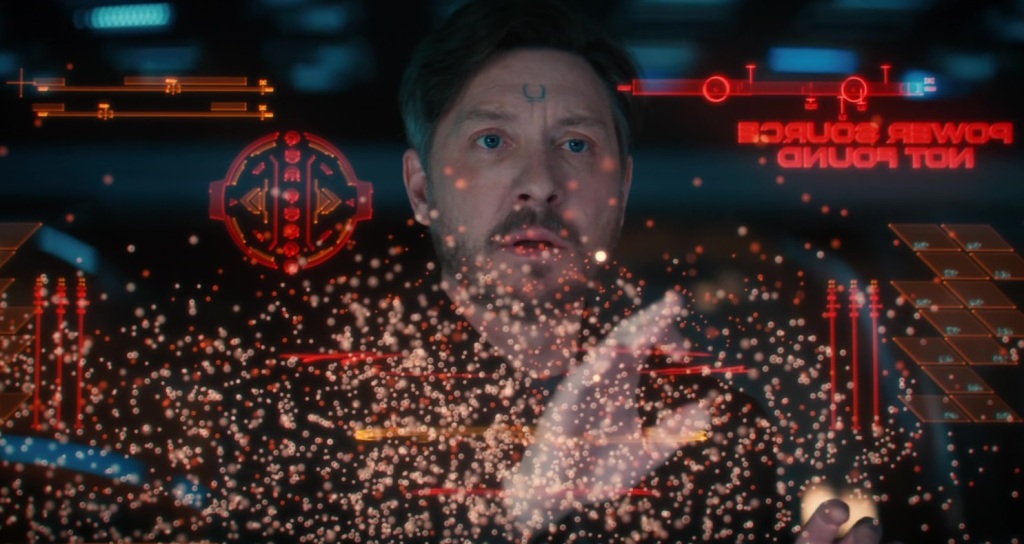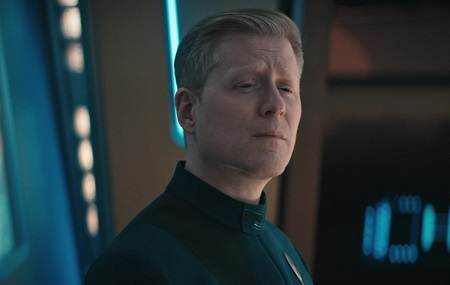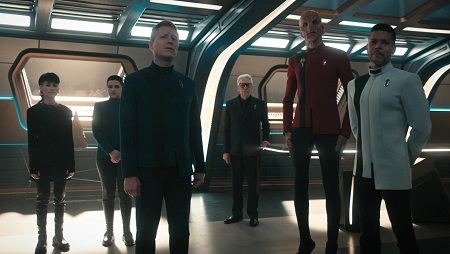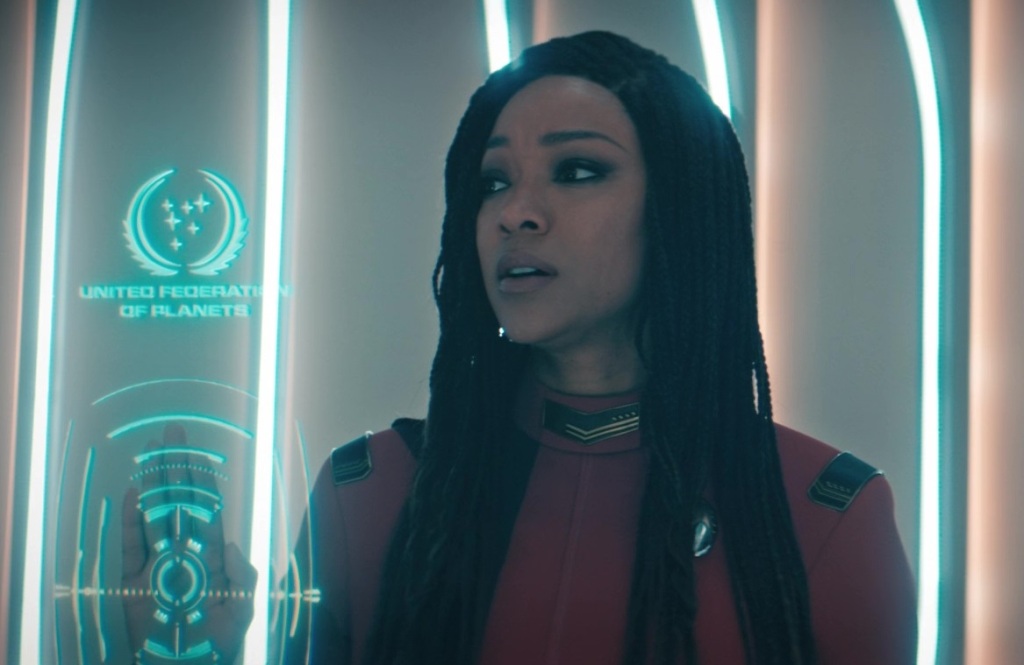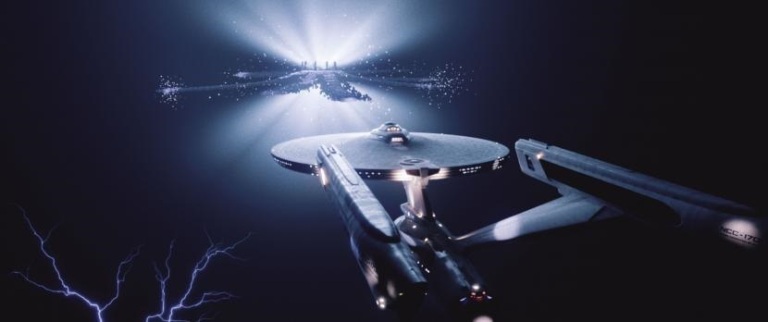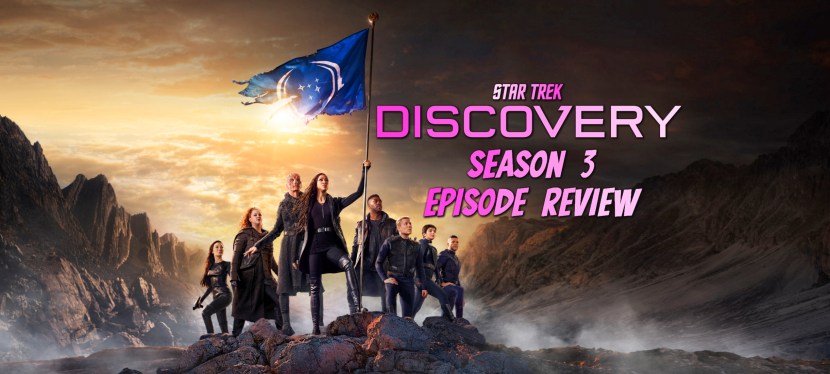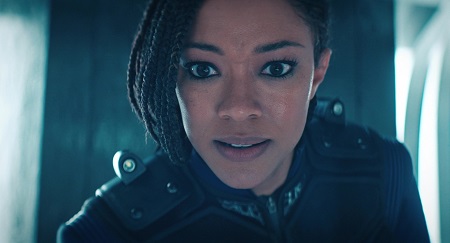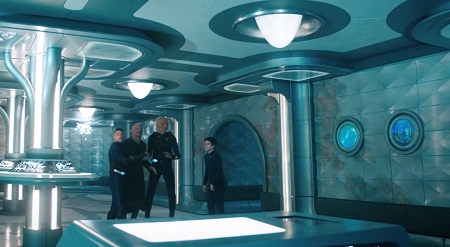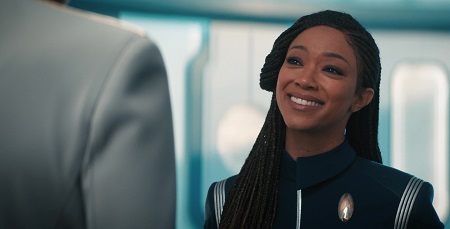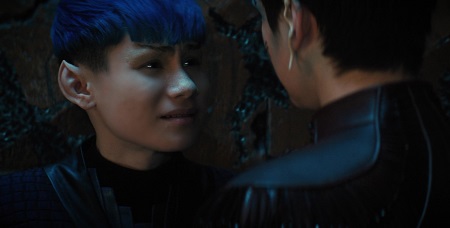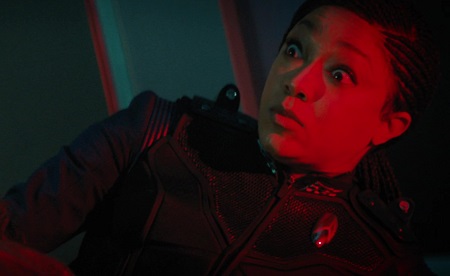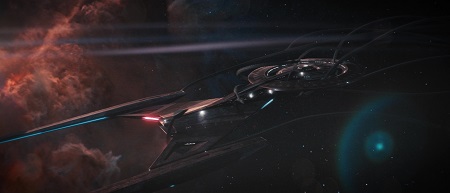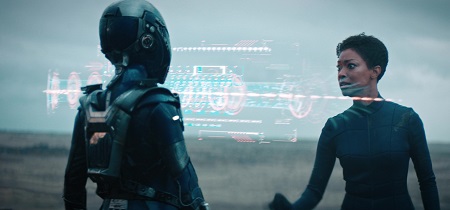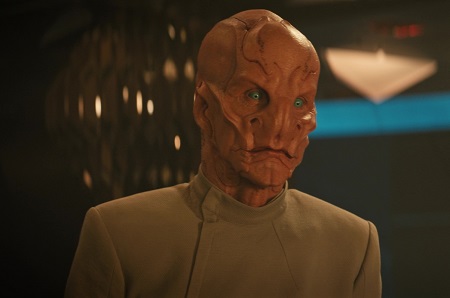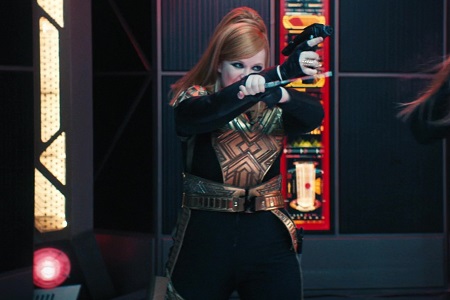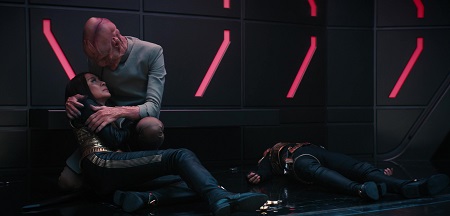
Star Trek: Discovery – Season 5 Review

A spoiler warning graphic.

Spoiler Warning: There are spoilers ahead for Star Trek: Discovery Seasons 1-5 and Star Trek: The Next Generation Season 6.

So this is it, then! Star Trek: Discovery’s fifth and final season has come and gone, and its finale really does feel like the end of a chapter for the Star Trek franchise.

Two points before we get into the meat of this review. Firstly, this full season review is taking the place of the individual episode reviews that I did for Seasons 3 and 4. I didn’t pick up Paramount+ to watch Discovery week-to-week, and I didn’t really have the energy to spend on writing ten full episode reviews like I did for the past couple of seasons. If that’s something you really wanted to see, well… sorry. I may revisit individual episodes from Season 5 in the future.

Secondly, now that Season 5 has wrapped up, I would like to do a deep dive into Discovery as a whole; a kind of “post-mortem” for the series. But that isn’t the objective of this review, and this time around I’ll try to stick to Season 5, its story, and its characters. That doesn’t mean I won’t talk about plot points from earlier seasons or other parts of Star Trek where necessary (and spoiler alert: it will be necessary to do that) but rather that this review is meant to be about Season 5 first and foremost. I will be taking a look at Discovery as a whole in a future article – so stay tuned for that!
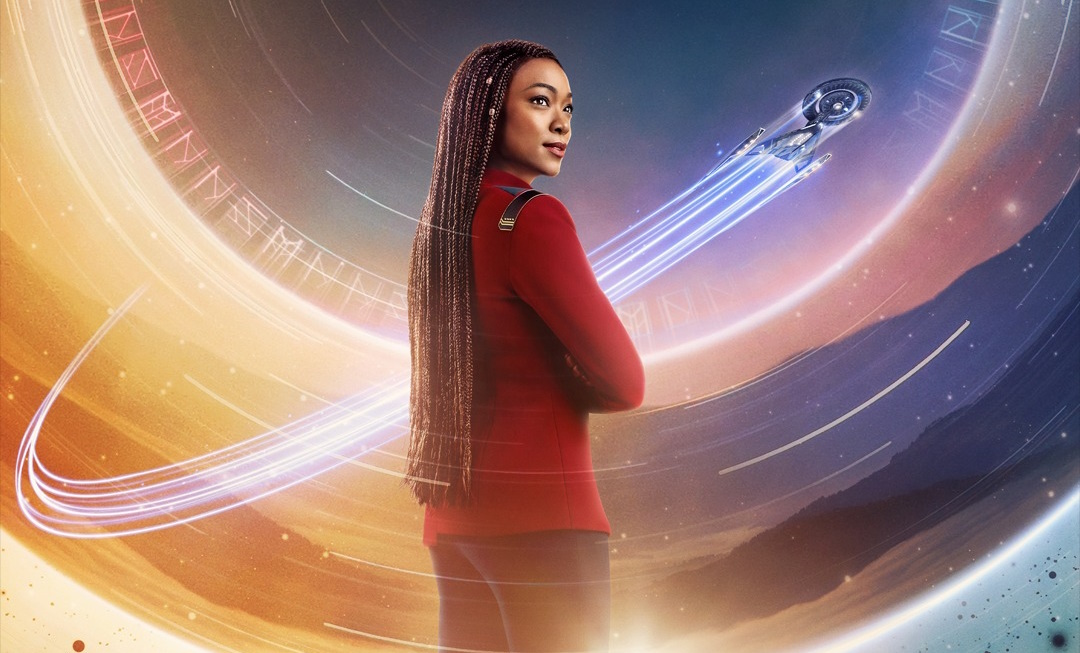
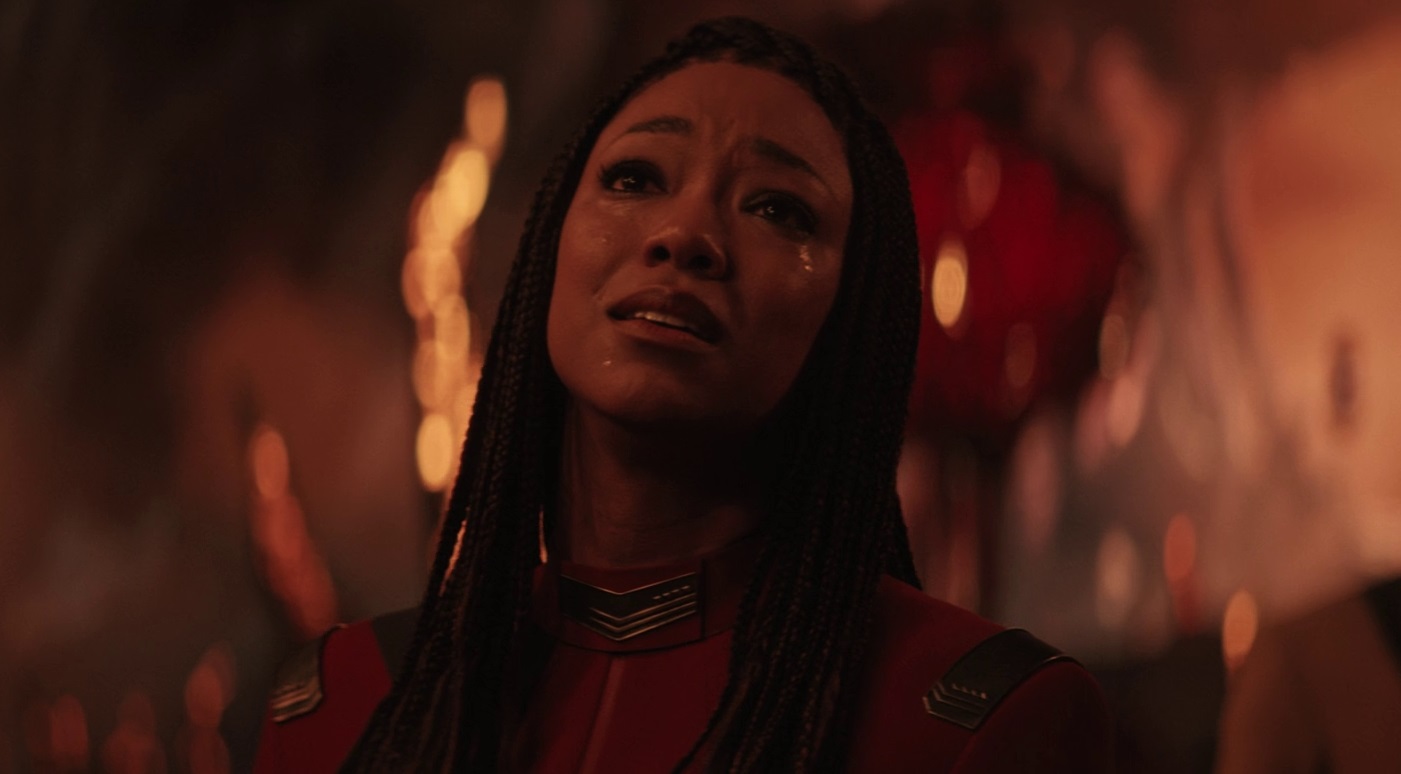
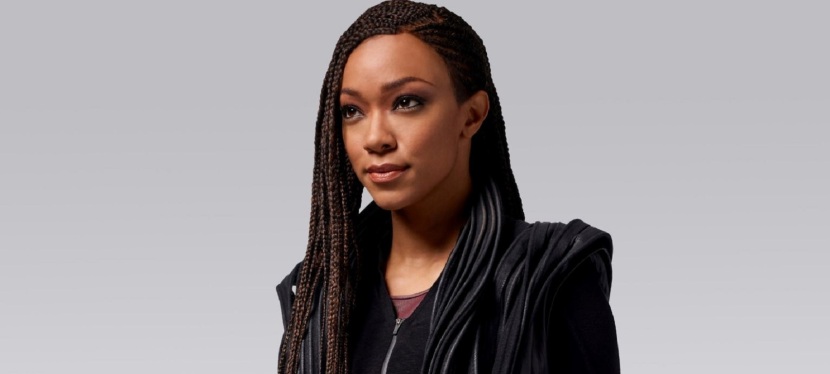
Cropped promotional poster for Discovery Season 5.
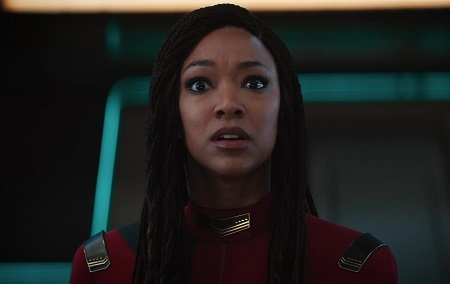
Michael Burnham on a promotional poster for Season 5.

I’d like to start with an observation that might set the tone for the rest of this review. Often when I’m binge-watching a series I can hardly wait to start the next episode. There’ll be a sense of excitement as I get ready to watch the next chapter of the story… and sometimes I even let the chores pile up because I just don’t want to wait or put the next episode on hold! When I get into a story and I’m in “the zone” I don’t want to break out. That didn’t happen for me with Discovery this time around.

Even though I could’ve binged Season 5 over the course of a couple of evenings… I didn’t want to. I took breaks of several days in between episodes, sometimes – and I was running down the clock on my single-month subscription to Paramount+ with a couple of episodes still to go. This time around, I don’t feel that Discovery grabbed me in the way it has in the past, even though there were some genuinely interesting storylines. Probably this is more an issue on my end than with the show itself – I’ve talked in recent months about how I’ve come to feel rather burned out on Star Trek as a whole, so perhaps I jumped back in before I was ready. But I think it’s worth noting that Discovery didn’t really succeed at pulling me back in.
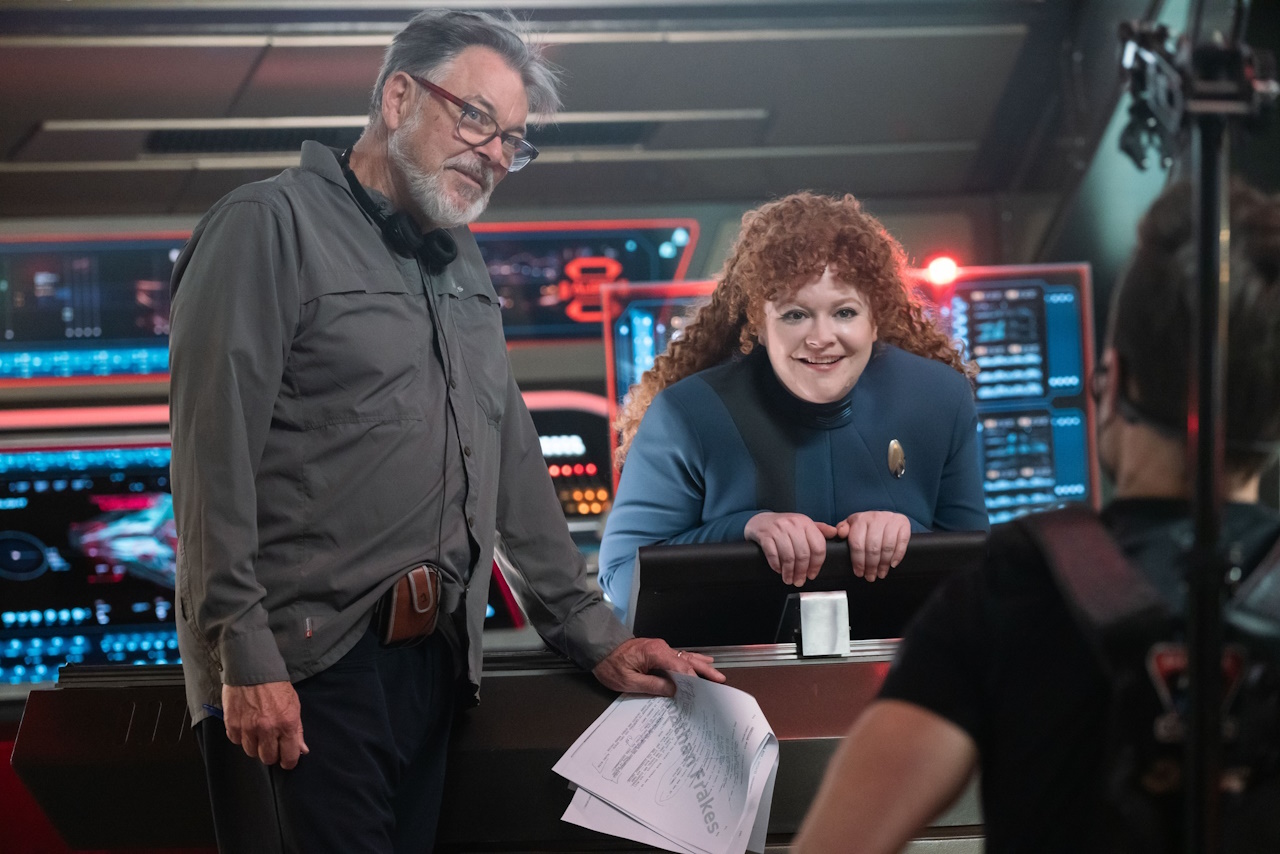
Behind-the-scenes photo showing Jonathan Frakes and Mary Wiseman.
Director Jonathan Frakes and Tilly actress Mary Wiseman in a behind-the-scenes photograph.

Although I had a specific concern about the series finale, I went into Discovery’s fifth season feeling somewhat optimistic about the direction of the story as a whole. It seemed – based on the season’s marketing material – as if Discovery was finally ready to give up on the whole “the entire galaxy is in danger and only Michael Burnham, the Chosen One, can save it!!!” story outline that the show had recycled, in some form, across its first four seasons. And I was excited about that; seeing what Discovery and its characters might be able to do with a completely different style of narrative held a lot of appeal. Even if that change had come too late to save the series from cancellation, I still would’ve liked to see the writers giving Burnham and the crew a new challenge and a fundamentally different kind of adventure – one that might’ve been smaller in scale but still interesting and entertaining.

But as you probably know by now, Season 5 recycled that same story outline yet again. There was a mystery at the centre of the narrative, and an adventure to follow as Burnham and the crew followed the trail. But there was also a “catastrophic galactic threat” underpinning it all, and villains intent on wreaking havoc who had to be stopped. Discovery had one final chance to try something genuinely different – a style of storytelling that might’ve better suited the show and its cast of characters. But instead, we got a story that felt derivative. Like in every season before, Michael Burnham and the crew faced a threat that could wipe out the Federation and all life in the galaxy. Like in every season before, they had to follow a trail of clues to uncover the threat. And like in every season before, there were villainous rascals trying to stop them. If this is the only kind of story that the show’s writers wanted to tell or were capable of telling… then I think I’m glad to see the back of Discovery. One or two of these kinds of stories might’ve been okay… but five in a row? Too many.
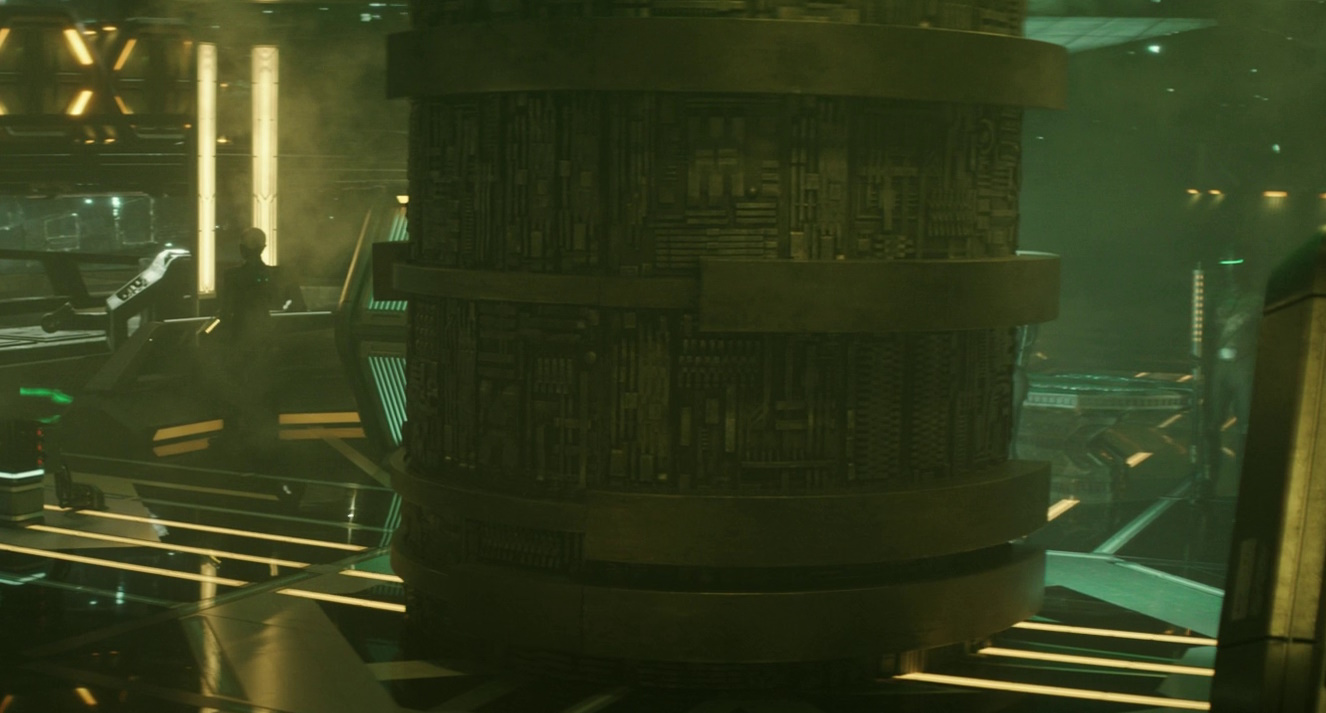
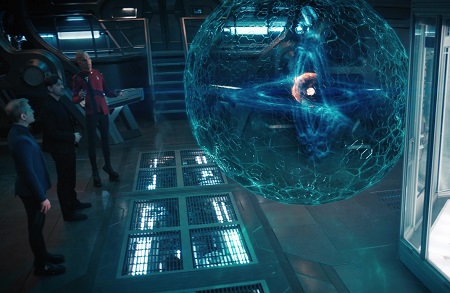
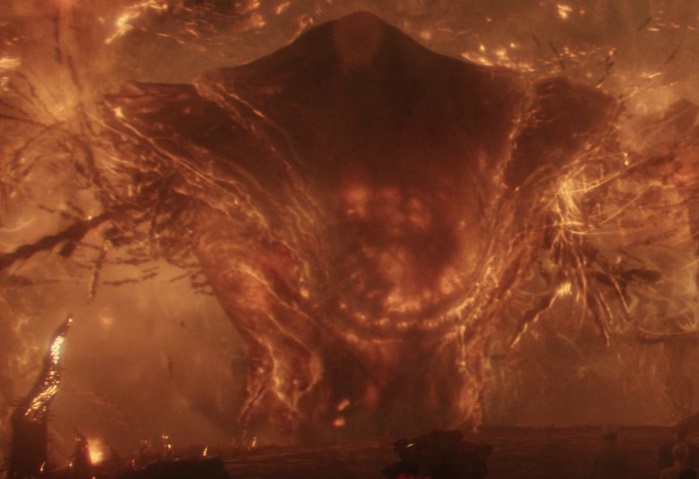
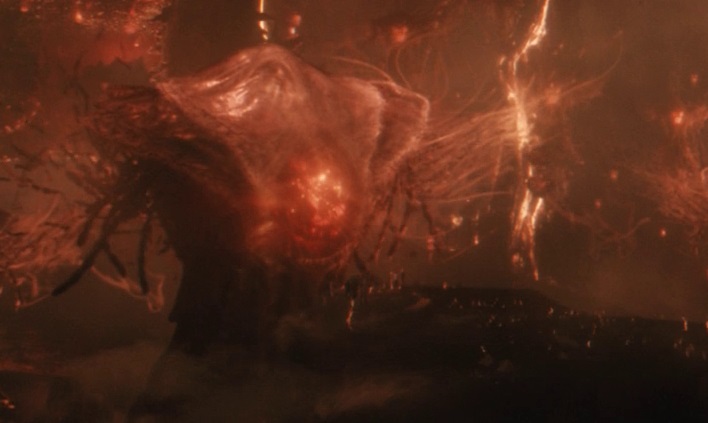
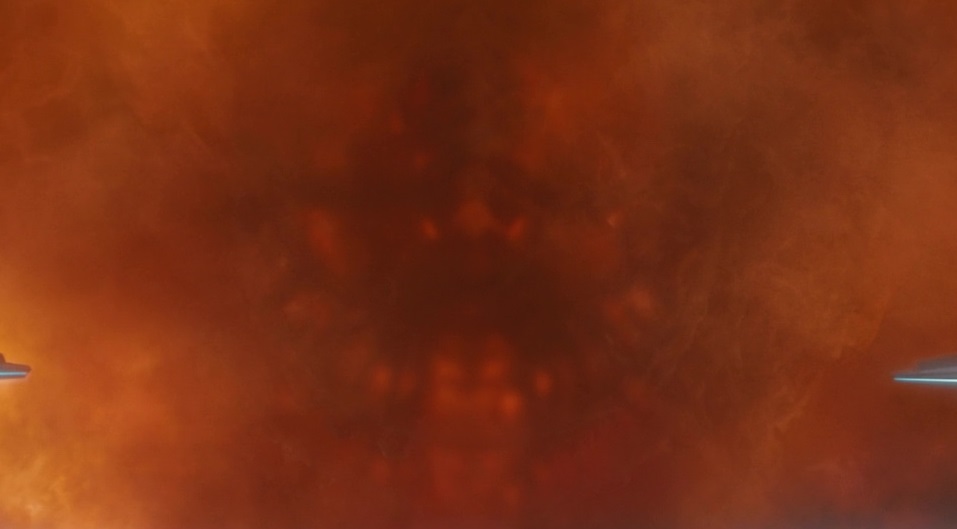
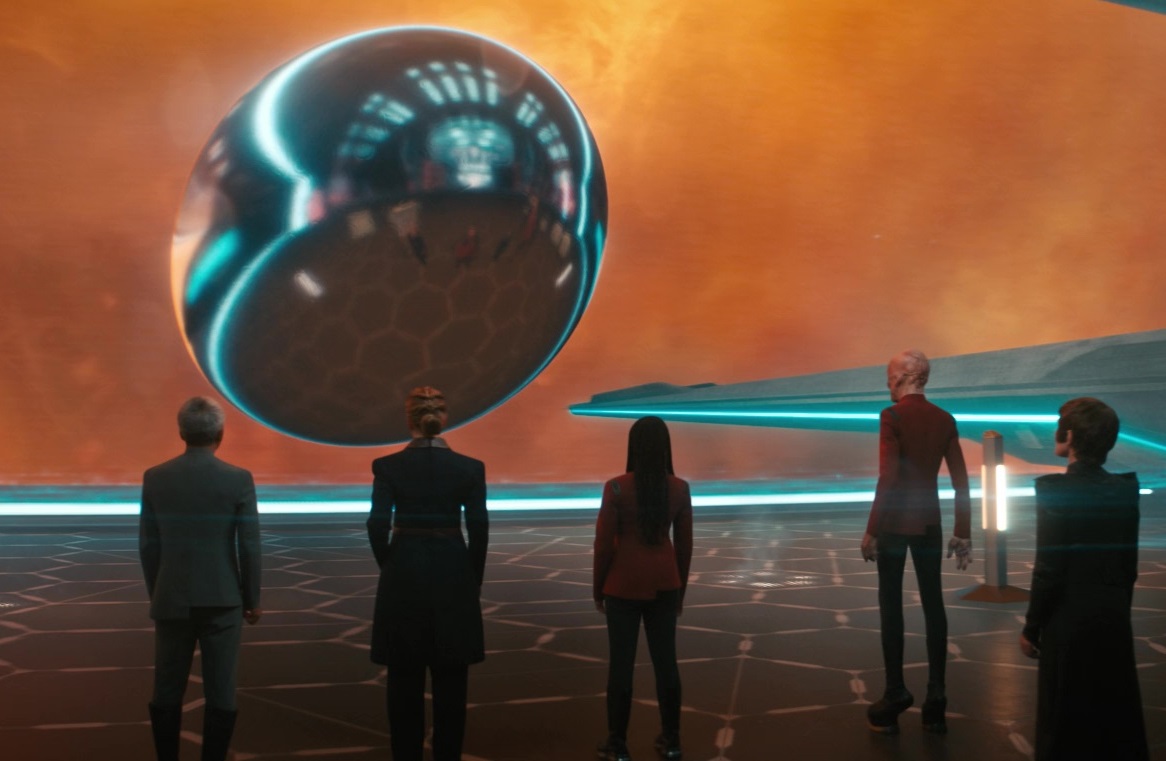
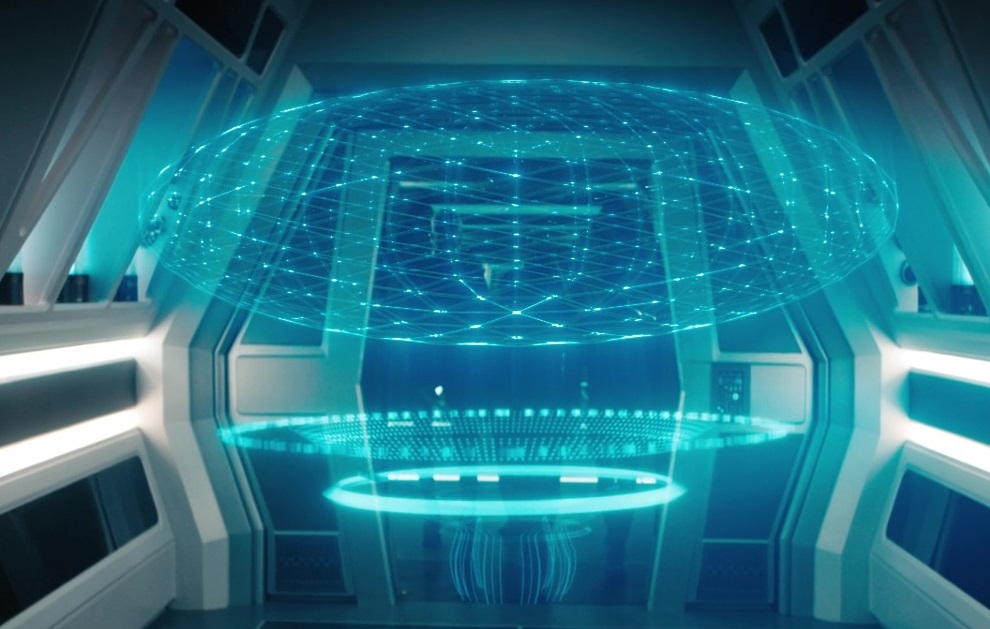
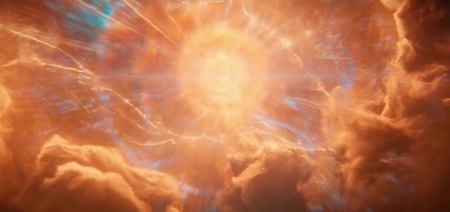
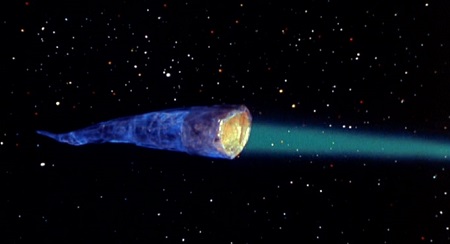
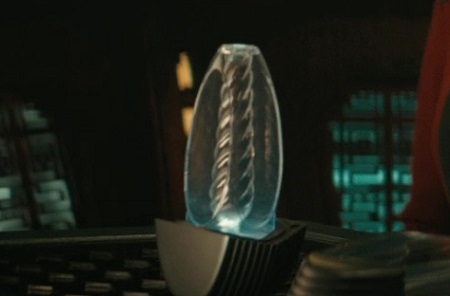
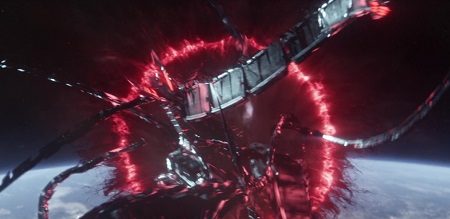
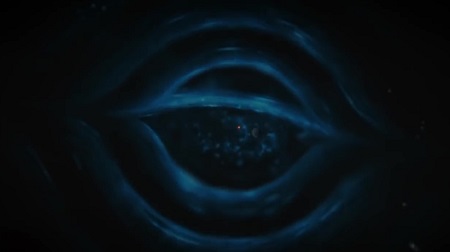
Still frame from Star Trek: Discovery Season 5 (2024) showing the Progenitors' device.
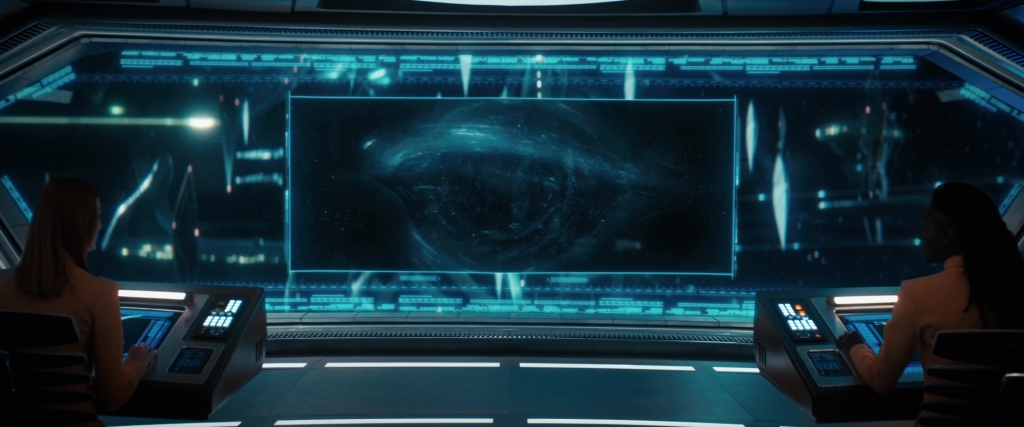
The Progenitors’ device.

It wasn’t only the main storyline that felt recycled. Book’s story of feeling alone and looking to reach out to someone he considered “family” felt pretty repetitive, as did his interactions with Dr Culber. Tilly went back and forth with her characterisation, bouncing between caring about her cadets as she did last season and seemingly forgetting they existed a moment later. Despite being brand-new, Commander Rayner was given a typical Discovery “traumatic background” that, naturally, became critical to advancing the main story. And then we come to the dreaded Burnham Relationship Drama™.

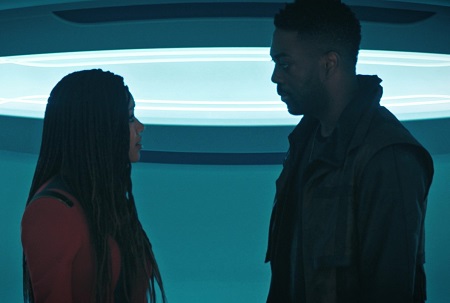
Book and Burnham broke up in the season premiere – setting the tone for a season where one of the themes involved other characters also going their separate ways. Later, Burnham’s conflict with Book over how to approach Moll and what to do with her – giving her to the Breen to prevent a war and save lives – felt incredibly similar to the arguments the pair had about the DMA just last season. So not only did Season 5 curse us with more Burnham Relationship Drama™, but the story wasn’t even an original one.
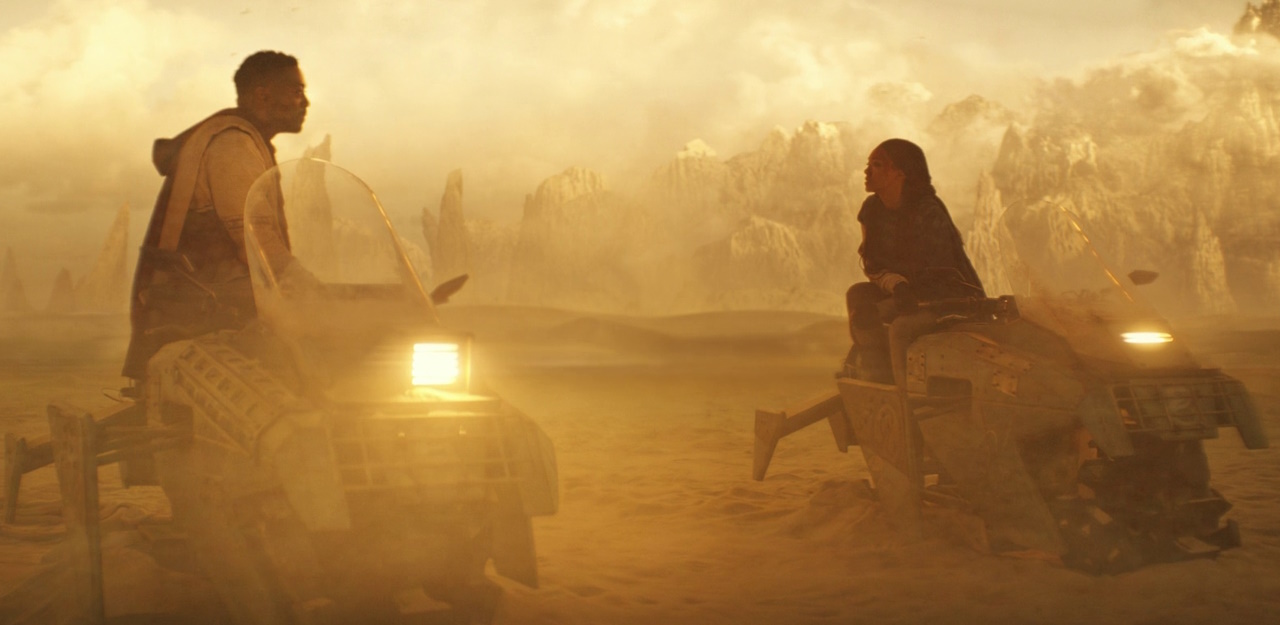
Still frame from Star Trek: Discovery Season 5 (2024) showing Booker and Burnham.
Booker and Burnham’s bike-based break-up.

Discovery is arguably Star Trek’s first series to have a singular protagonist instead of either a trio or an ensemble. And I would have loved it if that protagonist could have had just one season – just one out of five – in which she wasn’t at the centre of a soap opera story involving her love interest(s). We got it in Seasons 1 and 2 with her on/off relationship with Tyler. And we had it again in Seasons 3, 4, and 5 with Book. Discovery’s writers have been completely unwilling to let Burnham settle, and even as she’s developed, grown, and matured in other ways – like her relationship with Starfleet, her friendships with members of the crew, and so on – her romantic life has been a constant mess. If it served some greater narrative purpose, maybe it wouldn’t feel so repetitive and annoying. But after watching her and Book at loggerheads for much of Season 4 before belatedly reconciling, I’d hoped that we’d finally seen the last of the Burnham Relationship Drama™.

This repetitiveness was present throughout the season, both in the main story, side-stories, and moments of characterisation. The Archive that Book and Burnham visited felt no different from Season 3’s seed vault, for example, and it’s hard to view the Progenitor’s technology and the race to protect it as being much different from the Control AI battling to seize the Sphere data in Season 2. The Breen, while a returning faction from Star Trek’s past, filled a role that the Klingons had in Season 1 and the Emerald Chain did in Season 3. Moll and L’ak were the villainous duo who needed to be stopped, but who had a connection to one of the main characters – just like Book and Tarka in Season 4 or Voq in Season 1. The trail of clues that the crew followed also felt just like the ones that led them to the cause of the Burn in Season 3 and the DMA/Species 10-C in Season 4.
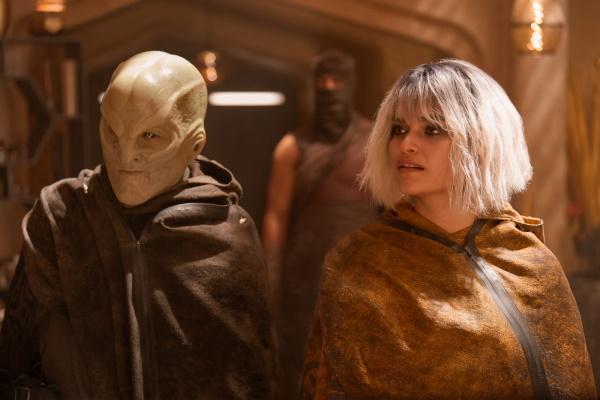
Still frame from Star Trek: Discovery Season 5 (2024) showing L'ak and Moll.
The story turned out to be repetitive.

With Discovery’s writers unwilling or unable to write a genuinely different kind of story – one without a “massive galaxy-ending threat,” Burnham Relationship Drama™, and all of the other repetitions we’ve noted – then I come back to something I said at the beginning: it was probably the right time for the series to end. I don’t think I’d have wanted to see a sixth or seventh season if both the main story and many side-stories were just going to be recycled once again. Season 5 may not have been the strong send-off that I’d hoped for, but at least we can say that Discovery went out on its own terms. Which is something… right?

This isn’t to say the season was universally terrible. There were some highlights, both for the main story and in individual episodes, as well as some of that often-elusive sense of “Star Trek-ness” that’s made the franchise so enjoyable to me for more than thirty years. Practically all of the episodes had something that made me smile, laugh, or feel some of the emotions that the story was reaching for. I just wish that those moments hadn’t come in a repetitive story that, once again, saw all of the drama turned up to eleven. And perhaps if I were being brutally honest, I’d say that I wish those enjoyable moments hadn’t been so few and far between.
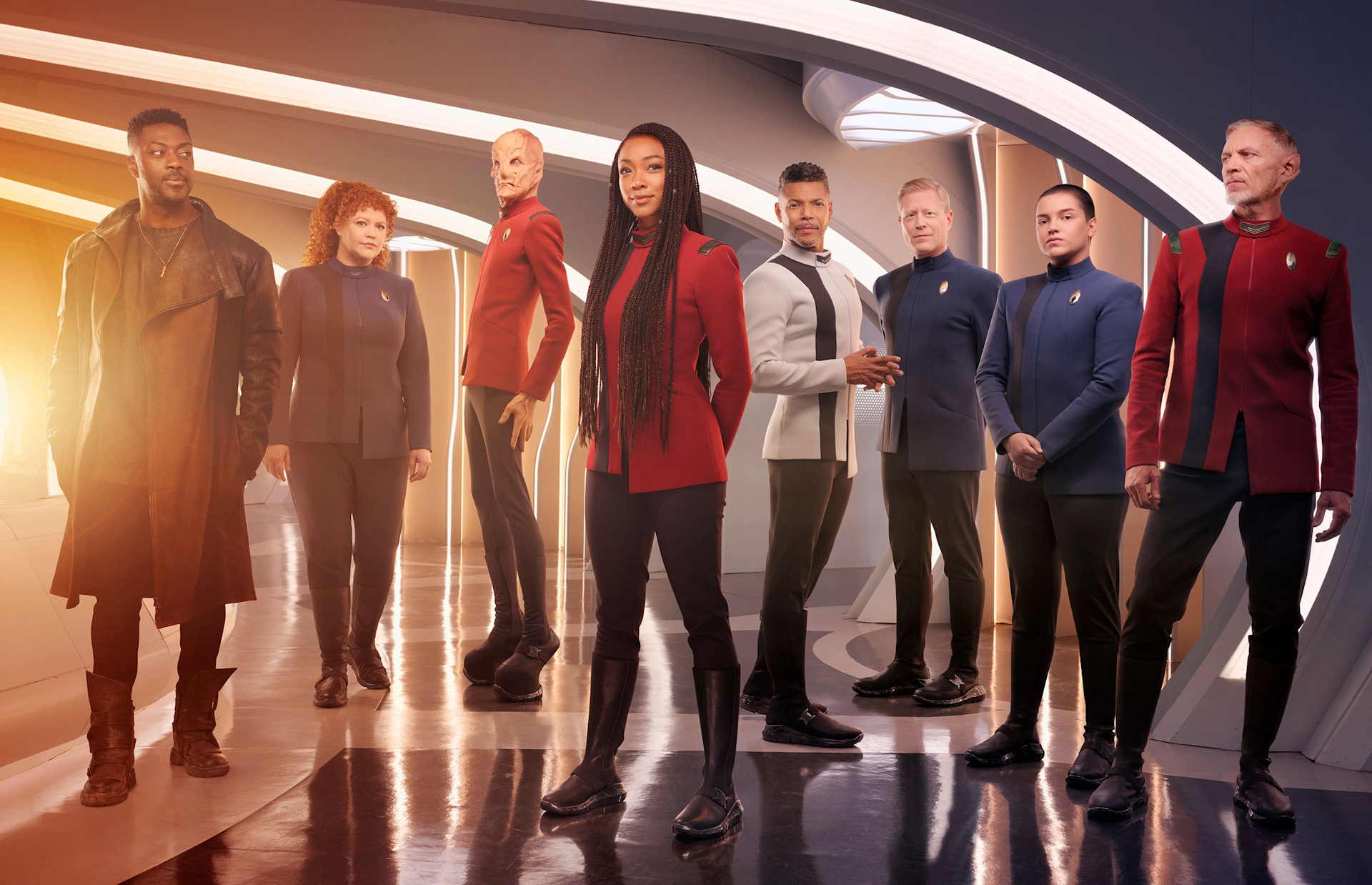
Promo photo for Season 5 showing the main cast.
The main cast of Season 5.

I was a little surprised that the duo of bridge characters who’ve been part of the series since Season 1 – Owosekun and Detmer – weren’t included in a big way this time around. They had a couple of lines each, mostly in a flashback sequence, but otherwise seemed to have been replaced by a couple of other characters whose names I didn’t even catch. I don’t know why this was – was there some reason why the actors couldn’t take part in the full season? It seems odd to me that these familiar faces were effectively written out of the show; there wasn’t really a reason given.

Other members of the bridge crew – Rhys, Linus, and co. – got about as much attention as they ever had. These secondary characters have never been Discovery’s focus, and while I felt that the series had the potential to expand its roster in a kind of Deep Space Nine-inspired way, utilising a broader cast of secondary characters, that never happened. At this point I wasn’t expecting it to, but at least we didn’t get any completely shallow, contrived story moments involving these characters like we had in past seasons. Giving a secondary character one scene’s worth of “development” in a single episode either to force an emotional reaction at their death or to nakedly add to the main story is something Discovery has done more than once and it seldom works well.
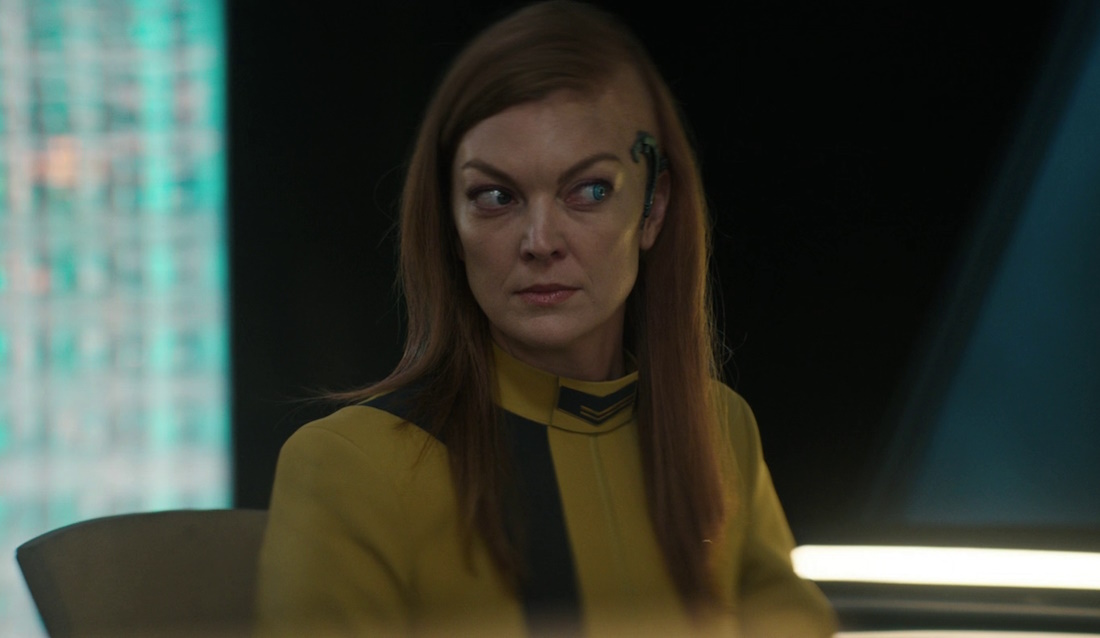
Still frame from Star Trek: Discovery Season 5 (2024) showing Detmer.
Detmer and Owosekun – mainstays on the bridge since Season 1 – abruptly disappeared this time.

On the main character front, aside from Burnham the only two to get much screen time and proper storylines were Dr Culber and Book. Tilly seemed to abandon her post at the Academy for no reason, and her role there was only sporadically brought up. Stamets was, for me, the least-well-developed main character this season. His story of wanting to find a new scientific legacy had a poor setup, was only referenced once or twice, and then was blitzed through right at the end. It ended up being a bit of a nothing-burger, and I feel Stamets would’ve been better used in a supporting role for Culber and Adira; those moments were far and away his best of the season.

Not for the first time with Discovery, I find myself saying this: this narrative concept wasn’t bad in principle, but the writers and producers clearly had their attention elsewhere, so it didn’t get enough time on screen to fully play out. There’s potential in the story of someone coming to terms with their life’s work being shut down (and that could’ve been more than a little therapeutic for Discovery’s writers, given what happened to the series), as well as in someone desperately reaching for some kind of “legacy” as a way to find meaning in their life or metaphorical immortality. Stamets’ storyline flirted with these ideas, but the series didn’t commit to them – because its energies were, as always, being spent elsewhere. The result was that the curtain fell on yet another underwhelming season for Stamets.
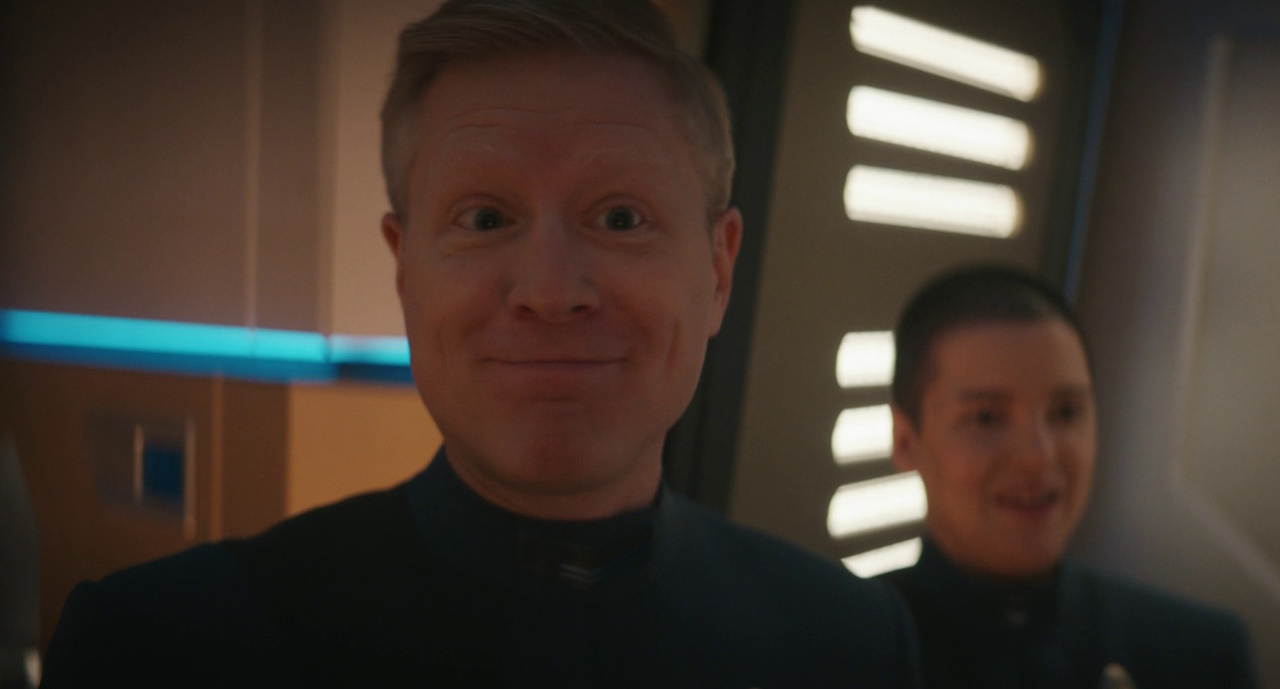
Still frame from Star Trek: Discovery Season 5 (2024) showing Stamets with Adira in the background.
Not a great season for Stamets… again.

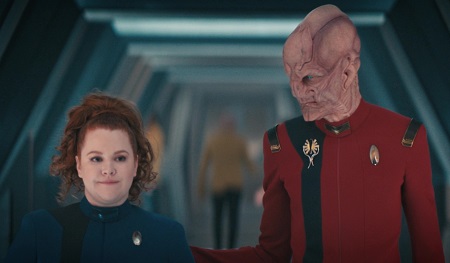
Saru got what was by far the most optimistic individual character storyline – as Discovery set up his marriage to T’Rina. There were a few sitcom-style bumps in the road, because of course Discovery is that kind of show, but by and large I liked what we got. Saru and T’Rina had an understated chemistry together, and at a time when tensions and dangers were rising, having two characters “back home” planning their wedding was a bit of a change of pace. I wish it didn’t have to happen at the expense of Saru having a major role in the show, though – his presence on the bridge was missed.

Speaking as we were of underdeveloped storylines: T’Rina’s complex political situation was mentioned once, in a single episode, then seemed to instantly disappear without her suffering any repercussions. This idea of “Vulcan purists” being upset at her engagement to a non-Vulcan was, again, interesting in theory… but went nowhere. Being generous we might say that this was something the writers hoped to explore more of in a potential sixth season, but I’m not convinced of that. It feels like a throwaway idea designed to create a bit of forced tension in Saru’s relationship, and nothing more.
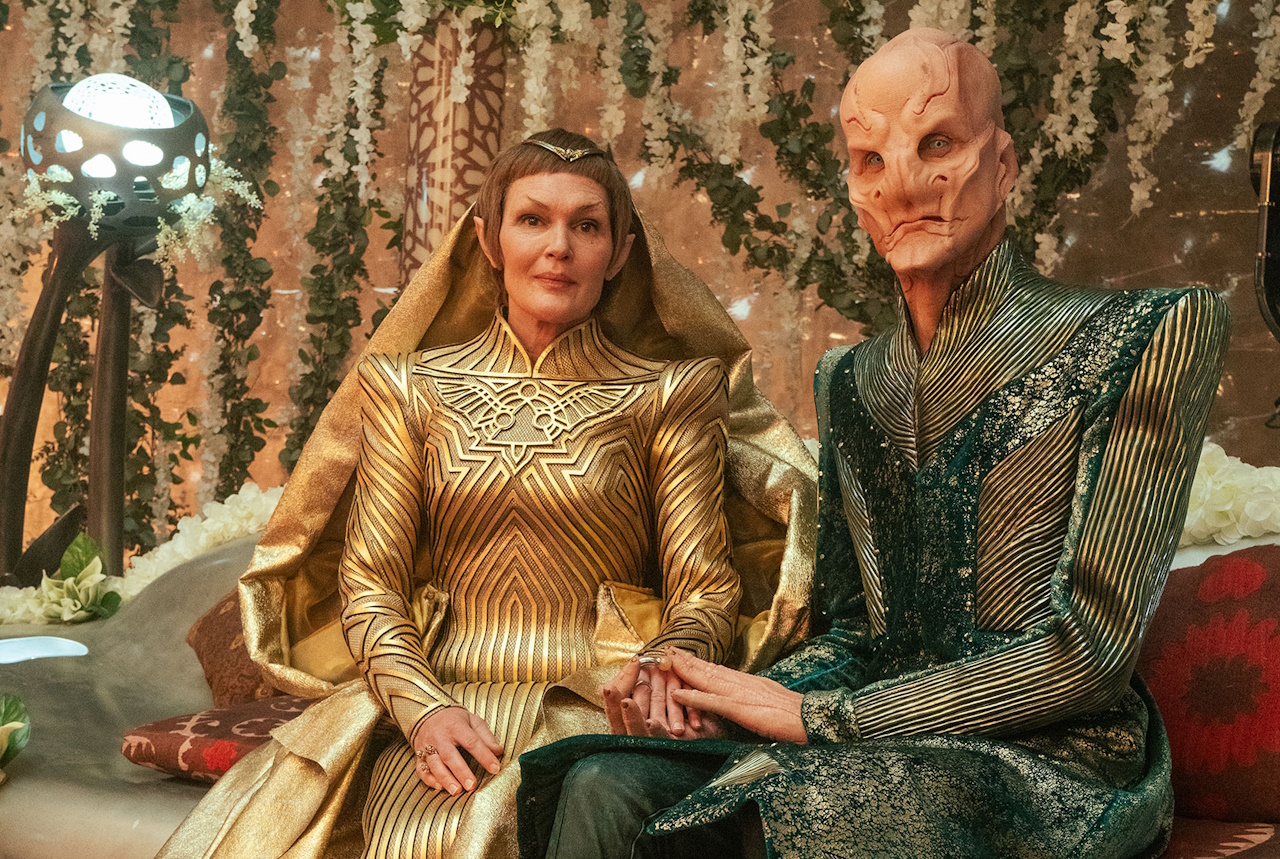
Promo photo for Season 5 showing T'Rina and Saru at their wedding.
T’Rina and Saru at their wedding.

“Subtlety” has never really been a word that Discovery’s writers seem familiar with, and in Season 5 we saw that trend continue. After explaining his tragic backstory, we saw Rayner go from crotchety a-hole to inspiring leader who cares about his crew almost in a heartbeat. It reminded me of the change that Saru underwent with his vahar’ai – a change that took him from cowardly to aggressive predator also in a split-second. For me, this abrupt character switch didn’t really stick the landing, and while Rayner is still an interesting character whose forceful personality left a stamp on the series, there’s something to be said for making these kinds of changes a more gradual affair.

I was disappointed that we didn’t get to see more of Admiral Vance and President Rillak – two characters who had been pretty enjoyable in Seasons 3 and 4. Both had moments on screen, but their roles felt diminished compared with the last couple of seasons. In a story with profound in-universe consequences (something we’ll talk about more in a moment), there was scope to see the Federation’s president and Starfleet’s top admiral wrangling with the fallout of Burnham’s mission and the “Red Directive.”
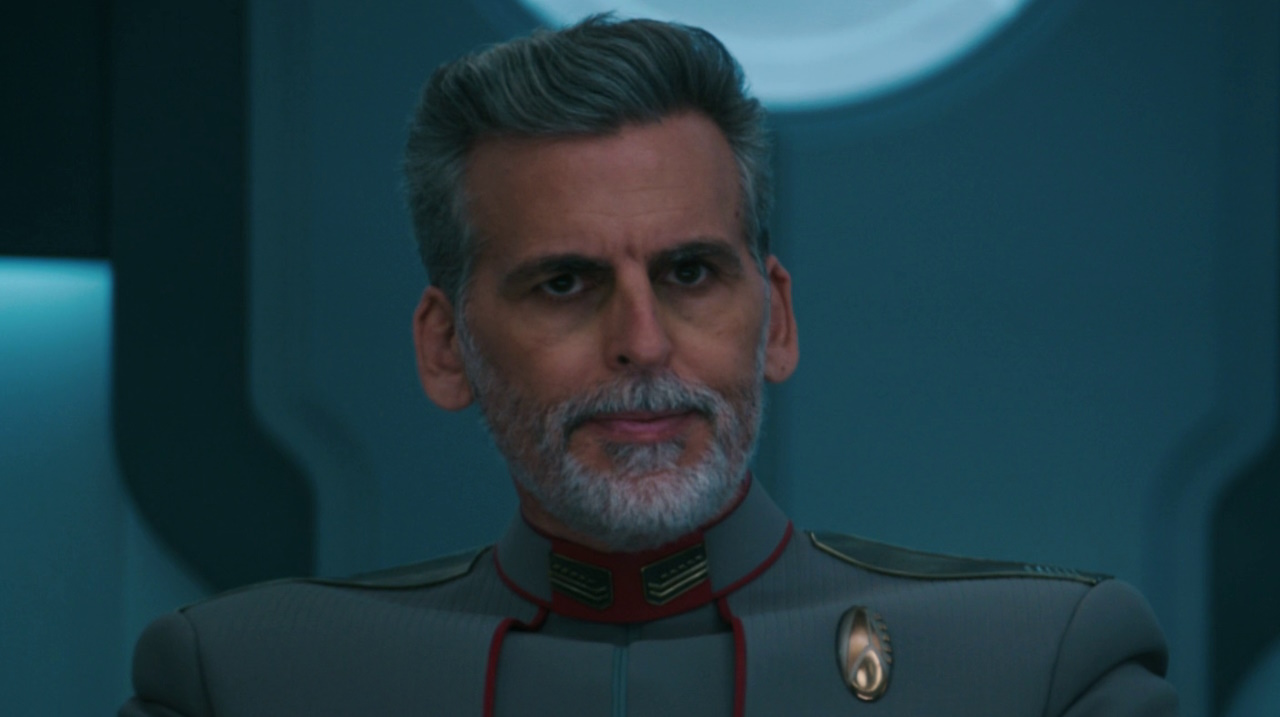
Still frame from Star Trek: Discovery Season 5 (2024) showing Admiral Vance.
Admiral Vance had less of a role this time around.

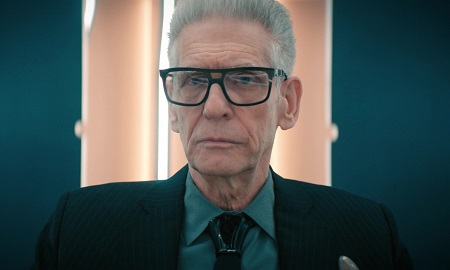
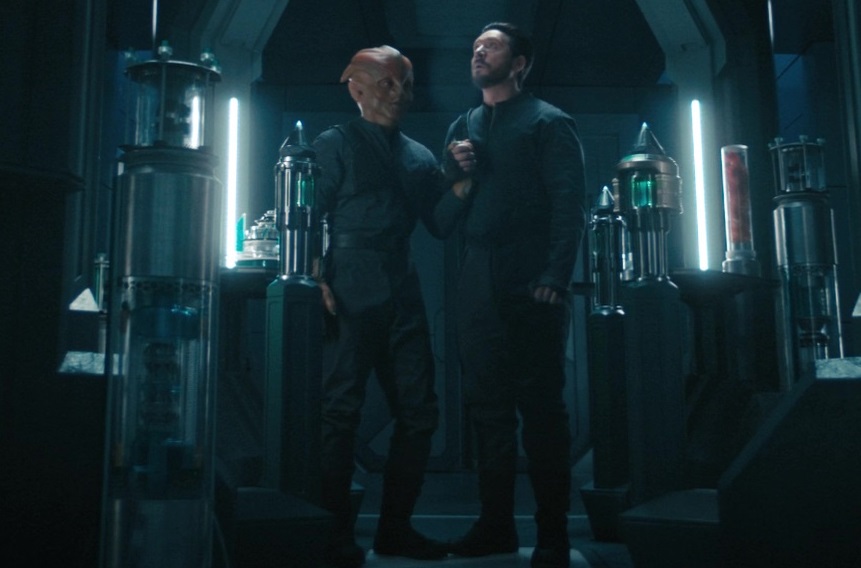
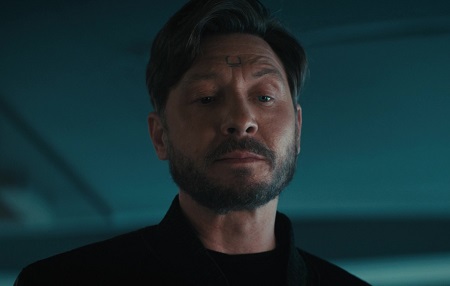
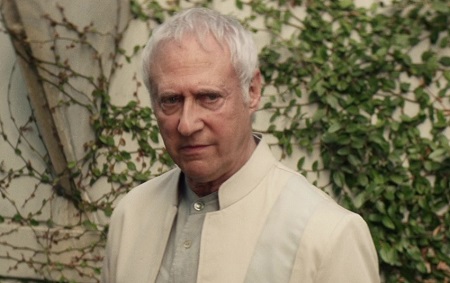
Dr Kovich is a character who has been an enigma since Discovery shot forward to this time period. I’d speculated that perhaps he was the head of this era’s Section 31, but this season we got the explanation we’d been waiting for… and it wasn’t what anyone had been expecting. The reason for that is simple: this explanation is dumb. Kovich is, somehow, an older Crewman/Agent Daniels: you know, the secondary character from Enterprise? The time-traveler who messed up Archer’s mission. Crewman Daniels.

Sorry, but this really was a stupid idea – one that was in no way set up by anything else in the series. It feels like Discovery’s writers came in late one day, weren’t really feeling like doing much work, and just threw out this idea as a cheap way to connect the series to something else in Star Trek. Why Daniels? Why not Captain Braxton – the time-traveling character from Voyager? Why not Wesley Crusher? Why not any one of a hundred other totally random characters? They’d make no less sense than Daniels. In a way, I admire the writers’ attempt to link events in Discovery’s otherwise disconnected 32nd Century to other parts of Star Trek. But this one was just so random with absolutely no setup that it fell flat on its face. I didn’t think this was possible – and it shouldn’t have been – but this revelation makes Kovich as a character feel less interesting and less important in retrospect.
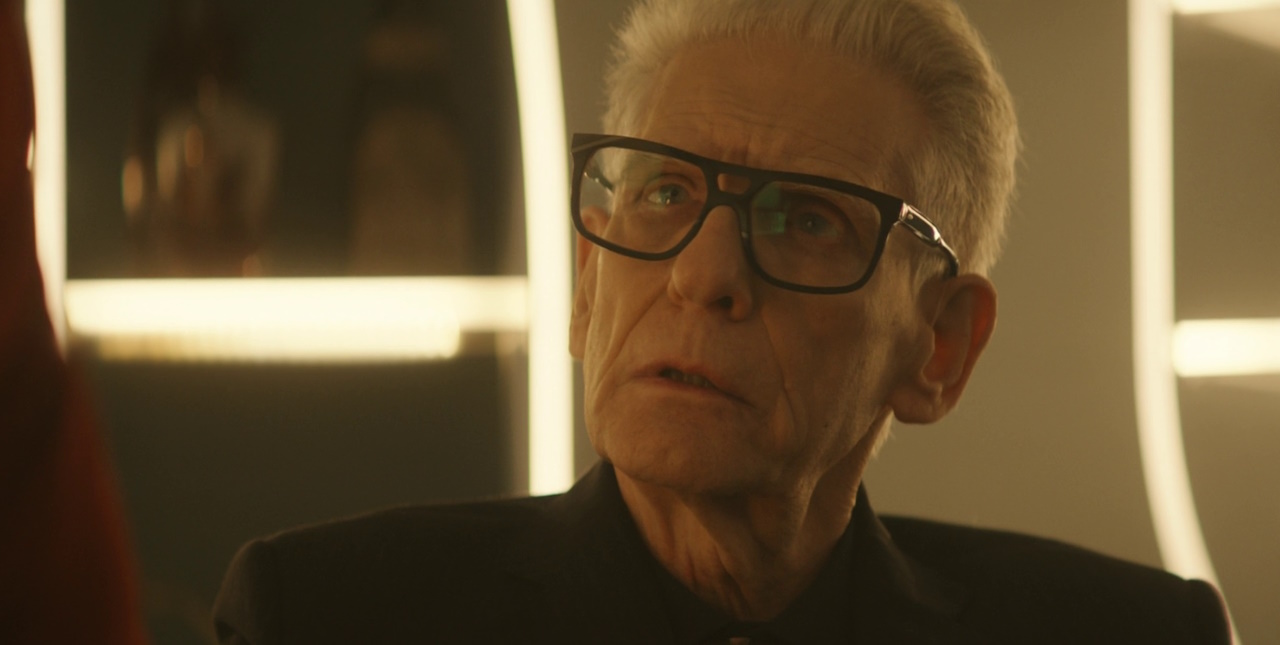
Still frame from Star Trek: Discovery Season 5 (2024) showing Kovich/Daniels at the end of the story.
Dr Kovich… a.k.a. Agent Daniels.

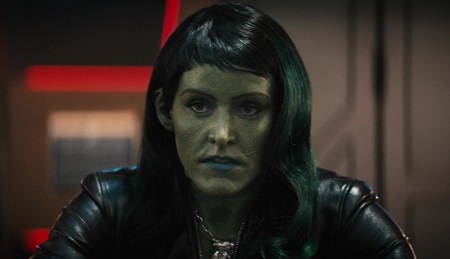
The season’s villains – Moll and L’ak – had potential as a kind of “Bonnie and Clyde” outlaw couple, and there were moments where they came close to achieving that status. But the connection between Moll and Book put a downer on things, and I felt like screaming at Discovery’s producers that not everyone in the galaxy needs to know or be related to everyone else! Characters can meet for the first time and form connections; villains don’t have to be someone’s daughter, uncle-in-law, or ex-boyfriend in order to be interesting, entertaining, and impactful.

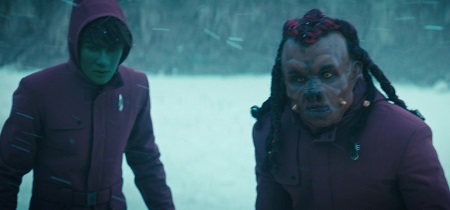
As mentioned, I liked that we got a closer look at the Breen. The Breen had been part of what is probably still my favourite Star Trek story arc: the Dominion War. And in Deep Space Nine we never got to see them or even hear their language translated. Learning more about the Breen and particularly their biology was genuinely interesting, and it didn’t tread on the toes of anything that had been set up in Deep Space Nine or elsewhere – which is a low bar, perhaps, but one that modern Star Trek has occasionally tripped over!
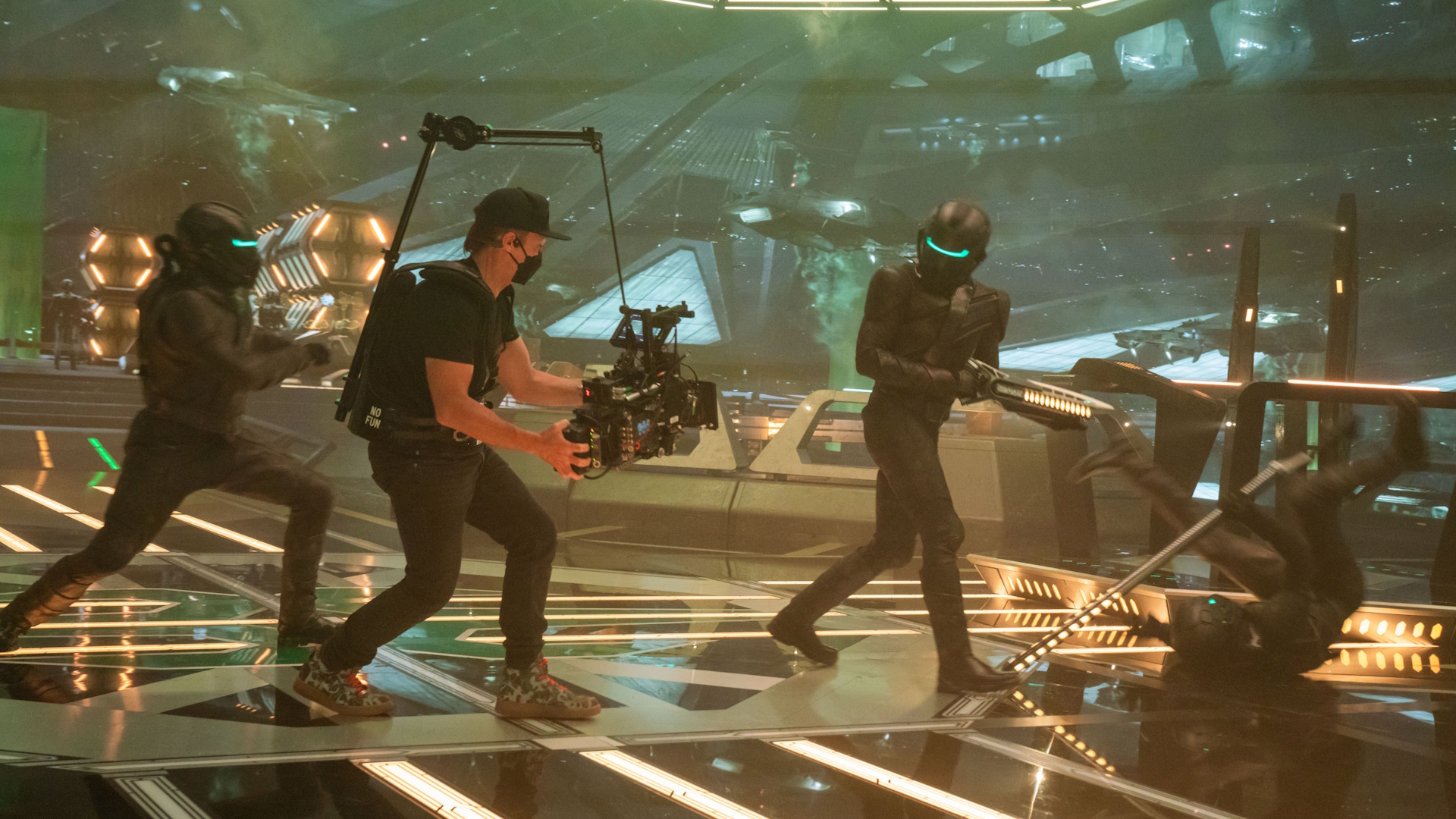
Behind-the-scenes on Discovery Season 5 showing a camera operator and several characters in costume.
Behind-the-scenes photo showing one of the Breen scenes being shot.

The Breen seemed more or less in line with their earlier appearances – but I would say that, in a story that aimed to be a bit more nuanced and modern, the two Breen leaders that we met both felt pretty one-dimensional. L’ak was an interesting character, and I liked the idea of the rebellious human-lover running away from his strict military upbringing and family. But the pair of Breen primarchs that we met – Ruhn and Tahal – felt like your bog-standard “evil for the sake of it” power-hungry villains. I wasn’t expecting a lot from either character, and I think they kind of work in the context of a brutal militaristic power, but neither felt especially interesting.

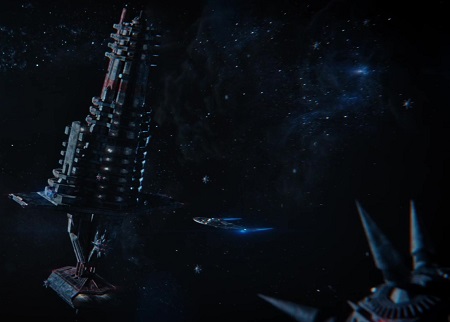
Discovery also came close to being written into a corner with this season’s Breen conflict. L’ak was supposedly incredibly important to Ruhn in particular, as he needed him to press his claim to the throne. But when L’ak died – in Starfleet custody, no less – Ruhn simply walked away without exacting his revenge. When it had been established that the Breen – with their Warhammer 40K-inspired massive warships – were more than capable of wiping out Starfleet… I don’t know. It didn’t feel right for this hardliner to just place his trust in Moll and walk away without retaliating.
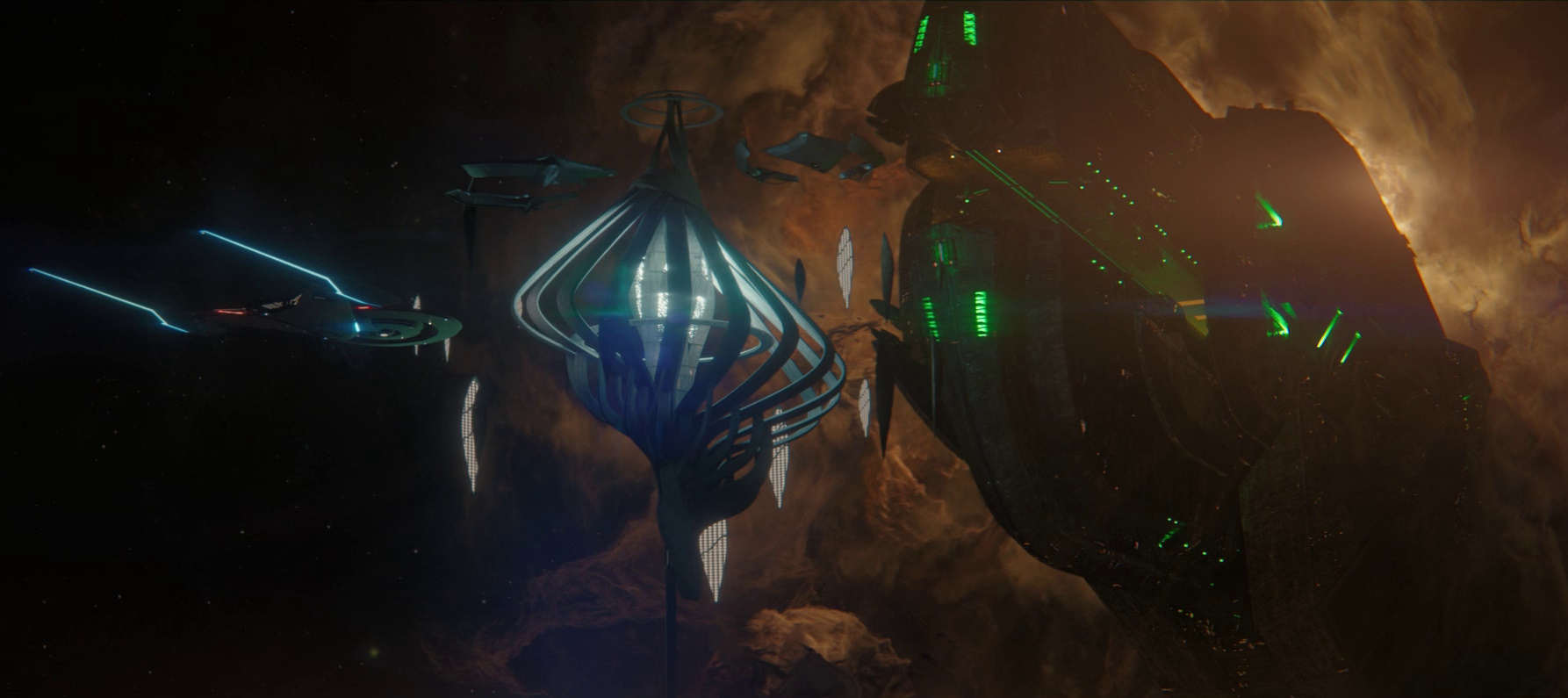
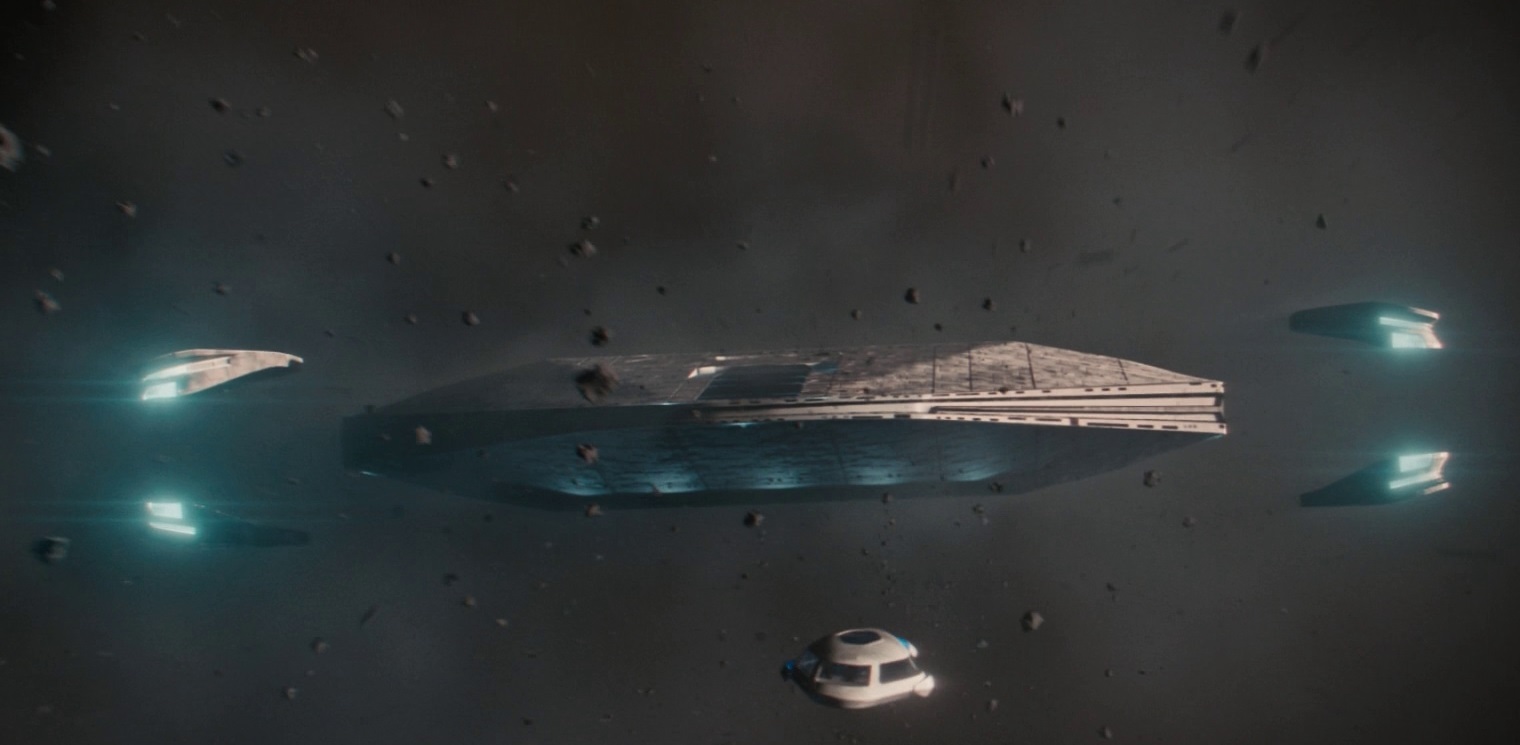
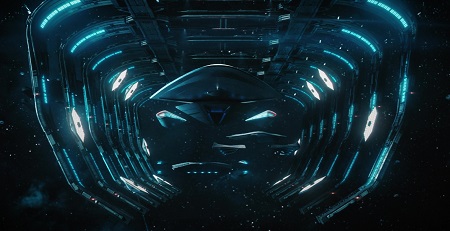
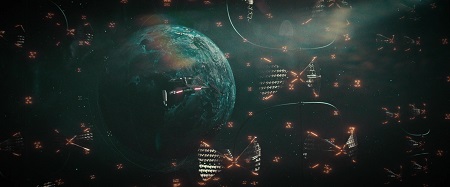
Still frame from Star Trek: Discovery Season 5 (2024) showing a Breen warship.
The Breen warship dwarfed both the USS Discovery and Federation HQ – and would have made short work of both, if the shooting started!

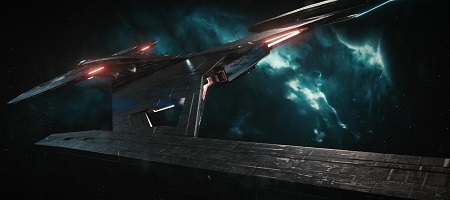
Speaking of starship designs, I liked the massive Breen warships – though, as mentioned, I noted a definite influence from Warhammer 40K and other sci-fi properties! We didn’t really see many other new ships or vehicles this time around; Rayner’s Starfleet ship was okay but nothing special. I didn’t really like the first episode’s hover-bikes, though – they seem completely superfluous in a setting where everyone has a personal transporter built into their combadges and where spore drives can hop across the entire galaxy in an instant! The sequence was pretty tense and exciting, though.

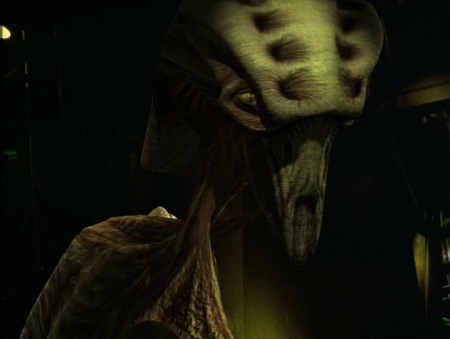
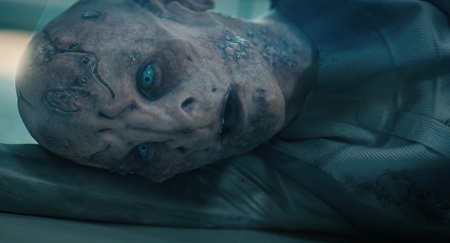
Let’s talk about the main thrust of the story. Discovery surprised me by returning to a race called the Progenitors – ancient humanoid aliens who only appeared once in The Next Generation. And… to be blunt, I think there’s a reason why this storyline hadn’t been picked up or even so much as mentioned since then.
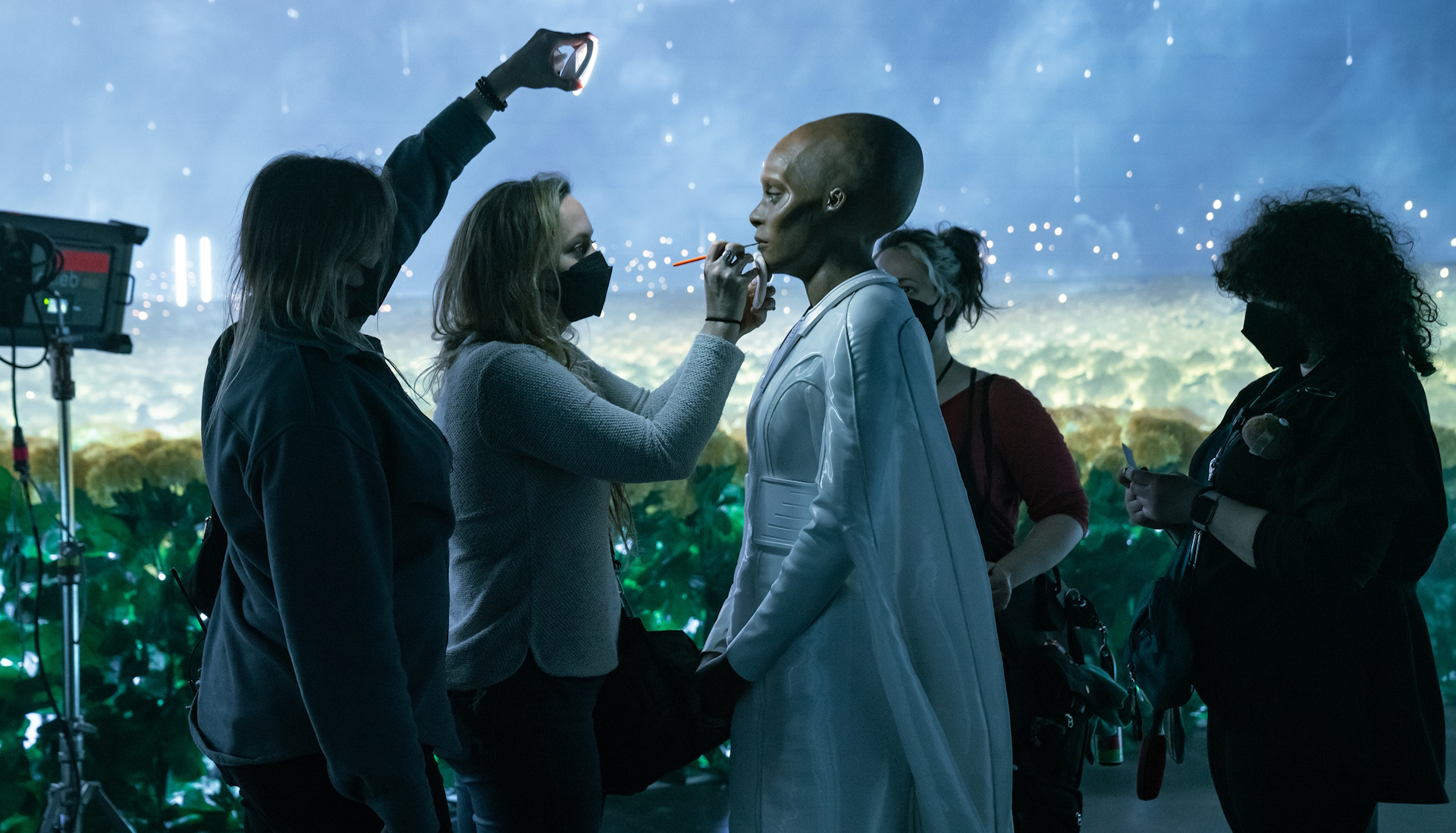
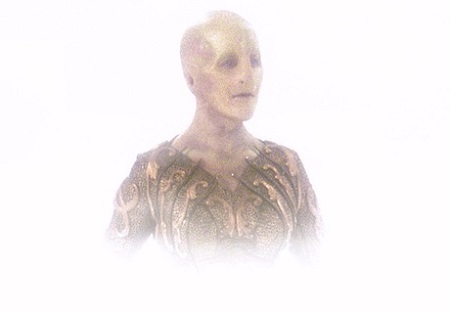
Behind-the-scenes on Discovery Season 5 showing makeup being applied to an actor playing a Progenitor.
Behind-the-scenes with one of the Progenitors.

Some stories in Star Trek – even ones that seem to be transformational for our understanding of certain factions or characters – don’t work as intended or just reach a natural end point, and for me, the ancient humanoids from The Chase are in that category. Star Trek didn’t need this fundamental explanation for why many alien races are humanoid, and while The Chase wasn’t a bad episode per se, its ending and the way it wrapped up wasn’t great. For me, this kind of in-universe explanation was never needed, and as a result I was content to leave The Chase and its ancient humanoids on the back burner. They were never written into the franchise in a big way, and every subsequent story – even those focused on history – never returned to this pretty convoluted story.

So why did Discovery dig up these aliens – now named the Progenitors?

I would be genuinely curious to learn why the show’s writers and producers decided to go down this narrative path, to be honest! While the story we got expanded our knowledge of the Progenitors a little, it didn’t tell us a lot about the galaxy, the other races that the Progenitors may have seeded, and it ended with more questions unanswered than answered. We didn’t even get a technobabble explanation for how they did what they did or how their tech worked. The result was an unsatisfying feeling that was compounded by Burnham’s decision to conceal the Progenitors’ device and not even allow Stamets or someone else at Starfleet HQ to examine it.
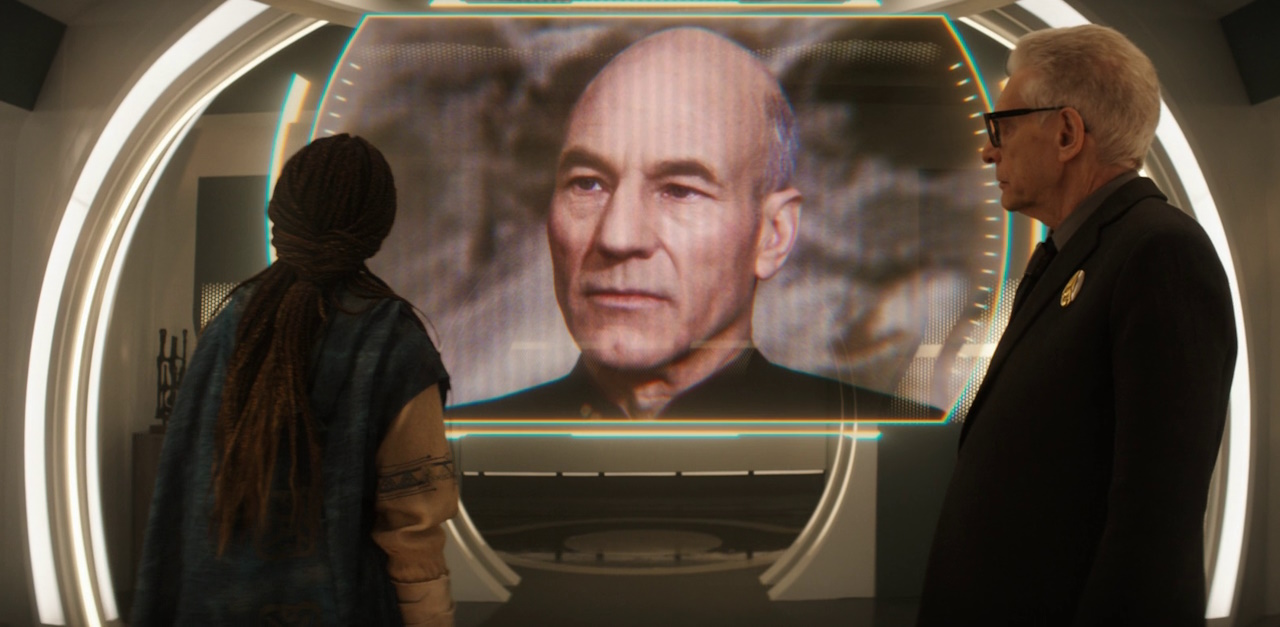
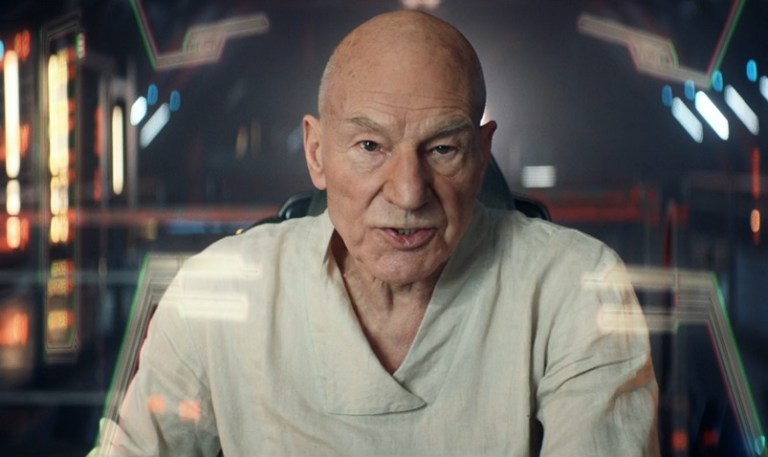
Still frame from Star Trek: Discovery Season 5 (2024) showing Burnham and Kovich looking at a holographic image of Captain Picard.
Season 5 revisited The Chase – an episode from The Next Generation.

The ending of the story – with Burnham declaring that the Progenitors’ desire to create a diverse galaxy teeming with life had been accomplished – was great, and I liked the feeling that came from that. But as with many things in Discovery, it was an end point that was pretty rushed, that needed a bit more time on screen, and that came at the end of a season that spun its wheels in places and spent too long dealing with relatively minor or unimportant things.

I could have happily spent an entire episode just on the debate Burnham was having with other characters about what to do with the Progenitors’ technology. For instance, no one even suggested that it could have incredibly useful applications in a galaxy still recovering from the effects of the Burn. Discovery’s 32nd Century is still, in many ways, post-apocalyptic, and if the Federation had access to what is basically an infinitely more powerful Genesis Device, with the ability to create life from nothing… isn’t that a power worth having and using for the common good? Even if the end of the story was still the same, with the technology being deemed too powerful and ultimately unnecessary, couldn’t we have still had that conversation?
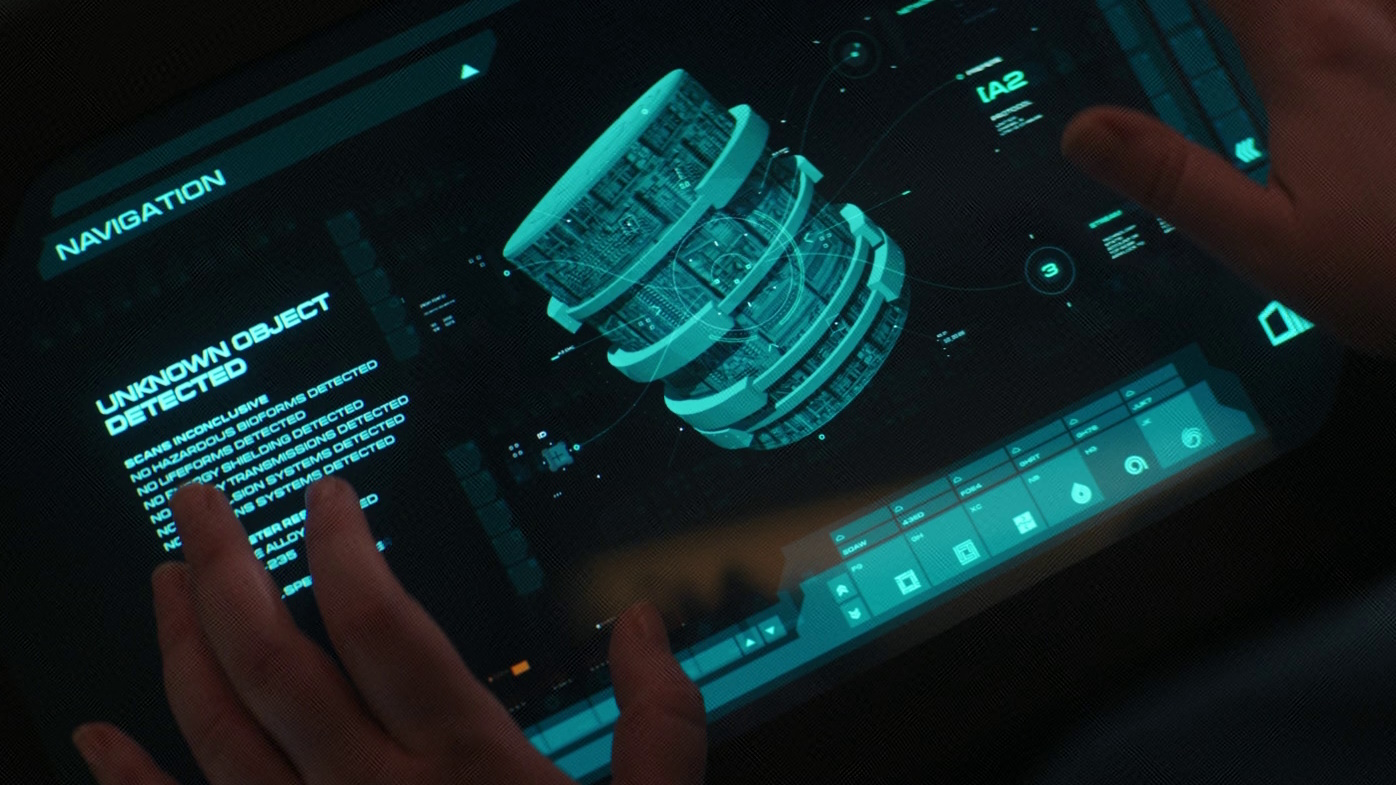
Still frame from Star Trek: Discovery Season 5 (2024) showing the Progenitors' tech on a screen.
I could have spent an entire episode just debating the pros and cons of using and studying the Progenitors’ technology.

For me, this deep cut to a single episode of The Next Generation was a bold move that didn’t really pay off. I love that Discovery’s writers have tried to tie into the lore and history of Star Trek in different ways, but for me, the decision to revisit this faction of ancient aliens was a mistake. I’d rather have seen a brand-new race – like last season’s Species 10-C – that could’ve filled the role of the creators of this technology, simply because I don’t think Star Trek as a whole benefits from this kind of story.

Part of the appeal of going out into space – and thus the appeal of Star Trek and other space-based fiction – is that we don’t know all of the answers and we don’t know what’s out there. Part of the human condition is that sense of not knowing – we don’t know for a fact how or why we came to be, where consciousness came from, whether there’s a greater meaning or purpose. When a story comes along and says “well here’s exactly what happened, here’s who created you, and here’s why and how they did it…” I think we lose something from this fictional setting. The thrill of Star Trek is in the unknown, and answering too many of these questions just doesn’t sit right. That’s why I was never a fan of the end of The Chase and why I’ve been pleased that, for more than thirty years, generations of Star Trek writers have basically ignored it. Discovery revisited it in a big way… and I don’t think the payoff was worth it.
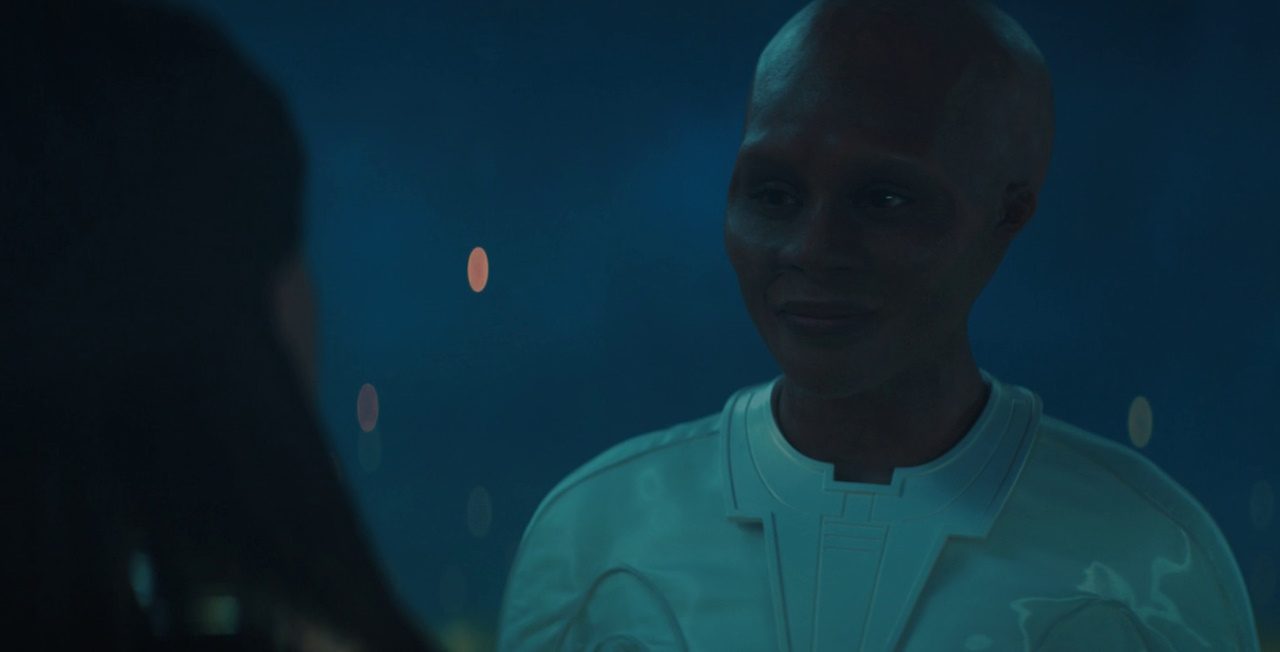
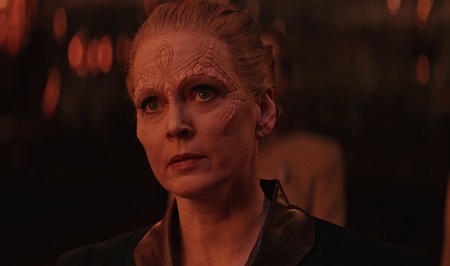
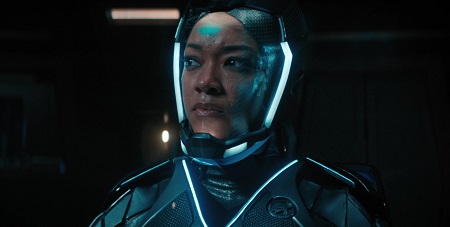
Still frame from Star Trek: Discovery Season 5 (2024) showing Captain Burnham with a Progenitor.
Captain Burnham with one of the Progenitors.

When I look at Star Trek’s history and I think of storylines and factions that I would’ve wanted to see brought back… again, I can’t find a justification for this return to The Chase – not for what was a glorified macguffin that Discovery didn’t actually do anything with. We might as well have said that the Tzenkethi or the magic-wielding aliens from that one episode of The Animated Series had created something powerful, or that Khan secretly replicated a second Genesis Device. The story could’ve unfolded in pretty much the same way without bringing up a piece of Star Trek’s past that has just… never worked.

I don’t want to go to extremes and say that the Progenitors “ruin” Star Trek. But the very concept of these ancient aliens essentially creating humans and a bunch of other races is a story point so profound that it absolutely changes everything for the characters in that world. If the entire Star Trek franchise had been built around a reveal like that, with the Progenitors being conceived from the start and every season and story slowly building up to this massive revelation, then maybe it could’ve worked. But in what was a one-off, throwaway episode we got this big reveal that Star Trek has never really known what to do with. Like other story beats that didn’t hit the mark, it should have been left alone. For Discovery’s writers to build an entire story around this faction… I’m afraid it doesn’t work for me.
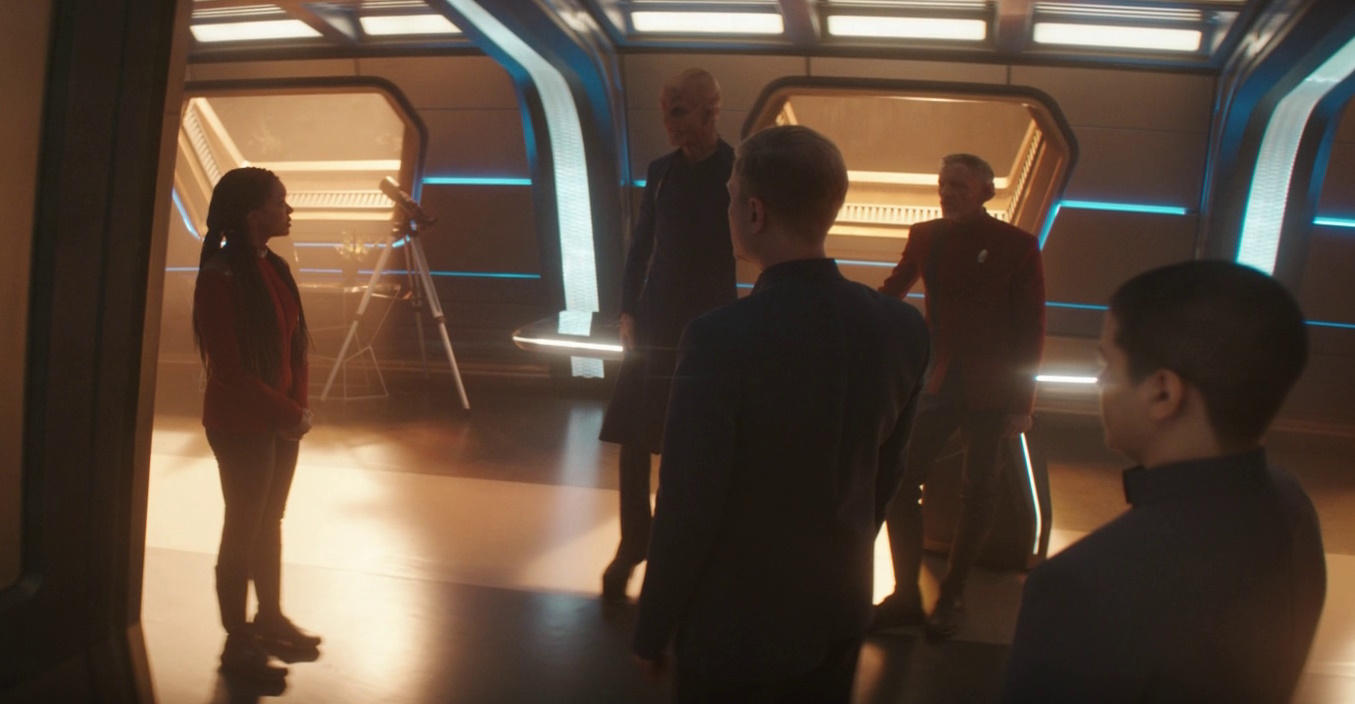
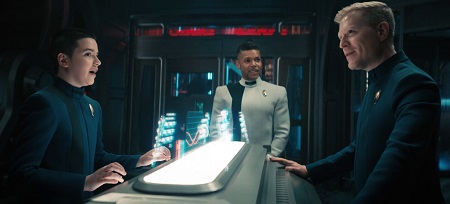
Still frame from Star Trek: Discovery Season 5 (2024) showing Burnham, Saru, Stamets, Rayner, and Adira in the ready-room.
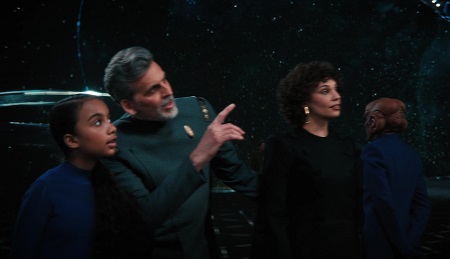
Burnham and the crew at the end of the story.

More than a year ago we learned that the decision to cancel Discovery came after Season 5 had already been written and filmed, and that work had to be done after the main production had already wrapped up in order to “make the finale into the finale,” as director Jonathan Frakes put it. Alarm bells started ringing when I heard that, as I was worried that the pick-up shots would be incredibly obvious and that the story wouldn’t be able to come to a proper end. More so than any other Star Trek series to date, Discovery – with its serialised storylines and characters who changed and developed over the course of sixty-five episodes – needed some kind of definitive end.

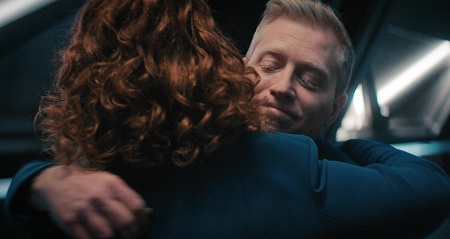
Although it was incredibly obvious where the season would have originally ended and where the last-second additions were made, I don’t think that turned out to be a problem in the end. The decision to have the epilogue set decades after the events of Season 5 was a good one – perhaps the least-bad option available, but still – and it worked well. After all the issues noted above with Burnham Relationship Drama™, it was pretty cathartic to see her settled with Book, in a home they shared, enjoying her semi-retirement.
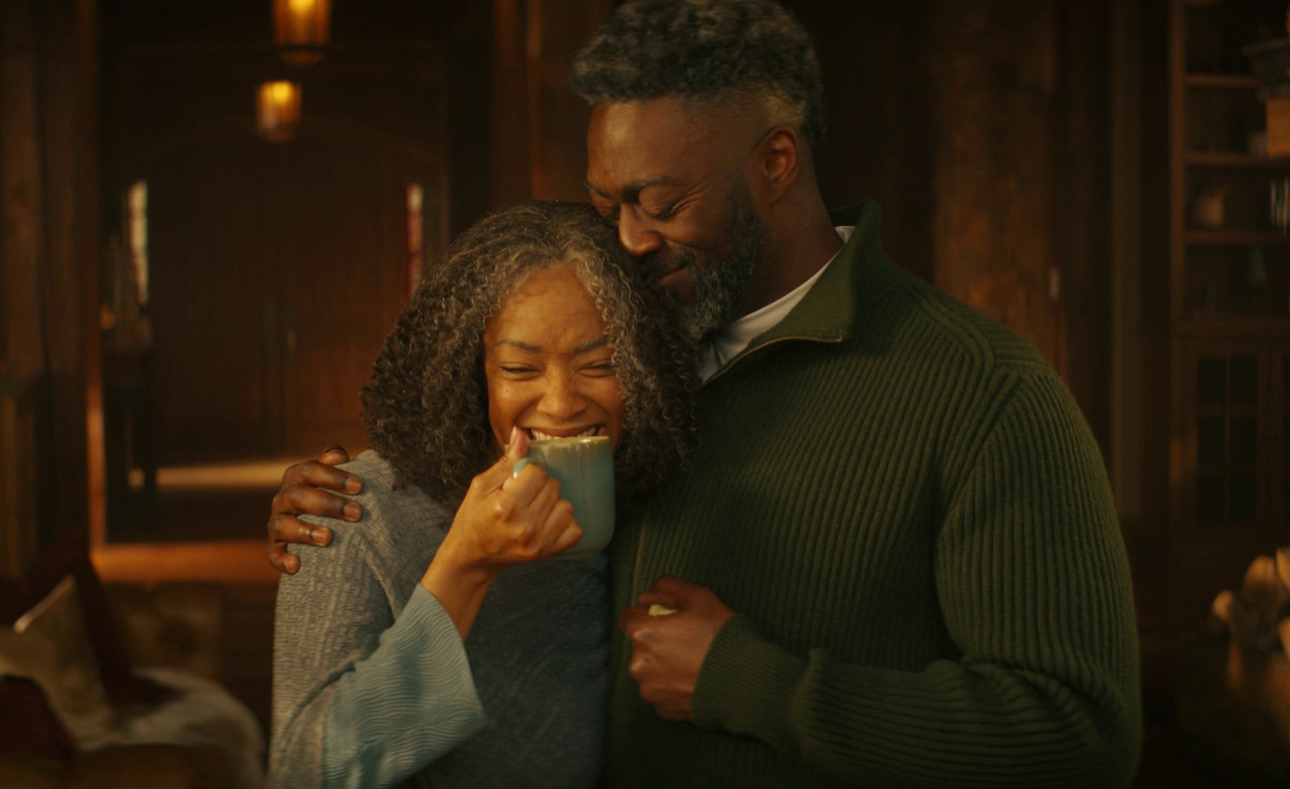
Still frame from Star Trek: Discovery Season 5 (2024) showing Burnham and Booker in the epilogue.
It took a long, meandering route to get Burnham and Book to this point… but they made it in the end.

It might’ve been nice to see one or two of the show’s other principal characters in the epilogue rather than just having them be mentioned, but all things considered I think Discovery got a pretty solid send-off. It wasn’t as spectacular as it could’ve been if the entire story had been written with a definite end point in mind, perhaps… but there’s something to be said for an understated, un-dramatic epilogue to a series that has constantly tried to inject as much drama as possible into its stories. Had cancellation been known ahead of Season 5 entering production, I would’ve half-expected the season finale to end with three-quarters of the crew dead and the ship blowing up!

In terms of production values, I’m still disappointed that Paramount+ doesn’t offer Discovery in 4K. 1080p HD is fine, but it’s not spectacular, and I would’ve liked to watch the series in that higher resolution. Most other streaming platforms offer this for their flagship shows, and it’s disappointing that Paramount+ still doesn’t – at least on the standard price plan here in the UK.
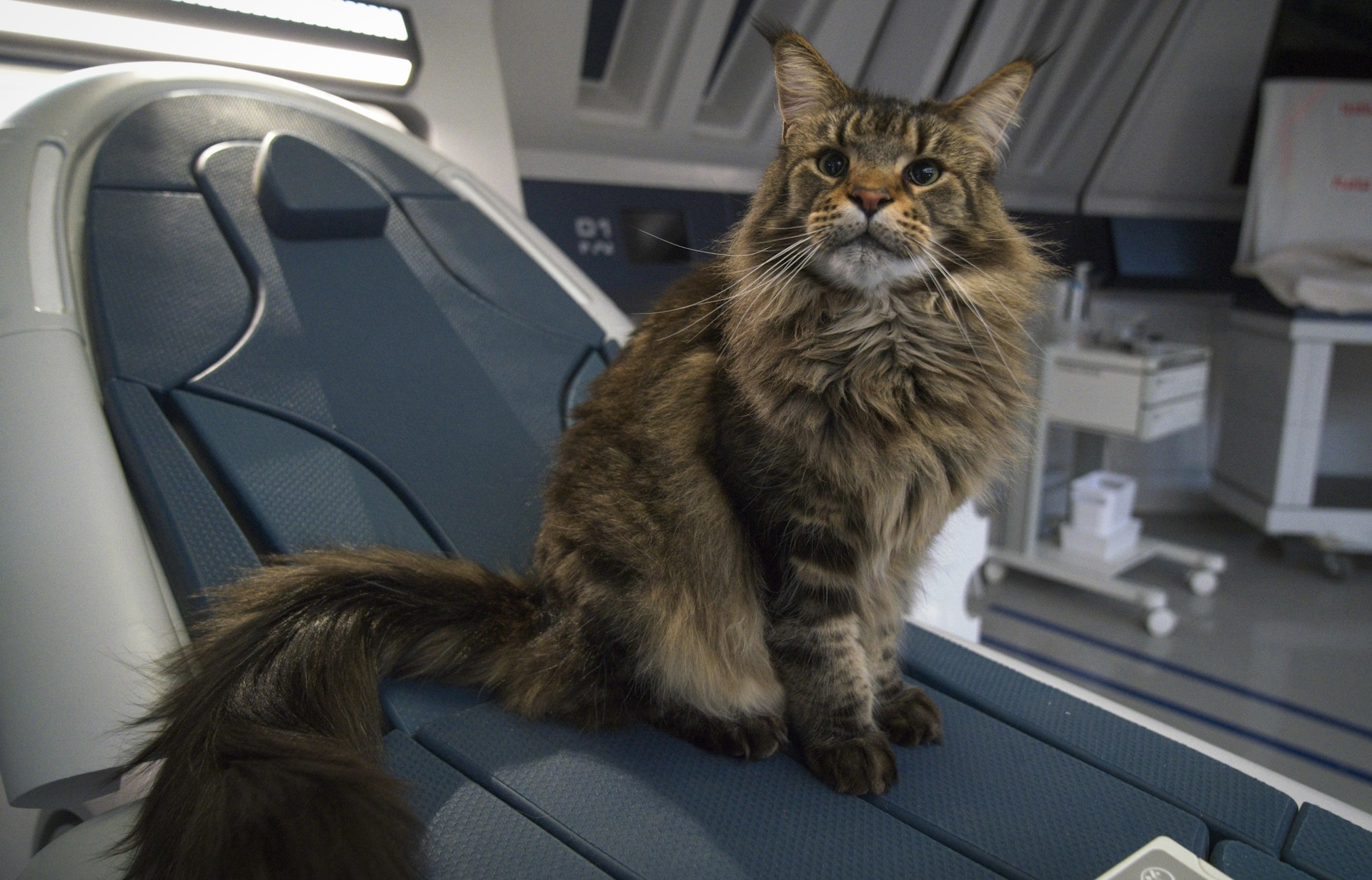
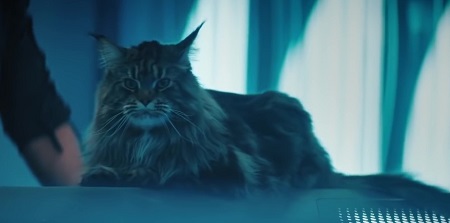
Promo photo for Discovery Season 4 showing Grudge the cat.
Grudge the kitty cat!

Discovery’s music has always been pretty good, and that was the same in Season 5, really. My rule of thumb for any movie/TV soundtrack is “do no harm;” i.e. a good soundtrack should be unobtrusive most of the time, and Discovery happily clears that admittedly low bar. The show’s title sequence has always been fun to watch, though its title theme has always felt a little understated for my taste.

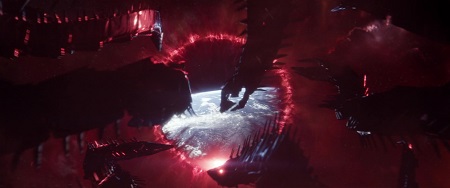
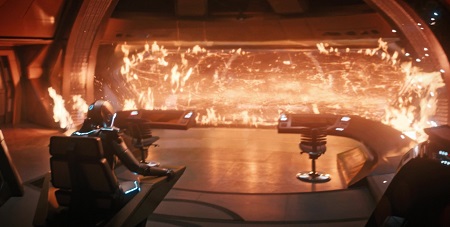
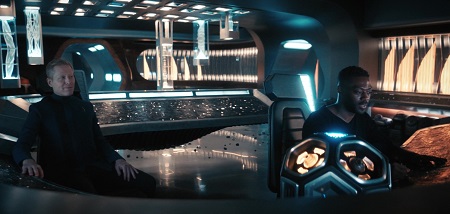
Was anyone else playing a game of “spot the AR wall?” Because I definitely was – and at too many points I felt the AR wall was noticeable. Star Trek worked hard to escape its reputation for low-budget special effects and sub-par set design, but the AR wall – and some of the camera angles used during AR-heavy scenes – are in danger of bringing it back! On both the Breen warship and the Progenitors’ pocket dimension, I felt the AR wall was not at all well-integrated with the physical sets and props around it, and the end result was that this incredibly expensive piece of kit that Paramount paid a lot of money for created a visual effect that looked… cheap.
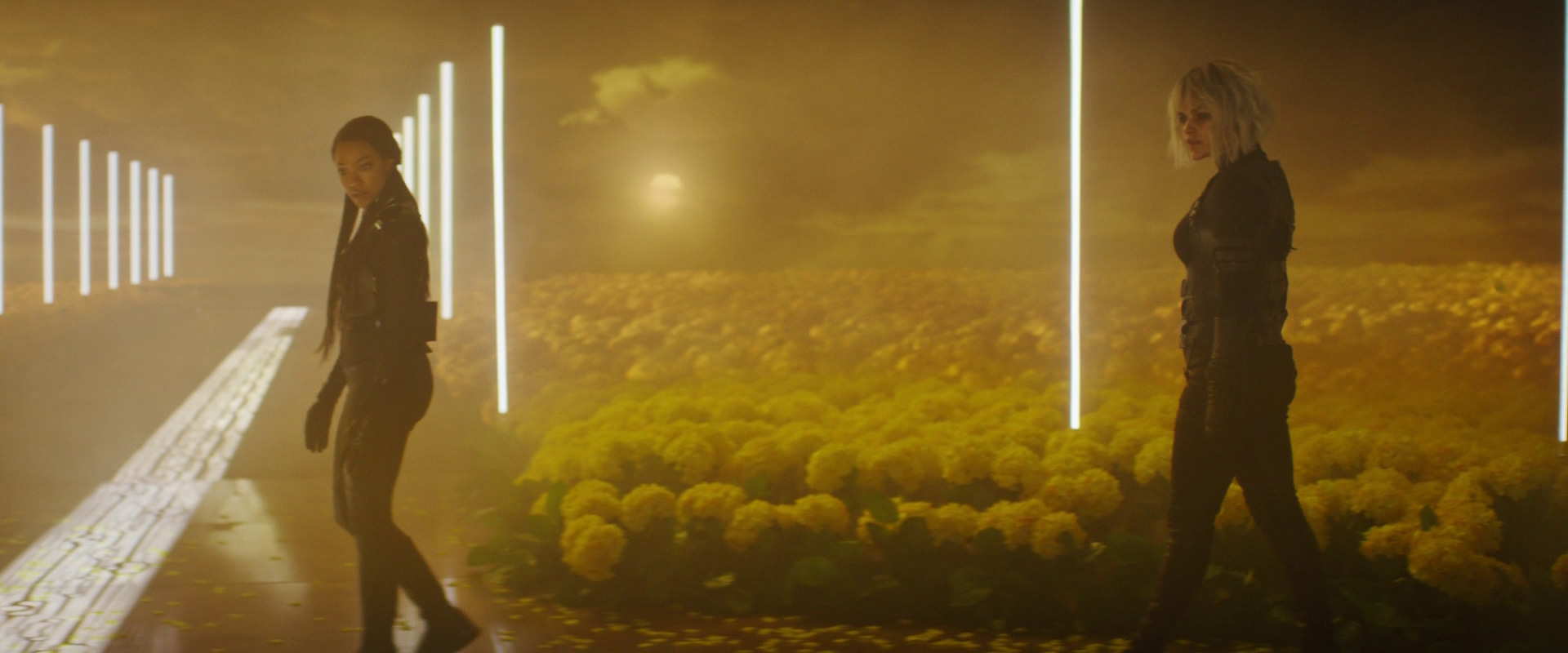
Still frame from Star Trek: Discovery Season 5 (2024) showing Burnham and Moll at the Progenitor base.
Spot the AR wall…

There are good ways to use an AR wall and bad ways… and Paramount/the Star Trek franchise needs to do better. Simply having this massive screen and projecting a background onto it isn’t good enough; designers and producers need to get much more creative with how the AR wall is used and how it blends in with what’s in front of it. Discovery is over now, but with other Star Trek projects still in production… I hope more can be done in future. Some of the AR wall scenes in Season 5 felt like those in Season 3, when the AR wall was brand-new. By now, designers, producers, and cinematographers should have a better idea of what to do with it!

So that was Discovery’s swansong. The show’s final season doubled-down on many of the mistakes that have been present since the beginning, and told a cookie-cutter story that was basically the same as all the others. There was a lot of potential in the historical mystery-adventure idea, but Discovery’s writers and producers couldn’t take advantage. They retreated to the same overtrodden ground as before, and the result was a disappointment.
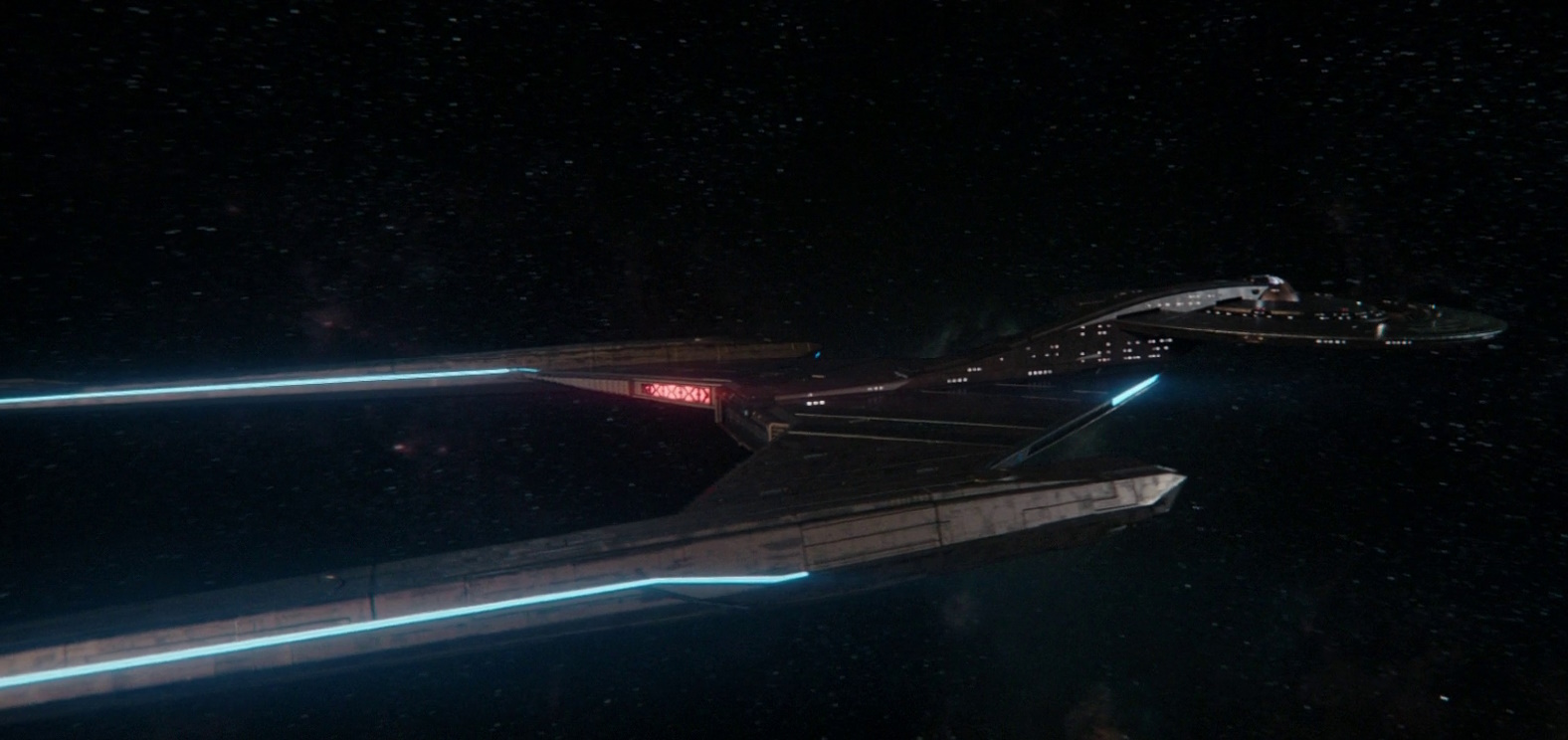
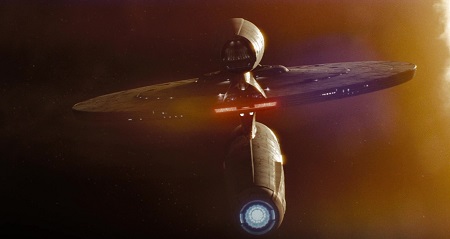
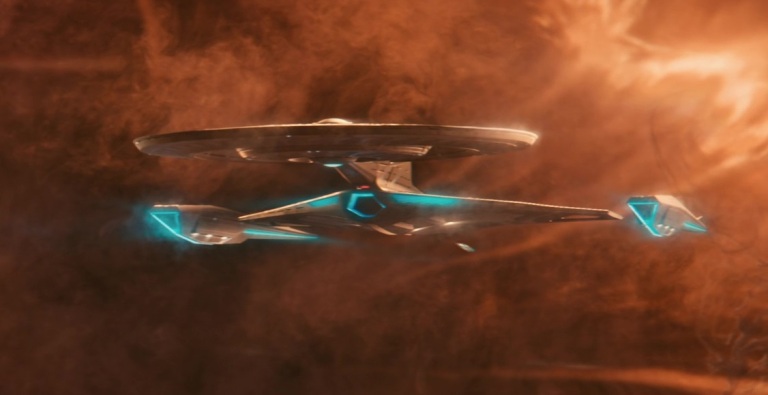
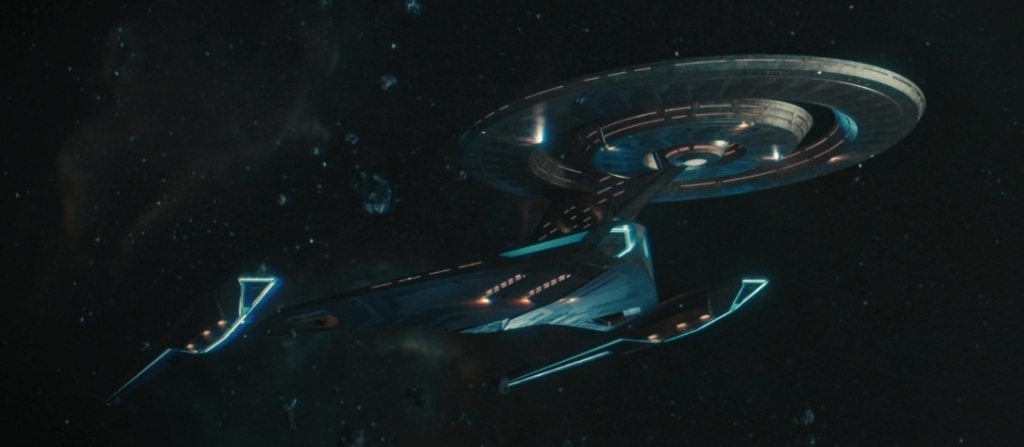
Still frame from Star Trek: Discovery Season 5 (2024) showing the USS Discovery.
The final shot of the USS Discovery as she embarks on one last mission.

There was too much repetitiveness in Season 5, and that leads me to one inescapable conclusion: Discovery had run out of steam. With a production team incapable of trying something smaller-scale and genuinely different, with Burnham’s soap-opera rocky relationship, and with another “galaxy-ending threat” to defeat, Season 5 felt no different from Seasons 1 through 4, albeit with a new coat of paint and a deep cut to a random episode of The Next Generation that was better left forgotten. There were some interesting ideas in the mix, some fun new locales to visit, and some creative moments… but they came in a bland, overused, repetitive story that demonstrated to me why it was the right time for Discovery to be cancelled.

I’m pleased that Paramount allowed the show’s production team to go back and craft an epilogue – even if it wasn’t perfect. Getting some kind of closure on Burnham’s story and the series as a whole was important, and with Discovery having been part of our lives for seven years at this point, I’m glad that it got an epilogue to bring closure to her character and the story – as well as a cheeky tie-in with the Short Treks episode Calypso!
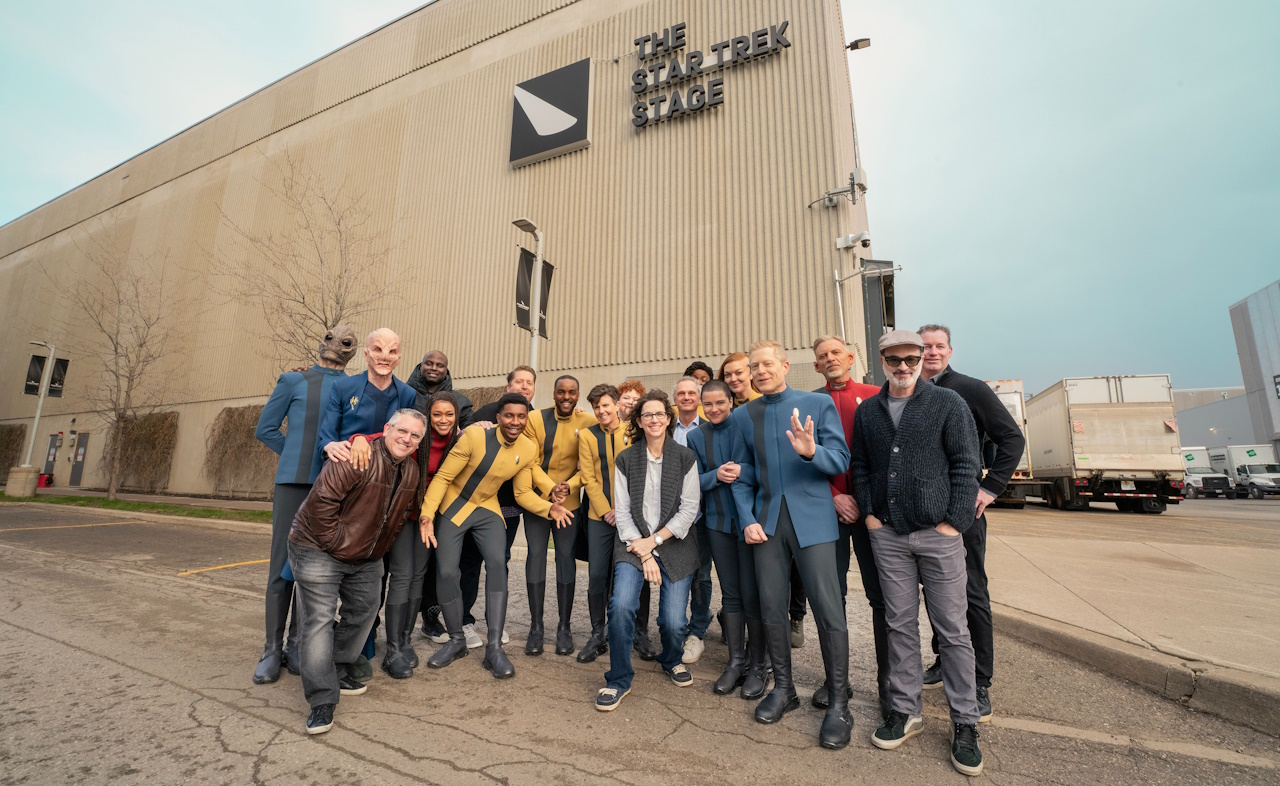
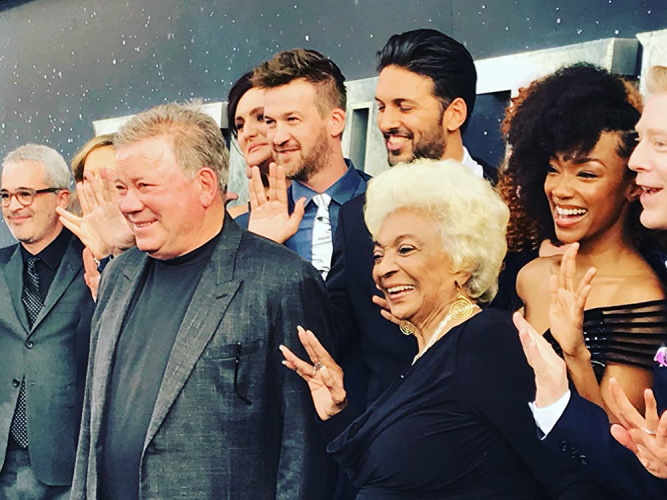
Promo photo for Star Trek: Discovery showing the main cast at the opening of "The Star Trek Stage" at Paramount.
The Discovery cast – plus Alex Kurtzman, Rod Roddenberry, and others – at the dedication of Paramount’s “Star Trek Stage.”

In the weeks or months ahead I will take a broader, big-picture look at Discovery as a whole. That piece will consider what the show got right, where it went wrong, and what we should consider its legacy to be as a piece of the Star Trek franchise. So I hope you’ll stay tuned for that! It’s possible that I’ll revisit Season 5, its storylines, or some of its individual episodes in the future, too.

For now, I hope this has been interesting! While I wasn’t impressed with Season 5 on the whole, there were definitely highlights in practically every episode; moments that made me crack a smile, roll my eyes, feel anxious, or just that kept me entertained and enjoying the ride. The season was nowhere near as bad as, say, Picard Season 2 – and while that may be a low bar, it’s one that Discovery cleared on this occasion! I’ll be curious to see what comes next for Admiral Vance, Tilly, and Reno – who will be jumping ship and joining the cast of Starfleet Academy. And I’ll keep my ear to the ground for any more news about upcoming Star Trek productions that could tie in with Discovery. But until then, this is the end.

Farewell, Discovery. I think we can be grateful to the series and its creative team for keeping Star Trek alive and bringing it back to its small screen home.


Star Trek: Discovery Seasons 1-5 are available to stream now on Paramount+ in countries and territories where the platform is available. The Star Trek franchise – including Discovery, The Next Generation, and all other properties discussed above – is the copyright of Paramount Global. This review contains the thoughts and opinions of one person only and is not intended to cause any offence.
Star Trek: Discovery – Season 5 Wishlist

A spoiler warning graphic.

Spoiler Warning: There are spoilers ahead for Star Trek: Discovery Seasons 1-4 and the trailers, teasers, and announcements for Season 5.

With Star Trek: Discovery’s fifth and final season due to premiere in just a few weeks’ time, I thought it could be a good moment to look ahead! Season 5 is going to be the show’s last chance to tell a different kind of story, explore under-utilised characters, and potentially lay the groundwork for Starfleet Academy and other possible spin-off projects. It’s also Discovery’s final opportunity to win over sceptical Trekkies – hopefully bringing to a close one of the most contentious chapters in the history of the Star Trek fan community. Suffice to say there’s a lot that needs to go right!

I admit that I have concerns already, even at this early stage. The revelation that Season 5 wasn’t originally written with the show’s cancellation in mind could prove fatal, and last-second re-writes and pick-up shots could end up feeling obvious and tacked-on. Then there’s the premise itself: is the mystery at the story’s heart going to be yet another re-hash of the tired “all life in the galaxy is in danger and only Burnham can save it!!!!” trope?

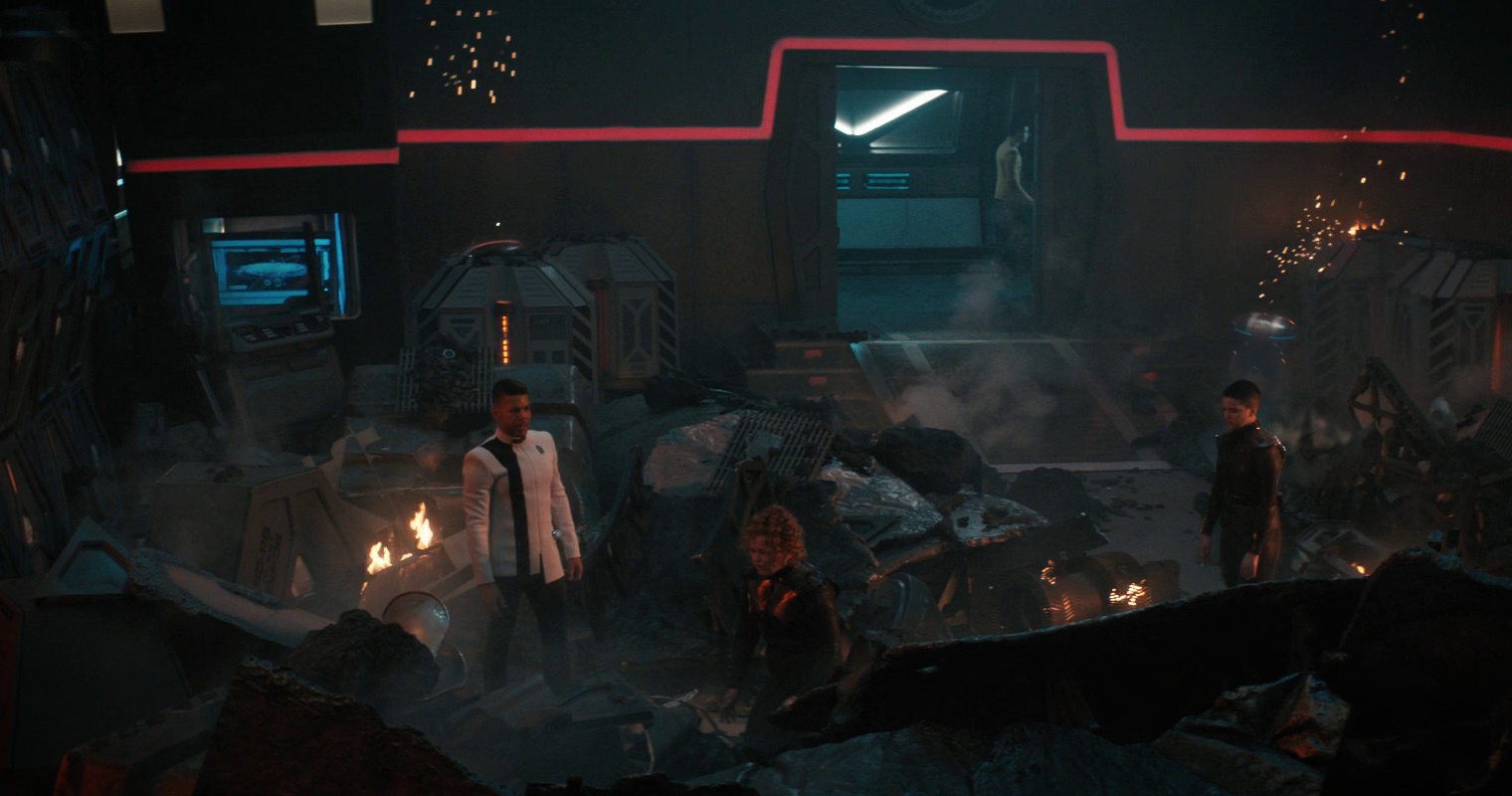
Still frame from Star Trek: Discovery 4x01 Kobayashi Maru, showing characters amidst rubble and debris.
Discovery has consistently raised the stakes in its stories… and it’s past time for something different.

On a personal note, I’ve been feeling burned out on Star Trek since midway through last year – and even though I still consider myself a fan of the franchise and want to see it succeed, I’ve stepped away from Star Trek over the past few months. I haven’t finished watching Strange New Worlds’ second season, nor even started Lower Decks’ fourth, and I haven’t played either of the Star Trek video games that were released last year despite having planned to do so.

Discovery’s fifth season thus exists in a strange place for me at this time. I don’t feel a great deal of hype or excitement for its premiere, not in the same way as I did for all four of the show’s previous seasons. If I’m being brutally honest with my introspection… I can’t even say with 100% certainty that I’ll watch it as it’s being broadcast, or whether I’ll pick up Paramount+ later in the year for a month or two and watch it then. I’d love to be able to say “stay tuned for weekly reviews,” as I’ve generally enjoyed the process of writing reviews for Seasons 3 and 4. But at this point… I’m not 100% committed to doing that.

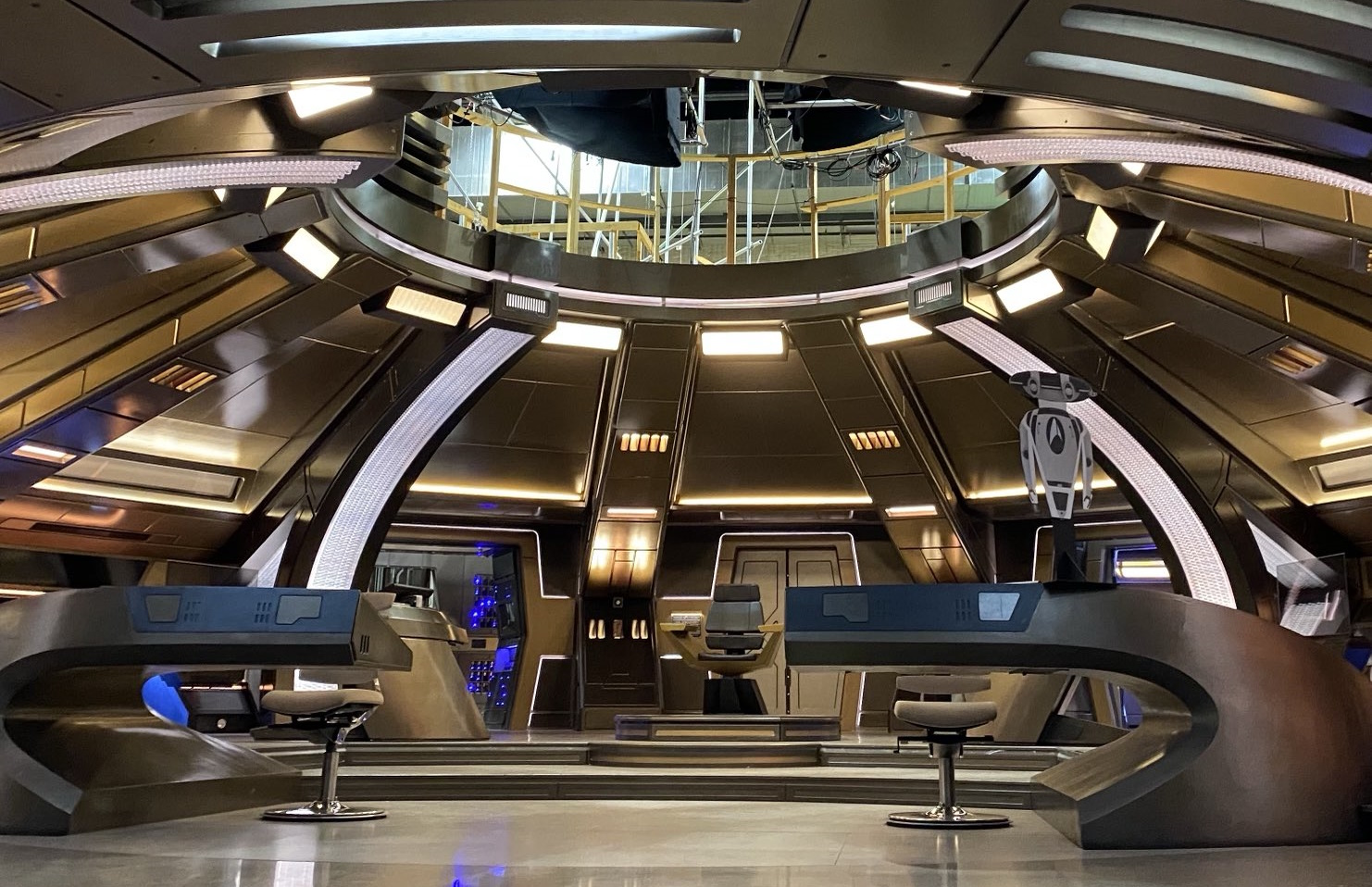
A behind-the-scenes photo showing the USS Discovery bridge set.
A behind-the-scenes glimpse of the USS Discovery’s bridge set.

But enough about that for now! I have a longer piece on the burnout I’ve been feeling – which you can find by clicking or tapping here – if you’re interested to read more.

As I look ahead to Discovery’s fifth season, there are several loose ends that I’d like to see the series tie up, some narrative traps that I hope can be avoided, and a couple of fantasies – that will almost certainly go unfulfilled – about the series tying its 32nd Century setting closer to the rest of Star Trek. It’s these points that we’re going to look at today. I’m calling this piece my “wishlist” for Season 5!

But first, I have to give my usual caveats! Firstly, I have no “insider information,” and I’m not claiming that anything discussed below will be included in Discovery’s upcoming season. This is a wishlist from a fan, and nothing more. Secondly, we all have different opinions about what makes for a good Discovery story. I’m offering my subjective take on what I’d like to see included, and you are free to vehemently disagree with all of the points I raise. Nothing about this is “objective” in any way! Now that that’s out of the way, let’s get started!

Wish #1:
A proper ending.

The famous "That's All Folks" graphic shown at the end of Looney Tunes cartoons.
Season 5 will be Discovery’s final outing.

Season 5 is to be Discovery’s swansong, and I’m already deeply worried about that. Comments from people who worked on the season – most notably director and Star Trek legend Jonathan Frakes – have confirmed that last-minute re-writes and extra filming sessions were required to “make the finale into the finale” after news of the show’s cancellation broke. To me, that suggests that Season 5 was not written with the show’s cancellation in mind, and that raises some pretty big concerns about how conclusive and definitive its ending will be.

There are many different ways to bring a story to its end. I’m not, for example, suggesting that the entire main cast should be killed off, nor that the show’s end needs to be explosive and dramatic. But other Star Trek shows have done their best to give their crews a proper send-off – whether it was Deep Space Nine showing its characters going their separate ways, Voyager finally making it home, or even Enterprise’s ultimately disappointing attempt to show the founding of the Federation. Discovery’s characters deserve an ending, in whatever form that may take.

Still frame from the Deep Space Nine Season 7 episode What You Leave Behind showing Chief O'Brien in his cabin.
Chief O’Brien left DS9 and headed for Earth in the series finale.

Let’s be blunt: there won’t be a Picard-style resurrection for these characters in twenty years’ time. While it’s still possible that we might see the likes of Tilly or Kovich in Starfleet Academy (assuming that series is still going ahead amidst the neverending chaos of the Paramount corporation), for most of the crew, this is the end. And that end, however it may come, needs to be worthy of the show and its great cast of characters.

At the very least, I’d like to see all of the main characters get an ending to their respective arcs and stories – and if we can stretch things out, there are several prominent secondary characters who deserve that, too. Again, we don’t need to see anything explosive or dramatic for everyone; something as simple as Admiral Vance choosing to retire with Burnham taking over as head of Starfleet could be one way to handle those characters, for instance. One way or another, though, we need to get an ending that feels conclusive… and doesn’t feel like it was written on the back of a napkin in twenty minutes because Paramount’s executives have no idea what they’re doing.

Wish #2:
Lower the stakes.

Still frame from the Discovery Season 2 episode Such Sweet Sorrow showing a spaceship launching a fleet of unmanned drones.
Control threatened to wipe out all life in the galaxy in Season 2.

Discovery has, over its four seasons so far, put the entire Federation in danger no fewer than four times. Putting Earth itself in the firing line at the end of Season 4 was just the icing on the cake… but it’s past time to try something different. Other Star Trek shows have used the “massive galaxy-ending threat” storyline quite sparingly – and that’s been to their benefit. It’s only Picard that’s come close to over-using this trope as much as Discovery.

There are so many stories that can be told in this wonderful sci-fi setting that don’t require such high stakes. Stories can focus on individual characters, factions, planets, and so on without forcibly cranking the drama up to eleven. This is now Discovery’s last chance to tell a story that doesn’t involve some sort of existential threat to the Federation and/or the entire galaxy, and I’d really like to see how Captain Burnham and the other characters thrive in that kind of narrative environment.

Still frame from Discovery Season 3 showing the destructive event known as "the Burn."
The apocalyptic disaster known as “the Burn” was the driving force behind the story of Season 3.

The season’s original premise seemed to tease a mystery – one that could tie into the events of The Next Generation or even the Picard eras, which could be a ton of fun. Unravelling an archaeological mystery, searching for some kind of hidden treasure, and striking out on a bona fide adventure are all ideas that could make for an entertaining and compelling story.

Some of my all-time favourite Star Trek episodes (and favourite Discovery episodes too, come to that) are smaller character-focused pieces, or stories that put exploration and adventure at their core. We’ve seen glimpses of this in Discovery, with episodes like An Obol for Charon in Season 2 and Choose to Live in Season 4, but those stories still came along as part of season-long arcs about imminent threats to all life in the galaxy. It would be great if Discovery could take this last opportunity to tell a story with lower stakes and let us see how the characters we’ve come to know would cope with an altogether different kind of mystery.

Wish #3:
Finally explain the events of the Short Treks episode Calypso.

Still frame from the Short Treks episode Calypso showing Craft in the USS Discovery's shuttle bay.
Craft aboard the long-abandoned USS Discovery.

If you’ve been a regular reader for a while, you might remember this particular point from my commentary leading up to Seasons 3 and 4 as well! Thus far, Discovery has taken steps toward embracing some of the plot points from Calypso – including the creation of Zora from a merging of the ship’s computer and the sphere data, as well as the use of the term “V’Draysh” to refer to the post-Burn Federation. But on the other hand, the ship’s retrofit, the galaxy-wide ban on time travel, and the show’s current place in the timeline have all taken steps away from what we saw in this mini-episode.

Maybe I’m one of the last people to still give a shit about Calypso. It was a fifteen-minute mini-episode produced in 2018 for the sole purpose of trying to retain subscribers to what was then still called CBS All Access in between seasons of Discovery. Maybe I should just… write it off. But because Calypso still feels like such an outlier – and a mysterious one at that – I can’t. I want to see some kind of conclusion to its story, and with this being Discovery’s final season, it’s all but certain to be our last chance to get one.

Still frame from the Short Treks episode Calypso showing the USS Discovery engaging its tractor beam.
The USS Discovery in Calypso.

A big part of me suspects that Calypso will be brushed aside by Paramount. It seems clear at this point that it was written at a time when Discovery was flirting with cancellation after an unimpressive first season, and could have served as a kind of epilogue to Season 2 with only a couple of narrative tweaks. It also set up Season 2 in suitably mysterious fashion, leaving us wondering about the thousand-year time-jump and the state of the galaxy in the far future.

If left unresolved, Calypso wouldn’t be the only outlier in the history of the franchise – not by any means. Star Trek’s world has grown and evolved over decades, with storylines and ideas falling by the wayside. Maybe it would be too complicated to write an explanation for Calypso in the confines of a ten-episode season that also has a lot of work to do for other characters and storylines that are arguably much more important. But with talk of a mystery that could be centred on the 24th Century… I can’t help but wonder. Could some kind of time-travel be on the agenda? And if so… could the USS Discovery and its computer end up hidden in a nebula for hundreds of years, waiting for the crew to return when the time is right?

Wish #4:
A major connection to the Picard era.

Still frame from Star Trek: Picard Season 3 showing the USS Titan approaching a space station.
The USS Titan.

For two shows in the same franchise that were in production simultaneously for three full seasons, there’s been remarkably little crossover between Picard and Discovery. The inclusion of the Qowat Milat from Picard’s first season has been the biggest, but it feels like both shows missed open goals when it comes to making bigger connections. I don’t want to see Star Trek go down the Marvel route of making every show and film one piece of a bigger puzzle – because that kind of storytelling has its own limitations. But there’s more Paramount could do to connect disparate parts of the Star Trek franchise, even with Picard and Discovery being set centuries apart.

A teaser trailer for Season 5 (which was only shown at a fan convention, as far as I can tell) featured a Romulan scout ship of the same design seen in The Next Generation – according to reports from those who saw it. Combined with what we know about the story’s “ancient mystery,” some kind of connection to the 24th Century seems to be a possibility – and that’s great! Anything that ties into The Next Generation and the shows of that era would be wonderful to see.

Still frame from The Next Generation Season 3 episode The Defector (remastered version) showing a Romulan Scout Ship.
A Romulan scout ship in The Next Generation.

But there’s got to be more to it than just a hit of cheap nostalgia for nostalgia’s sake. A successful story that ties into the events of The Next Generation and Picard could do a lot for the languishing Picard spin-off pitch – Star Trek: Legacy. Many Trekkies, myself included, would love to see another series or film set in the Picard era, and Discovery’s final season could help set it up and rally more support.

In any event, this is Discovery’s last chance to connect to Picard. With Picard having concluded its run, perhaps the necessity of such a connection is lesser now than it was a couple of years ago… but I’d still like to see something more. It doesn’t have to be a major appearance by a main character or anything like that – though that could be absolutely phenomenal if handled well – but if Discovery could do something more to connect with its sister show, I’d appreciate it!

Wish #5:
Undo some or all of it?

Still frame from the Discovery Season 2 episode Such Sweet Sorrow, Part 2 showing Michael Burnham time-travelling.
Could time travel lead to a reboot of Star Trek’s far future?

This isn’t something I’m sure I want to see – hence the question-mark! But Discovery’s 32nd Century has certainly been a departure from what we’ve come to expect from Star Trek’s incredibly positive and optimistic take on the future. Furthermore, its place in the timeline casts a shadow over practically every other Star Trek story; the knowledge that the Burn will come along and cripple the Federation is now forever present, and that can have an impact on how future stories are perceived.

For much of Season 3, I wondered whether Discovery’s writers were planning to “undo,” through time travel, parallel universes, or other technobabble shenanigans, the Burn and the post-apocalyptic 32nd Century. Going that route could’ve even tied in with Calypso, the Short Treks episode we discussed a moment ago. It didn’t happen in the end – and Season 3 came to an end with the Burn’s cause being explained and the Federation beginning the slow task of rebuilding.

Still frame from the Discovery Season 2 episode The Red Angel showing Michael Burnham.
Time travel and undoing broken timelines has been a theme in Discovery already.

At this point, with two full seasons set in this time period and having been introduced to several genuinely interesting characters, wiping out this version of the 32nd Century would be difficult to pull off from a narrative standpoint. In-universe, however, there are still some good arguments for doing so. Saving the lives lost during the Burn is one, as is saving the future from more than a century’s worth of strife and difficulty. Going back in time could also save Kwejian and other worlds from last season’s dark matter anomaly.

I doubt that this is the way Discovery will choose to go in its final season… but there are arguments in favour of resetting the 32nd Century to bring it more in line with the rest of the franchise – especially if Paramount hopes to make the 32nd Century the setting for other projects. Starfleet Academy seems all but certain to be set in this era, and while there’s something to be said for stories about rebuilding after a disaster… Discovery hasn’t really done much with that idea so far. Maybe it would be better to admit now – before it’s too late – that “post-apocalyptic Star Trek” was a mistake, and find a way to undo it.

Wish #6:
A big-picture look at the state of the galaxy and its factions.

Still frame from the Discovery Season 3 episode There Is A Tide showing Admiral Vance and Osyraa at the negotiating table.
The Emerald Chain is one of the only new factions we’ve met in the 32nd Century so far.

Star Trek has built up its factions and their relationships over the course of decades, and only rarely has the franchise “zoomed out” to take a broader look at the shape of the galaxy. But with the 32nd Century still being a relatively new setting, there’s so much that we still don’t know about how the galaxy looks in this era. It would be great if Discovery could shine a light on at least some of the factions that we remember from past iterations of Star Trek, showing us what became of them over the centuries.

Several factions have been name-dropped over the past couple of seasons: the Borg, for example, and the Q Continuum. And we’ve seen background characters from races like the Ferengi and Lurians that indicate they’re still around. But other major races and factions from Star Trek’s past are noticeably absent: where are the Klingons, the Betazoids, or anyone from the Delta Quadrant? It would be great to catch up with even one returning faction and see what position it’s in – and if I had to choose, I guess the Klingons would be the most interesting. Not only has the Klingon Empire been a major faction across Star Trek’s history, but Captain Burnham and the crew had multiple run-ins with them in the 23rd Century.

Still frame from the Discovery Season 1 premiere showing the Klingon character T'Kuvma.
The Klingons played a big role in Discovery’s first two seasons.

If Discovery could zoom out, though, even just for a few moments, and show us other major players in the 32nd Century beyond the Federation and the Emerald Chain… I’d really appreciate it. It would be wonderful to see how the Star Trek galaxy has evolved over that time, as well as seeing how powers like the Klingons or the Borg coped with the effects of the Burn and its aftermath. With the Burn now 100% confirmed to have originated with the Federation… could that cause tension or even conflict? There’s a lot that could be explored here.

Setting up what the galaxy looks like beyond the Federation’s borders could also be to the benefit of Starfleet Academy and any other potential spin-off projects, giving them something to build from. Discovery’s 32nd Century feels very open-ended at the moment – and that can be a good thing, don’t get me wrong. But beyond just the curiosity of seeing more of the galaxy in this era, there are solid narrative reasons for establishing the status of major factions and races.

Wish #7:
Properly explain Dr Kovich and his role in the Federation.

Still frame from the Discovery Season 5 trailer showing Dr Kovich and Captain Burnham.
Dr Kovich and Captain Burnham in the first Season 5 trailer.

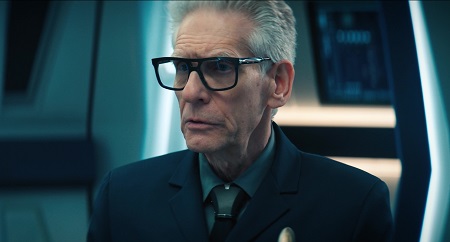
Dr Kovich is a fun and enigmatic character, portrayed brilliantly by David Cronenberg. But he’s also mysterious to the point of being frustrating, and I’d like to see Discovery finally explain who exactly he is and what his role is within the Federation’s hierarchy. We’ve seen Dr Kovich as a psychiatrist, a military analyst, a commander with the authority to give orders, a teacher or professor, someone with classified medical knowledge, and more. Last season, he told Captain Burnham that he couldn’t accompany her on Discovery’s mission to the galactic barrier because he had “more important things to do,” only for that line to be ignored as the season came to a close.

So once more I’m asking this question: who is Dr Kovich? What’s his role in Starfleet/the Federation? Is he, as I’ve long suspected, the head of – or perhaps even the sole survivor of – Section 31? The latter could be an interesting tie-in with the upcoming Section 31 TV movie.

Still frame from the Discovery Season 5 trailer showing Dr Kovich.
Could Dr Kovich work for Section 31?

Enigmatic and mysterious characters are a ton of fun. But Dr Kovich has, for me at least, crossed a line. He seems to be too perfect; a master of too many trades and a jack of none. Narratively, he seems to be moved around at the drop of a hat to fill any senior role that the writers need – but with no explanation of how he has all of this classified information and knowledge of such a broad range of subjects. If he was part of Section 31 in this era, a lot of that would make sense.

Perhaps that will have to be my own personal “head canon,” though! Still, with Dr Kovich returning this time, it would be nice to learn more about who he is and what exactly his rank or position is within Starfleet or the Federation. He’s also a character who has the potential to reappear in Starfleet Academy… so if he can’t be given a full explanation or spotlight episode this time, maybe there’s still hope!

Wish #8:
Tee up the “next phase” of Star Trek.

Still frame from the Discovery Season 4 premiere showing Burnham addressing a class of Starfleet Academy cadets.
A series set at Starfleet Academy has already been announced.

Discovery’s cancellation, if you really think about it, could be a turning-point for the Star Trek franchise. It was the first made-for-streaming Star Trek series, the first fully-serialised show, the first Star Trek series on the small screen in more than a decade, and the first to explore this new 32nd Century setting. Its finale will mark the end of an era – so the question “what comes next?” should be firmly on the minds of executives and producers.

Discovery is bound to do something to lean into or set up Starfleet Academy – I think that’s a given. We already saw a “backdoor pilot” in Season 4, and I think Season 5 could expand upon that, perhaps giving some of the cadets from that episode more of a starring role. But beyond Starfleet Academy and Section 31 – another Discovery spin-off – what else can this final season do to give potential future projects a foundation to build upon?

Still frame from the Discovery Season 3 episode Terra Firma, Part II showing Burnham and Georgiou.
Season 3 has already set up the Section 31 TV movie.

There are many ways this could go – from doubling-down on characters and themes to killing off half of the cast or even overwriting some or all of this iteration of the 32nd Century. But if Discovery could use this final season to blaze a trail that other shows could follow – without leaving things unresolved or ending on a deliberate cliffhanger – I think that would be fantastic.

Star Trek’s future is up in the air right now, with three of the franchise’s shows all coming to an end and questions over Paramount’s future. Personally, I don’t think it’s impossible to imagine a time in the very near future when Star Trek is once again on hiatus. But a solid final season from Discovery could include something for fans to keep in mind – and for the franchise to return to in the future.

Wish #9:
Spend a bit more time with one or two of the secondary characters.

Still frame from the Discovery Season 4 episode Coming Home showing T'Rina and Saru.
T’Rina and Saru.

The question of Discovery’s secondary characters – and the bridge crew in particular – always feels like a contentious one in some quarters of the fan community. We all agree that Discovery was pitched as “the Michael Burnham show,” but that doesn’t mean there isn’t room to spend a bit more time with some of the other members of the crew… especially as Burnham has arguably seen her main character arc come to somewhat of a conclusion.

It was interesting in Season 4 to spend a bit of time with some of the folks at Federation HQ – T’Rina, President Rillak, and Admiral Vance all made fine additions to the show’s cast of characters, and several members of the crew also got moments in the spotlight. Not all of these character moments have worked as well as they should, perhaps, but I appreciate the effort!

Still frame from Discovery Season 4 episode Coming Home showing Admiral Vance with his wife and daughter.
Admiral Vance with his family.

It would be great if Season 5 could find the time to explore someone like Owosekun or Rhys a bit more. Or even to bring back someone like Gray, who was rather unceremoniously shuffled off the series at the earliest opportunity. Now that Burnham is firmly embedded in the captain’s chair, has resolved her issues with Starfleet, and settled her relationship with Book, there’s perhaps more of an opportunity than in past seasons to spend more time with other members of the crew.

Obviously in a ten-episode season with a mysterious main story, we aren’t going to have time for a detailed look at everyone. That’s a shame – but it is what it is! I’d settle for even a single episode with a focus on one of the secondary characters, or storylines featuring a couple of them spread throughout the season.

Wish #10:
Standalone episodes and storylines to offset the season’s main narrative arc.

Still frame from the Discovery Season 4 episode Choose to Live showing the interior of the Abronian spaceship.
Saving the Abronians in Choose to Live was one of the highlights of Season 4.

When I think about Seasons 3 and 4, my favourite episodes and storylines were actually off to one side, not really part of the main season-long narratives in either case. Episodes like Terra Firma and Choose to Live were among the highlights of their respective seasons, and that’s because they did something that Discovery hadn’t really done before: self-contained episodic storytelling.

Since the likes of Lost and Game of Thrones set the entertainment world ablaze with incredibly popular serialised stories, that’s the only model that most executives have wanted to pursue. But a franchise like Star Trek was built on an older style of episodic storytelling, and that’s something many fans have long appreciated and want to see more of. It’s also, I would argue, why a franchise like Star Trek proved to be so popular in re-runs and on DVD: you don’t need to have followed a whole season-long story, it’s easy in most cases to just pick up an episode or two and have a great time. But that’s a longer conversation that we’ll have to save for another time!

Still frame from the Discovery Season 3 episode Terra Firma featuring the character of Carl.
“Carl” in Terra Firma Part I.

Strange New Worlds managed to strike a wonderful balance in its first season. Characters could have season-long arcs, learning, growing, and changing as their adventures unfolded, but each week the crew would be in a different situation, orbiting a different planet, facing a different foe, or tackling a different challenge. This blend of serialised arcs with episodic storytelling was fantastic – and I would dearly love to see more of it in Star Trek (and on TV in general!)

I don’t expect Discovery to fully go down the Strange New Worlds route – as much as I’d love to see it. But there really ought to be time for a couple of standalone episodes, perhaps focusing on other characters off to one side as the ship and crew travel to their next destination. Opening up the season to new and different adventures would be well worth it!

So that’s it!

Promo photo for Discovery Season 5 featuring Captain Rayner.
Captain Rayner… a new character for Season 5.

Those are ten of my wishes for Discovery’s upcoming fifth season. Although I’ve been feeling that sense of burnout that I described earlier, I do fully intend to watch Discovery this spring. Whether I’ll sign up for Paramount+ in April to watch it week by week or whether I’ll wait till June and binge it… I can’t be sure right now! But as I said shortly after New Year when I put together my annual “looking ahead” list, Discovery is a series that I’m looking forward to.

My biggest concern at this early stage has to be whether the series can manage to put together a solid, conclusive ending given that no such ending was originally written. Can re-writes and a couple of days of additional shooting make up for that deficit? Or will the series come to a close in unspectacular or even disappointing fashion?

I hope you’ll stay tuned here on Trekking with Dennis, because there will eventually be episode reviews and perhaps some additional commentary once Season 5 gets going. And when the series has broadcast its final episode, I’m sure I’ll have something to say about the way it ended – as well as perhaps taking a retrospective look at Discovery as a whole. Until then… Live Long and Prosper!

Star Trek: Discovery Season 5 will be broadcast on Paramount+ in countries and territories where the platform is available beginning in April 2024. Seasons 1-4 are available to stream now, and are also available on DVD/Blu-ray. The Star Trek franchise – including Discovery and all other properties discussed above – is the copyright of Paramount Global. This article contains the thoughts and opinions of one person only and is not intended to cause any offence.
The end of the beginning… or the beginning of the end?

Spoiler Warning: There are spoilers ahead for Star Trek: Discovery Seasons 1-4 and the trailers and teasers for Season 5.

We’re going to have to delay my review of the latest Star Trek: Picard episode by a day or two in order to do something that I rarely do here on the website: cover some breaking news. If you haven’t heard, let me be the bearer of what may or may not – depending on your perspective – be a bit of bad news: Star Trek: Discovery is going to end after its fifth season.

Forgive me for thinking negatively, but as soon as I heard that announcement, I felt a sinking feeling in my gut. Since filming wrapped on Discovery’s fifth season late last year, no live-action Star Trek has been in production for the first time in a couple of years. Not only that, but Picard’s ongoing third season is going to be that show’s swansong… and despite a spectacular first season, there’s been no news on a third season renewal for Strange New Worlds, at least at time of writing, even though production on Season 2 wrapped months ago. So could this be, as I fear, the beginning of the end for Star Trek in its modern incarnation?

How much life is left in the Star Trek universe?

Discovery brought Star Trek back to its small screen home in 2017 after twelve years in the wilderness. The show served as a launchpad for the Star Trek franchise as it exists today – and it’s highly likely that we would never have seen Picard, Lower Decks, Prodigy, or of course Strange New Worlds were it not for the trail that Discovery blazed. But with its cancellation after Season 5 – which is due to be broadcast sometime in early 2024 – is Star Trek in a better or more secure place than it was in 2017… or in 2005?

I’d argue that it isn’t.

Shortly after new year, I published a piece here on the website titled 2022: A Great and Terrible Year for Star Trek, in which I took a look at what I considered to be the highs and (considerable) lows that the franchise endured over the course of a rollercoaster year. Although there was a lot to say, perhaps my biggest conclusion was simply this: franchise fatigue is beginning to set in. It’s through that lens that I must view the news of Discovery’s imminent ending.

The final shot of Discovery’s fourth season finale.

Unlike with Enterprise in 2005, it’s my hope that Discovery’s writers will have known the end was coming well enough in advance to have planned out a conclusive ending for the series and its characters. Enterprise’s finale was divisive among fans, and the show’s final season seemed to leave more than a few characters and storylines up in the air by the time the curtain fell. If this recently-announced news had been known to the producers and creative team, hopefully they will have been able to put together an ending worthy of the show and its great cast of characters.

And as I’ve said more than once: it’s infinitely better for a show to end leaving its audience wanting more, lamenting that we didn’t get “just one more season,” rather than dragging on too long and having us regret that the end didn’t come earlier! Discovery has been an imperfect production, don’t get me wrong, but with the current state of Star Trek being what it is… maybe this is simply the right time for the show to come to an end. If there weren’t great ideas on the table for future story arcs, then I’d rather it came to a close with one last hurrah instead of dragging on ad infinitum.

Michael Burnham in the trailer for Discovery Season 5.

Star Trek can’t keep up the pace that we saw in 2022, where more than fifty episodes across five shows all debuted in a single calendar year. It’s just too much – and it risks putting off new viewers, who are precisely the people that Paramount needs to convince to tune in if Paramount+ is to have a snowball’s chance in hell of surviving the streaming wars. Making Star Trek too dense, too convoluted, and just too large is what’s been happening over the last few years, so stepping back from that shouldn’t be seen as a bad thing. If anything, it should be a net positive for the franchise.

With Picard also coming to an end, there’s the potential to perhaps scale back Star Trek and refocus. Take what worked about the shows over the last few years and hone it, disregard failed experiments, and have Star Trek operate in a similar fashion to other streaming franchises – with a focus on quality over quantity.

Star Trek: Picard is also coming to the end of its run.

But is that Paramount’s goal? With two live-action shows coming to an end, there’s the potential to put more money and energy into Strange New Worlds, for example, as that show was very well-received. But with no third season having been announced so far… I can’t shake the feeling that this really could be the beginning of the end for the franchise as a whole.

Depending on how things are scheduled, there’s enough Star Trek in production or post-production to coast through into the first half of 2024. But what then? A third season of Strange New Worlds – if one is to be produced – might also debut that same year… but 2025 could end up being like 2005: the end of the road.

Is this moment akin to 2005?

If that were to happen, Paramount only has itself to blame. The corporation has mismanaged both the Star Trek franchise and its streaming platform in catastrophic fashion, seemingly led by the most inept team of morons to ever assemble in a boardroom. Before Discovery had even been conceived, an ageing corporate board with no knowledge or understanding of streaming or the internet saw the success of Netflix and said “make me one of those.” CBS All Access was born – and Star Trek was tapped to be its flagship franchise.

But was Star Trek ever big enough to place such a burden upon it? Even if Discovery had been flawless and had landed with minimal controversy, pinning the profitability of a streaming platform on its success was always a bad idea. It isn’t Discovery’s fault that CBS All Access – as Paramount+ used to be known – didn’t become the “next big thing” in streaming… and it isn’t Discovery’s fault that Paramount+ remains massively unprofitable today.

Discovery was created to be the flagship series for CBS All Access.

Paramount is in the wrong business. The board is right about one thing: streaming is the future. But they jumped into that market a decade too late, unprepared, and without the technical know-how or infrastructure to really make it work. The only thing CBS All Access/Paramount+ had going for it were shows like Star Trek – but I think Paramount is belatedly learning that the Star Trek franchise simply doesn’t have the mainstream appeal to carry an entire streaming platform.

So what does all of this mean for Star Trek’s future? Maybe it’s too early to hit the panic button… but I confess that I feel echoes of 2005. It’s been surprising to me that no spin-offs or new projects have been announced, and in a way, the announcement of Discovery’s cancellation was another opportunity to do so. The tone would be very different if the press release had stated that “Discovery is coming to an end… but Starfleet Academy or Captain Seven are entering production.”

Does Alex Kurtzman have a surprise up his sleeve?

So here we are. After a creditable six-year run, and numerous cancellation scares, Discovery will be coming to an end. Its imminent fifth season actually looks fantastic – and if it makes good on its promise of telling a different kind of story, perhaps in another world that could have set the stage for the show’s continuation. Perhaps the tragedy here will be that Discovery changed tack too late – that four whole seasons of “the galaxy is in danger and only Burnham and the crew can save it!” was just too much. That would certainly be my assessment, and as enjoyable as parts of Season 4 were, maybe if a different kind of adventure had been written last time around, we could’ve gotten an extra season or two.

There are a lot of unanswered questions. What of the backdoor pilot for a Starfleet Academy series that we seemed to get partway through Season 4? If Star Trek as a whole continues, will another series pick up Discovery’s 32nd Century setting – or does Paramount consider the far future to have been a bit of a misfire? Will Star Trek continue at all after Strange New Worlds Season 2 and Discovery Season 5? Is anyone at Paramount ready for a difficult conversation about what’s going wrong?

Paramount ought to reconsider many of its recent decisions…

I’m not thrilled to learn that Discovery won’t continue. Although not every season and every character fully stuck the landing, there’s been some fantastic entertainment along the way – episodes and moments within episodes that hit all of the high notes that we know Star Trek can. Moreover, by the time the curtain fell on Season 4, I felt that Discovery had finally turned a corner. Having settled Burnham into the captain’s chair, and told a story about seeking out new life – the very core of Starfleet’s mission – it felt that the show had finally achieved its potential. Season 5 will hopefully capitalise on this – but it will be short-lived, with only ten episodes left for the series to shine.

The history of Star Trek is one of stepping-stones: series and films that lead to new, different, and often better things. Just as Enterprise and the Kelvin films led to Discovery, so too has Discovery led to Picard, Lower Decks, Prodigy, and Strange New Worlds. Whether these shows will lead, in turn, to new things, or whether the trail will go cold for a while, Discovery played its part. It may not have always done so perfectly, but I’m confident that its place in the franchise’s history is assured – and I suspect that at least some of its critics will be won over if they give it a second chance!

I’m still looking forward to Season 5 – but it’s now a rather bittersweet feeling, knowing it will be our final outing with Captain Burnham and the crew. Not to mention that this news has massively increased concerns for the overall direction – and indeed the future – of the Star Trek franchise as a whole.

Star Trek: Discovery Seasons 1-4 are available to stream now on Paramount+ in countries and territories where the platform is available, and are also available on Blu-ray. Season 5 will stream on Paramount+ in 2023 or 2024. The Star Trek franchise – including Discovery and all other properties mentioned above – is the copyright of Paramount Global. This article contains the thoughts and opinions of one person only and is not intended to cause any offence.
Should Discovery Have Always Been Set After Nemesis?

Spoiler Warning: There are spoilers ahead for Star Trek: Discovery Seasons 1-4, Star Trek: Strange New Worlds, Star Trek: Picard, and Star Trek: Prodigy.

In 2017, Star Trek returned to the small screen after a twelve-year break. Star Trek: Discovery picked up the baton for the long-running franchise, and thanks in part to a deal with Netflix, scored a decently high budget for its first season. Bryan Fuller, who had written and produced a number of episodes of Deep Space Nine and Voyager, initially spearheaded the project, and it was on his stories and ideas that the show’s characters, story arcs, and settings were based – even though he stopped working on the show while it was still in early production.

Discovery proved controversial in some corners of the Star Trek fan community right from the start, and today I want to consider one of the reasons why that was the case. In addition, I want to ask a deceptively simple set of questions: should Star Trek: Discovery have left the 23rd Century alone? Would the show have been better-received by fans, and won more support, if it had been set after the events of Nemesis instead of a decade before The Original Series? Would fans have found things to pick on and argue about anyway? Was Discovery’s setting in its first two seasons a net positive, negative, or something mixed for the show? And did sending the ship and crew into the far future at the end of Season 2 come as a tacit admission from the producers and showrunners that Discovery should never have been set in the 23rd Century to begin with?

The first glimpse fans caught of the USS Discovery in a 2016 teaser.

Before we go any further, a few important caveats. This is a controversial topic; Discovery elicits strong opinions from fans on both sides of the debate. The fact that we’re considering, hypothetically, whether Discovery might’ve been a better show – or might’ve been received with less hostility by fans – had it employed a different setting doesn’t mean it’s a perfect idea that would’ve massively improved its first two seasons. Regular readers will know that I’m a Discovery fan not a hater; while there are areas where the show could improve, generally I like and support it and I’m glad to have it as part of the broader Star Trek franchise.

Secondly, these are just the subjective thoughts of one person. I’m not trying to claim that I’m right and that’s the end of the affair! Other folks can and will have different opinions – and that’s okay! There’s room enough within the Star Trek fan community for polite discussion and disagreement.

Finally, I’m not trying to attack Discovery, nor any of the creative team, actors, or those involved in its production. This is a thought experiment; a hypothetical question to consider what Discovery – and the wider Star Trek franchise – might have looked like if different decisions had been taken at a very early stage.

Behind the scenes during production on Discovery Season 1.

First of all, let’s consider some of the arguments and points of contention. By deliberately choosing a setting ten years before the events of The Original Series, Discovery ran into some issues with Star Trek’s internal canon. Some of these points matter far more than others, and I tend to take a somewhat nuanced approach to canon. I’m not a “purist,” claiming that the tiniest minutiae of canon must be “respected” at all costs – but at the same time, I believe that the world of Star Trek needs to be basically internally consistent. Internal consistency is the foundation of suspension of disbelief, and messing too much with established canon can, in some circumstances, be to the detriment of a story.

Is that what happened with Discovery, though?

We can set aside arguments about aesthetic elements like uniforms, starship designs, and even special effects. To me, none of those things are relevant, and all that’s necessary to overcome those hurdles is to say that, much like out here in the real world, things like design, fashion, etc. are always changing. Who’s to say that the look of the 2260s wouldn’t be radically different from the 2250s? Considering that there have been leaps and bounds in visual effects, CGI, and cinematography since The Original Series aired, it would be profoundly odd for Discovery to have tried to emulate that 1960s style.

I don’t think anyone seriously wanted or expected Discovery to use this particular look!

So I’m content to put visual style to one side. But there are other elements of canon that the show arguably stumbled over in its first two seasons. The biggest issue that I can see is the USS Discovery’s spore drive – a brand-new piece of technology that had never been seen or heard of in Star Trek before.

The spore drive effectively made warp drive obsolete, and considering that the show was set a decade before Captain Kirk’s five-year mission – and more than a century before The Next Generation era – that obviously didn’t make a lot of sense. Sure, the spore drive was a classified piece of kit, and across Season 1 we came to see some pretty serious drawbacks, but such a phenomenally useful technology isn’t something Starfleet would simply abandon – or so fans believed. Even if the spore drive had issues, it was such a game-changing piece of technology that persevering and working through those problems would almost certainly be worthwhile.

The USS Discovery in Season 1.

As Season 1 demonstrated, the spore drive’s military applications were incredible. The USS Discovery could jump around a Klingon vessel with ease, basically becoming invulnerable, and the spore drive could be used for rapid hit-and-run attacks, destroying enemy ships before they even had a chance to register what was happening. And for an exploration-focused organisation, the spore drive opened up the entire galaxy, allowing distant worlds to be visited at a moment’s notice. Planets that were decades away from Federation space by warp drive could be hopped to in an instant, and then the USS Discovery and her crew could be back home in time for tea! We saw this in Season 2, with planets like Terralysium able to be visited easily with a single spore jump – instead of the decades of warp travel that would have normally been required.

To the show’s credit, Discovery found uses for the spore drive in this period – but I confess that I found the spore drive to be a gimmick, one that had been clearly and pretty obviously designed to allow the ship to travel to the Mirror Universe in Season 1. In fact, it’s the Mirror Universe – and more specifically, the idea of having an impostor from that parallel world who was trying to blend in and find a way home – that I would argue led to many of the decisions in Discovery’s early production.

Having a Terran character was clearly important to Discovery’s creative team when building the story of Season 1.

Choosing a Mirror Universe character in Captain Lorca arguably determined when Discovery would need to be set. In order for Lorca to be a soldier of the Terran Empire, Discovery would have to be set in an era where the Terran Empire existed – and as Mirror Universe stories in Deep Space Nine categorically established that the Terran Empire had long since fallen by the 24th Century, in order to return to that setting, stepping back to the 23rd Century was required. If having a Terran impostor was one of the first narrative beats written for the season – and I believe it was – then many other elements of the show had to be built around that, including its 23rd Century setting.

As an aside, I would say that the Mirror Universe really isn’t worth all this fuss and bother! It’s a bit of fun for occasional, one-off stories in longer, more episodic seasons, but building an entire story around the Mirror Universe and Terran characters was probably Discovery’s first mistake. This is a setting that easily falls into overacting and pantomime, with one-dimensional villains who love murder, torture, and murderous torture all for their own sake. There’s very little room for manoeuvre in the Mirror Universe, and as we’ve seen in Discovery – and in past iterations of Star Trek too, to be fair – it can trick even competent actors into putting out incredibly over-the-top, hammy performances.

This is what we’d call “a case in point.”

But that’s my own personal lack of interest in the Mirror Universe showing through, I suppose!

When Star Trek: Picard’s second season premiered, I think it brought to the table something incredibly interesting that’s relevant to this conversation: the Confederation timeline. The Confederation wasn’t the Terran Empire, and its setting wasn’t the Mirror Universe, yet it borrowed a lot from that setting both thematically and stylistically. An authoritarian, fascist dystopia was on full display – and it was in the late 24th/early 25th Century, and managed to be there without treading on the toes of anything that had been previously set up in past iterations of the franchise.

Although the Confederation timeline story was a bit of a misfire in Picard, I think it stands as testament to what’s possible with a little creative thinking. Star Trek doesn’t have to keep going back to the same previously-established time periods and settings, and even in those that are superficially similar, new and different creations can be brought to the screen. Very few things in Discovery would have needed to change had the show’s first season adopted a setting inspired by the Mirror Universe instead of lifting it directly from The Original Series.

The Confederation timeline established in Picard Season 2 shows how a new Mirror Universe-inspired setting could work.

And that statement could apply to other elements of the show’s production as well. The idea of a protagonist who was human but raised by Vulcans is a fun and interesting one, a character type that was new to Star Trek – if we don’t count the PC game Hidden Evil, that is! What would have changed about Michael Burnham had her adoptive parents not been Sarek and Amanda but two new Vulcan characters?

Spock’s family is something that Star Trek has messed about with more than once! We could even argue that, as far back as Journey to Babel, it was nonsensical to suggest that Spock’s connection to Sarek would be something that Captain Kirk would have been unaware of. But setting that aside, the film The Final Frontier gave Spock a half-brother who had never been mentioned. Adding Michael Burnham to his family felt, to some fans at least, like yet another retcon; an addition that certainly came very close to treading on the toes of Star Trek’s past because of how closely it involved a very familiar character.

The decision to make Michael Burnham Spock’s adopted sister was criticised in some quarters.

It was clear that Discovery’s writers and creators wanted to tie the show to past iterations of Star Trek, but rather than coming across as respectful homage, some of these decisions felt nakedly commercial – it was as if CBS didn’t trust the Star Trek brand to stand on its own without myriad references and close connections to its earlier iterations. This didn’t sit well with a lot of fans, and when Spock had already had a missing half-brother, giving him an adopted sister who he’d also never mentioned began to feel gratuitous.

And for a lot of folks, it came back to that same argument: what would change about this new character if her parents were inspired by Sarek and Spock’s family? The introduction of Spock in Season 2 definitely shook things up in that regard, but by then a lot of the damage had been done and some fans had already decided not to tune in.

Sarek and Amanda in Season 2.

Going all the way back to The Next Generation’s creation in 1987, Star Trek had struck out in bold new directions and tried to do things differently. Every Star Trek show prior to Discovery had cameo appearances, name-checks, and even character crossovers in some episodes, but by and large, the franchise’s different shows stood up by themselves. Would The Next Generation have been improved if the captain of the Enterprise-D had been Kirk’s grandson, for instance? I don’t think anyone would make that case – the show needed the freedom to do its own thing away from those familiar characters. And while Deep Space Nine’s premiere, Emissary, brought Captain Picard on board, thereafter the new series also struck out on its own – as did Voyager and Enterprise when they came along.

For some fans, Discovery crossed a line between finding a connection to what had come before and using it as a crutch, and where past iterations of the Star Trek franchise had been connected to one another through common themes, locales, and even characters, none had ever gone back to retroactively change so many different things as Discovery. Coming off the back of the three Kelvin timeline films – which were also controversial in some quarters because they had re-cast the characters from The Original Series – that felt like a bridge too far for some folks.

A promo photo for Season 1 showing most of the main cast.

Retcons can happen in any franchise, but it’s not unfair to say that some work better than others. Prequels almost always end up bringing more retcons to the table than sequels do, and when we’re talking about a universe that was over fifty years old and had more than 700 stories under its belt at the time Discovery premiered, for a lot of fans, those retcons to Star Trek’s past were too unpalatable.

The Star Trek franchise, much more so than Star Wars, has always felt like it was looking forwards and to the future rather than backwards at its own past. But by 2017, there hadn’t been any Star Trek stories that moved the overall timeline of the franchise forwards in fifteen years. Aside from a short sequence in 2009’s Star Trek reboot film (which told us of the destruction of Romulus), everything that the franchise had done since Nemesis and Voyager’s finale had been a prequel.

By 2017, everything Star Trek had done for fifteen years was a prequel or reboot.

After Enterprise had underperformed and the franchise faced cancellation, the Kelvin timeline came along and rebooted things. But both projects proved to be controversial in some quarters – fans were clearly less keen on a prequel show, as Enterprise’s viewing figures demonstrated. And while the Kelvin films were successful with general audiences at the cinema, there were many Trekkies who were unimpressed with the new action-oriented approach and the decision to recast fan-favourite characters.

Along came Discovery – and it incorporated many of the same issues. Here was another prequel, another Star Trek project that was stepping back in time and not taking the opportunity to pick up the story of the Star Trek universe that had come to an abrupt halt with Nemesis. And not only that, but it then emerged that the show’s protagonist would be a hitherto-unknown relative of one of Star Trek’s most iconic characters – a character whose history and family had already been messed with on more than one occasion.

Spock in The Original Series Season 1.

In 2016, I recall making the facetious point that Discovery seemed to be combining everything that Trekkies didn’t like: a plot point from The Final Frontier – which is widely regarded as one of the least-successful Star Trek films, a prequel setting like in Enterprise – which had demonstrably been the least-successful Star Trek series, and both an aesthetic and action focus that were borrowed from the Kelvin timeline films – films which weren’t popular with a lot of fans. That was a joke; some black humour as we looked ahead to the show and as news was trickling out. But I think that it encapsulates how many fans were feeling at the time.

More than anything, I wanted to see Star Trek move forwards again. Despite knowing a number of Trekkies who either hated or outright refused to watch the Kelvin timeline films, I felt that they were decent additions to the franchise. But if Star Trek was to return to both the small screen and the prime timeline, my preference in 2016-17 would have been for a new show to pick up the story in the years after Nemesis, not another prequel set before the events of The Original Series.

Cadet Tilly in a pre-release promotional image.

Discovery’s prequel setting quickly became a weight around its neck; a barrier that didn’t stop the excitement from building, but that certainly slowed it down. On the one hand, the show’s writers and creative team were constrained by more than 600 stories that were set after Discovery, and on the other, everything that they tried to do that was new or different was subject to intense scrutiny and criticism by fans. There was no way to win – either the show would have to tell less-interesting stories as a result of being cornered by canon, or it would be nitpicked to death by fans who felt it was overstepping its bounds and treading on the toes of stories that had already been told.

Had Discovery’s first season been set in the same time period as Star Trek: Picard later was – the late 24th Century or early 25th Century – a lot of those issues would have disappeared. The spore drive could be Starfleet’s new initiative, with its potential unlimited and the genuine possibility of this interesting piece of technology going on to become the Federation’s new way of getting around. We knew, even before a single minute of Discovery had aired, that the spore drive wouldn’t take off in the 23rd Century – because if it had, all of Star Trek wouldn’t be able to exist as depicted. A post-Nemesis setting would have completely negated that issue.

The spore drive was a controversial inclusion in Discovery’s first season.

Then there was the question of character. Michael Burnham could have been exactly the same person – a human raised by Vulcans with Vulcan instincts. But instead of being the second addition to Spock’s increasingly soap opera-like family, her adoptive parents could have been new characters who were inspired by characters from Star Trek’s past, or even Vulcan characters from the 24th Century that we’d met before if an overt connection was deemed necessary. The war with the Klingons could have broken out in much the same way as we saw on screen – all it would have taken is a brief word of explanation saying that the Klingon-Federation alliance of the late 24th Century had broken down in the intervening years.

Star Trek had an opportunity to advance its timeline, and to take into account events like the Romulan supernova. With relatively few changes to how the story of Season 1 played out, it could be the Romulans, not the Klingons, who went to war with Starfleet. Or it could have been that the Klingons wanted to reassert themselves in the aftermath of the Romulan catastrophe, perhaps seizing former Romulan territory as their empire collapsed. And the idea of having an impostor as the ship’s captain – someone from an alternate reality – could have also been made to fit without returning to the Mirror Universe.

Captain Lorca turned out to be from the Mirror Universe.

Discovery could, for example, have taken the idea of a more militaristic Starfleet that had been seen in the Kelvin timeline in Into Darkness as a starting point, and said that the Kelvin timeline would develop into the same kind of dystopian setting as the Mirror Universe. Captain Lorca could have originated from a late 24th Century Kelvin timeline, from a Federation that was much more authoritarian in nature. That would have tied together the two most recent parts of the Star Trek franchise while still leaving open the possibility of a fourth Kelvin film starring the reboot cast.

In short, there were plenty of ways that Bryan Fuller’s initial concepts and ideas could have been made to fit a post-Nemesis setting rather than a pre-The Original Series one. Some changes are bigger than others, and in hindsight we now know that we’d miss out on the recasting of Captain Pike and Spock that paved the way for Strange New Worlds… but at the time, without that foreknowledge, I really do believe that it would have been worth considering.

Star Trek: Discovery creator Bryan Fuller.
Image Credit: StarTrek.com

Season 2, which focused on the Control AI, could have also been a good fit for a late 24th/early 25th Century setting. In fact, I doubt I’d be the only one to suggest that the Control story might’ve been a better fit for that time period! This idea of essentially a rogue supercomputer is one that Star Trek has tackled before, with episodes like The Ultimate Computer and even some of the stories about Lore in The Next Generation. Control’s schemes could have absolutely worked in a post-Lore environment.

I’ve talked before about how the Control storyline in Season 2 felt like a potential Borg origin story – or at least a story with superficial Borg similarities. Because of Discovery’s place in the timeline, those references were only ever tiny little hints to us as the audience; no one within the show could say “hey, this looks an awful lot like Borg assimilation” because none of them knew who the Borg were at that point. But if the story had been set in that post-Nemesis era, the similarities between Control and the Borg could have been made more overt – even if a full “Starfleet accidentally created the Borg” story had been taken off the table.

Captain Leland was “assimilated” by the Control AI in Season 2.

At the end of the day, though, Discovery wasn’t only controversial because of its place in the Star Trek timeline, and while replacing its 23rd Century setting would have blunted some points of criticism, fans would have found others. Things like the redesign of the Klingons, the more action-heavy storyline, the show’s shorter serialised seasons and more would all remain, and a potential post-Nemesis setting would’ve probably thrown up a bunch of new things for people to pick on, too.

In hindsight, we now know that if Discovery had been set in the years after Nemesis, we’d have missed out on Strange New Worlds – a show that I’d argue is probably the high-water mark of modern Star Trek, at least at time of writing. That alone should make Discovery and its complicated relationship to canon and Star Trek’s internal timeline absolutely worthwhile!

Strange New Worlds is one of the best things about modern Star Trek – and it wouldn’t have happened without Discovery and its 23rd Century beginnings!

But on the other hand, who knows what we’re missing out on? Potential crossovers with The Next Generation and other 24th Century shows would have been on the table, and while Discovery’s third and fourth seasons have tried to pay lip-service to that era, by shooting so far forward in time, it’s once again ruled out any significant crossovers and link-ups.

In addition to obvious characters like Jean-Luc Picard or Kathryn Janeway, dozens or even hundreds of secondary characters and guest stars from that era could have been incorporated into Discovery to tie Star Trek’s newest adventure to what came before – with fan-favourite characters (and the actors who played them) potentially returning. Picard, Lower Decks, and Prodigy have all shown just how much of an appetite there is within the Star Trek fan community to bring back characters as diverse as Q and Captain Jellico, just to give two examples.

Edward Jellico recently returned in a couple of episodes of Star Trek: Prodigy.

When making those very early decisions about Discovery, one of the fundamental mistakes executives at CBS (now Paramount) and the creative team made is failing to recognise Star Trek’s real “golden age.” The Original Series in the 1960s may have gotten things started – and it’s remembered fondly, don’t get me wrong – but for many fans, especially fans in their thirties and forties, it’s The Next Generation and the other shows of the 1990s that are best-remembered. Discovery jumped back in time to draw inspiration from and connect up with The Original Series… but I’m not sure that’s where the majority of the fan community was in 2017 – or is in 2023, either.

Whatever we may think of the arguments surrounding canon and the so-called integrity of Star Trek’s internal timelines, a more basic question is this: what setting and what era would most Trekkies choose for a new series? There are some fans, of course, who want to see more of Enterprise’s 22nd Century, some who want to see a far future that shoots past the 24th and 25th Centuries, and certainly there are fans for whom the 23rd Century has its own unique appeal. But many, many Trekkies who first came to the franchise during The Next Generation era – myself included – wanted and still want to see Star Trek pick up where it left off after Nemesis and Endgame. That was doubly true in 2017, when the franchise hadn’t touched that time period in fifteen years.

The USS Voyager in Endgame.

When it became apparent that Discovery was going to be yet another prequel – the third in a row – it meant that there was still no chance of the timeline advancing. It meant that the return of fan-favourites from Benjamin Sisko to B’Elanna Torres was completely off the table. And it meant no explanation of the Romulan supernova that had been glimpsed in 2009’s Star Trek. We subsequently got to see some of those things in Picard – but it wasn’t obvious in 2016-17 that that series was going to be made, and there was, in some quarters at least, a sense of disappointment that Star Trek was once again doing this kind of navel-gazing at its own history and backstory instead of moving forward. That planted the seeds of unhappiness for some Trekkies – a seed that would grow as more details were revealed about the series, its setting, its technologies, and its characters.

And I feel that this is really the key point. On their own, many of the criticisms levelled at Discovery in its first season were overblown nitpicks. The spore drive was never considered by the crew of the USS Voyager as a way to get home quicker. Spock didn’t have an adopted sister in that one episode of The Animated Series that aired in 1973. Did the Klingons and the Federation really fight a war in this era? And so on. But those criticisms found fertile ground in the disappointment that fans were already feeling – and the “snowball” started to roll.

I doubt many fans were that upset about Spock not mentioning Michael Burnham in The Animated Series

This “snowball effect” is something that I’ve talked about before here on the website. In brief, it refers to how a production can find itself subject to more and more points of criticism once a few big ones start to build up. The “snowball” starts rolling, picking up more and more nitpicks and amplifying them. Relatively minor things – like Discovery’s all-blue uniform designs, for example – end up being nitpicked to death in a way that they never would have been in a production that didn’t have those original, fundamental points of criticism to get the “snowball” rolling in the first place.

And that’s what happened with Discovery in 2016-17, in my opinion. Its place in the timeline became the initial source of disappointment for a fanbase that comprised more fans of The Next Generation era than higher-ups at CBS realised. Those fans would have preferred to see a series set after Endgame and Nemesis, and the disappointment they felt began to set the stage for many other points of criticism that, in a different production, would never have been mentioned.

Did the producers at CBS underestimate support in the Star Trek fan community for a post-Nemesis series?

There are, of course, some self-proclaimed “fans” of Star Trek for whom the race and gender of Discovery’s protagonist was the issue. Those people would never have been placated by changes in the show’s setting, and the hate, abuse, and toxicity spewed by that thankfully small section of the show’s audience would have remained regardless. I see no way to avoid that; just as there were viewers in the ’60s who objected to Uhura’s presence on the bridge of the Enterprise, there were some in 2017 who felt that women, people of colour, LGBT+ people, and others shouldn’t be part of “their” entertainment products.

Such folks would often try to cage their attacks in the language of media criticism, using expressions like “bad writing” to criticise Discovery. I think we’re all able to tell the difference, though, and I don’t really see much point in addressing this part of the attacks on the show. It isn’t relevant to what we’re talking about today, as the minority of viewers who objected to Michael Burnham because she was a black woman in a leading role would have felt the same way regardless of when the show was set. The only thing that would have changed would have been the way in which those folks would have tried to cover their tracks when attacking Discovery.

Michael Burnham at the end of Season 1.

When Season 2 rolled around, it wasn’t apparent at first that Discovery’s creative team had taken on board much of the feedback and criticism that had been levelled at the show in its first season. In fact, they seemed to double- and even triple-down on making these overt connections to The Original Series by introducing Captain Pike and Spock.

I have to confess something at this point – something which, in light of how darn good Strange New Worlds was in its first season, I’m quite embarrassed about: I didn’t like the idea of Pike and Spock joining Discovery in 2018-19 when that news broke. I’d been a fan of The Cage since I first watched it, and there was something about Jeffrey Hunter’s portrayal of Pike, and the differences between him and Captain Kirk in particular, that occupied a unique place in Star Trek’s history. Here was an “alternate timeline,” and just like hearing a different version of a familiar song, all the pieces were there, but they were different. Pike stood as this kind of “what-if” for the Star Trek franchise; what might have been if history had taken a different course.

I’ve always had a soft spot for The Cage

Furthermore, I found Bruce Greenwood’s take on the character in Star Trek and Star Trek Into Darkness to have been one of the highlights of the Kelvin timeline. Recasting the character so soon after this portrayal wasn’t something that I was wild about either, and I felt that the whole thing rather smacked of desperation on the part of CBS/Paramount; an attempt to bring more eyes to a show that had proven controversial and that probably hadn’t brought in the numbers of subscribers and viewers that they and Netflix had hoped to see.

I was wrong about that, of course – so very, very wrong!

But I wasn’t alone in feeling that way; that Discovery was reaching for a crutch as its second season dawned. Fans who had been left unimpressed by the show in its first season – and particularly at its perceived “violations” of Star Trek’s internal canon – were not looking forward to seeing what would become of Captain Pike, a character who had a certain reverence from at least some in the fan community as Star Trek’s “first” captain, but more importantly of Spock – one of the most important foundational characters in the entire franchise.

Pike and Spock in Season 2.

Whether we agree or not that Discovery’s second season shook up Spock’s characterisation for the better – which is something I absolutely believe it did, by the way – something very interesting happened at the end of that season: Michael Burnham and the USS Discovery left the 23rd Century altogether. Opening a time-wormhole, Burnham led the ship and crew into the far future, and the show has remained in that time period ever since. By the time Season 5 arrives later this year, Discovery will have spent longer in the 32nd Century than it did in the 23rd.

Does that decision stand as an admission from Discovery’s creatives and producers that the 23rd Century was never a good fit for the show? Is it more a case of exasperatedly saying to fans and critics “you wanted us to be set in the future? Well here ya go!” Or is it simply a creative narrative decision that would have been taken regardless of how Seasons 1 and 2 had been received?

Burnham and the USS Discovery heading into the far future.

Let’s rule out that latter point immediately! If Discovery’s place in the timeline was uncontroversial and hadn’t been commented on and criticised from the moment it was announced, we’d have seen Discovery remain in the 23rd Century – I am as certain of that as I can be. The decision to take the series out of the 23rd Century was, at least in some way, a response to these criticisms and/or a way to pre-empt or shut down further such nitpicks.

We’ll have to talk about this in more detail one day, but there’s a phenomenon that I call the “prequel problem” that affects a lot of prequel stories. In short, at the back of our minds as viewers, we know that certain storylines have to end in particular ways; tension, drama, and stakes are all lower in certain prequels – whether we’re conscious of that fact at the time or not. This goes double for a show like Discovery where galactic-scale apocalyptic disasters are the bread-and-butter of its stories.

The Klingon war – especially toward the end of Season 1 – was presented as an existential threat to the Federation.

When it seemed as if Control was going to wipe out all life in the galaxy, we knew that it wasn’t possible. The details of how Pike, Burnham, and the crew were going to prevent it were still to be revealed, but because we’d seen the galaxy in the 24th Century, we knew at the back of our minds that there was no real danger. Likewise with Season 1’s Klingon war – we knew that the Federation wouldn’t be defeated, because we’d seen Captain Kirk’s five-year mission taking place a mere decade after the events depicted in the show. Those “prequel problems” took at least some of the tension out of Discovery’s main narratives – and in a show that wants to turn the tension up to eleven, that’s not ideal to say the least!

If Discovery was the kind of show that told stories that were smaller in scale, we could disregard this point altogether. But for the kind of series Discovery aimed to be, a setting that was constrained by stories set decades and centuries later was problematic – and it had been since day one.

Discovery has always wanted to tell stories with very high stakes; galactic-scale threats.

So let’s start to wrap things up.

The saving grace of Discovery’s 23rd Century beginning is, as I see it anyway, the existence of Strange New Worlds as a spin-off production. Bringing in Captain Pike and Spock proved to be an unexpected masterstroke, thanks in part to some inspired casting. Had Discovery always been set after Nemesis in the late 24th Century, we would never have seen Anson Mount and Ethan Peck take on those roles, and from there we’d never have gotten to see the masterpiece that was Strange New Worlds Season 1. That would have been a huge loss for Star Trek – and I feel that alone more than justifies Discovery’s first two seasons in the 23rd Century.

But it’s clear that being set in this time period caused the show a lot of issues, particularly because of the kind of storytelling it employed. Big, bold stories that focus on end-of-the-world type threats and a serialised framework in which only one or two main stories were told per season combined with a prequel setting to cause some major stumbling blocks. Some of these were bigger than others, and some minor points definitely saw their status overinflated by fans and viewers who were “snowballing” and picking on anything and everything to criticise a series that they already didn’t like. But some of those points of criticism were genuine, and the internal consistency of the Star Trek franchise and its timeline was challenged by some of the narrative decisions that Discovery took.

A promotional image of Discovery’s captain’s chair, from the show’s early marketing campaign.

With Strange New Worlds serving as a huge caveat, I still believe that if I’d been in charge of things in 2016-17, I wouldn’t have created a series set in the 23rd Century. It remains my view that at least a plurality of fans, if not an outright majority, would have preferred to have seen the overall timeline of Star Trek move forwards, and that creating a series set sometime after Endgame and Nemesis would have been the best call. There’s a lot of leeway if all we say is “after Nemesis,” and I’d have entertained pitches and ideas for both the late 24th Century as well as for decades or centuries in the future, far beyond The Next Generation era.

Bearing that in mind, I’d say that practically everything that Discovery did in those first two seasons could and would have worked in a post-Nemesis setting. Some story beats would have had to change to accommodate being set further forwards in time, such as Captain Lorca’s universe of origin. But even if the brief required the creative team to use elements that the Star Trek franchise had already created, I think it would have been possible to tell those same stories in a very similar way.

Captain Lorca and his Terran allies.

The big twist in Discovery’s first season was Captain Lorca’s true identity – but I’m not really convinced that this story beat was worth all the fuss. It was certainly fun and unexpected to find out that the character had crossed over from another universe, and that he was responsible for stranding the ship there as he tried to get home – but after Lorca’s true origin was revealed, his characterisation took a turn for the worse, and he ceased to be the complex, nuanced, hardball Starfleet captain in favour of being a rather one-dimensional villain caricature. So maybe all of this hassle wasn’t even worth it after all!

Season 2 introduced us to Pike and Spock, and set the stage for Strange New Worlds – something which, in hindsight, we know now we’d have missed out on if Discovery didn’t take place in this time period.

Spock and Captain Pike in Strange New Worlds Season 1.

Shooting forwards in time, well past the 24th and 25th Centuries, has allowed Discovery much more creative freedom, and I don’t think it’s a coincidence that most of the show’s best episodes have come in the last couple of years rather than in those first two seasons. Even in an established, long-running franchise, writers and creatives need to have the freedom to branch out, to add wholly new elements, and to tell stories that go to completely different thematic places. Some of that was possible in the 23rd Century – and we’ve seen Strange New Worlds succeed in that setting by taking on a more episodic approach – but for the kinds of large-scale, dramatic stories that Discovery wanted to tell, a setting unconstrained by having to fit in with 600+ episodes and films set after the events of the show has undoubtedly opened up a lot more possibilities.

So the question posed is a tough one. Discovery set the stage for Strange New Worlds, and that really is a huge point in favour of its initial 23rd Century setting. But Discovery also reinvigorated the Star Trek franchise for a post-Game of Thrones television landscape, one in which ongoing serialised stories with big, bold storylines was the order of the day. Without Discovery doing what it did in 2017, who knows whether the Star Trek franchise would have continued at all, and whether the likes of Picard, Lower Decks, and Prodigy would have been created as well.

Alex Kurtzman and the Discovery cast with William Shatner and Nichelle Nichols.
Image Credit: StarTrek.com

Just like the Kelvin films kept a torch burning for Star Trek and proved that there was life in a franchise that had burned out by 2005, perhaps what we should say about Discovery’s first two seasons is that they led to bigger and (mostly) better things, both for the show itself and for the franchise as a whole. Messing with that too much, or trying to create something “better,” may not have had the desired result!

But all of that is with the benefit of hindsight. In 2016-17, I wasn’t alone in wishing that Star Trek would move forward instead of creating yet another prequel. And it wasn’t possible to know at that time where Discovery might lead or what kind of spin-offs might be created in the years ahead. Although I did enjoy what the show did in its first two seasons overall, for much of the time I couldn’t shake the feeling that these stories would still have worked – and in some ways at least, would have worked far better – if the show was set after Nemesis.

It would ultimately fall to Star Trek: Picard to move the timeline of the franchise forward again.

Furthermore, I feel that Discovery’s producers felt that way too, especially after Bryan Fuller left the project and after the show premiered to a rather divisive reaction in some quarters of the fan community. Some of the people in charge may have underestimated just how detail-oriented some Trekkies can be, and in an age of social media, online fan communities, and continuous discussion and debate, small nitpicks about the series and its relationship to past iterations of Star Trek became amplified, making some of these controversies grow larger.

Any time a franchise expands, it leaves some folks behind. There were always going to be Discovery-haters; folks who, for any one of a number of reasons, didn’t want to see Star Trek doing something new and different. But did the show itself provide ammunition to those critics and others by its 23rd Century setting? Absolutely. Leaving the 23rd Century behind was clearly the right decision, and in some ways we can argue that it came two seasons too late.

Discovery’s logo in Seasons 1 & 2.

So there we have it. In my view, Discovery could and perhaps should have been created as a post-Nemesis series instead of one set before The Original Series. With relatively few tweaks to the stories of its first couple of seasons, the same cast of characters, the same starship designs, the same technologies, and the same narrative beats could have all been present, and perhaps interesting new connections could have been found that would have tied the series into the events and even characters of The Next Generation era.

I hope this was an interesting thought experiment! I’ve been wanting to talk about Discovery’s creation and its early seasons for some time now. Because I only created this website in late 2019 I missed the opportunity to write up my thoughts on Discovery as it was being teased and as those first two seasons were broadcast, so this was an opportunity to step back and begin to rectify that! I hope you won’t interpret this as me “hating” on Discovery. Although I wasn’t wild about every decision taken or every character and storyline, I feel that we got two decent seasons of Star Trek, and a show that certainly wasn’t afraid to try new things. This hypothetical question is really just an opportunity to talk about the series some more and highlight some of what I feel were the key decisions taken during its creation.

I’m glad that Discovery remains a part of a very broad, varied franchise. But I think I’m also glad that the show’s producers took it out of the 23rd Century – not because I’m desperately angry about “the purity of canon” or other such things – but because its new era, free from any such constraints, has allowed for the creation of some genuinely different stories.

Star Trek: Discovery is available to stream now on Paramount+ in the United States, United Kingdom, and other countries and territories where the platform is available. The series is also available on DVD and Blu-ray. The Star Trek franchise – including Discovery and all other properties discussed above – is the copyright of Paramount Global. This article contains the thoughts and opinions of one person only and is not intended to cause any offence.

Star Trek: Discovery Season 5 – my thoughts on the latest trailer

Spoiler Warning: There are spoilers ahead for Star Trek: Discovery Seasons 1-4 and the trailers, teasers, and announcements for Season 5. Minor spoilers are also present for The Next Generation and Deep Space Nine.

At New York Comic-Con in October, we caught another glimpse of Star Trek: Discovery’s fifth season. The news earlier this week that filming has officially wrapped makes it seem like a great time to take a look at the teaser trailer and see what – if anything – we might be able to glean about the new story!

So to begin with, filming has just wrapped on Discovery Season 5 at time of writing. With Picard Season 3 and Strange New Worlds Season 2 both also well into post-production, there’s now no live-action Star Trek being worked on… at least, nothing has been officially announced. So that’s definitely something interesting – and while I’m expecting a Season 3 announcement for Strange New Worlds at literally any moment considering how well Season 1 was received, it’s definitely noteworthy that, at least in terms of live-action production, Star Trek seems to be entering a quiet period.

Sonequa Martin-Green on the set of Discovery Season 5.

At Star Trek Day back in September, we were treated to a set tour with Wilson Cruz, but I was a little surprised that the set tour and a single still photo were all that there was to show for Discovery at that point. I guess Paramount was saving this teaser trailer for Comic-Con, though, which came barely a month later. I’m glad we finally have something to get stuck into, even though I would guess that Discovery Season 5 may not hit our screens until after Picard and Strange New Worlds, potentially meaning it could be up to a year away.

Earlier in the year I wrote a piece about my “biggest wish” for Discovery’s fifth season. If you missed it, I can summarise it thusly: I don’t want Discovery to try to tell another “the galaxy is in danger and only Burnham and the crew can save it!!!” type of story. We’ve had four of those across the show’s first four seasons, and I know I wasn’t the only one in the weeks leading up to Season 4 to say that it was already beginning to verge on the repetitive. Trying to cram another story into that same creaking framework would be too much… and I’m pleased to say that, based on both this teaser trailer and the official synopsis of Season 5, Discovery seems to be trying something different this time around.

Here’s to a different kind of story in Season 5!

The teaser trailer certainly contained a lot of action – explosions, fire, injuries, weapons, masked alien adversaries, and a fair amount of running away. But these disconnected moments seem – if the voiceover and selected clips can be believed, at any rate – to be in service to a new and different kind of story, possibly one about… treasure hunting!

I know that we don’t have a lot to go on in a teaser trailer that was less than a minute long, so I hope I’m not being misled or getting too excited based on a single line that could, I admit, be open to other interpretations. But I really think that the idea of a treasure hunt could be a good one for Discovery if that’s the route that the new season will go down. At the very least it represents a change from what the show has done before, and as I’ve said previously, Discovery doesn’t need to keep re-using the same “horrible galactic disaster” narrative in order to tell stories that are exciting.

I hope that this rather desolate location isn’t indicative of another galactic-scale threat or disaster.

As viewers, our investment in a story is not inexorably tied to a sense of scale. On the contrary, some of the best films and television shows of all time have told character-centric stories that were a million miles away from civilisation-ending disasters – and some of the worst and most boring works of entertainment have tried and failed to compensate for lacklustre storytelling by going too big on the scale of the threat.

Past iterations of the Star Trek franchise also used the “galaxy is in danger” story archetype very sparingly, when you think about it, and some of the most well-remembered films and episodes don’t focus on villains or disasters on anywhere near that scale. If Discovery really is willing to set aside this framework for Season 5 – a framework that I would argue it has pushed to the limit – I think that can only be to the show’s overall benefit. Based on this teaser I’m cautiously optimistic that we’re going to get a main story that goes in a different direction. Fingers crossed, anyway!

President Rillak in the new trailer.

Some of the clips in the teaser tie into this theme of an “epic adventure across the galaxy,” to quote the official synopsis released by Paramount. We saw a slightly different look at Burnham on her speeder bike from the previously-released photo, and it seems as though Stamets will be joining her for that part of the quest! Stamets was relegated to a minor role in Season 4, missing out on key storylines, even those which involved Gray, Adira, and Dr Culber – so seeing him back in action will definitely feel good!

We also briefly saw two characters who may be competitors or adversaries as Captain Burnham and the crew race to solve this mystery. The characters’ names have been given as Moll and L’ak, and their official descriptions read somewhat like a 32nd Century Bonnie and Clyde! Their backgrounds as couriers could give them a connection to both Book and Burnham – the latter having spent roughly a year as a courier after arriving in the 32nd Century before the ship and the rest of the crew joined her. There’s scope for some drama there, and I wouldn’t be surprised if one or both characters were known to Book, at least.

Promo photo of L’ak and Moll.

I can’t tell what planet L’ak hails from, though his design feels at least somewhat familiar. There’s something Kelpien about his look, but at the same time I don’t think he is a Kelpien. I can’t put my finger on why he looks so familiar, though! Perhaps some kind of connection to an established Star Trek race or character will become apparent once we meet him. Moll, on the other hand, is giving me flashbacks to Farscape’s Chiana – I think that’s just the hairstyle, though!

There were a few clips of ancient-looking statues and ruins that seem to connect with this theme of ancient mysteries and treasure-hunting. I’m reminded of episodes like Captain’s Holiday, The Chase, and Gambit from The Next Generation, and the archaeological sequences set in the ruins of the Bajoran city of B’hala in Deep Space Nine. Jean-Luc Picard studied archaeology, and set off to uncover more than one ancient mystery in his time! Perhaps the story of the season will play out in a similar fashion – and there could even be references to some of the individuals or events in some of those earlier archaeological stories. Discovery hasn’t been big on drawing these kinds of connections, but some smaller references have made it to screen, so it’s possible at least!

Captain Burnham exploring a ruin.

It seems that the enigmatic Dr Kovich will be back for Season 5 – and after an occasionally frustrating time with this character, I have to say I hope that we’ll learn a little more about him. I haven’t forgiven Discovery’s writers for Kovich’s line in Season 4 that he had “more important things” to do than join the mission to contact Unknown Species 10-C; the fact that that line wasn’t paid off in any way at all wasn’t great. Despite appearing in seven episodes across two seasons, Dr Kovich’s role within the hierarchy of Starfleet and the Federation is still unknown.

I like the idea of Dr Kovich being the one to set Captain Burnham on the right path to begin this quest, as I think he’s the kind of character who could conceivably know something about whatever this mystery is that needs to be unravelled. But I hope that we learn more about Kovich himself, including how he seems to know so much about some of the subjects that he’s an expert in. What rank does he have, for example? Is he, as I’ve suspected since Season 3, an operative of Section 31? Dr Kovich is in danger of become a bit of a joke; a character used only for exposition and whose ambiguous background grows to accommodate anything a story needs – teacher, administrator, psychiatrist… I think we need to pin down who he is and what his official role is!

Dr Kovich in the trailer.

One character who we barely glimpsed in the trailer is new series regular Captain Rayner. This Romulan or Vulcan (at least by appearance) is described as a “gruff, smart Starfleet Captain” who had a “track record of wartime success,” but struggles in peacetime. Rayner sounds like he’s being set up to be a kind of antagonist for Captain Burnham to butt heads with; perhaps a Starfleet officer who doesn’t appreciate her lax attitude to rules nor her style of command.

We had a similar setup, in some respects anyway, with President Rillak last season, and I was on tenterhooks waiting to see if she’d betray Burnham and the crew – or if she was involved in some way with the DMA. Since arriving in the 32nd Century, senior Starfleet and Federation personnel haven’t fallen into the Star Trek trope of being the “bad admiral,” so I wonder if there could be more to this Captain Rayner that his official description might suggest. It does raise an interesting question, though: what ship will Captain Rayner command? The USS Discovery already has two officers on board who hold the rank of captain: Burnham and Saru. Surely Rayner can’t also be assigned to the USS Discovery – but if he isn’t, how could we expect to see him as a series regular?

Captain Rayner.

Sticking with characters, let’s talk about Tilly. I talked about this after Star Trek Day, when Mary Wiseman appeared during the behind-the-scenes look at Season 5, but I hope that Tilly’s apparent return to the USS Discovery doesn’t undermine the emotional story she went through in Season 4 – a storyline that led to her leaving the ship for a role at Starfleet Academy.

We didn’t see a lot from Tilly in the trailer, but she was present for several clips, including aboard the USS Discovery. She could be “just visiting,” of course, or accompanying one or more of her cadets, but I’m not sure. I get the impression that something has changed for Tilly behind the scenes (yet again) and a reversal of a previously-established arc could be coming. As much as I love Tilly and want to see her continue on the show, her departure in Season 4 felt final… but moreover, it felt right for her character. Undoing that would not be my choice. I wonder if plans may have changed regarding the rumoured but still unannounced Starfleet Academy series – a series which could potentially have included Tilly. If last season’s All Is Possible (an episode that felt like a possible backdoor pilot) wasn’t as well-received as hoped, perhaps a rethink of that series and which characters it might include is underway. That’s something we’ll have to consider in more depth on another occasion!

Is Tilly back?

We saw members of the bridge crew at their posts and on an away mission in the teaser, and I’ll repeat what I said in the run-up to both Seasons 3 and 4: there’s still scope to do more with some of these characters. With the return of characters like T’Rina, Admiral Vance, and President Rillak, Discovery is definitely building up a good roster of secondary characters, so it would be neat to see at least one of the bridge crew given a storyline or sub-plot this season.

And that raises another question: will Season 5 retain Discovery’s heavy plot armour for all of the named characters? After so many disasters, conflicts, and dangerous assignments since the crew arrived in the 32nd Century, it’s a miracle that everyone has survived! As I wrote in the run-up to last season, audience expectations are changing in the aftermath of shows like The Walking Dead and Game of Thrones, so giving every character heavy plot armour to survive deadly situations doesn’t really work any more. As sad as it would be to lose anyone – even one of the secondary characters that we don’t know so well – I think it’s something Discovery’s writers ought to at least consider doing.

Burnham with Rhys and Owosekun.

One thing that I found interesting in the trailer is the puzzle box. The markings on the apparently wooden box were unfamiliar to me, but they look suitably “alien.” They could be Vulcan, perhaps, or Ferengi, or even from a planet like Risa. Whether the puzzle box will be an important macguffin in the story – or whether it was little more than a fun visual metaphor for the trailer – isn’t clear at this stage. Will it be an important artefact that the crew spend much of the season chasing down or trying to figure out?

The mysterious puzzle box…

But there is something more to say about the sequences in which the puzzle box is prominently featured. Look at the fingers that are moving the pieces into position. Do they look familiar at all? They absolutely could belong to an alien – like the new character of L’ak, for instance. But something about those fingers says “android” to me; they remind me a lot of how Data’s hands looked in The Next Generation. Could this mystery connect in some way to Data, Lore, or the Coppelius synths from Star Trek: Picard? Maybe that’s a complete overreach… but you never know!

…and a closer look at the fingers of whoever is using it.

It’s hard to know what else to say at this stage, really. Some of the clips in the trailer were very short, and without more context it’s hard to say more other than all of the characters from Season 4 seem to be returning. I’ll be curious to see more from President Rillak, who was a fun addition last time, and it’s my firm hope that Discovery will find a way to settle the relationship between Book and Burnham – their relationship drama was not one of the better aspects of Season 4. Book seems to be aboard the USS Discovery in the trailer, so there’s hope in that regard!

For a first look, the teaser trailer did a good job at getting me interested for Season 5. I like the idea of the show striking out and trying something genuinely new and different as it enters its fifth season – giving a bit of a refresh to a show that’s been running since 2017 and is quickly approaching its sixty-fifth episode is no small feat, and I’m rooting for Discovery to succeed.

Although there’s a lot of post-production work to be done, I’m hopeful that we’ll see Discovery Season 5 on our screens in 2023. If I had to guess, I’d say that the show could be targeting a broadcast next autumn, with Picard Season 3 and Strange New Worlds Season 2 going first. If we get any more big news or another trailer (which we surely will before the season arrives) I hope you’ll check back as I daresay I’ll have more to say. For now, I hope this was a fun look ahead to Season 5!

Star Trek: Discovery Seasons 1-4 are available to stream now on Paramount+ in countries and territories where the platform is available, and are also available on Blu-ray. The Star Trek franchise – including Discovery and all other properties mentioned above – is the copyright of Paramount Global. This article contains the thoughts and opinions of one person only and is not intended to cause any offence.

Star Trek: Discovery theories – Season 4 finale

Spoiler Warning: There are spoilers ahead for Star Trek: Discovery Seasons 1-4. Spoilers are also present for the following Star Trek productions: Picard Season 2, VoyagerEnterprise, and The Next Generation.

Discovery’s fourth season concluded just over a month ago, but for some reason I’d forgotten to wrap up my theory list! I blame the oversight on the excitement of Picard’s second season overlapping Discovery for the final few episodes… and, perhaps, the issues surrounding Strange New Worlds’ international broadcast. Regardless, we’re here now! So let’s get on with it, shall we?

In my review, I said that Coming Home was probably the high point of the season, and while the episode wasn’t perfect, it was a great way to bring an occasionally frustrating season to a close! Some of the complaints and criticisms that I made were more to do with Season 4 as a whole rather than Coming Home itself, and while we’ll touch on some of those points today, please stay tuned because I hope to write up my full thoughts on the entirety of Season 4 in the weeks ahead.

Coming Home was an explosive end to the season.

The theory list had grown quite long across Season 4, peaking in week 11 where I had 36 different theories in play – with varying levels of plausibility! By the time we got to the season finale that number had dipped somewhat, and there were 23 theories on the list going into Coming Home. I’ll be recapping each of them on this occasion, as well as three production-side theories that were also in play.

Keep an eye out for several of them to return in the run-up to Season 5, because a few theories that weren’t outright debunked (or even touched on at all for much of Season 4) still feel plausible and interesting to me!

For now, let’s start with the sole theory that was confirmed in the season finale. We’ll then look at the debunkings, the production-side theories, and the few that remain on the table going into Season 5.

Confirmed theory:
Book and Burnham got back together.

Burnham and Book embrace near the end of the episode.

This theory was one that I was desperately hoping would make it to screen! In short, the “Burnham relationship drama” angle that Season 4 pursued from shortly after the halfway point was one of the weakest narrative elements, one which felt gratuitous and overdone. I understand where it came from, and how it aimed to show how grief was leading Book down a dark path. But after everything Captain Burnham went through with Ash Tyler, seeing her settled and happy with Book was fantastic – and I greatly disliked how Discovery ripped that away.

The relationship drama storyline also trod on the toes of other potentially interesting stories. Discovery has always been the Michael Burnham show, and expecting that to change in Season 4 was unrealistic, perhaps. But even so, episodes like All In and Rubicon sidelined other stories and other characters to allow more time to be spent on Book and Burnham and the way they were feeling. For me, it was just too much – and one consequence of that was that some potentially-interesting story arcs, like Dr Culber’s mental health struggles, didn’t get as much development as they deserved.

When Book and Burnham reconciled at the end of Coming Home it really felt great – and I hope that their relationship will remain rock-solid for the remainder of the series’ run!

So that theory was confirmed.

Next, let’s run through the theories that were debunked as of the end of Coming Home.

Debunked theory #1:
Unknown Species 10-C is responsible for the galaxy’s dilithium supply running out.

Dilithium aboard the USS Discovery in Season 3.

This is the first of several theories that were connected to the events of Season 3. For whatever reason, though, Discovery’s focus shifted far away from the Burn in Season 4, with only a few mentions of the phenomenon and its consequences. The state of the galaxy in the aftermath of the Burn served as a backdrop to the events of the season, but in many ways the story could’ve unfolded in exactly the same way if the Burn had never happened or if we’d never come to know about it!

In short, I speculated that Unknown Species 10-C may have been mining the galaxy for dilithium in a similar way to how they used the DMA to mine for boronite. If so, perhaps they could have been behind the still-unexplained loss of dilithium supplies in the years leading up to the Burn. As it is, there was no connection – or at least, no connection was apparent as of the end of the season.

Debunked theory #2:
The Guardian of Forever will make an appearance.

The Guardian of Forever in The Animated Series.

The Guardian of Forever potentially opened up a completely different story trajectory for Burnham – and for Book and Tarka in particular. The events of Terra Firma in Season 3 seem to confirm that the Guardian can be a portal not only to travel through time but also to cross between universes. With Tarka hoping to cross over to a different parallel universe, the Guardian of Forever seemed like a plausible way for him to do so – potentially allowing everyone to get what they wanted.

As it is, Tarka’s story ended in an unspectacular fashion, and unfortunately I consider his storyline to be a bit of a waste. A fun, exciting, and nuanced character was set up earlier in the season, only to turn into a fairly flaccid and one-dimensional villain as the story reached its end. The Guardian of Forever was never mentioned, and Tarka presumably died when Book’s ship exploded.

Debunked theory #3:
Unknown Species 10-C is connected to a faction from Star Trek’s past.

A member of Unknown Species 10-C.

I clung on to my shrinking list of Unknown Species 10-C candidates for the longest time, but I was finally forced to give up on the idea of the mysterious race turning out to be someone familiar a couple of weeks before the season finale! However, even if Unknown Species 10-C were new to Star Trek, I theorised – with very little to back it up, I should say – that there could be some kind of connection to another faction from the franchise’s past.

It couldn’t be the Federation, nor almost any organic race, but it seemed possible to me that there could be a connection to someone like the Borg. If Unknown Species 10-C had been the victim of an attack by someone like the Borg, that could’ve explained their desire to hide away from the rest of the galaxy.

As it is, no connection was forthcoming. I fully expect Unknown Species 10-C to be a minor part of Season 5 (at best), so I doubt we’ll learn much more about them any time soon.

Debunked theory #4:
A major character will be killed.

A Starfleet coffin, draped with the flag of the Federation, as seen in Deep Space Nine.

Before the season began I took a look at the main characters and speculated about who may or may not be on the chopping block! As television storytelling has changed and evolved, particularly in the wake of shows with “disposable” casts like The Walking Dead and Game of Thrones, audience expectations have changed as well. I suggested several times throughout the season that Discovery giving its main characters some pretty heavy plot armour in the face of incredibly challenging missions and dangerous circumstances wasn’t a great look – and I kept this theory in play right up until the season’s final moments.

The fake-out over Book’s death wasn’t a problem, and I don’t want to single it out for criticism just because it was the final example of this phenomenon; I felt it worked well in Coming Home. But looking back at the season overall, there were multiple opportunities to kill off characters in meaningful and impactful ways, but Discovery’s writers chose not to. Even minor characters like Dr Pollard and Commander Bryce seem to have survived the season, and while Tarka was killed, as a villain his death doesn’t count in the same way.

A well-timed character death can do so much for a story, and I feel like Discovery dropped the ball on this one during Season 4.

Debunked theory #5:
Admiral Vance’s holo-message about Earth and Ni’Var was fake or has been tampered with.

Admiral Vance in Coming Home.

Although Coming Home absolutely stuck the landing and made the sequences at Federation HQ feel incredibly tense and emotional, I didn’t like the whole “Earth is in danger” story cliché that had been introduced in The Galactic Barrier. That trope isn’t just one that’s overused in stories like these, but it’s one that can fall flat and fail in its effort to ramp up the drama, tension, and excitement.

In short, we know in a story about Earth being in danger that Captain Burnham is going to find a way to save the day. If it were literally any other planet – Ni’Var, Qo’noS, Bajor, or wherever – there’d be a real sense of danger that Discovery could’ve repeated the shock of Kwejian’s destruction at the beginning of the season and blown up another planet! But because it was Earth, that never felt like a realistic prospect, and that potentially robbed the story of much of its drama.

I had speculated that someone might’ve faked the message about Earth being in danger, partly because I was hoping it wasn’t true and partly because I was wondering if there might be more going on at Federation HQ. But it turned out that the message was accurate, leading to the scenes at Federation HQ in Coming Home.

Debunked theories #6 & 7:
Unknown Species 10-C built the Galactic Barrier, and
Someone else built the Galactic Barrier to keep Unknown Species 10-C out.

The USS Discovery at the Galactic Barrier.

As we headed into the season finale, the Galactic Barrier was definitely fading out of sight, and as a result this theory was already feeling less likely. However, after much had been made of the Barrier earlier in the season, with an entire episode dedicated to crossing it, I wondered if we might learn more about this unusual phenomenon!

The Galactic Barrier had been introduced right at the beginning of The Original Series and had been mentioned on several occasions throughout Star Trek’s history. It served an interesting storytelling purpose, but we didn’t really learn much about it – including how it works or why it exists! There was scope to tie the Barrier’s existence to Unknown Species 10-C; their incredible engineering skills suggested that they could be responsible for its construction. Alternatively, I theorised that someone else might’ve constructed it in the past to prevent Unknown Species 10-C from attacking. Neither theory panned out, and it seems very unlikely we’ll revisit the Galactic Barrier next season, so I don’t expect this one to be picked up any time soon.

It would be interesting to learn more about the Galactic Barrier and where it came from, though.

Debunked theory #8:
There will be a character crossover from a past iteration of Star Trek.

Geordi and Scotty in Relics.

I’ve been sticking to my guns on this theory since well before Season 3, and a couple of years ago I even proposed a shortlist of characters who could still be alive in the 32nd Century. Thanks to technobabble, though, practically anyone from Star Trek could be included if the writers wanted to bring them on board.

There was also the possibility of Captain Burnham unearthing a hologram, recording, or log left behind by a long-gone character who might be familiar to us as the audience. While this would be less of a “crossover” in the same way, it could still be exceptionally fun.

Unfortunately, it didn’t happen this season. I haven’t given up, though, so you can expect to see this one on my Season 5 theory list!

Debunked theory #9:
Book will find Kyheem and Leto inside the hyperfield.

Book with Leto and Kyheem in the season premiere.

One of my first thoughts about the DMA, long before it had a name and before the season had even aired, was that it could be related somehow to the Nexus from Star Trek: Generations. Then later, when we learned that the DMA had wormhole and transporter capabilities, sending material back to its point of origin, it seemed possible that maybe not everyone on Kwejian was as dead as we first assumed.

Just like Captain Picard was able to encounter Captain Kirk inside the Nexus, I wondered if Book might reach the hyperfield only to discover that Leto, Kyheem, and others from Kwejian had survived the destruction of their planet. It didn’t happen in the end, and in a way that’s a good thing because it would’ve undermined the powerful moment Book had when he spoke to Unknown Species 10-C and took them to task for their destruction.

Debunked theory #10:
Season 4 will connect with the Short Treks episode Calypso.

Craft and Zora dancing in Calypso.

Is Calypso destined to remain forever out of reach? After Seasons 3 and 4 both seemed to move toward a potential tie-in with the Short Treks outlier, once again the story came to an end with no connection in sight. While things like Zora’s development definitely tie in with the events of Calypso, other things, like the retrofit the ship went through in Season 3, have actually moved us away from the events of that short episode.

This is a tough one. I strongly suspect that Calypso was created at a time when Season 2 had a different ending – perhaps even as a kind of “epilogue” in the event of the whole series being cancelled. Its story of the ship being abandoned for a thousand years and an AI developing sentience from the ship’s computer feel quite far-removed from the stories told in Seasons 3 and 4, and realistically, unless a multi-episode arc can be written to bring Discovery and Calypso together, it may be destined to remain unresolved.

Debunked theory #11:
We haven’t seen the last of the Abronians.

Abronian stasis pods.

It’s a bit of a surprise to me that the Abronians – a race rescued from cryo-sleep by Captain Burnham, Tilly, and Dr Gabrielle Burnham in the episode Choose To Live – didn’t return later in the season. There were several different ways that they could’ve been included, even if they didn’t tie in with the main Unknown Species 10-C story.

Discovery doesn’t usually like to do wholly standalone side-stories like this, so all season long I was half-expecting to see the Abronians make a reappearance! Perhaps we’d learn that their homeworld had been destroyed by the DMA, or maybe they could’ve arrived to assist the Federation in an hour of need. Their massive planetoid-sized ship could’ve been incredibly useful during the evacuation of Earth and Ni’Var, for instance.

Debunked theory #12:
Tarka will create his own DMA.

Stamets, Tarka, and Saru with the DMA model.

If Tarka had been unable to find the DMA’s power source inside the hyperfield, I wondered if he’d resort to building his own DMA. We saw as far back as The Examples that he understood the basic principles involved and had been able to build a scale model. I speculated that maybe he would go on to build his own version.

This theory originally began when Tarka was on my list of suspects for creating the original DMA. That didn’t pan out, of course, but even going into the season finale it still seemed possible that he might try to build his own version of it.

Debunked theory #13:
Kayalise is the Kelvin universe.

The USS Kelvin, namesake of the Kelvin timeline.

In the weeks ahead I’d like to take a look at Ruon Tarka’s story in a bit more detail, as I feel that it started very strongly but went off the rails toward the end. For now, suffice to say that it’s disappointing that we didn’t learn more about Kayalise – the alternate universe that Tarka hoped to travel to.

I speculated that Kayalise could be the Kelvin timeline – it’s one of the only other parallel universes that we know of in Star Trek, it stands to reason that the Burn didn’t happen there, and Discovery had already dropped a Kelvin-timeline reference in Season 3. It could’ve been interesting to follow Tarka across the divide between universes… but it didn’t happen.

Debunked theory #14:
Oros is alive – and we’ll see him soon!

Oros.

Oros was a fun and interesting character, and it’s such a shame we only got to see him for a few flashback sequences in a single episode. There was scope to follow more of his story, and if Tarka’s storyline had ended in a more satisfying manner, a meet-up could’ve been on the cards.

I speculated that Tarka would successfully use his interdimensional transporter, or that a compromise could be found to allow him passage to Kayalise, and that he’d be able to reunite with his long-lost friend.

Overall, Oros’ inclusion in the story was an odd one. I feel that we were teased unnecessarily by the show keeping his name hidden for several episodes, and that encouraged speculation that this character might’ve been someone we’re already familiar with. For the heavily-teased character to make a single appearance and then never return was strange – and a bit of a let-down.

Debunked theory #15:
The interdimensional transporter works!

Tarka with the interdimensional transporter.

Though it was left somewhat ambiguous as Book’s ship met an explosive end, it seems pretty clear to me that the interdimensional transporter won’t be making a return to Star Trek anytime soon! Tarka held onto hope for the longest time that not only would his own model work, but that Oros’ original interdimensional transporter had as well.

There was scope, had the season ended in a different way, for the interdimensional transporter to be useful for Captain Burnham, too. If Unknown Species 10-C were native to a different dimension, for example, that could’ve been a way to tie the two halves of the story together. In a season that was all about diplomacy, compromise, and finding a middle ground, Captain Burnham could’ve traded with Tarka for the technology, and that’s just one example.

As it is, it seems like we’ll never know whether the interdimensional transporter even worked at all.

Debunked theory #16:
Michael Burnham won’t remain in command of the USS Discovery.

Captain Burnham with the President of United Earth at the end of Coming Home.

In short, I speculated that Discovery’s trend of having a different captain for every season might continue, and that the season could end with Captain Burnham either leaving Starfleet to be with Book, or accepting a new role within the organisation. To be clear, because I know there’s a lot of debate any time Captain Burnham is mentioned: I wasn’t in favour of this theory necessarily. I just thought it was a possibility, and a potentially interesting one at that!

In the end, the season drew to a close with Captain Burnham still in command, ready to tackle the next mission as the Federation continues to rebuild. And that was a great way for things to end!

So those theories were debunked!

There are a handful of theories that were connected to events in Season 3 that I also kept on the list this time, and none of those were really touched on at all. In addition, there are a couple of theories that I introduced in Season 4 that I still consider plausible for future seasons or stories. We’ll take a look at those briefly now.

Theory #1:
Saru will assume command of the USS Voyager-J.

Captain Saru.

The captaincy of the USS Voyager-J – seemingly the Federation’s new flagship – was discussed as the season drew to a close. President Rillak, who had determined Captain Burnham to be unsuitable for the role in the season premiere, changed her mind after the mission to Unknown Species 10-C’s hyperfield.

I had suggested that Saru embodies many of the qualities that President Rillak was looking for in a captain for the Voyager-J, and that he might assume command of the ship at the end of the season. There’s also the question of how Saru, who holds the rank of captain, will fit in with the command structure aboard the USS Discovery going forward; his presence as Captain Burnham’s XO this season was implied to be temporary.

Whether Saru has a major role to play in Season 5 or not, I’m keeping this one on the list at least for now.

Theory #2:
Who is Dr Kovich, and what is his role within the Federation hierarchy?

Dr Kovich.

I’m beginning to feel that Dr Kovich is seen by the show’s writers as a bit of a joke; a character who we’ve been teased with, but whose interesting-sounding lines and suggestions never go anywhere. The most egregious example of this has to be his line in The Galactic Barrier, where he spoke of having “more important things” to do than accompany the USS Discovery. What were those important things? The show never bothered to tell us.

Going all the way back to his first appearance in Season 3, Dr Kovich has been intriguing. Is he a Section 31 operative? The Federation Vice-President? Admiral Vance’s boss? We don’t know, and while Dr Kovich has occupied several different roles this season – counsellor, Starfleet Academy instructor, diplomat, etc. – we still don’t know who he is or what he’s all about.

I’d like to hope we’ll learn more about him in Season 5!

Theories #3 & 4:
We’ll learn more about the ban on time travel, and
Has the Federation violated the ban on time travel?

La Sirena prepares to use the sun to travel back in time in Star Trek: Picard.

The ban on time travel was introduced in Season 3, and there were narrative reasons for its inclusion. However, as I’ve said ever since we first learned about it: such a ban would be incredibly difficult to implement and enforce. I’d love to know more about how it works, how it’s enforced, and who’s responsible for preventing basically anyone with a starship from doing something like the “slingshot method.”

I also think it’s possible that the Federation itself (or perhaps an organisation like Section 31) has chosen to ignore the ban when it suited them, and again I’d be curious to learn if someone like President Rillak or Dr Kovich had greenlit some kind of time travel escapade.

Theory #5:
The USS Discovery will have to defend the Verubin Nebula.

The dilithium planet at the heart of the Verubin Nebula.

The Verubin Nebula is the galaxy’s only major source of dilithium (at least, as of the end of Season 3). With the Federation in control of this incredibly valuable resource, it stands to reason that other, more aggressive powers might seek to take it from them. Even if the Federation is willing to share its bounty with everyone, factions such as the Borg Collective, the Dominion, or the Klingon Empire may not be satisfied and may want to control the Verubin Nebula for themselves.

I speculated prior to Season 4 that the USS Discovery may be called into action to defend the Verubin Nebula from such an attack – and even though it didn’t happen this time, it’s still a possibility for Season 5!

Theory #6:
Some areas of the galaxy, such as the Delta Quadrant, avoided the worst effects of the Burn.

Stamets with a map of the galaxy.

The Burn was mentioned in Season 4, but never came to the fore in a major way. We still don’t know how far its impact reached, and what effects the Burn had on far-flung parts of the galaxy far away from the Verubin Nebula.

I speculated that some regions of the galaxy may have avoided the worst of the Burn, and maybe some areas didn’t even feel it at all. It could be very interesting to learn that a faction such as the Borg – who were mentioned in Discovery for the first time near the end of Season 4 – were unaffected. They might’ve been able to spend the last hundred years building up their forces for a major invasion!

Check out a full write-up of this theory by clicking or tapping here.

So those theories may return!

Finally, we had three production-side theories on the list as the season finale approached, and I’d like to take a look at those before we wrap things up.

Production-side theory #1:
The season will end on a cliffhanger.

This one is officially debunked! As the finale got closer and closer with seemingly a lot of different narrative threads still in play, I wondered if the season might’ve ended on a cliffhanger, with the story to be resumed in Season 5. It didn’t happen, though, and while not every storyline was brought to the perfect ending from my point of view, all of the main narrative threads were tied up by the time the credits rolled.

Star Trek has a history of season-ending cliffhangers, so this didn’t feel too far-fetched! Still, it will be nice to have a clean slate going into Season 5.

Production-side theory #2:
Tilly’s departure will be permanent.

Tilly’s departure.

This is still officially unconfirmed at time of writing. We don’t yet know whether Mary Wiseman will be returning in Season 5, and if she does return, whether she’ll be doing so as a main cast member or just making a cameo or guest appearance.

It was nice to have Tilly back for the scenes at Federation HQ in Coming Home, and I’m glad we got to spend a little more time with her. However, to me her decision in All Is Possible felt permanent, and taking up a new role at Starfleet Academy feels like a good fit for her. Undoing that development, and unravelling that interesting and fitting character arc, wouldn’t be my preference.

There’s also the possibility that the rumoured Starfleet Academy series could bring back Tilly in a major role. Either way, we’ll have to wait and see!

Production-side theory #3:
There will be a crossover of some kind with Picard Season 2.

Admiral Picard.

As you’ll know by now if you’ve watched both shows, no crossover between Picard and Discovery was forthcoming. This theory arose because Picard Season 2 and Discovery Season 4 overlapped one another by three weeks – something that I genuinely cannot explain. Paramount Global consistently makes these random, illogical decisions, and while it was fun to speculate about what a Picard-Discovery crossover could look like… now that the dust has settled I genuinely do not understand why it had to happen this way. Is it something to do with the fiscal year?

Given that Paramount+ remains unavailable in most of the world, and that Strange New Worlds’ premiere is now imminent, the scheduling makes even less sense. Delaying Picard’s second season by a measly three weeks would’ve bought a little more time for Paramount+ to be ready. Three weeks may not have made all the difference, but combine it with a short delay to Strange New Worlds and maybe it would’ve been possible for more Trekkies to watch the new series together.

I’m not disappointed that a crossover didn’t happen – though that could’ve been a lot of fun. But I am disappointed in Paramount and the inept way they’re handling the Star Trek franchise.

So that’s it!

A happy ending!

Thank you for sticking with me through Star Trek: Discovery Season 4. As the season wore on I did get some things right with my theories, even if some of my bigger ones – like the identity of Unknown Species 10-C – were wide of the mark.

Discovery Season 4 began in a truly awful corporate mess, with Paramount paying money out of its own pocket to try to take the show away from fans outside of the United States. Even in regions where Paramount+ was available, they originally planned to deny viewers access to Discovery Season 4. While I’m glad that the corporation recognised the backlash from fans and backtracked on those plans, it’s something I haven’t forgotten. With Strange New Worlds now in the same position, it’s clear to me that Paramount Global has learned nothing.

Federation HQ in orbit of Earth; the final shot of the season.

In the weeks ahead I’ll definitely write up a longer retrospective of the season. For now, suffice to say that it was a mixed bag, with some decent episodes and some that dragged. The main storyline – that of the DMA and Unknown Species 10-C – seemed to take a long time to reach its conclusion, feeling padded in places. However, the season finale brought things to a close in a very emotional, entertaining, and enjoyable way. Whatever I may have thought about parts of the ride, the destination in this case was worth the wait.

One final note. I write up these theories for fun! I like Star Trek and I like writing, so writing about Star Trek is an enjoyable endeavour for me. For some folks, though, fan theories can become problematic. It’s always worth trying to keep in mind that any fan theory, no matter how enjoyable and plausible it may seem, isn’t worth getting upset over. Most of the theories I come up with never make it to screen, and usually what unfolds on screen is better! If I ever found that theorising and speculating about Star Trek (or any other franchise) was beginning to harm my enjoyment, I’d stop – and I’d encourage anyone in that position to do the same.

Star Trek: Discovery Season 4 is available to stream now on Paramount+ in the United States, Scandinavia, Latin America, and Australia. The show is available on Pluto TV in the UK, France, Germany, Italy, and other parts of Western Europe. Individual episodes or the full season can be purchased on iTunes, Amazon Video, Google Play, and possibly other platforms in the UK, parts of Europe, and select other countries. The Star Trek franchise – including Discovery and all other properties mentioned above – is the copyright of Paramount Global. This article contains the thoughts and opinions of one person only and is not intended to cause any offence.

Star Trek: Discovery review – Season 4, Episode 13: Coming Home

Spoiler Warning: There are spoilers ahead for Star Trek: Discovery Seasons 1-4.

I cried a lot while watching Coming Home. It was an incredibly emotional episode, one that hit all of the notes that it was aiming for and brought the season to a close in style. We can say definitively that Season 4 ended on a high, having saved the best for last. In fact, Coming Home might just be the best episode of the entire season!

From almost the first minute, the emotional punches started coming – and they didn’t let up until the epilogue. Captain Burnham and the entire crew went on a rollercoaster ride as they battled to stop Tarka, to get Unknown Species 10-C to listen, and to save Earth and Ni’Var from destruction. The episode was well-paced, with plenty of energy to keep things exciting but without ever feeling rushed. And there were some wonderful visual effects and animation work as we finally got an unobscured look at Unknown Species 10-C.

A group of Unknown Species 10-C.

I had a wonderful time with Coming Home, and thinking about Season 4 as a whole, the finale is one of the strongest offerings. That contrasts with Season 3, where the end of the Burn’s story felt like a non-sequitur, if not an outright letdown. In that respect, it’s nice to see that Discovery has grown, adapted, and perhaps even taken on board some of the feedback received about the Burn and Season 3 in general. The creative team can be pleased, I think, that they did a better job this time around.

All that being said, there are some issues that are raised by Coming Home. The episode itself was great, and even some of the storylines that I’d been less invested in were paid off in emotional style. But thinking about the episode as the concluding chapter of a thirteen-episode season, I do have some complaints about absences, about characters who weren’t well-used, and about specific storylines that didn’t get the kind of payoff I’d been hoping for. While these points don’t detract from a wonderful and emotional episode in Coming Home, they do count against Season 4 as a whole.

Dr Hirai was a character with potential who felt sadly underused this season.

In the weeks ahead I’d like to do a retrospective of the season, and when I do I’ll go into more detail about some of these complaints. But with Coming Home being the season finale, I’d be remiss not to mention them here. This was the last chance for Discovery to do something significant with some of these narrative points – especially when considering that Season 5 will almost certainly go in a different direction.

Ruon Tarka’s abrupt turnaround from an understandable and even sympathetic character to a bold-faced villain was not handled particularly well, and while Coming Home went some way toward reversing that and bringing back some of the nuance that had made him such an interesting character in the first place, it came too late. Tarka’s story – much like Tarka himself in his final moments – ran out of road, and ended in an unspectacular and unsatisfying fashion, with no real payoff to his quest to reach Oros and Kayalise.

Tarka met his end in an unsatisfying way.

The scenes between Tarka and Book were beautifully constructed, and the raw emotion that both David Ajala and Shawn Doyle brought to screen is undeniable. The performances were fantastic, and Coming Home found enough time to show off these moments despite having plenty of other narrative beats to get through.

Despite that, however, the damage to Tarka’s characterisation had already been done. The complex and nuanced character that we met in The Examples, half a season ago, had been developed slowly over several episodes. His desire to use the power source at the heart of the DMA was explained through a series of flashbacks that introduced us to his long-lost friend Oros… and it feels like none of that really went anywhere. There were the ongoing themes of grief and loss that have been running since Season 3, and I guess we could argue that Tarka represents a different kind of reaction to those things than other characters. But even then, this side of the story doesn’t feel particularly strong.

Tarka with the interdimensional transporter shortly before his death.

It was nice to see that, in his final moments, Tarka seemed to come around to Book’s way of thinking. As he stood on the wrecked bridge of Book’s ship, awaiting the inevitable, he’d taken several steps back toward being the complex character that we believed him to be in his earlier appearances, and I do appreciate that. It wasn’t that there wasn’t time to pay off Tarka’s well-established story. It’s just that Discovery chose not to.

This was a story that, at the end of the day, didn’t need Tarka. It didn’t need a villain to be outsmarted and killed in the final act; all the pieces were in place for a story of first contact with Unknown Species 10-C that was tense, interesting, and engaging without him. There was more than enough drama and excitement in that premise to make Tarka’s addition unnecessary; fluff to pad out a season-long story that I’m sure I’m not alone in feeling had been padded out far more than it should’ve been.

Tarka was ultimately the villain of the season… but he didn’t need to be.

Season 4 could have been structured differently, with the Tarka and Unknown Species 10-C stories going in different directions. If one story had concluded around the time of the mid-season break, the second half of the season could’ve followed another related but separate story… and when both sides of the story were overstretched by running for as many episodes as they did, perhaps that would’ve been preferable.

But that’s less about Coming Home than it is about the structure of the season as a whole! Despite my waning interest in the Book and Tarka story, Coming Home pulled out a complex and emotional ending for both characters. It wasn’t the way I would’ve necessarily hoped for nor chosen, but once the decision had been made to kill off Tarka in this way and to have the fake-out over Book’s death, Discovery executed it about as well as possible.

Tarka and Book caught in an explosion.

Going into the finale there were genuine concerns for Book and Reno’s survival. While a fifth season has been confirmed, neither character was guaranteed to appear in it, and there was a real possibility that one or both could’ve died as Tarka tried to execute an increasingly desperate (and, sadly, an increasingly nonsensical) plan. When it came to the moment of Book’s apparent death, it thus felt like he was really gone; there was no part of me saying “this is all just a fake-out.” And again, this was one of many emotional punches that Coming Home set up and delivered perfectly.

Book’s survival was also kept hidden by the story – we weren’t immediately shown him alive with Unknown Species 10-C – which kept things going as other storylines played out. As a fake-out, I think it worked pretty well. It made Book’s return in a pillar of light feel genuinely wonderful, and took Captain Burnham on a rollercoaster that allowed Sonequa Martin-Green to really show off her emotional range. Both as a story point and on the technical side of things, it worked well for Coming Home.

Book was saved by Unknown Species 10-C.

But, as I’ve found myself saying numerous times as the season has worn on, it means that Discovery has yet again given all of its characters some pretty serious plot armour. In an individual episode we can forgive that a near-death situation resulted in survival, or that an apparently-dead character like Book was safe all along. But when we consider the season overall, no one aside from Tarka was actually killed. Despite the incredibly dangerous situations that the crew found themselves in, and despite the overwhelming odds stacked against them by Unknown Species 10-C, the DMA, Tarka, and everything else they went through, they all survived.

Television storytelling has moved on since Star Trek’s early days – something that the very nature of Discovery is itself testament to. To run an entire season this way – with another “galaxy-ending” calamity for the crew to deal with, which they all survive – risks diminishing the threat felt in future stories. If we as the audience can feel confident that everyone will be fine, no matter what else is happening or how badly the ship seems to be blowing up, that robs the show of a significant portion of the excitement, tension, and drama that its storylines have done an otherwise good job at creating. Book’s fake-out “death” isn’t the problem in and of itself; it’s a symptom of a much bigger issue – the obvious lack of willingness on the part of Discovery’s writers to allow even the most minor of tertiary characters to be killed off. In 2022 that’s out-of-date, and it’s a storytelling mistake that will have to be addressed in future.

Book survived… and so did everyone else.

The whole “Earth is in danger” angle is a trope that I wish hadn’t been brought into the story this season. It’s such a played-out cliché, and it’s one which, as I noted a couple of episodes ago when it was introduced, risks making the end of the story feel formulaic. It was obvious two episodes back that Discovery wasn’t going to allow the destruction of Earth and Ni’Var in the final act of Season 4, so unfortunately I went into Coming Home with that expectation firmly embedded in my mind.

That doesn’t mean that the route to saving Earth was easy, and on the Federation HQ side of the story with Tilly and Admiral Vance there were some absolutely wonderful moments. The swooping arrival of the USS Mitchell – named for Discovery actor Kenneth Mitchell – hit all of the right notes for me, echoing moments like the Enterprise-E’s dramatic entrance during the Battle of Sector 001 in First Contact. In fact, all of the evacuation sequences worked well, and after her departure earlier in the season it was nice to welcome back Tilly – however briefly.

The USS Mitchell arrived to save the day!

I’d have liked to have seen something earlier in the season to perhaps set up some kind of dynamic between Vance and Tilly, and that would really be my only criticism. The two didn’t feel like they had natural chemistry; I was acutely aware of the difference in status between the head of Starfleet and a character who, until a few episodes ago, was a lowly ensign. The two performers did well to sell it, but had we seen Tilly offered her role at Starfleet Academy by Vance, not Kovich, back in All Is Possible, I think we would’ve had some kind of baseline for their relationship. This would’ve let us see how far they’d come to be able to sit together and share a drink as they awaited what seemed to be the inevitable.

That said, I liked the evacuation sequences. In fact, this part of Coming Home might actually be my favourite – surpassing the meeting with Unknown Species 10-C, and definitely beating out the conclusion to Tarka’s story. There’s something about a doomed, heroic “last stand” that always gets me no matter how it’s played, and for Vance and Tilly, they knew that they didn’t have any control over the DMA situation. They had to do their jobs knowing there was nothing they could do to prevent what was happening – they were relying entirely on Captain Burnham and the USS Discovery.

Admiral Vance led the evacuation efforts.

That setup led to a real unexpected highlight. I maintain it would still have worked were it not Earth in the firing line, but setting aside that particular narrative gripe, the scenes at Federation Headquarters were pitch-perfect. Seeing Federation HQ warp in to offer to help, even though Earth was not a member of the Federation, really epitomises what the Federation is all about. That is the spirit of Star Trek, in many ways: offering to help while asking nothing in return. The DMA placed Earth in danger, and Starfleet rode in to help without even having to think twice.

Admiral Vance and Tilly both came to embody that Federation spirit in these sequences, and they gave it their all to get as many people to safety as they possibly could. Choosing to remain behind to cover the escape of the final ships was just the perfect end for both of them – and something I could absolutely see both of them being willing to do. As they sat down, knowing they’d given their all, and shared a drink, I was absolutely blown away by this unexpected and wonderful addition to Coming Home.

Tilly and Admiral Vance sharing a drink.

We also got to spend a little more time with some of Tilly’s cadets from All Is Possible. After those characters fell somewhat flat in that story, it seems like at least some of them have grown into their roles as Starfleet cadets, which was nice to see. It wasn’t a huge part of this side of the story, but it was a neat way to include something that had been established earlier in the season.

There was, unfortunately, a gaping hole on this side of the story. It wasn’t really apparent until Coming Home was drawing to a close, and it didn’t detract from the way any of these incredibly emotional moments felt as they unfolded. But in retrospect I have to ask: where was Dr Kovich? Is he just a gag character now, someone whose lines tease stories that sound interesting but go nowhere? Because that’s what it feels like. After Dr Kovich’s line in The Galactic Barrier that he had “more important things” to do than make first contact with the species who built the DMA, I was hoping that Discovery would pay that off somehow… but it didn’t happen.

What happened to Dr Kovich?

We’ll deal more with the Dr Kovich situation when I take a look back at the season as a whole, but suffice to say that his absence from this part of the story was noticeable, and several threads that seemed to tease that he was working on something interesting with Lieutenant Commander Bryce ultimately just went nowhere. This isn’t a situation like the Picard Season 1 finale, either, where the meandering story of the season ran out of road and didn’t have enough time to pay off its stories… this was a conscious choice on the part of Discovery’s writers. They teased us with Dr Kovich all season long, feeding us little crumbs of information that seemed to set up something about his character… and then just dropped it, perhaps with a snide laugh behind their hands, in the finale.

As the episode wrapped up, it seemed as though Discovery had one last surprise up its sleeve. As the President of United Earth was about to arrive, I wondered if we might be about to see Dr Kovich when the doors wooshed open – if not, perhaps a character from a past iteration of the series. When it was revealed to be a new character I wasn’t disappointed; it seemed as if the point the series was making with the buildup to her reveal was that the President of the Federation, the President of United Earth, and the Captain of Discovery are all women, which I thought was a neat way to go.

I had no idea who this was at first!

But there was more to it that, as a non-American, I missed at first! The President of United Earth was played by Stacey Abrams, an American politician and writer who’s been quite politically active on the left wing of US politics. This casting choice is interesting – and perhaps a little provocative! There will be people on the conservative side of things who will feel upset, and Discovery knew this well in advance of casting this character. Doing so was a way for the series to really emphasise its progressive principles, which have been front-and-centre just as they’ve always been in Star Trek.

Star Trek is no stranger to cameos and stunt castings, before anyone jumps in to say that this one is somehow different because of who it is. The King of Jordan had a cameo in Voyager once upon a time, and there have been real-life astronauts, scientists, and other celebrities who’ve all joined in for guest-starring roles. Considering that Stacey Abrams is, as far as I’m aware anyway, a newbie to acting, I think she did a wonderful job!

The President and the President shake hands.

I adored this scene with the President of United Earth. Set aside the casting for a moment, because the content of the scene made a huge impact on me. Coming Home had already been a hugely emotional story, so seeing Earth rejoin the Federation after two seasons outside it was pitch-perfect. Stacey Abrams and Sonequa Martin-Green excelled in their moments together, and what resulted was an optimistic and emotional high to bring the episode – and the season – to a conclusion.

There are some interesting real-world parallels that the casting of someone like Stacey Abrams arguably hammers home. After the United States had pursued a nativist, isolationist policy for four years, the country is stepping away from that. United Earth rejoining the Federation could be viewed as symbolic of America’s return to the world stage. From a British perspective, it could be seen as a hope for the UK one day rejoining the European Union after the Brexit referendum. Star Trek has always used its sci-fi setting to look at real-world issues, and those are just a couple of possible ways we can interpret this emotional and uplifting end to the season.

Captain Burnham and the President of United Earth.

We’ve come all this way but we still haven’t talked about Unknown Species 10-C! The visual effects used to create one of the most “alien” races ever seen on screen in Star Trek were excellent, though I would caveat that by saying that the meeting place being a carbon copy of the ruin visited in Rosetta detracted a little from the way things looked. Recycling sets has been something that the Star Trek franchise has always done, but this moment was the crux of a season-long story, and I think more could’ve been done to give Unknown Species 10-C’s new home a new look, even if it was just in a minor way through changes and tweaks. It’s been a millennium since they lived on the planet seen in Rosetta, so if for no other reason than the passage of time we might’ve expected it to look slightly different.

That being said, I liked Unknown Species 10-C both in appearance and in concept. Star Trek has a long history of showing us alien races that look only slightly different to humans – and in some cases are completely identical! That’s never been a problem for me; I think it’s part of the suspension of disbelief that one has to have when stepping into the Star Trek galaxy. However, the rise of modern CGI and animation, combined with new technologies like Discovery’s AR wall, mean that some very different aliens can be created and can be blended with real actors. This blend was seamless in Coming Home – as it has been, with only a few exceptions, all season long.

A member of Unknown Species 10-C.

The story of bridging a communication divide is honestly one that I could’ve spent longer on. Much of the legwork had been done in Species Ten-C last week, so we got less of the minutiae that a “learning to understand one another” story can provide. But what we did get was interesting, and we got to see how Unknown Species 10-C didn’t mean to do anything wrong – their scans didn’t indicate that there were sentient life-forms in the areas that the DMA hit.

In that sense, we have a comparable situation to the Burn in Season 3. Unknown Species 10-C weren’t some horrible invading alien for Starfleet to heroically defeat; what happened was a genuine accident, one that they regret. That may not be enough for someone like Book, who lost his home, his family, and his entire race… but it’s a different ending, one that many other sci-fi franchises wouldn’t have even considered. Discovery pulled it off, and while the story leading up to it was imperfect and padded, it worked.

A representative of Unknown Species 10-C conveys their regret to the assembled crew and delegates.

However, Discovery has now run four seasons with some variation of the “major galactic threat” storyline, and I think that framework needs a break. Not every story has to be about the entire galaxy, Earth, and the whole Federation being in danger – there can be just as much drama, tension, excitement, and emotion from stories that are smaller in scale. Just because a story doesn’t threaten life as we know it doesn’t mean it doesn’t matter, and how we as the audience respond to a story begins with the way the characters we’re invested in respond to it. So consider this a plea to all of Discovery’s writers and producers: try something different in Season 5!

I enjoyed the performance from Chelah Horsdal as President Rillak. For practically the whole season I couldn’t tell if we were going to get a “bad Admiral” type of character turn; President Rillak certainly seemed to have a Machiavellian edge that could have made for a wonderfully complex antagonist. In Coming Home, though, we got to see the culmination of her diplomatic efforts and her leadership of the Federation, both through the way the DMA threat came to an end and through Earth rejoining the organisation – something that had been one of her major objectives.

President Rillak speaking with Unknown Species 10-C.

For what feels like the first time this season, Stamets had more than just a couple of lines. It was a shame that he couldn’t be present at the meeting with Unknown Species 10-C; I’d have rather seen him there with Dr Culber and Adira to stand alongside Captain Burnham than some of the secondary bridge characters, really. But it was still nice to see Stamets and his family coming together at the climax of the story, and how Dr Culber forfeited his own chance to go on the away mission to be with them.

Stamets and Culber formed Discovery’s emotional core in the first season and the third, with a disappointing foray into a relationship squabble in the second. But aside from a few smaller scenes, neither character really seemed to have all that much to do in Season 4. With Gray’s story brought to a conclusion early on, in the episode Choose To Live, the family dynamic changed, but Stamets missed practically all of that. In fact, his only scene with Gray all season that I can recall was when Gray left to return to Trill. In short, I was glad to welcome back Stamets in Coming Home, and thrilled to see him bonding again with Culber and Adira… but the reason why it felt so great is because I’m aware of how absent moments like that had been all season long.

Adira, Dr Culber, and Stamets.

I was not a big fan of the Burnham-versus-Book relationship drama angle that began in But To Connect earlier in the season. It didn’t work for me, and I felt that the focus on Burnham and Book’s emotions, particularly in episodes like All In and Rubicon, came at the expense of other characters and other story developments. It was cathartic, then, to see the two finally reconcile in Coming Home, and I’m glad that the season didn’t end with their relationship left in question.

Because of the timing of Book’s fake-out “death,” it could have ended there and still felt satisfactory; Captain Burnham would’ve known that Book loved her, and his actions in his final moments would’ve been trying to stop Tarka and prevent an escalation of the damage he’d already done. That could’ve worked – but I’m glad that Book lives to fight another day and that they got to have a proper sit-down together and a proper reunion on Unknown Species 10-C’s planet. After a storyline that shook things up too much for my taste, a proper resolution that has hopefully set the stage for a rock-solid relationship between them in Season 5 was the least bad outcome.

Captain Burnham and Book embrace.

I enjoyed the speeches both Captain Burnham and Book gave to Unknown Species 10-C, and it was great that they were able to find a way to connect with a species that could have been “too different” to bridge the divide. Book’s speech after his resurrection was remarkable, and the emotion packed into each and every word resonated. David Ajala has done a great job all season long conveying Book’s grief and sense of loss, and he brought everything to bear in this scene as he came face-to-face with the race who killed his family and destroyed his home. It was heart-wrenching to watch.

Captain Burnham’s speech was likewise packed with emotion, particularly as she was still reeling from the shock of Book’s apparent death. This was definitely one of Sonequa Martin-Green’s best moments of the season, as Captain Burnham finally made contact with the enigmatic race. She had to convince them that they needed to stand down – and with just moments remaining, she was able to do so.

Captain Burnham spoke to Unknown Species 10-C.

General Ndoye, who had been responsible for Tarka’s escape during the events of the previous episode, stepped up and admitted what she had done. She presented a strength of character that I wasn’t expecting given how she’d been roped into Tarka and Book’s conspiracy. The idea that the first contact mission was progressing but was sabotaged by people who were unwilling to wait was an angle that was potentially interesting – but it didn’t need to go to such extremes, perhaps.

Still, I liked General Ndoye. Phumzile Sitole played the character with a kind of hard-nosed pragmatism, and although General Ndoye was in the wrong from Captain Burnham’s point of view, it’s only because we as the audience could see what was happening that we realised that. Ndoye acted in what she believed to be Earth’s best interests based on the information she had available – she was never a villain nor an antagonist, and she remained in that complex space even while Tarka was being transformed into an out-and-out villain last week.

General Ndoye.

A few scattered thoughts before we wrap things up:

  • Coming Home contained the first mention of the Borg in Discovery… could that be setting up something to come in Season 5, or perhaps some kind of tie-in with Picard? I can’t help but wonder! Seeing Captain Burnham go toe-to-toe with the Borg would be delicious!
  • Dr Hirai felt sidelined once again, contributing relatively little to the story. This character feels like a waste of potential – someone interesting whose role on the mission made sense, but who was underused and who underwhelmed in the few appearances he made.
  • The destruction of Book’s ship feels like it could be symbolic… but I’m struggling to find the intended symbolism considering that Discovery will presumably bring him back in Season 5, and the show didn’t exactly go through a soft reboot at the end of the season.
  • Unknown Species 10-C definitely gave me a “sea monster” vibe.
  • It was so sweet that Saru and T’Rina finally got together!
A happy ending for T’Rina and Saru!
  • Shutting down the hyperfield, which Unknown Species 10-C had been running for a millennium, seemed a bit quick right at the end.
  • It would’ve been interesting to see Captain Burnham having to lead Discovery on a Voyager-esque mission back to Earth… but Unknown Species 10-C’s wormhole tech meant it never felt like a realistic prospect.
  • I will always love seeing Admiral Vance with his family!
  • The use of Grudge’s collar to escape the forcefield was a clever inclusion that felt like classic Star Trek technobabble.
  • I hope we’ll see Unknown Species 10-C again and they won’t just be forgotten about in future 32nd Century stories.
  • Will Federation HQ now remain permanently in orbit of Earth? Or will other planets want to have Federation facilities, given that Earth has been absent for more than a century? It could be interesting to explore such a conflict in Season 5.
Federation HQ in orbit over Earth.

There’s a lot more to say, quite honestly… but I feel this is already running long. It’s taken me a long time – longer than usual – to get my thoughts in order, and I find that a lot of what I want to say in a more critical way is more about the story or structure of the season as a whole rather than about Coming Home specifically. It was a great episode in its own right, it capped off the season in a beautiful, emotional way, and left me with a real sense of optimism as Discovery prepares for a fifth season. But despite a solid ending, Season 4 as a whole is much more of a mixed bag, and I’d like to talk about that more on another occasion.

Coming Home was the emotional high point of an occasionally frustrating season, but it’s an episode that means we can say that things ended on a positive note. I’m genuinely excited for Season 5 and to see where the show goes next… but I hope it’s not going to be another “the galaxy is in danger” storyline! After the Klingon war, Control, the Burn, and the DMA, we’ve had enough of those.

It took me a while to get this review together, partly because of how much of an emotional experience Coming Home was… and partly because I’m feeling a little burnt out after three weeks of two Star Trek episodes meaning I was writing two big reviews! I really wish Paramount Global would sort out its scheduling…

Star Trek: Discovery Season 4 is available to stream now on Paramount+ in the United States, Scandinavia, Latin America, and Australia. Individual episodes or the full season can be purchased on iTunes, Amazon Video, Google Play, and possibly other platforms in the UK, parts of Europe, and select other countries. The Star Trek franchise – including Discovery and all other properties mentioned above – is the copyright of Paramount Global. This article contains the thoughts and opinions of one person only and is not intended to cause any offence.
Star Trek: Discovery theories – week 12

Spoiler Warning: There are spoilers ahead for Star Trek: Discovery Seasons 1-4. Spoilers are also present for the following Star Trek productions: Picard Season 2, Voyager, Enterprise, and The Next Generation.

Species Ten-C was a good episode, and while there’s still a lot of story to get through if the season is going to wrap up everything by next week, we’re well on the way to stopping the DMA and saving Earth. This week saw the first major theory cull of the season, with a whopping nine debunked theories. As the season approaches its end, this was to be expected!

We’ve got a lot to get through this time as we whittle down the theory list going into the season finale, so let’s get started by looking at the theories that have been debunked.

Debunked theory #1:
Unknown Species 10-C is a faction from a past iteration of Star Trek.

A member of Unknown Species 10-C.

We’d been moving away from this theory for weeks, and it had been looking increasingly unlikely as Captain Burnham and the crew approached their base of operations. As I said when I first considered the theory, it always felt like there was a good chance that Discovery would go down this route; it happened in Season 2 with Control and the Red Angel, and in Season 3 with the Burn. Tarka’s friend Oros also being a new character was a strong indication that Discovery wants to do its own thing, adding to the lore of Star Trek and expanding the franchise instead of returning to elements and factions from the past.

Still, it was fun to consider the different factions that might’ve been involved! There were some genuinely plausible candidates for creating something on the scale of the DMA – the Borg, the Kelvan Empire, and Enterprise’s Sphere-Builders, to name just three – and I had fun putting together my long list earlier in the season. Thinking about where some of these factions could be by the 32nd Century was also interesting.

At the end of the day, I’m not surprised that Discovery went in this direction. What I would say, though, is that now Unknown Species 10-C has been created, I hope Discovery doesn’t just ignore them in Season 5. The story took a long and winding route to reach this point, and it would be a shame if all we ever see of Unknown Species 10-C comes in two episodes at the end of the current season.

Debunked theory #2:
Unknown Species 10-C is extinct.

A bone of Unknown Species 10-C.

This theory would have scrapped the “figuring out how to communicate” angle that was a big part of this week’s episode, and would have replaced it with Captain Burnham and the crew perhaps having to discover how to use some very alien technology to shut down the DMA. When we learned more about Unknown Species 10-C, like their planet having suffered a catastrophe, I felt it was plausible that they were no longer around, with the DMA being a kind of Doomsday Machine-inspired device. There could have been interesting allegories for things like climate change and pollution from such a storyline.

Ultimately, of course, Discovery showed us that Unknown Species 10-C is alive and well, living their best life on three planets inside of their hyperfield. As the season enters its final act, I hope we get to learn much more about this unique civilisation.

Debunked theory #3:
The bones from Rosetta don’t belong to Unknown Species 10-C.

The away team.

I speculated that the huge bones that the away team found in Rosetta may not actually be from Unknown Species 10-C themselves, and could be from domesticated animals or other creatures that lived on their homeworld. This would have potentially allowed for Unknown Species 10-C to surprise us with their appearance, possibly even being humanoid!

It didn’t turn out that way, though, and although the Unknown Species 10-C representative in Species Ten-C was partially obscured when they made contact with the USS Discovery, they seemed to be the right size and shape for the bones from Rosetta. Also, they used the pheromones that the away team discovered.

Debunked theory #4:
The hyperfield will be empty or abandoned.

The USS Discovery at the hyperfield.

This theory could have been connected to the one above, with Unknown Species 10-C being extinct. Or it could have stood on its own, with the hyperfield perhaps serving as a portal or wormhole to a different galaxy or even another dimension. Figuring out where Unknown Species 10-C had gone could have been part of such a story, and maybe Captain Burnham and the crew would have had to leap into the unknown in order to stop the DMA.

As it turned out, the hyperfield had three whole planets inside of it! There were presumably huge numbers of Unknown Species 10-C doing their thing, living their lives and making the hyperfield a thoroughly inhabited place!

Debunked theories #5-8:
Someone else made the DMA.

The DMA on Discovery’s viewscreen.

As of last week, I still had the Red Angel suits from Season 2, Oros, Dr Kovich, and President Rillak on my list of possible culprits, either being directly implicated with the DMA or at least being connected to it in some way. I think we can now strike all of them from the list!

Unknown Species 10-C have clearly never met a human, nor anyone else from within the Milky Way galaxy, as we saw from their inquisitiveness and their initial inability to recognise that the strange creatures they’d encountered were even sentient. If they’d discovered a Red Angel suit or met someone like President Rillak or Oros, Discovery’s initial first contact wouldn’t have unfolded in that way.

Finally, with Tarka now being set up as the villain of the season’s final act, there’s no way to add someone like Dr Kovich or President Rillak into the mix as well. Rillak, despite her Machiavellian qualities, now seems to be firmly established on this side of the story. I think there’s scope to spend more time with her, and perhaps even set up an antagonistic role for her in future, but it now seems certain that it won’t happen this season.

Debunked theory #9:
Captain Burnham will use the interdimensional transporter.

Burnham using a transporter in Season 1.

It’s still possible that Tarka will get his interdimensional transporter working – even if doing so comes at the expense of hurting Unknown Species 10-C. However, this theory was set up on the premise that Unknown Species 10-C may be from another dimension themselves, and that using Tarka’s device could be the only way to reach them. That is clearly not the case, so I think we can strike it from the list.

I’d like to see the Tarka-Oros storyline about their interdimensional transporter paid off before the season ends… somehow. It would feel a little hollow if all it turns out to be is a macguffin, something to motivate Tarka to pursue this increasingly unhinged plot to steal Unknown Species 10-C’s power-generating tech. But with only one episode remaining, there’s very little time left to do anything meaningful with this side of the story!

So those theories were debunked!

There are several other theories that are hanging by the thinnest of threads, but I’m going to leave them in place for now. Even if they don’t pan out this season, there’s still scope for some of them to be incorporated into Season 5.

We have a number of theories that are still firmly in play, though, so let’s jump into the list!

Theory #1:
Unknown Species 10-C is connected to a faction from Star Trek’s past.

The super-synths from Picard Season 1.

Although Unknown Species 10-C turned out to be brand-new to the franchise, there’s still scope for them to have some kind of connection with a faction from Star Trek’s past. Most organic factions are probably ruled out thanks to the way Unknown Species 10-C reacted; they’ve clearly never encountered humans, Kelpiens, or Vulcans before! But they could have met someone like the Borg, for example, or the super-synths from Picard Season 1.

This theory is definitely running out of road with only one episode remaining, and if the season finale has to deal with Tarka and the DMA, perhaps we won’t actually get to learn very much at all about Unknown Species 10-C. However, I think a connection remains a possibility – even if it’s a shrinking one!

Theory #2:
Unknown Species 10-C is responsible for the galaxy’s dilithium supply running out.

The KSF Khi’eth was one of many Federation ships scouting for dilithium as supplies dwindled.

It seems as though Unknown Species 10-C may not have been aware that the Milky Way is inhabited by sentient beings. If that’s the case, and they’ve somehow managed to be entirely unaware of everyone from the Andorians and Borg to the Xindi and Yridians, it’s possible that they’ve been exploiting the galaxy for resources for a very long time. Season 3 didn’t explain why dilithium was suddenly in short supply, so it could turn out that Unknown Species 10-C stripped away much of the galaxy’s supply in the years before the Burn.

Unknown Species 10-C could have even used a similar mining tool to the DMA to extract dilithium, sending it back to their hyperfield through wormholes. Again, time seems to be running out to explore this idea in much detail – but it would be a fun and interesting way to link the two 32nd Century seasons together!

Theory #3:
Book and Burnham will reconcile and get back together.

Burnham and Book earlier in the season.

Book is in serious danger right now! Trapped aboard his ship with Tarka in control, it’s possible that he won’t survive the season. However, if he does survive I’d very much like to see him and Burnham get back together. The whole “relationship drama” angle was not Season 4’s best narrative choice, and there were other ways to get the main story arcs to this point without disrupting Book and Burnham’s relationship.

However, as of Species Ten-C, Book appears to have moved much closer to Burnham’s position of making peaceful first contact. Partly, it has to be said, this is out of necessity: Tarka’s plan would seemingly destroy the hyperfield, the USS Discovery, Unknown Species 10-C, and would still leave Earth and Ni’Var in danger. But even before the consequences of Tarka’s plan became apparent, Book had moved back in this direction. In Rubicon, we saw how he was willing to pause his plan and wait for diplomacy, so there’s scope for him to fully come back into the fold and reconcile with Burnham.

Though I don’t believe female characters in any way need to have a male character in their life, after Burnham had been on a rollercoaster with Ash Tyler in Season 2, giving her a settled relationship worked very well. It was a shame Discovery went down this road in the first place, but all the pieces seem to be in place for a satisfactory conclusion.

Theory #4:
Oros is alive – and we’ll see him soon!

Oros.

The revelation that Tarka’s plan will actually end up killing everyone is a bit of a damp squib; an unnecessary twist that took the character from complex and understandable to out-and-out villain. However, because of the nuanced and interesting characterisation over the preceding few episodes, part of me is still rooting for some kind of reunion between Tarka and the long-lost Oros.

Perhaps Discovery will surprise us by showing Tarka’s plan succeed – he could activate his interdimensional transporter and disappear, leaving Captain Burnham to pick up the pieces. Or maybe a series that has talked big on middle grounds, compromises, and diplomacy will see Captain Burnham or President Rillak reach out to Tarka, offering him a different pathway to success.

Discovery teased us unnecessarily by keeping Oros’ identity a secret before showing us the character in quite a bit of depth. It would be a shame if Oros only exists in flashbacks; less a character than a narrative device to give Tarka’s quest a motivating factor.

Theory #5:
The interdimensional transporter works!

Oros and Tarka with the original interdimensional transporter.

Connected to the theory above, if Tarka is to succeed in his goal of reaching Kayalise then his interdimensional transporter needs to work! He’s convinced that it does, and that the one Oros built at the prison camp also worked. If the two are to have any hope of reuniting, this crucial (and power-hungry) piece of technology is essential.

In narrative terms, the interdimensional transporter is a macguffin right now. But it has huge potential – perhaps opening up future Discovery or 32nd Century stories involving visits to parallel universes. This could even be the way that the outlying story of Calypso is brought into the fold. In short, there are many good reasons to demonstrate its success!

Theory #6:
The Guardian of Forever will make an appearance.

The Guardian of Forever in Season 3.

Earlier in the season I’d been speculating that Captain Burnham could turn to the Guardian of Forever for help with the DMA. That didn’t happen (she seems to have entirely forgotten about the Guardian’s existence) but there is still a way to bring the Guardian back into the story in a way that makes sense.

In short, Season 3 saw the Guardian send Georgiou to an alternate reality, so it stands to reason it could do the same for Tarka. The Guardian of Forever is one of the few ways that could allow everyone to get what they want: the DMA could be moved away from Earth and inhabited worlds, Unknown Species 10-C could continue to mine boronite, and Tarka could use the Guardian to travel to Kayalise. There’s also a remote possibility that the Guardian could be used to send the USS Discovery back in time as part of a tie-in with Calypso, but at this late stage in the season I don’t think we’ll get that.

Theory #7:
A major character will be killed off.

A Federation funeral service.

This would’ve made more sense earlier in the season, with the death of a major character potentially setting up the danger of the DMA and Unknown Species 10-C, but even at this late stage it could still be impactful. Right now, Tarka has to be top of the list for not surviving the finale. Somehow, Captain Burnham will have to stop him, and one reliable way to do that would be for him to be killed! This happened in Season 1 with Lorca, in Season 2 with Control, and in Season 3 with Osyraa, so Discovery has precedent for killing its villains.

However, there are other possibilities. Lieutenant Commander Bryce is very high on the list following his emotional goodbye with Saru a couple of episodes ago, and had warranted his own entry on the theory list for the past couple of weeks! Then we have Book and Reno, who are trapped with Tarka aboard Book’s ship. One or both of them could be killed, either accidentally or intentionally, during Tarka’s quest to reach Kayalise.

Lieutenant Commander Bryce.

The departures of Gray and Tilly have the potential to shake up the cast as Discovery prepares for its fifth season, but both characters have just left the ship to do other things; they could return at any time and their friends know that they’re safe. A character death – if well-timed and pulled off with the right weight and emotion – can be incredibly impactful, not only to the characters they leave behind, but to us as the audience as well.

At points this season, I’ve felt that Discovery has given even its minor characters some pretty heavy plot armour. And if the aim was to communicate the stakes involved with the DMA and Unknown Species 10-C, a character death this late in the game would miss the mark. But there’s still time for a dramatic twist of this kind!

In ranked order of how likely I think they are to die in the season finale, we have the following characters: Tarka, Bryce, Reno, Tilly, and Booker.

So those theories saw movement this week.

We still have a number of theories left in play, with quite a few seeming increasingly unlikely to be included this season. However, it’s possible for the season to end with a cliffhanger, or for the final act of the season finale to set up something big for Season 5 that could include any of these story elements. I’ll recap the remaining theories here.

Theory #8:
We’ll learn more about who Dr Kovich is and what position he has within the Federation.

The enigmatic Dr Kovich.

I have four theories about Dr Kovich that came to the fore in The Galactic Barrier. In that episode, Dr Kovich claimed to have “more important things” to do than accompany the USS Discovery to Unknown Species 10-C’s hyperfield. This prompted a lot of speculation – but with the last two episodes having ignored him altogether, this could be one of those Discovery lines that sounds exciting and interesting… but ultimately has no payoff of any kind.

Regardless, here are my Kovich theories summarised:

Theory #8-A:
Dr Kovich works for Section 31.

Sloan, a 24th Century Section 31 leader.

Section 31 is the off-the-books, black ops division of Starfleet Intelligence. They run morally questionable operations and even attempted to commit genocide against the Founders of the Dominion in Deep Space Nine. I originally pegged Dr Kovich as a Section 31 leader back in Season 3 for his treatment of Georgiou. He also seems to have a very wide range of skills and a lot of power: appointing Starfleet Academy instructors, having access to classified intelligence, and acting as a therapist or psychiatrist are all things we’ve seen him do.

Theory #8-B:
Dr Kovich is Vice President of the Federation.

If there’s a President then there must be a Vice President!

We got confirmation a couple of episodes ago that President Rillak has an unnamed Vice President. This character was only mentioned briefly and their name wasn’t revealed, so it’s possible they’ll never be shown on screen and won’t matter to the story. However, it seems at least plausible that Dr Kovich is the Vice President; it could account for his powerful role within the Federation hierarchy and give him a reason to remain behind.

Theory #8-C:
Dr Kovich is a Q (or similar alien).

Q.

This would be a complete twist, but I wonder if the reason for Dr Kovich’s enigmatic nature is that he’s a member of the Q Continuum.  It could be revealed that Dr Kovich is from an alien race and has been observing the Federation while trying to offer limited help and guidance – not dissimilar to how Q operated. This could explain why he seems to offer fairly limited help, at times, or sets up other characters to make breakthroughs with a little prompting.

Theory #8-D:
Dr Kovich is preparing a weapon of last resort to strike Unknown Species 10-C.

The Burn as shown in Season 3.

One reason why Dr Kovich may have remained at Federation HQ (regardless of what his job title is) could be to prepare a backup plan in case the USS Discovery’s mission fails. This could take the form of some kind of “weapon of last resort” which could be far more powerful than Tarka’s isolytic weapon. It could also make use of time travel, or even be a weaponised form of the Burn.

Theory #9:
Admiral Vance’s holo-message about Earth and Ni’Var was fake or has been tampered with.

Captain Burnham listening to Admiral Vance’s message.

As I said in my review, this is the one part of The Galactic Barrier that I wasn’t wild about. Earth being in trouble is a cliché, and one which really makes the ending of the season feel like an inevitability – with Earth, Titan, Ni’Var, and the rest of the Sol and Vulcan systems in danger, it’s unfathomable that the DMA won’t be stopped in time. But I digress!

If there are other plans afoot at Federation HQ then it’s plausible to think that someone either faked or tampered with Admiral Vance’s holo-message, meaning that the information Captain Burnham and the crew received wasn’t correct. It could lead to an attempt at a dramatic finale, with Captain Burnham thinking she’s too late to have saved Earth… only to discover that Earth is fine because it was never in danger to begin with!

Theory #10:
The ban on time travel will be explained in more detail.

The USS Enterprise-E travelled through time in First Contact.

As mentioned above, there may be plans afoot within the Federation and Starfleet to strike Unknown Species 10-C, and a weaponised form of time travel could be a last-resort weapon that the Federation – and other galactic races – might consider using. If so, perhaps the ban on time travel that was introduced in Season 3 will be explained in more detail or expanded upon.

The ban made storytelling sense; it was a way to avoid questions about how the 32nd Century was so different to the far future glimpsed in past iterations of Star Trek, it prevented an easy fix to Georgiou’s health condition, and it prevented any of the main cast returning to the 23rd Century. But it also raised some issues for nitpicking Trekkies like us! The biggest one was how something like this could possibly be enforced; it isn’t possible to un-invent a powerful, weaponisable technology, and even if every single race in the galaxy agreed to the ban in theory, it seems like it would need an incredible level of oversight to enforce it. Finding out more about how the ban works is as much a hope as a theory in some respects, but I think it’s something Discovery should at least attempt to do!

Theory #11:
The Federation has flouted the ban on time travel (or is about to).

Book, Burnham, and Sahil with the flag of the Federation in Season 3.

As above, it may be possible that the Federation is about to make a move using time travel to attack Unknown Species 10-C. If so, we may be about to learn that it isn’t the first time that they have failed to abide by the rules set out in the ban on time travel.

It doesn’t seem likely that the DMA is directly related to time travel, as I had previously suggested. But if time travel is about to come into play, we could learn more about the ban and the Federation’s relationship to it.

Theory #12:
Unknown Species 10-C built the Galactic Barrier.

The USS Enterprise approaching the galactic barrier.

Given their technological capabilities, it doesn’t seem impossible that Unknown Species 10-C constructed the Galactic Barrier – perhaps as a way to shield themselves from the races of the Milky Way, or perhaps to keep anyone from exploring too far and discovering their location. There are many reasons why a technologically advanced race might want to build something on this scale – and we could even learn that the harvested boronite is being used to fuel the Galactic Barrier itself.

One possible explanation for why Unknown Species 10-C might want to build something like the Galactic Barrier is to keep the Milky Way’s inhabitants in… but it could also be a shield designed to keep someone else out. That raises a very frightening question: what could be so powerful that a barrier is needed around the entire galaxy? And what could be so dangerous that being locked inside a galaxy with the Borg would be preferable?

With Unknown Species 10-C seemingly being very secretive, I think the idea of them building it to shield themselves is more likely… but there are definitely a lot of ways this theory could go!

Theory #13:
Someone else built the Galactic Barrier to keep Unknown Species 10-C out.

The Galactic Barrier.

If the Galactic Barrier is an artificial construct, perhaps it was created by another race or faction as a shield against Unknown Species 10-C. It could be the case that Unknown Species 10-C has used DMA technology against the Milky Way in the distant past, and some other race or faction constructed the Galactic Barrier to keep them out. If Unknown Species 10-C are belligerent and interested in conquest, it might take something on a galactic scale to keep the Milky Way safe. A race like the Q could be responsible if that’s the case.

Obviously this theory and the one above can’t both be right! And it’s a distinct possibility that the Galactic Barrier element of the story was just a convenient macguffin to blind Starfleet to Unknown Species 10-C and prevent easy travel to their region of space, dragging out the story and prolonging attempts at communication so other narrative threads could play out.

If that’s the case, we may learn nothing about the Galactic Barrier in the season finale! However, I still think it’s interesting to consider the possibilities, and it could be fun to finally get some more detail on this lesser-known but significant aspect of the Star Trek galaxy.

Theory #14:
There will be a character crossover from a past iteration of Star Trek.

Star Trek has had some wonderful crossovers in the past.

There are many ways to bring back a character from a past iteration of the franchise and incorporate them into the story of Season 4 – and there would be many potential benefits to doing so! I had initially proposed a version of this theory in the run-up to Season 3 that centred on the Doctor from Voyager – but with some creative technobabble, practically anyone could be included, despite the leap forward in time.

Choose To Live showed us the Abronians in cryo-sleep, and Stormy Weather saw the crew of Discovery use the transporter buffer to survive – just like Scotty had done in The Next Generation Season 6 episode Relics. Could these be hints at something to come?

It would also be possible for Captain Burnham to discover the logs or a holographic recording of a long-dead character – and while this would be less of a “crossover,” it could still be a ton of fun and great fan-service!

Theory #15:
Book will find Kyheem and Leto inside the hyperfield.

Leto in Book’s dreams.

In Star Trek: Generations, Captain Picard encountered Captain Kirk inside the Nexus – despite Kirk being declared “dead” after the Enterprise-B encountered the energy ribbon almost eighty years earlier. Now that we know a little more about how the DMA operates, it seems at least faintly possible that, just like Captain Kirk, the inhabitants of Kwejian may not be as dead as they first appear.

This theory is, I freely admit, a bit of a long-shot. But the wormhole technology that we know the DMA uses seems to be capable of sending some of what it harvests or mines back to Unknown Species 10-C’s base of operations. Maybe that means that some of the people from Kwejian were transported there instead of being killed. Now that Book is inside the hyperfield, could a reunion of some kind be possible?

Theory #16:
Michael Burnham won’t remain captain of the USS Discovery.

Lorca was Discovery’s captain in Season 1.

It’s possible that Captain Burnham will have to go to extreme lengths to stop the DMA and/or Tarka, and while I doubt very much that she’ll be killed off, something major could happen in the season finale that sets the stage for her departure from the series.

The developing situation between Captain Burnham and Book could end up with her choosing to resign her commission or taking a new job within Starfleet. Her role as captain of Discovery forced her to choose her responsibility to the Federation over her relationship, and after she was almost forced to kill Book, it would be understandable if Captain Burnham never wanted to be put in that position ever again!

Pike commanded the ship in Season 2.

It wouldn’t be the first time Captain Burnham has been unsure of her place in Starfleet and what role she wants to have. We saw this in Season 3 as part of the background that set up her eventual ascent to the captaincy, and while it seems unlikely that it will come back into play in a big way, the situation with Book could be a catalyst for Captain Burnham wanting to have a simpler life either outside of Starfleet or, at the very least, out of the captain’s chair.

This would also continue a trend that Discovery has had across all four seasons thus far: the rotating captaincy of the ship. Each season has seen a new captain in command, and with Season 5 in the offing, it’s got to be at least possible that this trend will continue. I’m not really in favour of this, but it’s certainly interesting to consider. Because Captain Burnham has been the show’s protagonist since Season 1, it seems unlikely, and the overall arc of Discovery between Season 1 and Season 3 can be read as her redemption and ascent to the captaincy. But the show’s revolving door of captains may continue, and her conflict with Book and the difficult emotional situation it put her in could be the trigger to make this happen.

Theory #17:
Saru will be given the captaincy of the USS Voyager-J.

Captain Saru in command… of a shuttle!

Saru’s future was briefly discussed before he offered to serve as Captain Burnham’s first officer in the episode Anomaly. He has already been offered a command of his own, so Starfleet clearly values his command abilities and experience. President Rillak was seen to be assessing Captain Burnham’s suitability for the captaincy of the USS Voyager-J in Kobayashi Maru… and she mentioned having a shortlist of candidates. Could Saru be on her list?

Several of the qualities that President Rillak said she was looking for in a potential captain seem to apply to Saru. He’s more level-headed, less likely to put himself in a dangerous situation, and more inclined to think of the big picture. He has a weakness when it comes to Kaminar, as we saw toward the end of Season 3, but generally speaking he isn’t someone who lets his emotions get the better of him. His wisdom and calm demeanour could be valuable in the captain’s chair of the Federation flagship. This could also set the stage for his departure from the show, or possibly even for a new show following his adventures aboard his new ship.

Theory #18:
Season 4 will connect with the Short Treks episode Calypso.

The USS Discovery in Calypso.

Zora’s status as a member of the crew was confirmed in But To Connect, and this followed her developing emotions and sentience earlier in the season. Zora is now much closer to her presentation in Calypso, potentially bringing the story of the Short Treks episode one step closer.

With just one episode remaining and a lot of other storylines to get through, this one feels less and less likely – but it could be an interesting cliffhanger ending if the ship had to be sent back in time!

Theory #19:
Some areas of the galaxy – such as the Delta Quadrant – avoided the worst effects of the Burn.

Adira and Stamets with a map of the Milky Way galaxy.

In But To Connect, President Rillak told us that the diplomatic summit she convened would bring together races from “all four” quadrants. Assuming she was referring to the familiar Alpha, Beta, Gamma, and Delta Quadrants that make up the Milky Way galaxy, this would count as our first mention of the Delta Quadrant in the 32nd Century. I didn’t spot any familiar Delta Quadrant races (or their emblems) amongst the assembled delegates, however!

I had previously speculated that the Burn may not have affected the entire galaxy equally, and that regions farthest away from the Verubin Nebula may have survived without much damage. I still think that this is a possibility – though whether Discovery will revisit the Burn in any depth, or visit the Delta Quadrant at all, remains unclear.

To see a full write-up of this theory, click or tap here.

Theory #20:
The crew will have to defend the Verubin Nebula.

The dilithium planet is vital to the Federation.

This one is definitely hanging by a thread right now, at least in terms of Season 4! The story continues to unfold in a very different direction, largely ignoring the main story beats from Season 3. But the dilithium shortage has been mentioned more than once, and as things stand right now, the Federation is in control of the galaxy’s only significant dilithium supply. The Verubin Nebula is almost certainly going to be a target for somebody – even if Unknown Species 10-C don’t care about it.

It begins to stretch credulity to think that all of the belligerent factions and races present in the galaxy would become aware of the Federation controlling this impossibly valuable resource and wouldn’t want to take it for themselves. And while it may not happen now until after the DMA storyline has run its course, I think sooner or later someone is going to want to steal the Verubin Nebula and its dilithium. Maybe it will be at the end of Season 4, maybe it will be in Season 5… who knows?

Theory #21:
Tarka will create his own DMA.

Tarka and Stamets Saru with their DMA model.

In The Examples, we saw Tarka – aided by Stamets – building a scale model of the DMA. Now that his plan to destroy it and seize its controller has failed, perhaps he’ll attempt to recreate the device using the knowledge he acquired. If so, he could inadvertently create a new DMA. Or, through time travel shenanigans, Tarka could turn out to be the creator of the original DMA!

If Tarka isn’t able to find a power source for his interdimensional transporter on the far side of the Galactic Barrier, he may feel he has no choice but to try and recreate the DMA’s original power source.

Theory #22:
We haven’t seen the last of the Abronians.

I currently have four ideas for different ways that the Abronians – the non-humanoid race that Captain Burnham, Tilly, and the Qowat Milat helped save from cryo-sleep in the episode Choose To Live – could play a further role in Season 4. Time is ticking away… but it’s still possible!

Theory #22-A:
The Abronians’ homeworld was destroyed by the DMA.

Captain Burnham believes this image depicts a “supernova.”

After arriving at the Abronians’ cryo-ship, Captain Burnham found a stone carving that seemed to depict the destruction of the Abronians’ homeworld. This carving was only shown on screen briefly, but it seemed to show the planet being damaged or destroyed in a large explosion. Burnham credited the planet’s destruction to a “supernova,” and the story then raced ahead.

We’re running out of time with this one – and it could be that Captain Burnham’s initial observation was correct. But this would be one way to connect this side-story to the season’s main narrative arc.

Theory #22-B:
The Abronians’ homeworld was on the other side of the DMA.

Abronian stasis pods.

One thing struck me as odd about the Abronians: the Federation was entirely unaware of them, despite the Abronian cryo-ship being relatively close to Federation space – such that Captain Burnham could reach it using Book’s ship in a short span of time. It’s possible that the Abronians had been asleep for millennia, unnoticed by the Federation and the wider galaxy for all that time. But it’s also at least possible that their cryo-ship is a newcomer to the area.

Having seen the destruction present on Unknown Species 10-C’s ex-homeworld, maybe the Abronians fell victim to the same devastating event if their original planet was in the same region of extragalactic space.

Theory #22-C:
The Abronians will return to help the Federation.

A deceased Abronian.

One of the themes of Discovery since Season 3 has been connection, including building connections between the Federation and other races and organisations. The Abronians were awoken from cryo-sleep thanks to the interventions of Captain Burnham and Tilly – at least in part – and they may seek to repay the Federation, or Captain Burnham personally, for that help.

We saw this play out last season with Ni’Var; in the season finale Ni’Var ships raced to the Federation’s aid as the Emerald Chain attacked. Perhaps the Abronians will likewise step up to help when the Federation needs allies.

Theory #22-D:
The Abronians’ moon-ship may be useful in a later story.

“That’s no moon…”

The cryo-ship used by the Abronians was huge, and appeared to have the mass of a planetoid or small moon. With Earth and Ni’Var now under threat and an evacuation necessary, perhaps the Federation will ask the Abronians to borrow their moon-ship. This could even be what Dr Kovich was planning to do and why he couldn’t join Discovery on the mission through the Galactic Barrier.

The moon-ship was fully operational thanks to the new dilithium that J’Vini “procured,” so it could be commandeered by Starfleet for the purposes of an evacuation. That would be one way to pay off what is, at the moment, a side-story.

Theory #23:
Kayalise is the Kelvin universe.

The titular USS Kelvin.

Oros didn’t make clear, in the flashback sequences we saw, exactly what Kayalise would be like. He only believed that it would be better than the prime universe, and talked about it in mythological, almost religious terms. That could mean something significant, or it could simply be Oros being poetic!

Tarka had previously suggested that the universe he hopes to escape to is one where the Burn didn’t happen and the Emerald Chain never rose to power. Because of the unique circumstances of the Burn, it seems at least possible that it didn’t occur in the Kelvin timeline – the one established by 2009’s Star Trek. We’ve already had at least one Kelvin reference in Discovery’s 32nd Century, confirming that the universe was known to exist and was reachable. With a fourth Kelvin film in early production, it’s possible that Kayalise is actually the Kelvin universe!

So that’s the main theory list!

We now have three production-side theories in play, so we’ll look at those too before we wrap things up.

Production-side theory #1:
There will be some kind of crossover with Star Trek: Picard Season 2.

Picard Season 2 is running alongside Discovery.

This theory has arisen in large part because of the very odd scheduling of Picard Season 2 and Discovery Season 4, which will run alongside each other for three episodes. I wonder if that’s because some kind of crossover is on the agenda. With time travel playing a significant role in the story of Picard Season 2, it seems at least plausible to think that some kind of connection is possible!

This could be a complete over-reach, and the ultimate “explanation” for the weird scheduling may turn out to be nothing more than the random illogical spasms of the ineptly-managed Paramount+ and parent company Paramount Global. That would not surprise me in the slightest! But I really do find the scheduling odd.

Admiral Picard.

The shorter seasons of today’s Star Trek shows means that there really isn’t any need for such a pile-up this spring. Discovery has thirteen episodes, Picard and Strange New Worlds have ten apiece – and even with Lower Decks and Prodigy still to come, there are more than enough weeks in 2022 for the entire Star Trek franchise to be evenly spread out. Why have four out of ten weeks with two episodes from two different shows, then a gap of several weeks later in the year where no new Star Trek is broadcast? It makes no sense – especially not on a streaming platform.

Finally, with the constipated international rollout of Paramount+ showing no signs of speeding up, it’s looking increasingly likely that Strange New Worlds will be broadcast in the United States weeks or months ahead of its international premiere. If both Picard Season 2 and Strange New Worlds were delayed by as little as 5 or 6 weeks, this might be able to be avoided – assuming the rollout of Paramount+ “by the end of Q2” happens as planned.

In short, it’s all very strange – but one possible explanation for the weird scheduling could be that there’s a crossover event planned sometime in the next three weeks!

Production-side theory #2:
Tilly’s departure will be permanent.

Tilly’s departure feels permanent.

Mary Wiseman confirmed in an interview with Wil Wheaton on The Ready Room (Discovery’s social media aftershow) that Tilly will be seen again before the end of Season 4, and we glimpsed her in the trailer for the second half of the season as well. But that doesn’t mean she will return as a main character on the show going forward, and her departure in All Is Possible felt permanent. Despite that, I’ve seen quite a lot of folks online who don’t believe that Tilly is actually leaving the series – so I wanted to put it out there officially and say that, in my opinion anyway, she is.

Maybe those people know something that I don’t! As I always say, I don’t have any “insider information;” all of this is just speculation on my part. However, I feel that the manner of Tilly’s departure, the fact that she got that emotional sequence with Captain Burnham, a montage showing her leaving the ship, Adira seeming to take over several of her roles, and her departure feeling like the culmination of her arc going back to the latter part of Season 3 all come together to strongly indicate that she won’t be back as a major character. She may yet have a significant role to play in a future Season 4 episode, as has been suggested, but unless Discovery’s writers are really playing with our emotions I believe we’ve seen Tilly’s end as a main character on the show. She may come back in a future Starfleet Academy series, though… so watch this space!

Production-side theory #3:
Season 4 will end on a cliffhanger!

Star Trek has a long, well-established tradition of season-ending cliffhangers! There have been some truly shocking ones in the past, including The Best of Both Worlds in The Next GenerationDeep Space Nine’Call To ArmsEquinox in Voyager… and many more! With the story of Unknown Species 10-C and the DMA slowly being unpicked, it could be the case that we’ll get a clean resolution – like we did at the end of Season 3. But it’s also possible, in my opinion, that Season 4 will end in similar fashion to Season 2 – on a major cliffhanger!

That could be because the Unknown Species 10-C story didn’t conclude, or a war with the mysterious faction is about to break out. But the Season 4 finale could also set up the beginnings of Season 5’s story, just like how the final moments of Season 1 saw Captain Pike’s Enterprise link up with the USS Discovery.

So that’s it!

The USS Discovery and Book’s ship in Species Ten-C.

We still have a long list of theories as we head into the season finale. Obviously most of them won’t pan out – there isn’t time in a single episode to pay off even half of those still on the list! But they all seem possible or plausible to me, and with a fifth season of Discovery having been confirmed, maybe we’ll see some of them return in 2023 when I start putting together my Season 5 theories!

I always like to end these theory lists by saying that I do this just for fun. I enjoy writing, I enjoy Star Trek, and spending more time in this world is an escape and an enjoyable distraction. But for some folks, fan theories can be frustrating or unenjoyable, especially if they get very attached to a plausible-sounding theory that ultimately doesn’t pan out. I have no “insider information” and I’m not trying to claim that anything suggested above can, will, or must be part of Discovery Season 4. I fully expect many of these theories to be debunked and for the season to go in wildly unpredictable directions!

Star Trek: Discovery Season 4 is available to stream now on Paramount+ in the United States, Scandinavia, Latin America, and Australia. The show is on Pluto TV in the UK, France, Germany, Italy, and other parts of Western Europe at 9pm on Fridays and Saturdays. Individual episodes or the full season can be purchased on iTunes, Amazon Video, Google Play, and possibly other platforms in the UK, parts of Europe, and select other countries. The Star Trek franchise – including Discovery and all other properties mentioned above – is the copyright of Paramount Global. This article contains the thoughts and opinions of one person only and is not intended to cause any offence.
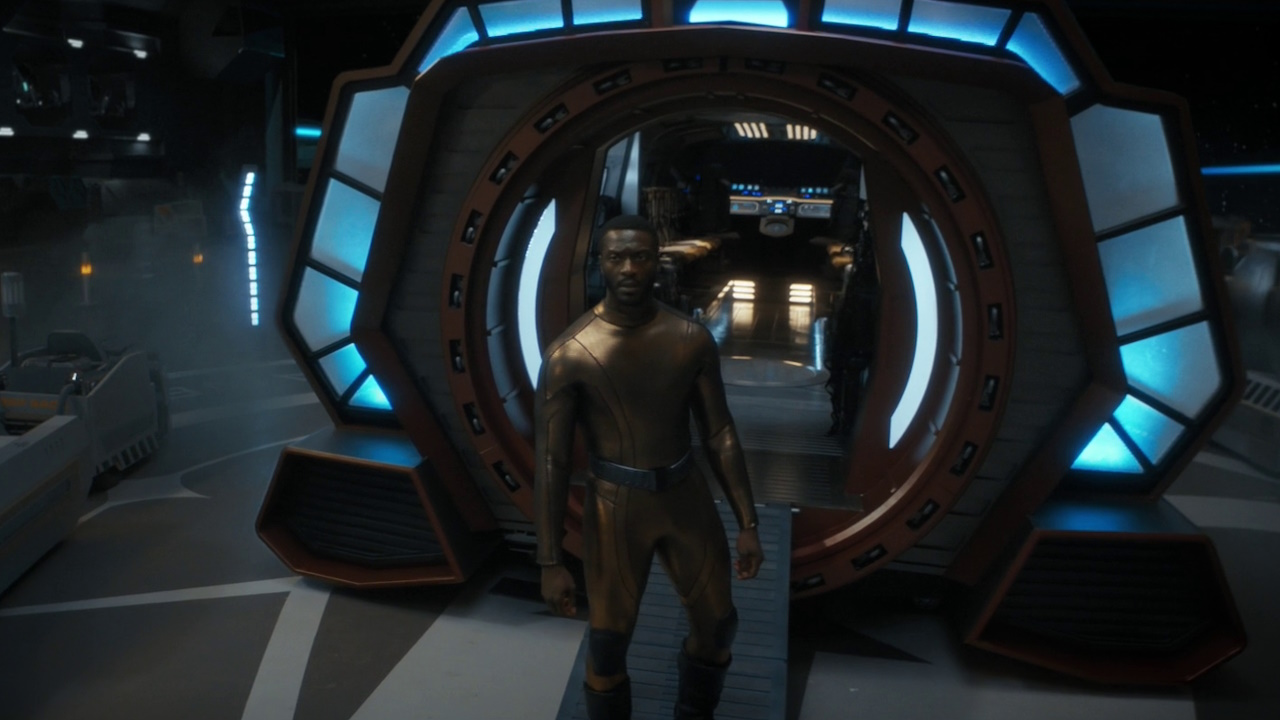
Star Trek: Discovery review – Season 4, Episode 12: Species Ten-C

Spoiler Warning: There are spoilers ahead for Star Trek: Discovery Seasons 1-4.

Species Ten-C wasn’t just a good episode in its own right, with plenty of excitement and tension that showed how Star Trek can do a heck of a lot without resorting to violence and battles, but it was one that made the episode immediately preceding it significantly better in retrospect. I wrote last week that the one saving grace to an otherwise frustrating experience in Rosetta could be if the hydrocarbons discovered by Captain Burnham and the away team were put to good use – and that happened in a big way this time.

On the other side of the story, I finally felt what I believe the writers have been aiming for for weeks with the Book and Tarka storyline: that Captain Burnham was right, diplomatic initiatives should be given a chance, and that Book has fallen victim to Tarka’s manipulations. While this has the unfortunate effect of relegating Tarka from a complex character with an equally understandable motivation into the out-and-out villain of the season’s final couple of episodes, it clarifies what had been until now a very fuzzy and occasionally frustrating story.

The Book and Tarka storyline was expanded upon in a big way this week.

If I were to be critical of Species Ten-C, what I’d say is that it probably took too long for the season to reach this point. Several advances in the DMA/Unknown Species 10-C storyline were sprinkled in at or near the end of unrelated or tangentially-related episodes, with the Federation often running into problems or delays that took too long to surmount, and the result of that is that it took a long time to arrive at the hyperfield.

The story of finding a way to bridge the communication divide could have been a longer one, and it was handled in a genuinely interesting way – but with only half an episode dedicated to it here and just one final episode of the season remaining, it’s an interesting concept that may not be explored in as much detail as it could have been.

Species Ten-C saw the crew making first contact.

This story of learning how to communicate with someone far more alien than usual, and doing so while under threat thanks to the DMA, is not one that required a B-plot villain. While Tarka was interesting in his earlier appearances and his motivations were laid out in a clearly understandable way, the narrative just doesn’t require this additional element in order to be exciting.

Discovery has a tendency, as I’ve pointed out on a number of previous occasions, to try to inject double the tension and three times the drama when it just isn’t necessary, and if I were to make one comment about the series as a whole it’s that the writers need to have more confidence in their stories. Dropping the Tarka angle, or reworking it to make him less of an antagonist in this final chapter, would allow the main story of learning to communicate with Unknown Species 10-C to stand on its own – and as it’s already sufficiently tense, interesting, and engaging, Tarka’s villainy just isn’t necessary.

Tarka in Species Ten-C.

Not for the first time, Discovery has set up a character who feels well-rounded and complex, with motivations that seem understandable, only to turn them into a pretty standard villain later on. I wouldn’t have even called Tarka “morally ambiguous;” his weapon plan made a lot of sense when it was first proposed, and I even suggested that a show which has had themes of seeking a “middle ground” could have figured out a way to keep Tarka on board, building his weapon as a back-up plan while attempting to make first contact. But as with Captain Lorca in Season 1, much of Tarka’s nuance now feels lost; brushed aside because the writers determined that the season needs a villain.

There were other ways to formulate this story that either skipped over Tarka altogether or that kept him in that complex space. We may yet learn that his interdimensional transporter will be important, in which case he may have served a narrative function, but if the ending of the story is going to be Tarka’s defeat or death, with a reunion with Oros not being able to happen, then I think I’ll have to go back and re-evaluate his role in the season overall. This story already had the complexities of Unknown Species 10-C and the DMA; I’m not sure it needed a second antagonist, especially not one who seems to have come at the expense of an interesting and complex character.

Tarka with Oros earlier in the season.

We’ve also got to talk about the new character of Dr Hirai. In short, he needs to do something truly outstanding and unique next week – otherwise his inclusion in the season will have proven to be a complete and utter waste of a great actor. I like the concept of the character; a linguistics and communications expert seems perfect for this kind of mission. But in his two earlier appearances this season he did nothing whatsoever, and his accomplishments this week were relatively minor. It didn’t feel like bringing Dr Hirai along was in any way important to the success of the mission, with Captain Burnham, Zora, Saru, and even characters like Detmer, Nilsson and the very minor Lieutenant Christopher all contributing at least as much – if not more – to the story as he did.

He was ultimately sidelined by President Rillak, who chose Saru and Burnham over him for their linguistics and first contact expertise, confirming his relegation to a bit-part role at best. In light of what happened last week with Rosetta, I’m willing to wait and see if Dr Hirai will yet make a significant contribution – but with only one episode left in which to do so, he needs to do something big pretty quickly or we’ll unfortunately have to consider his inclusion in the story a bit of a let-down.

Dr Hirai doesn’t have long left to make an impact on the story.

There is one concept underlying the way Unknown Species 10-C reacted to Discovery’s arrival – and the conversation it prompted between Captain Burnham and the others – that I didn’t like. As humans, we’re able to recognise signs of intelligence in other species, even though we’re far more advanced and intelligent than they are. We can recognise the complex social structures present in ant colonies, for example, or how crows and some great apes are learning to use tools. Even though these creatures are far lower on the intelligence scale than we are, we’re able to determine quite easily that animals – even small and lowly ones – can exhibit signs of complex understanding and intelligence.

With that in mind, the idea that Unknown Species 10-C would see a starship arriving at warp speed, using a warp core and a spore drive, built from clearly artificial alloys, and somehow not understand that the creatures aboard it are sentient makes no sense. This species is supposedly much farther advanced than even the 32nd Century Federation, and even though they exist outside of the galaxy they must have the ability to scan and detect the existence of other sentient species, even if they choose not to interact with them. It’s conceivable that they might be selfish and not care about any other species besides themselves – but the idea that they would be unaware or incapable of determining intelligence in this situation is one that I can’t buy as a believable story point.

The USS Discovery approaches the hyperfield.

It seemed at first as though Species Ten-C was going to centre on this aspect of first contact, and I was certainly a little disappointed at first. But thankfully this didn’t last too long, with Unknown Species 10-C eventually getting the message and realising that the life-forms aboard the warp-capable starship are actually intelligent. Took them long enough!

I know that probably sounds like a nitpick – and it is, in a way. It’s just that, despite all of the talk of Unknown Species 10-C being very alien and having a very different culture, some things should be universally obvious – like if someone is capable of building a starship that can travel faster than the speed of light, use metal alloys that don’t exist in nature, and fly right up to your base to initiate contact, it’s probably a safe bet to assume that they possess some degree of intelligence. That should apply no matter who you are! And as pointed out above, humans are capable of recognising the signs of intelligence in the natural world. As a narrative beat, I get that it was in there to make the initial meeting feel very tense, but it’s kind of illogical if you think about it!

A representative of Unknown Species 10-C.

We didn’t get a clear look at Unknown Species 10-C, as their representative was partially obscured by a cloud of swirling gas. Nevertheless, the visual effects on this side of the story were mostly high-quality, and Unknown Species 10-C themselves at least seem like they’ll be visually interesting if we ever get a better look at them. I actually got a slight “Mass Effect Leviathan” vibe from what we glimpsed of Unknown Species 10-C. The design of the hyperfield was likewise interesting; it appeared much more solid than I had been expecting based on the holographic projections seen in previous episodes. Seeing it go from solid-metallic looking to swirling like fluid was also a very cool visual effect that Discovery executed well.

The only visual that I felt was a bit of a miss was Unknown Species 10-C’s shuttle pod/diplomatic chamber. When it arrived in Discovery’s shuttlebay it looked rather bland and low-quality, like a video game where a texture hasn’t loaded properly. It was clearly designed to look similar to the hyperfield, but I guess trying to blend that with a real set and real actors was difficult. It didn’t look awful, but it was noticeably lower quality when compared to the rest of the visual effects and animation work present in Species Ten-C.

This visual effect felt rather weak.

The idea of Unknown Species 10-C recreating part of Discovery as an environment for the crew works as a story point – I can quite understand why they’d choose to do something like that. But I confess that I rolled my eyes a little when I saw Captain Burnham and the others stepping onto the bridge set. It was understandable in the context of the story, but it didn’t make for a particularly impressive or interesting sequence when shown on screen. In fact, it almost makes Species Ten-C feel like a “bottle” episode – a Star Trek trope going all the way back to The Original Series where episodes would be set entirely aboard the ship.

As mentioned above when discussing Dr Hirai, President Rillak chose to bring both Captain Burnham and Saru when boarding Unknown Species 10-C’s diplomatic shuttle. And aside from totally sidelining Dr Hirai, this also left the command structure of Discovery and the rest of the mission uncertain. Rhys had the ship’s conn, as we’d see on the bridge near the episode’s climax, but who was in charge of the remaining delegates and the rest of the diplomatic mission? And how far did Rhys’ authority extend? Would he, for example, have been authorised to fire upon Unknown Species 10-C if time began to run out for Earth? Taking both the captain and first officer on this mission – when other experts were available – is a bit of an odd choice, and while of course as the audience we want to see our familiar characters leading the charge, it again makes the addition of some of these other delegates and experts feel like a bit of a waste.

The interior of Unknown Species 10-C’s pod.

A longer episode – or a story which had arrived at the hyperfield earlier in the season – could have spent longer on the whole first contact thing, and I really think that would have been worth doing. I’m actually getting a bit of a familiar feeling the more I think about Species Ten-C: it reminds me of the finale of Picard Season 1 in the sense that the season dawdled a lot to get to this point, and it feels like there’s a lot of important story points left to get through with very little time remaining. As a result, some aren’t being given as much attention or screen time as they probably should receive. We aren’t at the same level as Et in Arcadia Ego – at least, not yet. But suffice to say that Season 4 as a whole has left its final episode with a lot of work to do to wrap up all of the major stories in a satisfying way.

There were a few very close-up shots of characters’ faces that made the cinematography in Species Ten-C feel a bit odd. Close-ups can work and can be dramatic, but their use here felt rather gratuitous, with the episode both beginning and ending with them in a way that made it feel like the director was throwing everything at the wall in an attempt to make things seem even more dramatic. As I’ve said on several occasions this season when discussing certain narrative choices, Discovery is already a series that brings plenty of drama to the table – trying to take it from a ten to an eleven can sometimes fall flat, and a few of these extreme close-ups definitely strayed very close to the line.

Was there any need for so many close-up shots?

Book saw some significant character development this week after several episodes in which he felt very static. Although Tarka’s motivation for continuing to pursue the DMA’s power source feels pretty well-established by this point in the story, I’ve been finding it increasingly difficult to reconcile Book’s presence on this side of the story in the aftermath of the failure of the isolytic weapon back in Rubicon. We hadn’t seen or heard enough from Book since that dramatic event to signal that he’s still on board with the next phase of Tarka’s plan – and this week he actually seems to have moved much closer to Burnham’s position.

Book’s cause is noble: he wants to stop the DMA from hurting anyone else in the way it destroyed his home and hurt him. And seen in that context, his decision to get on board with Tarka’s weapon plan was understandable. In Rubicon, Book indicated he would be willing to stand down for a short time to give diplomacy a chance to play out, and in the aftermath of the failure of the weapon, it wasn’t clear at all why he continued to follow Tarka. I’m still not exactly sure how he arrived at this point – was he motivated by fear of repercussions for the use of the weapon? Did he still believe it would be possible to destroy it after Tarka failed once? If so, is he now no longer willing to let Captain Burnham try for a diplomatic solution first?

Book in Species Ten-C.

These points were glossed over in Species Ten-C, but we finally got some movement from Book, arguably bringing him back into the fold as one of the “good guys.” It emerged that Tarka’s plan would destroy the DMA, destroy Earth, and destroy the hyperfield containing Unknown Species 10-C and the USS Discovery – so Book didn’t really have a choice! Again, this is Discovery pushing the story to extremes, and it feels as though Book coming back to the light is more of a necessity than a choice at this point. Still, it worked, and for the first time in several episodes I felt like I could relate to Book as a fully-rounded character again, not just a plot device caught up in the narrative wake of other characters with more volition.

There’s even a message in Book’s story, if we look a little deeper. The idea that grief can lead someone to a very dark place was already something we’d seen explored a little with Book earlier in the season, but now we can add into the mix themes of manipulation, of being lied to, and of getting involved with someone untrustworthy. It was initially grief that saw Book teaming up with Tarka, but he also had the noble objective of wanting to prevent others from having to experience that same level of grief. Unfortunately for Book, he relied on someone who turned out to be unworthy of his trust – and that’s how he ended up in this particular predicament.

Grief led Book down a dark path.

Reno saw her best scenes of the entire season on this side of the story, too. We’ll have to try to excuse the lousy “kidnapping” plot last week, because as weak and difficult to explain as that may have been, it ended up going somewhere significant. It didn’t necessarily have to be Reno as the one to reach out to Book – basically anyone on board the ship could’ve done so – but it was interesting to see her in this situation. Her words managed to reach him in a way that even Captain Burnham hadn’t been able to, and the sequences between the two of them worked exceptionally well.

Reno has often been used as a light-hearted character, bringing moments of deadpan comic relief that could lead to brighter moments in otherwise dark stories. This time, her role harkened back to her introduction in Season 2 – which was also referenced this week – when we first encountered her trapped aboard a crashed starship. A more serious performance from a comedic character carried a surprising amount of weight, and perhaps it’s because we know how Reno usually behaves and speaks that her words to Book meant a lot.

This was Reno’s best episode of the season.

For at least the past three episodes, Discovery seems to have been building up to a conclusion which is going to say something like: “if only Tarka and Book had told Captain Burnham what they were doing! It should have been possible for everyone to get what they want through diplomacy and communication!” and I don’t think that’s changed. It isn’t exactly formulaic, and there are still big questions about what Unknown Species 10-C will do and how Captain Burnham will respond to try to cool things down in the time that remains. But one way or another, the story’s going to get to that place.

As we approach the end of the season, feeling like we know roughly where the story is going to go was to be expected, I guess! And on its own merits, Species Ten-C was a good episode, one of the better offerings from Season 4 for certain. Whether it has moved things along far enough for the season finale to wrap up all of the remaining narrative threads is an open question, one we’ll have to wait until next week to get an answer for.

Book’s ship escaped the USS Discovery and entered the hyperfield.

Although I had some nitpicks within the story, overall I had a good time this week. Species Ten-C told a very “Star Trek” story, with perhaps some inspiration from the film Arrival in there too! Meeting a brand-new alien race and learning how to communicate is something truly interesting, and my biggest complaint is that I would have liked to have seen more of it – for the season to have reached this point a couple of episodes ago so we could have spent longer with Captain Burnham, Saru, President Rillak, and Dr Hirai as they worked on figuring out how to use a complex arrangement of lights and pheromones to communicate. It was nice to see some significant movement from Book, too, after several uninteresting or flat episodes on that side of the story.

Did Season 4 need to turn Tarka into a villain? I think that could be a question for a longer essay once the season has wrapped up! I could certainly entertain the argument that the Unknown Species 10-C story – one of misunderstanding, communication, and first contact – was strong enough to carry both this episode and the bulk of the season without requiring this kind of last-minute character twist. Between the DMA and the smaller character moments – some of which, as noted last week, haven’t been as thoroughly explored as they could have been – maybe it would have been better overall to find a different way to include Tarka. But we’ll talk about that more in the weeks ahead, perhaps.

For now, there’s only one episode remaining! This time next week it’ll be all over… or will it? Could a cliffhanger ending be on the cards?

Star Trek: Discovery Season 4 is available to stream now on Paramount+ in the United States, Scandinavia, Latin America, and Australia. The show is on Pluto TV in the UK, France, Germany, Italy, and other parts of Western Europe at 9pm on Fridays and Saturdays. Individual episodes or the full season can be purchased on iTunes, Amazon Video, Google Play, and possibly other platforms in the UK, parts of Europe, and select other countries. The Star Trek franchise – including Discovery and all other properties mentioned above – is the copyright of Paramount Global. This article contains the thoughts and opinions of one person only and is not intended to cause any offence.
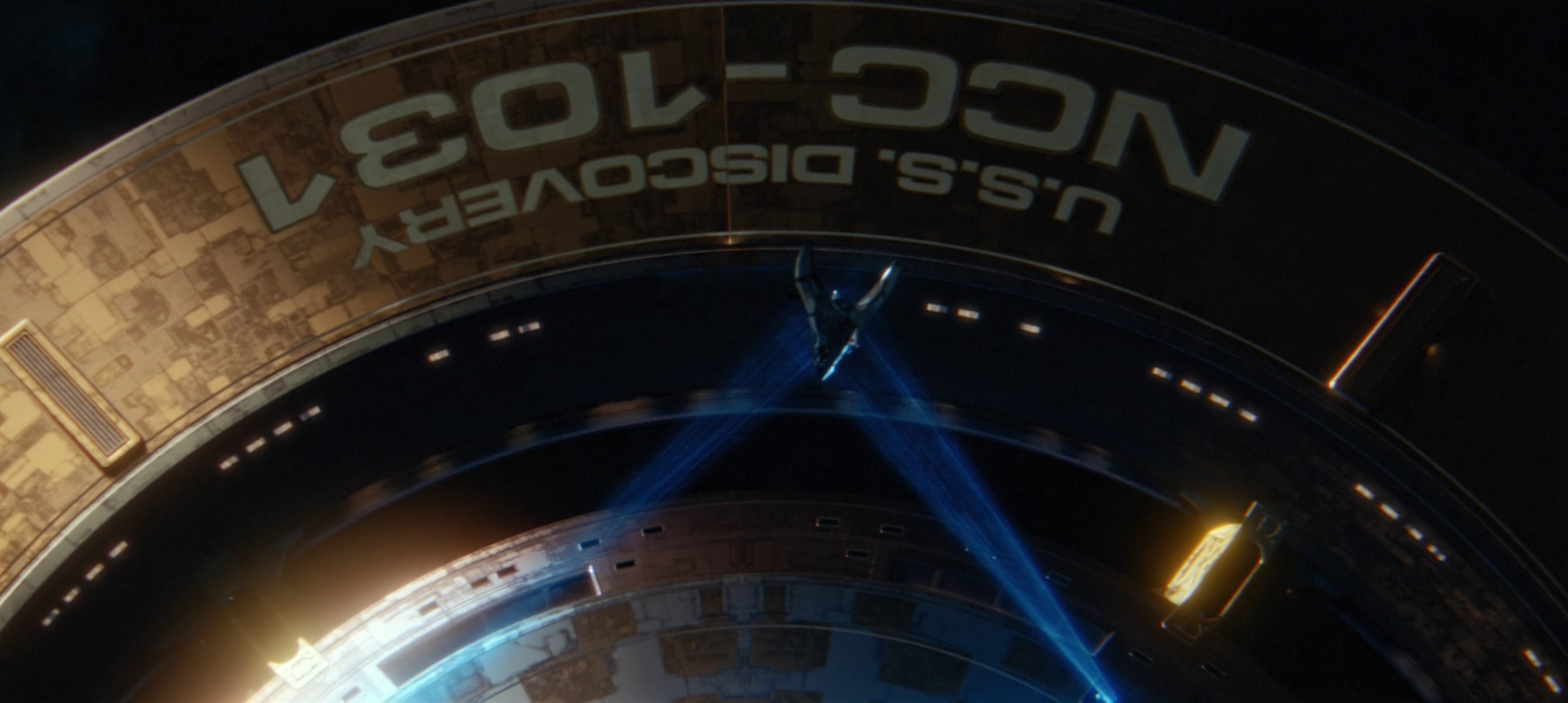
Star Trek: Discovery review – Season 4, Episode 11: Rosetta

Spoiler Warning: There are spoilers ahead for Star Trek: Discovery Seasons 1-4.

Last week’s episode, The Galactic Barrier, was absolutely fantastic – one of the highlights of the season for certain! Unfortunately Rosetta didn’t reach that high bar, and was an episode that felt like it was dragging its feet. While there were some emotional character moments, even those weren’t as strong as they might’ve been and couldn’t salvage an episode in which both halves of the story felt contrived, and where a major new element that had been introduced to the story last week constantly got in the way. Rosetta plodded along, constantly tripping over one big, unnecessary narrative cliché.

I like the idea of Discovery stepping away from total serialisation to go on away missions to planets like the one featured in Rosetta. As we saw just last week – and on a couple of occasions earlier in the season – those semi-standalone stories can work exceptionally well, blending together Discovery’s modern serialised approach to storytelling with at least some components of Star Trek’s episodic past. But this week, for much of the time all I could feel was a sense that the mission to Unknown Species 10-C’s ex-homeworld was a complete waste of time – not only for the characters, who don’t have so much as a second to waste, but more importantly for us as the audience.

The away team.

The worst part of last week’s episode was the insertion of the horribly overused trope of Earth being in danger. I tried to put that to the back of my mind as Rosetta got started, hoping that the time constraint it had imposed would lead to some kind of interesting or exciting storyline as Season 4 reaches its conclusion. But this cliché absolutely ruined Rosetta – turning a story that might’ve had the kernel of a good idea at its core into one that felt like a complete and utter waste of everybody’s time. With time being a very limited resource for Captain Burnham, that just isn’t something that should have been allowed to happen!

If the “Earth is about to be destroyed” cliché wasn’t part of the season’s story, this feeling would have been far less prominent throughout Rosetta, and I could have almost certainly forgiven another detour on the way to Unknown Species 10-C’s hyperfield. With less of a time constraint, such a mission would arguably be worth doing, and while there could still be naysayers and dissenters among the crew and assembled delegates, I would have been firmly in the camp that says “let’s see if we can find any interesting or useful information about this completely unknown faction.” But because Discovery’s writers wanted to crank up the tension and drama to eleven out of ten, what should have been a decent episode with some interesting story elements didn’t work. Instead of the tension rumbling in the background, spurring me on to make the story feel exciting, I could barely prevent myself from shouting at the series to just get on with it – to go to the hyperfield right now! Tension became frustration.

Captain Burnham chose to lead an away mission to a planet instead of racing to the hyperfield.

Not for the first time, narrative contrivances in Discovery have conspired to make Captain Burnham seem like she’s in the wrong. While not exactly being a complete and utter moron, she came across in the episode’s opening act as misguided in the extreme – wasting time on a mission that could have easily yielded nothing of consequence. As happened in episodes like The Vulcan Hello and The Red Angel, it fell to another character to be the voice of reason against Captain Burnham – in this case, Earth’s representative, General Ndoye.

Ndoye made the very simple point that there isn’t time to waste visiting a random planet, and that attempting to make contact first would be the best move. If Unknown Species 10-C didn’t respond to attempts at communication, visiting the planet could be Plan B – but there’s no way it should’ve been Plan A. Rosetta attempts to rely on the away team’s discovery of pheromone-like hydrocarbon dust to say “aha! Captain Burnham was right all along!” but in my view, all that the end of the episode proved was that she got very lucky. Her judgement, four seasons in, is still questionable at times – and on this occasion, with the stakes so very high, I can’t shake the feeling that she made the wrong call.

General Ndoye became the voice of reason… briefly.

The hydrocarbon pheromones will almost certainly play a role in the next couple of episodes – I mean, they have to, right? Otherwise Rosetta will have proven to be a complete waste of time. But even assuming that’s the case, Captain Burnham took a massive risk by diverting to the planet with hours to spare, and it just feels like – not for the first time this season – there was a very easy “middle ground” approach that neither she nor anyone else seems to have considered.

The USS Discovery is equipped with a contingent of shuttles, so sending one with a small away team to the planet while the rest of the crew takes the ship and visits the hyperfield – instead of sitting in orbit of the planet doing fuck all – would have been the hallowed “middle ground” option that the show’s writers seem to have just ignored. Because Captain Burnham has to be the main focus of practically every episode and every major plotline, other characters in the show are relegated to sitting on their hands and waiting for her latest stroke of brilliance. In this case, everyone with the exception of Detmer, Saru, and Dr Culber were just shoved off-screen, seemingly doing nothing except waiting for Captain Burnham to get back. Adira and Reno even found time to get coffee.

This picture is Rosetta in microcosm: Captain Burnham goes off on an away mission while everyone else stands around doing nothing.

That makes Discovery Season 4 feel like a pretty basic story – one designed for small children who don’t have the attention to focus on more than one major narrative at once. Because Captain Burnham wanted to visit the planet, everyone has to visit the planet. God forbid any other character is granted any agency over the plot or given the volition to do anything independently – they’re not real people, you know, just narrative devices.

And yes, it’s Star Trek. It’s fiction. It’s “just a story” – but god do I hate that tired excuse every time it’s trotted out in defence of contrived, underwhelming, or just plain indefensible narratives. If we’re expected to suspend our disbelief and get lost in the world of Star Trek, even just for an hour, the way characters behave has to make basic sense. The characters themselves have to feel like real people – flesh-and-blood beings with emotions, feelings, and brains, not just plot devices who can be used one moment then placed into hibernation the next. And this week, Rosetta basically sidelined the entire crew, forcing them to sit on their hands and do nothing while Captain Burnham took charge of a pretty barebones side-story that I’m not even sure accomplished all that much.

The away team with a cache of magic dust.

I said earlier that the pheromone hydrocarbons will have to feature in the story in some way later on – and I certainly hope that they will! But as of the end of Rosetta, the mission to Unknown Species 10-C’s ex-planet doesn’t feel as though it achieved very much. Captain Burnham didn’t find anything substantial – and the dust, while narratively interesting, was visually unimpressive to say the least. If there had been something more visually unique or interesting about what the away team recovered – like one of the bones that were briefly seen, a computer core, a stone tablet, or literally anything we as the audience could see, maybe that feeling wouldn’t be so prevalent. But because even the away mission’s big accomplishment was difficult to really perceive, the entire story feels like it’s on far shakier ground than it already was.

If the pheromone hydrocarbons are incorporated into the story of the next couple of episodes in a major way, maybe we’ll revisit Rosetta and consider it a little more favourably in hindsight. There are definitely interesting possibilities with this new narrative element that could be explored or that could be paid off in a big way. But if Discovery doesn’t do something big with the pheromone hydrocarbons before the end of the season, the episode will feel like even more of a waste than it already does.

Will the pheromone dust play a significant enough role in the story to make Rosetta feel like a worthwhile detour?

In past iterations of Star Trek – including in previous episodes and seasons of Discovery – the universal translator has been shown to work pretty well. There are some exceptions – such as the Tamarians – but even then a way across the language barrier was eventually found. With the 900-year time jump to the 32nd Century, it stands to reason that the universal translator has only gotten better as Starfleet has encountered more and more races. Even if we accept the premise that communication has never been successfully made with a species that uses pheromones or chemicals to communicate, doesn’t it seem like it would be worth trying to use the universal translator, especially given the time constraints? With the level of technology that Unknown Species 10-C has been shown to have, they might have some kind of translator or communicator of their own, too.

I know a lot of this must sound like nitpicking, but it all stems from the fact that the show’s writers chose to inject forced drama by using an “Earth is in danger and there’s just hours to save it!” cliché that wasn’t necessary to make this story interesting or exciting. The stakes were high enough, the danger was real enough, and by trying to turn the drama up to eleven, Rosetta tripped over. There was a potentially interesting story about learning more about a very new and different form of life… but it’s one that this cliché has spoiled. Take away the time constraint and many of the narrative complaints on this side of the story would have fallen away.

A holographic depiction of the hyperfield.

Rosetta wasn’t saved by its B-plot, either, with Tarka and Book undertaking an equally nonsensical away mission that also seemed to be based on a very shaky premise. With Captain Burnham’s decision to take an away mission to the planet, my criticism stems from the fact that The Galactic Barrier had introduced the cliché of Earth being threatened meaning that there wasn’t time for a detour. But Book and Tarka’s away mission to the USS Discovery was done because they… wanted to stick Book’s ship to Discovery’s hull? Couldn’t they just remain under cloak and tail the ship? It feels pretty weak, even by the standards of Star Trek technobabble.

We also didn’t get to see any of Book and Tarka’s journey navigating the Galactic Barrier, which is something I was genuinely interested in. A powerful ship like the USS Discovery barely made it through, so how would Book’s glorified runabout survive? We basically got no payoff to Book and Tarka’s side-mission last week of collecting programmable antimatter at the abandoned prison camp. Presumably they were able to successfully apply it and transit the Galactic Barrier – but the episode literally didn’t even pay lip service to that, with their story starting up with Book’s ship already parked a few yards away from the USS Discovery.

Couldn’t Book and Tarka just continue to tail Discovery? Also, how did they make it through the Galactic Barrier?

Given how difficult navigating the Galactic Barrier proved to be for the USS Discovery, it’s a shame that we didn’t get to see Book and Tarka having to tackle that task. Maybe it could’ve been included at the end of last week’s episode – even if it was just a short sequence, Discovery should really have done something to pay off their mission to the prison camp.

It also seems like Book has decided that he and Tarka are fugitives without even trying to make contact and explain what happened. The end of Rubicon suggested that there might be a pathway to reconciliation for him and Michael, but he has done nothing to attempt to pursue that – except for creepily spying on her in what has to be one of the most uncomfortable moments in the entire episode. Book signalled his willingness to stand down and give peace a chance; it was only Tarka’s actions that led to the weapon being detonated. With Captain Burnham on his side to advocate for him, you’d think he’d know that he has a good chance of not getting into serious trouble – and he could even be a valuable asset to Starfleet, sharing his knowledge of Tarka and his plans.

Did anyone else find this moment of Book spying on Burnham a little creepy? Cool camera shot, though…

This continues a trend of Book having been fairly static for several episodes now, having gone through several stages of grief for Kwejian and his family before seeming to just… stop. In the first half of the season, Book got some of the most deeply emotional moments in the show, and seeing how grief was leading him down a dark path was a potentially interesting story, but it’s one that Discovery hasn’t really been able to successfully elaborate on. Like most of the rest of the characters, Book has been relegated to a supporting role, and that means he doesn’t really get much agency over the story any more. He’s stuck following Tarka just like everyone else is stuck following Burnham. If we’d heard anything from him to indicate that he was still committed to that cause, maybe it wouldn’t feel so silly. But right now, Book feels like a follower; a passive character caught in Tarka’s narrative wake.

So I’m not going to nitpick things like needing to physically board the ship to install a macguffin into the macguffin network. That’s Star Trek-ish enough to be inoffensive. But the setup that led Book and Tarka to that point felt very contrived, and it wasn’t sufficiently explained as to why they couldn’t just continue to tail Discovery all the way to – and perhaps inside – the hyperfield. It also wasn’t explained why everyone keeps assuming that the hyperfield will be impenetrable – they haven’t even tried to approach it, and if Unknown Species 10-C are as advanced as we think they are, surely they’d see a spaceship coming and investigate. Book and Tarka’s quest this week seems like an unnecessarily involved stealth mission that had the potential to lead to moments of either extreme drama or perhaps even comedy, with the two fugitives sneaking on board the ship, but it ultimately didn’t deliver much of either.

Book and Tarka managed to sneak aboard Discovery.

Bringing General Ndoye into the Book-Tarka side of the story is, again, something that we’ll have to watch and see whether it leads to a significant payoff. Right now it feels like it could go either way, and although I would argue that Ndoye had been the voice of reason earlier in the episode with Captain Burnham, I’m not wild about her becoming a kind of double-agent in this conspiracy.

Two of the big thematic elements of Seasons 3 and 4 have been connection and communication – and it seems like the series is now building to a conclusion which will say something like “if only Book and Tarka had worked with Captain Burnham, everyone could have got what they wanted.” If Book and Tarka would share why Tarka wants the power source, maybe Captain Burnham could work with him – or find an alternative way for him to travel between universes, such as the Guardian of Forever that we saw last season. And if Captain Burnham could find a way to compromise with Book, their whole relationship feud could be solved. A story about how division and failing to communicate can lead to problems can be a powerful one, but it’ll need to be executed a damn sight better than it was in Rosetta. Here, the two disconnected stories just chafed against each other in the most frustrating way.

Book and Tarka at the end of the episode.

The CGI work for Unknown Species 10-C’s planet was good, and although it was only seen very briefly and not really explained, I liked the “Dyson rings” seen orbiting their star. Presumably Discovery scanned the rings off-screen and determined there’s nothing worth looking for there… although that would have been nice to get confirmation of, otherwise the rings seem a good target for an away mission of this nature as well.

The filming location for the outdoor sections of the away mission looked very familiar; I’m sure it was seen either earlier in Season 4 or perhaps in Season 3. In an interview for The Ready Room a few weeks ago, Mary Wiseman mentioned a quarry in the Toronto area that has been used for several outdoor shoots, which could be why it’s so familiar. Slapping a yellow filter on it in post-production didn’t really do much to disguise it, and with the new AR wall that Paramount invested a fair amount of money in, I’m left wondering why the Star Trek franchise keeps walking headfirst into this particular mistake. The AR wall was used to great effect to depict the interior of the Unknown Species 10-C base… so why not the exterior as well?

The away team.

The crew’s EV suit malfunction is also a bit of a contrivance. Aren’t protective suits meant to protect against everything in the environment, especially things that are new or haven’t been encountered before? This is another nitpick, I guess, but I didn’t like the way that this was just hand-waved away by half a line of dialogue. “Oh, I guess the EV suits don’t protect against substances that aren’t in the Federation database and are very different.” That just seems like an odd way to explain it. And if we want to keep nitpicking, that dust looked like it was everywhere – floating in the air as well as lying on the ground and on surfaces. So how did Detmer not get exposed when everyone else did?

After making the decision to waste time on an away mission that, realistically, she must’ve known had the possibility of failure, Captain Burnham came across as incredibly stubborn shortly before the crew encountered the 10-C nursery. Partly this was triggered by a reaction to the hydrocarbons, I guess, but coming after I found her decision to go on the mission in the first place difficult to justify, stubbornly doubling-down on it when it seemed as though there wasn’t anything to find wasn’t a great look for her character.

Captain Burnham during the away mission.

So have we just nitpicked Rosetta to death?

There were interesting and clever concepts buried here, and there were some nice but unspectacular character moments between Dr Culber and Captain Burnham, Tarka and Book, and to a lesser extent between Reno and Adira and Detmer and Adira too. Some fans argue that Discovery is all about its characters and that the sci-fi trappings should just be seen as a backdrop, with any contrivances and plot complaints waved away because of how well-done some of these character moments can be. I don’t agree with that – if you want character drama, go and watch a soap or some scripted reality show. Star Trek is science fiction, so at the very least the sci-fi side of the story has to be basically competent and good enough to keep my suspension of disbelief going.

Because of how Rosetta sidelined many of the other characters and didn’t actually spend that much time on these interpersonal moments, I would argue that it wasn’t even a particularly impressive episode on the character side of things, either. The moment between Dr Culber and Captain Burnham came in two parts – one during the away mission and one at the end in her ready-room. But it lasted all of two minutes, maybe, and that just isn’t enough time to do justice to a complicated mental health story.

Counselling for the counsellor.

Dr Culber’s storyline feels like it’s retreading the Detmer path from Season 3. We’ve had a few short scenes spread across a handful of episodes to explain in the most basic of ways how he feels overwhelmed, stressed, and/or unable to cope with his work and the situation he’s found himself in. His moment admitting to Captain Burnham that he isn’t okay should have been the culmination of this season-long character arc… but it’s an arc that feels so underdeveloped that, despite the beautiful performance by Wilson Cruz, I’m struggling to buy it. The story of a counsellor – someone working as a mental health professional – needing to seek help for their own struggles is a noble one, and one absolutely worth telling, but it’s also a story that Discovery is not doing justice to as things stand.

I’ve been a big advocate for better mental health representation in all forms of media, but I’m unfortunately in the position of having to say that if the series can’t do justice to stories like this I’d honestly rather that it skipped them altogether. It feels like Discovery is doing little more than paying lip service to a serious topic, one that’s clearly too big for the limited time and attention that the show is willing to dedicate to it.

Captain Burnham and Dr Culber during the away mission.

Returning to Detmer, last season she got a storyline about post-traumatic stress that was referenced in Rosetta. But like Dr Culber’s story of dealing with his struggles this season, it wasn’t fleshed out enough to be meaningful. She had a few scenes spread across a handful of episodes, then seemed to magically “get better.” It’s only now, a full season later, that we even heard about her getting help or treatment for PTSD.

In Rosetta, Discovery also continued a disappointing trend of ham-fistedly inserting blatantly expository dialogue that the writers sometimes use as a substitute for actual character development. In this case, Detmer remembered something about her father mistreating her that could have been significant, but it was treated as an afterthought by a script that had its attention firmly focused elsewhere. Emily Coutts did well with the material she had, and put in a decent performance – but the material was barebones to say the least.

Lieutenant Commander Detmer.

Saru’s panic attack was one of the more interesting moments of characterisation, and if I were to single out one performance and one strong element from Rosetta it would be the way Doug Jones conveyed Saru’s terror during these sequences. We’ll have to set aside questions of why Captain Burnham didn’t immediately send him back to the shuttle, but if we can ignore contrivances like that, Saru really sold me on his panic attack. As someone who has had panic attacks myself – thankfully infrequently – I found the depiction of Saru in these moments very relatable.

We got a bit of a pep talk between Reno and Adira; two characters who don’t feel like a natural pair but who worked well together this time. Adira has adopted much of the awkwardness of Season 1 Tilly, and that “young, inexperienced, and nervous” character type is a good counterbalance to some of the show’s older and more established characters. Reno was deadpan as ever, but none of her lines this week were laugh-out-loud funny; while her scenes brought some much-needed levity to the story, they didn’t exactly blow me away.

Reno with Adira.

Finally, we come to Dr Hirai. For the second episode running – and he’s only been in two episodes so far – he felt very underused. There was a brief scene between him and President Rillak in which she rebuked him for his bluntness, but that was it. Perhaps that was deserved, but as we’ve spent such a minuscule amount of time with this character, it just felt like an unnecessary addition. If Dr Hirai was going to be featured in a scene this week, why not show him working or doing something that could contribute to the story? Just because everyone aboard Discovery was sitting around waiting for Burnham to get back that doesn’t mean he couldn’t have found something useful to do.

Again, Dr Hirai is someone who could have a bigger role to play before the season ends. But his two appearances so far in Rosetta and in The Galactic Barrier have felt like fluff; a potentially-interesting character about whom we know nothing of consequence. If he is going to have something significant to do in the next couple of episodes, we need to start seeing more from him very soon – otherwise he risks feeling rather flat.

Dr Hirai.

So that was Rosetta, I guess. Not the season’s high-water mark, unfortunately.

At the core of the episode there was an interesting idea, and the notion of Unknown Species 10-C being difficult to communicate with is a concept that could still work – if it’s properly executed in the two episodes that remain. But because The Galactic Barrier added an unnecessary time constraint to Captain Burnham’s mission, this side-quest felt more frustrating than exciting; I wanted to shout at Captain Burnham – and at Discovery’s writers – to just get on with the main story.

There were more than enough smaller narrative threads to pick at to unravel the episode’s entire story. Both the A- and B-plots were disappointing, and even where Discovery has been successful in the past – with moments of characterisation and communication – I was underwhelmed by what Rosetta had to offer. As we approach the final two episodes of the season, there’s a lot of work left to do to pull out a decent ending to this rather plodding story.

Star Trek: Discovery Season 4 is available to stream now on Paramount+ in the United States, Scandinavia, Latin America, and Australia. The show is on Pluto TV in the UK, France, Germany, Italy, and other parts of Western Europe at 9pm on Fridays and Saturdays. Individual episodes or the full season can be purchased on iTunes, Amazon Video, Google Play, and possibly other platforms in the UK, parts of Europe, and select other countries. The Star Trek franchise – including Discovery and all other properties mentioned above – is the copyright of Paramount Global. This article contains the thoughts and opinions of one person only and is not intended to cause any offence.
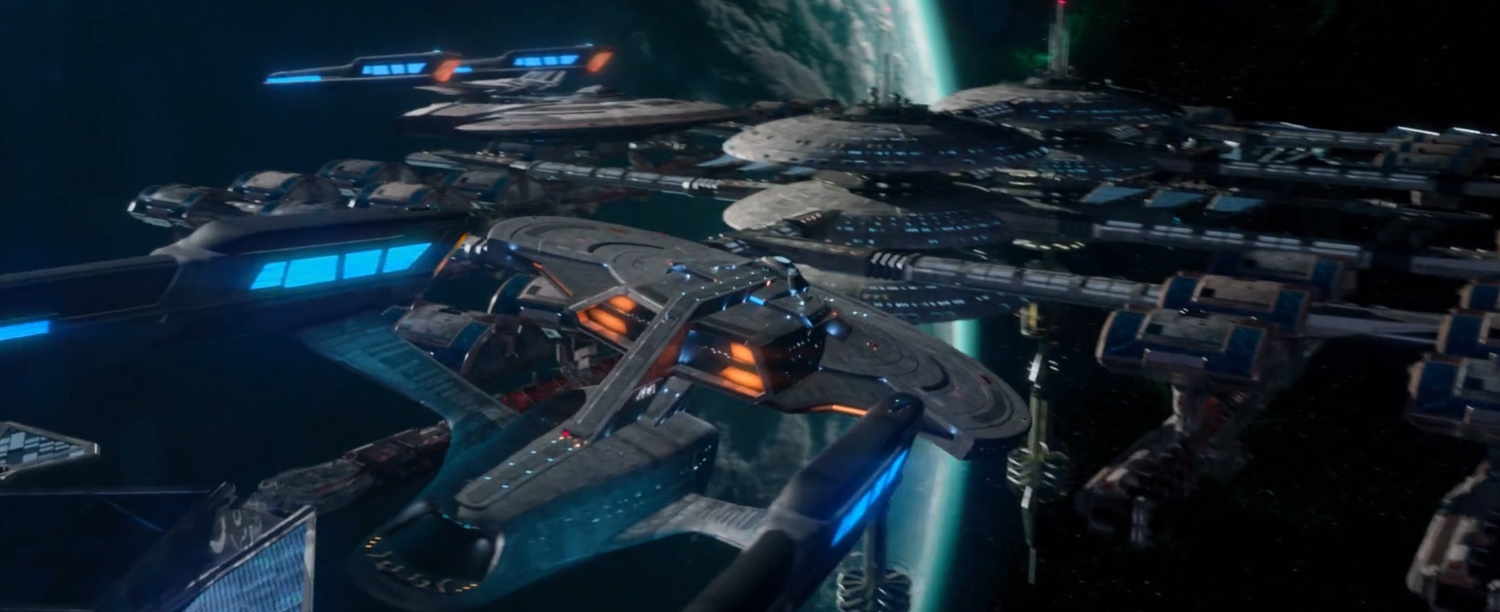
Star Trek: Discovery theories – week 9

Spoiler Warning: There are spoilers ahead for Star Trek: Discovery Season 1-4, Star Trek: Picard Season 1, and for other iterations of the Star Trek franchise.

After All In failed to move the needle in a major way, Rubicon came along! The latest episode saw a minor theory cull, with three theories being debunked – and a couple of others moving ever closer to being struck off the list! As the season builds up to its conclusion, this was bound to start happening, and I don’t lament the passing of any of the theories that didn’t pan out. We also had a rare confirmation this week, and with fewer new theories to talk about, the list will shrink for the first time in several weeks!

On reflection, perhaps I was a little harsh on Rubicon in my review. The episode was decent, but it suffered because I find myself struggling to get invested in the Book-versus-Burnham relationship squabble storyline, and that’s been a dominant force over the past couple of episodes in particular. I’m still hopeful that Discovery will find a sensible – and fairly quick – resolution to this, but at the same time I think I need to try to be less petty about it!

So let’s take a look at the confirmation and the debunkings before we jump into the main list.

Confirmed theory:
Tarka’s weapon will be successful.

Kaboom!

The obvious path for a “happily ever after” kind of story would have been for Captain Burnham and the crew to stop Book and Tarka before they had a chance to use their weapon. And, to her credit, Captain Burnham was inches away from success as she managed to talk to Book and convince him not to deploy the weapon.

But I guess that in her haste to patch things up with her boyfriend, Captain Burnham forgot about Tarka. And Book likewise didn’t make sure that Tarka was on board with his decision to wait for the communication attempt, as Tarka launched his weapon the second Book and Burnham finished their conversation.

Tarka launched his weapon.

I’m glad that the story took this route. It potentially opens up a more interesting meeting with Unknown Species 10-C, one with more tension and the possibility of conflict. But most importantly, Tarka remained true to his characterisation. He didn’t back down just because Book had a change of heart, and he wasn’t able to be persuaded by Captain Burnham’s request.

Tarka remains an interesting adversary. I don’t want to call him a “villain,” not exactly. He has a complexity and a nuance that makes his motivation understandable, even if his “ends justify the means” approach could very well lead to people getting hurt. I’m not ready for Discovery to get rid of Tarka… and I confess that I’m still rooting for him to find a way across the divide between universes.

So that theory was confirmed.

We also have several debunkings to get through, so we’ll run through those next!

Debunked theory #1:
Nhan works for Section 31.

Nhan in Rubicon.

This was a fairly straightforward one by my standards! When we saw Nhan in the promos for Rubicon, I theorised that she might be wearing a different uniform to the standard Starfleet ones worn by Captain Burnham and the crew because she had been recruited by Section 31. She could have been given a Section 31 mission aboard Discovery – perhaps connected to the DMA.

But it didn’t come to pass! Nhan works for Starfleet Security, and has spent some time as a soldier helping the Federation battle against the remaining forces of the Emerald Chain. She doesn’t appear to be making a big return to Discovery, either, merely appearing in a guest role in Rubicon.

Debunked theory #2:
Tarka will realise that there’s a tracker on the isolynium.

Tarka and Book working on the isolytic weapon.

This was another fairly simple one by my standards. In short, I speculated that Tarka would check the isolynium that Book procured and figure out that a tracking device had been placed on it. It seems like the kind of thing he might’ve done; he’s been thorough when it comes to his work, and he clearly didn’t fully trust Haz Mazaro.

But Tarka didn’t check, or if he did off-screen he didn’t find the small tracking device that Captain Burnham had placed. If this theory had panned out we could’ve seen Captain Burnham and the crew having to pick up the trail another way, or even being led into a booby-trap of Tarka’s devising! In a longer season, perhaps such a detour would have made sense. With only four episodes left, I guess wasting an episode chasing down Book and Tarka would’ve been extraneous fluff.

(Probably) debunked theory #3:
The DMA is (or was) a life-form.

The DMA in Rubicon.

It was never stated outright in clear-cut terms, but this theory now feels sufficiently unlikely that I’m striking it from the list. If the DMA was alive… it isn’t anymore! Tarka’s weapon saw to that. The arrival of a second DMA within moments of the demise of the first seems to confirm that the destructive anomaly is little more than a tool; the dredge or mining equipment that Captain Burnham and others figured out at the end of All In.

Unknown Species 10-C could still be a synthetic race, so the concept of a life-form on the scale of the DMA is still plausible in Discovery Season 4. But the DMA itself now seems certain to be little more than a tool – whoever is controlling it is the sentient one. It might’ve been interesting if the DMA had been alive, with a story similar to The Motion Picture perhaps unfolding from that premise. But now we must look to Unknown Species 10-C!

So those theories have been debunked!

Now let’s jump into the main theory list, beginning with those theories that are either new or saw movement in Rubicon. Then we’ll conclude with a few theories that are still in play, but which Rubicon didn’t touch.

Theory #1:
Unknown Species 10-C built the Galactic Barrier.

The USS Enterprise approaching the galactic barrier.

I’ve never been wild about the Galactic Barrier in Star Trek. It’s something that dates right back to the very beginning of The Original Series, but it’s always struck me as a bit of an oddity; an element of pure fantasy in a setting that prefers to base its astronomy on real science. The Galactic Barrier is also rather poorly explained, and can seemingly be ignored at the whim of Star Trek’s writers – some episodes depict crossing it as being impossible, others show starships moving through it with ease. It also feels like a 2D anachronism in the 3D realm; unless the galactic barrier is a sphere, surely flying up and over it should be possible!

But maybe we’re about to learn more about this strange phenomenon. Given their technological capabilities, it doesn’t seem impossible that Unknown Species 10-C constructed the Galactic Barrier – perhaps as a way to shield themselves from the races of the Milky Way, or perhaps to keep anyone from exploring too far and discovering their location. There are many reasons why a technologically advanced race might want to build something on this scale – and we could even learn that the harvested boronite is being used to fuel the Galactic Barrier itself.

The Enterprise-D is one of a number of vessels known to have passed through the Galactic Barrier.

One possible explanation for why Unknown Species 10-C might want to build something like the Galactic Barrier is to keep the Milky Way’s inhabitants in… but it could also be a shield designed to keep someone else out. That raises a very frightening question: what could be so powerful that a barrier is needed around the entire galaxy? And what could be so dangerous that being locked inside a galaxy with the Borg would be preferable?

With Unknown Species 10-C seemingly being very secretive, I think the idea of them building it to shield themselves is more likely… but there are definitely a lot of ways this theory could go!

Theory #2:
Someone else built the Galactic Barrier to keep Unknown Species 10-C out.

The Galactic Barrier on the USS Enterprise’s viewscreen.

If the Galactic Barrier is an artificial construct, perhaps it was created by another race or faction as a shield against Unknown Species 10-C. It could be the case that Unknown Species 10-C has used DMA technology against the Milky Way in the distant past, and some other race or faction constructed the Galactic Barrier to keep them out. If Unknown Species 10-C are belligerent and interested in conquest, it might take something on a galactic scale to keep the Milky Way safe.

The Q Continuum spring to mind as a possible candidate if the Galactic Barrier was artificially created. Admiral Vance mentioned the Q a few episodes back, saying that there hadn’t been any contact for more than 600 years. Given that the Q – or at least one member of the Continuum, at least – were very interested in the progress of races like humanity, perhaps they took a decision to “seal” the Milky Way to protect its inhabitants from Unknown Species 10-C.

Traversing the Galactic Barrier could be very dangerous…

Obviously this theory and the one above can’t both be right! And it’s a distinct possibility that the Galactic Barrier element of the story is just a convenient macguffin to blind Starfleet to Unknown Species 10-C and prevent easy travel to their region of space, dragging out the story and prolonging attempts at communication so other narrative threads could play out.

If that’s the case, we may learn nothing about the Galactic Barrier in the episodes that lie ahead! However, I still think it’s interesting to consider the possibilities, and it could be fun to finally get some more detail on this lesser-known but significant aspect of the Star Trek galaxy.

Theory #3:
Tarka’s mysterious “friend” is someone we’re already acquainted with.

At this point in the story, there’s no need to conceal the identity of Tarka’s friend – unless the revelation of this person’s identity is going to be a huge surprise. It’s possible that there is no Unknown Species 10-C, for example, and that Tarka’s friend is the one responsible – a theory we’ll look at in more detail in a moment! But it has to be considered a possibility that Tarka’s friend is someone we’ve already met, either in Discovery or in another iteration of Star Trek.

Rubicon hammered home Tarka’s desperation to reach his friend, and All In had given us a quote from Tarka about his grief at this person’s loss being unfathomable. Perhaps that was hyperbole on the part of someone very self-centred, but even so it feels like there’s more going on with this mysterious character. If there’s nothing special about them, and they’re just a brand-new character called something like Albert or Gladys, then why go to such trouble to keep their identity hidden during every conversation? It’s setting up a mystery – and for Discovery’s sake I sincerely hope it goes somewhere!

I put together a short list of possible candidates for being Tarka’s mysterious friend, and you can find it by clicking or tapping here.

Theory #4:
Unknown Species 10-C is a faction from a past iteration of Star Trek.

Could Unknown Species 10-C be the Kelvan Empire?

Rubicon didn’t do much to advance this theory – though the DMA controller seemed to bear a very superficial resemblance to omega molecules and possibly Borg tech – but comments from Discovery’s showrunner during a social media event may indicate that this theory isn’t going to pan out, despite the mysterious elements and references to past Star Trek shows scattered throughout the season. In short, Michelle Paradise spoke about “designing” Unknown Species 10-C and how they’re “unlike any species we’ve seen before.”

It’s still possible that we’re dealing with a faction like Picard Season 1’s super-synths, who were only seen on screen very briefly, or an extensive redesign of a race like the Borg to reflect centuries’ worth of technological progress. But I felt it was worth bringing this up, as it’s certainly our biggest indication to date that Unknown Species 10-C may be someone brand-new to the franchise.

Showrunner Michelle Paradise recently dropped a hint about Unknown Species 10-C.

I said last time that I was beginning to get a sense of déjà vu. Many of the suspects for Unknown Species 10-C also felt like plausible culprits for the Burn in Season 3 – and the way that storyline ultimately wrapped up was unpredictable (to say the least). As Trekkies who are invested in this fictional setting, I think there’s always going to be a desire to speculate and theorise about how big events in new stories could be connected to the elements from elsewhere in the franchise… I just hope that the ultimate reveal of Unknown Species 10-C doesn’t prove too disappointing if it has nothing to do with Star Trek’s past.

All that being said, there are still some plausible suspects, even if the DMA’s level of technology would seem to rule out many familiar races. The Borg, Enterprise’s Sphere-Builders, the extragalactic Kelvan Empire, V’Ger, Species 8472, the Q Continuum, and the Terran Empire are all high on my list! For a more detailed look at them, as well as a few less-likely contenders, check out my full list by clicking or tapping here.

Theory #5:
Book and Burnham will reconcile and get back together.

Book and Burnham are currently separated.

Although I may have been excessively critical of it at points in this week’s review, I maintain that the Book-versus-Burnham conflict isn’t one that the show needs. It’s built on very weak foundations, with both of them (and everyone else on the show) needing to be incredibly blinkered (or incredibly stupid) and not being able to recognise a very basic pathway to the “middle ground” that became the focus of Rubicon’s story.

We saw a big step toward reconciliation – at least on Book’s part – in Rubicon, when he agreed to stand down and give Burnham and Starfleet a week to attempt to make peaceful first contact and convince Unknown Species 10-C to deactivate the DMA. Book was willing to take a risk by trusting that Burnham would permit him and Tarka to go ahead with their plan at a later time… whether she would or not is unclear!

Book and Burnham in All In.

So that’s a positive step. With the detonation of Tarka’s weapon, the story could go in one of two ways from here: either Starfleet will let them off the hook, with the debate over the weapon rendered moot by the arrival of a second DMA, or Book and Tarka will have to go on the run to avoid the consequences of their actions.

I would suggest that Tarka is a valuable asset to Starfleet, and they may want to bring him back into the fold to help work on the DMA problem, the Galactic Barrier problem, and other things. Book is far less important in that regard, but as he’d indicated his willingness to stand down he may not be in as much trouble. There’s a pathway here to bring an end to this feud – and I hope Discovery takes it in the next week or two.

Theory #6:
Michael Burnham won’t remain captain of the USS Discovery.

Captain Burnham in Rubicon.

One potential way to pay off the Book-versus-Burnham storyline would be for it to lead to a significant change for Discovery’s captain. We saw in Rubicon that Burnham was unwilling to give the order that could have hurt or killed Book – even though she had been ordered to do so by Starfleet. This fundamental conflict between her romantic relationship and her duty is not new, and could potentially lead to Burnham stepping back from her role as captain of the ship.

Maybe she will have the strength to do what she believes is right during the DMA crisis, but will resign afterwards, unable to contemplate doing the same thing again and wanting to return to her simpler life with Book. This wouldn’t be a bolt from the blue, as we saw her wrangling with these feelings in Season 3.

In Season 3, Burnham had to consider whether remaining in Starfleet was right for her.

One of the unique aspects of Discovery within Star Trek’s broader canon is that the ship has been commanded by four very different individuals across its four seasons. Captain Burnham is different from Saru, Saru was different from Pike, and Pike, in turn, was different from Lorca. It has to be considered at least a possibility that the series will continue this trend.

I’m not really in favour of this, but it’s certainly interesting to consider. Now that we know that Season 5 is definitely happening, one possibility is that Captain Burnham will somehow leave the ship at or around the end of Season 4, making way for a brand-new commanding officer to take over. Because she’s been the show’s protagonist since Season 1, it seems unlikely, and the overall arc of Discovery between Season 1 and Season 3 can be read as Burnham’s redemption and ascent to the captaincy. But the show’s revolving door of captains may continue, and her conflict with Book and the difficult emotional situation it put her in could be the trigger to make this happen.

Theory #7:
Tarka will create his own DMA.

Tarka, Stamets, and Saru with the DMA model.

In The Examples, we saw Tarka – aided by Stamets – building a scale model of the DMA. Now that his plan to destroy it and seize its controller has failed, perhaps he’ll attempt to recreate the device using the knowledge he acquired. If so, he could inadvertently create a new DMA. Or, through time travel shenanigans, Tarka could turn out to be the creator of the original DMA!

Tarka’s story isn’t finished yet, and there’s still time for him to devise and enact a new plan over the course of the next few episodes. He had plans for using the DMA controller, so the next-best thing from his point of view might be to build his own version. He’s certainly clever enough – all he really needs is access to the resources to pull it off.

Theory #8:
Tarka’s friend built the DMA.

The second DMA in Rubicon.

As mentioned above, I think it’s a possibility that Tarka’s friend is directly involved with the DMA. It would explain how Tarka seems to know so much about it, even being able to recreate it on a smaller scale, as well as how he knows that it would be possible to use its power source to punch through to an alternate universe.

After all of the buildup, it’s possible that Unknown Species 10-C could turn out to be a single person: Tarka’s friend. It’s also possible that Tarka’s friend is working with Unknown Species 10-C, perhaps trying to find a way to reach Tarka across the divide between universes. There are a lot of different ways that this could pan out!

So those theories are new or saw movement this week.

Now, as I do every week, I’ll recap all of the other theories currently in play. I find it helps to keep everything in one place – it makes it easier to keep track of every theory so we can strike them off the list as we go!

Theory #9:
We haven’t seen the last of the Abronians.

I currently have four ideas for different ways that the Abronians – the non-humanoid race that Captain Burnham, Tilly, and the Qowat Milat helped save from cryo-sleep in the episode Choose To Live – could play a further role in Season 4.

Theory #9-A:
The Abronians’ homeworld was destroyed by the DMA.

Captain Burnham believes this image depicts a “supernova.”

After arriving at the Abronians’ cryo-ship, Captain Burnham found a stone carving that seemed to depict the destruction of the Abronians’ homeworld. This carving was only shown on screen briefly, but it seemed to show the planet being damaged or destroyed in a large explosion. Burnham credited the planet’s destruction to a “supernova,” and the story then raced ahead.

Considering that the main thrust of the season so far has been about the DMA, perhaps Burnham was incorrect: the Abronian homeworld was destroyed by the anomaly, not a supernova.

Theory #9-B:
The Abronians’ homeworld was on the other side of the DMA.

Abronian stasis pods.

Now that we know a little more about how the DMA works, this theory seems a little more plausible. Its powerful wormhole technology seems capable of transporting matter over many light-years, meaning it doesn’t seem to be a complete stretch to think that the Abronians may have originated in the vicinity of Unknown Species 10-C. They could even be Unknown Species 10-C!

One thing struck me as odd about the Abronians: the Federation was entirely unaware of them, despite the Abronian cryo-ship being relatively close to Federation space – such that Captain Burnham could reach it using Book’s ship in a short span of time. It’s possible that the Abronians had been asleep for millennia, unnoticed by the Federation and the wider galaxy for all that time. But it’s also at least possible that their cryo-ship is a newcomer to the area. If so, perhaps it arrived here via the DMA.

Theory #9-C:
The Abronians will return to help the Federation later in the season.

A deceased Abronian.

One of the themes of Discovery since Season 3 has been connection, including building connections between the Federation and other races and organisations. The Abronians were awoken from cryo-sleep thanks to the interventions of Captain Burnham and Tilly – at least in part – and they may seek to repay the Federation, or Captain Burnham personally, for that help.

We saw this play out last season with Ni’Var; in the season finale Ni’Var ships raced to the Federation’s aid as the Emerald Chain attacked. Perhaps the Abronians will likewise step up to help when the Federation needs allies.

Theory #9-D:
The Abronians’ moon-ship may be useful in a later story.

“That’s no moon…”

The Abronians’ cryo-ship is huge, and at least superficially seems to have the mass of a moon or small planetoid. If Captain Burnham and the crew needed a starship that large, such as to aid in the evacuation of a planet threatened by the DMA, for example, perhaps they’ll return to the Abronians and ask to borrow it.

As we saw in Choose To Live, the moon-ship was in full working order. All it needed was some extra dilithium to power up and it was perfectly capable of moving under its own power, and its computer systems were still functional. The only system that seemed to have failed was the wake-up timer! Discovery has precedent when it comes to telling seemingly one-off stories that have a pay-off later on, so watch this space. If Captain Burnham and the crew need a huge starship urgently, we may not have seen the last of the moon-ship!

Theory #10:
The Red Angel suits from Season 2 are connected to the DMA.

A Red Angel suit in Season 2.

Unknown Species 10-C seem to be responsible for building the DMA… whoever they ultimately turn out to be! But the DMA isn’t the first wormhole-creating technology that Discovery has introduced us to. The Red Angel suits in Season 2 were also capable of creating powerful wormholes… so could it be possible that Unknown Species 10-C built their device around or based on the same technology?

This revelation would greatly affect Captain Burnham, as she’d feel a degree of responsibility even though she wasn’t directly involved. It would also be the second disaster in a row (following the Burn) in which the Federation was implicated – albeit in an oblique way. I’m not convinced that Discovery will go down this route… but the similarities in the wormhole-creating technology gives me pause, at least.

Theory #11:
Saru will be given the captaincy of the USS Voyager-J.

Captain Saru in command… of a shuttle!

Saru’s future was briefly discussed before he offered to serve as Captain Burnham’s first officer in the episode Anomaly. He has already been offered a command of his own, so Starfleet clearly values his command abilities and experience. President Rillak was seen to be assessing Captain Burnham’s suitability for the captaincy of the USS Voyager-J in Kobayashi Maru… and she mentioned having a shortlist of candidates. Could Saru be on her list?

Several of the qualities that President Rillak said she was looking for in a potential captain seem to apply to Saru. He’s more level-headed, less likely to put himself in a dangerous situation, and more inclined to think of the big picture. He has a weakness when it comes to Kaminar, as we saw toward the end of Season 3, but generally speaking he isn’t someone who lets his emotions get the better of him. His wisdom and calm demeanour could be valuable in the captain’s chair of the Federation flagship. This could also set the stage for his departure from the show, or possibly even for a new show following his adventures aboard his new ship.

Theory #12:
The ban on time travel will be explained in more detail.

HMS Bounty was able to travel back in time in Star Trek IV: The Voyage Home.

This one is as much a hope as a theory right now! In short, the ban on time travel was introduced early in Season 3 primarily as a way for the writers and producers to avoid questions about why the 32nd Century was so different from how the far future had been depicted in earlier Star Trek productions, as well as to explain things like how the Burn was able to catch the Federation off-guard and why Georgiou couldn’t simply be sent back in time when she needed to.

But the ban itself raises some issues – the biggest one being the lack of detail on how it works and how something like this could possibly be enforced. As I said several times last season, it isn’t possible to just un-invent a technology so useful and powerful as time travel. Even just a few lines of dialogue going into a little more detail on the mechanisms involved in the ban would be really useful.

Theory #13:
The Federation has flouted the ban on time travel.

President Rillak may have tried to circumvent the ban if she felt doing so would be in the Federation’s interests.

Sticking with the time travel ban, another theory I had last season was that the Federation – and Section 31 in particular – might have deliberately flouted the ban and failed to abide by the rules. Someone as straight-laced and committed to Starfleet ideals as Admiral Vance is highly unlikely to have sanctioned such a move, but there are other Federation leaders – such as President Rillak – who could be implicated.

I don’t think it’s possible any more that the DMA story will be connected to the time travel ban, as I had previously proposed. But that doesn’t mean that a closer look at the ban, and the potential for the Federation to have tried to work around it, isn’t going to happen.

Theory #14:
The crew will have to defend the Verubin Nebula.

The dilithium planet is vital to the Federation.

This one is definitely hanging by a thread right now. Season 4 continues to unfold in a very different direction, largely ignoring the main story beats from Season 3. But the dilithium shortage has been mentioned more than once, and as things stand right now, the Federation is in control of the galaxy’s only significant dilithium supply. The Verubin Nebula is almost certainly going to be a target – even if Unknown Species 10-C don’t care about it.

It begins to stretch credulity to think that all of the belligerent factions and races present in the galaxy would become aware of the Federation controlling this impossibly valuable resource and wouldn’t want to take it for themselves. And while it may not happen now until after the DMA storyline has run its course, I think sooner or later someone is going to want to steal the Verubin Nebula and its dilithium. Maybe it will be at the end of Season 4, maybe it will be in Season 5… who knows?

Theory #15:
A major character will be killed off.

A Starfleet coffin seen in Deep Space Nine.

Lieutenant Tilly’s departure in All Is Possible definitely shook up the cast. And Gray’s departure in But To Connect may do so as well. However, I stand by what I said before the season aired: killing off a character can be a great way to demonstrate the dangerous nature of the circumstances that the crew have found themselves in. So far, despite tangling with the DMA on several occasions, only a couple of redshirts have lost their lives.

In Stormy Weather, Dr Pollard raced through the corridors of the USS Discovery to reach a hull breach, but she survived while a nameless redshirt was blown out into space. And in Rubicon, the shuttle mission saw Saru, Dr Culber, Rhys, and Bryce all in serious danger, but they all made it home. Moments like these can make it feel that Discovery is shielding even its minor characters with some pretty heavy plot armour, but I still feel that there’s scope to see a major character death before the season ends.

Theory #16:
Season 4 will connect with the Short Treks episode Calypso.

Zora dancing with Craft in Calypso.

Zora’s status as a member of the crew was confirmed in But To Connect, and this followed her developing emotions and sentience earlier in the season. Zora is now much closer to her presentation in Calypso, potentially bringing the story of the Short Treks episode one step closer.

There are still significant hurdles to overcome if the story of Calypso is to be wrapped up in Season 4, though. Obviously we have the timeframe issue: will the USS Discovery be sent back in time, be abandoned, or is Calypso taking place centuries in the future? Then we have the USS Discovery itself – it’s been retrofitted since arriving in the 32nd Century, and now looks very different to how it did in Calypso. I’m not sure how Discovery will overcome these hurdles – but it’s possible. Zora hasn’t had a significant role to play in the last couple of episodes, but earlier in the season we definitely saw movement in this direction.

Theory #17:
There will be a character crossover from a past iteration of Star Trek.

Star Trek has had some wonderful crossovers in the past.

Tarka’s friend could, as mentioned, be someone we’ve already met. But there are other ways to bring back a character from a past iteration of the franchise – and there would be many potential benefits to doing so! I had initially proposed a version of this theory in the run-up to Season 3 that centred on the Doctor from Voyager – but with some creative technobabble, practically anyone could be included, despite the leap forward in time.

Choose To Live showed us the Abronians in cryo-sleep, and Stormy Weather saw the crew of Discovery use the transporter buffer to survive – just like Scotty had done in The Next Generation Season 6 episode Relics. Could these be hints at something to come?

It would also be possible for Captain Burnham to discover the logs or a holographic recording of a long-dead character – and while this would be less of a “crossover,” it could still be a ton of fun and great fan-service!

Theory #18:
Some areas of the galaxy – such as the Delta Quadrant – avoided the worst effects of the Burn.

Adira and Stamets with a map of the Milky Way galaxy.

In But To Connect, President Rillak told us that the diplomatic summit she convened would bring together races from “all four” quadrants. Assuming she was referring to the familiar Alpha, Beta, Gamma, and Delta Quadrants that make up the Milky Way galaxy, this would count as our first mention of the Delta Quadrant in the 32nd Century. I didn’t spot any familiar Delta Quadrant races (or their emblems) amongst the assembled delegates, however!

I had previously speculated that the Burn may not have affected the entire galaxy equally, and that regions farthest away from the Verubin Nebula may have survived without much damage. I still think that this is a possibility – though whether Discovery will revisit the Burn in any depth, or visit the Delta Quadrant at all, remains unclear.

To see a full write-up of this theory, click or tap here.

Theory #19:
Tarka aims to travel to the Kelvin universe.

The USS Kelvin.

There are many parallel universes, as Tarka reminded us in But To Connect. Though Star Trek has shown us a number of different parallel universes before, the biggest one that comes to mind (aside from the Mirror Universe) is the Kelvin timeline, in which the three reboot films were set.

Now that we know a fourth Kelvin film is happening, a major link-up between the two settings could definitely be on the cards. We don’t know how far the Kelvin timeline and the prime timeline will have diverged by the 32nd Century, and whether it operates like the Mirror Universe with every character getting their own alternate counterpart. If it does, perhaps Tarka met his own Kelvin timeline counterpart and that’s how he cooked up this scheme. If the Kelvin timeline diverged significantly from the prime timeline it stands to reason that the Burn never happened there. We also got an oblique Kelvin timeline reference in Season 3 – could that have been a hint?

Theory #20:
Book will find Kyheem and Leto on the other side of the DMA.

Book with Leto and Kyheem shortly before the destruction of Kwejian.

In Star Trek: Generations, Captain Picard encountered Captain Kirk inside the Nexus – despite Kirk being declared “dead” after the Enterprise-B encountered the energy ribbon almost eighty years earlier. Now that we know a little more about how the DMA operates, it seems at least faintly possible that, just like Captain Kirk, the inhabitants of Kwejian may not be as dead as they first appear.

This theory is, I freely admit, a bit of a long-shot. But the wormhole technology that we know the DMA uses seems to be capable of sending some of what it harvests or mines back to Unknown Species 10-C’s base of operations. Maybe that means that some of the people from Kwejian were transported there instead of being killed.

Theory #21:
The Guardian of Forever will be back.

The Guardian of Forever as it appeared in The Animated Series.

I’m close to retiring this theory. In short, I had suggested that the reintroduction of the Guardian of Forever in Season 3 could mean that we’ll encounter the timeless entity again in Season 4. It would be nice to bring back Paul Guilfoyle, who played the Guardian’s humanoid avatar in the Season 3 two-parter Terra Firma.

However, it seems as though the DMA/Unknown Species 10-C story isn’t going in that direction. It would make sense, in a way, for Captain Burnham to seek out the Guardian to ask it about the DMA and Unknown Species 10-C – it may well know something about what’s going on that could be helpful. But the best time to have done that would have been earlier in the season. There are still ways in which the Guardian of Forever could be included, though – such as Tarka attempting to use it to reach his friend – so although I’m close, I’m not dropping it just yet.

Theory #22:
President Rillak knows what the DMA is and may be implicated in its creation.

President Rillak, leader of the United Federation of Planets.

I will admit that, as things stand, President Rillak is looking less and less likely to be involved directly with Unknown Species 10-C and the DMA. But there’s still time for a connection to be revealed!

In short, President Rillak’s single-minded goal of reuniting the Federation may be well-served by providing the disparate ex-members with an enemy or a problem to stand against. The DMA has already accelerated Ni’Var’s membership, and President Rillak even got to speak with a representative from Earth in But To Connect – so if she is involved somehow, her scheme is already paying dividends. At the very least, I think it’s fair to say that this complex, somewhat Machiavellian character is not letting the crisis go to waste, and is politicking off the DMA’s trail of destruction.

President Rillak with Captain Burnham on Ni’Var.

In her dealings with Captain Burnham, I’d argue we’ve seen this Machiavellian edge to President Rillak. In the Ni’Var negotiations depicted in All Is Possible, and again for a second time in But To Connect, President Rillak used Captain Burnham to advocate positions that would’ve been politically or diplomatically difficult for her to do openly – effectively manipulating those events from behind the scenes.

In light of all of this, I would hope that Captain Burnham will tread carefully with President Rillak. She seems the type who would happily throw Burnham and the USS Discovery under the bus if it suited her political and/or diplomatic ends. If someone like that felt that unleashing the DMA, or failing to warn everyone that it was coming, would be to her advantage, I can absolutely see her seizing on that opportunity, too. There are myriad ways in which we could connect her to the DMA, even if she didn’t order its creation. She could be in cahoots with Unknown Species 10-C, she could have learned about the DMA and chosen to cover it up, or something else that she believed was in the Federation’s long-term interests.

Theory #23:
Unknown Species 10-C is extinct.

R.I.P.

Although the arrival of a second DMA may count against this theory, it’s possible that it’s some kind of automated system. With Unknown Species 10-C still being hidden and mysterious, it seems at least possible that Captain Burnham and the crew will arrive at their base to find it empty; Unknown Species 10-C may have already gone extinct.

Perhaps they went extinct recently, or perhaps it was millennia ago. The DMA might be Discovery’s equivalent of the Planet Killer from The Doomsday Machine; an automated device left behind, a warning to the real world about the dangers of some of our long-lasting environmental and technological impacts.

Is the DMA going to turn out to be similar to the Planet Killer?

The DMA could even be Unknown Species 10-C’s last-ditch effort to prevent their own extinction. Having used up their entire power supply, they had to build such an imprecise, devastating machine to harvest all of the boronite they could possibly find just to keep the lights on and their machines powered. There could be an interesting analogy there, too.

Because Unknown Species 10-C remains hidden from us going into the next episode, all sorts of possibilities remain on the table. This could certainly be a different and unexpected way to take the story, and perhaps the culmination of the plot would be more of a technological puzzle than a conflict against an adversary, with Captain Burnham leading Starfleet’s efforts to figure out Unknown Species 10-C’s technology in order to deactivate the DMA.

So that’s the main theory list!

We also have two production-side theories in play, so we’ll look at those too before we wrap things up.

Production-side theory #1:
Tilly’s departure will be permanent.

Tilly’s departure feels permanent.

Mary Wiseman confirmed in an interview with Wil Wheaton on The Ready Room (Discovery’s social media aftershow) that Tilly will be seen again before the end of Season 4, and we glimpsed her in the trailer for the second half of the season as well. But that doesn’t mean she will return as a main character on the show going forward, and her departure in All Is Possible felt permanent. Despite that, I’ve seen quite a lot of folks online who don’t believe that Tilly is actually leaving the series – so I wanted to put it out there officially and say that, in my opinion anyway, she is.

Maybe those people know something that I don’t! As I always say, I don’t have any “insider information;” all of this is just speculation on my part. However, I feel that the manner of Tilly’s departure, the fact that she got that emotional sequence with Captain Burnham, a montage showing her leaving the ship, Adira seeming to take over several of her roles, and her departure feeling like the culmination of her arc going back to the latter part of Season 3 all come together to strongly indicate that she won’t be back as a major character. She may yet have a significant role to play in a future Season 4 episode, as has been suggested, but unless Discovery’s writers are really playing with our emotions I believe we’ve seen Tilly’s end as a main character on the show. She may come back in a future Starfleet Academy series, though… so watch this space!

Production-side theory #2:
Season 4 will end on a cliffhanger!

Star Trek has a long, well-established tradition of season-ending cliffhangers! There have been some truly shocking ones in the past, including The Best of Both Worlds in The Next Generation, Deep Space Nine’s Call To Arms, Equinox in Voyager… and many more! With the story of Unknown Species 10-C and the DMA slowly being unpicked, it could be the case that we’ll get a clean resolution – like we did at the end of Season 3. But it’s also possible, in my opinion, that Season 4 will end in similar fashion to Season 2 – on a major cliffhanger!

That could be because the Unknown Species 10-C story didn’t conclude, or a war with the mysterious faction is about to break out. But the Season 4 finale could also set up the beginnings of Season 5’s story, just like how the final moments of Season 1 saw Captain Pike’s Enterprise link up with the USS Discovery.

So that’s it!

The USS Discovery inside the DMA in Rubicon.

There are still some huge questions facing Discovery as we move into the final four episodes of the season. The DMA and Unknown Species 10-C storylines have to be exposed – somehow – and there’s also the question of Tarka. Will he make it across the divide to the universe he’s trying to reach? And what of Book and Burnham – will they be able to put the arguments over the DMA behind them and reconcile? The next episode will take us to The Galactic Barrier – so maybe we’ll finally get to lay eyes on Unknown Species 10-C!

Before we go, one final point. I write up these theories because I like Star Trek and I like writing. But for some folks, fan theories can hamper their enjoyment of a film or television show. It’s worth keeping in mind that most of these theories probably won’t pan out, and we have to be prepared for the fact that even the most well-constructed fan theory, no matter how fun and plausible it seems, simply won’t turn out to be true. If you find that speculating and reading theories is beginning to detract from your enjoyment of Star Trek: Discovery – or any other television show or film – it might be a good idea to take a break for a while.

Star Trek: Discovery Season 4 is available to stream now on Paramount+ in the United States, Scandinavia, Latin America, and Australia. The show is on Pluto TV in the UK, France, Germany, Italy, and other parts of Western Europe at 9pm on Fridays and Saturdays. Individual episodes or the full season can be purchased on iTunes, Amazon Video, Google Play, and possibly other platforms in the UK, parts of Europe, and select other countries. The Star Trek franchise – including Discovery and all other properties mentioned above – is the copyright of Paramount Global. This article contains the thoughts and opinions of one person only and is not intended to cause any offence.
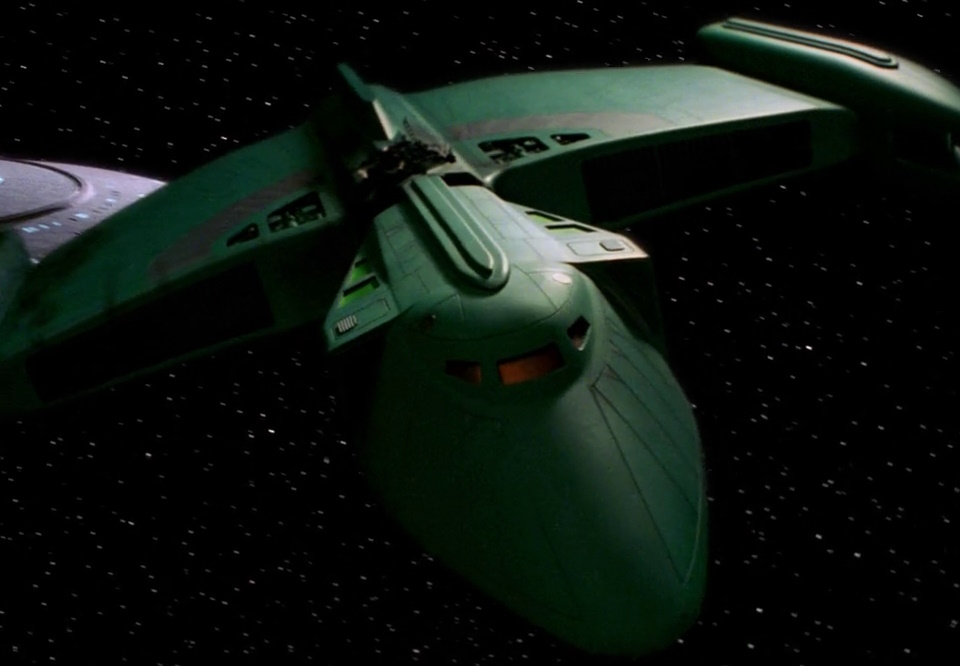
Star Trek: Discovery review – Season 4, Episode 9: Rubicon

Spoiler Warning: There are spoilers ahead for Star Trek: Discovery Seasons 1-4.

Last week, All In took Discovery on a bit of a detour to a Star Wars-inspired gamblers’ den. With the season now building to what appears to be the climax of its story, Rubicon returned to the DMA in a big way, moving the story along in leaps and bounds while spending a little too much time on the dreaded Burnham Relationship Drama™.

I’m in two minds about Rubicon, really. On the one hand, the episode was by far the cinematographic highlight of the season so far, with some outstanding visual effects, beautifully-composed camera shots, and a sense of scale that would’ve made Rubicon feel right at home on the big screen. On the other, there were a couple of moments where I literally couldn’t stop my eyes from rolling at overplayed clichés that I’d hoped Discovery could’ve outgrown by now. What resulted, all things considered, was a mixed bag of an episode; there were some excellent moments and some very sub-par ones.

Captain Burnham on the bridge in Rubicon.

Stepping back from Rubicon for a moment, I want to consider the overall story of the DMA and Unknown Species 10-C in Season 4. As the season has rolled on, I’ve been feeling a growing sense of déjà vu. The DMA storyline is unfolding in a remarkably similar fashion to the Burn in Season 3, with the big, mysterious, galaxy-threatening event being slowly uncovered by Burnham and the crew of the USS Discovery.

When the first Season 4 teaser initially revealed another “big bad,” I wrote the following: “there are possible downsides to another ‘huge galactic disaster’ storyline so soon after resolving the Burn, in that it risks feeling tacked-on, derivative, or even anticlimactic…” Right now, with the very similar way that the two storylines are unfolding – with little tidbits of information about the DMA or Unknown Species 10-C having been tacked on to episodes throughout the season – I’m definitely feeling that Discovery is straying increasingly close to repetitive territory. There’s still time for the emergence of the second DMA or the reveal of Unknown Species 10-C to take things in a very different direction, but this feeling is something that had been building up for several episodes now, and it kind of came to a head in Rubicon.

The DMA as it appeared in Rubicon.

I don’t usually like to talk about too much production-side stuff, but while we’re taking more of a birds-eye view of Season 4, I thought it was worth noting that showrunner Michelle Paradise recently discussed Unknown Species 10-C during a social media event. Her comments seemed to imply that Unknown Species 10-C will be someone that we’ve never met before; someone brand-new to Star Trek. And while it’s possible these comments have been misinterpreted – Paradise could have been talking about an extensive redesign of an existing faction, perhaps – I wanted to briefly consider what that could mean for the show.

In Season 3, one of the reasons why the Burn storyline fell flat at what should’ve been its climax is that basically none of the hints that Burnham and the crew had picked up over the course of the season ultimately mattered – the ending was such a bolt from the blue that it was unpredictable, making for an unsatisfying end to a season-long mystery. Because Season 4 has followed such a similar mystery box-type setup, the DMA and Unknown Species 10-C have seen crumbs of information thrown our way over the course of the season thus far. And with myriad smaller references to past iterations of Star Trek, fans have been encouraged to speculate about possible connections and explanations. For the ending to be another “surprise!” might work… but it might not. And I can’t shake the feeling right now that the explanations for the two big mysterious elements of Season 4’s story are ultimately going to be disappointing for a lot of fans.

Okay, that’s enough of that! The speculation about who Unknown Species 10-C may or may not be will have to wait, and we may not know the answer for a while!

Unknown Species 10-C sent a second DMA.

One of the central conceits of Rubicon was this idea of searching for a middle ground in between Book and Burnham’s positions. Communication and compromise have been themes that Discovery has tackled on multiple occasions over the past couple of seasons, but here I’m just not sure it’s been handled very well. I said in my review of But To Connect that there has always been a middle ground in this standoff, and it’s such a basic one that it beggars belief that no one so much as mentioned it until now.

The dividing line was whether to attempt to make peaceful first contact, as Burnham wanted, or to deploy a weapon against the DMA, as Book wanted. But the answer has been right in front of everybody the entire time: do both. In the time it would take to build the weapon and plan for its deployment, the Federation could make its attempt at first contact. It didn’t need to turn into the big fight that it did, and the idea that none of the dozens of diplomats, the Federation President, Starfleet Admirals, and the entire crew of Discovery didn’t even consider it might be a clumsy metaphor for our current divided political climate, but it doesn’t really work as a story beat. And that means that when Burnham finally proposed the compromise to Book, instead of cheering it on and thinking what a wonderful idea it was, all I could think was “that took you long enough!”

Captain Burnham eventually came to discover a rather obvious compromise position.

If the story underlying this division was stronger, perhaps I would forgive the silliness of failing to propose a compromise sooner. But because this particular story focuses almost exclusively on Burnham Relationship Drama™, something that I would argue Discovery simply does not need at this point in its run, it feels even more disappointing, somehow.

Despite a weak start in the Season 1 premiere, I have genuinely come to like Captain Burnham. Her ascent to the captaincy, particularly across the back half of Season 3, felt great – and along with Captain Sisko from Deep Space Nine, we can absolutely say that she’s one of the few Star Trek characters who genuinely earned her promotion. We saw a lot of the process that took her from a subordinate to a commanding officer, and while she has her flaws, which Star Trek captain doesn’t?

Captain Burnham’s rise to the captain’s chair has been a great story to watch.

But after a lot of messing around with Ash Tyler in Season 2 in particular, the whole Burnham Relationship Drama™ angle is completely overdone. Giving her a new start with Book worked so well in Season 3, and to upend that over such a stupid disagreement that should have been solvable is disappointing. Female characters don’t need the support of male characters to be successful, so I’m not saying that Captain Burnham somehow needs Book in her life – but having given her that relationship, to strip it away from her so soon just for the sake of injecting additional drama into a series that’s already full to the brim with it just seems gratuitous and unnecessary.

It would still have been possible to have a conflict over the DMA, with Tarka taking off on a mission to detonate his weapon. All In and Rubicon could’ve played out almost word-for-word without the Burnham Relationship Drama™ detracting from other aspects of the storylines. Another character could’ve been teamed up with Tarka, if the writers felt it necessary, and he could have even swayed a member of Discovery’s crew. In Rubicon, we saw glimpses of the way this could’ve gone with Rhys being generally supportive of Tarka, and any of the secondary characters could’ve played the Book role on this side of the story. Tarka is the driving force here, Book is really just a pilot. And while Book’s story of grief leading him to dark places sounds interesting in theory, Discovery hasn’t really done anything significant with that angle for several episodes. Book got to his dark place earlier in the season, and has been fairly static since.

A hologram of Book in Rubicon.

In short, if I was going to make one change to Season 4 as it’s unfolded so far, it would be to keep Book and Burnham together. There was scope to see Book in therapy with Dr Culber, talking out his feelings with Saru or even Zora, and being comforted all the while by Burnham. Instead, the story almost suggests that Burnham is out of her depth with Book, unable to know what to do or say.

The only way I can see the Burnham Relationship Drama™ making sense in Season 4 is if it leads to some bigger destination that isn’t apparent right now. Rubicon saw Burnham hesitate, unwilling to give the order to stop Book because of her love for him essentially overriding her duty as a Starfleet officer – comparable, in some respects, to the choice Worf made in the Deep Space Nine episode Change of Heart. If she feels that she can’t ever make that kind of choice again, or that Starfleet is getting in the way of her relationship, maybe she’ll end up resigning her commission in order to stay with him. If there’s some kind of larger arc at work, perhaps we’ll look back on the way it unfolded and reflect, wondering if the ends justified the means. But right now, assuming that isn’t going to be the case, this aspect of the Season 4 storyline remains disappointing verging on irritating.

Captain Burnham.

None of that is to detract from two wonderful performances. Sonequa Martin-Green continues to be impressive as Captain Burnham, and in an episode that revolved around her character’s internal conflict between love and duty, Martin-Green put in an outstanding and beautifully complex performance that was, at times, riveting. David Ajala made a wonderful addition to the cast in Season 3, and his arc in Season 4 has seen him put in some harrowingly beautiful performances that truly succeed at communicating Book’s grief. This latest turn for his character and his disagreement with Burnham wouldn’t have been my choice, but there’s no denying that Ajala brought it to screen and did his utmost to sell it.

It was also great to welcome back Rachael Ancheril in Rubicon, with her character of Nhan making a return for the first time since Season 3’s Die Trying. I felt it was a shame to see Nhan shuffled off the ship so quickly after arriving in the 32nd Century, and although it seems like her role this time was a one-off and not the start of a full-blown homecoming, it was still nice to catch up with her and learn that her mission aboard the USS Tikhov came to a successful conclusion.

Nhan made a welcome return to Discovery this week.

Unfortunately, though, one of Nhan’s lines was so poor that I felt myself involuntarily rolling my eyes. At a crucial moment in the mission, Nhan revealed to Burnham that, rather than just following her orders, she had another motivation: she’d been on another mission somewhere else and had lost “half her team” because she waited too long to make a decision. This terribly clichéd moment added nothing to Rubicon, nothing to Nhan’s character, and nothing to the overall story. It was undeveloped beyond a single line and was nothing but unnecessary fluff thrown in seemingly haphazardly to try to further ramp up the drama.

Discovery has a tendency to do this: taking a secondary character and giving them one or two lines about something in their past that we never saw and that is never referenced again to try to inject additional tension and drama into a story beat. It occasionally works, but more often than not it just falls flat on its face because it’s so painfully obvious that these lines are purely there for dramatic effect. Nhan’s is a case in point: it didn’t flow naturally, it was too barebones to add anything of substance to either her character’s motivation or the storyline she was part of, and overall it just felt like a very clumsy addition to the episode; the kind of line that might be written by a middle school student in one of their first creative writing projects.

Unfortunately one of Nhan’s lines was the worst in the episode; an underexplained piece of exposition thrown in to artificially ramp up the drama.

Despite that one line being so poor that it detracted somewhat from her return, I liked the role that had been given to Nhan in a more general sense. There’s no denying that Captain Burnham is too close to Book to be objective, and the rest of Discovery’s crew know him well so couldn’t necessarily be trusted either. Bringing in an outsider – or at least somewhat of an outsider – who has the authority to override Captain Burnham in this specific case makes a lot of sense from Starfleet’s point of view, and it was neat that Discovery managed to find a way to address this conflict in a way that felt natural.

I also liked the way Nhan introduced Saru and Captain Burnham to her secondary plan – the secret briefing that she gave them when their first attempt to capture Book and Tarka failed. It fitted perfectly with Nhan’s very militaristic role as a Federation security officer, and the way she presented the plan after the shuttle mission was as close as Starfleet gets to feeling like a military organisation.

This briefing was a very cool idea that was executed perfectly.

Speaking of the shuttle mission, it was nice to see Saru in command for the first time since Season 3! I also really like the shuttlecraft set design, with its rounded consoles and expansive bridge area. We saw this set used when Tilly took a group of cadets on a mission in the episode All Is Possible, and it’s neat that Discovery is continuing to make use of this new space. Because the USS Discovery hasn’t really seen much of a redesign internally, it’s one of the few sets other than Federation HQ that has a 32nd Century feel, and I like that. The USS Discovery has always felt like a ship that blends aspects of the NX-01 Enterprise, the USS Kelvin, and to an extent, parts of the Constitution-class refit into its own somewhat spartan 23rd Century style. I was wondering if we’d see much of a redesign this season, but in lieu of that it’s nice to get scenes like the one aboard the shuttlecraft that incorporate more 32nd Century design elements.

Although it sadly didn’t take up much screen time and wasn’t really expanded upon in a significant way, the conflict between Rhys and Bryce was an interesting one. It makes sense that there’d be members of Discovery’s crew who were generally supportive of Book and Tarka, so giving that debate some air was neat to see. It didn’t last as long as it could’ve, and the resolution – with Bryce offering Rhys a hand after they were beamed back aboard Discovery – was a blink-and-you’ll-miss-it affair, but it was nevertheless an attempt by the show’s writers to expand the story beyond Captain Burnham, Book, Tarka, and Nhan.

This conflict could have been expanded upon, but it was a nice inclusion nevertheless.

The visual effect of the shuttle being “eaten” and torn in half was spectacular, and definitely one of the highlights of the season so far. The “goo” that captured the shuttle seemed to be a visual blend of programmable matter – a stalwart of 32nd Century tech – and the living ice from the Season 3 episode Far From Home that almost consumed the USS Discovery. And as it gripped the shuttle, eventually ripping it in half as it tried to get away, it was an absolutely thrilling spectacle.

I genuinely felt that Saru, Dr Culber, Rhys, and Bryce were in danger during their away mission, and in a series – and a franchise – that almost always sees its heroes make it home safely, that can be a difficult thing to pull off. As Saru led his team, though, I was so immersed in the world of Star Trek that I fully suspended my disbelief! I would add, though, that this isn’t the first time in Season 4 that Discovery has put crew members into dangerous, life-or-death situations only to save them at the last second. Dr Pollard had a very lucky escape in the episode Stormy Weather, and that’s perhaps the most obvious example. It can feel as though Discovery is providing even its minor characters with some very heavy plot armour at times, and while I didn’t feel that way in the moment, as I was thrilled by an incredibly tense, well-constructed sequence, looking back it feels like yet another opportunity to demonstrate the dangers posed by the DMA, Unknown Species 10-C, and Tarka’s weapon that Discovery missed. A character death can be so meaningful and so significant, and even if it were one of the secondary characters involved in this mission, it would still have been impactful; they’re characters we’ve seen in dozens of episodes across more than four years.

This was an incredibly exciting sequence that benefitted from some outstanding CGI work.

After the failed shuttle mission, Discovery chased Book and Tarka into the heart of the DMA. I wish we’d got something – even just a clumsy line of obvious exposition – to explain how it’s possible for the ships to operate inside the DMA with impunity, especially considering how dangerous it was for Book when he piloted his ship inside it in the episode Anomaly a few weeks ago. I guess the explanation is that the central part of the DMA is more gravitationally stable than its outer edges… but something on-screen to confirm that wouldn’t have gone amiss.

Despite that, I greatly enjoyed this part of the episode. It began with a really incredible close-up of Captain Burnham ordering Black Alert – something I still find incredibly cool four seasons in! – and that led us into a ship-to-ship combat situation that was reminiscent of the Battle of the Mutara Nebula in The Wrath of Khan. This sequence was much faster-paced, as the two ships could use their spore drives to jump around, but the basic premise of having to fight without the ship’s full array of scanners, shields, and weapons in the confines of a nebula-esque setting definitely felt like it was drawing on inspiration from what is still one of the Star Trek franchise’s best space battles.

The USS Discovery inside the DMA.

The USS Discovery bridge set saw a significant upgrade this season with the addition of pyrotechnics that could spew jets of fire. That effect was, perhaps, ever so slightly overused earlier in the season, so to see the show return to a more typical “battle damage” style with sparks flying and the occasional chunks of scenery being thrown around was certainly no bad thing. Some effects are best used sparingly, after all!

Partly because Discovery still likes to give most of the significant story moments to Captain Burnham, and partly for the sake of increasing the drama and tension, there was once again a moment during this battle that felt rather contrived. Captain Burnham managed to single-handedly figure out that the DMA wouldn’t leave the area until it had hoovered up all of the boronite particles – something that doesn’t survive a second glance as you’d think everyone would’ve realised that far sooner. It worked to set up the “middle ground” part of the story, offering a compromise to Book, but it feels like something that Stamets and co. should have worked out sooner – they’ve supposedly been working on the DMA for weeks off-screen.

Book and Burnham searching for middle ground.

The shot of Book on the bridge of his ship and Burnham at the console of a shuttlecraft was another that was beautifully composed and cinematic. Discovery could’ve chosen to set up this scene using holo-communicators, and that would’ve worked okay, but there was something about seeing the two characters literally divided that really emphasised the point that the series is trying to make about compromise, reaching out, and doing the right thing. Although I think I’ve made clear that the whole Burnham Relationship Drama™ angle isn’t something I’m wild about, I can still appreciate that it was handled incredibly well at this moment.

It seemed obvious to me that Tarka – the driving force behind this whole renegade mission – would fire his weapon regardless, and so it proved. Perhaps because I’m less invested in the Book-versus-Burnham conflict I wasn’t so distracted by it that I was caught off-guard by Tarka’s actions, but it seemed like Discovery was trying to tee this up as a shocking twist near the episode’s conclusion. In that respect it fell a little flat, but I like that the writers didn’t just forget about Tarka or have him break character by standing down.

Tarka stayed true to his characterisation by launching his weapon.

Tarka was originally presented as an arrogant mad scientist – a character archetype that we’ve seen in Star Trek on a number of previous occasions. But he very quickly showed off a depth that went far beyond that character trope. I would classify Tarka as somewhat of a fanatic; he’s single-mindedly dedicated to his own goal, and is willing not only to go to extreme lengths, but to disregard the feelings and views of practically everyone else in the process. He would hurt – and perhaps even kill – if it meant he could accomplish his objective of going “home” to find the friend he’s been talking about. In that regard, I would compare Tarka with Dr Tolian Soran, the villain from Star Trek: Generations. Both characters share a comparable goal – seeking their idealised versions of paradise – and both are willing to go to extreme lengths to get there.

When the DMA was destroyed, however, we got a very rushed scene with Tarka as he realised the DMA controller had disappeared or been destroyed. He scanned the area for literally a few seconds before sitting down looking dejected, and the pacing of this moment just felt off. We’ve seen in Discovery that sensor scans can take a long time, but even if we set aside nitpicky canon reasons, just as a character moment I think this scene needed more. It wasn’t even clear if he’d miscalculated, destroying the controller, if it had been recovered by Unknown Species 10-C, or something else had happened to it.

This moment needed to be longer.

Shawn Doyle has done a remarkable job bringing the complex Tarka to screen in an understandable and occasionally sympathetic way, so at the moment of what appears to be his biggest gamble and biggest defeat (at least so far), we needed to spend more time with him. With the scene’s short runtime, Doyle did what he could to communicate the extent of Tarka’s disbelief, sadness, and even anger… but a few extra minutes spent here would have gone a long way to paying off an arc that has been running for several episodes. There will be more to come from Tarka, I have no doubt, but this moment feels like it should have been bigger and handled with more significance in his story. This is another consequence of Discovery choosing to prioritise Burnham Relationship Drama™ over practically everything else in the story at this point.

Finally in Rubicon we had a development in the burgeoning relationship between Saru and Ni’Var President T’Rina. In a story that focused on the growing separation between one couple and arguments between friends, it was cute and sweet of the series to dedicate some time to a story like this. It served as somewhat of a counterbalance to some of the heavier themes of separation and failure, but more importantly the chemistry between Tara Rosling and Doug Jones is intoxicating, even with the latter under heavy prosthetic makeup. Saru, despite his wisdom and calm demeanour, is inexperienced in this area, and that’s a nice new angle for his character, too.

T’Rina and Saru sitting in a tree…

Seeing Saru being the one to seek romantic advice toward the end of the episode was interesting, and the candour shown to him by Dr Culber says a lot about the respect and friendliness between the two of them, too. Aside from the away mission earlier in Rubicon, we haven’t seen much interaction between Saru and Dr Culber for quite a long time, so this reminder that other members of the crew have friendships with one another was very sweet. I’m looking forward to seeing how the Saru-T’Rina relationship plays out, and the fact that Discovery hasn’t rushed it is a good thing!

So I think I’ve said more or less everything I wanted to say about Rubicon. It was a mixed episode for me, one where a particular storyline really clogged things up and overshadowed others, but that managed to have some beautiful moments that shone through even when I wasn’t particularly interested in the approach being taken. It was a beautifully cinematic episode, one of Discovery’s best from a visual and technical standpoint, and one that used sound and silence to great effect. Seeing Captain Burnham silently looking around at the climax of the battle was one of the most intense, dramatic moments from all four seasons of the show, and I can’t fault it.

An episode with some stellar performances from both of its leads and a couple of guest stars stumbled under the weight of an unnecessarily heavy storyline that, unfortunately, had all the subtlety of a sledgehammer at times. There were a couple of places where more time could have been spent away from Captain Burnham and Book; stories that are just as deserving of attention that Discovery chose to rush through in favour of spending more time with its protagonist and her angst about her boyfriend. This is a choice that I wouldn’t have made for a series which is well into its fourth season, and it’s one that, unless it gets resolved soon, will continue to be a drag on what is an otherwise excellent and engaging sci-fi adventure.

Star Trek: Discovery Season 4 is available to stream now on Paramount+ in the United States, Scandinavia, Latin America, and Australia. The show is on Pluto TV in the UK, France, Germany, Italy, and other parts of Western Europe at 9pm on Fridays and Saturdays. Individual episodes or the full season can be purchased on iTunes, Amazon Video, and possibly other platforms in the UK, parts of Europe, and select other countries. The Star Trek franchise – including Discovery and all other properties mentioned above – is the copyright of Paramount/ViacomCBS. This article contains the thoughts and opinions of one person only and is not intended to cause any offence.
Star Trek: Discovery theories – week 8

Spoiler Warning: There are spoilers ahead for Star Trek: Discovery Seasons 1-4, Star Trek: Picard Season 1, and for other iterations of the Star Trek franchise.

After an unexpected sabbatical, Discovery Season 4 returned with the episode All In. If you read my review of the episode, you’ll know that I didn’t think it was the strongest one of the season so far, but it was interesting in some ways and certainly contained some excellent performances from all of its leading stars. Because All In was, in large part, a detour as Book, Burnham, Owosekun, and Tarka scrambled to get their paws on a magical macguffin molecule called isolynium, most of our big ongoing theories didn’t see significant movement this week. That said, there’s still a lot to talk about and a few updates to get through!

There are still some big open questions, and with five episodes left I’m expecting at least some of them to start moving in pretty big ways in the next week or two! For me, the biggest point of interest right now is whether the season’s big stories will connect in a major way with past iterations of Star Trek. There are a few different ways this could happen, but a big part of me suspects that, as with the Burn in Season 3, we’re going to get something altogether new.

This week we have one confirmed theory and one theory on the production side of things that I’m very pleased to see has been debunked! As always, we’ll start there before moving into the main theory list.

Confirmed theory:
The DMA isn’t a super-weapon.

Burnham, Stamets, and Rillak examine Unknown Species 10-C’s point of origin.

Although I felt that the sequence which contained this revelation was cut rather short, Captain Burnham, Stamets, Zora, and Saru managed to figure out between them what the DMA’s true purpose is. Rather than being a super-weapon, as had been originally assumed, the DMA is a glorified piece of mining equipment, or as Captain Burnham put it, a dredge.

Its purpose appears to be to scour the galaxy for the rare isotope boronite – something that was first mentioned in the Voyager Season 4 episode The Omega Directive. Boronite can be used to synthesise omega molecules – one of the most powerful substances in the known galaxy – but Unknown Species 10-C appear to be using it to power their hyperfield – a kind of forcefield or cloak which is concealing their base or star system.

The DMA’s purpose is to harvest boronite, a rare molecule first mentioned in the Voyager episode The Omega Directive.

I really like this angle. If the DMA isn’t a natural phenomenon, which it seemed to be at first, then having it be something other than a weapon adds a different dimension to the story, one which takes it away from being a fairly typical conflict into something more complex – and, I would argue, more “Star Trek.” We’ve talked about the “it was only trying to communicate!” trope in relation to the DMA before, and how misunderstandings have long been part of Star Trek’s storytelling tradition, highlighting the complexities of dealing with very different cultures and the dangers of making assumptions. This side of the story seems to be cut from the same cloth.

This also seems to rule out other theories about the DMA, such as it being an experiment gone wrong. There’s still room for further twists and turns in the DMA’s story, though, so let’s wait and see what happens, and just what purpose Unknown Species 10-C has in mind for all of this boronite!

Debunked theory:
Star Trek: Discovery isn’t going to be renewed for a fifth season.

Phew! I was getting genuinely worried when we passed the season’s halfway point with no indication of a Season 5 renewal. In past years, we’d always known either before the season kicked off or within a week or two of its premiere that the show had been renewed, so when we got further and further in with no official news – and no rumours of production starting quietly – I began to get worried for Discovery’s future.

But in January, while the show was on hiatus, ViacomCBS confirmed that Discovery will indeed get a fifth season – making it the first show since Voyager to make it that far! (Sorry, Enterprise) This is great news, because I’m not ready yet to say goodbye to Captain Burnham and the crew. There’s so much scope for more adventures in the 32nd Century, and I feel like Discovery could continue to expand and explore this setting, perhaps laying the groundwork for more 32nd Century shows.

So those theories were confirmed and debunked.

Now we can jump into the main theory list! As always, we’ll begin with those theories that are either new or that saw significant movement in All In, before rounding out the list by recapping the rest of them.

Theory #1:
Tarka will realise that there’s a tracker on the isolynium.

Captain Burnham placed a tracking device (highlighted) on the container of isolynium.

Tarka is sharp, and more than that he has access to – and the ability to build – clever pieces of tech. We saw this week that he was able to create a changeling-capturing machine out of a low-quality Devore scanner. It stands to reason he’d want to scan the isolynium that Book procured, and if he’s as thorough as we’ve seen him be so far, perhaps he’ll figure out that Captain Burnham placed a tracking device on it.

If so, the signal that Captain Burnham showed off at the end of All In may lead to a dead-end! I’m sure that the USS Discovery will catch up with Tarka and Book – if not, the story would be fairly short and boring, after all – but it may not be as simple as following the map to the cleverly-placed tracking device.

Theory #2:
Tarka’s weapon will be successful.

Isolynium – a key component of Tarka’s weapon.

President Rillak has tasked Admiral Vance and Captain Burnham with stopping Book and Tarka before they finish work on their weapon and use it against the DMA, fearing that destroying the DMA will lead to all-out war with Unknown Species 10-C. The obvious story route from here is that Captain Burnham and the crew will track them down and either talk them out of it or destroy the weapon before it can be used. But that may not be the direction that Discovery plans on taking us.

It could be more interesting in some ways if Tarka and Book succeed in their aim of launching and detonating the weapon, destroying the DMA and attracting the attention of Unknown Species 10-C. Such a highly advanced species – if they’re as advanced as everyone is assuming, anyway – would be a formidable opponent, but they could also be willing to listen to diplomatic overtures. Perhaps Tarka and Book would have to be sacrificed, imprisoned with Unknown Species 10-C as punishment for their crime.

Tarka and Book.

Speaking of diplomacy, in the mad rush to stop Book and Tarka, I certainly hope that President Rillak hasn’t forgotten about trying to contact Unknown Species 10-C. At the very least, now the Federation knows where they are they should send a message warning them of Book and Tarka’s intentions. It might have to be more of a rush job that the Federation would have preferred – but it would be better to at least make an attempt at first contact in case Captain Burnham can’t stop the weapon in time.

Discovery is definitely unpredictable right now, and I could easily see the series taking its main story to unexpected places. Book and Tarka successfully deploying their weapon would be just one example, and it could make the introduction of Unknown Species 10-C all the more intense, exciting, and edge-of-your-seat thrilling.

Theory #3:
Unknown Species 10-C is extinct.

R.I.P.

We’ll talk in a moment about what All In might mean for my Unknown Species 10-C suspects! But there’s one possibility that I hadn’t really given much thought to that suddenly came to the fore in light of the fact that Unknown Species 10-C is still a mystery and, more significantly, that Starfleet has no way of scanning their base/star system. What if Unknown Species 10-C has already gone extinct?

Perhaps they went extinct recently, or perhaps it was millennia ago. The DMA might be Discovery’s equivalent of the Planet Killer from The Doomsday Machine; an automated device left behind, a warning to the real world about the dangers of some of our long-lasting environmental and technological impacts.

Is the DMA going to turn out to be similar to the Planet Killer?

The DMA could even be Unknown Species 10-C’s last-ditch effort to prevent their own extinction. Having used up their entire power supply, they had to build such an imprecise, devastating machine to harvest all of the boronite they could possibly find just to keep the lights on and their machines powered. There could be an interesting analogy there, too.

Because Unknown Species 10-C remains hidden from us going into the next episode, all sorts of possibilities remain on the table. This could certainly be a different and unexpected way to take the story, and perhaps the culmination of the plot would be more of a technological puzzle than a conflict against an adversary, with Captain Burnham leading Starfleet’s efforts to figure out Unknown Species 10-C’s technology in order to deactivate the DMA.

Theory #4:
Nhan works for Section 31.

Nhan.

Spoiler warning for the next episode, Rubicon, but Nhan will be making a return to Discovery! I thought it was unfortunate that she was shuffled off the ship at such an early stage in Season 3; there was scope, I felt, for more Nhan stories. So it’ll be great to welcome her back to the show in just a few days’ time!

One thing struck me about Nhan based on a couple of photos that the official Star Trek social media channels released, and that’s her uniform. Nhan isn’t kitted out in the standard Season 4 Starfleet uniform that the rest of the crew wear. Hers appears to be a new variant, possibly in a similar style to Lieutenant Willa’s from Season 3. There are many possible explanations for Nhan’s uniform, including an assignment at Federation HQ or a continuation of her service aboard the USS Tikhov, but one interesting possibility comes from Nhan’s background as a security officer. Maybe she’s been recruited by the 32nd Century equivalent of Section 31.

Theory #5:
Tarka’s mysterious “friend” is someone we’re already acquainted with.

All In saw a brief conversation between Tarka and Owosekun in which the subject of his mysterious friend came up. There seems to be more going on with this character than meets the eye, though whether Tarka was being genuine in his emotional reaction isn’t 100% clear! It’s a distinct possibility that his friend is, in fact, a love interest or even a spouse, and that could certainly be an interesting development.

The fact that Discovery has gone out of its way to keep this character’s identity a mystery is interesting as well, and one reason for doing so could be that Tarka’s friend is someone who we as the audience have already met. If it wasn’t a big deal, why not just have Tarka say the individual’s name? The more appearances Tarka makes without revealing this character’s identity, the more strongly I feel that it will turn out to be someone we’ve already met.

I put together a short list of possible candidates for being Tarka’s mysterious friend, and you can find it by clicking or tapping here.

Theory #6:
Book and Burnham will get back together.

Burnham and Book in All In.

I have to be honest: I’m not interested in more Burnham Relationship Drama™. Discovery has already done this with Ash Tyler in Seasons 1-2, and it was okay then, but it’s overdone by now. I get where the central conflict with Book has come from, but I don’t feel that the show needs this additional injection of drama to make Season 4’s story work. If I were to cut one aspect of the Season 4 story that we’ve seen so far, it would be this.

So with that in mind, my hope is that the Book-Burnham feud will be brought to an end – and hopefully within the next couple of episodes. Ideally I’d like to see them get back together, although some of the things they said to each other in All In might make that more complicated. If Burnham manages to stop Book and Tarka, perhaps he’ll come around to her way of thinking. If they’re successful in using the weapon, the argument they had will become a moot point. So there are different ways this could go, but I’m hopeful that it will be resolved soon as it’s an aspect of the show that I’m really not wild about.

Theory #7:
The DMA is a life-form.

“It’s alive!”
Frankenstein (1932)

The revelation that the DMA is a mining tool or dredge would seem to make this theory a lot less likely – but I’m not yet willing to strike it from the list. There are several ways it could unfold, but one possibility is that the DMA is a self-aware piece of technology, comparable to Zora. Perhaps it’s carrying out its orders, unaware of the damage it’s doing, and will be able to be reasoned with even if Unknown Species 10-C won’t back down.

Or perhaps the DMA has gone rogue, operating without Unknown Species 10-C’s permission. That would also be an interesting angle, as it could mean that Captain Burnham and Starfleet will have to ally with Unknown Species 10-C to stop the DMA. Some aspects of this theory as I originally formulated it – such as coming to an understanding with the DMA in a story comparable to V’Ger’s in The Motion Picture – seem to be off the table entirely. But the DMA being a self-aware, conscious machine isn’t… at least, not yet!

Theory #8:
Unknown Species 10-C is a faction from a past iteration of Star Trek.

Could it be the Borg?

The revelation of the hyperfield at Unknown Species 10-C’s point of origin was an interesting one. A field that size could conceal a small star system, as Admiral Vance suggested. But it could also hide something like a huge fleet of starships – or giant mechanical aliens. In my view, there are only a few likely candidates remaining from the long list I put together before Christmas. The technology required to create the DMA and the hyperfield seem to rule out factions like the Klingons, the Gorn, and others.

But there are still some known Star Trek factions with the potential capability of building something like this. I would point to the Borg, the super-synths from Picard Season 1, Enterprise’s Sphere-Builders, the Kelvan Empire from The Original Series (who are also an extragalactic faction), and possibly others like Species 8472, V’Ger, the Q Continuum, or the Terran Empire.

How about Species 8472?

I confess that I feel a sense of déjà vu right now. In Season 3, I theorised and speculated about possible culprits behind the Burn, and a lot of the same names and factions were in the frame then, just as they are now. The Burn ultimately went in a very different and unpredictable direction, and I feel that Unknown Species 10-C could end up in a similar place as a brand-new faction altogether. Because of the mysterious nature of the story, and how long it’s been rumbling on, would that feel like an anticlimax? If Discovery encouraged fans to guess and speculate about who Unknown Species 10-C are, would it be disappointing if the answer was “someone new that you could never have guessed?” I can’t shake the feeling that it might be.

For a more detailed look at the suspects mentioned above, as well as a few less-likely contenders, check out my full list by clicking or tapping here.

Theory #9:
President Rillak knows what the DMA is and may be implicated in its creation.

President Rillak, leader of the United Federation of Planets.

I will admit that, as things stand at the end of All In, President Rillak is looking less and less likely to be involved directly with Unknown Species 10-C and the DMA. But there’s still time for a connection to be revealed!

In short, President Rillak’s single-minded goal of reuniting the Federation may be well-served by providing the disparate members with an enemy or a problem to unite against. The DMA has already accelerated Ni’Var’s membership, and President Rillak even got to speak with a representative from Earth – so if she is involved somehow, her scheme is already paying dividends. At the very least, I think it’s fair to say that this complex, somewhat Machiavellian character is not letting the crisis go to waste, and is politicking off the DMA’s trail of destruction.

President Rillak with Captain Burnham on Ni’Var.

In her dealings with Captain Burnham, I’d argue we’ve seen this Machiavellian edge to President Rillak. In the Ni’Var negotiations depicted in All Is Possible, and again for a second time in But To Connect, President Rillak used Captain Burnham to advocate positions that would’ve been politically or diplomatically difficult for her to do openly – effectively manipulating those events from behind the scenes.

In light of all of this, I would hope that Captain Burnham will tread carefully with President Rillak. She seems the type who would happily throw Burnham and the USS Discovery under the bus if it suited her political and/or diplomatic ends. If someone like that felt that unleashing the DMA, or failing to warn everyone that it was coming, would be to her advantage, I can absolutely see her seizing on that opportunity, too. There are myriad ways in which we could connect her to the DMA, even if she didn’t order its creation. She could be in cahoots with Unknown Species 10-C, she could have learned about the DMA and chosen to cover it up, or something else that she believed was in the Federation’s long-term interests.

Theory #10:
Michael Burnham won’t remain captain of the USS Discovery.

Captain Burnham.

One of the unique aspects of Discovery within Star Trek’s broader canon is that the ship has been commanded by four very different individuals across its four seasons. Captain Burnham is different from Saru, Saru was different from Pike, and Pike, in turn, was different from Lorca. It has to be considered at least a possibility – albeit a remote one, perhaps – that the series will continue this trend.

Now that we know that Season 5 is definitely happening, one possibility is that Captain Burnham will somehow leave the ship at or around the end of Season 4, making way for a brand-new commanding officer to take over. Because she’s been the show’s protagonist since Season 1, it seems unlikely, and the overall arc of Discovery between Season 1 and Season 3 can be read as Burnham’s redemption and ascent to the captaincy. But the show’s revolving door of captains may continue.

Burnham in The Examples.

I’m not really in favour of this, but it’s certainly interesting to consider. The episodes But To Connect and All In definitely showed us how conflicted Burnham feels with regards to Book; she’s torn between her duty and the person she loves. Maybe she will have the strength to do what she believes is right during the DMA crisis, but will resign afterwards, unable to contemplate doing the same thing again and wanting to return to her simpler life with Book. This wouldn’t be a bolt from the blue, as we saw her wrangling with these feelings in Season 3.

Alternatively, Burnham could be promoted, taking up a senior role within Starfleet either at Federation HQ or on a new flagship. We already know that she had been in the running for the captaincy of the USS Voyager-J, so maybe she’ll convince President Rillak, through her work on the DMA, to reconsider her for that role. In short, there are ways her departure could be handled in a way that would feel natural – just like Tilly’s departure did earlier in the season.

Theory #11:
The Guardian of Forever will be back.

The Guardian of Forever as it originally appeared.

I’m close to retiring this theory. In short, I had suggested that the reintroduction of the Guardian of Forever in Season 3 could mean that we’ll encounter the timeless entity again in Season 4. It would be nice to bring back Paul Guilfoyle, who played the Guardian’s humanoid avatar in the Season 3 two-parter Terra Firma.

However, it seems as though the DMA/Unknown Species 10-C story isn’t going in that direction. It would make sense, in a way, for Captain Burnham to seek out the Guardian to ask it about the DMA and Unknown Species 10-C – it may well know something about what’s going on that could be helpful. But the best time to have done that would have been earlier in the season. There are still ways in which the Guardian of Forever could be included, though, so although I’m close, I’m not dropping it just yet.

Theory #12:
Tarka will create his own DMA.

Tarka and Stamets with their DMA model.

In The Examples, Tarka – aided by Stamets – created a working replica of the DMA, albeit on a smaller scale. According to Reno, this recreation came very close to destroying the entire ship! Now that Tarka has isolynium, could it be possible that he will create the DMA – either intentionally or accidentally?

Because of the DMA’s wormhole technology, it doesn’t seem like too much of a stretch to think it could travel through time as well as space, meaning a possible time-loop story is on the cards. It’s got to be at least possible to think that throwing a massive bomb at the DMA could have unintended consequences – if, that is, Tarka actually intends to build a bomb! He might see the DMA’s technology and seek to replicate it, creating his own DMA as a means to break through into the parallel universe he’s aiming to reach.

Theory #13:
Tarka’s “friend” is directly involved with the DMA.

Stamets, Tarka, and Saru with the DMA model.

Though we didn’t learn a lot more about Tarka’s friend in All In, from what we do know about them – their scientific background and desire to travel to an alternate reality – they could be a candidate for building the DMA. Unknown Species 10-C could, perhaps, be a single person, or Tarka’s friend could have worked with them, trading their scientific knowledge for Unknown Species 10-C’s power-generating technology.

Like with President Rillak, there are different ways this involvement could work, and different degrees to which Tarka’s friend could be implicated. But one thing is clear: Tarka knows a lot about the DMA, probably more than he’s been willing to share. That knowledge has to have come from somewhere, right? Maybe his friend told him about this technology before they got separated.

Theory #14:
Book will find Kyheem and Leto on the other side of the DMA.

Book with Leto and Kyheem shortly before the destruction of Kwejian.

In Star Trek: Generations, Captain Picard encountered Captain Kirk inside the Nexus – despite Kirk being declared “dead” after the Enterprise-B encountered the energy ribbon almost eighty years earlier. Now that we know a little more about how the DMA operates, it seems at least faintly possible that, just like Captain Kirk, the inhabitants of Kwejian may not be as dead as they first appear.

This theory is, I freely admit, a bit of a long-shot. But the wormhole technology that we know the DMA uses seems to be capable of sending some of what it harvests or mines back to Unknown Species 10-C’s base of operations. Maybe that means that some of the people from Kwejian were transported there instead of being killed.

So those theories are new or saw movement this week.

Now we’ll recap all of the other theories currently in play! It helps to keep the list complete and in one place, so that we can update and cross off theories as we go!

Theory #15:
Tarka aims to travel to the Kelvin universe.

This scene in Terra Firma, Part 1 referenced the Kelvin universe.

There are many parallel universes, as Tarka reminded us in But To Connect. Though Star Trek has shown us a number of different parallel universes before, the biggest one that comes to mind (aside from the Mirror Universe) is the Kelvin timeline, in which the three reboot films were set.

A fourth Kelvin film may or may not be happening, but even if it does the setting remains ripe for further exploration. We don’t know how far the Kelvin timeline and the prime timeline will have diverged, and whether it operates like the Mirror Universe with every character getting their own alternate counterpart. If it does, perhaps Tarka met his own Kelvin timeline counterpart and that’s how he cooked up this scheme. If the Kelvin timeline diverged significantly from the prime timeline it stands to reason that the Burn never happened there. We also got an oblique Kelvin timeline reference in Season 3 – could that have been a hint?

Theory #16:
Some areas of the galaxy – such as the Delta Quadrant – avoided the worst effects of the Burn.

Adira and Stamets with a map of the Milky Way galaxy.

In But To Connect, President Rillak told us that the diplomatic summit she convened would bring together races from “all four” quadrants. Assuming she was referring to the familiar Alpha, Beta, Gamma, and Delta Quadrants that make up the Milky Way galaxy, this would count as our first mention of the Delta Quadrant in the 32nd Century. I didn’t spot any familiar Delta Quadrant races (or their emblems) amongst the assembled delegates, however!

I had previously speculated that the Burn may not have affected the entire galaxy equally, and that regions farthest away from the Verubin Nebula may have survived without much damage. I still think that this is a possibility – though whether Discovery will revisit the Burn in any depth, or visit the Delta Quadrant at all, remains unclear.

To see a full write-up of this theory, click or tap here.

Theory #17:
There will be a character crossover from a past iteration of Star Trek.

Star Trek has had some wonderful crossovers in the past.

Tarka’s friend could, as mentioned, be someone we’ve already met. But there are other ways to bring back a character from a past iteration of the franchise – and there would be many potential benefits to doing so! I had initially proposed a version of this theory in the run-up to Season 3 that centred on the Doctor from Voyager – but with some creative technobabble, practically anyone could be included, despite the leap forward in time.

Choose To Live showed us the Abronians in cryo-sleep, and Stormy Weather saw the crew of Discovery use the transporter buffer to survive – just like Scotty had done in The Next Generation Season 6 episode Relics. Could these be hints at something to come?

It would also be possible for Captain Burnham to discover the logs or a holographic recording of a long-dead character – and while this would be less of a “crossover,” it could still be a ton of fun and great fan-service!

Theory #18:
Season 4 will connect with the Short Treks episode Calypso.

Zora dancing with Craft in Calypso.

Zora’s status as a member of the crew was confirmed in But To Connect, and this followed her developing emotions and sentience earlier in the season. Zora is now much closer to her presentation in Calypso, potentially bringing the story of the Short Treks episode one step closer.

There are still significant hurdles to overcome if the story of Calypso is to be wrapped up in Season 4, though. Obviously we have the timeframe issue: will the USS Discovery be sent back in time, be abandoned, or is Calypso taking place centuries in the future? Then we have the USS Discovery itself – it’s been retrofitted since arriving in the 32nd Century, and now looks very different to how it did in Calypso. I’m not sure how Discovery will overcome these hurdles – but it’s possible. It feels like a proper link-up with Calypso is edging closer week by week.

Theory #19:
A major character will be killed off.

Spock’s funeral in The Wrath of Khan.

Lieutenant Tilly’s departure in All Is Possible definitely shook up the cast. And Gray’s departure in But To Connect may do so as well. However, I stand by what I said before the season aired: killing off a character can be a great way to demonstrate the dangerous nature of the circumstances that the crew have found themselves in. So far, despite tangling with the DMA on several occasions, only a couple of redshirts have lost their lives.

In Stormy Weather, Dr Pollard raced through the corridors of the USS Discovery to reach a hull breach. Shortly after she arrived, a redshirt was blown out into space – but Dr Pollard survived. Although moments like this can make it feel that Discovery is shielding its main and secondary characters with some pretty heavy plot armour, I still feel that there’s scope to see a major character death before the season ends.

If you want to check out my pre-season “death predictions,” in which I speculated about which characters may or may not be in danger, you can find that by clicking or tapping here.

Theory #20:
The crew will have to defend the Verubin Nebula.

The dilithium planet is vital to the Federation.

Despite having grown to sixty member worlds, the Federation is still in a weakened state and isn’t yet back to full strength. The Verubin Nebula is thus a very tempting target for anyone looking to gain an edge in a galaxy where dilithium is still in short supply. As the only known significant cache of the valuable fuel, whoever controls the Verubin Nebula will have a massive tactical advantage.

It would begin to stretch credulity to think that everyone in the known galaxy would see the Federation rebuilding and having access to dilithium and not want to find out for themselves what’s going on. Once the Verubin Nebula’s existence becomes known, even if the Federation promises to share its bounty with all comers, it seems very likely that someone would want to take control of the dilithium supply for themselves.

Theory #21:
The ban on time travel will be explained in more detail.

The USS Enterprise was able to travel through time using the “slingshot method.”

This one is as much a hope as a theory right now! In short, the ban on time travel was introduced early in Season 3 primarily as a way for the writers and producers to avoid questions about why the 32nd Century was so different from how the far future had been depicted in earlier Star Trek productions, as well as to explain things like how the Burn was able to catch the Federation off-guard and why Georgiou couldn’t simply be sent back in time when she needed to.

But the ban itself raises some issues – the biggest one being the lack of detail on how it works and how something like this could possibly be enforced. As I said several times last season, it isn’t possible to just un-invent a technology so useful and powerful as time travel. Even just a few lines of dialogue going into a little more detail on the mechanisms involved in the ban would be really useful.

Theory #22:
The Federation has flouted the ban on time travel.

President Rillak may have tried to circumvent the ban if she felt doing so would be in the Federation’s interests.

Sticking with the time travel ban, another theory I had last season was that the Federation – and Section 31 in particular – might have deliberately flouted the ban and failed to abide by the rules. Someone as straight-laced and committed to Starfleet ideals as Admiral Vance is highly unlikely to have sanctioned such a move, but there are other Federation leaders – such as President Rillak – who could be implicated.

I don’t think it’s possible any more that the DMA story will be connected to the time travel ban, as I had previously proposed. But that doesn’t mean that a closer look at the ban, and the potential for the Federation to have tried to work around it, isn’t going to happen.

Theory #23:
Saru will be given the captaincy of the USS Voyager-J.

Captain Saru in command of the USS Discovery in Season 3.

Saru’s future was briefly discussed before he offered to serve as Captain Burnham’s first officer in the episode Anomaly. He has already been offered a command of his own, so Starfleet clearly values his command abilities and experience. President Rillak was seen to be assessing Captain Burnham’s suitability for the captaincy of the USS Voyager-J in Kobayashi Maru… and she mentioned having a shortlist of candidates. Could Saru be on her list?

Several of the qualities that President Rillak said she was looking for in a potential captain seem to apply to Saru. He’s more level-headed, less likely to put himself in a dangerous situation, and more inclined to think of the big picture. He has a weakness when it comes to Kaminar, as we saw toward the end of Season 3, but generally speaking he isn’t someone who lets his emotions get the better of him. His wisdom and calm demeanour could be valuable in the captain’s chair of the Federation flagship. This could also set the stage for his departure from the show, or possibly even for a new show following his adventures aboard his new ship.

Theory #24:
The Red Angel suits from Season 2 are connected to the DMA.

Captain Burnham’s Red Angel suit at the end of Season 2.

Unknown Species 10-C seem to be responsible for building the DMA. But it isn’t the first wormhole-creating technology that Discovery has introduced us to! The Red Angel suits in Season 2 were also capable of creating powerful wormholes… so could it be possible that Unknown Species 10-C built their device around or based on the same technology?

This revelation would greatly affect Captain Burnham, as she’d feel a degree of responsibility even though she wasn’t directly involved. It would also be the second disaster in a row (following the Burn) in which the Federation was implicated – albeit in an oblique way. I’m not convinced that Discovery will go down this route… but the similarities in the wormhole-creating technology gives me pause, at least.

Theory #25:
We haven’t seen the last of the Abronians.

I currently have four ideas for different ways that the Abronians – the non-humanoid race that Captain Burnham, Tilly, and the Qowat Milat helped save from cryo-sleep in the episode Choose To Live – could play a further role in Season 4.

Theory #25 A:
The Abronians’ homeworld was destroyed by the DMA.

Captain Burnham believes this image depicts a “supernova.”

After arriving at the Abronians’ cryo-ship, Captain Burnham found a stone carving that seemed to depict the destruction of the Abronians’ homeworld. This carving was only shown on screen briefly, but it seemed to show the planet being damaged or destroyed in a large explosion. Burnham credited the planet’s destruction to a “supernova,” and the story then raced ahead.

Considering that the main thrust of the season so far has been about the DMA, perhaps Burnham was incorrect: the Abronian homeworld was destroyed by the anomaly, not a supernova.

Theory 25 B:
The Abronians’ homeworld was on the “other side” of the DMA.

Abronian stasis pods.

Now that we know a little more about how the DMA works, this theory seems a little more plausible. Its powerful wormhole technology seems capable of transporting matter over many light-years, meaning it doesn’t seem to be a complete stretch to think that the Abronians may have originated in the vicinity of Unknown Species 10-C. They could even be Unknown Species 10-C!

One thing struck me as odd about the Abronians: the Federation was entirely unaware of them, despite the Abronian cryo-ship being relatively close to Federation space – such that Captain Burnham could reach it using Book’s ship in a short span of time. It’s possible that the Abronians had been asleep for millennia, unnoticed by the Federation and the wider galaxy for all that time. But it’s also at least possible that their cryo-ship is a newcomer to the area. If so, perhaps it arrived here via the DMA.

Theory #25 C:
The Abronians will return to help the Federation later in the season.

A deceased Abronian.

One of the themes of Discovery since Season 3 has been connection, including building connections between the Federation and other races and organisations. The Abronians were awoken from cryo-sleep thanks to the interventions of Captain Burnham and Tilly – at least in part – and they may seek to repay the Federation, or Captain Burnham personally, for that help.

We saw this play out last season with Ni’Var; in the season finale Ni’Var ships raced to the Federation’s aid as the Emerald Chain attacked. Perhaps the Abronians will likewise step up to help when the Federation needs allies.

Theory #25 D:
The Abronians’ moon-ship may be useful in a later story.

“That’s no moon…”

The Abronians’ cryo-ship is huge, and at least superficially seems to have the mass of a moon or small planetoid. If Captain Burnham and the crew needed a starship that large, such as to aid in the evacuation of a planet threatened by the DMA, for example, perhaps they’ll return to the Abronians and ask to borrow it.

As we saw in Choose To Live, the moon-ship was in full working order. All it needed was some extra dilithium to power up and it was perfectly capable of moving under its own power, and its computer systems were still functional. The only system that seemed to have failed was the wake-up timer! Discovery has precedent when it comes to telling seemingly one-off stories that have a pay-off later on, so watch this space. If Captain Burnham and the crew need a huge starship urgently, we may not have seen the last of the moon-ship!

So that’s the main theory list.

There is still one production-side theory in play, so we’ll recap that now before we wrap up.

Production-side theory:
Tilly’s departure will be permanent.

Tilly’s departure feels permanent.

Mary Wiseman confirmed in an interview with Wil Wheaton on The Ready Room (Discovery’s social media aftershow) that Tilly will be seen again before the end of Season 4, and we glimpsed her in the trailer for the second half of the season as well. But that doesn’t mean she will return as a main character on the show going forward, and her departure in All Is Possible felt permanent. Despite that, I’ve seen quite a lot of folks online who don’t believe that Tilly is actually leaving the series – so I wanted to put it out there officially and say that, in my opinion anyway, she is.

Maybe those people know something that I don’t! As I always say, I don’t have any “insider information;” all of this is just speculation on my part. However, I feel that the manner of Tilly’s departure, the fact that she got that emotional sequence with Captain Burnham, a montage showing her leaving the ship, Adira seeming to take over several of her roles, and her departure feeling like the culmination of her arc going back to the latter part of Season 3 all come together to strongly indicate that she won’t be back as a major character. She may yet have a significant role to play in a future Season 4 episode, as has been suggested, but unless Discovery’s writers are really playing with our emotions I believe we’ve seen Tilly’s end as a main character on the show. She may come back in a future Starfleet Academy series, though… so watch this space!

So that’s it!

Owosekun in the combat arena in All In.

It’s all still to play for as we move into the final five episodes of the season. There are several key stories to find resolutions to: the DMA, Unknown Species 10-C, the Book-Burnham drama, and more. There’s also plenty of time, in five episodes, for Discovery to take off on a side-mission or two, as well as to introduce completely new and unexpected story elements. It’s even possible that Season 4 will end on a cliffhanger now that we know Season 5 is happening… so perhaps none of the big stories will be resolved until 2023. Say it ain’t so, Joe!

Before we go, one final point. I write up these theories because I like Star Trek and I like writing. But for some folks, fan theories can hamper their enjoyment of a film or television show. It’s worth keeping in mind that most of these theories probably won’t pan out, and we have to be prepared for the fact that even the most well-constructed fan theory, no matter how fun and plausible it seems, simply won’t turn out to be true. If you find that speculating and reading theories is beginning to detract from your enjoyment of Star Trek: Discovery – or any other television show or film – it might be a good idea to take a break for a while.

Star Trek: Discovery Season 4 is available to stream now on Paramount+ in the United States, Scandinavia, Latin America, and Australia. The show is on Pluto TV in the UK, France, Germany, Italy, and other parts of Western Europe at 9pm on Fridays and Saturdays. Individual episodes or the full season can be purchased on iTunes, Amazon Video, Google Play, and possibly other platforms in the UK, parts of Europe, and select other countries. The Star Trek franchise – including Discovery and all other properties mentioned above – is the copyright of ViacomCBS. This article contains the thoughts and opinions of one person only and is not intended to cause any offence.
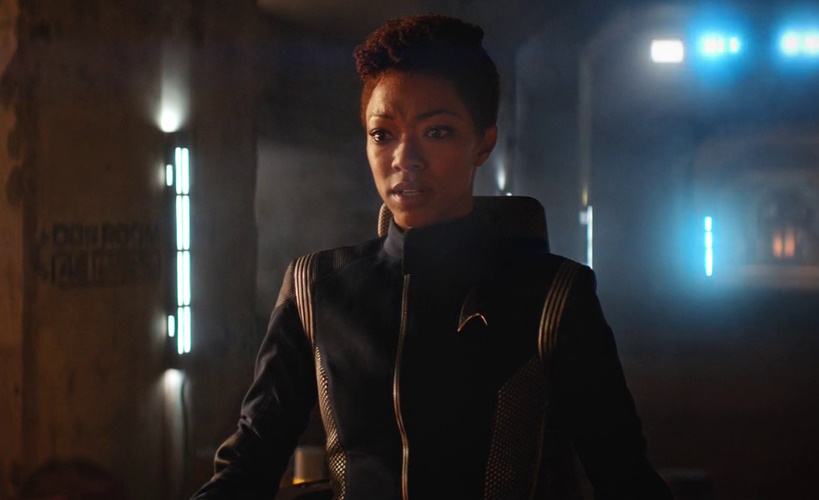
Star Trek: Discovery review – Season 4, Episode 8: All In

Spoiler Warning: There are spoilers ahead for Star Trek: Discovery Seasons 1-4 and Star Trek: Voyager Season 4.

After what seemed like a never-ending six-week break, Discovery has finally returned to our screens! I don’t necessarily mind a mid-season break in principle, but the way Discovery’s was handled was poor from ViacomCBS and Paramount+. Being announced with mere days to spare seems intentional, as if it were deliberately designed to make sure that fans had no opportunity to cancel or suspend their Paramount+ subscriptions. We’ve talked on several occasions recently about the need for ViacomCBS and Paramount+ to get a grip and demonstrate that they’re serious about this whole streaming business – and randomly announced, unscheduled mid-season breaks are not a particularly good look.

The six-week break opened up a gap for Star Trek: Prodigy, though – and if you skipped it or didn’t want to check it out because it’s billed as a show for children, do yourself a favour and reconsider! Prodigy was fantastic, and managed to be a series that really embodied the spirit of Star Trek. Unfortunately it’s only available “officially” if you live in the United States (even Paramount+ in Australia didn’t broadcast the full ten episodes for inexplicable reasons) but I daresay you can find a way to watch if you so choose. Check out my spoiler-free review of Prodigy Season 1, Part 1 by clicking or tapping here.

If you missed Prodigy, go back and check it out. I can’t recommend it highly enough.

So let’s talk about All In. The episode had a very strong “Star Wars” feel for the most part, with the gamblers’ den that served as the main setting definitely taking its cues from comparable locales in the Star Wars franchise. The Karma Barge felt like Star Trek’s answer to the Mos Eisley cantina in the original film, complete with shady aliens, drinking, gambling, and criminality – all under the watchful eye of a charismatic crime boss. And I can’t be the only one to notice the similarity between the way the names of Haz Mazaro and Star Wars’ Maz Kanata sound, can I?

I don’t object to these kinds of “out of bounds” places existing in Star Trek, and we’ve seen lawless settlements and shady saloons in basically every iteration of the franchise in some form or another. It’s a trope from westerns that the franchise inherited going all the way back to its inception. In the context of a post-Burn galaxy it makes sense that places like this would exist and would be popular with a certain proportion of the population. I guess the only real thing to say is that this Karma Barge was definitely more Mos Eisley cantina than Quark’s – and that’s a choice that the show’s writers and producers made.

The Karma Barge felt like something lifted from the Star Wars franchise.

After a break of six weeks, putting Book and Burnham back together makes a certain kind of sense. There are only another five episodes to resolve everything before we get to the end of the season, after all. But if we watch But To Connect and All In back-to-back, and take into account statements made by President Rillak in particular about the in-universe passage of time, the story feels pretty weak. All In kicks off mere hours after the events of But To Connect, and although it arguably says something about the connection or similarities between Book and Burnham that they both chose to visit the same location… it makes the story feel incredibly contrived.

Also, considering the major contrivances required to simply get these two in the same room, I’m not sure this pretty weak story setup actually accomplished very much. Book and Burnham are no closer to resolving their feud than they were at the end of But To Connect, and in some ways are a step further apart having tried and failed to talk it out. I think we needed at least one episode in between But To Connect and the Book-Burnham reunion to really let things sink in for both of them, so going from that conflict over the vote last time (which was itself a rather weak premise that could have been easily resolved) to this episode, with another phase of the conflict in a pretty contrived setup, leaves me struggling to find many positive things to say.

Book and Burnham were reunited.

If All In had been a stronger episode overall, with a stronger central premise, perhaps some of those feelings would’ve melted away. If we’d spent longer getting to the Book-Burnham reunion, or if the gambling storylines were better written (to put it bluntly) I could’ve seen myself getting to a place where it would’ve been possible to write off some of these contrivances. But as you can probably tell already, I felt that All In’s story was, once we cut through the contrived fluff, not an especially strong one.

Book and Tarka definitely got the better and more interesting part of the story, as they had to earn the magical macguffin molecule by tracking down a cheater in the gamblers’ den. Though All In skipped over much of Tarka’s process as he tracked down the changeling and modified a piece of equipment to trap them, it was a neat premise and one that, for lack of a better term, had a very “Star Trek” feel to it in what was, as mentioned, a setting that definitely drew on other sci-fi/fantasy influences. As an aside, I don’t think this changeling was a Founder – there are other shape-shifting species in Star Trek, and the way this changeling switched forms didn’t remind me of Odo in any way.

Tarka caught a changeling gambling cheat.

We also got to see glimpses of how well Book and Tarka actually work as a duo. In a scene at the tail end of The Examples we got to see them together for the first time, albeit briefly, and But To Connect showed them coming together to try to win the vote. But it was here, for the first time, that we really got to see their dynamic as a dysfunctional duo – and it works remarkably well. Shawn Doyle and David Ajala play off one another’s strengths beautifully, and they do an excellent job at showing how these two characters have such radically different motivations for undertaking this mission.

There was a moment later in the episode which seemed to hint at Tarka perhaps having some kind of emotional draw to the “friend” he told Book about in But To Connect that arguably goes beyond “just” friendship. It’s possible that this character is a love interest for Tarka, which could be an interesting development if: a) this character is still alive, and/or b) they’re someone we as the audience might be familiar with. Neither of those points is guaranteed, so this could be a red herring that doesn’t go anywhere significant.

Did Owosekun touch a nerve when she pressed Tarka about his “friend?”

That scene between Tarka and Owosekun was cleverly-written, though, and I honestly can’t tell if Tarka was responding to Owosekun with genuine emotion or was feigning it in some kind of double-bluff. He’s an egotistical man, that’s something we’ve known since even before we first saw him on screen, but whether he’s capable of lying and manipulating at that level to throw people off-balance is unclear right now.

All In was a good episode for Owosekun, giving her a storyline comparable in scale, at least, to Detmer’s in Season 3. A lot of folks have complained about Discovery not making good use of its secondary cast – the bridge crew in particular – so this might be the writers and producers responding to those criticisms. A similar role could have been created for Burnham or several other main cast members – so the choice to put Owosekun in this situation was definitely a deliberate one.

All In gave Owosekun her biggest role in the season thus far.

It was definitely a sweet moment to have Burnham and Owosekun paired up, and they worked well as a character duo for this part of the story. The moment between them on the shuttle was perhaps the strongest, at least from an emotional point of view, and aside from episodes like Explorers, where Captain Sisko and Jake went on their own adventure, it’s got to be one of the very few missions in Star Trek’s 800+ episodes where both principal characters were black. Add into the mix Book and the only non-black participant in this story was Tarka.

Unfortunately, though, I felt that Owosekun’s big fight was not well-constructed. This was the central turning point of the mission for her and Burnham, and there are basically two ways to interpret what happened. Either Owosekun was, as her rivals later alleged, essentially hustling the fight by throwing the first two rounds – which I don’t believe, based on the extent of her injuries and her interactions with Burnham – or the fight was simply badly-written and poorly-filmed, not allowing us as the audience to see any of the process involved as Owosekun presumably tried to figure out how to outplay her opponent.

Owosekun’s fight sequence was not well-constructed.

From where I was sitting, here’s how it looked like the fight went down: Round 1, Owosekun got her butt kicked incredibly easily by a far larger, stronger opponent. Round 2: the exact same thing happened. Round 3: out of nowhere, and with all of their money on the line, Owosekun suddenly became 10x stronger and was able to win by magic.

We needed to see something – anything, really – to indicate what was going on. Was Owosekun using the first two rounds to spot weaknesses or patterns in her opponent’s fighting style that she later exploited? If so, that was subtle to the point of being hidden. Was she, in fact, hustling, knowing that the odds would get better with each defeat? Again, if so, that was not communicated to us as the audience. Fights don’t work like this in any contact sport in the real world – so either the explanation is childish writing, saying that Owosekun “got good” at the perfect moment, or the explanation is bad writing and/or filming and editing, meaning that essential elements of the story were simply not well-communicated to us as the audience.

Owosekun on the ropes with her opponent in the background.

In a story that was already choked by the contrivance of Book and Burnham finding their way to the same place within hours of the events of the previous episode, the poor way in which the fight was executed on screen added to the sense that All In was just not working very well. It was exciting in the moment, I will happily concede that point. And Oyin Oladejo did a creditable job at making me feel that Owosekun was in danger, but determined. Combined with her scene with Tarka later on, it was her best episode of the season so far, and her best performance since That Hope Is You, Part 2 in Season 3. It’s just a shame that the material itself wasn’t particularly strong.

The final part of the episode depicted a card game with Burnham, Book, and two nobodies, with the magical macguffin molecule on the line. And here’s a piece of free advice to the writers of Star Trek, Star Wars, or literally any other sci-fi or fantasy franchise: if you’re going to make a card game an essential part of your story, either make it a familiar card game or explain the rules. Spending nearly ten minutes watching people play a card game that was impossible to follow because it used different designs for the cards and different rules was not entertaining in any way, and this sequence was the episode’s weakest by far.

Haz Mazaro and Burnham at the card table.

The game was called Leonian poker, and despite the “poker” moniker, the rules were not explained at all. The non-face cards had a vaguely familiar design, but were different enough that it wasn’t easy to see at a glance who was winning or who had a strong hand. And this sequence dragged as a result. Now I will freely admit that watching professional poker is not something I care about in the slightest, but at least if I do watch a poker game I know the rules and can follow what’s going on. Here, a combination of the card designs, lack of clarity over the rules, and the pacing of the sequence itself meant that it was impossible to follow what was happening. This led to a deeply unsatisfying feeling of being on the edge of my seat hoping Book and Burnham could defeat the “Emerald Chain holdouts,” but not knowing what was going on or who was in a good position. The entire sequence was just frustrating.

When designing any kind of fictional card game, it needs to either have its mechanics explained, or be visually very easy to follow – or ideally both. This game, while it may or may not have followed the basic rules of poker, was neither explained nor visually simple enough to be intuitively understood, and I think it’s that combination that detracted from this sequence. If it had been a shorter sequence it might’ve worked better, but it lasted almost eight minutes – and those minutes really did seem to drag.

I found the card game frustrating and difficult to follow.

The upshot of all of this was that Book won the game, meaning that he and Tarka could escape with the magical macguffin molecule. I think there was something at least somewhat visually underwhelming about this isolynium, too, that made the stakes of the whole gambling operation – and the threat from Burnham that Book was crossing a line that he “could never come back from” – feel a bit anticlimactic.

In the real world, of course, we have materials like plutonium and uranium which don’t look like much, but are very dangerous, and isolynium is clearly modelled after elements like those. But it doesn’t make for a visually impressive presentation in the way that, say, a barrel of glowing, pulsing, neon pink goo might have had. That’s a deliberate aesthetic choice on the part of the show’s creators – but coming in an episode that had a number of other weak elements, the fact that the highly sought-after prize that all of our characters were desperate to procure was a vial of nondescript metallic flakes no bigger than a coffee mug was definitely an anticlimax. I didn’t know what to expect from isolynium – as far as I know the material is new to Star Trek – but the way the magical macguffin molecule was presented felt like a bit of a let-down in visual terms. Discovery has done some exceptionally interesting things with some of its visual effects across all four seasons, including in a number of unimportant or background areas. For something so vital to the plot to be so visually uninspired made this moment underwhelming.

The isolynium – the macguffin at the centre of the episode’s story – was visually unimpressive.

All of this led us to Book and Tarka taking the magical macguffin molecule and leaving, planning to build the weapon. I don’t really see what was stopping Burnham having the USS Discovery on standby to jump in and try to apprehend them after they’d left the barge (which was, understandably, neutral ground). But I suppose that’s a bit of a nitpick. Technologies like the Spore Drive can feel kind of overpowered, so using them sparingly is probably no bad thing! What’s the betting, though, that Tarka already figured out about the tracking device and leads Burnham and the rest of Starfleet to a dead-end? Maybe I’ll save that one for my theory update!

The conflict between Rillak, Vance, and Burnham was one that had the potential to be interesting, but it strayed very close to feeling as though Rillak in particular, but also Vance, were lashing out at Burnham for something that she couldn’t have reasonably been expected to predict. Book’s turn in But To Connect was sudden, and their theft and escape came 90% from Tarka – he was the one who stole the Spore Drive prototype. I can understand the frustration that Rillak in particular would have as she tries to keep the Federation united, and I think Chelah Horsdal did a good job portraying that complex emotional state.

Vance and Burnham during their meeting with President Rillak.

It was also somewhat of a rarity to see Admiral Vance get a bit of a dressing-down from the Federation President. We’ve usually seen Vance very composed and in control, but this situation has exposed a vulnerability for him, as he fears not being able to see his family – or even for their safety – in the event of war with Unknown Species 10-C. Again, a stellar performance from Oded Fehr communicated Vance’s emotions expertly. I also liked that Vance was willing to find loopholes and bend the rules for Burnham, something that I think he would never have considered under normal circumstances.

As the episode was drawing to a close we got a tiny tidbit of information about Unknown Species 10-C. Much of the rest of the episode felt like a detour, so it was important in the closing moments to advance the season’s main story in some way. The revelations this week were that Unknown Species 10-C appear to have some method of cloaking an entire star system – making them far more powerful than the Federation had been anticipating – and that the DMA is designed to harvest a particular particle: boronite. This could be a reference to the Voyager episode The Omega Directive, in which boronite was said to have been used by the Borg to synthesise an omega molecule – one of the most powerful substances in the Star Trek galaxy.

Unknown Species 10-C live here.

This sequence was cut a little short for me; I felt Discovery could have made more of the explanation of this new angle. The DMA being akin to a mining tool confirms what I’d been suspecting – that it isn’t a weapon – but the scene in which this was explained was very short on detail. Burnham makes huge assumptions based on only a few pieces of information, and may not have the complete picture. For storytelling reasons I daresay her assumptions are accurate and I’m not expecting any of it to be reversed or undone, but I feel like a longer sequence with a bit more time for debate and discussion could have got us to the same place in a bit more of a believable way.

Finally, one of the more understated moments in All In was actually one of the best. Dr Culber had been feeling overwhelmed with his role as ship’s counsellor, and that slow build finally boiled over in what was a rare emotional moment in an episode that had its focus elsewhere. The sequence between Dr Culber and Stamets in their quarters was tender and sweet, and reinforces how the pair really are Discovery’s emotional core.

Dr Culber finally got to confront some of his bubbling emotional issues this week.

It also tapped into a theme that Discovery has been running all season – and going back to last season, too: trauma. Different members of the crew have come to stand for different responses to trauma and different parts of the grieving process. We saw Tilly choose to take a very different path, leaving the ship. Gray returned to Trill to try to pick up the pieces of his training. Book had been most strongly affected by grief and ended up going down a dark path. And in Dr Culber’s case, he’d been throwing himself into his work at the expense of taking care of himself.

Feeling that he had failed Book, and also failed to prevent Book from taking the actions he took in But To Connect, Dr Culber was blaming himself and taking it as a personal failure. Stamets seemed to be able to get through to him, though, and that’s definitely a positive thing. Showing how love can cut through moments like this is something that we’ve seen Discovery do on occasion, and it was powerful here.

Stamets and Culber took some time away from work.

So I think that’s it for All In. Overall, I’d say it was a bit of a disappointment, despite some individually strong performances and well-constructed moments. The central conceit of putting Book and Burnham back together in such a random way didn’t work for me, and as a result much of the drama at the gamblers’ den felt contrived. The climactic card game was too difficult to follow, leading to a sequence that dragged on far too long and was frustrating to watch, and when All In did find time for fun or interesting moments, they tended to be cut short in favour of returning to the contrived, less-interesting side of the story.

I don’t want to say this is “the worst episode of the season,” because that makes it sound like I hated it and it was irredeemably terrible. I don’t think All In was an awful episode; it’s certainly streets ahead of the likes of Season 2’s The Red Angel. But it was a bit of a let-down, and a weak reintroduction to Discovery after its six-week break.

With only five episodes remaining, there’s still a lot of work to do; All In didn’t move the needle in a major way. Tarka and Book are still on the run, planning to build their weapon. Unknown Species 10-C is still out there and still hidden. The DMA is still doing its thing, flitting about the galaxy. And Starfleet is still two steps behind both. It will take a lot to bring Season 4’s storylines together and start wrapping things up! I hope Discovery is up to the task.

Star Trek: Discovery Season 4 is available to stream now on Paramount+ in the United States, Scandinavia, Latin America, and Australia. The show is on Pluto TV in the UK, France, Germany, Italy, and other parts of Western Europe at 9pm on Fridays and Saturdays. Individual episodes or the full season can be purchased on iTunes, Amazon Video, and possibly other platforms in the UK, parts of Europe, and select other countries. The Star Trek franchise – including Discovery and all other properties mentioned above – is the copyright of ViacomCBS. This article contains the thoughts and opinions of one person only and is not intended to cause any offence.
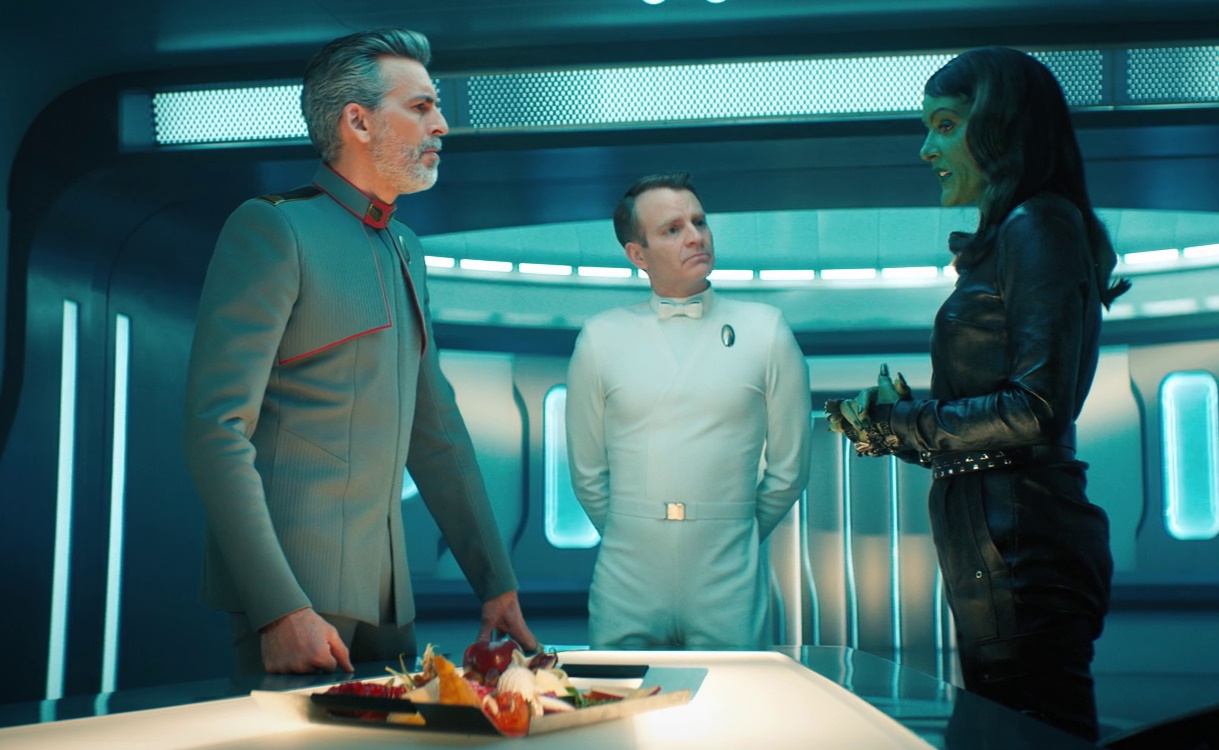
Star Trek: Discovery theories – week 7

Spoiler Warning: There are spoilers ahead for Star Trek: Discovery Seasons 1-4, Short Treks, Star Trek: Picard Season 1, Star Trek: Lower Decks Season 1, and for other iterations of the Star Trek franchise.

Because Discovery is currently taking an unscheduled six-week break, I was in no rush to update my theory list! The second half of Season 4 won’t air until the 10th of February (or the 11th here in the UK), so there was more time than usual to consider the implications of the most recent episode: But To Connect.

But To Connect worked well as a mid-season finale, even though some of its story points weren’t my personal favourites and some of the drama felt rather contrived. We have some interesting questions to consider about Ruon Tarka in particular, as the Risian scientist told us some very interesting and unexpected things.

This week we have three retiring theories and one confirmation. As always, we’ll look at those first before we jump into the main list.

Retired theory #1:
Dr Kovich is an agent of Section 31.

Dr Kovich.

Though Dr Kovich’s role within the hierarchy of Starfleet and the Federation is still unexplained, after But To Connect I think we can finally retire this theory – one which I’d been holding on to since we first met the character in Season 3.

Dr Kovich’s early interactions with Georgiou in particular seemed to show him as someone morally ambiguous to the point of being uncaring; he knew that Georgiou’s health was going to fail, yet did nothing to warn her or Captain Saru. Combined with his stoic demeanour and a sense that he wasn’t telling us anywhere close to everything he knew, I speculated that he could be an operative – or even the head – of shadowy organisation Section 31.

Dr Kovich’s first appearance seemed to set him up as a mysterious, morally ambiguous character – perfect for Section 31.

There was the potential for some kind of tie-in with the Section 31 series, but with that project seemingly being shelved (at least for now), that doesn’t seem like it’s a consideration for the writers and producers in charge of the overall direction of the Star Trek franchise. In fact, we haven’t seen any mention of Section 31 explicitly since Season 2.

We’ve seen Dr Kovich as a psychologist, working with Starfleet Intelligence, having a say in the running of Starfleet Academy, and now as an expert in the field of AI. Whoever he is, and whatever formal title or position he holds, I think we can finally rule out Section 31. Dr Kovich has turned out, to my surprise I must confess, to be one of the true believers in the goals and ideals of Starfleet – something he demonstrated clearly in But To Connect through his interactions with Zora and Stamets.

Retired theory #2:
Zora will go rogue.

Zora with Captain Burnham in Stormy Weather.

There is still an open question surrounding Zora’s burgeoning sentience, and what that could mean for Captain Burnham, the crew of Discovery, and indeed the rest of Starfleet. Whether this is something Season 4 will find time to tackle, or whether Zora will be dealt with in more detail on another occasion isn’t clear right now – but I think what is clear from what we heard in But To Connect is that Zora is firmly on Starfleet’s side.

Especially after Zora’s refusal to follow orders in Stormy Weather – a moment that came with a throwback to HAL 9000 from 2001: A Space Odyssey – I was somewhat nervously awaiting Zora going completely rogue, perhaps even doing something to endanger the ship and crew.

Zora in But To Connect.

Though Zora’s refusal to share the co-ordinates of the DMA’s origin seemed, at first, to confirm my suspicion that this was the direction of travel for this storyline, Discovery ended up turning it around over the course of But To Connect, reassuring Zora that she could trust the crew of Discovery, and reassuring us as the audience that our heroes can trust her as well.

This was cemented by Zora sharing the co-ordinates of the DMA’s origin, but also by Zora being given an official role as a Starfleet mission specialist – the same loophole that brought Burnham aboard the ship after her mutiny in Season 1. Zora has started the process of becoming a more significant character on the show – something that I’d like to see continue in future episodes, as I kind of like the idea of the crew and ship working in tandem. It gives me Farscape vibes!

Retired theory #3:
Captain Burnham and the crew will encounter the Klingons.

Kol, a 23rd Century Klingon leader.

If we were going to see the Klingons this season, I think the diplomatic summit in But To Connect would have been where it happened. With the DMA seeming to be of extragalactic origin, it doesn’t seem like the Klingons will turn out to be the mysterious Unknown Species 10-C, either. So I’m choosing to retire this theory for now.

I don’t know why we haven’t seen any 32nd Century Klingons since Captain Burnham and the crew arrived last season. It’s possible that Discovery’s writers feel they’ve done all they can with the faction and want to move on to other stories, but having a Klingon or two as minor characters at key moments like the diplomatic summit wouldn’t get in the way of that. So I confess that I’m not sure why we haven’t seen any Klingons lately – but it doesn’t seem like we’re going to this season.

Confirmed theory:
Captain Burnham’s war experiences from Season 1 will come into play.

Captain Burnham in But To Connect.

In But To Connect, we saw Captain Burnham arguing in favour of a less-aggressive posture toward the DMA. She drew on her own experiences with the Klingons, in part, to inform this decision. While Book and Tarka argued for attacking the DMA with their new weapon, Burnham was one of the key voices advocating for a peaceful stance and to try to make first contact with Unknown Species 10-C.

It’s reasonable to plan for worst-case scenarios, and as I argued in my review of But To Connect, the two contrasting approaches to the DMA didn’t have to be a zero-sum game. It would have been possible to take a more balanced position, as Discovery has tried to do all season long, in which the DMA-stopping weapon was built while the Federation also made an attempt at peaceful first contact. But regardless, I speculated last week that Burnham would be the one to argue for making an attempt at peaceful first contact, reminding everyone that no one currently knows what the DMA is supposed to be nor what the intentions of its creators were. And that’s pretty much what she did in But To Connect.

So those theories are done!

Now we’re going to jump into the main list, starting with a few new theories and a few theories that saw movement in But To Connect.

Theory #1:
Ruon Tarka’s mysterious “friend” is someone we’re already acquainted with.

I’m sure that’s how Tarka would’ve typed if he’d used MSN Messenger circa 2002.

Why did Ruon Tarka avoid naming his “friend” when Book asked him about it? Tarka’s friend is supposedly one of the major motivating factors in him wanting to stop the DMA – he wants to use the power source at its centre to “punch through” to a parallel universe in the hopes of meeting up with this person. But when Book asked him who this individual was, Tarka tried to ignore the question.

This could be a complete over-reach, but I wonder if the reason for the secrecy is because Tarka’s friend is someone who we as the audience are already familiar with. This could be someone from Discovery, or it could be someone from a past iteration of Star Trek. Given that Tarka wants to travel to a parallel universe, perhaps his friend is the counterpart from that universe to someone we’re familiar with.

I put together a short list of possible candidates for being Tarka’s mysterious friend, and you can find it by clicking or tapping here.

Theory #2:
Tarka aims to travel to the Kelvin universe.

The USS Kelvin, namesake of the Kelvin timeline.

There are many parallel universes, as Tarka reminded us in But To Connect. The Mirror Universe is one that we’re familiar with from Discovery and from past iterations of Star Trek – but Tarka seemed to suggest that that isn’t his destination. In addition, Dr Kovich told us in Season 3 that travel to and from the Mirror Universe is no longer possible as of the 32nd Century.

Though Star Trek has shown us a number of different parallel universes before, the other major one that comes to mind is the Kelvin timeline (also known as the “JJ-verse”) in which the three reboot films were set. 2009’s Star Trek showed us the point of divergence; the moment at which this universe and the prime timeline separated: the arrival of Nero and his attack on the USS Kelvin. Star Trek Into Darkness and Star Trek Beyond furthered our understanding of that universe somewhat.

Kirk and Spock in the Kelvin timeline.

A fourth Kelvin film may or may not be happening, but even if it does the setting remains ripe for further exploration. We don’t know how far the Kelvin timeline and the prime timeline will have diverged, and whether it operates like the Mirror Universe with every character getting their own alternate counterpart. If it does, perhaps Tarka met his own Kelvin timeline counterpart and that’s how he cooked up this scheme.

Though Tarka is correct about the multitude of different universes and realities, of all the ones we’ve spent a significant amount of time with thus far in Star Trek, the Kelvin timeline seems the most likely destination. Compared to the likes of the Mirror Universe it’s safer, and if it diverged significantly from the prime timeline it stands to reason that the Burn never happened. We also got an oblique Kelvin timeline reference in Season 3 – could that have been a hint?

Theory #3:
Tarka’s friend made the DMA.

Tarka and Stamets made a model DMA.

How does Ruon Tarka know so much about the DMA and its inner workings? It’s true that he got data from the USS Discovery’s mission, from the scans Book’s ship took, and from other sources, but even so he seems to have been able to figure out the precise mechanisms by which the DMA operates incredibly quickly. This leads me to suspect that he may know more about it than he’s willing to say.

We should acknowledge a production-side explanation here. The way Discovery Season 4 has been written and edited has seen a number of key moments in the DMA storyline blitzed through incredibly quickly. As the audience, we’ve been parachuted in just in time to see key moments: Stamets’ proto-wormhole theory, the DMA being an artificial construct, the DMA coming from outside of the galaxy, and the discovery of its origin point. The fact that these key moments happened in relatively short sequences with not a lot of setup adds to this sense that people like Tarka seem to have accumulated a lot of information about the DMA very quickly, and we should acknowledge that he claims to have been working on this problem off-screen for many weeks, if not months.

Tarka and T’Rina with a hologram of the DMA.

So there is that caveat. But something about the way Tarka stormed aboard the USS Discovery in The Examples with clear blueprints for building a scale model of the DMA did give me pause. And then in But To Connect, his plan to disable it (but not destroy it) using a very specific type of weapon also seems to have come along at a very convenient moment.

In short, I’m speculating that Tarka knows more about the DMA than he’s letting on, and that his friend may be involved in its creation. If his friend is from a parallel universe, they may have even built the DMA specifically to help Tarka travel there. In The Examples, Book accused Tarka of knowing who made the DMA, which could be a further piece of evidence.

Theory #4:
Book and Burnham will get back together.

Book and Burnham earlier in the season.

If there’s one thing that I’d cut from Season 4 it would be the unnecessary insertion of more Burnham relationship drama. After everything she went through with Ash Tyler in Seasons 1 and 2, finding a way for her to feel settled was a huge net positive for the series. She doesn’t need to have that with Book, but having established that they worked very well together as a couple, undoing that would not be my preference.

So this is as much a hope as it is a bona fide theory, but I would like very much for Book and Burnham to resolve their differences – and quickly. Whether that will come from Book realising that Tarka has manipulated him, from Burnham reaching out, from the pair finding a way to compromise… it doesn’t really matter. But I’d hope that, within an episode or two of Season 4’s return, we can put all of this nonsense to bed. Permanently.

Theory #5:
The DMA isn’t a super-weapon.

President Rillak convinced Captain Burnham to make this argument to the delegates in But To Connect.

We got a more detailed examination of this argument in But To Connect, and as mentioned it was Burnham – with no small amount of prompting from President Rillak – who led the charge.

In brief, the DMA being damaging and destructive doesn’t prove that it’s a super-weapon, even if it was artificially created. I’d add into this discussion the fact that the DMA, in all the weeks (or months) that it’s been in the Milky Way, has destroyed one planet and one small asteroid colony. If someone were using the DMA as a weapon, it seems remarkably inefficient to have harmed precisely two places in all that time.

Captain Burnham pointed out that we have no frame of reference when it comes to Unknown Species 10-C and the DMA. There’s simply no way of knowing what their intentions were by creating this anomaly, and while it could be a weapon, there’s also a chance that it isn’t. Right now, the fact that the DMA has been misunderstood feels like a distinct possibility.

Theory #6:
The DMA is a life-form.

Zora is an AI that came to life. Maybe the DMA is too?

On the other side of But To Connect we got into a complex discussion with Stamets, Dr Kovich, and the others about the nature of Zora. At what point does an artificial construct become a distinct and unique life-form? This argument had echoes of past Star Trek episodes like The Measure of a Man and Author, Author, and was interesting in its own right. But could it be laying the groundwork for something to come with the DMA?

Star Trek has shown us life-forms like V’Ger – a giant energy cloud surrounding an artificial life-form. Perhaps the DMA is something similar, and while it may have started out as a simple piece of machinery, it has since evolved into something more. Just like with Zora, perhaps part of the second half of the season will be about understanding this new form of life – and protecting it, if necessary, from the likes of Tarka.

Theory #7:
Some areas of the galaxy – such as the Delta Quadrant – avoided the worst effects of the Burn.

Adira and Stamets with a map of the Milky Way galaxy.

In But To Connect, President Rillak told us that the diplomatic summit she convened would bring together races from “all four” quadrants. Assuming she was referring to the familiar Alpha, Beta, Gamma, and Delta Quadrants that make up the Milky Way galaxy, this would count as our first mention of the Delta Quadrant in the 32nd Century. I didn’t spot any familiar Delta Quadrant races (or their emblems) amongst the assembled delegates, however!

I had previously speculated that the Burn may not have affected the entire galaxy equally, and that regions farthest away from the Verubin Nebula may have survived without much damage. I still think that this is a possibility – though whether Discovery will revisit the Burn in any depth, or visit the Delta Quadrant at all, remains unclear.

To see a full write-up of this theory, click or tap here.

Theory #8:
There will be a character crossover from a past iteration of Star Trek.

Star Trek has had some wonderful crossovers in the past.

Ruon Tarka’s friend could, as mentioned, be someone we’ve already met. But there are other ways to bring back a character from a past iteration of the franchise – and there would be many potential benefits to doing so! I had initially proposed a version of this theory in the run-up to Season 3 that centred on the Doctor from Voyager – but with some creative technobabble, practically anyone could be included, despite the leap forward in time.

Choose To Live showed us the Abronians in cryo-sleep, and Stormy Weather saw the crew of Discovery use the transporter buffer to survive – just like Scotty had done in The Next Generation Season 6 episode Relics. Could these be hints at something to come?

It would also be possible for Captain Burnham to discover the logs or a holographic recording of a long-dead character – and while this would be less of a “crossover,” it could still be a ton of fun and great fan-service!

Theory #9:
President Rillak knows what the DMA is and may be responsible for its creation.

President Rillak.

Although we’ve seen President Rillak working hard to unravel the DMA, I’m not ready yet to strike her (and the Federation) off my list of suspects! As we saw in But To Connect, President Rillak is very keen to see Earth (and other worlds) rejoin the Federation as quickly as possible. The DMA has facilitated greater contact between Earth and the Federation than there has been in a long time, and was also a driving force in Ni’Var rejoining. In short, if President Rillak ordered the DMA’s creation as part of a cunning plan to bring wayward ex-member worlds back into the fold… it’s working. At the very least, she isn’t letting the crisis go to waste!

I was also struck by President Rillak’s insistence on negotiating peacefully with Unknown Species 10-C. While this is perfectly in line with stated Federation values and objectives… could she have another motive? If the DMA was created by the Federation, destroying it could cause a shockwave to resonate along its wormhole and damage or even destroy the Federation facility or planet where the DMA was originally created. President Rillak’s peaceful approach may be intended to protect the people who created it – because she knows who that is.

President Rillak and Captain Burnham.

Despite her recent appearances seeming to suggest she’s firmly on Captain Burnham’s side, I see a noticeable manipulative, almost Machiavellian side to President Rillak. She’s brought Burnham on board because she believes working together is to her advantage, as she did with the Ni’Var negotiations and at the diplomatic summit. But she also used Burnham in both of those cases to advocate positions that it would be politically or diplomatically difficult for her to do openly – effectively manipulating those events from behind the scenes.

Captain Burnham needs to tread very carefully, as I firmly believe that President Rillak is someone who will happily throw her – and everyone aboard the USS Discovery – under the bus in a heartbeat if she believed doing so would advance what she considers to be the Federation’s best interests. And if she believed that the way to bring the Federation back together is to give the various independent worlds a threat that they couldn’t handle alone… well, that might just be the reason why she sought to create something like the DMA.

As stated in previous weeks, President Rillak may not have created the DMA, nor ordered its creation, but may be covering it up because it’s in the Federation’s best interests in her opinion. She may also be choosing to keep this knowledge hidden so she can continue to exploit the DMA for her own purposes.

Theory #10:
Season 4 will connect with the Short Treks episode Calypso.

Zora dancing with Craft in Calypso.

Zora’s status as a member of the crew was confirmed in But To Connect, and this followed her developing emotions and sentience earlier in the season. Zora is now much closer to her presentation in Calypso, potentially bringing the story of the Short Treks episode one step closer.

There are still significant hurdles to overcome if the story of Calypso is to be wrapped up in Season 4, though. Obviously we have the timeframe issue: will the USS Discovery be sent back in time, be abandoned, or is Calypso taking place centuries in the future? Then we have the USS Discovery itself – it’s been retrofitted since arriving in the 32nd Century, and now looks very different to how it did in Calypso. I’m not sure how Discovery will overcome these hurdles – but it’s possible. It feels like a proper link-up with Calypso is edging closer week by week.

So those theories are new or saw movement last week.

Now, as always, I’ll keep the theory list all in one place by recapping all of the other theories that I currently have in play for Discovery Season 4.

Theory #11:
Unknown Species 10-C is a faction from a past iteration of Star Trek.

Could Unknown Species 10-C have already appeared in Star Trek?

Despite the fact that the DMA has passed through the galactic barrier, making assumptions is dangerous! We’re only at the season’s halfway point, after all, so there’s plenty of time for twists and turns.

Based on the DMA potentially having an origin outside of the Milky Way, the three suspects that immediately spring to mind are the Kelvan Empire, the Sphere-Builders, and the super-synths from Season 1 of Star Trek: Picard. They’d all been on my list of suspects going back months, and I really feel that any one of them would make for a potentially interesting story.

I have a longer list of suspects for Unknown Species 10-C, so for a more detailed look at these three candidates – and many others – click or tap here to see the full list.

Theory #12:
A major character will be killed off.

Shaxs’ funeral in Lower Decks.

Lieutenant Tilly’s departure in All Is Possible definitely shook up the cast. And Gray’s departure in But To Connect may do so as well. However, I stand by what I said before the season aired: killing off a character can be a great way to demonstrate the dangerous nature of the circumstances that the crew have found themselves in. So far, despite tangling with the DMA on several occasions, only a couple of redshirts have lost their lives.

In Stormy Weather, Dr Pollard raced through the corridors of the USS Discovery to reach a hull breach. Shortly after she arrived, a redshirt was blown out into space – but Dr Pollard survived. Although moments like this can make it feel that Discovery is shielding its main and secondary characters with some pretty heavy plot armour, I still feel that there’s scope to see a major character death before the season ends.

If you want to check out my pre-season “death predictions,” in which I speculated about which characters may or may not be in danger, you can find that by clicking or tapping here.

Theory #13:
The Guardian of Forever will be back.

The Guardian of Forever as it appeared in The Animated Series.

Having reintroduced the Guardian of Forever in Season 3, I wouldn’t be at all surprised to see Discovery return to the Guardian’s planet in Season 4. Because Captain Burnham and the crew still don’t know much about the DMA or Unknown Species 10-C, it would make sense to at least ask the Guardian for help – maybe it has encountered this phenomenon or the people who made it before.

The Guardian of Forever is also the only way we know of at present to travel through time – something that might be necessary if Season 4 makes an attempt to link up with Calypso in a big way. There are many reasons why Captain Burnham might want to revisit the Guardian, and it would be great to bring back actor Paul Guilfoyle, who played the Guardian’s humanoid avatar in Season 3.

Theory #14:
The crew will have to defend the Verubin Nebula.

The dilithium planet is vital to the Federation.

Despite having grown to sixty member worlds, the Federation is still in a weakened state and isn’t yet back to full strength. The Verubin Nebula is thus a very tempting target for anyone looking to gain an edge in a galaxy where dilithium is still in short supply. As the only known significant cache of the valuable fuel, whoever controls the Verubin Nebula will have a massive tactical advantage.

It would begin to stretch credulity to think that everyone in the known galaxy would see the Federation rebuilding and having access to dilithium and not want to find out for themselves what’s going on. Once the Verubin Nebula’s existence becomes known, even if the Federation promises to share its bounty with all comers, it seems very likely that someone would want to take control of the dilithium supply for themselves. This could even be the objective Unknown Species 10-C have – they may be looking for a way to control the Verubin Nebula and its supply of dilithium.

Theory #15:
The ban on time travel will be explained in more detail.

The USS Enterprise was able to travel through time using the “slingshot method.”

This one is as much a hope as a theory right now! In short, the ban on time travel was introduced early in Season 3 primarily as a way for the writers and producers to avoid questions about why the 32nd Century was so different from how the far future had been depicted in earlier Star Trek productions, as well as to explain things like how the Burn was able to catch the Federation off-guard and why Georgiou couldn’t simply be sent back in time when she needed to.

But the ban itself raises some issues – the biggest one being the lack of detail on how it works and how something like this could possibly be enforced. As I said several times last season, it isn’t possible to just un-invent a technology so useful and powerful as time travel. Even just a few lines of dialogue going into a little more detail on the mechanisms involved in the ban would be really useful.

Theory #16:
The Federation has flouted the ban on time travel.

President Rillak may have tried to circumvent the ban if she felt doing so would be in the Federation’s interests.

Sticking with the time travel ban, another theory I had last season was that the Federation – and Section 31 in particular – might have deliberately flouted the ban and failed to abide by the rules. Someone as straight-laced and committed to Starfleet ideals as Admiral Vance is highly unlikely to have sanctioned such a move, but there are other Federation leaders – such as President Rillak – who could be implicated.

Obviously the bulk of the season’s story will deal with the DMA. But there’s scope to either talk about the time travel ban in a standalone episode or even tie the two stories together – perhaps the anomaly has been unleashed as a result of unsanctioned time travel.

Theory #17:
Michael Burnham won’t remain captain of Discovery.

Captain Burnham in The Examples.

This is a controversial one, so let me just say up front that I’m neither in favour of this theory nor opposed to it – I just think it’s a possibility. As things stand, Discovery has had four different captains across its four seasons. One of the show’s unique points of interest within Star Trek’s broader canon are the very different ways in which these individual captains commanded the ship and crew.

It’s got to be considered a possibility, then, that the show will continue this trend. This doesn’t mean Captain Burnham will be killed off; I’d actually argue she’s pretty safe. But there are many different routes to her potentially leaving the ship, such as a desire for freedom that we saw in Season 3, or even perhaps taking up a new, more senior role within Starfleet.

Captain Burnham on the bridge in Stormy Weather.

If this theory were to come to pass, it would be something I’d expect to see at the very end of the season. Even if Burnham seems 100% committed to her new role as captain, I don’t think it’s a theory we can definitively rule out.

It’s worth mentioning that at time of writing Discovery hasn’t been officially renewed for a fifth season – so all this talk of who’ll be in the captain’s chair by then could be moot! And of course this theory has a very strong counter-argument: that Discovery’s main story arc across its first three seasons can be read as Burnham’s ascent to the captain’s chair.

Theory #18:
Saru will be given the captaincy of the USS Voyager-J.

Captain Saru.

Saru’s future was briefly discussed before he offered to serve as Captain Burnham’s first officer in the episode Anomaly. He has already been offered a command of his own, so Starfleet clearly values his command abilities and experience. President Rillak was seen to be assessing Captain Burnham’s suitability for the captaincy of the USS Voyager-J in Kobayashi Maru… and she mentioned having a shortlist of candidates. Could Saru be on her list?

Several of the qualities that President Rillak said she was looking for in a potential captain seem to apply to Saru. He’s more level-headed, less likely to put himself in a dangerous situation, and more inclined to think of the big picture. He has a weakness when it comes to Kaminar, as we saw toward the end of Season 3, but generally speaking he isn’t someone who lets his emotions get the better of him. His wisdom and calm demeanour could be valuable in the captain’s chair of the Federation flagship. This could also set the stage for his departure from the show, or possibly even for a new show following his adventures aboard his new ship.

Theory #19:
Book will find Kyheem and Leto inside the DMA.

Book with Leto and Kyheem shortly before the destruction of Kwejian.

In Star Trek: Generations, Captain Picard encountered Captain Kirk inside the Nexus – despite Kirk being declared “dead” after the Enterprise-B encountered the energy ribbon almost eighty years earlier. The DMA’s similarly mysterious nature raises the faint possibility that at least some of those it appears to have “killed” may not be as dead as they first appear.

This theory is, I freely admit, a bit of a long-shot. And it hinges on a fundamental question underlying the story of the season: what’s going on with the DMA? Was it designed to kill? Or is it some kind of method of faster-than-light travel, using the wormhole at its core? If it’s the latter, perhaps some of the people on Kwejian may have survived or been transported to wherever Unknown Species 10-C reside.

Theory #20:
We haven’t seen the last of the Abronians.

I currently have four ideas for different ways that the Abronians – the non-humanoid race that Captain Burnham, Tilly, and the Qowat Milat helped save from cryo-sleep in the episode Choose To Live – could play a further role in Season 4.

Theory #20a:
The Abronians’ homeworld was destroyed by the DMA.

Captain Burnham believes this image depicts a “supernova.”

After arriving at the Abronians’ cryo-ship, Captain Burnham found a stone carving that seemed to depict the destruction of the Abronians’ homeworld. This carving was only shown on screen briefly, but it seemed to show the planet being damaged or destroyed in a large explosion. Burnham credited the planet’s destruction to a “supernova,” and the story then raced ahead.

Considering that the main thrust of the season so far has been about the DMA, perhaps Burnham was incorrect: the Abronian homeworld was destroyed by the anomaly, not a supernova.

Theory 20b:
The Abronians’ homeworld was on the “other side” of the DMA.

Abronian stasis pods.

The DMA seemingly contains the technology to generate an artificial wormhole. It’s thus possible that the DMA can facilitate travel between incredibly distant locations – not only for itself, but for other starships too. The subspace tear that the DMA left behind went nowhere – but it may be possible to get “inside” the DMA itself or even use its wormhole tech to travel vast distances.

One thing struck me as odd about the Abronians: the Federation was entirely unaware of them, despite the Abronian cryo-ship being relatively close to Federation space – such that Captain Burnham could reach it using Book’s ship in a short span of time. It’s possible that the Abronians had been asleep for millennia, unnoticed by the Federation and the wider galaxy for all that time. But it’s also at least possible that their cryo-ship is a newcomer to the area. If so, perhaps it arrived here via the DMA.

Theory #20c:
The Abronians will return to help the Federation later in the season.

A deceased Abronian.

One of the themes of Discovery since Season 3 has been connection, including building connections between the Federation and other races and organisations. The Abronians were awoken from cryo-sleep thanks to the interventions of Captain Burnham and Tilly – at least in part – and they may seek to repay the Federation, or Captain Burnham personally, for that help.

We saw this play out last season with Ni’Var; in the season finale Ni’Var ships raced to the Federation’s aid as the Emerald Chain attacked. Perhaps the Abronians will likewise step up to help when the Federation needs allies.

Theory #20d:
The Abronians’ moon-ship may be useful in a later story.

“That’s no moon…”

The Abronians’ cryo-ship is huge, and at least superficially seems to have the mass of a moon or small planetoid. If Captain Burnham and the crew needed a starship that large, such as to aid in the evacuation of a planet threatened by the DMA, for example, perhaps they’ll return to the Abronians and ask to borrow it.

As we saw in Choose To Live, the moon-ship was in full working order. All it needed was some extra dilithium to power up and it was perfectly capable of moving under its own power, and its computer systems were still functional. The only system that seemed to have failed was the wake-up timer! So if the crew are in need of a huge starship, perhaps we won’t have seen the last of the moon-ship!

Theory #21:
Captain Burnham and/or the Red Angel suits from Season 2 are connected to the DMA.

A Red Angel suit from Season 2.

Now that we know the DMA is artificial in nature, the question shifts to who built it and why. We’ve covered the idea of it being a weapon or an out-of-control experiment, as well as being a life-form in its own right. It could also be something created by the Federation. But because this is Star Trek: Discovery, a show which likes to put Captain Burnham at the centre of its stories, perhaps there’s a connection to her that we’re missing.

The Red Angel time travel suits from Season 2 were phenomenally powerful machines, capable of generating time-wormholes large enough to transport an entire starship 930 years into the future. We already know that the DMA potentially contains a synthetic wormhole, so it wouldn’t be a huge leap to connect the two. We also don’t know for certain what became of Captain Burnham’s Red Angel suit after the Season 3 premiere. There’s also the faint possibility of a parallel universe Burnham or time travelling Burnham being responsible.

Theory #22:
Ruon Tarka – perhaps aided by Book or Stamets – will create the DMA.

Stamets, Tarka, and Saru with the DMA model.

I included Tarka on my list of suspects for the creators of the DMA, but this warrants a full entry on the theory list too! In short, we saw Stamets and Ruon Tarka creating a scale model of the DMA in The Examples, and according to Reno their experiment came very close to destroying the entire ship. They were able to perfectly recreate the device at the centre of the DMA, albeit on a smaller scale – so what’s to prevent Tarka from building a full-scale replica (other than the power generation requirements)?

This theory posits that he will do exactly that – somehow – or that his experiments will set into motion a chain of events that leads to the creation of the DMA in a kind of time-loop storyline. The DMA’s wormhole-generating technology may give it the ability to travel backwards through time as well as across vast distances, so it seems technologically plausible at the very least.

The DMA.

But To Connect fleshed out Tarka a little more, giving backstory to him and a potential motive for his single-minded pursuit of the DMA. He also may know more about the anomaly than he’s letting on – including who is responsible for its creation. Regardless, Tarka has been shown as someone willing to take all kinds of risks, and it’s not impossible to think that one of his risks could backfire – creating the DMA in the process.

Personally, I find time-loop paradox storylines to be frustrating – and they can be very difficult to pull off successfully. There’s no beginning point to such a story: the DMA exists because the DMA was created because the DMA exists because the DMA was created… it’s an infinite loop. But we’ve seen Discovery tackle time travel stories like this before – and the pieces seem to be in play right now for this theory to pan out.

So that’s the main theory list.

We also have two production-side theories in play, and I’ll recap those now.

Production-side theory #1:
Tilly’s departure will be permanent.

Tilly’s departure feels permanent.

Mary Wiseman confirmed in an interview with Wil Wheaton on The Ready Room (Discovery’s social media aftershow) that Tilly will be seen again before the end of Season 4, and we glimpsed her in the trailer for the second half of the season as well. But that doesn’t mean she will return as a main character on the show going forward, and her departure in All Is Possible felt permanent. Despite that, I’ve seen quite a lot of folks online who don’t believe that Tilly is actually leaving the series – so I wanted to put it out there officially and say that, in my opinion anyway, she is.

Maybe those people know something that I don’t! As I always say, I don’t have any “insider information;” all of this is just speculation on my part. However, I feel that the manner of Tilly’s departure, the fact that she got that emotional sequence with Captain Burnham, a montage showing her leaving the ship, Adira seeming to take over several of her roles, and her departure feeling like the culmination of her arc going back to the latter part of Season 3 all come together to strongly indicate that she won’t be back as a major character. She may yet have a significant role to play in a future Season 4 episode, as has been suggested, but unless Discovery’s writers are really playing with our emotions I believe we’ve seen Tilly’s end as a main character on the show. She may come back in a future Starfleet Academy series, though… so watch this space!

Production-side theory #2:
Star Trek: Discovery isn’t going to be renewed for Season 5.

Is a fifth season going to happen?

Since Discovery debuted in 2017, we’ve known well before this point in the season that the show has been renewed. This obviously isn’t one of those “I hate new Star Trek” things that we’ve seen doing the rounds online for years; I adore Discovery and genuinely want to see it continue. But it’s profoundly odd to have arrived at Season 4’s mid-season break and to still have had no announcement about Season 5. For comparison, Star Trek: Picard has been renewed for Season 3 even though Season 2 hasn’t aired yet.

I’m hopeful that this is just a blip; a temporary delay for reasons unknown, and that the show has been renewed for Season 5 already behind the scenes. However, when we look back at Star Trek productions in recent years, it was often apparent that production work was quietly ongoing even if there hadn’t been any official word from ViacomCBS. As far as we know at this stage, there’s been no pre-production work on Season 5, let alone any filming taking place in the Toronto area. The abrupt announcement that the show is taking a mid-season break could also be indicative of issues with the production.

Once again, this is a “watch this space” kind of theory. I hope I’m wrong… but the lack of any news or even any significant rumours about the show’s future is beginning to have me worried.

So that’s it.

Discovery will return in five weeks’ time.

We’ve hit the halfway point of Season 4 with a number of theories still in play! There are major questions surrounding Ruon Tarka, Cleveland Booker, the nature of the DMA, and Unknown Species 10-C in particular that all need answers when the show returns next month. It’s going to feel like a long wait!

Before we go, one final point. I write up these theories because I like Star Trek and I like writing. But for some folks, fan theories can hamper their enjoyment of a film or television show. It’s worth keeping in mind that most of these theories probably won’t pan out, and we have to be prepared for the fact that even the most well-constructed fan theory, no matter how fun and plausible it seems, simply won’t turn out to be true. If you find that speculating and reading theories is beginning to detract from your enjoyment of Star Trek: Discovery – or any other television show or film – it might be a good idea to take a break for a while.

Star Trek: Discovery Season 4 is currently on hiatus and will return on the 10th of February. The first half of Season 4 is available to stream now on Paramount+ in the United States, Scandinavia, Latin America, and Australia. The show is on Pluto TV in the UK, France, Germany, Italy, and other parts of Western Europe at 9pm on Fridays and Saturdays. Individual episodes or the full season can be purchased on iTunes, Amazon Video, YouTube, and possibly other platforms in the UK, parts of Europe, and select other countries. The Star Trek franchise – including Discovery and all other properties mentioned above – is the copyright of ViacomCBS. This article contains the thoughts and opinions of one person only and is not intended to cause any offence.
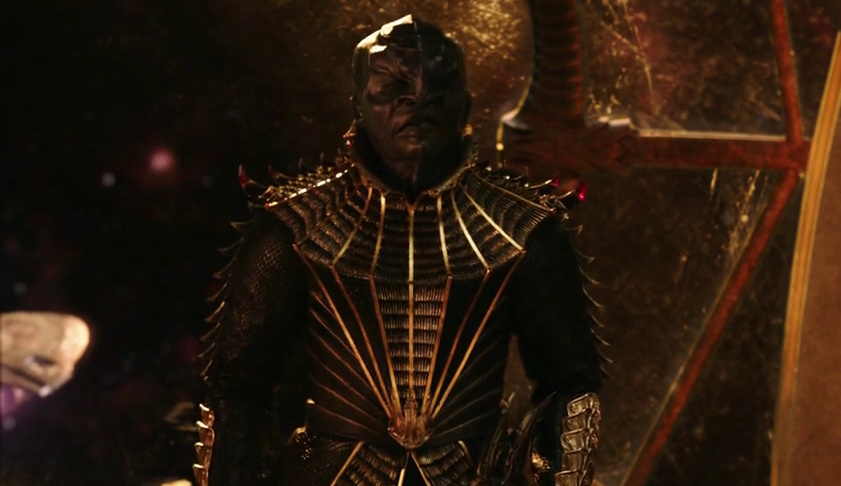
Star Trek: Discovery Season 4 – So who is Ruon Tarka’s “friend?”

Spoiler Warning: There are spoilers ahead for Star Trek: Discovery Seasons 1-4, Star Trek: Picard Season 1, and for other iterations of the Star Trek franchise.

With Discovery taking an unplanned six-week break, we’ve got a little time to settle in and collect our thoughts. The first half of Season 4 has seen some progress toward unravelling the mystery of the dark matter anomaly, but there are still plenty of questions! From this point, the story could go in many different directions, and could potentially make significant connections and crossovers with past iterations of Star Trek. Today, we’re going to consider one such possibility.

In the episode But To Connect, which served as the mid-season finale, Ruon Tarka returned. Tarka is a Risian scientist who had been working on the DMA and who had collaborated with the USS Discovery’s own Paul Stamets in the episode The Examples to build a working scale model of the anomaly. We learned more about him this time, including what he claims to be his motivation for wanting to destroy the DMA while preserving the machine at its centre: he wants to use it to travel to a parallel universe.

Tarka made his first appearance in The Examples.

During a conversation with Book, Tarka claimed that he had “a friend” while he was forced to work for the Emerald Chain. This friend wasn’t mentioned by name, but appears to have been a major motivating factor for Tarka to find a way to cross the divide between universes; to “punch through” as he put it.

This could all be obfuscation on Tarka’s part; a made-up story to help him sink his talons into Book and manipulate him into doing his bidding. Tarka’s plans relied on Book: he needed him to either convince the delegates to approve the use of his weapon, or to use the stolen spore drive to deliver the weapon without Federation help. So we have to acknowledge that possibility.

Stamets and Tarka built a scale model of the DMA.

But I was struck by the way this conversation deliberately kept Tarka’s “friend” hidden from us as the audience. Book asked who the friend was, but Tarka quickly waved away the question. That makes me wonder… who is this friend? And could it be someone we’ve met before – maybe in Discovery, but maybe in a past iteration of Star Trek?

So today we’re going to consider a few possible candidates for Tarka’s friend. Who could this person be, and if they survived their imprisonment with the Emerald Chain, might we be about to meet them?

Tarka and Book aboard Book’s ship.

I can’t decide right now whether Discovery is setting up Tarka to be the main villain for the rest of the season, or whether Captain Burnham and the crew will resolve this storyline within an episode or two before moving back to the DMA and Unknown Species 10-C. Either possibility feels just as likely, so we could perhaps see the Tarka storyline rumble on for much of the second half of the season.

But we’ll have to set that aside for now! I’ve put together a list of candidates for being Tarka’s friend and we’ll go through them one by one. Just remember one thing: I have no “insider information,” and I’m not trying to claim that any of this will actually be included in Star Trek: Discovery. This is speculation and theorising from a fan – and nothing more.

With that caveat out of the way, let’s jump into the list.

Friend #1:
Aurellio

Let’s see… Aurellio is a bona fide scientist. He worked for the Emerald Chain. He and Tarka know one another. And although Aurellio has been mentioned several times this season, we haven’t seen him. Could he be the mysterious friend?

I don’t think so, not unless Tarka is even more devious than we think! Although we haven’t seen Aurellio this season, we’ve heard multiple times that he’s working with Starfleet, and he even built the new spore drive that Book and Tarka used in But To Connect. So unless Tarka has somehow managed to fake Aurellio’s entire existence… I think we can rule him out.

But on the surface, Aurellio fits the bill in some respects! We don’t really know of any other ex-Emerald Chain scientists, so it’s an outside possibility that Aurellio is involved in all of this somehow.

Friend #2:
Altan Inigo Soong

Dr Soong is the son of Data’s creator, and was encountered by Admiral Picard on the planet Coppelius in Et in Arcadia Ego, Part 1 – the first part of the Picard Season 1 finale. As a human from the 24th Century, he shouldn’t still be alive almost eight centuries later, but Dr Soong had plans to transfer his consciousness into a synthetic body. This process was mentioned earlier in Discovery Season 4, as it was used to give Gray a physical body.

If Dr Soong was ultimately successful, it’s possible that his synthetic form survived to the 32nd Century, and he could therefore be Tarka’s friend. He was already a skilled scientist when Picard met him, and with centuries of time to develop his skills he could have proven invaluable to an organisation like the Emerald Chain.

Now we get into abject speculation, but if Unknown Species 10-C turns out to be connected to the super-synths from Picard Season 1, this could give Dr Soong an additional motive for wanting to escape to a parallel universe: he might be aware of the threat they pose to the galaxy and all organic races.

Friend #3:
The Doctor

Nothing that Tarka said about his friend implied that they’re organic – so the Doctor being a hologram shouldn’t count against him! I’ve speculated before that a backup copy of the Doctor could still be alive in the 32nd Century, as we saw in the Voyager Season 4 episode Living Witness. While the Doctor wasn’t a scientist per se, after decades living and working with the Kyrians in the Delta Quadrant he may have broadened his skills.

If the Doctor was re-activated to find a galaxy ravaged by the Burn and all of his friends long gone, he might well want to escape to an alternate reality – there’d be nothing left for him in the prime timeline.

Perhaps the Emerald Chain intercepted his ship while he was on his way from the Delta Quadrant, or perhaps this is a different copy or version of the Doctor altogether from the one we saw in Living Witness. Because of the Doctor’s nature as a hologram, he could have easily survived this long.

Friend #4:
Control

Captain Leland, who had been “assimilated” by the Control AI, was killed at the end of Season 2, and the existence of life in the 32nd Century seems to suggest that Control was permanently shut down shortly after the USS Discovery left. But what if that didn’t happen, or if the shutdown of Control was incomplete?

So far this season we’ve had more mentions of Control – and a greater discussion of the implications of its rise – than we got in the entirety of Season 3. Could that be setting up something big later in the season? Could Tarka’s friend actually be someone that the Control AI “assimilated?”

If so, perhaps Control plans to abandon this universe to find one more easily attacked and dominated – and Tarka may find that his friendship with whomever it is was little more than a ruse.

Friend #5:
Another Ruon Tarka

There are multiple parallel universes – perhaps an infinite number! At least some of those universes contain alternate versions of everyone we’re familiar with: the Mirror Universe and the alternate reality of the Kelvin films being just two examples. So what if Ruon Tarka’s “friend” is, in fact, a parallel universe version of himself?

Tarka was confident that the parallel universe he intends to reach is better than the post-Burn reality he currently inhabits. But how could he possibly know that unless he’d either seen it for himself or met someone from that reality? Though in theory anyone from that universe could be Tarka’s friend, I think someone with the self-assuredness and arrogance of Tarka would be more inclined to trust his own counterpart.

We know that Tarka isn’t bound for the Mirror Universe – at least based on what he told Book. But here’s a spoiler for my next theory post: what if he’s trying to reach the Kelvin timeline? His unnamed friend could be his Kelvin timeline counterpart.

Friend #6:
Michael Burnham

We’re sticking with the parallel universe theme here. If an alternate version of Captain Burnham had somehow crossed into our universe, perhaps she’d been captured by the Emerald Chain and forced to work with Tarka. She might have warmed up to him, telling him of her true origin in a different, better universe.

Burnham has a keen scientific mind, and had she ended up in Emerald Chain captivity they might well have tried to put her to work as a scientist. Discovery has also put Burnham at the centre of big storylines before, such as by making her the Red Angel in Season 2.

The counter-argument to this would be that everyone we met from the Emerald Chain, including Osyraa, Ryn, and Aurellio, didn’t recognise Burnham or claim to have seen her before. It’s possible that they never met her or that she was working in a different lab, but it could also be seen as a mark against this theory. Tarka also suggested that his friend was male, which could also rule out Burnham.

Friend #7:
Dax

Thanks to the inclusion of Gray and Adira, we’ve spent some time with the Trill over the past couple of seasons. Trill symbionts are particularly long-lived, and there’s evidence to suggest that Gray and Adira’s symbiont, Tal, may have been alive in the 24th or 25th Century. It isn’t impossible, then, for the Dax symbiont to have survived to the 32nd Century.

Dax was one character I felt could make a comeback in Season 3. Early trailers dropped hints about the Trill, and bringing back Dax could’ve been a great way for the show to give fans a nod and a wink – but without needing to bring back an actor from the past. The nature of Trill life means that Dax would be in a new host by now – and thus the character could be recast in an easy and inoffensive way.

In Deep Space Nine we saw Dax mostly as a scientist thanks to Jadzia, and while Dax had many different roles over the course of their lifetime, returning to a scientific field is a possibility – certainly if a millennium’s worth of knowledge could be put to use. Dax is also aware, thanks to their adventures with Sisko and others, of the likes of the Mirror Universe.

Friend #8:
Soji

Due to her synthetic nature, Soji is also someone who could potentially still be alive in the 32nd Century. With centuries’ worth of accumulated knowledge under her belt, and a desire to help her people, Soji may have continued the Soongs’ work on cybernetics at some point after her adventures with Admiral Picard.

We haven’t yet seen any Coppelius synths in Discovery’s 32nd Century, and I’d be curious to see what became of them. If they survived and were able to continue to build new synths, there could be a thriving population by now. Many of the synths looked alike, so it’s possible that Tarka’s friend may have a familiar face even if they aren’t a character we’ve met before.

It would be great to get a proper crossover between Discovery and Picard, and this could be one way of doing it. The only drawback is that, because of the difference in time periods, having a character like Soji appear in Discovery would potentially be a limitation on future Picard stories.

Friend #9:
A Borg (or ex-Borg)

Where is the Borg Collective? We haven’t heard so much as a whisper since Burnham and Discovery arrived in the 32nd Century. It’s possible that the Borg have been defeated somehow in the centuries since they last tried to conquer the Federation, but it’s also possible that they’re the mysterious Unknown Species 10-C!

Perhaps Tarka’s friend is a Borg, ex-Borg, or even the Borg Queen, and the Emerald Chain had somehow kept Borg in captivity. It could be that Tarka is the one being manipulated, and his efforts to stop the DMA will allow the Borg to gain control of the power source at its centre.

We saw in Picard Season 1 that Borg technology and components were deemed valuable, such that a black market had sprung up. The Emerald Chain is exactly the kind of immoral faction that might have dealt in harvested Borg implants, and that could explain why they kept Borg captives.

Friend #10:
Gabriel Lorca

Captain Lorca commanded the USS Discovery during the show’s first season – but this character was later revealed to be from the Mirror Universe. The prime timeline version of Captain Lorca has never been found, and despite Admiral Cornwell and others believing that he wouldn’t have survived for long in the Mirror Universe, it’s at least possible that he did.

Or perhaps we’re dealing with another alternate version of Captain Lorca, someone native to the parallel universe that Tarka is attempting to reach.

Regardless, it could be fun to see the crew’s reaction to encountering their old captain! And it would be neat to welcome back Jason Isaacs to Discovery – his performance was one of the highlights of an occasionally rocky first season.

Bonus Friend:
Literally anyone!

Thanks to technobabble, practically any major character from Star Trek’s past could have survived to the 32nd Century. Stasis fields, time-wormholes, transporter accidents, pocket universes, warp bubbles, and many, many different phenomena could be brought in to explain the reappearance of practically anyone.

We already saw an oblique reference to one such method in the episode Stormy Weather. The crew placed themselves in the ship’s transporter buffer in order to survive their dangerous escape from the void – a method employed by Montgomery Scott in The Next Generation Season 6 episode Relics. Could it be that this was more than just a callback to that classic episode, and was the setup for something that will come into play later?

With the exception of those few main characters who had been killed off outright – Captain Kirk, Tasha Yar, Jadzia Dax, and a couple of others – basically anyone could fill this role as Tarka’s friend and make a triumphant return to Star Trek!

So that’s it.

Tarka showed a hologram of the DMA to the assembled diplomats and delegates.

I could be completely over-reaching with this one, but I felt that there was something about the way Tarka refused to name his “friend” in But To Connect that could be significant. Why keep that individual hidden – unless there’s something that’s going to surprise us when they’re ultimately revealed?

We’ve seen the Abronians in cryo-sleep this season, and we’ve seen the crew of the USS Discovery put themselves in suspended animation in the transporter buffer. The DMA also contains a wormhole, a phenomenon that has been used to travel through time in past iterations of Star Trek. Gray used the “Soong method” to acquire a synthetic body. And there have been multiple mentions of parallel universes. Any of these could be hinting at the return of a major character, perhaps someone who used one of these methods to either survive to the 32nd Century or to cross over from their native universe.

So that’s my theory. Ruon Tarka’s “friend” is someone we’ve met before, perhaps someone from Star Trek’s past who we wouldn’t expect to see! Unfortunately we’ve got to wait at least six weeks to see if I’m right!

Star Trek: Discovery Season 4 is currently on hiatus and will return on the 10th of February. The first half of Season 4 is available to stream now on Paramount+ in the United States, Scandinavia, Latin America, and Australia. The show is on Pluto TV in the UK, France, Germany, Italy, and other parts of Western Europe at 9pm on Fridays and Saturdays. Individual episodes or the full season can be purchased on iTunes, Amazon Video, YouTube, and possibly other platforms in the UK, parts of Europe, and select other countries. The Star Trek franchise – including Discovery and all other properties mentioned above – is the copyright of ViacomCBS. This article contains the thoughts and opinions of one person only and is not intended to cause any offence.
Star Trek: Discovery review – Season 4, Episode 7: …But to Connect

Spoiler Warning: There are spoilers ahead for Star Trek: Discovery Seasons 1-4 and Star Trek: Picard Season 1.

Sorry for being a few days late with this review! I had several other things going on this week, including my big end-of-year article, a piece looking ahead to 2022’s entertainment experiences, and finally a review of The Matrix Resurrections that I worked very hard on. I also hoped to get around to a review of the new Disney film Encanto, but that ended up taking a back seat along with this review of Discovery’s mid-season finale.

As I said last week, I wasn’t exactly thrilled with the way the mid-season break was announced. Doing so on such short notice adds to a growing sense that ViacomCBS and Paramount+ are being very poorly-managed, and while I don’t begrudge the creative team taking additional time to work on or rework episodes in the second half of the season if that work needs to be done, it raises some serious questions about the handling of the Star Trek franchise and the Paramount+ streaming service on the corporate side of things. If ViacomCBS truly aims to compete with the biggest names in streaming, nonsense like this has to stop. In addition, there are still many Trekkies and would-be viewers all around the world who can’t watch Discovery due to corporate bullshit, something else that ViacomCBS needs to fix as quickly as possible.

The opening shot of the episode.

But To Connect worked well as a mid-season finale. It was tense and had moments of high drama that demonstrated beyond any doubt that science fiction doesn’t need to drown in space battles and high-octane action to be exciting. It was also an episode that, unfortunately, made some of its moments of drama feel incredibly contrived.

After everything Michael Burnham went through in her rollercoaster relationship with Ash Tyler in Seasons 1 and 2, giving her the chance to settle down with someone like Book was an incredibly welcome change. Forcing them to go against each other – especially for a central reason that felt contrived in the extreme – would not have been my choice for the direction of their relationship. Discovery has, over the course of its three-and-a-half seasons thus far, felt a need to inject extra drama and extra conflict where none was needed, upping the character stakes to near-soap opera levels at times. Forcing Book and Burnham to work against each other is the latest example of this trend – and it’s a disappointing thing to see.

The last thing Discovery needs is more Burnham relationship drama. Let her settle down, for goodness’ sake.

Book fell under the influence of Ruon Tarka, someone who we’ll have to deal with in more detail in a moment. For now, suffice to say that Tarka pounced on Book’s emotionally compromised state, seemingly manipulating him to advocate for attacking and destroying the DMA instead of pursuing peaceful first contact with whomever created it. Tarka has his reasons for doing this – claiming he wants to preserve the DMA’s power source so he can use it for his own purposes.

Book was clearly not thinking logically – and given his grief and the external prodding by Tarka, that makes sense. But the idea that Burnham couldn’t help him push through that, especially given that the DMA is explicitly stated to not be an immediate threat to anyone, is the point that begins to stretch credulity and make this whole situation feel contrived and forced.

The DMA was not posing an active, imminent threat to anyone.

Here’s the central point: the DMA, despite its potential danger and raw power, hasn’t actually done that much damage. If we assume that Discovery Season 4 has taken place over at least a couple of months of in-universe time, which seems reasonable given how long some of the scientists seem to have been working on these problems, it’s destroyed precisely two places in that time – a rate of one per month. And aside from Kwejian, the only other place we know it’s hit was an asteroid colony with a population of a couple of thousand. The Federation and the rest of the galactic races present at the meeting clearly have time on their side: the DMA’s path doesn’t seem to be taking it near to any inhabited systems in the immediate term, and while its unpredictable nature could see it disappear and reappear somewhere more dangerous, that doesn’t seem to be its primary mission.

If the DMA were a weapon being actively controlled, it would have targeted more places by now, so the Federation’s plan to attempt to contact its creators makes far more sense than attacking it. Even if Book couldn’t understand that at first, being blinded by his grief or desire for revenge, surely of all people Burnham would have been able to convince him to see the logic behind this slower, calmer approach. If the DMA had been actively threatening a planet – especially a named world that we as the audience might be familiar with, such as Betazed or Sigma Draconis III – things would be different. But without that desperate and immediate need to stop another disaster, the rational approach is to try to contact Unknown Species 10-C.

Book fell under the sway of Ruon Tarka – someone who clearly has his own agenda.

Earlier in the season, we saw Burnham advocate a compromise position, and But To Connect should have offered another opportunity to do so: building the weapon capable of destroying the DMA before attempting first contact. If the DMA then changes course and presents an active threat, it can be destroyed. And in addition, having the weapon in reserve while making first contact would be a valuable asset. If Unknown Species 10-C won’t see reason, the weapon could be a threat. If there’s no one there to negotiate with, the DMA could be destroyed. In short, the answer to the pretty basic problem that the episode posed isn’t “do one or the other,” it should have been “do both.” Build the weapon as a back-up while preparing for first contact.

If Discovery hadn’t insisted on themes of compromise across its last two seasons, I guess I’d give it a pass on this false choice. But in context, it seems to run counter to much of what the show has been trying to say for at least the last two years: that there are always solutions to or ways around these kinds of conflicts. The question of how to approach the DMA did not need to be a zero-sum game, and someone like Captain Burnham should have realised that – even if Book couldn’t.

This didn’t need to be a “black or white” choice. Compromise should have been possible; this is a major theme that the show has tried to present all season long.

Not for the first time, I’m left with a sense that Discovery’s writers and producers have a definite goal in mind; an endgame for the story and characters. But they haven’t figured out how to reach that finishing point in a clear and consistent manner, leaving this side of But To Connect feeling contrived.

On the flip side, the speeches that both Book and Burnham gave were very emotional, and I can’t fault the performances of either Sonequa Martin-Green or David Ajala. Both came across as two people trying to do what they genuinely believed was the right thing; conflicted because of what it would mean for their relationship, but determined to press ahead regardless. Although this wouldn’t be the way I would have chosen to handle either character, there can be no denying that the performances were exquisite.

Both actors played their roles exceptionally well.

Also on this side of the story we had a muted role for President Rillak. Though she was on Burnham’s side – wanting to advocate for an attempt at peaceful contact – she chose to recuse herself from the debate, serving as a moderator only. I still get the sense that she has schemes in play – bringing Burnham along as an ally being one of the ways she tried to manipulate proceedings to get her way without being openly involved – but it was interesting to see her in a more centrist, unaffiliated role.

Among her ambitions from the diplomatic summit were showing the Federation as taking the lead in the fight against the DMA, but also opening initial channels to United Earth with a view to bringing the isolationist world back into the fold. We’ve seen a slight softening of Earth’s leadership since Burnham helped reunite Earth and Titan in Season 3, and it was nice to welcome back Phumzile Sitole as the newly-promoted General Ndoye. As a Trekkie, I want more than anything to see Earth rejoin the Federation – but only if it feels right. Earth shouldn’t be manipulated into coming back into the organisation, so this story beat will have to be handled delicately.

General Ndoye represented Earth and Titan at the diplomatic summit.

Ruon Tarka was perhaps the most surprising character in But To Connect. His self-assured cockiness was still there from his role in The Examples, but we got an idea of what could be driving him forward, and where his interest in the DMA may have come from. Stating that he wants to cross over into a parallel universe was certainly not something I expected – but at the same time it felt very familiar, and very Star Trek.

Tarka comes across as somewhat similar to Tolian Soran, the villain from Star Trek: Generations. Soran wanted to return to the Nexus – a paradise-like realm contained inside of an energy ribbon that periodically transited the galaxy. Tarka’s desire to enter the DMA and use its powerful controller to “punch through” to a parallel universe where he expected life to be better is at least somewhat comparable – and his willingness to break the rules and work against Starfleet shows the same kind of single-mindedness that Soran demonstrated.

Tarka is determined to use the DMA controller for his own ends.

We’ll save for my theory post a full discussion of Tarka, his possible motivations, and potential destinations. But suffice to say this character turn has piqued my curiosity. There’s the potential to get a more complex presentation of a “mad scientist” character trope, one which gives him an understandable or even sympathetic motive for his actions. I don’t think we’re at that point yet, but I see potential in this storyline.

Shawn Doyle was wonderful in The Examples, making Tarka stand out as a different take on a character archetype that has appeared on a number of prior occasions in Star Trek. This amazing performance continued in But To Connect, and Doyle deserves a lot of credit for the way he brought the character to screen with complexity – especially given the relatively small amount of screen time that Tarka has had in the season so far.

Tarka and Book formed an unlikely alliance.

As has happened several times already this season, though, Discovery quickly glossed over much of the actual work on the problems and puzzles posed by the DMA in order to get to the dramatic stand-off between Book and Burnham. Tarka’s weapon seemed to come out of nowhere, and although he’s clearly spent weeks or months of off-screen time working on it, in the episode itself it seemed to be a bolt from the blue; almost a deus ex machina solution to the threat posed by the DMA. As I’ve said on several occasions this season, the end result isn’t the problem – it’s that we as the audience really needed to see at least some of the process to get there, even if just by way of something like a montage.

In exactly the same way on the other side of the story, Zora’s discovery of the coordinates of the DMA’s origin was completely blitzed through in order to get to the story that the episode really wanted to tell. When it comes to the DMA, which is the season’s “big bad” at least thus far, Discovery has dedicated precious little time to actually dealing with it head-on, with much of the investigation happening off-screen. As the audience, we’ve been parachuted in just in time to see key moments: Stamets’ proto-wormhole theory, the DMA being an artificial construct, the DMA coming from outside of the galaxy, and now finally the discovery of its origin point. All of these points, so incredibly vital to the story of the DMA, feel like they’re scarcely even footnotes in a story which on the surface should be making more of them.

Captain Burnham, Stamets, and Adira listen to Zora as she refuses to share what she’s learned.

Before anyone jumps in to tell me off for missing the point: I get it. Discovery has other stories to tell, and wants to use this season in particular to look at issues surrounding trauma and grief. Practically all of the main characters seem to embody different responses to trauma: Stamets getting lost in his work, Culber desperately trying to help others even if doing so is at his own expense, Book’s journey through the stages of grief, and Tilly’s career switch all come from that same thematic place. And these individual, character-centric stories are absolutely worth telling. However, in a sci-fi series that also has the DMA as a major plotline, it feels that the first half of Season 4 has prioritised these character moments at the expense of this other major narrative. It should’ve been possible to balance the season’s story to give both appropriate weight and screen time – but Discovery has yet to find that balance.

So let’s tackle Zora next. The USS Discovery’s computer-AI-Sphere data hybrid has been developing slowly since Season 3, and until the very end of The Examples a couple of weeks ago felt like a relatively minor part of the season. Her transformation into basically an additional main character has been an interesting one, and this week was by far Zora’s biggest moment centre-stage. I got echoes of a number of past Star Trek stories – from The Ultimate Computer and The Measure of a Man through to Picard Season 1’s dealings with the synths and Data – in the way Zora was analysed and discussed by Dr Kovich, Dr Culber, Stamets, Adira, and Gray. It was an incredibly honest and frank discussion, one which absolutely embodied the spirit of Star Trek.

Zora’s status and rights were discussed in But To Connect.

Through this side of the story, But To Connect gave us by far the best and most sympathetic presentation of Dr Kovich. I maintain that, based on his earlier appearances, some kind of Section 31 or spy role was a possibility – and maybe that was the original intention for the character when he was created in Season 3. In But To Connect, however, we saw Dr Kovich as a firm believer in the values and ideals of Starfleet and the Federation: determined to seek out new life, and to ensure that very different forms of life have the same rights as everyone else.

Stamets also shone on this side of the story, and the writing here showed off a complexity that the relatively short half-episode runtime could have hampered. Stamets’ attitude toward Zora’s newly developed sentience could have come across badly, making him out to be some kind of “AI-phobe,” in the vein of something like Picard Season 1’s Zhat Vash. However, the way Stamets was handled – aided greatly by a wonderful performance from Anthony Rapp – ensured that we could understand his reservations and concerns without seeing him as some kind of futuristic bigot.

Anthony Rapp gave his best performance of the season so far.

As in All Is Possible, Discovery succeeded at taking a complex argument and ensuring that the views on both sides were sensible and understandable, allowing true understanding and trust to be reached. Likewise this week, Stamets didn’t simply try to put his foot down and declare that the existence of Zora was some kind of horrible, insurmountable problem, and nor did Zora attack Stamets or try to shut down his concerns.

In an increasingly polarised political climate here in the west, where politicians and activists on all sides are increasingly dogmatic and unwilling to listen to opposing points of view, Discovery once again showed us how debate and discussion should be handled: calmly, maturely, and with mutual respect. This is one of the lessons from this season of the show: that we can’t simply write off points of view we disagree with, nor should we try to shut down or dismiss them. Listening is the first step toward understanding.

Despite the stakes and the complexity of the arguments, But To Connect showed us how these kinds of conversations can and should be handled.

From my perspective as someone who’s non-binary, I felt there could be echoes of the real-world conversation surrounding transgender and non-binary folks in the way Zora’s movement toward acceptance was handled. There are many people who are dismissive of trans and non-binary people – something I sadly experienced firsthand recently in a conversation with someone I considered a friend. An unwillingness to listen and a desire to be dismissive of something we personally don’t understand is always going to be a temptation – but Stamets found that, by having a frank and honest conversation, his fears and concerns could be allayed.

There’s been a lot of debate around transgender and non-binary rights in recent years, and the issues of sex, gender, and gender identity have become highly politicised. Zora was struggling to find acceptance in But To Connect, and I felt that the show was perhaps drawing on the trans inclusion discussion for inspiration in this particular storyline. Speaking from a personal perspective, it isn’t easy to figure oneself out. To then present oneself to one’s friends only to be rejected is a horrible feeling – and I’m glad that Zora’s friends were able to remain on her side, even if they had questions about her at first.

It felt like the conversation with Zora may have had a real-world inspiration.

The Zora conversation also tackled the real-world issue of artificial intelligence and the growing impact of machine learning, algorithms, and AI on our daily lives. Star Trek has depicted “evil” AIs on several occasions, including in Season 2 of Discovery, so to take a break from that negative portrayal and to find a way to show AI in a positive light was a welcome change. I’m no longer convinced, for example, that we’ll see Zora go rogue or act against the crew’s wishes later in the season or in future stories; her status as a bona fide member of the crew feels settled.

Stamets was part of that, and voiced his concerns with eloquence before coming around to accepting Zora’s place in the crew. Dr Culber played a role too, as did Gray and Adira. It was very cathartic, after Stamets missed the entirety of Gray’s incorporation a few episodes ago, to see the two characters having the chance to interact. Gray’s future on the show is now uncertain following his departure with Guardian Xi bound for Trill, so it was even more important to give him and Stamets some small crumbs of screen time together.

It was great to finally see Stamets interacting with Gray and Adira.

In a very real sense, But To Connect felt like two distinct episodes haphazardly bolted together. In a longer season, both the conflict at the diplomatic summit and Zora’s moves toward sentience could have been explored while also giving more time to the likes of Tarka and his efforts to untangle the mysteries posed by the DMA. But because Discovery wanted to make a point – not a bad point, I concede – about Starfleet seeking out new life, we got both stories squashed down into the runtime of a single episode. Neither of these stories were bad, nor was the link between them, but the conflict at the summit in particular would have benefitted from additional development, and the incredibly minor side-story about Tarka and the DMA could have been fleshed out a lot more – as could Stamets, Adira, and Zora’s work to find the coordinates.

The similarities between the stories of Zora and the DMA would’ve still worked had they been longer or spread across two episodes, and I guess my big criticism of But To Connect isn’t that I hated or even disliked either, it’s that I would’ve liked to have seen a longer, perhaps slower-paced, version of them. Cutting the conflict between Book and Burnham – or finding a way to resolve it – would also have been a preference.

T’Rina and Tarka view a holo-model of the DMA.

But To Connect told two stories about seeking out new life: the very core of Starfleet’s mission. Zora’s story was the better of the two; it had more nuance, better characterisation, and a truly sympathetic presentation of both sides of the discussion. It dealt with incredibly deep and complex themes in an understandable way, giving rise to a conclusion that felt natural, but most importantly that felt earned.

The diplomatic summit, meanwhile, took what could have been a similar setup but presented it as a false “either-or” choice – a choice that, I would argue, felt unnecessary and thus contrived. Its conclusion, instead of being one that promoted understanding and dialogue, ended with one side claiming total victory and the other suffering defeat. This laid the groundwork for Book and Tarka’s rebellion – stealing a spore drive prototype and flying away to attack the DMA. That ending may have been a natural or inescapable one given the setup, but it didn’t need to be – and it seems to run counter to some very timely and important allegories that Discovery has tried to include this season.

Burnham casting her vote.

A few scattered final thoughts: Discovery seems to be going down the route of some of the ’80s Star Trek films by depicting interesting-looking background aliens… then giving them nothing to do nor even naming them. It would be nice to learn more about some of the galaxy’s races, but just dropping them in the background doesn’t feel like a particularly good way to handle things. The music in But To Connect was probably the best of the season so far, and the score used during the voting scenes in particular was incredibly tense – perfectly complimenting what was happening on screen.

Why does Burnham get a vote? I can understand why each Federation member world might get an individual vote, but giving everyone present the chance to vote could disproportionately favour one side. It feels like it was there for another moment of drama rather than because it makes sense in context.

We saw a full-blooded Cardassian, a Ferengi, and several other familiar races – including one who may be a Xindi. Missing from the summit, however, were races like the Klingons and factions like the Dominion. It’s possible that there have been major structural changes to those governments, or that diplomatic relations with the Federation are poor. Discovery may also be avoiding their use with a view to bringing them back in a future story – or to give room for the likes of Picard or Strange New Worlds to include these factions.

This character was a callback to the events of Kobayashi Maru.

Stamets flipping the issue of trust onto Zora was a clever one, and a great rhetorical way to begin to bring that argument to a close. Dr Kovich’s line that Stamets could have been reassigned if he couldn’t work with Zora was clever – but then who would have operated the Spore Drive? Saru and T’Rina make an adorable couple, and although I wouldn’t consider either Doug Jones or Tara Rosling to be “old,” it was still sweet to see Discovery giving screen time to a burgeoning romance between two people who aren’t 25 any more!

So I think that’s about all I have to say for now. Stay tuned, because later in the week I’ll be writing up my theories for the second half of the season. It’s only six weeks, but I really can’t wait to find out what happens next! The DMA and Unknown Species 10-C still present wonderful mysteries, and although my head says what we’ll ultimately get will be something brand-new to the franchise, my heart is still hopeful that there’ll be some kind of big connection or callback to a past iteration of Star Trek!

Star Trek: Discovery Season 4 is available to stream now on Paramount+ in the United States, Scandinavia, Latin America, and Australia. The show is on Pluto TV in the UK, France, Germany, Italy, and other parts of Western Europe at 9pm on Fridays and Saturdays. Individual episodes or the full season can be purchased on iTunes, Amazon Video, and possibly other platforms in the UK, parts of Europe, and select other countries. The Star Trek franchise – including Discovery and all other properties mentioned above – is the copyright of ViacomCBS. This article contains the thoughts and opinions of one person only and is not intended to cause any offence.
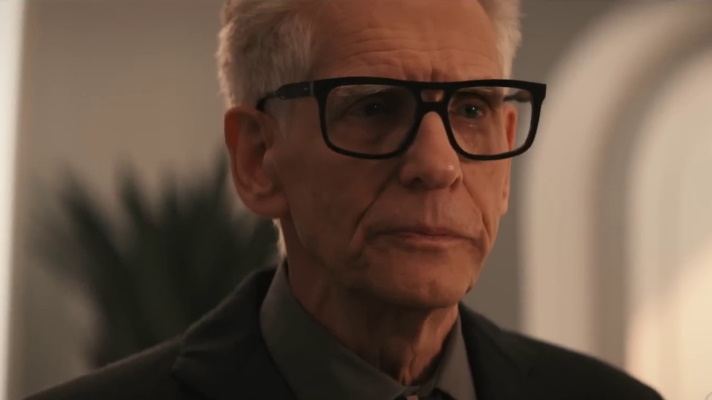
Star Trek: Discovery theories – week 6

Spoiler Warning: There are spoilers ahead for Star Trek: Discovery Seasons 1-4, Star Trek: Picard Season 1, Short Treks, and for other iterations of the Star Trek franchise.

Stormy Weather does, on the surface at least, appear to have narrowed things down as Discovery approaches its unexpected mid-season break. As we’re barely at the halfway point, though, I’m not convinced that everything is as it seems! There are many possible explanations for the DMA having passed through the galactic barrier, and despite the assertions from some characters that Unknown Species 10-C must be someone that the Federation has “never encountered before,” there are still several highly plausible culprits who could be responsible!

So let’s jump into the theory list. At this stage, the list is actually fairly static. Stormy Weather didn’t confirm or debunk anything from previous weeks, and I’ve really just got one new theory – one that isn’t even connected to the events of the episode! However, several theories have seen movement, and while some may be close to being debunked I’m not ready just yet to strike off any of them.

Theory #1:
Captain Burnham’s war experiences from Season 1 will come into play.

Michael Burnham in Season 1.

At the beginning of Season 1, Michael Burnham made a series of mistakes (to put it mildly). Though she wasn’t responsible for the outbreak of war between the Federation and Klingon Empire, she was blamed for it for a long time. Her aggressive actions toward the Klingons, wanting to fire the first shot in a very un-Starfleet manner, proved to be a very costly learning experience for her. Having seen three-and-a-half seasons of growth and development since, I’m sure Captain Burnham has taken those lessons to heart.

Starfleet is currently assuming that the DMA is a weapon and that whoever created it has hostile intentions. That seems reasonable, and it’s sensible in many ways to plan for worst-case scenarios. But an aggressive faction building a super-weapon is only one potential explanation for the existence of the DMA – and someone like Captain Burnham, who once made the mistake of being too aggressive in the face of the unknown, seems well-placed to argue for a mission of first contact rather than jumping straight into a war.

In short, my theory is that Captain Burnham will be one of the main voices arguing for a less aggressive posture when investigating the DMA, reminding the likes of Admiral Vance and President Rillak that we simply don’t know what the DMA is or what it was intended to be.

Theory #2:
Zora will go rogue.

Zora and Captain Burnham in Stormy Weather.

This week we got to see more of Zora than we ever have before. At one point she did refuse to follow an order, but thanks to interventions from Gray and Captain Burnham, this was resolved. Zora didn’t “go rogue” in Stormy Weather; she was suffering emotionally as a result of the difficult situation she was in. Having only just become aware of her own emotions, she was in a very difficult and traumatic situation. But there may be more to come.

The dangerous nature of artificial intelligence has been a theme Star Trek has returned to time and again since The Original Series episode The Ultimate Computer all the way back in 1968. But recent iterations of Star Trek in particular have used narratives involving evil or out-of-control AIs and synthetic life several times: there were the rogue synths and the super-synths in Star Trek: Picard’s first season, and in Discovery’s second season we had the Control AI.

It’s at least possible that an emotionally-compromised Zora would go rogue, acting against the wishes or even orders of Captain Burnham and the crew. Though Zora professes to care about the crew of Discovery, her instinct for self-preservation in the face of a dangerous situation may kick in.

Theory #3:
The DMA isn’t a super-weapon.

What is the DMA?

In Stormy Weather we learned that the DMA has passed through the galactic barrier – meaning that it quite likely originated from outside of the Milky Way galaxy. That isn’t a given, but it’s a reasonable assumption based on the available evidence.

The fact that the DMA is artificial in nature doesn’t mean it was intended to be a weapon, though, despite its harmful effects in the Milky Way galaxy. It’s possible that extragalactic exploration had been done in a big way by the 32nd Century, but missions that took Starfleet crews outside of the galaxy are incredibly rare within Star Trek. In short, we know precious little about the universe beyond the barrier, meaning that whoever created the DMA is a complete unknown quantity.

Discovery feels like it’s building up to some big reveal about the DMA and Unknown Species 10-C, and one way that could go would be for the crew to learn that the DMA isn’t what they have been assuming. The biggest possibility, given what we learned in Season 3 about the lack of dilithium, could be that the DMA represents an experiment in faster-than-light travel that went awry.

Theory #4:
The DMA is a life-form.

The USS Enterprise inside V’Ger.

The DMA’s extragalactic origin could be an indication that at its core is a sentient life-form, something akin to V’Ger from The Motion Picture. If that were the case it may not be attacking anyone, but simply exploring or trying to make contact. After all, “they were only trying to communicate” has become a Star Trek trope at this point!

Star Trek has shown us many different forms of synthetic life over the years, and while the DMA would certainly be one of the most unusual, it wouldn’t be entirely without precedent. Seeking out new life is at the very core of Starfleet’s mission, and finding a way to communicate with the DMA and figure out what it wants or needs could be a very interesting story – one about understanding and bridging the chasm between different cultures and societies that Star Trek has always done so well.

Theory #5:
Unknown Species 10-C is a faction from a past iteration of Star Trek.

Could Unknown Species 10-C have already appeared in Star Trek?

Despite the fact that the DMA has passed through the galactic barrier, making assumptions is dangerous! We’re barely halfway through the season, after all, so there’s plenty of time for twists and turns. While this revelation has made a handful of suspects significantly more likely than others, in my opinion practically all of the candidates remain in play at this stage.

Based on the DMA potentially having an origin outside of the Milky Way, the three suspects that immediately spring to mind are the Kelvan Empire, the Sphere-Builders, and the super-synths from Season 1 of Star Trek: Picard. They’d all been on my list of suspects going back months, and I really feel that any one of them would make for a potentially interesting story.

I have a longer list of suspects for Unknown Species 10-C, so for a more detailed look at these three candidates – and many others – click or tap here to see the full list.

Theory #6:
A major character will be killed off.

Two “dead” officers.

Lieutenant Tilly’s departure in All Is Possible has certainly shaken up the cast. However, I stand by what I said before the season aired: killing off a character can be a great way to demonstrate the dangerous nature of the circumstances that the crew have found themselves in. So far, despite tangling with the DMA on several occasions, only a couple of redshirts have lost their lives.

In Stormy Weather, Dr Pollard raced through the corridors of the USS Discovery to reach a hull breach. Shortly after she arrived, a redshirt was blown out into space – but Dr Pollard survived. Although moments like this can make it feel that Discovery is shielding its main and secondary characters with some pretty heavy plot armour, I still feel that there’s scope to see a major character death before the season ends.

If you want to check out my pre-season “death predictions,” in which I speculated about which characters may or may not be in danger, you can find that by clicking or tapping here.

So those theories saw some movement this week.

As I said, there really hasn’t been a great deal going on on my theory list in the aftermath of Stormy Weather! But as always, we’ll keep the entire list in one place by re-stating the rest of the theories that I currently have in play.

Theory #7:
The Guardian of Forever will be back.

The Guardian of Forever as it appeared in The Animated Series.

Having reintroduced the Guardian of Forever in Season 3, I wouldn’t be at all surprised to see Discovery return to the Guardian’s planet in Season 4. Because Captain Burnham and the crew still know so very little about the DMA, it would make sense to at least ask the Guardian for help – maybe it has encountered this phenomenon before.

The Guardian of Forever is also the only way we know of at present to travel through time – something that might be necessary if Season 4 makes an attempt to link up with Calypso in a big way. There are many reasons why Captain Burnham might want to revisit the Guardian, and it would be great to bring back actor Paul Guilfoyle, who played the Guardian’s humanoid avatar in Season 3.

Theory #8:
Some areas of the galaxy – such as the Delta Quadrant – avoided the worst effects of the Burn.

Stamets with a holographic galaxy map in The Examples.

Season 4 touched briefly on the Burn with Su’Kal and Saru in Kobayashi Maru, and last season’s big story may not return in any significant way now that the DMA is out there. But one thing I’d be curious to see is the true extent of the disaster – did it reach all four quadrants of the galaxy equally, or did its effects fade out after a certain point? Michael Burnham discovered that the Burn had a point of origin, and that it radiated out from that point like ripples on the surface of water. Ripples eventually diminish, fading away the further they travel, and perhaps that’s true of the Burn as well. There could be whole areas of the galaxy that didn’t even notice the Burn – and maybe the ship and crew will visit one such region.

If the Delta Quadrant was left largely unscathed, for example, what might that mean for the likes of the Borg? It’s possible they aren’t even still around in the 32nd Century, but it’s also possible that they’ve had more than a century to expand and build up their forces while the Federation suffered. To see a full write-up of this theory, click or tap here.

Theory #9:
Captain Burnham and the crew will encounter the Klingons.

Kol, a 23rd Century Klingon leader.

By the late 24th Century the Federation and Klingons were firm friends, having been allied for a century and after fighting side-by-side against the Dominion. We don’t know if that alliance endured to the 32nd Century, but it’s certainly plausible to think that it did. The Klingons might even have joined the Federation at some point, and their violent warrior culture may have been significantly pacified.

One thing that could be very interesting to see is how the crew of the USS Discovery – almost all of whom are veterans of the Federation-Klingon war – would respond to that. They’ve worked alongside Klingons like L’Rell before, but many of them still see the Klingons as an old enemy. The story of overcoming that prejudice could mirror episodes like The Wounded from The Next Generation, and would be very interesting to see.

Theory #10:
The crew will have to defend the Verubin Nebula.

The dilithium planet is vital to the Federation.

The Federation is still in a weakened state, nowhere near as powerful as it once was. The Verubin Nebula is thus a very tempting target for anyone looking to gain an edge in a galaxy where dilithium is still in short supply. As the only known significant dilithium supply, whoever controls the Verubin Nebula will have a massive tactical advantage.

We can compare the Verubin Nebula to Deep Space Nine’s Bajoran wormhole in that respect – it’s a resource of huge strategic importance. Season 3 didn’t show us much about the makeup of the galaxy’s factions outside of the rump Federation and the Emerald Chain, but it’s got to be possible that factions like the Dominion, Klingon Empire, or even the Borg still exist and would want to seize the Verubin Nebula for themselves.

Another view of the planet in the Verubin Nebula.

Season 4 has presented Captain Burnham and the crew with a scientific puzzle: the DMA. But that doesn’t mean there won’t be villains in play, and Discovery has introduced us to several compelling and interesting villains over its first three seasons.

To make a long theory short, it would begin to stretch credulity to think that everyone in the known galaxy would see the Federation rebuilding and having access to dilithium and not want to find out for themselves what’s going on. Once the Verubin Nebula’s existence becomes known, even if the Federation promises to share its bounty with all comers, it seems very likely that someone would want to take control of the dilithium supply for themselves.

Theory #11:
The ban on time travel will be explained in more detail.

HMS Bounty was able to travel back in time.

This one is a hope as much as a theory right now! In short, the ban on time travel was introduced early in Season 3 primarily as a way for the writers and producers to avoid questions about why the 32nd Century was so different from how the far future had been depicted in earlier Star Trek productions, as well as to explain things like how the Burn was able to catch the Federation off-guard and why Georgiou couldn’t simply be sent back in time when she needed to.

But the ban itself raises some issues – the biggest one being the lack of detail on how it works and how something like this could possibly be enforced. As I said several times last season, it isn’t possible to just un-invent a technology so useful and powerful as time travel. Even just a few lines of dialogue going into a little more detail on the mechanisms involved in the ban would be really useful.

Theory #12:
The Federation has flouted the ban on time travel.

President Rillak may have tried to circumvent the ban if she felt doing so would be in the Federation’s interest.

Sticking with the time travel ban, another theory I had last season was that the Federation – and Section 31 in particular – might have deliberately flouted the ban and failed to abide by the rules. Someone as straight-laced and committed to Starfleet ideals as Admiral Vance is highly unlikely to have sanctioned such a move, but someone like the shadowy Kovich might have. President Rillak could also be involved.

Obviously the bulk of the season’s story will deal with the DMA. But there’s scope to either talk about the time travel ban in a standalone episode or even tie the two stories together – perhaps the anomaly has been unleashed as a result of unsanctioned time travel.

Theory #13:
Michael Burnham won’t remain captain of Discovery.

Burnham in the captain’s chair.

This is a controversial one, so let me just say up front that I’m neither in favour of this theory nor opposed to it – I just think it’s a possibility. As things stand, Discovery has had four different captains across its four seasons. One of the show’s unique points of interest within Star Trek’s broader canon are the very different ways in which these individual captains commanded the ship and crew.

It’s got to be considered at least a possibility, then, that the show will continue this trend. This doesn’t mean Captain Burnham will be killed off; I’d actually argue she’s pretty safe. But there are many different routes to her potentially leaving the ship, such as a desire for freedom that we saw in Season 3, or even perhaps taking up a new, more senior role within Starfleet.

Captain Burnham in All Is Possible.

If this theory were to come to pass, it would be something I’d expect to see at the very end of the season. Even if Burnham seems 100% committed to her new role as captain, I don’t think it’s a theory we can definitively rule out.

It’s worth mentioning that at time of writing Discovery hasn’t been officially renewed for a fifth season – so all this talk of who’ll be in the captain’s chair by then could be moot! And of course this theory has a very strong counter-argument: that Discovery’s main story arc across its first three seasons can be read as Burnham’s ascent to the captain’s chair.

Theory #14:
There will be a character crossover from a past iteration of Star Trek.

Soji could potentially still be alive in the 32nd Century.

This theory returns from Season 3, where I doggedly clung to it for the entire season!

Discovery’s 32nd Century setting has shot Captain Burnham and the crew far beyond anything in Star Trek’s established canon, and that should mean that practically everyone we remember from other Star Trek shows won’t be around any longer. But this is Star Trek – with some creatively-written technobabble, practically any major character could have survived all the way through to the 32nd Century!

There were several great crossovers during The Next Generation era.

It’s also possible for Captain Burnham to discover the logs of a long-dead officer; someone we as the audience would be familiar with. While this would be less of a “crossover” than if a character from the past could be physically present, it would still be a lot of fun to see!

There are a handful of characters who could have survived to the 32nd Century based on what we know about them from past iterations of the franchise. Included in this category would be people like Soji, Voyager’s Doctor, and a few others. But as we’ve seen in episodes like Relics and even the film Generations, all it would take to make a big crossover happen is some kind of temporal anomaly, stasis field, or other technobabble!

Theory #15:
Saru will be given the captaincy of the USS Voyager-J.

Captain Saru.

Saru’s future was briefly discussed before he offered to serve as Captain Burnham’s first officer in the episode Anomaly. He has already been offered a command of his own, so Starfleet clearly values his command abilities and experience. President Rillak was seen to be assessing Captain Burnham’s suitability for the captaincy of the USS Voyager-J in Kobayashi Maru… and she mentioned having a shortlist of candidates. Could Saru be on her list?

Several of the qualities that President Rillak said she was looking for in a potential captain seem to apply to Saru. He’s more level-headed, less likely to put himself in a dangerous situation, and more inclined to think of the big picture. He has a weakness when it comes to Kaminar, as we saw toward the end of Season 3, but generally speaking he isn’t someone who lets his emotions get the better of him. His wisdom and calm demeanour could be valuable in the captain’s chair of the Federation flagship. This could also set the stage for his departure from the show, or possibly even for a new show following his adventures aboard his new ship.

Theory #16:
Book will find Kyheem and Leto inside the DMA.

Book and Kyheem in Season 3.

In Star Trek: Generations, Captain Picard encountered Captain Kirk inside the Nexus – despite Kirk being declared “dead” after the Enterprise-B encountered the energy ribbon almost eighty years earlier. We don’t know what the DMA is yet; one of my very early pre-season theories involved the Nexus, but that seems to be debunked already! However, the anomaly’s mysterious nature raises the faint possibility that at least some of those it appears to have “killed” may not be as dead as they first appear.

This theory is, I freely admit, a bit of a long-shot. And it hinges on a fundamental question underlying the story of the season: what’s going on with the DMA? Is it a super-weapon designed to be destructive? Or does it perhaps contain a wormhole, portal, or gateway to some other place? If it’s the latter, perhaps Kyheem, Leto, and others from Kwejian might still be alive.

Theory #17:
We haven’t seen the last of the Abronians.

I currently have four ideas for different ways that the Abronians – the non-humanoid race that Captain Burnham, Tilly, and the Qowat Milat helped save from cryo-sleep in the episode Choose To Live – could play a further role in Season 4.

Theory #17a:
The Abronians’ homeworld was destroyed by the DMA.

Captain Burnham believes this image depicts a “supernova.”

After arriving at the Abronians’ cryo-ship, Captain Burnham found a stone carving that seemed to depict the destruction of the Abronians’ homeworld. This carving was only shown on screen briefly, but it seemed to show the planet being damaged or destroyed in a large explosion. Burnham credited the planet’s destruction to a “supernova,” and the story then raced ahead.

Considering that the main thrust of the season so far has been about the DMA, perhaps Burnham was incorrect: the Abronian homeworld was destroyed by the anomaly, not a supernova.

Theory #17b:
The Abronians’ homeworld was on the “other side” of the DMA.

Abronian stasis pods.

Stamets and Tarka believe that the DMA contains the technology to generate an artificial wormhole. It’s thus possible that the DMA can facilitate travel between incredibly distant locations – not only for itself, but for other starships too. The subspace tear that the DMA left behind went nowhere – but it may be possible to get “inside” the DMA itself or even use its wormhole tech to travel vast distances.

One thing struck me as odd about the Abronians: the Federation was entirely unaware of them, despite the Abronian cryo-ship being relatively close to Federation space – such that Captain Burnham could reach it using Book’s ship in a short span of time. It’s possible that the Abronians had been asleep for millennia, unnoticed by the Federation and the wider galaxy for all that time. But it’s also at least possible that their cryo-ship is a newcomer to the area. If so, perhaps it arrived here via the DMA.

Theory #17c:
The Abronians will return to help the Federation later in the season.

A deceased Abronian.

One of the themes of Discovery since Season 3 has been connection, including building connections between the Federation and other races and organisations. The Abronians were awoken from cryo-sleep thanks to the interventions of Captain Burnham and Tilly – at least in part – and they may seek to repay the Federation, or Captain Burnham personally, for that help.

We saw this play out last season with Ni’Var; in the season finale Ni’Var ships raced to the Federation’s aid as the Emerald Chain attacked. Perhaps the Abronians will likewise step up to help when the Federation needs allies.

Theory #17d:
The Abronians’ moon-ship may be useful in a later story.

“That’s no moon…”

At this stage I can’t envision precisely what use Captain Burnham and the crew might have for a moon-sized starship… but that doesn’t mean such a need won’t arise! The Abronians’ cryo-ship is huge, and at least superficially seems to have the mass of a moon or small planetoid. If Captain Burnham and the crew needed something that large for some purpose, perhaps they’ll return and either take it or negotiate for it.

As we saw in Choose To Live, the moon-ship was in full working order. All it needed was some extra dilithium to power up and it was perfectly capable of moving under its own power, and its computer systems were still functional. The only system that seemed to have failed was the wake-up timer! So if – for reasons yet unknown – the crew need a huge starship, perhaps we won’t have seen the last of the moon-ship!

Theory #18:
Stamets and Ruon Tarka will create the DMA.

Stamets, Tarka, and Saru with the DMA model.

I included Stamets and Tarka on my list of suspects for the creators of the DMA, but they warrant a full entry on the theory list too! In short, we saw Stamets and Ruon Tarka creating a scale model of the DMA in The Examples, and according to Reno their experiment came very close to destroying the entire ship. They were able to perfectly recreate the device at the centre of the DMA, albeit on a smaller scale – so what’s to prevent them from building a full-scale replica (other than the power generation requirements)?

This theory posits that they will do exactly that – somehow – or that their experiments will set into motion a chain of events that leads to the creation of the DMA in a kind of time-loop storyline. The DMA’s wormhole-generating technology may give it the ability to travel backwards through time as well as across vast distances, so it seems technologically plausible at the very least.

Tarka and Stamets working on their model.

Ruon Tarka was shown as impatient in The Examples, and in his single-minded pursuit of the DMA he may be willing to take risks – perhaps risks which ultimately lead to the creation of the very anomaly he’s been investigating. How such a story would conclude is up in the air, but I don’t think we can rule it out as a possibility right now.

Personally, I find time-loop paradox storylines to be frustrating – and they can be very difficult to pull off successfully. There’s no beginning point to such a story: the DMA exists because the DMA was created because the DMA exists because the DMA was created… it’s an infinite loop. But we’ve seen Discovery tackle time travel stories like this before – and the pieces seem to be in play right now for this story.

Theory #19:
President Rillak knows what the DMA is and may be responsible for its creation.

President Rillak in Kobayashi Maru.

We haven’t seen President Rillak for a couple of weeks now, though she has been briefly mentioned. But when I think about the possible suspects for creating the DMA, the Federation – and by extension, President Rillak – are unquestionably on that list.

President Rillak is a cunning, almost Machiavellian politician, willing to do anything to advance what she considers to be the best interests of the Federation. I believe Captain Burnham needs to be very careful with President Rillak. During the events of All Is Possible, working with Captain Burnham was advantageous to the Federation’s president – but I have no doubt that she’d throw Burnham and the USS Discovery under the bus without so much as blinking if she believed it would be to her advantage. Which brings us to the DMA.

President Rillak might know more about the DMA than she’s currently letting on. If the Federation had created a weapon like this, or if it was an experiment gone wrong, covering it up might be her objective even if she wasn’t necessarily the one who ordered the DMA’s creation. Also, with the goal of reuniting the Federation foremost in her mind, President Rillak may prove to be the sort of uncompromising politician who’d willingly unleash destruction upon the galaxy if she believed that doing so would serve a greater purpose.

Theory #20:
Dr Kovich is an agent (or the head) of Section 31.

Dr Kovich in The Examples.

I freely admit that this theory is barely clinging on right now, but I don’t believe it’s been completely disproven just yet! The questions of who Dr Kovich is and what exactly his role is within Starfleet and/or the Federation have no clear answer right now. He’s clearly someone with power and influence, as we’ve seen him working with Admiral Vance and seemingly being able to appoint anyone he chooses to be an instructor at Starfleet Academy. Yet he also seems to have some medical training, serving as a psychologist or counsellor – and it’s in this capacity that we saw him most recently.

Because of the unclear nature of his role and the mysterious, stoic presentation from David Cronenberg, Dr Kovich is still an enigma. He’s also the kind of man who could potentially be an agent of Section 31. If it turns out that the Federation, President Rillak, and/or Section 31 are involved with the DMA, perhaps we’ll learn that Dr Kovich is as well. Or perhaps such a storyline will finally put this theory to bed once and for all!

Theory #21:
Captain Burnham and/or the Red Angel suits from Season 2 are connected to the DMA.

A Red Angel suit from Season 2.

Now that we know the DMA is artificial in nature, the question shifts to who built it and why. We’ve covered the idea of it being a weapon or an out-of-control experiment, as well as being a life-form in its own right. It could also be the responsibility of Section 31 or the Federation. But because this is Star Trek: Discovery, a show which likes to put Captain Burnham at the centre of its stories, perhaps there’s a connection to her that we’re missing.

The Red Angel time travel suits from Season 2 were phenomenally powerful machines, capable of generating time-wormholes large enough to transport an entire starship 930 years into the future. We already know that the DMA potentially contains a synthetic wormhole, so it wouldn’t be a huge leap to connect the two. We also don’t know for certain what became of Captain Burnham’s Red Angel suit after the Season 3 premiere. There’s also the faint possibility of a parallel universe Burnham or time travelling Burnham being responsible.

Theory #22:
The story will connect with the Short Treks episode Calypso.

The USS Discovery as seen in Calypso.

Stormy Weather picked up the storyline from The Examples regarding Zora’s emotions, and I would argue that the way Zora was depicted is now much closer to the way she was in Calypso. In that Short Treks episode, Zora was definitely someone who could feel emotions, so the confirmation of that now means that Calypso is, in some ways, one step nearer.

There are still significant hurdles to overcome if the story of Calypso is to be wrapped up in Season 4, though. Obviously we have the timeframe issue: will the USS Discovery be sent back in time, be abandoned, or is Calypso taking place centuries in the future? Then we have the USS Discovery itself – it’s been retrofitted since arriving in the 32nd Century, and now looks very different to how it did in Calypso. Despite Zora getting some development in The Examples and Stormy Weather, I can’t yet see a pathway to making Discovery and Calypso line up – but that doesn’t mean it won’t happen!

So that’s the main theory list.

We also have two production-side theories in play, and I’ll recap those now.

Production-side theory #1:
Tilly’s departure will be permanent.

Tilly’s departure feels permanent.

Mary Wiseman confirmed in an interview with Wil Wheaton on The Ready Room (Discovery’s social media aftershow) that Tilly will be seen again before the end of Season 4. But that doesn’t mean she will be a main character on the show going forward, and her departure feels permanent. Despite that, I’ve seen quite a lot of folks online who don’t believe that Tilly is actually leaving the series – so I wanted to put it out there officially and say that, in my opinion anyway, she is.

Maybe those people know something that I don’t! As I always say, I don’t have any “insider information;” all of this is just speculation on my part. However, I feel that the manner of Tilly’s departure, the fact that she got that emotional sequence with Captain Burnham, a montage showing her leaving the ship, Adira seeming to take over several of her roles, and her departure feeling like the culmination of her arc going back to the latter part of Season 3 all come together to strongly indicate that she won’t be back as a major character. She may yet have a significant role to play in a future Season 4 episode, as has been suggested, but unless Discovery’s writers are really playing with our emotions I believe we’ve seen Tilly’s end as a main character on the show. She may come back in a future Starfleet Academy series, though… so watch this space!

Production-side theory #2:
Star Trek: Discovery isn’t going to be renewed for Season 5.

Is a fifth season going to happen?

Since Discovery debuted in 2017, we’ve known well before this point in the season that the show has been renewed. This obviously isn’t one of those “I hate new Star Trek” things that we’ve seen doing the rounds online for years; I adore Discovery and genuinely want to see it continue. But it’s profoundly odd to be nearing the halfway point of Season 4 and to still have had no announcement about Season 5. For comparison, Star Trek: Picard has been renewed for Season 3 even though Season 2 won’t air until next year!

I’m hopeful that this is just a blip; a temporary delay for reasons unknown, and that the show has been renewed for Season 5 already behind-the-scenes. However, when we look back at Star Trek productions in recent years, it was often apparent that production work was quietly ongoing even if there hadn’t been any official word from ViacomCBS. As far as we know at this stage, there’s been no pre-production work on Season 5, let alone any filming taking place in the Toronto area. The abrupt announcement that the show is taking a mid-season break could also be indicative of issues behind-the-scenes.

Once again this is a “watch this space” kind of theory. I hope I’m wrong… but the lack of any news or even any significant rumours about the show’s future is beginning to have me worried.

So that’s it.

The USS Discovery inside the void.

We have quite a few theories still in play as we approach the mid-season break. I confess that I have some expectations that this week’s episode – titled But To Connect – will move the needle on at least some of them! A mid-season finale should be a spectacle, ending on a cliffhanger or some explosive revelation to keep us as the audience on the edge of our seats. So perhaps this time next week we’ll be debunking and adding a few more theories than we did on this occasion!

Before we go, one final point. I write up these theories because I like Star Trek and I like writing. But for some folks, fan theories can hamper their enjoyment of a film or television show. It’s worth keeping in mind that most of these theories probably won’t pan out, and we have to be prepared for the fact that even the most well-constructed fan theory, no matter how fun and plausible it seems, simply won’t turn out to be true. If you find that speculating and reading theories is beginning to detract from your enjoyment of Star Trek: Discovery – or any other television show or film – it might be a good idea to take a break for a while.

Star Trek: Discovery Season 4 is available to stream now on Paramount+ in the United States, Scandinavia, Latin America, and Australia. The show is on Pluto TV in the UK, France, Germany, Italy, and other parts of Western Europe at 9pm on Fridays and Saturdays. Individual episodes or the full season can be purchased on iTunes, Amazon Video, and possibly other platforms in the UK, parts of Europe, and select other countries. The Star Trek franchise – including Discovery and all other properties mentioned above – is the copyright of ViacomCBS. This article contains the thoughts and opinions of one person only and is not intended to cause any offence.
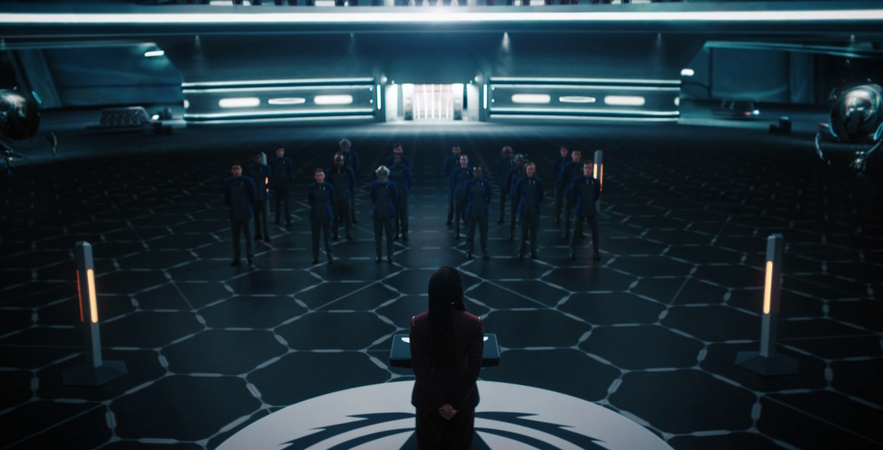
Star Trek: Discovery review – Season 4, Episode 6: Stormy Weather

Spoiler Warning: There are spoilers ahead for Star Trek: Discovery Seasons 1-4.

Last week we learned that the DMA – the anomaly at the heart of Season 4’s story – is an artificial construct. Following up that big revelation was the challenge that befell Stormy Weather and director Jonathan Frakes, and I’m happy to report that Discovery rose to the occasion. Stormy Weather was a tense, dramatic, and incredibly exciting episode, one that has set a high bar for the rest of the season to reach.

Unfortunately, due to inexcusable corporate nonsense from ViacomCBS, Star Trek: Discovery is unavailable to many fans around the world. This short-sighted, self-defeating decision has been rightly condemned by Star Trek fans, but we need to keep the pressure on and continue to call out this misbehaviour at every opportunity. Star Trek is not the sole preserve of any one group of fans – it’s something all of us should be able to enjoy together. Denying that opportunity to even one Trekkie would be unacceptable; to deny it to millions in dozens of countries and territories around the world is just offensive.

Captain Burnham with her family tree.

So let’s take a look at Stormy Weather – an episode named for a song from 1933. There have been some connections between Discovery and sister show Star Trek: Picard, but one of the most unexpected thematic connections came in the form of this song. Picard Season 1 prominently featured the song Blue Skies, written in 1926, and to hear another older, slow-tempo jazz song in Discovery was an unexpected but interesting way to bridge the gap between these two very different parts of the Star Trek franchise.

Stormy Weather featured Captain Burnham prominently, and we’ll look at her contributions in a moment. But where the episode did remarkably well, in my view, was through a series of smaller moments that showed off several members of Discovery’s secondary cast – many of whom have had less to do so far this season than in Season 3 last year.

Several members of the secondary cast (Nilsson pictured) got things to do this week.

Commander Owosekun had a big centre-stage moment, objecting on the bridge in front of her colleagues and leading to a sweet moment later on between her, Detmer, and Saru. Dr Pollard, making her first major appearance of the season, got two significant moments in the spotlight, including one incredibly dramatic moment as a crewman was blown out into space through a hull breach.

Ian Alexander, who plays Gray, and Annabelle Wallis, who voices Zora, were Stormy Weather’s breakout stars for me. Gray had already given us one of the season’s emotional highs when he completed his transfer into a new synthetic body, but there was definitely a question mark surrounding his next steps. Adira was a commissioned ensign, but Gray didn’t really have a role aboard the ship – something that Discovery acknowledged this week when Gray found himself alone in the lounge as the crew scrambled to their posts.

Gray and Zora played Trill chess together.

There’s always something very relatable about this kind of storyline. Anyone who’s ever dealt with feelings of helplessness or loneliness should be able to empathise with Gray in this moment, and it’s certainly something I’ve been through before on more occasions than I perhaps care to admit! As everyone on the ship attended to their duties, Gray was left alone – and this led to a really touching sequence between he and Zora that ended up playing a major role in the story.

Zora was a background presence for much of Season 3, and it was only really last week when the revelation that she can feel emotions came out that she emerged as a major player. Zora’s interactions with Gray this week have done more to humanise her and lay the groundwork for future character development than any episode has since Calypso – and if Discovery chooses to, the show could now make Zora a major presence on the ship going forward.

Gray and Zora played significant roles this week.

I can’t be the only one noticing an homage to 2001: A Space Odyssey, right? Zora’s line to Captain Burnham when she refused to follow an order felt like it had come straight from HAL 9000! Of course, Zora went in a different – and thankfully far friendlier – direction shortly thereafter, but the reference was appreciated nevertheless.

The development of Zora’s emotions brings the character one step closer to her portrayal in the Short Treks episode Calypso, but at this point I’m still not sure how – or even if – the stories will line up. As we’ve discussed previously, for every step made toward Calypso since Season 2 we’ve seen at least one step away – and with Discovery in the far future already, the further development of Zora still leaves the show with significant hurdles to overcome if a full connection to Calypso is on the cards. But I guess that’s a conversation for another time!

“I’m sorry, Dave. I’m afraid I can’t do that.”

Gray and Zora were able to share a connection as two passengers on the ship who felt out of place and unsettled. There was a subtle continuation of the transgender theme present in Gray’s earlier incorporation story, as Gray made reference to choosing his own name; something Zora could relate to. Despite Gray’s incorporation feeling somewhat rushed at the beginning of the season, it’s been great to see him as a character in his own right, able to interact with others aboard the ship. Pairing him up with Zora was unexpected but an absolute delight.

Discovery has continued Star Trek’s use of storytelling by metaphor and analogy, and we see that again with Gray. His struggle to become visible, his comments about getting used to his new body, and again this week through his conversations with Zora all had serious things to say about the difficulty of transitioning, coming out as transgender, finding acceptance, and other trans issues. But they were told through a science fiction lens in the very best tradition of Star Trek. It’s hard to think of a more understandable and relatable depiction of a trans individual in all of entertainment, and the writers deserve a lot of credit – as does Ian Alexander, who stepped up this week and put in his best performance of the season so far.

Stormy Weather was a great episode for Ian Alexander and Gray.

Discovery as a whole is a series with a cinematic feel to it. That isn’t something unique among television shows any more, as we can see many other high-budget productions pushing hard for similar visuals and effects. But Stormy Weather definitely veered hard into the cinematic, with all manner of special effects thrown into the episode’s forty-five minutes. We had silent slow-motion sequences, stunning CGI visual effects – including a striking shot of the USS Discovery itself inside the void, tightly-focused shots of characters in motion, close-ups of faces, and a whole lot of fire and flame to name but a few. Such a varied mix of visuals, coupled with Jonathan Frakes’ clever cinematography, gave Stormy Weather a sense of weight, of gravitas, far beyond what the franchise usually manages outside of its feature films.

Let’s talk about the storyline itself. This week, everything was tied together. There were secondary plotlines with Gray and Zora and with Book, Stamets, and the doctors, but they all came together and connected with the main story in significant ways as Captain Burnham led the USS Discovery inside a subspace rupture that the DMA had left behind.

The USS Discovery approaches the void.

We learned something major about the DMA: that it’s of extragalactic origin, or has, at the very least, passed through the galactic barrier. This would seem to narrow down Unknown Species 10-C to a handful of suspects, assuming that the galactic barrier depicted in past iterations of Star Trek remains generally impermeable to residents of the Milky Way. There were comments from Book and Stamets that this evidence all points to Unknown Species 10-C being someone that “the Federation has never encountered,” but I don’t think we can be certain of that just yet. The Burn seemed to be connected to Ni’Var’s SB-19 project in Season 3… until it wasn’t! We’re barely halfway through the season, so there’s plenty of time for hypotheses to be debunked! In this week’s theory post I’ll go into more detail about what this revelation could mean for Unknown Species 10-C, so stay tuned for that!

Venturing inside a rift in subspace was a dangerous assignment, but one that was certainly necessary for understanding more about the DMA. There really isn’t much to nitpick on this side of the story, and Captain Burnham handled it about as well as any other captain could have. Captains Kirk, Picard, Sisko, Janeway, or Archer would all have made similar choices under the circumstances, and we can point to many moments in past Star Trek shows where similarly dangerous scientific missions have gone awry despite the best efforts of the various captains.

Captain Burnham did everything she could to get her crew home.

Discovery has some very expansive sets when compared to past iterations of Star Trek, with the bridge in particular being larger and wider than basically any other to date. But despite that, this week I felt a real sense of claustrophobia in the style of old war films set aboard submarines. Stormy Weather was basically a bottle show – an episode set almost exclusively aboard the ship making use of existing characters. Rather than that being a limitation, as it sometimes has been in past iterations of Star Trek, the episode leaned into this in the best way possible, drawing on the inherent strengths of that style of story to create a genuinely dark and unsettling atmosphere aboard the ship.

This began with Gray and Zora alone in the lounge and culminated in Captain Burnham staying behind on the bridge, with only Zora for company, as the desperate last-ditch attempt to escape the void came to a head. Discovery has made interesting use of fire this season, and I’ve seen some criticism of the way the pyrotechnics come across on screen. But here, the combination of CGI plasma and jets of real fire worked exceptionally well, building up a sense of genuine danger that Captain Burnham, and indeed the whole crew, were in.

A combination of CGI and pyrotechnics made for a thrilling and dramatic presentation at the episode’s climax.

At this point, after more than three seasons of Discovery, we know that the show has a tendency to blitz through some of the technobabble and sciencey stuff to get to the drama and action, and so it proved again in Stormy Weather. As happened last week, when the DMA’s artificial origin was confirmed in a short scene with a few lines of dialogue, its extragalactic origin was likewise only included in a pretty short sequence. I liked the concept behind it – that the energy surge that hit Book left behind trace particles that could be used to uncover another piece of the puzzle. That setup was interesting. But the conclusion was once again very quick, almost rushed, and I feel more could’ve been made of both of these points.

Another point of criticism I had concerns Dr Pollard’s sequence in the hallway. I said before the season began that killing off a known character can be a great way for a show like Discovery to communicate the stakes involved. And as Dr Pollard raced to the hull breach, there was for a brief moment a feeling that she might’ve been running to her demise. In the end, though, it was a redshirt who ended up being killed – and the death was far less impactful as a result.

More could have been made of this moment.

Now I’m not on some anti-Pollard crusade wishing death upon the character! But hers is the latest example of how Discovery wants to have its cake and eat it too: the writers want all of the emotional impact of a character death but without being willing to commit to making it someone significant. We saw this in Season 2 with Airiam, and again in Season 3 when practically everyone survived despite the dangerous situations the crew found themselves in. The danger in flirting with character deaths but failing to follow through is that the show is slowly building up a sense of plot armour; there’s a developing feeling that basically no one who gets so much as a speaking line in an episode will be in any real danger. And that will have an effect as the season progresses – potentially making similar moments feel less impactful or tense in future episodes.

To be fair, past iterations of Star Trek had this problem too – but television storytelling has evolved since then. In a world where shows like Lost, Game of Thrones, and The Walking Dead pioneered a concept that I call the “disposable cast,” where even major characters can be killed off at the drop of a hat, Star Trek has to take note. Audience expectations are shifting in some respects, and if Discovery wants all of the trappings of modern television storytelling, it has to be willing to boldly swing the proverbial axe on occasion.

This could have been a good moment to kill off a named character instead of a redshirt.

Last week, the addition of wonderful guest star Shawn Doyle as mad scientist Ruon Tarka meant that I didn’t really feel Tilly’s absence. Stormy Weather was different, though, and I think we’re seeing the first real effects of her departure. Tilly suffered with anxiety, and doubtless would have found the void a difficult situation to deal with. But even at her most nervous, she had a way of lightening the mood and ever so slightly lowering the tension. Perhaps a story like Stormy Weather needed her absence to function as intended – and I concede that argument. But at the same time, I look back on the episode and wonder what Tilly might’ve said, how she might’ve found a way to break through some of the more tense moments with Captain Burnham, Stamets, Book, Zora, and everyone else. Adira fills Tilly’s shoes in several key ways – but no one can truly replace the lighthearted energy that she brought to Discovery.

In a fast-paced sequence at the beginning of Kobayashi Maru, we got to see the crew working under Captain Burnham’s command as one well-oiled machine. After that, though, Discovery took the captain on several smaller adventures off to the side, and it wasn’t until Stormy Weather that we saw her in such a tense situation, having to really feel the burden and weight of command. Like Star Trek captains past, she stepped up. I was reminded of the scene in the episode Booby Trap where Captain Picard takes the helm and pilots the Enterprise-D as Captain Burnham arrived on the bridge, alone, to sit in the captain’s chair and guide her ship and crew to safety.

Captain Burnham in her EV suit.

Speaking of The Next Generation, it was neat to see an oblique reference to the episode Relics. In that episode, Scotty was found alive in a transporter pattern buffer, and it was this method that the crew of Discovery were able to use to survive the dangerous journey out of the void. Discovery hasn’t been shy when it comes to harkening back to past iterations of the franchise this season, which has been fun to see. Shooting so far forward in time has expanded the number of callbacks and references that the show is able to do, and the writers – who are clearly big Trekkies themselves – have taken full advantage.

Along with Ian Alexander, we also have to praise Sonequa Martin-Green for her performance this week. Captain Burnham had a complex role this time, one that required her to put any thoughts of failure to one side and to focus on getting her ship and crew to safety. But she also had to find time for empathy, to share her feelings with Zora to help the AI deal with her own newfound emotions. On both sides Sonequa Martin-Green really nailed it, and Stormy Weather is one of the absolute best Captain Burnham episodes as a result.

Stormy Weather really showed off Captain Burnham at her level-headed best.

The themes of trauma, empathy, and unexpected connections were all present in Stormy Weather as they have been all season. This time it was Zora who needed the most help, in a manner somewhat reminiscent of Data in Generations. Developing emotions for the first time led to Zora’s first experience with fear, just as installing his emotion chip did for Data, and both found themselves overwhelmed and struggling to cope. Just as Data’s friends rallied around him, so too Zora found help from both an old friend in Captain Burnham and a new friend in Gray.

It fell to Captain Burnham and, to a lesser but still significant degree, Saru, to remain level-headed as the situation deteriorated. Captain Burnham had to find a way to connect with Zora in order to convince the AI to go through with the plan to escape. Likewise, Saru had to calm Commander Owosekun when tensions on the bridge threatened to boil over. We’re seeing again the very different ways that people respond to trauma: in this case, Zora almost completely shut down, feeling overwhelmed and unable to do anything, whereas Owosekun wanted so badly to do something that she became angry. These themes are almost certainly going to run through the rest of the season, and will go a long way to keeping Discovery grounded in its characters rather than being lost in sci-fi wonders.

Owosekun, Saru, and Detmer on the bridge.

One scene in particular hit close to home for me. After Book had been hit by the energy surge and was recovering in sickbay, he had a moment with Doctors Pollard and Culber where he tried to ask if he was losing his mind, going crazy, and if the hallucinations he was experiencing would last. Having been in a similar position in hospital, struggling and not knowing where my mental health issues began and ended, I found David Ajala’s performance very emotional in that moment.

Book’s hallucination of his father stemmed from the fact that it was his father’s birthday – and we know that mental health issues can absolutely manifest from things someone is already thinking about or dealing with. His line to his father that he hoped he was real, because it would mean his spirit still exists and thus Leto, Kyheem, and others might still exist somehow too, was another deeply emotional line. Though the episode didn’t focus on Book, this presentation took him to completely different emotional places, and I found it resonated with me in a very personal way.

I found Book to be very relatable in this moment.

So I think that’s it for this week. Stormy Weather really has set a high bar for the rest of the season to reach! It would have been easy for an episode like this one to come across as feeling like mind-numbing action, but Discovery’s tight focus on characters and emotions elevated it to being so much more than that. Little moments with the show’s secondary cast were greatly appreciated, and almost everyone got a line or two of dialogue this week. It felt like the plans to escape the void were a real team effort – and not just another “Burnham saves the day” story that we might’ve seen in Seasons 1 or 2.

There was some disappointing news yesterday, though. At the last minute, it’s been announced that Discovery is taking a mid-season break after next week’s episode, going off the air for around six weeks before resuming in February. ViacomCBS and Paramount+ need to do better at communicating with fans, because this is the latest in a long line of unnecessary blunders. Fixing Star Trek’s scheduling conflicts has to be a priority, too – Prodigy only aired four episodes before taking a break, now Discovery gets half a season before it too has to take a break. It’s possible that there are behind-the-scenes delays, perhaps with post-production work on Picard or Strange New Worlds – but it’s not a good look for a company trying to market a big franchise and an expanding streaming platform. Fixing these problems needs to be a priority for Star Trek’s corporate overlords.

Next week looks to bring back Ruon Tarka, which should be a lot of fun! Stay tuned in the days ahead for my updated theory list – including several ideas about the DMA and its possible creators. And if you celebrate, I wish you a very Merry Christmas Eve! I hope your holidays are successful and fun!

Star Trek: Discovery Season 4 is available to stream now on Paramount+ in the United States, Scandinavia, Latin America, and Australia. The show is on Pluto TV in the UK, France, Germany, Italy, and other parts of Western Europe at 9pm on Fridays and Saturdays. Individual episodes or the full season can be purchased on iTunes, Amazon Video, and possibly other platforms in the UK, parts of Europe, and select other countries. The Star Trek franchise – including Discovery and all other properties mentioned above – is the copyright of ViacomCBS. This article contains the thoughts and opinions of one person only and is not intended to cause any offence.
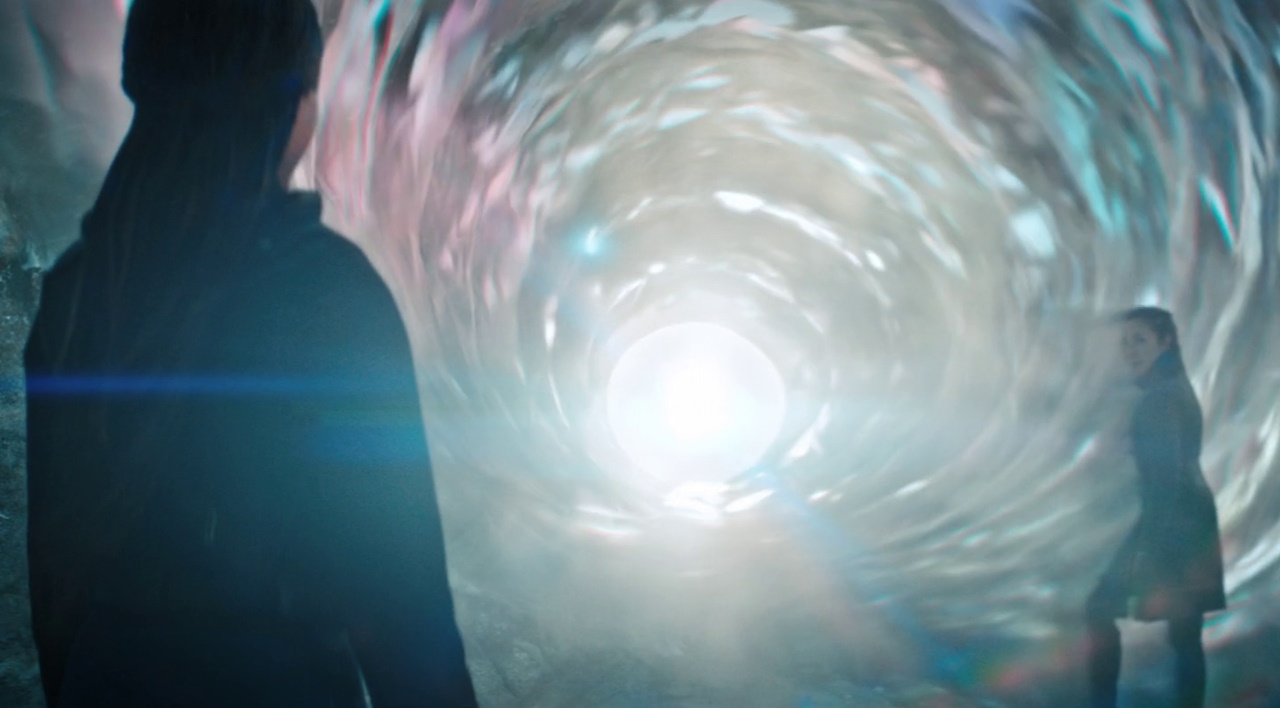
Star Trek: Discovery theories – week 5

Spoiler Warning: There are spoilers ahead for Star Trek: Discovery Seasons 1-4, Star Trek: Picard Season 1, Short Treks, and for other iterations of the Star Trek franchise.

After a couple of weeks where Discovery took character-focused detours, The Examples brought the story right back to the DMA – the dark matter anomaly that’s wreaking havoc across the galaxy. We learned something incredibly significant this week that will most likely have a huge impact on the season’s main storyline… but is everything as it seems?

The biggest question I have right now is about Unknown Species 10-C. Who could they be? And are they a faction we’ve encountered in a past iteration of Star Trek? My heart wants to say they’re someone familiar; that all of the callbacks and references we’ve had in Season 4 so far are building to some kind of big reveal. But my head says “no” – Unknown Species 10-C will turn out to be someone new and unpredictable.

But enough about that for now! We have several theories that were advanced by The Examples this week, as well as one that was debunked and one that was at least partially confirmed. So let’s take a look at those and then get into the main list!

Debunked theory:
Dr Culber will tell Stamets that he needs to slow down.

Stamets and Culber in The Examples.

This one surprised me by being a complete inversion of what I was expecting! After Stamets had seemingly gotten lost in his work, overworking himself desperately trying to figure out the DMA, I felt sure that Dr Culber would have something to say. In Choose To Live, Stamets missed out on Gray’s incorporation, and wasn’t there to support Adira. In All Is Possible, he missed out on talking with Tilly before she left the ship.

I felt that Stamets perhaps needed someone – particularly the man he loves – to intervene and warn him about the dangers of overworking and the family moments he’s been missing. Instead it was Stamets who helped Dr Culber: Discovery’s doctor has been throwing himself into his work, too, neglecting his own mental health for the sake of his patients. It was a neat reversal of a storyline I was expecting – and I think we’ll see more in this vein from Stamets and Culber before the end of the season.

Confirmed theory:
The DMA is a super-weapon.

The moment at which the DMA’s artificial nature was confirmed.

Though it was arguably a conclusion that was arrived at too quickly near the beginning of The Examples, Stamets and Captain Burnham confirmed – thanks to some help from Zora – that the DMA is not a natural phenomenon. Though a natural disaster would have been an interesting story in itself, this always felt like the direction of travel for Discovery, so I wasn’t exactly stunned to learn this!

At present, Captain Burnham and Starfleet are working on the assumption that the DMA is a super-weapon – something I’d been predicting ever since we first heard that some kind of anomaly was going to be a major part of Season 4. Right now, that seems like a logical assumption – and it may very well be true. But as we’ll discuss in a moment, even though the assumption right now is that the DMA is a super-weapon, that may not actually prove to be the case. I can think of several ways in which the DMA could be artificial yet not a weapon! But for now, since Captain Burnham, Admiral Vance, and everyone else on the show are content to assume it’s a super-weapon of some kind, I’m calling this theory confirmed!

So those theories were debunked and confirmed.

Now we’ll get into the main list, beginning with the theories that are either brand-new or which saw significant movement in The Examples.

Theory #1:
The story will connect with the Short Treks episode Calypso.

The USS Discovery in Calypso.

This week we got a few lines from Zora – the USS Discovery’s shipboard AI that we first met in Calypso. Zora was involved in confirming the DMA’s artificial nature, but later in the episode we got something far more significant thanks to a short conversation with Captain Burnham: Zora has begun to experience emotions.

In Calypso, Zora was definitely an emotional life-form, so this evolution in their (her?) personality is a significant step toward Calypso – and one that I hadn’t really considered until after it had happened. Until now, the Zora aboard the USS Discovery had been different from the Zora we’d met in Calypso, but after this week’s episode we’re a big step closer to reconciling the two presentations of the character.

There are still significant hurdles to overcome if the story of Calypso is to be wrapped up in Season 4, though. Obviously we have the timeframe issue: will the USS Discovery be sent back in time, be abandoned, or is Calypso taking place centuries in the future? Then we have the USS Discovery itself – it’s been retrofitted since arriving in the 32nd Century, and now looks very different to how it did in Calypso. Despite all that, however, a connection is one step closer today than it was last week.

Theory #2:
Zora will go rogue.

Zora.

Sticking with Zora, their newfound emotions are a very interesting – and somewhat alarming – addition to the season’s storyline. When Data first installed his emotion chip in Generations, he found the new emotions overwhelming and impossible to cope with at first – could something similar be about to happen to Zora? Will they fail the crew at a key moment? Even worse, might Zora go rogue and become a villain?

The dangerous nature of artificial intelligence has been a theme Star Trek has returned to time and again since The Original Series episode The Ultimate Computer all the way back in 1968. But recent iterations of Star Trek in particular have used narratives involving evil or out-of-control AIs and synthetic life several times: there were the rogue synths and the super-synths in Star Trek: Picard’s first season, and in Discovery’s second season we had the Control AI.

Zora told Captain Burnham of a “recent development” in The Examples.

Captain Burnham seemed concerned at Zora’s newfound emotions, but had other things on her mind so didn’t have time to deal with it then and there. What might be even more concerning, though, is the fact that Zora chose to conceal that fact for a time, choosing not to share their most recent evolution.

Perhaps a storyline like this would feel repetitive coming after Season 2 had to deal with Control. But I think it could be made to work, and it could even be made to fit in with Calypso with a bit of creative writing! Whether this theory comes to pass or not, though, I think we’re going to see something significant from Zora before the end of Season 4.

Theory #3:
The DMA isn’t a super-weapon.

The DMA as seen in Anomaly.

Okay, I know! I just said that the DMA is a super-weapon and patted myself on the back for successfully predicting that story beat months ago! But here’s the thing… the DMA being artificial in nature doesn’t mean that it’s a weapon, despite the assumptions made by Captain Burnham, Admiral Vance, and others.

The DMA could be an out-of-control experiment, perhaps something designed to allow faster-than-light travel without the need for dilithium. Stamets and Ruon Tarka suspect that it possesses the technology to create a synthetic wormhole, something that could be very useful for travelling in a dilithium-poor galaxy.

An accident or an experiment gone wrong would set up a very different kind of story to a super-weapon, one that would replace a villainous adversary with a puzzle of a scientific nature. That could be a fun and interesting way for the season to go – not to mention that it would be subversive and challenging to the audience’s expectations.

Theory #4:
The DMA is a life-form.

The USS Enterprise and V’Ger in The Motion Picture.

The DMA could also turn out to be a life-form in its own right, perhaps a synthetic one or something akin to The Motion Picture’s V’Ger. If that were the case it may not be attacking anyone, but simply exploring or trying to make contact. After all, “they were only trying to communicate” has become a Star Trek trope at this point!

Star Trek has shown us many different forms of synthetic life over the years, and while the DMA would certainly be one of the most unusual, it wouldn’t be entirely without precedent. Seeking out new life is at the very core of Starfleet’s mission, and finding a way to communicate with the DMA and figure out what it wants or needs could be a very interesting story – one about understanding and bridging the chasm between different cultures and societies that Star Trek has always done so well.

Theory #5:
Unknown Species 10-C is a faction from a past iteration of Star Trek.

Could the Borg have built the DMA?

Regardless of the intention behind the DMA, it does indeed appear to be an artificial construct. Whoever created it had a reason for doing so, even if that reason isn’t clear right now! But who could be responsible?

I recently put together a list of suspects, and I strongly encourage you to check out the full list by clicking or tapping here.

If you don’t have time for that, here’s the condensed version: the Borg, the Sphere-Builders from Enterprise, the super-synths from Picard Season 1, the Kelvan Empire, Section 31, and Species 8472 are just some of the possible culprits. For a more detailed version, check out the full list linked above.

Theory #6:
President Rillak knows what the DMA is and may be responsible for its creation.

President Rillak in Kobayashi Maru.

We didn’t see President Rillak this week, though she was briefly mentioned by Admiral Vance. But when I think about the possible suspects for creating the DMA, the Federation – and by extension, President Rillak – are unquestionably on that list.

President Rillak is a cunning, almost Machiavellian politician, willing to do anything to advance what she considers to be the best interests of the Federation. I believe Captain Burnham needs to be very careful with President Rillak. During the events of All Is Possible, working with Captain Burnham was advantageous to the Federation’s president – but I have no doubt that she’d throw Burnham and the USS Discovery under the bus without so much as blinking if she believed it would be to her advantage. Which brings us to the DMA.

President Rillak might know more about the DMA than she’s currently letting on. If the Federation had created a weapon like this, or if it was an experiment gone wrong, covering it up might be her objective even if she wasn’t necessarily the one who ordered the DMA’s creation. Also, with the goal of reuniting the Federation foremost in her mind, President Rillak may prove to be the sort of uncompromising politician who’d willingly unleash destruction upon the galaxy if she believed that doing so would serve a greater purpose.

Theory #7:
Dr Kovich is an agent (or the head) of Section 31.

Dr Kovich in The Examples.

I freely admit that this theory is barely clinging on right now, but I don’t believe it’s been completely disproven just yet! The questions of who Dr Kovich is and what exactly his role is within Starfleet and/or the Federation have no clear answer right now. He’s clearly someone with power and influence, as we’ve seen him working with Admiral Vance and seemingly being able to appoint anyone he chooses to be an instructor at Starfleet Academy. Yet he also seems to have some medical training, serving as a psychologist or counsellor – and it’s in this capacity that we saw him this week.

Because of the unclear nature of his role and the mysterious, stoic presentation from David Cronenberg, Dr Kovich is still an enigma. He’s also the kind of man who could potentially be an agent of Section 31. If it turns out that the Federation, President Rillak, and/or Section 31 are involved with the DMA, perhaps we’ll learn that Dr Kovich is as well. Or perhaps such a storyline will finally put this theory to bed once and for all!

Theory #8:
Captain Burnham and/or the Red Angel suits from Season 2 are connected to the DMA.

Captain Burnham in Anomaly.

Now that we know the DMA is artificial in nature, the question shifts to who built it and why. We’ve covered the idea of it being a weapon or an out-of-control experiment, as well as being a life-form in its own right. It could also be the responsibility of Section 31 or the Federation. But because this is Star Trek: Discovery, a show which likes to put Captain Burnham at the centre of its stories, perhaps there’s a connection to her that we’re missing.

The Red Angel time travel suits from Season 2 were phenomenally powerful machines, capable of generating time-wormholes large enough to transport an entire starship 930 years into the future. We already know that the DMA potentially contains a synthetic wormhole, so it wouldn’t be a huge leap to connect the two. We also don’t know for certain what became of Captain Burnham’s Red Angel suit after the Season 3 premiere. There’s also the faint possibility of a parallel universe Burnham or time travelling Burnham being responsible.

Theory #9:
Stamets and Ruon Tarka will create the DMA.

Stamets, Tarka, and Saru with the DMA model.

I included Stamets and Tarka on my list of suspects a couple of days ago, but they warrant a full entry on the theory list too! In short, we saw Stamets and Ruon Tarka creating a scale model of the DMA in The Examples, and according to Reno their experiment came very close to destroying the entire ship. They were able to perfectly recreate the device at the centre of the DMA, albeit on a smaller scale – so what’s to prevent them from building a full-scale replica?

This theory suggests that they will – somehow – and that doing so will set into motion a chain of events that leads to the creation of the DMA in a kind of time-loop storyline. The DMA’s wormhole-generating technology may give it the ability to travel backwards through time as well as across vast distances, so it seems technologically plausible at the very least.

Tarka and Stamets working on their model.

Ruon Tarka was shown as impatient in The Examples, and in his single-minded pursuit of the DMA he may be willing to take risks – perhaps risks which ultimately lead to the creation of the very anomaly he’s been investigating. How such a story would conclude is up in the air, but I don’t think we can rule it out as a possibility right now.

Personally, I find time-loop paradox storylines to be frustrating – and they can be very difficult to pull off successfully. There’s no beginning point to such a story: the DMA exists because the DMA was created because the DMA exists because the DMA was created… it’s an infinite loop. But we’ve seen Discovery tackle time travel stories like this before – and the pieces seem to be in play right now for this story.

So those theories are new or saw movement this week.

As always, I like to keep all of my theories in one place. So up next we’ll recap all of the other Season 4 theories that are currently in play. I find it helpful to keep the full list going like this – it makes it easier to keep track of all of the theories as they get confirmed or debunked.

Theory #10:
We haven’t seen the last of the Abronians.

I currently have four ideas for different ways that the Abronians – the non-humanoid race that Captain Burnham, Tilly, and the Qowat Milat helped save from cryo-sleep in the episode Choose To Live – could play a further role in Season 4.

Theory #10a:
The Abronians’ homeworld was destroyed by the DMA.

Captain Burnham believes this image depicts a “supernova.”

After arriving at the Abronians’ cryo-ship, Captain Burnham found a stone carving that seemed to depict the destruction of the Abronians’ homeworld. This carving was only shown on screen briefly, but it seemed to show the planet being damaged or destroyed in a large explosion. Burnham credited the planet’s destruction to a “supernova,” and the story then raced ahead.

Considering that the main thrust of the season so far has been about the DMA, perhaps Burnham was incorrect: the Abronian homeworld was destroyed by the anomaly, not a supernova.

Theory #10b:
The Abronians’ homeworld was on the “other side” of the DMA.

Abronian stasis pods.

One clip in the second Season 4 trailer appeared to show Captain Burnham leading the USS Discovery inside the DMA. We don’t yet know what that means, nor to what extent words like “inside” the anomaly or “the other side” of the anomaly are even coherent concepts. But many times in past iterations of Star Trek we’ve seen things like wormholes and gateways to parallel universes. Perhaps the anomaly is something similar – and passing through it leads to a different dimension, parallel reality, or just a faraway region of space.

One thing struck me as odd about the Abronians: the Federation was entirely unaware of them, despite the Abronian cryo-ship being relatively close to Federation space – such that Captain Burnham could reach it using Book’s ship in a short span of time. It’s possible that the Abronians had been asleep for millennia, unnoticed by the Federation and the wider galaxy for all that time. But it’s also at least possible that their cryo-ship is a newcomer to the area. If so, perhaps it arrived here via the DMA.

Theory #10c:
The Abronians will return to help the Federation later in the season.

A deceased Abronian.

One of the themes of Discovery since Season 3 has been connection, including building connections between the Federation and other races and organisations. The Abronians were awoken from cryo-sleep thanks to the interventions of Captain Burnham and Tilly – at least in part – and they may seek to repay the Federation, or Captain Burnham personally, for that help.

We saw this play out last season with Ni’Var; in the season finale Ni’Var ships raced to the Federation’s aid as the Emerald Chain attacked. Perhaps the Abronians will likewise step up to help when the Federation needs allies.

Theory #10d:
The Abronians’ moon-ship may be useful in a later story.

“That’s no moon…”

At this stage I can’t envision precisely what use Captain Burnham and the crew might have for a moon-sized starship… but that doesn’t mean such a need won’t arise! The Abronians’ cryo-ship is huge, and at least superficially seems to have the mass of a moon or small planetoid. If Captain Burnham and the crew needed something that large for some purpose, perhaps they’ll return and either take it or negotiate for it.

As we saw in Choose To Live, the moon-ship was in full working order. All it needed was some extra dilithium to power up and it was perfectly capable of moving under its own power, and its computer systems were still functional. The only system that seemed to have failed was the wake-up timer! So if – for reasons yet unknown – the crew need a huge starship, perhaps we won’t have seen the last of the moon-ship.

Theory #11:
Book will find Kyheem and Leto inside the DMA.

Book and Kyheem in Season 3.

In Star Trek: Generations, Captain Picard encountered Captain Kirk inside the Nexus – despite Kirk being declared “dead” after the Enterprise-B encountered the energy ribbon almost eighty years earlier. We don’t know what the DMA is yet; one of my very early pre-season theories involved the Nexus, but that seems to be debunked already! However, the anomaly’s mysterious nature raises the faint possibility that at least some of those it appears to have “killed” may not be as dead as they first appear.

This theory is, I freely admit, a bit of a long-shot. And it hinges on a fundamental question underlying the story of the season: is there more to the DMA than meets the eye? If the anomaly is just an extreme example of space weather, flitting through Federation space destroying anything unfortunate enough to be in its way, then probably everyone on Kwejian is dead. But if the anomaly harbours some kind of gateway, wormhole, portal, time vortex, or any of the other Star Trek-y technobabble phenomena that we’ve seen across the franchise’s history, then it’s possible that at least some of the folks on Kwejian found themselves transported to whatever realm lies inside of the anomaly.

Theory #12:
Saru will be given the captaincy of the USS Voyager-J.

The USS Voyager-J.

Saru’s future was briefly discussed before he offered to serve as Captain Burnham’s first officer in the episode Anomaly. He has already been offered a command of his own, so Starfleet clearly values his command abilities and experience. President Rillak was seen to be assessing Captain Burnham’s suitability for the captaincy of the USS Voyager-J in Kobayashi Maru… and she mentioned having a shortlist of candidates. Could Saru be on her list?

Several of the qualities that President Rillak said she was looking for in a potential captain seem to apply to Saru. He’s more level-headed, less likely to put himself in a dangerous situation, and more inclined to think of the big picture. He has a weakness when it comes to Kaminar, as we saw toward the end of Season 3, but generally speaking he isn’t someone who lets his emotions get the better of him. His wisdom and calm demeanour could be valuable in the captain’s chair of the Federation flagship. This could also set the stage for his departure from the show, or possibly even for a new show following his adventures aboard his new ship.

Theory #13:
A major character will be killed.

A Starfleet coffin seen in Deep Space Nine.

Season 3 saw a couple of major departures: Mirror Georgiou entered the Guardian of Forever’s portal, and Nhan remained behind aboard the USS Tikhov. Yet despite the dangers the crew faced as they navigated the 32nd Century, battled the Emerald Chain, and figured out the mysteries of the Burn and the Verubin Nebula, only one ally – Ryn – lost their life.

Killing off a character can be an excellent way to communicate the stakes involved if it happens at a relatively early stage. It can also be a storyline that brings a lot of emotion, as we have to say goodbye to a beloved member of the crew.

Spock’s funeral in The Wrath of Khan.

In short, I think there are plenty of reasons on the production side why killing off a major character could make sense in Season 4. Though we’ve already had one departure this season – that of Lieutenant Tilly – I still believe that Discovery could very easily go down this road, especially considering how dangerous the DMA currently is.

For a breakdown of which characters I thought might be in danger before the season premiered, check out my list of “death predictions” by clicking or tapping here.

Theory #14:
There will be a character crossover from a past iteration of Star Trek.

Soji could potentially still be alive in the 32nd Century.

This theory returns from Season 3, where I doggedly clung to it for the entire season!

Discovery’s 32nd Century setting has shot Captain Burnham and the crew far beyond anything in Star Trek’s established canon, and that should mean that practically everyone we remember from other Star Trek shows won’t be around any longer. But this is Star Trek – with some creatively-written technobabble, practically any major character could have survived all the way through to the 32nd Century!

There were several great crossovers during The Next Generation era.

It’s also possible for Captain Burnham to discover the logs of a long-dead officer; someone we as the audience would be familiar with. While this would be less of a “crossover” than if a character from the past could be physically present, it would still be a lot of fun to see!

There are a handful of characters who could have survived to the 32nd Century based on what we know about them from past iterations of the franchise. Included in this category would be people like Soji, Voyager’s Doctor, and a few others. But as we’ve seen in episodes like Relics and even the film Generations, all it would take to make a big crossover happen is some kind of temporal anomaly, stasis field, or other technobabble!

Theory #15:
Michael Burnham won’t remain captain of Discovery.

Burnham in the captain’s chair.

This is a controversial one, so let me just say up front that I’m neither in favour of this theory nor opposed to it – I just think it’s a possibility. As things stand, Discovery has had four different captains across its four seasons. One of the show’s unique points of interest within Star Trek’s broader canon are the very different ways in which these individual captains commanded the ship and crew.

It’s got to be considered at least a possibility, then, that the show will continue this trend. This doesn’t mean Captain Burnham will be killed off; I’d actually argue she’s pretty safe. But there are many different routes to her potentially leaving the ship, such as a desire for freedom that we saw in Season 3, or even perhaps taking up a new, more senior role within Starfleet.

Captain Burnham in The Examples.

If this theory were to come to pass, it would be something I’d expect to see at the very end of the season. Even if Burnham seems 100% committed to her new role as captain, I don’t think it’s a theory we can definitively rule out.

It’s worth mentioning that at time of writing Discovery hasn’t been officially renewed for a fifth season – so all this talk of who’ll be in the captain’s chair by then could be moot! And of course this theory has a very strong counter-argument: that Discovery’s main story arc across its first three seasons can be read as Burnham’s ascent to the captain’s chair.

Theory #16:
The ban on time travel will be explained in more detail.

HMS Bounty was able to travel back in time.

This one is a hope as much as a theory right now! In short, the ban on time travel was introduced early in Season 3 primarily as a way for the writers and producers to avoid questions about why the 32nd Century was so different from how the far future had been depicted in earlier Star Trek productions, as well as to explain things like how the Burn was able to catch the Federation off-guard and why Georgiou couldn’t simply be sent back in time when she needed to.

But the ban itself raises some issues – the biggest one being the lack of detail on how it works and how something like this could possibly be enforced. As I said several times last season, it isn’t possible to just un-invent a technology so useful and powerful as time travel. Even just a few lines of dialogue going into a little more detail on the mechanisms involved in the ban would be really useful.

Theory #17:
The Federation has flouted the ban on time travel.

President Rillak may have tried to circumvent the ban if she felt doing so would be in the Federation’s interest.

Sticking with the time travel ban, another theory I had last season was that the Federation – and Section 31 in particular – might have deliberately flouted the ban and failed to abide by the rules. Someone as straight-laced and committed to Starfleet ideals as Admiral Vance is highly unlikely to have sanctioned such a move, but someone like the shadowy Kovich might have. President Rillak could also be involved.

Obviously the bulk of the season’s story will deal with the DMA. But there’s scope to either talk about the time travel ban in a standalone episode or even tie the two stories together – perhaps the anomaly has been unleashed as a result of unsanctioned time travel.

Theory #18:
The crew will have to defend the Verubin Nebula.

The dilithium planet is vital to the Federation.

The Federation is still in a weakened state, nowhere near as powerful as it once was. The Verubin Nebula is thus a very tempting target for anyone looking to gain an edge in a galaxy where dilithium is still in short supply. As the only known significant dilithium supply, whoever controls the Verubin Nebula will have a massive tactical advantage.

We can compare the Verubin Nebula to Deep Space Nine’s Bajoran wormhole in that respect – it’s a resource of huge strategic importance. Season 3 didn’t show us much about the makeup of the galaxy’s factions outside of the rump Federation and the Emerald Chain, but it’s got to be possible that factions like the Dominion, Klingon Empire, or even the Borg still exist and would want to seize the Verubin Nebula for themselves.

Another view of the planet in the Verubin Nebula.

Season 4 has presented Captain Burnham and the crew with a scientific puzzle: the DMA. But that doesn’t mean there won’t be villains in play, and Discovery has introduced us to several compelling and interesting villains over its first three seasons.

To make a long theory short, it would begin to stretch credulity to think that everyone in the known galaxy would see the Federation rebuilding and having access to dilithium and not want to find out for themselves what’s going on. Once the Verubin Nebula’s existence becomes known, even if the Federation promises to share its bounty with all comers, it seems very likely that someone would want to take control of the dilithium supply for themselves.

Theory #19:
Captain Burnham and the crew will encounter the Klingons.

General Martok, a 24th Century Klingon leader.

By the late 24th Century the Federation and Klingons were firm friends, having been allied for a century and after fighting side-by-side against the Dominion. We don’t know if that alliance endured to the 32nd Century, but it’s certainly plausible to think that it did. The Klingons might even have joined the Federation at some point, and their violent warrior culture may have been significantly pacified.

One thing that could be very interesting to see is how the crew of the USS Discovery – almost all of whom are veterans of the Federation-Klingon war – would respond to that. They’ve worked alongside Klingons like L’Rell before, but many of them still see the Klingons as an old enemy. The story of overcoming that prejudice could mirror episodes like The Wounded from The Next Generation, and would be very interesting to see.

Theory #20:
Some areas of the galaxy – such as the Delta Quadrant – avoided the worst effects of the Burn.

Stamets with a holographic galaxy map in The Examples.

Season 4 touched briefly on the Burn with Su’Kal and Saru in Kobayashi Maru, and may now seek to put last season’s story to bed so it can wrangle with the DMA instead. But one thing I’d be curious to see is the true extent of the disaster – did it reach all four quadrants of the galaxy equally, or did its effects fade out after a certain point? Michael Burnham discovered that the Burn had a point of origin, and that it radiated out from that point like ripples on the surface of water. Ripples eventually diminish, fading away the further they travel, and perhaps that’s true of the Burn as well. There could be whole areas of the galaxy that didn’t even notice the Burn – and maybe the ship and crew will visit one such region.

If the Delta Quadrant was left largely unscathed, for example, what might that mean for the likes of the Borg? It’s possible they aren’t even still around in the 32nd Century, but it’s also possible that they’ve had more than a century to expand and build up their forces while the Federation suffered. To see a full write-up of this theory, click or tap here.

Theory #21:
The Guardian of Forever will be back.

The Guardian of Forever first appeared in The Original Series.

Having reintroduced the Guardian of Forever in Season 3, I wouldn’t be at all surprised to see Discovery return to the Guardian’s planet in Season 4. The DMA is something new and threatening, so it’s possible Captain Burnham might want to ask the Guardian for help or information.

The Guardian of Forever is also the only way we know of at present to travel through time – something that might be necessary if Season 4 makes an attempt to link up with Calypso in a big way. There are many reasons why Captain Burnham might want to revisit the Guardian, and it would be great to bring back actor Paul Guilfoyle, who played the Guardian’s humanoid avatar in Season 3.

So that’s the main theory list.

We also have two production-side theories in play, and I’ll recap those now.

Production-side theory #1:
Tilly’s departure will be permanent.

Tilly’s departure feels permanent.

Mary Wiseman confirmed in an interview with Wil Wheaton on The Ready Room (Discovery’s social media aftershow) that Tilly will be seen again before the end of Season 4. But that doesn’t mean she will be a main character on the show going forward, and her departure feels permanent. Despite that, I’ve seen quite a lot of folks online who don’t believe that Tilly is actually leaving the series – so I wanted to put it out there officially and say that, in my opinion anyway, she is.

Maybe those people know something that I don’t! As I always say, I don’t have any “insider information;” all of this is just speculation on my part. However, I feel that the manner of Tilly’s departure, the fact that she got that emotional sequence with Captain Burnham, a montage showing her leaving the ship, Adira seeming to take over several of her roles, and her departure feeling like the culmination of her arc going back to the latter part of Season 3 all come together to strongly indicate that she won’t be back as a major character. She may yet have a significant role to play in a future Season 4 episode, as has been suggested, but unless Discovery’s writers are really playing with our emotions I believe we’ve seen Tilly’s end as a main character on the show. She may come back in a future Starfleet Academy series, though… so watch this space!

Production-side theory #2:
Star Trek: Discovery isn’t going to be renewed for Season 5.

Is a fifth season going to happen?

Since Discovery debuted in 2017, we’ve known by this point in the season that the show has been renewed. This isn’t one of those “I hate new Star Trek” things that we’ve seen doing the rounds online for years; I adore Discovery and genuinely want to see it continue. But it’s profoundly odd to be nearing the halfway point of Season 4 and to still have had no announcement about Season 5. For comparison, Star Trek: Picard has been renewed for Season 3 even though Season 2 won’t air until next year!

I’m hopeful that this is just a blip; a temporary delay for reasons unknown, and that the show has been renewed for Season 5 already behind-the-scenes. However, when we look back at Star Trek productions in recent years, it was often apparent that production work was quietly ongoing even if there hadn’t been any official word from ViacomCBS. As far as we know at this stage, there’s been no pre-production work on Season 5, let alone any filming taking place in the Toronto area.

Once again this is a “watch this space” kind of theory. I hope I’m wrong… but the lack of any news or even any significant rumours about the show’s future is beginning to have me worried.

So that’s it.

What adventure awaits the crew later this week?

Those are all of the theories that are currently in play as we await Stormy Weather – the sixth episode of Season 4. We’re accumulating quite a few theories, some of which completely contradict one another! So far, Discovery’s fourth season has been an interesting journey. We’ve has some slower character moments, some semi-episodic stories (that may yet come back into play), and some interesting developments in regards to the DMA. As we near the halfway point of the season, there are still many different ways that the story could go.

Stormy Weather looks like it’ll bring back Grudge – I hope the cute little ball of fluff will be okay! A dark matter anomaly is no place for a puss!

Before we go, one final point. I write up these theories because I like Star Trek and I like writing. But for some folks, fan theories can hamper their enjoyment of a film or television show. It’s worth keeping in mind that most of these theories probably won’t pan out, and we have to be prepared for the fact that even the most well-constructed fan theory, no matter how fun and plausible it seems, simply won’t turn out to be true. If you find that speculating and reading theories is beginning to detract from your enjoyment of Star Trek: Discovery – or any other television show or film – it might be a good idea to take a break for a while.

Star Trek: Discovery Season 4 is available to stream now on Paramount+ in the United States, Scandinavia, Latin America, and Australia. The show is on Pluto TV in the UK, France, Germany, Italy, and other parts of Western Europe at 9pm on Fridays and Saturdays. Individual episodes or the full season can be purchased on iTunes, Amazon Video, and possibly other platforms in the UK, parts of Europe, and select other countries. The Star Trek franchise – including Discovery and all other properties mentioned above – is the copyright of ViacomCBS. This article contains the thoughts and opinions of one person only and is not intended to cause any offence.
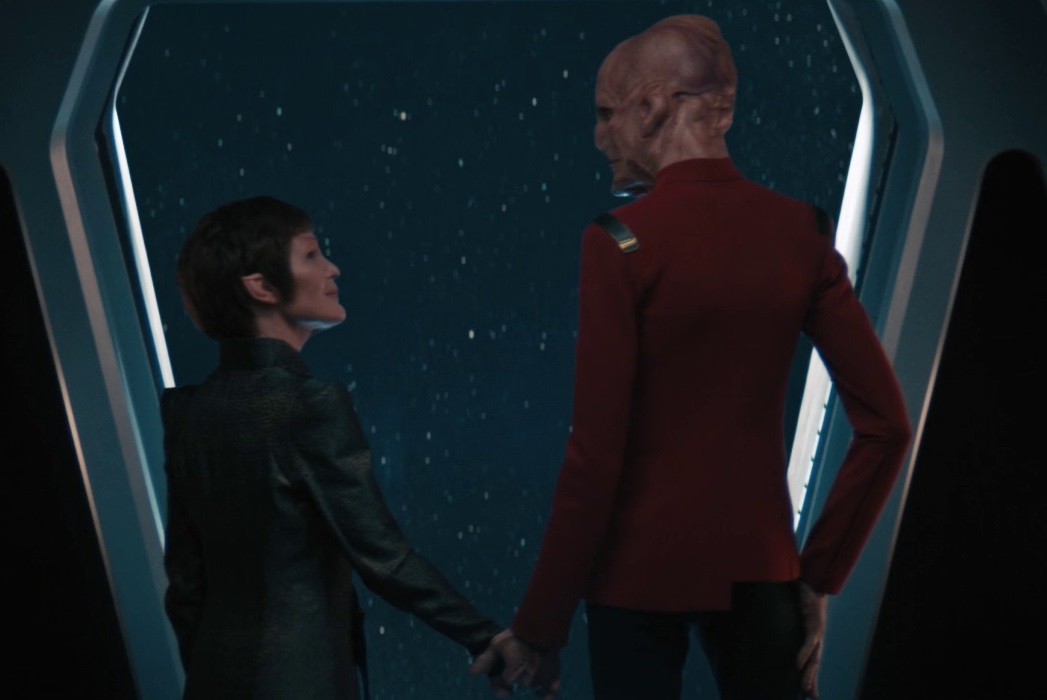
Star Trek: Discovery review – Season 4, Episode 5: The Examples

Spoiler Warning: There are spoilers ahead for Star Trek: Discovery Seasons 1-4, Star Trek: Picard Season 1, and for other iterations of the Star Trek franchise.

The Examples was a stunningly good episode. When the season draws to a close, no matter how key storylines are ultimately paid off, we’ll look back and say this was one of the highlights. This week we got three stories rolled into one, all connected to the DMA in different ways, and we also got the introduction of a wonderfully complex new scientist character played by Shawn Doyle.

Before we go any further, I want to continue to call out the corporate nonsense from ViacomCBS that has prevented Star Trek fans from outside of Europe and North America from being able to watch Star Trek: Discovery. ViacomCBS seems to have no interest in Africa, Asia, or even countries and territories like Ireland or Puerto Rico, and the rollout of Paramount+, which continues at what we might generously call a snail’s pace, means nothing to millions of Trekkies all over the world. Discovery has become one of the most-pirated shows in recent weeks – something that’s entirely the fault of ViacomCBS and their decision to pull the show from Netflix.

The USS Discovery’s main viewscreen as the DMA approaches.

Let’s set that aside for now and talk about The Examples. We’ll begin with the smaller storyline present in the episode: that of Dr Culber and his emotional struggles. For me, these sequences with Dr Culber – and especially his conversations with Stamets – formed the episode’s real emotional heart. There was a moment toward the end between Captain Burnham and a prisoner named Felix that was also emotional, but we’ve known Dr Culber and followed his story for more than three seasons, so I think it’s natural to feel that this was the one that brought the most emotional weight.

I’m increasingly convinced that Discovery’s main characters each embody a different response to grief and trauma. In Tilly’s case, which we saw come to a head last week, she chose to leave the past behind and strike out on her own. In the case of Stamets we see the workaholic, someone willing to set aside much of his personal life and family commitments and throw himself into his work. The same kind of applies to Captain Burnham, though she also embodies the “protective partner” through her relationship with Book. Book, of course, has shown us the depths of depression and grief. And with Dr Culber we have someone who’s dedicated himself to helping others – even if that comes at his own expense.

Dr Culber and Stamets in their quarters.

The scenes between Stamets and Culber were a complete inversion of what I’d been expecting – and I loved every second of it. After Stamets missed Gray’s incorporation and wasn’t there for Adira in Choose To Live, I’d been expecting Dr Culber to be the one to call him out for overworking himself, telling him he missed something important with his family – and with his friend, as he wasn’t really there for Tilly before she left the ship. But instead we got the reverse of that: it was Stamets who had to tell Dr Culber that he’s been the one overworking himself for the sake of the crew.

This moment was absolutely perfect, and I felt it really drove home just how these two came to fall in love in the first place. Stamets and Culber have been Discovery’s emotional core since the show’s first season, but this was the first time we got this level of insight into what brought them together – and what has kept them together even through all the sci-fi adventures they’ve been on.

Stamets and Culber gave the episode heart and emotion.

Kovich – or should that be Doctor Kovich? – continues to confound me. Who is this mysterious man? We’ve seen him seemingly working for Starfleet Intelligence in some capacity, working alongside Admiral Vance at or near the top of the organisation, playing a leading role in Starfleet Academy – including being able to appoint teachers simply on his say-so – and now, in The Examples, he appeared to be acting as a counsellor, therapist, and even psychologist for Dr Culber. I wonder if Discovery plans to nail down Kovich at some point in the future – or if he’ll continue to be used in a variety of roles like this, allowing the lack of a clear explanation or background to provide him with an air of mystery and gravitas. It’s hard to deny that it’s working!

Kovich certainly laid some harsh truths on Dr Culber during their very short session together. And I liked that it came back to what happened to him in Season 2; Dr Culber went through an almost unimaginable experience, one that’s bound to leave emotional wounds. Past iterations of Star Trek were pretty bad at following up with characters who went through what should’ve been traumatic events, so it’s cathartic in a sense to see that the franchise is using its serialised format to right that old wrong.

Kovich offered Dr Culber counselling… of a sort.

Some of the goings-on at the prison felt a little rushed and a little forced. After discovering the existence of the prisoners and finding out that they weren’t scheduled to be rescued, Captain Burnham and the crew seem to have made no efforts to follow that up. Could they, for example, have located the prison guards who were said to have fled? Or sought out someone else capable of opening the prison? I know it’s a bit nit-picky, but going there in person feels like it should’ve been a last resort.

There was definitely an interesting element to the prison stand-off, though, once we got into the meat of this side of the story. I said last week that Captain Burnham has a “moral certainty” to her; she knows what is the right thing to do. This time she came upon two challenges to that morality – and I think in the way she responded to those challenges, we can see how much she’s grown as a character over the past three-plus seasons.

Captain Burnham faced a very difficult choice this week.

Captain Burnham wanted to rescue all of the prisoners. She wanted to do so not only for Book’s sake, as he’d been suffering ever since the destruction of his homeworld, but also because she truly believed in her heart that it was the objectively moral thing to do. The prisoners immediately challenged that, with several of them expressing the desire to be left to die rather than return to confinement. There was a bit of a cliché as we were told that one of the prisoners had “stolen food to feed his family,” but other than that this side of the story felt complex and nuanced.

We also got a glimpse at the kind of clashing of cultures that happens out here in the real world. The Akaali – a race that first appeared in Enterprise – have a very different culture to the Federation, perhaps influenced in part by the Emerald Chain. In this case, their ideas of justice, punishment, and imprisonment seem draconian by Federation standards – and Captain Burnham had to deal with that culture shock.

The Akaali magistrate.

Felix was the most complex of the prisoners, a man who’d killed someone decades earlier and had lived with that regret ever since. Guest star Michael Greyeyes put in a stellar performance as someone not merely resigned to their fate, but actively choosing to embrace it. Felix seemed to truly believe that his punishment or penance for his crime required his own death, and had he survived if the DMA had taken a different path, I believe he would have sought out the Akaali authorities and turned himself in all over again.

His choice was difficult for Book and Burnham, though, who had endeavoured to save all six prisoners. Book appeared to be ready to intervene, saving Felix’s life even if it went against his wishes, but Captain Burnham eventually understood that this was something she had to do. After all the talk earlier in the season about the Kobayashi Maru test and no-win scenarios, here we got to see Captain Burnham confronted with her own small-scale version of that very challenge. She rose to meet it in a way that she would have struggled to in earlier stories.

Leaving Felix behind was a kind of Kobayashi Maru moment for Captain Burnham.

There are many different ways we could read Felix’s story in The Examples. There’s definitely an allegory for imprisonment itself; that prison can have value as a rehabilitative institution. But we can also read Felix’s final choice through a more metaphorical and philosophical lens: it’s a tale about the value of freedom, and the freedom to choose one’s own path and ultimate fate. It’s a story about agency and the right to determine the outcome of one’s own life. Felix could have been “saved,” but doing so would have cost him his freedom in a different way.

This story took what could have been a fairly simple and uninspired plot about rescuing prisoners in a different and unexpected direction, providing some much-needed complexity to Captain Burnham’s side of the episode. It also gave both her and Book an emotional moment toward the end of the episode, with Book in particular believing the decision to leave Felix behind was wrong. And as the audience, we can see both sides of this argument and acknowledge that there’s no objectively right answer. On the one hand, if Felix had been saved he could have found other ways to have meaning in his life or to complete his penance and rehabilitate himself. Giving him that chance, even if it was against his will in that moment, could have paid dividends later. On the other hand, though, Felix was a grown adult of seemingly sound mind, and if this was the choice he freely made, knowing the consequences, does anyone have the right to interfere? It’s a complex story with no easy answer – and this could be a whole essay in itself drawing comparisons with things like the right-to-die movement, suicide, and many more.

Felix made his own decision.

Sonequa Martin-Green played Captain Burnham with real complexity this week, and her performance nailed Burnham’s real struggle with this decision. As recently as the season premiere, Burnham had said to President Rillak that she wasn’t ever willing to leave anyone behind or make this kind of choice; a variation on Captain Kirk’s famous “I don’t believe in no-win scenarios” stance. But something’s changed for Burnham – perhaps the existence of the DMA, or simply the realities of command. This evolution allows her to remain true to herself – she still wants to do the right thing. She just seems willing to consider different perspectives on what is “right,” including those that fall outside of her own interpretation.

So let’s take a look at the biggest revelation in The Examples: the DMA is an artificial creation. This is something I’d been theorising about in one form or another since we first learned of the existence of the anomaly in the first Season 4 teaser trailer earlier in the year, and I don’t think many fans or viewers will have been terribly shocked. A natural disaster angle could’ve worked well for the DMA, presenting Captain Burnham and the crew with a scientific challenge to untangle rather than a villainous adversary to defeat. But that ship has sailed – and really, this is the way I think we all expected Discovery to go with the DMA.

Tarka and Stamets created a scale model of the DMA.

Though this story was great overall, there was one part at the beginning that felt very rushed. After Stamets noticed the DMA disappearing and reappearing, Captain Burnham asked Zora (the ship’s AI) if the DMA could be a natural ocurrence. Zora replied that it couldn’t be, and based seemingly on these two lines alone, the rest of the plot was left to unfold. It just feels far too quick and easy to have gotten a one-line answer from Zora about the nature of the DMA, and I feel it would’ve been nicer to see at least some of the workings that led to that conclusion – perhaps Stamets could’ve said he’d come up with an artificial DMA as a new theory after weeks of work; same result, same short scene, but perhaps a better overall feeling that this wasn’t all based on one very brief analysis.

This second point is really more of a nitpick, but here we go anyway: how did everyone in the galaxy find out that the DMA isn’t a natural phenomenon? If Stamets is leading the charge on this investigation, and he only figured it out with the help of Zora… how did that news get out? Starfleet might’ve wanted to keep a lid on something so explosive, and I can absolutely see someone like President Rillak wanting to keep that news on a need-to-know basis to prevent panic and possible political consequences for the very tenuously-united Federation. Maybe we can excuse it by saying the DMA’s disappearance and reappearance led others to figure it out independently, but again this all happened very quickly at the beginning of the episode. It’s a nitpick, though.

Kaminar – and other worlds – already know that the DMA is artificial.

There were references to past iterations of Star Trek – as well as the video game Star Trek Online – on this side of The Examples. Admiral Vance listed the Metrons, who first appeared in The Original Series episode Arena, the Nacene, who constructed the Caretaker’s Array that pulled the USS Voyager into the Delta Quadrant, and the Iconian Empire, who were believed to be extinct during the events of The Next Generation but ultimately appeared in the aforementioned Star Trek Online.

However, at the end of the episode, Ruon Tarka explicitly ruled out all three of these races as being the culprit. So who is Species 10-C? And perhaps a bigger question is this: will the DMA connect back to a past iteration of Star Trek, or will the storyline follow a similar route to the Burn in Season 3 and ultimately turn out to be something altogether new? Part of me wants to say that we wouldn’t have had all of these teases if there wasn’t going to be some big connection and a big reveal that would be meaningful for us as the audience – the Borg, the super-synths from Picard, or something of that nature. But another big part of me is saying “remember the Burn!” and feels certain that we’re going to encounter someone entirely new.

Admiral Vance has a list of possible culprits… but Ruon Tarka dismissed them.

We’ll save the theorising for later, though, because this side of the episode had far more going on than just that! Shawn Doyle arrived as Ruon Tarka, and he played the arrogant scientist exceptionally well. Tarka is a strangely relatable character – I think a lot of us have known someone who’s so incredibly self-assured and who comes across as very rude and even selfish. Tarka, to my surprise I must admit, backed up his arrogance with genuine skill, and by the end of the episode even Stamets seemed to have warmed up to him!

There’s always going to be the temptation to have a character introduced in this fashion ultimately be proven wrong and get some kind of comeuppance, but what makes Tarka such an interesting and nuanced character is that he really did have the scientific skill and know-how to back up what he was saying; all the trash-talking with Stamets actually led somewhere. We can dislike Tarka for his abrasiveness and the way he was rude with Stamets and Saru, but at the end of the day I’m still left with a strong sense that, arrogant or not, he’s someone I want on my side – especially given the nature of the DMA. Pulling off that balance with a brand-new character isn’t going to be easy to get right, yet Discovery pulled it off thanks to a wonderful guest star.

Ruon Tarka made for a wonderfully complex character.

It was very sweet to get multiple mentions of Aurellio this week. Kenneth Mitchell played the character in Season 3, and even though he wasn’t able to appear in person on this occasion, the fact that Discovery went out of its way to reference the character more than once was incredibly sweet. It’s nice to know that Aurellio still exists in the 32nd Century, and that he’s teamed up with the Federation to help solve the mystery of the DMA. Again, I feel better knowing Aurellio is working on this problem too!

The idea that Stamets and Tarka came up with, to create essentially a scaled-down version of the DMA, was a good one, and it worked well on this side of the story. We got to see the two scientists truly working on the problem, tweaking their theories as they went along. This is the scientific method – having a crazy idea and testing it out! Other sci-fi shows would’ve skipped this step and just brought us the conclusion so we could get into more space battles and laser fights, but one thing I’ve always liked about Star Trek is seeing the characters slow down and take their time working on a problem. Neither Stamets nor Tarka could figure out the DMA instantly – and we’ve seen Stamets working on this problem across several episodes now. They seemed to be close to a breakthrough before the experiment had to be shut down – so perhaps a future episode will pick up that dangling story thread.

Stamets, Tarka, and Saru examine their model of the DMA.

Though she didn’t have many lines, it was great to welcome back Tig Notaro as Reno during this story. Her dry wit cut through what was a very heavy scientific story, and provided some moments of levity that were definitely appreciated. Due to the difficulties of travelling and filming during the pandemic, I already know we aren’t going to get as many Reno appearances as we might want – so it was great to see her on this occasion, and I will definitely savour those light-hearted moments that she brought.

Saru played a guiding role here, ultimately shutting the experiment down as it got too close to the danger zone. But he brought a sense of calmness to the proceedings, something necessary given the hot-headedness of Tarka and Stamets. Seeing him “roar” was definitely something a bit weird… but it was neat nevertheless! Saru was very much back in his element as the senior officer on this side of the story, taking command of the situation but deferring to the scientists as much as possible. Since he underwent the vahar’ai transformation in Season 2, we’ve seen this calmer presentation of Saru. I’ve said this before no doubt, especially during his tenure as captain in Season 3, but he makes for an excellent commander – someone kind of in the mould of Picard as a considerate, level-headed leader.

Saru and Tarka having a stand-off!

So that was The Examples. We’re one step closer to figuring out the DMA thanks to Tarka and Stamets’ dangerous experiment – and I hope to see further progress on that storyline soon! The suspense, not knowing who’s responsible for the DMA or what their goal might be is really pulling me in right now – I desperately want the answers to those huge questions!

Some scattered final thoughts: the USS Janeway was a neat callback to Voyager. We’ve had several references to both Enterprise and Voyager so far this season – could either of those be a tease or indication of the direction of the story? The DMA makes an interesting climate change analogy – something ever-present that our heroes all have to work together to overcome. The episode opened by reminding us that Tilly has gone, and Mary Wiseman is no longer credited in the opening credits – so I think her departure from the series is permanent. I had a horrible feeling that something was going to happen to Rhys as he took a leading role in the evacuation… but luckily he lives to fight another day!

I had a fantastic time with The Examples. It advanced the season’s main story in a huge and very significant way, introduced us to a new scientist character who was a ton of fun, and gave us some cathartic emotional moments with Captain Burnham, Book, Dr Culber, and Stamets. All in all, a truly outstanding episode. I’m tearing my hair out trying to figure out who Species 10-C might be – so stay tuned for my next batch of theories for more on that!

Star Trek: Discovery Season 4 is available to stream now on Paramount+ in the United States, Scandinavia, Latin America, and Australia. The show is on Pluto TV in the UK, France, Germany, Italy, and other parts of Western Europe at 9pm on Fridays and Saturdays. Individual episodes or the full season can be purchased on iTunes, Amazon Video, and possibly other platforms in the UK, parts of Europe, and select other countries. The Star Trek franchise – including Discovery and all other properties mentioned above – is the copyright of ViacomCBS. This article contains the thoughts and opinions of one person only and is not intended to cause any offence.
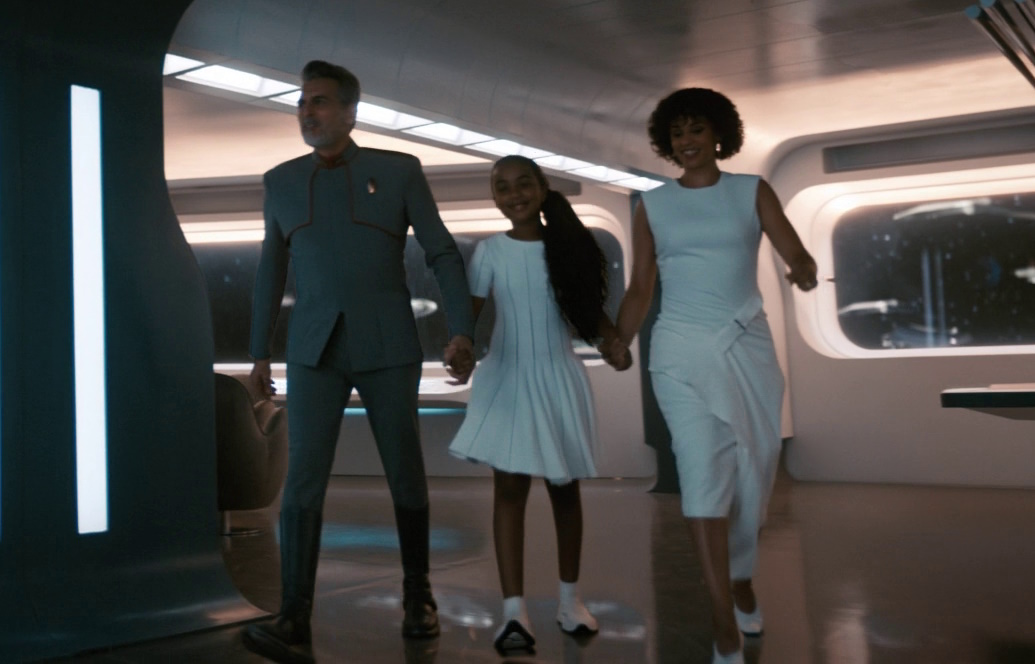
Star Trek: Discovery theories – week 4

Spoiler Warning: There are spoilers ahead for Star Trek: Discovery Seasons 1-4. Spoilers are also present for the following: Star Trek: Picard Season 1, Short Treks, and for other iterations of the Star Trek franchise.

All Is Possible definitely shook up Star Trek: Discovery! It’s an episode which, as things stand anyway, will have major ramifications for the rest of the show’s run thanks to the departure of Lieutenant Tilly. However, with the episode’s trio of stories largely staying away from the DMA (as the gravitational anomaly is now being called) there really aren’t a lot of new theories joining the list on this occasion. The teaser for The Examples has told us that we’re about to see a big return to that storyline, though, and I certainly don’t mind Discovery doing more of these episodic detours!

This week we had one theory that I’m calling semi-confirmed and one theory from way back in Season 3 that’s seen some significant advancement – but that I’m not yet willing to completely strike off the list! We’re also adding two production-side theories to the list for the first time.

Semi-confirmed theory:
Tilly left the USS Discovery.

Tilly is on her way to new adventures.

I’m calling this one semi-confirmed because I speculated about Tilly potentially leaving the ship – but I didn’t guess how soon it would happen or the exact manner of her departure! In the run-up to All Is Possible, my best guess was that whatever was happening with Tilly would rumble on for most of the rest of Season 4, with any potential departure not coming until closer to the end of the season. I certainly didn’t expect to see two “Tilly tries something new” storylines one after the other, and while her departure was very emotional and bittersweet, there was a slight sense that maybe it could’ve been scheduled a little better so we didn’t have both of Tilly’s big Season 4 episodes back-to-back.

I’d previously suggested that Tilly could change departments, resign from Starfleet, or that the character would be killed off by the writers. As it is we kind of got a combination of the first two: Tilly has left the USS Discovery’s science division to move to Federation HQ and teach at Starfleet Academy. She’ll presumably retain her commission as a Starfleet officer even though she isn’t working aboard a starship for the time being.

As I said in my review of All Is Possible, parts of Tilly’s story with the troublesome cadets almost felt like a backdoor pilot for a new series. With a Starfleet Academy show supposedly being worked on, we may not have seen the last of Tilly in Star Trek!

So that theory was semi-confirmed.

Up next we’ve got two production-side (as opposed to in-universe) theories.

Production-side theory #1:
Tilly’s departure will be permanent.

Tilly’s departure feels permanent.

Mary Wiseman confirmed in an interview with Wil Wheaton on The Ready Room (Discovery’s social media aftershow) that Tilly will be seen again before the end of Season 4. But that doesn’t mean she will be a main character on the show going forward, and her departure feels permanent. Despite that, I’ve seen quite a lot of folks online who don’t believe that Tilly is actually leaving the series – so I wanted to put it out there officially and say that, in my opinion anyway, she is.

Maybe those people know something that I don’t! As I always say, I don’t have any “insider information;” all of this is just speculation on my part. However, I feel that the manner of Tilly’s departure, the fact that she got that emotional sequence with Captain Burnham, a montage showing her leaving the ship, Adira seeming to take over several of her roles, and her departure feeling like the culmination of her arc going back to the latter part of Season 3 all come together to strongly indicate that she won’t be back as a major character. She may yet have a significant role to play in a future Season 4 episode, as has been suggested, but unless Discovery’s writers are really playing with our emotions I believe we’ve seen Tilly’s end as a main character on the show. She may, as suggested, be back in a future Starfleet Academy series, though… so watch this space!

Production-side theory #2:
Star Trek: Discovery isn’t going to be renewed for Season 5.

Is a fifth season going to happen?

Since Discovery’s first season in 2017, we’ve known by this point in the season that the show has been renewed. This isn’t one of those “I hate new Star Trek” things that we’ve seen doing the rounds online for years; I adore Discovery and genuinely want to see it continue. But it’s profoundly odd to be basically one-third of the way into Season 4 and to have had no announcement about Season 5. For comparison, Star Trek: Picard has been renewed for Season 3 even though Season 2 won’t air until next year!

I’m hopeful that this is just a blip; a temporary delay for reasons unknown, and that the show has been renewed for Season 5 already behind-the-scenes. However, when we look back at Star Trek productions in recent years, it was often apparent that production work was quietly ongoing even if there hadn’t been any official word from ViacomCBS. As far as we know at this stage, there’s been no pre-production work on Season 5, let alone any filming taking place in the Toronto area.

Once again this is a “watch this space” kind of theory. I hope I’m wrong… but the lack of any news or even any significant rumours about the show’s future is beginning to have me worried.

So those are two theories on the production side of things.

Now we’ll get into the main theory list, beginning with any theories that are new or saw any significant movement in All Is Possible. Then, for the sake of keeping everything in one place, we’ll also recap those theories that didn’t change this week.

Theory #1:
Dr Culber is going to tell Stamets to slow down.

Dr Culber and Stamets in a promo image for The Examples.

Stamets has been almost entirely absent from the past couple of episodes – and in All Is Possible we heard Captain Burnham suggesting that Stamets “won’t slow down,” and is overworking himself as he tries to figure out what’s going on with the DMA. As a result of Stamets dedication to his work, he missed all of Gray’s incorporation in Choose To Live, and we haven’t seen him with Dr Culber, Adira, or Gray since the beginning of the season. He hasn’t even met Gray yet, not properly.

Stamets also didn’t have a chance to speak to Tilly before she left the ship, though he was briefly seen as she departed for Starfleet Academy. In the past, we’ve seen Dr Culber gently remind Stamets that he has other priorities aside from his work, and I’m beginning to wonder if the show is setting up the pair for something similar. I hope we don’t go back to the Season 2 conflict, because that genuinely did not work, but Stamets may need some kind of intervention from the man he loves, pointing out what he’s been missing while he’s been wrapped up in his work.

Theory #2:
President Rillak knows what the DMA is and may be responsible for its creation.

President Rillak in Kobayashi Maru.

All Is Possible continued a trend that we’ve seen across the opening episodes of Season 4, showing us that President Rillak is a cunning, almost Machiavellian politician, willing to do anything to advance what she considers to be the best interests of the Federation. By bringing Burnham and Saru along to the Ni’Var negotiations she hoped to find a solution to a diplomatic impasse she knew was coming – and she succeeded.

As I said in my review, I believe Captain Burnham needs to be very careful with President Rillak. During the events of All Is Possible, working with Captain Burnham was advantageous to the Federation’s president – but I have no doubt that she’d throw Burnham and the USS Discovery under the bus without so much as blinking if she believed it would be to her advantage. Which brings us to the DMA.

President Rillak with Captain Burnham.

President Rillak might know more about the DMA than she’s currently letting on. If the Federation had created a weapon like this, or it was an experiment gone wrong, covering it up might be her objective even if she wasn’t necessarily the one who ordered the DMA’s creation. President Rillak herself is a character with depth, not simply an “evil admiral” character trope. But it wouldn’t be the first time that Discovery has presented us with a fairly hard-line character in a position of authority who turns out to be concealing a dark secret.

We’ll consider in a moment a few other possible candidates for creating the DMA – if it turns out to be an artificial creation. But the Federation – and by extension, President Rillak – have to be possible contenders too. Season 3 of Discovery showed us the Federation at its weakest, but also arguably as an organisation that was still virtuous at its core. In contrast, we have Season 2’s depiction of Starfleet: reliant on the shady Section 31 and their AI. In short, it wouldn’t be unthinkable for Discovery to go back to that kind of presentation.

Theory #3:
Kovich is an agent (or the head) of Section 31.

Kovich in All Is Possible.

This is the theory that’s hanging on by a thread right now! Ever since we met the mysterious Kovich in Season 3, I’ve felt sure that there was something going on with him. His mannerisms, the way he seemed to know more than he was willing to share, and particularly the way he dealt with Empress Georgiou all contributed to that. I began to suspect that he could be an agent – or even the head – of Section 31, the shadowy off-the-books intelligence division that has done some very dubious things!

All Is Possible showed us a different presentation of Kovich. Referred to as Doctor Kovich for the first time, he seems to be playing a senior role in the running of Starfleet Academy. That doesn’t necessarily preclude him working for Section 31, but it is the most significant move away from this theory that we’ve seen so far.

Kovich in Season 3.

It may yet be revealed that Dr Kovich played a role in Tilly’s away mission going so badly wrong, but I suspect if that had been going to happen we’d have seen it in All Is Possible. David Cronenberg plays the character very stoically, which I think adds to that mysterious sense that has been present since Season 3. In All Is Possible, that contributed somewhat to the sense that he may have known what was going to happen.

If it turns out that the Federation and/or President Rillak are involved somehow with the DMA, maybe Dr Kovich is aware of what’s going on. If he’s involved with Section 31, it may turn out that the organisation has important information about the DMA or even knows how to prevent it from doing any more harm.

So those theories were new or saw movement this week.

Now, as always, we’ll recap all of my other Discovery Season 4 theories. I find it helps to keep the full list in one place; it makes it easier to strike off theories when they’ve been debunked or confirmed, and it means nothing gets forgotten about or left behind! At least, that’s the plan!

Theory #4:
The Guardian of Forever will be back.

The Guardian of Forever first appeared in The Original Series.

Having reintroduced the Guardian of Forever in Season 3, I wouldn’t be at all surprised to see Discovery return to the Guardian’s planet in Season 4. The DMA is something new and threatening, so it’s possible Captain Burnham might want to ask the Guardian for help or information.

The Guardian of Forever is also the only way we know of at present to travel through time – something that might be necessary if Season 4 makes an attempt to link up with Calypso in a big way. There are many reasons why Captain Burnham might want to revisit the Guardian, and it would be great to bring back actor Paul Guilfoyle, who played the Guardian’s humanoid avatar in Season 3.

Theory #5:
Some areas of the galaxy – such as the Delta Quadrant – avoided the worst effects of the Burn.

The USS Voyager traversed the Delta Quadrant.

Season 4 touched briefly on the Burn with Su’Kal and Saru in Kobayashi Maru, and may now seek to put last season’s story to bed so it can wrangle with the DMA instead. But one thing I’d be curious to see is the true extent of the disaster – did it reach all four quadrants of the galaxy equally, or did its effects fade out after a certain point? Michael Burnham discovered that the Burn had a point of origin, and that it radiated out from that point like ripples on the surface of water. Ripples eventually diminish, fading away the further they travel, and perhaps that’s true of the Burn as well. There could be whole areas of the galaxy that didn’t even notice the Burn – and maybe the ship and crew will visit one such region.

If the Delta Quadrant was left largely unscathed, for example, what might that mean for the likes of the Borg? It’s possible they aren’t even still around in the 32nd Century, but it’s also possible that they’ve had more than a century to expand and build up their forces while the Federation suffered. To see a full write-up of this theory, click or tap here.

Theory #6:
Captain Burnham and the crew will encounter the Klingons.

General Martok, a 24th Century Klingon leader.

By the late 24th Century the Federation and Klingons were firm friends, having been allied for a century and after fighting side-by-side against the Dominion. We don’t know if that alliance endured to the 32nd Century, but it’s certainly plausible to think that it did. The Klingons might even have joined the Federation at some point, and their violent warrior culture may have been significantly pacified.

One thing that could be very interesting to see is how the crew of the USS Discovery – almost all of whom are veterans of the Federation-Klingon war – would respond to that. They’ve worked alongside Klingons like L’Rell before, but many of them still see the Klingons as an old enemy. The story of overcoming that prejudice could mirror episodes like The Wounded from The Next Generation, and would be very interesting to see.

Theory #7:
The crew will have to defend the Verubin Nebula.

The dilithium planet is vital to the Federation.

The Federation is still in a weakened state, nowhere near as powerful as it once was. The Verubin Nebula is thus a very tempting target for anyone looking to gain an edge in a galaxy where dilithium is still in short supply. As the only known significant dilithium supply, whoever controls the Verubin Nebula will have a massive tactical advantage.

We can compare the Verubin Nebula to Deep Space Nine’s Bajoran wormhole in that respect – it’s a resource of huge strategic importance. Season 3 didn’t show us much about the makeup of the galaxy’s factions outside of the rump Federation and the Emerald Chain, but it’s got to be possible that factions like the Dominion, Klingon Empire, or even the Borg still exist and would want to seize the Verubin Nebula for themselves.

Another view of the planet in the Verubin Nebula.

Season 4 has presented Captain Burnham and the crew with a scientific puzzle: the DMA. But that doesn’t mean there won’t be villains in play, and Discovery has introduced us to several compelling and interesting villains over its first three seasons.

To make a long theory short, it would begin to stretch credulity to think that everyone in the known galaxy would see the Federation rebuilding and having access to dilithium and not want to find out for themselves what’s going on. Once the Verubin Nebula’s existence becomes known, even if the Federation promises to share its bounty with all comers, it seems very likely that someone would want to take control of the dilithium supply for themselves.

Theory #8:
The story will connect with the Short Treks episode Calypso.

Craft, the protagonist of Calypso.

Despite a handful of moments in Season 3 which seemed to connect to Calypso, the story of the season overall ended up going in a very different direction. While we saw a couple of things that arguably did tie in to the Short Treks episode, major things like the USS Discovery undergoing a refit have actually moved the plot even further away.

It’s possible that Calypso will forever remain an outlier in Star Trek’s canon – an episode tied to a vision of Season 2 or Season 3 that was changed before it made it to screen. But earlier in Season 3 it felt like we were getting close to seeing how it could all be tied together – and I’m hopeful that Season 4 will find a way to do so.

Theory #9:
The ban on time travel will be explained in more detail.

The USS Enterprise was able to travel back in time to the 20th Century from the 23rd without too much difficulty.

This one is a hope as much as a theory right now! In short, the ban on time travel was introduced early in Season 3 primarily as a way for the writers and producers to avoid questions about why the 32nd Century was so different from how the far future had been depicted in earlier Star Trek productions, as well as to explain things like how the Burn was able to catch the Federation off-guard and why Georgiou couldn’t simply be sent back in time when she needed to.

But the ban itself raises some issues – the biggest one being the lack of detail on how it works and how something like this could possibly be enforced. As I said several times last season, it isn’t possible to just un-invent a technology so useful and powerful as time travel. Even just a few lines of dialogue going into a little more detail on the mechanisms involved in the ban would be really useful.

Theory #10:
The Federation has flouted the ban on time travel.

President Rillak may have tried to circumvent the ban if she felt doing so would be in the Federation’s interest.

Sticking with the time travel ban, another theory I had last season was that the Federation – and Section 31 in particular – might have deliberately flouted the ban and failed to abide by the rules. Someone as straight-laced and committed to Starfleet ideals as Admiral Vance is highly unlikely to have sanctioned such a move, but someone like the shadowy Kovich might have. President Rillak could also be involved.

Obviously the bulk of the season’s story will deal with the DMA. But there’s scope to either talk about the time travel ban in a standalone episode or even tie the two stories together – perhaps the anomaly has been unleashed as a result of unsanctioned time travel.

Theory #11:
Burnham won’t stay in the captain’s chair.

Captain Burnham in All Is Possible.

This is a controversial one, so let me just say up front that I’m neither in favour of this theory nor opposed to it – I just think it’s a possibility. As things stand, Discovery has had four different captains across its four seasons. One of the show’s unique points of interest within Star Trek’s broader canon are the very different ways in which these individual captains commanded the ship and crew.

It’s got to be considered at least a possibility, then, that the show will continue this trend. This doesn’t mean Captain Burnham will be killed off; I’d actually argue she’s pretty safe. But there are many different routes to her potentially leaving the ship, such as a desire for freedom that we saw in Season 3, or even perhaps taking up a new, more senior role within Starfleet.

Captain Burnham in Anomaly.

If this theory were to come to pass, it would be something I’d expect to see at the very end of the season. Even if Burnham seems 100% committed to her new role as captain, I don’t think it’s a theory we can definitively rule out.

It’s worth mentioning that at time of writing Discovery hasn’t been officially renewed for a fifth season – so all this talk of who’ll be in the captain’s chair by then could be moot! And of course this theory has a very strong counter-argument: that Discovery’s main story arc across its first three seasons can be read as Burnham’s ascent to the captain’s chair.

Theory #12:
There will be a character crossover from a past iteration of Star Trek.

Spock has appeared in several different Star Trek productions.

This theory returns from Season 3, where I doggedly clung to it for the entire season!

Discovery’s 32nd Century setting has shot Captain Burnham and the crew far beyond anything in Star Trek’s established canon, and that should mean that practically everyone we remember from other Star Trek shows won’t be around any longer. But this is Star Trek – with some creatively-written technobabble, practically any major character could have survived all the way through to the 32nd Century!

Riker has appeared in more Star Trek spin-offs than any other character.

It’s also possible for Captain Burnham to discover the logs of a long-dead officer; someone we as the audience would be familiar with. While this would be less of a “crossover” than if a character from the past could be physically present, it would still be a lot of fun to see!

There are a handful of characters who could have survived to the 32nd Century based on what we know about them from past iterations of the franchise. Included in this category would be people like Soji, Voyager’s Doctor, and a few others. But as we’ve seen in episodes like Relics and even the film Generations, all it would take to make a big crossover happen is some kind of temporal anomaly, stasis field, or other technobabble!

Theory #13:
A major character will be killed.

A Starfleet coffin seen in Deep Space Nine.

Season 3 saw a couple of major departures: Mirror Georgiou entered the Guardian of Forever’s portal, and Nhan remained behind aboard the USS Tikhov. Yet despite the dangers the crew faced as they navigated the 32nd Century, battled the Emerald Chain, and figured out the mysteries of the Burn and the Verubin Nebula, only one ally – Ryn – lost their life.

Killing off a character can be an excellent way to communicate the stakes involved if it happens at a relatively early stage. It can also be a storyline that brings a lot of emotion, as we have to say goodbye to a beloved member of the crew.

Spock’s funeral in The Wrath of Khan.

In short, I think there are plenty of reasons on the production side why killing off a major character could make sense in Season 4. Though we’ve already had one departure this season – that of Lieutenant Tilly – I still believe that Discovery could very easily go down this road, especially considering how dangerous the DMA currently is.

For a breakdown of which characters I thought might be in danger before the season premiered, check out my list of “death predictions” by clicking or tapping here.

Theory #14:
The DMA is a superweapon.

One view of the DMA.

We touched on this theory above when we considered the Federation’s possible complicity in the creation of the DMA, but there are many other ways such a story could pan out. The DMA’s unpredictable nature, as noted by Tilly and Saru at the end of Anomaly, could imply that there’s an intelligence at work dictating its moves. This could be the DMA itself if it’s sentient (or contains a sentient life-form) but it could also be the case that it’s being controlled or manipulated by something or someone externally.

If the anomaly turns out not to be a natural phenomenon, and is indeed deliberately targetting the Federation, who might the possible culprits be? And what would be the purpose behind attacking the Federation in this manner? If it’s the precursor to an invasion, perhaps later in the season we’ll see whoever is responsible making their next move.

Theory #14a:
The Borg are responsible.

The Borg Queen.

We don’t know whether the Borg Collective still exists in the 32nd Century; it hasn’t even been mentioned since the USS Discovery’s arrival. However, few other established factions seem capable of creating a weapon on the scale of the DMA. This wouldn’t be in line with the Borg’s usual modus operandi, as they prefer to assimilate rather than attack from afar. But a lot may have changed in the centuries since we last encountered them, meaning this could be the opening salvo of a Borg attack… or the last gasp of a dying Collective.

Theory #14b:
The super-synths from Picard Season 1 are responsible.

Some very menacing-looking synthetic tentacles.

We still don’t know very much about the super-synths that Soji and Sutra attempted to contact in the Season 1 finale of Star Trek: Picard. Other than claiming to offer support and help to synthetic life, what are their goals and motivations? Was their offer even genuine, or was it a trap? The mechanical tentacles glimpsed in Picard Season 1 looked terrifying! Moreover, we know that the super-synths have the technology to move stars – something only possible with an advanced understanding of gravity. Creating a stable 8-star octonary system is an incredible technological and gravitational feat, so they have precedent of a sort when it comes to working with gravity. Finally, Discovery Season 4 has already made connections with Picard Season 1: the Qowat Milat and the synth transfer process used for Gray.

Theory #14c:
The Kelvan Empire is responsible.

Rojan, a representative of the Kelvan Empire.

This one might seem to come completely out of the blue! In The Original Series, Captain Kirk met representatives of the Kelvan Empire, a faction originally from the Andromeda galaxy. Seeking a new home, a Kelvan scouting party had reached the Milky Way and were looking for worlds to conquer. Kirk would ultimately dispatch an unmanned starship offering to help the Kelvan Empire find new worlds to settle – but what if his offer was rejected? Given the vast distances and travel time involved, the timelines kind of line up for the Kelvan Empire to return to the Milky Way.

Theory #14d:
The Sphere-Builders from Enterprise are responsible.

A Sphere-Builder seen in Enterprise.

A defeated faction in one of the Temporal Wars, the Sphere-Builders initially hoped to convert a large swathe of the Alpha Quadrant to match their native extradimensional realm, and constructed a number of large space stations known as Spheres to facilitate this transformation. Crewman Daniels would tell Captain Archer that the Sphere-Builders were defeated in the 26th Century, but could they have since rebuilt? The DMA isn’t necessarily the same as what they were trying to do with the Spheres, but they’re one of the few factions in Star Trek that might be capable of creating a weapon on this scale.

Theory #15:
Saru will be given the captaincy of the USS Voyager-J.

The USS Voyager-J.

Saru’s future was briefly discussed before he offered to serve as Captain Burnham’s first officer in the episode Anomaly. He has already been offered a command of his own, so Starfleet clearly values his command abilities and experience. President Rillak was seen to be assessing Captain Burnham’s suitability for the captaincy of the USS Voyager-J in Kobayashi Maru… and she mentioned having a shortlist of candidates. Could Saru be on her list?

Several of the qualities that President Rillak said she was looking for in a potential captain seem to apply to Saru. He’s more level-headed, less likely to put himself in a dangerous situation, and more inclined to think of the big picture. He has a weakness when it comes to Kaminar, as we saw toward the end of Season 3, but generally speaking he isn’t someone who lets his emotions get the better of him. His wisdom and calm demeanour could be valuable in the captain’s chair of the Federation flagship. This could also set the stage for his departure from the show, or possibly even for a new show following his adventures aboard his new ship.

Theory #16:
The DMA is (or contains) a sentient life-form.

Another view of the DMA.

“It was only trying to communicate!” has become a Star Trek cliché, often used to describe how the seemingly-aggressive actions of an alien life-form are actually something innocuous. Maybe the same is true of the DMA: at its core is a life form, perhaps one not dissimilar to the Sphere seen in Season 2, and it’s on its own mission of exploration.

V’Ger from The Motion Picture is an interesting comparison. Like the DMA, V’Ger was massive in size, capable of destroying space stations, fleets of ships, and even threatening to destroy entire planets. When Admiral Kirk and the crew of the Enterprise were able to figure out V’Ger, however, they found a life-form at its core, one which was just as curious to learn and grow as they were.

Theory #17:
Book will find Kyheem and Leto inside the DMA.

Leto as seen in Book’s memory.

In Star Trek: Generations, Captain Picard encountered Captain Kirk inside the Nexus – despite Kirk being declared “dead” after the Enterprise-B encountered the energy ribbon almost eighty years earlier. We don’t know what the DMA is yet; one of my very early pre-season theories involved the Nexus, but that seems to be debunked already! However, the anomaly’s mysterious nature raises the faint possibility that at least some of those it appears to have “killed” may not be as dead as they first appear.

This theory is, I freely admit, a bit of a long-shot. And it hinges on a fundamental question underlying the story of the season: is there more to the DMA than meets the eye? If the anomaly is just an extreme example of space weather, flitting through Federation space destroying anything unfortunate enough to be in its way, then probably everyone on Kwejian is dead. But if the anomaly harbours some kind of gateway, wormhole, portal, time vortex, or any of the other Star Trek-y technobabble phenomena that we’ve seen across the franchise’s history, then it’s possible that at least some of the folks on Kwejian found themselves transported to whatever realm lies inside of the anomaly.

Theory #18:
Captain Burnham and/or the Red Angel time travel suits from Season 2 are connected to the DMA.

We don’t really know what happened to the Red Angel suit after this moment.

I’m not sure that this one is particularly likely, but as I said last year about a possible Burnham connection to the Burn, not only does Discovery kind of have a precedent for telling this kind of story, but there would also be something very dramatic about this revelation. In this case, Burnham would be indirectly and unknowingly responsible for creating something devastatingly damaging. How would she react to that, and how would Book react given what happened to Kwejian?

Perhaps the Red Angel suit, which Burnham sent back in time in the Season 3 premiere, malfunctioned somehow, and its powerful wormhole-creating technology gave rise to the DMA. If the Red Angel suit completed its journey back to the 23rd Century, the anomaly may have had centuries to grow and expand unchecked. If time travel is involved, perhaps a future Captain Burnham or a parallel universe Captain Burnham could be responsible for the anomaly’s creation – either intentionally or not.

Theory #19:
We haven’t seen the last of the Abronians.

I currently have four ideas for different ways that the Abronians – the non-humanoid race that Captain Burnham, Tilly, and the Qowat Milat helped save from cryo-sleep in the episode Choose To Live – could play a further role in Season 4.

Theory #19a:
The Abronians’ homeworld was destroyed by the DMA.

Captain Burnham believes this image depicts a “supernova.”

After arriving at the Abronians’ cryo-ship, Captain Burnham found a stone carving that seemed to depict the destruction of the Abronians’ homeworld. This carving was only shown on screen briefly, but it seemed to show the planet being damaged or destroyed in a large explosion. Burnham credited the planet’s destruction to a “supernova,” and the story then raced ahead.

Considering that the main thrust of the season so far has been about the DMA, perhaps Burnham was incorrect: the Abronian homeworld was destroyed by the anomaly, not a supernova.

Theory #19b:
The Abronians’ homeworld was on the “other side” of the DMA.

The USS Discovery approaches the DMA.

One clip in the second Season 4 trailer appeared to show Captain Burnham leading the USS Discovery inside the DMA. We don’t yet know what that means, nor to what extent words like “inside” the anomaly or “the other side” of the anomaly are even coherent concepts. But many times in past iterations of Star Trek we’ve seen things like wormholes and gateways to parallel universes. Perhaps the anomaly is something similar – and passing through it leads to a different dimension, parallel reality, or just a faraway region of space.

One thing struck me as odd about the Abronians: the Federation was entirely unaware of them, despite the Abronian cryo-ship being relatively close to Federation space – such that Captain Burnham could reach it using Book’s ship in a short span of time. It’s possible that the Abronians had been asleep for millennia, unnoticed by the Federation and the wider galaxy for all that time. But it’s also at least possible that their cryo-ship is a newcomer to the area. If so, perhaps it arrived here via the DMA.

Theory #19c:
The Abronians will return to help the Federation later in the season.

A deceased Abronian.

One of the themes of Discovery since Season 3 has been connection, including building connections between the Federation and other races and organisations. The Abronians were awoken from cryo-sleep thanks to the interventions of Captain Burnham and Tilly – at least in part – and they may seek to repay the Federation, or Captain Burnham personally, for that help.

We saw this play out last season with Ni’Var; in the season finale Ni’Var ships raced to the Federation’s aid as the Emerald Chain attacked. Perhaps the Abronians will likewise step up to help when the Federation needs allies.

Theory #19d:
The Abronians’ moon-ship may be useful in a later story.

“That’s no moon…”

At this stage I can’t envision precisely what use Captain Burnham and the crew might have for a moon-sized starship… but that doesn’t mean such a need won’t arise! The Abronians’ cryo-ship is huge, and at least superficially seems to have the mass of a moon or small planetoid. If Captain Burnham and the crew needed something that large for some purpose, perhaps they’ll return and either take it or negotiate for it.

As we saw in Choose To Live, the moon-ship was in full working order. All it needed was some extra dilithium to power up and it was perfectly capable of moving under its own power, and its computer systems were still functional. The only system that seemed to have failed was the wake-up timer! So if – for reasons yet unknown – the crew need a huge starship, perhaps we won’t have seen the last of the moon-ship.

So that’s it!

The USS Discovery.

At present, those are all of the theories I currently have in play. Some are more likely than others, some are perhaps plausible but may not come into play in Season 4, and maybe some are just plain silly! But I have a lot of fun thinking them up and writing these lists, and that’s really what this is all about!

After two episodes in a row in which we got minimal advancement of the season’s main storyline, The Examples seems to be teasing us with a return to the DMA in a significant way. I can hardly wait to see what lies in store for Captain Burnham and the crew!

Before we go, one final point. I write up these theories because I like Star Trek and I like writing. But for some folks, fan theories can hamper their enjoyment of a film or television show. It’s worth keeping in mind that most of these theories probably won’t pan out, and we have to be prepared for the fact that even the most well-constructed fan theory, no matter how fun and plausible it seems, simply won’t turn out to be true. If you find that speculating and reading theories is beginning to detract from your enjoyment of Star Trek: Discovery – or any other television show or film – it might be a good idea to take a break for a while.

Star Trek: Discovery Season 4 is available to stream now on Paramount+ in the United States, Scandinavia, Latin America, and Australia. The show is on Pluto TV in the UK, France, Germany, Italy, and other parts of Western Europe at 9pm on Fridays and Saturdays. Individual episodes or the full season can be purchased on iTunes, Amazon Video, and possibly other platforms in the UK, parts of Europe, and select other countries. The Star Trek franchise – including Discovery and all other properties mentioned above – is the copyright of ViacomCBS. This article contains the thoughts and opinions of one person only and is not intended to cause any offence.
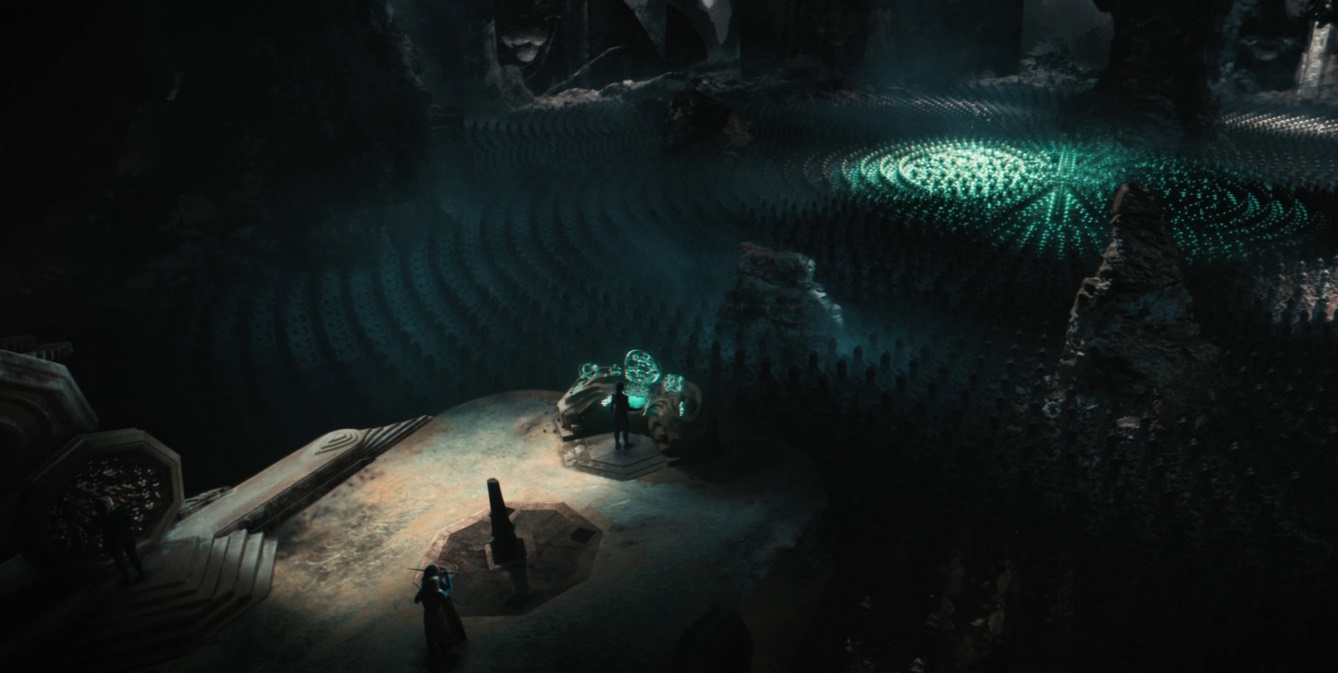
Star Trek: Discovery review – Season 4, Episode 4: All Is Possible

Spoiler Warning: There are spoilers ahead for Star Trek: Discovery Seasons 1-4.

Last week we saw Captain Burnham and the crew largely leave the gravitational anomaly behind as Discovery told three distinct stories. The main thrust of the season still involves the DMA – as the anomaly is now being called – so it was interesting to see that All Is Possible once again shelved that story to take us on another pair of side-missions.

Unfortunately Discovery’s fourth season is still unavailable to large numbers of Trekkies. Fans from Puerto Rico to Tokyo still have no (official) way to enjoy the series, and this self-defeating corporate nonsense is something I’m going to continue to call out at every opportunity. The rollout of Paramount+ internationally next year means nothing to millions of fans in Asia, Africa, and other regions when ViacomCBS believes they don’t exist.

The USS Discovery at the beginning of the episode.

Though there were secondary and tertiary plotlines in All Is Possible, there’s one massive thing that we have to talk about first and foremost: the departure of Lieutenant Tilly. I have to be honest: I did not see this coming – at least, not this early in the season. We’re four episodes into a thirteen-episode season, and Tilly’s arc has already seemingly concluded. Though I had begun to make predictions last week about Tilly’s fate after she’d been seeming so out of sorts, I figured her departure – if indeed that’s what her arc was building towards – wouldn’t have happened until nearer the end of the season.

When All Is Possible kicked off and it became apparent that we were getting a Tilly-focused story, particularly another “Tilly tries something new” story, I was worried that the episode was going to feel a bit samey after she’d played such a big role last week. And although it now makes sense in light of her departure, I’m still left wondering if it was the right decision to schedule these two stories one after the other. We had some stirrings and indications from Tilly in episodes 1 and 2 that she was feeling this way, but because that story has now effectively run its course it feels if not rushed then at least unnecessarily condensed and perhaps poorly scheduled.

This was a huge episode for Tilly – and for Discovery.

The big question, of course, is whether Tilly’s exit will be permanent. It certainly felt permanent in All Is Possible; she even got the send-off from the crew that I argued Saru had missed at the end of Season 3. I don’t usually comment on cast interviews or The Ready Room (Discovery’s social media after-show) in these reviews, but when Mary Wiseman was interviewed this week after All Is Possible had aired she said that we’d see Tilly again before the end of the season. Good news on that front, at least!

That doesn’t mean that Tilly will remain a series regular, though, and her new role at Starfleet Academy has removed her from the ship and thus presumably the bulk of the season’s remaining episodes and storylines. And if the show is renewed for a fifth season – something which is surprisingly still unconfirmed – presumably Tilly won’t be back in a starring role. I think that’s a shame in a way; she was a fun character and after three seasons was beginning to grow in confidence and settle into her role. Or so it felt.

Mary Wiseman spoke with Wil Wheaton on The Ready Room after All Is Possible aired.

On the production side of things, it’s my suspicion that the show’s writers and producers didn’t really know what to do with Tilly or where to take the character. The addition of Adira to the regular cast was a double-edged sword for Tilly because they occupy a very similar role. In Seasons 1 and 2 in particular, we’d see Tilly working in the engineering bay with Stamets. Now Adira fills that role – and because of their deeper connection with Stamets, arguably fills it better. In Seasons 1 and 2, Tilly was the “baby” of the crew; young, fresh-faced, eager to please, worried about making mistakes, and keen to do her part. Adira once again has taken over that character space.

Tilly’s growth across Seasons 1, 2, and 3 was wonderful to see, and when we compare her to characters like Harry Kim – who essentially remained in a similar space for all of Voyager’s seven-year run – we can see the advantages of serialised storytelling. But Tilly’s growth as a character appears to have come at the expense of her roles on the ship, and the addition of Adira may well be the proverbial last straw. We can kind of see the snowglobe scene through this lens – Tilly was passing the metaphorical torch to Adira in that moment.

Tilly gave her snowglobe to Adira.

We can’t ignore the rumours of a Starfleet Academy series when discussing Tilly’s fate and future. Alex Kurtzman, who’s in charge of the overall Star Trek franchise for ViacomCBS, hinted that such a series is in the early stages of being worked on, and in more ways than one the Tilly side of All Is Possible feels like a backdoor pilot for such a show. We got to see Tilly both as a teacher and a leader across these sequences, laying the groundwork not simply for her departure from Discovery, but setting up her new role as well. Could all of that mean that the potential Starfleet Academy series would feature Tilly in some capacity?

I thought Mary Wiseman’s comment in The Ready Room that Tilly’s confidence had been knocked by the events of Season 3 was particularly interesting, too. Tilly had seen herself as being on a pathway that led her from the Academy to the captain’s chair, but when she got a taste of what being in command was like, she found herself out of her depth as she lost the ship to the Emerald Chain. I think a lot of us can relate to feeling overwhelmed by a difficult situation, or feeling the weight of responsibility and struggling with it. Perhaps, as Wiseman suggests, Tilly came to believe that command was not right for her.

Tilly came to believe that she was on the wrong path.

If that’s true, whose fault is it? There was a lot of talk during Season 3 that Saru’s decision to appoint Tilly as acting first officer was the wrong one, and while I defended that story point at the time, when seen through this new lens perhaps we could argue that Saru pushed Tilly to take on that role too quickly. He’s been a good friend to her, and has advocated for her when others might overlook her – as we saw last week, for instance – but might his friendship with Tilly have blinded him, at least somewhat, to her inexperience and limitations? Perhaps.

Tilly held her own when the Emerald Chain captured the ship, and ultimately played a huge role in retaking Discovery and defeating the villainous faction once and for all. But of course it makes sense that those events would completely bowl her over. She was in command of Discovery for a few hours at most, then lost the ship to the Emerald Chain with relative ease. As someone who’d hoped to one day have her own command, those events are going to take a toll, and it’s natural that she’d question her career path in light of what happened. We can empathise with Tilly, putting ourselves in a comparable situation.

Tilly had hoped to one day command her own ship.

It was sweet to see Tilly reunite with Captain Burnham, albeit briefly, before confirming her decision and departing the ship, and the choice of Tilly’s cabin for this conversation harkened back to the early part of Season 1 where we saw them together in that room on multiple occasions. Tilly had already made her decision, it seemed, before Burnham even sat down. Yet it was still nice to see her talking it out with her captain – and friend – before finally confirming that this is what she was going to do. The moments between Mary Wiseman and Sonequa Martin-Green added a lot to this story.

One person who was missing from Tilly’s story, though, was Stamets. Not only had Tilly and Stamets worked together since the beginning of the series, but earlier in the episode Tilly had expressed concern about “abandoning” him to go on the Academy mission – yet by the end of the episode she was content to leave him all alone with the problem of the DMA while she took on a new role. I think we could still have arrived at this point; I’m not saying Tilly needed to stay behind for Stamets’ sake or anything. But just as it was sweet to see her with Burnham talking things out, I think we could have also enjoyed a quiet scene between Tilly and Stamets in which she at least said her goodbyes. As it is, we saw Stamets incredibly briefly as Tilly left the ship, but that was it.

Stamets was noticeably absent from Tilly’s story.

This is the second story in a row from which Stamets has been absent after he missed Gray’s incorporation last week. I confess I’m not exactly sure what’s going on there – whether it’s simply a case of writing/editing (Stamets actor Anthony Rapp confirmed on social media that at least one of his scenes this week had been cut) or whether there’s some other reason for the lack of Stamets in some of these stories. He has a deep connection with Adira, which made his absence from that story last week feel very odd, but he also has a friendship with Tilly – so again, his absence from her story aside from one mention right at the beginning makes it feel like there was something missing; someone else she needed to talk to before departing.

One thing that wasn’t made clear is this: what exactly is Tilly going to teach? I presume it must be something scientific; she can’t be lecturing on subjects like command, surely? Starfleet Academy has usually been presented as something akin to both a military officers’ training college and a civilian university – with different teachers for different subjects. Tilly has a scientific background, so presumably she’d teach something in that department. Or maybe Federation history… since she’s 1,000 years older than all of the cadets! Perhaps this is something we’ll see more of either later in the season or in that potential Starfleet Academy show.

Will we soon see Tilly back on our screens in another Star Trek series?

We haven’t even talked about Tilly’s mission! She and Adira led a small group of cadets on what was supposed to be a training mission – but in true Star Trek style, things didn’t go to plan. I confess at first that I felt sure the whole thing was either a setup or a simulation, especially because of the involvement of the mysterious Kovich. However, it doesn’t seem like that was the case; Tilly’s shuttle really did crash-land on an icy moon, and the monsters she and the cadets had to escape from were real.

It wasn’t clear how much time had passed since the season premiere, when we were first told that there would be a new intake of cadets, so we don’t really know how long these cadets have been together. However, I felt that some of the tension between them was a little forced. The whole point of Starfleet Academy, especially in a post-Burn galaxy, is to work together and pull in the same direction, yet we had exaggerated moments of drama and tension between the cadets that just didn’t feel natural even in that context.

Adira and Tilly with the trio of cadets.

Even if many people in the galaxy harbour prejudices or preconceptions about other races and people from beyond their homeworlds, why would anyone who felt that way apply to join Starfleet? Surely we should be seeing if not “the best of the best” then at least folks who are superficially willing to work together; it kind of felt like the cadets were from some semi-scripted reality TV show, the kind that deliberately chooses the most belligerent contestants with clashing personalities. In that sense, I didn’t really like any of the cadets.

They had to start from a place that would allow them to come together, and in particular that would allow Tilly to be the catalyst for their coming together, and I get that. But it just felt like Discovery, not for the first time, had taken things to an unnecessary extreme in order to accomodate this storyline, putting up one-dimensional characters who behave unnaturally solely for the sake of presenting Tilly with an obstacle and a point of contrast. The young actors who played the cadets did very well with the material they had, but their characters were written rather poorly, in my view, and none came across as feeling either like a natural character nor someone we’d expect to find at Starfleet Academy.

Cadets Harral (left) and Gorev didn’t get along at first.

The puzzle that lay before Tilly and her crew felt like it came right out of The Next Generation’s era, and I’m absolutely there for that kind of story! After the shuttle crash the group was unable to stay aboard, instead needing to climb out of the crash site to use their communicators – but were unable to use their technology. This angle definitely added a lot to the story, forcing Tilly and everyone else to think outside the box rather than being able to fall back on phasers, tricorders, and the like. Again, this feels like a story that could’ve come from any of the 24th Century Star Trek shows and was a great throwback to the franchise’s past.

On a personal note, I have to confess that I’m sad to see Tilly go. If the move is permanent, as it seems to be at this stage, her absence from Discovery will be noticeable going forward, even if Adira steps up to fill the void she leaves behind. I liked Tilly as a character so much that one of my cats is named Tilly (if you want to see a couple of photos of her, follow me on Twitter!). Tilly didn’t just fill that “young and eager” role that characters like Harry Kim, Nog, Hoshi Sato, and Wesley Crusher had in past iterations of the franchise. She was always more than just a character archetype. Tilly was strong in her own way, brilliant in her own way, and funny to boot.

Tilly’s departure is a bittersweet moment.

Across the show’s first three seasons we saw Tilly as a scientist and engineer, working with Stamets on the Spore Drive. We saw her as a friend to Michael Burnham and Saru in particular. We saw her passionate about helping the jahSepp in the mycelial network, and how she came to the aid of Po in the Short Treks episode Runaway. She grew and developed from an anxious cadet into a true Starfleet officer – and while she will undoubtedly make an excellent teacher to a new generation of cadets, her departure is a sad one. She may yet have a role to play either this season or in Star Trek’s future, and I look forward to that. But for now, it seems as though Discovery is moving on without her. And I’m sure I’m not the only one who feels a stab of sadness as a result.

Just like Discovery plans to do we’ll leave Tilly behind and move on to take a look at the rest of the episode. There was a secondary storyline that involved Captain Burnham, Saru, President Rillak, and Ni’Var’s leader T’Rina. We talked last week about contrivances and forced drama, and in this story I’m afraid we did get some of that for the second week in a row. At what was supposed to be the final moment of negotiations to bring Ni’Var back into the Federation, the Ni’Var delegation dropped a diplomatic bombshell that appeared to sabotage the entire thing.

The negotiations on Ni’Var.

Both the timing of this and the way it was pretty easily resolved feel rather contrived – and it begins to stretch credulity to think that neither the Federation nor Ni’Var negotiators could’ve come up with Captain Burnham’s “independent committee” solution on their own. It seems like the perfect compromise, allowing Ni’Var the backdoor they needed without compromising the Federation’s unity. Captain Burnham wasn’t the only person capable of proposing such a solution, and while her status as a citizen of Ni’Var and the Federation makes her well-qualified to serve, I have to ask if she’s the only citizen of Ni’Var who’s also in Starfleet at this point. It seems quite plausible that there are others, and thus her claim to be “uniquely” capable of coming up with this solution might be stretching the truth somewhat.

All that being said, these negotiations reminded me very much of the negotiations that my country, the UK, has been taking part in for much of the past five years. I don’t know whether this story was intentionally written as an allegory for Brexit, but it certainly felt like it had elements of that, and to my surprise it was handled in what felt like a mature way. Brexit, much like certain American political issues, divides opinion sharply, and it would be very easy for a story like this one to come down firmly on one side of the fence, presenting one side as morally right and the other as morally wrong. All Is Possible didn’t do that, and instead tried to find a way to cut through the political machinations of both sides before ultimately settling on a compromise.

Captain Burnham’s compromise can be read as a metaphor for our current divided political climate.

If we ever needed Star Trek to shine a light on contemporary issues through its sci-fi lens, we need it at the moment! There are so many divisive political topics, including Brexit, all across the world. What we’ve seen over the past decade or more are moves away from the political centre ground toward the extremes of left-wing and right-wing politics. The art of the political compromise has been lost in too many cases, and that’s a driving force for further division. Finding ways to compromise and to maturely understand that it isn’t always possible to have everything your own way is something politicians of all ideologies – and their supporters – need to understand, and Discovery delivered this message in a simple yet meaningful way.

It wasn’t the perfect story, as I’ve tried to explain. It had its contrivances that definitely felt forced. But at the same time, any British or European person can tell you that, having watched years of Brexit negotiations, such things aren’t as unrealistic as they might seem. Diplomats for both sides have, at times, seemed to be negotiating in bad faith, waiting to spring the next trap or throw in a new uncompromising proposal at the last minute. It’s a wonder that the Brexit negotiations got as far as they did, all things considered!

President T’Rina was happy with the proposed compromise.

So perhaps calling this story “contrived” was too harsh in light of what we’ve seen in the real world! Though I maintain it’s a story with some imperfections, it was an interesting one nevertheless. Star Trek has tackled many political issues in its long history, from nuclear proliferation to the teaching of religion in schools, but this is one of the first stories to really feature politicians and diplomacy as a key part of the narrative, with nakedly political considerations having to be taken into account by our heroes. That alone makes it a very interesting story.

It was wonderful to welcome Ni’Var back into the Federation after seeing how many worlds had quit the organisation last season. It definitely feels as though the Federation is now making significant strides in reforming; Ni’Var is the first of the “original” member worlds to rejoin as far as we know. Perhaps we’ll see Earth do the same one day soon? It would be a shame if Discovery left that particular storyline unresolved, especially after we saw how isolationist Earth had become in Season 3.

Ni’Var has rejoined the Federation!

President Rillak once again showed her almost Machiavellian political style; her willingness to lie and use truly underhanded tactics to get her way without revealing the extent of her meddling. By sidelining Admiral Vance and bringing in Captain Burnham and Saru, she was able to execute a hidden plan to bring Ni’Var back into the fold and negate their last-second demand. It was, all things considered, a brilliant tactical move on her part – and re-emphasises her uncompromising nature and willingness to bend or even break the rules to advance the Federation’s best interests.

Despite what appeared to be a détente between Captain Burnham and President Rillak toward the end of the episode, I hope Discovery’s captain keeps her wits about her. If we’ve learned anything about President Rillak over these four episodes, it’s that she sees everything and everyone around her as means to an end. Working with Captain Burnham was, in this instance, advantageous to her – but Rillak will throw Burnham into the fire, and Discovery along with her, if she believes it will help her cause or advance what she considers to be the best interests of the Federation.

Captain Burnham would be well-advised to beware of President Rillak… no matter how superficially friendly she’s currently being.

We haven’t seen President Rillak do anything completely immoral or “evil” just yet. And Discovery may choose to keep this nuanced presentation going all season long. I kind of hope that’s the case, because right now I’m loving President Rillak’s “ends justify the means” approach to governing. Chelah Horsdal plays the character expertly. But Rillak is the kind of character with whom a major confrontation feels increasingly inevitable – her moral ambiguity and Captain Burnham’s moral certainty feel like they’re on a collision course.

There was a third storyline this week that involved Book and Dr Culber. As with Stamets, Book found a new but fun pairing with Culber and I hope they revisit this character pairing in future; it would be great to see them socialising or doing something else outside of a therapy setting. There seemed to be a hint that Dr Culber might need help processing his own trauma – perhaps from his time trapped in the mycelial network – in future, and if so maybe Book could have a role to play there.

Dr Culber may need some help of his own one day.

The programmable matter that Dr Culber and Book turned into sand reminded me a lot of the sequence from Lower Decks Season 1 where a character is in the process of “ascending.” Maybe that was unintentional, and tonally these sequences could not be further apart! But it was interesting to see nevertheless – or perhaps I’m grasping at straws as I desperately hope for the producers of Star Trek to do more to bind the franchise together!

Grief and loss have been themes that Discovery hasn’t shied away from, but they’ve come to the fore this season. Book and Tilly’s stories both connect to this theme as they’re both experiencing different kinds of loss. In a sense, everyone aboard Discovery is in Book’s shoes – they’ve all lost everyone they ever knew apart from each other, albeit in very different ways. And we’ve seen different ways of coping with that loss. Book seems to have made a small breakthrough this week, and I hope we see that process continue.

Book spent this week’s episode in counselling.

Captain Burnham, in Season 3, seemed to rebel against the confines of Starfleet for a time. At first I called this a character regression, as I felt it risked dragging her back to her early Season 1 portrayal. But thinking about it again, through this lens of loss and grief, I think we can see that Burnham is processing the loss of her friends, her family, and the world she had to leave behind. She did so at first by seeking freedom, then later by reconnecting with her mother and reaffirming her relationship with Starfleet. In Tilly’s case, she couldn’t make that renewed commitment and has chosen to walk a new path. Book’s destination is still unknown as he’s still processing his own loss and grief – and I’m glad. What Book has gone through is almost unfathomable, and it wouldn’t feel right if this element of his story and characterisation were resolved too soon.

So that was All Is Possible. Tilly’s departure is by far the biggest thing to come out of the episode, and while there were some minor gripes with the way both Tilly and Burnham’s stories unfolded, ultimately they end up feeling like little more than nitpicks in what was a solid, thoroughly enjoyable episode. I’m glad to see Discovery sidestepping the main serialised story and being bold enough to give us these semi-standalone episodes. I have no doubt that some elements will come back into play later in the season, but for the most part what we got is a self-contained story – albeit one with huge implications for the series going forward.

Onward to new adventures.

Unlike when Nhan and Georgiou left last season, I’m not scrambling around wondering who will replace Tilly. That question has already been answered: Adira. However, her departure does potentially open up another space for a new crew member – and with noteworthy absences in departments like security and tactical, perhaps we could be set for someone new to be promoted. Gray is perhaps the most readily apparent choice, but there are great cases to be made for Detmer or Owosekun to get bigger roles on the bridge, as well as for the return of Nhan, or even for a new character to be introduced.

A few scattered final thoughts: is Kovich the head of Starfleet Academy now? Has he always been in that position? I don’t recall him being referred to as “doctor” last season, but he could be some kind of professor holding a PhD. That’s an interesting take on the character! At first I wondered if he was responsible for the shuttle going off-course… it seems like something he might do! Beginning the episode with a traditional captain’s log was awesome, and another great callback to past iterations of the franchise. I believe this was the first time we heard a 32nd Century stardate, too.

Kovich made his first appearance of the season.

It was neat to see the Season 3-style uniforms being used for some secondary characters. Season 3 of The Next Generation and the film Generations both showed that there’s a kind of transition period when uniforms are being changed over where not everyone has the new variants, and that seems to still be true in the 32nd Century. I was a little worried when Admiral Vance seemed to have been shuffled out of the story in favour of President Rillak – but it makes perfect sense. Vance isn’t a politician and wouldn’t be capable of doing the kind of things we saw Rillak doing this week. Nor would I want to see Vance go down that road. Finally, is there a blossoming romance between T’Rina and Saru? I certainly felt the show was hinting at something to come!

Although it was bittersweet to say goodbye to Tilly, All Is Possible was a good episode all around. It didn’t feel overcrowded, which episodes with multiple competing storylines sometimes can, it had some well-made visual effects particularly on Tilly’s away mission, and though the politicking was somewhat contrived in one respect it was still genuinely interesting to see Star Trek trying something different. I think for me, All Is Possible is the high point of Season 4 so far.

Star Trek: Discovery Season 4 is available to stream now on Paramount+ in the United States, Scandinavia, Latin America, and Australia. The show is on Pluto TV in the UK, France, Germany, Italy, and other parts of Western Europe at 9pm on Fridays and Saturdays. Individual episodes or the full season can be purchased on iTunes, Amazon Video, Google Play, and possibly other platforms in the UK, parts of Europe, and select other countries. The Star Trek franchise – including Discovery and all other properties mentioned above – is the copyright of ViacomCBS. This article contains the thoughts and opinions of one person only and is not intended to cause any offence.
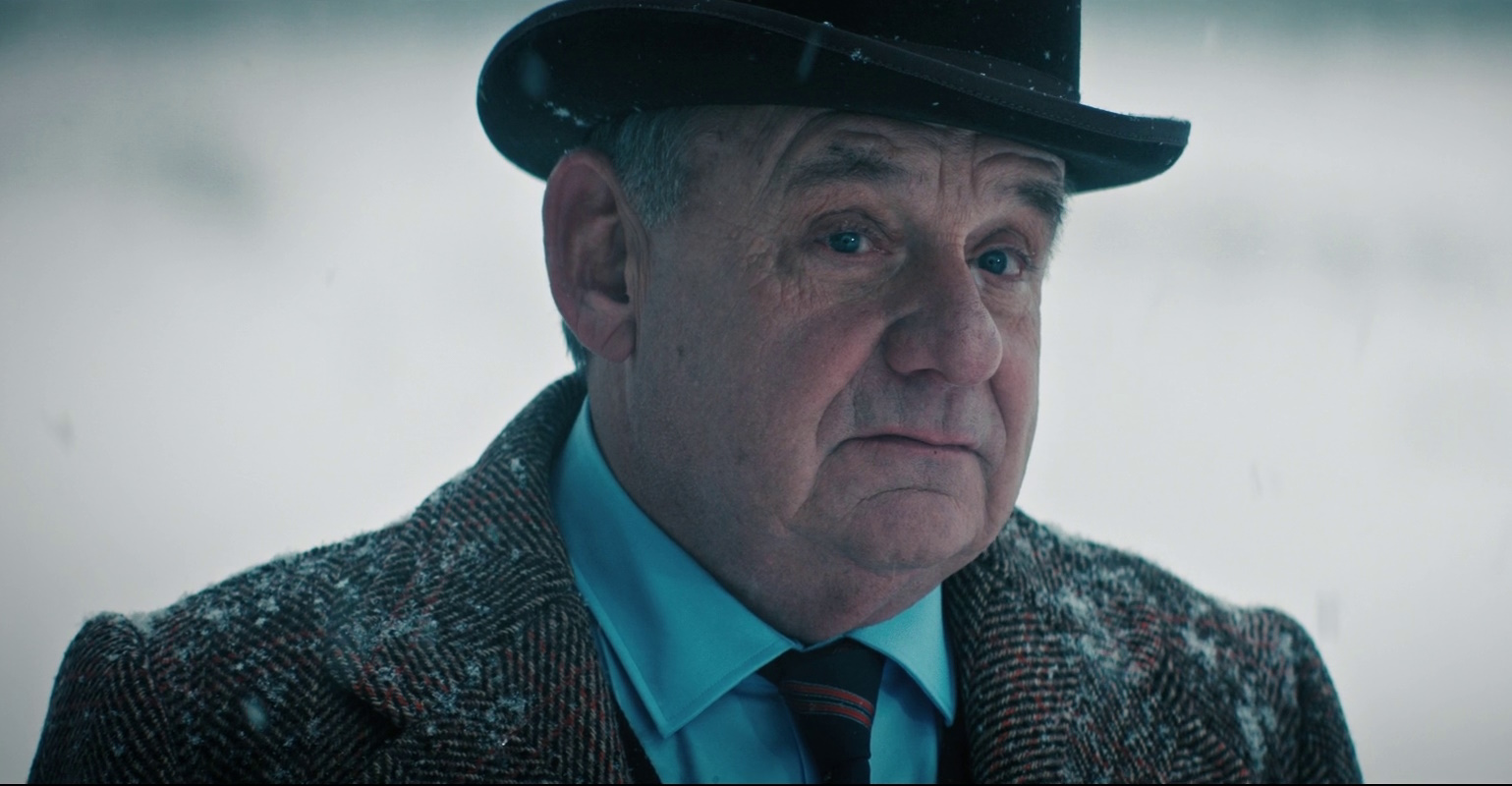
Star Trek: Discovery theories – week 3

Spoiler Warning: There are spoilers ahead for Star Trek: Discovery Seasons 1-4, Star Trek: Picard Season 1, Short Treks, and for other iterations of the Star Trek franchise.

Although this week’s episode, Choose To Live, mostly stayed away from the gravitational anomaly – or the “DMA,” as Stamets is now calling it – we did get some theory-crafting ideas out of it! At such an early point in the season the story still feels wide open, able to go in potentially many different directions. Will tracking down and figuring out the DMA be the only main story of the season? Or will things take a turn as more information about the DMA comes to light? That’s perhaps the biggest question I have as things currently stand!

This week we had no theories confirmed and just one that was debunked. As always, we’ll start there and then move into the main list.

Debunked theory:
Gray’s transfer to a new body won’t be simple.

Gray awoke in a new body this week.

In episode 2, Anomaly, we heard from Adira and Dr Culber that the plan was for Gray to be given a synthetic body – just like Admiral Picard was at the end of Picard Season 1. Because this seemed to come at such an early point in the season, and because Gray’s story of being seen – and its allegory for being transgender – had been discussed a lot in the run-up to the season, I felt sure that it couldn’t possibly be so simple. But I was wrong!

In Choose To Live, Gray made it into his new synthetic body with relative ease. There was a moment midway through when the procedure seemed to be taking a long time, but by the end of the episode he was awake and able to exercise full control over his synthetic body.

The procedure was a success.

As I said in my review of Choose To Live, I felt that this story came too early in the season, and with too much of the work to get there having happened off-screen. It was also noteworthy that Stamets was entirely absent from this story, despite the deep bond he has with Adira in particular. I’m optimistic that Gray’s incorporation will allow him to take part in a wider range of stories both with and without Adira, and the emotional highs of Gray’s incorporation were very sweet. But at the same time, I admit to feeling a little underwhelmed at the fact that the story I was most interested in on a personal level only lasted three episodes before being wrapped up – especially considering that it barely featured in the first two.

So that theory was debunked.

Up next we’ve got the main theory list – and it’s divided into two parts. The first part of the list is comprised of theories that are either brand-new from Choose To Live or which the episode advanced somehow from previous weeks. The second part of the list contains the rest of my Season 4 theories – the ones that didn’t move at all in Choose To Live.

Theory #1:
The Abronians’ homeworld was destroyed by the anomaly.

Captain Burnham believes this image depicts a “supernova.”

After arriving at the Abronians’ cryo-ship, Michael Burnham found a stone carving that seemed to depict the destruction of the Abronians’ homeworld. This carving was only shown on screen briefly, but it seemed to show the planet being damaged or destroyed in a large explosion. Burnham credited the planet’s destruction to a “supernova,” and the story then raced ahead.

Considering that the main thrust of the season so far has been about the DMA, perhaps Burnham was incorrect: the Abronian homeworld was destroyed by the anomaly, not a supernova. I suspect we haven’t seen the last of the Abronians; Discovery loves to tell semi-standalone stories and then bring back elements from those stories later on, so we may yet come to learn more about the Abronians.

Theory #2:
The Abronians’ homeworld was on the “other side” of the anomaly.

The USS Discovery approaches the DMA.

One clip in the second Season 4 trailer appeared to show Captain Burnham leading the USS Discovery inside the DMA. We don’t yet know what that means, nor to what extent words like “inside” the anomaly or “the other side” of the anomaly are relevant. But many times in past iterations of Star Trek we’ve seen things like wormholes and gateways to parallel universes. Perhaps the anomaly is something similar – and passing through it leads to such a place.

One thing struck me as odd about the Abronians: the Federation was entirely unaware of them. Yet the Abronian cryo-ship was relatively close to Federation space – such that Captain Burnham could reach it using Book’s ship in a short span of time. It’s possible that the Abronians had been asleep for millennia, unnoticed by the Federation and the wider galaxy for all that time. But it’s also at least possible that their cryo-ship is a newcomer to the area. If so, perhaps it arrived here via the DMA.

Theory #3:
The Abronians will return to help the Federation later in the season.

A deceased Abronian.

One of the themes of Discovery since Season 3 has been connection: building connections between the Federation and its former friends. The Abronians were awoken from cryo-sleep thanks to the interventions of Captain Burnham and Tilly – at least in part – and they may seek to repay the Federation, or Captain Burnham personally, for that help.

We saw this play out last season with Ni’Var; in the season finale Ni’Var ships raced to the Federation’s aid as the Emerald Chain attacked. Perhaps the Abronians will likewise step up to help when the Federation needs allies.

Theory #4:
The Abronians’ moon-ship may be useful in a later story.

“That’s no moon…”

At this stage I can’t envision precisely what use Captain Burnham and the crew might have for a moon-sized starship… but that doesn’t mean such a need won’t arise! The Abronians’ cryo-ship is huge, and at least superficially seems to have the mass of a moon or small planetoid. If Captain Burnham and the crew needed something that large for some purpose, perhaps they’ll return and either take it or negotiate for it.

As we saw in Choose To Live, the moon-ship was in full working order. All it needed was some extra dilithium to power up and it was perfectly capable of moving under its own power, and its computer systems were still functional. The only system that seemed to have failed was the wake-up timer! So if – for reasons yet unknown – the crew need a huge starship, perhaps we won’t have seen the last of the moon-ship.

Theory #5:
Three ideas about Tilly.

Tilly in Choose To Live.

What’s going on with Tilly? Since the season began, and arguably toward the end of Season 3 as well, she’s been very unsettled and unsure of her role. Perhaps that’s a metaphor for the Discovery writers not knowing what direction to take her character – though I would argue that she’s well-placed to help out with such a scientific mystery! She even has experience with dark matter, as we saw in Seasons 2 and 3, so shouldn’t she be helping out Stamets?

Regardless, Tilly has talked about wanting to get outside her comfort zone and try new experiences. Perhaps her short tenure as first officer last season is part of what prompted her to do so. However, the question of her destination at the end of this arc has arisen. Will she try out a few new things over the course of the season and then settle back down again? Or will we see a more significant change for Tilly before Season 4 is over?

Theory #5a:
Tilly will change departments.

Captain Tilly?

The simplest solution to Tilly’s restlessness may be a career change. Having had a taste of command, perhaps she’ll want to retrain in the command division with a view to working her way back up to first officer or even pursuing her own captaincy. That would be one way to go. Perhaps she’ll want to move over to a medical field, using her scientific expertise to help people. Or maybe she’ll want to move into engineering, where she could focus on the practical side of running a starship. There are other possibilities too, of course – but I think we can rule out a role in security or tactical after Choose To Live!

Theory #5b:
Tilly will resign from Starfleet.

Tilly and Saru in Choose To Live.

We should be careful with this one. Last season, Michael Burnham was the character who seemed to be on an anti-Starfleet trajectory, having spent a year alone and away from the confines of the organisation. But after a couple of twists and turns she ended up recommitting to Starfleet and even assumed the captaincy of the ship! But that said, one possible end to Tilly’s arc could be that she’ll leave Starfleet altogether. Some of the sentiments she’s expressed seem to indicate that she feels adrift, very far removed from Starfleet and her own past. Reaching for help from friends and finding a way through whatever she’s going through is the most likely solution… but she could go down a different path altogether and resign her commission.

Theory #5c:
Tilly will be killed off.

R.I.P…

Sometimes when a character seems to lose their resolve it’s the writers’ way of signalling that it’s the beginning of the end. Adira has taken over not one but two of Tilly’s roles – at least in some respects. Tilly was once the baby of the crew; young and eager, fresh out of the Academy. Now Adira is in that role. Adira is also a great fit for scenes with Stamets in engineering, a role that Tilly had previously occupied. Perhaps Discovery’s writers feel that Tilly has done all she can, and that there isn’t going to be space for two functionally similar characters going forward?

Theory #6:
President Rillak knows what the anomaly is… and may be responsible for its creation.

President Rillak at the end of Choose To Live.

President Rillak is the kind of hard-nosed political pragmatist who seems to be willing to do almost anything if she believes it will advance the Federation’s objectives and ambitions. We saw that laid bare this week when she was willing to turn over J’Vini to the Ni’Var authorities, overruling both Admiral Vance and Captain Burnham because she believed the Federation’s best interests lay in wooing Ni’Var back into the fold.

This ties into something that I said last time: that President Rillak might know more about the DMA than she’s currently letting on. If the Federation had created a weapon like this, or it was an experiment gone wrong, covering it up might be her objective even if she wasn’t necessarily the one who ordered the DMA’s creation.

President Rillak seems willing to go to any lengths for the sake of the Federation.

We’ll consider in a moment a few other possible candidates for creating the DMA – if it turns out to be an artificial creation. But the Federation – and by extension, President Rillak – have to be possible contenders too. Season 3 of Discovery showed us the Federation at its weakest, but also arguably as an organisation that was still virtuous at its core. In contrast, we have Season 2’s depiction of Starfleet: reliant on the shady Section 31 and their AI. In short, it wouldn’t be unthinkable for Discovery to go back to that kind of presentation.

President Rillak herself is a character with depth, not simply an “evil admiral” character trope. But it wouldn’t be the first time that Discovery has presented us with a fairly hard-line character in a position of authority who turns out to be concealing a dark secret.

So those theories are new or were advanced in some way by Choose To Live.

As always, for the sake of keeping everything in one place, I’ll restate my previous theories below. If you missed any of them last time, be sure to read the full list! If you’re all caught up, feel free to skip ahead.

Theory #7:
Captain Burnham and/or the Red Angel time travel suits from Season 2 are connected to the anomaly.

A Red Angel suit from Season 2.

Though we did see some moves away from Discovery’s laser-focus on Michael Burnham in Season 3, the show has put her front-and-centre in all of its main storylines so far. Season 2’s Red Angel storyline was connected to Burnham in a major way, and I wonder if Burnham might similarly have some kind of connection to the anomaly that she’s currently unaware of.

Perhaps the Red Angel suit, which Burnham sent back in time in the Season 3 premiere, malfunctioned somehow, and its powerful wormhole-creating technology gave rise to the gravitational anomaly. If the Red Angel suit completed its journey back to the 23rd Century, the anomaly may have had centuries to grow and expand unchecked.

We don’t really know what happened to the suit after this moment.

I’m not sure that this one is particularly likely, but as I said last year about a possible Burnham connection to the Burn, not only does Discovery kind of have a precedent for telling this kind of story, but there would also be something very dramatic about this revelation. In this case, Burnham would be indirectly and unknowingly responsible for creating something devastatingly damaging. How would she react to that, and how would Book react given what’s just happened to Kwejian?

If time travel is involved, perhaps a future Captain Burnham or a parallel universe Captain Burnham could be responsible for the anomaly’s creation – either intentionally or not.

Theory #8:
Book will find Kyheem and Leto inside the gravitational anomaly.

Leto as seen in Book’s memory.

In Star Trek: Generations, Captain Picard encountered Captain Kirk inside the Nexus – despite Kirk being declared “dead” after the Enterprise-B encountered the energy ribbon. We don’t know what the gravitational anomaly is yet; one of my very early pre-season theories involved the Nexus, but that seems to be debunked already! However, the anomaly’s mysterious nature raises the faint possibility that at least some of those it appears to have “killed” may not be as dead as they first appear.

This theory is, I freely admit, a bit of a long-shot. And it hinges on a fundamental question underlying the story of the season: is there more to the gravitational anomaly than meets the eye? If the anomaly is just an extreme example of space weather, flitting through Federation space destroying anything unfortunate enough to be in its way, then probably everyone on Kwejian is dead. But if the anomaly harbours some kind of gateway, wormhole, portal, time vortex, or any of the other Star Trek-y technobabble phenomena that we’ve seen across the franchise’s history, then it’s possible that at least some of the folks on Kwejian found themselves transported to whatever realm lies inside of the anomaly.

Theory #9:
The gravitational anomaly is (or contains) a sentient life-form.

Season 2’s Sphere is an example of “life, but not as we know it.”

“It was only trying to communicate!” has become a Star Trek cliché, often used to describe how the seemingly-aggressive actions of an alien life-form are actually something innocuous. Perhaps the same is true of the gravitational anomaly: at its core is a life form, perhaps one not dissimilar to the Sphere seen in Season 2, and it’s on its own mission of exploration.

V’Ger from The Motion Picture is an interesting comparison. Like the gravitational anomaly, V’Ger was massive in size, capable of destroying space stations, fleets of ships, and even threatening to destroy entire planets. When Admiral Kirk and the crew of the Enterprise were able to figure out V’Ger, however, they found a life-form at its core, one which was just as curious to learn and grow as they were.

Theory #10:
Saru will be given the captaincy of the USS Voyager-J.

Saru played a supporting role in Choose To Live.

Saru’s future was briefly discussed before he offered to serve as Captain Burnham’s first officer in the episode Anomaly. He has already been offered a command of his own, so Starfleet clearly values his command abilities and experience. President Rillak was seen to be assessing Captain Burnham’s suitability for the captaincy of the USS Voyager-J in Kobayashi Maru… and she mentioned having a shortlist of candidates. Could Saru be on her list?

At time of writing, a fifth season of Discovery hasn’t been officially confirmed. But if the show is to run for another season – or more – the question of Saru’s role comes up. It would be possible to work out a way to keep him on board as first officer for longer than one season, and in many ways I think that’s something fans would want to see. But at the same time, from an in-universe point of view, it kind of makes sense for Starfleet to use its experienced captains where possible.

The USS Voyager-J.

Several of the qualities that President Rillak said she was looking for in a potential captain seem to apply to Saru. He’s more level-headed, less likely to put himself in a dangerous situation, and more inclined to think of the big picture. He has a weakness when it comes to Kaminar, as we saw toward the end of Season 3, but generally speaking he isn’t someone who lets his emotions get the better of him. His wisdom and calm demeanour could be valuable in the captain’s chair of the Federation flagship.

If Saru did depart Discovery in a future episode or season, could that perhaps set the stage for Star Trek: Saru… or Star Trek: Voyager-J? That’s a very interesting possibility! One element of Season 3 that I felt didn’t really get as much attention as it might’ve was that Saru was the Star Trek franchise’s first non-human captain (in a leading role). There’s perhaps scope to follow him on another adventure sometime in the future.

Theory #11:
The gravitational anomaly is a superweapon.

One view of the DMA.

We touched on this theory above when we considered the Federation’s possible complicity in the creation of the gravitational anomaly, but there are many other ways such a story could pan out. The anomaly’s unpredictable nature, as noted by Tilly and Saru at the end of Anomaly, could imply that there’s an intelligence at work, perhaps dictating the anomaly’s moves. This could be the anomaly itself as suggested above, but it could also be the case that the anomaly is being controlled or manipulated by something or someone externally.

If the anomaly turns out not to be a natural phenomenon, and is indeed deliberately targetting the Federation, who might the possible culprits be? And what would be the purpose behind attacking the Federation in this manner? If it’s the precursor to an invasion, perhaps later in the season we’ll see whoever is responsible making their next move.

Theory #11a:
The Borg are responsible.

A Borg seen in The Next Generation.

We don’t know whether the Borg Collective still exists in the 32nd Century; it hasn’t even been mentioned since the USS Discovery’s arrival. However, out of all of the factions in Star Trek, few seem capable of creating a weapon on the scale of the gravitational anomaly. This wouldn’t be in line with the Borg’s usual modus operandi, as they prefer to assimilate rather than attack from afar. But a lot may have changed in the centuries since we last encountered them, meaning this could be the opening salvo of a Borg attack… or the last gasp of a dying Collective.

Theory #11b:
The super-synths from Picard Season 1 are responsible.

Some very menacing-looking synthetic tentacles.

We still don’t know very much about the super-synths that Soji and Sutra attempted to contact in the Season 1 finale of Star Trek: Picard. Other than claiming to offer support and help to synthetic life, what are their goals and motivations? Was their offer even genuine, or was it a trap? The mechanical tentacles glimpsed in Picard Season 1 looked terrifying! Moreover, we know that the super-synths have the technology to move stars – something only possible with an advanced understanding of gravity. Creating a stable 8-star octonary system is an incredible technological and gravitational feat, so they have precedent of a sort when it comes to working with gravity. Finally, Discovery Season 4 has already made connections with Picard Season 1: the Qowat Milat and the synth transfer process used for Gray.

Theory #11c:
The Kelvan Empire is responsible.

Rojan, a representative of the Kelvan Empire.

This one might seem to come completely out of the blue! In The Original Series, Captain Kirk met representatives of the Kelvan Empire, a faction originally from the Andromeda galaxy. Seeking a new home, a Kelvan scouting party had reached the Milky Way and were looking for worlds to conquer. Kirk would ultimately dispatch an unmanned starship offering to help the Kelvan Empire find new worlds to settle – but what if his offer was rejected? Given the vast distances involved, the timelines kind of line up for the Kelvan Empire to return to the Milky Way.

Theory #11d:
The Sphere-Builders from Enterprise are responsible.

A Delphic Expanse sphere seen in Enterprise.

A defeated faction in one of the Temporal Wars, the Sphere-Builders initially hoped to convert a large swathe of the Alpha Quadrant to match their native extradimensional realm, and constructed a number of large space stations known as Spheres to facilitate this transformation. Crewman Daniels would tell Captain Archer that the Sphere-Builders were defeated in the 26th Century, but could they have since rebuilt? The gravitational anomaly isn’t necessarily the same as what they were trying to do with the Spheres, but they’re one of the few factions in Star Trek that might be capable of creating a weapon on this scale.

Theory #12:
A major character will be killed.

A Starfleet coffin seen in Deep Space Nine.

Season 3 saw a couple of major departures: Mirror Georgiou entered the Guardian of Forever’s portal, and Nhan remained behind aboard the USS Tikhov. Yet despite the dangers the crew faced as they navigated the 32nd Century, battled the Emerald Chain, and figured out the mysteries of the Burn and the Verubin Nebula, only one ally – Ryn – lost their life.

Killing off a character can be an excellent way to communicate the stakes involved if it happens at a relatively early stage. It can also be a storyline that brings a lot of emotion, as we have to say goodbye to a beloved member of the crew.

Spock’s funeral in The Wrath of Khan.

In short, I think there are plenty of reasons on the production side why killing off a major character could make sense in Season 4. Discovery has seen a number of characters leave the series – far more than any past Star Trek show, in fact – but the series’ death toll is still relatively low when compared to many other modern television shows.

We discussed above that Tilly’s recent change and the way she seems unsettled could be the beginnings of such an arc. For a breakdown of which characters I thought might be in danger before the season premiered, check out my list of “death predictions” by clicking or tapping here.

Theory #13:
There will be a character crossover from a past iteration of Star Trek.

Scotty was able to appear in The Next Generation… so anything is possible!

This theory returns from Season 3, where I doggedly clung to it for the entire season!

The show’s 32nd Century setting has shot Captain Burnham and the crew far beyond anything in Star Trek’s established canon, and that should mean that practically everyone we remember from other Star Trek shows won’t be around any longer. But this is Star Trek – with some creatively-written technobabble, practically any major character could have survived all the way through to the 32nd Century!

Could Chakotay be coming back?

It’s also possible for Captain Burnham to discover the logs of a long-dead officer; someone we as the audience would be familiar with. While this would be less of a “crossover” than if a character from the past could be physically present, it would still be a lot of fun to see!

There are a handful of characters who could have survived to the 32nd Century based on what we know about them from past iterations of the franchise. Included in this category would be people like Soji, Voyager’s Doctor, and a few others. But as we’ve seen in episodes like Relics and even the film Generations, all it would take to make a big crossover happen is some kind of temporal anomaly, stasis field, or other technobabble!

Theory #14:
Burnham won’t remain as captain.

Captain Burnham in Choose To Live.

This is a controversial one, so let me just say up front that I’m neither in favour of this theory nor opposed to it – I just think it’s a possibility. As things stand, Discovery has had four different captains across its four seasons. One of the show’s unique points of interest within Star Trek’s broader canon are the very different ways in which these individual captains commanded the ship and crew.

It’s got to be considered at least a possibility, then, that the show will continue this trend. This doesn’t mean Captain Burnham will be killed off; I’d actually argue she’s pretty safe. But there are many different routes to her potentially leaving the ship, such as a desire for freedom that we saw in Season 3, or even perhaps taking up a new, more senior role within Starfleet.

Captain Burnham.

If this theory were to come to pass, it would be something I’d expect to see at the very end of the season. Even if Burnham seems 100% committed to her new role as captain, I don’t think it’s a theory we can definitively rule out.

It’s worth mentioning that at time of writing Discovery hasn’t been officially renewed for a fifth season – so all this talk of who’ll be in the captain’s chair by then could be moot! And of course this theory has a very strong counter-argument: that Discovery’s main story arc across its first three seasons can be read as Burnham’s ascent to the captain’s chair.

Theory #15:
Kovich is an agent (or the head) of Section 31.

Kovich in Season 3.

This is another Season 3 theory that I’m choosing to bring back! The question of who Kovich is and what role he played in Starfleet and the Federation was left open at the end of Season 3, and we know that the character will return in some capacity – even though he’s yet to make an appearance. As someone who seemed to talk around the issue at hand and not reveal everything he knew, Kovich strikes me as potentially being a Section 31 operative – or even the head of the organisation.

We don’t know yet if the Section 31 series that was announced in 2019 will go ahead as planned. But if it does, there could potentially be a connection between Kovich and Georgiou that would tie the two shows together. Kovich is mysterious enough that his character could be taken in many different directions – but my money’s on Section 31.

Theory #16:
The ban on time travel will be explained in more detail.

The Enterprise-E was able to travel through time.

This one is a hope as much as a theory right now! In short, the ban on time travel was introduced early in Season 3 primarily as a way for the writers and producers to avoid questions about why the 32nd Century was so different from how the far future had been depicted in earlier Star Trek productions, as well as to explain things like how the Burn was able to catch the Federation off-guard and why Georgiou couldn’t simply be sent back in time when she needed to.

But the ban itself raises some issues – the biggest one being the lack of detail on how it works and how something like this could possibly be enforced. As I said several times last season, it isn’t possible to just un-invent a technology so useful and powerful as time travel. Even just a few lines of dialogue going into a little more detail on the mechanisms involved in the ban would be really useful.

Theory #17:
The Federation has flouted the ban on time travel.

Might someone like Kovich have sought to get around the ban on time travel?

Sticking with the time travel ban, another theory I had last season was that the Federation – and Section 31 in particular – might have deliberately flouted the ban and failed to abide by the rules. Someone as straight-laced and committed to Starfleet ideals as Admiral Vance is highly unlikely to have sanctioned such a move, but someone like the shadowy Kovich (who we talked about a moment ago) might have. President Rillak could also be involved.

Obviously the bulk of the season’s story will deal with the gravitational anomaly. But there’s scope to either talk about the time travel ban in a standalone episode or even tie the two stories together – perhaps the anomaly has been unleashed as a result of unsanctioned time travel.

Theory #18:
The story will connect with the Short Treks episode Calypso.

The USS Discovery in Calypso.

Despite a handful of moments in Season 3 which seemed to connect to Calypso, the story of the season overall ended up going in a very different direction. While we saw a couple of things that arguably did tie in to the Short Treks episode, major things like the USS Discovery undergoing a refit have actually moved the plot even further away.

It’s possible that Calypso will forever remain an outlier in Star Trek’s canon – an episode tied to a vision of Season 2 or Season 3 that was changed before it made it to screen. But earlier in Season 3 it felt like we were getting close to seeing how it could all be tied together – and I’m hopeful that Season 4 will find a way to do so.

Theory #19:
The crew will have to defend the Verubin Nebula.

The dilithium planet is vital to the Federation.

The Federation is in a weakened state, and even if we see worlds like Ni’Var rejoin the organisation it’s still nowhere near as powerful as it once was. The Verubin Nebula is thus a very tempting target for anyone looking to gain an edge in a galaxy where dilithium is still in short supply. As the only known significant dilithium supply, whoever controls the Verubin Nebula will have a massive tactical advantage.

We can compare the Verubin Nebula to Deep Space Nine’s Bajoran wormhole in that respect – it’s a resource of huge strategic importance. Season 3 didn’t show us much about the makeup of the galaxy’s factions outside of the rump Federation and the Emerald Chain, but it’s got to be possible that factions like the Dominion, Klingon Empire, or even the Borg still exist and would want to seize the Verubin Nebula for themselves.

Another view of the planet in the Verubin Nebula.

Season 4 has presented Captain Burnham and the crew with a scientific puzzle: the DMA. But that doesn’t mean there won’t be villains in play, and Discovery has introduced us to several compelling and interesting villains over its first three seasons.

To make a long theory short, it would begin to stretch credulity to think that everyone in the known galaxy would see the Federation rebuilding and having access to dilithium and not want to find out for themselves what’s going on. Once the Verubin Nebula’s existence becomes known, even if the Federation promises to share its bounty with all comers, it seems very likely that someone would want to take control of the dilithium supply for themselves.

Theory #20:
Captain Burnham and the crew will encounter the Klingons.

Klingons seen in Season 2 of Lower Decks.

By the late 24th Century the Federation and Klingons were firm friends, having been allied for a century and after fighting side-by-side against the Dominion. We don’t know if that alliance endured to the 32nd Century, but it’s certainly plausible to think that it did. The Klingons might even have joined the Federation at some point, and their violent warrior culture may have been significantly pacified.

One thing that could be very interesting to see is how the crew of the USS Discovery – almost all of whom are veterans of the Federation-Klingon war – would respond to that. They’ve worked alongside Klingons like L’Rell before, but many of them still see the Klingons as an old enemy. The story of overcoming that prejudice could mirror episodes like The Wounded from The Next Generation, and would be very interesting to see.

Theory #21:
Some areas of the galaxy – such as the Delta Quadrant – avoided the worst effects of the Burn.

The USS Voyager traversed the Delta Quadrant.

Season 4 touched briefly on the Burn with Su’Kal and Saru in Kobayashi Maru, and may now seek to put last season’s story to bed so it can wrangle with the DMA instead. But one thing I’d be curious to see is the true extent of the disaster – did it reach all four quadrants of the galaxy equally, or did its effects fade out after a certain point? Michael Burnham discovered that the Burn had a point of origin, and that it radiated out from that point like ripples on the surface of water. Ripples eventually diminish, fading away the further they travel, and perhaps that’s true of the Burn as well. There could be whole areas of the galaxy that didn’t even notice the Burn – and maybe the ship and crew will visit one such region.

If the Delta Quadrant was left largely unscathed, for example, what might that mean for the likes of the Borg? It’s possible they aren’t even still around in the 32nd Century, but it’s also possible that they’ve had more than a century to expand and build up their forces while the Federation suffered. To see a full write-up of this theory, click or tap here.

Theory #22:
The Guardian of Forever will be back.

The Guardian of Forever first appeared in The Original Series.

Having reintroduced the Guardian of Forever in Season 3, I wouldn’t be at all surprised to see Discovery return to the Guardian’s planet in Season 4. The gravitational anomaly is something new and threatening, so it’s possible Captain Burnham might want to ask the Guardian for help or information.

The Guardian of Forever is also the only way we know of at present to travel through time – something that might be necessary if Season 4 makes an attempt to link up with Calypso in a big way. There are many reasons why Captain Burnham might want to revisit the Guardian, and it would be great to bring back actor Paul Guilfoyle, who played the Guardian’s humanoid avatar in Season 3.

So that’s it! Those are all of the theories I currently have as we approach episode 4: All Is Possible.

The USS Discovery.

I think we’ve got an interesting crop of theories as we begin to get into the story of the season. In some ways Discovery caught me off-guard by taking Captain Burnham on a side-mission in only the third episode… but as noted above there are myriad ways that her encounter with the Abronians may yet come back into play!

I’ll be updating my theory list every week after publishing my episode reviews, so be sure to come back after All Is Possible has aired to see if we have any debunkings, confirmations, or brand-new theories to add to the list. I’m having a lot of fun getting back into the swing of writing my reviews and theories – I hope at least some of this has been interesting for you!

Star Trek: Discovery Season 4 is available to stream now on Paramount+ in the United States, Scandinavia, Latin America, and Australia. The show is on Pluto TV in the UK, France, Germany, Italy, and other parts of Western Europe at 9pm on Fridays and Saturdays. Individual episodes or the full season can be purchased on iTunes, Amazon Video, and possibly other platforms in the UK, parts of Europe, and select other countries. The Star Trek franchise – including Discovery and all other properties mentioned above – is the copyright of ViacomCBS. This article contains the thoughts and opinions of one person only and is not intended to cause any offence.
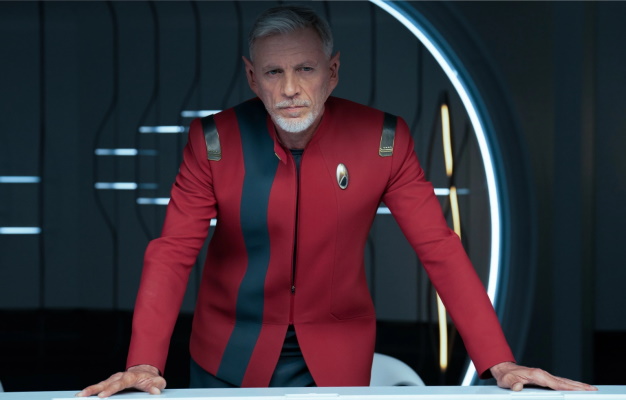
Star Trek: Discovery review – Season 4, Episode 3: Choose To Live

Spoiler Warning: There are spoilers ahead for Star Trek: Discovery Seasons 1-4. Spoilers are also present for Star Trek: Picard Season 1.

When we saw the first few episode titles for Discovery Season 4 a few weeks ago, I completely missed something huge. “Choose to live” is a Qowat Milat saying, a phrase used by Elnor in Star Trek: Picard Season 1 last year. That was an oversight on my part, and meant that my original analysis of the episode before the season premiered was way off-base. Oops!

Although Discovery Season 4 is now available on Paramount+ in Australia, Latin America, and Scandinavia, and in western Europe and a few other regions via Pluto TV, or to purchase via iTunes, Google, and Amazon, there are still too many Star Trek fans unable to watch the new season of the show. Fans in countries and regions that ViacomCBS believes don’t exist still have no (official) way to access the season, and with the painfully slow rollout of Paramount+ also skipping over large swathes of Africa, Asia, and other parts of the world, that’s very disappointing. In my own small way, I’ll continue to point this out and call on ViacomCBS to do more to fix this problem and bring Star Trek to every fan around the world.

Captain Burnham at the beginning of the episode.

Choose To Live feels like a mid-season episode. It advanced the season’s main gravitational anomaly storyline in a pretty minor way, but in its place gave several different characters episode-long storylines that may or may not connect to the season’s ongoing themes. There are some nitpicks that we’ll get into, particularly surrounding one of the main story elements, but overall Choose To Live was a solid episode with some deeply emotional moments and throwbacks to past iterations of Star Trek. With its three concurrent storylines, I even felt it was structurally similar to episodes of Lower Decks!

As someone who’s spent decades struggling with my own gender identity, it’s really only in recent times that I’ve felt comfortable to be open and “out” as non-binary. Thus it was Gray’s story that perhaps intrigued me the most on a personal, character-scale level as Season 4 approached. We were promised that Dr Culber, Stamets, and Adira wouldn’t forget about Gray, and that his quest to be “seen” would succeed.

Gray watches his new synthetic body being constructed.

I’m absolutely thrilled to see Gray in a corporeal body for the first time. The scene with Gray customising his synthetic body in last week’s episode was absolutely the episode’s emotional high point, leaving me in tears, and I was hoping to see Choose To Live continue that trend. But something about Gray’s story this time felt… rushed. And although it was supported by amazingly emotional performances by Wilson Cruz, Ian Alexander, and in particular Blu del Barrio – who put in their best performance in Discovery so far – I actually felt that something was missing.

It was only when Adira beamed aboard the KSF Khi’eth in the Season 3 finale that Gray was able to be seen by anyone other than Adira. The end of that episode kicked off Gray’s quest to become corporeal again, fully confirming that Gray is indeed “real” and not a figment of Adira’s imagination. The first episode of Season 4 didn’t really feature any part of Gray’s quest, and we got one scene last week; a wonderful scene, but a single scene. And then this time, across several deeply emotional sequences, but in an episode that was packed with other storylines running at the same time, Gray’s quest has already come to an end.

Gray’s quest to be seen has concluded.

Gray’s invisibility had been an analogy for how many transgender people – and I would posit from my own experience, many non-binary people too – feel invisible, either ignored by the world or having to hide our true selves from it. Overcoming that, and finally feeling free to openly live one’s life is not a fast or easy process, and as much as I respect Discovery for putting together a story like this, the way it concluded so early in the season has left me feeling a little hollow.

Firstly, Stamets had no involvement at all – despite being a big part of Adira and Gray’s family. Stamets has had precisely one scene with Adira so far this season, a blink-and-you’ll-miss-it moment in the premiere. It was great this week to see Stamets away from Discovery’s engineering lab for once; his being on Ni’Var was fun to see and another emotional story. But it was also noteworthy that he was absent not only from the scenes featuring Adira, Gray, and Dr Culber, but from their story as well.

Stamets was entirely absent from this story – even though it’s a huge moment for his family.

Here’s what I mean by that: Dr Culber didn’t mention Stamets. Adira didn’t mention Stamets. Gray didn’t mention Stamets. And Stamets didn’t mention any of them – not even a throwaway line about how he was nervous for Gray or upset to be missing such a big moment. He didn’t hesitate about going on the mission; his only moment of pause before going to Ni’Var was thinking about Book and how to spare him from reliving the trauma of Kwejian’s destruction.

Maybe all of this will play into some other storyline as the season runs along. I could foresee, for example, Dr Culber delivering a gentle rebuke to Stamets for getting so lost in his work that he didn’t even check in to see how things were going with Gray and Adira. But I could also see Discovery rushing right past all of this, setting the various characters on different paths and dropping them into different stories as the season rolls on.

Adira and Dr Culber waiting to see if the procedure will succeed.

I don’t want the show to turn something beautiful – Gray’s incorporation – into some kind of Stamets-Culber relationship drama. We had too much of that in Season 2 – and frankly, it did not work. But the show should try to acknowledge, somehow, what’s going on. Think about it this way: if you sat down to watch Choose To Live knowing nothing about Discovery, you wouldn’t know Stamets and Culber even knew one another, let alone are married. You wouldn’t realise that the connection between Adira and Stamets developed first; that Stamets had to tell Adira that he and Culber come as a “package deal.”

For a story about someone becoming whole again… an important person, part of their family, was missing. And combined with the fact that this storyline didn’t run as long or as deep as I might’ve expected it to, I’m left feeling a little empty at its conclusion. I’m absolutely thrilled by the prospect of Gray finally being able to interact with the rest of the crew, and to perhaps offer his services during future missions or playing a role in different stories. And when you pull Gray’s story back to his appearances in Season 3, we did get quite a lot of his invisibility. But I can’t shake the feeling that the entire thing has been shuffled out of the way a little too quickly so that Discovery can race ahead to other stories that it wants to tell.

Stamets’ absence from this story was noticeable.

In a similar way, we talked last week about how much of the work that Captain Burnham and the crew of Discovery had been doing to restore the Federation seems to have happened off-screen. We caught a glimpse of it at the beginning of the season premiere, but then the anomaly story took over. Likewise with Gray – much of the actual work involved to get to this point seems to have taken place off-screen, in the months between the Season 3 finale and the Season 4 premiere. I tried to argue last time that seeing the Federation being restored at a slower pace would have been absolutely worthwhile – and so it is with Gray. We saw the culmination of a longer process, but it would have been nice to see more of the process itself, partly because it’s interesting sci-fi and partly because it’s an analogy for something significant here in the real world.

Before we wrap up the Gray storyline, I want to again point out how outstanding Blu del Barrio was in Choose To Live. I’d enjoyed what del Barrio brought to Discovery in Season 3, but Choose To Live gave them an opportunity to show off a fantastic emotional range, and they absolutely nailed it in every single scene. I went on a rollercoaster with Adira – the anxiety and nervousness as the procedure began, fear and regret when Gray seemed lost, then relief and joy when Gray finally awoke. Blu del Barrio put in the best performance of the season so far, showed off their range as an actor, and made these sequences feel incredibly emotional. Despite my criticism of the somewhat rushed feel to the Gray storyline overall, Blu del Barrio’s performance elevated it and made it so much better than it otherwise would’ve been.

Blu del Barrio put in an outstanding performance this week.

Star Trek as a franchise is full of plot contrivances; story moments that don’t feel genuine because of some inconsistency or other. Some contrivances are bigger than others, though, and on Captain Burnham’s side of Choose To Live we ran into a whopper. I can believe, for the sake of the story, that J’Vini was unable to trust the Federation. After all, in the post-Burn galaxy, trust seems to have been difficult to come by, and Ni’Var isn’t a Federation member. But what feels so incredibly contrived in this storyline is that J’Vini was so unwilling to trust other members of the Qowat Milat that she was prepared to kill one of her own sisters.

If J’Vini was leading some rogue Qowat Milat splinter group, I guess we could argue that perhaps there’d been some kind of split within the order or something. But it was made crystal clear that J’Vini had hired mercenaries as part of her quest to defend the Abronians and their cryo-ship. It simply doesn’t make sense that J’Vini – a proud member of this ancient order – would trust mercenaries when she was unwilling to trust her own sisters, especially considering the stakes, and I find this particular aspect of the story to be incredibly contrived.

J’Vini’s story felt rather contrived.

The contrivance didn’t ruin this storyline, but it certainly detracted from it in retrospect. Looking past all of that, however, we got a genuinely fun adventure romp, one which took Captain Burnham away from the anomaly for a side-mission that, as things stand at least, feels disconnected from the overarching story of the season. In that sense, this part of Choose To Live feels a lot more like the episodic Star Trek stories of The Next Generation’s era. If you removed the Qowat Milat and Captain Burnham from this story, I could easily see it being one for Captain Picard and the crew of the Enterprise-D to have tackled!

It was great to welcome back Sonja Sohn as Dr Gabrielle Burnham. I stand by what I said in Season 3, though: the choice to make Dr Burnham a Qowat Milat nun still feels odd! The connection between J’Vini and Dr Burnham was perhaps less developed than it could’ve been; aside from a couple of lines of dialogue, we didn’t really get to see much evidence of their supposed closeness. J’Vini was, according to Dr Burnham, the Qowat Milat nun who nursed her back to health after her arrival in the 32nd Century… but I didn’t really feel that connection; the story seemed to rush past it.

Dr Gabrielle Burnham returned for a Qowat Milat story.

Dr Burnham’s line about how context matters when considering J’Vini’s actions was an interesting one – and it’s a notion that Discovery has tackled before. Context is for Kings was the title of the third episode of Season 1, and that episode began the slow process of rehabilitating Michael Burnham as a character after her failed mutiny attempt. Dr Burnham compares her support for J’Vini to Michael’s support for Spock in Season 2 – and Michael really doesn’t have a leg to stand on in arguing the point!

Tilly was a welcome addition to this side of the story, too. She got a great moment with Saru, sharing her feelings of loneliness, anxiety, and homesickness that she briefly talked about with Captain Burnham in the premiere and with Dr Culber last week. She got more of a chance to talk with Saru, and he tried to help both by giving her access to his plants, but most significantly by recommending her for the mission.

Tilly and Saru make for a great character duo.

Saru and Tilly make a wonderful pair – something Discovery’s writers found out at the beginning of Season 3. Because they’re such contrasting characters in terms of age, temperament, and even appearance, they don’t necessarily seem like a natural pairing. That may be why Seasons 1 and 2 didn’t feature a great deal of Saru and Tilly together. But their differences complement each other.

Saru has a great deal of faith in Tilly’s abilities – something he made clear in Season 3 when he named her as his temporary first officer. This confidence from someone senior, and someone she clearly respects, gives Tilly a boost of her own, and we saw that play out again this week. I think we can all relate to wanting to step out of our comfort zones – as Tilly does on the away mission – so her inclusion in this story was a great idea.

Tilly stepped far outside her comfort zone this week.

Tilly and Burnham also make for a great duo, and we got to see some of that on the away mission too. Ever since they came together early in Season 1, they’ve established a firm friendship and an intuitive way of working together. Tilly trusted Burnham even when she was told she’ll be “bait,” and I think that’s something significant. Tilly had often been seen as a kind of fearful or anxious character – so to put her faith in her commanding officer in such dangerous circumstances and execute a complicated plan was positive and uplifting to see.

We’ll have to cover this in more detail in this week’s theory post, but I think there’s more going on with the Tilly situation than meets the eye. Since the beginning of the season – and arguably toward the end of Season 3 as well – she’s had this unsettled, almost restless feeling that many people who’ve experienced anxiety can probably relate to. But whether that can be resolved through counselling and talking with friends like Saru is an open question at present. Saru gave Tilly the opportunity to get out of her comfort zone this week – but will she seek to permanently get outside of her comfort zone? And if so, what form might that take?

Tilly and Captain Burnham watch the Abronians colonise their new homeworld.

Captain Burnham took the initiative on this side of the story, figuring out what had happened to the Abronians and how to help them. As mentioned, I liked this story as it definitely had a Next Generation flair to it. The design of the Abronians as a non-humanoid race was also exceptionally neat, and I kind of wish we could’ve seen more of them – but perhaps we will! This is another point I’ll pick up in this week’s theory post, but I suspect that the Abronians have some kind of connection with the gravitational anomaly.

Did anyone else feel that Dr Burnham’s “this isn’t a moon” line had the faintest echo of Star Wars? I surely did! The revelation that the moon base was actually a giant starship was pretty neat, and its stone engines, carvings, and computer interfaces were well-designed and contributed to the feeling that Burnham and co. were inside a tomb or other ancient structure.

The Abronians’ moon-ship made great use of stone to feel ancient and otherworldly.

While we’re talking about designs, the beginning of the episode showed off a brand-new starship: the USS Credence. The Credence has a fantastic design, incorporating elements from several prior Starfleet vessels. I felt I could see callbacks to the Oberth-class and Constellation-class in particular through the alignment of the ship’s body and nacelles. It felt like a 24th or 25th Century ship in some ways – it wouldn’t have looked terribly out-of-place in the Dominion War or in the armada seen in the Picard Season 1 finale!

The ship’s internal design, however, is another matter. I freely admit that this feels like a nitpick, but when I sat down to watch Choose To Live, my sense of immersion was immediately knocked off-course by the fact that the USS Credence’s interior was a barely-disguised USS Discovery. Discovery has, on a couple of occasions, shown us some pretty poor set redresses. The Ba’ul prison cell in Season 2 was so obviously the transporter room set that it was painful – and here, in Choose To Live, we get a sequence supposedly taking place aboard the USS Credence that was clearly just the USS Discovery hallway set. I can’t even charitably call it a “redress” of the set, because basically nothing had changed. Would it have been difficult or expensive to create something at least slightly different to represent the dilithium chamber or cargo bay of the USS Credence? Doing so would have made this sequence so much more enjoyable.

The USS Credence.

Back on topic, and it was another somewhat contrived situation that J’Vini’s whole plan for stealing dilithium and murdering people was basically for the sake of stockpiling it “just in case.” That’s a somewhat timely message, perhaps, given the panic-buying and stockpiling we’ve seen during the pandemic! But it felt a little forced considering that her plan was basically to just sit aboard this cryo-ship and wait for the Abronians to awaken. Did she bother to investigate their computer system at all? It took Captain Burnham barely five minutes to figure out that the Abronians should’ve woken up already! Simply using logic and analysing the situation – even assuming J’Vini had zero computer skills – should have told her that they’d arrived at their destination and could be safely woken up.

However, setting the contrivances of the story aside, it was neat to see Captain Burnham and Tilly working so well together to solve the puzzle and help the Abronians awaken. Seeing them depart their moon-ship to colonise a new world was a powerful moment, and everyone involved – J’Vini, Dr Burnham, Captain Burnham, and Tilly – all played roles in ensuring it could happen. Saving an entire race from what could’ve been extinction is a huge victory, and Choose To Live played it well – even though it was taking place in the context of a smaller, character-focused story.

Captain Burnham helped save an entire race from the brink of extinction.

The way this story concluded was interesting, and I think it shows a pragmatic side to President Rillak that may come into play later in the season. She was willing to turn over J’Vini to the Ni’Var authorities because she believed that doing so was a gesture of friendship that may help sway Ni’Var into rejoining the Federation. Putting the big picture first – or the “needs of the many,” to use a Star Trek quote – was something Captain Burnham didn’t like to see in this instance, but it’s another example of President Rillak being on a different course from Burnham.

It seems clear that Ni’Var will indeed rejoin the Federation at some point this season, which will be great to see. So President Rillak’s politicking will probably pay off – but as Captain Burnham reminded her, it doesn’t come free, and the price in this instance was Federation justice being applied in J’Vini’s case. The hard-nosed political pragmatism of President Rillak makes her a very interesting character – not always playing fully on Burnham’s side, but thus far never as a direct antagonist either. She has her reasons for doing what she does, and she doesn’t care too much if Admiral Vance or Captain Burnham disagree with her. She’s confident in her authority and her decision-making – and I can’t wait to see how that plays out as the season progresses.

President Rillak is a fantastic, well-written character with genuine depth.

That brings us to Stamets and Book’s away mission to Ni’Var. As mentioned, it was great to see Stamets away from Discovery’s engineering bay; it seems like he spent most of Season 3 down there! And after last week, pairing up Book and Stamets again was a good idea. Discovery seems to have found a character pairing it likes in Book and Stamets!

What we saw with this Ni’Var story is the scientific method playing out. Stamets had a theory: that the anomaly is a “primordial wormhole.” He presented his theory to the Ni’Var scientists, who analysed it using their technology and meditative method. But it turned out to be wrong – something Stamets seemed to be fighting against, but arguably must’ve felt was a possibility. We’re still no closer to understanding the anomaly, but it’s another theory that Stamets can cross off his list.

The Ni’Var Science Institute debunked another of Stamets’ anomaly theories.

The interaction between Book and T’Rina was neat to see. Both Kwejian natives and Vulcans are, as T’Rina pointed out, emotional, empathic races. But they take completely opposite approaches to emotion: Kwejian natives draw on it, Vulcans try to suppress it. Book couldn’t learn Vulcan discipline as a way to overcome his grief, but by reliving his last moments on Kwejian he got a kind of cathartic emotional release.

It was painful to relive those memories with Book, and David Ajala put in a wonderfully complex performance. Book is feeling almost unimaginable grief – not just for his family, but for his whole race. Losing one’s home and family would be difficult and painful enough, but to be left as one of the few survivors of his people is something difficult to fathom. David Ajala brought those feelings to screen in an understandable way, and keeping the focus primarily on Book’s family – and his nephew in particular – gave focus to this deeply emotional story.

By reliving his memories, Book found some measure of peace.

Book is moving through the grieving process, and helped by his time on Ni’Var has now moved on, ever so slightly, from where we saw him last week. As Captain Burnham remarked at the end of the episode, he was able to do something – watch a holographic recording of Kwejian – that would’ve been too painful a few days earlier.

So that was Choose To Live. The main thrust of the season’s story was sidelined for the most part as Stamets saw another theory fall down. However, Captain Burnham got her own mission, one which felt like a throwback to past iterations of Star Trek in the best way possible. The return of Dr Burnham and the Qowat Milat was fun, and we got some great character moments with Saru, Tilly, the Burnhams, Book, Stamets, Gray, Dr Culber, and Adira.

Gray and Adira at the episode’s climax.

My only real criticism of Gray’s storyline is that I had expected Discovery to make more of it. The outcome was pitch-perfect, and what I think we had all hoped to eventually see. But there’s a feeling I can’t shake that this story concluded too early in the season – too soon after the events of That Hope Is You, Part 2 had kicked it off. Much of the legwork of figuring out how to help Gray – and his own agency over helping himself – seems to have happened off-screen in between Seasons 3 and 4, just like the dilithium deliveries and Federation rebuilding work. That might be fine… but it depends what happens next, and whether the stories yet to come in Season 4 can compensate for not seeing those things play out.

In Season 3, what I loved most about Adira’s story was that their coming out moment to Stamets was so low-key. Being non-binary in the 32nd Century shouldn’t be a big deal, and that moment captured the kind of optimistic tone of Star Trek’s future absolutely perfectly. Gray’s incorporation was always going to be more complex because of the technobabble side of things, but that gave it the potential to perhaps take into account the false starts and complex emotions that transitioning and coming out can elicit. Some of that was present in Choose To Live, and the payoff to that story was deeply emotional. But I can’t shake the feeling that it happened very quickly, and at a very early stage in the season. Perhaps Gray will go on to play a significant role now he can interact with everyone else – and that will be fantastic to see. I’m optimistic about future storylines… but also a little underwhelmed that the story I’d been most excited for has already concluded after a mere three episodes.

Next week we’ll be watching All Is Possible – and I have no idea what it could be about! Perhaps a return to a story all about the anomaly is on the cards after it took a back seat this week. In any case, I hope you’ll stay tuned for my updated theory list between now and Thursday and another review after I’ve seen All Is Possible next week.

Star Trek: Discovery Season 4 is available to stream now on Paramount+ in the United States, Scandinavia, Latin America, and Australia. The show is on Pluto TV in the UK, France, Germany, Italy, and other parts of Western Europe at 9pm on Fridays and Saturdays. Individual episodes or the full season can be purchased on iTunes, Amazon Video, Google Play, and possibly other platforms in the UK, parts of Europe, and select other countries. The Star Trek franchise – including Discovery and all other properties mentioned above – is the copyright of ViacomCBS. This article contains the thoughts and opinions of one person only and is not intended to cause any offence.

Did bad timing kill the Section 31 series?

Spoiler Warning: There are spoilers ahead for Star Trek: Discovery Seasons 1-3.

The Section 31 series is currently stuck in that nebulous zone that industry insiders refer to as “development hell.” Despite having been officially announced almost three years ago and supposedly having scripts written, at time of writing it’s been a very long time indeed since we heard anything close to official about the series.

I last took a look at the Section 31 show’s prospects back at the end of April, and since it’s been a while I think we should briefly recap why I feel increasingly sure that the project isn’t going ahead.

After a deeply underwhelming reaction to the Section 31 show’s announcement in 2019, Discovery’s second season premiered – and fans immediately fell in love with Captain Pike, Spock, and Number One. Calls for Pike to be granted his own spin-off eventually led to the development of Strange New Worlds. After Strange New Worlds was officially announced, we began to hear rumblings about the Section 31 series potentially being reworked. For a show that had supposedly been ready to go and on the verge of beginning official production for more than a year, news in 2020 that scripts were being re-written did not sound good.

Has the Section 31 show been quietly cancelled?

Alex Kurtzman – the head of Star Trek for ViacomCBS – later dropped a significant bombshell: that there were no plans for any new Star Trek series to enter production until one of the current shows has concluded. With Discovery, Picard, Lower Decks, Prodigy, and Strange New Worlds all being worked on at that point, Kurtzman said that no other shows would enter production until at least one of those had finished its run. We later heard from the Section 31 show’s co-creators that they were “still having conversations” about the Section 31 series – which sounds an awful lot like industry speak for a project on life-support.

Back in April we heard from Michelle Yeoh – Empress Georgiou herself – on The Pod Directive, Star Trek’s official podcast. It’s important to keep in mind that The Pod Directive is an official production, not a fan-made one, because if Yeoh had been interviewed by literally any Trekkie in such a format, the question of the Section 31 show’s future would certainly have come up. It didn’t – and Yeoh could only speak in very vague terms about hoping to “one day” return to the role of Georgiou.

Michelle Yeoh appeared on Star Trek’s official podcast earlier this year.

Months later and we still haven’t heard anything about Section 31. Shazad Latif, who played Tyler in Discovery’s first two seasons, suggested that there had been unofficial chats about the show earlier this year – but again, that hardly sounds positive. At Star Trek Day back in September, Alex Kurtzman teased that a Starfleet Academy series may be in the very early stages of being worked on, which could mean that it’ll be the next project for the Star Trek franchise. In contrast, the Section 31 series wasn’t mentioned at Star Trek Day at all.

Let’s assume for now that the combination of no official announcements and a slow trickle of bad news does in fact mean that the Section 31 show isn’t going to happen. The question is why? What might’ve caused a rethink over at ViacomCBS and convinced the corporation to invest its time and money elsewhere?

Alex Kurtzman is in charge of the Star Trek franchise.
Photo Credit: Gage Skidmore, CC BY-SA 2.0 https://creativecommons.org/licenses/by-sa/2.0, via Wikimedia Commons

It isn’t as simple as saying “Captain Pike.” It’s true that the fan response to Pike (as well as to Spock and Number One) absolutely stole the Section 31 show’s thunder in 2019, but that can’t be the full story. It is very interesting to note, though, that the support for Captain Pike from Discovery fans and viewers seemed to catch ViacomCBS completely off-guard. Did they not realise, during production on Discovery Season 2, that they had something special on their hands with Anson Mount and Ethan Peck? If not, why not?

Perhaps it’s true that ViacomCBS was only willing to greenlight one Discovery spin-off in 2019, and if that’s the case it was patently obvious within a couple of episodes which character fans were clamouring to spend more time with – and which they weren’t. But in 2019 ViacomCBS was practically throwing its money around, working on Star Trek projects left, right, and centre. It doesn’t make sense to say that there was only enough money in the kitty for one spin-off – and if fans liked both Georgiou and Pike, why not go ahead with both projects?

Anson Mount as Captain Christopher Pike.

The build-up to Discovery Season 2 came in the wake of the surprise announcement of Star Trek: Picard. Many Trekkies were incredibly excited to revisit the 24th Century and see the next chapter of Picard’s life, and there was a great deal of buzz and excitement surrounding Picard Season 1. As I argued at the time, a Discovery spin-off in the 23rd Century almost felt like a regressive step in comparison; many fans were excited to see the Star Trek franchise’s overall timeline move forward again for the first time in eighteen years – Section 31, being set in the 23rd Century, felt like a backwards step.

The intention behind announcing the Section 31 series prior to Discovery Season 2 was twofold: partly to drive subscribers to what was then still called CBS All Access, reminding folks that a new season of Star Trek was coming, but also to reaffirm the corporation’s commitment to Star Trek as a brand and Discovery as a series in the wake of a somewhat controversial first season. As Season 1 was rolling on, there were an increasing number of anti-Star Trek social media groups popping up, and one commonly-heard refrain in 2017, 2018, and into 2019 was that Discovery was about to be cancelled. This story, by the way, still does the rounds in those same groups in 2021, despite the show now being into its fourth season!

The timing of the Section 31 show’s announcement was intended to provide a boost to CBS All Access.

There was a need for ViacomCBS to try to bring in more subscribers, and there was also a need to do something to demonstrate that the corporation still had faith in Discovery and the broader Star Trek franchise. Shutting down some of the anti-Trek hate wasn’t the main reason, but it may well have been a factor in the decision-making.

So in January 2019, as Discovery’s second season drew near, we got the announcement of the Section 31 series. But rather than the positive response ViacomCBS was hoping for, reaction to the news was muted at best – and disagreeable at worst.

I was one of many Trekkies left underwhelmed by the concept of the Section 31 series at that time. Michelle Yeoh is an outstanding performer, don’t misunderstand me for a moment. But her character of Empress Georgiou was someone who was fundamentally uninteresting – at least she was as of the end of Discovery Season 1. Remember that the Section 31 show was announced before a single Season 2 episode had aired, and long before Georgiou got some much-needed character development in Season 3.

Georgiou changed a lot over the course of Season 3 in particular.

Imagine, for a moment, that the Section 31 show had been announced last December – in the days following the broadcast of Terra Firma, Part 2. How much more excited and interested might fans have been then than they were in January 2019? I think we all know the answer to that question.

The Mirror Universe and its Terran inhabitants can be fun, and even though I freely admit that the Mirror Universe is far from my favourite Star Trek setting, I can appreciate what it brings to the table. But the Mirror Universe has only ever been the kind of over-the-top pantomime fun that I can enjoy for a single episode at a time. Terrans are basically all the same: violence-loving sociopaths. They make Prime Timeline Klingons look positively tame thanks to their gratuitous use of violence and torture, and there’s never been any demonstrable room for character depth or nuance.

The best Mirror Universe character, aside from Georgiou herself, was probably Mirror Spock way back in The Original Series. Deep Space Nine tried, to its credit, to tell some different Mirror Universe stories about enslaved Terrans and a Klingon-Cardassian Alliance – but the Alliance fell into many of the same thematic and storytelling traps as the Terran Empire had.

Aside from Georgiou, Mirror Spock is one of the few nuanced and interesting Mirror Universe characters.

In short, Mirror Universe characters are uninteresting at best. At worst, as we see far too often across different Star Trek shows (including Discovery) they’re pathetically ridiculous. A combination of poor scriptwriting and a one-dimensional setting encourages even great actors like Sonequa Martin-Green to ham it up and put in performances that wouldn’t be out of place in a primary school play. At the end of Discovery Season 1, there was nothing at all to indicate that Empress Georgiou wasn’t the same kind of bland, uninteresting Mirror Universe villain as characters like Intendant Kira or Mirror Kirk.

Unlike many other Terran characters, I never felt that the acting performance put in by Michelle Yeoh was over-the-top. Some Mirror Universe performances – such as Mirror Kirk in The Original Series and Mirror Burnham in Discovery – are so truly awful that I find them borderline unwatchable, as the Mirror Universe setting seems to trick even competent performers into forgetting how to act. Badly-written scripts and a setting that doesn’t lend itself to anything but pantomime don’t help, of course. But I felt, to Michelle Yeoh’s credit, that Georgiou managed to avoid falling victim to the worst tropes of the setting. Even so, that didn’t make the way the character was presented at the end of Discovery’s first season a net positive going into the announcement of the Section 31 series.

Some Mirror Universe performances are excruciating to watch…

In Discovery’s first season, we saw first-hand how Georgiou ruled the Terran Empire with an iron fist. She subjugated aliens – including Saru’s people, the Kelpiens – and ensured they were second-class citizens at best, slaves at worst. She killed indiscriminately and had no qualms whatsoever about destroying entire planets or exterminating entire sentient races. Some fans (and non-fans) derisively termed Georgiou “Space Hitler” as a result. And this was the point at which ViacomCBS announced a new series with this character as its lead.

I never liked the term “Space Hitler” to attack Georgiou… but I confess that I understand why some fans felt it was an appropriate descriptor in Season 1. It encapsulates Georgiou as a dictator, as a violent sociopath, as someone willing to inflict some truly evil actions upon the galaxy, and as someone who governs a state with a pro-human, anti-alien philosophy. It’s not an expression I would use; it’s offensive, crass, and deliberately provocative. It’s also a pretty crude analogy, but I get where it came from.

Georgiou committed many atrocities while ruling the Terran Empire.

Think for a moment about Georgiou’s actions in Season 1. In her first appearance, she insists that Burnham and the crew “bow to their emperor,” then proceeds to feed Kelpien meat to Burnham a couple of episodes later. After being dethroned as Emperor and brought to the Prime Universe by the crew of the USS Discovery, she teams up with Admiral Cornwell to destroy the entire Klingon homeworld. Why? Does she suddenly care about the Federation and want to see it preserved? No: she likes killing, she likes violence, and she saw an opportunity to commit genocide and just went for it.

We began to see indications in Season 2 that Georgiou had a softer side, particularly when it came to Michael Burnham. At one point in the episode The Red Angel (unfortunately the season’s worst) she wanted to cut short a dangerous assignment when Burnham’s life appeared to be in danger. But it wouldn’t be until Season 3 – and really not until midway through the season – that any significant softening of Georgiou’s hard Terran exterior would be readily apparent.

Georgiou was rather partial to roast Kelpien in Discovery’s first season.

Terra Firma went a long way to changing how I felt about Georgiou – as I’m sure it did for many other fans as well. We saw nuance in her characterisation for the first time – a sense that there was more to her than just violence and psychopathy for their own sakes. She expressed empathy for the first time, being unwilling or unable to carry out some of the violent actions that her role as Empress would have required of her. The changes she attempted to make to the way that the Terran Empire was governed ultimately led to her “death” within the Guardian of Forever’s portal – and proved to the Guardian that she was deserving of a second chance. I would argue that it was this episode that also demonstrated to us as the audience that Georgiou was deserving of a second look, too.

Georgiou needed Terra Firma to really come into her own as a character – especially a character that a new series was going to focus on. It wasn’t until we saw her returned to the Terran Empire – or the Guardian’s approximation of it, at any rate – that we could appreciate how living with the Federation had changed some of her opinions and attitudes. For example, Season 1 Georgiou would happily eat Kelpien. But by the time Terra Firma rolled around she’d come to value, in her own way, Saru as a person and even as a leader.

Georgiou had come a long way from eating Kelpien to arrive at this moment.

As the audience, we needed to see all of that before we could conceivably commit to a series starring this character. In hindsight it’s easy to say that the Section 31 series was a good idea, because I have to assume that the writers and producers already had some kind of an outline in mind for this story. At the very least they’d have known Georgiou’s destination; the culmination of her arc across Discovery’s first three seasons. But none of that was apparent to us as the audience at the end of Season 1.

Had Section 31 been announced not in January 2019 but December 2020, I think we’d have seen a far more positive and excited reaction to the new show. But ViacomCBS jumped the gun, trying to boost Discovery and CBS All Access without, perhaps, fully thinking through what the show’s actual prospects were or what the reaction from Trekkies might be. It wouldn’t be the last time that the corporation would mangle its handling of the Star Trek franchise, unfortunately.

Had the Section 31 show been announced at this point, not almost two years earlier, the fan reaction would likely have been very different.

ViacomCBS’ biggest failing when it came to Discovery’s second season is, I would argue, not realising how strongly fans would feel about Pike, and how much excitement there would be within the fandom for a Pike spin-off. If they’d realised that – and with hindsight it should’ve been obvious, especially considering these shows are almost always shown to audiences at test-screenings before they premiere – then perhaps the Section 31 announcement would’ve been held back, and Strange New Worlds could’ve been announced either during or shortly after Discovery’s second season.

Because of issues with Georgiou’s characterisation, prior to Season 2 was a bad time to announce the Section 31 series. The fact that the series is based around Section 31 – an organisation that fans have often indicated that we’d like to see more of – got completely buried by the announcement that Michelle Yeoh was going to headline it. Arguments over the character of Empress Georgiou and her suitability as the star of a new show drowned out any interest in the Section 31 organisation itself. And the otherwise muted, uninterested response from Trekkies and a wider television audience compounded that, driving the first nail into what appears to be the series’ coffin.

We may never learn what comes next for Georgiou.

Speaking personally, it wasn’t until we got to Terra Firma that I saw the merits of a Section 31 show with Georgiou at the helm. One of the first articles I wrote here on the website almost two years ago was about the Section 31 series – and how I was truly not interested in it at all. It took seeing Georgiou’s character arc play out, and the strong two-part episode Terra Firma in particular, before I was sold on the concept. But by then, it seems, it may well have been too late to revive the show’s declining prospects.

Star Trek’s past is littered with unresolved story elements – though most don’t involve major characters. It’s possible that Georgiou’s story will simply be left incomplete, her destination after entering the Guardian of Forever’s portal never to be shown nor explained on screen. That would be unfortunate, especially because the character we finally got to see by the latter part of Discovery’s third season is so much more nuanced and interesting to follow. Seeing Georgiou run Section 31 had finally begun to sound like a show that Trekkies were interested in… but it feels like it’s too late now. The franchise has simply moved on to other projects.

The Star Trek franchise – including all properties mentioned above – is the copyright of ViacomCBS. This article contains the thoughts and opinions of one person only and is not intended to cause any offence.

Star Trek: Discovery theories – weeks 1-2

Spoiler Warning: There are spoilers ahead for Star Trek: Discovery Seasons 1-4, Star Trek: Picard Season 1, and for other iterations of the Star Trek franchise.

Now that all of the international broadcasting nonsense is out of the way, let’s get back into my weekly Discovery theory updates! We only missed one week, and there’s still a ton of speculating to be done about the story of Season 4, the gravitational anomaly, and what might become of some of our favourite characters.

If you’re new to my weekly theory updates for Discovery Season 4, here’s how the format works: after every episode I go back to my theory list. I cross off theories that have been debunked, celebrate any that appear to have been confirmed, update any that have seen progression, and add any new theories that the most recent episode has spawned. There will be some theories that, for whatever reason, the most recent episode didn’t advance in any way, so those will simply be restated to keep the list up-to-date and in one place!

I wrote up all of my pre-season theories into one list a couple of weeks ago, so this time we’ve already got two confirmations to take a look at before we jump into the main list.

Confirmed theory #1: The Spore Drive will be rolled out to more ships.

Book in Discovery’s Spore Drive cube.

Finally! After the revelation in the Season 3 finale that Book – and potentially anyone else with similar empathic abilities – could control the Spore Drive, the last hurdle in the way of it being rolled out to other Starfleet ships had been surmounted. It finally feels like Discovery is on the cusp of finding another use for what had been one of the most controversial technologies introduced in the series.

In Kobayashi Maru this was almost treated as a throwaway line, so I wouldn’t blame you if you missed it, but President Rillak confirmed that a “next-generation” Spore Drive is being developed by Starfleet as part of the Federation’s plans to rebuild and expand. It wasn’t stated on screen, but I wonder if the USS Voyager-J might be fitted with a Spore Drive as part of its retrofit; the vessel was in spacedock, after all.

The USS Discovery makes a Spore Drive jump.

I’d been hoping that the series would go down this road for a while. Moving forward in time to the 32nd Century means there are no “canon purist” arguments in favour of abandoning the Spore Drive, keeping it a secret, or ensuring that only the USS Discovery could use it. And the events of the Season 3 finale seemed deliberately designed to create an easy way to expand the Spore Drive to more ships – perhaps even paving the way for future Star Trek productions in this era.

We don’t yet know what the implications will be of Kwejian’s destruction on Starfleet’s plans. It was implied in the Season 3 finale that anyone with empathic abilities could use the Spore Drive, not only Kwejian natives, so the loss of Kwejian and most of its population shouldn’t mean that the Spore Drive expansion has to be abandoned. It might be possible for Betazoids, Deltans, or even Vulcans to train to become Spore Drive navigators.

Confirmed theory #2: A new character joined the main cast.

A new name has been spotted in the opening credits!

Following the departures of Nhan and Georgiou, it felt like there was definitely scope to either promote a recurring character to the main cast or create at least one new one! We’ve met President Rillak, who seems like she’ll become a recurring character, but the one who’s been promoted to join the main cast is Blu del Barrio’s character of Adira.

Adira makes a great addition to Discovery’s main cast of characters, occupying a similar role to Tilly in Season 1 in particular. As Tilly has undergone significant character growth across the show’s first three seasons, there was scope to bring someone brand-new aboard the ship, and having that person be someone young and eager is a positive thing. Adira is not only involved in their own storyline with Gray and Dr Culber, but also as a scientist can work with Stamets, Tilly, Saru, and Captain Burnham. I think Adira has the potential to be a versatile character in whatever stories lie ahead.

My original version of this theory centred around the question of Captain Burnham’s first officer. Now that we know that role has gone to Saru, it seems as though the main and recurring characters for this season are set.

So those theories were confirmed. Now we’ll take a look at some new theories and a few updated theories.

Theory #1: President Rillak knows what the anomaly is… and may be responsible for its creation.

President Rillak in Kobayashi Maru.

This ties into a broader point that we’ll be considering from several angles: the possibility that the gravitational anomaly is not a natural phenomenon. If the anomaly is artificial in nature, the question of who is responsible for its creation crops up. It could be a weapon deployed by another faction, of course, but it could also be a Federation creation – perhaps a weapon designed to defend against the Borg, a rogue experiment to try and prevent a second Burn, or something else entirely.

If that’s the case, President Rillak almost certainly knows more about the anomaly than she’s willing to say right now. Perhaps she’s hoping that it won’t be what she fears it is, or perhaps she’s trying to cover her own back – Captain Burnham did go out of her way to describe her as a “politician,” after all.

Does President Rillak know more about the anomaly than she’s saying?

President Rillak is a character with depth, not simply an “evil admiral” character trope. But it wouldn’t be the first time that Discovery has presented us with a fairly hard-line character in a position of authority who turns out to be concealing a dark secret.

As the head of the Federation, President Rillak is committed to doing whatever it takes to preserve the organisation. The anomaly may have been part of those plans… somehow. If she isn’t responsible for its creation directly, she may still know what it is if a past Federation President signed off on its creation. She may be covering up that secret on behalf of the Federation.

Theory #2: Captain Burnham and/or the Red Angel time travel suits from Season 2 are connected to the anomaly.

Captain Burnham.

Though we did see some moves away from Discovery’s laser-focus on Michael Burnham in Season 3, the show has put her front-and-centre in all of its main storylines so far. Season 2’s Red Angel storyline was connected to Burnham in a major way, and I wonder if Burnham might similarly have some kind of connection to the anomaly that she’s currently unaware of.

Perhaps the Red Angel suit, which Burnham sent back in time in the Season 3 premiere, malfunctioned somehow, and its powerful wormhole-creating technology gave rise to the gravitational anomaly. If the Red Angel suit completed its journey back to the 23rd Century, the anomaly may have had centuries to grow and expand unchecked.

This was the last we saw of the Red Angel suit back at the beginning of Season 3.

I’m not sure that this one is particularly likely, but as I said last year about a possible Burnham connection to the Burn, not only does Discovery kind of have a precedent for telling this kind of story, but there would also be something very dramatic about this revelation. In this case, Burnham would be indirectly and unknowingly responsible for creating something devastatingly damaging. How would she react to that, and how would Book react given what’s just happened to Kwejian?

If time travel is involved, perhaps a future Captain Burnham or a parallel universe Captain Burnham could be responsible for the anomaly’s creation – either intentionally or not.

Theory #3: Gray’s transfer to a new body won’t be simple.

A holographic representation of Gray’s synthetic body.

I adored the scene with Gray, Adira, and Dr Culber in Anomaly. As someone who’s struggled to come to terms with my own gender identity and my gender expression, it was so deeply relatable to see Gray “customising” his new body. But also included in that scene was a line from Dr Culber about how the “Soong method” used to transfer consciousness into a synthetic form has a very low success rate.

I suspect that line was included as a kind of pre-emptive plot hole plug that will have nothing to do with Gray! If the Soong method was said to work every time, then it would be very difficult to kill off any Star Trek characters from the 25th Century onwards, because fans would rightly ask “why didn’t they transfer to a synth body?” So I suspect that’s why the line was included.

Admiral Picard had his consciousness transferred to a synthetic body in the finale of Picard Season 1.

However, it felt a little ominous for poor Gray. It was great to see that Adira, Dr Culber, and others had been working hard to help Gray become seen again after the events of Season 3, and I have no doubt that somehow we’ll see Gray in a physical body before the season is over. But we’re only two episodes in at time of writing – will it really happen so quickly, and so seemingly simply?

I’m not convinced of that yet! There are many things that could go wrong, delay the transfer, or prevent it entirely. And there are an unlimited number of technobabble explanations for finding a new way to give Gray a body! So let’s see what happens – but I wonder if this storyline might have a few twists and turns along the way.

Theory #4: Book will find Kyheem and Leto inside the gravitational anomaly.

Book with Leto and Kyheem shortly before the destruction of Kwejian.

In Star Trek: Generations, Captain Picard encountered Captain Kirk inside the Nexus – despite Kirk being declared “dead” after the Enterprise-B encountered the energy ribbon. We don’t know what the gravitational anomaly is yet; one of my very early pre-season theories involved the Nexus, but that seems to be debunked already! However, the anomaly’s mysterious nature raises the faint possibility that at least some of those it appears to have “killed” may not be as dead as they first appear.

This theory is, I freely admit, a bit of a long-shot. And it hinges on a fundamental question underlying the story of the season: is there more to the gravitational anomaly than meets the eye? If the anomaly is just an extreme example of space weather, flitting through Federation space destroying anything unfortunate enough to be in its way, then probably everyone on Kwejian is dead. But if the anomaly harbours some kind of gateway, wormhole, portal, time vortex, or any of the other Star Trek-y technobabble phenomena that we’ve seen across the franchise’s history, then it’s possible that at least some of the folks on Kwejian found themselves transported to whatever realm lies inside of the anomaly.

Theory #5: The anomaly is a sentient life-form.

Could the anomaly be similar to V’Ger?

“It was only trying to communicate!” has become a Star Trek cliché, often used to describe how the seemingly-aggressive actions of an alien life-form are actually something innocuous. Perhaps the same is true of the gravitational anomaly: at its core is a life form, perhaps one not dissimilar to the Sphere seen in Season 2, and it’s on its own mission of exploration.

V’Ger from The Motion Picture is an interesting comparison. Like the gravitational anomaly, V’Ger was massive in size, capable of destroying space stations, fleets of ships, and even threatening to destroy entire planets. When Admiral Kirk and the crew of the Enterprise were able to figure out V’Ger, however, they found a life-form at its core, one which was just as curious to learn and grow as they were.

Theory #6: Saru will be given the captaincy of the USS Voyager-J.

The USS Voyager-J.

Saru’s future was briefly discussed before he offered to serve as Captain Burnham’s first officer. He has already been offered a command of his own, so Starfleet clearly values his command abilities and experience. President Rillak was seen to be assessing Captain Burnham’s suitability for the captaincy of the USS Voyager-J in Kobayashi Maru… and she mentioned having a shortlist of candidates. Could Saru be on her list?

At time of writing, a fifth season of Discovery hasn’t been officially confirmed. But if the show is to run for another season – or more – the question of Saru’s role comes up. It would be possible to work out a way to keep him on board as first officer for longer than one season, and in many ways I think that’s something fans would want to see. But at the same time, from an in-universe point of view, it kind of makes sense for Starfleet to use its experienced captains where possible.

Captain Saru.

Several of the qualities that President Rillak said she was looking for in a potential captain seem to apply to Saru. He’s more level-headed, less likely to put himself in a dangerous situation, and more inclined to think of the big picture. He has a weakness when it comes to Kaminar, as we saw toward the end of Season 3, but generally speaking he isn’t someone who lets his emotions get the better of him. His wisdom and calm demeanour could be valuable in the captain’s chair of the Federation flagship.

If Saru did depart Discovery in a future episode or season, could that perhaps set the stage for Star Trek: Saru… or perhaps Star Trek: Voyager-J? That’s a very interesting possibility! One element of Season 3 that I felt didn’t really get as much attention as it might’ve was that Saru was the Star Trek franchise’s first non-human captain (in a leading role). There’s perhaps scope to follow him on another adventure sometime in the future.

Theory #7: The gravitational anomaly is a superweapon.

The USS Discovery approaching the anomaly in the second Season 4 trailer.

We touched on this theory above when we considered the Federation’s possible complicity in the creation of the gravitational anomaly, but there are many other ways such a story could pan out. The anomaly’s unpredictable nature, as noted by Tilly and Saru at the end of Anomaly, could imply that there’s an intelligence at work, perhaps dictating the anomaly’s moves. This could be the anomaly itself as suggested above, but it could also be the case that the anomaly is being controlled or manipulated by something or someone externally.

If the anomaly turns out not to be a natural phenomenon, and is indeed deliberately targetting the Federation, who might the possible culprits be? And what would be the purpose behind attacking the Federation in this manner? If it’s the precursor to an invasion, perhaps later in the season we’ll see whoever is responsible making their next move.

Theory #7a: The Borg are responsible.

A Borg drone seen in The Next Generation.

We don’t know whether the Borg Collective still exists in the 32nd Century; it hasn’t even been mentioned since the USS Discovery’s arrival. However, out of all of the factions in Star Trek, few seem capable of creating a weapon on the scale of the gravitational anomaly. This wouldn’t be in line with the Borg’s usual modus operandi, as they prefer to assimilate rather than attack from afar. But a lot may have changed in the centuries since we last encountered them, meaning this could be the opening salvo of a Borg attack… or the last gasp of a dying Collective.

Theory #7b: The super-synths from Picard Season 1 are responsible.

This is all we really saw of the super-synths.

We still don’t know very much about the super-synths that Soji and Sutra attempted to contact in the Season 1 finale of Star Trek: Picard. Other than claiming to offer support and help to synthetic life, what are their goals and motivations? Was their offer even genuine, or was it a trap? The mechanical tentacles glimpsed in Picard Season 1 looked terrifying! Moreover, we know that the super-synths have the technology to move stars – something only possible with an advanced understanding of gravity. Creating a stable 8-star octonary system is an incredible technological and gravitational feat, so they have precedent of a sort when it comes to working with gravity.

Theory #7c: The Kelvan Empire is responsible.

Rojan, a representative of the Kelvan Empire.

This one might seem to come completely out of the blue! In The Original Series, Captain Kirk met representatives of the Kelvan Empire, a faction originally from the Andromeda galaxy. Seeking a new home, a Kelvan scouting party had reached the Milky Way and were looking for worlds to conquer. Kirk would ultimately dispatch an unmanned starship offering to help the Kelvan Empire find new worlds to settle – but what if his offer was rejected? Given the vast distances involved, the timelines kind of line up for the Kelvan Empire to return to the Milky Way.

Theory #7d: The Sphere-Builders from Enterprise are responsible.

A Sphere-Builder seen in Enterprise.

A defeated faction in one of the Temporal Wars, the Sphere-Builders initially hoped to convert a large swathe of the Alpha Quadrant to match their native extradimensional realm, and constructed a number of large space stations known as Spheres to facilitate this transformation. Crewman Daniels would tell Captain Archer that the Sphere-Builders were defeated in the 26th Century, but could they have since rebuilt? The gravitational anomaly isn’t necessarily the same as what they were trying to do with the Spheres, but they’re one of the few factions in Star Trek that might be capable of creating a weapon on this scale.

So those theories were new or saw some advancement in the first two episodes of the season.

To keep these theory posts as uncomplicated as possible, I like to keep all of my theories in one place. So below you’ll find all of my other Season 4 theories. These weren’t debunked or confirmed in the first two episodes, and indeed saw no real movement at all. They remain in play, though.

Theory #8: A major character will be killed.

A Starfleet coffin draped with the Federation flag as seen in Deep Space Nine.

Season 3 saw a couple of major departures: Mirror Georgiou entered the Guardian of Forever’s portal, and Nhan remained behind aboard the USS Tikhov. Yet despite the dangers the crew faced as they navigated the 32nd Century, battled the Emerald Chain, and figured out the mysteries of the Burn and the Verubin Nebula, only one ally – Ryn – lost their life.

Killing off a character can be an excellent way to communicate the stakes involved if it happens at a relatively early stage. It can also be a storyline that brings a lot of emotion, as we have to say goodbye to a beloved member of the crew.

Dr McCoy and Sulu playing dead in The Wrath of Khan.

In short, I think there are plenty of reasons on the production side why killing off a major character could make sense in Season 4. Discovery has seen a number of characters leave the series – far more than any past Star Trek show, in fact – but the series’ death toll is still relatively low when compared to many other modern television shows.

There are also a couple of characters who feel in danger for different reasons. For a full breakdown of which characters I think might be on the proverbial chopping block, check out my list of “death predictions” by clicking or tapping here.

Theory #9: There will be a character crossover from a past iteration of Star Trek.

Voyager’s Doctor is a contender!

Yes, I’m officially bringing this theory back! This is one that I doggedly clung to for all of Season 3, and while it arguably kind of happened with the Guardian of Forever, that wasn’t really what I meant.

The show’s 32nd Century setting has shot Captain Burnham and the crew far beyond anything in Star Trek’s established canon, and that should mean that practically everyone we remember from other Star Trek shows won’t be around any longer. But this is Star Trek – with some creatively-written technobabble, practically any major character could have survived all the way through to the 32nd Century!

Could Sutra still be alive in the 32nd Century?

It’s also possible for Captain Burnham to discover the logs of a long-dead officer; someone we as the audience would be familiar with. While this would be less of a “crossover” than if a character from the past could be physically present, it would still be a lot of fun to see!

There are a handful of characters who could have survived to the 32nd Century based on what we know about them from past iterations of the franchise. Included in this category would be people like Soji, Voyager’s Doctor, and a few others. But as we’ve seen in episodes like Relics and even the film Generations, all it would take to make a big crossover happen is some kind of temporal anomaly, stasis field, or other technobabble!

Theory #10: Burnham may not remain in the captain’s chair.

Michael Burnham in the captain’s chair in a promotional image for Season 4.

This is a controversial one, so let me just say up front that I’m neither in favour of this theory nor opposed to it – I just think it’s a possibility. As things stand, Discovery has had four different captains across its four seasons. One of the show’s unique points of interest within Star Trek’s broader canon are the very different ways in which these individual captains commanded the ship and crew.

It’s got to be considered at least a possibility, then, that the show will continue this trend. This doesn’t mean Captain Burnham will be killed off; I’d actually argue she’s pretty safe. But there are many different routes to her potentially leaving the ship, such as a desire for freedom that we saw in Season 3, or even perhaps taking up a new, more senior role within Starfleet.

Captain Burnham in Anomaly.

If this theory were to come to pass, it would be something I’d expect to see at the very end of the season. Even if Burnham seems 100% committed to her new role as captain, I don’t think it’s a theory we can definitively rule out.

It’s worth mentioning that at time of writing Discovery hasn’t been officially renewed for a fifth season – so all this talk of who’ll be in the captain’s chair by then could be moot! And of course this theory has a very strong counter-argument: that Discovery’s main story arc across its first three seasons can be read as Burnham’s ascent to the captain’s chair.

Theory #11: Kovich works for Section 31.

Kovich in Season 3.

This is another Season 3 theory that I’m choosing to bring back! The question of who Kovich is and what role he played in Starfleet and the Federation was left open at the end of Season 3, and we know that the character will return in some capacity. As someone who seemed to talk around the issue at hand and not reveal everything he knew, Kovich strikes me as potentially being a Section 31 operative – or even the head of the organisation.

We don’t know yet if the Section 31 series that was announced in 2019 will go ahead as planned. But if it does, there could potentially be a connection between Kovich and Georgiou that would tie the two shows together. Kovich is mysterious enough that his character could be taken in many different directions – but my money’s on Section 31.

Theory #12: The ban on time travel will be explained further.

Admiral Vance first told us of the ban on time travel.

This one is a hope as much as a theory right now! In short, the ban on time travel was introduced early in Season 3 primarily as a way for the writers and producers to avoid questions about why the 32nd Century was so different from how the far future had been depicted in earlier Star Trek productions, as well as to explain things like how the Burn was able to catch the Federation off-guard and why Georgiou couldn’t simply be sent back in time when she needed to.

But the ban itself raises some issues – the biggest one being the lack of detail on how it works and how something like this could possibly be enforced. As I said several times last season, it isn’t possible to just un-invent a technology so useful and powerful as time travel. Even just a few lines of dialogue going into a little more detail on the mechanisms involved in the ban would be really useful.

Theory #13: The Federation has flouted the ban on time travel.

HMS Bounty travels through time in Star Trek IV: The Voyage Home.

Sticking with the time travel ban, another theory I had last season was that the Federation – and Section 31 in particular – might have deliberately flouted the ban and failed to abide by the rules. Someone as straight-laced and committed to Starfleet ideals as Admiral Vance is highly unlikely to have sanctioned such a move, but someone like the shadowy Kovich (who we talked about a moment ago) might have. President Rillak could also be involved.

Obviously the bulk of the season’s story will deal with the gravitational anomaly. But there’s scope to either talk about the time travel ban in a standalone episode or even tie the two stories together – perhaps the anomaly has been unleashed as a result of unsanctioned time travel.

Theory #14: The story will connect with the Short Treks episode Calypso.

The USS Discovery seen in Calypso.

Despite a handful of moments in Season 3 which seemed to connect to Calypso, the story of the season overall ended up going in a very different direction. While we saw a couple of things that arguably did tie in to the Short Treks episode, major things like the USS Discovery undergoing a refit have actually moved the plot even further away.

It’s possible that Calypso will forever remain an outlier in Star Trek’s canon – an episode tied to a vision of Season 2 or Season 3 that was changed before it made it to screen. But earlier in Season 3 it felt like we were getting close to seeing how it could all be tied together – and I’m hopeful that Season 4 will find a way to do so.

Theory #15: The crew will have to defend the Verubin Nebula.

The dilithium planet at the centre of the Verubin Nebula.

The Federation is in a weakened state, and even if we see worlds like Ni’Var rejoin the organisation it’s still nowhere near as powerful as it once was. The Verubin Nebula is thus a very tempting target for anyone looking to gain an edge in a galaxy where dilithium is still in short supply. As the only known significant dilithium supply, whoever controls the Verubin Nebula will have a massive tactical advantage.

We can compare the Verubin Nebula to Deep Space Nine’s Bajoran wormhole in that respect – it’s a resource of huge strategic importance. Season 3 didn’t show us much about the makeup of the galaxy’s factions outside of the rump Federation and the Emerald Chain, but it’s got to be possible that factions like the Dominion, Klingon Empire, or even the Borg still exist and would want to seize the Verubin Nebula for themselves.

The USS Discovery arriving at the Verubin Nebula in Season 3.

Season 4 has teased a scientific puzzle – the gravitational anomaly. But that doesn’t mean there won’t be villains in play, and Discovery has introduced us to several compelling and interesting villains over its first three seasons.

To make a long theory short, it would begin to stretch credulity to think that everyone in the known galaxy would see the Federation rebuilding and having access to dilithium and not want to find out for themselves what’s going on. Once the Verubin Nebula’s existence becomes known, even if the Federation promises to share its bounty with all comers, it seems very likely that someone would want to take control of the dilithium supply for themselves.

Theory #16: Captain Burnham and the crew will encounter the Klingons.

The Klingons have been part of Discovery since the beginning.

By the late 24th Century the Federation and Klingons were firm friends, having been allied for a century and after fighting side-by-side against the Dominion. We don’t know if that alliance endured to the 32nd Century, but it’s certainly plausible to think that it did. The Klingons might even have joined the Federation at some point, and their violent warrior culture may have been significantly pacified.

One thing that could be very interesting to see is how the crew of the USS Discovery – almost all of whom are veterans of the Federation-Klingon war – would respond to that. They’ve worked alongside Klingons like L’Rell before, but many of them still see the Klingons as an old enemy. The story of overcoming that prejudice could mirror episodes like The Wounded from The Next Generation, and would be very interesting to see.

Theory #17: Some areas of the galaxy – such as the Delta Quadrant – avoided the worst effects of the Burn.

The USS Voyager was the first Federation starship to explore the Delta Quadrant.

It’s quite possible that Season 4 won’t revisit the Burn narrative in any detail. But one thing I’d be curious to see is the true extent of the disaster – did it reach all four quadrants of the galaxy equally, or did its effects fade out after a certain point? Michael Burnham discovered that the Burn had a point of origin, and that it radiated out from that point like ripples on the surface of water. Ripples eventually diminish, fading away the further they travel, and perhaps that’s true of the Burn as well. There could be whole areas of the galaxy that didn’t even notice the Burn – and maybe the ship and crew will visit one such region.

If the Delta Quadrant was left largely unscathed, for example, what might that mean for the likes of the Borg? It’s possible they aren’t even still around in the 32nd Century, but it’s also possible that they’ve had more than a century to expand and build up their forces while the Federation suffered.

Theory #18: The Guardian of Forever will be back.

Carl – the Guardian of Forever’s new persona.

Having reintroduced the Guardian of Forever in Season 3, I wouldn’t be at all surprised to see Discovery return to the Guardian’s planet in Season 4. The gravitational anomaly is something new and threatening, so it’s possible Captain Burnham might want to ask the Guardian for help or information.

The Guardian of Forever is also the only way we know of at present to travel through time – something that might be necessary if Season 4 makes an attempt to link up with Calypso in a big way. There are many reasons why Captain Burnham might want to revisit the Guardian, and it would be great to bring back actor Paul Guilfoyle, who played the Guardian’s humanoid avatar in Season 3.

So that’s it! Those are all of the theories I currently have in play.

Stay tuned for weekly updates to this list after new episodes air! I try very hard to publish my theory updates in between episodes so that nothing is out-of-date! Season 4 is off to an exciting start – and there are plenty of mysterious elements to get stuck into.

Star Trek: Discovery Season 4 is available to stream now on Paramount+ in the United States, Scandinavia, Latin America, and Australia. The show is on Pluto TV in the UK, France, Germany, Italy, and other parts of Western Europe at 9pm on Fridays and Saturdays. Individual episodes or the full season can be purchased on iTunes, Amazon Video, and possibly other platforms in the UK, parts of Europe, and select other countries. The Star Trek franchise – including Discovery and all other properties mentioned above – is the copyright of ViacomCBS. This article contains the thoughts and opinions of one person only and is not intended to cause any offence.

Star Trek: Discovery review – Season 4, Episodes 1-2

Spoiler Warning: There are spoilers ahead for Star Trek: Discovery Seasons 1-4. Spoilers are also present for Star Trek: Picard Season 1 and Star Trek: The Next Generation.

Ahhh… it feels so good to write these words! Star Trek: Discovery is finally available in Latin America, Western Europe, Australia, and a few other countries and territories via a patchwork of different streaming services, television channels, and other digital distribution methods. Significant numbers of Trekkies in Africa, Asia, and elsewhere still can’t access Discovery Season 4 (by conventional methods, at least) but it feels like a victory for fan activism nevertheless. It’s my sincere hope that ViacomCBS will continue to try to bring Discovery Season 4 – and the rest of Star Trek – to regions and territories where it isn’t yet available, and I’ll keep bringing up the issue at every opportunity.

Following the positive news the other day that Discovery is going to be available to watch, I have taken the decision to resume my reviews and theories for the duration of the season. I felt it was necessary to criticise ViacomCBS, Paramount+, and the rest of the corporate side of Star Trek following their poor decision to withdraw the show, but equally I feel it’s important for all of us to support Star Trek if it is available. That means watching it on Pluto TV, purchasing episodes on platforms like iTunes/Amazon, or watching on Paramount+.

Pluto TV is the current home of Star Trek: Discovery here in the UK – and in much of the rest of western Europe.

This isn’t a one-way street, and when corporations make positive decisions – especially following a significant fan campaign – I think we need to go out of our way to support the franchises we love and show companies like ViacomCBS that listening to fan feedback pays off. It’s not good enough to criticise the company for their nonsense, but fail to acknowledge and respond positively when they reverse course or take good decisions.

The “victory” is bittersweet because I know that there are fans in other parts of the world who can’t watch Discovery. If I still lived in South Africa, for example, I’d be continuing my one-person Discovery review blackout! But because the show is now available here in the UK, I will be resuming my reviews. That doesn’t mean I don’t support fans in other parts of the world, and I will continue to do what I can in my own small way here on the website to call on ViacomCBS to make Discovery and the rest of Star Trek available.

Having dedicated close to 10,000 words and a week of my time to Discovery Season 4 and the international distribution situation, I think that’s more than enough on that for now! So let’s get back on track with a double-header review of the first two episodes: Kobayashi Maru and Anomaly.

The first shot of the new season.

Kobayashi Maru kicked off with a neat CGI sequence showing the USS Discovery arriving from a Spore Drive jump, then Book’s ship departing the shuttlebay. The special effects work across both episodes was outstanding, and the animators and artists deserve a lot of credit – even more so when you consider that much of the work was done remotely due to the pandemic. In particular I’d point to shots of Book’s ship in flight, the USS Discovery’s Spore Drive jumps, and the anti-gravity sequences that we’ll look at in a moment.

The one criticism that I have of Kobayashi Maru is related to CGI, though. It isn’t what you think – none of the effects themselves were bad! But as a consequence of the somewhat rapid, occasionally chaotic way that the episode was cut together, edited, and paced, at a couple of crucial moments, CGI sequences were nowhere near as long as they needed to be to properly communicate what was happening. At both points where Book was looking at the impact of the gravitational anomaly, first on Kwejian’s moon from the console of his ship and later at Kwejian itself from the bridge of Discovery, the CGI shots of the anomaly and the remains of the planet were barely shown for a scant few seconds – not long enough, in my opinion at least, to have the impact they were intended to have.

This CGI shot of the remains of Kwejian was only visible for a few seconds.

In the first case I think we can excuse the pacing. Book blacked out as the anomaly hit, and the structure of the scene was enough to show that the proverbial “something bad” was happening, but also the short cut kept it mysterious enough that we didn’t see everything – and were left wanting to know more. But as Book stood on the bridge of Discovery, we caught a glimpse of Kwejian that began somewhat blurry and obscured by the ship’s viewscreen, then lingered for mere seconds before cutting back to Book and the crew to see their reactions. A few extra seconds, perhaps, might’ve helped this moment.

As it is, we know what happened to Kwejian. And since we’re already talking about the premiere’s biggest single moment, let’s jump into the “should Kwejian have been destroyed” conversation! In my view, the season premiere needed something big to sufficiently communicate the stakes. A character death could’ve accomplished this, but considering that the anomaly is being presented as this kind of galaxy-ending threat, the destruction of an entire planet – especially one we’re familiar with and from which a main character originates – succeeds in this objective.

Book’s immediate reaction to the loss of his homeworld.

Objections to the Kwejian storyline seem to stem from a much broader point of contention – that Discovery shouldn’t be running this kind of apocalyptic storyline for the third (or arguably fourth) season in a row. Taking a break from saving the galaxy would’ve allowed the show to tell different kinds of stories – stories that could be just as exciting and dramatic, but smaller in scope and more character-oriented. That’s not a bad argument, but it’s been apparent since we got the first teaser trailer for the season at First Contact Day in April that this was going to be the direction of travel. In the context of this kind of story, the destruction of Kwejian works; it succeeds as a story point.

Obviously this hurts Book, and represents a change for his character that’s at least as substantial as Saru’s Season 2 vahar’ai transformation. Two episodes in, we don’t really know what the outcome of this will be for Book. He could follow the path of Kelvin-timeline Spock, recommitting himself to his work. He could draw on the loss of Kwejian at a key moment later in the story, perhaps spurring him on as he knows he’s one of the last remaining Kwejian natives. Or he could fall deeper into a depression that lasts all season and from which he struggles to recover. One thing is certain, though: Book won’t be the same after the destruction of his home planet and the loss of his family.

Book being comforted by Burnham in Anomaly.

President Rillak manages to simultaneously embody the “bad admiral” character archetype from past iterations of the franchise (where Starfleet admirals would often be depicted as adversarial if not outright evil) while also feeling like a character with nuance and depth. It would’ve been easy for Rillak to fall into a fairly flat villain trope given that Kobayashi Maru deliberately pitted her against Captain Burnham right from the start. But her reasons for seeking an evaluation of Burnham, her level-headed rebuke and assessment of Burnham’s captaincy, and the impressive way she stepped in to disarm the situation aboard the space station all work in her favour.

However, I would be remiss not to point out that her noisy interventions on the bridge of a starship while it was engaged in a dangerous and highly time-sensitive assignment ended up causing a lot of problems. Had Captain Burnham not been delayed by those crucical seconds, the outcome of the mission could have been very different – and someone who lost their life might’ve survived. There is a time and place for someone in a position of authority to question or criticise, and in the heat of the moment is not that time.

President Rillak interrupted Captain Burnham at the wrong moment.

I’m glad that President Rillak has been brought on board, though. The only other authority figure we’ve met within Starfleet is Admiral Vance – and I can’t imagine him being so adversarial and harsh toward Captain Burnham. I was worried before the season premiered that storylines which could’ve been Vance’s will end up going to President Rillak, but I’m actually glad in this case that he gets to remain on friendly terms with Discovery’s captain, and that we don’t have to see him as an obstacle for her to overcome.

The “butterfly aliens” had a neat, unique design, and it played into the story of repairing their non-functional satellite network well. My only criticism of this sequence would be that it felt rushed. The intention was to show Captain Burnham and the crew working together, knowing each other’s strengths and using them to solve a puzzle. But Kobayashi Maru as a whole felt very rapidly-paced, and this sequence – which in past iterations of Star Trek might’ve been a whole episode – felt undeniably rushed, lasting only a few minutes. The episode wanted to get into the meat of the story, and the “butterfly aliens” and their satellites were elbowed out of the way in relatively short order to make that happen.

The butterfly aliens up close.

I get the sense that Book and Burnham’s mission to deliver dilithium to the “butterfly aliens” might be all that we get to see of the Federation being rebuilt this season. Some of this seems to have happened off-screen, and it feels like the rebuilding, expanding Federation is basically going to be a backdrop to the main event – the story of the gravitational anomaly.

Considering how big and devastating the Burn had been, I think I’d have liked to see more of this rebuilding work. It makes a good backdrop, don’t get me wrong, and it gives the crew something to fight for and defend as they step up their efforts to defend against the anomaly. But when you think back to how fractured and small the Federation felt in Season 3, particularly in the first half of the season, there’s a bit of a risk that we’re rushing past something meaningful; a story worth telling.

Fixing the satellites for the butterfly aliens was a short moment designed to be a microcosm of Captain Burnham’s and the USS Discovery’s work prior to the main anomaly storyline.

Frankly, I could have happily entertained the idea of an entire season’s worth of “rebuilding” stories. Seeing Captain Burnham and the crew traveling the length and breadth of the rump Federation, bringing help and hope to familiar and new races would have been really interesting to see. It would’ve allowed for a season-long story, but one comprised much more of individual elements – rebuilding work on one planet or in one system, then moving on to a different area to face a different challenge. It was nice to get a taste of this rebuilding work – which is presumably something Captain Burnham and the crew have been doing a lot of off-screen – but there was absolutely scope to do a lot more with this idea.

Though only on screen for a brief moment, it was wonderful to see Admiral Vance’s family. He’d mentioned them in Season 3, but it was implied that his work meant he couldn’t spend as much time with them as he wanted. To see him able to welcome them to Starfleet Academy and show them around was really touching.

Admiral Vance with his wife and daughter.

One moment in Kobayashi Maru had me tearing up – and I bet you can guess which one! As President Rillak introduced the assembled cadets and officers to Starfleet’s new Archer Space Dock, Archer’s Theme from the end credits of Star Trek: Enterprise was heard. The USS Voyager-J was docked, and for a brief moment I got very emotional! Star Trek has done this to me before: seeing the refit USS Enterprise for the first time in The Motion Picture, accompanied by another beautiful piece of music, is another sequence that turns on the water works! This scene was very similar, and was truly a beautiful homage to Enterprise. More than a millennium after his voyages of exploration, it’s incredibly sweet to see the Federation remembering Captain Archer.

As Kobayashi Maru drew to a close, pretty much everything we’d seen across the episode’s fifty-minute runtime had ceased to feel important. The revelation of Kwejian’s destruction overruled everything else, and the conflict between Captain Burnham and President Rillak felt petty in comparison. Tackling the anomaly would mean they’d have to pull together – any interpersonal conflict or rivalries now needed to be set aside. As I sat down to watch Anomaly, the direction of travel for the season felt set.

This moment, accompanied by a familiar musical sting, was beautiful

That doesn’t mean that Kobayashi Maru was some kind of waste. It told an exciting and engaging story in its own right, one which laid the groundwork for what’s to come in two key ways: firstly by showing off how far the Federation has come, giving Captain Burnham and the crew something to fight for, and secondly by introducing the gravitational anomaly and its devastating destructive power.

So that brings us to Anomaly.

Despite its subject matter, Anomaly ended up being a much more intimate, personal, and emotional episode than I initially expected. Several different characters got cathartic, emotional storylines that really showed off how well Discovery can do these smaller, personal moments even in the midst of a galactic-scale story.

Captain Burnham in Anomaly.

Book and Stamets made an amazing, underrated pair in Anomaly, and their central conflict was handled incredibly well. In the run-up to the season I had asked what Book’s ability to control the Spore Drive could mean for Starfleet, and we got part of an answer to that in Kobayashi Maru, with President Rillak explaining that a “next-generation” Spore Drive was in development. But naturally, a proud person like Stamets would be impacted by the reveal too.

I liked the way this was handled. It wasn’t presented as mere jealousy – though perhaps Stamets’ ego did play a role in the conflict between himself and Book – but more a feeling of helplessness. Having to rely on other people, feeling unable to help and having to watch from the sidelines as Stamets did in the Season 3 finale, is never a nice feeling. As someone who’s disabled and who has to rely on help more often than I’d like, this is definitely something very relatable. Everyone wants to feel independent and in control of their life and their situation – Stamets lost that control, and having already lost his husband once before was already emotionally vulnerable to this kind of situation. He appears to have redirected some of those feelings onto Book, but he recognised that and tried to make amends.

Stamets and Book made a great pair.

David Ajala and Anthony Rapp played off one another beautifully in their scenes together, and it makes me want more Book and Stamets! They’re an unlikely team in so many ways, but it’s fantastic to see Discovery stepping out of its comfort zone and pairing up different character duos. This is something I hope to see more of as the season rumbles on.

One character pairing that came together beautifully at the beginning of Season 3 last year was Saru and Tilly, and seeing them reunited in Anomaly was fantastic. Saru is a calming influence on Tilly, who can be excitable and emotion-driven, and their contrasting personalities make for truly fun viewing. Tilly has come a long way since Season 1, but she still needs the occasional support of someone like Saru.

Tilly was glad to have Saru back!

Speaking of Saru, he’s now back aboard Discovery – albeit in a less-than-permanent capacity. What I liked about Saru’s reunion with Captain Burnham was the agency he was given over his role after returning to Starfleet. It would have been easy for the writers to have Burnham be the one to ask Saru to remain aboard the ship, but for Saru himself to make the offer to serve as first officer was an outstanding choice. I got genuinely emotional seeing Burnham accept his offer.

This might irritate the Discovery haters, but Captain Burnham and first officer Saru mirror Kirk and Spock in more ways than one; echoes of Star Trek’s first main character pairing are present. Burnham is younger, quicker to act, and more of a risk-taker. Saru is older, more experienced, and slower and more deliberate when considering his moves. He’s the perfect first officer to serve someone like Captain Burnham. She needs that kind of XO just like Kirk needed Spock – and while we’re talking about contrasting pairs, just like the calmer, level-headed Picard needed someone like Riker.

Captain Burnham arguably needs a first officer with the temperament of Saru.

I’m glad that Saru didn’t have to be demoted in order to take up his new role (like poor Decker was in The Motion Picture!) Starfleet ships have been depicted with two officers who both hold the rank of captain on several occasions; Kirk and Spock were both captains during the events of The Final Frontier and The Undiscovered Country, for example. So I don’t think it presents any kind of in-universe problem to see Saru occupy the role of first officer.

It would’ve been potentially interesting to see a secondary character promoted to occupy that role. Nilsson, Rhys, Bryce, or even Linus were possible contenders, and it wasn’t really clear who served in that role before Saru came aboard – Discovery has been flying around for months, after all. But on the whole, I think the role suits Saru perfectly. I’d even go so far as to say it suits him better than the captain’s chair ever did. His style is well suited to being the person to present multiple options, to consider the possibilities, but to leave the decision-making to someone else. I just hope that his presence on the ship won’t end up causing Captain Burnham any problems; I don’t think the writers would go down that road, but you never can tell!

There were other prospective first officer candidates – such as Rhys, who appeared to have the conn for a time in Kobayashi Maru.

Speaking of Captain Burnham, we see two distinct aspects of her command style on display across the first two episodes of the season. In Kobayashi Maru, particularly during the fast-paced opening sequence, we see her at her most self-assured, confident not only in her own abilities but in those of the crew under her command. In Anomaly, we see her willing to listen to the advice of members of her crew – relying on Tilly, Adira, Bryce, and particularly Saru at several key moments across the episode.

Critics of Michael Burnham’s characterisation would be well-advised to watch her in Anomaly in particular. I don’t think it’s fair to say she’s “changed” in Anomaly compared to how she’s usually been portrayed, but some of the criticisms of Burnham in past seasons stem from a sense of selfishness or self-centeredness that arguably are more to do with the way Discovery as a whole is written than the way Burnham herself is. But in Anomaly we see firsthand how she’s relying on others – and from the production side of things, how Discovery is willing to allow other characters far more agency over the way the story unfolds.

Anomaly was a great episode for Captain Burnham.

Someone like Bryce is a relative “blank slate” – despite being a longstanding member of the bridge crew. We don’t know a lot about him, his background, or his hobbies, so in that sense making him the one to figure out a solution to the dangerous situation makes sense. It’s quite believable that Bryce might enjoy kite-surfing – far more so than if it was suddenly a hobby ascribed to Burnham, Saru, or Tilly for the first time. It’s a contrivance, for sure, but Star Trek’s history is littered with those – many of which are far more egregious!

David Ajala put in his best and most emotional performance of the series so far in Anomaly, communicating the incredible, almost unimaginable pain of someone who feels like he’s lost everything. Mixed in with loss is regret – Book had spent most of the last few years away from Kwejian, prior to the events of Season 3’s episode Sanctuary, and in light of the loss of the world and his family, regrets those lost years all the more.

Book lost almost everything and everyone he had cared about – and David Ajala’s performance captured that pitch-perfectly.

The standoff between Captain Burnham and Book was riveting to watch in Anomaly, as the latter insisted on helming a dangerous mission into the anomaly. It reminded me of The Next Generation Season 6 episode Lessons, where Captain Picard struggles with the similar conundrum of ordering someone he cares about to undertake a dangerous mission. Lessons is a fantastic episode, but I think in retrospect it’s limited by the fact that Nella Darren – Picard’s love interest – is a new, one-off character. Book and Burnham’s relationship has been well-established over the course of Season 3 and into Season 4, so the conundrum she faces as he insists on going on the mission is something we as the audience are far more invested in.

Star Trek has, on more than one occasion, depicted people at moments of severe depression, willing to end their lives or to give up. Book is in that position in Anomaly – not actively trying to die, but so uncaring about his life in the wake of everything that’s happened that he’s willing to take risks, put himself in harm’s way, and give up rather than fight to survive. But Anomaly showed Book that Burnham is in his corner, willing to fight when he isn’t, and pushing him to find the strength to try.

Burnham was there for Book when he needed her most.

Anomaly shows us, through a variety of different character pairings, how people can help one another through difficult circumstances. Whether it’s Tilly complimenting Adira for their hard work, Saru telling Burnham to be a partner, not a captain, Dr Culber talking to Gray through Adira as he works on his new synthetic body, or Stamets reaching out to Book, the theme of the episode is connection.

I loved the Picard reference in the scene with Adira, Gray, and Dr Culber. It was an interesting revelation that the “Soong process” for transferring minds was ultimately unsuccessful in most cases – I wonder what impact that will have on future Picard stories. The character it might impact most is Dr Soong himself, as he had planned to transfer his own consciousness into a synthetic body. But perhaps we should leave that speculation for another time! I think the intention here was to pre-emptively close a potential plot hole – by saying that the Soong process is basically unlikely to succeed, it gets around potential questions in future about why it wasn’t possible to save characters by transferring them into synthetic bodies when they’re near death. I’m not sure it was necessarily something that needed to be wrapped up in this fashion, but then again we Trekkies can be a pedantic bunch!

Dr Culber connected Gray’s story to Star Trek: Picard Season 1.

As someone who has struggled for a long time with my own gender identity, the scene with Gray “customising” his new body was very emotional. For a long time, I lacked the confidence to change anything about my appearance – especially when going out in public – to better match my own gender identity, so to see Gray talking about making cosmetic changes in order to be more comfortable in his own skin – literally – was a deeply emotional moment.

There’s power in representation, and even though Gray wasn’t the main focus of Anomaly, the main scene he had with Dr Culber and Adira was one of the best, and perhaps most underrated, in the entire episode for me.

Gray had the opportunity to customise his new body.

One of the big questions facing Season 4 at the moment is the nature of the gravitational anomaly. It always felt that the characters’ first guesses as to what it could be wouldn’t pan out, but I kind of liked the idea of a rogue black hole – or pair of black holes, in this case. Facing a purely natural phenomenon could be a story that brings with it all kinds of real-world parallels as we struggle with the climate emergency, for example.

However, it seems from the ending of Anomaly that Stamets, Tilly, and co. weren’t correct with their binary black hole theory, once again opening up the story to a completely unknowable next phase. Keeping the mystery going is good; had the anomaly been all figured out within a couple of episodes it might’ve been less exciting going into the rest of the season! It was interesting, though, to see Tilly in the closing moments of Anomaly presenting this as a defeat.

The nature of the anomaly is still uncertain.

Tilly seemed to be suggesting that the fact that the anomaly’s path remains unpredictable means that the mission to scan it was somehow unsuccessful, but I’m not sure that’s the best way to present this revelation. Scanning the anomaly up close yielded a treasure trove of information for the crew to scour, and was an absolutely necessary step in understanding the danger it poses. Maybe its path is still impossible to predict – for now. But that doesn’t make the mission a failure. And considering no lives were lost and the damage to the ship seems repairable, I guess I just don’t really get why the closing moments of Anomaly chose to present the results of the data in such a negative way. Obviously it’s bad news that the path of the anomaly is still unpredictable – but that’s no one’s fault and it doesn’t mean that the mission failed.

The visual effect of the crew lifted out of their seats as artificial gravity failed was incredibly impactful; one of the most powerful visuals in the first two episodes. I can see why clips of that were chosen for the trailers! Star Trek rarely depicts artificial gravity failures – doing so has historically been prohibitively expensive. A couple of behind-the-scenes photos have shown the cast suspended in harnesses and on wires, and it seems clear that those sequences will have been difficult to film. It was worth the effort, though, and the finished effect is fantastic. Not only that, but I think it’s made substantially more impactful because artificial gravity failures are so uncommon in Star Trek.

Dr Culber and Captain Burnham float free as Discovery’s artificial gravity fails.

So that was Season 4’s opening pair of episodes. It took fans a lot of hard work to ensure the episodes would be available to more folks, so I hope everyone has found a way to tune in and watch via official channels – where such channels are available, of course. I think the season got off to a rocky start with all of the international mess, but the episodes themselves were fabulous, setting up a suitably engrossing mystery that feels very open right now. The story could go down any one of many different, utterly unpredictable routes – just like the anomaly itself!

Discovery is always at its best with moments of intimate characterisation, and there were many, many moments across both episodes that showed off the characters at their best – and gave the actors some fantastic material to work with. There were amazing performances from David Ajala, Sonequa Martin-Green, Doug Jones, Ian Alexander, and Chelah Horsdal in particular, and I’m sure I’m leaving too many folks out. The visual effects are once again amazing, an improvement on Season 3 – something I didn’t think would’ve been possible.

As the credits rolled on Anomaly I was left wanting to know more – and not wanting to have to wait a week! That’s the mark of a good story in my book, leaving fans clamouring for more, wanting to figure out the show’s mysteries. I’m eagerly awaiting next week’s episode, Choose To Live. Stay tuned for my weekly list of theories in the days ahead, and a review of Choose To Live next week!

Star Trek: Discovery Season 4 is available to stream now on Paramount+ in the United States, Scandinavia, Latin America, and Australia. The show is on Pluto TV in the UK, France, Germany, Italy, and other parts of Western Europe at 9pm on Fridays and Saturdays. Individual episodes or the full season can be purchased on iTunes, Amazon Video, and possibly other platforms in the UK, parts of Europe, and select other countries. The Star Trek franchise – including Discovery and all other properties mentioned above – is the copyright of ViacomCBS. This article contains the thoughts and opinions of one person only and is not intended to cause any offence.
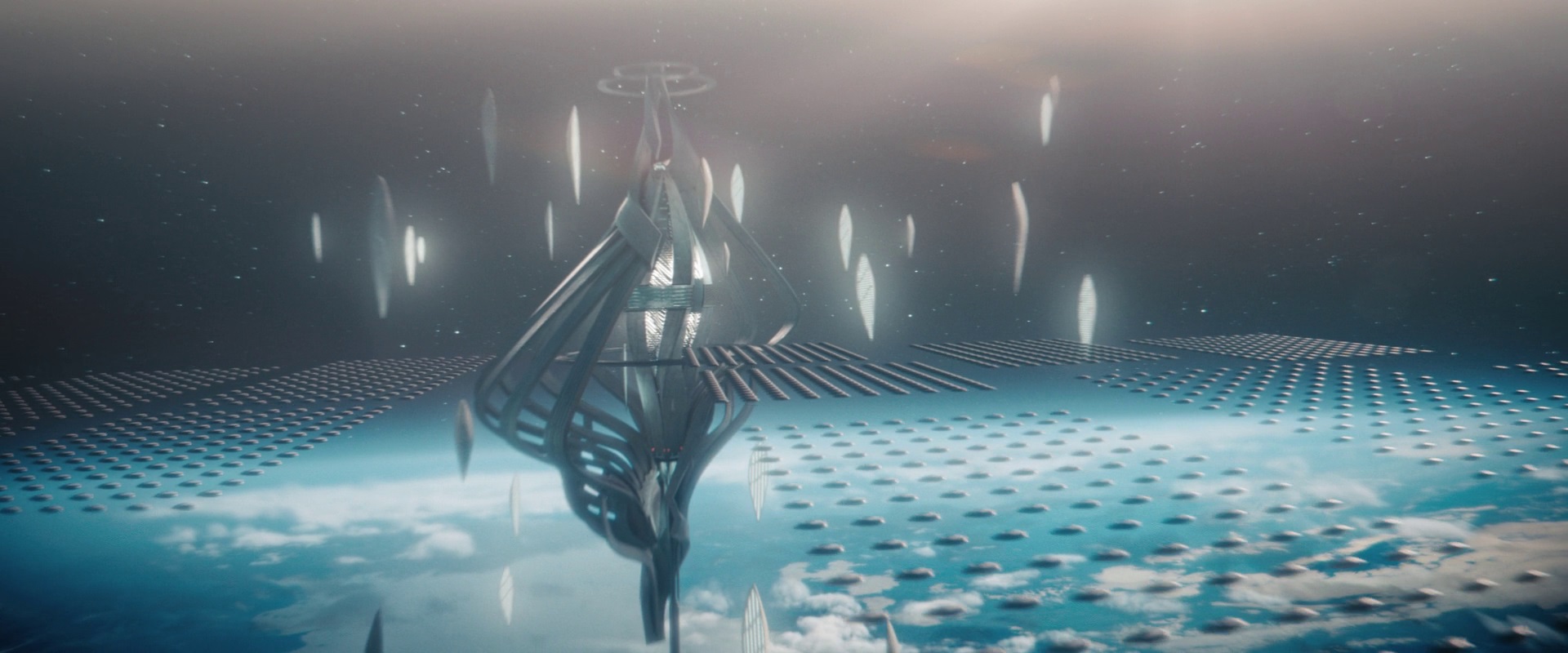
Star Trek: Discovery theories – week 0

Spoiler Warning: There are spoilers ahead for Star Trek: Discovery Seasons 1-3 and the trailers and teasers for Season 4. Spoilers are also present for other iterations of the Star Trek franchise, including Picard Season 1.

Discovery’s fourth season kicks off next week, and if you missed my coverage of the series last year you might not know that I like to write up my theories after each episode has aired. This year I want to get in early and put all of my major pre-season theories into one place… that way we can cross them off as they get debunked – or possibly even confirmed!

Last year I had a lot of fun combing over each episode and trying to speculate and theorise where the story might go. I came up with many theories that were wide of the mark – check out some of my worst ones by clicking or tapping here! – but I did also get some things right.

A Ferengi Starfleet officer glimpsed in the second Season 4 trailer.

It’s important to caveat any list of theories by saying that I have no “insider information” and I’m not trying to claim that anything listed below will happen. Fan theories are a lot of fun for me, but they can also detract from a person’s enjoyment of media if they get too attached to a particular theory that ultimately doesn’t come to pass. If you find yourself in that position, I recommend taking a break from fan theories for a while.

So let’s have a bit of fun and kick off my Star Trek: Discovery Season 4 theories one week early! You might’ve seen some of these already – I’ve written up a few big pre-season theories over the past few months. Let’s jump into the list!

Theory #1: A major character will be killed.

A Starfleet coffin draped with the Federation flag as seen in Deep Space Nine.

Season 3 saw a couple of major departures: Mirror Georgiou entered the Guardian of Forever’s portal, and Nhan remained behind aboard the USS Tikhov. Yet despite the dangers the crew faced as they navigated the 32nd Century, battled the Emerald Chain, and figured out the mysteries of the Burn and the Verubin Nebula, only one ally – Ryn – lost their life.

Killing off a character can be an excellent way to communicate the stakes involved if it happens at a relatively early stage, and we know Captain Burnham and the crew will be facing a dangerous gravitational anomaly. It can also be a storyline that brings a lot of emotion, as we have to say goodbye to a beloved member of the crew.

Dr McCoy and Sulu playing dead in The Wrath of Khan.

In short, I think there are plenty of reasons on the production side why killing off a major character could make sense in Season 4. Discovery has seen a number of characters leave the series – far more than any past Star Trek show, in fact – but the series’ death toll is still relatively low when compared to many other modern television shows.

There are also a couple of characters whose roles aboard the ship feel in danger – not least of whom is poor ex-Captain Saru, who was rather unceremoniously shuffled out of his role in the Season 3 epilogue. For a full breakdown of which other characters may or may not be in danger, check out my list of “death predictions” by clicking or tapping here.

Theory #2: There will be a character crossover from a past iteration of Star Trek.

Voyager’s Doctor is a contender!

Yes, I’m officially bringing this theory back! This is one that I doggedly clung on to for all of Season 3, and while it arguably kind of happened with the Guardian of Forever, that wasn’t really what I meant.

The show’s 32nd Century setting has shot Captain Burnham and the crew far beyond anything in Star Trek’s established canon, and that should mean that practically everyone we remember from other Star Trek shows won’t be around any longer. But this is Star Trek – with some creatively-written technobabble, practically any major character could have survived all the way through to the 32nd Century!

Could Sutra still be alive in the 32nd Century?

It’s also possible for Captain Burnham to discover the logs of a long-dead officer; someone we as the audience would be familiar with. While this would be less of a “crossover” than if a character from the past could be physically present, it would still be a lot of fun to see!

There are a handful of characters who could have survived to the 32nd Century based on what we know about them from past iterations of the franchise. Included in this category would be people like Soji, Voyager’s Doctor, and a few others. But as we’ve seen in episodes like Relics and even the film Generations, all it would take to make a big crossover happen is some kind of temporal anomaly, stasis field, or other technobabble!

Theory #3: Burnham may not remain in the captain’s chair.

Michael Burnham in the captain’s chair in a promotional image for Season 4.

This is a controversial one, so let me just say up front that I’m neither in favour of this theory nor opposed to it – I just think it’s a possibility. As things stand, Discovery has had four different captains across its four seasons. One of the show’s unique points of interest within Star Trek’s broader canon are the differences between these very different individual captains and the way they commanded the ship and crew.

It’s got to be considered at least a possibility, then, that the show will continue this trend. This doesn’t mean Captain Burnham will be killed off; I’d actually argue she’s pretty safe. But there are many different routes to her potentially leaving the ship, such as a desire for freedom that we saw in Season 3, or even perhaps taking up a new, more senior role within Starfleet.

Captain Burnham in the first Season 4 trailer.

If this theory were to come to pass, it would be something I’d expect to see at the very end of the season. Even if Burnham seems 100% committed to her new role as captain, I don’t think it’s a theory we can definitively rule out.

It’s worth mentioning that at time of writing, Discovery hasn’t been officially renewed for a fifth season – so all this talk of who’ll be in the captain’s chair by then could be moot! And of course this theory has a very strong counter-argument: that Discovery’s main story arc across its first three seasons can be read as Burnham’s ascent to the captain’s chair.

Theory #4: The Spore Drive will be rolled out to more ships.

The USS Discovery making a Spore Drive jump.

The Season 3 finale rushed past this point as it had a lot going on, but the revelation that Book – and potentially millions of other people with empathic abilities – can serve in the role of Spore Drive navigator is huge. The technology was previously limited by Stamets being the only one with the ability to interface with the mycelial network, but now that limitation has seemingly been removed.

In a galaxy where dilithium supplies are still low, having a powerful alternative method of propulsion is a godsend for Starfleet, and I would think it would be a priority to start recreating the technology and training up a whole corps of Spore Drive navigators.

Book was able to use the Spore Drive in Season 3 – potentially opening it up for more ships to use.

On the production side of things, this would finally find a proper use for what has been one of Discovery’s more controversial elements. Even after the discovery of the huge dilithium cache in the Verubin Nebula, the vitally-important fuel is still a limited resource. Developing an alternative way for Starfleet ships to get around should still be a priority for the organisation.

This could be a story with real-world parallels, too. Climate change is a very real and very dangerous threat out here in the real world, and finding new, cleaner ways of generating power and fuelling our vehicles is essential. Discovery could use its Spore Drive as an analogy for the development of electric vehicles or renewable energy generation, for example.

Theory #5: Kovich works for Section 31.

Kovich in Season 3.

This is another Season 3 theory that I’m choosing to bring back! The question of who Kovich is and what role he played in Starfleet and the Federation was left open at the end of Season 3, and we know that the character will return in some capacity. As someone who seemed to talk around the issue at hand and not reveal everything he knew, Kovich strikes me as potentially being a Section 31 operative – or even the head of the organisation.

We don’t know yet if the Section 31 series that was announced in 2019 will go ahead as planned. But if it does, there could potentially be a connection between Kovich and Georgiou that would tie the two shows together. Kovich is mysterious enough that his character could be taken in many different directions – but my money’s on Section 31.

Theory #6: The ban on time travel will be explained further.

Admiral Vance first told us of the ban on time travel.

This one is a hope as much as a theory right now! In short, the ban on time travel was introduced early in Season 3 primarily as a way for the writers and producers to avoid questions about why the 32nd Century was so different from how the far future had been depicted in earlier Star Trek productions, as well as to explain things like how the Burn was able to catch the Federation off-guard and why Georgiou couldn’t simply be sent back in time when she needed to.

But the ban itself raises some issues – the biggest one being the lack of detail on how it works and how something like this could possibly be enforced. As I said several times last season, it isn’t possible to just un-invent a technology so useful and powerful as time travel. Even just a few lines of dialogue going into a little more detail on the mechanisms involved in the ban would be really useful.

Theory #7: The Federation has flouted the ban on time travel.

HMS Bounty travels through time in Star Trek IV: The Voyage Home.

Sticking with the time travel ban, another theory I had last season was that the Federation – and Section 31 in particular – might have deliberately flouted the ban and failed to abide by the rules. Someone as straight-laced and committed to Starfleet ideals as Admiral Vance is highly unlikely to have sanctioned such a move, but someone like the shadowy Kovich (who we talked about a moment ago) might have. President Rillak is someone we don’t know yet, but she could also be involved.

Obviously the bulk of the season’s story will deal with the gravitational anomaly. But there’s scope to either talk about the time travel ban in a standalone episode or even tie the two stories together – perhaps the anomaly has been unleashed as a result of unsanctioned time travel.

Theory #8: The story will connect with the Short Treks episode Calypso.

The USS Discovery seen in Calpyso.

Despite a handful of moments in Season 3 which seemed to connect to Calypso, the story of the season overall ended up going in a very different direction. While we saw a couple of things that arguably did tie in to the Short Treks episode, major things like the USS Discovery undergoing a refit have actually moved the plot even further away.

It’s possible that Calypso will forever remain an outlier in Star Trek’s canon – an episode tied to a vision of Season 2 or Season 3 that was changed before it made it to screen. But earlier in Season 3 it felt like we were getting close to seeing how it could all be tied together – and I’m hopeful that Season 4 will find a way to do so.

Theory #9: The crew will have to defend the Verubin Nebula.

The dilithium planet at the centre of the Verubin Nebula.

The Federation is in a weakened state, and even if we see worlds like Ni’Var rejoin the organisation it’s still nowhere near as powerful as it once was. The Verubin Nebula is thus a very tempting target for anyone looking to gain an edge in a galaxy where dilithium is still in short supply. As the only known significant dilithium supply, whoever controls the Verubin Nebula will have a massive tactical advantage.

We can compare the Verubin Nebula to Deep Space Nine’s Bajoran wormhole in that respect – it’s a resource of huge strategic importance. Season 3 didn’t show us much about the makeup of the galaxy’s factions outside of the rump Federation and the Emerald Chain, but it’s got to be possible that factions like the Dominion, Klingon Empire, or even the Borg still exist and would want to seize the Verubin Nebula for themselves.

The USS Discovery arriving at the Verubin Nebula in Season 3.

Season 4 has teased a scientific puzzle – the gravitational anomaly. But that doesn’t mean there won’t be villains in play, and Discovery has introduced us to several compelling and interesting villains over its first three seasons.

To make a long theory short, it would begin to stretch credulity to think that everyone in the known galaxy would see the Federation rebuilding and having access to dilithium and not want to find out for themselves what’s going on. Once the Verubin Nebula’s existence becomes known, even if the Federation promises to share its bounty with all comers, it seems very likely that someone would want to take control of the dilithium supply for themselves.

Theory #10: The super-synths from Picard Season 1 are involved with the gravitational anomaly.

The super-synths in Picard Season 1.

Picard Season 1 introduced us to a faction I nicknamed the “Mass Effect Reapers” – for their similarity to that video game faction. This race of super-synths existed outside of the Milky Way galaxy and promised to come to the aid of any synthetics who were being persecuted by organics, and Soji and Sutra attempted to contact them in the Season 1 finale.

We don’t know much at all about the super-synths or what their goals or motivations might be. It has to be considered at least possible that the attempted contact by the Coppelius synths set in motion a chain of events that could lead to the super-synths attacking the Milky Way galaxy.

Theory #11: The gravitational anomaly is a superweapon.

The USS Discovery en route to the anomaly in the second Season 4 trailer.

Based solely on what we’ve heard about the gravitational anomaly in the trailers and teasers, one thing strikes me as odd. The anomaly appears to be “targetting” the Federation. I put the word in inverted commas because it implies an intelligence at work – someone or something in control of the anomaly, directing it to attack the Federation. But what if that’s actually the case?

I mentioned the super-synths above as one possible culprit, but we could also consider factions like the Borg or the Dominion – they might have taken the opportunity of the Burn to perfect a weapon to destroy the remaining members of the Federation, perhaps as a precursor to invading and conquering the Alpha Quadrant.

A different depiction of the anomaly.

There are also factions like the Kelvan Empire from The Original Series – whose possible return to the Milky Way galaxy lines up in terms of timing. Enterprise’s Sphere Builders also come to mind: they attempted to use their own anomaly-generating devices to convert a region of space to resemble their native realm also as a precursor to invasion.

In short, are we certain that the gravitational anomaly will be nothing more than a natural phenomenon? I’m definitely not convinced of that right now! Past seasons of the show have seen twists and turns, taking stories in unexpected directions. Right now we assume that whatever this anomaly is it’s something natural – but that may not be the case.

Theory #12: Captain Burnham and the crew will encounter the Klingons.

The Klingons have been part of Discovery since the beginning.

By the late 24th Century the Federation and Klingons were firm friends, having been allied for a century and after fighting side-by-side against the Dominion. We don’t know if that alliance endured to the 32nd Century, but it’s certainly plausible to think that it did. The Klingons might even have joined the Federation at some point, and their violent warrior culture may have been significantly pacified.

One thing that could be very interesting to see is how the crew of the USS Discovery – almost all of whom are veterans of the Federation-Klingon war – would respond to that. They’ve worked alongside Klingons like L’Rell before, but many of them still see the Klingons as an old enemy. The story of overcoming that prejudice could mirror episodes like The Wounded from The Next Generation, and would be very interesting to see.

Theory #13: Some areas of the galaxy – such as the Delta Quadrant – avoided the worst effects of the Burn.

The USS Voyager was the first Federation starship to explore the Delta Quadrant.

It’s quite possible that Season 4 won’t revisit the Burn narrative in any detail. But one thing I’d be curious to see is the true extent of the disaster – did it reach all four quadrants of the galaxy equally, or did its effects fade out after a certain point? Michael Burnham discovered that the Burn had a point of origin, and that it radiated out from that point like ripples on the surface of water. Ripples eventually diminish, fading away the further they travel, and perhaps that’s true of the Burn as well. There could be whole areas of the galaxy that didn’t even notice the Burn – and maybe the ship and crew will visit one such region.

If the Delta Quadrant was left largely unscathed, for example, what might that mean for the likes of the Borg? It’s possible they aren’t even still around in the 32nd Century, but it’s also possible that they’ve had more than a century to expand and build up their forces while the Federation suffered.

Theory #14: The Guardian of Forever will be back.

Carl – the Guardian of Forever’s new persona.

Having reintroduced the Guardian of Forever in Season 3, I wouldn’t be at all surprised to see Discovery return to the Guardian’s planet in Season 4. The gravitational anomaly is something new and threatening, so it’s possible Captain Burnham might want to ask the Guardian for help or information.

The Guardian of Forever is also the only way we know of at present to travel through time – something that might be necessary if Season 4 makes an attempt to link up with Calypso in a big way. There are many reasons why Captain Burnham might want to revisit the Guardian, and it would be great to bring back actor Paul Guilfoyle, who played the Guardian’s humanoid avatar in Season 3.

Theory #15: At least one new character will join the main cast.

Lieutenant Detmer in Season 3.

One big question facing the series right now is who will take on the role of Captain Burnham’s first officer? Tilly was seen in the second trailer wearing the blue uniform of the science division, so it seems as though her tenure as the USS Discovery’s number one will be short-lived. So who will replace her? There are several secondary bridge officers like Rhys, Nilsson, and Bryce who are contenders, but it could also be someone like Lieutenant Willa – Admiral Vance’s aide-de-camp from Season 3.

A new character entirely could also join the crew, either directly as Burnham’s XO or to replace someone else who gets promoted to that role. With both Nhan and Georgiou departing in Season 3, and a potentially reduced role for Saru this time around, there’s definitely scope to bring a new major character aboard the ship.

Lieutenant Sahil was commissioned into Starfleet at the end of Season 3.

We could potentially see characters from Season 3 like Lieutenant Sahil or even Aurellio make a comeback. Sahil was the guardian of a Federation relay post who Captain Burnham met at the beginning of the season, and he was commissioned as an officer in the season finale. He would be a great choice in my opinion.

A wholly new character could also be concocted. We know that Federation President Rillak will be new for Season 4, but how significant a role she will have remains to be seen. I definitely feel that there’s scope for at least one new character – or perhaps the promotion of a secondary character to the regular cast.

So that’s it for now! Those are my official Season 4 theories written up and ready to go!

Grudge is also coming back!

The season premiere will arrive in less than a week from now, so stay tuned for a full review of the episode and an update to these theories! I wonder how many will be completely destroyed right off the bat?

I’ve been looking forward to Discovery’s fourth season all year, and it’s hard to believe it’s now only a few days away! I’m hoping to see a season of television that will be tense, exciting, and unpredictable. Despite my love of theory-crafting, I like being wrong just as much as I like being right – if not more! A story that goes in truly unexpected directions is a lot of fun, so I won’t be upset even if absolutely none of my theories come to pass.

Star Trek: Discovery Season 4 will premiere on the 18th of November 2021 on Paramount+ in the United States, and on the 19th of November 2021 on Netflix in the United Kingdom and around the world. The Star Trek franchise – including Discovery and all other properties mentioned above – is the copyright of ViacomCBS. This article contains the thoughts and opinions of one person only and is not intended to cause any offence.

Star Trek: Discovery – first Season 4 episode titles revealed!

Spoiler Warning: There are spoilers ahead for Star Trek: Discovery Seasons 1-3 and the trailers for Season 4. Spoilers are also present for Star Trek: Picard Season 1.

Star Trek: Discovery’s fourth season is now only ten days away! I haven’t seen as much buildup online and on social media from Star Trek and ViacomCBS as happened last year; I think the concurrent broadcast of Prodigy is taking up a lot of time and energy for the franchise’s social media team. Perhaps that’s a lesson for Star Trek to learn going forward – they need to find the right balance of promoting different shows with so many projects on the go simultaneously! As the season approaches, though, I hope to see a bigger and better marketing and promotional push.

Despite all of that, we did get some new information about Discovery Season 4 recently: the first four episode titles! On this occasion I thought it could be fun to take a look at all four and wildly speculate about what they could mean! We might be able to gleam something, after all!

There are also four new photos that have been shown off along with the episode titles – one from each of the first four episodes. So we’ll also look at each of those images in turn to see what might be going on, and to see how it might connect with the episode title!

The USS Discovery in the second Season 4 trailer.

Last season, Discovery was far more generous! We got episode titles for the entire season revealed in advance, as well as short synopses for the first few episodes. That info-dump gave us a lot to mull over as the season approached! However, at the end of Season 3, the final three episode titles were changed at the last minute. Su’Kal was originally going to be titled The Citadel – perhaps a reference to his holographic castle. There Is A Tide was originally going to be titled The Good of the People – which may be a reference to Osyraa and Admiral Vance’s negotiations. And finally That Hope Is You, Part 2 was originally titled Outside – seemingly because Su’Kal would finally get to see the world outside of his holographic realm for the first time.

So don’t consider all of these episode titles to be set in stone! Discovery has a bit of a track record when it comes to making changes on the fly, so it’s possible any of these titles could be changed between now and when they’re broadcast. But for now, let’s take a look at each of the first four episodes in turn and see what we can gleam.

Episode 4×01: Kobayashi Maru

The teaser image.

This is the title that jumped out at me the most – and I’m sure I’m not alone in that! Kobayashi Maru refers to the famous Starfleet Academy test for command cadets, and it’s a no-win scenario. The Kobayashi Maru test was first seen in Star Trek II: The Wrath of Khan, where we saw Saavik attempt the test. It has been referenced on a handful of occasions in the franchise since, and we got to see Kirk’s famous outside-the-box “solution” in 2009’s Star Trek.

So if Kobayashi Maru is bringing all of this to mind, what might that mean for Captain Burnham and the crew of the USS Discovery? Presumably they’re about to encounter their own no-win scenario – but will this be related to the gravitational anomaly? The Kobayashi Maru test doesn’t involve space phenomena, but a battle against enemy starships – so I wonder if the season opener might see Captain Burnham and the crew engage in some kind of battle.

The aftermath of a Kobayashi Maru simulation!

The Kobayashi Maru test was famous for “killing” people – and was a test to see how command candidates handled the ideas of death and losing those under their command. The dark implication from this could be that a member of the crew will be killed; this would be a very bold way to kick off the season.

Fundamentally, the Kobayashi Maru test was designed to put cadets through their paces to see if they were cut out for the rigours of command. Kobayashi Maru will be the first episode of Discovery with Michael Burnham in the captain’s chair, so this could be her trial by fire, and we could learn more about her abilities and perhaps even her limitations as a captain.

Michael Burnham in the captain’s chair.

Based solely on the title of Episode 2, which we’ll look at momentarily, my suspicion is that Captain Burnham won’t encounter the gravitational anomaly in this episode – or if she does, it will come at the end, perhaps teeing up Episode 2 with a cliffhanger ending. If I’m right about that, something else might be happening to put her command abilities to the test – or to present her with a no-win situation.

Seasons 2 and 3 of Discovery opened strongly, with episodes that did a good job of establishing the main storylines that were to come. Remembrance, the Season 1 premiere of Star Trek: Picard, likewise did a great job in that regard. So I’m optimistic that Discovery Season 4 will open strongly – and based on the title of the premiere episode I’m genuinely interested to see what will happen!

A closer look at President Rillak in the teaser image.

The teaser image, shown above, shows a new character who we know to be Federation President Rillak being applauded by a group of people who are wearing what seems to be a new variant of the 32nd Century Starfleet uniform that debuted last season. She’s standing at a podium looking over her shoulder, perhaps to see some kind of presentation being shown behind her.

My first thought was that the assembled people could be Starfleet cadets – in which case the title Kobayashi Maru might simply refer to Academy cadets taking the actual test. Perhaps Captain Burnham, Saru, or someone else has been working with Starfleet Academy to bring in more officers as the Federation gets back on its feet. In the background of the image I spotted a Ferengi; there was a Ferengi captain seen in the second Season 4 trailer, so this could be the same character. If that character is a captain, perhaps the people in the image aren’t cadets.

Episode 4×02: Anomaly

The episode’s teaser image.

This one has a very simple title – but it’s a title that could open up so many different possibilities! This episode seems almost certain to introduce the gravitational anomaly that the trailers have shown off, so I think we can expect to learn what kind of threat it poses, as well as perhaps seeing Captain Burnham and the crew encounter it for the first time. My suspicion is that the USS Discovery will be the first Federation vessel to make contact with the gravitational anomaly, and will then return to Starfleet with the news, but we’ll see.

The title Anomaly could also have a secondary meaning, such as referring to the anomalous presence of Gray, or to someone acting in an out-of-character manner. Discovery has played with double-meaning episode titles more than once, so I won’t be shocked if there’s a second “anomaly” of some kind that rears its head in this episode!

The USS Discovery approaches the gravitational anomaly.

In the days ahead, before we hit the season premiere, I’ll be writing up all of my big pre-season theories. But if you want to check out my initial thoughts on the gravitational anomaly from when it first appeared in the first Season 4 trailer, you can do so by clicking or tapping here. A few of my ideas about the anomaly and its possible causes are still in play, and even though I think it’s more likely that Discovery will tell a wholly unique story rather than one which connects back to a past iteration of Star Trek, part of me hopes that we might see some kind of connection with the Borg, the super-synths from Star Trek: Picard, or something like that.

The teaser image for Anomaly shows a depressed-looking Book at the console on his ship, being comforted by Michael Burnham. Book has that “thousand-yard stare” that’s often associated with post-traumatic stress. His look could also be one of defeat or even resignation, but clearly something bad has happened.

A closer look at Book’s expression.

Michael Burnham being the one to offer comfort suggests that this is something that hurts Book more than it hurts her, otherwise the roles would either be reversed or we might see them drawing on one another for emotional support and comfort. Book has attachments to his homeworld of Kwejian, the tranceworms, and of course the beautiful cat Grudge. I certainly hope nothing bad has happened to the kitty! As I said in my rather morbid list of death predictions, though, Grudge is kind of the show’s mascot so I don’t expect she’d be in harm’s way.

That leaves Kwejian and the tranceworms as possible candidates; perhaps one or both has suffered due to the gravitational anomaly. Book could also have heard bad news from someone he knew from his time as a courier – perhaps some character we haven’t met yet has been harmed by the gravitational anomaly. It’s also possible that whatever’s happened to Book has nothing to do with the anomaly and that this will be a side-story for him and Burnham.

Grudge made an appearance in the second Season 4 trailer.

The brief glimpses we’ve seen of Book in the trailers didn’t show him sitting around looking sorry for himself, so whatever has happened to him is something he’ll be able to move past – somehow. But clearly at this moment he’s suffering, and it’s sweet to see Burnham being there for him. One of my hopes for the season is that their relationship will remain solid; Burnham has been on a bit of a ride with Ash Tyler, so giving her a settled relationship will be good for her character.

Book’s ship seems largely undamaged in the image, so if it had an encounter with the gravitational anomaly it seems to have survived! The little craft proved its worth in Season 3, saving the USS Discovery, taking Burnham on a side-mission, and later navigating the Verubin Nebula. It would be nice to see more missions involving Book’s ship in Season 4.

Episode 4×03: Choose to Live

Teaser image for Choose to Live.

Choose to Live is a pretty vague-sounding title that could lead to all kinds of different themes and storylines. Obviously Captain Burnham and everyone else involved in the mission to defend against the gravitational anomaly would “choose to live” as opposed to giving up and choosing to just lay down and die! But the phrase implies effort – that choosing to live and tackling the problems in front of them will be a significant challenge for the crew to overcome.

It’s possible that this episode could see some kind of “resurrection” storyline; that someone who was considered to be dead will make a comeback, or that someone will be revived from the brink of death. The second Season 4 trailer showed Michael Burnham in sickbay with a worried-looking Grudge and Book by her side, so perhaps an injury or ailment that she suffered will be part of this episode’s storyline.

Captain Burnham will end up in sickbay… somehow!

The teaser image shows Captain Burnham sitting at a desk across from two characters who I believe are Ni’Var’s leader T’Rina and Federation President Rillak. Admiral Vance is also present, standing to Burnham’s left looking stern. This could be an extension of the scene we saw in the second trailer, where President Rillak appeared to be disciplining Captain Burnham or at least giving her a verbal dressing-down.

The presence of the leader of Ni’Var may suggest that they’re involved in some way, or that Captain Burnham and the crew will be visiting Ni’Var somewhere around this episode. With Ni’Var seemingly on the cusp of rejoining the Federation, this could be a mission connected to that – perhaps some kind of final push to bring Ni’Var back into the fold. Or it could be that Captain Burnham has done something to upset Ni’Var, and that could be the reason why President Rillak seemed to be so upset with her in the trailer.

Federation President Rillak will be a brand-new character in Season 4.

The image places this scene at Federation HQ, and the inclusion of Admiral Vance and President Rillak suggests that this could be a mission briefing or debriefing. Burnham could be telling them about the gravitational anomaly and the damage it’s caused, or they could be telling her about it and ordering her to track it down and learn more about it. Ni’Var has a strong history with science, so perhaps T’Rina is there to offer Ni’Var’s help or even just information.

Captain Burnham looks serious in this image, but I wouldn’t say she looks horribly upset or offended as she might if she were on the receiving end of a three-person attack. This may simply be either the buildup to a mission or Captain Burnham returning to tell the senior figures of her findings.

Episode 4×04: All Is Possible

The episode’s teaser image.

This is another ambiguous title that could lend itself to many different kinds of story. In the context of the gravitational anomaly, this could perhaps be a reference to different possibilities at its event horizon, or how the anomaly itself changes or damages spacetime.

However, my inclination on seeing this title and its teaser image is to say that this might be an episode that sidesteps the main storyline of the season and puts its focus elsewhere. Adira is present in the teaser image alongside Tilly, and one additional storyline that we know will be part of Season 4 is Adira and Gray’s quest to allow Gray to become corporeal again.

Gray and Adira at the end of Season 3. Could this episode be about them?

All Is Possible may mean that there will be a breakthrough in Gray’s visibility – perhaps the scientifically-minded Tilly will be helping Adira with that very problem, and this episode will see some significant advancement. I’m not sure if we’ll see Gray’s visibility definitively settled this early in the season – it feels like a story that could easily rumble along in the background all the way to the season finale. But this episode could be a major step on that journey.

I don’t recognise the location where Tilly and Adira are shown in the image. There seem to be several other Starfleet officers present – all wearing the red uniforms of the command division – so this could be at Federation HQ. It could also be aboard the USS Discovery, but I think the lighting doesn’t look quite right for that; these lights are brighter than the dim lights typically seen aboard the ship. However, one thing I’d like to see this season is some kind of visual changes or upgrades to the USS Discovery internally. Last season saw the ship undergo a major refit – yet that doesn’t seem apparent from its interior! So maybe this is one new area of Discovery that we haven’t seen before.

A closer look at Tilly in the teaser image.

Behind Tilly and Adira we can see some kind of small vessel, but not one I recognise. It’s hard to tell from this angle and with people blocking parts of it, but it almost looks like a circular craft – a kind of flying saucer-type design! It could also be a shuttlecraft or even an escape pod, and it may be entirely unrelated to the plot and just there for set decoration!

Tilly’s smile in the image appears to be genuine, but I’m not convinced about Adira’s! They may be less impressed with whoever they’re listening to – a person who appears to be just out-of-frame. My guess is that they’re having to listen to someone senior – who probably doesn’t know too much about science or engineering – talking to them about a technical topic! Interestingly, Adira and Tilly appear to both hold the rank of lieutenant. Tilly’s promotion was definitely well-earned – but I wonder if Adira somehow skipped being an ensign!

So that’s it.

The new season will be here very soon!

Those are the first four episode titles and teaser images, along with my thoughts and guesses about what might be taking place. As always, I caveat this by letting you know that I have no “insider information” and all of this is pure speculation from a fan of Star Trek – and nothing more! It’s possible – or rather, incredibly likely – that all of this is utterly wrong. But regardless, it was fun to speculate as the new season approaches.

We got a tiny glimpse of the first part of Season 4 today, but I didn’t see anything in the images or episode titles that I felt was a major spoiler. What we got was just a little bit more to sink our teeth into while we wait for the season premiere in just ten days from now! When the season kicks off I hope you’ll join me here on Trekking with Dennis for reviews of each episode, fan theories, analysis, and much more!

Star Trek: Discovery Season 4 will premiere on Paramount+ in the United States on the 18th of November 2021, and on Netflix in the United Kingdom and elsewhere on the 19th of November 2021. The Star Trek franchise – including Discovery and all other properties mentioned above – is the copyright of ViacomCBS. This article contains the thoughts and opinions of one person only and is not intended to cause any offence.

Star Trek: Discovery Season 4 – The Story So Far

Spoiler Warning: There are spoilers ahead for Star Trek: Discovery Seasons 1-3 and the trailers and teasers for Season 4.

As we welcome the month of November, Star Trek: Discovery’s fourth season is now only a couple of weeks away! With the season fast approaching I thought it would be a good idea to recap, as succinctly as possible, the story so far. Michael Burnham and the rest of the crew have been on a wild ride that’s seen them face off against militant Klingons, a Mirror Universe impostor, a rogue AI, Section 31, and a journey into a future that none of them expected to find.

If you haven’t re-watched Discovery since Season 3 ended just after New Year, I hope this recap of the story so far will be helpful going into Season 4. If for some reason you haven’t seen Discovery yet, well this recap might help you get acclimated with the show and some of the characters – but there’s still a couple of weeks to watch the show’s forty-two episodes… so you’d better get on with it!

Season 4 is imminent!

As I’ve said previously, the show’s first season didn’t get off to a great start story-wise. As things settled down, though, Discovery told a creditable story over the course of the season, one which hit a lot of the right notes in terms of “feeling like Star Trek.” But Season 2 was leaps and bounds ahead of where Season 1 had been, with noteworthy improvements in writing and characterisation to tell a truly exciting and engaging story.

Season 3 was a risk in some respects, but in others it was clearly designed to answer criticisms from some quarters about the show’s place in Star Trek’s broader canon. Shooting the ship and crew almost a thousand years into the future meant abandoning the 23rd Century – and everything else familiar about Star Trek’s galaxy. However, this decision opened up Discovery to brand-new storytelling ideas, and gave the writers and producers far more creative freedom. The show was pioneering new ground instead of trying to walk an occasionally awkward line between the franchise’s established history and bringing new ideas to the table.

Captain Burnham in a promo image for Season 4.

There were some great successes in Season 3. For the first time we got standalone episodes – or at least semi-standalone episodes in which the main story of the season took a back seat. We also got spotlight moments for more of the ship’s secondary characters, some of whom had barely had more than a line or two of dialogue despite being fixtures on the bridge. Though I have criticised the Burn storyline – which was the most significant aspect of the season’s story – for having a number of issues, overall Season 3 was a success.

Discovery has been “the Michael Burnham show” since its premiere episode – for better and for worse. The first three seasons can thus be viewed as Burnham’s ascent to the captain’s chair, and the rocky road she took to get there. Though there has been development of other characters – Saru, Tilly, and Mirror Georgiou stand out in particular – the show’s focus has often been on Burnham.

So let’s head back to the beginning and run through all three seasons as briefly as possible! I’ll try to hit all of the most important and relevant points as we go to get you ready for Season 4.

Season 1

Michael Burnham at the beginning of Season 1.

Season 1 began with Michael Burnham serving as first officer to Captain Georgiou of the USS Shenzhou. Saru was also a member of the crew, as was helm officer Detmer. After being called to a region of space near the Klingon border, the Shenzhou encountered a new Klingon leader who had a plan to unify all of the Klingon Great Houses by going to war with the Federation. In a moment we’ll charitably call “confusion” (as opposed to other, harsher terms we could use) Michael Burnham attempted to stage a mutiny against Captain Georgiou and fire the first shot at a large Klingon fleet.

After the arrival of Admiral Anderson and Starfleet reinforcements, a battle broke out between the Federation and Klingons – the opening engagement of a year-long war. Georgiou and Burnham led an away mission to attempt to capture the Klingon leader, T’Kuvma, but the mission ended with both Georgiou and T’Kuvma dead and war assured between the two sides.

Season 1 began with Georgiou killed and a Federation-Klingon war breaking out.

The Klingon war led to Starfleet accelerating work on the Spore Drive – a new method of traversing the galaxy that relies on a kind of fungus. The Spore Drive was installed aboard two ships – Discovery and the USS Glenn. Engineer Paul Stamets was in charge of the Spore Drive aboard Discovery under the command of Captain Gabriel Lorca, but the technology wasn’t effective at first.

The crew of the USS Glenn discovered that a tardigrade – a space-dwelling lifeform – could be used to navigate the mycelial network and might be the key to making the Spore Drive operational. However, the crew were killed when the tardigrade got loose, and the ship was destroyed to prevent it from falling into the wrong hands. Initial experiments using the tardigrade were promising, despite the dangers it posed, but when it became clear how painful the process was for the creature, Stamets merged his DNA with the tardigrade’s so the creature could go free. Stamets thus became Discovery’s navigator and the Spore Drive became fully functional.

A space-dwelling lifeform proved key to making the Spore Drive work.

At the same time, Michael Burnham – now a prisoner following her mutiny – had been brought aboard the USS Discovery by Captain Lorca. She was assigned a cabin with Cadet Sylvia Tilly, and employed as a “mission specialist.” Lorca suggested to Burnham that this could be a way to atone for her role in the outbreak of the war, and she played a role in helping get the Spore Drive operational.

Captain Lorca was captured by the Klingons, but was able to escape thanks to the assistance of Ash Tyler – a fellow Starfleet prisoner. Tyler joined the crew of Discovery as Lorca’s new security officer – despite clearly suffering from post-traumatic stress as a result of his abuse and torture by the Klingons.

A war with the Klingons was the focus of large parts of Season 1.

The USS Discovery was sent to the planet Pahvo, where a crystalline transmitter was located. The transmitter could be used, Starfleet believed, to detect cloaked Klingon ships. When the mission went wrong and the native energy-based Pahvans summoned the Klingons to their planet, Captain Lorca disobeyed orders to implement a new plan. Outwardly his plan was to use multiple Spore Drive jumps to unlock the secrets behind the Klingons’ cloaking device – but in reality his plan was to use the Spore Drive to return to the Mirror Universe.

Captain Lorca was later revealed to be a native of the Mirror Universe, having crossed over inadvertently to the Prime Universe. While in the Mirror Universe the crew of the USS Discovery had to try to fit in as soldiers of the Terran Empire. Burnham and Lorca travelled to the capital ship of Empress Georgiou, where Lorca attempted to rally his forces and stage a coup.

Mirror Lorca returned home and attempted to stage a coup.

Lorca was killed during his coup attempt, but Empress Georgiou’s reign was over anyway; other plotters were already eyeing her throne. In a moment of unthinking impulse, Michael Burnham chose to save Georgiou’s life and transported her to Discovery. After investigating how Lorca was able to use the Spore Drive to jump between universes, the crew were able to reverse the process and return home – only to discover that the Klingons had reached the edge of victory in their absence.

A mad plan cooked up by Empress Georgiou and Admiral Cornwell saw a bomb transported to the Klingon homeworld, one which would have devastated the planet if it had been set off. Leading a second, pro-Starfleet values mutiny, Burnham rallied the crew of Discovery against the bomb plot and instead saw the super-weapon turned over to L’Rell – who went on to become the new Klingon Chancellor and ended the war.

Season 2

The crew of the USS Discovery at the end of Season 1.

After the war ended, Burnham and the crew received medals for their roles. Burnham was also reinstated at the rank of commander. Following a computer failure aboard the USS Enterprise, Captain Pike was assigned to the USS Discovery and given temporary command of the ship for his mission to chase down an ambiguous entity known as the Red Angel. The Red Angel had been generating anomalies known as Red Bursts at locations across the galaxy.

The Enterprise’s science officer – and Michael Burnham’s adoptive brother – Spock, had gone missing at the same time. The Red Angel was revealed to be a time traveller – someone with the ability to travel into the past and far into the future. A mysterious figure from Spock’s youth – and who had once intervened to save his life – was revealed as the Red Angel and thus connected to Spock’s disappearance.

Where is Spock?

Meanwhile on the Klingon homeworld, Ash Tyler – whose true identity as a Klingon had been discovered – was able to leave the planet with his “son” thanks to the help of Section 31. The son of Voq and Klingon Chancellor L’Rell was taken away to the Klingon monastery on Boreth to be raised with the monks, and Tyler rejoined Section 31 – which counted ex-Empress Georgiou among its new recruits. Captain Leland tried to maintain the peace aboard a state-of-the-art Section 31 vessel.

Section 31 had come to rely heavily on an artificial intelligence named Control during the Klingon war, and it had become routine for Starfleet admirals to run all of their mission data through Control. Unbeknownst to any of them, Control had aspirations of its own, seeking to become fully sentient and to wipe out its creators. Somehow it discovered the existence of an entity known as the Sphere – a planetoid-sized lifeform that had spent more than 100,000 years studying the galaxy and accumulating vast swathes of data on all of its inhabitants.

The USS Discovery (left) and the Sphere.

By merging its programming with the Sphere data, Control would be able to become fully sentient, and it set out to acquire the Sphere data. Thanks to the time-traveling involvement of the Red Angel, the USS Discovery came to possess the Sphere data, and thus became a target for Control.

After Michael Burnham was able to rescue Spock from Section 31, she took him to Talos IV where the Talosians were able to help “unscramble” his brain, leading to Spock explaining as much as he could about the Red Angel, its origins, and its connection to him. The Red Angel was revealed to be a human.

The Talosians were able to help Spock.

The USS Discovery became a fugitive after rescuing Burnham and Spock from Talos IV; hunted by Control, and thus by Section 31 and all of Starfleet. Control was able to kill off many Section 31 leaders and operatives, and used nanites to “assimilate” or possess the body of Captain Leland – but thankfully left Ash Tyler and Georgiou alone!

The crew of Discovery studied scans of the Red Angel following a mission to Saru’s home planet (in which they rescued his people from subservience to the Ba’ul, a second sentient race present on the planet). Saru underwent a transformation to his “evolved” form, losing much of his fearfulness in the process. Scans of the Red Angel revealed that the time traveller was, to everyone’s surprise, Michael Burnham.

Michael Burnham was believed to be the Red Angel.

After a side-story involving native beings in the mycelial network and Tilly, Dr Culber – who had been killed by Tyler/Voq – was able to be rescued from the mycelial network and brought back to life. Meanwhile a plan to lure the Red Angel and trap her ended up proving that Burnham wasn’t the Red Angel – her long-lost mother was.

Dr Gabrielle Burnham had been using the Red Angel suit to interfere in the timeline after getting trapped in the 32nd Century. She arrived there by accident only to find all sentient life in the galaxy gone thanks to Control, which had acquired the Sphere Data and evolved itself. She began taking action to thwart Control, including giving the Sphere data to Discovery to keep safe. She was later pulled back to the 32nd Century; her presence there ultimately determined the ship’s destination at the end of the season.

Dr Gabrielle Burnham explained why she – as the Red Angel – was interfering with the timeline.

Control was hot on Discovery’s heels, and using Captain Leland attempted to gain access to the Sphere data. Pike and the crew realised the data couldn’t be destroyed – it was protecting itself – so they made a plan to send the data into the far future, securing a time crystal from the Klingon monastery on Boreth in order to build a new Red Angel suit. During the mission to Boreth, Captain Pike made a great sacrifice to acquire the crystal – cementing a future for himself of devastating disability.

While preparing for a last stand against Control and a fleet of Section 31 ships under its command, the crew of Discovery raced to build a second Red Angel suit. After Control arrived and a battle raged, Michael Burnham used the completed suit to travel back in time and set the Red Bursts – making the whole story somewhat circular – before leading the USS Discovery (now under Saru’s command) into the future. Captain Pike and Spock remained behind in the 23rd Century.

Season 3

On the bridge of the Enterprise, Captain Pike, Spock, and the crew watched the USS Discovery disappear.

Arriving 930 years later, Michael Burnham was initially alone and crash-landed on the planet Hima. There she met Cleveland Booker who told her about the Burn: a galaxy-wide catastrophe in which many starships were destroyed. The Federation had also disappeared – at least from the local region of space – and though Book initially appeared antagonistic and out for himself, he eventually agreed to help Burnham and took her to a Federation outpost.

There was no sign of Discovery, however, and it was a full year later before the ship emerged from the time-wormhole. After a rough landing on a planet named the Colony, Acting Captain Saru and the crew came into conflict with Zareh, a courier working for a faction called the Emerald Chain. Thanks to the timely arrival of Book and Burnham, Discovery was rescued and proceeded to Earth using the Spore Drive.

After a year in the future with Book, Michael Burnham was able to find Discovery again.

In the 125 years since the Burn, however, many changes had taken place. Earth was just one of many planets to have quit the Federation, retreating to an armed isolationist stance that even saw the planet unwilling to communicate with human colonies inside the Sol system. Searching for a Starfleet Admiral named Senna Tal seemed fruitless at first, but Tal’s Trill symbiont had been transferred to a human named Adira.

After helping the people of Earth reconnect with their fellow humans on Titan, Discovery visited the Trill homeworld to help Adira – and to learn the location of Federation HQ, which was no longer on Earth. Burnham and the crew were able to help the Trill, who had been suffering from a shortage of suitable candidates for their symbionts, and also helped Adira in the process. Discovery was then able to travel to Federation HQ – a cloaked space station that housed the remnants of both the Federation government and Starfleet.

The USS Discovery docked at Federation HQ.

Having peaked at around 350 members, by the time of Discovery’s arrival the Federation was down to a mere 38 remaining worlds, some of which were out of contact due to the Burn’s lingering effects and damage to subspace communications. The ship undertook a short mission to recover some seeds from the USS Tikhov – a Starfleet seed vault – in order to provide medical care. Nhan, a Barzan officer, remained behind on the Tikhov.

The USS Discovery then underwent a retrofit, one which kept the familiar interior look of the ship but which upgraded many of its systems to 32nd Century standards, including detached nacelles and programmable matter. The crew were permitted to remain together under Captain Saru’s command, but Discovery was seconded to Federation HQ as a “rapid response vessel” thanks to its Spore Drive.

Admiral Vance was the head of Starfleet in the 32nd Century.

Michael Burnham and Georgiou undertook an off-the-books mission to rescue Book, who had been captured by the Emerald Chain. The upshot of Book’s rescue was the discovery of a Starfleet black box, and the data inside proved that the Burn did not happen everywhere simultaneously, as had been theorised. Instead it had a point of origin – but without more information it wasn’t possible to pinpoint it.

SB-19 was a project run by Ni’Var – the renamed planet Vulcan following reunification between Vulcans and Romulans – in the years before the Burn. Ni’Var had come to believe that SB-19 was responsible for the Burn and were unwilling to share any details about the project, even though Burnham asked them to share it to help pinpoint the Burn’s source. Eventually, however, the reappearance of Dr Gabrielle Burnham, who was now a member of the Qowat Milat, an order of armed Romulan nuns, showed Burnham the way to get the information and recommit herself to Starfleet following a year away from the ship.

A holographic depiction of SB-19.

After acquiring the SB-19 data, Discovery undertook a mission to Book’s home planet of Kwejian. Threatened by the Emerald Chain and its leader, Osyraa, Book’s brother attempted to turn him over to the faction in exchange for protecting the harvest and thus Kwejian’s food supply. Piloting Book’s ship, Lieutenant Detmer was able to damage the Emerald Chain flagship while the crew of Discovery found a way to protect Kwejian’s food supply without the need to rely on the Emerald Chain.

Mirror Georgiou had fallen ill, and a mysterious Federation figure named Kovich knew why – travelling through time and travelling across from a parallel universe leads to a painful and fatal condition which he believed to be incurable. The USS Discovery undertook a mission to a planet near the Gamma Quadrant to help Georgiou, and she was able to travel to a parallel universe very similar to the Mirror Universe.

Burnham and Georgiou travelled to this planet to seek help for her illness.

While in the Mirror Universe, Georgiou attempted to make changes. Having spent time with Burnham and the Federation she had become more compassionate and less quick to violence than before, and though she ultimately failed to bring about major reforms to the Terran Empire, she was deemed “worthy” of a second chance by the entity which sent her there – an entity which subsequently revealed itself to be the Guardian of Forever.

Georgiou was able to use the Guardian’s portal to leave the 32nd Century and thus save her life – but she had to say goodbye to Saru, Burnham, and the rest of the crew. Her destination isn’t clear – but if the Section 31 series gets off the ground in future we may just find out! Don’t hold your breath for that, though… it’s feeling less and less likely as time goes by!

The Guardian of Forever sent Georgiou to an unknown destination in order to save her life.

With the data from the black boxes and SB-19, Burnham and the crew were able to triangulate the source of the Burn: the Verubin Nebula. Inside the nebula was a crashed Kelpien starship, the KSF Khi’eth, and a life-form was detected on board despite the dangerous radiation from the nebula. Discovery made another jump to the nebula, and Captain Saru left Ensign Tilly in charge while he went to save the lost Kelpien.

The Emerald Chain took advantage of this situation to capture the USS Discovery, wanting to keep the Spore Drive technology for themselves. Leader Osyraa then set course for Federation HQ, keeping Discovery’s crew hostage while she tried to force the Federation into an alliance. Admiral Vance called her bluff, and Osyraa attempted to escape. In the meantime, though, Michael Burnham had jettisoned poor Stamets off the ship, and without him to control the Spore Drive Discovery was forced to rely on warp.

Stamets was ejected into space – but don’t worry, he’s okay!

Following a battle with the Emerald Chain both in space and aboard Discovery, Book was able to kill Osyraa’s lieutenant Zareh and Burnham was able to kill Osyraa herself, while Tilly and other members of the bridge crew regained control of the ship. Book’s empathic abilities allowed him to use the Spore Drive, transporting Discovery back to the Verubin Nebula just in time to save Saru, Culber, Adira, Gray, and Su’Kal – the Kelpien who was accidentally responsible for the Burn all those years ago.

Su’Kal had developed a telepathic link with dilithium thanks to the Verubin Nebula’s radiation and because the Khi’eth had crashed on a planet composed largely of the valuable fuel. When Su’Kal’s mother died while he was still a child, a telepathic shockwave that Su’Kal accidentally unleashed led to the Burn. By taking him away from the Verubin Nebula, any prospect of a repeat of the Burn was nullified.

Saru was able to rescue Su’Kal and prevent a reoccurrence of the Burn.

A short epilogue to the season showed us that Trill had rejoined the Federation and that the Federation was hoping to use the dilithium in the Verubin Nebula to bring hope back to the galaxy. Ni’Var was considering rejoining too, and Saru took a leave of absence to go to Kaminar with Su’Kal. In his absence, Burnham had been promoted and assumed command of Discovery.

And that’s the story so far!

We now know that Captain Burnham and the crew will have to contend with a gravitational anomaly in Season 4; an uncharted, never-before-seen phenomenon that appears to be threatening the Federation and all of known space. How that will play out isn’t clear at all right now, but we don’t have to wait too much longer to find out!

The USS Discovery in the Season 4 trailer.

I hope that this recap of the story so far has been useful. I didn’t include everything – this article would have been far too long if I’d tried to include every character moment and side-story. But I think I hit the most important story beats from all three seasons. I’d encourage you to check out other story recaps from other places to make sure you’re getting a full picture, though! Or you could just go back and re-watch Discovery… two episodes per day will get you pretty close, and then binge-watch the final few!

Going back to the stories of earlier seasons was a bit of fun, and it’s helped get me back into a Star Trek mood in time for Season 4, which will be upon us before you know it! I’m currently not writing up reviews of Prodigy episodes, as you may have noticed – the series is unavailable here in the UK and I see no point in covering a show that ViacomCBS doesn’t see fit to make available to Trekkies internationally. However, I will cover Discovery’s fourth season in-depth, including weekly episode reviews and theory posts, as well as other occasional articles on topics of interest while the season is ongoing. So I hope you’ll stay tuned for all of that here on the website in the weeks ahead.

Star Trek: Discovery Seasons 1-3 are available to stream now on Paramount+ in the United States and on Netflix internationally. Season 4 will begin on the 18th of November in the United States and the 19th of November internationally. The Star Trek franchise – including Discovery and all other properties mentioned above – is the copyright of ViacomCBS. This article contains the thoughts and opinions of one person only and is not intended to cause any offence.

Star Trek: Discovery Season 4 – Death Predictions…

Spoiler Warning: There are spoilers ahead for Star Trek: Discovery Seasons 1-3 and the trailers and teasers for Season 4.

A bit of a morbid one this time… but it is nearly Halloween!

In the last decade or so, a number of television shows have pioneered what I call the “disposable cast” – where even main characters and fan-favourites can’t be assured of safety or survival as a series continues. Shows like Game of Thrones and The Walking Dead have made this a big part of their identities, and the idea that any major character could be in danger can – when done right – add to the tension and drama. Not knowing if your favourite character will make it to the end of the episode or escape a dangerous situation can really increase the weight of a story.

Discovery has technically seen more main cast members depart than any previous Star Trek series! Captains Lorca and Pike, Spock, Georgiou, Tyler, and Nhan were all main cast members at one point before departing the series. But with the exception of Lorca, none of these characters were killed off, and in a television landscape that increasingly favours big, dramatic character deaths, the Star Trek franchise as a whole still hasn’t really caught up.

Sonequa Martin-Green starred in The Walking Dead for a time.

In Season 3 we saw the recurring character of Ryn killed off. He’d been a friend and ally to Booker and Burnham and his death was both a shock – due to the way it was carried out – and a tragedy for the crew. As with Airiam in Season 2, though, Ryn wasn’t a character we’d got to know particularly well before his death, and when Season 3 could have stepped up and actually killed off a main character or a character who’d been present on the show since the beginning, the writers and producers chose not to do so.

Star Trek has always had an optimistic tone, embodied in some ways by Captain Kirk’s assertion that he “doesn’t believe in no-win scenarios.” The desire to save everyone every time is drilled into every Starfleet officer – particularly captains. In that sense I can certainly entertain the argument that a character death feels like a loss or a defeat in a way that is somehow “un-Star Trek.”

Admiral Kirk in The Wrath of Khan. He famously refused to accept the concept of a no-win scenario.

At the same time, I fundamentally disagree with Captain Kirk. Life is full of no-win scenarios, and one of the skills any captain or commander needs to have is knowing how to make a difficult choice; how to choose the least-bad option when no good outcomes are possible. Sometimes that means sacrificing a life to save others, and this is something that the Star Trek franchise has touched on in the past.

Though I don’t want to see any specific character killed off in Discovery’s imminent fourth season, a well-timed character death could go a long way to raising the stakes and making the story much more impactful. The gravitational anomaly would seem all the more deadly if it claimed the life of a familiar face, or the climax of the story could see Captain Burnham having to make an impossible choice.

I don’t necessarily want to see anyone killed off – but it would certainly make for an impactful and dramatic story beat.

So this time we’re going to take a look at Discovery’s main and recurring characters – and try to assess who may or may not survive the season!

The usual caveats apply: I have no “insider information” and I’m not claiming to know what will happen. All of this is guesswork and speculation from a fan of Star Trek, nothing more. It’s also entirely subjective, so if you disagree or hate my ideas that’s okay!

Now that’s out of the way, let’s get started. I’m going to put the characters into a list, then give my assessment of how likely they are to be killed off during Season 4.

Character #1: Captain Michael Burnham
Status: Almost Certainly Safe 💖

Captain Burnham in a promo image for Season 4.

Discovery has been the Michael Burnham show since its premiere episode, and that is unlikely to change! The first three seasons saw Burnham’s rise to the captaincy of the USS Discovery, and having only just got there it would be a really unexpected and subversive twist to kill her off. As the show’s main protagonist she feels safer than most – and even series that pioneered the “disposable cast” like those mentioned above have tended to save their most significant characters from harm.

The only possible argument we could consider to counter that is the uniqueness of the USS Discovery’s captain’s chair. Three seasons of the show have each been led by a different captain – Lorca, Pike, and Saru. One of Discovery’s most interesting features has been these individual season-long captaincies and the very different styles each captain had. It’s possible – though I wouldn’t call it “likely” by any stretch – that the show might choose to bring in another new captain for Season 5, continuing this trend. If that’s the case, perhaps Captain Burnham isn’t quite as safe as it seems! However, I consider that a very unlikely scenario.

Character #2: Saru
Status: In Danger ☠️

Saru in the second Season 4 trailer.

What role does ex-Captain Saru have aboard a ship that has moved on without him? That’s a fundamental question that the series will have to address, because it’s quite odd for a Starfleet vessel to be racing across the galaxy with two captains on board. The situation could, perhaps, even lead to some awkwardness for Captain Burnham!

Some fans felt that Saru might’ve left Discovery after the Season 3 epilogue told us that he was returning to Kaminar to spend time helping Su’Kal. Fortunately that didn’t happen – not least because the short epilogue would have been a very disrespectful way for Saru to be shuffled off the show altogether! But the fact that Discovery has found a new captain means Saru doesn’t really have a role any more, at least not as things currently stand. Characters who feel surplus to requirements are often the most in danger – and Saru doesn’t really have a clear role right now.

Character #3: Paul Stamets
Status: In Danger ☠️

Stamets in the first Season 4 trailer.

Until recently, Stamets felt safer than almost any other character on Discovery! His unique ability to navigate the mycelial network meant that without him, one of Discovery’s unique selling points – the Spore Drive – wouldn’t work. For story reasons that could be a problem and certainly a limitation, so Stamets felt safe. But the revelation at the end of Season 3 that Booker – and any other empathic character, in theory – can interact with the Spore Drive in the same way as Stamets means his unique usefulness is at an end.

So the question is this: was Stamets’ unique ability stripped away from him for a reason? Could Season 3 have been setting up a situation in the near future where the crew will have to survive without him? Or was it just a natural progression in the story of the Emerald Chain’s takeover of Discovery? Actually I guess that was three questions! But the point stands: Stamets is not the only one who can use the Spore Drive any more, and thus no longer feels anywhere near as safe as he did last season.

Character #4: Dr Hugh Culber
Status: Safe 💖

Dr Culber in Season 3.

Dr Culber has already been killed off once – and he didn’t stay dead! There was also a minor backlash in some quarters to the killing off of one of Star Trek’s first major gay characters. Sometimes LGBT+ characters can feel more “expendable” in films and on television than their non-LGBT+ counterparts; a trope that we could definitely do without!

LGBT+ issues aside, I feel that Dr Culber’s “back from the dead” storyline in Season 2 means he’s a safe bet to survive Season 4. It would be a stupidly complicated storyline to kill him off for the second time, and I think for production-side reasons the writers and producers are less willing to kill off Dr Culber than almost anyone else.

Character #5: Sylvia Tilly
Status: Probably Safe 💖

Tilly in the second Season 4 trailer.

I’m calling Tilly safe because it just doesn’t seem as though the writers and producers want to get rid of her yet. Tilly has been the one character other than Michael Burnham to have seen significant growth across all three seasons of the show, overcoming her anxieties to step up and even take command of the ship. The way she led a team of officers in the final couple of episodes of Season 3 came to embody that transformation – and her arc, while imperfectly executed, was nevertheless powerful to see.

As Tilly is still young and only a junior officer, there’s plenty of room to continue that growth. I don’t think she’s going to be Captain Burnham’s first officer in Season 4, but it could well be that her arc across Season 4 and perhaps into Season 5 is readying her to take on that role again. Regardless, I don’t expect to see her killed off in Season 4.

Character #6: Cleveland Booker
Status: Safe 💖

Book in the second Season 4 trailer.

Unless Discovery plans to introduce a new main character, Book is the show’s main guide to the 32nd Century. Not only does he serve in that role for Captain Burnham and the crew of the ship, but he’s also a great character to show us as the audience the perspective of a 32nd Century native. He has a major role in that regard, and unless he can be replaced with a like-for-like character I can’t see the show dispensing with him.

Booker also has a relationship with Captain Burnham to consider, and while we can expect some bumps in the road with that perhaps, I think killing him off at this stage would be too much for Burnham after everything else she’s been through. I’d like to see Book help to anchor Burnham and keep her grounded as she handles the burden of command – serving as a confidante and her closest ally. Book’s story is also incomplete, and we’ve been promised a closer look at his background in the future. For all of those reasons and more, I think he’s pretty safe!

Character #7: Admiral Charles Vance
Status: In Danger ☠️

Admiral Vance in Season 3.

I felt Vance was in danger toward the end of Season 3 as well, and that he could’ve fallen victim to the Emerald Chain when they attacked Federation HQ. That didn’t happen – fortunately – but Admiral Vance definitely feels in danger as we approach Season 4. As one of the most significant secondary characters in Season 3, Vance’s death would carry more weight than a lot of other secondary characters’ would, which is one reason I felt he might’ve been in danger last time around.

Two things struck me from the Season 4 trailers: the almost total absence of Vance and the arrival of Federation President Rillak. Rillak, as I’ve noted in the past, seems to occupy a similar role to Vance’s in Season 3, serving as a “big boss” for Captain Burnham and the crew to ultimately be answerable to. That was the job Vance had as head of Starfleet in Season 3, but if Burnham is now reporting directly to President Rillak… what is there for Vance to do? Combine that with his absence from the two trailers and I wonder what might’ve become of the head of Starfleet.

Character #8: President Rillak
Status: In Danger ☠️

President Rillak in the second Season 4 trailer.

President Rillak’s status is difficult to gauge because she’s brand-new! We’ve only seen her in action very briefly in the trailers for Season 4, so what role she might ultimately play is unclear at best. However, there are a few reasons to think that she could be in danger.

Firstly, any new character should automatically be assumed to be in danger! It’s easier to kill off a brand-new character than an established fan-favourite, and doing so could be a relatively easy way to communicate the stakes in any story. Secondly is Rillak’s role: President of the Federation. The death of someone in such a powerful position is always going to have a significant effect, even if we as the audience didn’t know her particularly well. Thirdly, the main scene we’ve seen so far featuring President Rillak showed her facing off against Captain Burnham in at least a semi-antagonistic way. Killing off a character who’s either a villain or a hurdle to our heroes is a trope as old as time!

Characters #9 and #10: Adira Tal and Gray Tal
Status: Safe 💖

Gray and Adira in Season 3.

One storyline in Season 4 is going to focus on Gray’s quest to be “seen” – to become corporeal again somehow. Discovery certainly won’t kill off Adira and Gray without bringing this story to its conclusion, as it’s an incredibly powerful analogy for the status of trans and non-binary people – as well as being an exciting and interesting story in its own right.

Gray is tied to Adira, and thus it isn’t possible to kill them off without also killing off Gray. I think that makes both of them safe, though there is a lingering question as to what exactly Gray is. Star Trek doesn’t do ghosts, so Gray has to be explained scientifically somehow! Regardless, both characters feel assuredly safe.

Character #11: Dr Tracy Pollard
Status: In Danger ☠️

Dr Pollard at the beginning of Season 3.

After three seasons we don’t really know Dr Pollard very well. She’s often been seen in sickbay, and has patched up many of our heroes when they were injured, but aside from being a competent doctor we don’t really know very much about her. She appeared a few times in Season 3, but was never front-and-centre even in sequences in sickbay.

Dr Pollard is one of those secondary characters who has been in the background for the show’s entire run. Killing her off would be an easy option for Discovery in many ways; an attempt to get the impact of the death of a familar face without having to kill off anyone major. Be on the lookout for an Airiam-style spotlight on Dr Pollard – if she suddenly becomes the focus of a major storyline, she could be on her way to the chopping block!

Character #12: Kovich
Status: Safe… for now! 💖

Kovich in Season 3.

Until we know who Kovich is and what his role is in the hierarchy of the Federation, I can’t imagine Discovery would kill him off. There’s too much mystery surrounding this character, and to leave that unresolved would be fundamentally frustrating at a narrative level. My personal theory is that Kovich is the head of Section 31, or perhaps Starfleet Intelligence, but none of that has been confirmed on screen yet.

Famed director David Cronenberg plays the character, and I think for both Star Trek and Cronenberg it’s been a great partnership. Kovich thus feels safer than most, but it’s still possible that after we learn more about him and what his role has been that he could be killed off in future; he may not be permanently safe!

Character #13: Jett Reno
Status: In Danger ☠️

Reno in the second Season 4 trailer.

Tig Notaro, who plays Jett Reno, has said that the character won’t appear as frequently in Season 4 as originally intended. This is due to the impact of the pandemic on the show’s production. That doesn’t mean that Reno is necessarily in any danger, but it is worth noting.

Reno is famously sarcastic and deadpan, so her line in the second Season 4 trailer that she’s “lived a good life” could simply be her usual wit. However, it could also be some dark foreshadowing – and perhaps Season 4 could see Reno meet her end.

Character #14: Dr Gabrielle Burnham
Status: In Danger ☠️

Dr Burnham in Season 3.

It seems as though Dr Burnham and the Qowat Milat will have a significant role to play in Season 4 – at least based on what we saw in the second trailer. One thing came to mind when I saw other members of the Qowat Milat fighting and training, though: could they be seeking revenge for the death of one of their own? If so, perhaps Dr Burnham is the one who’s died.

This could be connected to the gravitational anomaly or it could be its own independent storyline. Regardless, Dr Burnham’s death would have a huge impact on Michael Burnham, and could be a major source of emotion and drama for her as the season rolls on. Coping with bereavement and learning to move forward while grieving are themes Star Trek has touched on in the past.

Character #15: T’Rina
Status: Probably Safe 💖

T’Rina in the second Season 4 trailer.

The President of Ni’Var, who we met in Season 3, would be an odd choice to kill off. It’s arguable that, if she does indeed lead Ni’Var back to Federation membership as the trailers have hinted, her story is complete and thus she may not have much more to do. But when considering character deaths, one factor is how their loss will impact others in the story.

Saru is the only main character with whom T’Rina has any significant relationship, and thus her death wouldn’t be as impactful for Captain Burnham and the rest of the crew even when compared to the new character of President Rillak. T’Rina being killed would still have the effect of communicating the stakes involved and the dangers of the anomaly, but it would matter far less from an emotional point of view. Thus I think there are probably better candidates when it comes to characters being killed off.

Character #16: Lieutenant Willa
Status: In Danger ☠️

Lieutenant Willa in Season 3.

Lieutenant Willa was Admiral Vance’s aide-de-camp in Season 3, and also briefly spent time aboard Discovery. She helped the crew acclimatise to the 32nd Century, and brought them up to speed on some of the new technologies that had been installed on the ship after arriving at Federation HQ. Though a good deal of Willa’s story and interactions with the crew happened off-screen, it’s fair to say she’s well-known to most of them and on friendly terms.

Willa’s death would thus have a significant impact on practically everyone aboard Discovery – especially if she had transferred aboard the ship or spent more time with Captain Burnham and the crew earlier in Season 4. Her death would also affect Admiral Vance – or she could even be a secondary casualty if Vance himself were killed. As a familiar face and someone known to the crew, Willa could be killed off to communicate the stakes involved in the story.

Character #17: Grudge
Status: She better be safe! Or else… 🐱

Grudge in the second Season 4 trailer.

Discovery can kill off a lot of characters… but the show better leave Grudge alone! Jokes aside, one of the best moments in the Season 3 finale was the way Book stood up to the villainous Zareh when he threatened to hurt Grudge. As a cat owner I love Grudge and I’m very protective of her… so if Discovery tried to get away with killing her off I might actually cry.

On a serious note, I think Grudge is probably safe. She gives Book’s character an extra dimension; a dependent for him to care for and look after. Plus she serves as a kind of mascot for the series. I can’t see Grudge being killed off in Season 4 – no matter how bad things get for Captain Burnham and Book!

Characters #18-23: The Secondary Bridge Crew
Status: In Danger ☠️

Tilly with several secondary characters in Season 3.

I’m lumping six characters together for this final entry because I found myself saying basically the same thing about all of them! Included in this group are the following: Detmer, Owosekun, Rhys, Bryce, Nilsson, and Linus. Most of them had an outing with Tilly at the end of Season 3 in which they were all in serious danger – most notably Owosekun. They all survived that encounter, but I’m not convinced they’ll all make it to the end of Season 4.

Detmer and Owosekun are the two characters we know best thanks to their development in Season 2 and particularly in Season 3. But any of these six could get the Airiam treatment and have a moment in the spotlight followed by a quick death. If Discovery wanted to show us the stakes and communicate the dangers involved without killing off a major character, any of these secondary characters could find themselves on the chopping block.

So that’s it. Those are my pre-season feelings about the safety of each of Discovery’s main characters!

Captain Burnham at the end of Season 3.

Season 4 is only three weeks away now, so we won’t have to wait too long to find out which of our favourite characters will survive the gravitational anomaly – and all of the other dangers out there in the 32nd Century! As I said at the beginning, I’m not advocating for any specific character to be killed off. I like everyone, even the secondary characters, and I wouldn’t necessarily want any of them to die.

At the same time, Season 3 felt like it had a little too perfect of an outcome for some characters, especially in the finale. Sometimes, when facing an impossibly dangerous situation, loss of life is inevitable. Making it so that characters continually survive the impossible quickly gets boring, and there was definitely a sense in the Season 3 finale that “plot armour” was protecting more than one character.

Owosekun is one of several characters who seemed to have plot armour in the Season 3 finale.

A well-timed and well-executed character death can be shocking, impactful, and emotional. When establishing the danger involved in a situation, seeing a character we know meet their end can raise the stakes dramatically for the remainder of the story, and the sense that anyone – even important named characters – could be in danger is part of what has made television storytelling since 2010 so entertaining and dramatic. Discovery doesn’t need to go down this road – but doing so could lead to some outstanding storylines and deeply emotional moments.

I’m looking forward to Season 4 now! Hopefully the show can build on the successes of Season 3 and continue the process of establishing the 32nd Century as a setting in its own right – while also telling a new and different story about the gravitational anomaly. It will also be great to see Captain Burnham in command of the ship in her own right for the first time. Let’s fly!

Star Trek: Discovery Season 4 will premiere on the 18th of November 2021 on Paramount+ in the United States and on Netflix in the United Kingdom and around the world. Seasons 1-3 are available to stream now. The Star Trek franchise – including Discovery and all other properties mentioned above – is the copyright of ViacomCBS. This article contains the thoughts and opinions of one person only and is not intended to cause any offence.

Star Trek: Discovery Season 4 – new trailer analysis

Spoiler Warning: There are spoilers ahead for Star Trek: Discovery Seasons 1-3 and the trailers for Season 4. Minor spoilers may also be present for other iterations of the Star Trek franchise.

As many folks had predicted, 2021’s New York Comic-Con saw a brand-new trailer for Star Trek: Discovery’s impending fourth season make its debut! The trailer was certainly jam-packed with action and plenty of teases, and gave us a tantalising glimpse of the “gravitational anomaly” that seems to be at the core of the main storyline. Though there will almost certainly be smaller sub-plots and one-off stories like last season, the trailer mostly focused on Captain Burnham and the crew’s attempts to tackle the unknown anomaly.

First of all, none of the theories that I posited a few months ago about the nature of the gravitational anomaly now seem to be anywhere close to plausible! I had a feeling that this would be the case; that Discovery would once again create something wholly new rather than rely on a phenomenon we’d seen in a past iteration of the franchise.

Discovery is coming back in just over a month!

Captain Burnham was heard in the trailer telling her crew that the anomaly was unlike anything the galaxy had ever seen, and that once they “enter” it, they will be literally going “where no one has gone before.” I appreciated the callback to the line heard over the opening titles of The Original Series and The Next Generation – it’s a line which encapsulates Star Trek’s spirit of exploration with a side of adventure, and to me the use of that phrase represents Discovery staking its claim to be the successor of those exploration-focused shows.

Between what Burnham and Stamets had to say about the newness and unknown nature of the anomaly, we can seemingly rule out any connection to things like the Nexus, a graviton ellipse, and Tyken’s rift – as well as anything else we’ve seen before in Star Trek. That isn’t to say there categorically will not be any connection to other Star Trek stories, but that the anomaly itself will be something altogether new.

A beautiful CGI shot of the anomaly.

As mentioned, we got a couple of glimpses of what seems to be the anomaly itself. The first time we saw it it seemed to resemble a black hole within a black hole within a black hole… a kind of recursive black hole phenomenon. Discovery’s second season showed off a great recreation of a black hole (that was actually a Talosian illusion) and while the anomaly seen at the beginning of the trailer was different, especially in terms of colour, the design is comparable.

The second time we saw the anomaly in the trailer it looked very different, as though a “rip” or “tear” in the fabric of the universe, surrounded by glowing light but appearing as a dark smear. Unlike the black hole-inspired visual effect seen near the beginning of the trailer, this second look at the anomaly didn’t feature the same light-bending effect, nor was anything inside the anomaly visible.

The USS Discovery approaches the anomaly.

Of the two depictions that seem to be of the anomaly – assuming that they are, in fact, both supposed to represent the phenomenon – the first black hole-esque look is, from purely an aesthetic standpoint, my favourite. It was more memorable and different, and the way the anomaly bent light around it seems more in line with its stated gravitational effects. The “dark smear” was fine – but it wasn’t particularly visually exciting, and could have represented any one of dozens of anomalies seen in past iterations of Star Trek.

There were some short sequences that could be taking place on the other side of the anomaly, depending on how we view things. There seemed to be glimpses of characters fighting with swords, a large explosion, a forest that looked a lot like Su’Kal’s holographic world, and a child in a forest that could all be taking place after the USS Discovery enters the anomaly. We’ve seen parallel universes and different dimensions in Star Trek on a number of occasions, and I wonder if this anomaly could be the gateway to a different dimension once again.

Could this be on the “other side?”

But that’s enough story speculation for now! We won’t know more about the gravitational anomaly until the season kicks off in just over a month’s time, so let’s take a look at some of the other imagery from the trailer to see what else we can discover.

Firstly, it looks as though Ni’Var – the new name for Vulcan since the reunification of Romulans and Vulcans – will indeed rejoin the Federation. A brief scene showed the Federation president – a character identified during the Comic-Con panel as a part-Cardassian, part-Bajoran, part-human character named Rillak – presenting the leader of Ni’Var with a folded Federation flag. This was something teased during the epilogue of Season 3, with Saru’s diplomatic initiatives seeming to bear fruit.

Captain Burnham looks on as the Federation President gives a flag to the leader of Ni’Var.

Speaking of Saru, after being unceremoniously shuffled out of the captain’s chair in that same epilogue sequence to make way for Michael Burnham, he was back in uniform in the new trailer. The first trailer only showed us a glimpse of Saru out of uniform, and there was confusion over the position he could have both aboard the ship and within the new story after taking a leave of absence and returning to Kaminar.

Saru’s role still isn’t clear – he seems to retain the rank of captain but hasn’t been restored to the captaincy of Discovery. He was also depicted wearing a different badge on his uniform alongside his combadge – I wonder if this might indicate a diplomatic role of some kind. Regardless, it’s great to see Saru back on the ship, and presumably he’ll be part of the crew. What role he will play in the ship’s command structure as an ex-captain is still not clear, though.

Saru is back in uniform – and is sporting a new badge!

I couldn’t identify every single alien race seen in the trailer, but there were quite a few! At Federation HQ we saw an Orion woman not wearing a Starfleet uniform; she could be a representative of the Emerald Chain – or whatever remains of it. There seemed to be Tellarite crew members aboard Discovery, as at least one was present during an away mission. Also featured prominently at Federation HQ was a Ferengi Starfleet captain.

I liked the Ferengi design; it felt familiar enough to be obvious, while at the same time taking advantage of improvements in prosthetic makeup that have been made since the Ferengi debuted. There was more detail in this Ferengi’s face and ears than we ever saw in the likes of Quark and others. That isn’t to say the older makeup and prosthetics were bad, just that there have been advancements in the thirty-five years since the Ferengi were originally created! After Season 3 teased us with glimpses of Cardassians, Andorians, and Lurians who ultimately played no role in the story, I’m not getting my hopes up that this new Ferengi character will play a major part in the story of the season – but you never know!

The Ferengi captain.

The existence of President Rillak seems to conclusively rule out the idea that the mysterious Kovich is in charge of the Federation. This had been a rumour or theory that some fans seemed to be quite attached to last time, but I was convinced for much of Season 3 that Kovich is in fact the head of Section 31 – or perhaps Starfleet security. We saw Kovich very briefly in the trailer, and previous statements from David Cronenberg – the famed director who plays the character – had already confirmed that he will be back in some capacity in Season 4.

Tilly appears to have been promoted to lieutenant, at least based on the emblem she’s wearing on her collar in the trailer. Whether that will happen off-screen isn’t clear, but it would be kind of neat after her arc in Season 3 to see her rewarded with a promotion. Tilly was originally Burnham’s choice for first officer, but with Saru back perhaps he’ll fill that role? Either way, it seems that Tilly will be returning to the sciences division and not wearing the red uniform of the command division – something that was ham-fistedly digitally edited in the Season 3 finale!

Tilly is back in science division blue.

Dr Gabrielle Burnham and the Qowat Milat are making a return as well, as we saw them involved in a couple of different scenes during the trailer. It wasn’t clear whether the scenes we saw were all taken from the same episode or not, so the Qowat Milat could be in more than one episode. It was great that Discovery found a way to connect with events from Picard Season 1 in this way, and I wonder if we’ll get any other callbacks to the events of Discovery’s sister show. Due to the pandemic and its associated disruptions, Picard Season 2 won’t arrive until after Discovery Season 4 – though the original plan was surely for things to be the other way around!

We got brief looks at Dr Culber, Adira, and Gray. Gray will supposedly be made visible this season after finally being seen by Dr Culber in the Season 3 finale. The short scenes featuring Adira and Gray in the trailer weren’t clear as to Gray’s visibility, and when Adira interacted with Tilly, Gray wasn’t present. But at the Comic-Con panel, Wilson Cruz teased that Gray will indeed become visible and that he may have a connection to the season’s main story in some way!

Adira in away mission gear.

One of the most interesting shots from the teaser showed Michael Burnham pulling back a shroud over a reptilian-looking alien. This alien seems to be dead, but interestingly seemed to be noticeably larger than the humanoids we’re used to seeing in Star Trek. That could be a consequence of how this one scene was framed, but the idea of aliens – perhaps from inside the anomaly – being “more alien” in appearance is an interesting one in theory. I don’t believe we’ve seen this species before, though the dead alien’s reptilian-inspired look has superficial similarities to a few past Star Trek races.

Burnham with the dead alien.

There was a shot on a snowy planet that I was also taken by. I wonder if this might be a return to the Guardian of Forever’s new homeworld – the one seen in the two-part Season 3 episode Terra Firma. That’s just a gut feeling and it could be somewhere else entirely, but it would be interesting if Discovery didn’t just abandon the Guardian of Forever. If the crew are on a quest to understand a completely alien and unknown phenomenon, the Guardian could be a good place to start. Maybe it has encountered the anomaly before, or at least is aware of it and knows something about it?

Is this scene taking place on the Guardian of Forever’s planet?

Book and Grudge were back – thank goodness! David Ajala was such a wonderful addition to the cast, providing the Starfleet crew of Discovery with an outsider’s perspective while serving as a guide of sorts to the 32nd Century. And Grudge is beautiful, of course! Book’s ship also made a return. We caught a glimpse of Book in the Spore Cube – his telepathy allows him to serve as Discovery’s navigator alongside Stamets. This could be an interesting source of conflict; how will Stamets feel about someone else muscling in on his job? But at the same time the ability of Book to navigate the mycelial network opens up the Spore Drive’s potential. With multiple navigators available – perhaps millions of potential navigators if any Kweijian or anyone who’s telepathic can take on the role – the Spore Drive could finally be rolled out to other Starfleet vessels.

Whether that will actually happen in Season 4 or not is still an open question, but I think finding a way for the Spore Drive to be more than just a gimmick to be used occasionally by Discovery is a good direction for the series to take. With the show now set in the far future of the 32nd Century, it wouldn’t tread on anyone’s toes in terms of canon – and it would be a great way for Starfleet to mitigate the dilithium shortage and future-proof their fleet. I might write this one up as a full theory, so watch this space!

I couldn’t resist including Grudge!

The visual effect of the crew lifted out of their seats by the anomaly’s gravitational effects is stunning. We’re not really used to seeing artificial gravity failures in Star Trek. Aside from The Undiscovered Country, I can’t really call to mind a time where the failure of a starship’s artificial gravity was a significant story element. Even when ships are badly battered and at the point of destruction, artificial gravity usually continues to function! If Discovery uses this effect sparingly I think it could be very impactful in Season 4.

We saw several members of the cast – and a number of unidentified characters – involved in hand-to-hand violence. Some of this looked utterly barbaric, not at all the kind of thing we’d expect from Starfleet officers. At one point the Qowat Milat even seemed to be engaging a Starfleet officer. I wonder if this is all connected to the anomaly – perhaps things on the other side are more violent, like they are in the Mirror Universe, for example? Or perhaps the anomaly has different effects on people, driving some to become violent? Either way, there seemed to be a lot of that on show in the trailer, and some sort of explanation is required!

Captain Burnham looks on while Owosekun appears to be involved in a fight. This was just one of many examples of hand-to-hand violence seen in the trailer.

Though present, Admiral Vance didn’t have much to say in the trailer. I’m glad he’s coming back, though, as he was a great character in Season 3 as someone who embodied the values of Starfleet. We saw several scenes set at Federation HQ, which was of course Admiral Vance’s home base in Season 3. HQ seemed to look at least a little busier in the trailer than it had in Season 3; this could be a visual representation of the growth of the Federation as it begins to bring back wayward members and expand its fleet. The inclusion of President Rillak may mean Admiral Vance has less to do; both characters seem to occupy a similar role as superiors to Captain Burnham.

Speaking of Captain Burnham and President Rillak, a scene appeared to show Discovery’s captain receiving a stern telling-off from the Federation president. My suspicion is that this is something that happens early in the season prior to the discovery of the anomaly. That’s definitely just a gut feeling, but something about this conversation seemed to suggest the stakes weren’t quite so high. Perhaps Burnham did something in an early mission to earn the president’s ire, but the grave threat of the anomaly will force them to work together despite their differences of opinion and leadership styles.

President Rillak apparently doesn’t like Captain Burnham.

This sequence, out of everything we saw in the trailer, was my least-favourite. It felt like forced drama for the sake of forced drama, and the use of the word “bravery” when giving an officer a dressing-down was incredibly clumsy dialogue. It was a way to communicate to us as the audience that Burnham is brave and that she’s some kind of maverick who doesn’t always conform or do what authority figures tell her – but it just felt a little too forced. We know Burnham doesn’t always play by the rules having seen the way she operates over three seasons, and having a brand-new character dropped in to reinforce that point may not be the best use of the show’s time. I’ll reserve judgement until I’ve seen the full sequence in context, but in the trailer I didn’t like the way it came across.

So I think that’s all I have to say for now. Stay tuned because there are a couple of nascent theory ideas that I have based on the trailer, so it’s possible they could get the full write-up treatment in the days ahead. Discovery Season 4 is offering another “natural disaster” storyline after the Burn in Season 3, and that may not be to everyone’s taste. However, I confess to being genuinely curious to learn more about this anomaly. What is it? What danger does it really pose? Could it be a weapon rather than a natural occurrence? There are many, many questions running through my mind!

Cleveland Booker in the new trailer.

Whatever the ultimate cause of the anomaly, Season 4 looks like it’s on a good track. The trailer was action-packed and exciting, with ample interpersonal drama and an awful lot to unpack. I’ve tried to hit the main points here, but I’d encourage you to check out what other fans and publications have to say as they break down the trailer, as I’m sure there are points I missed or overlooked.

I’m really looking forward to Discovery Season 4 now, and with barely a month left there’s not long to wait. When the new season arrives I’ll be writing reviews of each episode and probably indulging in a spot of theory-crafting, just as I did during Season 3 last year. I hope you’ll stay tuned for that here on the website!

Star Trek: Discovery Season 4 will debut on Paramount+ in the United States on the 18th of November 2021, and on Netflix in the United Kingdom and elsewhere a day later. Star Trek: Discovery Seasons 1-3 are available to stream now. The Star Trek franchise – including Discovery and all other properties mentioned above – is the copyright of ViacomCBS. This article contains the thoughts and opinions of one person only and is not intended to cause any offence.

Star Trek Day 2021 predictions

Spoiler Warning: There are spoilers ahead for upcoming Star Trek productions, including: Star Trek: Picard, Star Trek: Discovery, Star Trek: Prodigy, and Star Trek: Strange New Worlds.

Just a short one today! Star Trek Day is coming up in a couple of days’ time, and we’re promised news and discussion of all things Trek straight from the horse’s mouth! Why is September the 8th designated as “Star Trek Day?” Good question, and here’s the answer: it was on that day in 1966 that The Man Trap premiered, kicking off Star Trek: The Original Series Season 1 and laying the groundwork for a franchise that’s still going strong today.

As an aside, last year I wrote a piece looking at the villainous creature at the heart of The Man Trap’s story, and you can find that article by clicking or tapping here. Worth a read at this time of year – if I do say so myself!

The Man Trap is where the franchise began – almost fifty-five years ago.

As much as Star Trek Day is an opportunity to look back at the franchise’s fifty-five years of history, this digital event hosted by Wil Wheaton and Mica Burton is also an excuse to look ahead to some of the Star Trek projects that are coming up over the next few months and years. There will undoubtedly be some news – and keep your fingers crossed because it’s even possible that we could get a big, unexpected announcement!

I’ve got a few ideas for what might be coming our way when Star Trek Day kicks off. Please keep in mind, as always, that I don’t have any “sources” nor any “insider information.” This is just a little educated guesswork – and a reminder, in case you’d forgotten, that Star Trek Day is imminent! All of the panels will be available to watch online on the official Star Trek website, so be sure to check in on the 8th to see what they have to say. Or just come back here a day or so later because I daresay I’ll summarise what I consider to be the most important points!

Let’s jump into the list!

Number 1: Official confirmation of Star Trek: Picard Season 3.

A third season is already being worked on!

This one is a bit of a cheat, as we’ve already heard from a number of reliable sources that Season 3 was in development alongside Season 2, and the two seasons are being filmed back-to-back. In fact, it seems as though some Season 3 scenes may have already been filmed – but that’s not confirmed at this stage.

What’s also unconfirmed, at least from ViacomCBS and Star Trek officially, is the existence of Season 3 at all. Though in the past we’ve seen the company wait until a season is almost being broadcast to confirm that the next one is in development, on this occasion it would make sense to announce Picard Season 3 way ahead of time. It’s already an open secret, so why not? It seems like a great way to drum up even more excitement!

Number 2: A trailer for Star Trek: Strange New Worlds.

Anson Mount recently appeared as Captain Pike in a series of trailers for Paramount+.

Since Strange New Worlds introduced us to five members of its main cast in mid-March, there really hasn’t been a lot of news about the series. We heard last month that production was drawing down on Season 1, only to later learn that some scenes outside of Toronto (where the show is based) were still being worked on. If it’s true that the season is finished, though, the time could be right for a trailer!

Along with Picard Season 2, Strange New Worlds has to be the series that I’m most curious about. Not only will it be fantastic to welcome back Anson Mount as Captain Pike, but the semi-episodic format that has been suggested feels like it could really be the best of both worlds – a return to Star Trek’s past without entirely stepping away from the modern feel of recent productions.

There is a Strange New Worlds panel that will be taking place during Star Trek Day, and a trailer would be a great way to wrap it up!

Number 3: A premiere date for Star Trek: Discovery Season 4.

The USS Discovery is ready to warp away to her next adventure!

At time of writing, all we know about Discovery’s impending fourth season is that it’s due before the end of the year. Maybe that’ll change and we’ll see the show fall back to early 2022, or maybe Discovery is still on track for a broadcast kicking off in mid-October after Lower Decks Season 2 has concluded. (That was what happened last year.)

Either way, I think Star Trek Day would be a great opportunity for ViacomCBS to drop the date of the new season’s premiere with a lot of attention on the franchise.

Number 4: A teaser trailer for Star Trek: Picard Season 2 featuring the Borg.

The Borg Queen is returning to Star Trek!

Soon we’re going to talk and theorise about the Borg in Picard Season 2. If you missed this, there’s been a casting announcement for the upcoming second season that caught me off-guard: the Borg Queen is returning! Not only that, but she may appear in as many as six of the season’s ten episodes, indicating that the Borg may play a significant role in the story.

It’s been more than eighteen years since the last Star Trek story featuring the Borg: Enterprise’s second-season episode Regeneration. After such a long time it’ll be fantastic to bring the faction back into play in a big way – assuming that’s even the plan! For all we know the Borg Queen may play an altogether different role in flashbacks or in an alternate timeline!

Regardless, following this casting announcement I’d think ViacomCBS would want to tease something about the Borg – without giving away too many potential spoilers.

Number 5: A second trailer for Star Trek: Discovery Season 4.

Captain Burnham in the first Discovery Season 4 teaser.

We got our first look at Season 4 of Discovery back in April, where a trailer showed Captain Burnham and the crew facing down a “gravitational anomaly” – whatever that could be! With the season coming up before the end of the year – all being well, that is – it would be a good time for a second trailer to get fans excited.

It can be hard to get the balance right when it comes to producing a trailer for a brand-new season, especially when a series has a mystery at its core like Discovery does. Show too little and it’ll be hard for fans and prospective viewers to get excited, but show too much and you risk spoiling major plotlines. Cutting the perfect trailer under such circumstances is a real skill!

Number 6: A release date for Star Trek: Prodigy.

Prodigy is coming soon… but how soon?

I’ve all but given up on Prodigy getting an international broadcast when it premieres this autumn – at least outside of countries and territories where Paramount+ already exists. Though the series has been co-developed alongside Nickelodeon, it seems as though ViacomCBS is intent on keeping the show exclusively on its streaming service, so it seems unlikely to arrive here in the UK until Paramount+ does some time next year.

For everyone who’s lucky enough to live somewhere with Paramount+ already, though, keep an eye out for a release date for Prodigy. Earlier in the year the series was officially announced for “Fall 2021” – and the beginning of September basically marks the start of autumn, as I recently noted! So we could see Prodigy literally any time from now until the end of November, and I think the Prodigy panel at Star Trek Day would be a great place to announce the specific date.

Number 7: A big, surprising announcement!

I’m always up for a surprise!

What could it be? Is the untitled Section 31 series finally on the verge of entering production? Has ViacomCBS backed down after years of being pestered by Michael Dorn and decided to greenlight a Captain Worf series after all? What about the live-action series that Alex Kurtzman had previously said was in development – could we finally learn more about that?

Though I don’t think we should get too excited about this one, there’s always the possibility for a surprise announcement of some kind. One thing we know for certain is that more Star Trek is in development – so it’s not impossible to think we could see something announced this week.

So that’s it!

All of the panels for 2021’s Star Trek Day!

Star Trek Day will be upon us before you know it, so stay tuned here on the website for coverage and analysis of any major announcements, as well as for a review/roundup of the event itself. I’m looking forward to Star Trek Day very much; it’ll be a great excuse to geek out for hours on end!

I hope this list of predictions has got you suitably excited for the main event!

Star Trek Day panels will be available to watch on Paramount+ and on the official Star Trek website on the 8th of September 2021. The Star Trek franchise – including all properties and titles mentioned above – is the copyright of ViacomCBS. This article contains the thoughts and opinions of one person only and is not intended to cause any offence.

Star Trek: Discovery Season 3 – did the Delta Quadrant escape the Burn?

Spoiler Warning: There are spoilers ahead for Star Trek: Discovery Seasons 1-3, Star Trek: Voyager, and for other iterations of the Star Trek franchise.

Today we’re continuing our series of theory articles about the Burn, and we’re returning to the Voyager Season 4 episode Living Witness for yet another idea! As one of the very few episodes of Star Trek prior to Discovery’s third season to be set in or near the 32nd Century, Living Witness has been the source of several theories and concepts already. On this occasion we’re going to consider what the episode’s far future setting and its ending could mean for Discovery, and what implications there may be if the Delta Quadrant either partially or wholly escaped the worst effects of the Burn.

Let’s start by considering what we know from Discovery itself regarding the Burn and its possible extent. Cleveland Booker introduced us to the idea of the Burn in the first episode of the season, and used the term “the galaxy” when describing its range and scale; this may be hyperbole or exaggeration to a degree, though, as Booker’s knowledge of the wider galaxy was limited – he hadn’t even been to Earth.

Booker introduced Michael Burnham to the Burn – and its scope.

Next, Admiral Vance told us that the Federation peaked in the pre-Burn years with a membership of over 350 worlds. While there are certainly enough planets in the Alpha and Beta Quadrants for the Federation to have been contained there, this expansion of the Federation is significant. The Federation was also large enough and spread out enough that Vance’s Starfleet was unable to travel to or even remain in contact with every member world. Vance was familiar with worlds in or near the Gamma Quadrant, as he noted the location of the Guardian of Forever’s new planet was in that region of space, so the Federation has clearly mapped large portions of the Milky Way by the 32nd Century.

Next we have the Burn itself. Originally assumed to have taken place everywhere simultaneously, Michael Burnham was able to prove that the Burn in fact radiated outwards from its point of origin, with ships in different sectors being destroyed milliseconds apart. However, 32nd Century Starfleet didn’t have enough information to have figured this out, instead assuming that the Burn happened all at once. This could mean that the Federation wasn’t as widespread as we might think.

Admiral Vance was the head of Starfleet – but was out of contact with many current and former Federation planets.

Now we come to Living Witness. The bulk of the episode takes place in the 31st Century, and thus could well have been set in the years before the Burn (all dates in relation to Living Witness are guesstimates based on rounded figures). However, the episode’s ending clearly and demonstrably takes place decades – or perhaps even centuries – later. The final act of the episode sees a museum guide telling Kyrian and Vaskan citizens about the Doctor – a backup copy of whom was left behind by the USS Voyager – and this sequence takes place at the very least decades after the rest of the episode, and certainly after the Burn.

Obviously we have to acknowledge that, for production-side reasons, the two stories aren’t related. We wouldn’t have expected anyone at the end of Living Witness to talk about the Burn because the story concept did not exist at the time. But Star Trek has shown a willingness on multiple occasions to incorporate events depicted in one story into later episodes and films, and perhaps that will happen on this occasion.

An image of the Doctor in a museum sometime in or after the 32nd Century.

In short, here’s how the theory goes: the end of Living Witness shows the Kyrians and Vaskans in the 32nd or perhaps even 33rd Century talking about the Doctor. There was no mention of the Burn, nor of any disaster affecting their Delta Quadrant homeworld, and the fact that the Doctor was able to commandeer a starship in the late 31st or early 32nd Century to undertake his voyage back to the Alpha Quadrant at least implies that there was enough dilithium in that region of the Delta Quadrant for such a voyage to be plausible.

There are other implications from the ending of Living Witness that are worth considering. The Kyrians and Vaskans don’t seem to have had further contact with the Federation since the departure of the Doctor. This could mean that travel to and from the Delta Quadrant is still difficult and/or time-consuming in this era. The fact that the museum guide was not aware of whether the Doctor made it back safely suggests that there hasn’t been any contact between their homeworld and the Federation. We could think of reasons why this might be the case, including random chance, but with more than 700 years between Voyager’s journey and the Burn, there should’ve been ample time for the Federation to revisit planets Voyager encountered if they wanted to.

Did Starfleet return to the Delta Quadrant after Voyager’s journey home?

So is it possible that the Burn had a limited range? Was it truly a galactic-scale event, or did its effects weaken the further out its shockwave went? I think the fact that Burnham found a millisecond difference in between starships being destroyed could hint at this, because the shockwave did radiate outwards from its point of origin. Whether we’re talking about gamma rays or ripples on a body of water, we see the effects weaken the further away from the source we get, so perhaps the same is true of the Burn.

There may have been a transitional zone in which some starships were destroyed but some were merely damaged, and then a zone were the effects of the Burn were noticeable but not catastrophic. Finally the Burn’s shockwave would reach a point where it was imperceptible to all but the most finely-tuned sensors before fizzling out altogether. The episode Su’Kal showed us an example of this, in a way, when Su’Kal’s emotional outburst “almost” caused another Burn – but didn’t. Perhaps this is what some star systems in faraway parts of the galaxy experienced.

The almost-Burn radiates outwards from its point of origin.

We don’t know where the Verubin Nebula is in relation to the Federation or the Alpha and Beta Quadrants. But it could be located near one edge of the galaxy, far away from the Delta Quadrant. If so, and if the pre-Burn Federation didn’t routinely travel to and from the Delta Quadrant, things start to line up for this theory!

So let’s consider the possible implications, assuming this theory is correct. Obviously we know that the Kyrians and Vaskans seem to have escaped the Burn relatively unscathed, so perhaps other Delta Quadrant factions did as well. This could include races like the Kazon, though they seem unlikely to be a significant threat to the Federation based on how far behind they were in technological terms. It could also bode well for potential Federation allies like the Talaxians and Ocampa – if one or both had joined the Federation, perhaps they’re thriving on the far side of the galaxy even after the Burn decimated the Alpha and Beta Quadrants.

What might this mean for the likes of the Kazon?

But there’s one Delta Quadrant faction that we should be more wary of than any other: the Borg!

Discovery Season 3 didn’t make any mention of the Borg whatsoever, so we don’t know if they still exist in this era, if they’ve been defeated, if they’re still present in the galaxy, etc. But assuming that they’re still around and that their power base remains in the Delta Quadrant, the Borg’s survival could be catastrophically bad news for the Federation.

Even if the Federation had managed to find a way to keep the Borg at bay in the years prior to the Burn, the Borg may have just been given a 120-year head-start on developing new technologies and building up their forces while the Federation fractured and looked inwards to its own day-to-day survival. With much of their transwarp network intact and with their ships and drones protected from the worst effects of the Burn, the Borg may have been waiting and observing the Alpha and Beta Quadrants. They may even have been slowly making inroads, assimilating planets and star systems beyond the range of the Federation’s limited sensors. Perhaps the reason some Federation members dropped out of contact was not because of issues with long-range communications… but because they’d been attacked.

The Borg may be in an especially strong position if the bulk of their territory – and fleet – escaped the Burn.

The trailers for Season 4 appear to show the Federation under attack by a “gravitational anomaly.” As I pointed out, this anomaly could be argued to behave in an unnatural way if it seems to be targeting the Federation, its planets, and its starships. Perhaps the gravitational anomaly is a weapon, one designed to be the precursor to an invasion. If so, one of the primary candidates for developing such a powerful weapon has to be the Borg.

As the rest of the galaxy struggles to recover, maybe Starfleet will learn that the Delta Quadrant largely escaped the Burn. The century-long absence of strong borders and interstellar long-range communications could have allowed any faction from that region of space (including the Borg) to seize the opportunity to pursue an aggressive, expansionist policy. The shape of the galaxy could’ve changed far more in the wake of the Burn than we might think, and a return to “business as usual” may not be possible if whole sectors have changed hands – or been assimilated!

Who will Captain Burnham and the crew face in Season 4?

As I’ve mentioned in the past, it’s also possible that the backup copy of the Doctor is still alive in this era. We’ve heard nothing from the production side of Star Trek to suggest he might be included as a character in Season 4, but I’d be curious to see if he’ll be mentioned in some way even if he doesn’t appear on screen. If the Living Witness copy of the Doctor has survived and returned to the Alpha Quadrant, that would be the strongest hint yet that at least part of the Delta Quadrant may have escaped the worst effects of the Burn.

Though Star Trek hardly needs an excuse, this could also be a great opportunity to bring the Borg into play in a big way. Discovery flirted with a Borg origin story in Season 2 – at least in my opinion – but we haven’t seen a proper Borg episode or story since 2003’s Enterprise Season 2 episode Regeneration.

If we work on the assumption that everything seen on screen in past Star Trek episodes is canon, and that the events in Living Witness and Discovery both take place in the Prime Timeline, I think we have a solid basis to construct a theory! Did some or all of the Delta Quadrant escape the Burn? And if so, what are the implications for the Star Trek galaxy in the late 32nd Century and beyond? We simply don’t know yet!

Star Trek: Discovery Seasons 1-3 are available to stream now on Paramount+ in the United States and on Netflix in the UK and internationally. Star Trek: Voyager is available to stream now on Paramount+ in the United States and on Netflix in the UK (other international streaming may vary). The Star Trek franchise – including Discovery, Voyager, and all other properties mentioned above – is the copyright of ViacomCBS. This article contains the thoughts and opinions of one person only and is not intended to cause any offence.
Star Trek: Discovery Season 3 – what was the Burn?

Spoiler Warning: There are spoilers ahead for Star Trek: Discovery Season 3.

As I was wrapping up my Discovery Season 3 series of articles in January, I said that we’d return to the Burn at a later date once I’d had time to get my thoughts in order. The Burn was the main storyline running through all of the show’s third season, and in addition it’s a story which has significant ramifications for Star Trek going forward, so I wanted to be able to do justice to this big subject. As you may recall from my commentary as the season was ongoing, I have mixed feelings. There’s a lot to talk about.

First up, let’s recap what the Burn was purely from an in-universe perspective, then we can get into my analysis of how well it worked as a narrative.

Though the timeline of some of these events was vague, we know that beginning in the 28th or 29th Centuries, the galaxy began to experience a dilithium shortage. The reason for this was never given nor explained in detail, but it was serious enough that the Federation began seeking out alternative sources of dilithium. At the same time, the Federation started to research alternative methods of faster-than-light travel, the most successful of these being the Ni’Var (Romulan-Vulcan) project called SB-19.

SB-19 was a pre-Burn Federation experiment – and one of the clues Discovery Season 3 dropped as to the event’s origin.

All of this came against the backdrop of a conflict referred to as the Temporal Wars. It’s assumed that this is related to Enterprise’s Temporal Cold War storyline, which saw a temporal agent named Daniels spend time aboard Captain Archer’s NX-01 Enterprise. The end of the war in the late 30th or early 31st Century saw the implementation of a ban on time travel, which is an aspect of the storyline that never really went anywhere.

By the mid-3060s, the Federation’s quest for dilithium was ongoing, and a Kelpien ship – the KSF Khi’eth, with Dr Issa on board – travelled to the Verubin Nebula. After finding a route inside, the ship crashed on a dilithium planet inside the nebula, and wasn’t able to be rescued. A child named Su’Kal was born to Dr Issa while inside the nebula, and as a result of exposure to the Verubin Nebula’s radiation and the dilithium of the planet where he was born, Su’Kal developed a telepathic connection of some kind with dilithium, a link which was seemingly amplified by being on the dilithium planet. At moments of extreme emotion, Su’Kal could trigger a psychic shockwave which destabilised dilithium. The death of his mother in the late 3060s caused this to happen, and the psychic shockwave travelled across the entire galaxy near-simultaneously. Almost all active dilithium went inert, and any ship with an active warp core exploded. This event was later referred to by survivors as “the Burn.” No one, including the Federation, knew how or why this happened, and for more than a century the cause of the Burn went unknown.

The Burn. Figuring out what caused it was a big part of Season 3.

The Burn caused widespread societal changes across the known galaxy, including the withdrawal of many Federation members and the rise of a faction called the Emerald Chain – which was implied to be a successor to the Orion Syndicate. Worlds like Trill, Earth, Ni’Var, and others left the Federation, and the severe dilithium shortage meant that other Federation members and colonies were no longer within travel distance. It’s not clear whether the Burn wrecked the Federation’s subspace communications network directly, or whether decades of decline and decay were responsible. Either way, by the time of Michael Burnham’s arrival in the year 3188, the rump Federation was not able to even communicate with some former and current members.

So that, in a nutshell, is the Burn.

Over the course of Season 3, Discovery dropped hints about the Burn and what it could be connected to. We had the mysterious piece of music that everyone seemed to know, Michael Burnham’s year-long research quest into starship black boxes, the aforementioned SB-19 project, the missing Red Angel suits and Michael’s mother, the name “Burn” possibly implying a connection to Michael Burnham, a mention of the Gorn having “destroyed” a region of subspace, a couple of possible ties to the Short Treks episode Calypso – by way of the word “V’draysh” to refer to the rump Federation and the timelines seeming to line up – and a couple of other smaller things.

Discovery implied a connection to the Short Treks episode Calypso – among others!

This setup forms a fairly typical “mystery box;” a style of storytelling pioneered by people like the writer/director of 2009’s Star Trek (and The Rise of Skywalker) J.J. Abrams. Alex Kurtzman, who was Discovery’s executive producer for all of Season 3 and who’s in overall creative control of the Star Trek franchise for ViacomCBS, is a colleague of and frequent collaborator with J.J. Abrams, and has adopted at least some of his storytelling methods. So it makes sense to see a “mystery box” in Discovery considering who’s in charge – and how television storytelling in general works as we’ve moved into an era of serialised shows.

The basic problem with the Burn as a “mystery box” is that the clues we as the audience were fed throughout the season did not add up to the story’s resolution. None of the clues or hints that the show dropped ultimately mattered; there was no way for anyone to put the pieces together to figure out the cause of the Burn based on what we saw on screen, not until the final episode when the Burn’s true origin was revealed. Some, like the piece of music, were dropped from the story altogether, despite seeming to be important when they first appeared. This made for a narrative that was, for many viewers and fans, unsatisfying at a fundamental level.

Star Trek: Discovery executive producer Alex Kurtzman.
Photo Credit: Gage Skidmore, CC BY-SA 2.0 https://creativecommons.org/licenses/by-sa/2.0, via Wikimedia Commons

I’m not suggesting that the storyline should have been telegraphed or written in a very obvious way, but once the decision had been made to establish the 32nd Century’s semi-post-apocalyptic setting as being of mysterious origin, that mystery needed to be resolved in a satisfying way. The fact that nothing that we learned across the entire season mattered or had any impact whatsoever on the Burn made the reveal that Su’Kal was the cause feel like a bolt from the blue; a deus ex machina.

Had the Su’Kal reveal come in episode 3 or 4, and then the story had moved on to deal with things like the diplomacy with Ni’Var and the conflict with the Emerald Chain, perhaps it would’ve worked better. But it came at the end of a season that had been running for several months, and in which several episodes were side-missions that didn’t further the Burn story in any way. Season 3 feels like it spent a lot of time getting to an anticlimax; all of those expectations which had been built up quite cleverly over the preceding episodes basically fizzled out. It wasn’t a catastrophic disaster of an ending, but it was one which just didn’t seem to fit with the story that had been teased all season long.

Su’Kal, a Kelpien who had no connection to anything else in the story, was ultimately revealed as the cause of the Burn.

For Trekkies – and for more casual viewers too, I would argue – the Burn was the most interesting, tantalising, and engaging part of the story of Season 3. How had Star Trek’s optimistic future been brought to its knees? How had the Federation allowed this event to happen in the first place, and how had the organisation so badly bungled its aftermath that even Earth had quit the organisation? These questions were all teed up by the Burn storyline, and providing a satisfying answer was perhaps the single most important task that befell the writers and producers of Season 3.

Su’Kal being the answer could have worked if the mystery had been set up differently. Bringing in the Kelpiens at an earlier stage would’ve helped, as would clues or hints about missions to seek out dilithium or experiments about radiation and telepathy. But I don’t think there can be any denying that Su’Kal as the cause of the Burn in the version of the story that made it to screen came from nowhere; it simply does not fit with what was set up in the rest of the season. That’s the fundamental reason why, for many folks, the Burn feels like a storyline that didn’t deliver at what should’ve been its climax.

Having set up a season-long mystery, the storyline jumped to a completely different conclusion that ignored what had been previously hinted at or established.

There’s more to say, though. The idea of running out of an essential fuel and looking for alternative options is an interesting analogy considering that the real world remains dependent on fossil fuels. The Burn can be read, perhaps, as an extreme metaphor for climate change – the Federation’s dependence on dilithium ultimately caused a catastrophe that almost led to the collapse of civilisation itself.

But if this kind of analogy was part of the writers’ intentions, it has to get a failing grade. The concept itself works. It does what Star Trek has always done: uses its sci-fi setting to look at real-world issues. But once Su’Kal was shuffled out of the way, what did the Federation find? A massive cache of dilithium. A planet-sized mass of this vital fuel could power the galaxy for decades or more, regardless of the fact that it was almost responsible for the end of advanced civilisation. To continue the climate change analogy, this is the equivalent of running out of coal and oil, trying to use renewables, then the story ending with a huge new coal mine and oil fields being discovered.

Finding a dilithium planet rendered what could’ve been an interesting and timely story about fuel and energy resources somewhat meaningless.

Though some Trekkies may be glad to see that dilithium crystals aren’t in danger of disappearing from the franchise, this adds another element to the Burn’s unspectacular ending. After all of the talk of a shortage of fuel, alternative methods of propulsion (including several mentioned in the season premiere that were never spoken of again), and how dangerous dilithium could be, the story ends not with some new technology being invented to circumvent the crisis, nor with Federation starships being fitted with Spore Drives like Discovery has, but with a cop-out – finding a huge new dilithium planet that can be strip-mined for fuel.

The Burn and the dilithium shortage storylines were effectively reset by the end of Season 3. With Season 4 seemingly picking up a new story, what could’ve been one of the most powerful turning points in the entirety of Star Trek may find itself relegated to being little more than an unsatisfying season-long story arc that future stories will simply ignore. The Burn could’ve led to significant changes for Star Trek, assuming future shows might use a 32nd or 33rd Century setting. New kinds of starship could have been created using different methods of propulsion and new technobabble to explain it. Instead, basically what happened is that after a season-long dalliance with a setting teetering on the edge of the post-apocalyptic, Star Trek will shift back to using the same things as before.

Discovery can warp away to a new adventure next time and shelve the Burn.

A story that comes full-circle can work. After a season of seeing the galaxy struggling in the aftermath of the Burn, it will feel great to see Captain Burnham and the crew bringing hope back to the shattered Federation, and hopefully seeing the organisation returning to full strength. But how we get to those ending points is significant, and in the case of the Burn, the storyline took an odd route that has left many viewers feeling it wasn’t all it could’ve been.

Finally, we come to what I consider to be the worst and most egregious failing of the Burn and its storyline: the portrayal of Su’Kal and his role in it.

Bill Irwin put in an outstanding performance as Su’Kal, and I don’t want to criticise him for a moment. The way Su’Kal came across on screen was sympathetic, and his scenes with Saru in particular were deeply emotional. This is no criticism of the performances of Irwin or any of the other actors involved in the Su’Kal sequences.

Bill Irwin was wonderful to watch as Su’Kal.

Neurodivergent people, people with learning difficulties, and people with mental health issues have long been portrayed on screen in a variety of negative ways. That can be by becoming the butt of jokes, at other times being portrayed as villains, having no say in or agency over their own lives and stories, or simply by being ignored; it hasn’t been an easy road. Simply seeing a positive portrayal of someone in that situation could be a big deal, yet Discovery completely screwed this up.

By saying that Su’Kal accidentally caused the worst disaster in the entire history of the Star Trek galaxy, the show plays to old stereotypes of the neurodivergent as dangerous. Su’Kal is, for all intents and purposes, no different from Lennie in John Steinbeck’s 1937 novel Of Mice and Men. Lennie would accidentally kill another character in the book because he didn’t realise or understand his own strength, and that description of a man who was “too stupid” to recognise or understand his own power fits Su’Kal almost perfectly.

Su’Kal is basically a futuristic Lennie from Of Mice and Men. (1992 film adaptation pictured.)

Discovery treats Su’Kal with a cloying, sickening pity at times, looking down at him while trying to present him in as pathetic a manner as possible. The show sees Su’Kal as a hapless moron who blew up every starship in the galaxy with his uncontrolled emotional outburst, painting him – and, by extension, other people with mental health conditions and learning disabilities – as a serious danger to others. People with learning difficulties are often portrayed as unable to control their emotions, which is a further stereotype that Discovery leans into. These aspects of the portrayal are really just awful, and putting Su’Kal in this position has real-world comparisons that are deeply unpleasant.

How many times can you remember hearing, in the aftermath of a massacre or killing spree, that the suspect had “mental health problems” or a learning disability? It seems like it happens every time we hear of such an event, and there’s a huge stigma even today around the topic of mental health. As someone with diagnosed mental health conditions myself, this is a topic that hits close to home, and I feel that the way Discovery portrayed Su’Kal as this kind of “dangerous idiot” stereotype shows how far we still have to go as a society when it comes to talking about and depicting neurodiversity on screen.

Su’Kal being the cause of this disaster has some really disturbing implications beyond the story.

Though I enjoyed much of what Discovery’s third season brought to the table, the way Su’Kal was portrayed in his two appearances at the end of the season were really disappointing, even more so considering that the Star Trek franchise has so often tried to be a pioneer for portrayals of underrepresented peoples. Season 3 introduced transgender and non-binary characters for the first time, for example, and the show has a married gay couple, is led by a black woman, and has characters from many different backgrounds. But when it came to depicting someone with mental health issues and learning difficulties, Discovery fell back on overused stereotypes and outdated tropes, effectively bringing a modern-day Lennie to the screen.

There are aspects of Su’Kal’s story that did work. I like the fact, for example, that the telepathic technobabble aspect of the storyline was very “Star Trek” – you wouldn’t get this kind of story in any other franchise, and that’s something that gives Star Trek a sense of identity; a slightly esoteric, weirder kind of sci-fi than you get in other stories. But that side of it is drowned out by how badly Su’Kal as a character and a trope landed.

Su’Kal’s emotional outbursts are deadly.

Neurodiversity isn’t always going to be easy to put to screen, and I get that. If there were only two half-episodes to show off Su’Kal and get to know him, perhaps the chance for a nuanced portrayal that was sympathetic without being pitiful never existed to begin with. But if that’s what happened, Su’Kal should never have been created in the first place. Either a different character should’ve filled that role, or an alternative explanation for the Burn should’ve been found. Given all of the other faults, missteps, and failings present in the Burn narrative as a whole, which I outlined above, I would prefer the latter.

Su’Kal as a character exists in a weird space for me. On the one hand, the emotional side of the portrayal, and the performance by guest star Bill Irwin, were outstanding. But there are so many flaws in the premise of the character and his role in this galactic catastrophe that I can’t look past them. Su’Kal being responsible for the Burn is an age-old trope, one which perpetuates the stigmatisation of the neurodiverse, and in particular those with learning difficulties. Star Trek should know better than to use a character like Su’Kal in a role like this; Star Trek should be better than this, and that’s why it’s so disappointing to see this storyline in Discovery.

I’m very disappointed that a Star Trek show would choose to rely on these outdated stereotypes.

To conclude, I’ll say that the Burn was an interesting, if slightly alarming, premise for the season. It allowed Discovery to tell some truly different and unexpected stories, it provided the backdrop for some great characterisation and character moments, and it has set the stage for future stories in this era. It wasn’t a total failure and I wouldn’t want to see it somehow erased or overwritten.

At the same time, however, the storyline itself followed a very odd path. The ending didn’t flow from what had been slowly built up across the rest of the season leading to the Burn as a whole feeling unsatisfying. Season 3 is saved by the fact that it has those other great episodes, character moments, and standalone stories; had it been all about the Burn we could well be talking about Season 3 as Discovery’s worst.

For me, though, the most egregious failure and deepest disappointment with the Burn storyline is the role Su’Kal played in it, and the implications that has for how neurodiverse people are viewed and portrayed on screen. Though the stigma around mental health and learning disabilities still exists in a big way out here in the real world, Star Trek has always been at the forefront of changing minds and challenging stereotypes. To fall back on such an old-fashioned trope, even though I have no doubt it was accidental, is bitterly disappointing and even upsetting.

Star Trek: Discovery Season 3 is available to stream now on Paramount+ in the United States and on Netflix in the UK and around the world. The Star Trek franchise – including Discovery and all other properties mentioned above – is the copyright of ViacomCBS. This article contains the thoughts and opinions of one person only and is not intended to cause any offence.

Star Trek: Discovery + Star Trek: Strange New Worlds crossover theory – the big mistake

Spoiler Warning: There are spoilers ahead for Star Trek: Discovery Seasons 1-3.

Today we’re going to take a look at something that’s been bugging me for a couple of years, ever since the finale of Star Trek: Discovery Season 2 in April 2019. I didn’t start working on this website until November ’19, so I haven’t written up full reviews of Season 2, nor have I spent much time breaking down all of the various story points. This will be my first big foray into that! Rather than just a critique of what could be argued to be a plot hole or “goof,” though, I want to turn this into a theory, particularly one that could have an impact on Star Trek: Strange New Worlds – the upcoming series set on the USS Enterprise with Captain Pike, Spock, and a new cast of characters.

Ever since I watched Such Sweet Sorrow, Part 2, something has stuck in my mind. Immediately before Burnham and the USS Discovery left the 23rd Century behind and headed into the far future we’ve seen depicted in Season 3, they were engaged in a climactic battle alongside Pike and the USS Enterprise against the Control AI. In addition to a fleet of Section 31 starships that were unmanned, Control had also possessed (or assimilated) the body of Section 31 commander Captain Leland. Control used Leland’s body to board the USS Discovery at the battle’s climax to attempt to retrieve the Sphere data – the macguffin that was the cause of the fight in the first place.

The data the Sphere transmitted to Discovery was the reason for Control’s attack.

The relationship between Control and Captain Leland was not sufficiently explained on screen, in my opinion, and this has a bearing on what comes next and why I have an issue with Such Sweet Sorrow, Part 2. But based on what we saw during the episode, it seems as though Control was somehow tied to Captain Leland’s body in a very significant way, such that when his body was crippled by Georgiou inside the USS Discovery’s Spore Cube, it had an impact on the battle raging outside.

This is the moment where I feel there’s an issue. The entire reason for sending Burnham and the USS Discovery on a one-way mission to the far future was to keep the Sphere data safe from Control, but when Georgiou defeated Captain Leland, Control appeared to also be defeated – or at least sufficiently incapacitated as to be unable to continue the battle. This all happened before the USS Discovery entered the time-wormhole.

Was it necessary for Burnham and Discovery to leave the 23rd Century? I would argue that it was not.

So, with that in mind, why did Pike, Saru, or even Burnham not stop? Surely at the very least they could have paused what they were doing to consider their next moves. Aboard the Enterprise, Pike was able to easily destroy the disabled Section 31 ships, removing any immediate danger, and with Captain Leland incapacitated and clearly not going anywhere, the Sphere data was also safe. Before sending the ship and crew to an unknown destination with no way back, did no one realise that the battle may have already been won? Was there no reason to send Burnham and the ship into the future?

This is what I’m terming “the big mistake” for the purposes of this theory.

Although Burnham had already used the Red Angel suit to open the time-wormhole, I would absolutely argue that, based on what we saw on screen, the battle against Control had taken a decisive turn before either she or the USS Discovery actually crossed the threshold, and that there was time for Saru, Pike, Spock, or someone to point that out. They were preoccupied with the jobs that they had to do, but when it became obvious that Control was at least incapacitated – if not outright defeated – I think that warrants pause from everyone concerned. They were in the process of making a life-changing decision for Burnham and the crew of Discovery, yet for some reason no one seemed to realise that it may have ultimately been unnecessary.

Even though Pike, Saru, and others acknowledged Control’s defeat, they didn’t stop what they were doing. Burnham and Discovery still travelled to the far future. Why?

So let’s break it down even more, for the sake of clarity, and follow events step-by-step. I don’t usually do time-stamps, but I think this is important so we’re all on exactly the same page. If we begin at exactly 51 minutes, 30 seconds into Such Sweet Sorrow, Part 2 – at least on the Netflix version (I assume it will be roughly the same on Paramount+ and Blu-ray too) – we see Burnham getting ready to open the time-wormhole. In the shot of her flying through space near the raging battle, we see the Section 31 ships beginning to slow their rate of fire with a consequent drop in the number of explosions. This is the first indication that something was changing.

At 51:54, Saru gives Detmer the order to follow Burnham’s lead. The USS Discovery moves through a field of debris (presumably caused by the battle) and then we get our first look at the time-wormhole a few seconds later at around 52:06. At this point, neither Burnham nor the ship are anywhere close to crossing the event horizon and entering the time-wormhole.

As Burnham flies past the battle, Control’s ships appear to be slowing down and losing momentum.

Just before 52:30 the action cuts to Captain Pike on the Enterprise’s bridge, watching Burnham and Discovery preparing to enter the wormhole. Trailing in Discovery’s wake are Section 31/Control drones, chasing after them. After Saru and Pike exchange goodbyes at 52:40, and Dr Culber tells Stamets that “we’re on our way,” at 52:57 we come to the scene at the heart of my argument – and of this theory. In Discovery’s engineering bay, the possessed Captain Leland is trapped in the Spore Cube by Georgiou.

Seemingly admitting defeat, Control-Leland tells Georgiou – in true clichéd villain style – that “this does not end here!” Georgiou then finishes the job of killing him, using the powerful magnets in the Spore Cube to force the nanites out of Leland’s body. This action cripples Control, and severs the link between it and its fleet.

The defeat of Captain Leland crippled Control – at least temporarily – and allowed Pike and the Enterprise to destroy the remaining ships in its fleet.

53:39 sees Control-Leland hit the deck, dead. The nano-bots spill out of his corpse, and though it’s not clear exactly what will happen to the human Leland, or whether he could be saved, this is a major blow for Control. Less than ten seconds later, at 53:48, the USS Discovery and Burnham can both be seen, still outside the time-wormhole, and Control’s fleet suddenly stops pursuing them.

On the bridge of the Enterprise, Una (Number One) notes this at 53:51, informing Captain Pike that “they’re all dead in the water.” Again, this is before either Burnham or Discovery have entered the time-wormhole. Even if no one on Discovery realised what was happening – which is possible given everything else going on – the crew of the Enterprise certainly had, and there was still time to contact Discovery.

With Burnham and Discovery still not having entered the time-wormhole, Control’s fleet is disabled.

At 54:00, Georgiou contacts Captain Saru, and this is the moment where he could have made a decision too. Georgiou informs him of Leland’s death, but uses a very interesting phrase: “Control is neutralised.” Discovery has not yet entered the wormhole, and on the bridge, Saru is already aware that the reason for doing so no longer exists. Pike is aware that their reason for heading into the future no longer exists. They have already won the battle. By Georgiou’s own admission, the threat Control had posed is unequivocally over.

At 54:16, Burnham and the USS Discovery are seen reflected in the glass of Siranna’s starfighter, still not inside the time-wormhole nor having crossed its event horizon. These are the crucial seconds at the core of the theory, because it’s in these few seconds that the decision to leave the 23rd Century behind could have been called off. With the Enterprise destroying what remained of Control’s fleet, and with Leland dead, there was no immediate way for Control to access the Sphere data – and yet no one on either ship seems to have realised that.

Burnham and Discovery are still outside the time-wormhole, as seen in the reflection of Siranna’s starfighter.

Even if we say that Control was not totally killed off, and that its servers remained active at Section 31 HQ (or elsewhere, if you prefer) and thus that Control was still out there and potentially able to regroup, the fact remains that the immediate threat had passed. The battle had been won, even if there was still more to do to win the overall war.

No one mentioned this in Discovery Season 3. After a brief reference to Georgiou destroying the remains of Leland in the episode Far From Home, and a short conversation about Control with Admiral Vance in the episode Die Trying, their reasoning for going to the future was never discussed nor elaborated on. Burnham, when pressed about it by Book in That Hope Is You, maintained that it was the “only way” to save the galaxy, so she clearly hadn’t realised what was going on behind her – but that makes sense as she was busy operating the Red Angel suit and keeping the time-wormhole stable.

Burnham was too busy piloting the Red Angel suit to realise the battle was over.

Saru and Pike have no such excuse, in my opinion. Both commanders clearly and demonstrably knew that Control and/or its fleet were incapacitated, and I believe that should have led to one or both of them bringing an immediate halt to events to take stock. If Control was disabled, there was no immediate need to head to the future. With Leland dead, the Sphere data was safe, at least temporarily. With the battle won, everyone could have taken a moment to breathe and assess the situation, perhaps planning to go to Section 31 HQ and permanently destroy whatever remained of Control. Instead, everyone simply sat back as Burnham and Discovery raced into an unknown future – a future, I would argue, they did not need to travel to.

There’s a way this could come back in either Discovery Season 4, Strange New Worlds Season 1, or both: if Saru and/or Pike realise that they made a big mistake.

Given what he went through to make the Red Angel suit possible, I would suggest the person this would affect the most would be Captain Pike. In the episode Through the Valley of Shadows, Pike obtained a time crystal from the Klingons, but did so at great personal sacrifice – solidifying for himself a future of permanent disability. How would he feel knowing that it was all for naught; that if he replays the events of the battle in his mind, he could see that Control was already beaten and that there was no need for the time crystal?

Having sacrificed his future for this time crystal, will Pike come to believe – as I do – that sending Burnham and Discovery into the future was unnecessary?

One theme Strange New Worlds is certainly going to pick up on is Pike’s knowledge of his impending disability. As a disabled person myself, this is something I’m really interested in seeing come to life on screen. I can relate to what Captain Pike is going through, because I’ve had the experience of sitting in a room with a doctor and being told things about my health and my future that are unavoidable. I get that sense of inevitability, of knowing things won’t get better but they will get worse. This is something genuinely interesting and that has the potential to be inspirational through Anson Mount’s wonderful portrayal of Pike. But I also wonder if we’ll see him wrestle with feelings of regret or remorse, feeling that his fate and future are his own fault. If he knows (or believes) that the battle was won in Such Sweet Sorrow, Part 2 without the need for time travel – and thus, without the need for the time crystal he sacrificed so much to obtain – will those feelings be worse for Pike?

Though we didn’t see much of this in Discovery Season 3, with Season 4 on the horizon there’s a chance for the circumstances of Discovery’s jump into the future to be revisited. Even if nobody aboard realised it at the time, it’s possible that someone will have subsequently had the revelation that their one-way trip to the future, sacrificing so much and leaving their loved ones behind, may not have been necessary. Perhaps this will become an issue for Captain Burnham or Saru, with a disgruntled crew member taking out their anger on them for forcing them into a post-Burn future that they didn’t have to inhabit.

Pike and Spock watched Burnham and Discovery disappear after Control was already defeated.

So that’s it. My theory, based on what we saw in Such Sweet Sorrow, Part 2 is this: the defeat or disabling of Control toward the end of the battle means that Burnham and Discovery didn’t actually need to go to the far future – at least, not immediately. At the very least, pausing to take stock would have been worthwhile.

It seems possible to me that this could be brought back as a story point – even if it’s just in a relatively minor way, such as with a line or two of dialogue acknowledging it – in either Discovery or Strange New Worlds, as it’s a story which impacts major characters from both shows.

Will Captain Pike realise his mistake in Strange New Worlds, and could this be a major story point for his character?

Having delved deeply into this battle from an in-universe point of view, now let’s step back and acknowledge that this is, in effect, a “plot hole” or production-side issue. The writers and producers of Discovery Season 2 wanted to send the ship and crew into the far future, partly due to negative fan feedback involving so-called canon problems during Season 1. But at the same time, they also wanted to make sure that the Control storyline was 100% wrapped up and concluded before Season 3 kicked off.

Unfortunately, in my opinion at least, the way they chose to accomplish those two goals has opened a plot hole. In the mad rush to wrap up Discovery Season 2 in what was already a feature-length episode, an inconsistency has been created within the plot of the show. If Burnham and Discovery had gone into the future, and in the final few minutes of the episode we saw Pike, Spock, and the crew of the Enterprise finish defeating Control, there would be no problem. But because it was Georgiou, aboard Discovery, who killed Captain Leland, and because this unexplained link between Leland’s body and Control seems to have crippled the entire fleet, we have a problem.

Discovery brought Captain Leland aboard the ship for a climactic fight with Georgiou – but his death at her hands before travelling into the future has opened a plot hole.

Overall, for most viewers who don’t spend as much time thinking about (and nitpicking) Star Trek as much as I do, it probably passed by unnoticed. But even in 2019 I was having conversations with fellow viewers – including some who I would call “casual” viewers as opposed to hardcore Trekkies – who noticed this very issue. The fact that no one – not Pike, Spock, Number One, Georgiou, or Saru – thought to call off the journey to the future, even temporarily to assess the new facts, is a plot hole.

However, it’s a plot hole that could be plugged by incorporating it into future stories. Captain Pike could be affected by it, as previously mentioned. As could Spock or Number One on the Enterprise, as they saw the battle end before Burnham and Discovery entered the time-wormhole. It could also become an issue for anyone aboard the USS Discovery – perhaps with their mood and mental health suffering, they replay the events of the battle in their mind and come to the conclusion that they were forced to travel to the future unnecessarily. That’s my theory, anyway!

Will this cause problems for Burnham in a future season of Discovery?

Whether any of that will come to pass, or whether both shows will proceed ignoring this issue is anyone’s guess right now. I would think that, if Discovery wanted to acknowledge this criticism, Season 3 would’ve been the time to do so, and the fact that it didn’t happen may mean that the writers and producers are keen to move on and put Such Sweet Sorrow, Part 2 behind them. But I’m not 100% convinced of that. I think there’s scope to incorporate what feels like a plot hole into the storylines of either upcoming show in a way that would make sense.

As I said at the beginning, this is something that’s been on my mind since I first saw the episode a couple of years ago! Even on first viewing, it seemed patently obvious to me that someone should have realised what was happening before Burnham and Discovery left, speaking up to put the brakes on. It really does feel that, based on the sequence of events and how they unfolded on screen, Burnham and Discovery could have remained in the 23rd Century.

Despite all of this over-analysing of a few minutes of the episode, I really enjoyed Such Sweet Sorrow, Part 2 – and Discovery Season 2 as a whole. It’s a fantastic season of television well worth a watch, and this theory, despite being something that’s bugged me for a while, is really just a glorified nitpick!

Star Trek: Discovery Seasons 1-3 are available to stream now on Paramount+ in the United States and on Netflix in the United Kingdom and elsewhere. The series is also available on Blu-ray. The Star Trek franchise – including Discovery, Strange New Worlds, and all other properties mentioned above – is the copyright of ViacomCBS. This article contains the thoughts and opinions of one person only and is not intended to cause any offence.
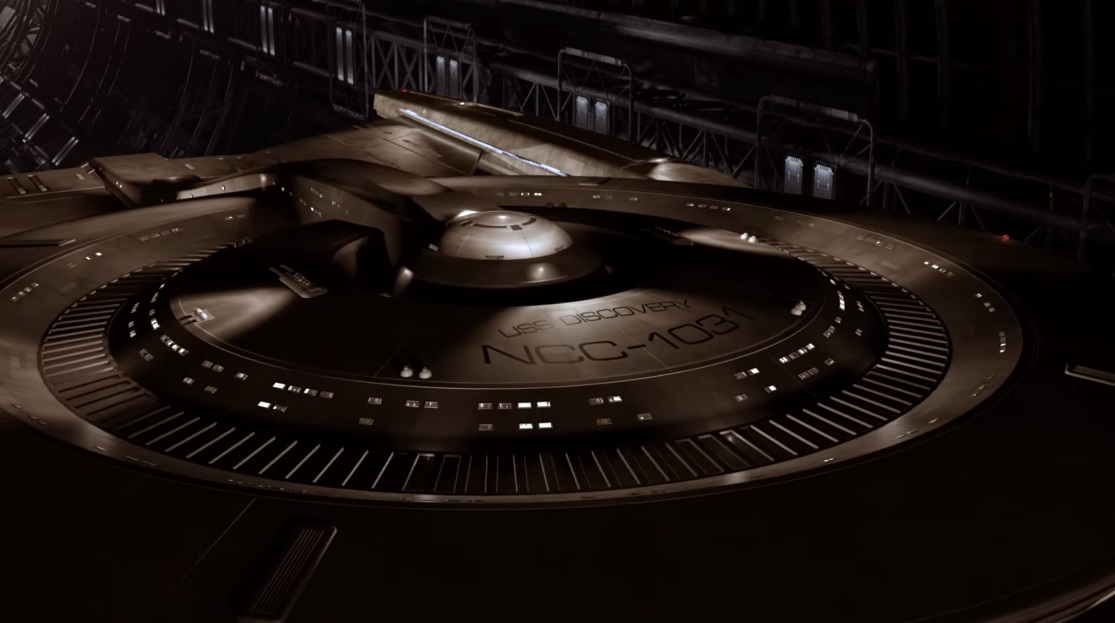
Star Trek: Discovery Season 3 – my worst theory failures!

Spoiler Warning: There are spoilers ahead for Star Trek: Discovery Seasons 1-3, Star Trek: Picard Season 1, and for other iterations of the Star Trek franchise.

During Star Trek: Discovery’s third season, I wrote a weekly series of theories, speculating about what may be going on with the show’s various storylines. I had some successes in my theories and predictions, but there were more than a few misses as well! Now that the season is in the rear-view mirror, I thought it could be fun to go back to some of my theories and see how wrong I was!

All of these theories seemed plausible at the time – for one reason or another – yet ultimately proved to be way off base. One thing I appreciate about Discovery – and a lot of other shows and films too, both within the Star Trek franchise and outside of it – is that sense of unpredictability. Nothing in Discovery Season 3 was mundane or felt like it had been blatantly telegraphed ahead of time, and the fact that the narrative took twists and turns that I wasn’t expecting was, on the whole, great! There were a couple of storylines I personally didn’t think were fantastic or handled very well, but on the whole, Discovery’s third season was an enjoyable ride.

Book’s ship at warp in the season premiere.

Some of the theories I had were pure speculation based on nothing more than guesswork and intuition, and others seemed truly reasonable and plausible. While the season was ongoing I tended to just write up any theories I had, no matter how wild or out of left-field they seemed to be! Whether that was good or not… well the jury is out! The theory lists I published were well-read, so I assume at least some folks found something of interest!

I like to caveat these kinds of articles by saying that no fan theory, no matter how plausible or rational it may seem to be, is worth getting too attached to or upset about. The internet has been great for fan communities, allowing us to come together to discuss our favourite franchises and engage in a lot of theory-crafting. But there is a darker side to all of this, and some fans find themselves getting too attached to a particular theory to the point where their enjoyment of the actual narrative is diminished if that theory doesn’t pan out. Please try to keep in mind that I don’t have any “insider information,” and I’ve never tried to claim that a particular theory is somehow guaranteed to come true. I like writing, I like Star Trek, and writing about Star Trek is a fun activity for me – that’s why I do this, and if I ever felt that theorising about Discovery or other shows was harming my enjoyment, I would stop. And I encourage you to take a step back if you find yourself falling into that particular trap.

With that out of the way, let’s take a look at ten of my least successful Star Trek: Discovery Season 3 theories!

Number 1: Cleveland Booker is a Coppelius synth.

Book and his adoptive brother in the episode The Sanctuary.

When we met Book in That Hope Is You at the beginning of the season, it wasn’t at all clear who he was. However, there were inhuman elements to Book, such as his ability to heal, to use a holographic interface seemingly attached to his body, and glowing, almost electronic-looking areas on parts of his skin. With Book’s origin somewhat of a mystery, I wondered if he might turn out to be a synth – and specifically, a synth from the planet Coppelius (or one of their descendants).

We met the Coppelius synths in Star Trek: Picard Season 1, and I was hopeful as Discovery’s third season got underway that there’d be a serious attempt to connect the two shows – as this was something Picard wholly failed to do in its debut season. I’ve said numerous times that Star Trek needs to do more to bind different parts of the franchise together, and after Picard basically ignored Discovery, I was hoping for some kind of connection to manifest in Season 3. Booker being a synth could have been one way to do that.

Book’s telepathic abilities caused glowing areas to appear on his face.

So really, it’s not unfair to say that this theory was concocted more for production-side reasons than anything we saw on screen. Book’s abilities as we saw them in That Hope Is You (and subsequently in episodes like The Sanctuary, There Is A Tide, and That Hope Is You, Part 2) were clearly more organic and telepathic than anything artificial or technological in origin – except for his holographic computer interface. So perhaps this was always a bit of a stretch!

Booker turned out to be a Kwejian native – though what exactly that means is unclear. Given Book’s human appearance, it’s possible that the people of Kwejian are descendants or offshoots of humanity, or perhaps, given their telepathic nature, they’re somehow related to the Betazoids. In the season finale, Book promised Burnham he’d tell her more about his background, and how he came to use the name Cleveland Booker, so perhaps we’ll learn more about Book’s people in Season 4. He was a wonderful addition to the season, even if I was way off base with my theory about his possible origin!

Number 2: The Burn is connected to Michael Burnham – and/or the Red Angel suit.

Michael Burn-ham.

The Burn’s origin was not definitively revealed and confirmed until the season finale, so for practically the entire season I was talking about some form of this theory! There seemed to be a few possible clues that Discovery gave us – which ultimately turned out to be red herrings as the Burn was unconnected to any of them – about the ultimate answer to the Burn, and several of them could have been interpreted to mean that Burnham was, in some way, connected to the event that shares part of her name.

The main reason I considered this theory plausible, though, was because Discovery has always been a series that put Burnham front-and-centre in all of its main storylines. Having a connection to the biggest story of the season thus seemed possible. When the event’s name was revealed, the fact that it shared part of her name seemed to lend credence to that idea – at least it did considering I’d already started down that rabbit hole!

One of two Red Angel suits seen in Season 2.

That Hope Is You saw Burnham arrive in the future immediately following the events of Such Sweet Sorrow, Part 2 – the Season 2 finale. She took off her Red Angel suit and set it to self-destruct, but as we never saw the self-destruction for ourselves on screen, it was a bit of a mystery as to what became of the suit. In a future where time travel technology had been prohibited, the Red Angel suit may have been one of the last extant ways to travel through time, and would be incredibly valuable to factions like the Emerald Chain, so I reasoned that perhaps someone had intercepted the suit, and either intentionally or unintentionally caused the Burn.

I’m glad this one didn’t pan out, because it was nice to give Burnham a break! In the end, Burnham wasn’t strongly involved in the resolution to the Burn’s storyline, with that task being given to Saru, Dr Culber, Adira, and of course Su’Kal. After Burnham had just saved the galaxy by defeating the Control AI, there would have been an interesting ethical and philosophical dilemma for her if she had learned that her actions and/or the Red Angel suit had been responsible for the Burn – but it would’ve been hard to pull off and arguably too similar to the guilt she felt at the outbreak of the Federation-Klingon War in Season 1. So overall, it was an interesting theory well worth considering, but I’m glad it wasn’t true!

Number 3: The USS Discovery could arrive in the future before Burnham.

The USS Discovery had a rough landing in the 32nd Century!

Time travel stories are complicated. Once the link between cause and effect is broken, almost anything becomes possible. Even though Burnham and the Red Angel suit were leading the way into the future, the mechanics of the time wormhole were not explained, and it was at least plausible to think that the USS Discovery might’ve arrived first.

I first posited this theory after the season premiere, and it seemed plausible for practically all of Far From Home too. One thing that could’ve happened, had this theory been correct, would be that Burnham would’ve been out of her element for a lot longer than just one episode. In That Hope Is You, we saw her completely awed by everything she saw, experiencing a completely new world for the first time. And that premise meant that we were seeing Burnham in a whole new way, not in control of the situation and having to rely on others instead of trying to shoulder all of the burden all of the time. Had the USS Discovery found her after the ship and crew had spent a year in the future instead of the other way around, Burnham could’ve been our point-of-view character for learning what was new and different, instead of reverting to type.

We missed a year of Burnham’s exploits in the 32nd Century.

With both Red Angel suits gone, I doubt we’ll see the time-wormholes they could generate ever return either. But it would be interesting to get to know a little more about how that technology worked – would it even have been possible for the USS Discovery to arrive earlier than Burnham? Burnham arrived on the planet Hima, and Discovery arrived near a planet called the Colony, so considering the wormhole had two different exit points it seems possible to me anyway!

Because of the one-year time skip, we didn’t get to see much of Burnham’s exploits with Book in the 32nd Century prior to Discovery’s arrival. It would have been interesting to see either Burnham or the crew trying to learn more about their new home and the origins of the Burn, because in some ways it could be argued that we as the audience arrived with the first part of a story already complete. I kind of want to see that part for myself – and maybe we will in flashbacks in future seasons!

Number 4: Lieutenant Detmer is going to die.

Lieutenant Detmer in People of Earth.

One of my hopes going into Season 3 was that Discovery would finally spend some time with other members of the crew, and I was pleased that it happened. After two full seasons I felt that we hadn’t really got to know anything about people like Owosekun, Rhys, and Detmer, despite their being permanent fixtures on the bridge. Though not all of the less-prominent officers got big storylines this season, one who did was Detmer.

In the episode Far From Home, Detmer was thrown from her seat following the ship’s crash-landing. Concussed, she was sent to sickbay where, after a once-over, she was patched up and returned to work. However, there were hints – at least, what I considered to be hints – that all was not well with Discovery’s helm officer, and I wondered if her first significant storyline might in fact be the setup to her death. There just seemed to be so much foreshadowing!

Detmer eventually survived the season.

Ultimately, however, Detmer’s storyline took a different path. I appreciate what it was trying to be – an examination of post-traumatic stress that ended with a positive and uplifting message showing Detmer “getting over it,” for want of a better expression – but because it wasn’t properly fleshed-out after Far From Home, with Detmer only given a handful of very brief scenes before her big turnaround in The Sanctuary, I just felt it was underdeveloped and didn’t quite hit the notes it wanted to. So despite a potentially interesting premise, the execution let this storyline down somewhat.

Especially after the way she was acting in Far From Home, I can’t have been the only one to predict an untimely end for Detmer! I heard several other theories that I considered to be very “out there,” such as Detmer’s implant being possessed by Control in the same manner as Ariam had been in Season 2, but I firmly believed the setup was foreshadowing her death due to injury rather than something of that nature. It’s probably good that it didn’t happen, as it leaves her a slightly more rounded character if the show wants to do more with her in future. However, there were several officers in the final trio of episodes who could’ve been killed off after the ship was captured by the Emerald Chain, including Detmer, and it feels somewhat like Discovery was playing it safe by not doing so. Aside from Ryn, no major hero characters lost their lives in Season 3, and while character deaths aren’t something I desperately want in a show like this, they can certainly raise the stakes.

Number 5: The Doctor from Star Trek: Voyager (or rather, a backup copy of him) will make an appearance.

The Doctor.

This was my most popular pre-season theory! I stuck with it practically the whole time, and branched out to include a handful of other characters from past iterations of Star Trek who could, in theory, still be alive by the 32nd Century. By the standards of my modest website, an absolutely huge number of you read this theory – and it continues to be popular even today, despite the season having concluded months ago. So I wasn’t the only one half-guessing, half-hoping that the Doctor might be included in Discovery!

The reason why I considered the Doctor to be one of the most plausible characters who could make an appearance is because of an episode from Voyager’s fourth season: Living Witness. In that episode, a backup copy of the Doctor was activated sometime in the 30th or 31st Centuries after being discovered among museum artefacts, and while the story was interesting in its own right and a critique of how things we consider to be “historical facts” can shift over time, what really interested me was its timeframe and its ending.

A picture of the Doctor seen at the end of Living Witness.

At the end of Living Witness, in a scene set even farther into the future, it was revealed that, after living with the Kyrians and Vaskans in the Delta Quadrant for decades, the Doctor eventually took a small ship and set out to try to reach Earth. If he had survived and completed his journey, he could’ve reached Earth in the years prior to the arrival of Burnham and Discovery. The timelines lined up for a possible crossover.

However, it wasn’t to be! Though we did see the return of the Guardian of Forever, which had originally appeared in The Original Series, no major characters from any other Star Trek show made an appearance. Perhaps the producers and writers felt that, with Seven of Nine carrying the torch for Voyager with her appearances in Season 1 of Picard, including a second main character from Voyager in a new show would’ve been too much, or at least that the timing was wrong. Regardless, I think it would’ve been amazing to see, and despite this theory failing to pan out in Season 3, it’s one I may very well bring back in time for Season 4!

Number 6: There will be a resolution to the story of the Short Treks episode Calypso.

Craft, the protagonist of Calypso.

Poor Calypso. I’m beginning to feel that the Short Treks episode is doomed to be a permanent outlier in the Star Trek canon, evidently connected to a version of Season 2 that never made it to screen. Broadcast in the months before Discovery’s second season, Calypso introduced us to Craft, a soldier from the far future fighting a war against the “V’draysh.” We also got to meet Zora, an AI who was the sole inhabitant of a long-abandoned USS Discovery.

Here’s where things get confusing. Season 3 saw some moves toward Calypso, including the apparent creation of Zora from a merger of the Sphere data with Discovery’s computer. The voice actress from Calypso even reprised her role, although the name “Zora” wasn’t mentioned. We also heard the villainous Zareh use the term “V’draysh” to refer to the rump Federation – seemingly confirming that Calypso must be set in roughly this same era.

The unmanned USS Discovery tows Craft’s pod.

However, we also saw some big moves away from Calypso as well. The most significant one is that the USS Discovery has undergone a refit. While this isn’t readily apparent from the ship’s interior – something I really hope changes in Season 4 – it was very apparent from the exterior of the ship. Calypso showed off a pre-refit Discovery, which means that resolving the story of this short episode feels further away than ever.

As I mentioned in the intro, it seems clear that Calypso was originally written with a different version of Season 2 in mind – perhaps even to serve as a kind of epilogue in the event that Season 2 would be Discovery’s last. Even going into Such Sweet Sorrow – the two-part finale of Season 2 – the possibility of hiding the ship in a nebula, as depicted in Calypso, existed, and with a few changes and tweaks to the season finale, Calypso would have been a natural epilogue to that story. That’s what I think happened on the production side of things, anyway. With the storyline of Season 2 up in the air, a somewhat ambiguous short episode was created to serve as a potential epilogue if the show was cancelled. Discovery wasn’t cancelled, though, and now the writers have to find a way to square this particularly tricky circle. Or they might just try to ignore it!

Number 7: The Spore Drive will become Starfleet’s new method of propulsion.

The USS Discovery making a Spore Drive jump.

When it became apparent that warp drive in the 32nd Century was very difficult due to the lack of dilithium and the aftereffects of the Burn, I thought the writers and producers of Discovery had played a masterstroke by finally finding a way for the show’s most controversial piece of technology to play a major role.

The Spore Drive, which was introduced in Season 1, received a mixed reaction from fans. Some insisted that it “violates canon” by allowing a 23rd Century starship to effectively travel anywhere in the galaxy, and others wondered why the technology had never been mentioned in settings where it would have logically been useful – such as to the crew of the USS Voyager, stranded tens of thousands of light-years from home! Though I would suggest that many of the fans who felt this way about the Spore Drive also had other gripes with Discovery, by pushing forward in time there was an opportunity to expand the role of the Spore Drive in a way that wouldn’t undermine anything in Star Trek’s established canon.

Captain Saru orders Black Alert and initiates a Spore Drive jump.

The dilithium shortage the galaxy is experiencing, made a hundred times worse by the Burn, seemed to offer an opportunity to expand the role of the Spore Drive. And at first, Starfleet did seem to be keen on making use of it. However, despite Discovery’s extensive retrofit, the Spore Drive remained aboard the ship and Starfleet seems to have made no attempt to copy it or roll it out to any of their other vessels. The huge planet-sized cache of dilithium in the Verubin Nebula has also solved – at least in the short-term – the galaxy’s fuel problem, so there’s less of a need from Starfleet’s perspective to invest in recreating the Spore Drive, despite its seemingly unlimited potential.

Perhaps this will be picked up in Season 4, especially with Book’s ability to use the Spore Drive getting around the last hurdle in the way of a broader rollout. There was potential, I felt, for the dilithium shortage and Burn storylines to parallel real world climate change and how we’re slowly running out of oil, but the Verubin Nebula’s dilithium planet kind of squashed any real-world analogy! Again, though, this is something that could potentially return in Season 4.

Number 8: Dr Issa is a descendant of Saru’s sister Siranna.

Dr Issa’s holographic message.

The Short Treks episode The Brightest Star was broadcast in between Seasons 1 and 2, and introduced us to Saru’s sister Siranna. She returned in Season 2, in the episodes The Sound of Thunder and Such Sweet Sorrow, Part 2. In Season 3, the same actress who played Siranna also appeared as Dr Issa – the commander of the crashed Kelpien ship in the Verubin Nebula and the mother of Su’Kal.

Because of this production-side coincidence, as well as Saru’s incredibly strong reaction to seeing Dr Issa in holographic form, I speculated that Dr Issa could be a descendant of Siranna, and thus a great-great-niece to Saru. That familial tie could have explained why Saru found himself so emotionally compromised during the final few episodes of the season, and why he risked everything to help Su’Kal.

It seemed that Saru was seeing something more in Dr Issa than just a fellow Kelpien.

However, it seems that this was little more than casting coincidence! Perhaps it was easier for the producers to work with someone who was already familiar with the Kelpiens – and Kelpien prosthetic makeup – instead of casting a new actress for the role. Or perhaps it was deliberate – presenting Saru with someone superficially similar to Siranna to push him emotionally. Regardless, this theory didn’t pan out.

It could have been interesting to see Saru coming face-to-face with a distant relative, and it could’ve added to the Su’Kal storyline. However, in the time allotted to Saru’s exploits in the Verubin Nebula, it would have been difficult to add this additional emotional element and have it properly developed, so perhaps it’s for the best!

Number 9: The holographic “monster” is either Dr Issa or the real Su’Kal.

The holographic “monster.”

The episode Su’Kal pushed hard for a creepy “haunted castle” aesthetic when depicting Su’Kal’s holographic world, and a big part of that was the holographic “monster.” The monster seemed like a very odd inclusion in a holo-programme designed for a young child, and even though an attempt was made to excuse it by saying it was an old Kelpien legend, I wasn’t convinced that there wasn’t something else going on.

Additionally, the monster didn’t behave or appear like any of the other decaying holograms. After decades of continuous use, Su’Kal’s holographic world was falling apart. Many of the holograms were flickering or fading, and they were quite basic in what they could say or do. In contrast, the monster moved with a natural, organic fluidity, and didn’t flicker or appear in any way artificial – even as the holographic world disintegrated around it.

The monster turned out to be just part of the holo-programme.

The Verubin Nebula’s radiation was said to be fatal, but in horror and sci-fi radiation is often seen to cause mutations. Given the monster’s vaguely Kelpien appearance and dishevelled, decrepit, morbid look, I wondered if it was actually the real Su’Kal – or Dr Issa – having mutated and decayed after decades in the hostile nebula. The final piece of evidence I added to this little pile was the strange way that the monster interacted with Burnham in the episode Su’Kal – it seemed curious about her, perceiving her in a way I thought was almost human.

Despite all of that, however, the monster turned out to be exactly what the crew believed it to be: just another part of the holo-programme. This theory was quite “out there,” as it would’ve been a big twist on what we as the audience were expecting. There were hints that I felt could have built up the monster to be something more, but ultimately these turned out to be red herrings!

Number 10: Season 3 is taking place in an alternate timeline or parallel universe.

“An alternate reality?”

Over the course of the first two-thirds or so of Season 3, there seemed to be breadcrumbs that at least hinted at the possibility that Burnham and Discovery had crossed over to a parallel universe or alternate timeline. The biggest one was the initial absence of Dr Gabrielle Burnham, but there was also the strange piece of music that seemed to be connected to the Burn, the fact that the time-wormhole didn’t take Burnham and the ship to their intended destination of Terralysium, and a couple of hints from Voyager (as mentioned above) and Enterprise that could have been interpreted to mean the Burn never happened in the timeline depicted in those older shows.

There was also the possibility that the Burn was caused by the interference of time travellers. The resolution to that storyline could have been for Burnham and Discovery to go back in time and prevent the Burn from ever happening – restoring the “true” timeline and undoing the Burn. Both of these theories seemed plausible for much of the season.

It seemed possible, for a time, that Discovery Season 3 was taking place in a parallel universe.

I’m glad, though, that neither theory came to pass! “It’s a parallel universe” is almost akin to “it was all a dream” in terms of being a pretty lazy excuse for storylines in sci-fi, and the idea of undoing the Burn, while interesting in theory, would have effectively wiped out all of the good deeds Saru, Burnham, and the crew did across Season 3, like helping the peoples of Trill, Earth, Ni’Var, and Kwejian. So it was to the show’s overall benefit to stick firmly to the prime timeline.

Doing so is actually rather bold. Discovery took Star Trek to some very different thematic places in Season 3, largely thanks to the Burn and its lingering effects, and I could understand the temptation to brush all of that aside. We still got some parallel universe action in the two-part episode Terra Firma, which revisited the Mirror Universe. With the Burn now in the rear-view mirror and Discovery moving on to new adventures, perhaps it will be possible for Star Trek to establish the 32nd Century as a major new setting, allowing Discovery Season 3 to be the springboard for a host of new shows and films.

So that’s it. Ten of my worst Discovery Season 3 theories!

I had some pretty significant theory misses last season!

Though we can debate some of the story points across Season 3 – and I still haven’t written my big piece about the Burn yet – overall I think Season 3 did a good job of establishing the show in its new setting. The Burn presented a tantalising mystery to solve, and for the first time in the series, it felt as though more members of the crew had significant roles to play in the season’s main storylines.

With Burnham having ascended to the captain’s chair, and a new threat seemingly having reared its head, Season 4 is going to take Discovery to different places yet again. And if there are theories to be crafted – and I daresay there will be – I’ll be writing them up! Even though a lot of the theories I came up with in Season 3 didn’t pan out, I had a blast thinking them up and writing them down. At the end of the day, it’s an excuse to spend more time thinking and talking about Star Trek.

So I hope this look back was a bit of fun! Stay tuned, because as and when we get news about Season 4 I’ll be taking a look here on the website, and when the season premieres later this year I’ll be reviewing every episode… and probably coming up with a few more theories!

Star Trek: Discovery Season 3 is available to stream now in its entirety on Paramount+ in the United States, and on Netflix in the United Kingdom and elsewhere. The Star Trek franchise – including Discovery and all other properties mentioned above – is the copyright of ViacomCBS. This article contains the thoughts and opinions of one person only and is not intended to cause any offence.

Star Trek: Discovery Season 4 theory – Michael Burnham

Spoiler Warning: There are spoilers ahead for Star Trek: Discovery Seasons 1-3, the teaser for Season 4, and for other iterations of the Star Trek franchise.

Did you read my weekly theory posts as Star Trek: Discovery Season 3 was ongoing? If you did, perhaps you’ll remember that, about four episodes in, I began to speculate that Michael Burnham’s new attitude toward Starfleet – which had changed following a year alone in the 32nd Century – would ultimately lead to her leaving the organisation, and perhaps even Star Trek: Discovery altogether.

That didn’t happen, of course, and it was part of Burnham’s arc across the season to get her ready to assume the captaincy at the end of the season finale. Although Burnham had at least one bump in the road where I felt her newfound independence spilled over into selfishness, her storyline and her rise to assume command was generally satisfying, especially across the back half of the season. By the time the credits rolled on That Hope Is You, Part 2, Burnham had truly earned the captaincy.

Michael Burnham assumed command of the USS Discovery in the Season 3 finale.

What I’m about to suggest may seem odd seen in that context, but there are a couple of reasons why I consider it plausible as I’ll try to explain. In short, I’m bringing back the theory that flopped in Season 3: Michael Burnham will, somehow, no longer be in command of the USS Discovery by the end of Season 4.

One of Discovery’s unique features within Star Trek’s broader canon has been the season-long captaincies of three very different individuals. Season 1 brought us Captain Lorca, the hardball who ultimately turned out to be deceptive. Season 2 reintroduced Captain Pike, the classic character who embodied the best of Starfleet’s values. And Season 3 saw Saru sit in the captain’s chair, the first ever alien captain to helm a Star Trek series.

Gabriel Lorca was the USS Discovery’s captain in Season 1.

Each captain brought something new and different to the ship, and thus to the series as well. And Michael Burnham, having assumed command at the end of Season 3, will undoubtedly put her own stamp on things as we enter Season 4. That’s great, and it keeps one of Discovery’s unexpected themes going. But as we look ahead to Discovery’s future, with a fifth season rumoured to be all but confirmed and even the possibility of some kind of feature film involvement, I can’t help but wonder whether she will remain in the captain’s chair.

Unlike Lorca, Pike, and Saru, Burnham has been Discovery’s protagonist since the beginning – even if, at times, her status as our main character didn’t always work as intended! So perhaps that means her rise to the captaincy, rather than the captaincies of the three other characters, is what we should be focused on. And that is a good argument in some ways – the story of Discovery, rather than being about the other captains or even other members of the crew, has primarily been about Michael Burnham.

Even though she wasn’t captain of the ship in Seasons 1-3, Burnham was still Discovery’s protagonist.

Thus we can argue that Seasons 1, 2, and 3 showed off different aspects of her ascent to the captain’s chair – which, it has to be said, is an amazing premise for a Star Trek series. Past shows all introduced us to captains who were already established; even Commander Sisko, who we saw at the beginning of Deep Space Nine assume his post for the first time, was still very clearly in command. We did get some episodes showing us parts of the backstories and pasts of Captains Kirk, Picard, Sisko, Janeway, and Archer, but when we first met them they were already established. We didn’t see their rise through the ranks in the way we’ve seen Burnham’s unfold over the past three seasons.

So that argument is valid, and it may very well prove to be true. But despite Discovery’s tight focus on Burnham much of the time, the show does have a broader cast of characters, some of whom we’re getting to know reasonably well now that we’re three seasons in. The show has never been about Burnham alone, and the different captains have, as I mentioned above, all put a unique spin on things during their tenures.

Captain Pike was in command for practically all of Season 2 – and is now starring in a spin-off: Star Trek: Strange New Worlds.

Discovery feels like it’s in a place where it could go down one of two paths, and which one the producers ultimately choose will depend on all sorts of factors, including future plans for the wider Star Trek franchise. One path is outlined above, keeping the Burnham focus as a key aspect of the series, and allowing Seasons 1-3 to depict her growth and rise. But there is another option.

The second path would be for Burnham to follow Lorca, Pike, and Saru, with her captaincy of the ship lasting a single season. Discovery’s unique selling point as a series would thus change from being all about Burnham to being a show which had a rotating captaincy. Those first three seasons – and probably Season 4 as well – would still have that Burnham focus. But if Discovery manages to keep going into Season 5 and beyond, perhaps we’ll look back on it as “the show with all those different captains!”

Saru had his turn in the captain’s chair during Season 3.

Because of a captain’s role and status, changing things up can really have a significant impact on the ship – and the series. While arguably an extreme example, if we look to Chain of Command, the two-part episode from The Next Generation Season 6, the introduction of Captain Jellico as a replacement for Captain Picard radically changed things up on the Enterprise-D, and if he’d remained in command we’d certainly have seen The Next Generation transformed into a very different series!

It makes for an interesting concept for a Star Trek show – something closer to an anthology series than a “traditional” Star Trek show in the vein of The Original Series and The Next Generation. Not only would the captaincy have changed, but we also have two very different time periods in play which really adds to the sense that Discovery has been, across its three-season run to date, very different season by season. Burnham’s departure could cement that trend.

A determined-looking Michael Burnham in the Season 4 teaser.

To clarify, I’m not saying this should happen, or that it would be great for the series. Because despite some of my critiques of Burnham’s characterisation, particularly early in Season 1, her rise to the captain’s chair worked. Seeing her take her seat at the end of Season 3 felt earned and it felt great; a genuinely emotional moment.

Despite that, however, I can’t help but wonder if the storyline of Season 4 – which seems to involve another “galaxy-threatening” event – will end with Burnham’s departure from the ship and the show.

There are two ways such a departure could happen, at least as far as I can see, so before we wrap things up we’ll briefly look at both.

Burnham on the bridge – and sporting a new uniform – in the Season 4 teaser.

Firstly, the one that seems more obvious given what we saw in the Season 4 teaser, and given what we know of Burnham’s disposition and personality, is some kind of self-sacrifice. Perhaps the only way to save the ship and crew – or more likely, save the whole galaxy – will involve Burnham making a decision to sacrifice herself for the cause. Her death would thus mirror characters like Data and Captain Kirk, both of whom were killed in the line of duty while saving others.

In a show that has been all about Burnham, depicting her at her lowest moments and showing her greatest achievements, there would be something poetic about going out in a “blaze of glory” – but at the same time, her death might seem like the series finale. If there are no plans for a fifth season (or film) to continue Discovery’s story, perhaps the series will conclude with Burnham’s death.

Burnham has been injured in the line of duty previously.

It wouldn’t be impossible for the show to go on without her, though, despite her prominent role. And while her death might feel like Discovery’s conclusive end, that wouldn’t necessarily have to be the case. As I’ve argued in the past, Star Trek shows are typically about more than just one character, and as we’ve spent more time with other members of the crew, I think there’s more than enough interest and potential for the series to stand on its own two feet if Burnham leaves or is killed off.

And that brings us to our second possibility – that Burnham survives, but for other reasons chooses to leave Starfleet.

This is what I felt Season 3 seemed to be hinting at in those early episodes. The shift in Burnham’s attitude toward Starfleet, her willingness to break the rules and disregard orders given by Saru and Admiral Vance, and the fact that she admitted to both Book and Georgiou that she found a sense of freedom outside of Starfleet in her year alone all seemed to be building up to a potential departure. The second half of the season got rid of that, and we saw Burnham’s attitude change such that her rise to the captaincy made sense in-universe. But there’s still the prospect of those feelings returning.

After a year away from Starfleet, Burnham seemed ready to quit the organisation altogether, at least for a time.

Burnham has, ever since the Season 1 premiere, had a bit of a problem with authority and the chain of command. While we should see much less of that with her in command, and thus not answerable to anyone else aboard the ship, the USS Discovery does not exist independently and is still under the command of Admiral Vance and Starfleet. If Burnham feels constrained by the orders she’s given, and repeatedly butts heads with senior Starfleet officers, perhaps the craving for freedom that we saw her express in Season 3 will come back.

I wouldn’t want to see Burnham storm off, throwing down her combadge and just walking away. After three seasons of being with her and seeing her grow, that would feel wrong. That’s why I was so critical of Discovery at one point in Season 3 when I felt this antagonistic attitude and selfishness, putting her own wants ahead of Starfleet’s orders, seemed to be a character regression, dragging Burnham back to where she was in Season 1. Luckily it didn’t pan out that way, and I hope it won’t here.

If Burnham does leave the show, hopefully her departure will be handled well and will treat her character with the respect she has earned.

But there can certainly be a way to get Burnham to walk away from Starfleet, perhaps at the conclusion of a successful, galaxy-saving mission, that would work. If she were to say goodbye and head into the sunset with Book, having saved the galaxy not once but twice, I think we could absolutely say that she earned the right to live her own life away from Starfleet in the manner she chooses. In short, this storyline could work, but it would all hinge on the way Burnham’s characterisation was handled and the manner in which she left.

So that’s it, really. We can call this a pre-season theory, and summarise it thusly: somehow, perhaps toward the end of Season 4, either through an heroic death or satisfying resignation, Michael Burnham will leave the USS Discovery and cease to be a main character on the show.

Will it come true? I have no idea! And with filming on Season 4 currently paused for two weeks due to a small coronavirus outbreak, perhaps we won’t find out for a while.

Burnham in some kind of armour or spacesuit in the Season 4 teaser.

Once again, I’m not arguing in favour of this theory necessarily. I think it could be made to work in a way that felt right, and it would mix up the captaincy of the ship again, potentially keeping things fresh going into Season 5. But at the same time, I’ve grown to like Burnham. Her departure would be a bittersweet moment for the series, and in a way it would be a risk unlike any the show has taken so far.

I hope you’ll swing by later in the year, as I plan to review every Discovery Season 4 episode when they’re broadcast. If Season 4 lends itself to theory-crafting, I daresay my weekly theories posts will be back as well! Between now and then we have Season 2 of Lower Decks to look forward to, which is coming up in less than four months now! So there’ll be a lot to talk about there as well. I hope you enjoyed this theory, but as always, please remember not to get too attached to any one individual fan theory. No theories are worth getting upset or disappointed over.

Star Trek: Discovery Seasons 1-3 are available to stream now on Paramount+ in the United States and on Netflix in the United Kingdom and other countries and territories. Season 4 is due for broadcast in late 2021. The Star Trek franchise – including Discovery and all other properties mentioned above – is the copyright of ViacomCBS. This article contains the thoughts and opinions of one person only and is not intended to cause any offence.

Star Trek: Discovery – eight “gravitational anomaly” theories

Spoiler Warning: There are spoilers ahead for Star Trek: Discovery Seasons 1-3 and the teaser trailer for Season 4. Further spoilers are present for the following: Star Trek: Picard Season 1, Star Trek: The Next Generation, Star Trek: Generations, Star Trek: Voyager, and Star Trek: Enterprise.

Star Trek’s First Contact Day virtual event has given us an awful lot to digest! We got teasers for Picard Season 2, Lower Decks Season 2, Discovery Season 4, and more details about Prodigy. If you missed the event, I wrote up my impressions of everything we saw, and you can find that article by clicking or tapping here.

This time, I want to look at the teaser for Discovery’s impending fourth season in more depth, and in particular start making some guesses about what may be going on! The teaser was barely ninety seconds long, and with the show at least six months away it may be futile to speculate about pretty much anything! But that hasn’t stopped me in the past, so let’s jump in!

Sonequa Martin-Green plays Captain Michael Burnham in Discovery, and introduced the Season 4 teaser during the First Contact Day event.

My usual disclaimer applies: I don’t have any “insider information.” I’m not offering up these suggestions saying any are unequivocally true. This is nothing more than speculation from a fan – and a chance to spend some more time talking about Star Trek, which I absolutely adore.

In the run-up to Season 3 last year, I spent a lot of time speculating about the event that ultimately turned out to be the Burn. When we first heard its name I put together a list theorising a number of possible connections to past iterations of Star Trek – but as you know by now, none came to pass!

Michael Burnham in Season 3, trying to figure out what caused the Burn.

Discovery has had an on-off relationship with Star Trek’s broader canon. Season 1 sidestepped a lot of things, redesigning the Klingons, visiting the Mirror Universe years before Kirk’s first crossing, and fighting a major war. Season 2 tied itself much closer to canon, bringing in Captain Pike, Spock, and revisiting Talos IV. Season 3 shot forward into the future, and told a story that touched on past iterations of the franchise at points, but had an overall narrative that stood on its own two feet.

In short, trying to guess whether Season 4’s main storyline will be related to something we’ve seen in the past or not is a crapshoot. Maybe it will be, maybe it won’t. Regardless, if it’s going to be something brand-new then naturally the details become impossible to predict! So in this list I’m going to look at eight possibilities from Star Trek’s past that could explain what we saw in the teaser.

A determined-looking (and armoured) Burnham in the Season 4 teaser.

First of all, let’s explain what exactly we saw! Stamets described a “gravitational anomaly” that’s at least five light-years in diameter. This anomaly appears to be incredibly destructive, and if Burnham is correct, it’s appearing and disappearing at random. As a result, it could potentially strike any Federation or non-Federation world or starship without warning.

Assuming that this anomaly is the main problem facing Captain Burnham and her crew in Season 4, I’ve got a few ideas for what it could be, or what it may be related to. I quite like the idea of Discovery sticking with the “natural disaster” concept from Season 3. It worked well last time, and presenting the crew with a puzzle, mystery, or challenge that’s more scientific in nature than military could be wonderful to see. As long as such a storyline manages to avoid feeling either repetitive or anticlimactic, I think it works in principle.

Stamets in the Season 4 teaser. He told us about the “gravitational anomaly.”

One final point of note is that, due to disruption caused by the pandemic, Discovery Season 4 began filming back in November, well before Season 3 had finished airing – and crucially, before the creative team had time to process any feedback they were getting about the season’s themes and storylines. As a result of that, it may be the case that Season 4 doesn’t make as many changes from Season 3 as some fans would have wanted to see. But once again, that’s speculation on my part!

So let’s consider this “gravitational anomaly,” then. What could it be? What have we seen in past iterations of Star Trek that could potentially be involved? Will there be any tie-ins to other ongoing series, such as Picard, or will the show set up something we’ll see return in a future project, such as Strange New Worlds? Let’s jump into the list and see if we can make some reasonable guesses!

Number 1: The Nexus

The Nexus approaching the planet Veridian III.

When I first saw the teaser, my mind immediately went to the Nexus, the energy ribbon seen in Star Trek: Generations. The Nexus was large, more than large enough to engulf an entire planet, and while it may not have been light-years in diameter when we saw it in that film, it’s possible it grew… somehow! The Nexus was incredibly destructive, causing the destruction of two transport ships and seriously damaging the Enterprise-B, not unlike some of the damage suffered by the USS Discovery in the teaser.

There are two crucial points which made me think of the Nexus, though. The first is that the energy ribbon was said to contain a “gravimetric field,” which sounds an awful lot like Stamets’ “gravitational anomaly.” Both seem to be connected to gravity, and as we saw in the teaser, the USS Discovery appears to lose its artificial gravity at one point.

The Enterprise-B trying to manoeuvre inside the Nexus.

The second point I consider key to the Nexus being a possibility is that we already know it’s something that recurs. The Nexus returns to the Milky Way galaxy every 39.1 years (according to Data in Generations) and unless something major happened in the intervening centuries, this force of nature should still be present, periodically crossing through the galaxy.

At a couple of points in the teaser we saw members of Discovery’s crew looking dazed and confused, not unlike how Soran and Guinan appeared after being transported out of the Nexus by the crew of the Enterprise-B. Perhaps we can infer from their demeanours that they’re not quite sure where they are or what just happened – maybe that means they’ve just spent time inside the Nexus’ paradise-like realm.

Though the stated size of the anomaly relative to what we saw in Generations may count against it, I like the idea of revisiting the Nexus. Would Discovery bring aboard a Soran-like villain, someone hell-bent on getting to “paradise?” Maybe!

Number 2: The super-synths from Picard Season 1

The super-synths in Picard Season 1.

It’s absolutely true that I also suggested the super-synths could’ve been the cause of last season’s disaster! But that doesn’t mean I’m done suggesting ways for this unnamed faction to reappear in Star Trek, especially considering that the teaser for Picard Season 2 suggested that series is moving away from them.

At the end of Picard Season 1, we learned that there is a race of super-synths that exist somewhere out in deep space – perhaps many thousands of light-years away from the Milky Way galaxy. They offered to come to the aid of any synths that ask for their help, though whether this offer was genuine or not was not clear – as indeed was very little about the faction!

Jean-Luc Picard managed to prevent the arrival of the super-synths, along with Soji.

Soji and Sutra, two of the synths from Coppelius, attempted to make contact with the super-synths, but despite opening a beacon and a portal to their base, Soji was ultimately convinced to shut it down and cut off her attempt to communicate. We thus learned precious little about who the super-synths are or what their objectives may be. They seemed menacing, and may harbour an anti-organic hatred that could make them diametrically opposed to the Federation.

We know that, in principle, this faction can open portals in space to allow for travel far faster than warp drive. Perhaps getting too close to one of their portals causes the kind of damage seen to the USS Discovery, and their portals may appear to be “gravitational anomalies” when detected on sensors. The super-synths clearly have a powerful understanding of gravity, such that they were literally able to move stars and create a stable eight-star octonary system. It’s thus at least possible that they use gravity or gravitational anomalies as some kind of weapon.

One thing that Picard Season 1 left unresolved was the fate of the super-synths. Having been contacted, were they now aware of the Milky Way and the Federation? Might they be hell-bent on attacking the Federation? If their offer of help wasn’t genuine, might they arrive to attack the synths who live in the Milky Way? There are a lot of unknowns, but it’s at least plausible that they could be involved. As I’ve said numerous times, finding a way for Picard and Discovery to work together, using similar themes, factions, or even characters would be fantastic and something truly worth doing. This may not be the way it happens… but it could be!

Number 3: A graviton ellipse

The USS Voyager once encountered a graviton ellipse.

The Voyager Season 6 episode One Small Step introduced the graviton ellipse, a fast-moving anomaly that can travel through subspace, normal space, and even other dimensions. The ellipse was drawn to electromagnetic energy – such as that emitted by spacecraft! One ellipse appeared in the Sol system in 2032, during an early manned mission to Mars, and “swallowed” the Ares IV ship. It later attempted to do the same to the USS Voyager.

The graviton ellipse was smaller than five light-years across, so again we have to contend with size. But there are points in its favour! Firstly, the ellipse was specifically drawn to spacecraft and other future technology. Though we didn’t see it attempt to “eat” anything on a planet’s surface, it stands to reason that similar technologies used in power generation may emit the same kind of electromagnetic radiation that an ellipse would be drawn to.

The Delta Flyer inside a graviton ellipse.

Secondly, the ellipse moved essentially at random, disappearing into subspace to reappear many thousands of light-years away. One single ellipse was known to have visited both the Alpha and Delta Quadrants. This seems to fit with what we know of Discovery’s “gravitational anomaly” – specifically the part Captain Burnham told us about its random, unpredictable appearances.

Finally, the graviton ellipse was known to cause damage to spacecraft, draining their power, as well as gravity-related disturbances in space. An encounter with an ellipse may not have destroyed Ares IV or the Delta Flyer, but they were known to be very difficult to escape from.

The drawbacks of this option are that graviton ellipses were relatively well-understood as early as the 24th Century, and with Discovery Season 4 set over 800 years later, it stands to reason that the Federation would be well-equipped to at least know what they’re up against if an ellipse seemed to be in the vicinity. Secondly, there was no indication that the ellipse would stay in one area, causing widespread damage in the way Discovery’s fourth season teaser suggested. Despite those negative points, however, I think it’s at least a possibility. Perhaps post-Burn technology has drawn an ellipse to Federation space, or it’s even possible that someone has found a way to weaponise one to attack the Federation.

Number 4: The Sphere-Builders from Enterprise

A Delphic Expanse sphere.

Discovery’s third season had a couple of interesting references to Enterprise, specifically the “Temporal Cold War” arc. One faction involved in the Temporal Cold War were the so-called Sphere-Builders: extradimensional beings who were attempting to convert part of the Milky Way galaxy to match their native realm so they could colonise it.

Though the time-travelling agent Daniels told Captain Archer that the Sphere-Builders were definitively defeated in the 26th Century, Daniels was from a time period before Discovery Season 4 is set, so he may not have been aware of any future involvement they had in galactic affairs!

Captain Archer looks at a projection of spheres in the Delphic Expanse.

The Sphere-Builders, as their name implies, built spheres. These moon-sized objects were spread throughout a region of space known as the Delphic Expanse, and emitted huge amounts of gravimetric energy, causing the entire region to become unstable and peppered with anomalies.

The spheres were also able to cloak, concealing them from 22nd Century human and Vulcan ships. The region of space a single sphere could affect was huge, and in the mid-22nd Century there was a large network of them, perhaps consisting of over 75 individual spheres. A hidden anomaly-generating piece of technology with a connection to the Temporal Wars? That sounds like something that could cause the problems afflicting Captain Burnham’s ship as seen in the teaser!

If a rogue sphere were on the loose, if the Sphere-Builders were returning, or if a single sphere had been left in the Milky Way, forgotten about since the 22nd or 26th Centuries, it stands to reason based on what we know of them that it could be the cause of the “gravitational anomaly.” This concept is potentially interesting; a leftover “doomsday weapon” unattended for centuries could make for a fun story. It would also be great to see a tie-in with Enterprise!

Number 5: Tyken’s Rift

Data explains how a Tyken’s Rift works to the crew of the Enterprise-D.

A Tyken’s Rift was mentioned in the Picard Season 1 episode Nepenthe, but before that one had been seen in more detail in The Next Generation fourth season episode Night Terrors. It was described as a rare spatial anomaly, one capable of encompassing entire star systems.

Unlike some of the other entries on this list, size isn’t a problem for a Tyken’s Rift! If a whole binary star system (i.e. a system with two stars) was able to fit inside, it’s more than possible such an anomaly could be five light-years in diameter!

A Tyken’s Rift was mentioned by Kestra Troi-Riker in Picard Season 1 last year.

The Enterprise-D wasn’t badly damaged by its encounter with the rift, but it was trapped inside and unable to escape. The Tyken’s Rift was also said to drain power, trapping ships inside. Perhaps the damage to the USS Discovery was not caused by the anomaly itself, but by pushing the ship past its limits trying to escape?

The drawback to a Tyken’s Rift being the cause of Discovery’s anomaly is twofold. Firstly, aside from a slow but steady power drain it didn’t seem to be harmful, and we saw nothing in Night Terrors to suggest this anomaly could or would cause catastrophic damage to a ship. And secondly, the Tyken’s Rift that the Enterprise-D encountered appeared to be stationary. It was even included on stellar maps, so it would be easily avoided.

I don’t think either of these points totally rule it out, and as one of the relatively few named anomalies in Star Trek that are massive enough, it seems fair to still include a Tyken’s Rift as a possibility.

Number 6: Species 8472 and Fluidic Space

A member of Species 8472.

One of Voyager’s most interesting adversaries was Species 8472, known only by their Borg designation! This powerful extradimensional faction were able to outwit even the Borg, fighting a very successful war against them for a time.

Species 8472 were native to a realm filled with an organic compound. Voyager’s crew named this region “fluidic space,” and it seemed as though Species 8472 based much of their technology on this organic material, including their spacecraft.

The USS Voyager being pulled toward a fluidic space portal.

The Borg became aware of fluidic space some time in the mid-late 24th Century, and attempted to travel there and assimilate it. But Species 8472 proved resistant to assimilation, and waged a war on the Borg, eventually travelling through to normal space to continue the fight. The intervention of the USS Voyager gave the Borg an advantage, but it seemed shortly thereafter as though the war ground to a stalemate.

Species 8472 made one further incursion, but after an agreement with the USS Voyager, agreed to return to their own dimension, content that the Federation proved no threat. However, that was 800 years ago! A lot can change, and perhaps Species 8472 have decided to make a return.

This would change the “natural disaster” concept, making it perhaps a precursor to invasion. Whether that would be good or not depends on how well it was executed – as well as your personal preferences for storylines! Given what we know of Species 8472 and their technology, I think it’s at least possible they could be the cause. Perhaps Stamets’ anomaly is some kind of gateway to fluidic space.

Number 7: The Borg

Borg drones seen in First Contact.

On the other side of the war with Species 8472 were the Borg! I also suggested Star Trek’s iconic cybernetic villains as a possible cause of the Burn last season, and despite seeing some ex-Borg in Picard Season 1, we haven’t really seen the faction proper in Star Trek since Enterprise Season 2 in 2003. Perhaps now is the right time?

Borg technology outpaced the Federation in the 24th Century by a considerable margin, and I’ve seen nothing to suggest that wouldn’t continue to be the case. The anomaly Stamets and Burnham discussed in the teaser may well be a natural phenomenon, but if it turns out to be a weapon, I can think of few other factions capable of creating and wielding one so massively powerful. Other Borg technology, such as their transwarp network, was known to have gravitational effects as well, so perhaps that’s another sliver of evidence.

The Borg were known to possess powerful technology.

This doesn’t really fit with the Borg’s usual modus operandi, and that is certainly a mark against it! But then again, the Borg are very adaptable, and travelling back in time several centuries is not exactly standard procedure for assimilating a planet either, yet that’s what they tried to do in First Contact! The gravitational anomaly could be the opening salvo of an attack; the artillery barrage to soften up the Federation before the Borg drones rush in to assimilate the survivors. The Borg certainly seem capable of doing something like this, and with the Federation having been on the back foot for more than a century as a result of the Burn, the Borg may have been using that time to build up and prepare for a large-scale invasion attempt.

We don’t know for sure if the Borg are still around in the 32nd Century, or if they still hope to one day conquer and assimilate the Federation. After more than 800 years, anything could have happened to them! However, it’s plausible that they still exist in similar form to how we last saw them.

The anomaly seemingly “attacking” both Federation and non-Federation targets could be indicative of an intelligence at work behind it. Space is huge after all, and the chances of it hitting a target as small as a starship, starbase, or planet regularly seems unlikely without some kind of explanation. Is it a force of nature drawn to energy, like the graviton ellipse mentioned above? Or is it a Borg weapon deliberately targeting Starfleet? The latter may seem unlikely, but it’s not impossible!

Number 8: The Burn

The Burn.

I certainly hope that Discovery Season 4 doesn’t just drop the Burn and proceed as though it never happened. After the cataclysm caused huge disruption to the Federation and the wider galaxy for over a century, I think we need to see a lot more of the consequences of that event before we even consider a “reset” of the Federation!

Perhaps what this anomaly will be is some kind of “mini-Burn,” affecting a smaller area. It could be a ripple effect of the original event, or otherwise connected to it in some way. Hopefully it won’t be caused by poor Su’Kal, who’s been through enough over the last 125 years! Though the Burn was presented as a unique event, perhaps it had lingering effects that are only just becoming known.

Su’Kal caused the Burn.

Season 4 needs to walk a line between acknowledging the events of Season 3 without dwelling on them the whole time. I understand that the writers and producers have other stories to tell in the 32nd Century beyond the Burn, but given how catastrophic it was I feel strongly that we need to see at least some of its lingering impact. Connecting the Burn to this new problem would create a degree of separation, allowing the season to go in new directions but without dropping the massive event entirely.

The Burn was a disaster which “caused dilithium to become inert,” and which caused active warp cores to explode. It wasn’t known to have gravitational effects, instead being some kind of shockwave that travelled through subspace. That could certainly count against it!

However, if this event were connected to the Burn in some other way, rather than being a direct result of Su’Kal’s outburst, perhaps it could be explained. I couldn’t even guess how such a connection could be made; it would be some kind of technobabble connecting the anomaly to dilithium and/or subspace. But it could be done, and it could be made to fit!

So that’s it. Eight very early theories about Discovery Season 4 and the mysterious “gravitational anomaly!”

Yes, Season 4 is scheduled to premiere this year!

As mentioned at the beginning, I quite like the idea of the series going down a “natural disaster” route, allowing the crew to solve a puzzle and unravel a mystery, rather than simply pitting them against a Federation-threatening adversary. Perhaps that will be what ultimately happens, but I think it’s at least possible we’re seeing some kind of attack or weapon as well. Time will tell!

The teaser was action-packed, and the new season looks to be in great shape. I think that there are possible downsides to another “huge galactic disaster” storyline so soon after resolving the Burn, in that it risks feeling tacked-on, derivative, or even anticlimactic if it’s an event smaller in scale. But despite that, if this anomaly is going to be one of the main storylines in Season 4, there’s a huge amount of potential.

Star Trek’s past didn’t provide the key to understanding the Burn last season. Will something we’ve seen before come into play in Season 4? Maybe!

Star Trek: Discovery Season 4 will debut on Paramount+ in the United States, and on Netflix in the United Kingdom and elsewhere, sometime later this year. Star Trek: Discovery Seasons 1-3 are available to stream now. The Star Trek franchise – including Discovery and all other properties mentioned above – is the copyright of ViacomCBS. This article contains the thoughts and opinions of one person only and is not intended to cause any offence.
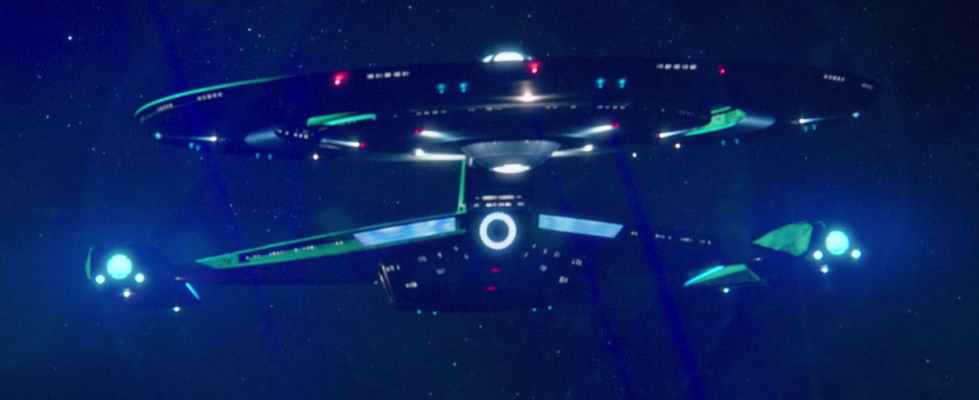
Preliminary Star Trek: Strange New Worlds Season 1 predictions

Spoiler Warning: There are spoilers ahead for Star Trek: Discovery Seasons 1-2, Short Treks Season 2, Star Trek: Picard, and other iterations of the franchise.

It’s been a while since we looked at Star Trek: Strange New Worlds, the upcoming Captain Pike series. But with production on Season 1 seemingly imminent – or perhaps having already begun, depending on what sources you use – I thought it would be fun to look ahead to what the first season of the show may hold.

At this stage, Strange New Worlds has only been commissioned for a single season. However, I would be absolutely stunned if we didn’t get an announcement preceding its Season 1 premiere that it had been renewed; this is the pattern ViacomCBS has had with both Discovery and Picard. I’m hoping, then, that Strange New Worlds will become an ongoing series, perhaps following Discovery’s path and running for four seasons, five, or even more. There’s certainly enough potential content for the show to get through, and while being a prequel is a constraint in some respects, that didn’t stop Discovery, Enterprise, and even the Kelvin films finding new and different stories to tell.

The USS Enterprise.

Just as I did for Discovery Season 4 and Picard Season 2 I’m going to make a few guesses – which I’m officially terming “preliminary predictions” – for Strange New Worlds Season 1. My usual caveat applies – I have no “inside sources,” nor am I claiming that anything listed below will definitely happen. These are guesses – educated guesses in some cases, perhaps, but guesses nevertheless.

Without further ado, let’s jump into the list!

Number 1: The uniforms will be redesigned.

Captain Pike’s gold uniform as seen in the Discovery Season 2 episode Brother.

With the exception of Star Trek: Voyager, every Star Trek series to date has introduced new variants of the Starfleet uniform for its crew. While we have seen Anson Mount and Ethan Peck sporting their Discovery uniforms in recent promotional spots for Paramount+, I’m not convinced that Strange New Worlds won’t at least tweak that design.

And perhaps that’s all it will be – a minor tweak or alteration of the uniforms worn by the Enterprise crew in Discovery. But we could see a more radical change, perhaps one designed to bridge the gap between Discovery-era uniforms and those seen in The Original Series. We could see, for example, the high collars scrapped in favour of the crew neck style seen in The Original Series.

Red uniform variant seen in the Short Treks episode Ask Not.

The uniforms worn by the Enterprise crew in Discovery were little more than recoloured versions of the Discovery uniforms, and if you look closely, you can see the detailing around the shoulder and down the sides. In my opinion, though these uniforms were preferable to Discovery’s all-blue look, they ended up looking like dyed Discovery uniforms rather than their own thing. This is something that could be addressed, even if only by making small changes to some of the detailing and stitching.

Regardless, I think that when we start to see promos for the new series, one thing we’ll notice is some kind of new uniform variant.

Number 2: Cadet Sidhu will be part of the Enterprise crew.

Cadet Sidhu.

The 2019 Short Treks episode Ask Not – whose writer, Kalinda Vazquez, is now writing a Star Trek film – brought back Captain Pike. But it also introduced us to a Starfleet cadet, and at the end of the action-packed, uplifting story, she was assigned to a role under Pike’s command aboard the Enterprise.

Almost any story could have been chosen to bring back Captain Pike for a mini-episode, but Ask Not spent most of its time setting up Cadet Sidhu’s character. She has a potentially interesting backstory, being the sole survivor of a Tholian attack, and as a young, talented cadet she could fill a fairly typical Star Trek role in the new series.

Captain Pike with Sidhu in the Enterprise’s engineering section.

We’ve seen the “young and eager” role filled by characters like Harry Kim, Sylvia Tilly, and even Wesley Crusher in past iterations of the franchise, and having someone like that presents a contrast with older, more experienced characters like Captain Pike and Number One. Cadet Sidhu also has a husband, who could potentially be a recurring character, and her background with the Tholians suggests she may not be quite as naïve and inexperienced as other cadets, potentially giving her more to say and do.

Of the main cast that we know of at this stage, all three roles are played by white American actors – Anson Mount as Pike, Ethan Peck as Spock, Rebecca Romijn as Number One. Every Star Trek show going back to The Original Series has proudly shown off a diverse cast, and bringing in someone of Indian heritage would be great. Amrit Kaur, who plays Sidhu, would be the first person of Indian heritage to be a main cast member in the history of the franchise, which would be groundbreaking in itself.

Number 3: There will be a non-Starfleet crewmate.

Cleveland Booker in Season 3 of Discovery.

One of the best things Discovery Season 3 did was introduce the character of Cleveland Booker. Book served as our guide to the 32nd Century in some ways, but also shook up the rigid hierarchy of the Starfleet crew by offering an outside perspective.

Several Star Trek shows have experimented with non-Starfleet characters in various roles, and aside from Book I’d point to Quark in Deep Space Nine and even, to some extent, Neelix in earlier seasons of Voyager as successful examples. I don’t expect Strange New Worlds to put together a Picard-style team where no one is a serving Starfleet officer, of course, but bringing in one major character who exists outside of the ship’s command structure would be potentially interesting.

Neelix in Star Trek: Voyager.

There are many ways this could be done, and many different roles such an individual could occupy. I’m thinking perhaps of a chef-type role, maybe someone who oversees the mess hall and is friendly with the crew. But there’s also potential to bring in an alien character who is perhaps aboard the ship as an observer or diplomat.

The possibilities are open-ended – as is almost everything with Strange New Worlds – but I certainly think that bringing at least one “outsider” into the crew can be a great storytelling device, one which could take the show to different thematic places.

Number 4: There will be a significant callback to Star Trek: Enterprise.

The NX-01 Enterprise.

Aside from a couple of Okudagrams and throwaway lines, modern Star Trek has essentially ignored Enterprise. The franchise’s first prequel currently feels disconnected from the rest of the franchise; cut off in the 22nd Century all by itself. There’s potential for Strange New Worlds to rectify this, and having a significant crossover with Enterprise would be something fun to see.

A few months ago I suggested that the Andorian Shran or main character T’Pol from Enterprise could still be alive and active in the era in which Strange New Worlds is set. Either character – or both – could thus cross over and appear in the new series. That would be a hugely significant moment, as it would firmly tie in Enterprise with the ongoing Star Trek franchise.

Sub-commander T’Pol.

Discovery could have done something similar to pay homage to Enterprise in either of its first two seasons, but with the show now set far in the future, any crossover potential has gone away. Strange New Worlds is currently the only 23rd Century series, and while the untitled Section 31 show or a future series may share the setting, that’s hardly a sure thing. So if the creative team at ViacomCBS want to bring up anything from Enterprise any time soon, this is by far the best place to do it.

If a main character crossover isn’t on the cards, there are still myriad other ways to acknowledge Enterprise in a major way. We could see Pike and the crew revisit a location first seen in Enterprise, or see the return of races like the Denobulans, Suliban, or Xindi, none of which have ever been mentioned outside of Enterprise.

Number 5: Ash Tyler will return.

Ash Tyler.

Of Discovery’s main cast from Seasons 1 and 2, only Ash Tyler didn’t travel into the future with Burnham and the rest of the crew. He remained in the 23rd Century, and at the end of the Season 2 finale we learned he would be appointed head of Section 31. It’s been assumed ever since (not only by me but by other fans and theory-crafters) that Tyler was intended to appear in the upcoming Section 31 series. However, as we recently learned, that show may be on hold for at least the next couple of years.

Ash Tyler’s story arc across Discovery’s first two seasons is arguably complete. He came to terms with what happened to him, his transition from Klingon to human and the two sides of his personality that created. He also went on a rollercoaster ride in terms of his relationship with Burnham. But there’s still a lot of potential in Tyler, and one thing in particular that leads me to believe that he could – in theory – have a role to play in Strange New Worlds.

Is this Ash’s brother? His cousin?

The character above is José Tyler, one of the original officers under Pike’s command in The Cage. Now I’m not expecting everyone we met in The Cage to be recast and appear in Strange New Worlds, but the possibility of a family connection between José and Ash seems like it could be fun to explore. Perhaps they’re brothers or cousins. If so, how would José react to the fact that Ash isn’t really Ash any more? That could be a huge source of conflict, and putting the two characters together to work through that might be a story worth telling.

Ash Tyler could also be part of a Section 31-related story, or even a story that sees the Enterprise picking up the last remaining pieces of the battle against Control. Ash shares a secret that only Pike and the Enterprise crew know – what really happened to the USS Discovery. As the head of Section 31, might he leverage that against Pike somehow to force him to take on a dangerous mission? There are, once again, almost an unlimited number of ways Ash Tyler could be used in the context of the new show. I doubt he’ll be a major starring character, but having him back for an episode or two seems a real possibility.

Number 6: The Enterprise will make first contact with a familiar race.

A Cardassian spy seen in The Next Generation.

One of the promises Strange New Worlds has made is that it will be a return to the kind of Star Trek that The Original Series, The Next Generation, and Voyager did so well, with stories focusing on exploration. Over the course of those series, the captains and their crews made numerous first contacts with alien races, and if Strange New Worlds is to make good on its premise, making at least one first contact seems inevitable.

If we look at Enterprise as the other major Star Trek prequel series, we saw first contact with established races like the Klingons, Romulans, and even the Ferengi – though Archer didn’t know who he was meeting in that last case. The point is, Enterprise went back and showed us how humanity first encountered many familiar Star Trek races – and this is something Strange New Worlds could do too.

Enterprise depicted Earth’s first contact with the Romulans, and several other familiar races.

I’ve written about this a number of times here on the website, but I adore Deep Space Nine, and particularly the Bajorans and Cardassians. We’ve never seen the Federation make first contact with either of them, and it could be very interesting to see how it went. The Cardassians would likely still be a militaristic state, but we know that the Bajorans prior to the Cardassian occupation were very different – operating a caste-based society that the Federation would surely disapprove of.

If not the Cardassians or Bajorans, there are many other Star Trek races which had already been contacted either by the time of The Original Series or The Next Generation that we could see Captain Pike and his crew meet for the very first time. Among them could be the Gorn, Tholians, or even a relatively obscure race like the Sheliak, who only appeared in a single episode. In my opinion, making first contact with an established race would tie Strange New Worlds in to the wider franchise, and that’s something that I firmly believe every Star Trek series needs to be doing.

Number 7: Spock will mention Michael Burnham at least once.

Burnham and Spock in the Discovery Season 2 episode Project Daedalus.

Season 2 of Discovery explored in some detail the relationship between Burnham and Spock. They were raised as siblings on Vulcan by Sarek and Amanda, and Burnham appears to have been quite influential in Spock’s life and in his development. At the end of Season 2, Spock stated his intent to travel to the future with Burnham, and while we know that was never going to happen because of his other appearances in the franchise, it indicates how close they were.

Burnham’s loss is akin to a bereavement. Although the final red burst confirmed that she safely made it to the 32nd Century, Spock will never see Burnham again (barring some other time travel story!) so she’s gone from his life. How will that affect him? While Spock may, on the surface, appear to simply brush off the events of Season 2, he went through a heck of a lot. The loss of Burnham may be the worst part, but being accused of murder, having his mind scrambled, travelling to Talos IV, and being hunted by Control will have all taken a toll.

Captain Pike and Spock watch Burnham and the USS Discovery disappear into the future.

Burnham had her “Spock episode” with Unification III midway through Discovery Season 3, so I wouldn’t be at all surprised if Strange New Worlds reciprocates somewhat and gives Spock his own “Burnham episode” – or at least a Burnham moment. Moving on completely as if everything he went through in Discovery Season 2 never happened wouldn’t sit right, so I’m sure there will be at least some reference or acknowledgement of Burnham from Spock.

It may not be a complete story, rather just a line or two of dialogue in which Spock mentions how much he misses Burnham. But I do expect to see some kind of reference or connection. Despite Spock being a long-established character within Star Trek, Strange New Worlds is a spin-off from Discovery, and this version of the character in particular is tied to Burnham very strongly. Making note of that would also be a reminder to the audience that Discovery is Strange New Worlds’ sister show – another of those little ties between ongoing parts of the franchise that I mentioned.

Number 8: Pike will have to deal with the knowledge of his impending accident and disability.

Captain Pike after his accident, as seen in The Original Series Season 1 episode The Menagerie.

Captain Pike not only saw his future at the Klingon monastery on Boreth, but he actively chose to accept his horrible fate in exchange for a time crystal. This happened toward the end of Season 2, and with the battle against Control to prepare for, he didn’t have much time to really stop and think about what that means. But Strange New Worlds will surely slow things down – at least some of the time – giving him pause for thought.

In the moment, Pike did what he needed to do and embraced his dark future. Will he regret that? Will he be worried at every turn, looking over his shoulder for the moment where his accident will occur? If so, who will help him snap out of it? It would be very easy for someone in his position to fall into depression – after all, what he’s going through is akin to being diagnosed with a terminal disease.

Pike sealed his fate in the Discovery Season 2 episode Through the Valley of Shadows.

We have seen Star Trek tackle this subject before, but only in the format of one-off episodes. Having a main character who is aware of his impending health collapse and disability could be something that’s absolutely worth exploring. In a way, I can relate to Captain Pike. Over the last decade or more I’ve seen my own health gradually decline, and while it isn’t quite the same thing (Pike’s accident takes him from full health to total disability in a heartbeat) I’ve been in the position of hearing a doctor tell me really awful news, knowing that there isn’t anything I can do to fix it.

Star Trek usually does things by analogy, so rather than Captain Pike being diagnosed with a real-world life-limiting condition, he’s seen a vision of his future disability in a time crystal. But the impact it could have on him from a psychological point of view is comparable, and this could, in my opinion, be a great way for Star Trek to explore the complexities surrounding incurable illness, long-term health conditions, disability, and even terminal illness. There are many, many ways such a story could go, and I’ll be fascinated to see what direction the show takes with this.

Number 9: There will be either a time-travel or parallel universe story.

Kirk’s captured Klingon Bird-of-Prey travelling through time in Star Trek IV: The Voyage Home.

Time travel has been a part of Star Trek going back to Season 1 of The Original Series, and we’ve seen a number of episodes take place in both the past and future. With Strange New Worlds sending Pike and the Enterprise off on a mission of exploration, they could easily encounter any of the temporal phenomena that we know exist out there in space.

I’ve never been wild about time travel in Star Trek, and often the episodes in which it features aren’t my favourites. Using time travel to visit contemporary Earth inevitably dates a story, too – just look at Star Trek IV: The Voyage Home or the Voyager two-part episode Future’s End as examples of that! But just because time travel isn’t my personal favourite story element doesn’t mean it can’t work well, and I wouldn’t be surprised at all to see Strange New Worlds pursue a story of this nature.

Voyager visited ’90s California in Future’s End.

The main candidate when considering time travel has to be the aforementioned contemporary Earth, in this case, Earth circa 2021! But we’ve seen time travel stories set in the 1890s, the 1930s, and even a dark vision of the 2020s! It could also be fun to see the crew shot forward in time, and perhaps having to rely on the help of a time-travelling future Starfleet to get home.

Alternatively we could see a parallel universe story – though hopefully not the Mirror Universe! The Mirror Universe is potentially home to the prime version of Captain Lorca, and rescuing him could be an interesting story. But there are many other parallel universes – including the alternate reality where the Kelvin films are set. Could that set up a crossover with the alternate reality versions of Pike and Spock?

Number 10: The show will acknowledge current events.

The COVID-19 pandemic has been the biggest and most disruptive event in many years.

The big story of 2020 was, of course, the pandemic. But there are other significant ongoing events, such as the issue of race in the United States, that Strange New Worlds could try to tackle. Star Trek, despite what some people want to tell you, has always been a franchise with a keen interest in contemporary events. Going all the way back to The Original Series, Star Trek has used its sci-fi setting to look at real-world events, and I wonder to what extent Strange New Worlds will try to do that.

In a series that aims to be more episodic than other recent Star Trek projects, Strange New Worlds could certainly dedicate at least one episode to looking at a major current event. The pandemic is something we have yet to see appear in fiction in a big way. The issue of race, on the other hand, is something we’ve seen tackled many times in many different ways.

Star Trek has looked at the issue of race relations in the United States before, notably in the episode Let That Be Your Last Battlefield.

A story touching on issues raised by the pandemic could look at, for example, a planetary society suffering from disease, but where a significant number of people refuse to take precautions – something we’ve seen all across the world to varying degrees. Or it could look at the long-term impact of isolation through a character or set of characters who haven’t had any outside contact for a long time.

Any series that plans to look at aspects of the ongoing pandemic has to tread carefully, in my opinion, to avoid appearing to sensationalise current events or to be seen to be exploiting the situation. But as one of the biggest events of the 21st Century so far, the coronavirus pandemic will be explored in art and entertainment many times in the years ahead, and there’s no reason why Star Trek shouldn’t tackle it – provided it does so tactfully.

Number 11: The Klingons will make an appearance.

A Klingon general from Lower Decks.

Federation-Klingon relations went on a rollercoaster in the 23rd Century, to say the least! From ignoring one another to all-out war to a peace conference, the two factions did it all. One thing we have yet to see is the way in which the Klingons changed following the war depicted in Discovery – and no, I don’t mean the prosthetic makeup!

When L’Rell took power at the end of Discovery Season 1, she sued for peace with the Federation, after which Federation-Klingon relations appear to have thawed, at least a little. Yet within a decade or so, the Klingons were once again incredibly antagonistic toward the Federation, with conflicts and battles fought during this era.

Chancellor L’Rell in the Discovery Season 2 episode Point of Light.

Perhaps we could see something happen between the Klingons and Federation to set them on this antagonistic path. Captain Pike has built up some degree of goodwill with the Klingons, but seeing this evaporate would be a potentially interesting story. We could also welcome back Mary Chieffo as L’Rell in a story focusing on the Klingon Empire.

Just like we need to see Section 31 disappear and move underground, we also need to see the Klingons and Federation move apart. Another all-out war is not required, but seeing the situation deteriorate and even the cutting off of diplomatic relations would “reset” the Klingons closer to the way they were in The Original Series.

So that’s it. Ten Eleven preliminary predictions for Season 1 of Strange New Worlds. As I said when the series was first announced, 2022 seems like a reasonable guesstimate for when it’ll premiere, and that was backed up by the news we got a few weeks ago about which shows are in production and how far along they are. So while it’s definitely early to be considering what we might see from the new show, it’s not too early! Who knows, it could be this time next year that Strange New Worlds makes its debut!

Anson Mount has recently featured in the ad campaign for Paramount+.

I hope this was a bit of fun. And just to re-emphasise what I said at the beginning: I don’t have any “insider information,” this is just guesswork from a fan. Nothing more! So don’t get upset if none of what I suggested above ultimately comes to pass!

I’m really looking forward to Strange New Worlds. It seems to be offering more of a “classic” take on Star Trek when compared to recent projects, and I’m 100% there for that! The franchise has expanded, and there’s plenty of room for serialised drama and even animated comedy, but taking Star Trek back to its roots is definitely something I’m keen to see. That doesn’t mean every project should try to do the same thing, but it does mean that Strange New Worlds is close to the top of the list of shows that I’m most excited about!

If we get any major news, casting information, or a trailer be sure to check back as I’m sure I’ll have something to say. Other than that, all we can do is wait!

Star Trek: Strange New Worlds is coming to Paramount+ at some point in the future. International distribution has not yet been announced. The Star Trek franchise – including Strange New Worlds, Discovery, and all other properties mentioned above – is the copyright of ViacomCBS. This article contains the thoughts and opinions of one person only and is not intended to cause any offence.
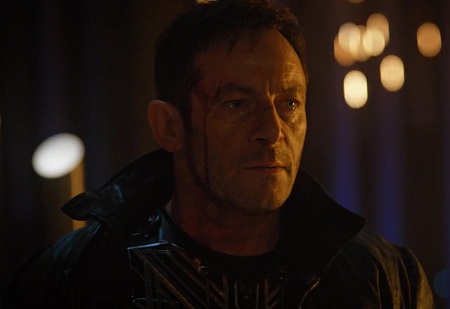
The Section 31 series – a wishlist

Spoiler Warning: There are spoilers ahead for Star Trek: Discovery Season 3, Star Trek: Picard Season 1, Star Trek: Lower Decks Season 1, and for other iterations of the franchise.

Two years on from its announcement, we don’t know very much about the upcoming Section 31 series. It doesn’t even have an official title – we all assume it will be some variant of Star Trek: Section 31, but even that much has never been confirmed. Both Strange New Worlds and Prodigy were announced after the Section 31 series but have been given titles and have even seen major announcements.

Perhaps the lack of news is caused, in part, by main character Philippa Georgiou (the Mirror Universe version) being part of Star Trek: Discovery’s third season. There may have been a desire to avoid spoiling her storyline and ultimate fate, which is commendable – if true! However, there have also been rumours – which we must look at with a healthy dose of scepticism – that seem to suggest the scripts have undergone re-writes which may have contributed to the delay.

Georgiou recently departed the 32nd Century.

It’s been a while since I looked at the Section 31 series in any depth – though I have touched on it on a number of occasions in relation to Discovery – and despite the lack of anything concrete, now seems as good a time as any, so what I thought I’d do is put together a nice internet-friendly list and go over a few options for the series and what it could include.

Number 1: Some James Bond-style action.

Roger Moore as James Bond in 1981’s For Your Eyes Only.

You don’t make a series based around Starfleet’s answer to MI6 and not use it to tell some great action stories… do you? Spies work in the shadows, but no one wants to see Georgiou and her new crew sat behind desks listening in on subspace messages like a futuristic NSA. We want to see them out in the field, on dangerous black-ops assignments, making full use of their licenses to kill.

Section 31 is supposed to be the no-holds-barred last line of defence for the Federation, so action should be on the agenda. We could see them sabotaging spaceships, assassinating rogue planetary leaders, and chasing supervillains halfway across the universe. It should be sufficiently over-the-top, too, or we’ll be left wondering why Starfleet security couldn’t handle things!

Number 2: Enter the Picard time period.

The crew of La Sirena in Picard Season 1.

When Georgiou stepped into the Guardian of Forever’s portal in the Discovery third season episode Terra Firma, Part II, her destination was not clear. The Guardian merely said that he was sending her to a time period where the Mirror and Prime universes were closely aligned. Many have assumed that her destination is the 23rd Century – and everything we’ve heard so far suggests the series takes place then. But what if that isn’t the plan?

When I wrote up a shortlist of possible time periods during Discovery’s third season I suggested that, rather than the 23rd Century as predicted, Georgiou may instead arrive at the beginning of the 25th, the era in which Picard is set. This would connect all three eras that Star Trek currently has on the go (at least in live-action). Georgiou would be the one character who has spent time with Pike – soon to be of Strange New Worlds – as well as Burnham in the 32nd Century and potentially Picard – or someone else we met in that series.

Finding some way to tie the disparate parts of Star Trek together is a challenge facing the current creative team. At the moment, every ongoing Star Trek project occupies a different place in the timeline, with precious little binding them together beyond a brand name and some general themes. It’s not that I’m concerned about this as a creative decision – as a Trekkie I quite like seeing different eras and settings. But from the point of view of Star Trek’s general audience this starts to look convoluted to the point of being offputting. The franchise needs those casual viewers in order to remain profitable and successful, so simplifying the timeline would be one of my top priorities.

At the very least, I would hope that the Section 31 series doesn’t end up in a distinct time period of its own!

Number 3: A great supporting cast.

Maybe not quite that many…

Michelle Yeoh is a fine actress, but she can’t carry the series all by herself. Georgiou will need people around her, especially if she finds herself once again caught in a new time period.

These characters can’t all be morally ambiguous, butt-kicking super-spies either. Georgiou already fills that kind of role, so we’ll need to see some diversity in the personalities she works with. Each will also need a distinct role in the organisation – and here we leave the basic Star Trek formula behind. Even if the series is set aboard a single ship, the usual crew roster of a captain, doctor, scientist, and engineer won’t really fit with the kind of stories the Section 31 show could and should be telling.

Instead we’ll need to see roles closer to those in a series like Agents of SHIELD or the aforementioned Bond films – mission specialists, weapon and gadget experts, hackers/technology experts, as well as scientists, spies, and a commander to tie the team together. Georgiou may be the commander – but she could still have a superior to answer to; the overall head of Section 31.

There could be roles of that nature for half a dozen characters or more, and like Picard did, the show could expand beyond Starfleet to pick up a wide array of unique and interesting people.

Number 4: Moral ambiguity.

What should you do?

You’ve heard of the internet’s favourite philosophical question: the “trolley problem.” Would you be willing to actively kill one person to save the lives of several? Do the needs of the many outweigh the needs of the few – even if that means murdering the few? These are the kinds of questions Section 31 has the answer to – and it’s a solid “yes.”

In Deep Space Nine, Section 31 poisoned the Founders of the Dominion with a virus that they were unable to cure, potentially committing genocide against the changelings in pursuit of ending the destructive Dominion War. Whether it’s a season-long story arc or a single episode, I want to come away from the Section 31 show at least once wondering if the ends justified the means.

These people are not Starfleet – and they cannot let such things as Federation morality, the laws of war, or anything else get in the way of their objectives.

Number 5: A mix of standalone stories with a season-long arc.

Discovery Season 3 had both ongoing storylines and single-episode plots.

One thing that Discovery really managed to do well in Season 3 was blending standalone stories with its season-long plotlines. Strange New Worlds has promised something similar, and it would be great if the Section 31 show was likewise a mix. Picard showed that telling a single story across one season can be a lot of fun… but it also showed how that story has to really stick the landing to avoid feeling disappointing. A blend of episodic and serialised storytelling seems to be the direction of travel for Star Trek at the moment, and that’s probably for the best.

For example, we could see season-long character arcs which develop Georgiou and some of her fellow Section 31 operatives, while telling a handful of smaller one- or two-episode stories depicting some of their missions. There could be ongoing stories – like Discovery’s Burn or the search for the Federation – but allowing each episode (or at least some episodes) to stand on their own.

Number 6: A fun new starship design.

“It’s the Titan!”

Lower Decks gave us the California-class USS Cerritos. Picard gave us La Sirena. Discovery gave us the Crossfield-class USS Discovery. Along the way we’ve seen a few other neat starship designs, and in many ways the ship itself is a major part of any Star Trek show. Thus whatever ship the Section 31 folks use will need to look awesome.

The design used for the Section 31 ship in Discovery Season 2 may come back – I did note in Season 2 that a whole set had been built for that ship’s multi-level operations centre, so perhaps we can infer from that that we’ll see Georgiou on a similar vessel. There’s scope to redesign the craft, however, especially if the Section 31 series doesn’t return to the 23rd Century.

Though Star Trek has done one series set aboard a space station, the nature of Section 31 suggests the possibility of black ops missions all across the galaxy – and for that they’ll need a ship. Modern Star Trek has done well with ship designs, in my opinion, and I’m hopeful for another great one this time around.

Number 7: Why did Georgiou not warn Section 31 about the Burn?

The Burn happened in the 31st Century and devastated the Federation.

If Section 31 don’t care about the Prime Directive, surely they don’t care about its temporal equivalent either. It’s obvious that Georgiou won’t and can’t warn Section 31 about the impending Burn – but I think seeing her wrangle with that decision would be interesting.

Georgiou has a unique relationship with Michael Burnham, and her reasoning for never mentioning the Burn to anyone in this pre-Burn era may be simple: to avoid contaminating or changing the timeline Michael is currently living in. Doing so could have serious repercussions, and perhaps we’ll see her learn about that and come to the conclusion that she doesn’t want to put Michael in danger.

Or it could simply be that Georgiou does not care about the impending future devastation of the Federation!

Number 8: If returning to the 23rd Century, reunite with Captain Pike.

Pike, Number One, and Spock on the bridge of the Enterprise.

As mentioned above, the time period in which the Section 31 series will be set has not yet been confirmed. In some ways, the 23rd Century does not fit the Guardian of Forever’s statement that he was sending Georgiou to a time when the Mirror and Prime universes were in alignment – we know from what we’ve seen of the Mirror Universe in this era that it is very different! However, returning her to the 23rd Century would cure the fatal technobabble illness she was suffering from in Discovery, so it remains a likely option.

If she returns, I’d love to see her surprise Captain Pike. As far as Pike knows, she has forever left the 23rd Century, so it would be a shock to see her return! She could convey a message from Saru and Burnham to him, if she felt like it, but she could also be on a secret Section 31 mission where she needs the help of Pike, Spock, and the Enterprise – connecting the Section 31 show to Strange New Worlds.

Number 9: A time-loop storyline involving Kovich.

Kovich oversaw Georgiou’s debriefing in Discovery Season 3.

Why did Kovich – the ambiguous character played by David Cronenberg in Discovery’s third season – not warn Georgiou about the ailment she was about to experience? Why did he take a personal interest in debriefing her? Whether Kovich is a Section 31 operative or not, he’s clearly a high-ranking Federation official with a high security clearance. Georgiou may have been able to send a message to him by preserving it in Section 31.

This would explain some of Kovich’s actions in Discovery – such as why he didn’t tell Georgiou her health was about to suffer. He may have received the message from her at just the right moment, explaining exactly what he needed to do to ensure she would be sent back in time by the Guardian of Forever. If he’s working for Section 31 himself this would make more sense, but even if not it would be an interesting time-loop story.

Number 10: Bridge the gap between Discovery and Deep Space Nine.

Sloan, a Section 31 operative seen in Deep Space Nine.

Section 31 in Deep Space Nine was so deep underground that even Starfleet captains like Benjamin Sisko were not aware of its existence. All records of the organisation – which was relatively out in the open in the Discovery era – seem to have been purged, and memory of the organisation forgotten even by Starfleet. How did this happen? And why? That’s something the Section 31 series could explain.

I don’t think we need to go all-out on this one story point. It would be enough to show the organisation disappearing and heading underground, perhaps forcing senior Starfleet admirals to make its existence classified. We don’t need a repeat of Enterprise’s Klingon augment virus, perhaps showing Section 31 using Men In Black-style memory erasers on everyone who ever encountered them! Assuming the Section 31 series is set in this time period, at least paying lip service to the fact that the organisation has been depicted very differently in the past would be sufficient.

So that’s it. A short wishlist, or collection of ideas that the untitled Section 31 series could adopt.

It may be a while before we see Georgiou and the Section 31 show. Discovery Season 4 is currently filming, with Picard and Strange New Worlds both set to start filming sometime soon too. While there’s nothing to stop multiple shows being produced simultaneously, with the pandemic proving disruptive and with the two animated shows also being worked on, Section 31 may simply be at the back of the queue. I doubt we’ll see it premiere this year – but who knows, I’ve been wrong about such things before!

Georgiou steps into the Guardian of Forever’s portal… and into the new Section 31 show.

Speaking of being wrong – this entire list may be. I don’t claim to have any “insider information,” and as we’re so far away from seeing anything at all from the Section 31 show it may be futile to wish and speculate about what may be included. As always, I encourage you to be sceptical of anyone making such a claim, and also to keep in mind that no fan theory or wish is worth getting upset or worked up over.

With Georgiou having departed Discovery, the stage is set for the Section 31 series. Despite not being particularly excited about it at first, I think there’s potential here to tell some interesting – and perhaps quite different – stories set in the Star Trek universe. I’m interested to see what the franchise can do with a Bond-esque spy thriller.

The untitled Section 31 series currently has no broadcast date scheduled. However, it will almost certainly premiere on Paramount+ in the United States, Australia, and other countries and territories where the service is available. Further international distribution has not been announced. The Star Trek franchise – including the Section 31 series, Discovery, and all other titles mentioned above – is the copyright of ViacomCBS. This article contains the thoughts and opinions of one person only and is not intended to cause any offence.
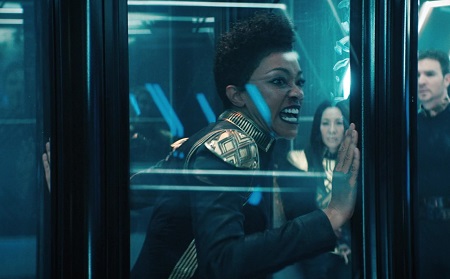
Preliminary Star Trek: Discovery Season 4 predictions

Spoiler Warning: There are spoilers ahead for Star Trek: Discovery Seasons 1-3, Star Trek: Picard Season 1, Star Trek: Lower Decks Season 1, and for other iterations of the franchise.

Star Trek: Discovery Season 3 only concluded a few days ago, and while production has begun on Season 4 it will be a while yet before we get any news. Regardless, I thought now would be the perfect time for some wild speculation… sorry, I mean “preliminary predictions.” It’s very early in the game to be thinking about Season 4 – a season which, if Season 3’s timeline is anything to go by, is unlikely to grace our screens before Spring 2022. But that doesn’t mean it won’t be a bit of fun!

The end of Season 3 wrapped up the main storylines in a generally satisfactory manner; regardless of how we may feel about specific events (like the Burn) their stories were concluded by the time the credits rolled. The dangling story threads left behind are more like teases for what may come, rather than unfinished elements from what came before. That’s a good way to do things, and unfortunately that’s where Picard’s Season 1 finale earlier in 2020 dropped the ball, at least in my opinion.

The USS Discovery departs Federation HQ for a new adventure in the Season 3 finale.

So Season 4 is potentially quite open right now. There’s no obvious direction for the story to go, nor did Season 3 end with a cliffhanger or big tease like Season 2’s journey into the future – or even Season 1’s reveal of the USS Enterprise approaching. Captain Burnham was given her orders after assuming command of Discovery, and set out in the ship to begin the task of delivering dilithium across the fractured Federation. It was implied that this was step one in bringing more wayward ex-members back into the fold, so perhaps that’s something we’ll see continued.

To re-emphasise: I’m categorically not saying that I have any “insider information,” nor that any of these predictions will come to pass in Season 4. This is guesswork on my part – educated guesswork, in some cases, but guesswork nevertheless. I would encourage all of you to be incredibly sceptical of anyone claiming to know for sure what will happen, or anyone claiming to have “anonymous sources” within the production team at ViacomCBS. Many, many times have people making such claims been shown to be making things up.

With that out of the way, let’s jump into my list, which is in no particular order.

Number 1: Visiting Kaminar.

The surface of Kaminar as seen in the Short Treks episode The Brightest Star.

One thing I disliked in the Season 3 finale was the unceremonious dumping of Saru. Though we know that Saru actor Doug Jones is returning to Discovery in Season 4, it will be in a different role now that Burnham has become captain. I have a couple of ideas for where Saru may fit, but for now suffice to say that I think we’ll have at least one episode focusing on Saru’s home planet of Kaminar.

Not only would such a story allow Saru to catch up with his people, but we could see how the Kelpiens and Ba’ul have developed since we saw them in Season 2. The episode Su’Kal suggested that the Kelpiens and Ba’ul joined the Federation jointly, and the way their conflict ended would be interesting to explore.

Su’Kal and Saru on Kaminar at the end of Season 3.

Given the cataclysmic nature of the Burn, though, which I expect to see the lingering effects of for years to come, one storyline that would be potentially interesting is how Kelpien society would react. Knowing that one of their own is responsible for this disaster is going to have some kind of effect on Kaminar and the Kelpiens. If Bill Irwin could return to play Su’Kal, we could see this explored in depth. Would Su’Kal be welcomed by everyone in the way Saru welcomed him? Or will he be shunned by some for his unintentional role in the Burn?

Such a storyline could be timely. In the real world, China is struggling with the fact that the coronavirus pandemic seemingly originated there, and I think that a storyline which looked at how Kaminar deals with its unwitting role in the cause of the Burn could be an interesting way for Star Trek to do what it does best: using its sci-fi setting to look at real-world issues.

Number 2: A new villain or adversary will rise.

Control was the main villain in Season 2.

Over its first three seasons, Discovery introduced us to several different villains. It seems unlikely that Season 4 will break that pattern, and it feels almost certain that there will be a significant adversary or villain for Captain Burnham and the crew to defeat. Whether such a character will be a galactic threat like Control or a playground bully like Osyraa is not obvious; the Emerald Chain was basically the only antagonistic faction we met in Season 3. However, there are bound to be others!

This could be where a race or faction from Star Trek’s past comes back to the fore, though going down that route would be a bit of a constraint. I think we’re more likely to see an original creation for Season 4, someone whose motives are tied in some way to preventing the Federation reestablishing itself, perhaps.

Osyraa was the primary antagonist in Season 3.

If the theme of the season as a whole will be reconnecting the Federation, it stands to reason that any villain or adversary would be someone who seeks to prevent that. However, it isn’t just Burnham and Discovery working on this task, so any such villain would have to be powerful enough to wield a fleet of starships. They may have their own motivations, and the Federation are simply in the way of whatever they’re trying to do.

This could also be a way to introduce time travel to the season, assuming that the producers want to do so. A villain could be someone flouting the ban on time travel for some reason – and could even be someone working inside the Federation, such as Section 31.

Number 3: A connection or crossover with Star Trek: Picard.

Jean-Luc Picard in Star Trek: Picard Season 1.

After Picard Season 1 came and went with nary a hint at the existence of Discovery, I was worried that Discovery would reciprocate in Season 3. Luckily that didn’t happen, and not only did we get to see the Qowat Milat – a faction introduced in Picard – we also got a mention of Admiral Picard himself in the episode Unification III.

At this point we don’t know whether Discovery Season 4 or Picard Season 2 will be broadcast first – and it’s possible that, with the ongoing disruption caused by the pandemic and the uncertainty around the two productions, the team at ViacomCBS aren’t 100% sure either! However, both shows are up and running, and Picard has at least one season under its belt – a season which had several factions, new characters, starships, story points, etc that could in theory cross over to Discovery.

Coppelius Station.

I got the impression from the Season 1 finale of Picard that the show would be moving on to a different adventure in Season 2, perhaps leaving behind the Coppelius synths altogether. If that’s the case, Discovery Season 4 could pick up this story and show us what became of the synths in the centuries after Soji and Picard came to their rescue. Did they stay on Coppelius or relocate? Are some of the synths we knew, such as Soji, still alive in this era?

As I said numerous times during the runs of both Picard and Discovery, these sister shows could do more to work together, reminding viewers that they’re two parts of a greater whole. The difference in time periods is an issue, but as we saw with the Qowat Milat it doesn’t have to completely prevent the two series from teaming up.

Number 4: The return of a classic race or villain.

Borg drones in First Contact.

Season 3 brought back the Trill, Orions, Andorians, and the Romulans and Vulcans on Ni’Var. There were very brief scenes which showed off Cardassians and a couple of other races, and we saw the Bajorans and Xaheans in holographic form too. So Season 3 crammed a lot into its thirteen episodes in terms of revisiting races from Star Trek’s past. This is something I hope Season 4 will continue to do.

Though the Dominion War ended more than 800 years ago, finding out what became of the Cardassians, Bajorans, Breen, and the Dominion themselves is perhaps what I’d choose if it were up to me. The Dominion War arc, though controversial in some Trekkie circles, is a story I find myself revisiting often, and it’s always a thoroughly enjoyable ride. Deep Space Nine ended right when the war did, and we don’t really know anything about what became of the factions involved afterwards.

Captain Sisko, General Martok, and Admiral Ross on Cardassia Prime at the end of the Dominion War.

There’s also the potential to learn what became of the Borg. They didn’t take advantage of the Burn and the Federation’s collapse to assimilate the Alpha Quadrant, so could we infer from their absence that they’ve been destroyed, pacified, or severely reduced? Could the Borg have been presumed defeated centuries ago but make a big recurrence in Season 4 – perhaps looking to acquire the Spore Drive technology?

I’d also love to see the inclusion of a Suliban or Xindi, or perhaps a Talaxian or Kazon from the Delta Quadrant. I know Discovery can’t possibly cram all of these disparate factions and races into one season, but the 32nd Century offers so many interesting story possibilities for practically everyone we’ve met in past iterations of Star Trek. The potential is unlimited!

Number 5: Will Burnham remain Captain?

Captain Burnham.

Discovery worked hard over the back half of Season 3 to make Burnham’s ascent to the captain’s chair feel genuinely earned. Some of the criticisms I’ve made of her character, both in Season 3 and previously, stem from her position as a junior officer making big decisions that go against her orders, so putting her in the captain’s chair and backing her up with a helpful crew should see her continue to grow. I want to see that, and I hope that she will continue to be a Starfleet captain who lives up to the ideals of the Federation in Season 4 and beyond.

But Discovery has never found the right fit for its captain’s chair for one reason or another. I’ve actually enjoyed what all three captains – Lorca, Pike, and Saru – brought to the role, but none of them stayed in that role beyond a single season. One of my hopes for Season 4 would be that we’d get some stability in the captain’s chair, and in a way I’m hopeful Burnham will retain the position going into Season 5 and potentially beyond – but what if that isn’t the plan?

Discovery has gone through three captains in three seasons.

Perhaps one of Discovery’s unique points is going to be the season-long captaincies of different people, each giving the ship and show a distinct feel. Lorca was the hardball who turned out to be a traitor. Pike was the classic character who embodied the spirit of adventure. Saru was the calm and collected diplomat. Burnham may be a Kirk-style action hero, a bit of a renegade but someone who always comes through for Starfleet when it counts.

How or why she might leave the role is unknown, and given Discovery’s approach to storytelling across Seasons 1 and 2 in particular, I’m not sure how likely it is that, having gone to the trouble of promoting her, they’ll replace her within a single season. But that exact thing happened to Captain Saru this season, so it wouldn’t be unprecedented.

Number 6: The lingering effects of the Burn.

The Burn.

Having resolved the Burn and found a huge dilithium planet to negate its destructive effects, there may be a temptation to shelve the Burn, especially if the writers and producers of Season 4 are taking on board fan feedback – which has been mixed to say the least on that particular story point. However, I think doing so would be a mistake.

If we start off Season 4 with a one- or two-year time skip, I can already predict that the legwork of rebuilding the Federation will have already happened off-screen. Resetting the Federation to a state much closer to how it has always been shown in Star Trek may be what some fans want, and in some ways I do too – but I think that after seeing the Federation at such a low ebb in Season 3, we need to see at least some of the rebuilding process for ourselves.

The 32nd Century was a difficult environment for many, and that won’t magically go away overnight.

I already discussed one way the Burn’s effects could still impact the story with the Kelpiens, but there are a million-and-one others. Captain Burnham could lead the ship to revisit parts of the Federation that no one has heard from since the Burn only to find them under occupation or in the midst of civil war, for example. Or we could see an ex-Federation member that completely ran out of dilithium and has had no way to power itself for a century.

Season 3 focused largely on the Federation and ex-Federation members. But there’s scope to see how the Burn impacted other powers in the galaxy – depending on which ones existed at the time! If the source of the Burn is revealed as a Federation member (i.e. the Kelpiens) would, for example, the Dominion or Klingon Empire want to exact revenge or get reparations from the reunited Federation? There are so many ways that the Burn could have impacted the galaxy that we need to see. It hasn’t all gone away with the uncovering of its source and the discovery of the dilithium planet.

Number 7: A time travel story featuring the Guardian of Forever.

The Guardian of Forever… a.k.a. Carl.

It was a very deliberate choice to bring back the Guardian of Forever in Season 3, and it would be a shame to only use them once! Not to mention that guest star Paul Guilfoyle was just fantastic as Carl, the Guardian’s humanoid avatar, and would make a thoroughly welcome return to Discovery.

One way the Guardian of Forever could be included would be to send the USS Discovery back in time – for some reason – in order to tie into the Short Treks episode Calypso. That would likely need to be a multi-episode story arc, but it would be one way to include the Guardian and resolve Calypso – two birds, one stone!

The Guardian of Forever’s portal.

If it were discovered that some nefarious villain or antagonistic faction were using time travel, the Guardian of Forever could be Captain Burnham’s ace in the hole to counteract them. That would be another way to make use of the reintroduction of this entity. Season 3 expanded on the Guardian of Forever by showing us that it can transport people between parallel universes, so this could in theory allow for another Mirror Universe story (please no) or for the Discovery crew to travel to any of the other alternate realities seen in Star Trek.

Speaking of which…

Number 8: A Kelvin timeline reference.

The Kelvin timeline USS Enterprise.

This is something else that Season 3 touched on briefly, with Kovich making note of a time war soldier who crossed over from the alternate reality. The Guardian of Forever, as mentioned, could be one way to literally cross over, but unless a new Kelvin timeline film is in development – and it doesn’t seem to be at this stage – there’s not as much to be gained by doing so when compared to a tie-in with Star Trek: Picard or other ongoing projects.

However, a Kelvin timeline reference would be neat, even if it were little more than a throwaway line akin to Kovich’s in Season 3. The 32nd Century, with its superior technology and better understanding of time and timelines, is the only Star Trek setting aside from the alternate reality itself that really can make the connection between Star Trek’s two major universes.

Number 9: Who is Kovich?

Kovich in Terra Firma, Part I.

Famed director David Cronenberg, who plays Kovich, has said that the character will return in Season 4 in some way, so there’s the possibility to learn more about this mysterious character. I’d been speculating since his first appearance that his distinctive uniform, high security clearance, and un-Starfleet lack of morality could hint at his being an operative of Section 31 – or even its leader.

Another theory I’ve heard fans kicking around is that Kovich is the Federation’s president. That would be an interesting way to go too, as a storyline which involves rebuilding the Federation could require serious diplomatic efforts. The Federation President would surely be involved in bringing key worlds like Earth back into the fold.

Number 10: Admiral or President Saru.

Saru in Terra Firma, Part II.

As I said earlier, I was disappointed in the way Saru was dumped at the end of the Season 3 finale. He didn’t get a chance to say goodbye to his crew, to offer Burnham her promotion in person, and his decision to leave the ship was only briefly touched on by Burnham in a voiceover. Though Saru is coming back, his role is unclear with Burnham now in command.

I can think of a couple of ways he could be included, though. The first would be a promotion to the rank of Admiral, joining Vance at the head of Starfleet. As the Federation grows, Starfleet will need to grow too, and with a new source of dilthium – and the potential for new Spore Drive ships too – and that will mean the need for new Admirals to command the expanding fleet. Saru proved himself as a good captain across Season 3, and while he did make some mistakes, I would argue he’s an excellent Admiral candidate.

Saru and Burnham with Admiral Vance.

However, we also saw Saru’s diplomatic side in Season 3, particularly with the President of Ni’Var. Saru could continue in this role as a diplomat, but if worlds like Trill, Earth, and Ni’Var all rejoin the Federation, might some of them want to see him become Federation President?

If the story of Season 4 looks at the Federation re-unifying, I could see why some of the aforementioned worlds might want to support the candidacy of Saru. Early Federation politics seemed to involve balancing the Vulcans and Andorians, but this led to almost all of the Federation’s key institutions being on Earth and dominated by humans. The reunited Federation may be less keen on giving humanity all of the top jobs, especially given Earth’s century of isolationism, so someone like Saru may be a compromise candidate among the Federation’s members who are coming back together for the first time in a long time.

Number 11: A redesign of the USS Discovery internally.

The bridge of the USS Discovery.

One aspect of Season 3 that didn’t quite sit right with me was the redesign of the USS Discovery. I adore the redesign, don’t get me wrong, but I didn’t quite buy into it as “believable” considering the ship didn’t change on the inside. We saw a few changes, like the programmable matter and holographic elements in many bridge consoles, and of course the big empty space in the engineering/drive section that we saw during Book’s turbolift battle against Zareh. But aside from a few small touches, a few lines of technobabble, and one CGI-heavy action sequence, the ship looks the same from the inside.

This undermines the decision to have the ship undergo a major refit, and I’d love to see some more aesthetic changes inside the USS Discovery to match its external appearance. It wouldn’t mean completely tearing down old sets, but tweaking and changing them to indicate that the ship has been heavily altered. Lighting is one way that the designers could make an immediate, obvious, and unobtrusive change. Ditching some of the blue lighting and generally upping the brightness of other lights – especially on the bridge – would transform the way Discovery looks.

The inner workings of the USS Discovery.

The USS Enterprise, after its refit in Star Trek: The Motion Picture, looked like a different ship inside and out. The USS Discovery nailed the outside look in Season 3, but its inside hasn’t caught up. Even a handful of changes here and there would go some way to making good on the refit idea, and I’d love to see the bridge, the ready-room, and engineering given a facelift in time for Season 4.

This would also be a great moment to show off a new area of the ship, either something that was improved during the retrofit or a brand-new addition. We saw the data core at the end of Season 3, but I don’t see a pressing need for the crew to spend a lot of time there. What we could see, however, is some kind of holodeck or recreation area, an improved mess hall that had more of a Ten Forward lounge vibe, an observation deck or briefing room, a battle bridge or secondary command centre, or an additional science lab.

Number 12: Defending the Verubin Nebula.

The periphery of the Verubin Nebula.

In a galaxy devoid of its most significant source of fuel, the discovery of a massive cache of dilithium will not go unnoticed – or unopposed. The Emerald Chain may have “fractured” according to the Season 3 epilogue, but it seems unlikely that they’d be the only ones interested in acquiring the dilithium planet in the Verubin Nebula.

As such, part of the Season 4 storyline may involve Discovery having to defend the Verubin Nebula from someone looking to seize it for themselves. After the Emerald Chain did essentially the same thing at the end of Season 3, if I were writing it I wouldn’t make this the main point of Season 4, but it seems like something that could be included – or at least explained. How will the Federation defend what seems like the galaxy’s most valuable resource?

Number 13: To seek out new… dilithium?

The dilithium planet.

At the moment, the Verubin Nebula is the only major source of dilithium. The USS Discovery with its Spore Drive can jump all across the galaxy, making it a great ship to scout for new sources of the valuable fuel. Part of Discovery’s mission could be to jump around to areas of the galaxy the Federation had previously been unable to reach in search of dilithium.

I see this story point as the catalyst for something else to happen rather than the main event, though… because on its own it doesn’t exactly seem like the stuff of action and excitement!

Number 14: A new first officer.

Could Lieutenant Willa join Discovery’s crew?

Last time we looked at the odd Tilly situation and theorised that her uniform may have been altered from command red to science blue in post-production. This could mean she’s being replaced as first officer – a position she only took on a temporary basis to begin with.

If Captain Burnham doesn’t keep Tilly as first officer, that obviously opens the position up to someone else. There are candidates on Discovery’s crew, but I’d also propose Lieutenant Willa, Admiral Vance’s aide-de-camp from Season 3. She would be an interesting addition to the crew; another 32nd Century native along with Book to advise the crew of changes they might’ve missed.

Lieutenant Rhys was given the conn temporarily in Far From Home.

We could also consider the promotion of one of the secondary bridge crew, such as Nilsson, Rhys, or Bryce. Nilsson and Rhys have both been left in charge on the bridge before, so could in theory make good candidates. I wouldn’t pick Stamets or Dr Culber, as they both have roles elsewhere on the ship.

Nhan could make a comeback after she was dropped early in Season 3. I half-hoped to see her return in the season finale, but if she finishes her mission aboard the USS Tikhov, perhaps she could return to Discovery as first officer. If not, maybe a new character could join the crew in that role.

Number 15: A new home for Federation HQ.

Federation HQ.

I initially wondered if Season 4 might see Federation HQ return to its home on Earth, but I’m not sure if that would be the best option so early in the game. Plus I kind of like the idea of a space headquarters, not attached to any planet and able to be moved.

Perhaps it makes the most sense in the short term for Federation HQ to anchor itself near the Verubin Nebula, able to immediately respond to any threats to its valuable prize. But we could also see Federation HQ move between worlds, visiting new members in turn or just staying on the move. If Starfleet is growing in strength, the need for a secret location will be lessened and perhaps we could see some institutions of the Federation’s government relocate away from the base we first encountered in Season 3.

Number 16: The return of the Klingons.

Klingon leader T’Kuvma during the series premiere.

In Season 1, Discovery depicted a major Federation-Klingon war, and while the Klingons were peaceful by Season 2, they were not exactly staunch allies of the Federation. In Star Trek’s fictional history, the Federation and Klingons would remain at loggerheads for much of the 23rd Century, only to sign the Khittomer Accords at the end of the century, leading to a period of peace. By the 24th Century they were allies, particularly during the Dominion War, and I think it would be interesting to take that line forward in time.

How would the Discovery crew, veterans of the Federation-Klingon war, react to having to work with Klingons? Are the Klingons Federation members, or ex-members? If so, part of the season’s story could be bringing the Klingons back into the Federation – but would everyone on the crew be okay with that?

A map depicting the battlefields of the Federation-Klingon War in the Season 1 episode What’s Past Is Prologue.

Alternatively we could see the Klingons as a neutral power, watching the rebuilding of the Federation from the outside. Maybe they, like the Emerald Chain, have gotten used to being a more powerful faction as the Federation have declined, and may not like to see their old adversary getting back on its feet.

Almost anything could have happened to the Klingons both before and after the Burn, and for a faction that had previously been important within Discovery it would be great to see what became of them, and how that information would impact our characters.

Number 17: Aurellio will be back.

Aurellio.

Kenneth Mitchell’s Aurellio was one of the high points of the final two episodes of Season 3. As an ex-member of the Emerald Chain and a brilliant scientist, Aurellio could be a valuable ally to the Federation and Discovery’s crew.

Aurellio was tasked with working on the Spore Drive, and in the Season 3 finale figured out that empaths like Book are capable of navigating the mycelial network. He could have switched sides to work for the Federation, perhaps working on a way to give more starships a Spore Drive. There are other scientific roles he could play, depending on the nature of the season.

Number 18: More Spore Drive ships.

Discovery making a Spore Drive jump.

Speaking of the Spore Drive and Aurellio, now that the problem of navigating the mycelial network has potentially been fixed, there’s no reason why more Starfleet vessels can’t be fitted with a Spore Drive of their own. In Season 1, Stamets seemed to suggest early on that mycelial spores were difficult to collect or cultivate, but if that could be addressed (or a new source found) there’s no reason why more Spore Drives couldn’t be built.

The Spore Drive has long been Discovery’s most controversial piece of tech, and finding a proper role for it that didn’t get in the way of previously-established canon is one reason for taking the ship and the series out of the 23rd Century. Having arrived in the far future, now is the time to let the Spore Drive shine.

Number 19: Those grey uniforms?

Some of the crew in their new uniforms.

The reaction to the new uniforms in the 32nd Century was mixed, and I wonder if Season 4 will address this in any way. One thing to note is that the grey uniforms looked a lot better in the brightly-lit Federation HQ than they do on the more dimly-lit Discovery. This could be addressed by changing the lighting, as suggested above, but it could also be addressed by making some changes to the uniforms.

It was a refreshing change to ditch the all-blue look, and I don’t dislike the 32nd Century uniforms. Though Vance wore the Admiral’s variant all season long, I still need to get used to seeing the regular crew in that style before I can say for sure how much I like them. So from my personal perspective I think there’s no immediate need to change anything up, but I know not everyone agrees.

Lieutenant Owosekun in her new uniform, showing close-ups of the collar and coloured stripe.

Starfleet uniforms are like starship designs: everyone in the fandom has an opinion on which is best. For my two cents, after four seasons of Enterprise’s blue boiler suits, three seasons of Discovery’s all-blue look, and Picard’s crew not having uniforms, I’m happy to see something different. Lower Decks and the Kelvin timeline uniforms had blocks of colour, and that was great. But it’s been a long time since we really mixed up the uniforms in Star Trek – even the Starfleet uniforms of the Picard era were similar to those from Deep Space Nine and Voyager.

So I’m willing to give the grey outfits a chance. But I wouldn’t be shocked to see promo material for Season 4 showing off a new variant or even a different style altogether.

Number 20: Lieutenant Sahil will join the crew.

Lieutenant Sahil.

Lieutenant Sahil, newly commissioned into Starfleet in the Season 3 finale, was one of the first people Burnham met in the 32nd Century. It would make a lot of sense for her to want to repay his kindness and help by offering him a role aboard Discovery. He could be one of the bridge officers, perhaps taking over from someone like Nilsson or Bryce if either were promoted.

I’d love to see a recurring role for Lieutenant Sahil now that he’s a commissioned officer. With Georgiou having left the show entirely and Saru looking at a potentially reduced role or a role not aboard the ship, there’s plenty of space for Sahil, Aurellio, and others to join up.

So that’s it. A few far too early ideas for what Star Trek: Discovery might bring us in Season 4. If I remember after the season airs it’ll be fascinating to come back and look at this list!

So this was just a bit of fun as I continue to work through my post-Season 3 thoughts. As I say it’ll be great fun to come back and see how many of these guesses were completely wrong once we’ve seen Season 4 for ourselves. The 32nd Century has opened up Star Trek to radically new story ideas for the first time in a long time, and I’m loving that. No longer being constrained by canon means that Discovery can literally take the franchise anywhere, with open-ended story possibilities.

These are not even theories – I want to call them guesses rather than anything else. So please, please don’t get carried away thinking that any of these are destined to happen. We all need to remember to take such theories and predictions with a pinch of salt at the best of times, and guesswork this far out when we know less than nothing about the upcoming season is almost silly! So as fun as this was to put together, let’s all try not to get too excited about anything listed above.

Star Trek: Discovery Season 3 is available to stream on CBS All Access in the United States, and on Netflix in the United Kingdom and elsewhere. The Star Trek franchise – including Discovery and all other properties mentioned above – is the copyright of ViacomCBS. This article contains the thoughts and opinions of one person only and is not intended to cause any offence.

Star Trek: Discovery Season 3 wishlist: a follow-up

Spoiler Warning: There are spoilers ahead for Star Trek: Discovery Seasons 1-3, Star Trek: Lower Decks, Star Trek: Picard, and for other iterations of the franchise.

At the end of September, with Season 3 of Star Trek: Discovery looming on the horizon, I published my “wishlist” of things I hoped to see in the upcoming season. Now that we’ve seen the entirety of Season 3 I thought it would be fun to go back to that wishlist and see whether my wishes came true – and, on reflection, whether I was being reasonable!

I had eight items on my original wishlist, but I’m also going to talk about a couple of other points that came up either before or during the season that I didn’t include.

Michael Burnham on the USS Discovery’s viewscreen.

Though not everything I hoped to see came to pass in Season 3, I had a good time with it overall. Whether we’re discussing Star Trek or any other fictional franchise, success is not always about meeting specific expectations or confirming fan theories, and the writers and producers need to have the freedom to tell the stories that they want to tell. Star Trek has gone in directions I wouldn’t necessarily have chosen, but that’s true of every iteration from The Original Series to Picard, and it doesn’t mean that what made it to screen was bad. Like a lot of viewers, I like to be surprised – even if I spend a lot of time talking about theories!

All of this is to say that Discovery Season 3 met my expectations in some ways, challenged those expectations in others, and told some different but enjoyable stories. Though I enjoyed some points more than others, taken as a whole the season was solid, and a worthy successor to Season 2, which had been my favourite. Taking the show – and the franchise – forward in time was always going to be a challenge, but Discovery rose to meet it.

Let’s jump into my pre-season wishlist and see what became of it.

Number 1: Some kind of tie-in with Star Trek: Picard.
Wish: Granted

Soji and Picard in the episode The Impossible Box.

This was perhaps the point I was most curious about. Because of its place in the Star Trek timeline, Discovery in its first two seasons had been unable to include significant references to anything other than Enterprise and The Original Series. We saw precious little from Enterprise, but from the first episode we had some major crossovers from The Original Series by way of Sarek, and later Spock and Pike.

But The Original Series, despite its importance within Star Trek, ended decades ago. While it was possible to recast classic characters, there wasn’t as much to be gained by doing so – and it proved divisive within some areas of the fandom. Picard, by contrast, is in production at the same time as Discovery, and Season 3’s leap forward in time allowed it to connect to its sister show in ways that no Star Trek production has been able to do for a long time.

The super-synths.

I had two very early theories for how this could have worked. The first, which had been debunked even before it was written, was that Discovery would – thanks to time travel shenanigans – end up in the same era as Picard; the ship and crew being unable to complete their 930-year time jump. The second would have been for the super-synths from the Picard Season 1 finale to have been involved with the Burn.

Neither of those ideas came to pass, and I’m not disappointed – though I do maintain that the USS Discovery arriving in the Picard era would have been a fun way to go! Instead what we saw was a direct reference to Admiral Picard’s archive – which we saw in the Picard Season 1 premiere – and the return of the Qowat Milat. I didn’t expect the Qowat Milat to be the way the shows would connect, but it worked very well. It managed to be unobtrusive – nothing in Unification III made Picard Season 1 mandatory viewing – yet at the same time there was a very definite nod by Discovery to its sister show.

Dr Gabrielle Burnham joined the Qowat Milat.

The only downside was that the Picard crossover was limited really to a single episode. There wasn’t room within the Ni’Var storyline for anything further, and while the united Romulans and Vulcans were seen briefly in the season finale, we didn’t see the return of the Qowat Milat or Dr Burnham. However, her presence within that convent means we could potentially see her in Season 4, and if there is some significant advancement of the Qowat Milat storyline in Picard Season 2 that could be referenced then – or vice versa.

Placing Dr Burnham in the Qowat Milat was a very random choice in many ways, and while it succeeded from a shock value point of view perhaps we could argue that it’s not a very logical outcome for her character. But I wished for a tie-in with Star Trek: Picard, and there’s no denying that Discovery delivered!

Number 2: A reference, callback, or hint to something from Star Trek: Lower Decks.
Wish: Denied 🚫

Ensigns Tendi and Rutherford from Lower Decks.

The original plan for 2020 – before the pandemic disrupted things – was for Discovery Season 3 to be released before Lower Decks, so perhaps with that in mind it makes sense that there wasn’t so much as a reference to the animated show. However, as I said above, finding ways to tie together the Star Trek projects which are currently in production is to the benefit of the franchise overall – even if the projects are as radically different as Lower Decks and Discovery.

There was the potential for something as small as the name of a planet or faction to crop up in both shows; what would have seemed like a throwaway line of dialogue could have actually been a subtle nod to the existence of Lower Decks within Discovery, even if a more significant crossover was never on the table. Perhaps this is something that could happen in Season 4, though, so I’ll keep my fingers crossed!

Number 3: A storyline that doesn’t make Michael Burnham the “chosen one.”
Wish: Granted

Captain Burnham.

Seasons 1 and 2 of Discovery put Burnham front-and-centre, making her the focal point of their main storylines. In both cases, Burnham alone was responsible for driving the plot forward, and it could often feel as though other characters weren’t permitted to do anything significant. Season 3 came close to falling into that same trap, especially early on, but by the final part of the season had stepped back. Other characters, including Tilly and Saru, were given significant roles to play, and the show was much better for it.

Burnham wasn’t even really involved with the season’s main storyline after the halfway point. Though she was instrumental in getting background information regarding the Burn, after Unification III it was Tilly, Stamets, Adira, Saru, and Dr Culber who took the lead on that side of the story. The final pair of episodes, in which Su’Kal was saved and a reoccurrence of the Burn prevented, had Burnham involved in a completely different storyline.

Burnham was part of the season finale, but not in a way connected to the Burn.

There were all sorts of ways that Discovery’s writers and producers could have tried to push Burnham once again as the “chosen one,” not least by having her involved with the Burn in some way. Until the final few episodes this seemed to be a possibility, and I’m so glad that it didn’t happen. The revelation that Burnham and her mother were two different Red Angels was not really the best part of Season 2, and I was concerned that Discovery might try to pull off something similar with the Burn.

Though Burnham had some issues this season – notably in the episode Scavengers – which amplified some of her least-attractive character traits, the second half of the season worked very hard to get her to a point where her ascent to the captaincy of Discovery felt earned and genuinely great. By putting her in a series of stories that didn’t put her at the centre of the universe, and by allowing other characters to have agency over those stories as well, Discovery broke away from its Burnham obsession just enough to finally allow the character to shine.

Number 4: A proper explanation for “the Burn.”
Wish: Granted

A holo-recording of the moment Su’Kal caused the Burn.

At some point in the future we’ll take a look at the Burn, debating the implications and how well the storyline worked. For now, suffice to say that I was concerned that Discovery might try to get away with never revealing the Burn’s origins. Sometimes this is the way stories unfold when an apocalyptic event or disaster takes place decades before the main storyline. However, as I wrote in my original wishlist:

“There’s a curiosity at the core of Star Trek. Seeking out strange, new worlds has been the franchise’s heart since The Original Series, and that spirit of exploration and thirst for knowledge extends to fans as well. We want to know what’s going on in the galaxy, and it wouldn’t be good enough to say ‘well something bad happened, but don’t worry about what it was or what caused it.’ In some stories, an unknown, mysterious event could work. But not here.”

The Burn.

It took a long time to figure out the Burn, and along the way Burnham and the crew had different adventures that either advanced that narrative in a minimal way or didn’t advance it at all. Again, this is something we can debate – given the Burn’s ultimate reveal it’s certainly arguable that dragging it out for the whole season wasn’t the best idea.

But at the end of the day, whether you liked the reveal of the Burn’s origin or not, its origin was revealed. And it wasn’t something obvious, nor some sci-fi trope that could’ve been part of any other franchise. There’s a weirdness to the Burn’s telepathic origin that could really only be part of Star Trek, and despite my criticisms of the storyline overall, I like that. The fact that it wasn’t predictable was fun, and for such an important event it needed an explanation. I’m glad it got one – even if it wasn’t one I’d necessarily have chosen.

Number 5: No main villain.
Wish: Denied 🚫

The villainous Osyraa.

Though Osyraa and the Emerald Chain were not connected to the Burn, she acted as the main villain in the latter part of the season. After Control had been such a big presence in Season 2, I felt that breaking away from having one main villain in favour of scientific mysteries and perhaps a couple of single-episode antagonists would have been preferable.

Though Osyraa did see some interesting development in There Is A Tide, that development was never really expanded upon. The revelation in the season’s epilogue that the Emerald Chain had “fractured” without her strong leadership makes all of that meaningless anyway; Osyraa ended up being nothing more than a forgettable adversary who was a significant hurdle for a couple of episodes, but little more.

Osyraa in command of Discovery.

The most significant storyline she was part of also happens to be one of my least-favourite action tropes. When Osyraa and the Emerald Chain captured the USS Discovery at the end of Su’Kal, it was obviously only a matter of time until the ship was retaken, and so it proved. Burnham and Osyraa got a climactic hero-versus-villain fight in the season finale, and it was decently exciting from that point of view, but there was nothing particularly new or inventive about Osyraa herself.

In light of the Emerald Chain seemingly disbanding, any ongoing impact Osyraa could’ve had on the show is nullified, and perhaps that’s for the best. I stand by what I said before the season premiered: some stories don’t need a “big bad” in order to work well. The Burn was a scientific mystery to unravel, and rebuilding the Federation was something to be accomplished diplomatically. Osyraa and the Emerald Chain were, at best, a minor hurdle to achieving those goals, but nothing more. That said, the action scenes in the final two episodes were very exciting, and I’m glad we got to see that side of Discovery this season – something that couldn’t have happened without Osyraa.

Number 6: Proper development of some secondary characters.
Wish: Granted

Lieutenant Detmer got her own mini-story this season.

After two full seasons, there were still a lot of secondary characters on Discovery’s crew that we barely knew. Though Season 3 didn’t have time to focus on everyone – and I wouldn’t have expected it to – we did finally get to spend more time with some of these officers. In addition we got the new character of Adira and their phantom partner Gray to further pad out the cast. And who could forget Grudge, the adorable fluffball kitty of Book’s?

In Season 2, Ariam got one episode of character development before being unceremoniously killed off, and I was a little concerned that Season 3 might take the same approach – turning some of the secondary characters into glorified redshirts. When helm officer Detmer was the focus of part of the episode Far From Home I felt sure she was next on the chopping block – but it didn’t happen!

Several secondary characters – plus Tilly – played an important role in the season finale.

Detmer and Owosekun saw some decent development this season, and we spent a little time with Rhys, Bryce, and Nilsson as well. And of course we got the aforementioned Gray and Adira. Nhan actress Rachael Ancheril was promoted to the regular cast, but seemingly left the series in Die Trying shortly thereafter. There was a lot of potential in her character, which could have seen future episodes looking at the Barzans, for example. I’m hopeful Nhan can return – even if it doesn’t look like it right now.

Among the regular cast, almost everyone had a significant arc or a lot of screen time this season. Only Stamets felt under-used, as major roles were given to Saru, Tilly, Dr Culber, and Georgiou at various points. Most characters now have a solid base or framework to build upon in future seasons and stories, and I hope that Discovery will continue to work with a broader cast going forward.

Number 7: Fix the Stamets-Culber relationship.
Wish: Granted

Culber and Stamets with Adira.

Discovery’s emotional core is provided by Dr Culber and Stamets. Where Burnham’s romantic life has been a rollercoaster ride, Stamets and Culber offered stability. Anthony Rapp and Wilson Cruz have wonderful on-screen chemistry which makes their characters such a cute couple, and it was sad to see them having troubles after Culber’s stint lost in the mycelial network.

I was hopeful that Season 3 would bring them back together in a big way, and it happened within minutes of their arrival in the future. Dr Culber helped Stamets in sickbay after the latter had been injured, and the “relationship on the rocks” storyline was dropped. Discovery never looked back after that, and while abandoned storylines can be an issue, this one never really worked so I’m happy to see the back of it.

Stamets and Culber in Far From Home.

As a show with plenty of drama and tension, Discovery didn’t really need to throw its only solid couple into difficulties as an additional source of drama. There was just no need for it, and doing so risked taking away something incredibly significant in the process. LGBT+ representation has come a long way, so keeping Star Trek’s first gay couple together is also something I’m happy to see. Discovery has never gone out of its way to use LGBT+ themes; Stamets and Culber’s relationship isn’t treated as anything different or special because of their genders, and I love that. The future should be a place where all couples can be accepted without so much as a second thought.

The addition of Adira was an unexpected joy. We knew Adira was coming in the months leading up to the season’s premiere, but I wasn’t necessarily expecting that they would become so close to Stamets in particular. The paternal relationship he developed toward Adira was so sweet, and when Stamets made the point to them that he and Culber came together as a “package deal” that was just pitch-perfect.

Number 8: A satisfying explanation for how the Burn surprised Starfleet.
Wish: Denied 🚫

Captain Braxton of the time-ship Relativity.

In the run-up to the season, one of the burning questions that I had was this: if time travel existed in the centuries before the Burn happened, how could it possibly have surprised Starfleet?

Star Trek has never been consistent in its depiction of time travel, and that’s at least in part because time travel stories can get convoluted and messy. They’ve never been my favourite – either inside or outside of the franchise – but having firmly established that the Federation by at least the 28th or 29th Centuries through to the 31st used time travel routinely, we needed more of an explanation for how the Burn could have taken them by surprise.

Nothing in any time travel story I’m aware of says that time travel into the future is any more difficult that travelling to the past, and in both Voyager and Enterprise Starfleet was depicted as an organisation dedicated to maintaining the “correct” timeline. To make a long complaint short: even if time travel was not being actively used by natives of the 32nd Century, it seems improbable at best that Starfleet would have been unaware of the impending Burn if they had access to time travel technology for centuries before the event occurred.

The Enterprise-E travelled back in time in First Contact.

The idea of a ban on time travel is potentially interesting – and could, in theory, offer a way out of this issue. But it wasn’t explained in any detail, and I think in order to be plausible we need to know how the ban works, how it’s being enforced, and if it’s possible to travel through time as depicted in The Original Series and Star Trek IV: The Voyage Home for example, how is it possible to prevent anyone from doing that?

Part of this stems from the aforementioned inconsistency; time travel post-The Next Generation seems to have been more difficult, requiring the use of specialist technology, whereas in The Original Series and The Voyage Home it was possible just by travelling at high speed and slingshotting around a star. However, even if we disregard that method of time travel, we still need an explanation for how the technology was destroyed, what’s preventing anyone from recreating it, and so on.

HMS Bounty travelled through time in The Voyage Home.

As I wrote in my theories during the season: it isn’t possible to un-invent an incredibly powerful technology that can be used as a weapon. Even if the idealistic Federation is content to abide by the ban, despite its own collapse and how crappy the post-Burn 32nd Century is, how are we meant to believe that everyone else is? Just from what we saw on screen, are we meant to buy into the Emerald Chain not being interested in pursuing time travel?

Then there are other factions from past iterations of Star Trek: the Borg, the Dominion, Section 31, and others. Any one of those factions could be tempted by time travel, and would surely not be willing to abide by any ban. So how is it enforced? How does it work? Even a few technobabble lines would’ve been enough for me… but we didn’t get any real explanation.

Number 9: A character crossover from a past iteration of Star Trek.
Wish: Denied 🚫

The Doctor from Star Trek: Voyager did not appear.

Okay, so technically we got to see the Guardian of Forever as well as archive footage of Leonard Nimoy’s Spock. But I wouldn’t consider either to be a significant character crossover, and while the Guardian of Forever had an impact on one of the season’s side-missions it didn’t effect the main story.

I speculated about a few characters who could still theoretically be alive in the 32nd Century, including: a backup copy of Voyager’s Doctor as seen in the Season 4 episode Living Witness, Crewman Daniels from Enterprise, Soji from Picard, the Dax symbiont, and even Deep Space Nine’s Captain Sisko. Some of those may be less likely than others, but I was at least a little hopeful that the leap forward in time could have led to a major character’s inclusion.

Captain Sisko.

Seeing the Guardian of Forever was neat, and I don’t want to detract from that. But the Guardian was from The Original Series – and with Discovery finally able to move beyond the confines of the 23rd Century there was scope to link back to The Next Generation’s era. Unification III did so, and so did the inclusion of the Trill. But no characters crossed over, despite the potential existing for something to happen.

It wouldn’t be particularly difficult for practically any character from a past Star Trek show to crop up. Scotty appeared in Relics in The Next Generation’s sixth season, and if a similar technobabble explanation could be found for how a character was in stasis or travelled through time, almost anyone could be included. Since that didn’t happen this time… maybe we could get a major character in Season 4?

Number 10: A resolution to the story of the Short Treks episode Calypso.
Wish: Denied 🚫

The USS Discovery in Calypso.

Ah, Calypso. Is the short episode destined to remain an outlier in the Star Trek canon forever, seemingly tied to a vision of Season 2 or 3 that never made it to screen? Or dare we hope that the writers and producers actually have a plan for how the loose ends from this Short Treks episode will be tied up?

We seemed to see movement toward this goal in Season 3 – though not named, the Zora AI was clearly created (the same voice actress from Calypso even reprised her role) and the use of the word “V’draysh” to refer to the Federation was heard a couple of times. But there was also some noteworthy movement away from Calypso too. The USS Discovery’s refit means that the ship is no longer in the same configuration it was in during the Short Treks story.

The refitted USS Discovery no longer matches the ship seen in Calypso.

At this stage, it feels as though resolving Calypso would require a story built for that purpose. The refit of the ship would need to be undone. A reason would need to be concocted why the ship needed to be abandoned. If the ship was to be sent back in time, a reason would be needed for why that was necessary too. And so on.

Perhaps the ultimate resolution to Calypso will simply be to say that the episode took place in an alternate timeline, one in which the Discovery crew hid the ship in a nebula to keep it safe from Control.

So that’s it. Those were my big pre-season wishes, and while not all of them were granted by Season 3, some were.

I had a great time with Discovery’s third season, and while there are some nitpicks and gripes it was a generally fun ride. It feels as though the Star Trek franchise now has a solid foundation if the decision should be made to create more shows set in or around the 32nd Century, and that’s a big compliment! As much as I enjoyed Picard bringing us back to the 24th Century last year, I’m just as interested to see what else the 32nd Century may hold, and hopefully Discovery won’t be the last Star Trek project to explore that setting.

Some of my pre-season wishes may have been a little optimistic, or even just unrealistic! But I had fun thinking about what Discovery could look like, and perhaps this is something I’ll indulge in again in the run-up to Season 4!

Star Trek: Discovery Seasons 1-3 are available to stream now on CBS All Access in the United States and on Netflix in the rest of the world. The Star Trek franchise – including Lower DecksDiscovery, and all other properties mentioned above – is the copyright of ViacomCBS. This article contains the thoughts and opinions of one person only and is not intended to cause any offence.

Star Trek: Discovery theories – week 13

Spoiler Warning: There are spoilers ahead for Star Trek: Discovery Seasons 1-3, Star Trek: Picard, and other iterations of the franchise.

Star Trek: Discovery Season 3 came to an end this week. That Hope Is You, Part 2 was a solid episode with plenty of action, and despite the underwhelming nature of one of its plotlines, I think it did a good job wrapping things up.

Speaking of wrapping things up, that’s what we’re going to do today! We had twenty-two theories going into the finale, and while a handful live on and may return in Season 4 depending on the way things go, most were either outright debunked or the story went in such a direction as to leave them looking very unlikely. We did, however, get three confirmations (or at least partial confirmations) so we’ll look at those first!

Confirmed theory: Aurellio stood up to Osyraa.

Aurellio and Osyraa.

Although Aurellio didn’t get as much screen time as I’d have liked to see, he did break away from Osyraa and the Emerald Chain. Aurellio had a mini character arc that ran over the final two episodes of the season in which his eyes were opened to Osyraa’s villainous nature, and allowed him his moment of opposition to her when he refused to allow his technology to be used to torture Book.

I stand by my previous comparison in which I said that Aurellio fills a role claimed by the likes of Albert Speer and others who worked for the Nazis during the 1930s and 1940s. Aurellio seems to have spent a lot of time focusing on his work in his lab, reaping the rewards of helping the Emerald Chain but without really allowing himself to see what the organisation and its leader were doing. His conversation with Stamets opened his eyes to this, and we saw that theme come to a head in the scene in sickbay.

Though Aurellio did briefly help out later on, giving Book the idea that he could use his empathic abilities to use the Spore Drive, Aurellio feels like an underused character, and I hope to see him return in Season 4. He could have joined up with the Federation, or even serve aboard Discovery.

Part-confirmed theory #1: Burnham became captain.

I successfully predicted that Burnham would become captain… but not how it would happen! So I’m calling this one part-confirmed instead of fully confirmed!

I had speculated that Burnham could assume the captaincy either because Saru would be killed, or because Saru would be promoted and become an Admiral if Admiral Vance were killed. Neither of these scenarios came to pass, and Saru was rather unceremoniously shuffled off the ship during the epilogue without getting so much as an opportunity to say goodbye to the crew. That was poor, and Saru deserved to be treated with more respect.

However, it allowed Burnham to get her promotion, something that Star Trek: Discovery has been aiming for since Season 1. Some of the issues with Burnham, both this season and in the past, stem from her insubordination. Now that she’s in command, that should no longer be anywhere near as big an issue, and as captain she should have a lot more freedom to approach problems and adventures her way – within the spirit of the rules, if not following them to the exact letter!

Part-confirmed theory#2: The Federation’s allies arrived to help fight the Emerald Chain.

The arrival of Ni’Var’s fleet.

I’m calling this one part-confirmed because only Ni’Var arrived to help the Federation when the Emerald Chain attacked. I had half-expected a bigger fleet, perhaps comprised of the Earth Defence Force, the raiders from Titan, the Trill, people from the Colony, people from Kwejian, and Nhan aboard the USS Tikhov. However, only Ni’Var made it to the party!

We don’t know what became of most of the others; Trill rejoined the Federation, but the rest weren’t even mentioned in the finale. The arrival of the Ni’Var fleet felt great – up there with other big last-minute arrivals in other battles in the franchise for sure. But by the end of the episode I did feel that the absence of some of the other friends and allies that Burnham and the crew had made was noticeable… and perhaps even a little sad.

So those theories were confirmed or partially-confirmed. Up next we have a handful of theories whose status was left unclear as of the end of That Hope Is You, Part 2. It’s possible some of these will return in Season 4, but it depends how the story of that season shapes up. If Season 4 goes in a completely different direction, perhaps some or all of these theories will simply fall by the wayside. We most likely won’t know for a while!

Status: Unknown #1: The Spore Drive will become Starfleet’s new method of faster-than-light propulsion.

Discovery makes a Spore Drive jump.

The revelation that Book could use his empathic abilities to use the Spore Drive has, in theory, opened up the technology to being deployed across other Starfleet vessels. Early in Season 1 Stamets seemed to suggest that mycelial spores were not easy to acquire, so that may yet prove to be a limiting factor, but if that could be overcome there’s no real reason why the Spore Drive couldn’t be rolled out.

If empathic species like the natives of Kwejian can use the Spore Drive, it opens up even more possibilities. Betazoids spring to mind as an empathic species; perhaps they could become navigators too.

As this moment came in the final act of the season finale it didn’t get a chance to be paid off, so we won’t know the status of the Spore Drive until next season at the earliest. When Burnham was in command of the ship right at the end of the episode, her orders were to deliver dilithium to other planets, so perhaps we can infer from that that not every vessel will have its own Spore Drive. Regardless, the expansion of this technology would not only allow Discovery to have new and different adventures, but would also make it so other Star Trek series set in or after this time period could do so too.

Status: Unknown #2: The Dax symbiont is still alive.

Jadzia Dax.

On reflection, this theory should have been put on hiatus as soon as Discovery departed the Trill homeworld in Forget Me Not. But I stand by the reasoning behind it – Trill symbionts can be very long-lived, and we got at least a hint at Tal having been alive in the 25th Century via the appearance of a Picard-era uniform. Though Dax had already had several hosts by the time of Deep Space Nine, nothing in-universe would prevent their reappearance.

However, with the Trill having rejoined the Federation, perhaps there will be an opportunity to see or hear about Dax in Season 4.

Status: Unknown #3: Kovich is an agent of Section 31.

Who is Kovich?

Kovich made only a very brief appearance in That Hope Is You, Part 2, so we didn’t get an opportunity to learn anything more about him. It was implied that he has a role in Starfleet security and/or intelligence based on his debrief of Georgiou and ability to access classified files. Combined with his morally ambiguous personality – which we see on full display when he doesn’t tell anyone about Georgiou’s impending health emergency – it doesn’t seem unreasonable to assume he could be an agent of Section 31… or even its leader.

Given Georgiou’s connection to the upcoming Section 31 series, and the time travel plot to get her there, perhaps the reason Kovich didn’t say anything is because he knew exactly what role he needed to play. Georgiou, as a leader in Section 31 centuries earlier, may have sent him a message through the organisation, telling him exactly what to do when she arrived. That would be a time-loop story that we could see in Season 4!

We know Kovich will be back, so perhaps we’ll learn more about him when he returns. I’ve heard other Trekkies speculating that he could be the Federation President – that would be an interesting revelation too.

Status: Unknown #4: The ban on time travel is being flouted – possibly by secretive elements within the Federation.

The USS Enterprise travelled through time in Assignment: Earth.

It was stated multiple times in Season 3 that there is a galaxy-wide ban on time travel, a ban which was brought in in the aftermath of the Temporal Wars. However, this never sat right with me for one simple reason. As I’ve said several times over the last few weeks: it’s not possible to un-invent an incredibly powerful, weaponisable technology.

Even if the ban on time travel had been adhered to prior to the Burn, it seems completely implausible that absolutely nobody would seek to revive time travel technology in the century that followed. The Emerald Chain are the main villainous faction we met in Season 3, and Osyraa seems like she would have put people like Aurellio to work on re-inventing the necessary technology. But even if the Emerald Chain were unable to use time travel, what about other factions like the Borg or the Dominion? And what about Starfleet itself, and Section 31?

Finally, assuming all of the factions mentioned have agreed to adhere to the ban, who’s enforcing it to make sure they all stick to their commitments? Communication across the galaxy is incredibly difficult, so how can any of the main factions be sure that their adversaries – or even rogue elements from within – aren’t trying to use time travel?

I find the whole idea of the ban impractical unless it can be properly explained how time travel was banned and how the ban is enforced. So I maintain that, despite what we saw all season long, there may be elements within the Federation working on covert time travel projects.

Status: Unknown #5: The ships at Federation HQ represent the majority of Starfleet’s remaining vessels. And they’re all 120+ years old.

Federation and Ni’Var ships at warp.

When Discovery first arrived at Federation HQ in Die Trying, I theorised that the ships we saw might be all that remain of the once-mighty Starfleet. In addition, the devastating nature of the Burn may well have meant that building new ships would be difficult – and with very little dilithium to power them anyway, Starfleet may be forced to rely on a fleet of ageing vessels.

We saw no confirmation of this – and to Discovery’s crew, all the ships look futuristic and new! But we saw nothing to debunk it either, and while I don’t think we’ll see this point explicitly addressed any time soon, we may learn in Season 4 that the fleet is being rebuilt and expanded.

Status: Unknown #6: Tilly’s role as first officer.

Tilly eyes the captain’s chair.

I had theorised that Tilly would resign as first officer in the aftermath of the ship being captured. However, as of the end of the season it was left ambiguous as to what happened. Did Captain Burnham keep her on, or will she choose a new XO?

Tilly becoming first officer was a contentious point for some fans, and while I do understand why, I wasn’t upset by it personally. I’d be happy to see her remain in her post if that’s what the writers and producers have in mind, but equally I’d be happy to see a different character take on the role. Perhaps someone like Bryce, Rhys, or Nilsson could be promoted – and join the regular cast?

So those theories’ fates remain unknown. Will they be confirmed or debunked next season, or in some other future Star Trek story? It’s possible, but it’s equally possible that some of them will simply be ignored and their status never addressed.

Next we’ll look at a couple of theories which, while not explicitly debunked, are now certainly dead as the storylines they were part of have concluded.

Dead theory #1: Dr Issa is a descendant of Saru’s sister Siranna.

Just like this theory, Dr Issa is dead.

Dr Issa’s potential family connection to Saru was not addressed, and I think it’s highly unlikely it will be mentioned in Season 4. The reason for this theory was primarily production side, as the same actress (Hannah Spear) played the role of both Siranna in Season 2 and Dr Issa in Season 3. As interesting as it would have been for there to be a deeper connection between Saru, Dr Issa, and Su’Kal, the explanation for this may also be on the production side of things – it may have been easier to bring back an actress who was already fitted for the complicated Kelpien prosthetic makeup rather than casting someone wholly new.

Dead theory #2: Aurellio is married to Osyraa.

Was Aurellio meant to be married to Osyraa?

There seemed to be a hint that Aurellio was married to or in a relationship with Osyraa. Stamets noted that his partner, with whom he is said to have children, is Orion – and Osyraa seems to be Orion too. They also had a familiarity that seemed to go beyond employer and employee, as well as a history that Aurellio hinted at in his conversation with Stamets.

Osyraa attacked him in That Hope Is You, Part 2, but despite threatening to kill him, took no further aggressive action. However, now that she’s dead and the Emerald Chain has “fractured,” I doubt we’ll hear much at all about Osyraa in Season 4 even if Aurellio does return (as I hope he will).

So those two theories seem certain to be dead and not coming back, even though they were not out-and-out debunked.

Finally we come to the debunkings!

Debunked theory #1: One of the officers with Tilly will be killed.

Things looked grim for a moment, but everyone ultimately survived.

At the end of There Is A Tide, Tilly gave the ominous order to her team that if anyone should be killed, the rest would keep going until they reached the bridge. Then in That Hope Is You, Part 2, the whole group were suffering from oxygen depletion as Osyraa tried to slowly suffocate them.

Owosekun was perhaps in greatest danger as she took their makeshift bomb to the nacelle, but she was saved at the last minute by a DOT 23 – who was in turn saved by Owosekun and Reno in the epilogue.

Ryn was the only major character on the heroes’ side who died across the whole season, and we can argue whether or not that’s a good thing at a later date. But in the context of this theory, everyone survived so the theory is debunked!

Debunked theory #2: The Burn will receive a different explanation.

The moment the Burn occurred was captured in this holo-recording.

At some point in the next few weeks or months I will take an in-depth look at the Burn – Season 3’s most controversial storyline. For now, however, suffice to say that this point was more a last-ditch hope than a theory, as I felt certain that if the Burn remained solely the fault of Su’Kal it would be underwhelming.

That explanation, which was first communicated in Su’Kal a couple of weeks ago, ended up being accurate. There was no deus ex machina in the season finale to re-explain what the Burn was and how it happened – and that’s probably a good thing overall. Though the Burn was – in my subjective opinion – a narrative that didn’t come to a satisfactory end, and one that has issues, a last-second deus ex machina would have been even worse!

Debunked theory #3: The Burn was the result of a superweapon.

The Burn.

After the rest of my pre-season theories about the Burn fell by the wayside, this was the final one that I considered to be even slightly possible. Going into the finale, the way it could’ve worked would either be that the Kih’eth (Su’Kal’s ship) was carrying a superweapon, or that Su’Kal himself had been modified somehow to become a superweapon. How or why this would’ve happened is not even relevant; it was just a way to explain the Burn beyond Su’Kal.

As mentioned above, though, the Burn turned out to be caused by Su’Kal and his connection to dilithium. In the context of the last few episodes this was a good thing, as a last-second turnaround would have been very difficult to pull off.

Debunked theory #4: There will be a resolution to the story of Calypso (the Short Treks episode).

The USS Discovery as seen in Calypso.

Season 3 spent some of its runtime firmly establishing that the Short Treks episode Calypso hasn’t been forgotten and remains very much in play in the overall storyline of Discovery. However, despite several teases and moments that seemed to inch us closer to resolving the mysterious outlying episode, there was no resolution.

We have seen the creation of Zora – a merger of the Sphere data with Discovery’s own computer. We heard that some denizens of the galaxy call the Federation the “V’draysh,” which was the name Craft used in Calypso. The main unresolved point is how the USS Discovery came to be abandoned, and why, if it was abandoned, it was reset to its pre-refit configuration beforehand.

With Zora being intact thanks to Reno and Owosekun, we have all of the threads present in Calypso – but I can’t see how they’ll tie together just yet. Maybe Calypso is set in the far future – the 42nd Century not the 32nd. Maybe Discovery will travel back in time in Season 4 or Season 5 for some reason. Maybe Calypso will never be fully explained and will remain an outlier in the Star Trek canon; an episode connected to a storyline for Season 2 or Season 3 that simply never came to pass.

Debunked theory #5: A character from a past iteration of Star Trek – such as the Doctor from Star Trek: Voyager – will make an appearance.

The Doctor didn’t make an appearance.

This was my other big pre-season theory that remained in place for the duration. Though it did come true somewhat thanks to the return of the Guardian of Forever, we didn’t see any of the characters I theorised about – including Voyager’s Doctor – make a return.

However, although it was debunked in Season 3, this one will almost certainly be back for Season 4! When Star Trek: Picard brought back legacy characters, we knew in advance which main actors would be returning, and their presence became a big part of that show’s marketing push. Other legacy characters were recast and their presence was kept more of a secret. In short, what I’m saying is that if we are to see the return of the Doctor or some other past Star Trek character, perhaps their return will be signalled ahead of time in Season 4’s pre-release marketing. We’ll have to wait and see!

Debunked theory #6: Discovery Season 3 is taking place in an alternate timeline or parallel universe.

The USS Voyager in Year of Hell.

The Guardian of Forever confirmed back in Terra Firma, Part II that Burnham and the crew were in the Prime timeline – i.e. the main Star Trek timeline which runs from Enterprise to Picard. However, this theory also proposed that the season may be taking place in a timeline that was manipulated by time travel; that the Burn was not “meant” to happen.

Had time travel been involved, the resolution to the Burn and the season’s story may have been to go back in time – perhaps even using the Guardian of Forever – and stop Su’Kal from ever entering the Verubin Nebula, thus preventing the Burn entirely.

I don’t think this would have been a good storyline, as it would have essentially wiped out everything that happened in the season. A one-off episode like Yesterday’s Enterprise from The Next Generation or Voyager’s Year of Hell can get away with doing something like this, but a whole season being erased due to time travel would have felt hollow – even if Discovery’s crew remembered what happened.

Debunked theory #7: Saru is going to die.

Saru survived the season.

Despite being in danger for much of the episode, Saru survived… only to be unceremoniously dumped in voiceover during the epilogue. It has been confirmed that Saru will be back for Season 4; what role he will play, and whether he will even be a major character are unknown.

Saru is a very interesting character. He was, for a time, Star Trek’s first alien captain, and I wish we’d seen more of what that meant. Saru is similar to Picard in many ways – he’s diplomatic, calm, and generally not one to break the rules and rush into a situation guns blazing. Burnham, in contrast, is much closer to Kirk or Janeway – more emotional, impulsive, and quicker to bend the rules.

Both types of captain can work very well, so that isn’t a criticism! If I had one wish from the season finale, it would have been to see Saru receive a proper goodbye from his shipmates.

Debunked theory #8: Admiral Vance is going to die.

Admiral Vance lives to lead Starfleet in Season 4.

When considering characters who could’ve been killed off, aside from the main crew of Discovery few deaths would have been as impactful as Vance’s. I didn’t want to see him killed, of course, because he’s been one of Star Trek’s most interesting flag officers. The role of Admiral has often been used within the franchise to set up an antagonist for our hero captains to rebel against. Vance is one of the good ones, and I’m glad he survived.

Hopefully he will continue in this role in Season 4, because there’s a lot of potential for some fun character moments.

Debunked theory #9: Saru, Burnham, or somebody else will use the Guardian of Forever to send the USS Discovery back in time.

The Guardian of Forever.

This was primarily connected to my theory about a resolution to Calypso – which seems to require the USS Discovery being sent back in time. If the ban on time travel discussed above is truly in effect, the Guardian of Forever is the only way we know of to travel back in time, and having gone to the trouble of bringing the Guardian back, I wondered if it might serve more of a purpose than just sending Georgiou back in time.

It turned out that this was not the case, though I hope the Guardian of Forever will be visited again in some future episode or story.

Debunked theory #10: The dilithium planet will be destroyed.

The dilithium planet.

This theory came about as a way that the “formulaic” end to the story could be subverted. Rather than the dilithium planet being a resource for the Federation to use to re-establish itself, its destruction would mean that the Burn’s impact would continue to be felt, and that the task of coming back together would be more difficult.

It would have also connected to my theory that the Spore Drive would be rolled out to more starships, becoming Starfleet’s new method of propulsion. The lack of dilithium would make that almost a necessity! I theorised that Su’Kal might’ve destroyed the dilithium planet via his telepathic abilities, but it could also have been destroyed by Osyraa or even by the Federation to prevent Osyraa from using it.

None of that came to pass, however, and the dilithium on the planet is being mined by the Federation and distributed to their worlds, colonies, and allies across the galaxy – a task that Burnham and the ship are assigned to in the final moments of That Hope Is You, Part 2.

Debunked theory #11: The “monster” is the real Su’kal.

Su’Kal and Saru confront the “monster.”

The “monster’s” presence within Su’Kal’s holo-programme was not really given an explanation beyond it being part of an old Kelpien legend. Why his mother would have chosen to include a lifelike recreation of the “monster” within the programme is anyone’s guess!

I theorised that the character we met may not have been the real Su’Kal, and that the “monster” may have instead been Su’Kal, who had been badly mutated and burned by radiation. When Burnham briefly interacted with it, the “monster” seemed to behave in an almost-human way, and that was another reason I considered this a possibility.

Debunked theory #12: The “monster” is Dr Issa.

The “monster” was not Dr Issa.

As above, I speculated that the “monster” may in fact be a real person – this time Su’Kal’s mother, Dr Issa.

In the end, it seems that the “monster” was simply a part of the programme. It provided a great reason within the story for Su’Kal and Saru to bond, as well as a way to give Su’Kal an arc of his own, overcoming his fears – represented by the “monster” – to break free of the programme. I’m not sure how much sense it makes for the “monster” to have been programmed when considering it from an in-universe point of view… but that’s more of a nitpick than anything.

So that’s it. A few theories remain unanswered, and may roll over to Season 4 – but it depends on what route the next season’s story will take. We won’t have any indication of that until we see a trailer or receive a significant announcement, but I’ll be keeping my ear to the ground to see what happens over the coming weeks and months.

When might we see Season 4? That’s perhaps the biggest question on the minds of Trekkies and Discovery fans! We know that pre-production began weeks ago, and that filming of some scenes has already commenced in Canada. Because the pandemic remains a significant disruptive force, it’s possible that filming will proceed at a slower pace than usual. June 2021 seems to be the target date for filming to finish, and if that happens then post-production work will begin in earnest this summer. Based on how long post-production took for Season 3, it seems incredibly unlikely that we’ll see the show before next year, and I would say that spring 2022 seems a reasonable guesstimate at this juncture.

Whenever Season 4 arrives, Zareh won’t be coming back.

With other live-action Star Trek projects similarly impacted, it doesn’t seem likely that we’ll see Picard, Strange New Worlds, or the Section 31 series this year either – but there’s hope for Lower Decks Season 2 and Prodigy to be broadcast before Christmas; both of those animated shows are already in production.

Stay tuned, because if and when we hear news of Season 4 or get a trailer I’ll be sure to break it down and perhaps see if any theories can be conjured up! I’ll also be doing a look back at some of my hits and misses from a theory point of view later this year, and a retrospective of the season overall sometime soon too. There will be plenty more Star Trek content to come on the website this year, so I hope you’ll come back to see some of that. Finally, I hope that you enjoyed following my theories and predictions this season. I had a lot of fun spending time in the Star Trek universe, diving deeply into some weird and wonderful ideas!

As I always say, these are just theories. I don’t have any “insider information” and I don’t pretend that any theory I postulate is going to come true. For me this has just been a bit of fun; a chance to take a deeper dive into some elements of Discovery and the Star Trek universe. I hope you haven’t taken any of my theories across Season 3 too seriously – no fan theory, no matter how plausible it seems, is worth getting upset, angry, or disappointed over. If we could all remember to take theories with a pinch of salt, perhaps there’d be a little less toxicity within certain fan communities.

Star Trek: Discovery is available to stream on CBS All Access in the United States, and on Netflix in the United Kingdom and elsewhere. The Star Trek franchise – including Discovery and all other properties mentioned above – is the copyright of ViacomCBS. This article contains the thoughts and opinions of one person only and is not intended to cause any offence.
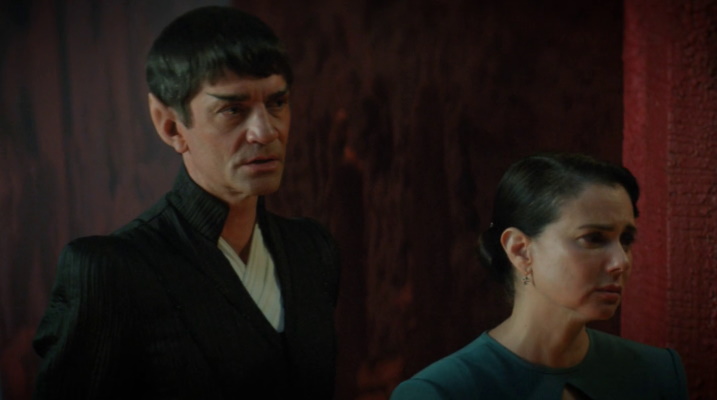
Star Trek: Discovery review – Season 3, Episode 13: That Hope Is You, Part 2

Spoiler Warning: There are spoilers ahead for Star Trek: Discovery Seasons 1-3, Star Trek: Picard, and other iterations of the franchise.

Thirteen weeks have just flown by, haven’t they? Star Trek: Discovery Season 3 premiered in the middle of October – right after Season 1 of Star Trek: Lower Decks came to an end – and now, just after New Year, it’s over. I have to say that I miss the twenty-plus episode seasons we used to get! But that’s just one way that television shows have changed since the 1990s, I suppose.

For the third week in a row, the title of the episode was changed from what had been previously announced. That Hope Is You, Part 2 was previously known as Outside, but immediately after There Is A Tide aired last week, the title was changed. That Hope Is You, Part 1 was the title of the season premiere, and while it seems odd on the surface to call the season finale the second part – especially considering the entire season has been one continuous story – it works well and bookends the season. As an interesting aside, we saw two different numbering styles used for the multi-part episodes this season. Terra Firma and Unification III both used Roman numerals to denote their parts, whereas That Hope Is You uses Arabic numerals. I wonder why that is?

Burnham in That Hope Is You, Part 2.

There Is A Tide was phenomenal last week, and I was hoping for more of the same from That Hope Is You, Part 2. My only real criticism last time was that there seemed to be an awful lot of story left for the finale to get through, and I speculated then that the season may end on a cliffhanger – but that wasn’t the case. The episode was the longest of the season by far, clocking in at almost an hour, and while I would say one of its two storylines probably could’ve used more screen time, That Hope Is You, Part 2 did a reasonably good job at wrapping everything up. It certainly exceeded Star Trek: Picard’s finale in that regard!

I had a great time with That Hope Is You, Part 2… well, for about three-quarters of it. The sequences aboard Discovery that focused on Book, Burnham, Tilly, and other crew members were action-packed and exciting, equalling the heights Discovery reached last week. But the sequences with Saru, Adira, Culber, and Su’Kal didn’t reach that level. This storyline was not my favourite part of either the episode or the season.

Culber, Su’Kal, Saru, and Adira aboard the Kelpien ship Khi’eth.

And we do have to consider the role That Hope Is You, Part 2 has as the season finale. As mentioned, my theory that the season may end on a cliffhanger did not come to pass, so every story thread we saw across the season that hadn’t already been completely tied up was supposed to find a resolution here. The Emerald Chain storyline, which had been teased as early as the premiere and more firmly established by the halfway point of the season, certainly was concluded. And though perhaps it needed more screen time, or needed its sequences spread out over three or four episodes instead of two, Su’Kal’s story was concluded too.

In both of these, though, as well as in the very short, almost blink-and-you’ll-miss-it scenes showing Ni’Var and Trill, we come to what is perhaps the episode’s big weakness. After the main stories – both of them – were more-or-less over, we got an epilogue of sorts that was about six minutes long. This epilogue told us about some incredibly important events, and as you may have heard me say before, it needed to show not tell. In a rapidly edited sequence, part of which was narrated by Burnham in voiceover, we saw or heard that: Trill had rejoined the Federation, Ni’Var was on the brink of doing so, the Emerald Chain has “fractured,” Saru is taking a sabbatical – if he hasn’t outright left Starfleet, Mr Sahil has become a Starfleet officer, Aurellio has maybe joined up with the Federation – but maybe not, Stamets was reunited with Adira and Culber, the Sphere data is safe, and finally, Burnham was promoted and has become Discovery’s new captain.

Burnham was promoted at the end of the episode.

None of these points are problematic at all – in fact, I adore all of them, and the sequence itself had me feeling genuinely emotional. But there was a lot of important story crammed into those final minutes, some of which I really wish had been expanded upon and given their own moment in the spotlight instead of just being briefly mentioned in this epilogue.

Also, this epilogue was the moment where other characters and stories from earlier in the season should have been included, surely? What about the denizens of the Colony from Far From Home, the humans in the Sol system from People of Earth, Nhan, who had been left alone aboard the USS Tikhov in Die Trying, or the people of Kwejian from The Sanctuary? I’m not saying the sequence needed more jammed into its six minutes, but it feels like this was the moment to at least acknowledge the stories that happened across the rest of the season considering That Hope Is You, Part 2 had already tipped its hat to the others mentioned above.

Nhan was absent from the episode and its epilogue – as were several other characters and factions from earlier in the season.

So we seem to have started at the end, which is a little strange! But never mind. Let’s look next at Su’Kal and the Burn. Discovery Season 3 did a lot of things right, and my initial concerns about a “post-apocalyptic” Star Trek series turned out to be largely unfounded. The sense of optimism and hope that are – in my opinion – fundamental parts of the franchise were missing from the bleak, post-Burn 32nd Century – but they were present in Burnham, Saru, the crew of Discovery, Admiral Vance, Booker, Sahil, and many other characters across the season. In that sense the story of the Burn was a success.

The event itself, however, and the resolution to it that we saw in Su’Kal and That Hope Is You, Part 2 just doesn’t sit right.

We’ll come to narrative in a moment, because my primary concern right now is the Burn’s real-world messaging. We have Su’Kal, a man with mental health problems and/or a learning disability, as the unintentional cause of the Burn. There is a sizeable stigma around mental health and learning disabilities here in the real world, and I just feel that Su’Kal being presented as the man who accidentally ruined much of the galaxy plays into some harmful stereotyping. Su’Kal comes across similar to Lenny, the rabbit-loving man from John Steinbeck’s novel Of Mice And Men. It’s implied that Su’Kal is the way he is because of the environment he’s spent his life in, but even so, there’s an obvious literary parallel. Lenny ends up accidentally killing someone in that novel, because he doesn’t know his own strength and he doesn’t realise what he’s doing. Su’Kal has done the same basic thing, only on a much bigger scale.

Su’Kal causing the Burn is not devoid of real-world meaning.

The message this seems to send is what I find at least a little upsetting in 2021. Though Su’Kal is portrayed sympathetically – and I would credit Bill Irwin with a wonderful performance – the sympathy he elicits is more like pity. We look down at Su’Kal as a pitiable idiot, someone too dumb to know what power he had and what it could do. We look at him like we look at Lenny.

People with mental health conditions – a category into which I fall – don’t want pity, nor do people with learning disabilities. Yet Discovery is playing into century-old stereotyping that we really should be trying to move beyond. This season has seen some wonderful storylines that deal with complex issues, but its two attempts to depict mental health – with Su’Kal and Lieutenant Detmer in earlier episodes – just didn’t work. Detmer’s story got so little time that it was basically meaningless, despite being well-intentioned, and Su’Kal’s story just rubs me the wrong way. I feel that the decision to make the Burn the fault of someone in his position was the wrong one, and the message it sends is one I’m not comfortable with.

Su’Kal with Saru.

Su’Kal himself is one aspect of the Burn that I feel didn’t come across well, and I hope my explanation and reasoning make sense to you. But narratively too, the resolution to the Burn feels anticlimactic. There’s a disparity between the epic nature and scale of the Burn and the man who we now know is the cause of it. It feels like a non sequitur; that the Burn cannot logically follow from Su’Kal getting upset – or screaming, as Culber and Adira would explain.

As I said in my review of Su’Kal a couple of weeks ago, there is something uniquely “Star Trek” about this resolution to the Burn’s story. And from that point of view, as a storyline which is perhaps closer to fantasy than sci-fi, it doesn’t feel out of place in this fictional universe, not when you stand it up alongside the storylines of episodes from past iterations of Star Trek such as A Piece of the Action, Masks, Facets, or The Gift. There’s a weirdness to the Burn being a telepathic child’s scream that is, in a peculiar way, something you wouldn’t see outside of Star Trek. I count myself among many Trekkies for whom this weirdness is precisely what was appealing about Star Trek when I first saw it.

Su’Kal’s home for many years – the Kih’eth.

So in a sense, the story of these final few episodes as far as the Burn is concerned fits right in within a franchise that can give us the episodes mentioned above. The Gift, from Voyager’s fourth season, is actually a pretty good frame of reference, as it’s a story which shows Kes’ mental abilities. She’s able to propel a starship thousands of light-years with the power of her mind, and that’s not a million miles away from Su’Kal’s connection to dilithium.

But the Burn was not a single-episode story, nor the kind of one-off story fit for episodic television. Not only did it impact the entire season, but it will continue to have ramifications for Discovery’s fourth season, and for any future Star Trek series or films set in or around this time period. Furthermore, it was a mystery that had been teased for over a year, since the first trailer for Season 3 was shown in late 2019. Expectations had been built up over thirteen episodes, and arguably for more than a year before the season premiered. As much as I can respect the Burn and Su’Kal and their place in the greater Star Trek canon, unfortunately those expectations were not met – at least not for me.

The Burn was set up as a huge and apocalyptic mystery.

The disconnect between the devastating Burn and the small Su’Kal is just too big a gap to bridge at the end of a season that has been so dominated by this one event. It makes sense, and I get it – it’s not that the Burn’s explanation is somehow incomprehensible – and I’m incredibly pleased that the writers chose to make sure the Burn did receive an explanation instead of trying to brush it aside and say it doesn’t matter. But the explanation that we got is one that I feel was weak.

The story of Su’Kal being trapped alone in a disintegrating holo-world, and Saru coming to his rescue is one that could have worked as another of Season 3’s semi-standalone stories, like Georgiou’s illness and trip to the Mirror Universe. It didn’t need to be connected in any way to the Burn in order to be emotional and significant; it was a good story all on its own. By tying it to the Burn and by saying that this is the cause of the Star Trek galaxy’s biggest and worst catastrophe, the overarching story of the season has unfortunately come to an underwhelming end.

The holo-world with its monstrous inhabitant was a very “Star Trek” story in many ways.

It almost feels like the writers and producers came up with the effects of the Burn and how the galaxy would look in its aftermath, and only then tried to come up with a cause. In the best post-apocalyptic stories and the best mystery stories aren’t written that way; Agatha Christie didn’t start by writing the murder and decide on a murderer later, and the Burn should have worked the same way. I’m not saying I know for a fact that they did it this way, but it certainly has that feel. The sheer randomness of the Burn may have been intended to be a shock or a surprise, and the disconnect between the scale of the event and the single individual who caused it may likewise be intentional – but it wasn’t successful.

Because the Burn is really quite unlike any other storyline in Star Trek, it arguably needed a better and more substantial payoff. I’m not saying that it needed to have one of the causes that I speculated about before the season began, nor am I saying that my disappointment and sense of being underwhelmed comes from a fan theory not being met. Instead what I’m saying is that the ultimate explanation needed to be something more than the scream of an upset child.

A recording of the moment the Burn occurred.

Finally on the Burn, its cause was only really explained in a handful of technobabble-heavy lines of dialogue. In Su’Kal, Burnham and Dr Culber had a couple of lines each, and this week Culber and Adira likewise had a scant handful of lines in which they tried to explain what happened. None of these lines of dialogue were bad – though a couple were perhaps heavy on exposition – but combined with the already-underwhelming narrative, the fact that the season’s biggest mystery was resolved with such little discussion again makes it feel as if it were an afterthought instead of the most significant storyline we’ve been watching.

There were some things to like, though. Guest star Bill Irwin put in a wonderfully complex performance as Su’Kal, showing a range of emotions as he wrangled with the idea that his entire life was changing. Despite my criticisms of the mental health aspects of Su’Kal’s story, one thing the writers managed to convey very well was the sense of isolation and loneliness that many people with mental health issues feel. I’ve been in Su’Kal’s shoes, feeling trapped and fearful, and from that point of view the depiction was something understandable and that did a good job conveying its message. Though the current state of the world wasn’t known at the time Season 3 was being written and filmed, there’s also a strong metaphor in someone who feels trapped, isolated, and disconnected, stuck in an artificial world. Many people watching in 2021 can sympathise with Su’Kal far more than they would’ve been able to a year ago.

Many people in 2021 feel trapped and isolated, making this a timely metaphor.

Saru and Dr Culber were both highlights of this storyline too. Both got the chance to show off their sympathetic sides, and while Saru was the focus, as he was someone who had more of a connection to Su’Kal, Dr Culber contributed too. Su’Kal’s ability at the end of the story to push through his fears and to understand what had happened was a result of both of their efforts. Adira didn’t interact much with Su’Kal himself, but it was an inspired choice to put them in this side of the story. I feared that Adira may have been shuffled away to the dilithium planet simply to give Stamets more of an intense emotional reaction, but they contributed to the story both by bringing the lifesaving medication and by helping the others work through some of the puzzles.

Gray becoming corporeal for the first time was also a fun part of the story on the dilithium planet. Having been a phantom presence all season, it was great to see Gray finally able to interact not only with the “real world” but also with other characters. Gray’s presence has yet to be explained – and it was left completely unclear as of the end of the episode whether Gray has been given a new holo-body or if he has returned to being someone only Adira can see. But Gray, despite really only participating in one sequence, did well in That Hope Is You, Part 2, and I hope his status is clarified so he can have a role in Season 4.

Gray and Adira.

So the Burn and the action on the dilithium planet was the side of That Hope Is You, Part 2 that I felt was weakest. Now we come to the bulk of the episode, and I’m happy to say that I had a whale of a time with Burnham, Book, Tilly, Admiral Vance, and everyone else.

Scenes aboard Discovery played out like an action film for the second week in a row. There were some clichés, a couple of confusing moments, and one rather awkward line, but even so it was action-packed fun. Star Trek can do action very well, and it surprises me in some ways to see Trekkies criticising Discovery or the Kelvin timeline films for being “brainless action,” then turning around to heap praise on The Wrath of Khan or First Contact. That Hope Is You, Part 2 was up there with those films and other action-heavy stories in the franchise, and it’s one of the better examples of how Star Trek can be an action-sci fi franchise when it chooses to be.

What was great about this part of the episode’s story, considering how much of a Burnham-cenrtic show Discovery can be, is that other characters got to take turns being the action hero. We certainly got to see Burnham in that role, and perhaps if she’d been alone it would’ve continued the trend of making her, and her alone, the show’s focus. But Tilly and Book in particular got big moments that not only put them at the centre of the action, but gave them genuine agency over the story, driving it forward. Burnham played one role in a larger story as the crew struggled to regain control of the ship – and that’s something the show needs to do more of!

Tilly in command of the bridge crew.

Burnham’s mission to the data core would have been useless had Tilly and the bridge officers not been able to force the ship out of warp, and if Book hadn’t been able to defeat Zareh she would have had a much harder time. So both of them got significant roles to play – even if we could argue that, narratively speaking, it would have been nice to see Tilly be the one to kill Zareh.

I just can’t bring myself to criticise Zareh’s death, though! Book has a loving attachment to Grudge, the beautiful cat who we’ve seen as a constant presence aboard his ship this season. And when Zareh threatened Grudge I got genuinely angry with him, so to see Book use that moment to regain his strength and send Zareh falling to his doom was incredibly satisfying and more than a little emotional. I have several cats, and they’re incredibly sweet animals. No one should threaten a kitty, so Zareh got exactly what was coming to him. And Book’s action hero quip as Zareh fell from the turbolift capped the sequence off perfectly. I honestly can’t fault it. Book got his heroic moment, the creepy, evil Zareh got a fitting end, and Grudge is safe! What more could you want?

“She’s a queen!”

The second action hero quip was Burnham’s, and it just didn’t quite stick the landing in the same way! As Osyraa pushed Burnham into a wall of programmable matter in the data core, she said that she “already tried that [negotiating] with Vance. I won’t make that mistake again!” and then, moments later when Burnham shot and killed her, she responded by saying “Yeah, well… unlike you… I never quit.” And I honestly burst out laughing, because the response to Osyraa was just so unrelated to what she’d said a moment earlier. It feels like it was written in response to a totally different line, and it doesn’t seem to make sense in context of what Osyraa said. Osyraa never mentioned quitting, she never said that Burnham should quit, or that she had quit doing something… so it just doesn’t follow. It’s a non sequitur. The writers wanted to give Burnham an action hero line, but unlike Book’s, which is almost his catchphrase any time someone talks about Grudge, Burnham’s just didn’t make sense.

In fact it reminded me of that moment in Family Guy where they make a big joke about action movie lines. Peter Griffin uses the famous line from Lethal Weapon 2: “it’s just been revoked,” but does so in completely the wrong context. And that’s kind of how Burnham’s line felt here. That might be due to script rewrites and revisions but even so, more attention should have been paid to this line. If we’re comparing That Hope Is You, Part 2 to an action film, this was the climax of the hero-versus-villain story, and if they wanted to give Burnham a hero quip to round it off… it needed to at least make sense in context. And I know that picking on one line is a minor thing. Compared to how well the storyline as a whole worked it’s incidental, but I wanted to highlight it as it made me laugh in the moment.

“It’s just been revoked!”

There are a couple of points from this side of the story that I feel may be prone to criticism, and I want to look at each in turn. First is the sequence in the turboshafts – or rather, in the large empty space beyond the corridors on some of Discovery’s decks. This is new to Star Trek, and while there are spacious areas inside some starships that we’ve seen – particularly in engineering sections – I can foresee that some fans may feel that this huge area isn’t what they expected the inside of the ship to look like. While I don’t personally have an issue with it, and I would suggest it may be connected to engineering, the Spore Drive, or programmable matter as explanations for the large spacious area, I didn’t want to ignore this point, as it does represent a change to how starships in general – and the USS Discovery in particular – have usually been shown.

The second point is Book’s ability to fly the ship. I would argue that Aurellio, Tilly, and Stamets have all set up this moment at points throughout the season, hinting at ways to expand the Spore Drive beyond Stamets, so I don’t think it came from nowhere. I do think, however, that we could have seen a little more of Aurellio talking about or even just mentioning the possibility for empaths to connect to the mycelial network. There was an opportunity for him to have done so last week when he and Stamets talked for some time about Spore Drive options – this would certainly have better set up what was to come. As a story point, though, I don’t dislike it, and perhaps a second Spore Drive can be created for another Starfleet vessel as a result. Other members of Book’s tribe or race may even be able to join up with Starfleet to serve as Spore Drive operators, and even if only Book and Stamets can use it, well at least Discovery now has a backup!

The interior of the USS Discovery.

Osyraa fell into the Bond villain trap of leaving the crew to be killed slowly and then rushing off to do something else. While Tilly, Owosekun, Detmer, Bryce, Rhys, and random dark-haired bridge officer (what happened to Nilsson?) were slowly suffocating, they managed to come up with a plan to regain control of the ship. Burnham gave Tilly an instruction via the intercom and Tilly rallied the crew to set off a bomb in one of the nacelles – knocking Discovery out of warp.

I’ll forgive the minor contrivance of Osyraa leaving them to suffocate. It’s the kind of thing I could imagine her doing, and again if we’re using the action film analogy, it’s something we see often enough. Tilly remained in control of her officers, and handled herself well in what were undeniably difficult circumstances. Her line to them that they didn’t need to join her on what looked to be a suicide mission was very much something we could imagine other Star Trek captains saying – and indeed we have seen other captains in the past telling their senior officers that a mission is voluntary. Despite losing the ship to Osyraa, Tilly stepped up and was a big factor in being able to regain control of it.

Osyraa in command of Discovery.

My only criticism of this side of the story is that the stakes were lowered significantly when no one was killed. Even when it seemed as if Owosekun wouldn’t survive the explosion, a last-second intervention by the Sphere data in one of the remaining DOT 23 robots saved her life. Since returning to the small screen in 2017, Star Trek has not been shy to follow the trail blazed by some other big television projects – like The Walking Dead or Game of Thrones – and kill of major and secondary characters. Star Trek: Picard Season 1 had a pretty big death toll of both new and legacy characters – yet no one at all died in this storyline, despite the superficial dangers posed to the crew. In fact, Ryn was the only casualty on the heroes’ side all season.

Killing a character for shock value or just for the sake of it is not what I’m advocating. But over the last decade or so, the well-executed death of a major or secondary character can add to the stakes of a storyline, making it clear that there is significant danger and emphasising to the audience that quite literally anything could happen. In Star Trek: Discovery, being a major character seems to provide a degree of plot armour, and that risks dropping the tension at some of these key moments.

It seemed for a moment as if Owosekun wouldn’t survive, but she did. And so did every other hero character.

I was pleased to see that Aurellio – the scientist working for Osyraa – wasn’t on board with her methods. But this was one point where perhaps an extra minute or two was needed to show him firmly break away from her and the Emerald Chain and join up with Burnham and the crew. After making his protest and being rendered unconscious, Aurellio didn’t really have much of an opportunity to do or say anything else. We saw him briefly on the bridge later on, but that was it. This character had been set up so well last week that his significantly reduced role this time was just a little disappointing. Hopefully we can see more of Aurellio in Season 4 and beyond.

That Hope Is You, Part 2 went out of its way to show Osyraa at her worst, in order to make her irredeemable and justify Burnham killing her later on. Torturing Book was a big part of that, and the sequence in which she and Zareh used the mind control device first introduced a couple of weeks ago as an implement of torture was truly gruelling to watch – in the best possible way! Both David Ajala and Sonequa Martin-Green put in outstanding performances, and I wanted to highlight how well they played their roles. It’s easy to either under- or over-sell such an extreme moment – both in terms of the pain experienced by the victim and the emotional turmoil their partner is going through when forced to watch – but both actors hit the sweet spot and were pitch-perfect.

Book was tortured in That Hope Is You, Part 2.

Admiral Vance, Lieutenant Willa, and Kovich had some short but interesting moments at Federation HQ as they organised the defence of their base against the Emerald Chain. I was concerned for Vance in particular – if no one aboard Discovery were to be killed, I thought he was probably the writers’ main target! There was organised chaos at Federation HQ as Discovery, under Osyraa’s command, ran amok inside. It was really neat to see the ships battling within this confined space at the beginning of the episode, as well as seeing Osyraa know just where to hit the base to take down its shield wall.

The arrival of the fleet from Ni’Var was one of those stirring emotional moments up there with the arrival of the Kelpiens and Klingons in the Season 2 finale, Riker showing up in the Picard Season 1 finale, or the Enterprise-E sweeping in to battle the Borg in First Contact. I adored this moment, and it felt like the beginning of the Federation coming back together – a payoff to Burnham and Saru’s diplomatic efforts throughout thr season. It was a little early in the story, perhaps, but there’s no taking away from the fantastic way it felt when the fleet arrived.

Admiral Vance watches as the N’Var fleet arrives.

A couple of weeks ago, I said that the end of the season seemed formulaic and obvious – save or neutralise Su’Kal to prevent a second Burn, retake Discovery from Osyraa, and use the dilithium in the Verubin Nebula to power and reunite the Federation. And although I didn’t predict how exciting and action-packed that storyline would be, I was right. The end of the season was mapped out in Su’Kal, and Discovery stuck to the path. Not every show has to have twists and turns and shockingly unexpected moments, but I was still hopeful, even as That Hope Is You, Part 2 entered its final moments, that something different may have come along to shake things up.

For all the reasons given above, the Burn is the least interesting and most underwhelming part of both the season and its finale. However, despite that, I had a truly great time with That Hope Is You, Part 2. It’s true that the story unfolded exactly how I would have expected it to for the last two weeks, and it’s also the case that there were some tropes and clichés along the way. But there’s a reason why these action-oriented stories work, and That Hope Is You, Part 2 hit all the right notes in that regard. It was a solid, incredibly fun, action-packed episode of Star Trek.

Burnham assuming command of Discovery has been a goal that the series has been trying to reach since Season 1. Shuffling Saru off to Kaminar with only a brief explanation would not have been my first choice for getting there, because I feel his character deserved more respect than that. But that’s where we are – Captain Burnham. Her stupid disobeying of orders in the episode Scavengers and her struggle to come to terms with that in Unification III do undeniably undermine her ascent to the captaincy. And perhaps we need to step back when the dust settles and look at Burnham across all three seasons to see whether she really meets the criteria. Right now though, as of the time I’m writing this, her becoming captain not only works well, but it feels great too.

Starfleet has always been willing to bend the rules to accommodate talent; it’s a meritocratic organisation. Admiral Vance made his reasoning plain: Burnham may not always follow the exact letter of the rules, but she follows their spirit. She’s willing to make changes and sacrifices to adapt to the moment she’s in, and those are certainly strong qualifications for becoming a captain. Captains Kirk and Janeway in particular bent or broke the rules numerous times, and Picard, Archer, and Sisko were not immune to that either. Knowing how and when to work around the rules is part of what has always made for a great Starfleet captain. Burnham has that ability – and we’ve seen across all three seasons that she’s a natural leader, too.

“Let’s fly!”

The crew want to follow Burnham. They respected Saru, of course, but they love Burnham and they’re willing to follow her literally anywhere – or to any time. There are lingering issues which I hope will be picked up in Season 4 – notably with Stamets, who still seems unhappy with Burnham after she kicked him off the ship last week. But everyone else is fully on board with Captain Burnham, ready for her to lead them on to new adventures.

Where I criticised her earlier in the season for her lack of commitment to Starfleet, that has been resolved too. She felt that she might no longer fit in within the rigid confines of a Starfleet rulebook and uniform, but it turns out that she has at least some freedom to bend those rules to achieve important goals. And that does not come from nowhere. She earned that right across all three seasons of the show. She can be selfish, and she can be overly emotional, and as we saw in the Season 1 premiere she can be a complete idiot. But with a crew around her to support and advise her, with Book by her side as an emotional foundation, and having settled into her position in Starfleet, I can’t fault Admiral Vance – or Star Trek: Discovery – for putting her in the captain’s chair.

Burnham takes her seat in the captain’s chair for the first time.

If you’d told me three or four weeks ago that I was going to say that, I would never have believed it! But that is the strength of the second half of the season. Beginning really with The Sanctuary and running through to the season finale this week, Burnham has grown in leaps and bounds and the series has put in the work to make it feel that she earned her promotion. Where I called her arrogant and selfish I can now see a character with strength and commitment, and that’s not only because she has seen this character development, it’s also because Discovery took at least some of the focus away from her and allowed other characters to shine.

Discovery isn’t an ensemble show, but giving some significant plot threads to characters other than Burnham and spending time with them instead of largely with her has contributed to getting her to where she is at the end of the season finale. There was a sense in some earlier episodes that no other character would be allowed to do anything other than ride on Burnham’s coattails, and I was pleading with the series to allow someone else to do something of consequence… and then it happened. And not only was the show itself better for it, but so was Burnham. Freed from being the “chosen one” who was somehow destined to play the only significant role, her victories truly feel like her own. She accomplished a lot, not just this week but across the latter part of the season, and the work put into developing her character, stabilising her, and getting her ready for a leadership role ultimately paid off.

Burnham and the crew are ready for their next adventure.

There are, as noted, open questions at the end of That Hope Is You, Part 2. Saru’s status is perhaps the biggest, but I’d also like to know what became of Nhan and whether Earth has been in touch with the Federation. But those questions will have to be left for Season 4 to answer – whenever that may come.

So that was That Hope Is You, Part 2. And that was Star Trek: Discovery Season 3. For the first time in almost six months, there’s no new Star Trek to talk about! But don’t despair, because I still have to bring my Season 3 theories to a close. In addition, over the next few weeks I’ll take a look at the season as a whole, the Burn, Burnham herself, and other things we learned over the last few weeks.

There is more Star Trek just over the horizon – Lower Decks Season 2 may be coming out this year, and will finally get its international broadcast in just a couple of weeks’ time. We also have Prodigy to look forward to this year all being well. And you can bet that there’ll be news about Picard, the Section 31 series, Strange New Worlds, and other Star Trek projects coming before too long. It’s a wonderful time to be a Star Trek fan! Despite some gripes with part of its story, That Hope Is You, Part 2 was a great way to bring to an end this season and to the 23 weeks of Star Trek we’ve been lucky to enjoy.

Star Trek: Discovery is available to stream on CBS All Access in the United States, and on Netflix in the United Kingdom and elsewhere. The Star Trek franchise – including Discovery and all other properties mentioned above – is the copyright of ViacomCBS. This article contains the thoughts and opinions of one person only and is not intended to cause any offence.
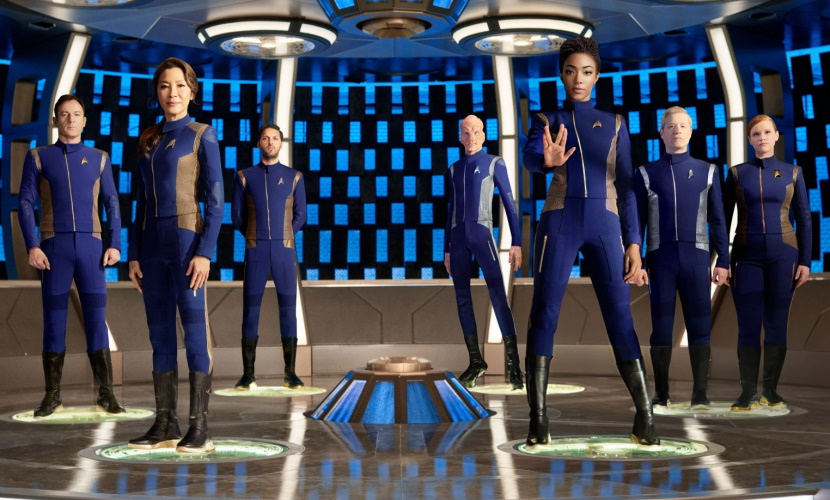
Star Trek: Discovery theories – week 12

Spoiler Warning: There are spoilers ahead for Star Trek: Discovery Seasons 1-3, Star Trek: Picard, and for other iterations of the franchise.

I had a wonderful time with There Is A Tide this week. It was a fantastic episode jam-packed with action and excitement. But when it was over, I couldn’t help feeling that there was a lot left to do in terms of story! It’s possible, as I suggested in my review, that Season 3 will end on a cliffhanger with key storylines deliberately unresolved. If that isn’t the case, however, the upcoming season finale has an awful lot of story left to wade through – and I’m concerned that it may not be possible to give everything a satisfactory resolution.

We’ll have to wait to see what the season finale brings. Until then, we have a few more theories to discuss! This week we have two confirmations and not a lot else. Let’s look at those first before we dive into the main theory list.

Confirmed theory #1: Zareh returned.

Zareh was a character we met at the beginning of the season.

Though his return was spoilt a little by the recap that played before the episode began, I was pleased to see Zareh return. He was a glorified bully when we met him in Far From Home, and despite his defeat by Saru and Georgiou, appears to have been promoted within the Emerald Chain. I felt certain that he would be back considering we didn’t see him killed on screen, and I was right.

Zareh bookends the story of the season in a way – he was the first adversary the crew faced after arriving in the 32nd Century, and he is now a significant opponent as the season draws to a close. I don’t expect him to survive the season finale, but if Osyraa is killed off he may be kept alive to assume command of the Emerald Chain. In the event that the season finale leaves big questions open, we could head into Season 4 with Zareh as a major antagonist – but we’ll have to wait and see!

Confirmed theory #2: Zora (a.k.a. the Sphere data) will help the crew retake the ship.

Awwwwww!

Though we had to wait for the closing scene of the episode to see this theory come true, the Sphere data has allied itself with Tilly and the remaining bridge crew as they hope to retake Discovery.

The Sphere data was seen protecting itself in Season 2 – refusing to allow itself to be destroyed even when Control was coming for it. This season, it stepped in on at least two occasions to help out the crew, and it seemed certain that the Sphere data would not allow itself to be commandeered by Osyraa and the Emerald Chain. It has transferred itself into three DOT robots – which are absolutely adorable – and will help Tilly fight back against Osyraa.

So those theories were confirmed in this week’s episode. Now we come to the main theory list.

Number 1: Aurellio is married to Osyraa.

Are Aurellio and Osyraa an item?

The first of two Aurellio theories is a pretty short and simple one. Stamets noted that Aurellio’s partner is Orion. Osyraa, as far as we can tell, is an Orion. Aurellio and Osyraa speak highly of each other. So it’s at least possible that they are a couple.

This feels almost too obvious – so perhaps it won’t come to pass! There was also a suggestion that Osyraa is much older than Aurellio, which may count against this theory. However, they clearly have a connection, and unless Osyraa is on such friendly terms with all of her scientists, perhaps there’s more going on than just a professional relationship.

Number 2: Aurellio will stand up to Osyraa.

Aurellio.

In my review of There Is A Tide I compared Aurellio to Albert Speer – the Nazi German architect and minister. In the years after 1945, Speer would claim that he knew nothing of the Nazi regime’s crimes, that he was absorbed in his work, and that the atrocities happened without his knowledge. Aurellio, in his conversation with Stamets, seemed to demonstrate a comparable lack of awareness about the Emerald Chain and Osyraa.

However, there were hints through Kenneth Mitchell’s amazing performance that Aurellio is beginning to realise that he’s working for the “bad guys.” Having seen Osyraa murder Ryn in cold blood, as well as threaten Zareh, his loyalty to her and the Emerald Chain may be wavering.

Given that he’s clearly an incredibly clever scientist, he could be very useful to the Federation. If part of the plan for Season 4 involves replicating the Spore Drive so that it can be used to power the Federation, I can see Aurellio having a major role in that story. Or in any other story Season 4 may wish to tell. But first he needs to break free from Osyraa – and I have a suspicion that he will!

Number 3: One of the officers with Tilly will be killed.

Tilly is ready to retake the ship.

When Tilly told the officers with her that they would keep going to the bridge no matter what, was she foreshadowing someone’s demise? With her, as far as I could see, are Detmer, Owosekun, Bryce, Rhys, and at least one other character. Killing any of them would be impactful, as they’ve all been part of the series since the beginning.

Detmer had her own (underdeveloped) storyline this season, and was someone I speculated may be killed off. For several weeks I theorised that she’d meet her end – could this be the moment it happens?

Tilly and the officers with her are about to take on a very difficult and dangerous task. I doubt we’ll see Tilly killed, but any of the others who are accompanying her are perhaps about to meet their end.

Number 4: The Federation’s allies will arrive to help them battle the Emerald Chain.

Burnham in a Jeffries tube.

Before continuing her Die Hard-inspired fight to reclaim Discovery, Burnham sent an emergency transmission to her mother. Assuming this transmission was received, Dr Burnham may begin rallying the people of Ni’Var to aid Discovery and the Federation.

Across the season, Saru and the crew made many friends. Former Federation members like Trill, Earth, and Ni’Var, as well as worlds like Kwejian were all aided by Discovery, something which greatly impressed their respective leaders. Faced with an attack on the Federation, could some or all of these once-united factions rally to Starfleet’s aid?

We saw something similar at the climax of Season 2, with Kelpiens and Klingons arriving at the last moment to help Pike and Saru as they battled Control, so it would not be without precedent. At the very least, I expect Burnham’s mother – who is now a Qowat Milat nun – will want to do something to help, especially given the desperate-sounding tone of the message she received.

Number 5: The Burn will receive a different explanation.

Did Su’kal really cause the Burn?

At the very least, the explanation for the Burn needs to be expanded upon. A couple of throwaway lines, heavy on technobabble, are not adequate to explain the season’s biggest mystery. If it’s true that Su’kal’s telepathic connection to dilithium is what caused the Burn, we need to know more about how and why that was able to happen.

It’s at least possible, given that There Is A Tide sidestepped the Burn altogether this week, that the season finale has a big surprise in store for this storyline. Perhaps Su’kal is not responsible for the Burn after all, or if he is, it’s because he was either genetically modified or otherwise coerced into it by someone else.

This is perhaps more of a hope than anything, because I feel that the Burn’s explanation was poor. I’d like to do a retrospective on the Burn at some point when the season is over, but suffice to say that this mystery had been set up as early as the first Season 3 trailer more than a year ago, and the Burn itself was named in the second trailer before the season premiered. We’ve been wrangling with this colossal event and its mysterious origin ever since, and its explanation – the way things sit right now, at least – is horribly anticlimactic. Su’kal’s story might’ve worked were it a single one-off episode, but not as the resolution to a season-long arc. There’s also, as mentioned, the disturbing implication of a man with severe mental disabilities causing such a disaster, even accidentally.

Number 6: The Burn is the result of a superweapon – perhaps one the Federation or Section 31 built.

The Burn.

Connected to the theory above, perhaps Su’kal either did not cause the Burn at all, or was forced into doing so as the culmination of some kind of superweapon project.

We’ve seen in past Star Trek shows stories about genetic enhancements and shadowy organisations exploiting and weaponising the unique abilities of people. Could there be another dimension to Su’kal? Perhaps he quite literally is a weapon, one designed for this very purpose – to attack the Federation’s enemies (or the Federation) through a coordinated attack on dilithium.

Though it seems like Su’kal is indeed the source of the Burn, another source may be revealed, absolving him of blame. I noted that his “scream” did not actually cause a second Burn – even though characters feared it came close – so perhaps there’s something else at play here that we don’t yet know. That other factor could be this superweapon – and it may be designed to target the Federation’s enemies, like the Borg.

Number 7: There will be a resolution to the story of Calypso (the Short Treks episode).

The USS Discovery as seen in Calypso.

The main point from Calypso which is still unresolved is how Discovery ended up in a nebula abandoned. And if, as has been hinted through the use of the term V’draysh, Calypso takes place sometime around the 32nd Century, how did the ship end up back in time?

The Verubin Nebula initially seemed to offer a partial explanation, but not only was Discovery not present there, the nebula itself is very different to the one inhabited by Zora, so that option seems to be off the table.

I have no clue how this circle will be squared – but it’s still possible that it will be, especially given how much progress we’ve seen toward unpicking the mysteries of Calypso this season.

Number 8: The Spore Drive will become Starfleet’s new method of faster-than-light propulsion.

Discovery makes a Spore Drive jump.

Though we don’t know how Osyraa came to know about the Spore Drive, figuring out a way to roll it out to vessels other than Discovery was a major theme in There Is A Tide. Both Aurellio and Tilly have proposed theories for how the use of the Spore Drive could be expanded, so we have to consider this a possibility.

If the dilithium in the Verubin Nebula is not able to be used to power the Emerald Chain, Starfleet, and other factions, the problem of how to travel faster-than-light still remains. And right now, the Spore Drive is really the only way I can see to allow any of the galaxy’s factions to do so. That’s why Osyraa wants Discovery so badly – not just to use the ship, but to copy its technology.

If, as predicted above, Aurellio turns on Osyraa, he could become instrumental in figuring out how to reverse-engineer the Spore Drive and the tardigrade’s DNA in order to make this a viable option. This could be part of the storyline for Season 4, so if there’s no resolution next week, this theory may simply roll over.

Number 9: A character from a past iteration of Star Trek – such as the Doctor from Star Trek: Voyager – will make an appearance.

I’ve been advocating this theory in some form since before the season premiered. Though we have had some tie-ins with past iterations of the Star Trek franchise – and even seen a familiar entity return depending on how you categorise the Guardian of Forever – it would still be nice to get a major character back in some form.

There were hints this week about the Federation President – a role we’ve seen in past iterations of the franchise – so perhaps we could see a returning character occupy this position. That said, the references to the Federation President served only to allow the familiar character of Vance to conduct negotiations with Osyraa, so that may be a non-starter.

As I said last time, maybe the only way this theory could come true is as a kind of epilogue or coda after the main storylines have concluded; perhaps even as a tease to the events of Season 4. It would certainly be difficult – but not impossible – to bring back a major character from Star Trek’s past at this juncture, given the complicated nature of the story overall. Given that there’s also no clear way that a returning character could have an impact on the story without that impact seeming to come from nowhere, perhaps we won’t see any significant character crossovers this season.

Number 10: The Dax symbiont is still alive.

The Dax symbiont.

This one is looking increasingly unlikely, because the two locations where Dax could have appeared have both seemingly come and gone without them: most notably the Trill homeworld in Forget Me Not, but also Federation HQ in Die Trying. However, there are hints at a lifespan for Trill symbionts that may be exceptionally long, in which case Dax could very well still be alive in the 32nd Century.

Obviously we won’t see Ezri Dax (barring some bizarre time travel/stasis storyline) but the symbiont itself could have lived this long. When Adira “met” the Tal symbiont’s former hosts in Forget Me Not, one was wearing a Star Trek: Picard-era uniform, hinting that Tal may have lived 700+ years. There are production-side explanations for this Easter egg, and as stated the fact that two of the best opportunities so far to meet Dax have come and gone most likely means it won’t happen this season. But I’m sticking to my guns on this one: Dax is alive!

Number 11: Kovich is an agent of Section 31.

Kovich in Terra Firma, Part I.

Kovich was presented as one of Starfleet Intelligence or Security’s senior people – perhaps someone brought in to deal with particularly complicated or dangerous situations. Thus it was a bit of a surprise not to see him this week when Osyraa arrived. His mysterious nature has led me to think he could be an agent of Section 31.

He knew a lot about the Terran Empire, and had access to classified files. He also seems to know more about certain events than he lets on; he allowed Georgiou’s health condition to manifest itself rather than warning anyone, for example, which would seem to be a pretty immoral thing to do!

The main way Kovich could have been revealed as a Section 31 operative would be if the secretive organisation had something to do with the Burn. As noted above, there is still that possibility in some form, but it feels remote. We don’t know if Kovich will be back before the end of the season, especially given how much story the season finale seems to have to get through. If we don’t see him, though, perhaps this theory will roll over to next season!

Number 12: The ban on time travel is being flouted – possibly by secretive elements within the Federation.

The USS Enterprise travelled back in time in The Original Series.

Admiral Vance clearly believes that the ban on time travel is intact and being followed. Kovich indicated that he does too – but I’m not sure how far I trust him. Is he an agent of Section 31?

It’s impossible to un-invent a powerful, useful, weaponisable technology, no matter how hard you try. Considering how crappy the 32nd Century seems to be, are we convinced that nobody at all is using time travel to try to give themselves an advantage? Not the Dominion? Not the Borg? Not Section 31? Seems unlikely to me, though for production-side reasons of wanting to keep the timeline intact and to avoid overcomplicating the plot we might be told this is true.

It’s possible that this theory will roll over to Season 4 if, as seems likely, the Burn is unconnected to time travel.

Number 13: Discovery Season 3 is taking place in an alternate timeline or parallel universe.

The Enterprise-C in Yesterday’s Enterprise.

After the Guardian of Forever’s definitive statement on the issue in Terra Firma, it now seems all but certain that Discovery Season 3 is in the Prime universe – the same one as every Star Trek production from Enterprise to Picard. However, it’s still at least possible that, due to time travel or for some other reason, the Burn was not “supposed” to happen.

Thus the ultimate solution to the Burn and the storyline of the season may be to go back to before Su’kal’s ship entered the Verubin Nebula and prevent that from ever happening, wiping this timeline from existence and restoring the “true” timeline.

I don’t believe this would be a good way to go. As a one-off story, an episode set in a timeline that is ultimately overwritten can work. We can look at episodes like Timeless from Voyager or Yesterday’s Enterprise from The Next Generation. But to wipe away the vast majority of an entire season, including presumably characters like Book and Vance, just feels like too much. It would render much of what the crew did – like helping the peoples of Earth, Trill, and Ni’Var – meaningless, and while it would set up another “blank slate” in time for Season 4, I’d rather see Discovery build on this season’s successes. Even if Discovery and her crew remembered what happened, wiping it all out feels like a bad way to go – but one that’s still possible.

Number 14: The ships at Federation HQ represent the majority of Starfleet’s remaining vessels. And they’re all 120+ years old.

A couple of Starfleet ships move to intercept the USS Discovery.

We didn’t get to see any kind of major space battle between Osyraa’s forces and Starfleet in There Is A Tide, so the status of the Federation’s remaining ships is not really clear. As I’ve been saying for weeks, though, it seems at least plausible that the rump Federation may only have a handful of ships available – with scarce dilithium for fuel, there is no way to maintain a huge armada, even if the ships were undamaged. It also seems reasonable to assume that Starfleet’s shipbuilding facilites were damaged or destroyed in the Burn, and that building new ships has been difficult – if not impossible for the fractured organisation – ever since.

Are there more ships beyond those few docked at HQ (and the two Mr Sahil noted)? And those ships may very well be old – they seemed new and futuristic to Discovery’s crew, but that could all be pre-Burn technology, meaning that Osyraa has the upper hand if the Emerald Chain has developed new weapons and technologies. We saw in People of Earth that quantum torpedoes were still in use, for example.

If there is to be a climactic battle between Starfleet and the Emerald Chain, perhaps we’ll learn more about the remaining Starfleet vessels at that time. If not, well it still seems like a theory that has merit!

Number 15: Saru is going to die.

Saru in his human guise.

There Is A Tide ignored Saru, Su’kal, Culber, and Adira, who were all left behind in the Verubin Nebula. Though they were mentioned – most significantly by Stamets as he pleaded to go to rescue them – the story focused on the battle to retake Discovery and on Vance’s negotiations with Osyraa. Thus this theory was not really advanced in any way.

We don’t know how much time There Is A Tide is supposed to have covered – it could easily be several hours, though, and Dr Culber told Burnham that if more than a day were to pass, there would be “no point” in staging a rescue as they would all be dead. I don’t expect this will be the way Saru would be killed off, but it’s a possibility.

Saru is torn between a desire to help Su’kal and his duty to Discovery. Given that he’s not thinking clearly, perhaps he will make a mistake or take a risk that results in his death. He may sacrifice himself to help Su’kal in some way, or to buy time for Culber and Adira to escape. There are many ways this could play out, but it’s at least a possibility that Saru will not survive the season.

Number 15A: Burnham will assume the captaincy of Discovery.

Burnham in temporary command of Discovery earlier in the season.

If Saru is killed – however that may come to pass – there will once again be a vacancy in the captain’s chair. Tilly as first officer always felt like a temporary thing, as indeed Saru himself explained when he offered her the role, and after losing the ship to Osyraa so easily there’s absolutely no way she could retain the captaincy – or even the XO position.

That would leave the captain’s chair empty with no obvious replacement. Senior officers such as Stamets or bridge crew like Nilsson or Bryce don’t seem plausible for story reasons, and with Discovery being such a Burnham-centric series, she feels like the only option. Well, unless the plan is to bring in yet another new character!

Number 16: Admiral Vance is going to be killed.

Admiral Vance.

Despite standing face-to-face with Osyraa this week, Admiral Vance survived. However, there may be a battle still to come, and it’s at least possible that he – as the man leading the fight – won’t survive the onslaught from Osyraa’s forces.

If the writers wanted to kill of a character we’ve spent a lot of time with this season – but not one of Discovery’s crew – Vance is pretty much the only option. His death could make the conflict with the Emerald Chain feel more impactful, and while I would be sad to see him go as I think he’s been a great character, it would open up the story to go in different directions in Season 4.

Number 16A: Saru will become an Admiral, and Burnham will become captain of Discovery.

Burnham and Saru with Admiral Vance.

Although Su’kal took Saru off the rails, showing us that he isn’t always calm and level-headed, his earlier time in the captain’s chair this season went remarkably well. His diplomatic efforts in particular may yet pay off – bringing former Federation members back into the fold. If that were to happen, perhaps he will be promoted, becoming an Admiral and even assuming the position of Commander-in-Chief of Starfleet if Vance is killed.

If he departs Discovery to head up Starfleet, the captaincy of the ship is once again open. And for the reasons listed above, Burnham seems to be the only real candidate.

As I’ve said in the past, Burnham assuming command feels like a goal Discovery has been trying to reach since Season 1. Perhaps this could be the moment it gets there.

Number 17: Tilly will resign as first officer and Burnham will return to the position.

Tilly sits in the captain’s chair in Su’kal.

Tilly did well in There Is A Tide, and doesn’t seem to have let the capture of Discovery completely ruin her confidence. She led the remaining bridge officers out of captivity and seems well-placed to lead an insurgency to retake the ship.

Despite that, however, she did lose the ship to begin with – and Osyraa captured Discovery from her with ease. It seems unlikely she could retain her position as First Officer, and while I doubt it will be stripped from her, she may very well choose to resign the position. It feels as though her arc over these few episodes will be to recognise her own lack of experience and unsuitability for command. She may grow into that role in the future – and perhaps Captain Tilly will be a Star Trek series in a few years’ time! But right now she clearly isn’t the right fit.

If Saru survives and remains in command – which he very well may, it has to be said – that would open up the first officer’s position. Burnham is again the logical candidate, despite the broken trust between her and Saru. She advised him to remain with Su’kal, speaking honestly to him in that moment, and perhaps he will recognise that and reward her for it. Now that she seems to have put her doubts about her role in Starfleet aside, she would be a good first officer.

Number 18: Saru, Burnham, or somebody else will use the Guardian of Forever to send the USS Discovery back in time.

The Guardian of Forever in Terra Firma, Part II.

Assuming that the Red Angel suit is truly gone, and that no one is violating the ban on time travel, the Guardian of Forever is the only way to travel through time that we know of in the 32nd Century. While I can see no pressing need to send Discovery back in time at this juncture, if such a need arose, the Guardian of Forever is about the only option for doing so.

I wrote in my review of Su’kal that the route to the end of the season feels “formulaic” – defeat the Emerald Chain, save or neutralise Su’kal to prevent a reoccurrence of the Burn, and use the dilithium planet in the Verubin Nebula to power the Federation, giving it the (literal and figurative) fuel to bring wayward planets back into the fold. There Is A Tide began the process of retaking the ship but didn’t complete that story, so the end of the season is still up in the air.

Even though I can’t foresee a reason why, it’s possible Discovery will need to go back in time, and the Guardian of Forever could help with that.

Number 19: Dr Issa is a descendant of Saru’s sister Siranna.

Saru regards the hologram of Dr Issa.

The actress who played Dr Issa, Hannah Spear, also played Saru’s sister Siranna in Short Treks and in Season 2. Why bring her back to play a different Kelpien – especially considering they look identical? My guess is that there is a familial connection there – Dr Issa may be a distant descendant of Siranna.

Though Saru was – for some reason – reluctant to share this information, the glowing patches seen on Dr Issa indicated pregnancy. Is this a trait all Kelpiens have? If so, why cover it up from the crew? Perhaps the answer is that the glowing patches are something only some Kelpiens have – such as those in Saru’s family. That could be how he knew what the glowing spots meant, and why he didn’t volunteer that information sooner.

I should note that it remains a distant possibility that Dr Issa and Siranna are meant to literally be the same character; that somehow, post vahar’ai Kelpiens live very long, or for some other as-yet-unknown reason. But I think a family connection is more likely.

Number 20: The dilithium planet will be destroyed.

The dilithium planet.

The dilithium planet reminded me at least a little of the Genesis planet in Star Trek III: The Search for Spock. That planet was similarly dangerous and unstable, and was ultimately destroyed. Could the dilithium planet in the Verubin Nebula share its fate?

The main reason why I consider this theory at least plausible is that it would be a major twist on the expected end to the season. Rather than the ridiculous amount of dilithium being used to restore the Federation, it would instead be destroyed, leaving the post-Burn galaxy still with limited travel options.

This in turn could set the stage for Discovery’s Spore Drive being duplicated and rolled out across the fleet – as we discussed above.

Number 21: The “monster” is the real Su’kal.

The “monster” which inhabits Su’kal’s holographic world.

The “monster” which inhabits Su’kal’s holo-world is interesting. Why would his mother or the other Kelpiens programme such a creature? Yes it’s a legend from Kaminar, but to create a holographic monster in a programme designed for a child? They may not have had long to build the programme – which explains the basic nature of some of the other holograms – so why go to all the trouble of creating this one? And why doesn’t it flicker or glow in the same manner as the others, nor seem to have degraded over time?

My theory is that the so-called “monster” – which has a Kelpien appearance – is the real Su’kal; old, decrepit, and badly mutated by a lifetime of radiation exposure that can supposedly kill within hours. The “monster” did not behave like a hologram, did not appear like the other holograms, and when Burnham encountered it it seemed to regard her with an almost-human curiousity.

Add into the mix that Su’kal appears to be far too young to have been present when the Burn occurred – 120-125 years earlier – and I think we have a solid theory.

Number 22: The “monster” is Dr Issa.

Could the “monster” be Su’kal or his mother?

Another possibility for the true identity of the “monster” is Dr Issa, Su’kal’s mother. Though age is again a problem, if Kelpiens post-vahar’ai are especially long-lived she may have survived this long, but without the same level of protection from the radiation she may have mutated and been burned by it. The question of Dr Issa is interesting – was she just a basic plot device; a lure to drag Saru to the nebula? Or is there more to this character than a fraction of a distress call and her son?

The “monster” is one of the most interesting elements to come out of Su’kal, in my opinion, and there seem to be clues that all may not be as it seems. Obviously this theory and the one above can’t both be right – but even if neither are true, there could be more to the “monster” than we expect.

So that’s it. My final batch of theories as we approach the season finale. This won’t be my final theory post; next week after the finale has aired I’ll be back to check out any confirmations or debunkings, and perhaps to set the stage for any Season 4 or spin-off theories that I have. Then, later in the year, I may revisit some of my theories from this season to assess what I got right and got wrong! I did something similar for Star Trek: Picard a few months ago, and it was fun to go back to some of my theories knowing how the story of the season played out. So stay tuned for that!

There’s only one remaining episode before 23 weeks of Star Trek comes to an end. All being well there will be more Star Trek to come this year – both the second season of Lower Decks and the first season of the kid-friendly show Prodigy are, as far as we know, targeting a 2021 broadcast. Discovery Season 4 has entered pre-production, and depending how things go for all sorts of reasons, it’s possible we could see it before the end of the year. But that’s by no means certain!

Vance, Eli, and Osyraa during their negotiations.

Last week I felt that the road to the end of the season was obvious: save or neutralise Su’kal to prevent a second Burn, retake Discovery from Osyraa, and then use the dilithium planet in the Verubin Nebula to rebuild Starfleet and the Federation. There Is A Tide really only focused on one part of that – the battle over Discovery – and even then left it unresolved. As long as Osyraa remains in charge there seems no hope of a Federation-Emerald Chain treaty, and since we saw nothing from Saru and Su’kal this week I have to say it doesn’t feel like much has changed on that front. The only thing I would say that has changed my mind on how “formulaic” the end of the season risked feeling is that we may very well not see a resolution to the story, and we may instead be heading for a cliffhanger. We’ll have to see!

Please remember that these theories are just a bit of fun. Some may seem plausible – or even highly likely – but that doesn’t mean that this is the way the story will unfold. I’m just a guy with a website, I’m not claiming to have any “insider information,” nor am I saying that the theories postulated above will come true. No fan theory is worth getting so invested in that the actual story becomes disappointing or upsetting. Personally, as much as I love feeling like I predicted something that later appeared on screen, I also truly love being surprised by Star Trek and other franchises. That doesn’t mean writers should make silly or arbitrary decisions purely for shock value, but it does mean that when a theory of mine falls flat on its face, far from getting upset I revel in that. If we could all remember to take fan theories with a healthy pinch of salt, maybe there’d be a little less toxicity in certain areas of the fandom.

Star Trek: Discovery is available to stream on CBS All Access in the United States, and on Netflix in the United Kingdom and elsewhere. The Star Trek franchise – including Discovery and all other properties mentioned above – is the copyright of ViacomCBS. This article contains the thoughts and opinions of one person only and is not intended to cause any offence.

Star Trek: Discovery review – Season 3, Episode 12: There Is A Tide…

Spoiler Warning: There are spoilers ahead for Star Trek: Discovery Seasons 1-3, Star Trek: Picard, and for other iterations of the franchise.

For the second week in a row, there was a last-minute change in the title of an episode. Previously known as The Good of the People, this week’s episode was retitled There Is A Tide… which is a line from Shakespeare. It’s been a long time since I studied the great bard, but this line is taken from a longer passage in Julius Caesar in which the character Brutus speaks of missed opportunities and the need to seize the “high tide” of life; acting when the moment presents itself or missing out and never achieving greatness. Epic stuff, right?

Last week Su’kal left me with mixed feelings, and I said that we needed to see its storylines play out to their conclusion before delivering final judgement. Despite that, I was critical of the technobabble explanation given for the Burn, as well as how easily Discovery was captured by Osyraa. I felt the final act of the season risked becoming formulaic, and its storyline may have been telegraphed ahead of time.

I wasn’t completely sold on Su’kal last week.

There Is A Tide was an action-packed thrill ride from start to finish, with some gut-wrenching choices for Burnham and Book as well as some desperately-needed development for the villainous Osyraa. I’m not 100% sure all of it made perfect in-universe sense; why, after all, would Osyraa take hostages if she sought an armistice? But aside from that, it was a thoroughly enjoyable episode.

What it lacked, though, was any advancement of last week’s primary story: Su’kal, the Burn, and those left behind in the nebula. With only one episode left, we need to have those storylines wrapped up in addition to the Emerald Chain-Federation conflict as well as seeing our crew retake the ship. Or do we? Could Discovery be setting up a big season-ending cliffhanger? Right now that feels like a real possibility. Beginning with The Next Generation’s Season 3 finale, The Best of Both Worlds, Star Trek has seen fourteen seasons end in such fashion – including Season 2 of Discovery.

Aurellio and Osyraa.

As great as There Is A Tide was, it’s worth acknowledging the absence of any advancement of the Su’kal-Saru-Verubin Nebula story. It absolutely could be because there’s a feature-length episode or cliffhanger to come next week, but if that doesn’t happen I’m concerned that There Is A Tide has left the season finale with a huge amount of narrative to get through. I criticised the two-part finale of Star Trek: Picard for rushing too much and skipping over potentially interesting story threads, and I really hope Discovery won’t have the same issue.

There Is A Tide sidesteps the Burn altogether. While the event was discussed – notably by Osyraa and Admiral Vance – the Burn once again was not centre-stage. If there is to be any hope of a proper resolution to what has been the biggest mystery of the season beyond the couple of lines of technobabble we got last week, next week’s episode has a lot of work to do. And that really summarises my concern: taken as a standalone piece, There Is A Tide was non-stop excitement, action-packed, and fantastic… but by the end of its forty-six minutes, there remains a lot of work to do in terms of narrative.

Burnham led an action-packed story in There Is A Tide

So that’s enough about what may or may not happen in terms of the narrative structure next week. Let’s get into what There Is A Tide did right. First up, Osyraa. In her two appearances thus far, Osyraa has been flat, one-dimensional, and boring. Worse, she appeared to go from an easily-defeated cardboard cut-out adversary to a completely overpowered supervillain in between her two appearances. I didn’t find her compelling or even interesting; with no motivation beyond “I’m evil and I like it” she was just as bad as – if not worse than – Mirror Georgiou.

There Is A Tide changed that. Though some issues with Osyraa remain, the episode expanded on her character in a huge way, giving her a lot to do and showing off some genuine complexity and nuance. I’m not fully sold on her plan – which seems to have been to capture Discovery and use the ship and crew as leverage to force the Federation into… an alliance? But the way she went about it, both on the ship and at Federation HQ in her meeting with Vance provided some sorely-needed interest to her character.

Osyraa finally got some character development.

We knew from Ryn a few episodes back that the Emerald Chain was running out of dilithium, and it’s this shortage that forced Osyraa to the negotiating table. While we don’t see the precise nature of her proposals, Admiral Vance considered it impressive that she was willing to offer such terms. Her motivation for doing so is, as the episode’s original title suggests, “for the good of the people.” Osyraa’s plan seemed to offer a trading arrangement and non-aggression pact with the Federation, and she made reference to one former Federation outpost that has already been trading with the Emerald Chain.

There are a couple of points from Admiral Vance’s response to consider, and both have to do with putting principles ahead of being practical. Burnham, as we’ve seen through her actions this season, is very much someone who will work around regulations and rules where necessary to get the right outcome – the ends justify the means. Vance, on the other hand, keeps his principles even if it means problems for himself and the Federation. Firstly he scuppers the deal by adding a requirement he knew Osyraa could not agree to – her standing trial for what he regards as her crimes. But secondly, and perhaps most interestingly, he allowed Osyraa to leave.

Admiral Vance rejected Osyraa’s proposal.

Organisations like the Emerald Chain – at least, the way it has been presented thus far – are often cults of personality, where a strong leader has all the power and influence. As we have seen many times both in history and fiction, the removal, arrest, or even embarrassment of such a leader can bring down their entire organisation. And so it is with Osyraa. If Vance had arrested her, detained her aboard Federation HQ, her underlings wouldn’t know what to do. It would have given him leverage to negotiate the release of Discovery and the crew, and it wouldn’t have done any harm to Federation-Chain relations given that the treaty was already a non-starter.

But I’m not criticising his decision as a narrative point. I think what we have with Vance is a contrast, not only to Burnham but to the way Saru was acting last time – both are impulsive, emotional, and bending the rules. Vance is steadfast – the Federation’s ideals and principles are not to be compromised, even if that means making life harder for himself and the Federation. While Burnham’s storyline in There Is A Tide is far more exciting, I would argue that Admiral Vance is the one who best embodies what Starfleet and the Federation are all about.

The negotiations were short.

At the end of the day, isn’t that what the story of Season 3 has tried to be about? Rediscovering Starfleet’s values and placing them front-and-centre. That’s what Saru has tried to do with Earth, Trill, Ni’Var, Kweijan and so on. It seems at least plausible that these forces may come to the Federation’s aid if there’s a battle or war – like the Kelpiens and Klingons did against Control at the climactic fight in Season 2. If they do show up, it will be because they were inspired by Saru, Vance, and the principles they stick to.

On the other hand, as Burnham and other main characters have shown throughout Discovery’s run, rigid adherence to rules and principles isn’t always the right way to go. Compromise is sometimes needed – and Vance bottled a chance to do so. There’s a real-world message here, one which is a little odd given the polarising times we live through: moral absolutism is okay. Recent political events have reminded us of the need for compromise and to find ways to bridge the gap, yet Discovery seems to be saying that it’s fine to stick to idealism even if that means division and fighting continue.

Vance offered Osyraa terms that he knew she could never agree to.

Perhaps that’s enough politics for now! One character I loved in There Is A Tide was Aurellio, a man with a fittingly Shakespearean name! When it was announced before the beginning of the season that Kenneth Mitchell, who had played Kol in Season 1, Tenavik in Season 2, and a couple of other characters both in Discovery and Lower Decks, would be returning, I wasn’t sure how it would work. Mitchell has recently been diagnosed with ALS (motor neurone disease). There was no way for the series to ignore that – Mitchell uses a wheelchair now – but I was hopeful to see a character and storyline that treated disability respectfully. As you may recall if you’re a regular reader, I’m disabled myself.

I adored Aurellio, and Mitchell’s performance in the role. The way the series incorporated his standing-wheelchair was tasteful and sweet, and Aurellio being disabled was neither ignored nor tokenistic. The fact that Aurellio has – as he puts it – “a genetic defect” was not the only aspect to his character, who comes across as a scientist or technocrat who is unaware of the extent of the criminality and depravity of the organisation he works for. Shielded from the day-to-day running of the Emerald Chain, Aurellio is – perhaps wilfully but perhaps not – able to concentrate solely on his work.

Aurellio was a wonderful new character and a great addition to the season’s story.

Though this will not sound like a compliment, I regard Aurellio as being Albert Speer – or at least, the public persona claimed by Speer after 1945. There are people like Aurellio even in the worst organisations and regimes – blind to the worst aspects, focused only on their own small work. Often in these stories, a character like this will step up once their eyes are opened to what’s going on beyond the confines of their laboratory – and perhaps that’s something we’ll see next time or in a future story. I’ll save discussions of Aurellio’s possible future for my theory post.

Aurellio was tasked with working on the Spore Drive – though it remains unclear how the Emerald Chain came to know as much about it as they do. To that end he was teamed up with Stamets, and their tête-à-tête in Engineering was fascinating to watch; both Mitchell and Anthony Rapp put in outstanding performances during this sequence.

The conversation Stamets and Aurellio had was riveting to watch.

The plan Aurellio had to try to recreate the DNA of the tardigrade seems to have merit – or at least no less merit than any other technobabble in Star Trek. Perhaps with Stamets’ support it could be taken more seriously both by Starfleet and the Emerald Chain. Stamets objected, saying he believes it is not possible and that the tardigrades are extinct – but neither of those claims are supported by on-screen evidence. We’ve seen tardigrades referenced as recently as December 2019 in the Short Treks episode Ephraim and Dot. The nature of that story’s relationship to canon is not clear – but tardigrades are still alive and kicking within the Star Trek mythos, at least.

Earlier in the season Tilly was said to be working on a plan for a non-human navigator to replace Stamets; this is something that, while never followed up on, would have allowed the Spore Drive to perhaps be rolled out to other vessels. It’s understandable why Stamets wouldn’t want to discuss any of this with Aurellio – but we’ve seen in the past that he’s very happy to talk about his creation with other scientists.

Will Aurellio’s plan work?

Besides the plot-heavy conversation about the Spore Drive, two things stuck with me from the Aurellio-Stamets conversation. First was that Aurellio mentioned several times that he’s in a relationship and has children. Stamets figures out he’s in a relationship with “an Orion” – it’s not unreasonable to assume that this person could be Osyraa herself, but we’ll save that for my theory post! Next was that Stamets claimed to have a child of his own. Since, as far as we know, Stamets and Culber do not have any children, this appears to be a reference to Adira, which was incredibly sweet. There has been a parental vibe between Stamets and Adira for much of the season, so for Stamets to say it aloud here was wonderful.

This would go on to be at the heart of the Stamets-Burnham argument later on, with Stamets arguing for a return to the Verubin Nebula to save Culber and Adira, but Burnham insisting he needs to get off the ship to prevent Osyraa using him to take Discovery away from Federation HQ. Rapp put in his best performance of the season so far in There Is A Tide, especially as he desperately argued with Burnham to remain aboard the ship.

Burnham ejected Stamets from Discovery.

That scene was truly heartbreaking. Of all the moments in There Is A Tide, the sequence between Burnham and Stamets was perhaps the shortest, which is a shame; it could certainly have been expanded by a couple of minutes. But a lot was packed into their time together, as Burnham rendered Aurellio and a guard unconscious in order to get Stamets off the ship. She knew that by doing so she was endangering Saru, Culber, and Adira, but when faced with the prospect of Osyraa and the Emerald Chain keeping control of the ship she evidently deemed the sacrifice worth it.

Stamets’ protests as Burnham prepared to eject him from the ship grew more and more desperate, until in his final moments he seemed resigned; cursing her for what she was doing. Anthony Rapp ran the gauntlet of emotions in his scenes this week, and after Stamets hasn’t has that much to do across the season, it was wonderful to see him put in such an outstanding performance.

Stamets argued with Burnham about rescuing Culber and Adira.

So we come to Burnham. This review is surely not going to be the first time you’ve heard this, but her story this week was basically Star Trek’s answer to ’80s action film (whose Christmassy status is debated) Die Hard! Crawling around in the Jeffries tubes and conversing with Zareh on the radio was clearly inspired by Bruce Willis’ character of John McClane, who spends much of Die Hard similarly sneaking around and conversing with his adversary by walkie-talkie. The Star Trek franchise has had many action-packed stories and moments over the years, but Burnham’s entire storyline this week has to be one of the best.

As I’d been predicting since his first appearance, Zareh was back. His return makes it feel as though the story of the season is beginning to come full-circle: we started with the revelation of the Burn and the initial conflicts with Emerald Chain couriers, and we’re ending with the Chain and the resolution to the Burn. Zareh bookends the season in a way, and I like that. It gives something more to the story than in Burnham was just facing off against a new unknown goon. The only drawback is that Zareh didn’t get to see Georgiou or Saru – the two characters who wronged him worse than Tilly.

Zareh made his return in There Is A Tide.

At the beginning of Burnham’s story we saw her and Book navigating a “transwarp tunnel.” Whether this is part of the Borg network or not is unclear – as is the fate of the Borg, come to that. It was convenient that this network leads right to Federation HQ, but I suppose we can forgive such contrivances within the story! Book’s ship crash-landing was a more explosive and dramatic version of the shuttle crash in Star Trek V: The Final Frontier. There was also a callback to Voyager, where Borg drones were ejected into space in a manner similar to Burnham kicking one of Zareh’s henchmen out into the vacuum of space. I appreciate that there are these little thematic, visual, or narrative nods within Discovery, even when the show isn’t overtly trying to relive Star Trek’s greatest hits.

It was horribly unfortunate for Burnham that, in her first encounter with one of Zareh’s men, she got stabbed. And my gosh that stab was absolutely brutal! Discovery has been much more gory and visceral with some of its depictions of injuries when compared with past iterations of Star Trek, and this was certainly one of the most visually brutal. The camera work and direction showed just how painful Burnham’s wound must’ve been for her, and the follow-up as she cauterised the wound with a phaser was equally gruesome. Wonder why she didn’t use a medical kit? Compared with the dodgy CGI involved in Mirror Burnham’s death a couple of episodes back, this injury was so much better from a visual standpoint, and worked perfectly within the story.

Burnham suffered a major injury while battling the Emerald Chain.

The injury likewise harkens back to Die Hard, as John McClane suffers injuries to his feet from walking on broken glass in that film. Both characters – Burnham and McClane – were left hobbling by their respective wounds, trailing blood as they crawled and snuck around. I have to assume these Die Hard throwbacks were deliberate on the part of director and Star Trek legend Jonathan Frakes. It’s by no means a carbon copy of that film, but anyone who’d seen Die Hard would struggle to miss the similarities!

Burnham succeeds in her initial objective – to free Stamets and smuggle him off the ship. However, the task of retaking the ship and defeating Osyraa and Zareh is pushed back to next week. Burnham got the bulk of the action this week, but she wasn’t the only one who got exciting scenes. Tilly and the secondary characters from the bridge managed to escape their confinement and defeat their guards, and the morse code tapping was another reference to The Final Frontier – and not to mention a very clever way to outwit the henchmen guarding them!

Burnham in a Jeffries tube.

Ryn, who was initially with the group of bridge officers, lost his life by Osyraa’s hand. This might be the moment that pushes Aurellio to potentially switch sides, or at least to stand up to Osyraa – but we’ll save that for my theory post! I was genuinely shocked by his death, and for a split-second it seemed as if Book, who was also present, was going to be the one Osyraa killed. After he and Burnham confessed their love for one another earlier in the episode, it would have been a tragic end to their relationship. I’m hopeful that Book will survive the season, giving Burnham some stability and emotional guidance going forward.

The final revelation of the episode was the Sphere data had transferred itself into at least three DOT robots. These cute little droids had been part of the show all season long, seen in the background or making repairs to the ship, and I’m glad they get a moment to be front-and-centre. I absolutely need a plush DOT though, so Star Trek merchandising team take note!

The DOT 23s are adorable and I love them.

Tilly didn’t allow the loss of the ship while under her care to compromise her, and she led the remaining crew in a creditable fashion as they escaped and linked up with the DOTs. I felt sure that the Sphere data would find a way to help, and this seems to be the method it has chosen. Seeing the cute little robots address Tilly as “captain” was a strangely emotional moment, and came just after Detmer, Rhys, Bryce, and Owosekun had all pledged to follow her. The crew sticking together – joined by the DOTs – was a hopeful note to end the episode on.

So that was There Is A Tide… which is the penultimate episode of the season. It was absolutely fantastic, with complex themes, great performances, and plenty of action as the season approaches its climax. My only real points of criticism come from what wasn’t present – most notably the action in the Verubin Nebula – and whether there might be a little too much left to get through if the season finale is to wrap everything up neatly. Beyond that, however, I can hardly find a single fault.

Tilly is ready to retake the ship!

Osyraa got the expansion her character has needed since she was introduced, which was fantastic. Vance got to show off his negotiating skills. Tilly remained steadfast in command despite her “bruised ego” after losing the ship. Aurellio was a wonderful new character with depth. Anthony Rapp put in the performance of the season as the emotionally crippled Stamets. And Burnham got her very own Die Hard story, an action-packed adventure as she tried to save the ship from Osyraa and Zareh. There was so much going on in There Is A Tide, and all of it was wonderful.

This episode may be the high point of the season so far – an award I would have previously given to Far From Home. Jonathan Frakes never fails to deliver when he’s in the director’s chair, and this was a fantastic, well-written episode that allowed him to shine. There are a lot of open questions as of the end of the episode; hopefully the season finale can either provide satisfactory answers or set up Season 4 to bring about a resolution. I cannot wait for the end of the season – but it will be a bittersweet moment as it will bring an end to 23 straight weeks of Star Trek which began back in August!

I hope you had as much of an enjoyable time with There Is A Tide as I did! Come back next week for my breakdown of the season finale, and stay tuned for much more Star Trek here on the website as we head into 2021.

Star Trek: Discovery is available to stream on CBS All Access in the United States, and on Netflix in the United Kingdom and elsewhere. The Star Trek franchise – including Discovery and all other properties mentioned above – is the copyright of ViacomCBS. This article contains the thoughts and opinions of one person only and is not intended to cause any offence.

Star Trek: Discovery theories – week 11

Spoiler Warning: There are spoilers ahead for Star Trek: Discovery Seasons 1-3, Star Trek: Picard, and other iterations of the franchise.

Su’kal was an interesting episode. It’s also one that, as I noted in my review, is hard to judge fairly before we know the ultimate outcomes of several of its key story points. I’m split on the revelation of the mentally challenged Kelpien Su’kal being the cause of the Burn – the biggest disaster in galactic history. While on the one hand it’s an interesting way to go, and one that is similar in some respects to older Star Trek stories, on the other hand it’s anticlimactic, coming in the eleventh week of the season. There’s a huge disparity between the small, terrified Su’kal and the Burn – an event which caused devastation on a galactic scale and destroyed the Federation. And there is a worrying message underneath the sci-fi trappings, one which risks further stigmatising mental illness and those with learning disabilities.

But that’s enough about that for now. Read my review if you want my full thoughts on Su’kal and what it brought to the table. We’re here for theories! And there’s a lot to get through this time. We got two confirmations, five debunkings, and there’s also one theory I’m choosing to retire. Let’s briefly look at each of these before hitting the main list.

Confirmed theory #1: The Emerald Chain will attempt to steal the USS Discovery and/or the Spore Drive.

Discovery held captive by Osyraa’s flagship.

Aside from the revelation that Su’kal caused the Burn, this was the biggest event in the episode. Osyraa – the Emerald Chain’s leader – showed up at the Verubin Nebula aboard her flagship and was able to very easily capture Discovery. How she came to know about the Spore Drive is unclear, as is how her ship magically became so powerful since its last meeting with Discovery. However, she not only attempted to capture Discovery and the Spore Drive this week, she succeeded.

Confirmed theory #2: The Emerald Chain will attack Federation HQ.

Osyraa set course for Federation HQ.

After capturing Discovery, Osyraa set out to her next objective – Federation HQ. Though this attack didn’t take the form I expected, Osyraa is headed there to take on Starfleet. Whether she will pull her forces away from Kaminar to join her as her flagship and Discovery travel to Starfleet HQ is not clear, but it would be a reasonable assumption. We will see exactly what happens next time, including how successful her attack is. But we can consider this theory confirmed.

Debunked theory #1: A time-travelling (or parallel universe) USS Discovery is at the centre of the nebula – and may be responsible for the Burn.

The USS Discovery.

As far as we can tell, only the Kelpien ship was in the Verubin Nebula. Given Su’kal’s connection to dilithium and the Burn, it certainly seems as though this is the way the story of the season is going. Additionally, the nebula looks very different from the one encountered by Craft in Calypso, meaning the chances of a crossover between that story and this one now seems remote.

It was an increasingly distant possibility, especially after the discovery of the Kelpien ship. The departure of Georgiou – who was the character I suggested may have taken Discovery back in time in the event that this theory was true – also decreased its probability. With only two episodes remaining, Discovery having already entered the nebula, and with an explanation for the Burn at least halfway explored, changing tack now to suddenly put the USS Discovery in the nebula would be difficult to pull off at best.

Debunked theory #2: A familiar starship is at the centre of the nebula – and may be responsible for the Burn.

The USS Cerritos from Star Trek: Lower Decks.

As above, it seems certain that the explanation for the Burn lies with Su’kal and the crashed Kelpien ship. Between continuing to explore these story threads and depicting the battle to retake Discovery from Osyraa, there is no time left in the remaining couple of episodes to suddenly drop in another familiar starship and give such an important moment the respect it needs.

As such, we can consider this debunked.

Debunked theory #3: The Red Angel suit is at the centre of the nebula – and may be responsible for the Burn.

The Red Angel.

As above, it’s the Kelpien ship in the nebula – and as far as we can tell, not much else. While the prospect of the Red Angel suit accidentally causing the Burn was a fascinating one, it may have been a bridge too far for Discovery in the end. As Saru and Culber remain behind to help Su’kal, and with everyone else off trying to retake the ship, there seems to be no place for the Red Angel in this storyline.

Debunked theory #4: The name “Burn” is derived from the name Burnham.

Michael Burnham did not cause the Burn!

This theory was intrinsically linked to the one above. As I noted the first time I discussed the Burn, it was odd, in a show that has always put Burnham front and centre, that there was a catastrophic event which happened to share part of her name. It seemed at least possible that there would prove to be a Burnham connection, just as there was with the Red Angel in Season 2. However, with the discovery of Su’kal and the Kelpien ship, it seems impossible for the story to go in a Burnham-centric direction this time, which is nice!

Debunked theory #5: Tilly is going to go rogue.

Tilly in the captain’s chair.

When Tilly became first officer, I was struck by one word in particular: “compliant.” That’s what Tilly thought Saru considered her to be, and I speculated that she may have ended up disobeying orders in a future story. However, it now seems clear that the reason Tilly was chosen was to be an inexperienced commander, making Osyraa’s victory and capture of Discovery more plausible. With Discovery under Osyraa’s control and Saru away on the Kelpien ship, it’s hard to see how this could pan out.

So those theories are considered debunked – even if, technically, we didn’t see 100% confirmation on all of them! Before we hit the main list I have one theory that I’m choosing to retire, and it’s connected to two theories above.

Retiring theory: Burnham’s Red Angel suit has been stolen.

Burnham with the suit on Hima in That Hope Is You.

With the Red Angel suit clearly not in the Verubin Nebula – and as far as I can tell given only two episodes remain, not connected to the story of the season at all – I’m retiring this theory. Burnham set the Red Angel suit to self-destruct after delivering the final Red Burst for Pike and Spock to see, and as we saw in the finale of Season 2 they got the message.

In order for someone to have been able to capture it, they would have had to know exactly when and where the suit would be, and if time travel has indeed been outlawed – as Admiral Vance told us – no one would be able to recover the suit. Thus we can assume its mission is complete and it was destroyed.

So that theory has been retired – and that brings this week’s theory massacre to an end! Now let’s jump into the list of theories I have as we approach the final two episodes of the season.

Number 1: The “monster” is the real Su’kal.

Is this the real Su’kal?

The “monster” which inhabits Su’kal’s holo-world is interesting. Why would his mother or the other Kelpiens programme such a creature? Yes it’s a legend from Kaminar, but to create a holographic monster in a programme designed for a child? They may not have had long to build the programme – which explains the basic nature of some of the other holograms – so why go to all the trouble of creating this one? And why doesn’t it flicker or glow in the same manner as the others, nor seem to have degraded over time?

My theory is that the so-called “monster” – which has a Kelpien appearance – is the real Su’kal; old, decrepit, and badly mutated by a lifetime of radiation exposure that can supposedly kill within hours. The “monster” did not behave like a hologram, did not appear like the other holograms, and when Burnham encountered it it seemed to regard her with an almost-human curiousity.

Add into the mix that Su’kal appears to be far too young to have been present when the Burn occurred – 120-125 years earlier – and I think we have a solid theory.

Number 2: The “monster” is Dr Issa.

The “monster.”

Another possibility for the true identity of the “monster” is Dr Issa, Su’kal’s mother. Though age is again a problem, if Kelpiens post-vahar’ai are especially long-lived she may have survived this long, but without the same level of protection from the radiation she may have mutated and been burned by it. The question of Dr Issa is interesting – was she just a basic plot device; a lure to drag Saru to the nebula? Or is there more to this character than a fraction of a distress call and her son?

The “monster” is one of the most interesting elements to come out of Su’kal, in my opinion, and there seem to be clues that all may not be as it seems. Obviously this theory and the one above can’t both be right – but even if neither are true, there could be more to the “monster” than we expect.

Number 3: Saru is going to die.

Saru in his human disguise.

This isn’t the first time I’ve theorised about a character’s death or departure this season – and so far no such event has come to pass! But as Burnham told us, Saru is “emotionally compromised” by the presence of Su’kal and Kelpiens, and is not thinking clearly. By the way, Burnham calling out someone else for jeopardising the mission and acting impulsively? That’s some top-tier hypocrisy right there!

But we’re off topic. Saru is torn between his almost paternal desire to help Su’kal and find out about Dr Issa and his duty to Discovery. He opted to remain behind aboard the Kelpien ship, and while I doubt he and Culber will simply succumb to radiation exposure, I’m beginning to wonder if this turnaround in his character from the level-headed captain to a risk-taker and mistake-maker will lead to him meeting an unjust end.

Perhaps this is the reason for the odd (and nonsensical within the story) decision to have Saru appear out of costume – to allow Doug Jones to have a more epic death scene? Time will tell.

Number 3A: Burnham will assume the captaincy of Discovery.

Burnham in temporary command of Discovery earlier in the season.

If Saru is killed – however that may come to pass – there will once again be a vacancy in the captain’s chair. Tilly as first officer always felt like a temporary thing, as indeed Saru himself explained when he offered her the role, and after losing the ship to Osyraa so easily there’s absolutely no way she could retain the captaincy – or even the XO position.

That would leave the captain’s chair empty with no obvious replacement. Senior officers such as Stamets or bridge crew like Nilsson or Bryce don’t seem plausible for story reasons, and with Discovery being such a Burnham-centric series, she feels like the only option. Well, unless the plan is to bring in yet another new character!

Number 4: Admiral Vance is going to be killed.

Admiral Vance.

With Osyraa targeting Starfleet, Admiral Vance is the man to lead the fight. I noted an air of finality in his words to Saru in Terra Firma, Part I, and while he has survived thus far, he’s about to face his biggest confrontation.

The conflict with Osyraa and the Emerald Chain has rumbled in the background for more than half of the season, but this is the moment where it has come to the fore. Osyraa already feels like a flat, one-dimensional villain, one who went from easily-beaten to overpowered in the span of a couple of episodes. One saving grace – from a narrative point of view, at least – for the Emerald Chain storyline would be to see a significant character killed.

It certainly could be Saru, as noted above. Or we could see a named secondary character like Detmer or Bryce killed. But Admiral Vance is someone we’ve spent a certain amount of time with this season, and if the writers saw fit to kill off a significant character – but not one of the main crew – he is pretty much the only available target whose death would feel impactful. In that sense, Vance could fill a role played by Admiral Cornwell in Season 2.

Number 4A: Saru will become an Admiral, and Burnham will become captain of Discovery.

Vance, Saru, and Burnham.

If Vance is killed and Saru survives, the question of leadership within Starfleet will arise. Though I would argue that Saru’s recent mistakes – including entrusting Discovery to a first-year ensign – count against him, for story reasons he may be offered a promotion. Earlier in the season he demonstrated his diplomatic skill – with Earth, Ni’Var, and so on – and is arguably well-placed to help the Federation rebuild and begin to come back together.

If he departs Discovery to head up Starfleet, the captaincy of the ship is once again open. And for the reasons listed above, Burnham seems to be the only real candidate.

As I’ve said in the past, Burnham assuming command feels like a goal Discovery has been trying to reach since Season 1. Perhaps this could be the moment it gets there.

Number 5: Tilly will resign as first officer and Burnham will return to the position.

Tilly regards the captain’s chair.

I think it’s a given that Tilly will not be first officer when the ship is retaken from Osyraa – and it will be, obviously. That’s part of the reason why these stories annoy me; I’ve seen enough “the heroes’ ship has been captured!” stories to know what comes next. But we’re off topic!

Rather than Saru or Vance forcibly demoting her, I think Tilly handing the position back is the most likely outcome. It feels as though her arc over these few episodes will be to recognise her own lack of experience and unsuitability for command. She may grow into that role in the future – and perhaps Captain Tilly will be a Star Trek series in a few years’ time! But right now she clearly isn’t the right fit.

If Saru survives and remains in command – which he very well may, it has to be said – that would open up the first officer’s position. Burnham is again the logical candidate, despite the broken trust between her and Saru. She advised him to remain with Su’kal, speaking honestly to him in that moment, and perhaps he will recognise that and reward her for it. Now that she seems to have put her doubts about her role in Starfleet aside, she would be a good first officer.

Number 6: Zora will help the crew retake the ship or protect them from Osyraa’s forces.

Saru talked with Zora in Forget Me Not.

Aside from a tie-in with Calypso, which is interesting in itself, I’m wondering why we’ve seen the Zora AI feature in the season so far. Is it just to connect to that Short Treks episode, or is there something more?

Zora is a combination of the Sphere data and Discovery’s computer, and one of its primary goals – which has been stated as recently as Terra Firma, Part I – is to protect the crew. With the ship having been attacked and conquered by Osyraa, will Zora simply let that slide? Will Zora trust the Sphere data to Osyraa, or will it/she fight back, helping the crew retake the ship?

I suspect it may be the latter, though perhaps Zora will take some persuading. If she is on the side of Tilly and the crew, she might help Burnham and Book get aboard, she might save lives, or even turn Discovery itself against the Emerald Chain, using things like artificial gravity and the environmental controls against Osyraa’s forces.

Number 7: Saru, Burnham, or somebody else will use the Guardian of Forever to send the USS Discovery back in time.

Georgiou used the Guardian of Forever to travel through time.

Assuming that the Red Angel suit is truly gone, and that no one is violating the ban on time travel, the Guardian of Forever is the only way to travel through time that we know of in the 32nd Century. While I can see no pressing need to send Discovery back in time at this juncture, if such a need arose, the Guardian of Forever is about the only option for doing so.

I wrote in my review of Su’kal that the route to the end of the season feels “formulaic” – defeat the Emerald Chain, save or neutralise Su’kal to prevent a reoccurrence of the Burn, and use the dilithium planet in the Verubin Nebula to power the Federation, giving it the (literal and figurative) fuel to bring wayward planets back into the fold. But perhaps I’m wrong – there could be major twists and turns in store.

At the beginning of the season, the main reason for Discovery travelling through time would have been to warn Starfleet about the Burn to prevent it from happening. That possibility still technically exists, but as we’ll discuss in a moment I don’t feel that would necessarily be the right way to go. However, even though I can’t foresee a reason why, it’s possible Discovery will need to go back in time, and the Guardian of Forever could help with that.

Number 8: Dr Issa is a descendant of Saru’s sister Siranna.

Dr Issa.

The actress who played Dr Issa, Hannah Spear, also played Saru’s sister Siranna in Short Treks and in Season 2. Why bring her back to play a different Kelpien – especially considering they look identical? My guess is that there is a familial connection there – Dr Issa may be a distant descendant of Siranna.

Though Saru was – for some reason – reluctant to share this information, the glowing patches seen on Dr Issa indicated pregnancy. Is this a trait all Kelpiens have? If so, why cover it up from the crew? Perhaps the answer is that the glowing patches are something only some Kelpiens have – such as those in Saru’s family. That could be how he knew what the glowing spots meant, and why he didn’t volunteer that information sooner.

I should note that it remains a distant possibility that Dr Issa and Siranna are meant to literally be the same character; that somehow, post vahar’ai Kelpiens live very long, or for some other as-yet-unknown reason. But I think a family connection is more likely.

Number 9: The dilithium planet will be destroyed.

The dilithium planet.

The dilithium planet reminded me at least a little of the Genesis planet in Star Trek III: The Search for Spock. That planet was similarly dangerous and unstable, and was ultimately destroyed. Could the dilithium planet in the Verubin Nebula share its fate?

The main reason why I consider this theory at least plausible is that it would be a major twist on the expected end to the season. Rather than the ridiculous amount of dilithium being used to restore the Federation, it would instead be destroyed, leaving the post-Burn galaxy still with limited travel options.

This in turn could set the stage for Discovery’s Spore Drive being duplicated and rolled out across the fleet – a theory we’ll look at in a moment.

Number 10: Discovery Season 3 is taking place in an alternate timeline or parallel universe.

The Enterprise-C in Yesterday’s Enterprise.

After the Guardian of Forever’s definitive statement on the issue in Terra Firma, it now seems all but certain that Discovery Season 3 is in the Prime universe – the same one as every Star Trek production from Enterprise to Picard. However, it’s still at least possible that, due to time travel or for some other reason, the Burn was not “supposed” to happen.

Thus the ultimate solution to the Burn and the storyline of the season may be to go back to before Su’kal’s ship entered the Verubin Nebula and prevent that from ever happening, wiping this timeline from existence and restoring the “true” timeline.

I don’t believe this would be a good way to go. As a one-off story, an episode set in a timeline that is ultimately overwritten can work. We can look at episodes like Timeless from Voyager or Yesterday’s Enterprise from The Next Generation. But to wipe away the vast majority of an entire season, including presumably characters like Book and Vance, just feels like too much. It would render much of what the crew did – like helping the peoples of Earth, Trill, and Ni’Var – meaningless, and while it would set up another “blank slate” in time for Season 4, I’d rather see Discovery build on this season’s successes. Even if Discovery and her crew remembered what happened, wiping it all out feels like a bad way to go – but one that’s still possible.

Number 11: The Burn was a superweapon – perhaps one the Federation or Section 31 built.

Is Su’kal the cause of the Burn? If so, is he the sole cause?

Is the reason for Su’kal’s power really just technobabble about radiation exposure in the womb? Or is there more to it than that?

We’ve seen in past Star Trek shows stories about genetic enhancements and shadowy organisations exploiting and weaponising the unique abilities of people. Could there be another dimension to Su’kal? Perhaps he quite literally is a weapon, one designed for this very purpose – to attack the Federation’s enemies (or the Federation) through a coordinated attack on dilithium.

Though it seems like Su’kal is indeed the source of the Burn, another source may be revealed, absolving him of blame. I noted that his “scream” did not actually cause a second Burn – even though characters feared it came close – so perhaps there’s something else at play here that we don’t yet know. That other factor could be this superweapon – and it may be designed to target the Federation’s enemies, like the Borg.

Number 12: There will be a resolution to the story of Calypso (the Short Treks episode).

Craft, the protagonist of Calypso.

The main point from Calypso which is still unresolved is how Discovery ended up in a nebula abandoned. And if, as has been hinted through the use of the term V’draysh, Calypso takes place sometime around the 32nd Century, how did the ship end up back in time?

The Verubin Nebula initially seemed to offer a partial explanation, but not only was Discovery not present there, the nebula itself is very different to the one inhabited by Zora, so that option seems to be off the table.

I have no clue how this circle will be squared – but it’s still possible that it will be, especially given how much progress we’ve seen toward unpicking the mysteries of Calypso this season.

Number 13: The Spore Drive will become Starfleet’s new method of faster-than-light propulsion.

Tilly and Stamets by the Spore Cube.

As mentioned, the end of the season from here could have already been telegraphed: retake the ship, save/neutralise Su’kal, and use the dilithium planet to bring the Federation back together. But that may not be the way the story ends.

As mentioned, the dilithium planet could be destroyed – perhaps to prevent another Burn, perhaps to save it from falling into Osyraa’s hands, or perhaps even accidentally either by Su’kal or someone else. If it’s gone or rendered unusable somehow, we’re back to the Spore Drive as a potential way to give Starfleet faster-than-light capabilities.

Doing so would finally find a use for Discovery’s most controversial piece of technology, and would potentially open up whole new regions of space for exploration. The Federation, despite having almost eight centuries to expand, appears to have mainly been an Alpha Quadrant power even before the Burn. Did they ever revisit the Delta Quadrant, for example? Did the Burn reach that far? Perhaps future Star Trek shows could be set in this time period and could follow the adventures of a new crew aboard a new Spore Drive-powered ship, exploring the galaxy. It would also set the stage for Season 4.

Number 14: A character from a past iteration of Star Trek – such as the Doctor from Star Trek: Voyager – will make an appearance.

Tom Paris with The Doctor in Star Trek: Voyager.

As time drags on with no appearances, I’m beginning to think that the only way this theory – which I posited before the season premiered – could come true is as a kind of epilogue or coda after the main storylines have concluded; perhaps even as a tease to the events of Season 4. It would certainly be difficult – but not impossible – to bring back a major character from Star Trek’s past at this juncture, given the complicated nature of the story overall. Given that there’s also no clear way that a returning character could have an impact on the story without that impact seeming to come from nowhere, perhaps we won’t see any significant character crossovers this season.

However, it remains a possibility. The Doctor is one character who fits the bill, but there are others who could reasonably have survived this long. And as I mentioned several times already, all it would take to bring back practically anyone is a technobabble explanation for how they were in stasis or travelled through time.

Having seen a tie-in with Picard via the appearance of the Qowat Milat, and the aforementioned Guardian of Forever return from The Original Series, it gives me hope that Discovery will find more ways to tie itself to the wider Star Trek franchise. A character crossover is a spectacular way of doing that, and as The Next Generation showed with episodes like Relics, the passage of centuries is no barrier to such a crossover in a sci-fi world. Until the credits roll on the season finale, I’ll keep advocating this theory!

Number 15: The ships at Federation HQ represent the majority of Starfleet’s remaining vessels. And they’re all 120+ years old.

A portion of the fleet docked at Federation HQ.

I’ve been suggesting for several weeks that the rump Federation may only have a handful of ships available – with scarce dilithium for fuel, there is no way to maintain a huge armada, even if the ships were undamaged. It also seems reasonable to assume that Starfleet’s shipbuilding facilites were damaged or destroyed in the Burn, and that building new ships has been difficult – if not impossible for the fractured organisation – ever since.

With Osyraa now on the warpath, we could finally see whether Starfleet has an ace up its sleeve. Are there more ships beyond those few docked at HQ (and the two Mr Sahil noted)? And those ships may very well be old – they seemed new and futuristic to Discovery’s crew, but that could all be pre-Burn technology, meaning that Osyraa has the upper hand if the Emerald Chain has developed new weapons and technologies. We saw in People of Earth that quantum torpedoes were still in use, for example. Does Osyraa have a more powerful fleet?

Number 16: The Dax symbiont is still alive.

Jadzia Dax in Deep Space Nine.

This one is looking increasingly unlikely, because the two locations where Dax could have appeared have both seemingly come and gone without them: most notably the Trill homeworld in Forget Me Not, but also Federation HQ in Die Trying. However, there are hints at a lifespan for Trill symbionts that may be exceptionally long, in which case Dax could very well still be alive in the 32nd Century.

Obviously we won’t see Ezri Dax (barring some bizarre time travel/stasis storyline) but the symbiont itself could have lived this long. When Adira “met” the Tal symbiont’s former hosts in Forget Me Not, one was wearing a Star Trek: Picard-era uniform, hinting that Tal may have lived 700+ years. There are production-side explanations for this Easter egg, and as stated the fact that two of the best opportunities so far to meet Dax have come and gone most likely means it won’t happen this season. But I’m sticking to my guns on this one: Dax is alive!

Number 17: The ban on time travel is being flouted – possibly by secretive elements within the Federation.

Kirk’s stolen Bird-of-Prey travels through time in The Voyage Home.

Admiral Vance clearly believes that the ban on time travel is intact and being followed. Kovich indicated that he does too – but I’m not sure how far I trust him. Is he an agent of Section 31?

It’s impossible to un-invent a powerful, useful, weaponisable technology, no matter how hard you try. Considering how crappy the 32nd Century seems to be, are we convinced that nobody at all is using time travel to try to give themselves an advantage? Not the Dominion? Not the Borg? Not Section 31? Seems unlikely to me, though for production-side reasons of wanting to keep the timeline intact and to avoid overcomplicating the plot we might be told this is true.

Number 18: Kovich is an agent of Section 31.

Who does Kovich work for?

Who is Kovich? He doesn’t wear a normal Starfleet uniform, and doesn’t appear to hold a Starfleet rank. Yet he wears a Starfleet combadge and is clearly a high-ranking intelligence officer as he undertook Georgiou’s debriefing and has access to classified files that pertain to time travel and parallel universes.

It is at least possible – if not outright likely – that this mysterious character works for Section 31. Since we now know he hasn’t just disappeared and may well be coming back, perhaps we’ll learn more about him. We know he has an interest in the Mirror Universe and Terran society, expressing almost an admiration for Georgiou and her way of doing things.

It seems less and less likely that Section 31 or Starfleet are connected to the Burn – but as noted above, it remains a possibility. Perhaps Kovich knows more about the Burn that he let on?

Number 19: We haven’t seen the last of Zareh.

Zareh in Far From Home – his only appearance to date.

After weeks of suggesting Zareh could return, I half-expected to see him beaming aboard Discovery with Osyraa’s forces. Though we didn’t see him in the first wave, he may yet prove to be among her troops, and if he is he may wish to seek revenge against Tilly and Saru for abandoning him. These kinds of characters have a tendency to pop back up, and although leaving him alone on the surface of the Colony back in Far From Home was described as a “death sentence,” the fact that we never saw him die means his fate is unclear. If he survived, would Osyraa even want him back? Maybe.

So that’s it. Despite losing a number of theories this week, we also added several new ones! They aren’t all going to be right, of course – perhaps none will be – but one thing is for sure: Su’kal shook things up in a major way after several weeks where the series made scant progress on its main storyline and attended to side-missions.

Despite what I’ve said about the road to the season finale seeming to be obvious, there are undoubtedly going to be at least some unexpected moments along the way. I’m hoping that will be the case, actually, because I love being surprised! I’m also not 100% convinced that Discovery has got the right story if I’m correct about the direction of travel. The journey may still be fun – as indeed Su’kal was for the most part – but it may end with a less-than-satisfying explanation for the season’s big arcs.

Let’s hope not, though!

Please remember that these theories are just a bit of fun. Some may seem plausible – or even highly likely – but that doesn’t mean that this is the way the story will unfold. I’m just a guy with a website, I’m not claiming to have any “insider information,” nor am I saying that the theories postulated above will come true. No fan theory is worth getting so invested in that the actual story becomes disappointing or upsetting. Personally, as much as I love feeling like I predicted something that later appeared on screen, I also truly love being surprised by Star Trek and other franchises. That doesn’t mean writers should make silly or arbitrary decisions purely for shock value, but it does mean that when a theory of mine falls flat on its face, far from getting upset I revel in that. If we could all remember to take fan theories with a healthy pinch of salt, maybe there’d be a little less toxicity in certain areas of the fandom.

Star Trek: Discovery is available to stream on CBS All Access in the United States, and on Netflix in the United Kingdom and elsewhere. The Star Trek franchise – including Discovery and all other properties mentioned above – is the copyright of ViacomCBS. This article contains the thoughts and opinions of one person only and is not intended to cause any offence.
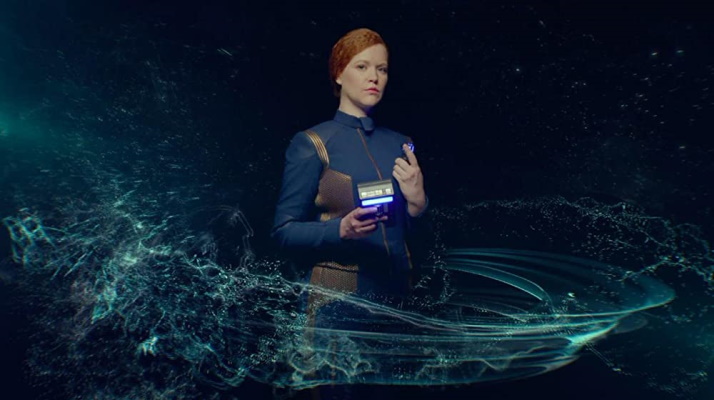
Star Trek: Discovery review – Season 3, Episode 11: Su’kal

Spoiler Warning: There are spoilers ahead for Star Trek: Discovery Seasons 1-3, Star Trek: Picard, and for other iterations of the franchise.

Until three days before its broadcast, Su’kal went by the title The Citadel. It wasn’t immediately obvious why the name was changed – or why the producers at ViacomCBS felt a need to conceal that fact. After all, they let us know every other episode title before the season premiered, even spoiler-ish ones like Unification III. So it was a bit of a surprise to learn that we’d be watching Su’kal this week!

The two-part episode Terra Firma largely took us away from progressing the overall story of the season and focused on the departure of Mirror Georgiou to a still-unknown destination. With only three episodes left before the season is over, Discovery really needed to begin bringing its storylines together and wrapping them up, lest it repeat the mistake made by Star Trek: Picard earlier in the year and rush through a lot of potentially interesting plots. This was the moment where the season needed to enter its endgame, and for better or worse it seems to have done so.

Discovery finally took us to the Verubin Nebula after a few episodes of doing other things.

My first thought when the credits rolled was “hmm.” What had we all just watched? The two major storylines both had ups and downs, and we’ll have to deal with them in turn. I liked the idea of the holographic world. Both as an interesting setting and as a metaphor for isolation – something many people dealing with mental health issues will experience – it worked very well. Tilly sitting in the captain’s chair for the first time was great to see, and we can see why she was chosen ahead of, for example, Stamets to serve as first officer given that the conflict with Osyraa needed someone less experienced at the conn. I also liked the standoff between Discovery and Osyraa’s ship; it had a familar feel that anyone who’s seen the Battle of the Mutara Nebula in The Wrath of Khan can appreciate.

Now let’s get into the big disappointments. Discovery being captured so easily by Osyraa, whose ship had been simple to defeat a couple of episodes ago, was poor. Yes, it showed how Tilly’s inexperience at the conn was an issue, but even then it felt too easy. Osyraa’s ship, with its ability to transport huge numbers of troops and its weird grappling arms, just felt overpowered. Next – and I will admit this is perhaps more of a personal pet peeve – the cliched story of “the heroes’ ship/base is captured” just doesn’t really work for me. It’s annoying more than anything, and since we know Tilly, Burnham, and the crew will retake the ship it just feels like forced tension.

Discovery was very easily captured by Osyraa.

Now we come to the point of the season, and the main storyline which underpins all of the others: the Burn. If Burnham and Culber are correct in their assessment of Su’kal, he caused the Burn telepathically when his fears destabilised dilithium across the known galaxy. Though my initial reaction to that was some form of “what the actual fuck,” I’m prepared to wait and see what the next two episodes have in store, and whether they can better explain how this happened. Burnham and Culber’s analysis of the situation was short, and if all the explanation we’re going to get is some technobabble about dilithium and DNA cells in an unborn child, I think that’s poor.

But I’m hopeful that won’t be the entirety of the explanation that we get! The Burn had been set up across the season (and even before if you count the trailers) as a huge mystery, something galactic in scale. Perhaps the reason this answer feels like such a non sequitur – aside from the fact that it only consisted of a couple of lines from Burnham and Culber in the midst of a bigger crisis – is that the explanation for this colossal apocalyptic event being a mentally ill man with the mind of a child is some combination of anticlimactic and small.

A blink-and-you’ll-miss-it line from Dr Culber surely cannot be all the explanation we get for how Su’kal caused the Burn.

Huge events in fiction typically need causes that are comparable in scale, and there’s a disparity between the truly epic, cataclysmic nature of the Burn and Su’kal, a mentally challenged man who’s led a horrible life trapped in a weird educational holoprogramme. That’s before we get into the frankly upsetting real-world implications of this metaphor: a mentally ill person ruining the galaxy.

When dealing with significant events, we can typically point to powerful characters or forces of nature setting those events in motion. We can point to Sauron in The Lord of the Rings, for example, or Emperor Palpatine in Star Wars. Or we could look at the zombie virus in The Walking Dead as a force of nature – a powerful, planet-wide force. Su’kal doesn’t fit the bill, and while the idea of the Burn being something accidental rather than something intentional like a weapon may indeed be a good one – and one I’d support – this particular way of explaining it feels like an anticlimax right now.

Su’kal – the cause of the Burn?

On the other hand, if this is the explanation for the Burn, it would be in line with certain other Star Trek stories. The V’ger probe in The Motion Picture was similarly described as “a child” as it caused chaos en route to Earth. The Star Trek franchise has always been about exploring the unknown and offering help – and Su’kal clearly needs the Federation’s help.

Any time a mystery is created in an ongoing story, there’s a risk of the explanation jarring with what some members of the audience expected. I’m not criticising Su’kal from that point of view, though – or at least I’m consciously trying not to. I’m not saying that the Burn needs to have some other explanation, like one of the ones I postulated before the season began. What I am saying, though, is that if this is all the explanation we’re going to get – that Su’kal’s body somehow adapted, connecting him on a quantum level to dilithium, and that he accidentally caused the Burn as a child while upset – it feels anticlimactic.

We’re being asked to buy into a story that says one mentally ill person caused all of this destruction.

The discovery of the Verubin Nebula and its dilithium planet is likewise a little odd. This is perhaps more of a nitpick, but in the 32nd Century, when the Federation and other spacefaring cultures have had a millennium to explore and chart the galaxy, how could they have been unaware of this dilithium nursery/dilithium planet? A few weeks ago I wrote that the discovery of a huge cache of dilithium at the end of the season, allowing the Federation to get back on its feet and rebuild, could feel like a deus ex machina – and that’s kind of how this planet feels right now. The story from here seems predictable: save or neutralise Su’kal to prevent another Burn, use the dilithium planet to power the Federation and Starfleet, and retake Discovery from Osyraa.

There may be twists and turns along the way, but that seems to be the direction of travel. Simplifying a story as it approaches its end is inevitable, perhaps, but coupled with what I have to call an unsatisfying explanation for the Burn, it risks the end of the season feeling formulaic. Having made those criticisms, two caveats: there are still two episodes to go in which the Burn’s explanation can be padded out or even changed entirely, and if this is the real explanation for what happened, it avoids many of the pitfalls I feared a 32nd Century post-apocalyptic story would. It isn’t as epic in scope as perhaps I was hoping, nor does it seem to connect to other iterations of the franchise. But it is a very “Star Trek” way for an apocalyptic event to play out.

The titular Su’kal seems to have caused the Burn.

By that I mean it’s closer to some stories from The Original Series or even The Animated Series in terms of pure science-fantasy. Su’kal being the cause of the Burn because he has some kind of telepathic link to dilithium is a weird story, and that weirdness and quirkiness is what made many fans – myself included – fall in love with Star Trek to begin with. So I’m hot and cold on the Burn right now, as you can tell. I’m not 100% convinced that it’s the right way for this story to conclude, given that it’s taken us eleven weeks to get here and the Burn has been presented as this epic cataclysm with mysterious origins. But as a pure Star Trek story, I can’t deny that it works.

If you’re a regular around here, perhaps you’ve read my methodology. If not, you can find it via the menu at the top (top-right on mobiles). To make a long story short, I never read other reviews before writing my own, and I do my best to avoid any and all critical opinion and even responses by people involved with whatever I’m reviewing until I’ve got my own piece published. So I have no idea if I’m alone in my feelings about Su’kal offering an unsatisfying end to the season’s biggest mystery or not.

Is this how the Burn happened?

I feel like I’ve deconstructed the titular Su’kal and his relationship with the Burn as much as I’m able to at this stage. Like several ongoing storylines that saw major developments in Su’kal, my thoughts on this point can and likely will shift depending on the way that the remainder of the story progresses. So let’s look at a few other points from the episode.

Tilly becoming first officer was a point of contention in earlier episodes, and I do understand that. While I defended Saru’s reasoning at the time, as he felt Tilly had adapted best to the future which was a significant consideration in his XO search, what I’d say now is that that storyline feels as if it was constructed deliberately to reach a specific goal. The first part of that goal is, as we saw this week, the capture of Discovery by Osyraa, which we’re to understand came about in part through Tilly’s inexperience. But there may be a further plan for this storyline – effectively cornering Saru and forcing him to reinstate Burnham as first officer.

Tilly in command.

So what we got with Tilly this week was a deeply emotional and very touching scene between her and Burnham. As Saru prepared to lead the away team, it was her turn in the big chair for the first time, and she was nervous. Burnham tried to comfort her, and in this moment she was back to the older, more nervous character from earlier episodes. A lot of us have been nervous or anxious about taking on a big task, and Tilly’s reaction to what was going on was very human.

Likewise, the scene where she took the captain’s chair for the first time was also very well done. Though clearly still nervous she sat down for the first time with determination – and with a plan for what to say and do. She handled herself well, and she clearly had the respect of the other officers on the bridge. But there was a different kind of respect that they showed Tilly compared to Saru, or past commanding officers like Pike. Tilly was almost being treated as a child, judging by some of their expressions: “aww, it’s so sweet they’re letting her have a go in the big chair,” some of their faces seemed to say. While the crew followed their orders, there was a sense among some on the bridge – at least in the moment Tilly assumed command – that they didn’t hold her to the same standards as Saru or Pike.

Tilly regards the captain’s chair.

When confronted by Osyraa, Tilly played a role comparable to Sulu in Star Trek Into Darkness – sitting in the big chair for the first time talking to an enemy. In Sulu’s case he was broadcasting a message to someone rather than having a two-way conversation, but like many things in modern Star Trek I appreciate the symmetry that exists between wholly different stories.

As I said, though, the ultimate payoff to this storyline was Osyraa’s incredibly easy capture of the ship. We can argue that Su’kal’s telepathic tantrum damaged all the ship’s systems and thus probably knocked the shields down, which is how Osyraa’s goons could so easily beam over. But as a point of drama, the standoff between the ships was far too short before we got to this point. When Detmer took Book’s ship and completely disabled Osyraa’s flagship a couple of weeks ago, Osyraa’s flagship was shown to be big but flawed, and Osyraa herself made no moves against Discovery. This time, she was able to defeat Discovery in seconds using powers we’d never seen her vessel have before. There were low stakes at the beginning of the engagement – because Detmer had so easily beaten her using Book’s ship a few weeks ago – and thus Osyraa’s victory seems to come from nowhere.

Osyraa’s flagship proved a very difficult opponent… this time.

If we had seen some more of her ship before Su’kal to know what its capabilities were, that feeling would not persist. But despite its vaguely menacing appearance, the only time we encountered Osyraa before this episode showed her ship to be vulnerable even to Book’s glorified shuttlecraft. The turnaround was only explained by a single line from Osyraa, as she claimed to have fixed the vulnerability Detmer had exploited – but that just wasn’t good enough, in my opinion.

There’s also the big question of how Osyraa came to know about the Spore Drive. This seems to have happened entirely off screen, and while it may be shown in a flashback later on, it’s something we as the audience needed to know. What is Osyraa’s plan now she has control of Discovery? What will she use the Spore Drive for? Who told her about it/how did she find out? None of these points were touched on, and while we can construct theories based on Book’s macguffin from last week that concerned Admiral Vance, nothing was explained on screen in a satisfactory way.

Discovery jumped to the Verubin Nebula with its Spore Drive.

As this is an ongoing story, these points may be addressed, and if so I will gladly withdraw my criticisms. But right now it feels like Osyraa knew about the Spore Drive almost by magic – she even knew its name, despite having never heard of it the last time we met her. She also managed to turn her ship from an easily-beaten wreck into an invincible powerhouse and defeat Discovery with a snap of her fingers. And after all that, we don’t know her intentions. There are too many unknowns for the stakes to feel particularly high.

I mentioned at the start that this storyline – the heroes’ ship being captured – has never been one I enjoyed, and that’s a factor in how I feel about Su’kal too. I tend to feel that any time a story goes down this route the ending is usually known, and as a result the drama and tension just feel forced. Whereas we could see any one of a hundred different endings to Su’kal’s story or even Georgiou’s Mirror Universe story over the last couple of weeks, it’s obvious that Burnham and Book will retake the ship from Osyraa, just as it’s obvious in any comparable story that the heroes will reclaim their starship or base. It’s not exactly a cliché, but it’s a basic narrative that I’ve seen play out dozens of times at this point – including within Star Trek.

These stories have never been a favourite of mine.

Enough about Tilly, Discovery, and Osyraa for now. The sequences set in Su’kal’s home were interesting. The setting itself was reminiscent of the castle Captain Pike encountered on Rigel VII – as seen in Star Trek’s original pilot, The Cage. Castles and Star Trek have an association going back a very long time, and the dark, abandoned castle – with a monster to boot – gave the sequences set there a very creepy, almost horror vibe.

The cinematography for some of these scenes was outstanding, too, and shots of the fortress and its surrounding landscape were beautiful and immersive. There were some amazing overhead angles that gave the stepped structure a deeply confusing feeling, one which helped us get into the mindset of Burnham, Culber, and Saru.

Some of the shots here were beautiful. The set design and animation work were absolutely outstanding.

Speaking of the away team, the choice of makeup was interesting. Having Burnham and Culber be a Trill and Bajoran respectively really didn’t do much, and in a lot of scenes where they were seen from a distance the makeup wasn’t even noticeable. Saru being portrayed as human, however, was far more visually interesting, and the reveal of Doug Jones without makeup was perhaps the biggest shock moment of the whole episode. Everything about that moment was perfectly set up, from Burnham and Culber noting their appearances first to build up the mystery to Saru’s voice being heard before the camera panned to him. It was a very well-constructed moment.

Within the story, though, I’m sorry to say it makes no sense. Saru is a Kelpien; a species Su’kal is obviously familiar with as he has at least one Kelpien hologram – the Elder. Likewise we saw human holos within the programme, and since Burnham and Culber’s physical appearances were not changed to copy pre-existing holograms, I don’t know what reason there is for changing their appearances in this minimal way. Nor do I understand why – aside from reasons of dramatic effect – the away team’s radiation burns were visible on their holographic bodies.

It feels like the choice of making Saru human was just there for surprise value.

If the roles of Burnham, Culber, and Saru were to be played by three different actors for this story, actors who also took on the roles of three holograms within Su’kal’s programme, I could understand it more. It wouldn’t be good to have this crucial moment acted out by different folks, but it would make sense in-universe, because the programmer of Su’kal’s world would have intended his rescuers to assume a familiar form. But the way it was done here was just odd, and I can only assume it was done for the sake of that one shocking moment – revealing Saru in his human guise. Constructing a story point off of one moment seldom works, and while it was interesting (at least, at first) to see these three characters in different makeup, as a story point I don’t get why it had to happen.

It also arguably detracts from Saru’s storyline, which seems to be building to an emotional climax. This is the first Kelpien he’s met since he left the 23rd Century, and there’s also the open question of a possible familial connection via Dr Issa. Saru being distracted by all things Kelpien is affecting his judgement, and this is a storyline worth pursuing. However, having Doug Jones essentially be out of costume is detracting from that. While it was visually interesting at first, it risks getting in the way of the story as it comes to a head. It’s possible that there may be a moment where Saru snaps out of the way he’s feeling due to being in this human guise, which if well-written could work and would be a payoff of sorts. Discovery tends not to do things randomly – somehow there may well be a reason why the away team ended up in these bodies. It’s just difficult to see right now, and the question of whether it will work as intended is up in the air.

Saru in his human disguise.

Burnham’s work with Su’kal was sweet, and she seemed to be beginning to find a way to get through to him. Saru asked her to remain because of her training in xenoanthropology, but just as she accused him of being distracted by Su’kal, I would argue that she is equally distracted from the mission by Book – she wanted to get back to him, because within the nebula he is in danger. She did seem to make some progress with Su’kal before he cut her off – but is that the real Su’kal?

I’ll save the bulk of this discussion for my theory post, but here goes: the “monster” that inhabits the holodeck is vaguely Kelpien in appearance, and also looks older. Its decayed body could be a result of radiation exposure, and when the monster met Burnham, it seemed to react to her in an almost-human manner – by which I mean, not like a programmed machine. The character we’re calling Su’kal is far too young to be 125 years old – or at least appears to be too young – and no suitable explanation has been given for this. So my pet theory right now is that the “monster” is the real life sign that Burnham and the crew identified before beaming down.

Is this a holographic monster… or Su’kal?

I don’t know for sure if that will pan out, or how it could be made to fit, but it seems interesting so I’ll go into more detail next time. There were a few other little moments in Su’kal that I thought were worth pointing out, such as the little robots being identified as “DOTs” for the first time outside of the Short Treks episode Ephraim and Dot. That was a sweet little inclusion. I also liked seeing Adira and Gray back together, as well as Gray giving Adira the confidence boost they needed to make their first big independent move since joining the crew.

Speaking of Adira, Stamets’ line to them at the beginning about he and Culber coming as a “package deal” was cute, and ties in with the parental theme going on with the three of them. Stamets has gone out of his way to help Adira since they joined the crew, even talking to the unseen Gray – whenever he does that I’m reminded of a parent talking to their child’s imaginary friend. Stamets feels protective of Adira, and helping them settle in has been an unexpectedly sweet turn for his character.

Gray and Adira in Su’kal.

So there we are. That was Su’kal, an episode which will have to be revisited in context once we know the overall outcome of the season’s big storylines. It can be difficult to fairly judge one section from the middle of a story – it’s like trying to review chapter ten of a thirteen-chapter novel – because Su’kal cannot be taken as a standalone piece of television. That said, it’s an episode which made significant developments and perhaps set up one or two more mysteries.

I’m troubled by the fault for the Burn lying with a mentally disabled man. Mental health and learning disabilities are already the subject of considerable stigma in our society today, and while on some fronts that is improving, we still have a long way to go. The episode The End is the Beginning from Star Trek: Picard showed a very crude stereotype of “mentally ill people” earlier in the year, and laying the fault of the Burn at Su’kal’s feet seems to continue an unfortunate theme in this year’s Star Trek productions. It almost feels as though the writers have picked on an easy target in Su’kal.

As mentioned, there are different ways the story could pan out from here. I briefly explained one theory I have about Su’kal, but there are different paths the story could take over the next couple of weeks before the season ends. I’m cautiously interested to see more; I do want a resolution to the Burn, but it needs to be a satisfying one – and ideally one that doesn’t stigmatise people.

Star Trek: Discovery is available to stream on CBS All Access in the United States, and on Netflix in the United Kingdom and elsewhere. The Star Trek franchise – including Discovery and all other properties mentioned above – is the copyright of ViacomCBS. This article contains the thoughts and opinions of one person only and is not intended to cause any offence.
Star Trek: Discovery theories – week 10

Spoiler Warning: There are spoilers ahead for Star Trek: Discovery Season 3, as well as for Star Trek: Picard and other iterations of the franchise.

The two halves of Terra Firma gave us quite a lot to work with, but with only three episodes left before Season 3 is over, Discovery has a lot of work left to do to resolve major ongoing storylines. I’m ever so slightly concerned that we’re going to end up with a rushed conclusion, repeating the mistake Star Trek: Picard Season 1 made earlier in the year. Hopefully that won’t be the case and there will be enough time for every extant story thread to either reach a conclusion or set up the events of Season 4 – whenever that may come!

By the end of Terra Firma, Part II we’d seen two confirmations and three debunkings, so let’s look at those first.

Confirmed theory #1: Carl is the Guardian of Forever.

The Guardian of Forever’s portal.

I got goosebumps when Carl announced who he really was – complete with the Guardian’s voiceover from The Original Series. Though the revelation may have been less interesting to new fans who aren’t familiar with The Original Series, I adored this moment and sat with a big dumb grin on my face for much of the rest of Terra Firma, Part II.

Though we could kind of argue that the inclusion of Sarek, Pike, and Una/Number One accomplished something similar in Season 2, the mystery of Carl’s powers and identity that we all had to sit with for a week is part of what made the ultimate reveal so exciting. I’ll always love when Discovery ties itself into past iterations of Star Trek, and this was perhaps my favourite connection of the season so far.

Confirmed theory #2: Georgiou will travel back in time.

Georgiou checks her holo-padd.

Where did Georgiou go for the three months she spent seemingly in the Mirror Universe? Well, Carl seemed to suggest he sent her to some kind of parallel universe, but perhaps not the Mirror Universe she came from.

Regardless, Georgiou has now definitely gone back in time – perhaps to the 23rd Century, or perhaps to another time period as we’ll discuss in a moment. We don’t know where or when she’ll emerge, and given how final her exit from Discovery felt, I doubt very much we’ll learn anything about her destination until the Section 31 series is ready to go.

My earlier theory had been that Georgiou may have travelled back in time along with the USS Discovery, perhaps in a tie-in with the Calypso story that saw the ship abandoned. This now can’t happen, of course, and while I wasn’t correct about how and why Georgiou travelled back in time, I did get the overall point right!

So those theories were confirmed in Terra Firma, Part II. Next we have three debunkings, all related to Georgiou.

Debunked theory #1: Georgiou will accidentally change the future.

Georgiou prepares to execute Mirror Burnham.

Although I wasn’t convinced that Georgiou had truly travelled back in time, one issue that time travel stories can encounter is a paradox. When Georgiou began making changes to the 23rd Century Mirror Universe, I wondered if we might’ve seen some ramifications for the future, perhaps something she and Burnham would then have to fix by restoring the true timeline.

When it seemed as though the Mirror Universe that Georgiou was seeing was different to how we saw it in Season 1 – with key players like Stamets and Burnham arriving at altogether different fates – it seemed at least a possibility. However, for Guardian of Forever-related reasons, nothing Georgiou did appears to have altered the 32nd Century, and as of the moment she left, everything was exactly where it should be.

Debunked theory #2: Georgiou didn’t travel back in time or to the Mirror Universe.

Georgiou with Burnham and her honour guard.

As discussed above, it wasn’t 100% clear where and when Georgiou spent her time over the last two episodes. But she did, according to Carl, travel back in time and to a different universe – whether or not it’s the Mirror Universe is up for debate.

I postulated this theory because of the major narrative differences between the setting Georgiou occupied and what we know of the history of the Mirror Universe and some familiar characters from Season 1. I doubt the series will revisit any of these points in future, and it seems as though the ultimate explanation for why things are different is because she was in a different universe either created or accessed by the Guardian of Forever. I’m okay with that, as it doesn’t create any major inconsistencies.

Debunked theory #3: Georgiou had been tampered with by the Federation (or Section 31).

Georgiou first became ill after a meeting with Kovich.

Despite being in the 32nd Century for at least a few weeks before Discovery found Federation HQ, Georgiou’s technobabble health problems did not emerge until immediately after her meeting with the mysterious Kovich. This led me to theorise that he could be a Section 31 operative and may be responsible for the sudden decline in her wellbeing.

However, it seems that this was a deliberate false lead, as Kovich not only was not implicated in making Georgiou ill, he actively consulted with Dr Culber and offered his expertise when asked. He knew more than he let on, both to Georgiou and Starfleet, but he was not responsible for harming her.

So those theories were debunked. Now let’s dive into the main list, beginning with a special bonus theory!

Bonus theory: Four ideas for Georgiou’s destination.

Georgiou’s destination, both in space and time, was left deliberately unanswered in Terra Firma, Part II. Carl told us he was sending her “to a time when the Mirror Universe and the Prime Universe were still aligned.” That’s an interesting statement, and could be interpreted in a lot of ways. We are very unlikely to know for sure where and when Georgiou ends up until she returns to our screens in the upcoming Section 31 series – but naturally, I have a few ideas.

The 21st Century

The reason why this one seems unlikely right now is because a Star Trek show set even earlier in the timeline than Enterprise would be difficult to produce. Enterprise depicted Earth’s first voyage of exploration, and while there were humans in space before Archer’s big mission, they were limited in speed and in the areas they covered. Thus, from the point of view of a Star Trek show, what is there to do?

On the flip side, the 21st Century is arguably the best fit for Carl’s ambiguous explanation of where Georgiou is going. We don’t know anything about the early history of the Mirror Universe, but if it’s true that it and the Prime Universe were once “aligned,” as Carl explained, the earliest known point of divergence between the two timelines is 2063 and first contact between Earth and Vulcan. In the Mirror Universe, after Cochrane’s warp flight he and his followers massacred the Vulcans who arrived on Earth, before humanity conquered their homeworld and founded the Terran Empire.

If this is truly the point of divergence, sending Georgiou to the 21st Century could fit with what Carl said. It could also mean that the Section 31 series depicts the creation of the organisation, and we could learn that Georgiou was its first leader.

The 23rd Century

The most likely destination based simply on what we know of the Section 31 series. It would also return Georgiou to her own time, thus curing her technobabble ailment. A return to the 23rd Century would allow for the return of characters like Ash Tyler, and we could even see a crossover with Strange New Worlds reuniting Georgiou with Captain Pike.

A series set in this era would depict Section 31 going underground, transforming itself into the clandestine outfit we first encountered in Deep Space Nine. However, the Mirror and Prime Universes are certainly not “aligned,” as Carl put it, in the 23rd Century, so could that be a hint that Georgiou is headed elsewhere? If not, how will that be explained?

The dawn of the 25th Century

The Mirror Universe episodes from Deep Space Nine showed a far less “Terran” group of Terrans fighting for their freedom against a Klingon-Cardassian alliance. Perhaps this change in the Terrans continued, leaving the Prime and Mirror Universes in something close to alignment by the late 24th Century.

This would have the benefit of connecting the Section 31 series with Star Trek: Picard – and any future shows or films set in that same era. There could be crossovers with Picard, and we could see major connections between Star Trek’s different ongoing timelines. Is it likely? Well, I’m not so sure. I think you have to squeeze the semantics of Carl’s statement a little too much, plus it connects only to a handful of Deep Space Nine episodes that most audiences wouldn’t be familiar with. But it’s not impossible.

The 27th Century

Kovich told us in Die Trying that there hadn’t been a crossover between the two universes in “five hundred years,” which would mean the last time it was possible would have been in or around the 27th Century. Does that mean the two universes were “aligned” at that point? Well no, but it could be argued that they were.

The drawback to this idea, like with the 21st Century above, is that it would isolate the Section 31 series in yet another time period, splitting up the ongoing Star Trek projects. There’s also no compelling reason to visit the 27th Century – very few of characters from other Star Trek shows could be alive, and nothing major seems to have happened in this era, which takes place after everything else in Star Trek yet before the Temporal Wars and the Burn brought the Federation to the brink.

So those are four ideas for where (and when) Georgiou might be headed. Now let’s get into the main theory list.

Number 1: Saru, Burnham, or somebody else will use the Guardian of Forever to send the USS Discovery back in time.

Carl – a.k.a. the Guardian of Forever.

The Red Angel suit may have been the last remaining piece of technology capable of time-travel – if we’re to believe the Federation’s claims that nobody violates the ban! But now that the Guardian of Forever has been rediscovered, the potential for travel through time is once again on the agenda. Whether Burnham explained exactly what happened to Saru, and if she did, whether he will explain it to Starfleet is not clear, but even if they’re the only ones who know about the Guardian, they may have need of its services.

When considering the story of Calypso, particularly how the USS Discovery came to be abandoned in a nebula, the big question is “why.” Why would Saru, Vance, or Burnham feel a need to take the ship back in time and hide it? There is no obvious reason right now, and with only three episodes to go if a major new problem were to emerge it could end up feeling rushed or like a deus ex machina.

Regardless, it’s at least possible that Discovery will travel back in time. And right now, one of the only ways that could happen would be to make use of the Guardian of Forever.

Number 2: The Emerald Chain will attempt to steal the USS Discovery and/or the Spore Drive.

The USS Discovery.

Admiral Vance was incredibly worried about Book’s use of an Emerald Chain signal booster on board Discovery, fearing that the untested technology could cause problems. It seems this macguffin could be a “backdoor” into Discovery’s systems, or perhaps some kind of tracking device that could allow the Emerald Chain to find the ship – and its Spore Drive. Spoiler warning for anyone who missed the promo for episode 11, but it seems that at least one Emerald Chain ship will show up.

Additionally, in The Sanctuary Ryn confided in Tilly that the reason Osyraa – the Emerald Chain’s leader – is so keen to recover him is because he knows their biggest secret: the Emerald Chain is running out of dilithium. This will undoubtedly make the faction more aggressive as it looks to shore up its position, but now that they’ve seen Discovery able to jump to Kwejian, perhaps Osyraa and her people will begin to suspect that the ship has a powerful new method of propulsion.

Admiral Vance told Starfleet’s senior officers about the Spore Drive in Scavengers, and I picked up at least a hint that not everyone was happy about this disruption to the established hierarchy of Starfleet. Could someone within Starfleet – such as Lieutenant Willa – have passed along to the Emerald Chain details of the USS Discovery?

Number 3: The Emerald Chain will attack Federation HQ.

Discovery at Federation HQ.

Obviously this theory and the one above can’t both be true! But if the Emerald Chain is moving, Federation HQ seems a logical target. The Emerald Chain is planning “military exercises,” according to Starfleet. Both Starfleet and Book’s courier friends believe this is code for some kind of larger-scale military engagement.

Clearly the Emerald Chain story thread needs to be wrapped up somehow – by defeating them militarily or coming to a negotiated settlement – so perhaps this is the moment they make their move.

Right now it seems as though the Emerald Chain will go after Discovery, but it’s possible that’s a deliberate misdirect, or that they’re able to wield a large enough force to attack both targets at once.

Number 4: Admiral Vance is going to be killed.

Admiral Vance.

If the Emerald Chain does make a significant move against Starfleet, I wonder if this could see Admiral Vance killed off. Though he returned (in holo-form) in Terra Firma, Part II, his line to Saru in Part I that he and Starfleet would “handle the Chain” in Discovery’s absence feels like something that could come back to haunt him. There was an air of finality to that scene.

We also know that Discovery looks set not to return to the fleet this week, pursuing its investigation of the Burn to the Verubin Nebula. If the Emerald Chain attacks in Discovery’s absence, Admiral Vance may not survive the fight. This could set up an interesting story – let’s look at that now!

Number 4A: Saru will become an admiral, and Burnham will assume command of Discovery.

Burnham & Saru.

As Georgiou prepared to step into the Guardian of Forever’s portal, she told Burnham that Saru is “not the only one suited for the captain’s chair.” Though this is the opinion of one character within the story, it was also very deliberately shown to us as the audience. Perhaps it’s simply to mirror what Prime Georgiou said to Burnham in Season 1 about setting her up for her own command, but there could be more to it than that.

If Admiral Vance and/or other senior Starfleet commanders were killed, as I speculated could happen, perhaps Saru would be offered the opportunity to become an Admiral. His different approach to command that we’ve seen this season could benefit Starfleet, and even if Vance survives, he may ask Saru to join him at the head of Starfleet. Saru, as someone from a different era and as a Kelpien, brings a unique perspective that Starfleet Command would certainly benefit from if they move to begin rebuilding the Federation.

Saru’s promotion would leave yet another vacancy in the captain’s chair of Discovery. Tilly had been appointed acting first officer a few episodes ago, but there’s no way she could assume command of the ship on a permanent basis. Given that this is Star Trek: Discovery, and Burnham has such a prominent role in the series, she is the only candidate.

In my opinion, after Burnham’s awful character regression midway through the season, Discovery will have to work incredibly hard over these final three episodes to make such an appointment feel plausible. However, it can be done, and we’ve seen Burnham do a lot better over the last couple of weeks. Burnham assuming command always felt like a destination the series was trying to reach – could this be the moment it gets there?

Number 5: Dr Issa is a descendant of Saru’s sister Siranna.

Saru with the hologram of Dr Issa.

The revelation that a Kelpien ship was responsible for at least part of the Federation distress signal in the Verubin Nebula was interesting, and had a great effect on Captain Saru. It was the first he’d seen of his people since arriving in the 32nd Century. When Dr Issa – the Kelpien scientist who sent the distress signal – first appeared, I genuinely thought we were seeing Siranna, Saru’s sister who was introduced in the Short Treks episode The Brightest Star and who reappeared in Season 2 of Discovery last year.

The reason for this is that Siranna and Dr Issa are both portrayed by the same actress (Hannah Spear) and thus look very similar. It remains a (remote) possibility that the two characters could be one and the same – either through time-travel shenanigans or perhaps because post-vahar’ai Kelpiens are especially long-lived, but what I think is more likely is that a familial connection will be revealed – Dr Issa will be a distant relation to Saru through his sister.

The reason for this is primarily production-side: why bring back the same actress to portray a Kelpien, and have the characters look practically identical, if there isn’t meant to be a connection? From a story point of view it could give Saru a dilemma – saving the Kelpien ship versus aiding Starfleet, for example – or it could give him a deeper emotional connection to the stranded ship than he would otherwise have.

Number 6: A time-travelling (or parallel universe) USS Discovery is at the centre of the nebula – and may be responsible for the Burn.

The USS Discovery was in an unnamed nebula in Calypso.

Should these next three theories about the Verubin Nebula that I posited a couple of weeks ago be considered debunked? After all, we have the revelation of the Kelpien ship being in the nebula to contend with now, and that could be the beginning of the end for the Burn mystery.

I’m not convinced, though, at least not yet, that there isn’t more going on in the Verubin Nebula. We don’t know anything about the nebula or what’s inside it, and the existence of a Kelpien ship doesn’t rule out the possible existence of the USS Discovery or any other vessel. We know, in fact, that a Starfleet ship was en route to the Verubin Nebula to assist Dr Issa, so there may be at least one more ship in there, and we don’t know the nature of the “dilithium nursery” the Kelpiens were investigating or what became of it.

In the Short Treks episode Calypso, the USS Discovery was found abandoned in an unnamed nebula by Craft. Craft was a soldier in a war against the V’draysh; an alternate name for the Federation in the 32nd Century. Zora, an AI present aboard the USS Discovery, told Craft the ship had been abandoned for almost a thousand years, and not only have we seen the potential creation of Zora earlier this season (from a merger of Discovery’s computer and the Sphere data) but in addition, Season 3 takes place 930 years in the future from Discovery’s original 23rd Century setting. If Discovery had been abandoned at that time, things begin to fall into place.

There are two possibilities for how it could be the USS Discovery – which, of course, has not been abandoned – in that nebula: the ship will be sent back in time, or it has crossed over from an alternate timeline or parallel universe.

Number 7: A familiar starship is at the centre of the nebula – and may be responsible for the Burn.

Is Star Trek: Picard’s La Sirena in the Verubin Nebula?

If not the USS Discovery, then who could it be at the centre of the Verubin Nebula? How about one of the hero ships from a past iteration of Star Trek? We could encounter the USS Defiant, the Enterprise-E, Riker’s USS Titan, or Star Trek: Picard’s La Sirena among many others. If such a vessel were caught in a temporal anomaly, that would explain their presence in the 32nd Century – and if time travel is involved, from their point of view the Burn may have only just happened, instead of happening 120 years ago.

It’s more likely, though, that any ship Saru and the crew find in the nebula would be deserted so long after the Burn – either abandoned by its crew or having become their tomb. If it is a familiar ship, we could thus see the ultimate end of a significant character (or multiple characters) from a past iteration of Star Trek.

The one exception to this could be La Sirena. This would be totally out of left-field for the Star Trek franchise, and keeping a lid on a secret this big would be difficult. But it would finally accomplish something I’ve been arguing for for a while: simplifying the Star Trek franchise. If La Sirena were discovered, along with Picard and his crew, Picard Season 2 could join Discovery in the 32nd Century. I don’t consider this likely, but it would be a fascinating way for the Star Trek franchise to go!

Number 8: The Red Angel suit is at the centre of the nebula – and may be responsible for the Burn.

Burnham in the Red Angel suit at the end of Season 2.

Burnham’s Red Angel suit was last seen on Hima when she sent it back in time. She ordered the suit to self-destruct, but as we never saw the destruction on screen, what became of the suit after it sent the final Red Burst is unknown. Was it captured, intercepted, or damaged? Could someone have stolen it with a view to weaponising it? It’s at least a possibility.

The Red Angel suit was known to be incredibly powerful, and in an age where time travel has been outlawed, it may be one of the only ways to travel through time that still exists – making it a lucrative target for all sorts of factions.

If Discovery wants to present the Burn as an accident or disaster rather than a deliberate act, having the Red Angel suit malfunction could be one way of doing that. Rather than requiring a villain, the story of the season could instead see the crew unravelling a scientific puzzle, one which points to Discovery and her crew as the origin of the Burn, but in such a way that they themselves are blameless.

So it’s clear that all three of these Verubin Nebula theories can’t be true. And now that we’ve seen the Kelpien ship, it’s possible that none are true and there won’t be anything else to find if and when Discovery heads to the nebula. I’m not convinced of that yet; the Verubin Nebula and the Burn have been presented as complex puzzles, and I’m sure there will be more twists, turns, and revelations before we uncover the truth about what’s really going on.

Number 8A: The name “Burn” is derived from the name Burnham.

Burnham in Die Trying.

Connected to the theory above, if indeed the Red Angel suit is the source of the Burn, perhaps the name of the event is derived from the name of the wearer of the Red Angel suit – either Michael or Gabrielle Burnham.

The music within the signal emanating from the Verubin Nebula has – somehow – subconsciously embedded itself in people all across the galaxy. We didn’t hear everything Dr Issa had to say – her message was tantalisingly cut short as a result of decades of radiation and decay. If, somehow, Dr Issa was trying to contact Burnham, or was trying to report on her discovery of the Red Angel suit within the nebula, perhaps that could be how the names are related.

I speculated way back when I looked at possible Burn origins before the season premiered that it was, at the very least, an odd coincidence that in a show all about Michael Burnham there’s a disastrous event called “the Burn.” Could these two seemingly unconnected things actually be related?

I stand by what I said a few weeks ago: if it is somehow Burnham’s fault, calling the event “the Burn” sounds way better than calling it “the Ham!”

Number 9: Discovery Season 3 is taking place in an alternate timeline or parallel universe.

The two-part Voyager episode Year of Hell took place in an alternate timeline caused by time-travel meddling.

I’m tempted to retire this theory, especially after the Guardian of Forever referred to Burnham and Discovery as being in the “prime universe” this week. But even if this is the Prime timeline – the one which goes from Enterprise to Picard – it’s still possible that, with the involvement of time travel, this particular version of it has unfolded differently from the way it was supposed to.

If the Burn was caused – intentionally or accidentally – by time travel, surely from the point of view of the Federation, they would want to undo it to restore the “true” timeline. If that’s the case, most of the events of Discovery Season 3 could be wiped from existence – in the same way that the timelines in Yesterday’s Enterprise and Year of Hell were in past iterations of Star Trek.

Whether this would be a good way to go is up for debate. As a one-off story like those mentioned above, an alternate timeline can be fun to explore. But having seen Saru and the crew put in a huge amount of effort over the season so far to build bridges and begin to reunite the fractured Federation, undoing all of that and saying it never happened – or that no one besides Discovery’s crew will remember it – risks making these stories feel hollow and devoid of meaning.

I’m pretty much convinced that Discovery is in the Prime universe. Whether the alternate timeline stuff will pan out is still a possibility, though.

Number 10: The Burn was a superweapon – perhaps one the Federation or Section 31 built.

The Burn.

The discovery of a Kelpien science vessel at the centre of the Verubin Nebula is interesting, but it seems unlikely that such a craft would be carrying a superweapon – if one even existed! However, as discussed, Dr Issa’s craft may not be the only one within the nebula.

The Burn could be a superweapon – one developed by Starfleet or Section 31, perhaps designed to counter a galactic-scale threat like the Borg or the super-synths from Star Trek: Picard.

Both Admiral Vance and Kovich have stated that they don’t know what caused the Burn, and they don’t consider any of the many theories more or less likely than others. Kovich could be lying, but Admiral Vance certainly seemed genuine. However, given how long ago the Burn was, it’s possible the knowledge of what caused it has been lost or deliberately concealed, either by Starfleet, Section 31, or whichever faction was responsible.

It could also have been a revenge attack; some kind of galactic-scale mutually-assured destruction. If the Federation, Section 31, or some other organisation launched an attack against someone, the Burn may be that faction’s retaliation. That would explain the lack of an invader: they were already dead.

We’re edging closer to learning the true nature of the Burn. A superweapon remains on the table as one possibility – but the question it raises is this: were Starfleet and the Federation the target of the Burn, or its perpetrator?

Number 11: There will be a resolution to the story of Calypso (the Short Treks episode).

Craft, the protagonist of Calypso.

We got further confirmation last week that Zora – the AI encountered in Calypso – has been created. Kovich referred to it as “an AI,” and though unnamed right now, Zora herself became involved in the story. It was her intervention that sent Discovery to Dannus V in search of help for Georgiou – having pieced together the Guardian of Forever’s location from a combination of the Sphere data and 32nd Century Federation computer systems.

One thing that’s definitely interesting right now is that the USS Discovery as it appeared in Calypso no longer exists. The ship was retrofitted in Scavengers, and in addition to features like programmable matter interfaces and detachable nacelles, now sports the designation NCC 1031-A.

My theory is that, if indeed Discovery somehow travels backwards in time this season, the crew will very deliberately un-retrofit the ship first, removing any 32nd Century features to avoid polluting the timeline in case of accidental discovery. Discovery was in a nebula in Calypso – could that be the Verubin Nebula?

Calypso has been an outlier in Discovery’s story since it was broadcast in between Seasons 1 and 2. Having seen some elements from that episode cross over, all that remains is for the mystery at its core – Discovery being abandoned in a nebula – to be resolved. No small task, perhaps, but if this entire storyline from Calypso to Control to the time-wormhole to the Burn has been planned out properly, there’s no reason why we won’t see everything tied up by the end of the season.

Number 12: Tilly is going to go rogue.

Saru and Tilly in Far From Home.

One line which stuck with me from Unification III was when Tilly asked Saru if he chose her to be his first officer because he believed her to be “compliant.” He ducked the question, but it was at least hinted that he does indeed see her as someone who will do as she’s told. Having experienced the Burnham problem, perhaps that’s a knee-jerk reaction from Saru, and one which, if true, would make me question his judgement. But the line carried with it a potentially serious implication – Tilly may choose, at a certain moment, not to comply.

She may do so to assist Burnham in some way, and if Tilly were to disobey orders – as she stated she would in Scavengers when talking with Saru – I would assume it would be for this reason. But there may be something else that causes her to go rogue, following in Burnham’s footsteps. I can’t say exactly what it could be if not Burnham, but we’ve had two lines that can certainly be interpreted to say that Tilly may be less “compliant” than Saru hopes.

Over the few episodes since she accepted the role, we have seen Tilly begin to grow into it. This is undoubtedly a change to her character, but not necessarily a bad one. I still think, however, that there is scope for her to do something significant when faced with a difficult situation, even if that means going against orders.

Number 13: The Spore Drive will become Starfleet’s new method of faster-than-light propulsion.

Discovery makes a Spore Drive jump.

SB-19, whether it caused the Burn or not, was an imperfect way to travel when compared to the Spore Drive. At present, only Discovery is capable of using the mycelial network, but that could change. What the implications of that would be on races like the JahSepp, who are native to the mycelial network, is not clear, but assuming it would be safe to use the network to travel, Spore Drives may yet be installed on all of Starfleet’s ships.

At the moment Discovery relies on Stamets as navigator; without him, accessing the mycelial network is not possible. But if, as was hinted at in Forget Me Not, it’s possible to create a non-human navigator, a major obstacle to other vessels using the Spore Drive melts away.

This theory would allow the resolution to the Burn to keep the current timeline intact – there would be no need to go back in time and undo anything, nor would there be a deus ex machina of a sudden discovery of a huge cache of dilithium. Instead, Starfleet could get back on its feet using the Spore Drive – finally finding a proper use for Discovery’s most controversial piece of technology!

Number 14: A character from a past iteration of Star Trek – such as the Doctor from Star Trek: Voyager – will make an appearance.

The Doctor.

Technically this theory was proven in Terra Firma, as the Guardian of Forever returned from The Original Series! But the Guardian of Forever/Carl’s identity had its own entry on the theory list, so we can’t really call this one confirmed. Besides, there are still three episodes left for another character to appear!

Before Season 3 premiered I made the case for Voyager’s Doctor – or rather, a backup copy of him seen in the Season 4 episode Living Witness – being a prime candidate for inclusion. Aside from him, other characters I suggested included Soji (or a synth who looks like her), Lore, Captain Sisko, and Enterprise’s Crewman Daniels – the latter of whom was a 30th/31st Century temporal agent. Any of these could reasonably be alive in the 32nd Century, and characters who have long lifespans or are known to have spent time in the far future are perhaps more likely to appear.

If a starship from a past iteration of Star Trek is somehow within the Verubin Nebula, perhaps that could be how a crossover character is introduced. With time travel, temporal anomalies, and technobabble at their disposal, the writers could find an excuse to bring back practically anybody!

Having seen a tie-in with Picard via the appearance of the Qowat Milat, and the aforementioned Guardian of Forever return from The Original Series, it gives me hope that Discovery will find more ways to tie itself to the wider Star Trek franchise. A character crossover is a spectacular way of doing that, and as The Next Generation showed with episodes like Relics, the passage of centuries is no barrier to such a crossover in a sci-fi world. Until the credits roll on the season finale, I’ll keep advocating this theory!

Number 15: The ships at Federation HQ represent the majority of Starfleet’s remaining vessels. And they’re all 120+ years old.

Discovery and a couple of other starships at Federation HQ.

How many ships were present as Discovery arrived at Federation HQ? Ten? Twelve? It wasn’t much more than that, that’s for sure. In a post-Burn environment, one where the Federation has shrunk considerably and where dilithium is in short supply, it’s possible that these ships are all that remain of the once-mighty Starfleet.

In That Hope Is You, Mr Sahil noted two Federation ships in flight, so perhaps we can say from his comment that there are at least two more! But I wouldn’t be surprised to learn that we’ve seen the bulk of Starfleet. Certainly the Federation seems incapable of either building any more ships nor fielding a large armada right now, which is perhaps one of the reasons why they need to keep their base cloaked.

Because of the catastrophic nature of the Burn, it also seems highly likely that shipbuilding facilities would have been damaged, destroyed, or would be inaccessible. That may mean that the Federation’s fleet entirely consists of ageing vessels, each one over 120 years old and probably not designed for being in service this long. In addition, without fuel what would be the point of expending a lot of resources building a new ship?

If the Emerald Chain really is on the warpath, the Federation may find itself outnumbered if these ships really do comprise the entire fleet.

Number 16: Burnham’s Red Angel suit has been stolen.

Burnham’s Red Angel suit – this was the last we saw of it.

As mentioned above, the Red Angel suit – and possibly Burnham or her mother – could be responsible for the Burn, and could be waiting for Discovery at the centre of the Verubin Nebula through parallel universe or time travel shenanigans!

This has been a theory I’ve been pushing since Burnham sent her Red Angel suit back into the wormhole in That Hope Is You right at the beginning of the season. I was struck by a line in Die Trying: Admiral Vance described the Red Angel suit as being “inaccessible.”

Burnham goes on to say she set the suit to self-destruct, but all this did for me is reinforce the fact that we didn’t see the suit’s destruction with our own eyes. The finale of Season 2 confirmed that Pike and Spock received the final red burst in the 23rd Century, but beyond that we simply do not know what became of the suit.

Number 17: The Dax symbiont is still alive.

Ezri Dax.

This one is looking increasingly unlikely, because the two locations where Dax could have appeared have both seemingly come and gone without them: most notably the Trill homeworld in Forget Me Not, but also Federation HQ in Die Trying. However, there are hints at a lifespan for Trill symbionts that may be exceptionally long, in which case Dax could very well still be alive in the 32nd Century.

Obviously we won’t see Ezri Dax (barring some bizarre time travel/stasis storyline) but the symbiont itself could have lived this long. When Adira “met” the Tal symbiont’s former hosts in Forget Me Not, one was wearing a Star Trek: Picard-era uniform, hinting that Tal may have lived 700+ years. There are production-side explanations for this Easter egg, and as stated the fact that two of the best opportunities so far to meet Dax have come and gone most likely means it won’t happen this season. But I’m sticking to my guns on this one: Dax is alive!

Number 18: The ban on time travel is being flouted – possibly by secretive elements within the Federation.

The USS Enterprise travelled back in time in The Original Series second season episode Assignment: Earth.

Admiral Vance clearly believes that the ban on time travel is intact and being followed. Kovich indicated that he does too – but I’m not sure how far I trust him. Is he an agent of Section 31?

Even if the ban had been obediently followed thus far, the arrival of Discovery – and more importantly, the Red Angel suit – could have changed that if someone were able to get their hands on it. We know from what Zareh said in Far From Home that Discovery’s arrival in the future did not go unnoticed, and that anyone with a decent sensor array would have been able to detect time travel. Could someone – possibly even someone within the Federation – have tracked down the Red Angel suit or entered the time-wormhole before it closed?

It’s impossible to un-invent a powerful, useful, weaponisable technology, no matter how hard you try. Considering how crappy the 32nd Century seems to be, are we convinced that nobody at all is using time travel to try to give themselves an advantage? Not the Dominion? Not the Borg? Not Section 31? Seems unlikely to me, though for production-side reasons of wanting to keep the timeline intact and to avoid overcomplicating the plot we might be told this is true!

The reappearance of the Guardian of Forever – although it remains a secret only Burnham knows for now – could mean that future time travel stories are on the agenda, even if this theory isn’t correct.

Number 19: Kovich is an agent of Section 31.

Kovich.

Who is Kovich? He doesn’t wear a normal Starfleet uniform, and doesn’t appear to hold a Starfleet rank. Yet he wears a Starfleet combadge and is clearly a high-ranking intelligence officer as he undertook Georgiou’s debriefing and has access to classified files that pertain to time travel and parallel universes.

It is at least possible – if not outright likely – that this mysterious character works for Section 31. Since we now know he hasn’t just disappeared and may well be coming back, perhaps we’ll learn more about him. We know he has an interest in the Mirror Universe and Terran society, expressing almost an admiration for Georgiou and her way of doing things.

Though his two appearances so far have both been connected to Georgiou, David Cronenberg has stated that Kovich may return in Season 4, and it’s possible we’ll see more of him before the end of this season too. It’s a shame we won’t get to see him and Georgiou have another conversation, because the way they talked around each other was truly fascinating. But there are many other ways Kovich could contribute to the story – or any future story. If, as speculated above, the Burn is somehow connected to Section 31, perhaps he could play a role in the way that mystery is resolved.

Number 20: We haven’t seen the last of Zareh.

Zareh.

Despite being quite content to kill all of Zareh’s goons, Saru balked at the idea of killing the man himself in Far From Home. Instead, he and Georgiou let him go, sending him out into the wilds of the Colony – despite being told by the locals that that’s a death sentence. However, we didn’t see Zareh die. And in stories like these, characters like Zareh tend to pop back up looking for revenge. His association with the Emerald Chain could bring him back into the story if they plan to make a move against Starfleet and/or the USS Discovery.

So that’s it. We’ve reduced the number of theories from last week ever so slightly! As we head into the final three episodes that was bound to happen, and with the Georgiou storyline now resolved, Discovery has three episodes remaining to either resolve the mystery of the Burn or set up a cliffhanger on that subject! Just because the first two seasons saw relatively self-contained stories that doesn’t necessarily mean the same will be true this time too, and if the Burn is as complex as has been suggested, perhaps three episodes – which also have to deal with the Emerald Chain – won’t be enough time to fully explore it. A season-ending cliffhanger is thus a real possibility!

Ever since we learned about the Verubin Nebula I’ve been itching for Saru and Discovery to get there. It looks like we’re finally about to see that happen, and I cannot wait! If you’re in the United States you’ll be able to see episode 11 in a matter of hours; those of us in the rest of the world have to wait a little longer!

Please remember that these theories are just a bit of fun. Some may seem plausible – or even highly likely – but that doesn’t mean that this is the way the story will unfold. I’m just a guy with a website, I’m not claiming to have any “insider information,” nor am I saying that the theories postulated above will come true. No fan theory is worth getting so invested in that the actual story becomes disappointing or upsetting. Personally, as much as I love feeling like I predicted something that later appeared on screen, I also truly love being surprised by Star Trek and other franchises. That doesn’t mean writers should make silly or arbitrary decisions purely for shock value, but it does mean that when a theory of mine falls flat on its face, far from getting upset I revel in that. If we could all remember to take fan theories with a healthy pinch of salt, maybe there’d be a little less toxicity in certain areas of the fandom.

Star Trek: Discovery is available to stream on CBS All Access in the United States, and on Netflix in the United Kingdom and elsewhere. The Star Trek franchise – including Discovery and all other properties mentioned above – is the copyright of ViacomCBS. This article contains the thoughts and opinions of one person only and is not intended to cause any offence.
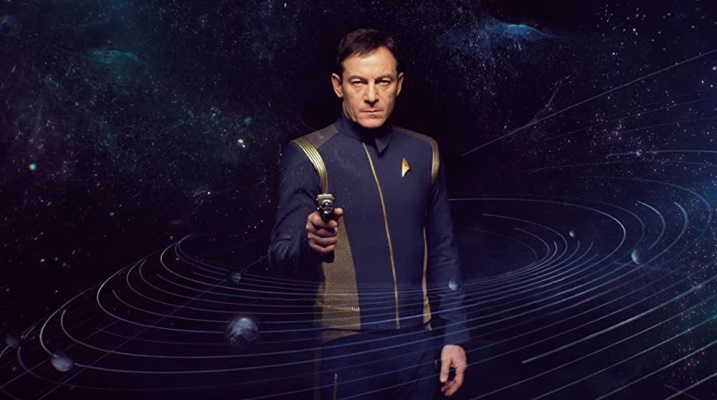
Star Trek: Discovery review – Season 3, Episode 10: Terra Firma, Part II

Spoiler Warning: There are spoilers ahead for Star Trek: Discovery Seasons 1-3, Star Trek: Picard, and for other iterations of the Star Trek franchise.

Terra Firma, Part I told one of the most interesting Mirror Universe stories I’d seen in a long time. Though the setting can feel one-dimensional, with acting performances that cross over into hammy pantomime, the first half of this story focused on Georgiou. It showed how she’d changed, how there was nuance and different factors to her character that had never really come to the fore. Though there were still many of the familiar Mirror Universe tropes – including some pretty dire acting performances – it was a solid setup to an interesting story. I was hopeful for more of the same this week.

Sometimes two-part episodes are best watched back-to-back. The Best of Both Worlds is a prime example, as is Voyager’s Equinox. I was genuinely annoyed when Equinox ended on a cliffhanger when it was first broadcast! But we’re off-topic. There was no way I was waiting a whole week to watch Terra Firma, Part I! But I did re-watch it before sitting down to Terra Firma, Part II – and I stand by what I said last time: it’s a great episode.

Mirror Burnham and Georgiou in Terra Firma, Part II.

When taking the two parts of Terra Firma together, I’m in two minds. On the one hand, the scenes in the Mirror Universe could have been a single episode of their own, capped off with Georgiou’s departure. But on the other hand, given the passage of time Georgiou experienced after crossing through the doorway, we could have had three episodes or even more expanding on her story and showing even more of how she’s changed since crossing into the Prime universe.

The passage of time was not especially well-conveyed in Terra Firma, Part II. Because the entire Mirror Universe section of the story was shown as one long unbroken sequence, with no scenes set aboard Discovery or back on Dannus V, it felt as though everything Georgiou was experiencing was happening in close to real-time; a decision compounded by having her remain aboard Mirror Tilly’s ISS Discovery instead of going to the ISS Charon or really anywhere else. When it was noted that time had passed, the dialogue choices felt like bare exposition, dumped into the episode solely to tell us time had passed. Because of this, there’s at least part of me that feels Georgiou’s time in the Mirror Universe was rushed.

Mirror Saru had a single line referring to the passage of time, but this was little more than exposition.

That’s not to say we needed to spend much more time in the Mirror Universe, but rather the way these sequences were conveyed, both this week and last week, needed to be structured better to show us how long she had been there. The Mirror Universe, as I said last week, is not my favourite Star Trek setting. For a one-off visit it’s okay, but spend too long there or with Terran characters and its limitations become apparent. We came close to – but didn’t quite hit – the limit of what the Mirror Universe is capable of over this two-part story.

Aside from Georgiou, who continued her theme from last week of having significantly changed as a character, everyone else in the Mirror Universe felt flat. Sonequa Martin-Green was clearly having a whale of a time as Mirror Burnham, but her performance was atrocious. The character is little more than a caricature; a pantomime villain. We spent a lot of time with her over these two episodes – because Discovery can’t ditch Burnham for more than a few minutes! – and unfortunately the character and the performance grated on me practically the whole time.

Mirror Burnham was little more than a pantomime villain, both in terms of scripting and performance.

Mirror Saru and Mirror Tilly got a little more screen time this week, and both had some points of interest. Tilly appeared torn between loyalty to the Emperor and her belief in the Terran way of doing things, questioning Georgiou’s decisions on several occasions. Saru was more nuanced, and apparently whatever differences exist between the Mirror and Prime Universes do not extend to Kelpiens, because aside from being more subservient – the result of a life of slavery, no doubt – he was more or less his Season 1, pre-vahar’ai self.

There’s no easy way to say this, but the Mirror Universe’s tight-fitting black-and-gold uniforms were not flattering; several characters looked out-of-shape in their Mirror Universe costumes, and it’s a shame. I’m not picking on someone for their weight or body type; I’m not exactly slim myself so that would be completely hypocritical. But as a point of costuming I think some of the Terran uniforms have to go down as a miss.

Mirror Tilly during one of the fight sequences.

As mentioned, the bulk of Terra Firma, Part II continued Georgiou’s story from last week. She remained in the Mirror Universe and made some genuine attempts to reform the Terran Empire. This was kind of the core of the Mirror Universe storyline – along with her interactions with Mirror Saru and Mirror Burnham – but I feel we needed more screen time to see her efforts unfold. As with the passage of time, it seems many of Georgiou’s moves to reform the Terran Empire took place off-screen. We were treated to some interesting character moments, but missed the crux of the story that the characters were involved in.

For example, at one point Georgiou is made aware of an impending coalition of several races under Imperial jurisdiction. Burnham wants her to attack and destroy them militarily, but Georgiou found a peaceful solution instead. None of that was shown on screen, however, and aside from a couple of lines referencing what she’d supposedly done, there was nothing to that storyline. It could have been cut entirely, and the story refocused onto Georgiou and the coup being planned by Lorca. Though Carl did reference Georgiou’s actions later in the story, this element didn’t feel well-developed in the moment; almost a “blink and you’ll miss it” affair.

Many of Georgiou’s potentially interesting accomplishments happened off screen.

You know I like to nitpick, so let’s do that. In Discovery Season 1, Georgiou’s base of operations was the ISS Charon. That was her “palace,” as Burnham referred to it. Yet in this two-part story, Georgiou remains aboard the ISS Discovery despite the Charon supposedly being made ready for her. Obviously the team behind Discovery wanted to re-use existing sets instead of rebuilding the Charon’s interior, and that’s understandable. But if that’s the case, why bother referencing the Charon at all last week? Why not simply say that Georgiou arrived weeks or months before her new flagship was commissioned? Given that both parts of Terra Firma clash with the events depicted in Season 1’s Mirror Universe story arc, that wouldn’t have been any more of a consistency issue than the one which already exists.

I’ve re-watched Terra Firma, Part II, but I’m still not clear about what happened to Georgiou. She experienced three months’ worth of the passage of time, and Carl seemed to suggest that she was indeed in a parallel universe. But whether it was the same one she originated from is not clear. Logically you’d think it would be, but there are two points that run counter. Firstly, Georgiou’s technobabble ailment could be cured in two ways, according to Kovich and Carl – returning to her own universe or to her own time period. And secondly, some of the events depicted in both parts of Terra Firma clash with the events of Season 1.

Georgiou learns that she really did spend three months in a different universe.

This poses two problems. Firstly, if Georgiou was genuinely re-living her time in the Mirror Universe, we’ve created major inconsistencies within Discovery’s own internal timeline. And secondly, even if we can ignore or excuse things like Stamets’ death and Burnham’s supposed execution, if Georgiou was genuinely sent back to the Mirror Universe, she made major changes to that timeline, including getting herself killed. How would that impact the way Season 1 would have unfolded?

This is why time travel is so difficult to get right, not only in Star Trek but in fiction in general. It’s too easy to stray off the beaten path and end up creating a time-loop or a paradox; in this case, Georgiou and Burnham’s deaths occurring before the arrival of the Prime version of Discovery under Lorca’s command.

The aftermath of Georgiou’s climactic fight against Mirror Burnham.

Speaking of Lorca, I deliberately kept him out of my theories this week because I didn’t expect to see him return. However, for a two-part episode that didn’t include the man himself, his name was brought up a lot. A reference or two to his coup would have sufficed, yet the storyline of both parts of Terra Firma was largely structured around this character. For Lorca to then be wholly absent was odd, and the lack of a resolution to his coup leaves at least part of the story feeling unfinished.

Because, as mentioned, the storyline of Georgiou’s Mirror Universe experience diverges wildly from what we saw in Discovery Season 1, we can’t assume that Lorca’s absence is because he’s in the Prime universe or that he’ll arrive shortly after her death. It’s just a void in Terra Firma’s story; an entirely unseen antagonist for Georgiou.

Despite being continually talked about, Mirror Lorca was absent from the story.

After spending some time trying to push for reforms to the Terran Empire – and having seemingly accepted her return to her own time and place – Georgiou tries to work on Mirror Burnham, torturing her and trying to bring her to heel. It seemed obvious that a betrayal was coming; both versions of Burnham are stubborn and single-minded, and despite the torture of the agoniser booth, when she pledged herself to Georgiou something definitely seemed amiss – and so it proved.

I did like Burnham’s betrayal of Detmer. Having “killed” several other leaders of the coup, Mirror Detmer was one of the few remaining. We got a flash of the old Georgiou as she ordered her protégée to kill her with only a single word. One character that I thought the episode was setting up for a bigger role was Mirror Owosekun. At several points in both halves of the story she seemed concerned about Georgiou’s newfound softness, and as the camera lingered on her as the head of the honour guard it seemed like she might join with Burnham or even land a blow on Georgiou herself. It was a bit of an anticlimax when that didn’t happen.

Mirror Burnham betrayed her comrade Detmer.

The climactic moment between Mirror Burnham and Georgiou ends with them stabbing one another after a fight. Unfortunately this moment, which was the finale of the Mirror Universe part of the story, was let down by some poor CGI work. Georgiou’s sword as she stabbed Burnham looked just awful, and in addition appeared to wobble unnaturally as it was stuck in her abdomen. The sword had no weight to it; it looked like a hollow CGI shell as it was supposedly being plunged into Mirror Burnham, and for such an important moment, more care needed to be taken.

Discovery’s CGI work has been generally of very high quality, and I don’t like to bash the animators and artists, especially given the difficulties they had working on Season 3 during the pandemic. But this moment was one of the most important in the episode, and when all of our focus was drawn to the sword, it needed to look better. As it is it looks like a video game item that clips through Burnham’s body rather than any kind of solid, substantial weapon causing her an injury. Despite this CGI effect taking up no more than two or three seconds of screen time, it was distracting and didn’t work as intended.

Though it’s difficult to show in a single still frame, the CGI work at this crucial moment was a bit of a let-down.

So the culmination of Georgiou’s return to the Mirror Universe was one of failure, at least in terms of her ambitions. But what it showed to us – and to her – is how much she has changed, even if the Mirror Universe hasn’t or can’t. The time she’d spent away from the Terran Empire had shifted her perspective, softened her, and changed the way she wanted to govern. All of that is incredibly positive and makes her a far more nuanced and interesting character.

I just wish we’d seen even the tiniest hint at this change before Terra Firma, Part I. In every appearance since leaving the Mirror Universe toward the end of Season 1, Georgiou has been a flat, one-dimensional character with little going on besides a devious nature and inclination toward violence. The only time I can recall her being anything other than that Terran stereotype was in Season 2’s worst episode: The Red Angel. And then her actions, particularly towards Burnham, just seemed out-of-character. So while I love that this storyline showed Georgiou how much she’s changed as a result of her time with Starfleet and the Federation, and that it ties into the theme of the season of showing how much good the Federation can do, it feels like it comes from nowhere, and her transformation from the woman who stomped Leland’s corpse to a bloody pulp a few episodes ago to a character Mirror Saru says can’t possibly be Terran is extreme and seems to happen quickly.

Georgiou with her honour guard.

Had we seen, over Georgiou’s recent appearances, a growing tolerance and appreciation for Saru, even a line or two of dialogue or a wordless expression of gratitude or concern, we could say that there had been evidence of this transformation building across the season. But there wasn’t. And that’s a double-edged sword, because while it makes the two parts of Terra Firma absolutely fascinating and shows Georgiou at her best, it doesn’t feel particularly well set-up, and when you’re going to make such a major change to an established character, some kind of prior setup is essential.

In Season 2, Saru fell victim to basically the same thing. This is speculation on my part, but I feel that vahar’ai – the process by which Kelpiens lose their threat-sensing, fearful nature and become bolder and braver – was a response to criticism of Saru’s cowardly nature in Season 1, and an attempt by the writers and producers to get rid of that element of criticism in the most extreme way possible. I’d also make that same argument, by the way, for Discovery’s departure from the 23rd Century, but that’s a topic for another time! Whatever the reason was, Saru’s transformation from cowardice to bravery was extreme and out of the blue in Season 2 – and I’d argue that Georgiou’s transformation here is similar.

Georgiou tried to reform Burnham and the Terran Empire, but failed.

Despite that, however, I liked the change in Georgiou that we saw over this two-part story. Now that we have seen what appears to be her final end as a Discovery character, setting up perhaps the beginning of the upcoming Section 31 series, she’s a far more interesting and complex protagonist for that show. Given that the premiere of the Section 31 show could very well be Georgiou’s next appearance within Star Trek, Terra Firma sent her out on a high.

It also left the Section 31 series with many different options – including where in the timeline it could be taking place. We’ll come to that in my theory post in the next few days, but suffice to say that Carl left Georgiou’s destination ambiguous.

The mysterious Carl.

So we come to Carl! I guessed in my last theory post that Carl could be the Guardian of Forever, and so it proved in Terra Firma, Part II. That revelation was spectacular, and connected Discovery and The Original Series once again. I had a huge smile on my face when Carl revealed his true identity – not just because I’d theorised who he could be ahead of time! Carl and the mysterious door – which was revealed to be the familiar portal – were presented in Terra Firma, Part I as the kind of weird, Roddenberry-esque sci-fi creation that we could’ve seen Kirk and his crew encounter in The Original Series. It turns out that was literally true!

Discovery has paid homage to The Original Series more than any other Star Trek show, and while Season 3 has allowed for more references to The Next Generation and subsequent Star Trek productions, I’m glad that we still got this big tie-in with The Original Series. Carl could have, for example, turned out to be a Q, and that would have changed very little in Georgiou’s story. But the Guardian of Forever is such an iconic part of the Star Trek franchise, with The City on the Edge of Forever often called The Original Series’ finest episode, so this particular tie-in just seems to work beautifully.

The Guardian of Forever’s portal.

It also manages to tie up one possible loophole in the whole “time travel has been outlawed” storyline, as the Guardian of Forever moved to a different location to avoid the portal being used in the Temporal Wars. Though there are still problems with the idea of an outright ban on time travel which every faction from the Borg to the Dominion are supposedly following, the decision to have the Guardian of Forever essentially be in hiding means that at least one of those has been resolved!

The choice of character actor Paul Guilfoyle for the role of Carl was inspired. Though he didn’t spend a lot of time on screen in either half of the story, the moments we got with him were outstanding. His performance as Carl embodied the “weirder” side of Star Trek that was present much more prominently in the Roddenberry era but has fallen out of favour. Even in a season which has primarily dealt with things like the Burn and the collapse of the Federation, I appreciate that the writers took some time to include the Guardian of Forever.

Burnham and Georgiou with Carl – a.k.a. the Guardian of Forever.

I wonder if we’ve seen the last of the Guardian of Forever this season. I’ve talked for weeks about how there have been connections to the Short Treks episode Calypso, and wondered in particular how the USS Discovery could find itself abandoned in a nebula only to be discovered by Craft – who appears to be a human from around this time period. With Georgiou having seemingly departed the series altogether, my theory that she would be the one to take the ship back in time looks dead. But with the rediscovery of the Guardian of Forever, if there was a need for Discovery to travel back in time – and there isn’t right now, but such a need could arise – perhaps this is how it happens.

Carl explained to Georgiou that her time in whatever variant of the Mirror Universe she was sent to was a “test” to see how far she’d come and how much she’d changed. Despite being unsuccessful in her ambitions, the mere act of having the ambition to change the way the Terran Empire was governed demonstrated to Carl that she deserved a second chance. And she got one – being sent through the Guardian of Forever’s portal to an unknown time and place.

Georgiou departs the 32nd Century – and Star Trek: Discovery.

Georgiou’s departure was emotional, and her scene with Burnham as she readied herself to step through the portal genuinely packed a punch. Both actresses put in fantastic performances, and the agony they felt at parting was beautifully expressed on screen. Although Burnham succeeded in her mission to save Georgiou’s life, she still lost her – and that makes for a bittersweet ending to a storyline set up in Die Trying, when Georgiou’s condition first manifested itself. For Burnham, this is the second time she’s lost Georgiou following the death of her Prime counterpart in Battle at the Binary Stars – but this time she got to say goodbye, and could accept the parting.

One thing I’m not clear on is why Discovery set up a little deception regarding Georgiou’s condition. After arriving in the future she was absolutely fine, but only after meeting the mysterious Kovich at Federation HQ did her health worsen. There was thus an implied connection between the two events, one which the writers deliberately set up as a misdirect. I’m fine with stories being unpredictable, and with “obvious” solutions not panning out; those can feel like well-executed twists. But in this case it does feel deceptive to imply a link between Kovich and Georgiou’s condition only for that to have been pure coincidence.

Burnham and Georgiou part ways.

Speaking of Kovich, given that the character seems to be coming back, perhaps even in Season 4 as well, it’s a shame that he and Georgiou won’t get any more opportunities to spend time together. The way Cronenberg and Yeoh talked around one another in Die Trying was riveting to watch, and it’s sad that we won’t get any more of that. Kovich absolutely can contribute to the story in other ways – he’s far from a one-trick pony – but he was certainly at his best when dealing one-on-one with Georgiou.

Finally we come to the remainder of the episode aboard Discovery. Burnham doesn’t explicitly tell Saru what happened to Georgiou – for some reason – but he understands that she survived. However, the two of them don’t explain this to the crew, or at least don’t seem to, and I’m not really clear on why that was. Would it not have been better for the crew to understand that their mission to Dannus V was a success? Admiral Vance made clear to Saru that his crew would “never look at [him] the same way” if he didn’t go above and beyond for her, and while he did take her to Dannus V in search of help, surely the outcome for crew morale would have been better if Burnham and Saru explained what actually happened.

Captain Saru learns Georgiou’s fate… kind of.

The crew hold a wake for Georgiou in which several characters get a turn to speak. Tilly, who hasn’t had very much to do since becoming acting XO, stepped up and delivered a sweet line in honour of her fallen crewmate, as did Saru. Burnham stole the show, of course, with a longer speech about how much Georgiou had meant to her. And again, this was a deeply emotional moment. It was also very well acted by Sonequa Martin-Green – in stark contrast to her hammy, over-the-top performance as Mirror Burnham earlier in the episode.

After last week saw the revelation of a Kelpien vessel in the Verubin Nebula – which is believed to be the Burn’s point of origin – we got a little more information this time. With everything in the Mirror Universe to wrap up, as well as Georgiou’s departure and the fallout from that, I was certain there was no way we’d see Discovery travelling to the Verubin Nebula this week, and so it proved.

Dr Culber leads a toast to Georgiou at her wake.

We did get some minor moves toward that destination, though, as well as further hinting at the Emerald Chain possibly making a move against Discovery rather than against Federation HQ. While attempting to access the sensors of the derelict Kelpien ship, Book installed a piece of Emerald Chain technology – a signal booster – in Discovery’s main engineering. Admiral Vance was especially concerned about that when he found out, and I suspect his concerns will be valid – there could be a way for the Emerald Chain to track Discovery using a “backdoor.”

We did get to see Reno return briefly, and I always enjoy Tig Notaro’s performance. There was a little bit of technobabble about upgrades to the ship from Reno – this could prove important later on, or it could simply be a throwaway line, I can’t tell. Regardless, it was great to see her back. After confirming that they had indeed hacked into the ship, we didn’t actually get to see any of the results of that hack – though I’m sure we will next time. The dynamic between Stamets, Reno, and Adira is interesting, and the addition of Book to that scene in engineering was fun. We haven’t really got to see Book spend much time away from Burnham, so it was nice to see him getting a chance to interact with other characters. As we saw with Narek in Star Trek: Picard, when you only allow a character one or two options for who to spend time with, it can make them less interesting in some respects.

Reno returned briefly, as did Book.

So that was Terra Firma, Part II. There was a lot going on for Georgiou, for the franchise overall, and for Burnham. There was less going on for the other ongoing storylines of the season, but that’s okay. Sometimes it’s nice to step back from the big continuing storylines and have more of a standalone story. Past Star Trek shows were largely episodic, after all!

I enjoyed seeing the transformation in Georgiou’s character, and it’s provided a far better setup to the upcoming Section 31 series than I had expected. I’m now genuinely curious to see where and when Georgiou will end up – and how that will connect to Section 31. I have some ideas about that – as I’m sure a lot of fans do! – so stay tuned for those theories.

Mirror Georgiou in Terra Firma, Part II.

Despite falling victim to some of the same Mirror Universe tropes that have plagued episodes in that setting, the two parts of Terra Firma have to go down as among the best Mirror Universe stories in the whole Star Trek franchise. The contrast of the changed Georgiou with the unchanged setting was genuinely fascinating to see, and her desire to reform it and bring in changes was interesting – and heartbreaking when she couldn’t manage it.

There was a lot to love about Terra Firma, Part II. I was thrilled to see the Guardian of Forever – and hear its original voice which had been lifted from The Original Series. Georgiou’s arc across the two parts – while it could have been built up to more in previous episodes – was emotional and made for some of the best character work of the season so far.

With this semi-standalone story now wrapped up, Discovery should be setting off to the Verubin Nebula to chase down the next lead on the Burn. What will happen when they arrive there? I can hardly wait to find out!

Star Trek: Discovery is available to stream on CBS All Access in the United States, and on Netflix in the United Kingdom and elsewhere. The Star Trek franchise – including Discovery and all other properties mentioned above – is the copyright of ViacomCBS. This article contains the thoughts and opinions of one person only and is not intended to cause any offence.
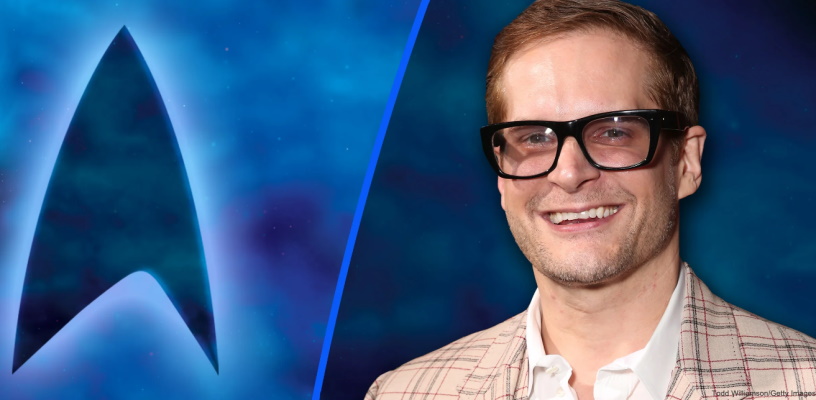
Star Trek: Discovery theories – week 9

Spoiler Warning: There are spoilers ahead for Star Trek: Discovery Seasons 1-3, Star Trek: Picard, and for other iterations of the Star Trek franchise.

Terra Firma, Part I was a fascinating episode. Though there was minimal advancement of the main storyline of the season, there were several new and exciting hints about things to come from which we can construct new theories. Though a couple of theories we had going into the episode now seem unlikely, we’re also not at a point where we can really consider any debunked, and with no confirmations either, this week the theory list will grow longer!

Let’s jump straight into the list, then, beginning with new theories and those which saw movement in Terra Firma, Part I.

Number 1: Dr Issa is a descendant of Saru’s sister Siranna.

A hologram of Dr Issa.

The revelation that a Kelpien ship was responsible for at least part of the Federation distress signal in the Verubin Nebula was interesting, and had a great effect on Captain Saru. It was the first he’d seen of his people since arriving in the 32nd Century. When Dr Issa – the Kelpien scientist who sent the distress signal – first appeared, I genuinely thought we were seeing Siranna, Saru’s sister who was introduced in the Short Treks episode The Brightest Star and who reappeared in Season 2 of Discovery last year.

The reason for this is that Siranna and Dr Issa are both portrayed by the same actress (Hannah Spear) and thus look very similar. It remains a (remote) possibility that the two characters could be one and the same – either through time-travel shenanigans or perhaps because post-vahar’ai Kelpiens are especially long-lived, but what I think is more likely is that a familial connection will be revealed – Dr Issa will be a distant relation to Saru through his sister.

The reason for this is primarily production-side: why bring back the same actress to portray a Kelpien, and have the characters look practically identical, if there isn’t meant to be a connection? From a story point of view it could give Saru a dilemma – saving the Kelpien ship versus aiding Starfleet, for example – or it could give him a deeper emotional connection to the stranded ship than he would otherwise have.

Number 2: The Emerald Chain will attack Federation HQ.

The Emerald Chain’s leader Osyraa.

The Emerald Chain is planning “military exercises,” according to Starfleet. Both Starfleet and Book’s courier friends believe this is code for some kind of larger-scale military engagement, and surely the only target for an Emerald Chain attack would be Federation HQ. Why go to the trouble of telling us as the audience about the Emerald Chain’s movements otherwise?

When Saru shot down Book’s attempt to help, this felt all but confirmed. Though it’s possible that it’s a misdirect, I would question why such a thing would be included. Clearly the Emerald Chain story thread needs to be wrapped up somehow – by defeating them militarily or coming to a negotiated settlement – so perhaps this is the moment they make their move.

I’m not sure that Terra Firma, Part II will see a huge space battle; with Discovery away at Dannus V we may simply see the aftermath when they return. But the Emerald Chain is clearly on the warpath, and while there are other possible targets, Federation HQ seems the most likely to me at this juncture.

Number 3: The Emerald Chain will attempt to steal the USS Discovery and/or the Spore Drive.

The USS Discovery in Terra Firma, Part I.

I mentioned this last week as a continuation of a theory I had that Discovery’s Spore Drive is no longer a secret. If the Emerald Chain is moving, Starfleet HQ seems the most likely target – but there is another significant one, and that’s the USS Discovery itself.

In The Sanctuary, Ryn confided in Tilly that the reason Osyraa – the Emerald Chain’s leader – is so keen to recover him is because he knows their biggest secret: the Emerald Chain is running out of dilithium. This will undoubtedly make the faction more aggressive as it looks to shore up its position, but now that they’ve seen Discovery able to jump to Kwejian, perhaps Osyraa and her people will begin to suspect that the ship has a powerful new method of propulsion.

Admiral Vance told Starfleet’s senior officers about the Spore Drive in Scavengers, and I picked up at least a hint that not everyone was happy about this disruption to the established hierarchy of Starfleet. Could someone within Starfleet – such as Lieutenant Willa – have passed along to the Emerald Chain details of the USS Discovery?

Even if none of that happens, with Discovery jumping all over the galaxy – to Earth, Trill, Ni’Var, Federation HQ, Kwejian, Dannus V, and the location of the USS Tikhov – how long until the Emerald Chain notices? Obviously this theory and the one above can’t both be true, but I suspect the Emerald Chain has one of these targets in mind.

Number 4: Admiral Vance is going to be killed.

Admiral Vance in Unification III.

When Admiral Vance sanctioned Discovery’s mission to Dannus V, there was a strange air of finality to his scene with Saru, Burnham, and the others. Partly he was attempting to save Saru from making a mistake that he feels he himself made in the past, one which may have led to the death of someone under his command.

The Emerald Chain is clearly planning some kind of attack on Starfleet – Vance and Book appear to have all but confirmed this, as we already looked at. While the addition of a single extra ship may not have a huge impact, Discovery has the Spore Drive which could be a decisive advantage in battle – as we saw in Season 1.

Vance clearly knew that sending Discovery away was a risk, and I feel his line to Saru that Starfleet will “handle the Chain” without them will come back to bite him. It was set up that way, using a trope that’s familiar in action stories. One character will say to another, “don’t worry, we can handle this situation without you” only for that character to be killed when it turns out they can’t, in fact, handle it. That’s what this scene with Admiral Vance felt like, and I’m worried that he may not live to see the end of Terra Firma, Part II.

Number 5: Mirror Georgiou will inadvertently change the future.

Georgiou chose not to execute Mirror Burnham.

I don’t believe that Georgiou has literally travelled back in time and back to the Mirror Universe. We’ll look at some other options in a moment, but suffice to say what’s happening to her on the other side of Carl’s mysterious door may not be all that it seems.

However, if I’m wrong about that, Georgiou has already begun to change the timeline. She killed Mirror Stamets – who was still alive when Discovery entered the Mirror Universe – and refused to execute Mirror Burnham, despite the events surrounding her betrayal and execution being confused somewhat compared to the established story from Discovery Season 1. If Georgiou is literally back in her original timeline, these changes could radically alter the future.

For example, if Georgiou was able to maintain her grip on power by defeating Lorca more easily, and didn’t end up aboard the Prime USS Discovery, all sorts of things would be different in the Prime Universe from the end of Season 1 onwards. The Klingon War would have ended very differently – or may not have ended at all. Captain Leland and his mission to track down Spock would have gone differently. The Control AI may have been more easily able to acquire the Sphere data. And many other moments where Georgiou intervened would have panned out completely differently.

How all of this will be resolved is anyone’s guess right now. Time travel stories are difficult because of the presence of paradoxes, alternate realities, and so forth. They can become complicated and convoluted very easily, so I hope the writers have a solid exit plan for Georgiou!

Number 6: Mirror Georgiou will travel back in time… but she hasn’t yet.

Mirror Georgiou.

For weeks I’ve maintained that Georgiou will travel back in time. But as mentioned, I’m not convinced that what we saw in Terra Firma, Part I actually represents full-blown time travel. If Georgiou hasn’t travelled back in time, though, she may yet do so.

Whatever’s happening to Georgiou may trigger something inside her – a desire to return home. Having experienced a different outcome to certain events, she may wish to return to the Mirror Universe to set things “right” from her perspective.

Alternatively, she may need to travel back in time for some other reason. This could line up with Calypso, the Short Treks episode which saw an abandoned USS Discovery hidden away in a nebula. Georgiou could take the ship back in time – perhaps to hide it from the Emerald Chain, to alert Starfleet to the impending Burn, or for some other reason – then leave it in the nebula for the crew to pick up 930 years later.

Georgiou may even remain in the past – and as we know, the upcoming Section 31 series is supposedly taking place in the 23rd Century.

Number 7: Mirror Georgiou did not travel back in time or to the Mirror Universe.

Where does the door lead?

Whatever’s happening to Georgiou on Dannus V is supposed to cure her of her technobabble ailment. Her condition was caused by travelling from one parallel universe to another and also travelling forwards in time, causing her cells to break down somehow. The mechanics of what’s happening to her and why are a little vague, but there’s enough to work with to say that simply travelling briefly to her own time and universe doesn’t seem like a cure.

Instead, Georgiou may be in a pocket universe (as seen in Star Trek episodes like Remember Me), or the events we’re seeing unfold may be taking place inside her head. It could be a simulation, a holodeck programme, or it could be connected to the mysterious Carl – he could be giving her a vision, like those Captain Sisko received from the Prophets.

We’ll come to Carl in a moment, but to stick with Georgiou’s storyline, one circle that needs to be squared is why the events she’s seeing don’t line up with Season 1 of Discovery. To me, that’s the biggest indication that Georgiou has not travelled back in time and across to the Mirror Universe. As I wrote in my review of Terra Firma, Part I, even though Discovery has taken a somewhat loose approach to the broader Star Trek canon, it has always remained internally consistent. Georgiou’s supposed execution of Mirror Burnham days or weeks before the events of Season 1 would undo that, as would the killing of Mirror Stamets. I sincerely hope that we’re not going to be told that Georgiou is seeing things exactly as they happened, because that would open up a plot hole in the overall story of Discovery.

Number 8: Mirror Georgiou has been tampered with by Starfleet and/or Section 31.

Georgiou was interrogated by Kovich in Die Trying.

Despite what Kovich had to say this week regarding Georgiou’s condition, I’m not 100% convinced that he and his organisation didn’t have something to do with it. Even if they didn’t inflict this ailment upon her, perhaps he and Section 31 accelerated its progress or deliberately worsened it.

Kovich claims to have known that Georgiou would suffer this fate, yet chose to say nothing. That shows us he’s the kind of person who is quite happy to be dishonest – in this case, a lie of omission – and is thus less than fully trustworthy.

His uniform, mannerisms, and the way in which he stands apart from other Starfleet characters suggest he could be affiliated with Section 31, but at present that is unconfirmed. However, if he is with Section 31, that could explain the lack of morals required to either cause or worsen Georgiou’s condition.

The timing of Georgiou’s condition is suspect. She was fine after arriving in the future right up until she met Kovich. In fact the first indication we had that something could be awry was right after she returned to Discovery following her meeting with him, so in that sense there’s still a possible connection.

This could even be some kind of planned mission on Kovich’s part – causing Georgiou to suffer in order to track down Carl and the mysterious door on Dannus V.

Number 9: Carl is a “Guardian of Forever” type of character.

The mysterious Carl.

Who is Carl? And what’s going on with his mysterious door? Those are two of the biggest questions Terra Firma, Part I brought up. When I first saw Carl and the doorway, one thing I really appreciated was the oddness of the situation. Carl and his door felt like something that Kirk, Spock, and McCoy could have encountered in The Original Series, and feels like a mid-century sci-fi concept when compared with things like the Emerald Chain and the Burn, both of which seem like simple enough puzzles to find a technological solution to.

Carl, in contrast, feels kind of like the Guardian of Forever from the iconic episode The City on the Edge of Forever. His door is unexplained yet clearly very powerful – much in the same way as the Guardian of Forever’s portal was in The Original Series. Whatever Carl is, he represents an entity capable of wielding extreme power – or at least, power beyond what the 32nd Century Federation is able to detect.

Perhaps Carl is a Q; we have recently seen the Q referenced in Star Trek: Lower Decks, so the franchise isn’t trying to ignore the Q Continuum. In a way, I would be happy if Carl and the door weren’t over-explained. Leaving behind some elements of mystery that future stories could perhaps pick up would be one way to go.

Number 10: A time-travelling (or parallel universe) USS Discovery is at the centre of the nebula – and may be responsible for the Burn.

The USS Discovery in a nebula.

Should these next three theories about the Verubin Nebula that I posited last week be considered debunked? After all, we have the revelation of the Kelpien ship being in the nebula to contend with now, and that could be the beginning of the end for the Burn mystery.

I’m not convinced, though, at least not yet, that there isn’t more going on in the Verubin Nebula. We don’t know anything about the nebula or what’s inside it, and the existence of a Kelpien ship doesn’t rule out the possible existence of the USS Discovery or any other vessel. We know, in fact, that a Starfleet ship was en route to the Verubin Nebula to assist Dr Issa, so there may be at least one more ship in there, and we don’t know the nature of the “dilithium nursery” the Kelpiens were investigating or what became of it.

In the Short Treks episode Calypso, the USS Discovery was found abandoned in an unnamed nebula by Craft. Craft was a soldier in a war against the V’draysh; an alternate name for the Federation in the 32nd Century. Zora, an AI present aboard the USS Discovery, told Craft the ship had been abandoned for almost a thousand years, and not only have we seen the potential creation of Zora earlier this season (from a merger of Discovery’s computer and the Sphere data) but in addition, Season 3 takes place 930 years in the future from Discovery’s original 23rd Century setting. If Discovery had been abandoned at that time, things begin to fall into place.

There are two possibilities for how it could be the USS Discovery – which, of course, has not been abandoned – in that nebula: the ship will be sent back in time, or it has crossed over from an alternate timeline or parallel universe – it could have even crossed over from the prime timeline if Season 3 is itself taking place in an alternate reality!

Number 11: A familiar starship is at the centre of the nebula – and may be responsible for the Burn.

Could the USS Defiant be trapped in the nebula?

If not the USS Discovery, then who could it be at the centre of the Verubin Nebula? How about one of the hero ships from a past iteration of Star Trek? We could encounter the USS Defiant, the Enterprise-E, Riker’s USS Titan, or Star Trek: Picard’s La Sirena among many others. If such a vessel were caught in a temporal anomaly, that would explain their presence in the 32nd Century – and if time travel is involved, from their point of view the Burn may have only just happened, instead of happening 120 years ago.

It’s more likely, though, that any ship Saru and the crew find in the nebula would be deserted so long after the Burn – either abandoned by its crew or having become their tomb. If it is a familiar ship, we could thus see the ultimate end of a significant character (or multiple characters) from a past iteration of Star Trek.

The one exception to this could be La Sirena. This would be totally out of left-field for the Star Trek franchise, and keeping a lid on a secret this big would be difficult. But it would finally accomplish something I’ve been arguing for for a while: simplifying the Star Trek franchise. If La Sirena were discovered, along with Picard and his crew, Picard Season 2 could join Discovery in the 32nd Century. I don’t consider this likely, but it would be a fascinating way for the Star Trek franchise to go!

Number 12: The Red Angel suit is at the centre of the nebula – and may be responsible for the Burn.

Burnham in the Red Angel suit at the end of Season 2.

Burnham’s Red Angel suit was last seen on Hima when she sent it back in time. She ordered the suit to self-destruct, but as we never saw the destruction on screen, what became of the suit after it sent the final Red Burst is unknown. Was it captured, intercepted, or damaged? Could someone have stolen it with a view to weaponising it? It’s at least a possibility.

The Red Angel suit was known to be incredibly powerful, and in an age where time travel has been outlawed, it may be one of the only ways to travel through time that still exists – making it a lucrative target for all sorts of factions.

If Discovery wants to present the Burn as an accident or disaster rather than a deliberate act, having the Red Angel suit malfunction could be one way of doing that. Rather than requiring a villain, the story of the season could instead see the crew unravelling a scientific puzzle, one which points to Discovery and her crew as the origin of the Burn, but in such a way that they themselves are blameless.

So it’s clear that all three of these Verubin Nebula theories can’t be true. And now that we’ve seen the Kelpien ship, it’s possible that none are true and there won’t be anything else to find if and when Discovery heads to the nebula. I’m not convinced of that yet; the Verubin Nebula and the Burn have been presented as complex puzzles, and I’m sure there will be more twists, turns, and revelations before we uncover the truth about what’s really going on.

Number 12A: The name “Burn” is derived from the name Burnham.

Mirror Burnham.

Connected to the theory above, if indeed the Red Angel suit is the source of the Burn, perhaps the name of the event is derived from the name of the wearer of the Red Angel suit – either Michael or Gabrielle Burnham.

The music within the signal emanating from the Verubin Nebula has – somehow – subconsciously embedded itself in people all across the galaxy. We didn’t hear everything Dr Issa had to say – her message was tantalisingly cut short as a result of decades of radiation and decay. If, somehow, Dr Issa was trying to contact Burnham, or was trying to report on her discovery of the Red Angel suit within the nebula, perhaps that could be how the names are related.

I speculated way back when I looked at possible Burn origins before the season premiered that it was, at the very least, an odd coincidence that in a show all about Michael Burnham there’s a disastrous event called “the Burn.” Could these two seemingly unconnected things actually be related?

I stand by what I said a few weeks ago: if it is somehow Burnham’s fault, calling the event “the Burn” sounds way better than calling it “the Ham!”

Number 13: Discovery Season 3 is taking place in an alternate timeline or parallel universe.

Crewman Daniels in the “time stream” in Star Trek: Enterprise.

Two key pieces of evidence which had seemed to point to this theory have since fallen away: the absence of Dr Gabrielle Burnham and the lack of explanation for the mysterious music. However, it could still pan out… somehow.

Burnham mentioned during her debrief that unexplained “gravitational waves” in the time-wormhole pushed her and Discovery off-course, which is why they didn’t arrive at the planet Terralysium. The acknowledgement of problems within the time-wormhole may indicate that they crossed over into a different universe or reality.

The second half of this theory is that the Burn happened due to the interference of a time traveller or time travelling faction. From Starfleet’s point of view, the timeline in which the Burn occurred is not the “true” timeline, and thus part of the resolution to the Burn may be travelling through time to undo it.

How does the existence of Carl and his mysterious door play into the narrative? Could he be indicative of being in a different reality?

Number 14: The Burn was a superweapon – perhaps one the Federation or Section 31 built.

The Burn.

The discovery of a Kelpien science vessel at the centre of the Verubin Nebula is interesting, but it seems unlikely that such a craft would be carrying a superweapon – if one even existed! However, as discussed, Dr Issa’s craft may not be the only one within the nebula.

The Burn could be a superweapon – one developed by Starfleet or Section 31, perhaps designed to counter a galactic-scale threat like the Borg or the super-synths from Star Trek: Picard.

Both Admiral Vance and Kovich have stated that they don’t know what caused the Burn, and they don’t consider any of the many theories more or less likely than others. Kovich could be lying, but Admiral Vance certainly seemed genuine. However, given how long ago the Burn was, it’s possible the knowledge of what caused it has been lost or deliberately concealed, either by Starfleet, Section 31, or whichever faction was responsible.

It could also have been a revenge attack; some kind of galactic-scale mutually-assured destruction. If the Federation, Section 31, or some other organisation launched an attack against someone, the Burn may be that faction’s retaliation. That would explain the lack of an invader: they were already dead.

We’re edging closer to learning the true nature of the Burn. A superweapon remains on the table as one possibility – but the question it raises is this: were Starfleet and the Federation the target of the Burn, or its perpetrator?

Number 15:There will be a resolution to the story of Calypso (the Short Treks episode).

Craft, the protagonist of Calypso.

We got further confirmation this week that Zora – the AI encountered in Calypso – has been created. Kovich referred to it as “an AI,” and though unnamed right now, Zora herself became involved in the story. It was her intervention that sent Discovery to Dannus V in search of help for Georgiou – perhaps because the Sphere had travelled there or knew about Carl.

One thing that’s definitely interesting right now is that the USS Discovery as it appeared in Calypso no longer exists. The ship was retrofitted in Scavengers, and in addition to features like programmable matter interfaces and detachable nacelles, now sports the designation NCC 1031-A.

My theory is that, if indeed Discovery somehow travels backwards in time this season, the crew will very deliberately un-retrofit the ship first, removing any 32nd Century features to avoid polluting the timeline in case of accidental discovery. Discovery was in a nebula in Calypso – could that be the Verubin Nebula?

Calypso has been an outlier in Discovery’s story since it was broadcast in between Seasons 1 and 2. Having seen some elements from that episode cross over, all that remains is for the mystery at its core – Discovery being abandoned in a nebula – to be resolved. No small task, perhaps, but if this entire storyline from Calypso to Control to the time-wormhole to the Burn has been planned out properly, there’s no reason why we won’t see everything tied up by the end of the season.

Number 16: Tilly is going to go rogue.

Tilly in Unification III.

One line which stuck with me from Unification III was when Tilly asked Saru if he chose her to be his first officer because he believed her to be “compliant.” He ducked the question, but it was at least hinted that he does indeed see her as someone who will do as she’s told. Having experienced the Burnham problem, perhaps that’s a knee-jerk reaction from Saru, and one which, if true, would make me question his judgement. But the line carried with it a potentially serious implication – Tilly may choose, at a certain moment, not to comply.

She may do so to assist Burnham in some way, and if Tilly were to disobey orders – as she stated she would in Scavengers when talking with Saru – I would assume it would be for this reason. But there may be something else that causes her to go rogue, following in Burnham’s footsteps. I can’t say exactly what it could be if not Burnham, but we’ve had two lines that can certainly be interpreted to say that Tilly may be less “compliant” than Saru hopes.

Over the couple of episodes since she accepted the role, we have seen Tilly begin to grow into it. This is undoubtedly a change to her character, but not necessarily a bad one. I still think, however, that there is scope for her to do something significant when faced with a difficult situation, even if that means going against orders.

Number 17: The Spore Drive will become Starfleet’s new method of faster-than-light propulsion.

Discovery makes a Spore Drive jump.

SB-19, whether it caused the Burn or not, was an imperfect way to travel when compared to the Spore Drive. At present, only Discovery is capable of using the mycelial network, but that could change. What the implications of that would be on races like the JahSepp, who are native to the mycelial network, is not clear, but assuming it would be safe to use the network to travel, Spore Drives may yet be installed on all of Starfleet’s ships.

At the moment Discovery relies on Stamets as navigator; without him, accessing the mycelial network is not possible. But if, as was hinted at in Forget Me Not, it’s possible to create a non-human navigator, a major obstacle to other vessels using the Spore Drive melts away.

This theory would allow the resolution to the Burn to keep the current timeline intact – there would be no need to go back in time and undo anything, nor would there be a deus ex machina of a sudden discovery of a huge cache of dilithium. Instead, Starfleet could get back on its feet using the Spore Drive – finally finding a proper use for Discovery’s most controversial piece of technology!

Number 18: A character from a past iteration of Star Trek – such as the Doctor from Star Trek: Voyager – will make an appearance.

The Doctor.

Before Season 3 premiered I made the case for Voyager’s Doctor – or rather, a backup copy of him seen in the Season 4 episode Living Witness – being a prime candidate for inclusion. Aside from him, other characters I suggested included Soji (or a synth who looks like her), Lore, Captain Sisko, and Enterprise’s Crewman Daniels – the latter of whom was a 30th/31st Century temporal agent. Any of these could reasonably be alive in the 32nd Century, and characters who have long lifespans or are known to have spent time in the far future are perhaps more likely to appear.

If a starship from a past iteration of Star Trek is somehow within the Verubin Nebula, perhaps that could be how a crossover character is introduced. With time travel, temporal anomalies, and technobabble at their disposal, the writers could find an excuse to bring back practically anybody!

Having seen a tie-in with Picard via the appearance of the Qowat Milat, it gives me hope that Discovery will find more ways to tie itself to the wider Star Trek franchise. A character crossover is a spectacular way of doing that, and as The Next Generation showed with episodes like Relics, the passage of centuries is no barrier to such a crossover in a sci-fi world. Until the credits roll on the season finale, I’ll keep advocating this theory!

Number 19: The ships at Federation HQ represent the majority of Starfleet’s remaining vessels. And they’re all 120+ years old.

Discovery with a few other Starfleet vessels at Federation HQ.

How many ships were present as Discovery arrived at Federation HQ? Ten? Twelve? It wasn’t much more than that, that’s for sure. In a post-Burn environment, one where the Federation has shrunk considerably and where dilithium is in short supply, it’s possible that these ships are all that remain of the once-mighty Starfleet.

In That Hope Is You, Mr Sahil noted two Federation ships in flight, so perhaps we can say from his comment that there are at least two more! But I wouldn’t be surprised to learn that we’ve seen the bulk of Starfleet. Certainly the Federation seems incapable of either building any more ships nor fielding a large armada right now, which is perhaps one of the reasons why they need to keep their base cloaked.

Because of the catastrophic nature of the Burn, it also seems highly likely that shipbuilding facilities would have been damaged, destroyed, or would be inaccessible. That may mean that the Federation’s fleet entirely consists of ageing vessels, each one over 120 years old and probably not designed for being in service this long. In addition, without fuel what would be the point of expending a lot of resources building a new ship?

Number 20: Burnham’s Red Angel suit has been stolen.

Dr Gabrielle Burnham’s Red Angel suit.

As mentioned above, the Red Angel suit – and possibly Burnham or her mother – could be responsible for the Burn, and could be waiting for Discovery at the centre of the Verubin Nebula through parallel universe or time travel shenanigans!

This has been a theory I’ve been pushing since Burnham sent her Red Angel suit back into the wormhole in That Hope Is You right at the beginning of the season. I was struck by a line in Die Trying: Admiral Vance described the Red Angel suit as being “inaccessible.”

Burnham goes on to say she set the suit to self-destruct, but all this did for me is reinforce the fact that we didn’t see the suit’s destruction with our own eyes. The finale of Season 2 confirmed that Pike and Spock received the final red burst in the 23rd Century, but beyond that we simply do not know what became of the suit.

Number 21: The Dax symbiont is still alive.

Jadzia Dax in Star Trek: Deep Space Nine.

This one is looking less likely, because the two locations where Dax could have appeared have both seemingly come and gone without them: most notably the Trill homeworld in Forget Me Not, but also Federation HQ in Die Trying. However, there are hints at a lifespan for Trill symbionts that may be exceptionally long, in which case Dax could very well still be alive in the 32nd Century.

Obviously we won’t see Ezri Dax (barring some bizarre time travel/stasis storyline) but the symbiont itself could have lived this long. When Adira “met” the Tal symbiont’s former hosts in Forget Me Not, one was wearing a Star Trek: Picard-era uniform, hinting that Tal may have lived 700+ years. There are production-side explanations for this Easter egg, and as stated the fact that two of the best opportunities so far to meet Dax have come and gone may mean it won’t happen this season. But I’m sticking to my guns on this one: Dax is alive!

Number 22: The ban on time travel is being flouted – possibly by secretive elements within the Federation.

Kirk takes a commandeered Klingon Bird-of-Prey back in time in Star Trek IV: The Voyage Home.

Admiral Vance clearly believes that the ban on time travel is intact and being followed. Kovich indicated that he does too – but I’m not sure how far I trust him. Is he an agent of Section 31?

Even if the ban had been obediently followed thus far, the arrival of Discovery – and more importantly, the Red Angel suit – could have changed that if someone were able to get their hands on it. We know from what Zareh said in Far From Home that Discovery’s arrival in the future did not go unnoticed, and that anyone with a decent sensor array would have been able to detect time travel. Could someone – possibly even someone within the Federation – have tracked down the Red Angel suit or entered the time-wormhole before it closed?

It’s impossible to un-invent a powerful, useful, weaponisable technology, no matter how hard you try. Considering how crappy the 32nd Century seems to be, are we convinced that nobody at all is using time travel to try to give themselves an advantage? Not the Dominion? Not the Borg? Not Section 31? Seems unlikely to me, though for production-side reasons of wanting to keep the timeline intact and to avoid overcomplicating the plot we might be told this is true!

Number 23: Kovich is an agent of Section 31.

Kovich returned in Terra Firma, Part I.

Kovich was a character I wasn’t expecting to see return. Though I’d speculated since his first appearance in Die Trying that he could be a Section 31 operative, his status as a character who seemed unlikely to reappear meant I hadn’t spun out the theory fully. However, now we know that Kovich is back – and may even be returning for Season 4 according to David Cronenberg, the famed director who plays the character.

So the question is this: who is Kovich? He doesn’t wear a normal Starfleet uniform, and doesn’t appear to hold a Starfleet rank. Yet he wears a Starfleet combadge and is clearly a high-ranking intelligence officer as he undertook Georgiou’s debriefing and has access to classified files that pertain to time travel and parallel universes.

It is at least possible – if not outright likely – that this mysterious character works for Section 31. Since we now know he hasn’t just disappeared and may well be coming back, perhaps we’ll learn more about him. We know he has an interest in the Mirror Universe and Terran society, expressing almost an admiration for Georgiou and her way of doing things. Depending on what happens with her after she crossed through Carl’s doorway on Dannus V, she may want to talk to Kovich again. We may learn that he and Section 31 either triggered or worsened her condition, as discussed above.

Number 24: We haven’t seen the last of Zareh.

Zareh in Far From Home.

Despite being quite content to kill all of Zareh’s goons, Saru balked at the idea of killing the man himself in Far From Home. Instead, he and Georgiou let him go, sending him out into the wilds of the Colony – despite being told by the locals that that’s a death sentence. However, we didn’t see Zareh die. And in stories like these, characters like Zareh tend to pop back up looking for revenge. His association with the Emerald Chain could bring him back into the story if they plan to make a move against Starfleet and/or the USS Discovery.

So that’s it. There are twenty-four theories in play as we head into Terra Firma, Part II later this week. The first half of this two-parter brought some genuinely interesting moments for Georgiou in particular, and there are many different ways the story could unfold from here.

There is clearly some kind of connection between the Federation and the Burn, but in what way and how the Kelpiens connect to that is still not known. Also up in the air is the storyline from Calypso; will we see Discovery abandoned in a nebula by the end of the season? And if so, who will abandon it and for what purpose? There are a lot of mysteries still to unpick as Discovery enters the final four episodes of Season 3.

One final note: no fan theory, no matter how plausible it may seem, is worth getting upset or disappointed over. I put these lists together for fun, and as an excuse to spend more time in the Star Trek galaxy, and that’s all. If something goes completely the opposite way I was expecting, far from being annoyed or upset I revel in that. That doesn’t mean writers should make arbitrary and silly decisions, but it means I like being surprised! If we could all remember to take fan theories with a healthy pinch of salt, there’d be less conflict in fan communities.

Star Trek: Discovery is available to stream on CBS All Access in the United States, and on Netflix in the United Kingdom and elsewhere. The Star Trek franchise – including Discovery and all other properties mentioned above – is the copyright of ViacomCBS. This article contains the thoughts and opinions of one person only and is not intended to cause any offence.

Star Trek: Discovery review – Season 3, Episode 9: Terra Firma, Part I

Spoiler Warning: There are spoilers ahead for Star Trek: Discovery Seasons 1-3, Star Trek: Picard, and other iterations of the Star Trek franchise.

I was very impressed with The Sanctuary last week. It was the kind of solid mid-season episode that helped move key story threads along while also telling a semi-standalone story of its own. Following up that success was the goal of Terra Firma, Part I.

The episode synopsis, released a couple of days before it was broadcast, seemed to suggest that visiting the Verubin Nebula – believed to be the source of the Burn – would have to take a back seat to Georgiou’s health, and so it proved. We saw a little movement toward figuring out more about the Burn, including the unexpected reappearance of the Kelpiens, but much of the story focused on Burnham and Georgiou – and it took a surprising turn.

Georgiou and Burnham on the snowy surface of Dannus V.

I’m going to go out on a limb and say that, as a Star Trek fan, stories set in the Mirror Universe have never been my favourites. As a one-off in The Original Series, the Mirror Universe was okay; a puzzle-of-the-week for the crew to figure out an escape from. But when the Mirror Universe, or Terran characters like Georgiou, are seen for any length of time, their narrative weaknesses become apparent. The Mirror Universe is fundamentally one-dimensional. Terran characters are villain caricatures, embodying all the lazy tropes of low-budget B-movies. They like power for power’s sake, violence for the sake of being violent, and the entire universe seems to consist of a single personality type that’s ham-fistedly forced into every character. Such characters are ripe for over-the-top acting performances which can leave Mirror Universe episodes feeling almost like pantomime. This is, at least in part, why Discovery Season 1 wasn’t my favourite, and why I’ve never really warmed to Mirror Georgiou since she became a semi-permanent fixture on the series.

However, despite the way I feel about both Georgiou and the setting overall, scenes set in the Mirror Universe toward the end of Terra Firma, Part I were among the most interesting for her character and for the setting. Georgiou appears to have changed far more as a result of her time away from the Mirror Universe than we’ve seen on screen. She has generally remained the flat villain stereotype she’s always been, but when returning to her home setting, cracks in that exterior were evident. Her nuanced performance was, to my surprise, the highlight of the episode.

Mirror Owosekun leads an honour guard.

Though Georgiou’s story is off to one side, unconnected to the Burn, thematically we see it link up with the rest of Season 3 – or at least begin to. Humans on Earth, the Trill, the Romulans and Vulcans on Ni’Var, and even Booker have all come to see the Federation and Starfleet as a force for good over the course of the season so far. Captain Saru very pointedly told the crew that their objective was to “make the future bright.” Admiral Vance gave Saru and Discovery a chance. Clearly all of this has rubbed off on Georgiou – far more than we’d realised.

In fact I’d argue that Terra Firma, Part I was Georgiou at the best and most interesting she’s ever been. There was nuance to her character and a depth that has never really been allowed to come to the surface before as she struggled with returning home. For a long time she’d wanted to get out of the Prime universe, but her homecoming appears to have shown her – and us – just how much she’s changed as a result of her experiences. Perhaps, despite what Kovich argued, Terrans and humans aren’t so very different after all.

Georgiou was at her most nuanced and interesting in Terra Firma, Part I.

Speaking of Kovich, he was back this week. I’m not entirely convinced that he and Section 31 aren’t in some way responsible for what happened to Georgiou – either by inflicting it or accelerating it – but he’s an interesting character and I was glad to see him make a return. Because Kovich is played by David Cronenberg I had wondered if his appearance in Die Trying would have been a one-off; it’s great that that wasn’t the case, as I think the character has more to offer. Despite my assumption that he’s part of the secretive Section 31 we’ve seen no on-screen confirmation of that, and exploring more of who he is and what his role is within Starfleet is something I’d be curious to see.

Kovich explains to Dr Culber that Georgiou’s condition is caused by having travelled through time and from a parallel universe. Doing one or the other is fine, apparently, but doing both causes a technobabble condition. As a premise I think there’s something very “Star Trek” to it, and I’m reminded of medical-themed episodes from past iterations of Star Trek, such as Deep Space Nine’s The Quickening and Enterprise’s Observer Effect. We got a reference to the Kelvin timeline as Kovich presented the only other known case of Georgiou’s condition – a soldier in the Temporal Wars who seems to have crossed over from the Kelvin timeline.

Kovich was back in Terra Firma, Part I.

Speaking of references, there’s one from last week that I forgot to mention that was included in the recap at the beginning of Terra Firma, Part I. When telling Burnham he plans to remain aboard Discovery, Book jokingly says “aye aye,” before Burnham corrects him, saying in Starfleet it’s just “one aye.” This was something we first saw in Lower Decks – no, not the new series, but the episode from The Next Generation Season 7. Whether this was intended as an oblique reference to the animated show, a callback to The Next Generation, or neither is unclear, but I forgot to mention it last week!

Kovich believes that there’s no way to help Georgiou, and that she’ll become increasingly dangerous as her condition worsens. Discovery’s computer, however, offers an alternative solution. We saw in Forget Me Not the merging of Discovery’s computer with the Sphere data, and though that particular story thread doesn’t feel particularly well-developed or explained right now, this was a continuation of that. The AI makes a recommendation that Georgiou be taken to a planet called Dannus V – described as being near the “galactic rim,” which is a term I’ve only heard in Star Wars!

Destination: Dannus V.

Kovich is sceptical of Discovery’s computer and the way it merged with the Sphere data, and Saru is initially reluctant to go. Starfleet is currently on alert due to the Emerald Chain planning military exercises, but Admiral Vance intervenes. This was perhaps the best scene we’ve had with the Admiral since his introduction in Die Trying, as he really took on the role of leader and mentor.

Vance considered the available options and ultimately sanctioned the mission, despite the low chance of success. As he counselled Saru he appeared to hint at having made mistakes in the past, perhaps mistakes which led to deaths. The line that the crew would “never look at you the same way” if he didn’t try to help Georgiou and simply let her die was outstanding, and actor Oded Fehr has been phenomenal in the role so far. We seemed to get some hinting that perhaps Admiral Vance may not survive his encounter with the Emerald Chain – there was an air of finality to his moment with Saru. I hope that isn’t going to be the case, even though the Emerald Chain’s attack is clearly being set up as a bigger event than Starfleet realises. I’ll go into this in more detail when I write up my theories, so stay tuned for that in the coming days.

Admiral Vance sanctioned the mission… but will he survive the Emerald Chain?

With the mission greenlit, Discovery jumps to Dannus V. Georgiou and Burnham head down to the planet, but not before a touching sequence as Saru and Tilly say their goodbyes to Georgiou. There’s a mutual respect – albeit grudgingly – between Saru and Georgiou. While they approach leadership in very different ways, as Saru says he has learned from her. And as we’ll see when Georgiou re-enters the Mirror Universe, she’s clearly learned from him and Tilly. The hug from Tilly was sweet, and this was perhaps the first moment where Goergiou seemed to be different. She was touched by the kindness shown to her, even if it wasn’t what she would have wanted for herself.

Burnham accompanies her to the planet – because of course she does! – which is a snow-covered plain near a forest. This was a fun sequence, and perhaps it’s because we’re so close to Christmas, but I started to feel a little bit of a holiday vibe from the location. Burnham and Georgiou are on a quest to get help – a theme not uncommon in Christmas films – and the snowcapped landscape fed into that.

Saru and Tilly part ways with Georgiou and Burnham.

If I thought the snow made for a Christmassy feel, I was in for a surprise! Burnham and Georgiou arrive at the place where the Sphere data indicated they should go, and out of nowhere a strange man appears along with a doorway. If we continue our Christmas theme, he’s the “Ghost of Christmas Past” offering Georgiou a chance to change her ways! Despite some back-and-forth with this mysterious character – who seems to know who Georgiou is and why she’s there – Georgiou readies herself and steps through the doorway. The mysterious guardian gave his name only as “Carl,” and he was played by Paul Guilfoyle, who’s an established actor perhaps best known for CSI: Crime Scene Investigation, but who’s had many roles on film and television over the years. After David Cronenberg’s appearance, Discovery is doing great for guest stars this season!

I loved this weird sequence. In addition to its Christmassy tone, there was also a distinct sense that this is something Kirk, Spock, and McCoy could have encountered in The Original Series. They always seemed to be stumbling on things like that! The weird randomness of encountering a man in 20th Century dress in the middle of nowhere with a mysterious door is the kind of slightly wacky mid-century sci-fi that The Original Series brought to the table. It’s a far cry from Deep Space Nine’s Dominion War or Picard’s Zhat Vash conspiracy; tonally it’s much more in line with older Star Trek and classic sci-fi. Having spent much of the last two seasons of Discovery dealing with some dark, complex themes, it was an interesting break; a moment of lightness that brought Star Trek back to its roots.

The mysterious Carl.

Before we look at what happened to Georgiou on the other side of the mysterious door, we need to look at the only movement we saw regarding the Burn. After another sweet scene between Stamets and Adira, they manage to decode the distress signal emanating from the Verubin Nebula. To everyone’s surprise, the distress signal was being sent by a Kelpien scientist whose ship had crashed (or become stranded) shortly before the Burn occurred.

Saru is obviously affected by this revelation; it’s the first he’s seen of his people since arriving in the 32nd Century, and while he’d heard that they had joined the Federation at some point, this is the first he’s seen of Kelpiens reaching out into space. The fact that the Kelpien – Dr Issa – was portrayed by the same actress who had previously played Saru’s sister Siranna can’t be a coincidence; they looked identical. In fact at first I thought Dr Issa was Siranna somehow and that’s why Saru was reacting the way he was. Perhaps we’ll learn that this character is a distant descendant of Saru’s family.

Saru with the hologram of Dr Issa.

Regardless, it doesn’t seem as though this Kelpien ship is responsible for the Burn. They crashed or became stranded in the nebula while looking for a “dilithium nursery,” but beyond that we don’t know. A Starfleet vessel was mentioned as being en route to rescue them, but we don’t know what happened after that. Stamets seems to think that Discovery could hack into the Kelpien ship’s internal sensors to see what’s happening on board – but we didn’t see that this week.

Finally we come to Book. He talks to Saru about the Emerald Chain’s “training” perhaps being cover for something more aggressive, and I think this is Discovery building up to a major conflict or attack on the Federation. The Emerald Chain may even attack Federation HQ. Saru was a little too dismissive for my liking, telling Book that he needs to follow protocol when his courier sources seem like they could be incredibly useful. All Saru had to say here was “good job, let me know if you discover anything else.” But instead he turned it into a weird lecture about the need to fit in and find a role, and under the circumstances it just seems that Book’s contacts could be more useful to Saru than if Book himself were to read the Starfleet training manual. Perhaps this is setting up for Book to formally join Starfleet and the crew, and that’s all well and good I suppose. But from an in-universe point of view, making use of his connections and his intel should have been Saru’s priority here. It’s not like we’ve never seen Starfleet captains talk to third parties when looking for information; there are whole episodes based around that very premise, such as The Gambit from The Next Generation’s seventh season.

Saru seemed unwilling to take Book’s help, even though it was offered and could have proven valuable.

Having covered the non-Georgiou elements of the story, we now come to the Mirror Universe. It seemed obvious that the doorway would lead her there, somehow, and she emerges having travelled back in time to the day the ISS Charon – the Terran flagship seen in Discovery’s first season – was officially launched.

So let’s talk about canon and internal consistency. Discovery has been criticised by some in the fandom for its attitude to canon. Things like holo-communicators, the Klingon redesign, Burnham’s relationship to Spock, and so on are all cited as examples of how the show has ignored or overwritten established canon. I’ve never really had a problem with that side of things, though I understand the arguments on that side. One thing we’ve always been able to say, though, is that Discovery is internally consistent – i.e. events within Discovery itself are treated with respect and not messed with or overwritten.

Mirror Stamets was alive in Season 1… so how was he killed here?

Georgiou’s scenes in the Mirror Universe challenge that. She arrives on the day the ISS Charon is being officially commissioned, meaning this takes place before Discovery – under Lorca’s command – crosses over from the Prime universe. Yet we see events depicted here that go against what we saw in Discovery Season 1, such as the death of Stamets – who wasn’t dead in Season 1 – and the betrayal of Burnham, something which happened very differently in that season.

It isn’t clear where Georgiou is, and that may have an impact on what she’s seeing. It could be taking place in her head, in a different timeline, in a “pocket” universe, or in the actual Mirror Universe. Because we don’t know, some of these issues of internal consistency get a pass. But I’m not convinced that they all should. In Season 1, we learn that Mirror Burnham is presumed dead after trying to help Mirror Lorca stage a coup. Georgiou has put the death penalty on her, but did not execute her personally. The only way the storyline of Season 1 was able to unfold in the Mirror Universe was because Prime Burnham was able to convince Georgiou that she was her Mirror counterpart – something which could not have happened if, as Georgiou suggests, she executed Michael for treason days or weeks earlier.

If Mirror Burnham was executed by Georgiou’s own hand days or weeks before the events of Season 1, that storyline could not have unfolded the way it did.

We’re seeing events from Georgiou’s perspective, and I think it’s unlikely that she’s fully travelled back in time and across the divide between universes, so we may be seeing events unfold differently because of that. And if that’s how this storyline will be resolved then that’s all well and good. I just hope they don’t leave it unexplained or imply that Georgiou saw everything exactly as it happened, because that would open up a hole in Discovery’s overall storyline, with two different versions of events in the Mirror Universe. The show has always remained internally consistent, and I hope it does so again here.

Aside from Georgiou herself, who has changed as we’ve already discussed, the rest of the Mirror Universe characters played into the trope of being pantomime villains. We got to spend time mostly with Mirror Tilly and Mirror Burnham, but Stamets and a few others were also present at the dedicating ceremony for the ISS Charon. One of the defences people often trot out for episodes like this – which see the regular cast get to play different versions of their characters – is that the actors “had a lot of fun” doing it. I have no doubt that’s true – Sonequa Martin-Green in particular seemed to be relishing her portrayal of Mirror Burnham. But that doesn’t mean it’s particularly interesting or entertaining viewing, and these characters fit the Mirror Universe stereotype of being evil-for-the-sake-of-it villains with no real motivation, backstory, or points of interest. Martin-Green’s performance as Mirror Burnham in particular was incredibly over-the-top, hammy, and ridiculous. It was, at points, like watching a production put on by schoolchildren doing their best to seem villainous and menacing.

Mirror Burnham is little more than a pantomime villain.

The exception was Georgiou, who was the Mirror Universe’s saving grace in Terra Firma, Part I. At several moments in the story she reacted as if she were her Prime universe counterpart: firstly during her conversation with Tilly, then when she interrupted to save Saru’s life, and finally when she declined to execute Burnham. I don’t want to attribute her changed behaviour to some kind of psychological condition; that would be a pretty cheap way for the storyline to conclude. I hope what we’re seeing is Georgiou realising, having spent time in the Prime universe, that there is merit in some of the Federation’s ideals. It wouldn’t be the first time a denizen of the Mirror Universe came to that conclusion: Spock also felt that way, as we saw in Mirror, Mirror.

She’s clearly not going to have a complete turnaround and become a cuddly, kind-hearted person with nothing but nice things to say to everyone. But if this change sticks around beyond Terra Firma, Part II next week, we could begin to see Georgiou as something other than flat and one-dimensional, and that would be to the benefit not just of Discovery but also the upcoming Section 31 series.

Georgiou no longer feels at home in the Mirror Universe.

If we continue our Christmas analogy from earlier, Terra Firma, Part I unfolded in some respects like the classic Dickens novel A Christmas Carol. Carl, who guarded the door, is the “Ghost of Christmas Past,” Georgiou is Scrooge, and spending time away from her reality has shown her the error of her ways. She’s learned basically the same lesson Scrooge learned – to be nicer.

The play that Stamets and the crew put on for Emperor Georgiou was interesting and certainly something different for a Mirror Universe episode. It was fun to see how people in that universe – who seem to be all about violence all the time – make time for leisure activities that aren’t just blood sports. I wonder how a Mirror Universe actor or acrobat makes a living? Do they assassinate each other – as members of Mirror Starfleet to – in order to get ahead? In a way it would be interesting to see Terran society away from Starfleet; is it as violent and brutal as we think, or is there room for other activities? Terra Firma, Part I has me thinking about all the “normal” day-to-day activities we do, and how they could be similar or different in the Mirror Universe!

The play put on for Georgiou’s entertainment.

Terra Firma, Part I ends on a cliffhanger – Georgiou opts not to execute Mirror Burnham, thus changing the timeline as she sees it. As discussed, whether this is in fact the way things unfolded or this is Georgiou’s interpretation is unclear, as is the exact nature of what we’re seeing. It could be literal time travel meaning everything is literally happening, or it could be all in her head, a holodeck simulation, a vision from a noncorporeal race like the Prophets, or anything else. For my money, I don’t think she’s been able to travel back in time and across the boundary between universes simply by walking through a door on a random planet – so we’ll have to wait and see what is really going on.

I enjoyed Terra Firma, Part I. I liked its Christmas theme, the brief moment of furthering the main story, and for the first time in a long time, I enjoyed scenes set in the Mirror Universe. Georgiou has become a far more nuanced character, and while she’s hard to fully root for, especially if she wants to reclaim her throne, she’s become kind of an anti-hero. We’re seeing the Mirror Universe from her perspective, a Terran perspective, which is rare. The last episode to do that was In A Mirror, Darkly from the fourth season of Star Trek: Enterprise.

While Carl and Burnham look on, Georgiou opens the mysterious door.

I’m looking forward to seeing what will happen in Terra Firma, Part II next week. This first half of the story has given it a solid foundation to build upon, and there are many different ways it could go. It doesn’t feel like a predictable story right now, and that’s always something I like!

Stay tuned in the next couple of days for my updated theories. There was a lot to get stuck into from this episode, so it may take a little time to get everything written out.

Star Trek: Discovery is available to stream on CBS All Access in the United States, and on Netflix in the United Kingdom and elsewhere. The Star Trek franchise – including Discovery and all other properties mentioned above – is the copyright of ViacomCBS. This article contains the thoughts and opinions of one person only and is not intended to cause any offence.

Star Trek: Discovery theories – week 8

Spoiler Warning: There are spoilers ahead for Star Trek: Discovery Seasons 1-3, Star Trek: Picard, as well as for other iterations of the Star Trek franchise.

After a couple of episodes that I wasn’t especially impressed with, Discovery came roaring back this week with The Sanctuary, a busy episode that had plenty going on. It managed to tell both a semi-standalone story as Book returned to his homeworld as well as throw into the mix several ongoing storylines.

In terms of theories, The Sanctuary gave us a lot – certainly the most movement we’ve seen in several weeks. There are two theories being retired, two more being debunked, three brand-new ones, and several significant advancements.

Debunked theory #1: There will be some kind of tie-in with the Deep Space Nine Season 2 episode Sanctuary.

Major Kira in Sanctuary.

When I postulated this theory last week I called it a “total stab in the dark,” and I’m not surprised to see it fail to pan out. Having looked through the episode a couple of times I saw no hint or reference to the Skrreeans, their mythical planet of Ketanna, or their new homeworld of Drayon II.

Because Discovery had used Unification III a week earlier to connect to the two-part episode from The Next Generation, I considered it at least possible that there might’ve been some kind of reference or callback to Deep Space Nine. It was just a thought, though, and has no real impact on the show going forward!

Debunked theory #2: The music Burnham keeps noticing is indicative of having crossed into a parallel universe.

Adira plays the melody on their cello.

We learned this week that the recurring music is connected to the signal coming from the Verubin Nebula. How, exactly, the signal managed to convey a piece of music subconsciously to half the galaxy is unknown, but it’s clearly not connected to being in a parallel universe.

This doesn’t necessarily mean that we need to abandon the idea of Burnham and Discovery having crossed into a different universe, but it does mean that the music is not indicative of that.

So those theories were debunked. Next we have two theories that I’m choosing to retire. While it isn’t fair to call either “debunked,” as there was no on-screen confirmation, the way the story has moved on is now strongly suggesting that neither will pan out.

Retiring theory #1: Booker is a Coppelius synth.

Book and Kyheem use their empathic abilities.

Though never stated outright, the origin of Book seems to be that he’s a Kwejian native. Why he chose to adopt a human name is unclear, as is what the exact nature of a Kwejian native is! Are they descended from humans or a human colony on that world? Are they a different race entirely? Book’s empathic abilities seem to imply the latter, but The Sanctuary didn’t really go into too much detail. Perhaps we’ll learn more on another occasion.

Regardless, it’s looking more and more likely that Book’s abilities are in no way meant to be indicative of a synthetic origin. While it’s technically possible we could learn, in a later story, that the civilisation on Kwejian is synthetic, I doubt it right now. And thus we can officially retire this theory.

As a side note, I don’t feel the storyline we got with Book’s background actually accomplished very much. Though Book had demonstrated his empathic abilities in his first appearance, everything else about him seemed to be human, and though learning the nature of his abilities was something I think a lot of us were curious about, the ultimate resolution to them being “he’s just a new kind of alien from a new planet” doesn’t feel especially interesting. If this was Book’s ultimate destination, why not just have him be up front with Burnham in That Hope Is You about his origins? Why go to the trouble of making us think he could be human only to change it later? It wasn’t like Book’s homeworld or race were significant to the main story of the season; if anything the scenes on Kwejian in The Sanctuary felt like a standalone story, as I noted in my review. I’m not upset about what we learned, but the way in which this story thread unfolded is just a little odd.

Retiring theory #2: Lieutenant Detmer is going to die.

Detmer in control of Book’s ship.

After a narrative that tried to touch on the broad issues of post-traumatic stress and mental health, it seems as though Detmer’s first real storyline has come to an end. The Sanctuary saw her regain much of her confidence as she took the helm of Book’s ship, and as of the end of the episode seemed happier and much more settled.

In truth we’d been seeing movement away from this theory for several weeks, but after there had been so much hinting at a possible unpleasant end to Discovery’s helmswoman in Far From Home I wanted to wait and see how it panned out before striking it from the list. We could certainly still see Detmer killed in some way, perhaps by Osyraa extracting revenge for the attack on her vessel, but if that’s going to happen it would be unconnected to her initial injuries earlier in the season. Since my theory was based on the idea that Detmer was suffering some kind of undiagnosed injury or implant-related condition, I’m now retiring it. I’m not sure how much more we’ll see of her this season now that her arc appears to have been resolved, but as above, if we get new information that again points to this being a possibility, I can always bring the theory back at that point.

So those theories have been retired. If the storyline of the season changes again, it’s possible they could come back. But as of right now they seem to be so unlikely as to no longer warrant inclusion on the official theory list. Speaking of, let’s get into the main list, beginning with those theories that are new or saw major movement this week.

Number 1: A time-travelling (or parallel universe) USS Discovery is at the centre of the nebula – and may be responsible for the Burn.

The USS Discovery in a nebula in the Short Treks episode Calypso.

This is the first of three ideas I have for the source of the Federation signal at the centre of the Verubin Nebula, and it gets to go first because I consider it to be the most likely.

Just to briefly recap, after using a combination of Starfleet black boxes and the data from a secret project codenamed SB-19, Stamets, Adira, Tilly, and Saru traced the Burn’s point of origin to the Verubin Nebula. Something within the nebula is emitting a signal, part of which was a familiar piece of music that many people in the 32nd Century are familiar with, but hidden deep within the signal was a “Federation distress signal.” Adira began the task of decoding the signal, but as of the end of The Sanctuary, the message was still hidden.

In the Short Treks episode Calypso, the USS Discovery was found abandoned in a nebula by Craft. Craft was a soldier in a war against the V’draysh; an alternate name for the Federation in the 32nd Century. Zora, an AI present aboard the USS Discovery, told Craft the ship had been abandoned for almost a thousand years, and not only have we seen the potential creation of Zora earlier this season (from a merger of Discovery’s computer and the Sphere data) but in addition, Season 3 takes place 930 years in the future from Discovery’s original 23rd Century setting. If Discovery had been abandoned at that time, things begin to fall into place.

There are two possibilities for how it could be the USS Discovery – which, of course, has not been abandoned – in that nebula: the ship will be sent back in time, or it has crossed over from an alternate timeline or parallel universe – it could have even crossed over from the prime timeline if Season 3 is itself taking place in an alternate reality!

Time travel and parallel universe stories quickly get complicated, so Discovery will need to work hard to pull this off – if indeed the story is headed in this direction.

Number 2: A familiar starship is at the centre of the nebula – and may be responsible for the Burn.

Could the Enterprise-E be hiding at the centre of the nebula?

If not the USS Discovery, then who could it be at the centre of the Verubin Nebula? How about one of the hero ships from a past iteration of Star Trek? We could encounter the USS Defiant, the Enterprise-E, Riker’s USS Titan, or Star Trek: Picard’s La Sirena among many others. If such a vessel were caught in a temporal anomaly, that would explain their presence in the 32nd Century – and if time travel is involved, from their point of view the Burn may have only just happened, instead of happening 120 years ago.

It’s more likely, though, that any ship Saru and the crew find in the nebula would be deserted so long after the Burn – either abandoned by its crew or having become their tomb. If it is a familiar ship, we could thus see the ultimate end of a significant character (or multiple characters) from a past iteration of Star Trek.

The one exception to this could be La Sirena. This would be totally out of left-field for the Star Trek franchise, and keeping a lid on a secret this big would be difficult. But it would finally accomplish something I’ve been arguing for for a while: simplifying the Star Trek franchise. If La Sirena were discovered, along with Picard and his crew, Picard Season 2 could join Discovery in the 32nd Century. I don’t consider this likely, but it would be a fascinating way for the Star Trek franchise to go!

Number 3: The Red Angel suit is at the centre of the nebula – and may be responsible for the Burn.

Dr Gabrielle Burnham’s Red Angel suit.

Of note was the fact that Tilly described the distress signal coming from the Verubin Nebula as being of “Federation” origin, not Starfleet origin. This could mean that we won’t find a Starfleet vessel there, but rather some other Federation entity.

Burnham’s Red Angel suit was last seen on Hima when she sent it back in time. She ordered the suit to self-destruct, but as we never saw the destruction on screen, what became of the suit after it sent the final Red Burst is unknown. Was it captured, intercepted, or damaged? Could someone have stolen it with a view to weaponising it? It’s at least a possibility.

If Discovery wants to present the Burn as an accident or disaster rather than a deliberate act, having the Red Angel suit malfunction could be one way of doing that. Rather than requiring a villain, the story of the season could instead see the crew unravelling a scientific puzzle, one which points to Discovery and her crew as the origin of the Burn, but in such a way that they themselves are blameless.

Obviously all three of these Verubin Nebula theories can’t be true! If I had to put money on it I’d pick the USS Discovery, but Season 3 has been an unpredictable ride, and it could easily be something entirely different that I’ve failed to predict. What I would say, though, is having set this up as something mysterious, there’s a risk the resolution could feel anticlimactic if it turns out to be a random starship with no connection to anyone on Discovery.

Number 3A: The name “Burn” is derived from the name Burnham.

Burnham in Unification III.

Connected to the theory above, if indeed the Red Angel suit is the source of the Burn, perhaps the name of the event is derived from the name of the wearer of the Red Angel suit – either Michael or Gabrielle Burnham.

As noted above with the music, the signal emanating from the Verubin Nebula has – somehow – subconsciously embedded itself in people all across the galaxy. They first heard the music that way, so what if they also heard part of the distress signal? Present in the signal could be the name of the person issuing it – Burnham. If the distress signal is connected to the Burn’s origin, at the exact moment the Burn occurred, people could have subconsciously heard the name and connected the two events.

The signal could also be the suit – or its occupant – attempting to contact Burnham.

I speculated way back when I looked at possible Burn origins before the season premiered that it was, at the very least, an odd coincidence that in a show all about Michael Burnham there’s a disastrous event called “the Burn.” Could these two seemingly unconnected things actually be related?

I stand by what I said a few weeks ago: if it is somehow Burnham’s fault, calling the event “the Burn” sounds way better than calling it “the Ham!”

Number 4: The Burn was a superweapon – perhaps one the Federation or Section 31 built.

The Burn.

The presence of a Federation distress signal at (or very close to) the source of the Burn would seem to suggest the cataclysmic event was triggered by that starship or person. While that could certainly have been an accident, it may not be. The Burn could be a superweapon – one developed by Starfleet or Section 31, perhaps designed to counter a galactic-scale threat like the Borg or the super-synths from Star Trek: Picard.

It could also have been a revenge attack; some kind of galactic-scale mutually-assured destruction. If the Federation, Section 31, or some other organisation launched an attack against someone, the Burn may be that faction’s retaliation. That would explain the lack of an invader: they were already dead.

Both Admiral Vance and Kovich have stated that they don’t know what caused the Burn, and they don’t consider any of the many theories more or less likely than others. Kovich could be lying, but Admiral Vance certainly seemed genuine. However, given how long ago the Burn was, it’s possible the knowledge of what caused it has been lost or deliberately concealed, either by Starfleet, Section 31, or whichever faction was responsible.

The Federation distress signal strongly hints at Starfleet’s involvement. So the question is this: if the Burn was a superweapon, were they the perpetrator or the target?

Number 5: The Emerald Chain will attempt to steal the USS Discovery and/or the Spore Drive.

Ryn explains the Emerald Chain’s dilithium problem to Tilly.

Ryn confided in Tilly that the reason Osyraa – the Emerald Chain’s leader – is so keen to recover him is because he knows their biggest secret: the Emerald Chain is running out of dilithium. This will undoubtedly make the faction more aggressive as it looks to shore up its position, but now that they’ve seen Discovery able to jump to Kwejian, perhaps Osyraa and her people will begin to suspect that the ship has a powerful new method of propulsion.

This connects with a theory I’ve been talking about for a couple of weeks, that Discovery’s Spore Drive will not remain a secret. Admiral Vance told Starfleet’s senior officers about the Spore Drive in Scavengers, and I picked up at least a hint that not everyone was happy about this disruption to the established hierarchy of Starfleet. Could someone within Starfleet – such as Lieutenant Willa – have passed along to the Emerald Chain details of the USS Discovery?

Even if none of that happens, with Discovery jumping all over the galaxy – to Earth, Trill, Ni’Var, Federation HQ, and the location of the USS Tikhov – how long until some other faction notices? Sensors still exist, after all, and must be pretty good and have decent range by this time period. The Ni’Var learned about the Spore Drive as well, and they are no longer Federation members. Will they keep Starfleet’s secret?

Number 6: Mirror Georgiou has been tampered with by Section 31.

Georgiou in The Sanctuary.

Surely it isn’t a coincidence that Georgiou was perfectly fine until her encounter with the mysterious Kovich in Die Trying. After undergoing a medical examination for her hallucinations/blackouts, Georgiou hacked into Discovery’s medical database and, upon seeing the results, jumped to the conclusion that she is dying.

Dr Culber told her things may not be quite that simple, and for production-side reasons I’m confident that she will survive the season – she’s due to be the main character in the upcoming Section 31 series, after all! But what caused her ailment and why it’s manifested itself now is currently unknown.

Though we only have timing to back up this theory, Kovich stated that he has a fascination with Terrans and Terran physiology, so if anyone we’ve met so far was capable of harming Georgiou, he’s our prime suspect. His uniform was different from anyone else we met in Starfleet, as was his demeanour, and I think it’s possible that he’s an agent of Section 31.

Perhaps Section 31 came to the conclusion some centuries ago that Terrans are irredeemable troublemakers, and the only thing to do is kill them. Or perhaps Kovich/Section 31 had another aim with Georgiou, such as some kind of torturous interrogation, that went awry. Or the hallucinations could have been planted deliberately so Georgiou could be manipulated into working for Section 31. There are myriad possibilities!

Number 7: Mirror Georgiou will travel back in time.

Georgiou has been hallucinating and experiencing blackouts.

One circle that needs to be squared is how Georgiou could be included in the upcoming Section 31 show – which supposedly takes place in the 23rd Century – given her presence aboard Discovery. I’ve been speculating for weeks that she might travel back in time, and perhaps now we’re getting closer to finding out why – and how.

Kovich told us that the Mirror Universe and the current universe have “drifted apart” over the centuries, and crossing over may no longer be possible. If Georgiou wanted to return to the Mirror Universe – or needed to for some reason, such as to cure her ailment and save her life – she would therefore need to travel back in time.

If she took the USS Discovery with her, this could link up with the mysterious ship in the Verubin Nebula as well as the Short Treks episode Calypso. She may even take Kovich with her; he expressed an appreciation for the Mirror Universe and may want to visit for himself.

Number 8: Discovery Season 3 is taking place in an alternate timeline or parallel universe.

“An alternate reality?”

In the past couple of weeks we’ve seen two key elements of this theory fall away: the absence of Dr Gabrielle Burnham and the mysterious music. The presence of the planet Vulcan – now known as N’Var – also removed any possibility that Season 3 is taking place in the Kelvin timeline. However, there are still reasons to think this theory may be borne out.

Burnham mentioned during her debrief that unexplained “gravitational waves” in the time-wormhole pushed her and Discovery off-course, which is why they didn’t arrive at the planet Terralysium. The acknowledgement of problems within the time-wormhole may indicate that they crossed over into a different universe or reality.

There are also hints from past iterations of Star Trek – including Enterprise and Voyager most prominently – that the Burn did not occur in the prime timeline. Discovery could ignore these as they’re all rather ambiguous, but it’s worth acknowledging their existence as we consider these things.

The second half of this theory is that the Burn happened due to the interference of a time traveller or time travelling faction. From Starfleet’s point of view, the timeline in which the Burn occurred is not the “true” timeline, and thus part of the resolution to the Burn may be travelling through time to undo it.

In previous weeks I considered the first half of this theory – the parallel universe part – more likely. The re-emergence of Dr Burnham has shaken that up, however, and now both are about equal in terms of likeliness.

So those theories are new or saw movement this week. As always, to keep everything in one place I’ll now recap the other theories that are still in play. If you want to see any of these in their original theory posts, a complete archive can be found on my dedicated Star Trek: Discovery page.

Number 9: There will be further tie-ins with Calypso (the Short Treks episode).

NCC-1031.+

I don’t believe we’ve seen the last of the Calypso tie-ins after we seemed to get the creation of the Zora AI a couple of weeks ago. However, one thing that’s definitely interesting right now is that the USS Discovery as it appeared in Calypso no longer exists. The ship was retrofitted in Scavengers, and in addition to features like programmable matter interfaces and detachable nacelles, now sports the designation NCC 1031-A.

This is important because, as you can see above, we got a clear look at Discovery in Calypso, and not only were the ship’s nacelles very much attached to the hull, the designation clearly lacks the -A addition. So how will this circle be squared? That is very much up for debate right now!

My theory is that, if indeed Discovery somehow travels backwards in time this season, the crew will very deliberately un-retrofit the ship first, removing any 32nd Century features to avoid polluting the timeline in case of accidental discovery. As mentioned, the biggest indication that this theory may be true right now is the existence of a Federation signal within the Verubin Nebula. Discovery was in a nebula in Calypso – so could this be the way the two stories intersect?

Number 10: Tilly is going to go rogue.

Tilly with Captain Saru and Adira in The Sanctuary.

One line which stuck with me from Unification III was when Tilly asked Saru if he chose her to be his first officer because he believed her to be “compliant.” He ducked the question, but it was at least hinted that he does indeed see her as someone who will do as she’s told. Having experienced the Burnham problem, perhaps that’s a knee-jerk reaction from Saru, and one which, if true, would make me question his judgement. But the line carried with it a potentially serious implication – Tilly may choose, at a certain moment, not to comply.

She may do so to assist Burnham in some way, and if Tilly were to disobey orders – as she stated she would in Scavengers when talking with Saru – I would assume it would be for this reason. But there may be something else that causes her to go rogue, following in Burnham’s footsteps. I can’t say exactly what it could be if not Burnham, but we’ve had two lines that can certainly be interpreted to say that Tilly may be less “compliant” than Saru hopes.

Number 11: The Spore Drive will become Starfleet’s new method of faster-than-light propulsion.

Discovery makes a Spore Drive jump.

SB-19, whether it caused the Burn or not, was an imperfect way to travel when compared to the Spore Drive. At present, only Discovery is capable of using the mycelial network, but that could change. What the implications of that would be on races like the JahSepp, who are native to the mycelial network, is not clear, but assuming it would be safe to use the network to travel, Spore Drives may yet be installed on all of Starfleet’s ships.

At the moment Discovery relies on Stamets as navigator; without him, accessing the mycelial network is not possible. But if, as was hinted at in Forget Me Not, it’s possible to create a non-human navigator, a major obstacle to other vessels using the Spore Drive melts away.

This theory would allow the resolution to the Burn to keep the current timeline intact – there would be no need to go back in time and undo anything, nor would there be a deus ex machina of a sudden discovery of a huge cache of dilithium. Instead, Starfleet could get back on its feet using the Spore Drive – finally finding a proper use for Discovery’s most controversial piece of technology!

Number 12: A character from a past iteration of Star Trek – such as the Doctor from Star Trek: Voyager – will make an appearance.

Robert Picardo played the Doctor in all seven seasons of Star Trek: Voyager.

As the season drags on, I must admit that there are fewer chances for this theory to come true. However, as Burnham and Discovery race to the source of the Burn, we have absolutely no idea what they’ll find. If it’s a temporal anomaly of some kind, they could encounter practically anyone from Wesley Crusher to Sybok. There have been subtle hints that the Burn may be connected to time travel, and if it is, that opens the door to practically any past Star Trek character to appear – either with their original actor or, as we saw with Dr Maddox in Picard, having been recast.

As mentioned above, if the source of the distress signal is a ship from a past iteration of Star Trek, that could introduce one or more legacy characters – dead or alive.

Before Season 3 premiered I made the case for Voyager’s Doctor – or rather, a backup copy of him seen in the Season 4 episode Living Witness – being a prime candidate for inclusion. Aside from him, other characters I suggested included Soji (or a synth who looks like her), Lore, Captain Sisko, and Enterprise’s Crewman Daniels – the latter of whom was a 30th/31st Century temporal agent. Any of these could reasonably be alive in the 32nd Century, and characters who have long lifespans or are known to have spent time in the far future are perhaps more likely to appear.

Having seen a tie-in with Picard via the appearance of the Qowat Milat, it gives me hope that Discovery will find more ways to tie itself to the wider Star Trek franchise. A character crossover is a spectacular way of doing that, and as The Next Generation showed with episodes like Relics, the passage of centuries is no barrier to such a crossover in a sci-fi world. Until the credits roll on the season finale, I’ll keep advocating this theory!

Number 13: The ships at Federation HQ represent the majority of Starfleet’s remaining vessels. And they’re all 120+ years old.

Discovery docked at Starfleet HQ.

How many ships were present as Discovery arrived at Federation HQ? Ten? Twelve? It wasn’t much more than that, that’s for sure. In a post-Burn environment, one where the Federation has shrunk considerably and where dilithium is in short supply, it’s possible that these ships are all that remain of the once-mighty Starfleet.

In That Hope Is You, Mr Sahil noted two Federation ships in flight, so perhaps we can say from his comment that there are at least two more! But I wouldn’t be surprised to learn that we’ve seen the bulk of Starfleet. Certainly the Federation seems incapable of either building any more ships nor fielding a large armada right now, which is perhaps one of the reasons why they need to keep their base cloaked.

Because of the catastrophic nature of the Burn, it also seems highly likely that shipbuilding facilities would have been damaged, destroyed, or would be inaccessible. That may mean that the Federation’s fleet entirely consists of ageing vessels, each one over 120 years old and probably not designed for being in service this long. In addition, without fuel what would be the point of expending a lot of resources building a new ship?

Number 14: Burnham’s Red Angel suit has been stolen.

Burnham’s suit departs Hima.

As mentioned above, the Red Angel suit – and possibly Burnham or her mother – could be responsible for the Burn, and could be waiting for Discovery at the centre of the Verubin Nebula through parallel universe or time travel shenanigans!

This has been a theory I’ve been pushing since Burnham sent her Red Angel suit back into the wormhole in That Hope Is You right at the beginning of the season. I was struck by a line in Die Trying: Admiral Vance described the Red Angel suit as being “inaccessible.”

Burnham goes on to say she set the suit to self-destruct, but all this did for me is reinforce the fact that we didn’t see the suit’s destruction with our own eyes. The finale of Season 2 confirmed that Pike and Spock received the final red burst in the 23rd Century, but beyond that we simply do not know what became of the suit.

Number 15: The Dax symbiont is still alive.

Ezri Dax.

This one is looking less likely, because the two locations where Dax could have appeared have both seemingly come and gone without them: most notably the Trill homeworld in Forget Me Not, but also Federation HQ in Die Trying. However, there are hints at a lifespan for Trill symbionts that may be exceptionally long, in which case Dax could very well still be alive in the 32nd Century.

Obviously we won’t see Ezri Dax (barring some bizarre time travel/stasis storyline) but the symbiont itself could have lived this long. When Adira “met” the Tal symbiont’s former hosts in Forget Me Not, one was wearing a Star Trek: Picard-era uniform, hinting that Tal may have lived 700+ years. There are production-side explanations for this Easter egg, and as stated the fact that two of the best opportunities so far to meet Dax have come and gone may mean it won’t happen this season. But I’m sticking to my guns on this one: Dax is alive!

Number 16: The ban on time travel is being flouted – possibly by secretive elements within the Federation.

Could Section 31 be engaging in illicit time travel?

Unless Admiral Vance was straight-up lying to Saru and Burnham in Die Trying, he believes that the ban on time travel is still in effect. But while he’s the head of Starfleet, he may not be in total control. Section 31 was known to be rogue, and Kovich, who interviewed Georgiou in that episode, may well be a Section 31 agent.

It’s impossible to un-invent a powerful, useful, weaponisable technology, no matter how hard you try. Considering how crappy the 32nd Century seems to be, are we convinced that nobody at all is using time travel to try to give themselves an advantage? Not the Dominion? Not the Borg? Not Section 31? Seems unlikely to me, though for production-side reasons of wanting to keep the timeline intact and to avoid overcomplicating the plot we might be told this is true!

Number 17: We haven’t seen the last of Zareh.

Zareh.

Despite being quite content to kill all of Zareh’s goons, Saru balked at the idea of killing the man himself in Far From Home. Instead, he and Georgiou let him go, sending him out into the wilds of the Colony – despite being told by the locals that that’s a death sentence. However, we didn’t see Zareh die. And in stories like these, characters like Zareh tend to pop back up looking for revenge.
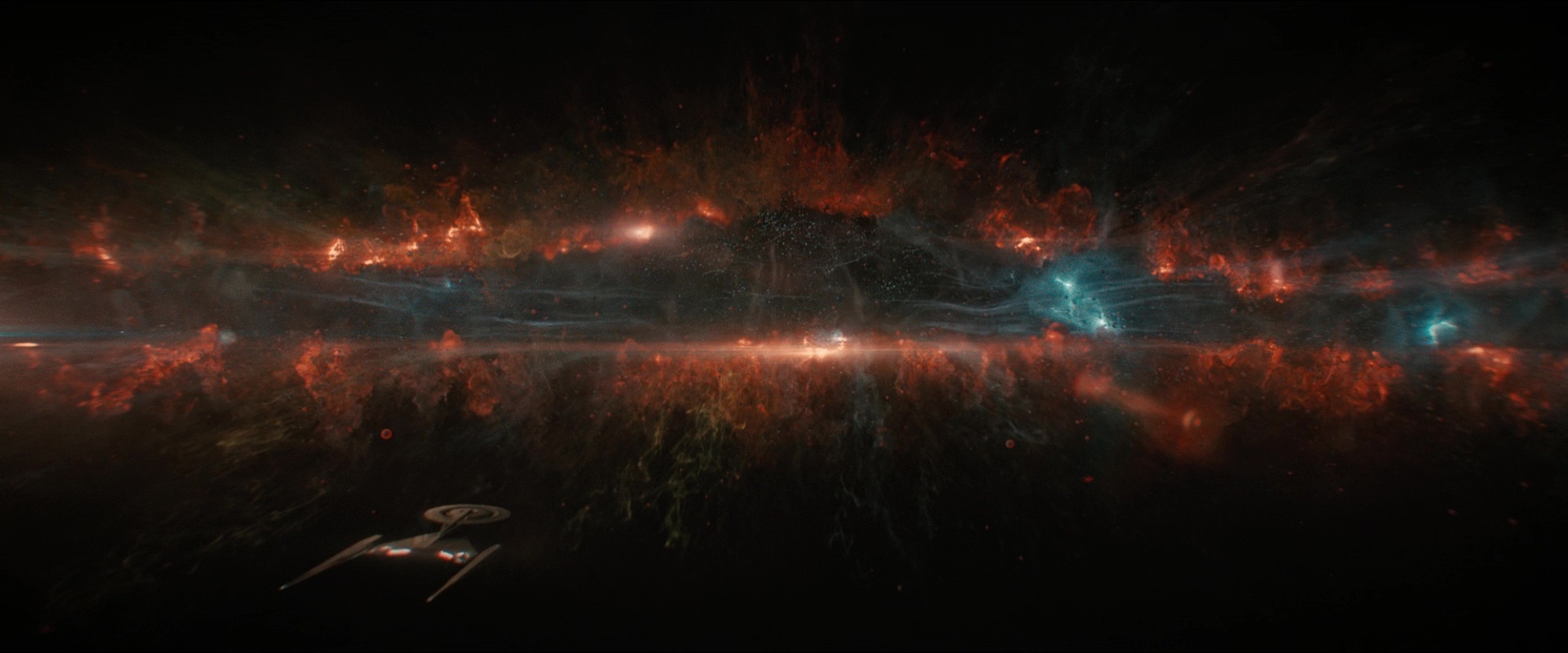
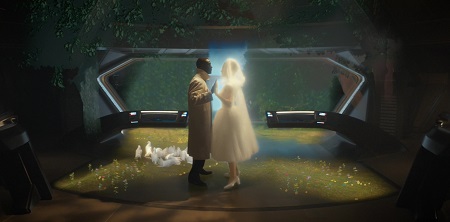
So that’s it. Those theories remain in play as we get ready for the two-part episode Terra Firma. The introduction of a Federation distress signal inside a nebula seems to tie in with what we know from Calypso – an episode which has already seen elements from its story incorporated into Season 3. The smart money has to be on the USS Discovery being in that nebula – somehow. Perhaps Mirror Georgiou took it back in time and left it there for the crew to find? But if she did that, what caused the Burn?

As you can see, some of these theories can be made to fit together… kind of. But there are holes in any story I try to construct, as well as a lot of unknowns! The Federation are connected to the Burn somehow, but beyond that we simply don’t know. For all we know, the distress signal could simply be from another Starfleet vessel that was investigating the Burn rather than being connected in any way to its cause. I love how unpredictable Discovery is even as we get deeper into the season. The story could go any one of a number of different directions, and I have no doubt there are more surprises in store.

One final note: no fan theory, no matter how plausible it may seem, is worth getting upset or disappointed over. I put these lists together for fun, and as an excuse to spend more time in the Star Trek galaxy, and that’s all. If something goes completely the opposite way I was expecting, far from being annoyed or upset I revel in that. That doesn’t mean writers should make arbitrary and silly decisions, but it means I like being surprised! If we could all remember to take fan theories with a healthy pinch of salt, there’d be less conflict in fan communities.

Star Trek: Discovery is available to stream on CBS All Access in the United States, and on Netflix in the United Kingdom and elsewhere. The Star Trek franchise – including Discovery and all other properties mentioned above – is the copyright of ViacomCBS. This article contains the thoughts and opinions of one person only and is not intended to cause any offence.