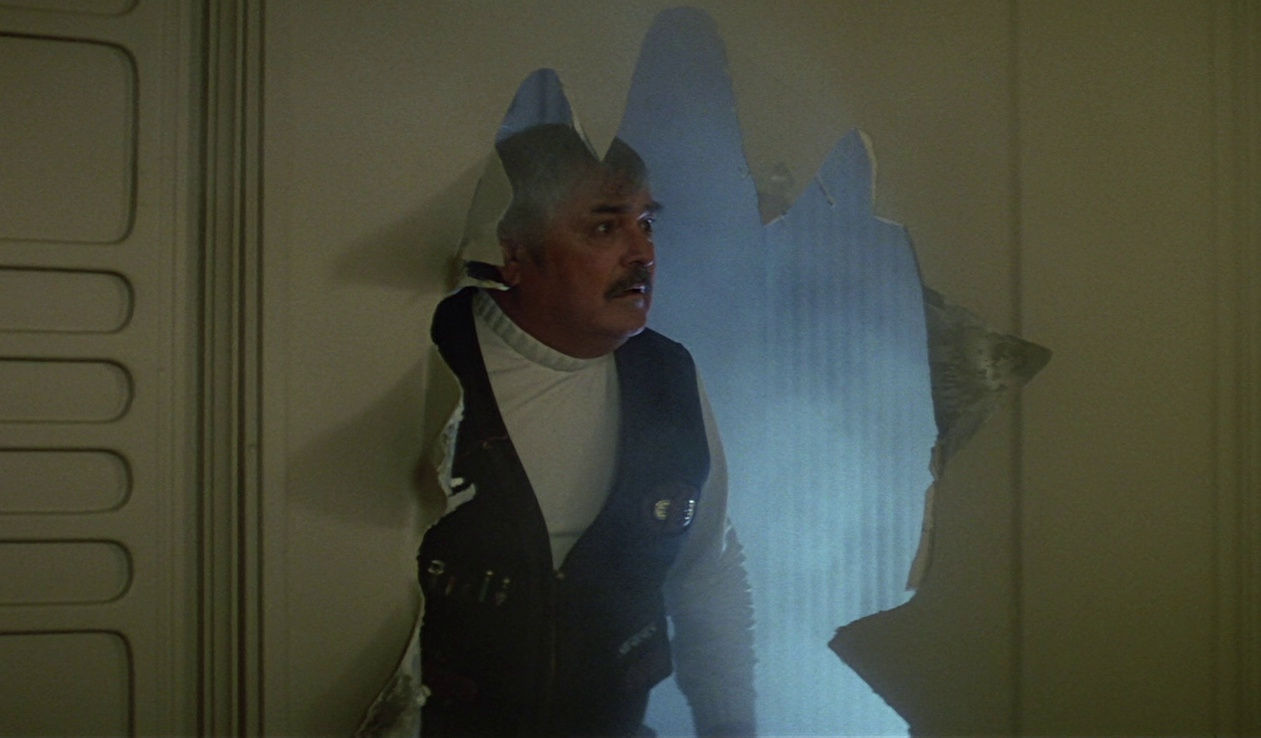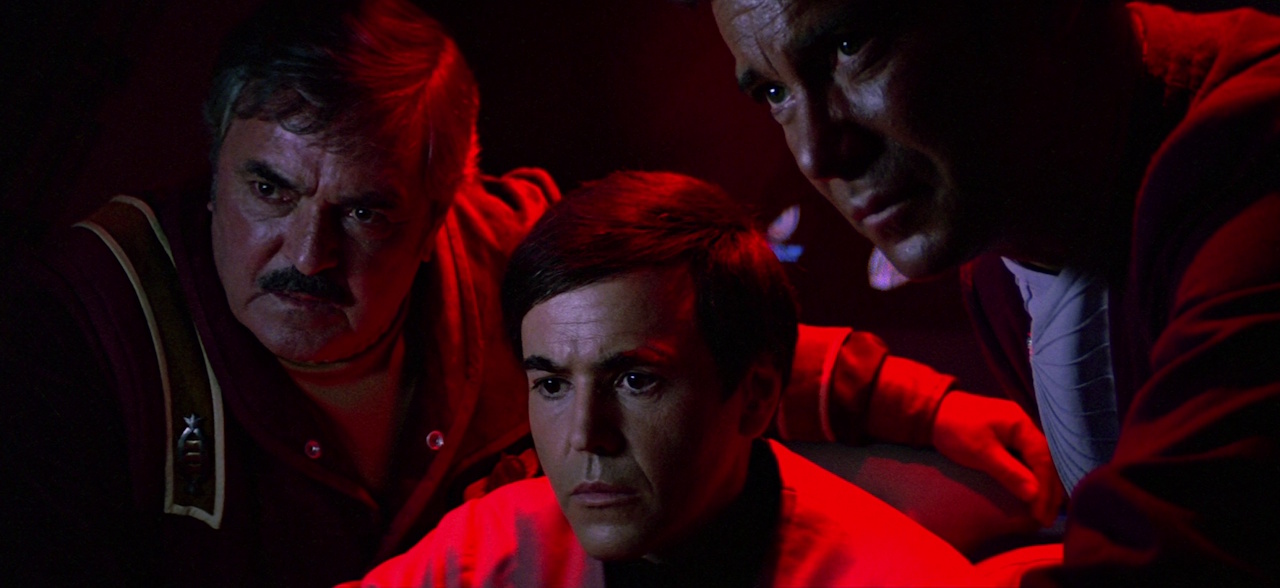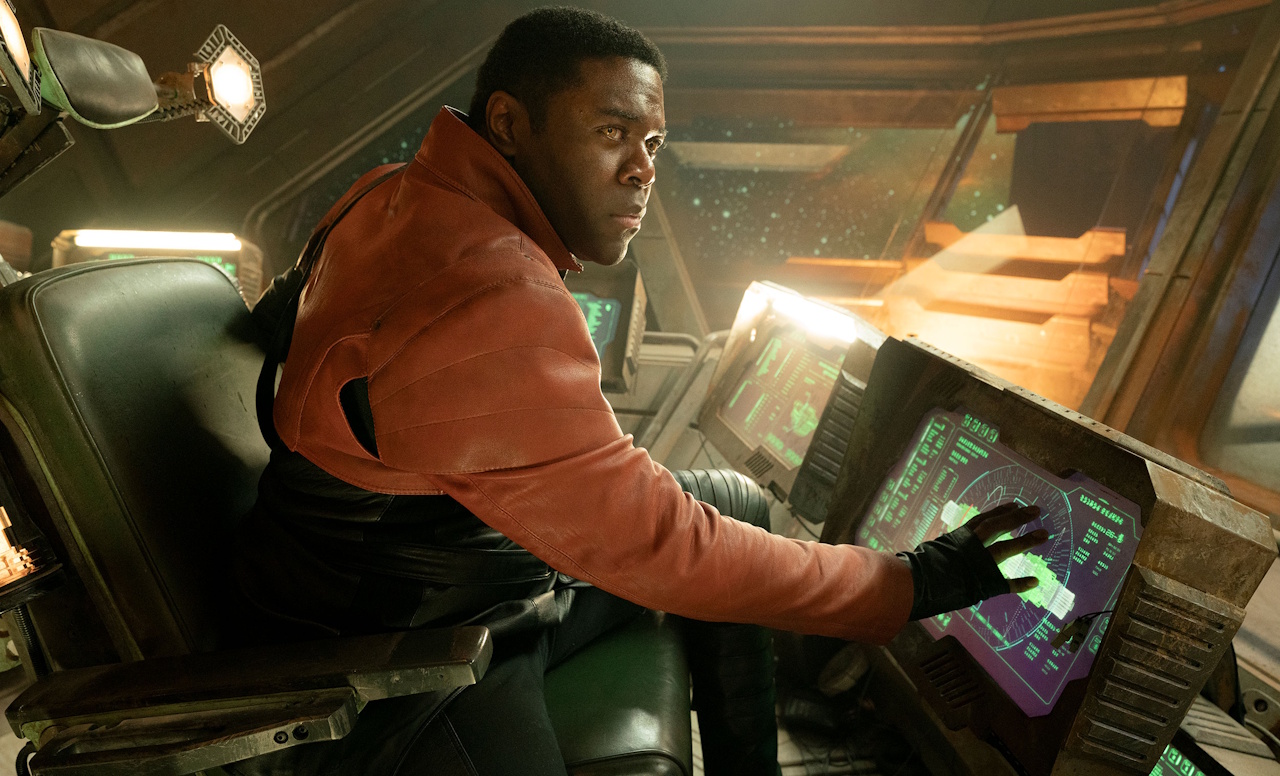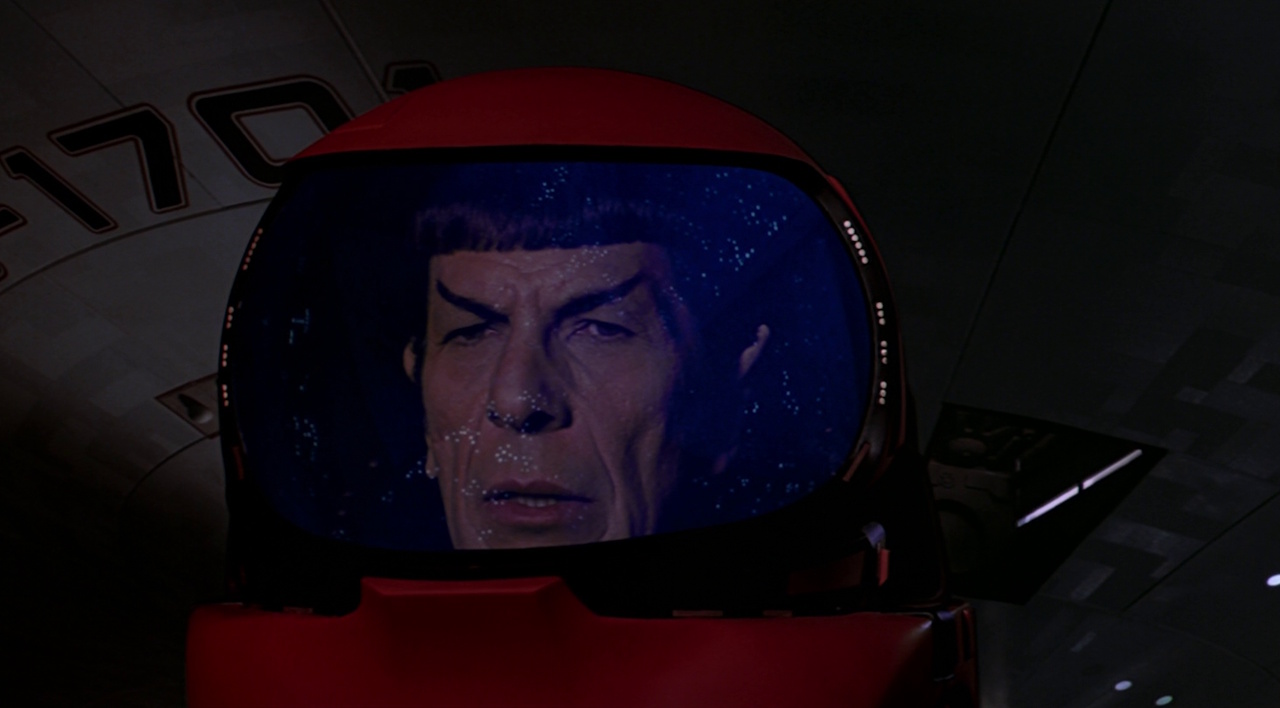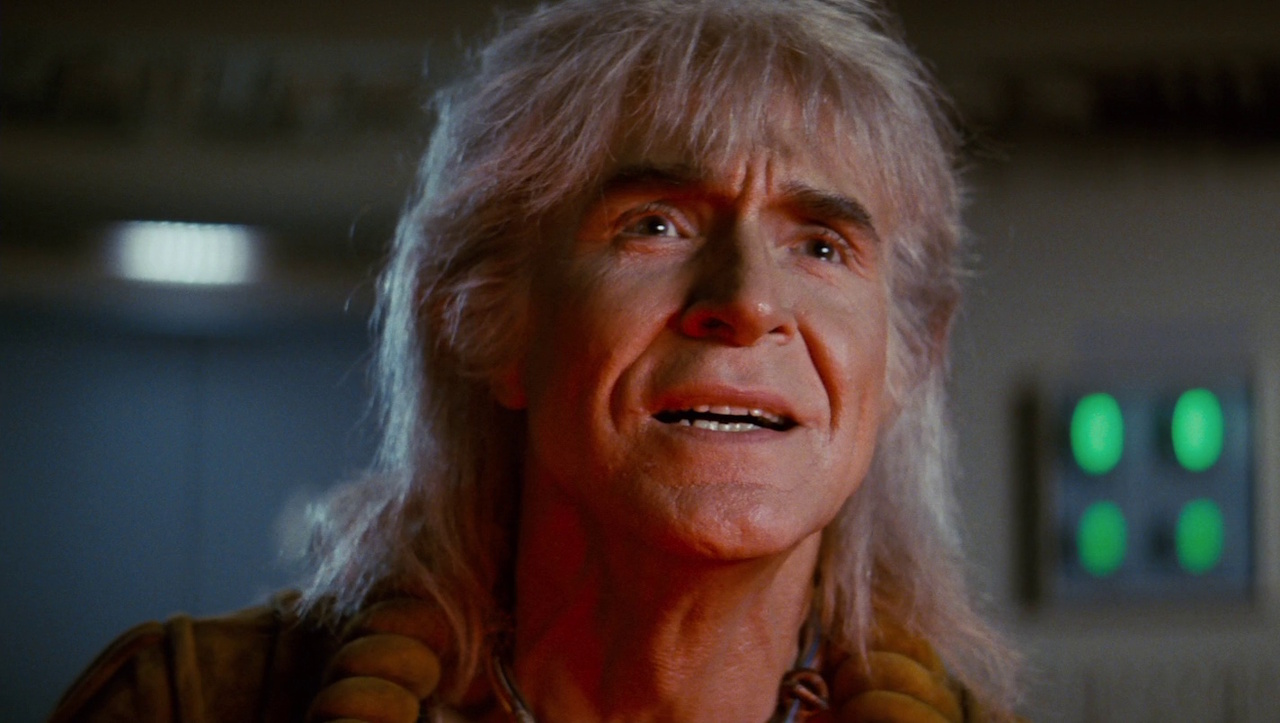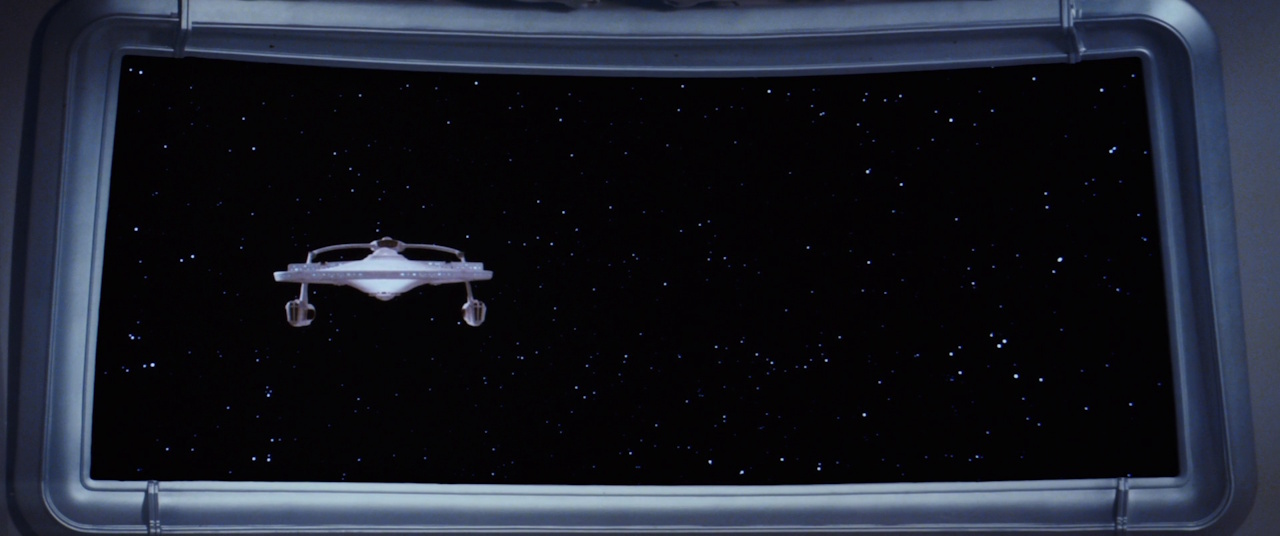
The End of the Kelvin Timeline?

A Star Trek-themed spoiler warning.

Spoiler Warning: Beware of minor spoilers for the Kelvine timeline films and Strange New Worlds.

In a little over six months from now, it’ll be ten years – an entire decade – since Star Trek Beyond hit cinemas. Beyond is the most recent film in the Kelvin timeline – the Star Trek spin-off films set in an alternate reality. There have been multiple attempts in the nine-plus years since its release to get a sequel off the ground, including a couple of years ago when Paramount announced – and then had to rapidly un-announce – a film that wasn’t ready. That was a clusterfuck, eh?

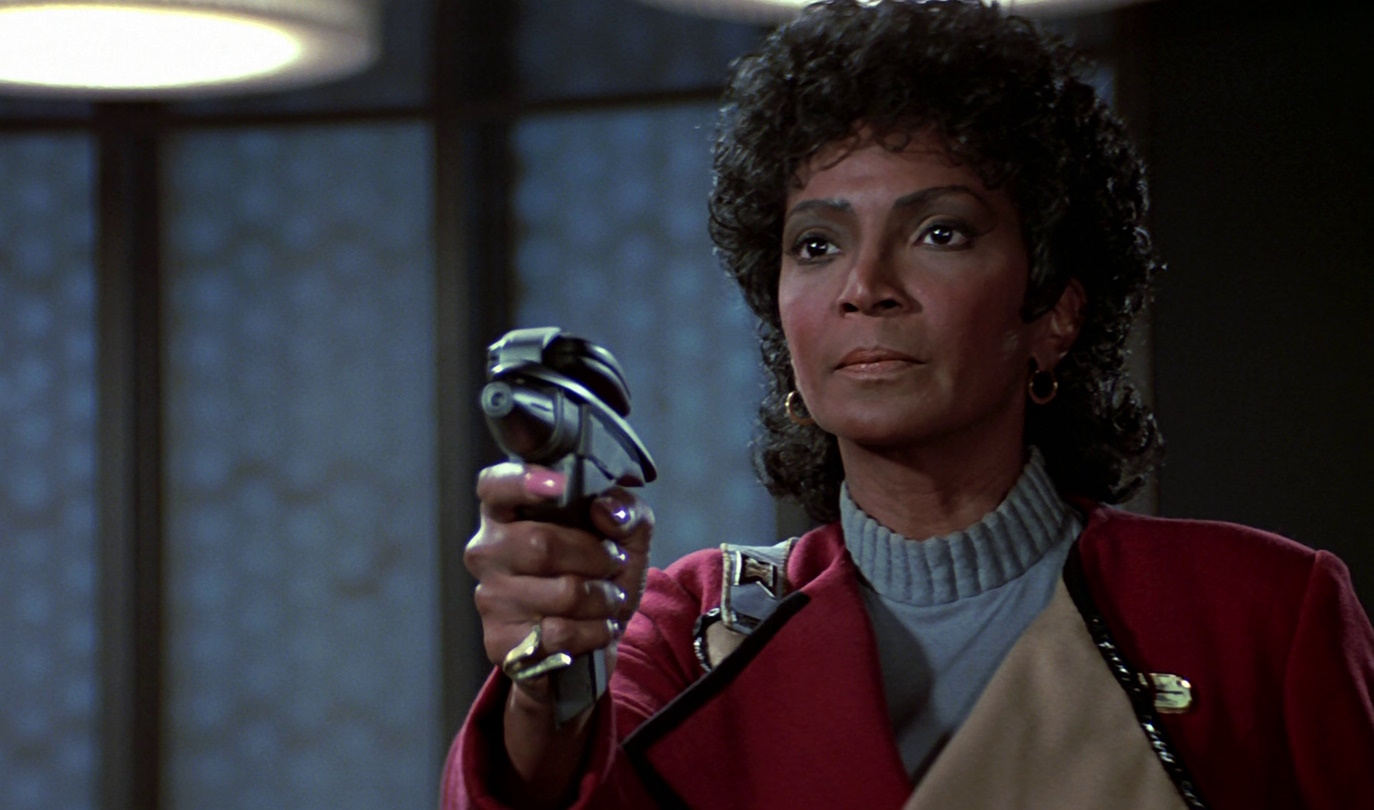
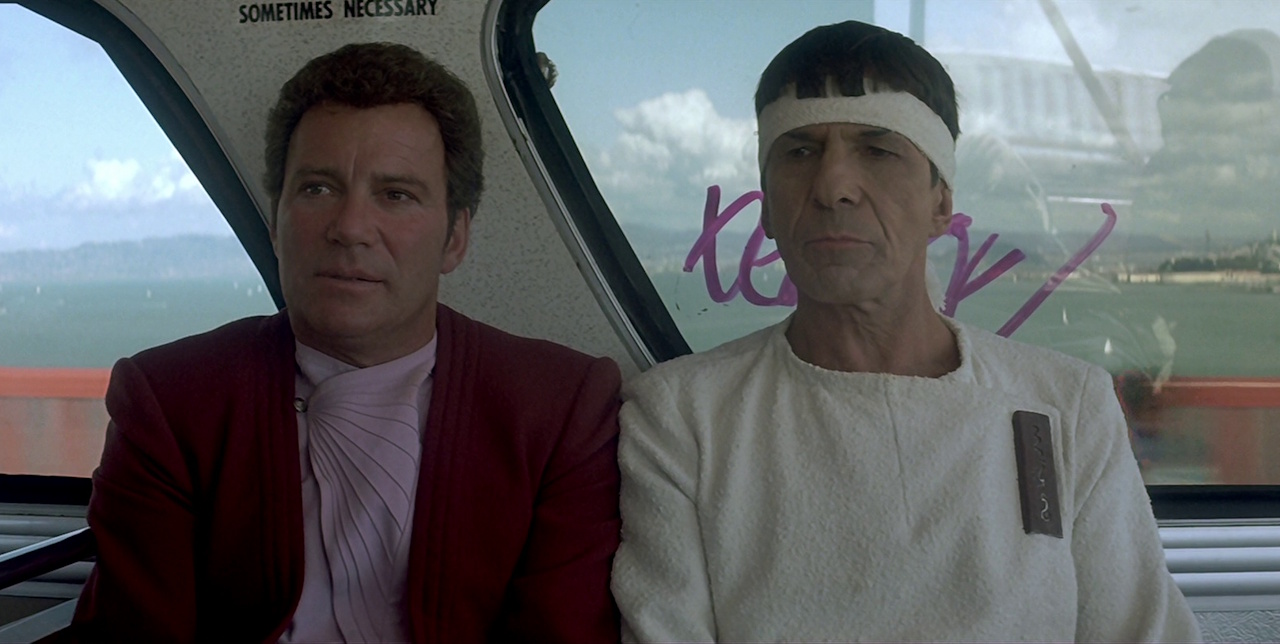
Every so often, if you follow some of the big Star Trek fansites and social media pages, an interview will pop up with a member of the Kelvin cast, and they always make the right noises, sounding positive and hopeful about one day returning and making another film. But if recent reports are to be believed, the newly-merged Skydance/Paramount corporation is ready to “move on” from the Kelvin timeline. While a new Star Trek film is supposedly being planned, it won’t involve the Kelvin timeline or the cast of the rebooted series. I thought we could discuss that today.

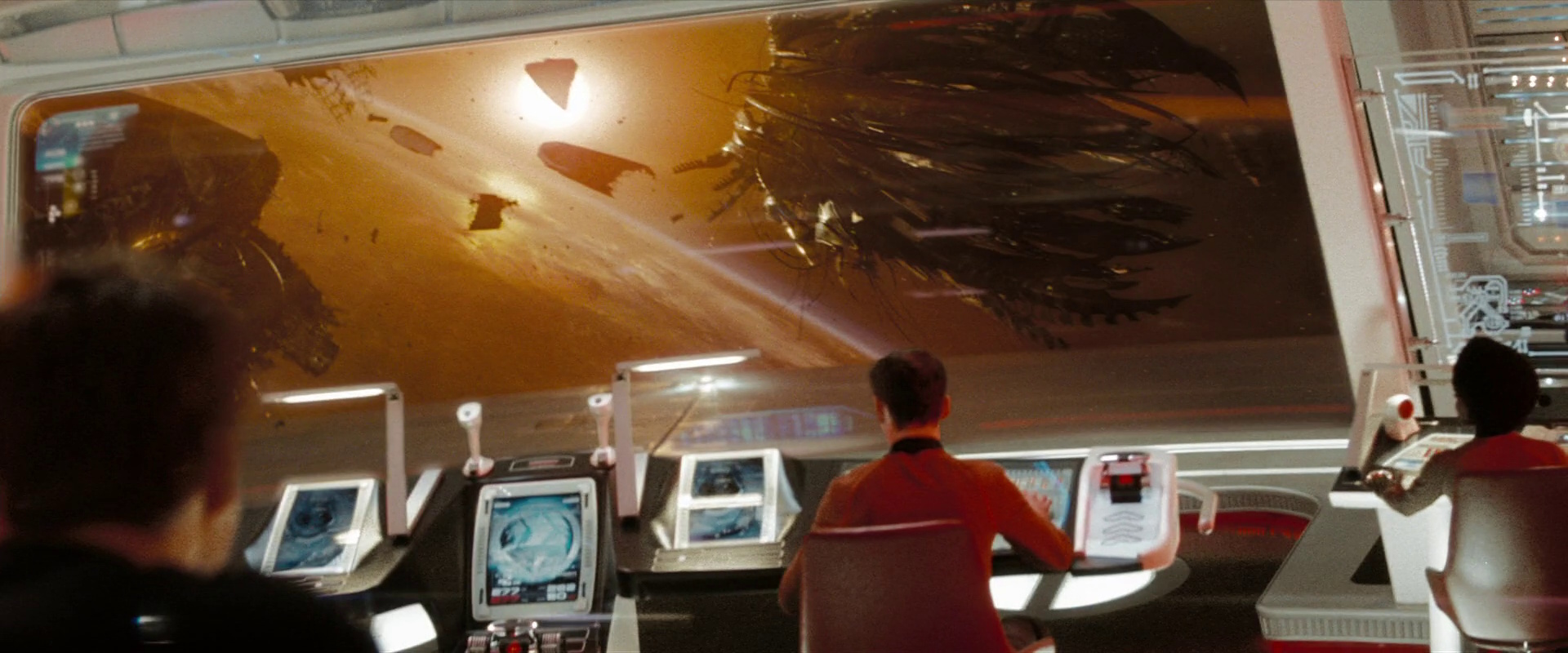
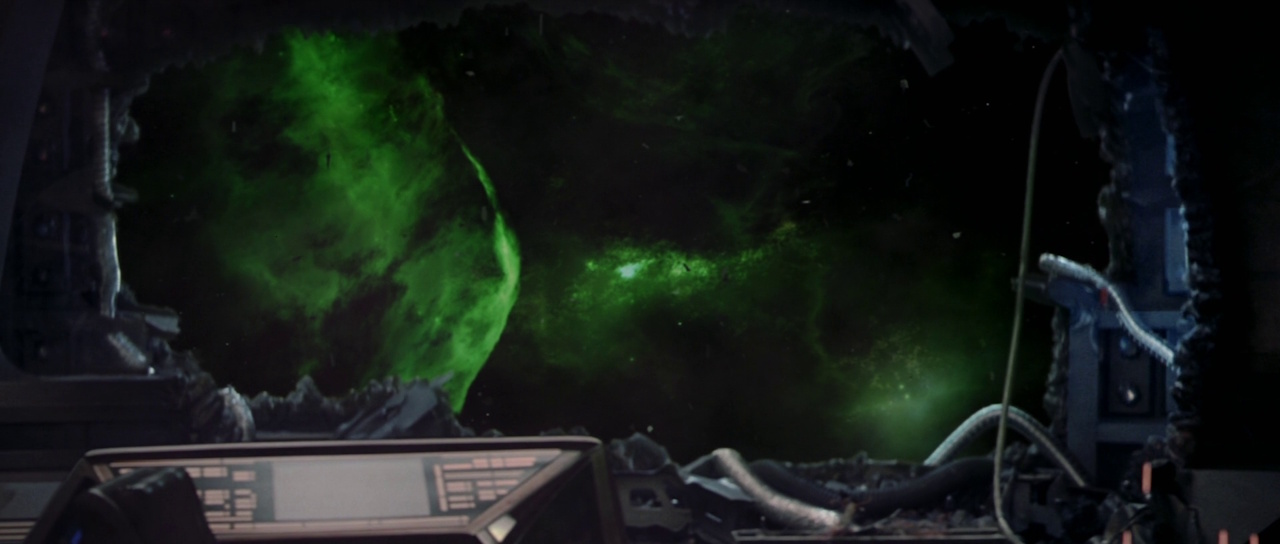
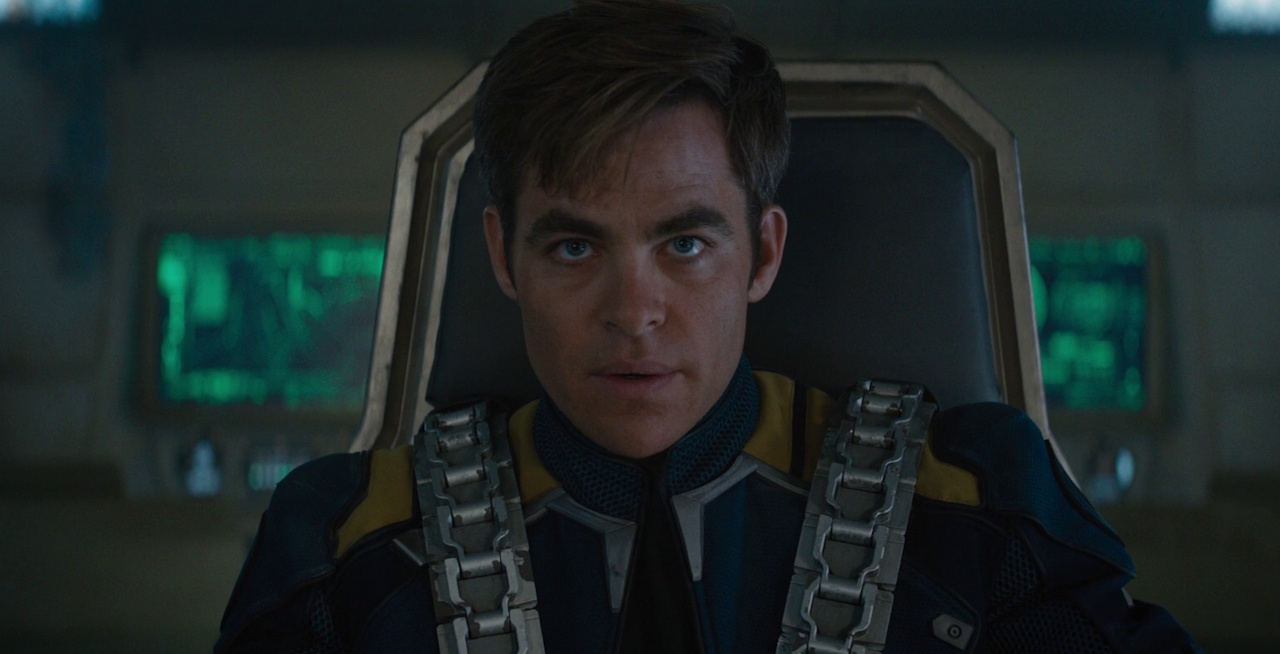
Still frame from Star Trek 2009 showing the main viewscreen on the bridge.
The bridge in Star Trek ’09.

I know the Kelvin films weren’t every Trekkie’s favourite part of the franchise – to put it mildly! Heck, I *still* know people who refuse to even watch them because of how upset they were at both the recasting of classic characters and the more action-heavy storytelling. But we should all be able to acknowledge what the films – and the 2009 reboot in particular – did for Star Trek at a time when the franchise had been cancelled after more than fifteen years on the small screen.

We wouldn’t have seen Discovery, Picard, Lower Decks, Strange New Worlds or really any of the Star Trek productions we’ve enjoyed over the last decade were it not for the success of the Kelvin timeline films. Star Trek ’09 demonstrated to investors that, despite declining viewership on TV in the 2000s, there was still life in the Star Trek franchise, and still new stories to be told. These films carried the torch for Star Trek during what could’ve been its darkest hour, and they set the stage for the franchise’s revival.

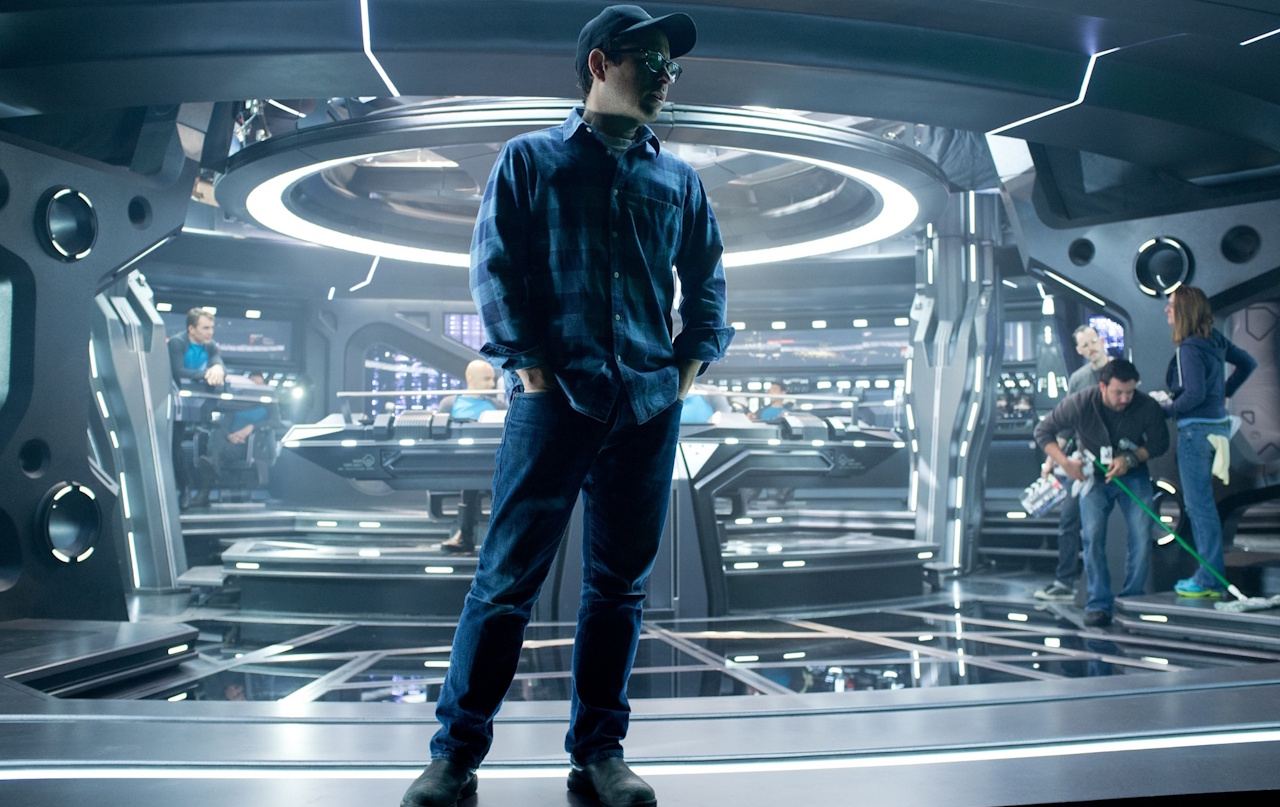
Behind-the-scenes photo from the set of Star Trek Into Darkness showing director JJ Abrams.
Director J.J. Abrams on the set of Star Trek Into Darkness.

With all that being said, regular readers will undoubtedly remember me saying that I don’t believe there’s a place for a new Kelvin timeline film. I wrote about this in 2020 and 2021, and while my original reasons for saying that have now shifted in light of the spate of cancellations this year… I stand by the original point. I know Beyond seemed to tease a sequel in its closing moments, and there will always be a part of me that wants to see reboot Kirk’s adventures aboard the Enterprise-A. But given the changes not just to Star Trek over the past ten years, but the entertainment landscape as a whole… I’m not sure a 2009-style film is the right fit any more. After almost a decade, audiences have moved on and expectations have changed.

Then there’s Strange New Worlds. What was the original idea behind Star Trek ’09? It was to show “young Kirk” and “young Spock” at Starfleet Academy, then undertaking their first missions together. Well… we’ve seen that. And thanks to Strange New Worlds, we’ve also seen the prime timeline version of that, too. Strange New Worlds has introduced several other legacy characters, and thanks to being able to develop those characters a lot more because of the extended runtime a television show permits, I’d argue it’s done a lot more with some of those characters than the entire Kelvin trilogy did.

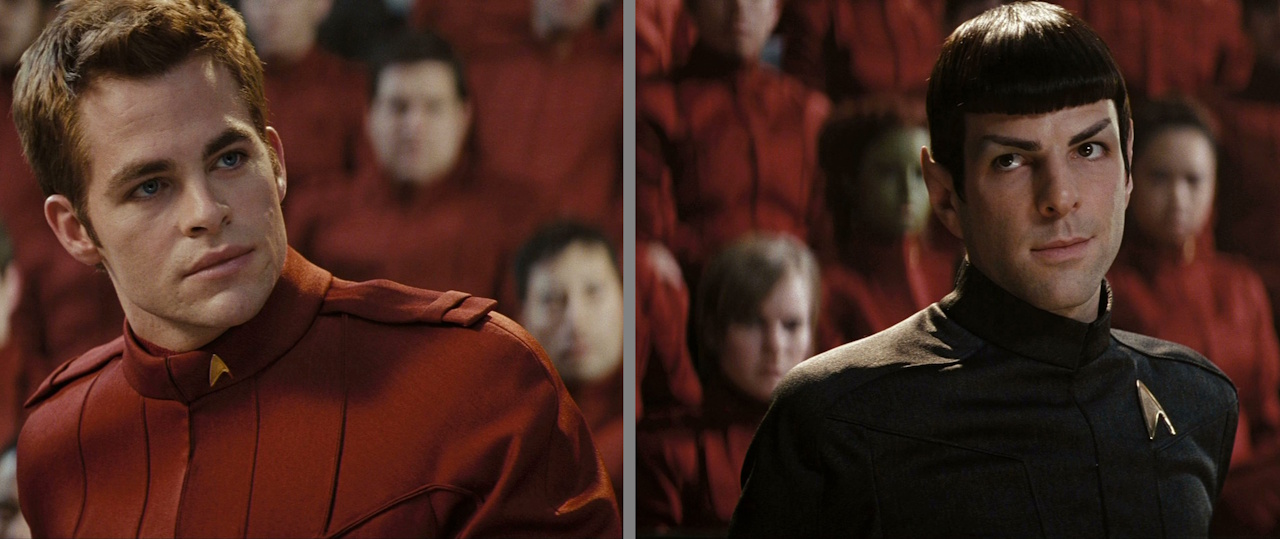
Two still frames from Star Trek 2009 stitched together, with Cadet Kirk on the left and Commander Spock on the right.
Kirk and Spock at the Academy in Star Trek ’09.

At this point, if we returned to the Kelvin timeline a decade after Beyond, we wouldn’t be seeing “young Kirk” and “young Spock” on one of their first missions. We’d be seeing Kirk and Spock on their five-year mission – or perhaps even *after* that, in the latter part of the 23rd Century. There are things that the Kelvin timeline could do with that idea, sure… but we’ve already seen plenty of Kirk and Spock at this point, haven’t we? Between TOS, the Kelvin films, Strange New Worlds, and the rest of Star Trek, we’ve spent a lot of time with these characters already. So… what could a new Kelvin film do that we haven’t already seen?

This leads me to my most fundamental point: Star Trek needs to move on. Not just from the Kelvin timeline, but from the 23rd and 24th Centuries in general. Since the turn of the millennium, we’ve had Enterprise, Discovery, Strange New Worlds, and the Kelvin timeline – all of which were prequels. Then we had Prodigy and Picard, which were direct sequels to Voyager and The Next Generation. The closest Star Trek came to originality was Lower Decks, ironically enough! And that show called back to The Next Generation era over and over again, and brought in numerous guest-stars.

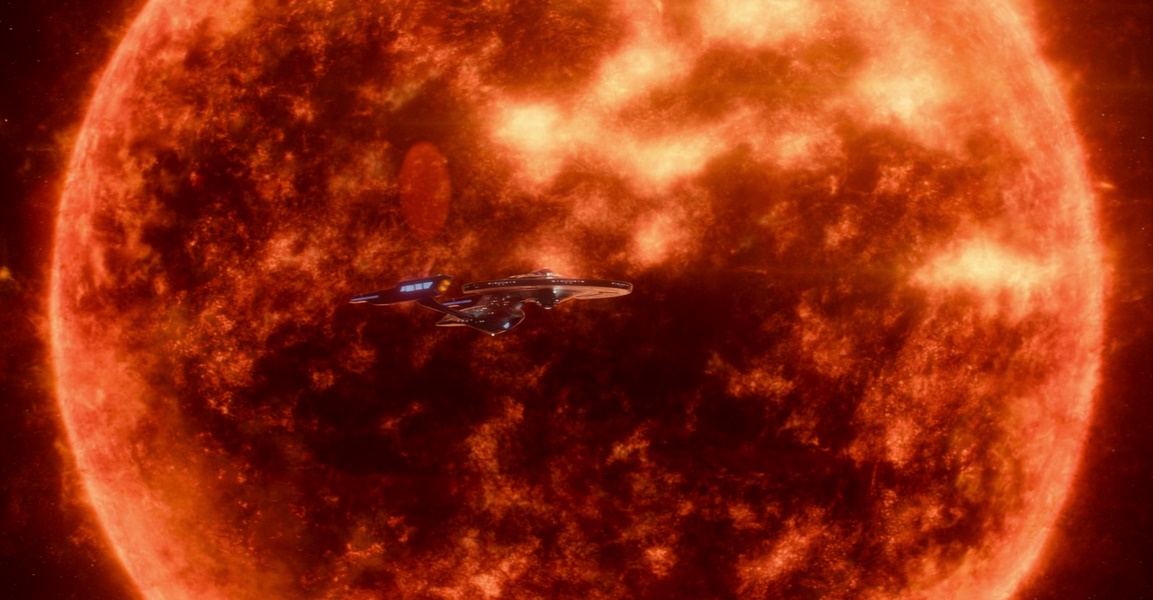
Still frame from Star Trek: Picard Season 3 showing the Titan/Enterprise-G in orbit of a star.
What *new* adventures might lie ahead for the Star Trek franchise?

A new film at this point should have the freedom to go in a totally different direction, and shouldn’t be too tied up with what came before. That doesn’t mean it can go breaking all of the rules of canon, of course, but after so many sequels, prequels, and spin-offs, it’ll be nice to get something truly original for once. Won’t it?

If Star Trek continues to look backwards at its own history, and keeps trying to bring back characters from the past, that limits the franchise’s potential to grow and expand. I became a Trekkie in the early 1990s not because of Kirk, Spock, and Dr McCoy, but because of Picard, Riker, and Data. If Star Trek, in the ’80s, had doubled-down on The Original Series and those classic characters, we’d have missed out on so much – not only The Next Generation, but Deep Space Nine, Voyager, and more. After such a long time, and with so much having happened since Beyond was in cinemas… a new film taking a new approach just feels like the best option.

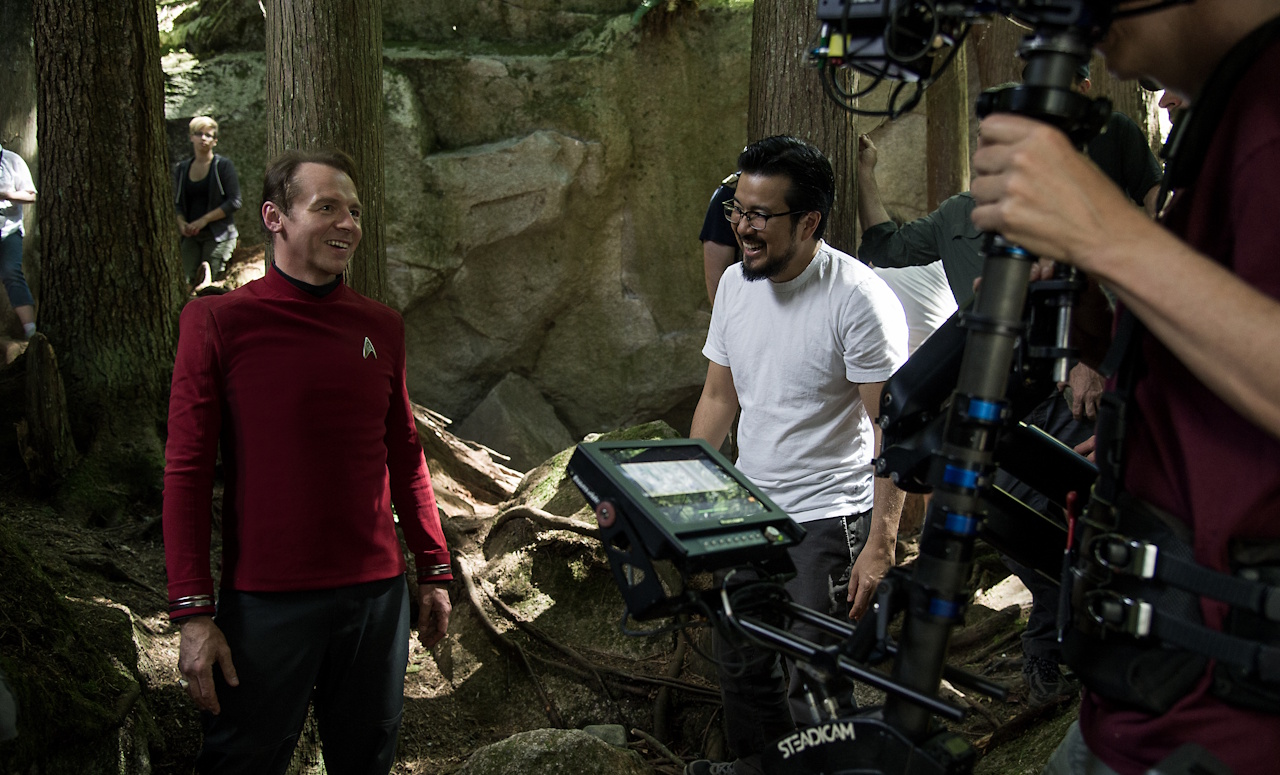
Behind-the-scenes photo from Star Trek Beyond showing Simon Pegg, Justin Lin, and others.
Simon Pegg (Scotty) and director Justin Lin on the set of Star Trek Beyond.

There are risks, of course. Into Darkness remains the cinematic Star Trek franchise’s high-water mark in terms of financial success, and all three of the Kelvin films turned a profit. Creating something brand-new, with a new director and a new cast of characters, might not achieve the same level of success as a Beyond sequel. Figuring out how to attract audiences who turned out for Into Darkness – but who may have skipped *everything* Star Trek has done since – will be the biggest challenge Skydance faces when it comes to pitching the new film.

And there’s kind of limited room for manoeuvre here. In 2009, a lot of people who hadn’t watched the likes of DS9 and Enterprise showed up specifically because Star Trek was billed as a reboot. The universe was going to be reset, you didn’t have to have followed any of the increasingly convoluted storylines from the previous fifteen-plus years… this film was its own thing. But can you re-reboot a franchise and achieve the same level of success a couple of decades later? Does the name “Star Trek” carry the same weight it did in 2009, after not really managing to reach out to a big new audience on streaming? I think those are valid questions as this new film may be getting underway.

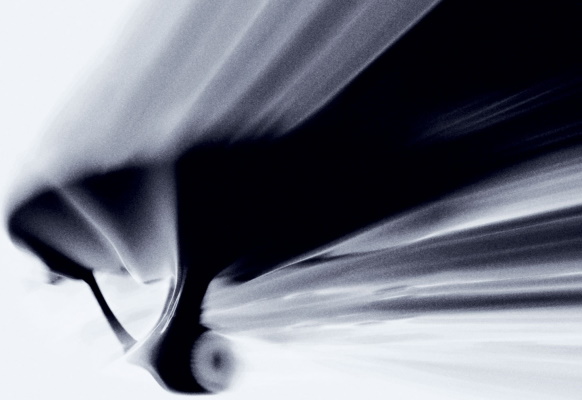
Cropped promo image for Star Trek 2009 showing the USS Enterprise in sillhouette.
A silhouette of the Enterprise was one of the first teaser images released for Star Trek ’09.

I don’t lament the demise of the Kelvin timeline. It laid the groundwork for Star Trek’s return to its small screen home in 2017, which I truly appreciate, but then it kind of lost its place – at least for me as a Trekkie. By the time Pike and Spock joined Discovery a couple of years later, and we were getting news of new projects featuring Picard, Section 31, and a new animated series, it really seemed like Star Trek was back. Strange New Worlds, with its focus on many of the same characters as those in the Kelvin films, occupies a very similar space, and I’m just struggling to see what a new Kelvin film could really have to say after five seasons of Strange New Worlds and everything else Star Trek has done over the past nine-plus years.

At the same time, there’s a sense that Star Trek’s executives never took *full* advantage of the alternate reality that the Kelvin films presented. We could’ve seen, just as one example, Captain Kirk taking on the Borg – something that would be impossible to do in the prime timeline. Or we could’ve done more with the idea of a crossover from the prime timeline, bringing in William Shatner and George Takei alongside Leonard Nimoy. That can’t happen now.

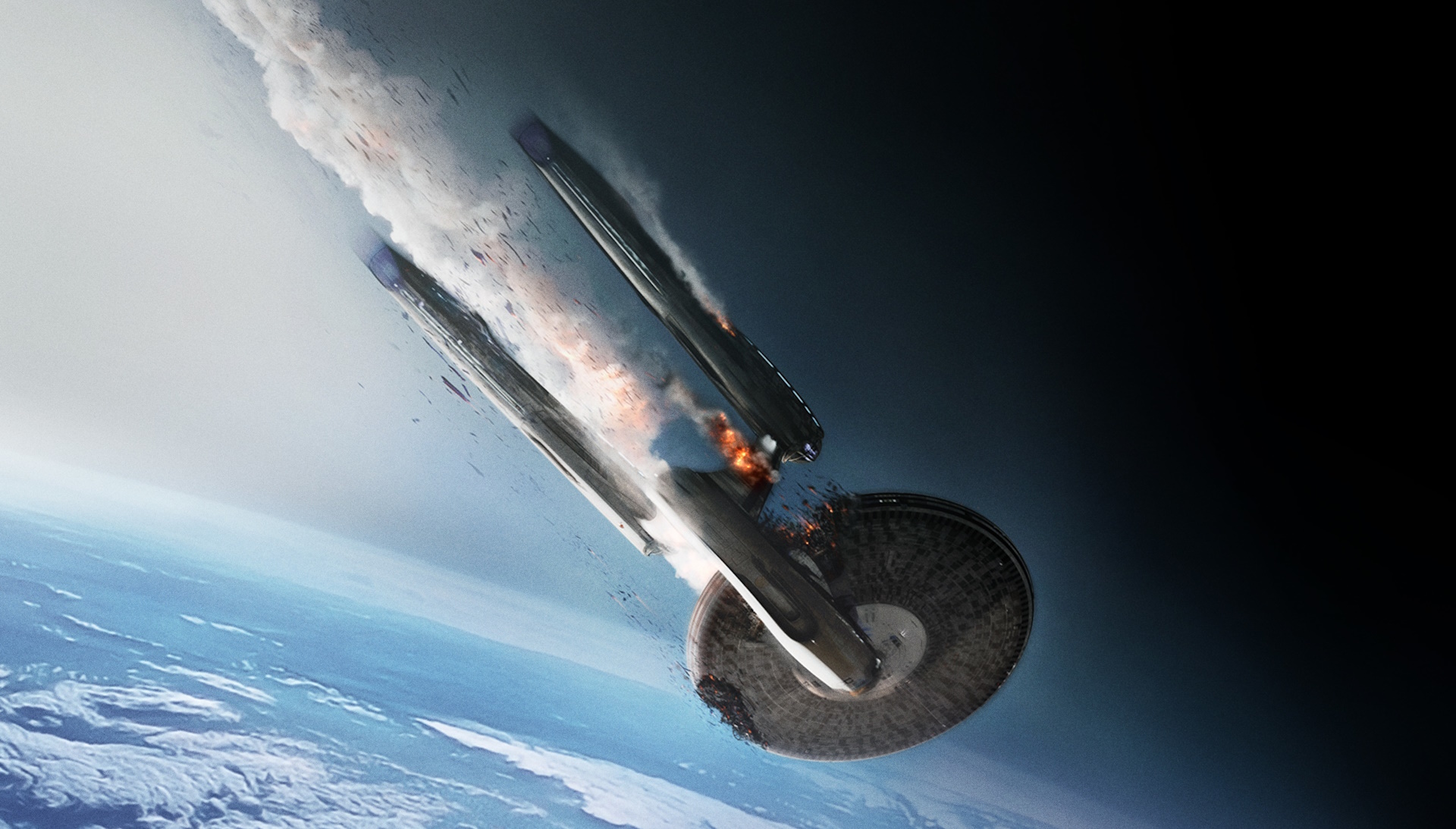
Cropped promo poster for Star Trek Into Darkness showing the USS Enterprise crashing into the atmosphere of a planet.
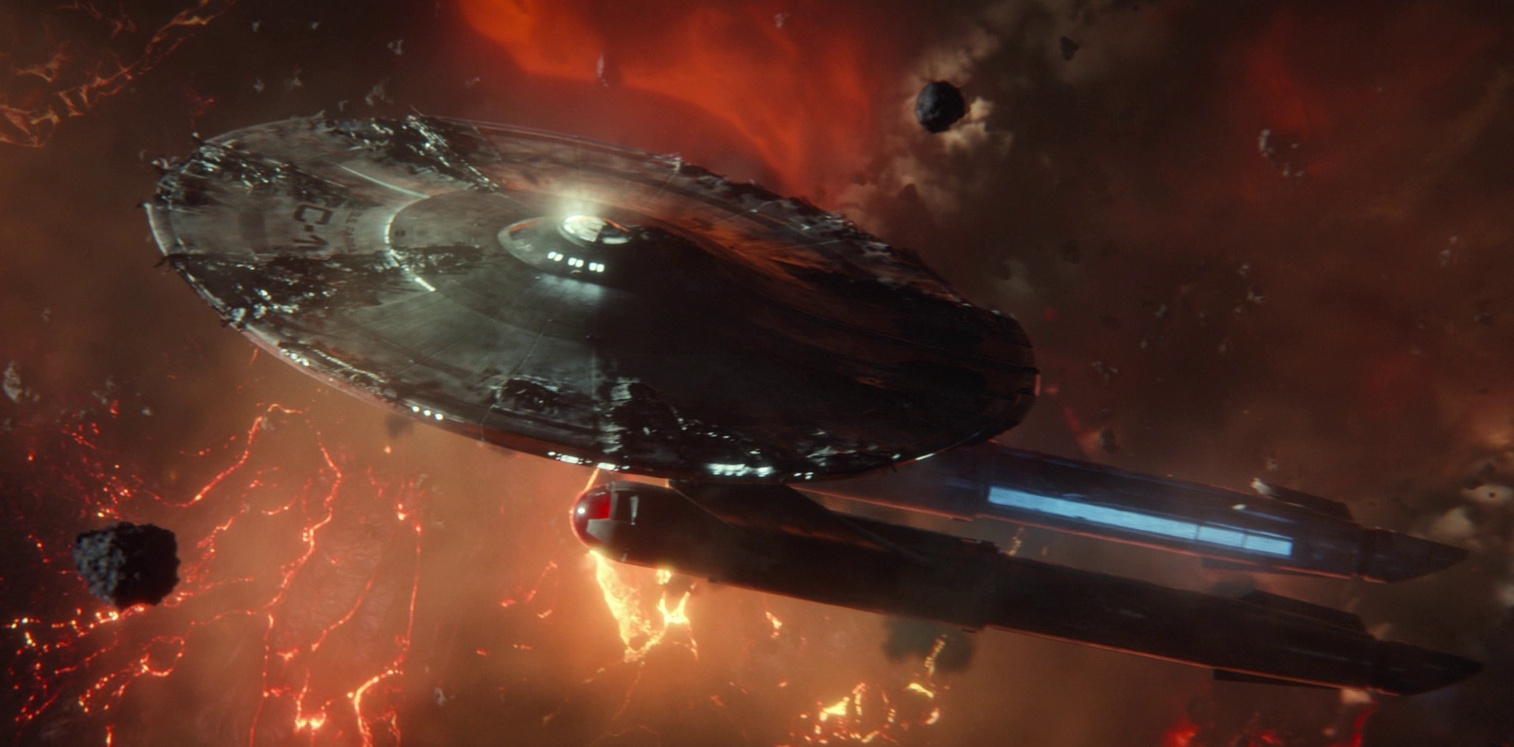
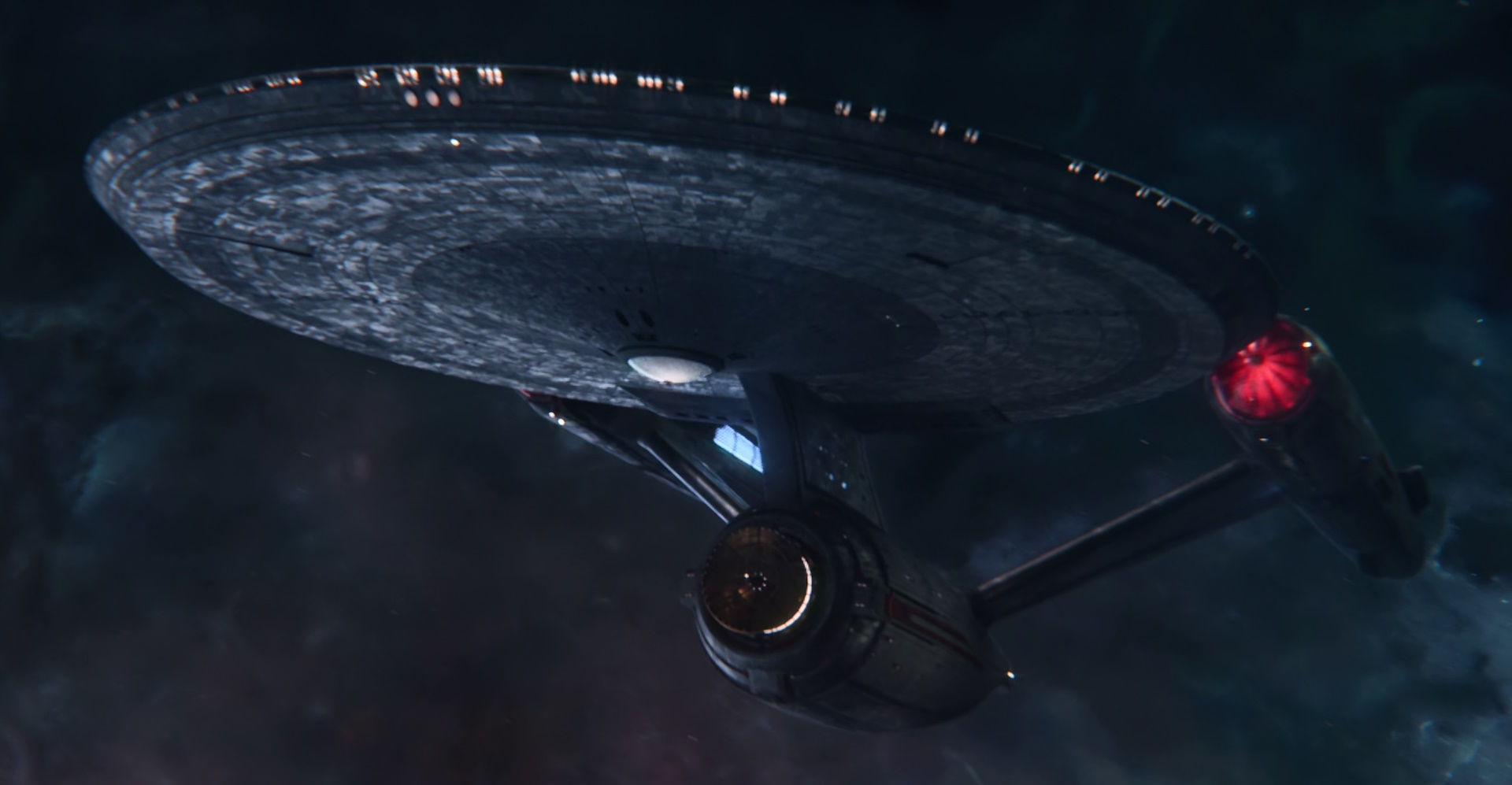
The Enterprise.

But the Kelvin films – or perhaps we should start saying “the Kelvin trilogy” – have a place in the history of Star Trek. They carried a torch for the franchise at a time when total cancellation and annihilation seemed not only likely, but were actively happening, and they set the stage for several great streaming shows that expanded the franchise in new ways. That isn’t a bad legacy by any means.

And as we look to the future? Star Trek seems set to enter a fallow period as the 2020s come to a close. After Strange New Worlds finishes its run, all we know for sure is that Starfleet Academy is getting a second season – and then there’s this potential new film. Star Trek XV – or whatever we’re going to end up calling it – has a lot to live up to in some ways, as it may have to pick up the mantle from the Kelvin timeline and keep Star Trek alive at a time when there might not be anything else going on. But this new film, thanks to being its own thing, has almost limitless storytelling possibilities, and won’t be constrained by what came before. That worked well in 2009, and it set the stage for bigger and better things. I’m going to keep my fingers crossed that this new film, in whatever form it ultimately takes, will be much more like Star Trek ’09 and less like the unfortunate Section 31.

So I hope this has been interesting. Part of me wonders if, in another ten or fifteen years, we may yet get a belated Kelvin timeline revival. Who knows! But nostalgia can be a big deal in entertainment, and if there are enough Kelvin fans clamouring for it… never say never, right? I will keep my ear to the ground and if there’s any news about a new Star Trek film in the weeks and months ahead, I daresay I’ll have more to add, so be sure to check back from time to time. And if you want to see what else I’ve had to say about the Kelvin timeline over the years, you can check out my dedicated Kelvin timeline page by clicking or tapping here. Until next time, friends!


Star Trek ’09, Star Trek Into Darkness, and Star Trek Beyond are available to stream now on Paramount+ in countries and territories where the platform is available. All three films are also available on DVD and Blu-ray. The Star Trek franchise – including all films and other properties discussed above – is the copyright of Skydance/Paramount. This article contains the thoughts and opinions of one person only and is not intended to cause any offence.

More Star Trek Narrative Clichés: Which Ones Should Stick Around?

A Christmassy spoiler warning.

Spoiler Warning: Beware spoilers for the following Star Trek productions: The Original Series, The Next Generation, Deep Space Nine, Voyager, Enterprise, the Kelvin films, Discovery, Picard, and Strange New Worlds.

A few days ago, I wrote a piece about more than a dozen narrative clichés in the Star Trek franchise. That article was inspired by a post on Tumblr (which had been re-posted by a Star Trek fan page on Facebook, where I saw it) and it really got me thinking! Star Trek has its own tropes and little sub-genres; many episodes and storylines can be characterised as “another Borg episode,” “a holodeck story,” and so on. In addition to the eleven clichés presented by the original poll, I added a few of my own – but it turns out that I barely scratched the surface!

So, just like last time, we’re going to take a look at a few more potential “clichés,” and ask a simple question: is it time for them to be retired? Or, to put it another way, has Star Trek taken these story concepts as far as they can reasonably be stretched? Should any of these stick around if more Star Trek is produced in the years ahead?

Thanks to Tumblr user “quasi-normalcy” for coming up with the original poll (which I’ve linked to below). And thanks to the Star Trek fan page on Facebook for dropping it onto my timeline! This idea has been a lot of fun, and a great way to spend a bit more time thinking about the franchise.

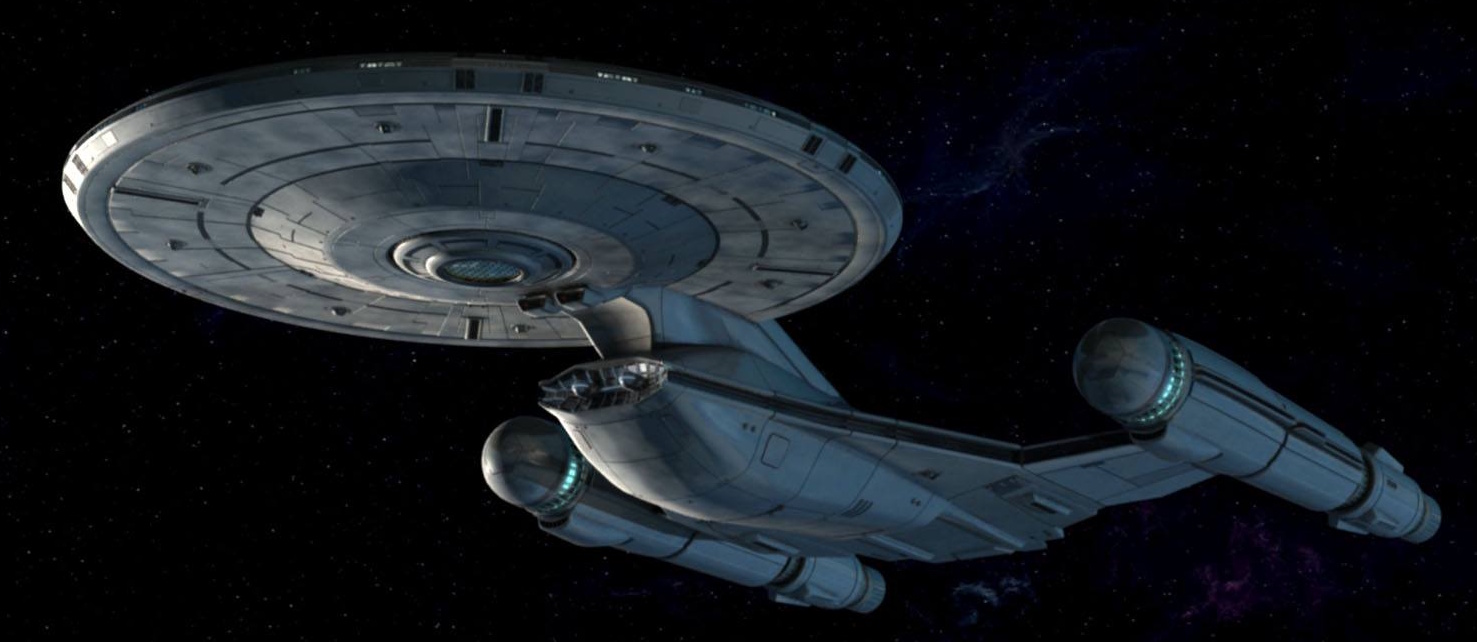
Early concept art of the USS Discovery from Star Trek: Discovery.
Early concept art of the USS Discovery.

I always like to give the same caveat whenever we’re about to jump into some potentially controversial Star Trek opinions: everything we’re talking about here today is subjective, not objective! If you hate all of my ideas, think I’ve totally got the wrong end of the stick, or just vehemently disagree with me about what makes for a good or bad Star Trek cliché, that’s okay! The Star Trek franchise is massive, and fans can and will disagree about what the best and worst episodes are. That’s the way it should be – we can still enjoy Star Trek, and remain friends, even if we don’t always agree about everything. I share this piece with the fan community in that spirit.

I’ll go through each cliché (or potential cliché) one by one, then give my verdict on whether it should stick around as part of the Star Trek franchise.

If you want to see my first piece on this topic, which contains the original eleven clichés from the Tumblr poll (and a few of my own), you can find it by clicking or tapping here. And this is your final chance to nope out if you don’t wanna read some potentially controversial Star Trek opinions!

Cliché #1:
Vulcans (or Androids) Are Invulnerable to the Problem-of-the-Week

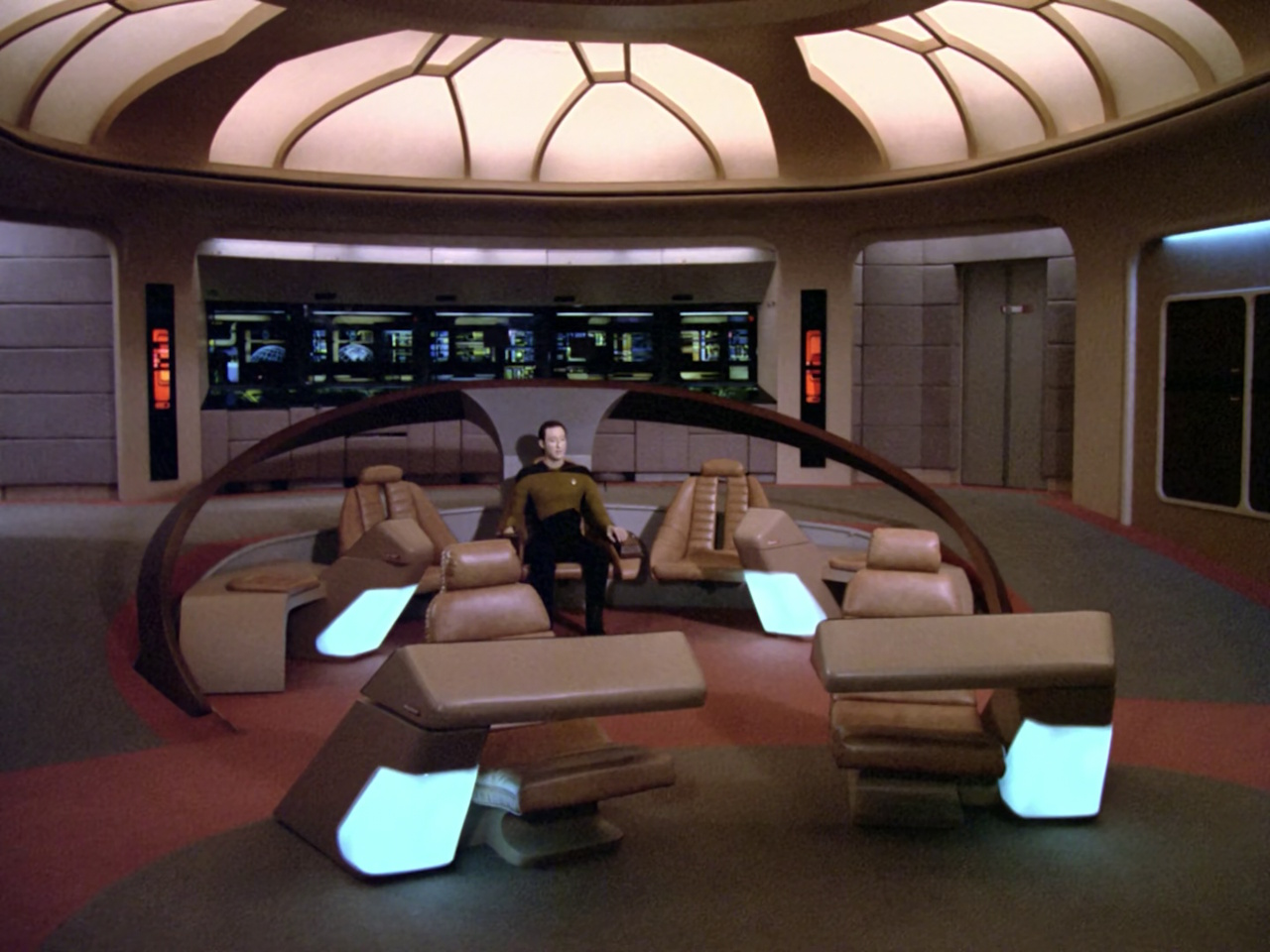
Still frame from Star Trek: The Next Generation showing Data on the bridge.
Data, alone on the bridge.

Everyone aboard the Enterprise catches a disease – except for Spock, whose Vulcan physiology makes him immune. The crew is being targeted by a salt-siphoning “vampire” – except for Spock, who, as a Vulcan, doesn’t have enough salt in his system for the creature to feed. Aboard the Enterprise-D, the crew’s DNA is changing – except for Data, who has no DNA. Everyone is rendered unconscious by aliens who want to remain hidden – except for Data, who, as an artificial life-form, can’t be knocked out by their technology. And on it goes!

Especially in The Original Series and The Next Generation, writers would find ways for Spock and Data to be invulnerable to whatever was going on. Additionally, they were depicted as being physically stronger, smarter, and with quicker reflexes than the rest of the crew – making them pretty overpowered from a storytelling point of view. This could work exceptionally well, but sometimes it could feel like the writers were pulling yet another technobabble excuse out of nowhere or lazily throwing together a deus ex machina ending to a story. When Spock or Data (and later Tuvok and T’Pol, too) would suddenly have a never-before-referenced magical ability that made them invulnerable to whatever was happening aboard the ship, it could start to feel stale. *Especially* if that trait or ability was never mentioned again.

My Verdict: Vaporise It With A Disruptor!

Cliché #2:
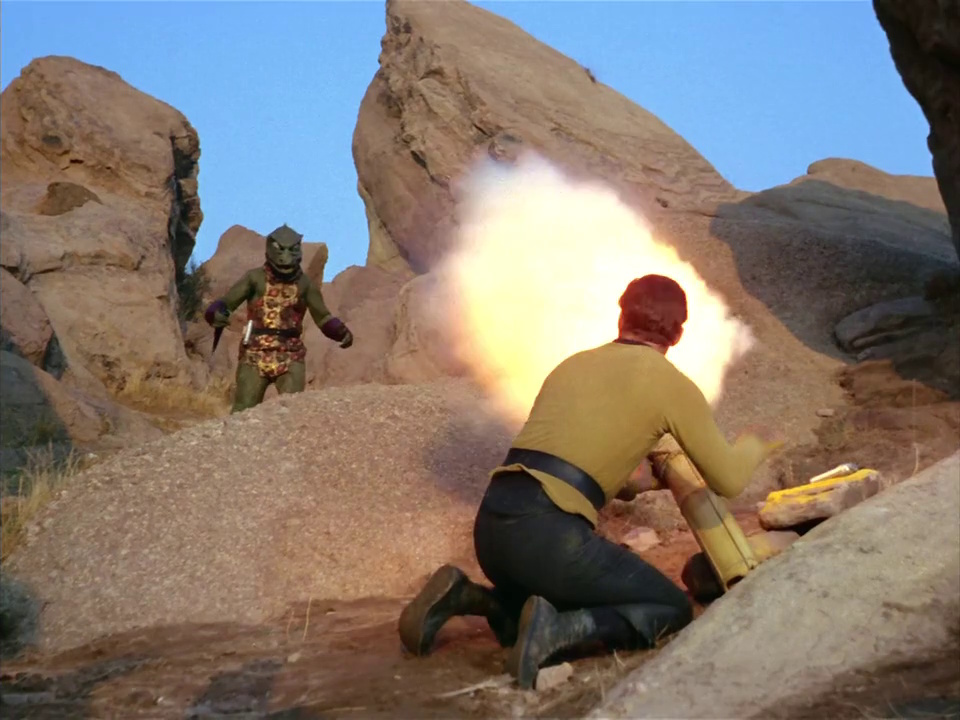
Vasquez Rocks (and the Toronto Quarry)

Still frame from Star Trek: The Original Series showing Kirk and the Gorn.
Vasquez Rocks was where Arena was filmed.

I think I’m right in saying that Vasquez Rocks – a national park in California, relatively close to Los Angeles – has appeared in five Star Trek TV shows and three films. Perhaps its most iconic appearance is still Arena, but it’s also stood in for the planet Vulcan, including in the Kelvin timeline, and as Raffi’s home in Picard’s first season. Since production moved to Canada when Discovery was commissioned, there’s a quarry somewhere in the Toronto area which has likewise appeared multiple times in that series and Strange New Worlds. And… after a while, it becomes kinda obvious, doesn’t it?

I said this a lot during Picard’s first season, but there’s nothing wrong at all with using a sound stage – or Paramount’s new AR wall – to create alien landscapes. Outdoor filming shoots can be great, and can convey a sense of scale that indoor sound stages lack. But if you go back to the same location over and over again, pretending it’s a different place or a different planet each time, viewers can and do pick up on that. Kirk’s fight against the Gorn captain is iconic – but the only time Star Trek should return there is if we’re getting another episode set on that same planet. The same applies to the Toronto quarry: decide what planet it represents and stick with that. Then, either use sound stages or different outdoor locations to depict other settings.

My Verdict: Vaporise It With A Disruptor!

Cliché #3:
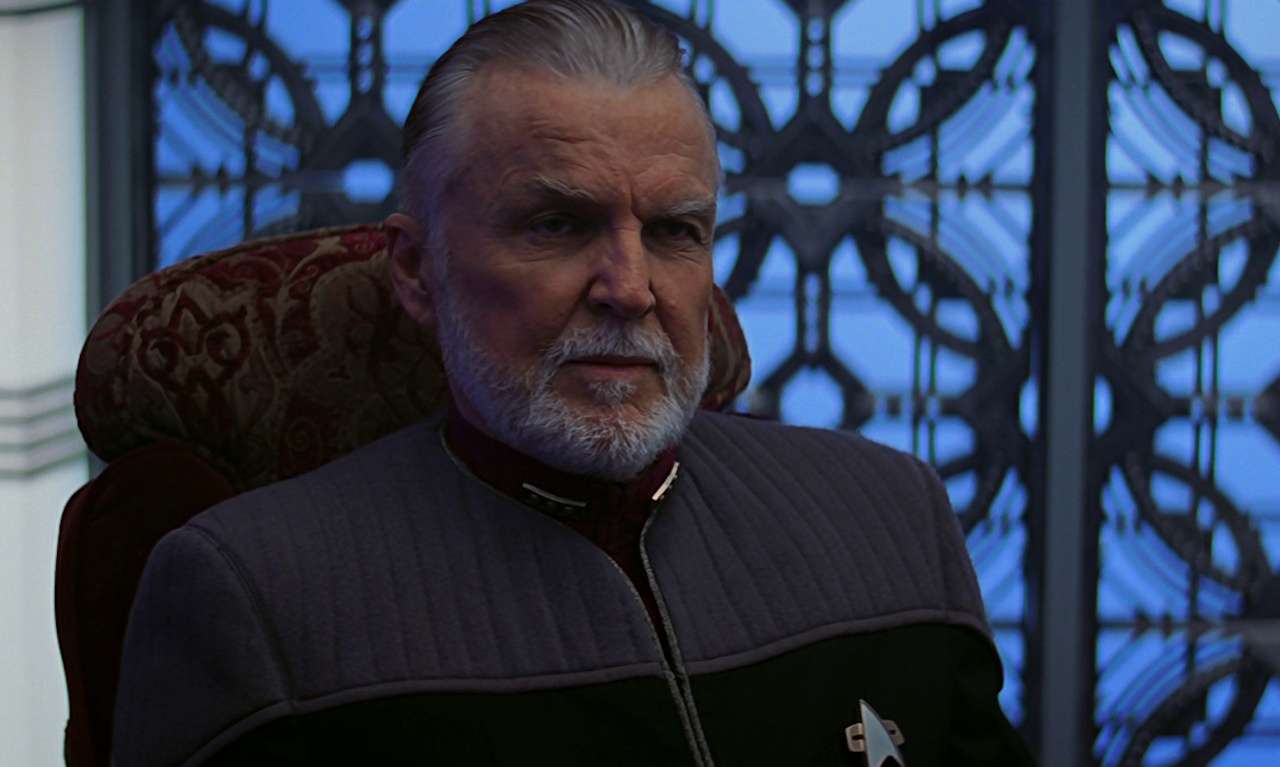
The “Badmiral”

Still frame from Star Trek: Insurrection showing the admiral.
A “badmiral.”

The “badmiral” – a portmanteau of the words “bad” and “admiral” – has become a stock villain in the Star Trek franchise. The typical badmiral is a high-ranking Starfleet flag officer who has an ulterior motive, is selfish, or simply doesn’t reveal everything they know, coming across as a roadblock for our heroes. There are some more nuanced badmirals – look at Layton in DS9, for instance – but others can fall into the trap of being pretty flat and one-note.

At this point, you’d be forgiven for thinking that *every* Starfleet admiral has fallen to the dark side, since it seems to happen so often! In fact, “good” admirals – like DS9′s Ross or Discovery’s Vance – are less commonly seen in the franchise than the bad ones! Because badmirals (and bad captains and commodores) can effectively pull rank and force our heroes to comply, there’s something a bit different about them when contrasted with a non-Federation enemy like the Klingons. In a lot of stories, this works exceptionally well. While I wouldn’t want Star Trek to lose the “badmiral” stock character, with today’s shows running to four or five relatively short seasons at the most, I think this kind of character has to be handled carefully and not over-used.

My Verdict: Keep It!

Cliché #4:
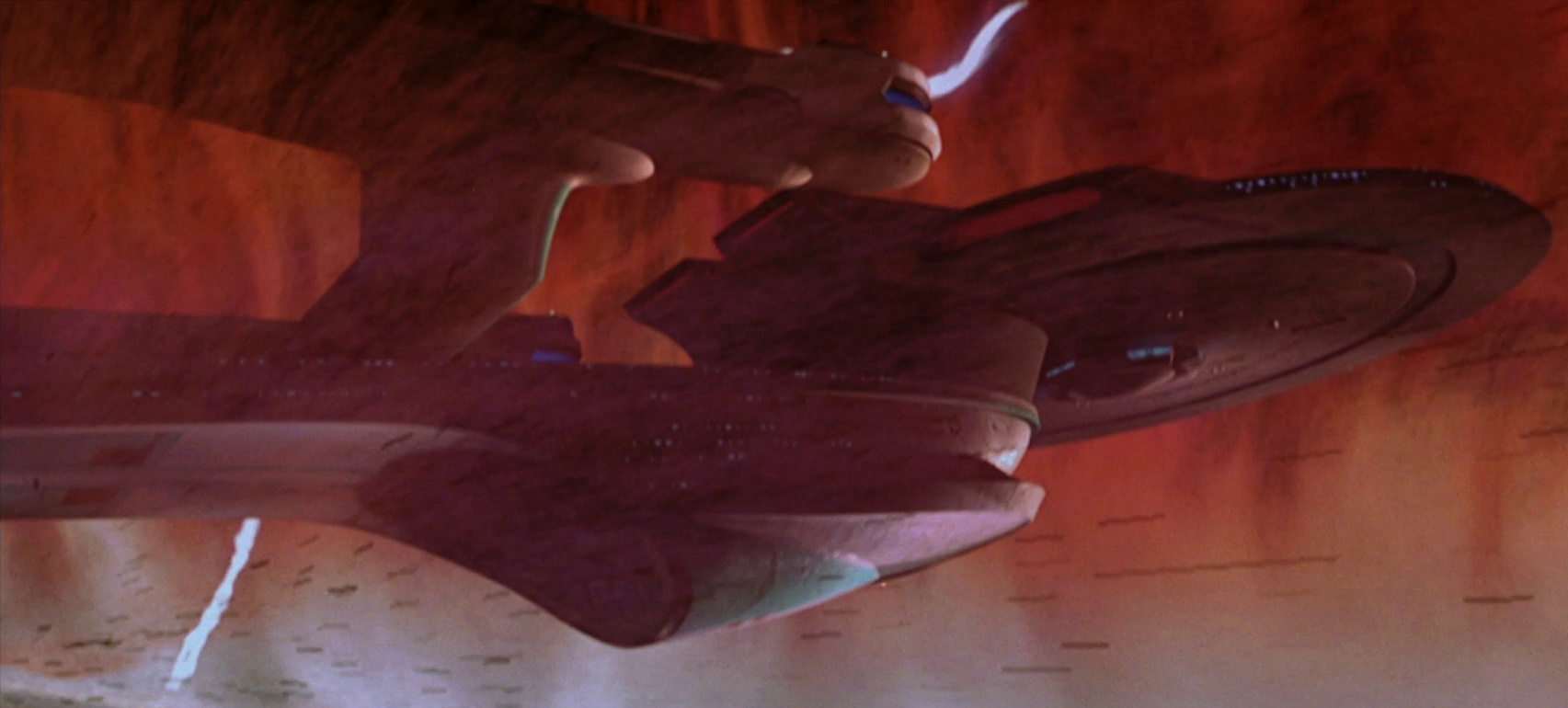
“We’re the Only Ship in Range!”

Still frame from Star Trek: Generations showing the Enterprise-B.
The Enterprise-B encounters the Nexus.

How many times has some variant of this line been used? For a state as massive as the Federation… they sure don’t seem to have very many ships! Perhaps the most egregious example of this is Generations (depicted above), where the brand-new Enterprise-B – which doesn’t even have weapons systems or a tractor beam – is literally the *only* starship within several light-years of Earth. How does something like that even happen? Imagine if the only military unit within a hundred miles of Washington DC was a single tank without its gun barrel.

Again, I get it: this line can set up a tense and exciting story with heroism, desperate last stands, rescue missions, and so on. There are some really fun stories that being “the only ship in range” has set up over the years. But it’s also true that it’s become a trope of the franchise. As with any cliché, over-use is the problem, and reducing the number of times it gets used in the future wouldn’t be a bad thing. I don’t think it’s strictly necessary to say it should be outright banned from all future episodes, but I could stand to see less of it!

My Verdict: Keep It!

Cliché #5:
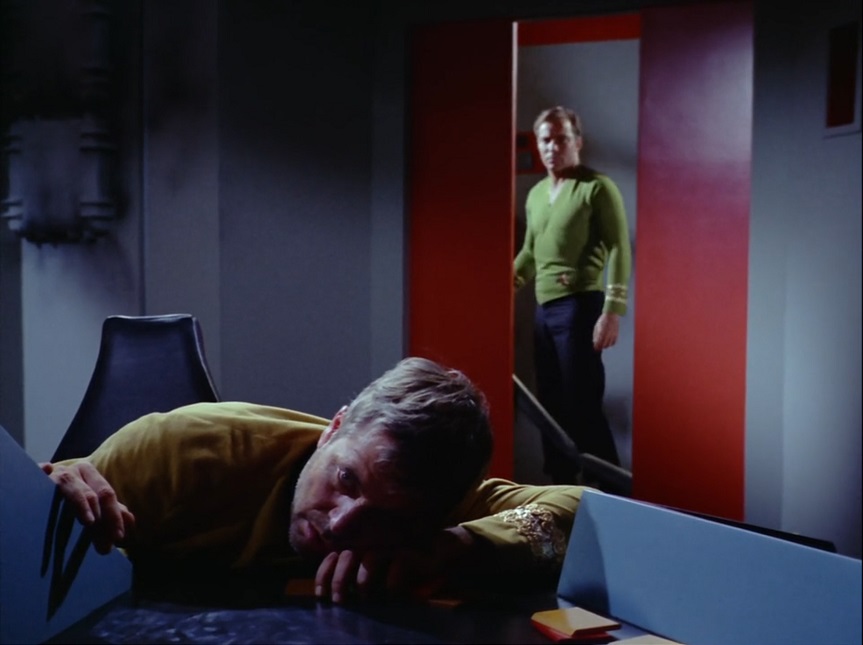
Sole Survivors

Still frame from Star Trek: The Original Series showing Kirk discovering Decker.
Commodore Decker.

A starship has been destroyed by a planet-killing superweapon. Another ship has been swarmed by the Gorn and crashed. An unknown assailant is destroying space stations one by one. A research vessel flies into a gravitational wave. What do all of these (and more) have in common? Afterwards, there was one single survivor to tell the story. This one leans on tropes way older than the Star Trek franchise – the marooned or shipwrecked sailor has been a part of fiction for centuries. But it is undeniably a cliché, and when you’re talking about starships, space stations, and entire planets, sometimes, having one sole survivor of a cataclysm can feel like it’s stretching my suspension of disbelief.

That being said, I can’t really pick out any examples where a “sole survivor” story has been out-and-out *bad* in the Star Trek franchise. Conversely, quite a lot of these are handled really well, with the survivor conveying what happened to our heroes in an interesting way. And who could forget the incredible Commodore Decker – one of The Original Series’ best one-off characters? He was a sole survivor, and yet I’d rank The Doomsday Machine as one of the best episodes of the entire show. So there’s room for sole survivors… sometimes.

My Verdict: Keep It!

Cliché #6:
Artificial Gravity Never Fails

Still frame from Star Trek: Strange New Worlds showing the badly-damaged USS Farragut.
The badly-damaged USS Farragut.

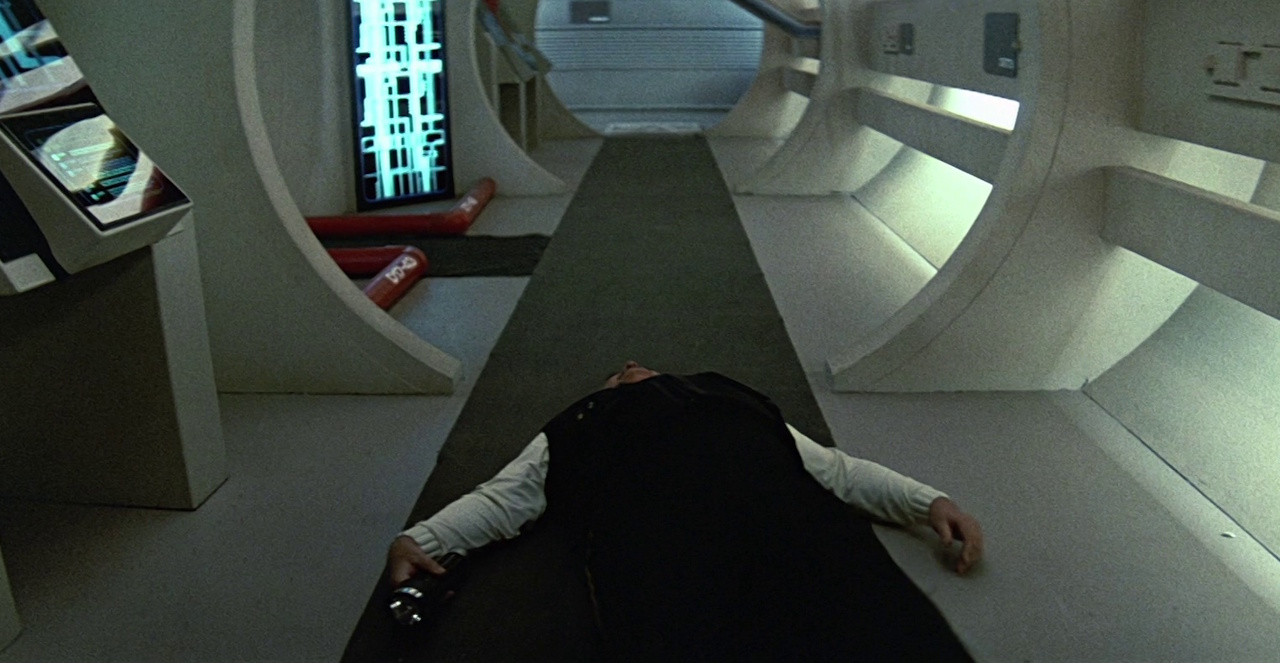
No matter how badly damaged a starship or space station gets, artificial gravity always seems to be the last system standing. Ships will lose life support – literally breathable air and a survivable temperature – before they lose artificial gravity! There are only two or three times I can call to mind where a damaged ship saw its artificial gravity fail, and pretty much the only time it was plot-relevant was in The Undiscovered Country. So… how come artificial gravity is the most robust system on a ship, surpassing even life support?

I know there’s a production-side reason for this one: it would be prohibitively expensive to wire up everyone on the cast and all of their props and have them floating around. Especially in The Original Series, when budgets were tight, that kind of thing was off the table. But it’s pretty silly, if you think about it, when you see ships take a real battering, losing key systems, with their hulls buckling and broken… but everyone can still walk and run around like nothing had happened. Given the advances in technology, and modern Trek’s higher budgets, maybe we could see a few more stories where a ship loses its gravity, and where that becomes a story point.

My Verdict: Vaporise It With A Disruptor!

Cliché #7:
God-like Aliens Who Become Obsessed with One Random Human

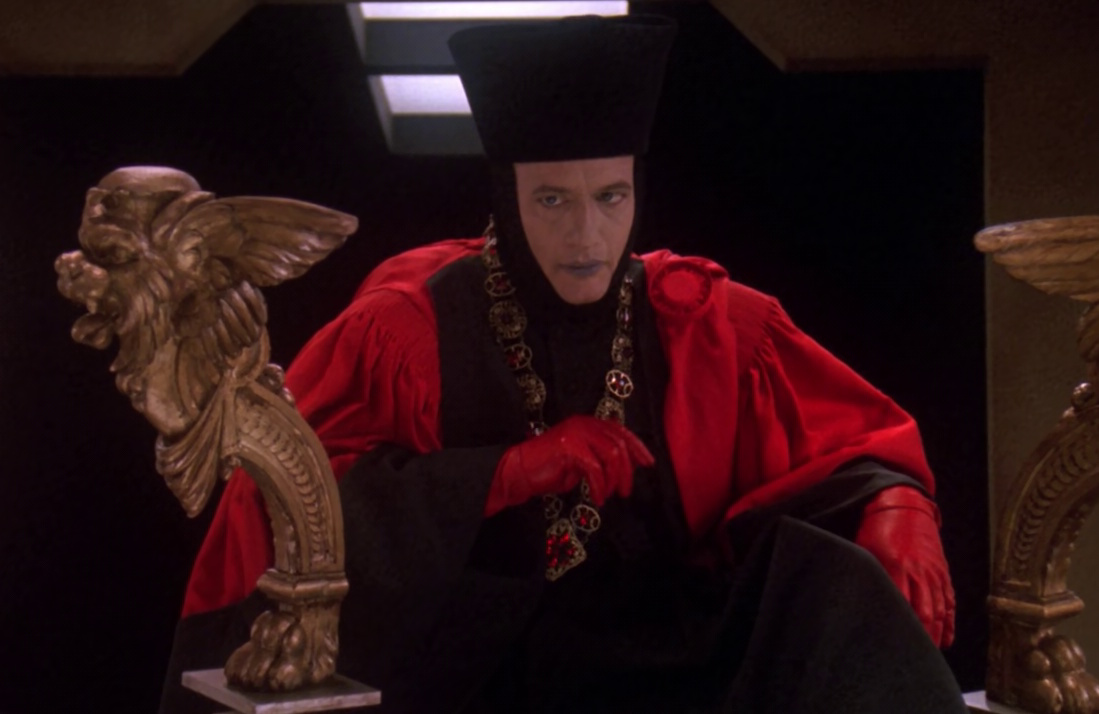
Still frame from Star Trek: The Next Generation showing Q.
Q.

Q has literally all of time and space to explore and play around in. Yet he becomes fixated on Jean-Luc Picard – a random 24th Century human. The Borg Queen has trillions of drones under her sway, controls thousands of star systems, and can assimilate whole populations at the drop of a hat. Yet she’s weirdly obsessed with Seven of Nine – another random human from the 24th Century – as well as Picard. When someone like Trelane came along, it was clear that Kirk and the crew were just his latest playthings. But Q, the Borg Queen, the Douwd known as “Kevin,” and others either fall in love with or become obsessed over one of our heroes. Which doesn’t really make a lot of sense, if you think about it.

Imagine having a favourite ant in your back garden. There are thousands of them living in an anthill, but you decide that *one* is special. That’s not a million miles away from what it’s like for the Borg Queen or Q when they decide to fangirl over their favourite humans. Star Trek can, from time to time, tell interesting stories this way, and the idea of Q in particular setting puzzles and “testing” Picard was used well most of the time. But it’s definitely become a cliché at this point, and I think it’s probably been taken as far as it can be.

My Verdict: Vaporise It With A Disruptor!

Cliché #8:
Everyone Breaks the Temporal Prime Directive

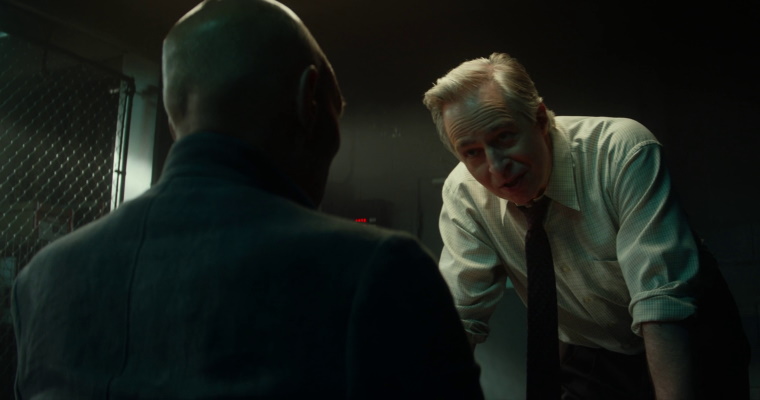
Still frame from Star Trek: Picard showing Picard and Agent Wells.
Picard breaking the Temporal Prime Directive.

In practically *every* story involving time travel, someone breaks the Temporal Prime Directive! The general order from Starfleet says that no one should interfere with any historical events, and must maintain the integrity of the timeline. But even those who claim to be dedicated to this cause – like Enterprise’s Crewman Daniels – routinely violate the Temporal Prime Directive, and often without good reason.

Time travel stories aren’t usually my favourites in Star Trek (especially if they involve visiting modern-day Earth), but even in the episodes I happen to really enjoy, there are countless violations of what is supposed to be one of the guiding principles of the Federation. Often, our heroes are on the side of preserving the timeline as much as possible – and that’s good. But even when that’s their stated aim, they don’t go about it in a stealthy way! How many times have characters befriended (or even fallen in love with) people from a different time period? And how often have they exposed themselves, telling people about the future? Giving characters an “unbreakable” rule, then forcing them to work around it, can make for a tense and engaging story. But when the same so-called rule is broken time and again (pun intended), it can lose some of its impact.

My Verdict: Keep It!

Cliché #9:
Conveniently-Situated M-class Planets

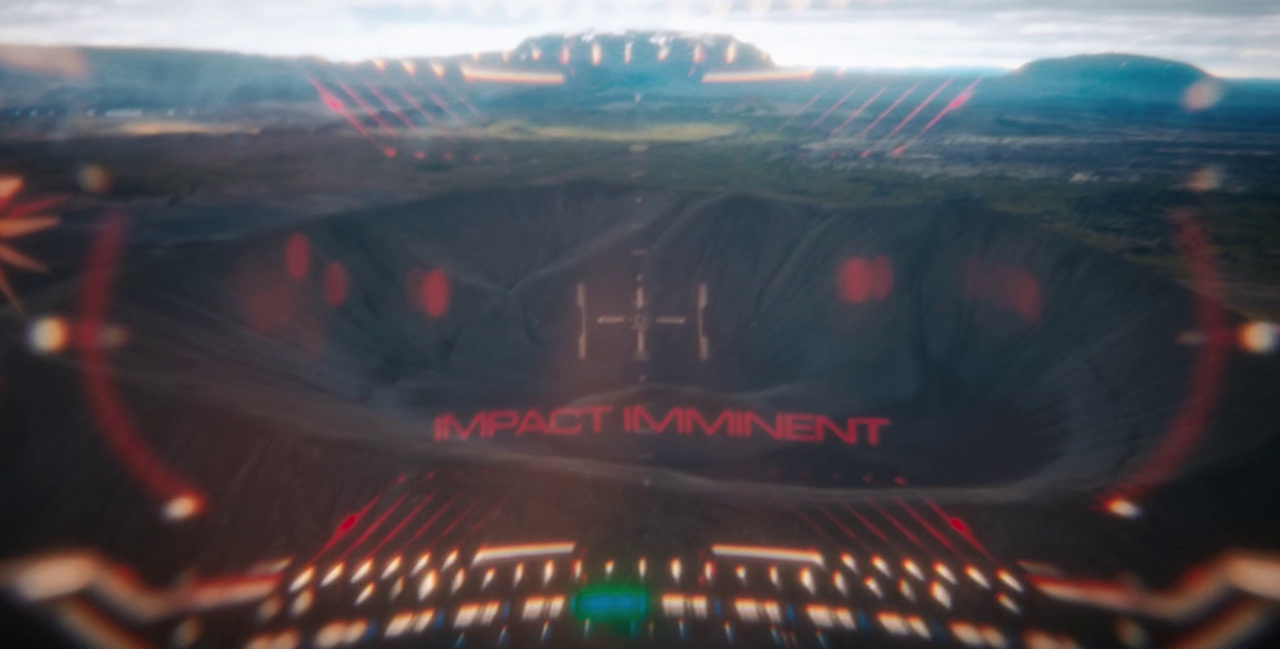
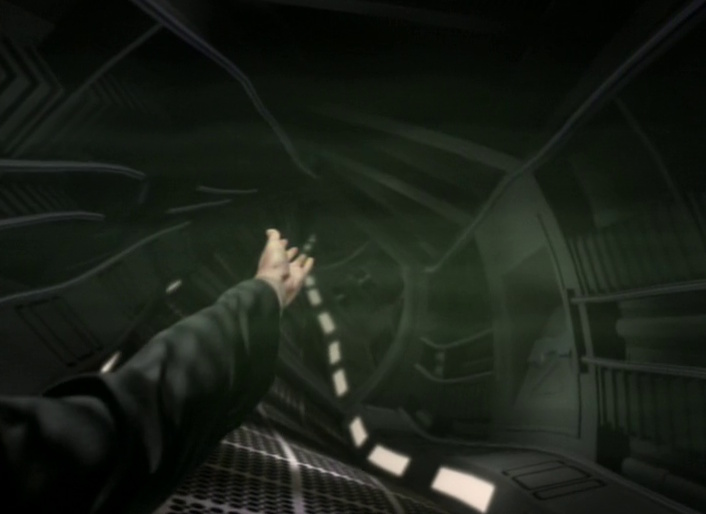
Still frame from Star Trek: Discovery showing a first-person view of Burnham crash-landing.
Impact imminent!

Michael Burnham arrives in the 32nd Century, but loses control of her suit and crash-lands. Where? Not on a barren rock, an asteroid, or into the corona of a star. But on one of Star Trek’s abundant conveniently-situated M-class planets! Almost any time a ship malfunctions, a shuttle crashes, or a transporter beam goes awry, our heroes find themselves on such a world. Just travelled through a wormhole to a mysterious location? Convenient M-class planet. Warp drive failing? Convenient M-class planet. Shuttle is spiralling out of control and about to crash? Convenient M-class planet!

Space is pretty big, actually. And if you think about it, most of the time our heroes spend on their ships won’t be in star systems – let alone in the habitable zone, where M-class planets can form. Most of the time they’ll be in deep space, and if they happen to be in a solar system, there are going to be way more uninhabitable rocks and gas giants than planets with breathable atmospheres and liquid water. I know M-class planets (and similar inhabitable words) are and always will be a core part of Star Trek. But once in a while it would be genuinely interesting to see a shuttle crash onto a lifeless moon, a ship caught in the gravity well of a gas giant, or something like that.

My Verdict: Keep It!

Cliché #10:
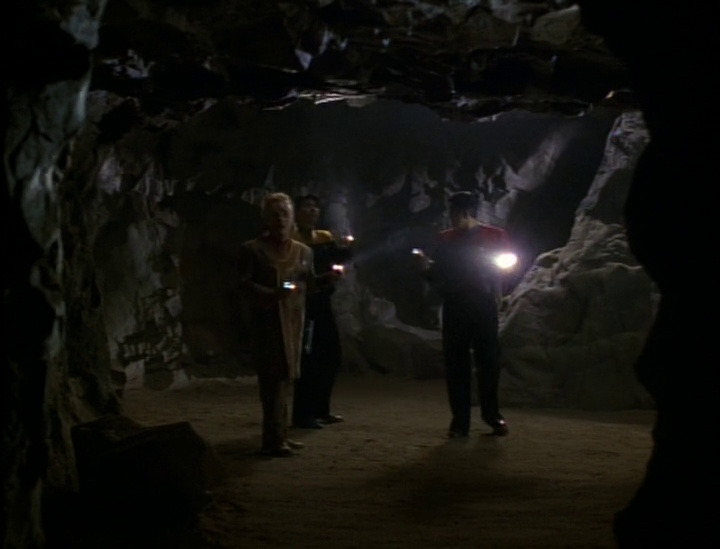
Caves and Caverns

Still frame from Star Trek: Voyager showing an away mission to a cave.
Oh look, they’re in a cavern.

During The Next Generation era, Paramount must’ve used and re-used the same “cavern” set dozens of times! So many different alien locales were depicted using this same set, from the Romulan homeworld to the nameless planetoid AR-558. In The Original Series, too, there were many different cave or cavern locations visited. Thankfully, since Enterprise, the cavern set has been retired, and modern Star Trek stories don’t visit caves anywhere near as often.

Perhaps it’s because modern Star Trek doesn’t spend much time in caverns, but this could be a rare cliché that I’d actually be happy to see *more* of going forwards! There’s something just a little nostalgic, perhaps, about an away mission set in a cave, bringing up fond memories of older Star Trek shows. Even with that caveat, though, I think they have to be used sparingly – and if we were only talking about Star Trek shows from before the turn of the millennium, I’d absolutely say that caves and caverns have to go!

My Verdict: Keep It!

Cliché #11:
“It Was Only Trying to Communicate!!1!”

Still frame from Star Trek: Voyager showing a spacial distortion.
Twisted from Voyager’s second season.

A strange life-form (or alien monster) attacks the ship, hurts or threatens our heroes, drains the power, and then… in a shocking turn of events, it’s revealed that they weren’t *really* being aggressive, nor are they actually dangerous! Say it with me, folks: “They were only trying to communicate!” Perhaps they wanted to warn Starfleet of some imminent threat, or maybe our heroes had accidentally encroached on their territory. In any case, once everyone understands what’s going on, the threat dissolves, and we can all go on our merry way. How many Star Trek episodes play out exactly like that?

One thing Star Trek has been justifiably criticised for is that too many alien races fall into the “nose or forehead brigade,” and the franchise isn’t always great at creating alien races that feel truly otherworldly. This cliché – and it *is* a cliché – often comes up in episodes where writers and designers have genuinely tried to create a totally different, non-humanoid type of alien. It can work well, though the “big reveal” that the supposed aggressor or monster just wanted to have a chat or share some useful information has been seen often enough as to be predictable. As with a few entries above, it’s something that future Star Trek projects don’t need to totally abandon, but should use sparingly from this point on.

My Verdict: Keep It!

Cliché #12:
Ancient Aliens Visiting Earth

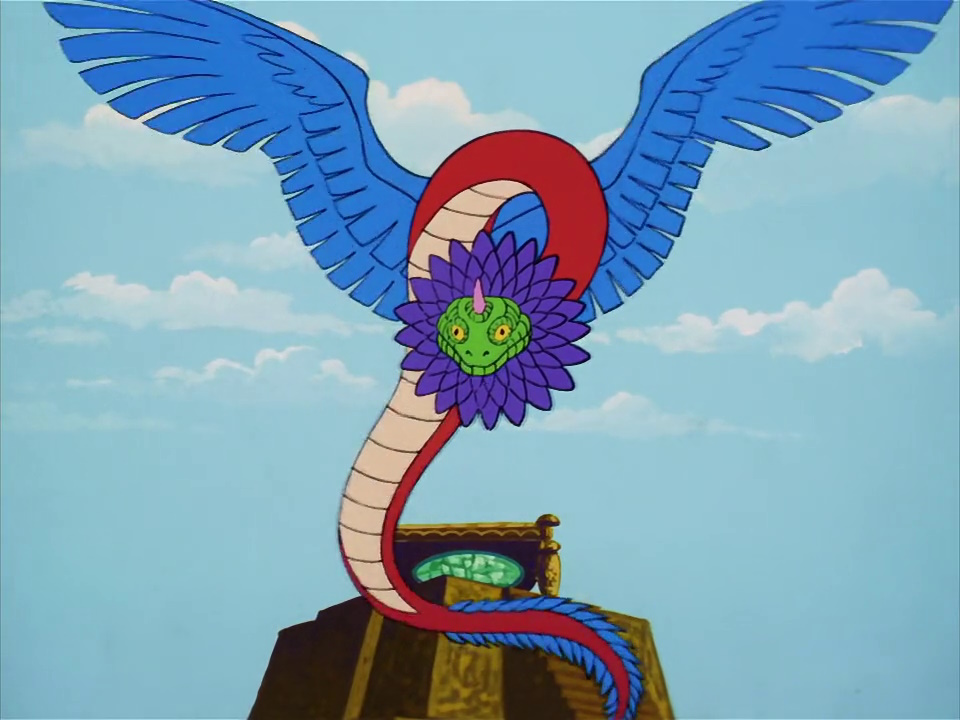
Still frame from Star Trek: The Animated Series showing Kukulkan.
Kukulkan.

Chakotay’s “Sky Spirits.” Kukulkan from The Animated Series. Q. The Skagarans. The El-Aurians. The Borg. The whale probe. The Briori. The Vulcans (multiple times). The Devidians. The aliens who pretended to be the gods of Ancient Greece. What do all of these – and many more – have in common? They visited Earth in the past, prior to the establishment of the Federation. At this point, there’s hardly a single period in Earth’s history where aliens *weren’t* visiting us! Perhaps I should look out of the window… maybe there’ll be a Cardassian, or something.

I think the problem here is that Star Trek has been running for such a long time that this “ancient aliens” trope has kind of gone beyond what’s plausible. Each of the individual cases above made for an interesting one-off episode or story, but if we’re to take Star Trek as a coherent, lived-in world… it begins to stretch my suspension of disbelief when there are just *so many* of these extraterrestrial visitors in humanity’s past. As individual stories, these kinds of things can work well, and some have been genuinely interesting explorations of the line between religion or mythology and real history, for example, or showing how far humanity has come in Star Trek’s optimistic vision of the future. But I can’t help but feel this trope has been taken as far as it can go, and adding yet more ancient alien visitors would be too much.

My Verdict: Vaporise It With A Disruptor!

Cliché #13:
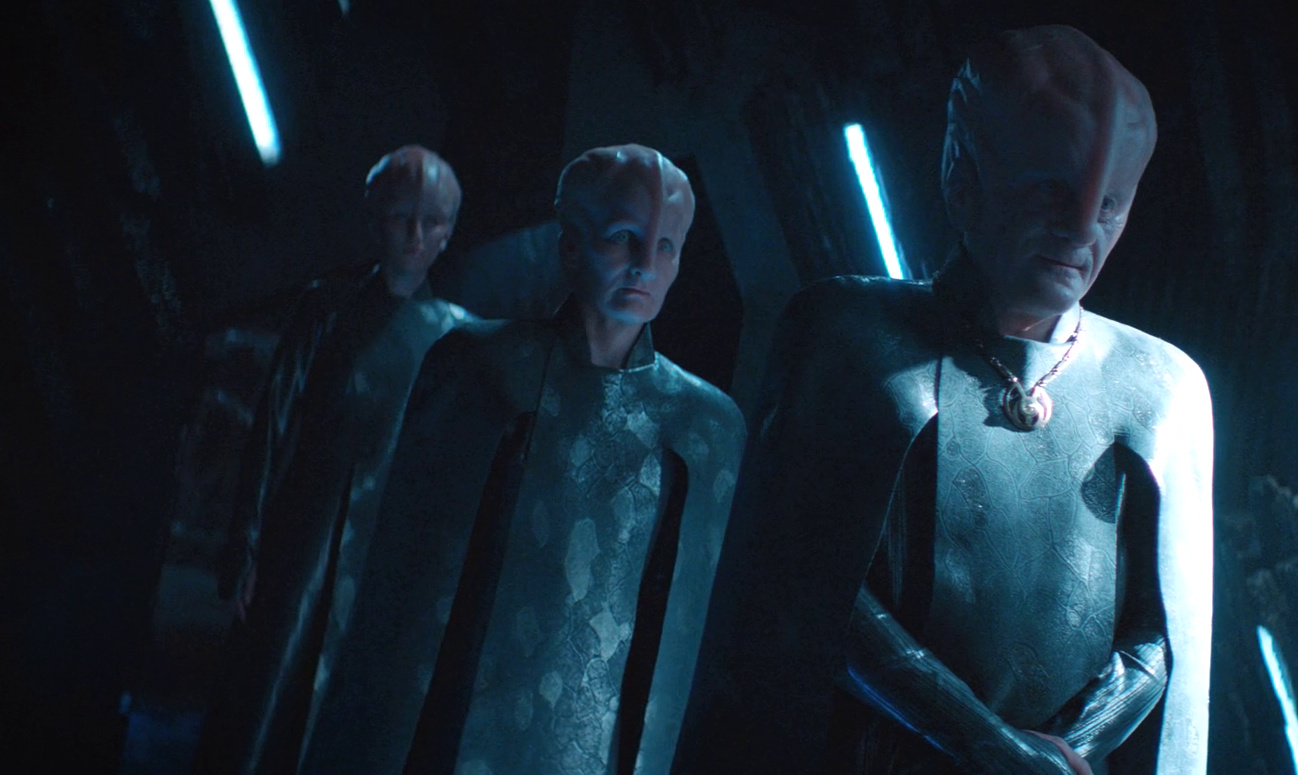
The Infalibility of the Universal Translator

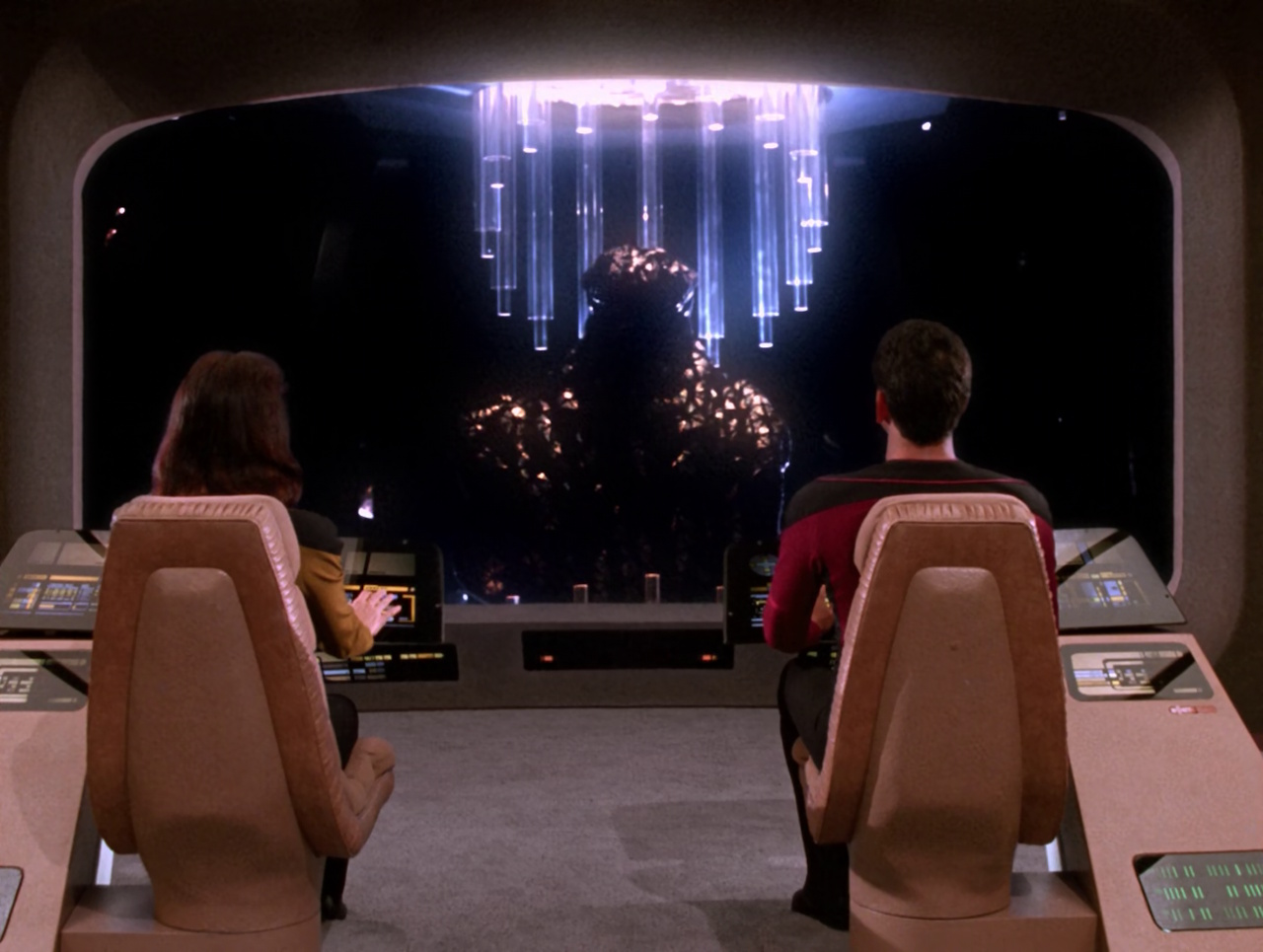
Still frame from Star Trek: The Next Generation showing two bridge consoles and a Sheliak on the viewscreen.
Communicating with an alien.

Wherever Starfleet goes – the Alpha, Beta, Gamma, or Delta Quadrants, or even beyond the galaxy – everyone can understand each other. The universal translator is presented as basically akin to magic, able to instantly translate brand-new languages it’s never been exposed to before. And that’s great… if you don’t think about it too much! But the universal translator is almost too good to be believable, sometimes, and it could be fun if – just for once, or on rare occasions – it *didn’t* work. Perhaps the universal translator just straight-up can’t interpret an alien language, leaving the crew to try to translate it the old-fashioned way. Or, as a more interesting idea, perhaps the universal translator is damaged or stops working, leaving the crew to realise they all speak different native languages and have to find ways to communicate and work together. Either of those could make for wonderful stories.

The universal translator is one of those “don’t think about it too hard” pieces of magical tech that facilitates other Star Trek stories. It wouldn’t be very interesting, for instance, if every episode started with the crew having to piece together an alien language before the rest of the story could get going! But there were some genuinely interesting moments in Enterprise with Hoshi as the ship’s communications officer/linguist, and I think we could get occasional episodes or plot points where the universal translator doesn’t work as intended.

My Verdict: Keep It!

Cliché #14:
Breaking Out of the Brig

Still frame from Star Trek V showing Scotty breaking into the brig.
“Do you not know a jail break when you see one?!”

Whether it’s a main character wrongly imprisoned or a villainous rascal who’s been caught in the act, one thing is all but guaranteed: if they’re in a Starfleet brig, they’re gonna break out! In a recent Strange New Worlds episode, we saw Gamble/the Vezda escaping from the brig with ease. In The Final Frontier, Scotty famously helped Kirk, Spock, and Dr McCoy escape the Enterprise-A’s brig. Thanks to the Battle at the Binary Stars, Burnham was able to break out of the Shenzhou’s brig. And the list goes on!

A “prison break” story, or a story about hunting down an escaped villain, can be fun – and Star Trek has used this concept pretty well over the years. Because “escaping from the brig” can go in a lot of different directions depending on what kind of story we’re talking about, I don’t think I’d say it should *never* be re-used in Star Trek again. But it is undeniably a bit of a trope at this point, to such an extent that whenever a character is confined to the brig… you’re never sure if they’ll still be there a few minutes later!

My Verdict: Keep It!

Cliché #15:
Hitting the Self-Destruct Button

Still frame from Star Trek III showing Scotty, Chekov, and Kirk activating the self-destruct sequence.
Activating the Enterprise’s auto-destruct sequence.

Starfleet captains sure do order their ships to self-destruct a lot, huh? To be fair, *most* of the self-destructs that we see captains ordering in Star Trek don’t actually take place, and the order can sometimes be given as a feint or ruse to catch an enemy off-guard. But ever since it was first used in The Search for Spock, we’ve seen captains setting the auto-destruct sequence on quite a few occasions.

As a mechanism of last resort, automated self-destruction makes a lot of sense in-universe. Starfleet wouldn’t want their advanced vessels falling into enemy hands, and there are some instances where setting a ship to destroy itself can be used as a weapon or to make a last stand. These have usually happened at tense moments in dramatic stories – Kirk’s destruction of the Enterprise, for instance, or Picard ordering the Enterprise-E or Stargazer to self-destruct when faced with what seemed to be imminent assimilation by the Borg. All of these, in their individual stories, make sense and work well. As above, this is something Star Trek mustn’t over-use, though!

My Verdict: Keep It!

Cliché #16:
Aliens Being Indistinguishable from Humans

Still frame from Star Trek: Discovery showing Cleveland Booker.
Booker, a Kwejian.

Betazoids, El-Aurians, Kwejian, Betans, Iotians, Onlies, Kelvans, and many more. What do they all have in common? Despite supposedly being “aliens,” they’re physically indistinguishable from humans. Even the Klingons in The Original Series were like that, before they finally got prosthetic makeup beginning in The Motion Picture. As a limitation of 1960s budgets and prosthetics, it wasn’t really noticeable at first. But as time goes by, it becomes more and more obvious that the galaxy is populated with these identical species.

I have a pet theory which says that many of these supposed “aliens” – the Betans, Onlies, Iotians, and so on – are actually lost human colonies from the early days of pre-Federation human spaceflight. But that’s not how most of these planets and their inhabitants are presented on screen, and we’re meant to take at face value that they are, in fact, alien races. I don’t buy it! And frankly, given advances in technology, in terms of physical makeup, puppets, and now CGI, there’s no excuse for modern Star Trek creating a race like the Kwejian any more. We really ought to see more “alien-looking” aliens from this point on.

My Verdict: Vaporise It With A Disruptor!

Cliché #17:
Tiny Fleets

Still frame from Star Trek: Picard showing a fleet.
A Federation fleet in Picard Season 2.

I know I’m not the first person to point this out, but almost every time we see a fleet of ships in Star Trek… it’s too small. Think about it: there are around ten billion people just on Earth in Star Trek’s 24th Century, and the Federation spans hundreds of planets and colonies. Yet, when threatened by the Borg, the most Starfleet can muster is 40 starships, some of which were old and no longer in service. Even during the Dominion War, which saw some of the franchise’s best fleet battles, the scale of the Federation Alliance and Dominion/Cardassian fleets felt way too small compared to the interstellar empires they’re drawn from.

There are good explanations for this, of course. At first it was a budget thing – making physical models of hundreds of ships, then filming them in motion, was prohibitively expensive. And then there’s the complexity that massive fleets would add to a story for the audience; just keeping track of a spaceship battle involving thousands of vessels would be confusing. But I still feel that Star Trek could do more with larger fleets, and that some of the fleets we’ve seen on screen don’t line up with what we know of the Federation and other interstellar empires. To be blunt, they need more ships!

My Verdict: Vaporise It With A Disruptor!

Cliché #18:
Easily-Hacked Alien Computers/Tech

Still frame from Star Trek: Strange New Worlds showing La'an using a Gorn computer.
La’an hacking a Gorn computer.

I know that Starfleet officers are well-trained. But if you’ve never been aboard an alien vessel before, don’t know their language/writing system, and have limited or no experience using their computer interfaces… you shouldn’t be able to just tap a couple of buttons and seize control of their ship! Maybe someone like Data can get away with this, because of his inhuman abilities, but we often see human characters performing these seemingly miraculous feats. As I’ve said before, even if they just took an extra few seconds, sometimes, to acknowledge the difficulty of interfacing with a brand-new type of technology… that would at least be *something*.

Because deciphering an alien computer system isn’t usually the focus of the story, these moments tend to be raced through to allow other narrative beats to play out. And that can be okay… if you don’t stop to think about it for too long, I guess. Perhaps this is a bit of a nitpick, and you could certainly make the case that Starfleet trains its officers well, and that perhaps the basic way computers function is consistent across most alien races in the 23rd/24th Centuries. But even so… sometimes, I’d like to see someone struggling with this!

My Verdict: Vaporise It With A Disruptor!

Cliché #19:
Transported to the Other Side of the Universe (but Back Home in Time for Tea)

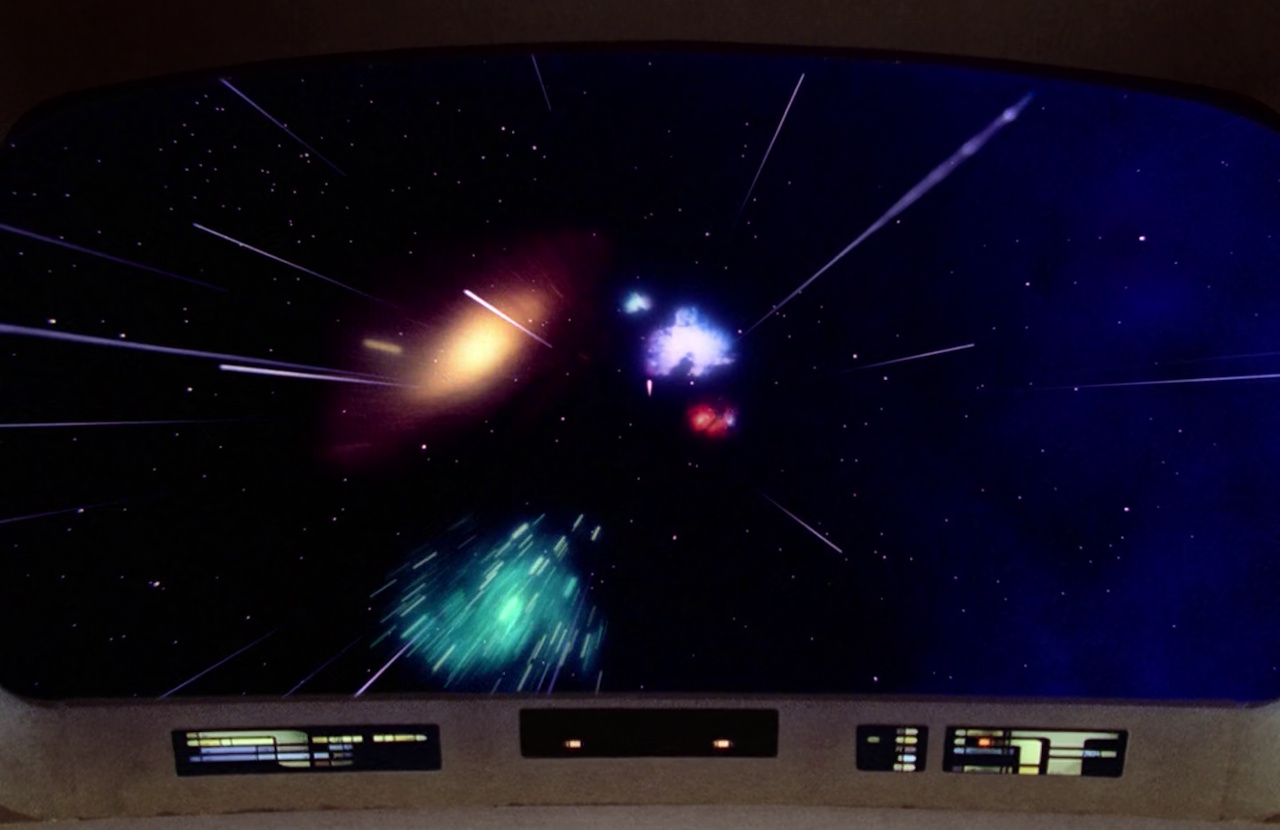
Still frame from Star Trek: The Next Generation showing the viewscreen and galaxies.
Flying past galaxies…

In many different stories, our heroes find themselves accelerated far beyond warp 10, teleported to a far-flung star system, or even in a whole different galaxy. But then, forty-five minutes later, they’re back home again! The only real exception to this is Voyager, which took this trope of the franchise and asked the obvious question: “what if there wasn’t a fast way home?” I really liked that idea!

Because some of these stories play out quite differently from each other (The Final Frontier is radically different from Where No One Has Gone Before, for example), I guess it doesn’t feel like a particularly egregious or overdone cliché in the way that some of the other entries above do. But it is still a bit of a trope of the Star Trek franchise to see our heroes transported to a faraway place… only to make it home before the credits roll.

My Verdict: Keep It!

Cliché #20:
The “Friendly” Visitor with a Dark Secret…

Still frame from Star Trek: DS9 showing Arissa.
Who could this be?

How many seemingly friendly characters show up, only for it to be revealed that they’re harbouring some kind of dark secret? I know that this one isn’t just a Star Trek thing; we see countless examples of this kind of stock character throughout all of fiction, really, and especially on episodic television. But just because it isn’t unique to Star Trek, that doesn’t make it any less of a cliché!

Because these kinds of stories can feel very different, depending on which show we’re talking about and even which individual characters are involved in the story, I’m inclined to give it a pass. There’s a big difference between, say, The Next Generation’s Man of the People and Voyager’s Ex Post Facto, which both feature apparently friendly characters who have some kind of secret. So there are ways to keep this kind of story feeling fresh and engaging, even while using the same basic character archetype.

My Verdict: Keep It!

So that’s it!

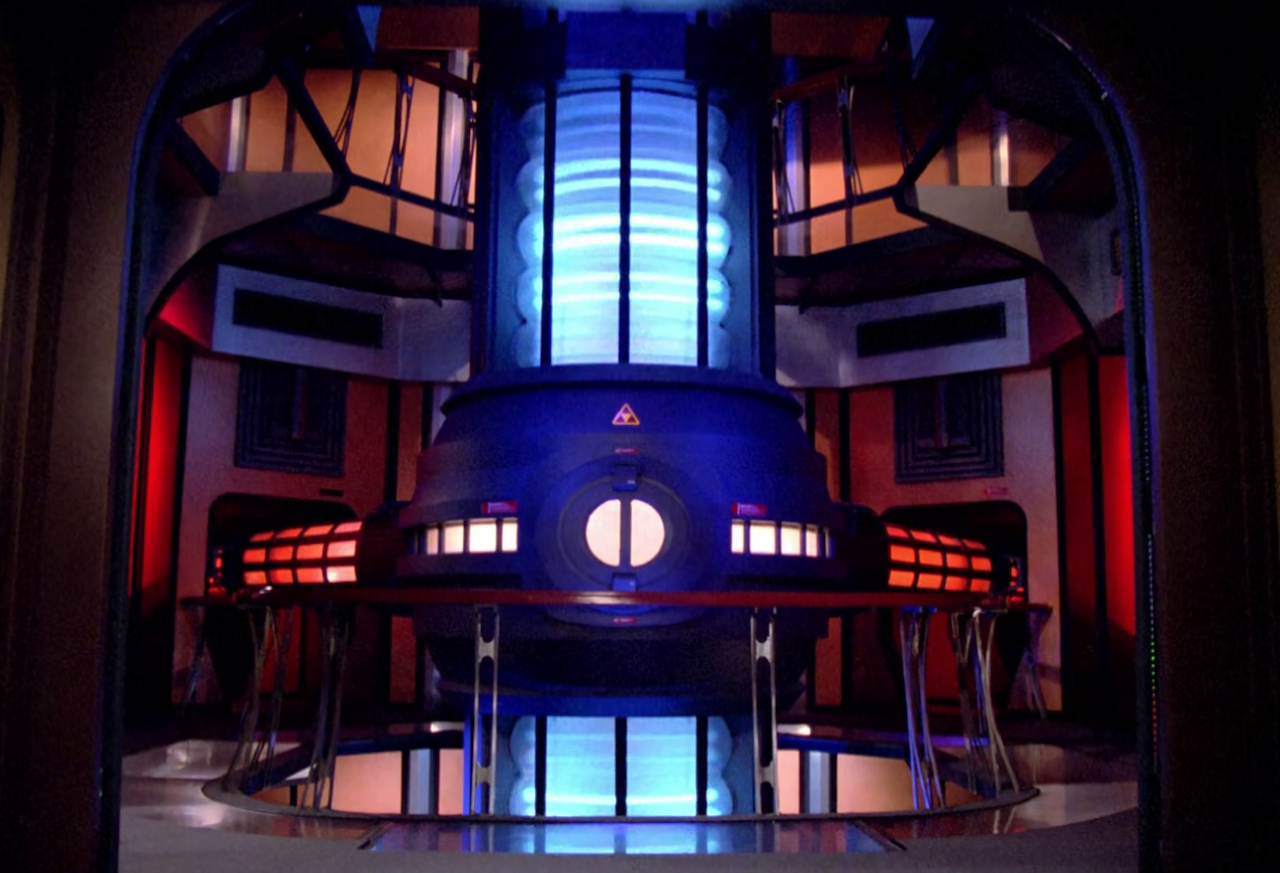
Still frame from Star Trek: The Next Generation showing the warp core.
The Enterprise-D’s warp core.

We’ve taken a look at some more of Star Trek’s narrative clichés, and decided whether or not they should be allowed to stick around in the future!

I hope this has been a bit of fun, or at least interesting. The original Tumblr poll (linked below) really hit me and gave me a ton of ideas. There may be more “clichés” to talk about in the future, too, but I think two long pieces on the topic is sufficient for now! But watch this space, because I might revisit this in the future, either with more potential clichés or to dive deeply into some of the ones we’ve already discussed. There are a few that could definitely be the subject of a longer article or essay one day!

Thanks for checking out my thoughts on all of these… and Live Long and Prosper!


You can find the original Tumblr poll (which has since closed) by clicking or tapping here, and my first piece on this subject by clicking or tapping here.

Most of the Star Trek franchise – including films and television series discussed above – is available to stream on Paramount+ in countries and territories where the platform is available, and is also available on DVD and/or Blu-ray. The Star Trek franchise – including all properties discussed above – is the copyright of Skydance/Paramount. This article contains the thoughts and opinions of one person only and is not intended to cause any offence.

Horror Hypothetical: Where Would You Try To Survive?

A Star Trek-themed spoiler warning.

Spoiler Warning: Beware of spoilers for the films, games, and TV shows discussed below.

With Halloween rapidly approaching, I thought we could have a bit of fun by playing one of those “hypothetical question” games that you often see doing the rounds on social media. I’m going to choose one with a seasonally-appropriate horror theme, and try to go through a few possible answers, weighing up the pros and cons of each.

So what is this horror hypothetical, you rightly ask?

If you had to spend 72 hours (that’s three days) in one fictional universe from a horror property, which one would you choose? And, perhaps more pertinently: which horror franchise/universe presents the highest chance of survival?

Stock photo of two Jack-o-lanterns.
Happy Halloween!

Let’s lay down some ground rules – because rules are always fun, right?

In this scenario, I’ll have to spend 72 hours in one fictional universe of choice – and it has to come from a recognised horror film, TV series, or video game. Scary episodes or levels of non-horror properties don’t count – so there’s no trying to wriggle out of it by picking something like Star Trek: Deep Space Nine’s Empok Nor. We’re talking full-blown horror only!

Most stories take place in a larger fictional world – but it wouldn’t be *any* fun at all to pick, say, The Texas Chain Saw Massacre and say that I’d avoid it by catching the first bus out of town, or to say that I’d survive in the Alien universe by just never going into outer space. So we’re assuming, for the purposes of the hypothetical, that I’m dropped in the middle of the danger zone. Running away is possible – but only using the equipment and technology that we’ve seen depicted on screen, *and* that I’m reasonably confident I’d be able to use. So… no hijacking a nuclear bomb or anything like that!

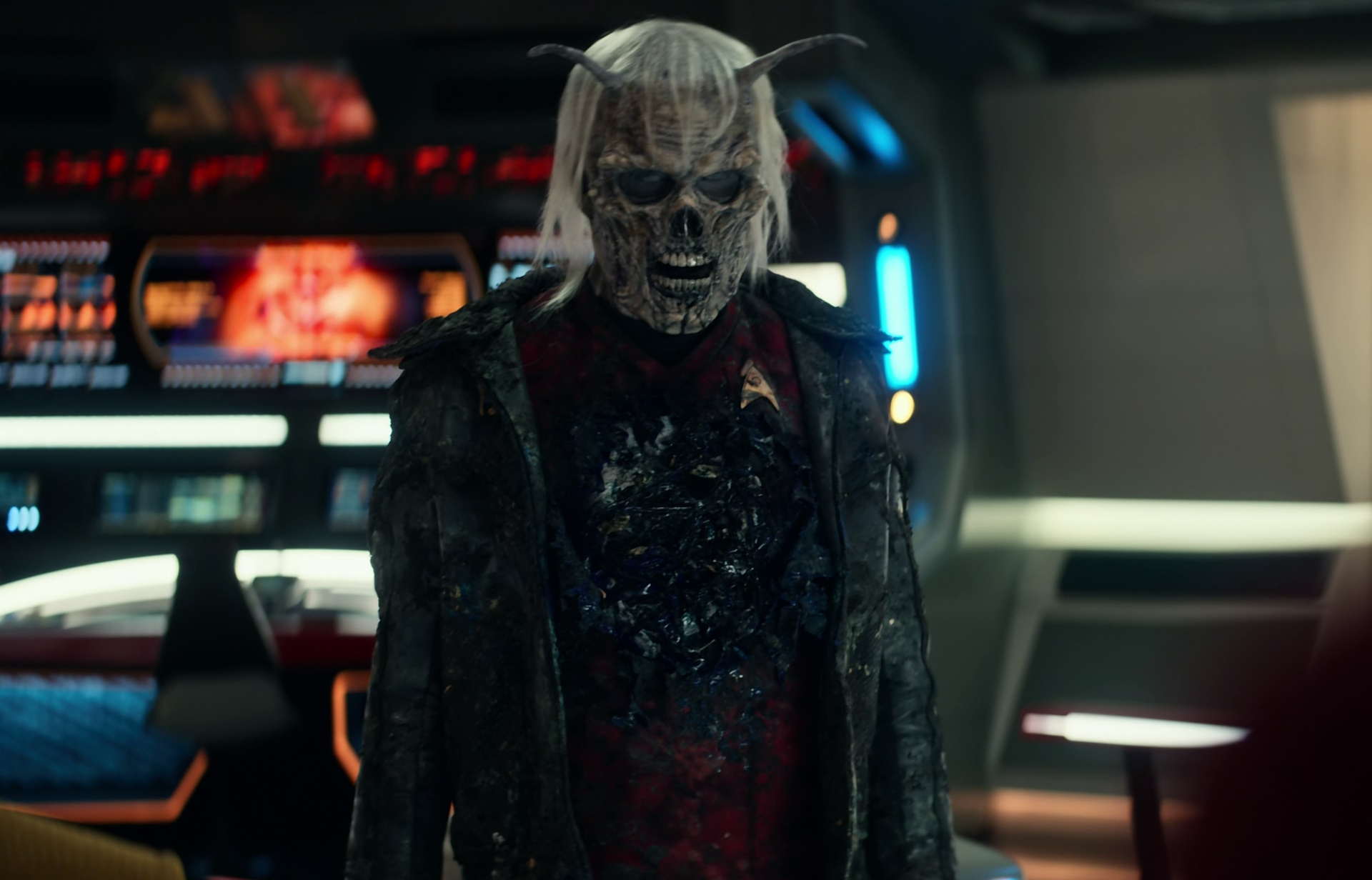
Still frame from Star Trek: Strange New Worlds showing Hemmer as a zombie.
Argh!

I’m also going to assume that I’m in reasonably good health in these hypotheticals – which is categorically *not* the case in real life, unfortunately! But, again, it doesn’t seem like it’d be a lot of fun to have to take into account my limited mobility in every scenario. So, if you’ll indulge me, I’m going to assume I’m in better health than I actually am!

Finally, as I always like to say, everything we’re going to talk about is subjective, not objective. If you hate the horror franchises I’ve chosen, think I’ve totally messed up my survival, or just feel I’ve got the wrong end of the stick somehow… that’s okay! All of this is just a bit of Halloween-themed fun, at the end of the day. And since neither of us are ever going to be actually dropped into a horror franchise (well, fingers crossed), none of this really matters! It’s just for fun – and I share it with the interweb in that spirit.

I’ll talk a little bit about each scenario, then give it a survival chance at the end using a simple 1-10 scale, with one being the lowest chance of survival, and ten being the highest.

So with all of that out of the way, let’s get started.

Option #1:
28 Days Later

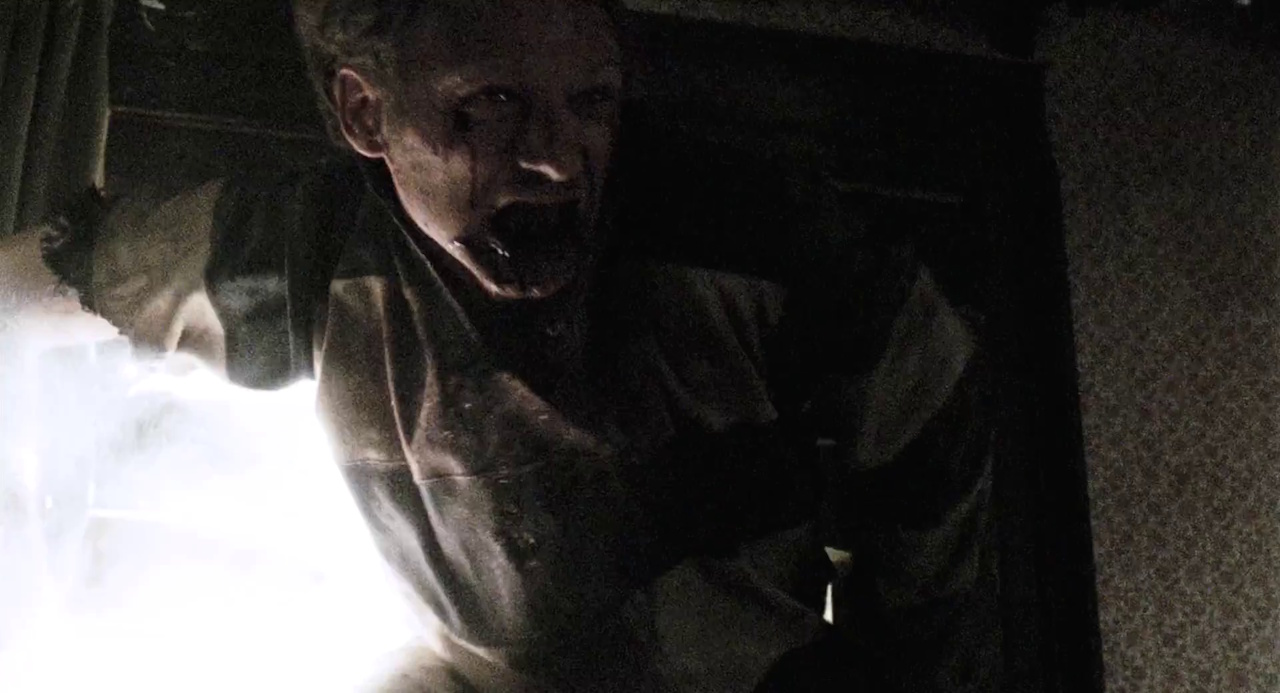
Still frame from 28 Weeks Later showing a zombie breaking in through a window.
A zombie.

28 Days Later redefined the zombie genre, and it was genuinely one of the most terrifying depictions of zombies I’d ever seen. Fast “sprinters,” able to infect people with a single drop of blood, and blinded by rage… this is gonna be a tough one!

For the purposes of our 72-hour survival challenge, the best thing to do would be to shelter in place, using whatever resources are available in the immediate surroundings. Venturing outside, especially in a large city the size of London, seems like it would be immediately fatal, so as long as I have some kind of shelter and hopefully some water or something else to drink, I’d try to hunker down, keep quiet, and stay away from any windows!

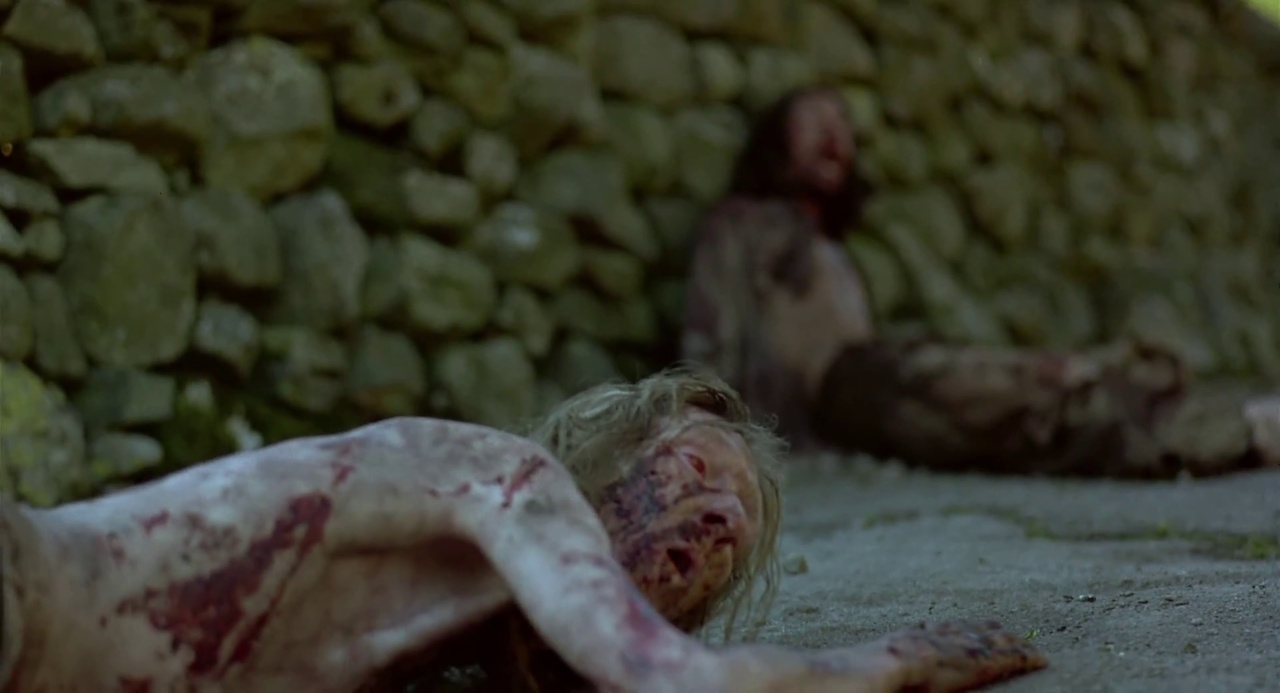
Still frame from 28 Days Later showing two zombies dying.
Dying zombies.

That being said, we’ve seen how aggressive 28 Days Later’s zombies can be, and how a small flicker of light or a seemingly innocuous sound can attract an entire horde. Assuming we’re in London or a similarly-sized urban area, and all we have for defence is the contents of the average house… I don’t think this is going to end well, to be blunt about it. One loud snore, one step too close to a window, or one candle at night would be all it’d take to send the zombies crashing through the windows and doors.

I deliberately chose 28 Days Later ahead of something like The Walking Dead because of how much more intense and powerful its zombies appear. But that could be what screws us over! If we get lucky and the hordes pass us by, I think sheltering in place for 72 hours is plausible. But if we run out of water and have to venture out, if our base is compromised, or if we make one small mistake… that’s all it’d take.

Survival Chance: 3/10

Option #2:
A Nightmare on Elm Street

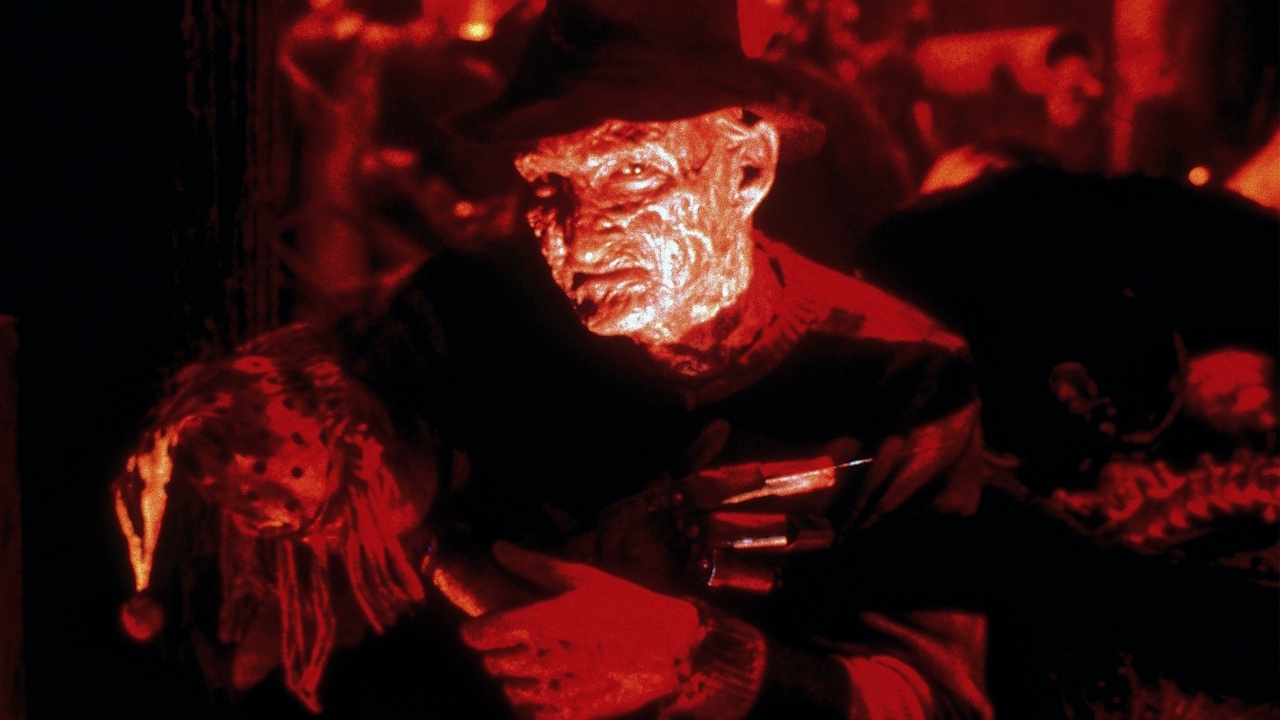
Promo photo for A Nightmare On Elm Street showing Freddy Krueger.
Freddy Krueger.

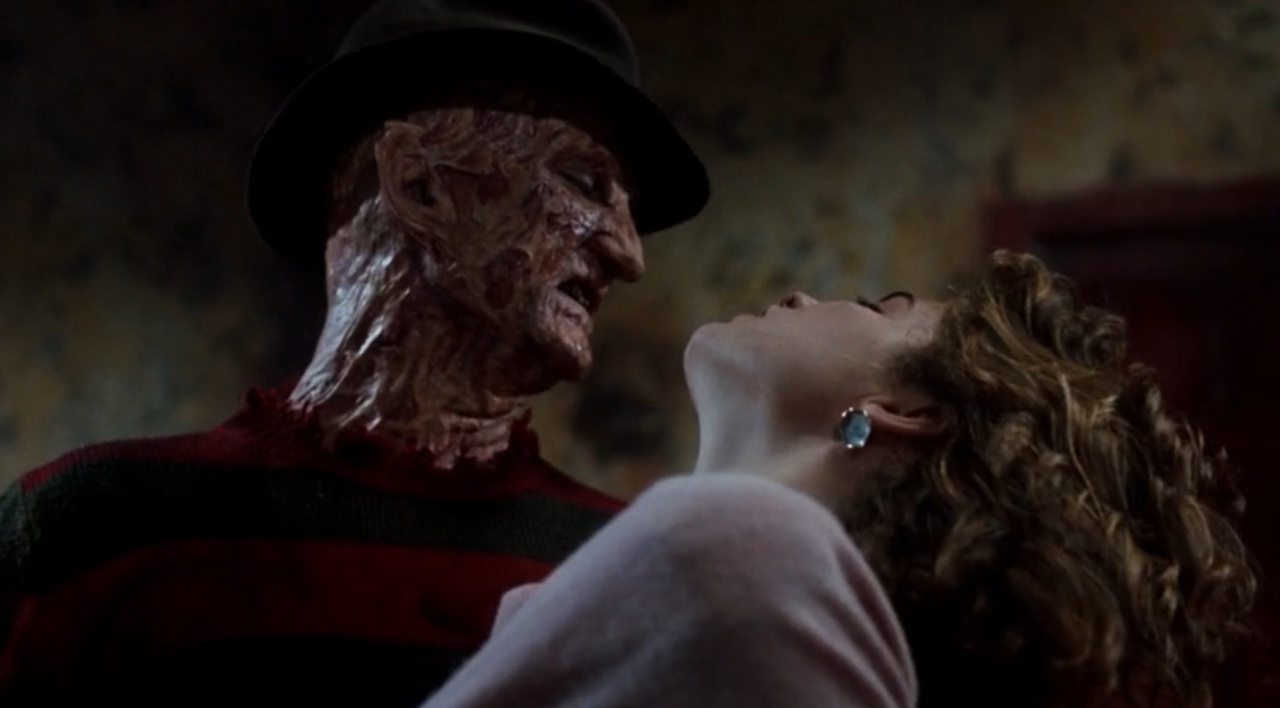
Freddy Krueger has one major weakness: he can only hurt me in my dreams. If this was a “survive indefinitely” challenge, that would be a problem! But if I have to make it 72 hours… I reckon I could manage to stay awake. A combination of caffeine pills, energy drinks, and coffee should keep the spooky lil’ guy at bay!

But okay, that’s getting dangerously close to cheating territory, I suppose. There have been more Nightmare on Elm Street films and spin-offs than I thought, and it seems as if Krueger’s backstory and the source of his powers have changed since the original. But if we assume that Krueger is fuelled by his victims’ fear, as the first film depicted, then trying to stay calm will be the biggest obstacle. And all that caffeine we just chugged? That probably won’t help with keeping calm!

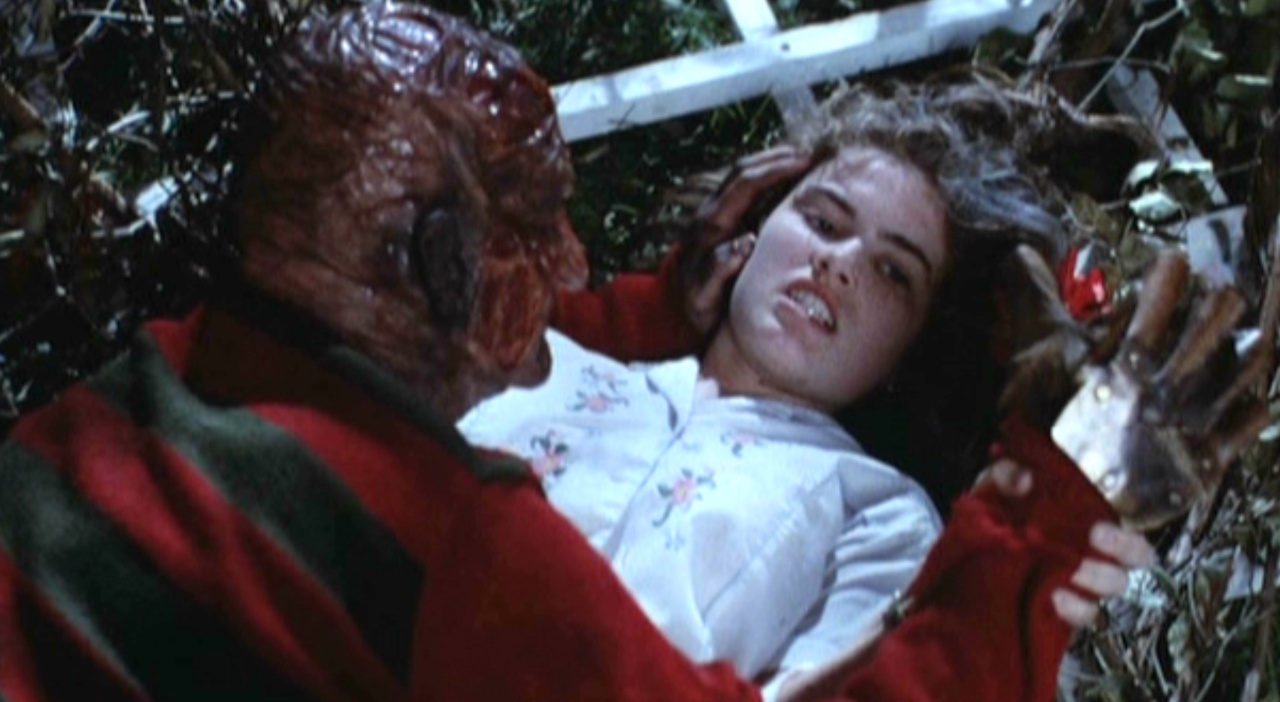
Still frame from A Nightmare On Elm Street 3 showing Freddy and Nancy.
Krueger and Nancy in one of the sequels.

I don’t think I’d be able to figure out all of the other stuff depicted in the sequels: things like purifying Freddy’s bones or staging a group hypnotherapy session in order to enter his world and take the fight to him! So my plan, to be honest, would really be to try to stay awake for as long as possible. 72 hours seems like a stretch – that’s three full days – but if the alternative is a violent and painful death… well, that’s a pretty good motivator.

If possible, I’d try to meet up with anyone else who might be one of Freddy’s targets. Perhaps by working together, we could develop a more solid strategy!

Survival Chance: 6/10

Option #3:
The Last Of Us
(Video game version)

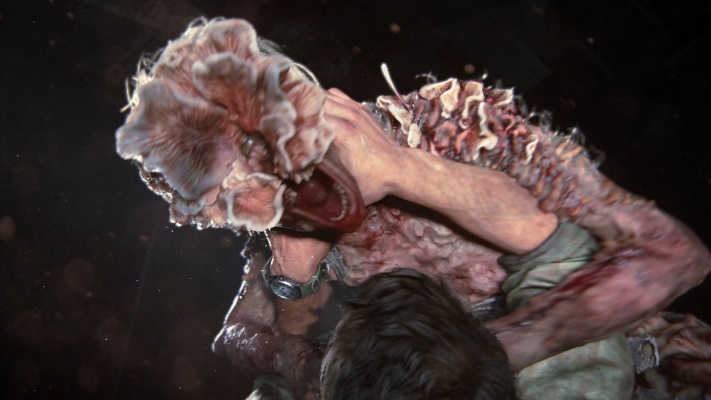
Promo screenshot for The Last Of Us showing Joel fighting a clicker.
Fighting a clicker.

In this scenario, we survived the main event (or we were born after it) and we’re now a couple of decades into the post-apocalypse, as depicted in the main part of the story. For a 72-hour survival challenge, I’m torn between seeking out a safe zone, like Boston, where the first game starts, or simply finding an abandoned property and taking shelter.

In either case, I don’t want to spend much time on the road or travelling, as that seems like the time for the mushroom-zombies to strike! Finding a truly safe space outside of one of the established settlements or safe zones seems like it would be challenging, but trying to enter one of these places would also have its drawbacks. Some guards seem especially trigger-happy, so one wrong move (or sarcastic quip) could lead to a premature demise!

Promo screenshot for The Last Of Us showing a clicker on a red background.
We don’t want to run into any of these…

The video game version of The Last Of Us also showed how deadly fungal spores could be. Without proper protection, spores would quickly infect me and bring my run to an end – and I can’t rely on having access to a proper hazmat suit or gas mask! And knowing me, I’d struggle to get the damn things on in time even if I was lucky enough to have them. This side of things makes venturing anywhere pretty dangerous, not least derelict buildings which could hold clouds of cordyceps spores.

Perhaps the least-bad option would be to just… pitch a tent in a field somewhere and hope that you’re far enough away from the zombies to survive for three days? There are also scavengers and gangs to worry about, though. Being alone in this post-apocalyptic world wouldn’t be a lot of fun, that’s for sure.

Survival Chance: 4/10

Option #4:
The Thing

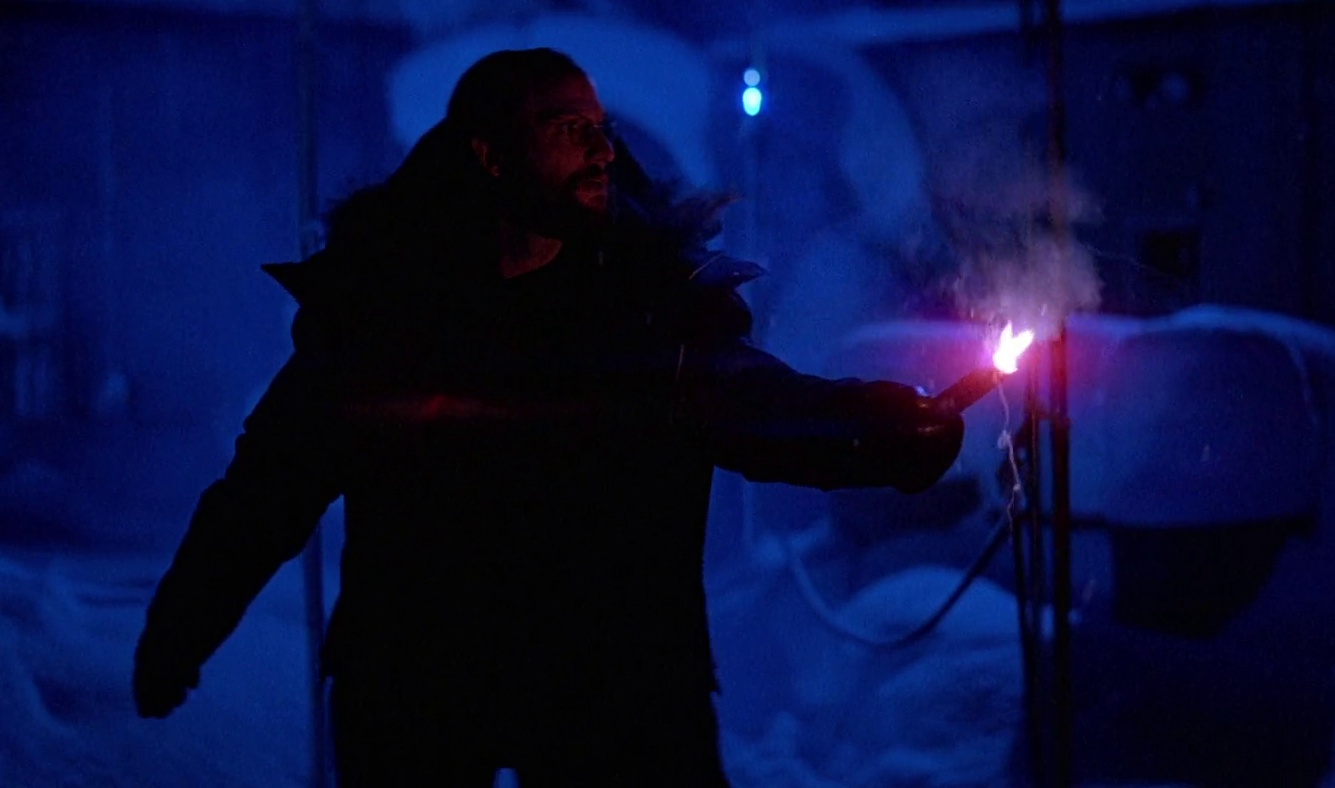
Still frame from The Thing showing a character holding a lit flare.
The Thing.

In The Thing, you’re trapped at an isolated outpost, unable to tell your friends from the creature, and… I think it’s gonna be a bad time! Unlike in other scenarios, going off alone and trying to hunker down won’t work; the Antarctic base is relatively small, and the creature seems to have a pretty good method of navigating it. Leaving the base, even if well-equipped, means facing Antarctica in the dark in the middle of winter… so I’m not making it 72 hours that way!

If possible, I’d try to organise the survivors into one group, occupying a “safe” room with resources, like the cafeteria. Taking shifts, so at least two or three people are awake at a time, I’d try to keep the creature at bay for as long as possible. But I have no doubt that the shape-shifting abilities would be a waking nightmare; not feeling 100% confident in trusting anyone would take a toll.

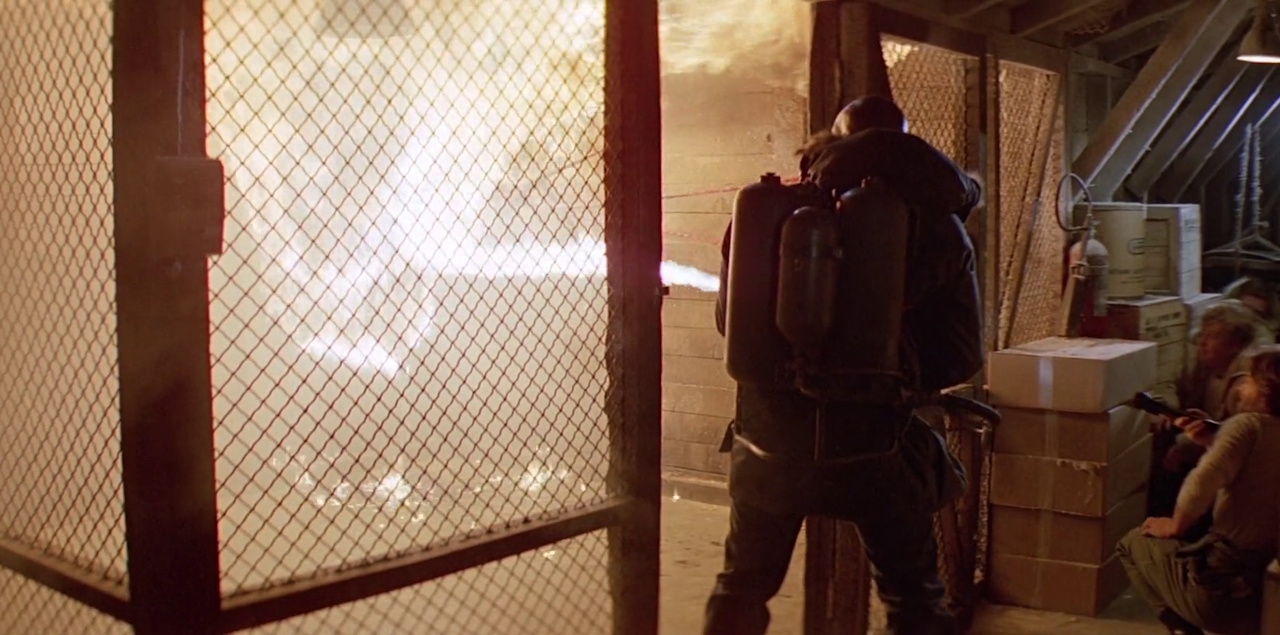
Still frame from The Thing showing a character using a flamethrower.
Kill it with fire!

With nowhere to run, the best way to survive 72 hours in this world would seem to be by befriending everyone at the facility and trying to stick together in one group. That means if there’s something to attend to outside of our safe room, the whole group goes. No one uses the bathroom alone, sleeps alone, or does anything alone. For someone who struggles with human interaction… that might not be the most fun I’ve ever had! But, as above, the fear of a violent death is a pretty good way to keep me motivated!

With all that being said, facing off against an intelligent and efficient predator like this, one with such a perfect ability to mimic animals and people… I don’t think the odds are especially high!

Survival Chance: 2/10

Option #5:
Alien

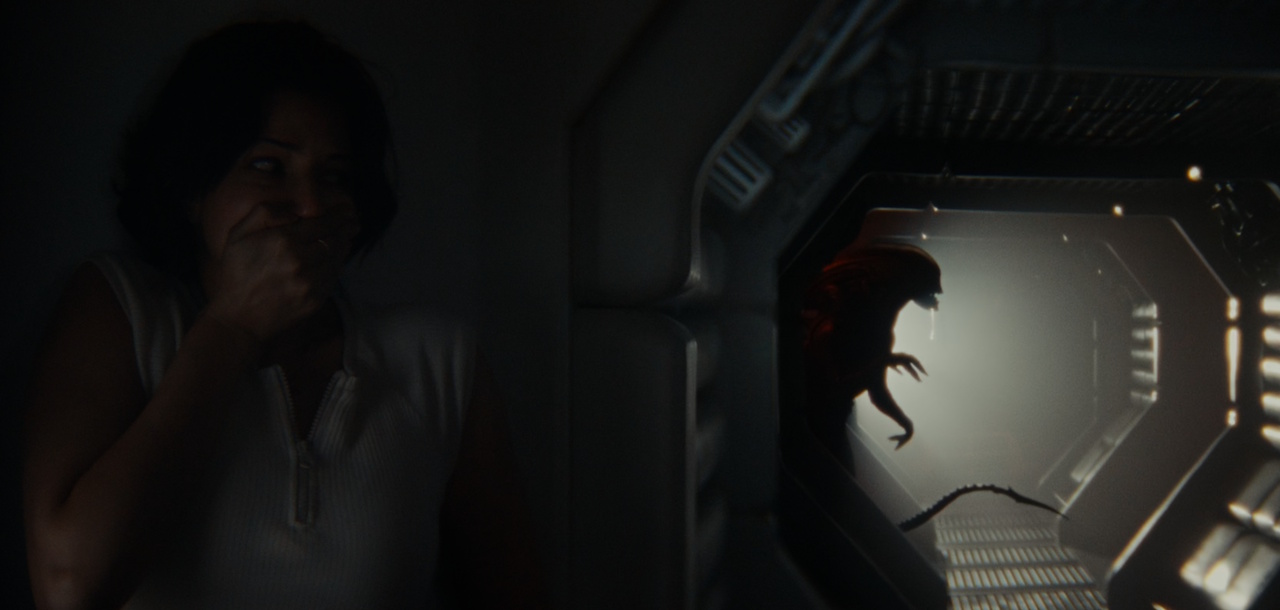
Still frame from Alien: Earth showing someone trying to hide from a Xenomorph.
Hiding from a Xenomorph.

In space, no one can hear you scream… so let’s *try* not to have to scream! I think our survival chances in the world of Alien improve significantly if we’re on the ground – a colony or settlement – rather than aboard a spaceship or space station. But either way, the Xenomorph is coming for us, driven by little more than a desire to feed and breed.

If we have enough room, I’d try to put as much distance between us and the infection site as possible. We could try to commandeer a vehicle – like one of the ground transports seen in Aliens. Or, if trapped aboard a ship, sneakily trying to use an escape pod might be a viable option. Remember, we just have to survive for 72 hours – so getting as far away from the Xenomorph as possible should be top priority!

Promo screenshot for Alien: Isolation showing the Xenomorph.
Alien: Isolation.

If escape isn’t an option, though, and we’re in a worst-case scenario aboard a cramped slow-moving spaceship, then I think – as the films and series have repeatedly shown – we’re pretty much screwed! If we catch the infection really early, and can kill the facehugger or infant Xenomorph, maybe things would look a lot brighter. But by the time we’ve passed the chest-burster stage and the little bugger has disappeared, our best bet is honestly to run to the escape pods.

I’ve recently been playing Alien: Isolation, and it’s genuinely one of the scariest games I’ve ever played – and perhaps second only to the original Alien film in terms of how terrifying the Xenomorph feels. Playing it was part of the inspiration behind this piece, as I honestly struggle to survive in the world of Alien – so it made me wonder which other horror properties might be equally as unforgiving!

Survival Chance: 2/10

Option #6:
Buffy the Vampire Slayer

Still frame from Buffy the Vampire Slayer showing two Season 1 vampires.
Vamps!

Gosh, where do we start with this one? There’s a lot more to Buffy than just vampires – so you can expect to be contending with werewolves, witches, ancient demons, and many other supernatural baddies! Honestly, just holding your own against vampires for 72 hours would be a stretch, but if other entities also join the hunt? This could be a very short challenge!

The flip side to all of that is, unlike in every other scenario we’ve examined so far, there’s a gang of people dedicated to hunting down and stopping the vampires and other creatures of the night. We wouldn’t even need to meet or befriend Buffy, Giles, Willow, or anyone else – if supernatural shenanigans are going down in Sunnydale, they’re probably already on the case. It might be too late for us if we’re the first victim of a new monster, but what are the odds of that happening in the first 72 hours?

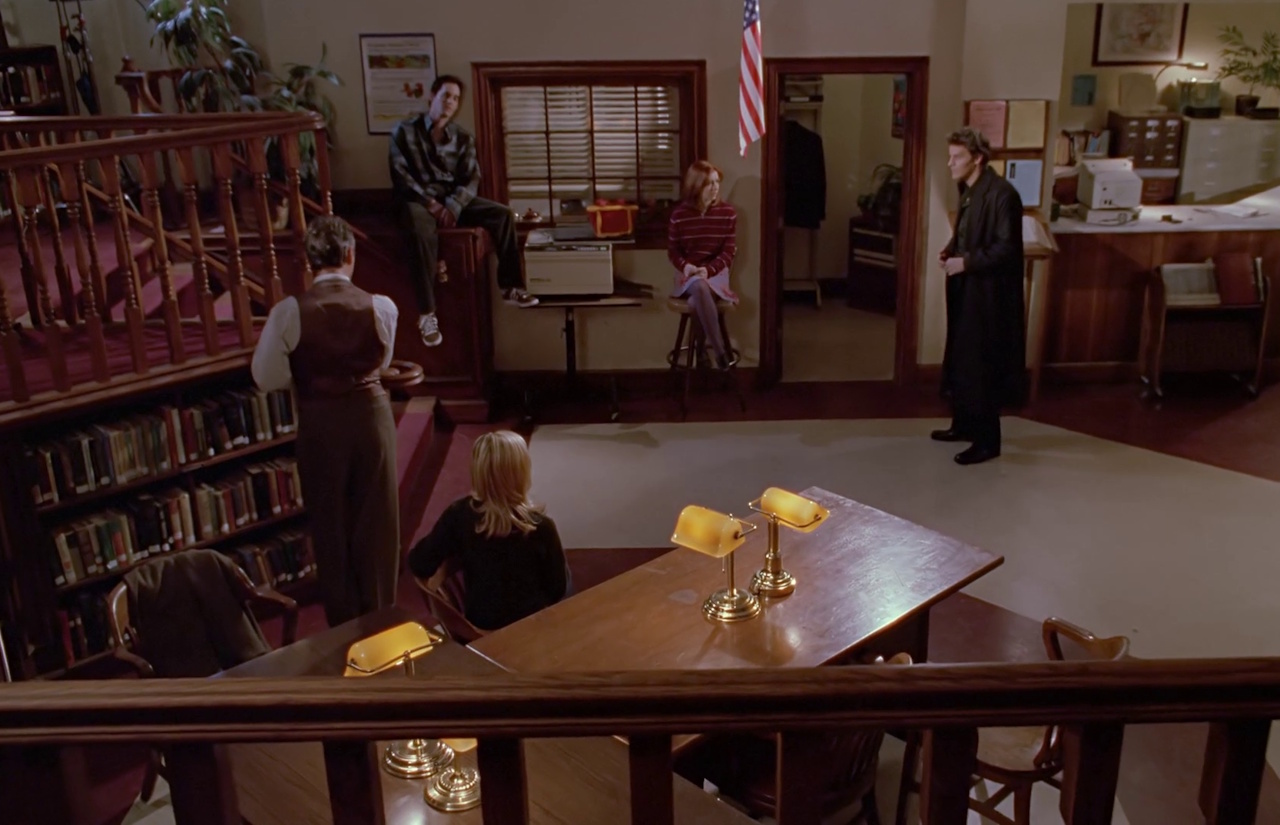
Still frame from Buffy the Vampire Slayer showing the gang in the library.
The Scooby Gang.

Okay, you’re right – I guess seeking shelter at The Magic Box might not be a terrible idea! If we could make it there in the daylight, and explain we’re in danger… all we gotta do is hang out with the gang and wait! But if there’s no slayer, no Magic Box, and just a plethora of vampires and monsters terrorising Sunnydale… I think we’re in a lot of trouble. Stay inside, lock the door, and maybe try to get some kind of really strong UV lamp!

Because Buffy ran for seven seasons, the show sank its teeth into all kinds of monsters, vampires, and ghouls. Sunnydale is a very dangerous place, it would seem. If Buffy and the gang are there and willing to help, this could be a cakewalk. But if we’re unlucky and Buffy’s gone on vacation, we might’ve accidentally stepped into one of the most dangerous, monster-infested settings out there!

Survival Chance: 4/10
(8/10 with Buffy and co., 2/10 without)

So that’s it… for now!

Stock photo of Halloween-themed food.
Halloween snacks!

I hope this has been a bit of Halloween-y fun! I actually really like this “hypothetical question” idea, and it’s one I’d love to revisit in the future – both in horror and non-horror contexts. I’m already brainstorming more questions and scenarios to write about, so if you enjoyed this idea… watch this space!

But I suppose we should pick one of the six options, shouldn’t we, as the answer to the hypothetical posed at the beginning?

I think I’m still leaning towards A Nightmare on Elm Street. I’m confident that I could go 72 hours without sleep, even if it was 1984 and there were no energy drinks or caffeine pills, and all I had was coffee. I know it’s a bit of a sneaky answer, but the objective was to survive 72 hours in a horror setting – not defeat every demon and monster that inhabits it!

Still frame from A Nightmare on Elm Street showing Freddy and Nancy.
I’m choosing A Nightmare On Elm Street for this hypothetical!

So that’s gonna be my pick. Buffy the Vampire Slayer was tempting, but I think it’s only really survivable if you’re able to team up with the Scooby Gang as soon as you arrive. If you get to nightfall in Sunnydale without support – and without a place to hide – you’re toast. So A Nightmare on Elm Street it is.

As I think I said last time, this year, October has turned out to be a stupidly busy month, so I haven’t had time to write all of the horror and Halloween articles and columns that I’d originally planned. Such is life, I suppose! Some will undoubtedly have to go on the back burner until next Halloween. By the way, is that the first time you’ve heard someone talk about Halloween 2026?

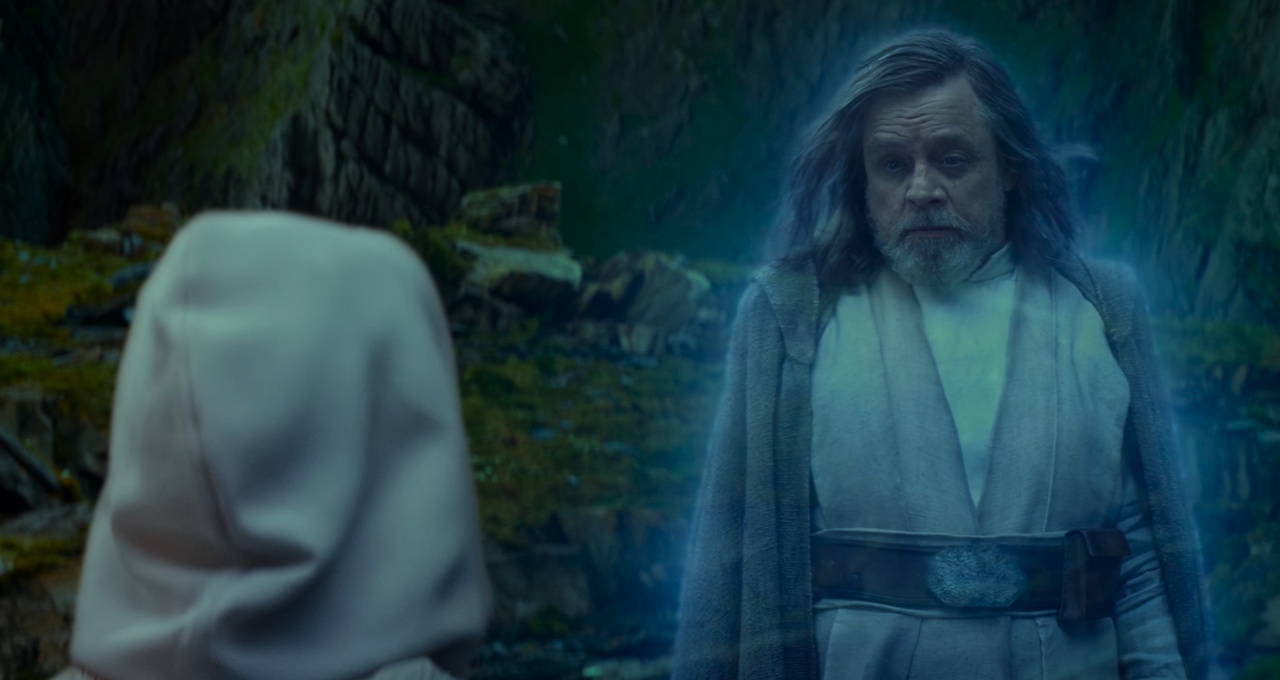
Still frame from The Rise of Skywalker showing Rey and ghost Luke.
A spooky ghost!

As I said above, this piece was partly inspired by the video game Alien: Isolation, which I’ve been slowly working my way through. Trying to survive in that world is genuinely tense and terrifying, and it got me thinking about other horror settings and how long I might last! I think the basic ground rules made for a fun thought experiment, at any rate.

So if I don’t catch you again before the 31st, I hope you have a fun and appropriately spooky Halloween! If you missed it, I wrote up a list of five seasonally-appropriate TV shows that you might want to check out before Spooktober comes to an end – you can find that piece by clicking or tapping here. And if you want a more personal look back at some of my Halloween memories, I wrote about that a couple of years ago – you can find it by clicking or tapping here.

Happy Halloween, everyone!


All films, TV shows, and video games discussed above are the copyrights of their respective studio, broadcaster, distributor, developer, publisher, etc. This article contains the thoughts and opinions of one person only and is not intended to cause any offence.

A Minecraft Movie: Film Review

A spoiler warning graphic.

Spoiler Warning: There are spoilers ahead for A Minecraft Movie.

In mid-2011, I was dating a partner who loved watching YouTube “Let’s Play” videos. One of their favourite games to watch was the as-yet-unreleased Minecraft, and they insisted I download it and give it a try. So while I can brag that I played Minecraft while it was still in beta… I’m sorry to say that I was unimpressed at first! I remember thinking that the game was a scruffy-looking thing all about building mud huts and digging holes in the dirt, but I played it with my partner for their sake more than mine. I eventually got the hang of it, and I remember building a few fun things like a castle with a lava moat and a pyramid made of red bricks that took forever to craft!

If you’d told me then that Minecraft would remain at the top of the charts for the next fifteen years, be worth billions of dollars, and be the subject of a big-budget Hollywood film, I’d have called you out on your bullshit – because there was no way any of that would be possible. Shows what I know, eh? A Minecraft Movie is the latest adaptation or addition to a growing franchise, one which now comprises multiple spin-off games, toys, merchandise, and even books. Minecraft has become a well-established brand in its own right; a household name that even elderly relatives and non-gamers are familiar with!

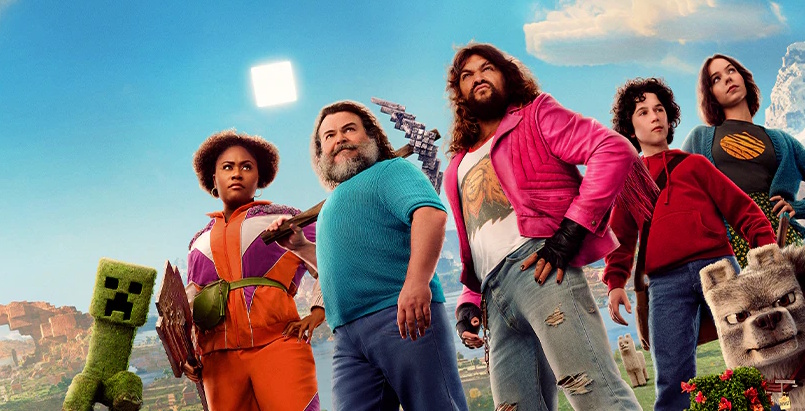
Cropped promo poster for A Minecraft Movie (2025) showing the main characters.
The main characters.

Even having seen Minecraft’s phenomenal growth and success, I still wouldn’t have thought it was a good choice to adapt for a narrative feature film. The main game is all about creativity and making your own fun – something that I felt wouldn’t translate well to a linear narrative on the big screen. But Warner Bros. teamed up with Mojang and owner Microsoft to do just that, bringing in established names like Jack Black and Jason Momoa to lead a star-studded cast. And you know what? I actually really liked A Minecraft Movie.

A Minecraft Movie was an incredibly fun watch. I sat there the whole time with a smile on my face as its fast-paced but easy-to-follow story raced past, and there were plenty of laugh-out-loud moments along the way. I felt the film was self-aware, not taking itself too seriously while staying true to what I remember of its source material. There was nothing ground-breaking here in terms of narrative or filmmaking, but that’s just fine. A Minecraft Movie’s writers, producers, actors, and director knew what kind of film they wanted to make and went all-in. The result was a surprisingly fun time. In fact, A Minecraft Movie is the best thing I’ve seen so far this year. Does that mean I have the emotional intelligence of a twelve-year-old? Let’s talk about that!

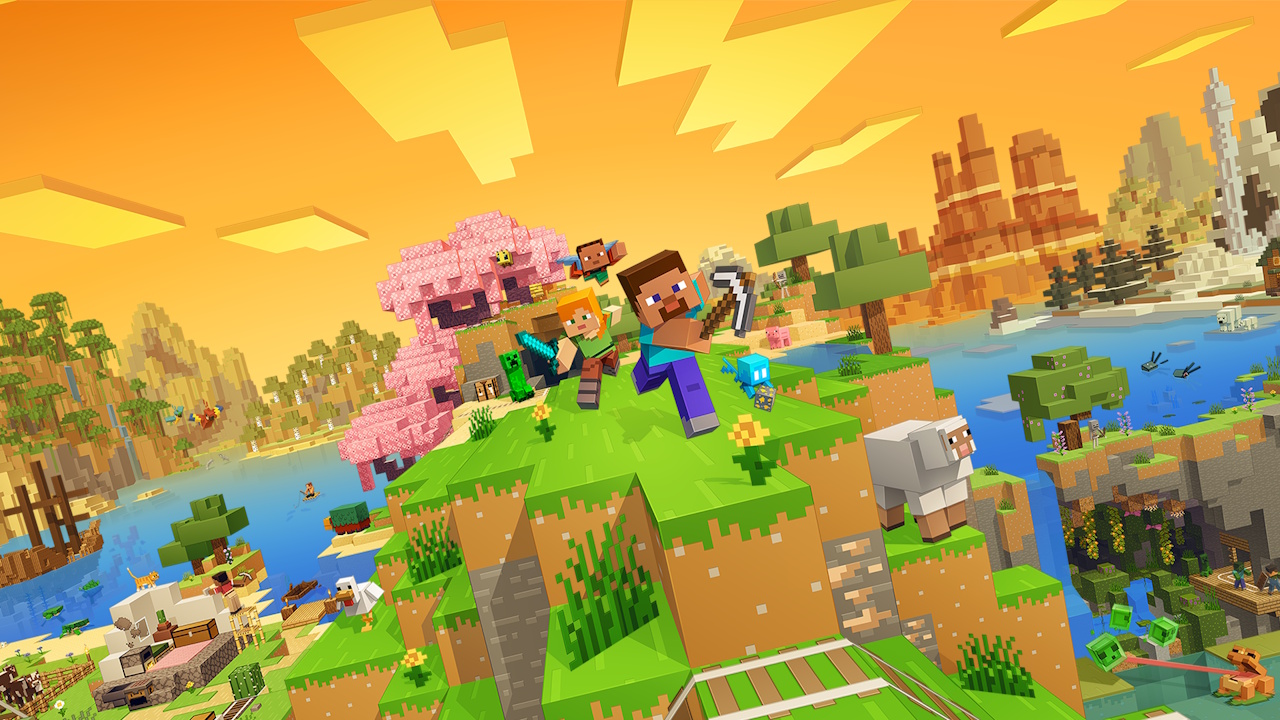
Promo art for Minecraft or the Minecraft franchise showing characters and animals at sunset.
Minecraft has gotten its own feature film adaptation.

I chose those words carefully, and I don’t mean it as any kind of insult. A Minecraft Movie is a kids’ film first and foremost, but I’ve always said that the best films made for children have something to offer to adults, too – and A Minecraft Movie is firmly in that camp. While watching it, I felt echoes of being a kid all over again, as if it was a Saturday afternoon and this was the film my friends and I had chosen to watch at our local cinema. I got swept along in the simple good-and-evil story, the emphasis on creativity, and a typical yet incredibly fun and high-energy Jack Black performance… and I genuinely had a whale of a time.

The story that the team created was a good fit. It took elements from Minecraft’s surprisingly deep lore and used them to tell a pretty basic “stop the evil villain from conquering the world” story, one which found time to include most of its main characters and even had a sub-plot about a man missing his dog! I was concerned going into A Minecraft Movie that the story would be too basic; too much of a cookie-cutter storyline. But there was enough of a setup, enough characterisation, and enough of a journey for Henry and Steve in particular to make it absolutely stick the landing.

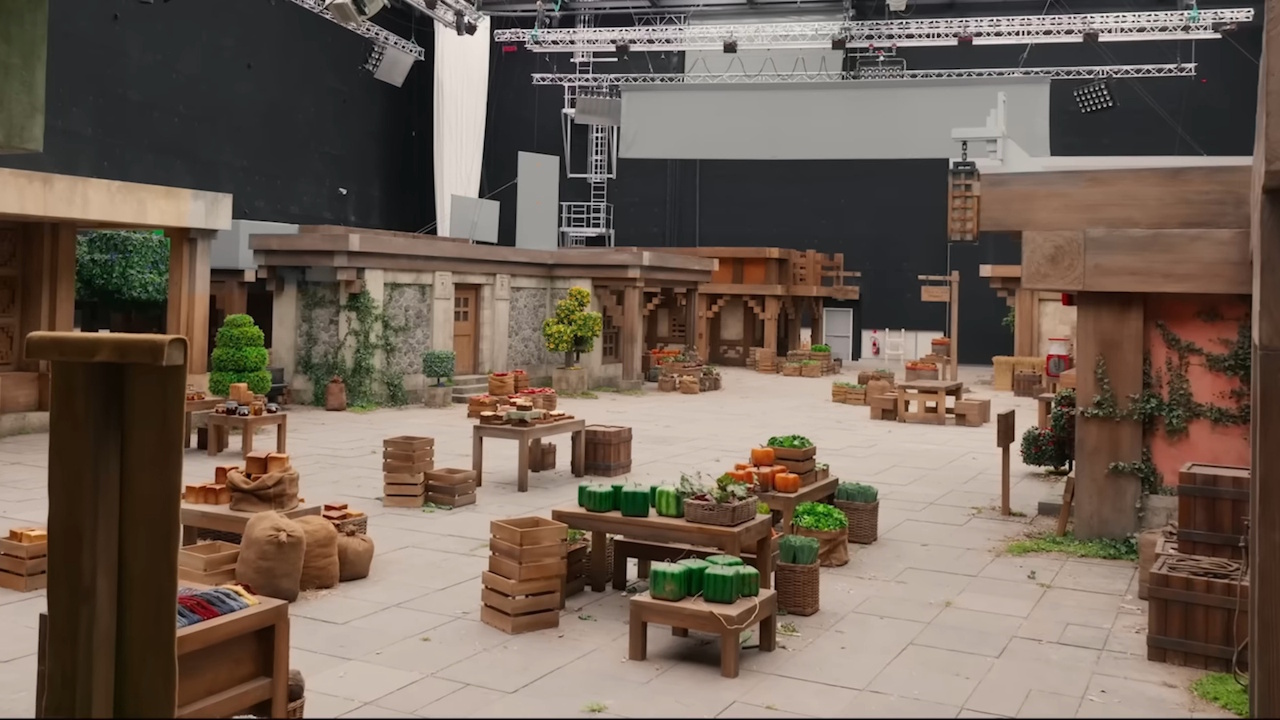
Behind-the-scenes photo from the set of A Minecraft Movie showing a marketplace.
A behind-the-scenes look at one of the sets constructed for the village.
Photo Credit: Minecraft Wiki

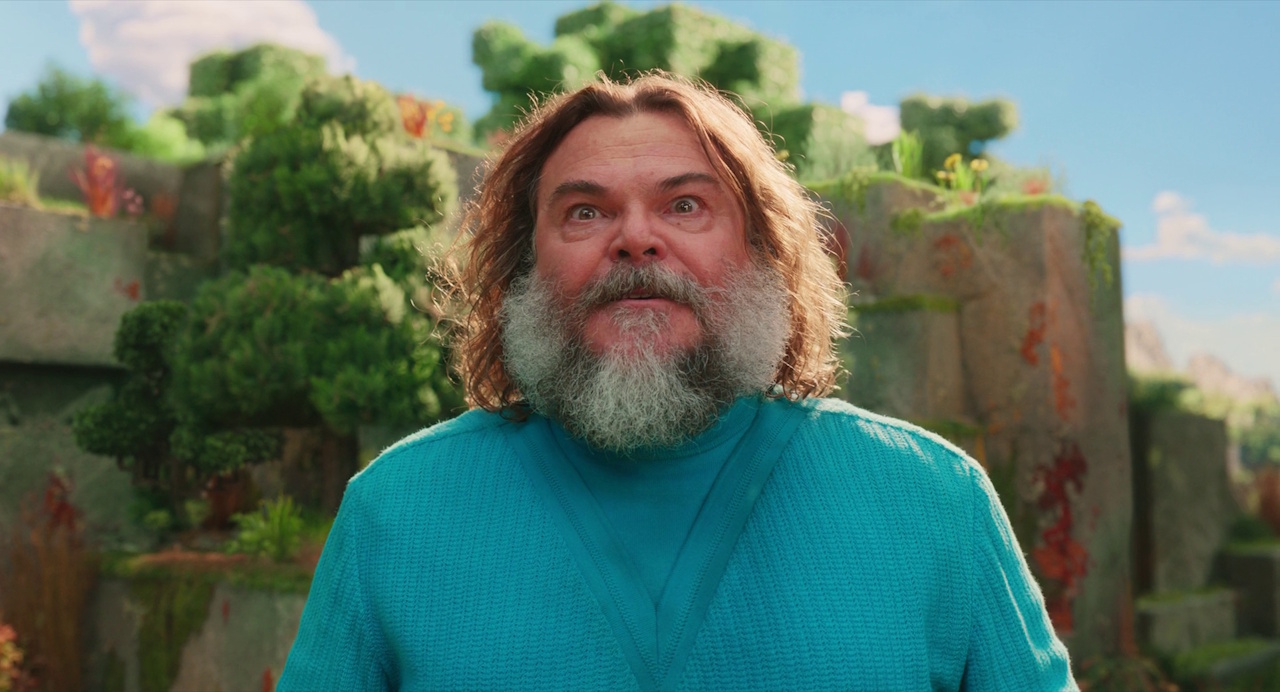
Jack Black is one of those performers who’s instantly recognisable in basically every major role he’s ever played. He brings a ton of energy to his performances – and I think that worked incredibly well here, even though I admit I was sceptical at first! In Minecraft (the main game, at least; I’m less familiar with the spin-offs), Steve is a blank slate for the player to inhabit. A film needs characters with understandable motivations and recognisable personality traits, and there were more than enough of both in this depiction of Steve. In one sense, Steve represents the ultimate escapist fantasy – he quit his mundane and boring life to chase his dreams, and found a whole new world in the process.

The high-octane energy that Jack Black brought to the role was pitch-perfect for the kind of film A Minecraft Movie wanted to be and for the kind of young audience it sought out. It was also a ton of fun to watch, as Jack Black’s performances usually are! Steve’s desire to reunite with his pet dog Dennis (a name I appreciated for obvious reasons!) kept him grounded, and it was a perfectly understandable reason for him to team up with the rest of the main characters.

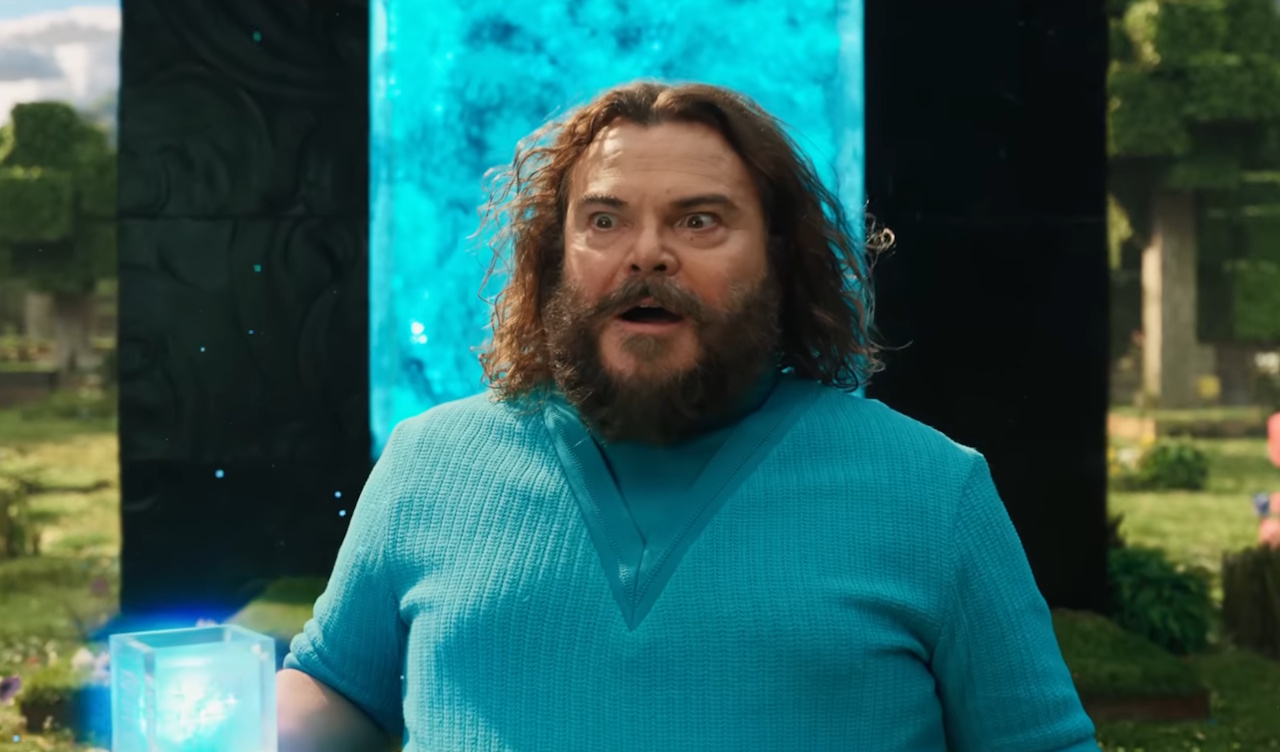
Still frame from A Minecraft Movie showing Steve in the Overworld.
Steve.

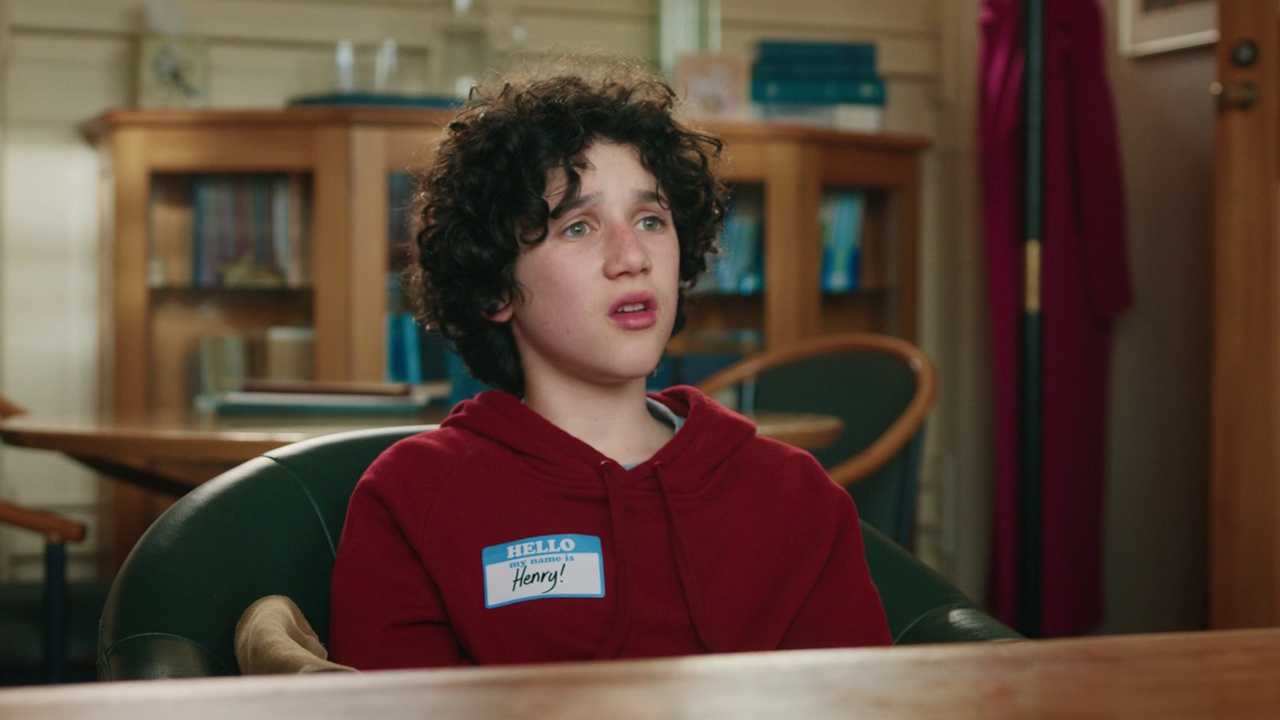
Henry felt like the film’s point-of-view character, at least at the beginning, and I think he worked well in that role. He was the “player character” insofar as he was figuring out the rules of the world before the gang encountered Steve, and I think anyone who’s played Minecraft, especially in the early days, can relate to figuring out how to knock down trees and craft basic structures! As an outcast, someone with few friends, and someone who struggled to fit in, Henry was also someone that I think a lot of the film’s younger audience will be able to relate to – as well as older folks like myself who remember being in a similar position once upon a time.

Continuing the idea of A Minecraft Movie as an escapist fantasy, Henry is kind of in the same category as Steve – looking to get away from a troubled life plagued by bullies in a new school. He’s introduced to a world where his creativity and imagination – two things kids have in droves – are incredibly important, and where he can put his unique skills and talents to use.

Still frame from A Minecraft Movie showing Henry in the principal's office.
Henry escaped to a fantasy world.

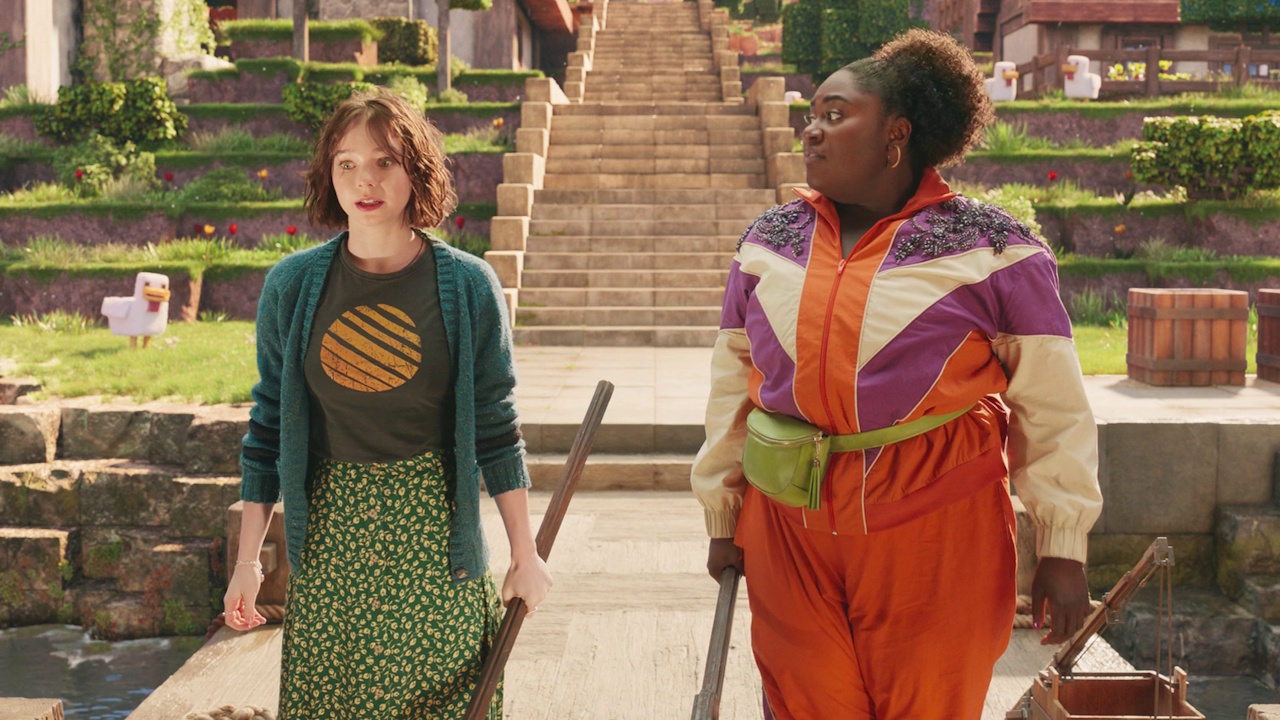
Henry’s sister, Natalie, was less keen on hopping over to a new world – but she rose to the occasion! Natalie had struggled with taking care of her brother, but her adventures in the world of Minecraft helped her discover her inner strength and build a stronger bond with him. Though she was in focus less of the time, she still got a satisfying arc.

Teaming up with Natalie for parts of the film was Dawn, and though I wouldn’t say she got as much of an “arc” insofar as she began and ended the story in a similar place, her love for animals shone through – and became important as the story reached its climax. She was a fun character, and made a great foil for Garrett and teammate to Natalie throughout the adventure.

Still frame from A Minecraft Movie showing Natalie and Dawn.
Natalie and Dawn.

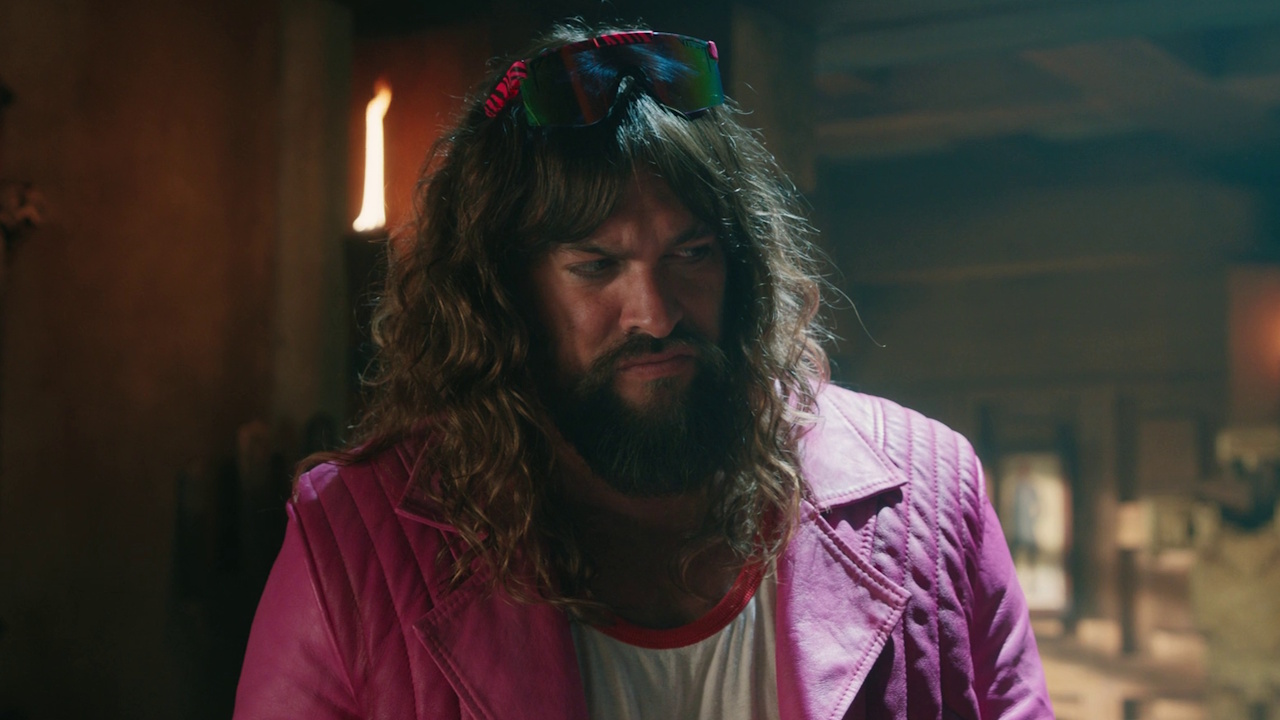
Garrett was an interesting character. Maybe this is just me, but I felt echoes of a real-life gamer personality called Billy Mitchell in the conceptualisation of Garrett. Mitchell, if you’re unaware, was world champion of the original Donkey Kong arcade game and achieved the highest possible score on Pac-Man, and was the subject of the 2007 documentary The King of Kong.

If Henry and Steve represent the escapist fantasy, Garrett was actually the character who felt closest to reality. His financial struggles were relatable, and the facade he put up while dealing with the potential collapse of his business – and his own loneliness and self-esteem issues – is something that hit close to home. In terms of his personality, Garrett was obviously a bit of a clown and someone we aren’t meant to really root for. Someone who presents as arrogant, cocky, and just rude isn’t going to be the easiest character to support. But A Minecraft Movie was surprisingly delicate in its handling of this character, and what we glimpsed beneath the surface was a deeply lonely, sad, and self-pitying man – one who (eventually) stepped up to help his newfound friends.

Still frame from A Minecraft Movie showing Garrett.
Garrett had an interesting arc across the film.

A Minecraft Movie felt, in places, like a kids’ film from the ’80s or early ’90s, and perhaps that’s part of why I liked it so much. Seeing Henry struggle as the new kid at school with bullies before running away to a fantasy world… it’s giving me The NeverEnding Story vibes, which is one of my favourite films from when I was a kid! The two are different in tone, style, pacing, effects, and so on… but there are also some similarities in terms of characterisation and story that I think were important for me personally in relating to A Minecraft Movie.

Visual effects in A Minecraft Movie took a bit of getting used to, to be honest. The game’s pixellated art style was completely changed for the film, with semi-realistic textures applied over Minecraft’s trademark cubes and blocks. When it came to things like trees and stones, I was fine with it. When it came to faces and animals… that’s where it took me a minute to adjust! I can see this being a possible point of contention; some game fans might not like the realistic direction, and some folks who are less familiar with the games might struggle with the blockiness of characters and animals in particular. But once I got used to the way the film looked, I didn’t have a problem with it. Some of the landscapes and vistas were genuinely impressive, and the way the film blended CGI with real actors and props was seamless and impressive.

Behind-the-scenes photo from the set of A Minecraft Movie showing several of the villagers in their costumes.
Behind-the-scenes with some of the villagers!
Photo Credit: Minecraft Wiki

The soundtrack was fantastic, too. An up-tempo score and high-energy pop and heavy metal songs were pitch-perfect for the film and its fast pace. Battling the bad guys – particularly toward the end of the film – was elevated by the use of music, and the entire soundtrack just made the film so much better. I’d also be remiss not to mention Steve’s Lava Chicken – the song reached number 9 on the UK music charts (and also charted in the United States and elsewhere) becoming the shortest-ever song to crack the top 20 at a mere 34 seconds long!

So that was A Minecraft Movie. It was fun. Simple, child-friendly fun.

I had a way better time with A Minecraft Movie than I could’ve anticipated, to be honest with you. This picture could’ve gone either way – it might’ve been utterly awful; the kind of kids’ film that might make the little ones smile but does absolutely nothing for me. Or it could’ve been “so bad it’s good;” the kind of film that’s worth watching ironically because of how poor the quality is across the board. But instead, A Minecraft Movie was genuinely enjoyable – a fast-paced, modern kids’ film that feels like a throwback to the ’80s and ’90s in the best possible way.

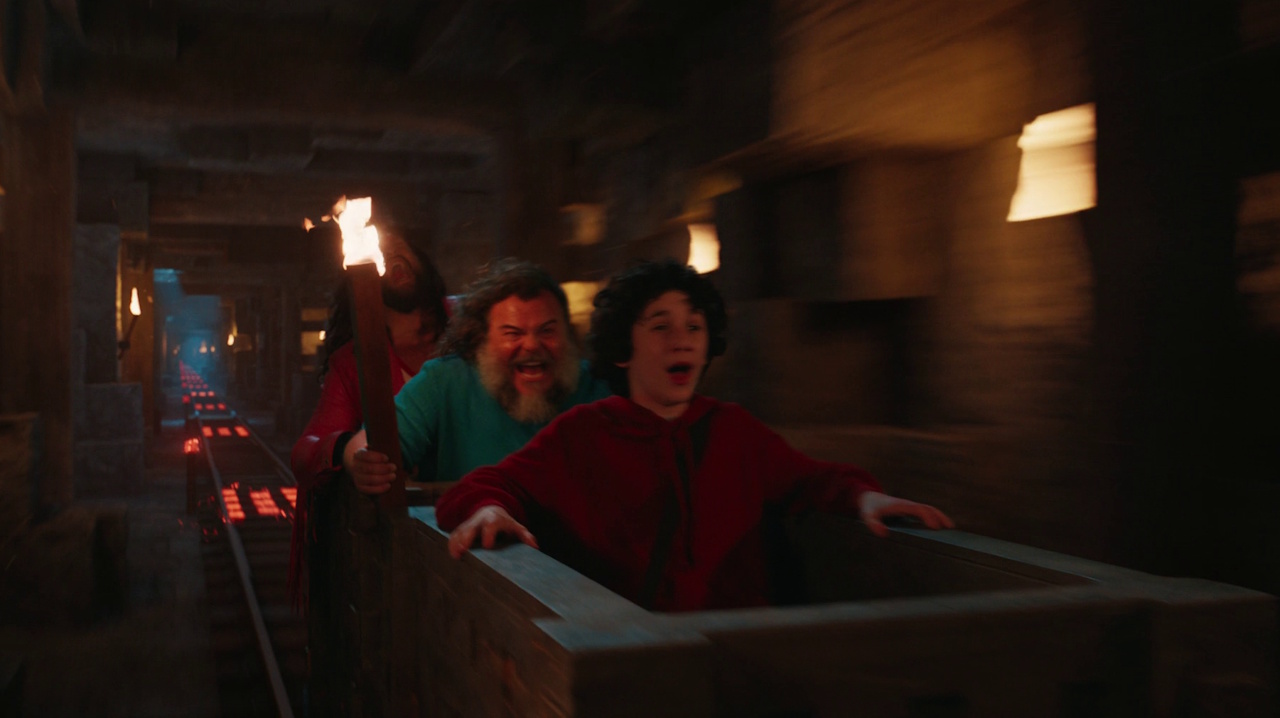
Still frame from A Minecraft Movie showing Henry, Steve, and Garrett in a runaway mine cart.
A Minecraft Movie was a fun ride.

A Minecraft Movie is an easy recommendation now that it’s available to watch at home. Whether you have little ones or not, and whether you’re familiar with the video game or not, I think it’s a ton of fun and easy to get stuck into. Having some basic knowledge of Minecraft might help elevate some plot points here or there, but the film is a soft landing for folks who don’t have that background, and I don’t think you’re going to miss much if you’ve never played the game or any of its spin-offs.

I doubt I’ll say that A Minecraft Movie is my favourite film of 2025. There’s still more than half of the year to go and some big blockbusters on the way. But in terms of pure entertainment and laugh-out-loud fun? I had a blast switching off and going on a whirlwind adventure in this strange blocky world! Definitely check out A Minecraft Movie if you haven’t already.


A Minecraft Movie is available to buy or rent now via Amazon Prime, Google Play, and other video-on-demand platforms. A Minecraft Movie will be released on DVD and Blu-ray in June 2025. A Minecraft Movie is the copyright of Warner Bros., Legendary Pictures, Mojang Studios, Vertigo Entertainment, and/or Microsoft. This review contains the thoughts and opinions of one person only and is not intended to cause any offence.
Trying To Be Positive About The Rise of Skywalker

A Star Wars-themed spoiler warning graphic.

Spoiler Warning: There are spoilers ahead for the Star Wars sequel trilogy.

Y’know, the more I think about it, the more convinced I become that this particular article would’ve been a better fit for April Fool’s Day rather than Star Wars Day. But I’m committed now… so here we go!

Happy Star Wars Day, friends! May the Fourth be with you… and all that. This year, I thought it could be a bit of fun to mark the occasion by revisiting one of my least-favourite Star Wars films – and probably one of the worst films I’ve ever seen – 2019’s The Rise of Skywalker.

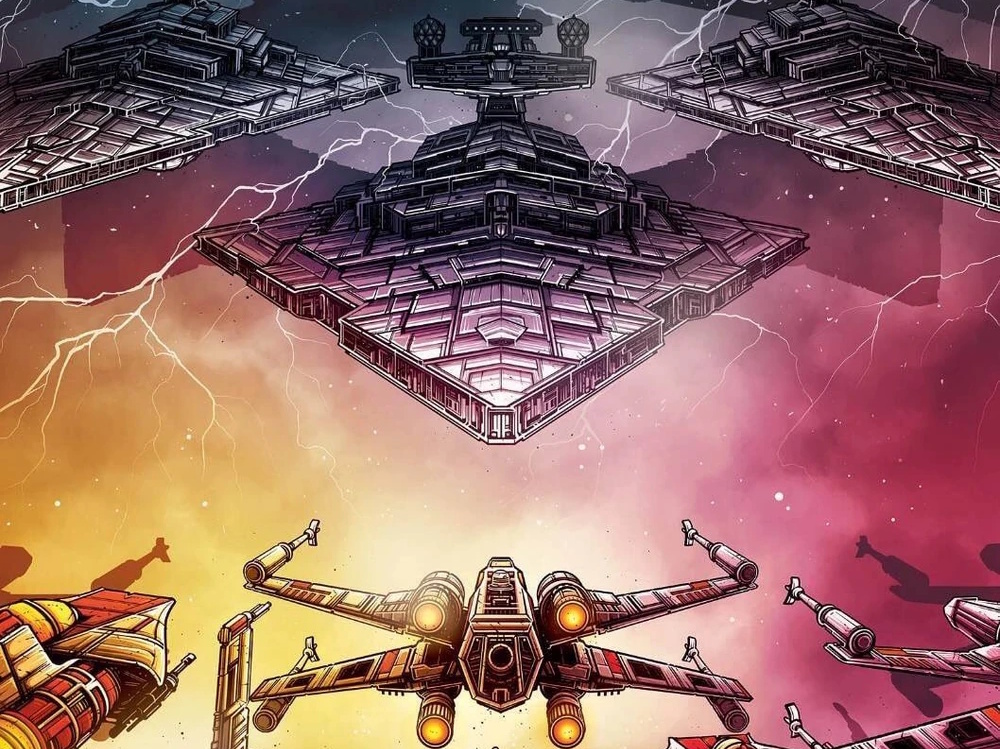
Cropped promo poster for the IMAX version of Star Wars: The Rise of Skywalker (2019) featuring rebel and imperial spaceships.
X-Wings and Star Destroyers on a promotional poster.

It was in late 2019 that I embarked on the project that eventually became this website, and for a sometime Star Wars fan, that was a bit of a strange period. The Last Jedi had proven to be massively controversial within the fan community, and the discourse around that film had become incredibly toxic. Solo: A Star Wars Story had flopped, I really wasn’t keen on the first season of The Mandalorian, and it seemed as if the only bright spark in the franchise was Jedi: Fallen Order. I desperately hoped that The Rise of Skywalker could do the impossible by bringing the fan community back together and ending the sequel trilogy on a high.

It did not do those things, and that’s putting it mildly.

Though I consider the Obi-Wan Kenobi miniseries to be the worst piece of Star Wars media that I’ve seen, The Rise of Skywalker isn’t far behind. It was an atrocious film, one that I’d seriously consider putting on a list of “the worst films I’ve ever seen.” But re-hashing what I didn’t enjoy about the film isn’t the purpose of today’s exercise!

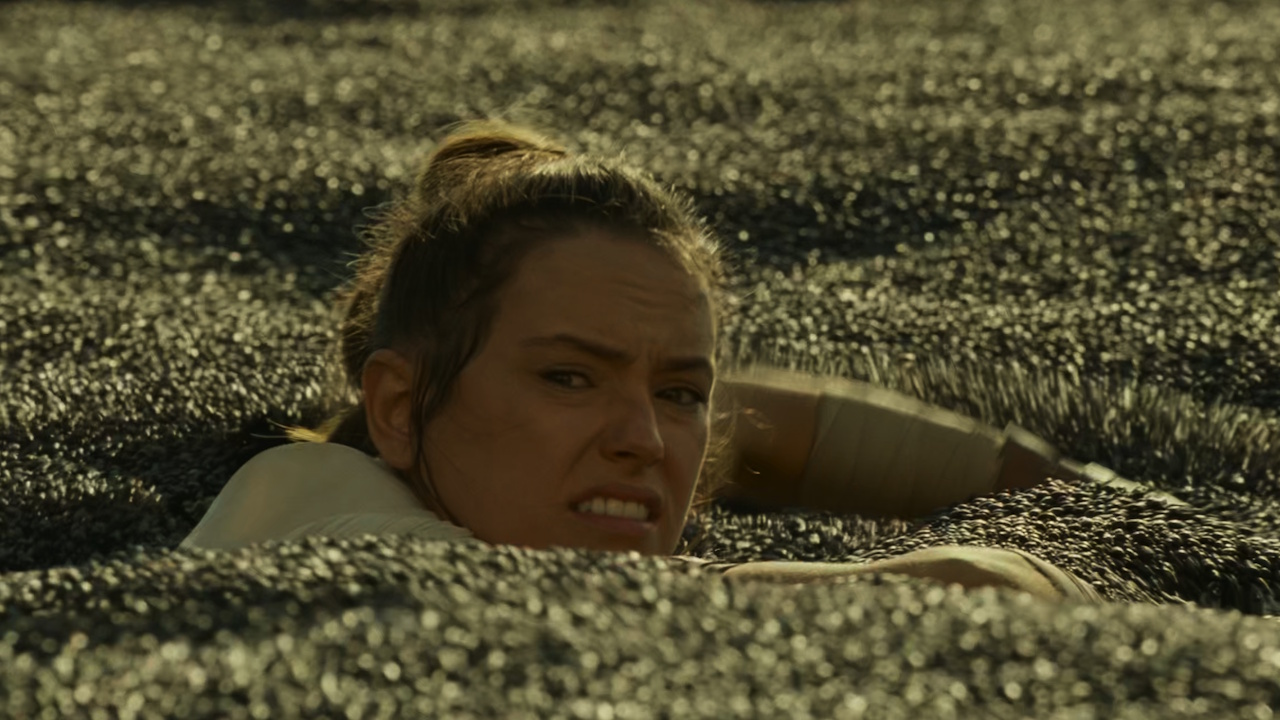
Still frame from Star Wars: The Rise of Skywalker (2019) showing Rey sinking in quicksand.
Surely this can’t be a visual metaphor…

Because it’s Star Wars Day, and in the spirit of positivity, I want to talk about some of the things The Rise of Skywalker got right – or at least got less wrong. Despite my overall feelings about the film, its story, the thought process that went into creating it, and more… there are some highlights worth mentioning. You might remember some of these if you read my two separate articles about the film in 2020 and 2021, but I’ve also added a couple of points that I didn’t mention in those earlier pieces.

In my essay titled In Defence of Luke Skywalker, I talked about how the depiction of Luke’s depression in The Last Jedi was generally well-written and conveyed an important message. It may not have been what fans wanted or expected from Luke Skywalker – particularly folks who’d bought into the old Expanded Universe stories, which depicted him as a flawless all-conquering superhero – but it was powerful and it resonated with me. The idea that anyone, even someone heroic, can fall victim to the “black dog” of depression is an important message, and it was well-told in The Last Jedi.

Still frame from Star Wars: The Last Jedi (2017) showing Luke's final moments.
Luke’s depiction and death were controversial aspects of The Last Jedi.

The Rise of Skywalker undid most of that, unfortunately. But it couldn’t entirely erase what had come before. If you take Luke’s story across the sequel trilogy, you can read it as recovering from depression – and that is a positive, hopeful, and uplifting message. The Force Awakens and The Last Jedi show Luke at his lowest: suffering a catastrophic defeat, almost giving in to a dark impulse, grieving the loss of his students, failing at his life’s mission to restore the Jedi Order, and succumbing to depression. He retreated to Ahch-To to die.

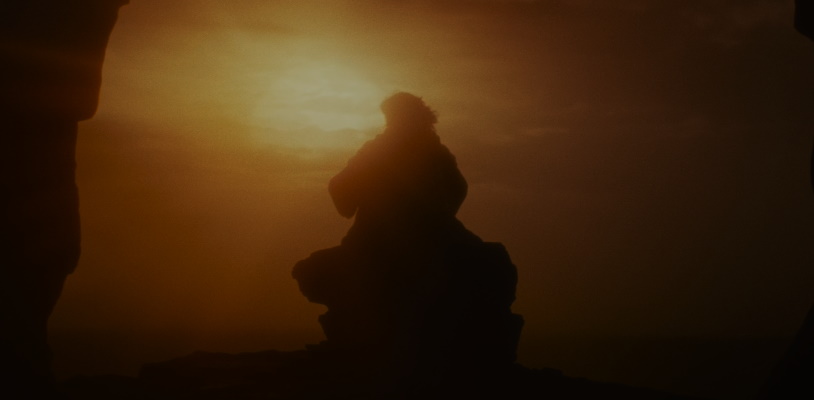
But after the events of The Last Jedi, Luke found a reason to believe again. And The Rise of Skywalker takes that concept and expands upon it, showing us Luke – in ghostly form – happier, more connected to the Force, and more willing to lend a hand when the galaxy needed him. To drag out the depression metaphor from The Last Jedi, this is the recovery phase. Not everyone who suffers with depression gets to that point, but seeing it depicted on screen like this can give hope and inspiration to people in that situation.

Still frame from Star Wars: The Rise of Skywalker (2019) showing Luke Skywalker's Force ghost.
Rey with Luke’s ghost.

Sticking with deceased characters, Han Solo got more of a send-off in The Rise of Skywalker than he did in The Force Awakens. Han’s death was shocking in that film, but its suddenness was immediately followed up by action set-pieces and the “trench run” over Starkiller Base – meaning we didn’t get to sit with the impact of it for very long. Bringing Han back – albeit for a role that was clearly intended for Leia – was somewhat cathartic, and getting to spend a little more time with him was a net positive for the film.

Because this sequence was told from Kylo’s perspective, we got to experience some of the feelings of grief, loss, and regret that he felt at killing his father. We can debate whether such an action is ever forgivable or redeemable, but The Rise of Skywalker wanted to give Kylo a redemption arc akin to that of Darth Vader in Return of the Jedi. Seeing this vision of Han Solo helped with that, or at least didn’t detract from it. And Adam Driver put in a stellar performance in these sequences – as he did across the entire film, really.

Still frame from Star Wars: The Rise of Skywalker (2019) showing a close-up of Han Solo.
The Rise of Skywalker gave us a bit more closure on Han’s death.

I know we’re trying to be positive about The Rise of Skywalker and this next point is very much a backhanded compliment (at best), but it’s my article so I’m gonna include it! The line “somehow Palpatine returned” has become one of those “so bad it’s good” moments for me. It wasn’t when I first watched the film, but the more I’ve sat with that line the funnier I find it to be. I still think everyone involved with writing, approving, and directing this line should be blacklisted from the entertainment industry for life… but on days when I don’t want to take Star Wars too seriously, or where I’m so depressed I need a good laugh, “somehow Palpatine returned” is there for me.

The line has also become one of my go-to examples of poorly-written dialogue, as well as an example of Star Wars’ overreliance on other works of media to set up important narrative beats in mainline films. Not only that, I think there’s something encouraging and even inspirational about this line. “Somehow Palpatine returned” reminds me that I’d have to do an exceptionally poor job to write something worse, and that there’s apparently a very low bar for pitching scripts for big-budget films. So maybe my Hollywood dreams haven’t entirely evaporated, eh? Jokes aside, this line is awful, and it’s become emblematic of the failures of The Rise of Skywalker and the sequel trilogy as a whole. But it’s also unintentionally hilarious as the film’s writers and Disney’s executives tell on themselves; no one could be bothered to write an explanation for Palpatine’s stupid resurrection, and this storyline was set up as part of a merchandising tie-in deal with the video game Fortnite. For all those reasons and more, it’s an excellent example of what not to do in filmmaking.

Still frame from Star Wars: The Rise of Skywalker (2019) showing Poe at the rebel base.
“Somehow Palpatine returned.”

To get back to something a bit more genuinely positive and inspiring, I’d like to highlight Lando Calrissian’s role in The Rise of Skywalker. I don’t know why Lando was absent in The Force Awakens and The Last Jedi, but Billy Dee Williams made the most of his return to the role in the third instalment of the sequel trilogy! In fact, I could’ve happily spent a lot more time with Lando; watching him heading out across the galaxy, rallying the citizens to the cause would’ve been quite something to see.

Lando’s last-second arrival at the head of a massive fleet was pretty much the only moment in The Rise of Skywalker where I felt a twinge of emotion. I’m a sucker for a “desperate last stand” kind of story, and seeing the ordinary citizens of the galaxy rising up in unison against Palpatine and the Sith felt good in the moment. As Poe, Finn, and the rest of the Resistance seemed to be on the cusp of defeat, Lando raced in to save the day, leading the galaxy in a unified last stand against autocracy and fascism. The scene where he and his fleet dropped out of hyperspace was powerful, and was probably one of the best individual moments in The Rise of Skywalker.

Still frame from Star Wars: The Rise of Skywalker (2019) showing Lando grinning aboard the Millennium Falcon.
Lando arrives to save the day!

Although I wish the sequel trilogy as a whole had done more with the idea of a Force dyad, some of the moments between Rey and Kylo were at least interesting. There was also some creative cinematography employed as Rey and Kylo had visions of one another despite being far apart. The scene where Rey was in Kylo’s room was one such moment, and I think the way the film transitioned between two different locations was creative.

I would’ve liked to have gotten more of an explanation of the Force dyad; how it came to be and what else Rey and Kylo could’ve done with it would have been fun to see. The idea of two characters with totally opposing points of view and objectives having this unintended bond – one they couldn’t rid themselves of – was also an interesting concept in theory, and I think we saw at least some of that potential in The Rise of Skywalker.

Still frame from Star Wars: The Rise of Skywalker (2019) showing Rey attempting to heal Kylo.
Kylo and Rey formed a rare Force dyad.

Finn’s story was not great in The Rise of Skywalker – or really across the sequel trilogy as a whole. But as a concept, the idea of a rogue stormtrooper breaking free of his indoctrination was interesting. And The Rise of Skywalker made at least a bit of an effort to expand upon that with the new character of Jannah – another defector that Finn encountered during the mission to Endor.

If Luke Skywalker’s story was an analogy for depression and mental health, Finn and Jannah’s can be seen as deprogramming from a cult or escaping an autocratic society. There are real-world parallels that are interesting – and open to interpretation. I don’t think The Rise of Skywalker was perfect in its execution of this idea, but I will give the film credit for trying, and for expanding our knowledge of ex-stormtroopers and the reasons why some might defect or abandon their posts.

Still frame from Star Wars: The Rise of Skywalker (2019) showing Finn and Jannah. Brightness adjusted.
Finn with fellow ex-stormtrooper Jannah.

Sticking with Finn, his “bromance” with Poe was certainly an enjoyable part of his story and characterisation, and one which was in focus in The Rise of Skywalker more than it had been in The Last Jedi. The two worked well together, and although I felt Oscar Isaac was rather phoning it in with his performance, the same can’t be said of John Boyega. Boyega did his best to carry this character relationship, and I could’ve happily spent longer with Finn and Poe.

There are a few other acting performances that stand out to me. I think being able to separate one’s thoughts about a performance from how we might feel about the script or narrative decisions is important – so it’s worth crediting actors and actresses who give it their all, even when they’re part of a train wreck! I mentioned Adam Driver above, and he’s literally never been anything less than outstanding in any film I’ve seen him in. One day he’s going to win one of the big awards – mark my words.

Still frame from Star Wars: The Rise of Skywalker (2019) showing Kylo holding his lightsaber, surrounded by trees and corpses.
Kylo on the battlefield.

Though the sequel trilogy was never meant to be Palpatine’s story, Ian McDiarmid clearly relished reprising his role, and threw himself into it. Palpatine dripped with malice every time he appeared on screen. I may loathe what the film did with General Hux, but I’d be remiss not to include Domhnall Gleeson’s performance as being praise-worthy. Hux’s pure hatred for Kylo really came through thanks to Gleeson’s work, and even though the storyline was a tough sell, he clearly gave it his all. Kelly Marie Tran, though only on screen for a couple of minutes, did well with the material she had, and I think it’s a shame we didn’t get to spend more time with Rose.

So I think that’s about it.

I wish I could tell you that it was fun to revisit The Rise of Skywalker. But at the very least, I think we managed to find a few notes of optimism amidst the wreckage; small things here and there that achieved some measure of success, struck the right emotional or narrative chord, or just didn’t fail as comprehensively as the film around them. Maybe you enjoyed The Rise of Skywalker more than I did – and that’s great. The Star Wars franchise should be big and diverse, and there’s plenty of room for differences of opinion when it comes to the best and worst parts. Nothing about this is “objective,” at the end of the day!

Still frame from Star Wars: The Rise of Skywalker (2019) showing Finn, Poe, and Rey with the wreck of the Death Star.
Looking at a wreck. Seems fitting, eh?

There’s more Star Wars to come – which is genuinely good news! Andor’s second season is currently airing, a second season of Ahsoka is planned, and there are several upcoming films on the schedule, too. Upcoming films include pictures based on Rey and Lando, a spin-off from The Mandalorian, a new trilogy, and the intriguing-sounding Star Wars: Starfighter. So despite the controversial reception the film got, The Rise of Skywalker didn’t doom Star Wars’ future prospects!

I hope this has been a bit of fun to mark Star Wars Day – or at least something a little different. I wanted to try to take one of the worst films in the franchise and talk about some of its better aspects, partly as a challenge to myself and partly because it’s Star Wars Day. Thanks for reading, and May The Force Be With You!


Star Wars Episode IX: The Rise of Skywalker is available to stream now on Disney+ and is also available on DVD and Blu-ray. The Star Wars franchise – including The Rise of Skywalker and all other films and properties discussed above – is the copyright of Lucasfilm and The Walt Disney Company. This article contains the thoughts and opinions of one person only and is not intended to cause any offence.

Let’s Watch Conclave (For Obvious Reasons…)

A spoiler warning graphic.

Spoiler Warning: There are spoilers ahead for Conclave.

The Catholic Church elicits a huge amount of curiosity from the faithful and non-faithful alike. Just look at the rumours of what might be contained in the secretive Vatican Archives – everything from Jesus’ hidden love child to proof of UFOs, depending on who you ask! Any organisation that has sustained itself for close to two millennia would, naturally, evoke such feelings, and the recent death of Pope Francis has shone a spotlight on the church and its peculiar processes. It’s with this mindset that we come to last year’s film Conclave.

According to CNN, streams of Conclave have skyrocketed by over 3000% since the Pope’s death – with viewers eager to catch a glimpse of what goes on inside the walls of the Sistene Chapel. I would caution anyone that Conclave is surely an exaggerated and dramatised take on these events; the real meeting to choose Francis’ successor is highly unlikely to involve conspiracies to buy votes, breaking and entering into the Pope’s private chambers, or a nun who conceived a secret child! But the church’s secrecy – and its difficult history – quite frankly lend themselves to this kind of dramatic presentation. In some respects, Conclave is arguably less bonkers with some of its storylines than the real history of the papacy!

Still frame from Conclave (2024) showing Cardinal Lawrence praying over the body of the dead pope.
Cardinal Lawrence with the deceased pope.

Conclave had been on my radar since it premiered last year, and I daresay I’d have gotten around to checking it out eventually. But like thousands of other viewers, it was real-world events which prompted me to fire up the film at this particular moment. I’m not a Catholic – nor even a Christian at all – but the timely nature of the film made it seem like an interesting thing to watch in April 2025. I was dimly aware that Conclave was based on a novel by British author Robert Harris – who also wrote Munich, which was the basis for another film I reviewed a few years ago – but that was the extent of my knowledge of the film before I sat down to watch it.

I particularly enjoyed Conclave’s cinematography. I’d like to highlight the way scenes and characters were framed, directing our focus to specific cardinals and other characters at key moments. The use of focus was also particularly clever; certain documents or screens were deliberately left out of focus to heighten the tension. The camera work could feel claustrophobic at points, successfully conveying the feeling of being isolated from the world outside the walls of the sequestered meeting. At others, wide, expansive shots gave a sense that characters were trying to remain secretive, keeping important conversations private.

Behind-the-scenes photo from the set of Conclave (2024) showing the director, Edward Berger, and star Ralph Fiennes.
Director Edward Berger with Ralph Fiennes on the set of Conclave.

The film’s score was also excellent. Several big, dramatic musical stings punctuated key moments in the story, underlining how characters were feeling or what had just happened to them. The use of silence, too, came into play, and had a similarly dramatic effect. As the conclave descended into bitter in-fighting, the score did an excellent job of conveying how serious things were and how characters were reacting.

Let’s talk about that in-fighting a bit more, because it’s basically the main focus of Conclave’s story for much of the film. Officially, cardinals are supposed to elect the best and most qualified person to the papacy – with the guidance of God and prayer, naturally. But in the real world, I daresay it’s never quite worked out that way! Politicking in the Vatican – and amongst the cardinals specifically – is not as overt as it is in most legislatures around the world, but it’s present nonetheless, with all the same factionalism and pettiness as you’d see anywhere else. In some ways, Conclave made the college of cardinals feel like an office or a group project – complete with spitefulness, attempts to sabotage competitors, backhanded compliments, and more. Anyone who’s ever sat on a committee, taken part in a meeting, or been forced to work on a project as part of a group would recognise some of these things in Conclave’s depiction of the cardinals! And I would imagine that side of the film isn’t particularly inaccurate.

Still frame from Conclave (2024) showing Cardinal Tremblay being confronted by the other cardinals.
The cardinals bickered and fought.

Conclave’s designers did a great job recreating the look and feel of the Vatican. The Sistene Chapel, where a good portion of the action takes place, is a very famous location and was obviously the most important to get right, but I felt all of the locations and sets were appropriate. The cardinals’ private rooms felt almost like a prison, adding to that sense of isolation that we talked about earlier, and that was a creative choice which worked well. There was also a kind of gentle decay to some of the buildings, reflecting both Rome’s ancient origins and, perhaps, the church’s age and vulnerabilities. Having spent time in Italy myself, the sets and buildings all felt like they could be real – even those which weren’t directly copied from real life.

One of the things Vatican-watchers often say is that a papal conclave is unpredictable. Pope Francis’ election in 2013 is just one example of an “unexpected” candidate winning the election – though I doubt his election was as dramatic as the one depicted in the film! But it just goes to show how a papal conclave can take unexpected turns; in the film’s case, a terrorist attack takes place partway through the election, unnerving the cardinals and setting the stage for an unexpected character to take centre-stage.

Still frame from Conclave (2024) showing Cardinal Benitez after his election to the papacy.
The new Pope Innocent.

But was Cardinal Bentiez genuinely an unexpected candidate? His surprise arrival toward the beginning of the film – cloaked in typical Vatican secrecy – seemed to be setting him up to play an important role, even while the film appeared to linger on other characters. In that sense, I wouldn’t say I was stunned by this “big shocking twist,” but it was interesting nevertheless. With the film being told largely from the perspective of Cardianal Lawrence, I would’ve liked to have seen a bit more of his reaction to Benitez’s election – after a slow buildup, he seemed to be readying himself to accept that he was best-placed to take the reins of the church, only to lose out in dramatic fashion thanks to the bombing. Having spent so much time with him prior to that moment, and with the big revelation about Cardinal Benitez, the film then ended quite abruptly.

Perhaps Robert Harris’ novel, on which Conclave was based, spends more time with Cardinal Lawrence – not just at the end, but really throughout the story. There were places in the film where Lawrence was in focus, but with no dialogue to go on, it was left to Ralph Fiennes’ facial expressions to convey what he may have been thinking. There may be a degree of interpretation as a result.

Still frame from Conclave (2024) showing Cardinal Lawrence delivering his homily.
Cardinal Lawrence was the film’s point-of-view character.

Conclave was told primarily from Lawrence’s perspective, though it wasn’t always immediately clear why certain cardinals were favoured or opposed. Cardinal Tremblay, for instance, was depicted as a rival to Lawrence and someone whose papacy he wouldn’t favour, yet they didn’t seem to be particularly ideologically opposed. Before the revelations about Tremblay were shown, all we as the audience had to go on was suspicion – Lawrence’s suspicion. Perhaps that says something about the way cardinals operate during a conclave, and how rumour or even “bad vibes” can influence the way a cardinal may be inclined to vote.

The same is true of the revelations about Cardinal Adeyemi; only Lawrence discovered the full truth, and refused to reveal it to the rest of the conclave. The other cardinals, fearful of scandal, abandoned his candidacy amidst rumour and speculation that wasn’t even seen on screen. It makes you wonder, perhaps, how easily one might derail a cardinal’s potential path to the papacy!

Still frame from Conclave (2024) showing Cardinal Lawrence and Monsignor O'Malley in conversation.
Scheming and digging into cardinals’ backgrounds was a big part of Conclave.

Given current events, Conclave was an interesting watch. And it really is impossible for me, at the current moment, to separate the film from what’s happening in the real world. There have only been two papal conclaves in my lifetime – in 2005 and 2013 – and given the secrecy and relative rarity of these events, it’s natural to be curious and to want to peek behind the curtain! Conclave felt like a somewhat realistic depiction, even though some elements of its story strayed into exaggeration and even fantasy.

So that was Conclave. It was an interesting watch, particularly at the current moment, and I’d happily recommend the film to anyone with even a passing interest in the church and/or what’s currently going on. The real-world conclave is scheduled to start in just over a week (at time of writing) and who knows? It could be just as dramatic and interesting as the one depicted in the film. We’ll never know!


Conclave is available to stream now on-demand on platforms like Amazon Video. The film is also available on DVD and Blu-ray. Conclave is the copyright of FilmNation, Indian Paintbrush, Focus Features, and/or Black Bear UK. This review contains the thoughts and opinions of one person only and is not intended to cause any offence.
Megalopolis: Film Review

A spoiler warning graphic.

Spoiler Warning: Beware of minor spoilers ahead for Megalopolis.

One of the first films I ever owned on VHS was Apocalypse Now, which was directed by Francis Ford Coppola. It’s still one of my favourite films; a clever, chaotic, and occasionally subversive cinematic masterpiece that set an almost impossibly high bar for other epics and war films. Coppola is also famed for writing and directing The Conversation, the Godfather trilogy, and Bram Stoker’s Dracula, among others in a career spanning over sixty years.

Megalopolis was supposed to land somewhere among those greats – perhaps, in Francis Ford Coppola’s imagination, even eclipsing the best of them to be regarded as his magnum opus. The film spent decades in development hell, with Coppola originally beginning work on the idea during production on Apocalypse Now in the late 1970s. By 1983, the idea to transpose the Catilinarian conspiracy to modern-day New York – using the analogy of Ancient Rome to comment on the rise and potential fall of democracy in the United States – was fully-formed… but for some reason, no studio would agree to bankroll the picture. I wonder why?

Behind-the-scenes photo from the set of Megalopolis (2024) showing director Francis Ford Coppola and actor Adam Driver.
Director Francis Ford Coppola and star Adam Driver during production on Megalopolis.

Because no one in Hollywood would give Francis Ford Coppola the money to make Megalopolis, he funded the project entirely by himself. He had full control over the film; without a studio to kowtow to, the decision-making process about everything from the script to the cinematography to the marketing campaign ultimately fell to him. There’s no escape from the fact that this is Francis Ford Coppola’s vision – this is the film he wanted to make and waited decades to make.

So that begs the obvious question: is Megalopolis any good?

I am – to use some Ancient Roman-inspired language – a pleb. That word, if you’re unfamiliar, is derived from the Latin “plebian,” which was used in Ancient Rome to refer to all of the non-aristocratic classes. Commoners, if you will. And my cinematic tastes are definitely common! So for me, parts of Megalopolis went completely over my head and others were so bad they were quite literally laugh-out-loud funny. But maybe, just maybe, I also caught a tiny glimpse of the genius that Francis Ford Coppola has brought to several of his other films.

Still frame from Megalopolis (2024) showing Cesar on the roof.
One of the first shots of the film.

Parts of Megalopolis were so experimental that they almost felt mad. Some scenes were akin to watching a fever dream, with imagery, language, and ideas all rolling around together in incredibly complex ways. It’s also the only film I’ve seen in years that felt like a stage play, with incredibly intense dialogue that mirrored its historical setting – and often quoted from it. I had to sit with Megalopolis for a while after I’d watched it to get my thoughts in order and let the film kind of drip through me… it was a strange experience.

And perhaps that word – “experience” – is how I’d best describe Megalopolis. I wasn’t just watching the film: I was experiencing it. It took me on a wild and sometimes incomprehensible ride through a re-imagined New York – or a twisted modern Roman Empire. It shook me up in more ways than one with its intensity… but then it also made me laugh because of how wooden and feeble other parts of it could be. It felt like I was watching two films at the same time: a stupidly over-the-top family melodrama and an experimental film about philosophy and politics.

Still frame from Megalopolis (2024) showing two characters in Roman-inspired costumes.
Clodio and Crassus.

I want to focus on the film’s subtitle for a moment. Although marketed as Megalopolis or Francis Ford Coppola’s Megalopolis, the title card shows us a subtitle that I think perfectly encapsulates why the film is the way it is: A Fable. Megalopolis isn’t intended to be a strictly realistic depiction of fully fleshed-out characters living their lives – it’s meant to be a fable. Cinema has moved in the direction of realism over the course of decades, such that a film like Megalopolis feels weird and even unpleasant to an audience no longer used to its style. But I think it reflects a conscious choice on the part of the director – as well as several of its key performers – to deliberately lean into this kind of storytelling.

Before we can judge Megalopolis, I think we need to understand what it is – or at least what it aims to be. And to me, the subtitle is the best evidence of that. In a cinematic landscape dominated by films that use realism in everything from scriptwriting and dialogue to set designs and visual effects, Megalopolis stands out. It deliberately doesn’t do that – and for me, that was pretty jarring at first. If I’d been watching a comparable production on the stage, I’d have factored it all in ahead of time. But going into the film basically blind, not really knowing what to expect, this kind of experimental, almost “art film” presentation completely threw me.

Still frame from Megalopolis (2024) showing figures projected onto skyscrapers.
I didn’t know what I was getting myself into…

And that’s what made Megalopolis so difficult to wrap my head around. I was watching some pretty heavy, stilted, and just plain unrealistic dialogue and thinking to myself “what the heck is this?” Characters mostly had names inspired by figures from Ancient Rome, and Roman themes and aesthetics permeated all aspects of the film. Some sets looked incredibly artificial – like something you’d have seen in a film from the 1950s, with hand-painted backdrops, cheap plastic props, or incredibly basic green-screen effects. Maybe I’m reaching and maybe Megalopolis’ philosophical tone is getting to me… but I feel like the artificiality is part of the point. Megalopolis wants its audience to be aware that it’s a film – that it’s artificial.

More than once, I’ve said that a film needs more than just a message or a point. You can make the best or most obvious point in the world – but if you wrap it up in a crap story, it won’t connect with its audience. Megalopolis has messages and points to make – it has them in spades. Coppola wants to use the challenges Roman democracy faced to highlight what he clearly sees as comparable challenges to democracy in the United States today. Megalopolis also has things to say about the role of art in our lives, the importance of family, human progress, rabble-rousing and demagoguery, the goals of civilisation itself… and more. But does it communicate any of these in clear and effective ways?

Erm… no. No, it does not.

Still frame from Megalopolis (2024) showing Julia on the roof and Cesar sitting on a girder.
Julia and Cesar high above New Rome.

Megalopolis’ experimental, arty tone – with long sequences where the camera spins and Coppola applies every kaleidoscopic filter and effect he can find – can be hard to watch. Further, a script which is already dense and heavy is delivered, in places, with laughably stilted and wooden performances. I wrote the following in my notes about halfway through the film: “how on earth does a fantastic director get these dire performances out of such an excellent group of actors?” Even keeping in mind what I was saying about the film’s deliberately unusual style, its desire to come across as unreal, and its intent to be a modern-day fable, most of the performances are shocking.

The standout performer is, as you might expect, Adam Driver. Driver hasn’t ever been bad in anything I’ve seen; his performance in Marriage Story was Oscar-worthy, in my view, and he was one of the highlights of the Star Wars sequels, too. But the rest?

Nathalie Emmanuel’s accent was inconsistent, varying from passable generic North American to atrocious New Yorker. That aside, she was solid but unconvincing. Giancarlo Esposito seemed to have no clue what was going on or what he was reading, and I got the sense that he was as lost making the film as I was watching it. Jon Voight (fun fact: I met his brother once) was just plain terrible, and again seemed to have no idea what was going on. Aubrey Plaza was totally miscast and inadequate for the role she was tasked with playing. And Laurence Fishburne – a regular collaborator with Francis Ford Coppola – read almost all of his lines in what I’d call an “I don’t give a shit” monotone. He was supposed to be the film’s narrator, introducing the various chapters and reading aloud various quotations.

Still frame from Megalopolis (2024) showing Fundi.
Laurence Fishburne was not at his best in Megalopolis.

It takes a twisted kind of skill as a writer, director, producer, and cinematographer to get this group of actors – who have all been outstanding in other productions – to churn out such atrocious performances. According to Coppola, he encouraged improvisation on set, and even re-wrote lines and whole scenes while Megalopolis was in production. And yeah… I think we noticed. It must be difficult for performers to stay in character and engaged when everything’s in flux or when co-stars ad lib and completely change a scene they’d been preparing for. With other reported challenges on set, I’m sure Megalopolis was a difficult environment for some of the folks involved both on camera and behind the scenes. That could account for some of the sub-par performances, perhaps.

I’m not joking when I say that I literally laughed out loud at how bad some scenes in Megalopolis were. Stilted, wooden, hammy performances of a script written to be deliberately meandering and convoluted, shot on obviously fake, plastic sets with weird lighting… yeah. That’s not doing it for me. Quite a few scenes also ended very abruptly, as if midway through a conversation. The intention seemed to be a “mic drop;” the character said what the director thought should be an explosive or thought-provoking statement, so the scene could end. But more often than not, it just felt like a poor editing choice rather than anything even halfway profound.

Still frame from Megalopolis (2024) showing Cesar and Julia looking out of the window of their office.
One of the least-convincing windows I’ve seen in a film in a long time…

I was not the intended audience for Megalopolis, I guess. But I’ve said that before about other films or television shows that I genuinely enjoyed, that surprised me, or that I at least found redeeming qualities in. Maybe Francis Ford Coppola is content to ignore the opinion of such a common plebian and will insist that this film is art. Maybe he’s right – maybe it is art. But it’s also weird, hard to follow, unnecessarily dense, and populated by a cast of cardboard cut-outs rather than characters. There was a point to be made about the vulnerabilities of the American political system and how it could be hijacked by a charismatic snake-oil salesman – something which is arguably a more timely message now than it was when Coppola came up with the idea some forty years ago. But all of that was lost thanks to a wordy, philosophical script and offputting cinematography. Megalopolis is a film that just… thinks too much of itself. It’s snooty and stuck up.

At least, that’s how it feels to me.

What I can admire about Megalopolis is its experimentation – even when the result didn’t really stick the landing for me. At a time when far too many films play it safe, leading to a pretty stagnant environment in which cinema doesn’t seem to be pushing the boundaries and innovating any more, Megalopolis wasn’t afraid to genuinely try different things. Many of those things aren’t actually brand-new – they’re throwbacks to an earlier era of filmmaking and storytelling. But at the same time, there’s clearly a reason why studio after studio and distributor upon distributor passed on Megalopolis. It’s too “out there” for most audiences, and they recognised that when Coppola couldn’t. I don’t usually give entertainment industry executives any praise whatsoever, but the people who looked at Megalopolis and said “no thanks” got it right.

Still frame from Megalopolis (2024) showing two characters looking at a document with a flashlight.
This is how I imagine most people reacted when Francis Ford Coppola showed them the script for Megalopolis

Weirdly, I’m glad to have watched Megalopolis. Cinema should be challenging, sometimes, and I think it’s worth taking a detour to a film like this from time to time. It’s not one of those “so bad it’s good” films, and I honestly don’t know whether I’d want to watch it again. But it feels like a film that’s worth watching once, if that makes sense. Maybe because it’s so different to most of what’s streaming or in theatres, or maybe because it’s a legendary director’s passion project… I don’t know. And this shouldn’t be taken as a recommendation! I couldn’t realistically say that you should watch Megalopolis; I think it’s confusing, poorly-acted, and disappointing in more ways than one. But I also can’t shake the feeling that, for a very specific type of film buff or deep thinker, it could be the best thing they’ve ever seen.

So that was Megalopolis. I’m glad I watched it, and if nothing else, it’s prompted me to learn more about the Catilinarian conspiracy! But I’m thinking I need a palate-cleanser before I watch anything else… something like an episode of Tom and Jerry or SpongeBob SquarePants just to switch gears and turn my brain off. All this philosophy and Ancient Roman history is giving me a headache.


Megalopolis is available to stream now on several video-on-demand platforms and is also out on DVD and Blu-ray. Megalopolis is the copyright of American Zoetrope, Caesar Film LLC, and/or Lionsgate Films. This review contains the thoughts and opinions of one person only and is not intended to cause any offence.
The Electric State: Film Review

The first part of this review is free from story spoilers. The end of the spoiler-free section is clearly marked.

Well this is a bit of a rarity for yours truly: reviewing a film while it’s actually new and still relevant! I recently sat down to watch Netflix’s The Electric State, a film that had been on my radar for a little while. If you know me, you’ll know that I always like to give new sci-fi and fantasy adaptations a chance… and while The Electric State was imperfect and took a while to find its feet, the film managed to hit at least some of the right notes for me.

Let’s start with what I didn’t like. We’ll get into a bit more detail if you stick around for the spoilery portion of the review, but in brief… the two main acting performances weren’t spectacular. Chris Pratt seems to have become omnipresent in what’s occasionally termed “genre” cinema, and the best thing I could really say about him in The Electric State is that his performance was workmanlike. He turned up, churned out a passable performance, cashed his cheque, and that was it. I didn’t see much passion from him, or really any indication that he cared much about the role or the story. It was fine. But for the benefit of Netflix and other studios: you guys know other actors exist, right? Try someone else sometime… they might do a better job.

Still frame from The Electric State (2025) showing Chris Pratt's character, Keats.
Chris Pratt in The Electric State.

I don’t like to pick on younger performers too much, so I’ll say this: Millie Bobby Brown was the lesser of The Electric State’s two leads. There were moments in her performance that captured some of the feelings and emotions that the Russo brothers wanted the film to convey… but there weren’t as many of them as the role really needed. Some of Michelle’s biggest scenes – moments where I should’ve been on the edge of my seat or bawling my eyes out – just didn’t stick the landing, and unfortunately that’s due more to the performer than the writing or direction. I don’t doubt that Brown was genuinely invested in the role, but I think it took her to the edge of her capabilities… at least for now. She’s definitely got room to grow in the years ahead, and I hope The Electric State will be a film to look back on in a few years’ time to see how far she’s come.

The Electric State was juggling quite a few characters, meaning there was no shortage of storylines to cram in – along with some of the film’s loftier concepts and ideas that we’ll talk about later. As a result, I felt several critically-important moments were rushed, with not enough development given to key characters nor enough time for events to unfold naturally. It takes time for people – humans and robots – to warm up to one another, to share ideas, and to commit to working together… but The Electric State, on too many occasions, didn’t have enough time to do the work. This left some scenes feeling blitzed through, while in others, characters seemed to act out of turn or without detectable motivations.

Behind-the-scenes photo from the set of The Electric State (2025) showing the Russo brothers and Millie Bobby Brown.
Directors the Russo brothers with star Millie Bobby Brown.

I’ve said this more than once in other reviews, but perhaps for a younger audience – raised on short-form videos – that kind of hectic pacing might work. You’ll have to check out other reviews from younger folks to see if that’s the case! But for this old critic, I’m afraid that I needed to spend a little more time with some of the characters at those moments; going from “we’ve just met” to “let’s team up and save the world” needs more than just lip-service if I’m going to really buy into it.

On a more positive note, the film’s core story was great – and if the worst thing I can say about the main narrative is that I wish I could’ve seen it play out at a more reasonable pace, that isn’t the worst thing in the world. It just means that, for me, some scenes and characters needed a bit more work. The bare bones of the story were there – and it was a strong, solid, and potentially quite emotional narrative. I could feel, hiding just beneath the surface, some of those character moments and narrative threads… and it’s a tad frustrating, more than anything else, that they didn’t get the deeper, fuller exploration that they deserved.

Promo photo from The Electric State (2025) showing Michelle, Keats, and Dr Amherst.
A trio of characters in a promotional still.

And perhaps that’s The Electric State in a nutshell – if Mr Peanut will excuse the pun. It was a film that had a genuinely good story… but it fell short of being great for the reasons outlined above. That doesn’t make it a bad film by any stretch, and I could see myself watching it again one day. But it’s a little disappointing that some of these ideas, characters, and storylines were held back or cut short. Perhaps The Electric State would’ve worked better as a miniseries – say, five or six hour-ish episodes – instead of a two-hour film.

The film’s soundtrack was fantastic, and I enjoyed some classic hits like Judas Priest’s Breakin’ The Law and Gloria Gaynor’s I Will Survive, as well as reinterpretations of Don’t Stop Believin’ by Journey and Wonderwall by Oasis. There were some truly great songs in the mix, and they were paired well with different moments in the film. The score was also fantastic – composer Alan Silvestri, who has also worked on titles like The Polar Express and Ready Player One – did a great job.

Promo photo from The Electric State (2025) showing Michelle and Keats.
Michelle and Keats.

I don’t like to put a number on my reviews. One person’s idea of a seven out of ten might not be the same as another’s, and I think too many people skip over the actual review and just want to see numbers! But if you want to know if The Electric State is right for you, here’s what I’ll say: if you already have a Netflix subscription and you want to check out a different sci-fi title, you’ve got nothing to lose by firing it up. I would caution that it took me a while to fully get invested in The Electric State due to some of the issues outlined above, but once the film found its footing I was content to watch until the end. Would I be happy if I’d bought an entire month of Netflix purely to watch The Electric State, though? I think that’s a harder sell, to be honest with you.

Up next we’re going to talk about the plot in a little more detail. If you want to go into The Electric State un-spoiled, this is your warning to jump ship! If you’re still reading, let’s jump headfirst into the spoiler section of the review!

Promo poster/banner for The Electric State (2025).
The film’s poster.

A spoiler warning graphic.

This is the end of the spoiler-free section. There will be story spoilers for The Electric State from here on out.

There are a couple of interesting real-world analogies that The Electric State was playing with – but I don’t think the pace of the film really managed to do justice to either. As I said above, a miniseries might’ve been a better fit for this story, because some of these potentially-interesting ideas about technological dependence, escapism, and abusive corporations deserved more time in the spotlight. In a stronger film, these ideas could’ve been key parts of the story; in The Electric State, they were basically just a backdrop for the adventure to play out in front of.

The neurocasters are a perfect metaphor for today’s smartphones, and the depiction of neurocaster addicts in The Electric State felt, in a couple of places at least, hauntingly accurate. How often do we hear about so-called “smartphone zombies” walking off bridges or into traffic, or even just bumping into people while lost in their own little worlds? The film’s message about putting down our devices, connecting with one another in real life, or even just – to borrow a Gen Z term – going outside to touch grass had potency. Unfortunately, this aspect wasn’t in focus for long enough to be as impactful as it should’ve been, and other storylines quickly overtook it.

Still frame from The Electric State (2025) showing two people using neurocasters.
The neurocasters could’ve been a timely metaphor.

And it’s a shame, because the time is right for a metaphor like this. There is value in a story that touches on themes of technological dependence and escapism – and I know from my own life that I spend too much time staring at a screen. The Electric State wanted to hold up a mirror to today’s society and say “look!” But it didn’t have enough time to really make this idea stick.

The same was true of the film’s corporate angle. Maybe I’m allowing current events to colour my reading of Sentre and Ethan Skate… but there was something in the presentation of this corporation and its shady leader that felt timely. A “big tech” company doing unethical things while putting on a friendly face in public… I mean, that hits close to home, right? Stanley Tucci was pitch-perfect in the role of Skate, by the way; he really made my skin crawl. And in this case, I mean that as a compliment!

Still frame from The Electric State (2025) showing Skate.
Stanley Tucci played the villain exceptionally well.

I mentioned pacing earlier, and there were too many scenes in The Electric State that felt cut down or that I would’ve wanted to see expanded. Michelle’s encounter with the Cosmo robot, their first meeting with Keats and Herm, Mr Peanut’s colony of robots… all of these seemed to race by, and unfortunately, there was a lot left on the table (or the cutting-room floor). As a result, too many characters seemed to act unnaturally, being willing to team up when two seconds ago they’d been adversarial, or leaving their motivations unexplained. There was no clear explanation for why the Butcher’s drone – which had been crushed in a cave-in – could somehow be remotely re-activated without any kind of mechanical maintenance, no real explanation for why Keats didn’t abandon Michelle after he cost her his entire business, and so on.

Some characters felt less like real people than bare archetypes. Michelle’s foster father seemed to be “evil for no reason,” in line with some depictions of step-parents in old children’s stories. The doctor – the one who aided in Chris’ escape – also didn’t really have a lot of personality, though at least his motivation of wanting to do something to help a child in danger was understandable. I know I keep coming back to this idea, but a miniseries (or even just two films instead of one) could’ve lingered on some of these characters a bit longer, fleshing them out – and by extension, giving some more depth to what could feel like a pretty shallow world.

Still frame from The Electric State (2025) showing Dr Amherst on a monitor.
We needed to spend a bit more time with characters like Dr Amherst.

The idea of an artificial intelligence going rogue isn’t new, and we’ve seen it countless times in sci-fi. But because of The Electric State’s depiction of brightly-coloured robots based, at least in part, on fictional characters we’re familiar with, there was a bit more to it. The film also released at a moment where AI has been in the spotlight, with more and more folks using and becoming dependent on AI tools to do everything from homework to the business of government! Fears of rogue AI are nothing new, but The Electric State had at least a visually different – and occasionally striking – take on this idea.

Something we don’t always get in stories about robots turning against humanity is a peaceful outcome – and The Electric State offered a glimpse of what that could look like. Both sides started to see that there could be good in the other; that there might be a way to work together to achieve a lasting peace. Again, in the context of our troubled world, that isn’t a bad story to tell. However, this storyline also wasn’t all it needed to be to really bring that message home.

Still frame from The Electric State (2025) showing Mr Peanut.
Is peace between humans and sentient robots possible?

At the core of the story were two character pairs: Keats and Herm and Michelle and Chris. Keats and Herm’s story of being on opposing sides of the war, only to end up together was a cute idea – but one I wish we could’ve seen more of. The Electric State wasn’t shy with its flashbacks, so why not flash back to the battlefield and show us, rather than just tell us, what happened to the two of them? Seeing it rather than just hearing about it would’ve been more impactful.

As for Michelle and Chris, there was a sweetness to a sister doing everything she could to help her brother. With this storyline being the film’s core – both narratively and emotionally – it was the most important one for The Electric State to get right. As above, I don’t think Millie Bobby Brown was outstanding in the role of Michelle; her best scene was probably the one at the mall where she, Cosmo, and several other robots were wordlessly watching the old cartoon. The young performers did their best, I have no doubt, and criticising the on-screen chemistry between them would feel a bit harsh. What I’ll say instead is that there were some good moments and some less-good moments on this side of the story. At times, it could feel like heavy lifting to remain fully invested in Michelle’s story.

Still frame from The Electric State (2025) showing a flashback of Chris and Michelle.
Chris and Michelle in a flashback.

I touched on this above, but the designs of some of the robots were really interesting and made for a fun visual presentation. Inspired in part by the animatronics at Disney World and other theme parks, there were some genuinely neat designs in the mix. Cosmo – the robot inhabited by Chris – was perhaps the most important one to get right, and I think the animators and designers did a good job. A lot of the robots also looked dirty and decaying after years without maintenance, and that definitely came across.

One important point that I think The Electric State would’ve benefitted from explaining is why Cosmo couldn’t talk but every other robot we met could. I guess there was supposed to be some limitation – that Cosmo only had a handful of pre-programmed phrases – but this wasn’t really explained, and when we met a whole community of robots who could all talk much more freely… it felt a bit odd. The idea was interesting, and limiting Chris’ ability to communicate with Michelle served a purpose. But… it also meant that this pairing relied even more on Michelle to talk and emote, which wasn’t always the film’s strongest suit as we’ve already covered.

Still frame from The Electric State (2025) showing Cosmo/Chris.
Chris seems to have had the bad luck of possessing the only robot in this world without the power of speech.

The Elecrtic State is supposedly set in 1994, and I guess Netflix was hoping that there’d be a lot of nineties nostalgia floating around to entice viewers. As someone who grew up in the ’90s… I didn’t really get much of a nostalgia blast from the film. There were some moments, sure: Sentre’s video presentation with ’90s-inspired graphics, some of the cars and vehicles on the road, the mall setting that would likely be half-closed today, and old PCs sporting CRT monitors and Windows 3.1 all spring to mind. But for a film that seemed to be pitching itself on its ’90s setting… I really didn’t feel all that much of it in the finished product.

Oh, and speaking of the nineties: that clip at the beginning of Bill Clinton? The voice was fine, but the ex-president’s face seemed to be very amateurishly pasted into the scene, and it didn’t look great. Visuals in The Electric State were generally good, but that moment wasn’t!

Still frame from The Electric State (2025) showing a neurocaster commercial.
I liked this retro presentation of the neurocaster from the beginning of the film.

So that was The Electric State. It’s unlikely to win any awards, but it was okay for what it was. There’s plenty of room for new adaptations in a sci-fi genre that’s drowning in established franchises, reboots, and sequels, and I’m genuinely happy that Netflix gave the green light to a project like this. For my money, I’d be content to re-watch The Electric State in the future. I don’t think the film hit all of the high notes its directors were hoping for, and there are some limitations to the story and a couple of the key performances. But The Electric State wasn’t a terrible film.

I’ll be curious to take a look at the visual novel that the film is based on and see how different it is and how many changes were made. I stand by what I said earlier: this story, the one presented in the film, would’ve worked better if it had longer to play out. Netflix is well-known for its big-budget series… and perhaps expanding this story to five or six episodes instead of a single film would’ve been to The Electric State’s benefit.

Oh well!


The Electric State is available to stream now on Netflix. The Electric State is the copyright of Netflix and/or AGBO and Skybound Entertainment. This review contains the thoughts and opinions of one person only and is not intended to cause any offence.
Star Trek Films: My Tier List

A spoiler warning graphic.

Spoiler Warning: There are spoilers ahead for all fourteen Star Trek films, including Section 31.

Almost five years ago, I put all of the Star Trek films into a ranked list. I talked about what I liked and didn’t like about each, and tried to justify my choices! But since I wrote that list, a couple of things have happened. Firstly, I’ve gotten better at using images here on the website – that old piece looks pretty janky in comparison to some of my more recent articles. But secondly – and way more importantly – there’s been a new Star Trek film since then!

I think Trekkies are still a little divided on whether the made-for-streaming Section 31 should count as a Star Trek “film,” and I get that. But for me, Section 31 has the runtime of an (admittedly rather short) film, it’s not a series, miniseries, or anything like that, it has mostly original characters, and it was afforded a higher budget than any individual Star Trek episode would’ve been. For all intents and purposes, Section 31 counts as the newest Star Trek film – the fourteenth since 1979… and hopefully not the last!

Promo photo of Star Trek: Section 31 showing Quasi.
Section 31 is the most recent Star Trek film, and it’s on this list!

So today, I’m going to revisit the Star Trek films, this time using the internet-friendly tier list format that you might’ve seen on a couple of other occasions here on the website! I think most folks have a vague idea about tier lists at this point – but if you don’t, I’ll happily explain how it works.

Instead of giving each film a number from 1-14, which would be hard, we’re going to assign each film one of five tiers: D, C, B, A, and S. D-tier films are the least-enjoyable with noticeable flaws, C-tier titles are average or “just okay,” B-tier films are a step up, being above average, A-tier titles are getting really good, and S-tier is reserved for the absolute cream of the crop! Why is S-tier the top instead of A or something like A-plus? The truth is… I don’t know! But that’s the way everyone else does it, so I’m sticking with it! Some tier lists also include an F-tier for absolute disasters, but since I don’t consider any of the fourteen Star Trek films to be that bad, I’ve opted not to include it on this occasion.

A tier list with ranks S through D and fourteen question marks where the entries would be.
Let’s fill out this blank tier list together!

Now that the explanation of the format is out of the way, a handful of important caveats!

Firstly, all of this is subjective, not objective. There is no “objectively best” Star Trek film, and even within the fan community opinions vary wildly on which titles are better and what makes for a good Star Trek story. So if I rank a title you hate highly or speak ill of your favourite… that’s okay! There ought to be enough room in the fan community for civil conversations and polite disagreement.

Secondly, this piece supersedes my old film ranking list, and I have made a couple of changes to where films were ranked five years ago. I’ll be leaving the old piece as it is, though – it’s a part of the website and it would be silly to delete it! But going forward, this is the official Trekking with Dennis Star Trek films tier list!

Still frame from Star Trek: The Motion Picture showing the assembled crew.
Admiral Kirk addressing his crew in The Motion Picture.

Third, I’ll rank each production in order of release, beginning with The Motion Picture and finishing with Section 31. Then I’ll show you the final tier list at the end. I’ll do my best to explain what I liked and/or didn’t like about each title to justify my ranking – but please feel free to vehemently disagree if you like!

Finally, all of this is just for fun! I like writing, I like Star Trek, and finding an excuse to talk about some of the Star Trek films that I love – or that I haven’t seen in a while – is supposed to be a bit of escapism. Nothing about this should be taken too seriously, because the point of Star Trek for me has always been entertainment and escaping to a fun vision of the future.

With all of that out of the way, let’s begin.

Film #1:
The Motion Picture (1979)
Tier: S

Still frame from Star Trek: The Motion Picture showing Spock in a space suit.

The Motion Picture had a complicated production history! It was originally envisioned as a television series, bringing Star Trek back as Phase II in the late 1970s after re-runs of The Original Series had been growing in popularity. Actors had been cast, sets were being designed, and scripts were written… but then, in 1977, another sci-fi film’s wild success led to Phase II being reimagined as a feature film. Star Trek as a cinematic franchise was born!

In my experience, Trekkies tend to underrate and underappreciate The Motion Picture. In a very literal sense, much of the visual language of Star Trek was born here, not in 1966: metal Starfleet badges, the warp core as an upright glowing tube, angled corridors, Starfleet Headquarters, the re-designed Klingons… and so much more. Sets built for The Motion Picture would remain in continuous use all the way through Enterprise’s cancellation in 2005, defining what makes Star Trek look like Star Trek for millions of viewers.

Still frame from Star Trek: The Motion Picture showing Admiral Kirk in a hallway.

The Motion Picture also has one of what I consider to be the best starship introductions in the franchise – something that set the bar for other shows! Kirk and Scotty’s shuttlepod flight to the refit Enterprise – complete with Jerry Goldsmith’s Academy Award-nominated score – is beautiful, and I get teary-eyed every time I watch it. It’s one of the best moments in Star Trek for me, and everything about it is pitch-perfect.

I get that The Motion Picture’s main story isn’t for everyone. It was also a bit of a mess, with re-writes continuing even during filming, and that probably didn’t help. But for me, The Motion Picture plays out like an extended episode of The Original Series. It’s ethereal, thought-provoking, and not overladen with fast-paced action set-pieces. I think that’s to the film’s credit, even if many don’t agree.

I have a longer piece about The Motion Picture, written in 2019 to mark the film’s 40th anniversary. You can find it by clicking or tapping here.

Film #2:
The Wrath of Khan (1982)
Tier: S

Still frame from Star Trek II: The Wrath of Khan showing a close-up of Khan.

For many folks, The Wrath of Khan is still the Star Trek franchise’s high-water mark; a film that no other in the franchise has even come close to. I wouldn’t go that far personally – I think there are a couple of other equally brilliant films, as we’ll talk about in a moment – but The Wrath of Khan is definitely up there! The mix of sci-fi with high-octane action proved to be a perfect blend for Kirk and the crew, with a vengeance-obsessed Khan becoming one of the best villains not only in Star Trek, but in all of cinema.

The Wrath of Khan has one of the best and most intense starship battles in the franchise. Drawing inspiration from submarine and naval battles in World War II films, the fight between the badly-damaged Enterprise and Khan’s USS Reliant is incredible. The sequence builds up tension masterfully – by showing the extent of the damage to the Enterprise, by robbing Kirk and Khan of their sensors in the nebula, and with Spock cleverly explaining Khan’s “two-dimensional thinking” as a way to convey the tactics of starship battles in a three-dimensional space.

Still frame from Star Trek II: The Wrath of Khan showing the USS Reliant on the Enterprise's viewscreen.

Toward the end of The Wrath of Khan, we also get one of the most poignant and emotional moments in any film in the franchise… or really anywhere in the entirety of Star Trek, come to that. Spock’s death – sacrificing himself to save the Enterprise and his friends – really hits hard. Even though on my first viewing of The Wrath of Khan I already knew that Spock would be resurrected, there’s still a real emotional weight to this moment. Star Trek has attempted to do similar things with other characters (we’ll look at a couple further down the list) but none came close to matching this moment.

Ultimately, The Wrath of Khan was the first film to wrest control of Star Trek away from its creator, Gene Roddenberry, and to try new and different things with this cast of characters. It’s very different in tone and style from The Original Series, but that turned out to be a net positive for many fans – and many new fans, too. The Wrath of Khan firmly established Star Trek as a cinematic franchise.

Film #3:
The Search for Spock (1984)
Tier: A

Still frame from Star Trek III: The Search for Spock showing the surface of the Genesis Planet.

Sandwiched in between the ever-popular Wrath of Khan and the light-hearted Voyage Home, I think some folks can overlook The Search for Spock. As the middle part of a trilogy, the film has the difficult task of moving the story along but without being able to draw all of its story threads to a firm conclusion. For my money, though, it’s a great film – and it manages a complicated sci-fi story exceptionally well.

The Search for Spock gave us an extended look at the re-designed Klingons from The Motion Picture, and also introduced the Klingon Bird-of-Prey, arguably the faction’s most iconic spaceship. It’s the film which re-introduced the Klingons in a big way, expanded the Klingon language, and introduced starship and uniform designs that have become inseparable from the faction. The Klingon Empire as we know it would not be the same – and might not be a big part of Star Trek at all – without The Search for Spock and its main villain, Kruge.

Still frame from Star Trek III: The Search for Spock showing Uhura wielding a phaser pistol.

I’ve always appreciated the design of the Genesis Planet. The story of its creation is a bit “out there,” even by Star Trek standards, but the practical sets, props, and puppets created to represent the Genesis Planet all feel like ’80s sci-fi at its best. And yes, as a child of the ’80s I’m acutely aware of my biases here! But when I compare the way that The Search for Spock looks to modern Star Trek, with its CGI and AR wall… I can’t help it. I know what I like!

As the film that destroyed the original USS Enterprise, The Search for Spock was always going to court controversy. But I don’t agree with the take that “all of the odd-numbered Star Trek films are bad,” lumping The Search for Spock in with The Final Frontier. There are some wonderful moments of characterisation for David Marcus, Kirk, Dr McCoy, and others. And thanks to the insistence of director Leonard Nimoy, all of the main cast members got moments in the spotlight.

I have a longer piece about The Search for Spock – which was the first Star Trek film I watched – and you can find it by clicking or tapping here.

Film #4:
The Voyage Home (1986)
Tier: B

Still frame from Star Trek IV: The Voyage Home showing Kirk and Spock on a bus.

Maybe this is a “hot take,” but I’ve never been wild about The Voyage Home. As with similar Star Trek stories involving time travel to the modern day, its ’80s setting has left the film feeling so much more dated than any other in the cinematic franchise, and while I enjoy a good ’80s comedy as much as anyone else… it’s not necessarily what I want from a Star Trek film.

That being said, I don’t hate The Voyage Home by any stretch. It has some incredibly funny moments as Kirk and the crew attempt to navigate a time period that’s completely alien to them. Moments like Kirk asking if $100 is “a lot” of money, or Scotty trying to use a mouse to talk to a computer spring to mind as laugh-out-loud moments, and Spock having to cover his Vulcan ears to pass as a human is a fun look. Kirk and Spock’s confrontation with a punk on a city bus was also a hilarious moment.

Still frame from Star Trek IV: The Voyage Home showing HMS Bounty approaching the sun.

On the sci-fi side of things, I really like the design and power of the “whale probe.” I think it’s unintentionally one of the franchise’s most unnerving alien creations, too. Its design harkens back to The Doomsday Machine’s planet-killer, but its power is used completely differently. The idea that this machine could simply disable all of Starfleet – and Earth – without breaking a sweat is already frightening, but when it can’t be reasoned with or even communicated with… that’s outright terrifying. Sometimes the Star Trek franchise can lean too heavily on “nose and forehead” aliens, but the likes of the “whale probe” remind us that the galaxy is a dangerous and sometimes incomprehensible place.

The Voyage Home did something Star Trek has often done: used a sci-fi lens to examine real-world issues. In this case, the loss of biodiversity and humanity’s impact on the environment were in the spotlight. The message was simple: we can’t predict the consequences of even a single species going extinct, and we should do everything we can to preserve biodiversity on Earth. That’s a good message, and it’s presented in a fun, creative story.

Film #5:
The Final Frontier (1989)
Tier: D

Still frame from Star Trek V: The Final Frontier showing Kirk, Spock, and Dr McCoy camping.

I said at the beginning that I wasn’t giving any F-tier rankings, and The Final Frontier is kind of the reason why. I get why folks don’t like it, and I think it has some obvious narrative weaknesses, as well as a smattering of sub-par special effects that make it less visually impressive than other titles in the franchise. But it isn’t a complete cinematic failure on par with something like Baz Luhrmann’s Australia or The Rise of Skywalker, so I think we can safely say that even the least-impressive Star Trek films avoid that ignominious fate!

Star Trek has delved into religion and religious-adjacent subjects before, so the idea of an alien claiming to be the god figure from various cultures isn’t totally out of left-field. But the execution of this storyline leaves something to be desired, and I just don’t think The Final Frontier really knew what it wanted to say or where it wanted to take this heavy idea.

Still frame from Star Trek V: The Final Frontier showing Scotty laying unconsious on the floor.

The film also suffers from a little too much interference from William Shatner, who exercised his contractual right to helm a Star Trek film after Leonard Nimoy had his turn in the director’s chair. Shatner wanted to tell a story that put Kirk – and Kirk alone – centre-stage, as the sole character who could stand up to Spock’s villainous half-brother. Changes were made to the first draft of that story, when Nimoy objected to Spock’s characterisation, but Shatner’s determination to put Kirk front-and-centre still comes across.

I don’t believe that The Final Frontier is irredeemably bad. There are some wonderful moments, too, like the campfire sequence with Kirk, Spock, and McCoy, Scotty’s line “I know this ship like the back of my hand,” and the away mission to Nimbus III. McCoy’s incredibly painful backstory is also one that hits close to home, and has to be one of DeForest Kelley’s best and most emotional scenes with the character. Kirk’s line to Sybok about “needing” his painful and traumatic moments – that they define who he is – is a powerful idea, too. I just feel that, taken as a whole, The Final Frontier misses the mark with some of its storylines and loftier concepts.

Film #6:
The Undiscovered Country (1991)
Tier: A

Still frame from Star Trek VI: The Undiscovered Country showing Starfleet officers and Klingons at a diplomatic dinner.

After the disappointment of The Final Frontier, it took some persuading for another Star Trek film to be greenlit. In 1991, with The Next Generation well underway and work progressing on spin-off ideas, there were some at Paramount Pictures who argued that Star Trek had moved on from The Original Series and its characters. A proposal to reboot Star Trek with a Starfleet Academy film was seriously considered, but ultimately Gene Roddenberry and others were able to convince the studio to allow the cast one final film to end on. The Undiscovered Country was thus given the green light.

The story here is great, and incredibly timely! The script uses the Federation and Klingons as a metaphor for the end of the Cold War; communists had been swept from power in 1989, and the Soviet Union was itself dissolved just days after the film’s premiere. The story of old rivals finding a path to peace, and old warriors with grudges finding a way to bury the hatchet, was an exceptionally powerful one – even if Gene Roddenberry hated the depictions of Kirk and Starfleet when he was shown an advance copy of the film.

Still frame from Star Trek VI: The Undiscovered Country showing the attack on Kronos One.

We get to see an exploration of the Klingon Empire, including one of its brutal prison colonies, and how the Klingons of the 23rd Century came to be neighbours and rivals rather than enemies by the time of The Next Generation’s 24th Century. There was even a role for TNG’s Michael Dorn, who played an ancestor of Worf. The Undiscovered Country did a lot to bring Star Trek’s two eras together, and as one crew departed the stage, work on the next expansion of the franchise began. Deep Space Nine would premiere just over a year after The Undiscovered Country had been in cinemas.

The “Praxis effect” – a two-dimensional circular shockwave created by a planet exploding – was named for the destruction of the Klingon moon seen in The Undiscovered Country! In a very real sense, the film’s legacy goes far beyond the Star Trek franchise, with similar visual effects still being used in sci-fi and fantasy to this day. Special effects were great across the board, and The Undiscovered Country also has a fantastic ship battle between the Enterprise, Sulu’s Excelsior, and a cloaked Bird-of-Prey.

Film #7:
Generations (1994)
Tier: S

Still frame from Star Trek: Generations showing Picard and Data in the stellar cartography room.

Is it controversial to say Generations is a good film? Because I honestly think it’s one of the franchise’s best. Bringing Kirk and Picard together was an absolute joy to watch, and I think it came at just the right moment, too – the film represents a handing of the torch from one crew to another. It didn’t come too soon, as this kind of story would’ve overshadowed The Next Generation’s characters before they’d found their feet. But by 1994, I really think the time was right for this kind of epic crossover.

I find Dr Tolian Soran to be an incredible villain, too. His motivations were easily understood, and while he absolutely needed to be stopped… part of me sympathises with him. The presentation of the Nexus as this heaven-like paradise realm, where time has no meaning and your heart’s desires can be made manifest, is the perfect motivation for someone like Soran – whose quest takes on a quasi-religious tone as a result.

Still frame from Star Trek: Generations showing the Nexus approaching Soran, who has his arms raised.

Generations killed off Captain Kirk, drawing a line under Star Trek’s original incarnation. Kirk would, of course, remain important to Star Trek, and it wouldn’t be the final time we’d see a member of his crew on screen. But in that moment it did feel very final – and Kirk’s act of sacrifice to save Picard’s crew and the population of a planet he didn’t even know… it was an intensely emotional sequence.

Generations does a lot to explore the connection between Picard and Guinan, which would go on to be important in Star Trek: Picard, too. It was also a great film for Geordi and Data – the latter receiving his emotion chip and really expanding his programming beyond what he’d been capable of before. All of the main characters got a turn in the spotlight, and there were moments of mystery, emotion, and action throughout this wonderful film.

I wrote a longer piece about this film’s villain, Dr Soran, and you can find it by clicking or tapping here.

Film #8:
First Contact (1996)
Tier: A

Still frame from Star Trek: First Contact showing the Enterprise-E and other Federation vessels firing their weapons.

First Contact is a fantastic film. But I’m docking a couple of points because of one element it introduces that I feel complicates – and crucially, detracts from – one of the franchise’s best, most iconic, and most frightening villainous factions. I’ll have to elaborate on this one day in a standalone piece, because there’s too much to fit into a few sentences right now, but in short: the Borg Queen kind of ruins the Borg for me. Worse, her presence takes away a lot of the Collective’s fear factor – especially when we get to her later appearances. I get it: First Contact is a feature film and it needed to have a single villain for Picard and Data in particular to face off against. But on the whole, I’d say the Borg Queen was not a net positive for the Collective or Star Trek.

But enough about that for now! First Contact re-introduced the Borg in style, depicting a deadly battle in space, and a slow-paced assimilation of the brand-new Enterprise-E. The scenes aboard the Enterprise’s lower decks in particular are incredibly tense; the Borg are far more frightening here than they had been in any of their earlier appearances. And although I have gripes with the Borg Queen as a concept, her scenes with Data and Picard – and the latter’s trauma stemming from his earlier assimilation experience – are all played exceptionally well.

Still frame from Star Trek: First Contact showing Captain Picard on the bridge.

First Contact also did a lot to set the stage for Enterprise – though that wasn’t necessarily the intention at the time! Enterprise does, though, build on what First Contact did with its depiction of Earth and humanity’s first efforts to build a faster-than-light engine. James Cromwell, who played Zephram Cochrane, would even have a cameo in Enterprise’s premiere.

Picard is the real star of the show this time, as he lets his emotions overwhelm him when faced with the Borg’s return. After the episode Family, we didn’t really get much exploration of Picard’s mental state and how he was coping with having been assimilated by the Borg, but First Contact took that as a starting point to tell a story touching on things like post-traumatic stress. It was genuinely interesting – and also left a lot for Star Trek: Picard to build on a quarter of a century later.

Film #9:
Insurrection (1998)
Tier: B

Still frame from Star Trek: Insurrection showing Data wielding a phaser pistol.

Insurrection gets an unfairly bad rap, in my opinion. I like some of the connections in the film to the wider world of Star Trek – nowhere else will you hear Troi and Riker mention the Dominion War, for instance! The Briar Patch is a fun idea both narratively and visually, leading to the crew being cut off from Starfleet HQ. It also sets up a particularly creative starship battle, which as always is something I appreciate!

Star Trek has, on several occasions, had a “badmiral” (a portmanteau of ‘bad’ and ‘admiral’) as a villain, and the concept of a rogue or renegade senior officer is an interesting one. The best villains have some degree of nuance, and Anthony Zerbe does an excellent job conveying this with the character of Admiral Dougherty. Dougherty genuinely believed that he was doing something great for the Federation… even though, with the story being told from the perspective of the Enterprise crew and the Ba’ku, he was the villain.

Still frame from Star Trek: Insurrection showing a close-up of Admiral Dougherty.

The Son’a were an interesting addition to Star Trek, and I’d love to explore a bit more of their culture one day – it’s a shame they’ve never returned. I would posit that the film’s twist – that the Son’a and Ba’ku are the same race – was imperfectly executed, but it was an interesting idea that achieved most of what it was aiming for. It’s also an idea that felt very “Star Trek,” harkening back to The Original Series episodes that had messages about war, race, and so on.

Insurrection has another great villain in Ru’afo, who doesn’t have that same nuance we were talking about, but was delicious to watch nevertheless thanks to an excellent performance from F Murray Abraham. It’s also a great film for Riker – who gets a turn in the captain’s chair during a tense battle, and also sees a starship manoeuvre named after him – and Data, whose “injury” and ethical reset kicks off the entire story. A story about a renegade crew who have to operate outside of the law to do the right thing? That’s something I love – and while I get there are criticisms of the main cast apparently acting “out-of-character,” that’s explained well enough in Insurrection itself.

Film #10:
Nemesis (2002)
Tier: D

Still frame from Star Trek: Nemesis showing Picard and Data, illuminated by a green light.

Walking out of the cinema after the credits rolled, I remember feeling okay about Nemesis. But looking back, particularly after seeing Data being laid to rest in Star Trek: Picard’s first season, the deficiencies of the film are much more apparent. I would argue, with Brent Spiner ageing out of the role by 2002, that killing off Data made some degree of sense as a narrative point. But it wasn’t handled well in Nemesis, with the film rushing past Data’s death, pushing his friends to a “let’s all move on” type of ending that was just weirdly out-of-place and had completely the wrong tone.

Sci-fi tropes and character archetypes will land differently for different folks, and what I’d say about Nemesis’ main villain – played by Tom Hardy in one of his first big-screen roles – is that the idea of a clone of Picard isn’t as silly as it sounds! There’s genuine lore and story here, expanding our understanding of the Romulans and the way they operate, and I really did enjoy that side of the story. Shinzon also makes for a complex character; a human raised by Reman slaves, who has Picard’s DNA but none of his humanity.

Still frame from Star Trek: Nemesis showing the damage to the Enterprise-E's bridge.

Shinzon quite quickly turns to “I’m evil for no reason and I love it” with his characterisation, though, despite some early promise, and by the time the film moves to his plot to attack Earth and the Federation, the plot kind of goes off the rails. Much has been made of director Stuart Baird’s lack of experience and knowledge of Star Trek at the time of the film’s production (he hadn’t so much as watched a single episode of The Next Generation) and I think that comes across in the way the film treats most of the main characters, too.

After Insurrection hadn’t been particularly well-received, and with Enterprise struggling to find an audience, Nemesis didn’t do the Star Trek franchise any favours in 2002. It also seemed – for close to twenty years, anyway – to be a weak and unimpressive ending for The Next Generation characters and Star Trek’s 24th Century setting. As in any Star Trek project, pretty much, there are moments in Nemesis that work, but not enough of them to make the film a success.

Film #11:
Star Trek (2009)
Tier: C

Still frame from Star Trek (2009) showing the Narada on the Enterprise's viewscreen.

I have some conflicting thoughts about 2009’s Star Trek. On the one hand, I was absolutely thrilled to learn of the film’s existence after Enterprise’s cancellation seemed to signal the demise of the entire Star Trek franchise. I did my best from 2006 to support the film while it was in production, and raced to the cinema to see it on the first day it was available. And I would make the case to anyone that Star Trek ’09 is a solid action/sci-fi film, a great introduction to Star Trek for newbies, and a successful title that proved the franchise could still bring in audiences and money at the box office.

But on the other hand, the film’s action-heavy storyline, re-cast classic characters, and fairly basic villain just aren’t what I come to Star Trek for. The new actors were given an exceptionally difficult job and were brave to take it on; I know some Trekkies who, to this day, have refused to watch any of the Kelvin timeline films because of the decision to re-cast Kirk and the crew. Some of the new actors got a lot of criticism before the film had even premiered due to that. Personally, I generally feel they all did a solid job… but there’s always gonna be a sense that they aren’t the “real” Kirk, Spock, Uhura, and so on. Some decisions – like pitting Kirk and Spock against one another, even coming to blows at one stage – really hammers home how different these versions of the characters feel.

Still frame from Star Trek (2009) showing Spock Prime.

Star Trek ’09 is unashamedly a reboot, and if you meet it where it is and you’re able to accept that, I think there’s a good time to be had with at least parts of it. But as someone who’d been a Trekkie for close to twenty years when the film premiered, who’d been immersed in the world of The Next Generation era in particular… I wasn’t really interested in a reboot. After Enterprise, I wanted to see Star Trek move its timeline forward again, not stepping back to re-cast classic characters for a pretty basic action story.

All that being said, I appreciate what Star Trek ’09 did for the franchise. If this film hadn’t found an audience and proved to studio executives that there was still life in Star Trek and still stories to tell here, that would’ve almost certainly been the end of the franchise, and I doubt we’d have seen Lower Decks, Strange New Worlds, and the rest of modern Star Trek. Keeping the flag flying for the franchise after it had burned out on the small screen is the real legacy of Star Trek ’09 – at least for me.

Film #12:
Into Darkness (2013)
Tier: B

Cropped promotional poster for Star Trek Into Darkness.

I would argue that Into Darkness is the high-water mark of the Kelvin timeline. There are still issues with the characters, some contrivances with the story, and so on… but the film’s script is generally much stronger than either of the other Kelvin films. Not only that, but this particular story – featuring notorious villain Khan and a “badmiral” scheming from within Starfleet itself – lends itself much more to the kind of action-packed film that JJ Abrams wanted to make.

Captain Pike’s death in Into Darkness genuinely hit me – it was unexpected in the moment, and Kirk’s reaction to the loss of someone he viewed as a surrogate father figure was truly heartbreaking. It’s definitely one of the most powerful moments for this version of the character, and the way it spurs on the plot was good, too. I also liked the callback to Star Trek ’09 with the “transwarp beaming” idea returning, this time as a problem to be overcome.

Still frame from Star Trek Into Darkness showing Khan and Kirk.

If you were online and involved in Star Trek discussion groups and forums circa 2011-2013, you would’ve almost certainly had Into Darkness’ big reveal spoiled for you ahead of time. Unfortunately, fans correctly guessed that Benedict Cumberbatch would be playing the legendary Khan – and going into the film with that expectation certainly put a downer on the scene where Kirk learns the truth. I always prefer to see films un-spoiled, but this rumour was everywhere at the time, so it was unavoidable.

For a variety of reasons, this story just feels stronger and, most importantly, better-suited to these characters and this style of film. Into Darkness is a better film as a result, with a consistent tone, understandable character motivations, and a pair of solidly entertaining villains. There are some contrived moments – and I don’t think Kirk’s sacrifice and “death” works anywhere near as well as Spock’s did in The Wrath of Khan, which Into Darkness tries to emulate in more ways than one – but on the whole, it’s not a bad film by any stretch.

Film #13:
Beyond (2016)
Tier: C

Still frame from Star Trek Beyond showing Kirk with a seatbelt on.

Penned by Scotty actor Simon Pegg, Beyond was a genuine, well-intentioned attempt to bring the Kelvin timeline films slightly closer to “classic Star Trek” in terms of tone and themes, and I really do admire the effort. There are moments that link up with Star Trek’s past – most notably Enterprise – and parts of the film, particularly its opening scenes, succeed at recreating at least some of that “mission of exploration” feeling that the other Kelvin timeline films didn’t spend even a second on.

But there are some flaws and weaknesses, though. The destruction of the Enterprise is by far the weakest loss of a ship in the franchise, as we just don’t have anywhere near as much attachment to it as we did to the original Enterprise, the Enterprise-D, and other ships that have been destroyed. The sequence was tense, particularly as the crew rushed to their escape pods, but the emotional weight of the moment didn’t ring true for me.

Still frame from Star Trek Beyond showing a Federation security team aboard the Enterprise.

I felt that an actor of Idris Elba’s calibre was also squandered on a pretty basic “I’m mean and I hate everyone” type of villain. Krall had potential – the “lost” captain who felt abandoned by Starfleet and the Federation, and whose xenophobic and war-like traits were a century or more out of date. But the film didn’t do enough with Krall, and the big reveal that this alien-looking alien was, in fact, a human didn’t really stick the landing. Again, it was interesting in theory but kind of wasted by the time it came to the screen.

I might be alone in this, but I detest the name “Jaylah” for the film’s new character. A homonym of “J-Law” – the tabloid nickname given to American actress Jennifer Lawrence, who was a big star at the time thanks to her role in The Hunger Games – this reference just felt cringeworthy and unnecessary. I’m happy for Star Trek to take inspiration from a wide range of other films, including the likes of The Hunger Games, but don’t stoop to this level when it comes to character naming. It’s just… well, it’s pretty pathetic, to be honest.

I couldn’t end this section without also noting that Beyond was rather overshadowed by the deaths of Leonard Nimoy and Anton Yelchin in the months leading up to its premiere.

Film #14:
Section 31 (2025)
Tier: C

Still frame from Star Trek: Section 31 showing a trio of main characters.

You have to try to meet Section 31 where it is. It’s a B-movie; the Star Trek equivalent of The Fast and the Furious or Transformers, complete with a cookie-cutter plot, some pretty mindless action, and plenty of tropes of both action flicks and spy movies. Once I realised that that’s what I was watching… I just kind of went with it. On those terms, I found Section 31 to be just fine.

Where my disappointment comes in is in the wasted potential. There was scope for Section 31 to be the kind of film that brings new eyes to Star Trek for the first time, genuinely expanding the fan community by making what can feel like a nerdy and overcomplicated franchise approachable. I don’t believe Section 31 came close to achieving that goal, unfortunately. And from my perspective, that felt like the biggest point in its favour and a key reason for making it.

Still frame from Star Trek: Section 31 showing Sahar and Fuzz fighting.

I would also argue that Georgiou’s arc in Section 31 was pretty repetitive, dragging up her Mirror Universe origin and forcing her through a story that we’d already seen a lot of in Discovery. Dragging her back from the more complex character we’d started to see so she could re-start that arc wasn’t great. And that’s before we get into the weeds on whether a redemption story for someone at least as evil and despotic as Star Wars’ Emperor Palpatine was even possible, let alone successfully executed in Section 31.

There are also gripes with how disconnected this film feels from the rest of Star Trek, with the barest of references and none of the franchise’s visual language present. If, however, you can set most of that aside… there are fun moments hiding under the surface. And as I said a moment ago, if you can meet Section 31 where it is, on its own terms, I think it’s a perfectly adequate B-movie.

I have a two-part review of Section 31. You can find the non-spoiler part by clicking or tapping here and the part containing story spoilers by clicking or tapping here.

So that’s it!

We’ve put all fourteen Star Trek films into a tier list. So let’s take a look and see how we did:

The finished tier list with all fourteen Star Trek films.

Well, I hope that was worth it! As you can see, we have more films in the upper tiers than the lower ones, and even the “worst” Star Trek films still have redeeming qualities – at least in my opinion.

I wanted to put this list together after Section 31 had premiered, updating my older list to include the new film. This piece almost certainly concludes my Section 31 coverage for the foreseeable future, as I really don’t have much more to say about the made-for-streaming movie at this point. If you’ve been following my coverage of Section 31, thank you! I hope you’ve found my take to be interesting.

Still frame from Star Trek: The Motion Picture showing the Enterprise at warp.
The USS Enterprise at warp.

At time of writing, there are supposedly two Star Trek films in pre-production or at least being worked on in some capacity. The first is a Beyond sequel, bringing back the Kelvin timeline cast for another outing. And the second is supposedly set in between Enterprise and Star Trek ’09, perhaps serving as a kind of Kelvin timeline prequel. You can read my thoughts on that idea by clicking or tapping here.

There have been other film proposals pitched over the years. Sir Patrick Stewart teased fans in early 2024 with news of a Picard movie idea, but I don’t think anything came of that. For my money, I’d like to see Paramount do more with the TV movie format, using it to tell one-off stories that wouldn’t necessarily fit anywhere else in the franchise. With new sets having been constructed, and the AR wall too, there are almost no limits on the kinds of stories that could be told as one-off specials – and the budget for such a production would be lower than a feature film, too! With Section 31 proving to be a disappointment, though, I’m not sure whether that’ll ever happen.

Still frame from Star Trek VI: The Undiscovered Country showing two starships, a planet, and a star.
The Enterprise and the Excelsior in orbit over Khitomer.

So I hope this has been a bit of fun! Beginning with Generations, I watched every Star Trek film at the cinema. Unfortunately, due to my health, I won’t be able to do that in future – which is why I enjoyed having Section 31 as a TV movie! But if there ever is another full-length Star Trek film, I’ll do my best to support it here on the website.

Until next time… Live Long and Prosper!


Most of the Star Trek films are available to stream on Paramount+ in countries and territories where the platform is available. The first thirteen films are also available on Blu-ray and DVD, and a Blu-ray release of Section 31 is planned. The Star Trek franchise – including all films and properties discussed above – is the copyright of Paramount Global. This article contains the thoughts and opinions of one person only and is not intended to cause any offence.
Star Trek: Section 31 – Film Review

A spoiler warning graphic.

Spoiler Warning: There are spoilers ahead for Star Trek: Section 31 and the following Star Trek productions: The Next Generation Season 3, Discovery Seasons 1-3, and Prodigy Season 2.

You can find my spoiler-free thoughts on Section 31 by clicking or tapping here.

A brand-new Star Trek film is always going to be an exciting occasion! It’s been almost a decade since Beyond was in cinemas, and in that time it’s fair to say that a lot has happened for the franchise. But at the same time, there are similarities between Star Trek’s most recent trip to the cinema and this made-for-TV movie – not least in terms of how I’d rate the quality of both films!

We are going to be talking about plot spoilers for Star Trek: Section 31 this time, so if you haven’t seen the film yet this is your final opportunity to jump ship. I’d encourage you to check out my spoiler-free review of Section 31 – you can find it by clicking or tapping here.

Still frame from Star Trek: Section 31 (2025) showing the film's title card.
The film’s title card.

If you’ve already read my spoiler-free review, you’ll know that I thought Section 31 was okay for what it was. It’s a fairly average action/sci-fi film which has little to do with the rest of the franchise. I don’t think it achieves its objective of being a good “first contact” for new, younger viewers… but I didn’t dislike Section 31 on the whole. I’m considering writing up an updated version of my Star Trek films ranked list – and I guess if I had to give Section 31 a grade, it would get a C. Not great, not terrible; a film I don’t need to think too hard about that doesn’t demand much from me. Background viewing that I can dip in and out of with ease.

Those words may sound negative or even harsh, but I really don’t intend them to be. Taken on its own merits, Section 31 is a perfectly entertaining action film with some sci-fi trappings. It isn’t hard to separate it from the rest of Star Trek, as it has so few connections to anything else in the franchise outside of a few name-drops, so I don’t think Section 31 is in any way bad for Star Trek or the fan community. I don’t think it achieved its objective of expanding the fan community and bringing a new audience on board – which is definitely a mark against it.

Still frame from Star Trek: Section 31 (2025) showing the main characters aboard their spaceship.
Will Section 31 bring new eyes to Star Trek?

Alright, summary over! It’s time to get into the plot.

When is Section 31 set? Because I still genuinely don’t know. At the beginning of the film we see “Stardate 1292.4” prominently displayed – and if we assume lower-value stardates are earlier than higher-value ones, it would tentatively place Section 31 in between Discovery’s departure from the 23rd Century (approximately Stardate 1201.7) and The Original Series (the earliest Stardate given, in Where No Man Has Gone Before, was 1312.4). But is that correct? It seems to conflict with at least one other piece of information we have.

Rachel Garrett – who is a Lieutenant during the events of Section 31, and therefore isn’t a fresh-faced Academy graduate – is someone we’re familiar with from The Next Generation episode Yesterday’s Enterprise. In that episode, Garrett is in command of the Enterprise-C in the 2340s… but if Section 31 takes place in between Discovery and The Original Series and Garrett is already in her late twenties or early thirties, that would mean she’d have to be over 100 years old by the time we see her again in Yesterday’s Enterprise. The Federation has great medical and life-extension technology, but is that a good enough explanation? Or have we found our first issue with Section 31 already?

Still frame from Star Trek: Section 31 (2025) showing Rachel Garrett.
When is Section 31 supposed to be set?

I get it: this is a nitpick. But as I’ve said before: as Trekkies, we want the world of Star Trek to make sense and feel consistent, and that means that new projects have to at least try to fit in with what’s come before. There were two exceptionally easy fixes to this issue: firstly, the film could’ve been more obviously set later in time. It’s possible that this was the writers’ intention – but with no frame of reference (familiar uniform designs, starships, etc) it’s hard to tell. Secondly, the Rachel Garrett character could’ve been renamed either to another legacy character more suited to the era or to someone brand-new.

I genuinely enjoyed Kacey Rohl’s take on Rachel Garrett. But this character was pretty much a blank slate; if you haven’t seen Yesterday’s Enterprise in a while, could you even tell me much about Captain Garrett? It’s not like she had a particularly memorable catch-phrase or a unique design. She was an upstanding Starfleet officer, sure, but so are dozens of other single-appearance characters. Given the confusion this inclusion adds to the timeline, maybe other choices could’ve been made.

Still frame from Star Trek: Section 31 (2025) showing Rachel Garrett.
We’ll see Rachel Garrett again…

One final point on the timeline: if Section 31 is meant to be set after the events of The Original Series – as Rachel Garrett’s inclusion arguably hints at – then… isn’t the Terran Empire meant to be in decline or even defeated in this era? After the events of Mirror, Mirror, Spock ascended to a high rank in the Empire and attempted to reform it. Those reforms weakened the Empire, leading to its defeat by the early or mid-24th Century. So if we’re going to say Section 31 takes place in the late 23rd Century, that would coincide with a period of decline – which doesn’t line up with the film’s plot of stopping the Terran Empire breaking through the portal between universes and invading.

San’s survival also means that Section 31 can’t be set too long after the events of Discovery – he’s roughly the same age as Georgiou, and there didn’t seem to be a noticeable difference between them when they reunited.

Okay, okay. Enough timeline nitpicking for now!

Still frame from Star Trek: Section 31 (2025) showing San in the captain's chair of his ship.
San aboard his ship.

Let’s talk about the Terran Empire.

The Original Series wasn’t explicit about the Emperor or how one might ascend to that position – though it was certainly clear that advancement in the Imperial military was by assassination. However, Enterprise’s excellent Mirror Universe episode – In A Mirror, Darkly – strongly implied that the path to becoming Emperor was similar to how it is in many dictatorships and authoritarian powers: whoever has the most guns and can kill their rivals wins the “game of thrones.” That Emperor will hold power only until they can’t – I mean, this was basically Captain Lorca’s plan in Discovery’s first season. He wanted to overthrow and kill Empress Georgiou so he could rule the Terran Empire instead.

Having established the Terran Empire as being ruled by the strongest, most brutal dictators… does it really make sense that the Terrans would stage a Squid Game-style contest to decide who should be their next ruler? Technically nothing we saw of the Terran Empire in Section 31 explicitly contradicts what we know of the Empire from past iterations of Star Trek… but it doesn’t make a lot of sense to me that the Empire’s leader would be decided in this fashion. Most real-world monarchies are hereditary, and in most dictatorships, power is held by whomever can wield the most military force. This idea of a contest to anoint a new Emperor doesn’t sit right with me.

Still frame from Star Trek: Section 31 (2025) showing young Georgiou and her family in the Mirror Universe.
Young Georgiou with her family.

Then there were the depictions of San, Georgiou’s family, and Georgiou herself. Don’t get me wrong: I’m glad, in some ways, that Star Trek is moving away from incredibly one-dimensional Terrans who only care about murder, torture, and power. That’s great… but it’s also a pretty big reversal from the way Terrans are usually depicted. Showing Georgiou and San so emotional and loving made both characters feel distinctly un-Terran… which kind of got in the way of the Mirror Universe plot.

I wish I understood why modern Star Trek writers love the Mirror Universe so fucking much. Between Section 31, Discovery’s first and third seasons, Picard’s second season with its “Confederation of Earth,” and a recent episode of Prodigy, the Mirror Universe is everywhere in the franchise’s recent stories. It could be a fun setting to dip into for a single episode back when Star Trek was a wholly episodic franchise, but basing entire story arcs around Terrans and the Mirror Universe has been to the franchise’s detriment in recent years. I hope that Section 31 will be the final appearance of the Mirror Universe for a good long while.

Still frame from Star Trek: Section 31 (2025) showing Georgiou in her throne room in the Terran Empire.
I am thoroughly burned out on Mirror Universe stories for the foreseeable future.

I felt that seeing a young Georgiou with her family and San in the Mirror Universe also muddled her character arc – particularly the growth we saw in Discovery’s third season. Part of what made that story work for Georgiou was that she was discovering a new way of seeing the world. But we’ve just learned that she had a family, she cared about people, and she was even capable of falling in love… decades before Burnham and the crew of the USS Discovery helped her to discover that side of herself. I guess we could frame Georgiou’s softening as a “rediscovery” of those feelings… but it does seem to undermine her growth somewhat, finding out that she came from a caring family and had already known love.

While we’re talking about San, it seemed pretty obvious to me from the moment Georgiou betrayed and wounded him in the film’s prologue that he was going to survive and turn out to be one of the villains. His survival wasn’t the “shocking twist” that Section 31 wanted it to be, and while I guess that’s not necessarily a huge problem, I think it’s worth saying that this narrative element was pretty basic and the twist didn’t land for me. Georgiou’s reaction to it – wonderfully emoted by Michelle Yeoh – definitely gave San’s return some emotional weight. But I felt it was a pretty obvious outcome from almost the first moment.

Still frame from Star Trek: Section 31 (2025) showing San and Georgiou.
San and Georgiou, reunited.

I could buy San and Georgiou’s emotional connection – both Michelle Yeoh and James Hiroyuki Liao sold me on that pretty well. But what I struggled with was San’s apparently convoluted and dumb “evil scheme.” He hated Georgiou for her betrayal and how she changed to become nasty and dictatorial after she beat him in Takeshi’s Castle or whatever that Terran competition was. So… to get back at her, he: stole a genocidal super-weapon, found a way to cross over to the prime timeline – where he had no idea Georgiou resided – and planned to detonate it, then return to the Terran Empire, tell them he’d found them a new galaxy to conquer, and… what? He’d be some kind of hero? Even though the weapon was so over-powered that Georgiou said whoever survived it would only have “ashes” left to rule over? Have I missed something? It just seems… I dunno. Overkill in one sense, convoluted and stupid in another.

And while we’re talking about convoluted and dumb schemes: why would Section 31 infiltrate Georgiou’s space station in such a stupid way? All they needed to do was distract Georgiou long enough to beam Dada Noe to their ship – but they had a massively complicated plot involving all of the Section 31 characters… that instantly failed anyway. There were some interesting ideas here – and I actually enjoyed the fantasy/flash-forward sequence, typical of heist/spy films, in which the plan succeeded. That was creative and cool. But as core narrative threads that we’re meant to take at least somewhat seriously, both Section 31’s plan and San’s evil scheme don’t really work for me.

Still frame from Star Trek: Section 31 (2025) showing a singer at Georgiou's bar.
The Section 31 team planned to infiltrate Georgiou’s nightclub in a particularly stupid and convoluted way.

Then we come to the sheer randomness of Georgiou’s role in the story. It was presented as pure coincidence that the one mission Section 31 chose to recruit Georgiou for – after apparently knowing about her return to the 23rd/24th Century for some time – just happened, by accident, to involve her ex-lover, her own super-weapon, and the Empire that she formerly led. There wasn’t even a last-second twist saying that Control or Section 31 knew it all along, this was just totally by accident.

There was an obvious route to making this part of the story feel less random and disconnected. The briefing from Control – which I generally liked, it was a creative framing device and it did actually feel pretty immersive – could’ve had a little bit more detail on Dada Noe’s weapon. If Control knew that this weapon originated in the Mirror Universe, that could’ve been a smooth narrative reason for Section 31 to turn to Georgiou. It wouldn’t have blown any big surprises further along the story, and Georgiou would’ve had a better, more solid, and more believable reason for joining Sahar’s team than “c’mon, man.”

Still frame from Star Trek: Section 31 (2025) showing Control's briefing on the super-weapon.
If Section 31 had known the true origin of the macguffin, it could’ve made for an easier way to recruit Georgiou for the mission.

I was a little surprised to see that the Section 31 of this era uses something named “Control” to dish out information and orders, in light of the events of Discovery’s second season. Again, the lack of a definitive moment in time for the film’s setting could arguably cover this, but if we assume that Section 31 takes place after the events of Discovery Season 2 then the Control AI should’ve been defeated and shut down.

So how do you interpret the holographic “Control” figure that we saw at the end of the film? Is she a real person, an AI, or do her cybernetic implants perhaps imply she’s a mix of both? This scene already felt a bit weird; “Control’s” appearance was treated by the director as if it was some huge revelation… but actress Jamie Lee Curtis is brand-new to Star Trek, and doesn’t seem to be playing a familiar character or even a member of a species we’ve seen before. I guess the point of this big reveal was that Curtis is a big star, and she’d also worked with Michelle Yeoh on Everything Everywhere All At Once. But it didn’t really work for me in the moment, and showing off this version of “Control” leaves me with far more questions than answers. Perhaps a head-canon explanation will have to be that “Control” is simply a designation or title that Section 31 of the 23rd Century uses for its leaders?

Still frame from Star Trek: Section 31 (2025) showing Control.
After the events of Discovery Season 2… what exactly is this “Control”?

In my spoiler-free review I talked about the visual language of Star Trek – and how Section 31 basically ignores all of it. Rachel Garrett doesn’t wear a typical Starfleet uniform; the closest comparison to what she’s wearing would be Discovery’s away team armour that we saw in the first couple of seasons. There wasn’t a single character using a combadge or communicator, and the familiar Starfleet delta only showed up as a graphic during Control’s briefing. None of the starships – even those only briefly glimpsed in orbit of Georgiou’s space station – conformed to familiar Star Trek designs, either.

For me, this was a little disappointing. There has to have been a way for at least one starship to have had the familiar saucer section and nacelles design, or for a single character to use a Starfleet combadge or wear a familiar uniform – even if only for just one scene. Part of the point of Section 31 was to draw in new fans… but the lack of obvious visual connections to anything else in Star Trek makes the film feel especially disconnected.

Still frame from Star Trek: Section 31 (2025) showing Georgiou's space station.
Georgiou’s space station surrounded by a bunch of generic-looking spaceships.

Then we come to sets and props. I can’t be certain, but I felt that parts of both the Section 31 starship and San’s ship looked familiar – maybe recycling parts of the sets made for Picard’s La Sirena or Discovery’s 32nd Century vessel. This wasn’t necessarily a problem, but I thought it was worth pointing out. Generally, the sets used for the planet where most of the action took place, Georgiou’s station, and the garbage scow were pretty good – I liked how the planet and the scow gave off an “abandoned ruin” kind of vibe.

Props, though, left something to be desired in Section 31. The phaser pistols were mostly okay, though they didn’t look exceptional and didn’t seem to draw inspiration from phasers seen elsewhere in Star Trek. But the tricorder? I mean, you couldn’t have made it more obvious that it was a fucking iPhone if you tried. It was a pathetic visual effect that looked incredibly cheap; akin to something I’d expect to see in a low-budget fan film, not the Star Trek franchise’s flagship streaming project. How much extra work would it really have been to make a basic tricorder prop? You can literally buy prop replicas from the official Star Trek shop that would’ve done a better job than an iPhone in a chunky case.

Still frame from Star Trek: Section 31 (2025) showing a close-up of the tricorder prop.
It’s an iCorder… or a Triphone.

Here’s a philosophical question for you: are some people – and, by extension, some fictional characters – so far gone that they’re irredeemable? Because parts of Georgiou’s story in Section 31 (and Discovery’s third season, too) are effectively a redemption arc. Georgiou has to confront what she did to San, and also stop the super-weapon that she had commissioned – these two represent her past, and she has to demonstrate how far she’s come as she tries to defeat San.

Some Trekkies have taken to derisively using the term “space Hitler” to describe Georgiou. I don’t particularly care for that expression, so let’s pick another point of comparison from the world of fiction. Georgiou is comparable to Star Wars’ Emperor Palpatine in terms of how she ruled her Empire with an iron fist, and there are even echoes of Palpatine’s scorched-earth approach to his death – glimpsed briefly in canon – in Georgiou’s super-weapon. But would a Star Wars film shot from Palpatine’s point of view, in which he is “redeemed” and teams up with a rag-tag gang of rebels to stop a villain, work as intended? Or are characters like that too far gone to be turned into protagonists?

Still frame from Star Trek: Section 31 (2025) showing young Georgiou branding San in the Mirror Universe.
Georgiou was a murderous tyrant in the Mirror Universe.

As far as Section 31 itself is concerned, we don’t see many crimes or atrocities committed by Georgiou on screen. There’s the murder of her family during the Jim Davidson’s Generation Game part of the prologue, and the way she deliberately scars San with a red hot sword. But we don’t get much context outside of Control’s briefing for her more massive crimes: slavery, genocide, and the like.

But viewers of Discovery – particularly the show’s first season – have seen at least some of those things. In one particularly gruesome sequence, Georgiou ate Kelpien meat – Kelpiens are sentient humanoids in Star Trek’s galaxy. We also learned of how she defeated the Klingons of the Mirror Universe – by destroying their planet and committing genocide against them. Georgiou kept slaves, tortured people for fun, and we saw more than just glimpses of the extent of her tyranny. So… is a character like that possibly redeemable? Can we ignore that context and go on a fun, silly romp with Georgiou and her new crew?

Still frame from Star Trek: Discovery Season 1 (2017) showing Empress Georgiou eating Kelpien meat.
Having seen Georgiou in the Mirror Universe, and the atrocities she committed, can we really support her in this new story?

This was always a hurdle that Section 31 had to find a way to surmount, but perhaps condensing the story – and Georgiou’s arc in particular – into a single film instead of playing out over the span of a dozen or more episodes kind of highlights it for me. If we take this version of Georgiou out of context, then yeah, as I said at the beginning: Section 31 is a big, dumb action film that makes for entertaining enough popcorn fare. But knowing what we know of Georgiou and having seen her at her worst… it raises the question of whether redemption for this character is something we should even want, let alone whether it’s possible.

And I don’t really know what the answer to that question is, to be honest with you. I can separate Section 31 from the rest of Star Trek pretty easily, and taken on its own, I think Georgiou’s story works well enough. She’s anchored more to San than to the crimes and genocides of the Terran Empire – which, while mentioned more than once, feel relatively distant. And her arc brings her back to San as she confronts the super-weapon she commissioned during her reign. But the more I think about it, and the more I reflect on Georgiou’s time as Emperor that we saw parts of in Discovery… the more uncomfortable I feel, and the less confident I am that a spin-off focusing on this character was the right call. It’s the Palpatine problem: could a Palpatine redemption movie, padded out with wacky side-characters, work in Star Wars? Or would fans feel his redemption was a bridge too far?

Still frame from Star Trek: Section 31 (2025) showing Georgiou near the climax of the film.
Was a redemption arc for Georgiou even a good idea for a story?

Speaking of wacky side-characters… I have some thoughts on Section 31′s roster!

Obviously we have to keep in mind that Section 31 was originally pitched as a TV series – one that could, in theory, have run for multiple seasons. Several of these characters had potential in that kind of format… potential that was, unfortunately, squandered in a single film. Melle stands out as perhaps the most obvious of these, though given modern Star Trek’s tendency to “Flanderise” characters and whole alien races, I wasn’t particularly wild about seeing what the writers might’ve done with the famously hyper-sexual Deltans. We caught a glimpse of that before Melle was unceremoniously killed off, and that was more than enough for me.

Zeph also feels like wasted potential, though at least he stuck around a little longer and found time to deliver a couple of funny lines. Robert Kazinsky, who played the role, did a great job, and in the pre-release interviews on the publicity circuit for the film he seemed to be genuine and passionate about Star Trek. Obviously Zeph won’t be returning, but I’d like to think Kazinsky could one day.

Still frame from Star Trek: Section 31 (2025) showing Zeph in his mechanical suit.
Zeph’s mechanical suit was interesting.

I would’ve liked to have learned a bit more about Zeph’s mechanical suit. The suit was really there to serve a narrative function: it enabled Fuzz to remain undetected as the “mole” for a little longer. But given that this kind of armour or tool is rare in Star Trek, learning a bit more about how it works and why someone would choose to use it would’ve been fun. Again, this is the kind of thing I’d expect a longer series to have found time for – but obviously there wasn’t that possibility in a single film.

Although I wasn’t expecting it, I held out a dim hope that we might’ve learned a little more about Quasi’s people – the Chameloids. Aside from a single appearance in The Undiscovered Country, this race of shape-shifters is completely unexplored. I liked the visual effect used when Quasi switched between forms, as well as the line about no one knowing a Chameloid’s true appearance. That differentiates the Chameloids from the likes of the Founders, whose liquid form has been seen many times across Deep Space Nine’s run.

Still frame from Star Trek: Section 31 (2025) showing Quasi midway through changing shape.
The animation work for Quasi’s shape-shifting was neat.

Quasi himself, though, was a bit of a non-entity for me. Sam Richardson put in a stellar performance with the material he had to work with, but I just didn’t really feel much of anything for the character. Quasi’s scientific prowess was mentioned a few times, but never really came to the fore in a big way – that role ultimately fell to Garrett at the film’s climax. Quasi was just sort of… there. A presence, but not an especially memorable one.

One thing Star Trek hasn’t always been great at is depicting very “alien-feeling” alien races. Most Star Trek aliens are in the “forehead or nose” brigade; humanoids with prosthetic noses or foreheads to represent different races. With that in mind, the Nanokins – Fuzz’s race – felt like something new and genuinely unique. Sure, the Nanokins aren’t the first non-humanoid race we’ve ever seen, nor even the first microscopic race, either, but it was a fun and unexpected direction for the film to take.

Still frame from Star Trek: Section 31 (2025) showing Fuzz's true microscopic form.
Fuzz’s true form.

On the flip side, Fuzz’s small stature combined with his eccentric personality made him stand out – and, unfortunately, I don’t really mean that as a positive. Rather than coming across as wacky and funny, almost from the first moment he just felt… odd. When the group decided (a little too quickly and without considering any other options) that there was a traitor in their midst, Fuzz was the obvious candidate. In fact, he was pretty much the only candidate.

Think about it: the mole obviously isn’t Georgiou, and it wasn’t going to be Sahar, the team leader. Zeph is an adorable idiot, but he clearly didn’t have the intellect or the motivation to betray the group. It wouldn’t be Starfleet officer Garrett, either – if for no other reason than we know her career would continue for decades after this moment. That only left Quasi, the shapeshifter, and Fuzz. Quasi was a character that we hadn’t really gotten to know at this point in the story, outside of a barebones introduction, and what we had seen of him showed him to be passionate about his work and friendly. So there really was only one serious contender for the mole – or at least it seemed that way to me!

Still frame from Star Trek: Section 31 (2025) showing Fuzz.
Fuzz turned out to be the mole in the team.

Section 31 already had a pretty basic story: rag-tag team of misfits have to stop the villain from using the magical macguffin or it’s going to destroy the galaxy. Not only is that the plot of countless sci-fi movies, it’s also pretty similar to the Star Trek franchise’s recent output – see Picard, Prodigy, and Discovery for that. So when the few opportunities for a plot twist or a subversive moment come along… they really ought to be handled a bit better and not telegraphed so far in advance. Fuzz’s villainous turn, as well as San’s survival and reappearance, were both treated in the story as if they were massive shocking twists… but they weren’t.

As above with San, part of what makes moments like this impactful is how the characters respond. And even though a plot point may seem obvious, a strong emotional reaction can make even the most impotent narrative beat feel better. We got some of that with San and Georgiou, but arguably less of it with Fuzz and Sahar.

Still frame from Star Trek: Section 31 (2025) showing Sahar and Fuzz brawling.
Part of the fight between Sahar and Fuzz.

Again, I feel the ramifications of a full season or multi-episode arc being condensed and cut down. Had we met Fuzz earlier, or had a flashback to his first meeting with Sahar – like we got in the prologue with San and Georgiou – maybe there’d have been more of a foundation to build on, making the revelation of his betrayal feel more impactful. Without some of that context, and not having spent very much time with Sahar, Fuzz, or really any of the others, the betrayal didn’t feel as powerful as the film’s writers wanted it to. It’s simply one more slightly chaotic element in an already chaotic, fast-paced film. It wasn’t bad per se, it just didn’t have much weight to it.

The same is true of Melle’s death – though I’d argue this was at least a genuine shock in the moment. Melle had been introduced to us moments earlier and seemed like she was going to be a big part of the team… but she died relatively early in the film, having delivered only a couple of lines and without contributing to the story in any way. Perhaps this is because I’d been paying attention to the film’s marketing campaign – in which Melle’s actress, Humberly González, was featured – but I expected her to be a bigger part of the story. In that sense, her early death was certainly a shock.

Still frame from Star Trek: Section 31 (2025) showing Melle's death.
Melle’s death early in Section 31 came as a surprise.

It’s worth noting, by the way, that this is the second film in which a Deltan has been a main character. It’s also the second film in which the Deltan character has been killed off at an early stage – and the second time where a television series pitch being condensed down to fit the runtime of a single film is the reason why! If you’re familiar with the early production history of The Motion Picture, you’ll know it was originally pitched as Phase II – a new Star Trek television series. Ilia, the first Deltan seen in Star Trek, was originally intended to be a main character on the show, but when the series was adapted into a feature film, Ilia was killed off.

Okay, random trivia over – let’s get back to the review!

Sahar was perhaps the most fleshed-out of the Section 31 characters. We got to learn a little of his backstory – he’s a veteran of the Eugenics Wars, and survived to the 23rd Century in stasis. This story obviously harkened back to Khan’s in Space Seed, and I’m a little surprised that Khan wasn’t name-dropped at this point. That’s not to say it would’ve improved the story – but given how little time we spent talking about Sahar’s past and his Augment tormentor, it wouldn’t have really changed much, either.

Still frame from Star Trek: Section 31 (2025) showing a close-up of Sahar.
Sahar was an augmented human from the 20th Century.

Sahar is, yet again, a character who’s suffering as a result of Section 31 being crushed down from a full TV show to a film. I have to imagine that, if the original TV series had gone ahead, this revelation about his history would’ve come further into the story, and probably would’ve been the subject of a secondary storyline if not an entire episode. I found what we got to be interesting – enough to pique my curiosity and to give Sahar more than just a generic background. But at the same time, Section 31 didn’t really do a lot with the revelation of his augmentations or his 20th Century origin. With a sequel almost certainly not happening, I doubt Sahar will be revisited, leaving this interesting background feeling rather underdeveloped.

Having nitpicked Section 31 seemingly to the brink of death – from its confusing place in the timeline to the status of the Terran Empire, and whether Georgiou’s redemption arc was repetitive, possible, or neither – how can I sit here and say that I didn’t dislike it? That’s a fair question, right? Because the truth is that, for what it is, Section 31 is fine. It’s not gonna win any awards, and I can see some Trekkies absolutely despising it (particularly folks who didn’t like Discovery and the Kelvin films), but speaking for myself… I can’t say I didn’t enjoy Section 31 on its own terms as a standalone film.

Promotional photo/headshot of actress Humberly González.
Humberly González played Melle in Section 31.
Photo Credit: IMDB

If the intention was to create a competitor to The Wrath of Khan or First Contact for the title of “best Star Trek film,” then obviously Section 31 doesn’t succeed. It’s narratively, structurally, and even visually weaker than those illustrious titles. And as a “first contact” – a new and easy way for viewers to get started with a complicated franchise – well, I don’t think it achieves that objective either.

But there is a place in entertainment – and, I would argue, in the Star Trek franchise, too – for the kind of action-heavy story that you don’t need to think too hard about. And that’s how I see the film, at the end of the day. It’s basically a B-movie, putting together a bog-standard story centred around a single familiar character, cropping out a lot of the visual and narrative hallmarks of Star Trek. I don’t think it’s really a Star Trek film in that sense; it’s an action film trying to dress itself up in a Star Trek outfit. But I don’t hate that, and with such a cookie-cutter plot and some over-the-top characters, it’s hard to really complain about Section 31 once you open your eyes to what it is.

Still frame from Star Trek: Section 31 (2025) showing Empress Georgiou.
It’s Empress Georgiou again!

That doesn’t mean that I don’t think Paramount can and should do more with Star Trek. There’s a version of Section 31 floating around out there, somewhere, that’s significantly better, has a stronger plot, and genuinely succeeds at bringing in new fans. This version is a cynical attempt to cash in on Michelle Yeoh’s name while she’s still a box office draw. It’s also a cheap way to recycle some of the work that had already been done on the original Section 31 TV series – which officially entered pre-production almost six years ago. Recouping some of that initial investment seems to have been a priority for Paramount, otherwise I have to believe that a story and a cast of characters better-suited to a single one-off film could have been written.

But I don’t hate action-heavy B-movies, and as soon as I realised that’s what I was watching, I just kind of… went with it. The film genuinely seemed to fly by, which is something that doesn’t happen for me if I’m not having at least somewhat of a nice time! I was actually quite surprised when I glanced down at the time and realised I was already halfway through. Section 31 kept my interest, kept me entertained, and as the credits rolled I can honestly say that I wasn’t disappointed in the film or the story I’d seen unfold. I didn’t love it, and I’m not in a mad rush to re-watch it. But there’s definitely a place for a project like this in an expanded Star Trek franchise.

Still frame from Star Trek: Section 31 (2025) showing a close-up of San.
San in the Mirror Universe.

There absolutely were weaknesses in the story that prevent Section 31 from being a top-tier film. And if I spend too long thinking about Georgiou, her pretty regressive and repetitive character arc, the film’s confusing time period, the status of the Terran Empire, and more… yeah. I can understand why a Trekkie would feel disappointed with some of those things. But Section 31 feels, to me, like the kind of film that you really shouldn’t spend too long thinking about. It’s Star Trek’s version of, say, Transformers or The Fast and Furious insofar as it has a basic plot, plenty of mindless action, some quirky characters, and a smattering of amusing dialogue. I don’t know about you, but I’m okay with a film like that.

The flip side, of course, is that Paramount spent a decent amount of money on Section 31 – so to churn out a film so “mid” after working on this project since 2018… that’s not great. And for the Star Trek franchise, a film that ultimately underwhelms and will probably not do great numbers for Paramount+ could ultimately prove damaging. There may be some in the Paramount or Skydance boardrooms who look at the reception to Section 31, and the numbers of subscribers it pulls in, and feel disappointed. That could prove detrimental to Star Trek’s future prospects, whether we’re talking about a new feature film, another made-for-TV movie, or a brand-new series. That isn’t what I hoped for heading into Section 31.

Cropped promotional poster for Star Trek: Section 31 (2025).
The official Section 31 poster.

As I said last time, it’s hard not to recommend the film to fans of Star Trek: Discovery and existing subscribers to Paramount+ in particular. But I don’t think it’s going to win the Star Trek franchise a lot of new fans, nor will it convert haters of “nu-Trek.” I’m also concerned that, if it does ultimately prove a disappointment for Paramount in financial and subscriber terms, there might be less willingness to commit to more one-off stories, made-for-TV movies, and streaming projects in the future.

But for my part, despite its issues and narrative flaws, I enjoyed Section 31 for what it was. Taken on its own terms, and trying not to think too hard about some of the broader implications of its story for the Star Trek universe… it’s fine. It’s an action film with the loosest of ties to Star Trek, existing off to one side in its own little box. There’s definitely a place for projects like that in the franchise, and I’m sure I’ll revisit Section 31 in the future.

Still frame from Star Trek: Section 31 (2025) showing the surviving characters at the end of the film.
The final shot of the film.

Stay tuned, because I have a couple of other pieces in the pipeline connected to Section 31! I’m planning to write up a few suggestions for potential new fans who are just getting started with Star Trek, offering some suggestions for episodes and films to turn to next. And I’m also planning to re-do my Star Trek films ranked list to add Section 31. I might even do it using the internet-friendly tier list format! So I hope you’ll join me for that – and plenty more coverage of the Star Trek franchise. I’ve still got a couple of episodes of Strange New Worlds to watch before Season 3 premieres!

Until then, I hope this has been interesting. I’m going to check out some other reviews of the film from professional critics and Star Trek fans to see if my impressions of Section 31 are shared more widely!

Live Long and Prosper!


Star Trek: Section 31 is available to stream now on Paramount+ in countries and territories where the platform is available. The Star Trek franchise – including Section 31, Discovery, and all other properties discussed above – is the copyright of Paramount Global. This article contains the thoughts and opinions of one person only and is not intended to cause any offence.
Looking Ahead To 2025

A spoiler warning graphic (featuring Sauruman).

Spoiler Warning: Beware of minor spoilers for some of the titles below.

Happy New Year!

I hope you had a wonderful time last night ringing in 2025 – and that you’ve recovered by now! As the year begins, it’s the perfect time to look ahead to some of the entertainment experiences we’ll hopefully be enjoying between now and next New Year’s Eve!

So today, I’ve picked out seven films, television programmes, and video games that are on my radar in 2025. I’ll share my thoughts on each of them – including what I’m most interested in or excited about. I like to do this every year; it’s a fun way to start things off, and it also gives me something to look forward to! I hope you can take a break from packing away the Christmas decorations and join me!

A stock photo of tangled Christmas lights.
The holidays are over for another year…

As always, a couple of caveats. This list is the subjective opinion of just one person – so if I don’t mention your favourite upcoming title, or I get excited about something that sounds like shit to you… that’s okay! There should be enough room for polite disagreements and differences of opinion. It’s also possible that some of these titles will be delayed and may not be available in 2025.

I think 2025 looks like a solid year. There are plenty of entertainment experiences on the horizon that have, at the very least, piqued my interest. So without any further ado, let’s jump into the list and talk about them!

Film #1:
28 Years Later

Still frame from the 28 Years Later trailer showing a man with a bow and arrow.

Horror really isn’t my thing – and after the 2010s were dominated by zombies and post-apocalyptic media in general, there are reasons to feel burned out on 28 Years Later’s premise! But I really loved 28 Days Later when it was released back in 2002; it’s a genre-redefining zombie film that genuinely frightened me. The “infected” zombies that debuted in 28 Days Later are terrifying – and it’s no coincidence that many of the best zombie films and games of the past twenty-plus years have drawn inspiration from the way Danny Boyle presented them.

28 Years Later recently premiered a fantastically haunting trailer, and I can really feel myself getting hyped up. The new film looks like it’s retained what made the original so special, while potentially expanding on the story to see what became of the UK and the rest of the world in the aftermath of 28 Weeks Later and the revelation that the rage virus may have escaped the confines of Great Britain. There’s one annoying thing for a pedant like me, though: it’s only been 23 years since the first film was released!

Film #2:
Lilo & Stitch

Logo for the Lilo and Stitch remake.

I wouldn’t say I’m “excited” about this live-action adaptation. It’s more a case of morbid curiosity – I’m interested to see whether Disney will be able to recreate even 1% of the charm of the original Lilo & Stitch when it moves to live-action. For me, Disney’s recent live-action adaptations have been more hit than miss, but even the best of them haven’t been as impactful (or as good) as the original animated films they were based on.

I can kind of understand the desire to remake a film like Snow White or Cinderella – both of which are decades old. But Lilo & Stitch was only released in 2002, making it the most recent Disney film to get the live-action treatment so far. I’m not convinced that it needed a remake, nor that the remake will be particularly good… but I’m going to tune in anyway to find out!

Film #3:
Star Trek: Section 31

Still frame from the Section 31 trailer showing a spaceship landed on an orange-tinted planet.

Do we count Section 31 as a “film?” I mean, it’s really a TV movie… but it’s my list, so I’m sticking it in this category! As you may know if you’ve read my article about the Section 31 trailers, the film doesn’t feel like it’ll be “my thing.” I’d love to be proven wrong, and I always give the Star Trek franchise a chance to impress me… but something about the “Star Trek does Suicide Squad” presentation from the trailers, and the potential for disappointing backsliding from the film’s main character have definitely left me feeling underwhelmed.

That being said, Section 31 has the potential to bring new eyes to Star Trek in a way that no other project has done since the 2009 reboot. Starring Oscar-winner Michelle Yeoh and with a tone and presentation clearly inspired by popular superhero flicks, I feel optimistic about Section 31′s prospects. I still don’t think I’m gonna love it… but we’ll know for sure in about three weeks’ time!

Film #4:
A Minecraft Movie

Still frame from the Minecraft Movie trailer showing Jack Black's character and a glowing portal.

I can’t tell whether A Minecraft Movie is going to be good, or whether it’s gonna end up being one of those “so bad it’s ironically good” films… but I’m keen to find out! Popular video game Minecraft wouldn’t have been my choice to adapt for the big screen, simply because it isn’t really a narrative adventure. Certainly my experiences of playing Minecraft – including back in 2011 while it was still in beta – were about creativity and “making your own fun” rather than following any kind of story.

I’m not convinced that Minecraft’s gameplay lends itself to a narrative adaptation. But I’ve been wrong before, and the tongue-in-cheek, silly fun vibe that I got from the trailer left a positive impression. There have been other expansions to the world of Minecraft that I haven’t played, so there’s definitely lore for the film to build upon. And any film featuring Jack Black will have, at the very least, one solid and entertaining performance to make me smile!

Film #5:
The Electric State

Still frame from the trailer for The Electric State showing several characters and robots.

The Electric State looks… interesting. A film set in a world where rebellious robots have been defeated and consigned to their own patch of land has, at the very least, a unique premise. I’m definitely getting a “more than meets the eye” feel from the trailer, and I expect the film to unravel the reason behind the aforementioned robot revolt – while the protagonists search the robots’ territory for a missing boy.

In a cinematic landscape dominated by sequels, franchises, and spin-offs, hopefully The Electric State can be something a little different. Chris Pratt and Stranger Things’ Millie Bobby Brown are in the lead roles, and the film will also star Woody Harrelson, Stanley Tucci, and Brian Cox, among others.

Film #6:
Train Dreams

Promo photo for Train Dreams showing two of the main characters laying down.

Based on a book from 2002, Train Dreams is going to be a particularly bleak drama film. Starring William H Macy, Felicity Jones, and Joel Edgerton, the story takes place in the first years of the 20th Century and focuses on a man who works on building the railroad across the western United States. The book won several awards in 2002/03, and this film adaptation seems genuinely interesting.

I’m not familiar with director Clint Bentley, but the main performers in Train Dreams all have pedigree. I think this picture has potential, and I’ll be interested to see how it’s received by audiences when it premieres.

Film #7:
Superman

Promo photo for Superman (2025) showing Superman and his pet dog.

I’m not the biggest fan of comic book/superhero movies. And Superman in particular can feel overpowered! But there have been some good Superman adaptations over the years, and this latest one, from director James Gunn, at least has potential. Superman is supposed to kick off a rebooted “Universe” of DC Comics films, which will also include a film based on Supergirl, among others.

DC has struggled to keep up with rival Marvel, whose MCU has been a driving force in cinema for fifteen years at this point. With Marvel seemingly faltering, however, perhaps the time is right for DC to strike – and with Superman, the company is at least trying to put its best foot forward. Whether this version of the character, and this film, can live up to fan expectations… we’ll have to wait and see!

TV Show #1:
Phineas and Ferb

Still frame from Phineas and Ferb Season 4 showing Phineas pointing and Ferb wearing a welding mask.

2025 is set to be the year that Phineas and Ferb returns to our screens! It’s been almost five years since Candace Against the Universe, and a full decade since the series finale, but I really can’t wait to go on some new adventures with the brothers and their friends. There are always concerns when a beloved property is brought back after such a long absence, but Candace Against the Universe demonstrated that co-creators Dan Povenmire and Jeff “Swampy” Marsh haven’t run out of ideas.

Phineas and Ferb has become one of my “comfort shows;” something I drift back to when I’m feeling low and need a pick-me-up. I’m optimistic about its revival, which has brought back most of the original voice actors, and I will be eagerly tuning in for every new episode.

TV Show #2:
King and Conqueror

Promo photo for King and Conqueror showing William on a battlefield holding a large shield.

Co-produced by the BBC here in the UK and American broadcaster CBS, King and Conqueror will tell the story of William the Conqueror and his fight to become King of England in 1066. Having cast Game of Thrones’ Nikolaj Coster-Waldau in the role of William, and with several other well-known names amidst the cast, I have pretty high expectations for this one!

There have been some great historical dramas over the years – but this is the first that I can recall that will look at the conflict between Harold and William in 1066. I first studied the Battle of Hastings years ago at school, and it’s one of those seminal moments in history that, at least in England, we give a lot of importance to. I’m quite eager to see a big-budget recreation of those events.

TV Show #3:
Star Trek: Strange New Worlds

Still frame from Star Trek: Strange New Worlds Season 2 showing the USS Enterprise in space.

I still have to catch up on a couple of episodes from Season 2, but Strange New Worlds’ third season is on the schedule for this year. For me, Strange New Worlds has become the high-water mark of modern Star Trek; an excellent mix of episodic and serialised storytelling that I wish other parts of the franchise would try to emulate. Anson Mount is perfectly cast as Captain Christopher Pike, and I look forward to seeing what adventures the crew of the Enterprise will get caught up in this time!

There are several new secondary characters who will join the series this time, and perhaps we’ll begin to see Strange New Worlds bridging the gap between the Discovery era and The Original Series a bit more. I don’t want the show to go overboard with TOS characters and storylines, though! If Section 31 is what I’m kind of expecting it to be, then Strange New Worlds will undoubtedly be the highlight of the year for this old Trekkie!

TV Show #4:
The Rig

Promo poster for The Rig showing several main characters. Cropped.

I enjoyed the first season of The Rig a couple of years ago, and it ended on a cliffhanger! It seemed for a moment as if Amazon wouldn’t greenlight a second season – but they belatedly did, and Season 2 will premiere literally tomorrow! So I guess we won’t have to wait long to see if The Rig’s second season will be as good as its first.

I noted elements of films like The Thing and The Abyss in the show’s first season, and I’m genuinely curious to see the next part of its sci-fi/fantasy storyline unfold. Some parts of The Rig could be a little heavy-handed with its environmentalist messaging – which is ironic, as the show is produced by Amazon, one of the biggest emitters on the planet! – so I hope that can be toned down a little this time. Still, I’m pleased that a second season has been made, and I shall be tuning in tomorrow!

TV Show #5:
Spider-Noir

Promo artwork of Spider-Noir (the comic book version of the character).

Nicolas Cage starring as Spider-Man in a film noir-inspired story? That sounds great… doesn’t it? Spider-Noir is set in an alternate timeline, one in which Spider-Man is semi-retired and down on his luck. It’s set in the 1930s, and I think we can expect a lot of references to old detective movies and black-and-white crime dramas!

I like Nicolas Cage’s work, and to be honest I think he’s well-cast here. Spider-Noir also sounds like something a bit different in a superhero genre that can be repetitive and stale, which is something I definitely appreciate. At time of writing I don’t think filming has wrapped, so Spider-Noir most likely won’t premiere until later in the year. Still, one to keep an eye on!

TV Show #6:
Zero Day

Promo photo for Zero Day showing two characters in the Oval Office.

Zero Day has an interesting premise: a devastating cyber-attack takes place. The series is billed as a “political thriller” looking at the aftermath of this attack, the conspiracy around it, and the government’s response to it. I feel echoes of British thriller Cobra, from a few years ago, which looked at the UK government and Prime Minister in the aftermath of a natural disaster.

Starring Robert de Niro, Joan Allen, and Angela Bassett, and with Eric Newman of Narcos serving as showrunner, I think there’s a huge amount of potential in Zero Day. I love a good political thriller, and Zero Day could be a timely and modern examination of the government at a moment of crisis.

TV Show #7:
The Terror: Devil in Silver

Promo graphic for The Terror: Devil in Silver showing the season's logo.

The Terror has had two wonderful seasons under its belt – but with lower viewership for Season 2, it seemed for a time as if AMC had killed off the nascent anthology series. But The Terror is back in 2025, this time based on the novel The Devil in Silver, and set at a suitably creepy asylum!

The novel (which I admit I haven’t read) sees a man committed to an asylum, where he discovers that one of the other patients may be demonic – or even the devil. Stories about demons and supernatural things usually scare me, so I think The Terror: Devil in Silver might be perfect Halloween viewing later this year!

Video Game #1:
Civilization VII

Promo screenshot of Civilization VII showing tanks and planes in the game world.

Civilization VI is my most-played game of the last few years. I picked it up in 2016 and I’ve sunk hundreds of hours into it since then. So the next entry in this long-running series is definitely on my radar! I admit that I’m not fully sold on the game’s “change civilisation and leader” mechanic – not yet, anyway. It feels like a bit of a rip-off from 2021’s Humankind rather than something that the Civilization series developed on its own. But I’d love to be proven wrong about that!

There will be other changes and improvements, and it will probably take a while for me to adjust! Civilization VII might be the kind of game that’s best picked up a year or more after its launch, as there will have been time for rebalancing and fixing problems… but I daresay I’ll be ready to jump in on day one!

Video Game #2:
Tokyo Xtreme Racer

Promo screenshot for Tokyo Xtreme Racer (2025) showing an empty highway.

I did not have a revival of the Dreamcast-era racing game Tokyo Xtreme Racer on my bingo card… but here we are! Apparently Tokyo Xtreme Racer will be returning, and I’m not sure what to expect, to be honest! This feels like a game that could go either way; I was excited for Test Drive Unlimited’s return in 2024 but it turned out to be a bust… so this is definitely a “wait and see” rather than a “buy on day one” kind of game.

That being said, if Tokyo Xtreme Racer is the kind of old-school throwback that its name suggests, it could be a really fun experience – and something a little different. I’ll be following its progress and hopefully checking it out for myself later in the year.

Video Game #3:
Locomoto

Promo screenshot for Locomoto showing a train.

A game that brings together the kind of cozy gameplay that I’ve come to love with… a train? That sounds perfect! Locomoto bills itself as a “cozy life-sim adventure set on a train,” and I’m intrigued by the idea. Customising and decking out my very own train, meeting the passengers, and setting off on a journey just sounds whimsical and magical!

The art style and use of animal characters is giving Locomoto an Animal Crossing kind of vibe, and I’m definitely okay with that! I love the idea of having that kind of gameplay set on a moving train, and I’m hopeful that Locomoto will be a gentle but fun adventure.

Video Game #4:
Atomfall

Promo screenshot of Atomfall showing a bearded man with a gun, a cast iron signpost, and a house.

Atomfall is “British Fallout,” or at least that’s the idea! An open nuclear-ravaged wasteland to explore with post-apocalyptic monsters to battle… but this time it’s set in England’s Lake District! I love the idea, and while I think the Fallout comparison may end up setting expectations a little too high for some folks, I’m still hopeful that Atomfall will be able to deliver an engaging adventure.

Being able to explore a virtual world based on places I remember actually visiting will be a lot of fun; there aren’t that many games set in the UK, when you think about it, so Atomfall will stand out from the pack in that sense. The first trailer for the game looked solid, and there’s plenty of time to give Atomfall some polish if needed.

Video Game #5:
Winter Burrow

Promo screenshot of Winter Burrow showing the craft/cooking menu.

Another self-described “cozy game,” Winter Burrow sees players take on the role of a mouse restoring their family’s burrow. The game promises baking, knitting, decorating, and all of the things you’d expect – while also having some “survival” elements. I really love the animated art style that I’ve seen in promotional material – it reminds me of cartoons like The Animals of Farthing Wood.

Combining a hand-drawn style with some potentially complex crafting, and hopefully with a lot of aesthetic and decorative options… I really think that Winter Burrow could be a ton of fun this year. I’m trying not to get overly excited… but this really does look like it’s gonna be a time-sink for me!

Video Game #6:
Avowed

Promo image for Avowed showing a large glowing mushroom.

Avowed is an action RPG in a fantasy setting, crafted by Obsidian Entertainment. Aside from the excellent Knights of the Old Republic II, Obsidian has also made The Outer Worlds and Fallout: New Vegas, both of which got rave reviews. Avowed will be set in the same universe as the Pillars of Eternity series, so there’s established lore to work with.

I gotta say that all things considered, Avowed looks like it’s shaping up to be a fun time. There’s a studio with pedigree behind it, and the teasers and trailers have looked fantastic. A lot of players have been comparing the way the game looks to Bethesda’s Elder Scrolls series – but hopefully Avowed will bring some improvements to the table!

Video Game #7:
Crimson Desert

Promo screenshot for Crimson Desert showing a character on horseback overlooking a lake or bay.

I feel a little sceptical about any game that seems to be promising the moon… so time will tell whether Crimson Desert can really live up to the hype it’s already beginning to generate. I’m also not entirely sure that a game that has already been delayed by over a year will actually launch in “late 2025” as currently planned, but again time will tell!

According to a lot of players, Black Desert Online – the game upon which Crimson Desert was originally based – has one of the best character creators ever, so I’d love to see that in Crimson Desert, too. The scale of the game’s open world has also been talked up, and as long as there’s enough content relative to the size of the map, that’s a mark in its favour. I’ll definitely take a look at the reviews before I jump in… but there are reasons to be hopeful!

So that’s it!

Stock photo of a woman holding a television remote while eating popcorn.
We’ll look like this in 2025!

We’ve picked seven games, seven TV shows, and seven films that I think will be worth checking out between now and Christmas. Some are arriving this month, others not until later in the year.

Usually I’d say my most-anticipated film or show would be anything Star Trek – and Strange New Worlds’ new season should be great, for sure. I’m less sold on Section 31, though, and I think there are some other upcoming projects that look great. If I had to pick just one – which is nigh-on impossible – I guess I’d say Phineas and Ferb’s revival is at the top of my list.

Still frame from Phineas and Ferb Season 4 showing the brothers under a tree in their back yard.
Phineas and Ferb is coming back this year.

Once again, let me wish you a happy new year! I hope that 2025 has some fun entertainment experiences in store for all of us, and moreover that it’ll be a great year. Whatever your goal might be for the year or your new year’s resolution, I hope you achieve it. And I hope that this list has given you something to think about and maybe even look forward to!

As for me, I’ve got some tidying up to do! And I’ve got to finish taking down the Christmas lights and pack them away for another year. January can feel like a bare month, sometimes, with empty spaces left over when all the decorations come down. But at least we have some films, games, and TV shows to look forward to, eh?

I hope you have a great start to 2025, and please join me as the year rolls on for more reviews, commentary, and geeking out!


All titles mentioned above are the copyright of their respective studio, publisher, distributor, broadcaster, etc. Some photos and promotional art courtesy of IMDB. This article contains the thoughts and opinions of one person only and is not intended to cause any offence.
End-of-Year Awards 2024

A spoiler warning graphic.

Spoiler Warning: Beware of minor spoilers for some of the titles below.

Another year has gone by in the blink of an eye, it seems! It feels like just a couple of days ago that I was writing about my favourite entertainment experiences of 2023… and then 2024 just sprinted past. With only a few hours left to go until 2025, it seems like the perfect moment to take stock of what was a fun year, entertainment-wise.

As always, a couple of important caveats. Firstly, I’m just one person, and I don’t have every hour of the day to dedicate to entertainment. There are several big titles from 2024 that seem to have entirely passed me by for one reason or another, even though I may have originally intended to watch or play them! As a result, they can’t be entered into consideration for an award.

19th Century photo showing six men standing and sitting next to several trophies.
Who will win this year’s top awards?

Secondly, all of this is the entirely subjective opinion of one individual critic. If I give a made-up award to a title you despise or disregard one of your favourites… that’s okay. There should be enough room for respectful disagreement – and while I’ll try to make the case for why I think a title is worthy of a coveted Trekking with Dennis award, I know not everyone will agree. That’s totally okay, and there’s no need to get upset about pretend trophies and imaginary statuettes!

These awards are divided into categories and sub-categories. Where possible, I’ve selected a runner-up and a winner (second and first place, if you prefer), but for some there’s just a winner and no second place. I’ll try to explain what I liked (or didn’t like) about all of them.

With all of that out of the way, let’s hand out the End-of-Year Awards for 2024!

🏆Winner🏆
Michael Palin in Nigeria

Promo banner for Michael Palin in Nigeria with artwork/AI of Palin.

I was a huge fan of Michael Palin’s travel documentaries when he worked for the BBC. Around the World in Eighty Days, Pole to Pole, Sahara, and my top pick – Himalaya – are among my favourite TV programmes… ever. Full-stop. So it’s a little embarrassing to admit that I thought the ex-Monty Python star had hung up his boots years ago. I was wrong, and Palin has continued to produce travelogues for Channel 5, visiting North Korea, Iraq, and in 2024, Nigeria.

Nigeria is one of the world’s fastest-growing countries, and as its influence in Africa and beyond continues to grow, it’s natural to take an interest! I knew very little about Nigeria beyond the basics before Michael Palin took me on a whirlwind tour of the country, and as usual, his documentary was informative, creative, humorous, and exceptionally well-presented. Despite being 81 years old, Palin hasn’t lost a step and remains a wonderful and often funny guide to different parts of the world.

🥈Runner-Up🥈
Oceanliner Designs

Promo photo for Oceanliner Designs showing a man in a suit next to a painting of the RMS Titanic.

Oceanliner Designs is a brilliant and informative YouTube series all about ships and shipping. The RMS Titanic often features on the channel, but so do other, lesser-known ships and shipwrecks. As a fan of history, machinery, and ships, Oceanliner Designs is right up my alley! But even if you only have a passing interest in all things nautical, I still think the channel is worth checking out.

Mike, the presenter, has a gentle way of speaking, and scripts his videos incredibly well. Following the narrative of a doomed ship from the moment it left port – or even earlier, sometimes – is riveting and often harrowing stuff, but the tone of the videos keeps things grounded. I’ve learned a lot about ships and shipwrecks thanks to this channel – and I even discovered the wonderful Project 401 interactive Titanic experience via Oceanliner Designs.

🏆Winner🏆
Adventures in Aardia
(Roll for Sandwich)

Title card for the YouTube version of Roll for Sandwich ep. 337.

This is the first time I’ve picked a TikTok series for my Best Web Series award, which I think also reflects the growth of that platform over the past few years… as well as how much more time I’ve been spending with it! Roll for Sandwich is a whimsical yet simple concept: each component of a sandwich is determined by a roll of the dice in a Dungeons and Dragons-inspired way. It’s a really creative idea, and one that’s been so much fun that it’s spawned its own little sub-genre of foodie shows on TikTok: I’ve seen people making their own versions for barbeque food, hot chocolate, and even breakfast cereal.

Across 2024, I don’t think I’ve missed an episode of Roll for Sandwich. The short episodes are a ton of fun, even when the dice lead to some truly unfortunate or unpleasant combinations of ingredients! The addition of cantrips and spells for things like toasting the bread or swapping out an ingredient has been fun, too, and continues the Dungeons and Dragons theme. An all-around brilliant idea – and one that I’m so pleased has taken off!

🏆Winner🏆
Liz Truss loses her seat

Still frame from Sky News showing Liz Truss losing her seat on election night.

Depending on your political persuasion, you might not think it’s been a great year for election results. And I get that – believe me! But one result in particular was thoroughly deserved as well as being incredibly funny and cathartic. Disastrous former Prime Minister Liz Truss lost her seat in Parliament in the early hours of the 5th of July… and it was a truly delicious thing to watch.

Usually I don’t take much delight in the misery of a real human being… but after the damage Truss’ brief premiership inflicted on the UK and our economy, seeing her kicked out by her own party and her own constituents was schadenfreude of the best possible kind. I don’t agree with the talking heads and political journalists who say that this was a “Portillo moment,” either. Michael Portillo lost his seat in 1997 because he was a Conservative; Liz Truss lost her seat because she was Liz Truss. And I am so very glad that I stayed up all night watching the results – it was worth it for this moment alone.

🏆Winner🏆
That Christmas

Still frame from That Christmas showing two characters building an igloo.

It’s been a few years since a brand-new Christmas film won me over – but That Christmas really was fantastic. Writer Richard Curtis weaved together a set of connected stories in a way that reminded me of his earlier film, Love Actually, and there was Christmas magic galore in the small English town of Wellington-on-Sea.

The holidays are coming to an end now, but if you missed That Christmas in 2024, make sure it’s on your watch list for next year! I really don’t think you’ll regret it. Oh, and is that the first time you’ve seen someone mention Christmas 2025?

🏆Winner🏆
Spellbound

Still frame from Spellbound showing Princess Ellian.

At the start of 2024, I really thought that Disney’s Wish would swoop in and take this award. And while I didn’t hate or even particularly dislike Wish, I didn’t feel it was anywhere near as good as Spellbound – from Netflix and Skydance Animation. The film was creative, funny, and clever, and had an interesting premise that I’m sure will have kept younger viewers hooked. Add in a couple of solid songs and you’ve got a film that can absolutely go toe-to-toe with Disney.

Rachel Zegler excels in Spellbound’s lead role, and the film is really sweet and touching in places, as well as having a creative main story. Some great animation work brings all of the characters to life, making Spellbound a must-watch for kids and adults alike.

🏆“Winner”🏆
Rebel Moon
(Parts One and Two)

Still frame from Rebel Moon Part One showing a shirtless man riding a large bird.

Zack Snyder, you’ve done it again! For the second time, a film directed by Zack Snyder takes this award. After the boring slog that was his cut of Justice League a few years ago, Snyder’s Rebel Moon takes the “award” for worst film of 2024. Rebel Moon – which was released in two parts and was supposed to be the beginning of a Star Wars-inspired sci-fi universe – was derivative, poorly-written, bland, and ultimately forgettable.

I actually had to go back to Rebel Moon just to remind myself of some of the names of characters and factions – even though I’d only seen it a few months ago. Nothing about Rebel Moon feels memorable, interesting, or worth revisiting, and while I commend Zack Snyder, Netflix, and the other studios and investors that bankrolled the project for stepping out of the shadow of existing sci-fi franchises to try and create something new… this wasn’t the way to do it.

🥈Runner-Up🥈
Twisters

Still frame from Twisters showing a character in a car wearing sunglasses.

I wasn’t at all convinced that the 1996 classic disaster film Twister needed a semi-sequel. And to be fair, Twisters is less a sequel and more a cynical attempt to cash in on a familiar name! But you know what? I enjoy a good disaster film, and taken on its own merit, there’s nothing wrong with Twisters at all. It kept me entertained for a couple of hours while I munched on some popcorn – and that’s basically all I needed it to do.

Twisters is never gonna be anyone’s idea of high art, but that’s okay. Sometimes we all need to switch off for a couple of hours and watch some action, some adventure, and some unfolding disasters!

🏆Winner🏆
Civil War

Still frame from Civil War showing abandoned vehicles.

I thought Civil War was a very creative film. Going into it, based on the trailers, I was expecting a deeply political film… but it really wasn’t. Instead, it was more of a thoughtful examination of how people might react under challenging circumstances; a road trip movie with individual characters at its heart. The titular civil war was really the background for this story to play out in front of.

There were some well-composed scenes and sequences, creative use of sound and silence, and some pretty brutal depictions of conflict and death. With the story being told from the perspective of unarmed journalists, there was tension and a sense of danger all the way through – and some of the deaths were truly harrowing to watch. All in all, a very clever and thought-provoking picture that I’m happy to say was my favourite of 2024.

🏆Winner🏆
Star Trek: Lower Decks
Season 5

Promo image for Star Trek: Lower Decks Season 5.

In 2025, I simply must get caught up with Lower Decks. But I couldn’t let the show’s final season pass unnoticed in my year-end awards; it’s been a great run, and I’m sad to see Lower Decks being wound down. The show’s light-heartedness, episodic nature, and fun characters have been fine additions to the Star Trek franchise, and I hope its cancellation won’t be Star Trek’s last adventure in the animated realm.

After I kind of burned out on Star Trek back in 2023, I’m still slowly working my way back. I watched Discovery’s fifth and final season this year, and I’ve been working through the episodes of Strange New Worlds that I missed, too. I’ll get around to Lower Decks sooner or later – but until then, I wanted to acknowledge the show and what it’s done for Star Trek.

🏆“Winner”🏆
Star Trek: Discovery
Season 5

Cropped promo poster for Star Trek: Discovery Season 5.

From one Star Trek project to another… and while I don’t like to pick on the Star Trek franchise too much, I’m afraid I have to say that Discovery’s fifth season was the most disappointing thing I watched in 2024. If you read my review earlier in the year you’ll know why, but the long and short of it is that the season was incredibly repetitive. Its main plot was another re-use of “the whole galaxy is in danger and only Michael Burnham, the Chosen One, can save it!!!” And major side-stories involved Burnham’s rocky relationship with Book, a pair of villains with a connection to a main character, and so on.

After four seasons that had used and re-used those same story outlines, I felt hopeful that Season 5 might try something different. Trailers and marketing material hinted at a kind of adventure quest, which could’ve seen Burnham and the crew setting off on a very different kind of mission. But unfortunately Discovery’s writers and producers lacked the boldness and/or the skill to do something genuinely different with the show and its characters. With that being the case, I stand by what I said in my review: it was the right time for Discovery to end.

🥈Runner-Up🥈
The Lord of the Rings: The Rings of Power
Season 2

Still frame from The Rings of Power showing Estrid and Isildur on horseback.

The Rings of Power is – a little too slowly for some folks, perhaps – setting the stage for an engaging fantasy series. I thought that Season 2 was basically more of the same, so fans of Season 1 will have been pleased… but there was perhaps less on offer for people who didn’t feel Season 1 lived up to their expectations. I particularly enjoyed the arcs of Adar and Celebrimbor this time around, but the show’s connected storylines all had fun and interesting moments.

Durin and the dwarves continue to be a ton of fun – though I admit, I missed the bromance between Durin and Elrond this season. It can be hard to properly judge the middle seasons of a fully-serialised TV show; how we feel about what happened this time may ultimately change depending on how storylines and characters land in the future. But for now, suffice to say that The Rings of Power – with its big budget, intertwined storylines, and high fantasy setting – was one of the highlights of the year.

🏆Winner🏆
3 Body Problem
Season 1

Still frame from 3 Body Problem Season 1 showing Ye Wenjie.

Netflix’s adaptation of a Chinese novel series, helmed by David Benioff and DB Weiss, is my pick for the best TV show of the year. 3 Body Problem was fantastic; grown-up science-fiction of the very best kind. There’s so much going on here, with a story about unseen aliens, humanity’s first contact with extraterrestrials, a cultish plot to cover it all up, and finally a warlike response from humanity to the threat posed by the San-Ti.

I was on the edge of my seat – not just because of the show itself, but because it seemed for a while as if Netflix wasn’t going to greenlight a continuation. We have belatedly learned that two more seasons are coming – and I genuinely cannot wait! There were moments of mystery, history, action, and adventure – so if you somehow missed 3 Body Problem, go back and check it out. I really don’t think you’ll be disappointed.

🏆Winner🏆
EA Sports PGA Tour

Screenshot of EA Sports PGA Tour showing a custom character swinging their club.

PGA Tour wasn’t released this year (it came out in 2023) but it’s my most-played game of the year by quite a long way. I would be remiss to let the year end without acknowledging that, because I’ve really had a lot of relaxing fun playing this unexpectedly enjoyable title. PGA Tour took me back to playing the likes of Actua Golf 2 in the late 1990s, bringing back nostalgic memories while also serving up a detailed and graphically impressive golf experience.

I don’t give a shit about golf in real life – and if you asked me who the current world champion is or even what the difference is between a wood and an iron, I wouldn’t know. There’s a lot of your typical EA monetisation nonsense in PGA Tour – and that’s offputting, especially as I only want to play in single-player mode. But despite all of that, I had a lot of fun on the golf course in 2024.

🏆“Winner”🏆
South Park: Snow Day

Promo screenshot of South Park: Snow Day including the game's logo.

The creators of South Park had already perfected the video game formula: The Stick of Truth and its sequel, The Fractured But Whole, were fantastic. Those two games genuinely felt like playing through an extended episode of the TV show – and the visual style was just perfect. Both games nailed the look, sound, and feel of South Park.

So why – why?! – was this absolute abomination created? There was a way to make a multiplayer South Park game using the same engine or at least the same visual style as the previous titles, but this boring battle royale/multiplayer game looks at least two generations out of date and just… shit. If The Stick of Truth had never existed, I still don’t think Snow Day would’ve been anyone’s pick for game of the year. But having seen what a proper South Park game could look like… the disappointment was off the charts.

🏆Winner🏆
Palworld

Promo screenshot of Palworld.

After years of ripping off its players, stagnating, and failing to improve in any meaningful way, the Pokémon series encountered something brand-new in 2024: a genuine, bona-fide competitor. And Palworld has clearly shaken the cowardly executives at Nintendo to their core, as the little bed-wetters have resorted to trying to sue the game and its developer out of existence. That is shameful.

Palworld took the Pokémon formula and, by all accounts, improved on it in many different ways, creating a game that even die-hard Poké-fans admit is just plain fun. After years of having the monster-battling sub-genre to itself, Nintendo has stagnated and now doesn’t know how to respond. Palworld was the kick up the backside that Pokémon needed – and a solid game in its own right.

🏆“Winner”🏆
Red Dead Redemption
PC Version

Promo screenshot of Red Dead Redemption with added dollar bills.

Rockstar… does your shameless greed know no bounds? A basic port of a fourteen-year-old game with no graphical upgrades or gameplay improvements should not be on sale for £40. Don’t get me wrong, I’m glad that Red Dead Redemption is finally and belatedly available for PC players, and I’d love to give it a try one day. But £40 is way too high a price for a bog-standard port. There are brand-new games on the market for less than that; this version of Red Dead Redemption isn’t worth it.

For a company that started out by making PC games, Rockstar has a weirdly antagonistic relationship with PC gaming nowadays. We already know that Grand Theft Auto VI isn’t going to get a simultaneous PC release – because Rockstar, despite the billions of dollars coming in from Grand Theft Auto V’s online mode, has cheaped out on development. Red Dead Redemption II was also late with its PC release. But I really can’t understand this move – pricing Red Dead Redemption at, say, £15-20 would’ve been fair and would’ve generated some positive buzz around the port. Every review I’ve seen of the port has talked about its price in a negative light, and there was just no need for it. It’s greed, plain and simple.

🥈Runner-Up🥈
War Hospital

Promo screenshot of War Hospital.

A big caveat here: War Hospital launched back in January with some noticeable bugs and issues. However, there have been updates since then that have improved the experience, and it’s now in a state where I feel it’s earned its award. War Hospital has a unique premise – running a hospital during the First World War, managing resources, and caring for patients. Think Theme Hospital, but grittier and more depressing!

I felt that War Hospital had a genuinely creative idea at its heart, and that’s what drew me to the title. The gameplay was solid, making good on the original premise. I’d love to see the game expanded upon somehow – or perhaps a sequel created that allows for a bit more freedom, as I found War Hospital to be a little more linear than I’d expected. Regardless, it was an interesting experience – and something a little different in the strategy/tycoon genre.

🏆Winner🏆
Manor Lords

Promo screenshot of Manor Lords showing a village.

Manor Lords reminds me of one of my favourite city-builders: Banished. But the game goes far beyond what Banished had to offer, with more buildings, unit types, professions, and a much more in-depth and complex management system. It’s a game that I want to spend more time with in 2025, as I feel I’ve only just scratched the surface.

Being able to walk around the town I’d built in third-person was really a lot of fun. It added so much to the experience to be able to jump in and roam the streets (alright, mud tracks), meeting the villagers who call the place home. There’s more to come from Manor Lords, as the game is still technically in “early access,” so watch this space. I expect to see improvements and new features in 2025 and beyond.

🏆Winner🏆
Tiny Glade

Screenshot of Tiny Glade showing a house in a forest.

I thought I was mastering Tiny Glade – a cute little “diorama-builder.” But that was before I hopped online and saw the incredible creations that other players have made! They put my poxy little huts and towers to shame! But that’s okay… I had a blast playing Tiny Glade this year and putting my artistic hat on.

Tiny Glade is all about crafting a scene. Using some pretty simple tools, it’s easy to add everything from trees to ponds, but buildings are the real stars of the show. I love the idea of creating a cozy cottage in the middle of a forest – or an intimidating tower overlooking a bridge. There’s a lot of fun to be had here, but it’s the kind of gentle fun that doesn’t require a lot of fast button-mashing!

🥈Runner-Up🥈
The Plucky Squire

Promo screenshot of The Plucky Squire.

The Plucky Squire wasn’t on my radar at all in 2024, but it came out of nowhere to genuinely impress me. Developers All Possible Futures crammed so many different and creative gameplay ideas into this one single title that it’s hard to know where to begin! There’s also a cute story at the game’s core, pushing you forward.

The transition from 2D to 3D gameplay works so well in The Plucky Squire, and feels a cut above the way it worked in Super Mario Odyssey. The game is fundamentally a platformer, but it has so much else going on across a relatively short eight- or nine-hour runtime. If you missed The Plucky Squire – as I very nearly did – please give it a look. I really don’t think you’ll be disappointed.

🏆Winner🏆
Little Kitty, Big City

Screenshot of Little Kitty, Big City showing the feline protagonist on a rooftop.

Little Kitty, Big City is absolutely adorable. An adventure game in which you get to play as a cute black cat feels like something tailor-made for me, and I was really excited to jump in. What I found was nothing short of beautiful – a game with a fantastically old-school art style, but one that genuinely made me feel like I was a cat. The scale of the world, the verticality of some of the buildings, and the jumping and pouncing animations… it was all pitch-perfect.

There are even hats to collect to dress up your adorable kitty cat – and plenty of other animals and critters to meet on your journey back home. This really was an incredibly sweet and cute game, the most enjoyable I’ve played all year. So, little kitty, come and collect your well-deserved award! Or, y’know… push it off the counter onto the floor.

Photo from the 2024 Golden Globes showing two award-winners.
We’ve handed out this year’s imaginary statuettes!
Photo Credit: Getty/BBC News

Did any of your favourites win a Trekking with Dennis award? Or did I surprise you with my choices this year? In any case, I hope it’s been a bit of fun to stroll through 2024 with me, picking out some of my favourites – and a couple of less-favourite entertainment experiences, too!

There’s more to come in 2025, and the website isn’t going anywhere. In the next few days, I’ll take a look ahead to some of the films, TV shows, and video games that I’m most looking forward to in the new year – and I hope you’ll join me for that. But before that, we’ve got New Year’s Eve to prepare for!

Still frame from 2000 Today showing Millennium Eve in London, Fireworks, and Big Ben.
The fireworks display in London on Millennium Eve.

Whatever your plans are for tonight, I hope you have a wonderful time ringing in the new year. 2025 will be the beginning of the second half of the 2020s, if you can believe that! The halfway point of the decade seems to have come around very quickly – and 2024 also seems to have raced past.

Here’s hoping that 2025 will be a safe, healthy, and enjoyable year for us all! I hope you have fun tonight – and I hope my silly little End-of-Year Awards were interesting and/or entertaining, too.

See you next year!


All titles listed above are the copyright of their respective studio, publisher, broadcaster, distributor, etc. This article contains the thoughts and opinions of one person only and is not intended to cause any offence.
A Festive Review: That Christmas

The first part of this review is free from major plot spoilers. The end of the spoiler-free section is clearly indicated.

With Christmas approaching, I like to enjoy a festive film or two! And after That Christmas had been recommended to be by a family member, I thought it would be worth re-subscribing to Netflix for a month or two in order to check it out. And you know what? I’m glad I did – That Christmas is one of the sweetest and most fun Christmas films that I’ve seen in years!

That Christmas is a film with heart, populated by a really great cast of characters. A story that brings different groups of characters together for one big Christmas mission always hits me right in the feels – and that’s what That Christmas delivers. It’s a film for kids, sure – but there’s a lot for adults to enjoy, too.

Still frame from That Christmas showing Santa dangling upside down from a rooftop.
Santa Claus in That Christmas.

There’s some fantastic animation work present in That Christmas. I’ve talked before about how snow can be difficult to get right in animation, but That Christmas really nails the look and feel of both snowfall and deep snow lying on the ground. Christmas wouldn’t be Christmas without snow – and as both a playground for some of the younger characters and an obstacle for the adults, the snow serves both a narrative function and manages to look fantastic, setting the tone of the film.

Voice acting is stellar across the board – even for younger characters. That Christmas features some well-known names – Doctor Who’s Jodie Whittaker, Brian Cox, and Bill Nighy all play big roles. But there are also some newer performers and younger voice actors with whom I wasn’t familiar, and they all did a fantastic job of bringing their characters to life.

Still frame from That Christmas showing kids in a mini-bus.
Several of the film’s younger characters.

That Christmas also has a great soundtrack. There are a couple of familiar festive hits in there, and one brand-new song: Under The Tree by Ed Sheeran. Earlier in the year, Under The Tree was being talked up as a potential Christmas number one; it didn’t get there, peaking at a lowly number 92 in the charts a couple of weeks ago. But for my money it’s a sweet song – and it plays at a particularly emotional moment in the film. To land a songwriter of Ed Sheeran’s calibre is a coup for That Christmas, even if the song didn’t storm the charts on its own!

That Christmas was based on a book: That Christmas and Other Stories by Richard Curtis, which released earlier in 2024. Curtis is a great writer and scriptwriter, being known for co-writing the likes of Mr Bean, Blackadder, and perennial festive favourite Love Actually. I actually felt echoes of the latter in That Christmas, particularly in the way the film started off with different character pairs and groups, but gradually weaved their stories together. That Christmas is much more overtly about the holiday than Love Actually, though!

Photo of Richard Curtis and Simon Otto at an animation festival in front of a Netflix-branded banner.
Writer Richard Curtis (left) with director Simon Otto at an animation festival earlier in 2024.
Photo Credit: Netflix

So I think I’ve said as much as I can without getting into story spoilers. If you just want to know whether or not I recommend That Christmas, the answer is an emphatic “yes!” It’s a fantastic holiday film, one that will almost certainly be hailed in the years to come as a classic. I know that I’ll be returning to it next Christmas – and every Christmas thereafter for as long as I’m still alive and kicking!

Now we’re going to talk in a bit more detail about a few of the storylines. Nothing in That Christmas is earth-shattering, but if you want to watch the film completely un-spoiled, this is your opportunity to jump ship. If you want to come back after you’ve seen it to get my full thoughts, that would be great, too!

Still frame from That Christmas showing Santa on his sleigh at the end of the film.

A spoiler warning graphic (featuring Santa Claus, of course!)

This is the end of the spoiler-free section of the review. Expect story spoilers for That Christmas from here on out!

I absolutely love a story about Santa Claus. I’ve talked about this before, but for me, Christmas wouldn’t be Christmas without Santa and that mysterious magical quality that he brings. In That Christmas, Santa’s role is really interesting, as he gives other characters in the story a bit of a push in the right direction – through the medium of gift-giving.

Santa’s defining trait in every story are the presents he delivers on Christmas Eve. But in That Christmas, these presents become integral to the plot, with all of the children receiving gifts that help some other part of the story. Using Santa Claus in this way – instead of just delivering generic toys to the good children – was really creative and fun. It presents Santa as being a kind of omniscient observer, and someone who wants to do good, but who doesn’t get actively involved. We don’t see Santa join in the search for the missing Evie at the climax of the story, but the gifts he provided to some of the kids gave them the boost they needed to aid in the search on their own terms.

Still frame from That Christmas showing the search party from above.
The search party setting out to look for Evie.

I also liked the visual presentation of Santa, Dasher, and particularly the sack full of presents! Something that can be hard to depict in Christmas stories is Santa’s sack – how could he possibly fit presents for all of the world’s children in one sack? Some films simply show an incredibly large sack on an oversized sleigh, but That Christmas kept things smaller and much more in line with visual depictions of Santa in popular culture. The answer to this apparent contradiction was simple: a blue-tinted magical glow inside Santa’s sack.

We didn’t ever get to see inside the sack, but it was implied through this neat little visual effect that there’s bona fide Christmas magic at work – and that’s how Santa is able to carry the sack and deliver all of the gifts. I really liked this idea, and I think it added to the magical feel of the character.

Still frame from That Christmas showing Santa Claus reaching into his sack.
Santa’s magical sack.

As to the reindeer, though… I suspect the reason only one reindeer was included was to make the sequences easier to animate, as well as perhaps to limit the number of speaking roles. I’m not sure I would’ve chosen Dasher as the only reindeer – Rudolph is surely much more associated with Christmas! But I really liked Dasher’s personality, which was brought to life thanks to a wonderful vocal performance from Guz Khan.

That Christmas found many ways to tug at the heartstrings, but no more so than with the aloof, strict, and apparently very lonely school teacher Ms Trapper. I think many of us can remember having a teacher that we found to be unpleasant or overly strict; it’s an almost universal childhood memory! Ms Trapper reminded me, at first, of Miss Trunchbull – from Roald Dahl’s Matilda. I certainly felt echoes of that character in Fiona Shaw’s performance. But it soon turned out that Ms Trapper – while being strict – was an ultimately caring character with a tragic side.

Still frame from That Christmas showing Danny and Ms Trapper building an igloo.
Danny with Ms Trapper.

Pairing her up with the young Danny Williams made for one of That Christmas’s most emotional and sweet stories. The lonely teacher and the boy feeling abandoned made great foils for one another, both during the town’s snow day and later, as they teamed up to make Danny’s mum’s Christmas special and then setting out to aid in the rescue of the stranded adults in the mini-bus. There were some adorable moments between the two as Danny came to appreciate his teacher and Ms Trapper’s strict facade started to show some cracks.

Also on the Williams side of the story was a relatable conversation about healthcare – and Britain’s overworked NHS in particular. Mrs Williams was a nurse, and was called into action repeatedly at Christmas time, sacrificing time with her family in order to be there for her patients. During the pandemic, we celebrated NHS workers. But with the service under increasing pressure, it’s worth drawing our attention to the real heroes who continue to work there and continue to provide care for people who need it the most.

Still frame from That Christmas showing Mrs Williams looking at her phone in the snow.
There was a surprisingly realistic portrayal of life as an NHS nurse.

I’m always gonna love a sweet story about a “bad” but ultimately reformable character – and we got that with the Beccles twins. After realising her misbehaviour had caught up to her, Charlie made the ultimate sacrifice to give the Christmas presents back to her sister after Santa – deliberately, surely! – put them on her side of the room. This led to the revelation that Charlie’s actions were all intended to make Sam smile, further adding to the adorableness of this storyline!

The twins were great characters, and their contrasting personalities made for entertaining viewing. Unlike in some stories, I always got the sense that the sisters really enjoyed each other’s company – even though they had wildly different perspectives on practically everything. This set up Charlie’s big act of kindness and the later revelation perfectly; it would have been harder to pull off if we’d seen the twins fighting or arguing with one another.

Still frame from That Christmas showing the Beccles twins with their gifts.
The twins on Christmas morning.

The blended family – The McNutts, Forrests, and Muljis – were an interesting bunch. I felt the adults here were a little too incompetent, perhaps… getting stranded very easily and being unable to get themselves out of the situation by, y’know, walking a few metres. But that can be a trope of kids’ fiction, and it kept the adults out of the way so that the kids could have their version of a “perfect Christmas,” free from the oppressive traditions forced upon them by their parents. As the setup for a fun story, I think it worked well enough.

The standout character here was Bernadette – the eldest of the children and the designated babysitter for her siblings and cousins. There was a duality to her characterisation: she both took a lead role in caring for the kids and giving them a wonderful and memorable Christmas – all the while keeping them distracted while their parents were missing – and then later realised her own limitations when Evie went missing. There’s a story here about growing up too fast, and how even the most mature kids are still just kids, at the end of the day.

Still frame from That Christmas showing Bernadette, Evie, and their mother.
Bernadette with Evie and her mother.

The climactic search effort to save Evie was fantastic. It brought everyone together and gave the kids a starring role, while still including all of the adult characters, too. A toddler lost in the snow was a plotline that had genuine stakes – and seemed to put into context all of the other conflicts, arguments, and problems that the characters had been facing. The threat to little Evie, as she wandered off into the cold night, led everyone to put their issues aside and step up to help. It was brilliantly done, well-written, and a wonderfully engaging storyline.

Evie’s disappearance had a huge impact on Bernadette, as she blamed herself for what happened. But no-one else blamed her – even her parents – and the way everyone in the community came together to help was fantastic. I also really liked the visual effect of text messages being sent across Wellington-on-Sea, represented by little text boxes above everyone’s homes. It was a very creative way to show the community spreading the word and leaping into action.

Still frame from That Christmas showing text messages about Evie going missing.
This was a very creative and powerful visual effect.

With every story in That Christmas being connected and serving a purpose, the escaped turkeys ultimately led to Evie being found – and the planning that went into every aspect of the film’s narrative was on full display. As the characters came together to celebrate finding the lost girl, I really felt how well-scripted and well-planned the entire story had been. Even aspects that seemed less interesting at first – like the over-the-top presentation of the unpleasant farmer – had all been in service of a cleverly-woven narrative, and it really was fantastic to see it all come together.

So if you’ve watched your usual festive favourites too many times this December, and you need something new… give That Christmas a chance. I really think it’s one of the best, most creative, and just plain fun Christmas films that I’ve seen in a while! And if I’m still here next Christmas – which, touch wood, I will be – I’ll definitely be firing it up again.

Still frame from That Christmas showing Danny and Ms Trapper on a quad bike.
Merry Christmas!

I really had a great time with That Christmas. It’s clever, funny, and dramatic in different places, with a great cast of young and older characters who all feel real and whose motivations seem genuine. It’s also distinctly British in its tone and setting, reminding me in more ways than one of Christmases when I was younger, as well as harkening back to perennial festive favourites like 1991’s Father Chrismas as well as Richard Curtis’ own Love Actually. If you enjoyed either of those, I daresay you’ll find a lot to love in That Christmas, too.

I’m glad this was recommended to me – and now, in turn, I pass the recommendation on to you and yours this Christmas! With a couple of days left to go before the big day, there’s still time to jump in and give That Christmas a watch. With so little on TV this Christmas, it could even be your big Christmas Day film; I think That Christmas would be fantastic in that role.

Until next time – and Merry Christmas!


That Christmas is available to stream now on Netflix. That Christmas is the copyright of Netflix and/or Locksmith Animation. This review contains the thoughts and opinions of one person only and is not intended to cause any offence.
The Polar Express: Twenty Years Later

A Christmassy spoiler warning graphic.

Spoiler Warning: Beware of spoilers for The Polar Express and the book upon which it’s based.

It’s astonishing to me that the “brand-new” film The Polar Express – which I feel I’ve only just begun to incorporate into my Christmas celebrations – is turning twenty years old this year! To mark this milestone anniversary, I thought it could be fun to re-watch the film and talk about its successes and its legacy.

I’ll start by telling you up-front that I’m a fan of The Polar Express and I have been since it premiered in 2004. So this isn’t going to be a tear-down of the film; it’s become one of my festive favourites and I’ve returned to it many times during the holiday season. I’d even go so far as to call it a Christmas classic; a film that has understandably become one of the most-replayed at this time of year.

Still frame from The Polar Express showing the conductor and the Hero Boy.
All aboard!

But it didn’t always seem that way. In fact, in 2004 you would’ve found many people who didn’t like The Polar Express. Film critics, fans of animation, parents… it seemed for a time as if The Polar Express was catching flak from several angles. And despite its reputation today as one of the best Christmas animated films… ever, there was a time when I felt it was going to be maligned and forgotten.

Most criticisms of The Polar Express in 2004 centred around the art and animation style. The semi-realistic CGI – particularly characters’ faces – was described as being “creepy,” and I distinctly remember a colleague of mine at the time telling me their young children were in tears and refused to watch the “frightening” film. I don’t remember the term “uncanny valley” being in use at the time, but that’s basically what critics were talking about. Faces used for human characters in the film felt not quite real enough… leading to people calling the whole aesthetic “creepy” or “weird-looking.”

Still frame from The Polar Express showing the hobo.
CGI in The Polar Express was criticised in 2004.

That’s one area where I think the passage of time has been kind to The Polar Express! We’ve gotten more used to 3D computer animation both in films and on TV over the last twenty years, and if the film had been released today I daresay no one would bat an eye at the way its characters and their faces look. In 2004, The Polar Express was the first film to pioneer facial capture technology, but this has become commonplace in animation in the years since.

There’s also something a little charming about the look of the world of The Polar Express. There are some undeniably beautiful shots of things like the northern lights or the central square at the North Pole. But twenty years’ worth of hindsight and improvements in animation also show, on a return to the film, where 2004’s CGI wasn’t quite realistic enough. To me at least, these things just add to the personality and unique aesthetic on display.

Still frame from The Polar Express showing the conductor, the northern lights, and the north pole.
The northern lights over the North Pole.

To pick on one example: for a film made twenty years ago, the snow that coats the train and the whole world around it looks fantastic! But when you compare scenes in deep snow to a title like Disney’s Frozen, you can see The Polar Express coming up short. Far from being a problem, though, I find these little weaknesses to be charming. The Polar Express wouldn’t be the same if its animation was “perfect,” after all!

It may have taken a while for some folks in 2004 to get over the film’s art style, but hiding under the surface is an incredibly sweet tale of a young boy re-discovering his belief in Santa Claus and Christmas. The Polar Express is based on a 1985 children’s book of the same name (I had no idea that was the case until researching this article; oops) but it expands on that original story to add more dimension to some of its characters and give them a bit of an extended and exciting adventure. The book is still in print, by the way, and could make a cute Christmas present for a young child (or an adult fan of the film!)

Scan of the original illustration of the sleigh bell from The Polar Express book.
The all-important sleigh bell as it appeared in the original book.

Since we’re talking about other media, it’s worth briefly commenting on the video game adaptation of The Polar Express. This phenomenon has mostly died out in the 2020s, but in 2004 it was pretty common for a big-budget film to get a video game adaptation, and The Polar Express was no exception. The game was released for GameCube, PC, and PlayStation 2 in November 2004, with a GameBoy Advance version also arriving that same month.

I confess that I haven’t played any of these games – I didn’t in 2004 and I haven’t since. But having checked out some gameplay online, I think the console and PC versions look more or less like what you’d expect. 3D adventure games with some platforming and puzzles – not uncommon for 2004. The GameBoy Advance, being a much less powerful system, naturally got the worst version of the game, which is something reflected in reviews at the time. There’s less of a focus on the core story in the game adaptations, which is a bit of a shame in some ways. But I’m sure a lot of kids enjoyed receiving a copy from Santa Claus in 2004!

Screenshot of The Polar Express video game showing the main character on the train roof.
There’s a video game adaptation of The Polar Express from 2004.

When I was a kid, there may have been one or two Christmases when I was very young where I believed in Santa Claus. But my family didn’t do the whole “all of your gifts come from Santa” thing, so I guess in that sense I don’t have the same memory of learning about Santa and coming to terms with that revelation – not in the same way as it’s presented in The Polar Express, in any case. As an aside, one of my earliest Christmas-adjacent memories is being forced by my parents to write thank-you letters to family members for the gifts I’d received!

But this idea of questioning one’s belief in Santa Claus is at the core of The Polar Express, and while it’s a little outside of my own personal experience, I daresay it’s something many people can relate to. For the film’s intended audience, its core theme may resonate particularly strongly.

Still frame from The Polar Express showing Santa Claus.
Belief in Santa Claus was a central part of the film’s narrative.

Though The Polar Express isn’t the only festive story or film to deal with this theme of doubt, it’s one of the only big blockbusters aimed at kids to really call into question Santa’s existence. For children of a certain age, where they’re having their own doubts about Santa Claus and what Christmas is really all about, I daresay there’s something relatable. And for adults, doubting one’s beliefs – albeit not a belief in Santa Claus specifically – is also something that many people have experience with. I know I do!

Lots of Christmas films – especially those aimed at younger children – present Santa Claus as a totally real person, with no acknowledgement made of the questions or doubts that kids can have. And that’s a good thing; I think there’s a real sense of “magic” present in the holiday season that would be lost if the legend of Santa Claus were to disappear. But for kids who have their doubts and who feel uncertain, a story like the one told in The Polar Express can be cathartic.

Still frame from The Polar Express showing Santa on his sleigh.
Santa on his sleigh toward the end of the film.

If we take belief in Santa Claus as a marker of childhood, part of the film’s message is about choosing to hang on to one’s youth – or at least to aspects of it. The Polar Express, being told from the perspective of young children, has a sense of mystery and wonder; the protagonist and his friends don’t really know how everything works. And it successfully conveys that sensation even to an adult audience – which isn’t the easiest thing to do! Making me as a viewer see things from a child’s point of view is a real challenge, but it’s one that The Polar Express tackles with ease.

Christmas is a holiday for the little ones first and foremost, so a message or metaphor about retaining at least some part of one’s youth and childhood is incredibly relevant at this time of year. And for older kids who may be wavering in their belief… I guess the film’s final act could go a long way to reinforcing the legend of Santa Claus, at least for one more Christmas!

Still frame from The Polar Express showing the train in the snow.
The titular train.

I have a similar story to share, and perhaps that’s why I feel this side of The Polar Express hitting so strongly. When I was in my late teens, I was dating a girl who had a younger sibling. Their sibling was either ten or eleven years old – precisely the age when one’s belief in Santa Claus might start to wane. As Christmas time approached, I was excitedly talking to them about Santa, but I could tell it wasn’t really getting through. So I told them about how Norad (which I explained was the US government and air force) tracks Santa’s flight every Christmas Eve.

Norad’s Santa Tracker had just got its own website, and showing them “proof” of Santa from an official source seemed to delight them and reinforce their belief. I’m sure it only lasted for that Christmas; my girlfriend and I had broken up by the next year, so I never got to see if that had become a part of their family’s festive traditions. But I still remember how it felt a quarter of a century later to bring just a tiny fraction of that Christmas magic to someone… and that’s how The Polar Express makes me feel, too.

Screen grab of the Norad Tracks Santa website from 2000.
The Norad Tracks Santa website as it appeared in the year 2000.

Sorry for the diversion, but I hope you can see why it’s related!

To get back on topic, The Polar Express isn’t just about one kid and their feelings about Santa Claus. It’s also a film that shows how Christmas can be different for different families, and how the magic of Christmas can mean so much to someone who has missed out on it. The character of Billy – the only named child in the whole film – represents the poorer, less well-off kids who, at this time of year, can feel especially left out.

It’s heartbreaking to hear a young child saying that Christmas “never works out” for them, but it’s also incredibly sweet to see how their friends come together to help them have a great Christmas… most likely the first really enjoyable Christmas they’ve ever had. There’s some really heartwarming stuff on this side of the story – tales of friendship between the “hero” characters and Billy intertwine with the more heavy themes of belief and the action-packed adventurous sequences set aboard the train.

Still frame from The Polar Express showing the three kids singing the song Believe.
Billy with the two unnamed kids.

Speaking of trains, I do so love a good old-fashioned steam locomotive! The one depicted in The Polar Express is actually based on a real engine from the 1920s; one of which still survives as a museum piece. Steam trains have long had an association with Christmas time, so the choice of vehicle doesn’t come out of nowhere! But the titular train is another place where I feel the CGI really works and makes things come alive.

The detail on the train – the locomotive in particular – is fantastic, and if you’ve ever had the good fortune to step up onto the footplate of a steam locomotive, I daresay you’d recognise many of the components. The brake, the throttle, the furnace… all of it’s there and rendered in incredible detail. There was a lot of love put into animating the train, the way its wheels move, and the action taking place at the front. It’s wonderful to see as an old train fanatic!

Still frame from The Polar Express showing the kids in the locomotive cab.
The cab of the locomotive was brought to life in detail.

The soundtrack to The Polar Express is fantastic, and the film’s main theme has become a recognisable piece of Christmas music in its own right. I’ve even seen other arrangements of it cropping up on set-lists around this time of year. The film also brings a couple of solid songs to the table, including the Grammy Award-winning Believe. I also quite enjoy the Hot Chocolate song – though that’s more the overall sequence with dancing and spinning seats rather than just the song on its own.

It’s also worth talking about The Polar Express in terms of the performance of one actor in particular: Tom Hanks. There are some great vocal and mo-cap performances from others, of course. Daryl Sabara (of Spy Kids fame) voiced Hero Boy, and Nona Gaye voiced Hero Girl, and both were exceptional. But The Polar Express is a Tom Hanks project first and foremost; the veteran performer plays six different roles, and manages to make each one feel distinct.

Behind-the-scenes still frame from The Polar Express showing Tom Hanks in motion-capture.
Tom Hanks performing motion-capture for The Polar Express.
Image Credit: IMDB

So that’s all for now, I think. All that’s left to say is this: Happy Anniversary to The Polar Express! I don’t know if I have another twenty Christmases in me, but if I do I’ll be watching this film every time. It’s a sweet, heartwarming, and adventurous tale of a trip to the North Pole. There are messages for kids about keeping the Christmas magic alive and making friends, some fun action-packed scenes aboard an old steam train, and plenty of Christmas spirit! And, of course, some animation that, in my view anyway, has aged exceptionally well.

I always enjoy firing up The Polar Express at this time of year. And I thought it was particularly appropriate this year, on the occasion of its twentieth anniversary, to celebrate the film, its art style, and its place in the top tier of Christmas films.


The Polar Express is out now on DVD, Blu-Ray, and on-demand streaming platforms. The Polar Express is the copyright of Warner Bros. Entertainment, Playtone, Shangri-La Entertainment, and/or Castle Rock entertainment. This article contains the thoughts and opinions of one person only and is not intended to cause any offence.
A handful of older films, games, and TV shows that I enjoyed in 2021

Spoiler Warning: Minor spoilers may be present for some of the entries on this list.

At this time of year, practically every outlet – from dying newspapers to new social media channels – churns out list upon list of the best entertainment products of the year. The top threes, top fives, top tens and more of 2021 abound! I have something similar in the pipeline, but today I wanted to take a look back at a handful of films, games, and TV shows from previous years that I found myself enjoying in 2021.

I have long and seemingly ever-growing lists of films, games, and TV shows that I keep meaning to get around to! I still haven’t seen Breaking Bad, for example, nor played The Witcher 3, despite the critical and commercial acclaim they’ve enjoyed! I also have a huge number of entertainment properties that I keep meaning to re-visit, some of which I haven’t seen since we wrote years beginning with “1.” In 2021 I got around to checking out a few titles from both of these categories, and since there are some that I haven’t discussed I thought the festive season would be a great opportunity for a bit of positivity and to share some of my personal favourite entertainment experiences of 2021… even though they weren’t brand-new!

Film #1:
The Lord of the Rings trilogy (2001-03)

We’ve recently marked the 20th anniversary of The Fellowship of the Ring, the first part of Peter Jackson’s epic adaptation of J. R. R. Tolkien’s magnum opus. The passage of time has done nothing to detract from these amazing films, and this year a 4K Blu-Ray release has them looking better than ever before.

The early 2000s had some serious pitfalls for film and television. CGI was becoming more mainstream and many filmmakers sought to take advantage of it, but just look to the Star Wars prequels and how outdated the CGI in those titles is; it hasn’t held up well at all. The majority of the special effects in The Lord of the Rings were practical, and combined with clever cinematography even incredibly dense and complex battle sequences still look fantastic two decades on.

Though I don’t re-watch The Lord of the Rings every single year without fail, I’m happy to return to the trilogy time and again – and I almost certainly will be for the rest of my days! The Hobbit and Tolkien’s Middle-earth was one of the first fantasy worlds I encountered as a young child; I can vaguely remember the book being read to me when I was very small. The conventional wisdom for years was that The Lord of the Rings was unfilmable – but Peter Jackson proved that wrong in some style!

Film #2:
Despicable Me (2010)

I spotted this while browsing Netflix one evening, and despite having seen at least one film with the Minions, I hadn’t actually seen the title that started it all. I have to confess that I didn’t have particularly high expectations, thinking I was in for a bog-standard animated comedy. But Despicable Me has heart, and there were some genuinely emotional moments hidden inside.

The Minions got most of the attention in the aftermath of Despicable Me, and can now be found on everything from memes to greetings cards! The critters are cute, but they’re also somewhat limited – and I think it’s for that reason that I didn’t really expect too much from Despicable Me except for maybe a few laughs and a way to kill an empty evening. I was pleasantly surprised to find a much more substantial film than I’d been expecting.

There were still plenty of laughs and a ton of cartoon silliness to enjoy and to keep the tone light-hearted. But there was a surprisingly emotional story between the villainous Gru and the three children he adopts – especially Margo, the eldest. I can finally understand why the film has spawned four sequels, fifteen shorts, and a whole range of merchandise!

Film #3:
Star Trek V: The Final Frontier (1989)

The Final Frontier has a number of issues that I’m sure most of you will be aware of. It arguably suffered from a little too much involvement from William Shatner, who sought to put Captain Kirk at the centre of the story at the expense of others. But The Final Frontier has some truly great character moments, including one of the final times that Kirk, Spock, and Dr McCoy would be together before The Undiscovered Country brought an end to Star Trek’s original era.

The film has some truly funny moments, too: the scene where Uhura catches Chekov and Sulu pretending to be caught in a storm being one, and Scotty’s moment of slapstick being another that never fails to win a chuckle. The Undiscovered Country was a great send-off for Star Trek’s original crew, but it was quite a heavy film with a lot of tense moments and high-octane action. The Final Frontier brings more light-hearted moments to the table, and that’s something I can appreciate when I’m in the right mood.

There are some exciting sequences too, though. The shuttle crash is a very tense and dramatic moment, and the final confrontation with the entity at the centre of the galaxy, while silly in some respects, does succeed at hitting at least some of those same dramatic highs. Though I wouldn’t suggest that The Final Frontier is anywhere near the best that Star Trek has to offer, it’s well worth a watch from time to time.

Game #1:
Control (2019)

Though hardly an “old” game, I missed Control when it was released in 2019. It had been on my list for a couple of years, and I was pleased to finally get around to playing it this year. The game had a far creepier atmosphere than I’d been expecting, with protagonist Jesse having to battle an unseen enemy called the Hiss.

One thing I really admire about Control is the way it made incredibly creative use of some fairly plain environments. The entire game takes place in what’s essentially a glorified office building, and rows of cubicles or the janitor’s workspace could, in other games, come across as feeling bland and uninspired. But Control leans into this, using the environments as a strength, juxtaposing them with incredibly weird goings-on at the Bureau of Control.

I also liked that, for the first time in years, we got full-motion video sequences in a game! FMV was a fad in gaming in the early/mid-1990s I guess, primarily on PC, and titles like Command and Conquer and Star Trek: Starfleet Academy made use of it. It had been years since I played a game with FMV elements, and it worked exceptionally well in Control – as well as being a completely unexpected blast of nostalgia!

Game #2:
Super Mario 64 (1996)

Despite the serious limitations of Super Mario 3D All-Stars on the Nintendo Switch, which I picked up last year, I can’t deny that it’s been fun to return to Super Mario 64. One of the first fully 3D games I ever played, Super Mario 64 felt like the future in the late ’90s, and even some titles released this year, such as Kena: Bridge of Spirits, owe parts of their 3D platforming to the pioneering work that Nintendo did with this game.

Super Mario 64 is and always has been good, solid fun. There doesn’t need to be an in-depth, complex story driving Mario forward to collect stars, because the game’s levels and bosses are all so incredibly cleverly-designed. Jumping in and out of different painting worlds is relatively quick and feels great, and the sheer diversity of environments is still noteworthy in 2021. Mario goes on a journey that takes him through snowy mountains, a sunken shipwreck, sunlit plains, cities, clouds, and more.

I can’t in good conscience recommend Super Mario 3D All-Stars. The way these games have been adapted for Nintendo Switch isn’t worth the asking price. But even so, going back to Super Mario 64 has been one of my favourite parts of 2021, a chance to reconnect with a game I played and loved on the Nintendo 64. If you’ve never played it, track down a copy and give it a go. You won’t regret it.
Game #3:
Red Dead Redemption II (2018)

I’d been meaning to get around to Red Dead Redemption II for three years – but I’d always found a reason not to pick it up (usually it was too expensive!) It took forever to download on my painfully slow internet connection, but it was well worth the wait. I’ve had a fascination with America in the 19th Century for as long as I can remember – I guess partly inspired by playground games of “the wild west” that were fairly common when I was young. I even had a cowboy hat, toy gun, and “Davy Crockett” hat when I was a kid!

Red Dead Redemption II transported me to that world in a way that I genuinely did not think was possible. Films and TV shows can do a great job at pulling you in and getting you lost in a fictional world, but the interactive element of video games can add to that immersion – something that was absolutely the case with Red Dead Redemption II. The amount of detail in the game’s characters and open-world environments is staggering, and having finally experienced it for myself I can absolutely understand why people hail this game as a “masterpiece.”

I wasn’t prepared for the many emotional gut-punches that Red Dead Redemption II had in store. In many ways the game tells a bleak and even depressing story, one with betrayal, death, and many examples of the absolute worst of humanity. But every once in a while there are some incredibly beautiful moments too, where characters sit together, sing, play, and revel in their bonds of friendship. Red Dead Redemption II gave me the wild west outlaw fantasy that my younger self could have only dreamed of!
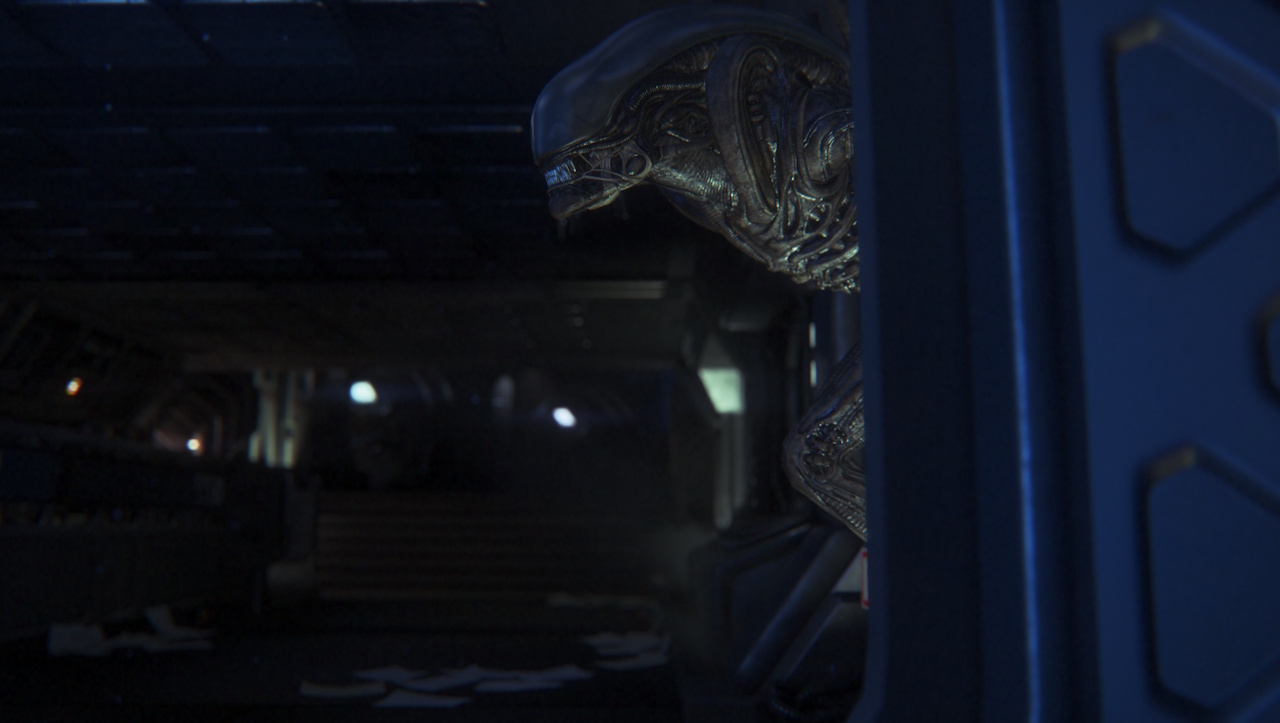
TV series #1:
Star Trek: The Original Series (1966-69)

I’ve re-watched quite a lot of The Original Series this year, probably more episodes than I’d seen in the past few years. Because of its episodic nature, it’s easy to dip in and out of The Original Series, firing up an episode or two to spend an hour with Captain Kirk and the crew without feeling the need to commit to an entire season of television.

The Original Series started it all for Trekkies, and I’m always so pleased to see that modern Star Trek hasn’t lost sight of that. In this year’s episodes of Lower Decks and Discovery we’ve gotten many references and callbacks to Star Trek’s first series, keeping the show alive and relevant as we celebrated its fifty-fifth anniversary – and the centenary of its creator, Gene Roddenberry.

Though dated in some ways, many of the themes and metaphors present in The Original Series are still relevant today. Society has changed since the 1960s, but in some areas we’re still fighting the same or similar fights for acceptance, for equality, and so on. The Star Trek franchise has always had a lot to say about that, being in some ways a mirror of society and in others depicting a vision of a more enlightened, optimistic future.

TV series #2:
Fortitude (2015-18)

I went back to re-watch Fortitude this year, for the first time since its original run. The series starts very slowly, seeming at first to be little more than a murder-mystery in a different setting. But it builds up over the course of its first season into something truly unexpected, crossing over into moments of political thriller, action, and even horror.

There are some truly shocking and gruesome moments in Fortitude, and it can be a harrowing watch in places. But it’s riveting at the same time, and I managed to get hooked all over again by the complex characters, the mysteries and conspiracies, and the bleak but beautiful arctic environment.

Fortitude featured some star names among its cast, including Michael Gambon, Stanley Tucci, and Dennis Quaid – the second-most-famous Dennis to be featured on this website! Although it was fun to watch it weekly during its original run, Fortitude is definitely a show that can be enjoyed on a binge!

TV series #3:
Family Guy (1999-Present)

Family Guy’s sense of humour sometimes runs aground for me, dragging out jokes too long or failing to pay off neat setups with decent punchlines. But with the full series (up to midway through Season 20 at time of writing) available on Disney+, I’ve found myself putting it on in the background a lot this year. The short runtime of episodes, the lightheartedness, and the way many of the jokes are often disconnected from whatever nonsense plot the episodes have going on all come together to make it something I can dip in and out of while doing other things.

There are some insensitive jokes, and some entire storylines in earlier episodes have aged rather poorly. But Family Guy seldom strikes me as a show punching down; it satirises and pokes fun at many different groups. In that sense it’s kind of halfway between The Simpsons and South Park; the former being more sanitised and family-friendly, the latter being edgier and meaner.

I rarely sit down and think “gosh, I must watch the latest Family Guy episode.” But if I’m in need of background noise or something to fill up twenty minutes, I find I’ll happily log into Disney+ and put on an episode or two.

So that’s it.

There have been some great films, games, and television shows that were released in 2021. But there were also plenty of entertainment experiences from years past that, in different ways, brightened my year. As we gear up for New Year and for everyone’s end-of-year top-ten lists, I wanted to take a moment to acknowledge that.

I hope you had a Merry Christmas, a Happy Holiday, or just a relaxing day yesterday! I did consider writing something to mark the day, but I found that I had remarkably little to say that was different from the piece I wrote last year. 2021 has been “2020 II” in so many respects, unfortunately. However, unlike last Christmas I will be able to visit with some family members – I’ll be seeing my sister and brother-in-law later this week, which will be a nice treat! So here’s to 2021’s entertainment experiences – and as we enter the new year, it’s worth keeping in mind that we don’t only have to watch and play the latest and newest ones!

All titles on the list above are the copyright of their respective broadcaster, distributor, developer, network, publisher, studio, etc. This article contains the thoughts and opinions of one person only and is not intended to cause any offence.