
Spoiler Warning: There are spoilers ahead for Star Trek: Strange New Worlds Seasons 1-4. Spoilers are also present for the following Star Trek productions: The Original Series, The Search for Spock, The Undiscovered Country, and Star Trek ’09.
Happy sixtieth anniversary to the Star Trek franchise! On the 8th of September, 1966 (or the 6th of September in Canada), The Original Series premiered with the episode The Man Trap. And I just wanted to take a moment before jumping into the review of Star Trek’s latest episode, some six decades later, to acknowledge that milestone. I also have a short piece that I wrote to commemorate the anniversary; click or tap here to check it out if you’re interested!
Okay, on to Orders of Magnitude – a completely different episode, in so many ways, to The Man Trap… but at the same time, the DNA of what makes Star Trek “feel like Star Trek” was present, I felt.
I’ve tried to go into every Strange New Worlds episode this season with an open mind, even when the latest “big swing” or genre spoof didn’t really hold much appeal. But Orders of Magnitude was the first episode since really the premiere where I felt a sense of real optimism before I even pressed “play.” Having seen a very brief trailer on social media (in vertical format, unfortunately), it seemed like the teased episode would be action-packed and explosive. And so it proved to be.
When a franchise has existed for as long as Star Trek has – telling close to 1,000 stories across six decades – there are bound to be stories that just… rhyme. And for me, I felt echoes of several familiar episodes, films, and character archetypes in Orders of Magnitude. On one side of the story was a fairly nondescript gang of mercenaries, holding members of the away team captive and forcing them to perform some feat of technobabble. And on the other? The latest in Star Trek’s long and storied history of “badmirals!”
Orders of Magnitude ran to basically an hour, including the opening titles, and the episode *needed* all of that time to make its two storylines work. When it became clear that Pike’s away mission to the crystal caves was going to be more than just a convenient excuse to give Admiral Reeger command of the Enterprise, I was a little worried that we were going to run out of time for both sides of the episode to really shine. And there were a couple of places back on the Enterprise where I would, in hindsight, have liked to have spent just a tiny bit more time. But overall, I think Orders of Magnitude worked well at balancing two powerful storylines for Kirk and Uhura.
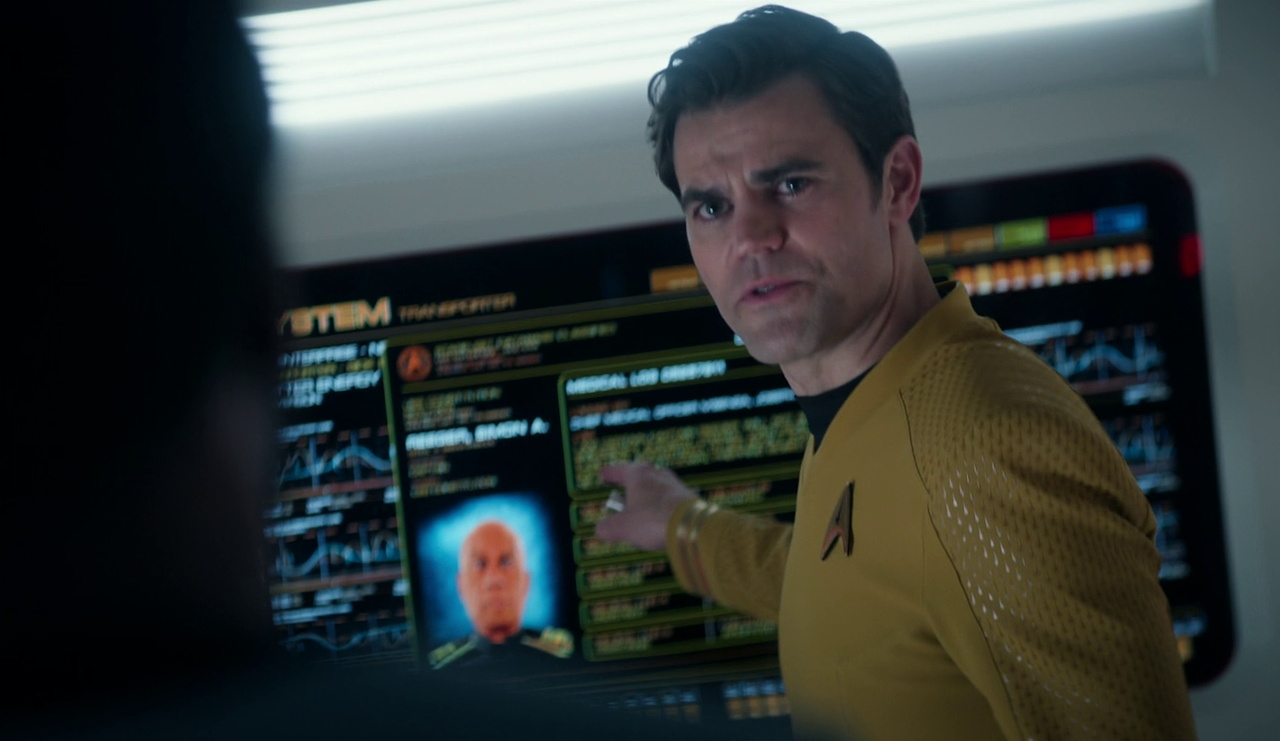
Orders of Magnitude had a fantastic score. My number one rule for music in any episode (or film, TV show, game, etc.) is “do no harm;” i.e. the music shouldn’t be overbearing, tonally clash with what’s going on, or otherwise take me out of a scene. And most of the time, modern Star Trek does its music so well that I barely even register it while I’m watching! But this time, I felt the episode’s score was fantastic; there were tense pieces, mysterious pieces, dramatic ones, and exciting ones all at the right moments. When Kirk scrolled Admiral Reeger’s padd, taking those first steps to uncovering a mystery… the music absolutely elevated that moment in just about the best way possible.
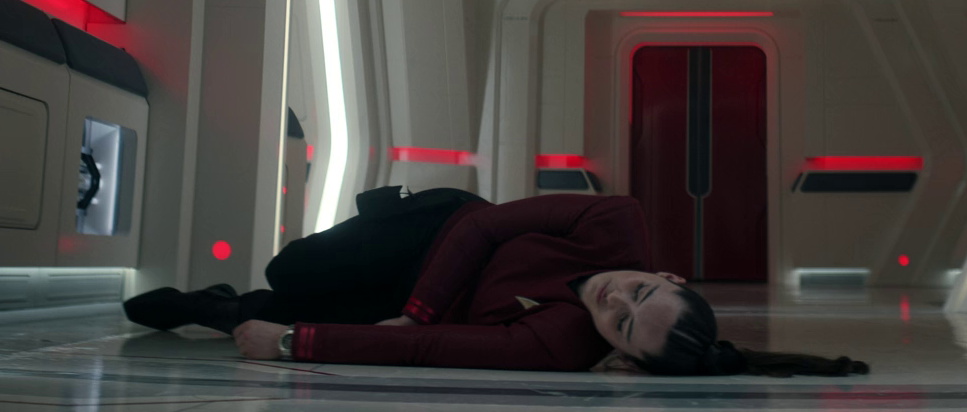
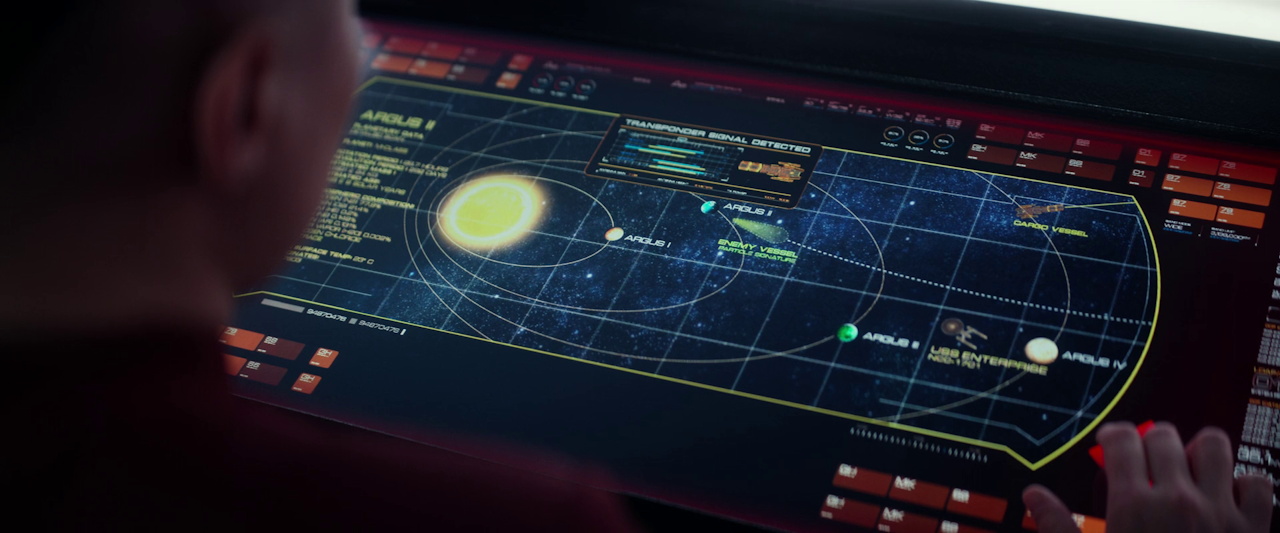
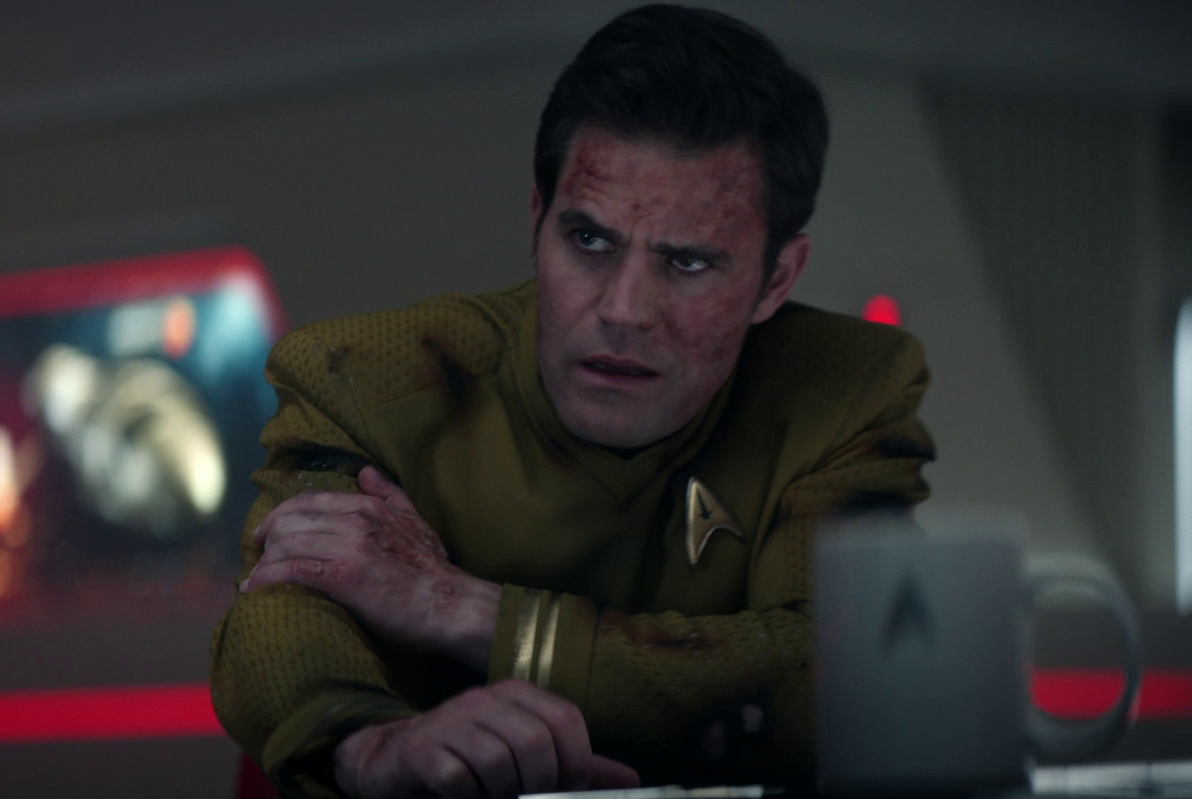
Visually… I think it was a bit of a mixed bag, though. I loved the dark tone aboard the Enterprise, as set by the dimmed lights of the ship’s red alert status. Kirk’s radiation burns were suitably gruesome, and so was A’Sha’s injury on the planet. And the set constructed for the inside of the crystal cave was solid enough, although not particularly original. However, the exterior of the crystal cave was less impressive; a recycled location that we’ve seen before with a few giant crystals superimposed. Thankfully, we weren’t in that space for too long, but it was enough to be noticeable. Also on the visual side – or rather, the *lack* of a visual side – we saw nothing at all of the attack on Vaardan; the storyline’s inciting incident. And although the point of the story was that the ship was cloaked, we also saw nothing of the ship, its wake, or even the planet it landed on. Even the attack on the cargo ship near Argus II was fuzzy and only appeared briefly. I just felt we could’ve gotten a little more on the visuals/CGI side to add a bit more depth to this side of the story.
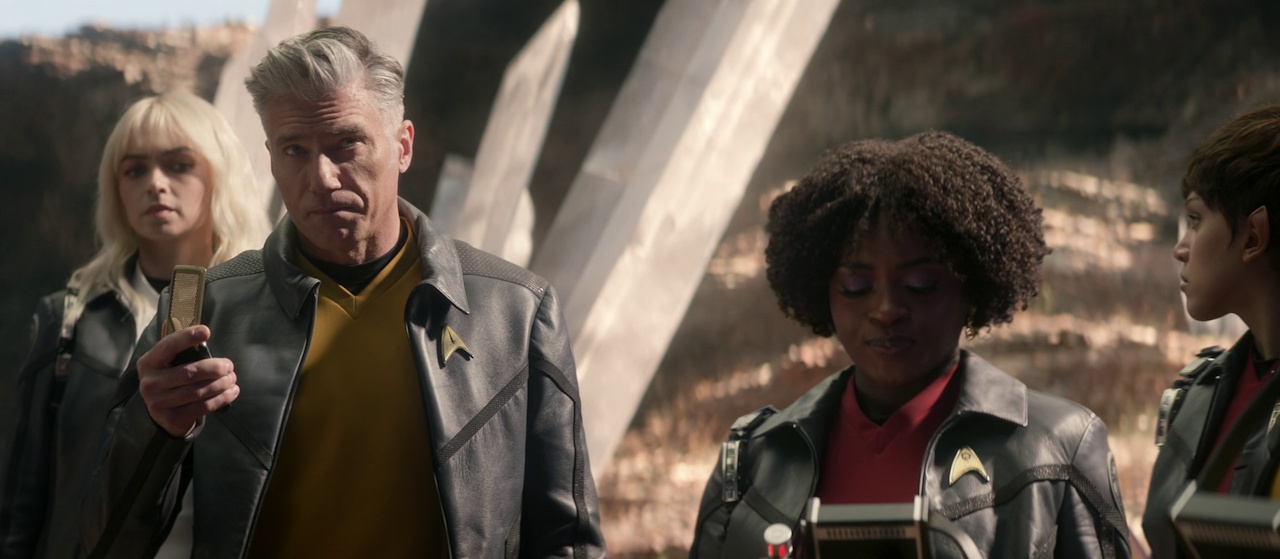
Let’s tackle the away mission first, and then move on to Kirk and the badmiral.
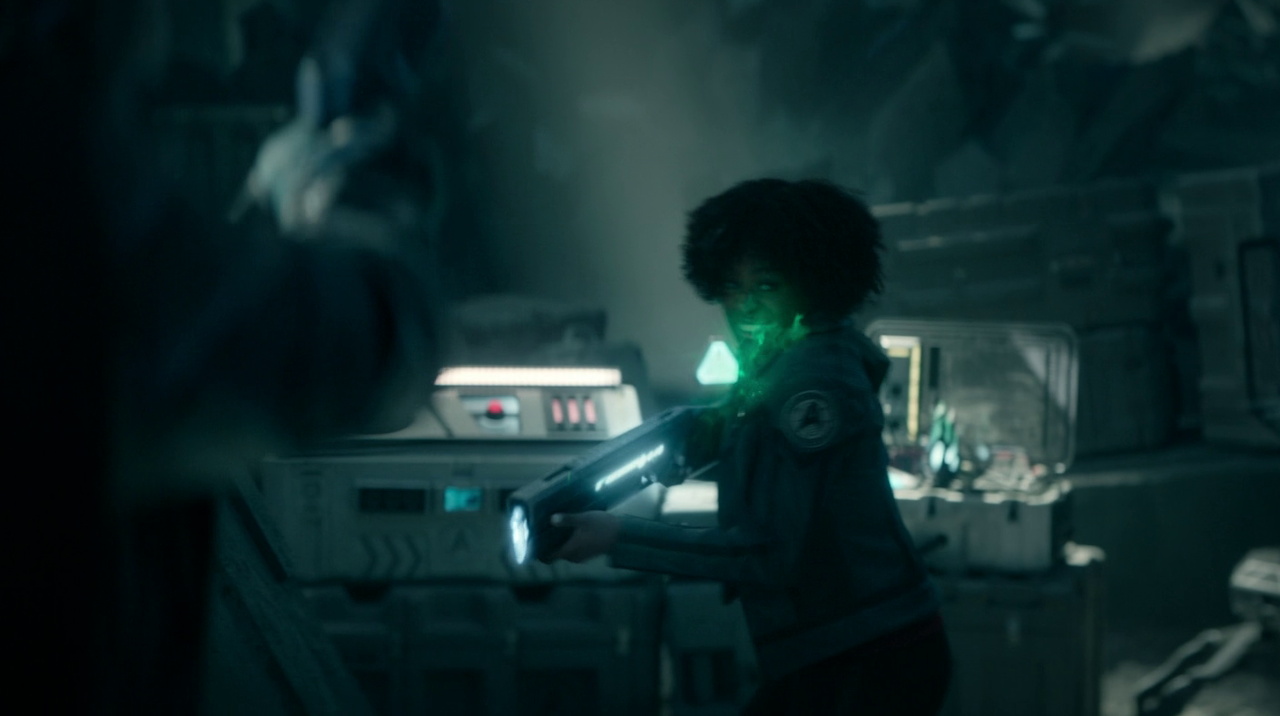
Call me a cynic, but the second I saw Cadet A’Sha on the away mission, my first thought was “redshirt!” As Strange New Worlds had done with Ensign Gamble last year (and as Discovery did several times across its run), I suspected that our new Vulcan cadet might not be long for this world. That feeling only intensified when Uhura made her comment about how she insisted that A’Sha be invited to join the away team.
And it seemed, for a time, that I was about to be proven right – only for the episode to take a couple of last-minute twists with A’Sha’s story. After being injured and suffering some kind of crystal-induced ailment, Uhura worked overtime to save A’Sha – only for the cadet to decide, in the episode’s final moments, that life in Starfleet wasn’t right for her, after all. A logical reaction, perhaps, to nearly dying from crystal wounds on a random moon!
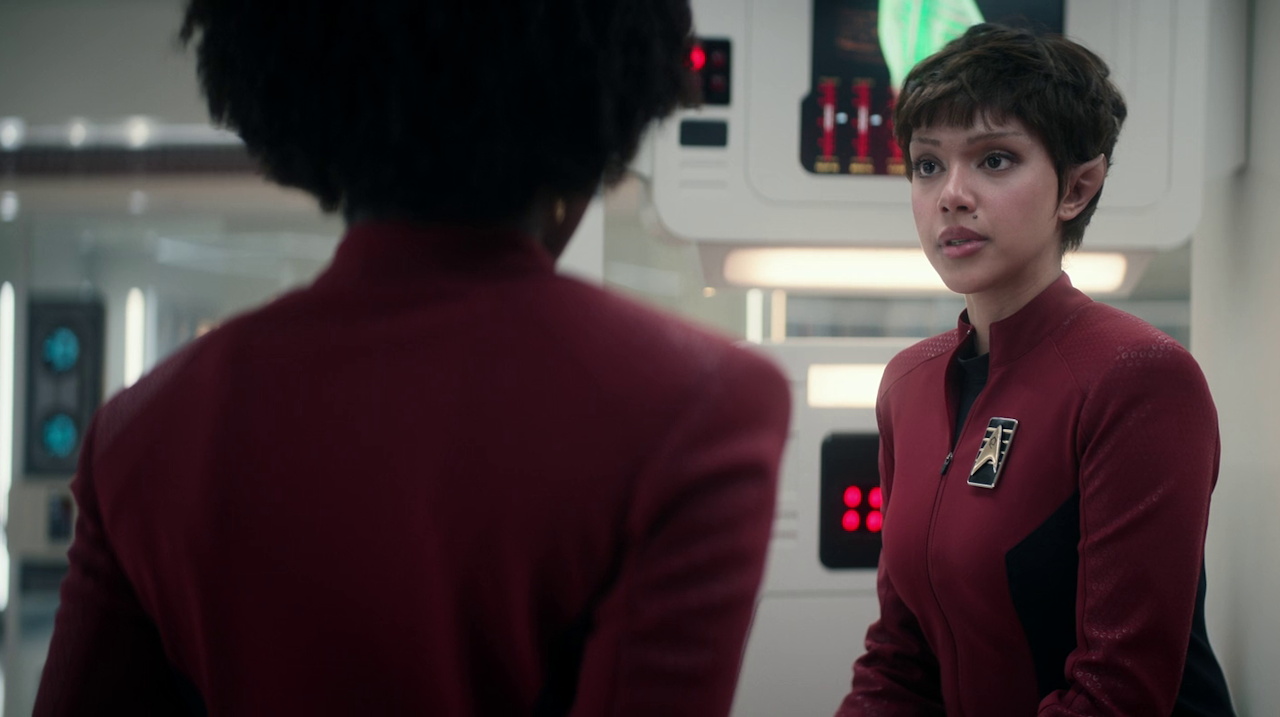
Joking aside, I quite liked the direction this storyline took, and that it wasn’t as predictable as I feared it would be. Redshirts in Star Trek are a trope, of course – The Man Trap, sixty years ago, contained the very first such example – but it can be nice when an expected storyline has a twist or a surprise; something to keep us on our toes and make things feel a bit… different. A’Sha’s survival was the first twist, but her decision to leave Starfleet shortly thereafter was the second.
Obviously, A’Sha is not a particularly well-developed character. Her biggest outing, aside from this week, came in Off-Hour, where she worked with Scotty in the turbolift and transporter room. But she’s arguably the only Vulcan character in Strange New Worlds to have been played straight; the likes of T’Pring have usually been thrown into slapstick, comedic, or romantic storylines that (in my opinion) are not especially well-suited to the Vulcans, and rely on a joke or a bit that’s just been stretched way too far. So A’Sha has been a breath of fresh air, in that sense, and I’m sad to see her go.
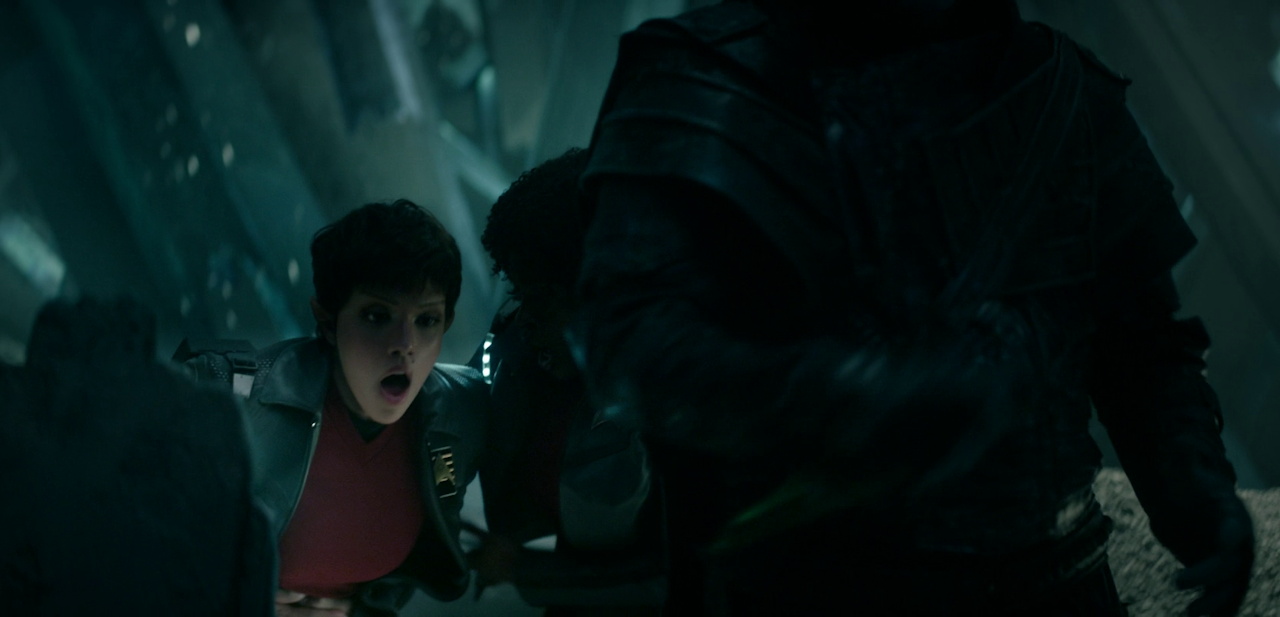
A’Sha also turned out to be an important character for Uhura, following up on an (admittedly too short) scene from the season premiere. Uhura, having been assigned to the role of mentor, has demonstrated arguably the most growth of any of the show’s regular characters (so far, anyway), going from a fresh-faced and unsure cadet back in Season 1 to a more confident and settled mentor of cadets by Season 4. If we keep in mind that part of the objective of this season in particular has been, to quote the show’s tagline, to “boldly go one step closer to where it all began,” then we can see Uhura’s arc as bringing her closer to her TOS role ahead of the show’s finale.
And, I would argue, Uhura’s arc is now pretty much complete – as capped off by her promotion at the end of the episode.
I want to spend more time with this incarnation of Uhura, of course! In fact, I’m not ready to say goodbye to any of these characters, yet, and I just know next season’s finale is going to be an emotional sucker-punch. But… if this is the final Uhura spotlight that Strange New Worlds has time for, then I think we can consider her arc well and truly complete. Strange New Worlds hasn’t always made good on its prequel status, but in Uhura’s case, it really did succeed. The show has shown us the character’s younger days in a way that made sense, taking her from a cadet with doubts about her abilities and her role in Starfleet through to a newly-promoted lieutenant. If there’s no time for anything else, and even if Strange New Worlds fumbles the ball with all of the other TOS characters, we’ll always be able to point to Uhura’s arc as a success; a way in which the show expanded the world of Star Trek in a way that made sense and felt good for her character.
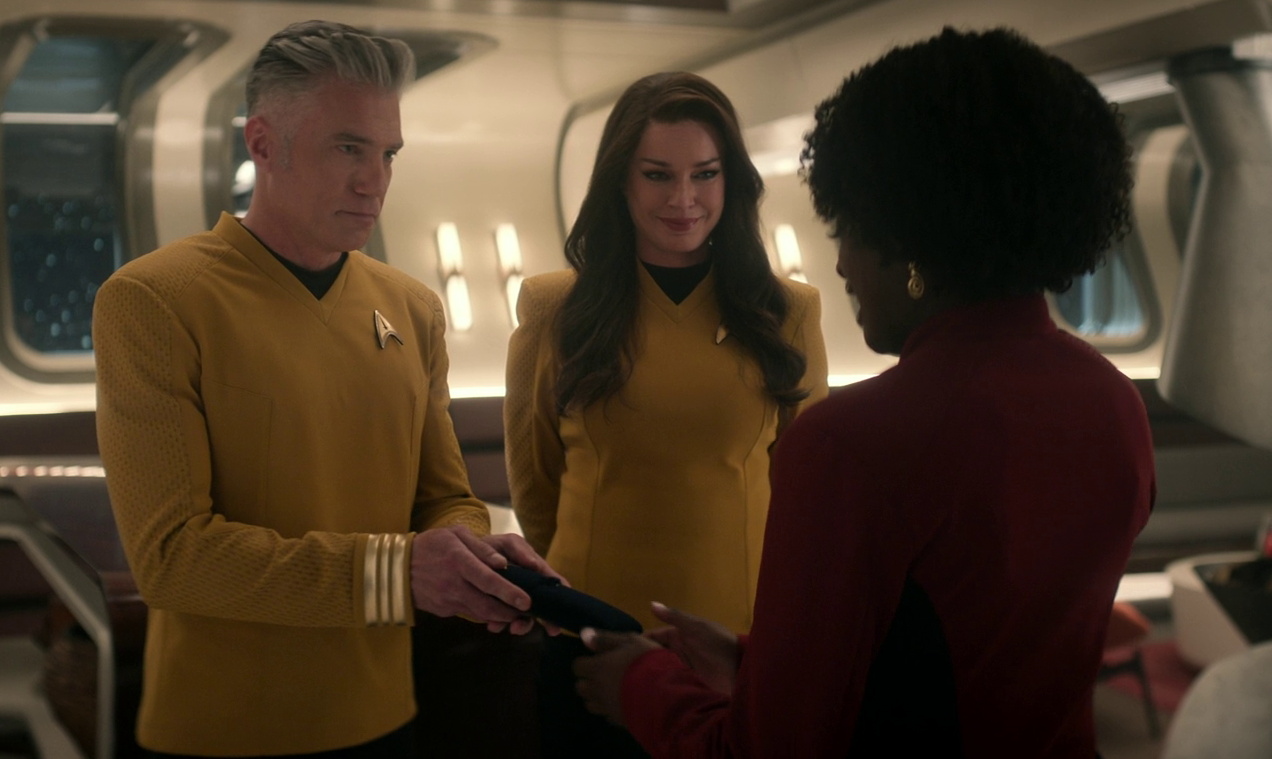
This week, Uhura’s story excelled in two key ways.
Firstly, we see her taking a stand – even if that meant clashing with Captain Pike. You would never have seen Season 1 Uhura talking to Captain Pike the way she did in Orders of Magnitude, which just emphasises what we were saying about how far she’s come in her character journey. That confidence – partly inspired by Hemmer, early on – led to her taking on a very risky rescue attempt, butting heads with her own captain in the process.
Secondly, the way Uhura’s story subtly leaned into both her role as a communications officer and her knowledge of the Andorians and their sensitivities was fantastic. I don’t think someone like Captain Pike could’ve as easily gotten away with jury-rigging the mercenaries’ machine to emit a debilitating sonic pulse; it took someone like Uhura, who has those linguistic skills and that connection with Hemmer, to be able to pull off something like that in a way that felt natural and not like a complete deus ex machina!
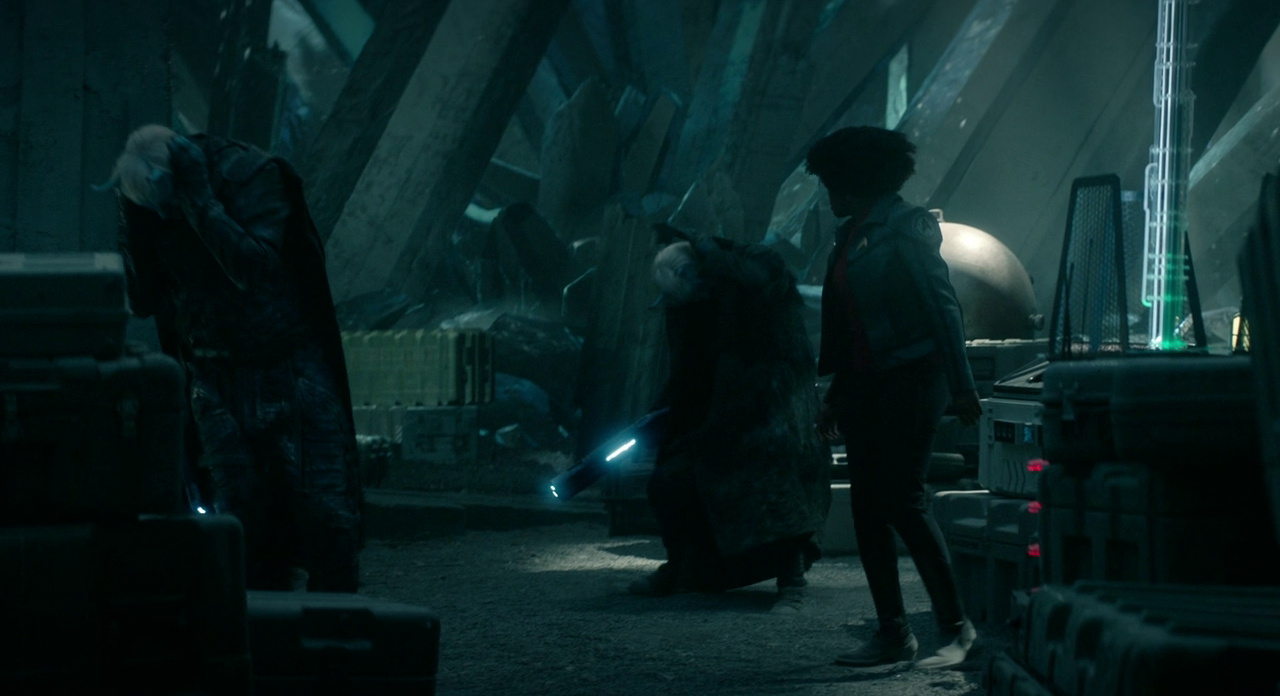
This led to a firefight with the mercenaries, and perhaps this was where I felt the episode dragged its feet just a little. Don’t get me wrong: it was cool to see badass Uhura kicking Andorian butt! But having gone to the trouble of setting up a more complex solution – the sonic attack – to then descend into a bog-standard firefight kind of took away from Uhura’s unique accomplishment and what we were just saying about how she was the only one able to pull off something like that. Any idiot could get in a firefight; Uhura’s skills were better-displayed when she used her technical and comms know-how to reconfigure the mercenaries’ machine – and I just think *that* would’ve been a better way to defeat the mercs.
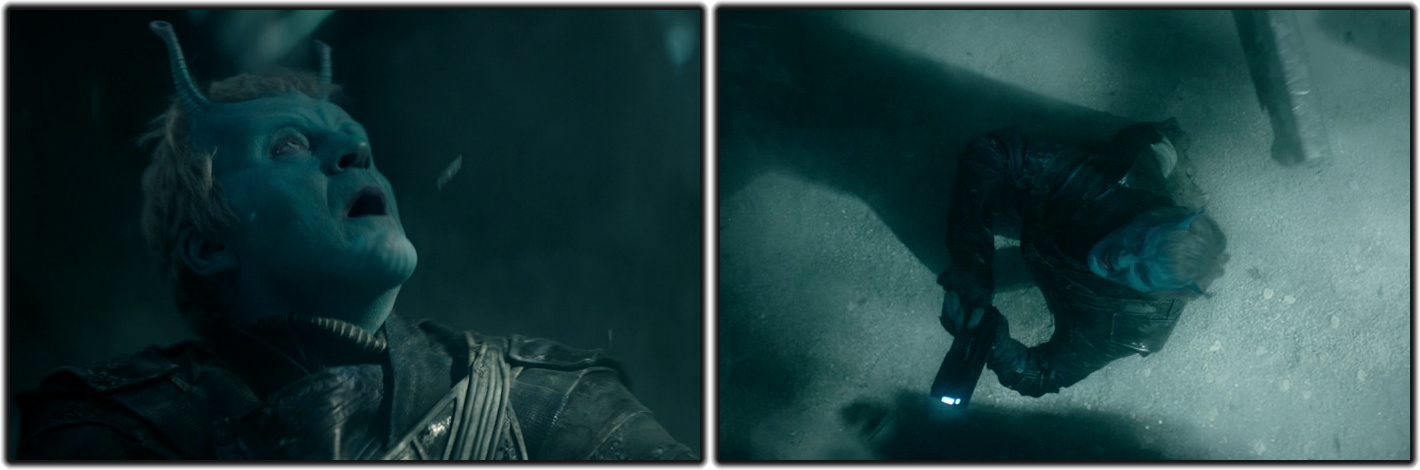
That being said, there were some neat moments during the firefight, as well as plenty of tension, too. The only other thing that I didn’t like as much was the death of the mercenary leader; the whole “noooo!” thing while staring up at the camera (and not even *trying* to get out of the way or move at all) just… felt like a bit of a tropey way to end what had been an otherwise pretty good storyline for Uhura.
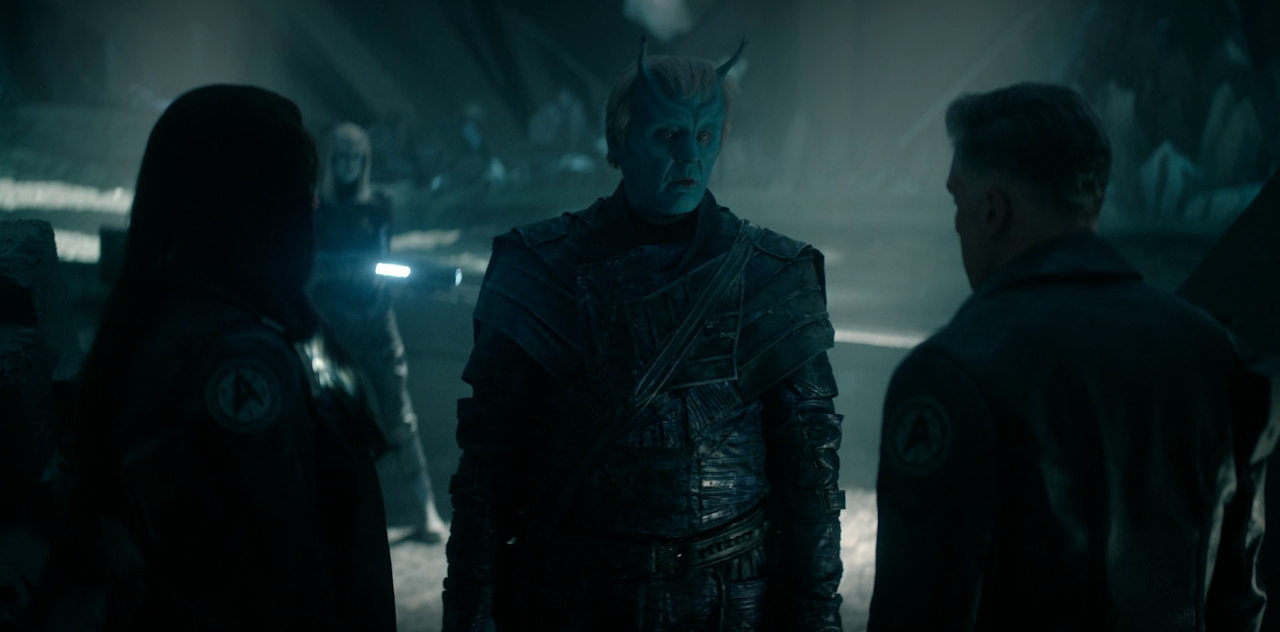
Speaking of the mercenaries… well, what is there to say? Bog-standard, bland, and really only noteworthy for being Andorians. I don’t think we learned any of their names, nor really what their scheme was beyond “general piracy and/or smuggling,” and while the gang served a narrative function as antagonists for Pike, Uhura, and the rest of the away team… I mean, I don’t think anyone’s going to come out of Orders of Magnitude desperate to learn more about this group.
And that can be okay. The episode already had a memorable antagonist on the other side of the story in Admiral Reeger, and as I said, the Andorians had a role to play in the narrative and played it just fine. All I’m saying is that there are better pirates, better mercenaries, better criminals, and better Andorians in Star Trek – and you don’t have to look far for examples!
Uhura’s promotion, which closed out the episode, was just wonderful. Everything about it, with Pike and Una setting it up, felt pitch-perfect, and I think it was great for Uhura to get that moment with the captain after their earlier clash. Pike clearly respected Uhura taking the initiative, and wanted to reward her not only for that one moment on the away mission, but really for her entire service aboard the Enterprise to date.
And as Strange New Worlds adjusts and repositions its characters ahead of the end of the show – and, in-universe, the start of TOS and Kirk’s famous five-year mission – that makes sense. Uhura is now basically where she needs to be, and as I said above: if we get no more spotlight storylines for this character, Strange New Worlds has more than done its duty as a prequel, taking her character from the fresh-faced cadet we met in Season 1 to the more confident, established bridge officer Kirk could rely on in TOS. A successful arc indeed.
Before we hit up Kirk and the badmiral, a brief diversion to two other characters: Dr M’Benga and Nurse Chapel.
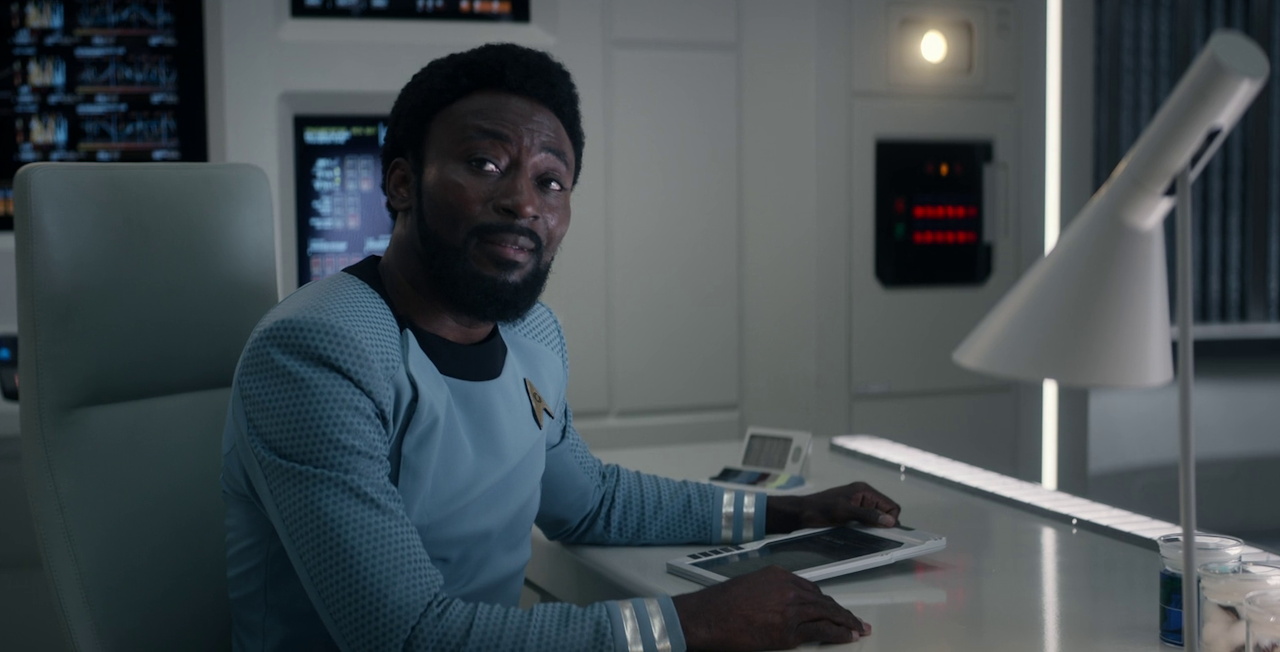
This whole “Dr M’Benga wants to leave” storyline seems to have come out of nowhere, doesn’t it? I mean, I’m not making that up, am I? We knew, of course, that Dr M’Benga couldn’t remain as the Enterprise’s *chief* medical officer heading into TOS, and we also know that Dr McCoy will make at least one appearance in Season 5, thanks to a casting announcement from Paramount. But I’m just not convinced that his potential departure/demotion/disappearance needed this… soap opera quality, with Chapel getting all offended and sulky and Dr M’Benga himself seeming to connive and engineer his route off the ship or to a lower duty station.
Then there’s the question of how much sense it makes *in-universe* for this storyline to play out as it was set up by the end of Orders of Magnitude. One: Dr M’Benga “admitted” (though his confession was a lie) to abusing his position as a doctor to illegally drug a senior flag officer, compromising a mission in the process. And two: Admiral Reeger’s reputation is now in ruins, surely, so his ability to enact revenge is going to be stymied, at best, by the events of this episode. So we’re either looking at Dr M’Benga being struck off and having his medical license revoked for what he confessed to doing, or we’re looking at… nothing at all, because Admiral Reeger is going to suffer the fallout of his lies being exposed. It just feels like a bit of a contrivance and a complication, and one that – I would argue – doesn’t even serve a major narrative function. Dr M’Benga will continue to serve aboard the Enterprise in some capacity after Pike departs the ship, and I just don’t think there needs to be a massive in-universe explanation for why he ceded the role of CMO to Dr McCoy… especially not one so convoluted.
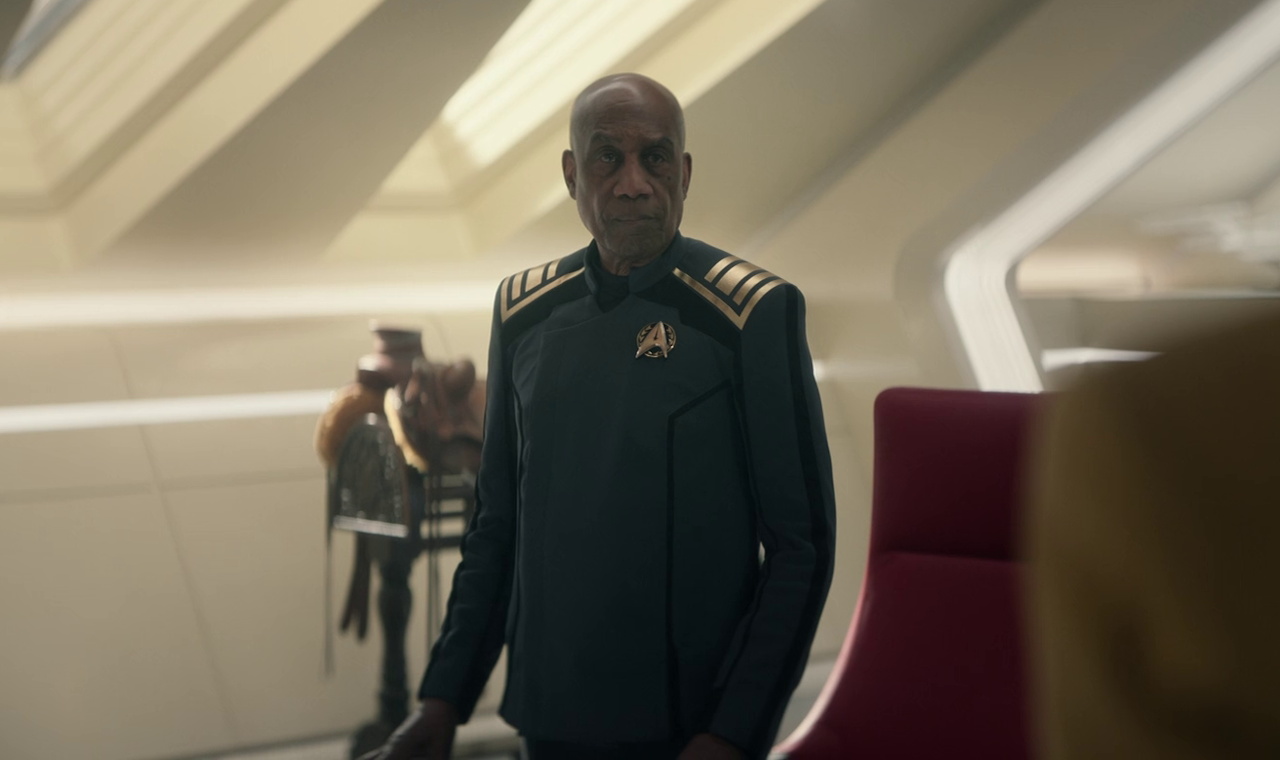
Admiral Reeger is the latest “badmiral” in a long, long line! In fact, I’m pretty sure that Starfleet has more evil, nasty admirals than it does genuine good guys, at this point! But that’s okay… Reeger made for a fun and occasionally complex antagonist for Kirk – though, as we’ll discuss, he wasn’t perhaps as nuanced as he could’ve been, and trying to give him not one but *two* backstories to explain his villainous turn and conflict with Kirk was, perhaps, a step too far given the amount of time we spent with him.
So let’s start with Admiral Reeger being a brand-new character. This is common in Star Trek for “badmirals” and other antagonists, of course – but because he’s a new creation for Orders of Magnitude, it means we’re introduced to him, spend time with him, and see his downfall all in the span of a single episode – or rather, two-thirds of an episode. And that limits how much of an impact a character like this can have. In this case, I think Admiral Reeger worked about as well as he could’ve, but part of me wishes that some part of his character or backstory had been established in an earlier episode.
We see both Ortegas and La’an seemingly reverent toward the admiral’s wartime service, and the Battle of Zeta Reticuli in particular. But because, again, this event is brand-new – and neither character spent much time in the spotlight this week – it doesn’t hit as hard as it could’ve. Past iterations of Star Trek got away with this because they were entirely episodic, but with the franchise having more ongoing arcs and storylines in its modern incarnation… I can’t help but feel an opportunity was missed, earlier in the season, to name-drop the admiral, the battle, or some other part of his story in a way that would’ve added something to this setup.
Is that an unfair criticism? Maybe. But given how Season 4 has taken diversions into a variety of different genre parodies and spoofs… I mean, I don’t think we would’ve really missed the soap opera fluff or the puppet silliness if one of those stories had taken a couple of minutes to set up something that would’ve been important this time. In fact… dumping one of those episodes entirely to allow both halves of Orders of Magnitude to be their own full story? That wouldn’t have been a terrible idea.
But okay, let’s review the storyline we got rather than the one we might’ve preferred to get!
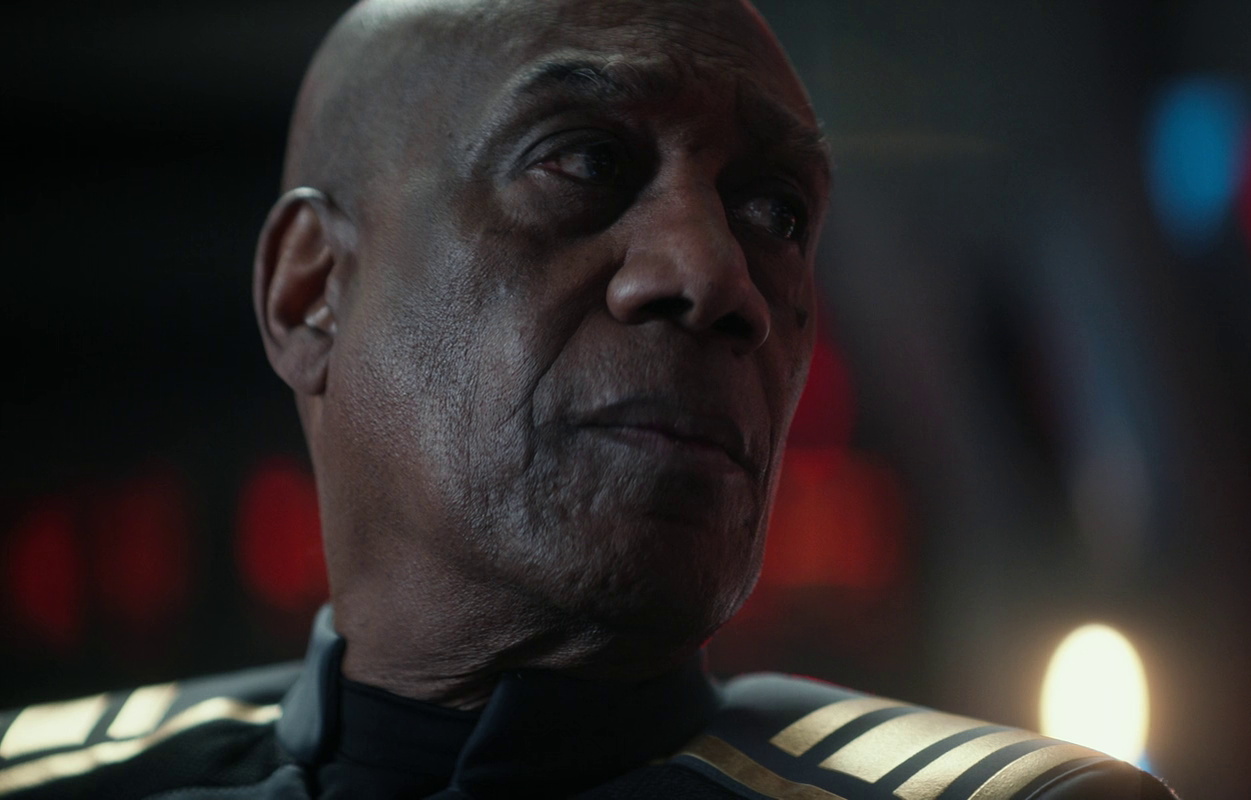
Admiral Reeger was a compelling character. But in the time allotted to his story, I think one backstory or the other – either the deaths of his family spurring him on to get revenge *or* the stolen valour/George Kirk angle – would’ve been a better call. Trying to cram in both left absolutely no margin for error, and given Reeger’s role as a foil for Kirk, I just don’t think the “family revenge” angle was sufficiently deep or well-explored. It felt more like a narrative excuse for Reeger to go off the rails – and a better-written story could’ve seen Kirk pushing his buttons in just the right way to make the lies and the cover-up a more compelling and exciting revelation.
That isn’t to say that what we got was “bad,” and I found Joe Morton’s performance in the role to be absolutely one of the best parts of the episode. But rather, given that this episode, in spite of its long runtime, had a lot to do… two separate backstories for Reeger (neither of which we actually got to see any part of on screen) might’ve been a bit much, and given where the story wanted to take Reeger and Kirk, the George Kirk/stolen valour angle would’ve been more than sufficient to explain his clash with Kirk – and Kirk’s insubordination.
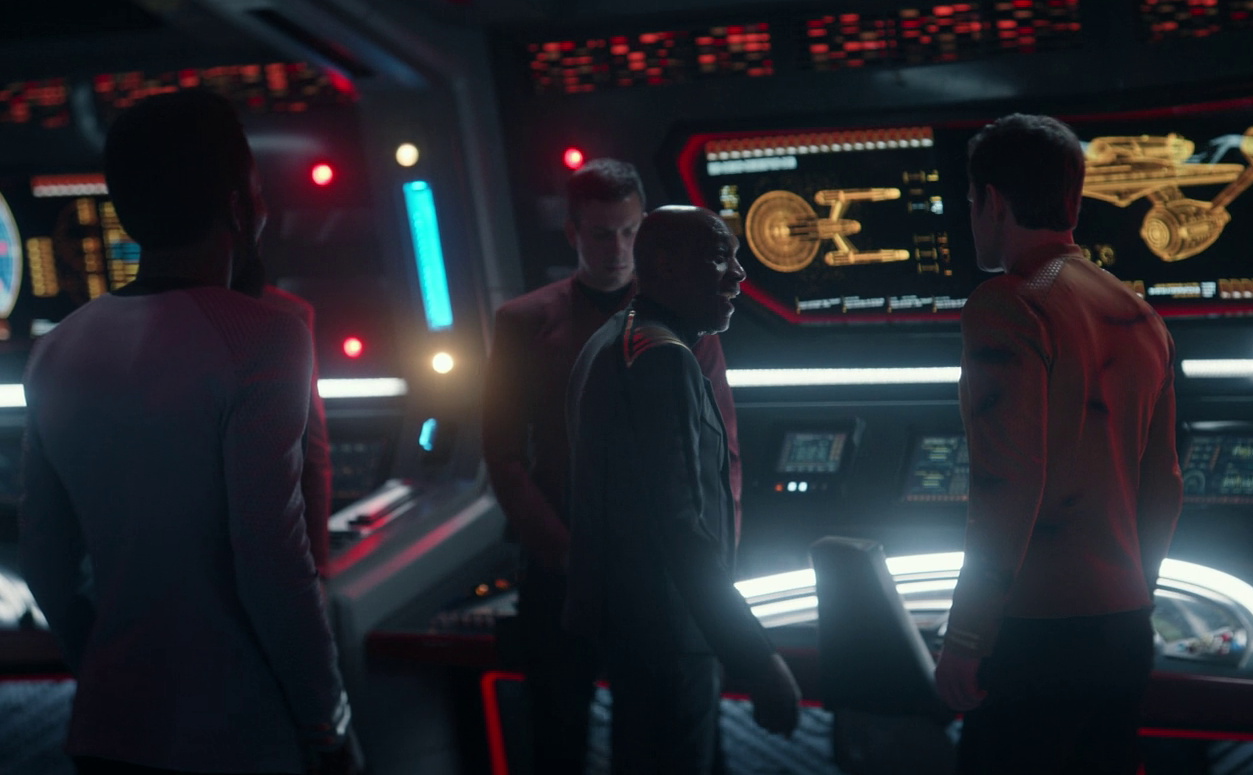
Remember at the beginning of Star Trek: Discovery when Michael Burnham led what I’ve since termed “the moron’s mutiny” against Captain Georgiou? That was pretty awful… but *this* is how you write an insubordination-to-mutiny storyline in a way that makes actual narrative sense and doesn’t harm or ruin anyone’s characterisation! Kirk began to unfold a mystery involving Admiral Reeger, Dr M’Benga, his father, the USS Constitution, and the Battle of Zeta Reticuli… and it was utterly compelling stuff.
There was a sense, as Kirk’s story unfolded, that it was *he* as much as (or perhaps even more so than) Reeger who was personally compromised by what was happening; that Kirk’s determination to prove Reeger had stolen credit for his father’s actions was what drove him – not any sense of compassion, empathy, or concern for the lives of the people of Argus II. And that angle added some much-needed moral ambiguity to what was unfolding. Kirk had a personal vendetta here, almost as much as Reeger did – and the story was structured in such a way as to make you feel like neither man was wholly in the right.
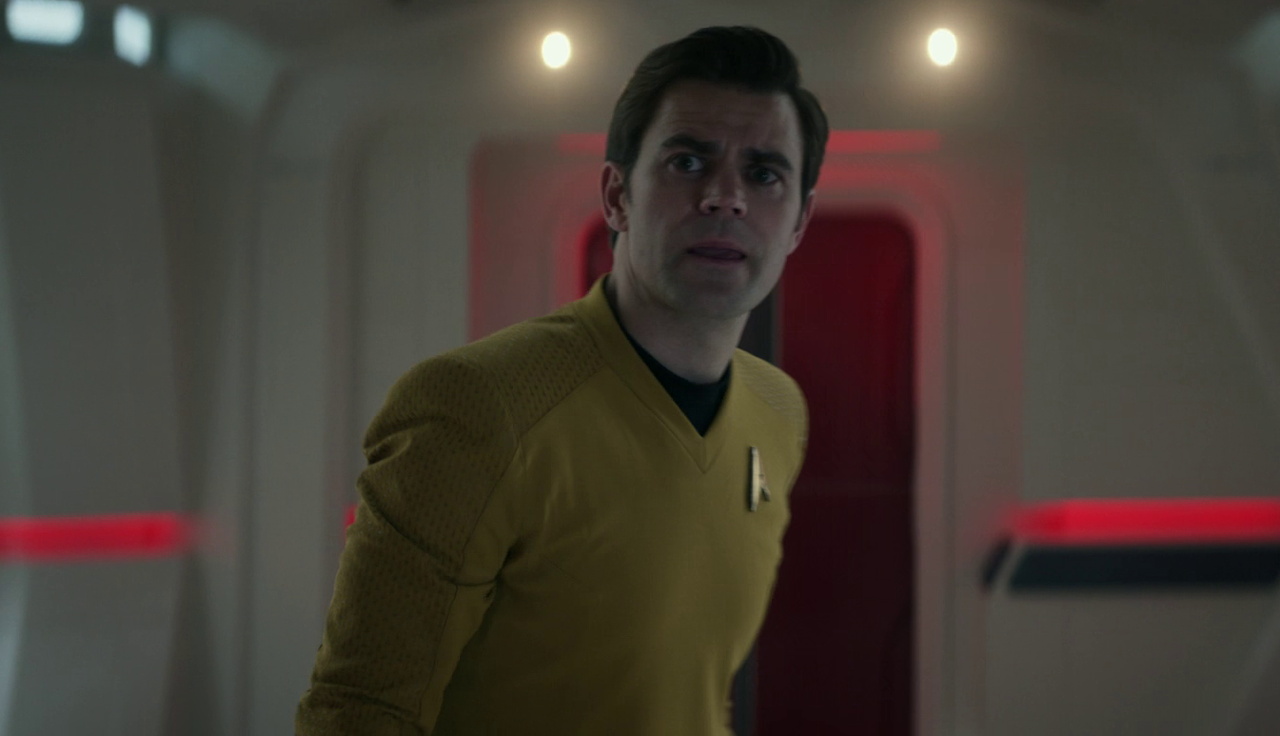
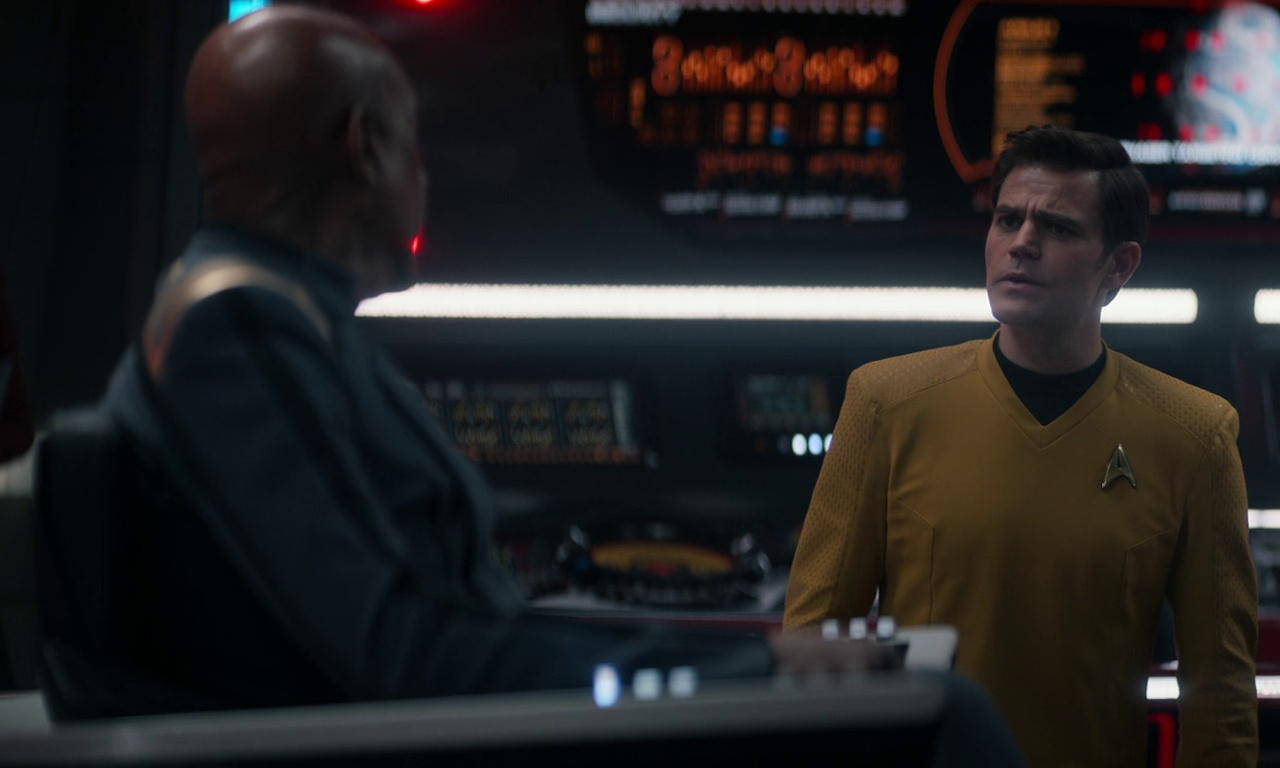
I liked that Reeger wasn’t a completely typical “badmiral,” either. He wasn’t “evil for the sake of it,” he wasn’t a traitor, nor horribly corrupt; he felt more like someone out of his depth – a man promoted above and beyond his capabilities, and who didn’t really have any business commanding a starship. That gels with Dr M’Benga’s line to Kirk about Reeger’s promotion having more to do with getting him off the bridge and behind a desk rather than anything else. And I really felt that in Reeger’s characterisation.
I also liked the idea of Star Trek tackling this “stolen valour” idea in a way that I don’t think we’ve ever really seen before. Reeger had, for years, been taking credit for another man’s accomplishments – and both George Kirk and Starfleet at large had let him get away with it in the interests of overall morale. Reeger developed a personal legend – a legend that characters like Ortegas and La’an fully bought into – on the basis of a lie, and his determination to keep that covered up could have been a bigger motivating factor for him as the story unfolded. I liked what we got to see of it, and I liked how it made Reeger a different kind of “badmiral” than the likes of, say, The Undiscovered Country’s Cartwright or DS9′s Layton.
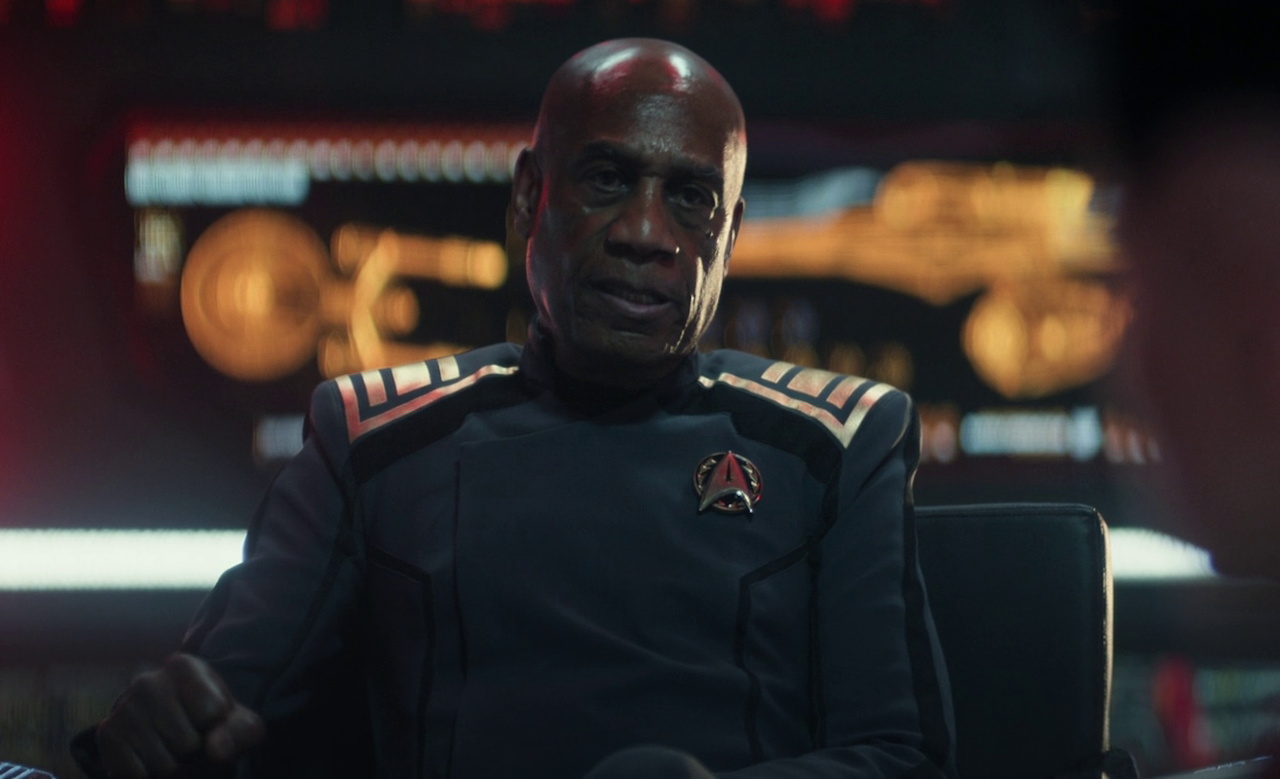
However, I felt that Reeger’s arc seemed to take him from “war hero” to “war criminal” almost instantly; his decision to enact General Order 24 and order the total destruction of an inhabited planet seemed to come *very* quickly, when realistically, I think it was such a major turn that we needed to see more of Reeger’s slide into “madness” or obsession for ourselves. If you look at comparable characters on revenge quests or obsessions – like Moby-Dick’s Captain Ahab, basically the archetype for this kind of character – their descent is always slower-paced. Other characters might even go along for (some of) the ride, sticking with a character on an obsessive quest for a time. But Reeger – partly because of the confines of the story – had to make that switch in an instant when ordering the destruction of the planet.
And this same issue recurred later, when Reeger – as we’d subsequently learn, under the influence of a drug – began ranting and raving on the bridge.
I felt echoes of Star Trek ’09 in the climactic confrontation between Kirk and Reeger – the physical altercation, the emotional outburst, and finally, Reeger being relieved of command all mirrored Spock’s role in that film, which saw Kirk ascend to command the alt-timeline Enterprise. As I said above, after six decades and a thousand stories, some are bound to rhyme!
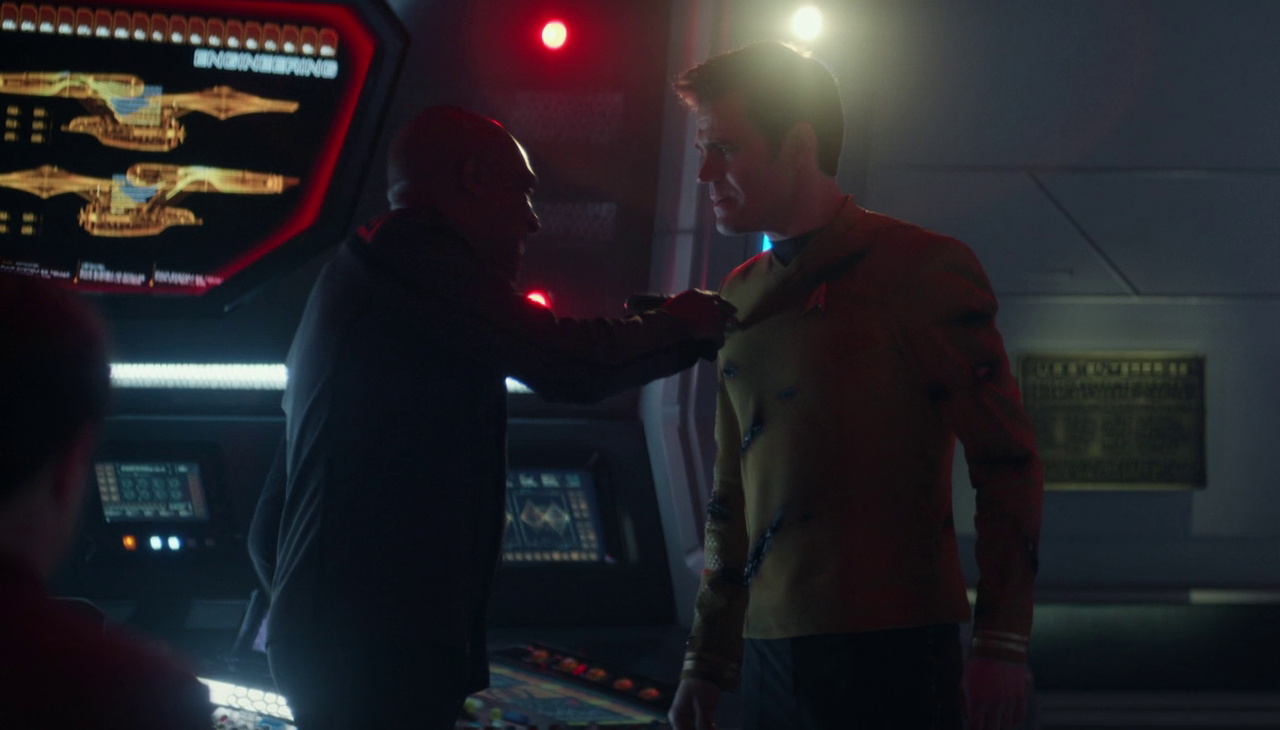
If Reeger had an obsession with the cloaked ship, so too did Kirk develop an obsession with exposing Reeger and proving his father was more of an upstanding officer – and there were parallels in the two mens’ arcs that bounced off each other really well. As I said above, this gave Kirk and Reeger enough complexity and ambiguity – at least, for most of the story – to keep things genuinely interesting. As Trekkies, of course we’re inclined to support Kirk over some random “badmiral-of-the-week,” but that didn’t mean that the way Kirk handled himself and his conflict with Reeger was perfect!
In fact, Kirk’s arc this time arguably sets up some of his other conflicts and run-ins with authority figures further along the timeline. There are several occasions in TOS and beyond where we’d see Kirk seemingly disobeying orders or striking out on his own – most notably, perhaps, in The Search for Spock, where he’d steal the refitted Enterprise.
And that makes an interesting point of comparison between Kirk’s story and Uhura’s.
If Uhura’s story was about bringing her over the line; getting her from her younger, less-confident prequel version closer to the person we remember, Kirk’s was more to do with setting up a specific kind of self-reliance, an anti-authority streak, and – arguably – a single-mindedness that could veer into obsession, as we’d see not only in films like The Search for Spock, but in episodes like The Conscience of the King, too.
What I was a little surprised about – especially given that it was explicitly referenced in the “previously on…” compilation right at the start of the episode – was that Kirk’s brief tenure in the captain’s chair of the USS Farragut, and the destruction of a comparable pirate-raider ship, didn’t so much as get an oblique reference. I felt *certain* that Kirk would’ve drawn on his own experience in The Sehlat Who Ate Its Tail from just last season when trying to make his case to Admiral Reeger… but if that was ever an idea, it either didn’t make it to the script or else ended up on the cutting-room floor. Which makes it all the more of an oddity, in some ways, to see a clip from that episode right at the beginning. Why bring it up if it ultimately wasn’t going to matter for Kirk’s arc this week?
One thing I noticed, albeit very briefly and only on a single star map, was that the cloaked ship that Admiral Reeger was tracking seemed to be flying rather close to the Romulan Neutral Zone. The Neutral Zone was prominently featured on that star map, and given that we know the Romulans use cloaked ships – and that, just a few years from now, Kirk will face off against a similar cloaked intruder – well… put the pieces together! Could this be yet another reference to the events of Balance of Terror, and to the burgeoning conflict with the Romulan Empire? Orders of Magnitude left things ambiguous on that front, and after A Quality of Mercy already delved deeply into that idea in Season 1, I’m sure that was the right call. But it’s interesting in any case.
If it isn’t the Romulans, who else could it be? The Klingons use cloaked ships, of course, but after a recent war with the Federation, would they risk being so aggressive again so soon? Otherwise, we have the Suliban, I guess, from Enterprise, but that’s about it. I suppose a pirate ship or something like that is a possibility – but then, why would pirates massacre an entire planet? Perhaps this is setting up something we’re yet to discover; I note that the Season 4 finale is titled “Tomorrow’s Enterprise,” and makes reference to “the future Kirk will one day inherit” in its blurb. So could that be another hint at the Romulans, Balance of Terror, or some other cloaked ship? It’s definitely a head-scratcher, eh?
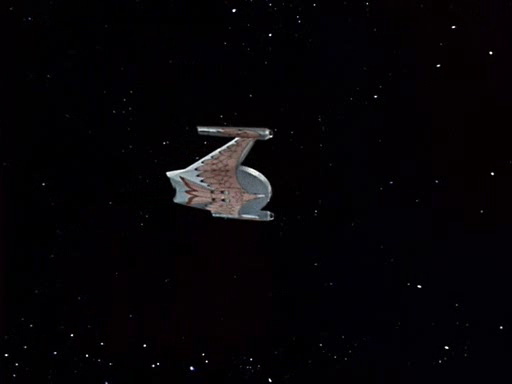
I’d be surprised if, after A Quality of Mercy already did so – and did it quite spectacularly – Strange New Worlds would return to Balance of Terror for a *second* time… especially if it’s another time-travel plot. However, after “but it was all just a dream” and other nonsense this season, I suppose anything’s possible, eh?
But we’re speculating about future storylines, and that’s not really a good use of our time!
Orders of Magnitude brought James and Sam Kirk together for the first (real) time this season, and I really enjoyed the way the brothers played off each other. Dan Jeannotte kind of drew the short straw in Strange New Worlds, especially when the show started bringing James Kirk into stories more frequently, but he was well-used here, as Sam added a lot of context to James’ quest to uncover the truth about what happened between their father, George, and Admiral Reeger.
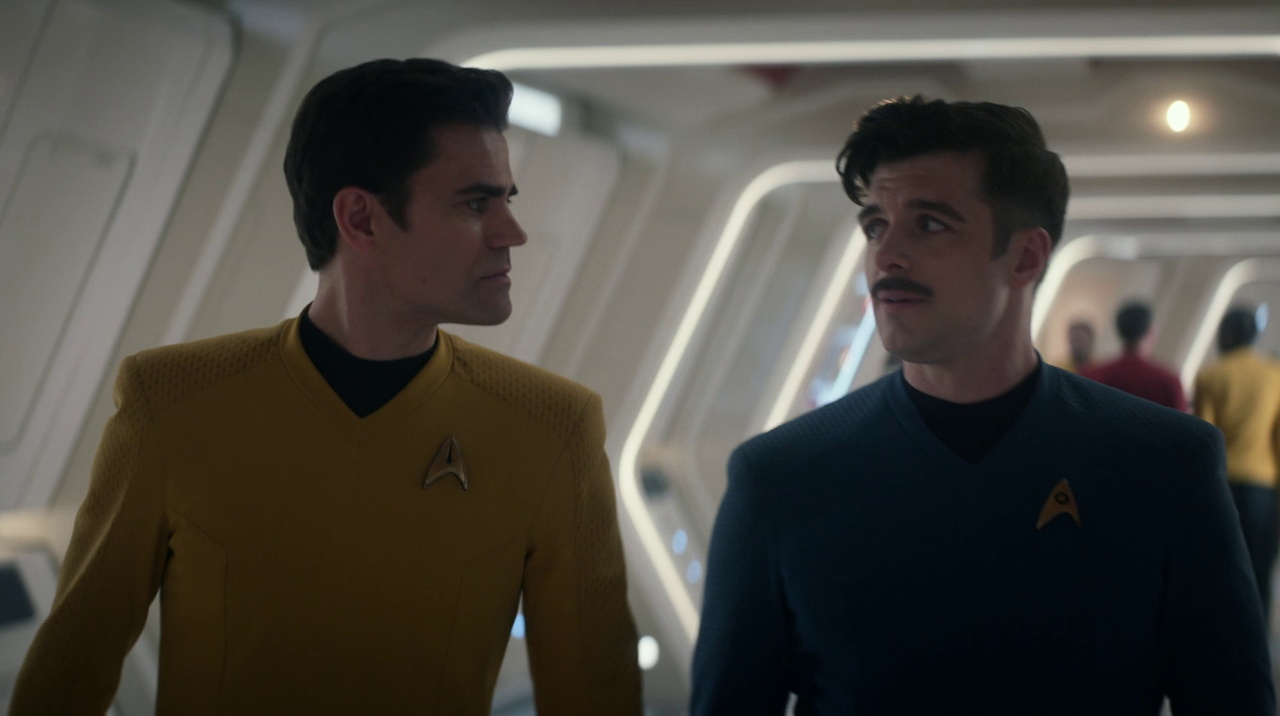
Kirk also got a bit of closure with La’an after the events of The Griffin Incident earlier in the season. I didn’t really like the way this storyline kicked off; Ortegas’ remarks to La’an felt completely wrong and tone-deaf given what happened between La’an and Kirk, and I was just a bit taken aback by the flippant way Ortegas brought up Kirk’s arrival on the ship.
However, Kirk’s line to La’an about how she “did stab [him]” felt suitably in-character for the Kirk we know and love, and I liked that line and the way Kirk kind of got his own back by stunning La’an with her own phaser. Again, if we’re talking about parallels between Kirk and Reeger, there’s another one on the “revenge” side, I guess! La’an having a lucky charm wristwatch, though, seemed to come out of nowhere, and it didn’t really serve any purpose – other than allowing Kirk to come up with a distraction to snatch her phaser. A bit of an oddity. Overall, though, I guess I’d say Kirk and La’an somewhat ended the awkwardness of their time on the USS Griffin, though they might’ve just set up *another* conflict or reason to avoid each other in the process. Not sure I like the implication of La’an – fresh off her breakup with Spock – being allegedly interested romantically in Kirk again, though; we finally dealt with that back in Season 2.
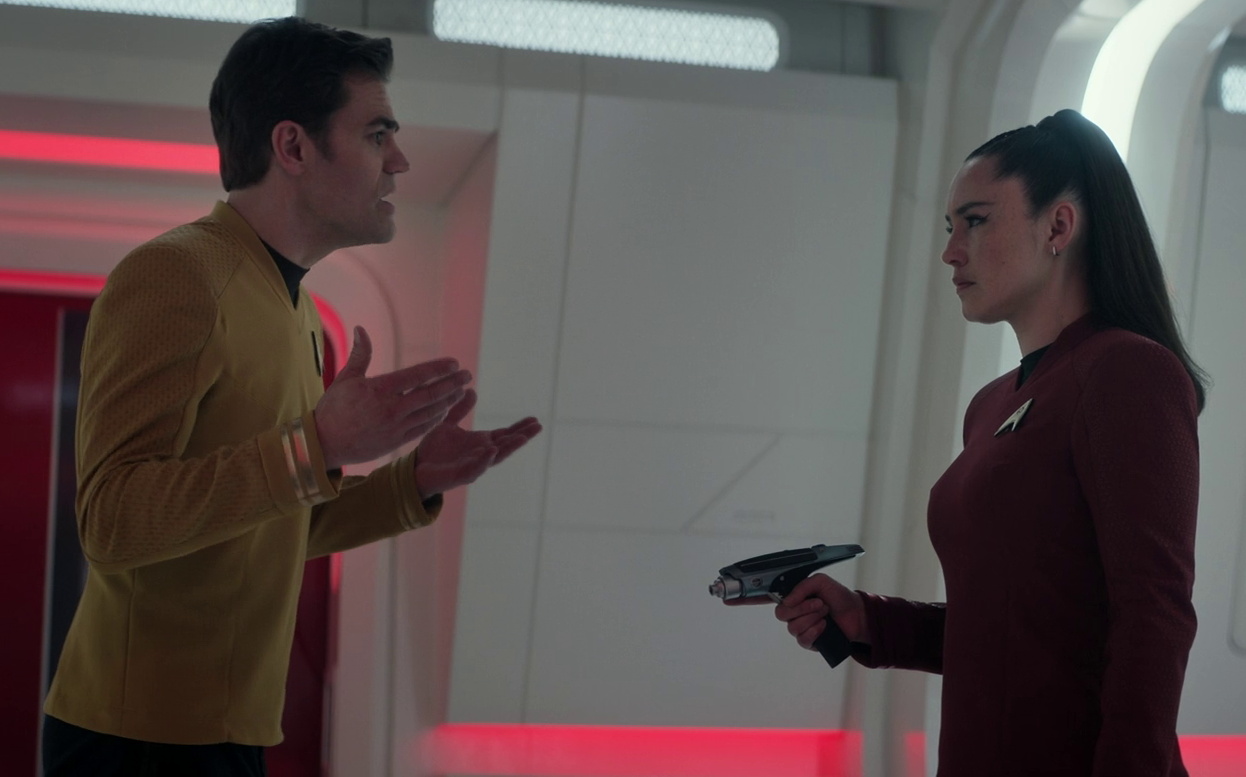
Most of the other characters got relatively minor roles this time, which is okay. I wasn’t clear whether Pike and/or Una knew what Uhura was planning to do when she began her feint to take on the Andorians; I read the scene as Pike *not* knowing, otherwise he might’ve volunteered to do something himself. And for Uhura’s arc, I think it works better if we say that Pike and Una didn’t know what she was planning.
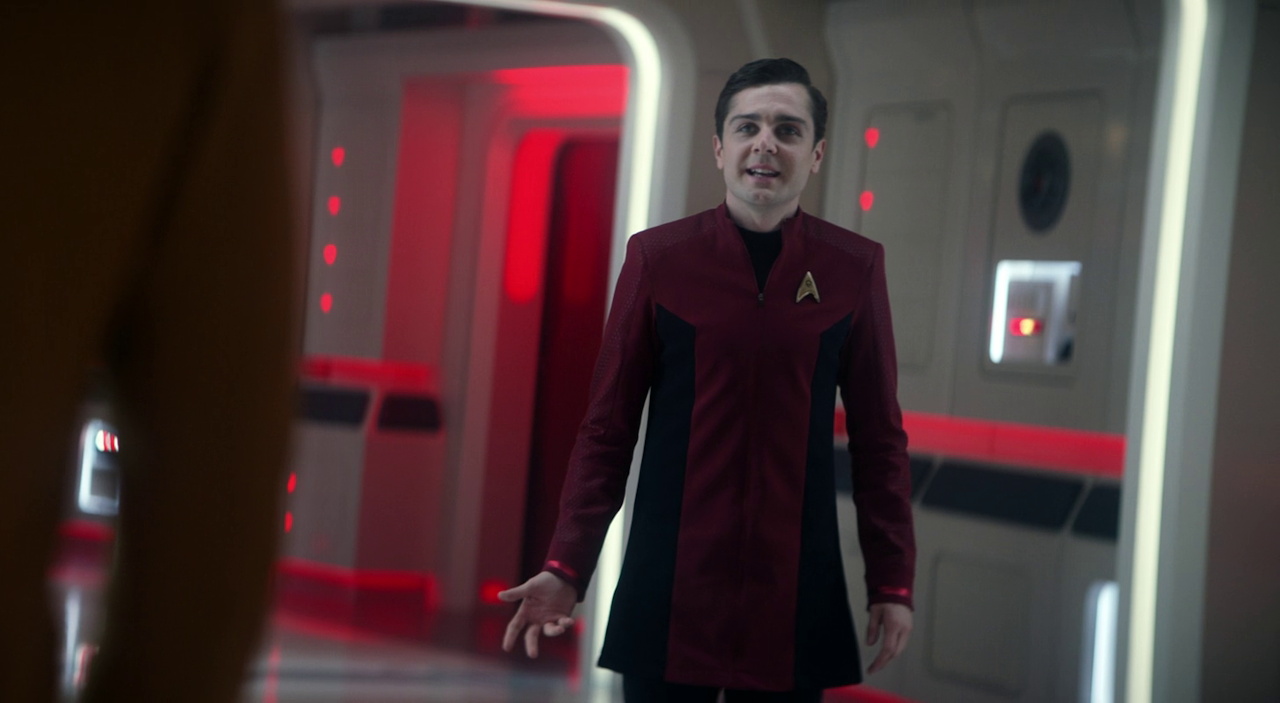
Pelia was absent, which was a bit of a shame – I always like seeing her, and I think she could’ve been an interesting character for Kirk to consult or for Reeger to boss around. However, I liked the moment we got with Scotty this time – and his appearance in the skant variant of the uniform. He looked cute like that, and I think it kind of fits with his dress uniform kilt that we saw in Season 2 (or 3?)
So let’s wrap things up.
Orders of Magnitude was an action-packed, exciting episode featuring a great “badmiral” as an antagonist. It had enough narrative similarities to Star Trek’s past to feel a lot more celebratory, at this milestone anniversary moment, than last week’s soap opera mess, and its Uhura storyline in particular did a lot to justify the show’s place in the timeline and prequel status. Even if we never get to spend another second with Uhura (and I certainly hope and expect that we will, by the way!) we can now consider her character growth and prequel arc to be complete.
And for Kirk, while I don’t think he grew or changed as much over the course of his adventure as Uhura did, Orders of Magnitude established and/or cemented important character traits that will go on to be important further along his character journey in The Original Series and beyond, adding to that sense that Strange New Worlds is finally starting to justify bringing Kirk in for a prequel arc. His clash with Admiral Reeger furthers a “challenge to authority” character trait that we know Kirk has, and his willingness to bend and break the rules is something we’ve seen countless times in The Original Series, The Animated Series, the movies, and more.
I have not been Strange New Worlds’ biggest fan or cheerleader this season. In fact, I’m pretty disappointed with more than half of the episodes we’ve gotten so far, for a variety of reasons. I don’t think some of the “big swings” and genre spoofs have worked as well as they could’ve, and I don’t think the writing has been top-quality, either, unfortunately. So it’s great to be able to put my hand on my heart and say that Orders of Magnitude joins Off-Hour and Human Best Friend as one of “the good ones;” episodes from this season that I’ll happily return to for a re-watch in the months and years ahead!
Next week, Strange New Worlds promises “a genuine fantasy world” and “fairy tale” in Once La’an A Time. Could this be the moment where La’an gears up for an exit from the Enterprise, as I’ve repeatedly speculated? I guess we’ll have to tune in to find out! Though I confess, I feel echoes of Season 1’s The Elysian Kingdom already, and after such a solid, upstanding, and “Star Trekky” episode this week, I’m not thrilled about a return to the “big swings” and genre spoofs next time. But I’ll try to approach it with an open mind – and hope to have my doubts proven wrong!
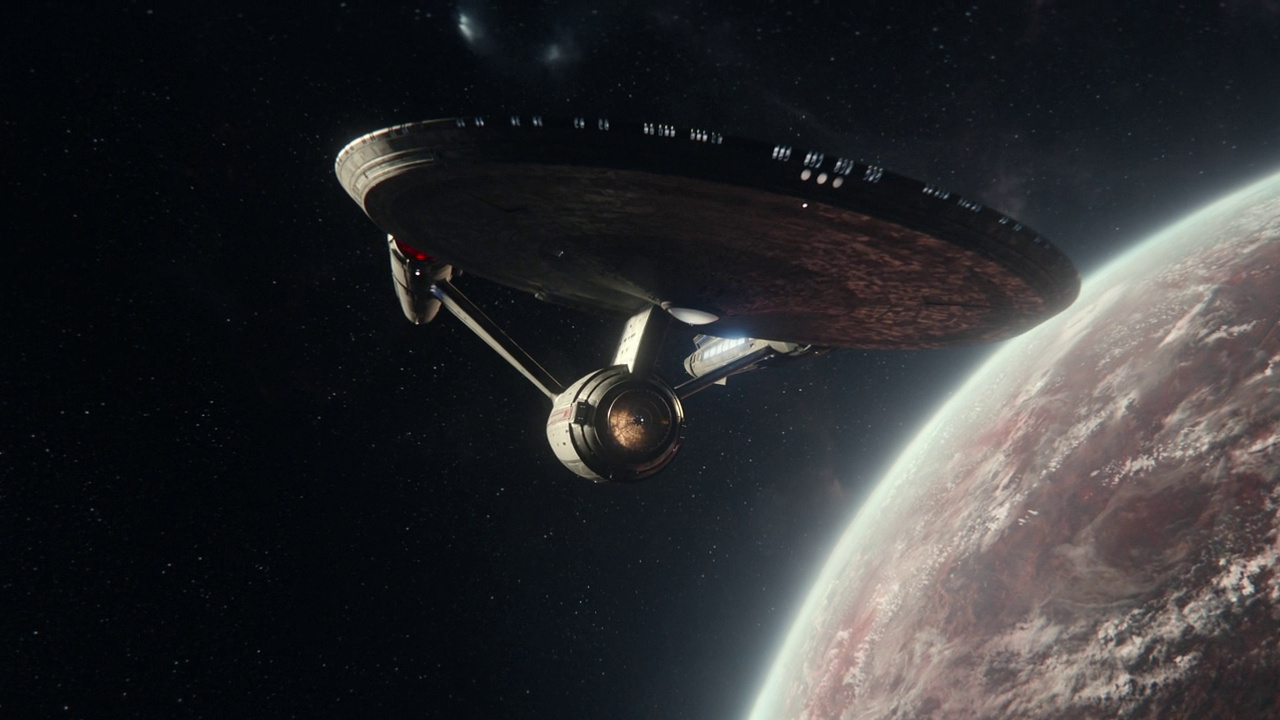
Thanks for joining me this time. I hope this review has been interesting. I’m aware of the fact that, over the season as a whole, most of the episodes I’ve favoured have been the action-packed ones, which I wouldn’t have necessarily expected a couple of months ago. But some of these other genre spoofs and pastiches haven’t worked as intended, at least for me… so here we are, I guess!
I’m glad that, after three of the last four Strange New Worlds episodes have been flawed, tropey, or otherwise just plain unenjoyable, the series has once again demonstrated that it can find its feet. Sure, it’s a bit late in the season, and Orders of Magnitude can’t wipe away some of the disappointments of prior episodes. But as a Trekkie, I sit down to watch Star Trek because I want to have a good time – not because I want to write a 3,000-word teardown of the latest ill-conceived or poorly-executed genre spoof. Orders of Magnitude has been, in that sense, a pleasant and refreshing change of pace!
See you next week for Once La’an A Time… and until then: Live Long and Prosper, friends!
Star Trek: Strange New Worlds Seasons 1-4 are available to stream now on Paramount+ in countries and territories where the platform is available. The first three seasons are also available on DVD and/or Blu-ray. The Star Trek franchise – including Strange New Worlds and all other properties discussed above – is the copyright of the Skydance-Paramount corporation. This review contains the thoughts and opinions of one person only and is not intended to cause any offence.

