Spoiler Warning: There are spoilers ahead for all three seasons of Star Trek: Picard – including the series finale and post-credits scene.
For a series that only ran to thirty episodes across three seasons, Star Trek: Picard spent a lot of time overwriting itself! Across all three seasons of the show there were these weirdly contradictory moments where new storylines would appear from nowhere, completely changing what came before. One or two of these instances might pass by relatively unnoticed, or could feel like little more than nitpicks. But for a relatively short series to have so many… it speaks to something bigger, I feel.
I hope in future we’ll get a Chaos on the Bridge-type of documentary or exploration of what went on behind-the-scenes on Star Trek: Picard, because to say that production was “difficult” feels like an understatement. There were clearly major problems on the production side of the series, and I don’t just mean its pandemic-enforced delays. The evidence for this is the contradictory nature of the series itself, and how at the very least there was clearly no overall plan for how the story should be structured. Consistency is an important element of any good story – and Picard absolutely fails on that measure.
Seasons 2-3 showrunner Terry Matalas with Sir Patrick Stewart and the rest of the cast of The Next Generation.
I have a longer piece in the pipeline about Picard’s abandoned and unfinished storylines, but today I thought it could be interesting to take a short look at ten storylines that ended up being overwritten by some pretty sloppy, messy writing that failed to build on the foundations that had been laid in earlier episodes and seasons.
As always, a few caveats. If you loved all of these stories and felt they were perfectly-executed, or if you hated the original setup and feel that it was right and fitting to overwrite or ignore it, that’s okay! We all have different opinions about what makes for a good Star Trek story, and I’m not trying to claim that I’m somehow objectively right and that’s the end of the affair. In several cases, I’d actually agree that the overwrite or retcon was better than what had been previously established. This is all just the opinion of one old Trekkie, and as I always say, there ought to be room in the Star Trek fan community for polite discussion and disagreement! Although I have my issues with Picard, particularly when it comes to the show’s second season, by and large I’m a fan not a hater.
So with all of that out of the way, let’s take a look at some of Picard’s weirdly contradictory storylines.
Contradictory story #1: Seven of Nine is a captain! Oh wait, no she isn’t…
Seven in the captain’s chair at the end of Season 2.
At the end of Season 2, Seven of Nine was breveted into Starfleet by Picard as Captain of the Stargazer. This story point was already a bit… odd. Firstly, it raises the question of why, if offering a brevet position to someone outside of Starfleet is so simple, Admiral Janeway didn’t do that for Seven years ago. It also seemed unnecessary, as with Picard on the bridge, the Stargazer already had a senior officer present who could give orders.
But this already flimsy setup ended up being overwritten by the very next episode – when Seven was bumped down to the rank of commander and found herself serving as first officer of the Titan. There are a lot of contradictions in Picard, but this one feels even more peculiar because it’s something that literally changes from one episode to the next – episodes that, in spite of being one season apart, were produced and filmed at the same time.
Contradictory story #2: Data’s dead. Deader than dead. Lol jk, he’s alive again!
Data awaits his final shutdown.
One of the few redeeming features of the two-part Season 1 finale was the laying to rest of Data, and giving him the emotional send-off that Nemesis didn’t have time to do justice to. It went a long way to making up for other deficiencies in the rushed and muddled end to Season 1, and the sequences with Picard and Data in the “digital afterlife” were powerful and deeply emotional.
But despite Data being as dead as it’s possible to be in Star Trek, with both his physical body and the surviving part of his consciousness having been destroyed and shut down respectively, Season 3 resurrected Data. We’ll have to go into this storyline in more detail in the future, because there’s a lot more to say. But for me, Data’s resurrection never really found a narrative justification, and it felt like the showrunner and writers wanted desperately to reunite the cast of The Next Generation – at any cost.
Contradictory story #3: Welcome aboard the Stargazer! Wait, I mean the Titan…
The USS Titan.
In Season 2, the ship that Picard and co. didn’t spend enough time aboard was the USS Stargazer. In Season 3, they jumped over to the Titan – even though the sets were all the same (with a few minor tweaks here and there). I don’t really understand why this happened. What was the point of setting Season 3 aboard a nominally different starship? The exact same setup could have brought Riker and Picard to the Stargazer as it did to the Titan.
If the two ships had significant aesthetic differences, maybe it would be okay. And compared with some of the other points on this list, I admit it’s relatively minor. But it still feels odd to introduce the new Stargazer, build CGI models for it, and only use it in one-and-a-bit episodes.
Contradictory story #4: Q’s dying… oh wait, no he isn’t.
Q at the end of Season 3.
I know what you’re thinking: Q already explained his “return” by telling Jack Crusher not to think about time in a linear fashion. While that’s a perfectly rational in-universe explanation for Q’s return at the end of Season 3, it doesn’t get around the fact that Q, whose death was such a vital part of the entire plot of Season 2, is a profoundly odd choice of character to use for that one epilogue scene.
Picard’s writers pinned the convoluted and disappointing story of Season 2 on Q, and Q’s entire motivation was his imminent death. To undo that – even if there’s a technical explanation for it – only a few episodes later feels wrong. It undermines the already-weak story of Season 2 and makes me wonder what the point of it all was.
Contradictory story #5: The Borg are back! The Borg are back! The Borg are back!
A Borg Cube.
However you look at it, and whatever nitpicky excuses there may be about who are and aren’t the “real” Borg, there’s no getting away from the fact that across its three seasons, Picard re-introduced the Borg three times. All three of the stories rely, either in whole or in part, on the Borg, and while Picard himself has a connection with the Borg after the events of The Best of Both Worlds and First Contact… there’s a whole galaxy out there filled with alien races that the show’s writers and producers could have used.
While Season 3’s Dominion/changeling rug-pull is probably the worst example of this, it really speaks to a broader problem with the show’s production. Picard’s writers, especially in Season 3, were unwilling to abide by what the show had already set up. The Borg are great fun, don’t get me wrong, but by the time we got to yet another Borg story in Season 3, I was feeling burned out.
Contradictory story #6: The mysterious anomaly has set up a fascinating story! Let’s never mention it again.
Led by the Borg, a Federation fleet stops the anomaly.
The story of Season 2 was bookended by a mysterious anomaly that the Jurati-led Borg faction believed could be an attack against the Alpha Quadrant. Once the anomaly had been stopped, the Jurati-Queen promised to take her Borg faction and stand watch over the anomaly as a “guardian at the gates.” Her Borg faction were even granted provisional membership in the Federation as they did so.
This story felt like it had huge potential. Who could have been powerful enough to create a weapon on that scale? How would Picard and his friends be able to defeat them? What would it be like to see a Federation-Borg alliance? But alas, this storyline was dumped, orphaned, and never mentioned again. Was no explanation ever written? Why end Season 2 on this cliffhanger if it was never going to be resolved?
Contradictory story #7: Soji’s a massively important character… let’s dump her.
Promo photo of Isa Briones as Soji.
Soji played a huge role in Season 1, serving as both the reason for Picard’s mission and later as someone who needed to be talked down from making a mistake. We spent a lot of time with her in the show’s first season, watching as she was manipulated by Narek, as she learned the truth of her own origin and who her people were, and as she came to work with and respect Picard.
It was disappointing that Soji was essentially forgotten after the end of Season 1, with a barebones cameo appearance and nothing more. Isa Briones got to play a minor role in Season 2 as the daughter of antagonist Adam Soong, but this storyline was samey and boring. As a new, young character – and a synthetic life-form – Soji had huge potential. It’s such a shame that a role couldn’t be written for her after Season 1.
Contradictory story #8: Picard has a new relationship with Laris! No wait, Laris has fucked off and now he has a kid with Dr Crusher.
Laris and Picard at the end of Season 2.
The entire story of Season 2 – its raison d’être, at least according to Q – was that Picard was alone, prevented by his childhood trauma from being able to find love. At the end of the season, after ten episodes of shenanigans in the 21st Century, Picard finally returned to his vineyard – and to Laris. The two seemed ready to embark upon a new relationship together.
But nope! Laris made a small cameo appearance at the beginning of Season 3, and was never mentioned again. Picard’s story in Season 3 focused on his past relationship with Dr Crusher, a relationship that led to him having a son he’d never met. The season’s epilogue even showed Picard and Dr Crusher jointly escorting their son to his first Starfleet assignment – with Laris nowhere to be found. As I said above: Season 2 was already a weak, flimsy story. Undermining its ending like this was a poor decision.
Although I wasn’t thrilled to see Elnor killed off in the first half of Season 2, as time went on, it seemed to be working. Raffi’s story of coming to terms with loss and grief was one of Season 2’s stronger elements, and while I would’ve still said I was disappointed in Elnor’s wasted potential, at least his loss had mattered. Until it was all undone with seconds to spare.
If Elnor had a major role to play in Season 3 – and there was absolutely space for him – then I could at least have understood this reversal. But after Elnor was resurrected, he got one very brief scene in which he looked confused on a viewscreen, and another in which his dislike of a beverage made him the butt of a joke. After that, Elnor disappeared from Picard never to be seen or mentioned again. What was the point? Why undo a powerful story for the sake of an overdone sight gag?
Contradictory story #10: Riker and Troi are happy and settled on Nepenthe. Just kidding, they hate it there.
Picard approaches Riker’s outdoor kitchen.
Nepenthe might be my favourite episode of Season 1. It slowed things down, stepped away from some of the drama, and reintroduced us to Riker and Troi – now happily married and living peacefully outside of Starfleet. In spite of the loss of their son, Riker and Troi seemed settled on Nepenthe with their daughter in a home that was important to their son and their family. It was a surprise, to say the least, when Season 3 tried to undo all of that.
In the episode Surrender, Riker and Troi were reunited as captives aboard Vadic’s ship. And while imprisoned, they both spoke about how they hated the “creaky old cabin” that had been their home. The end of the season implied that one or both of them may be back in Starfleet, and all the emotional storytelling present in Nepenthe was taken away.
So that’s it!
Dr Jurati on stage in Season 2.
Although there were some interesting stories – and some complete ones – overall, it’s not unfair to call Star Trek: Picard a contradictory series, one that either intentionally or unintentionally overwrote or ignored key characters and storylines. We’ll talk about some of these in more detail on another occasion, but for now I think we’ve covered the basics.
Picard was clearly a troubled production, one that jumped from one writing and production team to another, and that’s part of why the series as a whole feels so contradictory. I think I could overlook one or two of these things – and I might even support the decision to drop a character or change a storyline that wasn’t working or that failed to resonate with audiences. But for a series that ran to a mere thirty episodes across three seasons… we shouldn’t be able to pull out ten large contradictions like this.
Stay tuned, because I have a lot more to say about Picard even though the series has concluded! A longer retrospective is in the pipeline, and I’ll also be taking a look at abandoned and unfinished storylines, too.
Star Trek: Picard Seasons 1-3 are available to stream now on Paramount+ in the United States and other countries and territories where the service is available, and on Amazon Prime Video in the UK and around the world. The Star Trek franchise – including Picard and all other properties discussed above – is the copyright of Paramount Global. This article contains the thoughts and opinions of one person only and is not intended to cause any offence.
Spoiler Warning: There are spoilers ahead for Star Trek: Picard Seasons 1-3. Spoilers are also present for the following Star Trek productions: The Wrath of Khan, The Search for Spock, The Next Generation, Deep Space Nine, Voyager, Discovery, and Prodigy.
So this is it, then! This is the last theory update for Season 3, the last ever theory update for Star Trek: Picard in general, and the final part of a series of theory-crafting articles that I began writing when Picard’s first season kicked off in January 2020. Are you as emotional as I am?
There were two pretty big theory culls earlier in the season, so we arrived at the finale with only eleven theories that remained on the list. Of these, one counts as confirmed, but the rest were debunked – or simply ignored entirely. With no more Picard on the schedule, we’ll have to retire all of these theories.
The Enterprise-G.
If Star Trek returns to the 25th Century in the next couple of years – perhaps with a Picard spin-off that fans have been asking for – it’s possible, I suppose, that such a series might revisit characters, locations, and factions from Season 3. But I wouldn’t bet on it… and some of the things we were hoping to see resolved from Season 2 (and even Season 1) are all but certain to be abandoned now.
One of the disappointing things about Picard as a whole series is the abandonment of certain characters and storylines, particularly main characters and story points that appeared to be major. Although the way Season 3 was structured always meant that it was a remote possibility that any of that could be addressed in the final episode, there are still things I’d wanted to see resolved!
Riker, Picard, and Geordi bid farewell to the Enterprise-D.
But all of that is for the birds now! Our task today is to wrap up the remaining theories so we can draw a line under this series of articles. Although we netted some big theory wins this season, we’re finishing up with a whole lot of theories that didn’t pan out. I wouldn’t say I was overly attached to any of them – but several would’ve been fun had they come to pass.
As I always say, this has just been a bit of fun! Serialised storytelling has its drawbacks, but one thing I’ve enjoyed across all three seasons of Picard has been that the show has lent itself to this kind of theory-crafting and speculation.
Without any further ado, let’s jump into the list for one final time!
Confirmed theory: At least one more unannounced character will appear.
An emergency transmission from a familiar voice!
I’m claiming this one as a win for both Q’s appearance in the epilogue and for Walter Koenig’s audio-only role as Anton Chekov! The son of Pavel Chekov, Anton was the Federation President whose message was heard as the crew of the Enterprise-D raced to Jupiter to confront the Borg. It’s fantastic to think that, more than fifty-five years after his first Star Trek appearance, Walter Koenig was able to return and play a role in the finale of Picard.
However, I was disappointed that we didn’t get to see anyone else. There were multiple mentions of Admiral Janeway in earlier episodes, and a perfect opportunity presented itself in the epilogue for Guinan to appear at her bar. A returning character could’ve also joined the crew of the Enterprise-G under Seven’s command, or we could’ve seen a familiar face battling the assimilated fleet over Earth. Picard did well with cameos and returning characters across Season 3 as a whole, though.
Debunked theory #1: The absences of characters from Seasons 1 and 2 will be explained.
Elnor in a promo photo for Season 2.
I held out hope all season long that someone, somehow, in some way, might’ve explained why Elnor, Soji, and the Borg Queen-Dr Jurati hybrid weren’t joining Picard’s mission or taking part in the story. However, none of these characters – who played major roles in Seasons 1 and 2 of the series – were so much as mentioned. The finale was the last chance for it to happen, but it didn’t.
In the future, when we dissect the troubled, disjointed production of Picard in more detail, I think we’ll have to talk about the waste of characters like Soji and Elnor – characters who absolutely could have been included here. Think how much more impactful it might’ve been to see Elnor as one of the assimilated youngsters, having spent three whole seasons with him, instead of the relative newcomers that we got in the story. There’s a lot more to say about this – but we’ll leave it for another time when we can discuss it in more detail.
Debunked theory #2: The Borg and/or the rogue changelings are responsible for the mysterious anomaly seen in Season 2.
The anomaly at the end of Season 2.
Another abandoned idea that Season 3 didn’t revisit was the mysterious anomaly from Season 2. This storyline – like others from both Seasons 1 and 2 – is now orphaned, unlikely to be revisited. Though it was long past time for the mysterious anomaly to have been incorporated into the plot in a big way, I still felt there was a possibility that it might be mentioned. Someone might’ve explained that it was the Borg’s first attempt to attack the Federation, for example.
Getting more detail on the mysterious anomaly was one of my requests of Season 3, and it’s disappointing that this storyline was abandoned with no resolution. The anomaly kick-started the plot of Season 2, and it was one of the few potentially interesting narrative points from an otherwise disappointing season. Being left with no explanation for something so seismic is disappointing – and another piece of evidence for how poorly-managed Picard’s overall production has been.
Debunked theory #3: Picard will donate his golem body to Jack.
Jack with Picard in the season finale.
I came up with this idea when Jack was first misdiagnosed with Irumodic Syndrome earlier in the season. Even though that diagnosis was later proven to be incorrect, the brain abnormality that Picard and Jack shared still had the potential to prove fatal – as it did for Picard in Season 1. With that in mind, I wondered if the only way Jack could be saved would be for him to be transferred into a golem body.
Picard could have made the ultimate sacrifice for his son, donating his golem to Jack as a final act of parental love. There had been speculation for years that the series would end with Picard’s death, but after the fake-out in Season 1 I felt it would have been hard to pull off killing Picard for a second time. This was one way it could have happened, though! However, the epilogue explained that Dr Crusher came up with a cure for the Borg modification, and that’s that.
Debunked theory #4: At least one main character will be killed.
The main cast of The Next Generation Season 2.
As much as I’d been expecting this, in the end it turned out that the finale and Season 3 as a whole were a bit of a throwback! Television storytelling has gone through a significant evolution since The Next Generation premiered in 1987, and main characters should no longer be considered “safe” just because of their status. With a dangerous mission at hand – and the Borg involved – it seemed plausible to think that at least one of our heroes would be killed off.
Season 3 did find time to kill off Ro Laren and Captain Shaw, but none of the main characters from The Next Generation found themselves on the chopping block. In fact, the season actually resurrected the long-dead Data and even the Enterprise-D, meaning that by the time the credits rolled the death toll for main characters stood at -2!
Debunked theory #5: The Jurati-Borg will ally with Picard and the Federation.
The Borg Queen-Dr Jurati hybrid.
At the end of Season 2, Dr Jurati’s Borg faction asked for provisional membership of the Federation and promised to watch over the unexplained anomaly. With the Federation seemingly staring defeat in the face as a huge assimilated fleet attacked Earth, I wondered whether Dr Jurati’s Borg might show up to render assistance. The anomaly seemed to be relatively close to Earth, based on its Season 2 depiction, so it seemed possible that she might’ve been able to help.
We knew going into Season 3 that Alison Pill wouldn’t be reprising her role – so that always meant that this theory was unlikely, I guess. But even so, it feels incredibly wasteful to have abandoned that Borg faction and the mysterious anomaly, especially when they could have been incorporated into the story in some way. Even if they showed up too late, after Picard had already saved the day, it would’ve been a fun addition.
Debunked theory #6: Deanna Troi will use her “pain removal” skill on Jack.
Troi in The Last Generation on the bridge of the Enterprise-D.
Earlier in the season, it had been established that Troi had the ability to “enter” someone’s mind and remove pain – a skill superficially similar to Sybok’s, I suppose. With Season 3 dedicating time to this revelation, I wondered whether it might come into play at a crucial moment later on, with Troi using this skill to aid Jack in some way. She might’ve been able to sever his connection to the Borg or even cure him of his Borg-induced brain abnormality.
None of that came to pass, however. In fact, Troi’s role in The Last Generation was one of the episode’s least impressive and most clichéd moments, as seemingly from nowhere, as if by magic, she was able to use her empathic ability to pinpoint the location of Riker and the rest of the away team. I’m not disappointed that this “pain removal” angle wasn’t included… but I am a tad disappointed in the way Troi was used in the finale.
Debunked theory #7: Floaty McFloatface will be back.
Nope.
Because of the truly abrupt way in which Vadic’s story ended, I wondered if we might get to learn a little more about Floaty McFloatface – the nameless character who may have been some kind of envoy or go-between for Vadic and the Borg Queen. Although Vadic had died and the Shrike had been destroyed, we hadn’t seen Floaty McFloatface killed – nor was it even clear what Floaty McFloatface was – so it seemed possible, at least, that we might’ve got some kind of resolution to this partial character.
The Last Generation barely mentioned the changelings at all, with a very brief appearance of a rogue changeling being detained in the epilogue being all we got. There was definitely more to say about this faction, including how they came to work with the Borg and what will happen to the surviving members of the conspiracy.
Debunked theory #8: Floaty McFloatface isn’t a changeling.
Floaty McFloatface in its goo form.
As above, I speculated that Floaty McFloatface may not be a changeling itself, but might’ve been a Borg or some kind of representative of the Borg sent to Vadic by the Queen to keep an eye on her. Floaty McFloatface clearly had power over Vadic – both in a figurative and literal sense – and I’d have liked to know at least a little more about how all of that worked.
We’ll have to discuss Vadic in more detail on another occasion now that the season has ended, because there are some pretty big issues with the way her involvement in the story ultimately landed. But for now, suffice to say that this theory is debunked and we can assume that Floaty McFloatface either died with Vadic or died when the Shrike was destroyed a few moments later.
Debunked theory #9: Odo will make an appearance – somehow.
Odo in Deep Space Nine.
Odo had been mentioned by Worf – albeit rather obliquely – earlier in the season, and with the changelings playing a significant role in the story that, in spite of Vadic’s death, was yet to be wrapped up, I felt it was at least possible that the show’s writers might’ve included Odo in some kind of epilogue sequence. It didn’t happen, though – and I’m actually really glad about that!
Season 3 didn’t lean into Deep Space Nine as heavily as I’d expected after the first two or three episodes, and all of the returning characters were from The Next Generation or Voyager. There was scope to do more with the Deep Space Nine and Dominion War angles, but I’m glad that Odo wasn’t digitally recreated or recast on this occasion.
Debunked theory #10: Other old/classic starships will join the Enterprise-D to face off against the Borg.
The Enterprise-A.
As cool as it was to see the Enterprise-D standing alone against the Borg… imagine how much fun it could’ve been if the ship had been joined by other older vessels. We could’ve seen some of the ships from Geordi’s fleet museum, for example, with the Enterprise-D and Enterprise-A fighting alongside one another for the first time ever. Now that would have been spectacular!
I’m a sucker for the “desperate last stand” story trope no matter how it’s written, and The Last Generation did its thing pretty well. But it would have been amazing if Picard and the Enterprise-D could have been joined by even just one or two other classic/retired starships for this final fight. There must be other ships in Starfleet that weren’t upgraded in addition to those at the museum. Oh well!
So that’s it!
The “Death Star trench run!”
We’ve wrapped up our remaining Picard theories now that the season has come to an end. Although there were a lot of debunkings, across the season I did manage to make a few successful predictions! And above all, I had fun speculating about where the story might go. That was the point of all of this, really, and I’m glad to have been able to follow along with Picard from beginning to end, sharing my theories and speculation with you.
So what’s next? Although my theory lists and episode reviews are over, there’s still a lot to say about Picard’s third season and the series as a whole. When the dust has settled I’d like to re-watch all three seasons of the show in one hit to see how well it works (or doesn’t work) in that format. And I already have a few articles and essays that I’m tentatively sketching out in my head, talking about the third season, some of its narrative decisions, potential spin-off ideas, and much more. So although Picard has come to an end, I hope you’ll check back to see some of that!
All together on the bridge, safe and sound.
And of course there’s more Star Trek to come! Strange New Worlds Season 2 will premiere in June, and we have Discovery’s fifth and final season in early 2024 – plus Prodigy, Lower Decks, Starfleet Academy, and Section 31 to look forward to as well!
For now, though, I’ll end by saying that I hope you had fun following along with my theories this season – and across Seasons 1 and 2, too. I had a great time keeping the theory list up-to-date, coming up with ideas, and speculating about the story that Picard was telling. And who knows… if a certain Legacy pitch gets picked up by Paramount, maybe some of my theories will return in the future! Watch this space, and live long and prosper!
Star Trek: Picard Seasons 1-3 are available to stream now on Paramount+ in the United States and other countries and territories where the service is available, and on Amazon Prime Video in the UK and around the world. The Star Trek franchise – including Picard and all other properties discussed above – is the copyright of Paramount Global. This article contains the thoughts and opinions of one person only and is not intended to cause any offence.
Spoiler Warning: There are spoilers ahead for Star Trek: Picard Seasons 1-3. Spoilers are also present for the following Star Trek productions: The Wrath of Khan, The Search for Spock, The Next Generation, Deep Space Nine, Voyager, Discovery, and Prodigy.
I had a tough old time figuring out what to say about Võx this week. It was simultaneously an incredibly emotional episode that hit all of the right nostalgic notes… and a flawed, trope-laden outing that literally had me rolling my eyes and even laughing out loud. But as Picard and the crew boarded the Enterprise-D and the dust settled… it’s also an episode that has completely decimated our theory list!
You can find my review of Võxby clicking or tapping here – and I hope you’ll check it out if you have time. I’ve shared my thoughts as best as I can… but I’ll be genuinely curious to see how the episode holds up in a year’s time when we’ve had time to process everything that happened this season, and to move on. Will those deeply nostalgic moments still cover up the episode’s flaws?
Jack aboard a shuttle in Võx.
This week we have five debunked theories, three further theories that I’m choosing to retire, and five fully confirmed theories. We also have three theories that I’m calling “semi” confirmed – and the reason for that status is the same in every case: something I’d proposed might be a changeling idea was actually a Borg idea. I got the basic outline more or less right – but called it a changeling plan not a Borg plan. But it’s my list so I’m still calling those “semi” confirmed!
I had a lot of fun last week theorising about what the “ancient evil” surrounding Jack might be – as well as knocking over a couple of popular fan theories that I’d spotted on social media. There’s no such bonus theory to come this week… and as we strike so many theories off of the list, we’ll be going into the finale with only a few remaining on the table!
As always, we’ll start with theories that were confirmed or debunked this week.
Debunked theory #1: Jack has changeling/Founder DNA.
Jack in this week’s episode.
Until we saw the Borg hiding inside Jack’s mind this week, which began the process of unravelling the Borg’s involvement in the story, the “big bad” that Picard and the crew were facing appeared to be a group of rogue changelings. With their focus on Jack, and Vadic appearing to have some kind of personal interest in him or connection to him, it seemed a reasonable guess that Jack might have somehow got changeling DNA mixed in with his human DNA.
Võx debunked this idea, though, explaining that Jack’s condition is in fact the result of Borg biotechnology – something that he inherited from Picard at the moment of his conception.
Debunked theory #2: The rogue changelings are attempting to reach the Nexus.
The Nexus.
This was a total wildcard, and I freely admit that! When we saw James T. Kirk’s body at Daystrom Station in the episode The Bounty, I wondered if that might’ve been a hint at the Nexus – the powerful energy ribbon seen in Star Trek Generations. The Nexus was a gateway to a paradise-like realm… but it also offered the opportunity to travel through time, something that Picard and Kirk both took advantage of.
With no other references to the Nexus or the events of Generations, it always felt like a bit of a long-shot. And if it had come so late in the season, it might’ve felt like a bolt from the blue! But the idea of the rogue changelings looking to use time travel to avenge or prevent their defeat in the Dominion War is an interesting one. Perhaps a future Star Trek story will consider an idea like this one day… or find another reason to return to the Nexus.
Debunked theory #3: Jack has Borg nanoprobes in his system.
Borg nanites as seen in Season 2.
This was completely debunked by Dr Crusher in Võx, as she stated outright that scans of Jack had confirmed that he has no Borg nanites or technology in his system. This revelation makes the Borg even more frightening, in my view, as their biotechnology is clearly light-years ahead of anything the Federation has… and proved to be completely undetectable, too!
Although I wasn’t certain that there was a Borg connection to Jack, it felt like a solid possibility – especially as we headed into Võx. With that in mind, Borg nanoprobes seemed like a reasonable explanation – but it didn’t pan out that way!
Debunked theory #4: Irumodic Syndrome is important to the rogue changelings.
Picard was first told about his susceptibility to Irumodic Syndrome in All Good Things…
The rogue changelings – who we now know were being controlled and/or directed by the Borg – couldn’t care less about Irumodic Syndrome. Picard and Jack don’t actually have the condition after all, it would seem! They wanted Picard’s old corpse and Jack because the anomaly in their brains was latent Borg biotechnology.
The Borg needed Jack to broadcast and amplify their signal, which they did during the Frontier Day event. Irumodic Syndrome was never part of their plan – it was a misdiagnosis by Starfleet doctors who didn’t understand what they were dealing with.
Debunked theory #5: The rogue changelings are planning to cripple Starfleet.
The assembled fleet in orbit of Earth.
Although being assimilated and controlled by the Borg is a crippling blow to Starfleet, that isn’t really what I meant by this theory! In short, I suggested that the rogue changelings’ scheme involved destroying either key front-line ships within Starfleet or blowing up large numbers of ships indiscriminately. When we saw that some rogue changeling operatives had powerful explosives with them, that possibility seemed likely!
We now know, of course, that the plan was for the Borg to assimilate younger Starfleet officers and hack into the connected Federation fleet. It doesn’t seem like the Borg plan to destroy any of the ships under their control – though they did destroy a vessel that managed to escape!
Retired theory #1: Someone on the crew is a changeling imposter.
Picard and the crew aboard the Enterprise-D.
Even though there’s one episode remaining in which I fully expect twists and turns, I’m choosing to belatedly strike this theory from the list. After the deeply emotional reunion at the end of Surrender, and Picard and the crew taking their posts aboard the Enterprise-D this week, I no longer feel that this kind of storyline would work. With less than an hour left to wrap up all of the storylines in play, adding something like this into the mix would also complicate the story unnecessarily.
As Võx has moved away from the rogue changelings to re-orient the story around the Borg, I suspect we won’t hear much more about them at all. There really ought to be something to wrap up that side of the story… but with the Borg planning a conquest of Earth, this theory now feels beyond the realm of possibility.
Retired theories #2 and #3: The rogue changelings are also planning attacks on the Klingons, Romulans, Bajorans, and Cardassians.
A joint Federation-Klingon task force during the Dominion War. Image Credit: JTVFX on YouTube
These two theories are also being retired now that we know the Borg are the ones directing this conspiracy. In short, I’d suggested that if the changelings were on the march, they might be seeking revenge for their defeat in the Dominion War. If so, it seemed logical to think that they might also be targeting other factions beyond the Federation who fought alongside them.
The Klingons and Romulans were the main ones, as they’d been part of the anti-Dominion alliance. But the Cardassians turned on their Dominion allies near the close of the war, and while officially neutral, Bajor clearly sided with the Federation, too. But now that we’ve seen the truth behind the conspiracy, this idea seems to be busted!
Semi-confirmed theory #1: The rogue changelings didn’t want Jean-Luc Picard, they wanted Locutus.
Locutus of Borg.
The conspiracy necessitated the use of Jean-Luc Picard’s corpse… but not for any reason to do with Picard himself! Borg biotechnology that had been installed or generated inside of Picard’s brain while he was assimilated was key to the conspiracy, meaning that the rogue changelings really needed the body of Locutus.
It seems as if this DNA/brain modification isn’t something that all Borg receive, otherwise the conspiracy could’ve targetted someone like Seven of Nine – or simply used any other Borg drone or ex-Borg. So it really was Locutus who was the key to the success of this scheme.
Semi-confirmed theory #2: Jack is a “sleeper agent.”
Jack in Võx.
The Borg clearly knew of Jack and his potential long before this conspiracy got started. They didn’t necessarily “plan” his conception – and it remains unclear whether any other child of Picard’s would have been similarly useful to them. But when the Borg learned that Picard had a child, they realised they could take advantage of his abilities.
In that sense, Jack is a “sleeper agent;” an asset that the Borg had within humanity unbeknownst to anyone in Starfleet – or even to Jack himself. Jack would never have voluntarily participated in the plot – though his decision to seek out the Borg Queen had the unintended consequence of the scheme succeeding – but the Borg Queen planned to use him for that purpose.
Semi-confirmed theory #3: The Borg hacked into the connected Federation fleet.
The USS Titan.
Having a connected fleet that could operate as a single entity always felt like a dangerous idea – and so it proved! The Borg were able to tap into Starfleet’s connected armada and turn the entire fleet against the Federation – even destroying ships that broke formation and tried to escape. This had been set up by comments about the connected nature of newer Starfleet vessels earlier in the season.
The Borg are a fascinating warning about the dangers of out-of-control technology, and if we extend that metaphor to their takeover of the fleet, there are some very interesting real-world parallels as we continue to work on artificial intelligence out here in the real world!
Confirmed theory #1: The “ancient evil” was the Borg Queen.
Well, look who it is!
I tackled this question in last week’s theory update, and expanded it in a standalone piece in which I considered a few other ideas – and debunked a few theories that I felt certain weren’t correct! It never seemed plausible to me that Species 8472, the Romulans, or the Pah-Wraiths could have been introduced into the story at such a late stage – not without any kind of hint or suggestion that they were implicated in the conspiracy. The Borg – and the Borg Queen specifically – seemed the most likely “ancient evil” to me, and so it proved!
There had been hints and teases all season long; a trail of breadcrumbs to follow that led to this revelation. While we can (and will) criticise the decision to bring the Borg into play for the third season in a row, the timing of this revelation coming so late in the season, and myriad other issues with this storyline, I can’t really find fault in the setup.
Confirmed theory #2: Jack’s hallucinations, red eyes, and superpowers came from the Borg.
Jack’s glowing red eyes.
There was a bit of a misdirect here, as the colour red isn’t one we’d really associate with the Borg. Nor are Jack’s other abilities, come to that! But given that I was always suspicious of some kind of Borg involvement or connection to the events of the season – going all the way back to before the season premiere – it seemed plausible that what was happening to Jack was caused by the Borg.
The biotechnology deployed by the Borg is unlike anything we’ve ever seen them use – but that’s a pretty cool idea, and it shows once again just how much more advanced the Borg are when compared with the Federation. In addition to tapping into combat prowess he didn’t know he had – which may have come from assimilation victims, if you think about it – Jack also heard the voice of the Borg Queen and possessed the ability to “assimilate” other humanoids, albeit only briefly. The glowing eyes were just a symptom.
Confirmed theory #3: Captain Shaw died.
Captain Shaw meets his end.
Poor Captain Shaw! After surviving far longer than I’d expected, he was finally killed off in Võx, with his death buying time for Picard and the others (sans Seven and Raffi, for some reason) to escape the Titan. Captain Shaw had been an interesting character in the first three or four episodes of the season, but had felt superfluous for a long time. I’d been expecting his death from the very first episode, initially wondering if he might be killed off to allow Picard, Riker, or Seven to sit in the captain’s chair.
At this late stage in the story, Shaw feels like the easiest main character to have killed. And while his death had an impact and showed the danger faced by Picard and everyone else in Starfleet… it came a bit late in the game for me. As a character who hadn’t had much to say or do for several episodes, Shaw’s death was perhaps less significant than it could’ve been. But regardless – I got this prediction right!
Confirmed theory #4: Another unannounced character returned!
Admiral Shelby!
After Ro Laren and Tuvok had appeared earlier in the season (and of course Lore and Professor Moriarty, who had been teased in pre-season trailers, appeared too), we got to see Admiral Shelby this week. Shelby appeared in the classic episode The Best of Both Worlds, where she was one of Starfleet’s biggest experts on the Borg. In an episode in which the Borg returned, there was something fitting about bringing her back – as indeed there was at having her (apparently) killed by the Borg.
There were also name-drops of a couple of other characters, including a starship seemingly named after Dr Pulaski – the doctor who joined the crew of the Enterprise-D for one year. This one is going to be recycled back into the main theory list, though… because there’s still time for another surprise or two before the season is over!
Confirmed theory #5: The Borg are involved.
Called it!
After the season premiere, in which there were a handful of Borg references, this theory was added to the list. And it turns out that those hints and teases actually were intended to jump-start the process of setting up the Borg to be the season’s main antagonist. We can argue that this reveal came too late in the story, and with only one episode left it might not be the most satisfying conflict, but at the end of the day it’s still pretty cool to have Picard and the crew facing off against the Borg once again!
As above, this is something I feel was pretty well-established by earlier episodes in the season, even as the main story seemed to focus on Vadic and the changelings. There are issues with the way this was done, particularly in terms of timing and pacing, and we’ll have to unpack all of that in the future. But for now we can call this one confirmed!
So those theories were confirmed, debunked, or have been retired.
Phew, that was a lot! There are still a few theories that remain in play, though – and Võx threw up a couple of new ideas, too. So let’s jump into the main theory list!
Theory #1: The Jurati-Borg will ally with Picard.
The Dr Jurati-Borg Queen hybrid.
The events of Season 2 were briefly mentioned earlier in the season, but it’s worth remembering that the Jurati-Borg are still out there, potentially as provisional Federation members in relatively close proximity to Earth. Maybe they will ride to Starfleet’s aid and help protect Earth against their Borg brethren.
We still need to get closure on Dr Jurati’s story, which ended with a kind of “see you later” as she promised to watch over the mysterious anomaly at the end of Season 2. Perhaps the final episode of the series could bring her back – along with her Borg offshoot faction.
Theory #2: Other old/classic starships will join the Enterprise-D to face off against the Borg.
The Enterprise-D departing the Fleet Museum.
One starship against the entire Federation fleet? The Enterprise-D will be obliterated in a furious storm of quantum torpedoes the moment it arrives at Earth. Galaxy-class ships aren’t especially manoeuvrable, either… so if Picard is going to take a stand and defeat the Borg, he’s going to need allies.
Perhaps there are other ships in the fleet that weren’t upgraded, or other mothballed vessels that could join the Enterprise-D. Ships with primarily older crews, or vessels whose transporters hadn’t been meddled with could all – in theory – join in. We’ve already seen some beautiful CGI recreations of ships like the USS Voyager and Enterprise-A… maybe they could join the party?
Theory #3: At least one more unannounced character will make an appearance.
I don’t think we can rule out Morn…
We’ve already seen characters from The Next Generation and Voyager this season – but aside from Worf, there hasn’t been anyone from Deep Space Nine. Could that change? Someone like Miles O’Brien, for example, could make for a great inclusion in the story. We could also get another cameo or two from guest stars from that era – older Starfleet officers who may rush to the Federation’s defence and take a stand against the Borg with Picard.
There are many possibilities for how this could play out – and after the shocking appearance of Wesley Crusher last year, I’m not ruling anyone out as we head into the final episode of the season!
Theory #4: At least one main character will be killed.
Rest in peace…
The demise of Captain Shaw has proved one thing: this is a dangerous, life-threatening situation! As I said before the season began, television storytelling has changed a lot since The Next Generation first aired, and main characters should no longer be considered to be “safe” simply because of their status.
As we approach what seems to be a climactic battle, practically everyone could be in danger! I’d posit that most of the officers who had been “assimilated” are still salvageable, though.
Theory #5: The Borg and/or the rogue changelings are responsible for the mysterious anomaly seen in Season 2.
The anomaly.
With their plot now exposed and out in the open, could we finally learn that the mysterious anomaly from Season 2 was also a Borg/rogue changeling attack? Perhaps it was intended to be a precursor to their scheme, or the thwarting of their attack is what led them to develop this more underhanded plan.
I hope that the series won’t just end without explaining this anomaly… even though I fear that will be the case! It was an important point in the story of Season 2, and is actually one of the few elements from last time that might’ve worked. I’d like to know more about it at any rate – even if the Borg and rogue changelings had nothing to do with it.
Theory #6: Picard will donate his golem body to Jack.
Picard with Jack.
Even if the Borg can be stopped and Jack can be recovered safely from the Borg Queen’s clutches, he still has a brain anomaly that is likely to prove fatal. Although Picard and Jack are not afflicted by Irumodic Syndrome, the Borg biotechnology in their brains is still an issue – and it “killed” Picard back in Season 1.
With that in mind, perhaps Jack could be saved the way Picard was – by being transferred into a golem body. Picard could step up and donate his golem to Jack, saving the life of his son in one final act of parental love.
Theory #7: Deanna Troi will use her “pain removal” skill on Jack.
Deanna with Jack.
A couple of weeks ago we learned that Troi was able to “enter” Riker’s mind and remove from him the pain he felt at the death of their son. This skill feels like it could come in handy for removing something malicious from someone’s brain – and Jack is just the person who might need that kind of help!
Even if Troi can’t physically remove the Borg’s biotechnology, perhaps she will be able to use this skill to prevent the Borg from using Jack in this way again, or at least cover up the symptoms so Jack can live a normal life.
Theory #8: Floaty McFloatface will be back.
Floaty McFloatface.
We haven’t seen Vadic’s boss for a couple of episodes now, and it’s plausible to think that her death means this unnamed character won’t be back. But if the finale is to explain the alliance/relationship between the Borg and the rogue changelings in any degree of detail, it’s at least possible that Floaty McFloatface could be part of that – either by having survived or via a flashback sequence.
I’d quite like to know how the Borg were able to either assimilate or ally with Vadic and her group, and there’s only one episode left for this to be explained!
Theory #9: Floaty McFloatface isn’t a changeling.
Vadic with Floaty McFloatface.
It seems plausible, if not downright likely, that Floaty McFloatface is a Borg, perhaps a representative sent by the Queen to keep Vadic in line. However, Floaty McFloatface always appeared to have changeling-like qualities, and the exact nature of who and what they are hasn’t been fully explored.
As above, it’s possible we’ll get none of this, and that the season will end without going into detail on this half-baked character. But I hope we’ll get to know something about how the Borg and changelings came to work together, at the very least.
Theory #10: The absences of characters from Seasons 1 and 2 will be explained – or at least mentioned.
Soji in Season 1.
Was Elnor aboard the USS Excelsior when it was destroyed? Because that was the ship he was assigned to in Season 2. Where are Soji and her friends from Coppelius? And is the Dr Jurati-Borg Queen hybrid still watching over the mysterious anomaly? These characters were all important in earlier chapters of the story, and while Laris briefly appeared in the season premiere, the others have yet to be so much as mentioned.
It would be a shame if the series were to end without at least mentioning some of these characters – even if they don’t appear in person. They were all important in Seasons 1 and 2, and while Picard seems to have given up on the idea of introducing brand-new characters, developing them, and giving them a chance to take the franchise forward… I’d still like to know why some of these folks couldn’t have joined Picard’s mission on this occasion.
Theory #11: Odo will make an appearance – somehow.
Odo in Deep Space Nine.
I don’t know how I feel about this one. It was sweet to see Worf make reference to Odo in Seventeen Seconds – though the connection could have been clearer, especially for more casual viewers – but I’m not convinced that we need to see Odo for ourselves. The reason for that is simple: the only way we could see Odo is either by re-casting the character or recreating him through some kind of CGI process.
Star Trek has successfully re-cast many characters over the years, so I don’t really take exception to that. But the death of actor René Auberjonois is still recent and fresh in our minds, so bringing Odo back without him just feels… uncomfortable. Although Odo is well-suited to a story in which the changelings are back, I think I’d rather he didn’t appear in person on this occasion. But I wanted to acknowledge that it’s at least a plausible development for the story.
So that’s it!
The Enterprise-D is en route to Earth…
As we head into the final episode of Star Trek: Picard, the theory list has been slimmed down! I’m sure that there will be twists, turns, and unpredictable moments as Picard and the crew of the Enterprise-D battle the Borg for one last time. I have absolutely no idea how they’ll pull it off or turn this dire situation around… so I guess the only way we’ll find out will be to watch The Last Generation when it airs!
I’ll be trying very hard to avoid spoilers before I watch the episode – and I hope you’ll manage to do the same. The finale of Picard is bittersweet, and to think that this is the last time I’ll be writing theories about an upcoming episode of this show… it’s an emotional moment!
As a final note: I always like to end these theory lists by saying that I do this just for fun. I enjoy writing, I enjoy Star Trek, and spending more time in this world is an escape and an enjoyable distraction for me. But for some folks, fan theories can become frustrating or unenjoyable, especially if they get very attached to a plausible-sounding theory that ultimately doesn’t pan out. I have no “insider information” and I’m not trying to claim that anything suggested above can, will, or must be part of Picard Season 3. I fully expect many of these theories to be debunked and for the season to go in wildly unpredictable directions!
Star Trek: Picard Seasons 1-3 are available to stream now on Paramount+ in the United States and other countries and territories where the service is available, and on Amazon Prime Video in the UK and around the world. The Star Trek franchise – including Picard and all other properties discussed above – is the copyright of Paramount Global. This article contains the thoughts and opinions of one person only and is not intended to cause any offence.
Spoiler Warning: There are spoilers ahead for Star Trek: Picard Seasons 1-3. Spoilers are also present for the following Star Trek productions: The Wrath of Khan, The Search for Spock, The Next Generation, Deep Space Nine, Voyager, Discovery, and Prodigy.
Phew! Surrender has finally killed off a whole bunch of theories as we gear up for the final two episodes of Star Trek: Picard. There are still twists and turns to come, of that I’m certain, but this week marks the definitive end for a whole host of theories – several of which have been running for all or almost all of the season!
Quite a few of the debunked or retiring theories were to do with Vadic – and as she died this week, so do they. Vadic’s death was unspectacular, at least in my opinion, and also it feels premature. Vadic died without telling us much of anything, aside from her tortured backstory, and several of these theories still feel like they could have been plausible had we spent more time with the season’s only named villainous character.
Vaporising a dead changeling.
But you can check out my review for my thoughts on Vadic, Surrender in a more general sense, and my unease at the concept of killing the only named villain in the eighth episode of a ten-episode season. You can find my review of Surrenderby clicking or tapping here.
This week we have one confirmation, one semi-confirmation, a whopping five debunkings, and two theories that – while not debunked outright by the events of Surrender – I’m choosing to retire from the list. They now seem completely implausible based on the direction taken by the story. As always, we’ll take a look at all of these first!
Confirmed theory: The rogue changelings are keeping their most important prisoners alive.
Riker and Troi in a prison cell aboard the Shrike.
I have to say that it never seemed to be a realistic prospect that Riker would simply have been murdered after being kidnapped by Vadic – not before he could rejoin the crew and participate in the TNG reunion that pre-season marketing heavily pushed! But the fact that Riker and Troi were being kept alive by Vadic’s crew may also bode well for Tuvok – and possibly for other characters, too.
We saw in earlier episodes that the rogue changelings were killing at least some of the individuals that they replaced – but with all the talk of blood and DNA, it seemed at least plausible that they might keep some of their more important targets alive. Hopefully that includes Tuvok!
Semi-confirmed theory: Worf and Raffi saved Riker and Troi.
A hug for a job well done!
I had also included Tuvok in this theory last week, so we can only call it “semi” confirmed! But as expected, Worf and Raffi successfully tracked down Riker after his capture and were able to free him – along with Deanna Troi – from captivity aboard the Shrike.
Raffi played less of a role in this story in some ways, but she got her explosive action sequence after boarding the Titan.
Debunked theory #1: Picard and the crew will commandeer the Shrike.
The destruction of the Shrike.
There were multiple narrative routes to Picard and the crew of the Titan stealing the Shrike – a powerful warship that could have proved useful in the fight that may lie ahead! I wondered if Vadic may have been trapped in the holodeck, for example, or if Picard would use her takeover of the Titan to covertly slip his forces aboard her vessel somehow.
Regardless, this idea was shot down in flames – literally! The Titan blew up the Shrike shortly after Vadic’s death, and although it might’ve made sense to try to capture the vessel instead, its destruction is kind of symbolic of the story of the past eight episodes being brought to a close ahead of the finale.
Debunked theory #2: Vadic and/or the rogue changelings got to Lore before Picard.
Lore in Surrender.
For me – speaking as someone who has admittedly never been the biggest fan of Lore – the return of Data’s “brother” fell rather flat. His lack of connection to the main story made the sequences in which he appeared feel like little more than padding; an unnecessary bump in the road as a relatively thin story was stretched to breaking point.
One way in which I felt Lore could have made a more positive contribution to the plot is if he’d been connected to Vadic and the rogue changelings somehow. With Vadic’s people having boarded Daystrom Station at least once – to steal the portal-weapon and Picard’s body – it seemed plausible to think that they might’ve somehow tampered with Lore, reprogramming him to be on their side. But it didn’t pan out that way!
Debunked theory #3: Vadic is the female changeling from Deep Space Nine.
Vadic shifting between forms.
While I wouldn’t say I was ever “sold” on this theory, it seemed like a possibility for a while. The female changeling who directed the Dominion’s war effort in Deep Space Nine was one of only a handful of changeling characters that we met, and as of the end of the Dominion War she was in Federation custody.
The story of Season 3 has touched on Deep Space Nine in more ways than one – but the female changeling hasn’t been so much as mentioned all season long. It would have felt like a bolt from the blue if this connection had been made at such a late stage… but it could have been interesting if it had been handled well.
Debunked theory #4: Deanna Troi is a changeling.
Oh no she isn’t!
In a story involving a changeling-led conspiracy, I think it’s all too easy to become “paranoid” and to see changelings behind the face of practically every character! That being said, Troi’s first appearance in the season – outside of minor cameos – came aboard the Shrike… a vessel crewed by changelings.
It didn’t seem like much of a leap to think that she may have been replaced, and that this imposter was designed to trick Riker into betraying Picard or revealing the location of the Titan.
Debunked theory #5: Vadic will be killed by her own portal-weapon.
Vadic was ejected into space.
In the first part of the season, Vadic’s portal-weapon was a big plot point. In fact, Vadic’s theft of the powerful device was basically the only thing we knew about her for several episodes! In stories like these, it’s not an uncommon trope for the villain to be killed by their own weapon; hoisted by their own petard.
After Vadic jettisoned the portal-weapon before taking the Shrike into the nebula a few weeks ago, I felt sure she’d pick it back up. It seemed like too powerful a weapon to just abandon. But the portal-weapon disappeared from the plot – and Vadic’s ultimate end was entirely unrelated to it.
Retired theory #1: Not all of Raffi’s messages were from Worf.
The encrypted communications panel aboard La Sirena.
This theory hasn’t been debunked – but with two episodes left and a conspiracy to defeat, it feels all but certain that the story is going in a completely different direction. In short, I had suggested that there was a reason why Raffi’s messages from her handler came in the form of text and a disembodied digital voice, and that perhaps Vadic or other rogue changelings hacked into her messages and relayed her false information.
Raffi’s relatively minor role over the past few episodes, and the story leaving behind the criminal underworld, had already made this one feel increasingly unlikely. I’m choosing to pull it from the list at this point, since it doesn’t seem like a story beat that will be revisited.
Retired theory #2: Vadic has assembled a “rogues’ gallery” of Star Trek villains.
Vadic in Surrender.
This theory had been barely hanging on for several weeks – but I was still wondering if other characters from past iterations of Star Trek might’ve been allied with the rogue changelings and included in their conspiracy. The fact that the crew of the Shrike were all wearing strange masks led me to wonder whether there might be familiar faces hidden behind the masks – but the Shrike was destroyed this week, and its crew were all killed.
As a concept, the idea of Picard having to face an alliance of all of his most powerful adversaries from across The Next Generation was a fascinating one – and while we won’t see it in this series now, perhaps it’s an idea that could be revisited one day. It would make a fun 60th Anniversary special, for example, if a combined crew from across The Next Generation era had to face down a rogues’ gallery of villains!
So those theories were confirmed, debunked, or have been retired!
Now we’ll move into the main theory list, beginning with theories that are brand-new or that saw significant movement in the episode Surrender.
Theory #1: Troi will use her “pain removal” skill on Jack.
Troi and Jack.
While Riker and Troi were imprisoned, their conversation turned to something that Troi had done to Riker: she used her Betazoid abilities to “enter” his mind and remove the pain he felt at his son’s death. She did so with the best of intentions – but as always, these things have unintended consequences!
But why bring up this episode in their past? We didn’t see any of this happen, after all, and Surrender seemed to linger over this idea. Could it be that this sequence has established Troi’s pain removal skill for a reason? If so, who might need something removed from their mind? Jack Crusher, who has been struggling with hallucinatory experiences, seems like the most likely candidate!
Theory #2: The rogue changelings didn’t want Jean-Luc Picard… they wanted Locutus.
Picard comes face-to-face with Locutus in Season 1.
Did Picard’s old body just get blown to smithereens when the Shrike was destroyed? Regardless, it seems as if the rogue changelings took part of Picard’s brain – the part that may have been affected by Irumodic Syndrome. But why would they want that? My theory is that they were harvesting not something organic, but rather a Borg device that was left over from Picard’s assimilation experience.
We saw in Season 2 that Starfleet has used Borg tech in its latest generation of starships – and how the Borg were able to take advantage of that. Maybe the rogue changelings’ plot involves using parts from Locutus in order to commandeer, hack into, or damage Starfleet vessels. They didn’t need Jean-Luc Picard’s body… they needed Locutus.
Theory #3: The rogue changelings are planning to hack into the entire connected Federation fleet.
A Starfleet armada as seen in Season 2.
Connected to the idea above, perhaps part of the rogue changelings’ plans for Frontier Day involve hacking into Starfleet. We learned earlier in the season that all of the ships in the fleet can communicate with one another – so perhaps the rogue changelings want to take advantage of this. They could instruct the ships to fire on one another, perhaps.
I would say that it’s kind of frustrating at such a late stage to not know what exactly the rogue changelings are planning! This feels like a plausible idea based on what we’ve seen on screen so far, though.
Theory #4: Jack’s eyes, combat skills, and hallucinations are connected to the Borg.
Jack’s eyes.
If Picard’s Irumodic Syndrome may have been misdiagnosed, then perhaps the same has happened to Jack. If Picard’s brain was actually affected by Borg implants, perhaps Jack somehow inherited these Borg changes from Picard. If so, his skills, eyes, and hallucinations may all be connected to the Borg.
Red isn’t a colour we typically associate with the Borg – but if Jack’s eyes glowed green, perhaps that would be too much of a giveaway! In past Star Trek stories, characters who had previously been assimilated have been shown to “hear” Borg voices, or the voice of the Borg Queen, so that could also connect with this theory.
Theory #4-A: Jack has Borg nanoprobes in his body.
Borg nanoprobes.
If Jack has a Borg brain (or a Borg brain implant) then it stands to reason that he also has Borg nanites in his system. Given the connection to Picard, it seems likely that he would have inherited these from Picard at the moment of conception, but I suppose it’s also possible that he picked them up somewhere along his travels.
These latent nanoprobes may be the key to his hallucinations – explaining how Jack can hear a voice that isn’t his own.
Theory #5: Jack’s “ancient” voice is the Borg Queen.
The original Borg Queen.
At the end of Surrender, Deanna Troi explained that Jack is hearing an “ancient” voice that is not his own, and that this voice is tied to the darkness swirling around him. In earlier episodes, a voice that Jack could hear had a feminine quality to it, so my thoughts have immediately turned to the Borg Queen. If, as suggested, Jack has Borg nanites in his system that he inherited from Picard, maybe he’s hearing the voice of the Borg Queen.
Presumably, if this theory were to pan out, we’d be talking about the original Queen, not the Dr Jurati hybrid that was created in Season 2. There are certainly other ancient evils that I can think of in Star Trek, but none are as connected to Picard – and possibly to Jack – as the Borg Queen. This connection could also pay off the multiple Borg mentions earlier in the season.
Theory #6: The Borg are involved.
A Borg cube in The Next Generation.
There have been multiple references to the Borg this season – and to Picard’s assimilation experience in particular. We’ve just looked at a couple of possible ways in which the Borg could be brought into the story, but there are others. I suspect that, if there is to be a Borg connection, it will involve Borg technology rather than the Collective itself – especially with only a couple of episodes remaining.
However, we can’t rule out some kind of alliance between the rogue changelings and the Borg. Floaty McFloatface may have been the Borg’s “representative,” for example, directing the rogue changelings to carry out the Collective’s orders.
Theory #7: Jack Crusher has changeling DNA… somehow.
A strand of DNA from the closing credits.
Whatever is going on with Jack is implied to also be tied to Picard, so would this mean that Picard also has changeling DNA? That’s something to think over! But for now, suffice to say that Vadic knew a lot about Jack, including the specific details of one of his hallucinatory experiences. How could she possibly know that – unless it’s something that she and/or other changelings have experienced?
I don’t believe that Jack is a changeling – and at this late stage, the story couldn’t get away with going down that route. However, it seems possible that Jack has somehow got a small amount of changeling DNA in his system – explaining why the rogue changelings have been so interested in him, and how they’ve come to know so much about him.
Theory #8: Jack is a “sleeper agent.”
Jack holding a thermal detonator.
Jack may or may not have Borg nanites or changeling DNA… but either way, perhaps he’s a “sleeper agent.” He could be either a Dominion sleeper agent or a Federation one, who has been programmed or brainwashed – perhaps while away from Beverly attending school – and designed to be “activated” at a later time.
Jack’s birth came after the end of the Dominion War, so he wasn’t – as I had originally guessed – programmed to participate in that conflict. But this kind of deep cover intelligence asset is something that Section 31 might use, as well as other factions.
Theory #9: Floaty McFloatface will be back.
Floaty McFloatface with Vadic.
Argh, I hate this one. But it seems at least possible that Floaty McFloatface – who appeared to be Vadic’s boss – may not be as dead as we think. We didn’t see Floaty McFloatface in Surrender, and while Vadic seemed to have both of her hands when she died, it’s possible that this unnamed character may have survived, or may have never been a true part of Vadic to begin with.
I don’t like this idea because bringing a character back in this kind of fake-out way is usually not very satisfying. But another part of me wants to know who Floaty McFloatface was and what they hoped to achieve – things I can hardly believe that we still don’t know at this late stage in the story!
Theory #10: Floaty McFloatface isn’t a changeling.
Who (and what) is Floaty McFloatface?
If we haven’t seen the last of Floaty McFloatface, perhaps we’ll learn who they really are – and I suspect that they may not be a changeling, or at least not a Founder. The way in which Floaty spoke to Vadic, and specifically the way in which he talked about her “kind,” seemed to imply that they may not be the same race.
Vadic also appeared to fear Floaty McFloatface, which could suggest a power imbalance. If Floaty was a representative of the Borg, for example, Vadic may have feared their power. Vadic’s death throws this theory into doubt, but I don’t think we should strike it from the list just yet.
Theory #11: Captain Shaw will be killed.
He’s lasted longer than I expected…
I’m tempted to strike this one off the list, to tell you the truth! But I’ve held onto this theory for the whole season, and with two episodes left it still seems possible – despite the fact that Captain Shaw has survived two major injuries so far. I maintain that Shaw feels superfluous – decisions appear to be taken on board his ship without his input, and that doesn’t really pass muster as a narrative point. But at the same time, opportunities to kill him off have come and gone.
It would have been far more impactful for Vadic to have killed Shaw in Surrender than to have killed the relatively minor character of T’Veen, for example. If the writers want the impact of killing a major character but don’t want the controversy of killing a legacy character, Shaw and Raffi are the only real choices. With two episodes left – in which Picard and the crew must confront the remaining changelings – Shaw could still be in danger, even if the impact of his possible death would be lesser at this point in the story.
Theory #12: Someone on the crew will turn out to be a changeling imposter.
Picard and the crew in The Next Generation Season 5.
At this point in the story, it seems as if we should be able to rule out all of The Next Generation characters as changeling imposters. But part of me still feels suspicious – there may yet be a twist in someone’s story that we’re not supposed to see coming!
It might be difficult to pull this off now, especially after a touching reunion between the old friends at the end of Surrender. But when the changelings are involved… as I said earlier, it can be tempting to feel paranoid and see changelings hiding everywhere! Perhaps a changeling has been hiding in plain sight all along, pushing Picard and the crew to a specific place to benefit their overall conspiracy.
Theory #13: The rogue changelings are planning to cripple Starfleet.
Federation vessels seen in a pre-season trailer.
Frontier Day is now just hours away… and we still don’t know what the rogue changelings are hoping to accomplish. Having replaced dozens or perhaps hundreds of well-placed Starfleet personnel, it seems plausible that they may be planning to destroy or disable a significant number of Federation starships. We’ve already seen on two separate occasions that rogue changeling operatives were equipped with bombs. Perhaps blowing up the fleet is their ambition.
A coordinated strike against dozens of ships could cripple the Federation’s ability to defend itself, especially if the rogue changelings pick their targets carefully and select the right ships! This could even be a backup plan of sorts – something that the rogue changelings will do if their main plan involving Jack Crusher can’t be carried out.
Theory #14: At least one main character will be killed.
Spock’s funeral at the end of The Wrath of Khan.
As we approach the end of the story, there’s still at least one battle to come. I suspect that not everyone will make it to the end in one piece – and a well-timed character death could really seal the deal when it comes to raising the stakes and/or paying off a character arc. It would be shocking and tragic, of course, to have to bid farewell to someone we may have known for more than thirty years… but it’s a distinct possibility.
I’m a tad surprised at this point in the season that we haven’t seen more death. Ro Laren’s death was the most significant so far… but there’s still time! I wrote a list before the season premiere outlining who I thought could be in danger, and you can find it by clicking or tapping here.
Theory #15: At least one more unannounced character will make an appearance!
Could it be Julian Bashir or Ezri Dax?
In addition to the characters we knew would be returning, there have been two big surprises: Tuvok and Ro Laren. But there’s still time for at least one more character from the past to make a welcome return to Star Trek. Admiral Janeway’s name has been mentioned more than once, and we know that Kate Mulgrew is still involved with Star Trek as she’s appeared in Prodigy, so she has to be a contender!
But there are a whole host of characters – major and minor – from The Next Generation era and beyond who could potentially appear. There isn’t time now for anyone to play a major role, but cameos are a distinct possibility. We saw in both Seasons 1 and 2 that the final episodes included surprises… so be on the lookout for familiar faces!
So those theories are new or moved significantly this week.
Now, as always, I’ll recap the remaining theories that are still in play. I find it helps to keep everything in one place!
Theory #16: The rogue changelings are planning attacks on the Klingon Empire and the Romulans.
A joint Federation-Klingon task force during the Dominion War. Image Credit: JTVFX on YouTube
It wasn’t only the Federation that opposed the Founders during the Dominion War. The Klingons, Romulans, and later a Cardassian resistance movement all played significant roles in preventing the Dominion from conquering the Alpha Quadrant – so it stands to reason that the rogue changelings would be looking to get revenge on these powers, too.
Despite having had two full seasons of Picard already – one of which had a major Romulan theme – we still don’t know much about the state of the galaxy in political terms. Are the Federation, Romulans, and Klingons on friendly terms in this era, or has the Dominion War alliance of necessity fallen apart? After the Zhat Vash plot was exposed, what happened to Federation-Romulan relations? All of these things would be interesting to explore, and the rogue changelings’ plot could lead to such a storyline. For now, though, suffice to say I suspect that the Federation may not be the only target that the rogue changelings have in mind!
Theory #17: The rogue changelings may also be targeting the Bajorans and Cardassians.
Gul Dukat with Weyoun in Deep Space Nine.
These two factions played smaller roles during the Dominion War in some respects, with the Cardassians serving as Dominion allies (and members of the Dominion), and Bajor signing an official non-aggression pact with the Dominion. However, both the Bajorans and Cardassians later opposed the Dominion, and the Prophets – who are strongly aligned with Bajor – arguably turned the tide of the entire war.
If the rogue changelings are on the move, I would suspect that the Federation, Romulans, and Klingons would be their main targets as it was these powers who played the biggest and most obvious roles in the conflict. But Bajor and Cardassia may not be safe.
Again, we don’t know enough about the geopolitics of this era! Bajor may have joined the Federation, and even Cardassia could be under Federation protection. If so, that changes the dynamic.
Theory #18: The rogue changelings are responsible for the mysterious anomaly seen in Season 2.
The anomaly in the Season 2 finale.
It didn’t escape my notice that the events of Season 2 were referenced – albeit incredibly briefly – by Captain Shaw in No Win Scenario. That being said, this theory still feels like somewhat of a long-shot just based on how Picard seems to have moved on from what happened last year.
In short, what I’m suggesting is that the mysterious anomaly that was a big part of the story of Season 2 will turn out to be a weapon of some kind deployed by the rogue changelings, either as part of or as a precursor to their plan to attack Starfleet and the Federation. This would explain Dr Jurati’s comment that the anomaly seemed to be artificial in nature – and it would tie up a massive loose end from last season.
Theory #19: Picard will donate his golem body to Jack.
Picard in his golem body at the end of Season 1.
The revelation that Jack has the terminal and incurable Irumodic syndrome was a surprising inclusion in The Bounty – and it tied into that episode’s theme of the relationship parents have with their children, and what kinds of things children inherit from their parents. Irumodic syndrome was the most obvious example of a “flaw” passed from parent to child.
But this story could have also set up the endgame – not only for Season 3, but for Jean-Luc Picard himself. In short, I’m suggesting that Picard will donate his golem to Jack, sacrificing himself to save his son’s life in one final act of parental love. This will come after the rogue changelings have been defeated – and will mark the definitive, conclusive end of both Star Trek: Picard and the show’s title character.
Theory #20: The rogue changelings are trying to reach the Nexus.
Dr Soran excitedly awaits the Nexus.
One of the easter eggs in The Bounty showed us a glimpse of Captain Kirk’s body – or a readout on a screen, at least. As far as we know, only two corpses were stored at Daystrom Station: Picard’s and Kirk’s. Aside from both being captains of the Enterprise, what else do these two characters have in common? They both used the Nexus to travel through time. Picard travelled only a few hours, but Kirk jumped forwards in time by decades.
The Nexus hasn’t been mentioned since Generations, and it would be a less well-known part of Star Trek to bring back in some ways. But the timelines could kind of sync up here: if it’s been 30+ years since the events of Generations, and the Nexus returns every 39.1 years, that could work! The Nexus could also be phenomenally useful for the rogue changelings – if they wanted to travel back in time to prevent the Dominion’s defeat, for example.
Theory #21: Irumodic syndrome is important to the rogue changelings.
Irumodic syndrome “killed” Picard… briefly.
As Picard noted in The Bounty, he “died” of Irumodic syndrome back in Season 1. Irumodic syndrome is a big link between Jack and Picard right now – and because these two characters are the ones who seem to have gotten most of the rogue changelings’ attention, that fact could be significant!
Perhaps Irumodic syndrome can be used by changelings to mask their presence, or maybe it can somehow cure the genetic disease that Section 31 created. Irumodic syndrome could also be an indication that an individual possesses changeling DNA – or some other attribute that’s important to changelings.
Theory #22: The absences of characters from Seasons 1 and 2 will be explained.
Elnor with his fellow cadets in Season 2.
I was pleasantly surprised to see Laris was included in the season premiere, and while she won’t have a big role in the story of the season, it was great that the story didn’t just dump her as it raced ahead. Due to her importance to the story of Season 2, Laris was perhaps the character who I felt it was most important to include in some way, and I’m glad we got to see her.
But there are still several characters from Seasons 1 and 2 who haven’t been mentioned. Elnor and Soji could easily be name-dropped; a line or two of dialogue could clear up where they are, what they’re doing, and why they can’t join Picard on his current mission. The Borg Queen-Dr Jurati hybrid is a bit more complicated; her self-appointed role as “guardian” of the mysterious anomaly makes it a bit harder to just wave away her disappearance.
I hope we’ll get something that will acknowledge these characters’ absences. All were important in the first two seasons of the show, and simply abandoning them without any kind of goodbye was disappointing at the end of Season 2. If Season 3 could do something to rectify that, I’d appreciate it!
Theory #23: Odo will make an appearance – somehow.
Odo in Deep Space Nine.
I don’t know how I feel about this one. It was sweet to see Worf make reference to Odo in Seventeen Seconds – though the connection could have been clearer, especially for more casual viewers – but I’m not convinced that we need to see Odo for ourselves. The reason for that is simple: the only way we could see Odo is either by re-casting the character or recreating him through some kind of CGI process.
Star Trek has successfully re-cast many characters over the years, so I don’t really take exception to that. But the death of actor René Auberjonois is still recent and fresh in our minds, so bringing Odo back without him just feels… uncomfortable. Although Odo is well-suited to a story in which the changelings are back, I think I’d rather he didn’t appear in person on this occasion. But I wanted to acknowledge that it’s at least a plausible development for the story.
So that’s it!
Vadic’s disappointing demise.
It’s still all to play for as we approach the final pair of episodes, and there are still many different routes that the story could take. I desperately hope that whatever comes next will feel natural, and will feel connected in some way to the story elements that have already been introduced. The last thing Picard needs is yet another deus ex machina-type ending! In spite of my disappointment with Surrender and the premature death of Vadic, I’m crossing my fingers and hoping for an ending to the story that is, at the very least, narratively coherent.
As a final note: I always like to end these theory lists by saying that I do this just for fun. I enjoy writing, I enjoy Star Trek, and spending more time in this world is an escape and an enjoyable distraction for me. But for some folks, fan theories can become frustrating or unenjoyable, especially if they get very attached to a plausible-sounding theory that ultimately doesn’t pan out. I have no “insider information” and I’m not trying to claim that anything suggested above can, will, or must be part of Picard Season 3. I fully expect many of these theories to be debunked and for the season to go in wildly unpredictable directions!
Star Trek: Picard Seasons 1-3 are available to stream now on Paramount+ in the United States and other countries and territories where the service is available, and on Amazon Prime Video in the UK and around the world. The Star Trek franchise – including Picard and all other properties discussed above – is the copyright of Paramount Global. This article contains the thoughts and opinions of one person only and is not intended to cause any offence.
Spoiler Warning: There are spoilers ahead for Star Trek: Picard Seasons 1-3. Spoilers are also present for the following Star Trek productions: The Wrath of Khan, The Search for Spock, The Next Generation, Deep Space Nine, Voyager, and Discovery.
If you’ve already checked out my review of Dominion, you’ll know it’s an episode that I have mixed feelings about! It was tense and exciting, with some truly fantastic acting performances and clever use of lighting – but it’s also an episode that, narratively speaking, wasn’t particularly original and that didn’t take the main story of the season to an especially fun place.
After last week’s theory massacre, Dominion didn’t actually move the needle very much! Most of the theories on the list remain relatively unchanged, in spite of a lot of running around and shooting at changelings! There are a few changes, of course – but perhaps fewer than I’d been expecting at this relatively late stage. There are just three episodes left, after all!
The Titan and the Shrike in Dominion.
I was pleasantly surprised to see Tuvok’s face this week – and I hope that we’ll see the real Tuvok before the season ends. It’s great to see Picard leaning into Voyager and Deep Space Nine as well as The Next Generation – it feels like Season 3 is trying really hard to celebrate the legacy of the 24th Century Star Trek shows. This was “my” era of Star Trek through my adolescence and young adulthood – so I’m trying really hard to keep a positive attitude and get on board with this festival of Trek!
This week we have two theories that I’m calling “semi” confirmed, one outright confirmation, and one sole debunking. As always, that’s where we’ll begin!
Semi-confirmed theory #1: Lore betrayed Picard and the crew.
Lore in Dominion.
I’m probably going to rework part of this theory and keep it on the list – so check that out below! But for now, suffice to say that I was right about Lore messing things up for Picard and the crew. His ill-timed interventions, just as the crew of the Titan were trying to trap Vadic and her crew, seem to have allowed Vadic and her followers to break out of confinement and seize control of the ship – as well as endangering Jack and Sidney in the process.
I have to be honest here: I didn’t like how this played out on screen. It felt contrived, and it made the main thrust of Dominion’s story feel like a succession of random, unlikely coincidences. But nevertheless, I was right about Lore betraying Picard.
Semi-confirmed theory #2: A spin-off has been announced!
The official announcement graphic.
Okay, okay. If you want to get all technical about it, Starfleet Academy probably isn’t a true spin-off from Picard. The show’s rather threadbare announcement seemed to imply that the new series will be set in Discovery’s far future era, perhaps picking up threads from the backdoor pilot All Is Possible, which aired during Discovery’s fourth season.
But I’m claiming victory on this one nonetheless! This is the first announcement of a new Star Trek series since Strange New Worlds was greenlit three years ago, and it came during Picard’s third season – as I hoped an announcement would! Part of me is tempted to stick this theory back on the list and hope for an announcement of a “Seven of Nine show” or Star Trek: Titan… but I suspect that Starfleet Academy will be the last big announcement for some time.
Confirmed theory: Another unannounced character made an appearance!
Mr Vulcan!
Tim Russ returned to Star Trek for the first time in more than two decades to play Tuvok… or rather, Tuvok’s changeling impersonator. It was a bold move to try something like this, and I think Dominion pulled it off remarkably well. I’m holding out hope that we’ll see the real Tuvok before the season ends, though.
The sequence between Seven and Tuvok was tense, and a great way to begin the episode. Seven poked and tested Tuvok while Captain Shaw and the Titan’s science officer tried to analyse his responses, and it seemed at first as if Tuvok may have been the real deal. But that was ripped away when it was revealed that he was an imposter. A clever sequence, and a fun way to welcome back one of the stars of Voyager.
This theory is going to stick around, though… I don’t think Picard is done with surprise characters yet!
Debunked theory: Vadic is a veteran of the Battle of Wolf-359.
Vadic at the end of Dominion.
Dominion finally gave us Vadic’s missing backstory, and began the process of putting both her quest and her eccentric characterisation into some kind of context. This theory was already hanging by the tiniest of threads after we got confirmation that Vadic was a changeling – but I felt that multiple references to the Battle of Wolf-359 and Picard’s assimilation could have indicated that she was present at the battle, and perhaps was traumatised by the events that unfolded.
It remains to be seen whether the lack of a connection between Vadic and Picard will be an issue. Her current scheme has roped in Picard; she stole his corpse, she’s chasing his son, and she’s captured at least two of his friends. But it would have been interesting in more ways than one if Vadic had some kind of tie to Picard from the past.
So those theories were confirmed and debunked in Dominion.
Up next we’ll jump into the main theory list, beginning with those theories that saw movement this week or that are brand-new.
Theory #1: Picard and the crew will commandeer the Shrike.
The Shrike with the SS Eleos.
I don’t like the old “the heroes’ ship is captured” trope – but one way that the next episode could put a totally different spin on that tired concept would be to reveal it as a kind of double-bluff. In short, Picard and the crew allowed Vadic to think she had captured the Titan and taken them all prisoner… but they then beamed aboard the Shrike at the last moment. Maybe that’s why Geordi was so concerned about the transporters!
The Shrike is a powerful warship and could prove to be a valuable asset to Picard and the crew. With Riker and Troi potentially imprisoned there, too, such a storyline could reunite the crew. It would be a bold plan – but it could be a fun, unexpected twist in what isn’t the most original of storylines.
Theory #2: The rogue changelings are keeping most of their important prisoners alive.
Is Riker as “dead” as the rogue changeling claimed?
Picard suspected that his corpse was stolen from Daystrom Station so that the rogue changelings could replicate his DNA. If they need actual bodies for that, that could bode well for the likes of Tuvok. Maybe the changelings need to periodically drain some of their captives’ blood, maybe they need to keep them around to “refresh” their DNA, or maybe there’s some other technobabble reason for it – but one way or another, I suspect that they aren’t just murdering all of the people they replace.
Perhaps this is a theory born of hope: hope that the likes of Riker, Troi, and Tuvok will survive their captivity! But there are reasonable pathways to making it happen.
Theory #3: Vadic and the rogue changelings got to Lore first.
The golem at Daystrom Station.
Lore hasn’t said much about changelings since awakening in the golem body, but could his actions aboard the Titan this week be taken as evidence that Vadic and her gang tampered with him? We know that at least some of the rogue changelings visited Daystrom Station, where the Data-Lore golem was being held. And we know that synths can be reprogrammed – that’s something we saw in Season 1. Lore’s actions this week also benefitted Vadic in a huge way – trapping Picard’s friends, allowing her to break out of confinement, and paving the way for her to seize control of the Titan.
As I said above, this sequence of events feels pretty contrived right now. But if it were revealed that Lore had been somehow convinced, programmed, or brainwashed into doing Vadic’s bidding, it would go a long way to making that aspect of Dominion feel a lot more natural.
Theory #4: Jack is a Dominion War-era “sleeper agent.”
Jack used his powers to “possess” Sidney.
As Jack’s superpowers continue to manifest and grow, we’re getting more and more evidence that everything is not as it seems! I suggested last week that Jack may be a kind of “sleeper agent” – an intelligence asset that has been programmed and was designed to be “activated” at a later date. Jack could be a Federation or Section 31 sleeper agent – or he could be a changeling/Dominion sleeper agent.
Jack certainly has no idea what’s going on – though this week we saw him seemingly make the conscious choice to use his powers for the first time. Vadic, however, has promised to spill the beans… so we might not have long to wait to find out what’s going on with Jack!
Theory #5: Vadic is the female changeling from Deep Space Nine.
The female changeling.
This theory feels very unlikely now that we’ve seen Vadic tell us about her backstory… but nothing in that story entirely contradicted the idea that Vadic and Deep Space Nine’s female changeling – the Founder who led the Dominion’s forces during the Dominion War – are one and the same. In fact, we could make the case that as the only changeling known to have been in Federation custody, the female changeling is actually a good candidate here!
I’d be surprised if the story goes in this direction now, and it would come close to treading on the toes of the ending of Deep Space Nine. But this theory remains in play, at least for now.
Theory #6: Worf and Raffi will save Riker, Troi, and Tuvok.
Riker with Worf and Raffi.
Where did Worf go? If he was trying to track Vadic and the Shrike to rescue Riker, he isn’t doing a very good job! This week, Picard and the Titan caught up to the Shrike, but Worf and Raffi were nowhere to be found. Although it was implied that Riker and Troi were imprisoned aboard the Shrike, perhaps they’ve been transferred to another rogue changeling ship or facility – and that’s where Worf is going. Or maybe Worf was just a long way behind Vadic, and will show up this week – perhaps at the last second.
Either way, I hope to see Worf and Raffi make some kind of rescue attempt! If they come across a prison camp, perhaps other characters like Tuvok might be there, too – and could be saved.
Theory #7: Floaty McFloatface isn’t a changeling.
Floaty McFloatface.
The way Floaty McFloatface spoke to Vadic this week seemed to suggest that they don’t see themselves as being part of the same group or even race as Vadic. Floaty McFloatface spoke down to Vadic, telling her that her kind are “malleable,” and that line could be taken as the two characters being from different races. We’ve also only ever seen Floaty in this one singular form, which could mean that they are unable to shapeshift.
The nature of Vadic’s relationship with Floaty McFloatface isn’t clear, though she seems to be very much the junior partner in whatever their scheme may be.
Theory #8: At least one more unannounced character will make an appearance!
It probably won’t be Chekov…
There have been two big surprises so far this season: Ro Laren and Tuvok. But there’s still time to include other unannounced characters! Admiral Janeway’s name has been mentioned more than once, for example, and in a story about rogue changelings, it’s possible that a main character from Deep Space Nine could emerge.
In Seasons 1 and 2, there were surprises all the way up to and including the final episodes… so there’s still plenty of time for someone truly unexpected to make a shocking – but welcome – return to Star Trek!
Theory #9: Captain Shaw will be killed.
Captain Shaw was injured (again) this week.
Captain Shaw didn’t have much to do in Dominion, but his main scene saw him beaten up and captured by Vadic and one of her goons. With Shaw held captive on the bridge of the Titan, he seems to be in a lot of danger! I could see Shaw making an heroic sacrifice, perhaps saving the life of Seven or one of the bridge officers.
Narratively speaking, Shaw has complicated things in Season 3. He served a purpose at first, don’t get me wrong, but the story hasn’t always been well-served by concentrating so many senior officers on one ship. Shaw has felt superfluous now for several episodes – really since his big blow-up with Picard about Wolf-359 – and doesn’t seem to be involved in any real way in the decision-making process aboard his own ship. I’ve been predicting his death all season long… but could the moment have finally come for the “dipshit from Chicago?”
So those theories are new or saw significant movement in Dominion.
As always, I’ll now recap all of the other theories that are currently in play. These theories didn’t change based on what we saw this week – but I find it helps to keep the whole list together in one place!
Theory #10: At least one main character will be killed.
Who could it be?
The death of Ro Laren has shaken Picard and the crew… but it’s also shaken up this theory! The fundamental question is this: is Ro’s death a harbinger of things to come? Or is it simply a narrative device used to show how high the stakes are? I think there’s a solid case to make that Picard and the crew are in danger.
Television storytelling has changed a lot since The Next Generation premiered, and even main characters can no longer consider themselves to be safe if they wind up in dangerous situations! It would be a challenge to kill off a legacy character in a way that would be satisfying and would feel right – but it would be incredibly bold, and if such a story beat stuck the landing it could pay off a character arc that’s been running for well over three decades.
I made a list of who I thought could be in danger before the season began, and you can find it by clicking or tapping here.
Theory #11: The rogue changelings are planning attacks on the Klingon Empire and the Romulans.
A joint Federation-Klingon task force during the Dominion War. Image Credit: JTVFX on YouTube
It wasn’t only the Federation that opposed the Founders during the Dominion War. The Klingons, Romulans, and later a Cardassian resistance movement all played significant roles in preventing the Dominion from conquering the Alpha Quadrant – so it stands to reason that the rogue changelings would be looking to get revenge on these powers, too.
Despite having had two full seasons of Picard already – one of which had a major Romulan theme – we still don’t know much about the state of the galaxy in political terms. Are the Federation, Romulans, and Klingons on friendly terms in this era, or has the Dominion War alliance of necessity fallen apart? After the Zhat Vash plot was exposed, what happened to Federation-Romulan relations? All of these things would be interesting to explore, and the rogue changelings’ plot could lead to such a storyline. For now, though, suffice to say I suspect that the Federation may not be the only target that the rogue changelings have in mind!
Theory #12: The rogue changelings may also be targeting the Bajorans and Cardassians.
Cardassia Prime as it appeared in Deep Space Nine.
These two factions played smaller roles during the Dominion War in some respects, with the Cardassians serving as Dominion allies (and members of the Dominion), and Bajor signing an official non-aggression pact with the Dominion. However, both the Bajorans and Cardassians later opposed the Dominion, and the Prophets – who are strongly aligned with Bajor – arguably turned the tide of the entire war.
If the rogue changelings are on the move, I would suspect that the Federation, Romulans, and Klingons would be their main targets as it was these powers who played the biggest and most obvious roles in the conflict. But Bajor and Cardassia may not be safe.
Again, we don’t know enough about the geopolitics of this era! Bajor may have joined the Federation, and even Cardassia could be under Federation protection. If so, that changes the dynamic.
Theory #13: The rogue changelings are planning to cripple Starfleet.
The Titan and the Intrepid.
The precise number of ships that Starfleet has has always been a tad vague, adaptable to different stories. But I think we can safely assume that there are several hundred ships in Starfleet at any one time. Many of these, though, will be science vessels, ships of exploration, or even transport ships. The number of tactical vessels and combat-ready front-line ships is going to be a lot smaller.
With that in mind, a coordinated strike against these ships could cripple the Federation’s ability to defend itself. We already know that the rogue changeling aboard the Titan had a bomb that they used to severely damage the ship – if other rogue changeling operatives are similarly equipped, they could potentially take out Starfleet’s best and most powerful vessels in one fell swoop.
Theory #14: The rogue changelings are responsible for the mysterious anomaly seen in Season 2.
The anomaly in the Season 2 finale.
It didn’t escape my notice that the events of Season 2 were referenced – albeit incredibly briefly – by Captain Shaw in No Win Scenario. That being said, this theory still feels like somewhat of a long-shot just based on how Picard seems to have moved on from what happened last year.
In short, what I’m suggesting is that the mysterious anomaly that was a big part of the story of Season 2 will turn out to be a weapon of some kind deployed by the rogue changelings, either as part of or as a precursor to their plan to attack Starfleet and the Federation. This would explain Dr Jurati’s comment that the anomaly seemed to be artificial in nature – and it would tie up a massive loose end from last season.
Theory #15: Someone on Picard’s crew will turn out to be an imposter.
The crew in a Season 3 promo collage.
I think we can safely say that Picard, Riker, the Crushers, Captain Shaw, and Seven of Nine aren’t changelings. But that still leaves several major characters who could potentially have been replaced!
With changelings on the move, basically anyone could have been replaced, and it won’t always be easy to tell. It seems possible that someone like Geordi, Troi, or perhaps even Raffi could’ve been replaced by changeling infiltrators before they linked up with Picard and the crew of the Titan, and it may not be possible to know who to trust.
With two “changeling imposter” storylines having already played out, though, it will have to be handled carefully so as not to feel repetitive! Still, I can’t help but wonder if a main character having been replaced might turn out to be a big revelation in a future episode.
Theory #16: Not all of Raffi’s messages were from Worf.
Could someone have hacked Raffi’s comms?
As the changeling infiltration story deepens, I think it’s not beyond the realm of possibility that someone involved in the conspiracy – Vadic, perhaps – was sending messages to Raffi claiming to be her handler. These messages may have been false leads, irrelevant information, or other attempts to throw her off the trail. If so, it worked – Raffi wasn’t able to stop the attack on the Federation facility in time.
Narratively speaking, there was a good reason to keep Worf hidden until the end of Disengage: it made his last-second appearance all the more dramatic. But could there be another reason why Raffi’s messages came through in text form, read aloud by a disembodied digital voice? I wonder.
Theory #17: Picard will donate his golem body to Jack.
Picard awakens in his golem body at the end of Season 1.
The revelation that Jack has the terminal and incurable Irumodic syndrome was a surprising inclusion in The Bounty – and it tied into that episode’s theme of the relationship parents have with their children, and what kinds of things children inherit from their parents. Irumodic syndrome was the most obvious example of a “flaw” passed from parent to child.
But this story could have also set up the endgame – not only for Season 3, but for Jean-Luc Picard himself. In short, I’m suggesting that Picard will donate his golem to Jack, sacrificing himself to save his son’s life in one final act of parental love. This will come after Vadic and the rogue changelings have been defeated – and will mark the definitive, conclusive end of Picard and the show’s title character.
There has been speculation ever since Picard was announced that the series would end with his death – and while I’ve said it would be hard to pull off after the fake-out death at the end of Season 1, this kind of sacrifice could be one way to make that story work.
Theory #18: The rogue changelings didn’t want Jean-Luc Picard… they wanted Locutus.
Locutus of Borg.
Why did the rogue changelings abscond with Picard’s corpse? And for that matter, why was Section 31 holding onto it to begin with? Perhaps the reason is that Picard was once Locutus of Borg – and his body may contain some residual Borg implants or nanoprobes that the rogue changelings want. If Jack Crusher also has Borg nanites in his system that could explain their interest in him, too.
We know that Starfleet has incorporated Borg technology into some of their newer vessels, and in The Bounty we learned that the entire fleet can automatically link up and communicate – which could be Borg tech. In Season 2, the Borg Queen seemed to be able to seize control of one Federation ship and then use that to command an entire fleet. Could that explain why the rogue changelings need Borg nanoprobes?
Theory #19: The rogue changelings want to hack the entire Federation fleet.
The Borg Queen used her mechanical tentacles to hack into the USS Stargazer’s systems in Season 2.
Tied to the theory above is the idea that the changelings may not want to destroy Starfleet outright, but rather hack into the ships and use them in some other way – perhaps to attack Federation or allied targets, or even to attack each other. If the ships are connected somehow, and the changelings could take over that connection, maybe they could seize control of the entire fleet at once.
This would be an interesting idea, as it would potentially connect the story to what happened at the beginning of Season 2. With many advancements in AI out here in the real world, it could prove to be quite a timely story, too!
Theory #20: The rogue changelings are trying to reach the Nexus.
The Nexus.
One of the easter eggs in The Bounty showed us a glimpse of Captain Kirk’s body – or a readout on a screen, at least. As far as we know, only two corpses were stored at Daystrom Station: Picard’s and Kirk’s. Aside from both being captains of the Enterprise, what else do these two characters have in common? They both used the Nexus to travel through time. Picard travelled only a few hours, but Kirk jumped forwards in time by decades.
The Nexus hasn’t been mentioned since Generations, and it would be a less well-known part of Star Trek to bring back in some ways. But the timelines could kind of sync up here: if it’s been 30+ years since the events of Generations, and the Nexus returns every 39.1 years, that could work! The Nexus could also be phenomenally useful for the rogue changelings – if they wanted to travel back in time to prevent the Dominion’s defeat, for example.
Theory #21: Vadic has put together a “rogues’ gallery” of Star Trek villains.
Characters like DaiMon Bok could be involved… somehow!
This theory is barely hanging in there right now, especially now that we know that Vadic’s crew are changelings. However, I still think it’s a possibility that there could be other players involved in the rogue changelings’ conspiracy, and some of those could be familiar characters from past iterations of Star Trek.
I originally came up with this idea after we saw Lore and Moriarty in pre-season trailers, and made the assumption that they would be on Vadic’s side. Now that we know that isn’t the case, this idea feels another step further away! But there’s still a chance – so I’m not striking it off the list just yet.
Theory #22: Jack’s eyes, combat skills, and hallucinations are connected to the Borg.
Why do Jack’s eyes glow red?
I feel that there’s more to Jack’s story than a diagnosis of Irumodic syndrome. The theft of Picard’s body – a body that was once assimilated by the Borg – could come into play here too. The feminine voice Jack has heard on more than one occasion could be the Borg Queen reaching out to him – and while Dr Crusher has given him medication that may treat his symptoms, if there’s a Borg connection here all that might do is mask it.
We don’t know whether there will be a greater Borg connection in the story – but it feels like there could be. There have been mentions and references to the Borg, and specifically to Picard’s assimilation experience, going all the way back to the season premiere. Jack could be the key to understanding why!
Theory #22-A: Jack has Borg nanoprobes in his body.
Borg nanoprobes.
If Jack’s symptoms are connected to the Borg in some way, it stands to reason that he may have Borg nanites in his system. The question of how this could have occurred is still an open one – perhaps they came from Picard at the moment of conception, or perhaps Jack encountered Borg technology during one of his medical missions.
Again, this could explain the rogue changelings’ interest in him. We saw in Season 1 that many ex-Borg had been killed; butchered for parts. There may not be many individuals in the quadrant with any Borg technology in their systems – and that could account for the rogue changelings both stealing Picard’s body and chasing after Jack.
Theory #23: The Borg are involved.
The first Borg drone ever seen in Star Trek.
We’ve talked a fair bit about the Borg already, and looked at a couple of ways in which they could be included. This theory has come about largely because of the frequent mentions of the Borg and the Battle of Wolf-359 in the story so far. The theft of Picard’s body could also be connected to this idea, as Picard had once been assimilated by the Borg. But why keep bringing up these Borg references if there’s no bigger connection?
It’s possible, but perhaps unlikely, that the rogue changelings have formulated some kind of deal or alliance with the Borg, as both factions would benefit from the Federation collapsing or being severely damaged. This seems less likely than a more subtle connection, perhaps, but it’s worth acknowledging the possibility!
Even if I haven’t figured out the exact way in which the Borg will be woven into the story, some kind of Borg connection feels like a distinct possibility.
Theory #24: Jack Crusher has changeling DNA… somehow.
Is this Jack’s DNA?
We learned a couple of weeks ago that changelings can mimic humanoid DNA well enough to pass scans and screenings – so even though Jack was recently investigated by Dr Crusher, his being diagnosed with Irumodic syndrome shouldn’t rule out some kind of changeling DNA being present in his system. If Jack were a “sleeper agent,” as suggested above, that could explain why he has some changeling DNA. Or it could be as a result of something that happened to Jack and Dr Crusher during one of their medical missions.
I don’t think that the story could get away with saying that Jack is a changeling – and that he was never truly the son of Picard and/or Dr Crusher. That would be too hard a pill to swallow, especially after episodes like The Bounty focused extensively on the themes of family and relationships between children and parents. But Jack could still possess changeling DNA somehow – and that may account for the rogue changelings’ obsession with catching him.
Theory #25: Deanna Troi is a changeling.
A captive Troi. But is she who she appears to be?
The final scene of The Bounty saw Riker taken into custody aboard the Shrike – where he encountered a captive Deanna Troi. But is this the real Troi, or is the fact that she’s on a ship crewed by changelings a hint that she might not actually be who she appears to be?
It’s very easy in a story like this to become almost paranoid, and to see changelings behind every character’s mask! But right now, of all the characters currently in play, Deanna Troi aboard the Shrike feels like the most likely candidate for being a changeling imposter. Perhaps she will try to get information out of Riker, pressing him to choose between his family and his friends – only to reveal that it was all a ruse.
Theory #26: Irumodic syndrome is important to the rogue changelings.
Irumodic syndrome “killed” Picard… briefly.
At this point in the story, we know that the rogue changelings want Jack Crusher badly. And we’ve just learned that they’ve stolen Picard’s corpse from Daystrom Station. As Picard noted in The Bounty, he “died” of Irumodic syndrome back in Season 1. Irumodic syndrome is a big link between Jack and Picard right now – and because these two characters are the ones who seem to have gotten most of the rogue changelings’ attention, that fact could be significant!
Perhaps Irumodic syndrome can be used by changelings to mask their presence, or maybe it can somehow cure the genetic disease that Section 31 created. Irumodic syndrome could also be an indication that an individual possesses changeling DNA – or some other attribute that’s important to changelings.
Theory #27: The absences of characters from Seasons 1 and 2 will be explained.
Soji in Season 1.
I was pleasantly surprised to see Laris was included in the season premiere, and while she won’t have a big role in the story of the season, it was great that the story didn’t just dump her as it raced ahead. Due to her importance to the story of Season 2, Laris was perhaps the character who I felt it was most important to include in some way, and I’m glad we got to see her.
But there are still several characters from Seasons 1 and 2 who haven’t been mentioned. Elnor and Soji could easily be name-dropped; a line or two of dialogue could clear up where they are, what they’re doing, and why they can’t join Picard on his current mission. The Borg Queen-Dr Jurati hybrid is a bit more complicated; her self-appointed role as “guardian” of the mysterious anomaly makes it a bit harder to just wave away her disappearance.
I hope we’ll get something that will acknowledge these characters’ absences. All were important in the first two seasons of the show, and simply abandoning them without any kind of goodbye was disappointing at the end of Season 2. If Season 3 could do something to rectify that, I’d appreciate it!
Theory #28: Vadic will be killed by her own portal-weapon.
The USS Titan and one of the portals.
This idea is a pretty simple one: as often happens to villains in stories like these, Captain Vadic will end up being killed by her own powerful weapon. We saw the portal-weapon used against the Titan in Seventeen Seconds, and I can absolutely see a pathway to Picard and the crew capturing it or gaining control of it, and turning it against Vadic.
There can be something poetic about an evil villain being destroyed by their own weapon, so I can’t help but feel that Vadic may meet her end by being spliced through one of her own portals!
Theory #29: Odo will make an appearance – somehow.
Odo in Deep Space Nine.
I don’t know how I feel about this one. It was sweet to see Worf make reference to Odo in Seventeen Seconds – though the connection could have been clearer, especially for more casual viewers – but I’m not convinced that we need to see Odo for ourselves. The reason for that is simple: the only way we could see Odo is either by re-casting the character or recreating him through some kind of CGI process.
Star Trek has successfully re-cast many characters over the years, so I don’t really take exception to that. But the death of actor René Auberjonois is still recent and fresh in our minds, so bringing Odo back without him just feels… uncomfortable. Although Odo is well-suited to a story in which the changelings are back, I think I’d rather he didn’t appear in person on this occasion. But I wanted to acknowledge that it’s at least a plausible development for the story.
So that’s it!
Picard’s phaser pistol.
With three episodes remaining, we have quite a long list of theories that are still in play! Dominion side-stepped most of them, and didn’t really move the needle in a big way. But there’s still plenty of time to debunk every last one of them, so don’t worry! Even though I wasn’t wild about some of the storytelling decisions taken in Dominion, I’m still very much looking forward to the next episode of Picard.
As a final note: I always like to end these theory lists by saying that I do this just for fun. I enjoy writing, I enjoy Star Trek, and spending more time in this world is an escape and an enjoyable distraction for me. But for some folks, fan theories can become frustrating or unenjoyable, especially if they get very attached to a plausible-sounding theory that ultimately doesn’t pan out. I have no “insider information” and I’m not trying to claim that anything suggested above can, will, or must be part of Picard Season 3. I fully expect many of these theories to be debunked and for the season to go in wildly unpredictable directions!
Star Trek: Picard Seasons 1-3 are available to stream now on Paramount+ in the United States and other countries and territories where the service is available, and on Amazon Prime Video in the UK and around the world. The Star Trek franchise – including Picard and all other properties discussed above – is the copyright of Paramount Global. This article contains the thoughts and opinions of one person only and is not intended to cause any offence.
Spoiler Warning: There are spoilers ahead for Star Trek: Picard Seasons 1-3. Spoilers are also present for the following Star Trek productions: The Wrath of Khan, The Search for Spock, The Next Generation, Deep Space Nine, and Voyager.
Right off the bat, here’s perhaps my biggest theory ahead of the next episode of Picard: it’s going to be a big one! Why do I say that? Well, ahead of Season 3 being broadcast, quite a lot of reviewers, critics, fans, and even some YouTubers were treated to the first six episodes – as you may have gathered if you check out other fan sites and social media channels. But they weren’t able to see the rest of the season beyond episode six… so that could mean that the next episode is going to introduce something big, perhaps an unexpected character or surprising twist!
Yours truly, however, was not invited by Paramount to check out the season ahead of time. I wonder why that could be? Surely it isn’t because I’ve spent several years writing articles criticising the corporation for its mismanagement of Paramount+ and Star Trek, at least one of which included the phrase “useless bag of dicks” to describe the executives and board members? Now that I think about it, maybe that does explain it…
What a useless bag of dicks.
As the second half of the season gets underway, we still have a bunch of theories in play. The Bounty took several big ones off the board… but it also added several new theories to take their place! It’s a merry-go-round at the moment – but that’s to be expected from some of these mid-season episodes.
This week we have a whopping eight debunked theories and one theory that I’m rather generously calling “semi” confirmed! And as always, that’s where we’ll begin.
Semi-confirmed theory: Picard and the crew re-activated Lore.
It’s a projec-ta! Get it? Projector + Data… projec-ta… ah, forget it.
This didn’t go quite the way I’d expected, but nevertheless it fell to Picard’s crew to re-activate the golem containing Dr Soong, Lore, B4, Lal, Data, and possibly other Soong-type androids. I had initially speculated that Picard and the crew might have been seeking out synthetic allies – perhaps because they felt they needed trustworthy friends in light of the rogue changelings seemingly being all over Starfleet.
The final pre-season trailer seemed to hint at Lore being aboard the Titan, and it was based on those clips that I first put this theory on the list. Earlier it had seemed plausible to think that Lore might’ve been on Vadic’s team – which could have been interesting in and of itself. But then the final trailer came along and seemed to blow that away. I didn’t get the specifics right, and I was wrong that Professor Moriarty would be included here as well. But I was close enough to call this one “semi” confirmed!
Debunked theory #1: Picard and the crew need to find synthetic/AI allies.
The Data-Lore golem.
When both Lore and Moriarty appeared in pre-season trailers, I wondered what role they might play. It seemed plausible to think that the fact that they were both artificial life-forms could have been relevant, and that feeling only grew when the rogue changelings were revealed as part of the story. With the rogue changelings crawling all over Starfleet, and Picard and the crew not knowing who to trust, it didn’t seem like much of a reach to think that they might turn to synthetic life-forms for help.
As far as we know, changelings have never been seen to mimic synthetic life-forms, so it seemed a logical guess – at least to me! But we learned in The Bounty that Picard and the crew didn’t even know that Data/Lore was present at Daystrom Station, and that Moriarty was (disappointingly, I must say) not even real. I’m glad this didn’t pan out, though, as it would have made the absence of Soji and the other Coppelius synths incredibly glaring and obvious. But it was an interesting, plausible theory for a while there!
Debunked theory #2: Professor Moriarty is the “sophisticated AI” at Daystrom Station.
Moriarty.
Based on what we glimpsed of Daystrom Station ahead of The Bounty, and combined with Moriarty’s clips in pre-season trailers, it seemed like a sure thing that we’d encounter him this week – and so it proved. But as noted, Moriarty’s role was much less than it could have been – and much less than I’d personally been expecting based on his appearances in the trailers.
It seemed plausible, based on what we’d seen, that Moriarty could have been the sophisticated AI that Raffi and Worf mentioned – essentially filling the role that we now know was taken by the Data-Lore golem. It could have been interesting to see Picard and co. come face to face with Moriarty after all these years – and perhaps having to apologise for trapping him in a simulation. Freeing Moriarty from Section 31’s control could have been a fun story, and a way for Picard to make up for imprisoning Moriarty in the first place. Regardless, it didn’t happen!
Debunked theory #3: Ex-Terran Empress Georgiou will be found at Daystrom Station.
Not this time, unfortunately!
There were easter eggs aplenty at Daystrom Station – and seemingly multiple corpses being kept there, too. But my theory that the Section 31-operated facility might lead to Picard and the crew coming face-to-face with Georgiou wasn’t to be!
In truth, this always felt like a heck of a long-shot. Newly-minted Oscar winner Michelle Yeoh has spoken of a desire to return to Star Trek since leaving Discovery a couple of years ago, but no announcement has been made as of yet. It could have been a heck of a surprise and a really fun way to tee up the Section 31 show’s escape from development hell, though!
Debunked theory #4: Vadic’s crew are Jem’Hadar.
Vadic with a couple of her crewmates.
In a short (and unimpressive) scene at the beginning of The Bounty, Vadic spoke to her crew and seemed to confirm that the masked characters are all changelings – seemingly removing any possibility of an appearance by Jem’Hadar or Vorta. If these are rogue changelings then it makes sense that the Dominion’s troops would have remained loyal to the Founders… but it seemed possible that some might have followed the renegades, or that they’d been able to establish a cloning facility somewhere.
I think it’s still possible that we might encounter Jem’Hadar or Vorta this season, especially if the rogue changeling plot is the precursor to an all-out assault on the Federation. But as far as we can tell right now, Vadic’s crew are changelings.
Debunked theory #5: Several members of La Sirena’s crew have joined Captain Vadic.
The crew of La Sirena at the end of Season 1.
As above, we can now safely assume that Vadic’s crew are changelings. However, when we first saw that the crew of the Shrike were all wearing face-concealing masks, I wondered if the reason could have been that at least some of them were familiar characters. The crew of La Sirena came to mind first and foremost as they’re no longer involved on Picard’s side of the story.
This theory was always unlikely because of announcements from most of the actors that they weren’t involved in Season 3. And as the rogue changelings storyline unfolded, its likelihood decreased even more! But it was a fun idea to consider for a moment – that Picard might find himself, somehow, caught between his old crew and his new friends.
Debunked theory #6: Lore and Moriarty were stolen from Daystrom Station.
The Shrike at Daystrom Station.
Going into The Bounty, this theory still felt plausible. Vadic is still the only named villain on that side of the story – and no, Floaty McFloatface doesn’t count! To give the villains a bit more interest, having Lore and Moriarty on their team would have been an interesting idea. Perhaps Vadic and the rogue changelings could have been looking for allies – or for entities that were familiar with Picard.
Vadic did steal someone from Daystrom Station – but not Lore or Professor Moriarty! Instead, we now know that she stole the original body of Jean-Luc Picard. And don’t worry, I have an idea or two as to why she and the rogue changelings might want a Frenchman’s corpse!
Debunked theory #7: Vadic is not a changeling.
Vadic shifts into her more familiar form.
When we first saw Vadic cut off her hand and speak with Floaty McFloatface, I felt certain that meant she wasn’t a changeling – but rather a humanoid who had some kind of changeling appendage. I was wrong about that, though, and The Bounty provided final confirmation that Vadic is indeed a changeling.
However, I maintain that she’s unlike any other changeling we’ve ever encountered! Her relationship with Floaty McFloatface is intriguing, and the role she may play in the rogue changelings’ scheme is still up in the air. She’s a powerful changeling, yes… but she isn’t top dog. Her eccentric personality (and over-the-top performance) are still aspects of her characterisation that the series needs to explain.
Debunked theory #8: Other background ideas for Vadic.
Vadic.
Before Season 3 aired, I put together a list of ideas for who Vadic could be – and crucially, what her relationship could be to Jean-Luc Picard in a series all about him! Now that we know Vadic is one of the rogue changelings, that seems to rule out all of the remaining ideas that were still in play.
I had suggested that Vadic might’ve been a member of Picard’s crew – perhaps someone who had been injured or left for dead while serving under his command. I liked this idea the most, to be honest, because it would have given Vadic a powerful connection to Picard, and a real reason for hating him. But there were other plausible ideas, too, including connections to the Romulans and Sela, DaiMon Bok, Insurrection’s Son’a, and even the weird parasite-aliens from the episode Conspiracy!
So those theories were (semi) confirmed and debunked.
Phew, that was a lot of debunkings! But this kind of theory massacre was always going to happen sooner or later – and there are still plenty of other theories on the list to be similarly debunked in the weeks ahead!
Up next we’ll jump into the main theory list, beginning with theories that are new or that saw significant movement as a result of events that transpired in The Bounty.
Theory #1: Picard will donate his golem body to Jack.
Picard awakens in his golem body at the end of Season 1.
The revelation that Jack has the terminal and incurable Irumodic syndrome was a surprising inclusion in The Bounty – and it tied into that episode’s theme of the relationship parents have with their children, and what kinds of things children inherit from their parents. Irumodic syndrome was the most obvious example of a “flaw” passed from parent to child.
But this story could have also set up the endgame – not only for Season 3, but for Jean-Luc Picard himself. In short, I’m suggesting that Picard will donate his golem to Jack, sacrificing himself to save his son’s life in one final act of parental love. This will come after Vadic and the rogue changelings have been defeated – and will mark the definitive, conclusive end of Picard and the show’s title character.
There has been speculation ever since Picard was announced that the series would end with his death – and while I’ve said it would be hard to pull off after the fake-out death at the end of Season 1, this kind of sacrifice could be one way to make that story work.
Theory #2: Jack is a Dominion War-era “sleeper agent.”
Jack in The Bounty.
As I noted in my review of The Bounty, Jack’s diagnosis of Irumodic syndrome feels like only part of the explanation of what’s been going on with him. His hallucinatory experiences and general feelings of aggression may be able to be waved away now that he’s been diagnosed – but how do we explain his glowing red eyes and his sudden combat mastery? Jack was able to defeat four changeling operatives at once – something that, as Captain Shaw noted, seems remarkable.
There was something about the way Jack’s combat prowess seemed to suddenly emerge, as if a switch had been flipped, that made me think of stories involving “sleeper agents.” Such an operative would be brainwashed, placed into a population, and could then be “activated” via a code phrase or some other method. This is a trope of spy fiction going way back – and a lot of the indicators seem to apply to Jack. If he is a sleeper agent, that could explain not only his combat abilities, but the rogue changelings’ interest in him.
Theory #3: Vadic is the female changeling from Deep Space Nine.
The female changeling as she appeared in Deep Space Nine.
One unnamed changeling spearheaded the Dominion war effort in Deep Space Nine – and now that we have definitive proof that Vadic is a changeling, my left-field theory is that the two characters are one and the same! The last time we saw the female changeling, Odo had cured her of the genetic disease that had been created by Section 31, and she was due to stand trial for war crimes after the Dominion’s final defeat over Cardassia. She didn’t return with Odo to the Great Link, and it was assumed that she would remain in custody for some time.
If the female changeling escaped – or was released after serving her sentence – perhaps she had been changed by her time in prison. She could have been lying to Odo, pretending to go along with his plan in order to receive the cure. She could also have suffered some kind of nervous breakdown after being away from the Great Link for such a long time – which could explain why Vadic is so eccentric!
I’m not sure about this one, to be honest, but it’s an interesting idea that would tie Picard even closer to Deep Space Nine.
Theory #4: The rogue changelings didn’t want Jean-Luc Picard… they wanted Locutus.
An updated look at Locutus as seen in Season 1.
Why did the rogue changelings abscond with Picard’s corpse? And for that matter, why was Section 31 holding onto it to begin with? Perhaps the reason is that Picard was once Locutus of Borg – and his body may contain some residual Borg implants or nanoprobes that the rogue changelings want. If Jack Crusher also has Borg nanites in his system that could explain their interest in him, too.
We know that Starfleet has incorporated Borg technology into some of their newer vessels, and in The Bounty we learned that the entire fleet can automatically link up and communicate – which could be Borg tech. In Season 2, the Borg Queen seemed to be able to seize control of one Federation ship and then use that to command an entire fleet. Could that explain why the rogue changelings need Borg nanoprobes?
Theory #5: The rogue changelings want to hack the entire Federation fleet.
The Borg Queen used her mechanical tentacles to hack into the USS Stargazer’s systems in Season 2.
Tied to the theory above is the idea that the changelings may not want to destroy Starfleet outright, but rather hack into the ships and use them in some other way – perhaps to attack Federation or allied targets, or even to attack each other. If the ships are connected somehow, and the changelings could take over that connection, maybe they could seize control of the entire fleet at once.
This would be an interesting idea, as it would potentially connect the story to what happened at the beginning of Season 2. With many advancements in AI out here in the real world, it could prove to be quite a timely story, too!
Theory #6: Lore will betray Picard and the crew.
Will Lore seize control of the golem and turn on Picard?
Although Data is back, he isn’t alone. Data is sharing a golem body with Dr Soong, Lore, B4, Lal, and possibly other androids, too. It was noted in The Bounty that no personality was dominant, and we caught glimpses of all of them at the end of the episode. But if one personality – Lore’s – were able to take control of the body, even just for a short period of time, he could end up betraying Picard and the crew.
Lore has always been a wildcard, but as we saw in his stories in The Next Generation, he’s also someone who considers himself superior to organic life. Having been deactivated and shut down for decades, Lore might want to seek revenge against Picard and the crew – or he might reckon his chances are better with the changelings than the Federation. There are multiple routes to a potential Lore betrayal!
Theory #7: The rogue changelings are trying to reach the Nexus.
The Nexus.
One of the easter eggs in The Bounty showed us a glimpse of Captain Kirk’s body – or a readout on a screen, at least. As far as we know, only two corpses were stored at Daystrom Station: Picard’s and Kirk’s. Aside from both being captains of the Enterprise, what else do these two characters have in common? They both used the Nexus to travel through time. Picard travelled only a few hours, but Kirk jumped forwards in time by decades.
The Nexus hasn’t been mentioned since Generations, and it would be a less well-known part of Star Trek to bring back in some ways. But the timelines could kind of sync up here: if it’s been 30+ years since the events of Generations, and the Nexus returns every 39.1 years, that could work! The Nexus could also be phenomenally useful for the rogue changelings – if they wanted to travel back in time to prevent the Dominion’s defeat, for example.
Theory #8: Vadic has put together a “rogues’ gallery” of Star Trek villains.
Characters like Sela could be involved… somehow!
This theory is barely hanging in there right now, especially now that we know that Vadic’s crew are changelings. However, I still think it’s a possibility that there could be other players involved in the rogue changelings’ conspiracy, and some of those could be familiar characters from past iterations of Star Trek.
I originally came up with this idea after we saw Lore and Moriarty in pre-season trailers, and made the assumption that they would be on Vadic’s side. Now that we know that isn’t the case, this idea feels another step further away! But there’s still a chance – so I’m not striking it off the list just yet.
Theory #9: Vadic is a veteran of the Battle of Wolf-359.
The Enterprise-D and debris from the Battle of Wolf-359.
I know, I know. We’ve just spent a long time debunking Vadic backstory ideas – and knowing that she’s a changeling should invalidate this one, too. But I can’t shake the feeling that all of these references to Locutus and Wolf-359 are setting up some kind of bigger connection – possibly involving Vadic.
If Vadic was one of the hundred changelings that had been sent out by the Founders, it’s not impossible that she might’ve been present at the battle. She could have been injured there or even partially assimilated – and the trauma from that event could account for her eccentricity. It could also explain why she wanted to steal Picard’s corpse from Daystrom Station.
Unlikely? Undoubtedly! But not impossible… not yet.
Theory #10: Jack Crusher has changeling DNA… somehow.
Is this Jack’s DNA?
We learned a couple of weeks ago that changelings can mimic humanoid DNA well enough to pass scans and screenings – so even though Jack was recently investigated by Dr Crusher, his being diagnosed with Irumodic syndrome shouldn’t rule out some kind of changeling DNA being present in his system. If Jack were a “sleeper agent,” as suggested above, that could explain why he has some changeling DNA. Or it could be as a result of something that happened to Jack and Dr Crusher during one of their medical missions.
I don’t think that the story could get away with saying that Jack is a changeling – and that he was never truly the son of Picard and/or Dr Crusher. That would be too hard a pill to swallow, especially after episodes like The Bounty focused extensively on the themes of family and relationships between children and parents. But Jack could still possess changeling DNA somehow – and that may account for the rogue changelings’ obsession with catching him.
Theory #11: Jack’s eyes, combat skills, and hallucinations are connected to the Borg.
Why did Jack’s eyes glow red?
As I said above, I feel that there’s more to Jack’s story than a diagnosis of Irumodic syndrome. The theft of Picard’s body – a body that was once assimilated by the Borg – could come into play here too. The feminine voice Jack has heard on more than one occasion could be the Borg Queen reaching out to him – and while Dr Crusher has given him medication that may treat his symptoms, if there’s a Borg connection here all that might do is mask it.
We don’t know whether there will be a greater Borg connection in the story – but it feels like there could be. There have been mentions and references to the Borg, and specifically to Picard’s assimilation experience, going all the way back to the season premiere. Jack could be the key to understanding why!
Theory #11-A: Jack has Borg nanoprobes in his body.
Borg nanoprobes.
If Jack’s symptoms are connected to the Borg in some way, it stands to reason that he may have Borg nanites in his system. The question of how this could have occurred is still an open one – perhaps they came from Picard at the moment of conception, or perhaps Jack encountered Borg technology during one of his medical missions.
Again, this could explain the rogue changelings’ interest in him. We saw in Season 1 that many ex-Borg had been killed; butchered for parts. There may not be many individuals in the quadrant with any Borg technology in their systems – and that could account for the rogue changelings both stealing Picard’s body and chasing after Jack.
Theory #12: The Borg are involved.
Borg drones as seen in First Contact.
We’ve talked a fair bit about the Borg already, and looked at a couple of ways in which they could be included. This theory has come about largely because of the frequent mentions of the Borg and the Battle of Wolf-359 in the story so far. The theft of Picard’s body could also be connected to this idea, as Picard had once been assimilated by the Borg. But why keep bringing up these Borg references if there’s no bigger connection?
It’s possible, but perhaps unlikely, that the rogue changelings have formulated some kind of deal or alliance with the Borg, as both factions would benefit from the Federation collapsing or being severely damaged. This seems less likely than a more subtle connection, perhaps, but it’s worth acknowledging the possibility!
Even if I haven’t figured out the exact way in which the Borg will be woven into the story, some kind of Borg connection feels like a distinct possibility.
Theory #13: Deanna Troi is a changeling.
A captive Troi. But is she who she appears to be?
The final scene of The Bounty saw Riker taken into custody aboard the Shrike – where he encountered a captive Deanna Troi. But is this the real Troi, or is the fact that she’s on a ship crewed by changelings a hint that she might not actually be who she appears to be?
It’s very easy in a story like this to become almost paranoid, and to see changelings behind every character’s mask! But right now, of all the characters currently in play, Deanna Troi aboard the Shrike feels like the most likely candidate for being a changeling imposter. Perhaps she will try to get information out of Riker, pressing him to choose between his family and his friends – only to reveal that it was all a ruse.
Theory #14: Irumodic syndrome is important to the rogue changelings.
Irumodic syndrome “killed” Picard… briefly.
At this point in the story, we know that the rogue changelings want Jack Crusher badly. And we’ve just learned that they’ve stolen Picard’s corpse from Daystrom Station. As Picard noted in The Bounty, he “died” of Irumodic syndrome back in Season 1. Irumodic syndrome is a big link between Jack and Picard right now – and because these two characters are the ones who seem to have gotten most of the rogue changelings’ attention, that fact could be significant!
Perhaps Irumodic syndrome can be used by changelings to mask their presence, or maybe it can somehow cure the genetic disease that Section 31 created. Irumodic syndrome could also be an indication that an individual possesses changeling DNA – or some other attribute that’s important to changelings.
Theory #15: A spin-off series will be announced.
The executive producers of Picard Season 1.
The sad news of Discovery’s cancellation, which was announced earlier this season, seemed to suggest that Paramount might be slowing things down for Star Trek – perhaps as a result of financial pressures. But we learned recently that Strange New Worlds has been picked up for a third season, and that Lower Decks has also been renewed for a fifth season – so there’s still hope for Star Trek’s future after all!
Furthermore, Alex Kurtzman has suggested that more announcements may be in the offing “soon,” potentially including new series, mini-series, or even films. I’m still crossing my fingers for a Picard spin-off – or at least a project set in this same early 25th Century time period!
The 5th of April is “First Contact Day,” and in the past Paramount has marked the day in some way. Could an announcement be coming soon, then? I guess we’ll have to watch this space!
So those theories are new or saw significant movement in The Bounty.
Now, as always, we’ll recap the other theories that are still on the board. I find it helpful to keep the list all together in one place – even though these theories didn’t see much movement or attention this week.
Theory #16: Odo will make an appearance – somehow.
Odo in Deep Space Nine.
I don’t know how I feel about this one. It was sweet to see Worf make reference to Odo in Seventeen Seconds – though the connection could have been clearer, especially for more casual viewers – but I’m not convinced that we need to see Odo for ourselves. The reason for that is simple: the only way we could see Odo is either by re-casting the character or recreating him through some kind of CGI process.
Star Trek has successfully re-cast many characters over the years, so I don’t really take exception to that. But the death of actor René Auberjonois is still recent and fresh in our minds, so bringing Odo back without him just feels… uncomfortable. Although Odo is well-suited to a story in which the changelings are back, I think I’d rather he didn’t appear in person on this occasion. But I wanted to acknowledge that it’s at least a plausible development for the story.
Theory #17: Vadic will be killed by her own portal-weapon.
The USS Titan and one of the portals.
This idea is a pretty simple one: as often happens to villains in stories like these, Captain Vadic will end up being killed by her own powerful weapon. We saw the portal-weapon used against the Titan in Seventeen Seconds, and I can absolutely see a pathway to Picard and the crew capturing it or gaining control of it, and turning it against Vadic.
There can be something poetic about an evil villain being destroyed by their own weapon, so I can’t help but feel that Vadic may meet her end by being spliced through one of her own portals!
Theory #18: The absences of characters from Seasons 1 and 2 will be explained.
Could we learn where Elnor went?
I was pleasantly surprised to see Laris was included in the season premiere, and while she won’t have a big role in the story of the season, it was great that the story didn’t just dump her as it raced ahead. Due to her importance to the story of Season 2, Laris was perhaps the character who I felt it was most important to include in some way, and I’m glad we got to see her.
But there are still several characters from Seasons 1 and 2 who haven’t been mentioned. Elnor and Soji could easily be name-dropped; a line or two of dialogue could clear up where they are, what they’re doing, and why they can’t join Picard on his current mission. The Borg Queen-Dr Jurati hybrid is a bit more complicated; her self-appointed role as “guardian” of the mysterious anomaly makes it a bit harder to just wave away her disappearance.
I hope we’ll get something that will acknowledge these characters’ absences. All were important in the first two seasons of the show, and simply abandoning them without any kind of goodbye was disappointing at the end of Season 2. If Season 3 could do something to rectify that, I’d appreciate it!
Theory #19: Not all of Raffi’s messages were from Worf.
Could someone have hacked Raffi’s comms?
As the changeling infiltration story deepens, I think it’s not beyond the realm of possibility that someone involved in the conspiracy – Vadic, perhaps – was sending messages to Raffi claiming to be her handler. These messages may have been false leads, irrelevant information, or other attempts to throw her off the trail. If so, it worked – Raffi wasn’t able to stop the attack on the Federation facility in time.
Narratively speaking, there was a good reason to keep Worf hidden until the end of Disengage: it made his last-second appearance all the more dramatic. But could there be another reason why Raffi’s messages came through in text form, read aloud by a disembodied digital voice? I wonder.
Theory #20: Someone on Picard’s crew will turn out to be an imposter.
The crew as they appear on the Season 3 promo poster.
I think we can safely say that Picard, Riker, the Crushers, Captain Shaw, and Seven of Nine aren’t changelings. But that still leaves several major characters who could potentially have been replaced!
With changelings on the move, basically anyone could have been replaced, and it won’t always be easy to tell. It seems possible that someone like Geordi, Troi, or perhaps even Raffi could’ve been replaced by changeling infiltrators before they linked up with Picard and the crew of the Titan, and it may not be possible to know who to trust.
With one changeling infiltrator storyline having already played out, though, it will have to be handled carefully so as not to feel repetitive! Still, I can’t help but wonder if a changeling imposter may be a big revelation in a future episode.
Theory #21: Captain Shaw will be killed.
Captain Shaw with Geordi La Forge in The Bounty.
Now that Shaw has had his explosive moment with Picard, revealing his involvement at the Battle of Wolf-359, the end could be near for the “dipshit from Chicago.” We’ve already seen how the Titan having multiple captains on board complicates the story, and if there is to be any kind of “Seven of Nine show” as a spin-off, it makes sense that Shaw might need to be removed from the captain’s chair in order to make that happen.
There’s still a lot of potential in Shaw, and he certainly could have more to contribute to the story. However, there are other potential reasons why killing him off could be on the agenda! If the writers want the impact of killing a major character, but don’t want the controversy of killing off a legacy character, then Captain Shaw could be on the chopping block. His death could raise the stakes significantly as the story has passed its halfway point.
Theory #22: The rogue changelings are planning to cripple Starfleet.
A Starfleet armada seen in Season 2.
The precise number of ships that Starfleet has has always been a tad vague, adaptable to different stories. But I think we can safely assume that there are several hundred ships in Starfleet at any one time. Many of these, though, will be science vessels, ships of exploration, or even transport ships. The number of tactical vessels and combat-ready front-line ships is going to be a lot smaller.
With that in mind, a coordinated strike against these ships could cripple the Federation’s ability to defend itself. We already know that the rogue changeling aboard the Titan had a bomb that they used to severely damage the ship – if other rogue changeling operatives are similarly equipped, they could potentially take out Starfleet’s best and most powerful vessels in one fell swoop.
Theory #23: The rogue changelings are planning attacks on the Klingon Empire and the Romulans.
A joint Federation-Klingon task force during the Dominion War. Image Credit: JTVFX on YouTube
It wasn’t only the Federation that opposed the Founders during the Dominion War. The Klingons, Romulans, and later a Cardassian resistance movement all played significant roles in preventing the Dominion from conquering the Alpha Quadrant – so it stands to reason that the rogue changelings would be looking to get revenge on these powers, too.
Despite having had two full seasons of Picard already – one of which had a major Romulan theme – we still don’t know much about the state of the galaxy in political terms. Are the Federation, Romulans, and Klingons on friendly terms in this era, or has the Dominion War alliance of necessity fallen apart? After the Zhat Vash plot was exposed, what happened to Federation-Romulan relations? All of these things would be interesting to explore, and the rogue changelings’ plot could lead to such a storyline. For now, though, suffice to say I suspect that the Federation may not be the only target that the rogue changelings have in mind!
Theory #24: The rogue changelings may also be targeting the Bajorans and Cardassians.
Cardassia Prime as it appeared in Deep Space Nine.
These two factions played smaller roles during the Dominion War in some respects, with the Cardassians serving as Dominion allies (and members of the Dominion), and Bajor signing an official non-aggression pact with the Dominion. However, both the Bajorans and Cardassians later opposed the Dominion, and the Prophets – who are strongly aligned with Bajor – arguably turned the tide of the entire war.
If the rogue changelings are on the move, I would suspect that the Federation, Romulans, and Klingons would be their main targets as it was these powers who played the biggest and most obvious roles in the conflict. But Bajor and Cardassia may not be safe.
Again, we don’t know enough about the geopolitics of this era! Bajor may have joined the Federation, and even Cardassia could be under Federation protection. If so, that changes the dynamic.
Theory #25: The rogue changelings are responsible for the mysterious anomaly seen in Season 2.
The anomaly in the Season 2 finale.
It didn’t escape my notice that the events of Season 2 were referenced – albeit incredibly briefly – by Captain Shaw in No Win Scenario. That being said, this theory still feels like somewhat of a long-shot just based on how Picard seems to have moved on from what happened last year.
In short, what I’m suggesting is that the mysterious anomaly that was a big part of the story of Season 2 will turn out to be a weapon of some kind deployed by the rogue changelings, either as part of or as a precursor to their plan to attack Starfleet and the Federation. This would explain Dr Jurati’s comment that the anomaly seemed to be artificial in nature – and it would tie up a massive loose end from last season.
Theory #26: At least one main character will be killed.
A coffin adorned with the Federation flag.
The death of Ro Laren has shaken Picard and the crew… but it’s also shaken up this theory! The fundamental question is this: is Ro’s death a harbinger of things to come? Or is it simply a narrative device used to show how high the stakes are? I think there’s a solid case to make that Picard and the crew are in danger.
Television storytelling has changed a lot since The Next Generation premiered, and even main characters can no longer consider themselves to be safe if they wind up in dangerous situations! It would be a challenge to kill off a legacy character in a way that would be satisfying and would feel right – but it would be incredibly bold, and if such a story beat stuck the landing it could pay off a character arc that’s been running for well over three decades.
I made a list of who I thought could be in danger before the season began, and you can find it by clicking or tapping here.
Theory #27: At least one more unannounced character will make an appearance!
Could it be Rom?
It was fantastic to see Ro Laren make a return to Star Trek in Imposters. But will she be the only unannounced character to appear? I’m not so sure!
There were surprises in both of Picard’s first two seasons, so I’m not convinced that we won’t see at least one more character making a return. There have been rumours, theories, and guesses from Trekkies for months as to who may or may not be included… and all I can really say is that Ro’s surprise return has increased the likelihood of this happening.
With the changelings involved in a big way, characters from Deep Space Nine would be perfect to include – but practically anyone from The Next Generation era could show up.
So that’s it!
The HMS Bounty.
As episode seven approaches, we have a pretty busy theory list – even as this week saw a significant culling of debunked theories! I think this could be a big week for the story, potentially with some explosive revelations or even a shocking death to really shake things up as the season – and the series – gets ready for its final act.
As a final note: I always like to end these theory lists by saying that I do this just for fun. I enjoy writing, I enjoy Star Trek, and spending more time in this world is an escape and an enjoyable distraction for me. But for some folks, fan theories can become frustrating or unenjoyable, especially if they get very attached to a plausible-sounding theory that ultimately doesn’t pan out. I have no “insider information” and I’m not trying to claim that anything suggested above can, will, or must be part of Picard Season 3. I fully expect many of these theories to be debunked and for the season to go in wildly unpredictable directions!
Star Trek: Picard Seasons 1-3 are available to stream now on Paramount+ in the United States and other countries and territories where the service is available, and on Amazon Prime Video in the UK and around the world. The Star Trek franchise – including Picard and all other properties discussed above – is the copyright of Paramount Global. This article contains the thoughts and opinions of one person only and is not intended to cause any offence.
Spoiler Warning: There are spoilers ahead for Star Trek: Picard Seasons 1-3. Spoilers are also present for the following Star Trek productions: The Wrath of Khan, The Next Generation, Deep Space Nine, Voyager, and Discovery.
We’re a bit late with this week’s theory update – but the latest episode of Picard isn’t out for another couple of hours at least… so I think we got away with it! Barely!
I enjoyed Imposters, and felt that it was a great episode – one of the best that the season has had to offer so far. It was fantastic to welcome back Michelle Forbes as Ro Laren – albeit for the final time! And as the conspiracy angle really ramps up, it feels as though the story could potentially go in some very different directions. And that’s great news for our theory list!
A glimpse behind the scenes!
There are several big changes to the theory list this week – including one “zombie” theory that is coming back from the dead! We’ve also got a couple of confirmations and one debunking to get through.
And as always, that’s where we’ll start.
Confirmed theory #1: There are changeling infiltrators aboard other vessels.
Two rogue changeling infiltrators.
This one felt obvious as the conspiracy seemed to be growing, but it was still possible that there were only one or two changelings out in the wild! The Deep Space Nine duology Homefront and Paradise Lost saw a changeling infiltrator explain to Captain Sisko that there were only four well-placed changelings… and we saw in other stories that the changelings were less about numbers and far more interested in replacing well-positioned individuals.
This time, however, we learned that there are rogue changelings throughout Starfleet to such an extent that Ro Laren described the entire organisation as being “compromised.” There were at least four changelings aboard the Intrepid – perhaps more – and I think that speaks to there being dozens, hundreds, or perhaps even thousands of changelings spread throughout Starfleet across many ships. Even the admiralty could be compromised.
Confirmed theory #2: An unannounced character returned!
Ro Laren in Imposters.
I felt it was a solid possibility that we’d get a surprise character inclusion, especially as the crew of the Enterprise-D made a return, and so it proved in Imposters. Ro Laren, who hadn’t been seen since The Next Generation Season 7 episode Preemptive Strike, made a triumphant return to Star Trek – and to Starfleet, too!
Ro’s return isn’t the end of this theory, though, and you can expect to see it remaining on the list. There are dozens of other characters from The Next Generation era that I’d love to welcome back to Star Trek – and in a story with such a strong Deep Space Nine component, characters from that series seem like an especially good fit.
Confirmed theory #3: Ro Laren was the “prodigal crewman.”
Picard and Ro in The Next Generation.
This was a late addendum to the theory list, as Paramount chooses not to make all of its marketing material available to viewers and fans outside of the United States. Fuck you, Paramount. You useless, “America First” dicks.
Suffice to say that Ro Laren was on my list – along with a dozen others! But she seemed to fit the bill as a “prodigal” crewman with a strong connection to Picard, so I’m claiming this one as a win!
Debunked theory: All of the other “prodigal crewmen.”
It wasn’t Elnor…
Although I put Ro Laren on my list, she wasn’t the only character I thought seemed plausible to fill that role. I suggested characters like Sela, Thomas Riker, and Lore… and even the possibility that Picard would end up creating a brand-new character to fill this role, as has happened on more than one occasion in the series so far.
There were several characters who felt genuinely plausible – not least those played by actors who we know (or are heavily rumoured) to be involved this season. There were cases to be made for a handful of characters… and cases that I tried hard to make for a few others to round out the list!
So those theories were confirmed and debunked this week.
Now let’s jump into the main theory list, beginning with theories that are brand-new or that saw significant movement as a result of the events of Imposters.
Theory #1: Vadic is not a changeling.
Vadic’s changeling-hand.
The inverse of this theory was originally on my list, and I called it debunked last week. But I seem to be in a minority of one in interpreting Vadic as not being a changeling, with other outlets seeming to see her changeling appendage and conversation with Floaty McFloatface as confirmation of her own changeling status.
I would like to put forward several points to support this theory!
First of all, Vadic’s eccentric demeanour is unlike anything we’ve seen from changelings so far in Star Trek.
Secondly, Vadic’s facial scars would be something that wouldn’t happen to a changeling. If they did happen, they’re something we’d expect a changeling would be able to conceal.
Thirdly, Vadic hasn’t been seen speaking the clicking language of her crew or the Intrepid changelings.
Fourth, if Vadic was a changeling, why would she need to physically cut Floaty McFloatface off her body to have a conversation? They could simply communicate via linking.
Fifth, Vadic seems genuinely frightened of Floaty McFloatface.
Theory #2: Jack Crusher’s hallucinations are connected to the Borg.
Jack is troubled by hallucinations.
At this point, it seems like Jack’s hallucinatory experiences must be connected to the changelings and their conspiracy. But I would like to suggest an alternative explanation: they’re from the Borg, and the feminine voice Jack has been hearing is the Borg Queen’s voice.
There have been multiple references this season to Picard’s assimilation at the hands of the Borg, and so far there isn’t an apparent connection between these references and the changelings’ conspiracy. But why keep bringing it up if it won’t be important? I feel all but certain that there is some kind of greater Borg connection to be revealed – and Jack’s hallucinations could be the key.
Theory #2-A: Jack Crusher has Borg nanoprobes in his body.
Borg nanoprobes in Season 2.
If I’m right, and Jack’s hallucinations are connected to the Borg, one possible explanation could see Jack having Borg nanites in his system. There are plenty of technobabble ways this could have happened – perhaps they were present from the moment of his conception; dormant nanoprobes from Picard’s body. Or maybe Jack and Beverly used Borg technology aboard their ship, or during one of their medical missions.
We wouldn’t usually associate the colour red with the Borg – and that could count against this theory. Then again, if Jack’s eyes glowed green and his visions were of green tentacles and a green door, perhaps the Borg connection would be too unsubtle!
Theory #3: The Borg are involved.
Borg drones in First Contact.
We’ve just looked at one possible way in which the Borg could be brought into the story – via Jack Crusher. But there are plenty of other ways to connect the story to the Borg. Firstly, we have the mysterious weapon or technology stolen from Daystrom Station. This could easily be Borg tech, as we know that Starfleet has been heavily involved in researching the Borg, even deploying Borg-derived technology aboard some of their newest starships. Secondly, there could be a changeling-Borg alliance of some kind, as both factions have a vested interest in stopping the Federation.
Again, this comes back to the heavy-handed insertion of Borg stories, particularly about Picard and his assimilation. Why should a story about rogue changelings keep coming back to Locutus and the Battle of Wolf-359 if there isn’t going to be some kind of bigger connection to be made?
Theory #4: Jack Crusher has changeling DNA… somehow.
Is this Jack’s DNA?
Jack’s story this week delved a little deeper into his hallucinatory experiences, but what was perhaps even more interesting is that we saw two physical changes in him, too. Firstly, Jack’s eyes glowed red for a split second, and secondly, Jack seemed to have a moment of incredible physical strength and fighting prowess.
Jack clearly has no idea what’s going on or why any of this is happening to him. And the question of how Jack might’ve come to have a combination of human and changeling DNA is an open one! Perhaps something happened to him while on one of his medical missions. Regardless, if I’m right then maybe the strand of DNA shown off in the closing credits will be Jack’s.
Theory #5: Professor Moriarty is the “sophisticated AI” at Daystrom Station.
Professor Moriarty.
Based on the glimpses that we caught of Moriarty in pre-season trailers and images of Daystrom Station seen in Imposters, it seems likely that we’ll encounter Moriarty in the upcoming episode. Access to Daystrom Station is said to be controlled by a “sophisticated AI,” and that description could also apply to Moriarty himself!
Put two and two together and I think we can make the case that Moriarty is the AI, and that somehow he came to be employed as the guardian of Daystrom Station. Whether he’s in that capacity voluntarily… well, I think that’s still to be revealed!
Theory #6: Daystrom Station is operated by Section 31… and ex-Terran Empress Georgiou will be found there.
Is this just a silly idea?
This one is definitely “out there,” at least in terms of its second part! But I think it would make for a fascinating story if it were to unfold. During Discovery’s third season, Georgiou entered the Guardian of Forever’s portal, being sent to an unknown destination and time period. What if she emerged in the late 24th Century and resumed her work with Section 31? Or perhaps Section 31 didn’t know what to do with Georgiou and placed her in some kind of stasis… aboard Daystrom Station.
Despite the two shows running alongside one another for two full seasons apiece, there hasn’t been a single solid connection between Discovery and Picard… and time’s running out to make one. The shock return of Georgiou could not only be a wonderful crossover, but could prove that there’s still a pathway to dragging the Section 31 series out of development hell.
Theory #7: At least one more unannounced character will make an appearance!
My money’s on Morn…
It was fantastic to see Ro Laren make a return to Star Trek in Imposters. But will she be the only unannounced character to appear? I’m not so sure!
There were surprises in both of Picard’s first two seasons, so I’m not convinced that we won’t see at least one more character making a return. There have been rumours, theories, and guesses from Trekkies for months as to who may or may not be included… and all I can really say is that Ro’s surprise return has increased the likelihood of this happening.
With the changelings involved in a big way, characters from Deep Space Nine would be perfect to include – but practically anyone from The Next Generation era could show up.
Theory #8: At least one main character will be killed.
Spock’s funeral in The Wrath of Khan.
The death of Ro Laren has shaken Picard and the crew… but it’s also shaken up this theory! The fundamental question is this: is Ro’s death a harbinger of things to come? Or is it simply a narrative device used to show how high the stakes are? I think there’s a solid case to make that Picard and the crew are in danger.
Television storytelling has changed a lot since The Next Generation premiered, and even main characters can no longer consider themselves to be safe if they wind up in dangerous situations! It would be a challenge to kill off a legacy character in a way that would be satisfying and would feel right – but it would be incredibly bold, and if such a story beat stuck the landing it could pay off a character arc that’s been running for well over three decades.
I made a list of who I thought could be in danger before the season began, and you can find it by clicking or tapping here.
So those theories are new or saw significant movement this week.
Next, as always, I’ll recap all of the other theories that are currently in play. Despite not seeing much attention in Imposters, all of these theories remain on the table as we head into the second half of the season.
Theory #9: Vadic is a veteran of the Battle of Wolf-359.
The Battle of Wolf-359.
One thing that has confused me about the story so far is that there have been multiple Borg references, and specifically references to the events of The Best of Both Worlds. These references have come in a story about changelings and Dr Crusher’s son – a story that doesn’t have a readily apparent Borg angle.
One way in which this circle could be squared, and these references made to feel meaningful, is if Vadic was herself a veteran of the Battle of Wolf-359. This would give her an immediate connection not only to Picard, Riker, and the crew of the Enterprise-D, but also to Captain Shaw. We could learn, perhaps, that Vadic had been a low-level Starfleet officer or crewman, and that she’d left Starfleet after being traumatised by the events of the battle. She could even turn out to be one of the other survivors of the USS Constance – meaning she’d once served alongside Shaw.
Theory #10: The rogue changelings are responsible for the mysterious anomaly seen in Season 2.
The anomaly in the Season 2 finale.
It didn’t escape my notice that the events of Season 2 were referenced – albeit incredibly briefly – by Captain Shaw in No Win Scenario. That being said, this theory still feels like somewhat of a long-shot just based on how Picard seems to have moved on from what happened last year.
In short, what I’m suggesting is that the mysterious anomaly that was a big part of the story of Season 2 will turn out to be a weapon of some kind deployed by the rogue changelings, either as part of or as a precursor to their plan to attack Starfleet and the Federation. This would explain Dr Jurati’s comment that the anomaly seemed to be artificial in nature – and it would tie up a massive loose end from last season.
Theory #11: The rogue changelings are planning attacks on the Klingon Empire and the Romulans.
A joint Federation-Klingon task force during the Dominion War. Image Credit: JTVFX on YouTube
It wasn’t only the Federation that opposed the Founders during the Dominion War. The Klingons, Romulans, and later a Cardassian resistance movement all played significant roles in preventing the Dominion from conquering the Alpha Quadrant – so it stands to reason that the rogue changelings would be looking to get revenge on these powers, too.
Despite having had two full seasons of Picard already – one of which had a major Romulan theme – we still don’t know much about the state of the galaxy in political terms. Are the Federation, Romulans, and Klingons on friendly terms in this era, or has the Dominion War alliance of necessity fallen apart? After the Zhat Vash plot was exposed, what happened to Federation-Romulan relations? All of these things would be interesting to explore, and the rogue changelings’ plot could lead to such a storyline. For now, though, suffice to say I suspect that the Federation may not be the only target that the rogue changelings have in mind!
Theory #12: The rogue changelings may also be targeting the Bajorans and Cardassians.
Legate Damar led a Cardassian resistance movement against the Dominion.
These two factions played smaller roles during the Dominion War in some respects, with the Cardassians serving as Dominion allies (and members of the Dominion), and Bajor signing an official non-aggression pact with the Dominion. However, both the Bajorans and Cardassians later opposed the Dominion, and the Prophets – who are strongly aligned with Bajor – arguably turned the tide of the entire war.
If the rogue changelings are on the move, I would suspect that the Federation, Romulans, and Klingons would be their main targets as it was these powers who played the biggest and most obvious roles in the conflict. But Bajor and Cardassia may not be safe.
Again, we don’t know enough about the geopolitics of this era! Bajor may have joined the Federation, and even Cardassia could be under Federation protection. If so, that changes the dynamic.
Theory #13: The rogue changelings are planning to cripple Starfleet.
The Enterprise-F and other Federation starships as seen in a pre-season trailer.
The precise number of ships that Starfleet has has always been a tad vague, adaptable to different stories. But I think we can safely assume that there are several hundred ships in Starfleet at any one time. Many of these, though, will be science vessels, ships of exploration, or even transport ships. The number of tactical vessels and combat-ready front-line ships is going to be a lot smaller.
With that in mind, a coordinated strike against these ships could cripple the Federation’s ability to defend itself. We already know that the rogue changeling aboard the Titan had a bomb that they used to severely damage the ship – if other rogue changeling operatives are similarly equipped, they could potentially take out Starfleet’s best and most powerful vessels in one fell swoop.
Theory #14: Vadic backstory ideas.
We still don’t know who Vadic is.
If I’m correct and Vadic isn’t a changeling, then I have some other possible origins in play for the season’s only named villain. I wrote a list months ago, after Vadic first made her debut in pre-season marketing material, and suggested several ways that Vadic could be connected to Star Trek’s past. We looked at one such idea above – that Vadic may be a veteran of Wolf-359 and an ex-Starfleet officer or crewman, but there are a handful of others.
A former member of Picard’s crew, perhaps someone who was injured or left for dead while serving under his command,
An ex-Borg, either someone who was assimilated while serving on Picard’s crew or perhaps someone from the Artifact in Season 1,
An augment, potentially tied to Season 2’s Adam Soong or even Khan himself,
A Romulan or ally of the Romulans, with a potential tie to Sela.
Theory #15: Vadic has put together a “rogues’ gallery” of Star Trek villains.
Vadic with two members of her crew.
I’m close to retiring this theory, to tell the truth, but until we’ve spent a bit more time with Vadic and the masked crew of the Shrike, there’s still a slim chance that it could pan out.
When we first saw Moriarty and Lore in pre-season trailers, I wondered whether they might be members of Vadic’s crew. If so, I theorised that they may just be the tip of the iceberg, and that Vadic may have allies from across The Next Generation era – particularly people who hated Picard and could conceivably want to seek revenge against him. I suggested characters like Sela, Toral, Commodore Oh, and even Thomas Riker as possible candidates.
Another theory that may not pan out! If Vadic is a Founder, she may have brought Jem’Hadar with her, or perhaps the rogue changelings were breeding their own Jem’Hadar. The clicking language spoken by both Vadic’s crew and the changelings aboard the Intrepid could count against this theory – or be a point in its favour!
It stands to reason that, if a group of rogue changelings are making moves against the Federation, that at least some Jem’Hadar could be involved as well. I’d actually quite like to see what an updated Jem’Hadar design could look like in 2023!
Theory #17: Captain Shaw will be killed.
Shaw in Imposters.
Now that Shaw has had his explosive moment with Picard, revealing his involvement at the Battle of Wolf-359, the end could be near for the “dipshit from Chicago.” We’ve already seen how the Titan having multiple captains on board complicates the story, and if there is to be any kind of “Seven of Nine show” as a spin-off, it makes sense that Shaw might need to be removed from the captain’s chair in order to make that happen.
There’s still a lot of potential in Shaw, and he certainly could have more to contribute to the story. However, there are other potential reasons why killing him off could be on the agenda! If the writers want the impact of killing a major character, but don’t want the controversy of killing off a legacy character, then Captain Shaw could be on the chopping block. His death could raise the stakes significantly as the story has passed its halfway point.
Theory #18: Someone on Picard’s crew will turn out to be an imposter.
Picard and the crew of the Enterprise-D in a promo photo for Season 5 of The Next Generation.
I think we can safely say that Picard, Riker, the Crushers, Captain Shaw, and Seven of Nine aren’t changelings. But that still leaves several major characters who could potentially have been replaced!
With changelings on the move, basically anyone could have been replaced, and it won’t always be easy to tell. It seems possible that someone like Geordi, Troi, or perhaps even Raffi could be replaced by changeling infiltrators before they link up with Picard and the crew of the Titan, and it may not be possible to know who to trust.
With one changeling infiltrator storyline having already played out, though, it will have to be handled carefully so as not to feel repetitive! Still, I can’t help but wonder if a changeling imposter may be a big revelation in a future episode.
Theory #19: Not all of Raffi’s messages were from Worf.
Could someone have hacked Raffi’s comms?
As the changeling infiltration story deepens, I think it’s not beyond the realm of possibility that someone involved in the conspiracy – Vadic, perhaps – was sending messages to Raffi claiming to be her handler. These messages may have been false leads, irrelevant information, or other attempts to throw her off the trail. If so, it worked – Raffi wasn’t able to stop the attack on the Federation facility in time.
Narratively speaking, there was a good reason to keep Worf hidden until the end of Disengage: it made his last-second appearance all the more dramatic. But could there be another reason why Raffi’s messages came through in text form, read aloud by a disembodied digital voice? I wonder.
Theory #20: The absences of characters from Seasons 1 and 2 will be explained.
Could we learn what Dr Borgati is up to?
I was pleasantly surprised to see Laris was included in the season premiere, and while she won’t have a big role in the story of the season, it was great that the story didn’t just dump her as it raced ahead. Due to her importance to the story of Season 2, Laris was perhaps the character who I felt it was most important to include in some way, and I’m glad we got to see her.
But there are still several characters from Seasons 1 and 2 who haven’t been mentioned. Elnor and Soji could easily be name-dropped; a line or two of dialogue could clear up where they are, what they’re doing, and why they can’t join Picard on his current mission. The Borg Queen-Dr Jurati hybrid is a bit more complicated; her self-appointed role as “guardian” of the mysterious anomaly makes it a bit harder to just wave away her disappearance.
I hope we’ll get something that will acknowledge these characters’ absences. All were important in the first two seasons of the show, and simply abandoning them without any kind of goodbye was disappointing at the end of Season 2. If Season 3 could do something to rectify that, I’d appreciate it!
Theory #21: Several members of La Sirena’s crew have joined Captain Vadic.
The crew of La Sirena at the end of Season 1.
Although we’ve had it confirmed that most of the actors from Seasons 1 and 2 won’t be reprising their roles this time around, when I first saw the masked crew of the Shrike I couldn’t help but wonder… could some of these people be Picard’s friends? Could that explain why Dr Crusher warned Picard to “trust no one” and simultaneously explain their absences?
It would be a stunning revelation indeed if, when the masks are inevitably removed, Picard and the crew find themselves confronting the likes of Soji and Elnor. Maybe this one is a no-hoper because of what we’ve been told by the actors involved… but you never know!
Theory #22: Picard and his crew will reactivate Lore and Professor Moriarty.
Lore.
Although it seemed at first as though Lore and Professor Moriarty might be on Captain Vadic’s team, the final trailer for Season 3 was cut together in such a way as to suggest that it might be Picard and his crew that are responsible for re-awakening them. I have an idea as to why that might be the case (and we’ll take a look at that in a moment), but for now let’s just say that it seems possible that the story will go down this road.
Last time we saw both Lore and Professor Moriarty, neither posed a threat. Lore had been fully shut down, and Moriarty had been trapped in a holographic storage module, believing himself to be free to explore the galaxy. How either of them could come back is an open question – but they are coming back in some form!
Theory #23: Picard and his crew need to find synthetic allies/crewmates.
Professor Moriarty.
This theory seems to have moved significantly now that we know the changelings are involved! In brief, I’d suggested that Picard and the crew might be unable to trust organics, and that could explain why they may turn to artificial life forms like Lore and Professor Moriarty to aid them. With the inclusion of the Founders in the story, that possibility feels as if it could’ve just moved one step closer.
If it’s hard or even impossible to detect a changeling infiltrator, then synthetic life-forms may be the only ones that Picard can be certain are who they say they are. That could explain why Picard and the crew might re-activate these one-time enemies. It does raise a pertinent question, though: if Picard needs help from artificial life-forms, why not ask Soji and the Coppelius synths for help?
It does seem like one heck of a coincidence that Lore and Professor Moriarty – both of whom are synthetic – are involved in this story!
Theory #24: Vadic will be killed by her own portal-weapon.
The USS Titan and one of the portals.
This idea is a pretty simple one: as often happens to villains in stories like these, Captain Vadic will end up being killed by her own powerful weapon. We saw the portal-weapon used against the Titan in Seventeen Seconds, and I can absolutely see a pathway to Picard and the crew capturing it or gaining control of it, and turning it against Vadic.
There can be something poetic about an evil villain being destroyed by their own weapon, so I can’t help but feel that Vadic may meet her end by being spliced through one of her own portals!
Theory #25: Odo will make an appearance – somehow.
Odo in Deep Space Nine.
I don’t know how I feel about this one. It was sweet to see Worf make reference to Odo in Seventeen Seconds – though the connection could have been clearer, especially for more casual viewers – but I’m not convinced that we need to see Odo for ourselves. The reason for that is simple: the only way we could see Odo is either by re-casting the character or recreating him through some kind of CGI process.
Star Trek has successfully re-cast many characters over the years, so I don’t really take exception to that. But the death of actor René Auberjonois is still recent and fresh in our minds, so bringing Odo back without him just feels… uncomfortable. Although Odo is well-suited to a story in which the changelings are back, I think I’d rather he didn’t appear in person on this occasion. But I wanted to acknowledge that it’s at least a plausible development for the story.
Theory #26: Lore and/or Professor Moriarty were stolen from Daystrom Station.
The Titan at Daystrom Station as seen in an episode trailer.
I don’t think it’s been confirmed that the Daystrom Institute and Daystrom Station are one and the same, but it’s certainly implied that they’re two parts of the same organisation. The Daystrom Institute, where Dr Jurati worked prior to the events of Season 1, is involved in the development of computer technology within the Federation, and was where Dr Bruce Maddox wanted to disassemble and study Data. We saw in Season 1 that B-4 (an early Data prototype) had been disassembled and was being stored at the Daystrom Institute… and when I heard that “something” had been stolen from there, my thoughts immediately turned to Lore.
Both Lore and Professor Moriarty had been deactivated when we last saw them, and the question of how either will fit into the story of this season is still an open one. I also can’t be sure what Vadic and/or the rogue changelings would want with Lore and/or Moriarty – but given how we saw that synths could be reprogrammed in Season 1, perhaps that could be part of it? Either way, these malevolent artificial life-forms could be dangerous if they allied themselves to the rogue changelings.
Theory #27: A spin-off series will be announced.
Alex Kurtzman is currently in charge of Star Trek over at Paramount. Image Credit: StarTrek.com
Sad news came out from Paramount shortly after the episode Seventeen Seconds aired: Star Trek: Discovery has been cancelled and will end after its upcoming fifth season. This moment would have been a good time to announce a new Star Trek project; something to replace Discovery in the line-up. But it didn’t happen.
With Picard also ending, and no confirmation as yet of new seasons beyond what has already been announced for any of the other shows, Star Trek’s future beyond 2024 feels as if it’s hanging in the balance.
I’d already said that this was as much a hope as a theory; I’d love Paramount to announce a new Star Trek series of any kind, but a 25th Century project that would potentially tie in with Picard would be at the top of my list. There are options: a series focusing on Seven of Nine, a revived Section 31 show, or the Starfleet Academy series that has been the subject of many rumours. But so far, nothing has been announced. With all eyes on the Star Trek franchise right now, making such an announcement before Picard comes to an end would be good timing… so watch this space, I guess!
So that’s it!
Dr Crusher performed an autopsy on a dead changeling this week…
As we enter the second half of the season, we sure do have a long and unwieldy list of theories! But that’s okay: there’s plenty of time left to see them all debunked as the story goes in a wildly unpredictable direction! I was thrilled to see Ro Laren come back this week… and sad to see her meet her end. But her death has really communicated the scale of the danger Picard and the crew are facing – and that could mean that not all of them will make it to the end of the season alive and unharmed.
As a final note: I always like to end these theory lists by saying that I do this just for fun. I enjoy writing, I enjoy Star Trek, and spending more time in this world is an escape and an enjoyable distraction for me. But for some folks, fan theories can become frustrating or unenjoyable, especially if they get very attached to a plausible-sounding theory that ultimately doesn’t pan out. I have no “insider information” and I’m not trying to claim that anything suggested above can, will, or must be part of Picard Season 3. I fully expect many of these theories to be debunked and for the season to go in wildly unpredictable directions!
Star Trek: Picard Seasons 1-3 are available to stream now on Paramount+ in the United States and other countries and territories where the service is available, and on Amazon Prime Video in the UK and around the world. The Star Trek franchise – including Picard and all other properties discussed above – is the copyright of Paramount Global. This article contains the thoughts and opinions of one person only and is not intended to cause any offence.
Spoiler Warning: There are spoilers ahead for Star Trek: Picard Seasons 1-3. Spoilers are also present for the following Star Trek productions: The Wrath of Khan, The Next Generation, Deep Space Nine, Voyager, and Discovery.
No Win Scenario has certainly shaken up the theory list! Although I’d argue it wasn’t quite as enjoyable an episode as Seventeen Seconds had been last week, there were still plenty of fun and exciting moments. The first chapter of Season 3 has now drawn to a close, but in terms of mysteries, the story is just getting started!
If you missed it, I hope you’ll go back and check out my review of No Win Scenario, as I go into detail about different elements of the episode. Some worked exceptionally well, one sequence in particular was incredibly emotional and cathartic, and some others… well, let’s just say there were a few moments that weren’t as enjoyable as the rest! You can find my review by clicking or tapping here.
A cute spacefaring critter.
There are some big changes this week for the theory list! We have four debunkings, one semi-confirmation, and two confirmations, as well as a couple of brand-new theories that are joining the party!
As always, we begin with confirmations and debunkings.
Confirmed theory #1: Vadic has an additional reason for chasing Jack and the Titan.
Vadic in this week’s episode.
I felt certain that “money” couldn’t possibly be Vadic’s sole motive for chasing Jack Crusher, and while we still don’t know the details, we at least got confirmation this week that there’s more going on here. Vadic is doing the bidding of a changeling for some reason, and the changeling has a particular interest in Jack.
I’m glad that there’s more to Vadic than something as bland and uninspired as looking for a big paycheck. There’s potential now to explore her character a lot more, really flesh out what’s going on and what her connection to the rogue changelings could be, and provide a satisfying end to the mysteries that have been set up so far.
Confirmed theory #2: Captain Shaw lost someone to the Borg.
Debris in the aftermath of the Battle of Wolf-359.
Or rather, several someones. Captain Shaw saw the crew of the USS Constance – many of whom will have been friends and colleagues – killed during the Battle of Wolf-359 almost forty years prior to the events of Picard Season 3. This explains his characterisation in the show thus far, and particularly the prejudice he’s shown toward Seven of Nine and Picard.
His anger toward ex-Borg is certainly misdirected, especially insofar as Seven is concerned, and I don’t think we can simply give Shaw a pass because of what he went through. The trauma clearly played a huge role in shaping who he is, though, and while it doesn’t justify his treatment of Picard and Seven, at least now we know he isn’t just being a jerk for no reason at all.
As I said in my review, though: I’m not exactly blown away by this revelation, and it feels very familiar to anyone who’s seen Deep Space Nine.
Semi-confirmed theory: Jack has a connection to Vadic.
Jack in No Win Scenario.
I’m calling this one “semi-confirmed,” because while I didn’t get the details exactly right, there is still a connection of some kind between Jack and Vadic, as noted above. Vadic’s changeling boss is directing her to pursue and capture Jack – for reasons that are still unclear – so there’s more to this chase than simply trying to cash in on a bounty.
At the moment, Vadic is mostly off to one side in her own little narrative box, and has only been able to interact with the crew of the Titan via viewscreen a couple of episodes ago. I hope that there will be time in the episodes ahead to have more interaction between Vadic and Jack in particular.
Debunked theory #1: The changelings are hiding in the nebula.
It wasn’t changelings after all…
When the Titan’s science officer flagged up “organic” elements present in the nebula, I wondered if that could indicate that at least some of the changelings are nearby. We saw in Deep Space Nine that the changelings’ homeworld was hidden inside a nebula, so it seemed like a reasonable assumption that the rogue changelings might also use a nebula to keep their base out of sight.
However, it didn’t pan out – and I think it would have felt like quite the contrivance if the Titan had stumbled on the changelings’ hideout seemingly by accident!
Debunked theory #2: The changelings are the nebula.
The nebula.
For the same reason given above, it didn’t seem impossible to think that the changelings could have actually formed the nebula themselves. We saw in Deep Space Nine that changelings are able to exist in a gaseous state, and appearing as a random, unwelcoming phenomenon on the outskirts of a minor star system could have been a great hiding place!
The story that we got, however, was truly excellent, and one that managed to recapture that occasionally elusive sense of “Star Trek.” Seeing the spacefaring life-forms being born was an incredibly sweet moment, and far better than if the nebula had turned out to be a group of linked changelings!
Debunked theory #3: Riker is a changeling.
Captain Riker at the end of No Win Scenario.
I wondered about this last week, based mostly on random pieces of evidence that had been scattered across the trailers and the first couple of episodes. In short, I wondered if Riker may have been replaced by a changeling while beaming back to the Titan from the Eleos. We caught a glimpse of Riker seemingly imprisoned in an earlier trailer, and since we know there’s a bigger conspiracy in the offing, it seemed possible that the changelings might seek to replace a starship captain.
However, Riker’s story in No Win Scenario clearly disproves this idea! Riker was dejected for much of the episode, and spent a long time trying to find the right words to leave behind in the event that the Titan didn’t make it.
Debunked theory #4: Vadic is a changeling.
Vadic on the bridge of the Shrike.
Vadic has a changeling appendage – but I think it’s pretty clear now that she isn’t a changeling herself. This shakes things up in more ways than one, as the relationship between Vadic and the rogue changelings’ conspiracy isn’t cut and dry; there may be conflicting ideas and motivations here.
Still, when we knew that the changelings were involved – and that Vadic was in contact with a changeling spy embedded aboard the Titan – it seemed like a reasonable assumption that she could’ve been a changeling herself!
So those theories have been debunked or confirmed.
Now it’s time for the main event: the theory list! We’ll start with new theories and theories that saw movement as a result of events in No Win Scenario.
Theory #1: Vadic is a veteran of the Battle of Wolf-359.
The Borg cube that was involved in the battle.
One thing that has confused me about the story so far is that there have been multiple Borg references, and specifically references to the events of The Best of Both Worlds. These references have come in a story about changelings and Dr Crusher’s son – a story that doesn’t have a readily apparent Borg angle.
One way in which this circle could be squared, and these references made to feel meaningful, is if Vadic was herself a veteran of the Battle of Wolf-359. This would give her an immediate connection not only to Picard, Riker, and the crew of the Enterprise-D, but also to Captain Shaw. We could learn, perhaps, that Vadic had been a low-level Starfleet officer or crewman, and that she’d left Starfleet after being traumatised by the events of the battle. She could even turn out to be one of the other survivors of the USS Constance – meaning she’d once served alongside Shaw.
Theory #2: Jack Crusher has changeling DNA… somehow.
Whose DNA is this?
Why do the changelings want Jack so badly? Why does Jack have strange visions of blood-red vines and an opening door? And why do we prominently see what appears to be a strand of DNA in the closing credits? If I’m right, then Jack will – somehow – have a combination of human and changeling DNA. How this happened… well, he and Dr Crusher have spent years on the front lines delivering medical supplies and taking risks. Perhaps something that happened to them on their travels brought Jack into contact with a changeling.
I don’t think that Jack knows what’s going on, and if such a connection were revealed, it would probably be as much of a surprise to him as it will be to us as the audience!
Having established Jack as the son of Dr Crusher and Picard, it would be difficult to say that he is a changeling; an imposter. But maybe that’s the direction the story will go. I suspect it may be subtler than that, though, and just like Vadic has a changeling hand, Jack may have some kind of changeling DNA without actually being a changeling himself.
Theory #3: The rogue changelings are responsible for the mysterious anomaly seen in Season 2.
The anomaly in the Season 2 finale.
It didn’t escape my notice that the events of Season 2 were referenced – albeit incredibly briefly – by Captain Shaw in No Win Scenario. That being said, this theory still feels like somewhat of a long-shot just based on how Picard seems to have moved on from what happened last year.
In short, what I’m suggesting is that the mysterious anomaly that was a big part of the story of Season 2 will turn out to be a weapon of some kind deployed by the rogue changelings, either as part of or as a precursor to their plan to attack Starfleet and the Federation. This would explain Dr Jurati’s comment that the anomaly seemed to be artificial in nature – and it would tie up a massive loose end from last season.
Theory #4: The rogue changelings are planning attacks on the Klingon Empire and the Romulans.
A joint Federation-Klingon task force during the Dominion War. Image Credit: JTVFX on YouTube
It wasn’t only the Federation that opposed the Founders during the Dominion War. The Klingons, Romulans, and later a Cardassian resistance movement all played significant roles in preventing the Dominion from conquering the Alpha Quadrant – so it stands to reason that the rogue changelings would be looking to get revenge on these powers, too.
Despite having had two full seasons of Picard already – one of which had a major Romulan theme – we still don’t know much about the state of the galaxy in political terms. Are the Federation, Romulans, and Klingons on friendly terms in this era, or has the Dominion War alliance of necessity fallen apart? After the Zhat Vash plot was exposed, what happened to Federation-Romulan relations? All of these things would be interesting to explore, and the rogue changelings’ plot could lead to such a storyline. For now, though, suffice to say I suspect that the Federation may not be the only target that the rogue changelings have in mind!
Theory #5: The rogue changelings may also be targeting the Bajorans and Cardassians.
Legate Damar led a Cardassian resistance movement against the Dominion.
These two factions played smaller roles during the Dominion War in some respects, with the Cardassians serving as Dominion allies (and members of the Dominion), and Bajor signing an official non-aggression pact with the Dominion. However, both the Bajorans and Cardassians later opposed the Dominion, and the Prophets – who are strongly aligned with Bajor – arguably turned the tide of the entire war.
If the rogue changelings are on the move, I would suspect that the Federation, Romulans, and Klingons would be their main targets as it was these powers who played the biggest and most obvious roles in the conflict. But Bajor and Cardassia may not be safe.
Again, we don’t know enough about the geopolitics of this era! Bajor may have joined the Federation, and even Cardassia could be under Federation protection. If so, that changes the dynamic.
Theory #6: There are changeling infiltrators aboard dozens of Starfleet vessels.
A Starfleet armada seen in Season 2.
No offence to Captain Shaw and Commander Seven… but the Titan isn’t exactly the most important ship in the fleet. Prior to Picard and Riker commandeering it for their off-the-books rescue mission, it was a minor exploratory vessel that doesn’t seem to have played a significant role in any major event, nor is it at the heart of the Federation’s defensive strategy.
Despite the ship’s relative unimportance, however, the rogue changelings still planted a spy aboard the Titan. If a ship like the Titan has an embedded changeling, it stands to reason that other ships do, too – perhaps a great many others. Their missions may be to sabotage the ships, either subtly, as we saw with the Titan, or more explosively…
Theory #7: The rogue changelings are planning to cripple Starfleet.
A clip from a pre-season trailer showed a Federation starship suffering damage to one of its nacelles.
The precise number of ships that Starfleet has has always been a tad vague, adaptable to different stories. But I think we can safely assume that there are several hundred ships in Starfleet at any one time. Many of these, though, will be science vessels, ships of exploration, or even transport ships. The number of tactical vessels and combat-ready front-line ships is going to be a lot smaller.
With that in mind, a coordinated strike against these ships could cripple the Federation’s ability to defend itself. We already know that the rogue changeling aboard the Titan had a bomb that they used to severely damage the ship – if other rogue changeling operatives are similarly equipped, they could potentially take out Starfleet’s best and most powerful vessels in one fell swoop.
Theory #8: Vadic backstory ideas.
We still don’t know who Vadic is.
We’ve ruled out the idea that Vadic is a changeling, but I still have some other possible origins in play for the season’s only named villain. I wrote a list months ago, after Vadic first made her debut in pre-season marketing material, and suggested several ways that Vadic could be connected to Star Trek’s past. We looked at one such idea above – that Vadic may be a veteran of Wolf-359 and an ex-Starfleet officer or crewman, but there are a handful of others.
A former member of Picard’s crew, perhaps someone who was injured or left for dead while serving under his command,
An ex-Borg, either someone who was assimilated while serving on Picard’s crew or perhaps someone from the Artifact in Season 1,
An augment, potentially tied to Season 2’s Adam Soong or even Khan himself,
A Romulan or ally of the Romulans, with a potential tie to Sela,
A member of Insurrection’s Son’a.
Theory #9: Vadic has put together a “rogues’ gallery” of Star Trek villains.
Vadic with two members of her crew.
I’m close to retiring this theory, to tell the truth, but until we’ve spent a bit more time with Vadic and the masked crew of the Shrike, there’s still a slim chance that it could pan out.
When we first saw Moriarty and Lore in pre-season trailers, I wondered whether they might be members of Vadic’s crew. If so, I theorised that they may just be the tip of the iceberg, and that Vadic may have allies from across The Next Generation era – particularly people who hated Picard and could conceivably want to seek revenge against him. I suggested characters like Sela, Toral, Commodore Oh, and even Thomas Riker as possible candidates.
Another theory that may not pan out! Now that we know Vadic is almost certainly not a changeling, the likelihood of this one seems to have dropped dramatically. In short, I speculated last time that if Vadic is a Founder, she may have brought Jem’Hadar with her, or perhaps even that the rogue changelings were breeding their own Jem’Hadar.
Given that there is a connection, though, and that Vadic has a changeling (or part of a changeling) aboard her vessel, we could still potentially see some Jem’Hadar warriors amongst her crew.
Theory #11: The Borg are involved.
The first Borg drone ever seen in Star Trek.
With a surprisingly large portion of No Win Scenario taken up with telling stories about the Borg, perhaps the chances of a bigger Borg connection have just increased! After all, why should the narrative keep returning to the Borg if there isn’t something else going on to make such inclusions relevant?
Last week, I suggested two possibilities for Borg involvement. Firstly, the rogue changelings may have stolen Borg technology from Daystrom Station – tech that could even be from the Artifact. This technology may be part of how they plan to attack Starfleet. Secondly, it doesn’t seem entirely impossible for the rogue changelings to have allied themselves with the Borg – after all, both factions would have reasons for wanting to see the Federation and Starfleet weakened or defeated, and the Borg have shown a willingness to make alliances before.
Theory #12: Captain Shaw will be killed.
Shaw in No Win Scenario.
Now that Shaw has had his explosive moment with Picard, revealing his involvement at the Battle of Wolf-359, the end could be near for the “dipshit from Chicago.” We’ve already seen how the Titan having multiple captains on board complicates the story, and if there is to be any kind of “Seven of Nine show” as a spin-off, it makes sense that Shaw might need to be removed from the captain’s chair in order to make that happen.
There’s still a lot of potential in Shaw, and he certainly could have more to contribute to the story. However, there are other potential reasons why killing him off could be on the agenda! If the writers want the impact of killing a major character, but don’t want the controversy of killing off a legacy character, then Captain Shaw could be on the chopping block. His death could raise the stakes significantly as the story approaches its halfway point.
Theory #13: Someone on Picard’s crew will turn out to be an imposter.
Picard and the crew of the Enterprise-D in a promo photo for Season 2 of The Next Generation.
So we’ve ruled out the likes of Riker and Vadic being changelings, and I think we can safely say that Picard, the Crushers, Captain Shaw, and Seven of Nine aren’t changelings either. But that still leaves several major characters who could potentially have been replaced! The title of the upcoming episode is Imposters, which could also be a hint!
With changelings on the move, basically anyone could have been replaced, and it won’t always be easy to tell. It seems possible that someone like Geordi, Troi, or perhaps even Raffi could be replaced by changeling infiltrators before they link up with Picard and the crew of the Titan, and it may not be possible to know who to trust.
With one changeling infiltrator storyline having already played out, though, it will have to be handled carefully so as not to feel repetitive! Still, I can’t help but wonder if a changeling imposter may be a big revelation in a future episode.
Theory #14: Not all of Raffi’s messages were from Worf.
Could someone have hacked Raffi’s comms?
As the changeling infiltration story deepens, I think it’s not beyond the realm of possibility that someone involved in the conspiracy – Vadic, perhaps – was sending messages to Raffi claiming to be her handler. These messages may have been false leads, irrelevant information, or other attempts to throw her off the trail. If so, it worked – Raffi wasn’t able to stop the attack on the Federation facility in time.
Narratively speaking, there was a good reason to keep Worf hidden until the end of Disengage: it made his last-second appearance all the more dramatic. But could there be another reason why Raffi’s messages came through in text form, read aloud by a disembodied digital voice? I wonder.
So those theories are new or moved significantly in No Win Scenario.
Now, in order to keep the theories all in one place, I’ll recap everything else that’s currently in play. These theories weren’t touched in this week’s episode.
Theory #15: The absences of characters from Seasons 1 and 2 will be explained.
Could we learn why Soji isn’t going to join Picard this time around?
I was pleasantly surprised to see Laris was included in the season premiere, and while she won’t have a big role in the story of the season, it was great that the story didn’t just dump her as it raced ahead. Due to her importance to the story of Season 2, Laris was perhaps the character who I felt it was most important to include in some way, and I’m glad we got to see her.
But there are still several characters from Seasons 1 and 2 who haven’t been mentioned. Elnor and Soji could easily be name-dropped; a line or two of dialogue could clear up where they are, what they’re doing, and why they can’t join Picard on his current mission. The Borg Queen-Dr Jurati hybrid is a bit more complicated; her self-appointed role as “guardian” of the mysterious anomaly makes it a bit harder to just wave away her disappearance.
I hope we’ll get something that will acknowledge these characters’ absences. All were important in the first two seasons of the show, and simply abandoning them without any kind of goodbye was disappointing at the end of Season 2. If Season 3 could do something to rectify that, I’d appreciate it!
Theory #16: There will be at least one unannounced character returning!
Could it be Harry Kim?
There have been theories and guesses from Trekkies for basically a whole year about which other characters from The Next Generation era could appear in Season 3. I don’t claim to know who might be included – but it feels like a pretty solid guess to say that someone from The Next Generation, Deep Space Nine, and/or Voyager will put in an appearance.
This could be a simple cameo, or an appearance similar to those seen in episodes like Encounter at Farpoint and Caretaker. Or there could be a real hidden surprise, with a character basically joining Picard’s mission. We didn’t really know the extent of Seven of Nine’s involvement in Season 1 until it happened, nor the extent of Brent Spiner’s roles in Seasons 1 and 2… so there’s at least the possibility of some kind of big surprise!
Theory #17: Several members of La Sirena’s crew have joined Captain Vadic.
The crew of La Sirena at the end of Season 1.
Although we’ve had it confirmed that most of the actors from Seasons 1 and 2 won’t be reprising their roles this time around, when I first saw the masked crew of the Shrike I couldn’t help but wonder… could some of these people be Picard’s friends? Could that explain why Dr Crusher warned Picard to “trust no one” and simultaneously explain their absences?
It would be a stunning revelation indeed if, when the masks are inevitably removed, Picard and the crew find themselves confronting the likes of Soji and Elnor. Maybe this one is a no-hoper because of what we’ve been told by the actors involved… but you never know!
Theory #18: At least one main character will be killed.
A Starfleet coffin.
It feels like a solid possibility that at least one main character won’t make it to the end of the season. Television storytelling has changed a lot since The Next Generation premiered, and even main characters can no longer consider themselves to be safe if they wind up in dangerous situations!
It would be a challenge to kill off a legacy character in a way that would be satisfying and would feel right – but it would be incredibly bold, and if such a story beat stuck the landing, it could succeed at either setting up the story or paying off a season-long character arc.
I made a list of who I thought could be in danger before the season began, and you can find it by clicking or tapping here.
Theory #19: Picard and his crew will reactivate Lore and Professor Moriarty.
Lore is coming back…
Although it seemed at first as though Lore and Professor Moriarty might be on Captain Vadic’s team, the final trailer for Season 3 was cut together in such a way as to suggest that it might be Picard and his crew that are responsible for re-awakening them. I have an idea as to why that might be the case (and we’ll take a look at that in a moment), but for now let’s just say that it seems possible that the story will go down this road.
Last time we saw both Lore and Professor Moriarty, neither posed a threat. Lore had been fully shut down, and Moriarty had been trapped in a holographic storage module, believing himself to be free to explore the galaxy. How either of them could come back is an open question – but they are coming back in some form!
Theory #20: Picard and his crew need to find synthetic allies/crewmates.
Professor Moriarty.
This theory seems to have moved significantly now that we know the changelings are involved! In brief, I’d suggested that Picard and the crew might be unable to trust organics, and that could explain why they may turn to artificial life forms like Lore and Professor Moriarty to aid them. With the inclusion of the Founders in the story, that possibility feels as if it could’ve just moved one step closer.
If it’s hard or even impossible to detect a changeling infiltrator, then synthetic life-forms may be the only ones that Picard can be certain are who they say they are. That could explain why Picard and the crew might re-activate these one-time enemies. It does raise a pertinent question, though: if Picard needs help from artificial life-forms, why not ask Soji and the Coppelius synths for help?
It does seem like one heck of a coincidence that Lore and Professor Moriarty – both of whom are synthetic – are involved in this story!
Theory #21: Vadic will be killed by her own portal-weapon.
The USS Titan and one of the portals.
This idea is a pretty simple one: as often happens to villains in stories like these, Captain Vadic will end up being killed by her own powerful weapon. We saw the portal-weapon used against the Titan in Seventeen Seconds, and I can absolutely see a pathway to Picard and the crew capturing it or gaining control of it, and turning it against Vadic.
There can be something poetic about an evil villain being destroyed by their own weapon, so I can’t help but feel that Vadic may meet her end by being spliced through one of her own portals!
Theory #22: Odo will make an appearance – somehow.
Odo in Deep Space Nine.
I don’t know how I feel about this one. It was sweet to see Worf make reference to Odo in Seventeen Seconds – though the connection could have been clearer, especially for more casual viewers – but I’m not convinced that we need to see Odo for ourselves. The reason for that is simple: the only way we could see Odo is either by re-casting the character or recreating him through some kind of CGI process.
Star Trek has successfully re-cast many characters over the years, so I don’t really take exception to that. But the death of actor René Auberjonois is still recent and fresh in our minds, so bringing Odo back without him just feels… uncomfortable. Although Odo is well-suited to a story in which the changelings are back, I think I’d rather he didn’t appear in person on this occasion. But I wanted to acknowledge that it’s at least a plausible development for the story.
Theory #23: Lore and/or Professor Moriarty were stolen from Daystrom Station.
Lore in his first appearance.
I don’t think it’s been confirmed that the Daystrom Institute and Daystrom Station are one and the same, but it’s certainly implied that they’re two parts of the same organisation. The Daystrom Institute, where Dr Jurati worked prior to the events of Season 1, is involved in the development of computer technology within the Federation, and was where Dr Bruce Maddox wanted to disassemble and study Data. We saw in Season 1 that B-4 (an early Data prototype) had been disassembled and was being stored at the Daystrom Institute… and when I heard that “something” had been stolen from there, my thoughts immediately turned to Lore.
Both Lore and Professor Moriarty had been deactivated when we last saw them, and the question of how either will fit into the story of this season is still an open one. I also can’t be sure what Vadic and/or the rogue changelings would want with Lore and/or Moriarty – but given how we saw that synths could be reprogrammed in Season 1, perhaps that could be part of it? Either way, these malevolent artificial life-forms could be dangerous if they allied themselves to the rogue changelings.
Theory #24: A spin-off series will be announced.
Alex Kurtzman is currently in charge of Star Trek over at Paramount.
Sad news came out from Paramount shortly after the episode Seventeen Seconds aired: Star Trek: Discovery has been cancelled and will end after its upcoming fifth season. This moment would have been a good time to announce a new Star Trek project; something to replace Discovery in the line-up. But it didn’t happen.
With Picard also ending, and no confirmation as yet of new seasons beyond what has already been announced for any of the other shows, Star Trek’s future beyond 2024 feels as if it’s hanging in the balance.
I’d already said that this was as much a hope as a theory; I’d love Paramount to announce a new Star Trek series of any kind, but a 25th Century project that would potentially tie in with Picard would be at the top of my list. There are options: a series focusing on Seven of Nine, a revived Section 31 show, or the Starfleet Academy series that has been the subject of many rumours. But so far, nothing has been announced. With all eyes on the Star Trek franchise right now, making such an announcement before Picard comes to an end would be good timing… so watch this space, I guess!
So that’s it!
What’s going on here?
Those are all of the theories that we have in play as we approach the midpoint of the season. There’s still a lot of time for the story to go in completely different directions, though, and even to introduce new characters and factions if it’s done right. We’ve started to see the beginnings of some mysteries being unravelled – but others, such as what may be causing Jack’s mysterious hallucinations, are just getting started!
As a final note: I always like to end these theory lists by saying that I do this just for fun. I enjoy writing, I enjoy Star Trek, and spending more time in this world is an escape and an enjoyable distraction for me. But for some folks, fan theories can become frustrating or unenjoyable, especially if they get very attached to a plausible-sounding theory that ultimately doesn’t pan out. I have no “insider information” and I’m not trying to claim that anything suggested above can, will, or must be part of Picard Season 3. I fully expect many of these theories to be debunked and for the season to go in wildly unpredictable directions!
Star Trek: Picard Seasons 1-3 are available to stream now on Paramount+ in the United States and other countries and territories where the service is available, and on Amazon Prime Video in the UK and around the world. The Star Trek franchise – including Picard and all other properties discussed above – is the copyright of Paramount Global. This article contains the thoughts and opinions of one person only and is not intended to cause any offence.
Spoiler Warning: There are spoilers ahead for Star Trek: Picard Seasons 1-3. Spoilers are also present for the following Star Trek productions: The Wrath of Khan, The Next Generation, Deep Space Nine, Voyager, and Discovery.
I had a great time with Seventeen Seconds this week – in fact, I’d say it’s almost certainly the best episode of Picard since the Season 2 premiere last year. It was also an episode that shook up our theory list in a pretty big way, with a major revelation that seems to have uncovered the real “big bad” of the narrative.
But we’re only three episodes into a ten-episode season… so it’s all still to play for! I’m sure we haven’t seen all of the twists and turns yet, and that there’s much more to be revealed.
Worf in this week’s episode.
I hope you’ll read my review of Seventeen Seconds if you haven’t already, as I go into a lot more detail about what was a fantastic episode. I found a few nitpicks, as I always do, and I offered my thoughts on some potentially controversial story points, too! You can find my review by clicking or tapping here.
This week we have two confirmations, two theory retirements, and one debunking. There are also a few theories that are barely hanging in there! As always, we’ll look at the theories that are departing the list first.
Debunked theory: Jack Crusher was conceived during the events of Star Trek: Insurrection.
Picard on the Ba’ku planet in Insurrection.
Based on Jack’s apparent age, Dr Crusher’s absence, and the metaphasic radiation at the centre of Insurrection’s story, I suggested that Jack may have been conceived during or shortly after the events of that film. However, we learned in Seventeen Seconds that Jack was actually conceived sometime after Nemesis, shortly before Picard and his remaining crew left the Enterprise-E. As stated in earlier episodes, this is about twenty years before the events of Picard Season 3, meaning Jack Crusher is supposedly in his early twenties.
Actor Ed Speleers, who plays Jack, is in his mid-thirties… and without wishing to be unkind, I don’t think he readily passes for a twenty-year-old. In addition, I’d suggest that Jack’s backstory of criminality and confidence trickery also better suits a character at least slightly older. But this is Jack’s true origin, so I guess we’ll just have to accept it!
Retired theory #1: The super-synths from Season 1 are involved.
A device designed by the super-synths to open a portal to their realm.
I feel bad about having to let this one go, but it now seems all but certain that Star Trek won’t be revisiting the super-synths from Season 1: the so-called “alliance of synthetic life” that left behind a beacon and potentially threatened all life in the galaxy.
I proposed a theory shortly after the end of Season 2 that could have tied together all three seasons of the show. In short, I posited that the super-synths created the mysterious anomaly seen in Season 2 as some kind of weapon, and that they’d return as the “big bad” in Season 3. Vadic could have been one of their pawns or devotees, someone obsessed with ensuring their arrival in the galaxy.
But all of that is for the birds now, as the story is clearly going in a different direction by bringing back the Founders.
Retired theory #2: Captain Vadic and her crew are hosts for the parasite-aliens first encountered in the episode Conspiracy.
The only sign that an individual was playing host to a parasite-alien was this spike at the back of the neck.
This idea was pretty wild, and I was surprised to see that I wasn’t the only one who’d been talking about it! As above, now that we’ve seen the Founders, it seems clear that Picard Season 3 is going in a very different direction – and considering the origins of this particular theory, I suspect that may be for the best!
The parasite-aliens from the episode Conspiracy sprang to mind when we heard Dr Crusher talking about how Picard should “trust no one” in pre-season trailers, and the idea that they might have returned was, in some ways at least, a potentially interesting one. But with Conspiracy being a more-or-less forgotten part of The Next Generation’s first season, one whose story was never revisited and had no influence over the rest of the show, I daresay it would have been a hard sell to bring this particular storyline back. Maybe it’s something better saved for a show like Lower Decks!
Confirmed theory #1: Vadic has an ally within Starfleet.
Vadic’s spy aboard the Titan.
Though it’s still possible that Vadic has additional spies or allies within Starfleet – either aboard the Titan or elsewhere – we got confirmation this week that she has at least one ally embedded aboard the Titan.
I stand by what I said in my review, though: it would have been more impactful had we met this character before it was revealed that they were a changeling infiltrator!
Confirmed theory #2: Vadic is not the real “big bad” of the Season.
We now know who else is involved!
We don’t currently know the specifics of Vadic’s relationship with the changelings. Is she a Founder herself, for instance, or does she merely work for them as a “sub-contractor?” There’s clearly more to be revealed about Vadic, but Seventeen Seconds confirmed what I had suspected: that she isn’t the only villain Picard and the crew will have to deal with.
We learned in Seventeen Seconds of the existence of a rogue faction of Founders; a schism in the Great Link has occurred, with followers of Odo’s peaceful path on one side, and a seemingly more aggressive, violent group of changelings on the other. What their specific goals may be, beyond chaos and revenge, is yet to be revealed – but we now know that Vadic isn’t working alone, and that she is either part of or working for this faction. I’m terming them the “rogue changelings” for now – but that may change if they’re given a proper on-screen name.
So those theories have been retired, debunked, or confirmed!
Now we’ll jump into the main theory list, beginning with theories that are either new or saw significant movement this week.
Theory #1: Lore and/or Professor Moriarty were stolen from Daystrom Station.
Lore will be appearing soon!
I don’t think it’s been confirmed that the Daystrom Institute and Daystrom Station are one and the same, but it’s certainly implied that they’re two parts of the same organisation. The Daystrom Institute, where Dr Jurati worked prior to the events of Season 1, is involved in the development of computer technology within the Federation, and was where Dr Bruce Maddox wanted to disassemble and study Data. We saw in Season 1 that B-4 (an early Data prototype) had been disassembled and was being stored at the Daystrom Institute… and when I heard that “something” had been stolen from there, my thoughts immediately turned to Lore.
Both Lore and Professor Moriarty had been deactivated when we last saw them, and the question of how either will fit into the story of this season is still an open one. I also can’t be sure what Vadic and/or the rogue changelings would want with Lore and/or Moriarty – but given how we saw that synths could be reprogrammed in Season 1, perhaps that could be part of it? Either way, these malevolent artificial life-forms could be dangerous if they allied themselves to the rogue changelings.
Theory #2: Vadic is a changeling.
Vadic in Seventeen Seconds.
The events of Seventeen Seconds did not confirm this – but it seems like a very likely outcome right now! While Vadic and her crew could be bounty hunters, as they claimed to be, merely working with the rogue changelings, there’s also a distinct possibility that she is herself a changeling.
When Jack Crusher told us in earlier episodes that the people chasing him looked like Klingons one moment, then Starfleet personnel the next, it seemed at least possible that they were shape-shifters – and now we know that one of Vadic’s spies aboard the Titan is a changeling it would make a lot of sense that she and at least some of the members of her crew are too. Not confirmed, but I feel like we’re potentially edging toward some kind of confirmation on this one!
Theory #3: A few other Vadic origin ideas.
The bridge of the Shrike.
So we’ve ruled out Vadic and her crew playing host to the parasite-aliens from Conspiracy, but as above, her identity has not yet been confirmed. If she isn’t a Founder, there are still a few possible explanations that would tie her into Star Trek’s past. I put together a longer list before the season aired, and here are the possibilities that I consider to still be in play:
A former member of Picard’s crew, perhaps someone who was injured or left for dead while serving under his command,
An ex-Borg, either someone who was assimilated while serving on Picard’s crew or perhaps someone from the Artifact in Season 1,
An augment, potentially tied to Season 2’s Adam Soong or even Khan himself,
A Romulan or ally of the Romulans, with a potential tie to Sela,
A member of Insurrection’s Son’a.
Theory #4: Riker is a changeling.
Is this the real Riker?
To be more specific, I’m not saying that Riker has been a changeling the entire time, but that he has been since partway through episode 2, when he beamed aboard the Titan from the Eleos. Let’s break down the evidence in favour of this theory!
Firstly, we have the clip from the extended Season 3 trailer, in which Riker appears to be trapped or imprisoned somewhere. As seen in Deep Space Nine, the Founders would imprison people they replaced – such as Martok and Dr Bashir. Secondly, we know that the crew of the Shrike already have a changeling ally aboard the Titan. Third, the changeling Raffi and Worf confronted said that his people (or rather, his faction of rogue changelings) had plans to attack multiple planets in the Federation and beyond – implying a big conspiracy involving multiple people being replaced. And finally, we could make the case that Riker’s conflict with Picard was out-of-character for him – or at the very least, a convenient way to get the Admiral off the bridge so he could consolidate his power as the ship’s commander.
Theory #5: Someone on Picard’s crew will turn out to be an imposter.
Picard and the crew on a promotional poster for Season 3.
Now that we know the changelings are involved, suspicion should fall on basically everyone! Aside from Picard himself, Jack Crusher, Beverly Crusher, and the wounded Captain Shaw, I think we should be suspicious of practically everybody! I already singled out Riker, and explained in brief several reasons why I think he’s a potential changeling candidate, but there are others, both on the crew of the Titan and beyond.
This would connect with the idea of not knowing who to trust, something Dr Crusher warned Picard about right at the start of the season. We already know that there’s at least one changeling aboard the Titan – but could there be more? Or could the changelings have abducted and replaced the likes of Troi or Geordi?
In Deep Space Nine episodes like Paradise Lost, we saw that the Federation was working on methods to identify changelings or even force them to reveal themselves. It would be interesting to see these make a return.
Theory #6: Odo will make an appearance – somehow.
Odo in Deep Space Nine.
I don’t know how I feel about this one. It was sweet to see Worf make reference to Odo in Seventeen Seconds – though the connection could have been clearer, especially for more casual viewers – but I’m not convinced that we need to see Odo for ourselves. The reason for that is simple: the only way we could see Odo is either by re-casting the character or recreating him through some kind of CGI process.
Star Trek has successfully re-cast many characters over the years, so I don’t really take exception to that. But the death of actor René Auberjonois is still recent and fresh in our minds, so bringing Odo back without him just feels… uncomfortable. Although Odo is well-suited to a story in which the changelings are back, I think I’d rather he didn’t appear in person on this occasion. But I wanted to acknowledge that it’s at least a plausible development for the story.
Theory #7: A spin-off series will be announced.
Alex Kurtzman is currently in charge of Star Trek over at Paramount.
My thoughts on this have shifted somewhat this week, and not because of anything that happened on-screen! Sad news came out from Paramount shortly after this week’s episode of Picard aired: Star Trek: Discovery has been cancelled and will end after its upcoming fifth season. This moment would have been a good time to announce a new Star Trek project; something to replace Discovery in the line-up. But it didn’t happen.
With Picard also ending, and no confirmation as yet of new seasons beyond what has already been announced for any of the other shows, Star Trek’s future beyond 2024 feels as if it’s hanging in the balance.
I already said that this was as much a hope as a theory; I’d love Paramount to announce a new Star Trek series of any kind, but a 25th Century project that would potentially tie in with Picard would be at the top of my list. There are options: a series focusing on Seven of Nine, a revived Section 31 show, or the Starfleet Academy series that has been the subject of many rumours. But so far, nothing has been announced. With all eyes on the Star Trek franchise, making such an announcement before Picard comes to an end would be good timing… so watch this space, I guess!
Theory #8: Vadic will be killed by her own portal-weapon.
The USS Titan and one of the portals.
This idea is a pretty simple one: as often happens to villains in stories like these, Captain Vadic will end up being killed by her own powerful weapon. We saw the portal-weapon used against the Titan this week, and I can absolutely see a pathway to Picard and the crew capturing it or gaining control of it, and turning it against Vadic.
There can be something poetic about an evil villain being destroyed by their own weapon, so I can’t help but feel that Vadic may meet her end by being spliced through one of her own portals!
Theory #9: Captain Shaw will be killed.
Captain Shaw was badly injured this week.
I almost retired this theory this week, because Captain Shaw survived his injuries. With him off the bridge and out of the way in sickbay, that seems to have resolved the possible “clutter” problem that I talked about; I feared that it might be too complicated, narratively speaking, for the Titan to have an Admiral, a Commodore, and three captains all working together on the bridge.
But Captain Shaw is clearly seriously injured, and while he may have a contribution to make to the story – as we saw this week through his interaction with Jack – there’s still the possibility that he won’t survive to the end of the season. If some kind of “Captain Seven” spin-off series is even a remote possibility, killing off Captain Shaw is one way in which Seven could ascend to the captain’s chair.
Theory #10: Captain Vadic has put together a “rogues’ gallery” of Star Trek villains.
Vadic with two masked members of her crew.
Another theory that feels as if it’s barely hanging in there! In short, I came up with this idea before the season aired, when we first learned of the involvement of Lore and Professor Moriarty. Having assumed they’d be on Vadic’s side – something I’m no longer sure of, by the way – I wondered if Vadic may have put together an entire team comprised of Picard’s enemies.
The revelation that the changelings are involved – and are the season’s main villainous faction – has massively reduced the likelihood of this theory, but until we can say with certainty who Vadic is, what her objectives are, and how she connects to the rogue changelings… the possibility exists, in my view at least, that some of her crew and allies will be characters we’ve met before; villains who are seeking revenge on Picard and the crew of the Enterprise-D.
To see a list of who I thought could potentially be involved, click or tap here.
Theory #11: The Founders are living in the nebula.
The nebula.
In Deep Space Nine, the Founders’ homeworld was inside a nebula. Obviously the Ryton system isn’t where the Founders lived, nor is it even in the Gamma Quadrant (as far as we know), but I can’t help but wonder whether this nebula could be concealing either a new homeworld for the Founders or a base of operations for this faction of rogue changelings.
Although it feels like a bit of a long-shot, this could explain why Vadic broke off her pursuit of the Titan after it was damaged. Driving the ship deep into the nebula, toward the changelings’ base, could have been her objective.
Theory #12: The Founders are the nebula.
T’Veen.
Why did Seventeen Seconds prominently feature the Titan’s science officer telling Captain Riker that there are “organic” elements to the nebula that she couldn’t identify? Obviously this is going to be part of the story somehow, but with changelings on the loose… is it too far-fetched to think that they could actually be a nebula?
In the Deep Space Nine episode Chimera, the changeling Laas was able to exist as a cloud of fog on DS9’s promenade, so existing in a gaseous form isn’t beyond the power of changelings. Why they’d seek to do so is, of course, an open question – but it feels like a possibility nevertheless.
Theory #13: Captain Vadic’s crew are Jem’Hadar.
A Jem’Hadar warrior in Deep Space Nine.
If Captain Vadic is a changeling, then it stands to reason that her crew could be Jem’Hadar – the genetically-engineered Dominion warriors seen in Deep Space Nine. We don’t know how Jem’Hadar would react to a schism in the Great Link, but it seems plausible that either some Jem’Hadar would have followed the rogue changelings, or that the rogue changelings might have set up a new facility to create their own Jem’Hadar warriors.
With the crew of the Shrike being masked, I can’t help but feel that there’s a reason for that. Either we’re dealing with familiar characters or perhaps a race like the Jem’Hadar. Keeping their faces covered keeps the mystery going, anyway!
Theory #14: Vadic has an unrevealed reason for chasing the Crushers and the Titan.
Captain Vadic in Seventeen Seconds.
If Vadic is a changeling, that could explain why she’s so interested in the Crushers, the Titan, and the Federation. But as above, we don’t have absolute confirmation on that as of yet, so I don’t think we can say with certainty that Vadic has an additional reason for hunting Jack Crusher beyond what she told us in the episode Disengage. I said at the time that I didn’t feel that “money” was a good enough motive for a character who seems to be so over-the-top… so I certainly hope that there will be more to Vadic than that!
The introduction of the changelings into the story – and the fact that Vadic has at least one changeling ally – has certainly shaken up this theory, and I think we can see light at the end of the tunnel! But as we didn’t get to spend a ton of time with Vadic this week, we still don’t know for sure what her motivation is.
Theory #15: Picard and his crew will reactivate Lore and Professor Moriarty.
Lore is coming back…
Although it seemed at first as though Lore and Professor Moriarty might be on Captain Vadic’s team, the final trailer for Season 3 was cut together in such a way as to suggest that it might be Picard and his crew that are responsible for re-awakening them. I have an idea as to why that might be the case (and we’ll take a look at that in a moment), but for now let’s just say that it seems possible that the story will go down this road.
Last time we saw both Lore and Professor Moriarty, neither posed a threat. Lore had been fully shut down, and Moriarty had been trapped in a holographic storage module, believing himself to be free to explore the galaxy. How either of them could come back is an open question – but they are coming back in some form!
Theory #16: Picard and his crew need to find synthetic allies/crewmates.
Professor Moriarty.
This theory seems to have moved significantly now that we know the changelings are involved! In brief, I’d suggested that Picard and the crew might be unable to trust organics, and that could explain why they may turn to artificial life forms like Lore and Professor Moriarty to aid them. With the inclusion of the Founders in the story, that possibility feels as if it could’ve just moved one step closer.
If it’s hard or even impossible to detect a changeling infiltrator, then synthetic life-forms may be the only ones that Picard can be certain are who they say they are. That could explain why Picard and the crew might re-activate these one-time enemies. It does raise a pertinent question, though: if Picard needs help from artificial life-forms, why not ask Soji and the Coppelius synths for help?
It does seem like one heck of a coincidence that Lore and Professor Moriarty – both of whom are synthetic – are involved in this story!
Theory #17: The Borg are involved.
An incredulous-looking Borg…
I came close to retiring this theory for the same kinds of reasons I gave for removing the super-synths from the theory list, but for now I think I’m going to hang onto the idea that there may be some kind of Borg involvement. We’re only three episodes in, after all, and the details of the rogue changelings’ plan is still totally unclear.
A couple of ways the Borg could be involved have already come to mind. Firstly, the rogue changelings may have stolen Borg technology from Daystrom Station. Secondly, the rogue changelings’ plan could involve an alliance with the Borg – both groups have reason to want to attack the Federation, after all.
Even if we don’t get a major appearance by the Borg this season, their influence may still be felt.
So those theories are new or saw movement this week.
As always, in order to keep the theory list intact and all in one place I’m going to recap the remaining theories that we have in play. These theories didn’t move one way or the other in Seventeen Seconds.
Theory #18: Not all of Raffi’s messages were from Worf.
Was Raffi always talking to Worf?
There was a good narrative reason to keep Worf hidden until the end of Disengage: it made his last-minute appearance to save Raffi all the more dramatic. But could there be another reason why his messages came through in the form of text with a disembodied digital voice?
Raffi wasn’t able to prevent the attack on the Federation facility, having spent a long time chasing leads in the underworld. But could someone – perhaps one of the rogue changelings – have been feeding her false information to throw her off? This could tie into the idea of not being able to trust anyone in Starfleet that Dr Crusher warned us about – perhaps this conspiracy runs very deep indeed!
Theory #19: Jack Crusher is connected to Vadic… somehow.
Jack in Disengage.
I originally proposed this theory a couple of weeks ago, speculating that if Picard isn’t Jack’s father, someone on Vadic’s crew might be – or he might be a relative of hers. That didn’t pan out, but there still exists the possibility of a connection between the two. It would explain Vadic’s single-mindedness in chasing him down over a period of weeks or months.
This could be as simple as Jack having stolen from Vadic… but I wonder if such a connection may go deeper. Jack has clearly done bad, criminal things over the course of his life… could his criminal behaviour have brought him alongside, or into conflict with, someone like Vadic? Perhaps he’s responsible for killing someone she cared about – or not saving someone in time.
Theory #20: Captain Shaw lost someone to the Borg.
The Battle of Sector 001.
Vadic alluded to Captain Shaw’s psychological profile in Disengage, and seemed to suggest that he may have been unwell at some point in his career. This could tie into Shaw’s anti-Borg attitude, which he has mistakenly directed at Seven of Nine and Picard.
In short, Captain Shaw seems old enough to have been serving in Starfleet during at least one of the Borg incursions of the 24th Century, and he may have lost someone – a spouse or close relative, perhaps – during one of those battles. That could explain both Vadic’s comment and his barely-disguised antipathy toward Picard and Seven.
Theory #21: At least one main character will be killed.
Spock’s funeral in The Wrath of Khan.
It feels like a solid possibility that at least one main character won’t make it to the end of the season. Television storytelling has changed a lot since The Next Generation premiered, and even main characters can no longer consider themselves to be safe if they wind up in dangerous situations!
It would be a challenge to kill off a legacy character in a way that would be satisfying and would feel right – but it would be incredibly bold, and if such a story beat stuck the landing, it could succeed at either setting up the story or paying off a season-long character arc.
I made a list of who I thought could be in danger before the season began, and you can find it by clicking or tapping here.
Theory #22: Several members of La Sirena’s crew have joined Captain Vadic.
The crew of La Sirena at the end of Season 1.
Although we’ve had it confirmed that most of the actors from Seasons 1 and 2 won’t be reprising their roles this time around, when I first saw the masked crew of the Shrike I couldn’t help but wonder… could some of these people be Picard’s friends? Could that explain why Dr Crusher warned Picard to “trust no one” and simultaneously explain their absences?
It would be a stunning revelation indeed if, when the masks are inevitably removed, Picard and the crew find themselves confronting the likes of Soji and Elnor. Maybe this one is a no-hoper because of what we’ve been told by the actors involved… but you never know!
Theory #23: There will be at least one unannounced character returning!
Could it be Kira Nerys?
There have been theories and guesses from Trekkies for basically a whole year about which other characters from The Next Generation era could appear in Season 3. I don’t claim to know who might be included – but it feels like a pretty solid guess to say that someone from The Next Generation, Deep Space Nine, and/or Voyager will put in an appearance.
This could be a simple cameo, or an appearance similar to those seen in episodes like Encounter at Farpoint and Caretaker. Or there could be a real hidden surprise, with a character basically joining Picard’s mission. We didn’t really know the extent of Seven of Nine’s involvement in Season 1 until it happened, nor the extent of Brent Spiner’s roles in Seasons 1 and 2… so there’s at least the possibility of some kind of big surprise!
Theory #24: The absences of characters from Seasons 1 and 2 will be explained.
The new Borg Queen/Dr Jurati hybrid at the end of Season 2.
I was pleasantly surprised to see Laris was included in The Next Generation, and while she won’t have a big role in the story of the season, it was great that the story didn’t just dump her as it raced ahead. Due to her importance to the story of Season 2, Laris was perhaps the character who I felt it was most important to include in some way, and I’m glad we got to see her.
But there are still several characters from Seasons 1 and 2 who haven’t been mentioned. Elnor and Soji could easily be name-dropped; a line or two of dialogue could clear up where they are, what they’re doing, and why they can’t join Picard on his current mission. The Borg Queen-Dr Jurati hybrid is a bit more complicated; her self-appointed role as “guardian” of the mysterious anomaly makes it a bit harder to just wave away her disappearance.
I hope we’ll get something that will acknowledge these characters’ absences. All were important in the first two seasons of the show, and simply abandoning them without any kind of goodbye was disappointing at the end of Season 2. If Season 3 could do something to rectify that, I’d appreciate it!
So that’s it!
The USS Titan falls into the nebula’s gravity well…
That’s the state of the theory list as we head into the fourth episode of the season, which will air later this week. It’s still all to play for, and we’ve netted several theory wins already! There are still plenty of unrevealed story beats to come, I’m certain of that, and some of my theories are only barely hanging on. But we’ll have to wait and see what the next episode has in store for us!
As a final note: I always like to end these theory lists by saying that I do this just for fun. I enjoy writing, I enjoy Star Trek, and spending more time in this world is an escape and an enjoyable distraction for me. But for some folks, fan theories can become frustrating or unenjoyable, especially if they get very attached to a plausible-sounding theory that ultimately doesn’t pan out. I have no “insider information” and I’m not trying to claim that anything suggested above can, will, or must be part of Picard Season 3. I fully expect many of these theories to be debunked and for the season to go in wildly unpredictable directions!
Star Trek: Picard Seasons 1-3 are available to stream now on Paramount+ in the United States and other countries and territories where the service is available, and on Amazon Prime Video in the UK and around the world. The Star Trek franchise – including Picard and all other properties discussed above – is the copyright of Paramount Global. This article contains the thoughts and opinions of one person only and is not intended to cause any offence.
Spoiler Warning: There are spoilers ahead for Star Trek: Picard Seasons 1-3. Spoilers are also present for the following Star Trek productions: The Wrath of Khan, The Next Generation, Insurrection, Deep Space Nine, and Voyager.
Disengage was a solid episode – or rather, I hope that’s what I’ll think of it when the season is over! I have a specific concern about Captain Vadic that we’ll talk about in a moment, but other than that my biggest criticism of the episode was its faded, washed-out, unnecessarily dark visual presentation. Perhaps it looked okay on a fancy OLED television set, but for the rest of us? Let’s just say that I hope Paramount can tweak the visuals going forward.
In terms of our ongoing Season 3 theory list, Disengage certainly shook things up! The episode has given me several ideas for brand-new theories, outright confirmed two theories from last time, and has led me to retire one theory, too. That’s in addition to adding new elements into the mix that may have increased the likelihood of some theories panning out… and massively decreased the chances for several others!
Picard and Riker in this week’s episode.
Be sure to check out my review of Disengage if you haven’t already, as I go into more detail about some of the story points, as well as talk about some elements of the episode that I felt worked well – and a few things that I felt needed a bit more time in the spotlight. Literally as well as metaphorically, in this case!
This week, we have two confirmed theories and one theory that I’m choosing to retire. While not outright “debunked” by the events of Disengage, it feels as if the story is almost certainly moving in a different direction, so I’m striking it from the list. We’ll take a look at those first before we jump into the main theory list.
Retired theory: The crew of the Titan will mutiny against Captain Shaw.
The USS Titan.
I came up with this idea last week based on a couple of presuppositions. The first was that the command structure of the Titan would feel too complicated, narratively speaking, if Admiral Picard, Commodore La Forge, Captain Riker, Captain Worf and Captain Shaw all had to coexist on the bridge. And secondly, Shaw’s own abrasive, unpleasant personality.
When faced with a potential choice between following Picard and Shaw, I wondered whether the Titan’s crew might’ve chosen the former, mutinying against their captain. But Shaw’s actions in Disengage seem to have softened him, at least a little, and at the end of the episode he – albeit somewhat begrudgingly – ended up doing the right thing. There will still be clashes with Picard and the crew ahead, no doubt, but I no longer see a mutiny like this befalling the captain of the Titan.
Confirmed theory #1: Picard is the father of Jack Crusher.
Dr Crusher wordlessly confirmed this revelation to Picard.
Although it took him the whole episode to come to terms with this revelation, Disengage confirmed what a lot of us had already sussed out: that Picard is Jack’s father. The details of how that came to happen are still up in the air – and we’ll look at one possibility in a moment – but for now, we can chalk up our second theory win of the season!
This is definitely an interesting storyline, one that has the potential to really shake things up as the season rolls on. The ramifications for Picard, Dr Crusher, Jack and the rest of the crew will be significant!
Confirmed theory #2: Worf is Raffi’s “handler.”
This one seemed pretty obvious, especially when Raffi’s nameless handler started using words like “warrior,” but there was always the possibility that the story could have thrown another character into the mix. I suspect there may be a reason why Worf was kept hidden last week, and why his messages to Raffi were conveyed by text and a digital voice… but we’ll look at that in a moment.
I’d have liked to have spent a little more time with Worf in Disengage – his appearance in the episode was brief. But there will be time in the episodes ahead to rectify that!
So those theories were confirmed!
Two episodes down and we’ve already claimed three theory victories! Surely that can’t last… especially given how outlandish (and contradictory) some of the others on the list are!
Up next, we’ll take a look at the main theory list, beginning with brand-new theories and theories which moved significantly as a result of the events that unfolded in Disengage.
Theory #1: Vadic is not the real “big bad” of the season.
Who else could it be?
One thing that put me off Vadic in Disengage was the apparent disconnect between her over-the-top presentation and her seemingly banal motivation: money. One thing that isn’t clear at this stage, though, is who may have placed such a large bounty on Jack Crusher’s head – and if this theory is correct, it will be that individual who will turn out to be the true villainous mastermind of Season 3.
Think about it: Vadic is a bounty hunter, and she claims that her interest in Jack Crusher is purely financial. So someone else is bankrolling her – and potentially providing her and her crew with the weapons and supplies that they have, or at least paying for those supplies. Can it be a coincidence that Jack Crusher – the son of Jean-Luc Picard and Beverly Crusher – is this person’s most-wanted target?
Theory #2: Vadic has a hidden reason for chasing Dr Crusher.
Vadic lighting a cigarette.
This idea could be connected to the theory above, and it certainly comes from the same starting point. Not only did Vadic seem incredibly over-the-top for someone solely motivated by money, but in pre-season trailers we heard her talking about “vengeance.” Is she seeking revenge on Picard, Jack, and Dr Crusher personally – or the wider Federation?
In either case, this speaks to an additional, hidden motivation that hasn’t been revealed thus far. If Vadic is also the terrorist responsible for the attack on the Federation facility that Raffi and Worf were investigating, that also raises the question of why she’d do such a thing. Even if her interest in Jack is financial, the attack on the Federation base clearly wasn’t motivated by money.
In short, I think we’ve only scratched the surface with Vadic!
Theory #3: Not all of Raffi’s messages were from Worf.
Was Raffi always talking to Worf?
There was a good narrative reason to keep Worf hidden until the end of Disengage: it made his last-minute appearance to save Raffi all the more dramatic. But could there be another reason why his messages came through in the form of text with a disembodied digital voice?
Raffi wasn’t able to prevent the attack on the Federation facility, having spent a long time chasing leads in the underworld. But could someone have been feeding her false information to throw her off? This could tie into the idea of not being able to trust anyone in Starfleet that Dr Crusher warned us about – perhaps this conspiracy runs very deep indeed!
Theory #4: Jack was conceived during the events of Star Trek: Insurrection.
Picard in Insurrection.
At some point in the last… thirty-ish(?) years, Dr Crusher and Captain Picard hooked up. They did the nasty. They bumped uglies. She gave him his tea, earl grey… hot. That’s a disturbing mental picture for someone who’s asexual, but it raises a pertinent question: when did this smooshing together of genitals take place?
If we’re assuming that Picard Season 3 takes place in the early 25th Century, perhaps a year or so after the events of the Season 2 finale, that potentially places Jack’s conception in the early or mid 2370s – during Picard’s captaincy of the Enterprise-E. One event in that time period sticks out when it comes to thinking about one-night stands and sexual encounters: the Enterprise-E’s mission to the Ba’ku planet – a planet with strange age-defying radiation that caused the crew to regress somewhat and behave like teenagers. Could the metaphasic radiation of the Ba’ku planet have played a role in Jack’s conception? If so, how did Dr Crusher keep that a secret while continuing to serve on the ship? There are questions… but you have to admit, the timing seems right!
Theory #5: Someone in Starfleet is working with Vadic.
It wouldn’t be the first time…
Connected to the theory above about Vadic having a paymaster, I wonder if Dr Crusher’s belief in a conspiracy within Starfleet could turn out to be correct. If so, perhaps a shady “badmiral” is actually Vadic’s boss, the person directing her to target Jack and presumably Picard, too.
If so, it would be a much more impactful storyline, at least in some respects, if this were a character we’d met before! Even if that isn’t the case, though, there’s still the possibility that Vadic is getting her information about the likes of Captain Shaw and Picard from a contact or ally within Starfleet itself.
Theory #6: Jack Crusher is connected to Vadic… somehow.
Jack in Disengage.
I originally proposed this theory last week, speculating that if Picard isn’t Jack’s father, someone on Vadic’s crew might be – or he might be a relative of hers. That didn’t pan out, but there still exists the possibility of a connection between the two. It would explain Vadic’s single-mindedness in chasing him down over a period of weeks or months.
This could be as simple as Jack having stolen from Vadic… but I wonder if such a connection may go deeper. Jack has clearly done bad, criminal things over the course of his life… could his criminal behaviour have brought him alongside, or into conflict with, someone like Vadic? Perhaps he’s responsible for killing someone she cared about – or not saving someone in time.
Theory #7: Captain Vadic once served under Picard’s command.
Captain Vadic.
I’m keeping this one on the list for now, as Vadic’s true motive seems to be obscured. But it now comes with the major caveat that neither Picard, Riker, nor anyone else seemed to recognise her either by appearance or by name. That’s definitely a mark against this theory… but as Picard had more than 1,000 people just aboard the Enterprise-D, it’s not impossible to think he would forget a few faces over the years!
In short, Picard has no shortage of “victims” from his tenures in command of the Stargazer, the Enterprise-D, Enterprise-E, and the Romulan rescue fleet. Perhaps Captain Vadic was one such officer, and she may hold Picard responsible for being assimilated by the Borg, or otherwise injured in the line of duty.
Theory #8: Vadic is a Founder.
One of the Founders in Deep Space Nine.
I don’t think Disengage moved the needle on this one particularly, except to say that Vadic doesn’t really have the calmness we’ve come to expect from the Founders of the Dominion, seeming to be a lot more chaotic. However, her being a Founder would potentially explain how she and some of her crew were able to resemble different alien races in their pursuit of the Crushers.
We’ve been promised some kind of connection to Deep Space Nine this season, so I can’t help but wonder if the villain of the piece could be a changeling. If the Dominion and their shape-shifting Founders are on the march once more, that could explain why Picard wouldn’t know who to trust – as we saw in Deep Space Nine, changelings were able to infiltrate Starfleet, the Klingon Empire, and the Tal Shiar, replacing a handful of well-placed leaders as part of a plan to destabilise the major factions of the Alpha Quadrant.
Theory #9: Captain Vadic and her crew are hosts for the parasite-aliens first encountered in the episode Conspiracy.
One of the parasite-aliens.
This one is quite “out there,” and I freely admit that! It would be a very bold (i.e. odd) decision for Star Trek to return to the plot of Conspiracy, as it’s hardly one of the best-remembered episodes of The Next Generation. But something about the idea of being unsure of who to trust within Starfleet, having to turn to old friends for help, and the possibility of a conspiracy that could be targeting the Federation all flagged up the plot of Conspiracy for me… so it would be unwise to entirely rule it out!
The end of the episode seemed to suggest that the parasite-aliens had been able to send a message into deep space, hinting at a possible return one day. Could that day finally have arrived?
Theory #10: A few other Vadic origin theories.
The Eleos and the Shrike.
I put together a list back in November about who Vadic may be and what kind of connection she could have to Picard. The three possibilities above seem like the most plausible to me, but I’ll briefly summarise the others here:
An ex-Borg, either someone who was assimilated while serving under Picard’s command, or perhaps someone from the Artifact in Season 1,
An augment, potentially tied to Season 2’s Adam Soong or even Khan himself,
A Romulan or ally of the Romulans, with a potential tie to Sela,
A member of Insurrection’s Son’a,
A devotee of the super-synths from Season 1.
Theory #11: Captain Shaw lost someone to the Borg.
The Battle of Sector 001.
Vadic alluded to Captain Shaw’s psychological profile in Disengage, and seemed to suggest that he may have been unwell at some point in his career. This could tie into Shaw’s anti-Borg attitude, which he has mistakenly directed at Seven of Nine and Picard.
In short, Captain Shaw seems old enough to have been serving in Starfleet during at least one of the Borg incursions of the 24th Century, and he may have lost someone – a spouse or close relative, perhaps – during one of those battles. That could explain both Vadic’s comment and his barely-disguised antipathy toward Picard and Seven.
So those theories are new or moved significantly this week.
As always, for the sake of keeping everything in one place, I’ll now run through the rest of the theory list. The fact that certain characters, factions, etc. didn’t appear in Disengage could mean that some or all of these are now a lot less likely… but I’m content to keep them on the list at least for now!
Theory #12: Someone on Picard’s crew will turn out to be an imposter.
The crew of The Next Generation Season 2.
Two lines that we first heard in pre-season trailers leapt out at me: Dr Crusher warning Picard to “trust no one,” and her son asking Picard whether anyone he knew “is still the person [he] knew.” These lines could hint at someone having infiltrated the crew, potentially replacing or brainwashing them.
Additionally, it’s possible that someone on the crew is who they appear to be – but is secretly working for Captain Vadic and/or some other villain. We saw this with Dr Jurati in Season 1, so it wouldn’t be a wholly original story beat. But it would fit in with the idea of Picard not knowing who to trust.
Theory #13: Picard and his crew will reactivate Lore and Professor Moriarty.
Lore is coming back…
Although it seemed at first as though Lore and Professor Moriarty might be on Captain Vadic’s team, the final trailer for Season 3 was cut together in such a way as to suggest that it might be Picard and his crew that are responsible for re-awakening them. I have an idea as to why that might be the case (and we’ll take a look at that in a moment), but for now let’s just say that it seems possible that the story will go down this road.
Last time we saw both Lore and Professor Moriarty, neither posed a threat. Lore had been fully shut down, and Moriarty had been trapped in a holographic storage module, believing himself to be free to explore the galaxy. How either of them could come back is an open question – but they are coming back in some form!
Theory #14: Picard and his crew need to find synthetic allies/crewmates.
Professor Moriarty.
Connected to the theory above is the idea that, for some reason, Picard and the crew will not be able to trust or rely on almost any organic. Not knowing who to trust – perhaps because something is going on that only affects organic minds – could explain why they chose to reactivate both Lore and Professor Moriarty: they might be immune to whatever’s happening.
I don’t think it can be a coincidence that Lore and Professor Moriarty are involved. Both are sentient artificial life-forms, so surely that connection has to be relevant!
If this theory is even close to being true, though, it would raise an interesting question: why didn’t Picard also turn to Soji for help?
Theory #15: Captain Vadic has put together a “rogues’ gallery” of Star Trek villains.
Captain Vadic with a couple of her allies.
When we first met Captain Vadic and learned that both Lore and Professor Moriarty would be returning, I speculated that the villain of Season 3 might have put together a crew comprised of past Star Trek villains and adversaries. There’s no shortage of baddies who might want to seek revenge on Picard, the crew of the Enterprise-D, and the Federation as a whole.
The crew of Vadic’s ship – the Shrike – have their faces concealed by bird-like masks… and I can’t help but wonder if there’s a reason why these characters can’t be seen or even heard. It seems at least possible that some of Vadic’s crewmates and allies could be characters that we’ve met in past iterations of the Star Trek franchise.
I suggested the likes of DaiMon Bok, Sela, and even Nicholas Locarno as possible candidates – and you can find a longer list by clicking or tapping here.
Theory #16: At least one main character will be killed.
A Starfleet coffin, adorned with the flag of the Federation.
It feels like a solid possibility that at least one main character won’t make it to the end of the season. Television storytelling has changed a lot since The Next Generation premiered, and even main characters can no longer consider themselves to be safe if they wind up in dangerous situations!
It would be a challenge to kill off a legacy character in a way that would be satisfying and would feel right – but it would be incredibly bold, and if such a story beat stuck the landing, it could succeed at either setting up the story or paying off a season-long character arc.
The Borg have already been seen in Star Trek: Picard…
Several moments in the season premiere referenced or called back to the Borg – and while we know that Captain Vadic is set to star as an antagonist, there’s still the possibility of Borg involvement in some shape or form. First of all, Dr Crusher was reviewing one of Picard’s logs from his first engagement with the Borg in The Best of Both Worlds. Secondly, Riker referenced Picard’s assimilation experience, and used what he remembered from rescuing him from the Borg in that same episode to decode part of Dr Crusher’s message – something Picard wouldn’t have been able to do on his own as he wasn’t privy to that information at the time. Finally, Captain Shaw seems to have a major chip on his shoulder about the Borg, talking down to both Seven and Picard about their status as ex-Borg.
These could be nothing more than references – little callbacks to Star Trek’s past that are there to tie the events of this story into the franchise’s past. And that’s totally okay if that turns out to be the case! But it’s at least possible, in my view, that some greater Borg connection is going to be revealed. Remember, Season 2 introduced us to a new Borg faction… and the mysterious anomaly that they were intent on stopping is still unexplained.
Theory #18: The super-synths are involved.
The super-synths’ mechanical noodles.
This theory would tie together the events of Seasons 1 and 2 with Season 3. In short, I’ve suggested that Captain Vadic may be a devotee of the super-synths – the “alliance of synthetic life” outside of the Milky Way galaxy who left the beacon on Aia and kicked off the plot of Season 1. To add to this theory, I posited that the mysterious anomaly in Season 2 was also a super-synth creation, perhaps one designed to attack the Federation or to open up a gateway.
If Captain Vadic had encountered the beacon on Aia (or another similar beacon elsewhere), it could have driven her mad, as we saw it do to Zhat Vash initiates in Season 1. If Vadic became obsessed with the super-synths, instead of becoming obsessed with stopping them, she might blame Picard for preventing their arrival. Furthermore, she might be trying to open a new portal for them, and that could be what Picard and the crew need to stop.
Theory #19: Several members of La Sirena’s crew have joined Captain Vadic.
La Sirena in the season premiere.
Although we’ve had it confirmed that most of the actors from Seasons 1 and 2 won’t be reprising their roles this time around, when I saw the masked crew of the Shrike I couldn’t help but wonder… could some of these people be Picard’s friends? Could that explain why Dr Crusher warned Picard to “trust no one” and simultaneously explain their absences?
It would be a stunning revelation indeed if, when the masks are inevitably removed, Picard and the crew find themselves confronting the likes of Soji and Elnor. Maybe this one is a no-hoper because of what we’ve been told by the actors involved… but you never know!
Theory #20: There will be at least one unannounced character returning!
Could it be Miles O’Brien?
There have been theories and guesses from Trekkies for basically a whole year about which other characters from The Next Generation era could appear in Season 3. I don’t claim to know who might be included – but it feels like a pretty solid guess to say that someone from The Next Generation, Deep Space Nine, and/or Voyager will put in an appearance.
This could be a simple cameo, or an appearance similar to those seen in episodes like Encounter at Farpoint and Caretaker. Or there could be a real hidden surprise, with a character basically joining Picard’s mission. We didn’t really know the extent of Seven of Nine’s involvement in Season 1 until it happened, nor the extent of Brent Spiner’s roles in Seasons 1 and 2… so there’s at least the possibility of some kind of big surprise!
Theory #21: Captain Shaw will be killed.
Captain Liam Shaw.
I half-expected Captain Shaw to meet his demise in the season premiere – but it didn’t happen! With Seven of Nine having disobeyed orders, and the Titan now outside of Federation space with an imposing enemy vessel close by, that could still happen – and soon! But it’s also worth noting that Captain Shaw appears to be a more nuanced and potentially complex character than I’d initially expected. His anti-Borg prejudice is just one aspect of his characterisation, and this by-the-book, rather acerbic captain may have a bigger role to play than I thought at first.
Regardless, if for no other reason than pure practicality, I think he has to be gotten rid of… right? How can the Titan operate with a disloyal first officer, an ex-Admiral, and at least one other captain on board? From a story perspective it just seems cluttered, and while I hope we learn more about Captain Shaw and his past, I still don’t see him making it all the way to the end of the season.
Theory #22: The absences of characters from Seasons 1 and 2 will be explained.
Soji in Season 2.
I was pleasantly surprised to see Laris was included in The Next Generation, and while she won’t have a big role in the story of the season, it was great that the story didn’t just dump her as it raced ahead. Due to her importance to the story of Season 2, Laris was perhaps the character who I felt it was most important to include in some way, and I’m glad we got to see her.
But there are still several characters from Seasons 1 and 2 who haven’t been mentioned. Elnor and Soji could easily be name-dropped; a line or two of dialogue could clear up where they are, what they’re doing, and why they can’t join Picard on his current mission. The Borg Queen-Dr Jurati hybrid is a bit more complicated; her self-appointed role as “guardian” of the mysterious anomaly makes it a bit harder to just wave away her disappearance.
I hope we’ll get something that will acknowledge these characters’ absences. All were important in the first two seasons of the show, and simply abandoning them without any kind of goodbye was disappointing at the end of Season 2. If Season 3 could do something to rectify that, I’d appreciate it!
Theory #23: A spin-off will be announced.
Alex Kurtzman is in charge of the Star Trek franchise for Paramount.
This one is just as much a hope as it is a theory, but it would be fantastic if a spin-off from Picard were to be announced before the season ends. At present, no new Star Trek projects are in production, and with Season 3 being Picard’s last, it seems like there could be an opening!
A Star Trek show set in this early 25th Century time period could pick up story threads from The Next Generation, Deep Space Nine, Voyager, or even Lower Decks and Prodigy, so there’s a lot of potential. A direct spin-off could follow Captain Shaw on the Titan, or Seven of Nine and Raffi, or could even bring back Elnor at Starfleet Academy. With the introduction of new characters in the La Forge family, one or both of them could also take a leading role in a new Star Trek production.
As I’ve said on more than one occasion, this era is where I’d love Star Trek to stay. It feels like there’s so much untapped potential in this time period, with many Trekkies wanting to return to characters, settings, and storylines from Star Trek’s “golden age.” I put together ten of my own 25th Century series concepts, and you can find that list by clicking or tapping here.
So that’s it!
The Shrike can use its tractor beam as a weapon…
Despite a retirement and two confirmations, the theory list continues to grow. I suspect we’ll start to see some debunkings soon, as the story really gets going. So far, it feels as if we’ve only just moved off the starting line – so there are eight episodes to go to really whittle down the theory list! Picard continues to lend itself to this kind of theory-crafting, and it’s fun to try to predict what may or may not be coming.
As a final note: I always like to end these theory lists by saying that I do this just for fun. I enjoy writing, I enjoy Star Trek, and spending more time in this world is an escape and an enjoyable distraction for me. But for some folks, fan theories can become frustrating or unenjoyable, especially if they get very attached to a plausible-sounding theory that ultimately doesn’t pan out. I have no “insider information” and I’m not trying to claim that anything suggested above can, will, or must be part of Picard Season 3. I fully expect many of these theories to be debunked and for the season to go in wildly unpredictable directions!
Star Trek: Picard Seasons 1-3 are available to stream now on Paramount+ in the United States and other countries and territories where the service is available, and on Amazon Prime Video in the UK and around the world. The Star Trek franchise – including Picard and all other properties discussed above – is the copyright of Paramount Global. This article contains the thoughts and opinions of one person only and is not intended to cause any offence.
Spoiler Warning: There are spoilers ahead for Star Trek: Picard Seasons 1-3. Spoilers are also present for the following Star Trek productions: The Next Generation, Deep Space Nine, and Voyager.
With the first episode of Picard Season 3 under our belts, it’s time to update my theory list! If you read my review of The Next Generation (the episode, not the series!) then you’ll know I thought that the season got off to a solid start. Perhaps The Next Generation didn’t quite reach the same level as Season 1’s Remembrance or Season 2’s The Star Gazer, but it was enjoyable.
To my surprise, I must admit, none of the theories that were in place going into the season were outright destroyed by The Next Generation, meaning everything technically remains in play – though some theories are, as I said last time, pretty unlikely to pan out! There were a couple of new theories that I’ve concocted that will be added to the list – and one theory got confirmed right out of the gate. So that’s at least one check mark in the “win” column this season! Will it be the only one, though?
Dr Crusher firing her phaser rifle.
Although I generally enjoyed what The Next Generation brought to the table as the starting point for this new story, I do have a few concerns – especially having gone back to watch it a couple of times. First is the pacing. A couple of big story beats seemed to race past awfully quickly: Raffi’s Federation base being destroyed and Picard and Riker learning the identity of Dr Crusher’s shipmate. But at the same time, the episode didn’t feel like it made a ton of progress in terms of the main narrative arc of the season – I called it a contradiction in my review. Whether these points will be important or not as the season wears on… who can say? But after two seasons where pacing issues contributed to some major disappointments, I’m more keenly aware of this particular issue this time around!
But you can check out my review if you want more details on what I thought of the episode itself. You can find it by clicking or tapping here.
As always, we begin the theory list with confirmations and debunkings. No theories were debunked this week, and we have one confirmation, so before we get into the main list let’s take a look at that!
Confirmed theory: Dr Crusher’s shipmate is her son.
Crusher Jr.
This character piqued my interest in pre-season trailers, and I wasn’t alone in speculating that he might be Dr Crusher’s son. Although she was unconscious in a medical pod and unable to completely confirm the connection, I think it’s safe to take him at his word. Crusher Jr. wasn’t named in the episode itself, but Paramount has since announced that his name is Jack – a reference to Beverly’s husband Jack Crusher, a friend of Picard who was killed while Picard was in command of the USS Stargazer.
This revelation has raised just as many questions as it answered, and with Crusher Jr. being on screen for only a couple of minutes right at the end of the episode, we didn’t get many answers. I have a theory about who his father may be – and we’ll look at that in a moment. For now, I’m claiming my first successful theory prediction of Season 3!
So that theory was confirmed.
Up next we’ll take a look at the main theory list, beginning with brand-new theories as well as any existing theories that saw significant movement this week. Finally we’ll wrap up by going over the theories that remain unchanged.
Theory #1: Picard is the father of Crusher Jr.
Picard with another “son” in the episode Bloodlines.
In a series called “Star Trek: Picard,” a connection like this seems like it would be blindingly obvious! Not only that, but Picard’s past romantic relationship with Dr Crusher was referenced in this very episode, with Laris – Picard’s new partner – commenting on it. In addition, Crusher Jr. sports a similar accent to Picard, something that can be used in works of fiction to imply a familial tie between characters.
There also aren’t any other obvious candidates – at least, not among the main cast that we know of at this stage. Crusher Jr’s father clearly isn’t Worf or Geordi, nor could it be Data. That only leaves Riker – and as far as we know, he and Dr Crusher never bumped uglies. Although… Riker did indicate that his marriage has hit a rough spot. Could that be because Deanna figured out he and Crusher once had an affair? I think that’d be pretty silly!
Picard remains the obvious candidate for now, although there is another possibility.
Theory #2: Crusher Jr. is related or otherwise connected to Vadic.
Captain Vadic and several of her crew.
We have no idea at this stage why the Shrike – which we assume is commanded by Captain Vadic at this point in the story, though that isn’t confirmed – is so intent on chasing Dr Crusher and Crusher Jr. specifically. If they wanted Picard, his retirement on Earth didn’t exactly appear to be something top-secret, so why go for Dr Crusher unless she is the subject of Vadic’s ire?
If so, perhaps the reason for Vadic being so obsessed with catching Dr Crusher is that she’s related to Crusher Jr. He could be a nephew or other close relative, or he could be the son of one of her crewmates. He could even be her child – though that seems like an outside possibility at best. In short, if Crusher Jr’s father is someone on Vadic’s crew, that could explain why she’s chasing them: she wants to reclaim her family member.
Obviously this theory and the one above can’t both be true. If you asked me to place a bet, I’d definitely say that Picard being the father is the most likely outcome based on what we know so far – but this possibility exists right now, and I wanted to acknowledge it.
Theory #3: Worf is Raffi’s “handler.”
Promo photo of Worf.
Raffi’s storyline didn’t get quite enough time centre-stage for my liking, but what we saw was intriguing. Raffi is working undercover, trying to track a stolen weapon in the seedy underworld of the Star Trek galaxy that we see so rarely. As part of her assignment, she has a handler – a higher-ranking intelligence officer with whom we saw her communicate.
There are several reasons to think that this character may be Worf. Firstly, we saw a couple of clips of the two of them on what seemed to be the underworld planet in pre-season trailers. Secondly, pre-season character bios released by Paramount stated that Raffi’s location was “unknown” and that Worf’s was “classified.” Finally, the handler Raffi spoke with used the word “warrior” to describe her – a term we’ve often associated with Worf and heard him use.
If Worf is Raffi’s handler, all I can say is that I hope there’s a reason for keeping his role a secret!
Theory #4: The Borg are involved.
The Borg have already been seen in Star Trek: Picard…
Several moments in this week’s episode referenced or called back to the Borg – and while we know that Captain Vadic is set to star as the season’s primary antagonist, there’s still the possibility of Borg involvement in some shape or form. First of all, Dr Crusher was reviewing one of Picard’s logs from his first engagement with the Borg in The Best of Both Worlds. Secondly, Riker referenced Picard’s assimilation experience, and used what he remembered from rescuing him from the Borg in that same episode to decode part of Dr Crusher’s message – something Picard wouldn’t have been able to do on his own as he wasn’t privy to that information at the time. Finally, Captain Shaw seems to have a major chip on his shoulder about the Borg, talking down to both Seven and Picard about their status as ex-Borg.
These could be nothing more than references – little callbacks to Star Trek’s past that are there to tie the events of this story into the franchise’s past. And that’s totally okay if that turns out to be the case! But it’s at least possible, in my view, that some greater Borg connection is going to be revealed. Remember, Season 2 introduced us to a new Borg faction… and the mysterious anomaly that they were intent on stopping is still unexplained.
Theory #5: Captain Shaw lost someone to the Borg.
The Battle of Sector 001.
Why is Captain Shaw so anti-Borg? Sure, we know that the Borg are a threat to Starfleet and the Federation… but it feels like there’s more to it than that. His treatment of Seven and the way he aggressively challenged her and Picard about being former Borg made it seem personal to him, and I can’t shake the feeling that he’s come up against the Borg in the past.
Captain Shaw seems old enough to have been in Starfleet certainly by the time of First Contact, and the Battle of Sector 001 took a toll on Starfleet. Did Captain Shaw lose a friend, a shipmate, a relative, or even an entire crew that day? Or did he find himself facing off against the Collective on some other occasion? Perhaps he was responsible for relocating the survivors of the Artifact after the events of Picard Season 1.
Theory #6: The absences of characters from Seasons 1 and 2 will be explained.
Cadet Elnor at the end of Season 2.
I was pleasantly surprised to see Laris was included in The Next Generation, and while she won’t have a big role in the story of the season, it was great that the story didn’t just dump her as it raced ahead. Due to her importance to the story of Season 2, Laris was perhaps the character who I felt it was most important to include in some way, and I’m glad we got to see her.
But there are still several characters from Seasons 1 and 2 who haven’t been mentioned. Elnor and Soji could easily be name-dropped; a line or two of dialogue could clear up where they are, what they’re doing, and why they can’t join Picard on his current mission. The Borg Queen-Dr Jurati hybrid is a bit more complicated; her self-appointed role as “guardian” of the mysterious anomaly makes it a bit harder to just wave away her disappearance.
I hope we’ll get something that will acknowledge these characters’ absences. All were important in the first two seasons of the show, and simply abandoning them without any kind of goodbye was disappointing at the end of Season 2. If Season 3 could do something to rectify that, I’d appreciate it!
Theory #7: Captain Shaw will be killed.
Captain Liam Shaw.
I half-expected Captain Shaw to meet his demise in the season premiere – but it didn’t happen! With Seven of Nine having disobeyed orders, and the Titan now outside of Federation space with an imposing enemy vessel close by, that could still happen – and soon! But it’s also worth noting that Captain Shaw appears to be a more nuanced and potentially complex character than I’d initially expected. His anti-Borg prejudice is just one aspect of his characterisation, and this by-the-book, rather acerbic captain may have a bigger role to play than I thought at first.
Regardless, if for no other reason than pure practicality, I think he has to be gotten rid of… right? How can the Titan operate with a disloyal first officer, an ex-Admiral, and at least one other captain on board? From a story perspective it just seems cluttered, and while I hope we learn more about Captain Shaw and his past, I still don’t see him making it all the way to the end of the season.
Theory #8: The Titan’s crew will mutiny.
The USS Titan in Spacedock.
An unpleasant man like Captain Shaw can’t be nice to serve under, and with another captain and an admiral on board who have already butted heads in a big way, perhaps the crew of the Titan will mutiny against Shaw. Shaw could be locked in the brig with Picard, Riker, and Seven taking over on the bridge. This would leave open the possibility of Shaw continuing to play a role and interact with the rest of the characters… but without getting in the way.
We didn’t spend much time with the Titan’s crew, but Seven and Ensign La Forge would surely side with Picard and Riker if it came to that. Perhaps the other bridge officers might feel the same way, especially if Captain Shaw treats the rest of them as badly as he treats Seven of Nine!
So those theories are new or saw movement this week.
Finally, so as to keep everything in one place, we’ll recap all of the other theories that are currently in play. This week’s outing didn’t move the needle on any of these theories in a significant way – though we could argue that the total absence of any mention of certain characters, factions, etc. is indicative of the fact that they won’t appear this season. But I’m content to keep them all in play for now!
Theory #9: A spin-off will be announced.
Alex Kurtzman is in charge of the Star Trek franchise for Paramount.
This one is just as much a hope as it is a theory, but it would be fantastic if a spin-off from Picard were to be announced before the season ends. At present, no new Star Trek projects are in production, and with Season 3 being Picard’s last, it seems like there could be an opening!
A Star Trek show set in this early 25th Century time period could pick up story threads from The Next Generation, Deep Space Nine, Voyager, or even Lower Decks and Prodigy, so there’s a lot of potential. A direct spin-off could follow Captain Shaw on the Titan, or Seven of Nine and Raffi, or could even bring back Elnor at Starfleet Academy. With the introduction of new characters in the La Forge family, one or both of them could also take a leading role in a new Star Trek production.
As I’ve said on more than one occasion, this era is where I’d love Star Trek to stay. It feels like there’s so much untapped potential in this time period, with many Trekkies wanting to return to characters, settings, and storylines from Star Trek’s “golden age.” I put together ten of my own 25th Century series concepts, and you can find that list by clicking or tapping here.
Theory #10: There will be at least one unannounced character returning!
Could it be DaiMon Bok?!
There have been theories and guesses from Trekkies for basically a whole year about which other characters from The Next Generation era could appear in Season 3. I don’t claim to know who might be included – but it feels like a pretty solid guess to say that someone from The Next Generation, Deep Space Nine, and/or Voyager will put in an appearance.
This could be a simple cameo, or an appearance similar to those seen in episodes like Encounter at Farpoint and Caretaker. Or there could be a real hidden surprise, with a character basically joining Picard’s mission. We didn’t really know the extent of Seven of Nine’s involvement in Season 1 until it happened, nor the extent of Brent Spiner’s roles in Seasons 1 and 2… so there’s at least the possibility of some kind of big surprise!
Theory #11: Several members of La Sirena’s crew have joined Captain Vadic.
La Sirena in this week’s episode.
Although we’ve had it confirmed that most of the actors from Seasons 1 and 2 won’t be reprising their roles this time around, when I saw the masked crew of the Shrike I couldn’t help but wonder… could some of these people be Picard’s friends? Could that explain why Dr Crusher warned Picard to “trust no one” and simultaneously explain their absences?
It would be a stunning revelation indeed if, when the masks are inevitably removed, Picard and the crew find themselves confronting the likes of Soji and Elnor. Maybe this one is a no-hoper because of what we’ve been told by the actors involved… but you never know!
Theory #12: The super-synths are involved.
The super-synths’ mechanical noodles.
This theory would tie together the events of Seasons 1 and 2 with Season 3. In short, I’ve suggested that Captain Vadic may be a devotee of the super-synths – the “alliance of synthetic life” outside of the Milky Way galaxy who left the beacon on Aia and kicked off the plot of Season 1. To add to this theory, I posited that the mysterious anomaly in Season 2 was also a super-synth creation, perhaps one designed to attack the Federation or to open up a gateway.
If Captain Vadic had encountered the beacon on Aia (or another similar beacon elsewhere), it could have driven her mad, as we saw it do to Zhat Vash initiates in Season 1. If Vadic became obsessed with the super-synths, instead of becoming obsessed with stopping them, she might blame Picard for preventing their arrival. Furthermore, she might be trying to open a new portal for them, and that could be what Picard and the crew need to stop.
Theory #13: Captain Vadic once served on Picard’s crew.
Could Vadic have served under Picard’s command?
Captain Vadic’s desire for vengeance seems very personal, and I wonder if that’s because she once served under Picard’s command. In short, Picard has no shortage of “victims” from his tenures in command of the Stargazer, the Enterprise-D, Enterprise-E, and the Romulan rescue fleet. While we know he always did everything he could to help his crew and see them make it safely home, a lot of people died, were injured, or went missing while serving.
Perhaps Captain Vadic was one such officer. She may blame Picard for being assimilated by the Borg, imprisoned by the Romulans, or being maimed by the Breen – and that’s why she wants to get revenge on him and his crew. This would explain why she appeared to be familiar with Picard, knowing not only his name but seemingly his personality, too.
For a few other ideas about who Captain Vadic might be, click or tap here.
Theory #14: At least one main character will be killed.
A Starfleet coffin, adorned with the flag of the Federation.
I don’t necessarily expect this to happen right at the start of the first episode, but I feel it’s a solid possibility that at least one main character won’t make it to the end of the season. Television storytelling has changed a lot since The Next Generation premiered, and even main characters can no longer consider themselves to be safe if they wind up in dangerous situations!
It would be a challenge to kill off a legacy character in a way that would be satisfying and would feel right – but it would be incredibly bold, and if such a story beat stuck the landing, it could succeed at either setting up the story or paying off a season-long character arc.
Theory #15: Captain Vadic and her crew are hosts for the parasite-aliens first encountered in the episode Conspiracy.
One of the parasite-aliens.
This one is quite “out there,” and I freely admit that! It would be a very bold (i.e. odd) decision for Star Trek to return to the plot of Conspiracy, as it’s hardly one of the best-remembered episodes of The Next Generation. But something about the idea of being unsure of who to trust within Starfleet, having to turn to old friends for help, and the possibility of a conspiracy that could be targeting the Federation all flagged up the plot of Conspiracy for me… so it would be unwise to entirely rule it out!
The end of the episode seemed to suggest that the parasite-aliens had been able to send a message into deep space, hinting at a possible return one day. Could that day finally have arrived?
Theory #16: Captain Vadic is a Founder.
One of the Founders of the Dominion.
We’ve been promised some kind of connection to Deep Space Nine this season, so I can’t help but wonder if the villain of the piece could be a changeling. If the Dominion and their shape-shifting Founders are on the march once more, that could explain why Picard wouldn’t know who to trust – as we saw in Deep Space Nine, changelings were able to infiltrate Starfleet, the Klingon Empire, and the Tal Shiar, replacing a handful of well-placed leaders as part of a plan to destabilise the major factions of the Alpha Quadrant.
Perhaps Vadic’s drive for revenge stems from the Dominion’s defeat, and while Picard wasn’t heavily involved in that, she might be targeting Starfleet and the Federation more broadly.
Theory #17: Captain Vadic has put together a “rogues’ gallery” of Star Trek villains.
Captain Vadic with a couple of her allies.
When we first met Captain Vadic and learned that both Lore and Professor Moriarty would be returning, I speculated that the villain of Season 3 might have put together a crew comprised of past Star Trek villains and adversaries. There’s no shortage of baddies who might want to seek revenge on Picard, the crew of the Enterprise-D, and the Federation as a whole.
In both of the trailers that featured Captain Vadic, the crew of her ship – the Shrike – were concealed. In the most recent trailer, the Shrike’s crew were seen wearing bird-like masks… and I can’t help but wonder if there’s a reason why these characters had their faces covered. It seems at least possible that some of Vadic’s crewmates and allies could be characters that we’ve met in past iterations of the Star Trek franchise.
I suggested the likes of DaiMon Bok, Sela, and even Nicholas Locarno as possible candidates – and you can find a longer list by clicking or tapping here.
Theory #18: Picard and his crew will reactivate Lore and Professor Moriarty.
What’s going on with Lore?
Although it seemed at first as though Lore and Professor Moriarty might be on Captain Vadic’s team, the most recent trailer for Season 3 was cut together in such a way as to suggest that it might be Picard and his crew that are responsible for re-awakening them. I have an idea as to why that might be the case (and we’ll take a look at that in a moment), but for now let’s just say that it seems possible that the story will go down this road.
Last time we saw both Lore and Professor Moriarty, they were no longer a threat. Lore had been fully shut down, and Moriarty had been trapped in a holographic storage module, believing himself to be free to explore the galaxy. How either of them could come back is an open question – but they are coming back in some form!
Theory #19: Picard and his crew need to find synthetic allies/crewmates.
Professor Moriarty.
Connected to the theory above is the idea that, for some reason, Picard and the crew will not be able to trust or rely on almost any organic. Not knowing who to trust – perhaps because something is going on that only affects organic minds – could explain why they chose to reactivate both Lore and Professor Moriarty: they might be immune to whatever’s happening.
I don’t think it can be a coincidence that Lore and Professor Moriarty are involved. Both are sentient artificial life-forms, so surely that connection has to be relevant!
If this theory is even close to being true, though, it would raise an interesting question: why didn’t Picard also turn to Soji for help?
Theory #20: Someone on Picard’s crew will turn out to be an imposter.
The crew of The Next Generation in Season 5.
Two lines from the trailers leapt out at me: Dr Crusher warning Picard to “trust no one,” and her son asking Picard whether anyone he knew “is still the person [he] knew.” These lines could hint at someone having infiltrated the crew, potentially replacing or brainwashing them.
Additionally, it’s possible that someone on the crew is who they appear to be – but is secretly working for Captain Vadic and/or some other villain. We saw this with Dr Jurati in Season 1, so it wouldn’t be a wholly original story beat. But it would fit in with the idea of Picard not knowing who to trust.
So that’s it!
Admiral Picard “inspecting” the crew of the Titan…
Those are all of the theories currently in play as we await the second episode of the season. So far, I’ve found quite a few things in Season 3 to speculate about – but as the story progresses, I expect we’ll begin to strike some of them off the list! Even when Picard hasn’t been at its best it’s still been a series that lends itself to this kind of theory-crafting and speculation, so hopefully there will be new theories to come in the weeks ahead.
As a final note: I always like to end these theory lists by saying that I do this just for fun. I enjoy writing, I enjoy Star Trek, and spending more time in this world is an escape and an enjoyable distraction for me. But for some folks, fan theories can become frustrating or unenjoyable, especially if they get very attached to a plausible-sounding theory that ultimately doesn’t pan out. I have no “insider information” and I’m not trying to claim that anything suggested above can, will, or must be part of Picard Season 3. I fully expect many of these theories to be debunked and for the season to go in wildly unpredictable directions!
Star Trek: Picard Seasons 1-3 are available to stream now on Paramount+ in the United States and other countries and territories where the service is available, and on Amazon Prime Video in the UK and around the world. The Star Trek franchise – including Picard and all other properties discussed above – is the copyright of Paramount Global. This article contains the thoughts and opinions of one person only and is not intended to cause any offence.
Spoiler Warning: There are spoilers ahead for Star Trek: Picard Seasons 1-3. Spoilers are also present for the following Star Trek productions: The Next Generation, Deep Space Nine, and Voyager.
By the time you read this, the first episode of Star Trek: Picard Season 3 may already be available in the United States. But lest you think I’m trying to cheat and make up theories after having already seen the first episode, it won’t be available to stream until tomorrow here in the UK! And for some reason, Paramount didn’t send me the first batch of episodes to review ahead of time. I wonder why?
Although Season 2 had some pretty serious faults, I still found plenty to speculate about as it rolled along! So I hope that this will be the first part of a weekly series in which we can dig a little deeper into some of Picard’s storylines. In both Season 1 and Season 2 I actually netted a few goals; successfully predicting where characters and stories ended up going.
Dr Crusher in Picard Season 3.
But I had many, many misses to go along with those few hits! In Season 1 I theorised that Soji and Dahj might not actually be synthetic, in Season 2 I speculated that the Borg Queen might be an assimilated Captain Janeway, and those are just two of the times that I was completely and utterly wrong. So I guess what I’m saying is that you need to take everything on this list with a very healthy pinch of salt!
Based on pre-season marketing material, trailers, and announcements, I’ve already concocted a handful of theories about Picard Season 3 – several of which I’ve written up in detail in other posts here on the website. It’s these theories that we’ll look at today!
This is your last chance to nope out if you want to avoid any chance of spoilers.
Theory #1: Captain Liam Shaw is going to die.
Promo photo of Captain Shaw.
The last time we talked about the captain of the USS Titan, the character didn’t have a name. But his name has since been disclosed: he’s Captain Liam Shaw. As I said when I took a look at the final pre-season trailer, though… Captain Shaw is giving me major redshirt vibes!
As a purely practical point, it’s hard to see how the USS Titan could operate with an admiral, a commodore, and at least two other captains on board… so something tells me Captain Shaw isn’t long for this world. Will he survive the season premiere? Will he make it a couple of episodes into the season? I’m not sure!
I would say that I like Todd Stashwick as an actor; he’s someone I remember from a series called 12 Monkeys a few years ago. He seems to have the right temperament to take on the role of a Starfleet captain, and in a way it’d be a shame to lose someone like that. But my gut tells me that Captain Shaw won’t be sticking around for very long!
Theory #2: Someone on Picard’s crew will turn out to be an imposter.
The crew of The Next Generation in Season 2.
In a minute we’ll take a look at a couple of different ideas for how an imposter might infiltrate Starfleet, but for now suffice to say that I can’t help but wonder if one of Picard’s old crewmates might not be who they appear to be!
Two lines from the trailers leapt out at me: Dr Crusher warning Picard to “trust no one,” and her assistant asking Picard whether anyone he knew “is still the person [he] knew.” These lines could hint at someone having infiltrated the crew, potentially replacing or brainwashing them.
Additionally, it’s possible that someone on the crew is who they appear to be – but is secretly working for Captain Vadic and/or some other villain. We saw this with Dr Jurati in Season 1, so it wouldn’t be a wholly original story beat. But it would fit in with the idea of Picard not knowing who to trust.
Theory #3: Captain Vadic has put together a “rogues’ gallery” of Star Trek villains.
Captain Vadic with a couple of her allies.
When we first met Captain Vadic and learned that both Lore and Professor Moriarty would be returning, I speculated that the villain of Season 3 might have put together a crew comprised of past Star Trek villains and adversaries. There’s no shortage of baddies who might want to seek revenge on Picard, the crew of the Enterprise-D, and the Federation as a whole.
In both of the trailers that featured Captain Vadic, the crew of her ship – the Shrike – were concealed. In the most recent trailer, the Shrike’s crew were seen wearing bird-like masks… and I can’t help but wonder if there’s a reason why these characters had their faces covered. It seems at least possible that some of Vadic’s crewmates and allies could be characters that we’ve met in past iterations of the Star Trek franchise.
I suggested the likes of DaiMon Bok, Sela, and even Nicholas Locarno as possible candidates – and you can find a longer list by clicking or tapping here.
Theory #4: Picard and his crew will reactivate Lore and Professor Moriarty.
What’s going on with Lore?
Although it seemed at first as though Lore and Professor Moriarty might be on Captain Vadic’s team, the most recent trailer for Season 3 was cut together in such a way as to suggest that it might be Picard and his crew that are responsible for re-awakening them. I have an idea as to why that might be the case (and we’ll take a look at that in a moment), but for now let’s just say that it seems possible that the story will go down this road.
Last time we saw both Lore and Professor Moriarty, they were no longer a threat. Lore had been fully shut down, and Moriarty had been trapped in a holographic storage module, believing himself to be free to explore the galaxy. How either of them could come back is an open question – but they are coming back in some form!
Theory #5: Picard and his crew need to find synthetic allies/crewmates.
Professor Moriarty.
Connected to the theory above is the idea that, for some reason, Picard and the crew will not be able to trust or rely on almost any organic. Not knowing who to trust – perhaps because something is going on that only affects organic minds – could explain why they chose to reactivate both Lore and Professor Moriarty: they might be immune to whatever’s happening.
I don’t think it can be a coincidence that Lore and Professor Moriarty are involved. Both are sentient artificial life-forms, so surely that connection has to be relevant!
If this theory is even close to being true, though, it would raise an interesting question: why didn’t Picard also turn to Soji for help?
Theory #6: Captain Vadic and her crew are hosts for the parasite-aliens first encountered in the episode Conspiracy.
One of the parasite-aliens.
This one is quite “out there,” and I freely admit that! It would be a very bold (i.e. odd) decision for Star Trek to return to the plot of Conspiracy, as it’s hardly one of the best-remembered episodes of The Next Generation. But something about the idea of being unsure of who to trust within Starfleet, having to turn to old friends for help, and the possibility of a conspiracy that could be targeting the Federation all flagged up the plot of Conspiracy for me… so it would be unwise to entirely rule it out!
The end of the episode seemed to suggest that the parasite-aliens had been able to send a message into deep space, hinting at a possible return one day. Could that day finally have arrived?
Theory #7: Captain Vadic is a Founder.
One of the Founders of the Dominion.
We’ve been promised some kind of connection to Deep Space Nine this season, so I can’t help but wonder if the villain of the piece could be a changeling. If the Dominion and their shape-shifting Founders are on the march once more, that could explain why Picard wouldn’t know who to trust – as we saw in Deep Space Nine, changelings were able to infiltrate Starfleet, the Klingon Empire, and the Tal Shiar, replacing a handful of well-placed leaders as part of a plan to destabilise the major factions of the Alpha Quadrant.
Perhaps Vadic’s drive for revenge stems from the Dominion’s defeat, and while Picard wasn’t heavily involved in that, she might be targeting Starfleet and the Federation more broadly.
Theory #8: Dr Crusher’s “assistant” is actually her son.
Who’s this?
This character, played by actor Ed Speleers, is shrouded in mystery at the moment! We don’t even know his name, yet we’ve been told he works closely with Dr Crusher. Could there be a reason for keeping this character’s name hidden? Perhaps his last name is “Crusher”… or even “Picard!”
It might seem like a bit of a trope to go down this route, but it could work if handled well. It would give the character a solid connection to the rest of the crew, and that could be a point in its favour.
Theory #9: At least one main character will be killed.
But who will it be?
I don’t necessarily expect this to happen right at the start of the first episode, but I feel it’s a solid possibility that at least one main character won’t make it to the end of the season. Television storytelling has changed a lot since The Next Generation premiered, and even main characters can no longer consider themselves to be safe if they wind up in dangerous situations!
It would be a challenge to kill off a legacy character in a way that would be satisfying and would feel right – but it would be incredibly bold, and if such a story beat stuck the landing, it could succeed at either setting up the story or paying off a season-long character arc.
Theory #10: Captain Vadic once served on Picard’s crew.
Vadic on the viewscreen.
Captain Vadic’s desire for vengeance seems very personal, and I wonder if that’s because she once served under Picard’s command. In short, Picard has no shortage of “victims” from his tenures in command of the Stargazer, the Enterprise-D, Enterprise-E, and the Romulan rescue fleet. While we know he always did everything he could to help his crew and see them make it safely home, a lot of people died, were injured, or went missing while serving.
Perhaps Captain Vadic was one such officer. She may blame Picard for being assimilated by the Borg, imprisoned by the Romulans, or being maimed by the Breen – and that’s why she wants to get revenge on him and his crew. This would explain why she appeared to be familiar with Picard, knowing not only his name but seemingly his personality, too.
For a few other ideas about who Captain Vadic might be, click or tap here.
Theory #11: The super-synths are involved.
A portal above the planet of Coppelius.
This theory would tie together the events of Seasons 1 and 2 with Season 3. In short, I’ve suggested that Captain Vadic may be a devotee of the super-synths – the “alliance of synthetic life” outside of the Milky Way galaxy who left the beacon on Aia and kicked off the plot of Season 1. To add to this theory, I posited that the mysterious anomaly in Season 2 was also a super-synth creation, perhaps one designed to attack the Federation or to open up a gateway.
If Captain Vadic had encountered the beacon on Aia (or another similar beacon elsewhere), it could have driven her mad, as we saw it do to Zhat Vash initiates in Season 1. If Vadic became obsessed with the super-synths, instead of becoming obsessed with stopping them, she might blame Picard for preventing their arrival. Furthermore, she might be trying to open a new portal for them, and that could be what Picard and the crew need to stop.
Theory #12: Several members of La Sirena’s crew have joined Captain Vadic.
The crew of La Sirena at the end of Season 1.
Although we’ve had it confirmed that most of the actors from Seasons 1 and 2 won’t be reprising their roles this time around, when I saw the masked crew of the Shrike I couldn’t help but wonder… could some of these people be Picard’s friends? Could that explain why Dr Crusher warned Picard to “trust no one” and simultaneously explain their absences?
It would be a stunning revelation indeed if, when the masks are inevitably removed, Picard and the crew find themselves confronting the likes of Soji and Elnor. Maybe this one is a no-hoper because of what we’ve been told by the actors involved… but you never know!
Theory #13: The absences of main characters from Seasons 1 and 2 will be explained.
The main cast of Picard Season 1 c. 2019.
If the likes of Soji and Elnor aren’t involved in any way – which seems all but certain to be the case – then it’s my firm hope that, somehow, their absences will be acknowledged. This one is perhaps more of a hope than a full-on theory… but I really don’t want Season 3 to just pretend that these characters don’t exist.
We’ve spent twenty episodes with these characters, or versions of them at least, and several of them played massive roles in the main storylines of Seasons 1 and 2. For Season 3 to just drop Laris, for instance, after she was absolutely central to kicking off the story last time, would be an unforgivable mistake – especially when we consider that Seasons 2 and 3 entered production back-to-back, with the same team working on both.
This doesn’t have to mean that Season 3 will be a direct continuation of Season 2, nor even that these characters will be discussed for very long or in a big way. But somehow, key absences need to be addressed for the sake of continuity – and I hope that will happen. The best time to do this would be in the premiere, but even if it comes later in the story I think it must be at least mentioned.
Theory #14: There will be at least one unannounced character returning!
Denise Crosby as Sela in The Next Generation.
There have been theories and guesses from Trekkies for basically a whole year about which other characters from The Next Generation era could appear in Season 3. I don’t claim to know who might be included – but it feels like a pretty solid guess to say that someone from The Next Generation, Deep Space Nine, and/or Voyager will put in an appearance.
This could be a simple cameo, or an appearance similar to those seen in episodes like Encounter at Farpoint and Caretaker. Or there could be a real hidden surprise, with a character basically joining Picard’s mission. We didn’t really know the extent of Seven of Nine’s involvement in Season 1 until it happened, nor the extent of Brent Spiner’s roles in Seasons 1 and 2… so there’s at least the possibility of some kind of big surprise!
Theory #15: A spin-off will be announced.
Will Alex Kurtzman announce a new Star Trek project sometime soon?
This one is also much more of a hope than a theory, but it would be fantastic if a spin-off from Picard were to be announced before the season ends. At present, no new Star Trek projects are in production, and with Season 3 being Picard’s last, it seems like there could be an opening!
A Star Trek show set in this early 25th Century time period could pick up story threads from The Next Generation, Deep Space Nine, Voyager, or even Lower Decks and Prodigy, so there’s a lot of potential. A direct spin-off could follow Captain Shaw on the Titan, or Seven of Nine and Raffi, or could even bring back Elnor at Starfleet Academy. With the introduction of new characters in the La Forge family, one or both of them could also take a leading role in a new Star Trek production.
As I’ve said on more than one occasion, this era is where I’d love Star Trek to stay. It feels like there’s so much untapped potential in this time period, with many Trekkies wanting to return to characters, settings, and storylines from Star Trek’s “golden age.” I put together ten of my own 25th Century series concepts, and you can find that list by clicking or tapping here.
So that’s it!
The crew of the Enterprise-D are about to return!
Those are the main theories that I currently have in play as we get ready for Season 3. I fully expect the season premiere to shake up the theory list, so check back in the days ahead to see which theories get struck off and whether any new ones will join the party!
After I’ve watched The Next Generation on Friday, I’ll get to work on my episode review, so be sure to tune in for that in the next few days as well. I wish I wasn’t feeling quite so jaded and burned out… but after two mismanaged and disappointing seasons, Picard has a lot of work to do to impress me. Even if the premiere is fantastic, I think I’m still going to have those concerns and worries about mistakes being repeated. I want to have a good time with this show – and to craft a few theories as the season rolls along. I’ll try my best to judge Season 3 on its own merits and not get bogged down worrying and wondering!
As a final note: I always like to end these theory lists by saying that I do this just for fun. I enjoy writing, I enjoy Star Trek, and spending more time in this world is an escape and an enjoyable distraction for me. But for some folks, fan theories can become frustrating or unenjoyable, especially if they get very attached to a plausible-sounding theory that ultimately doesn’t pan out. I have no “insider information” and I’m not trying to claim that anything suggested above can, will, or must be part of Picard Season 3. I fully expect many of these theories to be debunked and for the season to go in wildly unpredictable directions!
Star Trek: Picard Season 3 will premiere on Paramount+ in the United States on the 16th of February 2023, and on Amazon Prime Video in the United Kingdom and around the world on the 17th of February 2023. Seasons 1 and 2 are already available to stream or buy on DVD/Blu-ray. The Star Trek franchise – including Picard and all other properties discussed above – is the copyright of Paramount Global. This article contains the thoughts and opinions of one person only and is not intended to cause any offence.
Spoiler Warning: There are spoilers ahead for Star Trek: Picard Seasons 1-2 and the trailers, teasers, and announcements for Season 3. Spoilers are also present for the following Star Trek productions: The Next Generation, Nemesis, Deep Space Nine, and Voyager.
Is everyone going to survive the upcoming season of Star Trek: Picard? I think there are reasons to doubt that! So today I’m going to take a look at the show’s main and secondary characters and speculate about who may or may not be killed off before the curtain falls. Is that a bit macabre?
Picard hasn’t been shy when it comes to killing off legacy characters. In Season 1 we lost Hugh the Borg, Icheb, Bruce Maddox, and if you want to get technical about it, Picard himself – or at least his original body! We also saw the villainous Rizzo killed off in the season finale. And in Season 2, we said goodbye to Q most notably, but also saw Tallinn killed off as the story reached its conclusion.
Season 2 saw the death of Q.
In addition, several comments from showrunner Terry Matalas and others involved in the production of Season 3 have seemed to hint at the possibility of character deaths. So I think we have reason enough to speculate about who may or may not make it to the end of the story!
A well-timed character death can do wonders for a story, raising the stakes significantly. In the aftermath of television shows like The Walking Dead and Game of Thrones – pioneers of what I call the “disposable cast” model, where no main character can reasonably be assumed to be safe – audience expectations have shifted, and throwing characters into life-or-death situations definitely feels more dangerous than it ever used to!
Icheb was one of several legacy characters to die in Season 1.
A character death can also be the right move for a story. If a character has completed their arc or storyline, it can feel right – at least in some cases – if the way their story ends is with their death. So for all of those reasons, I think it’s at least a possibility that Star Trek: Picard will go down this route in Season 3.
When we’re dealing with legacy characters, this does get a bit more complicated. The main characters from The Next Generation are iconic and beloved, and need to be handled with care! But it could still feel right for the story, the character themselves, or both, if one or more were killed off. This season is being billed as the “final” adventure for this crew – and I can’t help but feel that “final” could really mean “final” for at least one of them!
Several of the main cast and crew at a recent panel.
Before we get started, a couple of caveats. First of all, I’m not necessarily advocating for any of these characters to be killed off. I adore The Next Generation and its characters, and while I could accept the loss of one or more of them if it came at the right moment and was handled well, I don’t really want to have to say goodbye to anyone!
This is also just the subjective opinion of one person. I’m going to look at each of the characters in turn and share my thoughts – but if you think I’m completely wrong or if I miss something you consider obvious, just keep in mind that it’s only my opinion… and although this is a dark subject in some ways, it’s supposed to be a bit of fun!
Finally, I have no “insider information.” I’m not even certain that all of the characters we’re going to look at will appear or even be mentioned in Season 3, let alone that they’ll have fully-fledged arcs, so please remember to take all of this in that spirit.
With all of that out of the way, let’s get started!
Character #1: Jean-Luc Picard
Status: Safe
Star Trek: Picard has, as mentioned, already “killed” Jean-Luc Picard – and it would feel very strange if the show were to do so again! I know that a lot of folks speculated that Picard would be permanently killed off in this series, especially in the run-up to Season 1 when it wasn’t clear if the series would be renewed, but having already done a fake-out death, it would be difficult, I feel, for the show to kill off Picard for a second time.
It’s primarily for that reason that I consider Picard to be safe. If we hadn’t gone through that death-and-rebirth narrative at the end of Season 1, I’d almost certainly feel that he was in danger. And I could be wrong about that – if the series is the final chapter of his story, it makes a lot of sense for it to end with his death. But I really feel that it would be a struggle to kill off Picard for the second time in a way that would be impactful, emotional, and that would carry the necessary weight to say a permanent goodbye to such an iconic character who has been such an important part of the Star Trek franchise.
Character #2: Laris
Status: Killed Off-Screen?
Laris was central to Picard’s story in Season 2 – serving as the “love interest” that he struggled to begin a relationship with. Picard’s inability to settle into a romantic relationship was what caused Q to set the entire season’s story in motion, and by the time Picard returned to his vineyard at the end of the season, he finally seemed ready to embrace a potential new relationship with Laris, something Guinan called his “one final frontier still to come.”
But unfortunately, Laris actress Orla Brady is one of the main cast members who won’t be returning for Season 3, something she confirmed shortly after the Season 2 finale had aired. Although Picard and Laris seemed to be on the verge of becoming a couple, Brady’s absence from the new season seems to suggest that it won’t happen. One reason for that could be Laris’ death – and after Zhaban was killed off-screen in between Seasons 1 and 2, I wouldn’t be stunned to see the series treat her the same way. Either way, given Laris’ importance last season her absence will have to be addressed somehow.
Character #3: William Riker
Status: In Danger
When considering potential character deaths, one factor to consider is the impact a particular loss would have on the people around them. While all of the main characters are friends, the bond that Riker had with both Picard and Troi – his wife – would make his potential death incredibly significant for those characters in particular.
Riker has also reached a point where we could at least make the case that his story feels somewhat complete. Having served as Picard’s loyal “number one” for fifteen years, he finally accepted his own command, got married to the person he loves, had a family, and retired. If Season 3 is to be an epilogue of sorts for Riker… maybe it won’t end well for him!
Character #4: Elnor
Status: Killed Off-Screen?
I genuinely do not understand the decision to grant Elnor a last-second stay of execution at the end of Season 2. His death, while tragic in more ways than one, served a narrative function, and was of particular importance to Raffi. After a deeply emotional sequence in the penultimate episode of the season, I felt certain that Elnor was truly gone – until Q resurrected him.
Why, then, do I suspect that Elnor may have been killed off-screen? It isn’t just the confirmed absence of actor Evan Evagora, though that is a part of it, but that we seemed to see Raffi looking angry and distraught in the trailer. It would arguably be repetitive if Raffi were forced to deal with Elnor’s death for the second season in a row… but then again, it worked well as the driving force for her arc last time. Elnor’s absence will have to be explained somehow, and unless he’s being secretly tapped for a role in the long-rumoured Starfleet Academy series, he might end up dead for the second time.
Character #5: Captain Vadic
Status: Deader than dead. 101% dead.
If anyone is going to die this season, surely it will be the villain of the piece! Somehow, some way, by the time the credits roll on the season finale, Captain Vadic will have been killed – I am practically certain of that. Her defeat and death may end up costing Picard and the crew dearly, but these kinds of villains really only end one way.
I just hope that, along the way, we truly come to learn who Vadic is and what’s driving her. Seasons 1 and 2 both left a lot on the table in terms of unexplained or unclear narrative threads, and whilst we’re having fun reuniting with the crew of the Enterprise-D, I truly want to spend time with Vadic to figure out what’s going on with her.
Character #6: Dr Beverly Crusher
Status: In Danger
Because of the nature of her close relationship with Picard – regardless of whether they ever “crossed that line” and became more than just friends – Dr Crusher’s death would hit him especially hard. For that reason alone, in a show called Star Trek: Picard, Dr Crusher is absolutely in danger!
Not only that, but based on what little we know so far, Dr Crusher is going to have a significant role to play in jump-starting the story, sending a distress signal of some kind to Picard while on an assignment in deep space. We’ve already seen clips in the trailers that confirm she will be reunited with Picard, so that mission won’t prove fatal. But Dr Crusher seems to be connected to whatever’s going on – perhaps in a big way. She could be one of Captain Vadic’s targets.
Character #7: Lore
Status: 50/50
I could see Lore’s story going one of two ways. Either he really leans into the “evil twin” angle from The Next Generation, allowing Brent Spiner to put in yet another delicious villainous performance, or there’s some kind of pathway to redemption for him – perhaps even one that might lead to a resurrection or restoration of Data.
So I’m calling this one 50/50. If there’s more to Lore’s story this season than just pure villainy, I think he’s in with a chance of survival. If he remains true to his mission and is loyal to Vadic, I wouldn’t be surprised at all to see him meet his end – maybe at the hands of Geordi!
Character #8: Soji
Status: Killed Off-Screen?
Soji made scarcely more than a cameo appearance in Season 2, and didn’t even join the others for a drink at Guinan’s bar at the end of the story. If the story of Season 3 will involve some kind of attack or invasion, such as by the Season 1 super-synths as I’ve previously theorised, we could learn that Soji has been killed. However, after being absent last time, her death wouldn’t have as big an impact on either the characters on the show or on us as the audience – so that could be a reason not to do it.
Either way, I hope some reference is made to Soji to explain her absence from the season’s story. She was such a big part of Season 1 that it would be a shame to hear absolutely nothing about her in the show’s final season.
Character #9: Worf
Status: In Danger
Of all The Next Generation characters, it seems from the trailers that Worf may be the one who’s changed the most from when we last saw him. Worf seemed to suggest that he has become a “pacifist,” something that could really shake up his characterisation. After a long arc across not only The Next Generation, but the back half of Deep Space Nine too, maybe Worf’s story is finally at an end. He might even be at peace with that idea!
Worf is the character that we’ve spent the most time with in all of Star Trek, so his exit – if indeed there is to be one – will have to be handled with care. But for Worf, dying in battle to save his friends (and maybe the Federation, too) would actually be a good way to go. So maybe it will finally be a good day to die for our favourite Klingon!
Character #10: Seven of Nine
Status: Safe
I’m calling Seven “safe” because I’m not convinced that the Star Trek franchise is done with her just yet! I know I wasn’t the only one in the aftermath of Season 2 to suggest that some kind of “Captain Seven” series could be an interesting direction to take for the next Star Trek production, but even if that doesn’t happen, the development that Seven’s character has gone through in Picard so far has set the stage for further appearances in some form.
While we’re still waiting to hear what (if anything) is coming up next for Star Trek, any future 25th Century series would do well to include Seven of Nine either as a main or recurring character. Her arc in Picard has been utterly transformative, taking one of my least-favourite characters from Voyager and getting her to a point where I could legitimately see her as the lead in her own spin-off.
Character #11: Deanna Troi
Status: In Danger
As above with Riker, Troi has to be considered in danger because of the emotional weight her death would carry. This would pack a punch for Riker in particular, as they’re married, but Troi was also close with Dr Crusher and Worf too. Like Riker, Troi has also arguably come to the end of her story: serving in Starfleet, retiring, and becoming a parent.
The loss of Troi would also deprive the crew of a particularly useful talent: her empathic abilities. As an empath, Troi has been able to get a sense of all kinds of adversaries – and in one of the trailers we saw her become deeply alarmed at what she sensed from Vadic. Losing Troi would weaken Picard’s crew in a potentially significant way – and that could provide a narrative reason for killing her off.
Character #12: Raffi Musiker
Status: In Danger
If there’s going to be any kind of “Seven of Nine show,” surely Raffi would be a part of that? But even with that caveat in mind, I can’t shake the feeling that Raffi could be in danger. If Picard’s writers and producers want the impact of killing off a main character – but don’t want the controversy of killing a legacy character – then Raffi is really their only option.
With the rest of the new characters already gone, it would be a great shame to lose Raffi as well. One of the things I hoped that Picard would do was serve as a kind of launchpad for new stories set in this time period – and for that to happen, at least some new characters need to be introduced, developed, and stick around. Raffi is the last new character standing, so if there is to be any kind of “passing of the torch,” as the show’s producers have suggested, she needs to survive!
Character #13: Geordi La Forge
Status: In Danger
One of the few things we know at this stage about Geordi in Season 3 is that he has two daughters – both of whom are set to appear in the show. As above with Troi and Riker, Geordi’s story could feel complete or close to complete in some ways, which could mean he’s in danger. His death would not only hit the main characters, but also these two new characters – and if it’s played well, the emotional impact of that could be huge.
Although I don’t think this is canon, at least one tie-in novel for Season 1 stated that Geordi had worked with Picard on the Romulan rescue plan prior to the attack on Mars. Dialogue in Season 1 confirmed the two are still friends, but I wonder if there could be unfinished business there. If so, that could give Geordi a reason to stick around – or it could set the stage for an arc that ends with his death.
Characters #14 and #15: Sidney and Alandra La Forge
Status: In Danger
Geordi’s daughters – who seem to have been given the names Sidney and Alandra – will be joining the mission, but despite their connection to him, at this point in the story they’re little more than redshirts… and we all know what can happen to characters like that!
If Picard’s writers and producers wanted to kill off a character in a way that would pack an emotional punch, Sidney and/or Alandra could be in the firing line. Their deaths would have a huge impact on Geordi, which could become a big part of his arc and characterisation across the season. It would be especially cruel to kill off both of these characters… but plenty of television shows have done exactly that kind of thing!
Character #16: Professor Moriarty
Status: In Danger
At this stage, I genuinely don’t know whether Professor Moriarty will have a significant role or if his appearance will be more of a cameo. Regardless, I think he’s in danger – and he could be one of the first villains on the chopping block, with Lore and Vadic keeping up the fight after his defeat/destruction.
Although Moriarty was programmed to be “evil” because of the source material upon which his characterisation was based, he’s a surprisingly sympathetic character – or at least he feels that way to me. His existence isn’t his fault, and the fact that he was trapped by the limitations of his technology feels strangely relatable. Could there be a redemption arc for Moriarty?
Character #17: The Borg Queen-Dr Jurati hybrid
Status: Killed Off-Screen?
The Borg Queen-Dr Jurati hybrid didn’t get a “goodbye” at all in Season 2, promising to stand watch over the mysterious anomaly that was part of that season’s story. I really hope that Season 3 will address this somehow – and I have a theory as to how the mysterious anomaly could connect not only to Season 3, but to the events of Season 1 as well!
Regardless of whether that pans out, though, we know that Alison Pill won’t be reprising her role in Season 3, which leads to the question of the Borg Queen’s survival. If the mysterious anomaly were to erupt again, could it have destroyed her ship? Or might her Borg faction have been one of Vadic’s targets?
Character #18: Sela (or Tasha Yar?)
Status: Unknown
At time of writing, we don’t know whether Denise Crosby’s rumoured appearance in Season 3 is for real. Some outlets have reported it as if it were fact, but I can’t find anything official on that! But let’s assume she is coming back for a moment. If her character of Sela is involved, somehow, I think she’s in serious danger. If there’s some kind of attempt to bring back Tasha Yar, then all bets are off!
Sela tangled with Picard and the crew of the Enterprise-D on two occasions, being defeated both times. If someone like Vadic were putting together a revenge mission, I can absolutely see Sela jumping at the chance to be part of it. Her story could also connect in some way to the Romulan storylines in Season 1. But if she’s coming back as a villain and part of Vadic’s team, I definitely think that puts her in the firing line.
Character #19: Another familiar face
Status: In Danger
One of the most shocking sequences in the trailer was the apparent destruction of Starfleet HQ (or some other major Federation building). If this is real, and isn’t some kind of vision or dream sequence, it stands to reason that a lot of Starfleet folks might be killed. Among them could easily be a familiar face or two from Star Trek’s past – either a recurring character or perhaps even a major character from The Next Generation, Deep Space Nine, or Voyager.
As we saw in Season 1, Picard hasn’t been shy when it comes to reintroducing a legacy character only to kill them off. Icheb’s death is perhaps the most noteworthy example, and it could be significant if a familiar character or two were to be killed by Vadic or someone working with her. If this happens, though, I hope we’re reintroduced to the character in some way, and that their death isn’t merely included as a line of dialogue.
So that’s it!
Those are all of the characters we know of at this stage, and I’ve made some wild guesses and perhaps even a couple of logical, educated guesses about who may or may not make it to the end of the season.
At the end of the day, when you throw characters into a high-stakes, high-tension, high-danger story, it stands to reason that they won’t all make it out alive. As television storytelling has progressed, the risk to even beloved main characters has become greater than it ever was, and although we have seen some pretty heavy plot armour in some parts of the Star Trek franchise (looking at you, Discovery) I can’t shake the feeling that someone significant is going to be killed before Season 3 is done.
But hey, maybe I’m wrong about that! In any case, we don’t have long left to wait before we’ll find out! As I said last time, I’m planning to write individual episode reviews as Season 3 is broadcast, and I’ll also craft a few theories if the series lends itself to that – so be sure to stop by when Season 3 arrives!
Star Trek: Picard Season 3 will premiere on Paramount+ in the United States on the 16th of February 2023, and in the United Kingdom and around the world on the 17th of February 2023. Seasons 1 and 2 are already available to stream or buy on DVD/Blu-ray. The Star Trek franchise – including Picard and all other properties discussed above – is the copyright of Paramount Global. This article contains the thoughts and opinions of one person only and is not intended to cause any offence.
Spoiler Warning: There are spoilers ahead for Star Trek: Picard Season 1, in particular the two-part episode Et in Arcadia Ego.
With Star Trek: Picard Season 2 approaching, I wanted to take a moment to step back to the Season 1 finale. Et in Arcadia Ego was the two-part ending to the show’s first season, and after the preceding eight episodes had masterfully and slowly built up an engaging story, it unfortunately ended in a way that was, at best, underwhelming. On this occasion I want to look back at Et in Arcadia Ego and ask “what went wrong?”
I think we can summarise the finale’s issues in a single word: rushed. The two parts of Et in Arcadia Ego were overstuffed with plot, partly as a result of the deliberately slow pace of the rest of the season, but also in part because of the decision to introduce new characters, a new faction, and whole new storylines at the last minute. As a result, Et in Arcadia Ego had to rush through far too much narrative in far too little time, leaving significant chunks of it on the table by the time the credits rolled on Part 2.
The final scene of Et in Arcadia Ego, Part 2.
In my view, most of the damage was done in Part 1 and the first half of Part 2. By the time we got into Picard’s speech over Coppelius and his stint with Data in the digital afterlife, Et in Arcadia Ego picked up, and the issues with pacing and the editing of certain scenes abated. Those latter emotional sequences went a long way to salvaging the finale, and Picard’s time with Data – giving the character the proper send-off that he hadn’t got in Nemesis – meant that the story found a second purpose, one which I think many Trekkies appreciated.
There was also some fantastic acting in the second part of Part 2, with Evan Evagora, Michelle Hurd, Santiago Cabrera, and Jeri Ryan all putting in exceptional, deeply emotional performances as their characters dealt with the apparent death of Admiral Picard in different ways. The way Elnor broke down crying at the loss of his surrogate father figure is one of the most emotional moments in the entire season, and both Evagora and Hurd excelled in that moment.
A heartbreaking moment.
But as the credits rolled on Part 2, after Picard had laid Data to rest and been reborn in a new synthetic body of his own, I was left feeling that, despite the emotional high points as the finale drew to a close, the nicest thing I’d be able to say about Et in Arcadia Ego is that it was a mixed bag; an underwhelming end to what had been an otherwise excellent first season. At worst, I might even call the entire finale disappointing because of its underdeveloped characters and storylines that seemed to go nowhere.
The basic premise of Et in Arcadia Ego was interesting on the surface. After discovering that there are more synths than just Soji, we as the audience had been led to assume that they’re a peaceful civilisation who are being unfairly targetted by fanatical Romulan zealots. But instead we learn that the Zhat Vash were, in a sense, right. The beacon they discovered on Aia did warn of a powerful civilisation of super-synths who would murder organics, and not only that, but Soji’s evil twin Sutra planned to contact them. The synths turned from damsels in distress needing to be saved into a civilisation acting out of self-preservation, but nevertheless needing to be stopped from inflicting mass murder – or possibly even mass genocide – on the galaxy.
Soji’s “evil twin,” Sutra.
It fell to Picard to try to dissuade the synths, to show them that not every organic is hostile to them, and that if they would trust him – and trust the Federation to do the right thing – they would be safe. After a season in which the Federation was not painted in the best possible light this was a cathartic moment, and I understand what Et in Arcadia Ego was trying to do here.
Particularly in Part 2, Et in Arcadia Ego successfully hit some of those story beats, and the emotional high points surrounding Picard’s death, Data’s second death, and the desperate last stand over Coppelius felt great. In fact, I’d argue that the second half of Part 2 came close to rivalling the rest of the season in terms of the emotional side of its storytelling, and if we were looking at that part of the finale in isolation – or if the rest of the two-part story had been up to that level – we wouldn’t be having this conversation today!
Data in the digital afterlife.
On the technical side of things, before we get into story complaints, Et in Arcadia Ego was a very rushed, poorly paced episode. As a result of trying to cram several episodes’ worth of story into not enough runtime, there were some utterly ridiculous editing choices. At one point, Commodore Oh was stood on the bridge of her Romulan vessel, and appeared to speak a line to absolutely no one.
This line was very generic, too, and the entire scene – if we can be so generous as to call a clip that lasted a few seconds a “scene” – just came across as laughable, not intimidating or concerning. There were also a couple of places where two scenes were very poorly spliced together – at the beginning of Part 2, for example, a speech Picard made to Soji was heard only in voiceover, with Dr Jurati on screen silently watching the synths building their beacon.
Commodore Oh’s generic “evil villain” moment.
The gold makeup used for the Coppelius synths – Sutra in particular, as she was featured most prominently – was just awful. It looked like something out of The Original Series, and I don’t mean that in any way as a compliment. If I’d seen characters on The Original Series so poorly made-up I’d have written it off as a limitation of the medium at the time, and tried to get on with the story. Characters like Bele and Lokai from Let That Be Your Last Battlefield look similarly ridiculous by today’s standards, but with all of the improvements made over the last fifty years… I can’t excuse how poor practically all of the synths looked.
The problem of a lack of diversity in outdoor filming locations plagued Picard Season 1, but it came to a head in Et in Arcadia Ego because it was the finale. In short, the ten-episode season attempted to depict locations on Earth, including France and Japan, as well as the planets of Vashti, Nepenthe, Aia, and Coppelius using outdoor filming locations within a few miles of Los Angeles. And this was painfully obvious as the season wore on, leading Picard Season 1 to feel smaller and less visually interesting as a result. If Coppelius needed an expansive outdoor filming shoot, then other worlds could – and should – have been created on indoor sound stages if long-distance location shoots were out of the question.
Look, it’s California… oops, I mean Coppelius!
Both parts of Et in Arcadia Ego ruined the surprise appearance of a returning actor from The Next Generation. Brent Spiner’s role in Part 1 was telegraphed in the opening credits before his character had appeared on screen, but most egregiously the mistake was repeated in Part 2, where the return of Jonathan Frakes’ Acting Captain Riker was spoiled in the opening credits. The scene where Riker arrived at the head of a massive Starfleet armada to defend Coppelius was treated on screen like a huge surprise, but the fact that he was coming had been telegraphed in advance by the opening credits.
How difficult would it have been to credit special guest stars at the end instead of at the beginning? This also happened with Jeri Ryan’s Seven of Nine in the episode Absolute Candor earlier in the season – a character who appeared right at the end of the episode, in that case, and whose arrival was also treated as a surprise. For fans who don’t follow all of the ins and outs of Star Trek, the fact that any of these characters were coming back was supposed to be a total surprise, and both halves of Et in Arcadia Ego treated their returning guest stars in this way. But their unnecessary inclusions in the opening titles detracted from it. Riker’s arrival in particular felt far less impactful than it should’ve been; by the time the story reached the point of Picard standing alone against the Romulan armada, it was obvious that Riker was coming to save the day.
This shouldn’t have happened in the opening titles.
Speaking of the two fleets, the fact that both the Romulan and Starfleet armadas were comprised of a single starship design each seriously detracted from the way they looked. The copy-and-paste fleets were big, which was visually impressive at first glance, but the longer they remained on screen the more obvious it was that the CGI animators had literally copied and pasted each ship dozens of times.
Fleets seen in past iterations of Star Trek were almost always comprised of a variety of different starship types, and there was the potential to use this moment as fun fan-service, perhaps bringing back Romulan warbirds and scout ships from The Next Generation era, as well as Federation starship types like the Defiant-class, Sovereign-class, and Galaxy-class. Heck, Picard Season 1 had already made a brand-new CGI Galaxy-class model for the premiere, so it couldn’t have been too much extra work to include it here.
The Romulan and Federation fleets were copy-and-paste jobs and looked the worse for it.
As a final point on the technical side of things, I’m sorry to say that, despite a great performance as Soji across the rest of the season (and as Dahj in the premiere), Isa Briones was not convincing as Sutra, the central synth villain. Her performance was incredibly hammy, and while the character was written sufficiently well that her basic motivation – to protect the Coppelius synths from an outside attack – should have been understandable and even potentially sympathetic, the “I’m evil for no reason and I love it” performance was so bad that it detracted from the character.
Although Sutra being so easily shut down in Part 2 meant that the character as a whole felt like a waste, and was not the angle I would’ve wanted the show to take, in a way I was glad that we were spared too much more of what has to be the entire season’s single worst acting performance.
Sutra with Admiral Picard.
In terms of story, let’s talk about the big picture first of all before we get into smaller narrative complaints. The super-synths that Sutra and Soji planned to contact were so barebones as a faction that they don’t even have a proper name. Their “admonition” – i.e. the vision that the Zhat Vash encountered from their beacon – was superficially intimidating, and the mechanical tentacles that we saw approaching the beacon at the climax of the story likewise looked frightening… but without knowing more about this faction, it was difficult to remain invested in this story.
We didn’t know what the super-synths would’ve done had they arrived. Would they have sought to exterminate all organic life everywhere, or just in the vicinity of Coppelius? Having exterminated, would they have taken the super-synths to live with them in “dark space?” Was their offer to help even genuine or was it an elaborate trap to conquer the Coppelius synths and steal their technology? We have so many open questions, and because it seems that Star Trek won’t be returning to the super-synths any time soon, they’ll be left open and this aspect of the story will remain less than it could have been.
Some mechanical noodles were all we got to see of the super-synths.
In monster movies – which Et in Arcadia Ego’s super-synths were, to an extent, trying to emulate – we don’t always know everything about the monster. We might not know where Godzilla came from or why the Xenomorph in Alien is going on the rampage, but we at least have some perspective or frame of reference to understand why they should frighten or unnerve us – we’ve seen for ourselves how destructive and deadly the monster can be. The super-synths were barely glimpsed, and while their beacon was interpreted by the Zhat Vash as being dangerous, what we as the audience saw of it on screen was ambiguous at best. Because of that, the super-synths are more mysterious than frightening, and with no frame of reference to go on to showcase their level of technology, weapons, or danger, they’re less interesting and less frightening than they should’ve been.
During my first watch of Et in Arcadia Ego, I referred to the super-synths as the “Mass Effect Reapers” because of their similarities to a faction from the Mass Effect video game series. On re-watching the episodes, those similarities are really hammered home, even to the point where the vision contained in the Zhat Vash’s beacon and the beacon encountered by Commander Shepard in the first Mass Effect game contain striking visual similarities. I can’t believe that this is entirely a coincidence, and while I don’t want to accuse anyone of “ripping off” anyone else… it’s at the very least noteworthy that this aspect of the storyline of Et in Arcadia Ego – and thus of Picard Season 1 as a whole – is not original.
We could play a game called “Mass Effect or Star Trek: Picard?” with some of these sequences.
In the episode The Impossible Box, Narek walked Soji through a complicated series of steps to help her understand a dream she’d been having. His motive was to find out the location of her homeworld – Ghoulion IV or Coppelius. At the end of Soji’s dream, she looked up to the sky and saw two red moons and a lightning storm, leading Narek and Rizzo to conclude that they had enough information to locate Soji’s homeworld.
We subsequently learned that the Romulans had a fairly narrow search area and only needed to look within a few different star systems, so it seems reasonable that only a couple of pieces of information might be enough to go on if there aren’t that many possibilities. But when we finally reached Coppelius a couple of episodes later, the red moons were present – but where were the thunderstorms? This had been an absolutely essential part of the plot of The Impossible Box, yet the weather on Coppelius was sunlit and beautiful – some might say almost California-like. There were literally only two bits of information conveyed in The Impossible Box that Narek and Rizzo used to pinpoint Soji’s home planet… and one of them was completely disregarded in Et in Arcadia Ego.
This moment told us two things about Soji’s homeworld. Et in Arcadia Ego ignored one of them.
Speaking of being completely disregarded… what happened to poor Narek? I know Narek wasn’t everybody’s favourite character in Season 1, but I felt he was interesting as a character who didn’t fall into the obvious trap of being a clichéd “spy with a heart of gold” who falls in love with his target. Narek remained loyal to the Zhat Vash cause, even though his relationship with Rizzo was complicated and despite his feelings for Soji.
For Narek to simply be abandoned by the story of Et in Arcadia Ego is disrespectful – not only to actor Harry Treadaway, who had put in a great performance – but to us as the audience. We’d been following Narek’s story since the second episode of the season, and as he approached what should’ve been his moment of triumph, and then his moment of defeat, he just vanished from the story altogether.
This was the last we saw of Narek.
At the very least it would’ve been worth following Narek’s story to some kind of conclusion. I’d have liked to see how he reacted to Soji shutting down the beacon – would seeing that have finally broken his Zhat Vash brainwashing? Would he have tried to apologise to her and the rest of the synths? Or would he have stayed true to his mission even while being taken into custody by Starfleet or the synths?
We don’t know the answer to any of these questions, and while there is supposedly a scripted but unfilmed scene in which Narek was handed over to the Federation, that hardly seems like rock-solid “canon,” does it? Picard Season 1 didn’t actually feature that many characters in a big way, so for one of the principals to simply be dropped with no explanation midway through the finale is indicative of the fact that this two-parter had far too much narrative to cram into its runtime. It was poor, and whatever viewers might’ve thought of Narek and the earlier scenes and sequences in which he starred, getting some closure on one of the season’s most important characters was necessary.
Narek had been a major character throughout the season.
In an overstuffed story with some very serious themes, there were some very odd choices. Dr Jurati and Picard making jokes while launching La Sirena into orbit felt out-of-place, but thankfully that didn’t last very long. What did last a long time, though, in the context of the story, was the very odd campfire scene with Narek, Raffi, and Rios.
This scene was a complete waste of time. As the audience, we already knew what the Zhat Vash prophecy and philosophy was by this point, so re-telling it in a “ghost stories by the campfire” cliché was unnecessary fluff in an episode that simply didn’t have so much as a second to spare. Secondly, this scene messes with the timing of the entire episode. Narek seemed to be in a mad rush to attack the synths’ compound and stop their beacon, and if we’re to believe that Raffi and Rios had been persuaded too – which appears to have happened in a very short scene aboard La Sirena that really needed to be extended – then the characters themselves shouldn’t be wasting time camping out. It’s also the only scene in the entire episode to take place after dark, which was obviously done to make the campfire more visually dramatic… but the rest of the story seems to have taken place over the course of less than one day, so when did this night occur and why didn’t anyone else on Coppelius experience it? In short, it wasn’t just an unnecessary scene, but one that breaks the continuity of the whole story.
The campfire.
After the campfire scene we came to the poorly-scripted bomb plot. Using grenades donated by Narek and a football that Rios had aboard La Sirena, the trio planned to smuggle a bomb into the synths’ compound and blow up the beacon. I didn’t understand why the synths’ compound was suddenly being guarded as the group approached – except, of course, to ramp up the drama. From the synths’ point of view Raffi and Rios were no threat; they’d been on friendly terms when they parted, so why hassle them?
Dr Soong joined in after they arrived at Coppelius Station, but even he couldn’t salvage what was an illogical and stupid “plan.” Dr Soong had two aces up his sleeve: the video evidence that proved Sutra, not Narek, was responsible for murdering Saga, and his “magic wand” weapon that could apparently disable synths at the push of a button. He used the latter once, on Sutra, and then disappeared entirely from the plot until after Picard’s “rebirth.”
Dr Soong was able to “shut down” Sutra… but then made no further contributions to the plan to attack the beacon.
After the remaining trio made a stupid full-frontal attack against the much larger group of synths, it fell to Rios to try to throw the bomb-ball into position… but, naturally, Soji was able to clear it with seconds to spare.
This entire operation was so stupid, and was clearly written to ensure that the heroes’ plan would fail, meaning it would be up to Soji and Picard to save the day. And I won’t dismiss Picard’s speech and the emotional impact of Soji’s decision to stand down – both of those aspects felt great. But they were, unfortunately, sabotaged by this awfully-scripted bomb plot which made no sense, and the immediate disappearance of everyone involved in its aftermath.
Soji was able to easily stop the bomb plot.
Here are just a few of the questions this sequence raised: why didn’t Dr Soong show the footage of Sutra to the other synths? Why didn’t Dr Soong use his “magic wand” on Soji? Why didn’t Rios and Raffi try to talk to Soji and explain the dangers of the super-synths? There was so much wrong in this one sequence, and it was contrived in such a way as to skip over any and all of these points to get to the standoff between Soji and Picard, and Picard’s convincing speech. Unfortunately the route to that otherwise powerful moment felt so unnatural that it detracted from it.
After the bomb plot and the speech, things took a turn for the better, and much of the remainder of Et in Arcadia Ego hit those emotional high points, and as the rushed, almost panicked pacing and editing gave way to a slower-paced story of laying Data to rest and restoring Picard to life, things did improve.
Picard’s “death” marked a turning point in the story.
Unfortunately, though, Et in Arcadia Ego ended with many questions left on the table. Having arrived just in time to save the day, is the Federation now committed to leaving an entire fleet in the Ghoulion system to defend Coppelius? If not, it seems like there’s nothing to prevent the Romulans from returning next week and obliterating the synths from orbit. Or perhaps the synths will need to be evacuated and taken to a new, safer location. If so, we saw no indication that Starfleet plans to help with that.
There was also no attempt made to explain Bruce Maddox’s visit to Freecloud, which had been a huge story point in the first half of the season. Maddox’s lab on Coppelius clearly hadn’t been “raided by the Tal Shiar,” and if we’re to understand he set up a second lab somewhere else for some unknown reason, why didn’t he return to Coppelius if it was destroyed; why go to Freecloud instead? This opens up a pretty big plot hole in the entire season, as Maddox now has no reason to go to Bjayzl – a dangerous woman to whom he owed money – other than “because plot.” Maddox was there simply to allow the rest of the story to unfold, and that just isn’t satisfying at all.
Why did Dr Maddox go to Freecloud?
And this is just one way in which Et in Arcadia Ego damages the entire first season of the show. With so much rushing around in the final two episodes, with brand-new characters, new civilisations, new factions, new antagonists, and whole new storylines being dumped into the show with two episodes remaining, it makes going back and reflecting on the rest of the season somewhat difficult. Was the deliberately slow pace of episodes like Maps and Legends too much? Should the side-stories on Vashti and Nepenthe have been cut down… or skipped altogether?
Nepenthe was, for me, one of the most enjoyable episodes of Star Trek that I’ve seen in a very long time, and spending time with Picard, Riker, and Troi after so long felt absolutely magical. We caught a glimpse of their retirement, the family life that they deserved to have after their rollercoaster relationship and the tragedy of the loss of their first child. And it was wonderful. But in retrospect, all of that time with Kestra and Soji bonding and Picard catching up with his old friends, cooking pizza in an outdoor oven and hanging out in a cabin in the woods just feels wasted. There was too much plot left for Picard Season 1 to get through, so either stories like Nepenthe needed to be cut down or, realistically, the season needed to be extended. One of the advantages of streaming over traditional broadcast television is that things like schedules don’t mean much – it’s far easier to add an extra episode or a few minutes here and there if necessary. Discovery did exactly that in its first season… why couldn’t Picard?
Picard and Riker’s reunion in Nepenthe.
That’s the real tragedy of Et in Arcadia Ego: the way it makes eight genuinely wonderful episodes feel worse in retrospect. We aren’t quite at the level of something like Game of Thrones, where a truly awful ending has made going back to re-watch earlier seasons feel downright unpleasant, but we’re in the same ballpark.
The sad thing is that the synths’ storyline wasn’t bad. Dr Soong wasn’t a bad character, and if he’d had more time on screen I think we could have got more of a nuanced portrayal that showed us a man doing his best to work around the synth ban and keep his people safe. We could’ve learned why he wanted to build a golem for himself – was he dying? Was he trying to become immortal? What drove him to pick up his father’s work? All questions that Et in Arcadia Ego left on the table.
Coppelius Station – home of the synths.
Likewise with Sutra. Despite the crappy makeup and the poor, hammy performance, there was the kernel of an interesting character at Sutra’s core. Her presence turned the synths from a group in need of rescue into a potential danger, and that concept – had it been executed better over a longer span of episodes – could have been interesting.
The super-synths, despite their similarities to the Reapers from Mass Effect and their blink-and-you’ll-miss-it appearances on screen, had been the driving force for the entire season’s plot, and learning more about who they were and what drove them, whether their offer to help was genuine, and whether they had any connection to other Star Trek factions were all points that could’ve been explored. The super-synths, while hardly an original faction in a broader sci-fi environment, were something new to Star Trek, and as Trekkies I think we have a great curiosity about the Star Trek galaxy and the races present within it. Finding out more about the super-synths would have been fun.
I’d like to know more about the super-synths.
There was also the standoff over Coppelius itself. We’ve already covered how the copy-and-paste ships didn’t look great, but as a story beat this entire sequence was rushed. After Picard and Dr Jurati made their “last stand,” Acting Captain Riker showed up at the last second, positioning his fleet in between the Romulans and Coppelius. And then he opened hailing frequencies to talk to Commodore Oh.
Within moments, the zealous Zhat Vash commander had been convinced to withdraw rather than fight it out… and I think that fails as a convincing narrative beat. The Zhat Vash had been portrayed for the entire season as having an almost-religious zeal; a crusade against synthetic life born out of fear of total annihilation. And in mere seconds, Commodore Oh appeared to abandon that crusade. When faced with opposition, she chose not to fight but to withdraw.
Riker’s appearance – and the entire standoff – was too short.
The two fleets looked surprisingly well-matched, and I would have thought that Commodore Oh would have had a chance, at least, of going toe-to-toe with Acting Captain Riker. It wasn’t like the Federation armada had the Romulans horribly outnumbered. And all it would have taken, from her point of view, was for one ship to break through the blockade and fire on Coppelius Station – a single quantum torpedo would probably have done the job.
Commodore Oh and the Zhat Vash simply don’t seem like the types who would come this close to achieving their life’s ambitions – and remember that Oh had been embedded in Starfleet for literally decades – only to be scared away by a few Starfleet ships or convinced to change their lifelong aims by one speech and the beacon being shut down. At the very least, this was yet another sequence which needed much more time to unfold. Heck, I could have happily spent an entire episode on the standoff, with negotiations taking place between Federation and Zhat Vash representatives. The Zhat Vash needed to be talked into withdrawing; I don’t believe that seeing Picard’s speech and Riker’s fleet was anywhere near enough motivation for Oh to take her entire fleet and withdraw, and if it was, we needed to spend a lot longer getting to that point, seeing her agonise over the decision, perhaps facing down mutinous members of her own organisation, and so on.
Commodore Oh’s decision to withdraw was horribly rushed.
So we come back to the crux of why Et in Arcadia Ego didn’t succeed as a finale: it contained plenty of interesting characters and storylines, but didn’t have enough time to pay off most of them in anywhere close to a meaningful way. And as a result, it doesn’t feel like most of Picard Season 1’s storylines came to an end at all. Some, like Narek’s, were just completely abandoned; unceremoniously dumped with no explanation given. Others, like Dr Soong’s, were completely undeveloped, leaving him along with Sutra and several other characters feeling like one-dimensional plot devices instead of real people.
The disappointing thing, at the end of the day, isn’t that the ideas and storylines here were bad, it’s that none of them were allowed to play out in sufficient depth. With the possible exception of laying Data to rest, every single storyline that Et in Arcadia Ego brought into play or introduced for the first time were underdeveloped, cut short, and/or not sufficiently detailed. Some individual scenes and elements were less successful in their own right – like the performance of Sutra or the campfire sequence – but taken as a whole, what I wanted from Et in Arcadia Ego was more – more time for these characters, ideas, and narrative elements to play out. It feels like practically nothing in Et in Arcadia Ego saw justice done, and when I had been invested in the story, the characters, and this return to the 24th Century after such a long wait, that was disappointing.
Dr Soong.
As we approach Season 2 of Picard, which kicks off in just one week from today, I hope that the show’s writers and producers have taken on board the feedback that they surely received about Et in Arcadia Ego. The show’s second season can’t afford to repeat the mistakes made by the ending of its first, and if Picard is to end with Season 3, as some news outlets have been reporting, then it’s going to be even more important for the creative team to consider the problems of Et in Arcadia Ego and make sure that the series as a whole won’t end in such disappointing fashion.
There were successes along the way – great moments of characterisation with Admiral Picard, the “heroic last stand” story that always gets me no matter how it’s told, and of course saying a proper goodbye to Data after eighteen years. The emotional moments present in the latter half of Part 2 went some way to making up for earlier disappointments.
I can’t call Et in Arcadia Ego a failure. It brought together storylines that, even two years later, I find fascinating. The disappointment stems from the fact that those stories weren’t able to play out properly due to unnecessary time constraints, a rushed pace, and, in retrospect, eight preceding episodes that spent too long reaching this point. With Season 2 now upon us, I’m hoping for much better things from Star Trek: Picard!
Star Trek: Picard Season 1 is available to stream now on Paramount+ in the United States and on Amazon Prime Video in the United Kingdom and around the world. The Star Trek franchise – including Picard and all other properties mentioned above – is the copyright of Paramount Global. This article contains the thoughts and opinions of one person only and is not intended to cause any offence.
Spoiler Warning: There are spoilers ahead for Star Trek: Discovery Seasons 1-4, Star Trek: Picard Season 1, and for other iterations of the Star Trek franchise.
With Discovery taking an unplanned six-week break, we’ve got a little time to settle in and collect our thoughts. The first half of Season 4 has seen some progress toward unravelling the mystery of the dark matter anomaly, but there are still plenty of questions! From this point, the story could go in many different directions, and could potentially make significant connections and crossovers with past iterations of Star Trek. Today, we’re going to consider one such possibility.
In the episode But To Connect, which served as the mid-season finale, Ruon Tarka returned. Tarka is a Risian scientist who had been working on the DMA and who had collaborated with the USS Discovery’s own Paul Stamets in the episode The Examples to build a working scale model of the anomaly. We learned more about him this time, including what he claims to be his motivation for wanting to destroy the DMA while preserving the machine at its centre: he wants to use it to travel to a parallel universe.
Tarka made his first appearance in The Examples.
During a conversation with Book, Tarka claimed that he had “a friend” while he was forced to work for the Emerald Chain. This friend wasn’t mentioned by name, but appears to have been a major motivating factor for Tarka to find a way to cross the divide between universes; to “punch through” as he put it.
This could all be obfuscation on Tarka’s part; a made-up story to help him sink his talons into Book and manipulate him into doing his bidding. Tarka’s plans relied on Book: he needed him to either convince the delegates to approve the use of his weapon, or to use the stolen spore drive to deliver the weapon without Federation help. So we have to acknowledge that possibility.
Stamets and Tarka built a scale model of the DMA.
But I was struck by the way this conversation deliberately kept Tarka’s “friend” hidden from us as the audience. Book asked who the friend was, but Tarka quickly waved away the question. That makes me wonder… who is this friend? And could it be someone we’ve met before – maybe in Discovery, but maybe in a past iteration of Star Trek?
So today we’re going to consider a few possible candidates for Tarka’s friend. Who could this person be, and if they survived their imprisonment with the Emerald Chain, might we be about to meet them?
Tarka and Book aboard Book’s ship.
I can’t decide right now whether Discovery is setting up Tarka to be the main villain for the rest of the season, or whether Captain Burnham and the crew will resolve this storyline within an episode or two before moving back to the DMA and Unknown Species 10-C. Either possibility feels just as likely, so we could perhaps see the Tarka storyline rumble on for much of the second half of the season.
But we’ll have to set that aside for now! I’ve put together a list of candidates for being Tarka’s friend and we’ll go through them one by one. Just remember one thing: I have no “insider information,” and I’m not trying to claim that any of this will actually be included in Star Trek: Discovery. This is speculation and theorising from a fan – and nothing more.
With that caveat out of the way, let’s jump into the list.
Friend #1: Aurellio
Let’s see… Aurellio is a bona fide scientist. He worked for the Emerald Chain. He and Tarka know one another. And although Aurellio has been mentioned several times this season, we haven’t seen him. Could he be the mysterious friend?
I don’t think so, not unless Tarka is even more devious than we think! Although we haven’t seen Aurellio this season, we’ve heard multiple times that he’s working with Starfleet, and he even built the new spore drive that Book and Tarka used in But To Connect. So unless Tarka has somehow managed to fake Aurellio’s entire existence… I think we can rule him out.
But on the surface, Aurellio fits the bill in some respects! We don’t really know of any other ex-Emerald Chain scientists, so it’s an outside possibility that Aurellio is involved in all of this somehow.
Friend #2: Altan Inigo Soong
Dr Soong is the son of Data’s creator, and was encountered by Admiral Picard on the planet Coppelius in Et in Arcadia Ego, Part 1 – the first part of the Picard Season 1 finale. As a human from the 24th Century, he shouldn’t still be alive almost eight centuries later, but Dr Soong had plans to transfer his consciousness into a synthetic body. This process was mentioned earlier in Discovery Season 4, as it was used to give Gray a physical body.
If Dr Soong was ultimately successful, it’s possible that his synthetic form survived to the 32nd Century, and he could therefore be Tarka’s friend. He was already a skilled scientist when Picard met him, and with centuries of time to develop his skills he could have proven invaluable to an organisation like the Emerald Chain.
Now we get into abject speculation, but if Unknown Species 10-C turns out to be connected to the super-synths from Picard Season 1, this could give Dr Soong an additional motive for wanting to escape to a parallel universe: he might be aware of the threat they pose to the galaxy and all organic races.
Friend #3: The Doctor
Nothing that Tarka said about his friend implied that they’re organic – so the Doctor being a hologram shouldn’t count against him! I’ve speculated before that a backup copy of the Doctor could still be alive in the 32nd Century, as we saw in the Voyager Season 4 episode Living Witness. While the Doctor wasn’t a scientist per se, after decades living and working with the Kyrians in the Delta Quadrant he may have broadened his skills.
If the Doctor was re-activated to find a galaxy ravaged by the Burn and all of his friends long gone, he might well want to escape to an alternate reality – there’d be nothing left for him in the prime timeline.
Perhaps the Emerald Chain intercepted his ship while he was on his way from the Delta Quadrant, or perhaps this is a different copy or version of the Doctor altogether from the one we saw in Living Witness. Because of the Doctor’s nature as a hologram, he could have easily survived this long.
Friend #4: Control
Captain Leland, who had been “assimilated” by the Control AI, was killed at the end of Season 2, and the existence of life in the 32nd Century seems to suggest that Control was permanently shut down shortly after the USS Discovery left. But what if that didn’t happen, or if the shutdown of Control was incomplete?
So far this season we’ve had more mentions of Control – and a greater discussion of the implications of its rise – than we got in the entirety of Season 3. Could that be setting up something big later in the season? Could Tarka’s friend actually be someone that the Control AI “assimilated?”
If so, perhaps Control plans to abandon this universe to find one more easily attacked and dominated – and Tarka may find that his friendship with whomever it is was little more than a ruse.
Friend #5: Another Ruon Tarka
There are multiple parallel universes – perhaps an infinite number! At least some of those universes contain alternate versions of everyone we’re familiar with: the Mirror Universe and the alternate reality of the Kelvin films being just two examples. So what if Ruon Tarka’s “friend” is, in fact, a parallel universe version of himself?
Tarka was confident that the parallel universe he intends to reach is better than the post-Burn reality he currently inhabits. But how could he possibly know that unless he’d either seen it for himself or met someone from that reality? Though in theory anyone from that universe could be Tarka’s friend, I think someone with the self-assuredness and arrogance of Tarka would be more inclined to trust his own counterpart.
We know that Tarka isn’t bound for the Mirror Universe – at least based on what he told Book. But here’s a spoiler for my next theory post: what if he’s trying to reach the Kelvin timeline? His unnamed friend could be his Kelvin timeline counterpart.
Friend #6: Michael Burnham
We’re sticking with the parallel universe theme here. If an alternate version of Captain Burnham had somehow crossed into our universe, perhaps she’d been captured by the Emerald Chain and forced to work with Tarka. She might have warmed up to him, telling him of her true origin in a different, better universe.
Burnham has a keen scientific mind, and had she ended up in Emerald Chain captivity they might well have tried to put her to work as a scientist. Discovery has also put Burnham at the centre of big storylines before, such as by making her the Red Angel in Season 2.
The counter-argument to this would be that everyone we met from the Emerald Chain, including Osyraa, Ryn, and Aurellio, didn’t recognise Burnham or claim to have seen her before. It’s possible that they never met her or that she was working in a different lab, but it could also be seen as a mark against this theory. Tarka also suggested that his friend was male, which could also rule out Burnham.
Friend #7: Dax
Thanks to the inclusion of Gray and Adira, we’ve spent some time with the Trill over the past couple of seasons. Trill symbionts are particularly long-lived, and there’s evidence to suggest that Gray and Adira’s symbiont, Tal, may have been alive in the 24th or 25th Century. It isn’t impossible, then, for the Dax symbiont to have survived to the 32nd Century.
Dax was one character I felt could make a comeback in Season 3. Early trailers dropped hints about the Trill, and bringing back Dax could’ve been a great way for the show to give fans a nod and a wink – but without needing to bring back an actor from the past. The nature of Trill life means that Dax would be in a new host by now – and thus the character could be recast in an easy and inoffensive way.
In Deep Space Nine we saw Dax mostly as a scientist thanks to Jadzia, and while Dax had many different roles over the course of their lifetime, returning to a scientific field is a possibility – certainly if a millennium’s worth of knowledge could be put to use. Dax is also aware, thanks to their adventures with Sisko and others, of the likes of the Mirror Universe.
Friend #8: Soji
Due to her synthetic nature, Soji is also someone who could potentially still be alive in the 32nd Century. With centuries’ worth of accumulated knowledge under her belt, and a desire to help her people, Soji may have continued the Soongs’ work on cybernetics at some point after her adventures with Admiral Picard.
We haven’t yet seen any Coppelius synths in Discovery’s 32nd Century, and I’d be curious to see what became of them. If they survived and were able to continue to build new synths, there could be a thriving population by now. Many of the synths looked alike, so it’s possible that Tarka’s friend may have a familiar face even if they aren’t a character we’ve met before.
It would be great to get a proper crossover between Discovery and Picard, and this could be one way of doing it. The only drawback is that, because of the difference in time periods, having a character like Soji appear in Discovery would potentially be a limitation on future Picard stories.
Friend #9: A Borg (or ex-Borg)
Where is the Borg Collective? We haven’t heard so much as a whisper since Burnham and Discovery arrived in the 32nd Century. It’s possible that the Borg have been defeated somehow in the centuries since they last tried to conquer the Federation, but it’s also possible that they’re the mysterious Unknown Species 10-C!
Perhaps Tarka’s friend is a Borg, ex-Borg, or even the Borg Queen, and the Emerald Chain had somehow kept Borg in captivity. It could be that Tarka is the one being manipulated, and his efforts to stop the DMA will allow the Borg to gain control of the power source at its centre.
We saw in Picard Season 1 that Borg technology and components were deemed valuable, such that a black market had sprung up. The Emerald Chain is exactly the kind of immoral faction that might have dealt in harvested Borg implants, and that could explain why they kept Borg captives.
Friend #10: Gabriel Lorca
Captain Lorca commanded the USS Discovery during the show’s first season – but this character was later revealed to be from the Mirror Universe. The prime timeline version of Captain Lorca has never been found, and despite Admiral Cornwell and others believing that he wouldn’t have survived for long in the Mirror Universe, it’s at least possible that he did.
Or perhaps we’re dealing with another alternate version of Captain Lorca, someone native to the parallel universe that Tarka is attempting to reach.
Regardless, it could be fun to see the crew’s reaction to encountering their old captain! And it would be neat to welcome back Jason Isaacs to Discovery – his performance was one of the highlights of an occasionally rocky first season.
Bonus Friend: Literally anyone!
Thanks to technobabble, practically any major character from Star Trek’s past could have survived to the 32nd Century. Stasis fields, time-wormholes, transporter accidents, pocket universes, warp bubbles, and many, many different phenomena could be brought in to explain the reappearance of practically anyone.
We already saw an oblique reference to one such method in the episode Stormy Weather. The crew placed themselves in the ship’s transporter buffer in order to survive their dangerous escape from the void – a method employed by Montgomery Scott in The Next Generation Season 6 episode Relics. Could it be that this was more than just a callback to that classic episode, and was the setup for something that will come into play later?
With the exception of those few main characters who had been killed off outright – Captain Kirk, Tasha Yar, Jadzia Dax, and a couple of others – basically anyone could fill this role as Tarka’s friend and make a triumphant return to Star Trek!
So that’s it.
Tarka showed a hologram of the DMA to the assembled diplomats and delegates.
I could be completely over-reaching with this one, but I felt that there was something about the way Tarka refused to name his “friend” in But To Connect that could be significant. Why keep that individual hidden – unless there’s something that’s going to surprise us when they’re ultimately revealed?
We’ve seen the Abronians in cryo-sleep this season, and we’ve seen the crew of the USS Discovery put themselves in suspended animation in the transporter buffer. The DMA also contains a wormhole, a phenomenon that has been used to travel through time in past iterations of Star Trek. Gray used the “Soong method” to acquire a synthetic body. And there have been multiple mentions of parallel universes. Any of these could be hinting at the return of a major character, perhaps someone who used one of these methods to either survive to the 32nd Century or to cross over from their native universe.
So that’s my theory. Ruon Tarka’s “friend” is someone we’ve met before, perhaps someone from Star Trek’s past who we wouldn’t expect to see! Unfortunately we’ve got to wait at least six weeks to see if I’m right!
Star Trek: Discovery Season 4 is currently on hiatus and will return on the 10th of February. The first half of Season 4 is available to stream now on Paramount+ in the United States, Scandinavia, Latin America, and Australia. The show is on Pluto TV in the UK, France, Germany, Italy, and other parts of Western Europe at 9pm on Fridays and Saturdays. Individual episodes or the full season can be purchased on iTunes, Amazon Video, YouTube, and possibly other platforms in the UK, parts of Europe, and select other countries. The Star Trek franchise – including Discovery and all other properties mentioned above – is the copyright of ViacomCBS. This article contains the thoughts and opinions of one person only and is not intended to cause any offence.
Spoiler Warning: There are spoilers ahead for Star Trek: Picard Season 1. There are also minor spoilers for Star Trek: Lower Decks and Star Trek: Discovery.
Time certainly flies, doesn’t it? It was one year ago today that Star Trek: Picard Season 1 debuted in the United States (and a day later in the rest of the world). It’s not unfair to say that I was incredibly excited about this series, which would take the Star Trek timeline forward in a significant way for the first time in eighteen years. Though I tried hard to keep my hype and expectations in check, there was no getting around how much I was looking forward to Star Trek: Picard.
As we hit the first anniversary, I thought it could be a good moment to look back on my remembrances (ha! get it?) of the show as well as what the first season achieved, what it did well, and where it came up short.
The opening title card.
If you were a regular reader a year ago, you’ll recall from my reviews that the season started very strongly. In fact, I named Remembrance (the season premiere) the best Star Trek episode of 2020 – a year which, for all its problems, saw 33 episodes across three shows. I rank Remembrance very highly among modern Star Trek episodes, and I’d even compare it favourably to Deep Space Nine’s Emissary, perhaps placing them joint-first as the best Star Trek premieres.
The finale, on the other hand, let the season down somewhat. Carefully-established mysteries that the show had slowly build up over the preceding eight episodes felt rushed through in a two-part conclusion that dumped new characters, a new location, a new faction, and whole new storylines into play right at the very end. The season also ended with a plot hole unexplained – why Dr Maddox travelled to Freecloud – and the disappearance of main character Narek, whose storyline was dropped halfway through the second part of the finale.
So despite enjoying Picard overall, as I look back a year later at Season 1, I’m afraid I have to say that it was a mixed bag.
Jean-Luc Picard.
From the moment Star Trek: Picard was announced it shot to the top of my list of shows I was excited for. I may have talked about this in the run-up to the season, but I remember feeling distinctly underwhelmed when Enterprise was announced in 1999. I wasn’t particularly interested in a Star Trek prequel, and while the show had heart and told some exciting stories, there was a sense really since Voyager ended and Nemesis had been in cinemas that Star Trek wasn’t moving forward.
Enterprise, the Kelvin reboot films, Discovery, and even Short Treks all told stories in the 22nd or 23rd Centuries, and though those stories were enjoyable and fun, there was a lot left behind in the 24th Century that was never explored. What would become of the characters we knew, of the Federation, of Starfleet, and all the other factions, races, and planets? The 24th Century had been Star Trek’s biggest era – with 517 episodes of television and four films starring three crews and a huge supporting cast of secondary and recurring characters.
Moving the timeline forward beyond Nemesis was something I really wanted to see from Star Trek.
The 24th Century was also “my” Star Trek era. The Next Generation was the first Star Trek series I watched, and it was literally my way into being a Trekkie. I have a great fondness for the shows of that era, and I consider it to be not only the time when Star Trek was at its most successful in terms of viewership (and finances) but also the closest the franchise has to a “Golden Age.” So to see that era abandoned for prequels and mid-quels wasn’t exactly disappointing, but it wasn’t something I was wild about.
So for eighteen years (Nemesis was released in 2002) Star Trek hadn’t moved forward in terms of the timeline. And even when Discovery launched and established itself with Short Treks and a spin-off, there was still no plan to revisit the 24th Century. Picard came along like a breath of fresh air, and I was incredibly excited, hyped up, and interested in what the series would bring. That was my mindset going into the premiere and each of the subsequent nine episodes.
The opening shot of the season.
Picard was not Season 8 of The Next Generation – and I didn’t want it to be. I was very keen that the new cast be given an opportunity to establish themselves within the franchise and become fan favourites for a new generation of Trekkies. What I hoped for was that, in thirty years’ time, people would be clamouring for a Dr Jurati series or Star Trek: Elnor with the same vigour I have for Picard. And I think, in that sense, we’ve begun to see at least the beginnings of that.
A lot of television shows don’t really settle in until Season 2, which is where the overused term “growing the beard” comes from. I’ve used that expression myself a few times, but in the aftermath of Discovery’s recent outing it seems to be the only phrase that critics are using to describe the show and it’s honestly put me off! But we’re off topic. There was perhaps a degree of leniency on my part going into Season 1 of Picard; a willingness to let some minor issues slide in order to see the show continue to build and grow. And as underwhelming as the Season 1 finale was, I’m hopeful that Season 2 can build on the foundation that has been laid.
The crew of La Sirena at the end of Season 1.
Though there was the mystery of Dr Maddox’s location, the Romulans’ scheme, and later the beacon to contact the super-synths, what Season 1 really was, when you boil it down, was a team-up story. Picard, over the course of ten episodes, put together a new crew and gave them a reason to work together. Establishing each member of the crew, giving them a side-quest of their own, and binding them together to follow Picard was the primary accomplishment of the season.
I’ve used the analogy of the Mass Effect video game series once in relation to Star Trek: Picard already – when it comes to the basic existence of the super-synths and their beacon. But there is a second point of comparison that is interesting to me, and may be to you if you’ve played those games. In Mass Effect 2, much of the game is comprised of Commander Shepard recruiting a crew. Each member of the crew needs to be brought on board, then later a side-mission is given in which players can earn their loyalty. Picard Season 1 played out similarly.
Elnor in Season 1. Recruiting him for the mission took up one episode.
Raffi wanted to go to Freecloud to reunite with her son. Dr Jurati had a secret plot to kill Dr Maddox. Elnor had to resolve his lingering emotional issues with Picard. Rios had to put together the pieces of what happened aboard the USS Ibn Majid. Seven of Nine wanted revenge for Icheb. Each of the main characters – at least those on the mission to save Soji – had to be recruited and then have their side-quest resolved before the story could reach its conclusion. This isn’t just a story from Mass Effect 2, it’s something many team-up stories do.
As I mentioned when considering some preliminary ideas for Season 2, finding a way to keep this crew together will be something that the next chapter of this story needs to address. Because they came together to do a single task – rescue Soji – and then continued to help the synths on Coppelius and prevent the arrival of the super-synths, they’re done. Their mission is complete, and Season 2 will have to find a believable reason for keeping them together. But that is a challenge for next time!
The super-synths were called off at the last moment.
Each character we met was interesting, and none felt unoriginal or bland in the way some secondary characters can in a story which primarily focuses on one person. We’ll deal with Picard himself in a moment, but for now: Elnor was a lonely member of an all-female sect, and also had abandonment issues after Picard’s disappearance. Rios pretended to be the roguish “Han Solo” type, but had serious post-traumatic stress following his former captain’s murder-suicide while aboard the USS Ibn Majid. Raffi was a flawed genius whose drug problem had dominated her life and cost her her most important relationships. Dr Jurati had been brainwashed into murdering someone she loved. Narek was the spy with a heart of gold – but instead of being a cliché he turned that trope on its head by sticking to his mission to the end. Dahj and Soji were different from one another – androids unaware of their synthetic nature. One was drawn to Picard, the other deeply suspicious of him.
Then we had the reintroduction of several legacy characters. Dr Maddox, who we met in The Next Generation, had continued his research after his meeting with Data, and eventually was able to develop his own line of androids. Seven of Nine had helped Icheb become a Starfleet officer, but lost him when she was betrayed by Bjayzl. Riker and Troi, who had married in Nemesis, had a family – but their son had died. Hugh was perhaps the most successful of all the legacy characters, the ex-Borg who had taken full advantage of his own liberation to assist hundreds or possibly thousands of other ex-Borg on the Artifact.
Hugh the Borg returned.
There was tragedy and drama aplenty in each of the characters we met, but none of it felt forced or contrived in the way some drama shows can. This wasn’t a soap opera, it was hard-hitting. Picard Season 1 may not have followed the traditional episodic Star Trek formula, but it had a distinctly Star Trek tone – it used its sci-fi setting to examine real world issues. It did so in a tense, dramatic, and exciting way, and expanded on themes from The Next Generation and elsewhere in the franchise, looking at basic rights such as the right to life.
The attack on Mars can be analogous to many different recent and historical events, but the reaction to it is certainly reminiscent of the western world’s post-9/11 outlook. The aftermath of a tragedy allowed a nefarious faction to push through a prohibition on certain groups of people. Islam was not “banned” after 9/11, but as recently as 2016 Donald Trump talked of a “ban on people from Muslim countries” – these restrictions were in place for much of his term as President.
The attack on Mars was a significant event in the years before Season 1 of Picard is set.
The theme of the season was in realising that we mustn’t judge whole groups of people by the actions of a few. This could apply just as much to the supporters and voters of Donald Trump in 2021 as it did to Muslims and others. The fanatics who attacked the United States Capitol a couple of weeks ago are no more representative of the 70+ million Trump voters as ISIS or al-Qaeda are of Islam. That is the message of this synthetic ban storyline: not to be so quick to judgement, and not to allow those with a pre-existing agenda to force the issue.
The Zhat Vash quietly infiltrated Starfleet, and slowly began poisoning the minds of Starfleet officers and Federation civilians. We have the literal expression of this metaphor via the mind-meld – this represents how those with an agenda are using propaganda and “fake news” to unduly influence the discourse. These themes are buried in the narrative, but they are there – and open to interpretation. This is how I see some of these storylines having real-world comparisons, but it may not be how you or someone else sees it. Fiction is always subjective, and that’s okay. If you disagree, that’s great!
Commodore Oh.
As I’ve said before, a story doesn’t just have merit because it can be seen through a real-world lens. In some cases, pushing too far in that direction can lead to a narrative being less enjoyable. So Picard balanced out some of these contemporary metaphors with a truly engaging and mysterious Star Trek story.
We saw these events from Picard’s point of view, and he’s such a great character for telling this story because he didn’t know exactly what happened and why, just as much as we as the audience didn’t know. So when the synths attacked Mars, his life, his career, and his whole world fell apart. We meet him at the beginning of the season premiere as someone who’s fallen into a major depression. Dahj would be the catalyst for bringing him out of that – but it wasn’t until the mysteries and conspiracies had been unravelled and brought to light that he could truly move on.
Picard in the Season 1 premiere.
We went on that journey with Picard. We began together, not knowing what had happened on Mars, not understanding why, and then along comes Dahj. She was equally mysterious: who was she, why was she seeking out Picard, who were the assassins that were trying to hurt her? And as we learned more about both of these elements of the story, this chapter of Picard’s life – and the lives of those around him – came into focus.
My criticisms of the season finale generally don’t stem from the fact that any of the narrative decisions were bad, but rather that I wanted to see more. We rushed through Sutra’s story, Dr Soong’s story, and the end of Narek’s story. We don’t know anything about the super-synths, and precious little about the civilisation on Coppelius. There was scope to know more if the season had been structured differently and perhaps extended by an episode or two, and that’s really where I felt things came unstuck.
Coppelius Station was the setting for the two-part finale.
From an aesthetic point of view, Picard blended The Next Generation-era elements with a style firmly centred in modern-day sci-fi. The design of La Sirena reflects this – it was clearly not a Starfleet ship. Inside and out, La Sirena has touches of Star Trek, but stands apart and very much does its own thing. Beginning with the redesign of the USS Enterprise in Star Trek: The Motion Picture and carrying all the way through to Discovery, we’ve seen starship interiors with certain visual elements – angled corridors and hallways, grey or blue pastel carpeting, panels with distinctive lines, the warp core as a glowing column, and so forth. La Sirena has some hints at some of these, but is much closer to ships seen in The Expanse, for example, and other modern sci-fi properties in other ways.
Within the Star Trek fandom, starship designs and uniforms are both subjective things with a range of opinions on which are best. And before anyone rushes to judgement to say La Sirena looks bad or they dislike the mermaid-combadges, I’d say that we need to give the show time for its aesthetic to grow on us. There have only been ten episodes of Picard compared with 176 of The Next Generation, and those episodes are only a year old. Obviously nothing in Picard will feel as “iconic” yet – but as time goes by and we spend more time in this era that may happen.
La Sirena.
I adored the design of La Sirena. It felt like a runabout mixed with a hot-rod, and I think that shows to some extent the personality of Captain Rios. This is his ship, and he’s put his personal stamp on it – as we saw in a very funny (and incredibly well-acted and well-filmed) sequence with five different Rios-holograms. After the blue boiler suits of Enterprise were followed up with another all-blue look in Discovery I was also glad to see more colour back in the two new Starfleet uniform designs which debuted in Picard. The one in the “current” time (that we saw people like Riker and Commodore Oh wearing) was my favourite of the two when compared to the design seen in flashbacks, but both were neat.
The only aesthetic problem I felt Season 1 had was its outdoor filming locations and their lack of variety. We visited locations on Earth which were supposedly in France, Japan, and North America, as well as half a dozen planets, and each looked exactly like southern California. Because Picard had ten episodes and almost all of them had some outdoor filming this was amplified far more than it had been in the likes of The Next Generation, which would see fewer outdoor shoots with more episodes in between them. But as the season progressed, the fact that each planet Picard visited was a barely-disguised location within a few miles of Los Angeles detracted from the look.
The surface of California… I mean Aia.
Some locations, like the planet of Aia, were beautifully created in CGI, but then ruined when scenes on the surface not only didn’t match the CGI creation of the planet (the colour and tone are way different). What made no sense to me about the Aia scenes in particular is with so little time spent there, why not use a sound stage? Rig up a planet that looks genuinely different instead of using an outdoor filming location. We only saw two or three scenes set on Aia, all around the beacon, and I honestly just thought it was a wasted opportunity. Vashti, Nepenthe, and Coppelius all felt very samey because of the decision to shoot outdoors in the same area, and that’s just a shame to me. I would love to see some more variety in Season 2 – either by travelling to shoot on location further afield, or by using indoor sound stages that can be made to look different each time.
So we come to the man himself: Jean-Luc Picard. I mentioned earlier that he was depressed, and the way this part of his story was conveyed was heartbreaking and wonderful. I recently wrote an article looking at the characterisation of Luke Skywalker in the 2017 film The Last Jedi, because he was also depressed in that story. It was one that some Star Wars fans hated, but it resonated with me. Picard’s story in Season 1 resonated with me too, for many of the same or similar reasons as I explained in that essay.
Jean-Luc Picard.
Depression and mental health are not easy subjects to convey in fiction, and Picard itself had a scene in the episode The End Is The Beginning which unfortunately painted a pretty stereotypical picture of mental health. But Picard’s story was much better, and very well done overall. It showed that anyone – no matter how heroic they have been in the past – can fall victim to depression. Picard lost his fleet, he lost his role in Starfleet, and instead of saying “no, the right thing to do is to help so I’m going to fight on,” he collapsed. He hit a problem that he couldn’t solve, suffered a humiliating defeat, and gave up. He spent years in quiet retirement – which was more like a self-imposed exile – because of how he felt.
That is powerful in itself, as it shows how anyone – even heroes that we want to put on a pedestal – can fall victim to depression. The same was true of Luke Skywalker. But what came next is equally important – Dahj gave Picard a reason to believe in something again. Not only was there a mystery to figure out, which can be tantalising in itself, but Picard was the only one capable and willing to help Soji – so he stepped up. Where he had fallen into the lowest point of his life, he found a reason to believe and that set him on the path to recovery. I find that a powerful and inspiring story.
Dahj inspired Picard and gave him a cause to believe in.
There were two cathartic moments for me in Season 1 that I didn’t know I needed to see. The first was with Seven of Nine. During the latter part of Voyager’s run, Seven was my least-favourite character. She was annoying, arrogant, and worst of all, after learning some “lesson in how to be human” from Captain Janeway or the Doctor, she’d seemingly reset and forget it ever happened by the next episode, requiring her to “learn” the same lesson in being human many times over. She was repetitive and boring. But in Picard she had finally moved past her Borg years and embraced her humanity and emotions – even though she lost Icheb, seeing her get so genuinely angry and react in such a human way was something wonderful to see – and was performed beautifully by Jeri Ryan.
The second cathartic moment came from Data. His death in Nemesis wasn’t something I was happy about, but within the story of that film I remember feeling at the time that it worked. However, looking back I can see how, for example, seeing Picard and the rest of the crew laughing and moving on at the end of the film was perhaps not the right way to end the story. Data didn’t get to say goodbye to anyone – his sacrifice happened in a brief moment, and after saving Picard he was just gone.
Data’s consciousness remained in the digital afterlife until Picard shut it down.
Picard carried that regret with him in a far more significant way than the closing moments of Nemesis hinted at. Riker and Troi did too, and we got to see both of them express that. Picard poured his heart out to Data when he was in the digital afterlife, and the scene between the two of them was something incredible. It was something I as a fan needed to see, to put Data to rest properly after all these years.
In a sense, Picard and Data’s story is an inversion of the story Kirk and Spock went through in The Search For Spock and The Voyage Home. After Spock’s death, Kirk would stop at nothing to find a way to bring his friend back to life – even stealing the Enterprise. While Picard set out on his journey to save Data’s “daughter” from harm, what he ended up doing was bringing a final end to Data’s life. There was no way to save Data, nor to transfer whatever remained of him into a new body. The only thing Picard could to for his friend was finally allow him his mortality, and permit him to die. As Kirk might’ve said, that sounds like a “no-win scenario.” But as Kirk never really had to learn – at least until the moment of his own death – those scenarios exist every day. It might sound cool to say “I don’t believe in no-win scenarios” and push to save everyone all the time, but that isn’t possible. It’s a fantasy – and Picard confronted the genuine reality of death in a way Kirk never had to.
Picard shut down the remaining part of Data permanently.
Data had desperately yearned to be more human. From his first appearance in Encounter at Farpoint when he struggled with whistling through to the introduction of his emotion chip in Generations and beyond, all Data wanted was to feel less like an android and more like a human. Mortality is one of humanity’s defining characteristics – especially when compared to machines and synthetic life. By shutting down Data’s remaining neurons and consciousness, Picard gave him perhaps the greatest gift he could give – and Data achieved his goal of getting as close to humanity as possible.
As I look back on Season 1 of Picard, I can see that it had some flaws and some issues. But none of them were catastrophic, and even though there was one episode that I described at the time as a “misfire and a dud,” the season as a whole was great. It started off with what is perhaps the best premiere of any Star Trek series, and though the ending was imperfect we got some amazing story-driven dramatic Star Trek.
Dr Jurati beams the crew of La Sirena aboard.
Perhaps Season 1’s legacy will be defined by what comes next. Not only by future seasons of Picard, but by other shows and films set in or around this time period, expanding the Star Trek franchise and pushing it to new places. The Next Generation served as a launchpad for two other series and four films, and perhaps Picard has similarly laid a foundation upon which more Star Trek will be built. That’s my hope, at any rate.
Even if that doesn’t happen, though, Season 1 was an entertaining ride – with a few bumps in the road as mentioned. We got to learn a lot more about some of Star Trek’s factions – the Romulans in particular, but also the Borg – and meet some genuinely interesting new characters. Despite some leftover story threads from Season 1, Season 2 is potentially wide open to tell some new and interesting stories when it’s finally ready to be broadcast. I can’t wait for that!
Star Trek: Picard Season 1 is available to stream now on CBS All Access in the United States, and on Amazon Prime Video in the United Kingdom and elsewhere. The Star Trek franchise – including Picard and all other properties mentioned above – is the copyright of ViacomCBS. This article contains the thoughts and opinions of one person only and is not intended to cause any offence.
Spoiler Warning: There are spoilers ahead for Star Trek: Picard Season 1, Star Trek: Discovery Seasons 1-3, Star Trek: Lower Decks Season 1, and for other iterations of the franchise.
A couple of days ago I wrote up some preliminary predictions for Star Trek: Discovery Season 4, and now it’s the turn of Star Trek: Picard Season 2 to get the same treatment. Season 1 left several big mysteries behind, and while some may be addressed it seems as though Season 2 will see Picard and the crew move on to new adventures.
A significant portion of Season 1 was occupied by recruiting the crew, but after they came together basically to do one job – find Soji – and accomplished that objective, the big thing that Season 2 needs to do is find a truly convincing reason for keeping the crew together. Rios seemingly worked as a commercial pilot, and the others have lives of their own too. Now that Soji is safe and the super-synths have been called off, what exactly is preventing everyone from drifting back to their old lives?
The super-synths in the Season 1 finale.
Right now, I see that as perhaps the biggest challenge and point of interest. What will bind this disparate crew together after their mission is complete? Unlike a Starfleet crew they don’t have a new mission or new orders, and they aren’t just going to fly around aimlessly in La Sirena looking for adventure. So finding a convincing reason for keeping them together – or reuniting them if they’ve already separated as of the beginning of the season – will be key.
As I said last time, it’s very early in the process to be considering what may or may not be included in the upcoming season. At time of writing filming hasn’t even commenced; Picard is filmed in California, and while production is in theory able to resume it’s a slow process. There have been suggestions that February may be the goal for filming to begin – but it wouldn’t be the first time we’ve been given a timeframe that didn’t pan out, so watch this space. I’m not claiming any “insider information,” nor saying that anything on my list is certain to happen. This is guesswork at best – educated guesswork in some places, perhaps, but nothing more.
With those big caveats out of the way, let’s jump into the list.
Number 1: A Galaxy-class ship.
The Enterprise-D as seen in Season 1.
Season 1 showed us a beautiful CGI rendition of the Galaxy-class Enterprise-D. But this ship was only seen in Picard’s dream and didn’t make a real appearance – despite the Federation fleet in the season finale presenting a good opportunity to do so. One lesson I hope the team behind Picard has learned is that the two fleets we saw during the standoff over Coppelius looked less impressive for being comprised of only a single starship design each – and bringing more ships into the show would be something great to see.
Obviously Picard himself has connections with several different classes of ship: the Sovereign-class from his time aboard the Enterprise-E, the Constellation-class from the Stargazer, and we even saw him on a Deep Space Nine Danube-class runabout once. But no ship design is more greatly associated with Picard than the Galaxy-class, and while the Enterprise-D is gone, there were others, including those which served in the Dominion War.
Galaxy-class ships seen in Deep Space Nine’s Dominion War arc.
In an alternate timeline seen in the Voyager fourth season episode Timeless, Galaxy-class ships were still in use in the 2390s, which is close to the time in which Picard is set. An updated Galaxy-class Enterprise-D was also seen in The Next Generation’s finale All Good Things in sequences set in the 2390s.
In addition, Excelsior-class ships from the late 23rd Century were shown to be in use for decades, and the Galaxy-class ship seems like such a versatile vessel that it would make sense to see them still in use. La Sirena will clearly continue to be the home for Picard and his new crew, and I’m not suggesting they be given their own Galaxy-class ship somehow! But it would be wonderful to see Picard’s reaction to a real-life Galaxy-class ship, triggering memories of his time aboard the Enterprise-D.
Number 2: Confirmation of Narek’s fate.
This was the last we saw of Narek.
The two-part Season 1 finale had some issues. From my point of view, the biggest problem was that the final two episodes had far too much story to cram into a relatively short span of time; new characters, new antagonists, new storylines, and a whole new civilisation were all introduced right at the end of the season.
One of the consequences of this was the abandonment of some previously-important storylines. Narek, who was a major character across the rest of the first season, was symbolic of this, as his character was simply dumped without any explanation or resolution midway through the finale.
Soji with Narek aboard the Artifact.
I know that Narek wasn’t everyone’s favourite character in Season 1, but I found him genuinely interesting. He looked certain to play out a relatively common trope in thriller stories: the spy with a heart of gold who abandons his mission after falling in love with his target… but to my surprise – and great enjoyment – he didn’t go down that route and remained loyal to the Zhat Vash crusade.
There are several possibilities for what happened to Narek after his attempt to destroy Soji and Sutra’s beacon. He could have been recovered by the Romulans, he could have been handed over to the Federation, he could have remained a prisoner of the synths on Coppelius, or he could even have renounced his wicked ways and joined Picard’s crew. The latter may seem less likely, but as we didn’t see or hear anything about Narek after the beacon attack it would be great if Season 2 could give us the rest of the story – even if it’s just by way of a line or two of dialogue.
Number 3: Riker and Troi.
Riker and Troi have recently appeared in Star Trek: Lower Decks.
Though I believe Riker actor Jonathan Frakes will be returning to Picard in the director’s chair, we don’t yet know whether Riker and/or Troi will return in Season 2. However, I would argue that their post-The Next Generation storylines have more to give, and I would love to see them both back.
One thing I was very keen on in the run-up to Season 1 is for the show to avoid being The Next Generation Season 8, and by only including a few classic characters in a few episodes, I would say the show accomplished that goal. But there is still a lot of interest from fans about the fates of many characters we knew and loved in past iterations of Star Trek, and the already-established Troi-Riker family could be a stepping stone for telling some of those stories too.
The reunion between Picard and Riker was one of the highlights of Season 1.
It would also be interesting to see whether the events of Season 1 have brought either Riker, Troi, or both back to Starfleet on a permanent basis. Riker described himself as “acting captain” in the Season 1 finale, so perhaps he will return to his family home on Nepenthe. But maybe not!
If Season 2 is to feature Starfleet more significantly than Season 1 did, we will need at least one Starfleet character to be portrayed on screen. Someone Picard knew and can work with would be a good bet, as he could call on them to help out, cashing in favours. However, I did also like the way Raffi used her Starfleet contacts in Season 1, as well as the introduction of Admiral Clancy.
Number 4: Revisiting an event from Picard’s past – such as the Stargazer or the Borg.
Captain Picard first met the Borg while commanding the Enterprise-D.
Season 1 saw Picard confront his past with the Borg as he boarded the Artifact. But there’s scope to further explore his history with the Borg, especially if the faction were to come back in a major way. Nothing we saw in Season 1 suggested that the Borg threat has gone away, and the super-synths we met in the finale could possibly have a connection to Star Trek’s iconic cybernetic villains.
The inclusion of Seven of Nine and the ex-Borg could also contribute to a Borg story. Perhaps the ex-Borg would work together with Picard to use knowledge or technology from the Artifact to defeat another Borg threat. The Borg would also be a reason for Picard’s new crew staying together instead of going their separate ways.
The USS Stargazer.
Alternatively we could revisit an event from Picard’s past that The Next Generation hinted at but didn’t explore in detail. We know Picard commanded the USS Stargazer and that Jack Crusher – husband to Beverly and father to Wesley – was killed. But the specifics of that event have never been shown on screen.
The inclusion of Dr Benayoun in Season 1 connected to Picard’s time aboard the Stargazer, and a storyline looking back at this time could bring back this character. It would also be a way for Dr Crusher and even Wesley to be included – perhaps something that happened around the time of Jack Crusher’s death is going to be relevant to a new event or storyline.
Number 5: Development of Seven of Nine and Raffi’s relationship.
Seven of Nine and Raffi at the end of Season 1.
The Season 1 finale showed Raffi and Seven of Nine had become close, and the possibility for the two to enter a relationship would be something really interesting for Season 2 to look at in more detail. We know that Seven of Nine and Chakotay had a relationship toward the end of Voyager, and that Raffi has a son from a previous relationship. But this could be a great opportunity for some more LGBT+ representation – in this case, perhaps, bisexuality.
Both characters saw significant development in Season 1 – Raffi by finding her son and Seven of Nine by avenging Icheb. Seeing Seven of Nine finally break out of the repetitive, emotionally stifled character she was in Voyager was genuinely cathartic, and giving her even more opportunities to show off her humanity and emotional side would be fantastic.
Seven of Nine and Raffi with the crew of La Sirena.
Both characters have experienced the loss of either a child or child figure, and that could strengthen their bond. They’re different people, and having gone through very different life experiences have responded differently to loss – Seven by becoming obsessed with revenge, and Raffi by falling into addiction.
They could help each other overcome these issues. Seven of Nine could help Raffi through recovery from her drug and alcohol addictions, and Raffi in turn could help Seven move on from the loss of Icheb and the murder of Bjayzl. There’s a lot of scope for very interesting and emotional stories in this pair of characters.
Number 6: Foreshadowing of the Romulan-Vulcan reunification seen in Discovery Season 3.
Romulans, Vulcans, and Romulo-Vulcans seen in the 32nd Century.
Discovery’s third season confirmed that Vulcans and Romulans had managed to set their differences aside – for the most part – and come back together. Though Discovery said this happened “centuries” after Spock’s first visit to Romulus, perhaps we could see some movement in that direction in Picard.
The attack on Mars and its aftermath has arguably left Federation-Romulan relations – and by extension, relations between the Vulcans and Romulans – at an all-time low. However, the unmasking of the Zhat Vash and their role in the attack may have led ordinary Romulans to look upon the Federation less harshly, and if there have been reforms to Romulan society – as was hinted at by the use of the name “Romulan Free State” instead of “Romulan Star Empire” – maybe the beginnings of reunification have already been seen.
The emblem of the Romulan Star Empire in the 24th Century.
Picard had a heavy focus on the Romulans in Season 1, and at least one Romulan character – Elnor – will return in Season 2. Thus the show is the perfect vehicle to show the path forward, bridging the gap between the secretive Romulan Empire of The Next Generation’s era and the reunified Ni’Var of Discovery’s 32nd Century.
The return of a character such as Tuvok could also be a part of this; seeing Elnor working closely with a Vulcan could set up his character for a future role in the reunification process, for example. With Seven of Nine already confirmed to be coming back, bringing one of her Voyager colleagues on board would be great to see.
Number 7: Spend more time with Starfleet.
Acting Captain Riker.
Season 1 made good on its promise of taking Picard away from Starfleet. While two members of the new crew are ex-Starfleet officers – as well as Picard himself – they operate outside of the organisation. I wouldn’t want to see that change; Picard has done what no other Star Trek show ever really did by focusing entirely on a non-Starfleet crew and that’s been fantastic. But there is scope to see more of Starfleet at the beginning of the 25th Century.
After Season 1 saw Picard and his crew largely working against Starfleet, from him being denied access to a Starfleet ship to Raffi and Rios breaking all the rules to gain access to the Artifact, it would be great to see some cooperation. The Season 1 finale gave us a taste of that with Riker and his armada, but there are more ways Picard and La Sirena could work with Starfleet while still remaining separate.
Riker’s Federation fleet stares down a Romulan armada in the Season 1 finale.
Alternatively – or perhaps additionally – we could see more of the story of Season 2 unfold from Starfleet’s point of view. Admiral Clancy was our major Starfleet character in Season 1 and she could certainly return. But this could also be how another legacy character is introduced, and Picard could work alongside them for some reason.
Having at least one major character being a Starfleet officer, and depicting events within Starfleet, would be something I think I’d like to see Season 2 do, provided it could balance that with keeping La Sirena on the outside. Starfleet and the Federation have always been a huge part of Star Trek, and while it was great to see that they’re still the “good guys,” spending more time with them next season would be fantastic.
Number 8: Consequences for Dr Jurati.
Dr Jurati killed Bruce Maddox in Season 1.
Though she did so under the influence of a mind-meld, Dr Jurati still murdered Dr Maddox in Season 1. Star Trek has done some great courtroom drama stories over the years, and I think it would be really interesting to see Dr Jurati arrested and even stand trial. Would the mind-meld be a suitable defence in the eyes of the law? We’ve never seen such a case in Star Trek.
This is another storyline that the finale rushed and ultimately failed to do justice to. At the beginning of Et in Arcadia Ego, Part 1 Dr Jurati is still expecting to turn herself in and be arrested for murder, as Picard insisted she would be. However, by the end of Part 2 she seems free to remain aboard La Sirena and has even formed a relationship with Rios.
Dr Jurati after realising what she did.
The question of Dr Jurati’s culpability is potentially interesting. Despite still being under the influence of the mind-meld she refused to try to harm Soji, pushing through Commodore Oh’s brainwashing. If she could stop herself from harming Soji, how did she harm Dr Maddox – someone with whom she was intimate?
Even if the legal side of things is only briefly addressed, such as a line of dialogue telling us that the charges were dropped, Dr Jurati may suffer psychological effects from what she did. She murdered someone she was very close to, and threatened to sabotage Picard’s mission. Even if he and the others have forgiven her, will she be able to so easily forgive herself? She has already attempted suicide once, and this is an angle the show could look at in more detail as well.
Number 9: The return of Dr Soong.
Dr Altan Inigo Soong.
Even if Season 2 takes Picard away from Coppelius for the most part, it would be great to catch up with Dr Soong – a character who felt underdeveloped in the Season 1 finale. We never learned why Dr Soong wanted to transfer his mind to a synthetic body, nor what the consequences are for him of giving that body to Picard.
I picked up a hint or two in Season 1 that Dr Soong may be sick or dying, so perhaps donating the synthetic body he planned to use to Picard has condemned him to death. Alternatively, however, he may simply be able to build a new one now that he understands the mind-transfer process.
Dr Soong in the Season 1 finale.
A story on Coppelius could also show us what impact the loss of Data’s neurons may have on Dr Soong. Without them, is he able to build new synths, or build another golem for himself? The finale left these questions unanswered, and while I don’t expect Season 2 to spend all of its time tying up loose ends, it would be nice to see some of these points addressed.
Dr Soong is of course played by Data actor Brent Spiner, and welcoming him back to Star Trek was wonderful in Season 1. It would be great if a role could be found for him in Season 2, even if it was only for a single episode.
Number 10: Guinan.
Guinan with Picard in Star Trek: Generations.
This is a total cheat since we already have confirmation that Guinan is coming back, but I wanted to include it anyway. Sir Patrick Stewart invited Guinan actress Whoopi Goldberg to join the show for its second season months ago, so it seems like Guinan will have a significant role in the season. Whether she’ll be a recurring character or make an appearance in a single episode isn’t known at this stage, but she will certainly be back.
Picard and Guinan’s relationship was touched on in The Next Generation, but never fully explained. There’s certainly scope to learn more about how they came together, why their relationship goes “beyond friendship, beyond family,” as well as what the impact of Picard’s reclusion had on Guinan. What has Guinan been doing since we last saw her? We simply don’t know – so it will be interesting to find out!
Number 11: Foreshadowing the dilithium shortage seen in Discovery Season 3.
The dilithium planet from Discovery Season 3.
This is the second “foreshadowing Discovery” entry on this list, and I don’t expect (or want) Picard Season 2 to spend all of its runtime doing that. However, this is another way that we could potentially see a connection to the events of Picard’s sister show.
For some unknown reason, by the 28th or 29th Centuries dilithium supplies in the galaxy were beginning to run low. This is what prompted Starfleet to begin seeking out new sources of the important fuel, ultimately culminating in the Burn, as well as the people of Ni’Var withdrawing from the Federation believing their alternative propulsion experiments caused the Burn.
A dilithium crystal aboard the Enterprise-D.
Though the dilithium shortage depicted in Discovery’s recent season is centuries away, the beginnings of it could be seen in Picard… somehow. Perhaps dilithium supplies were already beginning to run low but the Federation was keeping it quiet, or perhaps they discovered a major cache of dilithium similar to the Verubin Nebula’s planet some time in this era which kept them going for centuries.
Even a single line of dialogue noting that a starship is on a mission to seek out new sources of dilithium would be a subtle nod to fans of Discovery, and a minor way in which the two shows could be connected.
Number 12: A broader look at the galaxy as the 25th Century dawns.
A Klingon general in Lower Decks.
Despite bringing back a few legacy characters – not all of whom survived – and spending a lot of time with the Romulans, Season 1 didn’t paint a very broad picture of the state of the galaxy. We know that the Federation is doing well, despite the attack on Mars and the effects of the Dominion War years earlier. But what of other factions? And is all well in Starfleet?
There are so many races and factions that Season 2 could look at that I don’t know where to begin. But rather than a repetition of Season 1, with its relatively narrow focus on one faction and a handful of events, it would be great if Season 2 could expand the map and look at a few different places and peoples – even if that means doing so in less detail.
What happened to the Dominion after the Dominion War?
Right now, Picard is the only Star Trek production set in this post-Nemesis era. I wouldn’t be surprised if more shows, miniseries, and films were announced, but for the foreseeable future we only have Picard to show us the galaxy and what’s been going on in the years since Nemesis. Obviously the attack on Mars was a significant event, but there must be other things that happened in that twenty-year span.
As I mentioned in my last piece, a personal favourite story arc of mine is Deep Space Nine’s Dominion War, so I would be fascinated to learn anything about Bajor, Cardassia, DS9, the Gamma Quadrant, or the Dominion. But given Picard’s lack of connection to those events (except for a link to Bajor via Ro Laren) perhaps that isn’t on the agenda this time. Still, anything we could get to look at the bigger picture of the galaxy would be wonderful.
Number 13: Looking at current events.
Will Star Trek: Picard Season 2 discuss current events?
One thing Picard Season 1 did very well was show how Picard’s mental health was suffering as a result of his rejection by Starfleet. I think a lot of people who’ve been through almost a year of lockdowns and isolation could watch the Season 1 premiere, Remembrance, and empathise much more with the isolated, lonely Admiral Picard than they could when it was first broadcast.
Star Trek has never shied away from using its sci-fi setting to tackle real-world issues, and the biggest right now is of course the pandemic and its associated effects. Season 2 may have had a complete draft written before the pandemic hit – production was meant to take place last year, after all – but there has been plenty of time to change things up and include contemporary themes. Not every series has to use the pandemic as inspiration, and in many ways people come to sci-fi and fantasy to escape the real world – something that’s arguably even more necessary right now – so maybe this won’t happen.
Number 14: The return of Laris and Zhaban.
Laris and Zhaban in Season 1.
Laris and Zhaban – Picard’s Romulan assistants – served a fairly typical adventure story role in Season 1. They were the safe reminders of home that Picard had to leave behind when setting off on his quest; a role filled by the residents of Hobbiton in The Lord of the Rings, for example.
But they were also more than that. The decision to make them Romulans did serve a purpose – without them, Picard would never have learned of the Zhat Vash, for example. But given Picard’s complicated history with the Romulans after abandoning his efforts to help them evacuate their homeworld, the question of why these two ex-Tal Shiar operatives were so steadfastly loyal to him raised its head.
Picard with Laris, shortly before he left Earth.
Maybe this is simply a minor plot contrivance, but I don’t want to just overlook it and say it’s fine. What did Picard do to win their trust and loyalty so strongly that they’d follow him to isolation on Earth? And why did they choose not to follow him into space when he set out to help Soji? It wasn’t to attend to the grape harvest, surely.
Some further development of these two characters would be welcome, and while I know they did feature in a novel, most folks don’t read those and it arguably isn’t canon – Star Trek, unlike Star Wars, has always drawn a line between what happens on screen and what happens in apocryphal works. So their backstory in relation to Picard is still, in my opinion at least, an open question that Season 2 could address.
Number 15: The Artifact will come under Federation control.
The Artifact’s resting place on the surface of Coppelius.
Though parts of it have been picked over by the Romulans for decades, the opportunity to study a largely-intact Borg vessel does not present itself every day. Unless the Borg have somehow been defeated off-screen between the events of Nemesis and Picard – which I very much doubt given their popularity among fans – the Federation will surely want to avail itself of this opportunity.
The Artifact crash-landed on Coppelius at the end of Season 1, but with the planet designated a Federation protectorate they now have access to the wreck. Who knows what Federation scientists could learn about the Borg if not constrained by the Romulans. The Artifact may not play a big role in Season 2, but I would argue it is incredibly important to the Federation. That may even be the cynical reason why they chose to send a fleet to defend Coppelius.
Number 16: The appearance of Section 31.
A black Section 31 combadge as seen in Discovery Season 2.
If you followed my reviews and theories during Season 1, you may remember that I thought of numerous ways that Section 31 could’ve been included. This stemmed from the production side of Star Trek: Section 31 had recently been a major part of Discovery, and there’s an upcoming Section 31 series in development. For those reasons, Section 31 seemed like a way that all three Star Trek projects could’ve had a familiar theme.
It didn’t happen in Season 1, of course, and with Discovery completely ignoring Section 31 in its third season perhaps you could argue that it’s less important this time around. But I don’t necessarily agree. The Section 31 series is still coming, with pre-production having already begun and Michelle Yeoh’s departure from Discovery setting the stage.
Georgiou’s departure has teed up the Section 31 show.
In addition, Discovery introduced us to the enigmatic Kovich in Season 3, played by famed director David Cronenberg. If you followed my Discovery theories, you’ll know I’ve posited the idea that he is an operative of Section 31 – or maybe even its leader in the 32nd Century.
As a result, Section 31 remains one way that many of the ongoing Star Trek projects can find common ground, despite being split up along the timeline. It would remind fans of each series that they’re watching one part of a greater whole, and connecting the Star Trek franchise together will hopefully help fans of one show jump over to others that are currently in production. I know of many people who have either watched Discovery or Picard – but not both. Finding more ways to connect the shows and bring the franchise together will be important to Star Trek’s future – and vital to its ongoing success.
Number 17: Fallout from Picard’s newfound synthetic status.
The android F8 during the attack on Mars.
There had been a widespread ban on synthetic life for over a decade as a result of the attack on Mars. Though we learned in Season 1’s closing moments that the ban has been rescinded, the attack, its aftermath, and the ban may have lingering effects on non-synthetics. Will Picard face discrimination and hate as a result of his synthetic nature?
Perhaps, given the reaction in some areas of the fandom to Picard becoming a synth and the whole death-and-rebirth narrative, Season 2 will seek to downplay Picard’s status. But it would be interesting to explore the ramifications. We’ve talked about Riker, Troi, and Guinan possibly being major characters in the story – how will they react to Picard being synthetic? Can Troi read synthetic minds? Would Guinan feel he’s no longer the same person given her sensitivity to such things?
Picard reawakens in a synthetic body.
There are real-world analogies that anti-synthetic discrimination could be used to show. Star Trek has, on many occasions in the past, looked at the complex issues of race relations in the United States, and in the wake of the events of 2020 and ongoing efforts to ensure racial justice and equality, this could be something the synthetic storyline highlights.
There are also interesting legal and ethical questions that the show could address. Most significantly: is Picard the same person as he was, or is he legally and morally a distinct person now that he has a synthetic body? Will Starfleet, for example, consider him to be the same retired Admiral, or will he no longer have those privileges?
Number 18: Making peace with the super-synths.
Soji contacted the super-synths in Season 1.
Although she stood down and turned off the synths’ beacon on Coppelius, Soji did nevertheless contact the super-synths (the villains I nicknamed the “Mass Effect Reapers” for their similarity to that video game faction). There may yet be consequences for having done so, because the super-synths might not simply return to dark space to wait for another faction to contact them – they may already be en route to the Milky Way galaxy.
Even if the super-synths themselves don’t initiate a conflict, from Starfleet’s point of view it makes sense to reach out and tell them what happened. By explaining Starfleet’s position – that they value synthetic life and will not seek to harm the Coppelius synths – perhaps a conflict could be avoided. Making the attempt seems like something Starfleet would do, at least.
The super-synths almost arrived at Coppelius before Soji broke off contact and shut the portal.
There’s a lot of potential to make the super-synths more than a plot device and one-dimensional incomprehensible villain. They could, as previously suggested, connect to the Borg. They could also be expanded upon as we learn more about them, their name, their motivations, and so on. We know precious little about the super-synths right now, and it would be great to learn more. Was their offer to help the synths genuine – or was it a trap?
Soji, as the instigator of contact with the super-synths, could be just the person to help pacify them if they turn out to be on the warpath. That could be why she needs Picard and the crew of La Sirena: to seek out the super-synths and prevent a war.
Number 19: Shutting down the beacon on Aia.
The beacon on Aia.
Now that the Zhat Vash have been exposed, we don’t really know what will become of their anti-synthetic crusade. The decision to have Commodore Oh withdraw so quickly in the Season 1 finale is not one I particularly liked; the Zhat Vash were presented as zealots who would stop at nothing to achieve their goal of wiping out synthetic life, and despite Soji closing the portal, from Oh’s point of view she could just open another one.
However, criticisms aside, it makes sense that Starfleet – or at least Picard – would want to find the octonary star system and shut down the beacon on Aia. Not only would this prevent the Zhat Vash from continuing to use it, but it would also avoid the possibility of other synths accidentally finding it and using it to contact the super-synths.
The planet Aia.
This should be a priority for Starfleet, at least in my opinion! Though we may not see it for ourselves, this could be something communicated in a line or two of dialogue, just noting that the beacon has been shut down.
Alternatively it could be a major storyline, with Picard and La Sirena setting out to find Aia and continue their fight against the Zhat Vash. I’m not sure if this would be the right way to go – it feels like an epilogue to Season 1 rather than the main event for Season 2. But it could make for an interesting episode!
Number 20: The return of Dr Crusher (or another major character from The Next Generation era).
Dr Crusher in The Next Generation Season 1.
Dr Crusher was the only major character from The Next Generation who wasn’t confirmed to be alive in Season 1. We saw Troi and Riker, of course, and thanks to Zhaban we heard about Worf and La Forge too. But despite how close Picard and Dr Crusher were – they had even married in an alternate timeline – no mention was made of her.
The question of what became of their relationship is an open one. In the aftermath of Picard’s resignation and retirement, did Dr Crusher visit him? Were they married, or romantically involved? If so, could the wedding of Troi and Riker (that we saw in Nemesis) have been the prompt for them to revisit their relationship?
Captain Picard and Dr Crusher in The Next Generation.
Picard was clearly single in Season 1, so if he and Dr Crusher had been romantically involved it’s clearly something that has already ended. But his new lease on life – thanks to a new body and overcoming his depression – could mean he wants to renew things or at least contact her.
Alternatively we could learn that Dr Crusher has died, or that she and Picard never got together. They could even have had a major falling-out and may not have spoken in over a decade. Such a storyline could see them coming back together, moving on from whatever caused the fight.
So that’s it. I didn’t plan to write this at first, but writing up some preliminary guesses for Discovery Season 4 was so much fun that I wanted to do the same thing for Picard Season 2 as well!
Picard Season 2 will – fingers crossed – begin filming some time soon. I wouldn’t bet on seeing it on our screens in 2021, though, just because of how much time post-production will take. So it may be a while before we see Picard, Raffi, Elnor, Rios, Dr Jurati, and Seven of Nine! But that doesn’t mean speculating and guessing about what may be coming is any less enjoyable.
These are not even theories – I want to call them guesses rather than anything else. So please, please don’t get carried away thinking that any of these are destined to happen. We all need to remember to take such theories and predictions with a pinch of salt at the best of times, and guesswork this far out when we know less than nothing about the upcoming season is almost silly! So as fun as this was to put together, let’s all try not to get too excited about anything listed above.
Star Trek: Picard Season 1 is available to stream now on CBS All Access in the United States, and on Amazon Prime Video in the United Kingdom and elsewhere. The Star Trek franchise – including Picard and all other titles mentioned above – is the copyright of ViacomCBS. This article contains the thoughts and opinions of one person only and is not intended to cause any offence.
Spoiler Warning: There are spoilers ahead for the entirety of Star Trek: Picard Season 1. There are further spoilers for Star Trek: Discovery (including the Season 3 trailers) and for other iterations of the Star Trek franchise.
It’s been a little over six months since Season 1 of Star Trek: Picard came to an end. The series set up a number of mysteries, and while many of them were completely resolved by the first season finale, some weren’t. Some of these may be addressed in future – in fact, that’s something I’d really like to see – but assuming the series follows a similar pattern to Star Trek: Discovery, Picard and his new crew will likely warp away to a different adventure next time. That may mean that we never learn the truth behind these mysterious unresolved story threads.
Many television series nowadays set up mysteries or unanswered questions early on that become important later, and I don’t mean to come across as impatiently banging on the table demanding we get answers to everything now! Part of the fun of watching a series like Star Trek: Picard – at least for me – is the theorising and speculating, trying to figure out the puzzles that the producers and writers have created.
Jean-Luc Picard will return in Season 2!
One small caveat: it’s possible that some of these points have been addressed in non-canon sources (like comic books) but I’m not counting that. Star Trek, unlike Star Wars, has always drawn a clear line between official canon and unofficial sources. Occasionally we will see points from unofficial material make its way into Star Trek, but unless we see these points resolved on screen, the potential exists for the writers of Season 2 – or indeed of any future Star Trek production – to overwrite anything published in a novel, comic, video game, etc.
With that out of the way, let’s dive into the list!
Number 1: Who are Laris and Zhaban, and what is the nature of their relationship with Picard?
Laris and Zhaban.
The first few episodes of Season 1 introduced us to Laris and Zhaban – Picard’s assistants at his vineyard in France. Laris and Zhaban are Romulans, and not just any Romulans but former Tal Shiar operatives. I assumed, before we learned what happened to Picard’s planned rescue armada, that he had won their loyalty by saving them (or their families) from the Romulan supernova. But now we know that Picard only evacuated a minuscule number of Romulans, most of whom wound up on the planet Vashti. Those refugees detest Picard for abandoning them – even though the decision was taken by the Federation rather than him personally.
So the question remains: why are Laris and Zhaban so loyal to Picard that they’d give up everything to become housemaids and winemakers on Earth? Even if he saved their lives during the evacuation, very shortly afterwards he gave up on helping their people and their cause. Not only do they seem 100% fine with that, but they appear to have made no effort to help either, despite being operatives of the Tal Shiar.
A related point would be why didn’t Laris and Zhaban accompany Picard when he left the vineyard to go back into space? Picard seems to convince them to stay behind by telling them he needs them to attend to the grape harvest – but if you stop to think about it, this doesn’t make much sense. If they’re staying with him out of sheer stubborn loyalty – for some as-yet-unidentified reason – why would they allow him to head off on a dangerous mission unaccompanied?
Laris with Picard.
And finally, now that Picard seems to have a ship and loyal crew, what will happen to Laris and Zhaban back on Earth? Are they just going to remain behind as custodians of the vineyard while Picard is away? That’s certainly a possibility, but it still raises the question of why he has such steadfast loyalty from them.
Laris and Zhaban filled a story role in Season 1, not only by introducing Picard (and us as the audience) to the idea of the Zhat Vash’s existence, but also by being representations of Picard’s home and safe harbour that he has to leave behind as he goes on his adventure. They serve the same role as some of the Hobbiton Hobbits in The Hobbit and The Lord of the Rings novels in that regard. As a story point and character archetype that’s fine, but in the Star Trek galaxy, given everything we learned about Picard and the Romulans, some explanation would be nice!
Number 2: What happened to Soji’s Trill friend after Maps and Legends?
Dr Kunamadéstifee with Soji.
Maps and Legends (the second episode of Season 1) introduced us to a Trill character: Dr Kunamadéstifee. The two sequences in which she featured appeared to have a lot of horror film-style foreshadowing, leading to a theory I held onto for almost the whole of the season that she was going to meet an unpleasant fate. However, after Maps and Legends the character was abruptly dropped with no explanation.
From a production point of view, it would have been beneficial to keep this character around. Soji had precious little interaction with anyone aside from Narek for much of the season, and a character like Dr Kunamadéstifee could have been a friend she could speak to, if only occasionally. Star Trek has always had guest stars who make a single appearance then don’t return, and from that point of view this isn’t odd or out of the ordinary. But it would still be nice to learn what became of Dr Kunamadéstifee – one way or the other!
Number 3: Why was Dr Bruce Maddox on Freecloud?
This is a huge point, because right now it represents a gaping hole in the story of the first season. I’ve talked about this before, but just to recap: the storyline of the first half of the season was about locating Bruce Maddox, who had been missing since the ban on synthetic life. Maddox was eventually tracked to Freecloud, and the only reason he’d travelled to the dangerous planet was because his lab had “been destroyed by the Tal Shiar.”
Obviously he can’t have been referring to his lab on Coppelius – Picard was literally sat in that room at one point, and it didn’t look destroyed to me! But even assuming Maddox had built a second lab away from Coppelius, why did he not simply return there if the new facility had been attacked? Why did he go to Freecloud instead? Dr Soong and the other synths would have welcomed him with open arms, yet he chose to go to a dangerous place and visit a woman he owed a lot of money to.
Freecloud was a very dangerous place for Maddox to visit.
Bjayzl may not have killed him or successfully sold him to the Tal Shiar, but she contributed to his death by weakening him significantly. Travelling to Freecloud – and to Bjayzl’s club in particular – appears to be an act of desperation or of last resort, yet Maddox clearly had other options.
Right now, the only reason Maddox was on Freecloud is to enable other aspects of the storyline to make sense, and to get Picard and other characters into position. Without Maddox, Picard would have had to find a different way to track down Soji, so he’s important to the plot. Unfortunately, the lack of explanation to this point leaves a pretty wide plot hole, and because finding Maddox was the main focus of the first half of the season, it’s one I can’t overlook. It needs a satisfactory expanation.
Number 4: What will happen to the ex-Borg and the Artifact?
The Artifact’s final resting place on Coppelius.
At the climax of the Artifact’s storyline, Seven of Nine and Elnor attempted to lead a rebellion of ex-Borg against the Romulans. However, Rizzo and the Zhat Vash were prepared and ended up killing a lot of xBs. Not all of them were killed, though, and while we don’t know how many survived, there clearly were survivors after the Artifact arrived at Coppelius. A Borg cube can easily have tens of thousands of drones aboard, and while it was suggested that Rizzo killed the majority of them, we don’t really know how many could have survived. It could easily be hundreds – or possibly more.
Seven of Nine appeared to take on a leadership role for the xBs, filling a void left by Hugh’s death. Many xBs seemed confused or traumatised by their experiences – and they will need someone to help them get through that. At the end of the Season 1 finale, though, both Seven of Nine and Elnor had rejoined Picard aboard La Sirena, and the ship then warped away to an unknown destination. Without Seven of Nine, what will happen to the ex-Borg?
Seven of Nine went to a lot of trouble to help the xBs… then appears to have ditched them.
The Artifact itself is likely to come under Starfleet control, at least in my opinion. Its wreckage on Coppelius is largely intact, and presumably the Federation will want to study as much Borg technology as it can get its hands on. It’s possible that something has happened in the galaxy in the two decades that we didn’t see that may have resolved or ended the Borg threat, but that was never mentioned on screen so I assume Starfleet would be very keen to get its hands on a mostly-intact Borg cube – even if it had been picked at by Romulans and may be several years out-of-date!
The ex-Borg are another matter, though. There appeared to be a wide range of races, including many non-Federation species. Some may wish to return home, but in the case of species like the Hirogen, that may not be possible. The Federation may offer them all refugee status and help them reacclimate to life outside the Borg Collective, but it still seems very strange to me that Seven of Nine has just seemingly abandoned the survivors. It’s possible that the final scenes of Season 1 took place many months later, in which case this may have been handled off-screen. Still, it would be nice to get a proper resolution, even if it’s just a couple of lines of dialogue.
Number 5: What will Starfleet do about Aia?
The Zhat Vash by the beacon on Aia.
Somewhere beyond Romulan space – and out of reach of Starfleet – lies Aia, a planet at the centre of eight stars. The stars were deliberately moved and aligned to strongly indicate Aia’s location, and at some point in the past – perhaps centuries ago – the Romulans stumbled upon it. On Aia there’s a beacon left behind by a powerful synthetic race (I nicknamed them the “Mass Effect Reapers”) and it tells synthetics to contact them. The Romulans would interpret this information as something apocalyptic, and the Zhat Vash came to believe that any synthetic life would ultimately lead to the extinction of all sentient organic life in the galaxy.
The beacon was more complicated than that, and instead contained an instruction for synths, telling them to contact the “Mass Effect Reapers” if they need help or are being persecuted by organics. Given the immense power that the “Mass Effect Reapers” appear to possess, surely Starfleet can’t risk leaving the beacon on Aia for anyone to find.
The planet Aia.
The beacon already caused massive problems – the attack on Mars and the Romulan attempt to attack Coppelius being just two examples, and there may be countless others. Leaving it alone will not only perpetuate the Zhat Vash’s conspiracy theory, but will also be dangerous. What if someone else encounters the beacon and contacts the “Mass Effect Reapers”?
I have a theory that – somehow – the Romulans have “cloaked” the octonary star system and Aia, otherwise surely with 24th Century scanning technology and telescopes the Federation would have noticed it. So it may not be as easy as just travelling there and shutting it down. Attempting to do so could even lead to war with the Romulans. However, I think it’s a risk the Federation will have to take; leaving the beacon alone is simply not an option.
Number 6: Who are the super-synths that I nicknamed the “Mass Effect Reapers”?
Who are these guys?
The “Mass Effect Reapers” – nicknamed for their similarities to a faction from a video game series – are a total unknown quantity. There are many possibilities for who they are and what their motivations are, but we only caught the barest of glimpses of them in the Season 1 finale, and in the aftermath of Picard’s “death,” no one mentioned them. Surely, however, they’re an existential threat to Starfleet – and indeed the whole galaxy – on a scale comparable to the Borg. Heck, they could actually be the Borg.
I have a theory that the “Mass Effect Reapers” may be the cause of the Burn – a galactic catastrophe seen in the trailers for Star Trek: Discovery Season 3. If that’s the case, perhaps Discovery will explain this faction’s backstory in more detail. If they reside in an area of space far beyond the Milky Way galaxy it could have taken them centuries to travel here, meaning the timelines match up for Discovery’s far-future setting.
Soji used a beacon to contact the “Mass Effect Reapers.”
Theories aside, we know next to nothing about this faction. They were powerful enough to move stars and to create a sustainable eight-star octonary system. They also appear to have altruistic motivations when it comes to synthetic life, offering to help synths in their struggle against organic oppressors. But is that genuine? Or when they arrive would they simply harvest or assimilate whoever they found? We simply don’t know, but it feels like something that could easily be a trap.
Soji was talked into closing the beacon – but whoever the “Mass Effect Reapers” are, they’re now aware of the existence of the Federation, the Romulans, and the Coppelius synths. If I were Starfleet, I’d immediately work on a plan to contact them and try to open a dialogue. Explaining what happened, and that the Coppelius synths are safe, may be the only way to avert a conflict.
Number 7: Why was Dr Soong planning to transfer his mind to a synthetic body?
Dr Altan Inigo Soong.
When Picard and the crew of La Sirena arrived on Coppelius they met Dr Soong – the son of Data’s creator. Dr Soong was working on a synthetic body for himself, but had been unable to perfect the mind-transfer that he would have needed to accomplish that goal. He ended up donating the body – nicknamed the “golem” – to Picard, but what consequences (if any) will there be for that?
Sadly we didn’t get to spend a lot of time with Dr Soong, but I felt it was at least hinted at in Et in Arcadia Ego, Part 1 that he needed a synthetic body. Perhaps he, like Picard, is dying? The finale had a lot of story to get through and rather skipped over that point, so we don’t really know why Dr Soong wanted to become a synth. Was it a desire for immortality? Was it because of illness? Was it because all of his friends were synths and he felt left out? We simply don’t know.
With Brent Spiner set to reprise the role in Season 2, I’d say we have a decent chance of finding out.
Number 8: What became of Narek?
We have no idea what happened to Narek after this moment.
Narek’s story came to an abrupt end partway through Et in Arcadia Ego, Part 2. After convincing Raffi and Rios to go along with his plan to attack the synths’ beacon, Narek was wrestled to the ground by a group of synths during the botched attack. After that he was never seen or referenced again.
Apparently there’s a deleted or unfilmed scene from the episode which was to depict Narek being taken into custody by the Federation. While it isn’t canon, it remains the most likely outcome. However, there are other possibilities. Narek could have been retrieved by the Romulans during their mission to Coppelius, being transported aboard a Romulan ship during the standoff. He could have been held by the synths, who have cause to hate him for unleashing the Zhat Vash upon them. He could have recanted his Zhat Vash ideology and left aboard La Sirena with Picard – though I consider this one unlikely.
There are many reasons why Et in Arcadia Ego, Part 2 was a mixed episode and a somewhat stumbling finale. The lack of any resolution to the story of a major character is just one of them. Though unconfirmed at this stage, I doubt Narek will return as a major character in Season 2, so unless we get some dialogue or a cameo confirming his fate, the deleted/unfilmed scene may be all we have to go on.
Number 9: Are the synths safe on Coppelius?
The Federation and Romulan fleets over Coppelius.
The timely arrival of Riker’s Starfleet armada is the only reason Coppelius wasn’t obliterated from orbit by a massive Romulan attack fleet. Soji may have listened to Picard and shut down the beacon, but Commodore Oh and the Zhat Vash are fanatics and zealots, and the idea that they would have simply stood down having witnessed that and having heard Picard’s speech doesn’t make a lot of sense.
With that in mind, what’s to stop them returning at any point in the future to finish the job and destroy this colony of synths? Unless Starfleet plans to permanently base an entire fleet in the system, and perhaps build a Starbase there too, it seems like the synths can never be safe if they remain on Coppelius. Evacuating them to a new home would seem to be the safest option.
Number 10: Who knows that Picard is now a synth?
Picard in his new body.
Obviously Dr Soong, Dr Jurati, and Soji know that Picard is now a synth. The rest of La Sirena’s crew must know too, as will Seven of Nine. At the very end of Et in Arcadia Ego, Part 2 Picard basically admitted it out loud in front of all of them. But does anyone else know? What about Riker and Troi? They played big roles in Season 1, but Riker left Coppelius before Picard’s “death” so he may not be aware of what transpired.
There are potential ramifications for Picard’s death-and-rebirth. From Starfleet’s perspective, is he the same Jean-Luc Picard as before? To his friends he may seem the same, but to those prejudiced against synths after a long prohibition on synthetic life, will they treat him the same? Picard may reunite with other people from his past in Season 2 – someone like Dr Crusher or Guinan. I wonder how they will react if they learn what happened.
So that’s it. Ten unresolved mysteries from Star Trek: Picard Season 1. Some of these I fully expect future seasons to tackle, but others feel in danger of being abandoned as Picard and the crew move on to new adventures.
Overall, Season 1 of Star Trek: Picard did a good job of resolving the mysteries and storylines that it set up. But there are some that fell by the wayside and didn’t get a proper conclusion. If the plan is to continue these stories and make more of them in future seasons then I’m all for it, because that sounds fantastic. But if we aren’t going to see these storylines and characters return, doing something to bring proper closure is something I really hope the producers and writers try to do.
Star Trek: Picard is available to stream now on CBS All Access in the United States and on Amazon Prime Video in the United Kingdom and other countries and territories. The Star Trek franchise – including Star Trek: Picard – is the copyright of ViacomCBS. This article contains the thoughts and opinions of one person only and is not intended to cause any offence.
Spoiler Warning: There are spoilers ahead for Star Trek: Picard, Star Trek: Discovery, and the trailer for Discovery’s upcoming third season.
Ever since we first caught a glimpse of Star Trek: Discovery’s third season setting, I’ve been wondering what’s going on. According to everything we know at this stage, Burnham and the ship will successfully complete a 930-year time jump into the far future. That future looks pretty bleak, and perhaps could even be described as post-apocalyptic. If it’s true that Discovery plans to tell a story set in an era where the Federation is defeated or in decline, figuring out how that happened – and reversing it – is surely going to be the overarching story.
For now we’re going to have to set aside reservations about how a post-apocalyptic or otherwise bleak setting will work with Star Trek from a storytelling point of view. Instead, let’s look at things from an in-universe perspective and try to figure out what may be going on. I have already covered this theory back in March when I was wrapping up my Star Trek: Picard theories, so if you’re a regular reader it may be familiar to you.
In short, here’s how the theory goes: the race of super-synths from Star Trek: Picard are the cause of Discovery’s post-apocalyptic setting. Let’s break it down, look at why it could be a possibility, and explore it in more detail.
This shot of a planet being destroyed by powerful synthetic life-forms was used in both Discovery Season 2 and Picard Season 1.
So although I said this would be an in-universe explanation of the theory, there is one production-side reason we need to look at too. One thing that modern Star Trek shows lack is a relationship to each other. Discovery did a pretty good job of tying itself to The Original Series, and both Picard and Lower Decks have connected themselves to The Next Generation, but there’s essentially nothing beyond a couple of throwaway lines linking Picard to Discovery right now. That would have been unthinkable during the 1990s, where The Next Generation, Deep Space Nine, and Voyager all shared characters, settings, locations, factions, and themes.
Modern Star Trek is hampered by its shows being split up along the timeline, and this makes it harder for new fans to transition smoothly from one series to another. There are no threads of consistency running between the different series, and while they are semi-independent productions they are all being produced by one overall team of people under the Star Trek Universe umbrella.
If we were to learn at some point in Discovery’s third season that the events depicted in Picard were directly related to the Federation’s decline or defeat, suddenly there would be a reason for Discovery fans who missed Picard to go back and watch it, and for Picard fans who haven’t seen Discovery to jump over and watch that show too. There would be the strong feeling that both shows genuinely take place in the same universe and the same timeline, which right now is lacking. This would help the Star Trek brand stay cohesive, and be a frame of reference for casual viewers, all while allowing both shows to provide each other a boost.
The Federation official from the Discovery Season 3 trailer.
So that’s on the production side of things. But I promised you an in-universe look! First let’s very briefly recap, in case you forgot the events of the final few episodes of Picard. While investigating Soji’s origins, Picard and the crew of La Sirena came to realise that there are a race of synthetic life-forms – created by Bruce Maddox – living on a planet called Coppelius. The Romulan faction known as the Zhat Vash were searching for the synths too, because they believe that the synths will trigger an apocalyptic event. This apocalypse was revealed to them by a beacon left behind by an ancient race on a world they called Aia, and when we got a clearer look at the message the beacon contained, it was less a warning to organics than a message to the synths themselves, offering aid. A faction of super-synths that I nicknamed the “Mass Effect Reapers” exist somewhere beyond the galaxy, and they have promised aid to any synthetic race that calls on them. Sutra and Soji planned to contact them, and to open a portal that would have allowed the “Mass Effect Reapers” to travel to the Milky Way galaxy. They successfully built the beacon, but at the last second Picard convinced Soji to shut it down, closing the portal and preventing the arrival of the “Mass Effect Reapers”.
Did I miss anything? I hope not! I nicknamed this faction the “Mass Effect Reapers” because they have noteworthy similarities to another race of super-synths in the Mass Effect series of video games.
I think that the most important thing to note is that in the finale, Soji and Sutra were successful in opening the portal. Thus, the “Mass Effect Reapers” are aware of the existence of a race of synths in the Milky Way galaxy, and also of the existence of the Federation. While Picard was able to convince Soji to stand down and close the portal, questions remain.
Soji working on the beacon in Et in Arcadia Ego, Part 2.
Now that the “Mass Effect Reapers” know of the existence of the Romulans, Federation, and synths, will they be content to go back to sitting still, waiting for another race of synths to contact them? Or did Sutra and Soji set into motion a chain of events that can no longer be stopped? Closing the portal may have prevented the imminent arrival of the “Mass Effect Reapers”, but it’s totally unclear what they will choose to do next.
The “Mass Effect Reapers” were presented as hyper-intelligent, arguably far beyond the Federation and Romulans in terms of technology, and thus their motivations and actions can be difficult to predict. This may be an oversimplification, but at the moment Soji closed the portal and shut down the beacon, she didn’t seem to communicate to the “Mass Effect Reapers” why she was doing so. From their point of view, a portal was opened – through which they could see a race of synths threatened by an imposing fleet of starships – then before they could take action the portal was closed. If I were the “Mass Effect Reapers”, I’d want to know why. And if I were paranoid, I might be thinking that the synths who tried to contact me were under attack and that the beacon had been forcibly shut down.
If the “Mass Effect Reapers” followed this line of thinking, and their motivation is still to provide help to any synthetic race that asks for it, the logical next step would be for them to set off to the Milky Way as fast as they can. Depending on how far away they are – and the show never really explained that – it could take years, decades, or even centuries for them to travel, even if their technology is more advanced than anything we’ve ever seen in Star Trek. That’s assuming they set off immediately – there may have been a debate or discussion about what to do that could have lasted years or longer.
This is basically all we saw of the “Mass Effect Reapers” in Et in Arcadia Ego, Part 2.
In any case, it’s not inconceivable that this extra-galactic threat could take centuries to arrive. I like to assume that Picard and/or Starfleet will travel to Aia and disable or destroy the beacon to prevent not only the Romulans from using it, but from other synths finding it in future. Even shutting down the beacon on Aia may be too late, though, because of the events of Et in Arcadia Ego, Part 2.
The “Mass Effect Reapers” are perhaps the only faction other than the Borg who could be capable of waging a successful war against the Federation. Even if all of the powers of the Alpha and Beta quadrants were to band together, it still might not be enough against the superior technology of these super-synths, and we could certainly expect any such conflict to be long and catastrophically costly. Even if the Federation survived it would be seriously weakened. Furthermore, a large-scale attack on the Federation would result in far-flung colonies being cut off, and any news or information might be hard to come by.
This is where the trailer for Discovery’s third season comes in. We see a setting best described as bleak, as Burnham and the crew arrive in a part of the galaxy that seems far away from Earth. The Federation seems to be in decline, Starfleet is described as a “ghost”, and we’re left wondering what happened to cause all of this. We’ve seen the Federation in the far future before, both in Voyager and Enterprise, and certainly 100-200 years before Discovery’s far future setting, the Federation and Starfleet seemed to be doing pretty well, even furthering their mission of exploration to include time as well as space. Reconciling that image of the future with Discovery’s setting is something Season 3 will need to do.
The crew of the USS Relativity in the 29th Century – around 300 years before Discovery’s third season is supposedly set.
As a faction we know essentially nothing about – not even their name – the “Mass Effect Reapers” are ripe for exploring in more detail. Discovery could do so in such a way that doesn’t interfere with anything Picard set up, providing not only the next part of the story, but also some background. We could learn about their leadership, motivations, and level of technology in much more detail. And it would still be a practically blank slate for Discovery’s team to use to set up the third season’s bleak and dark setting.
The question of the “Mass Effect Reapers” motivation comes into play again. There are two broad possibilities for their actions in Picard – either they were genuine in their offer to help synthetic races, or the beacon on Aia was part of an elaborate trap. Neither option bodes well for the Federation, assuming that the “Mass Effect Reapers” are now aware of their existence. If it was a trap, and the “Mass Effect Reapers” were waiting to be contacted by synths simply because that would mean advanced civilisations are present, they may now have a new target. If it wasn’t a trap and their desire to help was genuine, they may be motivated by concern for the Coppelius synths or even anger at the Federation and Romulans for intruding before communication could be established. While it’s hard to say what this faction could be planning or thinking based on such a small amount of information, these possibilities seem reasonable, and if they decided they wanted to attack or investigate, the events of Et in Arcadia Ego, Part 2 could have set that in motion.
Because Picard Season 1 wrapped up in the immediate aftermath of the standoff over Coppelius and the closing of the beacon, we don’t know what happened next. However, I consider two things to be somewhere between possible and likely: the synths on Coppelius would be relocated (in order to keep them safe from the Romulans), and Starfleet would make some attempt to contact the “Mass Effect Reapers” to explain what happened.
The Romulan and Federation fleets engage in a standoff over Coppelius in Et in Arcadia Ego, Part 2.
Relocating the synths feels like a necessity. Commodore Oh may not have wanted to risk war with the Federation when staring down a massive armada, but there’s no indication that she changed her mind on the necessity of exterminating synthetic life. From her perspective, Soji and Sutra building the beacon was a culmination of her worst fears, and although Soji may have been convinced to stand down, again from Oh’s point of view what’s to stop her changing her mind? Or one of the other synths building a new beacon? Leaving the synths on Coppelius would be very dangerous for them, unless Starfleet plans to permanently base a fleet in the system, so the easiest option for everyone would be to relocate them to a safer place.
However, in the context of our theory, this could be problematic. Suppose it takes the “Mass Effect Reapers” a long time to arrive in the Milky Way galaxy, and they don’t manage to travel to Coppelius for several centuries. What do they find when they arrive? No synths, but several massive interstellar civilisations and empires of organic beings. Put the two things together and it’s not unreasonable to assume that the organics wiped out the synths – especially if the last thing the “Mass Effect Reapers” saw before the portal closed was two massive fleets approaching the planet. They may take the missing synths as proof of an attack and go on the rampage.
Even if Starfleet were able to contact the “Mass Effect Reapers”, there’s no guarantee a successful dialogue could be opened. Setting aside other theories like the “Mass Effect Reapers” actually being the Borg, a race of super-synths that considers themselves light-years ahead of organic beings in every respect may look at humans the way humans look at ants or bacteria, and consider any attempt at communication unworthy of their time. That’s assuming Starfleet could find a way to make contact without opening another portal – it may simply not be possible, though I expect the Federation would want to try.
The “Mass Effect Reapers” make their way to the portal in Et in Arcadia Ego, Part 2.
Taken together, all of these different factors make at least a plausible argument for Discovery taking this story beat and expanding it for the basis of its third season. It could certainly be done in such a way that wasn’t confusing and didn’t make Picard essential viewing to understand what was happening – just like Discovery did with Pike, Vina, and the Talosians in Season 2. The Cage certainly provided extra details and informed what was going on, but viewers didn’t miss anything important for not having seen it. I’m sure the same could be done here, especially if the attack by or war against the “Mass Effect Reapers” was already over. It would exist simply as backstory; an encouragement to hop over and watch Picard without making doing so a necessity.
While this theory remains a possibility, at least in my opinion, it’s hardly a certainty and I wouldn’t be at all surprised to learn Discovery is going in a wholly different direction. Many of my theories during Picard Season 1 didn’t pan out, and this may simply be another that falls by the wayside! Nevertheless, it’s fun to craft theories and speculate, and at the end of the day that’s all this is: a bit of fun, and a chance to spend more time thinking about Star Trek. So please take everything I’ve said today with a healthy pinch of salt.
Star Trek: Picard Season 1 is available to stream now on CBS All Access in the United States, and on Amazon Prime Video in the United Kingdom and other countries. Star Trek: Discovery Season 3 will air beginning on the 15th of October on CBS All Access in the United States and Netflix in the United Kingdom and elsewhere. The Star Trek franchise – including all series and films discussed above – is the copyright of ViacomCBS. This article contains the thoughts and opinions of one person only and is not intended to cause any offence.
Spoiler Warning: There are spoilers ahead for Star Trek: Picard Season 1, Star Trek: Discovery Season 2, Star Trek: Voyager, and other iterations of the franchise.
Star Trek: Discovery’s premiere brought back Sarek, Spock’s father who had been first introduced in The Original Series. Season 2 saw Spock himself as well as Captain Pike and Number One make appearances, so Discovery is a series that has no qualms about reintroducing legacy characters. But its 23rd Century, pre-The Original Series setting precluded the use of most of Star Trek’s characters, as the bulk of the franchise’s 780+ episodes and films take place later in the timeline.
Discovery’s move forward in time should also mean that no legacy characters could have significant roles. After all, who could possibly still be alive more than eight centuries after the events of Star Trek: Picard? I can think of one character, but not in the way you might expect!
Voyager’s Doctor – or at least a version of him – could be alive in the 32nd Century.
As a hologram who doesn’t age, we could definitely argue that The Doctor – played by Robert Picardo for all seven seasons of Star Trek: Voyager – might have survived this long. But that isn’t the angle I’m taking.
The 23rd episode of Season 4 of Star Trek: Voyager, Living Witness, takes place in the 31st Century. After the USS Voyager had an encounter with a species called the Kyrians in the 24th Century, some pieces of technology were left behind, including a backup copy of The Doctor. Reawakened in the 31st Century, he stayed with the Kyrians for a number of years, righting the wrongs in their historical records about Voyager and its crew.
The episode is interesting in itself, and well worth a watch, but from our point of view today what I want to consider is the episode’s ending. After living with the Kyrians for years – perhaps decades – The Doctor took one of their ships and left the planet, hoping to retrace Voyager’s path and return to the Alpha Quadrant.
A photo of The Doctor in a museum at the end of Living Witness.
We know from later seasons of Voyager that it only took them another three years or so after leaving Kyrian space to make it home – though that did involve the use of the Borg transwarp network, among other helping hands – so the journey is definitely achievable. The Doctor, unlike us mere humans, doesn’t need food or any other supplies personally, so as long as his ship was functional, even if it took him decades he would have been able to make it back to Federation space – and if it took him several decades, the timeline starts to line up for a crossover with Discovery.
One thing that I’m cautiously interested in when it comes to Discovery’s third season is the potential to learn more about what happened to some of the characters we knew in other Star Trek shows. Perhaps we won’t learn the specifics of what happened to individuals, but we may learn broad strokes about what happened to their planets and cultures, and we could infer from that what may have happened to them. The series looks – if we take its trailer at face value – as if part of the story will be about restoring a declining or defeated Federation. Characters who originated in an era where the Federation was strong and just would be well-suited to that task, and they may find an unlikely ally in this version of The Doctor.
Restoring the Federation may be part of Discovery’s third season storyline.
On the production side of things, Star Trek has recently had great success bringing back Brent Spiner as Data and Sir Patrick Stewart as Jean-Luc Picard. Spiner’s role as Data is a great comparison, because both Data and The Doctor are artificial, and thus not susceptible to ageing. Brent Spiner had said as early as the mid-2000s that he felt he’d “aged out” of the role of Data, yet the makeup and visual effects used in Star Trek: Picard worked very well. Obviously if you try to compare the way he looked earlier this year to the way he looked in 1987’s Encounter at Farpoint there’s a difference, but it’s not immersion-breaking. All this is to say that there’s no reason why Robert Picardo couldn’t reprise his role too.
Digital de-ageing effects have been used more and more often in recent years, even on television, and while the technology isn’t cheap, it shouldn’t be prohibitively expensive either. So that option would be viable for the team behind Star Trek as well.
But the big question is what kind of role The Doctor could play in a 32nd Century Discovery story.
Robert Picardo in a 2017 episode of Lucifer.
If I were writing it, the way I’d see him involved would be working alongside Burnham, Saru, and the crew of Discovery to restore the Federation. They’re looking at things from a 23rd Century viewpoint, but The Doctor could fill in more than a century’s worth of gaps in their knowledge. The Federation in the 24th Century is very similar to how it was in the 23rd in terms of morals and outlook, so I could absolutely see them working in common cause.
Rebuilding or reinvigorating the Federation is a noble task, and while I’ve documented my misgivings about Star Trek taking on a kind of post-apocalyptic setting previously, one way I think it could be made to work is if at the end of the season the Federation was back up and running. The Doctor could be invaluable to Discovery’s crew in accomplishing such a task, and with Data now permanently gone from the Star Trek universe, there aren’t many others who could still be around in this era.
The Doctor could help the crew of Discovery in the 32nd Century.
Perhaps after Season 2, which brought back several legacy characters for major roles, Discovery wants to stand on its own two feet again. Indeed, part of the reason for shifting the show’s timeline so far into the future is specifically because the producers and showrunners wanted to get away from the constraints of the 23rd Century – and the fan criticisms that came as a result of using that setting. So perhaps bringing back a legacy character in Season 3 isn’t on the agenda.
But The Doctor could still appear in Season 4 – and reports suggest that pre-production is underway on Discovery’s next adventure. While I think that The Doctor could be a good fit for a “rebuilding” type of storyline for the reasons already mentioned, if Season 4 takes the show in a different direction, perhaps that would be something more suited to his medical expertise, such as curing a disease. For all we know at this stage, a disease could be involved in damaging the Federation in this time period!
If not The Doctor, there are a few other characters who could – in theory – still be active in the 32nd Century. Let’s look at them briefly:
Number 1: Soji
Spoiler warning for Star Trek: Picard Season 1, but Soji is synthetic; an android. At the end of the season, Picard was told that his new synthetic body wouldn’t keep him alive for centuries, but there’s no reason Soji should have the same limitation. In many ways, Soji would make for a better crossover character than almost anyone else, as she’s a main character in an ongoing series. The crossover would thus be between two Star Trek shows that are currently in production, providing a link between them.
We could also add into the mix the other synths from Coppelius, including Sutra (aka Evil Soji) and even Dr Soong, if he was successful in creating himself a new synthetic body (and there’s no reason why he wouldn’t have been).
Number 2: Lore
Lore was said to have been disassembled after his final appearance in The Next Generation, but we learned nothing of his fate after that. I speculated during Star Trek: Picard’s first season that Dr Maddox may have had access to Lore’s components while working on Soji and the other synths, but this was never confirmed on screen. It’s at least possible that Lore survived in disassembled form until the 32nd Century.
However, with Star Trek having gone out of its way to write Data out of the franchise, and to give Brent Spiner a new character in Dr Soong, I think any re-emergence of Lore is highly unlikely.
Number 3: Benjamin Sisko
I’ve mentioned Captain Sisko so often in relation to characters who could re-appear that you may think he’s become an obsession of mine! However, his story as of the end of Deep Space Nine was deliberately written in such a way that he could come back at literally any point in the Star Trek timeline. After being saved by the Bajoran Prophets, Sisko went to stay with them for a while – and they exist outside of linear time, meaning he could essentially travel to any point in time, including the 32nd Century.
Avery Brooks, who played Sisko, hasn’t always seemed willing to reprise the role, and recently declined to appear in the documentary What We Left Behind. However, there’s no reason why the character couldn’t be recast for future appearances.
Number 4: The Dax symbiont
While still arguably unlikely, this seems perhaps the least-unlikely of all the characters we’ve looked at so far. The trailer for Discovery’s third season showed Trill characters as well as what looked like a scene set on the Trill homeworld. We know, thanks to Deep Space Nine, that Trill symbionts can live for centuries; how many centuries exactly has never been stated as far as I’m aware. That leaves an opening for Discovery to bring back Dax – as well as an excuse to recast the character.
With centuries of knowledge, Dax could be a huge help to the crew of Discovery for the same reasons we’ve already talked about. Rebuilding the Federation will be a huge task, and it will take people who knew how it worked to help out.
So that’s it. A handful of other characters to go along with The Doctor who could – but probably won’t – appear in Star Trek: Discovery’s 32nd Century setting. As the show gets nearer to being broadcast (mid-October, in case you missed that announcement) my optimism is growing. Season 2 was decent, and despite my misgivings about taking the series away from its setting and into the far future, I think it has potential to tell interesting stories. I’m cautiously optimistic!
It seems unlikely that The Doctor, or any of the other characters mentioned, will make an appearance, but from an in-universe perspective it’s not entirely impossible. We’ve seen with Star Trek: Picard that bringing back legacy characters and referencing events that took place in a past episode or story are both things that the people in charge of Star Trek are willing to consider, so it’s at least possible to think we could see someone from the past reappear in Discovery.
Most of all, this was a bit of fun. We got to look back at Living Witness, which was a unique entry in Star Trek: Voyager, as well as speculate on the fates of The Doctor and some other well-known characters from past and present iterations of Star Trek. I’ll take any excuse to spend more time in the Star Trek galaxy!
Star Trek: Voyager is available to watch now on CBS All Access in the United States, and on Netflix in the United Kingdom and elsewhere. Star Trek: Discovery Season 3 will be available to stream beginning on the 15th of October 2020. The Star Trek franchise – including all properties mentioned above – is the copyright of ViacomCBS.
Spoiler Warning: There are spoilers ahead for the entirety of Star Trek: Picard Season 1, including its ending. There may also be spoilers for other iterations of the Star Trek franchise.
Star Trek: Picard’s first season wrapped up at the end of March – and it feels like forever ago, what with everything that’s happened in the world since! While the season was running, in addition to reviewing each of the episodes in turn I also concocted a number of different theories for what was going on in the show. Star Trek: Picard very carefully set up a number of mysteries, and even heading into the second half of the finale, it wasn’t clear exactly how they would be resolved.
I’d argue that the first season’s two-part finale wasn’t the show at its best, and it felt as though a season which started incredibly strongly ended up stumbling a little as it crossed the finish line. There were a number of reasons for this – which I covered at the time – but it boils down to some of the show’s mysteries not being fully explained, and some storylines being dropped or left unresolved. That and the truly awful gold makeup used for the synths on Coppelius!
Yikes.
If you’d like to read all of my theories from Star Trek: Picard Season 1, you can find them on my dedicated Star Trek: Picard page. Click or tap here to be taken there!
This time, what I’d like to do is take a look back at some of the theories I postulated while the season was running. I’ll explain why I thought they seemed viable – and why they ended up being total misses! In a way, part of the fun of theory-crafting and speculating is knowing that you won’t always get it right… and boy oh boy did I have some seriously wrong theories!
Number 1: Dahj and Soji aren’t synthetics, they’re genetically-engineered humans.
Soji in the episode Nepenthe.
This is a theory I first came up with right at the beginning of the series, almost from the very moment Picard begins to suspect that Dahj is synthetic. It seemed like it could’ve been a clever idea for a double-bluff – establishing Dahj and Soji as synths, only to rip that away and challenge both Picard’s and the audience’s expectations. However, it didn’t pan out that way, and looking back, this theory was kind of ridiculous!
Genetic enhancements, similar to those made on characters like Dr Bashir and Khan, could have given Dahj the incredible speed and strength that she possessed in Remembrance, so from that point of view it wasn’t wholly unthinkable. But looking back, while Star Trek: Picard did aim to be a show that kept us guessing and didn’t telegraph every aspect of its storyline, this kind of subversion of expectations would have been a step too far. We didn’t know anything about Dahj or Soji at the beginning of the series, and to take the one established fact about them and make it a lie or a misunderstanding would have been a storytelling mistake.
Dahj during her fight against Zhat Vash operatives in Remembrance.
There was also plenty of evidence that Dahj and Soji were synthetic: Picard’s meeting with Dr Jurati, Narek’s interest in Soji, and the strong connection Picard felt to Dahj (and later to Soji) because of his friendship with Data. All of that would have made no sense in the story if we’d ended up dealing with genetically-enhanced humans!
I brought this theory back after episode 3, The End is the Beginning, based on a line spoken by one of the Romulans who attempted to assassinate Picard: “she’s not what you think she is!” This of course referred to Soji, and it struck me that, as Picard and his comrades believed Soji to be a synth, perhaps the Romulan knew that she was not. However, as the story progressed it became abundantly clear that Soji and Dahj were the synthetics that the story established them to be, and that I was barking up the wrong tree with this one!
Number 2: Section 31 will make an appearance in the show.
A black Section 31 combadge from Star Trek: Discovery.
This theory was crafted not so much because of anything that directly happened in the plot of the show, but rather for production reasons. In short, the Star Trek timeline is seriously fractured, with shows being produced simultaneously occupying very different timeframes. When Discovery’s third season kicks off in a few weeks time, there will be four shows occupying four time periods. This complicates the franchise, and what that means is that some threads of continuity would be very helpful, especially for casual viewers.
Section 31 featured heavily in Discovery’s second season, and in addition, a spin-off based on the organisation is currently being worked on. It seemed logical that Star Trek: Picard might want to find some way of incorporating Section 31 if for no other reason than having one of those threads of continuity running through the franchise, tying things loosely together and being a frame of reference for casual viewers.
My first thought for a potential Section 31 appearance was that they could’ve been responsible for the attack on Mars and the destruction of Picard’s armada. I theorised they might have taken such aggressive action to prevent the Federation giving aid to the Romulans. This was extended to include Section 31 hacking the Mars synths as part of this plan.
F8’s eyes during a flashback sequence that depicted the hack.
I next had two potential Section 31 operatives pegged – Chris Rios and Seven of Nine. Rios because he worked aboard a Starfleet ship that was “erased” from the records, and Seven of Nine because it wasn’t clear who she worked for or why she was following Picard.
Finally, as these other theories fell by the wayside, I speculated that Section 31 may have arrived to take control of the Artifact after it was abandoned by the Romulans and later crashed on Coppelius. While I suppose you could argue that might yet happen, it didn’t happen in Season 1, and thus any real benefit of the organisation crossing over from a behind-the-scenes perspective was lost.
I maintain that this theory makes a lot of sense from a production perspective, and my final idea in particular – Section 31 taking control of the Artifact to study it – could have been accomplished without making any changes whatsoever to the season’s storyline. However, it didn’t happen!
Number 3: Soji’s Trill friend will end up getting assimilated or killed.
Soji with Dr Kunamadéstifee in Maps and Legends.
Episode 2, Maps and Legends, introduced a Trill doctor working aboard the Artifact along with Soji. She ultimately only appeared in one sequence, but that sequence seemed to contain a lot of horror film-style foreshadowing, and for weeks I was insistent that we’d see this character meet an unpleasant end! Aboard a Borg cube – even a disabled one – the most likely way that would manifest would’ve been her assimiliation.
After Soji helped Dr Kunamadéstifee with her uniform, the two stood together while they listened to a speech from one of the Artifact’s Romulan guards. He stated that the area they were about to enter was incredibly dangerous, and a nearby sign seemed to reinforce the possibility of assimilation by counting the days since it had last happened. This seemed as thought it could tie in with Soji working on de-assimilating Borg drones; was she about to see her friend end up on her operating table?
Dr Kunamadéstifee again.
It turned out, of course, that I was reading too much into one side character and one short sequence, because not only didn’t Dr Kunamadéstifee end up assimilated, she was never seen again after Maps and Legends, which was a shame because she seemed like a potentially interesting character. Soji spent much of her time from episodes 2-6 with Narek, and giving her someone else to interact with was a good idea. My theory was that their friendship may have built up a little more, leading to shock and sadness for Soji upon learning of Dr Kunamadéstifee’s fate.
I suppose in theory we could say that it’s unlikely that she survived the various disasters which befell the Artifact, from Narissa executing huge numbers of ex-Borg to the ship crashing on Coppelius, but nothing was ever seen on screen to even hint at her fate.
Number 4: Commodore Oh is a synthetic.
Commodore Oh in the episode Broken Pieces.
As with Soji and Dahj being human, this was kind of an “out there” theory! But the whole point of theory crafting is to make wild guesses sometimes, and there were a couple of reasons why I considered this a possibility. First of all, it would have been thoroughly unexpected and shocking. Many recent films, games, and television series have tried to pull off genuinely unexpected twists, and had this been true, it would have been one heck of a shock!
Secondly, the premise of Star Trek: Picard’s first season had been the cloak-and-dagger factions vying to thwart or create synthetic life. The Zhat Vash and the Tal Shiar were on one side, Maddox and his team on the other. There were rogue traders, Romulans, ex-Borg, and all sorts of shadowy figures involved – any one of whom could have not been what they seemed. The show crafted mysteries for us to examine. As we learned more about the Zhat Vash and their mission, I began to wonder if they could have been infiltrated by someone who wanted to stop them harming synths. This later evolved into wondering if they’d been infiltrated by someone who wanted to bring about the very disaster they sought to prevent.
Commodore Oh on the bridge of her ship.
Dahj and Soji were both unaware of their true synthetic natures, which built on past iterations of Star Trek that showed synths can be programmed to not realise they’re synths. Commodore Oh could have genuinely believed in the Zhat Vash cause – but been programmed to “activate” at the opportune moment. We later learned that the Zhat Vash feared the arrival of a faction of super-synths that I dubbed the “Mass Effect Reapers” (because they were very similar to that video game faction) and I incorporated that into this theory, suggesting that Commodore Oh may be working for the “Mass Effect Reapers” to try and bring about their arrival.
Of course it was a complete bust! Commodore Oh was a Zhat Vash operative to the core, and as far as we know, wholly organic in nature! I still think she’s a fascinating character, and I wrote an article a few months back looking at her place in the Star Trek timeline. You can find it by clicking or tapping here.
Number 5: Picard telling everyone that their enemies are the Tal Shiar – and not the Zhat Vash – will have consequences.
A Zhat Vash operative.
One thing that Star Trek: Picard didn’t do particularly well, in my opinion, was staying consistent in how it referred to its antagonists. In Remembrance, the faction who attacked Picard and Dahj weren’t named, but in Maps and Legends we learned of the existence of the Zhat Vash – an ancient, shadowy organisation which operated within, yet were distinct from, the Tal Shiar.
Yet for several episodes, Picard and others kept referring to their adversaries as the Tal Shiar. In-universe, there’s a certain kind of logic to this. Picard may not have believed fully in the Zhat Vash’s existence, having only heard about them from one source, or he may have felt trying to explain the difference would have been too time consuming and/or made him seem too conspiratorial. However, with practically everything else in the show being done deliberately to achieve certain story payoffs, I wondered whether Picard’s decision not to be up front with his crew might have had repercussions.
Colonel Lovok (or rather, a changeling impersonating him) was a Tal Shiar operative seen in Star Trek: Deep Space Nine.
Elnor was the one character who I felt seemed most likely to be affected by the revelation that it was the Zhat Vash, not the Tal Shiar, that he was up against. As a member of the Qowat Milat, Elnor was opposed to the Tal Shiar. But the Qowat Milat’s relationship with the Zhat Vash was unclear; even if they were enemies, the Qowat Milat may have had particular techniques for dealing with them. And at the very least, Elnor and his faction seemed likely to know of their existence.
However, Elnor learned in Nepenthe that he was facing off against the Zhat Vash, not the Tal Shiar, and the revelation seemed to have no impact on him whatsoever. The rest of La Sirena’s crew were equally nonplussed, and there were no consequences at all for the confused terminology – at least, not from an in-universe point of view. I think that, unfortunately, the decision to complicate the terminology around the show’s antagonists may have made it harder to follow for casual viewers. When dealing with made-up names like “Tal Shiar” and “Zhat Vash”, remaining consistent is important for the audience to be able to follow what’s going on.
Number 6: There’s a Starfleet-Zhat Vash conspiracy.
Admiral Clancy, the commander-in-chief of Starfleet.
In Maps and Legends, we were introduced to Commodore Oh for the first time. It was a great shock to see a high-ranking Starfleet officer involved in Dahj’s murder, and at the time it wasn’t at all clear whether Commodore Oh was a Romulan infiltrator or a Vulcan co-conspirator. If she was a Starfleet officer working with the Zhat Vash, it stood to reason that others in Starfleet were as well – perhaps even senior admirals.
Furthermore, when we learned how Commodore Oh recruited Dr Jurati into the conspiracy – all it took was a brief mind-meld – it seemed plausible that she may have used the same technique on others. Commodore Oh had been embedded in Starfleet for more than sixty years, and in that time there’s no telling how many people she may have interacted with.
Lieutenant Rizzo arrives to meet Commodore Oh.
However, it turned out not to be the case. Admiral Clancy, the head of Starfleet Command, wasn’t compromised, nor were any of the other Starfleet officers and leaders seen or referenced in Season 1. As far as we know – and this could change if future Star Trek projects decide to look at this aspect more deeply – only Commodore Oh and Rizzo were involved within Starfleet, and they were both Zhat Vash operatives.
This is one theory that I’m definitely pleased didn’t pan out. Making Starfleet itself the “bad guys”, even if there were a reason for it, wouldn’t have felt great in a Star Trek series, and would have been a far darker path for the show to have taken. Seeing Riker show up in Et in Arcadia Ego, Part 2 at the head of a Starfleet armada was a beautiful moment (though sadly one that had been telegraphed ahead of time) in large part because it proved that Starfleet and the Federation were still on the right side. The plot to kill the synths and attack Mars was purely a Zhat Vash creation.
Number 7: The Control AI, from Star Trek: Discovery Season 2, is involved.
A re-used image from Star Trek: Discovery.
Although I initially considered it to be a bit out of left field, the episode Nepenthe really kicked this theory into high gear! My first thought had been that perhaps the reason why the Zhat Vash were so frightened of synthetic life was because they had some involvement with Control, the rogue artificial intelligence from Star Trek: Discovery’s second season. I was convinced – wrongly – that the producers behind the overall Star Trek franchise would have wanted to build a major connection between Discovery and Picard for some of the reasons already discussed, and bringing Control in seemed like a viable option for accomplishing this.
In the episode Nepenthe, we finally got to see how Dr Jurati came to be recruited into the conspiracy – she was shown a vision by Commodore Oh, one that seemed to warn of something apocalyptic. Contained within this vision were a couple of visuals that were made for Star Trek: Discovery – more specifically, they were used to show a vision Michael Burnham and Spock had of the Control AI.
The Control AI commandeered Captain Leland’s body in Star Trek: Discovery.
At the time, I noted that there could be production-side reasons to re-use visual effects, as it was less time-consuming and cheaper than making wholly new CGI. However, for a couple of weeks I really did think that we were going to find some connection between Control and the Zhat Vash; perhaps the Romulans and Federation had been competing in some kind of mid-23rd Century AI arms race, or perhaps while Control was on the loose it had attacked Romulan ships or planets.
In a thematic sense, Star Trek: Picard’s first season and Discovery’s second season share some significant points. Both consider the potential for rogue or out-of-control artificial life, and both look at the consequences of continuing to develop AI – something that we arguably should be concerned about today! But there was no deeper crossover beyond basic themes, and the shows remain almost entirely separate from one another. The re-used visuals are what completely threw me for this one!
Number 8: The synths on Coppelius are already dead.
A crowd of clearly not dead synths in Et in Arcadia Ego, Part 2.
Star Trek: Picard’s first season had, unfortunately, one rather large plot hole. The driving force for much of the first half of the season was locating and rescuing Bruce Maddox, the Federation cyberneticist who built Soji, Dahj, and many of the other synths. Maddox was on a planet called Freecloud, a place he travelled to when he seemed to have nowhere else to turn. He ended up returning to the dangerous Bjayzl, someone he owed a lot of money to, and was captured. The reason he put himself in such grave danger was because his lab had been destroyed by the Tal Shiar, or so he claimed.
But in the two-part finale, Picard and the crew travelled to Coppelius and saw for themselves that Maddox’s lab hadn’t been destroyed, and the Tal Shiar or the Zhat Vash had never been there. This feels like a pretty major issue, because the question of why Maddox was on Freecloud now has no satisfactory answer. The reason seems to be “because plot”, and that’s never a good thing.
Bruce Maddox only went to Bjayzl because his lab had been destroyed.
However, before the finale I was still trying to square that particular circle. One of the possibilities I came up with was that Maddox was right – his lab had already been destroyed, which could mean that the synths he’d built were already dead. It would have made Narek’s mission kind of a waste of time, as his colleagues had already killed off the synths, not to mention being a rather bleak way to end the season, but it would have fit together with what had already been established.
I don’t think I’d have enjoyed this storyline, which would have left Soji as perhaps the sole survivor of her race. It would have been very dark, and would have felt like a victory for the show’s antagonists. But at the time, I was scrambling around looking for ways to make the story of the first half of the season – culminating in Maddox’s statement to Bjayzl about his lab being destroyed – fit with the second half of the season and the revelation of the existence of more synths.
Number 9: The captain of the USS Ibn Majid is a character from a past Star Trek show.
Harry Kim could’ve been a starship captain in this time period.
This was a pretty simple theory by my standards. When we learned that Rios had served aboard a ship called the USS Ibn Majid, which was destroyed and covered up, I began to wonder who might’ve been in command of the vessel. Rios was clearly very attached to his former captain, and I wasn’t sure if we might’ve seen – in flashback form – this character make an appearance.
From Rios’ initial comments about the character – that they were dead, male, and “heroic” – I put together a shortlist based on possible characters from past Star Trek shows who could conceivably have been starship captains in that era. I ruled out those who seemed to have no desire to sit in the captain’s chair, like Dr Bashir or Tom Paris, and obviously ruled out those who wouldn’t be eligible like Chief O’Brien. Finally, Zhaban had mentioned that La Forge and Worf were still alive, so they were out too. That left a handful of characters, including Chakotay and Harry Kim, both from Voyager. I also suggested Edward Jellico from The Next Generation two-parter Chain of Command, Solok from the Deep Space Nine episode Take Me Out to the Holosuite, and Captain Bateson from The Next Generation Season 5 episode Cause and Effect.
Solok, the Vulcan captain of the USS T’Kumbra.
There were other possibilities – most of which were minor characters who made only one or two appearances in Star Trek – and there were many male officers who could, in theory, have made the cut. I liked this idea simply for the sake of continuity, as having the Ibn Majid’s captain be someone we already knew seemed like an interesting concept.
With Bruce Maddox, Hugh, and Icheb all killed off in Star Trek: Picard’s first season, it was clear that the producers has no qualms about getting rid of legacy characters! That fact also contributed to making this theory plausible. Past iterations of Star Trek has been reluctant to kill off main characters, but Star Trek: Picard did so several times. However, none of this came to pass, and instead a new character – Captain Alonso Vandermeer – was created for the show, and was only seen briefly in a photograph.
Number 10: Narek will go rogue.
Narek in Broken Pieces after trying to kill Soji.
Narek was a unique character, not only in Star Trek: Picard but in the whole franchise. Never before had an out-and-out villain been a main character, with their name in the opening titles. Narek was also an interesting and nuanced character in a season where – most of the time – the villains could feel flat and one-dimensional. I’m still disappointed that his storyline was unceremoniously dumped midway through the season finale; we didn’t even learn what became of him after Picard’s “death”.
But that’s somewhat beside the point. From as early as the third episode, I began speculating that somehow, Narek would be convinced to abandon his mission and join with Soji and Picard. His clear feelings for Soji seemed to offer a route for him to make this happen, but even if the show didn’t go for the “spy falls in love with his target” trope, there were other ways it could’ve happened. Narek seemed like a reasonable man; if it were demonstrated to him that the synths were not a threat, it seemed at least plausible that he might’ve switched sides.
Narek’s final appearance.
However, as of the last time we saw him – before he just dropped of the face of the series with no conclusion to his story – he was still 100% committed to the Zhat Vash cause. In fact, he never wavered. His attempt to kill Soji may have caused him great distress, but that didn’t stop him going ahead with his mission; he didn’t even hesitate.
I actually like that Narek was unpredictable, and as a whole I like that the show set up what looked to be a familiar trope – the spy with a heart of gold who switches sides for the girl he loves – only to say that actually, Narek was still committed to his cause and his mission. However, it’s a shame that this never really got a proper payoff, as Narek disappeared. His character arc feels incomplete, and as I’m fairly confident he won’t be returning for the show’s second season, we may never learn what happened to him after the events on Coppelius.
So that’s it!
A handful of my theories for Star Trek: Picard Season 1 that never came to pass! I did manage to successfully predict a handful of (more obvious) plot points across the first season, so my theories didn’t all fail as hard as those listed above. The important thing, though, was that I had fun doing this. Thinking about the series and writing up the theories was really enjoyable at the time, and it’s something I hope to do with Discovery later in the year – at least, provided it has suitable theory-crafting material to work with!
Jean-Luc Picard will return for Season 2!
The important thing when considering fan theories is to remember that they’re just guesses and speculation. The showrunners, writers, and producers are the ones who craft the story, and they’re the ones who get the final say on how it’s going to pan out. Getting overly attached to any one theory – no matter how much we like it or how plausible it seems – really just means we’re setting ourselves up for disappointment. I could point to many projects in recent years which have suffered as a result of this, but all I really want to say is that, for those of you who followed my theories during Star Trek: Picard Season 1, I hope that I didn’t cause you any disappointment or frustration when I was wrong. At the end of the day, this is supposed to be fun and an excuse to spend more time in the Star Trek galaxy. Let’s all try to take fan theories with an extra-large pinch of salt!
Star Trek: Lower Decks is currently airing its first season – the second of three Star Trek projects in 2020. For all the problems that this year has thrown at us, having three different Star Trek shows to enjoy has been a blessing. If you missed it, I’ve reviewed the first episode of Lower Decks and I’ll soon be taking a look at episode 2, which will be available to watch (at least for viewers in the US and Canada) later today. And as mentioned I’ll be looking at Discovery when that airs in October. There’s no word on when exactly we can expect to see Season 2 of Star Trek: Picard. It has an optimistic release date of 2021, but given that California is still largely locked down and filming has yet to begin, I wouldn’t be surprised if that slips back. Regardless, whenever we get it I’ll be taking a look at the episodes and probably crafting a bunch more theories!
Star Trek: Picard Season 1 is available to stream now on CBS All Access in the United States, and on Amazon Prime Video in the United Kingdom and elsewhere. The Star Trek franchise – including Star Trek: Picard – is the copyright of ViacomCBS. This article contains the thoughts and opinions of one person only and is not intended to cause any offence.
Spoiler Warning: There will be spoilers ahead for Nepenthe, as well as for the first six episodes of Star Trek: Picard. There may also be spoilers for other iterations of the Star Trek franchise, including Star Trek: Discovery Season 2.
Hugh! Poor, poor Hugh. When I heard Jonathan Del Arco was returning for Star Trek: Picard, well before the show had premiered, my first reaction was “What? Really?” Of all of the characters in Star Trek’s history, I just felt that Hugh, who had only appeared in a couple of episodes of The Next Generation, wouldn’t have been my first choice when thinking about characters to bring back. But I was wrong – the way Hugh has developed as a character between The Next Generation and his appearances this season was incredible, and his death this week was genuinely heartbreaking.
Star Trek: Picard’s death toll, for legacy characters anyway, now stands at three – Bruce Maddox, Icheb, and now Hugh. In the aftermath of series like The Walking Dead and Game of Thrones this was always a possibility – no main character on television should consider themselves “safe” any more. But of the three, Hugh’s death hit me the hardest.
But we’re getting ahead of ourselves! Where last week’s episode, The Impossible Box, was an edge-of-your-seat wild ride, Nepenthe was a quieter affair, but intensely emotional. Simply processing everything that happened will take some time. Nepenthe didn’t merely advance the storyline of Star Trek: Picard, it took us on a detour that looked at Riker and Troi, and thus broadened our understanding of how the overall story of Star Trek has progressed since the events of Voyager and Nemesis. In that sense, it felt like an episode that was “made for fans” far more explicitly than anything else we’ve seen so far this season, even counting Seven of Nine’s appearance.
Counsellor Troi returns in Nepenthe for the first time since Star Trek: Nemesis in 2002.
If someone were to ask me why I’ve been so in love with Star Trek: Picard, I could give many reasons. But Nepenthe encapsulated them all perfectly. It brought back those nostalgic feelings, but it used characters and name-drops from the past in a way that made sense and tied in perfectly with the main plotline of the show. Unlike some other franchises we could mention, nothing in Nepenthe felt like fanservice, or overplayed the nostalgia card; Star Trek: Picard has been like a perfectly-cut jigsaw puzzle, with each piece of the story slotting neatly into place as the overall picture is now slowly coming together.
After the standard recap to bring us all up to speed, the episode kicks off with a flashback to just three weeks ago. We see more of the meeting between Dr Jurati and Commodore Oh from The End is the Beginning – and we see why it wasn’t shown in full in that episode. This is the moment Dr Jurati was recruited to join the Commodore Oh-Zhat Vash conspiracy, and I think we can now say with relative certainty that Commodore Oh is not a Romulan agent, but is in fact the Vulcan she has always claimed to be. While, in theory, there should be no reason Romulans can’t mild-meld, it’s never been shown on screen and that further adds to the evidence that Commodore Oh is a Vulcan. Whether her alliance with the Zhat Vash is new or not is unclear, but she is certainly fully signed up with their anti-synth crusade.
I had to go back and look at one part of this sequence several times before I could be sure, but at least part of what Commodore Oh showed Dr Jurati in her mind-meld is taken directly from Star Trek: Discovery’s second season. The two shows were always close from a thematic perspective, as both were looking at the possibility of rogue AIs and how they could be a danger, but this sequence seems to suggest that there’s more to it than thematic coincidence. In Discovery, the AI named Control was trying to acquire data stored in the USS Discovery’s computer which contained many millennia of information collected by an ancient lifeform, and if it had been successful it would have used its newfound power to wipe out all organic life in the galaxy. This seems to be the reason for the Romulans’ fear of synthetic life – that they will go rogue and start killing their creators. At least two of the shots of life in the galaxy being wiped out that Commodore Oh showed Dr Jurati in the mind-meld were identical to the vision Michael Burnham and Spock received.
This image, and at least one other, were recycled from the visions shown to Michael Burnham and Spock in the second season of Star Trek: Discovery.
Could this simply be a case of reusing shots to save money? After all, in the past Star Trek has shown the same Klingon ship blowing up on half a dozen occasions or more, and numerous models were reused over and over again from the era of The Original Series films through The Next Generation and its spin-offs. Given that the two clips I could identify in the mind-meld were less than a second long, I suppose we shouldn’t discount the possibility entirely. However, I’m not convinced that this is the reason. CGI nowadays requires far less effort and financial investment than many practical effects – like exploding starships – did in the past. For the sake of a couple of seconds’ worth of footage it would have been relatively inexpensive and not particularly time-consuming to make something altogether new if that was the aim. So I’m getting the sense that there’s a connection between Discovery’s Control AI and the Romulans in Star Trek: Picard – as I have been saying for several weeks in my Star Trek: Picard theories series! While I will save further speculation about what this could mean for my next theory post, I wanted to acknowledge it here too.
Mind-melds have been inconsistent in the way they’re presented in Star Trek. This one was more in line with the confusing jumble of images that Spock showed to Alternate Reality Kirk in 2009’s Star Trek film, rather than the calmer, slower-paced mind-melds that we’ve seen in The Original Series and The Next Generation. Obviously we didn’t get the full effect that Dr Jurati did, because the horrors she was shown caused her to vomit up her lunch. It was enough to immediately convince her, without any further persuasion needed from Commodore Oh, to sign up with the conspiracy and do anything – even kill her former friend and love interest and betray Picard.
Dr Jurati is given a tracking device, which she has to eat – and yes that is “eat” not “swallow”, which was interesting! The action then jumps to the present day, where La Sirena is caught in a tractor beam that the Artifact has deployed. Raffi and Rios are scrambling around on the bridge trying to break free. While Raffi attempts to break La Sirena free, she hacks into the Artifact’s computer and seems to see some drawings – possibly those drawn by Ramdha or another xB. Whether these will come into play or not is unclear, but the drawings, which were a pattern of circles repeated over and over, were at least visually interesting. So many aspects of Star Trek: Picard have been brilliantly set up by the creators and writers that almost everything we see or hear on screen has the potential to turn into a story point!
Dr Jurati is clearly terrified, trying to get Raffi and Rios to tell the Romulans that they “just want to go home” as it’s not really La Sirena that the Romulans are after. The others dismiss her semi-hysterical shouting, and then we get the beginning of Hugh’s punishment for the crime of aiding Picard. I didn’t expect Hugh to turn on his friend, and he never did, but there was always the possibility, as he didn’t know that Soji was synthetic, that learning her true nature might’ve shifted something for him. However, he stands by his promise to protect Soji and Picard, even as Rizzo executes one of the xBs. Even knowing the stakes he refuses to tell her – putting his loyalty to Picard ahead of his feelings for the room full of xBs, who Rizzo orders executed when he refuses to tell her where they went.
An xB is executed on Rizzo’s orders.
Rizzo also confirms that the operation to track and extract information from Soji has been ongoing for several years and has involved a number of different people, which is a neat thing to know I suppose.
This was definitely an emotional scene, and as I mentioned already, Jonathan Del Arco gives an amazing performance as Hugh sees people he has worked so hard to help cruelly and coldly murdered in front of him. His reaction to their deaths was raw and heartbreaking.
Peyton List, who plays Rizzo, was also on good form. Some of her earlier performances in the series have been a tad one-dimensional in parts. Rizzo as a character is, like Michelle Yeoh’s Terran Empress from Star Trek: Discovery, someone who is basically evil for the sake of being evil – or at least, that’s how I characterised her before this scene in Nepenthe. We finally get to see Rizzo’s motivation here – helpfully informed by the earlier mind-meld sequence. Far from being evil, she’s terrified. Synthetic life frightens her, and she genuinely fears that, were Soji allowed to live, all sentient life in the galaxy – “a trillion souls” as she puts it – would be wiped out. How it is that the Zhat Vash have come to know this – or rather, believe this – is not yet clear, but again I think the Control AI from Discovery surely has a role to play somehow. This second dimension changes what has been a rather flat villain and we are finally a big step closer to understanding why the Zhat Vash are so militant in their anti-synthetic crusade – and why, despite his feelings for her, Narek felt he had no choice when it came to killing Soji.
Speaking of Narek, he boards a one-person spacecraft in the Artifact’s hangar bay and departs the cube. La Sirena is no longer caught in a tractor beam – though Rios and Raffi realise it is undoubtedly a trap. We get a great scene as La Sirena skims along the Artifact’s hull at close range, showing off the incredible level of detail that has gone into the CGI work on both vessels. Elnor, who seems to have struck up a bond with Hugh since we last saw him, opts to remain behind to help the xBs after seeing them executed, and La Sirena warps off toward Nepenthe with Narek close behind.
For the first time since the show premiered, the main cast actually felt like a crew in this moment. And I know it seems silly as they’re all split up, but leaving Elnor behind was emotional for Rios, Raffi, and Dr Jurati – they clearly think they will never see him again. Whether they’re right or not doesn’t matter right now, because in that moment there was a sense of camaraderie; a bond between La Sirena’s crewmates. This is definitely something that Star Trek: Picard has lacked when compared to other shows. Even Deep Space Nine and Voyager, which both had different interpretations of a “divided” crew, had a sense of fellowship – and finally, seven episodes in, we saw some of that here. It was a nice throwback to the way crews have been in other Star Trek shows, and I really hope we see more of that going forward as Soji joins the crew and they’re all – hopefully – reunited with Elnor in a future episode.
“Adios, kid.” Rios and the crew of La Sirena agree to leave Elnor behind.
If you’ve been here before and read my other reviews, you’ll know I like to nitpick. And even in an episode as good as Nepenthe, there are still small things to pick at. After the credits roll, we’re with Picard and Soji as they materialise on Nepenthe – a few minutes’ walk from Troi and Riker’s house. That was some luck with the spatial trajector! I know it’s possible to get exact transport coordinates, but did Picard tell Hugh exactly where on the planet to send them? Did he know, by heart, the rough location of Riker’s house? Anyway, after they materialise they’re set upon by a girl brandishing a bow and arrow. Picard makes reference to his artificial heart – as seen in the episode Tapestry from the fifth season of The Next Generation – and it’s clear he recognises the girl. He calls her Kestra – which was the name of Deanna Troi’s sister from the seventh season of The Next Generation, specifically the episode Dark Page. It was nice to get a couple of little references in quick succession like that – and as always, neither of them got in the way of the flow of the story. Star Trek: Picard has handled its links to the franchise extraordinarily well.
While walking with Kestra to her home, Picard drops two huge bombshells on Soji. The first is that her father is Data, which means she’s an android. And the second is that Dahj has died. Soji, unsure really of what’s happened or who to trust, doesn’t really react. In this moment she doesn’t have space to process what she’s feeling, so grieving for Dahj will have to come later. Whereas Dahj seemed to have, as part of her programming, a desire to find Picard and an inherent feeling of safety in his presence, this seems to be absent in Soji for the duration of the episode. While she will, later, start to warm up to him and come around to the idea of trusting him, that feeling of safety and a desire to turn to Picard for protection does not seem to have been programmed into her in the way it was with Dahj. If I were to speculate as to why, I’d say it was probably because Dahj’s assignment was on Earth, whereas Soji’s was on the Artifact. It makes sense for Dahj to run to Picard as he was someone Maddox knew he could trust and was a stone’s throw away. On the Artifact, running to Picard would be difficult if not impossible, and Soji may have had someone else programmed into her as part of her activation, or she may have simply been programmed to defend herself. It’s also possible that, as Picard and Hugh intervened, Soji is not fully activated in the way Dahj was.
Picard was clearly expecting a different reaction from Soji. Even though he only knew Dahj for a short time, she trusted him implicitly, turned to him for help, and even saved his life. Because Soji and Dahj look identical – “more than twins”, as the show puts it – I wonder if he’s expecting her to behave in an identical manner too. When she doesn’t, it almost seems as if he doesn’t know what to do or what to say; she isn’t what he expected, and he may even feel disappointed by that, underneath the frustration of constantly messing things up.
Kestra leads Picard and Soji to her home on Nepenthe.
The cabin was an absolutely lovely set, and must have been a fun location to film on for the actors. It’s rustic in its appearance, but it’s what I’d call “21st Century rustic” in that this is clearly not a log cabin from the 1800s! It makes sense as the home of a couple who know their way around technology but want the appearance of something from an earlier time, and as we’ll see that is basically exactly what the cabin is. Of all the sets used so far in Star Trek: Picard, including the vineyard, this is the one which feels most like a modern-day building, though. I liked that, because I could see how that kind of design could still be popular or could make a comeback, but I can also see that being a point of criticism for some, as it is definitely different from any other 24th Century buildings we’ve seen in earlier Star Trek shows.
While we’re dealing with the aesthetic, though, Star Trek: Picard has definitely fallen into the trap that The Next Generation and its contemporaries also fell into in that every planet visited is clearly California! We had Picard’s home in France, the town on Vashti, and now Nepenthe. While they are all different in some respects, they’re not so different that you’d be tricked into thinking they weren’t all filmed within fifty miles of each other. In a way, I think we’ve probably been spoilt by big-budget shows like Game of Thrones, which famously had filming locations right across Europe from Croatia to Northern Ireland and Iceland. Expecting something on that level was unrealistic, and to the credit of the showrunners the locations mentioned do all have a different tone – it’s just that they are all very definitely filmed in California.
The music in Star Trek: Picard has generally been great, but the music played as Picard reunites with Troi was a cut above and absolutely outstanding. Much of the emotion in any scene is tied to the music, even if we as the audience don’t realise it. And as Kestra delivers Picard and Soji to her mother we get a beautiful piece that ebbs and flows with the emotions of the characters.
Troi, as an empath, can tell that Picard is in trouble – which is of course why he came to them in the first place. However, it’s her next moment after they embrace that really got me. We know, as of Maps and Legends, that Picard is dying. And Troi wordlessly touches his face and conveys, with just a bare look, that she knows his health is beginning to fail. He tries to reassure her that he’s fine, but of course we know better.
The next scene is the one we’ve all been waiting for since we first saw Riker in the second Star Trek: Picard trailer last year: the reunion between the Captain and his Number One. Jonathan Frakes’ performance in this scene reflects perfectly what the audience has been feeling for this whole journey: the excitement and pure joy of seeing an old friend again. That’s what nostalgia is, in a way. We’re just as happy to be reunited with Picard after all this time as Riker is in this moment. The last time we saw Riker and Picard, at the end of Star Trek: Nemesis, they were parting ways as Riker was moving on to take command of his own ship. A lot has happened since then as Troi and Riker seem settled in their home and with a teenage daughter to boot.
A hug eighteen years in the making. Picard and Riker are reunited.
Riker’s home is not as rustic as it seems. Upon learning that Picard is in trouble and hiding out, he barks orders at the cabin’s computer: “shields up!” being my favourite, a classic Riker line from The Next Generation, delivered in exactly the way we’d remember from that show. There was also a neat little name-drop of the Kzinti – a feline-like species that featured in an episode of The Animated Series back in the 1970s! That might actually be my favourite one-line reference so far in the whole series; tying Star Trek: Picard to Captain Kirk’s lesser-known adventures.
The young actress playing Kestra does a great job in this scene as she brings a hunted “bunnicorn” to Riker to prepare for dinner. It’s clear that, having grown up in a rural setting, Kestra is much more comfortable with hunting and skinning than many would be in the 24th Century – or even in the 21st! Sometimes younger performers, especially those cast for smaller roles, can end up coming across inauthentic in their delivery of lines and the way they inhabit their roles, but none of that was the case here. She did a great job and was convincing as the daughter of Riker and Troi.
Soji takes a shower – outside, of course, to add to the feeling of a rustic cabin-in-the-woods – and Kestra pesters her with questions, all of which related to things Data enjoyed or could do: playing the violin, reading Sherlock Holmes, and finally her physical abilities like running and jumping – which we sad Dahj do in Remembrance – and being able to bend steel. Soji has just done this, when she ripped a hole in the floor of the meditation room to escape, but we also saw Data do so on several occasions, notably in Star Trek: Nemesis and in The Measure of a Man, the second-season episode of The Next Generation which introduced Bruce Maddox. Kestra is immediately accepting of Soji. Not that the others weren’t, of course, but she takes to Soji as a friend whereas Picard sees himself as more of a guardian. Soji needed that, I feel, after everything she’s been through.
The questions Kestra asked about whether she has, among other things, saliva, were reminiscent of the observations Dr Bashir made of Data in The Next Generation episode Birthright, a two-parter from the sixth season. Both Bashir and Kestra were interested less in the extraordinary things an android could do – like calculate unimaginably huge numbers in an instant – and more in the ways that their creators had tried to make them ordinary. Data could breathe and had a pulse, and Soji has normal body fluids like saliva. Whether intentional or not, and I have to assume it was given how much care and attention has gone into Star Trek: Picard at this point, I loved this little callback to Data and The Next Generation.
Kestra’s parents have clearly told her so much about Data, and again as a long-time fan I think that’s something I wanted to see even if I would never have realised it. To know that Data, who died in Nemesis almost twenty years ago, is still remembered by his friends is a great feeling – and as someone who had longed to be human, this most human of legacies is something I think he would have approved of. As Kestra keeps up her questions and discussion of Data, Soji says that, until she heard the word “android” used, she was still hoping that she might be human after all. This is a lot to take in for her, as in the last few hours her whole life has been exposed as a lie and everything has come crashing down: her boyfriend, her job, her family, and her whole identity. Now she’s stuck on a planet she doesn’t know with people she’s never met, and she feels horribly unsettled not just with them but in her own skin – or whatever the android equivalent of skin is.
Kestra leans down to talk to Soji.
It was a nice touch to see the term “android” back in Nepenthe, after previous episodes of Star Trek: Picard had almost entirely used the terms “synth” or “synthetic” when discussing artificial life. I still feel, despite the presence of holograms on La Sirena, that there must be a reason for that. The vision Commodore Oh showed Dr Jurati, and the idea of rogue AIs destroying sentient life which motivates her and the Zhat Vash, are not exclusive problems caused by Soji-type androids. As we saw with Control in Star Trek: Discovery, any kind of AI is potentially susceptible.
An emotional Deanna leads Picard to her son’s bedroom, and we learn that not everything worked out for the Troi-Riker family after we last saw them. Their son, and Kestra’s older brother, died a few years previously. As is not uncommon with grieving parents, Riker and Troi have kept his bedroom as he left it, and as it’s presumably the only other available room, this is where she offers Picard a rest. We got a nice photo of Picard – in his post-Nemesis uniform – holding Thad as a baby, and Deanna gives Picard a very unconvincing “we’re fine!” when discussing him. It’s clearly still incredibly painful for her – whether she feels the loss even more as someone who has empathic traits isn’t clear, but as an episode dealing with the loss of a child and looking at how families and parents respond to that, Nepenthe was right up there with many other Star Trek episodes throughout the years that have tackled complex emotional topics.
One thing that is clear, though, as Picard and Troi continue this conversation, is that she is uncomfortable with their presence. Not because she didn’t want to see him – she clearly does – but because of the danger their visit poses. Having lost her son, she cannot bear the idea of her daughter being in any kind of danger. Nepenthe can be a stopover for Picard and Soji, then, but any hope of a permanent shelter or even a longer stay is dashed – and Picard knows that. He probably knew it before they ever arrived, but if he had hope of staying beyond a few days it’s gone without Riker or Troi having to come out and say so.
La Sirena is up next, and the trio still aboard have realised that they’re being pursued. Narek is clearly an expert pilot, and has managed to get his ship to sit in a kind of “blind spot”, almost unnoticeable to Rios. They discuss how to throw him off their tail, and Rios performs a new manoeuvre of dropping out of warp very suddenly so that Narek will “overshoot” La Sirena without realising. Star Trek’s warp drive has always been a bit of a mess in canon, so this being a new tactic is fine. I think it’s not original in that it’s something other sci fi franchises have used in the past, but as a narrative device it worked well here, I felt.
Dr Jurati then pipes up asking Raffi and Rios if they really want to go to Nepenthe or if they can instead pack up and go back to Earth. We know, as the audience, that she’s getting cold feet about her mission, frightened of what might happen if she ended up face-to-face with Soji. But Rios and Raffi don’t know what’s going on – or how it is that they’re being tracked – so Raffi assumes she’s just frightened and takes her off the bridge. Dr Jurati made reference to a gormagander in this scene, which was a space-dwelling life-form seen in Short Treks and Star Trek: Discovery, continuing the theme of the episode tying itself into other stories in the franchise!
La Sirena in space – what a cool shot!
Riker is cooking dinner on Nepenthe when Picard walks up. He’s reluctant to tell him too much about Soji or what happened, but Riker is able to figure out much of it from Soji’s behaviour. Picard has been a man alone in his mission so far. Dr Jurati, the only person on La Sirena who we thought was on his side is actually working for the enemy, and the others are just along for the ride or for pay. Even Elnor, who had signed on for Picard’s hopeless cause, has chosen to stay on the Artifact where he feels he’s more needed. So in this moment, when he had a genuine friend offering to help, it seems strange that Picard chose not to. Of course part of it has to do with what happened to Riker’s son and the presence of Kestra and Troi – he doesn’t want to endanger them any further. But telling Riker the full truth – something he failed to do for Hugh, the only other trustworthy face he’s seen since he left Earth – was an option.
Seeing Soji immediately pick up on Thad and Kestra’s made-up language was great, and we’ve seen her in previous episodes speak Romulan and the language of the xB called “nameless”, so we know it’s a skill she possesses. What I absolutely did not like in this sequence, or rather, what I felt had not been set up at all and failed to work, was Soji’s awkward Data-esque head tilting motion. That was a Data trademark from his earliest appearances in The Next Generation, but we’ve never seen Soji behave in such an artificial way. Whatever techniques Bruce Maddox and his team used to create her, they had improved upon the formula used by Data’s creator Dr Soong, meaning we shouldn’t see her do something that looked so odd and artificial. It was clearly put in as a story point, one which Riker immediately picked up on, and I know as a single second of screen time it doesn’t seem worth commenting on, but of all the Soji moments in Nepenthe, I felt it was by far the weakest, and its inclusion was not a good decision given that it had never been set up. There were plenty of other ways for Riker to pick up on Soji’s true nature, or of course, as mentioned above, Picard could have explained the situation.
Riker gives Picard a piece of his mind – calling him out for trying to carry everything himself and not let anyone help, calling it “classic Picard arrogance”. This wasn’t an attack, it was the “absolute candor” of an old friend. (See what I did there?)
In the tomato garden, Troi offers Soji a home-grown tomato. For someone who’s only ever had replicated food, she can sense the difference right away. There’s a message here too, I think, for us as the audience. We live in a world where food is increasingly processed, and more often than not something that comes in a packet from a supermarket. Many of us in the modern world are out of touch with food production and where our food comes from, and there is a uniqueness to something grown at home that I think we can all relate to.
Soji’s awkward head tilt.
Troi uses the example of the tomato to explain to Soji why “real” isn’t always better. Soji says that she is not real – like replicated food as they had just been discussing. But it turns out that the illness that killed Thad was something that could have been cured using a positronic matrix – i.e. an android brain. Unfortunately, due to the ban on synthetic life, no such matrix was available to synthesise a cure, and Thad died as a result. While an interesting metaphor, and something Soji desperately needed to hear, this also adds a personal dimension to the synth ban. Not only has it gotten Dahj killed, but we now know that the ban directly resulted in the death of Troi and Riker’s son. I’d absolutely argue that this raises the stakes even higher in Picard’s coming battle against the Zhat Vash and their allies in Starfleet.
Soji finally opens up, telling Troi a little about what happened with Narek and how he betrayed her trust. Narek has really done a number on Soji. In addition to everything she’s gone through and learnt in the last few hours, she finds it impossible to really trust anyone, and that’s all thanks to Narek’s manipulations. I wrote last time that the Narek-Soji storyline can be seen as analogous to gaslighting, and again I feel we see part of that here. Having been lied to, having had her head messed with and dissected by Narek, Soji is finding it incredibly hard to trust anyone, even Picard.
Their conversation is interrupted by Picard and Riker, however, and Soji storms off after Picard tries the old “reverse psychology” technique. He should have left the counselling to, well, the counsellor, because he really just managed to make things worse. Troi gives him a second dressing-down for the way he acted, and he starts to realise in this moment what’s going on and why Soji hasn’t behaved the same way that Dahj did. He will have to earn her trust, despite going out of his way to save her.
Elnor and Hugh are racing around the Artifact with a mission – they plan to return to the “queen cell” that they used to help Picard and Soji escape, and use the “immense power” it contains to seize control of the Artifact. Unfortunately they run into Rizzo, who has been tracking them. We finally, for the first time since Picard left Earth, get a mention of the Zhat Vash and confirmation that Rizzo is indeed a Zhat Vash operative. That aspect of the show had all but disappeared as Picard and everyone else insisted on referring to their adversaries as the Tal Shiar. As I said last time, this does make a kind of sense from an in-universe point of view, but I think it could be offputting for casual viewers in particular, as following the ins and outs of various Romulan factions is not easy, and the last thing viewers want when watching a show is to not understand the basics like who’s who and what’s going on.
Interestingly, Elnor doesn’t really seem to react to this revelation, though it is clear that the Zhat Vash and Qowat Milat know of each others’ existence. I had speculated that Elnor, having been told by Picard that he was facing off against the Tal Shiar, might have reacted badly to the involvement of the Zhat Vash. He still might, if he learns that Picard knew and didn’t tell him, but in this moment he doesn’t even react at all, he simply continues the fight. After dispatching a couple of Rizzo’s guards, the two engage in a hand-to-hand battle, but Rizzo uses a hidden blade to kill Hugh. In his dying moments, Hugh tells Elnor to find an xB and use them to activate whatever is in the “queen cell” – presumably something which will allow them to work together and overthrow their Romulan guards. Rizzo beams away before Elnor can avenge Hugh’s death, but I’m sure she’ll get her comeuppance sooner or later.
Raffi and Dr Jurati are sharing cake in the back of La Sirena. One thing I liked, both with the replicator in this scene and with transporters in various episodes since the show premiered, is that the materialisation process for both replicators and the transporter is significantly faster than it had been in The Next Generation and shows of that era. The faster pace, which allows both people and goods to appear almost instantaneously, feels like a natural progression of those similar technologies, and I appreciated that. Dr Jurati breaks down on being told she’s a good person – she’s been wrestling with her feelings and emotions since she killed Maddox. In that moment she was able to do the deed, but it’s broken her and, if she survives, her usefulness as an operative to the Commodore Oh-Zhat Vash conspiracy is surely at an end. If she did plan to stick around and kill Soji, I just don’t see her being able to go through with it.
Replicating chocolate milk has gotten a lot faster since The Next Generation!
As Dr Jurati vomits up her cake – the second time in this episode that poor Alison Pill has had to throw up on screen – Raffi escorts her to sickbay. Rios informs them that Narek is still on their tail, which I’m sure could only make Dr Jurati feel worse at this point, as it’s her presence that allows him to track La Sirena.
Dinner is finally served at the Troi-Riker cabin. After Picard has been unable to contact Rios aboard La Sirena, Kestra mentions a Capt. Crandall who has a ship, and again we got a couple of name-drops, this time of the Klingon homeworld, Qo’nos, most recently seen in Star Trek: Discovery, and Tyken’s Rift, which refers to the episode Night Terrors from the fourth season of The Next Generation. Picard and Soji did leave Nepenthe at the end of the episode, but I wonder if this Capt. Crandall will come back into play in future, as Star Trek: Picard has hardly wasted a second of runtime in any of its episodes on dead ends.
Picard uses himself, or rather, his physical state, to try to persuade Soji to trust him, remembering his encounter with Dahj and getting Soji to use her newly-activated skills to assess him to determine whether he’s telling the truth.
During the conversation, Picard confesses to Soji and the others his true reason for helping her. Partly it’s a desire to help Data, to repay Data’s sacrifice by helping what Picard considers to be his offspring. But the other element to his willingness to help is that Dahj essentially snapped him out of a fourteen-year-long depression, giving him motivation and a cause again, which is clearly something he never felt he’d get. I’ve written before about how Picard has been depressed in Star Trek: Picard. The first two episodes in particular looked at that side of him and his life since Nemesis, but it’s in this moment that Picard acknowledges it for himself. It can be hard for someone dealing with depression to even realise what’s happening, and acknowledging that privately to oneself is incredibly difficult to do because it means acknowledging what society still considers to be a weakness. Picard has been depressed, and if anyone says “but the Picard I remember never would be depressed!” then I have two things to say. First is that they should go and watch The Measure of a Man from the second season of The Next Generation – a review of which can be found here – and watch how Picard acts when he seems like he’s going to lose the case. Watch him in the scene with Guinan in Ten-Forward and compare it to how he was acting in the premiere of Star Trek: Picard. Also look at his emotional, angry reaction to the Borg in First Contact and compare that to his fear and hatred in last week’s episode. This is the man we’ve known. The second thing I’d say is that anyone believing that certain people, even fictional characters, could “never” fall into depression needs to get some fucking empathy because that can happen to anyone, at any time, for any reason or for no reason. Anyone who’s lived a life has had ups and downs; Picard’s “down” was intense and long-lasting, and just because someone has been lucky in life never to suffer like that, or see someone close to them suffer, well that doesn’t mean it can’t happen or that it doesn’t happen to others. This moronic criticism plagued Luke Skywalker’s characterisation in The Last Jedi a couple of years ago too. It was as stupid, insensitive, and ignorant about mental health then as it is now. Rant over.
Picard acknowledges for the first time how bad he’d been feeling. And though he doesn’t say it, his gratitude to Dahj for snapping him out of it and giving him something worth believing in again is a powerful motivator when it comes to helping Soji.
Picard convinces Soji to trust him – at least a little.
This was a deeply personal speech, but delivered in the calm Picard style that we remember from The Next Generation. He doesn’t raise his voice, he doesn’t try to be sarcastic or pushy or aggressive, or anything else. He gently makes his case to her, and after everything she’s been through, Soji relents and shares with Picard and the others the information she gave Narek. Last week I nitpicked this information, saying that in an area the size of the explored galaxy, a planetary body with two red moons and a lightning storm is hardly conclusive. There are other issues, too, such as the fact that nothing in her dream indicated that lightning storms were a constant presence on that world, nor that whatever caused the moons to appear red from the surface would be noticeable from space. I also said, however, that none of this would matter for the sake of the story! And in moments, Kestra has texted this Capt. Crandall and found the location of the planet – an unnamed world in the Vayt Sector.
So much to unpack here, but let’s start with Picard saying “thoughts?” to Troi and Riker. For a brief moment, we weren’t at a cabin in the wilds of Nepenthe, but on the Enterprise-D in the briefing room. That moment, as Picard asked the two for their opinions and they replied in turn could have been transposed to that setting and it would have slotted perfectly into place. I loved it as a nostalgia trip.
Next, though it wasn’t necessarily approached this way in the episode, how do we feel about young Kestra having a literally under-the-table text conversation with Capt. Crandall, who Riker describes as “unstable”? In another episode of Star Trek, perhaps that concept could be explored more. As we live in a world where almost all young people over the age of nine or ten have an internet-enabled device, what they use that technology for and who they communicate with is an issue that parents, schools, and governments will have to face.
Armed with the location of Soji’s homeworld – or at least, a good candidate for it – there’s a renewed optimism to Picard’s mission, and hope that he and Soji might be able to get there in time – though what exactly they will find there isn’t known. Troi and Riker, when they discussed Maddox around the table, seemed to imply that Soji and Dahj may not be the only synthetics living there – could there be a machine civilisation on this world for Picard to make first contact with? And how does this tie into what we already know from Stardust City Rag about Maddox’s lab having been destroyed by the Tal Shiar?
Texting under the table – helpful in this instance, but possibly troubling.
Rios takes Dr Jurati to the sickbay area of La Sirena. We get a better look at this area than last time. La Sirena is a small ship, but still larger than the Runabouts seen in Deep Space Nine or Voyager’s Delta Flyer. The rear area of the ship seems to double as a sickbay with a couple of beds and also a meeting/conference area with a table. Rios suspects they’re being tracked by Narek, which is how he keeps finding them. But he’s mistaken in his choice of who to trust – he feels that Raffi, after her time on Freecloud, may be spying on them or being tracked herself. This had been set up perfectly last week – not the suspicion of Raffi itself, but that Rios, when left with only two people on board, would turn to Dr Jurati having shared an intimate moment with her last time. He’s known Raffi longer, but he also knows she has a drug issue. He hasn’t known Dr Jurati very long at all, but they have shared a very close moment – possibly the first time in a long time that the lonely starship captain had been with anyone. His suspicion of Raffi only makes Dr Jurati feel still worse, and she comes right out and admits that she’s the one being tracked, but in that same moment Raffi calls Rios to the bridge to deal with Narek. There’s a look between Rios and Jurati that could be interpreted as him understanding what she said – or at least planting a seed for that understanding next week. In the moment, however, he has to deal with Narek and runs to the bridge.
Overwhelmed, unable to cope, and now having probably blown her cover and ruined her relationship with the only person on La Sirena she could have conceivably turned to for help, Dr Jurati uses the replicator to synthesise poison, which she uses a hypospray to inject herself with. Alison Pill was phenomenal here, no exaggeration. Without saying a word, the expressions on her face, the shaky way she raises and lowers the hypospray before finally taking the plunge and using it was riveting and disturbing to watch. Even though Star Trek: Picard is science fiction and her suicide method was a hypospray, there was something gritty, realistic, and outright disturbing to watching her try to take her own life. Suicide can be hard to portray on screen, often being overly dramatic and stylised, or worse, the “noble” suicide where a character kills himself or herself for the greater good. This scene was neither of those things. Dr Jurati made the attempt on her own life because she couldn’t live with the double guilt of what she’d done to her former friend, and that she was putting her new friends in danger. She was at the end of her rope, and felt that she had nowhere to turn to and no other option – it was an act of desperation. And it was portrayed as such. The camerawork stayed on her face and upper body throughout the scene, starting with her dash to the replicator and ending with her collapsing on the floor.
I don’t think this is the end for her – La Sirena’s EMH will make sure of that – but her crime will now surely be exposed, and it will be up to Picard, Soji, and the others what to do with a murderer and a spy.
Taking the poison does appear to have the side-effect of neutralising the tracking device, at least temporarily. Aboard his ship, Narek watches a single light blink out on his map, and is unable to find it again. For someone who had seemed to be wavering, Narek feels, in this wordless scene, like he’s once again found his faith in the Zhat Vash cause. Whether that will hold up if he meets Soji again is not clear, though.
Dr Jurati tries to take her own life.
On La Sirena’s bridge, Rios is clearly still suspicious of Raffi, but the EMH’s call notifies him that Dr Jurati is in a coma and they both seem to drop that conversation as he runs to be by her side in sickbay. Raffi remains alone on the bridge, seeming to dismiss his short investigation with an eye-roll. The action then jumps back to the Artifact, where Elnor is now alone and hiding out from Rizzo’s security forces. He spots a Fenris Rangers badge/chip and activates it – the call will bring Seven of Nine and her vigilante group to the Artifact. Elnor just has to lay low until they get there, then he can – presumably – use Seven of Nine to do whatever it was that Hugh wanted to do with the “queen cell”. In another scene with no dialogue, I really got the impression of Elnor being a man alone, trapped against impossible odds. He’s way out of his depth as a man with a sword on a Borg cube – and he knows it.
It’s time for goodbyes on Nepenthe, and we get a scene glimpsed in the trailers as Riker and Picard sit down on a wooden dock. They talk, one-on-one, about the mission, about Picard jumping back into galactic affairs, and again Picard’s “condition” – i.e. his terminal illness – is again referenced. Picard always valued Riker’s advice, and had always insisted on being given his unfiltered opinion, and just as in The Next Generation, Riker obliges here.
There was a strange kind of Americana vibe to two older men sat on a fishing dock that I feel served the scene well given their conversation. The staging, in that sense, was fantastic, even if it wouldn’t have been something we’d necessarily say was “Star Trek-y” just reading about it. Seeing the full scene unfold, however, was a different experience, and just like how in Star Trek V: The Final Frontier, seeing Kirk, Spock, and McCoy camping in the wilderness was a great scene, so too was this one. The “thank you” Picard gave to Riker – not just for letting him stay but really for everything they did together – was beautiful, but tinged with emotion knowing that Picard thinks he may never get another chance to say it.
I get the sense that Riker would have signed up in a heartbeat – but Picard can’t and won’t ask him to leave his family. He has obligations on Nepenthe, and Picard is content to head off to Soji’s homeworld with the new crew he has put together.
We already knew Picard, Riker, and Troi have a great connection. And that was on full display in Nepenthe, no doubt. What really surprised me, however, was the bond between Soji and Kestra. They got together like kids whose parents are friends often do – how many of us remember something like that from our own childhoods? But the bond they forged was genuine, and when Kestra says she will miss her, she really means it. Partly, I’m sure, that’s because she lives in a quiet, rural area, and Soji represents someone new and something altogether different and exciting. But largely it is because the two young women got along really well together – Soji may have made her first genuine friend on the show thus far. The hug between them as Soji and Picard prepared to depart was no less emotional than Picard’s was with Riker and Troi.
As La Sirena enters transporter range, Picard and Soji are beamed aboard, leaving the Troi-Riker family behind. I can’t tell right now whether it’s the last we’ll see of them in the series, or whether we might get Riker steaming back in to save the day if something goes wrong. We’ll have to see as the final episodes unfold.
Riker and Picard on the dock.
So that was Nepenthe. As I said at the beginning, a quieter episode in some respects, but an intensely emotional one. The theme of nostalgia was once again perfectly played and never overused, with enough screen time given to all of La Sirena’s crew to balance out the scenes with Riker and Troi. Unless the show’s creators have a surprise in mind for later episodes, which they just might, I think we’ve seen all of the legacy characters that we knew would be in the show now.
After The Impossible Box, I sat back in my seat and felt this amazing sensation that you might experience after an intense rollercoaster at a theme park. When the credits rolled on Nepenthe, I almost cried, such was the intensity of emotion than ran through almost every scene. Some of them hit particularly hard – as some of you may know if you’re regulars, my own mental health is somewhat complicated, and my history with some of the issues raised in the episode brought feelings and memories to the fore.
Overall I loved Nepenthe. Seeing Riker and Troi was a treat after so long, and finally Picard and La Sirena now have their final destination in mind. Elnor may need help first, though.
Nepenthe is available to stream now, along with the first six episodes of Star Trek: Picard, on CBS All Access in the United States, and on Amazon Prime Video in the United Kingdom and other countries and territories. The Star Trek franchise – including Star Trek: Picard – is the copyright of ViacomCBS. This article contains the thoughts and opinions of one person only and is not intended to cause any offence.
Spoiler Warning: There are spoilers ahead for The Impossible Box – the sixth episode of Star Trek: Picard – as well as for the rest of Season 1. There may also be spoilers for other iterations of the Star Trek franchise.
After last week’s bombshell ending, I really had no idea what to expect from The Impossible Box. One great thing about online streaming, when compared to broadcast television, is that episodes can be adjusted in length to suit the story – they aren’t constrained by a set runtime to fill a slot. And The Impossible Box was the longest episode of Star Trek: Picard to date, clocking in at almost 55 minutes – ten minutes longer than any other episode we’ve had so far this season.
It certainly made full use of its extended runtime! The Impossible Box was an edge-of-your-seat ride almost the whole way, and the tension ramped up to an amazing climax as Picard finally met Soji. But we’re getting ahead of ourselves.
Soji with Picard in The Impossible Box.
The Impossible Box gave me that same feeling of “wow, what have I just watched” that I got during Remembrance at the beginning of the season. It was everything I’m looking for in an episode of Star Trek in 2020 – visually beautiful, tense, dramatic, exciting, and seasoned with little throwbacks to the past that complemented the plot without being overwhelming. I know I’ve said this before, but Star Wars really should sit up and pay attention to how Star Trek: Picard – and, to a lesser extent, Star Trek: Discovery – have used the theme of nostalgia, because it’s been pitch-perfect.
After a recap, The Impossible Box opens with a young Soji, carrying the stuffed animal we’ve seen in her room on board the Artifact. She’s had a nightmare and she’s looking for her father on a stormy night. This is, of course, a dream sequence, and Soji awakens from it abruptly. After Narek had essentially accused her of lying about her background and whereabouts in Absolute Candor a couple of weeks ago, I was surprised that the two of them are still intimate. Something about the way Narek presents himself clearly causes her to let her guard down – he’s either very well-trained in the art of android seduction, or he got lucky with Soji. He presses her about the dream – finding out what she was dreaming about is clearly important to him as part of his mission.
Young Soji during the dream sequence.
For me, the Narek and Soji storyline has been interesting. But it does feel, in this moment, as if it’s run its course. We’ve seen the same basic scene play out several times now, and while a one-week break definitely helped (Narek and Soji were absent from last week’s episode) the formula is close to overdone by this point. Breaking this cycle – as will happen from this point on – is going to be to the benefit of the series because there was definitely a danger of it becoming repetitive and thus less interesting. I’m glad, then, that this episode breaks up Narek and Soji and they’ll be able to go their separate ways, at least for the time being.
The action jumps to more or less where Stardust City Rag left off last week. Dr Jurati and Picard are discussing Maddox. The crew are aware that he’s died, but Dr Jurati has – at least so far – managed to keep her involvement secret. Given that La Sirena’s EMH caught her in the act, I’m sure she won’t be able to maintain her cover for long, though. Perhaps they’re saving that revelation for later because Dr Jurati still has something to do for the story, or perhaps it was simply to keep the already-long runtime in check, but either way it was a surprise to see her not only not get caught but brazenly talking about Maddox and lying about his death. Dr Jurati is clearly better as a spy or undercover operative than I previously gave her credit for. It seemed for a moment that Elnor might have caught on to what was going on, but he didn’t, at least not in this moment.
Elnor listens to Picard and Dr Jurati talk about the Borg.
I’m glad to see Elnor back in this scene. After all the trouble Picard went to to recruit him in Absolute Candor, he was almost entirely wasted last week. He’s such an interesting character – as well as being good comic relief at times – that it was a shame to see him underused, and I had hoped we’d see more from him.
It’s in this sequence that we get a glimpse at the kind of fearful anger that Picard demonstrated in Star Trek: First Contact – as well as to a lesser extent in the episode I, Borg from the fifth season of The Next Generation. The latter episode introduced Hugh – who we saw briefly with Soji in The End is the Beginning. Picard’s assimilation experience, while a long time ago by now, still haunts him, and colours his feelings toward the Borg in this moment. As he said in First Contact, he wants to kill them all – and not just to put assimilated people out of their misery.
Dr Jurati seemed to push him here – whether it was accidental or on purpose isn’t clear. But what is clear is that people who study synthetics know a lot about the Borg – could this tie into my theory from last week that there’s Borg technology involved in the creation of synthetics? Again something we’ll have to look at in my next theory post, so stay tuned for that.
Did Dr Jurati push Picard in this scene?
Clearly disturbed by their destination, Picard retires to his study. After regaining his resolve, he asks the computer for information on the Artifact, treaties, and the Borg. We’re then treated to some great camera/effects work as Picard scrolls through a few images of his past engagements with them. There was a still from the Battle of Sector 001 from First Contact in which the Enterprise-E could be glimpsed, a picture of the Romulan Senate that may be new or may have been from Deep Space Nine or Nemesis (I’m not sure on that one), an unnamed Borg drone which may have been from Voyager or First Contact, Hugh as he appeared in The Next Generation, then again as he appears in the current series, a shot of Paris which is where the Federation has its main government offices, a couple of shots of ex-Borg being de-assimilated, and finally the picture Picard didn’t want to see: himself as Locutus. The image lines up perfectly, shot from behind the holo-screen, it’s as if Picard were again Locutus of Borg – a reflection, no doubt, of how he feels as he’s forced to confront his most feared adversary – and his own memories – once again.
Picard is still haunted by his memories of being transformed into Locutus.
We then get the opening credits, and I have to say that the Star Trek: Picard theme is really growing on me. Aside from Enterprise, every Star Trek series has had an instrumental, orchestral opening. What we know of today as The Next Generation’s theme was actually written for The Motion Picture almost a decade earlier, but it’s now firmly associated with the series not the film. The Picard theme has, at the very end, a callback to that theme, and I think because we associate that piece of music very strongly with Picard himself, it works really well. It’s definitely a halfway house, somewhere between the theme used for Discovery, which I’d argue is quite toned-down and minimalist by Star Trek standards, and the theme from The Next Generation. Music is incredibly subjective – even more so in some regards than film or television – but I’d rank the Picard theme somewhere in the top half of my list of favourite Star Trek themes. It’s definitely one I’d like to come back to and I could see myself listening to it just as a piece of music.
One of the downsides presented by a shorter series is that character interaction and development can feel rushed. And while Dr Jurati and Capt. Rios had spent some time together by now, their on-screen interactions had been limited; I think there’d only been one scene so far with just the two of them. So when, after the credits, they hook up it seemed to come a bit out of left-field. It does make sense in-universe, given what Dr Jurati is going through in particular, but I’m not sure it was set up especially well as a story point. However, I can understand Dr Jurati looking around for distraction and comfort – and also, if we put our cynical hats on for a moment, a potential ally. Remember that, as far as we know, she’s the only one on La Sirena who knows this horrible Zhat Vash/Commodore Oh secret, one worth murdering for. Seeking an ally in the midst of all that seems at least plausible. Her decision to remain on board La Sirena means she’s in incredible danger of getting caught. The next time someone uses the EMH she could conceivably be found out. So there must be a reason why she’d stay aboard – perhaps to kill Soji? We’ll explore that in more depth in my next theory post.
Seeing Capt. Rios practising with a football (soccer ball if you’re out in the USA) was a nice little character moment, though. He’s someone who spends a lot of time on his ship – aside from the mission on Freecloud he hasn’t left La Sirena at all – so it makes sense he’d want things to do to fill his time. Kicking around a football is exercise and it’s also something to do during the long hours warping between systems! The fact that he was playing alone, instead of with one of his holograms or with a crewmate, also shows us that he’s a pretty self-reliant person. Football is a team sport, yet Rios is content to kick the ball around on his own. There’s an individualism to doing that, and Rios has been an isolated figure since leaving Starfleet.
La Sirena, seen from the front.
Rizzo pays a visit to Narek back on the Artifact, and they discuss Soji’s dream. Rizzo seems uninterested, feeling Narek has not made sufficient progress. Narek uses a Romulan toy – similar to a rubix cube – as an analogy. This is the titular “impossible box”, and he says that he’s carefully manipulating each piece in order to unlock the prize inside – referring, of course, to his interactions with Soji.
The question of why Soji dreams was interestingly addressed. Narek speculates that it’s part of her programming trying to reconcile the two different aspects of her personality – her true synthetic nature and her programmed belief in being human. Narek intends to use Soji’s subconscious and dreams to get her to reveal where she came from – which is still the objective of their mission. Given what we learned last week about Bruce Maddox’s lab being destroyed, this was a bit of a surprise. It’s obviously possible that Maddox had more than one lab, but given the ban on synths and the fact that he was clearly out of options when he went to see Bjayzl, I’m not sure that makes a lot of sense. Basically the fact that we know Maddox’s lab has already been destroyed threatens to open a plot hole: Narek and Rizzo are trying to get Soji to tell them where she came from so they can go there and destroy the lab used to create her, and any other synthetics they might find there. But if Maddox’s lab is already gone, what’s the point of their mission, exactly?
Has this moment opened a plot hole?
Picard and the crew of La Sirena are discussing how they could blag their way aboard the Artifact. There is a treaty in place which means that the Borg Reclamation Project – the de-assimilation of Borg spearheaded by Hugh – is neutral and not fully under Romulan jurisdiction, even though the cube itself is. Dr Jurati suggests using her credentials as a synthetic researcher, but all of the plans have an undoing in that Picard is instantly recognisable to the Romulans – and, he believes, also to the Borg. Picard is clearly struggling with the idea of being back on a Borg vessel – despite the fact that the cube has been disabled for well over a decade, he believes that the ship or the ex-Borg will recognise him, compromising the mission.
Raffi ends up saving the day – and we learn her last name, Musiker, in the process. This had been widely reported in pre-release material, but as far as I remember at least, it was the first on-screen use of her surname. She contacts a friend at Starfleet – a captain, judging from the rank pips on her uniform – and manages to talk her way into getting Picard diplomatic credentials to visit the Artifact. This was a fun scene as Raffi talks her way around this Starfleet captain, but we see that she’s slipped back into her snakeleaf and alcohol addictions in the aftermath of her disastrous meeting with her son last week. I’m sure getting Raffi clean is going to be a feature in later episodes – but showing how addicts can relapse ties into the theme of Raffi’s story. We saw her paranoid, we saw her manage to get clean enough to try to reunite with her son, and now we’ve seen her undo that and slip back. It will be a familiar story to anyone who’s known an addict; the pattern of breaking the habit and slipping back into it is all too common. We’ve seen Star Trek look at the theme of addiction in the past – notably in Enterprise with T’Pol – and given the current opiod crisis in the United States and elsewhere, it’s a timely issue to look at. I hope Raffi’s story will have a happy ending.
Raffi is back on the snakeleaf.
Soji tells Narek about her dream, and Narek still tries to push for more details. He suggests she call her mother – we know, thanks to Maddox last week, that the “mother” is in fact part of her AI subroutines, and not a real person. Narek then drops a bombshell on her – every single call she has with her mother lasts the exact same length of time – seventy seconds. He offers to show her the logs, but really what he’s doing is attacking her sense of self. He’s trying to undermine her self-belief so that he can start extracting information from her.
After a short scene with Rios putting a drunk and drugged-up Raffi to bed, in which we see a more caring, kind side to La Sirena’s captain than we have thus far, we’re back on board the Artifact where Soji contacts her “mother”. During the call, we seem to see a bug or glitch in the “mother”, and then Soji collapses. Clearly this part of her programming – calling her “mother” – is designed to put her to sleep.
La Sirena then arrives at the Artifact and we get confirmation that Raffi’s friend was able to get Picard the diplomatic credentials needed. How she managed to pull that off given Picard’s bust-up with the head of Starfleet wasn’t shown on screen! But evidently the captain was able to issue Picard a one-day permit to access the Artifact. However, the catch is that the permit is valid only for Picard himself – no one else is allowed to go. I loved this setup, because it provides a perfectly valid reason for why Picard couldn’t have anyone else with him – forcing him to face his return to a Borg cube alone. In First Contact and in later Borg stories in The Next Generation, Picard could always count on his crew to help him get through a Borg encounter. This time, however, he has to head into the heart of a Borg vessel on his own – and it’s clearly a frightening prospect.
La Sirena en route to the Artifact.
I didn’t like, however, Picard’s treatment of Elnor in this scene – and indeed at several other points since Elnor pledged himself to Picard’s cause. He seems to snap at him and treat him like a servant, dishing out orders as though he were an upstart ensign. Given their history, and that Picard had seemed to want to make amends, I just feel that the way he treats him isn’t appropriate. Elnor didn’t have to join the mission, after all. He could have stayed on Vashti, and despite that he seems to get little by way of thanks.
Soji awakens in her room on the Artifact and realises she has once again fallen asleep while talking to her mother. She starts rummaging through her possessions, scanning them all in turn only for the scanner to tell her each one in the same age: 37 months. This ties into what Dr Jurati said about Dahj’s background being faked before the three-year mark, and with what Narek said about Soji studying the Romulan language “some time before May 12, 2396.” 37 months is three years and one month, which gives us an approximation of how long Soji has been active. Devastated, Soji scans her necklace too – her most prized possession – and it too is only 37 months old. This scene was the culmination of Soji’s story since we first met her at the end of Remembrance. She tears apart her room, desperately looking for anything in her possession that might disprove what she now thinks about herself – that her life has somehow been faked.
“Probable age: 37 months.”
She’s also a victim of Narek – his manipulations and gaslighting led her to this point. I’m not sure if the gaslighting aspect of the Narek-Soji relationship was intentional – Narek is, after all, revealing the truth to Soji in a way, as opposed to tricking her into believing outright lies – but I certainly picked up on that aspect of the relationship, and it can definitely be interpreted that way. The term gaslighting, if you are unfamiliar with it, comes from the 1944 film Gaslight, and means a person is manipulating someone else – often, but not always, a romantic partner – into questioning reality and ultimately believing themselves to be losing their mind. Narek and Soji have this aspect to their relationship, and especially in the days of online relationships, gaslighting has become increasingly common.
Picard beams aboard the Artifact, alone and in an unoccupied section. The trauma of being back on board a Borg cube is overwhelming for him at first, and he starts to think he can see and hear the Borg, including the Borg Queen. We get an updated shot of Picard as Locutus – albeit very briefly – and something about the combination of the whole Picard-Borg sequence, the music, and the digital effects used on this new look at Locutus was incredibly creepy. By the time Hugh arrives to save the day, the short sequence has us feeling almost as unsettled as Picard.
A new look at Locutus.
If Soji’s storyline at this point is an analogy for gaslighting in relationships, then in this moment, Picard’s is analogous to post-traumatic stress disorder. PTSD victims can suffer flashbacks when exposed to sensory triggers – which is why some war veterans, for example, greatly dislike fireworks. In Picard’s case, the sights, sounds, smells, and overall sensation of being back at the scene of his worst moment – his assimilation, where he lost part of his humanity and was forced to do horrible things – was too much. He suffers auditory and visual hallucinations, flashing back to those moments where he was under Borg control. Some PTSD sufferers will tell you that they never really “got over it” – even years or decades later, they can still suffer this kind of a reaction. Picard had been away from the Borg since the events of First Contact, living quietly at the vineyard for fourteen years. But his Borg experiences still traumatise him, and we see in this moment the result of that.
Hugh and Picard share a touching reunion, and seeing an old friend seems to snap Picard out of the flashbacks. They catch up as they stroll through parts of the cube, and when Picard enquires about Soji, Hugh reveals he’s aware of Narek – the “Romulan spy”. In Soji’s quarters she’s called Narek – turning to him for comfort and reassurance as she has no one else to share her feelings with. He pretends to comfort her, and offers her a Romulan meditation technique to unlock her dreams and memories – suggesting disingenuously that she may have been hypnotised or had false memories implanted in her. Again this ties into the theme of gaslighting in relationships; manipulators like Narek want their victims to have no one else to turn to for help and support, allowing them to sink their claws in further.
Picard, alone aboard the Artifact, deals with his past trauma.
On their way to find Soji, Hugh takes Picard on a detour through one of the Artifact’s de-assimilation areas. Unlike the medical facility where we saw Soji at work on unconscious Borg, the ex-Borg here are very much awake. Many are voiceless, still processing what’s happened to them, but they are having some of their implants and technology removed. Picard is shocked that de-assimilation can take place on this scale – and crucially expresses even greater surprise that it’s the Romulans who have managed to accomplish it. Again, spoilers for my next theory post, but this does tie into one of my theories regarding the Romulans and the Borg.
Aboard La Sirena, Raffi has awoken from her blackout and is recovering with Rios. He shares with her the news that Soji is still alive – but they both wonder why that is. “What does the Tal Shiar need from a synth?” asks Raffi. And it is a good question – but we already know that Rizzo wants to find out where Soji came from so the Zhat Vash can travel there and destroy any other synths and synth research that may be ongoing. Again, though, this ties into what I said earlier about Maddox’s lab already being destroyed – could there be more to it than that?
Raffi and Rios ponder what the Romulans might be after.
Narek takes Soji to the meditation room, and on the wooden floor, a twisted path is mapped out. Soji must close her eyes and walk the path to uncover the meaning behind her dreams. This is the moment Narek has been building toward – an unactivated Soji who trusts him completely and is willing to tell him everything she sees and learns.
While Rizzo watches on from a hidden room, Narek guides Soji through the walking meditation. He’s pushing her not to wake up, not to open her eyes, no matter what she sees or thinks she sees from her dream. This is the culmination of everything he’s been working toward, but Narek is clearly nervous. Part of that is of course to do with his mission – he doesn’t want to fail. But part of it is clearly do with how he feels about Soji; he’s never quite been able to reconcile the part of himself that cares for her with the part of himself loyal to the cause. Soji has changed his attitude to synths, in much the same way that spending time with Data changed Maddox’s view on the subject in The Next Generation episode The Measure of a Man. Despite what he’s doing – and will continue to do – Narek is conflicted.
Soji and Narek.
Narek guides her through the dream that we saw in the beginning of the episode, up to the moment Soji’s father shouting at her snaps her out of it. He pushes her to continue, to look beyond what she can see in the room. Picard and Hugh are alerted to Soji being “missing”; Hugh suspects that someone – i.e. Narek – has managed to conceal her from his scans. They visit her room, seeing the mess she made while scanning. Picard could – and probably should – have explained to Hugh who she is. It wouldn’t have taken very long at all to say “she’s Data’s daughter”, and Hugh was Data’s friend too, so if anything he’d be even more motivated to help. It’s possible, however, that owing to the ban on synthetic life, Picard isn’t sure who he can trust with Soji’s secret – and he hasn’t seen Hugh in a long time.
As Soji pushes through the moment her dream should end, we get two pretty shocking scenes in quick succession. First is that Soji’s “father” has no face – or rather, his face has been digitally erased in her memory such that she cannot remember or describe it. This is clearly something done by Maddox to keep himself safe – but the figure in the dream may not have actually been Maddox. Next, Soji sees a wooden doll on her father’s workbench, only partly assembled, with her own face. This is the secret that the dream was keeping – she is aware of her synthetic nature somehow.
Soji’s faceless dad. It could be Bruce Maddox – but maybe it’s someone else? Hard to tell.
Rizzo and Narek don’t care, of course; they already know Soji is a synth. What they’ve been looking for is what Soji sees next – she looks up through the skylight in her dream and sees two red moons.
If I were to nitpick – and you know I must – this isn’t a lot of information to go on. Narek ends the meditation at this point, and Rizzo calls someone to ask them to find a planet with “constant electrical storms and two red moons”. Firstly, how many planets and other celestial bodies (moons, dwarf planets, and asteroids can have their own moons) must fall into that category? Even if we were to limit it to M-class worlds – and again, Soji provided Narek so little information that that cannot be assumed – there could be dozens or even hundreds of possibilities. Secondly, nothing in Soji’s dream suggested that storms are a “constant” presence on this planet. Most places on Earth suffer occasional lightning storms, and the fact that one was occurring in Soji’s dream does not mean they are a permanent fixture on that planet. Thirdly, many factors could cause the moons to appear reddish in hue from the surface of a planet that aren’t present in space. On Earth we get the “blood moon” phenomenon, a result of the lunar eclipse. In short, Soji gave Narek and Rizzo a clue – but only one single clue. While it could somewhat narrow down their search, they could still easily have lots of planets to visit, spread out across vast distances. The information Soji gave them is not conclusive and, in an area the size of the explored galaxy, surely won’t be able to pinpoint one single location. I mean it will be able to, because plot, but logically it shouldn’t be able to.
Rizzo.
Narek abandons Soji, leaving her in the meditation chamber with his “impossible box” toy from earlier – which he has rigged to be a weapon. The box opens, releasing a cloud of red vapour – Narek describes it as “radiation”. Soji begins to choke as she tries to escape, but the radiation has the unintended consequence of causing her to activate – we now know this means her self-defence subroutines are activating – and she smashes a hole in the floor to escape the chamber.
Narek sheds a tear – he did really care for Soji. And he really had to force himself to conclude his mission, as doing so broke his heart. However, he did it – he tried to kill her. His failure in that regard is not because of anything he deliberately did to help her escape – his actions triggered her self-defence activation.
After escaping the meditation room, Picard and Hugh can detect Soji on their scanner again and race to meet her. Narek has alerted the Artifact’s Romulan guards – so it’s a race between them to get to Soji first. She breaks through the ceiling of a chamber and Picard and Hugh are there. Picard implores her to trust him, even showing her Dahj’s necklace. Having nowhere else to turn, and realising the Romulans are not safe to be around, Soji really has no choice. The three of them escape – Hugh using his knowledge of the Borg cube’s layout to lead them to a room called the “queen cell”. Here we got a nice little throwback to the Voyager episode Prime Factors from its first season. The species in that episode, the Sikarians, are mentioned, as is their “spatial trajector” technology – which they had refused to share with Voyager’s crew. The Borg have evidently expanded at least as far as Sikarian space, incorporating the spatial trajector into their vessels thereafter. Hugh is familiar with this technology and knows how to operate it, and Picard seems familiar with the queen’s chamber despite never having been in one. Here we get a look at how the Borg’s hive mind works, and how knowledge, information, and even memories and sensations can be copied and distributed to the entire collective. The Impossible Box has looked at how subconscious works with the Soji and Narek storyline, but here we see how the Borg also make use of the subconscious. Picard instantly recognised the room – that information was stored somewhere deep in his memory from his assimilation. I found that aspect to be interesting; I wonder what other Borg secrets Picard, Seven of Nine, Hugh, and other xBs could be hiding without even realising it?
The Borg cube’s spatial trajector.
Raffi and Rios are following what’s going on aboard La Sirena, and Soji uses her now-advanced hearing to let the others know that more guards are en route. Before the guards can harm her, however, Elnor intervenes – he apparently beamed aboard while no one was looking. Picard finally shows Elnor some gratitude – despite first berating him for beaming over. There was a touching moment between them as Picard says he doesn’t want to leave Elnor behind again, but with more guards on the way he has no choice, and he and Soji escape through the spatial trajector to a place called Nepenthe – which is also the name of next week’s episode. Hugh and Elnor remain behind to shut down the trajector and conceal where it sent them. Elnor should be fine thanks to his skills, but Hugh may be in serious danger from Rizzo and Narek. Has he just compromised the entire Borg Reclamation Project?
So that was The Impossible Box. As I said, I loved the episode – despite my little nitpicks. The way it approached complicated topics like abusive relationships and PTSD was classic Star Trek, using its science-fiction setting to tackle real-world topics. Seeing Hugh back again, getting the chance to reunite with Picard, was also great to see. And finally Soji and Picard are together – but without the rest of the crew, I wonder what will happen to them on Nepenthe.
Admiral Picard had to face his Borg trauma.
There were some great little callbacks to previous iterations of Star Trek: Soji had a “Flotter” lunchbox or container in her room, which is a reference to the childrens’ character who debuted on Voyager; Rios mentioned “slips of latinum”, which was of course a callback to Ferengi currency that was prominent in Deep Space Nine; we again saw the blue drink that must be Romulan Ale; and as mentioned above, there was the reference to the Sikarians and their spatial trajector. None of these points overwhelmed the episode. Even Hugh’s inclusion was well done, and crucially made sense from a story point of view. The episode flowed naturally, and we’re one giant step closer to getting to the bottom of some of Star Trek: Picard’s mysteries.
I was on the edge of my seat with The Impossible Box, and after the episode drew to a close, fifty-five minutes seemed to have flown by. The editing and the music contributed massively to this, taking what was already an amazing story up a notch or two.
Picard and Soji managed to escape, but their escape came at the cost of Hugh, Elnor, and the rest of La Sirena’s crew. Yes they have a rendezvous point, but first they need to get Elnor back – and perhaps rescue Hugh as well – before they can even think about travelling there.
It seems like next week we’ll get to see Troi and Riker, and I absolutely cannot wait for that reunion. I’m just keeping my fingers crossed for Elnor, Hugh, and the others, because Star Trek: Picard has learned a lesson from shows like Game of Thrones and The Walking Dead in that it isn’t afraid to kill off characters. With practically the whole crew in danger, I’m genuinely not sure at this point if they’ll all make it out alive.
The Impossible Box – along with the rest of the first season of Star Trek: Picard – is available to stream now on CBS All Access in the United States, and on Amazon Prime Video in the United Kingdom and other countries and territories. The Star Trek franchise – including Star Trek: Picard – is the copyright of ViacomCBS. This article contains the thoughts and opinions of one person only and is not intended to cause any offence.


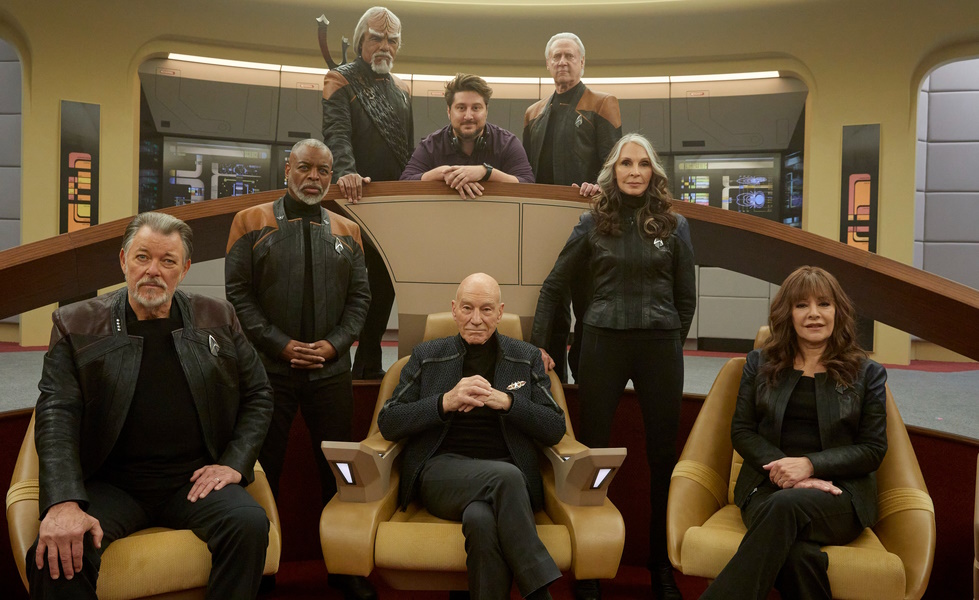
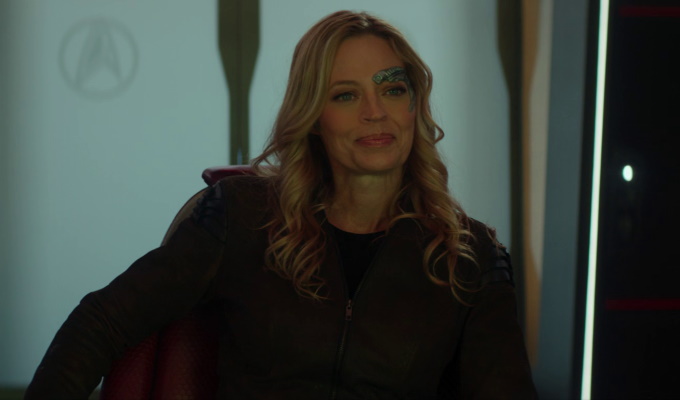


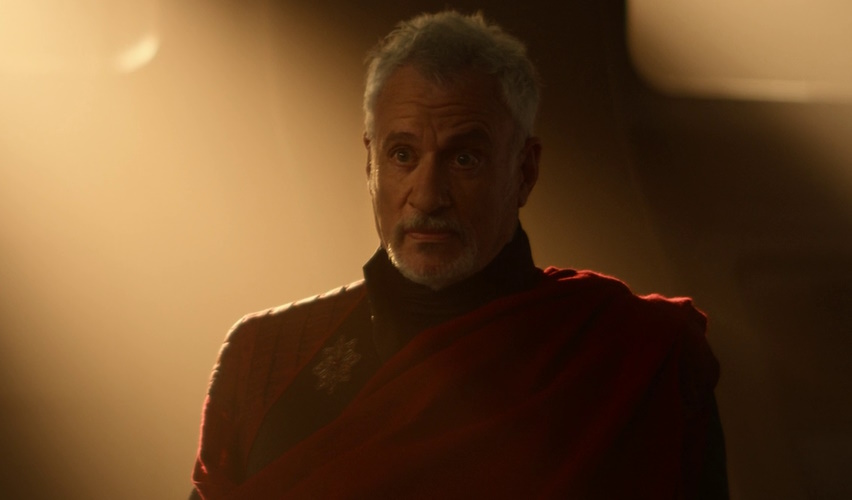



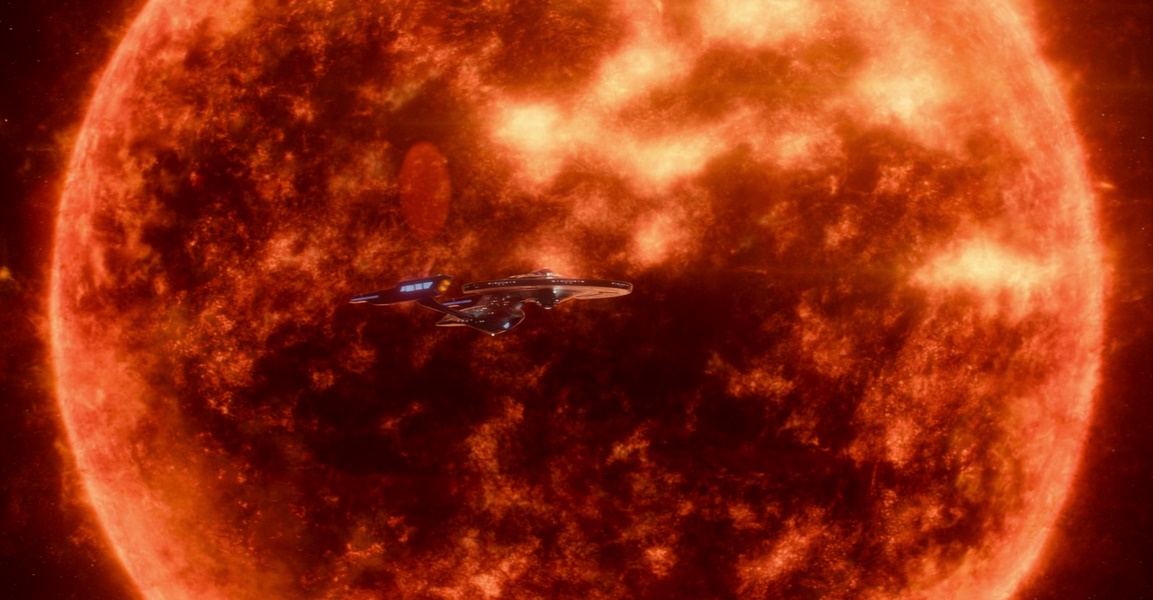
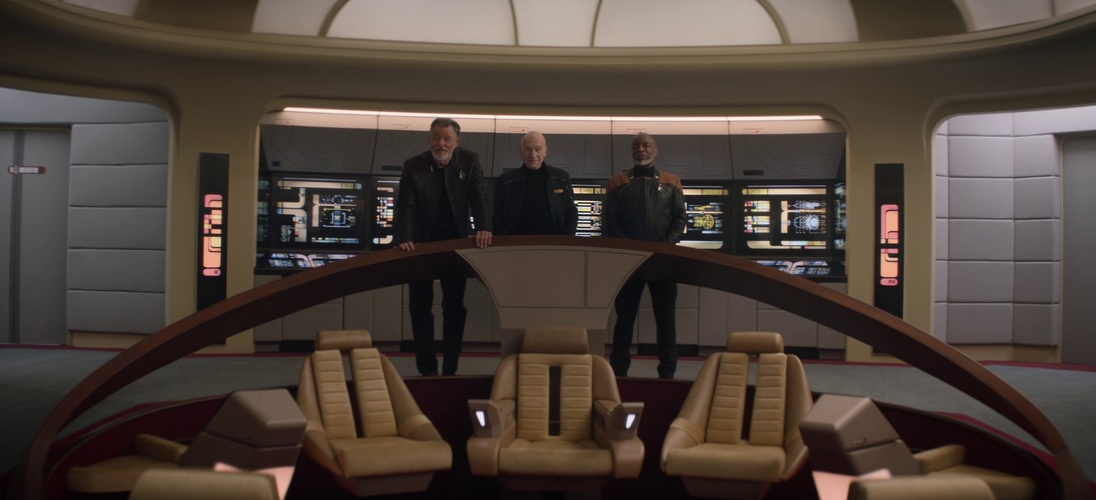
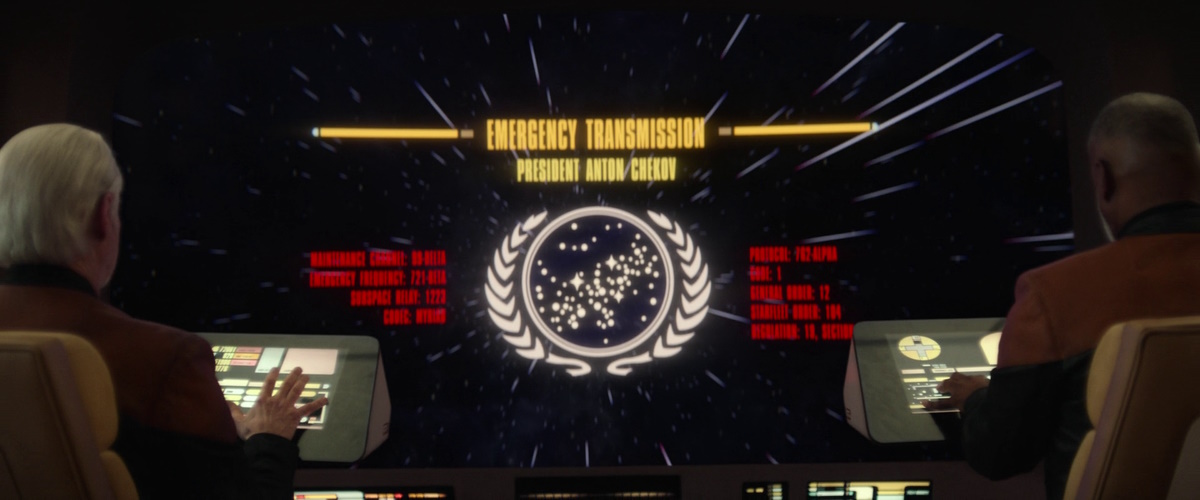
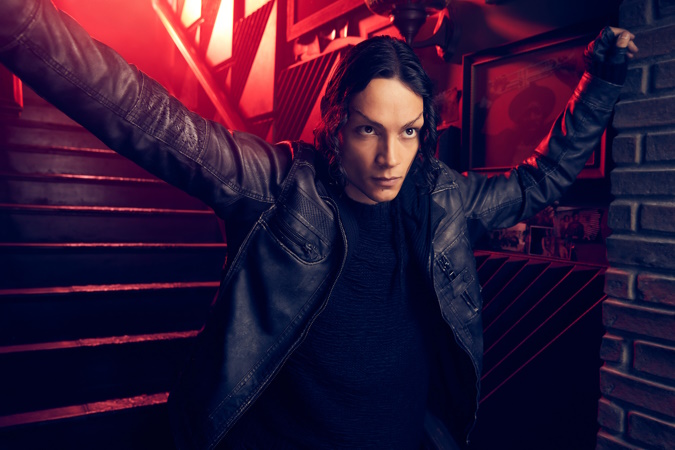
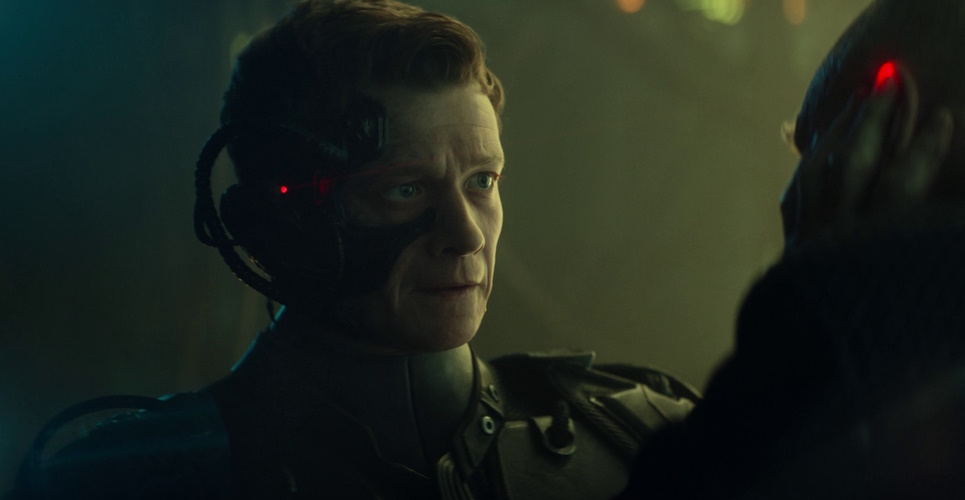
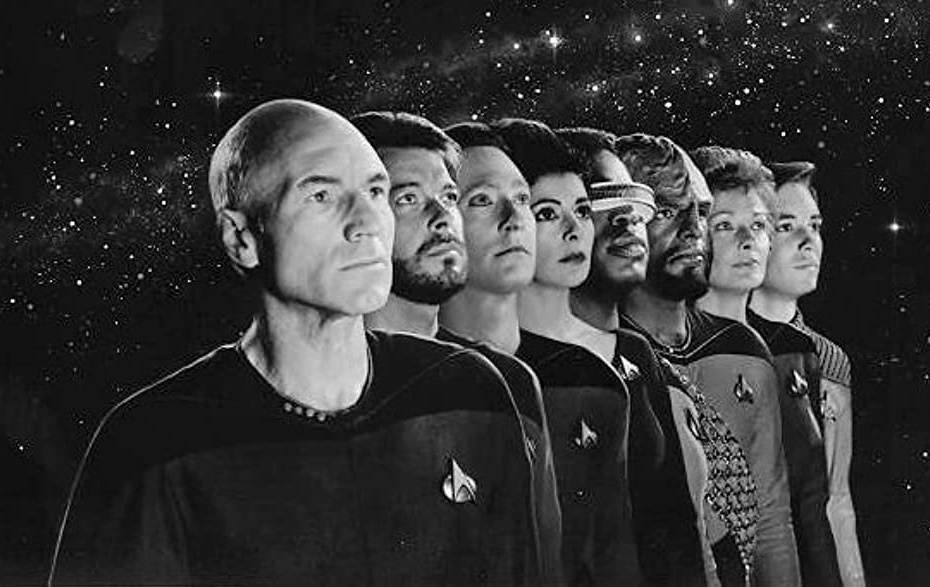
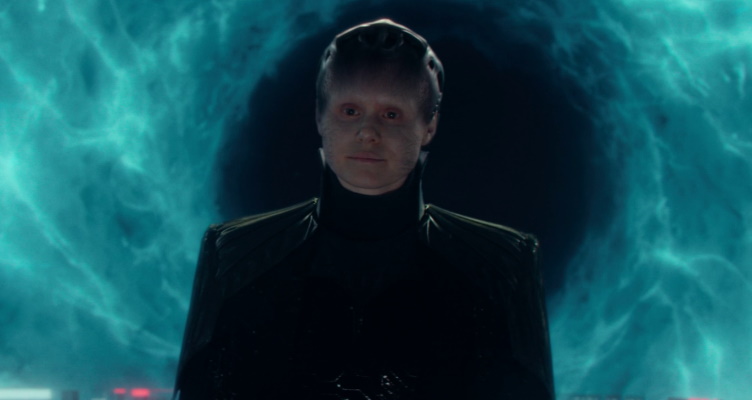
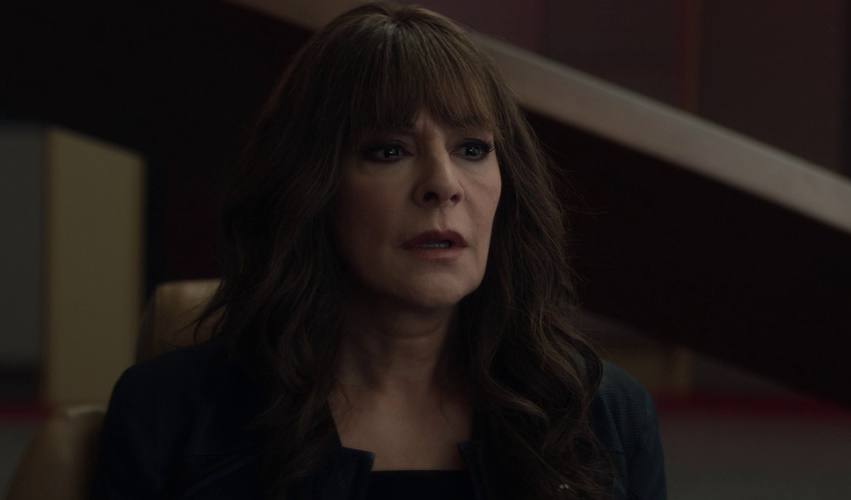
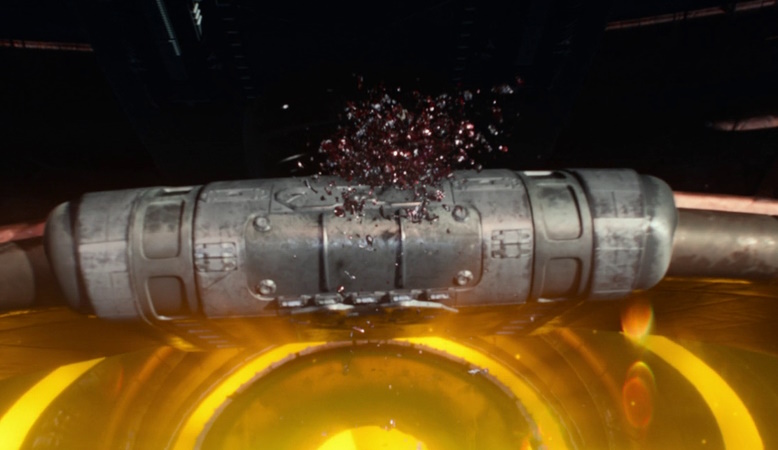
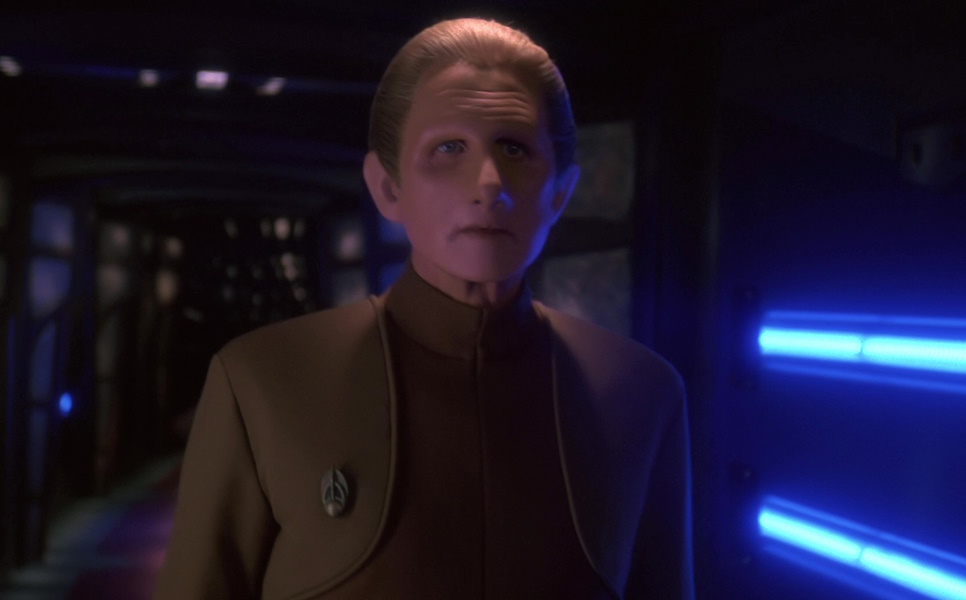
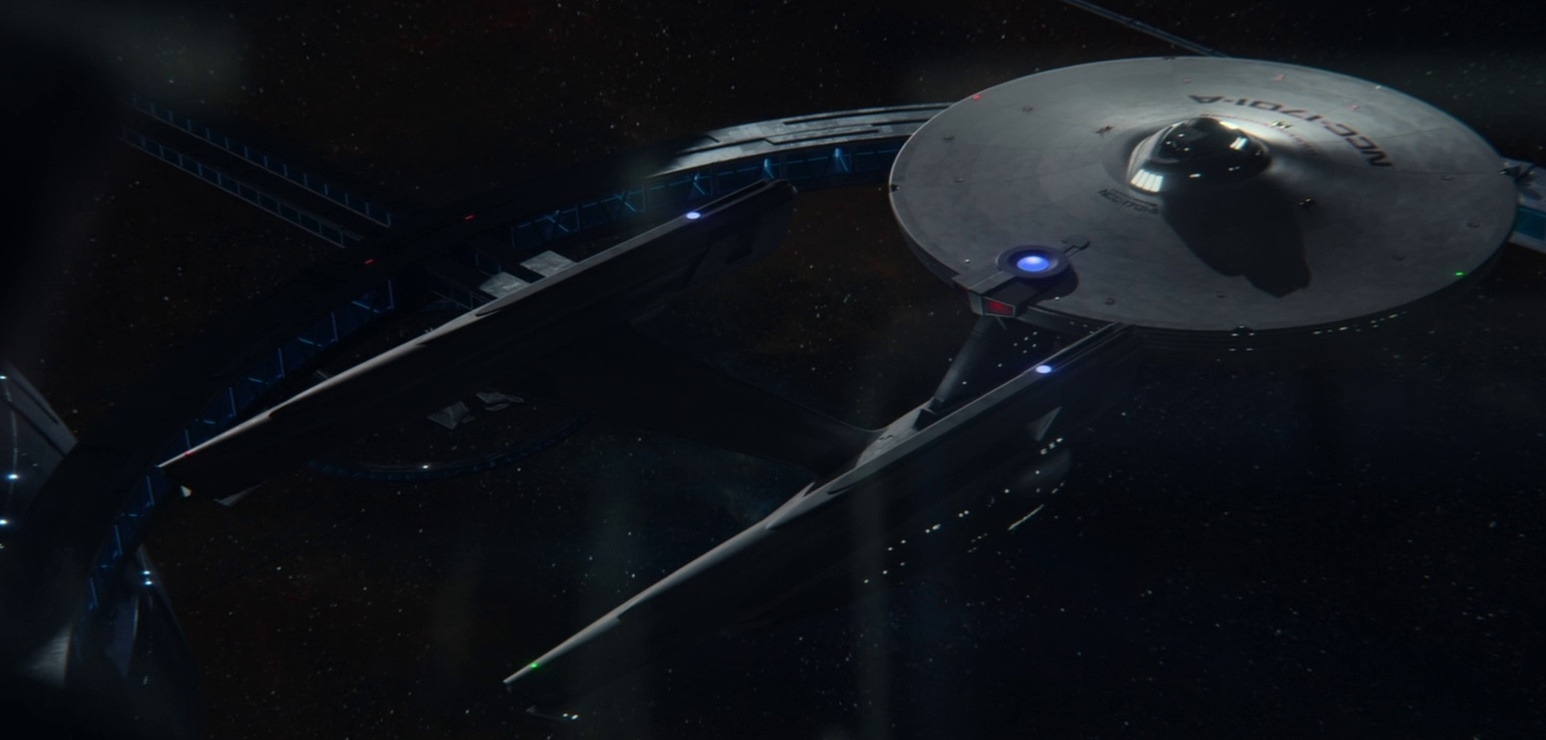
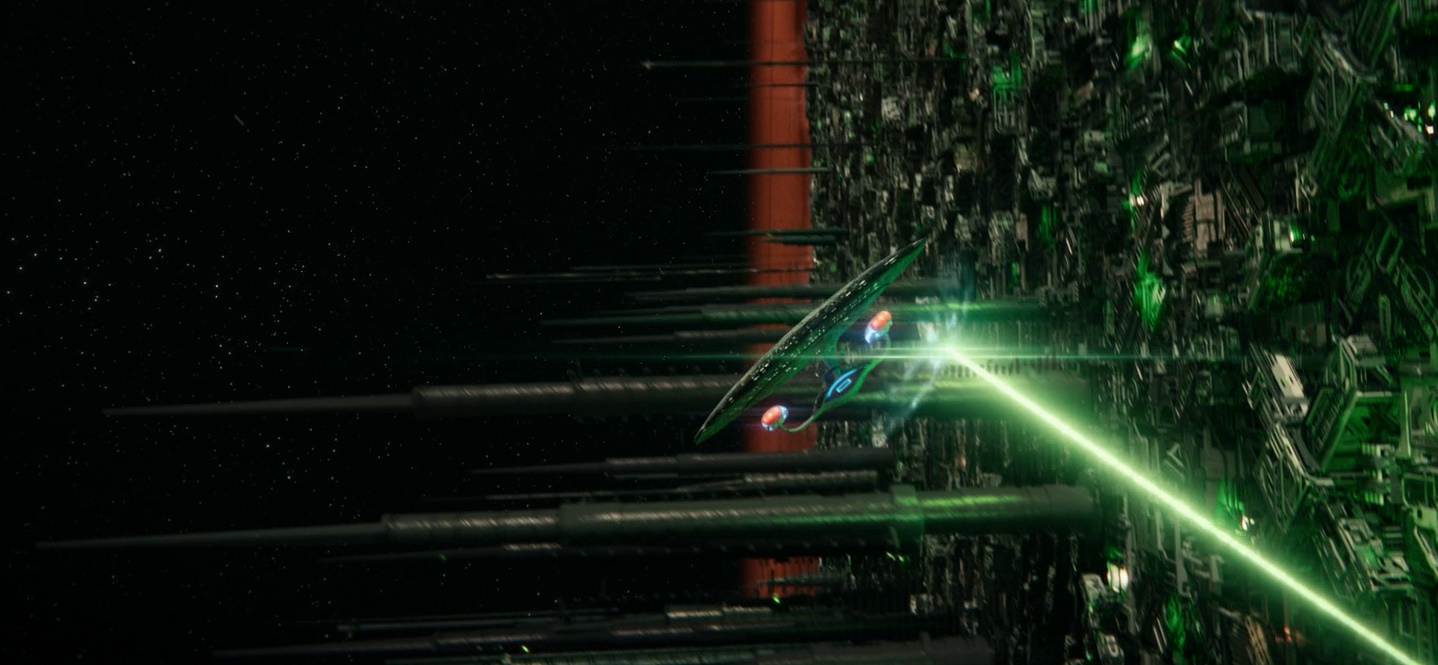
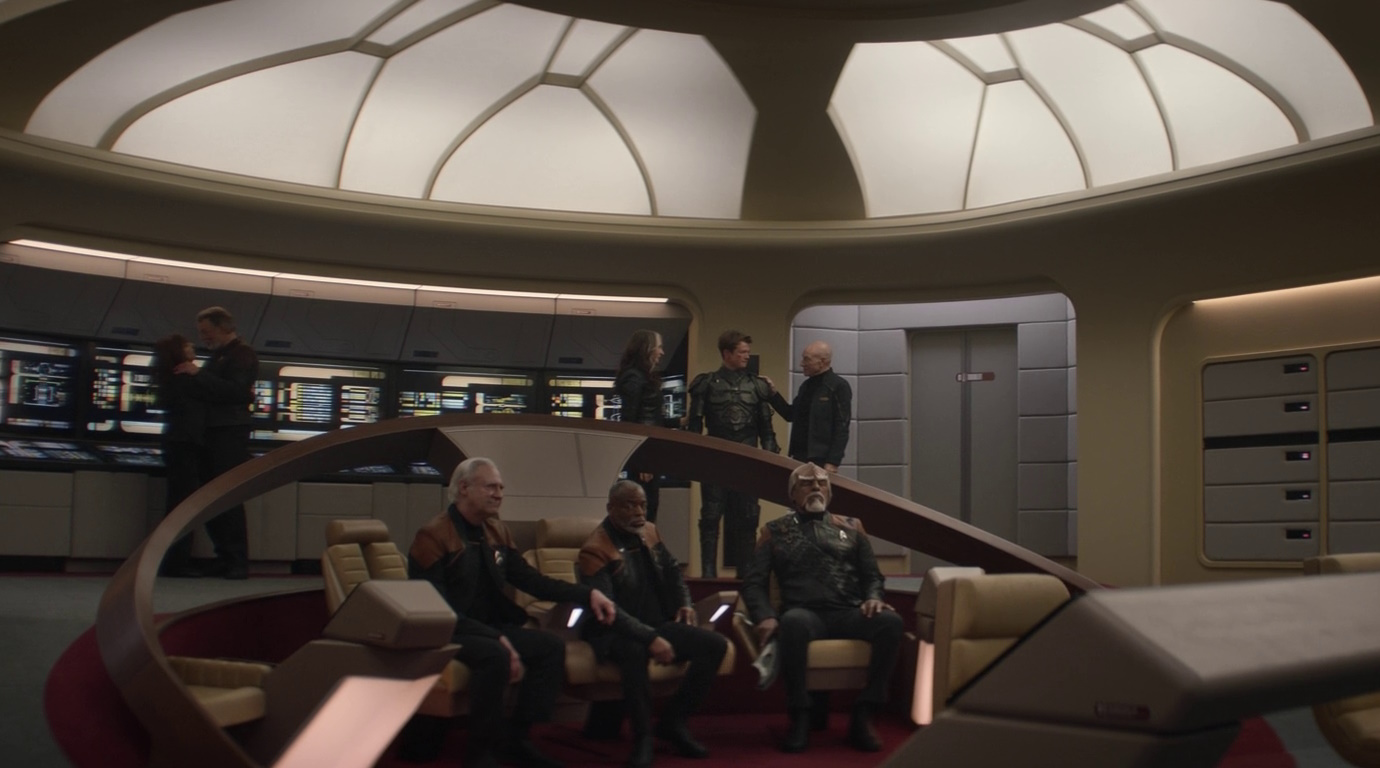

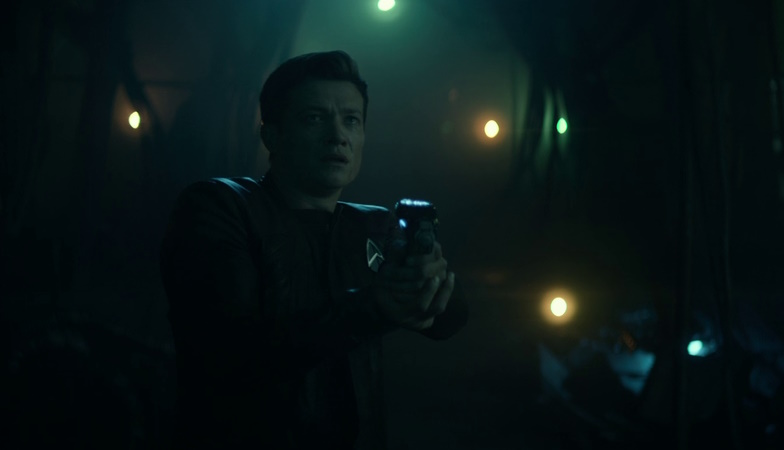
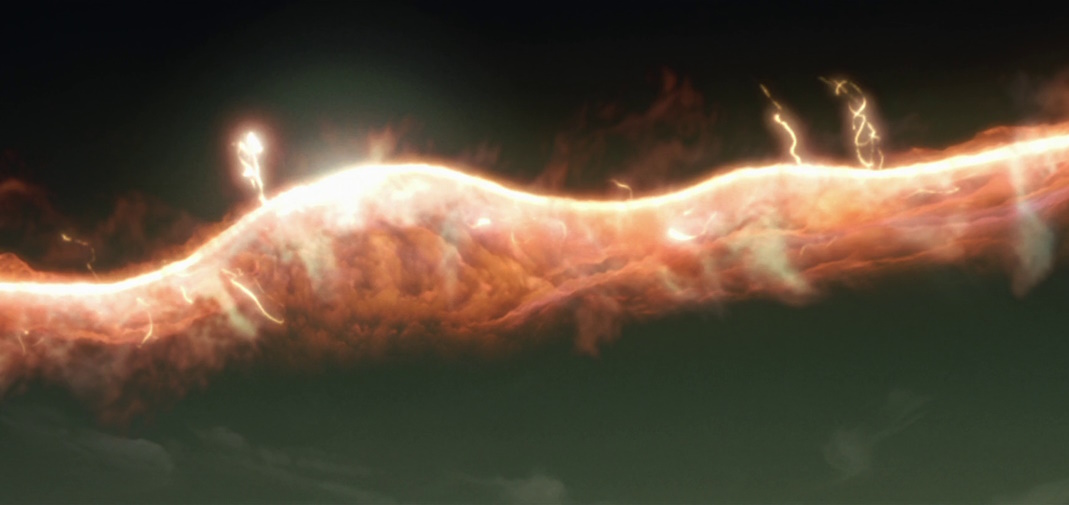
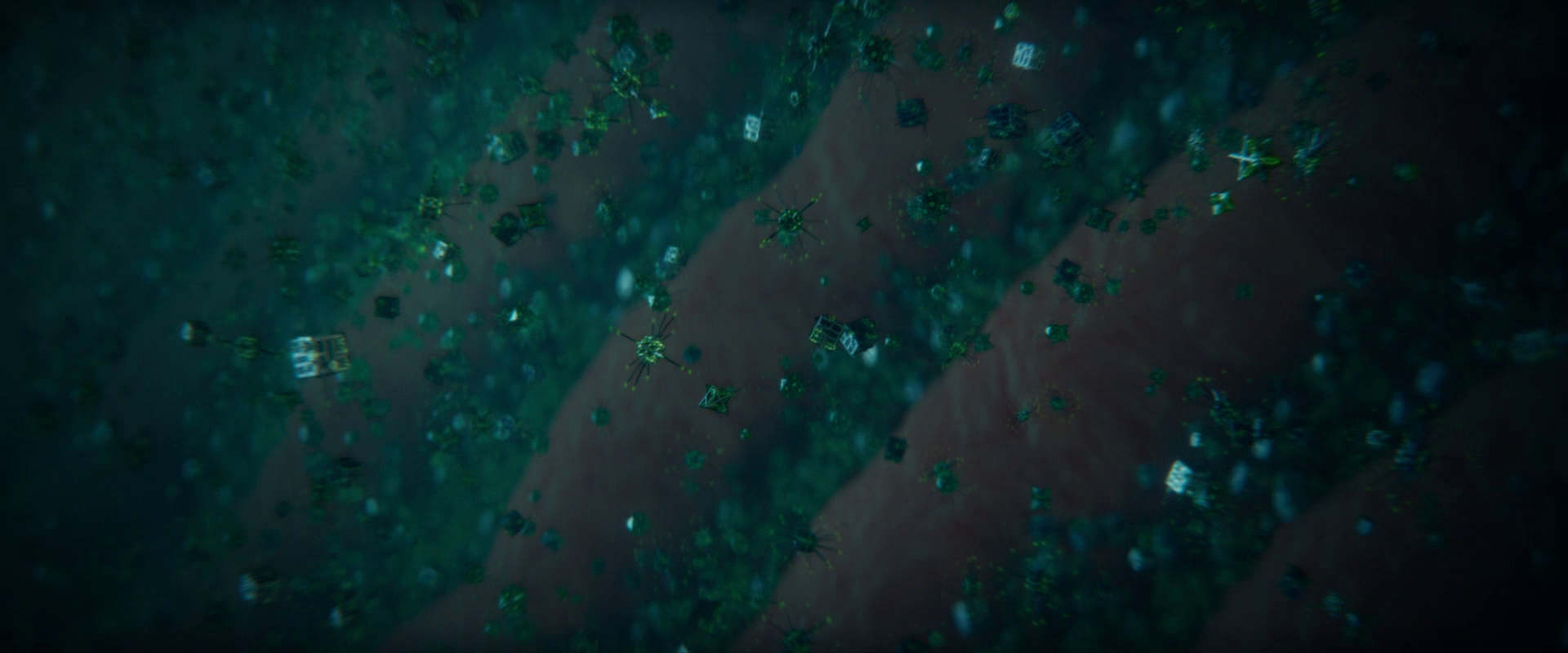
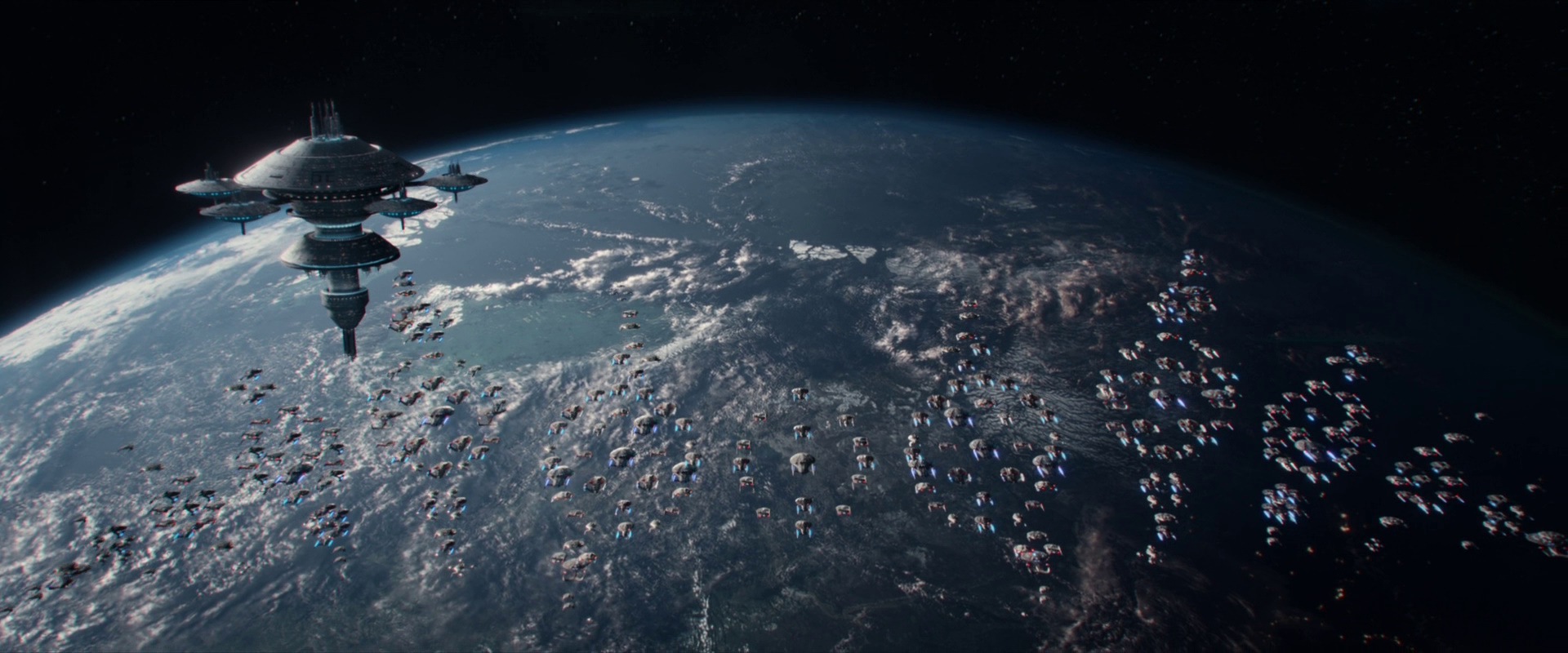
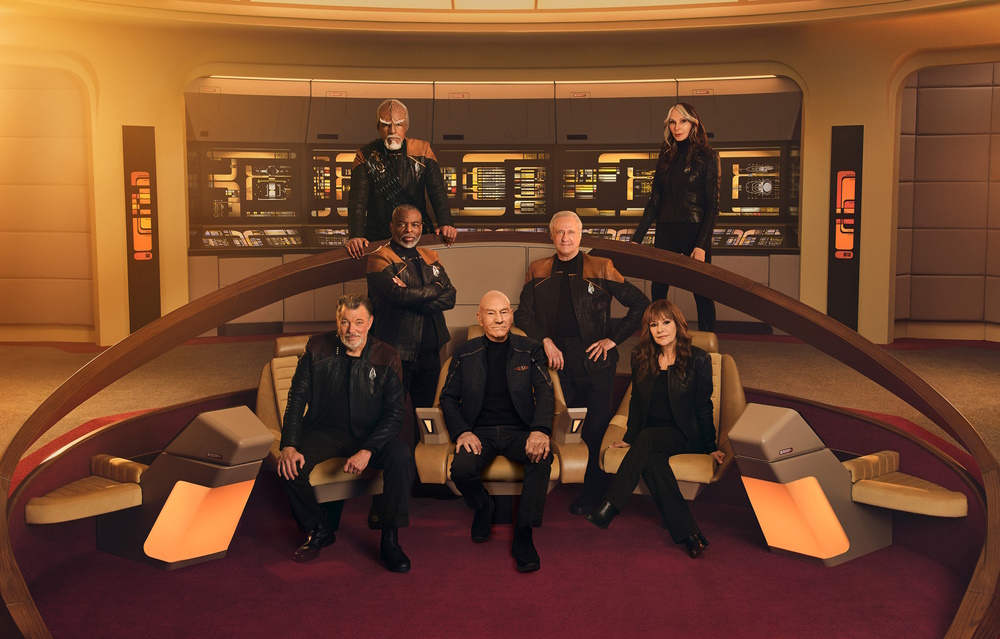
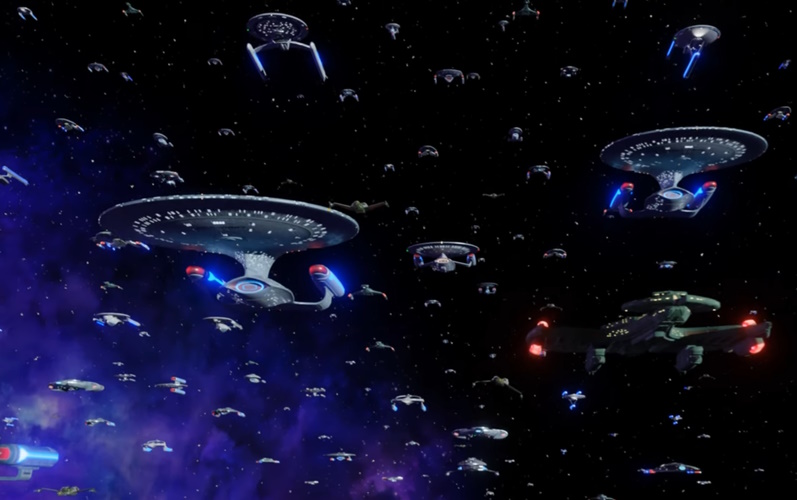
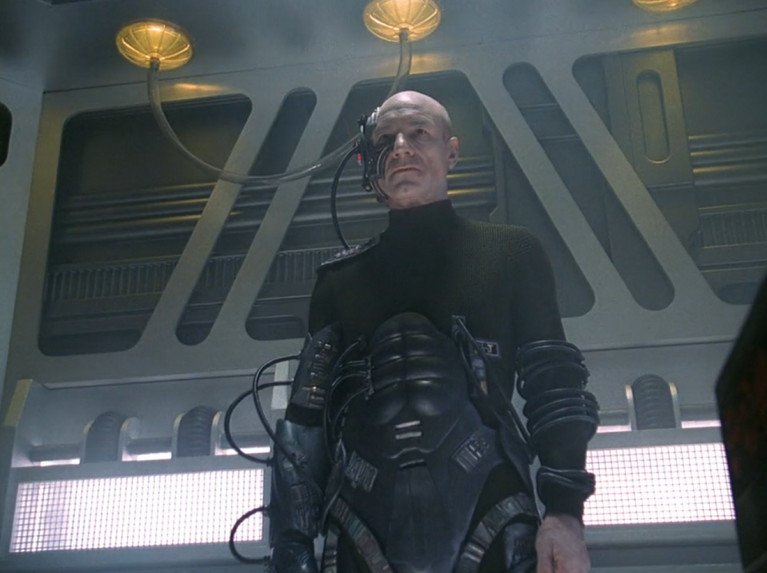
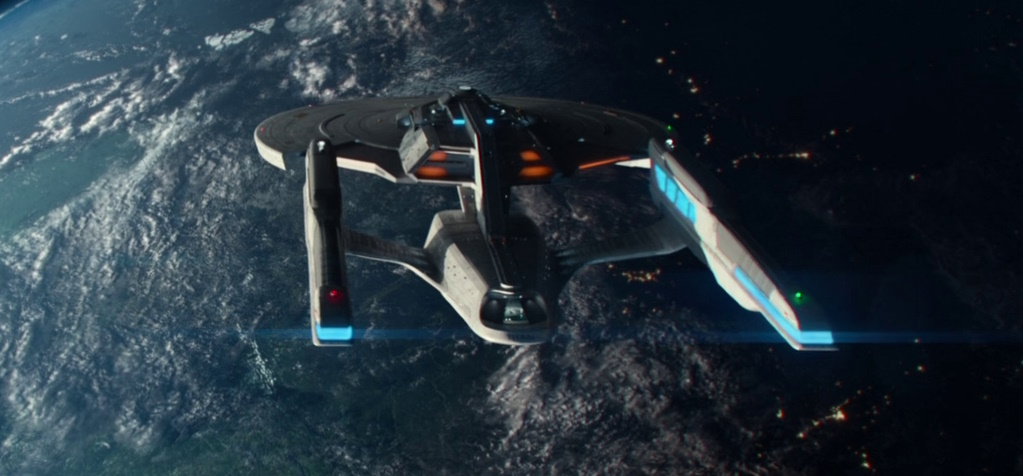
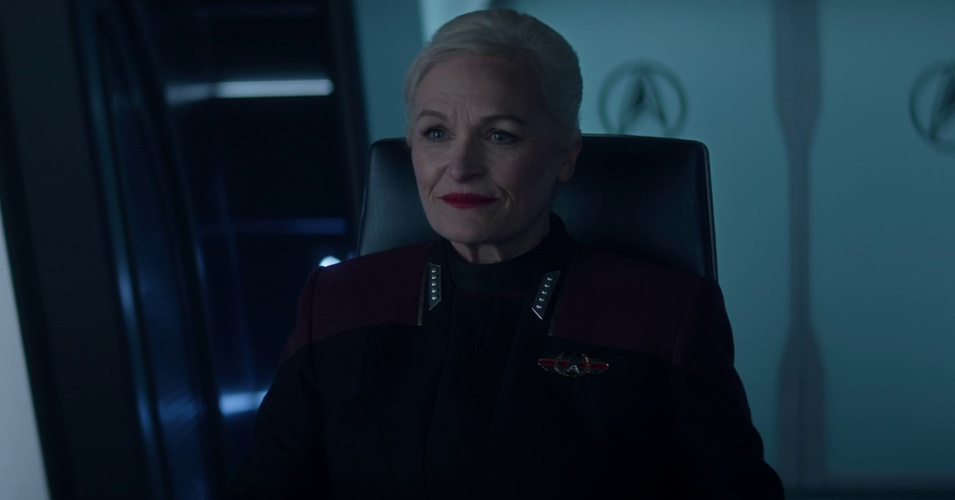
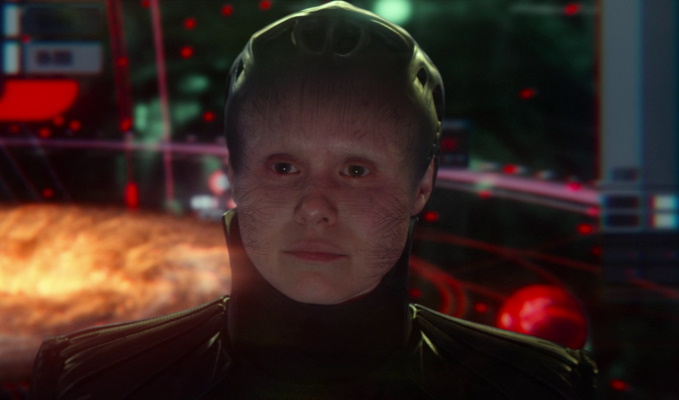
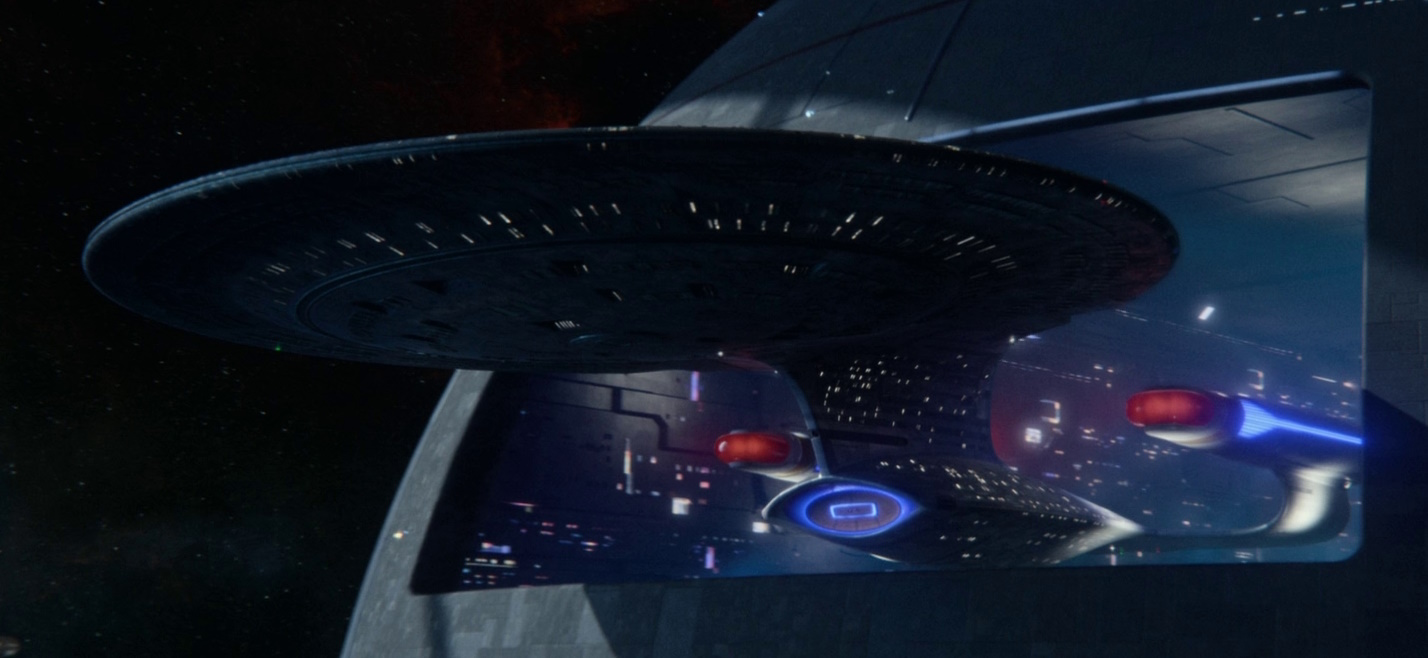
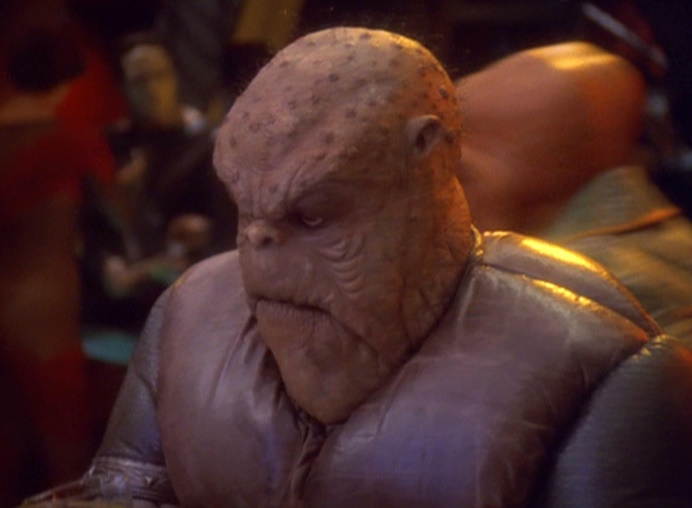

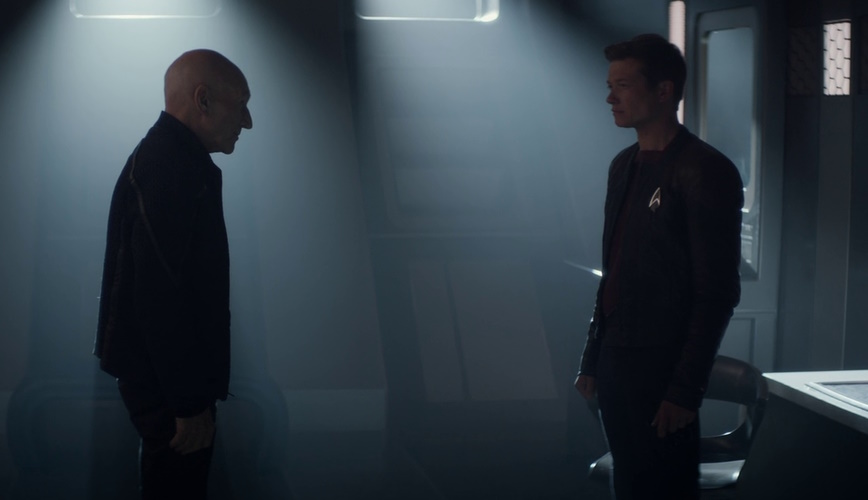
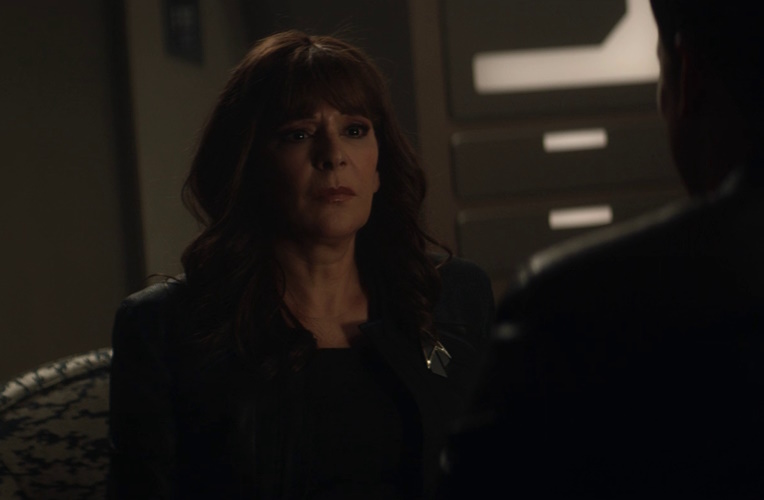
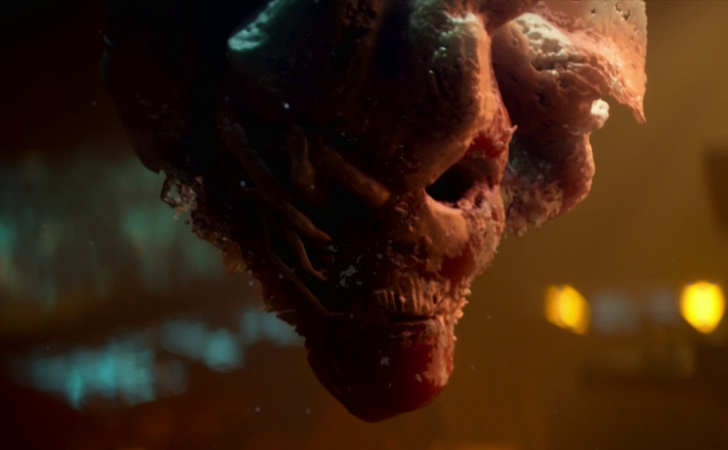
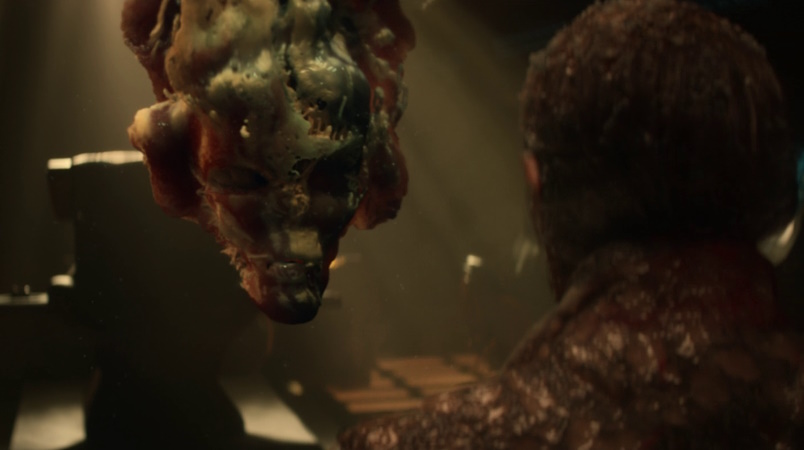
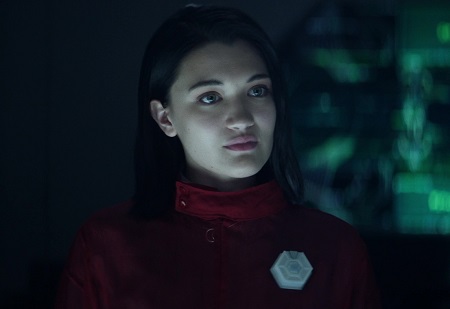
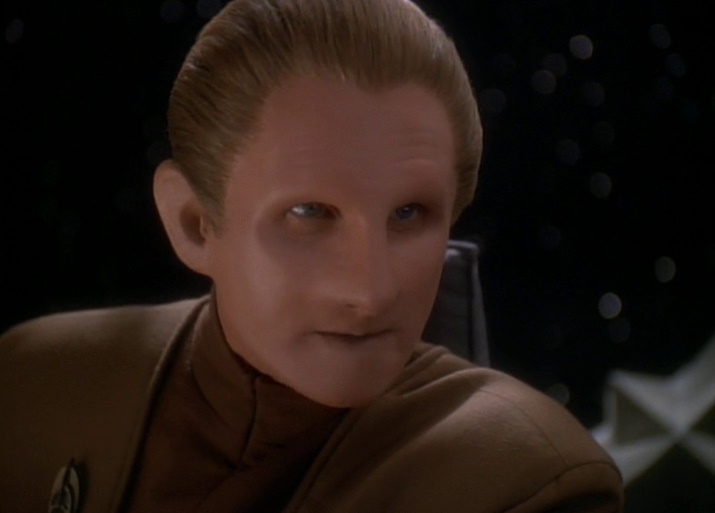

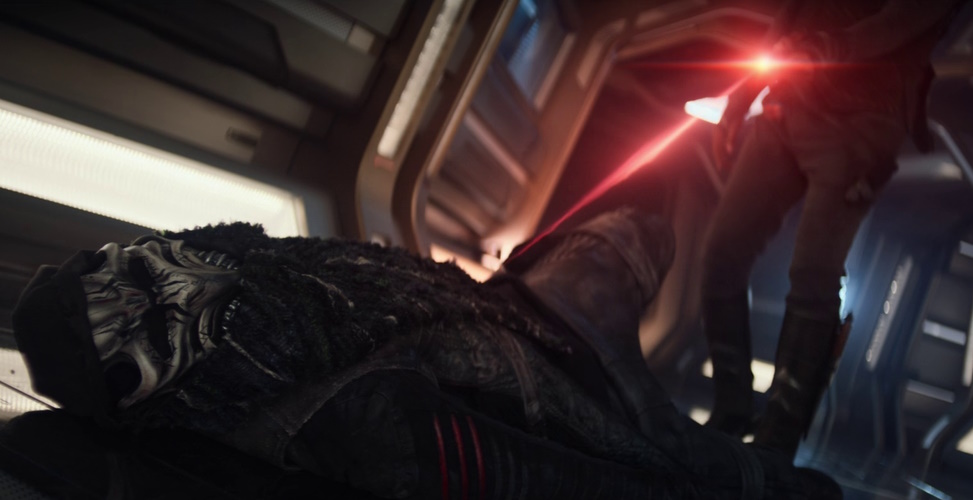
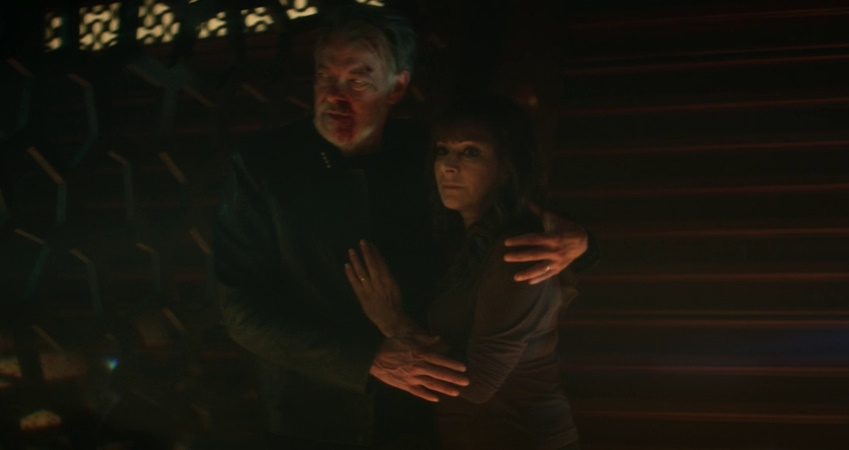
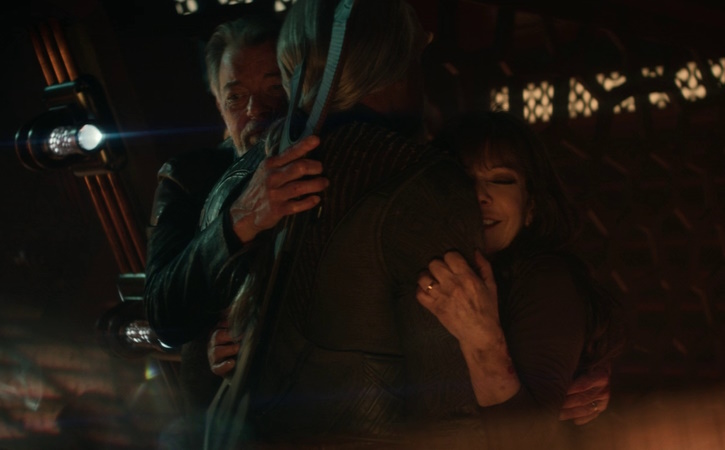
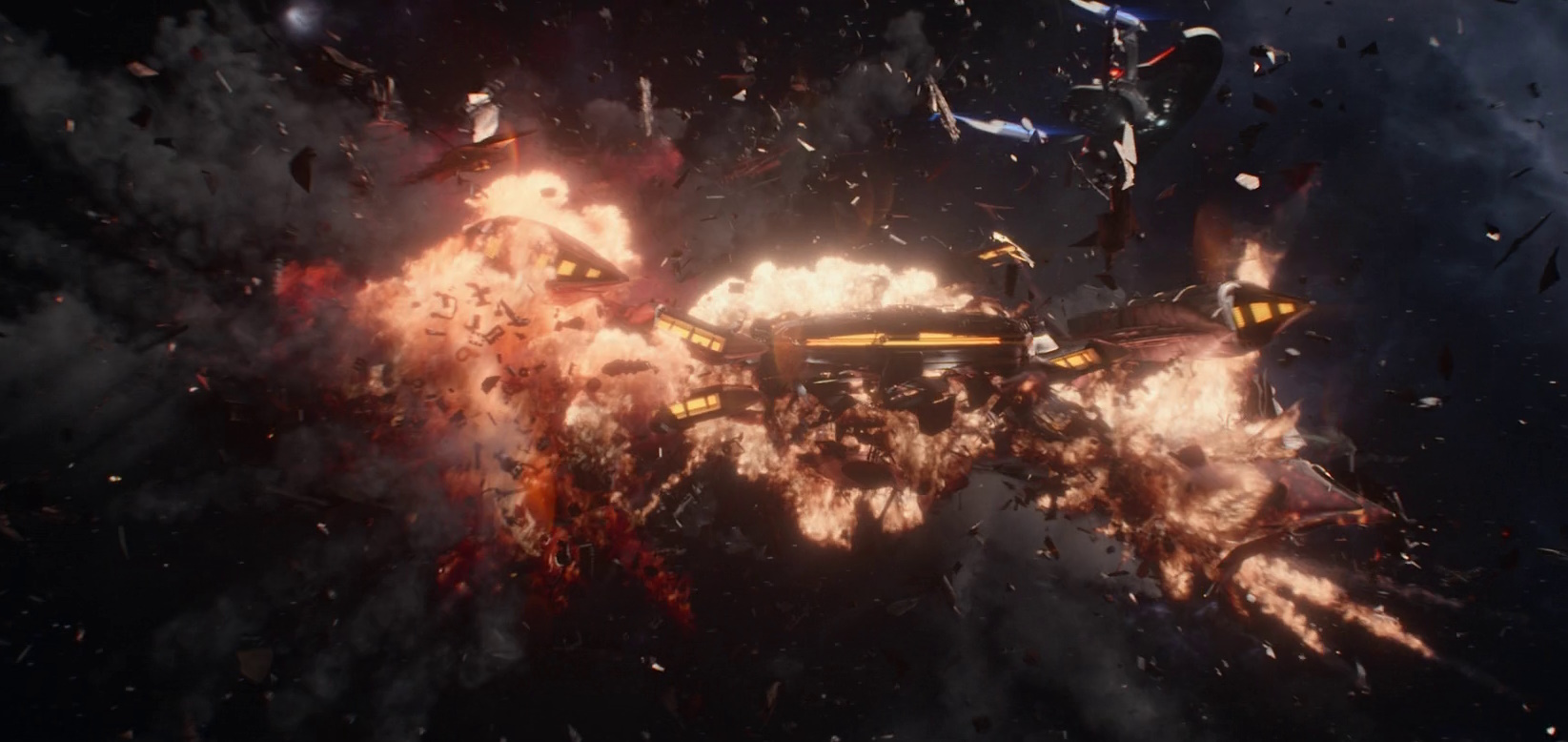
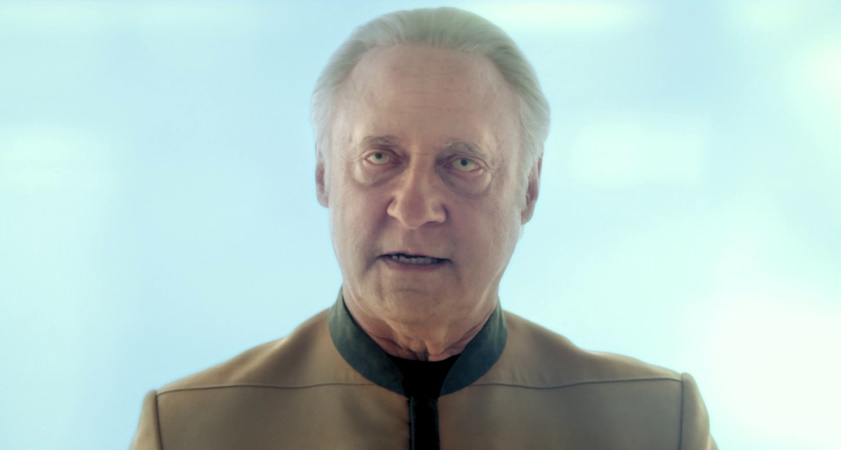
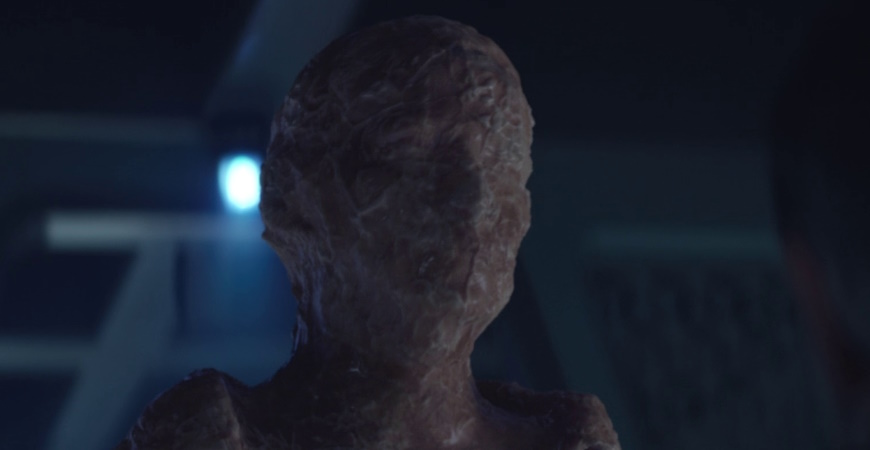
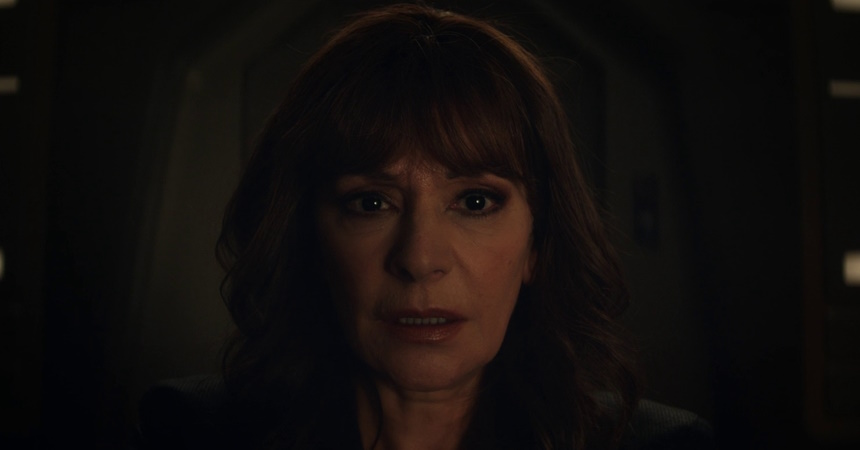
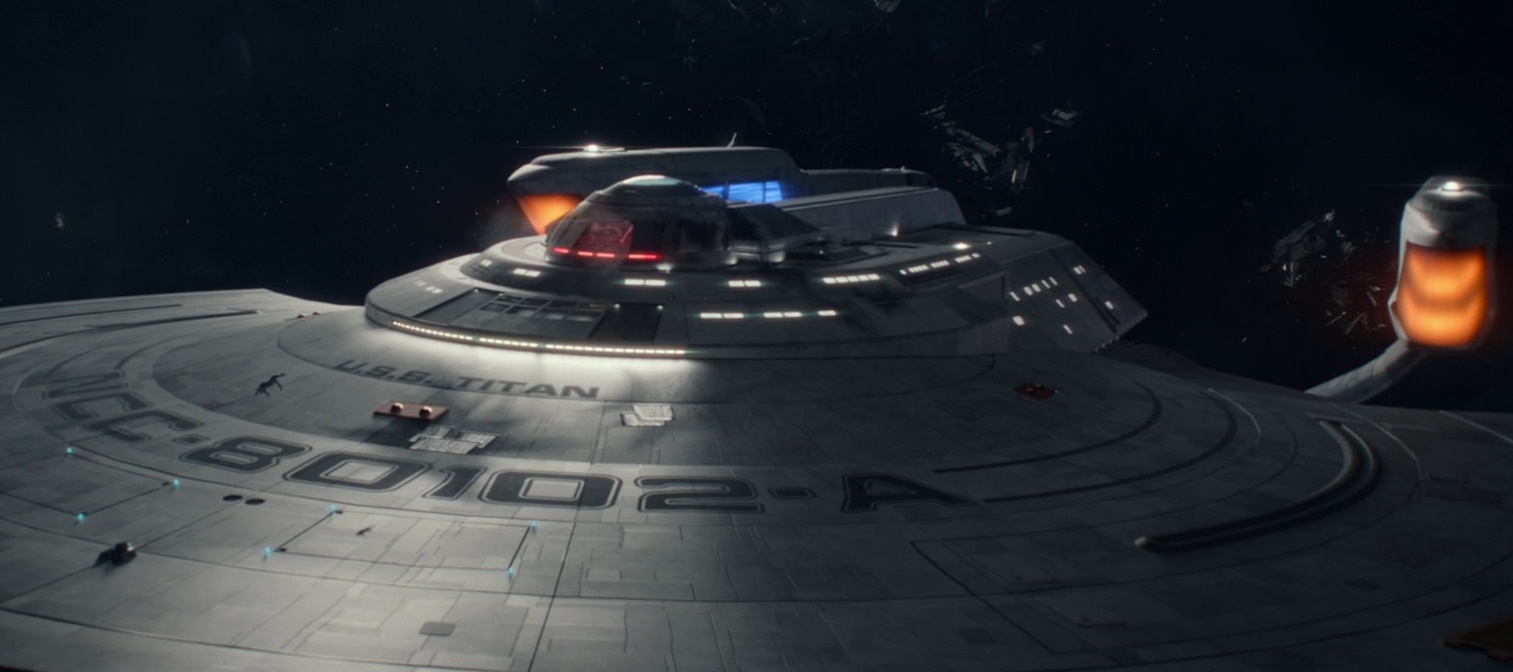
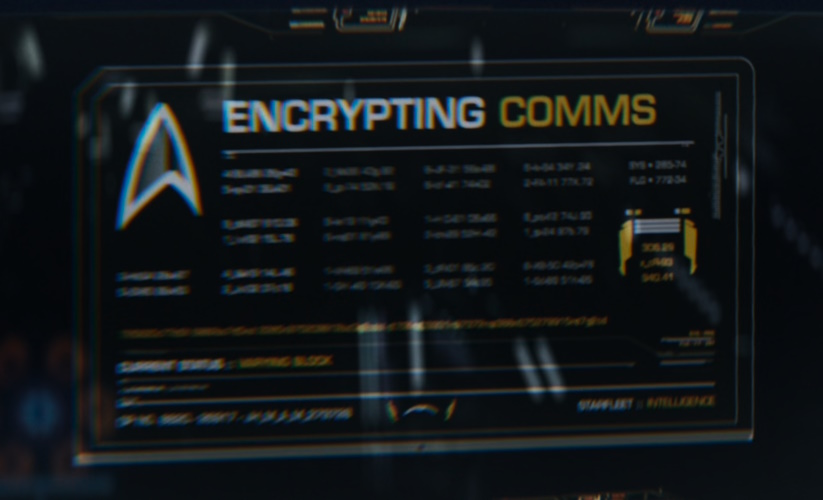
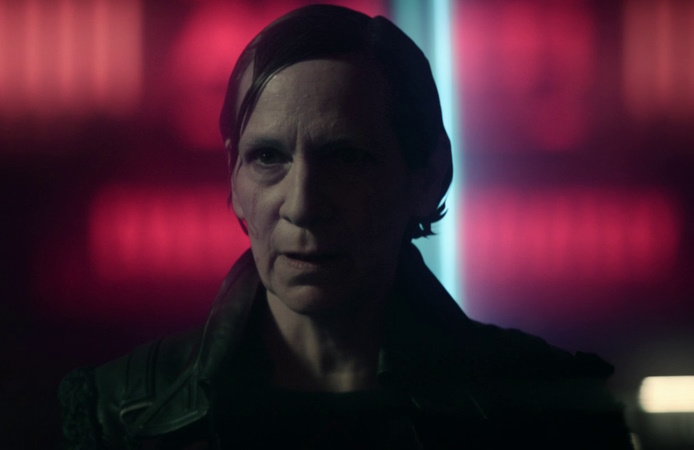
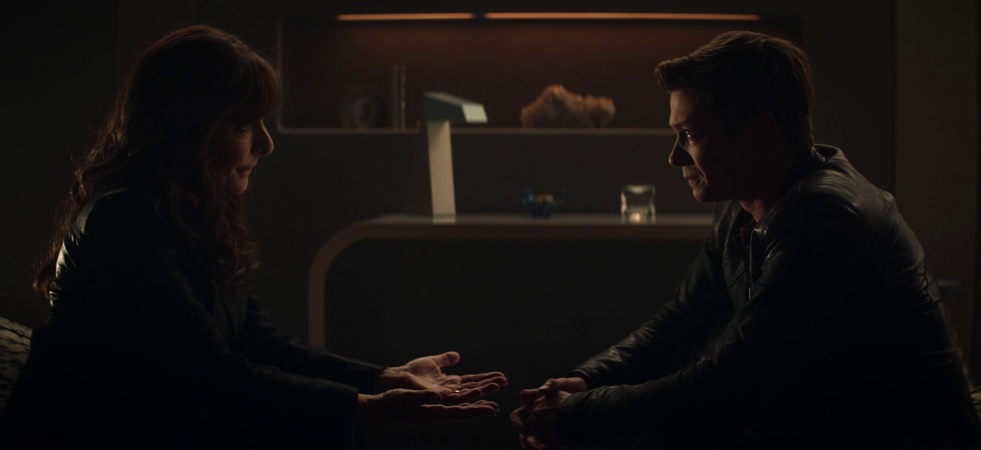
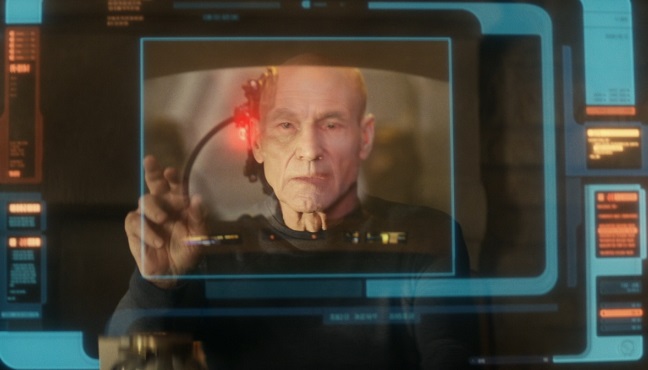

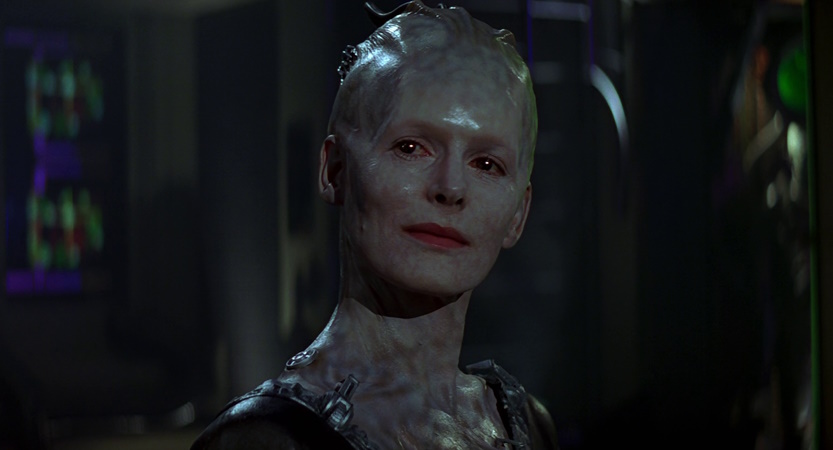
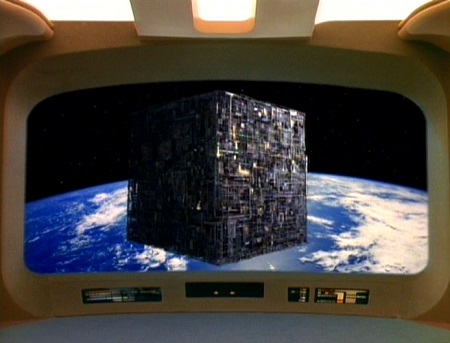
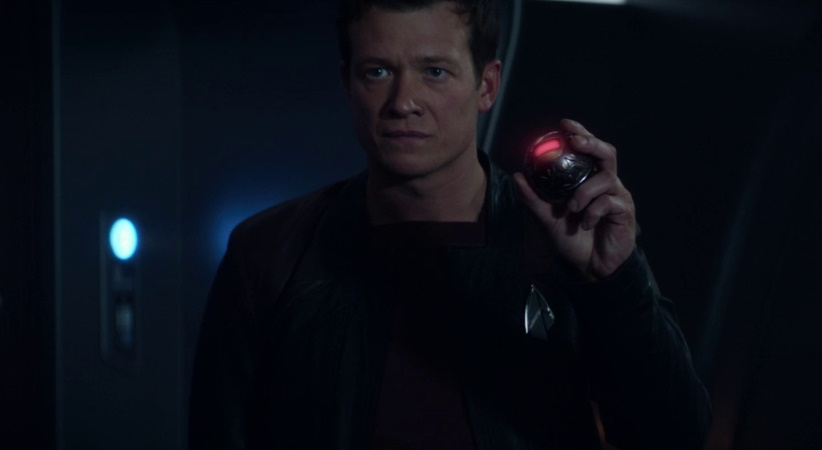
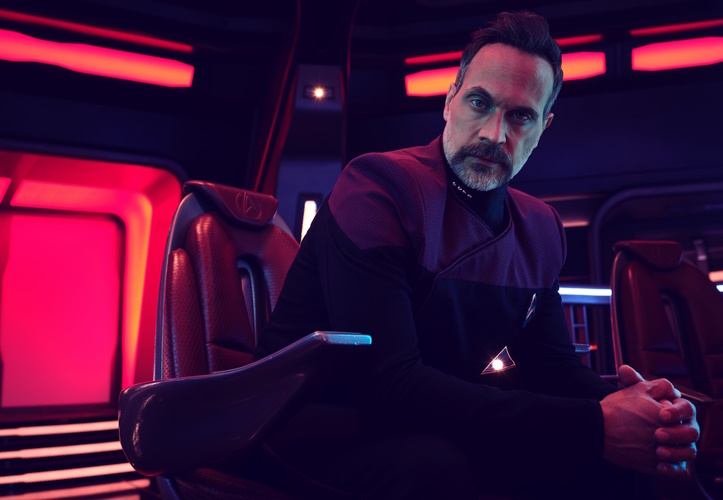
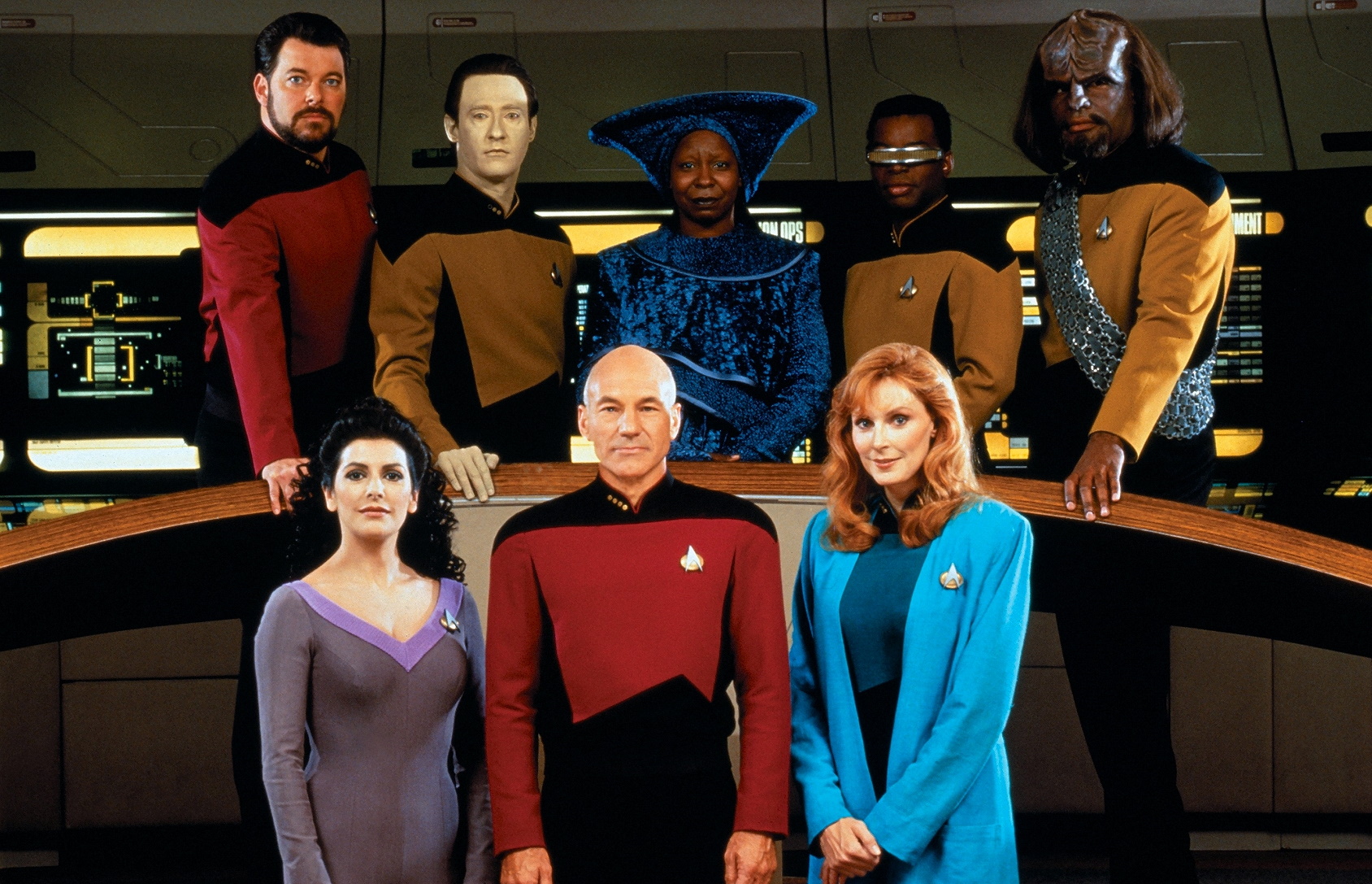
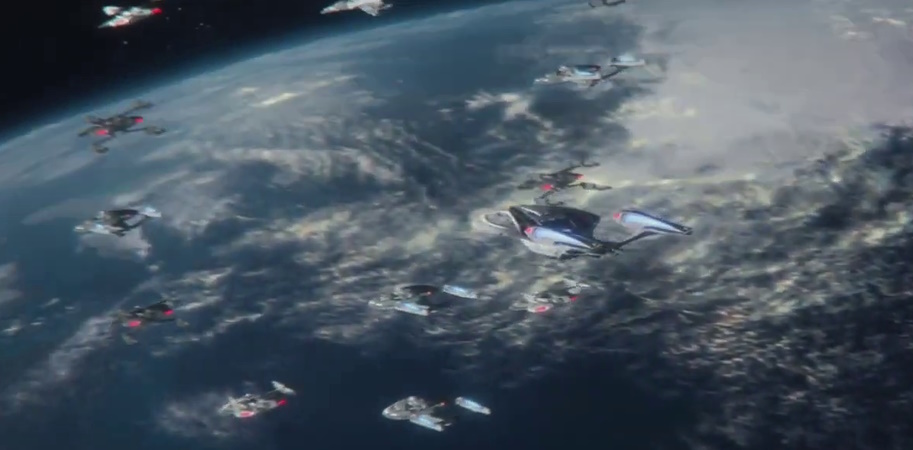
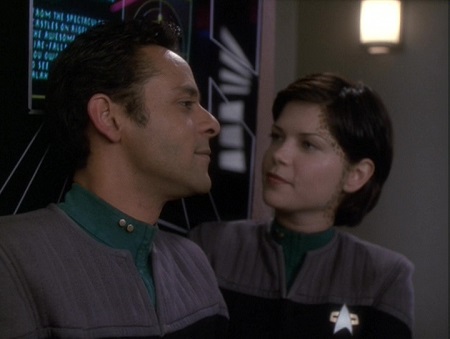
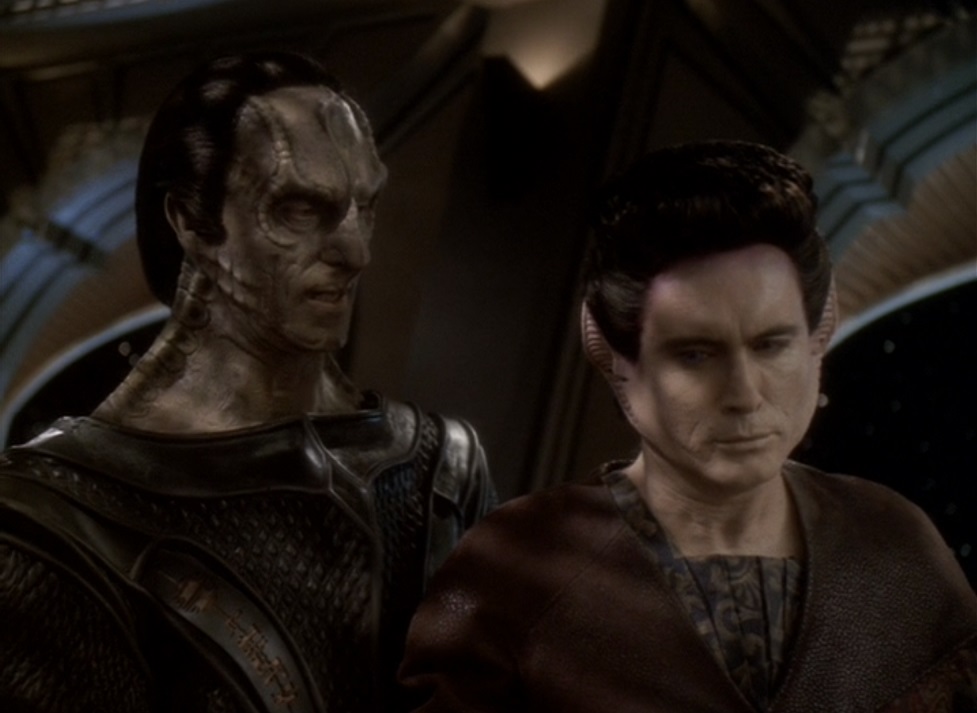

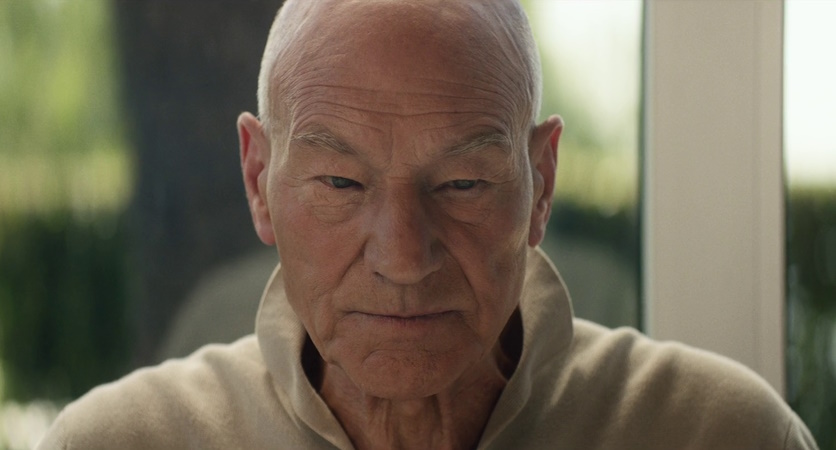
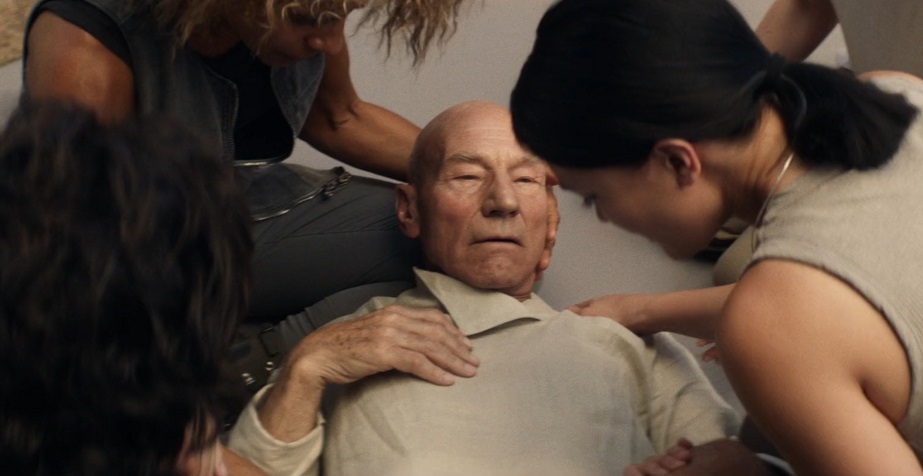
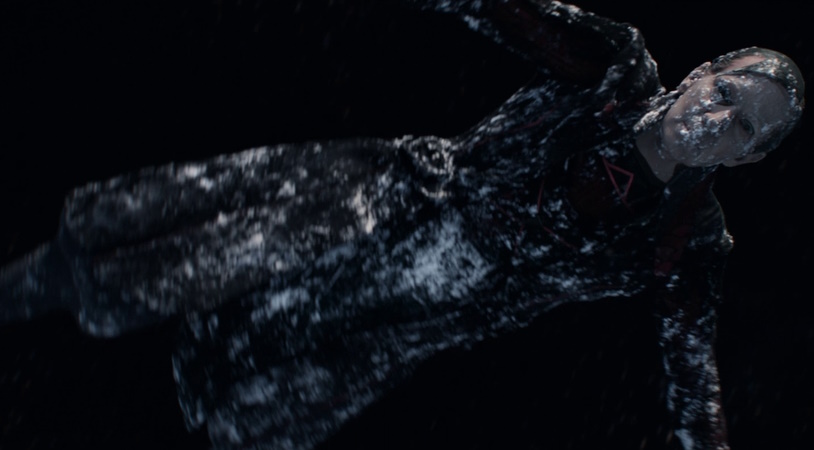
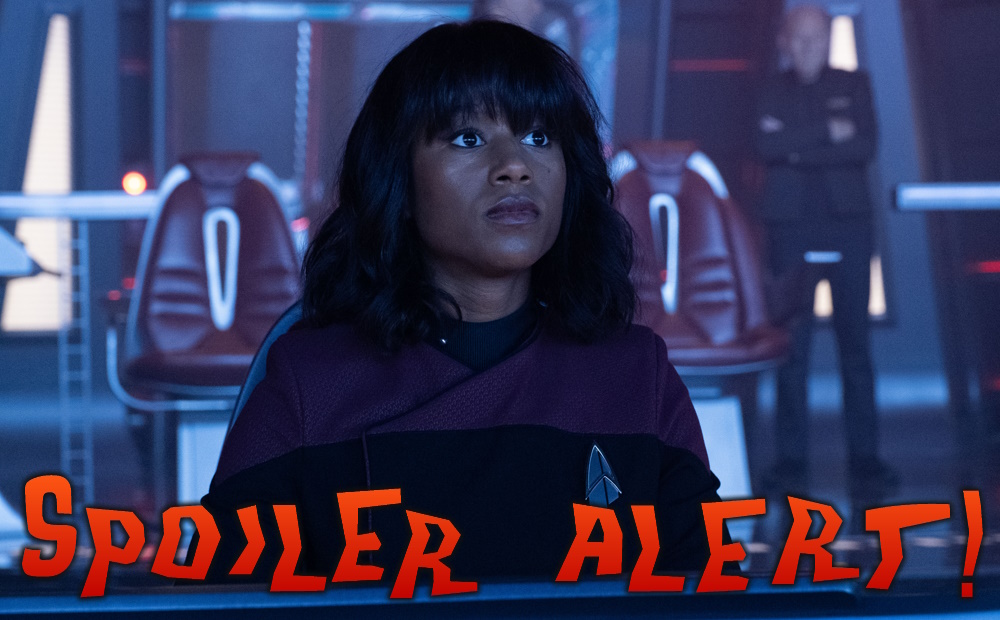
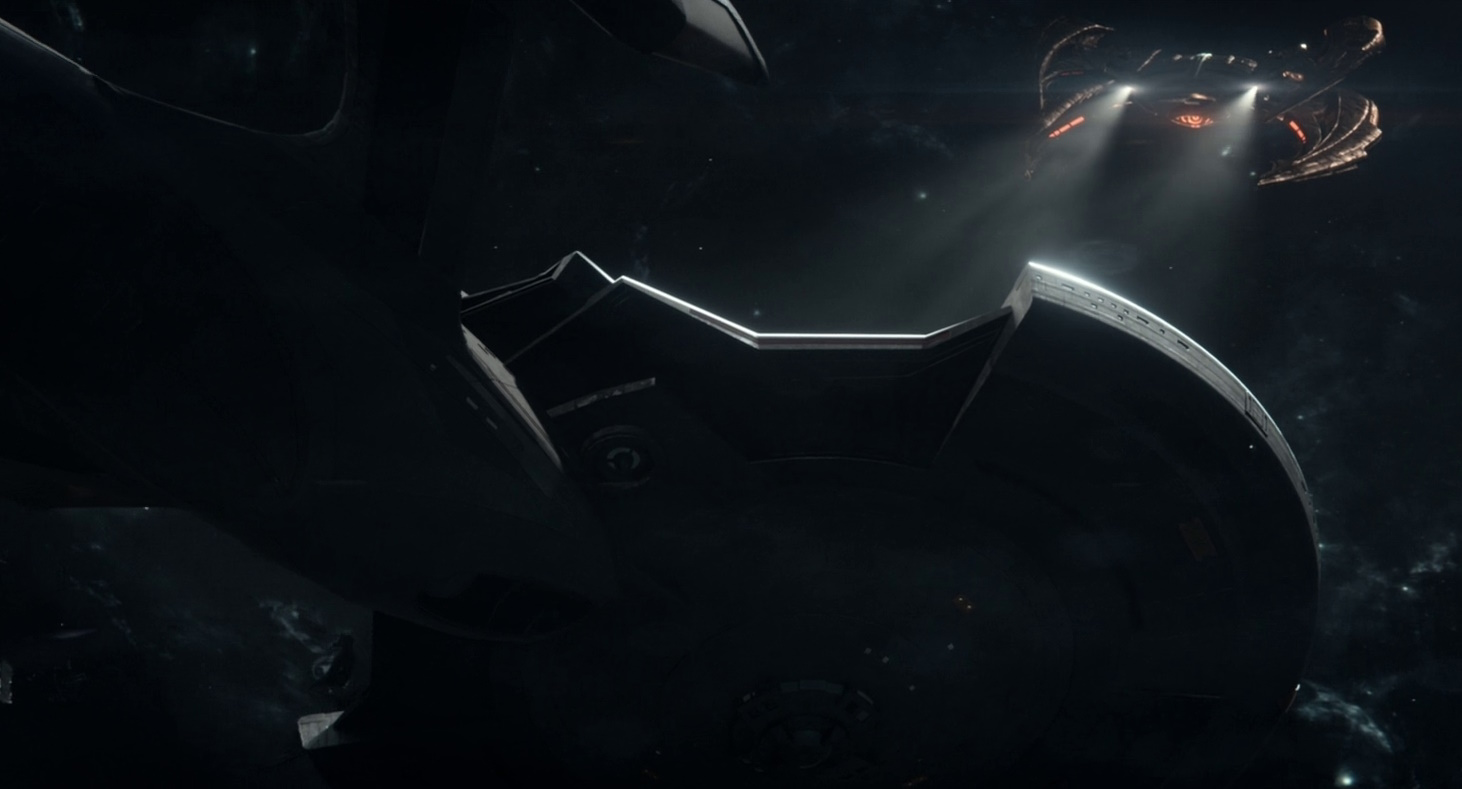

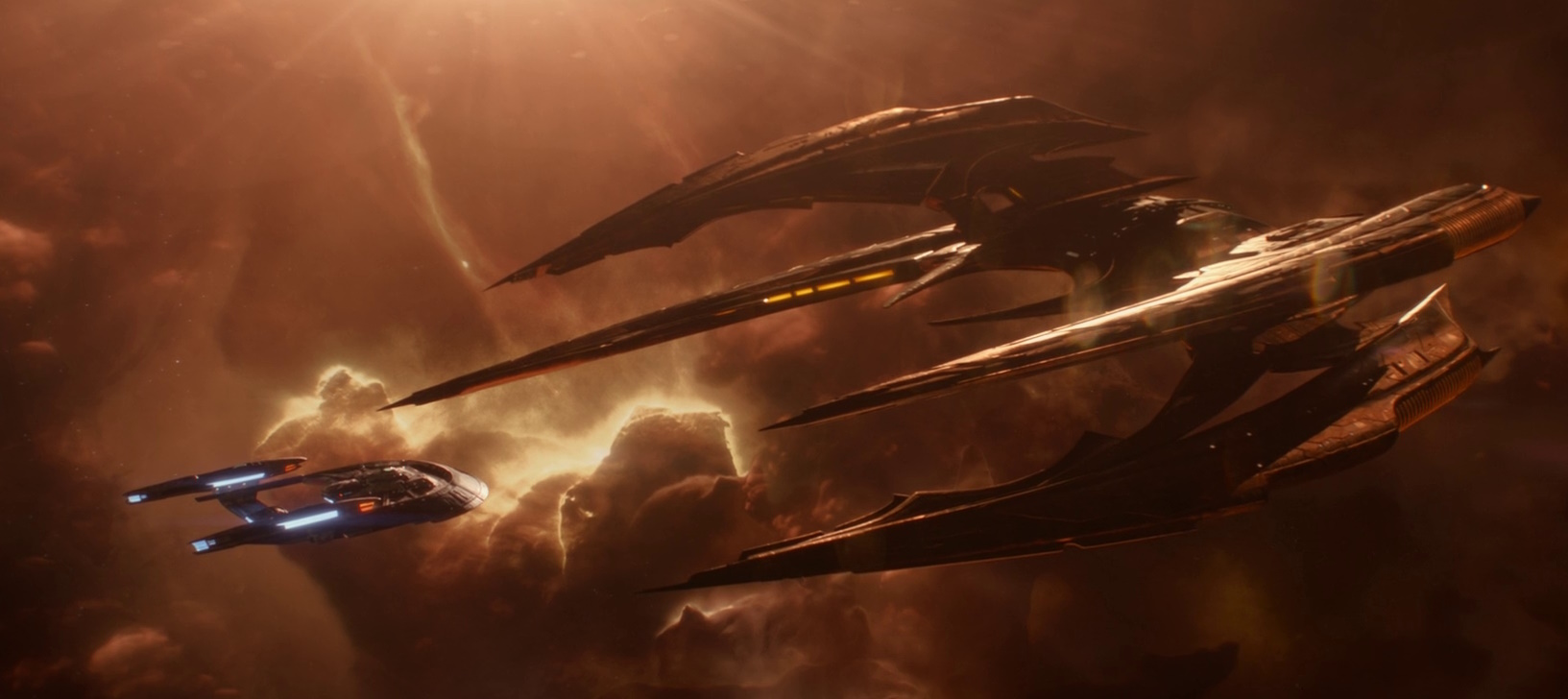
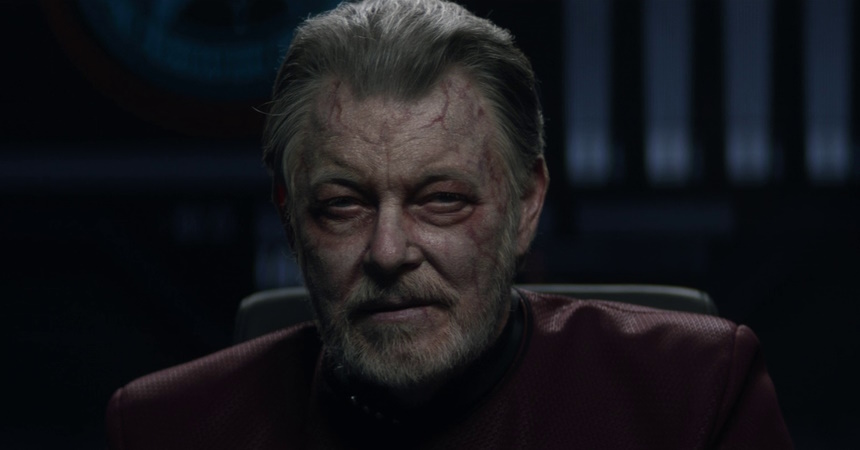
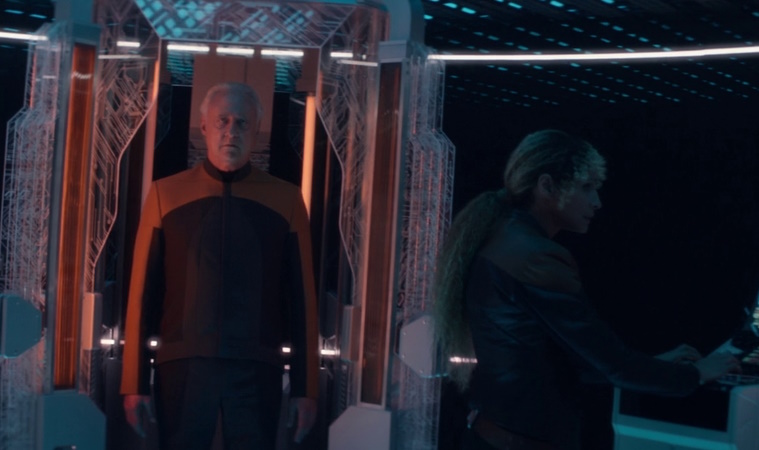
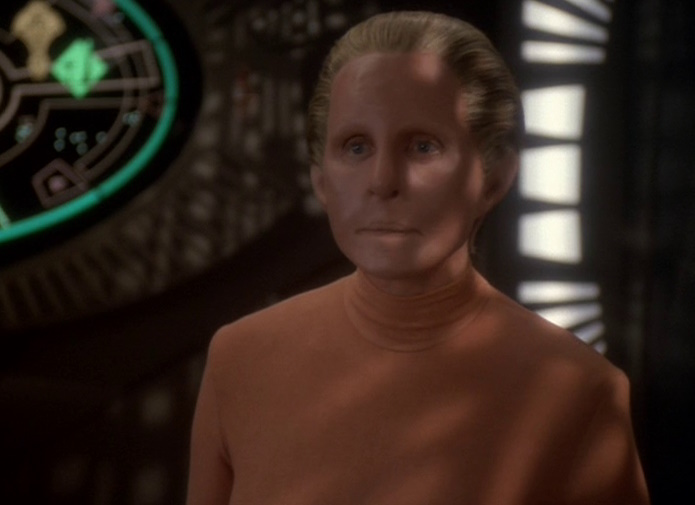
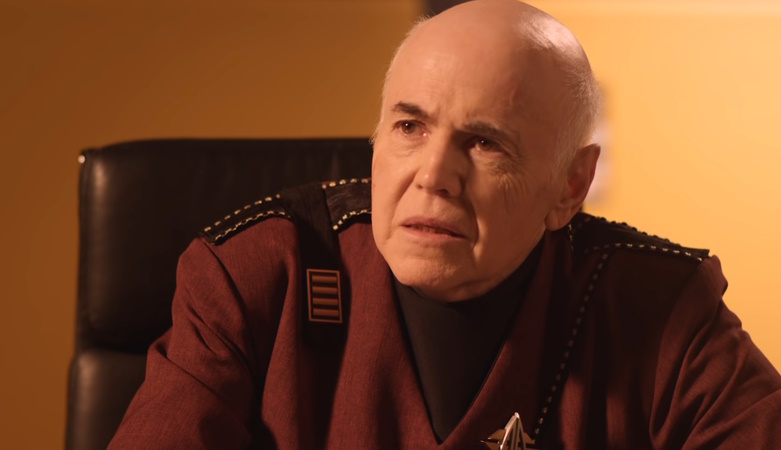
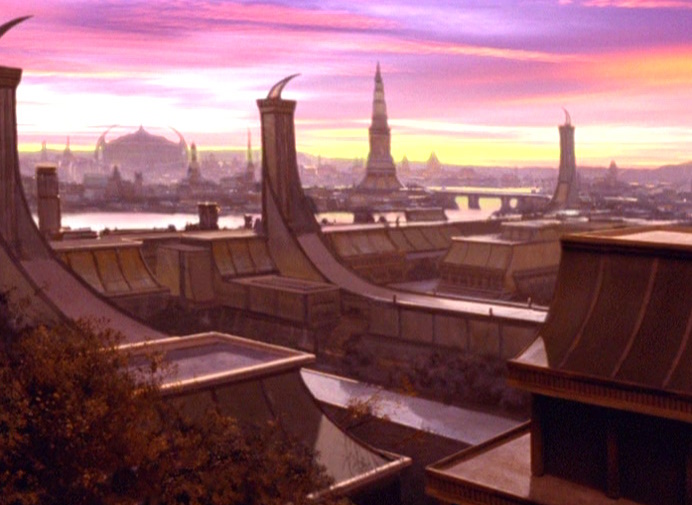
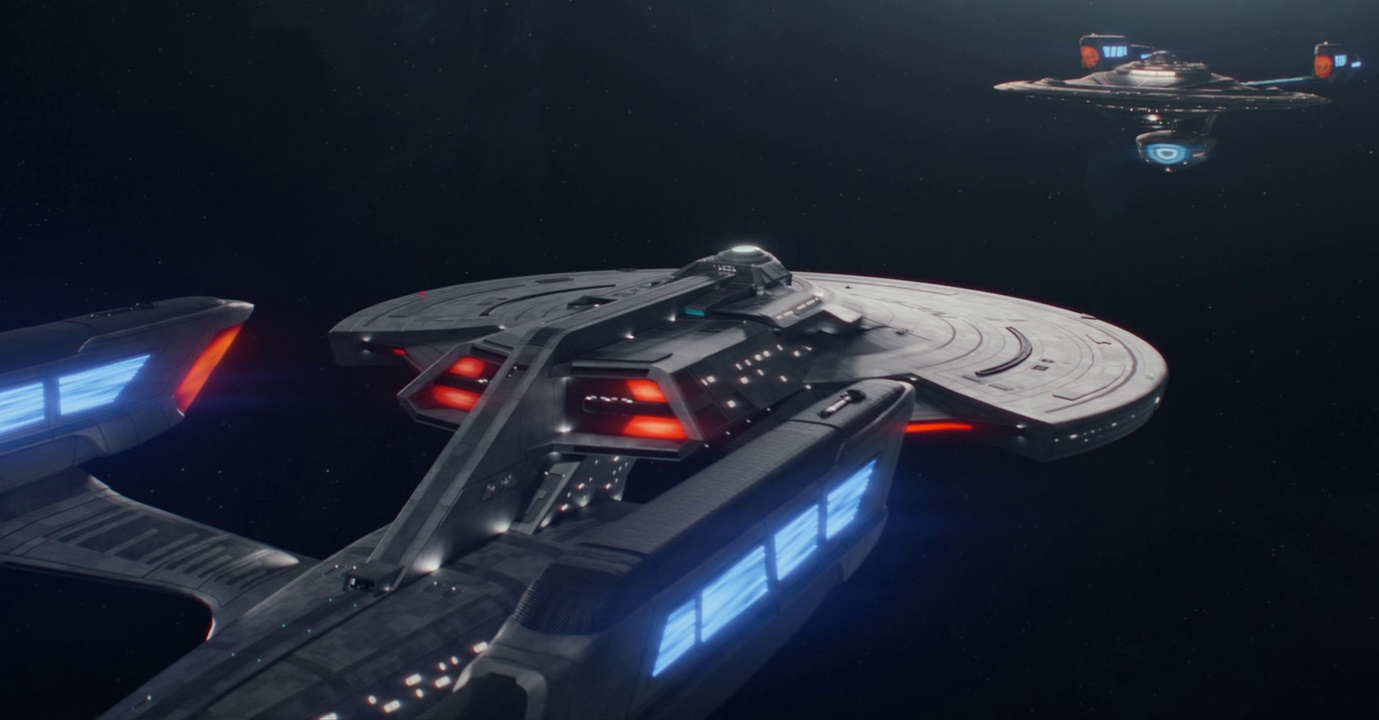
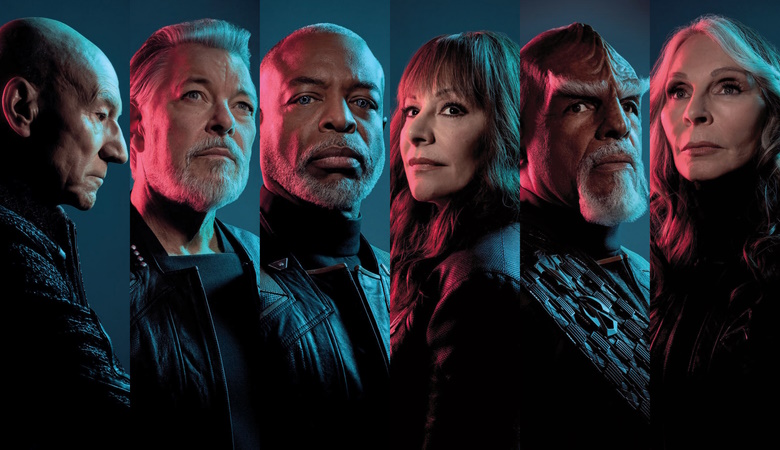
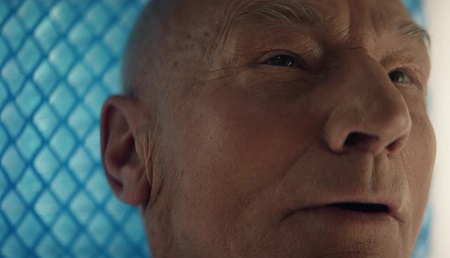
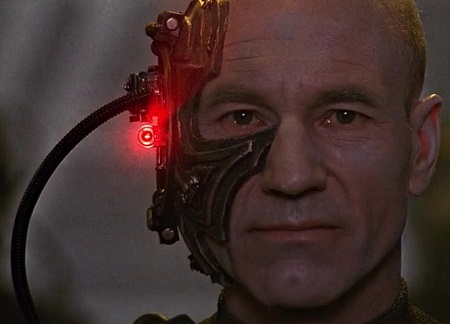
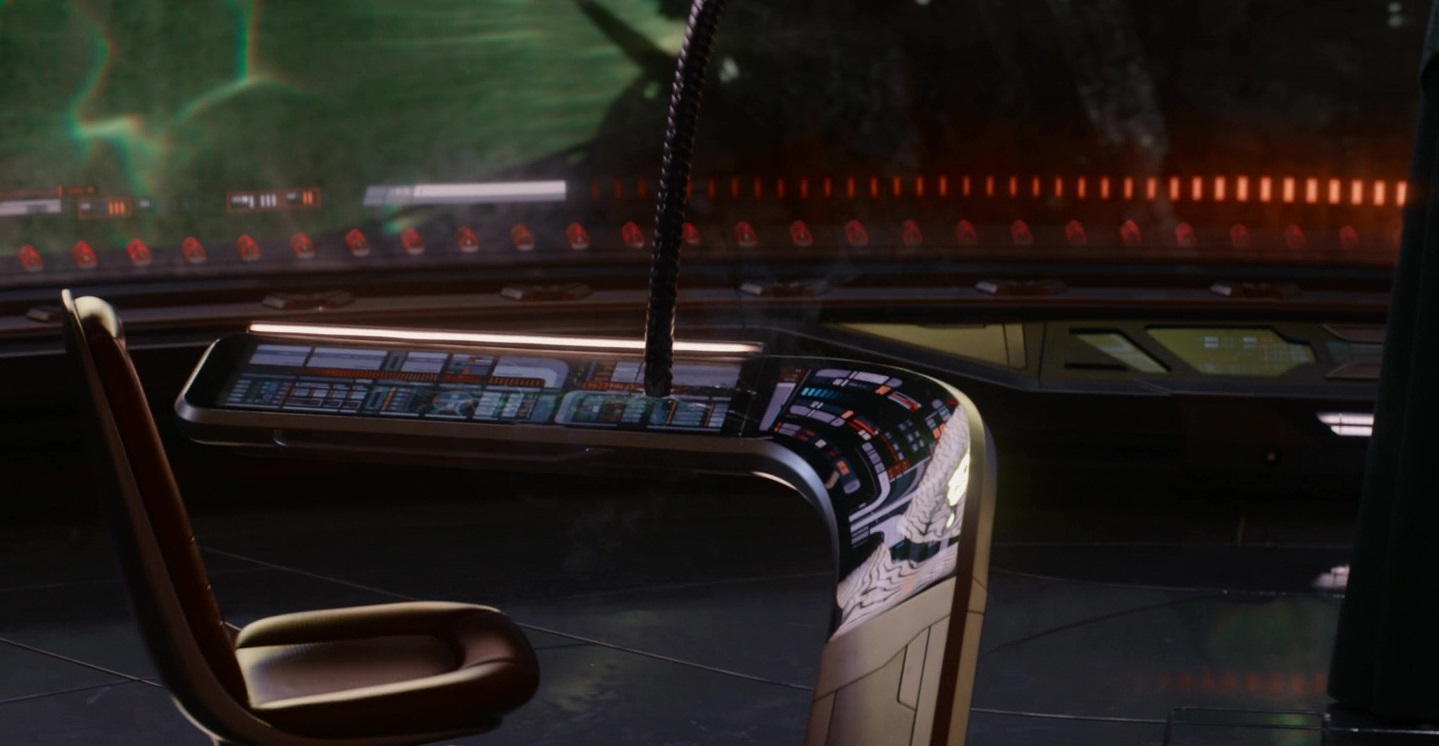
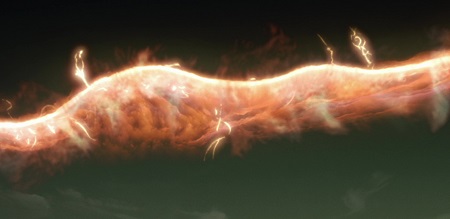
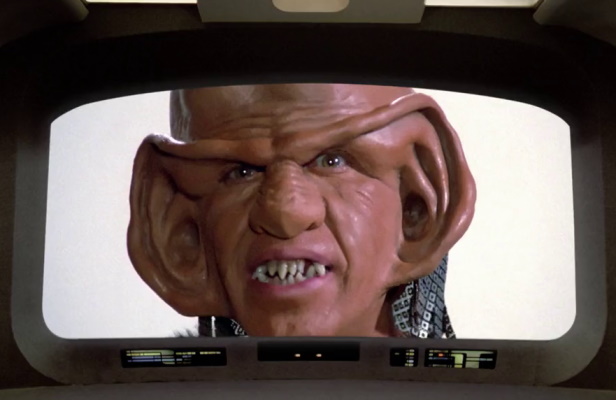
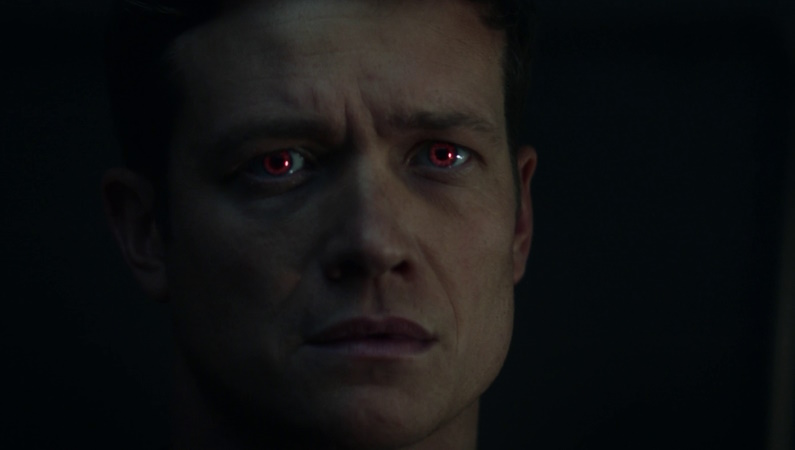

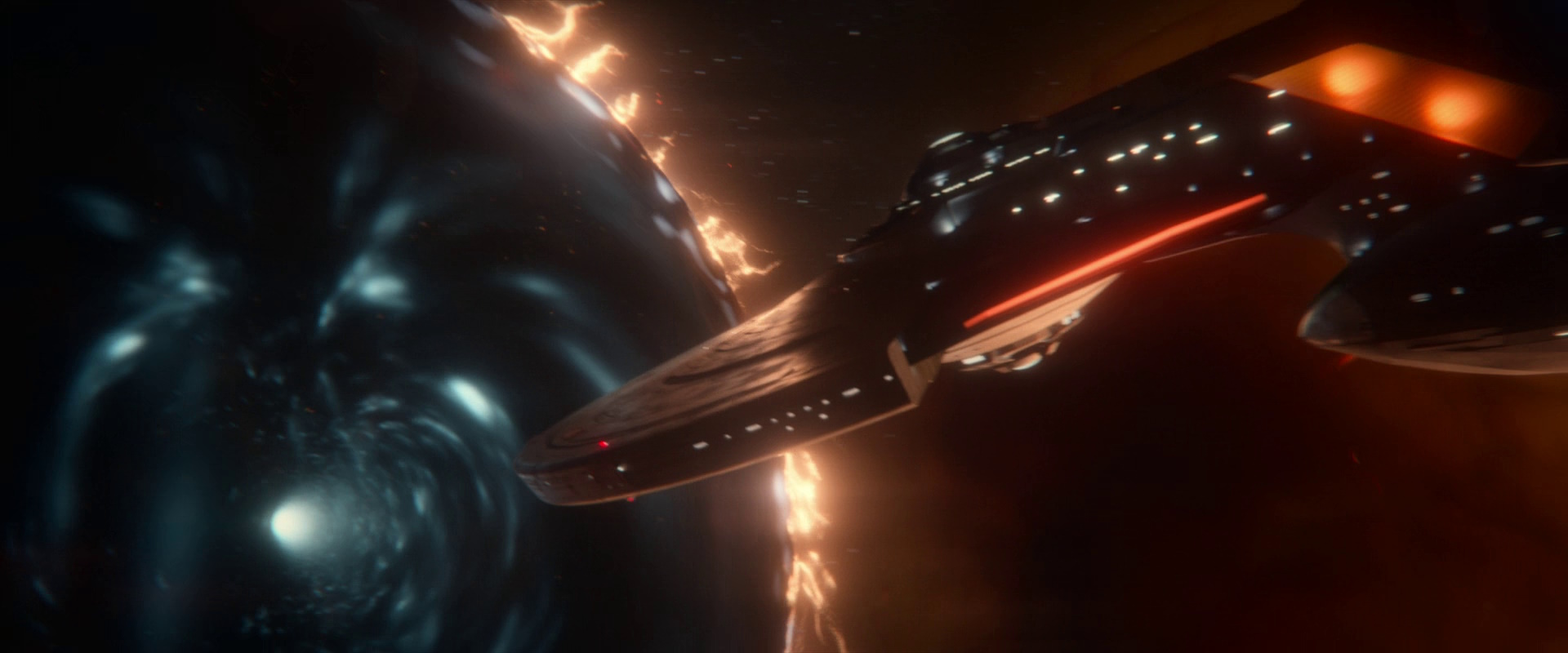

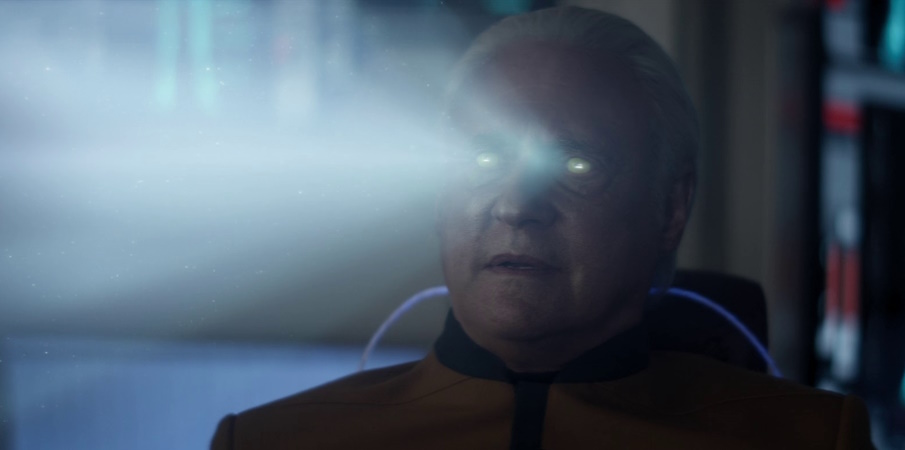
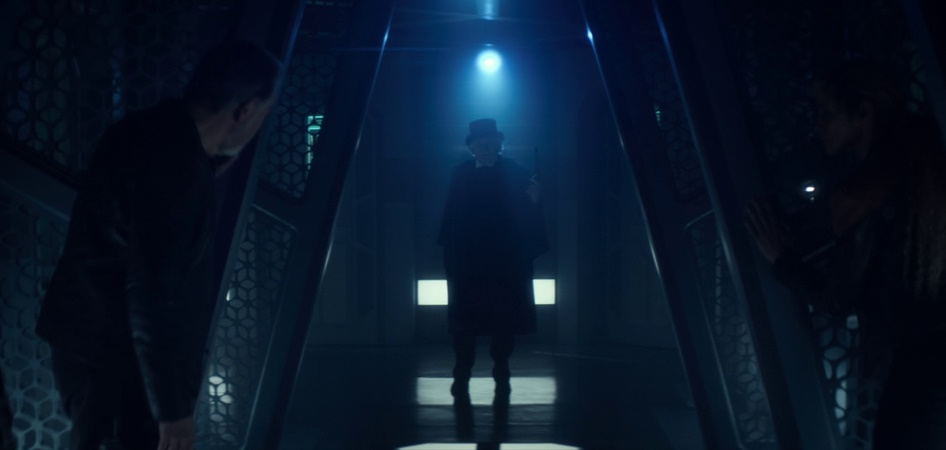
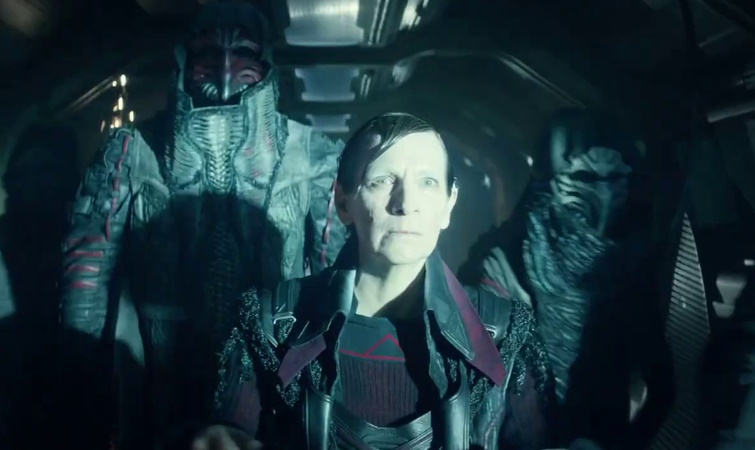
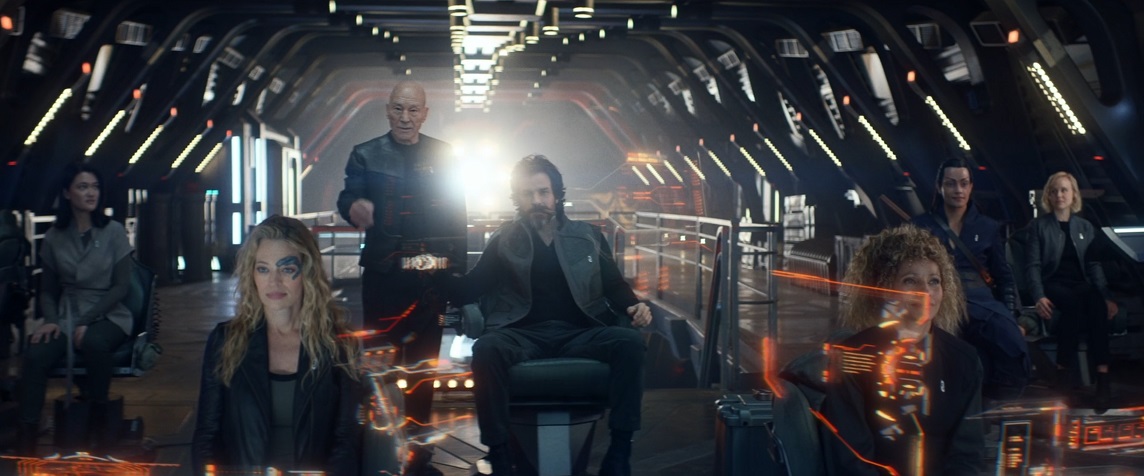
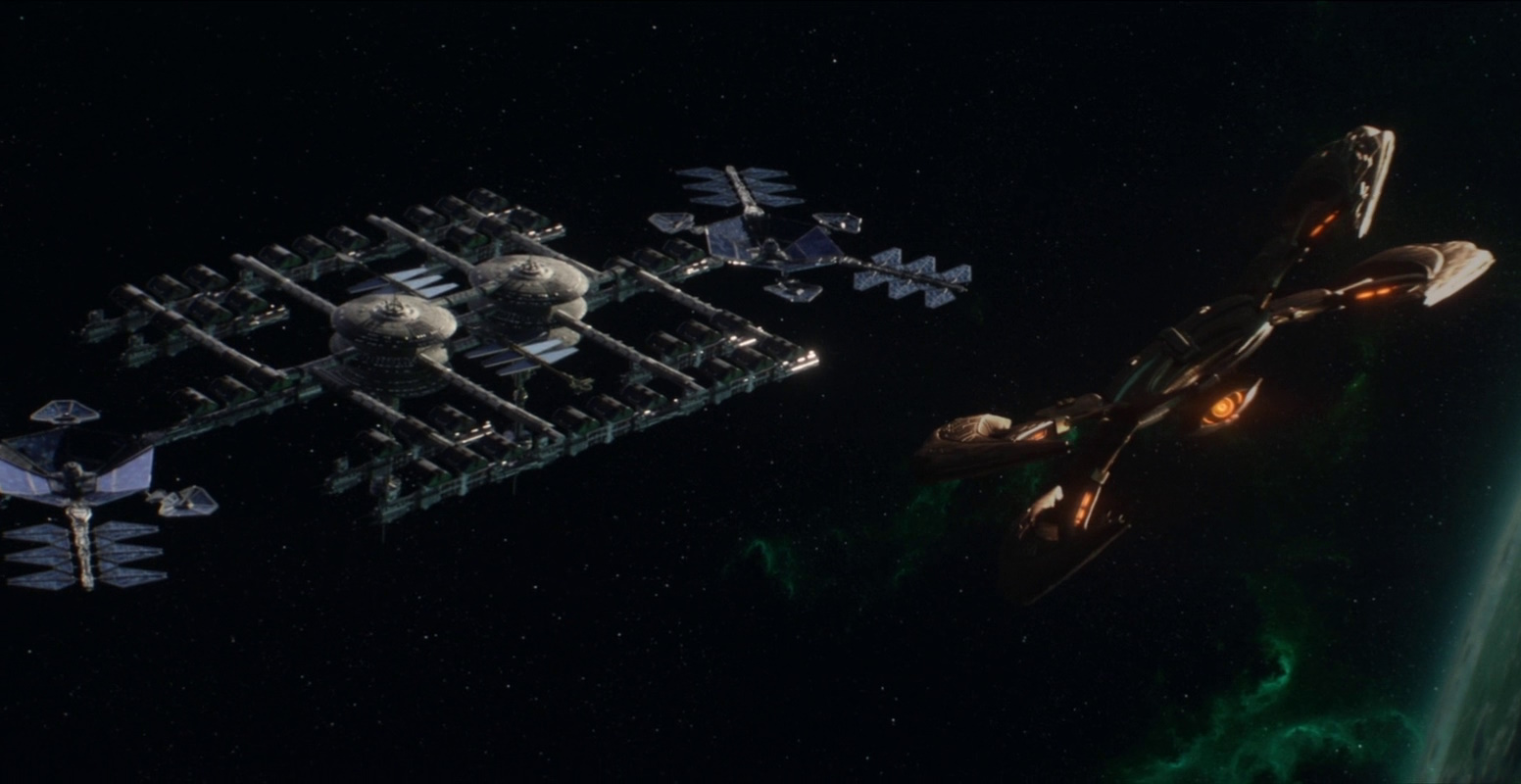
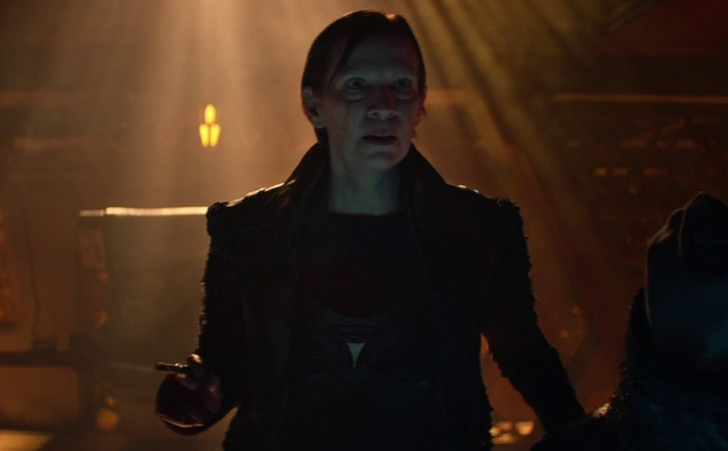
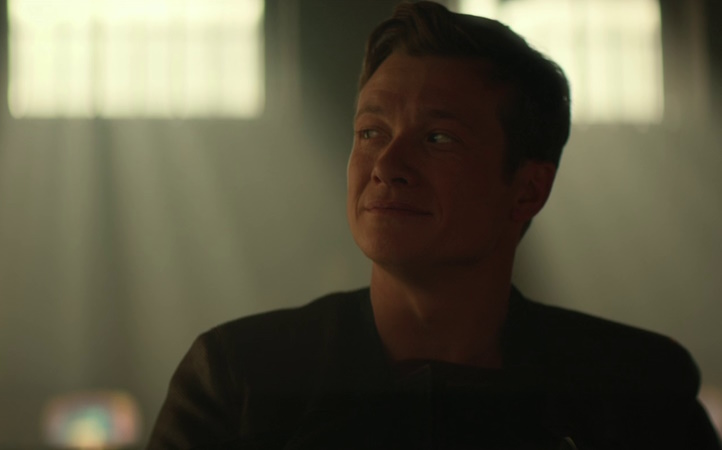
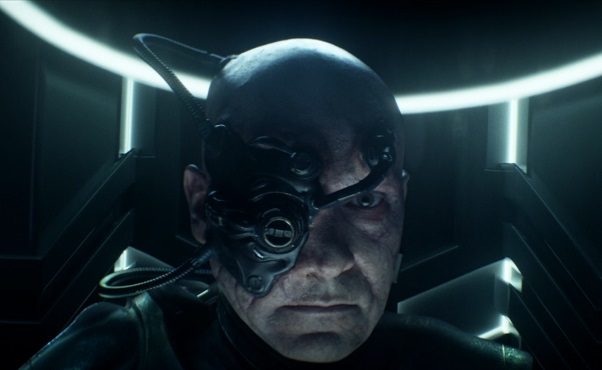
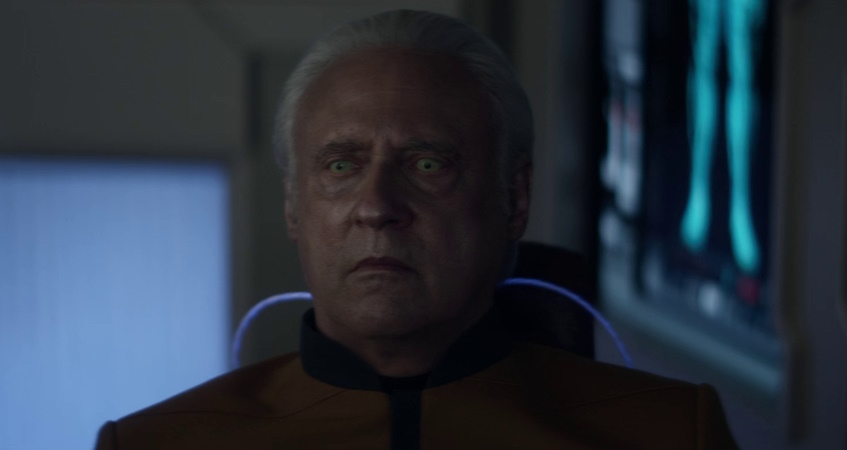
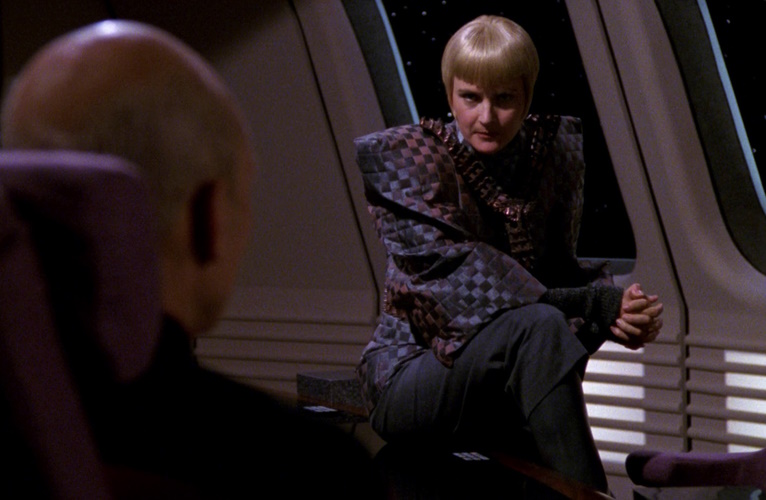
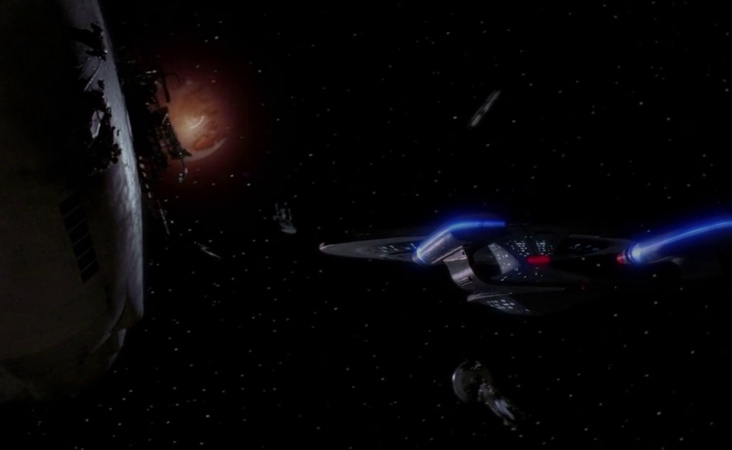
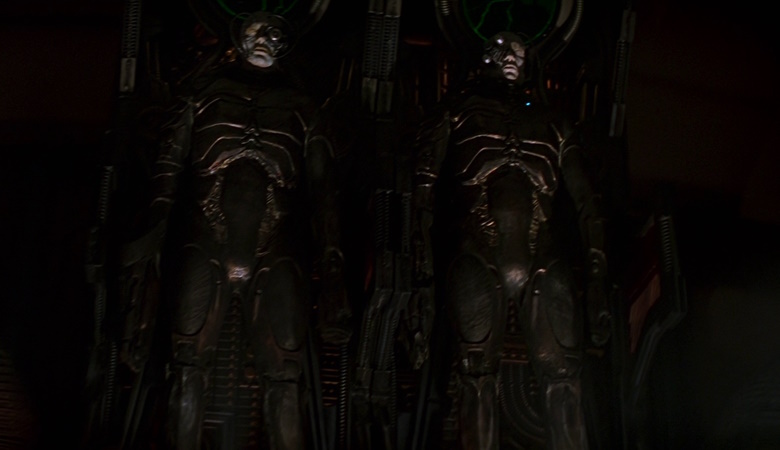
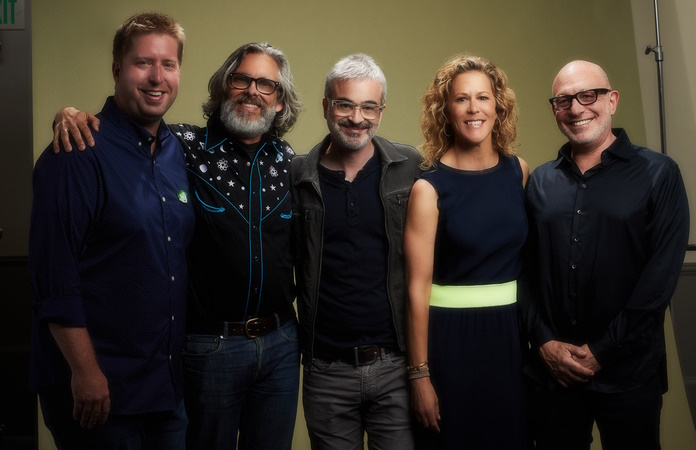
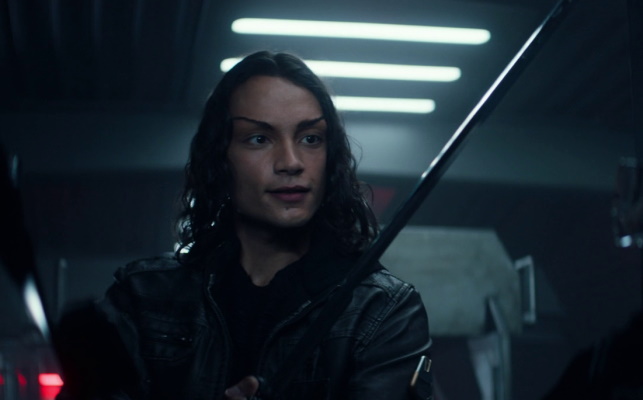
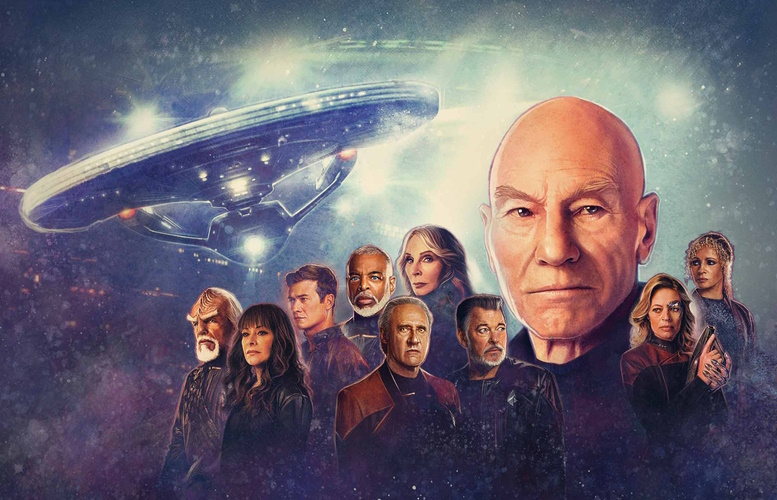
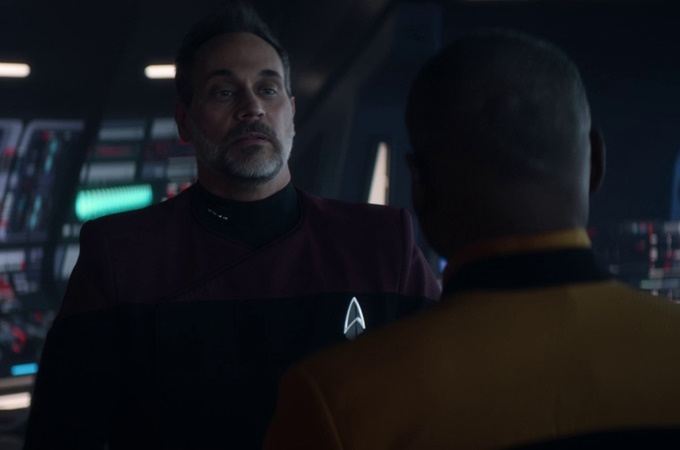
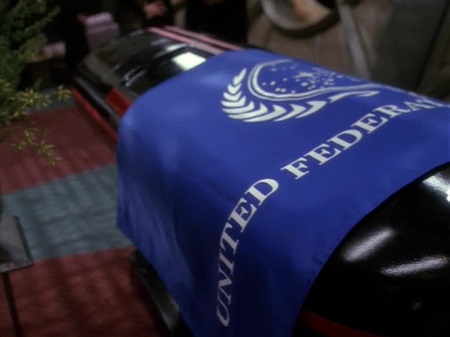
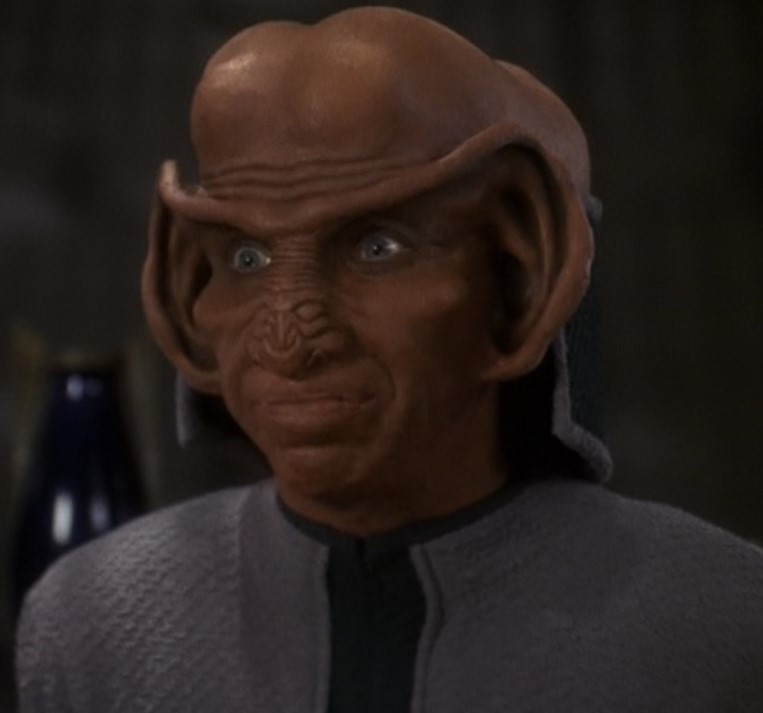
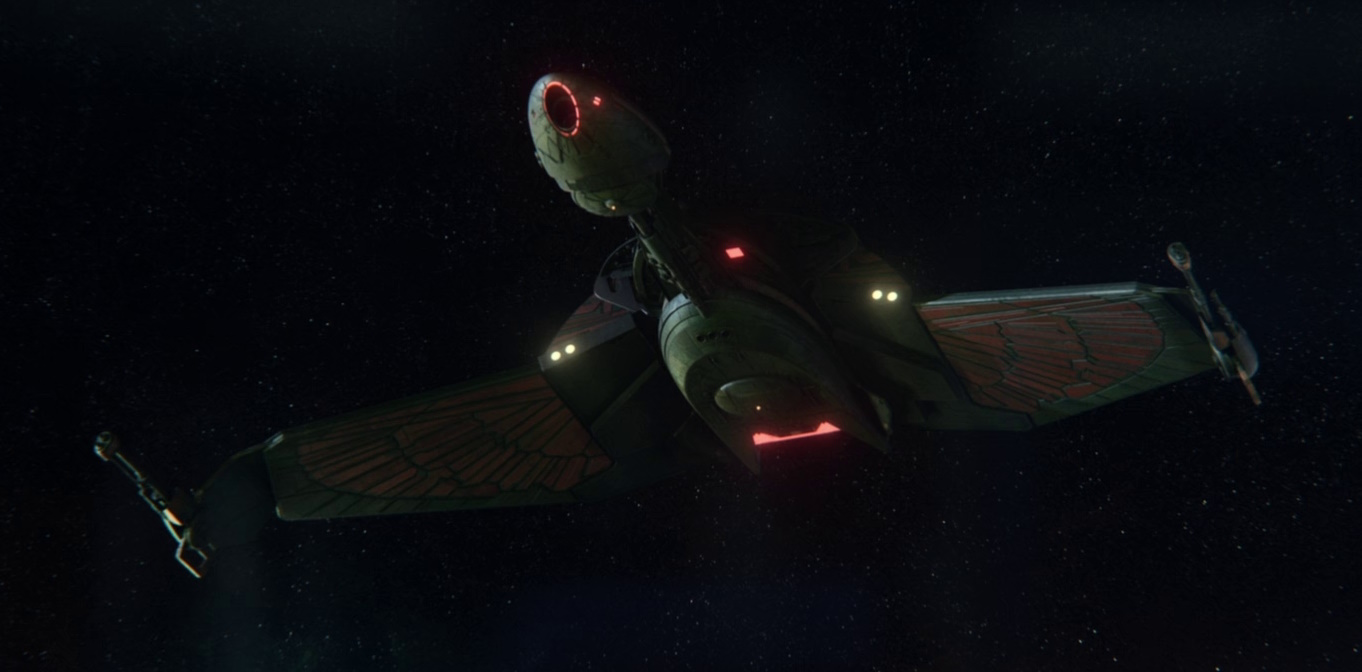
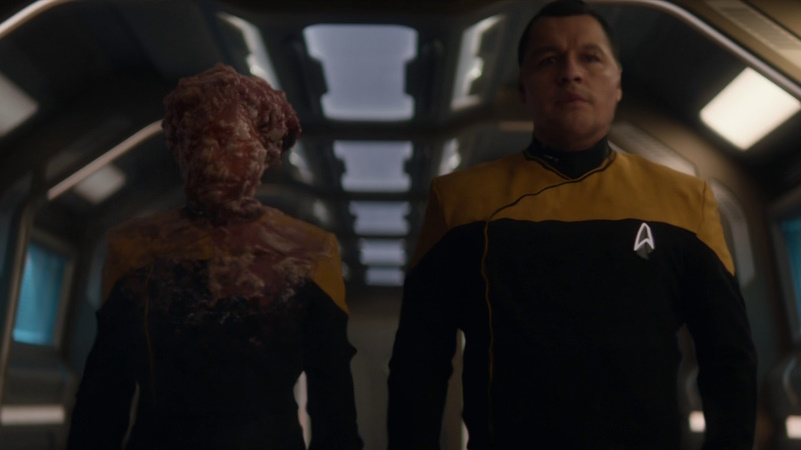
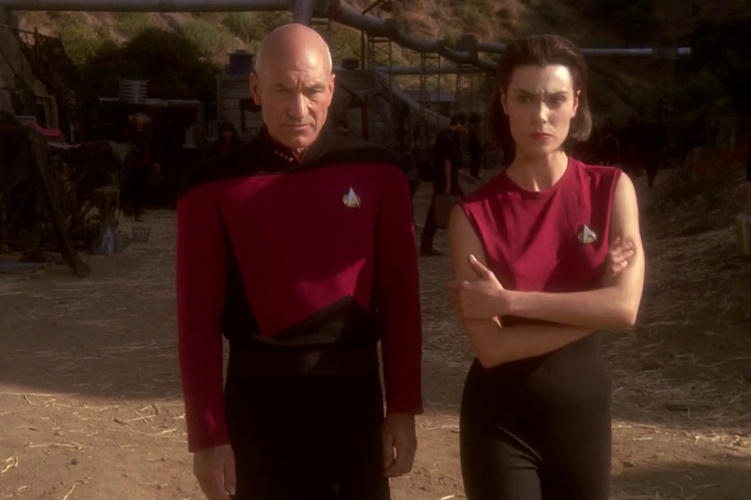
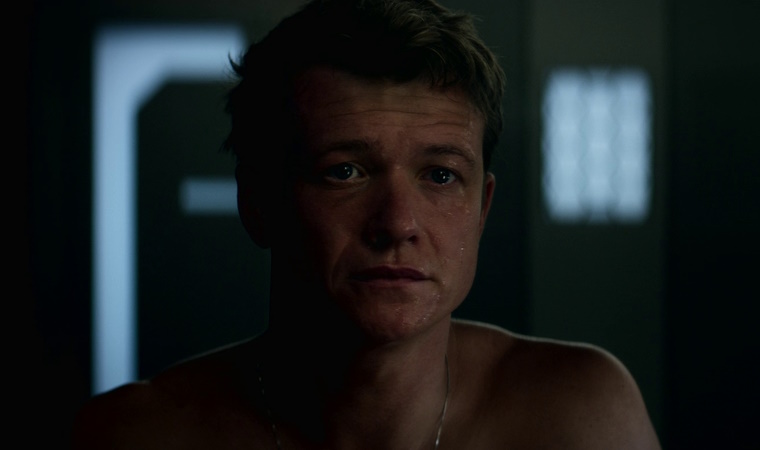

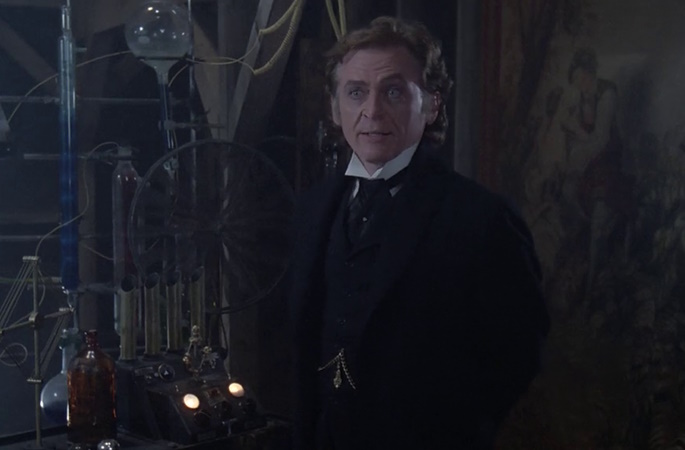
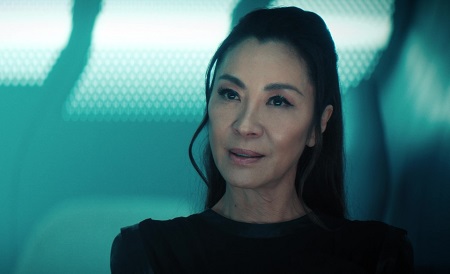
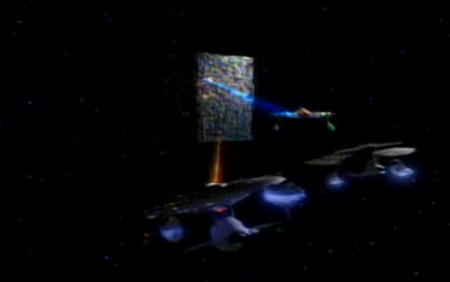


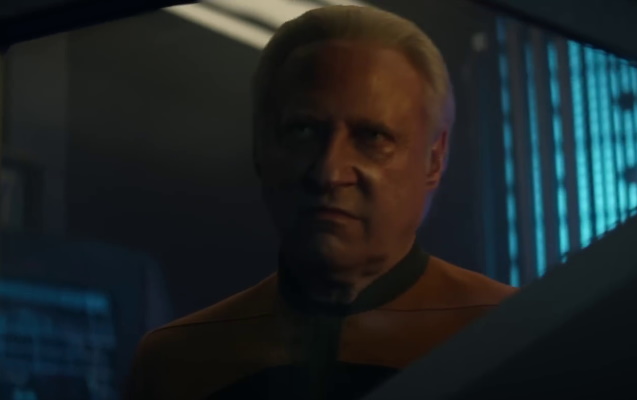
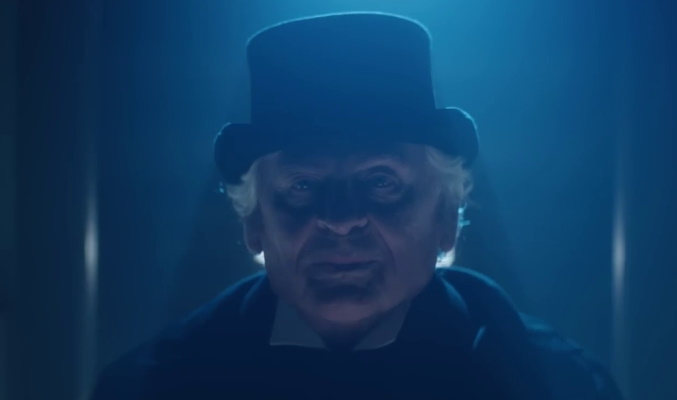
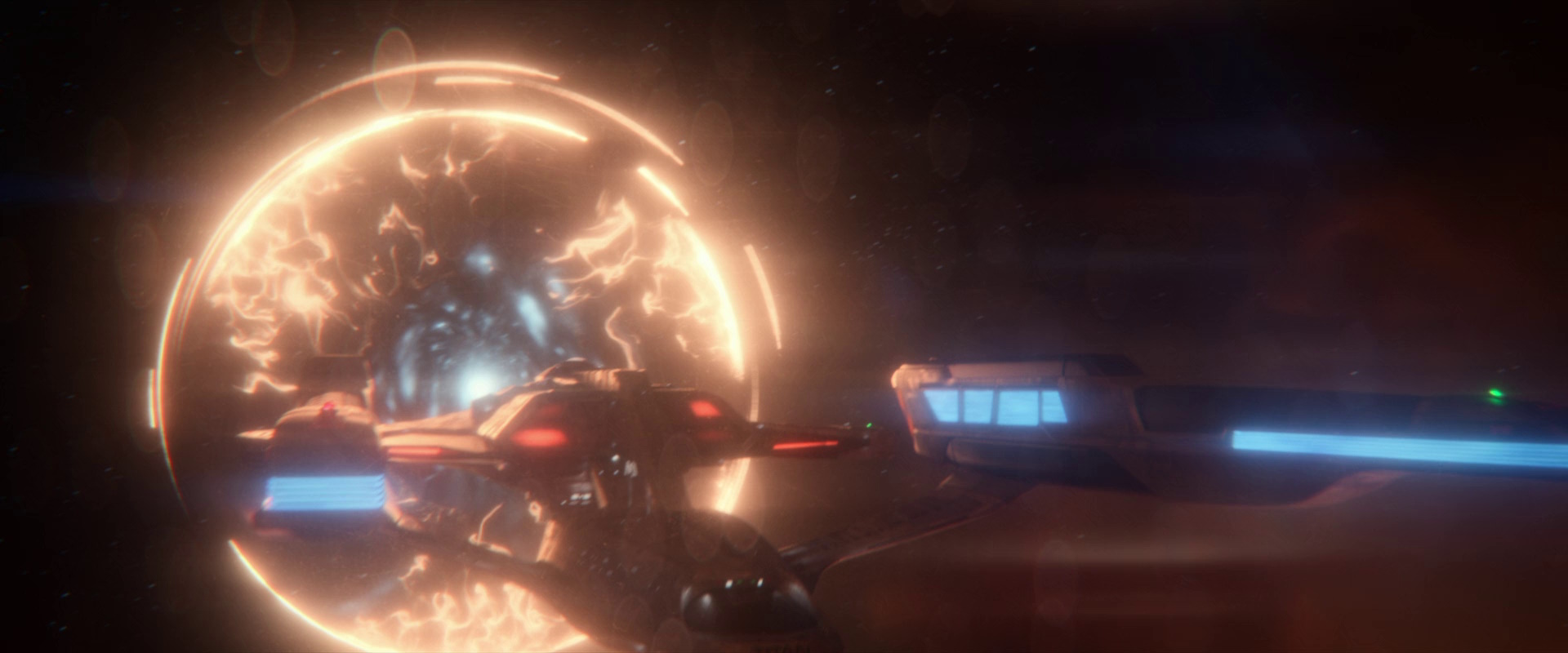
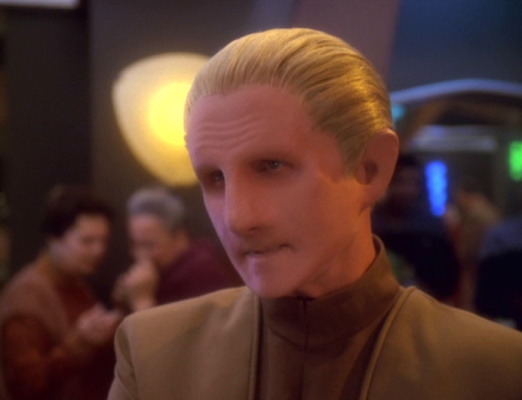
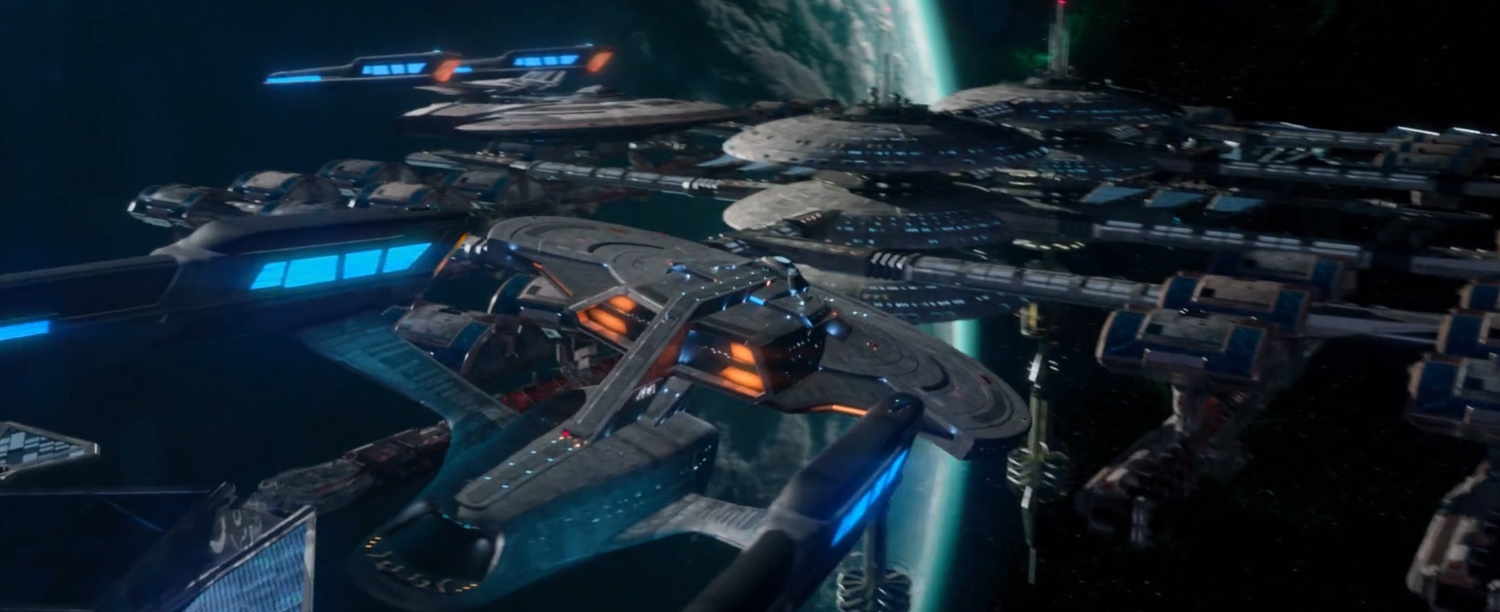
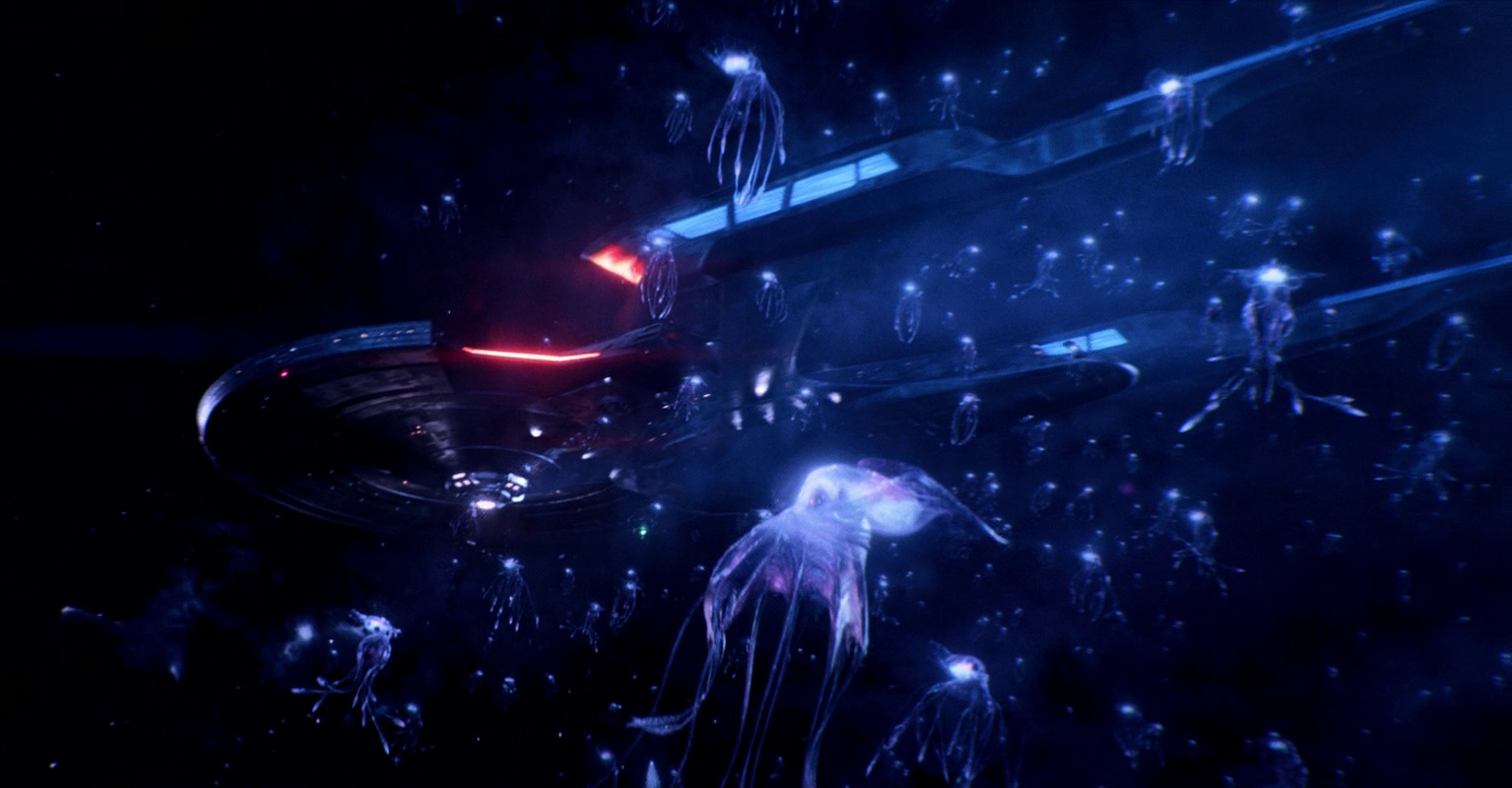
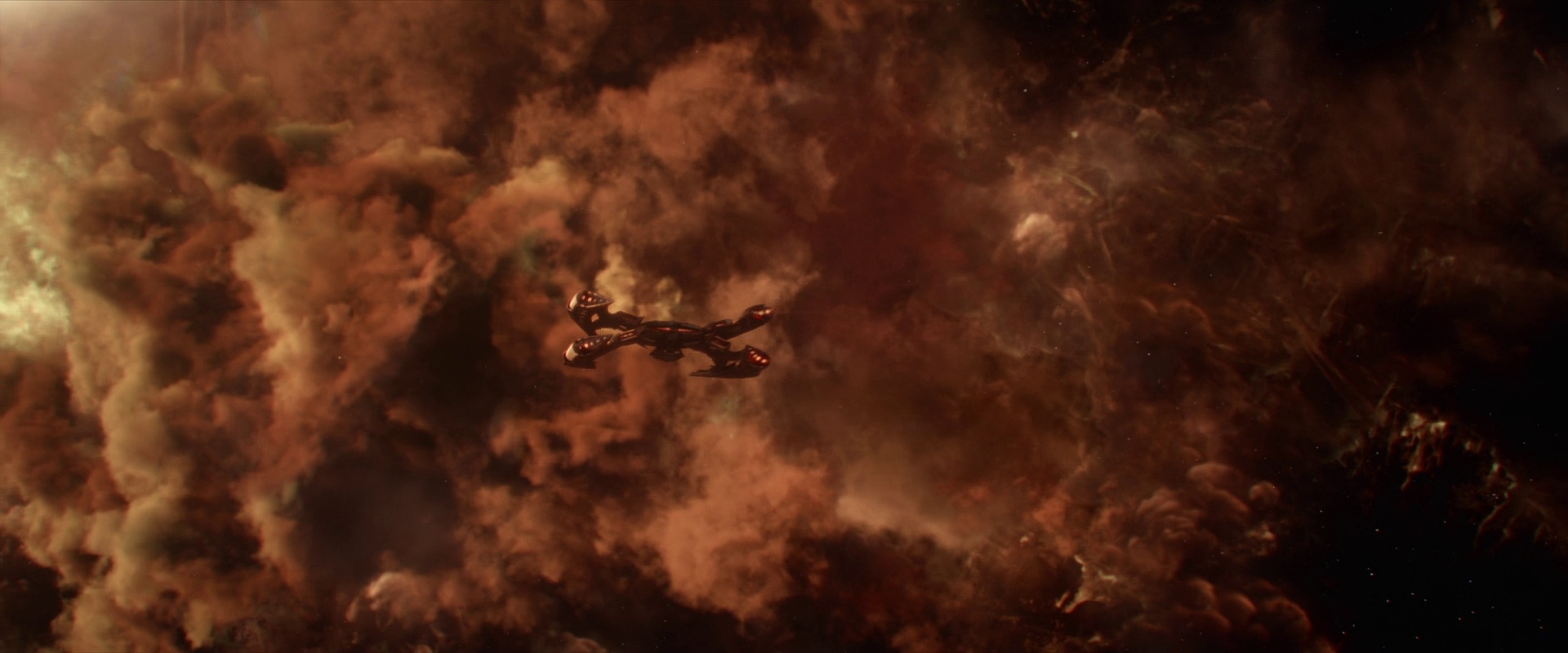
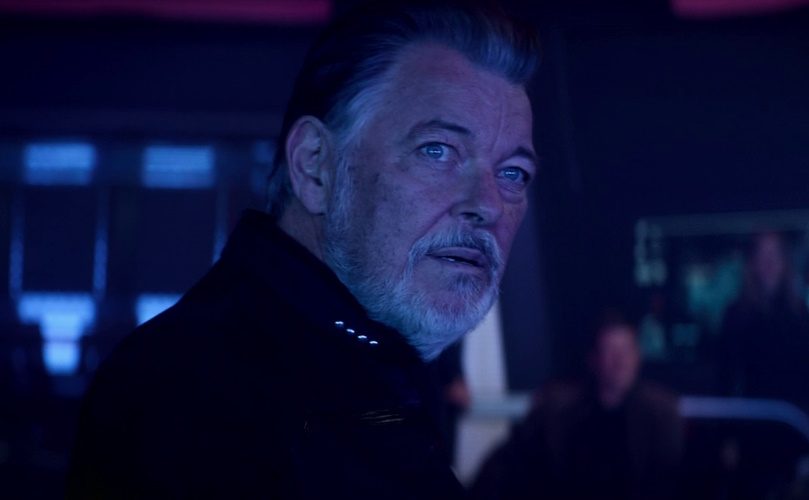
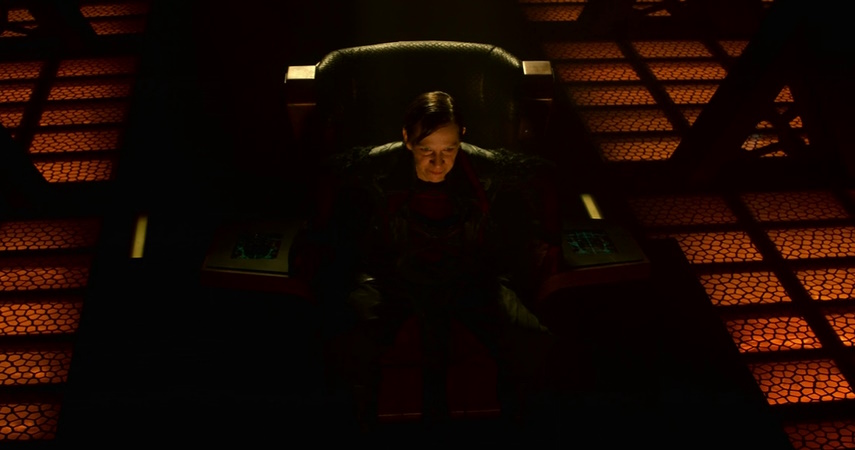
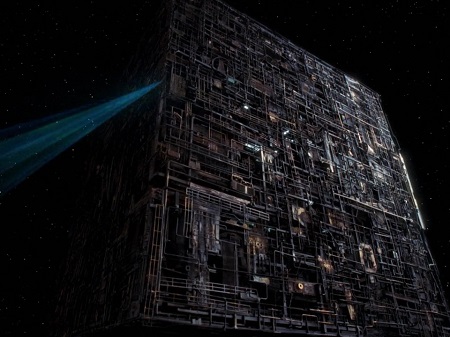
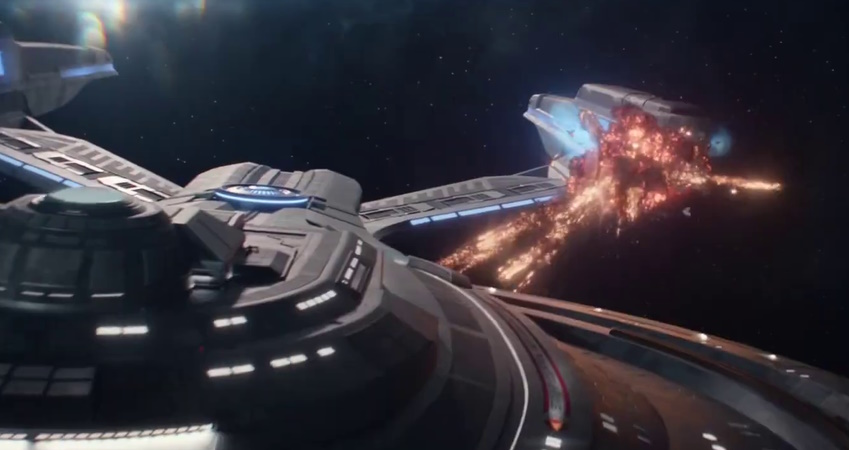
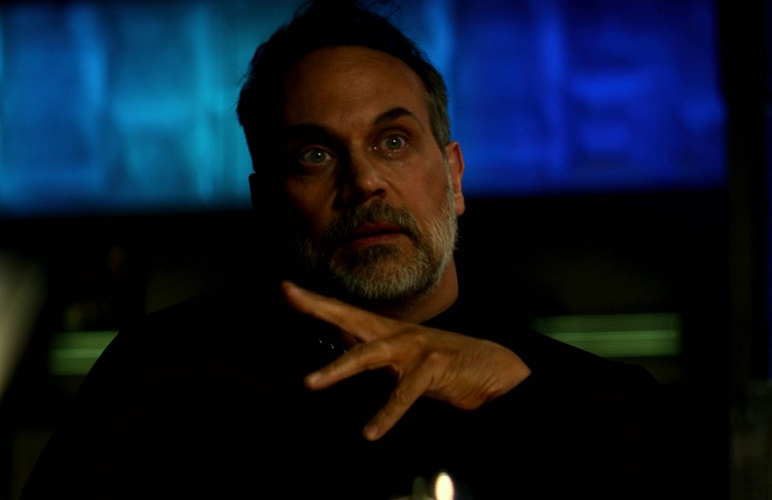
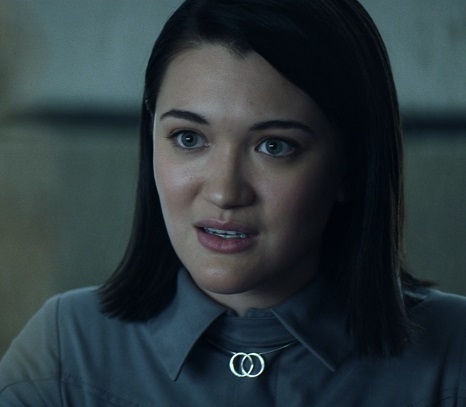
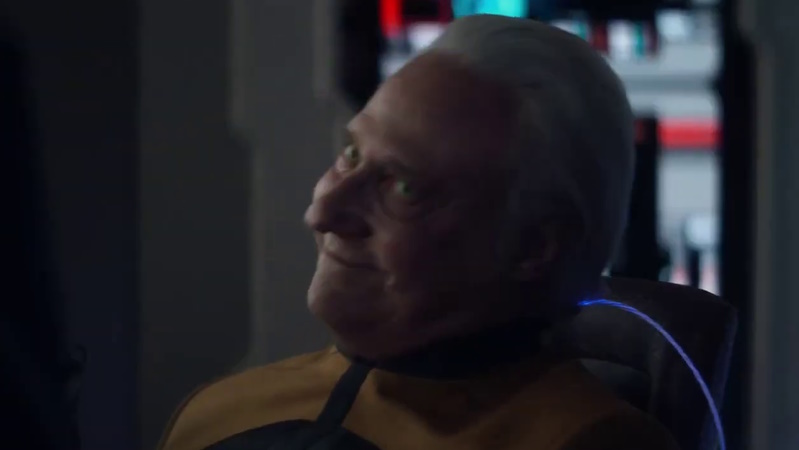


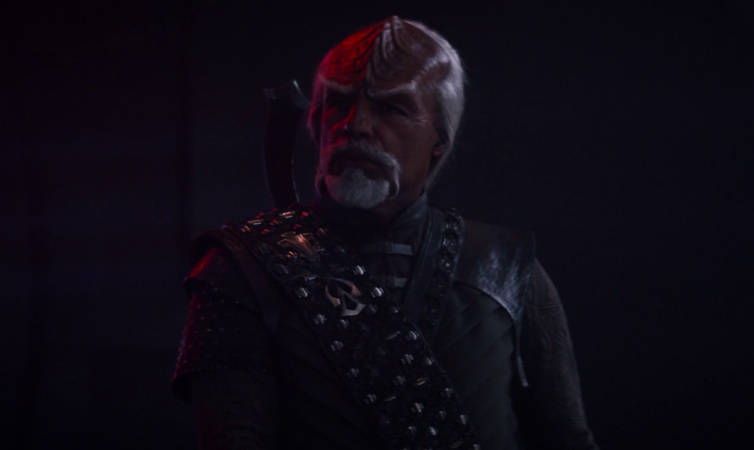
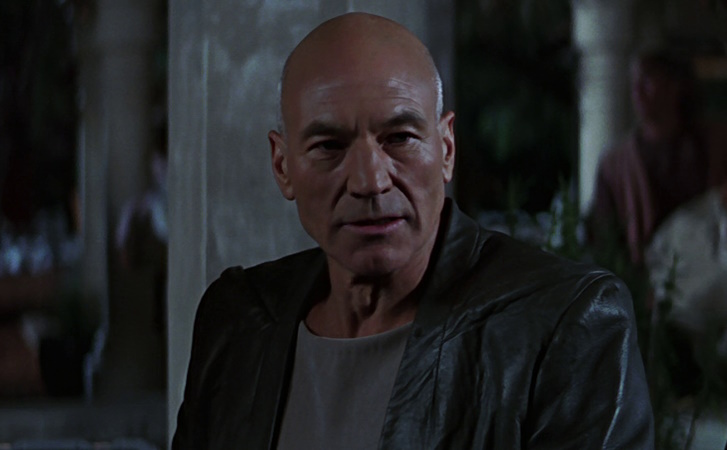
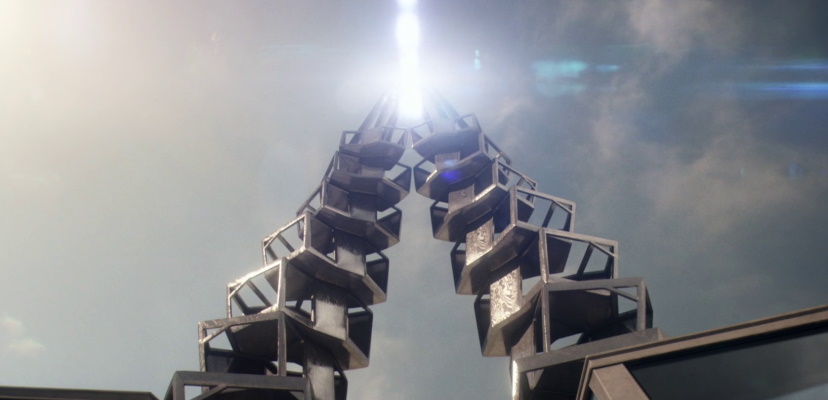
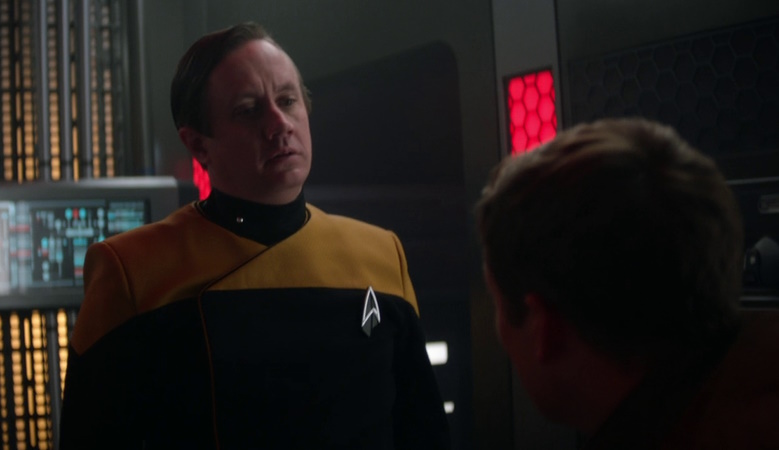

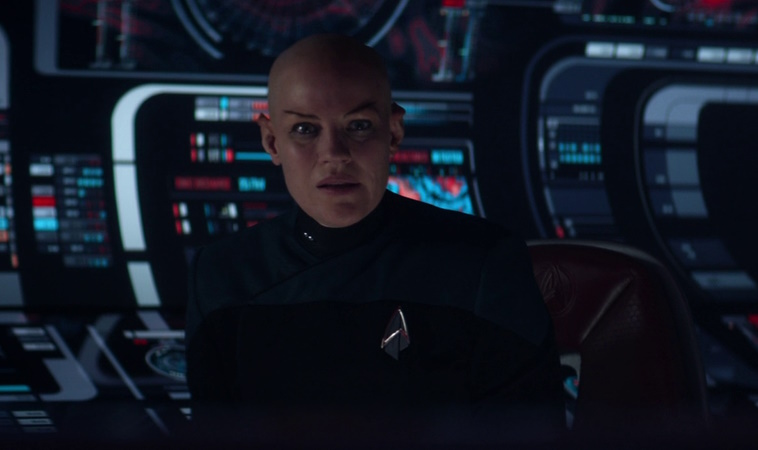
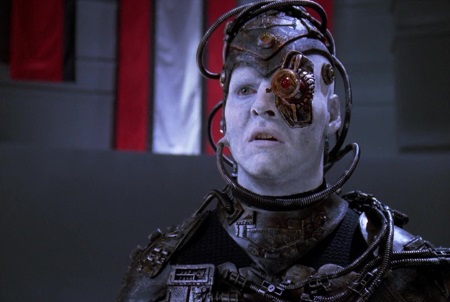
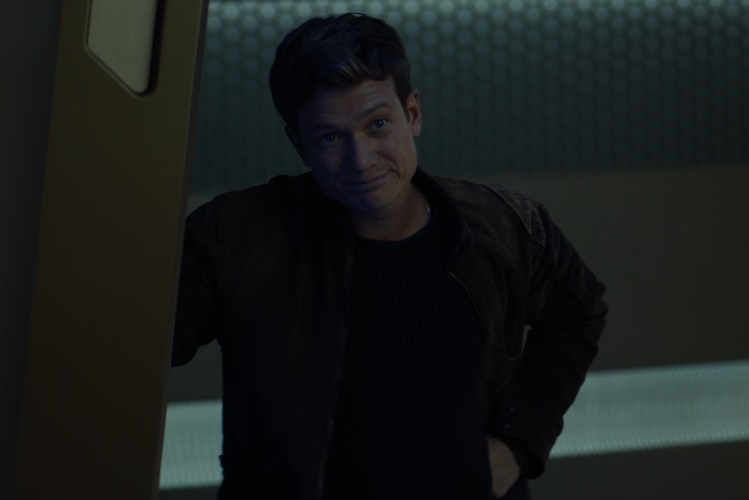
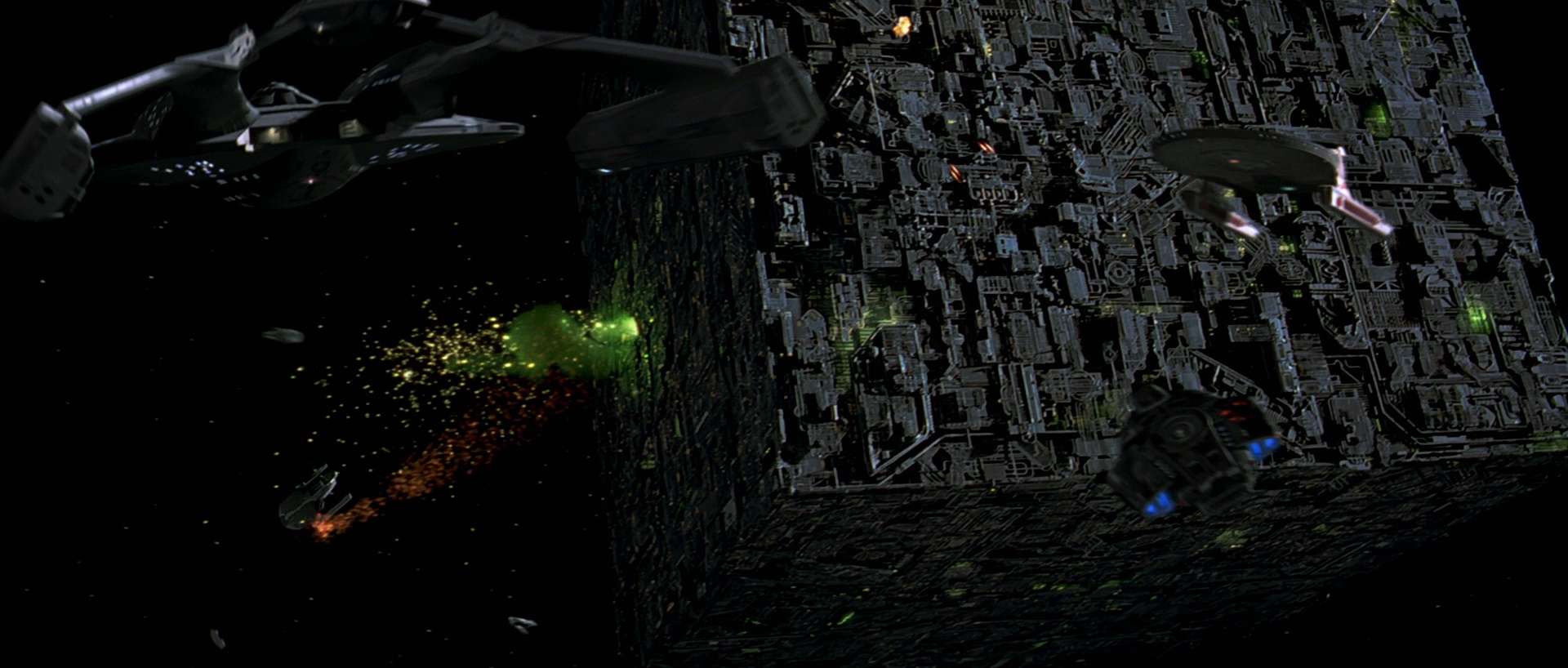
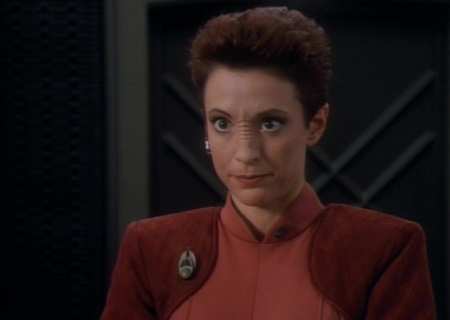
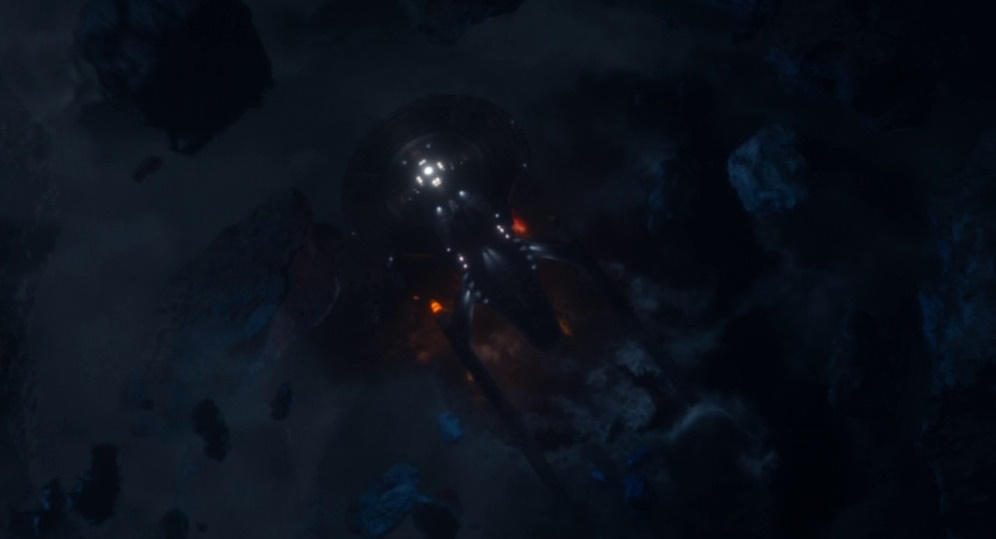


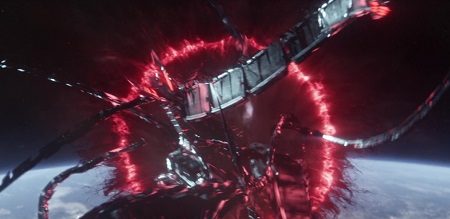


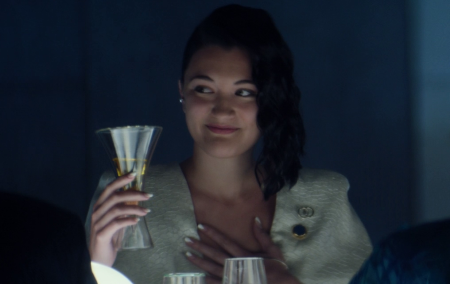








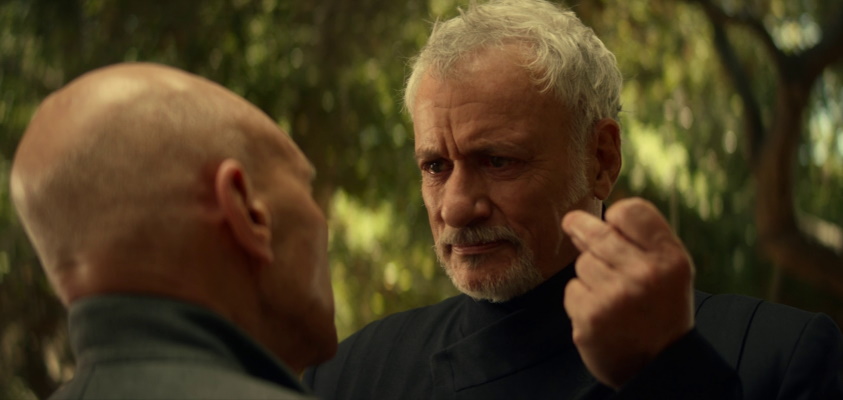
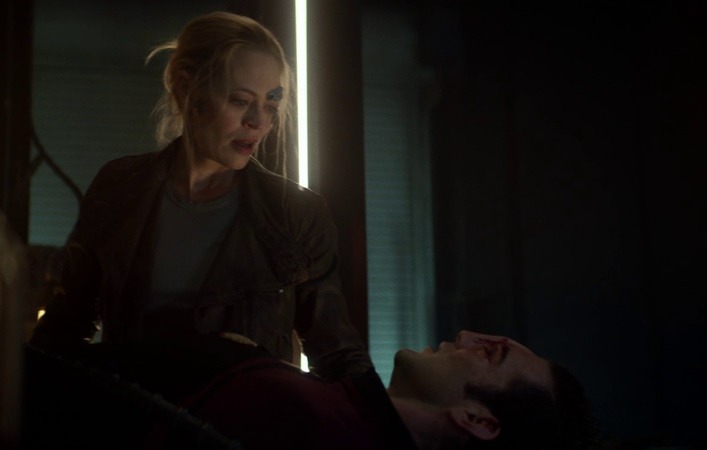
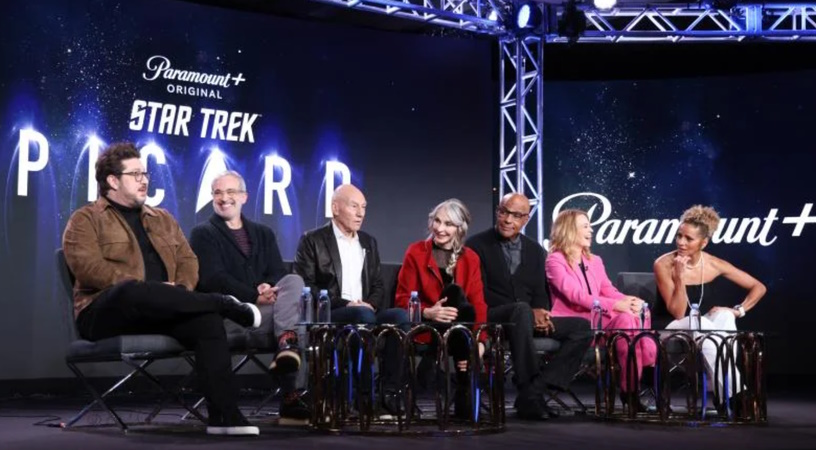
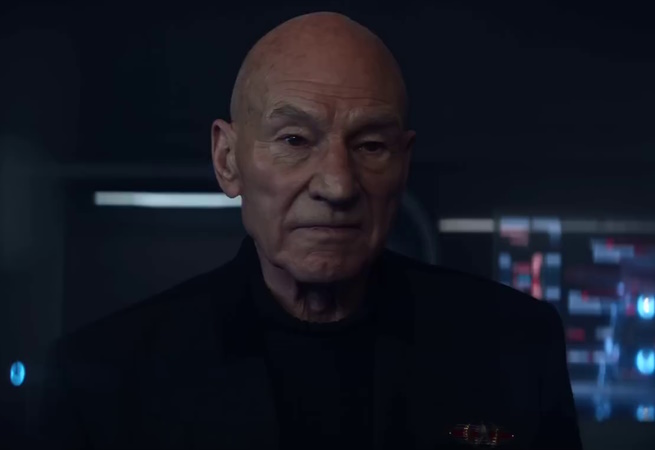


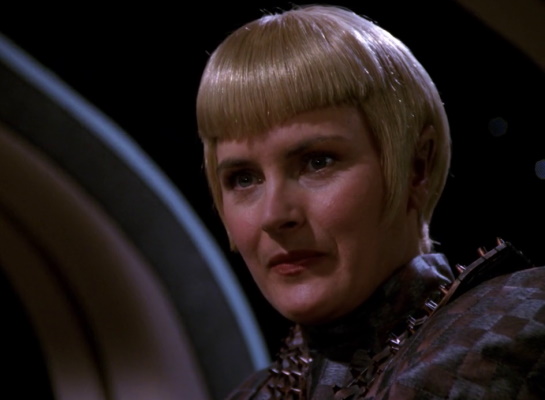
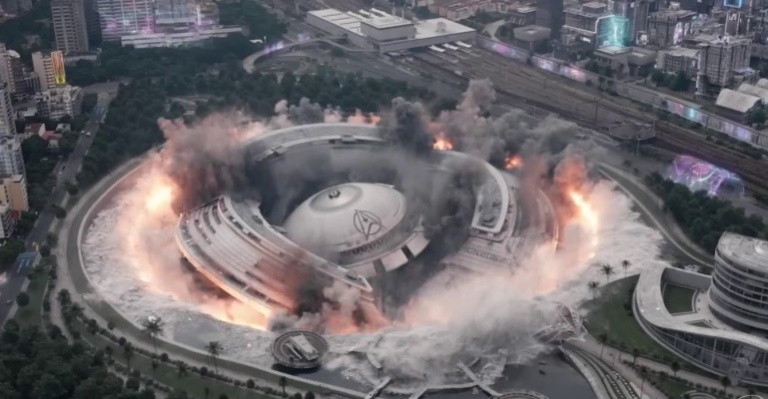
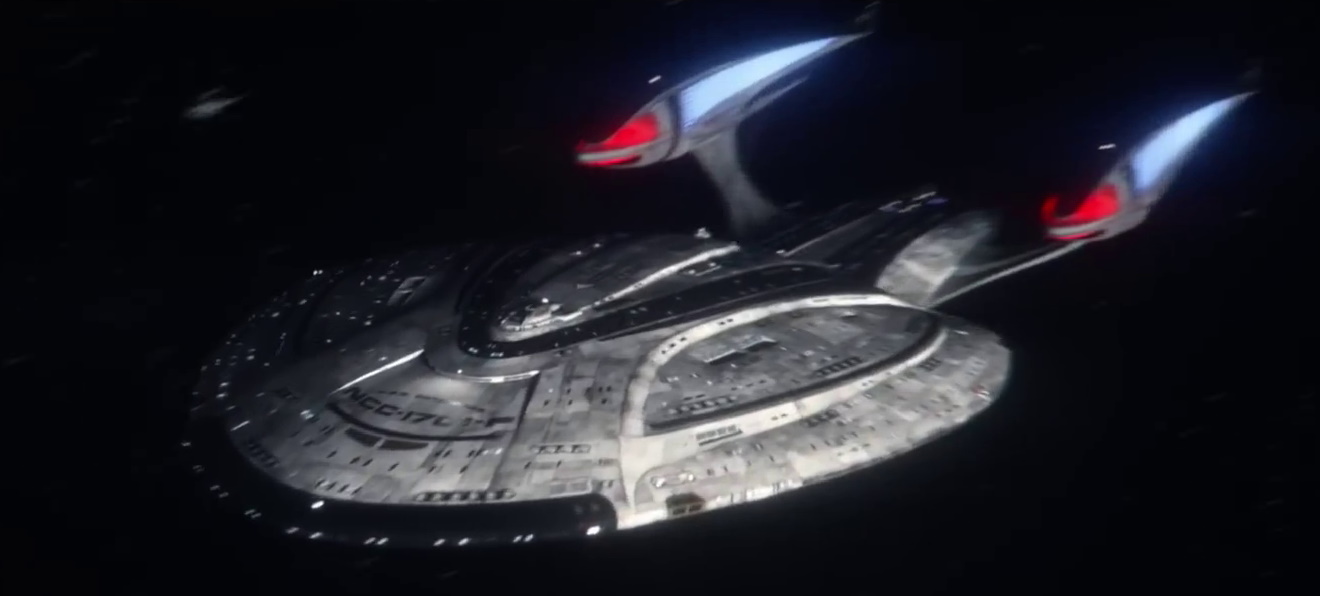

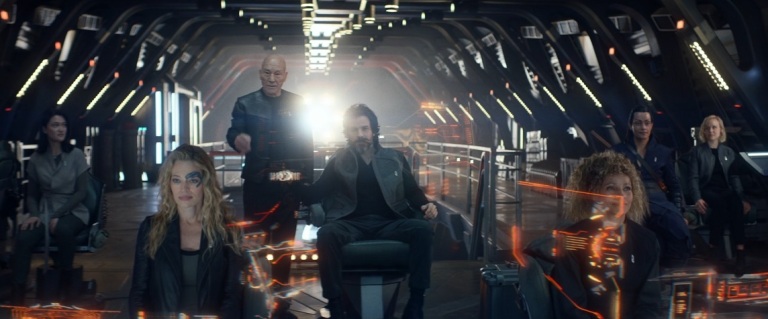

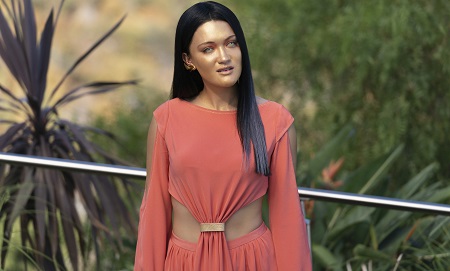





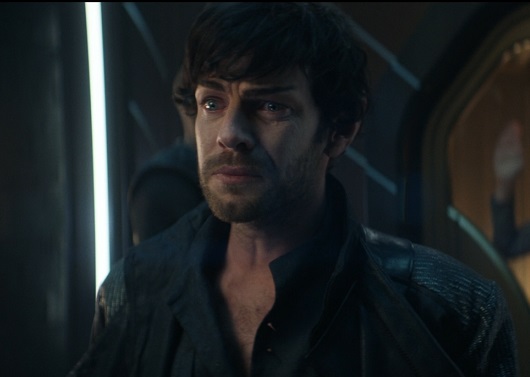


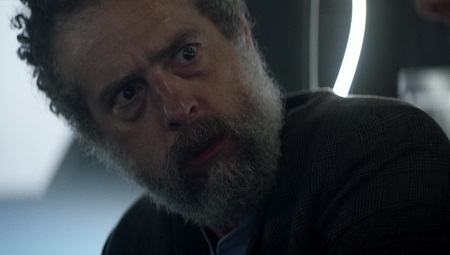


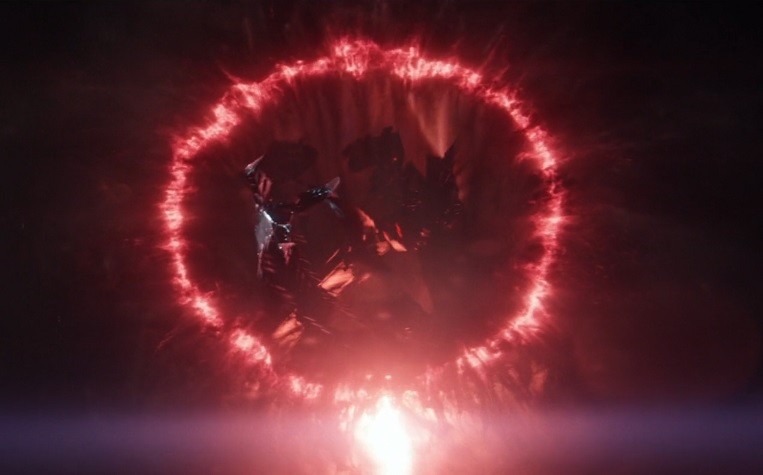


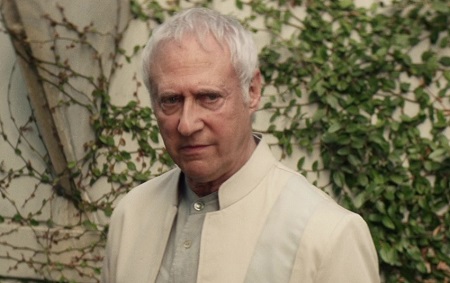
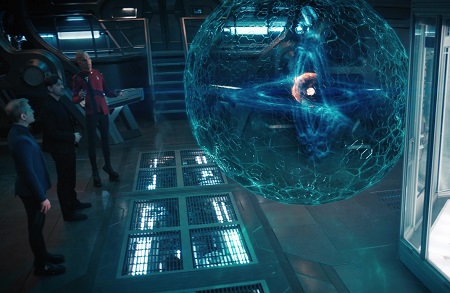
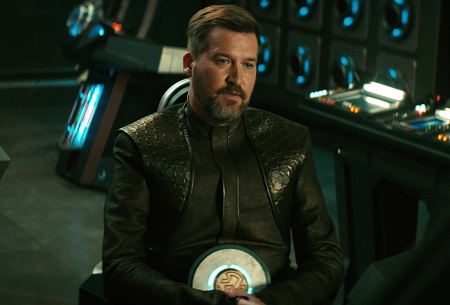
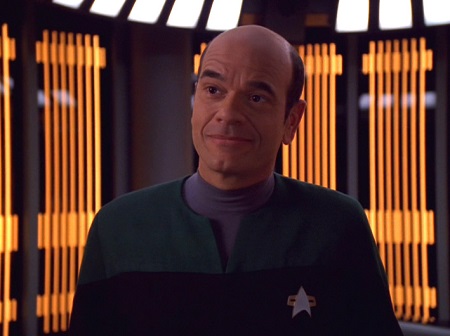
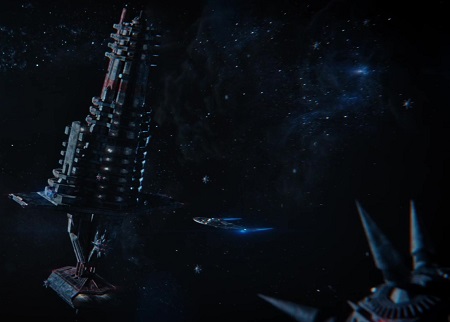
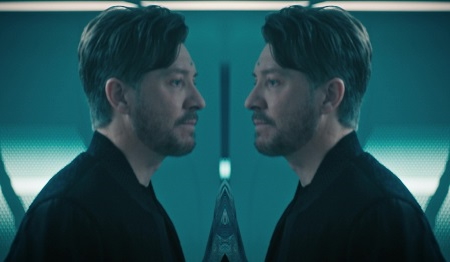
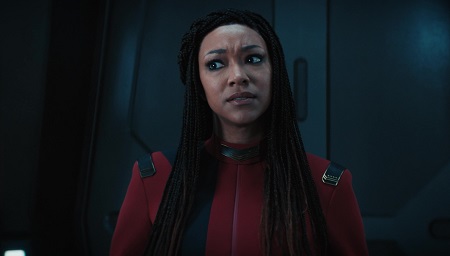
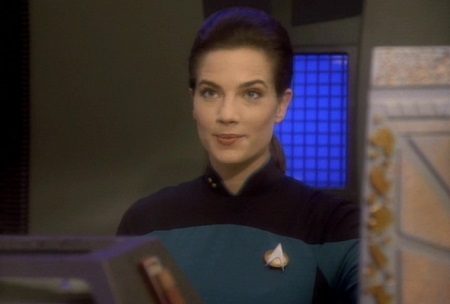


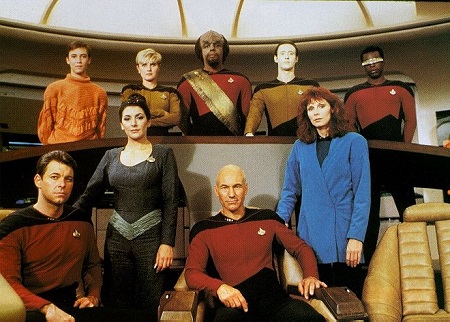



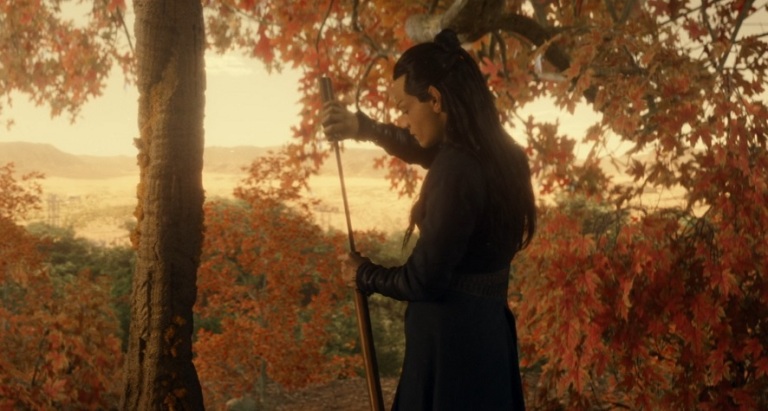
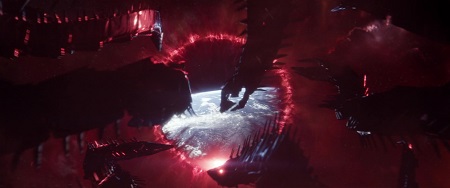


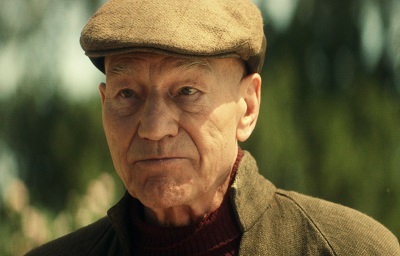
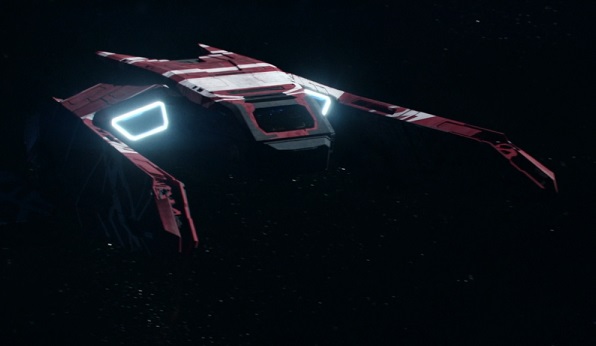




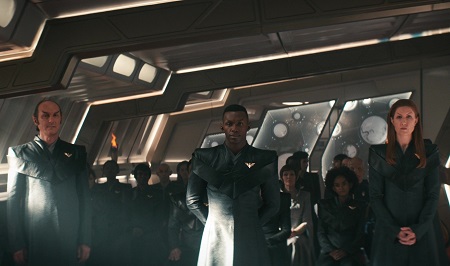


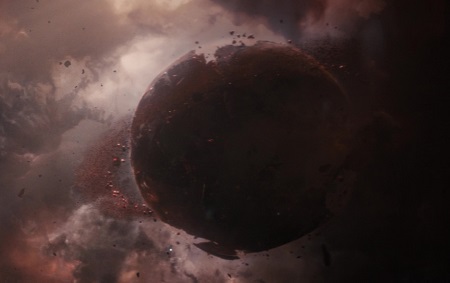
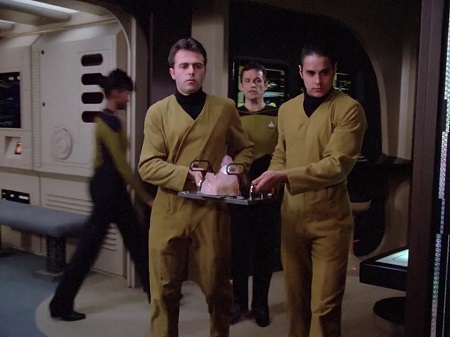






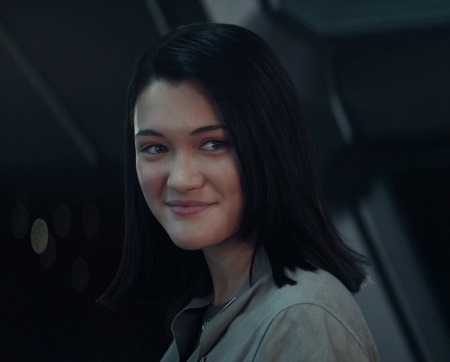








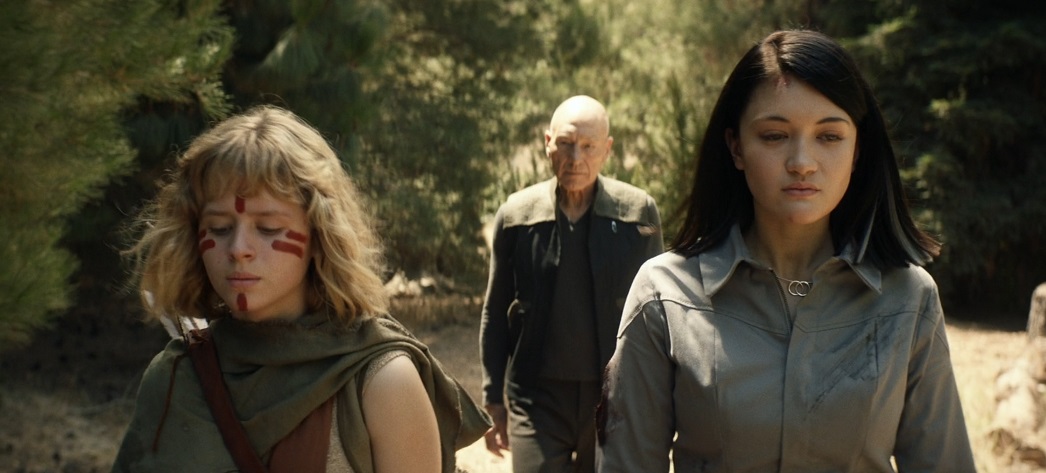


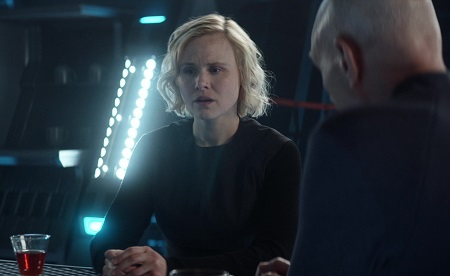
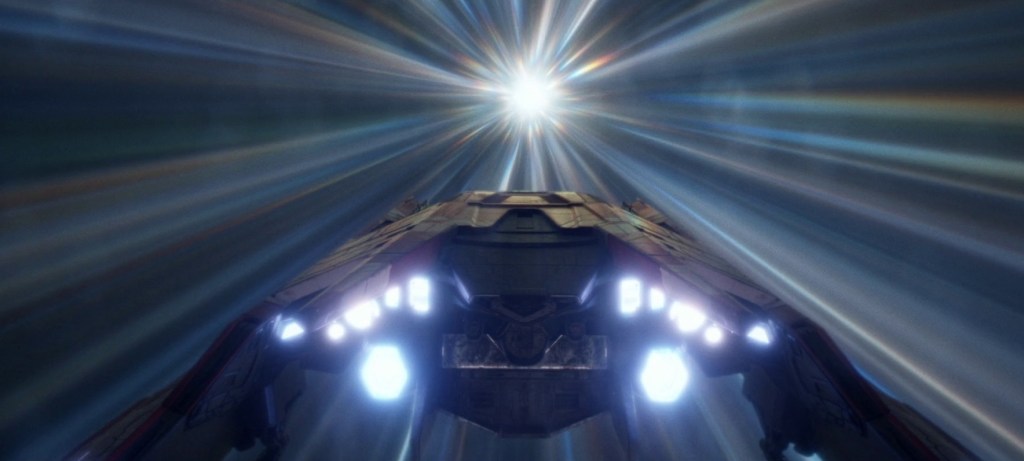
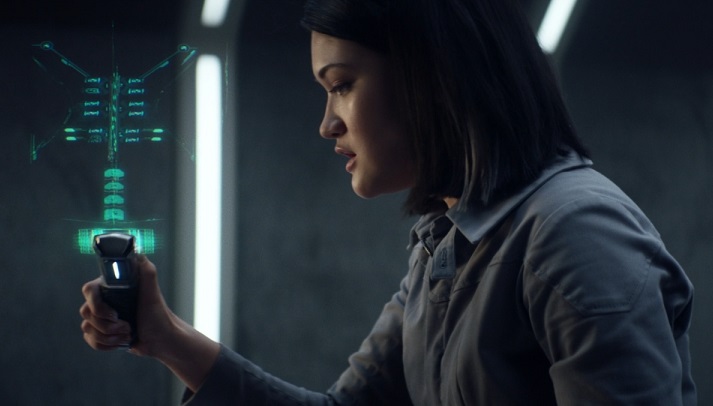
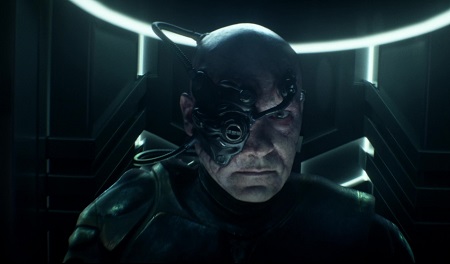

 Trekking with Dennis