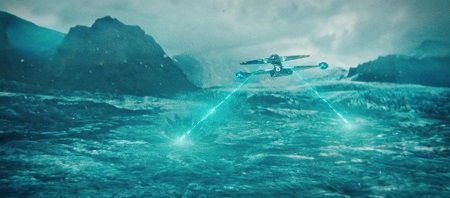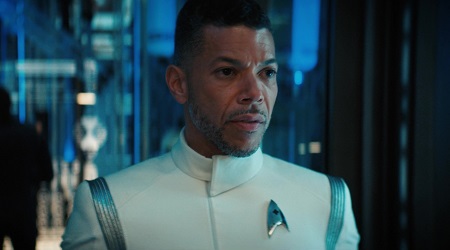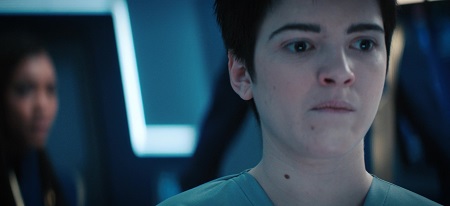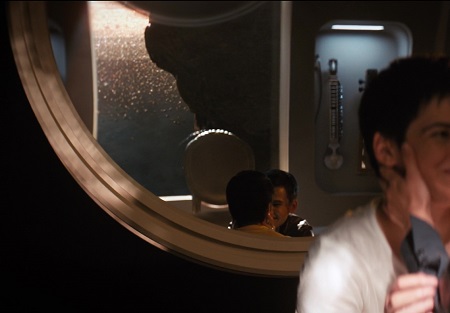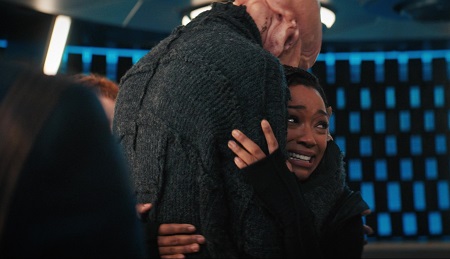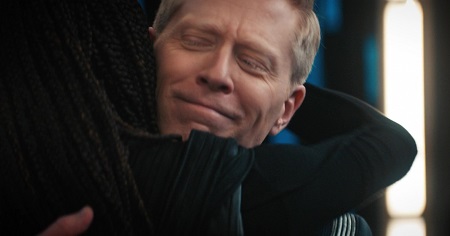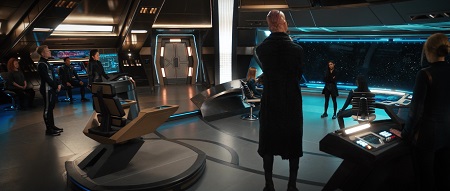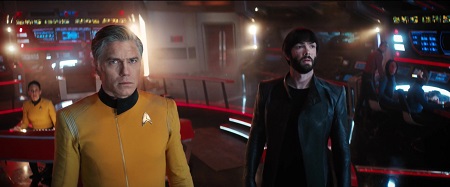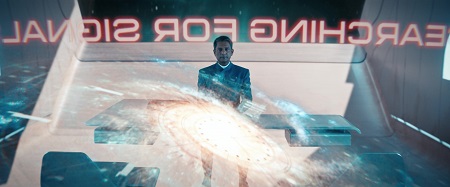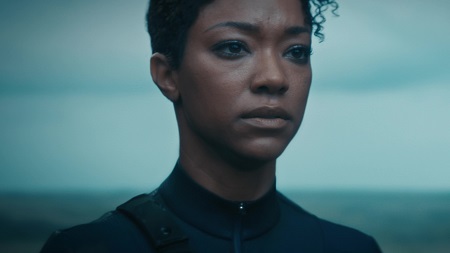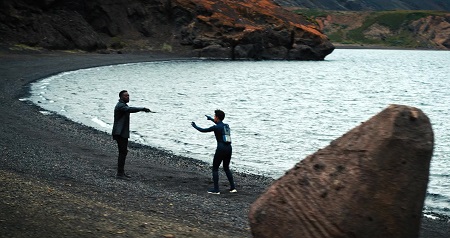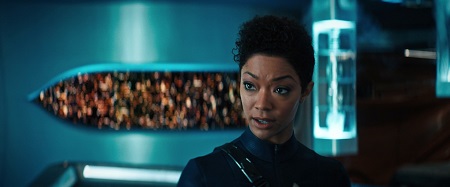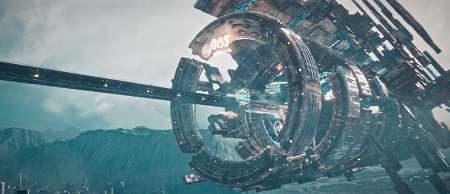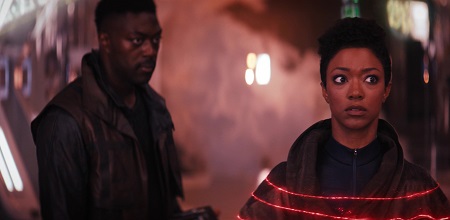
Star Trek: Discovery theories – week 12

Spoiler Warning: There are spoilers ahead for Star Trek: Discovery Seasons 1-3, Star Trek: Picard, and for other iterations of the franchise.

I had a wonderful time with There Is A Tide this week. It was a fantastic episode jam-packed with action and excitement. But when it was over, I couldn’t help feeling that there was a lot left to do in terms of story! It’s possible, as I suggested in my review, that Season 3 will end on a cliffhanger with key storylines deliberately unresolved. If that isn’t the case, however, the upcoming season finale has an awful lot of story left to wade through – and I’m concerned that it may not be possible to give everything a satisfactory resolution.

We’ll have to wait to see what the season finale brings. Until then, we have a few more theories to discuss! This week we have two confirmations and not a lot else. Let’s look at those first before we dive into the main theory list.

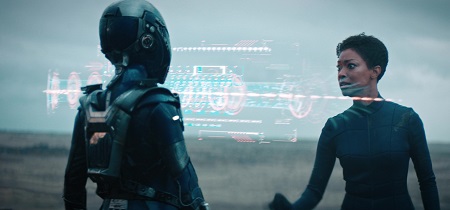
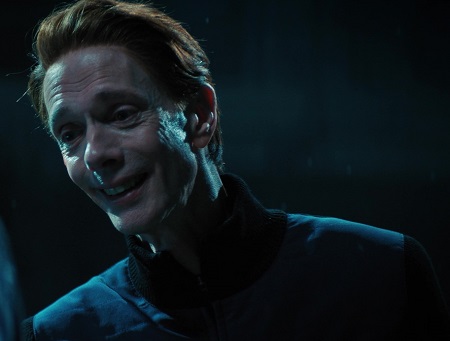
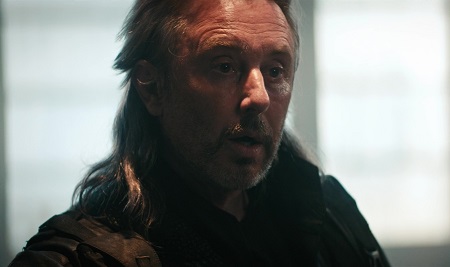
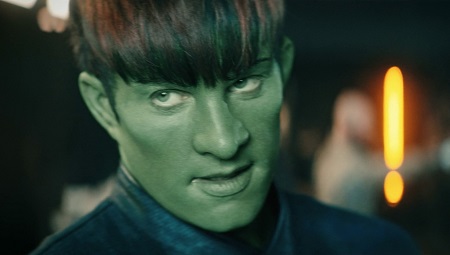
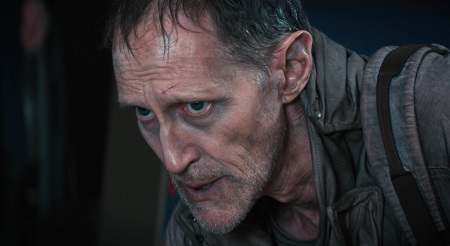
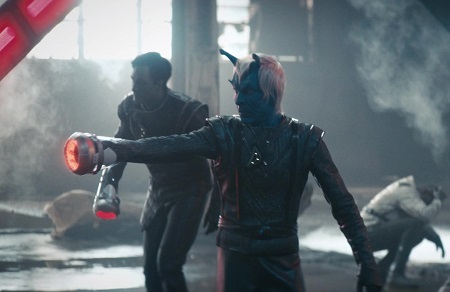
Confirmed theory #1: Zareh returned.

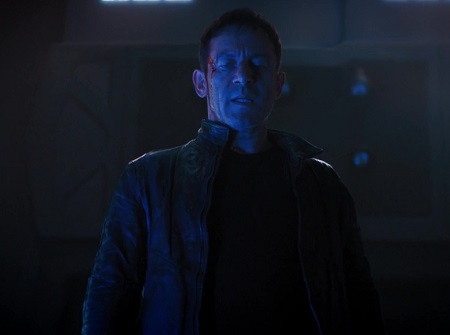
Zareh was a character we met at the beginning of the season.

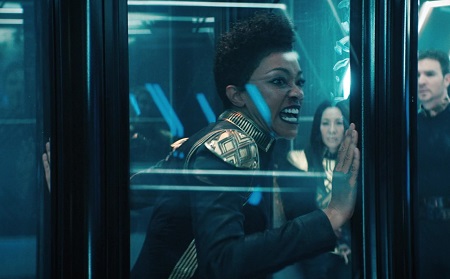
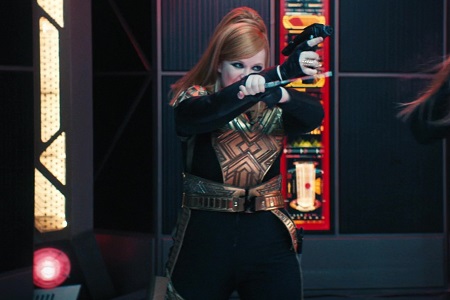
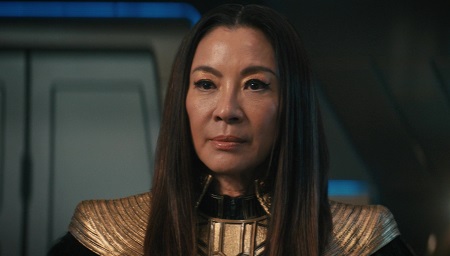
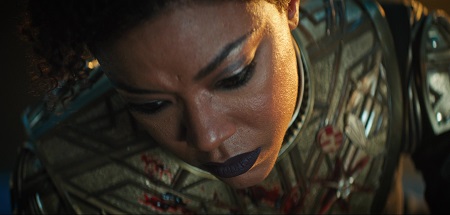
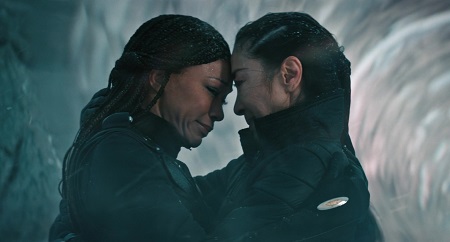
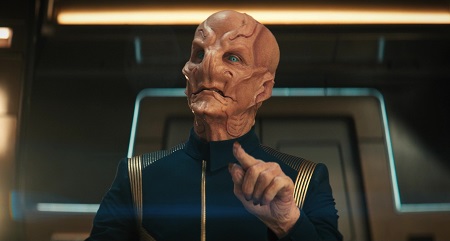
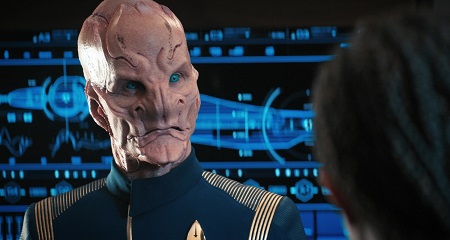
Though his return was spoilt a little by the recap that played before the episode began, I was pleased to see Zareh return. He was a glorified bully when we met him in Far From Home, and despite his defeat by Saru and Georgiou, appears to have been promoted within the Emerald Chain. I felt certain that he would be back considering we didn’t see him killed on screen, and I was right.

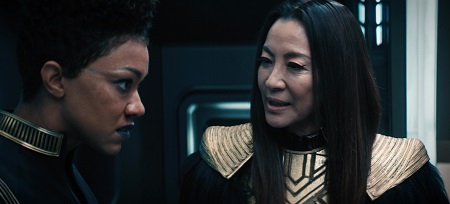
Zareh bookends the story of the season in a way – he was the first adversary the crew faced after arriving in the 32nd Century, and he is now a significant opponent as the season draws to a close. I don’t expect him to survive the season finale, but if Osyraa is killed off he may be kept alive to assume command of the Emerald Chain. In the event that the season finale leaves big questions open, we could head into Season 4 with Zareh as a major antagonist – but we’ll have to wait and see!

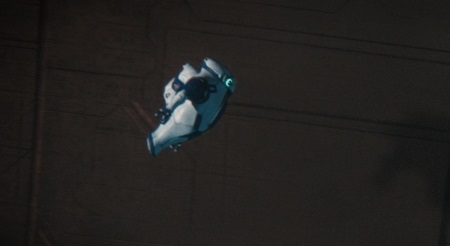
Confirmed theory #2: Zora (a.k.a. the Sphere data) will help the crew retake the ship.

Awwwwww!

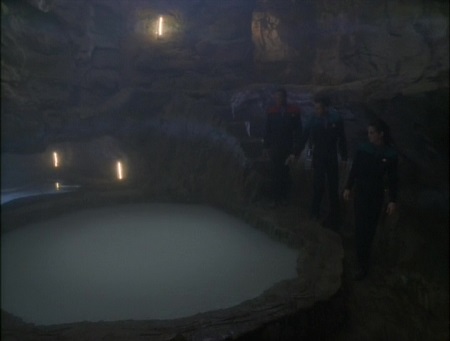
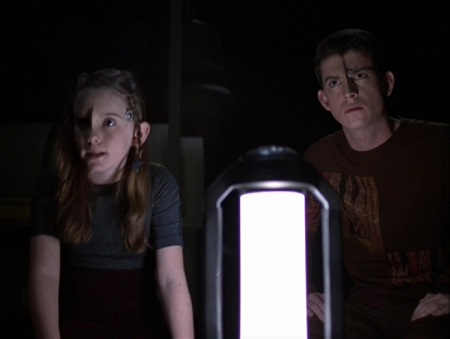
Though we had to wait for the closing scene of the episode to see this theory come true, the Sphere data has allied itself with Tilly and the remaining bridge crew as they hope to retake Discovery.

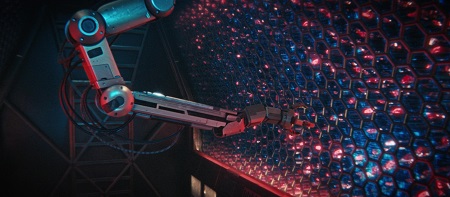
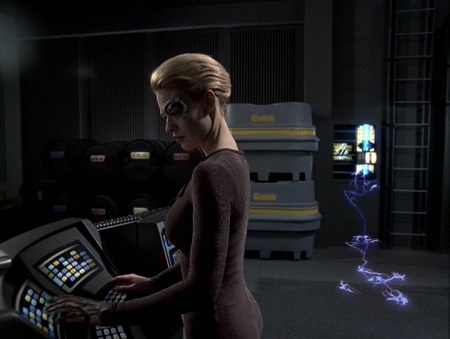
The Sphere data was seen protecting itself in Season 2 – refusing to allow itself to be destroyed even when Control was coming for it. This season, it stepped in on at least two occasions to help out the crew, and it seemed certain that the Sphere data would not allow itself to be commandeered by Osyraa and the Emerald Chain. It has transferred itself into three DOT robots – which are absolutely adorable – and will help Tilly fight back against Osyraa.

So those theories were confirmed in this week’s episode. Now we come to the main theory list.

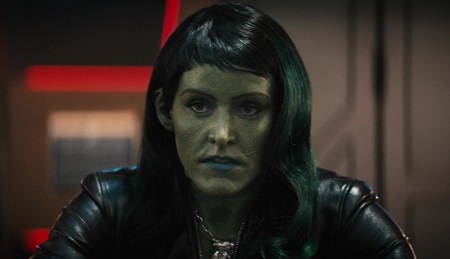
Number 1: Aurellio is married to Osyraa.

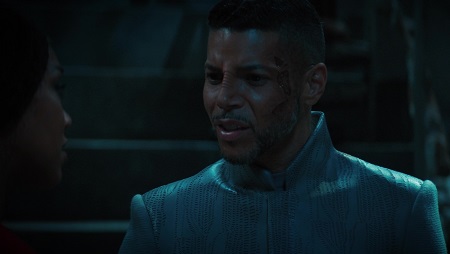
Are Aurellio and Osyraa an item?

The first of two Aurellio theories is a pretty short and simple one. Stamets noted that Aurellio’s partner is Orion. Osyraa, as far as we can tell, is an Orion. Aurellio and Osyraa speak highly of each other. So it’s at least possible that they are a couple.

This feels almost too obvious – so perhaps it won’t come to pass! There was also a suggestion that Osyraa is much older than Aurellio, which may count against this theory. However, they clearly have a connection, and unless Osyraa is on such friendly terms with all of her scientists, perhaps there’s more going on than just a professional relationship.

Number 2: Aurellio will stand up to Osyraa.

Aurellio.

In my review of There Is A Tide I compared Aurellio to Albert Speer – the Nazi German architect and minister. In the years after 1945, Speer would claim that he knew nothing of the Nazi regime’s crimes, that he was absorbed in his work, and that the atrocities happened without his knowledge. Aurellio, in his conversation with Stamets, seemed to demonstrate a comparable lack of awareness about the Emerald Chain and Osyraa.

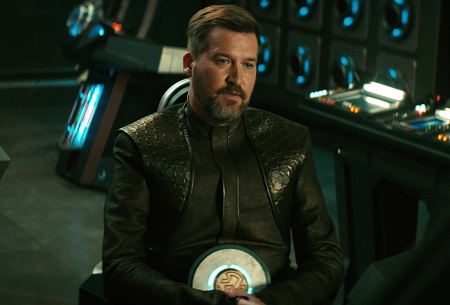
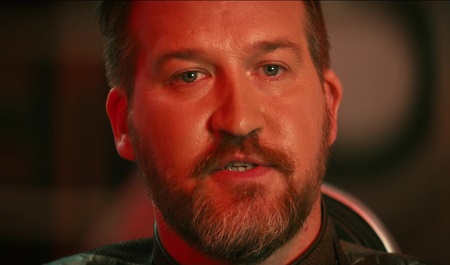
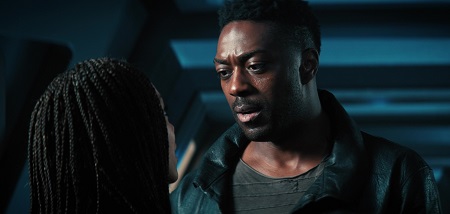
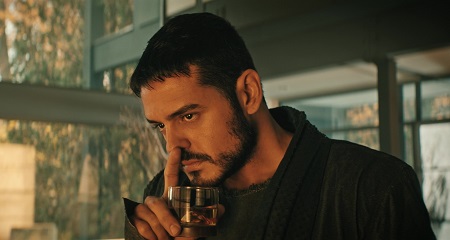
However, there were hints through Kenneth Mitchell’s amazing performance that Aurellio is beginning to realise that he’s working for the “bad guys.” Having seen Osyraa murder Ryn in cold blood, as well as threaten Zareh, his loyalty to her and the Emerald Chain may be wavering.

Given that he’s clearly an incredibly clever scientist, he could be very useful to the Federation. If part of the plan for Season 4 involves replicating the Spore Drive so that it can be used to power the Federation, I can see Aurellio having a major role in that story. Or in any other story Season 4 may wish to tell. But first he needs to break free from Osyraa – and I have a suspicion that he will!

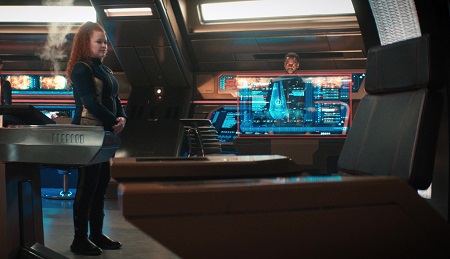
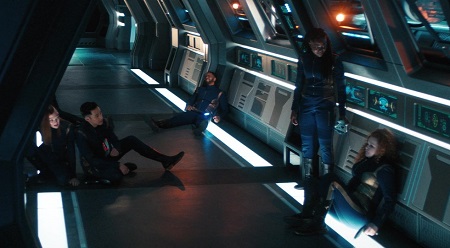
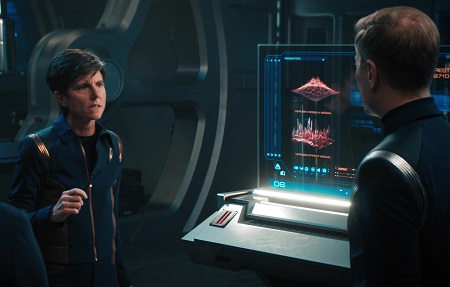
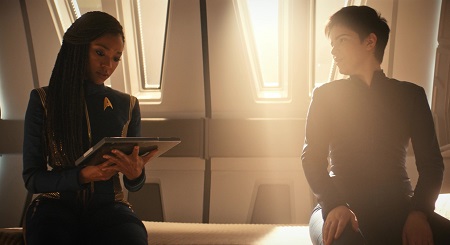
Number 3: One of the officers with Tilly will be killed.

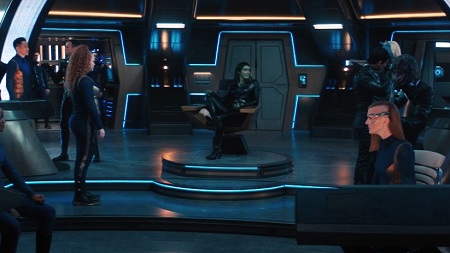
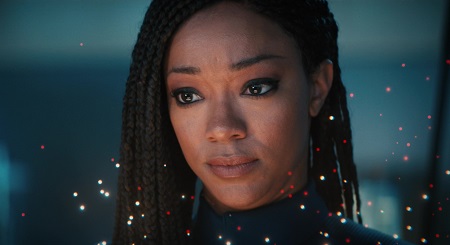
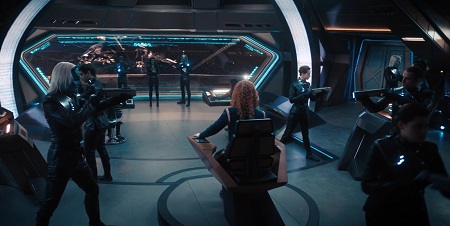
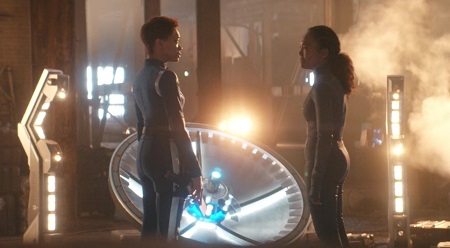
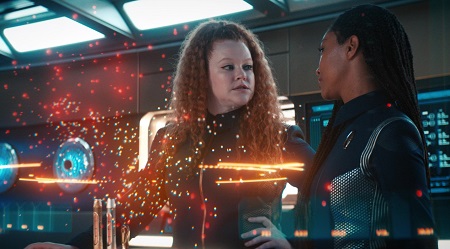
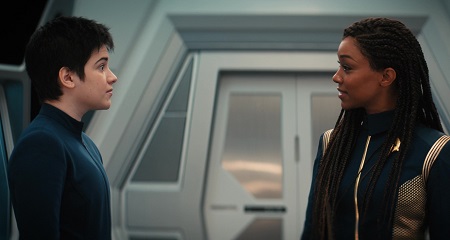
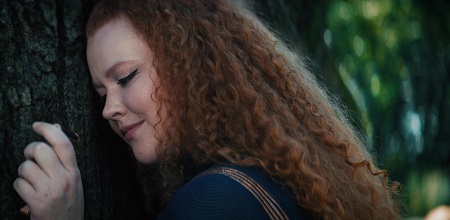
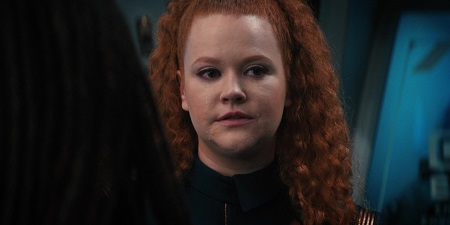
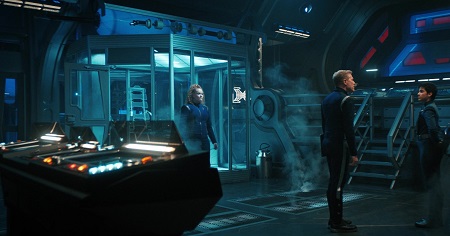
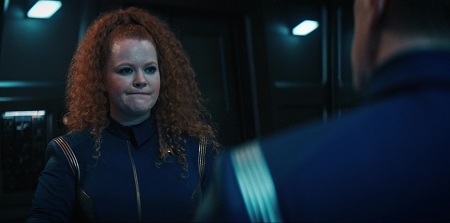
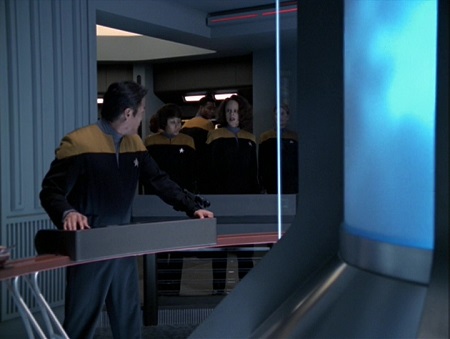
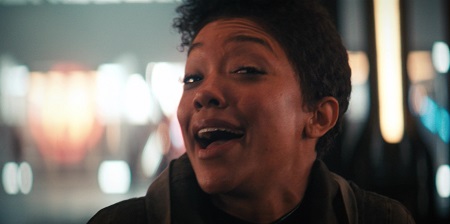
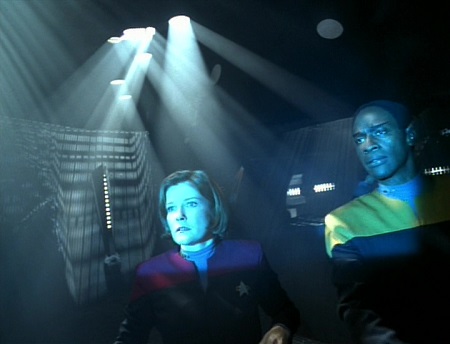
Tilly is ready to retake the ship.

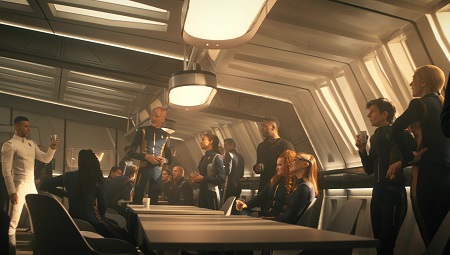
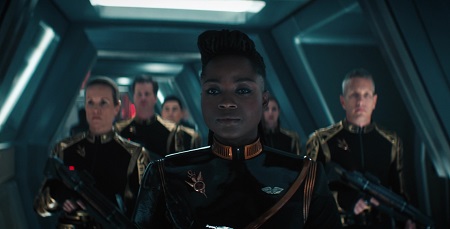
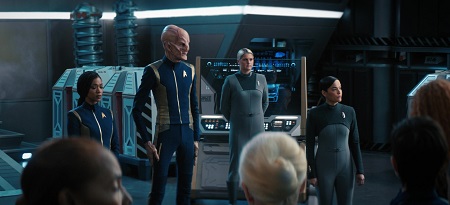
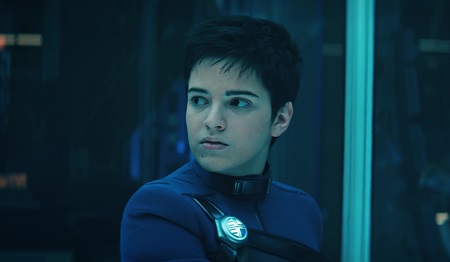
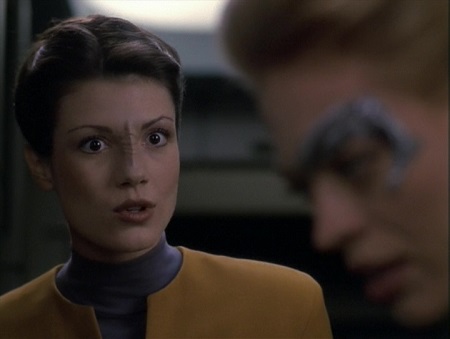
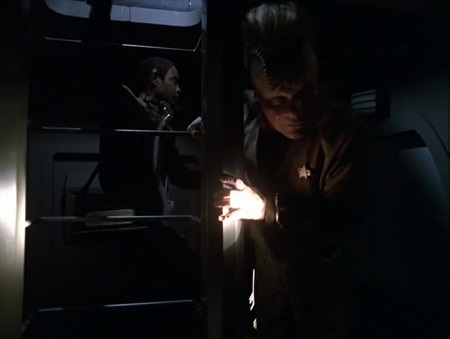
When Tilly told the officers with her that they would keep going to the bridge no matter what, was she foreshadowing someone’s demise? With her, as far as I could see, are Detmer, Owosekun, Bryce, Rhys, and at least one other character. Killing any of them would be impactful, as they’ve all been part of the series since the beginning.

Detmer had her own (underdeveloped) storyline this season, and was someone I speculated may be killed off. For several weeks I theorised that she’d meet her end – could this be the moment it happens?

Tilly and the officers with her are about to take on a very difficult and dangerous task. I doubt we’ll see Tilly killed, but any of the others who are accompanying her are perhaps about to meet their end.

Number 4: The Federation’s allies will arrive to help them battle the Emerald Chain.

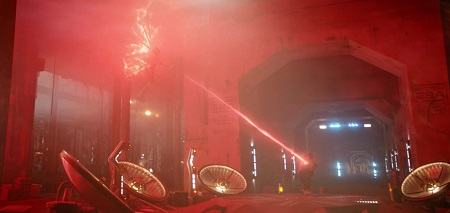
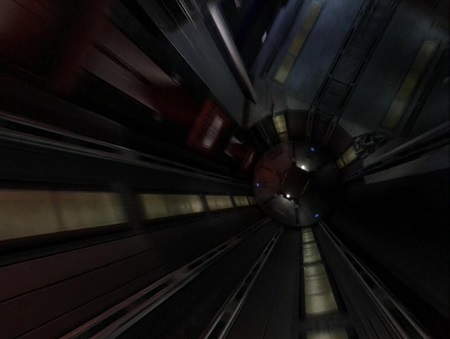
Burnham in a Jeffries tube.

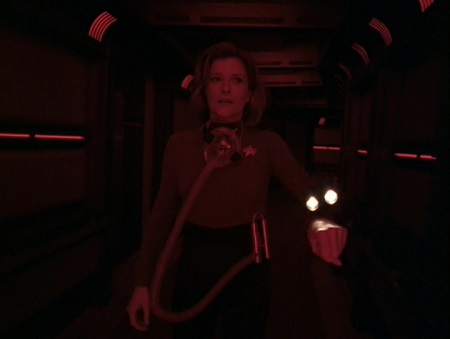
Before continuing her Die Hard-inspired fight to reclaim Discovery, Burnham sent an emergency transmission to her mother. Assuming this transmission was received, Dr Burnham may begin rallying the people of Ni’Var to aid Discovery and the Federation.

Across the season, Saru and the crew made many friends. Former Federation members like Trill, Earth, and Ni’Var, as well as worlds like Kwejian were all aided by Discovery, something which greatly impressed their respective leaders. Faced with an attack on the Federation, could some or all of these once-united factions rally to Starfleet’s aid?

We saw something similar at the climax of Season 2, with Kelpiens and Klingons arriving at the last moment to help Pike and Saru as they battled Control, so it would not be without precedent. At the very least, I expect Burnham’s mother – who is now a Qowat Milat nun – will want to do something to help, especially given the desperate-sounding tone of the message she received.

Number 5: The Burn will receive a different explanation.

Did Su’kal really cause the Burn?

At the very least, the explanation for the Burn needs to be expanded upon. A couple of throwaway lines, heavy on technobabble, are not adequate to explain the season’s biggest mystery. If it’s true that Su’kal’s telepathic connection to dilithium is what caused the Burn, we need to know more about how and why that was able to happen.

It’s at least possible, given that There Is A Tide sidestepped the Burn altogether this week, that the season finale has a big surprise in store for this storyline. Perhaps Su’kal is not responsible for the Burn after all, or if he is, it’s because he was either genetically modified or otherwise coerced into it by someone else.

This is perhaps more of a hope than anything, because I feel that the Burn’s explanation was poor. I’d like to do a retrospective on the Burn at some point when the season is over, but suffice to say that this mystery had been set up as early as the first Season 3 trailer more than a year ago, and the Burn itself was named in the second trailer before the season premiered. We’ve been wrangling with this colossal event and its mysterious origin ever since, and its explanation – the way things sit right now, at least – is horribly anticlimactic. Su’kal’s story might’ve worked were it a single one-off episode, but not as the resolution to a season-long arc. There’s also, as mentioned, the disturbing implication of a man with severe mental disabilities causing such a disaster, even accidentally.

Number 6: The Burn is the result of a superweapon – perhaps one the Federation or Section 31 built.

The Burn.

Connected to the theory above, perhaps Su’kal either did not cause the Burn at all, or was forced into doing so as the culmination of some kind of superweapon project.

We’ve seen in past Star Trek shows stories about genetic enhancements and shadowy organisations exploiting and weaponising the unique abilities of people. Could there be another dimension to Su’kal? Perhaps he quite literally is a weapon, one designed for this very purpose – to attack the Federation’s enemies (or the Federation) through a coordinated attack on dilithium.

Though it seems like Su’kal is indeed the source of the Burn, another source may be revealed, absolving him of blame. I noted that his “scream” did not actually cause a second Burn – even though characters feared it came close – so perhaps there’s something else at play here that we don’t yet know. That other factor could be this superweapon – and it may be designed to target the Federation’s enemies, like the Borg.

Number 7: There will be a resolution to the story of Calypso (the Short Treks episode).

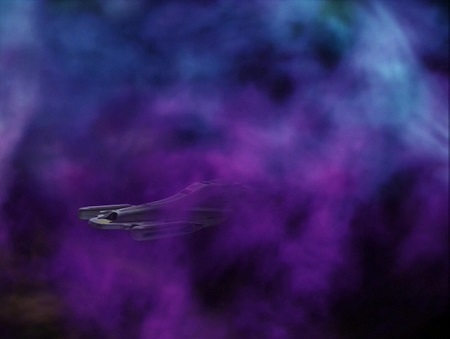
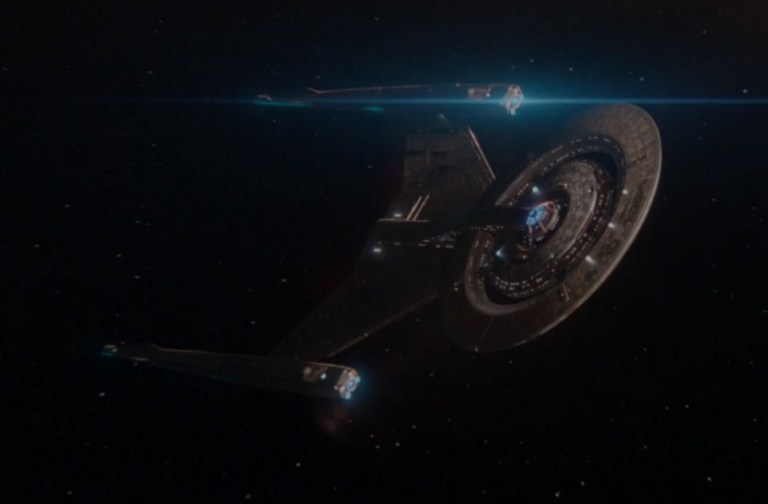
The USS Discovery as seen in Calypso.

The main point from Calypso which is still unresolved is how Discovery ended up in a nebula abandoned. And if, as has been hinted through the use of the term V’draysh, Calypso takes place sometime around the 32nd Century, how did the ship end up back in time?

The Verubin Nebula initially seemed to offer a partial explanation, but not only was Discovery not present there, the nebula itself is very different to the one inhabited by Zora, so that option seems to be off the table.

I have no clue how this circle will be squared – but it’s still possible that it will be, especially given how much progress we’ve seen toward unpicking the mysteries of Calypso this season.

Number 8: The Spore Drive will become Starfleet’s new method of faster-than-light propulsion.

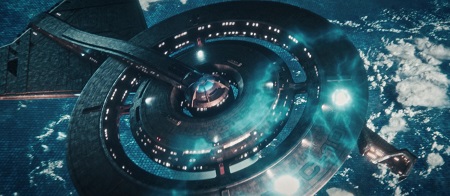
Discovery makes a Spore Drive jump.

Though we don’t know how Osyraa came to know about the Spore Drive, figuring out a way to roll it out to vessels other than Discovery was a major theme in There Is A Tide. Both Aurellio and Tilly have proposed theories for how the use of the Spore Drive could be expanded, so we have to consider this a possibility.

If the dilithium in the Verubin Nebula is not able to be used to power the Emerald Chain, Starfleet, and other factions, the problem of how to travel faster-than-light still remains. And right now, the Spore Drive is really the only way I can see to allow any of the galaxy’s factions to do so. That’s why Osyraa wants Discovery so badly – not just to use the ship, but to copy its technology.

If, as predicted above, Aurellio turns on Osyraa, he could become instrumental in figuring out how to reverse-engineer the Spore Drive and the tardigrade’s DNA in order to make this a viable option. This could be part of the storyline for Season 4, so if there’s no resolution next week, this theory may simply roll over.

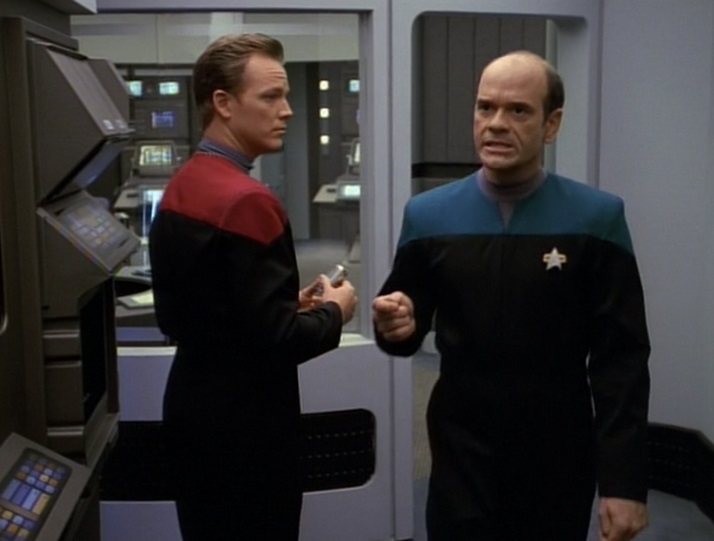
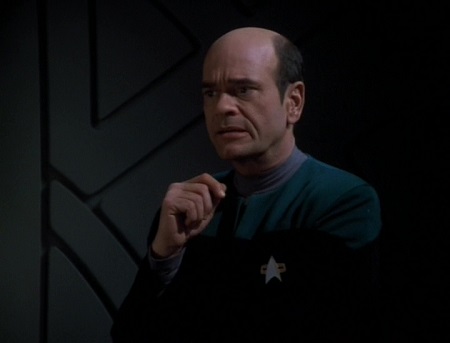
Number 9: A character from a past iteration of Star Trek – such as the Doctor from Star Trek: Voyager – will make an appearance.

I’ve been advocating this theory in some form since before the season premiered. Though we have had some tie-ins with past iterations of the Star Trek franchise – and even seen a familiar entity return depending on how you categorise the Guardian of Forever – it would still be nice to get a major character back in some form.

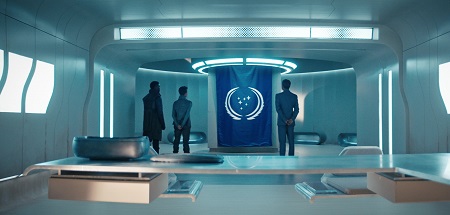
There were hints this week about the Federation President – a role we’ve seen in past iterations of the franchise – so perhaps we could see a returning character occupy this position. That said, the references to the Federation President served only to allow the familiar character of Vance to conduct negotiations with Osyraa, so that may be a non-starter.

As I said last time, maybe the only way this theory could come true is as a kind of epilogue or coda after the main storylines have concluded; perhaps even as a tease to the events of Season 4. It would certainly be difficult – but not impossible – to bring back a major character from Star Trek’s past at this juncture, given the complicated nature of the story overall. Given that there’s also no clear way that a returning character could have an impact on the story without that impact seeming to come from nowhere, perhaps we won’t see any significant character crossovers this season.

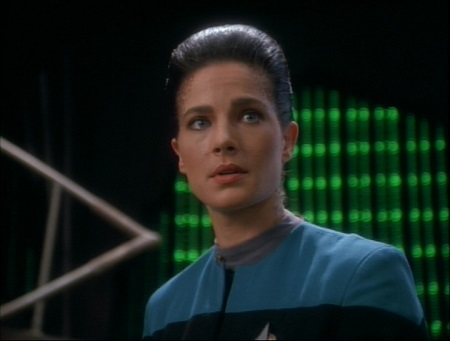
Number 10: The Dax symbiont is still alive.

The Dax symbiont.

This one is looking increasingly unlikely, because the two locations where Dax could have appeared have both seemingly come and gone without them: most notably the Trill homeworld in Forget Me Not, but also Federation HQ in Die Trying. However, there are hints at a lifespan for Trill symbionts that may be exceptionally long, in which case Dax could very well still be alive in the 32nd Century.

Obviously we won’t see Ezri Dax (barring some bizarre time travel/stasis storyline) but the symbiont itself could have lived this long. When Adira “met” the Tal symbiont’s former hosts in Forget Me Not, one was wearing a Star Trek: Picard-era uniform, hinting that Tal may have lived 700+ years. There are production-side explanations for this Easter egg, and as stated the fact that two of the best opportunities so far to meet Dax have come and gone most likely means it won’t happen this season. But I’m sticking to my guns on this one: Dax is alive!

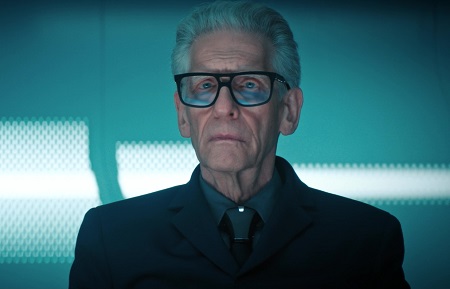
Number 11: Kovich is an agent of Section 31.

Kovich in Terra Firma, Part I.

Kovich was presented as one of Starfleet Intelligence or Security’s senior people – perhaps someone brought in to deal with particularly complicated or dangerous situations. Thus it was a bit of a surprise not to see him this week when Osyraa arrived. His mysterious nature has led me to think he could be an agent of Section 31.

He knew a lot about the Terran Empire, and had access to classified files. He also seems to know more about certain events than he lets on; he allowed Georgiou’s health condition to manifest itself rather than warning anyone, for example, which would seem to be a pretty immoral thing to do!

The main way Kovich could have been revealed as a Section 31 operative would be if the secretive organisation had something to do with the Burn. As noted above, there is still that possibility in some form, but it feels remote. We don’t know if Kovich will be back before the end of the season, especially given how much story the season finale seems to have to get through. If we don’t see him, though, perhaps this theory will roll over to next season!

Number 12: The ban on time travel is being flouted – possibly by secretive elements within the Federation.

The USS Enterprise travelled back in time in The Original Series.

Admiral Vance clearly believes that the ban on time travel is intact and being followed. Kovich indicated that he does too – but I’m not sure how far I trust him. Is he an agent of Section 31?

It’s impossible to un-invent a powerful, useful, weaponisable technology, no matter how hard you try. Considering how crappy the 32nd Century seems to be, are we convinced that nobody at all is using time travel to try to give themselves an advantage? Not the Dominion? Not the Borg? Not Section 31? Seems unlikely to me, though for production-side reasons of wanting to keep the timeline intact and to avoid overcomplicating the plot we might be told this is true.

It’s possible that this theory will roll over to Season 4 if, as seems likely, the Burn is unconnected to time travel.

Number 13: Discovery Season 3 is taking place in an alternate timeline or parallel universe.

The Enterprise-C in Yesterday’s Enterprise.

After the Guardian of Forever’s definitive statement on the issue in Terra Firma, it now seems all but certain that Discovery Season 3 is in the Prime universe – the same one as every Star Trek production from Enterprise to Picard. However, it’s still at least possible that, due to time travel or for some other reason, the Burn was not “supposed” to happen.

Thus the ultimate solution to the Burn and the storyline of the season may be to go back to before Su’kal’s ship entered the Verubin Nebula and prevent that from ever happening, wiping this timeline from existence and restoring the “true” timeline.

I don’t believe this would be a good way to go. As a one-off story, an episode set in a timeline that is ultimately overwritten can work. We can look at episodes like Timeless from Voyager or Yesterday’s Enterprise from The Next Generation. But to wipe away the vast majority of an entire season, including presumably characters like Book and Vance, just feels like too much. It would render much of what the crew did – like helping the peoples of Earth, Trill, and Ni’Var – meaningless, and while it would set up another “blank slate” in time for Season 4, I’d rather see Discovery build on this season’s successes. Even if Discovery and her crew remembered what happened, wiping it all out feels like a bad way to go – but one that’s still possible.

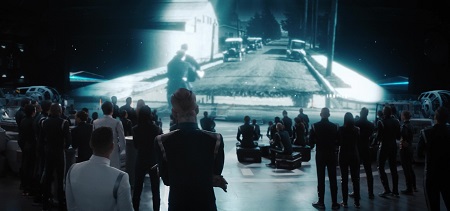
Number 14: The ships at Federation HQ represent the majority of Starfleet’s remaining vessels. And they’re all 120+ years old.
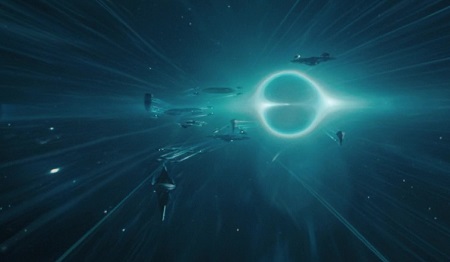
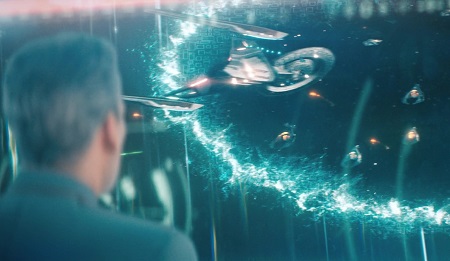
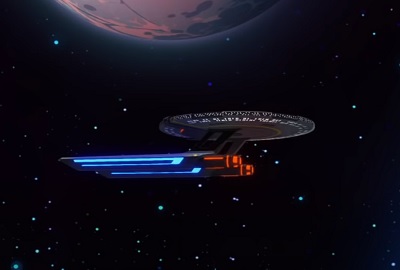
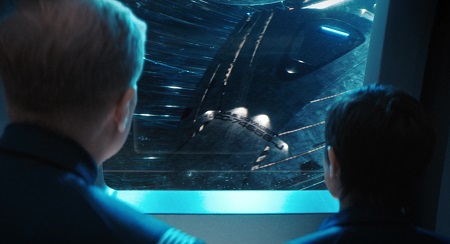
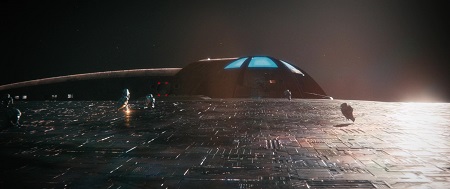
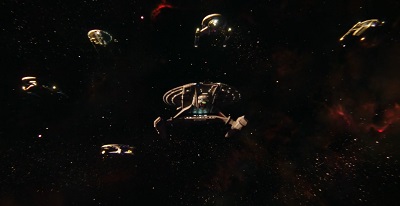
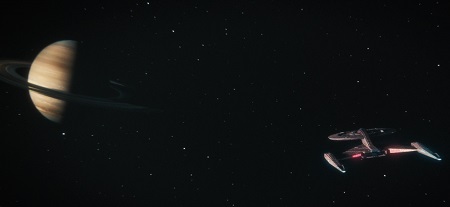
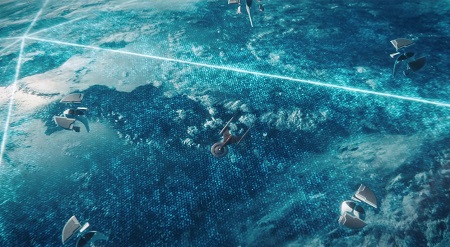
A couple of Starfleet ships move to intercept the USS Discovery.

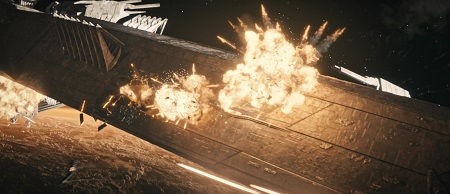
We didn’t get to see any kind of major space battle between Osyraa’s forces and Starfleet in There Is A Tide, so the status of the Federation’s remaining ships is not really clear. As I’ve been saying for weeks, though, it seems at least plausible that the rump Federation may only have a handful of ships available – with scarce dilithium for fuel, there is no way to maintain a huge armada, even if the ships were undamaged. It also seems reasonable to assume that Starfleet’s shipbuilding facilites were damaged or destroyed in the Burn, and that building new ships has been difficult – if not impossible for the fractured organisation – ever since.

Are there more ships beyond those few docked at HQ (and the two Mr Sahil noted)? And those ships may very well be old – they seemed new and futuristic to Discovery’s crew, but that could all be pre-Burn technology, meaning that Osyraa has the upper hand if the Emerald Chain has developed new weapons and technologies. We saw in People of Earth that quantum torpedoes were still in use, for example.

If there is to be a climactic battle between Starfleet and the Emerald Chain, perhaps we’ll learn more about the remaining Starfleet vessels at that time. If not, well it still seems like a theory that has merit!

Number 15: Saru is going to die.

Saru in his human guise.

There Is A Tide ignored Saru, Su’kal, Culber, and Adira, who were all left behind in the Verubin Nebula. Though they were mentioned – most significantly by Stamets as he pleaded to go to rescue them – the story focused on the battle to retake Discovery and on Vance’s negotiations with Osyraa. Thus this theory was not really advanced in any way.

We don’t know how much time There Is A Tide is supposed to have covered – it could easily be several hours, though, and Dr Culber told Burnham that if more than a day were to pass, there would be “no point” in staging a rescue as they would all be dead. I don’t expect this will be the way Saru would be killed off, but it’s a possibility.

Saru is torn between a desire to help Su’kal and his duty to Discovery. Given that he’s not thinking clearly, perhaps he will make a mistake or take a risk that results in his death. He may sacrifice himself to help Su’kal in some way, or to buy time for Culber and Adira to escape. There are many ways this could play out, but it’s at least a possibility that Saru will not survive the season.

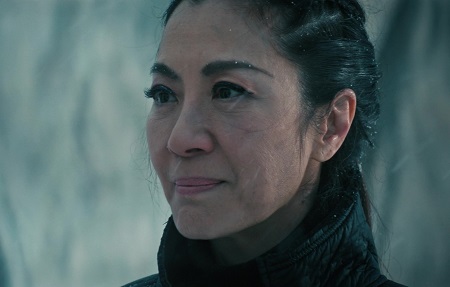
Number 15A: Burnham will assume the captaincy of Discovery.

Burnham in temporary command of Discovery earlier in the season.

If Saru is killed – however that may come to pass – there will once again be a vacancy in the captain’s chair. Tilly as first officer always felt like a temporary thing, as indeed Saru himself explained when he offered her the role, and after losing the ship to Osyraa so easily there’s absolutely no way she could retain the captaincy – or even the XO position.

That would leave the captain’s chair empty with no obvious replacement. Senior officers such as Stamets or bridge crew like Nilsson or Bryce don’t seem plausible for story reasons, and with Discovery being such a Burnham-centric series, she feels like the only option. Well, unless the plan is to bring in yet another new character!

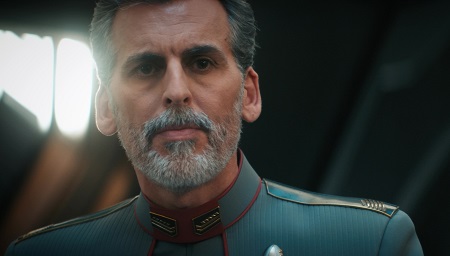
Number 16: Admiral Vance is going to be killed.

Admiral Vance.

Despite standing face-to-face with Osyraa this week, Admiral Vance survived. However, there may be a battle still to come, and it’s at least possible that he – as the man leading the fight – won’t survive the onslaught from Osyraa’s forces.

If the writers wanted to kill of a character we’ve spent a lot of time with this season – but not one of Discovery’s crew – Vance is pretty much the only option. His death could make the conflict with the Emerald Chain feel more impactful, and while I would be sad to see him go as I think he’s been a great character, it would open up the story to go in different directions in Season 4.

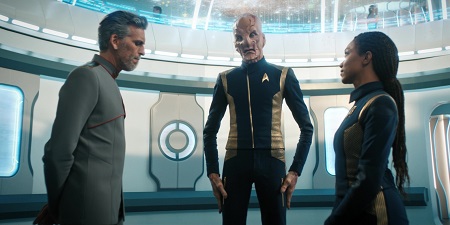
Number 16A: Saru will become an Admiral, and Burnham will become captain of Discovery.

Burnham and Saru with Admiral Vance.

Although Su’kal took Saru off the rails, showing us that he isn’t always calm and level-headed, his earlier time in the captain’s chair this season went remarkably well. His diplomatic efforts in particular may yet pay off – bringing former Federation members back into the fold. If that were to happen, perhaps he will be promoted, becoming an Admiral and even assuming the position of Commander-in-Chief of Starfleet if Vance is killed.

If he departs Discovery to head up Starfleet, the captaincy of the ship is once again open. And for the reasons listed above, Burnham seems to be the only real candidate.

As I’ve said in the past, Burnham assuming command feels like a goal Discovery has been trying to reach since Season 1. Perhaps this could be the moment it gets there.

Number 17: Tilly will resign as first officer and Burnham will return to the position.

Tilly sits in the captain’s chair in Su’kal.

Tilly did well in There Is A Tide, and doesn’t seem to have let the capture of Discovery completely ruin her confidence. She led the remaining bridge officers out of captivity and seems well-placed to lead an insurgency to retake the ship.

Despite that, however, she did lose the ship to begin with – and Osyraa captured Discovery from her with ease. It seems unlikely she could retain her position as First Officer, and while I doubt it will be stripped from her, she may very well choose to resign the position. It feels as though her arc over these few episodes will be to recognise her own lack of experience and unsuitability for command. She may grow into that role in the future – and perhaps Captain Tilly will be a Star Trek series in a few years’ time! But right now she clearly isn’t the right fit.

If Saru survives and remains in command – which he very well may, it has to be said – that would open up the first officer’s position. Burnham is again the logical candidate, despite the broken trust between her and Saru. She advised him to remain with Su’kal, speaking honestly to him in that moment, and perhaps he will recognise that and reward her for it. Now that she seems to have put her doubts about her role in Starfleet aside, she would be a good first officer.

Number 18: Saru, Burnham, or somebody else will use the Guardian of Forever to send the USS Discovery back in time.

The Guardian of Forever in Terra Firma, Part II.

Assuming that the Red Angel suit is truly gone, and that no one is violating the ban on time travel, the Guardian of Forever is the only way to travel through time that we know of in the 32nd Century. While I can see no pressing need to send Discovery back in time at this juncture, if such a need arose, the Guardian of Forever is about the only option for doing so.

I wrote in my review of Su’kal that the route to the end of the season feels “formulaic” – defeat the Emerald Chain, save or neutralise Su’kal to prevent a reoccurrence of the Burn, and use the dilithium planet in the Verubin Nebula to power the Federation, giving it the (literal and figurative) fuel to bring wayward planets back into the fold. There Is A Tide began the process of retaking the ship but didn’t complete that story, so the end of the season is still up in the air.

Even though I can’t foresee a reason why, it’s possible Discovery will need to go back in time, and the Guardian of Forever could help with that.

Number 19: Dr Issa is a descendant of Saru’s sister Siranna.
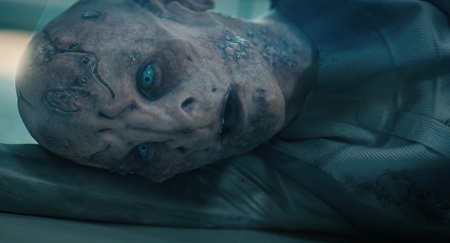
Saru regards the hologram of Dr Issa.

The actress who played Dr Issa, Hannah Spear, also played Saru’s sister Siranna in Short Treks and in Season 2. Why bring her back to play a different Kelpien – especially considering they look identical? My guess is that there is a familial connection there – Dr Issa may be a distant descendant of Siranna.

Though Saru was – for some reason – reluctant to share this information, the glowing patches seen on Dr Issa indicated pregnancy. Is this a trait all Kelpiens have? If so, why cover it up from the crew? Perhaps the answer is that the glowing patches are something only some Kelpiens have – such as those in Saru’s family. That could be how he knew what the glowing spots meant, and why he didn’t volunteer that information sooner.

I should note that it remains a distant possibility that Dr Issa and Siranna are meant to literally be the same character; that somehow, post vahar’ai Kelpiens live very long, or for some other as-yet-unknown reason. But I think a family connection is more likely.

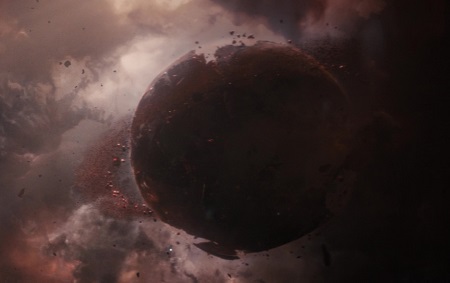
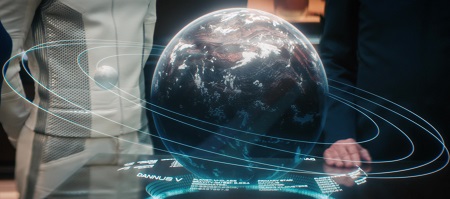
Number 20: The dilithium planet will be destroyed.

The dilithium planet.

The dilithium planet reminded me at least a little of the Genesis planet in Star Trek III: The Search for Spock. That planet was similarly dangerous and unstable, and was ultimately destroyed. Could the dilithium planet in the Verubin Nebula share its fate?

The main reason why I consider this theory at least plausible is that it would be a major twist on the expected end to the season. Rather than the ridiculous amount of dilithium being used to restore the Federation, it would instead be destroyed, leaving the post-Burn galaxy still with limited travel options.

This in turn could set the stage for Discovery’s Spore Drive being duplicated and rolled out across the fleet – as we discussed above.

Number 21: The “monster” is the real Su’kal.

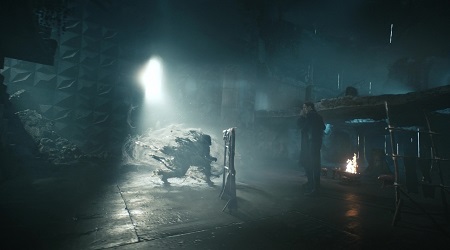
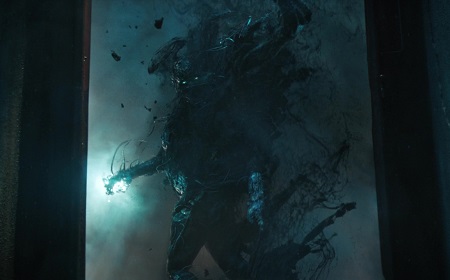
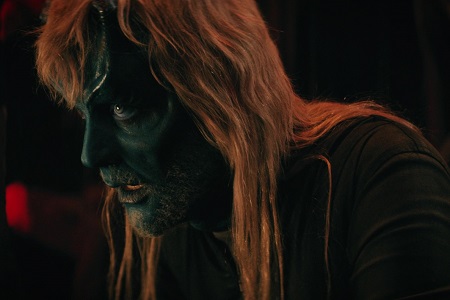
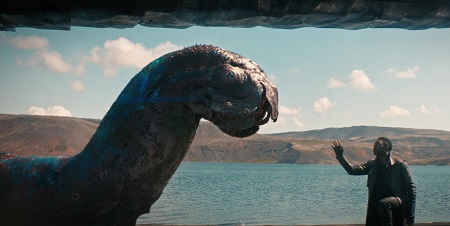
The “monster” which inhabits Su’kal’s holographic world.

The “monster” which inhabits Su’kal’s holo-world is interesting. Why would his mother or the other Kelpiens programme such a creature? Yes it’s a legend from Kaminar, but to create a holographic monster in a programme designed for a child? They may not have had long to build the programme – which explains the basic nature of some of the other holograms – so why go to all the trouble of creating this one? And why doesn’t it flicker or glow in the same manner as the others, nor seem to have degraded over time?

My theory is that the so-called “monster” – which has a Kelpien appearance – is the real Su’kal; old, decrepit, and badly mutated by a lifetime of radiation exposure that can supposedly kill within hours. The “monster” did not behave like a hologram, did not appear like the other holograms, and when Burnham encountered it it seemed to regard her with an almost-human curiousity.

Add into the mix that Su’kal appears to be far too young to have been present when the Burn occurred – 120-125 years earlier – and I think we have a solid theory.

Number 22: The “monster” is Dr Issa.

Could the “monster” be Su’kal or his mother?

Another possibility for the true identity of the “monster” is Dr Issa, Su’kal’s mother. Though age is again a problem, if Kelpiens post-vahar’ai are especially long-lived she may have survived this long, but without the same level of protection from the radiation she may have mutated and been burned by it. The question of Dr Issa is interesting – was she just a basic plot device; a lure to drag Saru to the nebula? Or is there more to this character than a fraction of a distress call and her son?

The “monster” is one of the most interesting elements to come out of Su’kal, in my opinion, and there seem to be clues that all may not be as it seems. Obviously this theory and the one above can’t both be right – but even if neither are true, there could be more to the “monster” than we expect.

So that’s it. My final batch of theories as we approach the season finale. This won’t be my final theory post; next week after the finale has aired I’ll be back to check out any confirmations or debunkings, and perhaps to set the stage for any Season 4 or spin-off theories that I have. Then, later in the year, I may revisit some of my theories from this season to assess what I got right and got wrong! I did something similar for Star Trek: Picard a few months ago, and it was fun to go back to some of my theories knowing how the story of the season played out. So stay tuned for that!

There’s only one remaining episode before 23 weeks of Star Trek comes to an end. All being well there will be more Star Trek to come this year – both the second season of Lower Decks and the first season of the kid-friendly show Prodigy are, as far as we know, targeting a 2021 broadcast. Discovery Season 4 has entered pre-production, and depending how things go for all sorts of reasons, it’s possible we could see it before the end of the year. But that’s by no means certain!

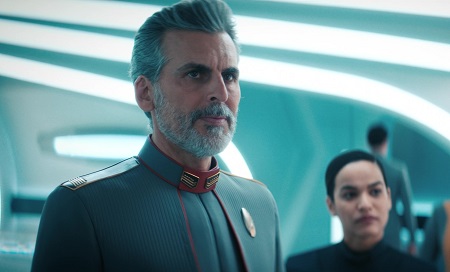
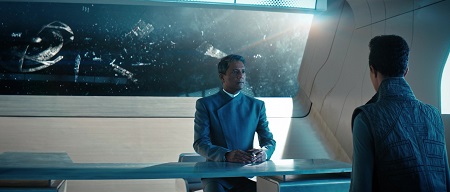
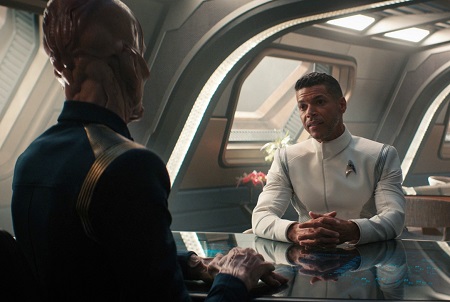
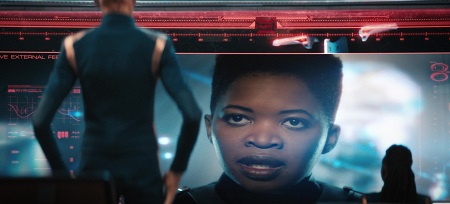
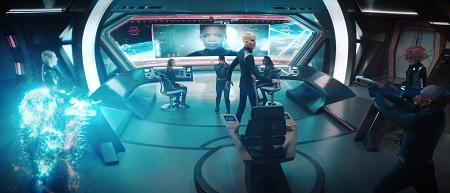
Vance, Eli, and Osyraa during their negotiations.

Last week I felt that the road to the end of the season was obvious: save or neutralise Su’kal to prevent a second Burn, retake Discovery from Osyraa, and then use the dilithium planet in the Verubin Nebula to rebuild Starfleet and the Federation. There Is A Tide really only focused on one part of that – the battle over Discovery – and even then left it unresolved. As long as Osyraa remains in charge there seems no hope of a Federation-Emerald Chain treaty, and since we saw nothing from Saru and Su’kal this week I have to say it doesn’t feel like much has changed on that front. The only thing I would say that has changed my mind on how “formulaic” the end of the season risked feeling is that we may very well not see a resolution to the story, and we may instead be heading for a cliffhanger. We’ll have to see!

Please remember that these theories are just a bit of fun. Some may seem plausible – or even highly likely – but that doesn’t mean that this is the way the story will unfold. I’m just a guy with a website, I’m not claiming to have any “insider information,” nor am I saying that the theories postulated above will come true. No fan theory is worth getting so invested in that the actual story becomes disappointing or upsetting. Personally, as much as I love feeling like I predicted something that later appeared on screen, I also truly love being surprised by Star Trek and other franchises. That doesn’t mean writers should make silly or arbitrary decisions purely for shock value, but it does mean that when a theory of mine falls flat on its face, far from getting upset I revel in that. If we could all remember to take fan theories with a healthy pinch of salt, maybe there’d be a little less toxicity in certain areas of the fandom.

Star Trek: Discovery is available to stream on CBS All Access in the United States, and on Netflix in the United Kingdom and elsewhere. The Star Trek franchise – including Discovery and all other properties mentioned above – is the copyright of ViacomCBS. This article contains the thoughts and opinions of one person only and is not intended to cause any offence.

Star Trek: Discovery review – Season 3, Episode 12: There Is A Tide…

Spoiler Warning: There are spoilers ahead for Star Trek: Discovery Seasons 1-3, Star Trek: Picard, and for other iterations of the franchise.

For the second week in a row, there was a last-minute change in the title of an episode. Previously known as The Good of the People, this week’s episode was retitled There Is A Tide… which is a line from Shakespeare. It’s been a long time since I studied the great bard, but this line is taken from a longer passage in Julius Caesar in which the character Brutus speaks of missed opportunities and the need to seize the “high tide” of life; acting when the moment presents itself or missing out and never achieving greatness. Epic stuff, right?

Last week Su’kal left me with mixed feelings, and I said that we needed to see its storylines play out to their conclusion before delivering final judgement. Despite that, I was critical of the technobabble explanation given for the Burn, as well as how easily Discovery was captured by Osyraa. I felt the final act of the season risked becoming formulaic, and its storyline may have been telegraphed ahead of time.

I wasn’t completely sold on Su’kal last week.

There Is A Tide was an action-packed thrill ride from start to finish, with some gut-wrenching choices for Burnham and Book as well as some desperately-needed development for the villainous Osyraa. I’m not 100% sure all of it made perfect in-universe sense; why, after all, would Osyraa take hostages if she sought an armistice? But aside from that, it was a thoroughly enjoyable episode.

What it lacked, though, was any advancement of last week’s primary story: Su’kal, the Burn, and those left behind in the nebula. With only one episode left, we need to have those storylines wrapped up in addition to the Emerald Chain-Federation conflict as well as seeing our crew retake the ship. Or do we? Could Discovery be setting up a big season-ending cliffhanger? Right now that feels like a real possibility. Beginning with The Next Generation’s Season 3 finale, The Best of Both Worlds, Star Trek has seen fourteen seasons end in such fashion – including Season 2 of Discovery.

Aurellio and Osyraa.

As great as There Is A Tide was, it’s worth acknowledging the absence of any advancement of the Su’kal-Saru-Verubin Nebula story. It absolutely could be because there’s a feature-length episode or cliffhanger to come next week, but if that doesn’t happen I’m concerned that There Is A Tide has left the season finale with a huge amount of narrative to get through. I criticised the two-part finale of Star Trek: Picard for rushing too much and skipping over potentially interesting story threads, and I really hope Discovery won’t have the same issue.

There Is A Tide sidesteps the Burn altogether. While the event was discussed – notably by Osyraa and Admiral Vance – the Burn once again was not centre-stage. If there is to be any hope of a proper resolution to what has been the biggest mystery of the season beyond the couple of lines of technobabble we got last week, next week’s episode has a lot of work to do. And that really summarises my concern: taken as a standalone piece, There Is A Tide was non-stop excitement, action-packed, and fantastic… but by the end of its forty-six minutes, there remains a lot of work to do in terms of narrative.

Burnham led an action-packed story in There Is A Tide

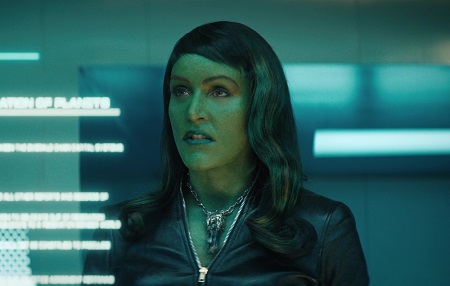
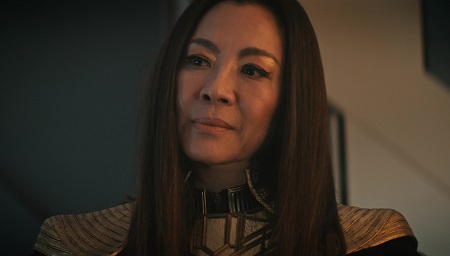
So that’s enough about what may or may not happen in terms of the narrative structure next week. Let’s get into what There Is A Tide did right. First up, Osyraa. In her two appearances thus far, Osyraa has been flat, one-dimensional, and boring. Worse, she appeared to go from an easily-defeated cardboard cut-out adversary to a completely overpowered supervillain in between her two appearances. I didn’t find her compelling or even interesting; with no motivation beyond “I’m evil and I like it” she was just as bad as – if not worse than – Mirror Georgiou.

There Is A Tide changed that. Though some issues with Osyraa remain, the episode expanded on her character in a huge way, giving her a lot to do and showing off some genuine complexity and nuance. I’m not fully sold on her plan – which seems to have been to capture Discovery and use the ship and crew as leverage to force the Federation into… an alliance? But the way she went about it, both on the ship and at Federation HQ in her meeting with Vance provided some sorely-needed interest to her character.

Osyraa finally got some character development.

We knew from Ryn a few episodes back that the Emerald Chain was running out of dilithium, and it’s this shortage that forced Osyraa to the negotiating table. While we don’t see the precise nature of her proposals, Admiral Vance considered it impressive that she was willing to offer such terms. Her motivation for doing so is, as the episode’s original title suggests, “for the good of the people.” Osyraa’s plan seemed to offer a trading arrangement and non-aggression pact with the Federation, and she made reference to one former Federation outpost that has already been trading with the Emerald Chain.

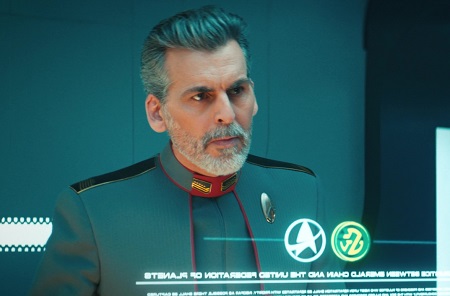
There are a couple of points from Admiral Vance’s response to consider, and both have to do with putting principles ahead of being practical. Burnham, as we’ve seen through her actions this season, is very much someone who will work around regulations and rules where necessary to get the right outcome – the ends justify the means. Vance, on the other hand, keeps his principles even if it means problems for himself and the Federation. Firstly he scuppers the deal by adding a requirement he knew Osyraa could not agree to – her standing trial for what he regards as her crimes. But secondly, and perhaps most interestingly, he allowed Osyraa to leave.

Admiral Vance rejected Osyraa’s proposal.

Organisations like the Emerald Chain – at least, the way it has been presented thus far – are often cults of personality, where a strong leader has all the power and influence. As we have seen many times both in history and fiction, the removal, arrest, or even embarrassment of such a leader can bring down their entire organisation. And so it is with Osyraa. If Vance had arrested her, detained her aboard Federation HQ, her underlings wouldn’t know what to do. It would have given him leverage to negotiate the release of Discovery and the crew, and it wouldn’t have done any harm to Federation-Chain relations given that the treaty was already a non-starter.

But I’m not criticising his decision as a narrative point. I think what we have with Vance is a contrast, not only to Burnham but to the way Saru was acting last time – both are impulsive, emotional, and bending the rules. Vance is steadfast – the Federation’s ideals and principles are not to be compromised, even if that means making life harder for himself and the Federation. While Burnham’s storyline in There Is A Tide is far more exciting, I would argue that Admiral Vance is the one who best embodies what Starfleet and the Federation are all about.

The negotiations were short.

At the end of the day, isn’t that what the story of Season 3 has tried to be about? Rediscovering Starfleet’s values and placing them front-and-centre. That’s what Saru has tried to do with Earth, Trill, Ni’Var, Kweijan and so on. It seems at least plausible that these forces may come to the Federation’s aid if there’s a battle or war – like the Kelpiens and Klingons did against Control at the climactic fight in Season 2. If they do show up, it will be because they were inspired by Saru, Vance, and the principles they stick to.

On the other hand, as Burnham and other main characters have shown throughout Discovery’s run, rigid adherence to rules and principles isn’t always the right way to go. Compromise is sometimes needed – and Vance bottled a chance to do so. There’s a real-world message here, one which is a little odd given the polarising times we live through: moral absolutism is okay. Recent political events have reminded us of the need for compromise and to find ways to bridge the gap, yet Discovery seems to be saying that it’s fine to stick to idealism even if that means division and fighting continue.

Vance offered Osyraa terms that he knew she could never agree to.

Perhaps that’s enough politics for now! One character I loved in There Is A Tide was Aurellio, a man with a fittingly Shakespearean name! When it was announced before the beginning of the season that Kenneth Mitchell, who had played Kol in Season 1, Tenavik in Season 2, and a couple of other characters both in Discovery and Lower Decks, would be returning, I wasn’t sure how it would work. Mitchell has recently been diagnosed with ALS (motor neurone disease). There was no way for the series to ignore that – Mitchell uses a wheelchair now – but I was hopeful to see a character and storyline that treated disability respectfully. As you may recall if you’re a regular reader, I’m disabled myself.

I adored Aurellio, and Mitchell’s performance in the role. The way the series incorporated his standing-wheelchair was tasteful and sweet, and Aurellio being disabled was neither ignored nor tokenistic. The fact that Aurellio has – as he puts it – “a genetic defect” was not the only aspect to his character, who comes across as a scientist or technocrat who is unaware of the extent of the criminality and depravity of the organisation he works for. Shielded from the day-to-day running of the Emerald Chain, Aurellio is – perhaps wilfully but perhaps not – able to concentrate solely on his work.

Aurellio was a wonderful new character and a great addition to the season’s story.

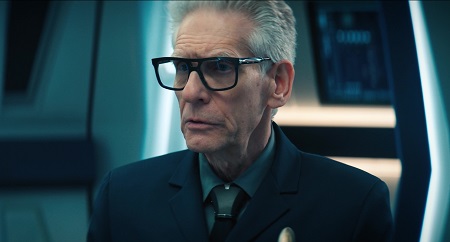
Though this will not sound like a compliment, I regard Aurellio as being Albert Speer – or at least, the public persona claimed by Speer after 1945. There are people like Aurellio even in the worst organisations and regimes – blind to the worst aspects, focused only on their own small work. Often in these stories, a character like this will step up once their eyes are opened to what’s going on beyond the confines of their laboratory – and perhaps that’s something we’ll see next time or in a future story. I’ll save discussions of Aurellio’s possible future for my theory post.

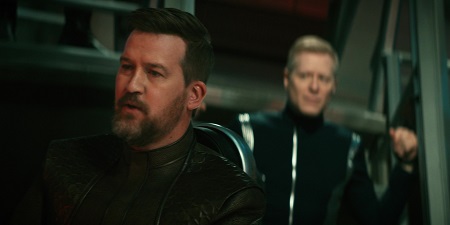
Aurellio was tasked with working on the Spore Drive – though it remains unclear how the Emerald Chain came to know as much about it as they do. To that end he was teamed up with Stamets, and their tête-à-tête in Engineering was fascinating to watch; both Mitchell and Anthony Rapp put in outstanding performances during this sequence.

The conversation Stamets and Aurellio had was riveting to watch.

The plan Aurellio had to try to recreate the DNA of the tardigrade seems to have merit – or at least no less merit than any other technobabble in Star Trek. Perhaps with Stamets’ support it could be taken more seriously both by Starfleet and the Emerald Chain. Stamets objected, saying he believes it is not possible and that the tardigrades are extinct – but neither of those claims are supported by on-screen evidence. We’ve seen tardigrades referenced as recently as December 2019 in the Short Treks episode Ephraim and Dot. The nature of that story’s relationship to canon is not clear – but tardigrades are still alive and kicking within the Star Trek mythos, at least.

Earlier in the season Tilly was said to be working on a plan for a non-human navigator to replace Stamets; this is something that, while never followed up on, would have allowed the Spore Drive to perhaps be rolled out to other vessels. It’s understandable why Stamets wouldn’t want to discuss any of this with Aurellio – but we’ve seen in the past that he’s very happy to talk about his creation with other scientists.

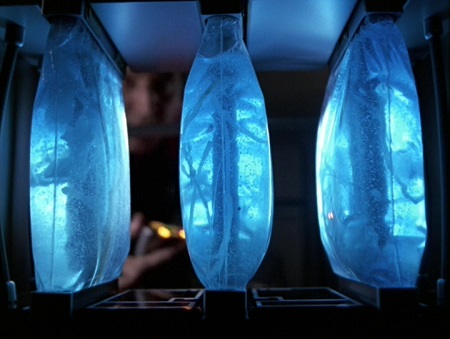
Will Aurellio’s plan work?

Besides the plot-heavy conversation about the Spore Drive, two things stuck with me from the Aurellio-Stamets conversation. First was that Aurellio mentioned several times that he’s in a relationship and has children. Stamets figures out he’s in a relationship with “an Orion” – it’s not unreasonable to assume that this person could be Osyraa herself, but we’ll save that for my theory post! Next was that Stamets claimed to have a child of his own. Since, as far as we know, Stamets and Culber do not have any children, this appears to be a reference to Adira, which was incredibly sweet. There has been a parental vibe between Stamets and Adira for much of the season, so for Stamets to say it aloud here was wonderful.

This would go on to be at the heart of the Stamets-Burnham argument later on, with Stamets arguing for a return to the Verubin Nebula to save Culber and Adira, but Burnham insisting he needs to get off the ship to prevent Osyraa using him to take Discovery away from Federation HQ. Rapp put in his best performance of the season so far in There Is A Tide, especially as he desperately argued with Burnham to remain aboard the ship.

Burnham ejected Stamets from Discovery.

That scene was truly heartbreaking. Of all the moments in There Is A Tide, the sequence between Burnham and Stamets was perhaps the shortest, which is a shame; it could certainly have been expanded by a couple of minutes. But a lot was packed into their time together, as Burnham rendered Aurellio and a guard unconscious in order to get Stamets off the ship. She knew that by doing so she was endangering Saru, Culber, and Adira, but when faced with the prospect of Osyraa and the Emerald Chain keeping control of the ship she evidently deemed the sacrifice worth it.

Stamets’ protests as Burnham prepared to eject him from the ship grew more and more desperate, until in his final moments he seemed resigned; cursing her for what she was doing. Anthony Rapp ran the gauntlet of emotions in his scenes this week, and after Stamets hasn’t has that much to do across the season, it was wonderful to see him put in such an outstanding performance.

Stamets argued with Burnham about rescuing Culber and Adira.

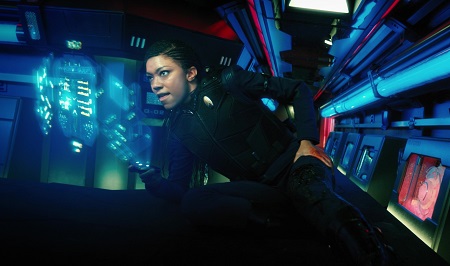
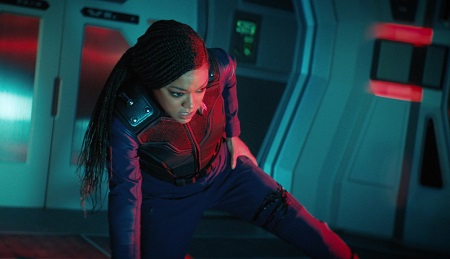
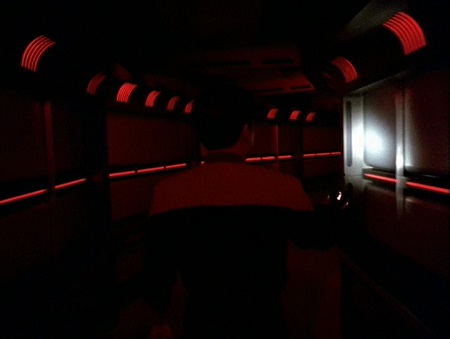
So we come to Burnham. This review is surely not going to be the first time you’ve heard this, but her story this week was basically Star Trek’s answer to ’80s action film (whose Christmassy status is debated) Die Hard! Crawling around in the Jeffries tubes and conversing with Zareh on the radio was clearly inspired by Bruce Willis’ character of John McClane, who spends much of Die Hard similarly sneaking around and conversing with his adversary by walkie-talkie. The Star Trek franchise has had many action-packed stories and moments over the years, but Burnham’s entire storyline this week has to be one of the best.

As I’d been predicting since his first appearance, Zareh was back. His return makes it feel as though the story of the season is beginning to come full-circle: we started with the revelation of the Burn and the initial conflicts with Emerald Chain couriers, and we’re ending with the Chain and the resolution to the Burn. Zareh bookends the season in a way, and I like that. It gives something more to the story than in Burnham was just facing off against a new unknown goon. The only drawback is that Zareh didn’t get to see Georgiou or Saru – the two characters who wronged him worse than Tilly.

Zareh made his return in There Is A Tide.

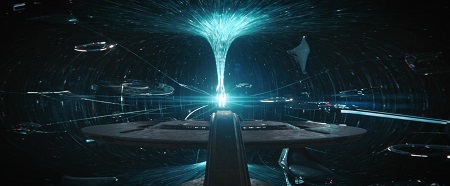
At the beginning of Burnham’s story we saw her and Book navigating a “transwarp tunnel.” Whether this is part of the Borg network or not is unclear – as is the fate of the Borg, come to that. It was convenient that this network leads right to Federation HQ, but I suppose we can forgive such contrivances within the story! Book’s ship crash-landing was a more explosive and dramatic version of the shuttle crash in Star Trek V: The Final Frontier. There was also a callback to Voyager, where Borg drones were ejected into space in a manner similar to Burnham kicking one of Zareh’s henchmen out into the vacuum of space. I appreciate that there are these little thematic, visual, or narrative nods within Discovery, even when the show isn’t overtly trying to relive Star Trek’s greatest hits.

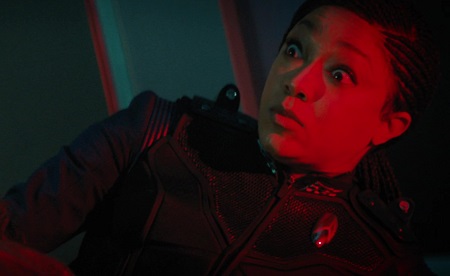
It was horribly unfortunate for Burnham that, in her first encounter with one of Zareh’s men, she got stabbed. And my gosh that stab was absolutely brutal! Discovery has been much more gory and visceral with some of its depictions of injuries when compared with past iterations of Star Trek, and this was certainly one of the most visually brutal. The camera work and direction showed just how painful Burnham’s wound must’ve been for her, and the follow-up as she cauterised the wound with a phaser was equally gruesome. Wonder why she didn’t use a medical kit? Compared with the dodgy CGI involved in Mirror Burnham’s death a couple of episodes back, this injury was so much better from a visual standpoint, and worked perfectly within the story.

Burnham suffered a major injury while battling the Emerald Chain.

The injury likewise harkens back to Die Hard, as John McClane suffers injuries to his feet from walking on broken glass in that film. Both characters – Burnham and McClane – were left hobbling by their respective wounds, trailing blood as they crawled and snuck around. I have to assume these Die Hard throwbacks were deliberate on the part of director and Star Trek legend Jonathan Frakes. It’s by no means a carbon copy of that film, but anyone who’d seen Die Hard would struggle to miss the similarities!

Burnham succeeds in her initial objective – to free Stamets and smuggle him off the ship. However, the task of retaking the ship and defeating Osyraa and Zareh is pushed back to next week. Burnham got the bulk of the action this week, but she wasn’t the only one who got exciting scenes. Tilly and the secondary characters from the bridge managed to escape their confinement and defeat their guards, and the morse code tapping was another reference to The Final Frontier – and not to mention a very clever way to outwit the henchmen guarding them!

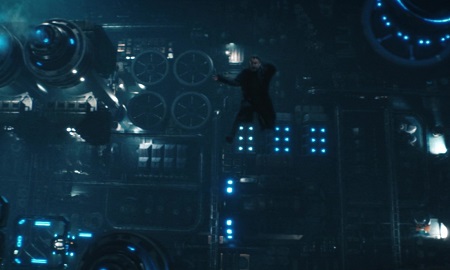
Burnham in a Jeffries tube.

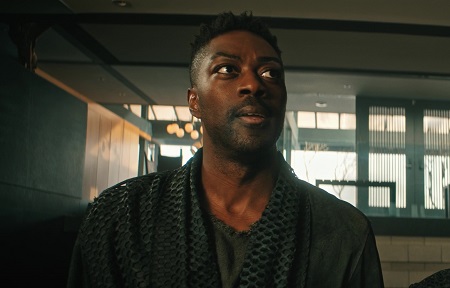
Ryn, who was initially with the group of bridge officers, lost his life by Osyraa’s hand. This might be the moment that pushes Aurellio to potentially switch sides, or at least to stand up to Osyraa – but we’ll save that for my theory post! I was genuinely shocked by his death, and for a split-second it seemed as if Book, who was also present, was going to be the one Osyraa killed. After he and Burnham confessed their love for one another earlier in the episode, it would have been a tragic end to their relationship. I’m hopeful that Book will survive the season, giving Burnham some stability and emotional guidance going forward.

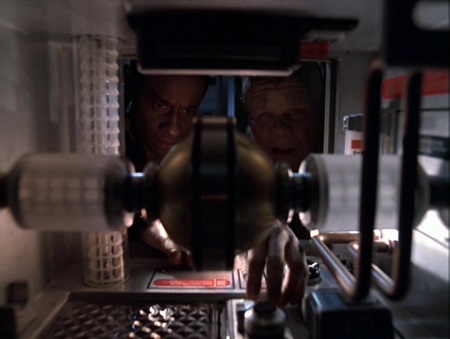
The final revelation of the episode was the Sphere data had transferred itself into at least three DOT robots. These cute little droids had been part of the show all season long, seen in the background or making repairs to the ship, and I’m glad they get a moment to be front-and-centre. I absolutely need a plush DOT though, so Star Trek merchandising team take note!

The DOT 23s are adorable and I love them.

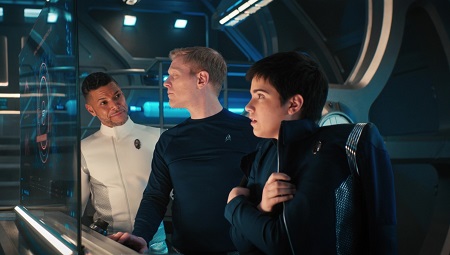
Tilly didn’t allow the loss of the ship while under her care to compromise her, and she led the remaining crew in a creditable fashion as they escaped and linked up with the DOTs. I felt sure that the Sphere data would find a way to help, and this seems to be the method it has chosen. Seeing the cute little robots address Tilly as “captain” was a strangely emotional moment, and came just after Detmer, Rhys, Bryce, and Owosekun had all pledged to follow her. The crew sticking together – joined by the DOTs – was a hopeful note to end the episode on.

So that was There Is A Tide… which is the penultimate episode of the season. It was absolutely fantastic, with complex themes, great performances, and plenty of action as the season approaches its climax. My only real points of criticism come from what wasn’t present – most notably the action in the Verubin Nebula – and whether there might be a little too much left to get through if the season finale is to wrap everything up neatly. Beyond that, however, I can hardly find a single fault.

Tilly is ready to retake the ship!

Osyraa got the expansion her character has needed since she was introduced, which was fantastic. Vance got to show off his negotiating skills. Tilly remained steadfast in command despite her “bruised ego” after losing the ship. Aurellio was a wonderful new character with depth. Anthony Rapp put in the performance of the season as the emotionally crippled Stamets. And Burnham got her very own Die Hard story, an action-packed adventure as she tried to save the ship from Osyraa and Zareh. There was so much going on in There Is A Tide, and all of it was wonderful.

This episode may be the high point of the season so far – an award I would have previously given to Far From Home. Jonathan Frakes never fails to deliver when he’s in the director’s chair, and this was a fantastic, well-written episode that allowed him to shine. There are a lot of open questions as of the end of the episode; hopefully the season finale can either provide satisfactory answers or set up Season 4 to bring about a resolution. I cannot wait for the end of the season – but it will be a bittersweet moment as it will bring an end to 23 straight weeks of Star Trek which began back in August!

I hope you had as much of an enjoyable time with There Is A Tide as I did! Come back next week for my breakdown of the season finale, and stay tuned for much more Star Trek here on the website as we head into 2021.

Star Trek: Discovery is available to stream on CBS All Access in the United States, and on Netflix in the United Kingdom and elsewhere. The Star Trek franchise – including Discovery and all other properties mentioned above – is the copyright of ViacomCBS. This article contains the thoughts and opinions of one person only and is not intended to cause any offence.

What might we watch and play in 2021?

Happy New Year! As we put the calamitous 2020 behind us, let’s look ahead to some of the entertainment experiences we might enjoy between now and Christmas. There’s only 51 weeks till the big day, you know. Better start your Christmas shopping!

The effects of 2020’s disruption are still being felt, and while we should hopefully see a return to normalcy slowly building over the next few months, there will undoubtedly be changes to come. From my point of view as a Trekkie, the big question is this: how much Star Trek will we get this year? After 2020 saw the release of three different Star Trek projects, it’s not inconceivable that the only episode we’ll see in 2021 will be next week’s finale of Star Trek: Discovery Season 3!

We do know, at least, that some big projects still intend to release this year. Let’s look at a few – in no particular order.

Cinema

The pandemic has not magically gone away with the arrival of the new year, and many cinemas look set to remain closed in the weeks ahead. The distribution of vaccines will be key to their re-opening, and thus to the release of at least some big films. However, there have been plans announced to bring some of 2021’s big releases to streaming platforms – either instead of or in addition to a theatrical release. How well this will work, and whether many of these plans go ahead if the pandemic is brought under control is up in the air right now – but it remains a possibility.

Number 1:
Dune

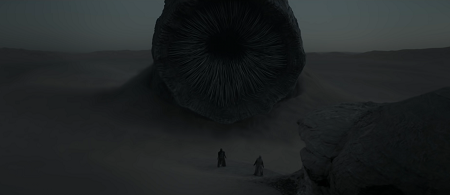
The latest adaptation of Dune is the first part of a duology, and was originally supposed to be released in 2020. Of course that couldn’t happen, and Dune is now set for a December release, and will supposedly come to HBO Max at the same time. Though the story has been notoriously difficult to adapt, this version has a huge budget, a stellar cast, and what look like wonderful visual effects based on the trailer. It feels like a film with great potential, and I’m eagerly awaiting its release.

Number 2:
No Time To Die

The latest Bond film – which is set to be Daniel Craig’s final outing as 007 – has been delayed by over a year. It was originally scheduled for an April 2020 release, but that has been pushed back to April 2021. There are no current plans to bring the film to streaming, and as it’s supposedly the most expensive Bond film of all time, perhaps that makes sense. April feels optimistic, but we’ll see how things go! Regardless, I’ve always enjoyed the Bond franchise, and it’ll be interesting to see what happens as this chapter of the 007 cinematic saga draws to a close.

Number 3:
Jungle Cruise

I love Disney World and the other Disney theme parks! When I heard that the House of Mouse was planning to make a film based on their Pirates of the Caribbean ride in the early 2000s I thought it sounded like a terrible idea – yet Pirates of the Caribbean: The Curse of the Black Pearl was an incredibly fun film with heart. Jungle Cruise is likewise based on a Disney World/Disneyland ride, one which, if memory serves, is cute and action-packed! The film adaptation will have to try hard to retain at least some elements of what makes the ride enjoyable, but if it can succeed it could grow to become an ongoing series like Pirates of the Caribbean.

Number 4:
The Matrix 4

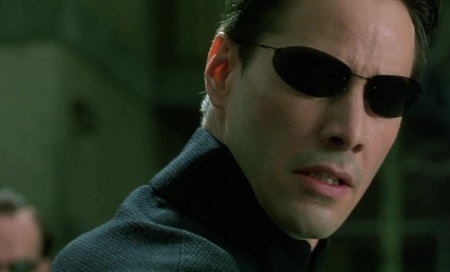
As I said last time, I really don’t know where The Matrix 4 could possibly take the story of the series. However, I’m still fascinated to find out! This will be our first time back in this setting since 2003’s The Matrix Revolutions, and I’m sure a lot of fans are excited and nervous in equal measure. The idea of the world being artificial was somewhat of a novelty for the big screen when The Matrix did it in 1999, but we’ve since seen other takes on the concept. Will it stick to the late-90s/early-00s aesthetic for scenes set in the simulated world? Will there even be a simulated world if humanity broke free? We’ll soon find out.

Number 5:
Raya and the Last Dragon

After Disney saw success with the Polynesian-themed Moana, they have turned to Southeast Asia for inspiration for Raya and the Last Dragon. Kelly Marie Tran will voice the titular Raya, and Disney animated films have always been worth watching so I’m expecting an enjoyable film. Disney appears to be going through somewhat of a second renaissance in the aftermath of Frozen’s huge success in 2013, and hopefully this will be a continuation of that. I’m also rooting for Kelly Marie Tran after the awful treatment she had to endure at the hands of some so-called “fans” of Star Wars. Raya and the Last Dragon will take the approach pioneered by Mulan and be released on Disney+ for a fee.

Number 6:
The Suicide Squad

2016’s Suicide Squad won an Academy Award. Just in case you forgot! Was it an outstanding cinematic triumph that I’m happy to rewatch time and again? Not exactly, but it was a decent action-packed blockbuster that was an okay way to kill a couple of hours. And that’s what I expect from this direct sequel – nothing groundbreaking, but a solid film with some cute comic book elements.

Number 7:
The King’s Man

Kingsman was a surprisingly fun film when it was released in 2014, and the third entry in the series is a prequel. The King’s Man looks set to examine the outlandish spy organisation’s past and possibly its origins, as well as throw together another action-comedy that takes inspiration from the likes of James Bond. I think that sounds like fun! The King’s Man will feature some pretty big names, including Ralph Finnes, Charles Dance, and Rhys Ifans.

Number 8:
Uncharted

Films based on video games have not often performed well. Though some have become cult classics in their own right, most films adapted from video games have not been successful. Will Uncharted be any different? The project has been in development for a long time and seen many behind-the-scenes changes, but having settled on a script and director, Tom Holland was cast in the role of Nathan Drake. At the very least there’s potential for a summer popcorn flick; a blockbuster adventure film. Whether it will succeed at becoming “the new Indiana Jones” is up for debate – but maybe!

Number 9:
Death on the Nile

2017’s Murder on the Orient Express was great fun, and Death on the Nile is a sequel of sorts. Adapted from a 1937 novel by famed murder-mystery author Agatha Christie, Kenneth Branagh both directs and stars in the picture as detective Hercule Poirot. The cast list reads like a who’s who of British and international stars, including Jennifer Saunders, Rose Leslie, Russell Brand, and Gal Gadot. If you’re familiar with the book or one of the two earlier adaptations the ending will no doubt be known – but that doesn’t mean the journey there won’t be mysterious and thrilling!

Number 10:
Free Guy

Free Guy is about a non-player character in an open world video game who becomes sentient and tries to escape the game. And he’s played by Ryan Reynolds. Are you sold yet? Because that premise (and casting choice) was all it took to hook me in and decide that Free Guy would be worth a look! It sounds like fun, and Reynolds has great comedic timing as we’ve seen with titles like Deadpool. At the very least it’s a unique premise for a film, and one that seems like it could be really funny.

Gaming

With two new consoles barely a month old, both Sony and Microsoft will surely make moves to shore up their player bases this year. There are some titles on the schedule that look absolutely fantastic, and while the release of many of these on what is now last generation’s hardware will mean we won’t see the full power of the next-gen machines just yet, we should begin to see some improvements in what games are capable of. I better get on with upgrading my PC!

Number 1:
Mass Effect: Legendary Edition

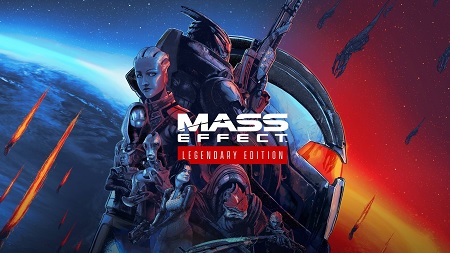
Rumours swirled for much of last year of an impending Mass Effect trilogy remaster, and the project was finally announced a few weeks ago. Despite its controversial ending, the three games tell a deep and engaging story in a unique sci-fi setting, and were great fun during the Xbox 360 era. Has enough time passed to make updating the trilogy worthwhile? Mass Effect 3 was only released eight years ago, after all. And will the remaster do everything needed to bring these games up-to-date? With Mass Effect 4 on the distant horizon, it will have to! I’m cautiously interested in this one – it could be wonderful to replay these games, but as we’ve seen with some recent remasters, not every company manages to hit a home run when it comes to updating a beloved title.

Number 2:
Lego Star Wars: The Skywalker Saga

Though I didn’t have time to review it before Christmas, The Lego Star Wars Holiday Special was great fun over on Disney+. I had hoped to see Lego Star Wars: The Skywalker Saga last year, but it got pushed back and is currently due for release in “early 2021” – whatever that may mean! The first couple of Lego Star Wars games, which were released in the mid-2000s, were really great fun, and I’ve been looking forward to the latest bricky reimagining of the Star Wars saga since it was announced. Lego games have never tried to take themselves seriously, and the end result has always been titles which are just a lot of fun.

Number 3:
The Lord of the Rings: Gollum

What could a game starring Gollum possibly bring to the table? I have absolutely no idea! But games – and stories in general – focusing on an antihero can be wonderful, so I’m very curious to find out. It’s also great to see another big single-player title given the glut of live services and always-online multiplayer games. I’m a fan of Middle-earth and the world Tolkien built, so hopefully this game will be a fun return to that setting. Taking on the role of Gollum will offer a different look at Middle-earth, and whether it focuses on the main story from the books or not, has the potential to be fascinating.

Number 4:
Skull & Bones

Assassin’s Creed IV: Black Flag demonstrated that there’s still a lot of appeal in pirate-themed titles. Skull & Bones wasn’t something I was especially interested in at first, but upon learning it will feature a single-player campaign I was happy to add it to the list. It seems to be a game that will deal with the naval combat side of things, and as long as it can really nail ship-to-ship combat within its game engine it should at least be a solid title. Naval games are relatively rare in the combat/strategy/action genres, so perhaps Skull & Bones will offer something a little different.

Number 5:
Outriders

Outriders was one of the first next-gen games that reviewers really had a chance to get to grips with before the launch of the PlayStation 5 and Xbox Series X. The consensus was that it seems like a fun third-person shooter, even if it wasn’t quite as “next-gen feeling” as some had hoped. Regardless, Outriders has continued its development and will be released this year. The basic premise feels like a mix of sci-fi and superhero comics, and at the very least it’s a brand-new setting at a time when a lot of studios are focused on sequels and franchises.

Number 6:
GhostWire: Tokyo

I honestly don’t know what to expect from GhostWire: Tokyo. It’s a game shrouded in mystery! One thing we know for sure is that it will feature a supernatural storyline, and that alone sounds like it has potential. A teaser trailer released last year didn’t show much, but we know that the game will draw on Japanese mythology and will be a first-person action-adventure game with some supernatural horror elements. It might be wonderful… or it might not be my thing! We’ll have to wait and see.

Number 7:
Diablo IV

After disappointing fans with Diablo Immortal, and then messing up with the controversy around their decision to censor a professional player who supported the protests in Hong Kong, it’s not unfair to say that there’s a lot riding on Diablo IV for Blizzard’s reputation. Early indications are that the dungeon-crawler looks good, and could be a return to form. Diablo III had issues at launch, so this is very much one to take a “wait-and-see” approach with, but if the studio can recreate the magic of older titles then Diablo IV should offer a fun experience.

Number 8:
Super Mario 3D World + Bowser’s Fury

My most recent foray into Mario’s 3D adventures was underwhelming, as Super Mario 3D All-Stars was not actually all that great. However, Super Mario 3D World + Bowser’s Fury might be! The base game was released on the Wii U, but Bowser’s Fury is something altogether new. How substantial it will be remains to be seen, but taken as a whole the package seems to offer good value. I love the cat suits introduced in Super Mario 3D World, they’re cute and add a different element to Mario and the gang’s 3D adventures.

Number 9:
Humankind

Humankind initially attracted me because of how similar it looks to Civilization VI – one of my most-played games of the 2010s. But there’s more to it than that, and the concept of creating a unique civilisation by combining different historical empires and cultures is, at the very least, innovative. I love a good strategy game, and Humankind could be a big time-sink for me this year – if it can deliver on some pretty big ambitions!

Television

After 2020 saw major disruption to cinema, 2021 could be television’s turn. Though shielded from the brunt of the pandemic, a number of television shows planned for 2021 have seen major delays to production. Despite that, there are still plenty of options on the horizon, including some that look absolutely phenomenal.

Number 1:
Zack Snyder’s Justice League

I can’t actually remember if Justice League is one of the DC films I’ve seen or not. If you’re a regular around here, you’ll know I’m not a big comic book fan generally speaking. And it’s not unfair to say that DC is the lesser of the two comic book powerhouses right now! I honestly did not expect the so-called “Snyder cut” of Justice League to ever see the light of day, but after a campaign by fans the film will be released – as a four-part miniseries on HBO Max. I’m at least somewhat interested to see what all the fuss is about!

Number 2:
Star Trek: Prodigy

After Lower Decks took the Star Trek franchise in a different – and very funny – direction in 2020, I’m curious to see what Prodigy will bring to the table. Some shows made for kids can actually tell very meaningful and interesting stories, and it’s my hope that Prodigy will manage to offer at least something to Trekkies beyond its target audience. The addition of Kate Mulgrew to the cast – reprising her role as Captain/Admiral Janeway – is tantalising too, and although that’s about all we know at this stage, the series aims to have a 2021 release. That could be pushed back, but fingers crossed we’ll see Prodigy some time soon.

Number 3:
Amazon’s Lord of the Rings series

Despite not having so much as a title, Amazon’s Lord of the Rings series has been targeting a 2021 release. It seems certain that, if this is to happen, it will have to be later in the year; filming is still ongoing at time of writing. However, a return to the land of Middle-earth is truly an exciting prospect, as is a look at the setting away from most of the characters we remember. The series will take place thousands of years before The Hobbit and The Lord of the Rings, so there’s the potential to tell some very different fantasy stories in Tolkien’s world.

Number 4:
Station Eleven

Based on a 2014 novel of the same name, Station Eleven is a post-apocalyptic drama set after the world has been devastated by a pandemic. Timely, right? Though filming began in early 2020 the series is still being worked on, but could finally see the light of day on HBO Max at some point this year. It feels like a project that, simply due to bad timing, may be controversial – but that could simply increase its appeal! Regardless, I’ll be keeping an eye out for it.

Number 5:
Foundation

Isaac Asimov is one of the grandfathers of science fiction. Whether his work will translate well from page to screen is an open question… but one I’m very curious to see answered. This adaptation of Asimov’s Foundation series will star Jared Harris, an absolutely incredible actor you might recall from 2019’s Chernobyl. It’s being produced for Apple TV+ as one of their first big-budget productions – or at least, the first one I’ve come to care about. 2021 looks set to be a big year for some of these second-tier streaming services!

Number 6:
Star Trek: Lower Decks

Lower Decks has finally secured an international broadcast agreement, more than five months after its first season premiered for viewers in North America. That’s good news, because a second season is already in development and will be able to be shared by fans around the world when it’s ready. Season 1 ended with some surprising twists for an animated comedy, and it remains to be seen what the end result of those storylines will be for our young ensigns aboard the USS Cerritos. Lower Decks took a few episodes to really hit its stride – and there were some missteps along the way – but for my money it’s up there with the best animated comedies of recent years, and I hope that the combination of its international debut and second season will see the show get the admiration it warrants.

Number 7:
The Expanse

I haven’t yet sat down to watch Season 5 of The Expanse, which premiered last month on Amazon Prime Video. However, the first four seasons were outstanding, and Season 6 is set to be the show’s last. Hopefully it will go out on a high! The Expanse is a wonderful science fiction series, one which has tried to take a more realistic look at the dangers of space travel and alien life. Many sci-fi stories treat these elements almost as mundane, yet The Expanse approached them with wide-eyed wonder, making things like accelerating a spacecraft integral parts of its story. It’s a wonderful series, and its final season should be explosive, entertaining, and ever so slightly sad as we bid it a fond farewell.

Number 8:
The Witcher

I half-expected to see the second season of Netflix’s The Witcher last year, but for whatever reason the streaming powerhouse is taking its time. Henry Cavill was great in the title role in Season 1, and hopefully the second season will keep up the high quality. I always appreciate a new fantasy series, and while the show owes its existence to the popular video games, it’s distinct from them at the same time, drawing more on the original book series for inspiration. Its return to our screens – which may not be until later in the year – is highly anticipated!

Number 9:
Star Wars: Andor

I wasn’t exactly wild about the recent announcements of upcoming Star Wars projects. As I wrote at the time: “spin-offs to spin-offs and the increasingly minor characters given starring roles is indicative of a franchise out of ideas.” Part of that criticism was aimed at Andor, the series which will focus on Rogue One’s Cassian Andor. However, on its own merit the show – which bills itself as a “spy thriller” – may very well be decent, and I’m cautiously interested to see what Disney and Lucasfilm bring to the table. Rogue One was certainly one of the better offerings since Disney began producing Star Wars projects, so maybe Andor will surprise me and tell some genuinely different stories in the Star Wars galaxy.

Number 10:
Clarice

Alex Kurtzman’s latest project for ViacomCBS will focus on Clarice Starling – the FBI agent introduced in Silence of the Lambs. How well will a show about Clarice work without Hannibal Lecter? Well that’s an open question, quite frankly, because as far as we know, complicated licensing and rights agreements mean Dr Lecter can’t appear. The show is being pitched as horror, though, following Agent Starling as she investigates sexual crimes in the aftermath of the events of Silence of the Lambs. It certainly has potential!

So that’s it.

You may have noticed some exclusions – notably Star Trek: Picard, Star Trek: Discovery, and Star Trek: Strange New Worlds. While all three are in pre-production for their upcoming seasons, none have been confirmed for 2021 at this juncture. Given the state of the world and how badly production has been impacted, while I remain hopeful that at least one live-action Star Trek show will make it to air, it’s entirely plausible that none will. That’s why they didn’t feature on the list.

If all goes well, 2021 should be a good year for entertainment. I see a lot of projects in film, gaming, and television that have the potential to tell wonderful, engaging stories. If lockdowns and quarantines remain in place – where I live in the UK restrictions just got a lot tougher – then we’ll need all the distractions we can get!

Mark your diary for some upcoming releases!

The year ahead is unpredictable, and it’s possible that some of the projects I’m excited for won’t make it to release – or will end up being less enjoyable than expected. But on the flip side, there are undoubtedly films, games, and television shows waiting in the wings to surprise me; titles that didn’t make this list that I will come to greatly enjoy as the year rolls on. There were several wonderful surprises in 2020 that, had you asked me in January of last year, were not even on my radar. The same will perhaps happen this year too!

With everything going on in the world, having something to look forward to is important. Even if all you can think of that excites or interests you is a television show or video game, that’s okay. It gives you something to hang on to; light at the end of the tunnel. I wish you a very Happy New Year, and all the best for 2021.

All titles listed above are the copyright of their respective company, studio, developer, publisher, broadcaster, distributor, etc. Some promotional artwork and images courtesy of IGDB. Stock photos courtesy of Unsplash. This article contains the thoughts and opinions of one person only and is not intended to cause any offence.

End-of-Year Awards 2020

Spoiler Warning: There are spoilers ahead for some of the films, games, and television shows listed below.

Welcome to my first annual End-of-Year Awards! These are the best (and worst) entertainment events of the year – in my subjective opinion! Rather than writing a top ten list (like I did last year to mark the end of the decade) I’m instead choosing a few categories and awarding my picks for the best entertainment experiences of the year.

I’m including a few titles from the tail end of 2019 on this list simply because many people will have only got around to watching or playing them this year. These decisions are always difficult and I often feel that – because people put these lists together weeks or months before the end of the year – titles released in December tend to miss out. As such you’ll find a few titles from the final few weeks of 2019 being given an award – and perhaps next year there may be a title or two from the end of 2020 featured!

Most categories will have a runner-up and a winner; a few only have one, and in those cases that title wins by default.

A note about exclusions: if I haven’t seen or played a title for myself, for reasons that I hope are obvious it can’t be included. I’m only one person, and I don’t have every moment of the day to dedicate to entertainment. As such, some titles others may consider to be “massive releases” for 2020 aren’t going to be given an award. In the gaming realm, this also applies to titles that I haven’t completed. The exclusion from these awards of titles like Ghost of Tsushima and Tenet isn’t to say they aren’t good; they may be – but I have no experience with them so I’m unable to comment at this time.

With all of that out of the way let’s jump into the awards! If you like, you can try to imagine a fancy stage and some celebrity presenter handing out statuettes. That may or may not be what I’m doing as I write!

Web Series:

Nowadays many of us get at least a portion of our entertainment away from big-budget productions on websites and apps like YouTube. There are a number of top-tier YouTube shows that may have started off as typical amateur productions, but have since become far more professional. As better cameras and microphones become readily available, even low-budget YouTube productions can offer impressive audio and visuals.

Personally I watch a video or two on YouTube most days, and there are a number of channels which have produced top-quality entertainment this year. When the pandemic hit, many YouTube shows were able to keep going despite the chaos engulfing the wider entertainment industry. They had the means and the technology to do so, and that’s fantastic.

🥈Runner-up🥈
Linus Tech Tips

Linus Tech Tips is one of the first YouTube channels I began watching regularly, having stumbled upon it when looking for PC building tips a few years ago. Though some of what they do is complete overkill (what YouTube channel needs $20,000 cameras?) they have a lot of fun while doing it. Linus Tech Tips explores the high-end and cutting-edge of computers, cameras, and other technologies, and the presenters manage to make it entertaining.

The channel has continued its steady growth and now boasts a number of regular presenters in addition to the titular Linus, most of whom specialise in particular topics. There are also several other channels produced by the same team, including TechQuickie, Short Circuit, and TechLinked. The combined output of the main channel plus its subsidiaries means there’s at least one new video per day, which is great. Even less-interesting topics can be made fun when presented well, and the team at Linus Tech Tips manage to be interesting and entertaining every time.

🏆Winner🏆
SORTEDfood

I love a good cooking show. Not only can they be entertaining but also very relaxing. SORTEDfood has a usual output of two videos per week, and while in recent years they’ve stepped away from purely doing recipes and into things like kitchen gadget reviews, everything is food-themed and the enthusiasm that the five presenters have is infectious. During the coronavirus pandemic, London (where the show is recorded) was in lockdown. Despite that, the team found creative ways to get around it, and even incorporated it into their videos. In addition to recipes there were helpful things like reviews of food delivery services, which at the height of lockdown here in the UK was actually really useful. I was able to use a couple of the services they recommended to send gifts to people I couldn’t see in person; gift ideas I would never have had were it not for SORTEDfood.

Their pandemic programming was good, but when lockdown was lifted it was nice for the team to come back together and get back to their regular output. I’m a huge fan of their “ultimate battles” in particular, which pit the presenters head-to-head to create the best dish. The “pass it on” series, where all five take turns to create a single dish, is also fantastic – and often very funny. SORTEDfood manages to be both informative and entertaining, and their output during lockdown was phenomenal and undoubtedly helped many viewers during a difficult time. For all of those reaons, I’m crowing SORTEDfood the best web series of the year.

Documentaries:

I’m setting aside a whole category for documentaries because I’m a big fan. There have been some great ones in 2020, both standalone films and series. Netflix has surprised me over the last few years by growing to become a huge player in the documentary genre, funding many productions – including some Academy Award nominees. Disney+ joined the streaming wars late last year – or in March this year if you’re in the UK – and has also brought some fascinating pieces of documentary content to the small screen. It’s a great time for documentaries at the moment!

🥈Runner-up🥈
We Need To Talk About A.I.

This documentary was fascinating, if perhaps somewhat alarmist. Looking at the possible creation of general artificial intelligence, and the potential for such an AI to surpass humanity, it was a truly interesting peek behind the curtain at what researchers are doing on the cutting-edge of AI research. The documentary was presented by Keir Dullea, famous for his role as Dave in 2001: A Space Odyssey. That film saw his character go up against an out-of-control AI, and Dullea brings a gravitas to the role of narrator as a result.

The film made reference to a number of sci-fi films which look at rogue AI, most significantly Terminator 2: Judgement Day, whose director James Cameron was interviewed. From my perspective as a Trekkie, having just seen Star Trek: Discovery Season 2 and Star Trek: Picard Season 1, which both look at the potential for out-of-control AIs, the documentary brought the world of fiction uncomfortably close to the world we inhabit today. While most of the interviewees offered a fairly bleak look at future AI, particularly in the military realm, others did paint a more positive picture. The biggest thing I took away from it, though, it how little consensus there is among researchers and scientists not only on whether AI is a good idea, but whether it’s even truly possible, or how long it will take.

The film is a fascinating, slightly unnerving watch.

🏆Winner🏆
The Imagineering Story

Though it isn’t a subject I’ve talked about often here on the website, I have a great fondness for Disney’s theme parks. It’s doubtful given my health that I’ll be able to go any time soon, but I have fond memories of visits to several parks with both family and groups of friends. Combine that love of Disney with my aforementioned love of documentaries and I got what was one of the most underrated yet fascinating entertainment experiences of the year!

Prior to the launch of Disney+ in the UK in March, there was already a Disney-branded streaming platform here. I wasn’t sure what kind of an upgrade to expect when the new service arrived – except for The Mandalorian there didn’t seem to be much new. The Imagineering Story was one of the few documentaries on Disney+ at launch, but it’s absolutely fascinating, detailing the behind-the-scenes work that went into building Disney’s various parks and themed lands.

The addition of some National Geographic documentaries to Disney+ over the last year or so has made the platform into a good home for the format, though I would like to see more films and series either added from Disney’s extensive back catalogue or better yet, commissioned exclusively for Disney+.

But we’re off-topic! The Imagineering Story was beautifully narrated by Angela Bassett, and as a series made by Disney itself was able to get the perspectives of many senior people who worked at the parks and on many of the projects it covered.

Video Games:

Despite the all the chaos and pandemonium in the world in 2020, many new games – and two new consoles – managed to make it to release. While it’s true that some titles have suffered delays, by far the majority of planned and scheduled releases made it, and that’s no small accomplishment!

As a new console generation gets ready for its centre-stage moment, it’s often been the case that we get a quieter-than-average year as companies shift their focus. Despite that, though, we’ve seen some pretty big titles in 2020, including a couple that will likely be heralded as “game of the generation” or even “game of the decade!” If I’m still alive and kicking in 2029, by the way, check back as I may have a thing or two to say about that!

Though it’s far too early to say which of the two newly-launched consoles will do best in the years to come, 2020 has given all of us some great gaming experiences… and some crap ones.

Worst Game:

Let’s start by getting the worst games out of the way. 2020 has seen some stinkers, including big-budget titles from successful developers and publishers. They really ought to know better.

🥈Runner-up🥈
Marvel’s Avengers

Marvel’s Avengers is the Anthem of 2020. Or the Fallout 76 of 2020. Or the Destiny 1 of 2020. Or the The Culling II of 2020. Pick any of those live service, broken-at-launch disasters, and that’s what Marvel’s Avengers is. The “release now, fix later” business model has condemned what could have been a popular and successful title to failure. But Marvel’s Avengers hasn’t even failed spectacularly enough to be forever etched in the annals of gaming history alongside titles like 1982’s E.T. Instead it’s slowly fading away, and in six months or a year’s time, nobody will even remember it existed.

Disney and Square Enix looked at a long list of crappy video game business ideas, including paid battle-passes, console-exclusive characters, corporate tie-ins with unrelated brands like phone providers and chewing gum makers, in-game currencies, and microtransactions for each of the six main characters individually. They then decided to put all of these into the game, robbing it of any soul or heart it could have had and turning it into a bland corporate cash-grab. As soon as I heard the company planned the game as a “multi-year experience,” the writing was on the wall. If, underneath all of the corporate nonsense, there had been a halfway decent game with fun gameplay, perhaps more players would have stuck it out. But, as usual with these types of games, there wasn’t. I’m not the world’s biggest Marvel fan. So I’m not horribly offended by this game in the way some folks undoubtedly are. But I can sympathise with them, because fans deserve better than this steaming pile of crap to which Disney and Square Enix have attempted to affix the Marvel logo.

🏆Winner🏆
The Last of Us Part II

The Last Of Us Part II’s cover-based stealth/action gameplay is fine. Though better than the first game, I didn’t feel there was a colossal improvement in terms of gameplay – but that could be said about countless sequels over the last couple of console generations. Where The Last Of Us Part II fell down was its story. This was a game I was sceptical of from the beginning; the first title felt like lightning in a bottle, something that neither wanted nor required a follow-up. In 2020, though, practically every successful title ends up being spun out into a franchise.

With a theme of breaking the cycle of violence, The Last Of Us Part II considers itself “artistic” and clever. Unfortunately that theme led to a horribly unsatisfying narrative, with players not only forced to take on the role of the person who murdered Joel – the protagonist/anti-hero from the first title – but ends with Ellie letting her escape and refusing to take revenge. Had the same concept been part of a new game with new characters, it could have worked better. But crammed into this title it fell flat. I stuck with it out of stubbornness as a fan of the first title, but it was a profoundly unenjoyable ride, and that’s why The Last Of Us Part II is the worst game of 2020.

Best Casual Game:

How do we define a “casual” game? It’s a difficult one, and it’s one of those contentious topics where fans of a title who may have spent hundreds of hours in the game world will get upset at hearing their favourite game referred to as “casual.” When it came to choosing titles for this category, I looked at games that could be easily picked up for a short burst, then put down. Games that can be played for a few minutes and that have gameplay suited to that was one of the main criteria. Games in this category also had to be pick-up-and-play. Some casual games can indeed be hard to truly master, but for my money, any game to which we assign the “casual” title has to be accessible and easy to get started with.

So that was how I came to my shortlist. Now let’s look at the runner-up and winner… though if you’ve been a reader all year I doubt you’ll be too surprised!

🥈Runner-up🥈
Fall Guys

Fall Guys seemingly came out of nowhere in August. It wasn’t a title I’d heard of, let alone one I was looking forward to, but it turned out to be a lot of fun. Taking a format inspired by television game-shows like Gladiators or Total Wipeout, the basic gameplay consists of running a series of obstacle courses, looking to be the last one standing at the end to win a crown.

I’m not usually interested in online multiplayer titles, but Fall Guys was something so genuinely different that I was prepared to give it a go. And what I found was a game that was shockingly fun. Each round lasts barely a couple of minutes, meaning even if you don’t qualify it’s not a big deal. Just jump into the next game. Though there are microtransactions, at time of writing they aren’t intrusive and the game is quite generous with the in-game currency given out simply for playing. There are fun cosmetic items to dress up your adorable little jelly bean character in, and the whole game is cute and lots of fun. Though it did have a cheating problem for a while, the addition of anti-cheat software appears to have fixed things. I’m probably about done with Fall Guys as I move on to find new things to watch and play, but I had a wonderful time with it this summer and autumn.

🏆Winner🏆
Animal Crossing: New Horizons

With over 120 hours played, I’ve spent more time this year with Animal Crossing: New Horizons than with the next two games on my list put together. That’s no small accomplishment – even if my 120 hours seems paltry compared to the amount of time some players have put into this title. Time alone doesn’t make a title worthy of winning an award, though. Why Animal Crossing: New Horizons deserves the title is because practically all of those hours were enjoyable.

It’s true that the base game at launch was missing features from past entries in the series, notably 2013’s Animal Crossing: New Leaf. And I find that disappointing, even if updates have since improved the game. But despite the missing content, what the game did have was fantastic, and there really isn’t anything like New Horizons on the market. It’s cute wholesome fun, and the kind of game that can be played for even just a few minutes at a time. It doesn’t demand a huge commitment in the way some titles do – but if you get stuck into it, you’ll find yourself wanting to spend more and more time on your island.

Best Racing Game:

There’s only one game in this category this year, simply because the other racing games I’ve played in 2020 were released in previous years. I had a lot of fun with Forza Horizon 4 in particular, but as a 2018 title it can’t be included here for obvious reasons.

🏆Winner🏆
Hotshot Racing

Congratulations to Hotshot Racing for winning by default! Jokes aside, this game is a lot of fun. An unashamed arcade racer that makes no attempt at realism, it’s fast-paced, exciting, and ridiculous in equal measure! What attracted me to the game when it was released in September was its deliberately mid-90s aesthetic; a beautifully simple art style inspired by racing games of the Sega Saturn and PlayStation 1 era.

At a time when many games feel overpriced, the £15 I paid for Hotshot Racing actually feels cheap! For how much fun the game is, even when simply playing against the AI, it could arguably ask for a lot more money! Speaking of playing against the AI, that’s something Hotshot Racing encourages, and considering how many titles that supposedly offer a single-player mode still try to force players to go online, I appreciated that. In the mid-90s, some games could do four-player split-screen, but many titles were limited to just two players at the most, so racing against the AI was something all gamers had to do; that was just how those games were meant to be played!

As a visual throwback to games past, Hotshot Racing caught my eye. But there’s more to it than just the way it looks, and what’s under that cute retro skin is a genuinely fun arcade racer.

Best Star Wars Game:

It’s unusual for two games in a single franchise to release within a year of each other, but that’s what happened! There was even supposed to be a third Star Wars title this year – Lego Star Wars: The Skywalker Saga – but it was delayed until 2021.

🥈 Runner-up 🥈
Star Wars: Squadrons

Though Squadrons is less arcadey than classic starfighter titles like Rogue Squadron, it’s a remarkably fun game. If you’ve ever dreamed of being a pilot in a galaxy far, far away, this is about as close as you can get! Though I don’t play in VR, the option to use a VR headset – as well as to set up a proper HOTAS or other flight controller on PC – surely makes this the most immersive Star Wars experience out there. Even just with a control pad, though, Squadrons truly transports you to the cockpit of an X-Wing, TIE Fighter, or one of the game’s other starfighters.

The single-player campaign was fun, giving players the opportunity to fight on both sides of the war as the New Republic seeks to defeat the rump Empire – the game is set in the aftermath of Return of the Jedi. I’m not much of a multiplayer gamer, so the fact that there is an AI mode, allowing me to continue to have fun just playing against the computer, is fantastic. I had a truly enjoyable time with Star Wars: Squadrons, and I keep going back for more.

🏆Winner🏆
Star Wars Jedi: Fallen Order

Jedi: Fallen Order was released in November 2019, so including it on this list is a bit of a stretch, I admit. But I got to play it this year, and it was the first game where I fully documented my playthrough. Jedi: Fallen Order managed to feel like a cross between Knights of the Old Republic and the Uncharted series, with protagonist Cal taking on a quest to visit several ancient worlds in search of a Jedi Holocron.

There were twists and turns along the way, but the whole time I felt like I was taking part in a Star Was adventure all my own. After the disappointment of The Rise of Skywalker, playing through Jedi: Fallen Order convinced me that the Star Wars franchise was going to be okay, and that there were still new and original stories worth telling in this universe.

The gameplay was great too, with lots of exciting action and lightsabre-swinging as Cal took on the forces of the Empire. I won’t spoil the ending if you haven’t played it for yourself, but Jedi: Fallen Order was a wild and incredible ride, and one I heartily recommend.

Best Action or Adventure Game:

This category ended up with two first-person shooters, but I’m keeping the name the same! There were many great action, adventure, and first-person shooter titles released this year, and I didn’t have time to play all of them. Here are the two I enjoyed most.

🥈 Runner-up 🥈
Doom Eternal

The sequel to the wonderful 2016 reboot of Doom is just fantastic. Gone is the horror vibe that Doom 3 mistakenly introduced, and instead what you get is action and excitement – with some interesting platforming sections thrown in for good measure. There is a story, of course, but unlike many games I’m not really all that interested in it. I come to games like Doom Eternal to feel like a demon-killing badass, and that’s precisely what the game offers.

There was a lot of fun to be had in the days leading up to Doom Eternal’s launch, as it coincided with the launch of Animal Crossing: New Horizons. I greatly enjoyed the memes and artwork created by folks on the internet, depicting Doom Guy and characters from the Animal Crossing series together! All in all, this is just a fast-paced, fun shooter that doesn’t try to be anything more. It isn’t a jack-of-all-trades; it does one thing and does it to perfection.

🏆Winner🏆
Halo: The Master Chief Collection

Throughout 2020, developers 343 Industries have brought the Halo series to PC. Halo: Reach arrived late last year, and in the months since we’ve gotten every other title in the series – except for Halo 5! It had been a long time since I played Halo: Combat Evolved on the original Xbox, and I had a lot of fun rediscovering the series and enjoying it all over again. The updated graphics improved the experience in a lot of ways, but it was also fun (and innovative) to be able to switch between visual styles on the fly.

I hadn’t played either Halo 3: ODST or Halo 4, so I not only got to recreate my Halo experience from years past, but expand on it too. The setting the series uses is as unique and interesting as any sci-fi video game I’ve played, and I’m very curious to see what Halo Infinite can bring to the series when it’s eventually ready.

Television Shows:

There have been some wonderful television shows this year. While the pandemic led to the shutdown of cinemas and a delay in many films being released, a lot of television shows were able to press ahead – at least, those that had completed filming before the worst effects were felt. I hoped to include more categories, such as best miniseries, but time got away from me and I have a number of shows still on my list of things to watch!

Worst Television Series:

Luckily there’s only one in this category! If I’m not enjoying a television series I tend to just stop watching – unless there seems to be a real prospect of improvement. Likewise, if I feel something won’t be to my taste I’ll just skip it; life is too short, after all, for bad entertainment. That said, there are exceptions, and I found one in 2020.

🏆Winner🏆
Supernatural

Supernatural is the king of running too long – a crown it inherited from The Big Bang Theory! Fifteen years ago, when it debuted, there was a great premise as brothers Sam and Dean Winchester set out to hunt ghosts and monsters, all the while keeping an eye out for the demon that killed their mother and Sam’s girlfriend.

But by the time the show reached its third season, many of its ongoing storylines had concluded. The writers began reaching for new and different demons and creatures for Sam and Dean to tackle, and the quality dipped. By the time the show crossed over into the self-congratulatory fan-servicey mess it has been in recent seasons it had just become ridiculous; a parody of itself.

As the seasons dragged on, writers began pumping more and more Biblical themes into Supernatural, transforming its protagonists into invincible prophets anointed by God. An episode a few seasons back saw Sam and Dean cross over into a world where their adventures are a television show in what has to be one of the worst examples of fan-service I’ve ever seen.

Thankfully Supernatural has now wrapped up its final season. I tuned back in – against my better judgement – to see if the impending end of the series would make a difference to its quality. But it didn’t, and I stand by something I’ve been saying for years: many television shows have a natural lifespan. Supernatural had maybe three decent seasons, and should certainly have ended a long time ago.

Best Animated Series:

🥈 Runner-up 🥈
Rick & Morty

We got five episodes of Rick & Morty in 2020; the back half of Season 4, which had premiered last year. The show’s entire premise is wacky, sometimes over-the-top humour, and that doesn’t always stick the landing, especially when the creative team have been working on it for seven years already. So with that in mind, I consider four episodes out of five being decent to be a pretty good run.

When the show stopped flying under the radar and really hit the mainstream in 2017, there was a fear perhaps that the newfound popularity would lead to changes. But I don’t really think that’s happened, and I wouldn’t say that this year’s episodes were substantially different to those in past seasons. They weren’t necessarily any better, but certainly no worse.

There were some great jokes, some hilarious moments, and some weird and wonderful aliens as Rick and Morty (along with Summer, Jerry, and Beth) took off on their interdimensional adventures.

🏆Winner🏆
Star Trek: Lower Decks

It could hardly be anything else, right? Building on the success of both the Star Trek franchise and animated comedies like Rick and Morty, Star Trek: Lower Decks represented the franchise’s biggest attempt to try something new – and arguably its biggest risk – in a very long time. Despite the controversy surrounding Lower Decks’ lack of an international broadcast, judging the series on merit it was a very enjoyable ride.

There were plenty of laugh-out-loud moments in Lower Decks, but more than that, the show paid homage to my personal favourite era of Star Trek – the 24th Century. There were so many callbacks and references to events in The Next Generation, Deep Space Nine, and Voyager and the series managed to feel like Star Trek while at the same time having an overtly comedic style.

While its sense of humour won’t be to everyone’s taste, there’s no denying that Lower Decks was made by fans for fans, and I’m really excited to see its second season whenever that may come – especially now that the show’s international broadcast has been settled meaning that fans everywhere can enjoy it together.

Best Live-Action Television Series:

🥈 Runner-up 🥈
Cobra

Right at the beginning of the year I watched Cobra, a British thriller about a government dealing with the aftermath of a disaster. Such an interesting fictional concept, I thought. How innocent we were back then, eh?

Cobra wasn’t what I expected. Having read the pre-release marketing I was expecting a disaster series, something dealing with an apocalyptic event. Instead it’s much more of a thriller with elements of political drama. Even though that was completely not what I expected, I had an enjoyable time with the series.

Robert Carlyle – who plays the role of a British Prime Minister clearly inspired by Tony Blair – is an actor I’ve always felt was underrated. I saw him a few years ago in a miniseries called Hitler: The Rise of Evil, and ever since I’ve found him to be a decent actor who can take on a variety of roles. He was the star of Cobra – but didn’t overwhelm the series. It was an entertaining ride with some truly tense moments.

🏆Winner🏆
Star Trek: Picard

This should come as no surprise to anyone who’s followed my articles and columns this year! Star Trek: Picard did something I’d been desperately wanting the franchise to do for basically twenty years: move forward. Since Enterprise premiered shortly after the turn of the millennium, Star Trek has looked backwards, with all of its attention focused on prequels and reboots. Many of those stories were great, don’t get me wrong, but I wanted to know what came next, and Picard scratched that itch.

But its premise alone would not make it the best television series of the year! Star Trek: Picard told an engaging, mysterious story as the retired Admiral Picard set out on a new adventure. The story touched on contemporary themes of artificial intelligence, isolationism, and mental health, and was an enthralling watch. Though it stumbled as the first season drew to a close, the first eight episodes were outstanding, and have hopefully laid the groundwork not only for future seasons and more adventures with Picard and his new crew, but also for further Star Trek stories set at the dawn of the 25th Century.

It’s difficult to pick out one individual episode and say it was the best the season had to offer, because Star Trek: Picard is designed to be watched from beginning to end as one continuous story. But that doesn’t mean I won’t try!

Star Trek Episodes:

2020 was the first year since 1998 with three Star Trek productions, so there’s a lot of episodes to choose from! As Trekkies we’re spoilt for choice at the moment – long may that continue! This year I reviewed every single Star Trek episode that was broadcast. The year began with Picard in late January, then Lower Decks came along in August, and finally Discovery premiered in mid-October.

Worst Episode:

There weren’t a lot of options here, because the quality of modern Star Trek has been high. That said, every Star Trek show has misfires and duds from time to time, and this year was no exception.

🥈 Runner-up 🥈
Et in Arcadia Ego, Part 1 (Star Trek: Picard)

After an incredibly strong start, Star Trek: Picard stumbled as its first season drew to a close. My primary complaint about Et in Arcadia Ego as a whole (aside from that godawful gold makeup they used for the synths) was that it introduced too many new characters and storylines, most of which didn’t get enough screen time to properly develop. The first part of a finale needs to bring together everything that’s already happened, not dump an awful lot of new things onto the audience, but that’s what Et in Arcadia Ego, Part 1 did.

The episode was also very poorly-paced, which is down to a combination of scripting and editing. The story jumped from point to point without sufficient time for the audience to digest what was going on. It also skipped over what should’ve been massive emotional moments, like Picard and Soji learning Hugh’s fate, or Elnor learning of Picard’s illness. Dr Soong and Sutra in particular needed more development and more screen time – though Isa Briones’ terrible, one-dimensional performance means that’s something I’m half-glad we didn’t get!

Overall, this was Picard’s worst episode by far. The aesthetic, editing, and pacing were all wrong, and if the story of Season 1 wanted to include all of these new characters, factions, and settings, we needed not only more episodes, but to have brought them in much earlier.

🏆 Winner 🏆
Envoys (Star Trek: Lower Decks)

Envoys’ opening sequence, in which Ensign Mariner kidnaps a sentient energy lifeform “for a laugh,” was the closest I came to switching off Star Trek’s second animated series and not going back. Where Lower Decks succeeded was in making the regular goings-on in Starfleet comical. Where it failed was in attempting to set up Ensign Mariner as Star Trek’s answer to Rick Sanchez (from Rick & Morty). This sequence encapsulated all of Mariner’s worst qualities, and was about as un-Star Trek as it’s possible to get.

It’s a shame, because the episode’s B-plot starred Ensign Rutherford in what was one of his better stories as he hopped from role to role aboard the ship, trying out different postings in different departments. The main story stuck with Mariner and Boimler, and derived much of its attempted humour from her mean-spirited selfishness. The ending of the episode did go some way to humanising Mariner, and arguably set the stage for her becoming a much more likeable character across the remainder of the season. But that opening sequence in particular is awful, and is the main reason why I’m crowing Envoys as the worst Star Trek episode of the year.

Best Episode:

This is a much more fun category than the one above! And there are plenty of candidates. All three shows managed to have some real gems, and picking just two was not an easy task.

🥈 Runner-up 🥈
Far From Home (Star Trek: Discovery)

After Michael Burnham arrived in the 32nd Century in the season premiere, Far From Home saw Discovery and the rest of the crew arrive too. We were treated to an excellent crash landing sequence that was reminiscent of Voyager’s fourth season episode Timeless, and we got an interesting storyline which saw Saru and the crew forced to adapt to a very different and difficult future.

Saru and Tilly both stepped up, and the dynamic between these two characters has been continued through the rest of the season. As two main characters who hadn’t spent a huge amount of time together before this episode, their relationship was somewhat new and very interesting. Saru stepped up to become the captain we all hoped he could be in Far From Home, and Tilly showed us that there’s more to her than mere comic relief.

As the second half of the series premiere, Far From Home does a lot of world-building, establishing the violent, chaotic nature of the 32nd Century. It was also rare in that it was a Star Trek: Discovery episode with practically no input from Burnham – something which allowed many other crew members to shine in unexpected ways.

🏆Winner🏆
Remembrance (Star Trek: Picard)

I don’t think I’ve ever been more excited for a Star Trek episode than I was for Remembrance. This was the moment Star Trek returned to the 24th Century for the first time since 2002’s Nemesis – and it was the first time the overall story of the Star Trek galaxy had moved forward since we heard about the destruction of Romulus in 2009’s Star Trek.

Children of Mars – the Short Treks episode that served as a prologue to Picard – had been somewhat of a let-down, so there was a lot riding on Remembrance as far as I was concerned! And I’m so happy to report that it delivered. It was mysterious and exciting, with moments of tension and action, and although the now-retired Admiral Picard was not exactly the same as he was the last time we saw him, flickers of the man we knew were still there.

Remembrance set the stage beautifully for Season 1 of Star Trek: Picard. It took things slow and didn’t overwhelm us with storylines and heavy plot all at once. By the end of the episode we’d only really met two of the season’s principal characters. Perhaps seen in the light of the rushed finale this could be argued to be a mistake, and that we needed to get a quicker start. But I don’t think I agree with that assessment; Remembrance is perfect the way it is, and probably the best single episode of television I saw all year.

Films:

Let’s be blunt for a moment: 2020 has been a catastrophic year for the film industry. So many titles that should have been released simply didn’t come out due to the pandemic, and as a result it’s been slim pickings. A few bigger titles managed to premiere in January or February before the worst effects hit, but since the end of February very few titles have come out. We’ve missed out on films like No Time To Die, Ghostbusters: Afterlife, and Dune, all of which have been delayed to 2021. And there will be ramifications for years to come, as titles planned for 2021 are being pushed to 2022, and so on.

There have been some titles that managed to come out this year, and from my selfish point-of-view, I’m happy that more have come straight to streaming! My health is poor, and one thing that I sadly can’t do any more is get to the cinema (I haven’t been able to for several years). So in that sense I don’t feel that I personally have missed out in quite the same way! However, the massively-curtailed release schedule has had an effect, and as a result I don’t really have a lot of titles to choose from for this section of the awards. In another year I might’ve split up the films into several genres, but instead we just have three categories.

Worst Film:

Luckily there’s only one film in this category this year. If you recall my review of it from the spring, it perhaps won’t be a surprise!

🏆Winner🏆
Star Wars Episode IX: The Rise of Skywalker

The Rise of Skywalker is saved from being the worst Star Wars film solely by the existence of The Phantom Menace – and it’s not always clear which is worse. The clumsy insertion of Palpatine into a story that was clearly not supposed to have anything to do with him is perhaps the worst example of corporate-mandated fan service I’ve ever seen. Not only does Palpatine ruin The Rise of Skywalker, but the revelation that he’s been manipulating the entire story of Star Wars from behind the scenes undermines every other story that the cinematic franchise has tried to tell. It was a monumentally bad decision; the worst kind of deus ex machina. And his presence wasn’t even explained.

But while Palpatine stank up the plot, he wasn’t the only problem in The Rise of Skywalker. The ridiculously choppy editing meant no scene lasted more than a few seconds, leaving the audience no time to digest what was happening. There was some truly awful dialogue. General Hux’s story makes no sense at all and was totally out of character. Rose Tico was sidelined, despite her character being a huge part of the previous film. Palpatine’s plan – and his decision to announce it to the galaxy before enacting it – makes no sense. The stupid limitation to his fleet also makes no sense. Rey’s character arc across the trilogy was ruined by the decision to listen to bad fan theories. Poe and Finn basically did nothing of consequence. And the scenes with Leia – I’m sorry to say given Carrie Fisher’s untimely demise – were so obviously lifted from another film that it was painful.

JJ Abrams ran around undoing so many storylines from The Last Jedi that The Rise of Skywalker felt like two films haphazardly smashed together, but cut down to the runtime of a single picture. There was an occasional moment where either something funny happened or perhaps the nostalgia hit hard, but otherwise it was a total failure, and by far the worst film I’ve seen all year.

Best Animated Film:

🥈Runner-up🥈
Frozen II

Disney does not have a good track record when it comes to sequels. Most of the time their big animated features are one-offs, with any sequels being relegated to direct-to-video offerings. But Frozen had been such a cultural landmark after its 2013 release that a sequel was, perhaps, inevitable. And far from being an afterthought, Frozen II was a film that equalled – and occasionally surpassed – its illustrious predecessor.

There was some fantastic animation work in Frozen II, such as the effects used for the fog. There was less snow than in the first film, and the snow in Frozen was beautiful, so that’s a shame in a way! The soundtrack was fantastic too, with several catchy songs that are well worth listening to.

Frozen II’s story was engrossing and genuinely interesting, and unlike some Disney sequels managed to avoid feeling tacked-on. The parents of the two sisters at the heart of the story had been killed early in the first film – and Frozen II saw them learn more about what happened to them, as well as discovering the source of Elsa’s powers.

🏆Winner🏆
Phineas and Ferb the Movie: Candace Against the Universe

Phineas and Ferb went off the air in 2015, and as Disney Channel shows are usually one-and-done affairs I didn’t expect to see it return. But Candace Against the Universe premiered in August on Disney+ and was absolutely amazing.

After a five-year break the film brought back practically everything that made Phineas and Ferb great. There was a wacky but fun plot that brought together the kids and Dr Doofenshmirtz, there were some great musical numbers, and above all a deep story that had heart. Candace – the sister of the titular Phineas and Ferb – took centre-stage in a story that made depression accessible to even the film’s young target audience. It ended by telling a story that showed kids that they don’t have to be the centre of the universe to matter, and I think that’s an incredibly powerful message.

I’m a big advocate of sensitive depictions of mental health in entertainment. Not every story has to touch on the subject, of course, but Candace Against the Universe did – and it did so in a way that was relatable and understandable. But beyond that, it was a fun return to a series I thought was over. It’s possible the film could be the springboard for more Phineas and Ferb, but even if it isn’t I’m still glad we got to see it.

Best Live-Action Film:

Ordinarily I’d try to split up films by genre, and at least have sections for comedy, sci-fi, and maybe one or two others. But so few films have staggered out the door this year that there’s not really a lot of choice. As I’ve seen so few new films I just picked my top two. It wasn’t even all that difficult.

🥈Runner-up🥈
Sonic the Hedgehog

In any other year, Sonic the Hedgehog wouldn’t have got a look-in as one of the best releases. But this is 2020, and as we’ve already discussed, there aren’t a lot of options. After receiving backlash for its visual effects when the first trailer was released in 2019, the creative team behind Sonic the Hedgehog went back to the drawing board and redesigned the titular Sega mascot, bringing him closer to his video game appearance. The willingness of the studio to delay the project in response to fan criticism is appreciated, especially when many other studios have chosen to double-down in the face of such backlash.

The film itself is surprisingly fun, though as with 1993’s Super Mario Bros., features a storyline quite far-removed from the video game franchise it’s inspired by. Jim Carrey hasn’t exactly disappeared in recent years, but has been nowhere near as ubiquitous as he was in his late-90s heyday, so his performance here feels like a return to form. And that’s all I have to say, really. It was a fun film, and an enjoyable way to kill a couple of hours. Is Sonic the Hedgehog going to be hailed as a classic of modern cinema alongside Lincoln and Bohemian Rhapsody? Of course not. But out of the available titles this year, it’s one of the best.

🏆Winner🏆
1917

Now for a complete change of tone! 1917 was released in December last year, and is a truly epic war film that missed out on winning any of the top Academy Awards. However, despite the snub by the Oscars, it’s an outstanding piece of historical cinema, and though its novel “one-take” style of editing was perhaps less impressive than I expected it to be, it was nevertheless interesting.

I fully expect 1917 to be considered a classic of the war genre in decades to come, such is its quality. At its core is an emotional story of two young men thrown into a gut-wrenching situation. The First World War was one of the worst and bloodiest in history, yet few films have depicted that horror with such brutal accuracy as 1917.

Though it isn’t the kind of popcorn flick you’ll want to watch a dozen times in a row, 1917 is artistic and inspired in all the ways that matter. From the performances to the costuming to the camera work, every tiny detail has been honed and perfected. Director Sam Mendes deserves a lot of credit for putting together this masterpiece.

Announcements:

In this final section I’ll briefly cover a handful of announcements for upcoming productions that got me excited in 2020. There are so many interesting projects in the works, and while some of these may not see the light of day until 2022 or even later, they’re still genuinely appealing and I’m keeping my ear to the ground listening for news!

Video Games:

🏆Winner🏆
Mass Effect: Legendary Edition

I’d been hoping for an announcement of the remastered Mass Effect trilogy ever since rumours of its existence began to swirl earlier in the year. Though EA and Bioware kept us waiting, the remaster was finally announced a short time ago and is due for release in 2021. Whether it will really tick all the boxes, and whether enough time has passed for a remaster to feel like a substantial improvement are both open questions… but I’m very interested to find out!

Television Shows:

🥈Runner-up🥈
Alien

There’s a television show based on the 1979 classic Alien in development! Practically everything is being turned into a streaming television series right now, so perhaps that shouldn’t come as a surprise, but I’m truly interested to see what the Alien franchise can do with more than a couple of hours. Television as a medium allows for longer and more complex stories than can fit in a two-hour film, so there’s a lot of potential here.

🏆Winner🏆
Star Trek: Strange New Worlds

Almost since the moment he beamed aboard Discovery at the beginning of the second season, fans had been clamouring for a Captain Pike series, and Alex Kurtzman and ViacomCBS listened! Strange New Worlds was announced in May, along with a short video from its three principal cast members. The show has already begun production, and while I doubt it’ll see the light of day before 2022, it’s one of the things keeping me going right now!

Films:

🥈Runner-up🥈
The Matrix 4

Though I have no idea where the story of The Matrix 4 could possibly take the series, I’m cautiously interested. Filming has already begun, but was disrupted by – what else – the pandemic. The two sequels to 1999’s The Matrix didn’t quite live up to the first part of the saga, but nevertheless were solid action-sci fi titles. I’m hoping that, after the series has taken a long break and with access to better CGI than was available in the early 2000s, The Matrix 4 will be just as good as the first. Could this be the beginning of a greatly expanded franchise?

🏆Winner🏆
Dune

The first part of this new Dune duology should have been released this month, but because most cinemas remain closed it’s been pushed all the way back to December next year. Dune has previously been difficult to adapt, with at least one attempted film version never making it to screen, but this adaptation has clearly been a labour of love. It seems to feature a great cast, and based on the trailer will have some stunning visual effects. Here’s hoping that it can get the cinematic release that the director and studio hope for.

So that’s it!

Those are my picks for the entertainment highlights of 2020. It’s been a very unusual year in terms of what all of us have been able to watch and listen to. A number of big titles weren’t able to make it to release, especially in the realm of cinema. We’re also going to be feeling the knock-on effects of this disruption well into 2021 and 2022, even if things get back to normal relatively quickly – which hopefully will be the case!

2020 brought Star Trek back to the small screen in a huge way. There literally has not been this much Star Trek to get stuck into for decades, and as a big fan of the franchise I think that’s just fantastic. It’s also been a year which has accelerated the move toward streaming as a main way of accessing content. I wouldn’t like to guess how many cable or satellite subscriptions have been cancelled in favour of Netflix, Disney+, CBS All Access, and the like!

I hope that you managed to find some fun things to watch and play this year – even as the outside world seemed to be falling apart. Entertainment is great escapism, and we all needed some of that in 2020. This may be my last post of the year, so all that remains to be said is this: see you in 2021!

All titles listed above are the copyright of their respective company, studio, broadcaster, publisher, distributor, etc. Some promotional images and artwork courtesy of IGDB. Stock photos courtesy of Unsplash. This article contains the thoughts and opinions of one person only and is not intended to cause any offence.

Star Trek: Discovery theories – week 11

Spoiler Warning: There are spoilers ahead for Star Trek: Discovery Seasons 1-3, Star Trek: Picard, and other iterations of the franchise.

Su’kal was an interesting episode. It’s also one that, as I noted in my review, is hard to judge fairly before we know the ultimate outcomes of several of its key story points. I’m split on the revelation of the mentally challenged Kelpien Su’kal being the cause of the Burn – the biggest disaster in galactic history. While on the one hand it’s an interesting way to go, and one that is similar in some respects to older Star Trek stories, on the other hand it’s anticlimactic, coming in the eleventh week of the season. There’s a huge disparity between the small, terrified Su’kal and the Burn – an event which caused devastation on a galactic scale and destroyed the Federation. And there is a worrying message underneath the sci-fi trappings, one which risks further stigmatising mental illness and those with learning disabilities.

But that’s enough about that for now. Read my review if you want my full thoughts on Su’kal and what it brought to the table. We’re here for theories! And there’s a lot to get through this time. We got two confirmations, five debunkings, and there’s also one theory I’m choosing to retire. Let’s briefly look at each of these before hitting the main list.

Confirmed theory #1: The Emerald Chain will attempt to steal the USS Discovery and/or the Spore Drive.

Discovery held captive by Osyraa’s flagship.

Aside from the revelation that Su’kal caused the Burn, this was the biggest event in the episode. Osyraa – the Emerald Chain’s leader – showed up at the Verubin Nebula aboard her flagship and was able to very easily capture Discovery. How she came to know about the Spore Drive is unclear, as is how her ship magically became so powerful since its last meeting with Discovery. However, she not only attempted to capture Discovery and the Spore Drive this week, she succeeded.

Confirmed theory #2: The Emerald Chain will attack Federation HQ.

Osyraa set course for Federation HQ.

After capturing Discovery, Osyraa set out to her next objective – Federation HQ. Though this attack didn’t take the form I expected, Osyraa is headed there to take on Starfleet. Whether she will pull her forces away from Kaminar to join her as her flagship and Discovery travel to Starfleet HQ is not clear, but it would be a reasonable assumption. We will see exactly what happens next time, including how successful her attack is. But we can consider this theory confirmed.

Debunked theory #1: A time-travelling (or parallel universe) USS Discovery is at the centre of the nebula – and may be responsible for the Burn.

The USS Discovery.

As far as we can tell, only the Kelpien ship was in the Verubin Nebula. Given Su’kal’s connection to dilithium and the Burn, it certainly seems as though this is the way the story of the season is going. Additionally, the nebula looks very different from the one encountered by Craft in Calypso, meaning the chances of a crossover between that story and this one now seems remote.

It was an increasingly distant possibility, especially after the discovery of the Kelpien ship. The departure of Georgiou – who was the character I suggested may have taken Discovery back in time in the event that this theory was true – also decreased its probability. With only two episodes remaining, Discovery having already entered the nebula, and with an explanation for the Burn at least halfway explored, changing tack now to suddenly put the USS Discovery in the nebula would be difficult to pull off at best.

Debunked theory #2: A familiar starship is at the centre of the nebula – and may be responsible for the Burn.

The USS Cerritos from Star Trek: Lower Decks.

As above, it seems certain that the explanation for the Burn lies with Su’kal and the crashed Kelpien ship. Between continuing to explore these story threads and depicting the battle to retake Discovery from Osyraa, there is no time left in the remaining couple of episodes to suddenly drop in another familiar starship and give such an important moment the respect it needs.

As such, we can consider this debunked.

Debunked theory #3: The Red Angel suit is at the centre of the nebula – and may be responsible for the Burn.

The Red Angel.

As above, it’s the Kelpien ship in the nebula – and as far as we can tell, not much else. While the prospect of the Red Angel suit accidentally causing the Burn was a fascinating one, it may have been a bridge too far for Discovery in the end. As Saru and Culber remain behind to help Su’kal, and with everyone else off trying to retake the ship, there seems to be no place for the Red Angel in this storyline.

Debunked theory #4: The name “Burn” is derived from the name Burnham.

Michael Burnham did not cause the Burn!

This theory was intrinsically linked to the one above. As I noted the first time I discussed the Burn, it was odd, in a show that has always put Burnham front and centre, that there was a catastrophic event which happened to share part of her name. It seemed at least possible that there would prove to be a Burnham connection, just as there was with the Red Angel in Season 2. However, with the discovery of Su’kal and the Kelpien ship, it seems impossible for the story to go in a Burnham-centric direction this time, which is nice!

Debunked theory #5: Tilly is going to go rogue.

Tilly in the captain’s chair.

When Tilly became first officer, I was struck by one word in particular: “compliant.” That’s what Tilly thought Saru considered her to be, and I speculated that she may have ended up disobeying orders in a future story. However, it now seems clear that the reason Tilly was chosen was to be an inexperienced commander, making Osyraa’s victory and capture of Discovery more plausible. With Discovery under Osyraa’s control and Saru away on the Kelpien ship, it’s hard to see how this could pan out.

So those theories are considered debunked – even if, technically, we didn’t see 100% confirmation on all of them! Before we hit the main list I have one theory that I’m choosing to retire, and it’s connected to two theories above.

Retiring theory: Burnham’s Red Angel suit has been stolen.

Burnham with the suit on Hima in That Hope Is You.

With the Red Angel suit clearly not in the Verubin Nebula – and as far as I can tell given only two episodes remain, not connected to the story of the season at all – I’m retiring this theory. Burnham set the Red Angel suit to self-destruct after delivering the final Red Burst for Pike and Spock to see, and as we saw in the finale of Season 2 they got the message.

In order for someone to have been able to capture it, they would have had to know exactly when and where the suit would be, and if time travel has indeed been outlawed – as Admiral Vance told us – no one would be able to recover the suit. Thus we can assume its mission is complete and it was destroyed.

So that theory has been retired – and that brings this week’s theory massacre to an end! Now let’s jump into the list of theories I have as we approach the final two episodes of the season.

Number 1: The “monster” is the real Su’kal.

Is this the real Su’kal?

The “monster” which inhabits Su’kal’s holo-world is interesting. Why would his mother or the other Kelpiens programme such a creature? Yes it’s a legend from Kaminar, but to create a holographic monster in a programme designed for a child? They may not have had long to build the programme – which explains the basic nature of some of the other holograms – so why go to all the trouble of creating this one? And why doesn’t it flicker or glow in the same manner as the others, nor seem to have degraded over time?

My theory is that the so-called “monster” – which has a Kelpien appearance – is the real Su’kal; old, decrepit, and badly mutated by a lifetime of radiation exposure that can supposedly kill within hours. The “monster” did not behave like a hologram, did not appear like the other holograms, and when Burnham encountered it it seemed to regard her with an almost-human curiousity.

Add into the mix that Su’kal appears to be far too young to have been present when the Burn occurred – 120-125 years earlier – and I think we have a solid theory.

Number 2: The “monster” is Dr Issa.

The “monster.”

Another possibility for the true identity of the “monster” is Dr Issa, Su’kal’s mother. Though age is again a problem, if Kelpiens post-vahar’ai are especially long-lived she may have survived this long, but without the same level of protection from the radiation she may have mutated and been burned by it. The question of Dr Issa is interesting – was she just a basic plot device; a lure to drag Saru to the nebula? Or is there more to this character than a fraction of a distress call and her son?

The “monster” is one of the most interesting elements to come out of Su’kal, in my opinion, and there seem to be clues that all may not be as it seems. Obviously this theory and the one above can’t both be right – but even if neither are true, there could be more to the “monster” than we expect.

Number 3: Saru is going to die.

Saru in his human disguise.

This isn’t the first time I’ve theorised about a character’s death or departure this season – and so far no such event has come to pass! But as Burnham told us, Saru is “emotionally compromised” by the presence of Su’kal and Kelpiens, and is not thinking clearly. By the way, Burnham calling out someone else for jeopardising the mission and acting impulsively? That’s some top-tier hypocrisy right there!

But we’re off topic. Saru is torn between his almost paternal desire to help Su’kal and find out about Dr Issa and his duty to Discovery. He opted to remain behind aboard the Kelpien ship, and while I doubt he and Culber will simply succumb to radiation exposure, I’m beginning to wonder if this turnaround in his character from the level-headed captain to a risk-taker and mistake-maker will lead to him meeting an unjust end.

Perhaps this is the reason for the odd (and nonsensical within the story) decision to have Saru appear out of costume – to allow Doug Jones to have a more epic death scene? Time will tell.

Number 3A: Burnham will assume the captaincy of Discovery.

Burnham in temporary command of Discovery earlier in the season.

If Saru is killed – however that may come to pass – there will once again be a vacancy in the captain’s chair. Tilly as first officer always felt like a temporary thing, as indeed Saru himself explained when he offered her the role, and after losing the ship to Osyraa so easily there’s absolutely no way she could retain the captaincy – or even the XO position.

That would leave the captain’s chair empty with no obvious replacement. Senior officers such as Stamets or bridge crew like Nilsson or Bryce don’t seem plausible for story reasons, and with Discovery being such a Burnham-centric series, she feels like the only option. Well, unless the plan is to bring in yet another new character!

Number 4: Admiral Vance is going to be killed.

Admiral Vance.

With Osyraa targeting Starfleet, Admiral Vance is the man to lead the fight. I noted an air of finality in his words to Saru in Terra Firma, Part I, and while he has survived thus far, he’s about to face his biggest confrontation.

The conflict with Osyraa and the Emerald Chain has rumbled in the background for more than half of the season, but this is the moment where it has come to the fore. Osyraa already feels like a flat, one-dimensional villain, one who went from easily-beaten to overpowered in the span of a couple of episodes. One saving grace – from a narrative point of view, at least – for the Emerald Chain storyline would be to see a significant character killed.

It certainly could be Saru, as noted above. Or we could see a named secondary character like Detmer or Bryce killed. But Admiral Vance is someone we’ve spent a certain amount of time with this season, and if the writers saw fit to kill off a significant character – but not one of the main crew – he is pretty much the only available target whose death would feel impactful. In that sense, Vance could fill a role played by Admiral Cornwell in Season 2.

Number 4A: Saru will become an Admiral, and Burnham will become captain of Discovery.

Vance, Saru, and Burnham.

If Vance is killed and Saru survives, the question of leadership within Starfleet will arise. Though I would argue that Saru’s recent mistakes – including entrusting Discovery to a first-year ensign – count against him, for story reasons he may be offered a promotion. Earlier in the season he demonstrated his diplomatic skill – with Earth, Ni’Var, and so on – and is arguably well-placed to help the Federation rebuild and begin to come back together.

If he departs Discovery to head up Starfleet, the captaincy of the ship is once again open. And for the reasons listed above, Burnham seems to be the only real candidate.

As I’ve said in the past, Burnham assuming command feels like a goal Discovery has been trying to reach since Season 1. Perhaps this could be the moment it gets there.

Number 5: Tilly will resign as first officer and Burnham will return to the position.

Tilly regards the captain’s chair.

I think it’s a given that Tilly will not be first officer when the ship is retaken from Osyraa – and it will be, obviously. That’s part of the reason why these stories annoy me; I’ve seen enough “the heroes’ ship has been captured!” stories to know what comes next. But we’re off topic!

Rather than Saru or Vance forcibly demoting her, I think Tilly handing the position back is the most likely outcome. It feels as though her arc over these few episodes will be to recognise her own lack of experience and unsuitability for command. She may grow into that role in the future – and perhaps Captain Tilly will be a Star Trek series in a few years’ time! But right now she clearly isn’t the right fit.

If Saru survives and remains in command – which he very well may, it has to be said – that would open up the first officer’s position. Burnham is again the logical candidate, despite the broken trust between her and Saru. She advised him to remain with Su’kal, speaking honestly to him in that moment, and perhaps he will recognise that and reward her for it. Now that she seems to have put her doubts about her role in Starfleet aside, she would be a good first officer.

Number 6: Zora will help the crew retake the ship or protect them from Osyraa’s forces.

Saru talked with Zora in Forget Me Not.

Aside from a tie-in with Calypso, which is interesting in itself, I’m wondering why we’ve seen the Zora AI feature in the season so far. Is it just to connect to that Short Treks episode, or is there something more?

Zora is a combination of the Sphere data and Discovery’s computer, and one of its primary goals – which has been stated as recently as Terra Firma, Part I – is to protect the crew. With the ship having been attacked and conquered by Osyraa, will Zora simply let that slide? Will Zora trust the Sphere data to Osyraa, or will it/she fight back, helping the crew retake the ship?

I suspect it may be the latter, though perhaps Zora will take some persuading. If she is on the side of Tilly and the crew, she might help Burnham and Book get aboard, she might save lives, or even turn Discovery itself against the Emerald Chain, using things like artificial gravity and the environmental controls against Osyraa’s forces.

Number 7: Saru, Burnham, or somebody else will use the Guardian of Forever to send the USS Discovery back in time.

Georgiou used the Guardian of Forever to travel through time.

Assuming that the Red Angel suit is truly gone, and that no one is violating the ban on time travel, the Guardian of Forever is the only way to travel through time that we know of in the 32nd Century. While I can see no pressing need to send Discovery back in time at this juncture, if such a need arose, the Guardian of Forever is about the only option for doing so.

I wrote in my review of Su’kal that the route to the end of the season feels “formulaic” – defeat the Emerald Chain, save or neutralise Su’kal to prevent a reoccurrence of the Burn, and use the dilithium planet in the Verubin Nebula to power the Federation, giving it the (literal and figurative) fuel to bring wayward planets back into the fold. But perhaps I’m wrong – there could be major twists and turns in store.

At the beginning of the season, the main reason for Discovery travelling through time would have been to warn Starfleet about the Burn to prevent it from happening. That possibility still technically exists, but as we’ll discuss in a moment I don’t feel that would necessarily be the right way to go. However, even though I can’t foresee a reason why, it’s possible Discovery will need to go back in time, and the Guardian of Forever could help with that.

Number 8: Dr Issa is a descendant of Saru’s sister Siranna.

Dr Issa.

The actress who played Dr Issa, Hannah Spear, also played Saru’s sister Siranna in Short Treks and in Season 2. Why bring her back to play a different Kelpien – especially considering they look identical? My guess is that there is a familial connection there – Dr Issa may be a distant descendant of Siranna.

Though Saru was – for some reason – reluctant to share this information, the glowing patches seen on Dr Issa indicated pregnancy. Is this a trait all Kelpiens have? If so, why cover it up from the crew? Perhaps the answer is that the glowing patches are something only some Kelpiens have – such as those in Saru’s family. That could be how he knew what the glowing spots meant, and why he didn’t volunteer that information sooner.

I should note that it remains a distant possibility that Dr Issa and Siranna are meant to literally be the same character; that somehow, post vahar’ai Kelpiens live very long, or for some other as-yet-unknown reason. But I think a family connection is more likely.

Number 9: The dilithium planet will be destroyed.

The dilithium planet.

The dilithium planet reminded me at least a little of the Genesis planet in Star Trek III: The Search for Spock. That planet was similarly dangerous and unstable, and was ultimately destroyed. Could the dilithium planet in the Verubin Nebula share its fate?

The main reason why I consider this theory at least plausible is that it would be a major twist on the expected end to the season. Rather than the ridiculous amount of dilithium being used to restore the Federation, it would instead be destroyed, leaving the post-Burn galaxy still with limited travel options.

This in turn could set the stage for Discovery’s Spore Drive being duplicated and rolled out across the fleet – a theory we’ll look at in a moment.

Number 10: Discovery Season 3 is taking place in an alternate timeline or parallel universe.

The Enterprise-C in Yesterday’s Enterprise.

After the Guardian of Forever’s definitive statement on the issue in Terra Firma, it now seems all but certain that Discovery Season 3 is in the Prime universe – the same one as every Star Trek production from Enterprise to Picard. However, it’s still at least possible that, due to time travel or for some other reason, the Burn was not “supposed” to happen.

Thus the ultimate solution to the Burn and the storyline of the season may be to go back to before Su’kal’s ship entered the Verubin Nebula and prevent that from ever happening, wiping this timeline from existence and restoring the “true” timeline.

I don’t believe this would be a good way to go. As a one-off story, an episode set in a timeline that is ultimately overwritten can work. We can look at episodes like Timeless from Voyager or Yesterday’s Enterprise from The Next Generation. But to wipe away the vast majority of an entire season, including presumably characters like Book and Vance, just feels like too much. It would render much of what the crew did – like helping the peoples of Earth, Trill, and Ni’Var – meaningless, and while it would set up another “blank slate” in time for Season 4, I’d rather see Discovery build on this season’s successes. Even if Discovery and her crew remembered what happened, wiping it all out feels like a bad way to go – but one that’s still possible.

Number 11: The Burn was a superweapon – perhaps one the Federation or Section 31 built.

Is Su’kal the cause of the Burn? If so, is he the sole cause?

Is the reason for Su’kal’s power really just technobabble about radiation exposure in the womb? Or is there more to it than that?

We’ve seen in past Star Trek shows stories about genetic enhancements and shadowy organisations exploiting and weaponising the unique abilities of people. Could there be another dimension to Su’kal? Perhaps he quite literally is a weapon, one designed for this very purpose – to attack the Federation’s enemies (or the Federation) through a coordinated attack on dilithium.

Though it seems like Su’kal is indeed the source of the Burn, another source may be revealed, absolving him of blame. I noted that his “scream” did not actually cause a second Burn – even though characters feared it came close – so perhaps there’s something else at play here that we don’t yet know. That other factor could be this superweapon – and it may be designed to target the Federation’s enemies, like the Borg.

Number 12: There will be a resolution to the story of Calypso (the Short Treks episode).
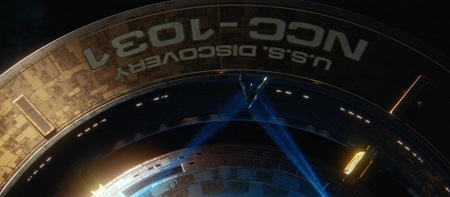
Craft, the protagonist of Calypso.

The main point from Calypso which is still unresolved is how Discovery ended up in a nebula abandoned. And if, as has been hinted through the use of the term V’draysh, Calypso takes place sometime around the 32nd Century, how did the ship end up back in time?

The Verubin Nebula initially seemed to offer a partial explanation, but not only was Discovery not present there, the nebula itself is very different to the one inhabited by Zora, so that option seems to be off the table.

I have no clue how this circle will be squared – but it’s still possible that it will be, especially given how much progress we’ve seen toward unpicking the mysteries of Calypso this season.

Number 13: The Spore Drive will become Starfleet’s new method of faster-than-light propulsion.

Tilly and Stamets by the Spore Cube.

As mentioned, the end of the season from here could have already been telegraphed: retake the ship, save/neutralise Su’kal, and use the dilithium planet to bring the Federation back together. But that may not be the way the story ends.

As mentioned, the dilithium planet could be destroyed – perhaps to prevent another Burn, perhaps to save it from falling into Osyraa’s hands, or perhaps even accidentally either by Su’kal or someone else. If it’s gone or rendered unusable somehow, we’re back to the Spore Drive as a potential way to give Starfleet faster-than-light capabilities.

Doing so would finally find a use for Discovery’s most controversial piece of technology, and would potentially open up whole new regions of space for exploration. The Federation, despite having almost eight centuries to expand, appears to have mainly been an Alpha Quadrant power even before the Burn. Did they ever revisit the Delta Quadrant, for example? Did the Burn reach that far? Perhaps future Star Trek shows could be set in this time period and could follow the adventures of a new crew aboard a new Spore Drive-powered ship, exploring the galaxy. It would also set the stage for Season 4.

Number 14: A character from a past iteration of Star Trek – such as the Doctor from Star Trek: Voyager – will make an appearance.

Tom Paris with The Doctor in Star Trek: Voyager.

As time drags on with no appearances, I’m beginning to think that the only way this theory – which I posited before the season premiered – could come true is as a kind of epilogue or coda after the main storylines have concluded; perhaps even as a tease to the events of Season 4. It would certainly be difficult – but not impossible – to bring back a major character from Star Trek’s past at this juncture, given the complicated nature of the story overall. Given that there’s also no clear way that a returning character could have an impact on the story without that impact seeming to come from nowhere, perhaps we won’t see any significant character crossovers this season.

However, it remains a possibility. The Doctor is one character who fits the bill, but there are others who could reasonably have survived this long. And as I mentioned several times already, all it would take to bring back practically anyone is a technobabble explanation for how they were in stasis or travelled through time.

Having seen a tie-in with Picard via the appearance of the Qowat Milat, and the aforementioned Guardian of Forever return from The Original Series, it gives me hope that Discovery will find more ways to tie itself to the wider Star Trek franchise. A character crossover is a spectacular way of doing that, and as The Next Generation showed with episodes like Relics, the passage of centuries is no barrier to such a crossover in a sci-fi world. Until the credits roll on the season finale, I’ll keep advocating this theory!

Number 15: The ships at Federation HQ represent the majority of Starfleet’s remaining vessels. And they’re all 120+ years old.

A portion of the fleet docked at Federation HQ.

I’ve been suggesting for several weeks that the rump Federation may only have a handful of ships available – with scarce dilithium for fuel, there is no way to maintain a huge armada, even if the ships were undamaged. It also seems reasonable to assume that Starfleet’s shipbuilding facilites were damaged or destroyed in the Burn, and that building new ships has been difficult – if not impossible for the fractured organisation – ever since.

With Osyraa now on the warpath, we could finally see whether Starfleet has an ace up its sleeve. Are there more ships beyond those few docked at HQ (and the two Mr Sahil noted)? And those ships may very well be old – they seemed new and futuristic to Discovery’s crew, but that could all be pre-Burn technology, meaning that Osyraa has the upper hand if the Emerald Chain has developed new weapons and technologies. We saw in People of Earth that quantum torpedoes were still in use, for example. Does Osyraa have a more powerful fleet?

Number 16: The Dax symbiont is still alive.

Jadzia Dax in Deep Space Nine.

This one is looking increasingly unlikely, because the two locations where Dax could have appeared have both seemingly come and gone without them: most notably the Trill homeworld in Forget Me Not, but also Federation HQ in Die Trying. However, there are hints at a lifespan for Trill symbionts that may be exceptionally long, in which case Dax could very well still be alive in the 32nd Century.

Obviously we won’t see Ezri Dax (barring some bizarre time travel/stasis storyline) but the symbiont itself could have lived this long. When Adira “met” the Tal symbiont’s former hosts in Forget Me Not, one was wearing a Star Trek: Picard-era uniform, hinting that Tal may have lived 700+ years. There are production-side explanations for this Easter egg, and as stated the fact that two of the best opportunities so far to meet Dax have come and gone most likely means it won’t happen this season. But I’m sticking to my guns on this one: Dax is alive!

Number 17: The ban on time travel is being flouted – possibly by secretive elements within the Federation.

Kirk’s stolen Bird-of-Prey travels through time in The Voyage Home.

Admiral Vance clearly believes that the ban on time travel is intact and being followed. Kovich indicated that he does too – but I’m not sure how far I trust him. Is he an agent of Section 31?

It’s impossible to un-invent a powerful, useful, weaponisable technology, no matter how hard you try. Considering how crappy the 32nd Century seems to be, are we convinced that nobody at all is using time travel to try to give themselves an advantage? Not the Dominion? Not the Borg? Not Section 31? Seems unlikely to me, though for production-side reasons of wanting to keep the timeline intact and to avoid overcomplicating the plot we might be told this is true.

Number 18: Kovich is an agent of Section 31.

Who does Kovich work for?

Who is Kovich? He doesn’t wear a normal Starfleet uniform, and doesn’t appear to hold a Starfleet rank. Yet he wears a Starfleet combadge and is clearly a high-ranking intelligence officer as he undertook Georgiou’s debriefing and has access to classified files that pertain to time travel and parallel universes.

It is at least possible – if not outright likely – that this mysterious character works for Section 31. Since we now know he hasn’t just disappeared and may well be coming back, perhaps we’ll learn more about him. We know he has an interest in the Mirror Universe and Terran society, expressing almost an admiration for Georgiou and her way of doing things.

It seems less and less likely that Section 31 or Starfleet are connected to the Burn – but as noted above, it remains a possibility. Perhaps Kovich knows more about the Burn that he let on?

Number 19: We haven’t seen the last of Zareh.

Zareh in Far From Home – his only appearance to date.

After weeks of suggesting Zareh could return, I half-expected to see him beaming aboard Discovery with Osyraa’s forces. Though we didn’t see him in the first wave, he may yet prove to be among her troops, and if he is he may wish to seek revenge against Tilly and Saru for abandoning him. These kinds of characters have a tendency to pop back up, and although leaving him alone on the surface of the Colony back in Far From Home was described as a “death sentence,” the fact that we never saw him die means his fate is unclear. If he survived, would Osyraa even want him back? Maybe.

So that’s it. Despite losing a number of theories this week, we also added several new ones! They aren’t all going to be right, of course – perhaps none will be – but one thing is for sure: Su’kal shook things up in a major way after several weeks where the series made scant progress on its main storyline and attended to side-missions.

Despite what I’ve said about the road to the season finale seeming to be obvious, there are undoubtedly going to be at least some unexpected moments along the way. I’m hoping that will be the case, actually, because I love being surprised! I’m also not 100% convinced that Discovery has got the right story if I’m correct about the direction of travel. The journey may still be fun – as indeed Su’kal was for the most part – but it may end with a less-than-satisfying explanation for the season’s big arcs.

Let’s hope not, though!

Please remember that these theories are just a bit of fun. Some may seem plausible – or even highly likely – but that doesn’t mean that this is the way the story will unfold. I’m just a guy with a website, I’m not claiming to have any “insider information,” nor am I saying that the theories postulated above will come true. No fan theory is worth getting so invested in that the actual story becomes disappointing or upsetting. Personally, as much as I love feeling like I predicted something that later appeared on screen, I also truly love being surprised by Star Trek and other franchises. That doesn’t mean writers should make silly or arbitrary decisions purely for shock value, but it does mean that when a theory of mine falls flat on its face, far from getting upset I revel in that. If we could all remember to take fan theories with a healthy pinch of salt, maybe there’d be a little less toxicity in certain areas of the fandom.

Star Trek: Discovery is available to stream on CBS All Access in the United States, and on Netflix in the United Kingdom and elsewhere. The Star Trek franchise – including Discovery and all other properties mentioned above – is the copyright of ViacomCBS. This article contains the thoughts and opinions of one person only and is not intended to cause any offence.

Star Trek: Discovery review – Season 3, Episode 11: Su’kal

Spoiler Warning: There are spoilers ahead for Star Trek: Discovery Seasons 1-3, Star Trek: Picard, and for other iterations of the franchise.

Until three days before its broadcast, Su’kal went by the title The Citadel. It wasn’t immediately obvious why the name was changed – or why the producers at ViacomCBS felt a need to conceal that fact. After all, they let us know every other episode title before the season premiered, even spoiler-ish ones like Unification III. So it was a bit of a surprise to learn that we’d be watching Su’kal this week!

The two-part episode Terra Firma largely took us away from progressing the overall story of the season and focused on the departure of Mirror Georgiou to a still-unknown destination. With only three episodes left before the season is over, Discovery really needed to begin bringing its storylines together and wrapping them up, lest it repeat the mistake made by Star Trek: Picard earlier in the year and rush through a lot of potentially interesting plots. This was the moment where the season needed to enter its endgame, and for better or worse it seems to have done so.

Discovery finally took us to the Verubin Nebula after a few episodes of doing other things.

My first thought when the credits rolled was “hmm.” What had we all just watched? The two major storylines both had ups and downs, and we’ll have to deal with them in turn. I liked the idea of the holographic world. Both as an interesting setting and as a metaphor for isolation – something many people dealing with mental health issues will experience – it worked very well. Tilly sitting in the captain’s chair for the first time was great to see, and we can see why she was chosen ahead of, for example, Stamets to serve as first officer given that the conflict with Osyraa needed someone less experienced at the conn. I also liked the standoff between Discovery and Osyraa’s ship; it had a familar feel that anyone who’s seen the Battle of the Mutara Nebula in The Wrath of Khan can appreciate.

Now let’s get into the big disappointments. Discovery being captured so easily by Osyraa, whose ship had been simple to defeat a couple of episodes ago, was poor. Yes, it showed how Tilly’s inexperience at the conn was an issue, but even then it felt too easy. Osyraa’s ship, with its ability to transport huge numbers of troops and its weird grappling arms, just felt overpowered. Next – and I will admit this is perhaps more of a personal pet peeve – the cliched story of “the heroes’ ship/base is captured” just doesn’t really work for me. It’s annoying more than anything, and since we know Tilly, Burnham, and the crew will retake the ship it just feels like forced tension.

Discovery was very easily captured by Osyraa.

Now we come to the point of the season, and the main storyline which underpins all of the others: the Burn. If Burnham and Culber are correct in their assessment of Su’kal, he caused the Burn telepathically when his fears destabilised dilithium across the known galaxy. Though my initial reaction to that was some form of “what the actual fuck,” I’m prepared to wait and see what the next two episodes have in store, and whether they can better explain how this happened. Burnham and Culber’s analysis of the situation was short, and if all the explanation we’re going to get is some technobabble about dilithium and DNA cells in an unborn child, I think that’s poor.

But I’m hopeful that won’t be the entirety of the explanation that we get! The Burn had been set up across the season (and even before if you count the trailers) as a huge mystery, something galactic in scale. Perhaps the reason this answer feels like such a non sequitur – aside from the fact that it only consisted of a couple of lines from Burnham and Culber in the midst of a bigger crisis – is that the explanation for this colossal apocalyptic event being a mentally ill man with the mind of a child is some combination of anticlimactic and small.

A blink-and-you’ll-miss-it line from Dr Culber surely cannot be all the explanation we get for how Su’kal caused the Burn.

Huge events in fiction typically need causes that are comparable in scale, and there’s a disparity between the truly epic, cataclysmic nature of the Burn and Su’kal, a mentally challenged man who’s led a horrible life trapped in a weird educational holoprogramme. That’s before we get into the frankly upsetting real-world implications of this metaphor: a mentally ill person ruining the galaxy.

When dealing with significant events, we can typically point to powerful characters or forces of nature setting those events in motion. We can point to Sauron in The Lord of the Rings, for example, or Emperor Palpatine in Star Wars. Or we could look at the zombie virus in The Walking Dead as a force of nature – a powerful, planet-wide force. Su’kal doesn’t fit the bill, and while the idea of the Burn being something accidental rather than something intentional like a weapon may indeed be a good one – and one I’d support – this particular way of explaining it feels like an anticlimax right now.

Su’kal – the cause of the Burn?

On the other hand, if this is the explanation for the Burn, it would be in line with certain other Star Trek stories. The V’ger probe in The Motion Picture was similarly described as “a child” as it caused chaos en route to Earth. The Star Trek franchise has always been about exploring the unknown and offering help – and Su’kal clearly needs the Federation’s help.

Any time a mystery is created in an ongoing story, there’s a risk of the explanation jarring with what some members of the audience expected. I’m not criticising Su’kal from that point of view, though – or at least I’m consciously trying not to. I’m not saying that the Burn needs to have some other explanation, like one of the ones I postulated before the season began. What I am saying, though, is that if this is all the explanation we’re going to get – that Su’kal’s body somehow adapted, connecting him on a quantum level to dilithium, and that he accidentally caused the Burn as a child while upset – it feels anticlimactic.

We’re being asked to buy into a story that says one mentally ill person caused all of this destruction.

The discovery of the Verubin Nebula and its dilithium planet is likewise a little odd. This is perhaps more of a nitpick, but in the 32nd Century, when the Federation and other spacefaring cultures have had a millennium to explore and chart the galaxy, how could they have been unaware of this dilithium nursery/dilithium planet? A few weeks ago I wrote that the discovery of a huge cache of dilithium at the end of the season, allowing the Federation to get back on its feet and rebuild, could feel like a deus ex machina – and that’s kind of how this planet feels right now. The story from here seems predictable: save or neutralise Su’kal to prevent another Burn, use the dilithium planet to power the Federation and Starfleet, and retake Discovery from Osyraa.

There may be twists and turns along the way, but that seems to be the direction of travel. Simplifying a story as it approaches its end is inevitable, perhaps, but coupled with what I have to call an unsatisfying explanation for the Burn, it risks the end of the season feeling formulaic. Having made those criticisms, two caveats: there are still two episodes to go in which the Burn’s explanation can be padded out or even changed entirely, and if this is the real explanation for what happened, it avoids many of the pitfalls I feared a 32nd Century post-apocalyptic story would. It isn’t as epic in scope as perhaps I was hoping, nor does it seem to connect to other iterations of the franchise. But it is a very “Star Trek” way for an apocalyptic event to play out.

The titular Su’kal seems to have caused the Burn.

By that I mean it’s closer to some stories from The Original Series or even The Animated Series in terms of pure science-fantasy. Su’kal being the cause of the Burn because he has some kind of telepathic link to dilithium is a weird story, and that weirdness and quirkiness is what made many fans – myself included – fall in love with Star Trek to begin with. So I’m hot and cold on the Burn right now, as you can tell. I’m not 100% convinced that it’s the right way for this story to conclude, given that it’s taken us eleven weeks to get here and the Burn has been presented as this epic cataclysm with mysterious origins. But as a pure Star Trek story, I can’t deny that it works.

If you’re a regular around here, perhaps you’ve read my methodology. If not, you can find it via the menu at the top (top-right on mobiles). To make a long story short, I never read other reviews before writing my own, and I do my best to avoid any and all critical opinion and even responses by people involved with whatever I’m reviewing until I’ve got my own piece published. So I have no idea if I’m alone in my feelings about Su’kal offering an unsatisfying end to the season’s biggest mystery or not.

Is this how the Burn happened?

I feel like I’ve deconstructed the titular Su’kal and his relationship with the Burn as much as I’m able to at this stage. Like several ongoing storylines that saw major developments in Su’kal, my thoughts on this point can and likely will shift depending on the way that the remainder of the story progresses. So let’s look at a few other points from the episode.

Tilly becoming first officer was a point of contention in earlier episodes, and I do understand that. While I defended Saru’s reasoning at the time, as he felt Tilly had adapted best to the future which was a significant consideration in his XO search, what I’d say now is that that storyline feels as if it was constructed deliberately to reach a specific goal. The first part of that goal is, as we saw this week, the capture of Discovery by Osyraa, which we’re to understand came about in part through Tilly’s inexperience. But there may be a further plan for this storyline – effectively cornering Saru and forcing him to reinstate Burnham as first officer.

Tilly in command.

So what we got with Tilly this week was a deeply emotional and very touching scene between her and Burnham. As Saru prepared to lead the away team, it was her turn in the big chair for the first time, and she was nervous. Burnham tried to comfort her, and in this moment she was back to the older, more nervous character from earlier episodes. A lot of us have been nervous or anxious about taking on a big task, and Tilly’s reaction to what was going on was very human.

Likewise, the scene where she took the captain’s chair for the first time was also very well done. Though clearly still nervous she sat down for the first time with determination – and with a plan for what to say and do. She handled herself well, and she clearly had the respect of the other officers on the bridge. But there was a different kind of respect that they showed Tilly compared to Saru, or past commanding officers like Pike. Tilly was almost being treated as a child, judging by some of their expressions: “aww, it’s so sweet they’re letting her have a go in the big chair,” some of their faces seemed to say. While the crew followed their orders, there was a sense among some on the bridge – at least in the moment Tilly assumed command – that they didn’t hold her to the same standards as Saru or Pike.

Tilly regards the captain’s chair.

When confronted by Osyraa, Tilly played a role comparable to Sulu in Star Trek Into Darkness – sitting in the big chair for the first time talking to an enemy. In Sulu’s case he was broadcasting a message to someone rather than having a two-way conversation, but like many things in modern Star Trek I appreciate the symmetry that exists between wholly different stories.

As I said, though, the ultimate payoff to this storyline was Osyraa’s incredibly easy capture of the ship. We can argue that Su’kal’s telepathic tantrum damaged all the ship’s systems and thus probably knocked the shields down, which is how Osyraa’s goons could so easily beam over. But as a point of drama, the standoff between the ships was far too short before we got to this point. When Detmer took Book’s ship and completely disabled Osyraa’s flagship a couple of weeks ago, Osyraa’s flagship was shown to be big but flawed, and Osyraa herself made no moves against Discovery. This time, she was able to defeat Discovery in seconds using powers we’d never seen her vessel have before. There were low stakes at the beginning of the engagement – because Detmer had so easily beaten her using Book’s ship a few weeks ago – and thus Osyraa’s victory seems to come from nowhere.

Osyraa’s flagship proved a very difficult opponent… this time.

If we had seen some more of her ship before Su’kal to know what its capabilities were, that feeling would not persist. But despite its vaguely menacing appearance, the only time we encountered Osyraa before this episode showed her ship to be vulnerable even to Book’s glorified shuttlecraft. The turnaround was only explained by a single line from Osyraa, as she claimed to have fixed the vulnerability Detmer had exploited – but that just wasn’t good enough, in my opinion.

There’s also the big question of how Osyraa came to know about the Spore Drive. This seems to have happened entirely off screen, and while it may be shown in a flashback later on, it’s something we as the audience needed to know. What is Osyraa’s plan now she has control of Discovery? What will she use the Spore Drive for? Who told her about it/how did she find out? None of these points were touched on, and while we can construct theories based on Book’s macguffin from last week that concerned Admiral Vance, nothing was explained on screen in a satisfactory way.

Discovery jumped to the Verubin Nebula with its Spore Drive.

As this is an ongoing story, these points may be addressed, and if so I will gladly withdraw my criticisms. But right now it feels like Osyraa knew about the Spore Drive almost by magic – she even knew its name, despite having never heard of it the last time we met her. She also managed to turn her ship from an easily-beaten wreck into an invincible powerhouse and defeat Discovery with a snap of her fingers. And after all that, we don’t know her intentions. There are too many unknowns for the stakes to feel particularly high.

I mentioned at the start that this storyline – the heroes’ ship being captured – has never been one I enjoyed, and that’s a factor in how I feel about Su’kal too. I tend to feel that any time a story goes down this route the ending is usually known, and as a result the drama and tension just feel forced. Whereas we could see any one of a hundred different endings to Su’kal’s story or even Georgiou’s Mirror Universe story over the last couple of weeks, it’s obvious that Burnham and Book will retake the ship from Osyraa, just as it’s obvious in any comparable story that the heroes will reclaim their starship or base. It’s not exactly a cliché, but it’s a basic narrative that I’ve seen play out dozens of times at this point – including within Star Trek.

These stories have never been a favourite of mine.

Enough about Tilly, Discovery, and Osyraa for now. The sequences set in Su’kal’s home were interesting. The setting itself was reminiscent of the castle Captain Pike encountered on Rigel VII – as seen in Star Trek’s original pilot, The Cage. Castles and Star Trek have an association going back a very long time, and the dark, abandoned castle – with a monster to boot – gave the sequences set there a very creepy, almost horror vibe.

The cinematography for some of these scenes was outstanding, too, and shots of the fortress and its surrounding landscape were beautiful and immersive. There were some amazing overhead angles that gave the stepped structure a deeply confusing feeling, one which helped us get into the mindset of Burnham, Culber, and Saru.

Some of the shots here were beautiful. The set design and animation work were absolutely outstanding.

Speaking of the away team, the choice of makeup was interesting. Having Burnham and Culber be a Trill and Bajoran respectively really didn’t do much, and in a lot of scenes where they were seen from a distance the makeup wasn’t even noticeable. Saru being portrayed as human, however, was far more visually interesting, and the reveal of Doug Jones without makeup was perhaps the biggest shock moment of the whole episode. Everything about that moment was perfectly set up, from Burnham and Culber noting their appearances first to build up the mystery to Saru’s voice being heard before the camera panned to him. It was a very well-constructed moment.

Within the story, though, I’m sorry to say it makes no sense. Saru is a Kelpien; a species Su’kal is obviously familiar with as he has at least one Kelpien hologram – the Elder. Likewise we saw human holos within the programme, and since Burnham and Culber’s physical appearances were not changed to copy pre-existing holograms, I don’t know what reason there is for changing their appearances in this minimal way. Nor do I understand why – aside from reasons of dramatic effect – the away team’s radiation burns were visible on their holographic bodies.

It feels like the choice of making Saru human was just there for surprise value.

If the roles of Burnham, Culber, and Saru were to be played by three different actors for this story, actors who also took on the roles of three holograms within Su’kal’s programme, I could understand it more. It wouldn’t be good to have this crucial moment acted out by different folks, but it would make sense in-universe, because the programmer of Su’kal’s world would have intended his rescuers to assume a familiar form. But the way it was done here was just odd, and I can only assume it was done for the sake of that one shocking moment – revealing Saru in his human guise. Constructing a story point off of one moment seldom works, and while it was interesting (at least, at first) to see these three characters in different makeup, as a story point I don’t get why it had to happen.

It also arguably detracts from Saru’s storyline, which seems to be building to an emotional climax. This is the first Kelpien he’s met since he left the 23rd Century, and there’s also the open question of a possible familial connection via Dr Issa. Saru being distracted by all things Kelpien is affecting his judgement, and this is a storyline worth pursuing. However, having Doug Jones essentially be out of costume is detracting from that. While it was visually interesting at first, it risks getting in the way of the story as it comes to a head. It’s possible that there may be a moment where Saru snaps out of the way he’s feeling due to being in this human guise, which if well-written could work and would be a payoff of sorts. Discovery tends not to do things randomly – somehow there may well be a reason why the away team ended up in these bodies. It’s just difficult to see right now, and the question of whether it will work as intended is up in the air.

Saru in his human disguise.

Burnham’s work with Su’kal was sweet, and she seemed to be beginning to find a way to get through to him. Saru asked her to remain because of her training in xenoanthropology, but just as she accused him of being distracted by Su’kal, I would argue that she is equally distracted from the mission by Book – she wanted to get back to him, because within the nebula he is in danger. She did seem to make some progress with Su’kal before he cut her off – but is that the real Su’kal?

I’ll save the bulk of this discussion for my theory post, but here goes: the “monster” that inhabits the holodeck is vaguely Kelpien in appearance, and also looks older. Its decayed body could be a result of radiation exposure, and when the monster met Burnham, it seemed to react to her in an almost-human manner – by which I mean, not like a programmed machine. The character we’re calling Su’kal is far too young to be 125 years old – or at least appears to be too young – and no suitable explanation has been given for this. So my pet theory right now is that the “monster” is the real life sign that Burnham and the crew identified before beaming down.

Is this a holographic monster… or Su’kal?

I don’t know for sure if that will pan out, or how it could be made to fit, but it seems interesting so I’ll go into more detail next time. There were a few other little moments in Su’kal that I thought were worth pointing out, such as the little robots being identified as “DOTs” for the first time outside of the Short Treks episode Ephraim and Dot. That was a sweet little inclusion. I also liked seeing Adira and Gray back together, as well as Gray giving Adira the confidence boost they needed to make their first big independent move since joining the crew.

Speaking of Adira, Stamets’ line to them at the beginning about he and Culber coming as a “package deal” was cute, and ties in with the parental theme going on with the three of them. Stamets has gone out of his way to help Adira since they joined the crew, even talking to the unseen Gray – whenever he does that I’m reminded of a parent talking to their child’s imaginary friend. Stamets feels protective of Adira, and helping them settle in has been an unexpectedly sweet turn for his character.

Gray and Adira in Su’kal.

So there we are. That was Su’kal, an episode which will have to be revisited in context once we know the overall outcome of the season’s big storylines. It can be difficult to fairly judge one section from the middle of a story – it’s like trying to review chapter ten of a thirteen-chapter novel – because Su’kal cannot be taken as a standalone piece of television. That said, it’s an episode which made significant developments and perhaps set up one or two more mysteries.

I’m troubled by the fault for the Burn lying with a mentally disabled man. Mental health and learning disabilities are already the subject of considerable stigma in our society today, and while on some fronts that is improving, we still have a long way to go. The episode The End is the Beginning from Star Trek: Picard showed a very crude stereotype of “mentally ill people” earlier in the year, and laying the fault of the Burn at Su’kal’s feet seems to continue an unfortunate theme in this year’s Star Trek productions. It almost feels as though the writers have picked on an easy target in Su’kal.

As mentioned, there are different ways the story could pan out from here. I briefly explained one theory I have about Su’kal, but there are different paths the story could take over the next couple of weeks before the season ends. I’m cautiously interested to see more; I do want a resolution to the Burn, but it needs to be a satisfying one – and ideally one that doesn’t stigmatise people.

Star Trek: Discovery is available to stream on CBS All Access in the United States, and on Netflix in the United Kingdom and elsewhere. The Star Trek franchise – including Discovery and all other properties mentioned above – is the copyright of ViacomCBS. This article contains the thoughts and opinions of one person only and is not intended to cause any offence.

Merry Christmas!

Just a short one today. This year has been strange and disappointing for many of us, to put it mildly. When I began to create this website a little over a year ago, I had no idea that 2020 would have seen such misery on an unprecedented scale. It’s times like these where we need to close the door on the outside world and enjoy some wonderful escapism.

As someone with a varied (and growing) set of health problems, I do that a lot. Even pre-pandemic, disability greatly restricted what I was able to do and how far I was able to travel. My youngest sister is due to get married in the spring, and even travelling an hour to get to the wedding venue seems difficult – if not outright impossible. From a purely selfish point of view I haven’t lost as much of my freedom this year – because I’d already lost it gradually over the last decade.

You are not alone this Christmas.

I sympathise with everyone who’s not enjoying the holidays. As a kid I remember big Christmases with my parents, siblings, grandparents, aunts and uncles. We could easily have twelve or more people together on Christmas Day. And later, when I lived in the United States for a year, I had fourteen people over for Christmas, fellow foreigners who likewise had nowhere to go for the holidays. Cooking Christmas dinner that year was exhausting! This year is, of course, very different. And like many of you, I don’t have anyone to share Christmas with in person; stricter lockdown rules are in place in the UK this year.

Though it’s become a cliché over the last year, none of us are really alone. We have the best communication tool humanity has ever devised literally at our fingertips or in our pockets, and even just by reading this you’re interacting with me. And I wish you a very Merry Christmas – or Happy Holidays if you prefer.

Merry Christmas!

I’m not a religious person, but Christmas has always felt like an enjoyable time of year. The bright lights, beautiful decorations, and sense of community that comes out has always been appealing. I decorate my home as best I can, and even managed to put up some outdoor lights this year. It meant so much to me when a neighbour of mine sent me a Christmas card and told me how she and her kids had been enjoying the lights on their way to and from school the last few weeks. Even when we don’t see one another, this time of year can bring us together – just not quite in the same way as usual.

Loneliness is something that takes some getting used to, and for people who are especially sociable, that’s going to be difficult. If you’re missing people you can’t be with this year, there is small comfort in knowing that the creation of vaccines should mean next Christmas – or even this coming Easter – has a high chance of seeing normal service resume.

Vaccines are coming!

Until then, let’s find a nice film series or television show to binge-watch as we count down the last days of 2020. Pick up a nostalgic favourite or something new you’ve been wanting to try, grab some nice snacks and a cold drink (or a mug of hot chocolate) and escape this world for a short while. Whether you’re visiting the distant future, a galaxy far, far away, or a fantastical realm, getting out of your own head and revelling in something different is no bad thing. It might just take the edge off.

Though there are many great festive classics to enjoy, if you want to skip this Christmas altogether I wouldn’t blame you. The Expanse is an underrated science fiction series that you can find on Amazon Prime Video, or perhaps something like last year’s The Witcher on Netflix if you’re in a fantasy mood. There’s always Star Trek – Star Trek: Picard Season 1 was great, and you can find that on Amazon Prime Video too if you missed it earlier in the year. The Mandalorian Season 2 has just wrapped up over on Disney+, and The Lord of the Rings film trilogy has just been re-released in 4K on Blu-ray.

Star Trek: Picard premiered in January.

If you’re looking for something different, perhaps something under-appreciated or off the beaten path, I could recommend a sci-fi show from the 1990s called Space Precinct, which is a fun mix of space adventure and police procedural. Then let’s see… Fortitude is an engaging thriller series set in the arctic – perfect for this time of year! The first season of horror-anthology series The Terror is similarly set in the icy north, and is a riveting watch with some absolutely outstanding performances.

On the film front, one of this year’s few big releases Tenet is already available to stream or get on Blu-ray. The Sonic the Hedgehog film from earlier in the year managed to be a surprisingly fun time as well. I’ll always heartily recommend Star Trek: The Motion Picture and Star Trek: Generations – the latter even features a Christmassy sequence. If you have access to the internet you aren’t short of options for things to watch!

Star Trek: The Motion Picture is fantastic.

You could try Fall Guys, the fun obstacle course video game that was released earlier in the year. It’s hard not to have a fun time with that cute indie game – even though it can be frustrating at times! Star Wars: Squadrons lets you pilot your own TIE Fighter or X-Wing, and if you want something gentle, Animal Crossing: New Horizons on the Nintendo Switch has weeks’ worth of fun.

Although it’s a crappy Christmas for a lot of us, there’s still plenty to watch and play to take our minds off it. And if you’re struggling, aside from telling you that you aren’t alone and you’ll get through it, all I can really do is recommend a few interesting options to watch or play. As somebody who lives alone with few friends or relatives nearby, I’m often in this position even in better years. For me, entertainment like television and film can take the edge off. We all need good distraction sometimes.

Wherever you are, however you’re celebrating, and whatever you wish you could’ve done instead, I truly hope you have a Merry Christmas.

All titles mentioned above are the copyright of their respective studio, broadcaster, distributor, publisher, etc. Stock photos courtesy of Unsplash. This article contains the thoughts and opinions of one person only and is not intended to cause any offence.

Star Trek: Discovery theories – week 10

Spoiler Warning: There are spoilers ahead for Star Trek: Discovery Season 3, as well as for Star Trek: Picard and other iterations of the franchise.

The two halves of Terra Firma gave us quite a lot to work with, but with only three episodes left before Season 3 is over, Discovery has a lot of work left to do to resolve major ongoing storylines. I’m ever so slightly concerned that we’re going to end up with a rushed conclusion, repeating the mistake Star Trek: Picard Season 1 made earlier in the year. Hopefully that won’t be the case and there will be enough time for every extant story thread to either reach a conclusion or set up the events of Season 4 – whenever that may come!

By the end of Terra Firma, Part II we’d seen two confirmations and three debunkings, so let’s look at those first.

Confirmed theory #1: Carl is the Guardian of Forever.

The Guardian of Forever’s portal.

I got goosebumps when Carl announced who he really was – complete with the Guardian’s voiceover from The Original Series. Though the revelation may have been less interesting to new fans who aren’t familiar with The Original Series, I adored this moment and sat with a big dumb grin on my face for much of the rest of Terra Firma, Part II.

Though we could kind of argue that the inclusion of Sarek, Pike, and Una/Number One accomplished something similar in Season 2, the mystery of Carl’s powers and identity that we all had to sit with for a week is part of what made the ultimate reveal so exciting. I’ll always love when Discovery ties itself into past iterations of Star Trek, and this was perhaps my favourite connection of the season so far.

Confirmed theory #2: Georgiou will travel back in time.

Georgiou checks her holo-padd.

Where did Georgiou go for the three months she spent seemingly in the Mirror Universe? Well, Carl seemed to suggest he sent her to some kind of parallel universe, but perhaps not the Mirror Universe she came from.

Regardless, Georgiou has now definitely gone back in time – perhaps to the 23rd Century, or perhaps to another time period as we’ll discuss in a moment. We don’t know where or when she’ll emerge, and given how final her exit from Discovery felt, I doubt very much we’ll learn anything about her destination until the Section 31 series is ready to go.

My earlier theory had been that Georgiou may have travelled back in time along with the USS Discovery, perhaps in a tie-in with the Calypso story that saw the ship abandoned. This now can’t happen, of course, and while I wasn’t correct about how and why Georgiou travelled back in time, I did get the overall point right!

So those theories were confirmed in Terra Firma, Part II. Next we have three debunkings, all related to Georgiou.

Debunked theory #1: Georgiou will accidentally change the future.

Georgiou prepares to execute Mirror Burnham.

Although I wasn’t convinced that Georgiou had truly travelled back in time, one issue that time travel stories can encounter is a paradox. When Georgiou began making changes to the 23rd Century Mirror Universe, I wondered if we might’ve seen some ramifications for the future, perhaps something she and Burnham would then have to fix by restoring the true timeline.

When it seemed as though the Mirror Universe that Georgiou was seeing was different to how we saw it in Season 1 – with key players like Stamets and Burnham arriving at altogether different fates – it seemed at least a possibility. However, for Guardian of Forever-related reasons, nothing Georgiou did appears to have altered the 32nd Century, and as of the moment she left, everything was exactly where it should be.

Debunked theory #2: Georgiou didn’t travel back in time or to the Mirror Universe.

Georgiou with Burnham and her honour guard.

As discussed above, it wasn’t 100% clear where and when Georgiou spent her time over the last two episodes. But she did, according to Carl, travel back in time and to a different universe – whether or not it’s the Mirror Universe is up for debate.

I postulated this theory because of the major narrative differences between the setting Georgiou occupied and what we know of the history of the Mirror Universe and some familiar characters from Season 1. I doubt the series will revisit any of these points in future, and it seems as though the ultimate explanation for why things are different is because she was in a different universe either created or accessed by the Guardian of Forever. I’m okay with that, as it doesn’t create any major inconsistencies.

Debunked theory #3: Georgiou had been tampered with by the Federation (or Section 31).

Georgiou first became ill after a meeting with Kovich.

Despite being in the 32nd Century for at least a few weeks before Discovery found Federation HQ, Georgiou’s technobabble health problems did not emerge until immediately after her meeting with the mysterious Kovich. This led me to theorise that he could be a Section 31 operative and may be responsible for the sudden decline in her wellbeing.

However, it seems that this was a deliberate false lead, as Kovich not only was not implicated in making Georgiou ill, he actively consulted with Dr Culber and offered his expertise when asked. He knew more than he let on, both to Georgiou and Starfleet, but he was not responsible for harming her.

So those theories were debunked. Now let’s dive into the main list, beginning with a special bonus theory!

Bonus theory: Four ideas for Georgiou’s destination.

Georgiou’s destination, both in space and time, was left deliberately unanswered in Terra Firma, Part II. Carl told us he was sending her “to a time when the Mirror Universe and the Prime Universe were still aligned.” That’s an interesting statement, and could be interpreted in a lot of ways. We are very unlikely to know for sure where and when Georgiou ends up until she returns to our screens in the upcoming Section 31 series – but naturally, I have a few ideas.

The 21st Century

The reason why this one seems unlikely right now is because a Star Trek show set even earlier in the timeline than Enterprise would be difficult to produce. Enterprise depicted Earth’s first voyage of exploration, and while there were humans in space before Archer’s big mission, they were limited in speed and in the areas they covered. Thus, from the point of view of a Star Trek show, what is there to do?

On the flip side, the 21st Century is arguably the best fit for Carl’s ambiguous explanation of where Georgiou is going. We don’t know anything about the early history of the Mirror Universe, but if it’s true that it and the Prime Universe were once “aligned,” as Carl explained, the earliest known point of divergence between the two timelines is 2063 and first contact between Earth and Vulcan. In the Mirror Universe, after Cochrane’s warp flight he and his followers massacred the Vulcans who arrived on Earth, before humanity conquered their homeworld and founded the Terran Empire.

If this is truly the point of divergence, sending Georgiou to the 21st Century could fit with what Carl said. It could also mean that the Section 31 series depicts the creation of the organisation, and we could learn that Georgiou was its first leader.

The 23rd Century

The most likely destination based simply on what we know of the Section 31 series. It would also return Georgiou to her own time, thus curing her technobabble ailment. A return to the 23rd Century would allow for the return of characters like Ash Tyler, and we could even see a crossover with Strange New Worlds reuniting Georgiou with Captain Pike.

A series set in this era would depict Section 31 going underground, transforming itself into the clandestine outfit we first encountered in Deep Space Nine. However, the Mirror and Prime Universes are certainly not “aligned,” as Carl put it, in the 23rd Century, so could that be a hint that Georgiou is headed elsewhere? If not, how will that be explained?

The dawn of the 25th Century

The Mirror Universe episodes from Deep Space Nine showed a far less “Terran” group of Terrans fighting for their freedom against a Klingon-Cardassian alliance. Perhaps this change in the Terrans continued, leaving the Prime and Mirror Universes in something close to alignment by the late 24th Century.

This would have the benefit of connecting the Section 31 series with Star Trek: Picard – and any future shows or films set in that same era. There could be crossovers with Picard, and we could see major connections between Star Trek’s different ongoing timelines. Is it likely? Well, I’m not so sure. I think you have to squeeze the semantics of Carl’s statement a little too much, plus it connects only to a handful of Deep Space Nine episodes that most audiences wouldn’t be familiar with. But it’s not impossible.

The 27th Century

Kovich told us in Die Trying that there hadn’t been a crossover between the two universes in “five hundred years,” which would mean the last time it was possible would have been in or around the 27th Century. Does that mean the two universes were “aligned” at that point? Well no, but it could be argued that they were.

The drawback to this idea, like with the 21st Century above, is that it would isolate the Section 31 series in yet another time period, splitting up the ongoing Star Trek projects. There’s also no compelling reason to visit the 27th Century – very few of characters from other Star Trek shows could be alive, and nothing major seems to have happened in this era, which takes place after everything else in Star Trek yet before the Temporal Wars and the Burn brought the Federation to the brink.

So those are four ideas for where (and when) Georgiou might be headed. Now let’s get into the main theory list.

Number 1: Saru, Burnham, or somebody else will use the Guardian of Forever to send the USS Discovery back in time.

Carl – a.k.a. the Guardian of Forever.

The Red Angel suit may have been the last remaining piece of technology capable of time-travel – if we’re to believe the Federation’s claims that nobody violates the ban! But now that the Guardian of Forever has been rediscovered, the potential for travel through time is once again on the agenda. Whether Burnham explained exactly what happened to Saru, and if she did, whether he will explain it to Starfleet is not clear, but even if they’re the only ones who know about the Guardian, they may have need of its services.

When considering the story of Calypso, particularly how the USS Discovery came to be abandoned in a nebula, the big question is “why.” Why would Saru, Vance, or Burnham feel a need to take the ship back in time and hide it? There is no obvious reason right now, and with only three episodes to go if a major new problem were to emerge it could end up feeling rushed or like a deus ex machina.

Regardless, it’s at least possible that Discovery will travel back in time. And right now, one of the only ways that could happen would be to make use of the Guardian of Forever.

Number 2: The Emerald Chain will attempt to steal the USS Discovery and/or the Spore Drive.

The USS Discovery.

Admiral Vance was incredibly worried about Book’s use of an Emerald Chain signal booster on board Discovery, fearing that the untested technology could cause problems. It seems this macguffin could be a “backdoor” into Discovery’s systems, or perhaps some kind of tracking device that could allow the Emerald Chain to find the ship – and its Spore Drive. Spoiler warning for anyone who missed the promo for episode 11, but it seems that at least one Emerald Chain ship will show up.

Additionally, in The Sanctuary Ryn confided in Tilly that the reason Osyraa – the Emerald Chain’s leader – is so keen to recover him is because he knows their biggest secret: the Emerald Chain is running out of dilithium. This will undoubtedly make the faction more aggressive as it looks to shore up its position, but now that they’ve seen Discovery able to jump to Kwejian, perhaps Osyraa and her people will begin to suspect that the ship has a powerful new method of propulsion.

Admiral Vance told Starfleet’s senior officers about the Spore Drive in Scavengers, and I picked up at least a hint that not everyone was happy about this disruption to the established hierarchy of Starfleet. Could someone within Starfleet – such as Lieutenant Willa – have passed along to the Emerald Chain details of the USS Discovery?

Number 3: The Emerald Chain will attack Federation HQ.

Discovery at Federation HQ.

Obviously this theory and the one above can’t both be true! But if the Emerald Chain is moving, Federation HQ seems a logical target. The Emerald Chain is planning “military exercises,” according to Starfleet. Both Starfleet and Book’s courier friends believe this is code for some kind of larger-scale military engagement.

Clearly the Emerald Chain story thread needs to be wrapped up somehow – by defeating them militarily or coming to a negotiated settlement – so perhaps this is the moment they make their move.

Right now it seems as though the Emerald Chain will go after Discovery, but it’s possible that’s a deliberate misdirect, or that they’re able to wield a large enough force to attack both targets at once.

Number 4: Admiral Vance is going to be killed.

Admiral Vance.

If the Emerald Chain does make a significant move against Starfleet, I wonder if this could see Admiral Vance killed off. Though he returned (in holo-form) in Terra Firma, Part II, his line to Saru in Part I that he and Starfleet would “handle the Chain” in Discovery’s absence feels like something that could come back to haunt him. There was an air of finality to that scene.

We also know that Discovery looks set not to return to the fleet this week, pursuing its investigation of the Burn to the Verubin Nebula. If the Emerald Chain attacks in Discovery’s absence, Admiral Vance may not survive the fight. This could set up an interesting story – let’s look at that now!

Number 4A: Saru will become an admiral, and Burnham will assume command of Discovery.

Burnham & Saru.

As Georgiou prepared to step into the Guardian of Forever’s portal, she told Burnham that Saru is “not the only one suited for the captain’s chair.” Though this is the opinion of one character within the story, it was also very deliberately shown to us as the audience. Perhaps it’s simply to mirror what Prime Georgiou said to Burnham in Season 1 about setting her up for her own command, but there could be more to it than that.

If Admiral Vance and/or other senior Starfleet commanders were killed, as I speculated could happen, perhaps Saru would be offered the opportunity to become an Admiral. His different approach to command that we’ve seen this season could benefit Starfleet, and even if Vance survives, he may ask Saru to join him at the head of Starfleet. Saru, as someone from a different era and as a Kelpien, brings a unique perspective that Starfleet Command would certainly benefit from if they move to begin rebuilding the Federation.

Saru’s promotion would leave yet another vacancy in the captain’s chair of Discovery. Tilly had been appointed acting first officer a few episodes ago, but there’s no way she could assume command of the ship on a permanent basis. Given that this is Star Trek: Discovery, and Burnham has such a prominent role in the series, she is the only candidate.

In my opinion, after Burnham’s awful character regression midway through the season, Discovery will have to work incredibly hard over these final three episodes to make such an appointment feel plausible. However, it can be done, and we’ve seen Burnham do a lot better over the last couple of weeks. Burnham assuming command always felt like a destination the series was trying to reach – could this be the moment it gets there?

Number 5: Dr Issa is a descendant of Saru’s sister Siranna.

Saru with the hologram of Dr Issa.

The revelation that a Kelpien ship was responsible for at least part of the Federation distress signal in the Verubin Nebula was interesting, and had a great effect on Captain Saru. It was the first he’d seen of his people since arriving in the 32nd Century. When Dr Issa – the Kelpien scientist who sent the distress signal – first appeared, I genuinely thought we were seeing Siranna, Saru’s sister who was introduced in the Short Treks episode The Brightest Star and who reappeared in Season 2 of Discovery last year.

The reason for this is that Siranna and Dr Issa are both portrayed by the same actress (Hannah Spear) and thus look very similar. It remains a (remote) possibility that the two characters could be one and the same – either through time-travel shenanigans or perhaps because post-vahar’ai Kelpiens are especially long-lived, but what I think is more likely is that a familial connection will be revealed – Dr Issa will be a distant relation to Saru through his sister.

The reason for this is primarily production-side: why bring back the same actress to portray a Kelpien, and have the characters look practically identical, if there isn’t meant to be a connection? From a story point of view it could give Saru a dilemma – saving the Kelpien ship versus aiding Starfleet, for example – or it could give him a deeper emotional connection to the stranded ship than he would otherwise have.

Number 6: A time-travelling (or parallel universe) USS Discovery is at the centre of the nebula – and may be responsible for the Burn.

The USS Discovery was in an unnamed nebula in Calypso.

Should these next three theories about the Verubin Nebula that I posited a couple of weeks ago be considered debunked? After all, we have the revelation of the Kelpien ship being in the nebula to contend with now, and that could be the beginning of the end for the Burn mystery.

I’m not convinced, though, at least not yet, that there isn’t more going on in the Verubin Nebula. We don’t know anything about the nebula or what’s inside it, and the existence of a Kelpien ship doesn’t rule out the possible existence of the USS Discovery or any other vessel. We know, in fact, that a Starfleet ship was en route to the Verubin Nebula to assist Dr Issa, so there may be at least one more ship in there, and we don’t know the nature of the “dilithium nursery” the Kelpiens were investigating or what became of it.

In the Short Treks episode Calypso, the USS Discovery was found abandoned in an unnamed nebula by Craft. Craft was a soldier in a war against the V’draysh; an alternate name for the Federation in the 32nd Century. Zora, an AI present aboard the USS Discovery, told Craft the ship had been abandoned for almost a thousand years, and not only have we seen the potential creation of Zora earlier this season (from a merger of Discovery’s computer and the Sphere data) but in addition, Season 3 takes place 930 years in the future from Discovery’s original 23rd Century setting. If Discovery had been abandoned at that time, things begin to fall into place.

There are two possibilities for how it could be the USS Discovery – which, of course, has not been abandoned – in that nebula: the ship will be sent back in time, or it has crossed over from an alternate timeline or parallel universe.

Number 7: A familiar starship is at the centre of the nebula – and may be responsible for the Burn.

Is Star Trek: Picard’s La Sirena in the Verubin Nebula?

If not the USS Discovery, then who could it be at the centre of the Verubin Nebula? How about one of the hero ships from a past iteration of Star Trek? We could encounter the USS Defiant, the Enterprise-E, Riker’s USS Titan, or Star Trek: Picard’s La Sirena among many others. If such a vessel were caught in a temporal anomaly, that would explain their presence in the 32nd Century – and if time travel is involved, from their point of view the Burn may have only just happened, instead of happening 120 years ago.

It’s more likely, though, that any ship Saru and the crew find in the nebula would be deserted so long after the Burn – either abandoned by its crew or having become their tomb. If it is a familiar ship, we could thus see the ultimate end of a significant character (or multiple characters) from a past iteration of Star Trek.

The one exception to this could be La Sirena. This would be totally out of left-field for the Star Trek franchise, and keeping a lid on a secret this big would be difficult. But it would finally accomplish something I’ve been arguing for for a while: simplifying the Star Trek franchise. If La Sirena were discovered, along with Picard and his crew, Picard Season 2 could join Discovery in the 32nd Century. I don’t consider this likely, but it would be a fascinating way for the Star Trek franchise to go!

Number 8: The Red Angel suit is at the centre of the nebula – and may be responsible for the Burn.

Burnham in the Red Angel suit at the end of Season 2.

Burnham’s Red Angel suit was last seen on Hima when she sent it back in time. She ordered the suit to self-destruct, but as we never saw the destruction on screen, what became of the suit after it sent the final Red Burst is unknown. Was it captured, intercepted, or damaged? Could someone have stolen it with a view to weaponising it? It’s at least a possibility.

The Red Angel suit was known to be incredibly powerful, and in an age where time travel has been outlawed, it may be one of the only ways to travel through time that still exists – making it a lucrative target for all sorts of factions.

If Discovery wants to present the Burn as an accident or disaster rather than a deliberate act, having the Red Angel suit malfunction could be one way of doing that. Rather than requiring a villain, the story of the season could instead see the crew unravelling a scientific puzzle, one which points to Discovery and her crew as the origin of the Burn, but in such a way that they themselves are blameless.

So it’s clear that all three of these Verubin Nebula theories can’t be true. And now that we’ve seen the Kelpien ship, it’s possible that none are true and there won’t be anything else to find if and when Discovery heads to the nebula. I’m not convinced of that yet; the Verubin Nebula and the Burn have been presented as complex puzzles, and I’m sure there will be more twists, turns, and revelations before we uncover the truth about what’s really going on.

Number 8A: The name “Burn” is derived from the name Burnham.

Burnham in Die Trying.

Connected to the theory above, if indeed the Red Angel suit is the source of the Burn, perhaps the name of the event is derived from the name of the wearer of the Red Angel suit – either Michael or Gabrielle Burnham.

The music within the signal emanating from the Verubin Nebula has – somehow – subconsciously embedded itself in people all across the galaxy. We didn’t hear everything Dr Issa had to say – her message was tantalisingly cut short as a result of decades of radiation and decay. If, somehow, Dr Issa was trying to contact Burnham, or was trying to report on her discovery of the Red Angel suit within the nebula, perhaps that could be how the names are related.

I speculated way back when I looked at possible Burn origins before the season premiered that it was, at the very least, an odd coincidence that in a show all about Michael Burnham there’s a disastrous event called “the Burn.” Could these two seemingly unconnected things actually be related?

I stand by what I said a few weeks ago: if it is somehow Burnham’s fault, calling the event “the Burn” sounds way better than calling it “the Ham!”

Number 9: Discovery Season 3 is taking place in an alternate timeline or parallel universe.

The two-part Voyager episode Year of Hell took place in an alternate timeline caused by time-travel meddling.

I’m tempted to retire this theory, especially after the Guardian of Forever referred to Burnham and Discovery as being in the “prime universe” this week. But even if this is the Prime timeline – the one which goes from Enterprise to Picard – it’s still possible that, with the involvement of time travel, this particular version of it has unfolded differently from the way it was supposed to.

If the Burn was caused – intentionally or accidentally – by time travel, surely from the point of view of the Federation, they would want to undo it to restore the “true” timeline. If that’s the case, most of the events of Discovery Season 3 could be wiped from existence – in the same way that the timelines in Yesterday’s Enterprise and Year of Hell were in past iterations of Star Trek.

Whether this would be a good way to go is up for debate. As a one-off story like those mentioned above, an alternate timeline can be fun to explore. But having seen Saru and the crew put in a huge amount of effort over the season so far to build bridges and begin to reunite the fractured Federation, undoing all of that and saying it never happened – or that no one besides Discovery’s crew will remember it – risks making these stories feel hollow and devoid of meaning.

I’m pretty much convinced that Discovery is in the Prime universe. Whether the alternate timeline stuff will pan out is still a possibility, though.

Number 10: The Burn was a superweapon – perhaps one the Federation or Section 31 built.

The Burn.

The discovery of a Kelpien science vessel at the centre of the Verubin Nebula is interesting, but it seems unlikely that such a craft would be carrying a superweapon – if one even existed! However, as discussed, Dr Issa’s craft may not be the only one within the nebula.

The Burn could be a superweapon – one developed by Starfleet or Section 31, perhaps designed to counter a galactic-scale threat like the Borg or the super-synths from Star Trek: Picard.

Both Admiral Vance and Kovich have stated that they don’t know what caused the Burn, and they don’t consider any of the many theories more or less likely than others. Kovich could be lying, but Admiral Vance certainly seemed genuine. However, given how long ago the Burn was, it’s possible the knowledge of what caused it has been lost or deliberately concealed, either by Starfleet, Section 31, or whichever faction was responsible.

It could also have been a revenge attack; some kind of galactic-scale mutually-assured destruction. If the Federation, Section 31, or some other organisation launched an attack against someone, the Burn may be that faction’s retaliation. That would explain the lack of an invader: they were already dead.

We’re edging closer to learning the true nature of the Burn. A superweapon remains on the table as one possibility – but the question it raises is this: were Starfleet and the Federation the target of the Burn, or its perpetrator?

Number 11: There will be a resolution to the story of Calypso (the Short Treks episode).

Craft, the protagonist of Calypso.

We got further confirmation last week that Zora – the AI encountered in Calypso – has been created. Kovich referred to it as “an AI,” and though unnamed right now, Zora herself became involved in the story. It was her intervention that sent Discovery to Dannus V in search of help for Georgiou – having pieced together the Guardian of Forever’s location from a combination of the Sphere data and 32nd Century Federation computer systems.

One thing that’s definitely interesting right now is that the USS Discovery as it appeared in Calypso no longer exists. The ship was retrofitted in Scavengers, and in addition to features like programmable matter interfaces and detachable nacelles, now sports the designation NCC 1031-A.

My theory is that, if indeed Discovery somehow travels backwards in time this season, the crew will very deliberately un-retrofit the ship first, removing any 32nd Century features to avoid polluting the timeline in case of accidental discovery. Discovery was in a nebula in Calypso – could that be the Verubin Nebula?

Calypso has been an outlier in Discovery’s story since it was broadcast in between Seasons 1 and 2. Having seen some elements from that episode cross over, all that remains is for the mystery at its core – Discovery being abandoned in a nebula – to be resolved. No small task, perhaps, but if this entire storyline from Calypso to Control to the time-wormhole to the Burn has been planned out properly, there’s no reason why we won’t see everything tied up by the end of the season.

Number 12: Tilly is going to go rogue.

Saru and Tilly in Far From Home.

One line which stuck with me from Unification III was when Tilly asked Saru if he chose her to be his first officer because he believed her to be “compliant.” He ducked the question, but it was at least hinted that he does indeed see her as someone who will do as she’s told. Having experienced the Burnham problem, perhaps that’s a knee-jerk reaction from Saru, and one which, if true, would make me question his judgement. But the line carried with it a potentially serious implication – Tilly may choose, at a certain moment, not to comply.

She may do so to assist Burnham in some way, and if Tilly were to disobey orders – as she stated she would in Scavengers when talking with Saru – I would assume it would be for this reason. But there may be something else that causes her to go rogue, following in Burnham’s footsteps. I can’t say exactly what it could be if not Burnham, but we’ve had two lines that can certainly be interpreted to say that Tilly may be less “compliant” than Saru hopes.

Over the few episodes since she accepted the role, we have seen Tilly begin to grow into it. This is undoubtedly a change to her character, but not necessarily a bad one. I still think, however, that there is scope for her to do something significant when faced with a difficult situation, even if that means going against orders.

Number 13: The Spore Drive will become Starfleet’s new method of faster-than-light propulsion.

Discovery makes a Spore Drive jump.

SB-19, whether it caused the Burn or not, was an imperfect way to travel when compared to the Spore Drive. At present, only Discovery is capable of using the mycelial network, but that could change. What the implications of that would be on races like the JahSepp, who are native to the mycelial network, is not clear, but assuming it would be safe to use the network to travel, Spore Drives may yet be installed on all of Starfleet’s ships.

At the moment Discovery relies on Stamets as navigator; without him, accessing the mycelial network is not possible. But if, as was hinted at in Forget Me Not, it’s possible to create a non-human navigator, a major obstacle to other vessels using the Spore Drive melts away.

This theory would allow the resolution to the Burn to keep the current timeline intact – there would be no need to go back in time and undo anything, nor would there be a deus ex machina of a sudden discovery of a huge cache of dilithium. Instead, Starfleet could get back on its feet using the Spore Drive – finally finding a proper use for Discovery’s most controversial piece of technology!

Number 14: A character from a past iteration of Star Trek – such as the Doctor from Star Trek: Voyager – will make an appearance.

The Doctor.

Technically this theory was proven in Terra Firma, as the Guardian of Forever returned from The Original Series! But the Guardian of Forever/Carl’s identity had its own entry on the theory list, so we can’t really call this one confirmed. Besides, there are still three episodes left for another character to appear!

Before Season 3 premiered I made the case for Voyager’s Doctor – or rather, a backup copy of him seen in the Season 4 episode Living Witness – being a prime candidate for inclusion. Aside from him, other characters I suggested included Soji (or a synth who looks like her), Lore, Captain Sisko, and Enterprise’s Crewman Daniels – the latter of whom was a 30th/31st Century temporal agent. Any of these could reasonably be alive in the 32nd Century, and characters who have long lifespans or are known to have spent time in the far future are perhaps more likely to appear.

If a starship from a past iteration of Star Trek is somehow within the Verubin Nebula, perhaps that could be how a crossover character is introduced. With time travel, temporal anomalies, and technobabble at their disposal, the writers could find an excuse to bring back practically anybody!

Having seen a tie-in with Picard via the appearance of the Qowat Milat, and the aforementioned Guardian of Forever return from The Original Series, it gives me hope that Discovery will find more ways to tie itself to the wider Star Trek franchise. A character crossover is a spectacular way of doing that, and as The Next Generation showed with episodes like Relics, the passage of centuries is no barrier to such a crossover in a sci-fi world. Until the credits roll on the season finale, I’ll keep advocating this theory!

Number 15: The ships at Federation HQ represent the majority of Starfleet’s remaining vessels. And they’re all 120+ years old.

Discovery and a couple of other starships at Federation HQ.

How many ships were present as Discovery arrived at Federation HQ? Ten? Twelve? It wasn’t much more than that, that’s for sure. In a post-Burn environment, one where the Federation has shrunk considerably and where dilithium is in short supply, it’s possible that these ships are all that remain of the once-mighty Starfleet.

In That Hope Is You, Mr Sahil noted two Federation ships in flight, so perhaps we can say from his comment that there are at least two more! But I wouldn’t be surprised to learn that we’ve seen the bulk of Starfleet. Certainly the Federation seems incapable of either building any more ships nor fielding a large armada right now, which is perhaps one of the reasons why they need to keep their base cloaked.

Because of the catastrophic nature of the Burn, it also seems highly likely that shipbuilding facilities would have been damaged, destroyed, or would be inaccessible. That may mean that the Federation’s fleet entirely consists of ageing vessels, each one over 120 years old and probably not designed for being in service this long. In addition, without fuel what would be the point of expending a lot of resources building a new ship?

If the Emerald Chain really is on the warpath, the Federation may find itself outnumbered if these ships really do comprise the entire fleet.

Number 16: Burnham’s Red Angel suit has been stolen.

Burnham’s Red Angel suit – this was the last we saw of it.

As mentioned above, the Red Angel suit – and possibly Burnham or her mother – could be responsible for the Burn, and could be waiting for Discovery at the centre of the Verubin Nebula through parallel universe or time travel shenanigans!

This has been a theory I’ve been pushing since Burnham sent her Red Angel suit back into the wormhole in That Hope Is You right at the beginning of the season. I was struck by a line in Die Trying: Admiral Vance described the Red Angel suit as being “inaccessible.”

Burnham goes on to say she set the suit to self-destruct, but all this did for me is reinforce the fact that we didn’t see the suit’s destruction with our own eyes. The finale of Season 2 confirmed that Pike and Spock received the final red burst in the 23rd Century, but beyond that we simply do not know what became of the suit.

Number 17: The Dax symbiont is still alive.

Ezri Dax.

This one is looking increasingly unlikely, because the two locations where Dax could have appeared have both seemingly come and gone without them: most notably the Trill homeworld in Forget Me Not, but also Federation HQ in Die Trying. However, there are hints at a lifespan for Trill symbionts that may be exceptionally long, in which case Dax could very well still be alive in the 32nd Century.

Obviously we won’t see Ezri Dax (barring some bizarre time travel/stasis storyline) but the symbiont itself could have lived this long. When Adira “met” the Tal symbiont’s former hosts in Forget Me Not, one was wearing a Star Trek: Picard-era uniform, hinting that Tal may have lived 700+ years. There are production-side explanations for this Easter egg, and as stated the fact that two of the best opportunities so far to meet Dax have come and gone most likely means it won’t happen this season. But I’m sticking to my guns on this one: Dax is alive!

Number 18: The ban on time travel is being flouted – possibly by secretive elements within the Federation.

The USS Enterprise travelled back in time in The Original Series second season episode Assignment: Earth.

Admiral Vance clearly believes that the ban on time travel is intact and being followed. Kovich indicated that he does too – but I’m not sure how far I trust him. Is he an agent of Section 31?

Even if the ban had been obediently followed thus far, the arrival of Discovery – and more importantly, the Red Angel suit – could have changed that if someone were able to get their hands on it. We know from what Zareh said in Far From Home that Discovery’s arrival in the future did not go unnoticed, and that anyone with a decent sensor array would have been able to detect time travel. Could someone – possibly even someone within the Federation – have tracked down the Red Angel suit or entered the time-wormhole before it closed?

It’s impossible to un-invent a powerful, useful, weaponisable technology, no matter how hard you try. Considering how crappy the 32nd Century seems to be, are we convinced that nobody at all is using time travel to try to give themselves an advantage? Not the Dominion? Not the Borg? Not Section 31? Seems unlikely to me, though for production-side reasons of wanting to keep the timeline intact and to avoid overcomplicating the plot we might be told this is true!

The reappearance of the Guardian of Forever – although it remains a secret only Burnham knows for now – could mean that future time travel stories are on the agenda, even if this theory isn’t correct.

Number 19: Kovich is an agent of Section 31.

Kovich.

Who is Kovich? He doesn’t wear a normal Starfleet uniform, and doesn’t appear to hold a Starfleet rank. Yet he wears a Starfleet combadge and is clearly a high-ranking intelligence officer as he undertook Georgiou’s debriefing and has access to classified files that pertain to time travel and parallel universes.

It is at least possible – if not outright likely – that this mysterious character works for Section 31. Since we now know he hasn’t just disappeared and may well be coming back, perhaps we’ll learn more about him. We know he has an interest in the Mirror Universe and Terran society, expressing almost an admiration for Georgiou and her way of doing things.

Though his two appearances so far have both been connected to Georgiou, David Cronenberg has stated that Kovich may return in Season 4, and it’s possible we’ll see more of him before the end of this season too. It’s a shame we won’t get to see him and Georgiou have another conversation, because the way they talked around each other was truly fascinating. But there are many other ways Kovich could contribute to the story – or any future story. If, as speculated above, the Burn is somehow connected to Section 31, perhaps he could play a role in the way that mystery is resolved.

Number 20: We haven’t seen the last of Zareh.

Zareh.

Despite being quite content to kill all of Zareh’s goons, Saru balked at the idea of killing the man himself in Far From Home. Instead, he and Georgiou let him go, sending him out into the wilds of the Colony – despite being told by the locals that that’s a death sentence. However, we didn’t see Zareh die. And in stories like these, characters like Zareh tend to pop back up looking for revenge. His association with the Emerald Chain could bring him back into the story if they plan to make a move against Starfleet and/or the USS Discovery.

So that’s it. We’ve reduced the number of theories from last week ever so slightly! As we head into the final three episodes that was bound to happen, and with the Georgiou storyline now resolved, Discovery has three episodes remaining to either resolve the mystery of the Burn or set up a cliffhanger on that subject! Just because the first two seasons saw relatively self-contained stories that doesn’t necessarily mean the same will be true this time too, and if the Burn is as complex as has been suggested, perhaps three episodes – which also have to deal with the Emerald Chain – won’t be enough time to fully explore it. A season-ending cliffhanger is thus a real possibility!

Ever since we learned about the Verubin Nebula I’ve been itching for Saru and Discovery to get there. It looks like we’re finally about to see that happen, and I cannot wait! If you’re in the United States you’ll be able to see episode 11 in a matter of hours; those of us in the rest of the world have to wait a little longer!

Please remember that these theories are just a bit of fun. Some may seem plausible – or even highly likely – but that doesn’t mean that this is the way the story will unfold. I’m just a guy with a website, I’m not claiming to have any “insider information,” nor am I saying that the theories postulated above will come true. No fan theory is worth getting so invested in that the actual story becomes disappointing or upsetting. Personally, as much as I love feeling like I predicted something that later appeared on screen, I also truly love being surprised by Star Trek and other franchises. That doesn’t mean writers should make silly or arbitrary decisions purely for shock value, but it does mean that when a theory of mine falls flat on its face, far from getting upset I revel in that. If we could all remember to take fan theories with a healthy pinch of salt, maybe there’d be a little less toxicity in certain areas of the fandom.

Star Trek: Discovery is available to stream on CBS All Access in the United States, and on Netflix in the United Kingdom and elsewhere. The Star Trek franchise – including Discovery and all other properties mentioned above – is the copyright of ViacomCBS. This article contains the thoughts and opinions of one person only and is not intended to cause any offence.

Some great Steam Holiday Sale deals for PC gamers

Important: The Steam Holiday Sale has now ended. Prices below will no longer be accurate.
Check back in June-July for the Summer Sale, and December for the next Winter/Holiday Sale deals.

Spoiler Warning: There are minor spoilers ahead for some of the games on this list.

The Steam Holiday Sale runs from today (22nd December) through to the 5th of January. Prices and discounts listed below are for the UK versions only and may vary by region. Prices and discounts were correct at time of writing but may be subject to change.

Steam treats PC gamers to big sales twice a year, in addition to the many smaller sales that seem to run almost all the time. As I’ve said before, these sales go a long way to making PC gaming competitive from a price standpoint, even though the initial expense of buying a gaming PC is higher than buying a console.

That’s especially the case in 2020, as the launch of new consoles has meant that getting a gaming PC of comparable spec has become pricey! However, if you do spend the money on a PlayStation 5-beater – or even if you don’t – there are some fantastic deals on great games this holiday season. Let’s look at a few.

Number 1: Halo: The Master Chief Collection (2019)
40% discount, £17.99

If you don’t already have Halo: The Master Chief Collection on Xbox or Game Pass, it’s well worth picking it up on Steam. The first six games in the Halo series – i.e. every title except for Halo 5 – are included in the package, and have been updated over the last few years to meet current-gen specifications.

Halo had, until last year, been exclusive to Xbox consoles, so many PC gamers haven’t had the opportunity to try out these great first-person shooters. There is an online multiplayer mode, but for me the enjoyment of the Halo series has always been its single-player campaigns. It could be a long wait for Halo Infinite, so why not replay the rest of the series in the meantime?

Number 2: Fall Guys (2020)
20% discount, £12.79

Though a 20% discount isn’t huge – and I was half-expecting something larger – for less than £13 Fall Guys is fantastic. It’s my second most-played game of the year, behind only Animal Crossing: New Horizons, and it’s a ton of fun. I logged back in for the first time in a few weeks to check out the most recent update, which has brought a lot of Christmas- and winter-themed costumes and events.

Fall Guys, if you’re totally unfamiliar, is an online “battle royale” game in which players run obstacle courses. The courses are based on classic television game shows like Total Wipeout and Gladiators, and it’s an absolute blast.

Number 3: Ryse: Son of Rome (2013)
70% discount, £2.39

Ryse: Son of Rome was one of the few Xbox One launch titles back in 2013, which was when I first played it. It was arguably not worth the £45-50 I paid for it back then, not least because it isn’t very long at around 6-7 hours, but it did a wonderful job of showing off what we could expect from what were then the next generation of consoles in terms of visuals. Ryse: Son of Rome’s graphics hold up remarkably well today, and the PC port of the game is decent.

It’s a single-player hack-and-slash game set in the Roman Empire, and for history buffs or fans of anything to do with Rome it’s well worth a play for less than the price of a pint!

Number 4: Hotshot Racing (2020)
50% discount, £7.99

I picked up Hotshot Racing when it was released in September, and even for its £16 original price I thought it was well worth it. This isn’t a hardcore racing sim that needs a racing wheel, it’s purely an arcade racer.

What first drew me to Hotshot Racing was its retro aesthetic which mimics titles from the mid-1990s. But there’s far more to this fun, fast-paced racer than just its visual style, and I’ve had a lot of fun with it.

Number 5: The Deus Ex Collection (2000-2016)
88% discount, £7.79

If you’re desperate to play Cyberpunk 2077 but have been put off by the bugs and the backlash (or if you just don’t have a good enough PC to run the game very well) then the Deus Ex series is an interesting alternative. The four games in the series are far more linear than the open-world Cyberpunk 2077, but many elements cross over between the two titles, such as first-person action, augmenting your human character, and a dystopian future setting.

The two most recent titles in the series – Human Revolution and Mankind Divided – made my list of ten games to play instead of Cyberpunk 2077 a couple of weeks ago.

Number 6: Plague Inc: Evolved (2016)
60% discount, £4.79

Depending on your sense of humour this could either be timely or incredibly offensive! Plague Inc: Evolved is an expanded port of a game that was originally released on Android and iOS in 2012 and sees players take on the role of a disease looking to wipe out humankind. In that sense it’s a unique experience as there’s nothing else quite like it on the market!

Plague Inc: Evolved is a lot of fun, and offers a number different ways to play as well as different upgrade paths for your chosen pathogen. Obviously the current pandemic makes it a somewhat controversial choice, but it is undeniably an entertaining little strategy game.

Number 7: Star Wars: Squadrons (2020)
40% discount, £20.99

Since I wrote up my first impressions of Star Wars: Squadrons back in October I’ve continued to play the game. It’s been an incredibly enjoyable experience, slipping into the role of a fighter pilot in a galaxy far, far away. I know some folks are put off by the “realistic simulator” style of play and the mandatory first-person viewpoint, but if you can look beyond those limitations and are willing to invest a few hours into learning the way it works, under the surface is a fun game.

I haven’t played much multiplayer; as you may know I’m not really an online multiplayer fan. But if you like that, and you want a different Star Wars experience to enjoy with friends, this could well be the game for you.

Number 8: Control (Ultimate Edition) (2020)
50% discount, £17.49

Big caveat here: I have yet to play Control for myself. It’s been on my radar for a while, though, and I may even write up my playthrough as part of my Let’s Play series here on the website. The game is a single-player action-adventure title with a strong narrative, focusing on Jesse as she has to figure out a supernatural event.

Control and publisher 505 Games have rightly received criticism for the way they handled the rollout of the Ultimate Edition – refusing players a free upgrade despite the game being only a few months old. If you can look past the controversy, however, Control has received great reviews and I’m excited to try it for myself.

Number 9: Skully (2020)
50% discount, £12.49

It’s unusual for me to spend so much money on an indie title, but Skully is an absolutely delightful 3D platformer in which you get to play as a disembodied skull. That premise alone sold it for me, and I was not disappointed when I sat down to play the game in the autumn. I have an article about Skully in the pipeline, but as with so many writing projects here on the website I haven’t bashed it into shape yet!

Despite the game’s protagonist being a literal skull, there’s more to it than just rolling around – though the physics used for the rolling sections is exquisite! Skully can take on different golem-style bodies, and even though a game based on a skull might seem spooky, there’s a magical fantasy theme rather than anything grotesque or horrifying. I thought it was great value when it was full price, but with a 50% discount it’s absolutely worth picking up this underrated gem.

Number 10: Steep (2016)
80% discount, £5.19

It’s winter! Or at least it is here in the northern hemisphere, so snow and winter sports are on our minds. Steep is a fun winter sports title that lets you ski and snowboard in a large open world, as well as take on the extreme sports of paragliding and wingsuit flying.

Steep has a few DLC options available – which are similarly discounted – but one which stands out is Road to the Olympics, which added in extras related to the 2018 Winter Olympic Games. Even without any DLC though, the base game is great fun. It’s one of those sports games which is easy to get started with but difficult to really master.

Number 11: Black Mesa (2020)
50% discount, £7.49

The non-existence of Half-Life 3 has become a meme at this point, and although the VR-only title Half-Life Alyx may have offered a glimmer of hope that the series isn’t entirely on ice, there’s been no announcement of future titles at this stage. What we did get in March this year, though, was Black Mesa, a fan-made remake of the original Half-Life from 1998.

As you’d expect from a remake, Black Mesa incorporates everything that players loved about the original, but updates the visuals to bring it in line with more recent first-person action titles. If you missed the original Half-Life in the late 1990s or just want to relive that experience, Black Mesa comes highly recommended!

Number 12: Red Dead Redemption 2 (2019)
33% discount, £36.84

Another title which needs the “I haven’t played it yet” caveat, Red Dead Redemption 2 is widely hailed as a masterpiece. The Wild West-themed action title comes from Rockstar, best known for the Grand Theft Auto series, and promises to transport players back in time to the latter days of the American frontier.

I’ve been waiting and waiting for Red Dead Redemption 2 to go on sale, and while a 33% discount isn’t huge it’s certainly more than generous enough to make this fun title worth a try. The main campaign alone is said to be over 40 hours, with many players spending 60+ hours in Rockstar’s American west setting. I’m genuinely interested to try it for myself, and if reviews from professional and amateur critics alike are to be believed, it’ll be a fun time.

Number 13: Pillars of Eternity Collection (2015-18)
70% discount, £24.06

Obsidian Entertainment developed these two fantastically detailed old-school role-playing games, and to see both titles plus their DLC so heavily discounted is great. There is literally days’ or even weeks’ worth of gameplay and story to get stuck into here, and again if you’re craving a role-playing game to play given the recent release of Cyberpunk 2077 these two games could be a worthwhile – if wholly different – alternative option.

It’s hard to say too much about either game without spoiling the narrative – which is, of course, the primary focus of such titles. But they’re amazing, in-depth experiences and if you get stuck in you’ll find yourself playing for hours on end.

Number 14: Resident Evil 2 (2019)
60% discount, £13.99

The remake of Resident Evil 2 won many awards in 2019, and was many folks’ choice for game of the year. The horror title debuted in 1998, but was rebuilt from the ground up for this version. There are mutant monsters, zombies, and jump-scares galore in this gory, visceral horror title, and it is not for the faint of heart!

After the disappointment many felt at Resident Evil 3′s cut content and short runtime earlier in the year, Resident Evil 2 seems even better by comparison. It’s possible to pick up both remakes for a little over £25, though, and for the heavily discounted price, Resident Evil 3 doesn’t feel quite so bad. It’s like I always say – length doesn’t matter, as long as a game is priced accordingly!

Number 15: Vampyr (2018)
75% discount, £8.74

Set during the 1918-19 Spanish flu pandemic, Vampyr is another game you might consider timely given the state of the world today! It’s got a unique premise as far as vampire titles go – the player character is a doctor, a newly-turned vampire who must balance his bloodlust with his Hippocratic oath in a hauntingly beautiful rendition of interwar London.

The pandemic can be a touchy subject, and it’s totally understandable for folks to want to skip Vampyr for now. But give it a chance and you’ll find an enjoyable title, one that blends reality and the supernatural within a truly interesting historical setting. Though arguably a little short, it’s the kind of narrative-heavy game where you feel your choices genuinely matter in the world you’re inhabiting.

Number 16: FIFA 21 (2020)
63% discount, £25.89

Ah, the annual FIFA series. Not to every gamer’s taste, I admit, but if you like football and support a team in any of the major divisions around the world, there’s no other football title that offers as much. I’m surprised to see FIFA 21 so heavily discounted so soon after its October release, because there’s nothing wrong with it at all.

That being said, modern FIFA games are iterative rather than transformative with each new release, and players who’ve picked up any title in the series in the last few years won’t see a huge difference or improvement with FIFA 21. Personally, it isn’t a series I buy every iteration of every year, and having waited three or four years since I last picked up the latest entry, there was enough going on in FIFA 21 for me to have an enjoyable time with its single-player mode.

Number 17: Disney Classic Games: Aladdin and The Lion King (2019)
60% discount, £9.51

With an original asking price of over £20, I felt that Aladdin and The Lion King was far too expensive for what it was when it was released last year. Despite Aladdin in particular being an outstanding platformer, I found it hard to justify the steep cost for two games which are now more than a quarter of a century old. With a reasonable discount, however, this two-game bundle feels more accessible and appropriately-priced.

I fondly remember both games from the SNES days, and though it’s the Sega Mega Drive/Genesis versions that were used for this collection, those nostalgic feelings are still present! If you’re in the market for a couple of cute but surprisingly difficult 2D platformers, Aladdin and The Lion King could be just what you need. It’s also well worth showing games like these to younger players, to let them experience a slice of gaming history.

Number 18: Kingdoms of Amalur: Re-Reckoning (2020)
40% discount, £20.99

Though I adore Kingdoms of Amalur, this version must come with a caveat: despite claiming to be a remaster, it’s really little more than an upscaled version of the original title. Very little has been changed, and players (like myself) who expected more of a remake were left underwhelmed. So if you already own the original Kingdoms of Amalur: Reckoning, there’s basically no reason to get this version.

If you missed Kingdoms of Amalur when it was new, or never owned it on PC, however, it’s definitely worthwhile picking it up. What you’ll find is a fantasy role-playing game that combines some of the best elements of franchises like the Elder Scrolls and Dragon Age series into one exciting title. There’s a unique and interesting story at the core of the game, too, and if it hooks you in you won’t want to put Kingdoms of Amalur down until you’ve unravelled all of its mysteries!

Number 19: Jurassic World Evolution (2018)
90% discount, £3.49

Jurassic World Evolution is the dinosaur park builder that every fan of the Jurassic Park/World series has always wanted. A blend of the dinosaur-themed series with the likes of “tycoon” games such as Rollercoaster Tycoon, it’s a surprisingly detailed yet incredibly fun experience. And with such a heavy discount, there’s no excuse not to give it a try!

As someone who returned to the theme park-building genre after a long absence, it took me a while to get to grips with the plethora of options and massively expanded nature of titles like Planet Coaster and Jurassic World Evolution. Better technology means these games can offer a lot more – and that means that there is a learning curve! But stick with the tutorial and you’ll learn all you need to step into John Hammond’s shoes and run your own dino park!

Number 20: Star Trek: Bridge Crew (2017)
60% discount, £8.39

When it comes to gaming lists, it’s hard to find Star Trek titles to include! The franchise has not always been well-served in the gaming realm, unfortunately. Star Trek: Bridge Crew was originally designed as a VR-only title, but an update not long after its release allowed for non-VR play too. It’s best enjoyed with friends, as each of you can take on the role of a character on the bridge of a Starfleet vessel.

I wrote up my first impressions of Star Trek: Bridge Crew a few months ago when I picked it up, and suffice to say the VR-oriented controls take some getting used to. But if you’ve ever wanted to take command of a Federation starship and have your own Star Trek adventures, this is one of the only modern titles that allows you to get anywhere close to that experience. And as I often find myself saying, it wouldn’t be one of my lists without at least one Star Trek title!

So that’s it. Twenty recommendations from the Steam Holiday Sale. If you were to buy all of them I reckon you’d have spent £269.29. That doesn’t sound as impressive as some of my previous lists of Steam sales, but this time I tried to focus more on recent titles instead of going back to games of yesteryear! If you consider that it averages out to £13.47 per entry on this list (several of which are bundles) I think it’s pretty good considering we’re looking at mostly new titles! These sales give PC gaming an edge over consoles, and even as services like Game Pass begin to take off, there’s still a place for the Steam Holiday Sale!

Even though I’m not a huge fan of Epic Games these days, there’s a sale running over on the Epic Games Store too. In addition, Epic is giving out several free games this holiday season, and a £10/$10 voucher. Cyberpunk 2077 is available on the Epic Games Store, and even though it isn’t discounted right now, if you use your free voucher to buy it you can reduce the cost of 2020’s hottest mess!

So there’s some inspiration for you as you head over to Steam to check out the holiday sale. I hope this has been useful, and if your favourite title isn’t on sale this time, don’t panic! It might be included in the Steam Summer Sale next year!

Prices and discounts included in this article were correct in the UK at time of publication. The Steam Holiday Sale begins today (22nd December 2020) and runs until 6:00pm GMT on the 5th of January 2021. Prices and discounts are subject to change at any time, and may vary by region and currency.

All titles listed above are the copyright of their respective studio, developer, publisher, and/or corporation. Some promotional screenshots and artwork courtesy of press kits on IGDB. This article contains the thoughts and opinions of one person only and is not intended to cause any offence.

Axanar, Discovery, and the fan community coming back together

Update 2022: Unfortunately the video that I’m referring to has been set to “private” since I wrote this article.

I sporadically check in with fan project Star Trek Axanar. After Tim Russ’ and Walter Koenig’s Star Trek Renegades, Axanar was the fan film I was most interested in seeing when it was announced a few years ago. I was surprised to see Alec Peters – the creator and star of Axanar – had released a video titled In Defense of Alex Kurtzman – Why Star Trek is going to be OK on the fan film’s official YouTube channel a few days ago, and while I don’t normally do “responses,” I thought it was very interesting and worth drawing your attention to.

If you aren’t familiar with the development of Axanar, here’s a quick recap – and it should explain why the aforementioned video came as a bit of a surprise. In 2014, a fan film titled Prelude to Axanar was released. Produced by Alec Peters, the film served as a prologue to a longer crowd-funded fan film he and his team hoped to create. Star Trek Axanar would look at Garth of Izar, the famed Starfleet captain who was encountered by Kirk and co. in The Original Series’ third season episode Whom Gods Destroy. Fleet Captain Garth was the hero of an event known as the Battle of Axanar, and Peters intended to depict the events surrounding the battle in this fan film, which would feature a number of Star Trek actors.

However, CBS took exception to Axanar and ended up suing Peters and the team behind the fan film. The details of the lawsuit are complicated, but suffice to say CBS went after the production on copyright grounds, and the end result was a set of rules handed down that all fan films would be expected to follow. In addition, the Axanar team lost a lot of time and money that had been originally intended for the film.

Prelude to Axanar was released on YouTube in 2014.

All of this took place in the run-up to the first season of Star Trek: Discovery, and proved incredibly divisive for the fan community. Many folks backed Peters and Axanar, feeling that CBS was being unfair and attacking Star Trek’s most passionate fans. Others suggested that the motivation behind the lawsuit was that CBS was concerned that Axanar would be better than Discovery. Though it wasn’t the main reason why some Trekkies aren’t fans of Discovery and other modern Star Trek productions, the real-life battle over Axanar was certainly a factor.

CBS – now ViacomCBS – has certainly been tone-deaf when it comes to the fandom on occasion. I’ve talked at length about the decision to broadcast Lower Decks in North America only, and we can also point to things like the forced shutdown of fan project Stage 9 at a time when ViacomCBS doesn’t seem to be making any Star Trek games or comparable interactive experiences. So I can certainly understand the position of fans who took an anti-CBS position in the wake of the Axanar lawsuit.

I’ve written previously about divisions within the Star Trek fandom, and how people often present it as “old” Star Trek versus “new” Star Trek. Since 2017 Star Trek has been, in many respects, different from how it was in the 1960s or even the 1990s. And as I always say, individual tastes are subjective – we like different things, even within a single franchise. Some fans love The Wrath of Khan, others like The Motion Picture, just to give a single example. As the Star Trek franchise approaches its fifty-fifth anniversary and its 800th episode, it’s no wonder there are debates about which series or style of storytelling are the best!

ViacomCBS hasn’t always done right by Star Trek fans.

What I was so pleased to see from Alec Peters and Axanar in this video was a respect for what ViacomCBS and the Star Trek franchise are doing. Alex Kurtzman’s leadership has seen three new Star Trek shows premiere, with at least four others in the pipeline. It looks certain that the franchise will live to see its sixtieth anniversary in 2026 with new episodes still being broadcast, and as we enter the 2020s the franchise is, perhaps, on the cusp of a new era that could rival its 1990s heyday.

There is room within a fandom like Star Trek for Discovery and Axanar to coexist. We aren’t gatekeepers, telling other Trekkies that they aren’t “real fans” because the show or film they like best isn’t “real Star Trek.” That has never been what the franchise is all about, and anyone saying such nonsense has missed the point. Sometimes it’s hard to see the forest for the trees; to get so bogged down in the minutia and detail that we miss the big picture.

The Star Trek fandom has always been a welcoming community. I remember my first visit to a Star Trek fan meetup in England in the mid-1990s, and as a younger guy I was welcomed by other fans to their event. This would have been sometime after Star Trek: Generations has been in cinemas, and while I was a huge fan of The Next Generation and Deep Space Nine, I wasn’t fully caught up on The Original Series outside of its films. Despite that, fans of The Original Series who I met didn’t tell me that I wasn’t a “real fan” or that I had never seen “real Star Trek.” They were incredibly welcoming, and most people seemed thrilled that the franchise was still alive and kicking.

The logo for Axanar.

The Next Generation was controversial when it premiered in 1987. People who entered the fandom in the 1990s or later – as I did – missed that controversy, but it happened. Deep Space Nine was controversial too, with its static setting and darker tone. I know some Trekkies who utterly hated the Dominion War arc, feeling it went counter to the franchise’s optimistic tone.

The point is that we all have things within the franchise that we like and things that we aren’t keen on. But we would never dream of telling someone who’s a fan of The Next Generation and Voyager but dislikes Deep Space Nine that they somehow aren’t a “real fan.” And the same is true of the Star Trek projects of today. Discovery, Picard, and Lower Decks are “real” Star Trek, just as much as any other series or film. It’s okay to disagree about every aspect of those productions, and people will always do so. But they are part of the franchise, and just because they aren’t to some people’s taste doesn’t make them invalid.

Alec Peters and the team behind Axanar have largely avoided commenting on Discovery, Picard, and Lower Decks. I was pleasantly surprised to see them do so this time, and even more so to learn that Peters is a fan of Picard. There is a lot to like in modern Star Trek, and a lot to like in past Star Trek too. And Axanar still looks like an interesting proposition, one I will certainly tune in to see when the final version of the film (or episodes) are released.

Discovery is real Star Trek.

There are so many things in the modern world to divide us. But I would argue that, as Trekkies, we have much more in common with one another than we do with, for example, fans of celebrity reality television shows! There are, sadly, people who have begun to make money cashing in on this division, widening the gap between different groups of fans and trying to convince their audiences that only one kind of Star Trek fan is a “real fan.” I’m glad to see that Axanar isn’t on board with that, because there is room in the franchise for all of us. We can be passionate about what we like and dislike, and everyone is entitled to their own opinions about what makes for a good Star Trek story. But there’s no need to get nasty or aggressive toward someone who expresses a different opinion.

Watching the video I was struck by how mature Peters was in his tone. Axanar may have been controversial, but there’s no denying that he – and the team he built to bring the project to fruition – are deeply passionate Star Trek fans. What I took away from his video, though, was that he can appreciate that Alex Kurtzman is a fan too. Kurtzman and Peters may have very different attitudes to Star Trek and storytelling, but to express respect across that divide is something I believe many fans needed to see.

I liked what he had to say about giving Kurtzman time, too. Though I don’t necessarily agree that every Star Trek show’s first two seasons “suck,” as Peters put it, we certainly should give the new team at ViacomCBS time to tell more of the stories that they want to tell. For a lot of younger fans, Star Trek has always been a complete product. Every episode was available on DVD or streaming, and it’s easy for someone younger to look back at the franchise as a single entity, not appreciating the decades of work that went into it. Star Trek developed gradually, over a long period of time, in order to become the franchise it was in the 1990s. For fans who didn’t see any part of that process, for whom Star Trek has always existed in its current form, it’s perhaps easier to criticise modern productions as they find their feet and grow.

A screengrab from the video.

We are certainly in a new era of television storytelling, and this is another point Peters brought up. Star Trek – like any franchise – has to adapt to meet audience expectations in the 2020s; many episodes and stories that we look back on fondly would struggle if made today. As Trekkies, we’re a tiny portion of Star Trek’s audience. The franchise has to have broad appeal to a wider audience beyond this niche if it’s going to survive, and someone like Alex Kurtzman was brought on board because the people at ViacomCBS believe he has the creative vision to help the franchise grow. It’s never nice to be told “this wasn’t made for you,” but in a sense it’s true – and always has been. Even The Original Series was produced with a wider audience in mind, and we can trace the franchise’s move away from ethereal sci-fi toward more action-oriented stories to at least 1982’s The Wrath of Khan.

The point is, Star Trek has always been evolving. It’s a franchise that has tried many different things over the years, and the current era is no different. As Alec Peters pointed out, Kurtzman and his team are listening. That’s why we got Strange New Worlds, that’s why some of the storytelling decisions were made in Discovery, and even while Kurtzman and his team focus on bringing Star Trek to new fans and a wider audience, they are trying to balance that with feedback from fans.

It’s not up to Alec Peters or myself to defend Alex Kurtzman and his vision for the franchise, at the end of the day. It’s okay to dislike Discovery, Picard, or any other Star Trek project that you feel didn’t appeal to you or didn’t work very well. But I think we could all agree that the fandom would be a nicer place for everyone if we didn’t try to play gatekeeper and tell genuine Trekkies that they aren’t welcome because they like the “wrong” show or film. It’s a big galaxy, and there’s room for all of us.

You can find Alec Peters’ video embedded below.

The Star Trek franchise – including all properties mentioned above – is the copyright of ViacomCBS. Star Trek Axanar, Prelude to Axanar, and the Axanar logos were created by fans. The video above is hosted on YouTube, and merely embedded (linked) here on Trekking with Dennis. This article contains the thoughts and opinions of one person only and is not intended to cause any offence.

Star Trek: Discovery review – Season 3, Episode 10: Terra Firma, Part II

Spoiler Warning: There are spoilers ahead for Star Trek: Discovery Seasons 1-3, Star Trek: Picard, and for other iterations of the Star Trek franchise.

Terra Firma, Part I told one of the most interesting Mirror Universe stories I’d seen in a long time. Though the setting can feel one-dimensional, with acting performances that cross over into hammy pantomime, the first half of this story focused on Georgiou. It showed how she’d changed, how there was nuance and different factors to her character that had never really come to the fore. Though there were still many of the familiar Mirror Universe tropes – including some pretty dire acting performances – it was a solid setup to an interesting story. I was hopeful for more of the same this week.

Sometimes two-part episodes are best watched back-to-back. The Best of Both Worlds is a prime example, as is Voyager’s Equinox. I was genuinely annoyed when Equinox ended on a cliffhanger when it was first broadcast! But we’re off-topic. There was no way I was waiting a whole week to watch Terra Firma, Part I! But I did re-watch it before sitting down to Terra Firma, Part II – and I stand by what I said last time: it’s a great episode.

Mirror Burnham and Georgiou in Terra Firma, Part II.

When taking the two parts of Terra Firma together, I’m in two minds. On the one hand, the scenes in the Mirror Universe could have been a single episode of their own, capped off with Georgiou’s departure. But on the other hand, given the passage of time Georgiou experienced after crossing through the doorway, we could have had three episodes or even more expanding on her story and showing even more of how she’s changed since crossing into the Prime universe.

The passage of time was not especially well-conveyed in Terra Firma, Part II. Because the entire Mirror Universe section of the story was shown as one long unbroken sequence, with no scenes set aboard Discovery or back on Dannus V, it felt as though everything Georgiou was experiencing was happening in close to real-time; a decision compounded by having her remain aboard Mirror Tilly’s ISS Discovery instead of going to the ISS Charon or really anywhere else. When it was noted that time had passed, the dialogue choices felt like bare exposition, dumped into the episode solely to tell us time had passed. Because of this, there’s at least part of me that feels Georgiou’s time in the Mirror Universe was rushed.

Mirror Saru had a single line referring to the passage of time, but this was little more than exposition.

That’s not to say we needed to spend much more time in the Mirror Universe, but rather the way these sequences were conveyed, both this week and last week, needed to be structured better to show us how long she had been there. The Mirror Universe, as I said last week, is not my favourite Star Trek setting. For a one-off visit it’s okay, but spend too long there or with Terran characters and its limitations become apparent. We came close to – but didn’t quite hit – the limit of what the Mirror Universe is capable of over this two-part story.

Aside from Georgiou, who continued her theme from last week of having significantly changed as a character, everyone else in the Mirror Universe felt flat. Sonequa Martin-Green was clearly having a whale of a time as Mirror Burnham, but her performance was atrocious. The character is little more than a caricature; a pantomime villain. We spent a lot of time with her over these two episodes – because Discovery can’t ditch Burnham for more than a few minutes! – and unfortunately the character and the performance grated on me practically the whole time.

Mirror Burnham was little more than a pantomime villain, both in terms of scripting and performance.

Mirror Saru and Mirror Tilly got a little more screen time this week, and both had some points of interest. Tilly appeared torn between loyalty to the Emperor and her belief in the Terran way of doing things, questioning Georgiou’s decisions on several occasions. Saru was more nuanced, and apparently whatever differences exist between the Mirror and Prime Universes do not extend to Kelpiens, because aside from being more subservient – the result of a life of slavery, no doubt – he was more or less his Season 1, pre-vahar’ai self.

There’s no easy way to say this, but the Mirror Universe’s tight-fitting black-and-gold uniforms were not flattering; several characters looked out-of-shape in their Mirror Universe costumes, and it’s a shame. I’m not picking on someone for their weight or body type; I’m not exactly slim myself so that would be completely hypocritical. But as a point of costuming I think some of the Terran uniforms have to go down as a miss.

Mirror Tilly during one of the fight sequences.

As mentioned, the bulk of Terra Firma, Part II continued Georgiou’s story from last week. She remained in the Mirror Universe and made some genuine attempts to reform the Terran Empire. This was kind of the core of the Mirror Universe storyline – along with her interactions with Mirror Saru and Mirror Burnham – but I feel we needed more screen time to see her efforts unfold. As with the passage of time, it seems many of Georgiou’s moves to reform the Terran Empire took place off-screen. We were treated to some interesting character moments, but missed the crux of the story that the characters were involved in.

For example, at one point Georgiou is made aware of an impending coalition of several races under Imperial jurisdiction. Burnham wants her to attack and destroy them militarily, but Georgiou found a peaceful solution instead. None of that was shown on screen, however, and aside from a couple of lines referencing what she’d supposedly done, there was nothing to that storyline. It could have been cut entirely, and the story refocused onto Georgiou and the coup being planned by Lorca. Though Carl did reference Georgiou’s actions later in the story, this element didn’t feel well-developed in the moment; almost a “blink and you’ll miss it” affair.

Many of Georgiou’s potentially interesting accomplishments happened off screen.

You know I like to nitpick, so let’s do that. In Discovery Season 1, Georgiou’s base of operations was the ISS Charon. That was her “palace,” as Burnham referred to it. Yet in this two-part story, Georgiou remains aboard the ISS Discovery despite the Charon supposedly being made ready for her. Obviously the team behind Discovery wanted to re-use existing sets instead of rebuilding the Charon’s interior, and that’s understandable. But if that’s the case, why bother referencing the Charon at all last week? Why not simply say that Georgiou arrived weeks or months before her new flagship was commissioned? Given that both parts of Terra Firma clash with the events depicted in Season 1’s Mirror Universe story arc, that wouldn’t have been any more of a consistency issue than the one which already exists.

I’ve re-watched Terra Firma, Part II, but I’m still not clear about what happened to Georgiou. She experienced three months’ worth of the passage of time, and Carl seemed to suggest that she was indeed in a parallel universe. But whether it was the same one she originated from is not clear. Logically you’d think it would be, but there are two points that run counter. Firstly, Georgiou’s technobabble ailment could be cured in two ways, according to Kovich and Carl – returning to her own universe or to her own time period. And secondly, some of the events depicted in both parts of Terra Firma clash with the events of Season 1.

Georgiou learns that she really did spend three months in a different universe.

This poses two problems. Firstly, if Georgiou was genuinely re-living her time in the Mirror Universe, we’ve created major inconsistencies within Discovery’s own internal timeline. And secondly, even if we can ignore or excuse things like Stamets’ death and Burnham’s supposed execution, if Georgiou was genuinely sent back to the Mirror Universe, she made major changes to that timeline, including getting herself killed. How would that impact the way Season 1 would have unfolded?

This is why time travel is so difficult to get right, not only in Star Trek but in fiction in general. It’s too easy to stray off the beaten path and end up creating a time-loop or a paradox; in this case, Georgiou and Burnham’s deaths occurring before the arrival of the Prime version of Discovery under Lorca’s command.

The aftermath of Georgiou’s climactic fight against Mirror Burnham.

Speaking of Lorca, I deliberately kept him out of my theories this week because I didn’t expect to see him return. However, for a two-part episode that didn’t include the man himself, his name was brought up a lot. A reference or two to his coup would have sufficed, yet the storyline of both parts of Terra Firma was largely structured around this character. For Lorca to then be wholly absent was odd, and the lack of a resolution to his coup leaves at least part of the story feeling unfinished.

Because, as mentioned, the storyline of Georgiou’s Mirror Universe experience diverges wildly from what we saw in Discovery Season 1, we can’t assume that Lorca’s absence is because he’s in the Prime universe or that he’ll arrive shortly after her death. It’s just a void in Terra Firma’s story; an entirely unseen antagonist for Georgiou.

Despite being continually talked about, Mirror Lorca was absent from the story.

After spending some time trying to push for reforms to the Terran Empire – and having seemingly accepted her return to her own time and place – Georgiou tries to work on Mirror Burnham, torturing her and trying to bring her to heel. It seemed obvious that a betrayal was coming; both versions of Burnham are stubborn and single-minded, and despite the torture of the agoniser booth, when she pledged herself to Georgiou something definitely seemed amiss – and so it proved.

I did like Burnham’s betrayal of Detmer. Having “killed” several other leaders of the coup, Mirror Detmer was one of the few remaining. We got a flash of the old Georgiou as she ordered her protégée to kill her with only a single word. One character that I thought the episode was setting up for a bigger role was Mirror Owosekun. At several points in both halves of the story she seemed concerned about Georgiou’s newfound softness, and as the camera lingered on her as the head of the honour guard it seemed like she might join with Burnham or even land a blow on Georgiou herself. It was a bit of an anticlimax when that didn’t happen.

Mirror Burnham betrayed her comrade Detmer.

The climactic moment between Mirror Burnham and Georgiou ends with them stabbing one another after a fight. Unfortunately this moment, which was the finale of the Mirror Universe part of the story, was let down by some poor CGI work. Georgiou’s sword as she stabbed Burnham looked just awful, and in addition appeared to wobble unnaturally as it was stuck in her abdomen. The sword had no weight to it; it looked like a hollow CGI shell as it was supposedly being plunged into Mirror Burnham, and for such an important moment, more care needed to be taken.

Discovery’s CGI work has been generally of very high quality, and I don’t like to bash the animators and artists, especially given the difficulties they had working on Season 3 during the pandemic. But this moment was one of the most important in the episode, and when all of our focus was drawn to the sword, it needed to look better. As it is it looks like a video game item that clips through Burnham’s body rather than any kind of solid, substantial weapon causing her an injury. Despite this CGI effect taking up no more than two or three seconds of screen time, it was distracting and didn’t work as intended.

Though it’s difficult to show in a single still frame, the CGI work at this crucial moment was a bit of a let-down.

So the culmination of Georgiou’s return to the Mirror Universe was one of failure, at least in terms of her ambitions. But what it showed to us – and to her – is how much she has changed, even if the Mirror Universe hasn’t or can’t. The time she’d spent away from the Terran Empire had shifted her perspective, softened her, and changed the way she wanted to govern. All of that is incredibly positive and makes her a far more nuanced and interesting character.

I just wish we’d seen even the tiniest hint at this change before Terra Firma, Part I. In every appearance since leaving the Mirror Universe toward the end of Season 1, Georgiou has been a flat, one-dimensional character with little going on besides a devious nature and inclination toward violence. The only time I can recall her being anything other than that Terran stereotype was in Season 2’s worst episode: The Red Angel. And then her actions, particularly towards Burnham, just seemed out-of-character. So while I love that this storyline showed Georgiou how much she’s changed as a result of her time with Starfleet and the Federation, and that it ties into the theme of the season of showing how much good the Federation can do, it feels like it comes from nowhere, and her transformation from the woman who stomped Leland’s corpse to a bloody pulp a few episodes ago to a character Mirror Saru says can’t possibly be Terran is extreme and seems to happen quickly.

Georgiou with her honour guard.

Had we seen, over Georgiou’s recent appearances, a growing tolerance and appreciation for Saru, even a line or two of dialogue or a wordless expression of gratitude or concern, we could say that there had been evidence of this transformation building across the season. But there wasn’t. And that’s a double-edged sword, because while it makes the two parts of Terra Firma absolutely fascinating and shows Georgiou at her best, it doesn’t feel particularly well set-up, and when you’re going to make such a major change to an established character, some kind of prior setup is essential.

In Season 2, Saru fell victim to basically the same thing. This is speculation on my part, but I feel that vahar’ai – the process by which Kelpiens lose their threat-sensing, fearful nature and become bolder and braver – was a response to criticism of Saru’s cowardly nature in Season 1, and an attempt by the writers and producers to get rid of that element of criticism in the most extreme way possible. I’d also make that same argument, by the way, for Discovery’s departure from the 23rd Century, but that’s a topic for another time! Whatever the reason was, Saru’s transformation from cowardice to bravery was extreme and out of the blue in Season 2 – and I’d argue that Georgiou’s transformation here is similar.

Georgiou tried to reform Burnham and the Terran Empire, but failed.

Despite that, however, I liked the change in Georgiou that we saw over this two-part story. Now that we have seen what appears to be her final end as a Discovery character, setting up perhaps the beginning of the upcoming Section 31 series, she’s a far more interesting and complex protagonist for that show. Given that the premiere of the Section 31 show could very well be Georgiou’s next appearance within Star Trek, Terra Firma sent her out on a high.

It also left the Section 31 series with many different options – including where in the timeline it could be taking place. We’ll come to that in my theory post in the next few days, but suffice to say that Carl left Georgiou’s destination ambiguous.

The mysterious Carl.

So we come to Carl! I guessed in my last theory post that Carl could be the Guardian of Forever, and so it proved in Terra Firma, Part II. That revelation was spectacular, and connected Discovery and The Original Series once again. I had a huge smile on my face when Carl revealed his true identity – not just because I’d theorised who he could be ahead of time! Carl and the mysterious door – which was revealed to be the familiar portal – were presented in Terra Firma, Part I as the kind of weird, Roddenberry-esque sci-fi creation that we could’ve seen Kirk and his crew encounter in The Original Series. It turns out that was literally true!

Discovery has paid homage to The Original Series more than any other Star Trek show, and while Season 3 has allowed for more references to The Next Generation and subsequent Star Trek productions, I’m glad that we still got this big tie-in with The Original Series. Carl could have, for example, turned out to be a Q, and that would have changed very little in Georgiou’s story. But the Guardian of Forever is such an iconic part of the Star Trek franchise, with The City on the Edge of Forever often called The Original Series’ finest episode, so this particular tie-in just seems to work beautifully.

The Guardian of Forever’s portal.

It also manages to tie up one possible loophole in the whole “time travel has been outlawed” storyline, as the Guardian of Forever moved to a different location to avoid the portal being used in the Temporal Wars. Though there are still problems with the idea of an outright ban on time travel which every faction from the Borg to the Dominion are supposedly following, the decision to have the Guardian of Forever essentially be in hiding means that at least one of those has been resolved!

The choice of character actor Paul Guilfoyle for the role of Carl was inspired. Though he didn’t spend a lot of time on screen in either half of the story, the moments we got with him were outstanding. His performance as Carl embodied the “weirder” side of Star Trek that was present much more prominently in the Roddenberry era but has fallen out of favour. Even in a season which has primarily dealt with things like the Burn and the collapse of the Federation, I appreciate that the writers took some time to include the Guardian of Forever.

Burnham and Georgiou with Carl – a.k.a. the Guardian of Forever.

I wonder if we’ve seen the last of the Guardian of Forever this season. I’ve talked for weeks about how there have been connections to the Short Treks episode Calypso, and wondered in particular how the USS Discovery could find itself abandoned in a nebula only to be discovered by Craft – who appears to be a human from around this time period. With Georgiou having seemingly departed the series altogether, my theory that she would be the one to take the ship back in time looks dead. But with the rediscovery of the Guardian of Forever, if there was a need for Discovery to travel back in time – and there isn’t right now, but such a need could arise – perhaps this is how it happens.

Carl explained to Georgiou that her time in whatever variant of the Mirror Universe she was sent to was a “test” to see how far she’d come and how much she’d changed. Despite being unsuccessful in her ambitions, the mere act of having the ambition to change the way the Terran Empire was governed demonstrated to Carl that she deserved a second chance. And she got one – being sent through the Guardian of Forever’s portal to an unknown time and place.

Georgiou departs the 32nd Century – and Star Trek: Discovery.

Georgiou’s departure was emotional, and her scene with Burnham as she readied herself to step through the portal genuinely packed a punch. Both actresses put in fantastic performances, and the agony they felt at parting was beautifully expressed on screen. Although Burnham succeeded in her mission to save Georgiou’s life, she still lost her – and that makes for a bittersweet ending to a storyline set up in Die Trying, when Georgiou’s condition first manifested itself. For Burnham, this is the second time she’s lost Georgiou following the death of her Prime counterpart in Battle at the Binary Stars – but this time she got to say goodbye, and could accept the parting.

One thing I’m not clear on is why Discovery set up a little deception regarding Georgiou’s condition. After arriving in the future she was absolutely fine, but only after meeting the mysterious Kovich at Federation HQ did her health worsen. There was thus an implied connection between the two events, one which the writers deliberately set up as a misdirect. I’m fine with stories being unpredictable, and with “obvious” solutions not panning out; those can feel like well-executed twists. But in this case it does feel deceptive to imply a link between Kovich and Georgiou’s condition only for that to have been pure coincidence.

Burnham and Georgiou part ways.

Speaking of Kovich, given that the character seems to be coming back, perhaps even in Season 4 as well, it’s a shame that he and Georgiou won’t get any more opportunities to spend time together. The way Cronenberg and Yeoh talked around one another in Die Trying was riveting to watch, and it’s sad that we won’t get any more of that. Kovich absolutely can contribute to the story in other ways – he’s far from a one-trick pony – but he was certainly at his best when dealing one-on-one with Georgiou.

Finally we come to the remainder of the episode aboard Discovery. Burnham doesn’t explicitly tell Saru what happened to Georgiou – for some reason – but he understands that she survived. However, the two of them don’t explain this to the crew, or at least don’t seem to, and I’m not really clear on why that was. Would it not have been better for the crew to understand that their mission to Dannus V was a success? Admiral Vance made clear to Saru that his crew would “never look at [him] the same way” if he didn’t go above and beyond for her, and while he did take her to Dannus V in search of help, surely the outcome for crew morale would have been better if Burnham and Saru explained what actually happened.

Captain Saru learns Georgiou’s fate… kind of.

The crew hold a wake for Georgiou in which several characters get a turn to speak. Tilly, who hasn’t had very much to do since becoming acting XO, stepped up and delivered a sweet line in honour of her fallen crewmate, as did Saru. Burnham stole the show, of course, with a longer speech about how much Georgiou had meant to her. And again, this was a deeply emotional moment. It was also very well acted by Sonequa Martin-Green – in stark contrast to her hammy, over-the-top performance as Mirror Burnham earlier in the episode.

After last week saw the revelation of a Kelpien vessel in the Verubin Nebula – which is believed to be the Burn’s point of origin – we got a little more information this time. With everything in the Mirror Universe to wrap up, as well as Georgiou’s departure and the fallout from that, I was certain there was no way we’d see Discovery travelling to the Verubin Nebula this week, and so it proved.

Dr Culber leads a toast to Georgiou at her wake.

We did get some minor moves toward that destination, though, as well as further hinting at the Emerald Chain possibly making a move against Discovery rather than against Federation HQ. While attempting to access the sensors of the derelict Kelpien ship, Book installed a piece of Emerald Chain technology – a signal booster – in Discovery’s main engineering. Admiral Vance was especially concerned about that when he found out, and I suspect his concerns will be valid – there could be a way for the Emerald Chain to track Discovery using a “backdoor.”

We did get to see Reno return briefly, and I always enjoy Tig Notaro’s performance. There was a little bit of technobabble about upgrades to the ship from Reno – this could prove important later on, or it could simply be a throwaway line, I can’t tell. Regardless, it was great to see her back. After confirming that they had indeed hacked into the ship, we didn’t actually get to see any of the results of that hack – though I’m sure we will next time. The dynamic between Stamets, Reno, and Adira is interesting, and the addition of Book to that scene in engineering was fun. We haven’t really got to see Book spend much time away from Burnham, so it was nice to see him getting a chance to interact with other characters. As we saw with Narek in Star Trek: Picard, when you only allow a character one or two options for who to spend time with, it can make them less interesting in some respects.

Reno returned briefly, as did Book.

So that was Terra Firma, Part II. There was a lot going on for Georgiou, for the franchise overall, and for Burnham. There was less going on for the other ongoing storylines of the season, but that’s okay. Sometimes it’s nice to step back from the big continuing storylines and have more of a standalone story. Past Star Trek shows were largely episodic, after all!

I enjoyed seeing the transformation in Georgiou’s character, and it’s provided a far better setup to the upcoming Section 31 series than I had expected. I’m now genuinely curious to see where and when Georgiou will end up – and how that will connect to Section 31. I have some ideas about that – as I’m sure a lot of fans do! – so stay tuned for those theories.

Mirror Georgiou in Terra Firma, Part II.

Despite falling victim to some of the same Mirror Universe tropes that have plagued episodes in that setting, the two parts of Terra Firma have to go down as among the best Mirror Universe stories in the whole Star Trek franchise. The contrast of the changed Georgiou with the unchanged setting was genuinely fascinating to see, and her desire to reform it and bring in changes was interesting – and heartbreaking when she couldn’t manage it.

There was a lot to love about Terra Firma, Part II. I was thrilled to see the Guardian of Forever – and hear its original voice which had been lifted from The Original Series. Georgiou’s arc across the two parts – while it could have been built up to more in previous episodes – was emotional and made for some of the best character work of the season so far.

With this semi-standalone story now wrapped up, Discovery should be setting off to the Verubin Nebula to chase down the next lead on the Burn. What will happen when they arrive there? I can hardly wait to find out!

Star Trek: Discovery is available to stream on CBS All Access in the United States, and on Netflix in the United Kingdom and elsewhere. The Star Trek franchise – including Discovery and all other properties mentioned above – is the copyright of ViacomCBS. This article contains the thoughts and opinions of one person only and is not intended to cause any offence.

Another surprising twist in the Cyberpunk 2077 saga

Having said all I wanted to about Cyberpunk 2077 both before and after its release, I was content to sit back, wait for the patches and updates to be rolled out, and not discuss the game again until I’d played it for myself – something I still hope to do some time next year. But out of nowhere came a truly shocking piece of news and I just had to add my two cents to the conversation. If you somehow missed it, here’s the lowdown: Sony has removed Cyberpunk 2077 from sale on the PlayStation Store and is offering a refund to every single PlayStation player who picked up the game.

People throw around words very easily these days, so forgive me for emphasising this point: this action is unprecedented. Sure, some games do get removed from sale from time to time, sometimes for rights or licensing reasons, sometimes for copyright, sometimes because they were literally cobbled together from pre-bought assets and barely function. And of course Nintendo has its “forced scarcity” business model that we’re seeing with Super Mario 3D All-Stars, which will be pulled from sale in March.

Cyberpunk 2077 is being removed from the PlayStation Store.

But in all the years I’ve been involved with the games industry, I have never seen such a major release as Cyberpunk 2077 being removed from sale. Never. Nintendo and their anti-consumer practices aside, the only games that tend to get pulled from shelves are the non-functional pre-bought asset “games” that have been put together by amateurs. A major release on this scale has, as far as I know, never been unceremoniously de-listed in this way. It is wholly without precedent.

On the one hand, I actually sympathise with CD Projekt Red (the developers behind Cyberpunk 2077). There is a process involved in getting a game onto the PlayStation Store in the first place – as indeed there is for any digital shop. Part of the process requires approval from Sony, who will have been given pre-release access to the game to test for themselves. So from CD Projekt Red’s perspective, they may feel that Sony acted unfairly, and that if they didn’t want to sell the game they could have denied it access to their platform weeks ago.

Cyberpunk 2077 was developed by CD Projekt Red.

However, as with everything to do with major corporations, it’s more complicated than that! In a competitive market, with Sony up against Microsoft both with the Xbox One/Xbox Series X and PC gaming, they could hardly be the only place Cyberpunk 2077 wasn’t available. In short, if there was going to be a prohibition of the game’s sale due to bugs and glitches, if Xbox didn’t follow suit it would hugely disadvantage Sony in the short-term. Secondly, I have no doubt that CD Projekt Red wooed Sony with promises of day-one updates and patches to some of the major issues that they surely uncovered during their own tests.

But most importantly there’s a legal component to what’s happened. CD Projekt Red initially offered refunds to anyone disappointed with Cyberpunk 2077 on their platform of choice. Sony, by some accounts, had difficulty processing those refunds when players requested them. In order to avoid legal action from players who had been promised a refund, or from players who may claim the game was not as advertised, Sony have stepped in and used the proverbial “nuclear option” as a last resort.

Cyberpunk 2077 launched in a broken state.

When I first saw this news break I thought the individual writing about it must have got confused or been exaggerating for clicks. It simply did not seem possible that a major game from a huge company would be pulled from sale entirely on the PlayStation. After all, Cyberpunk 2077 has hardly been abandoned; patches, hot-fixes, and updates have already been rolled out and more are already scheduled. Even if the game is buggy at launch, improvements are on the horizon. I was stunned to learn it was true, and it’s even been covered by mainstream news outlets here in the UK.

It’s hardly the first time a major game has arrived with bugs and glitches. Fallout 76 a couple of years ago was truly awful on that front (in addition to being just an awful game all around) yet it remained on sale. As did the likes of Skyrim, Aliens: Colonial Marines, and Assassin’s Creed Unity. Despite having incredibly buggy launches, none were pulled from sale in the way Cyberpunk 2077 has been. And this must surely irk CD Projekt Red.

The notoriously buggy Assassin’s Creed Unity is still for sale on the PlayStation Store.

Despite what I said a moment ago about feeling a pang of sympathy, let’s not overdo it. This is entirely CD Projekt Red’s own fault. Despite having been willing to delay the game twice, they ultimately decided to force a release before the title was ready – if indeed it ever can be ready on current-gen consoles given its obvious PC and next-gen focus. There are two reasons I can see why they chose not to delay the game into 2021 – a desire to get the game out in time for the Christmas season (also known as the E.T. problem) and perhaps because the board game upon which Cyberpunk 2077 is based is called Cyberpunk 2020, and there was a clear desire to release the game in this calendar year.

When I wrote about Cyberpunk 2077′s first delay all the way back in January, I said that “the response from the [gaming] community when any game is delayed is almost always overwhelmingly positive.” That is a universal truth. There are a handful of troublemakers and brain-dead idiots who get upset and say stupid things – such as making death threats – when a title is delayed, but everyone else understands. We would rather play a good game in six months than a broken one now.

We’ve been talking about this game for a while!

In the case of Cyberpunk 2077, the hype bubble got out of control. Partly what’s happened is a result of CD Projekt Red trading on past success and their good reputation; they hadn’t released a new game since 2015, and it’s easy to seem like a good, pro-consumer company when you aren’t in the trenches. Perhaps the insane hype that grew around the game is why the company chose not to shift their focus entirely to next-gen hardware and higher-end PCs. That would be a difficult pill for many players to swallow, but had such a decision been made a year or more ago, by the time the game finally made it to its launch date practically all of that would have abated.

So the question now is: what happens next? CD Projekt Red have completely botched this launch. Many players found the game so bad it was unplayable, and by now the plot and even the side-missions have all been spoiled for a lot of people. The excitement of playing the game for the first time has gone, and for players who had a disappointing experience, even if it’s patched and fixed over the next few months, they can never get that back.

Cyberpunk 2077 will not be available on PlayStation 4 for the foreseeable future.

Given that the PC version is generally more stable, I can’t imagine the big PC gaming shops like Steam and Epic Games will be willing to follow suit and refund everyone who bought it. Microsoft might, though, and it’s possible in the coming days (or even hours) we’ll see Xbox make a similar announcement.

I’m still shocked. Even though I could tell the hype bubble around Cyberpunk 2077 was completely out of control, and I expected at least some players to find the game underwhelming, I had no idea what was coming. CD Projekt Red have gone from one of the best-loved games companies to one of the most criticised in a matter of days, and it’s not unfair to say that the hype bubble has completely burst. Cyberpunk 2077 is not the amazing, barrier-breaking, genre-redefining interactive experience that fans hoped for. As I predicted, it’s just a game. A bug-riddled game that’s so “unplayable” for many that Sony had to step in, refund everyone who bought it, and pull it from sale. Absolutely extraordinary.

Cyberpunk 2077 is out now for PC and Xbox One. The Xbox One version is compatible with the Xbox Series X. Cyberpunk 2077 is the copyright of CD Projekt Red. This article contains the thoughts and opinions of one person only and is not intended to cause any offence.

Star Trek: Lower Decks is finally getting an international broadcast

Five months too late.

Star Trek: Lower Decks Season 1, which was broadcast in the United States beginning in August, is finally getting an international release. The show will share Star Trek: Picard’s home on Amazon Prime Video from the 22nd of January – with all ten episodes being made available simultaneously on that date.

It’s anybody’s guess why this couldn’t have happened in the summer, but it is a positive step that Lower Decks has found an international home ahead of Season 2’s premiere – which may come in late 2021 or 2022. Amazon Prime Video has netted a great show and a wonderful addition to its lineup. Hopefully fans of Star Trek: Picard will at least try to give Star Trek: Lower Decks a look-in, and if they stick with it what they’ll find is an enjoyable animated comedy series that pays homage to The Next Generation era of the franchise.

Ensign Mariner.

But this whole situation has been an own goal from ViacomCBS. They seriously let down Star Trek’s huge international fanbase by deliberately choosing to broadcast Lower Decks in North America only. The damage that decision has caused will take time to abate, and I don’t blame anyone who chooses to skip Lower Decks Season 1 – or who watched it already by “other means.”

Given that ViacomCBS was clearly in negotiations with Amazon – and perhaps other broadcasters or streaming services too – why couldn’t they have just waited?! All the hurt and anger in the fanbase for the sake of broadcasting the series five months early? What’s five months in the grand scheme of things? Nothing. And if CBS All Access is in such a shaky financial position that they needed the boost from Lower Decks… well that does not bode well for the overall future of the franchise.

Ensign Boimler.

Don’t get me wrong, I am glad that Lower Decks is getting an international broadcast. I just don’t understand the corporate decision-making that meant we couldn’t have shared the series with our American friends in the fanbase. With coronavirus causing major disruption to Star Trek’s production schedules, there’s currently nothing on the cards for 2021 after Discovery Season 3 wraps up in the first week of January. Lower Decks Season 1 could have filled that gap for all of us, and we’d still have had more Star Trek on our screens in 2020 that we’d had in fifteen years.

It will be strange to go from 2020, with three Star Trek productions, to 2021 which looks likely to have nothing until the autumn at the earliest. Lower Decks Season 1 could have been something all Star Trek fans shared together; weeks of shared geeking out and humour to take the edge off the end of a phenomenally crappy year for many people. Instead it became another source of division in an already-fractured fanbase, and there’s just no reason I can see why that needed to happen.

Ensign Tendi.

The only upside – aside from Lower Decks being legitimately available to fans now – is that the anti-Star Trek social media groups, who have for months proclaimed that “no one wants to buy Lower Decks because it’s crap,” can now shut up! Lower Decks was a moderate success. It didn’t light the world on fire in the way some animated comedies have, but it brought in viewers. Some Trekkies who had skipped Discovery and even Picard showed up for Lower Decks, and I’m sure some fans of animated comedy gave the franchise a try for the first time.

Again, though, we come back to the broadcast being split up. Even if we very generously assume that a full half of Star Trek: Lower Decks’ potential audience is in North America, that means that when no international broadcast announcement was forthcoming, 50% of the hype and interest in Lower Decks vanished. And we see this in the reaction to the show online.

Ensign Rutherford.

Hype is a funny thing. By killing half of it – or more – when the decision to only broadcast Lower Decks in North America became obvious, there’s no telling how many potential viewers the show lost. If everyone had been on board for the series at the same time its premiere would have been much bigger, and the buzz it generated would have reached far further. Thus we can argue that ViacomCBS didn’t just lose 50% of Lower Decks’ audience by segregating its release by geography, but an untold number. The show was so good that it could have easily achieved the same viewership as some of the better animated comedies in recent years – Disenchanted, Final Space, even Rick and Morty. If we’re judging the series on merit, it easily matches any of these.

But we can’t simply judge Lower Decks on merit. Its broadcast was split up, and every conversation around the show since has at least acknowledged that fact. The final episode of the season even brought in a major starship and two major characters that could be considered a significant spoiler for Trekkies, and it isn’t easy to avoid spoilers in online fan communities. Some fans who chose not to pirate the show will have had it spoiled for them, and while arguably the spoilers in Lower Decks aren’t as egregious as the likes of Baby Yoda had been in The Mandalorian when that show’s release was similarly split up, those spoilers still have an effect on fans.

The USS Cerritos at warp.

So that’s that. Five months too late, Lower Decks will be available to Star Trek fans in much of the rest of the world. Some territories and jurisdictions may still have to wait; Amazon’s announcement mentioned Europe, the UK, India, Australia, and “others.” But a lot of fans who had missed out will finally be able to watch.

If you missed Lower Decks when it was new because it wasn’t available to you, let me give you my spoiler-free thoughts. The first episode is okay, but not especially strong. Episode 2 contains perhaps the worst moment of the series; I came seriously close to switching off and not returning, that’s how strongly I felt. But if you stick with it, the first season ends up being solid. There are plenty of callbacks and references to past iterations of the franchise, and some genuinely funny jokes and storylines that, at points, had me in stitches. If you’re a Star Trek fan, a fan of animated comedies, or both, it’s well worth a look.

When it debuts here in the UK I’m planning to re-watch the series – if for no other reason than to boost its ratings on Amazon! And in just over a month, you can finally see what all the fuss is about.

Star Trek: Lower Decks is coming to Amazon Prime Video in the UK, Europe, India, Australia, and selected other territories on the 22nd of January 2021. The series is already available to stream on CBS All Access in the United States. Star Trek: Lower Decks – and the entire Star Trek franchise – is the copyright of ViacomCBS. This article contains the thoughts and opinions of one person only and is not intended to cause any offence.

My favourite adaptation of A Christmas Carol

The earliest filmed version of Charles Dickens’ classic novel A Christmas Carol was in 1901. Since then there have been at least sixty-five filmed adaptations – not including the many times where productions borrowed one or more themes or elements from the story. Some adaptations are good, some were even great, but for the last two decades there has been – in my opinion – one that stands out from the others.

Because A Christmas Carol has been adapted so many times, newer versions have a tendency to try to bring new creative elements to the story, or to have some gimmick that will make it feel different from all the others. The 1999 adaptation doesn’t do this, to its credit, and generally plays it straight. Though there is much to love in the likes of A Flintstones Christmas Carol or Scrooged, when I’m in the mood for a faithful adaptation of Dickens’ book, I reach for this version.

Sir Patrick Stewart as Ebenezer Scrooge.

Sir Patrick Stewart, who takes on the role of the miserly Ebenezer Scrooge, had previously adapted A Christmas Carol to be a one-man play which he starred in on the stage beginning in 1988. Though I’ve never been fortunate enough to see this version, in it Sir Patrick takes on most of the roles in the book; over thirty characters. During the play’s run, Sir Patrick began working with director David Jones, who was a versatile director of stage and screen. They adapted the novel into a made-for-television film and it was broadcast on American cable network TNT in the run-up to Christmas 1999.

This adaptation of A Christmas Carol is the first to make use of CGI and digital special effects. Though some of these have aged – the production is over twenty years old at this point – most hold up remarkably well even compared to higher-budget films and television shows of the era. The 1990s was an interesting time for special effects. CGI meant that many productions were able to make use of effects that would have been prohibitively expensive to do physically, yet even at the time many could be underwhelming. The Star Wars prequels suffered greatly from an overuse of CGI that wasn’t quite ready for prime-time, but in this adaptation of A Christmas Carol, the effects are kept to a minimum and aren’t intrusive.

As a big Star Trek fan, the main draw of this adaptation was, of course, the presence of Sir Patrick Stewart. I don’t believe it was broadcast here in the UK before the millennium, but I certainly would have seen it for the first time in the early 2000s. After being initially interested simply because of who was in it, what I found when I sat down to watch A Christmas Carol was a largely-faithful adaptation of Dickens’ novel, one that retained all of the heart and sweetness at the core of this story of Christmas and redemption. Sir Patrick’s performance is outstanding, but it’s hardly the only great work of acting. Richard E. Grant co-stars as Scrooge’s hard-done-by employee Bob Cratchit, and there were great performances from lesser-known actors taking on the roles of the three spirits, the Cratchit family, and the people Scrooge encounters in his visions.

Scrooge walks the streets of London.

As an historical piece, A Christmas Carol nails the Victorian feel. It even succeeds at showing different periods of the 19th Century – when Scrooge is taken back to his past, the setting and costumes change to reflect the passage of time. Though things like set design and costuming can be subtle, if something isn’t right – especially in a film set in a distinct time period – it can really be offputting. This is one aspect that the film gets spot on.

Making Dickensian language understandable to contemporary audiences can be a challenge. Not quite so much as with Shakespeare or Chaucer, but many 19th Century texts can sound odd to our ears today. Though I’d argue 19th Century writing is often beautiful, when adapted for the screen in particular it can sound ostentatious and stilted. This adaptation of A Christmas Carol manages to avoid that – for the most part – and the dialogue works well, especially when you get stuck into it!

As humans we have an innate fear of death, and it’s from this fear that the first legends of ghosts and hauntings were created. The idea of spirits unable to leave this world nor enter the afterlife is frightening; a fate worse than death, you could say. And A Christmas Carol doesn’t shy away from the frightening side of the spirits who visit Scrooge. I’d even go so far as to say that there are several jump-scares in this adaptation. A great soundtrack accompanies these moments in particular, escalating the tension. It may not be the best version to watch if you have very young children.

Ghosts shown to Scrooge.

Dickens wrote A Christmas Carol at a time when folks in Britain were rediscovering many Christmas traditions that had fallen by the wayside. Though it’s not fair to credit the novel with saving or inventing Christmas, many of the traditions we associate with the holiday today are included in the novel – and in this adaptation.

So that’s it, really. I just wanted to highlight this great and underappreciated adaptation of Dickens’ novel as we’re now in the grip of the holiday season! It made my list last year of twelve things to watch during the festive season, but I wanted to expand a little on what I said and give A Christmas Carol its own moment in the spotlight!

As a big fan of Star Trek: The Next Generation and Sir Patrick Stewart, I was incredibly excited when I first heard of this adaptation. I wasn’t disappointed when I saw it for the first time around twenty years ago, and it’s become a permanent fixture on my holiday watchlist. I wouldn’t say I watch it without fail every Christmas season, but certainly most years I’ll fire up the DVD and spend an hour-and-a-half with this festive favourite. I highly recommend it, both to Trekkies and non-Trekkies alike.

A Christmas Carol (1999) is out now on DVD and may be streamed on Amazon Prime in the United Kingdom. Access to the film on streaming platforms may vary by location. A Christmas Carol may be the copyright of TNT and/or Sonar Entertainment, Inc. This article contains the thoughts and opinions of one person only and is not intended to cause any offence.

Star Trek: Discovery theories – week 9

Spoiler Warning: There are spoilers ahead for Star Trek: Discovery Seasons 1-3, Star Trek: Picard, and for other iterations of the Star Trek franchise.

Terra Firma, Part I was a fascinating episode. Though there was minimal advancement of the main storyline of the season, there were several new and exciting hints about things to come from which we can construct new theories. Though a couple of theories we had going into the episode now seem unlikely, we’re also not at a point where we can really consider any debunked, and with no confirmations either, this week the theory list will grow longer!

Let’s jump straight into the list, then, beginning with new theories and those which saw movement in Terra Firma, Part I.

Number 1: Dr Issa is a descendant of Saru’s sister Siranna.

A hologram of Dr Issa.

The revelation that a Kelpien ship was responsible for at least part of the Federation distress signal in the Verubin Nebula was interesting, and had a great effect on Captain Saru. It was the first he’d seen of his people since arriving in the 32nd Century. When Dr Issa – the Kelpien scientist who sent the distress signal – first appeared, I genuinely thought we were seeing Siranna, Saru’s sister who was introduced in the Short Treks episode The Brightest Star and who reappeared in Season 2 of Discovery last year.

The reason for this is that Siranna and Dr Issa are both portrayed by the same actress (Hannah Spear) and thus look very similar. It remains a (remote) possibility that the two characters could be one and the same – either through time-travel shenanigans or perhaps because post-vahar’ai Kelpiens are especially long-lived, but what I think is more likely is that a familial connection will be revealed – Dr Issa will be a distant relation to Saru through his sister.

The reason for this is primarily production-side: why bring back the same actress to portray a Kelpien, and have the characters look practically identical, if there isn’t meant to be a connection? From a story point of view it could give Saru a dilemma – saving the Kelpien ship versus aiding Starfleet, for example – or it could give him a deeper emotional connection to the stranded ship than he would otherwise have.

Number 2: The Emerald Chain will attack Federation HQ.

The Emerald Chain’s leader Osyraa.

The Emerald Chain is planning “military exercises,” according to Starfleet. Both Starfleet and Book’s courier friends believe this is code for some kind of larger-scale military engagement, and surely the only target for an Emerald Chain attack would be Federation HQ. Why go to the trouble of telling us as the audience about the Emerald Chain’s movements otherwise?

When Saru shot down Book’s attempt to help, this felt all but confirmed. Though it’s possible that it’s a misdirect, I would question why such a thing would be included. Clearly the Emerald Chain story thread needs to be wrapped up somehow – by defeating them militarily or coming to a negotiated settlement – so perhaps this is the moment they make their move.

I’m not sure that Terra Firma, Part II will see a huge space battle; with Discovery away at Dannus V we may simply see the aftermath when they return. But the Emerald Chain is clearly on the warpath, and while there are other possible targets, Federation HQ seems the most likely to me at this juncture.

Number 3: The Emerald Chain will attempt to steal the USS Discovery and/or the Spore Drive.

The USS Discovery in Terra Firma, Part I.

I mentioned this last week as a continuation of a theory I had that Discovery’s Spore Drive is no longer a secret. If the Emerald Chain is moving, Starfleet HQ seems the most likely target – but there is another significant one, and that’s the USS Discovery itself.

In The Sanctuary, Ryn confided in Tilly that the reason Osyraa – the Emerald Chain’s leader – is so keen to recover him is because he knows their biggest secret: the Emerald Chain is running out of dilithium. This will undoubtedly make the faction more aggressive as it looks to shore up its position, but now that they’ve seen Discovery able to jump to Kwejian, perhaps Osyraa and her people will begin to suspect that the ship has a powerful new method of propulsion.

Admiral Vance told Starfleet’s senior officers about the Spore Drive in Scavengers, and I picked up at least a hint that not everyone was happy about this disruption to the established hierarchy of Starfleet. Could someone within Starfleet – such as Lieutenant Willa – have passed along to the Emerald Chain details of the USS Discovery?

Even if none of that happens, with Discovery jumping all over the galaxy – to Earth, Trill, Ni’Var, Federation HQ, Kwejian, Dannus V, and the location of the USS Tikhov – how long until the Emerald Chain notices? Obviously this theory and the one above can’t both be true, but I suspect the Emerald Chain has one of these targets in mind.

Number 4: Admiral Vance is going to be killed.

Admiral Vance in Unification III.

When Admiral Vance sanctioned Discovery’s mission to Dannus V, there was a strange air of finality to his scene with Saru, Burnham, and the others. Partly he was attempting to save Saru from making a mistake that he feels he himself made in the past, one which may have led to the death of someone under his command.

The Emerald Chain is clearly planning some kind of attack on Starfleet – Vance and Book appear to have all but confirmed this, as we already looked at. While the addition of a single extra ship may not have a huge impact, Discovery has the Spore Drive which could be a decisive advantage in battle – as we saw in Season 1.

Vance clearly knew that sending Discovery away was a risk, and I feel his line to Saru that Starfleet will “handle the Chain” without them will come back to bite him. It was set up that way, using a trope that’s familiar in action stories. One character will say to another, “don’t worry, we can handle this situation without you” only for that character to be killed when it turns out they can’t, in fact, handle it. That’s what this scene with Admiral Vance felt like, and I’m worried that he may not live to see the end of Terra Firma, Part II.

Number 5: Mirror Georgiou will inadvertently change the future.

Georgiou chose not to execute Mirror Burnham.

I don’t believe that Georgiou has literally travelled back in time and back to the Mirror Universe. We’ll look at some other options in a moment, but suffice to say what’s happening to her on the other side of Carl’s mysterious door may not be all that it seems.

However, if I’m wrong about that, Georgiou has already begun to change the timeline. She killed Mirror Stamets – who was still alive when Discovery entered the Mirror Universe – and refused to execute Mirror Burnham, despite the events surrounding her betrayal and execution being confused somewhat compared to the established story from Discovery Season 1. If Georgiou is literally back in her original timeline, these changes could radically alter the future.

For example, if Georgiou was able to maintain her grip on power by defeating Lorca more easily, and didn’t end up aboard the Prime USS Discovery, all sorts of things would be different in the Prime Universe from the end of Season 1 onwards. The Klingon War would have ended very differently – or may not have ended at all. Captain Leland and his mission to track down Spock would have gone differently. The Control AI may have been more easily able to acquire the Sphere data. And many other moments where Georgiou intervened would have panned out completely differently.

How all of this will be resolved is anyone’s guess right now. Time travel stories are difficult because of the presence of paradoxes, alternate realities, and so forth. They can become complicated and convoluted very easily, so I hope the writers have a solid exit plan for Georgiou!

Number 6: Mirror Georgiou will travel back in time… but she hasn’t yet.

Mirror Georgiou.

For weeks I’ve maintained that Georgiou will travel back in time. But as mentioned, I’m not convinced that what we saw in Terra Firma, Part I actually represents full-blown time travel. If Georgiou hasn’t travelled back in time, though, she may yet do so.

Whatever’s happening to Georgiou may trigger something inside her – a desire to return home. Having experienced a different outcome to certain events, she may wish to return to the Mirror Universe to set things “right” from her perspective.

Alternatively, she may need to travel back in time for some other reason. This could line up with Calypso, the Short Treks episode which saw an abandoned USS Discovery hidden away in a nebula. Georgiou could take the ship back in time – perhaps to hide it from the Emerald Chain, to alert Starfleet to the impending Burn, or for some other reason – then leave it in the nebula for the crew to pick up 930 years later.

Georgiou may even remain in the past – and as we know, the upcoming Section 31 series is supposedly taking place in the 23rd Century.

Number 7: Mirror Georgiou did not travel back in time or to the Mirror Universe.

Where does the door lead?

Whatever’s happening to Georgiou on Dannus V is supposed to cure her of her technobabble ailment. Her condition was caused by travelling from one parallel universe to another and also travelling forwards in time, causing her cells to break down somehow. The mechanics of what’s happening to her and why are a little vague, but there’s enough to work with to say that simply travelling briefly to her own time and universe doesn’t seem like a cure.

Instead, Georgiou may be in a pocket universe (as seen in Star Trek episodes like Remember Me), or the events we’re seeing unfold may be taking place inside her head. It could be a simulation, a holodeck programme, or it could be connected to the mysterious Carl – he could be giving her a vision, like those Captain Sisko received from the Prophets.

We’ll come to Carl in a moment, but to stick with Georgiou’s storyline, one circle that needs to be squared is why the events she’s seeing don’t line up with Season 1 of Discovery. To me, that’s the biggest indication that Georgiou has not travelled back in time and across to the Mirror Universe. As I wrote in my review of Terra Firma, Part I, even though Discovery has taken a somewhat loose approach to the broader Star Trek canon, it has always remained internally consistent. Georgiou’s supposed execution of Mirror Burnham days or weeks before the events of Season 1 would undo that, as would the killing of Mirror Stamets. I sincerely hope that we’re not going to be told that Georgiou is seeing things exactly as they happened, because that would open up a plot hole in the overall story of Discovery.

Number 8: Mirror Georgiou has been tampered with by Starfleet and/or Section 31.

Georgiou was interrogated by Kovich in Die Trying.

Despite what Kovich had to say this week regarding Georgiou’s condition, I’m not 100% convinced that he and his organisation didn’t have something to do with it. Even if they didn’t inflict this ailment upon her, perhaps he and Section 31 accelerated its progress or deliberately worsened it.

Kovich claims to have known that Georgiou would suffer this fate, yet chose to say nothing. That shows us he’s the kind of person who is quite happy to be dishonest – in this case, a lie of omission – and is thus less than fully trustworthy.

His uniform, mannerisms, and the way in which he stands apart from other Starfleet characters suggest he could be affiliated with Section 31, but at present that is unconfirmed. However, if he is with Section 31, that could explain the lack of morals required to either cause or worsen Georgiou’s condition.

The timing of Georgiou’s condition is suspect. She was fine after arriving in the future right up until she met Kovich. In fact the first indication we had that something could be awry was right after she returned to Discovery following her meeting with him, so in that sense there’s still a possible connection.

This could even be some kind of planned mission on Kovich’s part – causing Georgiou to suffer in order to track down Carl and the mysterious door on Dannus V.

Number 9: Carl is a “Guardian of Forever” type of character.

The mysterious Carl.

Who is Carl? And what’s going on with his mysterious door? Those are two of the biggest questions Terra Firma, Part I brought up. When I first saw Carl and the doorway, one thing I really appreciated was the oddness of the situation. Carl and his door felt like something that Kirk, Spock, and McCoy could have encountered in The Original Series, and feels like a mid-century sci-fi concept when compared with things like the Emerald Chain and the Burn, both of which seem like simple enough puzzles to find a technological solution to.

Carl, in contrast, feels kind of like the Guardian of Forever from the iconic episode The City on the Edge of Forever. His door is unexplained yet clearly very powerful – much in the same way as the Guardian of Forever’s portal was in The Original Series. Whatever Carl is, he represents an entity capable of wielding extreme power – or at least, power beyond what the 32nd Century Federation is able to detect.

Perhaps Carl is a Q; we have recently seen the Q referenced in Star Trek: Lower Decks, so the franchise isn’t trying to ignore the Q Continuum. In a way, I would be happy if Carl and the door weren’t over-explained. Leaving behind some elements of mystery that future stories could perhaps pick up would be one way to go.

Number 10: A time-travelling (or parallel universe) USS Discovery is at the centre of the nebula – and may be responsible for the Burn.

The USS Discovery in a nebula.

Should these next three theories about the Verubin Nebula that I posited last week be considered debunked? After all, we have the revelation of the Kelpien ship being in the nebula to contend with now, and that could be the beginning of the end for the Burn mystery.

I’m not convinced, though, at least not yet, that there isn’t more going on in the Verubin Nebula. We don’t know anything about the nebula or what’s inside it, and the existence of a Kelpien ship doesn’t rule out the possible existence of the USS Discovery or any other vessel. We know, in fact, that a Starfleet ship was en route to the Verubin Nebula to assist Dr Issa, so there may be at least one more ship in there, and we don’t know the nature of the “dilithium nursery” the Kelpiens were investigating or what became of it.

In the Short Treks episode Calypso, the USS Discovery was found abandoned in an unnamed nebula by Craft. Craft was a soldier in a war against the V’draysh; an alternate name for the Federation in the 32nd Century. Zora, an AI present aboard the USS Discovery, told Craft the ship had been abandoned for almost a thousand years, and not only have we seen the potential creation of Zora earlier this season (from a merger of Discovery’s computer and the Sphere data) but in addition, Season 3 takes place 930 years in the future from Discovery’s original 23rd Century setting. If Discovery had been abandoned at that time, things begin to fall into place.

There are two possibilities for how it could be the USS Discovery – which, of course, has not been abandoned – in that nebula: the ship will be sent back in time, or it has crossed over from an alternate timeline or parallel universe – it could have even crossed over from the prime timeline if Season 3 is itself taking place in an alternate reality!

Number 11: A familiar starship is at the centre of the nebula – and may be responsible for the Burn.

Could the USS Defiant be trapped in the nebula?

If not the USS Discovery, then who could it be at the centre of the Verubin Nebula? How about one of the hero ships from a past iteration of Star Trek? We could encounter the USS Defiant, the Enterprise-E, Riker’s USS Titan, or Star Trek: Picard’s La Sirena among many others. If such a vessel were caught in a temporal anomaly, that would explain their presence in the 32nd Century – and if time travel is involved, from their point of view the Burn may have only just happened, instead of happening 120 years ago.

It’s more likely, though, that any ship Saru and the crew find in the nebula would be deserted so long after the Burn – either abandoned by its crew or having become their tomb. If it is a familiar ship, we could thus see the ultimate end of a significant character (or multiple characters) from a past iteration of Star Trek.

The one exception to this could be La Sirena. This would be totally out of left-field for the Star Trek franchise, and keeping a lid on a secret this big would be difficult. But it would finally accomplish something I’ve been arguing for for a while: simplifying the Star Trek franchise. If La Sirena were discovered, along with Picard and his crew, Picard Season 2 could join Discovery in the 32nd Century. I don’t consider this likely, but it would be a fascinating way for the Star Trek franchise to go!

Number 12: The Red Angel suit is at the centre of the nebula – and may be responsible for the Burn.

Burnham in the Red Angel suit at the end of Season 2.

Burnham’s Red Angel suit was last seen on Hima when she sent it back in time. She ordered the suit to self-destruct, but as we never saw the destruction on screen, what became of the suit after it sent the final Red Burst is unknown. Was it captured, intercepted, or damaged? Could someone have stolen it with a view to weaponising it? It’s at least a possibility.

The Red Angel suit was known to be incredibly powerful, and in an age where time travel has been outlawed, it may be one of the only ways to travel through time that still exists – making it a lucrative target for all sorts of factions.

If Discovery wants to present the Burn as an accident or disaster rather than a deliberate act, having the Red Angel suit malfunction could be one way of doing that. Rather than requiring a villain, the story of the season could instead see the crew unravelling a scientific puzzle, one which points to Discovery and her crew as the origin of the Burn, but in such a way that they themselves are blameless.

So it’s clear that all three of these Verubin Nebula theories can’t be true. And now that we’ve seen the Kelpien ship, it’s possible that none are true and there won’t be anything else to find if and when Discovery heads to the nebula. I’m not convinced of that yet; the Verubin Nebula and the Burn have been presented as complex puzzles, and I’m sure there will be more twists, turns, and revelations before we uncover the truth about what’s really going on.

Number 12A: The name “Burn” is derived from the name Burnham.

Mirror Burnham.

Connected to the theory above, if indeed the Red Angel suit is the source of the Burn, perhaps the name of the event is derived from the name of the wearer of the Red Angel suit – either Michael or Gabrielle Burnham.

The music within the signal emanating from the Verubin Nebula has – somehow – subconsciously embedded itself in people all across the galaxy. We didn’t hear everything Dr Issa had to say – her message was tantalisingly cut short as a result of decades of radiation and decay. If, somehow, Dr Issa was trying to contact Burnham, or was trying to report on her discovery of the Red Angel suit within the nebula, perhaps that could be how the names are related.

I speculated way back when I looked at possible Burn origins before the season premiered that it was, at the very least, an odd coincidence that in a show all about Michael Burnham there’s a disastrous event called “the Burn.” Could these two seemingly unconnected things actually be related?

I stand by what I said a few weeks ago: if it is somehow Burnham’s fault, calling the event “the Burn” sounds way better than calling it “the Ham!”

Number 13: Discovery Season 3 is taking place in an alternate timeline or parallel universe.

Crewman Daniels in the “time stream” in Star Trek: Enterprise.

Two key pieces of evidence which had seemed to point to this theory have since fallen away: the absence of Dr Gabrielle Burnham and the lack of explanation for the mysterious music. However, it could still pan out… somehow.

Burnham mentioned during her debrief that unexplained “gravitational waves” in the time-wormhole pushed her and Discovery off-course, which is why they didn’t arrive at the planet Terralysium. The acknowledgement of problems within the time-wormhole may indicate that they crossed over into a different universe or reality.

The second half of this theory is that the Burn happened due to the interference of a time traveller or time travelling faction. From Starfleet’s point of view, the timeline in which the Burn occurred is not the “true” timeline, and thus part of the resolution to the Burn may be travelling through time to undo it.

How does the existence of Carl and his mysterious door play into the narrative? Could he be indicative of being in a different reality?

Number 14: The Burn was a superweapon – perhaps one the Federation or Section 31 built.

The Burn.

The discovery of a Kelpien science vessel at the centre of the Verubin Nebula is interesting, but it seems unlikely that such a craft would be carrying a superweapon – if one even existed! However, as discussed, Dr Issa’s craft may not be the only one within the nebula.

The Burn could be a superweapon – one developed by Starfleet or Section 31, perhaps designed to counter a galactic-scale threat like the Borg or the super-synths from Star Trek: Picard.

Both Admiral Vance and Kovich have stated that they don’t know what caused the Burn, and they don’t consider any of the many theories more or less likely than others. Kovich could be lying, but Admiral Vance certainly seemed genuine. However, given how long ago the Burn was, it’s possible the knowledge of what caused it has been lost or deliberately concealed, either by Starfleet, Section 31, or whichever faction was responsible.

It could also have been a revenge attack; some kind of galactic-scale mutually-assured destruction. If the Federation, Section 31, or some other organisation launched an attack against someone, the Burn may be that faction’s retaliation. That would explain the lack of an invader: they were already dead.

We’re edging closer to learning the true nature of the Burn. A superweapon remains on the table as one possibility – but the question it raises is this: were Starfleet and the Federation the target of the Burn, or its perpetrator?

Number 15:There will be a resolution to the story of Calypso (the Short Treks episode).

Craft, the protagonist of Calypso.

We got further confirmation this week that Zora – the AI encountered in Calypso – has been created. Kovich referred to it as “an AI,” and though unnamed right now, Zora herself became involved in the story. It was her intervention that sent Discovery to Dannus V in search of help for Georgiou – perhaps because the Sphere had travelled there or knew about Carl.

One thing that’s definitely interesting right now is that the USS Discovery as it appeared in Calypso no longer exists. The ship was retrofitted in Scavengers, and in addition to features like programmable matter interfaces and detachable nacelles, now sports the designation NCC 1031-A.

My theory is that, if indeed Discovery somehow travels backwards in time this season, the crew will very deliberately un-retrofit the ship first, removing any 32nd Century features to avoid polluting the timeline in case of accidental discovery. Discovery was in a nebula in Calypso – could that be the Verubin Nebula?

Calypso has been an outlier in Discovery’s story since it was broadcast in between Seasons 1 and 2. Having seen some elements from that episode cross over, all that remains is for the mystery at its core – Discovery being abandoned in a nebula – to be resolved. No small task, perhaps, but if this entire storyline from Calypso to Control to the time-wormhole to the Burn has been planned out properly, there’s no reason why we won’t see everything tied up by the end of the season.

Number 16: Tilly is going to go rogue.

Tilly in Unification III.

One line which stuck with me from Unification III was when Tilly asked Saru if he chose her to be his first officer because he believed her to be “compliant.” He ducked the question, but it was at least hinted that he does indeed see her as someone who will do as she’s told. Having experienced the Burnham problem, perhaps that’s a knee-jerk reaction from Saru, and one which, if true, would make me question his judgement. But the line carried with it a potentially serious implication – Tilly may choose, at a certain moment, not to comply.

She may do so to assist Burnham in some way, and if Tilly were to disobey orders – as she stated she would in Scavengers when talking with Saru – I would assume it would be for this reason. But there may be something else that causes her to go rogue, following in Burnham’s footsteps. I can’t say exactly what it could be if not Burnham, but we’ve had two lines that can certainly be interpreted to say that Tilly may be less “compliant” than Saru hopes.

Over the couple of episodes since she accepted the role, we have seen Tilly begin to grow into it. This is undoubtedly a change to her character, but not necessarily a bad one. I still think, however, that there is scope for her to do something significant when faced with a difficult situation, even if that means going against orders.

Number 17: The Spore Drive will become Starfleet’s new method of faster-than-light propulsion.

Discovery makes a Spore Drive jump.

SB-19, whether it caused the Burn or not, was an imperfect way to travel when compared to the Spore Drive. At present, only Discovery is capable of using the mycelial network, but that could change. What the implications of that would be on races like the JahSepp, who are native to the mycelial network, is not clear, but assuming it would be safe to use the network to travel, Spore Drives may yet be installed on all of Starfleet’s ships.

At the moment Discovery relies on Stamets as navigator; without him, accessing the mycelial network is not possible. But if, as was hinted at in Forget Me Not, it’s possible to create a non-human navigator, a major obstacle to other vessels using the Spore Drive melts away.

This theory would allow the resolution to the Burn to keep the current timeline intact – there would be no need to go back in time and undo anything, nor would there be a deus ex machina of a sudden discovery of a huge cache of dilithium. Instead, Starfleet could get back on its feet using the Spore Drive – finally finding a proper use for Discovery’s most controversial piece of technology!

Number 18: A character from a past iteration of Star Trek – such as the Doctor from Star Trek: Voyager – will make an appearance.

The Doctor.

Before Season 3 premiered I made the case for Voyager’s Doctor – or rather, a backup copy of him seen in the Season 4 episode Living Witness – being a prime candidate for inclusion. Aside from him, other characters I suggested included Soji (or a synth who looks like her), Lore, Captain Sisko, and Enterprise’s Crewman Daniels – the latter of whom was a 30th/31st Century temporal agent. Any of these could reasonably be alive in the 32nd Century, and characters who have long lifespans or are known to have spent time in the far future are perhaps more likely to appear.

If a starship from a past iteration of Star Trek is somehow within the Verubin Nebula, perhaps that could be how a crossover character is introduced. With time travel, temporal anomalies, and technobabble at their disposal, the writers could find an excuse to bring back practically anybody!

Having seen a tie-in with Picard via the appearance of the Qowat Milat, it gives me hope that Discovery will find more ways to tie itself to the wider Star Trek franchise. A character crossover is a spectacular way of doing that, and as The Next Generation showed with episodes like Relics, the passage of centuries is no barrier to such a crossover in a sci-fi world. Until the credits roll on the season finale, I’ll keep advocating this theory!

Number 19: The ships at Federation HQ represent the majority of Starfleet’s remaining vessels. And they’re all 120+ years old.

Discovery with a few other Starfleet vessels at Federation HQ.

How many ships were present as Discovery arrived at Federation HQ? Ten? Twelve? It wasn’t much more than that, that’s for sure. In a post-Burn environment, one where the Federation has shrunk considerably and where dilithium is in short supply, it’s possible that these ships are all that remain of the once-mighty Starfleet.

In That Hope Is You, Mr Sahil noted two Federation ships in flight, so perhaps we can say from his comment that there are at least two more! But I wouldn’t be surprised to learn that we’ve seen the bulk of Starfleet. Certainly the Federation seems incapable of either building any more ships nor fielding a large armada right now, which is perhaps one of the reasons why they need to keep their base cloaked.

Because of the catastrophic nature of the Burn, it also seems highly likely that shipbuilding facilities would have been damaged, destroyed, or would be inaccessible. That may mean that the Federation’s fleet entirely consists of ageing vessels, each one over 120 years old and probably not designed for being in service this long. In addition, without fuel what would be the point of expending a lot of resources building a new ship?

Number 20: Burnham’s Red Angel suit has been stolen.

Dr Gabrielle Burnham’s Red Angel suit.

As mentioned above, the Red Angel suit – and possibly Burnham or her mother – could be responsible for the Burn, and could be waiting for Discovery at the centre of the Verubin Nebula through parallel universe or time travel shenanigans!

This has been a theory I’ve been pushing since Burnham sent her Red Angel suit back into the wormhole in That Hope Is You right at the beginning of the season. I was struck by a line in Die Trying: Admiral Vance described the Red Angel suit as being “inaccessible.”

Burnham goes on to say she set the suit to self-destruct, but all this did for me is reinforce the fact that we didn’t see the suit’s destruction with our own eyes. The finale of Season 2 confirmed that Pike and Spock received the final red burst in the 23rd Century, but beyond that we simply do not know what became of the suit.

Number 21: The Dax symbiont is still alive.

Jadzia Dax in Star Trek: Deep Space Nine.

This one is looking less likely, because the two locations where Dax could have appeared have both seemingly come and gone without them: most notably the Trill homeworld in Forget Me Not, but also Federation HQ in Die Trying. However, there are hints at a lifespan for Trill symbionts that may be exceptionally long, in which case Dax could very well still be alive in the 32nd Century.

Obviously we won’t see Ezri Dax (barring some bizarre time travel/stasis storyline) but the symbiont itself could have lived this long. When Adira “met” the Tal symbiont’s former hosts in Forget Me Not, one was wearing a Star Trek: Picard-era uniform, hinting that Tal may have lived 700+ years. There are production-side explanations for this Easter egg, and as stated the fact that two of the best opportunities so far to meet Dax have come and gone may mean it won’t happen this season. But I’m sticking to my guns on this one: Dax is alive!

Number 22: The ban on time travel is being flouted – possibly by secretive elements within the Federation.

Kirk takes a commandeered Klingon Bird-of-Prey back in time in Star Trek IV: The Voyage Home.

Admiral Vance clearly believes that the ban on time travel is intact and being followed. Kovich indicated that he does too – but I’m not sure how far I trust him. Is he an agent of Section 31?

Even if the ban had been obediently followed thus far, the arrival of Discovery – and more importantly, the Red Angel suit – could have changed that if someone were able to get their hands on it. We know from what Zareh said in Far From Home that Discovery’s arrival in the future did not go unnoticed, and that anyone with a decent sensor array would have been able to detect time travel. Could someone – possibly even someone within the Federation – have tracked down the Red Angel suit or entered the time-wormhole before it closed?

It’s impossible to un-invent a powerful, useful, weaponisable technology, no matter how hard you try. Considering how crappy the 32nd Century seems to be, are we convinced that nobody at all is using time travel to try to give themselves an advantage? Not the Dominion? Not the Borg? Not Section 31? Seems unlikely to me, though for production-side reasons of wanting to keep the timeline intact and to avoid overcomplicating the plot we might be told this is true!

Number 23: Kovich is an agent of Section 31.

Kovich returned in Terra Firma, Part I.

Kovich was a character I wasn’t expecting to see return. Though I’d speculated since his first appearance in Die Trying that he could be a Section 31 operative, his status as a character who seemed unlikely to reappear meant I hadn’t spun out the theory fully. However, now we know that Kovich is back – and may even be returning for Season 4 according to David Cronenberg, the famed director who plays the character.

So the question is this: who is Kovich? He doesn’t wear a normal Starfleet uniform, and doesn’t appear to hold a Starfleet rank. Yet he wears a Starfleet combadge and is clearly a high-ranking intelligence officer as he undertook Georgiou’s debriefing and has access to classified files that pertain to time travel and parallel universes.

It is at least possible – if not outright likely – that this mysterious character works for Section 31. Since we now know he hasn’t just disappeared and may well be coming back, perhaps we’ll learn more about him. We know he has an interest in the Mirror Universe and Terran society, expressing almost an admiration for Georgiou and her way of doing things. Depending on what happens with her after she crossed through Carl’s doorway on Dannus V, she may want to talk to Kovich again. We may learn that he and Section 31 either triggered or worsened her condition, as discussed above.

Number 24: We haven’t seen the last of Zareh.

Zareh in Far From Home.

Despite being quite content to kill all of Zareh’s goons, Saru balked at the idea of killing the man himself in Far From Home. Instead, he and Georgiou let him go, sending him out into the wilds of the Colony – despite being told by the locals that that’s a death sentence. However, we didn’t see Zareh die. And in stories like these, characters like Zareh tend to pop back up looking for revenge. His association with the Emerald Chain could bring him back into the story if they plan to make a move against Starfleet and/or the USS Discovery.

So that’s it. There are twenty-four theories in play as we head into Terra Firma, Part II later this week. The first half of this two-parter brought some genuinely interesting moments for Georgiou in particular, and there are many different ways the story could unfold from here.

There is clearly some kind of connection between the Federation and the Burn, but in what way and how the Kelpiens connect to that is still not known. Also up in the air is the storyline from Calypso; will we see Discovery abandoned in a nebula by the end of the season? And if so, who will abandon it and for what purpose? There are a lot of mysteries still to unpick as Discovery enters the final four episodes of Season 3.

One final note: no fan theory, no matter how plausible it may seem, is worth getting upset or disappointed over. I put these lists together for fun, and as an excuse to spend more time in the Star Trek galaxy, and that’s all. If something goes completely the opposite way I was expecting, far from being annoyed or upset I revel in that. That doesn’t mean writers should make arbitrary and silly decisions, but it means I like being surprised! If we could all remember to take fan theories with a healthy pinch of salt, there’d be less conflict in fan communities.

Star Trek: Discovery is available to stream on CBS All Access in the United States, and on Netflix in the United Kingdom and elsewhere. The Star Trek franchise – including Discovery and all other properties mentioned above – is the copyright of ViacomCBS. This article contains the thoughts and opinions of one person only and is not intended to cause any offence.

So Cyberpunk 2077 doesn’t work…

Oh dear. The launch of Cyberpunk 2077 has not gone well for a lot of players. The lucky few who managed to acquire a next-gen PlayStation 5 or Xbox Series X seem to be managing to have a decent enough time, as do PC players with an above-average machine. But anyone who picked up the game on PlayStation 4 or Xbox One has encountered a bug-riddled mess that many have described as “unplayable.”

CD Projekt Red is now receiving a lot of criticism, not only for releasing the game in a broken state, but for trying to cover that up. Reviewers who received copies of the game prior to release were only given access to the PC version – the version of the game which seems to run best – and were prohibited from using in-game footage they took themselves; launch day reviews were only allowed to use footage of the game provided by the developers. These things add up to a company trying to shield their game from well-earned criticism – and, as usual, the gaming press fell for it.

Welcome to Cyberpunk 2077!

There is once again a disconnect between reviews from professional games journalists and reviews from the general public. On Metacritic – which is usually a decent aggregator of both professional and amateur opinion – Cyberpunk 2077 is sitting at a 90 from professionals, but even on PC it’s only getting a 6.6 from regular players. On consoles the average score dips massively – 3.2 on Xbox One and 2.6 on PlayStation 4 respectively.* There’s a degree of review-bombing, with many players giving the game 0/10. And if the experience is so bad it’s “unplayable,” I can quite understand why.

On a normal Xbox One or PlayStation 4 – i.e. not an Xbox One X or PlayStation 4 Pro – frame-rates for the game routinely dip below 20fps, textures are massively downgraded, there are fewer cars on the road, fewer NPCs on the street, and the game suffers from a strange haze effect that makes it look blurry. And that’s before we get into a single bug – such as hard crashes, broken missions, and so many different graphical issues that it makes Mass Effect: Andromeda look good by comparison.

Keanu Reeves stars as Johnny Silverhand in Cyberpunk 2077.

The overwhelming consensus is that the game should not have been released on Xbox One and PlayStation 4. At some point during the development of Cyberpunk 2077 – which began in earnest in 2015 having been in pre-production since 2012 – the decision was made to prioritise higher-end PCs and next-gen consoles over current-gen machines. However, the game remained in development for older hardware and has clearly been unable to adapt. It’s possible that patches may be rolled out in the coming weeks that blunt the edge of some of these issues, but if the game is fundamentally built with better hardware in mind, it’s hard to see how that’s something that can be patched out.

Even if patches are coming, though, many players are asking themselves a perfectly reasonable question: why wasn’t the game delayed? Cyberpunk 2077 was delayed twice: from its initial April release to November, and again from November to December. With the game clearly in such a state, how on earth did CD Projekt Red decide to go ahead with the release? Surely they anticipated this reaction – otherwise they’d have allowed reviewers access to the console version of the game. Knowingly launching a broken game is something we’ve seen become all too common in the last few years, and as I’ve said before: it almost never works.

Driving is one aspect of Cyberpunk 2077.

Players have trusted CD Projekt Red as one of the few “good” games companies out there. Compared with the likes of Electronic Arts and Ubisoft, CD Projekt Red have a good reputation, largely because they’re considered pro-consumer. That reputation is in tatters right now, and the trust they’ve broken with millions of players will be very difficult to rebuild.

We’ve seen games launch in a bad state many times, and often it’s a killer blow. A few titles like No Man’s Sky manage to partially rehabilitate their reputation over time, but I know people today who still refuse to play that game because of the “lies” and broken promises at launch. And of course there are many games that simply fail because of the reputational damage suffered by a buggy, broken launch. Mass Effect: Andromeda is a good example; its planned expansions were cancelled and the entire franchise put on hiatus after its disastrous release.

Cyberpunk 2077′s poor console performance is doing serious harm to the reputation of CD Projekt Red.

Even if Cyberpunk 2077 can be reworked on Xbox One and PlayStation 4 to be basically playable, the damage to the game’s reputation has been done. As many commenters have said: it doesn’t matter how good the game might be if it doesn’t work on the console they have. Pretending Cyberpunk 2077 is a PlayStation 4 and Xbox One game was a mistake. CD Projekt Red have clearly known for some time that current-gen consoles are not capable of running the game in any meaningful way, and a decision should have been taken a long time ago to either make significant changes and scale back some of the next-gen elements, or to make it a next-gen exclusive.

Had such a decision been taken a year or more ago, Cyberpunk 2077 would be in a better place today. It could have been one of the launch titles for the new generation of consoles, hailed as a great advertisement for what players can expect in the years ahead. Instead it’s being attacked and ridiculed for being such a mess.

Cyberpunk 2077 is broken on PlayStation 4 (pictured) and Xbox One.

We haven’t even touched on an issue I brought up last time I wrote about Cyberpunk 2077 – the insane level of hype that has surrounded the project. I said then that many players, having built up in their heads an idea of what the perfect game could be, will come crashing down to earth when they realise it’s just a game. A good game, perhaps, but just a game. I didn’t anticipate this, though. For players who’ve been eagerly awaiting this game for eight years, this must feel absolutely awful.

Far from being the spectacle they wanted, the game doesn’t even work. Anecdotally I’ve heard from players who literally can’t get past the main menu, hard crashes that make any meaningful progress impossible, and the framerate being so low that at key points the game cannot be played. Players have crashed their cars or been unable to survive a firefight because the framerate tanked at the wrong moment. The sheer frustration that must lead to is unparalleled.

Promo art for Cyberpunk 2077.

The most important lesson we’ve learned here is this: DO NOT PRE-ORDER GAMES! Don’t even buy them on launch day! Wait! Slow down, jump off the hype train, and be patient. Wait for the game to be properly looked-over by professional and amateur critics before making a decision, no matter how much you think the game looks amazing or that the developer can be trusted.

On the developers’ side, the lesson they need to learn is that exaggeration and false advertising always comes back to bite you. The marketing team at CD Projekt Red allowed the hype for Cyberpunk 2077 to get wildly out of control, and now that players have their hands on the buggy, barely-functional game, all of that criticism is their fault. They took the No Man’s Sky approach of failing to rein in the hype when they had the chance, of over-promising, exaggerating what the game would be like on current-gen hardware, and all the problems and low scores are their own fault. I have very little sympathy for the marketers, and as someone who worked for several years in video game marketing, I understand fully the environment they’re in.

It’s possible that Cyberpunk 2077 will eventually be made to run better on current-gen machines, but I wouldn’t bet on it looking anywhere near as good as advertised prior to launch. If you were planning on picking it up, wait. Either wait till you have a next-gen console or a PC, or keep checking to see if the issues have been fixed. For such a highly-anticipated game, I get that it won’t be easy to do so, and I sympathise. But paying £50/$60 for it today will only lead to disappointment.

Shameless plug time: I wrote a list of ten games you could play instead, and you can find it by clicking or tapping here.

*All review scores were correct at time of publication.

Cyberpunk 2077 is out now for PC, PlayStation 4, and Xbox One. PlayStation 4 and Xbox One versions may be used on PlayStation 5 and Xbox Series X respectively. Cyberpunk 2077 is the copyright of CD Projekt Red. This article contains the thoughts and opinions of one person only and is not intended to cause any offence.

Star Trek: Discovery review – Season 3, Episode 9: Terra Firma, Part I

Spoiler Warning: There are spoilers ahead for Star Trek: Discovery Seasons 1-3, Star Trek: Picard, and other iterations of the Star Trek franchise.

I was very impressed with The Sanctuary last week. It was the kind of solid mid-season episode that helped move key story threads along while also telling a semi-standalone story of its own. Following up that success was the goal of Terra Firma, Part I.

The episode synopsis, released a couple of days before it was broadcast, seemed to suggest that visiting the Verubin Nebula – believed to be the source of the Burn – would have to take a back seat to Georgiou’s health, and so it proved. We saw a little movement toward figuring out more about the Burn, including the unexpected reappearance of the Kelpiens, but much of the story focused on Burnham and Georgiou – and it took a surprising turn.

Georgiou and Burnham on the snowy surface of Dannus V.

I’m going to go out on a limb and say that, as a Star Trek fan, stories set in the Mirror Universe have never been my favourites. As a one-off in The Original Series, the Mirror Universe was okay; a puzzle-of-the-week for the crew to figure out an escape from. But when the Mirror Universe, or Terran characters like Georgiou, are seen for any length of time, their narrative weaknesses become apparent. The Mirror Universe is fundamentally one-dimensional. Terran characters are villain caricatures, embodying all the lazy tropes of low-budget B-movies. They like power for power’s sake, violence for the sake of being violent, and the entire universe seems to consist of a single personality type that’s ham-fistedly forced into every character. Such characters are ripe for over-the-top acting performances which can leave Mirror Universe episodes feeling almost like pantomime. This is, at least in part, why Discovery Season 1 wasn’t my favourite, and why I’ve never really warmed to Mirror Georgiou since she became a semi-permanent fixture on the series.

However, despite the way I feel about both Georgiou and the setting overall, scenes set in the Mirror Universe toward the end of Terra Firma, Part I were among the most interesting for her character and for the setting. Georgiou appears to have changed far more as a result of her time away from the Mirror Universe than we’ve seen on screen. She has generally remained the flat villain stereotype she’s always been, but when returning to her home setting, cracks in that exterior were evident. Her nuanced performance was, to my surprise, the highlight of the episode.

Mirror Owosekun leads an honour guard.

Though Georgiou’s story is off to one side, unconnected to the Burn, thematically we see it link up with the rest of Season 3 – or at least begin to. Humans on Earth, the Trill, the Romulans and Vulcans on Ni’Var, and even Booker have all come to see the Federation and Starfleet as a force for good over the course of the season so far. Captain Saru very pointedly told the crew that their objective was to “make the future bright.” Admiral Vance gave Saru and Discovery a chance. Clearly all of this has rubbed off on Georgiou – far more than we’d realised.

In fact I’d argue that Terra Firma, Part I was Georgiou at the best and most interesting she’s ever been. There was nuance to her character and a depth that has never really been allowed to come to the surface before as she struggled with returning home. For a long time she’d wanted to get out of the Prime universe, but her homecoming appears to have shown her – and us – just how much she’s changed as a result of her experiences. Perhaps, despite what Kovich argued, Terrans and humans aren’t so very different after all.

Georgiou was at her most nuanced and interesting in Terra Firma, Part I.

Speaking of Kovich, he was back this week. I’m not entirely convinced that he and Section 31 aren’t in some way responsible for what happened to Georgiou – either by inflicting it or accelerating it – but he’s an interesting character and I was glad to see him make a return. Because Kovich is played by David Cronenberg I had wondered if his appearance in Die Trying would have been a one-off; it’s great that that wasn’t the case, as I think the character has more to offer. Despite my assumption that he’s part of the secretive Section 31 we’ve seen no on-screen confirmation of that, and exploring more of who he is and what his role is within Starfleet is something I’d be curious to see.

Kovich explains to Dr Culber that Georgiou’s condition is caused by having travelled through time and from a parallel universe. Doing one or the other is fine, apparently, but doing both causes a technobabble condition. As a premise I think there’s something very “Star Trek” to it, and I’m reminded of medical-themed episodes from past iterations of Star Trek, such as Deep Space Nine’s The Quickening and Enterprise’s Observer Effect. We got a reference to the Kelvin timeline as Kovich presented the only other known case of Georgiou’s condition – a soldier in the Temporal Wars who seems to have crossed over from the Kelvin timeline.

Kovich was back in Terra Firma, Part I.

Speaking of references, there’s one from last week that I forgot to mention that was included in the recap at the beginning of Terra Firma, Part I. When telling Burnham he plans to remain aboard Discovery, Book jokingly says “aye aye,” before Burnham corrects him, saying in Starfleet it’s just “one aye.” This was something we first saw in Lower Decks – no, not the new series, but the episode from The Next Generation Season 7. Whether this was intended as an oblique reference to the animated show, a callback to The Next Generation, or neither is unclear, but I forgot to mention it last week!

Kovich believes that there’s no way to help Georgiou, and that she’ll become increasingly dangerous as her condition worsens. Discovery’s computer, however, offers an alternative solution. We saw in Forget Me Not the merging of Discovery’s computer with the Sphere data, and though that particular story thread doesn’t feel particularly well-developed or explained right now, this was a continuation of that. The AI makes a recommendation that Georgiou be taken to a planet called Dannus V – described as being near the “galactic rim,” which is a term I’ve only heard in Star Wars!

Destination: Dannus V.

Kovich is sceptical of Discovery’s computer and the way it merged with the Sphere data, and Saru is initially reluctant to go. Starfleet is currently on alert due to the Emerald Chain planning military exercises, but Admiral Vance intervenes. This was perhaps the best scene we’ve had with the Admiral since his introduction in Die Trying, as he really took on the role of leader and mentor.

Vance considered the available options and ultimately sanctioned the mission, despite the low chance of success. As he counselled Saru he appeared to hint at having made mistakes in the past, perhaps mistakes which led to deaths. The line that the crew would “never look at you the same way” if he didn’t try to help Georgiou and simply let her die was outstanding, and actor Oded Fehr has been phenomenal in the role so far. We seemed to get some hinting that perhaps Admiral Vance may not survive his encounter with the Emerald Chain – there was an air of finality to his moment with Saru. I hope that isn’t going to be the case, even though the Emerald Chain’s attack is clearly being set up as a bigger event than Starfleet realises. I’ll go into this in more detail when I write up my theories, so stay tuned for that in the coming days.

Admiral Vance sanctioned the mission… but will he survive the Emerald Chain?

With the mission greenlit, Discovery jumps to Dannus V. Georgiou and Burnham head down to the planet, but not before a touching sequence as Saru and Tilly say their goodbyes to Georgiou. There’s a mutual respect – albeit grudgingly – between Saru and Georgiou. While they approach leadership in very different ways, as Saru says he has learned from her. And as we’ll see when Georgiou re-enters the Mirror Universe, she’s clearly learned from him and Tilly. The hug from Tilly was sweet, and this was perhaps the first moment where Goergiou seemed to be different. She was touched by the kindness shown to her, even if it wasn’t what she would have wanted for herself.

Burnham accompanies her to the planet – because of course she does! – which is a snow-covered plain near a forest. This was a fun sequence, and perhaps it’s because we’re so close to Christmas, but I started to feel a little bit of a holiday vibe from the location. Burnham and Georgiou are on a quest to get help – a theme not uncommon in Christmas films – and the snowcapped landscape fed into that.

Saru and Tilly part ways with Georgiou and Burnham.

If I thought the snow made for a Christmassy feel, I was in for a surprise! Burnham and Georgiou arrive at the place where the Sphere data indicated they should go, and out of nowhere a strange man appears along with a doorway. If we continue our Christmas theme, he’s the “Ghost of Christmas Past” offering Georgiou a chance to change her ways! Despite some back-and-forth with this mysterious character – who seems to know who Georgiou is and why she’s there – Georgiou readies herself and steps through the doorway. The mysterious guardian gave his name only as “Carl,” and he was played by Paul Guilfoyle, who’s an established actor perhaps best known for CSI: Crime Scene Investigation, but who’s had many roles on film and television over the years. After David Cronenberg’s appearance, Discovery is doing great for guest stars this season!

I loved this weird sequence. In addition to its Christmassy tone, there was also a distinct sense that this is something Kirk, Spock, and McCoy could have encountered in The Original Series. They always seemed to be stumbling on things like that! The weird randomness of encountering a man in 20th Century dress in the middle of nowhere with a mysterious door is the kind of slightly wacky mid-century sci-fi that The Original Series brought to the table. It’s a far cry from Deep Space Nine’s Dominion War or Picard’s Zhat Vash conspiracy; tonally it’s much more in line with older Star Trek and classic sci-fi. Having spent much of the last two seasons of Discovery dealing with some dark, complex themes, it was an interesting break; a moment of lightness that brought Star Trek back to its roots.

The mysterious Carl.

Before we look at what happened to Georgiou on the other side of the mysterious door, we need to look at the only movement we saw regarding the Burn. After another sweet scene between Stamets and Adira, they manage to decode the distress signal emanating from the Verubin Nebula. To everyone’s surprise, the distress signal was being sent by a Kelpien scientist whose ship had crashed (or become stranded) shortly before the Burn occurred.

Saru is obviously affected by this revelation; it’s the first he’s seen of his people since arriving in the 32nd Century, and while he’d heard that they had joined the Federation at some point, this is the first he’s seen of Kelpiens reaching out into space. The fact that the Kelpien – Dr Issa – was portrayed by the same actress who had previously played Saru’s sister Siranna can’t be a coincidence; they looked identical. In fact at first I thought Dr Issa was Siranna somehow and that’s why Saru was reacting the way he was. Perhaps we’ll learn that this character is a distant descendant of Saru’s family.

Saru with the hologram of Dr Issa.

Regardless, it doesn’t seem as though this Kelpien ship is responsible for the Burn. They crashed or became stranded in the nebula while looking for a “dilithium nursery,” but beyond that we don’t know. A Starfleet vessel was mentioned as being en route to rescue them, but we don’t know what happened after that. Stamets seems to think that Discovery could hack into the Kelpien ship’s internal sensors to see what’s happening on board – but we didn’t see that this week.

Finally we come to Book. He talks to Saru about the Emerald Chain’s “training” perhaps being cover for something more aggressive, and I think this is Discovery building up to a major conflict or attack on the Federation. The Emerald Chain may even attack Federation HQ. Saru was a little too dismissive for my liking, telling Book that he needs to follow protocol when his courier sources seem like they could be incredibly useful. All Saru had to say here was “good job, let me know if you discover anything else.” But instead he turned it into a weird lecture about the need to fit in and find a role, and under the circumstances it just seems that Book’s contacts could be more useful to Saru than if Book himself were to read the Starfleet training manual. Perhaps this is setting up for Book to formally join Starfleet and the crew, and that’s all well and good I suppose. But from an in-universe point of view, making use of his connections and his intel should have been Saru’s priority here. It’s not like we’ve never seen Starfleet captains talk to third parties when looking for information; there are whole episodes based around that very premise, such as The Gambit from The Next Generation’s seventh season.

Saru seemed unwilling to take Book’s help, even though it was offered and could have proven valuable.

Having covered the non-Georgiou elements of the story, we now come to the Mirror Universe. It seemed obvious that the doorway would lead her there, somehow, and she emerges having travelled back in time to the day the ISS Charon – the Terran flagship seen in Discovery’s first season – was officially launched.

So let’s talk about canon and internal consistency. Discovery has been criticised by some in the fandom for its attitude to canon. Things like holo-communicators, the Klingon redesign, Burnham’s relationship to Spock, and so on are all cited as examples of how the show has ignored or overwritten established canon. I’ve never really had a problem with that side of things, though I understand the arguments on that side. One thing we’ve always been able to say, though, is that Discovery is internally consistent – i.e. events within Discovery itself are treated with respect and not messed with or overwritten.

Mirror Stamets was alive in Season 1… so how was he killed here?

Georgiou’s scenes in the Mirror Universe challenge that. She arrives on the day the ISS Charon is being officially commissioned, meaning this takes place before Discovery – under Lorca’s command – crosses over from the Prime universe. Yet we see events depicted here that go against what we saw in Discovery Season 1, such as the death of Stamets – who wasn’t dead in Season 1 – and the betrayal of Burnham, something which happened very differently in that season.

It isn’t clear where Georgiou is, and that may have an impact on what she’s seeing. It could be taking place in her head, in a different timeline, in a “pocket” universe, or in the actual Mirror Universe. Because we don’t know, some of these issues of internal consistency get a pass. But I’m not convinced that they all should. In Season 1, we learn that Mirror Burnham is presumed dead after trying to help Mirror Lorca stage a coup. Georgiou has put the death penalty on her, but did not execute her personally. The only way the storyline of Season 1 was able to unfold in the Mirror Universe was because Prime Burnham was able to convince Georgiou that she was her Mirror counterpart – something which could not have happened if, as Georgiou suggests, she executed Michael for treason days or weeks earlier.

If Mirror Burnham was executed by Georgiou’s own hand days or weeks before the events of Season 1, that storyline could not have unfolded the way it did.

We’re seeing events from Georgiou’s perspective, and I think it’s unlikely that she’s fully travelled back in time and across the divide between universes, so we may be seeing events unfold differently because of that. And if that’s how this storyline will be resolved then that’s all well and good. I just hope they don’t leave it unexplained or imply that Georgiou saw everything exactly as it happened, because that would open up a hole in Discovery’s overall storyline, with two different versions of events in the Mirror Universe. The show has always remained internally consistent, and I hope it does so again here.

Aside from Georgiou herself, who has changed as we’ve already discussed, the rest of the Mirror Universe characters played into the trope of being pantomime villains. We got to spend time mostly with Mirror Tilly and Mirror Burnham, but Stamets and a few others were also present at the dedicating ceremony for the ISS Charon. One of the defences people often trot out for episodes like this – which see the regular cast get to play different versions of their characters – is that the actors “had a lot of fun” doing it. I have no doubt that’s true – Sonequa Martin-Green in particular seemed to be relishing her portrayal of Mirror Burnham. But that doesn’t mean it’s particularly interesting or entertaining viewing, and these characters fit the Mirror Universe stereotype of being evil-for-the-sake-of-it villains with no real motivation, backstory, or points of interest. Martin-Green’s performance as Mirror Burnham in particular was incredibly over-the-top, hammy, and ridiculous. It was, at points, like watching a production put on by schoolchildren doing their best to seem villainous and menacing.

Mirror Burnham is little more than a pantomime villain.

The exception was Georgiou, who was the Mirror Universe’s saving grace in Terra Firma, Part I. At several moments in the story she reacted as if she were her Prime universe counterpart: firstly during her conversation with Tilly, then when she interrupted to save Saru’s life, and finally when she declined to execute Burnham. I don’t want to attribute her changed behaviour to some kind of psychological condition; that would be a pretty cheap way for the storyline to conclude. I hope what we’re seeing is Georgiou realising, having spent time in the Prime universe, that there is merit in some of the Federation’s ideals. It wouldn’t be the first time a denizen of the Mirror Universe came to that conclusion: Spock also felt that way, as we saw in Mirror, Mirror.

She’s clearly not going to have a complete turnaround and become a cuddly, kind-hearted person with nothing but nice things to say to everyone. But if this change sticks around beyond Terra Firma, Part II next week, we could begin to see Georgiou as something other than flat and one-dimensional, and that would be to the benefit not just of Discovery but also the upcoming Section 31 series.

Georgiou no longer feels at home in the Mirror Universe.

If we continue our Christmas analogy from earlier, Terra Firma, Part I unfolded in some respects like the classic Dickens novel A Christmas Carol. Carl, who guarded the door, is the “Ghost of Christmas Past,” Georgiou is Scrooge, and spending time away from her reality has shown her the error of her ways. She’s learned basically the same lesson Scrooge learned – to be nicer.

The play that Stamets and the crew put on for Emperor Georgiou was interesting and certainly something different for a Mirror Universe episode. It was fun to see how people in that universe – who seem to be all about violence all the time – make time for leisure activities that aren’t just blood sports. I wonder how a Mirror Universe actor or acrobat makes a living? Do they assassinate each other – as members of Mirror Starfleet to – in order to get ahead? In a way it would be interesting to see Terran society away from Starfleet; is it as violent and brutal as we think, or is there room for other activities? Terra Firma, Part I has me thinking about all the “normal” day-to-day activities we do, and how they could be similar or different in the Mirror Universe!

The play put on for Georgiou’s entertainment.

Terra Firma, Part I ends on a cliffhanger – Georgiou opts not to execute Mirror Burnham, thus changing the timeline as she sees it. As discussed, whether this is in fact the way things unfolded or this is Georgiou’s interpretation is unclear, as is the exact nature of what we’re seeing. It could be literal time travel meaning everything is literally happening, or it could be all in her head, a holodeck simulation, a vision from a noncorporeal race like the Prophets, or anything else. For my money, I don’t think she’s been able to travel back in time and across the boundary between universes simply by walking through a door on a random planet – so we’ll have to wait and see what is really going on.

I enjoyed Terra Firma, Part I. I liked its Christmas theme, the brief moment of furthering the main story, and for the first time in a long time, I enjoyed scenes set in the Mirror Universe. Georgiou has become a far more nuanced character, and while she’s hard to fully root for, especially if she wants to reclaim her throne, she’s become kind of an anti-hero. We’re seeing the Mirror Universe from her perspective, a Terran perspective, which is rare. The last episode to do that was In A Mirror, Darkly from the fourth season of Star Trek: Enterprise.

While Carl and Burnham look on, Georgiou opens the mysterious door.

I’m looking forward to seeing what will happen in Terra Firma, Part II next week. This first half of the story has given it a solid foundation to build upon, and there are many different ways it could go. It doesn’t feel like a predictable story right now, and that’s always something I like!

Stay tuned in the next couple of days for my updated theories. There was a lot to get stuck into from this episode, so it may take a little time to get everything written out.

Star Trek: Discovery is available to stream on CBS All Access in the United States, and on Netflix in the United Kingdom and elsewhere. The Star Trek franchise – including Discovery and all other properties mentioned above – is the copyright of ViacomCBS. This article contains the thoughts and opinions of one person only and is not intended to cause any offence.

Star Wars doubles down HARD

Spoiler Warning: There are spoilers ahead for the Star Wars franchise, including The Rise of Skywalker, The Mandalorian, and announcements for upcoming productions.

A few months ago I wrote an article titled “Star Wars needs to move on.” In that piece I looked at how the Star Wars franchise has only ever told one real story since it debuted in 1977. Prequels, sequels, and spin-offs all played into or expanded the only real story the franchise has ever told – that of Palpatine and minor characters like Anakin, Luke, and Rey who apparently don’t get to act of their own volition. I argued that, just like Star Trek had done with The Next Generation in 1987, Star Wars needed to put the Skywalker Saga behind it and genuinely move on, telling new stories with new characters.

The Mandalorian should have done this, but hasn’t. The inclusion of Baby Yoda, the Force, Boba Fett, and so many elements copied from the Original Trilogy overwhelmed that series and left me disappointed. I was desperately hoping that, after the reaction to The Rise of Skywalker, the team at Disney and Lucasfilm would think hard about what to do next.

The inclusion of Palpatine ruined The Rise of Skywalker.

Instead they’ve once again retreated back to the Original Trilogy, its spin-offs, and familiar characters. I would have hoped that the failure of Palpatine’s ham-fisted insertion into The Rise of Skywalker would have served as a warning, and that with the only story the franchise has ever told now at a seemingly-final end, the franchise could genuinely move on.

The Star Wars galaxy is up there with Tolkien’s Middle-earth as one of the finest fantasy worlds ever brought to life, yet the creative team at Disney and Lucasfilm seem intent on never exploring the wonderful sandbox they paid $4 billion for. They’re instead going to show us the same tiny sliver over and over again, bringing to life ever more ridiculous spin-offs looking at characters of decreasing importance. What a disappointment.

Star Wars: Andor is a spin-off from a spin-off and a prequel to a prequel.

Let’s look at these disappointing announcements. A Droid Story will focus on R2-D2 and C-3PO. The Bad Batch is a spin-off to The Clone Wars, which was itself a spin-off to Attack of the Clones. Andor is the previously-announced series based around Rogue One’s Cassian Andor. Lando is bringing back Donald Glover, who took on the role of the smuggler in Solo: A Star Wars Story. Rangers of the New Republic is a spin-off from The Mandalorian. Ahsoka is another spin-off from The Mandalorian. And in the previously-announced Obi-Wan Kenobi series, we have the return of Darth Vader.

The only announcements which seem to have any potential to tell new stories are 2023’s Rogue Squadron, a project called Acolyte about which no information was revealed, and an as-yet-untitled film helmed by Taika Waititi. Everything else falls into the same trap that the franchise has fallen into repeatedly since the prequel era: overtreading the same ground, forcing fans to look back, and overplaying the nostalgia card. There’s nothing bold or innovative in any of these announcements. They represent a backwards-looking cowardly corporation, desperate to rekindle the magic of the Original Trilogy but without any clue of how to do so.

Do we really need a Star Wars film about these two droids?

Spin-offs to spin-offs and the increasingly minor characters given starring roles is indicative of a franchise out of ideas. There’s absolutely no creativity in any of these projects that I can see. At a fundamental level they’re all trying to do the same thing – use nostalgia as a hook to bring fans back. If the Star Wars galaxy looked bland and uninteresting, perhaps that would be a necessity. But it’s always been presented as such a vast, interesting setting that it’s positively criminal to only ever look at a tiny portion of it. There are tens of thousands of years of galactic history to dive into, as well as an uncertain future in the years after the war against the First Order. Could we see some of that, maybe?

And how about new characters? The idea of a show based on the two droids is patently ridiculous, as are those focusing on minor characters from spin-off projects. Donald Glover’s portrayal of Lando was certainly one of the better elements of Solo, but does that mean he needs an entire project of his own? What will Disney and Lucasfilm do when these projects run their course? Are we going to see Star Wars: Snowtrooper #7 and Star Wars: That Two-Headed Podrace Announcer? At this rate that’s what’ll happen.

Is this guy getting his own spin-off too?

The sequel trilogy got two things wrong when considering the fundamentals of its storytelling. Firstly was the inexplicable decision to split up the writing, leaving it with no direction and no overarching story. But secondly, and perhaps most importantly, was the decision to re-tell the Original Trilogy, drag Star Wars full-circle back to where it started, and spend too much time looking backwards. The sequel trilogy was an opportunity for Star Wars to lay the groundwork for future success, but instead it’s dragged the franchise backwards.

The Original Trilogy is a weight around Star Wars’ neck. The popularity of those three films compared to any others means that cowards in a corporate boardroom can’t see beyond it. Instead of looking at ways to take Star Wars forward to new adventures, all they know how to do is look backwards at the only successful films the entire franchise has ever produced.

Star Wars is being run by a corporate boardroom that clearly has no idea what to do with the franchise.

The end of the Skywalker Saga saw Luke, Han, and Leia killed off. It saw the final demise of Palpatine. And despite the story of Star Wars having been dragged through the mud, there was an opportunity that hasn’t really existed before – an opportunity to move on to greener pastures. With the only story Star Wars has ever told brought to a conclusion, it was hardly an unrealistic expectation to think we might get something new.

I’m disappointed, as you can tell. The lack of vision and the lack of boldness on the part of Disney and Lucasfilm means that we’re once again looking at the same miniscule fraction of the Star Wars galaxy that we’ve always been shown. There’s nothing interesting about that, and even though I have no doubt that, on an individual level, many of these projects will be at least decent and watchable, I just feel Star Wars could do better. These shows and films are a franchise aiming for a grade C. They’re middle-of-the-road attempts to scrape by, coasting on past success.

If the franchise ever wants to do more than get a basic pass, they’ll have to be bold and aim higher. Do something genuinely different. Step out of the ever-growing shadow of the Original Trilogy and do what Star Trek has been doing for thirty years – tell new stories.

The Star Wars franchise, including all films, series, and upcoming projects listed above, is the copyright of Disney and Lucasfilm. This article contains the thoughts and opinions of one person only and is not intended to cause any offence.

Ten games to play instead of Cyberpunk 2077

Highly-anticipated (and almost certainly over-hyped) role-playing game Cyberpunk 2077 releases today. If, like me, you don’t really have £50/$60 to spend on a single game this close to Christmas – or you don’t have a PC or console capable of playing it – I thought it could be fun to go through a few alternatives.

I don’t hate Cyberpunk 2077. It’ll most likely be a decent game, and I’m sure I will eventually give it a shot. But there are many fun titles out there that offer comparable experiences – and most don’t cost as much! Here’s ten options for those of us who aren’t indulging in Cyberpunk 2077 on day one.

Number 1: Star Wars: Knights of the Old Republic & Star Wars: Knights of the Old Republic II – The Sith Lords (2003; 2004)

Coming after The Phantom Menace and Attack of the Clones had left the franchise in a pretty disappointing place, Bioware’s Star Wars epic and its Obsidian-produced sequel were outstanding. At a time when I wasn’t enjoying Star Wars’ cinematic output, these games came along and did a lot to save its reputation. For around £15 (on Steam) you’ll be able to pick up both titles and enjoy two of the best stories in the entire franchise. The two games are significantly better than several of the Star Wars films, so if you’re even slightly interested in a galaxy far, far away but haven’t given either title a try yet, it could be a great time to do so.

Number 2: Deus Ex: Human Revolution & Deus Ex: Mankind Divided (2011; 2016)

When I think about many of the components of Cyberpunk 2077 that people are most excited about – such as the ability to augment your human character, first-person gunplay, and different ways to reach objectives and complete missions – I’m reminded a lot of the Deus Ex series, especially its most recent offerings. Though a far more linear experience, for a lot less money you could play through a couple of solid stealth/action games that offer at least some of the same features as Cyberpunk 2077. It’s even set in a dystopian future where corporations are in charge!

Number 3: The Witcher 3 (2015)

The Witcher 3 was CD Projekt Red’s last game before Cyberpunk 2077, and it’s widely hailed as a masterpiece. Though the two games are certainly different in terms of setting, point-of-view, and the like, if you’re like me and haven’t yet got around to playing one of the generation’s best role-playing games, this could be a great opportunity to do so. The Witcher 3′s huge success and positive reception is a big part of why Cyberpunk 2077 has seen such a massive hype bubble.

Number 4: Shenmue I & II (1999; 2001; re-released 2018)

Though its story disappointingly remains incomplete, if you’re looking for a game with a truly engrossing narrative Shenmue could be just what you need. These two ambitious titles were originally released for the Dreamcast, sadly sharing the fate of that console and being underappreciated. Both were re-released for PC in 2018 as a single bundle, and if you missed them when they were new it could be a great time to jump in. Shenmue pioneered the idea of an open world before anyone even knew what that meant, and was the first game I ever played that felt genuinely cinematic. I think I’ll be recommending these games to people for as long as I live!

Number 5: Doom & Doom Eternal (2016; 2020)

If Cyberpunk 2077′s big draw was its first-person shooting, Doom and Doom Eternal could be great substitutes. If you want to feel like a total badass, kicking butt and taking no prisoners (literally) then there’s no better choice. The rebooted Doom series ditched the horror vibe of Doom 3 and went back to its roots – shooting demons in the face by the absolute boatload. The two games both have fantastic soundtracks that perfectly suit the fast-paced, explosive gameplay. And Doom Eternal introduces a grappling hook. Need I say more?

Number 6: Grand Theft Auto V (2013)

Because of the ridiculous hype bubble that’s grown around Cyberpunk 2077, a lot of players are going to be disappointed when they realise it isn’t “Grand Theft Auto in the future.” So why not play the most recent entry in Rockstar’s crime saga instead? It’s a huge open world, there’s plenty to do, and if you want the experience of running amok causing havoc in a densely-packed city, this is about as close as you can get right now. There’s even a first-person mode (except on the Xbox 360/PlayStation 3.)

Number 7: Titanfall 2 (2018)

A fun, futuristic shooter with mechs. That’s what Titanfall 2 is, and this underappreciated gem was sadly released at a very competitive moment in the first-person shooter genre. That led to underwhelming sales, but if you’re willing to give it a shot you’ll find a truly exciting, action-packed experience. Part of the appeal of Cyberpunk 2077 is its first-person perspective, and while you won’t find as many customisation options or a branching story, what you’ll get with Titanfall 2 is some of the best gunplay ever put into a game with weapons that have a realistic kick.

Number 8: The Elder Scrolls III: Morrowind (2002)

One of the best role-playing games every made, and the high-water mark of the Elder Scrolls series in my opinion, Morrowind is packed full of fun and interesting quests, random NPC encounters, and a diverse set of locations and environments across its open world. Eighteen years after it was released there are quests I’ve never completed and whole storylines I haven’t seen; it’s just too big to fit everything into a single playthrough. Despite being released a decade earlier, Morrowind has much more going on than Skyrim – more weapon types, more factions to join, and even more NPCs to interact with. You just have to look past its text-based interface, which can admittedly feel dated in 2020.

Number 9: Pillars of Eternity & Pillars of Eternity II: Deadfire (2015; 2018)

Both Pillars of Eternity and its sequel have a decidedly old-school feel, thanks in part to their visual style and use of an isometric perspective. Each game takes 40+ hours to beat – longer if you play more side missions and take your time – so there’s a lot of role-playing to get stuck into. It’s hard to say much more without spoiling the experience, but if you’re looking for an in-depth role-playing experience with fun customisation and where your in-game choices truly impact the story, look no further.

Number 10: Halo: The Master Chief Collection (2014; 2019)

When I think about “futuristic first-person shooters,” one series springs to mind ahead of all the others: Halo. The Master Chief Collection brings together the first six titles in the series (or every game except Halo 5) for hours and hours of single-player or co-op gameplay. Cyberpunk 2077 doesn’t offer co-op! The exciting tale of humanity’s war against an alien alliance known as the Covenant is detailed in these games, and although the quality of the series has waned somewhat in recent years, even Halo at its worst is still light-years ahead of many other games.

So that’s it. Ten games you could play instead of Cyberpunk 2077 while you wait for the day-one bugs to be patched out and for the game to drop in price! Or because you aren’t interested in one of the biggest releases of the year.

If nothing else, this was an opportunity to talk about some fun games and highlight them in the run-up to Christmas. Remember that the Steam holiday sale is likely coming up in a matter of days; it could be worth waiting to see if any of your favourites will be on sale. I highly doubt Cyberpunk 2077 will see even a 5% discount so soon after its release, but you never know!

All titles listed above are the copyright of their respective studio, developer, and/or publisher. Some screenshots and promotional artwork courtesy of IGDB. This article contains the thoughts and opinions of one person only and is not intended to cause any offence.

Five things to watch at New Year (instead of fireworks)

Spoiler Warning: There are minor spoilers ahead for the titles on this list.

This year has seen a lot of cancellations, and as the end of the year approaches that has extended to New Year celebrations too. Around the world, fireworks displays and other big events are being shut down due to the pandemic, and while I’m sure most of you are too sensible to have even considered attending such an event in person, many of these parties and countdowns were scheduled to be televised, which leaves us with a gaping hole in our New Year’s Eve viewing. With parties also off the agenda for most of us, I thought I’d put together a fun list of things to watch instead as the minutes tick closer to midnight.

I’ve never been particularly impressed by fireworks. A professional display can be fun to see if you’re there in person, but on television much of the impact is lost. Despite that, for the last few years I’ve spent my New Year’s Eves with the London fireworks display on television – one of the many events that has been cancelled this time around – simply because there aren’t a lot of other options. At least, there weren’t until now!

I started thinking about other things to watch, and I came up with five potentially fun ideas (and a couple of bonus ones!)

Number 1: The Lord of the Rings: The Two Towers (2002)

Timestamp: 2:50:20 (Extended Edition Blu-ray)

“So it begins.”

I have to admit this one is not an original idea (I stole it from a meme). But if you want to begin the new year with Théoden of Rohan proclaiming “so it begins,” you can! If you start The Two Towers at precisely 21:09:40 (assuming you have the extended edition on Blu-ray), Théoden will utter that line at the stroke of midnight. Not only that, but you’ll begin the year with one of the best fantasy battles ever filmed: the Battle of Helm’s Deep.

Why not make New Year’s Eve a Lord of the Rings marathon while you’re at it? I could think of far worse ways to start the new year than with three of the finest films of the genre.

Number 2: Phineas & Ferb Season 4, Episode 2: For Your Ice Only/Happy New Year (2012)

Timestamp: 00:19:26 (Disney+ version)

Perry the Platypus.

Episodes of Phineas and Ferb come bundled in pairs on Disney+, so if you want to celebrate with Phineas, Ferb, Candace, Perry, and Dr Doofenshmirtz you’ll have to start this duo of episodes at precisely 23:40:34 on New Year’s Eve. That will ring in the New Year with a countdown, a ball drop (from outer space, no less) and one of Dr Doofenshmirtz’s wacky inventions.

The song from this episode, which itself is titled Happy New Year, has to be one of the show’s best, and is well worth a listen even if you don’t watch the entire story. I’ve been a fan of this Disney Channel cartoon since it premiered, and I recently reviewed Phineas and Ferb the Movie: Candace Against the Universe.

Number 3: Ghostbusters II (1989)

A crowd singing Auld Lang Syne in Ghostbusters II.

The climactic final act of Ghostbusters II takes place on New Year’s Eve in New York City, and if you’re up for some comedy to ring in 2021, this could be the way to do it! Though not as spectacular as the 1984 original, Ghostbusters II is nevertheless decent, and manages to have heart despite the ridiculous nature of its premise.

If you start the film around 22:30, you’ll get to the scenes on New Year’s Eve by midnight, and will have started the new year with a funny, heartwarming, and slightly spooky tale.

Number 4: Futurama – Season 1, Episode 1: Space Pilot 3000

Timestamp: 00:01:52 (DVD)

Fry in Space Pilot 3000.

Futurama premiered in 1999, and fittingly its pilot episode was set on Millennium Eve. Fry, a pizza delivery guy, ends up alone – before falling into a cryogenic stasis chamber and waking up 1,000 years later! If you begin the episode – at least, the DVD version – at 23:58:08 on New Year’s Eve, you’ll begin the new year not just with Fry, but with a surprisingly fun multilingual New Year’s countdown.

If you haven’t seen Futurama in a while, this could be a fun way to get back into it. So what do you say? Wanna go around again?

Number 5: Star Trek: The Next Generation – Season 3, Episode 26: The Best of Both Worlds (1990)

Timestamp: 00:43:58

Commanders Shelby and Riker in The Best of Both Worlds.

It wouldn’t be a Trekking with Dennis list without some Star Trek, right? If you begin watching The Best of Both Worlds (part one or the omnibus version on Blu-ray and Netflix) at precisely 23:16:02 on New Year’s Eve, you will begin the new year with Locutus proclaiming that “resistance is futile!” The Best of Both Worlds would be many folks’ pick for the absolute best episode of The Next Generation, and it’s an engrossing watch even thirty years later.

Stick around for the second part to see how Riker and the crew manage to overcome the Borg incursion into Federation space, and start the new year with one of the best and most iconic Star Trek stories there is. I’d challenge even non-Trekkies to be underwhelmed with that!

Bonus #1: Last year’s London fireworks!

The fireworks displays in London are centred around the London Eye.

This one is a total cheat because I said we would look at things to watch instead of the usual fireworks displays. But on YouTube you can find the official broadcasts of many different New Year’s Eve events, including the London fireworks. If you go for the official (BBC) broadcast of the 2019-20 fireworks show, you’ll need to start it at eleven seconds to midnight in order for the countdown to line up. That’s not a lot of room for error if you’re planning on having a busy evening!

There are many recordings of these shows available online, and you can check out the New York ball drop, Hogmanay in Scotland, and many more. Out of everything I’ve put forward, picking one of these would make for the most “normal” feeling New Year’s Eve, so if you’ve had anxieties or worries this year, or if you’re caring for someone who is keen on a return to normalcy, this could be a good option. You can even pick which year you’d like to relive. Personally I might go back and re-celebrate the Millennium!

Bonus #2: Animal Crossing: New Horizons (Nintendo Switch, 2020)

No that’s not the New Year’s event… but it could look similar.

Though I believe it hasn’t yet been officially confirmed, every past game in the Animal Crossing series featured a New Year’s Eve event, complete with countdown, party poppers, and an in-game fireworks display. New Horizons will almost certainly follow suit, with events taking place either side of midnight. If you’ve been spending a lot of time on your island this year, it could be fun to spend New Year with your animal friends.

Games like Animal Crossing: New Horizons provide players with these kinds of experiences. If you’re missing the party atmosphere and want to feel like you’re participating in an event instead of simply watching along, this could be perfect. Well not perfect, but a reasonable substitute nevertheless.

So that’s it. A few silly suggestions for what to watch on New Year. It’s not long now till 2020 will be finally over, and with the rollout of the coronavirus vaccine having already begun – at least here in the UK – hopefully by the time we’re thinking about the next New Year’s Eve, things will be much closer to normal.

Stay tuned because I have more festive and holiday-themed things to come before we reach 2021!

All titles listed above are the copyright of their respective studio, broadcaster, distributor, or production company. Header image courtesy of Unsplash. This article contains the thoughts and opinions of one person only and is not intended to cause any offence.

Star Trek: Discovery theories – week 8

Spoiler Warning: There are spoilers ahead for Star Trek: Discovery Seasons 1-3, Star Trek: Picard, as well as for other iterations of the Star Trek franchise.

After a couple of episodes that I wasn’t especially impressed with, Discovery came roaring back this week with The Sanctuary, a busy episode that had plenty going on. It managed to tell both a semi-standalone story as Book returned to his homeworld as well as throw into the mix several ongoing storylines.

In terms of theories, The Sanctuary gave us a lot – certainly the most movement we’ve seen in several weeks. There are two theories being retired, two more being debunked, three brand-new ones, and several significant advancements.

Debunked theory #1: There will be some kind of tie-in with the Deep Space Nine Season 2 episode Sanctuary.

Major Kira in Sanctuary.

When I postulated this theory last week I called it a “total stab in the dark,” and I’m not surprised to see it fail to pan out. Having looked through the episode a couple of times I saw no hint or reference to the Skrreeans, their mythical planet of Ketanna, or their new homeworld of Drayon II.

Because Discovery had used Unification III a week earlier to connect to the two-part episode from The Next Generation, I considered it at least possible that there might’ve been some kind of reference or callback to Deep Space Nine. It was just a thought, though, and has no real impact on the show going forward!

Debunked theory #2: The music Burnham keeps noticing is indicative of having crossed into a parallel universe.

Adira plays the melody on their cello.

We learned this week that the recurring music is connected to the signal coming from the Verubin Nebula. How, exactly, the signal managed to convey a piece of music subconsciously to half the galaxy is unknown, but it’s clearly not connected to being in a parallel universe.

This doesn’t necessarily mean that we need to abandon the idea of Burnham and Discovery having crossed into a different universe, but it does mean that the music is not indicative of that.

So those theories were debunked. Next we have two theories that I’m choosing to retire. While it isn’t fair to call either “debunked,” as there was no on-screen confirmation, the way the story has moved on is now strongly suggesting that neither will pan out.

Retiring theory #1: Booker is a Coppelius synth.

Book and Kyheem use their empathic abilities.

Though never stated outright, the origin of Book seems to be that he’s a Kwejian native. Why he chose to adopt a human name is unclear, as is what the exact nature of a Kwejian native is! Are they descended from humans or a human colony on that world? Are they a different race entirely? Book’s empathic abilities seem to imply the latter, but The Sanctuary didn’t really go into too much detail. Perhaps we’ll learn more on another occasion.

Regardless, it’s looking more and more likely that Book’s abilities are in no way meant to be indicative of a synthetic origin. While it’s technically possible we could learn, in a later story, that the civilisation on Kwejian is synthetic, I doubt it right now. And thus we can officially retire this theory.

As a side note, I don’t feel the storyline we got with Book’s background actually accomplished very much. Though Book had demonstrated his empathic abilities in his first appearance, everything else about him seemed to be human, and though learning the nature of his abilities was something I think a lot of us were curious about, the ultimate resolution to them being “he’s just a new kind of alien from a new planet” doesn’t feel especially interesting. If this was Book’s ultimate destination, why not just have him be up front with Burnham in That Hope Is You about his origins? Why go to the trouble of making us think he could be human only to change it later? It wasn’t like Book’s homeworld or race were significant to the main story of the season; if anything the scenes on Kwejian in The Sanctuary felt like a standalone story, as I noted in my review. I’m not upset about what we learned, but the way in which this story thread unfolded is just a little odd.

Retiring theory #2: Lieutenant Detmer is going to die.

Detmer in control of Book’s ship.

After a narrative that tried to touch on the broad issues of post-traumatic stress and mental health, it seems as though Detmer’s first real storyline has come to an end. The Sanctuary saw her regain much of her confidence as she took the helm of Book’s ship, and as of the end of the episode seemed happier and much more settled.

In truth we’d been seeing movement away from this theory for several weeks, but after there had been so much hinting at a possible unpleasant end to Discovery’s helmswoman in Far From Home I wanted to wait and see how it panned out before striking it from the list. We could certainly still see Detmer killed in some way, perhaps by Osyraa extracting revenge for the attack on her vessel, but if that’s going to happen it would be unconnected to her initial injuries earlier in the season. Since my theory was based on the idea that Detmer was suffering some kind of undiagnosed injury or implant-related condition, I’m now retiring it. I’m not sure how much more we’ll see of her this season now that her arc appears to have been resolved, but as above, if we get new information that again points to this being a possibility, I can always bring the theory back at that point.

So those theories have been retired. If the storyline of the season changes again, it’s possible they could come back. But as of right now they seem to be so unlikely as to no longer warrant inclusion on the official theory list. Speaking of, let’s get into the main list, beginning with those theories that are new or saw major movement this week.

Number 1: A time-travelling (or parallel universe) USS Discovery is at the centre of the nebula – and may be responsible for the Burn.

The USS Discovery in a nebula in the Short Treks episode Calypso.

This is the first of three ideas I have for the source of the Federation signal at the centre of the Verubin Nebula, and it gets to go first because I consider it to be the most likely.

Just to briefly recap, after using a combination of Starfleet black boxes and the data from a secret project codenamed SB-19, Stamets, Adira, Tilly, and Saru traced the Burn’s point of origin to the Verubin Nebula. Something within the nebula is emitting a signal, part of which was a familiar piece of music that many people in the 32nd Century are familiar with, but hidden deep within the signal was a “Federation distress signal.” Adira began the task of decoding the signal, but as of the end of The Sanctuary, the message was still hidden.

In the Short Treks episode Calypso, the USS Discovery was found abandoned in a nebula by Craft. Craft was a soldier in a war against the V’draysh; an alternate name for the Federation in the 32nd Century. Zora, an AI present aboard the USS Discovery, told Craft the ship had been abandoned for almost a thousand years, and not only have we seen the potential creation of Zora earlier this season (from a merger of Discovery’s computer and the Sphere data) but in addition, Season 3 takes place 930 years in the future from Discovery’s original 23rd Century setting. If Discovery had been abandoned at that time, things begin to fall into place.

There are two possibilities for how it could be the USS Discovery – which, of course, has not been abandoned – in that nebula: the ship will be sent back in time, or it has crossed over from an alternate timeline or parallel universe – it could have even crossed over from the prime timeline if Season 3 is itself taking place in an alternate reality!

Time travel and parallel universe stories quickly get complicated, so Discovery will need to work hard to pull this off – if indeed the story is headed in this direction.

Number 2: A familiar starship is at the centre of the nebula – and may be responsible for the Burn.

Could the Enterprise-E be hiding at the centre of the nebula?

If not the USS Discovery, then who could it be at the centre of the Verubin Nebula? How about one of the hero ships from a past iteration of Star Trek? We could encounter the USS Defiant, the Enterprise-E, Riker’s USS Titan, or Star Trek: Picard’s La Sirena among many others. If such a vessel were caught in a temporal anomaly, that would explain their presence in the 32nd Century – and if time travel is involved, from their point of view the Burn may have only just happened, instead of happening 120 years ago.

It’s more likely, though, that any ship Saru and the crew find in the nebula would be deserted so long after the Burn – either abandoned by its crew or having become their tomb. If it is a familiar ship, we could thus see the ultimate end of a significant character (or multiple characters) from a past iteration of Star Trek.

The one exception to this could be La Sirena. This would be totally out of left-field for the Star Trek franchise, and keeping a lid on a secret this big would be difficult. But it would finally accomplish something I’ve been arguing for for a while: simplifying the Star Trek franchise. If La Sirena were discovered, along with Picard and his crew, Picard Season 2 could join Discovery in the 32nd Century. I don’t consider this likely, but it would be a fascinating way for the Star Trek franchise to go!

Number 3: The Red Angel suit is at the centre of the nebula – and may be responsible for the Burn.

Dr Gabrielle Burnham’s Red Angel suit.

Of note was the fact that Tilly described the distress signal coming from the Verubin Nebula as being of “Federation” origin, not Starfleet origin. This could mean that we won’t find a Starfleet vessel there, but rather some other Federation entity.

Burnham’s Red Angel suit was last seen on Hima when she sent it back in time. She ordered the suit to self-destruct, but as we never saw the destruction on screen, what became of the suit after it sent the final Red Burst is unknown. Was it captured, intercepted, or damaged? Could someone have stolen it with a view to weaponising it? It’s at least a possibility.

If Discovery wants to present the Burn as an accident or disaster rather than a deliberate act, having the Red Angel suit malfunction could be one way of doing that. Rather than requiring a villain, the story of the season could instead see the crew unravelling a scientific puzzle, one which points to Discovery and her crew as the origin of the Burn, but in such a way that they themselves are blameless.

Obviously all three of these Verubin Nebula theories can’t be true! If I had to put money on it I’d pick the USS Discovery, but Season 3 has been an unpredictable ride, and it could easily be something entirely different that I’ve failed to predict. What I would say, though, is having set this up as something mysterious, there’s a risk the resolution could feel anticlimactic if it turns out to be a random starship with no connection to anyone on Discovery.

Number 3A: The name “Burn” is derived from the name Burnham.

Burnham in Unification III.

Connected to the theory above, if indeed the Red Angel suit is the source of the Burn, perhaps the name of the event is derived from the name of the wearer of the Red Angel suit – either Michael or Gabrielle Burnham.

As noted above with the music, the signal emanating from the Verubin Nebula has – somehow – subconsciously embedded itself in people all across the galaxy. They first heard the music that way, so what if they also heard part of the distress signal? Present in the signal could be the name of the person issuing it – Burnham. If the distress signal is connected to the Burn’s origin, at the exact moment the Burn occurred, people could have subconsciously heard the name and connected the two events.

The signal could also be the suit – or its occupant – attempting to contact Burnham.

I speculated way back when I looked at possible Burn origins before the season premiered that it was, at the very least, an odd coincidence that in a show all about Michael Burnham there’s a disastrous event called “the Burn.” Could these two seemingly unconnected things actually be related?

I stand by what I said a few weeks ago: if it is somehow Burnham’s fault, calling the event “the Burn” sounds way better than calling it “the Ham!”

Number 4: The Burn was a superweapon – perhaps one the Federation or Section 31 built.

The Burn.

The presence of a Federation distress signal at (or very close to) the source of the Burn would seem to suggest the cataclysmic event was triggered by that starship or person. While that could certainly have been an accident, it may not be. The Burn could be a superweapon – one developed by Starfleet or Section 31, perhaps designed to counter a galactic-scale threat like the Borg or the super-synths from Star Trek: Picard.

It could also have been a revenge attack; some kind of galactic-scale mutually-assured destruction. If the Federation, Section 31, or some other organisation launched an attack against someone, the Burn may be that faction’s retaliation. That would explain the lack of an invader: they were already dead.

Both Admiral Vance and Kovich have stated that they don’t know what caused the Burn, and they don’t consider any of the many theories more or less likely than others. Kovich could be lying, but Admiral Vance certainly seemed genuine. However, given how long ago the Burn was, it’s possible the knowledge of what caused it has been lost or deliberately concealed, either by Starfleet, Section 31, or whichever faction was responsible.

The Federation distress signal strongly hints at Starfleet’s involvement. So the question is this: if the Burn was a superweapon, were they the perpetrator or the target?

Number 5: The Emerald Chain will attempt to steal the USS Discovery and/or the Spore Drive.

Ryn explains the Emerald Chain’s dilithium problem to Tilly.

Ryn confided in Tilly that the reason Osyraa – the Emerald Chain’s leader – is so keen to recover him is because he knows their biggest secret: the Emerald Chain is running out of dilithium. This will undoubtedly make the faction more aggressive as it looks to shore up its position, but now that they’ve seen Discovery able to jump to Kwejian, perhaps Osyraa and her people will begin to suspect that the ship has a powerful new method of propulsion.

This connects with a theory I’ve been talking about for a couple of weeks, that Discovery’s Spore Drive will not remain a secret. Admiral Vance told Starfleet’s senior officers about the Spore Drive in Scavengers, and I picked up at least a hint that not everyone was happy about this disruption to the established hierarchy of Starfleet. Could someone within Starfleet – such as Lieutenant Willa – have passed along to the Emerald Chain details of the USS Discovery?

Even if none of that happens, with Discovery jumping all over the galaxy – to Earth, Trill, Ni’Var, Federation HQ, and the location of the USS Tikhov – how long until some other faction notices? Sensors still exist, after all, and must be pretty good and have decent range by this time period. The Ni’Var learned about the Spore Drive as well, and they are no longer Federation members. Will they keep Starfleet’s secret?

Number 6: Mirror Georgiou has been tampered with by Section 31.

Georgiou in The Sanctuary.

Surely it isn’t a coincidence that Georgiou was perfectly fine until her encounter with the mysterious Kovich in Die Trying. After undergoing a medical examination for her hallucinations/blackouts, Georgiou hacked into Discovery’s medical database and, upon seeing the results, jumped to the conclusion that she is dying.

Dr Culber told her things may not be quite that simple, and for production-side reasons I’m confident that she will survive the season – she’s due to be the main character in the upcoming Section 31 series, after all! But what caused her ailment and why it’s manifested itself now is currently unknown.

Though we only have timing to back up this theory, Kovich stated that he has a fascination with Terrans and Terran physiology, so if anyone we’ve met so far was capable of harming Georgiou, he’s our prime suspect. His uniform was different from anyone else we met in Starfleet, as was his demeanour, and I think it’s possible that he’s an agent of Section 31.

Perhaps Section 31 came to the conclusion some centuries ago that Terrans are irredeemable troublemakers, and the only thing to do is kill them. Or perhaps Kovich/Section 31 had another aim with Georgiou, such as some kind of torturous interrogation, that went awry. Or the hallucinations could have been planted deliberately so Georgiou could be manipulated into working for Section 31. There are myriad possibilities!

Number 7: Mirror Georgiou will travel back in time.

Georgiou has been hallucinating and experiencing blackouts.

One circle that needs to be squared is how Georgiou could be included in the upcoming Section 31 show – which supposedly takes place in the 23rd Century – given her presence aboard Discovery. I’ve been speculating for weeks that she might travel back in time, and perhaps now we’re getting closer to finding out why – and how.

Kovich told us that the Mirror Universe and the current universe have “drifted apart” over the centuries, and crossing over may no longer be possible. If Georgiou wanted to return to the Mirror Universe – or needed to for some reason, such as to cure her ailment and save her life – she would therefore need to travel back in time.

If she took the USS Discovery with her, this could link up with the mysterious ship in the Verubin Nebula as well as the Short Treks episode Calypso. She may even take Kovich with her; he expressed an appreciation for the Mirror Universe and may want to visit for himself.

Number 8: Discovery Season 3 is taking place in an alternate timeline or parallel universe.

“An alternate reality?”

In the past couple of weeks we’ve seen two key elements of this theory fall away: the absence of Dr Gabrielle Burnham and the mysterious music. The presence of the planet Vulcan – now known as N’Var – also removed any possibility that Season 3 is taking place in the Kelvin timeline. However, there are still reasons to think this theory may be borne out.

Burnham mentioned during her debrief that unexplained “gravitational waves” in the time-wormhole pushed her and Discovery off-course, which is why they didn’t arrive at the planet Terralysium. The acknowledgement of problems within the time-wormhole may indicate that they crossed over into a different universe or reality.

There are also hints from past iterations of Star Trek – including Enterprise and Voyager most prominently – that the Burn did not occur in the prime timeline. Discovery could ignore these as they’re all rather ambiguous, but it’s worth acknowledging their existence as we consider these things.

The second half of this theory is that the Burn happened due to the interference of a time traveller or time travelling faction. From Starfleet’s point of view, the timeline in which the Burn occurred is not the “true” timeline, and thus part of the resolution to the Burn may be travelling through time to undo it.

In previous weeks I considered the first half of this theory – the parallel universe part – more likely. The re-emergence of Dr Burnham has shaken that up, however, and now both are about equal in terms of likeliness.

So those theories are new or saw movement this week. As always, to keep everything in one place I’ll now recap the other theories that are still in play. If you want to see any of these in their original theory posts, a complete archive can be found on my dedicated Star Trek: Discovery page.

Number 9: There will be further tie-ins with Calypso (the Short Treks episode).

NCC-1031.+

I don’t believe we’ve seen the last of the Calypso tie-ins after we seemed to get the creation of the Zora AI a couple of weeks ago. However, one thing that’s definitely interesting right now is that the USS Discovery as it appeared in Calypso no longer exists. The ship was retrofitted in Scavengers, and in addition to features like programmable matter interfaces and detachable nacelles, now sports the designation NCC 1031-A.

This is important because, as you can see above, we got a clear look at Discovery in Calypso, and not only were the ship’s nacelles very much attached to the hull, the designation clearly lacks the -A addition. So how will this circle be squared? That is very much up for debate right now!

My theory is that, if indeed Discovery somehow travels backwards in time this season, the crew will very deliberately un-retrofit the ship first, removing any 32nd Century features to avoid polluting the timeline in case of accidental discovery. As mentioned, the biggest indication that this theory may be true right now is the existence of a Federation signal within the Verubin Nebula. Discovery was in a nebula in Calypso – so could this be the way the two stories intersect?

Number 10: Tilly is going to go rogue.

Tilly with Captain Saru and Adira in The Sanctuary.

One line which stuck with me from Unification III was when Tilly asked Saru if he chose her to be his first officer because he believed her to be “compliant.” He ducked the question, but it was at least hinted that he does indeed see her as someone who will do as she’s told. Having experienced the Burnham problem, perhaps that’s a knee-jerk reaction from Saru, and one which, if true, would make me question his judgement. But the line carried with it a potentially serious implication – Tilly may choose, at a certain moment, not to comply.

She may do so to assist Burnham in some way, and if Tilly were to disobey orders – as she stated she would in Scavengers when talking with Saru – I would assume it would be for this reason. But there may be something else that causes her to go rogue, following in Burnham’s footsteps. I can’t say exactly what it could be if not Burnham, but we’ve had two lines that can certainly be interpreted to say that Tilly may be less “compliant” than Saru hopes.

Number 11: The Spore Drive will become Starfleet’s new method of faster-than-light propulsion.

Discovery makes a Spore Drive jump.

SB-19, whether it caused the Burn or not, was an imperfect way to travel when compared to the Spore Drive. At present, only Discovery is capable of using the mycelial network, but that could change. What the implications of that would be on races like the JahSepp, who are native to the mycelial network, is not clear, but assuming it would be safe to use the network to travel, Spore Drives may yet be installed on all of Starfleet’s ships.

At the moment Discovery relies on Stamets as navigator; without him, accessing the mycelial network is not possible. But if, as was hinted at in Forget Me Not, it’s possible to create a non-human navigator, a major obstacle to other vessels using the Spore Drive melts away.

This theory would allow the resolution to the Burn to keep the current timeline intact – there would be no need to go back in time and undo anything, nor would there be a deus ex machina of a sudden discovery of a huge cache of dilithium. Instead, Starfleet could get back on its feet using the Spore Drive – finally finding a proper use for Discovery’s most controversial piece of technology!

Number 12: A character from a past iteration of Star Trek – such as the Doctor from Star Trek: Voyager – will make an appearance.

Robert Picardo played the Doctor in all seven seasons of Star Trek: Voyager.

As the season drags on, I must admit that there are fewer chances for this theory to come true. However, as Burnham and Discovery race to the source of the Burn, we have absolutely no idea what they’ll find. If it’s a temporal anomaly of some kind, they could encounter practically anyone from Wesley Crusher to Sybok. There have been subtle hints that the Burn may be connected to time travel, and if it is, that opens the door to practically any past Star Trek character to appear – either with their original actor or, as we saw with Dr Maddox in Picard, having been recast.

As mentioned above, if the source of the distress signal is a ship from a past iteration of Star Trek, that could introduce one or more legacy characters – dead or alive.

Before Season 3 premiered I made the case for Voyager’s Doctor – or rather, a backup copy of him seen in the Season 4 episode Living Witness – being a prime candidate for inclusion. Aside from him, other characters I suggested included Soji (or a synth who looks like her), Lore, Captain Sisko, and Enterprise’s Crewman Daniels – the latter of whom was a 30th/31st Century temporal agent. Any of these could reasonably be alive in the 32nd Century, and characters who have long lifespans or are known to have spent time in the far future are perhaps more likely to appear.

Having seen a tie-in with Picard via the appearance of the Qowat Milat, it gives me hope that Discovery will find more ways to tie itself to the wider Star Trek franchise. A character crossover is a spectacular way of doing that, and as The Next Generation showed with episodes like Relics, the passage of centuries is no barrier to such a crossover in a sci-fi world. Until the credits roll on the season finale, I’ll keep advocating this theory!

Number 13: The ships at Federation HQ represent the majority of Starfleet’s remaining vessels. And they’re all 120+ years old.

Discovery docked at Starfleet HQ.

How many ships were present as Discovery arrived at Federation HQ? Ten? Twelve? It wasn’t much more than that, that’s for sure. In a post-Burn environment, one where the Federation has shrunk considerably and where dilithium is in short supply, it’s possible that these ships are all that remain of the once-mighty Starfleet.

In That Hope Is You, Mr Sahil noted two Federation ships in flight, so perhaps we can say from his comment that there are at least two more! But I wouldn’t be surprised to learn that we’ve seen the bulk of Starfleet. Certainly the Federation seems incapable of either building any more ships nor fielding a large armada right now, which is perhaps one of the reasons why they need to keep their base cloaked.

Because of the catastrophic nature of the Burn, it also seems highly likely that shipbuilding facilities would have been damaged, destroyed, or would be inaccessible. That may mean that the Federation’s fleet entirely consists of ageing vessels, each one over 120 years old and probably not designed for being in service this long. In addition, without fuel what would be the point of expending a lot of resources building a new ship?

Number 14: Burnham’s Red Angel suit has been stolen.

Burnham’s suit departs Hima.

As mentioned above, the Red Angel suit – and possibly Burnham or her mother – could be responsible for the Burn, and could be waiting for Discovery at the centre of the Verubin Nebula through parallel universe or time travel shenanigans!

This has been a theory I’ve been pushing since Burnham sent her Red Angel suit back into the wormhole in That Hope Is You right at the beginning of the season. I was struck by a line in Die Trying: Admiral Vance described the Red Angel suit as being “inaccessible.”

Burnham goes on to say she set the suit to self-destruct, but all this did for me is reinforce the fact that we didn’t see the suit’s destruction with our own eyes. The finale of Season 2 confirmed that Pike and Spock received the final red burst in the 23rd Century, but beyond that we simply do not know what became of the suit.

Number 15: The Dax symbiont is still alive.

Ezri Dax.

This one is looking less likely, because the two locations where Dax could have appeared have both seemingly come and gone without them: most notably the Trill homeworld in Forget Me Not, but also Federation HQ in Die Trying. However, there are hints at a lifespan for Trill symbionts that may be exceptionally long, in which case Dax could very well still be alive in the 32nd Century.

Obviously we won’t see Ezri Dax (barring some bizarre time travel/stasis storyline) but the symbiont itself could have lived this long. When Adira “met” the Tal symbiont’s former hosts in Forget Me Not, one was wearing a Star Trek: Picard-era uniform, hinting that Tal may have lived 700+ years. There are production-side explanations for this Easter egg, and as stated the fact that two of the best opportunities so far to meet Dax have come and gone may mean it won’t happen this season. But I’m sticking to my guns on this one: Dax is alive!

Number 16: The ban on time travel is being flouted – possibly by secretive elements within the Federation.

Could Section 31 be engaging in illicit time travel?

Unless Admiral Vance was straight-up lying to Saru and Burnham in Die Trying, he believes that the ban on time travel is still in effect. But while he’s the head of Starfleet, he may not be in total control. Section 31 was known to be rogue, and Kovich, who interviewed Georgiou in that episode, may well be a Section 31 agent.

It’s impossible to un-invent a powerful, useful, weaponisable technology, no matter how hard you try. Considering how crappy the 32nd Century seems to be, are we convinced that nobody at all is using time travel to try to give themselves an advantage? Not the Dominion? Not the Borg? Not Section 31? Seems unlikely to me, though for production-side reasons of wanting to keep the timeline intact and to avoid overcomplicating the plot we might be told this is true!

Number 17: We haven’t seen the last of Zareh.

Zareh.

Despite being quite content to kill all of Zareh’s goons, Saru balked at the idea of killing the man himself in Far From Home. Instead, he and Georgiou let him go, sending him out into the wilds of the Colony – despite being told by the locals that that’s a death sentence. However, we didn’t see Zareh die. And in stories like these, characters like Zareh tend to pop back up looking for revenge.

So that’s it. Those theories remain in play as we get ready for the two-part episode Terra Firma. The introduction of a Federation distress signal inside a nebula seems to tie in with what we know from Calypso – an episode which has already seen elements from its story incorporated into Season 3. The smart money has to be on the USS Discovery being in that nebula – somehow. Perhaps Mirror Georgiou took it back in time and left it there for the crew to find? But if she did that, what caused the Burn?

As you can see, some of these theories can be made to fit together… kind of. But there are holes in any story I try to construct, as well as a lot of unknowns! The Federation are connected to the Burn somehow, but beyond that we simply don’t know. For all we know, the distress signal could simply be from another Starfleet vessel that was investigating the Burn rather than being connected in any way to its cause. I love how unpredictable Discovery is even as we get deeper into the season. The story could go any one of a number of different directions, and I have no doubt there are more surprises in store.

One final note: no fan theory, no matter how plausible it may seem, is worth getting upset or disappointed over. I put these lists together for fun, and as an excuse to spend more time in the Star Trek galaxy, and that’s all. If something goes completely the opposite way I was expecting, far from being annoyed or upset I revel in that. That doesn’t mean writers should make arbitrary and silly decisions, but it means I like being surprised! If we could all remember to take fan theories with a healthy pinch of salt, there’d be less conflict in fan communities.

Star Trek: Discovery is available to stream on CBS All Access in the United States, and on Netflix in the United Kingdom and elsewhere. The Star Trek franchise – including Discovery and all other properties mentioned above – is the copyright of ViacomCBS. This article contains the thoughts and opinions of one person only and is not intended to cause any offence.

Star Trek: Discovery review – Season 3, Episode 8: The Sanctuary

Spoiler Warning: There are spoilers ahead for Star Trek: Discovery Seasons 1-3, Star Trek: Picard, and other iterations of the Star Trek franchise.

After a disappointing episode a couple of weeks ago, and a follow-up last week that was middle-of-the-road at best, I was hoping that Jonathan Frakes’ second outing as director this season would give Discovery’s third season the boost that it needed. Frakes has directed some of my all-time favourite Star Trek episodes, including some of Discovery’s best in earlier seasons, so there was reason for hope as I sat down to watch The Sanctuary.

I’m trying to see past some of Discovery’s flaws as it pertains to Michael Burnham and be more empathetic to the show’s main character. I’ve recently written an article all about Luke Skywalker’s characterisation in the film The Last Jedi, and while the characters are certainly very different, one thing I’m keenly aware of is the need for empathy – and that extends to fictional characters too, even those who have flaws and failings. Maybe I’ve been a little too quick to jump on Burnham for making mistakes, and even too harsh in some of my criticisms. I’ll certainly try to keep that in mind as Discovery Season 3 rolls on.

Burnham in The Sanctuary.

So on to The Sanctuary. It was a really great episode, with an engaging collection of story threads which brought together elements from across Season 3. Part of the episode – the journey to Book’s homeworld – was relatively standalone, but other aspects which looked at the Burn and the Emerald Chain connect to ongoing stories across the season as a whole.

The only weak aspect of The Sanctuary was its villain: the Emerald Chain’s leader, Osyraa. While she may see further development in future episodes, this week she felt flat, one-dimensional, and really just a villain stereotype. Her scene at the beginning when she executed her nephew for allowing Ryn to escape set that up, and it continued through her threats to Saru and Book’s brother Kyheem later in the episode.

Based on her single appearance so far, Osyraa is not a compelling villain.

A well-written antagonist is important, and finding a way to give villains understandable motivations beyond “I’m evil and I love it” is something Discovery has consistently struggled with. Its Mirror Universe and Klingon antagonists in Season 1 fell victim to this trope, as did Control in Season 2 to an extent. None had their backgrounds or motivations sufficiently fleshed-out, and where motivation did exist – as in the case of the Klingons – it didn’t really make a lot of sense. It would seem that the Emerald Chain, at least from what we’ve seen of its leadership, are basically just over-inflated playground bullies who don’t really have any specific goals or motivations beyond acquiring wealth, power, and, as we’ll learn in The Sanctuary, dilithium.

After Osyraa kills her nephew, we get a scene aboard Discovery when Book chases down Burnham to tell her he needs to return to his homeworld. We learn a little more about Book in The Sanctuary, and it would seem that he isn’t human – despite appearances. I had speculated for a while what the source of his abilities could be, including that he could have a synthetic origin in a storyline that would connect with Star Trek: Picard. While technically that could still come true, it seems that he is, in fact, a native of the planet Kwejian.

Burnham and Book talk aboard Discovery, kicking off the main storyline of The Sanctuary.

I wish we’d spent a little more time with Book in previous episodes to better-inform his moment at the end of The Sanctuary. We’ve known Book to be independent-minded and to have been unimpressed with the Federation overall, and those aspects of his character have been present since we met him at the beginning of the season. However, there have been several episodes where Book was entirely absent, and seeing a little more of his individualism and anti-Federation sentiments would have perhaps made the moment where he seemed to recognise the good that Starfleet can do more impactful. It was certainly a powerful, emotional moment as he explained his change of heart to Burnham, especially after seeing him unsettled aboard Discovery last week; he seemed only to be there for Burnham’s sake. However, it could have been even more than it was had we spent a little more time with him in the episodes leading up to this point.

After his scene at the beginning of last week’s episode felt so rushed, I was pleased to see Admiral Vance was back on form. When considering whether or not to allow Discovery to jump to Kwejian he has to take a lot into account. Not only is Discovery one of only a handful of ships at his disposal, but the Spore Drive is a valuable – and vulnerable – piece of technology. Despite Discovery’s retrofit it’s still a 23rd Century vessel at its core, crewed by people who are still new to this era. Engaging in a confrontation with an enemy vessel is not something he could countenance, and after he acted so rashly last week I’m glad to see him taking some time to consider the options before sanctioning Discovery’s mission.

Admiral Vance was back on form.

Also set up at the beginning of the episode was Dr Culber’s investigation into Mirror Georgiou’s mysterious blackouts. It was clever to have Dr Culber try to talk his way around Georgiou, but my complaints about her being a dull character haven’t really been addressed. She’s undergoing – presumably at her own initiative – a medical examination, yet for the duration seems unable to stop quipping one-liners about how she used to be a killing machine.

This storyline is an opportunity for the flat, boring Georgiou to get out of her comfort zone, and while she did – at least in terms of the setting she was in – the way she acted hasn’t changed. There was a flash of vulnerability and of perhaps reaching for help in Scavengers, but that theme wasn’t continued this time. If Georgiou was trying to mask the way she feels, she did a good job. I understand the feeling that medical exams and questions are invasive, but the way she reacted to it was too much of the old one-dimensional Georgiou and failed to really offer anything different to us as the audience. It may have been in-character from a narrative point of view, but that doesn’t always make for good television, and there were other ways she could have remained in-character but been more interesting. The storyline itself, however, was interesting, and comes to a shocking climax later in the episode.

Giving Georgiou a medical problem is a potentially interesting turn of events for her character.

After Discovery arrives at Kwejian, I greatly enjoyed Saru’s line to Book and Burnham. He tells Book that he has “no authority” over him or what he does, while at the same time giving Burnham her orders. This line made clear that, despite their dispute and Burnham’s demotion, she’s still under his command. After Burnham seemed to have her breakthrough last week in how she feels about Starfleet, she’s okay with that.

One thing that hasn’t really been addressed for two weeks now is the damaged relationship between Saru and Burnham. They’re both being professional on the surface, of course, but they haven’t had any time together to discuss what happened. Saru has not only allowed Burnham to retain her role as chief science officer – and her rank of commander – but when she needed backing up in front of Admiral Vance, was firmly in favour of allowing Discovery to jump to Kwejian. Beginning to repair their relationship on-screen is something I hope we see in future episodes, rather than just working on the assumption that everything will get back to normal.

Saru on the bridge with Burnham in the background.

The Sanctuary also followed up last week’s acquisition of the SB-19 data. Adira and Stamets get to work on analysing it, and are developing an interesting dynamic that’s both friendly and somewhat parental, and the two actors – despite their age difference – have good on-screen chemistry.

The SB-19 data did eventually help pinpoint the source of the Burn – as Burnham hoped it would – but she herself was absent from the moment of victory; away with Book on Kwejian. Having complained for several weeks that “no characters other than Burnham ever get to advance the main plot,” it was actually really interesting to see Tilly, Saru, Stamets, and Adira as they found the source of the Burn. Burnham had set this up, but her on-screen presence has a tendency to overwhelm other characters, especially at important points in the story. Taking her wholly out of this moment was an interesting choice, and it’s one which worked. In fact, as of the end of The Sanctuary, it isn’t even clear if Burnham knows the source has been found.

Saru, Tilly, and Adira find the source of the Burn without Burnham.

So there were several story threads this week, and any time Star Trek attempts to do more than two or three in a single episode there can be a sense that some don’t get as much development or screen time as the others. I’m pleased to say that wasn’t the case in The Sanctuary, and the different story threads all wove together to create an episode that was exciting to watch, and one in which no narrative element felt under-appreciated.

Book has been summoned to Kwejian by his “brother” – not a biological brother, but rather someone with whom he was close in his youth. Kyheem has been working with the Emerald Chain, trading the tranceworms that Book has been saving with Osyraa for macguffin repellent to keep Kwejian’s crops safe from parasitic “sea locusts.” This setup was interesting, and reinforces the idea of the Emerald Chain being a kind of protection racket, but at the same time I have to ask why, in the 32nd Century, are crops and a harvest so important? These people clearly have a decent level of technology – judging from Kyheem’s home and Book’s ship – yet they have no replicators and must rely on crops? Star Trek has never been entirely consistent in how technology was portrayed, but I feel we could have used more background to Kwejian to know why they don’t have access to technological solutions to their food problems. Perhaps it’s Burn-related, but that’s a guess rather than anything confirmed on screen.

The troublesome sea locusts.

Book and Burnham walked into a trap. They were taken captive by Kyheem – Book’s brother – who had conspired with Osyraa to lead Book and Ryn to Kwejian. For the first time in Discovery’s third season, I found myself underwhelmed by the filming location chosen for Kwejian. Though not as bad as some of the obviously-California locations used in Star Trek: Picard, the forest setting didn’t feel particularly otherworldly, and for the relatively short outdoor sequences on its surface I’m sure a better set or stage could have been constructed.

Kyheem was an interesting character, clearly torn between helping his planet and not wanting to see his brother harmed, despite the conflict that has existed between them. Both he and Saru found themselves in comparable positions with Osyraa, and handled themselves in comparable ways. Neither Kyheem nor Saru were willing to surrender someone Osyraa demanded, despite the consequences of failing to comply.

Kyheem was an interesting character.

Tilly’s first assignment as XO appears to be helping Saru in a “personal matter” – figuring out a catch phrase to say on the bridge. I can see this being a point of criticism, and while it was certainly silly and a little bit of fan-service, I thought it was a bit of fun. Picard had “make it so,” Pike notably had “hit it,” and Saru wants to put his own stamp on the captaincy. It was cute, and Doug Jones played it well; the slightly nervous, unsure captain trying out something new. The reactions of Nilsson and Bryce in particular were funny, and I continue to appreciate that some of Discovery’s secondary characters have more of a presence this season than in past seasons.

Saru tries out “execute,” which is… interesting. And it definitely got a reaction! He also tries out “carry on,” which was less effective. I don’t expect these to be a major part of the show or his character going forward, but the couple of moments which dealt with Saru picking a catch-phrase added some much-needed lightness to what can be a tense and dramatic series. Star Trek has always had these kinds of moments, and it worked well here.

“Carry on!”

The Sanctuary also seems to have wrapped up Detmer’s character arc. After being injured in her first appearance of the season, Detmer’s storyline took her down a route that touched on mental health and post-traumatic stress. Through a handful of scenes across the last five or six episodes we’ve seen her struggle, seen her closest friends rally to support her, and seen her come to terms with needing help. This week she appears to finally overcome her lingering issue, taking control of Book’s ship in the climactic fight against Osyraa’s flagship.

If, in future episodes, we see more of Detmer, I will gladly retract what I’m about to say, but if this is as far as it goes I don’t believe it accomplished what the writers intended. Star Trek has never shied away from looking at complex emotional issues, and in general I’m incredibly supportive of portraying mental health in fiction. But Detmer’s storyline – again, if this is the end of it – has not been given enough screen time to tackle the difficult subject it raised. Instead what we’re given is an incredibly oversimplified presentation of mental health: a problem arising from circumstances (the crash-landing and the journey into the future), struggling alone, asking for help, and then a resolution as she realises she can still be a good pilot. For a story that unfolded over six episodes it’s hardly fair to call it “rushed,” but if you were to add up every scene involving Detmer that even touched on her mental health across Season 3, thus far it wouldn’t total more than a few minutes. And that’s all this storyline can really be said to have done: touched on the issue of mental health.

Detmer manually piloting Book’s ship.

Since we’re talking about Detmer and her attack run on Osyraa’s ship, I have a couple of points I wanted to bring up that admittedly stray into nitpicking territory. The first is that it seems patently obvious that Osyraa and the Emerald Chain will not believe that Detmer acted alone, and will treat the attack on their flagship as an attack by Starfleet. Osyraa strongly implied this at the end of the episode, but it should have been obvious to all involved from the start. Book’s ship was launched from Discovery’s hangar, and even if Osyraa didn’t know who the pilot was – or assumed it was Ryn – that fact alone makes it clear that it was a Starfleet-mandated attack, and any argument Saru or Vance might have to say it was a rogue officer will surely be disregarded.

Secondly, having crippled Osyraa’s flagship, would it not have made more sense to either destroy it or take her and her crew prisoner? They did, after all, attack a planet. Osyraa is currently being presented as the new “big bad” of the season, and if she comes back with a vengeance in a future episode, this will seem all the more like a missed opportunity. Saru had her in his sights; a volley of well-aimed torpedoes from the upgraded Discovery could have finished off her flagship. There’s a lot we don’t know about the Emerald Chain, and we have to assume they have more than one ship. However, the organisation has been presented so far as one with a strong cult of personality around its leader, and there may not be an obvious replacement had Osyraa been killed or captured. Cutting the head off the snake, to use an old analogy, may well cripple the entire organisation, and Saru missed a golden opportunity to do so.

Having damaged Osyraa’s flagship, Saru could have moved in to finish it off or capture her.

Though Discovery has, at times, played fast and loose with Star Trek’s wider canon, it’s always built on past events within the show itself. We get another example of that here, when the ultimate resolution to Kwejian’s locust plague used the same principle as when Captain Pike came to the aid of the Kelpiens in Season 2. Book and Kyheem’s empathic signal was amplified, driving the locusts back into the sea. It’s always interesting to see these moments pop up, and it worked well here – even if it harkened back to a storyline I wasn’t entirely sold on back in Season 2!

We learned Book’s birth name: Tareckx. This ties in with the – unstated but strongly implied – assertion the episode makes that, despite his adopted name, he isn’t human after all. This aspect of Book may yet be further explored, in which case I will, again, perhaps need to make a retraction! But I’m not sure that this semi-revelation actually achieved very much. We still don’t know what a Kwejian native is; are they a totally different species, descendants of human colonists, or even (as I’ve suggested before) synthetic? Book has been a mysterious character in some ways since his first appearance at the beginning of the season, but if the answer to the “Book question” is just that he’s a humanoid alien from another planet… it just seems anticlimactic, and the way it was treated in The Sanctuary doesn’t help matters. Why not have simply explained it up front instead of setting up something presented as a big mystery that ultimately went nowhere?

Book… formerly known as Tareckx.

One thing I absolutely loved, and I felt was perfectly handled within the story, was Adira’s moment of coming out as non-binary. As I said when Adira made their first appearance, one’s gender identity should not be an issue in Star Trek’s enlightened future, and as Adira came out to Stamets he reacted just as I hoped anyone would in the 23rd, 24th, or 32nd Centuries: by treating it as not a big deal. Equally, the way in which Adira told Stamets of their gender and pronoun preference was not aggressive or pushy; Stamets wasn’t made to feel bad or like he’d said something wrong. It was a moment which perfectly captured the tone of how I would hope such events would be treated in the future.

Though I don’t expect Stamets and Culber to adopt Adira in any formal way, the two certainly seem to be keeping an eye on them in a paternal way. It suits both of them, and for Adira, having a second person to talk to in Dr Culber would surely be to the good. If they trust Stamets, bringing his husband into the mix too doesn’t seem like much of a stretch, and perhaps that’s something we’ll see in future episodes too.

Dr Culber, Stamets, and Adira.

After hacking into the medical database, Georgiou learns a shocking revelation: she may be dying. I say “may” because Dr Culber’s line immediately after suggests there may be a way to help her. This could set up a storyline for Georgiou that goes in all sorts of directions, and right now it feels unpredictable. However, I’m convinced that she isn’t going to die; not least because she’s set to be the main character in the upcoming Section 31 series!

As mentioned, though, giving Georgiou something different to do and perhaps showing her coming to terms with moments of weakness and vulnerability could add to her character and, at the very least, change things up for her. Dr Culber doesn’t necessarily think she’s 100% dead, and there are many possibilities for how this could pan out. I’m interested to see what comes next.

“It isn’t that cut-and-dry.”

The final revelation of the episode is that the Emerald Chain is running low on dilithium. Ryn confides in Tilly, and while it wasn’t shown on screen that she passed this information up the chain of command, I’m sure she will tell Captain Saru and Admiral Vance. This could make the Emerald Chain more aggressive, or it could give them a reason to try to steal Discovery and/or the Spore Drive. This revelation feels as significant as the Burn’s point of origin, and I’m sure we will see the ramifications sometime soon.

Speaking of the Burn, after Tilly, Stamets, Adira, and Saru look at the nebula which seems to be the source, they uncover something shocking: a Federation distress signal. This cannot be a coincidence, though what exactly it may mean is not yet clear. Are we about to see the reappearance of a familiar starship? That’s certainly one theory I’m toying with. In the Short Treks episode Calypso, Discovery was abandoned in a nebula. Could the ship hiding at the centre be Discovery – either from another time period or another universe? We’ll look at some of these ideas in more detail in my next theory post, so stay tuned for that.

Finding the distress signal.

So that was The Sanctuary. A solid mid-season episode that was in parts standalone story and connected to ongoing events. There was a lot packed into its 45-minute runtime, but practically all of it worked well, and by the time the credits rolled I was having a genuinely great time. Jonathan Frakes is a wonderful director, but I don’t want to give him all of the credit for the most enjoyable Discovery episode for a couple of weeks! There was some great writing this time, and perhaps the episode being one in which Burnham wasn’t centre-stage the whole time helped too.

When we looked at the promo for The Sanctuary I wondered if we’d get an episode which took us straight to the source of the Burn. I’m glad that we didn’t, and that Discovery isn’t rushing its main storyline. With five episodes left, there’s still plenty of time to sort out all of that. Having the story be a slow burn (pun intended) works well, and rather than racing from point to point I appreciate that the show is taking its time and that we still get semi-standalone stories like Book’s homecoming.

This week we’ll get the first half of a two-parter: Terra Firma. I honestly have no idea what it will bring, whether it will get us closer to the Burn, or what will happen to Burnham, Saru, Book, and the rest of the crew. Can’t wait to find out though!

Star Trek: Discovery is available to stream on CBS All Access in the United States, and on Netflix in the United Kingdom and elsewhere. The Star Trek franchise – including Discovery and all other properties mentioned above – is the copyright of ViacomCBS. This article contains the thoughts and opinions of one person only and is not intended to cause any offence.

A festive playlist to get you in the holiday spirit!

Last year in the run-up to Christmas, I put together a list of films and television specials to enjoy over the holidays. If you missed it, you can find that list by clicking or tapping here. As part of the festive season this year, I thought it could be fun to listen to a few Christmas songs together.

I’ll hold up my hands right now and say I’m an unashamed collector of Christmas albums. Having initially started with cassettes and CDs, my collection is now digital, consisting of MP3s – I have yet to fully make the transition to music streaming! Practically every Christmas album I own has at least one track worth listening to, but many modern ones consists of the same handful of “traditional holiday favourites,” and artists, in an attempt to distinguish their version from the myriad others, have a tendency to over-sing some of these great Christmas tunes.

This playlist entirely consists of YouTube videos, and for copyright/legal reasons, I can’t be 100% certain that every track will be available in your country. I know in Germany, for example, there are stricter copyright requirements that often block music on YouTube. If any of the tracks are unavailable, don’t despair. I daresay you can find them on your streaming platform of choice.

Without further ado, let’s jump into the list!

Track 1:
Merry Xmas Everybody – Slade (1973)

In 1973, when British rock band Slade were at the height of their success, they released Merry Xmas Everybody. It would go on to be their best-remembered hit – as well as their final UK number one.

Though arguably eclipsed in recent years by Fairytale of New York (which we’ll look at in a moment) Slade’s Merry Xmas Everybody was, for a long time, the most-played and most-loved Christmas song in the UK, and still routinely appears on Christmas compilations and playlists.

Noddy Holder, Slade’s lead singer, has often told the story of how peculiar it was recording the music video in New York in the summer of 1973 – one of the hottest summers on record at the time. The fake snow and festive tone of the song completely clashed with the band’s surroundings, yet the simple video has become iconic – as has Holder’s semi-screamed line “it’s Christmas!”

Track 2:
Christmas Time (Don’t Let The Bells End) – The Darkness (2003)

Seventeen years after Christmas Time (Don’t Let the Bells End) missed out on the Christmas number one spot, I’m still mad! It was locked in a close race to the coveted spot at the top of the UK charts against, of all things, Mad World (from the Donnie Darko soundtrack). It was the first new Christmas-themed song that was any good that I’d heard in years, and I bought it on CD in the hopes of helping the band top the charts that Christmas.

The Darkness are otherwise known as a one-hit wonder for the 2003 song I Believe in a Thing Called Love and for winning several Brit awards the following year. Christmas Time (Don’t Let the Bells End) seemed to have rapidly faded into obscurity after missing out in 2003; disappearing as quickly as The Darkness themselves. But recent years have seen the song receive a renewed appreciation at this time of year, and it now gets played regularly in December. It may have taken a while, but the song has become a modern-day Christmas favourite.

Track 3:
You Make It Feel Like Christmas – Gwen Stefani feat. Blake Shelton (2017)

I don’t follow the ins and outs of celebrity gossip, nor do I watch reality television. But even I couldn’t avoid hearing the drama that emerged from The Voice when it became public knowledge that judges Gwen Stefani and Blake Shelton had become a couple. After a couple of years of dating, Shelton – better known for his career in country music – joined Stefani on the lead track from her Christmas album.

The result was a great song; a cute duet by a couple very much in love. It’s since become a feature on my festive playlist; a blend of country, rock, and pop stylings in a single, truly enjoyable up-tempo hit.

The song was released in the UK, but failed to chart. The best performance it managed worldwide (according to Wikipedia) was in Canada, reaching the number two spot in 2017. Regardless, it’s a great tune that should be on everyone’s festive playlist!

Track 4:
I Wish It Could Be Christmas Everyday – Wizzard (1973)

Slade’s Merry Xmas Everybody – that we looked at above – beat Wizzard to the Christmas number one spot in 1973; a great year for Christmas songs here in the UK, apparently! Roy Wood, formerly of the band Electric Light Orchestra, founded Wizzard in 1972. This song would be their only major hit, and has been replayed at Christmas in the UK ever since.

The song was re-recorded in 1981, after it was discovered the original master tapes had been lost. As a result there are two versions of the song out there, each featuring a different children’s choir accompanying Wood’s glam rock band.

As a kid this was one of my favourite Christmas tunes, and I have fond memories of getting the record out to play on my dad’s old turntable as we decorated the Christmas tree and as the big day approached. Perhaps my parents didn’t appreciate that – but I did!

Track 5:
Fairytale of New York – The Pogues feat. Kirsty MacColl (1987)

The song regularly called “Britain’s favourite Christmas song” could hardly be absent from this playlist! Fairytale of New York is an odd, bloody-minded choice for that title, as it tells the story of a dysfunctional couple having a truly awful Christmas in New York. However, something about the track resonated with a lot of people, and in 2020 it’s not unfair to call it The Pogues’ best-known song.

Christmas is a wonderful time of the year for many people, but as Fairytale of New York reminds us, that isn’t the case for everyone. The song touches on homelessness, domestic abuse, and brings home to everyone who hears it that the world isn’t just Christmas parties and waiting for Santa. Is that a grown-up take, or just being “edgy” for the sake of it? Whatever you may think, the haunting folk-rock melody is beautiful.

Track 6:
Once in Royal David’s City – Mary Chapin Carpenter (2008)

An understated, country-style version of this Christmas carol is oddly timeless. Mary Chapin Carpenter has released a number of great albums over the years, and is one of my favourite artists of the genre, so I was thrilled to learn she was releasing a Christmas album in 2008. However, the album itself was rather mediocre aside from this song and one other (The Longest Night of the Year).

A diamond in the rough, then. Once in Royal David’s City wasn’t released as a single, as indeed none of the songs from Come Darkness, Come Light were. It’s the standout track of the album for me, though, and the arrangement suits Carpenter’s vocals perfectly.

Track 7:
Rockin’ Around the Christmas Tree – The Baseballs (2012)

German rock n’ roll outfit The Baseballs rose to fame by releasing 50s-style covers of contemporary pop songs, and by 2012 were ready to put their unique spin on Christmas songs. Their entire Christmas album is well worth a listen, jam-packed with great covers. But if I had to pick just one, the one which works best with their style is Rockin’ Around the Christmas Tree.

I’d been a fan of The Baseballs since their first album in 2009, and had the good fortune to see them play live once. They’re one of the few bands I’ve seen that were just as good live as they are on record!

Track 8:
Merry Christmas Everyone – Shakin’ Stevens (1985)

1985’s Christmas number one has become a classic, a frequent presence on playlists and compilations at this time of year. Originally planned to be released for the 1984 Christmas season, having been recorded that year, Stevens and record label Epic opted to delay Merry Christmas Everyone by an entire year to avoid clashing with Do They Know It’s Christmas? – the charity single by Band Aid.

When it finally released, the Welsh singer took the charts by storm, and the song was no worse for having had to wait. I once sang this song at a karaoke night – after a little too much to drink! It’s probably fair to say Stevens’ original version is better, though!

Track 9:
Christmas Tree Farm – Taylor Swift (2019)

Having been a big Taylor Swift fan during her country days, I’d fallen out of love with the superstar after she made her move to pop. Her pop albums have been – in my opinion – rather bland and uninspired, so I wasn’t particularly interested in learning she was releasing a Christmas single last year. But I should’ve been! Christmas Tree Farm is touching and deeply personal – as much of her work is. It’s a great song, and when I booted up my Christmas playlist this year, I was glad to see it return.

The song recounts Swift’s early life growing up on a Christmas tree farm, and has a unique charm. Christmas is a time for nostalgia and remembering childhood, and that’s exactly what the track is about. Though one of her least-successful singles in terms of chart performance, I’m happy to have added Christmas Tree Farm to my festive playlist, and I’m sure to be listening to it at Christmas for many years to come.

Track 10:
The First Noel – John Denver (1990)

One of my favourite artists sings one of my favourite Christmas carols. What could be better than that? Taken from his third (and final) Christmas album, Denver’s take on The First Noel is beautiful.

The song wasn’t released as a single, simply as one track among thirteen on the album, but it’s one of my favourites from Christmas, Like a Lullaby. There have been some great covers of The First Noel over the years, but this version is understated, slow, and keeps it simple. Denver doesn’t overcomplicate the tune with excessive instrumentation or by trying to over-stress every note. It’s just a sweet version of a classic carol.

Track 11:
Little Town – Amy Grant (1983)

If John Denver’s The First Noel was an understated version of a classic, American contemporary Christian artist Amy Grant’s adaptation of the Christmas carol O Little Town of Bethlehem is the complete opposite! The carol is given a faster tempo, modern instruments, and a pop makeover, transforming it almost entirely into something new. Yet it retains the original lyrics in an odd blend of styles, but one that truly works.

This version of the classic carol was originally recorded by British singer Cliff Richard – more on him in a moment. His version is decent, but for my money Grant’s version just has something more that elevates it, and makes it a truly enjoyable listen. As someone who isn’t religious, I wouldn’t seek out a musician like Amy Grant at any other time of year. But Little Town has been a part of my Christmas playlist for decades, and I always enjoy it.

Track 12:
Mistletoe and Wine – Cliff Richard (1988)

Mistletoe and Wine gets an unfairly bad rap, in my opinion, as does Sir Cliff Richard himself. There’s nothing wrong with this orchestral-pop song, which Richard adapted for Christmas in 1988. It would go on to be the first of three consecutive Christmas number ones for the singer; he also topped the charts with Band Aid II in 1989, and again as a solo artist with Saviour’s Day in 1990.

It’s become popular in recent years for folks to look down their noses at Sir Cliff and his middle-of-the-road, inoffensive style of pop music. I don’t really know why, because he’s had some great records over the years. When it comes to Christmas, it would be remiss not to include Mistletoe and Wine – or any of his other Christmassy singles.

So that’s it. An eclectic mix, I’m sure you’ll agree. And neither a Wham! nor a Mariah Carey in sight! One of the things I enjoy most about this time of year is the music, and there are many more songs and albums I could have talked about here. This playlist was already growing long, though, so we’ll have to settle for twelve! Maybe next Christmas I’ll add a few more.

2020 has been a crap year, and it’s years like this where Christmas time matters all the more to a lot of folks. Take some time to unwind if you can. For me, listening to Christmas music – both lifelong favourites and brand-new classics – is a great way to do that. Hopefully some of these songs will be to your taste too.

There’s more Christmas-themed content to come before we get to the big day, so stay tuned!

All songs on the playlist above are the copyright of their respective record company, studio, distributor, composer, etc. All videos courtesy of YouTube. Videos are merely embedded here, and are not hosted on Trekking with Dennis. For copyright claims, please contact YouTube directly. This article contains the thoughts and opinions of one person only and is not intended to cause any offence.

In Defence of Luke Skywalker

Spoiler Warning: There are spoilers ahead for The Last Jedi, The Rise of Skywalker, and other iterations of the Star Wars franchise.

This article deals with the sensitive topics of depression and mental health and may be uncomfortable for some readers.

The Last Jedi was an incredibly controversial film within the Star Wars fan community. Many people I’ve spoken with greatly disliked it, ranking the film as the worst in the franchise, with some even becoming “anti-Star Wars” as a result. Though recent projects like The Mandalorian have brought a lot of those folks back into the fold, there is still a significant contingent of ex-fans; people who have come to hate modern Star Wars.

There were many points of criticism from The Last Jedi’s detractors – the confrontation between Admiral Holdo and Poe, the hyperspace ramming manoeuvre, the death of Snoke, the Canto Bight storyline, and the character of Rose Tico being just a few off the top of my head. In this essay I’m not going to look at any of these in detail, though I would make the case that, by and large, while I understand the criticisms I don’t feel that any of them overwhelmed the film or made it unenjoyable. Instead I want to focus on what I feel is the most misunderstood point of criticism: the characterisation of Luke Skywalker.

We aren’t going to dive into every aspect of The Last Jedi on this occasion.

Of those fans who hated The Last Jedi most vehemently, many had been invested in the old “Expanded Universe” of novels, comic books, games, and the like. The Expanded Universe told a wholly different story to that of the sequel trilogy – a generally poor quality, incredibly convoluted and overcomplicated story, in my opinion – but one which put Luke Skywalker at the centre as an invincible hero, taking on all manner of enemies and challenges in the aftermath of Return of the Jedi. To fans who fell in love with that version of Luke – the all-conquering unstoppable hero of fan-fiction – the new version presented by Disney and Lucasfilm in the sequel trilogy is understandably jarring.

Even to fans who weren’t invested in the Expanded Universe, many had built up in their heads over more than thirty years a vision of where the Star Wars galaxy may have gone after Return of the Jedi. At the forefront was Luke and his plan to rebuild the Jedi Order – he was the embodiment, after all, of the “return of the Jedi.” There was an expectation, perhaps not unrealistically so, that Luke would succeed in this task, and that any sequel films which focused on him would depict that. He could be a wise old Master, having trained potentially hundreds of new Jedi in a rebuilt order that would, like the Jedi of the Old Republic, serve as peacekeepers and a check on the power of evil.

The Jedi Council in The Phantom Menace.

The Force Awakens set up a far bleaker view of both the galaxy as a whole and Luke himself in the years after Return of the Jedi. A new wannabe-Empire was on the rise, led by a dark side user named Snoke. And Luke’s attempt to rebuild the Jedi Order ended in failure when Ben Solo betrayed him, killing most of the students and swaying others to the dark side. Luke himself had vanished.

All of this was a “mystery box;” a style of storytelling common to many projects helmed by The Force Awakens’ director JJ Abrams. Initially contracted to tell the first part of a three-part story – a story that would, unfortunately, be split up and have practically no overarching direction – Abrams did what he does best and created a mystery. Where had Luke gone and why? Was he secretly training more Jedi? That’s what fans hoped, and as Luke stood in his Jedi robe in the final moments of The Force Awakens, that was at least a reasonable assumption.

JJ Abrams directed and co-wrote The Force Awakens, and was responsible for the “Luke is missing” storyline.

Photo Credit: Dick Thomas Johnson from Tokyo, Japan, CC BY 2.0 https://creativecommons.org/licenses/by/2.0, via Wikimedia Commons.

There was a two-year break in between The Force Awakens and The Last Jedi. For two years, fans speculated wildly about what the new film would bring, crafting intricate theories about all manner of things, including Luke. Many of these were appalling and would have made for awful stories, but fans latched on to some of the popular ones, convincing themselves that their pet theory was true and that The Last Jedi would surely prove it. When I write fan theories of my own – as I often do in the Star Trek franchise, for example – you’ll see me say that these are just theories, and that no fan theory is worth getting upset about. The reaction to The Last Jedi is a big part of why I feel the need to add in that little disclaimer.

Though it can be hard to look back even a few short years and remember the way people felt and the overall mood, especially in the aftermath of the film and its controversial reception, in 2017 the hype around The Last Jedi was growing, ultimately building to fever-pitch in the weeks before its release. This would be Luke Skywalker’s big return to Star Wars having been almost entirely absent in The Force Awakens. What happened after he met Rey on the clifftop on Ahch-To?

Fans speculated for two long years what would come next.

This moment had been built up for two years – and for more than thirty years since Luke’s appearance in Return of the Jedi. There were lofty expectations for what Luke would be and how he might act, informed in part by the Expanded Universe, fan theories, and the like. Those expectations were not met for many fans, because far from being the invincible hero they hoped to see, Luke was jaded, depressed, and uninterested in galactic affairs. When his attempt to rebuild the Jedi Order failed, he didn’t try again. He cut himself off from his friends and from the Force itself, and retreated to Ahch-To to die.

Luke Skywalker suffering from depression is not what fans wanted or hoped to see, but not only is it an incredibly powerful story, it’s one that many fans needed to see, whether they realised it at the time or not. There is an incredibly important message burning at the core of Luke’s story in The Last Jedi – and continued, to a degree, in The Rise of Skywalker. That message is simply this: anybody can fall victim to depression and mental health issues. I absolutely see Luke’s characterisation as a mental health story, and not only that, but one of the better cinematic attempts to depict mental health in recent years. It’s also a story which strongly resonated with me.

I found Luke Skywalker very relatable in The Last Jedi.

My health is complicated. In addition to physical health conditions which have resulted in disability, I also suffer from mental health issues, including depression. When I saw the way Luke Skywalker was presented: apathetic, lonely, withdrawn, and bitter, I saw myself reflected in Mark Hamill’s wonderful portrayal. Depression isn’t just “feeling sad,” as it’s often simplistically presented in fiction. Depression can be social withdrawal, apathy, a lack of sympathy, unintentional rudeness, and many other things. Luke doesn’t sit around on Ahch-To crying, he sits there overthinking, letting the intrusive thoughts dominate his life. He refuses to let anyone – even his sister or his closest friends – know where he is or help him, taking on the burden of his mental state alone. I’ve been there. I’ve been Luke.

One of the worst arguments put forward by The Last Jedi’s critics was some variant of this: “Luke Skywalker is a hero! He would never have run away. He would never act like this!” People making that argument are, in my opinion, incredibly lucky. It would seem from that ignorant statement that they’ve never had to deal with mental health or depression, either in their own life or with somebody they love and care about. If they ever had, they would recognise something in Luke that would elicit empathy, and a recognition that life isn’t as simple as it seems when you’re a child or teenager – which is when many critics first encountered Luke.

Luke’s story says that anyone can fall victim to depression.

I was born after Star Wars’ 1977 premiere. So anyone of my age or younger quite literally grew up considering Luke to be an epic hero, particularly if they encountered the original films in childhood. I first watched the original trilogy in the early 1990s, and I have to confess that much of the nuance was lost on me in my youth. It’s only going back, decades later, and re-watching the films with a more critical eye that I can spot elements within Luke’s character that clearly set up what The Last Jedi would do.

Luke made a mistake. He may have made a series of smaller ones leading up to it, but the big mistake we see on screen is his wordless confrontation with a sleeping Ben Solo. Luke, fearing the power of the dark side growing within his nephew, very briefly considers killing him. It was a flicker of a thought that lasted mere seconds, but when Ben noticed Luke’s presence and sensed what he was feeling, that was enough to tip him over the edge. What came next was Ben’s transformation into Kylo Ren and the destruction of Luke’s new Jedi Order.

Luke made a mistake – or a series of mistakes – and sunk deeply into regret and depression as a result.

Who among us hasn’t made a mistake? Who among us hasn’t considered or fantasised about – for the briefest of seconds – using violence in a certain situation? Who among us hasn’t had an intrusive thought that makes us feel uncomfortable or ashamed? If you can honestly raise your hand to all three of those points, then you’re very lucky indeed, and perhaps having never had such an experience, it’s easier to criticise others for it. The fans who attacked this characterisation of Luke are either conveniently forgetting their own mistakes, or they haven’t lived. Many are young, and perhaps that’s part of it too. As we get older we experience more, we grow, and we come to realise that no one is invincible, and no one is perfect. Luke Skywalker isn’t perfect, and he never was.

Upon seeing Ben Kenobi killed by Darth Vader, Luke’s reaction was to seek revenge, desperately firing his blaster in the vague direction of Vader. He then sat, depressed and dejected, aboard the Millennium Falcon. Princess Leia – who had very recently seen her family, friends, and practically everyone she knew murdered in the destruction of Alderaan – tried to comfort him, but did Luke ask if she was alright? No. He sat there sulking, selfishly absorbed in Ben’s death not thinking of others.

Luke sitting depressed and dejected aboard the Millennium Falcon following Ben Kenobi’s death.

In The Empire Strikes Back, Luke rashly cuts short his Jedi training, casting the Jedi Order aside to do what he believed was right. He ignored the advice of Yoda and Obi-Wan, believing he could take on Vader alone. That hubris ended up costing him his hand, and while he did return to his training afterwards, acting on a whim and doing things while unprepared are innate parts of Luke’s character.

And finally, Luke was tempted by the dark side of the Force in Return of the Jedi. In his final duel with Darth Vader he drew upon the dark side to give him the power to defeat his father, even considering killing the disarmed and defenceless Sith after beating him. That moment alone should be enough to prove to even the hardest of hardcore Luke Skywalker fans that there is, at the very least, a flicker of darkness within him. That he can suffer from those intrusive thoughts that we talked about. That he can act “out of character” when under pressure or in dire circumstances.

Luke was tempted by the dark side in Return of the Jedi.

So those points all show that Luke has at least a sliver of darkness, and that he’s capable of making mistakes. He was never the perfect, invincible hero of amateurish fan-fiction in the Expanded Universe. If he had been such a one-dimensional, boring character, the original trilogy would have been an exceptionally dull watch; what made it interesting was the nuance and conflict within Luke.

We also have to keep in mind that it’s been decades since we last met Luke, both within the story and outside it. The Expanded Universe was expunged, and though some fans may still cling to it, it has no bearing on The Last Jedi. Those events, canonically speaking, did not happen. The last meeting we had with Luke prior to The Last Jedi was 1983’s Return of the Jedi, and in the intervening decades he’s been through a lot. No one is exactly the same at age 60 as they were at 30; people change. Sometimes those changes can be positive, sometimes neutral, and sometimes they can be for the worse.

Luke’s new Jedi Order was destroyed by Kylo Ren.

Expecting Luke Skywalker to be the same man we left at the end of Return of the Jedi was naïve in the extreme, and fans should have known that. The experiences of half a lifetime have shaped his character, changing him in many respects into the man we meet at the beginning of The Last Jedi. Because some of those experiences have been incredibly powerful and transformative, there was no way to know how he’d be feeling, but one thing should have been clear: he was not going to be how we remembered him.

We can absolutely argue that seeing Luke’s transformation for ourselves would be a story worth showing within Star Wars, and indeed it could have been an entire trilogy of films all by itself. That’s a valid argument, and perhaps would have quelled some of the detractors’ criticisms had his descent into depression been allowed to unfold on screen. Of all the criticisms of The Last Jedi, this might be the one I consider to have the greatest merit, as it is an undeniable change in the way Luke’s character is outwardly presented, even if many of the elements and much of the groundwork already existed.

Perhaps seeing more of Luke between Return of the Jedi and The Last Jedi would have made his transformation easier to understand.

Regret can be a very powerful emotion. Anyone who’s actually lived a life will have regrets, some bigger than others. When the feeling of regret becomes overwhelming, depression may not be far behind. That’s what I see in Luke: regret, heartbreak, shame, and depression. His depression was caused by circumstances he believes himself responsible for, so he withdrew. Feeling himself a failure, considering himself incapable of guiding a new generation of Jedi, and ashamed of his actions, he became bitter and jaded, and travelled to Ahch-To to hide away and await the end of his life.

When you try your utmost at something and truly give it your all – as Luke did when training his young Jedi – failure can be devastating; even more so if that failure feels like it’s your own fault. Telling someone in such a situation to “just try again” is missing the point and demonstrates a clear lack of empathy. Luke wasn’t ready to train anyone else. He felt that the rise of Kylo Ren and the deaths of his students was his own fault; training anyone else could lead to a similar disaster, and he just can’t handle the thought of that. It takes time for someone feeling this way to even be willing to try, and it isn’t something that can be forced.

It took time – and the arrival of Rey – for Luke to confront and overcome his depression.

The lack of empathy for Luke shown by some critics of The Last Jedi was truly sad to see. Even with very limited knowledge of mental health, seeing someone suffering as Luke was should prompt a degree of empathy – at least, in anyone with a heart. When I saw the misunderstandings and the lack of empathy from people attacking the film, saying things like “Luke Skywalker is a hero, he would never be depressed!” I honestly felt upset. These kinds of statements, born of ignorance, not only went after what I saw as the film’s core emotional message, but they also showed that, on a fundamental level, as a society we have a long way to go when it comes to understanding mental health.

And this is why someone like Luke Skywalker becoming depressed is so important. It shows clearly that anyone, no matter how “strong and brave” they seem on the surface, can fall victim to this insidious illness. In Luke’s case we can find the cause – the loss of Kylo Ren to the dark side, and the deaths of his students, all of which he blames himself for. But in many cases, depression can hit someone from nowhere, coming out of the blue and bringing someone’s world crashing down. Seeing a character like Luke Skywalker go through this is incredibly powerful because it tells people suffering from depression that they aren’t some kind of freak; depression is normal and can happen to anyone.

The story of Luke becoming depressed is incredibly powerful and shows how anyone can suffer from mental health issues.

Young men in particular need to hear that message. The availability and quality of mental healthcare is improving compared to even a few years ago. But there is still a huge stigma around mental health, particularly for men. There’s a sense among men that in order to be “macho” or “masculine” you mustn’t show any weakness or vulnerability, and admitting to something like depression carries with it a stigma as a result. To take one of the most important characters in a massive entertainment franchise which probably still has a majority-male audience shows to young men that depression is real, it’s nothing to be ashamed of, and maybe, just maybe, the way Luke was presented in The Last Jedi actually helped someone out here in the real world. I know that it helped me.

It’s okay to be disappointed in a work of fiction, especially if it’s something highly-anticipated. I don’t pretend to tell anyone how to feel about The Last Jedi or the way Luke is portrayed in it; works of fiction are, despite what some of the film’s detractors like to say, subjective. But where I absolutely feel that people need to be willing to consider things from “a certain point of view” (as Ben Kenobi said in Return of the Jedi) is the way the film deals with mental health. You can disagree with me about Luke till you’re blue in the face if you believe he acted “wrong” or you didn’t like the performance or the storyline or for any one of a number of reasons, but don’t make the ignorant, asinine argument that “Luke would never be depressed.” Depression does not work that way; you don’t get to choose if it afflicts you, and being a strong, heroic character is no guarantee of avoiding it.

We can disagree about Luke’s characterisation in The Last Jedi. But mental health is an important subject that shouldn’t be ignored in fiction.

I sat down to watch The Last Jedi several months after it premiered in cinemas. My health precludes me from going in person these days, so I’d heard much of the criticism already. I had relatively low expectations for the film as a result, but I was pleasantly surprised. Not only did it tell a different story within the Star Wars universe, one which didn’t attempt to be a beat-for-beat retelling of a previous title, but specifically because of how Luke was presented. Here was the hero of Star Wars shown to be human. Vulnerable. Relatable. And as much as I disliked The Rise of Skywalker when I saw it earlier this year, it continued a theme we saw in the final act of The Last Jedi: hope.

Yes there was hope for the resistance, for Rey, and for ultimate victory in the galactic war. But that wasn’t all. Luke himself had found hope; he found a reason to believe in something again. Depression isn’t usually something one can just “snap out” of, and in that sense perhaps it’s the least-realistic part of the narrative. But it’s hard to tell a story about depression in two hours that doesn’t have at least an element of that if a character is to find a way out of depression by the end, so I give it a pass on that front.

Luke eventually found something to believe in again.

Not only did Luke himself find hope, but The Last Jedi conveys to sufferers of depression a sense of hope. After everything Luke experienced, he was able to move on. He found inspiration and was able to begin the process of getting back to his old self, a process we see continued in his ghostly appearances in The Rise of Skywalker. The way Luke came across in The Rise of Skywalker can feel like fan-service and certainly was a conscious effort to overwrite his portrayal in The Last Jedi, but if you remember that they’re two parts of one story, it’s possible to see the way Luke behaves as indicative of his overcoming depression.

I find that to be a powerful message to end a powerful storyline. Luke became depressed, just like anyone can. But he found a way out. For my two cents, different groups of fans needed to hear those messages, but in different ways. Folks going through their own difficulties needed to see someone like Luke falling victim to this condition to normalise it, to make them consider the way they feel, and perhaps even as a prompt to seek help. They could also see that, despite the way Luke was feeling at the beginning of The Last Jedi, by the end he found a way out; there is light at the end of the tunnel. And fans who have been lucky enough never to have to deal with mental health either in their own lives or with someone they care about needed to see that it’s real. That it can happen to anyone.

The Rise of Skywalker tried to overwrite large parts of Luke’s characterisation. But taken as two parts of a larger story they show his recovery from depression.

The way Luke was presented in The Last Jedi may not have been what fans expected or hoped to see. But it was a powerful story, one which resonated with me and, I have no doubt, with a lot of other people too. It built on what we already knew about Luke from the original trilogy in different, unexpected ways, but ways which were true to his character. His flicker of darkness, his occasional rashness, and his struggles were all present in those films and made Luke the kind of flawed protagonist worth supporting. Those elements remained in his characterisation in The Last Jedi, but so did his innate decency and ability to reach for the best in others and in himself. It just took him some time to rediscover that about himself; a journey that will be familiar to anyone who’s been in that position.

I don’t want to tell anyone disappointed by The Last Jedi that they have to like it. Nor do I want to say that the way Luke was portrayed is something they have to like either. Instead I wanted to present the other side of the argument, to defend Luke’s characterisation, and to explain why it resonated with me. We can disagree vehemently on this topic – and myriad others across fiction – and remain civil.

I’d like to close by saying that, however we may feel about Luke in The Last Jedi, in my mind there’s no way he wasn’t Luke. Some fans latched onto a comment by Mark Hamill saying the character felt like “Jake Skywalker” and not Luke, but I have to disagree. He was always Luke.

The Star Wars franchise – including The Last Jedi and all other titles listed above – is the copyright of Disney and Lucasfilm. This can be a controversial topic, so please keep in mind that this is all subjective. This article contains the thoughts and opinions of one person only and is not intended to cause any offence.

Star Trek: Discovery theories – week 7

Spoiler Warning: There are spoilers ahead for Star Trek: Discovery Seasons 1-3, Star Trek: Picard, and other iterations of the Star Trek franchise.

Unification III was alright. Discovery has a problem with Burnham’s characterisation again, basically the same problem it had in early Season 1. But hopefully, now that she’s had somewhat of a breakthrough in her relationship with Starfleet, she can begin to put the worst of it behind her – and so can the series.

There were three confirmed theories in Unification III and a couple of new ones as we head into episode 8 later this week. I’m also retiring one theory that, while not officially “debunked,” now seems unlikely because of the way the story has shifted. Let’s start with what was confirmed.

Confirmed theory #1: Dr Gabrielle Burnham will make an appearance.

Dr Burnham in Unification III.

Dr Burnham’s absence was confusing earlier in the season. Where had she gone? Why hadn’t she attempted to contact Michael, Discovery, or even the Federation? Was Dr Burnham being missing indicative of Michael and the crew having crossed into a parallel universe?

We can put all of that aside now, because Dr Burnham did finally make an appearance. It wasn’t in the way any of us expected – and it was, I’m sorry to say, rather contrived and at least slightly nonsensical – but she did nevertheless show up.

Michael and Gabrielle Burnham in Season 2.

After returning to the 32nd Century for the final time following the events of Season 2’s The Red Angel, Dr Burnham crash-landed on the planet Essof IV – the place where Burnham and the crew lured her in the 23rd Century. Essof IV was a dangerous world with a toxic atmosphere that had once been used by Section 31 as a base. Following her crash there, Dr Burnham was nursed back to health by the Qowat Milat – an order of armed Romulan nuns first encountered in Star Trek: Picard. She subsequently joined the order.

Will we see her again? I’m not entirely sure. I don’t think she’s going to become a major recurring character within the series unless something changes. Her decision to remain on Ni’Var seems to suggest that. However, assuming faster-than-light communications with Ni’Var still exist – which seems to be the case – it is at least possible that Michael may contact her from time to time.

Confirmed theories #2 & #3: The Federation was already in terminal decline before the Burn; the collapse of the Federation had more to do with their response to the Burn rather than the event itself.

Federation HQ.

These two theories had been edging closer to confirmation for several weeks, and I’m happy to consider them true following the events of Unification III.

This week’s episode confirmed that the dilithium shortage, which had been ongoing since the 30th Century, put the Federation under tremendous strain, as did a conflict or series of conflicts “to uphold the Temporal Accords.” The ban on time travel may also have contributed to this decline, and it’s not unfair to say that long before the Burn struck, all was not well in the ageing alliance.

This theory was initially prompted by something simple: the number of stars on Mr Sahil’s flag. I assumed that Mr Sahil, who had never met a Starfleet officer in his life, owned a flag passed down to him by his father and grandfather – a flag from before the Burn. If stars on the flag represent planets or groupings of planets, the “missing” stars may indicate secessions from the Federation prior to the Burn.

Admiral Vance confirmed that the Federation is currently around 11% of the size it once was; 38 star systems down from over 350. However, he never stated when the “peak” of the Federation’s membership was; whether it was at the moment of the Burn or decades prior. That part is still unknown, but it’s not unfair to assume it was the latter.

Book, Burnham, and Mr Sahil stand respectfully before the Federation flag,

As for the Federation’s response to the Burn, Book told us as early as That Hope Is You that the Federation’s inability to explain what happened or to provide any practical solutions compromised the confidence of people across the known galaxy. In People of Earth, Captain Ndoye told us that United Earth kicked the Federation out, fearing the Burn was a prelude to war and that Earth would be a target. Forget Me Not confirmed the withdrawal of Trill from the Federation as well, and that they hadn’t seen a Federation starship in decades. Finally, Unification III told us of the withdrawal of Ni’Var, whose people were angered by SB-19, believing the Federation forced them to continue a dangerous project that was ultimately responsible for the Burn.

All of this evidence has stacked up for these two connected theories over the first half of Season 3, and I now think we can close the book and say that they are confirmed.

So those theories were confirmed. Next we have the theory that I’m choosing to retire.

Retiring theory: Michael Burnham will leave the series.

Burnham in Unification III.

This was always a long-shot, thinking about it rationally. Burnham has always been Discovery’s main character, and after what we saw in Unification III I’m no longer convinced that’s going to change.

In short, I had speculated that Burnham becoming more distant from the crew, missing all the on-screen bonding, spending time with Book, disobeying orders, and having learned to appreciate a new, freer way of life outside of the confines of Starfleet may have led to her choosing to resign or depart from the ship at the end of this season. That would have most likely spelled her end as a major character within the show, which could have carried on but with a focus on Captain Saru and the rest of the crew.

Discovery could have become an ensemble series based around Captain Saru.

As Burnham attended the quorum and spoke with her mother, it became clear that she was learning to work through the feelings she has about Starfleet, Discovery, and how out-of-place she has felt. Unification III began with Book very pointedly removing Burnham’s uniform; symbolic, I suggested, of his being a major factor pulling her away from the ship and crew. But it ended with Burnham more confident in her role aboard the ship, happier and more settled.

There are still issues with her character, as I’ve pointed out. Some of these – her self-centredness, her arrogance, and how she seemingly learns nothing having suffered no real consequences for her actions – make her difficult to truly get behind. Whether or not we’ll see any changes or improvements, though, I think we can consider the idea that she will leave the series highly implausible at this stage. If that changes between now and the end of the season I may re-activate this theory. But as of week 7, I’m officially striking it off my theory list.

So that theory has been retired. Now let’s get into the list!

Number 1: This week’s episode – The Sanctuary – will connect to the events of the Deep Space Nine second season episode Sanctuary.

Skrreean leader Haneek in the Deep Space Nine Season 2 episode Sanctuary.

This is a total stab in the dark, but I wonder if these two similarly-titled episodes will connect in some way. We’ve already seen Discovery use a throwback episode title this season – Unification III – so it’s at least plausible.

Sanctuary (the Deep Space Nine episode) saw a race called the Skrreeans, originally native to the Gamma Quadrant, arrive on Bajor and seek asylum from the Bajoran government. The Bajorans ultimately declined to help, as they were still in the process of recovering from the Cardassian occupation of their world, but it was an agonising decision, especially for Major Kira.

Major Kira initially welcomed the Skrreeans in Sanctuary.

How would a possible connection work? I honestly have no idea. The Sanctuary may see Burnham and the crew travel to the Burn’s point of origin, having triangulated it using the SB-19 data given to them by the President of Ni’Var. Could they encounter the Skrreeans at the origin point, perhaps? That would be a major connection. In a more minor way we could simply see the inclusion of a Skrreean character, or perhaps have someone note the location of their new homeworld – the planet Draylon II was where they ultimately settled.

It would be an interesting, if somewhat random, connection for Discovery to make to this one standalone story from Deep Space Nine. However, Star Trek: Picard set somewhat of a precedent in that regard, bringing in Dr Bruce Maddox, a character who only appeared once in The Next Generation, as a main player in its storyline. I don’t consider this theory likely, but I wanted to acknowledge the possibility. I will be on the lookout for anything related to the Skrreeans, their mythical planet Ketanna, or Draylon II when I watch The Sanctuary!

Number 2: Tilly is going to go rogue.

Saru asked Tilly to temporarily serve as first officer.

Okay, “go rogue” might be too strong. But I definitely picked up something more than mere hesitancy in Tilly this week, as she was asked by Saru to serve – temporarily, for all of you who got upset about this storyline! – as his first officer.

We have seen ensigns given command responsibilities before. Even if it’s uncommon in today’s world, it has happened on a number of occasions within Star Trek. Wesley Crusher, while still an Acting Ensign, was given command of a team in The Next Generation Season 2 episode Pen Pals, and of course Harry Kim was seen in command of Voyager’s night shift for much of the second half of the show’s run. So while it may seem odd it isn’t unprecedented, and with Discovery in a completely unfamiliar situation, Captain Saru has to take many factors into account when choosing his temporary XO. Among them is trustworthiness, having been burned by Burnham’s insubordination. And also he must account for how well everyone is acclimating to the 32nd Century, something he believes Tilly has excelled in where others have not.

Tilly and Saru.

Okay, so I’ve made a short defence of Tilly. Now into the meat of the theory! One line which stuck with me from Unification III was when Tilly asked Saru if he chose her because he believed her to be “compliant.” He ducked the question, but it was at least hinted that he does indeed see her as someone who will do as she’s told. Having experienced the Burnham problem, perhaps that’s a knee-jerk reaction from Saru, and one which, if true, would make me question his judgement. But the line carried with it a potentially serious implication – Tilly may choose, at a certain moment, not to comply.

She may do so to assist Burnham in some way, and if Tilly were to disobey orders – as she stated she would in Scavengers when talking with Saru – I would assume it would be for this reason. But there may be something else that causes her to go rogue, following in Burnham’s footsteps. I can’t say exactly what it could be if not Burnham, but we’ve had two lines that can certainly be interpreted to say that Tilly may be less “compliant” than Saru hopes.

Number 3: The Spore Drive will become Starfleet’s new method of faster-than-light propulsion.

Discovery initiates a spore jump.

SB-19 was a Federation project – led by the Romulans and Vulcans – to attempt to circumvent the galaxy’s dilithium shortage. Though Admiral Vance called it “promising,” the Ni’Var believed it was dangerous, and for more than a century considered to be the cause of the Burn. Whether they will re-evaluate that belief in light of evidence provided by Burnham is unclear, but it’s also potentially irrelevant.

SB-19, whether it caused the Burn or not, was an imperfect way to travel when compared to the Spore Drive. At present, only Discovery is capable of using the mycelial network, but that could change. What the implications of that would be on races like the JahSepp, who are native to the mycelial network, is not clear, but assuming it would be safe to use the network to travel, Spore Drives may yet be installed on all of Starfleet’s ships.

Main Engineering aboard the USS Discovery contains everything needed to make the Spore Drive work.

We saw no real movement toward that this week, other than we saw for the first time Stamets use the new interface that Adira built for him. At the moment Discovery relies on Stamets as navigator; without him, accessing the mycelial network is not possible. But if, as was hinted at in Forget Me Not, it’s possible to create a non-human navigator, a major obstacle to other vessels using the Spore Drive melts away.

This theory would allow the resolution to the Burn to keep the current timeline intact – there would be no need to go back in time and undo anything, nor would there be a deus ex machina of a sudden discovery of a huge cache of dilithium. Instead, Starfleet could get back on its feet using the Spore Drive – finally finding a proper use for Discovery’s most controversial piece of technology!

Number 4: Discovery Season 3 takes place in an alternate timeline or parallel universe.

Could all of this be happening in an alternate timeline?

We arguably saw movement away from this theory this week, as the arrival of Dr Gabrielle Burnham confirmed that she is in the same timeline, universe, and reality as Michael and the rest of the crew. Her absence had been something I argued pointed to this theory being plausible, but it wasn’t the sole argument.

One part of this theory that can be decisively debunked, however, is the notion that Burnham and the crew somehow crossed into the Kelvin timeline. The existence of the planet Vulcan – renamed Ni’Var in this era – proves that. In 2009’s Star Trek, the planet Vulcan was destroyed by Nero, so there’s no way that Discovery Season 3 is in the Kelvin timeline as we visited that planet this week.

As mentioned, though, there are still ways in which other aspects of this theory could come true. Burnham mentioned during her debrief that unexplained “gravitational waves” in the time-wormhole pushed her and Discovery off-course, which is why they didn’t arrive at the planet Terralysium. The acknowledgement of problems within the time-wormhole may indicate that they crossed over into a different universe or reality.

Did something go wrong in the time-wormhole?

There are also hints from past iterations of Star Trek – including Enterprise and Voyager most prominently – that the Burn did not occur in the prime timeline. Discovery could ignore these as they’re all rather ambiguous, but it’s worth acknowledging their existence as we consider these things.

The second half of this theory is that the Burn happened due to the interference of a time traveller or time travelling faction. From Starfleet’s point of view, the timeline in which the Burn occurred is not the “true” timeline, and thus part of the resolution to the Burn may be travelling through time to undo it.

In previous weeks I considered the first half of this theory – the parallel universe part – more likely. The re-emergence of Dr Burnham has shaken that up, however, and now both are about equal in terms of likeliness.

Number 5: A character from a past iteration of Star Trek – such as the Doctor from Star Trek: Voyager – will make an appearance.

The Doctor in Living Witness.

When the President of Ni’Var told Burnham of the impending arrival of her Qowat Milat advocate, it was clear that Unification III was setting up the arrival of an important character. On first viewing, a few Romulans from past iterations of the franchise flicked through my mind, as I mentioned in my review of the episode. Even though explaining their presences centuries later would have meant some serious semantic gymnastics, it seemed for a few wonderous seconds as though we might see Elnor, Sela, or someone significant from Star Trek’s past.

That character, of course, would ultimately turn out to be Dr Gabrielle Burnham, as we’ve already covered. And as the season drags on, I must admit that there are fewer chances for this theory to come true. However, as Burnham and Discovery race to the source of the Burn, we have absolutely no idea what they’ll find. If it’s a temporal anomaly of some kind, they could encounter practically anyone from Wesley Crusher to Sybok. There have been subtle hints that the Burn may be connected to time travel, and if it is, that opens the door to practically any past Star Trek character to appear – either with their original actor or, as we saw with Dr Maddox in Picard, having been recast.

Is Sybok coming back? I mean… no. But maybe!

Before Season 3 premiered I made the case for Voyager’s Doctor – or rather, a backup copy of him seen in the Season 4 episode Living Witness – being a prime candidate for inclusion. Aside from him, other characters I suggested included Soji (or a synth who looks like her), Lore, Captain Sisko, and Enterprise’s Crewman Daniels – the latter of whom was a 30th/31st Century temporal agent. Any of these could reasonably be alive in the 32nd Century, and characters who have long lifespans or are known to have spent time in the far future are perhaps more likely to appear.

Having seen a tie-in with Picard via the appearance of the Qowat Milat, it gives me hope that Discovery will find more ways to tie itself to the wider Star Trek franchise. A character crossover is a spectacular way of doing that, and as The Next Generation showed with episodes like Relics, the passage of centuries is no barrier to such a crossover in a sci-fi world. Until the credits roll on the season finale, I’ll keep advocating this theory!

So those theories saw movement or are new for this week. Next, for the sake of keeping everything in one place, we’ll briefly recap the remaining theories. These saw no movement in either direction this week, and while some may seem unlikely, none have been debunked so they remain on the list. If you want to check out any of them in a little more detail, you can view my earlier Star Trek: Discovery theories on my dedicated Star Trek: Discovery page. Click or tap here to be taken there.

Number 6: The Spore Drive isn’t going to remain a secret.

Burnham orders Black Alert.

The Spore Drive is an incredibly valuable piece of technology; the only known way to instantaneously jump across vast distances. Even without a lack of dilithium, it would be something everyone in the galaxy would want to get their hands on. In addition, the arrival of Saru and Discovery has disrupted the pre-existing order of the reduced Starfleet, with Saru even butting in to suggest he and his ship take on assignments Admiral Vance was dishing out to other commanders.

At the meeting of Starfleet’s senior officers in Scavengers, we saw the moment they learned about the Spore Drive for the first time. Why show us that moment if it isn’t going to be important later on? I got a sense at that meeting that not everyone was happy with this news. Will someone within Starfleet try to take control of the Spore Drive, or contact the Emerald Chain and let them know about it?

Even if none of that happens, with Discovery jumping all over the galaxy – to Earth, Trill, Ni’Var, Federation HQ, and the location of the USS Tikhov – how long until some other faction notices? Sensors still exist, after all, and must be pretty good and have decent range by this time period. The Ni’Var learned about the Spore Drive as well, and they are no longer Federation members. Will they keep Starfleet’s secret?

If the existence of the Spore Drive does become known, it could pose huge problems for Starfleet – perhaps even leading to an attack by the Emerald Chain, who are the only named antagonist faction so far this season.

Number 7: Georgiou has been tampered with by Section 31.

Georgiou and Burnham.

Mirror Georgiou was notable by her absence this week. A conversation between her and Dr Gabrielle Burnham would have been incredibly interesting to see; both competing for Michael’s attention. However, the theory that something happened to her at the hands of Section 31 remains.

It seems very unlikely to be a coincidence that Mirror Georgiou began to suffer hallucinations and blackouts after her debrief with Kovich. There was something different about David Cronenberg’s character compared with the other Starfleet officers who conducted the debriefs of Discovery’s crew. It’s at least possible to think he’s an agent of Section 31.

Is Kovich a Section 31 agent?

We saw a lot of Mirror Georgiou’s interrogation, but we missed a key point: its ending. Between what we saw of her and Kovich and Burnham’s reunion with her aboard Discovery at the end of Die Trying there was plenty of time for something to happen to her. Kovich mentioned his familiarity with Terrans; perhaps Section 31 has a specific way of dealing with Terrans that involves psychological torture.

I’m glad this storyline exists, whatever the ultimate explanation for Mirror Georgiou’s problems may be. She can be a fairly boring character, so it’s great to see her given something genuinely different to do. It also connects to a theme that we’ve seen with Detmer of mental health in Season 3, and that is also a point of interest.

Number 8: We’ll see more tie-ins with the Short Treks episode Calypso.

NCC-1031. Where’s the A?

I don’t believe we’ve seen the last of the Calypso tie-ins after we seemed to get the creation of the Zora AI a couple of weeks ago. However, one thing that’s definitely interesting right now is that the USS Discovery as it appeared in Calypso no longer exists. The ship was retrofitted in Scavengers, and in addition to features like programmable matter interfaces and detachable nacelles, now sports the designation NCC 1031-A.

This is important because, as you can see above, we got a clear look at Discovery in Calypso, and not only were the ship’s nacelles very much attached to the hull, the designation clearly lacks the -A addition. So how will this circle be squared? That is very much up for debate right now!

My theory is that, if indeed Discovery somehow travels backwards in time this season, the crew will very deliberately un-retrofit the ship first, removing any 32nd Century features to avoid polluting the timeline in case of accidental discovery. However, that’s just one of many possibilities, and with a Calypso tie-in having been seen already this season, I’m sure we’ll get something more sooner or later.

Number 9: The music Burnham keeps encountering is indicative of being in a parallel universe, simulation… or even a dream.

Burnham and Lieutenant Willa discussed the piece of music in Die Trying.

As I said when I reviewed Die Trying, it isn’t much of a stretch to think that a piece of music could be well-known across the Federation. Even though the alliance is fractured in the 32nd Century, there were over a thousand years for its various members and cultures to exchange everything from information to lullabies. However, for story reasons I understand that this piece of music is sure to be important… somehow!

One way in which this could manifest would be if the piece of music were somehow indicative of Burnham and the crew being caught in some kind of parallel universe or alternate reality, one in which somehow this piece of music was prevalent. It could even suggest that the 32nd Century setting the crew have encountered is artificial – the music could be part of a simulation or even hinting at these events all taking place inside Burnham’s head.

The latter two points in particular would not be a route I’d like to see the show go down. The “it’s all a dream” or fake-out story tropes rarely end well, and while for a single episode or two-parter (like parts of Deep Space Nine’s third season episode The Search) this can be okay, on the whole it feels like a cheap way to end a story. I don’t expect to see Discovery go down this route, but the unexplained music could indicate that the story may be headed in this direction.

Number 10: The ships at Federation HQ represent the majority of Starfleet’s remaining vessels. And they’re all 120+ years old.

Discovery arrived at Federation HQ to see a small fleet.

How many ships were present as Discovery arrived at Federation HQ? Ten? Twelve? It wasn’t much more than that, that’s for sure. In a post-Burn environment, one where the Federation has shrunk considerably and where dilithium is in short supply, it’s possible that these ships are all that remain of the once-mighty Starfleet.

In That Hope Is You, Mr Sahil noted two Federation ships in flight, so perhaps we can say from his comment that there are at least two more! But I wouldn’t be surprised to learn that we’ve seen the bulk of Starfleet. Certainly the Federation seems incapable of either building any more ships nor fielding a large armada right now, which is perhaps one of the reasons why they need to keep their base cloaked.

Because of the catastrophic nature of the Burn, it also seems highly likely that shipbuilding facilities would have been damaged, destroyed, or would be inaccessible. That may mean that the Federation’s fleet entirely consists of ageing vessels, each one over 120 years old and probably not designed for being in service this long. In addition, without fuel what would be the point of expending a lot of resources building a new ship?

Number 11: The Burn was caused by one of the Red Angel suits.

The Red Angel suits were very powerful.

There are two Red Angel suits known to exist – Michael Burnham’s and Dr Gabrielle Burnham’s. The suits are very powerful, and it isn’t a stretch to think they could be weaponised or cause some kind of accident. In an age where time travel has been prohibited, they could also be the only surviving examples of time-travel tech, or the last possible source of time crystals. If someone nefarious got their hands on a suit, they could’ve used it travel back in time and attack the Federation by destroying most of their dilithium. The name “Burn” may even be related to the name “Burnham” if this theory is correct.

As a second part of this theory, the Burn may have been caused by Dr Gabrielle Burnham or Michael herself. This might be something they indirectly did, something accidental, something they did under duress, or something they considered the least-bad option when confronted by something far worse. The idea that Michael would deliberately cause the worst disaster the Star Trek galaxy has ever seen is almost laughable… but Discovery loves to put her at the centre of every story, so there may yet be a connection.

Number 12: Someone has stolen Burnham’s Red Angel suit.

The last we saw of Burnham’s suit.

This has been a theory I’ve been pushing since Burnham sent her Red Angel suit back into the wormhole in That Hope Is You right at the beginning of the season. I was struck by a line in Die Trying: Admiral Vance described the Red Angel suit as being “inaccessible.”

Burnham goes on to say she set the suit to self-destruct, but all this did for me is reinforce the fact that we didn’t see the suit’s destruction with our own eyes. The finale of Season 2 confirmed that Pike and Spock received the final red burst in the 23rd Century, but beyond that we simply do not know what became of the suit.

It’s at least possible that someone intercepted or stole the suit before it could self-destruct. It would have to be someone familiar with the suit and who had the ability to travel or at least scan through time, but neither of those things are impossible within Star Trek. This theory could connect to the Burn itself – as we’ll look at in a moment.

Number 13: The Dax symbiont is still alive.

The Dax symbiont as seen in Deep Space Nine.

This one is looking less likely, because the two locations where Dax could have appeared have both seemingly come and gone without them: most notably the Trill homeworld in Forget Me Not, but also Federation HQ in Die Trying. However, there are hints at a lifespan for Trill symbionts that may be exceptionally long, in which case Dax could very well still be alive in the 32nd Century.

Obviously we won’t see Ezri Dax (barring some bizarre time travel/stasis storyline) but the symbiont itself could have lived this long. When Adira “met” the Tal symbiont’s former hosts in Forget Me Not, one was wearing a Star Trek: Picard-era uniform, hinting that Tal may have lived 700+ years. There are production-side explanations for this Easter egg, and as stated the fact that two of the best opportunities so far to meet Dax have come and gone may mean it won’t happen this season. But I’m sticking to my guns on this one: Dax is alive!

Number 14: Lieutenant Detmer is going to die.

Detmer in People of Earth.

The past three episodes haven’t really expanded Detmer’s storyline much. However, she still appeared not to be fully-recovered the last time we saw her.

I maintain that we’ve seen hints at a possible premature end to Detmer – and that includes the fact that she’s been given a storyline of her own for the first time! In Far From Home she appeared injured, and despite being given a clean bill of health from the doctor, seemed to still be suffering some kind of implant-related injury. Admiral Vance noted in Die Trying that her “baselines are unsteady, to put it mildly.” Is that a reference to her mental health? Or a more oblique reference to her overall health being in terminal decline?

Number 15: Booker is a Coppelius synth.

Book has many abilities that some consider to be… unnatural.

The abilities Book had in That Hope Is You – including strange glowing spots which could be technological in origin – are still unexplained. Burnham may well know more about Book, having spent a lot of time with him over the past year. But for us as the audience, Book is still a mystery. Thematically, his relationship with Grudge mirrors Data’s with Spot, which could be another hint. It’s possible Book is an enhanced human, or even an alien from a different race. But his abilities could be indicative of a synthetic origin, and if he is a synth, he could be part of a civilisation founded on Coppelius in the late 24th Century.

Number 16: The ban on time travel is being flouted – possibly by secretive elements within the Federation.

Could Section 31 be running a covert time-travel operation?

Unless Admiral Vance was straight-up lying to Saru and Burnham in Die Trying, he believes that the ban on time travel is still in effect. But while he’s the head of Starfleet, he may not be in total control. Section 31 was known to be rogue, and Kovich, who interviewed Georgiou in that episode, may well be a Section 31 agent.

It’s impossible to un-invent a powerful, useful, weaponisable technology, no matter how hard you try. Considering how crappy the 32nd Century seems to be, are we convinced that nobody at all is using time travel to try to give themselves an advantage? Not the Dominion? Not the Borg? Not Section 31? Seems unlikely to me, though for production-side reasons of wanting to keep the timeline intact and to avoid overcomplicating the plot we might be told this is true!

Number 17: The Burn was a superweapon – perhaps one the Federation or Section 31 built.

The Burn.

We learned in Die Trying that the Federation – at least, according to Admiral Vance and Kovich – doesn’t know what the Burn is or what caused it, even though the Vulcans and Romulans told us in Unification III that they consider a covert project called SB-19 to be responsible – something Burnham appears to have disproved. One possibility that I considered when I looked at some possible causes for the Burn before the season kicked off was that it was the result of a superweapon.

Assuming Vance and Kovich are telling the truth, it wasn’t a Federation superweapon. However, it’s possible that the knowledge of such a crime was covered up, or that the secretive Section 31 was responsible but never told anyone else. It’s also possible that some other faction – perhaps the Borg, the Dominion, or the super-synths from Star Trek: Picard – are directly responsible. The latter point raises a strange question, though: if the Burn was a weapon, and it succeeded in its goal of decimating the Federation (which it clearly did), why did whomever is responsible not capitalise on that success? Where was the invasion that should surely have followed? The galaxy may be in disarray, but it clearly has not been conquered by any of these factions… so if the Burn is a weapon, what was the point?

It may have been a revenge attack; some kind of galactic-scale mutually-assured destruction. If the Federation, Section 31, or some other organisation launched an attack, the Burn may be that faction’s retaliation. That would explain the lack of an invader: they were already dead.

Now that Burnham has what she needs to pinpoint the Burn’s point of origin, perhaps we’ll learn more.

Number 18: Mirror Georgiou will travel back in time to the 23rd Century.

Georgiou in Scavengers.

Whatever may be the ultimate explanation for her hallucinations and blackouts, Georgiou was not planning to travel to the 32nd Century; she was aboard Discovery when it left due to fighting Leland/Control. She has expressed her appreciation for the chaotic, “free” nature of the future, but there could be a reason for her to travel back in time. Not least because she’s supposed to be the main character in the upcoming Section 31 series which is meant to take place in the 23rd Century!

There could be a reason for Georgiou to travel back in time, but if she’s to work with Section 31, the main one I can think of would be to warn Starfleet about the Burn and give them time to prepare and/or prevent it. She may also want to try to return to her own universe – something Kovich told her is impossible in the 32nd Century due to the two universes “drifting further apart.” Her decision to leave the 32nd Century may also be related to her mental health/hallucinations.

Number 19: We haven’t seen the last of Zareh.

Zareh.

Despite being quite content to kill all of Zareh’s goons, Saru balked at the idea of killing the man himself in Far From Home. Instead, he and Georgiou let him go, sending him out into the wilds of the Colony – despite being told by the locals that that’s a death sentence. However, we didn’t see Zareh die. And in stories like these, characters like Zareh tend to pop back up looking for revenge.

So that’s it. Those are the remaining theories as we head into The Sanctuary. Despite having considered many possible options for what the Burn could be and what its ultimate origin is, I can honestly say right now that I have no idea what’s about to happen. Will Burnham learn the Burn’s origin next week? I don’t know that either. Discovery has done a great job keeping the Burn a mysterious event, and even now that we’re into the second half of the season, its true nature remains unknown.

One final note: no fan theory, no matter how plausible it may seem, is worth getting upset or disappointed over. I put these lists together for fun, and as an excuse to spend more time in the Star Trek galaxy, and that’s all. If something goes completely the opposite way I was expecting, far from being annoyed or upset I revel in that. That doesn’t mean writers should make arbitrary and silly decisions, but it means I like being surprised! If we could all remember to take fan theories with a healthy pinch of salt, there’d be less conflict in fan communities.

Star Trek: Discovery is available to stream on CBS All Access in the United States, and on Netflix in the United Kingdom and elsewhere. The Star Trek franchise – including Discovery and all other properties mentioned above – is the copyright of ViacomCBS. This article contains the thoughts and opinions of one person only and is not intended to cause any offence.

A year in review

I know what you’re thinking – it’s way too early to look back on 2020 as there’s still more than a month left. Believe me, that kind of thing irritates me too – but that’s not what this article is. It was one year ago today that I started the website, and I wanted to commemorate the occasion by looking back at some of the highlights, as well as give my own thoughts on a year spent writing about the things I like.

My first article was published on the 30th of November 2019, and it was just a very brief introduction to the kind of website I intended to create. I would go on to incorporate some elements of that into my “about me” page as I built up the site.

As the 2010s drew to a close, I was hit with a strong feeling of time slipping away. I was reminded of a line spoken by Dr Tolian Soran in Star Trek: Generations: “Time is the fire in which we burn.” Picard, of course, would rebuff that in the film’s closing act, but the line – and the concept it represents – always stuck with me, and although decades are merely arbitrary representations of the passage of time, the impending end of the 2010s led me down an introspective path.

“Time is the fire in which we burn.”

Though I’ve had health problems going back decades, the 2010s saw my health take a sharper decline, one which culminated in disability and a restriction on what I’m able to do, both physically and psychologically. It also saw a divorce, bereavement, financial troubles, and other problems which had me at a very low ebb at points. I don’t say this to seek attention or sympathy though, because by 2019, despite my health issues I was relatively settled in a home I can manage despite my limitations, with my cats for companionship, and feeling generally secure. The ending of the decade, had you asked me in early 2019, seemed no more significant than any other New Year.

By the summer of last year, though, I had begun to think differently. Though it was still an arbitrary date, there’s significance in a new decade. This would be the fifth turning of a decade in my lifetime; an event that comes rarely and often marks change. When looking backwards we talk about “the seventies,” “the eighties,” “the nineties” and so on as blocs of time. Whatever the 2020s was going to bring – and whether I’d still be alive by the end of it – it was going to be a change. A new bloc.

The impending beginning of a new decade pushed me to take the plunge and start a website.

That was the mindset I was in when I decided I wanted to make a website. For several years I’d been commenting on videos on YouTube and on social media posts, but I wanted a space of my own where I could discuss what I wanted to at my own pace. I began looking at website-building options, and after considering a few possibilities I settled on WordPress. The website was born.

The site has evolved massively since I made that first post. Firstly, I stated back then that reviews “are not really my main purpose,” yet I’ve since reviewed 25+ individual Star Trek episodes and several films! I’ve also gotten better with the way I use images, as well as selecting a better overall layout for the site – at least, I think those are improvements! Unfortunately I don’t have any screenshots of the site as it looked back in November, but here’s one of the old headers (complete with the website’s old, defunct name!)

The old website header.

As someone who enjoys writing, having somewhere to publish my musings and thoughts on some of these topics has been incredibly helpful. When I first imagined creating a website, this is what I hoped I’d be able to achieve: posting a selection of articles on the topics I find interesting within the entertainment realm. And when I look back on the past year’s pieces, that’s exactly what I’ve done. Occasionally the site can feel like a burden, but those deadlines are self-imposed. There are no real consequences for me if I don’t publish a review of a Star Trek episode within a couple of days of its broadcast! But in a way, that self-imposed pressure to write to an imaginary deadline spurs me on, and at no point have I felt like I’m writing out of obligation rather than enjoyment. If I had felt that way, I probably would have taken a break.

It isn’t my intention for this website to grow into something large and unwieldy, with a huge social media following. That might seem odd, but I measure success less by the number of people clicking on a page and more by what I got out of writing a post. That’s something I learned over the summer when I challenged myself to try to write every day – something I can keep up for a while, but not indefinitely. As I’ve said before, I don’t have a Twitter account, Facebook page, or any other social media attached to this website. The posts here speak for themselves, and while some have been shared on social media, they weren’t shared by me. That’s not because I don’t want criticism or want to fly under the radar because I write controversial things, but I feel that if what I’m doing here were ever spun out into a “brand” with a huge following, the pressure to write to deadlines and to push out content would grow. I don’t enjoy writing under those circumstances, as I found out when I took on that daily posting challenge.

A lovely stock photo of someone typing.

So after a year, what am I proudest of? That’s a good question – and the answer is right above you: the Greatest Hits page. Those articles are my favourites, where I feel I put out some of my best work. In particular I’d point to my essay on the Borg, my two-part teardown of Game of Thrones Season 8, my critique of television licensing in the UK, and finally, my piece on objectivity and subjectivity that I find myself frequently referencing in other columns, particularly any time I’m about to give a potentially controversial opinion. Those pieces, I feel, all accomplished what I set out to, and I wrote them about as well as I could write anything.

There aren’t many things from this past year that I’m disappointed with or that I would want to cover up. Perhaps I could’ve been less critical of The Mandalorian in my first post discussing the show; I stand by most of the points but perhaps I’d reword some of them to be less confrontational. When it comes to the new generation of games consoles, Xbox in particular, I’ve blown hot and cold on them and as a result, my output on next-gen gaming in general might look a bit confused if you tried to read all of it. In general I feel that both companies made mistakes in the run-up to launch, such as concealing their prices until the last minute. However, I didn’t mean for that to detract from anyone’s enjoyment or excitement for new consoles, and despite the problems with pre-orders and stock availability, I hope both machines are a success. Otherwise I don’t think I’ve published any “hot takes” that I’d like to retract… famous last words!

Hopefully no angry mob is coming for me… yet.

Occasionally, after having published a review or other article, I’ll stumble upon someone else’s take on the same episode, film, or subject, and they’ll make a very good point that I wish I’d thought of! I want my reviews and writings to be my own thoughts first and foremost, so I’ll never read reviews or critics’ opinions before I sit down to write my own review – something I make very clear in my methodology page. Within the Star Trek fan community there are a few reviewers and critics whose articles or videos I regularly check out, but only after writing my own reviews.

So having looked back, it’s time to look forward. What will 2021 bring?

The short answer is probably more of the same. I have no immediate plans to make major changes to the website or the kind of things I do here, so as we move through this holiday season and into the new year I expect to keep up with posting several new pieces each week on topics relating to – as I say at the top – “Star Trek, gaming, and the wide world of geekdom.” I have a few articles in the pipeline that are in various stages of being worked on, and of course I’ll continue to cover major developments as I see fit.

For those of you who have become regular readers over this past year, thank you for your support. If you’re new here, welcome. I hope you find something interesting to read.

See you out there!

– Dennis
Monday, 30th November 2020

All properties mentioned above are the copyright of their respective studio, developer, distributor, company, etc. This article contains the thoughts and opinions of one person only and is not intended to cause any offence.

Star Trek: Discovery review – Season 3, Episode 7: Unification III

Spoiler Warning: There are spoilers ahead for Star Trek: Discovery Seasons 1-3, Star Trek: Picard, and other iterations of the Star Trek franchise.

A solid start to Season 3 with some genuinely interesting mysteries and beautiful world-building stumbled last week, when main character Michael Burnham appeared to go through a serious regression, undoing two-and-a-half seasons’ worth of positive growth to return to the arrogant, selfish, and unlikeable person we met at the beginning of Season 1. As I wrote in my recent theory post, in some respects Burnham’s regression makes her even worse than she was back then; her reason for abandoning her post is even weaker and more self-centred than the reason for her mutiny in the series premiere, and above all it demonstrates that she’s learned nothing from that experience.

Why am I diving back into the Burnham saga? The synopsis for Unification III stated that Burnham will “represent the Federation in an intense debate about the release of politically sensitive – but highly valuable – Burn data.” After being reprimanded by the head of Starfleet and fired by Saru as first officer, Burnham is going to be given such an important assignment? Really? Discovery needs to break its Burnham fetish and allow other characters do something of consequence. We’ve seen characters like Georgiou and Detmer take on storylines of their own this season, as well as Saru growing into the captaincy. But the writers are still determined that Burnham alone gets to advance the main storyline of the season, even if doing so shoehorns her into roles for which other characters would be far better-suited. In this case, her recent demotion and insubordination should disqualify her from such an assignment; the reasoning given in Unification III for putting her in that role was hollow and nonsensical considering what happened last week.

Burnham in Unification III.

I’d been discussing for several weeks a theory I had about Burnham potentially leaving the ship or even the series. Based on what we saw this week, that theory can probably be thrown out. The problem is that the events of Scavengers represented such a regression in Burnham’s character that as we approached Unification III I was almost looking forward to the moment where she’d leave! What we got instead was another Burnham-centric story, and the beginnings of the resolution to that conflict within her about whether to stay in Starfleet. That resolution, however, did not address any of her problems or the issues with her character; putting her at the centre of a story and having virtually no consequences for her disobeying of orders last week is a fault in Discovery’s storytelling.

When we first saw Season 3’s episode titles, Unification III was the one that seemed most intriguing. Unification was a two-part episode of The Next Generation, one which brought in Spock (Burnham’s adoptive brother) as he went on an unsanctioned mission to Romulus. Spock was pursuing the idea of Romulan-Vulcan re-unification; the Romulans having split from the Vulcans sometime around the 4th Century AD. Spock’s plan for re-unification was hijacked by the Romulan military who attempted to invade Vulcan, but the timely intervention of Data and Picard prevented that from happening. Spock would retain ties to Romulus, and travelled there to attempt to save the planet from the supernova, ultimately being pulled into the Kelvin timeline. So that’s a little background to inform us as we head into Unification III.

Spock in Unification, roughly 110-120 years after he last saw Burnham.

Unification III wasn’t bad, but perhaps the nicest thing I can say about it is that my complaints mostly stray into nitpicking territory. After what happened last week, Burnham has a lot of work to do to get back to being a main character worth supporting, and in that respect her scenes this week were reminiscent of early Season 1. Saru’s storyline was interesting, as he conversed with the President of Ni’Var. I would have liked to see more of their conversations, and I would have liked to spend more time with Tilly as she agonised over accepting the role of first officer. Discovery, as mentioned, has a Burnham obsession which meant that she was, once again, the main focus of the episode at the expense of these other, potentially interesting, elements.

The episode begins with Burnham recording her personal log, and she says aloud for the first time that she fears her time in the 32nd Century led to a change, and that she may no longer fit in. I’m not sure I’d say she’s changed significantly, but rather she seems to have reverted to type. Spending time outside of Starfleet amplified some of her pre-existing traits: lack of respect for authority, self-belief that often crosses into single-mindedness and arrogance, and an inability to learn from her own mistakes due to seemingly never suffering any real consequences. Her newfound freedom in the 32nd Century may have made some of these more prominent, but it isn’t the root cause. The root cause is Burnham herself; those traits are innate within her character.

There was a symbolism to Book helping Burnham take off her uniform during this sequence. Her love for him – though never stated outright – has been one of the main factors pulling her away from Starfleet, so watching him undress her in this moment was more than just a clichéd prelude to love-making, it was a metaphor for Book being a key factor in the way Burnham feels about Starfleet at this moment.

Book symbolically removes Burnham’s Starfleet uniform.

After the sequence with Book, Burnham checks in with Tilly. Continuing a theme present last week of Discovery attempting to pay lip service to Burnham’s selfish actions, Tilly briefly reprimands her for going on her jaunt. None of these criticisms from characters within the show ring particularly true, though, because Discovery continues to present Burnham as being in the right; if anything other characters’ reactions to her seem meant to elicit sympathy for Burnham, as if we as the audience are meant to feel she’s being unfairly attacked despite her obvious and undeniable brilliance. This is a theme which was present in Season 1 of Discovery very prominently, and simply adds to the notion that we’ve seen a complete undoing of the positive steps made since then.

Tilly and Burnham are able to use the three black boxes Burnham recovered (of which two were found off-screen during her year alone with Book) to discover that – as Burnham predicted – the Burn did not happen simultaneously, and thus had a point of origin. The USS Yelchin, whose black box was the missing piece of the puzzle, is a touching reference to Anton Yelchin – the actor who played the role of Chekov in the Kelvin timeline. He tragically passed away in 2016, and this is a very sweet way of honouring him within Star Trek.

Tilly and Burnham piece together the Burn’s point of origin.

Taking her findings straight to Admiral Vance, along with Saru, Burnham makes the case that the Burn had a point of origin and discovering this may lead to uncovering what caused it. That’s a logical assumption, but she needs more data to work with. She asks for access to data on a secret pre-Burn project Starfleet was running called SB-19. This was an attempt to circumvent the dilithium shortage by developing a new faster-than-light travel method. However, the data is no longer in Starfleet’s possession.

The data is present on the planet of Ni’Var – aka Vulcan. The Romulans and Vulcans succeeded in their re-unification attempts – hence the episode title – but have withdrawn from the Federation (like everyone else, it seems). They also consider SB-19 responsible for the Burn, and hate Starfleet and the Federation for forcing them to work on the project. It’s never explained why Starfleet doesn’t consider this theory any more valid than the myriad others, especially considering that, as we’ll soon see, the Vulcans are 100% convinced SB-19 was the cause.

Destination: Ni’Var.

This is the first of the nitpicks I mentioned in the intro. If the Romulans and Vulcans are so absolutely convinced that SB-19 caused the Burn, and have said so many times to the Federation, why does the Federation not consider this theory at least more likely than any of the others? The Burn has, until now, been presented as a mystery to which there are no answers, yet as soon as the story needs one, along comes a ready-made answer that an entire planet of Star Trek’s most logical and scientific minds believe. Burnham seems unwilling to believe them, thinking her data points to a different origin, but even so, everyone should surely be giving the Vulcans and their SB-19 theory due deference.

Admiral Vance believes the only way for Ni’Var to even consider sharing their information is to send Burnham. She’s wonderful, special, and unique, in case you forgot. And this all felt horribly rushed. The Admiral, who had seemed so level-headed and calm in his earlier appearances, makes a snap decision to send Burnham to Ni’Var as she’s Spock’s sister. He disregards her insubordination and disobeying of orders last week, he ignores Saru’s authority in the matter, and he doesn’t even consider the option of sharing Burnham’s data with Ni’Var to see whether the data alone would convince them to enter talks. It’s so clear that the writers and the director wanted to get into the “meat” of the episode that they blitzed through this scene. The end result is a bit of a mess, and frankly it would have been better to cut it entirely and just have Discovery jump to Ni’Var without the back-and-forth with Admiral Vance.

Admiral Vance’s snap decision to send Burnham doesn’t make much sense.

As we’re nitpicking this week here’s another: Spock visited Romulus eight hundred years ago, and if Nero – the villain from 2009’s Star Trek – is indicative of how Romulans as a whole felt about him after he failed to save their homeworld from destruction, he’s not exactly Mr Popular. But even if Romulans don’t hate Spock for failing to help them, why is his influence deemed so significant eight centuries later? Even if he arguably set in motion the events of reunification, his disappearance in the late 24th Century came a long time before re-unification occurred, and while Spock is an important character to us as Trekkies and the audience of the show, I’m not sure it logically follows that Romulans and Vulcans would revere him – or even know who he was. To think of a parallel from our own time, it would be akin to someone claiming to be the relative of a king or national hero from the 1200s. Would we afford such an individual much respect so many centuries after the events they claim a tangential relationship to? And a tangential relationship to re-unification is all Burnham can claim to have.

One thing from the opening titles that I picked up on is that the USS Discovery appears to remain in its original configuration, despite undergoing a major retrofit last week. The titles depict several major changes – the Starfleet badges and the hand phaser being two notable examples – but the ship itself hasn’t changed. I wonder why this is. Since we’re slightly off-topic, the theory of Burnham and the crew having somehow crossed into the Kelvin timeline can be debunked thanks to the existence of the planet Ni’Var! Vulcan was, of course, destroyed in 2009’s Star Trek, so if this is a parallel universe – as I have been speculating – it isn’t the Kelvin timeline.

Discovery’s original configuration in the titles.

Keeping up the nitpicking, Admiral Vance had seemed less than interested about figuring out the cause of the Burn until now. Though a devastating event, it took place a lifetime ago, and there’s nothing to indicate that uncovering what happened will actually do… well, anything. People may nod and say “ah, so that’s what happened,” and then immediately resume their post-Burn lives. Unless figuring out the cause also comes with a way to undo the damage – which it yet may, to be fair – it doesn’t seem like the hugely powerful event Burnham and the Admiral seem to think. To use another contemporary analogy: imagine it were revealed tomorrow the exact time and place that the coronavirus pandemic began. We learn who was “patient zero,” where they were, how they caught it, how they transmitted it, and so on. Would that make any meaningful difference to the way we as individuals handle our everyday lives?

Okay, enough of that for now. Discovery jumps to Ni’Var and Saru is greeted by the President. She declines to share the information on SB-19, claiming it is sensitive for political reasons among Ni’Var’s factions. Out of everything in Unification III, the conflict between the Romulans and Vulcans was perhaps the most interesting, as well as the story thread that felt the most organic. Though the Romulans and Vulcans were mainly relegated to background status in a story that was, as mentioned, all about Burnham, the sectarian rivalry was well-written and came across naturally on screen.

The three quorum members represent three of Ni’Var’s main factions.

Burnham uses her knowledge of the “old ways” of Vulcan to demand a quorum at which to present her findings, and as we’ve seen on many occasions in Star Trek (going all the way back to Amok Time in The Original Series’ second season) the Vulcans do love their rules and traditions. The President of Ni’Var feels compelled to agree, and a three-member quorum is assembled aboard Discovery, making Unification III somewhat of a bottle show. It would have been nice to spend some time on the surface of Ni’Var having travelled all that way, but every Star Trek show does this – setting episodes entirely aboard the ship to save money! I can’t be 100% certain that’s what happened in this case, but it seems like it.

Before we get to the quorum itself, Unification III had a shock to throw at us: Burnham’s mother is alive. When the President of Ni’Var set up this character (who, for the sake of drama, didn’t beam aboard with everyone else) I genuinely couldn’t think who it might be. Several Romulan and Vulcan characters flittered through my mind, as the episode was clearly setting up that it would be someone familiar. Dr Gabrielle Burnham didn’t occur to me, though… and that’s because, let’s be honest, it’s contrived in the extreme for her to show up here.

Dr Gabrielle Burnham is back, where we least expected to see her.

Dr Burnham’s arrival was a shock, and in that sense it worked… for all of thirty seconds. Seeing her in a relatively silly costume, and hearing that she plans to remain on Ni’Var as a member of the Qowat Milat order though, well I’m not sure that worked as intended. As a moment of pure shock value, which is at least partly drawn from sheer randomness, it unquestionably succeeded. But thinking about it more deeply, would Dr Burnham – a scientist – be content to stay on Ni’Var instead of helping Starfleet? Would she abandon the Federation? Having achieved her goal and helped save the galaxy, would she really want to be an armed nun?

What was fantastic, though, and had me grinning was that finally, after what seems like forever, Unification III tied together Star Trek: Discovery and Star Trek: Picard in a meaningful way. Not only did we see Dr Burnham being a member of the Qowat Milat, but she mentioned the way of absolute candor – the philosophy of the order and an episode title from Picard. In addition, there was a reference to Picard’s personal archive, which of course we saw in the season premiere of that show. A connection between Picard and Discovery had been something I hoped the former would have done earlier this year; it’s something I’d been looking forward to for ages. Star Trek’s various projects are all split up at the moment, with different time periods all on the go at once. Finding ways to bind the franchise together is incredibly important, and I’m glad that, after a whole season of Picard went by with practically nothing, and half of Discovery’s third season as well, some effort has been made to do so here.

Elnor, from Star Trek: Picard, was a member of the Qowat Milat too, marking the first significant tie-in between the two shows.

After the contrivance of Burnham’s mother we get to the quorum itself, and it was nice to see Burnham go in unprepared and actually suffer a setback. I’m not rooting for Burnham to fail, but sometimes it’s cathartic to see her realise that she isn’t the best and most amazing person, and that listening to someone else’s advice can actually be helpful. It’s a lesson Discovery makes difficult for her to learn, but I appreciate the effort.

The quorum basically consisted of Burnham saying “but I have new evidence!” and a Vulcan saying “not interested.” It was only when in-fighting among the three members of the quorum broke out that anything changed. The factional disputes between the Romulans, Vulcans, and a group called the Romulo-Vulcans (who are assumed to be hybrids) was interesting, as mentioned, and one of Unification III’s more interesting story threads. But it set up what was a fairly obvious plot device: Burnham walking away from the quorum, only to get what she wanted anyway.

Burnham is grilled by the quorum.

This is a familiar trope in fiction. The hero seems to have been defeated – or in this case, forfeited – only for something to come along and hand them the victory anyway. It’s like a team in a football film who lose the championship game only to win the title anyway when the other team gets disqualified for cheating. Or something like that. My analogies are all over the place this week, but the point stands. The quorum was interesting for its Vulcan-Romulan storyline, but ultimately led to a fairly standard and uninspired outcome.

The other storyline this week – the C-plot, if you will – centred on Tilly. She may seem an odd choice for first officer, especially given her junior rank, but one of the main qualities of an XO, as Saru has recently learned, is the trust of their commander. Saru trusts Tilly, and sees that she has adapted better than most to the 32nd Century. He believes those criteria qualify her for the role. Is he right? Well, I’m not so sure. Tilly hinted that she felt she was being picked because she was “compliant,” and I can’t help but feel those lines are setting up something further down the road. Will Tilly follow in Burnham’s footsteps and disobey orders too?

Tilly has been offered the role of first officer.

Perhaps it’s partly because I’m annoyed by Burnham at the moment, but at the moment the crew came together and asked Tilly to accept the position, Burnham butted in and interrupted. By telling her she got the SB-19 data at that moment she took away from Tilly’s big decision and big promotion, or at least that’s how it felt. Great news on getting the data, but timing that smacks of selfishness – an ongoing trait, as we’ve already noted.

Star Trek can do courtroom drama very well, as we see in multiple episodes going back to Season 1 of The Original Series. This didn’t feel like one of the better offerings, though. It was a character piece, which is all well and good, but that detracted from the potential drama of the quorum setting. It became another opportunity for Burnham to be front-and-centre, and after last week I could have honestly done with a Burnham break. It was good for her to resolve her issues with Starfleet, if that makes her more committed to the cause in the long run. But her personal failings are still present, and she remains a difficult character to support.

Burnham in Unification III.

So that was Unification III, or rather, that was all I want to say about it at the moment. The absence of Georgiou was noteworthy, as was Stamets’ brief scene with Tilly. Anthony Rapp plays occasionally-curmudgeonly Stamets well, and the moment they shared in the spore cube was a brief respite from the Burnham show.

The mystery of the Burn remains enticing, and I am genuinely looking forward to seeing more movement on that next week. But Discovery once again has a Burnham problem that is self-inflicted, and Unification III failed to address it. In some respects it even made things worse on that front. Any story needs a relatable, understandable protagonist. Mistakes and flaws are all well and good if they provide background and a character arc, but having someone so arrogant and selfish, then putting her in stories where everyone tells her how wonderful and unique she is, just doesn’t work. A main character needs to be more sympathetic, or make some attempt to overcome their failings. Burnham has regressed to where she was in Season 1, and Discovery has – insofar as it pertains to Burnham – regressed too.

It would be great to see stories where other characters have genuine agency over the plot instead of being along for a ride on the Burnham Express. Maybe next week’s episode, The Sanctuary, will give us that. But I’m not holding my breath. As we enter the second half of the season, Discovery is at its best when other characters are on screen. Its mysteries continue to intrigue me, and I will always be grateful for more time spent in the Star Trek galaxy. I’m just having a hard time with a show where every story seems to amplify the worst aspects of Burnham’s character. I hate harping on about it, but that’s where I’m at.

Star Trek: Discovery is available to stream on CBS All Access in the United States, and on Netflix in the United Kingdom and elsewhere. The Star Trek franchise – including Discovery and all other properties mentioned above – is the copyright of ViacomCBS. This article contains the thoughts and opinions of one person only and is not intended to cause any offence.

Previewing Amazon’s Lord of the Rings series

Spoiler Warning: Beware of minor spoilers for The Hobbit and The Lord of the Rings.

Though disrupted by the pandemic, filming for Amazon’s upcoming Lord of the Rings prequel series resumed earlier this year, and the series currently has a tentative 2021 release date. That could easily slip back into 2022 depending on production-side factors, but I don’t think it’s too early to begin considering what the series could be – and what I’d like to see from it.

The Lord of the Rings was part of my childhood. Not the films – those came years later – but the books. I remember my father reading The Hobbit to me when I must’ve been only six or seven years old, and I later read The Lord of the Rings while still quite young, so it’s not unfair to say they spurred a lifelong interest in fantasy that I still enjoy today. I came to enjoy Tolkien’s works years before I watched Star Trek, so you could even call it one of my earliest fandoms!

The films, which were released from 2001-03, are many folks’ first and only encounter with The Lord of the Rings, and many elements from the films – like the music – which didn’t come from the original books are now considered inseparable from the realm of Middle-earth. The new series has a line to walk between respecting that and trying to do its own thing.

The Lord of the Rings films are held in very high regard.

Expectations will be sky-high for this series. Not only because of its association with the most famous works of the fantasy genre, but because of the frankly insane budget afforded to the show. Simply purchasing the rights to use Tolkien’s world set Amazon back an eye-watering $250 million, and that was before any work had been done on the show at all; no actors had been cast, no scripts written, etc. The budget for the series, which has been given a preliminary five-season order from Amazon, may top out at over $1 billion. This makes it by far the most expensive television series of all time, surpassing the likes of Game of Thrones, and that alone generates a lot of attention and scrutiny. And speaking of Game of Thrones, despite that show’s controversial and disappointing final season, comparisons will be inescapable. The stakes could hardly be higher.

Our last visit to the realm of Middle-earth didn’t go so well. The first two parts of The Hobbit were decent, even good films, but The Battle of the Five Armies wasn’t spectacular, something caused at least in part by the entire film being adapted from a handful of pages of text instead of a whole book! In a way, the disappointment some fans felt at The Hobbit’s adaptation means that Amazon’s series has even more work to do. It has to convince sceptical fans that they want to come back to Middle-earth, and that there are stories worth telling beyond the first three films.

The Hobbit was a less-enjoyable experience overall.

The series will be set during Middle-earth’s Second Age, which makes it a prequel to the events of Lord of the Rings. Taking a setting several thousand years in the distant past could open up myriad possibilities within the story. And we’ve seen some prequels that go down this kind of route achieve success – Star Wars: Knights of the Old Republic, for example. But the stories of Middle-earth in the Second Age are all background, building up slowly toward the events of the “main” books. The initial rise of Sauron – who is still alive in this era – may prove fascinating to see. Or it may feel underwhelming considering we’ve already seen his ultimate defeat at the hands of Frodo.

Prequels can be difficult to get right. The Hobbit trilogy attempted to bring in characters who weren’t present in the original book in order to “foreshadow” the events of The Lord of the Rings, and it was hit-and-miss. Some elements worked, and some fell flat. Telling a story that serves as a fully-direct prequel to The Lord of the Rings, with characters like Gandalf, Sauron, and the ancestors of people like Aragorn and Legolas could be tricky to get right – there will always be a sense that we’ve seen the main event, and this is just unnecessary fluff.

That’s what happened – in my subjective opinion, of course – with the Star Wars prequels. They took on the less-interesting part of the story, a story that was ultimately wholly unnecessary. We didn’t need a three-film saga depicting the rise and fall of Anakin Skywalker to know that Darth Vader was an evil, yet ultimately redeemable, character. Everything we needed to know about Vader was already present in the original films, and the prequels – which had numerous other problems, don’t get me wrong – didn’t feel like they had a purpose or told a particularly compelling story. They did, at least, tell one single story, which is something the Star Wars sequel trilogy failed to do! But that comparison is not a redeeming feature, despite what some like to think.

Legolas in The Desolation of Smaug. The character was not part of The Hobbit novel but was included in the film version.

But we’re off-topic! Prequels can be troublesome and difficult to get right, so one way around that is to tell a story that’s tangentially related to the main event but is otherwise a wholly standalone affair. As strange as it may sound for a show with the working title Lord of the Rings on Prime, the fewer direct references to The Lord of the Rings the better. There’s plenty of scope to see familiar places and races, and if the show keeps to an aesthetic that fits with the films then all of that will be to the good. But where The Hobbit was less interesting was when it ham-fistedly tried to “foreshadow” the events of The Lord of the Rings, so if the new series could find a way to stick to new characters and a storyline that doesn’t stray too much into setting up the events of the earlier films, I think all of that will be to its overall benefit.

Middle-earth, much like the Star Trek or Star Wars galaxies, is a sandbox. It’s a beautifully-created world with a rich lore built up over decades, but the main works set in Middle-earth focus on a relatively narrow slice of that world across a relatively short span of time. Taking us back to the Second Age opens up a lot of possibilities – as would moving forward to a potential Fourth Age! Star Trek demonstrated as early as the 1980s that it’s possible for a franchise to expand beyond its original incarnation and do completely different things. Star Wars has yet to really attempt this, as I noted once, but this is a chance for Middle-earth to do what Star Trek did more than thirty years ago. It has the opportunity to expand beyond Sauron, Bilbo, Frodo, and the Rings of Power.

The kings of Middle-earth receive their rings of power, as seen in The Fellowship of the Ring.

The history of the Second Age is documented, in part, in Tolkien’s The Silmarillion. But unlike The Hobbit and The Lord of the Rings, which each look in detail at a few characters across a relatively short timeframe, The Silmarillion is broad, encompassing thousands of years of history and legend within a single work. There are so many opportunities within these legends and this fictional history to either expand upon events it touches on or to create something completely new. There’s certainly the prospect of doing both.

One of the few things we know about the upcoming series is that it will look, at least in part, at the land of Númenor – an Atlantis-type land that would later vanish beneath the sea. Some Númenoreans would settle in Middle-earth, and these long-lived men would be the ancestors of Aragorn and a few other familiar characters.

The destruction of Númenor is documented in The Silmarillion, and if it’s the case that the show will look at that event (or the lead-up to it) there’s still a lot of scope to expand on the familiar and branch out into something entirely new. In fact, because The Silmarillion is a single book, and doesn’t contain anywhere near enough material for a straight adaptation, the producers of the new series will have to get creative!

The Silmarillion may be the basis for the new series.

Picture Credit: Stojanoski Slave, CC BY-SA 3.0 http://creativecommons.org/licenses/by-sa/3.0/, via Wikimedia Commons

Speaking of the creative team, there are some very interesting folks amongst the producers and writers. Showrunners JD Payne and Patrick McKay both worked on Star Trek Beyond, and amongst the writing team are folks with credits on such diverse works as Breaking Bad, Hannibal, and Toy Story 4. The director of the first two episodes has also been announced: JA Bayona, the Spanish director of Jurassic World: Fallen Kingdom. Some fans were critical when Amazon debuted the creative team, but let’s try to give them a chance. Though most of their names would not be familiar to the average viewer, between them they’ve worked on some huge and very successful projects. There’s an expression that the whole is greater than the sum of its parts – perhaps that’s true here. Having spend this much money, Amazon would surely not waste that on a creative team it wasn’t 100% happy with. Unlike some recent projects, there haven’t been any high-profile firings or departures, which I take as indicative of a project progressing nicely.

On the cast front, none of the main players from The Hobbit or The Lord of the Rings seem to be returning, at least not at this stage. I do consider cameos at least a possibility, but so far no announcements have been made. The cast that we do know of is led by Robert Aramayo, who is probably best-known for his flashback scenes as young Ned Stark in Game of Thrones. Nazanin Boniadi, who has had co-starring roles in shows like Homeland, also joins the cast along with Tom Budge, Owain Arthur, Morfydd Clark, Ismael Cruz Córdova, who played the Twi’lek Qin on The Mandalorian, Ema Horvath, Joseph Mawle, who played Benjen Stark in Game of Thrones, Markella Kavenagh, Tyroe Muhafidin, Sophia Nomvete, Megan Richards, Dylan Smith, Charlie Vickers, Daniel Weyman, and Maxim Baldry. What do most of these folks have in common? You’ve never heard of them. And why is that significant (aside from perhaps saving Amazon some money)? It follows a trail blazed by Game of Thrones. Set up a series with a mostly-unknown cast, give them a chance to grow into their new roles and become household names for those roles. It was a successful formula in 2011, and for the most part, people weren’t watching that show thinking “hey, I know that actor!” That was a deliberate choice, and I assume the same is true here too.

Robert Aramayo (seen here as young Ned Stark in Game of Thrones) leads a mostly-unknown cast.

Amazon is positioning this new series as a successor to Game of Thrones. The way the casting has been handled, the amount of money being thrown at it, and the general way they’re working on the series all smacks of being an attempt to recreate the magic of one of the last decade’s most important television series. Game of Thrones built on what The Lord of the Rings films had done, and at this stage, folks who would have balked at the idea of watching anything in the fantasy genre a few years ago will surely be interested to check out what this new series has to offer. The genre has become a major part of our cultural landscape, and The Lord of the Rings films set the stage for that in a huge way.

Other than a single map of Middle-earth in the Second Age, Amazon is keeping a tight lid on this project. There haven’t been any leaks or significant rumours about the series, which is a good thing. It’s always nice to go into a new show unspoiled!

The map depicting parts of Middle-earth in the Second Age.

Despite some positive moves from Amazon, and the huge amount of money involved in this production, there are no guarantees of success. The show needs to be well-written, with interesting characters and a story arc – or multiple storylines – that are interesting and worth getting invested in. Game of Thrones, at least in its earlier seasons, came with that built-in because it was based on an already-successful series of novels. The Silmarillion is indeed a successful book, but as mentioned can hardly be adapted verbatim in the same way as A Song of Ice and Fire was for Game of Thrones’ earlier seasons. In that sense, this show represents more of a risk.

I’m hopeful for some truly awe-inspiring fantasy. Returning to the land of Middle-earth is always a treat, and by filming the show in New Zealand – where the films were all produced – it might just feel like a homecoming. Game of Thrones’ final season was a disappointment to many, but this new series has the potential to help us all forget about that and get stuck into another fantasy story all over again – one inspired by the works of the grandfather of the modern fantasy genre. I can hardly wait!

Lord of the Rings on Prime (working title) is the copyright of Amazon Studios. The Silmarillion, The Hobbit, and The Lord of the Rings books are the copyright of the Tolkien Estate. Film versions of The Hobbit and The Lord of the Rings are the copyright of New Line Cinema and Wingnut Films. This article contains the thoughts and opinions of one person only and is not intended to cause any offence.

Star Trek: Discovery theories – week 6

Spoiler Warning: There are spoilers ahead for Star Trek: Discovery Seasons 1-3, Star Trek: Picard, and other iterations of the Star Trek franchise.

I wasn’t impressed with the main storyline in Scavengers. Sometimes, having taken a few days to think about an episode and after giving it a second look, I change my mind or soften my criticisms – but not this time. Scavengers has undone much of Michael Burnham’s growth as a character; growth that turned her into someone I could get behind. Were she just one part of a larger show, being an arrogant and dislikeable character wouldn’t be such a problem. But as the one character Discovery almost obsessively puts at the centre of every story, turning her back into someone impossible to support is a storytelling mistake.

But that’s enough about that. You can read my review if you want my full thoughts on the Burnham situation. Scavengers gave us a handful of new theories to work with as we enter the second half of the season, as well as debunking one theory and confirming another. Let’s start there.

Confirmed theory: The Orion Syndicate is a major faction.

Tolor, nephew of the Emerald Chain’s leader.

The Emerald Chain, which we first heard about last week, was confirmed this week to be an alliance of the Orion Syndicate and Andorians. This almost certainly is the faction Burnham encountered at the trading post on Hima in That Hope Is You; they use the same handheld weapons and were similarly a mix of Orions and Andorians.

This confirms a theory I had in place for several weeks that this faction is an expanded Orion Syndicate. The Orion Syndicate was first referenced in The Original Series and has been part of Star Trek ever since, with a dozen or so appearances across different shows. In the 23rd and 24th Centuries it was an underground criminal enterprise similar to organised crime outfits today, but by the 32nd Century it has expanded to become a regional or even galactic power.

Tendi (from Star Trek: Lower Decks) would not be happy to learn 32nd Century Orions have reverted to type as pirates and criminals!

Obviously the trigger for its rise was the Burn. Any disastrous event is an opportunity for certain individuals and factions, particularly those which have no qualms about using violence and brutality to get their way. The Emerald Chain – as it is currently known – is clearly such a faction, using its power and influence to corner the dilithium market.

I’m not convinced – at least, not yet – that the Emerald Chain and its leader Osyraa are in any way involved with the Burn itself. The Emerald Chain is being set up as a secondary antagonist in that regard; opportunists who took advantage of the collapse of the Federation and the Burn rather than nefarious terrorists who caused it. That could change, and if we see any hints at something like that I’ll certainly discuss it. It’s also worth mentioning that Discovery Season 3 only has seven episodes to wrap up the Burn mystery, so it’s possible that the Emerald Chain, having been introduced as the Federation’s major opponent in the 32nd Century, will turn out to be connected with the Burn. But as a story point based on what we know of the Orion Syndicate, the Emerald Chain, and the Federation, I’m not convinced it makes sense as a story point right now. We’ll have to wait and see!

So that theory was confirmed. We also have one debunking, so let’s take a look at that next.

Debunked theory: Something bad has happened to Adira.

Adira with Stamets in Scavengers.

This was a simple theory based on Adira seeming to disappear in Die Trying last week. After they were sent away at the beginning of the episode by Admiral Vance for medical tests and a debrief, I was concerned when they hadn’t reappeared. No mention was made of this, nor any explanation given, but sometimes in these kinds of stories harm can come to characters under such circumstances!

Adira was fine, however, and they were seen in Scavengers talking with Gray and Stamets. I’m glad not only that Adira is alright, but that they’re striking up a friendship with Stamets.

So that theory was debunked. Now let’s get into the main theory list. There are twenty-one theories still in play as we approach episode 7.

Number 1: The Spore Drive isn’t going to remain a secret.

Starfleet’s senior leaders meet.

It was a surprise to me to see that most of Starfleet’s leadership hadn’t learned about the Spore Drive prior to Scavengers, especially given the extensive refit that happened off-screen. However, it makes sense to show the moment they learned of it – especially if there are going to be consequences!

The Spore Drive is arguably the most important piece of technology that Starfleet presently has in its arsenal. It would be of immense interest – and value – not only to the likes of the Emerald Chain, but to any faction impacted by the Burn and a lack of access to dilithium for faster-than-light travel.

Discovery initiates a Spore Drive jump.

Several of the captains and officers present at the meeting exchanged glances at the news of the Spore Drive, and I got the impression that not everyone was thrilled about it. Saru even cut in, suggesting that he and Discovery take over an assignment that Admiral Vance handed to another ship. Jealousy may thus be a factor: Saru and Discovery have shown up out of the blue and displaced the pre-existing Starfleet hierarchy. This can be a problem in any organisation, but in the downsized, smaller Starfleet we see depicted in Season 3, it’s not impossible to think that being relegated in importance by Saru and Discovery may cause one or more officers serious upset.

In addition, as mentioned the Spore Drive is incredibly valuable. Whoever controls it has near-instantaneous access to anywhere in the galaxy – or even beyond. The temptation of riches may sway even the best officer in the fleet to reveal knowledge of the Spore Drive to the Emerald Chain or some other faction, and if Starfleet has been infiltrated by whoever caused the Burn, they may also want to know more about this game-changing technology.

Admiral Vance insisted that knowledge of the Spore Drive remain a secret among his senior staff. But will it?

Number 2: Georgiou has been tampered with by Section 31.

Part of Georgiou’s hallucinations.

It seems very unlikely to be a coincidence that Mirror Georgiou began to suffer hallucinations and blackouts after her debrief with Kovich. There was something different about David Cronenberg’s character compared with the other Starfleet officers who conducted the debriefs of Discovery’s crew. It’s at least possible to think he’s an agent of Section 31.

We saw a lot of Mirror Georgiou’s interrogation, but we missed a key point: its ending. Between what we saw of her and Kovich and Burnham’s reunion with her aboard Discovery at the end of Die Trying there was plenty of time for something to happen to her. Kovich mentioned his familiarity with Terrans; perhaps Section 31 has a specific way of dealing with Terrans that involves psychological torture.

I’m glad this storyline exists, whatever the ultimate explanation for Mirror Georgiou’s problems may be. She can be a fairly boring character, so it’s great to see her given something genuinely different to do. It also connects to a theme that we’ve seen with Detmer of mental health in Season 3, and that is also a point of interest.

Number 3: We’ll see more tie-ins with the Short Treks episode Calypso.

The USS Discovery as seen in Calypso.

I don’t believe we’ve seen the last of the Calypso tie-ins after we seemed to get the creation of the Zora AI a couple of weeks ago. However, one thing that’s definitely interesting right now is that the USS Discovery as it appeared in Calypso no longer exists. The ship was retrofitted in Scavengers, and in addition to features like programmable matter interfaces and detachable nacelles, now sports the designation NCC 1031-A.

This is important because, as you can see above, we got a clear look at Discovery in Calypso, and not only were the ship’s nacelles very much attached to the hull, the designation clearly lacks the -A addition. So how will this circle be squared? That is very much up for debate right now!

My theory is that, if indeed Discovery somehow travels backwards in time this season, the crew will very deliberately un-retrofit the ship first, removing any 32nd Century features to avoid polluting the timeline in case of accidental discovery. However, that’s just one of many possibilities, and with a Calypso tie-in having been seen already this season, I’m sure we’ll get something more sooner or later.

Number 4: Discovery Season 3 is taking place in an alternate timeline or parallel universe.

Is all of this happening in a parallel universe?

As mentioned last week, the piece of music that Burnham called attention to (which we’ll look at in a moment) may indicate that Discovery Season 3 is taking place outside of the prime timeline. Where this theory originally came from was that Dr Gabrielle Burnham – Michael’s mother – is missing. She wasn’t on Terralysium. She wasn’t at Starfleet HQ. So where is she? Is it possible that she remained behind in the prime timeline while Burnham and the crew crossed into an alternate reality?

Then there’s the fact that the time-wormhole went wrong. Burnham and Discovery planned to arrive at the planet of Terralysium, but they didn’t. This in itself had been evidence pointing potentially to a parallel universe, as the planets were not in the “right” place. However, Burnham says that she doesn’t know for certain what went wrong, but has a theory that gravitational waves may have disrupted their passage. Could these waves indicate a crossover to a different universe? Or could they be the cause of such a crossing?

We talked about the possibility of Season 3 perhaps taking place in the Kelvin timeline last week. That remains a possibility, but one thing we saw this week could be argued makes that theory less likely: a 24th Century hand phaser. This phaser, while clearly damaged and despite only being on screen for a few seconds, was undoubtedly identical to those we’re familiar with from Deep Space Nine, Voyager, and The Next Generation’s films. Given the Kelvin timeline was aesthetically very different to the prime timeline, perhaps this piece of evidence is pointing to that not being the case.

The 24th Century phaser in Scavengers.

Even if Season 3 is not taking place in the Kelvin timeline, though, that doesn’t mean it’s in the prime timeline! If we look at past iterations of Star Trek, there are a few references to the 30th and 31st Centuries which may hint that the Burn did not take place in the prime timeline. Notably Voyager’s Doctor was re-activated in the 31st Century, but there have been others. Most of these references, however, are vague enough that Discovery can afford to wholly ignore them.

The second half of this theory is that the Burn happened due to the interference of a time traveller or time travelling faction. From Starfleet’s point of view, the timeline in which the Burn occurred is not the “true” timeline, and thus part of the resolution to the Burn may be travelling through time to undo it.

I consider the first part of the theory – the parallel universe part – more likely. But both are possible at this juncture.

Number 5: Michael Burnham will leave the series.

Burnham leaving Discovery behind in Scavengers. A hint of things to come?

This is the theory that seemed to see the most advancement this week. Burnham has, in short, been driven apart from the rest of the crew. Initially her year alone (with Book) in the 32nd Century contributed to that, as she got her first taste of a freer life away from Starfleet and its rules. For someone who has always been happy to put herself and her perceived uniqueness and specialness ahead of the chain of command, this clearly suited Burnham.

Burnham also missed every (on screen) instance of the crew bonding and coming together. It’s possible she got to spend more time with them while overseeing Discovery’s retrofit and re-training, but everything we saw for ourselves saw her increasingly standing apart from the crew. This culminated in her stupid, selfish, and arrogant decision to disobey Saru’s explicit order and take off in search of Book.

Saru stripped her of her role as first officer following the debacle – understandably so. How can he or the crew trust her? How can we as the audience trust her or support her? Do we even want to see her succeed any more? I’d love for the Federation to learn more about the Burn and begin to come back together, but if that ends up being a Burnham-centric story too, one which tries desperately to portray her as the wonderful, amazing, forward-thinking heroine who boldly ignored orders because she’s wonderful and the ends justify the means then… meh. It’ll be less enjoyable.

Burnham lost her position as first officer.

I dedicated much of my criticism of Scavengers to this storyline dragging Burnham back, undoing two-and-a-half seasons of growth. But in a way, she’s even worse than she was in Season 1. Not only because her reasoning for going rogue is even weaker and more selfish (being in love with Book and enjoying the freedom of life outside Starfleet as opposed to genuinely believing what she was trying to do was the best way to avoid a war) but because she’s been down this road before, demonstrating not only that she’s learned nothing, but that at her core she remains incredibly arrogant, selfish, and unreliable.

Ever since I first coined this theory I’d been asking the question: would it improve or harm Discovery if Burnham leaves? After the abysmal display in Scavengers, what I’ll say is this: if this is the way Burnham is going to be from this point on, I’m all for her departure. Make Discovery an ensemble series based around Captain Saru instead.

So those theories were new or saw significant movement in Scavengers this week. Now, for the sake of keeping everything together, let’s briefly recap the other remaining theories that are still in play. If you want to see any of these in more detail, check out previous weeks’ theory posts on my dedicated Star Trek: Discovery page.

Number 6: The music Burnham keeps encountering is indicative of being in a parallel universe, simulation… or even a dream.

Adira played a melody that would recur several times.

As I said when I reviewed Die Trying, it isn’t much of a stretch to think that a piece of music could be well-known across the Federation. Even though the alliance is fractured in the 32nd Century, there were over a thousand years for its various members and cultures to exchange everything from information to lullabies. However, for story reasons I understand that this piece of music is sure to be important… somehow!

One way in which this could manifest would be if the piece of music were somehow indicative of Burnham and the crew being caught in some kind of parallel universe or alternate reality, one in which somehow this piece of music was prevalent. It could even suggest that the 32nd Century setting the crew have encountered is artificial – the music could be part of a simulation or even hinting at these events all taking place inside Burnham’s head.

The latter two points in particular would not be a route I’d like to see the show go down. The “it’s all a dream” or fake-out story tropes rarely end well, and while for a single episode or two-parter (like parts of Deep Space Nine’s third season episode The Search) this can be okay, on the whole it feels like a cheap way to end a story. I don’t expect to see Discovery go down this route, but the unexplained music could indicate that the story may be headed in this direction.

Number 7: The ships at Federation HQ represent the majority of Starfleet’s remaining vessels. And they’re all 120+ years old.

Discovery docked at Federation HQ.

How many ships were present as Discovery arrived at Federation HQ? Ten? Twelve? It wasn’t much more than that, that’s for sure. In a post-Burn environment, one where the Federation has shrunk considerably and where dilithium is in short supply, it’s possible that these ships are all that remain of the once-mighty Starfleet.

In That Hope Is You, Mr Sahil noted two Federation ships in flight, so perhaps we can say from his comment that there are at least two more! But I wouldn’t be surprised to learn that we’ve seen the bulk of Starfleet. Certainly the Federation seems incapable of either building any more ships nor fielding a large armada right now, which is perhaps one of the reasons why they need to keep their base cloaked.

Because of the catastrophic nature of the Burn, it also seems highly likely that shipbuilding facilities would have been damaged, destroyed, or would be inaccessible. That may mean that the Federation’s fleet entirely consists of ageing vessels, each one over 120 years old and probably not designed for being in service this long. In addition, without fuel what would be the point of expending a lot of resources building a new ship?

Number 8: Someone has stolen Burnham’s Red Angel suit.

Burnham with her suit on Hima.

This has been a theory I’ve been pushing since Burnham sent her Red Angel suit back into the wormhole in That Hope Is You right at the beginning of the season. I was struck by a line in Die Trying: Admiral Vance described the Red Angel suit as being “inaccessible.”

Burnham goes on to say she set the suit to self-destruct, but all this did for me is reinforce the fact that we didn’t see the suit’s destruction with our own eyes. The finale of Season 2 confirmed that Pike and Spock received the final red burst in the 23rd Century, but beyond that we simply do not know what became of the suit.

It’s at least possible that someone intercepted or stole the suit before it could self-destruct. It would have to be someone familiar with the suit and who had the ability to travel or at least scan through time, but neither of those things are impossible within Star Trek. This theory could connect to the Burn itself – as we’ll look at in a moment.

Number 9: The Burn was caused by one of the Red Angel suits.

Red Angel suits were very powerful.

There are two Red Angel suits known to exist – Michael Burnham’s and Dr Gabrielle Burnham’s. The suits are very powerful, and it isn’t a stretch to think they could be weaponised or cause some kind of accident. In an age where time travel has been prohibited, they could also be the only surviving examples of time-travel tech, or the last possible source of time crystals. If someone nefarious got their hands on a suit, they could’ve used it travel back in time and attack the Federation by destroying most of their dilithium. The name “Burn” may even be related to the name “Burnham” if this theory is correct.

As a second part of this theory, the Burn may have been caused by Dr Gabrielle Burnham or Michael herself. This might be something they indirectly did, something accidental, something they did under duress, or something they considered the least-bad option when confronted by something far worse. The idea that Michael would deliberately cause the worst disaster the Star Trek galaxy has ever seen is almost laughable… but Discovery loves to put her at the centre of every story, so there may yet be a connection.

Number 10: Dr Gabrielle Burnham will make an appearance.

Michael and Gabrielle Burnham in Season 2.

With Dr Burnham not on Terralysium, I wondered if she might’ve travelled to Federation HQ. However, it seems clear that she isn’t there either, not least because the information about Control and Discovery’s mission to keep the Sphere data safe was all new to Admiral Vance. So we’re running out of likely places where Dr Burnham could be. However, with the show seeming to move toward beginning to unravel what happened with the Burn, perhaps Dr Burnham will be found.

When Dr Burnham arrived in the 32nd Century for the first time, all life in the galaxy was gone. It was only after Discovery and the Sphere data left the 23rd Century that that changed; Control’s defeat meant life could continue. It’s possible that when that change occurred, Dr Burnham was killed or captured by whichever faction controls Terralysium. She may have sought out another Federation colony or vessel and worked with them to figure out the Burn. In short, there are many possibilities for where she could be and what could have happened to her in this timeline that make an appearance possible.

Whether she appears or not, though, I do think we’ll learn her fate. 

Number 11: The Spore Drive is going to become Starfleet’s new method of faster-than-light propulsion.

Captain Saru orders Black Alert.

After Admiral Vance had initially wanted to commandeer Discovery in Die Trying, he was content to allow Saru to remain in command, utilising the retrofitted ship as a rapid-response vessel purely because of its powerful Spore Drive.

If it’s possible to figure out a way to either create more mycelial network navigators, or better yet, a navigation system that doesn’t require a living person to have their DNA messed with, it would be possible for every Starfleet vessel to have its own spore drive. In such a scenario, whatever happened with the Burn and dilithium, Starfleet could begin the task of reuniting the fractured Federation, jumping back and forth between member worlds with ease.

In Forget Me Not, Tilly had an idea for creating a dark matter-based spore drive system, and whether this ultimately pans out or not, the idea of the spore drive expanding beyond Stamets’ control is now firmly on the table.

This theory would allow the resolution to the Burn to keep the current timeline intact – there would be no need to go back in time and undo anything, nor would there be a deus ex machina of a sudden discovery of a huge cache of dilithium. Instead, Starfleet could get back on its feet using the spore drive – finally finding a proper use for Discovery’s most controversial piece of technology!

Number 12: The Dax symbiont is still alive.

The symbiont pools on Trill.

This one is looking less likely, because the two locations where Dax could have appeared have both seemingly come and gone without them: most notably the Trill homeworld in Forget Me Not, but also Federation HQ in Die Trying. However, there are hints at a lifespan for Trill symbionts that may be exceptionally long, in which case Dax could very well still be alive in the 32nd Century.

Obviously we won’t see Ezri Dax (barring some bizarre time travel/stasis storyline) but the symbiont itself could have lived this long. When Adira “met” the Tal symbiont’s former hosts in Forget Me Not, one was wearing a Star Trek: Picard-era uniform, hinting that Tal may have lived 700+ years. There are production-side explanations for this Easter egg, and as stated the fact that two of the best opportunities so far to meet Dax have come and gone may mean it won’t happen this season. But I’m sticking to my guns on this one: Dax is alive!

Number 13: Lieutenant Detmer is going to die.

Detmer in Scavengers.

The past two episodes haven’t really expanded Detmer’s storyline much. However, even with a three-week time jump she’s clearly not okay, as her scenes in Scavengers seemed to show.

I maintain that we’ve seen hints at a possible premature end to Detmer – and that includes the fact that she’s been given a storyline of her own for the first time! In Far From Home she appeared injured, and despite being given a clean bill of health from the doctor, seemed to still be suffering some kind of implant-related injury. Last week we got one line that may yet prove to be significant, as Admiral Vance noted that her “baselines are unsteady, to put it mildly.” Is that a reference to her mental health? Or a more oblique reference to her overall health being in terminal decline?

Number 14: A character from a past iteration of Star Trek – such as Voyager’s Doctor – will make an appearance.

The Doctor.

I’ve been kicking around this theory since well before Season 3 debuted last month! In short, there are a few characters with lifespans long enough to potentially set up a 32nd Century appearance, and it would be a fantastic way for Discovery to tie itself to the broader Star Trek franchise by including someone in that category. This concept worked well in Season 2 with Spock, Pike, and Number One, so why not here too?

Other than a backup copy of Voyager’s Doctor, other characters I suggested included Soji (or a synth who looks like her), Lore, Captain Sisko, and Enterprise’s Crewman Daniels – the latter of whom was a 30th/31st Century temporal agent. While these characters are among the few who could still be alive in this era, there’s no reason why literally any 23rd or 24th Century character couldn’t be included; perhaps they had been in stasis or travelled through time.

Number 15: Booker is a Coppelius synth.

A group of synths on Coppelius in Star Trek: Picard.

The abilities Book had in That Hope Is You – including strange glowing spots which could be technological in origin – are still unexplained. Burnham may well know more about Book, having spent at least some time with him over the past year. But for us as the audience, Book is still a mystery. Thematically, his relationship with Grudge mirrors Data’s with Spot, which could be another hint. It’s possible Book is an enhanced human, or even an alien from a different race. But his abilities could be indicative of a synthetic origin, and if he is a synth, he could be part of a civilisation founded on Coppelius in the late 24th Century.

Number 16: The Federation collapsed because of its response to the Burn, not the event itself.

Federation HQ.

Captain Ndoye hinted at this in People of Earth, as did Book and Zareh in earlier episodes. Book said that the Federation couldn’t answer questions people had about what the Burn was or what caused it, and Captain Ndoye said that the citizens of Earth, fearing attack or invasion, essentially kicked the Federation out in the aftermath of the Burn.

I had hoped to hear the Federation’s side of the story in Die Trying, but perhaps that will come in a future episode. Regardless, we’re at least halfway-confirmed with this one!

Number 17: The Federation was in terminal decline long before the Burn.

The Federation flag.

Why are there so few stars on the Federation flag? Does this represent systems and races that have seceded or left the Federation? And if that’s the case, why does the decades-old, pre-Burn flag (that Mr Sahil owned) represent those secessions? Perhaps the answer is that the Federation was already in decline. The Burn may have been the final straw – but not the only straw. Admiral Vance said that the Federation consists of 38 worlds, down from a peak of over 350. When was that peak? Was it when the Burn hit… or decades prior?

Number 18: The ban on time travel is being flouted – possibly by secretive elements within the Federation.

Agent Kovich.

Unless Admiral Vance was straight-up lying to Saru and Burnham in Die Trying, he believes that the ban on time travel is still in effect. But while he’s the head of Starfleet, he may not be in total control. Section 31 was known to be rogue, and Kovich, who interviewed Georgiou in that episode, may well be a Section 31 agent.

It’s impossible to un-invent a powerful, useful, weaponisable technology, no matter how hard you try. Considering how crappy the 32nd Century seems to be, are we convinced that nobody at all is using time travel to try to give themselves an advantage? Not the Dominion? Not the Borg? Not Section 31? Seems unlikely to me, though for production-side reasons of wanting to keep the timeline intact and to avoid overcomplicating the plot we might be told this is true!

Number 19: The Burn was a superweapon – perhaps one the Federation or Section 31 built.

The Burn.

We learned in Die Trying that the Federation – at least, according to Admiral Vance and Kovich – doesn’t know what the Burn is or what caused it. One possibility that I considered when I looked at some possible causes for the Burn before the season kicked off was that it was the result of a superweapon.

Assuming Vance and Kovich are telling the truth, it wasn’t a Federation superweapon. However, it’s possible that the knowledge of such a crime was covered up, or that the secretive Section 31 was responsible but never told anyone else. It’s also possible that some other faction – perhaps the Borg, the Dominion, or the super-synths from Star Trek: Picard – are directly responsible. The latter point raises a strange question, though: if the Burn was a weapon, and it succeeded in its goal of decimating the Federation (which it clearly did), why did whomever is responsible not capitalise on that success? Where was the invasion that should surely have followed? The galaxy may be in disarray, but it clearly has not been conquered by any of these factions… so if the Burn is a weapon, what was the point?

It may have been a revenge attack; some kind of galactic-scale mutually-assured destruction. If the Federation, Section 31, or some other organisation launched an attack, the Burn may be that faction’s retaliation. That would explain the lack of an invader: they were already dead.

We’re edging closer to learning more about the Burn. Will the black box help find the source, and from there a cause?

Number 20: Mirror Georgiou will travel back in time to the 23rd Century.

Mirror Georgiou.

As mentioned, there was a lot going on with Georgiou this week. Whatever may be the ultimate explanation for her hallucinations and blackouts, Georgiou was not planning to travel to the 32nd Century; she was aboard Discovery when it left due to fighting Leland/Control. She has expressed her appreciation for the chaotic, “free” nature of the future, but there could be a reason for her to travel back in time. Not least because she’s supposed to be the main character in the upcoming Section 31 series which is meant to take place in the 23rd Century!

There could be a reason for Georgiou to travel back in time, but if she’s to work with Section 31, the main one I can think of would be to warn Starfleet about the Burn and give them time to prepare and/or prevent it. She may also want to try to return to her own universe – something Kovich told her is impossible in the 32nd Century due to the two universes “drifting further apart.” Her decision to leave the 32nd Century may also be related to her mental health/hallucinations.

Number 21: We haven’t seen the last of Zareh.

Zareh the courier.

Despite being quite content to kill all of Zareh’s goons, Saru balked at the idea of killing the man himself in Far From Home. Instead, he and Georgiou let him go, sending him out into the wilds of the Colony – despite being told by the locals that that’s a death sentence. However, we didn’t see Zareh die. And in stories like these, characters like Zareh tend to pop back up looking for revenge.

So that’s it. Those are the theories which remain in play as we approach episode 7.

The mystery of the Burn may be close to being unravelled, depending on how useful Burnham’s black box proves to be. Unification III is an interesting episode title, though. Will there be scope to learn much about the Burn if the episode looks at Vulcans and Romulans? I guess we’ll have to wait and see.

One final note: no fan theory, no matter how plausible it may seem, is worth getting upset or disappointed over. I put these lists together for fun, and as an excuse to spend more time in the Star Trek galaxy, and that’s all. If something goes completely the opposite way I was expecting, far from being annoyed or upset I revel in that. That doesn’t mean writers should make arbitrary and silly decisions, but it means I like being surprised! If we could all remember to take fan theories with a healthy pinch of salt, there’d be less conflict in fan communities.

Star Trek: Discovery is available to stream on CBS All Access in the United States, and on Netflix in the United Kingdom and elsewhere. The Star Trek franchise – including Discovery and all other properties mentioned above – is the copyright of ViacomCBS. This article contains the thoughts and opinions of one person only and is not intended to cause any offence.
Star Trek: Discovery review – Season 3, Episode 6: Scavengers

Spoiler Warning: There are spoilers ahead for Star Trek: Discovery Seasons 1-3, Star Trek: Picard, and other iterations of the Star Trek franchise.

Welcome back to another Star Trek: Discovery episode review. Time really flies, doesn’t it? We’re practically halfway through Discovery’s third season already; six episodes down, seven remaining! It seems like yesterday that we were theorising and speculating in the run-up to the season premiere! Where does the time go?

Season 3 has been enjoyable so far. The main mystery at the core of the series – the Burn – remains a driving force for much of the story, but its origin is still unknown, and finding some way of fixing the damage done seems a long way off. Scavengers brought us a macguffin that may help in that regard… but at the cost of a story for Michael Burnham that dragged her, almost full-circle, back to the self-centred, arrogant character we met at the beginning of Season 1.

Burnham in the Season 1 premiere.

Though I didn’t enjoy Season 1’s two-part premiere, the rest of the season went some way to making up for some of its wrongs. The attempted character arc for Burnham started on far too negative a note for my liking, but by the end of the season she had rediscovered her faith in Starfleet and the promise of the Federation. This continued into Season 2, where she put others first and ended up saving the galaxy. By this point in Discovery’s run, Burnham had changed… or so it seemed.

The beginnings of this undoing of her growth had been laid in Far From Home and expanded upon in People of Earth, when we learned Burnham had spent a year in the 32nd Century before Discovery’s arrival; a year in which she developed an appreciation for a life outside the confines of Starfleet that allowed her the freedom to go where she wanted and pursue leads on the Burn in the manner she saw fit. Clearly this wasn’t compatible with a return to serving under someone else’s command. I had been speculating for a couple of weeks that this storyline was perhaps setting up Burnham’s departure from Discovery. That may yet be true, but in the immediate term we have to deal with her selfish decision to disobey orders.

When Discovery arrived in Far From Home, Burnham had already been in the 32nd Century for a year.

While I may be in the minority on this, I see this as a cheap recycling of the worst part of Burnham’s first-season storyline, and that just isn’t what I wanted – or expected – from Season 3. Discovery is repeating its biggest mistake from back then: telling us that Burnham was right to do what she did because the ends justify the means. Is that the message Star Trek has always tried to teach?

If this was the first time she’d behaved in this way, I think I’d have come away from Scavengers with my heart breaking for the tough choice she made: deciding to do what she felt was right even if it went against her orders. But it isn’t the first time we’ve been down this road with Burnham, and aside from the repetitive storyline, it makes me feel she learned nothing. At her core, she’s still the same arrogant wannabe-captain who thinks she knows better, and that because of how unique and wonderful she is the chain of command should not apply. These were Burnham’s worst character traits in Season 1, and apparently they’re back again in Season 3.

For that reason alone, Scavengers is currently my least-favourite episode of the season.

Burnham commandeered Book’s ship for her own purposes in Scavengers.

Let’s get into the rest of the story, then. Despite my gripes with the way Burnham’s storyline was handled, Scavengers was otherwise a decent episode, one with plenty of action, some interesting upgrades to Discovery itself, and the return of Book – and Grudge! There’s plenty to enjoy, and despite his limited screen time I want to single out Doug Jones’ performance as Saru, which was once again intensely emotional.

Scavengers begins with a truly impressive CGI sequence showing Discovery’s retrofit. Saru notes in a voiceover (that soon merges neatly into a briefing he’s participating with senior Starfleet officers) some of the changes to the ship: the integration of programmable matter, detachable nacelles, and a host of other upgrades which presumably bring the 930-year-old vessel up to 32nd Century specs. No longer will she be outgunned against the likes of the “Emerald Chain” – the Andorian-Orion alliance first named last week, and who may be in charge of the Hima trading post Burnham visited in That Hope Is You.

Discovery’s retrofit.

Discovery is also given an updated number: NCC 1031-A. Although I don’t doubt some fans will argue over whether retrofitted ships are renumbered (the Enterprise wasn’t in The Motion Picture, for example) for me personally this worked well. Season 3 – despite my complaint about Burnham’s characterisation above – has been a soft reboot of Discovery in many ways, including of course the new 32nd Century setting. The renumbering and retrofit of the ship is symbolic of this break with the show’s past – even if the interior of the ship has been left more or less the same from a visual standpoint.

I can also foresee detached nacelles being controversial among Trekkies, particularly those who goggle over starship design! On the surface it doesn’t seem to make sense; how can the nacelles propel Discovery to warp if they aren’t physically connected to the ship? The answer, no doubt, lies in forcefields, tractor beams, warp bubbles, or some kind of technology to keep the nacelles bound to the ship even when they aren’t physically connected. It does make me wonder, though… if the ship were to lose all power, would the nacelles just float away? Can the nacelles go to warp independently? Maybe this is setting up a future episode where Discovery’s nacelles get stolen!

Discovery’s new detachable nacelles.

Compared to Star Trek’s past “hero” ships, Discovery has always had a somewhat clunky design. The saucer has long been my favourite part, with its spinning rings, and the “neck” and star-drive section have these sharp lines that definitely succeeded in Season 1 of indicating that this was a pre-Original Series ship. The detachable nacelles give the star-drive section a bit more visual interest, not least because that concept is something we’ve never really seen before. Overall the changes glimpsed in this opening sequence are positive – iterative improvements to Discovery without launching into an all-out retrofit like the original Enterprise saw. I look forward to seeing Discovery in action soon, as this week we only saw her in dock.

While we’re looking at little details, Saru is the first Discovery character to don the new 32nd Century Starfleet badge in place of the simpler Original Series-inspired gold emblem the crew have worn since Season 1. The rest of the crew will get their badges in a scene we’ll look at in a moment, but purely as an aesthetic, I quite like this design. As above with the ship’s retrofit, this feels like Discovery taking another step to reboot itself, symbolically moving away from Seasons 1 & 2. The badge itself is an oval shape, one that reminds me at least a little of the Bajoran combadges sported by Odo and Kira in Deep Space Nine. It keeps the familiar Starfleet logo (or Delta) but splits it cleanly in two – perhaps a metaphor for the fractured Federation? In addition, the badges show rank – in Saru’s case, four pips indicate he’s a captain. This idea isn’t new, and we’d seen combadges that could show rank in some episodes of The Next Generation that were set in alternate timelines. Taken as a whole, there are inspirations from across the wider Star Trek canon, but above all the badges look great.

Saru’s new combadge.

Several of the other Federation captains and/or flag officers learn about the Spore Drive at this meeting with Saru and Admiral Vance; its existence is to remain a secret on Vance’s orders. I picked up the smallest of hints here that maybe some of the other Starfleet officers present weren’t happy with the Spore Drive – for whatever reason – and we’ll look at that theory in more detail in the coming days!

Saru tells Admiral Vance that Burnham is in charge of re-training the crew and helping them acclimate to the 32nd Century; this process has been ongoing for three weeks or so, along with the retrofit of the ship. It would have been nice to see some of that – even just in a montage – as it would have helped us get to really see how the crew feel about their new situation. Saru tells us that they’re adjusting, but as I’ve said on a couple of occasions already this season: show, don’t just tell!

The senior officers’ meeting, chaired by Admiral Vance.

The crew get their new badges in the next scene, and we learn how far technology has come! In addition to being combadges – which are already new to the 23rd Century Discovery crew – the badges are holo-projectors, padds, tricorders, and personal transporters! All those devices are now rolled into one, which is pretty cool! Star Trek’s technology has always been influenced by current trends, and what we see today with the likes of smartphones is the condensing of multiple tools into one piece of kit. This is reflected by Discovery in these new badges, and I think we all feel what Tilly says aloud: “this is my new favourite thing!”

This sequence also featured some of the bridge crew getting to grips with some of the new features, including programmable matter. The Detmer storyline may have been advanced off-screen, but she clearly isn’t 100% back to normal, still suffering the lingering effects of her injury and mental health issues. Random Blonde Bridge Officer – who last week we learned is called Lieutenant Nilsson – gets another line here, as Linus the Saurian mistakenly arrives on the bridge via his personal transporter; this would be a recurring joke throughout the episode, and although it was silly, it was definitely funny. Scavengers had several great moments of humour like that, but it’s just nice to see the wider crew having some screen time. I’ve written previously that expanding the characters who are in play is something I’d like to see Discovery do, and this was a short sequence, but they all add up.

Owosekun gets to grips with the new programmable matter interface on the bridge.

Book’s ship makes a surprise arrival, kicking off the Burnham plot. The ship has arrived on autopilot, and Book tells Burnham via a recorded holo-message that he’s gone in search of a Federation black box. She takes this to Saru, as finding the black box might help them triangulate the original source of the Burn – perhaps allowing them to figure out what caused it. Saru, however, has his orders from Admiral Vance about the need to be ready to jump to another system, and tells Burnham that her idea of chasing after Book will have to wait.

It was patently obvious from this scene what Burnham was going to do next – just as it became apparent from her conversations with Sarek in the Season 1 premiere that she was similarly going to go rogue. Burnham had already decided that what she wanted to do was more important, and being unwilling to follow the chain of command or be patient and wait perhaps 12 hours, she immediately schemes with Georgiou. I don’t always like Mirror Georgiou – she can feel flat and one-dimensional – but here she actually acts as the voice of reason, telling Burnham she’ll be potentially doing harm to Saru and the whole crew by rushing off half-cocked. It was a change of pace for her, no question, but one that worked well at the outset of a storyline that otherwise didn’t. I particularly liked Georgiou’s line referencing Burnham’s Season 1 mutiny having “a very familar ring.” It was written beautifully and delivered with perfection.

Burnham and Georgiou scheme to disobey Saru’s orders.

After the opening titles, we immediately see Burnham and Georgiou aboard Book’s ship in flight. For story reasons, Book’s ship kind of had to be present, but in a galaxy lacking in fuel for warp travel, couldn’t he have transmitted Burnham a message some other way? Admiral Vance did mention that some of Starfleet’s subspace relays were not working, but it hasn’t been conclusively established that all faster-than-light communication doesn’t work. It just seems odd that someone as concerned with dilithium supplies as Book would send his entire ship in search of Burnham. There’s also the question of how far from Earth Federation HQ is located; Book was last seen in the vicinity of Earth.

Those are nitpicks, but in a story which generally didn’t work very well, I find myself more inclined to pick at elements I might’ve overlooked in a better episode!

This sequence continues something we saw last time – there’s something wrong with Georgiou. She appears to zone out while Burnham talks to her, as we saw her do at the end of last week’s episode. This is definitely something which has potential, adding a new dimension to an otherwise flat character. The writers seem to want us to infer that whatever is happening with Georgiou is related to her interrogation last week by the Starfleet officer (played by David Cronenberg) who may be working for Section 31. It seems too much of a coincidence that she suddenly developed a repressed memory or other psychological ailment immediately after that event and have the two be entirely unrelated – but at this stage we don’t know.

Georgiou is hallucinating.

This new storyline opens up new possibilities for Georgiou, no matter what the ultimate cause of this hallucination turns out to be. Her initial appearance as the Terran Empress in Season 1 was purely for shock value – and it worked. But after Burnham “saved” her and brought her aboard Discovery she’s been rudderless. Assigning her to Section 31 was actually a sensible use of her unique perspective, but even so as a character she has no nuance or depth; I once called her a “23rd Century Heinz Doofenshmirtz,” i.e. a childish cariacture of a villain. However, the possibility that she’s been brainwashed, tampered with, or is suffering some kind of illness or the reappearance of repressed memories could take her in different directions and to new places.

If Starfleet, led by Kovich, has done something to her, I would expect to see her seek revenge, and that in itself could be an interesting storyline. This may even set the stage for her working against Starfleet’s interests, or, as I’ve been theorising, travelling back in time to the 23rd Century in time to link up with the Section 31 series that’s currently in production and is supposedly set in that era. In short, this storyline opens up numerous possibilities for a character I’ve never been particularly keen on within the show to actually do something different and interesting. I’m all for that!

Part of Georgiou’s hallucination.

While Burnham and Georgiou travel to a junkyard planet and talk their way to the surface, Tilly realises Burnham is absent. For the first time this season – and perhaps for the first time since Reno joined the crew in Season 2 – Tilly is used as some light-hearted comic relief. I adored her scene with Grudge in her quarters as she realised Burnham is missing; I was laughing out loud as she asked Grudge “did you eat her?!” That was perhaps the funniest line of the season so far. Tilly is a great character for comedic purposes; Mary Wiseman has great timing and delivery. However, I’m glad she’s not just been a comic character this season.

Her scene with Saru in engineering was interesting. Of note was the fact that she didn’t go to her captain to let him know Burnham is missing right away; he had to track her down and ask. Though the scene was short, any time Saru and Tilly are together makes for great television, particularly after their bonding in Far From Home. Saru once again demonstrates how good of a captain he is, telling Tilly he doesn’t believe she would do the same as Burnham did (i.e. disobey orders) in the same situation. This gentle mentoring of his crew is something we’ve seen Saru do at several key moments. Without being aggressive or dictating orders, he’s shepherding them to make the right decisions for themselves. Tilly would not do what Burnham did, not only because she’s better than that but because she wouldn’t want to let Saru down. He’s instilling in the crew a respect for his authority in a different way; not simply relying on rank, nor on his strictness, he’s building a genuine rapport with officers like Tilly.

Tilly and Saru in Main Engineering.

As Admiral Vance points out later, Saru failed with Burnham in that regard. Not only that, but I felt Admiral Vance was absolutely fair to point out to Saru that he should have told his superior about Burnham and Book’s information; even if they couldn’t have undertook the mission immediately it may have been worth the risk very soon thereafter. Vance impresses on Saru that he’s not happy, but in a not dissimilar manner to Saru does so in a calmly angry manner. I stand by what I said last week: the casting for Admiral Vance was inspired.

But we’ve raced ahead almost to the end of Scavengers! The junkyard location was aesthetically interesting, but I didn’t really get a sense of being in the “far future.” Perhaps that’s the work of the Burn setting things back, but even so the facility seemed rather present-day in some respects. I also got a bit of a Star Wars vibe, as the junkyard reminded me a little of some locations in that franchise. It was interesting to see some of the salvage at the junkyard; I spotted a 24th Century phaser, which was a nice touch, and the return of the self-sealing stem bolt was low-key hilarious to Trekkies!

The 24th Century phaser.

Burnham and Book are reunited; Book having been captured while searching for the black box. I can’t help but feel that Book’s side of this story is the part I’d rather have seen – searching for the black box on a dangerous world and ultimately getting captured by Andorian-Orion slavers seems like it has the potential to make for an exciting Book-centric episode. However, that’s not what we got!

It’s apparent from Scavengers that Burnham and Book’s relationship progressed far more than she let on. Whether they were ever an “official item” is not clear, but there are strong feelings reciprocated by both parties. As I said a few weeks ago, giving Burnham a love interest has the potential to humanise her and blunt the edge of some of her less-attractive character traits; ironic, considering what happened in Scavengers amplified those same traits as she raced off to rescue him!

Book and Burnham at the junkyard.

The escape from the junkyard was tense, exciting, and action-packed. The junkyard’s security system utilises a head-exploding technology – one which Georgiou was able to disable using a macguffin that seemed to consist of two pieces of junk from the facility itself, which doesn’t seem all that secure. But as a concept it was interesting, and made Book’s escape seem implausible.

Book’s Andorian friend Ryn was an interesting character. At first I was sure he was going to meet his end at the junkyard; the story seemed to be setting him up as the sacrificial lamb to allow Book’s escape. When he was shot during the slaves’ escape it was a saddening moment, but not one that was entirely unexpected. What was a surprise, however, was Ryn’s subsequent survival. Has Book acquired a new permanent ally, or will we never see Ryn again? I’d be interested to learn more about him, and if one part of the season’s Starfleet storyline will involve a conflict with this Emerald Chain faction, perhaps Ryn will prove useful. We’ll have to wait and see, but as a character he has a lot of potential. I’m glad he made it!

Ryn the Andorian.

I think I’ve hit most of the points I wanted to about the junkyard, which is where most of the action took place this week. It was an interesting setting, freeing the slaves was suitably tense and exciting, and it gave Georgiou and Burnham a chance to catch up. None of that was problematic, and if I were to criticise one part of the junkyard storyline it would be to say that the main Orion villain – Tolor – was bland and uninteresting; a cardboard cut-out who was only there to give Burnham, Book, and Georgiou an antagonist. The rest of it was fine, and even managed to be a combination of exciting and interesting.

Were it not for the way this had been set up, with Burnham’s total regression to her Season 1 characterisation, I would have enjoyed all of the junkyard sequences a lot more. To be clear, it’s no criticism of Sonequa Martin-Green, who always gives her all when portraying Burnham, but in this case I’m not sold on this kind of storyline for her. It recycled the worst parts of what she did in Season 1 that, for me at least, made her very difficult to root for as a protagonist. Maybe Scavengers is setting up something greater for her in future, but even if that’s the case I come back to the same argument I had against Burnham in Season 1: making your protagonist unlikeable through dumb, arrogant decisions is not the way to an inspiring character arc. It’s absolutely possible to show a character make mistakes, learn from them, grow, and for that story to be engrossing, entertaining, and inspiring. But you don’t accomplish that by making your main character arrogant and self-centred, and you certainly don’t accomplish it by dragging your main character back and undoing two years’ of positive growth.

Georgiou and Burnham aboard Book’s ship.

At the close of the episode, after he received a dressing-down of his own from Admiral Vance, Saru tells Burnham her services as his first officer will no longer be required. This scene was emotional, and it’s hard not to feel for Saru as his heartbreak at Burnham’s selfishness was plain to see. He put his trust in her – twice – and she’s taken advantage of that. We can absolutely entertain the argument that Saru trusts her too readily, but this is all on her. I liked the idea of Burnham as Saru’s first officer when she first took the position in People of Earth, but after a mere three episodes she’s thrown it away again. He certainly can’t offer it to her again; as a story point that would be too unbelievable, even setting aside the in-universe way Saru must be feeling. And if any Discovery fan was under any illusion that Burnham should ascend to the captaincy herself, well I think it’s fair to say that Scavengers demonstrates why she won’t.

Her line to Saru that he’s doing the right thing was unwarranted, and again feeds into the (unintentional) narrative that Burnham is incredibly arrogant. He’s already made his decision as captain to strip her of the first officer’s post, yet she feels the need to give him her opinion. Are we meant to feel that she’s being logical and looking at the situation objectively? That if the roles were reversed, she knows she would have to fire her first officer? Because it doesn’t come across that way. It comes across as Burnham trying, once again, to put herself at the centre. It’s not about Saru’s decision any more, it’s about Burnham, and what she would have done in his place.

Saru strips Burnham of her role as first officer.

I thought Discovery was over this. The warning signs of a Burnham obsession have been present this season, as she’s been forced into roles in two episodes that were better-suited to other characters, so I should certainly have been prepared for something like this. But that doesn’t make it any less disappointing. If Burnham were a side character, a secondary character or someone less important to the series, I think what happened this week would be more acceptable. But she’s the main protagonist, the character we’re supposed to root for and support no matter what. After two-and-a-half seasons, I was there. I was a Burnham supporter. But seeing her like this again: self-centred, insubordinate, and believing that because she’s special that everyone needs to do what she wants, when she wants, felt like being at the start of Season 1 again.

I’m confused. Discovery has given us a protagonist it wants us to support, but it’s going out of its way to make her as unlikeable as she was back then. How are fans supposed to get on board with this version of Burnham? What’s confusing is where the show goes from here. On the one hand we have Saru and the rest of the crew, getting to know their retrofitted ship with its fancy new technology. There’s a real chance they can help bring the Federation together, and that’s a story I truly want to see. But what of Burnham? What role does she have now? Maybe she’s found some clue in this black box that will begin to unravel the Burn, but even if she has, can we trust her to stick with the crew as they chase down this mystery? And more importantly, for such an arrogant and selfish person, do we want to see her help? Do we want to see this victory become her victory? I’m not sure any more.

Burnham loses her role as Saru’s first officer.

I missed out the whole Stamets-Adira bonding, and I did want to compliment the writers on those sequences. Adira and Stamets have a lot in common, and it was great to see them both reaching out for each other. I’m glad Adira has someone to talk to about Gray, and Stamets is kind and understanding. It was nice to see him take her under his wing.

Speaking of Stamets, we also got a brief scene between him and Culber. Fixing their relationship was on my wishlist for the season, and it seems to have happened. I’m so glad, because their cute relationship can be an emotional anchor for the otherwise fast-paced, action-packed Discovery.

So that was Scavengers. Overall, a mixed bag. The scenes aboard Discovery were great. Tilly got to step back into her comic shoes for a short time, Saru was on fine form as captain, Adira and Gray got some screen time, the bridge crew got to grips with the retrofitted ship, and as mentioned, Stamets got moments with Adira and Culber. But the main focus of the episode was Burnham and her incomprehensible decision to put herself first, to ignore the chain of command, and to arrogantly and unilaterally decide that what she wanted was most important. I can’t support that or get behind it, and if Discovery continues with Burnham in this fashion it’s going to be a difficult watch over the next few episodes.

The new combadge.

Above all, I’m disappointed that we seem to be back in the same place we were at the beginning of Season 1. Discovery improved in leaps and bounds in the intervening two-and-a-half seasons, but right now there’s a real risk of much of that growth – at least as far as Burnham is concerned – being undone.

I’m a little anxious about what Unification III will bring. Hopefully it can begin the task of repairing the damage done to Burnham this week, or perhaps sideline her and tell a different story utilising other members of the crew. A continuation of this trend will be unfortunate.

Star Trek: Discovery is available to watch now on CBS All Access in the United States, and on Netflix in the United Kingdom and elsewhere. The Star Trek franchise – including Discovery – is the copyright of ViacomCBS. This article contains the thoughts and opinions of one person only and is not intended to cause any offence.
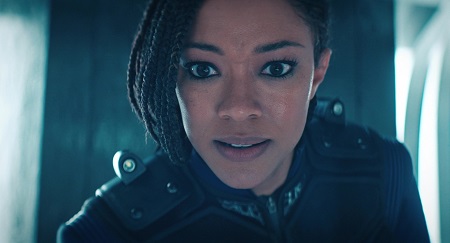
Star Trek: Discovery theories – week 5

Spoiler Warning: There are spoilers ahead for Star Trek: Discovery Seasons 1-3, Star Trek: Picard, and for other iterations of the Star Trek franchise.

I had a good time with Die Trying overall, and it feels as though Discovery is now moving into the second phase of Season 3’s storyline. The first phase has been about laying out the landscape of the 32nd Century and looking for the Federation, and having now found the Federation I imagine we’ll start seeing stories which begin to pull at the threads of the season’s biggest mystery: what is the Burn?

Die Trying gave us several new theories. It also debunked one of the possible causes for the Burn that I had posited before the season premiered. Let’s look at that first.

Debunked theory: The cause of the Burn is related to stars and coronal mass ejections.

A real-world CME detected by NASA in 2012.

In the second Season 3 trailer I spotted a brief clip of Stamets, Tilly, Reno, and the new character who we now know is Lieutenant Willa talking about coronal mass ejections. A screen that Tilly and Stamets were working on had the words “CME Detected” on it, and I theorised that perhaps this was somehow related to the Burn.

Because a coronal mass ejection involves a star shooting burning plasma into space, it certainly seemed like a possibility for an event known as “the Burn.” Michael Burnham’s explanation of the Burn being an event that destroyed dilithium and caused warp cores to explode certainly put a damper on this idea a couple of weeks ago, but I felt that there was still the possibility of a connection to CMEs and stars, and at the very least I wanted to see this scene in its entirety before calling the theory debunked.

The frame from the trailer that I picked out for this theory.

Die Trying contained this scene, and the CME that the crew were investigating had nothing to do with the Burn, but was instead connected to their investigation of the USS Tikhov – the seed vault ship.

This is our second major Burn theory to fall; the first was that it was the opening salvo of a war or invasion. As it’s been 120 years since the Burn (according to Admiral Vance in Die Trying) we can say for sure that no war or invasion took place in the immediate aftermath. So that’s two theories down!

So that theory was debunked in Die Trying. We have no confirmed theories this week, so now we’re going to jump into the main theory list, beginning with those that were new or advanced in this week’s episode.

Number 1: The music Burnham keeps encountering is indicative of being in a parallel universe, simulation… or even a dream.

Adira plays the strange melody in Forget Me Not.

As I said when I reviewed Die Trying, it isn’t much of a stretch to think that a piece of music could be well-known across the Federation. Even though the alliance is fractured in the 32nd Century, there were over a thousand years for its various members and cultures to exchange everything from information to lullabies. However, for story reasons I understand that this piece of music is sure to be important… somehow!

One way in which this could manifest would be if the piece of music were somehow indicative of Burnham and the crew being caught in some kind of parallel universe or alternate reality, one in which somehow this piece of music was prevalent. It could even suggest that the 32nd Century setting the crew have encountered is artificial – the music could be part of a simulation or even hinting at these events all taking place inside Burnham’s head.

The latter two points in particular would not be a route I’d like to see the show go down. The “it’s all a dream” or fake-out story tropes rarely end well, and while for a single episode or two-parter (like parts of Deep Space Nine’s third season episode The Search) this can be okay, on the whole it feels like a cheap way to end a story. I don’t expect to see Discovery go down this route, but the unexplained music could indicate that the story may be headed in this direction.

Number 2: Season 3 is taking place in an alternate timeline, or a timeline that will be overwritten.

Burnham in Die Trying.

As mentioned above, the inclusion of this unexplained piece of music that Burnham keeps encountering could be an indication that she and the crew have somehow crossed over to a parallel universe – one which, somehow, has a common piece of music.

But the music alone is not the only evidence we could argue points to a parallel universe. We got the first acknowledgement on screen from Burnham this week that the time-wormhole went wrong. She and Discovery planned to arrive at the planet of Terralysium, but they didn’t. This in itself had been evidence pointing potentially to a parallel universe, as the planets were not in the “right” place. However, Burnham says that she doesn’t know for certain what went wrong, but has a theory that gravitational waves may have disrupted their passage. Could these waves indicate a crossover to a different universe? Or could they be the cause of such a crossing?

The next part of this theory is Dr Gabrielle Burnham being missing. Dr Burnham was anchored in the 32nd Century – which is why Michael chose to travel to this time period. However, in the year she has spent since arriving, Michael has found no trace of her mother, even on Terralysium which is where Dr Burnham was supposed to be.

Dr Gabrielle Burnham.

It’s possible that, if Burnham and the crew have crossed over into a different universe, they’re in the Kelvin timeline. This would undoubtedly prove controversial with fans! However, one point in favour of the parallel universe theory is that it would mean – from the point of view of Star Trek’s prime timeline – that the Burn may not occur. We’ve talked at length about how Discovery Season 3 kind of puts a downer on the entire franchise; everything all of our heroes do across all the series and films ultimately comes to nothing because the Burn appears to have ruined everything. But if it turns out that Discovery is in a parallel universe, there’s hope that the prime timeline is safe from the Burn and its disastrous consequences.

The second half of this theory is that the Burn happened due to the interference of a time traveller or time travelling faction. From Starfleet’s point of view, the timeline in which the Burn occurred is not the “true” timeline, and thus part of the resolution to the Burn may be travelling through time to undo it.

I consider the first part of the theory – the parallel universe part – more likely. But both are possible at this juncture.

Number 3: Something bad has happened to Adira.

Adira with Admiral Vance in Die Trying.

After arriving at Starfleet HQ, Adira had a short and slightly awkward reunion with Admiral Vance. They were then sent elsewhere for a debrief and medical check-up, but we didn’t get to see any of that nor learn what happened to Adira after.

In shows like Discovery, any absence like this makes me start to worry! Has something happened to Adira? Are they alright? Have they been arrested or is someone threatening to harm the symbiont? It’s quite possible that the answer is “no” and that Adira is perfectly fine; we may not see much more of them if their character was simply present to allow Burnham and the crew to find Starfleet HQ. And that’s okay… as long as nothing bad has happened to them!

At this stage it’s less of a theory than a worry or a gut feeling… but I can’t help wonder where Adira went and if they’re okay.

Number 4: The ships at Federation HQ represent the majority of Starfleet’s remaining vessels. And they’re all 120+ years old.

Is this the whole of Starfleet?

How many ships were present as Discovery arrived at Federation HQ? Ten? Twelve? It wasn’t much more than that, that’s for sure. In a post-Burn environment, one where the Federation has shrunk considerably and where dilithium is in short supply, it’s possible that these ships are all that remain of the once-mighty Starfleet.

In That Hope Is You, Mr Sahil noted two Federation ships in flight, so perhaps we can say from his comment that there are at least two more! But I wouldn’t be surprised to learn that we’ve seen the bulk of Starfleet. Certainly the Federation seems incapable of either building any more ships nor fielding a large armada right now, which is perhaps one of the reasons why they need to keep their base cloaked.

Because of the catastrophic nature of the Burn, it also seems highly likely that shipbuilding facilities would have been damaged, destroyed, or would be inaccessible. That may mean that the Federation’s fleet entirely consists of ageing vessels, each one over 120 years old and probably not designed for being in service this long. In addition, without fuel what would be the point of expending a lot of resources building a new ship?

Number 5: Someone commandeered Burnham’s Red Angel suit.

Burnham’s Red Angel suit blasts off from Hima.

This has been a theory I’ve been pushing since Burnham sent her Red Angel suit back into the wormhole in That Hope Is You right at the beginning of the season, and until now we’ve seen nothing whatsoever to indicate it might be right! However, I was struck by a line in Die Trying: Admiral Vance described the Red Angel suit as being “inaccessible.”

Burnham goes on to say she set the suit to self-destruct, but all this did for me is reinforce the fact that we didn’t see the suit’s destruction with our own eyes. The finale of Season 2 confirmed that Pike and Spock received the final red burst in the 23rd Century, but beyond that we simply do not know what became of the suit.

It’s at least possible that someone intercepted or stole the suit before it could self-destruct. It would have to be someone familiar with the suit and who had the ability to travel or at least scan through time, but neither of those things are impossible within Star Trek. This theory could connect to the Burn itself – as we’ll look at in a moment.

Number 6: The Spore Drive is going to become Starfleet’s new method of faster-than-light propulsion.

Burnham orders a Black Alert in Die Trying.

This week, Admiral Vance seemed at first to want to commandeer Discovery and her spore drive. Considering that Starfleet’s supply of dilithium must be quite low this makes a lot of sense! From the Admiral’s point of view, reinstalling the spore drive on one of his most powerful ships is a better option than leaving it aboard the 930-year-old Discovery, which is horribly outgunned in the 32nd Century. Discovery may be able to be refitted to be better equipped for dealing with 32nd Century ships and weapons, but right now the spore drive is incredibly valuable – and incredibly vulnerable.

If it’s possible to figure out a way to either create more mycelial network navigators, or better yet, a navigation system that doesn’t require a living person to have their DNA messed with, it would be possible for every Starfleet vessel to have its own spore drive. In such a scenario, whatever happened with the Burn and dilithium, Starfleet could begin the task of reuniting the fractured Federation, jumping back and forth between member worlds with ease.

In Forget Me Not, Tilly had an idea for creating a dark matter-based spore drive system, and whether this ultimately pans out or not, the idea of the spore drive expanding beyond Stamets’ control is now firmly on the table.

This theory would allow the resolution to the Burn to keep the current timeline intact – there would be no need to go back in time and undo anything, nor would there be a deus ex machina of a sudden discovery of a huge cache of dilithium. Instead, Starfleet could get back on its feet using the spore drive – finally finding a proper use for Discovery’s most controversial piece of technology!

Number 7: Dr Gabrielle Burnham will make an appearance.

Dr Burnham was the original Red Angel.

As mentioned above, Dr Burnham’s absence is peculiar. It certainly could be because Michael and the crew have somehow crossed over to a parallel universe, but equally Dr Burnham could be here… somewhere. This week, Michael mentioned that she was holding out hope for a reunion with her mother, but in all of her scenes with Admiral Vance she didn’t mention or ask about her.

I have to assume that, if Dr Burnham had found the Federation, she’d have met with Admiral Vance and that he’d have said something to Michael in this week’s episode. The fact that the Red Angel suit and Control all seemed to be new to him strongly suggests that this meeting never happened; wherever Dr Burnham is, she never made it to Starfleet HQ.

When Dr Burnham arrived in the 32nd Century for the first time, all life in the galaxy was gone. It was only after Discovery and the Sphere data left the 23rd Century that that changed; Control’s defeat meant life could continue. It’s possible that when that change occurred, Dr Burnham was killed or captured by whichever faction controls Terralysium. She may have sought out another Federation colony or vessel and worked with them to figure out the Burn. In short, there are many possibilities for where she could be and what could have happened to her in this timeline that make an appearance possible.

Whether she appears or not, though, I do think we’ll learn her fate. If Michael and the crew are indeed in a parallel universe, Dr Burnham may be in the prime timeline. Or it could be the other way around, with Dr Burnham being the one trapped in a parallel universe.

So those theories were new or saw movement this week. Now, as always, we’ll go through the remaining theories so they’re all in one place. These theories were neither debunked nor confirmed this week, and while some may have had a minor line or two in Die Trying, nothing really moved the needle. To look at them in a little more detail, you can check out previous weeks’ theory posts on my dedicated Star Trek: Discovery page.

Number 8: Michael Burnham will leave the series.

Burnham in People of Earth.

Although she’s been the series protagonist since Season 1, it’s possible Burnham may leave that role by the end of this season. In short, she has lived a whole year away from Discovery; a year in which, by her own admission, she began to enjoy living life in a different and less-restricted way. Tilly, Georgiou, and Saru all picked up on this, noting Burnham’s enjoyment and appreciation for life outside Starfleet. Even though the 32nd Century is very different from what she would have hoped to find, that difference has given her a shot at a different way of life – and perhaps a new romantic partner.

We don’t yet know what happened between Book and Burnham, but it’s clear that they spent a lot of time together and became close. Precisely how close isn’t clear. Book may end up tempting Burnham with a return to her non-Starfleet life of freedom, something she hasn’t really experienced before. Burnham went from a somewhat restrictive life with Sarek straight to Starfleet, and the past year with Book is the closest thing she’s ever had to true freedom.

Burnham has also missed out on the crew bonding. Most notably in Forget Me Not, but also in Far From Home and People of Earth. She may see them coming together without her and feel left out, further pushing her away. There are two ways her departure could manifest, assuming it were to happen. She could leave Discovery but remain a recurring character, or she could leave the series entirely. Whether either of these changes would improve the show are up for debate, but for my two cents I think Discovery could survive without her, moving to become more of an ensemble series centred around Captain Saru.

Number 9: The Dax symbiont is still alive.

The Tal symbiont’s former hosts.

This one is looking less likely, because the two locations where Dax could have appeared have both seemingly come and gone without them: most notably the Trill homeworld in Forget Me Not, but also Federation HQ in Die Trying. However, there are hints at a lifespan for Trill symbionts that may be exceptionally long, in which case Dax could very well still be alive in the 32nd Century.

Obviously we won’t see Ezri Dax (barring some bizarre time travel/stasis storyline) but the symbiont itself could have lived this long. When Adira “met” the Tal symbiont’s former hosts in Forget Me Not, one was wearing a Star Trek: Picard-era uniform, hinting that Tal may have lived 700+ years. There are production-side explanations for this Easter egg, and as stated the fact that two of the best opportunities so far to meet Dax have come and gone may mean it won’t happen this season. But I’m sticking to my guns on this one: Dax is alive!

Number 10: Lieutenant Detmer is going to die.

Detmer at the helm in Far From Home.

Detmer didn’t have as big of a role this week, but we did see her continue to struggle as Discovery’s helm officer. Her friend Owosekun has been a great help, and I’m so glad that this storyline didn’t just fizzle out after last week.

I maintain that we’ve seen hints at a possible premature end to Detmer, though – and that includes the fact that she’s been given a storyline of her own for the first time! In Far From Home she appeared injured, and despite being given a clean bill of health from the doctor, appeared to still be suffering some kind of implant-related injury. This week we got one line that may yet prove to be significant, as Admiral Vance noted that her “baselines are unsteady, to put it mildly.” Is that a reference to her mental health? Or a more oblique reference to her overall health being in terminal decline?

Number 11: A character from a past iteration of Star Trek – such as Voyager’s Doctor – will make an appearance.

The Doctor in Living Witness.

I’ve been kicking around this theory since well before Season 3 debuted last month! In short, there are a few characters with lifespans long enough to potentially set up a 32nd Century appearance, and it would be a fantastic way for Discovery to tie itself to the broader Star Trek franchise by including someone in that category. This concept worked well in Season 2 with Spock, Pike, and Number One, so why not here too?

Other than a backup copy of Voyager’s Doctor, other characters I suggested included Soji (or a synth who looks like her), Lore, Captain Sisko, and Enterprise’s Crewman Daniels – the latter of whom was a 30th/31st Century temporal agent. While these characters are among the few who could still be alive in this era, there’s no reason why literally any 23rd or 24th Century character couldn’t be included; perhaps they had been in stasis or travelled through time.

Number 12: Booker is a Coppelius synth.

Book has many abilities that some consider to be… unnatural.

The abilities Book had in That Hope Is You – including strange glowing spots which could be technological in origin – are still unexplained. Burnham may well know more about Book, having spent at least some time with him over the past year. But for us as the audience, Book is still a mystery. Thematically, his relationship with Grudge mirrors Data’s with Spot, which could be another hint. It’s possible Book is an enhanced human, or even an alien from a different race. But his abilities could be indicative of a synthetic origin, and if he is a synth, he could be part of a civilisation founded on Coppelius in the late 24th Century.

Number 13: The Federation’s response to the Burn – not the event itself – caused it to collapse.

Captain Ndoye of the UEDF.

Captain Ndoye hinted at this in People of Earth, as did Book and Zareh in earlier episodes. Book said that the Federation couldn’t answer questions people had about what the Burn was or what caused it, and Captain Ndoye said that the citizens of Earth, fearing attack or invasion, essentially kicked the Federation out in the aftermath of the Burn.

I had hoped to hear the Federation’s side of the story in Die Trying, but perhaps that will come in a future episode. Regardless, we’re at least halfway-confirmed with this one!

Number 14: The ban on time travel is being flouted – possibly by secretive elements within the Federation.

Kovich in Die Trying.

Unless Admiral Vance was straight-up lying to Saru and Burnham, he believes that the ban on time travel is still in effect. But while he’s the head of Starfleet, he may not be in total control. Section 31 was known to be rogue, and Kovich, who interviewed Georgiou this week, may well be a Section 31 agent.

It’s impossible to un-invent a powerful, useful, weaponisable technology, no matter how hard you try. Considering how crappy the 32nd Century seems to be, are we convinced that nobody at all is using time travel to try to give themselves an advantage? Not the Dominion? Not the Borg? Not Section 31? Seems unlikely to me, though for production-side reasons of wanting to keep the timeline intact and to avoid overcomplicating the plot we might be told this is true!

Number 15: The Burn was a superweapon – perhaps one the Federation or Section 31 built.

The Burn.

We learned in Die Trying that the Federation – at least, according to Admiral Vance and Kovich – doesn’t know what the Burn is or what caused it. One possibility that I considered when I looked at some possible causes for the Burn before the season kicked off was that it was the result of a superweapon.

Assuming Vance and Kovich are telling the truth, it wasn’t a Federation superweapon. However, it’s possible that the knowledge of such a crime was covered up, or that the secretive Section 31 was responsible but never told anyone else. It’s also possible that some other faction – perhaps the Borg, the Dominion, or the super-synths from Star Trek: Picard – are directly responsible. The latter point raises a strange question, though: if the Burn was a weapon, and it succeeded in its goal of decimating the Federation (which it clearly did), why did whomever is responsible not capitalise on that success? Where was the invasion that should surely have followed? The galaxy may be in disarray, but it clearly has not been conquered by any of these factions… so if the Burn is a weapon, what was the point?

It may have been a revenge attack; some kind of galactic-scale mutually-assured destruction. If the Federation, Section 31, or some other organisation launched an attack, the Burn may be that faction’s retaliation. That would explain the lack of an invader: they were already dead.

Number 16: The Burn was caused by one of the Red Angel suits.

Burnham with her suit on Hima.

There are two Red Angel suits known to exist – Michael Burnham’s and Dr Gabrielle Burnham’s. The suits are very powerful, and it isn’t a stretch to think they could be weaponised or cause some kind of accident. In an age where time travel has been prohibited, they could also be the only surviving examples of time-travel tech. If someone nefarious got their hands on a suit, they could’ve used it travel back in time and attack the Federation by destroying most of their dilithium. The name “Burn” may even be related to the name “Burnham” if this theory is correct.

As a second part of this theory, the Burn may have been caused by Dr Gabrielle Burnham or Michael herself. This might be something they indirectly did, something accidental, something they did under duress, or something they considered the least-bad option when confronted by something far worse. The idea that Michael would deliberately cause the worst disaster the Star Trek galaxy has ever seen is almost laughable… but Discovery loves to put her at the centre of every story, so there may yet be a connection.

Number 17: The Federation was in terminal decline long before the Burn.

Book, Burnham, and Mr Sahil stand by the Federation flag.

Why are there so few stars on the Federation flag? Does this represent systems and races that have seceded or left the Federation? And if that’s the case, why does the decades-old, pre-Burn flag (that Mr Sahil owned) represent those secessions? Perhaps the answer is that the Federation was already in decline. The Burn may have been the final straw – but not the only straw. Admiral Vance said that the Federation consists of 38 worlds, down from a peak of over 350. When was that peak? Was it when the Burn hit… or decades prior?

Number 18: The Orion Syndicate is a major faction – and controls the trading post on Hima.

An Orion guard on Hima.

This week we got a couple of hints at an Orion-Andorian alliance, but this faction could still be related to the Orion Syndicate which has been part of Star Trek in some form going back to The Original Series. The trading post Book and Burnham visited on Hima had a number of Orions present, including working as traders and guards. In addition, in Far From Home the courier Zareh suggested to one of his goons that he would sell “to the Orions.”

One thing seems clear, though: this Orion-Andorian alliance appears to be a major power, one quite capable of taking on the rump Federation.

Number 19: Mirror Georgiou will travel back in time to the 23rd Century.

Mirror Georgiou in Die Trying.

Georgiou was not planning to travel to the 32nd Century, but was aboard Discovery when it left due to fighting Leland/Control. She has expressed her appreciation for the chaotic, “free” nature of the future, but there could be a reason for her to travel back in time. Not least because she’s supposed to be the main character in the upcoming Section 31 series which is meant to take place in the 23rd Century!

There could be a reason for Georgiou to travel back in time, but if she’s to work with Section 31, the main one I can think of would be to warn Starfleet about the Burn and give them time to prepare and/or prevent it. She may also want to try to return to her own universe – something Kovich told her is impossible in the 32nd Century due to the two universes “drifting further apart.”

Number 20: We haven’t seen the last of Zareh.

Zareh in Far From Home.

Despite being quite content to kill all of Zareh’s goons, Saru balked at the idea of killing the man himself in Far From Home. Instead, he and Georgiou let him go, sending him out into the wilds of the Colony – despite being told by the locals that that’s a death sentence. However, we didn’t see Zareh die. And in stories like these, characters like Zareh tend to pop back up looking for revenge.

So that’s it. Those are the twenty theories I currently have in play as we approach episode six.

Are all of them nonsense? Or am I missing a different theory that seems painfully obvious? It wouldn’t be the first time! One of the great things about Discovery that was also true of Picard earlier in the year is how unpredictable the series is right now. There doesn’t seem to be an obvious way for the main story arc – the Burn – to come to a head. It may be a natural event. It may be a weapon. It might be connected to a faction we know of, or it might be the fault of someone entirely new. Discovery is keeping us guessing – and I love that!

One final note: no fan theory, no matter how plausible it may seem, is worth getting upset or disappointed over. I put these lists together for fun, and as an excuse to spend more time in the Star Trek galaxy, and that’s all. If something goes completely the opposite way I was expecting, far from being annoyed or upset I revel in that. That doesn’t mean writers should make arbitrary and silly decisions, but it means I like being surprised! If we could all remember to take fan theories with a healthy pinch of salt, there’d be less conflict in fan communities.

The promo for Scavengers looked very exciting. Here’s hoping for another fun outing with Burnham and the crew!

Star Trek: Discovery is available to stream on CBS All Access in the United States, and on Netflix in the United Kingdom and elsewhere. The Star Trek franchise – including Discovery and all other properties mentioned above – is the copyright of ViacomCBS. This article contains the thoughts and opinions of one person only and is not intended to cause any offence.
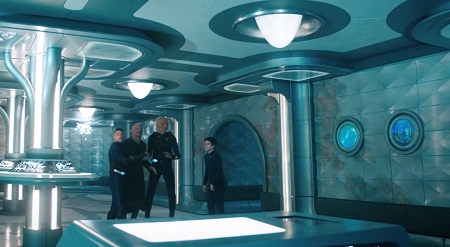
The real price of next-gen consoles

Were you lucky enough to secure a pre-order of the Xbox Series X or PlayStation 5? If so, congratulations! You’re one of the few who managed that feat. Both consoles sold out as soon as pre-orders were available, meaning a lot of people hoping to pick up one of the new machines this year were left disappointed.

A lot of factors came together to make this happen, and we’ll look at them in turn. First is the confusing way in which both Sony and Microsoft made their consoles available. Pre-orders for the PlayStation 5 “accidentally” went live hours ahead of schedule, meaning a lot of people who had planned to pre-order at the promised time missed out. There is no one place where consoles may be pre-ordered either, with retailers from big outlets like Amazon and supermarkets down to smaller specialist games or electronics shops all offering to take customers’ money. As many found out later, problems with stock availability and allocation meant that a lot of pre-orders were either cancelled, rejected, or could not be fulfilled on launch day.

The newly-released PlayStation 5.

Then there are the “bots.” Automated computer programmes bought up a significant percentage of the available supply of new consoles, leaving many machines in the hands of touts and scalpers. These consoles are currently being re-sold for well over the asking price to disappointed gamers who missed out.

Finally there’s the question of how many machines were manufactured. When coronavirus hit China hard earlier this year, production of next-gen consoles was majorly disrupted. Some factories were closed for weeks, others cut back their output, and the consequence for both Sony and Microsoft was that far fewer next-gen consoles were available in time for launch than they expected. I noted this a few months ago when I asked the question: is now really the right time to launch these machines?

There was always going to be high demand for these machines, and both Sony and Microsoft knew that they’d sell out on launch day. In fact that’s usually part of the plan; selling out makes a machine look exciting and cool, and fear of missing out drives sales. No company wants to see images of huge numbers of unsold machines sitting on shelves in the period after launch.

An Xbox Series S/X control pad.

But even in that environment, the reduced manufacturing capability has had a huge impact, make no mistake. The plan had been for millions more consoles to be available; Sony told us this directly when they announced a few months ago that they would have several million fewer consoles ready to go on launch day than they initially planned. When their business model was already based around artificial scarcity, the loss of several million units has made an already difficult pre-order process practically impossible when combined with the other factors listed above.

So on to the title of this article: how much does an Xbox Series X or PlayStation 5 really cost if you want to get one before the end of the year? I went to a popular auction website and compiled a short selection of listings. Take a look:

A selection of auction listings for Xbox Series X and PlayStation 5 consoles in the UK on the 17th of November 2020.

As you can see, prices are approaching double the recommended retail price here in the UK, with scalpers and touts even selling pre-ordered consoles that they don’t actually have in their possession yet. Anecdotally I’ve heard from friends in the United States of PlayStation 5 consoles being sold for upwards of $1200 – well over double the asking price.

In a way, this is “pure capitalism.” This is what happens when companies don’t have enough stock for consumers; the law of supply and demand kicks in. If someone is willing to pay £900 for a PlayStation 5, then there will be a market for that. The true price of these machines right now, in November 2020, is not the recommended retail price of £450. It’s £700, £800, or £900. And with no indication of the availability of either console improving before Christmas, those prices may yet rise further.

Companies are totally fine with this. It doesn’t matter in the slightest to Microsoft or Sony whether a genuine player buys a console or a bot picks up that console for a scalper or tout to re-sell later. They still make just as much money no matter who the buyer is, so they have absolutely no incentive to find ways to stamp out this behaviour. Likewise, retailers from game stores to supermarkets to giants like Amazon don’t care – and it’s through online retailers that the vast majority of pre-orders have been taken.

The market – that amorphous entity that economists love to talk about – determines the price and value of products. If people are willing to pay £900 for a PlayStation 5 then that’s its true value. But is it worth it? Could any video game console possibly be worth £900?

It will come as no surprise to you to learn that my answer is a resounding “no.” Not only are these machines not worth such a ridiculous amount of money, they’re probably not even worth their official price right now.

This new console generation is, at best, a minor improvement over the current one in most of the ways that matter. Add to that the fact that practically every game currently available for the PlayStation 5, and every single game currently available for the Xbox Series X, are also available on PC, PlayStation 4, and Xbox One, most players would find it hard to tell the difference between playing on a current-gen or next-gen machine. There are iterative changes, such as faster loading times, better controller battery life, and so on. But there’s nothing significant in terms of graphics or gameplay that make either console a “must-buy” in 2020. Any such improvements won’t be seen for a year or more; perhaps by 2022 you could make the case that games are getting better thanks to these machines. But not yet.

There was a lot of hype and buildup to the launch of these new consoles, as is to be expected. And a lot of players were sucked in by the hype and decided that they needed a new Xbox or PlayStation on launch day no matter what. If they paid over the odds for their machine from a scalper or tout, I bet a lot of them regret that investment today.

With the new consoles offering small improvements at best, there’s no need to get one right now. Don’t reward the scalpers and touts with their scripts and bots who bought up as many consoles as they could. Jump off the hype train and be patient, and enjoy the exact same games on current-gen hardware. Chances are you wouldn’t be able to tell the difference anyway.

The Xbox brand – including the Xbox Series X and Series S – is the copyright of Microsoft. The PlayStation brand – including the PlayStation 5 – is the copyright of Sony. This article contains the thoughts and opinions of one person only and is not intended to cause any offence.
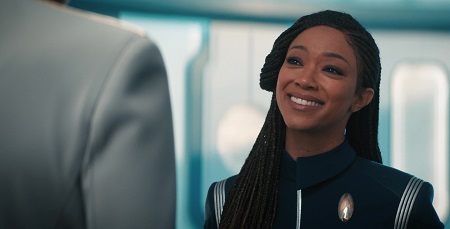
Star Trek: Discovery review – Season 3, Episode 5: Die Trying

Spoiler Warning: There are spoilers ahead for Star Trek: Discovery Seasons 1-3, as well as Star Trek: Picard and other iterations of the Star Trek franchise.

Last week’s episode, Forget Me Not, wasn’t my favourite. There were a few too many contrivances and a little too much forced drama for my liking. I was hoping for a better outing this time, and I wasn’t disappointed. Die Trying had some neat callbacks and tie-ins with past iterations of the Star Trek franchise while telling an interesting semi-standalone story for the bulk of its runtime. What we didn’t get was any significant advancement of the overall story of the season – unravelling the mysterious event known as “the Burn” – though we can perhaps rule out one or two possible causes that I postulated before the season premiered!

Discovery can, on occasion, feel a little confusing. A couple of events this week fall into that category, and I hope the writers and producers are setting up storylines which will pay off in future episodes rather than making what appear to be on the surface arbitrary decisions about characters and themes. The full picture will only become evident when Season 3 reaches its climax, so for now I will make note of some of these points, but try my best to suspend my harshest criticisms!

Discovery arrives at Federation HQ in Die Trying.

Die Trying begins with Discovery’s arrival at Federation headquarters. At the end of last week’s episode, Adira had provided Burnham with a map to the Federation’s location, and Captain Saru appears to have wasted little time in travelling there. One thing I wasn’t clear on – and perhaps this will come up in a future episode – is why the Federation and Starfleet feel a need to conceal their base. It appeared to be cloaked, and in addition the location was hidden by what Adira called an “algorithm.” Maybe all of this is because of paranoia related to the Burn – after all, that’s why United Earth kicked the Federation out. But there could be other reasons, especially considering the Burn is now 120 years in the past.

It would have been nice to see Saru and Discovery contacting Starfleet for the first time. As it is, what we see in the episode is their second contact; Starfleet already knows that they’re coming, and I feel like we missed out on what could have been an interesting and emotional moment for both sides. Saru tells us that he previously contacted Starfleet, but for such a significant moment it would have been better to see it for ourselves. “Show don’t tell” is a good mantra for any story!

Captain Saru tells us he contacted Starfleet to let them know of Discovery’s impending arrival.

Discovery arrives at Starfleet HQ, and we get a touching sequence – accompanied by a great musical score – as the ship flies into the base. There were several new starship designs, and it was great to see different kinds of ship instead of them all keeping to the same design. It was surprisingly emotional to see the USS Voyager-J, with the same NCC designation as the original. The “J” part was also an oblique reference to Enterprise, which saw the USS Enterprise-J in one episode set in the future. There was also a USS Nog – a reference to the Deep Space Nine character who was the first Ferengi to serve in Starfleet. Nog actor Aron Eisenberg passed away last year, so this was a very sweet way to honour him within Star Trek.

Random Blonde Bridge Officer gets her first proper line of the series during this sequence, and the bridge crew comment excitedly on various technobabble elements of the base and starships as Discovery cruises in. Their elation is infectious, and it was hard not to get excited for Discovery’s homecoming in this sequence. Additionally, the designers and animators did a good job of creating a base and starships that were familiar but which looked suitably advanced compared with Starfleet ships of the 23rd and 24th Centuries. The Voyager-J in particular managed to look like an advanced design of the Intrepid-class that retained some of the basic shapes and lines of the original Voyager but used them in an updated manner. Even the way the name was illuminated on the outer hull was reminiscent of the 24th Century craft that we’re all familiar with.

Stamets and Reno look at the Voyager-J.

The inclusion of the Voyager-J felt like something Lower Decks would have done; an Easter egg thrown in for longstanding fans of the franchise. Discovery has done this before, but some of its references and callbacks could be quite subtle: writing seen on a computer screen, for example. On the other hand we have the return of classic characters like Pike and Spock! One part of the Federation base appeared to be made from glass; it reminded me a little of Starbase Yorktown from Star Trek Beyond.

Discovery is finally brought in to dock, and Captain Saru, Burnham, and Adira are transported over to the base for an initial conversation with Starfleet. They’re introduced to an Admiral Vance, Starfleet’s commander-in-chief, and his aide, Lieutenant Willa. Willa was glimpsed in the second trailer for Season 3, where I correctly guessed she was a Starfleet officer. At least that’s one thing I’ll have got right this season! Vance is an interesting character, perhaps because he’s keen not to overplay his hand when dealing with Saru and Burnham, meaning he feels mysterious at first. Willa, at least in Die Trying, comes across as quite one-dimensional; a by-the-book, don’t-ask-questions character who exists to be a minor obstacle and foil for the crew, and little else. Hopefully future episodes will flesh out both of these characters more, as there’s potential in both.

Admiral Vance and Lieutenant Willa.

I got genuinely emotional at learning – along with Saru – that his homeworld of Kaminar ultimately joined the Federation. Saru’s journey from chattel slavery in a pre-warp civilisation to captain of a starship is unique in all of Star Trek, and the reward he must feel after helping his people in Season 2 upon learning they were able to join the Federation was beautiful to see. Despite being under heavy prosthetics, Doug Jones manages to convey a lot of emotion as Saru, and this was one of those times where it was impossible not to get emotional right along with him.

During their debrief, Admiral Vance is sceptical of Saru and Burnham and their story. I particularly liked his line about the Sphere data that he’s now “responsible for,” as it emphasised how he views Discovery in this moment: a burden. Not only has Discovery, from his perspective, broken the law by travelling through time, but they’ve brought with them a computer bank filled with data that has proven very dangerous. 32nd Century Starfleet may not have the resources to keep the Sphere data safe; we got several hints in Die Trying at an Andorian-Orion alliance that may be a significant and powerful adversary to this rump Federation. For all we know, the ships we saw when Discovery flew in represent the bulk – or even the entirety – of Starfleet, and every single vessel may be more than a century old if constructing starships since the Burn has been difficult.

Admiral Vance during the debriefing.

Though still unwilling to share classified information – such as anything he knows about the Burn – Admiral Vance is content to tell Saru and Burnham a little of the Federation. It now consists of a mere 38 worlds, some of which are out of contact. Apparently there is no way to communicate via subspace with at least some of them; whether this damage to subspace is Burn-related or not wasn’t clear.

The casting choice for Vance – Israeli actor Oded Fehr – was inspired. He has a certain gravitas and inhabits the role very well; when he’s denying Burnham her request to discuss the Burn, or telling Saru that, as far as he knows from the historical record, the spore drive didn’t exist and Discovery was destroyed, he does so from a position of authority. There’s no questioning that he’s the person in charge, both inside the debriefing room and in Starfleet HQ in general, and the guest star deserves a lot of credit for bringing the role to life. I particularly liked his line that “two truths exist in one space,” it was both poetic and calmly confrontational. After a couple of lines earlier in the season that didn’t work, this one in particular came across perfectly, and that’s due to both the scriptwriter and the actor.

Saru and Burnham being debriefed.

Continuing a theme from the season premiere, Vance talks about the “temporal accords” and a temporal war fought during the 30th Century – part of which was depicted in Enterprise. Because time travel has been outlawed, Discovery has broken the law of the 32nd Century Federation simply by arriving in this time period. Although I think there’s ample room to disagree with this interpretation, again Vance presses his case with authority, and has the final say (at least for now).

The main upshot from this conversation is that Discovery and the spore drive will be commandeered by Starfleet, and the crew are to be reassigned – assuming their millennium-out-of-date skills can be of any use to Starfleet. Saru and Burnham react emotionally – and perhaps understandably – but this seemed like the inevitable outcome. If the spore drive is as useful as it appears in this 32nd Century setting, Starfleet will want to use it. And since right now there’s only one way to use it, tearing it down and perhaps reinstalling it on a more powerful vessel instead of the ancient Discovery would make a lot of sense.

Saru learns what is to become of Discovery and the crew.

One of the themes this season has been naïvety. Saru, Burnham, and the crew naïvely assumed that if they could defeat Control, Starfleet and the Federation would be waiting for them in the future. That was proven untrue. And now that they’ve managed to track down the rump Federation, they again made the naïve assumption that they would be welcomed with open arms and be free to keep their ship and keep the crew together.

This theme has worked surprisingly well. Not only does it show that the crew – and crucially Burnham – aren’t infallible and are capable of making mistakes, which is something we need to see sometimes, but it draws a clear contrast between the hopeful, optimistic galaxy they left behind with the post-Burn reality they flew headfirst into. Their optimism in a galaxy that lacks it is going to be a driving force in the story – at least, that’s what we’ve been promised – and this is a clear way that it’s been communicated over these opening episodes of the season. We can debate whether or not the setting is truly one we could call “post-apocalyptic,” but there’s no doubt that hope and optimism are key themes in post-apocalyptic fiction. Finding a way for characters to have hope in a bleak world can be a challenge, but in Discovery it comes built-in to characters we’re already familiar with, and it makes perfect sense because of where (or rather, when) they came from. Their naïvety is part of it, and it works well here as it did in earlier episodes too.

Burnham, Saru, and the whole crew have demonstrated naïvety borne of optimism, and it’s this optimism that will be a key story point moving forward.

Immediately following their debriefing with Admiral Vance, Burnham and Saru talk in the ready-room. They hatch a plan to demonstrate their loyalty and usefulness to the Admiral and the Federation by tracking down where a group of aliens called the Kili became sick. I believe the Kili were new to Star Trek, and their design was interesting – if a little reminiscent of the Saurians.

Burnham initially suggests they steal the data they need to figure out this medical mystery, but Saru, as he often does, serves as a counterbalance to her half-baked ideas and tells her firmly that he agrees with the premise, but that they will follow the rules and go through the appropriate channels to get the information. Saru, with his calm demeanour, is perfectly-suited to this role; a Picard to Burnham’s Riker, to use a Star Trek analogy! They make an interesting pair in moments like this, and I will be forever grateful that their roles were not reversed and that it’s Saru in the captain’s chair!

Saru and Burnham in the ready-room.

It’s worth noting after last week saw the Sphere data and Discovery’s computer seemingly merge that the display panels in the ready-room (where last week’s merge occurred) are back to normal. Discovery’s computer was not called on in Die Trying, and indeed no mention was made of what happened. As far as we know at this stage, it’s only Saru who’s aware of any goings-on with the main computer – and it’s possible that he was so distracted by trying to help the crew last week that he didn’t really notice what had happened. Regardless, this story point will surely be back!

Having just said how great of a captain Saru is, the next scene shows him delivering the bad news to Discovery’s crew. Obvious troublemakers like Georgiou are clearly dissatisfied, but the mood was quite ominous in some ways. There was the expected anxiousness and concern about being split up and debriefed, but I got the sense – at least for a moment – that some of those ill feelings were being directed at Saru himself for “allowing” this to happen. Hopefully this was just a one-off moment caused by circumstances and we won’t see Saru’s captaincy in any real danger in future. Lieutenant Willa was present here, along with a couple of unnamed Starfleet personnel from the base. As mentioned, though, she’s a pretty forgettable character based on her sole appearance in Die Trying.

Saru breaks the news of their pending reassignments to the assembled crew of Discovery.

Several members of the crew go through their debriefings in a montage, referring to events and storylines from Seasons 1 and 2, which was a neat touch. Culber mentioned being dead and stuck in the mycelial network, Tilly referenced her Mirror Universe counterpart, but my favourite was Reno, who injected some much-needed humour into Die Trying. Reno can always be relied on for some lightheartedness, and Tig Notaro’s deadpan delivery is always on point.

Burnham and Saru press Lieutenant Willa for the information about the Kili, and after a short protest she concedes and provides them with a list of planets the Kili visited before arriving at Federation HQ. It was clever of Burnham to point out that Discovery is a science vessel, and that these kinds of situations are what the ship was made for investigating.

Lieutenant Willa listens to Burnham’s request for information.

If we split Die Trying into three main parts we have this sequence taking up the first third or so of the episode, dealing with Saru, Burnham, and the crew aboard the Federation base, then we’ll have the away mission that kicks off in a moment, but the third storyline is that of Georgiou’s debrief with a character played by famed director David Cronenberg. Cronenberg’s 1986 film The Fly made my list of horror films to watch at Halloween just a couple of weeks ago; a strange coincidence considering I had no idea he would make an appearance in Discovery! It just goes to show how broad the Star Trek franchise and its fandom reach.

Surely Cronenberg’s character, Kovich, is an operative of Section 31? That wasn’t confirmed, of course, but the fact that he debriefs her personally and is wearing a very different uniform to everyone else would hint at that being a logical assumption. Regardless, Kovich is an interesting character, and his dance with Georgiou was often riveting as the two attempted to talk around one another. However, I feel that there was a missed opportunity to show Georgiou in a situation she couldn’t control – something we’ll also see with Burnham in a moment.

A surprise appearance from guest star David Cronenberg!

Georgiou is cold and calculating, and is able to take charge of almost any situation. However, we’re 930 years into the future, and on top of that she’s in a different universe, so there was an opportunity for her frankly one-dimensional character to get to try something different – not being in total control, for once. The two Starfleet holograms correctly identify her as Terran, and of course by this point in the timeline the Mirror Universe’s existence is an open secret to Starfleet so that makes sense. And here was the opportunity for her to lose her advantage.

By being immediately “outed” as a Terran and forced into a Starfleet debrief specifically designed for those from the Mirror Universe we could have seen Georgiou on the back foot, outsmarted, outmanoeuvred, and even defeated. We’ll come to the question of her fate in this meeting at the end, because clearly something happened to her off-screen, but practically the whole time we had her on screen she was her typical self: one-dimensional, “I’m evil and I love it,” 23rd Century Heinz Doofenshmirtz. That made for some truly great television as she was pitted against Kovich and they danced around each other, but I’m left lamenting a wholly different sequence that we didn’t get.

Georgiou in her debriefing.

I mentioned what was kind of a missed opportunity to put Burnham on the back foot, and after introducing Kovich to us, we come to this moment. After Saru and Burnham use the data to figure out which planet the Kili became ill on, Burnham proposes traveling to a seed vault ship which could be used to formulate an antidote. This was a great opportunity for Admiral Vance or Lieutenant Willa to shoot her down and demonstrate to her that her 23rd Century knowledge is of limited use. There are many ways this could have been done, but just off the top of my head: they could have already figured out the planet through high-tech scanning, the seed vault ship may no longer exist by this time, or 32nd Century replicators could have created the perfect antidote already. I know any of these would radically change the rest of the story of the episode so I’m not advocating any of them especially, but as a general point, 32nd Century Starfleet showing how their technology can solve problems without a need for Burnham and Saru’s input would have set up a potentially interesting story of its own – or rather, advanced one that is already rumbling in the background: what possible use can these millennium-old people be in the 32nd Century considering how much the simply do not know?

Regardless, Burnham’s plan has merit and a plan is concocted to travel to the USS Tikhov – Starfleet’s flying seed vault. Saru offers to remain aboard the Federation base, so Burnham will be in command for the away mission, accompanied by Lieutenant Willa and a couple of unnamed 32nd Century Starfleet personnel. We could absolutely argue that replicators, transporters, and the ability to store detailed and accurate data of any plant species in the universe should render the need for a seed vault invalid in the future, but I think it gets a pass as a story point. Not only is it logical to keep a backup even if all those technologies exist, it made for a wholly different and interesting setup. We’ve never really seen a ship like the Tikhov before, with its unique role in the Federation.

Discovery prepares to leave the Federation base under Burnham’s temporary command.

Though I would never make her captain, it was neat to see Burnham in command on the bridge and ordering a Black Alert. She hasn’t had the opportunity to step up like this since she was stripped of rank after the series premiere, so it was a reminder just how far she’s come in that time. Black Alert and spore jumps always seem to come as a surprise to someone new to the process – as we saw with Booker a couple of weeks ago – and Lieutenant Willa and her colleagues react in a similar way as Discovery jumps from Federation HQ to a location five months’ distant (at 32nd Century high-warp speeds) in an instant.

More could’ve been made of the ion storm, not from the point of view of Discovery and her crew – Detmer in particular is still struggling with her injury/mental health and showed how much of a danger it was to the ship. But the 32nd Century officers could have made some point about how ion storms are no problem for the ships of their era, or reacted with surprise at how gingerly Burnham, Detmer, and others were treating it. By this time period we tend to expect that something that might’ve been a major threat or problem for a ship like Discovery should be easy enough to handle. The visual effects used for the ion storm were great, though, and after some sequences last week were a bit of a visual miss it’s great to see Discovery’s animation back on top form.

Discovery and the ion storm.

I’m glad that Detmer’s storyline has not been entirely abandoned. Last week seemed to show her having a breakthrough; letting her emotions boil over before realising she needed to ask for help. I’m still undecided on how this arc will end – her death is still a possibility – but I’m glad that it wasn’t just dropped as I feared it might’ve been. Owosekun is an unsung hero in this particular storyline too, having been seen encouraging her friend and being supportive on several occasions this season. Giving both of these characters more to do was part of my wishlist for the season, so I’m glad Discovery is at least trying to branch out beyond its regular main cast.

After rescuing the Tikhov from the ion storm, Burnham readies an away team to beam aboard. For story purposes I can understand why she, Culber, and Nhan went alone; from an in-universe perspective I’m left wondering why Lieutenant Willa didn’t accompany them. Wasn’t at least part of her reason for going on the mission to keep an eye on Burnham? Yet she’s content to allow her to transport into an important vault that should be subject to security measures and/or restrictions. This would have been an opportunity for Willa to step out of her bland role and perhaps see some fleshing out of her character. If she’s to make repeated appearances we could have laid the groundwork for that here, but if she’s just going to be a one-off character then I guess it’s fine.

Why did Lieutenant Willa tag along if she wasn’t going to observe the whole mission?

The set design of the Tikhov was interesting. I liked the out-of-control plants which immediately conveyed that something was wrong while also providing a lot of shadowy areas and potential hiding places for someone nefarious. However, not for the first time in Discovery the redressing of familiar sets felt obvious and not particularly well-disguised. It wasn’t as bad as the Ba’ul facility seen in Season 2’s The Sound of Thunder, which was so painfully obviously the transporter room that it made some scenes distractingly difficult to watch! But it wasn’t spectacular set design either, at least not in the hallway which Burnham, Culber, and Nhan beam into.

In a story that focused somewhat on Nhan and her people (the Barzans) it was a shame that she didn’t take the lead. As mentioned last week, Discovery almost always wants to put Burnham centre-stage, even in stories that could be better-suited to other characters. Despite the fact that we were dealing with a Barzan character, and despite the fact that Nhan seemingly makes a big sacrifice at the end of the episode (which we’ll come to in a moment) for much of the time she was aboard the USS Tikhov she felt like a minor character, dropping some exposition or technobabble but doing little of consequence.

Nhan aboard the USS Tikhov.

After beginning their exploration of the plant-infested vessel, we see an invisible character moving in behind the away team. This would soon be revealed to be the Barzan scientist who was supposed to be the caretaker of this vessel, and the way in which he was half-trapped in a transporter beam reminded me of Quinn Erickson from the Enterprise Season 4 episode Daedalus, who suffered a similar fate. Little moments like this connect Discovery to the wider franchise, and they’re always appreciated.

As Georgiou continues her debrief with Kovich we learn what Starfleet knows about the Burn, and surprisingly they know very little. Kovich declines to expand on any of the theories except to say no one theory seems more likely than any other at this point. He also drops a bombshell on Georgiou – the Terran Empire fell. We knew this as it had been shown in Deep Space Nine, but it was Georgiou’s first encounter with that piece of information, and it seemed, very briefly, to affect her.

Georgiou during her debriefing.

Georgiou seizes on the Burn, telling Kovich that the Federation must be terrified. She also used an interesting phrase, one which Kovich did not refute: “whoever did this.” This is perhaps our first indication that the Burn may be an event that was deliberately triggered. In People of Earth, Burnham suggested two possibilities: accident or natural disaster. I noted at the time that she didn’t mention the possibility of the Burn being caused deliberately, which seemed like an equally-plausible option, and we finally have that addressed here. The fact that Kovich didn’t immediately step in and say that they’d ruled that out is interesting, and may well be a hint at the Burn being caused deliberately by some nefarious villain.

I kind of liked the “natural disaster” angle – though my theory of it being related to coronal mass ejections and stars, based on a frame from the second trailer, has been refuted by that scene’s inclusion in this episode. The reason for that was that it would present Saru, Burnham, and the crew with a scientific puzzle to solve rather than an evil bad guy to defeat. Season 3 is, in some respects, following a similar basic pattern to Season 2 right now: there’s a mysterious phenomenon, and the more we learn about it the more likely it seems that there’s a villain manipulating events to cause it. In Season 2 we had the red bursts, the Red Angel, and Control was ultimately revealed as the villain. In Season 3 we have the Burn and the collapse of the Federation – is a villain about to be revealed?

Kovich dropped some major hints about the Burn.

Back aboard the seed vault, Burnham and the away team discover a hologram of the Barzan family. This was set up in a pretty creepy way; I definitely felt horror film echoes as they approached the eerie, abandoned section of the ship. If the ship felt like an underwhelming redress of existing sets, the seed vault itself was far more impressive. Whirring rotating sections and a jumble of different shapes made for an interesting aesthetic as Burnham beamed in. She was attacked by the Barzan (in another moment reminiscent of the transporter story in Enterprise) and tasks Tilly and Stamets with figuring out what happened to him and his family.

As mentioned, when I saw the second Season 3 trailer I pulled a frame out of it where Tilly and Stamets were conducting a scan for coronal mass ejections. CMEs are a real-world phenomenon, and I wondered if they could be related to the Burn. We can strike that theory off the list, however, as it instead turns out that a CME is what killed the Barzan’s family. In a cruel twist of fate he was trapped halfway through a transporter cycle, which saved his life but also left him phased. This was an interesting explanation; it took what could have been a fairly flat “monster of the week” and turned him into a character with a genuinely emotional story. Star Trek has often done this, and it’s worked remarkably well across the franchise.

The phased Barzan.

Nhan had come across one of the Tikhov’s logs which showed this man’s descent into madness, and I liked this scene with her. After piecing together what happened, it seems as though the coronal mass ejection was responsible for killing his family, and the Barzan doctor was desperately trying to revive them using the seeds aboard the ship – that’s why there were plants everywhere when the away team arrived. Burnham needs his voiceprint to unlock the seed vault and find what she needs for the Kili, so using Discovery’s transporter the crew are able to bring him back into phase.

As they sat together, I felt like this was an opportunity for Nhan to shine. As often happens in Discovery, though, this moment was instead given to Burnham, who is able to get through his grief and convince him to access the seeds she needs. She did so by appealing to him, telling him he could help other families – the Kili – even though he could no longer help his own. This worked and it makes sense, but I can’t help feeling Nhan could have done the same job. Nhan does, however, get to wordlessly use the computer to find the seeds, which is something.

Nhan retrieves the important seeds.

Now we come to a contentious point – something Star Trek has never shied away from. The Barzan doctor refuses treatment for his radiation/CME illness, and is content to die alongside his family. Dr Culber offers a weak protest, saying he’s not being rational, but Nhan steps in saying that there are cultural issues in play with how the Barzans approach issues of family and death. Both are right, in a way, and there’s no easy answer. Is it okay to let someone die from something preventable just because they say they want to? Is Dr Culber right when he says he’s being irrational? These are deep topics, and Discovery touches on them but doesn’t really dive into them too much.

While Burnham is okay with letting him die, she doesn’t want to let the seed vault die too. Nhan volunteers to remain aboard, and this was a confusing point. This is presented as if Nhan is leaving the series; this being her final end as a character. But only a few episodes ago at the beginning of the season Rachael Ancheril was promoted to the main cast. Is she leaving? Or is Nhan coming back later in the season – perhaps bringing the Tikhov to Discovery’s rescue at a key moment? My guess is on the latter, because I’m not convinced we’ve seen the last of this unique and interesting character. Burnham’s parting words that she hopes their “paths cross again” could be a hint at this.

Nhan and Burnham embrace.

So Nhan will stay behind to guard the seeds. She says she’s doing so in Ariam’s memory – the cyborg redshirt who died in Season 2 – but also to ensure that the Barzans’ turn to keep the ship safe will come to a successful end. Her loyalty to her people and her culture was admirable – and again would have given her a reason to connect with the Barzan doctor and get through to him.

Discovery managed to make Nhan’s departure all about Burnham, with Nhan telling Burnham (and by extension the audience) that she embodies everything great about Starfleet and she always “reaches for the best” in everyone. Sorry, but that line felt at least a little flat, especially under the circumstances. With the seed vault in safe hands, Burnham returns to Discovery, and Discovery returns to Federation HQ with a cure in hand. The shot of the ship seen through one of the Tikhov’s plant-framed windows was pretty neat.

The USS Discovery as seen from the Tikhov.

Nhan’s departure was a shock, but one the crew don’t seem to process. Back at Federation HQ the Kili are given the cure to their ailment, and Admiral Vance seems satisfied with Burnham’s performance. Saru’s comment about the Dark Ages was poetic, and again accompanied by a great musical score that amped up the emotion. His point is that Discovery and its crew may help the Federation heal, and he and Burnham press the point home. Discovery’s crew will be allowed to stay together, at least for now.

There will be no missions of exploration, but the crew will be together and will be able to use the spore drive to go on missions to help the Federation and Starfleet. That seems like as good of an outcome as possible, especially considering Vance’s earlier comments. Vance tells Burnham there are more theories about the Burn “than ships in the fleet,” and tells her that unless they can find evidence that has been overlooked since the Burn it will remain an unknown. Burnham says “challenge accepted,” which I take it to mean we’re about to begin the next part of the story of the season – piecing this mystery together.

Admiral Vance, Captain Saru, and Burnham.

As the episode ends, Burnham draws our attention to a piece of music being played. It was the same composition that Adira played last week, and Burnham seems awfully confused that the same music could be common to multiple Federation members. For story reasons I’m sure this will be significant – why make note of it otherwise? – but it doesn’t seem much of a stretch to think that a piece of music could become popular. It would be like going abroad today and hearing a pop song. That wouldn’t be weird, so why is it weird here?

So that was Die Trying. Adira seems to have disappeared after arriving at Federation HQ; I hope their absence isn’t indicative of something bad having happened to them. Random Blonde Bridge Officer finally got a name: Lieutenant Nilsson. I’ll have to stop calling her RBBO! And the three stories all played out in interesting fashion. It was a solid episode, on par with the first few of the season at least.

Discovery docked at Federation HQ.

Something may have happened to Georgiou off screen – or she could simply be processing the loss of the Terran Empire or the ability to travel back to the Mirror Universe. Perhaps this is setting her up to travel back in time or back to the Mirror Universe at some point later in the season. But let’s save the speculating for my next theory post!

I’ve had a terrible case of writer’s block for a few days now, so I apologise for being late with this review and for the lack of other articles this week. I hope things settle down soon.

I’m already looking forward to next week’s episode: Scavengers. Here’s hoping it will be another enjoyable ride.

Star Trek: Discovery is available to watch now on CBS All Access in the United States, and on Netflix in the United Kingdom and elsewhere. The Star Trek franchise – including Discovery – is the copyright of ViacomCBS. This article contains the thoughts and opinions of one person only and is not intended to cause any offence.

Games of the Generation

Spoiler Warning: There are minor spoilers ahead for the titles on this list.

The launch of the Xbox Series X earlier today marked the beginning of a new console generation – and thus the end of one too. That generation began in November 2012 with the release of the Wii U, and saw both the Xbox One and PlayStation 4 arrive a year later. I’ve been incredibly fortunate over the last eight years to have played a number of different games across all four major consoles, and while I need to say for the record that there are still plenty of big titles I haven’t got my hands on, there’s certainly enough to put together a list like this.

As we say goodbye to the current generation of consoles and jump headfirst into next-gen, let’s take a few minutes to look back at some of the best gaming experiences of the generation… in my subjective opinion!

But before we dive into the list, here’s a short recap of each of the major consoles. The Wii U came first, but was blighted by horrible marketing (even months after release, many gamers were confused as to what the Wii U even was, with many believing its clunky plastic controller to be nothing more than an accessory for the Wii). Nintendo began making losses during this period, and even laid off a number of staff. The console saw some very fun games, but I was one of less than fifteen million people who bought the machine – which in 2012 was clearly not good enough to cover Nintendo’s costs – making the console an expensive failure. For the sake of comparison, the original Wii sold over 100 million consoles, and the Switch is currently sitting at over 60 million a mere three years after release.

The Wii U kicked off this generation in November 2012, but was unsuccessful overall.

Next came the PlayStation 4. Only a few months earlier I’d bought a PlayStation 3, the first Sony machine I’d ever owned. I’d done so solely to play The Last Of Us, and I wasn’t disappointed! After the Xbox One suffered a rocky run-up to launch (we’ll come to that in a moment) PlayStation seized the chance to convert gamers to their platform after running behind for the entirety of the previous generation. And many folks who had previously been invested in Xbox made the switch – PlayStation 4 has almost certainly sold twice as many units as Xbox One, and that couldn’t have happened without Xbox 360 players jumping ship. PlayStation 4 has also had by far the better crop of exclusive games, and that’s another huge factor in its success this generation.

The PlayStation 4 arrived in November 2013 and has been the generation’s best-seller by far.

Xbox One arrived only a week after the launch of the PlayStation 4, but it was not a smooth road for Microsoft’s console. From the moment the console was announced it attracted the ire of gamers. First was its complicated always-online nature, which Microsoft had to backtrack on. Next was the issue of trading in games or sharing them with friends, with Xbox initially seeming to “lock” each disc to a specific user account. This was also something Microsoft U-turned on. Those fiascos were bad enough, but next came Kinect. Bundled with the system – and with no way to opt out – Kinect bumped up the price of the Xbox One at launch, making it $100 more than PlayStation 4. Looking back over several console generations, the cheaper machine usually sells better, and so it proved again. Xbox One also struggled with a lack of decent exclusive games to compete with those available on the PlayStation 4. Despite all of that, however, Xbox Game Pass (a paid subscription service which gives players access to over a hundred titles) definitely found a foothold as the generation drew to a close.

The Xbox One launched a week after the PlayStation 4 – for $100 more.

Finally, 2017 saw the launch of the Nintendo Switch. Where the Wii U had been Nintendo’s attempt to recapture the “hardcore gamer” market, the Switch saw Nintendo realise that its success with consoles like the Wii and the handheld DS and 3DS lineup was due to their appeal to casual players. A console deliberately less powerful than its two competitors, the Switch retained the motion controls that had proven popular on the Wii alongside a new gimmick: the console is a hybrid that can either be played as a handheld device or connected to a screen. After the disappointment of the Wii U, the Switch proved a success from day one, and eclipsed the Wii U’s total lifetime sales in a matter of months.

The Nintendo Switch is the newest major console, having been released in 2017.

So those were this generation’s consoles. Now let’s look at some games!

This list is in three parts. The first part consists of titles that I consider to be incredibly important to the overall gaming landscape of the generation, even if they weren’t “my thing” and/or I don’t have much personal experience with them. The second part of the list contains a handful of titles that failed hard, and whose failures had an impact on gaming in some way. And finally the third part of the list is what you’re all here for – my personal top ten games of the generation.

Without any further ado, let’s get started!

Honourable Mentions

As stated above, this section of the list consists of a few titles that, for whatever reason, weren’t necessarily something I enjoyed or bought into, yet were landmarks in gaming this generation. No “games of the generation” list would be complete without their inclusion.

Number 1: PlayerUnknown’s Battlegrounds (2017)

PlayerUnknown’s Battlegrounds – or “Pub-G” as some insist on calling it – was the first truly successful battle royale game. There’s debate over the origins of battle royale, and at one point PlayerUnknown’s Battlegrounds attempted to patent the format, but there can be no denying that this is the game that brought it to mainstream attention. By doing so it revolutionised online multiplayer gaming, and for a while was the most-played game in the world.

Considering how big battle royale titles still are, no end-of-the-generation list would be complete without PlayerUnknown’s Battlegrounds. Though the game is still being played, it has arguably been eclipsed by some other titles in the genre it spawned – most notably Fortnite. In that sense it’s one of the most influential games of the generation… even if it isn’t one that’s enjoyed as much ongoing success.

Number 2: Fortnite (2018)

If PlayerUnknown’s Battlegrounds kicked off the battle royale craze, Fortnite took it to the next level. This title became a powerhouse in the gaming world; a phenomenon the industry hadn’t seen since Minecraft. And it’s a free-to-play game. Many of Fortnite’s biggest fans have never paid a penny despite spending hours and hours playing it, yet it’s managed to become one of the biggest and most financially successful titles in gaming. Ever.

Fortnite isn’t innovative with its gameplay, nor is it innovative in being free; mobile games in particular have used a free-to-play model for years. But Fortnite has taken the world by storm by refining those things and putting them with a fun, cartoony aesthetic that has widespread appeal, especially to younger players. For many kids, Fortnite has been their ticket into a brand-new hobby, and the importance of expanding gaming beyond where it was even a few years ago is immeasurable.

As with any successful title, other games have tried to imitate Fortnite’s success, and in some ways we can assign some degree of blame to Fortnite for making lootboxes and microtransactions more acceptable. However, it isn’t only this game’s fault that companies continue to pursue in-game monetisation!

Number 3: The Witcher 3 (2015)

With so much focus on multiplayer this generation, The Witcher 3 really stands out as a comparative rarity. It demonstrated clearly and unequivocally that there is a market for well-made, expansive single-player games at a time when many companies seemed to be abandoning them. It’s widely considered one of the best games of all-time, not just of the generation, and the success of The Witcher 3 did much to demonstrate to the industry that single-player games could still be critically and financially successful.

As I mentioned when I took a look at a few great games that I haven’t played, The Witcher 3 is on my list and I hope to eventually get to it. Single-player fantasy role-playing games are exactly my kind of thing, but I haven’t got around to this one yet! As a standout title that really boosted the medium, though, I can appreciate The Witcher 3′s success from afar.

Number 4: Grand Theft Auto V – online mode (2013)

Grand Theft Auto V has been a juggernaut this generation, having initially been released on the previous generation’s Xbox 360 and PlayStation 3. For the last seven years it has seldom dropped out of the top ten bestselling games, which is an incredible achievement. The success is largely due to its online mode, which has made developers Rockstar an insane amount of money.

Competitive online gaming really isn’t my thing, but no list appreciating the generation’s finest should ignore Grand Theft Auto V’s multiplayer mode. Taking the beautifully-crafted world of Los Santos and opening it up to players for jobs and heists together has been a masterstroke on Rockstar’s part.

I was, however, a little disappointed to see that Rockstar simply plan on porting the game to the Xbox Series X and PlayStation 5. I get that it’s been a phenomenally successful title this generation – but I had hoped for a new entry in the series (or a new title altogether) as the gaming world moves on. They see things differently, however, and given Grand Theft Auto V’s success and bustling online scene, maybe they’re right.

Number 5: Undertale (2015) and the whole indie scene

I chose Undertale as an example because it has been widely praised, but this entry also stands to represent titles like Dead Cells, Cuphead, Untitled Goose Game, Donut County, Shovel Knight, and many more indie titles that have wowed audiences this generation. Making a game as an independent developer is a difficult and often expensive undertaking, yet many of these titles – including Undertale – have been fantastic and received critical acclaim.

There’s a perception that all indie games are pixel-art 2D platformers, and while there certainly are titles which fit that description there’s also much more going on in the indie scene. Some of these games go on to inspire whole sub-genres, and as we go into the new generation its a great thing that there are so many independent, smaller developers out there. It keeps the games scene interesting!

Disappointments and Disasters

This section looks at a handful of controversial, disappointing, or outright bad games which nevertheless impacted the games industry this generation. Not every innovation or change to the way games are made comes from success, and some titles may be better-remembered for serving as bad examples than good games.

Number 1: Star Citizen (Unreleased)

How can a game that hasn’t even been released be one of the biggest disasters of the generation? Simple: it’s become the textbook example of how crowdfunding can go wrong in the gaming realm. Star Citizen’s troubled development began way back in 2012, before any of the current-gen systems launched. And it raked in millions of dollars in crowdfunding from eager gamers – only to miss release window after release window, while continuing to beg and scrounge money out of its remaining loyal fans.

At this point, in late 2020, the team behind Star Citizen have raised – and mostly spent – over $300 million. That’s an utterly insane amount of money for any video game, and if reports and rumours are to be believed, it’s still nowhere near complete. What happened with Star Citizen is basically this: a developer had a decent idea for a game, put together a small team, and began work. But as the crowdfunding campaign took off the developers began to promise more and more features, leading to more development time. More development time in turn meant they needed more money, which meant more crowdfunding, which meant more features were promised, and the whole thing has spiralled out of control to the point where the game is an overhyped undeliverable mess.

Star Citizen isn’t a “scam,” because I firmly believe there were good intentions behind it. But the developers needed someone competent to manage the project before it got unwieldy, and someone in charge to prevent it from ever getting so out of control. The idea of selling in-game content for an unreleased game is already pretty shady, but when some of that content can cost thousands of dollars I think someone has to step in and say that it isn’t acceptable. It’s still possible the game will see a release – one day – but even if it does it’s hard to imagine it will be anything less than underwhelming in the extreme for fans who’ve waited years and hyped it to oblivion.

Number 2: Star Wars Battlefront II (2017)

Battlefront II saw the bubbling lootbox controversy boil over. Though it’s been over three years since its 2017 launch, the ramifications of that are still being felt as jurisdictions across the world move to regulate or ban in-game gambling. Electronic Arts has, for years, pushed the envelope for what gamers will tolerate in terms of in-game monetisation. And with Battlefront II they finally pushed too hard and too far.

The game itself is perfectly playable today, but only because EA ripped out as much of the gambling as they could before it hit shelves. Battlefront II also had poor timing, causing controversy in the Star Wars fandom at a time when The Last Jedi was already proving hugely divisive. The combination of the poorly-received game and film meant that Star Wars was in a dark place going into 2018.

Number 3: Mass Effect: Andromeda (2017) and Anthem (2019)

Oh, Bioware. How heroes fall! For a number of reasons that boil down to project mismanagement, both Mass Effect: Andromeda and Anthem were rush jobs, put together in months instead of years. And it showed. Andromeda was memed to death, and even though the worst of its bugs and visual glitches were fixed within days of launch by patches, the damage was done and the game’s reputation never recovered.

Anthem overpromised based on a trailer at E3 that was entirely fake. Players who did buy into the game found a half-finished and underwhelming live service experience, and promises of updates and more content weren’t enough to convince more than a few to stick around. As of late 2020, Anthem’s “roadmap” for further updates has been cancelled, and the game is essentially dead.

For a studio like Bioware, these failures feel so much worse because we know that they’re capable of producing some incredible games. Knights of the Old Republic, Jade Empire, and the first two parts of the Mass Effect trilogy are among my favourite role-playing games of all time, so to see the buggy overblown side-mission that was Andromeda and the live service failure that was Anthem is nothing less than a colossal disappointment. There may be light at the end of the tunnel for this once-great developer, however, with a Mass Effect trilogy remaster having been announced a couple of days ago.

Number 4: Fallout 76 (2018)

As above, a developer once revered for its amazing experiences churned out a buggy, underwhelming online multiplayer title. Fallout 76 came after years of declining quality of Bethesda’s own titles, which included port after port of Skyrim and little else. I could never get past the fact that this was a Fallout game with absolutely no non-player characters. The heart of any game like this is its story, and a story needs characters. Fallout 76 thus contained little more than a moderately pretty environment – one built on an ageing engine meaning even the game’s visuals were hardly spectacular.

After walking around, checking out the scenery, and battling a few monsters, there was literally nothing to do. The gunplay was also mediocre to poor, something the Fallout series’ VATS system had masked in previous titles built on the same engine. But with multiplayer there was no way to implement VATS properly, meaning the game’s shooting had to stand on its own… and it fell down.

The first of these points – the missing NPCs – was eventually addressed in an update. But Fallout 76 has been own goal after own goal from Bethesda, including crappy product tie-ins that got recalled, a $100 premium membership, and more besides. The game was a bug-riddled disappointment.

Number 5: Shenmue III (2019)

Shenmue III is one of the biggest disappointments to me personally. Other titles in this section have their problems, but when it comes to my most-anticipated games ever, Shenmue III had been at the top of the list since 2001. After a dedicated group of hardcore fans raised an incredible $7 million through a crowdfunding campaign, the only thing I expected from Shenmue III was that it would finally finish Ryo Hazuki’s story.

In 2001, Shenmue II ended on a cliffhanger, with Ryo’s quest for revenge incomplete – and having just taken an interesting turn. But the failure of the Dreamcast – and the game’s lacklustre sales – meant no sequel was forthcoming. Yu Suzuki, the game’s creator, had always said that the Shenmue saga was an ambitious project, and that’s to be commended, but while I can’t claim to speak for every Shenmue fan, really my only expectation going into Shenmue III was that it would bring the story to a conclusion. If there was too much story to tell in a project this size, then someone had to come in and make cuts to all of the unnecessary fluff to make it fit. For some inexplicable reason, that didn’t happen. Fans raised millions of dollars to end on another cliffhanger. Does Yu Suzuki seriously think he’ll raise millions more to make Shenmue IV and Shenmue V to keep telling this story?

And that’s why it’s such a disappointment. It had one objective as far as I was concerned: finish the story. Fans donated their own money to make that dream a reality, but the developers blew it. This was a once-in-a-lifetime chance for a dead, failed series to come back to life and finish its ambitious story. I can’t get over the truly awful decision-making that meant it didn’t happen.

Games of the Generation

Now we come to my personal top ten. I played and loved all of these games this generation, and while there are many more that could have made the list, when I whittled it down these are the titles which made the final cut. These titles are not in any particular order, so this isn’t a ranked list. All ten titles are very different, and thus they’re all my Games of the Generation!

Number 1: Mario Kart 8 (2014)

Originally released for the Wii U in 2014, Mario Kart 8 has since reappeared – in “deluxe” form – on the Nintendo Switch. It isn’t particularly ground-breaking, simply refining and polishing the Mario Kart experience for the high-definition screens that became commonplace over the last decade. But that’s absolutely fine, because Mario Kart doesn’t need a radical overhaul; what keeps players coming back for race after race is that it’s pick-up-and-play fun.

The Switch version bundles the original game with its two DLC packs and adds a few new characters to the roster too. And that’s the way most players have experienced Mario Kart 8, since so few people owned a Wii U! It’s a shame that Nintendo chose to paywall its originally-free online multiplayer, and that decision deserves criticism as it’s awful to implement paid online features to a game that once enjoyed those same features for free.

Regardless, Mario Kart 8 is a lot of fun. Some will argue that the fun is best shared with friends, and though you could certainly make that claim I still find myself picking up the game for a quick race or two against the AI.

Number 2: Star Wars Jedi: Fallen Order (2019)

I played through Jedi: Fallen Order earlier this year, and I had a wonderful time. In fact, I’d go so far as to call the game the best Star Wars experience I’ve had in a long time, far surpassing some recent film and television attempts from that franchise! Cal’s journey from the shipbreaking yards of Bracca to, well, spoilers, was truly exciting.

This kind of linear, story-focused game has fallen out of favour with many of the bigger games publishers this generation. The rush to make every game an online experience (with recurring monetisation) has unfortunately seen less of a focus on titles like Jedi: Fallen Order; the Star Wars brand saw only the two Battlefront games in the years before its release. However, the success of this title both critically and commercially has already led to a sequel being developed – and hopefully demonstrated once again that there’s life in these kind of games!

Though I did encounter a few bugs and other issues during my playthrough nothing spoilt the experience. There were some great voice acting performances, interesting and varied planets to visit, a couple of neat cameos by characters from the films, and truly beautiful visuals that really brought the setting to life and truly immersed me in a galaxy far, far away.

Number 3: South Park: The Stick of Truth (2014)

I’m not the world’s biggest fan of South Park. Its social commentary can be biting and funny, but sometimes it goes over-the-top to say the least! However, while I haven’t been a regular viewer of the series since I lived in the United States in the mid-2000s, the game South Park: The Stick of Truth managed to catch my attention early in the generation. I gave it a shot, and I’m glad I did!

The game’s visual style is practically identical to the television series, and that alone makes it interesting. Animated shows have been adapted as games many times, but rarely is the appearance so remarkably similar. I think that’s what first captured my attention, but what I found when I played the game for myself was a surprisingly fun role-playing experience.

Not every joke landed, and a few moments in The Stick of Truth were just plain silly. But as an authentic South Park experience that really feels like playing through an extended episode of the television series it’s something unique – or it was until a sequel, South Park: The Fractured But Whole, was released in 2017.

Number 4: Ori and the Blind Forest (2015)

Ori and the Blind Forest never pretends to be a AAA blockbuster. It’s relatively short, with an average playthough lasting around eight hours, but those hours are spent in a beautiful, artistic world. The levels are diverse, and are interesting and challenging in equal measure as protagonists Ori and Sein bid to save their forest home.

Words like “masterpiece” and “beautiful” are thrown around all too easily these days, but I genuinely feel that both apply to Ori and the Blind Forest. For a game about spirits and sprites it’s surprisingly emotional too.

In a generation where Microsoft and Xbox lagged well behind Sony in terms of the quality of their exclusive games, Ori and the Blind Forest was a rare win. It’s since been followed up by Ori and the Will of the Wisps, a sequel which builds on everything the first game got right. Both titles are available on Xbox Game Pass, and are well worth a play for anyone who likes 2D platformers.

Number 5: Uncharted 4: A Thief’s End (2016)

As with Jedi: Fallen Order above, Uncharted 4 is a linear, story-focused game. This generation has been dominated by sequels, and Uncharted 4 brings to a close the tale of Nathan Drake which began on the PlayStation 3 in 2007. What I love about the series is that it feels like a combination of Tomb Raider and Indiana Jones, setting up a mythical-historical mystery for Drake and his comrades to uncover.

The first three games in the series were fantastic, but Uncharted 4 was a step up. Truly stunning visuals that pushed the PlayStation 4 to its limit really helped with immersion, and the swashbuckling story was perfectly-paced and well executed. Naughty Dog is a fine studio, and they refined this style of gameplay to perfection by the time of Uncharted 4‘s release.

The PlayStation 4 has had some amazing exclusive games this generation. Whether Uncharted 4 is the best of them will always be a matter of debate, but for me it has to be at or near the top of any such list.

Number 6: Minecraft (2011)

This one is a total cheat since Minecraft was released a full two years before any of the current-gen consoles. But it isn’t unfair to say that the game has enjoyed continued success this generation, which culminated in parent company Mojang being acquired by Microsoft in a deal reportedly worth $2.5 billion. That’s a lot of money for a game I initially dismissed as a scruffy-looking pixel graphics mud hut-builder!

Minecraft became the best-selling game of all-time, and a phenomenon that took the world by storm. It introduced the gaming hobby to millions of new players, including many children, and its ubiquity on practically every platform helped that immeasurably. Even nine years after its initial release the game is still being played and replayed over and over. The Minecraft brand has also been expanded upon, with titles like Minecraft: Story Mode and Minecraft Dungeons set in the same fictional world.

Where I had the most fun with Minecraft is in multiplayer with friends, starting from scratch and building whatever we wanted. I wouldn’t like to guess how many hours were lost digging tunnels, mining resources, and planning how to build a castle with a lava moat or a city in the sky.

Number 7: Middle-Earth: Shadow of Mordor (2014)

The world of Middle-Earth has been ripe for video game adaptations ever since The Lord of the Rings trilogy hit cinemas in the early 2000s, and Middle-Earth: Shadow of Mordor follows some truly outstanding games from years past. It took a step back from the books’ familiar characters, introducing players to Talion, an Aragorn-esque Ranger, as he takes the fight to Sauron.

What made Shadow of Mordor stand out mechanically as a video game was its revolutionary “nemesis” system. The game’s AI would track which Uruk commanders that Talion battled – and there were many! Those Uruk could not only become more powerful by killing the player, but defeating them was a key part of the gameplay experience. Orcs and Uruk could be promoted within Sauron’s army, and the aim of the game was to encounter and defeat them. Even now this gameplay mechanic is innovative, and it makes Shadow of Mordor a game with plenty of replay value.

Unfortunately the series was tainted somewhat by the in-game monetisation forced into its sequel, Middle-Earth: Shadow of War. While most of that has since been removed, the reputation of both games suffered. It’s a shame, because Shadow of Mordor is one of the best and most immersive experiences set in Tolkien’s world, and is still worth playing today.

Number 8: Super Mario Odyssey (2017)

Super Mario Odyssey took everything that had been great about 3D Mario games and condensed it into one phenomenal title. It dropped gimmicks from Mario Sunshine and Mario Galaxy and returned the series to a style much closer to the beloved Super Mario 64, which remains to this day one of my favourite games of all-time.

The level design was brilliant and incredibly varied, with water levels, desert levels, and even a voyage to the moon all on Mario’s agenda as he races to – once again – save Princess Peach from the clutches of Bowser. Hardly an innovative premise, you may say, but the fun of Super Mario Odyssey is in the gameplay rather than the story. There are very, very few titles about which I’d say something like that – so that should show you just how outstanding this game really is.

Despite being brand-new, Super Mario Odyssey gave me a hit of nostalgia and took me back to the mid-1990s when I played Super Mario 64 for the first time. It really does feel like an updated version of that classic game.

Number 9: Fall Guys (2020)

Fall Guys came out of nowhere this summer and surprised me! From the moment I heard the concept – jelly bean-like characters running obstacle courses in a video game homage to the likes of Total Wipeout – I knew I had to give it a try. And despite my general dislike of online multiplayer titles, what I found was a truly fun experience.

Fall Guys makes it easy to jump into game after game, and because each round is so short, even losing doesn’t feel that bad. The different ways in which people play makes every round unique, and while it certainly has its frustrating moments the core gameplay is plenty of fun. A cheating problem plagued the PC version for a while, but an update brought in anti-cheat software and that issue has now all but died out, restoring the fun!

If you’d asked me at the start of the year – or even in June – what my top ten games of the generation were likely to be, Fall Guys wouldn’t have even been on my radar. And when I was putting this list together I was wondering if including it would seem like recency bias; ignoring older games in favour of one I picked up just a few weeks ago. But looking at it on merit, I had a lot of fun with Fall Guys, and I’m happy to include this fun, casual title as one of my top games of this generation.

Number 10: Subnautica (2018)

In the wake of Minecraft’s success many games attempted to recreate its survival and building/crafting features. Many of these so-called “Minecraft clones” were crap, but one survival game that took the genre to wholly new places was Subnautica. The game has an interesting story as players find themselves crash-landing on a watery planet and must explore, collect resources, and build their way to freedom.

Subnautica is one of the few games even in modern times to really get its underwater world feeling right. Many games are notorious for bad underwater sections or levels, and when the whole game is based around swimming and moving underwater, this was something Subnautica couldn’t afford to screw up! The skill and attention to detail that went into this aspect of the game really is incredible.

The underwater setting also made the game feel like something genuinely different in a survival genre that was full of samey titles. Subnautica managed to be something unique as well as plenty of fun, and that combination is greatly appreciated.

So that’s it. A few of the best games of the generation – in my opinion, at least. There are many, many titles that could have made this list, including games I’ve played but forgotten all about, and games that I didn’t get around to yet.

This generation has offered up some truly amazing experiences, and even as we begin the transition to new consoles, there will be more to come. Cyberpunk 2077 and Halo Infinite are both due in the next few months, and there will be a number of other titles released before production fully shifts to the new machines over the next couple of years.

On a personal note, this has been a generation where, for a number of reasons, I found myself playing fewer games than I had in the past. A combination of health, ageing, work, and other factors are to blame – if indeed blame needs to be assigned. Despite that, I had fun with all four of this generation’s major home consoles, something I can say for the first time as a generation comes to a close!

I have no immediate plans to purchase an Xbox Series X or PlayStation 5, so there won’t be new console reviews coming on the website any time soon. But I can save you the trouble: both machines will be iterative improvements on their predecessors, offering things like faster load times, better controller battery life, and so on. It will be several years before we see any significant improvement in game design or graphics, simply because most upcoming titles are cross-generation and will continue to be limited by the requirements of this generation’s hardware.

Hopefully this has been a fun and interesting look back at some of the highs (and lows) of this generation on the day we mark the official beginning of the next one.

All titles listed above are the copyright of their respective studios, developers, and/or publishers. Some screenshots and promotional artwork courtesy of IGDB. This article contains the thoughts and opinions of one person only and is not intended to cause any offence.

Star Trek: Discovery theories – week 4

Spoiler Warning: There are spoilers ahead for Star Trek: Discovery Seasons 1-3, Star Trek: Picard, Star Trek: Lower Decks, and other iterations of the Star Trek franchise.

Forget Me Not was an interesting episode. It certainly wasn’t Discovery’s best offering, nor even the best of the season so far, but it had some enjoyable and entertaining moments. From a theory-crafting point of view, Forget Me Not didn’t offer up very many new possibilities. It did, however, debunk one theory and confirm another – so as always, that’s where we’ll begin.

Confirmed theory: There will be another tie-in with Calypso.

Saru and the Sphere data.

This is a strange one, as the theory has been confirmed yet can also remain in play! It’s certainly possible that, by the end of the season, we’ll have seen even more connections to the Short Treks episode Calypso, but even if we don’t we got a couple in Forget Me Not.

The smaller of the two was simply that Discovery’s computer recommended an old film as a way to help the crew bond. This ties in neatly with Zora’s love of classic cinema that we saw in Calypso.

By far the larger connection to Calypso was the moment which may have been the creation of Zora. The Sphere data – stored in Discovery’s main computer – appears to assert itself and either take control of or merge with the main computer, midway through a conversation with Captain Saru. We saw the familiar red-orange glow of the data on one of the ready-room wall panels, and then the computer’s usual bland, monotone voice was replaced with the smoother, more emotional tones of – I suspect – Zora.

So that theory was confirmed. There was one debunking, so let’s quickly recap that before jumping into the main list.

Debunked theory: We will meet Dax when Discovery heads to the Trill homeworld.

No, not Jadzia Dax!

In short, when it became apparent that Forget Me Not would involve travelling to the Trill homeworld, I speculated that we could meet Dax. Obviously Ezri Dax – the symbiont’s host as of the end of Deep Space Nine – would no longer be around, but symbionts can live for centuries so there was the possibility of meeting a new host.

It didn’t happen in Forget Me Not, however, and though I consider this the best possible opportunity for Dax to have appeared, we’ll look at one other option in just a moment.

I guess we could technically say that maybe we did meet Dax – the symbiont could in theory have been in any one of the 10+ Trill characters we saw in Forget Me Not. But that’s so unlikely that it’s hardly worth mentioning!

So that theory was debunked. Now let’s get into the main list, beginning with those few theories that are either new or which Forget Me Not advanced.

Number 1: Michael Burnham is leaving the series.

Bear with me on this one. I know Burnham has been Discovery’s protagonist since Season 1, and that the show continues to be constructed in such a way as to put her at the centre of every story. But something struck me when watching Forget Me Not, and it ties into a theme that’s been running since we learned Burnham spent a long time apart from the crew at the end of Far From Home.

She has lived a whole year away from Discovery; a year in which, by her own admission, she began to enjoy living life in a different and less-restricted way. Tilly, Georgiou, and Saru all picked up on this, noting Burnham’s enjoyment and appreciation for life outside Starfleet. Even though the 32nd Century is very different from what she would have hoped to find, that difference has given her a shot at a different way of life – and perhaps a new romantic partner.

Parting with Booker wasn’t easy for Burnham, and while I’m sure he will be back, we don’t know how far down that particular route they went over the course of a year of living and working closely together. Did they hook up? Remain just friends? Or are they in love? If they are, is Booker going to happily come aboard Discovery and perhaps even enlist in Starfleet to reunite with her? Or will he tempt Burnham back to a life of freedom; going where they can, when they can, and saving a few space-worms along the way?

Book and Burnham lived and worked closely together.

In Forget Me Not, Burnham missed the whole crew bonding storyline. When I reviewed the episode I felt this was a mistake – I still do, in fact – but it might instead be a carefully-crafted story point if it turns out to be another stepping-stone to Burnham’s end-of-season departure. Burnham, already feeling separated from the rest of the crew after her experiences in the 32nd Century, could be pushed to feel even more alone upon seeing how they’re all bonding, overcoming arguments, and growing closer. If she does, this could be another factor pushing her away from Discovery.

So the first question that arises is this: will Burnham leave Discovery but remain part of the show, perhaps being a character Captain Saru and the crew turn to often? Or will she and Booker ride off into the sunset together, never to be seen again? Either option is possible, and it’s hard to say. But I would guess that if she were to leave it would be her end as a major character. Future cameos may still be on the cards, but not a starring role.

And the final question: would this improve the series or hurt it? For my two cents, Discovery could survive without Burnham. It lost Lorca and then the very popular Captain Pike and is still going strong, so Saru and the crew would do fine. Whether it would be an improvement would depend on what the show does next and what stories it intends to tell.

Number 2: The Tal symbiont’s many former hosts, including one in a Picard-era Starfleet uniform, could mean the Dax symbiont is still alive.

Burnham and Adira meet the former hosts of the Tal symbiont.

As mentioned above, Dax did not appear in any form in Forget Me Not. However, we did see something that could hint at their survival into the 32nd Century, and that came in the sequence with the Tal symbiont. Aside from Gray, who only had the symbiont for a couple of years at most, there were five former hosts present. That in itself is not particularly remarkable; Dax had had nine hosts between the 21st and 24th Centuries. However, one of the hosts was dressed in a Picard-era Starfleet uniform, so this implies that the symbiont may be exceptionally long-lived.

Starfleet changes its uniforms fairly often. The maroon uniforms used in The Original Series films appear to have lasted the longest; from the latter part of the 23rd Century through to the mid-24th, a span of 60+ years. Even assuming that the Picard uniforms are in service for that long, this would mean the host we met in Forget Me Not was alive in the mid/late 25th Century. Given that there are four others, each would need a lifespan of approximately 200 years to make it to the 32nd Century. That may seem extreme, but some races in Star Trek are long-lived, such as the Vulcans. It’s also possible that the symbiont spent time living without a host in the Caves of Mak’ala, as we saw others doing.

I know it’s a stretch to get excited over what was really just an Easter egg – or perhaps reusing an old uniform instead of designing a new one! But this is the Star Trek fandom, and diving headfirst into theories based on tiny details is kind of our thing! I think it’s very possible that the Tal symbiont is 700+ years old, and if symbionts can live that long, it raises hopes that Dax may still be alive.

Forget Me Not was our best chance to meet Dax, as fitting him or her into that story would have made a lot of sense. However, Discovery is headed in the direction of Starfleet Headquarters, and Dax was, under different hosts, both a Federation diplomat and a Starfleet officer (twice). So it’s possible! There’s still a chance.

Number 3: Lieutenant Detmer is going to die.

Lieutenant Detmer.

I know that what we saw this week could be taken as proof that this theory is looking less and less likely. And that may very well prove to be the case; Detmer has a clean bill of physical health, after all. However, the recap of the story so far at the beginning of Forget Me Not once again showed Detmer being thrown from her seat and wounded, clutching at her implant.

Having just gone through a difficult emotional moment, I hope we see her continue her journey, perhaps taking counselling sessions with Dr Culber or learning to work out her emotions somehow. I certainly don’t want this storyline to just be dropped, as I fear may ultimately be the case! But it would be an interesting, potentially heartbreaking storyline for Detmer to go on this emotional rollercoaster and begin to heal, only for her injury or implant damage to reassert itself and for her to die.

One thing Discovery is yet to do this season is kill off a named character. Detmer isn’t a “major” character in the same way as some others, but she’s someone we’ve been with since the premiere, and with the show going to a lot of trouble to give her her first storyline, it wouldn’t be unprecedented for that story to end with her death. Ariam in Season 2 was similarly a background character who got her moment in the spotlight – then met an untimely end.

Number 4: The spore drive is going to become Starfleet’s new method of faster-than-light propulsion.

Black Alert!

Last time I speculated that we may see the spore drive rolled out to more Federation starships as part of a drive to rebuild and reunite the fractured alliance. With the loss of most of the galaxy’s dilithium – and the Federation seemingly unable to develop a reliable and easy-to-use alternative – the spore drive could be a suitable replacement. Not only would this make sense from an in-universe perspective, but it would finally find a role for Discovery’s most controversial piece of tech!

I didn’t enjoy the Tilly-Stamets argument in Forget Me Not, as the whole technobabble-based conflict felt very artificial. However, one line came out of that related to this theory: Tilly is working on alternative methods of accessing and navigating the mycelial network, meaning if Stamets were killed or injured the spore drive could still be used. At the moment, only Stamets can use it.

One big black mark against this theory was the ability to navigate the mycelial network. It requires a living navigator – first the tardigrade, then Stamets, but only after he dangerously augmented his DNA. However, if Tilly’s idea has merit then it would be far easier to roll out the spore drive to other ships, perhaps even the whole of Starfleet. Even if Tilly’s idea, which involved the use of dark matter, is ultimately fruitless, the idea of a non-human navigator has been teased. Perhaps that line of technobabble may yet prove important.

So those theories were new or saw movement in this week’s episode. I wanted to have a theory along the lines of “the Federation won’t immediately welcome Discovery when they arrive,” but that was already confirmed in the trailer for Die Trying. Now, as always, I’ll recap the remaining theories on my list so they’re all in one place. These theories are those which remain in play, but weren’t touched on this week. To read up on any of them in more detail, check out my earlier theory posts which you can find on my dedicated Star Trek: Discovery page.

Number 5: Discovery Season 3 is taking place in an alternate timeline, or a timeline that will be overwritten.

Earth has seceded from the Federation in the 32nd Century… as things stand right now, anyway.

Two theories in one, really. The first idea is that – due to time-wormhole shenanigans – Burnham and the crew have left the prime timeline behind and are instead in an alternate dimension. The main evidence for this is the supposed disappearance of Dr Gabrielle Burnham, who should have returned to Terralysium in this time period but appears to have not done so. They could even be in the Kelvin timeline, something which would make for a surprising tie-in with the reboot films!

Part II of this theory is that, due to the time-traveling intervention of someone nefarious, or perhaps even a time travel accident, the Burn occurred. From the point of view of the Federation, this is not the “true” timeline, which would be restored by Burnham and the crew, overwriting the current bleak setting and restoring the Federation – along with all of its dilithium.

The second part of this theory seems less likely and may be difficult to pull off, but both remain in play right now.

Number 6: A character from a past iteration of Star Trek – such as Voyager’s Doctor – will make an appearance.

The Doctor.

I’ve been kicking around this theory since well before Season 3 debuted last month! In short, there are a few characters with lifespans long enough to potentially set up a 32nd Century appearance, and it would be a fantastic way for Discovery to tie itself to the broader Star Trek franchise by including someone in that category. This concept worked well in Season 2 with Spock, Pike, and Number One, so why not here too?

Other than a backup copy of Voyager’s Doctor, other characters I suggested included Soji (or a synth who looks like her), Lore, Captain Sisko, and Enterprise’s Crewman Daniels – the latter of whom was a 30th/31st Century temporal agent. While these characters are among the few who could still be alive in this era, there’s no reason why literally any 23rd or 24th Century character couldn’t be included; perhaps they had been in stasis or travelled through time.

Number 7: Booker is a Coppelius synth.

Book has many abilities that some consider to be… unnatural.

The abilities Book had in That Hope Is You – including strange glowing spots which could be technological in origin – are still unexplained. Burnham may well know more about Book, having spent at least some time with him over the past year. But for us as the audience, Book is still a mystery. Thematically, his relationship with Grudge mirrors Data’s with Spot, which could be another hint. It’s possible Book is an enhanced human, or even an alien from a different race. But his abilities could be indicative of a synthetic origin, and if he is a synth, he could be part of a civilisation founded on Coppelius in the late 24th Century.

Number 8: Dr Gabrielle Burnham will make an appearance.

Dr Gabrielle Burnham.

Michael’s mother is the reason why she chose to set the late 32nd Century as her destination at the end of last season. As noted above, Dr Burnham’s absence is noteworthy, especially considering no one seems to have heard of her. However, there are possible explanations for this, including some very simple ones.

Dr Burnham could have sought out Starfleet, in which case we may meet her as early as this week! Or she could be conducting her own investigation into the Burn, have been captured by an alien faction, or met with an unpleasant fate. Regardless, I think we’ll find out – and there’s a high likelihood she’ll appear in person.

Number 9: The Federation’s response to the Burn – not the event itself – caused its collapse.

Burnham meets Mr Sahil – a Federation representative.

Captain Ndoye hinted at this, as did Book and Zareh in earlier episodes. Book said that the Federation couldn’t answer questions people had about what the Burn was or what caused it, and Captain Ndoye said that the citizens of Earth, fearing attack or invasion, essentially kicked the Federation out in the aftermath of the Burn.

This theory is close to being confirmed, but I want to hear the Federation’s side of the story first – something we’ll hopefully get in Die Trying or a future episode.

Number 10: The ban on time travel is being flouted – possibly by the Federation.

Crewman Daniels in Enterprise.

It’s impossible to un-invent a powerful, useful, weaponisable technology, no matter how hard you try. Considering how crappy the 32nd Century seems to be, are we convinced that nobody at all is using time travel to try to give themselves an advantage? Not the Dominion? Not the Borg? Not Section 31? Seems unlikely to me, though for production-side reasons of wanting to keep the timeline intact and to avoid overcomplicating the plot we might be told this is true!

Number 11: The Burn is a superweapon – perhaps one the Federation set off.

The Burn.

The cause of the Burn is not known right now, and there are multiple possibilities as I discussed when I took an in-depth look at the Burn before the season started. One possibility that stands out, however, is the Burn being the result of a superweapon. If the Federation were facing an existential threat – such as one caused by the Borg or the super-synths from Star Trek: Picard – they may have had no choice but to use such a weapon. The setting Burnham and the crew find themselves in may thus be the aftermath of a Pyrrhic victory, one in which the Federation defeated a powerful adversary but at an impossibly high cost.

Number 12: The Burn was caused by one of the Red Angel suits.

The Red Angel suits were very powerful.

There are two Red Angel suits known to exist – Michael Burnham’s and Dr Gabrielle Burnham’s. The suits are very powerful, and it isn’t a stretch to think they could be weaponised or cause some kind of accident. In an age where time travel has been prohibited, they could also be the only surviving examples of time-travel tech. If someone nefarious got their hands on a suit, they could travel back in time and attack the Federation by, oh I don’t know, destroying most of their dilithium. The name “Burn” may even be related to the name “Burnham” if this theory is correct.

Number 13: Someone stole Michael Burnham’s Red Angel suit.

Burnham’s Red Angel suit departs Hima.

After Burnham landed on Hima, she sent her suit back in time to set off the final Red Burst for Pike and Spock. Then she ordered the suit to self-destruct. It’s possible, as hinted above, that somehow this in itself caused the Burn. But it’s also possible that someone intercepted the Red Angel suit after it left Hima. The finale of Season 2 confirmed the presence of the final Red Burst, but that’s all we know. Since we didn’t see on screen the destruction of the suit, we can’t be sure that it was destroyed as Burnham planned.

Number 14: The Federation was in terminal decline long before the Burn.

Book, Burnham, and Mr Sahil with the Federation flag.

Why are there so few stars on the Federation flag? Does this represent systems and races that have seceded or left the Federation? And if that’s the case, why does the decades-old, pre-Burn flag (that Mr Sahil owned) represent those secessions? Perhaps the answer is that the Federation was already in decline. The Burn may have been the final straw – but not the only straw.

Number 15: The Orion Syndicate controls the Hima trading post – and may be a major regional or galactic power.

Tendi would not be happy that the Orions have reverted to their criminal stereotype!

The trading post Book and Burnham visited on Hima had a number of Orions present, including working as traders and guards. In addition, in Far From Home the courier Zareh suggested to one of his goons that he would sell “to the Orions.”

The Orion Syndicate has been part of Star Trek going back to The Original Series, and it makes sense in a chaotic, post-Burn environment that they would be able to operate more openly – and they may have even become a major power.

Number 16: Mirror Georgiou will travel back in time to the 23rd Century.

Mirror Georgiou in Far From Home.

Georgiou was not planning to travel to the 32nd Century, but was aboard Discovery when it left due to fighting Leland/Control. She has expressed her appreciation for the chaotic, “free” nature of the future, but there could be a reason for her to travel back in time. Not least because she’s supposed to be the main character in the upcoming Section 31 series which is meant to take place in the 23rd Century!

There could be a reason for Georgiou to travel back in time, but if she’s to work with Section 31, the main one I can think of would be to warn Starfleet about the Burn and give them time to prepare and/or prevent it.

Number 17: We haven’t seen the last of Zareh.

Zareh the courier.

Despite being quite content to kill all of Zareh’s goons, Saru balked at the idea of killing the man himself. Instead, he and Georgiou let him go, sending him out into the wilds of the Colony – despite being told by the locals that that’s a death sentence. However, we didn’t see Zareh die. And in stories like these, characters like Zareh tend to pop back up looking for revenge.

So that’s it. Those are the remaining active theories as we approach episode five.

Discovery remains unpredictable – which is something I really like! Theorising and speculating is a lot of fun, but at the same time it’s great when my theories don’t pan out and the show takes an unexpected turn, because who doesn’t like being surprised? Some theories are far more likely than others, of course, and the big mystery surrounds the cause of the Burn. I expect we’ll learn more when Burnham and the crew meet up with the remnants of Starfleet!

Please remember that no fan theory – no matter how convincing and appealing it may seem – is worth getting worked up or disappointed over. Discovery’s producers and writers are the ones who determine where the series will go, and as much fun as it is to craft theories and speculate, it’s even more fun to watch Discovery and find out what’s really going on.

I’m looking forward to Die Trying this week! Let’s see what will happen when Discovery makes it to Federation HQ.

Star Trek: Discovery is available to stream on CBS All Access in the United States, and on Netflix in the United Kingdom and elsewhere. The Star Trek franchise – including Discovery and all other properties mentioned above – is the copyright of ViacomCBS. This article contains the thoughts and opinions of one person only and is not intended to cause any offence.

Star Trek: Discovery review – Season 3, Episode 4: Forget Me Not

Spoiler Warning: There are spoilers ahead for Star Trek: Discovery Seasons 1-3, Star Trek: Picard, and other iterations of the Star Trek franchise.

The first three episodes of Star Trek: Discovery Season 3 were all about world-building; establishing the 32nd Century setting as being very different to what Burnham and the crew imagined. There’s a lesson about hubris and naïvety in there too, as none of them could have envisioned a future which had seen the collapse, shrinking, or withdrawal of the Federation.

Forget Me Not was an emotional episode in parts, but one which had a few too many contrivances and a little too much forced drama for my liking. It was good taken as a whole – but not great. We got to learn more about new character Adira, specifically their background and how they became a Trill host. And in the secondary storyline, Captain Saru tried to help the crew to bond. There were some great visual effects, but unusually for Discovery there was at least one sequence where I felt the CGI was overdone and didn’t look particularly good.

DOT-type robots working on Discovery’s outer hull.

After a recap of the story so far, which focused heavily on Detmer as she was injured in Far From Home, the episode begins with Dr Culber recording the ship’s medical log. Culber was, for some reason, entirely absent last week, but this wasn’t addressed here. It’s nice to see him back, though, after we only got a few short scenes with him in Far From Home.

Dr Culber is concerned about the crew and how they’re coping with the psychological challenges of what they’ve done. I get the sense that, for some of them at least, they may have agreed to the mission into the future either so quickly they didn’t have time to think about it, or perhaps even while feeling a degree of peer pressure; not wanting to refuse in front of their friends and colleagues. This is something that crops up again with the dinner Saru hosts, when he recalls how they all agreed. I came away from that thinking “did they all agree, though?” and Dr Culber’s log sets up and informs that moment.

Dr Culber during the log montage.

After Culber’s log we get a sequence with Adira in sickbay. I was a little confused at first; last week they said that they know they’re carrying the Tal symbiont and thus that they carry the memories of Admiral Senna Tal, the Starfleet officer Burnham hoped to contact. However, this time Adira says they can’t remember anything, including how they came to have the symbiont in the first place. It just seems a little confusing that Adira knows they have the Tal symbiont but nothing else, including how they got the symbiont or anything related to it. This setup was interesting, though, and provides a solid reason for going to Trill.

So let’s talk about the decision to go to Trill. This was the first of several moments of forced drama that felt incredibly artificial, as we spent a couple of minutes with Burnham, Adira, Saru, and the doctor as Adira tries to decide whether or not they want to go to Trill. But there’s no choice – either they go to Trill and ask the Trill for help with the symbiont, or they do nothing in which case they’ll never get their memories and the crew will never find out about Senna Tal. Making it out to be a “big decision” and a dramatic moment didn’t work, and set up what was to be an unfortunate recurring theme throughout Forget Me Not – artificiality, plot contrivance, and forced drama.

Adira makes a big deal about whether or not to go to Trill, even with no other options. It ended up feeling artificial and forced.

There’s one thing that I’ve never been totally sold on with Discovery – and to be fair, Star Trek: Picard does the same thing. The aspect ratio in which it’s filmed mimics many big-screen films, and that’s a clear choice on the part of the show’s creators. Most of the time it barely notices, but sometimes it can detract from the story Discovery wants to tell. For example, there’s a significant height difference between Saru and Burnham, and when they’re stood next to each other this becomes very noticeable, especially if the director wants to use a relatively close-up camera angle. Lower Decks was filmed in the standard 16:9 format that has been common to television shows for a few years now, but Discovery insists on using this anamorphic ultra-widescreen format. It can look cinematic, but sometimes – like when Burnham and Saru are stood next to each other and we can only see the former’s head and shoulders – I often feel like we’re missing out by not seeing the “full picture.”

Discovery’s anamorphic 2:1 widescreen can lead to some shots that look off or don’t quite work.

After the “agonising” decision about going to Trill we get the opening titles, and I didn’t spot anything different or noteworthy this time. After the jolt of moving from Lower Decks’ amazing up-tempo theme back to Discovery’s understated one I’m getting used to it again, and the musical score for the series overall has been solid. I especially liked last week’s “Adira’s theme,” and it was a shame it didn’t return this time.

Discovery arrives at Trill in short order, and via the holo-communicator Saru speaks with a Trill leader who is eager to welcome a symbiont home. This was the beginning of the second contrivance, as nobody mentions to this Trill leader that Adira is human, leading to hostility when they reach the surface. Why that wasn’t mentioned considering it’s a big part of the reason for Discovery and Adira needing their help is a mystery; the answer seems to be “because plot,” which is never particularly satisfying.

Saru greets Trill Commissioner Vos.

We don’t have to wait long to come to the next moment of forced drama: Tilly and Stamets’ argument over technobabble. A combination of a silly premise, poor scripting, and a rare miss in Anthony Rapp’s performance as Stamets led to this entire sub-plot feeling like a complete waste of time; pure fluff to pad out an episode which needed no padding whatsoever. Rapp has been outstanding as Stamets across Discovery’s first two seasons and into the beginning of Season 3, but his argument with Tilly ended up feeling unconvincing.

From one plot contrivance to the next. Dr Culber inexplicably recommends Burnham for the mission to accompany Adira to Trill, even though the two characters seem to barely know each other. Culber is by far the best option for the assignment, but if – for whatever reason – he doesn’t want to go there were other options: Saru, most notably.

Burnham and Dr Culber.

This speaks to a much bigger problem that has plagued Discovery since Season 1: the show beats us over the head with Burnham, repeatedly insisting “she’s the protagonist!” Just because she’s the main character doesn’t mean she has to take the lead in every single story! This week, given Burnham has been stranded in the future without the crew for a whole year, it would have made infinitely more sense to have her aboard the ship partaking in the episode’s B-plot: bonding with the crew. As it is, Burnham missed that entire storyline, and the crew bonded without her.

When it comes to Burnham, Discovery sometimes fails to see the forest for the trees. The writers and producers want to make her the focal point, but in some cases the broader storyline of the show is better-served when Burnham takes a back seat. There was no need for Burnham to be the one to accompany Adira to Trill. Nothing she did couldn’t have been handled by Saru, Culber, or another character. It wasn’t a storyline that required Burnham’s presence, and her being there took her away from a storyline where she could have actually made an impact, helping the crew come together in the way a first officer should, and beginning the process of healing from her own experience away from the crew; re-learning to love and trust them. It’s a disappointment to me that still, three seasons in, the show does this with Burnham.

There were two storylines this week, and Burnham was shoehorned into the wrong one.

This scene marked Burnham’s reunion with Culber, as he had been absent in last week’s episode. But for some reason no mention was made of that in any of their scenes together, which was a missed opportunity. Culber’s reasoning for sending Burnham on the mission is complete nonsense, and comes across as nothing more than a contrivance. It’s a shame, because Wilson Cruz puts in an amazing performance, having a rare energy when he’s on screen that can brighten any scene. It was wasted here, and all for the sake of pushing Burnham into a role that didn’t suit her in this week’s episode.

To Burnham’s credit, even she seems surprised by the request and is initially unsure about taking the assignment. However, after a short conversation she’s convinced, and thus accompanies Adira to the surface of Trill – via shuttlecraft, for some reason. Perhaps the transporters were offline for maintenance? Adira also seems uncomfortable with the arrangement, but they come around to the idea.

Adira and Burnham aboard Discovery.

As Adira and Burnham make their way to the surface, Dr Culber checks in with Captain Saru. Culber explains that the crew are suffering from stress, anxiety, and mental health problems as a result of going to the future. While I’m sure the Burn and the Federation’s collapse is part of that, the main thrust of what the crew is going through is related to leaving things behind rather than the present they’ve encountered. Tilly put it best last week when she said that their friends and families have been dead and gone for centuries.

This sets up the B-plot of Forget Me Not; the episode’s stronger showing overall. Though the mission to Trill would bring some moments of strong emotion, as a whole the crew beginning to overcome their feelings and come together was a more enjoyable story. Wilson Cruz remains on strong form, and Dr Culber has clearly been successful in overcoming his experience in the mycelial network – which, of course, is another reason why he should’ve accompanied Adira.

Captain Saru and Dr Culber in the ready-room.

On the surface of Trill, Burnham and Adira are greeted by a welcoming committee of senior Trill officials. After exchanging pleasant greetings, things take an immediate sour turn when the Trill are vehemently opposed to the idea of a human hosting a symbiont. In theory this storyline works, especially in a post-Burn galaxy where – as the Trill would explain – many of their kind had been killed. However, there are a few points that came together to make this storyline feel, once again, rather contrived.

After a brief conversation with the Trill officials, it’s decided that Burnham and Adira would have to leave the planet. One of the Trill villains (or should that be the “Trillain?”) wanted to kill Adira to rip out the Tal symbiont, so I guess we could say they escaped lightly by simply being told to leave. However, this one-dimensional character and his seemingly-menacing idea don’t stand up to even the barest scrutiny. The Trill have an abundance of symbionts, but not enough suitable hosts to join with them, so why would they want to recover another symbiont? Surely it makes no sense for the Trillain to consider this as an option. If they aren’t interested in learning about non-Trill hosts for their symbionts that’s fine, I guess, and could be a comment on racism and racial purity if you want to slap a heavy-handed metaphor across the episode. But this Trillain doesn’t even have the defence of being a metaphor. He’s just a one-dimensional character with a plan that makes no sense, injected into the episode for – once again – forced drama. We could have had no Trillain and seen Burnham and Adira welcomed to the planet and the rest of the story would have played out just fine. I wonder if this is going to become a recurring theme in Season 3: travelling to planets to solve an obvious and pretty basic problem of the kind that’s better saved for children’s cartoons? I hope not.

The Trill welcoming committee greet Burnham and Adira.

The Trillain escorts Burnham and Adira, supposedly taking them back to their shuttlecraft. But he and a couple of Trill guards wielding neat-looking (but wholly impractical) elecro-spears turn to attack them instead, as he still wants to take the Tal symbiont. Burnham phasers the trio before they can harm Adira. I guess this is the reason Burnham was chosen for the mission: so she could have a moment of kicking butt and looking cool.

Maybe this is a personal gripe, but melee weapons in sci-fi almost never seem like a good fit. These elecro-spears looked cool and intimidating at first, but are entirely useless when confronted by an opponent – like Burnham – armed with a phaser. And remember, Burnham’s phaser is 930 years old at this point. To be generous, perhaps these Trill are using ceremonial weapons, as we do occasionally see this used even today. But considering the Trillain called on them to help him capture Adira, it’s at least implied that these are just the weapons Trill use at all times, and I don’t think they make a lot of sense – even if they do admittedly look pretty neat.

A Trill guard with his electro-spear weapon.

After Burnham makes short work of the inadequately-armed guards, another Trill from the welcoming committee shows up. This red-robed individual had stood up for Burnham and Adira, and appears to believe that the only way for the symbionts to survive in the long-term would be if they were willing to branch out to non-Trill hosts. He also has a line here that I’m afraid didn’t work very well, claiming that Trill society was “on the brink of collapse.” Maybe that’s true, maybe it’s a bit of exaggeration. But stories need to show as well as tell, and everything we’ve seen on screen so far shows the Trill homeworld as a Garden of Eden-like paradise. Maybe the Trill are hiding their societal issues, but if so they’re damn good at it.

The red-robed Trill is a caretaker of the cave where the symbionts live, and promises to take Burnham and Adira there. Before we get there, however, we get a scene back aboard Discovery with Captain Saru. Having been told by Dr Culber that the crew’s mental health is suffering, he’s trying to figure out what to do. And here we get another tie-in with the Short Treks episode Calypso, which I had been theorising was coming for a couple of weeks. Discovery’s computer and the Sphere data from Season 2 appear to merge, or perhaps the Sphere data asserts control. This appears to be the beginnings of Zora, the AI from Calypso.

The Sphere data is having a major impact on Discovery’s computers.

The set design of the symbiont caves was phenomenal. We had visited this location just once in Deep Space Nine, and there was no real reason for Discovery to copy that design; as we’ve seen a number of times across the series the producers and designers have been perfectly happy to redesign all manner of things from past iterations of Star Trek – including the original USS Enterprise! But the design used for the Caves of Mak’ala was beautiful. It paid homage to Deep Space Nine’s design, updating it slightly but certainly not overwriting it. As a fan of the older series, I felt like I recognised it immediately, despite the minor changes. We did get a brief look at the caves in the first Season 3 trailer, but the expanded look we got in the full episode really was incredible, and credit to everyone involved in the design and execution, because it looked amazing.

The Caves of Mak’ala in Forget Me Not…
…and the original version of the caves in the Deep Space Nine Season 3 episode Equilibrium.

The cave caretaker leads Burnham and Adira inside, and they have a brief conversation about how the process works. In short, Adira needs to get into one of the pools of liquid in order to communicate with their symbiont and unlock the memories that are currently blocked. This, again, tied in nicely with Deep Space Nine and the way the caves and Trill had been presented.

Back aboard Discovery, Saru hosts a dinner for the bridge crew. He’s so eloquent in his pre-dinner speech, trying his best to rally the crew when they’re clearly going through some very complicated emotions. The intention was to demonstrate to everyone present that, despite having sacrificed and lost so much, they have each other. That’s an inspirational message, and one which Saru, in his calm, soft way, is able to beautifully express.

Captain Saru makes his speech.

But it’s not what the crew were ready to hear! The dinner begins awkwardly, but with hope that something positive can be pulled out of it. However, it takes a turn for the worse as tensions boil over between certain crew members. We’ve already mentioned the Tilly/Stamets argument that fell flat, but others worked very well. I particularly liked Stamets and Detmer’s dispute over piloting and jumping the ship; this builds on what we saw last week with Detmer clearly suffering psychologically after the crash-landing and her injury.

Was everyone aware that Georgiou is Terran? I honestly can’t remember who else besides Burnham knew, yet it seems to be common knowledge at the dinner table! After Detmer and Stamets argue the dinner breaks up, leaving poor Captain Saru feeling dejected. However, I think we can argue that this is exactly what the crew needed, even if it wasn’t what Saru wanted. Some of these tensions and bottled-up feelings needed to be released, and getting things out in the open was important for the crew, even if it made for an uncomfortable few moments. But hey, my current favourite character – Random Blonde Bridge Officer – spoke her first line of the season when she got to say “Aye!”

The crew argue at dinner.

RBBO has become emblematic for me of the fact that, despite being over two seasons in, we don’t know a lot about many of the characters on the show. Saru had parts of his backstory explained over an episode of Short Treks and in Season 2, and of course we know plenty about Burnham. But many of the others that we see week in, week out might as well be set decoration. This is Detmer’s first significant storyline, and I commend that. Hopefully it’s the beginning of Discovery trying to expand its roster to include more of these secondary characters. Maybe we’ll even learn RBBO’s real name!

Back on Trill, Adira has got changed into a white robe and submersed themselves in the symbiont pool. After a moment of floating, an object the Trill calls an “orb” is placed in with them, leading to the process of communication with the symbiont and unlocking their hidden or repressed memories. The setup to this was great, including the orb and the performance from guest star Andreas Aspergis, who was convincing as the Trill cave caretaker.

Adira in the pool.

As Adira floats in the pool, other Trill leaders from the welcoming committee arrive, along with their spear-wielding guards. The leader rebukes the caretaker for allowing Adira to “defile” their sacred pool with their filthy human-ness, but as they’re currently communicating with the symbiont there isn’t a great deal they can do at this point.

When Adira gets in trouble and disappears beneath the surface, we get our next plot contrivance: the Trill are all perfectly happy to allow Burnham to dive in to save them. A moment ago they hated the idea of a human soiling their special pool, but when it’s Burnham they all jump at the chance to let her go in after Adira. It just feels like many points of the Trill’s anti-human storyline were tacked on and not particularly well thought-out, leading to moments like this that don’t logically follow. If the Trill hate the idea of Adira being in the pool, why are they fine with Burnham going in? If someone has to save Adira, shouldn’t it be another Trill in their opinion?

The Trill guards seem fine with Burnham getting into their sacred pool.

As Burnham jumps in after Adira, she’s pulled into a strange realm that appears to be taking place within Adira’s consciousness. Let’s call this place “Greenscreenia.” As you can probably tell, this was the part of the episode where the visual effects misfired. It wasn’t that the CGI work was bad per se, it’s just that the entire sequence with Adira, Burnham, and the Tal symbiont’s previous hosts was entirely taking place in this weird CGI world, with absolutely no physical props or any frame of reference aside from the two actors. The sequence ended up looking fake, as some scenes filmed entirely before a green screen can.

It’s a shame, because not only has Discovery been fantastic with its visual effects and CGI across its entire run, but the post-production work for Season 3 was almost entirely conducted by artists working from home during the pandemic, and I don’t want to just rip into the hard work they put in. Some CGI sets like this can overwhelm the story they’re trying to tell, and the criticism is that because there were so many CGI elements on screen all at once, not all of them looked or felt right. Both Burnham and Adira also don’t seem to be properly lit; there’s a light source in Greenscreenia that’s toward the top of the frame, but the light from that source doesn’t seem to fall naturally. Finally, there’s what I can only describe as a “ghostly” or “halo” effect around Burnham and Adira that some green screen/CGI scenes have, again contributing to the sense of the sequence being unreal.

When we look at the image below – which has been compressed for the website – it looks like Adira and Burnham are standing in front of a screen; it does not look like they’re in a 3D environment where they could turn their backs to us and walk away.

Adira and Burnham in Greenscreenia.

In Greenscreenia, Burnham encourages Adira to seek out her blocked memories. The Tal symbiont is offering them up to her, but she’s still blocking them out. Actor Blu del Barrio gives an outstanding and highly emotional performance as Adira throughout this sequence, which involved the death of their partner, a Trill named Gray. Gray is played by Ian Alexander, who was highlighted in the press along with Blu del Barrio before Season 3 premiered as being Star Trek’s first trans character. Gray seems like a very interesting character as well – but sadly, one who has already passed away.

In the next plot contrivance, the starship Gray and Adira are on appears to crash into an asteroid; the crash wounds Gray fatally meaning the Tal symbiont has to be transplanted. With no one else available, it is placed into Adira. This is the memory they had been repressing – quite understandably, given its traumatic nature.

The ship Gray and Adira are travelling on appears to hit an asteroid.

There is one point from this that I want to pick at, though, and that’s the ship crashing. In an already-stuffed episode, I understand that there wasn’t a lot of time to dedicate to this flashback. And I also understand that the director intended the crash to look shocking and dramatic, but I think we need a bit more explanation of just how a 32nd Century starship came to crash. It didn’t seem to be under attack, it just ploughed headfirst, Titanic-style, into the nearest asteroid. Why?

Regardless, the ship must have been in the vicinity of Earth, since that’s where Adira ended up in their escape pod. I’m trying to put the pieces together to make it all fit. Admiral Tal was on Earth 12 years ago, because he sent a message telling anyone from Starfleet to meet him there. He died 2 years ago, according to Captain Ndoye in People of Earth. At that point, presumably the Tal symbiont was transferred to Gray, but Adira says that they were aboard a generation ship, and the generation ship has to have been close enough to Earth for Adira’s escape pod to reach the planet at whatever speed escape pods can manage. Did I get that right? Perhaps the timeline of Senna Tal, Gray Tal, and the ship he was travelling on with Adira will be better explained in another episode, because I feel it’s confused right now!

Gray Tal’s death led to Adira hosting the symbiont.

Despite the muddled timeline, this whole sequence between Gray and Adira was intense and very emotional. At its core were two outstanding performances, depicting a young happy couple whose lives are torn apart. We didn’t have long to get to know Gray – or Adira, for that matter – so the brief moments we saw of them together had to be scripted, filmed, and performed pitch-perfectly to convey that sense of emotion. And they absolutely were; it was a heartbreaking watch.

Reliving this moment – the worst of their life – was what Adira needed to do, and they are rewarded with unlocking other memories, and meeting the Tal symbiont’s former hosts, including Admiral Senna Tal. Burnham is able to be present here too; the exact nature of Greenscreenia and how Burnham was able to interact with memories inside Adira’s symbiont’s mind was not particularly clear. However, it worked. It was cute to see a Picard-era Starfleet uniform – can we imply from that that the Tal symbiont is 700+ years old? I sure hope so, since that may or may not play into a theory I have!

The previous hosts of the Tal symbiont.

Burnham and Adira exit Greenscreenia – which, to be fair, looked a lot better in its more understated, dark form when the previous hosts appeared – and return to the pool on Trill. After getting out of the pool, Adira is able to recite the Tal symbiont’s former names to the Trill leaders, who are now satisfied with the idea of non-Trill hosts. Where a moment ago the leader had been telling the caretaker he made a horrible mistake, she was happy to do an immediate U-turn on, perhaps, her entire outlook on life and how her people live. A contrivance, once again, but thankfully the last one in Forget Me Not. It was a shame, coming on that back of that intensely emotional sequence between Gray and Adira, to be dumped back into this silly Trill anti-human story.

Aboard Discovery, Captain Saru has taken the computer/Sphere’s advice and screened a comedy film for the crew in one of the shuttlebays. A classic of the silent film era, starring Buster Keaton, this also sets up the AI Zora’s fascination with older works of cinema that we saw in Calypso, which was a neat touch.

The crew come back together despite their earlier arguments.

The crewmates who’d argued or been upset begin to come together. Stamets and Tilly thankfully put an end to their technobabble argument, and Stamets likewise makes up with Detmer. Owosekun – who was the only one at Saru’s dinner who seemed to be doing okay – was there too, enjoying a moment of downtime, and so was RBBO. After everything the crew went through, it was good to see them enjoying a moment together like this. Detmer even asks Dr Culber if she can talk to him – beginning her counselling, perhaps. My only worry with the Detmer storyline now is that it will be dropped and we’ll never see anything of it again; I would like to see more development and growth in subsequent episodes. And for others, too, perhaps creating that secondary cast I talked about earlier.

As the episode draws to a close, Burnham visits Adira, and receives what she wanted: a map to Federation Headquarters that Admiral Tal had. It was a lot of work and effort to get the location, so hopefully it will be worthwhile. The episode drew to a close with Adira and a hallucination/apparition of Gray – something I feel certain will become an ongoing part of their character.

Burnham gets the map to Starfleet HQ.

So that was Forget Me Not. It’s an episode in three parts: two great and one not-so-great, leading to a mixed episode that I’d say was okay but unspectacular, let down by one of its three constituent story threads.

The big point that I didn’t feel worked in Forget Me Not was the Trill anti-human storyline. The Trillain, as I called him, had a plan that didn’t seem to make a lot of sense, motivated by insubstantial fluff that seemed to be there solely to give Burnham an easy problem to solve. The Trill need more hosts. But the Trill hate the idea of non-Trill hosts. And then Burnham shows up with Adira and shows them that if they could just learn to be nice to other races instead of being horrible nasty meanies, everything will work out the way they want. It’s the plot of a My Little Pony episode, not of Star Trek.

However, the other two parts – Captain Saru bonding with the crew, and the deeply emotional story between Gray and Adira – were incredible. Despite my criticism of Greenscreenia, Adira and Gray’s story was intense and heartbreaking, and formed the emotional core of the entire episode. There were some plot contrivances, and an awful lot of forced drama in Forget Me Not, but there was some genuine drama too, and this reminds me that when Discovery is at its best it can compete with the best drama films and the best shows on television. Here’s hoping for more of that going forward, and fewer moments of silly forced drama and artificial tension.

Next week’s episode is ominously titled Die Trying. Surely the writers and producers wouldn’t use such an obvious title to kill off a character… would they? I guess we’ll see in a few days!

Star Trek: Discovery is available to watch now on CBS All Access in the United States, and on Netflix in the United Kingdom and elsewhere. The Star Trek franchise – including Discovery – is the copyright of ViacomCBS. This article contains the thoughts and opinions of one person only and is not intended to cause any offence.
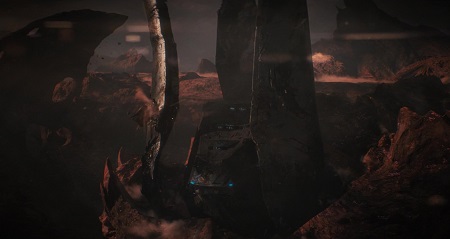
Star Trek: Discovery theories – week 3

Spoiler Warning: There are spoilers ahead for Star Trek: Discovery Seasons 1-3, Star Trek: Lower Decks, Star Trek: Picard, and other iterations of the Star Trek franchise.

I know, I know. If you’re in the United States you’re already able to watch the fourth episode of Discovery, so some of these theories may already be out of date if you’ve seen Forget Me Not. Sorry! There were several things going on this week that I wanted to talk about as well as Discovery, including my Halloween write-up of the Voyager Season 6 episode The Haunting of Deck Twelve. If you missed that one I hope you find the time to check it out, as Voyager can sometimes feel like an underappreciated series in the overall Star Trek canon.

So let’s look at People of Earth and consider some of the theories we’ve been able to craft or advance as a result of that episode. There were two debunkings, a couple of new theories, and minor movement on a couple of pre-existing ones. But let’s start, as always, with one theory that was confirmed.

Confirmed theory: Book and the other couriers have never been to Earth.

Book’s ship at warp.

Michael Burnham confirmed this early on in People of Earth. Because of how expensive dilithium is, a trip to Earth from whatever sector of the galaxy she and Book were in was impossible. Book, in fact, had never visited Earth. Though the outcome of this was not what I expected at all – having thought that Earth would still be the Federation’s capital – I was right about Book.

In a way this speaks to the state of the galaxy. With dilithium in short supply and the Federation mostly gone, people are confined to either a small area or, as in the case of the Coridanites we met in Far From Home, a single planet. Book’s ship is capable of warp, but without enough dilithium there was no realistic prospect of him travelling to Earth. Presumably, now that he’s arrived at Earth, he also has no way to get back to the Hima sector.

So that theory was confirmed. Next up we have a couple of debunkings.

Debunked theory #1: The tree is a memorial to the USS Discovery and/or Captain Pike.

Tilly with the tree in People of Earth.

This was a theory I postulated when we first saw a glimpse of this scene in the second Season 3 trailer. I had speculated that the tree would be some kind of memorial either to the USS Discovery – which Starfleet considers to have been destroyed – or perhaps to someone the crew knew, like Captain Pike. This was a hunch, really, based on the strong emotional reaction they seemed to have when they saw it.

However, the explanation was even simpler. The tree, which had been seen in The Next Generation, was in the grounds of Starfleet Academy, and several of the crew, including Tilly and Detmer, recalled it with fondness from their time studying there.

This theory could have been a neat connection to the life and friends that the crew left behind when they left the 23rd Century. However, the way it was done accomplished this goal too, and at the same time showed just how much time had passed.

Debunked theory #2: Hima is Terralysium

The planet Hima.

When Burnham arrived in the 32nd Century in That Hope Is You, she landed (alright, crashed) on the planet Hima. However, she had intended to arrive at the planet of Terralysium. I had speculated that the two planets were, in fact, one and the same and that Terralysium had, for some reason, seen its name change at some point in the intervening centuries. This wouldn’t be uncommon based on history!

However, in People of Earth Michael Burnham revealed that she had tried to find her mother, Dr Gabrielle Burnham, including by contacting Terralysium. It now seems obvious that the two planets are not the same.

It would have made sense to think that a planet – especially one that had such a small population of pre-warp humans – would have seen its name change, especially if it had come under the sway of some other power (like the Orion Syndicate). It wasn’t the case, though, and this theory is toast.

So those theories were debunked. Let’s look at some new theories that we have in the aftermath of People of Earth.

Number 1: Discovery Season 3 takes place in an alternate timeline – or a timeline that is going to be overwritten.

Burnham in People of Earth.

I’ve been reluctant to posit this theory. In the run-up to the season premiere I even wrote that I considered it unlikely, as it would further complicate the already-fractured Star Trek timeline. However, there are possible signs or hints we can see that could indicate Discovery Season 3 takes place in an alternate timeline, parallel universe, or different reality.

First is the absence of Dr Gabrielle Burnham, Michael’s mother. She’s nowhere to be found, and while there are possible explanations for that – as we’ll see in a moment – one possibility that remains in play is that Dr Burnham is in a different parallel universe from Michael and the Discovery crew. Specifically, she may have remained in the prime timeline – i.e. the main Star Trek timeline which runs from Enterprise to Picard – while Burnham and Discovery exited the wormhole in a different universe. Something similar happened to Spock in 2009’s Star Trek, so it isn’t entirely beyond the realm of possibility.

The second part of this theory – which is really a standalone theory all its own – is that the timeline where the Burn occurred and which led to the bleak 32nd Century that we see at the moment isn’t the “true” timeline. Time travel gets messy, but in short: if someone interfered in the timeline and caused the Burn, from Starfleet’s perspective that should never have happened. They would want to undo it in order to restore the “real” timeline, one in which the Burn did not occur.

If that’s the case, much of the rest of the season may be dedicated to figuring out who caused the Burn, how, why, and then travelling through time to prevent it from ever happening.

The reason why I haven’t discussed these theories before is that I would consider both of them to be huge storytelling risks. Discovery has always been part of the prime timeline, and jumping to a different reality would be a huge change. And secondly, telling a multi-episode story, perhaps one that lasts all season, only to undo or overwrite it could easily end up feeling like a waste of time. Star Trek has done this before, but only with individual episodes like Year of Hell or Yesterday’s Enterprise. Undoing or overwriting an entire season would be a much more complicated undertaking.

However, the possibility exists, so these theories are now included on the list.

Number 2: The spore drive is going to become Starfleet’s new method of faster-than-light propulsion.

The USS Discovery initiates Black Alert and jumps through the mycelial network.

With the loss of most of the galaxy’s dilithium, it seems that faster-than-light travel – at least in the former Federation – is difficult and costly. It’s certainly possible that other factions have developed non-dilithium travel methods, and in That Hope Is You we saw Book mention a couple of possibilities for that.

However, there’s also the spore drive. At the end of Season 2 it was strongly suggested that the existence of the USS Discovery and the spore drive would be covered up by Starfleet and/or Section 31, meaning that it’s plausible to think that by the 32nd Century all knowledge of it would have been lost – especially in the post-Burn chaos that engulfed what remained of Starfleet. But the spore drive doesn’t rely on dilithium, and allows for instantaneous jumps across the galaxy – if the technology was able to be rolled out, Starfleet could be back up and running.

This season we’ve not only seen the spore drive in use, but in People of Earth Stamets gave a technobabble explanation of the way it works to Adira, firmly cementing the spore drive as being in play for the remainder of the season.

While I would expect at this stage the bulk of the story to be about unravelling what happened with the Burn and perhaps finding a way to undo it or fix it, one possible outcome could be a slow restoration of Starfleet and the Federation by rolling out the spore drive to more and more ships. Reconnecting the scattered ex-Federation worlds and bringing them back together would be far easier with the spore drive, so it remains an option.

Number 3: We’ll meet Dax when Discovery arrives at the Trill homeworld.

The Dax symbiont.

The revelation that Adira has been joined with a Trill symbiont was interesting. The first trailer last year showed us the Trill homeworld, and ever since I’d been kicking around the possibility of the Dax symbiont making an appearance. Obviously we won’t see Ezri Dax, as Trill hosts seem to have similar lifespans to humans and Klingons based on what we saw in Deep Space Nine, meaning Ezri would not still be around in this era (barring some kind of stasis or time travel story that I just don’t consider a reasonable possibility). However, the Dax symbiont could, in theory, still be alive.

We just don’t know how long symbionts live. They can certainly live for centuries; how many centuries is unclear. It’s certainly possible that Dax could have survived this long, and it would be a wonderful way to tie Discovery to the wider Star Trek franchise.

So those theories were new. Next let’s look at the remaining theories from last time, some of which saw some minor movement this week.

Number 4: Lieutenant Detmer is going to die.

Detmer in People of Earth.

I debated including this theory again this week, because it seems as though the writers of Discovery are planning to go down a mental health/post-traumatic stress storyline with Detmer. However, in Far From Home we got a lot of possible hinting at a head injury or perhaps damage to her eye implant. Though it’s looking less likely that Detmer will die and more likely that we’ll see some kind of PTSD story for her character instead, the way it was set up in Far From Home still feels to me like she’s gravely injured. Perhaps that just means the storyline was not set up very well. But I want to keep this theory in play for a little while longer while we see what, if anything, will happen to Detmer.

Number 5: We’ll see the return of a character from a past iteration of Star Trek, such as Voyager’s Doctor.

The Doctor.

After visiting Earth, perhaps the argument could be made that this theory is less likely. However, if we are going to get the return of a classic character, it seems more likely that any Starfleet officer would be with the rump Federation, even if they’re human or originally from Earth.

Dax seems the most likely candidate right now, but as I’ve written on a number of occasions there are several others who could conceivably be alive and active at this time, including a backup copy of the Doctor as seen in the Voyager Season 4 episode Living Witness.

In short, just because we didn’t see any classic Star Trek characters when Discovery visited Earth that doesn’t mean we won’t if and when they link up with the remainder of Starfleet and the Federation.

Number 6: Booker is a Coppelius synth.

A crowd of Coppelius synths seen in Star Trek: Picard.

Everything we saw of Book this week suggests that he’s human, so in that sense we’re perhaps moving a step or two back from a theory which, let’s be honest, is a bit “out there!” However, we also saw nothing to rule out the idea of a synthetic origin for Book, and in some respects we could argue from a thematic perspective that his relationship with Grudge mirror’s Data’s relationship with his cat, Spot, in The Next Generation.

The abilities Book had in That Hope Is You – including strange glowing spots which could be technological in origin – are still unexplained. Burnham may well know more about Book, having spent at least some time with him over the past year. But for us as the audience, Book is still a mystery. Is he human? Possibly. Is he an alien, either from a familiar or new race? Possibly. Is he a synth, and if he is, could he be part of a synthetic civilisation founded on Coppelius? That’s still a possibility.

Number 7: Dr Gabrielle Burnham will make an appearance.

Michael and Gabrielle Burnham.

As mentioned above, Dr Burnham’s absence is strange in some ways. However, there are perfectly reasonable explanations for why she hasn’t shown up. Upon realising the future had been saved from Control she may have gone in search of the Federation. She and her Red Angel suit may have been captured by someone in this timeline. Or she may have ended up in a different sector of the galaxy.

Burnham was able to contact Terralysium, but as we just noted above, she and Book have only seen a small fraction of the galaxy due to their limited ability to travel. Thus it’s quite possible that Dr Burnham is alive in the galaxy somewhere, and will be able to reunite with her daughter.

Number 8: The Federation’s response to the Burn – not the event itself – caused its collapse.

A Federation fleet seen in Battle at the Binary Stars.

Captain Ndoye suggested that the reason the Federation left Earth was because some folks on Earth felt that, in the aftermath of the Burn, they were turning the planet into a target. With the cause of the Burn still unknown it’s possible this feeling wasn’t unique to Earth and was repeated elsewhere.

We are edging closer to seeing this theory confirmed, but I don’t want to say the matter is settled just yet. We haven’t met the rump Federation yet, and I’d like to hear their side of the story and why they think the Burn led to the Federation’s collapse, shrinking, withdrawal, or however you want to put it.

So those theories saw movement this week. As usual I’ll briefly recap my remaining theories so they’re all in one place. For a more detailed look at any of these, take a look at my first two theory posts, which you can find on my dedicated Star Trek: Discovery page.

Number 9: The ban on time travel is being flouted, possibly by the Federation.

Is this woman, seen in the Season 3 trailers, a Starfleet officer?

It’s impossible to un-invent a powerful, useful, weaponisable technology, no matter how hard you try. Considering how crappy the 32nd Century seems to be, are we convinced that nobody at all is using time travel to try to give themselves an advantage? Not the Dominion? Not the Borg? Not Section 31? Seems unlikely to me, though for production-side reasons of wanting to keep the timeline intact and to avoid overcomplicating the plot we might be told this is true!

Number 10: The Burn was a superweapon – perhaps one the Federation detonated.

Is this a flashback to the Burn?

The cause of the Burn is not known right now, and there are multiple possibilities as I discussed when I took an in-depth look at the Burn before the season started. One possibility that stands out, however, is the Burn being the result of a superweapon. If the Federation were facing an existential threat – such as one caused by the Borg or the super-synths from Star Trek: Picard – they may have had no choice but to use such a weapon. The setting Burnham and the crew find themselves in may thus be the aftermath of a Pyrrhic victory, one in which the Federation defeated a powerful adversary but at an impossibly high cost.

Number 11: The Burn was caused by one of the Red Angel suits.

Dr Gabrielle Burnham’s powerful Red Angel suit.

There are two Red Angel suits known to exist – Michael Burnham’s and Dr Gabrielle Burnham’s. The suits are very powerful, and it isn’t a stretch to think they could be weaponised or cause some kind of accident. In an age where time travel has been prohibited, they could also be the only surviving examples of time-travel tech. If someone nefarious got their hands on a suit, they could travel back in time and attack the Federation by, oh I don’t know, destroying most of their dilithium.

Number 12: Someone stole Burnham’s Red Angel suit.

The last we saw of Burnham’s suit in That Hope Is You.

After Burnham landed on Hima, she sent her suit back in time to set off the final Red Burst for Pike and Spock. Then she ordered the suit to self-destruct. It’s possible, as hinted above, that somehow this in itself caused the Burn. But it’s also possible that someone intercepted the Red Angel suit after it left Hima. The finale of Season 2 confirmed the presence of the final Red Burst, but that’s all we know. Since we didn’t see on screen the destruction of the suit, we can’t be sure that it was destroyed as Burnham planned.

Number 13: The Federation was in serious decline before the Burn.

Why are there so few stars on the Federation flag? Does this represent systems and races that have seceded or left the Federation? And if that’s the case, why does the decades-old, pre-Burn flag (that Mr Sahil owned) represent those secessions? Perhaps the answer is that the Federation was already in decline. The Burn may have been the final straw – but not the only straw.

Number 14: The Orion Syndicate controls the trading post on Hima – and may be a major power.

An Orion guard in That Hope Is You.

The trading post Book and Burnham visited on Hima had a number of Orions present, including working as traders and guards. In addition, in Far From Home the courier Zareh suggested to one of his goons that he would sell “to the Orions.”

The Orion Syndicate has been part of Star Trek going back to The Original Series, and it makes sense in a chaotic, post-Burn environment that they would be able to operate more openly – and they may have even become a major power.

Number 15: There will be a tie-in with the Short Treks episode Calypso.

Craft, the main character of Calypso.

We got a first hint at this when Zareh used the word “V’Draysh” to refer to the Federation, as this was a term first used in Calypso. If Calypso takes place in or around the 32nd Century there could be some further crossover, perhaps even seeing protagonist Craft show up. It does raise questions, however, such as why the USS Discovery was abandoned in a nebula.

Number 16: Mirror Georgiou will travel back to the 23rd Century.

Georgiou with Michael Burnham.

Georgiou was not planning to travel to the 32nd Century, but was aboard Discovery when it left due to fighting Leland/Control. She has expressed her appreciation for the chaotic, “free” nature of the future, but there could be a reason for her to travel back in time. Not least because she’s supposed to be the main character in the upcoming Section 31 series which is meant to take place in the 23rd Century!

There could be a reason for Georgiou to travel back in time, but if she’s to work with Section 31, the main one I can think of would be to warn Starfleet about the Burn and give them time to prepare and/or prevent it.

Number 17: We haven’t seen the last of Zareh.

Zareh.

Despite being quite content to kill all of Zareh’s goons, Saru balked at the idea of killing the man himself. Instead, he and Georgiou let him go, sending him out into the wilds of the Colony – despite being told by the locals that that’s a death sentence. However, we didn’t see Zareh die. And in stories like these, characters like Zareh tend to pop back up looking for revenge.

So that’s it. Those are my theories going into episode four, which, as already mentioned, may be available to watch by the time you’re reading this! Hopefully next week we can get back on track with review and theory timings so we don’t run up against a deadline again. I make no promises, though!

Discovery Season 3 continues to be fascinating, and thus ripe for finding new and interesting theories. I love that the story is still a mystery even after three episodes, and there are so many different ways it could unfold – including many I can’t even predict or imagine. The best television shows manage to do this, and just like Star Trek: Picard earlier in the year kept us on our toes right until the finale, Discovery is doing a great job of keeping its mysteries and storylines under wraps.

I’m having a fun time with Season 3, and one great thing about being so late with this week’s theories is that there isn’t long left to wait for the next episode! Check back in the coming days for my review and an update to this theory list.

Star Trek: Discovery is available to stream on CBS All Access in the United States, and on Netflix in the United Kingdom and elsewhere. The Star Trek franchise – including Discovery and all other properties mentioned above – is the copyright of ViacomCBS. This article contains the thoughts and opinions of one person only and is not intended to cause any offence.
Election night – gripping viewing?

Trekking with Dennis is based in Great Britain and does not endorse any American political party or candidate.

Ever since I was first able to vote when I turned 18, I’ve found election night coverage fascinating. Though the manner in which elections are conducted is very different in the United Kingdom and the United States, election night programming is remarkably similar on both sides of the Atlantic, with panels of self-proclaimed “experts” lining up to break down the incoming results, and politicians on hand to chart increasingly unlikely paths to victory for their party or preferred candidate. I still find election night programming absolutely fascinating, and stay up for hours and hours to watch it.

We’ve seen several recent elections go against expectations – here in the UK, the 2015 and 2017 election results were unexpected, as was the 2016 referendum result. And of course, in the United States the result of the 2016 presidential election came as a tremendous shock to all but a few pollsters and pundits. It’s difficult to get into the ins and outs of election night coverage without discussing the actual political implications, but what I’d like to try to do is examine election night programming itself rather than comment on either of America’s two presidential candidates.

The exit poll in the 2017 British general election came as a surprise to many – and was very accurate.

One of the things you hear on every one of these broadcasts – and often for weeks or months beforehand – is some variant of this expression: “this is the most important election in our lifetimes!” Gosh, that phrase irks me. I’ve lived long enough to have seen enough elections come and go – and enough politicians of all stripes voted in and voted out – to know that no one single election is that important. For Americans in particular, if you don’t like who you voted for you only have to wait a scant four years before you have the chance to unseat them. Even less than that when you consider the presidential primary season begins more than a year before election day.

Hyperbole aside, what really interests me are the statistics. The vote tallies are, of course, the main event, but seeing different areas broken down expertly into different voting blocs or constituencies is fascinating stuff. The sheer volume of data coming in can be overwhelming, which is where having the right presenter who’s able to explain what’s going on in a calm and easily-understood manner can make all the difference.

Though pre-election polling has been sketchy at best in recent years, exit polls have proven far more useful. The amount of time and attention required to properly craft an exit poll on such a large scale is almost unimaginable, yet they routinely prove to be accurate on election night. Here in the UK, exit polls are kept sealed until the moment election day is over – 10pm sharp. That’s when the broadcasters make their big reveal and their predictions, and even if the result seems a given, the moments leading up to it are tense!

Pre-election opinion polling for this year’s American presidential election.

Nowadays the visuals and graphics used by news organisations are great, too. Gone are the days of the “swing-o-meter,” a crude cardboard arrow attached to a board! Instead we’re greeted by green-screen projections and fancy computer graphics, with presenters making use of huge touch screens to look at incoming results or polls in specific constituencies or districts.

Election night programming is, most of all, designed to be informative. Most people are tuning in having cast their ballot and in nervous anticipation, waiting to see if their favoured (or least-hated) candidate or party will score a big win. And the programmes have to cater to this audience, providing as much information in as nonpartisan a manner as possible. But that doesn’t mean that election night can’t be entertaining too, and if you’re a statistics nerd like I am, the way the results are discussed and debated – and the fancy graphics and technology the major broadcasters have for this purpose – is all part of the fun.

In a kind of bloody-minded way that I think a lot of Brits have, there’s fun to be had when things don’t go to plan. Watching politicians squirm as they see their party sinking ever-closer to defeat can be heart-wrenching… or pretty funny, depending on how you look at it (and how apathetic you’ve become to the actual outcome!) Politics is something that affects all of us, of course, but at the same time, I find the passion behind it to be a younger person’s game. I certainly don’t subscribe to the argument that says this election – or any election at all, for that matter – is “the most important in history,” as I’ve seen enough politicians come and go to know that no matter who wins, it’s only a matter of time before they’ll be out of office too. Though I have my political preferences (as indeed we all do) I’m no longer as passionate about seeing any of them win or lose as I was when I first sat down to watch an election night programme after casting my first ballot.

Donald Trump was not expected to win in 2016 – yet he surprised the pundits and polling organisations and defeated Hilary Clinton.

The other fascinating thing about election night programming is how long it goes on. It can take many hours for the results to trickle in (or longer, in some cases) meaning that the programme’s presenters have to find things to talk about and keep the show going for all of that time. After the excitement of any exit poll news, there’s often a lull while the votes are counted, and it can take time before the first official results are announced. There’s a skill to keeping viewers interested during those moments, and as well as being informative, presenters have to be at least somewhat entertaining.

I know it’s an unusual kind of programme to get excited about, and I also realise that for most viewers election night is less about the broadcast itself and more about the information presented about the politicians and political parties. But I think it’s possible to view election night broadcasts the way one might watch a major sporting event – it can be tense and exciting, with moments of high drama.

I’ll be tuning in tonight to see how Trump and Biden get on. And it’s quite likely that, whatever the outcome, it’ll be a fascinating broadcast.

The United States presidential election takes place on the 3rd of November 2020. Election night programmes will be broadcast on many channels and networks both in the United States and around the world. Trekking with Dennis is based in Great Britain and does not endorse any American politician or political party. This article contains the thoughts and opinions of one person only and is not intended to cause any offence.
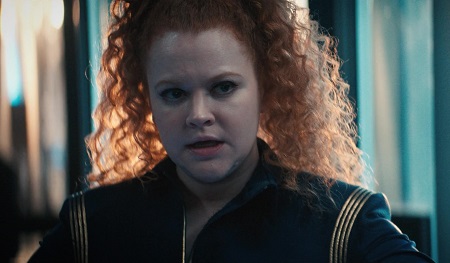
Star Trek: Discovery review – Season 3, Episode 3: People of Earth

Spoiler Warning: There are spoilers ahead for Star Trek: Discovery Seasons 1-3, Star Trek: Picard, Star Trek: Lower Decks, and for other iterations of the Star Trek franchise.

The first two episodes of this season of Star Trek: Discovery served as our introduction to the 32nd Century, and both were pretty good. They provided background to a setting very different from Star Trek’s past, which is largely due to an as-yet-unexplained event known as the Burn. Episode three, People of Earth, continued the world-building seen in the first two episodes of the season, but definitely took the story in a darker direction. It also marked what seems to be a significant change in the character of Michael Burnham, who, after having spent approximately one year in the 32nd Century before Saru and the rest of the crew arrived, has had to adapt to a different way of life.

People of Earth dropped a bombshell that I don’t think anyone was expecting, and by doing so made the already-bleak setting feel so much darker. The Burn, as we know, had a catastrophic impact on the Federation and the wider galaxy, but the idea that Earth, one of the founding members of the Federation, would have withdrawn and become insular was a shock, one that was unimaginable even knowing how bad things were for the galaxy. It’s certainly the biggest revelation of the season so far, and raises the question of just who remains part of the Federation if Earth itself – which was the home base of Starfleet and where the Federation’s government was situated – has withdrawn from the organisation.

The USS Discovery approaches a militarised and well-defended Earth.

But we’re getting ahead of ourselves! One of the points of criticism I’d level at an otherwise-outstanding episode is that it wasn’t always made clear how much time had passed. In moments we go from Burnham’s arrival aboard the ship to making repairs to jumping to Earth, and the way the episode was put together makes it feel as though all of these events took place over the span of just a few hours. But that would mean that, for Saru and the crew, they haven’t had time to take a break since the battle against Control’s armada at the end of Season 2. Other events would seem to hint at some time having passed, but it was a little confused in that regard.

Lieutenant Detmer, who appeared to be gravely injured until the final seconds of last week’s episode, now appears physically recovered – though perhaps her psychological state is not so settled. If Discovery plans to go down a mental health route with her I think that could be interesting, but if that’s the case I have to say that I don’t feel it was set up very well at all last week, as she spent her scenes in that episode looking injured, concussed, or perhaps suffering some kind of implant malfunction. I don’t usually address other fan theories here on the website, but one I heard repeated several times over the last week or so has been that Detmer may have been infected by Control (in the way Ariam had been in Season 2). I don’t agree with that at all, simply because it seems as though Discovery is moving on with a new story and leaving Control behind. While we may get the occasional mention or reference to events from Season 2 (as we even did this week) a resurgence of Control is something I’m sure we can rule out as a story point.

Lieutenant Detmer in People of Earth.

Jonathan Frakes has directed some of my favourite Star Trek episodes – including episodes of Picard earlier in the year. And he was back for his first of two directorial outings this season. Overall I enjoyed People of Earth, not just for what it brought to the table in terms of the overarching story of the season, but for some of its character moments, particularly involving Burnham and Saru.

After the mandatory recap (which included that truly awful line from That Hope Is You about how dilithium “just went ‘boom'” that I’m still mad about), People of Earth begins with a reunion between Burnham and the rest of the crew. After last week’s revelation that she arrived over a year ago I was expecting it to mean more to her than to them, if that makes sense. As relieved as the crew must surely be to see Burnham, from their point of view they only saw her a few hours ago at most. She’s the one who’s spent so long apart from them, and Sonequa Martin-Green put in a wonderful performance that really showed how Burnham must be feeling in that moment.

Saru and Burnham reunite in Discovery’s transporter room.

In fact, everyone in this scene gave an outstanding performance. Mary Wiseman was on form as Tilly, Doug Jones – who has to act through heavy prosthetics and contact-lenses – managed to convey plenty of emotion, and I liked the way Burnham was greeted by Stamets; a less intense, but just as emotional, moment. The only people missing were Nhan and Dr Culber, who were absent for the entire episode. While he wouldn’t necessarily have had much to do in the rest of the episode as the story was focused elsewhere, it’s odd to me that Culber at least wasn’t present during this reunion scene. Is a separate reunion planned for Culber and Nhan next time?

Burnham runs the gamut of emotions, going from shock as she learns of Discovery’s arrival through to her appearing on the transporter pad to relief and being overcome with joy at the survival and reappearance of her friends. It was a touching scene, accompanied by a great musical score.

Burnham and Stamets are reunited.

Saru and Burnham have a conversation in the corridor while making their way to the bridge, and we’ve learned that Burnham has – in her words – become a courier. How, exactly, she was able to manage that without access to a ship of her own or any supplies is left hanging, but later scenes strongly imply that what she should have said was that she became an assistant courier, working alongside Book. It’s still possible, because of the ambiguous wording, that we’ll learn in a future episode that Burnham spent some time working alone, but in a galaxy lacking in dilithium to power its starships, would anyone have hired Burnham and outfitted her with a ship? This is a complete tangent, but in a way this moment of what is really just awkward scripting kind of feels like Burnham exaggerating her own credentials. That’s something we might’ve expected from the Burnham of the Season 1 premiere, who was arrogant and seemed to revel in being told how special she was, not the Burnham we’ve come to know over the subsequent two seasons. However, it is also worth noting that Burnham has changed in her year in the 32nd Century, and perhaps this is part of it. Or, as I suggested, it was just an awkwardly-worded line in Burnham’s monologue.

Burnham tells Saru that working as a courier was the best way to find out what was going on with Starfleet and the Federation, though it seems that she hasn’t made very much progress beyond a single partly-corrupted recording that we’ll see in a moment. I’m pretty confident we’ll see some more of Book and Burnham’s escapades in later episodes, but I wonder how exactly she went about her search. Book, after all, has his own mission – saving the space-worms. And with dilithium the ultimate bargaining chip, was Book content to allow Burnham to trade dilithium for information, or to allow her desire to contact the Federation to dictate their travel schedule?

Burnham and Saru catch up.

People of Earth is – quite deliberately – a story that conceals from us as the audience quite a lot of information. Unlike with things like the Burn, however, where nobody knows what happened, we’re in a situation where Burnham has this knowledge and experience that we don’t have; we didn’t follow along with her story over the last year of her life, and thus, in a way, it’s like we’re picking up Star Trek: Discovery Season 4 having not seen Season 3. We’re left wondering what happened to Burnham for all of that time, the passage of which was communicated through a single time-lapse sequence that lasted barely two minutes. When Book and Burnham talk about their adventures, as they do several times across the episode, we’re aware that we missed those events. Structuring a story in this way is a risk, and because Burnham can already feel like someone who is aloof and selfish sometimes, a story which gives her an advantage not only over the rest of Discovery’s crew but also over us as the audience could backfire and make her difficult to root for. We’ll have to see how it’s handled in subsequent episodes, but it’s definitely a concern.

Burnham promised Book some dilithium in exchange for taking her to Discovery – and to his credit, Saru immediately promises to honour the agreement she made. On the bridge, Burnham breaks the news to the crew about the Burn. We got a little more information here than we had in the past, so let’s cover that briefly. Firstly, she offers two possible explanations: an accident or a natural disaster. In my opinion, she’s missed out a very important third possibility: a weapon or an attack. When she says that it affected all the known galaxy’s supply of dilithium simultaneously, Stamets pipes up to say that nothing should be able to do that, at least not all at once. Finally, Burnham believes that the Burn killed “millions” of people. And while that is certainly a large number, in the context of galactic-scale civilisations and empires with potentially trillions of inhabitants, it doesn’t seem as bad as it could’ve been.

Burnham explains what she knows about the Federation and the Burn.

Finally, Burnham confirms a theory I’d been kicking around that Book (and, by extension, other couriers in this part of the galaxy) are too far away from Earth to know what’s going on. Burnham had never been able to get enough dilithium together for a trip, but of course Discovery’s spore drive means the trip can be made in an instant.

The spore drive has been part of Discovery since the first season, but the show’s place in the Star Trek timeline made it difficult to use effectively, as it not only allowed for instantaneous travel across tens of thousands of light-years, but also between parallel universes. It was an incredibly useful piece of technology, and one that would have had many applications in Star Trek stories set after Discovery, not least in Voyager, whose crew could have been back home in the Alpha Quadrant in time for dinner if they had access to it. It’s also perhaps the only realistic way for a ship as old as Discovery to be of any use in this time period. Perhaps what we’ll see later in the season is a widespread rollout of spore drives across Starfleet! But I’ll save such things for my theory post.

Black Alert!

Saru (quite generously, in my opinion) offers to discuss with Burnham which of them should assume the captaincy of Discovery. However, I think we can all agree that there was only one choice – and that’s him. He takes the captain’s chair in a touching scene – but one that was slightly let down by his being out of uniform! Burnham can be a good officer, despite her mutiny in the series premiere. And she’s a character I can often get behind in terms of the stories Discovery has told, even if I’m not always sold on the way the show tries to put her at the centre of everything! But making her captain would not have been the right move, and I’m glad that the creative team behind the series recognise and appreciate that. Burnham is many things to Discovery, including its main protagonist, but I would never sit her in the captain’s chair.

After the opening titles we get a brief scene outside the ship showing repair work is ongoing. In addition to the “worker bee” shuttlepods, there were also some cute little robots that remind me very much of DOT – the robot protagonist of the Short Treks episode Ephraim and Dot. When we saw these robots in the opening titles last week I wondered what they were and how they’d make an appearance, and it seems as though they’re shipboard robots used for maintenance and repair – much like DOT.

A robot working on the USS Discovery.

Last week’s episode saw Tilly step up. And here, she’s once again the emotional core of the episode. We encounter her as she puts together a makeshift memorial wall – whether all of the crewmen and officers whose badges she places died during the trip to the future or if they’re simply those who remained behind in the 23rd Century is not clear. It seemed like a lot of people, though, and since the crash didn’t seem that bad I suspect it’s the latter. As Burnham approaches, Tilly speaks of her family and everyone else “left behind” who have now been dead for centuries.

With all of the excitement of arriving in a new century and a new environment, I appreciated the attempt to slow things down and remember those left behind. Tilly is a great character to initiate this, and we’ll see it again at the end of the episode. It would have been the perfect opportunity to talk about some characters we got to know across Seasons 1-2, like Tyler or Pike, but there will be time for more remembrances later, I suppose.

Tilly takes a moment to consider those left behind.

After Tilly notes that Burnham seems “lighter” after spending a year in the 32nd Century – which, if nothing else, means she’s changed – we get Book’s reintroduction after being absent last week. This is his first time aboard Discovery, and his introduction (after a transporter cycle that must be longer than he’s used to!) is with Georgiou, who gives him a short grilling as part of her Burnham obsession.

Book is paid in dilithium for transporting Burnham to the USS Discovery, and it seems like the ship isn’t going to run out of the rare mineral any time soon. Book expresses surprise at how much they have; ominously this will make Discovery a target for anyone seeking dilithium unless they can keep it hidden. The relationship between warp engines and other systems aboard starships has never been fully explained, but it may well be the case, as past Star Trek stories have hinted, that dilithium powers more than just warp engines. Discovery may be able to travel via the spore drive, but if all its dilithium were stolen the ship could lose all power.

Discovery’s dilithium vault.

Burnham then convinces Book to accompany Discovery to Earth, first with the suggestion of space-worms perhaps in need of help, then with the promise of a clean slate (presumably the Orions are still looking for him), and finally with an appeal to help her and Discovery conceal their supply of dilithium. Though I liked that Book wasn’t just willing to go along right off the bat, he didn’t take a lot of convincing!

Burnham and Saru talk in the ready-room – which still features the broken desk. Saru is initially unconvinced when Burnham suggests they place their dilithium aboard Book’s ship so it can be cloaked, and with several characters now noting changes in Burnham – something she acknowledges herself in this scene – I wonder if the story was trying to set up a “Burnham and Book want to steal the dilithium” fake-out. If that was the case I don’t think it worked; it never felt like a realistic possibility that either of them would steal from Discovery. However, there was certainly a sense that more was going on than what we were seeing, and Saru’s perceptiveness about Burnham and his unwillingness to trust her blindly are all good traits for a captain to have.

Burnham admits she has changed over the last year.

Saru continues by saying he had planned to offer Burnham the role of first officer – “Number One,” as he puts it, which was a nice touch in an episode directed by Jonathan Frakes! Burnham asks for more time, and I liked her speech in which she essentially admits it was hubris on the part of herself and the crew of Discovery to merely assume that the future they were heading to would be the way that they imagined: with an intact Federation. There’s a good point in there about how the future is always subject to change, and how it can be dangerous to make such assumptions. We saw this in a way last week with Tilly and Saru strolling into the bar proclaiming to be from Starfleet without realising how bad the 32nd Century was, and this moment with Burnham was an admission of that. I find myself agreeing with Saru, Tilly, and others than Burnham has changed – is it a change for the better?

Saru once again demonstrates his suitability for the captaincy as he talks about being responsible for everyone aboard Discovery. As a duo, I can absolutely see how Saru and Burnham could work well as a captain and first officer – provided Saru continues to show he has the strength of character to overrule her when she’s wrong. He’s been doing that since the Season 1 premiere, so he’s certainly capable of it.

Burnham and Saru talk in the ready-room.

Saru eventually agrees to allow the dilithium to be stored aboard Book’s ship. But he enforces conditions: the ship will be in Discovery’s shuttlebay, under guard, and Book himself will not be allowed aboard until after they reach Earth. Given he doesn’t know Book at all, all of these conditions seem perfectly sensible, and with Burnham’s agreement Book’s ship is brought aboard in a nicely-done CGI sequence.

On the bridge Burnham seems initially uncomfortable to be back at her post – but perhaps it’s less discomfort and more a sense of being overwhelmed? In either case, she snaps out of it as Book arrives on the bridge. Owosekun and Detmer exchange glances after checking him out, and that was cute. The ship is ready for the jump, and Saru politely orders Black Alert.

The USS Discovery near Saturn.

Having previously planned to travel to “outside of Earth’s scanning range,” Discovery arrives near Saturn. How short is Earth’s scanning range supposed to be, exactly? I know this is another nitpick, but even in Star Trek stories set in the 23rd Century it was possible for Starfleet on Earth to scan way out into the galaxy to detect, for example, the V’Ger cloud or the whale probe. The idea that 32nd Century Earth can’t scan as far as Saturn seems a little silly, but as a contrivance to allow Discovery to jump close to Earth – and, as we’ll see in a moment, to arrive near Saturn – I suppose we can let it slide!

It doesn’t take long for Discovery to travel from Saturn to Earth, and after the excitement of seeing Earth again, the mood quickly changes as the planet activates its defensive forcefields. Things get immediately worse, as Discovery is hailed by an organisation called the “United Earth Defence Force.” United Earth is a term used often in Star Trek; referring to a one-world government of Earth in the years before Star Trek: Enterprise. Saru doesn’t seem sure of what to do; Burnham shoots him an “I-told-you-so” type look, even though she didn’t know about Earth.

Captain Ndoye of the UEDF.

Saru offers the UEDF a cover story – Discovery was on a long-term mission and has managed to make it back to Earth at sub-light speeds. Captain Ndoye, the UEDF commander, seems unconvinced, however. She and her team of inspectors beam aboard Discovery – possibly beaming right through the ship’s shields. The 32nd Century transporters that we’ve seen are pretty cool. The almost-instantaneous beaming and the “pop” effect all work together to be visually interesting, yet at the same time feel like an evolution or progression from the transporter technology of the 23rd/24th Centuries.

As mentioned at the beginning, this was a real shock. We had been expecting Discovery and Burnham to travel to Earth to find the heart of the Federation; it’s capital. Instead we learn that Earth itself has withdrawn and is no longer a Federation member. Not only that, but as we’ll see with Wen, Earth appears to care little for any of its colonies within the Sol system. This is even more of an insular, nationalist move than we might have expected, and continues a trend in Discovery of criticising nationalism and isolationism as political concepts. Relevant, you may say, considering the big event taking place tomorrow!

The USS Discovery in orbit of Earth.

Book and Burnham are able to slip away from the bridge while Saru and Ndoye have their conversation, leading Random Blonde Bridge Officer to step up to her console. RBBO – as she shall be known – looks vaguely familiar as she appeared in Season 2, though I can’t remember her name. Though she didn’t have any lines in this episode she seemed to be a constant presence, the camera lingering on her at several moments. Book and Burnham managed to successfully sneak away before Ndoye and her inspectors boarded the ship.

Ndoye is a no-nonsense “police officer,” which makes for a interesting character. I liked that she gave Saru no time to prepare for the inspection, beaming her staff directly to the bridge and to main engineering. This kind of character can make for a flat antagonist, but her motivations in the post-Burn environment were sufficiently fleshed out that everything she did – and the manner in which she conducted herself – felt natural.

The inspectors board Discovery.

After a short montage of the inspectors – including Adira, who we’ll come to in a moment – beaming aboard, Book and Burnham take a moment in her quarters to get changed into Starfleet uniforms. Burnham makes the valid point that they need to blend in with the inspectors aboard, and I don’t really get Book’s reluctance. He’s supposed to be a “do whatever’s necessary to survive” kind of post-apocalyptic character, and it makes obvious sense to get changed and blend in. Why wouldn’t he do so? Being a “badass” isn’t just about dressing up in a leather jacket, and it seems to me that a character like Book would be willing to do something as simple as dress up for the sake of not drawing attention or causing a problem.

It was touching to see Burnham get her uniform back, even if it is just part of a ruse. As she put her badge on, it was the culmination of a slow sequence accompanied by a great soundtrack. Book doesn’t look half bad in uniform either, though there was less emotion attached to his dressing up than there was for Burnham! Outside in the hallway, Burnham meets up with Georgiou and the two have a proper conversation for the first time. Georgiou is the third character to note a change in Burnham, suggesting she prefers the freedom of life outside of Starfleet and the lack of structure and rules that a chaotic 32nd Century offers. In this scene, for the first time since Mirror Georgiou came aboard back in Season 1, it felt like the dynamic between these two characters actually worked. Georgiou is teasing and tempting Burnham with “freedom” – but what she really means is “anarchy.” Georgiou wants a kindred spirit, and of all the Discovery crew, she sees the greatest chance for someone like that in Burnham. Much of her Burnham obsession can feel out of place, and I haven’t been shy on calling that out. But here, in this scene at least, her relationship with Burnham works.

Georgiou – dressed as an Admiral, of course – and Burnham.

Burnham is summoned to the ready-room again, where Saru and Ndoye are midway through a conversation. After explaining that, in the aftermath of the Burn, Earth turned inward for self-preservation, Ndoye drops the bombshell that it’s been over a century since Starfleet or the Federation were based on Earth; Earth has withdrawn from the Federation.

Saru and Burnham are, of course, shocked by this revelation, as they should be! Captain Ndoye also suggests that a majority of ships lost to the Burn were Federation, which is interesting as it may hint at the survival of other interstellar factions like the Romulans, Cardassians, or Klingons. Though in such a scenario, why those factions – and their faster-than-light technologies – would not be a greater presence in the galaxy is not clear. The Klingon homeworld is depicted as being less than 150 light-years from Earth, for example, so if their technology were Burn-proof… where are all the Klingons? This revelation feels like it should be a step towards understanding the Burn, but so far it’s raised more questions than it answered!

Captain Ndoye in Saru’s ready-room.

On the plus side, Captain Ndoye seems convinced that Saru, Burnham, and Discovery are not out to steal from Earth, which does see a temporary drop in the tensions between them. At the very least we can now say that Ndoye is not an antagonist – though I was still concerned about the inspectors potentially discovering the ship’s supply of dilithium. However, she isn’t finished dropping bombshells! The Admiral Burnham hoped to meet – whose transmission she picked up – is dead.

In main engineering, Stamets and Tilly are annoyed by the arrival of the inspectors – including Adira. Adira goes on to look over the spore drive equipment, but before they can get too far, their inspector boss tells them that their job is to “inspect, not engage.” It seemed to me that Adira was inspecting just fine, but I suppose all the inspectors are really looking for is dilithium; the ancient tech and mushroom spores are of limited interest to them if they have such a narrow remit.

Adira in the spore cube.

Though Stamets is initially hostile to Adira, he will soon warm up to them. Adira’s introduction was great. They come across as over-zealous in their inspection duties, but not in a manner that would make us – or their colleagues – suspicious, and they aren’t as standoffish or openly aggressive as any of the other inspectors. Despite Stamets’ initial reaction, Adira is presented sympathetically.

Much was made in pre-release commentary of Adira as Star Trek’s first non-binary character, and they’re played by non-binary actor Blu del Barrio. So it was a great surprise to me to see Adira referred to as “she” and “her” throughout People of Earth. Is this mis-gendering? Kind of yes, but at the same time I suspect it’s being set up so Adira can have a coming-out moment in a future episode, perhaps explaining in more detail their non-binary nature and pronoun preference in a way that – for whatever reason – was considered not possible to accommodate in this episode. However, as someone who follows Star Trek news it was odd and even slightly uncomfortable to see Adira mis-gendered for the whole episode. Blu del Barrio, along with fellow Season 3 star Ian Alexander, who will be Star Trek’s first trans character, even hit the mainstream press for their roles in the run-up to the season, so something definitely felt off. If they’re saving it for a later episode, perhaps after Adira becomes more comfortable with the crew, I suppose that could work. But in the future Star Trek depicts, would coming out as non-binary be a big deal, or would folks in the 23rd or 32nd Centuries just accept right off the bat? I’d like to think we’re moving in that direction now, let alone in a thousand years. But as I’ve said several times across these opening three episodes, I’m willing to wait and see what Discovery has in store.

Tilly and Stamets meet Adira.

On the bridge, Discovery has detected several ships inbound. These are Wen’s vessels, the raider Captain Ndoye feared. Panicking, she attempts to withdraw to Earth, telling Saru that Discovery’s request to visit has been denied. However, something is preventing the inspectors from transporting. This was a great setup, as it forced Ndoye and Saru to work together, butting heads initially. Ndoye tells Saru to take his fight with Wen away from Earth, or risk starting a war. Is it fair to call a planet versus a handful of ships a “war?” We will subsequently learn Wen’s origin and that he’s from a larger group of people, but everything about the way he is introduced here suggests he and his ships are a small collective of pirates. If it’s so easy for Earth to “shoot them out of the sky,” why have they not done so already? I know… I’m nitpicking again!

We get another Book-Burnham moment that feels like we skipped something much more interesting. Burnham tells Book she has a plan to fight Wen, referencing a mission or adventure they had on Donatu VII. Donatu V was mentioned in The Original Series and is supposedly near to Deep Space K-7 (where Mudd sold the crew Tribbles). Whether these two planets are related is unclear; if they are it would suggest Book and Burnham have been relatively close to Earth/Federation space in the past year. I still don’t really like this sense of having missed so many of Burnham’s adventures, and I hope we’ll see more of them in future episodes.

Burnham has a plan.

I liked Book saying that he’ll accompany Burnham because he’s worried about Grudge (his cat). And in line with the changes to Burnham everyone is picking up on, she doesn’t tell Saru or anyone else what her plan is. She says she’ll apologise after instead of asking for permission. And I’m not sure how well this kind of change works. It took Burnham a long time to recover from her stupidly bad decision to mutiny in the Season 1 premiere, not just within the show but to us as the audience as a relatable and likeable protagonist. Sending her down a route of “I know best, I’m so smart, I don’t need to follow the chain of command” could, if not executed perfectly, end up feeling like a character regression, and worse, one that amplifies and exaggerates Burnham’s worst traits. Change is good, and giving her an arc and development and adapting to a very different environment are all potentially good things for her character. But I’m not sure that a whole season of “Burnham the renegade” is going to work.

Stamets and Tilly figure out the cause of the inspectors’ transporter malfunction – it was Adira who sabotaged them. The camera work in this scene was neat, circling around the pair as they went through Adira’s actions and motivations, figuring out how smart they are and how they’re several steps ahead of them.

Tilly and Stamets work out what Adira did.

Meanwhile Burnham and Book have taken off in Book’s ship, flying straight at the raiders with all of Discovery’s dilithium. It was obvious that Burnham was up to something; she was neither planning to bribe the raiders with dilithium nor steal the supply for herself and Book. However, her actions catch Saru completely off-guard, and for the first time this season he seems overwhelmed by being in command and unsure of his next move, at least for a moment.

Georgiou immediately realises Burnham’s plan; like her, she can think outside of Starfleet regulations. Saru can’t, and in a way that’s something Burnham is counting on as part of her plan. We get a neat scene aboard Book’s ship with Grudge, and it’s clear from a story he tells about how upset he was when she wouldn’t look at him how much he loves her. He even looks at her with affection while talking to Burnham – in the middle of a very complicated and dangerous mission! As a cat owner myself I can appreciate that, and I think we see the real genius of giving Book a cat as his dependent; it humanises him.

Book and Grudge.

Wen hails them, and Burnham offers Discovery’s dilithium. Meanwhile Captain Ndoye has ordered her colleagues in the UEDF to fire on Book’s ship. Georgiou tells Saru that he has only one option if he wants to protect Burnham and the dilithium, but Saru hits back. “Starfleet does not fire first!” he proclaims angrily, and this line is more than just an “optimistic future” Star Trek expression. It stands in direct contradiction to Burnham’s actions in the season premiere. Is this Discovery making up for past mistakes? It certainly feels like it. Doug Jones delivers the line pitch-perfectly, and if there were doubts about Saru’s ability to command moments ago, they evaporate in this moment.

At Saru’s command, Discovery is positioned between Earth’s defence platforms and Book’s ship, despite Detmer’s objections and the general chaotic nature of the bridge. As mentioned, it seems like the writers are trying to go for some kind of mental health/post-traumatic stress story with Detmer, and this was another example of it. To Discovery’s credit, for a 930-year-old ship she takes two quantum torpedoes like a champ.

Discovery is hit by two quantum torpedoes.

It was a nice callback to The Next Generation films/Deep Space Nine to use quantum torpedoes, but in a way it would have been just as interesting to learn that there are different and more advanced weapons in the future. Discovery takes damage, including losing shields, but there are no major hull breaches as far as I could see, and I don’t think anyone will have lost their lives in this attack.

On Book’s ship, the pair warn Wen that Discovery can’t survive another hit, meaning the next shots from Earth will come for him. He agrees to lower shields to receive the dilithium. Burnham and Book work very well together, and the console aboard his ship is neat. Presumably made from the same kind of tech as the reprogrammable matter we saw last week, it has a sleek, futuristic look that’s very different from anything we’ve really seen in Star Trek before. At the same time, though, the console shape and the viewscreen give the bridge area of Book’s ship enough familiarity as to not seem entirely alien; it could be seen as an evolution of past Star Trek vessels. Oh, and I adore how nonchalant Grudge is as she just sits on the bridge console. What a beautiful cat!

Grudge, Book, and Burnham speak to Wen.

The chaos on Discovery’s bridge continues for a moment, with Saru, Ndoye, Georgiou, and Detmer all arguing about what to do next. Suddenly the raiders power down their weapons, and Burnham enters the bridge – having somehow bypassed the transporter interference! She has her prize: Wen, the raider leader, having captured him when he lowered his shields.

After some initial arguing between Wen and Ndoye, it’s revealed that Wen is not an alien but is in fact a human wearing an elaborate costume/mask. Appropriate, perhaps, for an episode that aired so close to Halloween! But again, where are Earth’s sensors? Or Discovery’s for that matter? Nobody thought to scan Wen’s ship or Wen himself to find out what species he is? I know it’s a bit of a nitpick again, but this is someone that has supposedly been bothering Earth for months if not years, and they never bothered to take a proper scan of him, his ships, or anyone else? It starts to strain credulity when we know how detailed Starfleet sensor scans could be even in the 23rd Century.

Wen unmasked.

It turns out that Wen is from Titan, which is one of Saturn’s moons. The human colony there is suffering after losing one of their habitats and much of their food production to an accident some years previously, and that’s why he turned to raiding. The revelation shocks Discovery’s officers, but also takes Captain Ndoye by surprise, as she assumed Titan was fine and self-sufficient just like Earth.

In true Starfleet fashion, Saru and Burnham manage to be peacemakers, bridging the gap between Ndoye and Wen, who agree to work together to assist one another. In this moment we see the beginnings of a restoration of the Federation, which I know sounds like a big claim! But Earth has, according to Ndoye, stood independently for over a century. This is the first time they’re willing to reach out and work with another group on another world, and even though it’s baby steps compared to what the Federation was, it’s something – a step in the right direction. If Saru and Burnham can achieve this, there’s hope to achieve further dialogue and reconciliation with other Federation worlds and ex-members.

Saru and Burnham: peacemakers.

Stamets has managed to track down Adira, who is in one of the jeffries’ tubes. They admit to the sabotage when Stamets reveals what he knows, but want to know more about the spore drive. Stamets is happy to oblige, of course, and explains how the spore drive can be used for faster-than-light travel between two points using the mycelial network.

Stamets also reveals that he and the ship are from the past – did he get permission for that from Saru? Luckily it doesn’t matter; Adira isn’t about to get them in trouble. They sabotaged the transporters to spend more time aboard the ship, looking for traces of Starfleet and the Federation. The music used for this sequence with Adira and Stamets was really cute, a light-hearted, sweet little tune that I hope we hear more of in future stories. It suits Adira very well.

Adira is confronted by Stamets.

Adira, as it turns out, is Admiral Tal, at least partially. Tal was a Trill, and Adira is the new host of the symbiont. We’d seen in The Next Generation that it was possible for a human – Riker, in that case – to serve as host to a Trill symbiont, and apparently that’s what happened to Adira. Captain Ndoye agrees to allow Adira to remain aboard Discovery as they search for the remnants of the Federation and Starfleet, and resolves her argument with Saru.

Burnham and Saru have another heart-to-heart following Burnham’s escapades with Book and the dilithium. Despite what she did, Saru is still content to offer her the first officer’s position. The line that “trust must remain an assumption between us” was very clever, and again Doug Jones is just wonderful in his delivery, rebuking Burnham but doing so in such a calm manner. He sounds not angry but disappointed, to use that old cliché. As they stand over Georgiou’s telescope in the ready-room, Burnham accepts the position.

Discovery has a new captain and first officer!

Book prepares to depart Discovery, paid a handsome reward in dilithium no doubt. He will remain in the vicinity of Earth, at least for now, and presumably plans to continue his mission to save the space-worms that we saw in That Hope Is You. We certainly haven’t seen the last of him – David Ajala is set to be a main character this season – so it isn’t clear what will happen next for Book, or how we’ll see him reunited with Discovery. However, I’m sure it will be done in a relevant way that advances the story!

In the episode’s closing scenes, Tilly, Detmer, Owosekun, Bryce, Rhys, and RBBO have beamed down to Earth. They visit what used to be Starfleet Academy, and share a moment. A large tree in the Academy grounds – which we saw in The Next Generation – is still standing after all this time, an they appreciate that it represents a connection to the world – and the people – that they left behind.

Tilly and the tree.

So that was People of Earth. An interesting episode that doesn’t really answer a lot of questions, but certainly does a lot to build up the 32nd Century setting. We also got the second story of Saru and Discovery lending a helping hand and resolving a conflict; following Starfleet’s principles even when Starfleet itself is absent – just like a certain Captain Janeway once did in Star Trek: Voyager.

It was a good episode that took the story of Season 3 to unexpected yet genuinely fascinating places, and I had a good time with it. There were some minor points I could nitpick, but none that really overwhelmed or significantly harmed the story the episode wanted to tell. For an episode directed by Jonathan Frakes I think there were three references to Riker: Adira being a human host for a Trill symbiont, as Riker had been in The Host from Season 4 of The Next Generation, Saru and Burnham using the phrase “Number One,” which was Picard’s nickname for his first officer, and the most obscure one, perhaps, was that Wen was from the moon Titan, the namesake of the ship Riker commanded after leaving the Enterprise-E. The USS Titan recently appeared in Star Trek: Lower Decks, so this was an oblique reference to that show as well.

Discovery in orbit of Earth.

The timing of the Burn is still unclear; Burnham’s line that it was “700 years” after Discovery’s 23rd Century setting seems to place it earlier than Book’s original timeline, perhaps meaning the Burn took place 200 years before Discovery arrived. This would put it somewhere in the second half of the 30th Century, not the 31st. As we still know so little about the event, other than it rendered most dilithium inert and destroyed many ships that were at warp, the timing is less important right now. However, sooner or later the show will have to pin down a timeframe for the Burn, as well as begin to unravel the mystery of its cause.

I didn’t like what feels like a mis-gendering of Adira, even if that’s setting up something for another episode. With all of the attention paid to Blu del Barrio and the character before the season debuted it just felt uncomfortable, and I hope it’s quickly explained and resolved.

Saru’s line that “Starfleet does not fire first” was cathartic, in a way. It overwrites Burnham’s dumb motivation for her mutiny in the Season 1 premiere, and emphasises that Starfleet has a true moral core; even if this era’s Starfleet is absent, Saru is carrying the flag for Starfleet and its values – alone, perhaps, if Burnham continues to do her own thing. It was also great to see a brief glimpse of Earth underneath its forcefields right at the end. Whatever the Burn was, and despite Earth’s isolationist policies in the decades since, it’s still a paradise, and about as far from “post-apocalyptic” as it’s possible to get!

I’m looking forward to seeing what the next episode, Forget Me Not, will bring. Stay tuned for my updated theories, which I hope to get published before Thursday.

Star Trek: Discovery is available to watch now on CBS All Access in the United States, and on Netflix in the United Kingdom and elsewhere. The Star Trek franchise – including Discovery – is the copyright of ViacomCBS. This article contains the thoughts and opinions of one person only and is not intended to cause any offence.
Star Trek: Voyager re-watch – The Haunting of Deck Twelve

Spoiler Warning: There are spoilers ahead for Star Trek: Voyager, Star Trek: Picard, and for other iterations of the Star Trek franchise.

Happy Halloween! With the scariest day of the year upon us, I thought it could be fun to delve into Star Trek’s spooky side for a change! The Haunting of Deck Twelve was the penultimate episode of Voyager’s sixth season, and premiered in the United States on the 17th of May 2000. It’s framed as a campfire ghost story, with Neelix recounting the supposedly-true story of spooky goings-on aboard the ship to the Borg children: Icheb, Mezoti, Azan, and Rebi. Naomi Wildman, the USS Voyager’s other child, is conspicuously absent.

When it was announced earlier this month that Kate Mulgrew will reprise her role as Captain Janeway in the upcoming animated series Star Trek: Prodigy, I wanted to write up a Voyager episode here on the website. Despite being up and running for almost a year now I haven’t done so, though I did pick out ten great episodes from the series. Voyager is, to many fans, a less-favoured series than The Next Generation or Deep Space Nine, and can sometimes feel like an also-ran among Star Trek’s canon. However, I definitely feel that the show got a lot of things right, had some excellent characters, and told some unique and interesting stories. Many of Voyager’s alien races were different from what we’d seen before (due to the Delta Quadrant setting) and have yet to be revisited in any detail.

The episode’s title card.

Voyager is certainly a series I enjoy. I find ranking the different Star Trek shows very difficult, because each one really brings something different to the table. Voyager is comparable in many ways to The Original Series and The Next Generation in that it’s set aboard a moving starship and the crew routinely conduct missions of exploration. However, its overarching story of the ship being stranded a long way from home makes it something different. Not every aspect of Voyager was perfect – the “one ship, two crews” storyline never really took off, and in later seasons especially, I found Seven of Nine to be a pretty boring, flat character – but as a series it tried to do some different things and succeeded in telling some excellent stories.

Is The Haunting of Deck Twelve one of them? Well, that’s an interesting question!

The episode begins with a beautiful shot of the ship in flight. The usual inspiring musical score immediately sours, however, and we get a horror-style minor chord sting as the camera fades in to Neelix in an empty mess hall. Neelix walks around looking concerned – an expression that can’t be easy to convey under such heavy prosthetic makeup – and nervously straightens a chair before turning out the lights. He’s then startled by Seven of Nine as he turns to leave, and tells her he’s feeling jumpy “after what happened last time.” A suitably mysterious line!

A nervous Neelix prepares to leave the mess hall.

Seven explains that main power will soon be shut down, interrupting the Borg children’s regeneration (remember that Borg don’t “sleep,” but rather regenerate in alcoves) and she wants Neelix to keep them company. This is the setup for the frame narrative that much of the rest of the episode would use.

On the bridge we get a comparatively rare example of a starship powering down its engines and using inertia to continue moving. In Star Trek, ships at warp don’t seem able to do this (presumably for reasons related to subspace) but there’s no reason why a ship traveling at sublight speeds shouldn’t be able to fire its engines and then coast! Yet for some reason it isn’t mentioned very often. As Voyager drifts toward a nebula, Tom Paris and Harry Kim comment on its spooky appearance; the nebula is depicted in shades of brown, orange, purple, and blueish-grey, but I wouldn’t have said it looks any more frightening than any of the other nebulae the ship has visited. Perhaps the officers’ overactive imaginations (which Tuvok is happy to point out) stem from the fact that they know what’s coming. As the audience, we still don’t!

The nebula on Voyager’s viewscreen.

Harry confirms that the ship is ready – and we soon see what for. Main power is deactivated ship-wide; the bridge goes dark, a corridor soon follows, and the Doctor deactivates himself in sickbay. The shot of two background crew members in the hallway was particularly well put together. Filmed from a low angle, the lights in the hallway went out in sequence, and the pair of officers then activated their wrist-mounted torches. Seven of Nine’s astrometrics lab goes dark too, save for a single computer panel on the wall. Seven was oftentimes a rule-breaker, and on first viewing I wondered if she had unilaterally decided her work was too important to stop!

In the cargo bay, Neelix greets the Borg children as they’re shocked awake by the shutting down of their Borg alcoves. And it was my first time seeing Icheb since his reappearance in the episode Stardust City Rag from Star Trek: Picard Season 1 earlier in the year. In main engineering, Torres and the crew shut down the warp core, presumably completing the process of turning off everything aboard the ship, which is now illuminated only by wrist-mounted torches and lanterns. Spooky stuff.

B’Elanna Torres and her team switch off the warp core.

There are many things we can consider iconic within Star Trek, and for my money the warp core is absolutely one of them. The concept of the warp core as an upright glowing column first appeared in Star Trek: The Motion Picture in 1979 and has carried through the franchise in some form ever since, even reappearing in Lower Decks and Short Treks. Though the way this vital piece of technology functions has always been deliberately ambiguous, its design and aesthetic are emblematic of Star Trek, and when you see a warp core you know you’re aboard a Federation starship.

Back on the bridge, Harry confirms every deck is without power. Janeway signals Seven of Nine with the cryptic message “we’re ready.” And after a neat shot of the unpowered ship coasting into the nebula – which suddenly appears a much brighter shade of purple than it had on the viewscreen – the opening titles roll.

Is this the same nebula we saw a minute ago?

Voyager followed on from Deep Space Nine in having a slower-tempo, softer theme. The themes for The Original Series and The Next Generation were upbeat, representing the excitement of adventure and exploration. Voyager’s stands in contrast to that, but is nevertheless a beautiful piece of music in its own right. The title sequence itself is a representation of the long journey the ship and crew will take; no one scene lingers, and Voyager moves past different planets and nebulae before going to warp.

When the action resumes we’re back in the cargo bay with Neelix and the kids. Icheb immediately demands to know about the loss of main power, and seems dissatisfied with Neelix’s explanation. Neelix tries to distract the kids with various campfire supplies, but they aren’t buying it. The way this scene was set up and shot was clever; there’s only one light source (a lantern) which serves as the “campfire” analogue, leaving the rest of the cargo bay in darkness. There’s just enough light to illuminate Neelix and the kids, but that’s all.

Neelix in the cargo bay.

Icheb insists that Neelix be more forthright about what’s happening, and Mezoti asks if what’s going on is related to deck 12, which she has heard is haunted. It’s clear that, with part of the deck under lockdown and inaccessible without a high security clearance, something is going on!

After very little persuasion, Neelix relents and agrees to tell the kids about what’s happening and how it connects to deck 12. In a way, this is just as cathartic for him as it is for them, as he’s nervous about Voyager’s mission to the nebula. And I think we get a showcase in how great a character Neelix can be in episodes like this. Though the “one ship, two crews” concept never really worked in Voyager, as the Maquis had been wholly assimilated into the Starfleet crew even as early as the first season, Neelix always stood apart. At times he would bend the rules because he isn’t from a Starfleet background, and here, with the kids, he’s quite happy to go against what he was asked to do and tell them a story about what’s going on.

Sitting around the “campfire.”

We get a “Borg take things too literally” joke when Neelix tells the kids that the story isn’t suitable for “the faint of heart,” which was funny. Contrary to what some folks wanted to tell you in the run-up to the release of Star Trek: Lower Decks earlier in the year, the franchise has always had these moments of humour. And this one was on point – even if the “Borg takes things too literally” joke was generally overdone on Voyager thanks to Seven of Nine!

As the children insist Neelix tell them everything, he gives them a final warning that it’s a spooky story! It all began with a routine deuterium-collecting mission to a nebula several months ago… and thus begins the bulk of the episode, told in flashbacks with occasional narration from Neelix, who seems more than happy at the chance to tell a story!

Neelix and Tuvok in a flashback.

Neelix tells Tuvok that he’s concerned about “crew morale,” despite Tuvok noting that the crew in the mess hall seem perfectly fine. Neelix wants to know how long the ship will be in the nebula – so he can reassure everyone else, of course. Tuvok, very perceptively, realises that it’s Neelix who’s on edge, and his suspicions are confirmed when Neelix seems to snap at him in the middle of the mess hall. Clearly the stress of the nebula has been getting to him.

It will take days before the deuterium collection work is finished, though, and all Tuvok can suggest is that Neelix put up some curtains. A truly helpful and empathetic response from Voyager’s resident Vulcan! Neelix seems happy with this, however, and dashes off to find some material with which to make curtains.

Tuvok speaks with Neelix in the mess hall.

Meanwhile on the bridge, the turbulence is getting worse. Harry suggests to the captain a technobabble explanation for why the nebula is “destabilising,” and then we get a jump-cut back to Neelix and the kids in the cargo bay. Icheb accuses Neelix of misleading them on the specifics, noting that “bussard collectors do not emit nadeon emissions.” Neelix tells him that the specifics aren’t important to the story – and we have another part of the setup, the “unreliable narrator.”

Using this term might be a bit of a stretch, but it’s important for the remainder of the story. Neelix’s recollections are imperfect, and while the main thrust of the episode’s narrative is ultimately revealed to be true, it’s not unfair to think that Neelix has embellished certain other elements for the sake of storytelling! I liked the way this was set up, and for a story with a frame narrative like this one, it works really well.

Neelix’s recollection of what Harry Kim said was not accurate – according to Icheb, at least.

Neelix wasn’t on the bridge during this moment, so how could he have known everything that was said? Again, this is something we’ll keep in mind during any scene where Neelix isn’t physically present! As Neelix prepares to hand out a plate of snacks to the kids in the cargo bay, we jump back to the action on the bridge.

A minor inconsistency, perhaps, as Janeway contacts Torres to tell her they’re going to stop the “dilithium” collection – not deuterium, which is what everyone else had been talking about – but this could simply be another of Neelix’s misremembrances. Before the ship can successfully leave the nebula, however, it’s struck by some kind of electrical discharge! The kids pipe up, asking if this was the ghost.

Voyager is zapped!

On the bridge, the crew report minor damage and some power outages, but nothing serious and no injuries. Voyager resumes its course having harvested as much dilithium/deuterium as it could, and everyone seems to think that they got away with it. However, as Neelix explains, the ship had picked up a “mysterious stowaway.” At the same time, we see a CGI rendition of the ship leaving the nebula, complete with a glowing ball of lightning that slips through the hull – just like a ghost would!

The late 1990s and early 2000s weren’t a great time for CGI. However, on the small screen it looks a lot better – or at least less bad – than it does in some big-screen productions made around the same time. I’m looking at you, Star Wars prequels. Star Trek had been experimenting with CGI since The Next Generation was on the air, and while I’d absolutely love nothing more than for Voyager to be properly remastered, which would include redoing almost all of these CGI effects, I have to admit that it doesn’t look too bad here.

The stowaway.

The kids ask a bunch of questions about the stowaway, and Neelix confirms that it was a space-dwelling creature. However, they keep trying to press him to tell what exactly the life-form was, but when offered the choice between debating what the creature was and resuming the story, the kids ultimately choose – after exchanging glances – to continue with the story. Thank goodness, I want to know how it ends!

After leaving the nebula, Voyager begins to suffer some unusual malfunctions. Chakotay reports to Captain Janeway some of the damage done by the “zap” as the ship escaped the nebula, including the loss of artificial gravity on one deck. That would’ve been fun to see! We so rarely see a loss of gravity on Star Trek – due, of course, to the practical difficulties in filming such a sequence. The artificial gravity systems aboard a starship are invariably the last things to fail even when every other system is compromised, so for it to have been damaged here is, I would argue, a major issue.

Chakotay in the captain’s ready-room.

As Chakotay explains his findings, the captain’s replicator malfunctions, and I just love Janeway’s nonchalant response as she tells Chakotay he can “add replicators to [his] list.” Even when annoyed she manages to be in control, and I have no doubt she’ll make a great captain in the upcoming series Star Trek: Prodigy.

As Janeway speaks to the ship, Chakotay tells her that he used to have similar chats with his Maquis vessel – something I think we saw him do in Caretaker, the series premiere. Either way, it was a fun acknowledgement of Chakotay’s Maquis past. Chakotay didn’t get many scenes, let alone stories of his own, during the latter part of Voyager’s run, so it was nice to see him here alongside Captain Janeway. Though he lost his Maquis side pretty quickly as the show got going, he found a role as Janeway’s older and more seasoned advisor, as well as her moral compass. Those roles suited him. Looking out the ready-room window Janeway spots a meteorite cluster – and thinks it’s the same one Voyager has already been past. Is the ship now flying in circles?

Chakotay and Janeway spot the meteorites.

Not to nitpick, but technically a “meteorite” is something that falls to Earth, not something in space! On the bridge, Tom Paris insists the ship hasn’t been traveling backwards or in circles, yet the presence of the meteors suggests otherwise. Tuvok runs a (very fast) diagnostic that reveals a problem – Voyager is heading back the way it came.

As the captain orders an all-stop, Paris begins to launch into a speech about how the ship relies too much on sensors and technology. Before he can say too much, however, the warp engines activate by themselves and can’t be shut down. The malfunctions suddenly get a lot worse. The communications system goes down. The computer, when asked to locate B’Elanna, lists the locations of every officer aboard the ship, and Chakotay’s turbolift to engineering takes him to the mess hall instead.

Tom Paris at his post – just before the warp engines malfunction.

As Chakotay steps back into the turbolift and, once again, asks it to go to engineering, we get a rare look inside the turbolift shaft. As Neelix explains in a voiceover that the turbolift was falling, we see a neat CGI sequence of the turbolift itself, including the inside of the turboshaft, complete with horizontal tubes. This is a rarity, and for us nerds, a bit of a treat to catch a glimpse of the inner mechanisms of one of the franchise’s staple technologies.

Chakotay’s turbolift inside the turboshaft.

Another jump-cut back to the cargo bay sees Neelix teasing the kids by pausing his story, offering them snacks. Mezoti informs him that “snacks are irrelevant!” and insists he continue the story. I loved this line, it was very “Borg,” but also a typical reaction from a little girl who wants her story. Not to mention that it was funny.

Here I think we see the frame narrative working well. The story of the malfunctions is interesting, as is the idea of a nebula-dwelling life-form, but Neelix and the kids give the episode a kind of light-hearted brevity that stands in contrast to the serious goings-on, yet somehow works really well.

“Snacks are irrelevant!”

The frame narrative also allows The Haunting of Deck Twelve to still tell us as the audience about some dramatic events – like Chakotay being pinned to the ceiling of the turbolift as it fell – but without having to go to the expense of filming them! Chakotay storms into engineering, but B’Elanna says she’s pinpointed the problem and is on her way to fix it.

Crewman Celes – who appeared in Good Shepherd a few episodes previously – makes a welcome return. One thing Voyager lacked was a Deep Space Nine-style secondary cast, yet its “lost in space” narrative would have allowed for that. Some background officers like Vorik, Chell, and Carey got to make repeated appearances, but none had a major impact on the story in the same way as Deep Space Nine’s secondary characters did.

Crewman Celes with Seven of Nine.

Seven of Nine accuses Crewman Celes of causing a power failure, despite her having only just opened a panel. It was clear, despite Seven’s rush to judgement, that this was connected to the ongoing malfunctions aboard the ship. Seven of Nine presses a few buttons on the exposed panel, and the lights in the hallway begin to flicker.

Chakotay and B’Elanna have arrived at their destination – some damaged gel-packs. Voyager uses “bio-neural circuitry” in its systems, something that was set up way back in Season 1. These systems are supposedly faster and more reliable, but more difficult to replace. The aesthetic used for the gel-packs – which are a neon blue colour – was pretty neat, and I think still holds up today as a fun and suitably futuristic piece of technology.

The gel-packs.

The problem has “jumped” from one set of gel-packs to another, this time near Seven of Nine’s cargo bay 2. With no communications, Neelix explains in voiceover, B’Elanna and Chakotay couldn’t contact her to warn her something was going on! As the camera focuses in on Seven, who is working at her console in the cargo bay, the mysterious stowaway appears to materialise behind her…

Seven of Nine and the nebula life-form.

The Borg kids are shocked and alarmed – this was happening in this very cargo bay! Mezoti once again insists on Neelix telling the rest of the story, and shuts down Icheb when he tries to interrupt! The life-form jumped into the Borg alcoves near to Seven of Nine, and then released a strange gas into the cargo bay; gas that looked a lot like the nebulae we’ve seen!

Unable to escape the cargo bay – as forcefields have been set up outside the main doorway – Seven is trapped and begins to choke on the gas. The lantern in the cargo bay suddenly goes out, just as the kids are beginning to get excited and anxious about the story and what happened to Seven of Nine. Neelix is able to fix it easily – I wonder if he did that on purpose!

Seven of Nine chokes on the gas.

Chakotay and B’Elanna arrive just in the nick of time, and after phasering the forcefield control panel manage to get Seven of Nine to sickbay. Malfunctions increase across the ship, including in the mess hall where Neelix is cooking and Harry Kim is having a meal.

Kim – despite being just an ensign – orders everyone to report to their stations. The lights continue to flicker, and Neelix nervously asks if he can tag along with Harry. However, Kim reminds him that the mess hall is his post before departing, leaving a nervous Neelix alone in the mess hall – as the lights go out.

Neelix and Harry.

Neelix says to the kids that Voyager was “dead in space,” though gravity and life-support still seem to be working! The bridge is overheating, and we got a cute moment with Paris and Tuvok as the latter explains the Vulcans don’t sweat unless the temperature reaches a staggering 350°K – about 77°C or 170°F.

Following the earlier scene with Chakotay in the ready-room, Captain Janeway once again tries talking to the ship. This time, she offers to make a deal, a maintenance overhaul in exchange for no more malfunctions! I like this side to her character; it took a serious story but gave it another light-hearted aspect that I think worked well in conjunction with Neelix’s frame narrative.

Janeway tries to bargain with Voyager.

Her bargaining seems to have worked – helm control has been restored! But as soon as Paris steps up to the console to plot a course he’s zapped by an energy discharge – leaving him with some nasty-looking burns. As Janeway and another bridge officer try to help Paris, the bridge is suddenly deprived of oxygen and they must all evacuate. The practical makeup effects for Paris’ burns were gruesome – and come as quite a shock.

Paris is brought to sickbay – where it seems that injuries are becoming a problem across the ship. The Doctor immediately diagnoses Paris as the victim of an EM surge, similar to the electrical discharge that struck Seven of Nine when she was trapped with the nebula gas. Standing around Tom’s bio-bed, Seven, Chakotay, B’Elanna, the Doctor, and Captain Janeway come to a typical Star Trek realisation – there’s an alien intelligence at work.

The group in sickbay.

The alien is trying to use Voyager’s systems to make an environment for itself – just like the nebula. And it’s attacking anyone who tries to interfere or undo its work, as all of the crew it’s hit have been doing precisely that. I called this a “typical Star Trek revelation” because it’s not uncommon in the franchise when something unusual or unexplained happens for the reason to ultimately be “life, Jim, but not as we know it!” That line, by the way, was used in the song Star Trekkin’.

The Doctor suddenly goes off-line (though no one seemed to move when Janeway ordered his programme to be transferred to the mobile emitter) and power fails in sickbay. In voiceover, Neelix explains how power was failing across the ship, deck by deck. In a dark hallway, lit only by the intermittent red alert/emergency lights, Harry Kim gets a scare – and so do we! It turns out he’s just bumped into Crewman Celes, and neither of them know what’s happening. This sequence was very atmospheric, with the intermittent red lights and Harry’s wrist-mounted torch being the only sources of illumination. It felt very eerie, and meant that when Celes appears, it’s hard not to jump even if you know what’s coming!

Harry in the dark hallway.

Celes starts rambling about Borg and Hirogen and the ship being under attack, and Harry tries his best to calm her down. The two set off for engineering, where Kim assumes the captain will have set up a command post due to the environmental failure on the bridge.

Neelix, meanwhile, has been stuck at his post in the mess hall. He’s lit a fire under one of the pans which provides some additional light alongside his torch, and we hear the doors hiss open. This music across the episode has been fantastic, horror-inspired and very atmospheric. Here it reaches another high, adding tension to an already-tense moment as Neelix looks around the deserted mess hall.

The Haunting of Deck Twelve uses light in imaginative ways to build tension.

As Neelix exits the mess hall, with no one answering his calls, he sees the source of the noise: a malfunctioning door opens and closes repeatedly at the end of a hallway. This shot was another that builds up that sense of fear; Neelix is all alone, and I think many ghost stories have some kind of door opening or closing of its own volition, meaning the episode plays off that trope. It was very spooky indeed!

When Tuvok wordlessly appears behind Neelix as he investigates the door, all of the tension from the mess hall through the hallway scene boils over, and we get the second of two jumpy moments! Tuvok has come to the mess hall to evacuate Neelix, and is wearing some kind of portable oxygen mask. Neelix admits to the kids that he was very frightened as he and Tuvok must crawl through the jeffries’ tubes and descend eight decks to make it to the captain’s command post.

Tuvok in his mask.

In a break from the flashbacks, Neelix gives the kids a lesson in fear. Icheb tells him he shouldn’t be afraid, but Neelix retorts that fear can be good thing – keeping people safe. For kids especially, I think this is a very important message. Not only because it shows that it really is okay to be scared and that everybody gets scared sometimes, but that there’s nothing to be ashamed or embarrassed about with showing fear. Fear, as Neelix rightly says, can be useful, and it’s an important emotion. The Borg kids need to know this as they rediscover their emotions, but many of Star Trek’s younger viewers would do well to remember this too!

After Mezoti elaborates on her first experience with being afraid, Neelix gets back to the story. Aside from Collective, the episode which introduced us to the Borg kids, I’d argue that The Haunting of Deck Twelve is one of the most important for their development, particularly as they wrangle with the feelings and emotions they have after being disconnected from the Borg collective. This is precisely for the reasons we discussed – learning to show and handle emotions is vital. In the flashback, Neelix tells the kids that he was stuck with only Tuvok for company.

Tuvok and Neelix on their journey.

Neelix attempts to make small-talk, but Tuvok isn’t having it. While crawling through the tubes, Neelix begins to tell a story-within-a-story: that of a Talaxian ship that similarly underwent a systems failure, leading to the crew drawing lots to see who would survive. Mezoti and Icheb pipe up, wondering what the bodies of the dead Talaxians looked like, and whether they resorted to cannibalism, before Neelix resumes his story. This moment definitely felt like “ghost stories around the campfire” in the way the episode was going for!

Neelix and Tuvok encounter a jeffries’ tube slowly filling with nebula gas and can’t progress any further. Tuvok opens a panel and plans to vent the gas – but we know that anyone doing so has been attacked! There is an alternate route, but Tuvok says it will take hours to reach engineering that way. I was still nervous for Tuvok as Neelix jumps the story to engineering…

Tuvok attempts to use environmental controls to vent the gas.

In main engineering, Harry expresses regret at leaving Neelix in the mess hall. The nebula life-form has gotten into the main computer, and is now unable to be contained. However, the life-form uses the communications network to contact the captain. She responds to its attempts to communicate, assuming the life-form has learned how to use the systems to communicate.

Using the ship’s computer, the life-form summons the captain to astrometrics, and it’s worth taking a moment to remember Majel Barret-Roddenberry, who was the voice of Starfleet’s computers from The Original Series all the way through The Next Generation era and even up to 2009’s Star Trek. She was the wife of Gene Roddenberry, Star Trek’s creator, and has almost certainly appeared – in voiceover form – in more Star Trek episodes than anyone else. Here, as the life-form attempts to communicate, it’s her voice it uses.

Janeway decides to go to astrometrics.

Despite Chakotay’s concern about a trap, Janeway proceeds to astrometrics. There isn’t much of a choice, as the alternative appears to be letting the life-form take over the ship. Back in the jeffries’ tube, Tuvok works on the panel while attempting to calm Neelix down. We get a flashback-within-a-flashback, as Neelix remembers with fondness his birthday party.

However, the memory turns sour as Neelix imagines himself attacked by the nebula gas! This was another well-executed deception, taking what should have been a safe moment for Neelix, and for us as the audience, and turning it into something scary. I loved the visual before that moment as Neelix sat down with the crew all around him. He clearly has great fondness for all of them – and they for him.

Neelix’s birthday dinner.

Tuvok jumps as Neelix yells out, and the kids ask what happened. In astrometrics, the life-form points Janeway to the nebula and restores helm control. Seven of Nine objects, thinking it may be a precursor to an invasion. However, Janeway believes the life-form just wants to return to its home and agrees. The malfunctions are not as random as they appeared; all were designed to push Voyager back to the nebula.

Janeway can empathise strongly with the desire to return home – after all, that’s what she and the crew are doing too. Perhaps with that in mind she agrees to return the ship to the nebula. It allows her access to the bridge as Neelix tells us in voiceover that the relationship between them was “fragile.”

Captain Janeway makes a breakthrough in communicating with the life-form.

Upon returning to the nebula, however, there’s a problem: there is no longer a nebula! Whatever happened to destabilise it earlier has caused it to dissipate entirely, leading to the life-form throwing a major tantrum! It tries to turn off life support and tells the crew to abandon ship, but luckily Captain Janeway is able to talk it down.

This is classic Janeway – she’s an explorer and a scientist, but also a diplomat. When the life-form threatens her crew, she steps up and shows her diplomatic abilities, saving the ship and crew. This is the climax of the storyline, as Janeway must act to save the ship, and it shows why she’s such an amazing captain.

Janeway on the bridge trying to talk to the life-form.

Neelix explains to the kids that this was Voyager’s only chance, but it doesn’t go well at first. The life-form refuses to communicate or unlock any more systems, and Janeway appears to be out of options.

Back in the tube, Tuvok is – perhaps predictably – shocked by a discharge from the panel he was working on. Neelix describes this as one of his worst fears. Again we see great makeup work to represent Tuvok’s grisly plasma/EM burns. Neelix uses the story of the Talaxian ship from earlier as a bad example, saying that he won’t leave the injured Tuvok to his fate despite nebula gases pouring into the tube. Tuvok attempts to order Neelix, but in an uncharacteristic moment of bravery, Neelix disobeys and lifts Tuvok to his feet. Neelix can certainly be a scaredy-cat, and at times Voyager derived humour from that. But here he, like the captain, steps up and does what’s needed. Fear may be important, as we discussed earlier, but so is overcoming it.

Neelix carries Tuvok away from the nebula gas.

The two share the single oxygen mask as they make their way through the gas. Why Tuvok didn’t bring a second mask with him on his mission to retrieve Neelix is, well… unknown. But it makes the story more exciting, so perhaps it’s best not to nitpick!

Janeway is making her way back through the deserted ship, continuing to reason with the life-form. She tells the life-form to run a diagnostic, confirming that systems will fail aboard the ship. This means that the life-form cannot survive aboard Voyager without the crew, and it’s this revelation which turns the tide.

Janeway continues to negotiate.

Neelix and Tuvok reach main engineering just as the captain has given the order to abandon ship. The crew race to the escape pods, though B’Elanna’s warning that the pods may not be able to be ejected felt ominous. The reply that “we’ll push them out if we have to” feels unhelpful here too, and little more than hyperbole!

Chakotay is the second-to-last to reach a shuttlebay/escape pod, but before Capain Janeway can join him the door is sealed. The life-form seems to think it can keep the captain as its slave to maintain the ship’s systems, but she refuses, telling the life-form that they will die together. The life-form, however, was bluffing, and realising it cannot survive aboard Voyager without the crew, relents. Kate Mulgrew’s performance as the pained and asphyxiating captain was riveting, and I couldn’t look away from the horrifying scene.

Janeway suffocates in the nebula gas.

As Neelix explains, the creature’s bluff had been called. The crew were able to return and all systems were restored. However, one section of deck 12 was set aside for the creature to live, and the captain pledged to return it to a suitable nebula as soon as the ship detected one. Mezoti turns to Icheb to gloat; she told him there was a monster on deck 12!

It was no monster, of course, just a lost creature that wanted to return home. Moments later, main power is restored and the lights are back on. As the kids head back to their alcoves, Neelix says he made the whole thing up, and had this been the end it would have been a disappointment on par with “it was all just a dream.” Icheb in particular seems content to believe Neelix made it up, and the kids step back into their alcoves and begin regenerating.

The kids get into their alcoves.

However, this wasn’t the end of the episode! In the final scenes, Neelix returns to the bridge. The whole trip to the nebula took three hours, and he reassures the captain that the kids weren’t frightened. He told them a story, he says, to pass the time.

Neelix then asks if everything is alright. Harry activates the viewscreen, showing the nebula from the beginning of the episode. It now seems to crackle with lightning or some kind of electrical energy – the life-form is home. Neelix says he hopes it “lives happily ever after” in its new nebula.

Neelix delivers the final line of the episode.

So there we go. Star Trek: Voyager’s campfire ghost story! The life-form, despite Neelix’s claim at the end, was indeed real. But how much of his story was, and how much did he embellish or exaggerate for the sake of making it engrossing for the kids? I suppose we’ll never know, but I choose to believe that it was largely accurate.

It was a truly fun piece of television, something different from Star Trek’s usual output while, at the same time, being very familiar. The “it wants to communicate” trope is something we see a lot, particularly in older Star Trek shows, and it’s a trademark of the franchise at this point! But the manner in which The Haunting of Deck Twelve uses this familiar theme makes it stand out. We could have just had the story from the flashbacks, but instead it was chosen to use Neelix and the kids around their “campfire” as a frame, and I really think that worked. It made the episode something different from Star Trek’s past offerings, and I like that.

The campfire frame narrative made The Haunting of Deck Twelve something different.

So I hope this was a bit of fun for Halloween! Whatever you’re doing today or tonight, I hope you have a great time and some spooky fun. I will be writing up this week’s episode of Discovery, so don’t worry. But I didn’t want to let Halloween pass unmarked, and The Haunting of Deck Twelve ticked a lot of boxes for being a fun Star Trek story to re-watch at this time of year.

Star Trek: Voyager is available to stream now on CBS All Access in the United States, and on Netflix in the United Kingdom and elsewhere. The series is also available on DVD. The Star Trek franchise – including Star Trek: Voyager – is the copyright of ViacomCBS. This article contains the thoughts and opinions of one person only and is not intended to cause any offence.
Five horror films to watch this Halloween

Spoiler Warning: There are minor spoilers ahead for the titles on this list.

Horror has never been my favourite genre for a number of reasons. But at this time of year, with Halloween imminent, I don’t mind dabbling in the occasional spooky film or two. There’s been a resurgence of the genre since about the turn of the millennium, and many recent titles have enjoyed big budgets and great visual effects. Gone are the days when horror was a total niche or a spin-off from fantasy and science fiction, and today titles such as It, Bird Box, and the Saw series are positively mainstream.

When I was at school and university, in the nerdy circles I moved in watching horror films was something of a rite of passage! Kids would compete to show how unperturbed they were at jump-scares and gory violence, and the topic of conversation was often “which scary film have you seen lately?” I joined in, of course, for fear of being labelled a “sissy” or a “wuss” for not participating! Nowadays, though, I seldom choose a horror title if I’m looking for something to watch. I readily admit that jump-scares almost always succeed at catching me off-guard, and while gruesomeness, violence, and gore really aren’t terribly offputting, jump-scares can be for me.

The usual caveat applies – the list is in no particular order, nor am I saying that these are the “all-time top five” horror films; instead these are five examples of horror titles that I think are pretty entertaining – in my subjective opinion!

Number 1: Drag Me To Hell (2009)

Not a blockbuster by any means, Drag Me To Hell is nevertheless a well-made film with an interesting premise and some great performances. Directed by Sam Raimi (of Spider-Man fame) it centres around a gypsy’s curse, and a woman who must find a way to escape the spell before she is – quite literally – dragged into hell by demons.

The desperation on the face of lead actress Alison Lohman as she realises what’s happening to her is pitch-perfect acting, and the film is packed with gruesome imagery and some genuinely frightening jump-scares. It’s also perhaps the “most Halloween-y” film on this list, as it deals with the supernatural, demons, and curses.

As the tale of an ordinary person forced into an unsettling and terrifying supernatural world, Drag Me To Hell manages to have a relatable protagonist, someone the audience can root for throughout her ordeal. In a genre overflowing with zombies and vampires, the curse is also something different, which I think makes Drag Me To Hell stand out.

Number 2: The Fly (1986)

David Cronenberg is considered the king of body-horror, and 1986’s The Fly shows why! Starring Jeff Goldblum in one of his most iconic roles, the film sees a scientist create a teleportation machine, only for things to go wrong when he accidentally teleports with a fly – causing their DNA to merge.

The monstrous mutations that Goldblum’s character suffers are truly grotesque, even by today’s standards, and the practical special effects still hold up more than thirty years later. His transformation into the titular fly is horrifying – but at the same time impossible to look away from! The Fly is a disturbing, weird watch, but truly one of the most interesting works of the genre.

Number 3: Alien (1979)

Though many people consider 1986’s Aliens to be superior, for my money you can’t beat the claustrophobic monster-horror feel of the first entry in the Alien saga. The film has rightly become a classic of both the horror and science-fiction genres, with sequels, spin-offs, and video game adaptations still being produced over forty years later. That’s a testament to the quality of Alien.

What makes this film great is that protagonist Ripley (played, of course, by Sigourney Weaver in what remains her best-known role) is facing down a single creature. Future films would show veritable armies of xenomorphs, but here there’s just one. That emphasises how deadly these creatures can be – as well as showing a much darker side to science-fiction than we see in many titles. Ripley is also at her best here, portrayed as much more human before her transformation in subsequent films to an invincible “badass.”

Alien also warns of the dangers of mega-corporations and of single-minded artificial intelligence in ways that other sci-fi titles are only now beginning to pick up on. And, of course, the film contains one of the most iconic scenes in the history of cinema. You know the one I mean! And if you don’t, well… you better watch Alien A.S.A.P!

Number 4: Let The Right One In/Låt den rätte komma in (2008)

This Swedish-language film was one of the most novel and interesting takes on the vampire genre that I’ve ever seen. It’s also a film which focuses primarily on two kids, making for some incredibly uncomfortable and unnerving sequences. I don’t watch a lot of foreign-language cinema, and precisely for that reason Let The Right One In feels even more otherworldly and eerie.

A few years after its 2008 release the film’s reputation led to a Hollywood remake. However, I would recommend watching the original version, as it feels more authentic and interesting.

Unlike some of the titles on this list, Let The Right One In has a slower pace, but that doesn’t make it any less tense – in fact, I’d argue it makes the tension even greater!

Number 5: Train to Busan/부산행 (2016)

The second foreign-language film on this list is a South Korean title. It wasn’t the plan to put two non-English films here, but the horror genre seems especially well-served outside of Hollywood! There are many Asian horror films that are considered among the best in the genre, and Train to Busan must surely be one of them.

I wouldn’t call it a unique or even especially different look at the zombie genre, especially in the aftermath of titles like 28 Days Later – which itself is worth a watch! But Train to Busan takes that premise and uses it expertly, with the titular train being both a sanctuary and an obstacle to the protagonists’ survival.

So that’s it. A few horror films to get you in a Halloween mood! I think we got a good mix of vampires, aliens, demons, mutants, and zombies to make for an interesting selection, though there are of course many more takes on the horror genre out there.

With only a couple of days to go, the big question is this: can I finish my playthrough of the Nintendo Switch game Luigi’s Mansion 3 in time for Halloween?! It’s not looking likely, is it?

All titles listed above are the copyright of their respective company, studio, and/or distributor. This article contains the thoughts and opinions of one person only and is not intended to cause any offence.
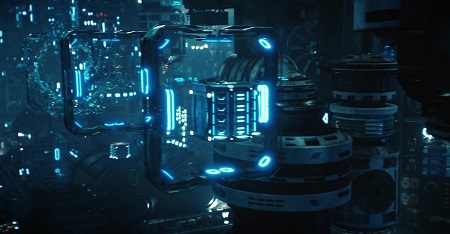
Star Trek: Discovery theories – week 2

Spoiler Warning: There are spoilers ahead for Star Trek: Discovery Season 3, including scenes from the trailers, as well as for Star Trek: Picard Season 1 and other iterations of the Star Trek franchise.

The second episode of Star Trek: Discovery’s third season, Far From Home, was pretty good. It reintroduced us to most of the crew, who had of course been absent in the season premiere. From a theory-crafting point of view, Far From Home didn’t offer up as many new theories as the first episode, but there are still a handful of new ones coming on board – and a single debunking! There was also one line which strongly hinted at confirmation of a theory I postulated last week, but having thought about it some more, I don’t consider it solid enough proof to say that the theory is outright confirmed just yet.

Please remember that these are just theories. I don’t have any “insider information” about the plot of Star Trek: Discovery, and I’m not saying that any of these things are definitely going to happen. No fan theory is worth getting too attached to or worked up about – no matter how convincing it may seem!

Let’s start with the theory that was debunked.

Debunked theory #1: The USS Discovery will arrive before Burnham (due to time travel).

The USS Discovery.

This theory was based on how time travel can mess up the causal link between two events. Because the very nature of time travel stories can lead to this kind of circumstance arising, I wondered whether the writers might have seen fit to spring a surprise on us by having Discovery arrive in the future before Burnham did – perhaps by many months.

One thing I’m slightly concerned about as we go into the next few episodes is that Discovery will use the fact that Burnham has a spent a whole year in the 32nd Century as an excuse to make her know more about what’s going on that Saru and everyone else. Turning Burnham into a superstar has never been a high point of the series, and one of the reasons I hoped this theory might’ve been true was to spend more time with Burnham as a “fish out of water” like she was in That Hope Is You. Seeing her completely out of her element and needing to rely on others was welcome relief for a character who can feel invincible and almost magical in her talents at points. Hopefully now that this theory has been debunked we won’t just see a complete slide back into the Burnham-centric stories of seasons past.

So that’s the only debunked theory. Now let’s look at a few new ones!

Number 1: Lieutenant Detmer is going to die.

Lieutenant Detmer in Far From Home.

What was going on with Detmer this week? After being thrown from her seat when Discovery crash-landed she appeared to be concussed and was sent to sickbay. However, the doctor told her nothing was wrong and discharged her, yet until the final moments of the episode she still seemed to be suffering, and the way she touched the side of her head with her cybernetics seemed to imply whatever’s going on was related to her implant.

It’s possible, as I mentioned during my review, that this will just turn out to be a storyline that goes nowhere. However, modern Star Trek shows have been good at setting up story arcs in one episode that won’t be paid off until later, and I wonder if we’ve seen the beginning of the end for Discovery’s helmsman.

Killing off a character we’ve known since the premiere would be a bold move, no question. But at the same time, Season 3 is set to be a semi-reboot of the series, and killing off a character would be a definitive statement in that regard. If Detmer is set to be bumped off, however, it would be a shame considering that, despite her being physically present for much of Discovery’s run, we don’t actually know her very well.

Number 2: We haven’t seen the last of Zareh.

Zareh killed Kal in cold blood. Is he going to come for Saru next?

Georgiou and Saru succeeded in defeating Zareh, and killed a number of his goons. However, Saru let him go rather than allow Georgiou to execute him, and despite being thrown out into the dangerous wilds of the Colony, with its parasitic ice and who know what else, he isn’t dead yet.

Oftentimes in fiction, when a character is treated in this manner they end up coming back – often looking for revenge. I’m worried for Saru; will Zareh seek to kill him if he survived? For all we know he could be tracking Discovery, or even have stowed away on board, in search of revenge against the Starfleet crew who beat him.

Zareh is clearly not the “main” villain of the season. But Discovery has used secondary villains to great effect, and one comparison that comes to mind is Mudd in Season 1, who followed up his first appearance with an episode in which he tried to kill Lorca and the crew.

Number 3: There will be some kind of further tie-in with Calypso.

Craft, the main character from Calypso.

The use of the pidgin term “V’draysh” to refer to the Federation seems to tie Discovery to the Short Treks episode Calypso, which was broadcast prior to Season 2 in late 2018. Fans had been speculating ever since about just when that episode is set, and Discovery’s journey into the future at the end of Season 2 complicated matters. One way we could see the two storylines connect would be for Craft, Calypso’s protagonist, to make an appearance.

In Far From Home we seemed to get a strong hint that Calypso is set somewhere around the same time as Season 3, but this raises more questions than it answers! If Calypso is set at the same time as Season 3, how do we account for its storyline, which sees the USS Discovery having been abandoned?

One possibility is that Calypso takes place in an alternate timeline or parallel universe, but this would be a less than satisfying explanation. It’s possible that, somehow, the USS Discovery will be sent back in time and then abandoned, but how could this work? Well…

Number 4: Mirror Georgiou will travel back in time to the 23rd Century.

Mirror Georgiou in Far From Home.

If the USS Discovery has spent almost a millennium abandoned in a nebula, then logically Calypso must take place in the 42nd Century. Right? Not necessarily, because, as mentioned, it’s possible that the ship somehow returned to its own time period.

If someone were to take it back in time, they would still have to deal with the issue of keeping the ship safe from Control, and hiding it in a nebula is a good way of doing that. But who would want to take it back in time? All of Discovery’s crew seemed content to sign up for the one-way mission to the future… except for Georgiou, who was aboard Discovery when it left only because she was fighting Leland.

Although she said this week that she likes the violent, chaotic future, there may be a reason for Georgiou to want to return to the 23rd Century. Or it’s possible that there’s some reason why the ship needs to go back in time – for example, to tell the Federation in the past about the spore drive so they would be less reliant on dilithium?

In any case, it’s not impossible to imagine that Georgiou would take the ship back in time, accomplish whatever mission she had, and then leave the ship hidden in an obscure nebula for the crew to return to in the 32nd Century. This would also set up Mirror Georgiou’s role in the upcoming Section 31 series, which is supposedly set in the 23rd Century.

Number 5: We’ll see the return of a classic Star Trek character – such as the Doctor from Star Trek: Voyager.

The Doctor.

I postulated this theory weeks ago, before the season began, and since we’ve seen nothing in the first couple of episodes to rule it out I think it’s the right moment to officially include it in my list of theories as the season goes on.

In short, there are a handful of characters who could still be alive in the 32nd Century. The Doctor from Star Trek: Voyager once had a backup copy reactivated somewhere around the 31st Century, and if that version were to have survived his journey back to the Alpha Quadrant it’s quite possible he could still be alive and active as of Burnham and Discovery’s arrival.

Then there are other synthetic characters that we could see, such as Lore (Data’s “brother”) or Soji. If Booker were to turn out to be a synth, having Soji (or a Soji-type synth) show up would tie in with that and would make a lot of sense.

After that we get into the slightly more obscure character possibilities, including Benjamin Sisko, who had gone to stay in the realm of the Prophets, which exists outside of normal time, or even someone like Crewman Daniels from Enterprise, who was native to the 31st Century.

Because the 32nd Century is so far ahead in the timeline of most of what we’ve seen in Star Trek, there are limited possibilities. However, if the producers desperately wanted to bring in any character at all – even someone random like Chakotay – all they would have to do is come up with a reason why that character time travelled or was put in stasis. A character crossover would tie Discovery to the ongoing Star Trek franchise in a big way, and when it worked so well last season with Pike, Spock, and Number One, why not replicate that success this time?

Number 6: The tree seen in the trailers is a memorial to the USS Discovery or Captain Pike.

The Discovery crew will soon visit a large tree.

Another theory returns, this time one I had postulated when I looked at the second Season 3 trailer. It’s a pretty simple theory, but here’s how it goes: the large tree that the crew will visit is a memorial, either to the USS Discovery itself – which Starfleet was told was destroyed – or to someone the crew are familiar with, such as Captain Pike.

That’s all.

Number 7: The Orion Syndicate control the trading post on Hima (and are a major faction in the 32nd Century).

An Orion guard at the trading post.

This is the only theory I had from That Hope Is You that saw any advancement this week. In short, I had speculated that the trading post Book and Burnham visited on Hima was operated by the Orion Syndicate – an organised criminal enterprise that has been seen or mentioned on a number of occasions in Star Trek. This was partly due to the nature of the facility and the work the couriers undertake, and partly because we saw a number of green-skinned aliens who I assume to be Orions.

This week, when looking at some of Saru and Tilly’s equipment, Zareh says to one of his goons that he plans to sell it to “the Orions.” That might be a reference to the Orion Syndicate, but it’s just as much a possibility that one of Zareh’s trading partners is a group of Orions who are unaffiliated with any criminal gang. Though I consider the possibility that we’re going to be dealing with the Orion Syndicate likely, it’s not 100% confirmed just yet.

So those theories are new or were advanced. Now, for the sake of keeping every theory in one list, let’s briefly recap a few others from last week that are still in play, but saw no movement this week. To read up on these theories in more detail, click or tap here to be taken to last week’s theory post.

Number 8: Booker is a Coppelius synth.

Book may not be human…

What’s the deal with the orange glowing lights on Book? And how can he seemingly make a healing plant emerge out of the water using only a prayer? Book is a mysterious character, and one possible explanation for his abilities is that he’s synthetic. If he’s a synth, it’s possible that he’s a descendent of the synths on Coppelius who we met in Star Trek: Picard. This would be one possible way for the two shows to come together.

Number 9: Hima is Terralysium.

The planet Hima.

Burnham chose Terralysium as her destination when programming the journey to the future. So why didn’t she emerge there? It’s possible that Hima is Terralysium, and that the planet has seen its name changed in the 930 years since Burnham saw it. I saw nothing in That Hope Is You to say that isn’t a possibility.

Number 10: Dr Gabrielle Burnham will make an appearance sooner or later.

Dr Gabrielle Burnham was the original Red Angel.

Dr Gabrielle Burnham’s malfunctioning Red Angel suit trapped her in the 32nd Century. Michael Burnham deliberately chose this time period in order to reunite with her mother. We haven’t seen Dr Burnham in any of the trailers, nor seen any hints at her fate. But I would put money on her showing up somehow, in some form, before the end of the season.

Number 11: The Federation was in serious decline before the Burn.

Why are there so few stars on the Federation flag? Does this represent systems and races that have seceded or left the Federation? And if that’s the case, why does the decades-old, pre-Burn flag represent those secessions? Perhaps the answer is that the Federation was already in decline. The Burn may have been the final straw – but not the only straw.

Number 12: The Federation’s response to the Burn – not the event itself – is what caused its collapse.

A 23rd Century Starfleet crew.

Book stated that in the aftermath of the Burn, the Federation couldn’t explain what happened, nor guarantee that there wouldn’t be a reoccurrence. Considering the Burn was a pretty devastating event, this was clearly not satisfactory to many people, and may be what ultimately led to the secessions and withdrawals from the Federation.

Number 13: Book and the other couriers all operate in a small area of space (to save dilithium) which is why he’s never seen the Federation.

Book with Michael Burnham.

With dilithium in short supply, it makes sense to assume that most factions and individuals – even couriers like Book – would operate in a relatively small area. Book’s “patch” simply may be a region with no Federation presence, which is why he’s never seen them for himself.

Number 14: The Burn is the result of a superweapon – perhaps one detonated by the Federation itself.

Does this moment depict the Burn?

The cause of the Burn is not known right now, and there are multiple possibilities as I discussed when I took an in-depth look at the Burn before the season started. One possibility that stands out, however, is the Burn being the result of a superweapon. If the Federation were facing an existential threat – such as one caused by the Borg or the super-synths from Star Trek: Picard – they may have had no choice but to use such a weapon. The setting Burnham and the crew find themselves in may thus be the aftermath of a Pyrrhic victory, one in which the Federation defeated a powerful adversary but at an impossibly high cost.

Number 15: The Burn was caused by one of the Red Angel suits.

Burnham with her Red Angel suit.

There are two Red Angel suits known to exist – Michael Burnham’s and Dr Gabrielle Burnham’s. The suits are very powerful, and it isn’t a stretch to think they could be weaponised or cause some kind of accident. In an age where time travel has been prohibited, they could also be the only surviving examples of time-travel tech. If someone nefarious got their hands on a suit, they could travel back in time and attack the Federation by, oh I don’t know, destroying most of their dilithium.

Number 16: Someone stole Burnham’s Red Angel suit.

Burnham in her Red Angel suit.

After Burnham landed on Hima, she sent her suit back in time to set off the final Red Burst for Pike and Spock. Then she ordered the suit to self-destruct. It’s possible, as hinted above, that somehow this in itself caused the Burn. But it’s also possible that someone intercepted the Red Angel suit after it left Hima. The finale of Season 2 confirmed the presence of the final Red Burst, but that’s all we know. Since we didn’t see on screen the destruction of the suit, we can’t be sure that it was destroyed as Burnham planned.

Number 17: The ban on time travel is being flouted – maybe by the Federation.

The Bounty, Kirk’s stolen Kingon Bird-of-Prey, travels back in time in Star Trek IV: The Voyage Home.

It’s impossible to un-invent a powerful, useful, weaponisable technology, no matter how hard you try. Considering how crappy the 32nd Century seems to be, are we convinced that nobody at all is using time travel to try to give themselves an advantage? Not the Dominion? Not the Borg? Not Section 31? Seems unlikely to me, though for production-side reasons of wanting to keep the timeline intact and to avoid overcomplicating the plot we might be told this is true!

So that’s it. Those are my extant theories as we get ready for episode 3. The first two episodes have done a great job setting up the 32nd Century and the state of the galaxy as our characters have arrived. I genuinely have no idea what’s going to happen next, but I’m truly excited to find out! Remember to check back in a few days’ time for my latest review and to see these theories updated after the next episode premieres.

Star Trek: Discovery is available to stream on CBS All Access in the United States, and on Netflix in the United Kingdom and elsewhere. The Star Trek franchise – including Discovery and all other properties mentioned above – is the copyright of ViacomCBS. This article contains the thoughts and opinions of one person only and is not intended to cause any offence.
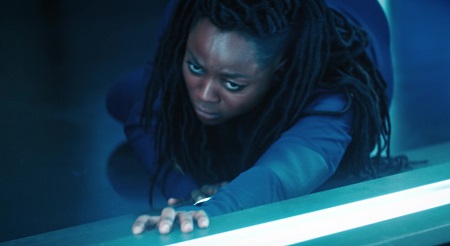
Cyberpunk 2077 and the dangers of hype

With CD Projekt Red’s new game Cyberpunk 2077 now only a few weeks away from release, the already-excessive hype surrounding the game has reached fever pitch. In fact, it’s been a long time since I’ve seen such an over-hyped title. Excitement for a game is good, and from the point of view of the game’s developers, it’s good news that there’s an engaged and excited audience waiting for the title to be released. But there is such a thing as too much hype, and we’ve seen countless times how that can ultimately lead to disappointment – even if a game is pretty good.

For the record, because I know an article like this is ripe for misinterpretation: I am categorically not saying that Cyberpunk 2077 looks like it’s shaping up to be a disappointment or a bad game. Instead what I’m saying is that too much hype can be a bad thing, and even if a game is decent, can lead to players feeling underwhelmed.

In the absence of independent reviews, what we have right now is marketing material released by the game’s developer. And that marketing material is scripted and edited in such a way as to show the game in the best and most exciting light; that’s what the objective of marketing is, after all. Many of these trailers and small recorded clips of gameplay look thrilling and very exciting, but anyone with a computer can cut together a trailer that looks decent. Any game, even notoriously bad ones like Marvel’s Avengers or Contra: Rogue Corps, can be made to look good in their own marketing.

Is Cyberpunk 2077 over-hyped?

Right now, the hype surrounding Cyberpunk 2077 is allowing players to do the one thing any developer needs to be very wary of: build up a personal expectation of what the game could be. All the talk of customisation and unique quests is setting up an expectation that the game can literally be anything players can imagine, and the absence of reviews or any real gameplay amplifies that. How many games have we seen seemingly promise the moon only to fail to live up to expectations?

No Man’s Sky is a recent example of a game that generated similar levels of hype leading up to its release. In that case, players accused studio Hello Games of false advertising, as they were left disappointed when promised features were not what they expected. Hello Games certainly over-hyped No Man’s Sky, but it was players themselves who took that hype and built it up to impossible heights. I can’t be the only one feeling at least a slight sense of déjà vu, can I?

I want Cyberpunk 2077 to be a phenomenal game and to sell well. I want it to demonstrate unequivocally that there is still plenty of life left in the single-player game space, given how many big publishers have abandoned it in the push to always-online multiplayer titles. But I’m nervous. A lot of players seem to be building up Cyberpunk 2077 in their minds to an impossible standard, one that no game could ever live up to. And all the while, CD Projekt Red seem content to let them do so.

Are players setting themselves up for an underwhelming experience?

In all the discussion surrounding the game, never once have I seen CD Projekt Red say “no.” They have never said “no, that feature isn’t part of the game,” “no, you can’t do that,” “no, you can’t go in every building, fly every aircraft, romance every NPC,” and so on. Because their marketing team has been quite happy to show off a range of things players can do, both in written and video form, I feel there’s a real danger that expectations are being created for many players that can simply never be met.

It’s far too late now to change course. Any damping down of expectations needed to happen months ago if players were to get into the right mindset in time for the game’s release. Cyberpunk 2077 should be judged on its own merits, not pre-judged by players with self-created notions of what the game could have been, yet that’s what happens time and again when a game sees this level of fanatical over-hyping. Cyberpunk 2077 may very well turn out to be a good game – but like every game, it will have its limitations. There will be things players can’t do, limits to customisation, and perhaps even the odd bug or glitch that snuck through testing or couldn’t be patched before launch. None of these things are uncommon in games, and in most cases would be happily overlooked. But in a title that has received such inflated hype, the crashing back to earth as players realise that it’s just a game, not an infinitely spectacular sandbox, can be devastating.

Can Cyberpunk 2077 possibly live up to the lofty expectations players have?

No Man’s Sky was good, even at launch. The only reason that’s an unpopular opinion is because the game had been hyped to oblivion and back for months, and when players quickly realised that there was little more going on than flying a spaceship, mining minerals, and exploring, they were devastated. The dream of living a second life in whatever galaxy they’d imagined in their heads was dashed – and thus the game was considered crap. A lot of the fault lies in the way No Man’s Sky was marketed… just like a lot of the fault for Cyberpunk 2077′s massive hype bubble lies with CD Projekt Red.

Maybe they’ll pull off the impossible, and release a game so spectacularly amazing that it will truly let players do everything they can imagine. And if that’s the case then sign me up, because I’d want to play a game like that! But as things sit right now, I’m getting that sense of déjà vu that I mentioned. Are we going to see a game on par with the best titles of the generation? Are we about to see a game that breaks the mould and redefines what a game can even be? Or are players going to hit the wall when they realise that Cyberpunk 2077 is just a game?

Even if it turns out to be a great game, too much hype could damn it. We all need to be careful when it comes to pre-release marketing and trailers, even for projects we’re excited about. Until the game is ready and is in the hands of reviewers and the general public, the possibility for deception or misunderstanding exists. And even in cases where games haven’t been deliberately dishonest, excessive hype can lead to the sense that a title is underwhelming and disappointing when it doesn’t do everything players hoped for.

I’m keeping my fingers crossed for Cyberpunk 2077 being a lot of fun. But I’m also trying to avoid boarding the hype train.

Cyberpunk 2077 will be released on the 19th of November 2020 for PC, PlayStation 4, PlayStation 5 Xbox One, and Xbox Series X. Cyberpunk 2077 is the copyright of CD Projekt Red. Screenshots and promotional artwork courtesy of the Cyberpunk 2077 press kit on IGDB. This article contains the thoughts and opinions of one person only and is not intended to cause any offence.
Star Trek: Discovery review – Season 3, Episode 2: Far From Home

Spoiler Warning: There are spoilers ahead for Star Trek: Discovery, as well as for Star Trek: Picard, Star Trek: Lower Decks, and for other iterations of the Star Trek franchise.

Star Trek: Discovery Season 3 got off to a slow but decent start. That Hope Is You focused exclusively on Michael Burnham and new character Book as Burnham arrived in the 32nd Century and learned of the Federation’s collapse. But Burnham did not travel to the future alone, and this week we got to see the USS Discovery’s arrival in the future. Things didn’t exactly go to plan for Saru and the crew!

After the aforementioned solid start last week, I was hoping for something at least as good this time around – and I wasn’t left disappointed. Far From Home was on par with the season premiere, and in many ways was a co-equal half of the season premiere, continuing the world-building begun last week. We didn’t get any closer to answers about the Federation, the Burn, or any of the season’s other mysteries, but we did get more background to frame those questions. We also marked the welcome return of the USS Discovery and the rest of her crew, who had of course been absent last week. As in many Star Trek episodes, it wasn’t possible for every character to have a major impact on the story, but everyone got some amount of screen time and the chance to make their debut in the 32nd Century.

Far From Home brought back Saru and the rest of the crew, and focused on their arrival in the 32nd Century.

Usually I’d skip over the recap of the “story so far” at the beginning of the episode, but there’s something about the end of Discovery Season 2 that’s bugged me for the last eighteen months, and it happened to be included so it’s a good time to talk about it. The whole reason for taking the ship into the future was to keep the Sphere data from falling into the hands of Control. But when Control was trapped in the spore cube and incapacitated, that seemed to bring the battle to a halt. Even if that wasn’t the end of Control altogether, and the AI was still operating on one of the ships or at its home base, surely that at the very least warranted a pause from Pike, Saru, Burnham, and the rest of the crew. Maybe, if Control was fully dead, there was no need to leave the 23rd Century behind. Wouldn’t that be a cruel twist of fate for the crew? …Or a plot hole.

Anyway, with the Control storyline definitely brought to a somewhat squelchy end, I doubt the issue will be revisited. So on to Far From Home. The episode begins with the USS Discovery exiting the time-wormhole. Unlike Burnham, who was presumably offered greater protection from the time-wormhole thanks to the Red Angel suit, the crew of Discovery are all rendered unconscious and injured by the transit. They awaken as the ship is rapidly drifting to an asteroid field, and with damage sustained in transit are unable to keep control. The ship plummets to the surface of a nearby planet – perhaps the same one Burnham landed on, though that was not clear – and crashes on a glacier.

The USS Discovery’s crash-landing.

The whole crash sequence was visually impressive, and reminded me of the USS Voyager crashing in the fifth season episode Timeless (perhaps because both sequences saw the ships crashing on ice). When we saw the shot of the ship after its crash-landing in the second trailer, I felt it looked pretty crappy compared to a lot of the other CGI work. I was pleased to see that this sequence looked a lot better. Whether that’s to do with touch-up work done in the last few weeks or just because the trailer was on YouTube, which is somewhat notorious for its video compression, I can’t say. But the sequence looked fantastic, and was accompanied by a great score to make it tense and exciting.

The crash was reminiscent of the USS Voyager’s crash-landing in Timeless from Season 5.

One thing I think is interesting about the way both Burnham and the ship arrived in the future is that it was difficult. Star Trek has by no means been consistent in its portrayal of the rules surrounding time travel, but one thread of similarity tying together many time travel stories is that it isn’t particularly difficult, and this is especially true when we look to The Original Series. Episodes like City on the Edge of Forever and Assignment: Earth show time travel being a relatively painless experience for the ship and crew.

After Discovery crashes we get the opening titles, and I have just one thing to ask: is that a DOT-type robot? As seen in the Short Treks episode Ephraim and Dot? Because it sure looks that way!

Is this a DOT-type robot?

The crash saw Lieutenant Detmer – the cyborg-eyed helm officer – thrown from her seat. She appears to be concussed and is sent by Saru to sickbay. And this storyline seemed to go nowhere after that. It was implied that Detmer is suffering some kind of implant-related injury, especially after the doctor couldn’t find anything physically wrong with her. But by the end of the episode, Detmer is back at the helm and seems to snap out of her “concussed” state when she sees – spoiler – Burnham appear in the episode’s closing scene. So… what was the point of that, exactly? We didn’t spend a ton of time focusing on Detmer, but there were enough scenes interspersed through the episode to hint that she was injured, or perhaps even dying, only for it to seemingly come to naught. It’s possible that the Detmer storyline will pick up next time, in which case what we got this week will be the start, but those closing moments in particular seemed to put the storyline to bed, and I’m curious to see if anything more will come. Killing off a character we’ve been with since the premiere would be a bold move – but perhaps one Discovery should make at some point this season as part of its reinvention. Have we seen the first hints of who might not make it?

Despite the fact that the ship has literally just crashed and the damage means they have no propulsion, the bridge crew seem a little too focused on their inability to contact Burnham in the next sequence, and if I were to have one point of criticism at all for this episode it would be that. The ship has crashed on an unknown world in an unknown time and, at several points, the topic of discussion is Burnham. Anxiousness about what happened to her makes sense, but perhaps not this much of it under the circumstances. I have a specific complaint about Georgiou in this regard that we’ll come to as well.

Owosekun on the bridge after the crash-landing.

Saru gives a great speech about needing to focus on repairs to the ship before they can accomplish anything else, and the crew puts a plan in place to use tricorders in place of the non-functional internal sensors to find and replace damaged EPS relays. Saru has done a good job stepping up to be acting captain after the losses of both Lorca and Pike, and it’s a role I hope he’s able to continue in from this point in the series on. Discovery has seen two commanding officers come and go across its first two seasons, and it’s time to get some consistency in the captain’s chair. At this point it can only be Saru, so here’s hoping the position will become his on a permanent basis.

Mirror Georgiou makes her reappearance in the next scene, interrupting Tilly and Saru while they investigate the damage to the ship. As mentioned above, I have a bit of a complaint about the way she seems obsessed with Burnham. We saw this in the Season 2 episode The Red Angel, and for the second time Mirror Georgiou acts completely out-of-character when it comes to Burnham. Remember that this is not the Georgiou who was Burnham’s friend, mentor, and quasi-mother figure we met in the Season 1 premiere. This is the hardened ex-Empress of the Terran Empire from the Mirror Universe, who does not care about anyone except insofar as they can help her win power and influence. Yet here she’s frightened for Burnham’s safety, desperate to contact her, and just fawning over her in the way a doting mother would.

Mirror Georgiou is obsessed with Burnham in an out-of-character manner.

One thing I wasn’t sure how the show would handle was the remains of Control. I didn’t expect Control to be able to reassert itself, but I did wonder whether Captain Leland might somehow survive his “assimilation” experience. Whether he would have survived or not is now purely an academic discussion, however, as it turns out Georgiou destroyed his body at some point between the defeat of Control and Saru’s inspection of the ship. That’s a shame in some ways, as Leland was a potentially-interesting character who we only spent a little time with before his assimilation by Control, and having him awaken from that experience in the far future would have been an interesting angle to pursue. Everyone else is along for the ride voluntarily, but Leland wouldn’t have been, and that could have been a source of tension.

Speaking of people who voluntarily travelled into the future: there are a heck of a lot more of them than I expected. During Such Sweet Sorrow, Part 2 (the Season 2 finale) Saru, Tilly, Spock, and a handful of other main characters assembled in one of Discovery’s hallways to tell Burnham that they were staying on board and would accompany her into the future. Perhaps naïvely, I assumed that we were dealing with just those people, not what seems to be practically the entire ship’s complement! I know that, for the sake of the story, there have to be background characters… but this was presented as a voluntary mission that meant leaving all of their friends and family behind, not to mention the life they’ve always known. It’s true that many Starfleet officers are altruistic, but I’m still surprised how many junior officers on the lower decks of Discovery were content to follow Burnham and Saru.

Saru and Tilly in a rather crowded hallway.

The damage to a vital piece of communication equipment sets up the next phase of the story. After a technobabble explanation, it’s apparent that there is no way to repair communications aboard the ship without acquiring raw materials, but luckily a nearby settlement may have just what they need. Saru chooses to go in person, and also picks Tilly to accompany him. The pairing of these two characters worked really well, and as they haven’t had many other opportunities to work closely together in the series so far, was an interesting departure from what came before. Though there are myriad issues with the way the change in Saru’s character was handled in Season 2, having him less cowardly and more assertive does, admittedly, make him not only a better commander, but also a more interesting and easy to root for character.

One thing I was hoping Season 3 would deliver is a proper repair to the adorable Stamets-Culber relationship, and based on what we saw this week, we’re going to get it. In a touching scene in sickbay, Dr Culber awakens Stamets from an induced coma – as they need his bio-bed. This sequence was lovely, and not only did we see Dr Culber demonstrate how much he cares for his husband, but also Anthony Rapp put in a fantastic performance as the injured and suffering Stamets. All in all, a great scene.

Stamets and Culber in sickbay.

After a continuation of the Saru-Georgiou argument from earlier – which, again, had too strong a focus on Burnham as I see it – Tilly and Saru leave for their away mission. I liked seeing Discovery’s ready-room so badly damaged, particularly the desk used by both Captains Lorca and Pike being wrecked. Would it be too much of a stretch to call this symbolic of Discovery making an emphatic break with the past as it moves into this new phase of its run? The team behind the series have talked about Season 3 as a semi-reboot, and how writing it has been akin to writing a brand-new show in some respects. I take some of these images as on-screen representations of that (even if that isn’t how they’re intended!)

Nhan is also present at the conference, having transferred from the USS Enterprise in order to accompany Discovery. I was pleased to see Rachael Ancheril has been promoted from guest-star to main cast member for the season, as she puts in a wonderful performance as the Barzan character. Immediately after this we get a grizzly sequence in engineering showing the remains of Captain Leland being disposed of. Whatever techno-magic happened in the spore cube to Control’s nanobots, it’s safe to say they aren’t coming back. Modern Star Trek has been far less restricted that shows of the past when it comes to visceral, gruesome imagery, and this follows on from the sequence with Icheb earlier in the year in the Star Trek: Picard episode Stardust City Rag as an example of that. Partly the change is due to changing attitudes and a greater acceptance of brutality in the ever-advancing quest for visual realism on our screens, and partly it’s because modern Star Trek series are on streaming platforms and aren’t constrained by the rules (or censors) of broadcast television.

The remains of Captain Leland.

Stamets is back on his feet, and I enjoyed his scene in engineering with Reno. Tig Notaro is just fantastic in her deadpan delivery as Reno, and has been a wonderful addition to Discovery. Reno’s injury (though a little unclear earlier in the episode) will set up a great moment later on, and was explained better here. Something about the trip through the wormhole has caused a spinal injury, meaning she’ll spend most of the rest of the episode sat on what I think is some kind of modified engineering workstation.

Last week I made a big deal of Discovery’s filming locations – especially when contrasted with Picard, which used too many locations within a few miles of Los Angeles! I mentioned that the show is filmed in Canada, and while that is true, many of the outdoor scenes both this week and last week were, in fact, filmed on location in Iceland. The location shoots truly bring a lot to the table, leading to the planet Discovery has crashed on feeling truly different from practically any other we’ve seen in Star Trek. It was desperately sad, though, to see the glacier where the sequence was filmed slowly melting away, leaving a large body of water behind.

The melting glacier.

As mentioned, I greatly enjoyed this character pairing. It would be great to see more uncommon character match-ups across the season or into next season, as I can think of many members of Discovery’s crew who’ve barely said more than a couple of words to each other after two full seasons! Tilly has often been little more than comic relief, so it was touching to see the respect Saru has for her and her abilities. I especially liked this line: “We are introducing ourselves to the future; you, Ensign Tilly, are a wonderful first impression.” Not only did this moment between the two of them cement Tilly as more than just a comic character, it also served as a further demonstration of Saru’s confidence and his ability to serve as a commanding officer.

Tilly and Saru spot a figure in the distance, watching them; presumably someone who had seen or detected the crash and arrived to investigate. This figure doesn’t approach them or try to communicate in any way, and they end up following him for a while. The buildings depicted on the surface of this planet reminded me of the Star Wars franchise, and if I had only seen the establishing shot of the pair trekking across the Icelandic landscape I’d have said it must surely be a scene from one of the Star Wars films. Something about the way the mining buildings were constructed, I think. It isn’t a bad look – modern Star Wars films are visually impressive, after all – just something different. And considering how far into the future the ship and crew have come, they’re bound to see many different things!

Something about this landscape and these buildings looked very “Star Wars” to me.

After rounding a corner and disappearing briefly from Tilly and Saru’s sight, the figure they’ve been following vanishes. This effect was the same as that used for the 32nd Century transporters in last week’s episode, so it’s assumed he beamed somewhere. Tilly and Saru soon find out where, as they’re similarly transported from the same spot to a ledge outside a bar. Star Trek was originally inspired by mid-century Westerns, and we see a continuation of that in the saloon doors used for the bar that Tilly and Saru enter. Not only that, but in true Western style, the patrons all go silent and turn to look at the incomers! It was a great little homage to not only the Western genre, but to Star Trek’s own origins, and I loved this moment.

The bar’s occupants are sceptical of Tilly and Saru – understandable to us as the audience, given what we know of the future, but a shock to the duo. Last week we met Mr Sahil, a “true believer” in the legends of Starfleet and the Federation, and here we meet a second character who is similarly a Federation devotee. I didn’t recognise this race of aliens at first, but they aren’t new to Star Trek; the Coridanites debuted in Enterprise.

Kal the Coridanite vouches for Tilly and Saru.

Though the Coridanties remain uneasy about Tilly and Saru, they agree to a trade when Saru mentions that they have dilithium. As we learned last time, the Burn was the explosive loss of most of the galaxy’s dilithium, meaning the important mineral is in short supply. Though the miners have ships they currently lack dilithium to power them, meaning the trade is perhaps their only option if they want to leave this planet.

The planet that I think we all assumed to be Hima (since that’s where Burnham arrived) turns out not to be. Earlier, when the crew detected several settlements I wondered if one might’ve been the trading post Burnham and Book visited, but it seems that this is an altogether different planet after all.

This planet is known simply as “The Colony.”

A brief scene with Stamets and Reno back aboard the ship sees Stamets climb up a ladder into the jeffries tubes in search of blown power relays. Reno, due to her injury, is unable to go. This sets up a moment later in the story, and again Reno is a fun character so it’s always good to have her on screen.

Back at the bar, Kal is easily able to replace the damaged component from Discovery using “programmable matter,” the first genuinely futuristic-feeling technology that we’ve seen. Mr Sahil’s office appears to make use of the same or similar tech, and we saw that in last week’s opening sequence, but here we got to see a more useful application of the tech as well as get an explanation for it. Kal was, naturally, surprised to see how unfamiliar Tilly seemed with what appears to be a fairly ubiquitous and commonly-used piece of kit. She rather unconvincingly tries to tell him she was “just testing” him, which I liked. It was a very “Tilly” way to respond!

Programmable matter.

Though Kal is receptive to the Starfleet officers and generally helpful, others in the bar are not. They mention their courier, Zareh, will surely be coming to investigate the crash, and that he’s bad news. We saw last week how some of the couriers – like Book’s rival Cosmo – can be aggressive, and the occupants of the bar would not be so afraid of Zareh without good reason. It seemed like an inevitability that Tilly and Saru would encounter him before long, and right on cue he arrived. Kal tried to tell Tilly and Saru to escape out the back, but for some reason they made no attempt to flee.

Zareh appears to be human, and arrives in dramatic fashion accompanied by several armed goons. Saru attempting to bluff his way through the conversation without the knowledge of the Burn or the status of the Federation made for a tense moment, but having abandoned his cowardice in Season 2 he handled himself very well. I was reminded of the moment in Star Trek Into Darkness when Sulu has to bluff his way through a conversation with John Harrison – both characters stepped up and gave it their best shot!

Zareh, the feared courier.

Evidently Zareh considers himself to be in control of this planet and its inhabitants, as they are reliant on him for any resources they can’t make locally. He detected Discovery’s arrival and crash-landing, and makes it very clear from the start that he knows they’re time-travellers, even though he doesn’t come out and say it until much later. The performance from guest actor Jake Weber was magnificent; he portrays Zareh as cold-hearted and creepy, especially towards Tilly.

Tilly eventually reveals the reason she and Saru are in the bar – the repaired component. Saru attempts to stand up for Kal when Zareh threatens him, which is yet another demonstration of his ability to command and his leadership qualities. However, it wasn’t enough for Zareh, who kills Kal in cold blood in front of everybody. Saru and Tilly are shocked; their simple mission to repair a damaged component has now got an innocent person killed.

Kal is killed.

After the show of force, Zareh insists on being taken to Discovery. Saru, however, stands his ground and says that he will offer a trade of dilithium, but only if they stay at the bar to negotiate. Zareh and his goons converse in “pidgin” – a language to Star Trek that isn’t wholly new, having been glimpsed in the Short Treks episode Calypso. But we’ll come to that in a moment. One of the most useful pieces of technology in Star Trek is the universal translator: a piece of kit able to translate between perhaps millions of languages, allowing the Federation to communicate with other aliens and with itself. Discovery has shown the universal translator many times, most notably in the second season episode An Obol For Charon, where the translator malfunctions and practically everyone on the crew is shown to speak a different language natively. So I’m afraid this moment, where Saru asks Zareh to speak in “the common tongue” is not consistent with Star Trek canon, nor even internally consistent within Discovery.

The writers evidently wanted to show that this “pidgin” language is in common use in the 32nd Century, but I feel the way they did so throws up more problems than it resolves. And aside from one word that Zareh uses that we’ll talk about in a moment, there wasn’t any real need for the “pidgin” language anyway. It may be something that becomes important later in the season, somehow, but in terms of the story of this episode it added nothing, and now the confusion surrounding the “common tongue” is going to be an annoyance. Star Wars uses this kind of setup for its fictional languages; “galactic basic” is their lingua franca, with various aliens having their own languages. But although we’ve seen other languages in Star Trek – Klingon most prominently, but there have been others – they’ve always been shown in the context of the universal translator. And for some reason, Discovery has chosen to abandon that here – despite the fact that just last season it was firmly established to be in use.

Saru and Zareh negotiate.

It was eventually decided that Tilly should be sent back to the ship to retrieve some dilithium, while Saru would wait with Zareh and his goons at the bar. This was despite a warning from the Coridanites that after nightfall it will be too difficult and dangerous to traverse the ice. Apparently the ice Discovery landed on is “parasitic,” which seems to imply that the ice itself is alive! Back aboard the ship, Nhan and the crew are struggling with that as they’ve begun to realise the ice is not what it seems.

We get a brief scene aboard Discovery showing Nhan had lost Georgiou, and another great sarcastic line from Reno. Back at the bar, we find out where she went. She’d been captured (or, I assume, allowed herself to be captured) by two of Zareh’s goons who were out on patrol. She’s thrown onto the floor of the bar where she proceeds to engage in a “who’s more evil” contest with Zareh. This is the moment I alluded to above, the one which partly explains the use of “pidgin.” Zareh uses the term “V’draysh” to refer to the remains of the Federation – a term we first heard used in the Short Treks episode Calypso. In that story, the V’draysh were said to be at war with another faction for whom protagonist Craft had been a soldier. Most interestingly, though, that episode showed the USS Discovery abandoned in a nebula, seemingly having been hidden there for almost a milennium. Fans have been speculating ever since how Calypso might connect to the rest of the series, and this seems to be the biggest indication yet that Calypso is set around the same time as Season 3. What does that mean for the ship? Will it be sent back in time only to be left derelict for a millennium? That would be one way to allow Mirror Georgiou to return to the 23rd Century in time for the untitled Section 31 series! But we’ll have to see whether any further connections to Calypso emerge.

Craft’s escape pod and the USS Discovery as seen in the Short Treks episode Calypso.

Georgiou, in her single-minded obsession with Burnham, wants to recover the repaired communications kit so she can contact her. With Zareh and his goons in the way, it was only going to end in a fight, and during the scuffle we got a very cool moment where Saru used his head-spikes to defeat one of the courier’s guards. This isn’t something technological nor some augmentation; every member of Saru’s species has this kind of built-in biological defence mechanism, and seeing him use it in anger for what I think is the first time was incredibly interesting.

The fight ends with Zareh alive but his goons defeated. Georgiou and Saru then have a standoff – Saru wants to let him live, Georgiou advocates killing him. And here, for the first time in the season so far, I felt the promised optimism. Post-apocalyptic settings – which Discovery’s 32nd Century kind of is (and kind of isn’t) – can be a great vehicle for telling positive, hopeful stories. And Saru’s reasoning that killing Zareh would be wrong because it isn’t who Starfleet is was exactly the kind of thing that these settings can do very well. I had been sceptical of a post-apocalyptic setting from the moment we saw the first Season 3 trailer, but so far that side of the galaxy hasn’t been as bad as I had feared. And here, we get to see the way such a setting can be used to tell positive stories and to generate positivity. I liked that – even if I agree with Georgiou that Zareh is too dangerous to keep alive. I have a theory that he’ll return later in the season – probably at an inopportune moment – but we’ll save that for my theory-crafting article!

Georgiou threatens to kill Zareh.

Tilly points out to Georgiou and Saru that the sun has set, presumably making the parasitic ice come to life. The scene ends and we’re back aboard the ship, where Reno has summoned Dr Culber to engineering. Stamets is in a bad way in the jeffries tube, but manages – with the help and support of Culber (and, to a lesser extent, Reno) – to complete the repair task, fixing Discovery’s systems and bringing power back to the ship. We got a great look inside the jeffries tube here, and also at the damaged EPS relay. The way it was designed was reminiscent of similar locations and systems seen in past iterations of the franchise – particularly in The Next Generation’s era. I liked that, and seeing Stamets work on the ship was great fun. The drama and tension of the scene was ramped up by his injury; hopefully Dr Culber can patch him up in time for next week!

After continuing to argue about what to do with Zareh, Saru and Georgiou eventually agree on letting him go. He says he won’t survive the night alone on the planet – but as mentioned, I don’t think we’ve seen the last of him. After returning to the ship, the repaired communications equipment was able to be installed. However, the parasitic ice is trapping the ship, and despite Detmer’s best efforts it seems like they’re trapped.

A seemingly-recovered Detmer tries to break Discovery free of the ice.

The arrival of another ship is presented as a problem. The crew anticipate that it is an ally of Zareh who may be seeking revenge (or to steal their dilithium). However, I wasn’t at all convinced by this. It seemed patently obvious that this ship – which locks a tractor beam onto Discovery – would be Burnham and Book, and I don’t know if that’s because I’d read all the episode synopses, seen the trailers, or what. But something about this moment didn’t work as intended and lacked any real tension.

As expected, Burnham and Book arrive to save the day, pulling Discovery free from the ice. To the surprise of the crew, Burnham has been in the 32nd Century for about a year – and if you remember what I said last time, with time-travel such things are possible! I’d wondered if we might’ve learned that it was somehow Discovery that arrived first, but instead it was the other way around and it was Burnham who’d been here for a long time. She’s thrilled to have finally found the ship and crew, and they’re just as relieved and happy to see her.

Burnham appears on the main viewscreen.

So that was Far From Home. There were some great character moments this week, and some great pairings too. The decision to have Saru team up with Tilly worked very well, and it was great to see Stamets back with Culber and Reno at various points. Saru has stepped up to become a captain the ship and crew will want to follow, and that character development has been great to see. The return of Nhan was nice, even though she didn’t have too much to do this week.

Mirror Georgiou is still a one-dimensional character, and I don’t really like her Burnham obsession in a series that already goes out of its way at times to tell us how amazing its protagonist is. Georgiou can be useful, though, and given the chaotic and violent nature of the 32nd Century her assistance may prove invaluable. Despite that, however, I’m not sold on her as a character as things currently sit, and I don’t really see much of a pathway for development given her background as a Terran.

Georgiou kills one of Zareh’s goons.

The other character whose story seemed wasted this week was Detmer. It’s possible her implant-concussion is setting up something that will be paid off in a future episode, in which case I’m all for it and I’m happy to wait and see what comes of it. However, in this week’s story it felt like something superflous, especially considering that by the end when she was back on the bridge she seemed okay.

The only other point of criticism is the confusion the episode introduced regarding the universal translator. That’s something only nerds like us would be bothered by, and perhaps if the “common tongue” is never referenced again it will be a single-episode inconsistency (of which, admittedly, there are many in Star Trek!)

As the second part of the season premiere, Far From Home was good. It was a solid, enjoyable episode with a lot going on. It gave us some tantalising hints at a possible resolution to the story from Calypso, and gave us some further background to establish the 32nd Century as a setting. It was a solidly enjoyable episode, one which gives me confidence that the season is on firm foundations. Roll on next week, which will see the ship and crew head to Earth!

Star Trek: Discovery is available to watch now on CBS All Access in the United States, and on Netflix in the United Kingdom and elsewhere. The Star Trek franchise – including Discovery – is the copyright of ViacomCBS. This article contains the thoughts and opinions of one person only and is not intended to cause any offence.
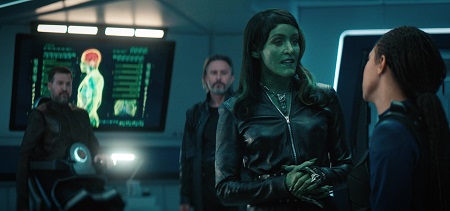
There’s no easy answer for film studios and cinemas right now

To perhaps nobody’s real surprise, three big films have recently announced delays: No Time to Die, Dune, and The Batman. With the coronavirus pandemic clearly not dying down any time soon – at least in the west – studios quite rightly feel that releasing their titles this year or even early next year won’t bring in audiences and won’t make enough money. They’re not wrong in that assessment; many people I know here in the UK would be uncomfortable visiting a cinema in person, even if the law or guidelines say that doing so is allowed. It’s going to take time – and, perhaps, a widely-available vaccine – for that mindset to change.

Over the summer, the UK government ran a scheme called “eat out to help out.” If you’re unfamiliar with it, the programme offered diners a 50% discount (up to a maximum of £10 per head) at participating restaurants. The goal was to encourage people anxious about the ongoing pandemic to get back into restaurants and, frankly, save the industry from collapse. It was successful, at least partially, with participating restaurants reporting increased takeup. However, such schemes are temporary, and there’s no way the government could run something like that for every impacted industry.

Cinema bosses have denounced decisions to delay releases – or, in the case of titles like Mulan – send titles directly to streaming platforms. Without big blockbuster releases, there’s no way to entice cinema-goers back, and the entire industry is on the brink. Cineworld, one of the world’s largest cinema chains, has announced it will close all of its US and UK sites until further notice – putting 45,000 people out of work. This is the real impact of the pandemic, and the longer it goes on, the worse it’s going to get.

Dune (2020) has been delayed.

There’s no “eat out to help out” equivalent coming to cinemas. The industry is on its own to handle the fallout from the pandemic – as are so many others – and there’s no easy fix. Until the public at large have confidence that it’s safe to go out, that it’s safe to sit in a big room with a couple of hundred strangers, there’s nothing that can be done. Even the release of Tenet in August failed to bring in sufficient numbers of viewers to make running a cinema financially viable. At this rate, the highest-grossing film of 2020 will remain Bad Boys for Life. Nobody would have predicted that in January!

I can understand from the cinemas’ perspective that film studios aren’t behaving appropriately. Cinemas and film studios are two parts of a greater whole, yet the studios have unilaterally acted to pull their films, either delaying them or sending them directly to streaming. And I can understand why that’s going to sting. Where there could have been a coming together, it feels like the bigger companies are acting selfishly; it’s everyone for themselves instead of a sense of community and togetherness.

And ultimately that’s going to make things more difficult. We’ve already seen Odeon, another large cinema chain, pledge to stop showing films from Universal Pictures in retaliation for Universal making Trolls World Tour a streaming-only title. As I wrote when looking at Mulan’s release on Disney+, if every cinema chain were to come together and announce a boycott of companies that acted this way, they could effectively prevent the release of any film they chose. There’s power in working together, but ultimately the question will be: who has that power?

Mulan (2020) went straight to Disney+, upsetting cinema chains worldwide.

Film studios clearly see streaming as a viable option. As television screen technology continues to improve – and as screens get larger – the adage that a particular film was “better in the cinema” doesn’t ring true for a lot of people any more. In some ways, the move towards streaming is something we can absolutely argue was coming anyway; like with many things, the pandemic may have accelerated the move, but it didn’t fundamentally cause it. Titles like Annihilation and the critically-acclaimed The Irishman began production with the intention of a theatrical release, but circumstances changed and they ended up going to Netflix instead.

Streaming titles have also been nominated for top awards, and when a film is released digitally nowadays, it’s become so commonplace that it scarcely gets a mention in reviews. When people of my parents’ generation were young, going to the cinema was at least a weekly outing, and not only was there an A- and B-movie but you’d probably also get a newsreel too. Those days have gone, and for increasing numbers of people pre-pandemic, the cinema was an occasional treat rather than a regular one. Attendance has been steady, but the likes of Netflix, Amazon, Disney+, and big-budget television series like Game of Thrones have slowly been eroding the need for cinemas. In short, if cinemas try to pick a fight with film studios over digital releases, I think they’ll likely lose.

But for film studios it’s not as clear-cut. Selling an already-made film to the likes of Netflix is a complicated undertaking. Netflix wants to make sure any purchase is going to be worth its while, and the gold standard is whether a title will bring in new subscribers. As a result, I think it’s not unfair to say that a lot of films would likely make more money at the box office than on a streaming platform. That’s why Mulan costs $30 instead of being available to anyone with a Disney+ account; Disney wants to make as much of the film’s budget back as possible.

Bringing a film to Netflix – or any streaming platform – is not straightforward and will not make as much money, in most cases, as a theatrical release.

Making a film is an expensive project, and the vast majority of any title’s money is made at the box office, not through streaming or sales. If film studios were to move to streaming-only releases, a lot of things would have to change. Budgets may have to fall in some cases, which would not only be to the detriment of the quality of films, but would also put more people in the industry out of work.

As I said at the beginning, there is no easy answer. Streaming is a short-term solution that may be viable for some projects, but certainly can’t replace the revenue of a full theatrical release for most titles. Mulan was a test case, but as a film that has received mixed reviews at best, it perhaps isn’t the best example for studios to look to. And besides, most film studios don’t have their own streaming platforms, meaning they have to negotiate with the likes of Amazon or Netflix to put their titles out.

One thing that history teaches us about the longer-term effects of a disaster on any industry is that things do eventually get back to normal. If one big cinema chain were to go out of business this year, within five years or so most of its empty cinemas will have been bought up and reopened by some other company. The desire for going to the cinema may not be present right now, but it will largely return when the pandemic is brought under control. At least, that’s the way I see it. Streaming has already been disruptive, but there’s still a sense of enjoyment in going to the cinema, and from the point of view of studios, streaming is far less profitable. That means that as soon as they can, film studios will want to encourage people to get back to the cinema.

How long the pandemic will continue to drag on, and how long studios and cinema owners can hang in there are the big questions right now. And unfortunately those are the same questions people are asking across many different sectors of the economy. When the pandemic is brought under control – and it will be, sooner or later – how many businesses will have survived? And how long will it take to rebuild? From the point of view of films, are we about to enter a “dark age” where budgets and quality drop? I don’t have a good answer to any of these questions. Only time will tell.

All titles mentioned above are the copyright of their respective studio and/or distributor. This article contains the thoughts and opinions of one person only and is not intended to cause any offence.
Age of Empires III: Definitive Edition – First Impressions

Earlier in the year I wrote an article looking at Age of Empires II: Definitive Edition and my experience getting back into it after it was remastered. I had a lot of fun with that game, and I’ve even gone back and played a few matches here and there over the summer. I played the first two Age of Empires titles to death in the late 1990s/early 2000s, but when Age of Empires III was released in 2005 I was less than impressed. While the core gameplay was similar, the addition of features like “home cities” and “cards” complicated things and, in my opinion at the time, detracted from the real-time strategy experience that I hoped to have. This also coincided with a period where I was particularly busy with my professional and personal life, and as such there were a number of factors involved in me putting down the game and not picking it up again.

Until now, that is! Age of Empires III: Definitive Edition was released a few days ago and follows on from last year’s Age of Empires II: Definitive Edition and 2018’s Age of Empires: Definitive Edition, completing the trilogy. The remastering process has brought all three titles in line with one another, at least from a visual standpoint, and were it not for differences in building and unit styles, it would be hard to tell them apart. Age of Empires III, being a more recent title, was visually better than the first two titles to begin with, and in that sense perhaps the upgrade doesn’t feel quite so dramatic. However, the game looks great and a lot of work has been put into that side of things.

A promotional screenshot depicting a naval battle.

I wouldn’t have necessarily rushed out to buy Age of Empires III: Definitive Edition, especially not this close to its release. But as you may recall, I recently became a subscriber to Microsoft’s Game Pass for PC service, and in line with the company’s policy of bringing every new first-party release straight to Game Pass, it was available to me. So I downloaded it! Game Pass for PC is still not a seamless experience, and frustratingly logs me out every time I so much as minimise the Xbox app. Also, for some reason the download progress bar wasn’t working right; although the title did download, it told me it was stuck at having downloaded 14 megabytes the whole time. These are pretty basic things that Microsoft will need to work on if they want Game Pass for PC to be taken seriously, and now that the service is about to exit its “beta” phase, I hope to see such problems fixed. However, this isn’t meant to be another review of Game Pass!

The first thing players see upon booting up Age of Empires III: Definitive Edition is a note from the developers explaining that some changes have been made to the game compared to its 2005 iteration. While there are gameplay changes (quite a lot of them, though many are minor) this message focuses on the way Age of Empires III treated indigenous peoples. The names of the game’s two Native American tribes have been changed – in the 2005 version of the game they were called the Sioux and the Iroquois; in 2020 they use the more accurate native names of Lakota and Haudenosaunee respectively. There have also been some changes to the way Native Americans are portrayed within the game, and Microsoft worked with Native American advisors in order to help shape the remaster.

The developers’ note in full.

This speaks to a much broader point, one which a single article can’t sufficiently cover. How can developers make history-based games that accurately depict the vast range of cultures and civilisations that existed? And how can a game like Age of Empires III possibly be made “fair” to all players when there are major differences between cultures and their levels of technology? This is an issue present in a lot of strategy games in particular, and the way developers have tended to handle it has been to “westernise” non-western civilisations, giving them technologies and resources they didn’t historically have in order to keep them competitive from a gameplay perspective. Age of Empires III: Definitive Edition does this too, and we see it prominently in other games, such as Civilization VI.

I don’t have a good answer when it comes to depicting history in media. On the one hand there will be people who say “it’s just a game,” as if to shut down the argument and just focus on whether or not the gameplay itself is good. And there will be others who practically want a boycott of titles that even try to deal with colonialism and the like. In a title like Age of Empires III, the entire aim of the game is to build and maintain a colony. Colonialism is the absolute core of the game, and that can’t be removed without fundamentally changing it into an altogether different experience. However, I like to think that we’re getting better with the way we treat history and different cultures in 2020, and the way that Native Americans are depicted in the game is not particularly historically accurate, despite attempts to make it better.

History, and the legacy of colonialism, can be a complicated subject for entertainment media of all types.

Age of Empires III: Definitive Edition brings in several changes to the original experience in order to make the game more accessible to new players. One change that I particularly appreciated was to the user interface; there are now options to either retain the original 2005 UI, to use a new UI developed for the remaster, or to use a UI that’s almost identical to the one seen in the first two games. This definitely helps move much more smoothly from one game to the next, and when remastering a title there’s no excuse for things like radically different UI or controls. One thing that I found extremely annoying in the 2018 re-release of Shenmue I & II was that on PC, the main action button (used to interact with the environment) changed from one game to the next. That’s the kind of annoyance that should be fixed in any remaster, and Age of Empires III: Definitive Edition has certainly made changes with players in mind.

As someone who isn’t all that familiar with the original version of Age of Empires III I’m not well-qualified to speak on gameplay changes between the two editions. That said, there are some that seem quite major, such as a big expansion of the “revolution” system, the changing of resource gathering rates, changes to resources on certain map types, and many more besides. For players used to the original version of the game who may have well-established ways to play, it’s worth reading through the entire list of changes on the Age of Empires III: Definitive Edition website. Even having done so, however, it will no doubt take time to get used to the new way everything works!

The beginning of a deathmatch game, showing the revamped user interface.

There are two new civilisations in the game – the Inca and Sweden – bringing the total number of civilisations to 16. Compared to the 35 playable civilisations in Age of Empires II: Definitive Edition this may seem paltry, but unlike in the other two games, each civilisation has more unique features. For example, in Age of Empires II each civilisation would use one of a handful of architectural styles, meaning no civilisation looked unique. In Age of Empires III, each civilisation has its own distinct look.

The addition of home cities (which also look unique for each civilisation) which I disliked back in 2005 also adds further distinctiveness to each civilisation, as do the cards which are used to set up each game. In a way I stand by what I would have said about the game fifteen years ago – these factors complicate gameplay. But at the same time that doesn’t have to be a bad thing, and after getting used to the way the game works and figuring out each of the systems, their value to gameplay cannot be understated.

Promotional screenshot showing the Swedish civilisation.

Overall, Age of Empires III: Definitive Edition lives up to its name, at least based on the short amount of time I’ve spent with it so far. It is undeniably the definitive version of the game, having not only been given a visual overhaul, but with the development team having worked hard to rebalance the game to address player feedback. After fifteen years of a dedicated playerbase enjoying the original version, the developers had plenty of information to go on! It has been pointed out by those who know more about the game than I do that many of the changes made for Definitive Edition reflect changes and rebalances in some of the original version’s most popular fan-made mods. That says a lot – the developers have listened and tried to make the game as fair and fun as possible while still retaining some of its original quirks.

For me, as a Game Pass subscriber, getting Age of Empires III: Definitive Edition was a no-brainer. On Steam it sells for £15/$20, and for that price I think you’re getting a good strategy game with visuals comparable to any of today’s better games, and gameplay that has been improved based on fifteen years’ worth of player data and feedback. That seems like a pretty good deal, and for that matter all three of the remastered Age of Empires titles have been good value. Though I have heard from others that there are bugs and even crashes, I didn’t experience any of that during my time with the game. I would also add that if there are issues of that nature, they will almost certainly be patched out soon as the team behind Age of Empires are continuously working on updates. Age of Empires II: Definitive Edition has received regular updates since it was released last year, and I see no reason why the same won’t happen here. That said, I found nothing game-breaking in my time playing.

Some of the changes made will be controversial with fans of the original version of the game, but that’s to be expected with any major overhaul. In the case of the first two titles in the Age of Empires series, the remastered versions are widely acclaimed and even considered superior in many ways to the original versions by fans. Whether that will be the case here is uncertain, and some of the more contentious issues – like those surrounding the nature of colonialism itself – will take time to settle down. However, for my two cents I think Age of Empires III: Definitive Edition is fun, and gives me a second chance with a game I mostly overlooked first time around.

Age of Empires III: Definitive Edition is out now for PC. The game is the copyright of Microsoft, Xbox Game Studios, Tantalus Media, and Forgotten Empires. This article contains the thoughts and opinions of one person only and is not intended to cause any offence.
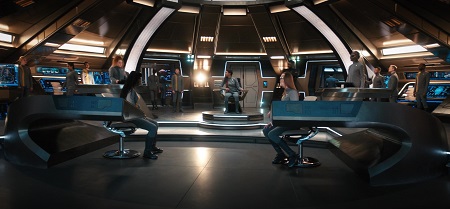
Star Trek: Discovery theories – week 1

Spoiler Warning: There are spoilers ahead for Star Trek: Discovery Season 3, as well as for Star Trek: Picard, Star Trek: Lower Decks, and for other iterations of the Star Trek franchise.

That Hope Is You, the third season premiere of Star Trek: Discovery, was pretty good. On the whole it did a good job establishing the main mystery of the season – the Burn – and set up some ground rules for how society operates in the 32nd Century. A solid foundation for the rest of the season to build upon!

If you’ve been a reader all year, you may remember my Star Trek: Picard theories. This series of articles will follow a similar format, as I take a look at some points within the show and postulate theories about what may or may not be going on. As I always say: these are just theories! No fan theory is worth getting too attached to or upset about, and unfortunately, as we’ve seen on a number of occasions recently, that can happen.

The season premiere offered up several points for theory-crafting – and also managed to debunk a couple of pre-season theories that I had!

Debunked theory #1: Warp drive is non-functional in the 32nd Century.

Book’s ship at warp.

Having initially come up with this theory when looking at some possibilities for the Burn, I spun it out into a full-blown theory all its own only a couple of days before the season premiere. Oops.

The basic idea behind it was that it would offer an explanation for why, decades after the Burn, the Federation had been unable to rebuild. A lack of faster-than-light transportation and communications would have made that task impossible. Not only that, but the lack of warp drive would have potentially left the USS Discovery (with its spore drive) as the only FTL-capable ship in Starfleet, perhaps even in the galaxy, providing a pathway for a ship from the 23rd Century to still be relevant in this era.

However, as we saw with Book’s ship, warp drive is still very much possible in the 32nd Century, and while dilithium – the power source behind warp drive – is now comparatively rare, many other vessels are capable of warp too. Mr Sahil’s relay station detected two Federation starships “in flight,” so even the rump Federation still has access to the technology.

Debunked theory #2: The Burn was a war or an invasion.

The super-synths from Star Trek: Picard.

When I looked in detail at what the Burn could be, based on the two trailers, one possibility was a war or an invasion. There were many ways this could have unfolded, and some covert or clandestine ones remain plausible. However, the Burn was categorically not a large-scale war or an invasion by the Borg or the super-synths from Star Trek: Picard. Both of those factions could still make an appearance and could still be connected to the Burn in some other way, but not this way.

Though we’re still completely unclear on what caused the Burn – which was the near-simultaneous explosion/disintegration of most of the galaxy’s dilithium – we can say with confidence that it was not a war, nor the opening salvo of one.

So those theories were debunked in That Hope Is You. Now let’s look at several new theories that I’ve come up with after watching the episode.

Number 1: Booker is a Coppelius synth.

Book’s prayer. Are the orange lights some kind of cybernetics?

Star Trek: Picard introduced us to Soji’s people – the Coppelius synths – in the two-part season finale. These androids had been originally built by Dr Maddox and Dr Soong, but there were a decent number of them by the time Picard and the crew of La Sirena arrived. Enough to form a self-sustaining civilisation in the decades and centuries between Picard and Discovery? Almost certainly.

Book appears to be human on the surface – but so did Soji and Dahj, and they were programmed to be unaware of their true natures. Book clearly has some kind of cybernetics or augmentations, as he demonstrated not only with his prayer/incantation, but also by having a holo-interface seemingly attached to his person. That could be an example of future technology, and as we get further along the timeline and humans (like Lower Decks’ Ensign Rutherford or Discovery’s own Lieutenant Detmer) become cybernetically-enhanced, the line between human and synth arguably becomes blurred. However, it is at least on the edge of possibility that Book is a synth rather than an enhanced human.

On the production side, this would tie together Picard and Discovery in a way that has yet to be attempted by either series. That would be a positive thing, and indeed is one of the things I hope to see this season. Whether this is the way to do it or not is certainly up for debate, but as of the end of the first episode, there’s no explanation for Book’s abilities or the glowing lights we saw on his face. Thus the possibility of him being synthetic remains.

Number 2: Hima is Terralysium.

The planet Book identified as “Hima.”

After Burnham met Book, she questioned him about what planet she was on. Because Dr Gabrielle Burnham – Michael’s mother – was “anchored” to the planet of Terralysium, Michael had set Terralysium as her destination when she created the time-wormhole in the Season 2 finale. Thus it was a surprise to her when Book told her than the name of the planet she had arrived at was Hima.

However, there are several points to consider. The first is that Terralysium was the name given to the planet by a very small group of pre-warp humans in the 23rd Century. If this civilisation didn’t survive for some reason, their name for the world would no longer be used. Secondly, 930 years have passed, and in that time the name of the planet could have changed organically. Languages evolve over time, and place names change too. Even in just the last century, the name of my home town has changed. Third, and perhaps most depressingly, it’s possible that without the protection of the Federation, the humans on Terralysium were killed, evicted, or conquered, and the name of the planet was changed by whoever currently controls it.

This is a minor point in some ways, and now that Burnham and Book have teamed up they may not revisit Hima – especially since they’re no longer welcome.

Number 3: The operators of the trading post on Hima are the Orion Syndicate.

One of the guards at the trading post was (I assume, anyway) an Orion.

I mentioned this during my review, but I wonder if the faction who operate the trading post on Hima are the 32nd Century Orion Syndicate. This criminal organisation was first hinted at in The Original Series and made several appearances in Deep Space Nine and Enterprise, and was depicted as a shadowy, underground criminal organisation comparable to organised crime groups of today.

In the absence of the Federation – or any other government – the Orion Syndicate may have felt no need to conceal itself, and could openly run settlements or even govern whole planets. It would explain the presence of Orions among the trading post’s staff, though there could be other reasons for that and Orions were by no means the only race we saw.

When I think about organised crime in Star Trek, the first group that comes to mind is the Orion Syndicate, and this kind of power vacuum is exactly what they would be able to take advantage of.

Number 4: Dr Gabrielle Burnham will appear during the season.

Dr Gabrielle Burnham, as seen in Season 2.

This is a pretty simple theory by my standards! The reason Michael Burnham selected the 32nd Century and the planet Terralysium for her destination in the Season 2 finale was because that time period and location were where her mother – Dr Gabrielle Burnham – is. “Anchored” there by a malfunctioning time travel suit of her own, Dr Burnham has been able to make short visits to the past, but is always pulled back to the 32nd Century afterwards. When choosing where to take Discovery, Burnham chose this time period and place on purpose specifically to reunite with her mother.

I didn’t necessarily expect Dr Burnham to appear right off the bat in the season premiere. But – along with finding her ship and crew – locating her mother could be an interesting storyline for Burnham to go through. Her reunion with her mother in Season 2 gave Burnham a much-needed emotional storyline, and I like the idea of bringing back this character. Not only that, as a scientist Dr Burnham could be very helpful when it comes to investigating the Burn – especially if the Burn is time travel-related!

Number 5: The Federation was already in serious decline before the Burn.

Book, Burnham, and Mr Sahil stand by the Federation flag.

Mr Sahil has a Federation flag aboard his relay station, which is implied to have been handed down to him from his father and grandfather – the latter of whom may have been a Starfleet officer before or during the Burn. But this flag has a different version of the Federation emblem to the one we’ve been familiar with in The Next Generation era and even in Enterprise. Specifically there are fewer stars on the flag.

That could simply be an aesthetic choice on the part of the future Federation, but it could also depict the secession or departure of member worlds and/or colonies, if the stars on the original flag represented them.

The familiar crest.

So this raises an interesting question: if the stars did represent Federation members, and many stars have been removed, does that mean the Federation has fewer members? If so, the obvious explanation is the collapse the Federation experienced after the Burn… but then why would Mr Sahil have this version of the flag? Surely his grandfather, if he were alive during the Federation’s pre-Burn heyday, would have a flag with more stars?

One possible answer for this is that the Federation was already in decline and had suffered withdrawals and secessions long before the Burn struck. The Burn may have been the final straw, but it may well not have been the only reason for the Federation’s collapse. It’s at least possible right now, based on what we know, that the Federation was in a weakened state prior to the Burn. This could be a result of the temporal wars mentioned by Book (that seem to be a reference to Enterprise’s temporal cold war storyline). That’s one explanation – but there could be others!

Number 6: The Federation’s response to the Burn, not the event itself, is what caused its collapse.

What could have driven the members of the Federation apart?

One thing Book said about the Burn stuck with me: the Federation couldn’t explain why the Burn happened, and couldn’t reassure the survivors that it wouldn’t happen again. As far as we know, there hasn’t yet been a reoccurrence of the Burn, but the lack of confidence in the Federation’s response may have proved more devastating to the alliance than the Burn itself.

As we know from what’s happening in the world today, people need information. They want to know what’s happening, and if there’s a problem, they want to know that their leaders and those in charge know enough about what’s going on to keep it in check. A lack of confidence can doom a government or political leader to quite rapid defeat, and perhaps this is what happened to the Federation.

It may be the case that, in the aftermath of a catastrophe, some Federation members had lost confidence in the organisation and withdrew. That may have snowballed, leaving the Federation even more weakened. It can be a difficult task for any leader to bring people together in the aftermath of a disaster – especially if an “everyone for themselves” kind of mentality sets in.

Number 7: Book, the other couriers, and the space-worm salvation society all operate in a small area – that’s why they’ve never seen the Federation.

Book seems unsure about the current state of the Federation.

It struck me as odd that Book seems to not know the Federation’s current status – he assumes it has collapsed but is unsure – when Mr Sahil could detect two Starfleet vessels in the relatively small patch of galaxy he is able to scan. It’s possible that the Federation does exist – perhaps even in a bigger way than we currently believe – but because Book, the other couriers, and his friends who help him save space-worms all live and travel within a relatively small area, they never encounter them.

The Federation’s influence is restricted, limited to a smaller area than it had been a century or so previously. But all that really tells us is that the Federation has no presence in Book’s star system.

Number 8: The Burn is the result of a superweapon – perhaps even one detonated by the Federation itself.

Does this scene from the second trailer show the Burn?

After what we saw in That Hope Is You, I’m increasingly confident that Discovery will give us a proper explanation for the Burn. We now have an approximate idea of what it is, but we still have no clue on the bigger question: why did it happen?

The Burn could be a natural event. As I mentioned when I looked at the second trailer, there was some reference to stars and coronal mass ejections, though how exactly this would relate to dilithium “going boom” (still hate that line) is anyone’s guess. However, it could also be an event that’s artificial in origin, and if that’s the case there are really only two options: a horrible accident, or a superweapon.

If the Federation felt the galaxy was threatened and that defeat was imminent, it’s possible that this weapon was one of their own making. The Burn could be a Pyrrhic victory; the Federation “won,” but only at a massive cost to itself.

As we learn more about the Burn, we’ll get to know whether this theory has any merit.

Number 9: The Burn was caused by one of the Red Angel suits.

Burnham with the Red Angel suit.

The nature of the Red Angel suit is unclear. It is capable of time travel, as well as the creation of a powerful time-wormhole capable of transporting a starship. It’s also capable of sending “red bursts,” which Starfleet could detect from thousands of light-years away. Could the suit be weaponised? Or if it malfunctioned – as Dr Gabrielle Burnham’s suit already has – could it accidentally cause a disaster?

I think the likelihood of Burnham or her mother deliberately causing the Burn is infinitesimally low. But the Burn shares the first half of their name, and while that could be a coincidence… maybe it isn’t. Maybe, somehow, Dr Burnham and/or Michael are responsible for the Burn through the misuse, malfunction, or even theft of one or both of their suits.

Dr Gabrielle Burnham in her Red Angel suit in Season 2.

With time travel banned in the 32nd Century, the suits would have phenomenal value at a place like the trading post Book and Burnham visited. The suits could be the only extant examples of time travel technology, and thus would be sought after by criminals, warlords, and anyone else who might want to misuse the technology.

Finally, in That Hope Is You, Burnham set her suit to self-destruct. It’s possible that self-destructing in or near a time-wormhole caused the Burn. As we didn’t see the suit destroyed on screen, however, the possibility remains that it wasn’t destroyed at all, and may have been captured by someone either in the 32nd Century… or 100 years earlier.

Number 10: Burnham’s Red Angel suit was intercepted by someone.

Burnham in the Red Angel suit in Season 2.

As above, the Red Angel suit vanished into space near the beginning of That Hope Is You. Burnham told it to self-destruct, but we never saw that happen. So what became of the suit?

The Season 2 finale of Discovery saw Spock and Pike receive the final “red burst” aboard the USS Enterprise, so we have to assume that part of the suit’s journey was a success. But beyond that we simply do not know. The suit’s value as perhaps one of the only surviving pieces of time travel kit cannot be overstated, and anyone with an agenda may have wanted to use it to attack the Federation – say, by destroying all of its dilithium. While there’s no indication the suit could do that, it could be repurposed, or it could simply be the vehicle through which a weapon was delivered. Unless we see confirmation of the suit’s destruction, this theory remains in play.

Number 11: The ban on time travel is being flouted – perhaps by the Federation.

Crewman Daniels was a temporal agent seen in Enterprise.

As we know from our own history, when a particular technology has been invented, even if it is massively dangerous and destructive and everybody agrees it was a bad idea, you can’t un-invent it. And when dealing with factions and nation-states that are inherently untrustworthy, you rid yourself of a potentially useful technology at your own peril.

This is where the galaxy is at with time travel. In the aftermath of the temporal wars, Book tells us the technology was outlawed. But did every faction in the entire known galaxy abide by that? What about the Romulans? The Cardassians? Perhaps those two were Federation members by this point in time. But are the Borg? The Dominion? Book mentioned the Gorn had destroyed part of subspace in the area near Hima – if they’re an antagonist faction, are they abiding by the ban on time travel?

Would the Cardassians abide by a ban on time travel?

Once a very useful, potentially weaponisable technology has been invented, the temptation to use it will always exist. And if it’s known that the technology is not in widespread use, that’s all the more incentive for some shady faction to keep using it for their own purposes. And speaking of shady factions… hello, Section 31. Even if the Federation government banned time travel, and even in the exceedingly unlikely scenario that everyone in the galaxy is abiding by the ban, would Section 31? Based on what we know of them from their appearances in past iterations of Star Trek, the answer is a resounding “no.”

On the production side, the ban on time travel may be to try to avoid story complications, such as why the Discovery crew can’t return to their own time after defeating Control, or to explain how the Burn was able to sneak up on the Federation and surprise them. So from that perspective, this theory may be less likely. In-universe, however, I can think of myriad reasons why it makes sense.

Number 12: The USS Discovery arrived before Burnham.

The USS Discovery in the second Season 3 trailer.

Time travel is complicated, and writing it can be difficult. One issue that crops up is the broken link between cause and effect – an event that, logically, should only be able to happen after a preceding event can, in some cases, happen before.

Burnham took the lead on opening the time-wormhole and bringing the USS Discovery into the 32nd Century. We thus assume that Burnham arrived first, and the absence of the ship seems to hint at that. But as Burnham and Mr Sahil briefly discussed, temporal mechanics can be complicated! It’s at least conceivable in a storyline all about time travel that the USS Discovery arrived first – perhaps even by a matter of months or years – and is already in the 32nd Century.

The USS Discovery seen in Season 1.

We did see, in the trailers, Saru and Tilly dressed up in hooded garments that could be native to this era. While none of the characters appear to have aged in a major way – thus ruling out Discovery arriving decades before Burnham – the nature of time travel means we could very well find out that the ship arrived first and Burnham arrived after. Mr Sahil was unaware of Discovery’s registry number when Burnham asked about it, but as his scanning range was limited, if the ship arrived at a different location for some reason perhaps he would never have seen it. And in addition, it was never established how far Sahil’s base was from the planet Hima.

Would this be a good revelation? If the crew of Discovery had managed to blend in by the time they reunite with Burnham it could be. And it could make that reunion different and exciting – instead of Burnham racing off to catch up with the ship the moment it arrives, they could run into each other by accident, with both unaware the other had survived. Any of these stories could be interesting to see, and as much as I dislike time travel stories in general, here this kind of narrative could work well.

So that’s it. Some theories as we begin the season! Let’s see how many I get wrong this time… if you read my Picard theory roundup a few weeks ago, you’ll know I scored fewer hits than misses last time around. Some of these are either far-fetched or based on less-well-known parts of Star Trek canon, and those theories in particular may not come to pass. Regardless, this is a lot of fun and I enjoy spending time putting together theories for what may be going on in Star Trek.

The second episode of the season, Far From Home, arrives in the UK on Friday, so be sure to check back sometime over the weekend for my review. After each episode airs I’ll adjust my theories based on the events depicted, and will continue to do so throughout the season.

Star Trek: Discovery is available to watch on CBS All Access in the United States, and on Netflix in the United Kingdom and elsewhere. The Star Trek franchise – including Discovery – is the copyright of ViacomCBS. This article contains the thoughts and opinions of one person only and is not intended to cause any offence.
Star Trek: Discovery review – Season 3, Episode 1: That Hope Is You

Spoiler Warning: There are spoilers ahead for Star Trek: Discovery Seasons 1-3, including the latest episode. There are also spoilers for Star Trek: Picard Season 1, Star Trek: Lower Decks Season 1, and other iterations of the Star Trek franchise.

1998 was a pretty good year. Japan hosted the Winter Olympics, Windows 98 gave the world’s computers a major upgrade, and Billie Piper (later of Doctor Who fame) released Because We Want To, her debut single, which went straight to number one in the charts. Catchy stuff. It’s also the most recent year in which three different Star Trek productions all debuted. We got the film Star Trek: Insurrection, the seventh season of Star Trek: Deep Space Nine, and the fifth season of Star Trek: Voyager. It seemed in those days that the franchise was an unstoppable juggernaut! It’s taken over two decades for there to once again be three productions in one year, but here we are. Despite everything going on in the world we’ve had Star Trek: Picard’s first season, Star Trek: Lower Decks’ first season, and now finally the third season of Star Trek: Discovery!

Oh boy it’s been a long wait! Season 2 wrapped up in April 2019, meaning we’ve had to stay on the edge of our seats wondering what will become of Burnham, Saru, and the rest of the crew for eighteen months! If you missed it, I’ve written a summary of the story so far, up to the end of Season 2. I think that serves as a decent recap of the adventures of the ship and crew over the first two seasons, and if it’s been a while since you last saw Discovery it could be worth a read to get back up to speed. You can find that article by clicking or tapping here.

Captain Pike and Spock watch Burnham and the USS Discovery disappear into the future at the end of Such Sweet Sorrow, Part 2 – the Season 2 finale.

After the abject failure of ViacomCBS to secure an international broadcast for Lower Decks, I confess being a little concerned that Discovery would have similar issues. With Paramount+ – Star Trek’s new digital home – supposedly being rolled out internationally in 2021, I could quite understand Netflix saying they didn’t want to broadcast a show that will soon be taken down and made available on a competing service. Luckily, however, Netflix is content to broadcast Discovery here in the UK – and in 187 other countries and territories too! The episodes are broadcast on Netflix a day after their CBS All Access premiere, and since that’s the version I have access to, it means I’ll be 24 hours behind the curve when it comes to writing my reviews this season. Sorry, but there’s nothing I can do about that!

Without further ado, let’s jump into the season premiere. That Hope Is You was decent. It wasn’t Discovery’s finest, but it was far and away not the worst episode! Like the premiere of Star Trek: Picard earlier in the year, That Hope Is You builds up slowly and lays a foundation on which the story of the season can build. There was one especially bad line of dialogue, but other than that no colossal negatives to drag it down. The episode focused exclusively on two characters – Burnham and new character Book. This idea of slowly introducing characters instead of dumping them all in at once worked well in Picard, and I’m sure will work here too based on what we saw this week.

That Hope Is You focuses on Burnham and Book.

After the mandatory recap of last season’s story, we get a slow opening to the new season depicting the Federation official from the Season 3 trailers as he goes about his routine. I loved the holo-bird alarm clock, and the way the furniture in his room rearranges itself. Though other parts of the episode would struggle, at points, to show technology that looked suitably futuristic, much of what we saw in Mr Sahil’s quarters and at his workplace did seem well-suited to the 32nd Century.

This sequence set up, for folks who hadn’t seen either of the trailers and had avoided online speculation, the entire premise of the season. It communicated to us as the audience – entirely wordlessly – that the Federation exists in a vastly weakened state. But it also showed, thanks to Mr Sahil himself, that some people were still hard at work, even if things looked bleak and they weren’t able to find what they’re looking for. I actually inferred from the moment where Mr Sahil begins scanning that he was deliberately looking for Burnham and/or the USS Discovery – that somehow he had been forewarned of their arrival. Luckily this wasn’t the case, as I think that would have complicated the plot significantly.

Mr Sahil with his holographic galaxy map.

Burnham’s arrival in the future was not smooth. Through what can only be described as colossal bad luck, given the absolute vastness of space, she exits the time-wormhole and immediately crashes into a ship piloted by new character Booker, who had been in a dogfight against a character who I believe is a Yridian (a race first seen in The Next Generation sixth season two-parter Birthright). Both Burnham and Book crash-land on a nearby planet.

After the sequence in space the action jumps to the planet’s surface, and begins with a (slightly cliché) animated moment featuring two bugs. The animation and CGI work in Discovery has always been fantastic, and these two critters, while clearly alien, managed to look very real. Burnham then disrupts the peace of the planet’s surface by crash-landing, and while the sequence showing her struggling to reboot the damaged suit was certainly tense, as the audience we expected her to survive her fall from space. And she did.

Burnham – in the Red Angel suit – falls to the ground.

After struggling to her feet, Burnham removes the Red Angel suit. The suit’s on-board computer confirms that there are life-signs on the planet she crashed on, resulting in an outpouring of emotion. In the trailer I was a little sceptical of this scene and Burnham’s screaming reaction, but after seeing it in context I’m happy to say that it worked. Burnham is elated that her mission to save lives worked, and it shows.

With the wormhole about to close – despite the USS Discovery nowhere in sight – Burnham programs the suit to send the final “red burst” to confirm to Pike, Spock, and everyone left behind that they made it. She also tells the suit to self-destruct (though why she did that wasn’t completely clear). The suit, apparently undamaged by its fall through the atmosphere, launches back into space just as the time-wormhole is closing, stranding Burnham on the surface of what we assume to be Terralysium.

The Red Angel suit scans for life signs in the 32nd Century.

Terralysium, by the way, was the planet first encountered in the Season 2 episode New Eden, and was apparently the “anchor” point of Dr Gabrielle Burnham, Michael’s mother, when her own Red Angel suit malfunctioned. In the finale of Season 2, Burnham deliberately chose Terralysium as her destination for that reason. The year she arrived is confirmed to be 3188 – though why the suit chose to use the Gregorian calendar instead of stardates is unclear. Perhaps that was to make it easier for us as the audience to understand? It does seem a little odd, though.

Now all alone in the future, and with no indication of where she is or where to go, Burnham grabs her emergency kit. Inside we see a communicator, tricorder, phaser pistol, and a couple of miscellaneous items that Burnham identifies as ration packs. A nearby hill is smoking from what appears to be the crash-landing of the ship Burnham slammed into when she exited the wormhole, and with no other landmarks on the semi-barren world she sets off.

Burnham tells herself to “walk.”

Here’s one thing Discovery has in its favour over Picard: filming locations. Picard was filmed in Los Angeles and the surrounding area, and if you recall what I said during Season 1… it showed. Every location that the crew of La Sirena visited was a barely-disguised California, and as the season wore on my enjoyment of those settings wore out. Discovery, by contrast, is filmed in Canada. As such many of its filming locations are either wholly new to Star Trek or have only been seen once or twice before, giving its worlds a much less familiar feel. Something as abstract as the filming location can be hard to put your finger on when caught up in watching an interesting and engaging narrative, but in Picard, the obviously-California setting began to get in the way. Here we get something new and fresh, and I appreciate that.

After a montage, Burnham makes it to the crashed ship and is set upon by its pilot. This fight scene dragged a little, at least for me. Perhaps it’s because I’ve spent so long in past months poring over the trailers, but because I knew Burnham and Book were going to end up working together I just thought to myself “c’mon, let’s get this over with and move to the next part of the story!”

The first meeting between Book and Burnham didn’t go well!

We also got the title sequence in between Burnham’s trek and the fight scene, and it’s worth noting some of the imagery from it. The main one that I noticed was the Starfleet badge. It transitions from the DiscoveryOriginal Series style that we’ve been familiar with to an altogether different one that’s still based on the familiar Starfleet emblem, but is clearly quite different. Its oval outer shape reminded me at least a little of the Bajoran badges used by Major Kira, Odo, and others in Deep Space Nine, and perhaps we could suggest that the fact that the logo is split into a couple of pieces is somehow a metaphor for the divided Federation. Too far? Maybe!

The titles also showed off Book’s ship, which sports a design unlike anything we’ve really seen before, being almost wedge-shaped. The phaser pistols also transition from the style we’ve seen in Discovery (and obviously based on The Original Series) to a new style which reminded me at least a little of The Next Generation-era Klingon disruptors. The title music has remained the same (and after the enjoyment of Lower Decks’ theme feels a bit of a downgrade!) and of course we have the new font used for the main titles.

The new Starfleet badge/logo.

Book brings Burnham aboard his ship after she gives him a speech about needing to trust someone. The damage to his ship appears minimal, but he mentions that he needs to get more dilithium in order to complete his courier run. I liked the name-drop of both slipstream technology (seen in Voyager) and the tachyon solar sails (seen on an ancient Bajoran ship Sisko recreated in Deep Space Nine). We’re also introduced to Grudge – Book’s cat. What a majestic cat she is, too!

After establishing that they could trade Burnham’s “antique” tricorder for some dilithium at a nearby settlement, Book and Burnham set off. And it’s during their journey to the trading post that Burnham learns what we’ve all known since the trailers – the Federation is gone. Book tells her of the Burn, an event that occurred over a century earlier. Somehow this event destroyed much of the dilithium in the known galaxy. And let’s be honest for a second: Book’s line explaining it was atrocious. Truly terrible writing. “Dilithum… One day, most of it just went ‘boom'” has to be a contender for one of the worst-written lines in Star Trek. Ever. It just felt completely unnatural, like Book wasn’t speaking but reading a script. And that’s no criticism of actor David Ajala, who put in an astonishingly good performance across the whole episode. It’s purely the writing.

Burnham aboard Book’s ship.

I get that the writers want to keep the events of the Burn mysterious. Indeed, part of the story of the season is going to be unravelling this event, figuring out what it was, what happened, and perhaps finding a way to undo it or prevent a reoccurrence. But there had to have been a better way to explain it that to say “it just went ‘boom.'” I’m astounded at how bad that line is, and honestly it detracts from the entire episode.

However, we do have the beginnings of an explanation for the Burn and the Federation’s collapse. The Burn, somehow, has destroyed dilithium across the known galaxy, seemingly explosively. It also sounds as though this happened near-simultaneously. Curiously, Book is aware of the Federation’s response to the Burn, which was to tell the peoples of the galaxy that they didn’t know what happened and couldn’t guarantee it wouldn’t happen again. I’m inferring a lot here, and we will deal with this in a day or two when I write up my theories and predictions, but it sounds as though the poor response from the Federation is as much of a reason for its collapse as the Burn itself. Perhaps people were dissatisfied with the response, and star systems began withdrawing or seceding until there were very few left. Book’s next line that the Federation had collapsed “I guess,” strongly hints that he’s never encountered Starfleet or any official Federation representative.

Book explains the Burn.

The settlement Book and Burnham visited in the aftermath of this conversation reminded me of Freecloud, the planet visited by the crew of La Sirena in Picard. Though this place was perhaps a little more run-down, both have that “dystopian futuristic city” vibe that we often get in modern science fiction. I did like the design of part of the settlement, with large rotating rings seeming to orbit a walkway as Book and Burnham entered.

The Andorians are an interesting race in Star Trek. Though they appeared in The Original Series, and were heralded as one of the founding members of the Federation, they were almost entirely absent during The Next Generation era. It was only in Enterprise that we got to spend any real time with Andorian characters, and though they have made background appearances in modern Star Trek, the scene we got with Book and Bunham at the entry to the trading post is the first to prominently feature an Andorian in years. I’m a big supporter of bringing back classic races and factions, and this time is was done exceptionally well as the grouchy Andorian guard has to be persuaded to let Burnham inside the trading post.

The entrance to the trading post.

After strolling through the trading post, Book and Burnham make a trade – he directs her where to go to try to contact Discovery, and in exchange she gives him her tricorder, which now has value as an example of very old technology! However, it soon emerges that Book has not been true to his word, and has instead sent Burnham into a restricted area (described as a “vault”) where she is immediately captured. Book steals her emergency kit and leaves. As a surprise twist, I think this worked quite well. I’m sure a lot of viewers will claim to have seen it coming – Book’s nature had been well-established by this point as someone untrustworthy. Even so, the suddenness with which Burnham was trapped and then robbed made the moment work very well.

The story splits in two at this point, following both Burnham as she’s drugged and interrogated by two of the trading post’s security guards, as well as Book in his attempts to pawn Burnham’s gear. Whatever drug was given to Burnham clearly has a major effect on her, as she begins blabbing about everything that’s happened to her over the last few days – remember, of course, that this episode is set immediately after the Season 2 finale (though walking from the ship to the trading post clearly took time).

Book betrays Burnham.

As a sequence depicting Burnham under the influence of this “truth serum,” I think it worked overall. However, its success depends much more on the camera work and effects used to represent the impact of the drug rather than on Sonequa Martin-Green’s performance. For all my earlier criticism of Burnham as a character, especially in Discovery’s premiere, Martin-Green has always done a standout job in the role. Here, though, I have to say the performance was a little unconvincing. The sequence worked as a whole, but was salvaged thanks to the way it was filmed and edited.

Book has no luck selling Burnham’s emergency kit, despite the fact that someone higher-up at the trading post saw the gear and let Burnham in. This is a minor inconsistency, as it initially appeared that the now-antique kit would have value, yet the way the traders behave (at least towards Book) indicates that it doesn’t.

Burnham drugged by the trading post guards.

After the drug causes Burnham to tell the guards about Book they take her out of her cell and back onto the main floor of the trading post to point him out. Meanwhile Book has been accosted by the Yridian he was battling in space – Cosmo. Cosmo is looking for his cargo that he claims Book stole when Burnham and her guards arrive. Cosmo is a tad one-dimensional as villains go, but his threat to hurt Grudge the cat definitely spurred me on to support Book all the more!

After being surrounded by the facility’s guards, Book and Burnham team up to fight them off in what was a very exciting sequence. I stand by what I said during my look at the trailers – the weapons used by the people of the 32nd Century don’t appear to be particularly advanced compared to the 24th or 23rd. Partly that’s a result of the Burn and the impact on galactic events. But at the same time, the Burn is something a long way in the past, and something which doesn’t appear to have been quite as devastating as feared. While the 32nd Century is definitely different to how we as the audience (and Burnham) may have expected, it isn’t exactly fair to call it “post-apocalyptic.” There is still technology, and there is still a functioning society, even though that society isn’t the Federation. So my point about technology is valid, and this is an issue any science fiction franchise can fall victim to. How do you make technology feel suitably advanced?

An Andorian guard wielding a 32nd Century handheld weapon.

During their fight against the security team, Burnham was able to grab a number of fragments of dilithium crystal – hopefully enough to power Book’s warp drive. The duo then go through a prolonged escape-fight, escape-fight sequence using Book’s portable transporter. The third time of escaping they transport inside a body of water, where apparently they can’t be tracked. It’s here that we finally get a break from the constant battling, long enough to slow the episode back down and to allow Book and Burnham to have another conversation.

Book has figured out that Burnham is a “time-traveller,” despite time travel in the 32nd Century having been prohibited. I’m not 100% convinced on that point – and I wonder whether we’ll see the remainder of Starfleet abide by that ban later in the season. However, it was interesting and contained an oblique reference to Enterprise when Book mentioned the “temporal wars.”

Burnham and Book after escaping the trading post.

We also see a mysterious side to Book. Not only does he offer up a prayer in some alien language, but doing so leads to some kind of glowing marks on his face. My bet is that these are technological rather than biological (they looked similar in colour to his holographic interface) but exactly what the prayer means and what Book’s true nature is is unclear at this point. His prayer allowed him to pull from the water some kind of plant which contained a healing serum for a wound to Burnham’s arm. How all of this works, and whether Book has some kind of cybernetics or other augmentations is a mystery.

After returning to Book’s ship, the duo are once again set upon by Cosmo and the trading post’s guards. The guards execute Cosmo for losing his cargo, then plan to do the same to Book and Burnham. As we’ve now seen several Orions amongst this group, I wonder if the operators of the trading post – and thus at least one of Book’s employers – is the Orion Syndicate. The Orion Syndicate first appeared in The Original Series and was referenced a few times in both Deep Space Nine and Enterprise. In the 22nd-24th Centuries it was an underground criminal group, kind of analogous to the Mafia or similar gangs today. It’s possible that, in the power vacuum caused by the Burn and the collapse of the Federation, the Orion Syndicate is now out in the open.

Book’s prayer – and possible augmentation.

Rather than simply shoot Book and Burnham, the group insist on seeing Book’s cargo. The guards had become interested in it when Burnham mentioned it was temperature-sensitive, and upon opening the hold of his ship the cargo is revealed: a giant worm-like creature that looked kind of like a cross between a puppy and Jabba the Hutt! The space-worm makes short work of the assembled guards, eating one and forcing the others to flee. Book is able to calm it – apparently it’s another of his pets – but not before it can eat Burnham!

Okay, “eat” is a strong word. It picks her up with its mouth before Book convinces it to spit her out. But considering it had just chopped an Andorian in half with its mouth, I’d say Burnham got lucky! This is the second Star Trek season premiere this year which involved a main character being chewed on by a large alien creature! Ensign Boimler was similarly picked up and chewed by a large critter in Lower Decks’ premiere episode, Second Contact. I wonder if that’s purely a coincidence or if it was planned that way?

This happened in That Hope Is You…
…and this happened in Second Contact.

Back aboard Book’s ship, and the true purpose of his mission is revealed. The space-worms are an endangered species, and Book – along with a collective of others – is rescuing them and relocating them to sanctuary worlds. I had theorised only a few days ago that the Burn might have caused warp drive to not function. Though the loss of much of the galaxy’s dilithium has certainly limited warp drive, as we see from Book’s ship that theory was incorrect. Our first debunking of the season!

After releasing the space-worm at the sanctuary, Book takes Burnham to a “waypoint” that couriers like him use – a damaged Federation relay station. This is the facility operated by Mr Sahil, who we saw at the beginning of the episode. Though the performance was great from guest star Adil Hussain, I can’t help but feel that Sahil is an underdeveloped character. We’re told that he, like his father and grandfather, mans the relay station because he believes in what the Federation used to stand for. Yet he’s been there for his entire life (or so it seems) without any contact from anyone else in the Federation. There are very few people who would have that kind of semi-religious dedication to a long-dead cause, and while on the one hand Sahil’s story here was emotional, particularly when Burnham spoke highly of him and offered him a commission, it also felt just a little unrealistic.

Mr Sahil and Burnham at the relay station.

Sahil’s relay station has the ability to scan a radius of 600 light-years, and assuming it’s located somewhat close to Hima/Terralysium, should be able to detect the arrival of the USS Discovery. Assuming, that is, that Discovery arrives in the future not the past! Time-travel stories can get complicated like that, which is why they’ve never been my favourites in Star Trek.

I do like Mr Sahil, despite my criticism above, and the sequence between him and Burnham was the emotional heart of the episode. It’s implied that he’s never met a Starfleet officer, so even meeting Burnham is a big deal for him, and the emotion on his face when Burnham tells him she’s proud of his dedication to the Federation was just beautiful, really. Together, Sahil and Burnham raise the Federation flag on the damaged outpost, signalling – in line with the theme of the season as a whole – that the Federation is coming back.

Mr Sahil and Burnham shake hands.

One point of interest from the flag is the missing stars. This is what first prompted me to consider the season as perhaps seeing a declining Federation way back when we got the first Season 3 trailer last year. The missing stars could simply be an aesthetic choice on the part of the Federation – but equally, those missing stars could represent seceded or withdrawn planets and races. If the latter is true, I wonder if it means those secessions happened before the Burn. Perhaps the Federation was already in decline, and the Burn was simply the last straw? Let’s save the theorising for my theory post!

Interestingly, Mr Sahil noted that two Starfleet vessels were in flight in the area he was able to scan. I had speculated that Starfleet and the Federation weren’t entirely gone, and this settles it. There are still Starfleet ships, even if there are only two within 600 light-years and even though Book has never seen one! I’m sure that, as the season progresses, we’ll get to spend time with this era’s Starfleet. Rebuilding the Federation is going to be a major theme of the season, and I’m excited for that. But I’m also excited to see what the contemporary Federation looks like.

Mr Sahil notes that Federation vessels are active in the area.

And with that, the episode was over. That Hope Is You was a genuinely interesting start to the season. It built up slowly, introducing us to only two major characters, and perhaps a recurring or side character depending on how often Mr Sahil will return. Book is interesting, and I’m curious to learn more about his potential augmentations and/or cybernetics, as well as why he dedicates his time to rescuing space-worms.

There were a couple of badly-written lines that, unfortunately, detracted from the episode. Of course we’ve covered the line about the Burn, but there was also Book referring to himself as being “space broke” that I felt just didn’t work. Other than that, though, there aren’t any massive points to criticise from the premiere. The story worked well, it had some exciting moments, some quieter moments, and an emotional tug toward the end. It was a decent, solid way for Discovery to return to our screens.

Book and Burnham approach the trading post.

One thing I hope we see more of are references to past iterations of Star Trek, especially to the events of the 24th Century. There wasn’t much of that at all this time, and although we are hundreds of years further along the timeline, finding ways for Discovery to tie itself to the wider franchise – and especially to series currently in production – will be important. Even more so now that we have a fourth season confirmed. That’s right, Discovery is coming back for Season 4 next year, much to the chagrin of followers of anti-Star Trek social media groups!

The setting for Season 3, while still shrouded in mystery, is not as strongly post-apocalyptic as I’d feared. Even the Federation itself is not entirely gone – Sahil confirmed this when he said that there are two Starfleet vessels in operation just in his relatively small patch. Though the Federation is clearly far smaller and lesser than we’ve ever seen it, there is a rump from which it can be rebuilt. The Burn is also not as catastrophic as feared, and there are clearly many millions, billions, or more who survived those events. All of these are positive things. Star Trek has always been a franchise that presents an optimistic future, and while I wouldn’t call the 32nd Century “optimistic,” it’s also not as pessimistic as perhaps I’d feared from seeing the trailers.

Book, Burnham, and Mr Sahil stand by the Federation flag.

That Hope Is You has given Discovery a solid foundation upon which to build. The next episode will reintroduce Saru and the rest of the crew, and I’m really excited to see them back! I hope you’ll join me in the next few days for some theory-crafting, and next week I’ll be back to break down and review episode 2 – Far From Home. I’m looking forward to it already!

Star Trek: Discovery is available to watch now on CBS All Access in the United States, and on Netflix in the United Kingdom and elsewhere. The Star Trek franchise – including Discovery – is the copyright of ViacomCBS. This article contains the thoughts and opinions of one person only and is not intended to cause any offence.
Let’s-a Play Luigi’s Mansion 3 – Part 2

Spoiler Warning: There are spoilers ahead for Luigi’s Mansion 3.

It’s taken a few days for me to get back to Luigi’s Mansion 3, what with all the theorising and building up to the third season of Star Trek: Discovery. Sorry about that, but we’re finally back with Mario’s scaredy-cat brother as he continues to explore the Last Resort hotel. In the first part, we saw Luigi and the gang check into the hotel, only for the whole thing to be revealed as a trap! Hellen Gravely, the owner, is in cahoots with Luigi’s nemesis King Boo, and the dastardly duo have trapped Mario, Peach, Toad, and Luigi’s professor friend in paintings. Here’s hoping Luigi can get them out!

One thing that makes writing this kind of article a lot easier than in years gone by is the ease of taking and saving screenshots. The Switch pro controller is my gamepad of choice for Nintendo’s console, and it has a screenshot button built right in. Regular readers may recall that I used to work for a large games company, and it wasn’t that long ago that getting a screenshot of a console game was a pain in the bum that required specialist equipment and a decent PC. So here’s to that little innovation!

Last time, we left Luigi in a large room which contained a portrait of his professor friend from the first title in the series…

This is as far as we got last time.

This time, we’re going to explore some more of the hotel and even take on the first two boss fights. Let’s get started!

Luigi’s Mansion 3 doesn’t have the kind of “save anywhere” functionality that most modern games have. Instead it relies on an autosave which checkpoints Luigi’s progress every time he opens a doorway into a new room. Luckily this is a hotel, and exploring the hotel is the aim of the game, meaning we’re going in and out of a lot of rooms! The save file seems to keep the most recent three autosaves, meaning if – for whatever reason – one of them was no good, it’s possible to go back and choose a different one. As someone who’s been burned before by corrupted data, accidental deletions, and lost save files… this isn’t great. I like to be in control of my save, and Luigi’s Mansion 3 doesn’t give me that control.

The loading screen.

After loading, Luigi was in the hallway behind the room with Professor E. Gadd’s painting. Exploring this hallway led to an impassable doorway (blocked by something behind the door), as well as a metal door that needed a key. There was one other door, which was the only accessible one in this area.

The stuck door.

Opening this door led to a weird room that reminded me of a dressing-room for a theatre. There was a large mirror and several chairs facing it, with a table in front. I used to be involved with an amateur dramatics society many years ago, and this looked an awful lot like the backstage setup we had for getting people into their costumes and makeup! Considering that the ghosts who occupy the hotel had to put on a show for Luigi, Mario, Peach, and the Toads when they arrived, it makes sense that they’d have to have a dressing-room of some kind. And this is it!

The dressing-room.

The dressing-room was laid out very cleverly, and made good use of the mirror. Using the Poltergust on a coat hanging on the left of the room gave Luigi access to a safe, inside of which was a green gem. Not sure what purpose these gems serve yet, but we’ll find several more during this section of the playthrough. Another mirror on the right of the room showed a switch on the fourth wall (i.e. the one we can’t see). Activating this switch with the lamp on the Poltergust opened a hiding place behind a painting, giving Luigi the key to the metal door.

The hidden key.

This was a clever puzzle, the kind you might’ve expected to find in an older point-and-click game like Monkey Island, and the combination of the camera and mirror worked well here. It isn’t Nintendo’s first time using a mirror to reveal a hidden secret; Super Mario 64 features a room in the castle where it’s necessary to use a mirror to find the way into one of the painting worlds. After grabbing the key I headed out of the room, and here’s where not playing the game for ten days almost tripped me up! An attack by a couple of ghosts almost led to Luigi’s untimely demise as I struggled to remember how to use the various settings on the Poltergust!

Battling ghosts in the hallway.

I was eventually able to defeat the ghosts, however, and make it back to the metal door. Unlocking it with the key led to a room with a safe. Inside the safe Luigi found a new lightbulb for the Poltergust; this one has the ability to save people trapped in pictures. So far we’ve only found one of Luigi’s friends, so it was back to the room with Professor Gadd’s painting to rescue him!

Professor E. Gadd is saved from his painting prison.

The Professor insists on being taken to his car in the basement – the place where we got the Poltergust earlier on. And here I’m almost embarrassed to say I got stuck! Heading back into the lobby leads the Professor to make a comment about heading down to the basement in the lift. But there didn’t appear to be a way to call or open the lift; the button was blocked by a fallen bin and for the life of me I couldn’t figure out what to do for a solid five minutes or so! Eventually, however, I remembered that pressing both trigger buttons at the same time does a different kind of attack move, and this is the only way to dislodge the wayward bin and access the lift. Phew.

Finally able to enter the lift!

Upon entering the basement garage, Luigi encountered the first boss. I’m not sure what this character is called (or if he even has a name) but he was a ghostly member of the hotel’s staff, and attacked Luigi by throwing suitcases and other items of luggage. It wasn’t a particularly difficult fight all things considered, but it was time-consuming as this ghost had more hit points than any of the others we’ve encountered so far. Luckily the fight earlier on had reminded me of all the different moves at Luigi’s disposal, and while I did take some damage Luigi ultimately prevailed.

Defeating the first boss.

Most of the buttons in the elevator were missing – there was only the basement accessible when Luigi and the Professor rode down a moment earlier. This boss dropped two buttons when he was defeated, and this seems to be a pattern that will be repeated for every boss in the game. Each button allows the lift to travel to a different floor – so defeating a boss opens up a new level. Simple.

Luigi finds one of the buttons.

The Professor heads to his car and retrieves a strange geometric shaped item from the boot. This turns out to be his “mobile lab,” and when unfolded it’s an entire safe room! Setting this up in the basement will allow the Professor to keep tabs on Luigi, as well as being a safe space to return to between levels.

Luigi is shocked as the Professor sets up his lab.

The Professor is kind of funny. A stereotypical “mad scientist” type who’s lost in his work, he’s nevertheless a fun character and I enjoyed the cut-scene with him inside the lab. He gives Luigi a “Virtual Boo” – an obvious clone of Nintendo’s own Virtual Boy console from the 1990s which failed. This was a funny, self-aware joke on Nintendo’s part! In addition to being able to call on the Professor to ask for hints, the VB also contains a map, which will come in handy. And just like the Virtual Boy on which it was based, all the menus, screens, and even the map are projected in shades of red.

Luigi receives the Virtual Boo from the Professor.

After exiting the lab, Luigi’s first task was to install a machine of the Professor’s inside the lift. This will keep track of the available floors and provide a little information when inside the lift. Entering the lift triggered a cut-scene in which it was set up automatically, so there wasn’t much to do here. The next assignment took Luigi to the fifth floor, which is where the Professor had been staying when he was captured. Luigi is tasked with retrieving an important briefcase…

Next stop, the fifth floor…

The fifth floor branched off in two directions. Both were blocked, one by furniture that was immovable – but may be able to be moved later if Luigi gains access to new moves. The other was blocked by suitcases that Luigi was able to move using his new “plunger shot” skill. The plunger shot is what it sounds like – the Poltergust fires a plunger (the kind used to unclog toilets) with a rope attached. It will stick to certain flat surfaces, and Luigi can then use the Poltergust to suck up the rope, moving whatever object the plunger is stuck to. Got that? It’s harder to explain in words than it is to use!

Using the plunger shot on a suitcase.

After rounding the corner, a housekeeping cart shoots off seemingly all on its own, giving Luigi a fright. Exploring these rooms yields little, and after a fight against a couple of ghosts, Luigi arrives at Room 508 – which had a giant yellow exclamation-mark on the map. Inside was the next boss: a chambermaid. Room 508 was the Professor’s room, and inside is the briefcase Luigi needed to get. Unfortunately the maid swallows the briefcase, and before I could figure out what to do she made her escape by floating through the wall.

The second boss.

Once I figured out how to use the plunger shot on the briefcase – ghosts are noncorporeal, after all! – the boss fight was another that was relatively easy yet still time-consuming. After a couple of successful attacks the maid will flee if you aren’t quick enough, and after she fled the third time, I wasn’t sure where she’d gone.

The ledge on the fifth floor.

Looking around the entire accessible area – including an outdoor section on a ledge – yielded nothing, but after returning to Room 508 the maid was back where she started, and the boss fight was able to be continued. Defeating her meant Luigi could grab the briefcase, and also scored another elevator button for his trouble.

Defeating the second boss.

The new button is for the third floor – which says it contains a hotel shop, perhaps somewhere for Luigi to spend all of these coins he’s been collecting? Before we can go there, however, the Professor calls to ask for his briefcase. Returning to the lab in the basement, Luigi was rewarded for this outing with yet another new tool – Gooigi! What is Gooigi, I hear you ask? Well it’s a facsimile of Luigi… made entirely out of goo. Gooigi is able to access areas that Luigi can’t, and it’s now possible to switch between controlling Luigi and Gooigi with the push of a button.

It’s like that scene from Terminator 2…

Gooigi’s main feature is being able to squish his way into small spaces – such as in between bars or, perhaps, down grates. We’ve already seen a few rooms that had small, seemingly impassable holes in the wall. Perhaps Gooigi can access those areas. I had wondered if Polterpup (Luigi’s ghostly dog) might be useful there, but it seems like Gooigi might be instead. We’ll see next time we find such a room!

Gooigi is loaded into the Poltergust.

After a short section that served as a tutorial for using and controlling Gooigi, Luigi was once again able to explore the hotel. The third floor had been opened up, and though I couldn’t tell much from the map it didn’t look like a huge level. Also hearing that it was a shop led me to think maybe it would be somewhere to spend some coins, if indeed Luigi’s Mansion 3 has such a facility. So I headed to the third floor!

Heading to the third floor – with the Professor’s special machine in the lift.

The third floor turned out to be larger than its map led me to believe, and contained who I assume to be the next boss – a security guard ghost. This ghost dropped a large key while patrolling around the shuttered shops and Luigi was able to sneak in and collect it. The next door has another large yellow exclamation-mark on the map… I think that means the boss will be there! But let’s save that for next time, since we’ve done quite a lot of exploring already!

Luigi’s Mansion 3 continues to offer cute spooky fun in the run-up to Halloween, which is all I wanted from it! I hope these write-ups are a bit of fun; Luigi’s Mansion 3 is a very different kind of game from the last one I wrote up, and with less of a story it’s sometimes hard to know what to say. I don’t want to skip over too much gameplay!

Come back next time to see what the giant exclamation-mark on the third floor is all about!

Luigi’s Mansion 3 is out now for Nintendo Switch. The Mario franchise – including the Luigi’s Mansion games – is the copyright of Nintendo. This article contains the thoughts and opinions of one person only and is not intended to cause any offence.

Star Trek: Discovery Season 3 theory – warp drive

Spoiler Warning: There are spoilers ahead for Star Trek: Discovery, including Seasons 1-2 and the trailers for Season 3. Further spoilers may be present for other iterations of the Star Trek franchise.

As the premiere episode of Star Trek: Discovery’s third season gets nearer I seem to be coming up with more and more theories! This time we’re going to consider one possible effect of the Burn in detail. I hinted at this when I considered what the Burn could be, but this time I’m going to expand on that, and in addition perhaps add a couple more potential causes for the galactic cataclysm.

Here’s how the theory goes: the Burn has made warp drive useless across the galaxy, meaning no one – including Starfleet – is currently able to travel faster-than-light.

In order to understand this theory, we need a basic refresher course in how warp drive works in Star Trek! In short, warp drive uses dilithium crystals to create and modulate a matter-antimatter reaction. The combination of matter and antimatter yields massive amounts of energy, allowing starships to generate a subspace field and travel faster-than-light. Subspace is part of the makeup of the universe, but its exact nature has never been fully explained. However, subspace is essential not only for warp drive but for communications – subspace radio being one way the Federation is able to communicate over large distances without delays.

Engineers working on a dilithium crystal aboard the Enterprise-D.

Subspace, warp drive, and associated concepts have no real-world analogue and thus are subject to change depending on what an individual writer needs for an episode. The fundamentals are suitably vague, but for our purposes all we need to know is that without access to subspace there’s no warp drive and no FTL communications.

Any disruption to subspace would have massive ramifications for the Federation and the wider galaxy. While we have seen other races using different methods of propulsion and communication, the specifics have never been explained and thus may well involve subspace. The Borg’s transwarp, the Romulans’ singularity engines, and even Voyager’s slipstream technology could all be susceptible to the same limitations, even if they appear to be different on the surface.

If the Burn is relatively recent, perhaps occurring a few years before Burnham and Discovery arrive, it makes sense to say that the Federation could still be fractured. But if, as has been hinted, the Burn is an event decades or more in the past, the expectation has to be that they’d have been back on their feet. Even if it took years or decades, the Federation – and the galaxy’s other races – should have been able to rebuild, or at least begin that process. Perhaps they have, and we’ve seen what look to be Starfleet officers and maybe a Starfleet ship or facility in the trailers which could hint at that. But if Booker is right, and the Federation has mostly collapsed, aside from wondering how it happened, the big question is why nobody has been able to put it back together.

Burnham and Booker in the second Season 3 trailer.

The answer could be twofold: a lack of transportation and a lack of communication. Disconnected from Earth, Starfleet, and the rest of the Federation in a galaxy where subspace has been destroyed, disappeared, or where it cannot be accessed, the individual worlds and colonies may have no choice but to stand alone. Some of these worlds may not even be aware of what transpired – they may have simply woken up one morning without faster-than-light spacecraft and communications. However, we have seen hints that the Burn may have been a violent event, and the name itself conjures up evocative images of catastrophic fires and explosions.

Without warp drive and subspace communications, it would be impossible to rebuild the Federation. Planets that weren’t damaged or affected by whatever caused the Burn may have found other technologies they had still worked, but without supplies from other areas – such as replacement parts – there’s a question-mark over how long any one world could last on its own. The Federation may have been spread widely even in the 24th Century, but it was also an interconnected bloc where resources were shared between member worlds. At least some of those worlds would struggle on their own, and this could lead to the kind of hand-to-mouth, impoverished existence we saw hints at in the trailers.

The lack of warp drive, communications, and any way to travel faster-than-light would, from an in-universe standpoint, explain why the USS Discovery is relevant in the 32nd Century. Even a crippled Federation should have technology that far outpaces the centuries-old USS Discovery, and the show has to find a way to make the ship and crew useful. It could simply be the case that a lack of starships means the Federation needs every vessel it can find, but I don’t consider that a great explanation, not if 32nd Century craft could outrun, outmanoeuvre, and outgun the USS Discovery.

Finding a good explanation for how a 930-year-old vessel could still be useful is a storytelling challenge!

In a galaxy without warp drive and subspace, the mycelial network and the USS Discovery may be the only way to travel and communicate with the Federation’s spread out worlds and colonies. It was interesting that in the two trailers we saw the spore drive engaged several times – but we never saw any starship go to warp – neither the USS Discovery nor vessels native to this time period.

The loss of warp drive, if that is something that has happened, is surely related to the Burn. That may simply be the name that the Federation and its now-separated parts use to describe some event that rendered subspace and warp drive unusable. However, there are possible explanations for what could have caused this based on past Star Trek stories. Some of these are rather obscure, and thus perhaps less likely, but as we’ve seen in Lower Decks over the last few weeks, the creative team behind Star Trek hasn’t been shy about bringing back aliens we only saw once!

Possibility #1: The subspace-dwelling aliens from The Next Generation Season 6 episode Schisms.

An alien experiments on Riker.

In Schisms, the crew of the Enterprise-D are abducted by aliens. These aliens were supposedly native to subspace, and performed experiments on the Starfleet crew. La Forge would confirm, towards the end of the episode, that these unnamed aliens were unable to survive in normal space – but were attempting to create a “pocket” of their native environment in one of the Enterprise-D’s cargo bays.

Though Riker (and a redshirt) were able to escape the aliens’ domain at the climax of the story, they sent a probe of some kind through the rift between realms before it closed, and even if Starfleet managed to avoid attracting their attention again, perhaps they now know of the “normal” universe and planned to attack or invade.

Possibility #2: A weapon of last resort.

Could a weapon of last resort against a faction like the Borg have cause the Burn?

This is something I considered in my closer look at the Burn, but if the Federation were under attack by a faction like the Borg or Species 8472, they may have been backed into a corner where the only option was to use some kind of weapon of mass destruction. If the Federation were to use such a weapon, one side-effect could be the destruction of subspace and/or the loss of warp drive.

We’ll look in just a moment at the omega particle (from the Voyager episode The Omega Directive) but a weapon based on this technology could be one culprit. There aren’t many factions we know of within Star Trek capable of launching an all-out assault on the Federation that might’ve made this kind of weapon necessary. The Borg are one, and perhaps the super-synths from Star Trek: Picard are one too.

This could be an interesting storyline, as though the Burn wouldn’t directly be the Federation’s fault, and may have even saved millions of lives, they would still bear a degree of responsibility.

Possibility #3: The omega particle from the Voyager Season 4 episode The Omega Directive.

Captain Janeway and Tuvok discover the omega particles.

As mentioned above, the omega molecule or omega particle could be a culprit. Omega was a molecule that could, in theory, generate vast amounts of power, but a single omega explosion could render subspace – and warp drive – totally unusable across a vast area. In Voyager, Janeway and Seven of Nine were able to destroy the omega particles they found. But those events took place centuries before Discovery’s third season.

In the intervening centuries, there’s nothing to suggest that the Federation wouldn’t have wanted to try again. Perhaps a scientist felt that they could control omega better, but an accident led to disaster. Or perhaps the Federation was successful in using omega particle-based technology on a widespread scale… only for some unpredictable event to occur.

Possibility #4: Warp drive itself ruined subspace, as seen in The Next Generation Season 7 episode Force of Nature.

The damage to subspace on the viewscreen of the Enterprise-D.

Toward the end of The Next Generation’s run, Star Trek was still an episodic franchise. We hadn’t yet gotten to the longer story arcs of Deep Space Nine’s Dominion War, which makes Force of Nature somewhat of an outlier. It attempted to use warp drive as an analogy for issues in the real world – specifically the use of fossil fuels causing global warming. Two scientists make a claim that warp drive is damaging subspace, and one ends up dying to prove their case. The episode ends with Starfleet agreeing to a speed limit to reduce the damage while they looked for a longer-term solution.

Aside from a couple of later referenced to a speed limit, however, this story was never resolved on-screen. Fans have speculated that later warp engines, such as the design used aboard the USS Voyager, had found a way around this problem. But that is unconfirmed at best, and even if it were true, there could still be problems.

Of all the four possibilities, this feels the least-likely, but there’s potential for Discovery to pick up Force of Nature’s climate change analogy.

So that’s it. A theory and a few possible causes that would reference past iterations of Star Trek.

Does this scene from the second Season 3 trailer depict the Burn?

Until now, Discovery has only had the lore established in Enterprise and The Cage to draw upon due to its place in the timeline. The show largely ignored Enterprise, but Season 2 obviously referenced The Cage in many ways. However, now the show has jumped forward in time there’s the possibility for all sorts of references and callbacks to events of past Star Trek shows.

I’m sure that we’ll get some references spread throughout Season 3. Whether I’m right or not about warp drive, though… that remains to be seen! If you’re in the United States you’ll get to find out literally tomorrow!

Star Trek: Discovery Season 3 premieres on the 15th of October 2020 on CBS All Access in the United States, and on the 16th of October on Netflix in the United Kingdom and elsewhere. The Star Trek franchise – including Discovery and all other titles referenced above – is the copyright of ViacomCBS. This article contains the thoughts and opinions of one person only and is not intended to cause any offence.

Star Trek: Lower Decks review – Season 1, Episode 10: No Small Parts

Spoiler Warning: There are spoilers ahead for Season 1 of Star Trek: Lower Decks. Spoilers may also be present for other iterations of the Star Trek franchise.

How on earth have ten weeks flown by? It seems like only yesterday that we were settling in for the premiere of Star Trek: Lower Decks, and now we have to say goodbye to the series. On the plus side, that means it’s only a few days until Star Trek: Discovery returns with Season 3! After a somewhat stumbling start, Lower Decks improved massively to become a thoroughly enjoyable watch across its first season, and definitively proved that Star Trek can break new ground and do different things.

I was hoping for an exciting finale to end the season on a high, and in that regard No Small Parts delivered. It was almost certainly the funniest of the whole season too; the laugh-out-loud moments got going and hardly let up. There was also a genuinely heartbreaking moment, as security chief Shaxs lost his life.

The episode’s title card.

The biggest disappointment with Lower Decks has been its lack of an international broadcast. The fact that the show has been segregated by geography has cut off not only Star Trek’s biggest fans in the rest of the world, but legions of potential new fans too. The entire point of a project like Lower Decks was to expand Star Trek beyond its typical sci-fi niche. Animated comedy shows are wildly popular all around the world, and this was the franchise’s biggest opportunity since at least the 2009 reboot to grow the fanbase and shore things up heading into the 2020s. ViacomCBS blew it. And there have been two big results: much of the hype for Lower Decks died before the first episode was even broadcast, as a huge potential audience came to realise it wasn’t going to be available to them. And the show became heavily-pirated, mostly by Trekkies who had no lawful way to access it. As I wrote when I looked at this issue in detail, ViacomCBS encouraged that. And it’s totally morally justifiable.

Of course, if you’ve been following my episode reviews you know I’d never partake in something like piracy. Heavens no. Instead I did the only sensible thing – I moved to the United States. I’ve had a wonderful time at my château here in the lovely state of Montana, but after ten weeks just outside the big city of Philadelphia I’m ready to head home. Don’t get me wrong, it’s a nice place, and there’s some wonderful waves to surf here on the Pacific coast, but I’m homesick. And if I have to eat another slice of this city’s signature dish (deep-pan pizza) I think I might burst.

As you can tell, this has been my home for the last few weeks. In the United States. Where I can watch Lower Decks lawfully.

So without further ado, let’s jump into No Small Parts. The teaser begins with a return to Beta III, the planet visited by Kirk and the USS Enterprise in The Original Series’ first season episode Return of the Archons. In that story, Kirk had to overcome Landru, a sophisticated AI that the Beta III natives worshipped and obeyed. In what was to become a theme for the episode, after that initial contact with Starfleet, the Beta III inhabitants slowly drifted back to following Landru, leaving Captain Freeman and Commander Ransom to once again tell them to snap out of it.

So the concept of Starfleet making first contact but not really following that up in a meaningful way would be a theme in No Small Parts. We’ll see that in a moment with the Pakleds, as well. This is something genuinely fascinating, as it shows us the “underbelly” of the Federation beyond the exciting missions of the Enterprise. This is what Lower Decks promised, and I’d argue that No Small Parts is perhaps the best example of this concept in the entire season.

Freeman and Ransom with Landru.

There were several great references in the teaser. While Ransom is recording his log he looks at a picture of Kirk and Spock on a padd – the picture was the duo as they appeared in The Animated Series in 1973-74! That was great, and a fun little acknowledgement that both series are linked by animation. Ransom uses the term “TOS era” when referring to the time of Kirk and Spock – an obvious shoutout to what fans call it! There was also a hint at the changing nature of Star Trek’s storytelling, as Ransom comments that Kirk and his crew seemed to be “stumbling on crazy new aliens every week back then!”

As Captain Freeman gives the order to break orbit, an unnamed bridge officer tells her that there are still crew on Beta III – much to her annoyance! Of course, there was only one person who could have so brazenly disobeyed orders – Ensign Mariner. I started to worry that we were about to see a character regression, ignoring the major breakthrough in her relationship with Starfleet that we’d seen last week!

Ensign Mariner on Beta III.

Speaking of last week, Boimler had learned of Mariner’s secret – that she’s the daughter of Captain Freeman. In a scene that once again showed Boimler being a very sore winner, which is not an endearing character trait, he tries to use it as leverage and rub her face in it, teasing her mercilessly and somewhat cruelly.

Unfortunately for Boimler – and everyone else involved – their conversation is broadcast to everyone on the bridge via an open com-link. Freeman and Mariner’s secret is busted wide open, and now the entire crew knows. Captain Freeman beams the two wayward ensigns directly to the bridge, but it was too late to stop knowledge of the secret getting out. Boimler has – unintentionally – ruined things for the pair of them.

Boimler realises what he’s done.

The credits rolled, and this was the last time we’re going to hear the Lower Decks theme for a while! I know that I’ve commented on it a couple of times already this season, but it really is a lovely piece of music. As a Star Trek theme it’s adventurous and inspiring, and would be just as well-suited to The Next Generation as it is to Lower Decks. The themes for Picard and Discovery are, by comparison, very understated and slow. They fit their shows well, but I found them both to be far less memorable than the music used for Lower Decks. It’s not a stretch to say it’s the best post-1990s Star Trek theme, and I shall miss it!

After the titles we’re not immediately back on the Cerritos. Instead the action hops to another California-class ship, the USS Solvang. Like Cerritos (and other names used this season) Solvang is a city in California, between Santa Maria and Santa Barbara. While visiting the Kalla system, which had been seen in The Next Generation, the Solvang is brutally attacked by a massive, imposing-looking starship. After the attack takes down their shields in a matter of seconds the captain gives the order to warp out of the system, but a grappling hook launched by the aggressive ship has clamped onto one of the Solvang’s nacelles. The resultant attempt to go to warp overloads the engines and destroys the ship.

The destruction of the USS Solvang.

One character who, despite having a handful of good moments across the season, has felt underdeveloped and rudderless on the whole is Ensign Tendi. Mariner, Boimler, and Rutherford each have a niche; a role within the context of the show that they fill. Tendi is still missing that as of the end of the first season, and the lack of any real character development – aside from one moment last week where she stood up for herself – made this next scene feel unearned. At the beginning of the season, Tendi was assigned Boimler as her orientation officer. And now, in the finale, she gets to be the orientation officer for a new recruit. If Tendi had seen any growth, character development, or indeed had any real impact on the show at all across the first season, there’s no question that this moment would have felt fantastic. As it is, though, Tendi still feels like a character the writers haven’t found a proper role for, and as a result this moment fell flat.

It was only for a moment, however, because the new officer Tendi is to mentor is an exocomp! The exocomps were introduced in Quality of Life from the sixth season of The Next Generation. The exocomps were originally conceived as tools, but grew to become sentient. Data in particular played a crucial role in defending them, and it’s great to see their evolution had continued such that one could join Starfleet by this time. It does raise a question, though. In Star Trek: Picard, synthetic life has been banned not just in the Federation, but across many other areas of the galaxy. What does that mean for the exocomps, I wonder?

Tendi and Rutherford meet their new crewmate.

There was also the beginning of a running gag here, as Rutherford messes with his cybernetic implant. Pressing a button cycles through a number of different personality quirks, and while some of them won a chuckle, the joke as a whole was overstretched. Despite not being especially funny on its own merits, however, this did serve to remind us as the audience of Rutherford’s cybernetics and his ability to manipulate them, setting up a moment later in the story and ensuring that a much more crucial scene doesn’t feel like a bolt from the blue.

In the captain’s ready-room, Mariner and Freeman are dealing with the fallout from the crew learning their secret. There was a reference to Wesley and Beverly Crusher, which was fun to see, and it seems as though both officers had something to gain by keeping the secret. Mariner didn’t want special treatment, nor to feel as though she was being given an easy ride. And because of Mariner’s poor record, it suited Captain Freeman that nobody knew her daughter was one of the worst officers in the fleet. Mariner’s fears seem to be confirmed when Commander Ransom arrives and treats her differently.

Mariner and Freeman in the captain’s ready-room.

Tendi’s exocomp friend is named Peanut Hamper – a name she chose for herself, believing it to be the best available. Tendi, naturally, loves it, and begins giving Peanut Hamper the same tour of the ship that she received from Boimler and Mariner in the season premiere. Meanwhile, Mariner is having a hard time as the whole complement of the Cerritos is treating her differently. Everyone from senior officers like Dr T’Ana and chief engineer Billups, all the way down to her fellow ensigns and others on the lower decks are all behaving differently around her, and of course she blames Boimler for spilling the beans.

Even Boimler isn’t immune to trying to use his connection to Mariner, though, as he asks her to pass a letter of recommendation to the captain for him. Apparently there’s a promotion up for grabs, complete with reassignment, and Boimler wants it. Mariner decides that a role on a different ship where nobody knows her (and, presumably, where even if they did it wouldn’t do any good without Captain Freeman being present too) is just what she needs, and decides to play it straight for a while to win the promotion. She rolls down her sleeves, fixes her hair, and starts addressing Boimler as “sir.” In a funny moment at the end of the scene, Shaxs bursts in and, in his typical gruff style, tells Boimler that he wants to give Mariner a present, while carrying what looked like a wrapped-up Klingon batleth!

Boimler is shocked by Mariner’s new attitude… even though it’s just a ploy!

After a short scene where Mariner and Boimler both try to press Ransom for the promotion, we’re back with Tendi and Peanut Hamper. Rutherford is in one of the shuttlebays working on a shuttle, and Tendi is worried that Peanut Hamper may not be cut out for Starfleet – despite the fact that she must’ve graduated from the Academy. In sickbay, Dr T’Ana puts Peanut Hamper through her paces, and the little exocomp is more than capable thanks to her technology, despite Tendi’s fears.

Boimler and Mariner argue about the promotion while the ship arrives in the Kalla system (having previously answered the Solvang’s distress call). Any thoughts of the disagreement are immediately set aside as the ship finds the Solvang’s debris and jumps to red alert. On the bridge, the senior staff confirm that there are no life signs amongst the wreckage, and after the explosion we saw earlier I think that’s to be expected! It isn’t long before the aggressive ship rears its head again, this time targeting the Cerritos.

The Cerritos encounters the ship that took down the Solvang.

This giant, imposing vessel turns out to belong to a familiar Star Trek race. But it isn’t one we might’ve expected – it’s the Pakleds! The Pakleds were featured in Samaritan Snare during the second season of The Next Generation, and were depicted as slow and stupid. The concept behind them was “all the other aliens on Star Trek are really smart, what if some aren’t?” Which, if you think about concepts like interstellar travel, is a ridiculous idea, but regardless the Pakleds were created and became part of the Star Trek universe. After their debut in The Next Generation, they would occasionally serve as background characters in Deep Space Nine.

Of all the races that could outgun and outsmart the Cerritos, it’s funny that it’s the Pakleds – even though as a race I’ve felt since The Next Generation that they make absolutely no sense. Pakleds could indeed show a degree of cunning, and were known to be selfish and greedy. But the notion that this race could even operate a starship that they’d stolen – much less build one for themselves – is completely silly. Here they’re depicted as stealing starship parts to add to their already-monstrous ship, with their leader claiming he wants “all the ship pieces!”

Jakabog, the Pakled captain.

The Cerritos tries to send a distress call, but the Pakleds jam their communications. Ransom orders the helm officer to take the ship to warp, but luckily Captain Freeman realises what happened to the Solvang and instead orders the engines shut down. The Pakleds also thought that they were attacking the Enterprise – presumably it’s the only Federation ship they’ve encountered. Regardless, Jakabog (the Pakled captain) is essentially a pirate, and after stripping the Cerritos of one of her nacelles, plans to board the ship to steal more ship pieces for his collection.

Boimler scans the Pakled ship and the crew realise that they’ve augmented their craft (which, in a nice touch, was the same design used in The Next Generation) with over thirty different parts from other races – including, as we saw, weapons. As the Cerritos is towed closer to the Pakleds’ hybrid vessel, phaser beams begin to cut into the hull. Ransom cries that they’re being carved up “like a First Contact Day salmon!” which was a pretty funny line.

The Cerritos is being cut up.

With no other options, the captain turns to Mariner. She orders Mariner to think outside the box and come up with a way out, even if it breaks the rules. And here… I’m not 100% sold on this part of the story. Mariner’s rule-breaking has always had a distinct “teen angst” streak running through it. She’s childish, and while she does know her stuff – at least as much as Boimler – she’s never really demonstrated on screen that she’s the kind of person you’d want to turn to in a crisis for something like this. It didn’t entirely come from nowhere, as Captain Ramsey in Much Ado About Boimler told us this about her. But I’m a firm believer that stories should show, not tell, and while several characters across Season 1 have told us that Mariner could be this amazing officer if only she’d put in any effort, I think it’s arguably the case that we as the audience haven’t really seen it for ourselves.

Regardless of what I may think, however, Captain Freeman turns to her daughter for a solution, and Mariner provides. She asks Boimler about the Pakleds; they use a variety of different computer parts, which means they must need an operating system that can easily trust new pieces that are added in. Mariner then contacts Rutherford, who will provide a virus capable of disabling the Pakled ship. Without much time to come up with a computer virus, Rutherford turns to Badgey for help. Badgey had, of course, been the antagonist in Terminal Provocations.

Mariner takes charge on the bridge.

Badgey gives a nonchalant answer when Rutherford asks if he’s going to try to kill him again, which seemed like a horribly bad omen! However, the Cerritos doesn’t have a lot of options at this point, and thus the crew go ahead with the plan. Badgey is unleashed as Rutherford disables the safety protocols on the holodeck, but the viruses he’s created will have to be manually uploaded; someone will have to physically sneak aboard the Pakled ship. I liked the return of Badgey. Given Lower Decks’ episodic nature this isn’t something I was expecting, but having been so well established in Terminal Provocations it would’ve been almost a shame not to bring him back!

The senior staff, led by Mariner and Boimler, evacuate the bridge as Pakleds transport aboard. En route to the armory they’re accosted by more intruders, and this was more in line with the way I expected Mariner to prove useful: she’d hidden contraband, including weapons, on the ship. She breaks out a bunch of them and the crew arm themselves. Mariner herself wields the Klingon batleth that she accidently hurt Boimler with in the opening sequence of the series, which was again a neat callback to events within Lower Decks.

The crew armed with Mariner’s contraband weaponry.

During the fight, there was a touching moment between Mariner and Boimler, as he confesses that he considers her his best friend. Despite being kind of a jerk to him, especially in the first couple of episodes, Mariner has made good on her promise to mentor Boimler – at least to an extent. Their dynamic is still based on the likes of Rick & Morty, but most of the time the show has made it work. Boimler is armed with a fencing sword in this scene; a callback to Sulu in The Original Series Season 1 episode The Naked Time (and recently seen in the animated Short Treks episode Ephraim and Dot).

The captain is wounded during the fight, and the gang race to sickbay. They get there in time, of course, and the captain will be okay. But she’s out of commission for much of the rest of the story. Rutherford has the viruses, but breaks the news that someone will have to go to the Pakled ship. With no transporters that will be difficult – but not for an exocomp! However, in what was perhaps the best subversion of the whole episode, Peanut Hamper refuses to go. She doesn’t want to put herself at risk, and she doesn’t really care about Starfleet after all! The way this played out was absolutely hilarious, and the voice acting to make the little exocomp sound so nonchalant despite the chaotic situation was just spot-on.

Peanut Hamper refuses the mission.

As Peanut Hamper makes her escape, Rutherford suggests himself as the next logical choice. His implant will allow him to take the viruses aboard the Pakled ship, and despite Tendi pleading with him, everyone agrees it’s their best chance for survival. Shaxs grabs Rutherford and the two race to the shuttlebay. Instead of taking the shuttlecraft Yosemite, with its blast shield, they take a run-down shuttle that we’d seen Rutherford working on earlier. Shaxs is having a whale of a time, and at one point exclaims that is is the “best day of [his] life!”

After phasering another hole in the hull, Shaxs and Rutherford blast their way out, then navigate through the Pakleds’ grapplers and weapons to make it to the enemy ship. Shaxs is clearly in his element here, and slams the shuttle into the Pakled ship’s hull, sending several soldiers flying. He and Rutherford then jump out and get to work on the Pakleds’ computers.

Rutherford and Shaxs aboard the shuttle.

Rutherford is able to jack into the alien computer to upload Badgey and the viruses, but – as expected – Badgey still holds a grudge for what happened earlier in the season. While he will upload the virus to save the Cerritos, he’ll only do so after the Pakleds kill Shaxs and Rutherford. There’s no way to talk the homicidal little holo-assistant down, he’s determined to have his revenge!

Badgey then sets the Pakled ship to self-destruct – presumably that’s what one of the viruses was – and Rutherford doesn’t know what to do. In a moment of heroism, Shaxs steps in. He brutally rips out Rutherford’s cybernetic implant, trapping Badgey in the alien system. He then throws the unconscious Rutheford onto the shuttle mere seconds before the Pakled ship explodes. Poor Shaxs. This was a genuinely heartbreaking moment, especially when Shaxs called Rutherford “little bear,” a nickname he acquired in Envoys when he briefly joined the bears – Shaxs’ nickname for his security officers.

Shaxs rips out Rutherford’s implant in order to save his life.

I wish we’d been able to spend more time with this gruff Bajoran. His death was heartbreaking, and although he didn’t have a lot of screen time, he’s been a constant presence in the series since the premiere. In some ways he could be seen as a stand-in for characters like Worf, but at the same time he was his own man. And as his final act of sacrifice proved, a Starfleet officer to the core. Lower Decks will have to find some way to fill his big shoes in Season 2. Alex Kurtzman (who is in charge of Star Trek as a whole) as well as Shaxs’ voice actor Fred Tatasciore have both confirmed that the plan is for Shaxs to remain dead; he isn’t coming back.

As the Pakled ship explodes, Ransom and the rest of the crew have managed to keep control of the Cerritos, neutralising the invaders. Mariner is in the captain’s chair on the bridge, with Boimler at the helm. From her bed in sickbay, Captain Freeman orders her to get the ship out of the Kalla system as quickly as possible.

Mariner in the captain’s chair.

Their escape won’t be so easy, it seems. No sooner has the Cerritos taken down one Pakled ship than they’re accosted by three more who come out of nowhere! This episode has been a wild ride for sure! In what was a callback to Star Trek: First Contact, Boimler detects another incoming ship: the USS Titan! Captain Riker – voiced, of course, by Jonathan Frakes and thankfully not spoiled ahead of time this time – is in command, and his superior vessel is no match for the Pakleds; the surviving ships beat a hasty retreat.

As the theme from The Next Generation plays, the Titan makes light work of the Pakleds. Just like in the sequence from First Contact it was paying homage to, this was another perfectly-executed moment. Riker’s last-second arrival saves the day, and was one of the highlights of the season. Naturally he knows Mariner, as everyone seems to! We also got Troi back, accompanying her husband on the bridge of the Titan. Talk about going out on a high! As a Trekkie this was perfect. In Star Trek: Picard earlier in the year, I knew to expect the return of Riker and Troi. But here it was a complete surprise, and even though the Titan had been name-dropped earlier in the episode, that was one of countless Star Trek references. Forget just this one episode, the timely arrival of the USS Titan has to be one of the top moments across the whole season!

Riker and Troi aboard the USS Titan.

The USS Titan may sound familiar to you. It was mentioned in Star Trek: Nemesis, and indeed at the end of that film, Riker is promoted to captain and leaves the Enterprise to assume command of the Titan. A series of novels subsequently depicted Riker’s adventures aboard the Titan, but the ship wasn’t mentioned earlier in the year in Star Trek: Picard. In the finale, Riker was in command of the USS Zheng He (following his temporary return to duty). Fans had long wanted to see the Titan, though, and Lower Decks delivered!

This animated recreation of Troi and Riker came the same day that we heard that Kate Mulgrew will reprise her role as Captain Janeway in upcoming kid-friendly series Star Trek: Prodigy, and if anyone was sceptical about that concept on hearing the news, all they’d have to do is look to Lower Decks. Riker and Troi look great as animated characters – and this means that Jonathan Frakes has now acted in six Star Trek series: The Next Generation, Deep Space Nine, Voyager, Enterprise, Picard, and Lower Decks. That’s in addition to his four film appearances and directorial credits in all the aforementioned shows, two films, and Star Trek: Discovery! Michael Dorn may still have him beaten for total number of appearances, though!

“It’s the Titan!”
Boimler is every Star Trek fan ever in this moment!

It was another little callback to hear the Pakled commander shouting for his crew to “make us go!” as the Titan attacked. That line was spoken almost verbatim by the Pakleds in The Next Generation, and even though it’s something easy to miss, it was appreciated here.

With the Pakleds beaten, the action jumps ahead by an indeterminate amount of time. The Cerritos is undergoing repairs – though the captain insists it be left in its original design, and not upgraded. Rutherford is in a coma having lost his implant, and Tendi is staying by his bedside. Rutherford wakes up – but has lost his memory. He doesn’t know who Tendi is, nor remember anything that transpired this season. That could make him useful in Season 2, and could certainly be a point of humour… but it means the character we got to know is halfway gone, and I’m not sure how I feel about that. Unlike Shaxs, Rutherford has been a major character. Here’s hoping that he recovers.

Rutherford awakens from his coma.

Shaxs is honoured in a Wrath of Khan-style funeral, which was a nice touch. I’m glad they didn’t just forget about him and rush to move on too quickly. The portrait of him at his funeral was funny – in true Shaxs style he looks pissed off! Captain Freeman says he’s with the Prophets – who are, of course, the Bajoran gods we saw on a number of occasions in Deep Space Nine.

Back aboard the repaired ship, Mariner and Freeman agree to put their differences aside and work together. The events of the episode, from the Beta III inhabitants going back to worshipping Landru and Starfleet failing to keep tabs on the Pakleds, have led the captain to come around to Mariner’s way of thinking – Starfleet is great at some things, but doesn’t do a good job of following through and maintaining contact with the races and cultures it meets. This led directly to the problems the Cerritos encountered, and to everyone’s surprise, the captain agrees with Mariner’s assessment.

Captain Freeman and Mariner in the Cerritos’ ready-room.

To be fair, I don’t think we can say we know enough about Starfleet to say Mariner is correct – or that she’s incorrect either. We have seen Starfleet keep close tabs on races like the Dominion in the years preceding the Dominion War, but even in The Next Generation there were worlds like the Turkana IV colony that were warzones that the Federation left well alone and didn’t intervene in or try to help. So while the Federation, unlike in Picard, is clearly still a positive force in the galaxy, it isn’t perfect – and never has been. Perhaps Mariner is right; Starfleet is great at exploring (and warfare) but isn’t always great at following through.

And if that isn’t a bombshell to end the series on, I don’t know what is. You read that right… I actually agree with Ensign Mariner. Shocking stuff! But that wasn’t quite the end. In the Cerritos’ bar, Tendi, Rutherford, and Boimler are waiting for Mariner. Rutherford does remember her – so it’s only the events of the entire season he can’t remember, not his whole life! Riker is waiting too – for Captain Freeman! Apparently he knows her too; perhaps he knows everybody! Troi shoots down Commander Ransom in the most cold, Betazoid manner, which was hilarious.

Captains Riker and Freeman – with Troi and Ransom in the background.

Tendi and Boimler have been telling Rutherford about their exploits over the last few months, bringing him back up to speed. I wonder if he’s going to get his implant back next season. It was a great way to make use of it, and again something set up right at the beginning of the story that paid off in a big way at the very end. I love it when shows do that. Rutherford’s implant could just have been another piece of tech, occasionally technobabbled into usefulness but never really put through its paces. Instead, we can see clearly that the team behind the series set this up right from the get-go.

Lower Decks had one final twist to spring on us, though. Just as Boimler tells Mariner how happy he is to be with her on the Cerritos, Riker shows up and tosses him a padd. This was the promotion Boimler had been chasing all season long, and not only that, but a transfer to Riker’s command aboard the USS Titan. The episode, and the season, ends with Boimler having accepted the promotion (without telling Mariner, who’s constantly leaving messages for him) and ready to make his new life as a junior grade lieutenant aboard the Titan.

Lieutenant Boimler of the USS Titan.

So that was No Small Parts. And that was Lower Decks Season 1. An episode clearly made for fans capped off a series that’s been made for fans, and I loved every second of it. The only concern I have was… did anyone else? No Small Parts, unlike some other stories in Lower Decks, was so full of callbacks and references that I wonder how a non-Trekkie would feel upon watching it. They wouldn’t get most of the references, and without them, many of the jokes would be less funny, or not funny at all. As a one-off episode that’s probably okay. At least, I hope it is.

CBS All Access is tight-lipped on viewership figures, and of course with no international broadcast we only have North America to go on. Unofficially, I’ve seen Lower Decks become one of the most-torrented series of recent weeks, and that doesn’t seem to have dropped off as the season went on. Perhaps that’s good news if it means CBS All Access managed to similarly retain its viewer base. However, without an international broadcast going forward, Lower Decks remains in danger. Unless that can be sorted out before Season 2, I doubt there will be a Season 3. And that’s a shame, because the series finally hit its stride.

Boimler and Mariner in the bar.

The events of No Small Parts have clearly shaken things up. The loss of Shaxs will be noticeable, of course, but more significantly we have the change in Rutherford, whose lost memory and lack of implant will change his character, and also Boimler’s transfer. Alex Kurtzman and Mike McMahan have stated on the record that they won’t simply undo any of these things off-screen; Season 2 will begin with Boimler as a lieutenant aboard the Titan. How that circle will be squared is anyone’s guess! If I had to make a prediction, I’d say that somehow, Mariner will end up getting him demoted and reassigned. But that’s just a theory!

Lower Decks was a surprise addition to the television lineup this summer; its queue-jumping of Discovery clearly related to the coronavirus pandemic. Despite a rocky start it’s been great fun to watch, and my initial worry that after fifty-four years, Star Trek would struggle in a wholly new genre proved unfounded. I’ve had great fun with the crew of the Cerritos, and despite the show’s premise, they managed to have some truly wacky adventures worthy of any other Star Trek production. I will miss my Thursday date with Lower Decks, and I’m already looking forward to its return – hopefully next year.

Goodbye Shaxs… and Lower Decks Season 1.

Star Trek: Discovery Season 3 kicks off on Thursday (Friday here in the UK). I hope you’ll join me then for reviews, theories, and more. If you missed any of my other reviews and articles about Lower Decks, you can find them on my Star Trek: Lower Decks page. Until next time!

All ten episodes of Season 1 of Star Trek: Lower Decks are available to stream now on CBS All Access in the United States. The Star Trek franchise – including Lower Decks – is the copyright of ViacomCBS. This article contains the thoughts and opinions of one person only and is not intended to cause any offence.

Star Trek: Discovery Season 3 episode titles have been revealed… let’s see what we can glean!

Spoiler Warning: There are spoilers ahead for Seasons 1-2 of Star Trek: Discovery, as well as the trailers for Season 3. There are also spoilers for Star Trek: Picard Season 1. Further spoilers may be present for other iterations of the Star Trek franchise.

I was reluctant to cover this when I first saw it a few days ago. The only sources I could find for what people claimed were the “real Discovery Season 3 episode titles” were unofficial at best – and with all the made-up “rumours” that float around the online Star Trek and anti-Star Trek communities I wanted to wait for something more official before I commented! It took a little while, but there has been confirmation that these titles and synopses are legitimate, so I finally feel able to write about them.

Unlike with Picard and Lower Decks, Discovery has given us every episode’s title ahead of the season premiere, including the title of the finale. The first four episodes even have a little synopsis to go with them, so we’ll take a look at all of that in this piece and see what of consequence – if anything – we can determine!

Discovery’s third season is doing something quite unusual for a prime-time show: it’s premiering episodes on Christmas Eve and New Year’s Eve. Because of the (roughly) twenty-four hour delay in bringing the show to the rest of the world on Netflix, this means here in the UK we’re going to get episodes on Christmas Day and New Year’s Day! How’s that for a Christmas present? In a way this shows the advantages of streaming – the reason shows would often take a Christmas break from their regular schedule was so folks who were busy with the holidays wouldn’t miss anything; in 2020 with streaming services like CBS All Access and Netflix that’s no longer a concern. Even the busiest Trekkie in the world will be able to find time to watch Discovery sometime during Christmas week!

Star Trek: Discovery will air an episode on Christmas Eve!

Depending on how you count the various episodes and films, Discovery Season 3 will contain the 800th Star Trek story. If we count each of the Short Treks, as well as episodes of The Animated Series, and all of the films, we’ll make it to 800 on New Year’s Eve when the twelfth episode of the season premieres. That’s an outstanding accomplishment for the Star Trek franchise! The 700th episode was The Forgotten from Season 3 of Enterprise in 2004, so it’s been a long road… getting from there to here. Sorry, couldn’t resist!

So let’s go through these episode titles and synopses!

The season premiere is titled That Hope Is You, which may sound familiar to you! It was a line spoken by the Federation official (or rather, who I assume to be a Federation official) in the first Season 3 trailer. The full line is: “I watched this office every day, believing that my hope was not in vain. And that hope is you, Commander Burnham.” I didn’t really like the way this line sounded when I first saw the trailer. In short, Discovery has never been at its best when it made Burnham the “chosen one” or the only character who actually does anything of consequence. This line could be interpreted as the beginning of another story where Burnham alone is capable of saving the galaxy… and honestly, I’m not thrilled about that. However, conversely the line could be about the arrival of the USS Discovery, or about some as-yet-unknown event.

The assumed Federation official.

The synopsis for the episode only mentions Burnham, saying that she’s looking for the USS Discovery and its crew. To me, the first two synopses imply that the season premiere may not include Saru or any of the rest of the crew in any meaningful way; it may simply focus on Burnham as she arrives in the future. I’m okay with that; Picard earlier in the year worked very well by building up slowly and not introducing too many characters and plot threads all at once, and if that’s the route Discovery will go too then I’m all for it.

Based on the title alone I’m fairly sure we’ll meet the Federation official from the first trailer in this episode. It should also mark the introduction of Booker.

Episode 2 is titled Far From Home – a title it coincidentally shares with the most recent Spider-Man film! The synopsis mentions the USS Discovery being repaired after crash-landing. Assuming that the crash is a result of arriving in the future via the time-wormhole, this seems to suggest the episode will mark the first appearance of Saru and the rest of the familiar crew. The crash sequence (or a large part of it) was shown in the second trailer. It looked fantastic, and reminded me a little of the USS Voyager crashing in the episode Timeless. The shot of Discovery after it crashed, however, was a rare example of a miss in terms of CGI, and I hope this is rectified by the time the episode airs!

This shot looked crap in the trailer.

The synopsis also mentions that Saru and Tilly will search for Burnham – presumably while the rest of the crew work to repair the ship. We haven’t seen too much interaction between these two characters, and as they’re very different from one another I think there’s scope for a sequence where they’re teamed up to be quite a lot of fun. There was a moment in the first trailer where Saru and Tilly appeared to don some kind of hooded garment, perhaps that’s taken from this episode.

People of Earth is the title of episode 3, and confirms that Burnham and the rest of the crew will definitely get back together. We saw glimpses of this reunion in both of the trailers, and I assume it may happen toward the end of episode 2 or perhaps at the beginning of episode 3. Interestingly, this episode will see the ship and crew travel to Earth, and this could be where we learn more about the Burn and the history of the galaxy in the years between Picard and Discovery. Of all the episodes so far, this seems the most likely to contain easter eggs and references!

There was a scene shown in the second trailer where the crew visit a large tree and appear to have a strong emotional reaction. I theorised that this tree could be a memorial to the USS Discovery, or perhaps to a character they knew such as Captain Pike. That could explain the strong reaction. As this episode takes place on Earth, it’s my guess for where this scene or sequence may appear.

The crew by the old tree.

Episode 4 is titled Forget Me Not, and this will be where we visit the Trill homeworld for the first time since Deep Space Nine. Will we see Dax return, perhaps? The synopsis doesn’t hint at that, but the title might. Forget Me Not is evocative; it could be referring to us – the fans – not forgetting about the character of Dax and the events of past Star Trek shows. Or that could be me clutching at straws!

The other part of the synopsis talks about Saru helping the crew to “reconnect.” I take that to mean they need to reconnect to each other, and forming a close-knit group will be important for the crew in a new and difficult time period. It could also mean that the crew needs to better connect with the world beyond their ship, to reconnect with the galaxy in this new era. Either way, the synopsis says this will lead to “a surprise,” and I have genuinely no idea what that could be, or even if it will be a pleasant or unpleasant surprise!

Now we’ve run out of synopses, but there are still titles for the remaining episodes of the season. I wonder if that means something very significant will happen in episode 4; something so big that it wasn’t possible to summarise the following episodes without spoiling a major plot point or storyline? Time will tell on that one!

Episode 4 will see Burnham visit the Trill homeworld.

Die Trying is the title of episode 5, and the obvious thing to pull from this is the first word. Will a major character die? Or is the title simply saying that someone (or the whole crew) will put their absolute all into some task – to either accomplish it or die trying? The latter seems more likely; I would be surprised if Discovery (or any major series) would telegraph the death of a character in such an obvious way. However, we saw in Picard that some plot points were spoilt ahead of time, particularly by announcing actors in the opening titles. So anything’s possible!

This leads us to episode 6, Scavengers. The second trailer showed two sequences this could refer to – one with a faction leader or warlord who Mirror Georgiou attacks, and another that seemed to be set in a post-apocalyptic markeplace or refugee camp that Burnham visits. Either of these could be the home of a gang of scavengers, and if the Burn is as bad as we assume it is, scavenging could be one way the survivors make a living without the help and protection of the Federation and advanced technology.

Episode 7 is perhaps the most interesting title – at least on the surface. Unification III sounds like it will follow on from The Next Generation’s two-part episode of the same name, which saw Captain Picard team up with Spock on the Romulan homeworld. Spock had been pursuing a potential Vulcan-Romulan reunification, and arguably laid the groundwork for improved Federation-Romulan relations in the 24th Century. Sela attempted to hijack Spock’s mission and conquer Vulcan by force, but was defeated by Picard and co.

Spock in The Next Generation two-part episode Unification.

So the big question is: what happened next? We saw in 2009’s Star Trek and in Picard that the Romulan homeworld was destroyed by a supernova. Relations between the Federation and Romulans initially seemed to improve; the two powers worked together in the Dominion War and began working together to evacuate Romulus prior to the attack on Mars by the rogue synths. Following the revelation at the end of Picard Season 1 that the Romulans were responsible for that attack – one which killed over 90,000 people and left Mars uninhabitable – we don’t yet know what happened. The path to reconciliation seems impossible as of the end of Picard, let alone full-scale reunification! But the episode title is tantalising, and surely must involve the Romulans in some capacity. My guess is that full reunification didn’t happen, but that perhaps the Vulcans and Romulans are cooperating and working together more regularly, particularly in the face of the Burn. Spock, of course, is Burnham’s adoptive brother, so she may learn more about his life in this episode; it could be a “unification” between the two of them.

As we get into December we have an episode titled The Sanctuary. This may refer to the futuristic space station, spacecraft, or facility glimpsed in the second trailer, which may be a Starfleet base. There was a black-uniformed woman who may be a Starfleet officer, and this could be her base of operations. Of all the locations we saw across the two trailers, this is the only one I’d describe as anything close to a “sanctuary” from the chaos in the galaxy. But it’s a vague title and I could be way off-base!

This black-uniformed woman may be a Starfleet officer.

Next up is a two-parter: Terra Firma. This could refer to Earth, but as the ship and crew have already visited in episode 3 I’m not so sure. “Terra firma” is Latin, and basically means “solid ground.” That could be a metaphor; it’s a fairly common expression that travellers use upon reaching a destination, particularly after a long voyage at sea. Could the crew of the USS Discovery have been on a very long voyage and finally arrived back? That’s one possibility. It could also be a metaphor for stability; perhaps the crew have been able to partially restore the Federation by this point, and Starfleet is finally on solid ground.

The second trailer also hinted at coronal mass ejections – which are one possible explanation for the Burn. If CMEs are going to be a big part of the story, perhaps evading one and reaching a safe place is going to be a storyline seen in these two episodes. There’s one other possibility: that there’s some connection to the human-supremacist group Terra Prime, who were seen in the fourth season of Enterprise. Catastrophic situations have historically given rise to extremist groups, and if the Burn is as bad as we assume it is, part of the fractured Federation could have turned to a human-centric group in search of strength and stability.

The frame from the trailer that mentioned CMEs.
Screenshot mirrored and cropped for clarity.

Christmas Eve will bring us an episode titled The Citadel. Like The Sanctuary, this could refer to the possible Starfleet base. “The Citadel” could be the new name given to Starfleet HQ or to a major Starbase, and this could be a story set there. A citadel is also a kind of castle or strong fortification, so this could be a metaphor for hunkering down and preparing for something.

As mentioned, New Year’s Eve will bring us the 800th Star Trek story: an episode titled The Good of the People. There are a couple of ways to read into this – the first is that Burnham and the crew will do something big or perhaps make a sacrifice believing what they’re doing will benefit the people of the Federation and/or the galaxy. The second is that the title refers to good people among a wider population; perhaps people who rise up against a dictator or who fight for a righteous cause.

The season finale, airing in the first week of 2021, is titled Outside. This is a very simple title, and one which could be read into in many ways. Perhaps Burnham or someone else in the crew finds themselves in the minority; their idea or opinion on where to go next is not accepted, leaving them on “the outside.” Perhaps the crew, having successfully restored the Federation, now consider themselves outsiders in a new world.

Burnham is an “outsider” in this new century… but is that what the title refers to?

If the ultimate reason for the Burn turns out to be connected to time travel, perhaps the season will end with Burnham and the crew undoing it, effectively wiping out this timeline in the process. If that happens, Burnham and/or the crew may exist “outside” of normal spacetime during the episode.

So those are my thoughts on the episode titles and synopses that we got. I have no doubt I’m utterly wrong in many cases, but for me, speculating and theory-crafting is all part of the fun.

Now that Lower Decks has concluded (my review of the season finale is coming soon, don’t worry!) we’re less than a week out from Discovery’s return. It’s been eighteen months since Season 2 ended, so if you need a refresh, I recommend my article titled The Road to Season 3, which you can find by clicking or tapping here. There I give a synopsis of the first two seasons from both the production and in-universe sides. You can find the rest of my Star Trek: Discovery articles on my dedicated Discovery page, which you can find by clicking or tapping here, or by using the menu above. I hope you’ll join me when the season debuts for reviews, theories, and more.

Star Trek: Discovery Season 3 will premiere on the 15th of October on CBS All Access in the United States, and on the 16th of October on Netflix in the United Kingdom and around the world. The Star Trek franchise – including Star Trek: Discovery – is the copyright of ViacomCBS. Stock images courtesy of Unsplash. This article contains the thoughts and opinions of one person only and is not intended to cause any offence.
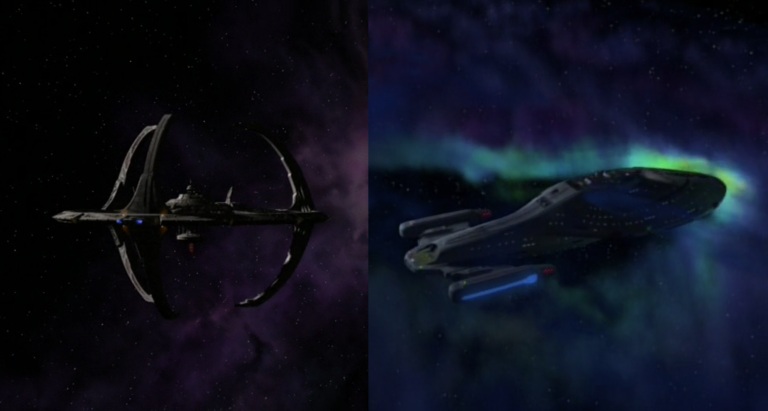
Captain Janeway is back!

Just a short one this evening. I was surprised – no, positively shocked – to learn that Kate Mulgrew is going to reprise her role as Captain Kathryn Janeway! That actually isn’t the shocking part, as Captain Janeway was one of many characters who could’ve potentially appeared in Star Trek: Picard or future productions set in or around the dawn of the 25th Century. The real surprise was that she’s going to be reprising the role for the upcoming animated series Star Trek: Prodigy!

Prodigy, if you didn’t know, is a joint venture between ViacomCBS (owners of Star Trek) and children’s broadcaster Nickelodeon. The show was announced a while ago, and will be the first Star Trek production to be aimed primarily at kids. The pitch for the series says its target audience is the 5-15 demographic, but Alex Kurtzman and other producers promise that there will be plenty for older fans to enjoy as well.

Star Trek: Prodigy had been announced earlier, but with no details of its cast.

Kate Mulgrew spoke during a digital panel for Comic-Con, and expressed her happiness to return to the franchise. Playing Captain Janeway in voiceover, she said, has allowed her to give the character more nuance within the privacy of a recording studio. She had apparently been reluctant at first, but after hearing the pitch of the series and speaking to Alex Kurtzman she was convinced.

Captain Janeway was groundbreaking, not just for Star Trek but for science fiction and the wider world of entertainment. She was Star Trek’s first woman captain, and now, as she says, she will be Star Trek’s first children’s captain too. Even twenty-five years after Voyager premiered, the character – and actress – are still breaking new ground.

Captain Janeway is returning to Star Trek!

So far we haven’t seen what Captain Janeway’s animated form will look like. Prodigy hasn’t released any teaser images as of yet; all we have is the show’s logo. But as we edge closer to the release of the series I’m sure we’ll get to see more!

Prodigy is going to be something different in the Star Trek universe. As we’ve seen with Lower Decks, different doesn’t mean “bad.” While Prodigy and Lower Decks are completely different productions, both have tried to push the boat out and expand Star Trek, bringing in new fans. If Prodigy succeeds, we’re likely to see a whole new generation of Trekkies, many of whom will jump over to watch the likes of Discovery and Strange New Worlds, and will hopefully go back to watch Voyager and other Star Trek shows too.

With Kathryn Janeway back in the captain’s chair, Star Trek: Prodigy is lining up to be a winner. I was looking forward the show before. But now I cannot wait!

Star Trek: Prodigy is due for release in 2021. The Star Trek franchise – including Star Trek: Prodigy – is the copyright of ViacomCBS. This article contains the thoughts and opinions of one person only and is not intended to cause any offence.
Star Trek: Picard + Star Trek: Discovery crossover theory: Control and the Romulans

Spoiler Warning: There are spoilers ahead for the most recent seasons of Star Trek: Picard and Star Trek: Discovery. There may be further spoilers for other iterations of the Star Trek franchise.

While Star Trek: Picard Season 1 was ongoing earlier in the year, I postulated a number of theories about what was going on in the show. One theory that I had related to Control – the rogue artificial intelligence from Star Trek: Discovery Season 2. Specifically, I speculated that the Zhat Vash’s hatred and fear of synthetic life may have stemmed from a run-in with Control, or that the Romulans may have been trying to compete with Starfleet in a mid-23rd Century AI arms race. It seemed possible that Control could have attacked Romulan ships or settlements in the time between its takeover of Section 31 and its defeat by the USS Discovery, or that if the Romulans developed their own AI that it would have similarly gotten out of control and attacked them.

This theory came back with a vengeance after Picard reused a couple of CGI sequences from Discovery in the latter part of the season, particularly as those sequences depicted Control attacking – and ultimately destroying – all organic life in the galaxy. While Picard and Discovery had thematic similarities in their most recent seasons, insofar as both stories looked at the creation of synthetic life and how that synthetic life could go rogue, there was no broader crossover. The Zhat Vash were not motivated by either their own rogue AI from the mid-23rd Century or by an attack from Control.

This CGI sequence of a planet being destroyed was created for Discovery… and recycled in Picard.

But that doesn’t necessarily mean that we have to drop the idea of there being any connection between the Zhat Vash in Picard and Control in Discovery. My theory started with the idea that Control could have been the reason for the Zhat Vash… but what if it’s the other way around? What if the Zhat Vash are responsible for Control going rogue?

There was no explanation given for why Control decided to lash out and attack its creators. It wanted to acquire the data from the planetoid-sized lifeform known as the Sphere, believing that data would help it achieve true sentience. But that isn’t a reason to go on to commit genocide; something inside Control made it want to kill. Remember that Dr Gabrielle Burnham – Michael’s mother – arrived in a future timeline where no sentient organic life existed in the known galaxy; Control had wiped it all out. Why did it want to do that?

Dr Gabrielle Burnham.

We could try to argue that Control’s murderous rage is somehow a result of Starfleet denying it access to the Sphere data. But Starfleet and the USS Discovery only came to possess the data because of the time-travelling interventions of Dr Burnham; we don’t know how Control came to acquire it in the “original,” pre-intervention timeline. There are a couple of possibilities. The first is that when the Sphere died, it broadcast its data as far and wide as possible and that’s how Control acquired it. It’s also possible that Starfleet received the transmission and Control gained access to it from there. However, neither of these scenarios involve Starfleet actively trying to prevent Control accessing the data, meaning that it wasn’t Starfleet who started the fight with Control.

So if Control had no reason on the surface to attack its organic creators, why did it do so? It could simply be a programming error; Control was programmed to prevent war, and perhaps that got twisted around so that it decided the only way to prevent the Milky Way’s organic civilisations from fighting was to exterminate all of them. This kind of basic AI programming mistake is one that’s not uncommon in science fiction, and arguably something we need to consider out here in the real world as we develop our own AIs!

Control assimilated Captain Leland and went on a murderous rampage.

So that’s one possibility. But here’s where the Zhat Vash could come in: what if they are responsible for corrupting Control’s programming? We saw in Picard that the Zhat Vash know enough about synthetic life to hack into Federation synths and change their programming. That’s what they did on Mars, causing F8 and the other synths to go rogue and destroy Admiral Picard’s rescue armada. If they had that capability in the 24th Century, it isn’t much of a stretch to think they could have been capable of something similar in the 23rd Century too.

We also know that the Zhat Vash are “far older” than the Tal Shiar. Let’s look at what we know for sure to try to pin down a rough estimate of how old they could be. The Romulans split from the Vulcans somewhere around the 4th Century AD, and by that time were capable of interstellar flight. By the 2150s the Romulans were involved in covert operations on Vulcan, trying to start a war between Vulcans and Andorians. While it was never stated outright in Enterprise that the Romulan operatives we saw were working for the Tal Shiar, it’s not an unreasonable assumption. The Zhat Vash sent Commodore Oh to infiltrate the Federation sometime around the discovery of Data, which took place in the year 2338. When Raffi asked La Sirena’s Emergency Navigational Hologram about the octonary star system, he described the Romulan star charts that depicted it as “ancient,” which seems to suggest they’re more than a century old at least. It was the discovery of Aia, the planet in the octonary star system, and the beacon that resided there that led to the creation of the Zhat Vash.

Raffi and the ENH discuss the octonary star system.

Put all of that together and we can assume with reasonable confidence that the Zhat Vash existed by the mid-23rd Century. We also know, thanks to what we saw in Enterprise and Deep Space Nine, that Romulan intelligence was far better than Starfleet’s – they knew a lot more about the Federation than the Federation did about them.

There’s a question of just how secret Control was. Section 31 was much more out in the open in Discovery than it was by the time of Deep Space Nine, but even so it seems logical to assume that Control would be a top-secret project within an already-secretive organisation. Still, when most Starfleet flag officers used Control regularly, word of its existence would get out and it was generally known within Starfleet that an AI existed. Thus any Zhat Vash or Tal Shiar operative would have come to know about Control.

Section 31 HQ was heavily-guarded, but perhaps not impenetrable for a Zhat Vash spy.

Okay, so let’s slow down. Even if we’re confident that the Zhat Vash existed by Discovery’s era, and had commenced their anti-synthetic crusade, and even if they had operatives within Starfleet who would have made them aware of the existence of Control, that doesn’t mean they could just walk up to Control’s data servers and start messing around. Right? I mean, Control was based at Section 31 headquarters, which as we saw in the show was incredibly well-protected. And we saw no evidence of such an operative. Did we?

How about Admiral Patar, the Vulcan Starfleet admiral who was killed by Control at Section 31 headquarters? We know that Commodore Oh spent decades embedded within Starfleet, waiting to make her move at just the right moment. We also know she was able to attain a very high rank, and it’s only one short step from being a commodore to being an admiral. It’s at least possible. Admiral Patar had the means to access Control. She spent time at Section 31 headquarters right around the time Control went rogue. She was a Vulcan, and thus was biologically indistinguishable from a Romulan – meaning she could have been an undercover Romulan operative. Enterprise depicted Romulans undercover on Vulcan a century earlier, meaning that they had infiltrated Vulcan by that time and were able to do so with relative ease. The pieces fall into place for Admiral Patar to be a Romulan operative – or to have been replaced by one – even if the evidence is only circumstantial. Even if it wasn’t Patar, there may well have been other Vulcans working at Section 31 headquarters, any one of whom could have been a Romulan spy.

Admiral Patar on the USS Discovery’s viewscreen.

Once they had access to Control’s systems and specifications, the Zhat Vash could have figured out how to mess with Control’s programming and turn it hostile. Perhaps they only intended for it to attack the Federation, forcing them to shut it down permanently. Or perhaps they hoped it would cause wider chaos so they could force the kind of galactic ban on synthetic life that we saw in Picard. So the question of what they had to gain by such a move is obvious; it’s the same basic goal as they had for staging the attack on Mars.

If the Zhat Vash introduced a glitch in Control’s programming that would turn it murderous, they obviously didn’t intend for Control to go on and wipe out everything. That wasn’t the goal; that’s what they were trying to prevent. However, as I wrote earlier, it’s possible for even well-intentioned AI to get out of control or to act in a way its creators and programmers couldn’t anticipate. Perhaps that’s what happened with Control, and by the time it had assimilated Captain Leland, killed off most of Section 31’s leadership, and got a fleet at its command, there was no way for the Zhat Vash to stop it. If their sole operative had been killed when Control wiped out Section 31’s headquarters, the Zhat Vash may not have even been aware that the mission was not going to plan until it was too late.

Control commandeered a small armada of Section 31 vessels.

So that’s my crossover theory for Star Trek: Discovery and Star Trek: Picard – the Zhat Vash hacked or reprogrammed Control, and that’s what made it go rogue. There’s enough circumstantial evidence for this theory to be possible, and it would explain why Control went from being a useful tool for Starfleet to a menace capable of wiping out all sentient life in the galaxy. However, there’s no concrete proof. All we really have are two shows with similar themes, and a bunch of unrelated pieces that could be made to fit together – but also may not fit at all!

As I always say: it’s just a fan theory. Unless we get some confirmation on screen in future – which seems unlikely given both Picard and Discovery are almost certainly moving on to new stories in their upcoming seasons – we have to consider it as unconfirmed at best. I consider it plausible (obviously, or I wouldn’t have written an article about it!) but it may prove to be a complete miss… just like many of my other Star Trek: Picard theories!

This post was edited 31.03.21 to replace header image. Star Trek: Discovery and Star Trek: Picard are available to stream now on CBS All Access in the United States. Discovery is available internationally on Netflix; Picard is available internationally on Amazon Prime Video. The Star Trek franchise – including all properties mentioned above – is the copyright of ViacomCBS. This article contains the thoughts and opinions of one person only and is not intended to cause any offence.
Let’s-a Play Luigi’s Mansion 3 – Part 1

Spoiler Warning: There are spoilers ahead for Luigi’s Manion 3.

It’s October, the spookiest month of the year! As we get nearer to Halloween, I thought it could be fun to play through a truly spooky game: Luigi’s Mansion 3 for Nintendo Switch. Perhaps appropriately, Luigi’s Mansion 3 was released on Halloween last year, but it’s taken me until now to pick up a copy! If you followed my playthrough of Star Wars Jedi: Fallen Order this summer, this series of articles will be in a similar format. I’ll be writing up my time playing the game, illustrating the posts with screenshots, and at the end when I’ve completed it I’ll write a summary and give you my impressions.

Luigi’s Mansion 3 is the first game in the series that I’ve played. The first Luigi’s Mansion debuted on the GameCube in 2001 (or 2002 here in the UK). I didn’t own a GameCube, so it wasn’t a title I got to play at that time, but I’ve heard positive things about the game and its Nintendo 3DS remake. The second instalment in the series, Luigi’s Mansion: Dark Moon, was also a 3DS title, released to coincide with Nintendo’s “Year of Luigi” promotional event in 2013. Interest in that title and the remake of the first entry led to the creation of Luigi’s Mansion 3 a few years later.
So that’s how the game came to be! Without further ado, let’s get started!

The title screen.

I was positively thrilled that, for the first time in a long time, a game I’d bought didn’t require any updates before I could get started! Instead the game booted straight to the main menu, from where I could select story mode and jump right into playing. A cute opening cinematic depicts Luigi, Mario, Princess Peach, and several Toads on a bus.

Luigi, fast asleep on the bus.

Luigi has a ghost-dog called Polterpup, who may be a returning character from one of the past games. That rounds out the group as they arrive at The Last Resort hotel for a holiday.

Polterpup and Luigi with their mysterious invitation.

Inside the lobby of the hotel I got my first moment of gameplay, as Luigi was able to walk around the lobby and investigate a couple of different things. I liked the old Mario theme that played when Luigi was in the vicinity of Mario. After interacting with everything in the area, Luigi checked into the hotel, at which point another cinematic played.

Mario and Luigi.

It turns out that Luigi had been invited to the hotel – along with his friends – by the owner, Hellen Gravely. She invites them all to check into their rooms, and they ride a lift that reminded me of the Disney World ride The Tower of Terror up to their floor. In fact, the creepy vibe of the hotel as a whole could be said to be reminiscent of that ride.
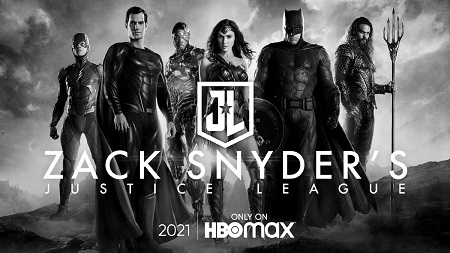
Hellen Gravely…
…and the Tower of Terror-esque lift.
Everyone retired to their own rooms, leaving Luigi alone with Polterpup. Exploring the room and bathroom yielded nothing significant, so the only thing left to do was go to bed. Luigi was awakened later that night by Princess Peach screaming!

Luigi woke up when he heard Princess Peach screaming.

The room was now shrouded in darkness with a mysterious mist or fog on the floor, and where there had been cute little hotel knick-knacks there was now nothing but spooky décor! Luigi looked in both Mario and Peach’s rooms, but they weren’t there. Both rooms did have signs that they’d recently been there; pizza boxes for Mario, a tea set for Peach.

Mario’s half-finished pizza.

After exiting Peach’s room, Luigi was confronted by Hellen Gravely. It turns out that she had befriended King Boo – who I believe was the main baddie in the earlier games – and he’d captured Peach, Mario, and the Toads. They’d been imprisoned in picture frames, which sounded kind of like the setup to Super Mario 64!

Hellen Gravely in her true form.

King Boo wanted to trap Luigi too, getting his revenge for being defeated in a past encounter. There was nothing to do but run! The hallway that led to Luigi’s room was the only way to go, and King Boo gave chase.

King Boo!

At the end of the hallway, Luigi had nowhere left to run. A convenient laundry chute offered him a last-ditch escape, and he dived in head first! This marked the end of the prologue, as we got the game’s opening title; the sunlit, appealing hotel changed to look dark and spooky! At the bottom of the laundry chute Polterpup woke up Luigi, and the game’s first level began.

The escape from King Boo.

Luigi collected his first coin – though what the coins do is unclear at this point – and followed Polterpup into the hotel’s car park. There he was directed to a parked car containing the Poltergust! This is the vacuum cleaner-weapon that debuted in earlier titles. Luigi will use it to suck up ghosts (I know how it sounds but that’s the best way to explain it!) It also has a powerful light that can paralyse ghosts.

The Poltergust.

Polterpup gave Luigi a quick tutorial on the weapon. It can be used to suck up ghosts, push them away with a “blow” function, shine a bright light, and create a shockwave. After confirming that I was happy with what I’d learnt it was time to press on.

Learning to use the Poltergust.

Going upstairs led back to the hotel lobby, and the first battle against spooky spirits! I was a little surprised to see that a single hit from a ghost was enough to lower Luigi’s health by a whopping twenty points! At that rate he’s only good for four or perhaps five hits, after which it’s surely game over. I’ll have to be careful!

Battling gosts in the hotel lobby.

The ghosts have locked Luigi in the hotel – presumably so King Boo can catch him – and after dispatching (or collecting?) them, I was free to explore the lobby once more.

The ghosts have sealed the way out!

Presumably this is the hotel’s “normal” state, and it was simply redressed to look more appealing to the gang when they arrived. Its current décor is much more ghostly; perfect for Halloween! There are even pumpkins.

Some Halloween decorations!

With the few ghosts gone, nobody else was present in the lobby. Luigi was able to get behind the counter and grab a shiny key – surely something that will come in handy in a title like this! There was also a large amount of money behind the counter, and Luigi went from having a handful of coins to over 1,000 in an instant. I wonder what he can spend them on?

Luigi grabs the key.

The key was obviously the important thing, as without it the door on the level above would not open. Luigi used the key to open it and unlock the next area.

Opening the door on the upper level.

A room in this area contained a portrait of a character that I vaguely recognised; it turns out this was one of the characters from one of the previous games. The professor who invented Luigi’s vacuum cleaner-weapon is trapped like Mario and co., and it’s up to Luigi to rescue them!

Luigi’s friend is trapped in a picture!

At this point, having completed the prologue, I had to get on with something else so I shut the game off. I think we’re going to have plenty of spooky fun between now and Halloween playing Luigi’s Mansion 3! The controls will take a little getting used to; there’s no direct camera control, and while the camera follows Luigi quite closely for the most part, that’s something I’m not used to in a third-person title. There’s also no jumping in the game, so it doesn’t look like we’re in for much platforming.

Though I could only spend around half an hour with the game on this first occasion, my first impressions of Luigi’s Mansion 3 are very positive, and I’m looking forward to pressing on deeper into The Last Resort hotel and battling spooky ghosts!

Luigi’s Mansion 3 is out now for Nintendo Switch. The Mario franchise – including the Luigi’s Mansion games – is the copyright of Nintendo. This article contains the thoughts and opinions of one person only and is not intended to cause any offence.