Star Trek: The Borg Teasing Theory

Spoiler Warning: Beware of spoilers for the following Star Trek productions: The Next Generation Seasons 1-3, Voyager Seasons 4-7, First Contact, Enterprise Season 2, Prodigy Season 1, and Picard Seasons 1-3.

Let’s talk about everyone’s favourite Star Trek villain: the Borg Collective!

Okay, maybe that’s a tiny bit of an exaggeration! But the Borg are certainly up there as one of the Star Trek franchise’s most iconic and frightening villainous factions, and there’s no shortage of theories and speculation in the Star Trek fan community about how the Borg operate and what their methods and overall goals are. I thought we could touch on one aspect of that today.

I briefly outlined what I’m calling the “Borg Teasing Theory” in a post here on the website a couple of days ago. That piece was all about some of my personal head canon explanations of unseen, unexplained, contradictory, or vague things from across the Star Trek franchise – but I thought this particular theory warranted its own full article! Click or tap here to check out the rest of my head canon, if you’re interested in my take on the likes of warp factors and cloaking devices.

The Borg are coming!

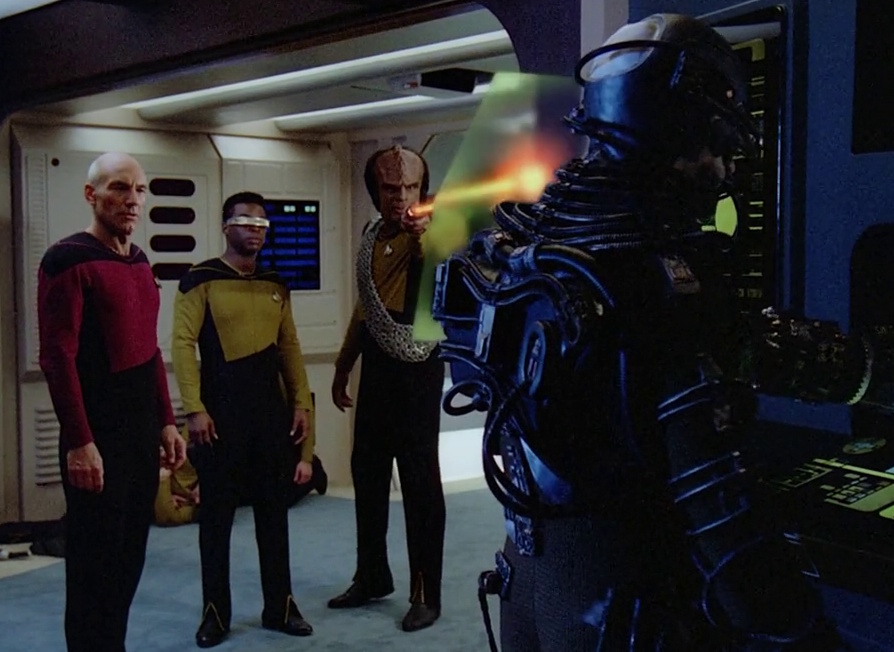
So what’s the tl;dr of this theory? In brief: the two major Borg attacks on Earth during The Next Generation era – as depicted in The Best of Both Worlds and First Contact – weren’t 100% serious attempts to assimilate the entire planet or the Federation. They were, in a word, teases. The Borg Collective hoped to push Starfleet and humanity to develop new weapons, shields, scanners, and medical technology in the years after their incursions – which they would then be able to assimilate when they launched a full-scale invasion at some point in the future. In short: the attacks were not attempts at total conquest and were not intended to fully succeed at assimilating Earth.

We’ll get into detail in just a second, but before we go any further, I have a couple of important caveats. Firstly, all of this is the entirely subjective take of just one old Trekkie. If you hate this theory, think I’ve got it completely wrong, or feel I’ve misunderstood some key part of Star Trek that would invalidate it… that’s okay. None of this is canon or likely to ever be confirmed on screen anyway! Secondly, I’m not claiming to be the sole inventor of this theory. Other Trekkies may very well have come up with similar ideas independently, and I’m not taking credit for anyone else’s work or theories.

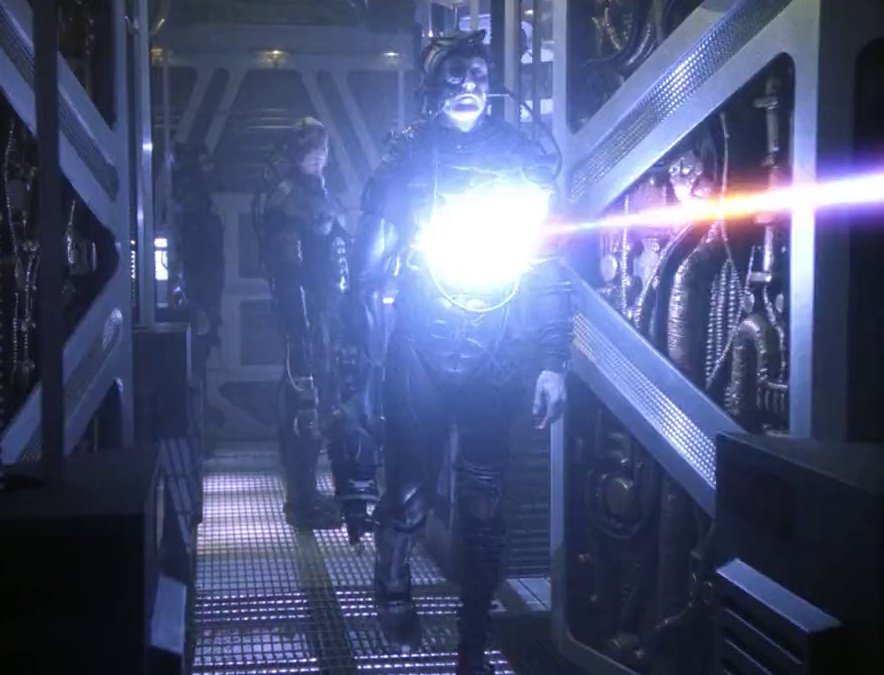
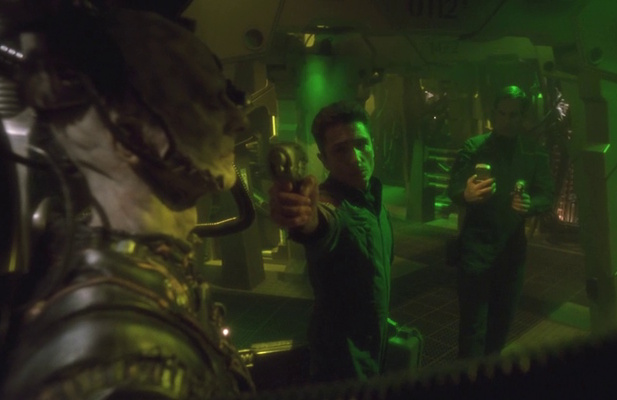
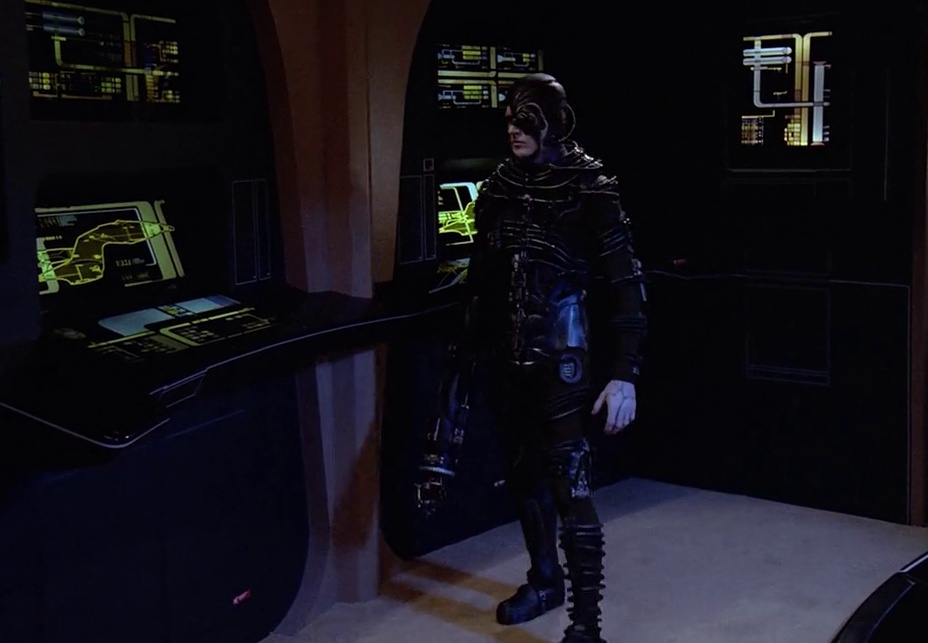
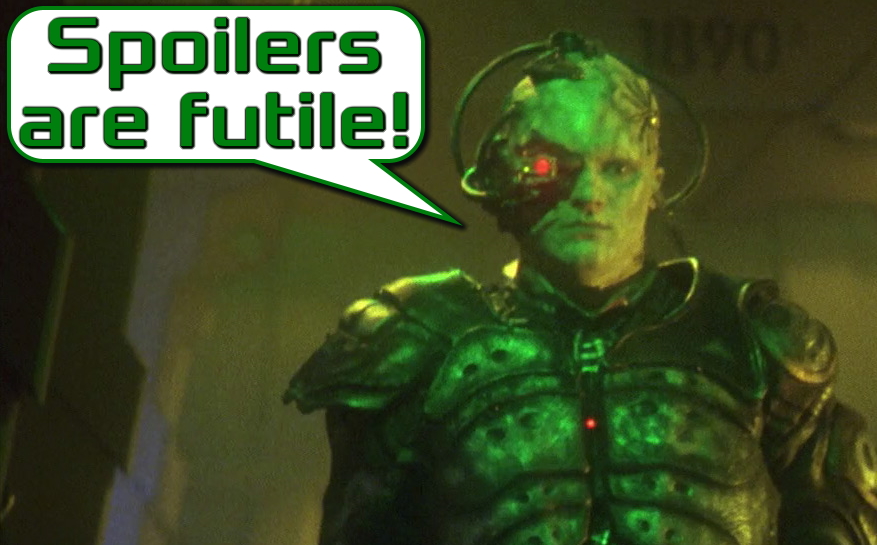
A Borg drone.

Finally, a word about fan theories. I like writing and I like Star Trek, so writing about Star Trek is a fun way for me to spend a little more time in this world. But no fan theory – not even one that seems totally plausible – is worth getting upset or worked up over. As I said a moment ago, none of this is canon and may very well be totally debunked in the future. Given the status of the Borg Collective after Picard Season 3 (and Paramount’s shaky finances), we may never get another Borg story anyway. But this is supposed to be a fun exploration of a theory I’ve had kicking around in my mind for decades, not something to take too seriously.

Phew, that was a lot! But with the caveats out of the way, it’s time to jump into the theory!

Let’s start by explaining what this “tease” is. As I outlined briefly above, I believe that the Borg were not fully serious or committed in their two attacks on Earth. My evidence for this is simple: on both occasions, the Borg sent only one single ship to Earth. A Borg cube can contain, depending on which episode we use as a source, up to 100,000 drones. Given the size of Starfleet, the number of ships at the Federation’s disposal, and even just the population of Earth itself (which could be somewhere in the region of 9-10 billion in the 24th Century) one ship and 100,000 drones doesn’t seem like a large enough invasion force.

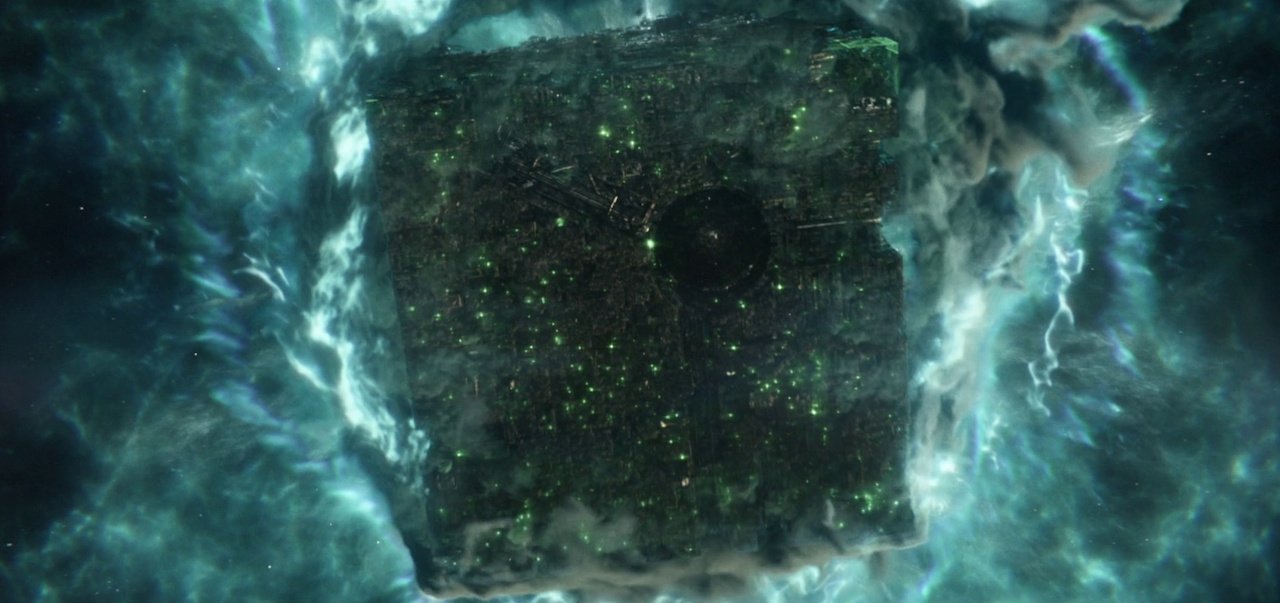
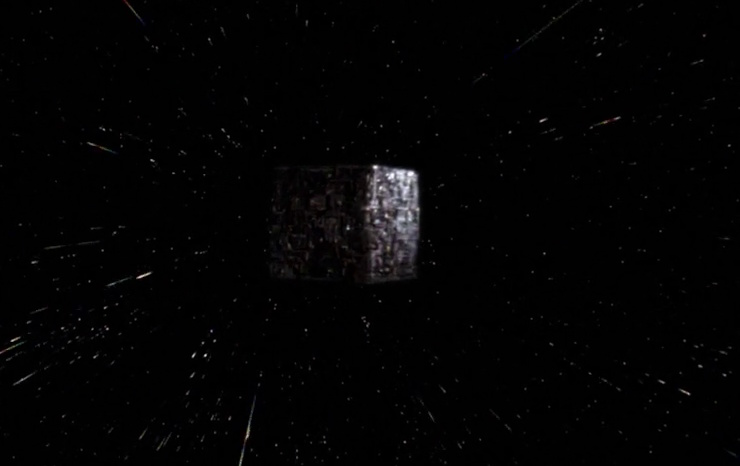
A Borg cube hovering over Earth…

Assuming the Borg cube from either Wolf-359 or the Battle of Sector 001 managed to defeat Starfleet’s armada and Earth’s planetary defences, and was able to successfully transport down all of its drones, the logistics of assimilating such a large population don’t track. If Earth’s population is 10 billion and there are 100,000 Borg, that’s a ratio of 100,000-to-one – meaning each Borg drone would need to have a hand in the assimilation of 100,000 humans. With only a single ship, any ground invasion would be vulnerable to Starfleet regrouping and returning; the destruction of the cube would cut off Borg forces on the ground.

Despite jokes I’ve made before about Earth being undefended, it’s still the headquarters of the Federation, with Starfleet Academy and Starfleet HQ on the planet, too. There are going to be thousands of armed Starfleet security personnel, Federation HQ guards, Section 31 operatives, and others on the planet. Even if resistance was scattered at first, and the Borg were able to shut down Starfleet communications, resistance on Earth would be ferocious. To jump over to a different franchise for a point of comparison: look at the Reaper war in the Mass Effect series. The Reaper invasion of Earth was hampered at every turn by resistance fighters from all walks of life, led by the remnants of the Alliance military. There’s no reason to think a Borg attack on Earth wouldn’t lead to a similar resistance movement springing up, with armed civilians led by Starfleet personnel.

Even under extreme pressure, Starfleet tactical personnel would mount a significant resistance to any Borg invasion of Earth.

With the Borg preoccupied with a war of attrition on the ground, their sole vessel in space would be vulnerable. The cube might’ve been able to beat off Starfleet’s initial armada, but that was a hastily thrown together gaggle of whatever ships were on hand when the Federation realised what was coming. Ships were brought out of mothballs and unqualified officers were tapped to take command. With Starfleet being better-prepared and having time to regroup – while also calling on allies like the Klingons – round two against the cube would go a lot better!

So even if the initial attack was successful and the Borg managed to defeat a defence force and land drones on Earth, it would be a matter of time – days or perhaps a couple of weeks – before Starfleet would be back with a much larger fleet. The Borg cube may have beaten the Federation’s hastily-arranged defence ships, but the full might of Starfleet, combined with Klingons and other allies and backed up by tactical data gained from the earlier battle, would – in my opinion – have a strong chance of destroying the Borg’s only vessel in the system. After that, it’s just a case of landing as many troops with modulated phasers (and Klingon bat’leths) and mopping up the remaining drones.

Klingons wielding bat’leths could cut through a Borg army!

To me, this is the most likely outcome for both the Battle of Wolf-359 and the Battle of Sector 001. And the Borg, having studied humanity and the Alpha Quadrant, are undoubtedly aware of this. One ship, even maxed out with as many drones as possible, simply can’t assimilate Earth on its own – let alone expand the fight to the rest of the Federation and its allies.

But why do I think the Borg Collective has the resources to launch a bigger attack? Simple: take a look at the Collective in its Delta Quadrant home in Voyager. The Borg’s Unicomplex alone contained more than a trillion drones, with the entire Collective perhaps comprising quadrillions of Borg. There may be tens or hundreds of thousands of Borg cubes – not to mention other Borg outposts, space structures, and assimilated planets. The sheer scale of the Borg Collective is what makes it so powerful, so frightening, and such a dangerous opponent. So why would the Borg choose to attack Earth in such a small-scale way?

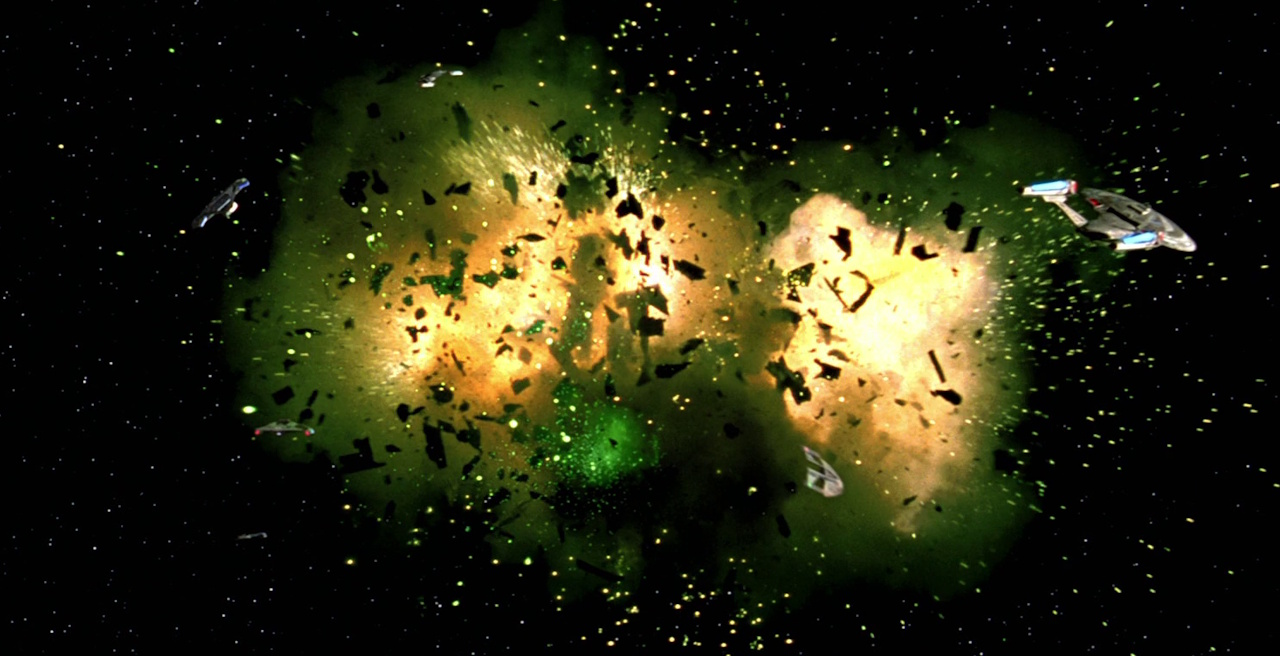
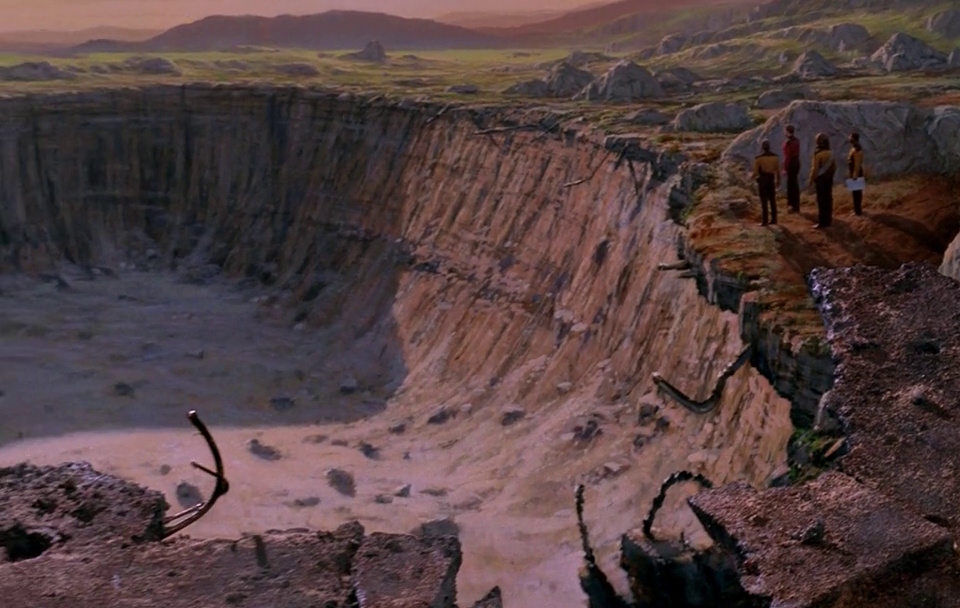
The destruction of the Borg cube in First Contact. Did the Borg plan for this outcome?

Given how powerful a single cube could be, a fleet of perhaps a dozen would make light work of anything Starfleet and its allies could muster. And with two million drones instead of just 100,000, the Borg’s ground offensive would be much quicker and would be more easily able to overcome any resistance. The assimilation of Earth could proceed much more smoothly – with only a minimal amount of extra investment from the Collective. For a faction with 10,000 ships, using twelve on this one task is barely a drop in the ocean. We’ve seen the Borg assimilate other Delta Quadrant races, like Arturis’ species from the episode Hope and Fear, using “overwhelming force.” One single cube is not, I would argue, the kind of overwhelming force needed to conquer Earth and the Federation.

So to be clear: this part of the theory states that the Borg have the means to easily overpower and outgun the Federation and its allies and achieve the task of assimilating Earth. They have no reason not to go all-in and fully commit to this invasion; they aren’t worried about loss of life, there’s no Borg economy to be damaged by building extra ships, and if their target is to fully conquer Earth and the Federation, they could do so with ease. But they don’t do that. Instead, on two separate occasions they’ve sent a single cube. Why?

The Enterprise-D battling a Borg vessel.

To answer that, we first have to consider what the Borg are and how they operate. The Borg are a hive mind, operating as one. They have assimilated – according to their own sources – at least 10,000 species across the thousands of centuries that they’ve existed. But because they’re one hive mind, they lack creativity. They lack inventiveness – and with that, we can infer that they don’t have the ability to create brand-new technologies any more.

The hive mind is adaptable, and having been introduced to something – say, a particular phaser modulation – the Borg can adapt. Adaptations are rolled out at transwarp speeds across the entire Collective, meaning that any Borg encountering that specific phaser modulation in future will be protected. But adapting to something isn’t the same as inventing – and this lack of creativity and inventiveness could be a problem for the Collective.

After being exposed to a new technology or weapon, the Borg can adapt.

So how does the Collective acquire new technology, then? If they don’t develop things themselves they must get them from somewhere, right? I mean, the Borg are more technologically advanced than the Federation and that didn’t happen by accident! The answer is simple: the Borg acquire everything from information to technology through assimilation.

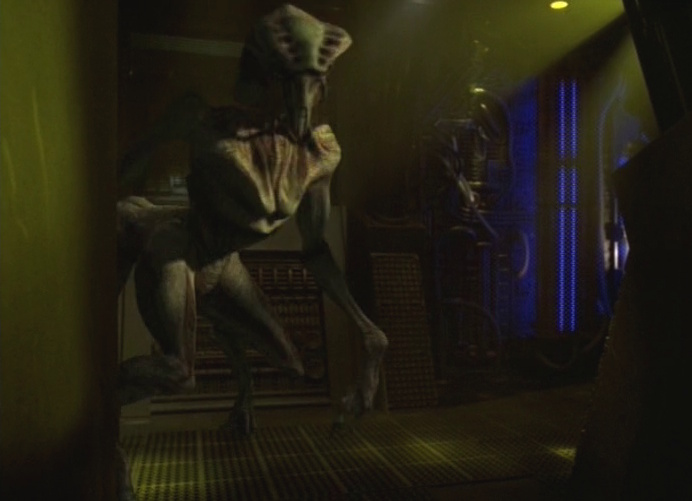
This was their weakness when confronted with Species 8472. They couldn’t assimilate a single member of the species or one of their ships, so they were left blind and helpless. And this, I would posit, is the fundamental reason why they “tease” certain species – like humanity. We probably aren’t a unique case; I believe this is a tactic that the Borg will have deployed on countless other occasions against similarly creative and adaptable species. But it’s a tactic that the Collective knows can work to its advantage.

The Borg were unable to assimilate any member of Species 8472 or their technology – rendering them blind and ineffective against their attacks.

The objective is simple: by making a relatively small demonstration of their power, the Borg incite fear in their targets. This fear leads to huge investments in weapons, shields, starships, and the like… all of which the Borg want. On one hand, the Borg want to see if their target can find a weakness in the Collective and its technology so they can prevent anyone else from exploiting it in the future – basically rolling out a Collective-wide “patch” to fix any weaknesses or vulnerabilities that the target species may have identified. And on the other hand, the Borg want any species they target to have achieved their full potential – giving the Collective the best, newest technologies that the target could create. This is how the Borg – at least in my opinion – are able to acquire new technologies.

And this is what they’re doing to Earth, humanity, and the Federation at large. By launching these attacks, the Borg are pushing the Federation and Starfleet to develop new technologies, whether that’s weapons, ships, medical supplies, transporters, shields… the list goes on. Perhaps the second incursion was intended to see how far Starfleet’s new inventions had come, or maybe it was just a second “tease” to force Starfleet to keep working and keep inventing. Either way… it worked.

A Borg drone being killed by a phaser blast.

Why would the Borg target Earth, though? It’s not like they need Earth specifically for its location or resources, and Earth isn’t even close to the Borg’s native territory. The Borg are mostly in the far-off Delta Quadrant, though they may have colonies or outposts somewhat nearer to the Federation, such as on the El-Aurian homeworld. So the question remains: why Earth? When there are so many other planets and species in between the Borg’s home territory and the Federation, why jump halfway across the galaxy for an invasion?

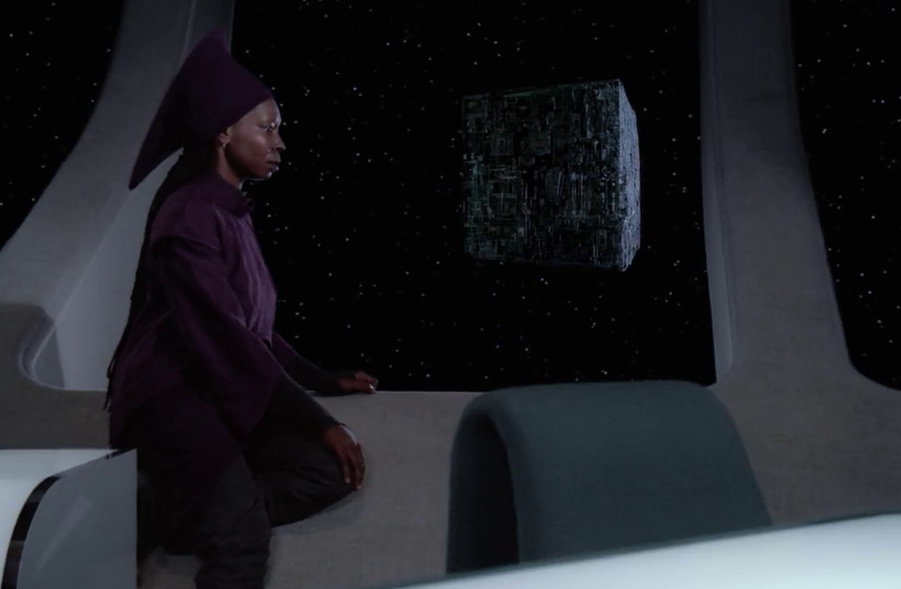
We already know that the Borg don’t assimilate everyone they come across. In fact, the Borg can be downright picky – opting to ignore the Kazon, for instance, as they were deemed “unworthy” of being assimilated as they’d somehow detract from the Borg concept of perfection. It stands to reason that some species may be of more interest to the Borg – even those in a faraway part of the galaxy. I think the El-Aurians are a prime example: their homeworld, while nowhere near Earth, seems not to have been on the very borders of Borg space, either. Yet the El-Aurians were targeted – perhaps for their telepathic powers, or perhaps because the Borg considered them a threat. This is a species, lest we forget, that has tangled with the Q Continuum and forced them to the negotiating table. The same basic reasoning may apply to humanity.

The Borg deliberately targeted the El-Aurians (Guinan’s people), even though they may not have been anywhere near Borg space.

Humanity has to be one of the most resilient and creative species that the Borg have ever encountered. Humans were able to track a Borg vessel and develop technologies to keep themselves hidden from the Collective while studying them – this is what Seven of Nine’s parents, the Hansens, did in the 2340s. This may have been the Borg’s first encounter with a human… and their curiosity was piqued!

Then, not long after the assimilation of the Hansens, the Borg received a strange message. Originating two centuries ago in a far-flung part of the galaxy, it told the tale of a time-traveling sphere, a planet of spacefaring people, and a climactic battle. The Borg who survived the Battle of Sector 001 had crash-landed on Earth in the past, only to be awakened by humanity in the 22nd Century. Captain Archer and his crew were able to stop them – but not before they sent a message to the Collective in the Delta Quadrant. Between the message from the past and the assimilation of the Hansens, the Borg must’ve realised how significant Earth and humanity could be for the Collective.

A small group of Borg were able to signal the Collective in the 22nd Century.

After receiving this “blast from the past” transmission, assimilating the Hansens, or both, the Borg had humanity and Earth in their sights. But rather than launch a full-scale invasion in 2350 – years before the Enterprise-D’s encounter with a cube – the Borg took a more subtle approach. Firstly, they may not have been entirely certain of Earth’s location, instead sending ships to scout the Alpha and Beta Quadrants for signs of humanity and the Federation. Then, rather than attack straight away, the Collective bided its time, launching small-scale attacks on outlying colonies along the Neutral Zone to see what would happen.

By attacking both Federation and Romulan outposts (as seen in the Season 1 finale of The Next Generation), the Borg may have hoped to trigger a conflict between the two powers – before swooping in later to attack both of them. Or, perhaps more likely, this was the Borg’s first attempt to assimilate humans en masse to see if they were worth bothering with – and picking outlying colonies makes a lot more sense than rushing to Earth straight away. The Romulans may have been collateral damage, in that case.

The Borg destroyed multiple human colonies before attacking Earth.

In any case, the Borg determined that humanity was a worthwhile target – something that was only further confirmed by their encounter with the Enterprise-D a few months later. As an aside: Q may very well have saved humanity by his intervention in Q Who! I have a longer piece on this subject – which you can find by clicking or tapping here – but here’s the short version: the Borg knew about humanity and Earth years before Starfleet knew about them. By hurling the Enterprise-D into the path of a Borg vessel, Q gave Picard and the Federation valuable insight into the Collective, forewarning them of the attacks to come.

With the Borg determined to assimilate humanity, decisions had to be made about how to do so. The hive mind, operating as one, makes such decisions at light-speed, and after confirming humanity was a suitable target for assimilation, the Borg decided to “tease” the Federation, pushing them to design new weapons, shields, starships, medical devices, and so on… all so that the Collective could assimilate it later, adding to their perfection. This is how the Borg operate, and it’s why they chose to launch small-scale attacks against Earth instead of simply arriving en masse with overwhelming force.

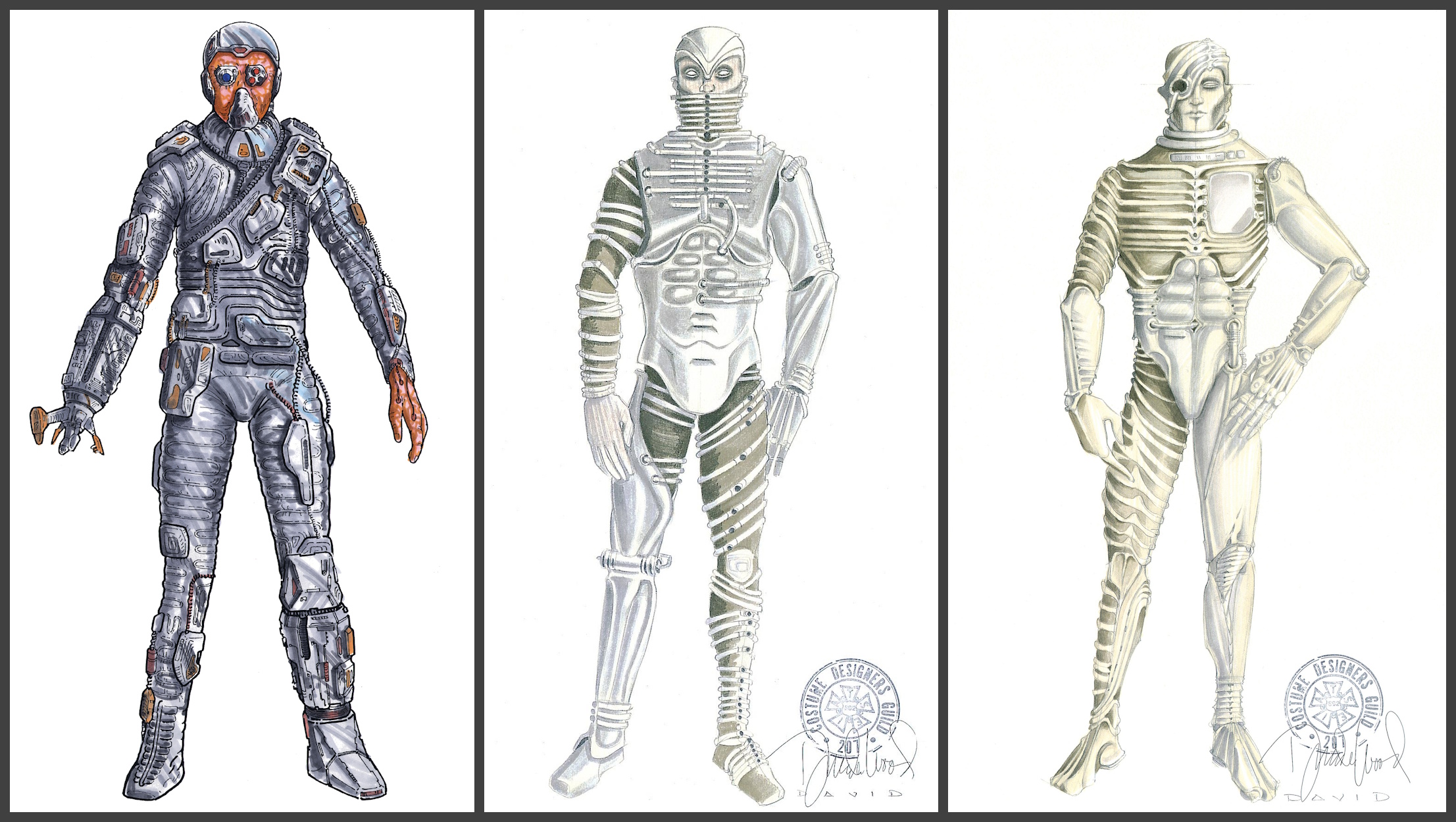
Original concept art of the Borg.
Image Credit: Frogland Archive/Forgotten Trek

From the Borg’s perspective, this approach is a win-win. Either their attack succeeds in full, with humanity and Earth being assimilated over a period of weeks or months, giving the Borg control of the planet and a staging-post for a larger-scale invasion of the Federation. Or it “fails” to achieve that objective, but in doing so provides the Collective with incredibly valuable tactical data on Starfleet, Earth’s defences, and so on, while also pushing the Federation to develop new technologies. The Borg want these technologies – either to “patch” vulnerabilities and weaknesses they may not be aware of or to add to their perfection.

There are real-world parallels. The Second World War led to the creation of modern-day computer technology, rocketry, and atomic power. The First World War led to huge advancements in flight, artillery, and motor vehicles. These are just a couple of examples from our own history of how war and devastation can lead to technological change. The Borg, I would argue, seek to artificially inflate the pace of technological advancement by baring their teeth and showing their target a tiny fraction of their power. In desperation, Starfleet and the Federation began working at pace to develop everything from phasers to starships – all ripe for assimilation by the Collective.

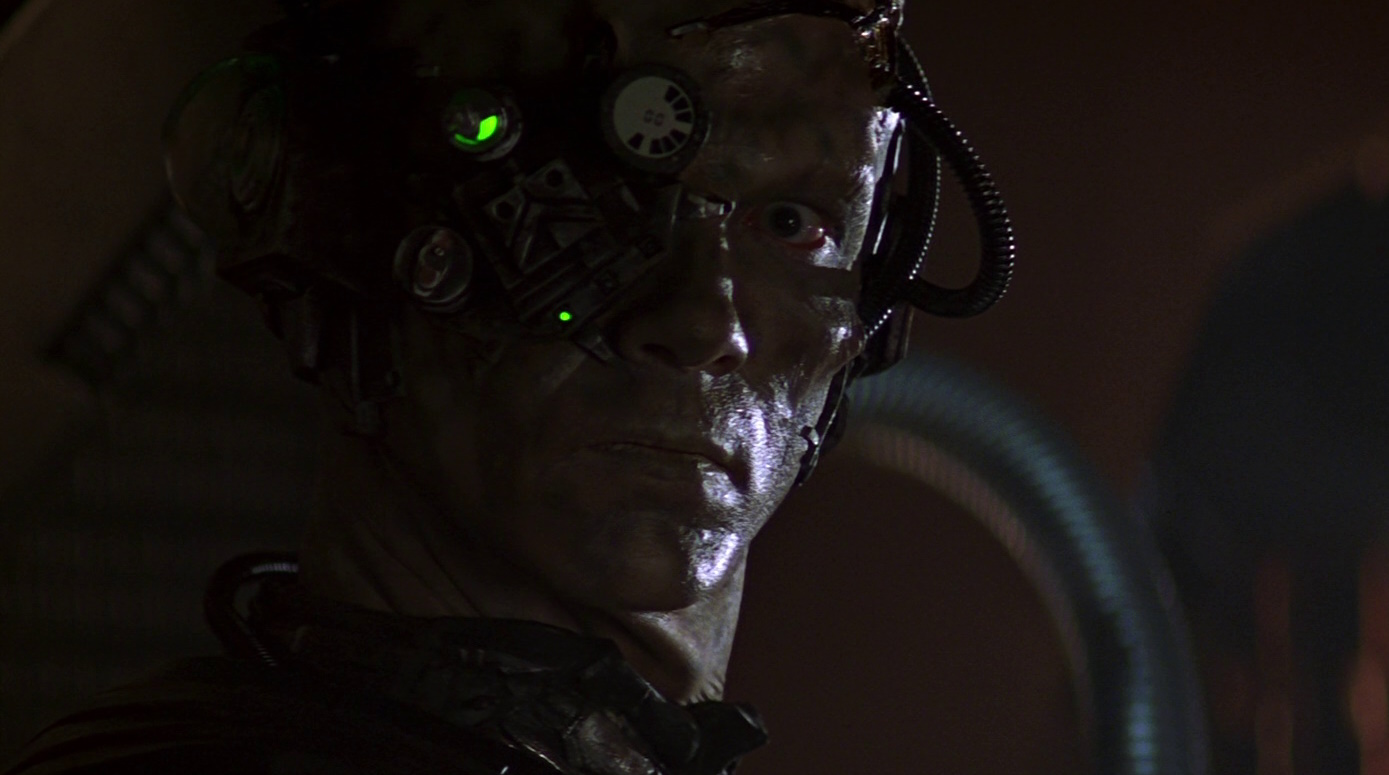
The first Borg drone ever seen in Star Trek.

So that’s the theory.

The Borg were not fully invested in assimilating Earth either in 2367 or 2373 – their only two direct attacks on Earth. These incursions had a different goal: pushing humanity and the Federation to develop new technologies that the Borg could assimilate later, when the time was right. By revealing themselves and showing Starfleet a glimpse of their power, the Borg believed their new target would, in effect, work for them, designing and building new weapons, ships, and other devices that the Collective no longer had the creativity to invent for itself.

To me, this theory made sense even as far back as when I watched First Contact in the cinema in 1996! Developments in Voyager, Enterprise, and more recently in Picard, too, have only added to this theory, expanding it and deepening my belief that the Borg really weren’t serious about conquering Earth. To them, the attacks served a different purpose. It took almost everything Starfleet had to beat the Borg, but given the sheer size and scale of the Collective, we know they had the resources to commit more ships and more drones to an attempted invasion of Earth. There has to be some reason why they didn’t send two or three cubes instead of just one – and to me at least, this idea makes the most sense and squares that circle.

Romulans and Borg as seen in the Lower Decks opening titles.

I hope this has been interesting! I doubt that this theory will ever be confirmed – and it may even be actively debunked one day, if we ever get another Borg story. Some of you might think that the Borg’s time travel in First Contact (or some other plot point from a Borg episode) already negates or invalidates this theory… and that’s okay! As I said at the beginning, this is just a fan theory or head canon, and it’s all subjective at the end of the day. I share this theory with the Star Trek fan community in that spirit.

Speaking of Borg stories… will we see another one in Star Trek anytime soon? After Picard did three separate Borg or Borg-adjacent stories in its three seasons, and with the Collective having appeared in Prodigy and Lower Decks in recent years… I think it might be a while before the Collective makes another appearance. I certainly think it should be a while; I can’t be the only one who feels a little burned out on the faction, especially after their omnipresence in Picard. If and when the Borg return, I hope it’s in a big way. I’ve been kicking around the idea of a “Borg invasion” series for a while – and that could be a really interesting way for Star Trek to go one day in the future. If a fourth Kelvin timeline film ever gets off the ground, I don’t think it’s impossible to think we could see the Borg there, too.

But unless and until any of that happens… this is my theory! I hope you enjoyed this write-up and found it interesting.


The Star Trek franchise – including most episodes and films cited above – can be streamed now on Paramount+ in countries and territories where the service is available. The Star Trek franchise is the copyright of Paramount Global. Header font/text courtesy of textstudio.com. This article contains the thoughts and opinions of one person only and is not intended to cause any offence.
Star Trek Films: My Tier List

A spoiler warning graphic.

Spoiler Warning: There are spoilers ahead for all fourteen Star Trek films, including Section 31.

Almost five years ago, I put all of the Star Trek films into a ranked list. I talked about what I liked and didn’t like about each, and tried to justify my choices! But since I wrote that list, a couple of things have happened. Firstly, I’ve gotten better at using images here on the website – that old piece looks pretty janky in comparison to some of my more recent articles. But secondly – and way more importantly – there’s been a new Star Trek film since then!

I think Trekkies are still a little divided on whether the made-for-streaming Section 31 should count as a Star Trek “film,” and I get that. But for me, Section 31 has the runtime of an (admittedly rather short) film, it’s not a series, miniseries, or anything like that, it has mostly original characters, and it was afforded a higher budget than any individual Star Trek episode would’ve been. For all intents and purposes, Section 31 counts as the newest Star Trek film – the fourteenth since 1979… and hopefully not the last!

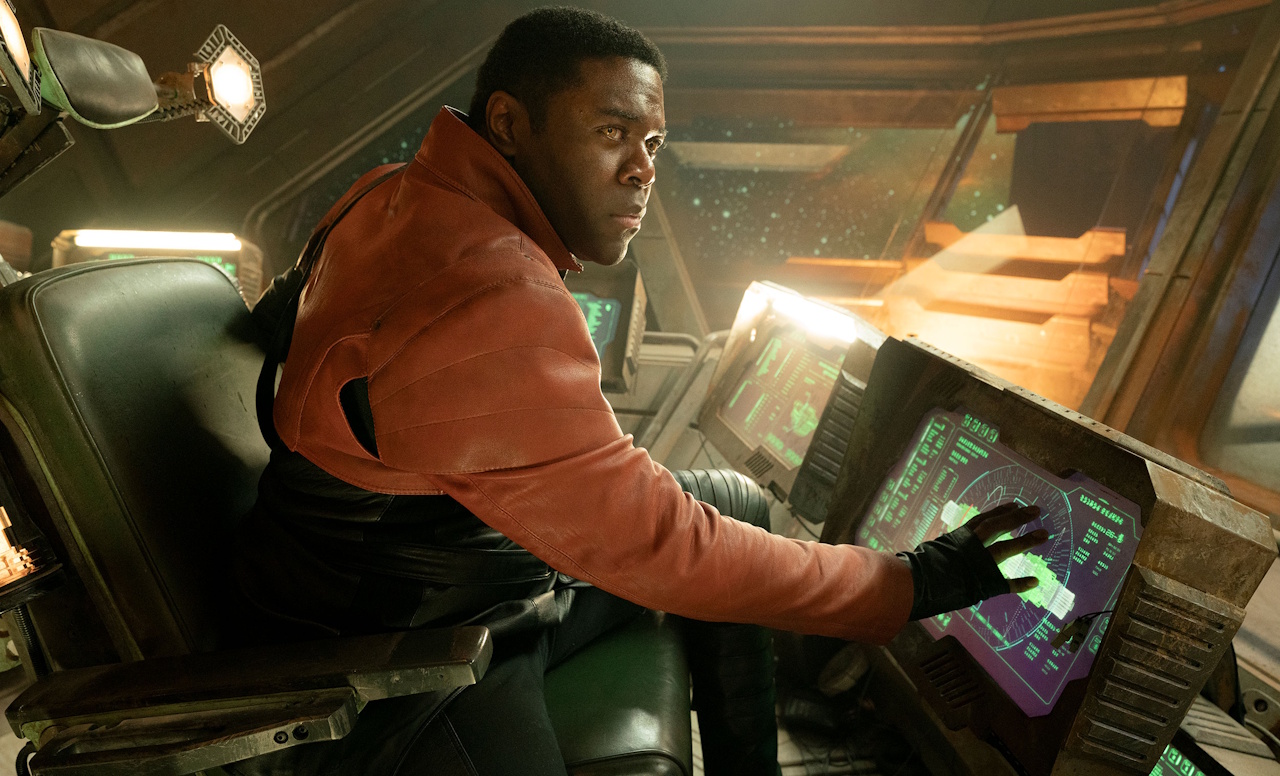
Promo photo of Star Trek: Section 31 showing Quasi.
Section 31 is the most recent Star Trek film, and it’s on this list!

So today, I’m going to revisit the Star Trek films, this time using the internet-friendly tier list format that you might’ve seen on a couple of other occasions here on the website! I think most folks have a vague idea about tier lists at this point – but if you don’t, I’ll happily explain how it works.

Instead of giving each film a number from 1-14, which would be hard, we’re going to assign each film one of five tiers: D, C, B, A, and S. D-tier films are the least-enjoyable with noticeable flaws, C-tier titles are average or “just okay,” B-tier films are a step up, being above average, A-tier titles are getting really good, and S-tier is reserved for the absolute cream of the crop! Why is S-tier the top instead of A or something like A-plus? The truth is… I don’t know! But that’s the way everyone else does it, so I’m sticking with it! Some tier lists also include an F-tier for absolute disasters, but since I don’t consider any of the fourteen Star Trek films to be that bad, I’ve opted not to include it on this occasion.

A tier list with ranks S through D and fourteen question marks where the entries would be.
Let’s fill out this blank tier list together!

Now that the explanation of the format is out of the way, a handful of important caveats!

Firstly, all of this is subjective, not objective. There is no “objectively best” Star Trek film, and even within the fan community opinions vary wildly on which titles are better and what makes for a good Star Trek story. So if I rank a title you hate highly or speak ill of your favourite… that’s okay! There ought to be enough room in the fan community for civil conversations and polite disagreement.

Secondly, this piece supersedes my old film ranking list, and I have made a couple of changes to where films were ranked five years ago. I’ll be leaving the old piece as it is, though – it’s a part of the website and it would be silly to delete it! But going forward, this is the official Trekking with Dennis Star Trek films tier list!

Still frame from Star Trek: The Motion Picture showing the assembled crew.
Admiral Kirk addressing his crew in The Motion Picture.

Third, I’ll rank each production in order of release, beginning with The Motion Picture and finishing with Section 31. Then I’ll show you the final tier list at the end. I’ll do my best to explain what I liked and/or didn’t like about each title to justify my ranking – but please feel free to vehemently disagree if you like!

Finally, all of this is just for fun! I like writing, I like Star Trek, and finding an excuse to talk about some of the Star Trek films that I love – or that I haven’t seen in a while – is supposed to be a bit of escapism. Nothing about this should be taken too seriously, because the point of Star Trek for me has always been entertainment and escaping to a fun vision of the future.

With all of that out of the way, let’s begin.

Film #1:
The Motion Picture (1979)
Tier: S

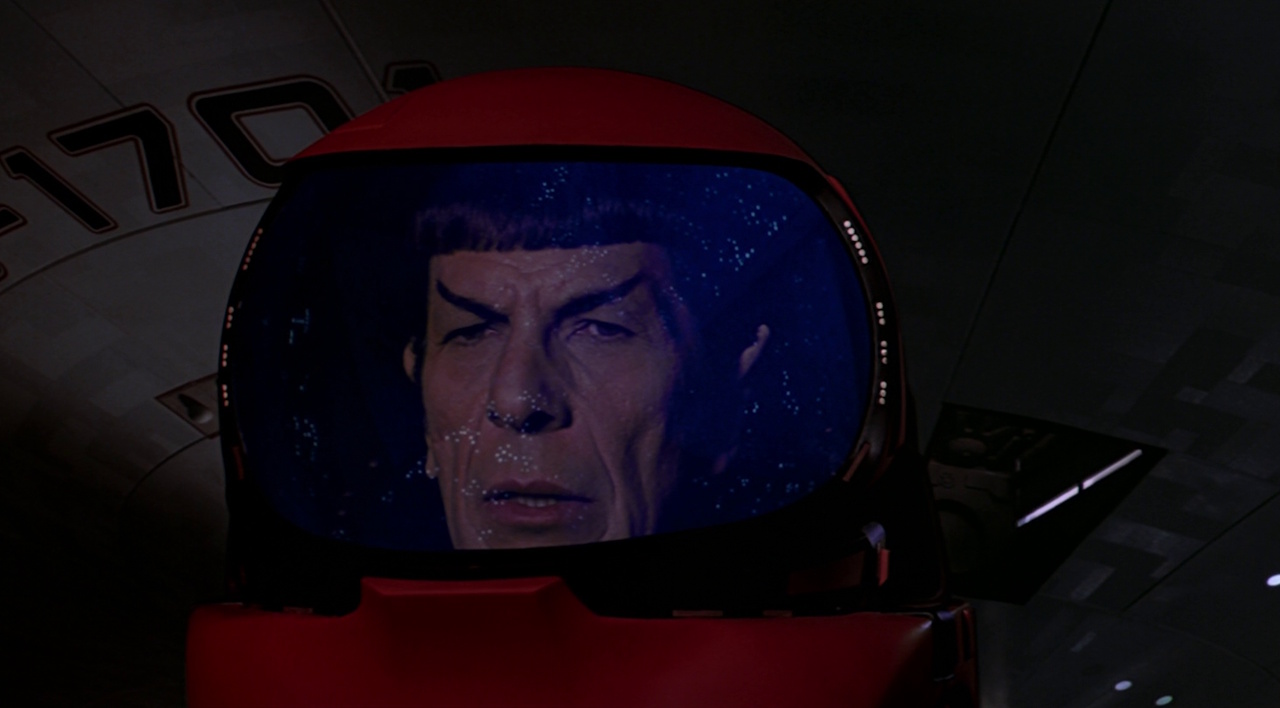
Still frame from Star Trek: The Motion Picture showing Spock in a space suit.

The Motion Picture had a complicated production history! It was originally envisioned as a television series, bringing Star Trek back as Phase II in the late 1970s after re-runs of The Original Series had been growing in popularity. Actors had been cast, sets were being designed, and scripts were written… but then, in 1977, another sci-fi film’s wild success led to Phase II being reimagined as a feature film. Star Trek as a cinematic franchise was born!

In my experience, Trekkies tend to underrate and underappreciate The Motion Picture. In a very literal sense, much of the visual language of Star Trek was born here, not in 1966: metal Starfleet badges, the warp core as an upright glowing tube, angled corridors, Starfleet Headquarters, the re-designed Klingons… and so much more. Sets built for The Motion Picture would remain in continuous use all the way through Enterprise’s cancellation in 2005, defining what makes Star Trek look like Star Trek for millions of viewers.

Still frame from Star Trek: The Motion Picture showing Admiral Kirk in a hallway.

The Motion Picture also has one of what I consider to be the best starship introductions in the franchise – something that set the bar for other shows! Kirk and Scotty’s shuttlepod flight to the refit Enterprise – complete with Jerry Goldsmith’s Academy Award-nominated score – is beautiful, and I get teary-eyed every time I watch it. It’s one of the best moments in Star Trek for me, and everything about it is pitch-perfect.

I get that The Motion Picture’s main story isn’t for everyone. It was also a bit of a mess, with re-writes continuing even during filming, and that probably didn’t help. But for me, The Motion Picture plays out like an extended episode of The Original Series. It’s ethereal, thought-provoking, and not overladen with fast-paced action set-pieces. I think that’s to the film’s credit, even if many don’t agree.

I have a longer piece about The Motion Picture, written in 2019 to mark the film’s 40th anniversary. You can find it by clicking or tapping here.

Film #2:
The Wrath of Khan (1982)
Tier: S

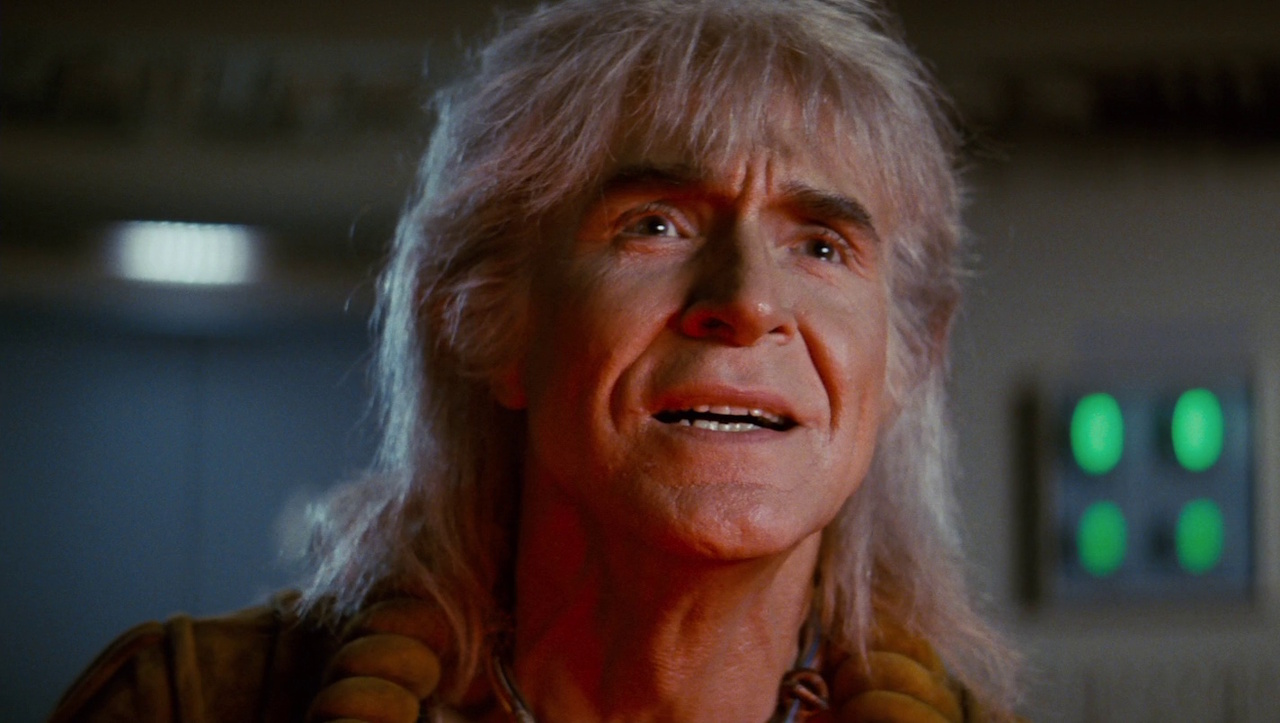
Still frame from Star Trek II: The Wrath of Khan showing a close-up of Khan.

For many folks, The Wrath of Khan is still the Star Trek franchise’s high-water mark; a film that no other in the franchise has even come close to. I wouldn’t go that far personally – I think there are a couple of other equally brilliant films, as we’ll talk about in a moment – but The Wrath of Khan is definitely up there! The mix of sci-fi with high-octane action proved to be a perfect blend for Kirk and the crew, with a vengeance-obsessed Khan becoming one of the best villains not only in Star Trek, but in all of cinema.

The Wrath of Khan has one of the best and most intense starship battles in the franchise. Drawing inspiration from submarine and naval battles in World War II films, the fight between the badly-damaged Enterprise and Khan’s USS Reliant is incredible. The sequence builds up tension masterfully – by showing the extent of the damage to the Enterprise, by robbing Kirk and Khan of their sensors in the nebula, and with Spock cleverly explaining Khan’s “two-dimensional thinking” as a way to convey the tactics of starship battles in a three-dimensional space.

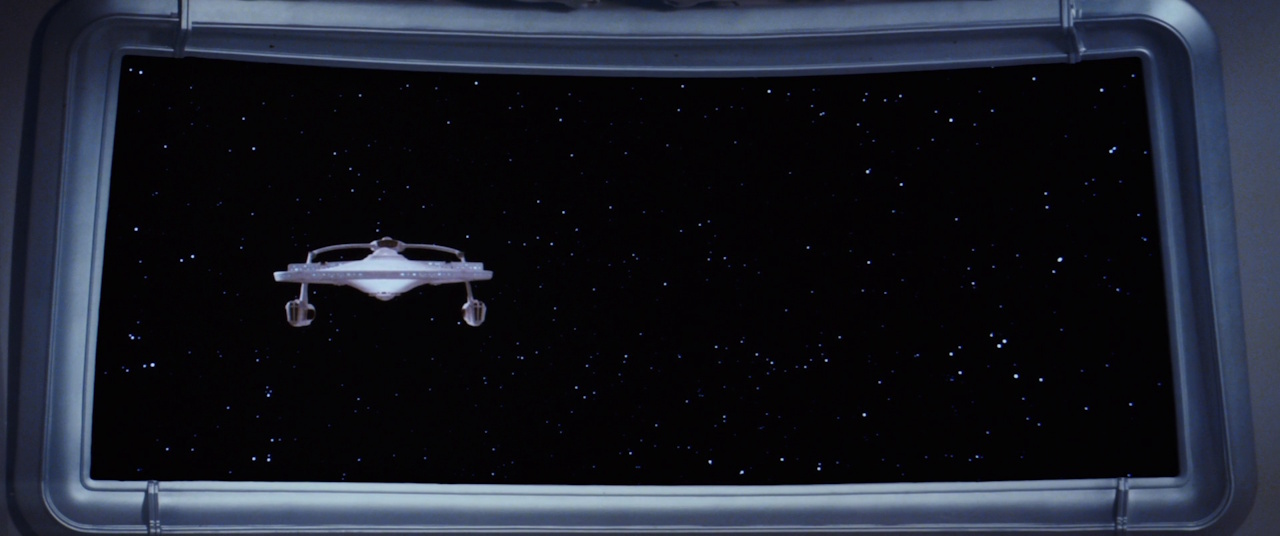
Still frame from Star Trek II: The Wrath of Khan showing the USS Reliant on the Enterprise's viewscreen.

Toward the end of The Wrath of Khan, we also get one of the most poignant and emotional moments in any film in the franchise… or really anywhere in the entirety of Star Trek, come to that. Spock’s death – sacrificing himself to save the Enterprise and his friends – really hits hard. Even though on my first viewing of The Wrath of Khan I already knew that Spock would be resurrected, there’s still a real emotional weight to this moment. Star Trek has attempted to do similar things with other characters (we’ll look at a couple further down the list) but none came close to matching this moment.

Ultimately, The Wrath of Khan was the first film to wrest control of Star Trek away from its creator, Gene Roddenberry, and to try new and different things with this cast of characters. It’s very different in tone and style from The Original Series, but that turned out to be a net positive for many fans – and many new fans, too. The Wrath of Khan firmly established Star Trek as a cinematic franchise.

Film #3:
The Search for Spock (1984)
Tier: A

Still frame from Star Trek III: The Search for Spock showing the surface of the Genesis Planet.

Sandwiched in between the ever-popular Wrath of Khan and the light-hearted Voyage Home, I think some folks can overlook The Search for Spock. As the middle part of a trilogy, the film has the difficult task of moving the story along but without being able to draw all of its story threads to a firm conclusion. For my money, though, it’s a great film – and it manages a complicated sci-fi story exceptionally well.

The Search for Spock gave us an extended look at the re-designed Klingons from The Motion Picture, and also introduced the Klingon Bird-of-Prey, arguably the faction’s most iconic spaceship. It’s the film which re-introduced the Klingons in a big way, expanded the Klingon language, and introduced starship and uniform designs that have become inseparable from the faction. The Klingon Empire as we know it would not be the same – and might not be a big part of Star Trek at all – without The Search for Spock and its main villain, Kruge.

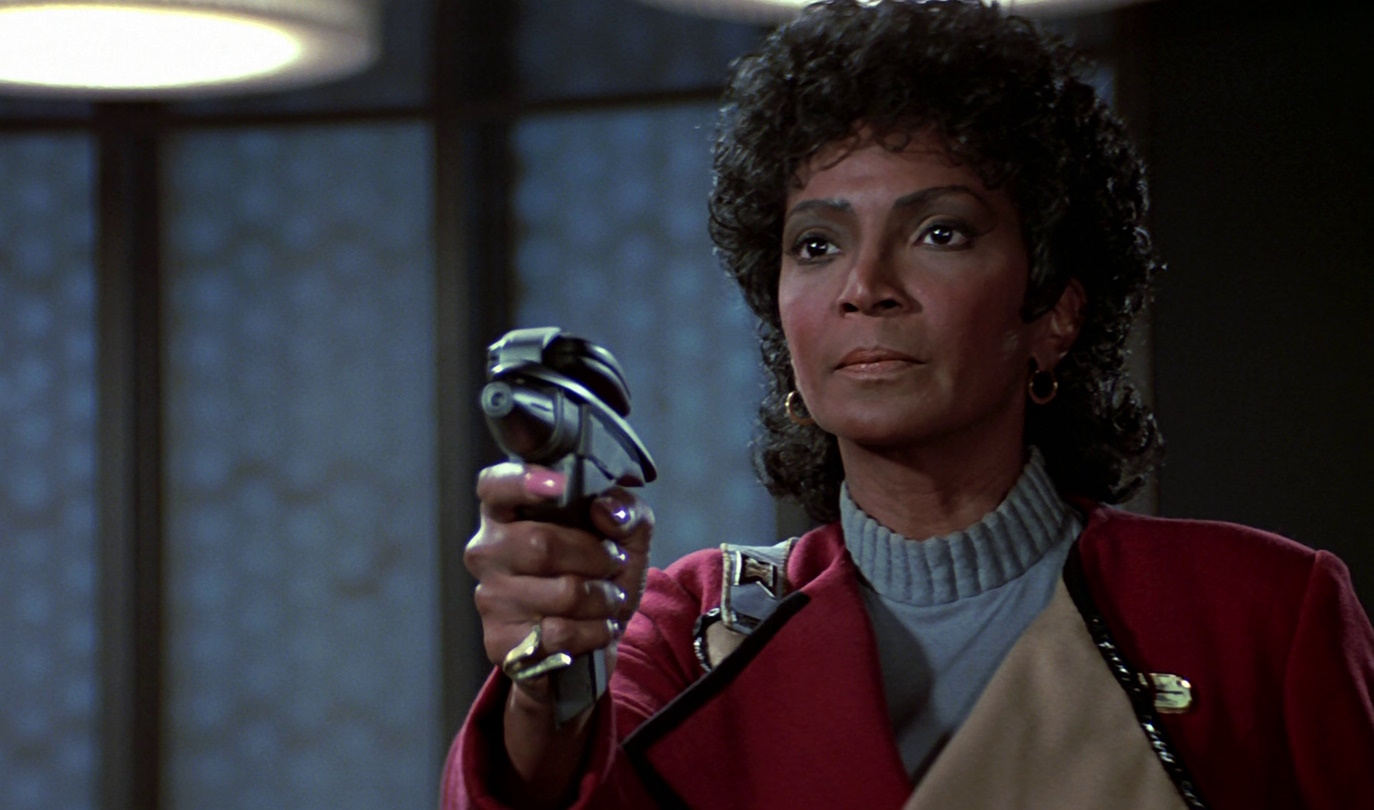
Still frame from Star Trek III: The Search for Spock showing Uhura wielding a phaser pistol.

I’ve always appreciated the design of the Genesis Planet. The story of its creation is a bit “out there,” even by Star Trek standards, but the practical sets, props, and puppets created to represent the Genesis Planet all feel like ’80s sci-fi at its best. And yes, as a child of the ’80s I’m acutely aware of my biases here! But when I compare the way that The Search for Spock looks to modern Star Trek, with its CGI and AR wall… I can’t help it. I know what I like!

As the film that destroyed the original USS Enterprise, The Search for Spock was always going to court controversy. But I don’t agree with the take that “all of the odd-numbered Star Trek films are bad,” lumping The Search for Spock in with The Final Frontier. There are some wonderful moments of characterisation for David Marcus, Kirk, Dr McCoy, and others. And thanks to the insistence of director Leonard Nimoy, all of the main cast members got moments in the spotlight.

I have a longer piece about The Search for Spock – which was the first Star Trek film I watched – and you can find it by clicking or tapping here.

Film #4:
The Voyage Home (1986)
Tier: B

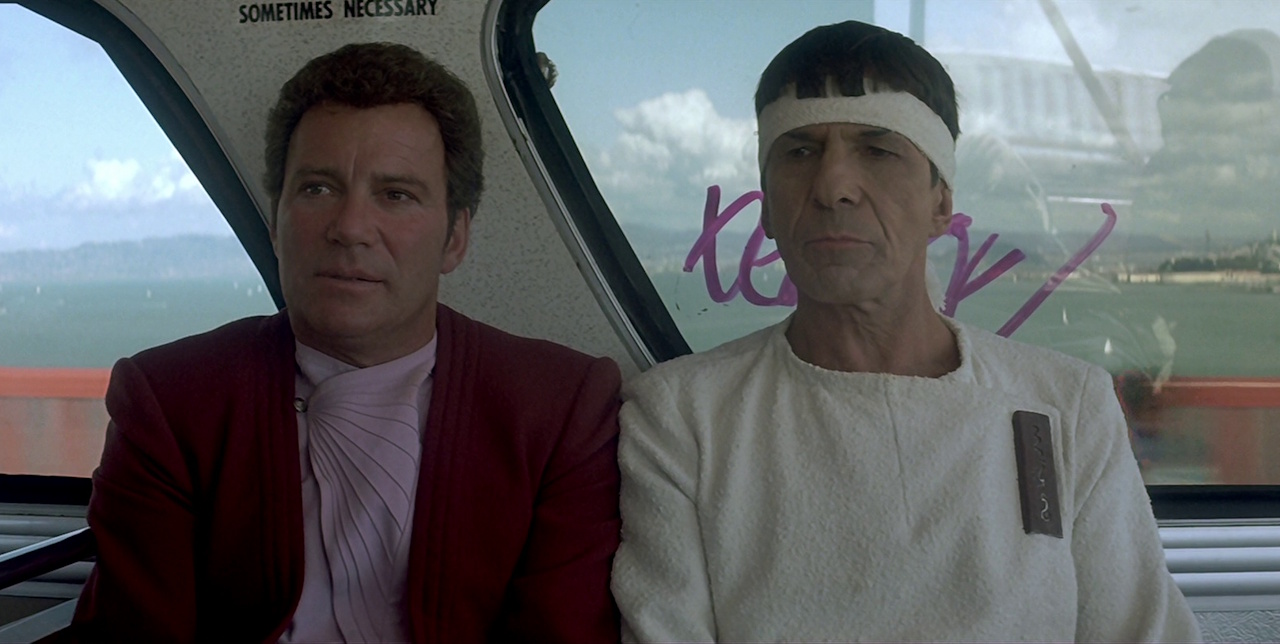
Still frame from Star Trek IV: The Voyage Home showing Kirk and Spock on a bus.

Maybe this is a “hot take,” but I’ve never been wild about The Voyage Home. As with similar Star Trek stories involving time travel to the modern day, its ’80s setting has left the film feeling so much more dated than any other in the cinematic franchise, and while I enjoy a good ’80s comedy as much as anyone else… it’s not necessarily what I want from a Star Trek film.

That being said, I don’t hate The Voyage Home by any stretch. It has some incredibly funny moments as Kirk and the crew attempt to navigate a time period that’s completely alien to them. Moments like Kirk asking if $100 is “a lot” of money, or Scotty trying to use a mouse to talk to a computer spring to mind as laugh-out-loud moments, and Spock having to cover his Vulcan ears to pass as a human is a fun look. Kirk and Spock’s confrontation with a punk on a city bus was also a hilarious moment.

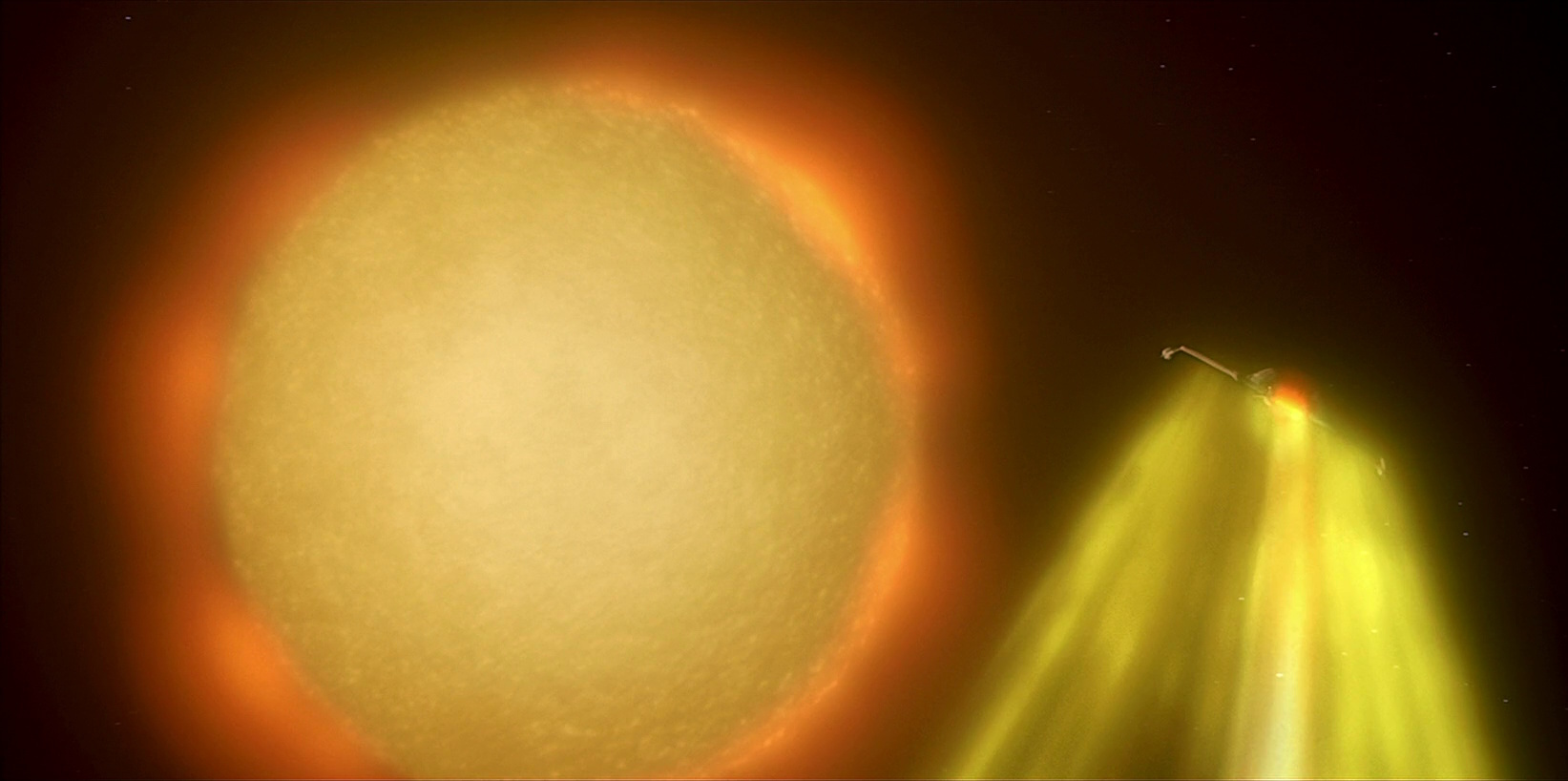
Still frame from Star Trek IV: The Voyage Home showing HMS Bounty approaching the sun.

On the sci-fi side of things, I really like the design and power of the “whale probe.” I think it’s unintentionally one of the franchise’s most unnerving alien creations, too. Its design harkens back to The Doomsday Machine’s planet-killer, but its power is used completely differently. The idea that this machine could simply disable all of Starfleet – and Earth – without breaking a sweat is already frightening, but when it can’t be reasoned with or even communicated with… that’s outright terrifying. Sometimes the Star Trek franchise can lean too heavily on “nose and forehead” aliens, but the likes of the “whale probe” remind us that the galaxy is a dangerous and sometimes incomprehensible place.

The Voyage Home did something Star Trek has often done: used a sci-fi lens to examine real-world issues. In this case, the loss of biodiversity and humanity’s impact on the environment were in the spotlight. The message was simple: we can’t predict the consequences of even a single species going extinct, and we should do everything we can to preserve biodiversity on Earth. That’s a good message, and it’s presented in a fun, creative story.

Film #5:
The Final Frontier (1989)
Tier: D

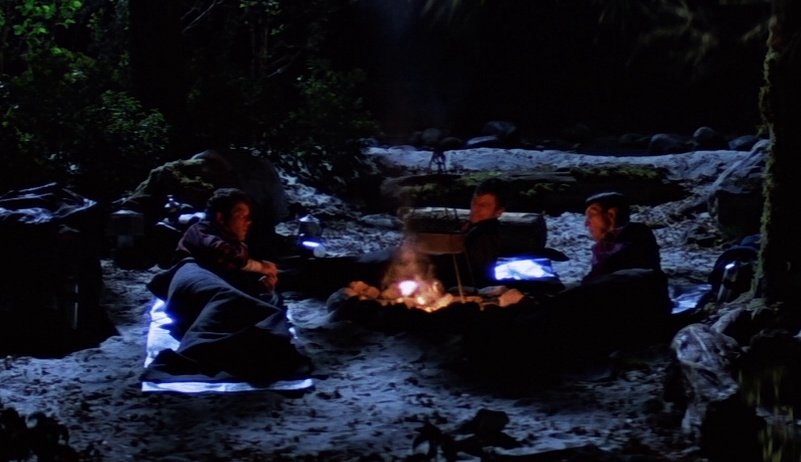
Still frame from Star Trek V: The Final Frontier showing Kirk, Spock, and Dr McCoy camping.

I said at the beginning that I wasn’t giving any F-tier rankings, and The Final Frontier is kind of the reason why. I get why folks don’t like it, and I think it has some obvious narrative weaknesses, as well as a smattering of sub-par special effects that make it less visually impressive than other titles in the franchise. But it isn’t a complete cinematic failure on par with something like Baz Luhrmann’s Australia or The Rise of Skywalker, so I think we can safely say that even the least-impressive Star Trek films avoid that ignominious fate!

Star Trek has delved into religion and religious-adjacent subjects before, so the idea of an alien claiming to be the god figure from various cultures isn’t totally out of left-field. But the execution of this storyline leaves something to be desired, and I just don’t think The Final Frontier really knew what it wanted to say or where it wanted to take this heavy idea.

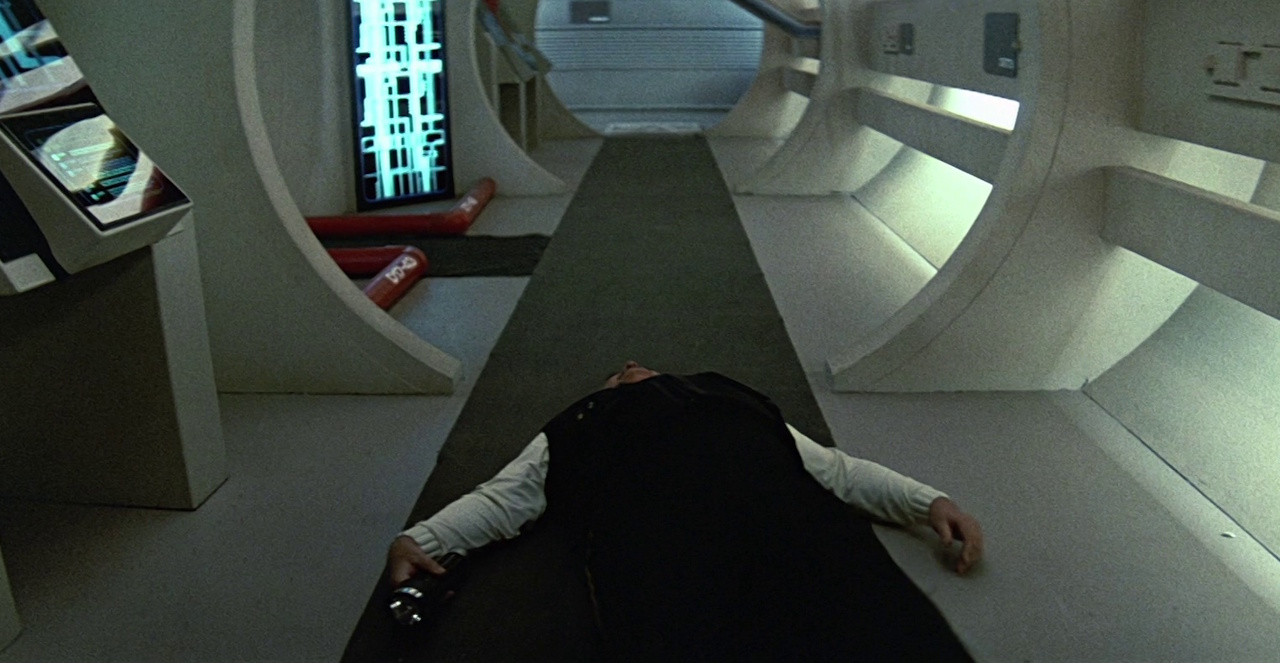
Still frame from Star Trek V: The Final Frontier showing Scotty laying unconsious on the floor.

The film also suffers from a little too much interference from William Shatner, who exercised his contractual right to helm a Star Trek film after Leonard Nimoy had his turn in the director’s chair. Shatner wanted to tell a story that put Kirk – and Kirk alone – centre-stage, as the sole character who could stand up to Spock’s villainous half-brother. Changes were made to the first draft of that story, when Nimoy objected to Spock’s characterisation, but Shatner’s determination to put Kirk front-and-centre still comes across.

I don’t believe that The Final Frontier is irredeemably bad. There are some wonderful moments, too, like the campfire sequence with Kirk, Spock, and McCoy, Scotty’s line “I know this ship like the back of my hand,” and the away mission to Nimbus III. McCoy’s incredibly painful backstory is also one that hits close to home, and has to be one of DeForest Kelley’s best and most emotional scenes with the character. Kirk’s line to Sybok about “needing” his painful and traumatic moments – that they define who he is – is a powerful idea, too. I just feel that, taken as a whole, The Final Frontier misses the mark with some of its storylines and loftier concepts.

Film #6:
The Undiscovered Country (1991)
Tier: A

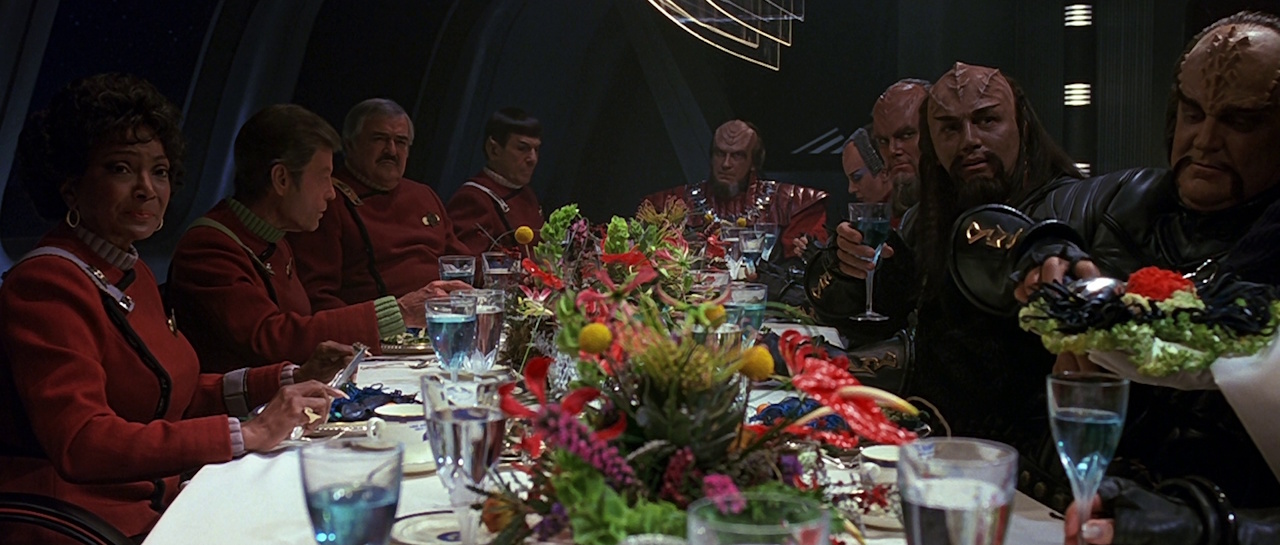
Still frame from Star Trek VI: The Undiscovered Country showing Starfleet officers and Klingons at a diplomatic dinner.

After the disappointment of The Final Frontier, it took some persuading for another Star Trek film to be greenlit. In 1991, with The Next Generation well underway and work progressing on spin-off ideas, there were some at Paramount Pictures who argued that Star Trek had moved on from The Original Series and its characters. A proposal to reboot Star Trek with a Starfleet Academy film was seriously considered, but ultimately Gene Roddenberry and others were able to convince the studio to allow the cast one final film to end on. The Undiscovered Country was thus given the green light.

The story here is great, and incredibly timely! The script uses the Federation and Klingons as a metaphor for the end of the Cold War; communists had been swept from power in 1989, and the Soviet Union was itself dissolved just days after the film’s premiere. The story of old rivals finding a path to peace, and old warriors with grudges finding a way to bury the hatchet, was an exceptionally powerful one – even if Gene Roddenberry hated the depictions of Kirk and Starfleet when he was shown an advance copy of the film.

Still frame from Star Trek VI: The Undiscovered Country showing the attack on Kronos One.

We get to see an exploration of the Klingon Empire, including one of its brutal prison colonies, and how the Klingons of the 23rd Century came to be neighbours and rivals rather than enemies by the time of The Next Generation’s 24th Century. There was even a role for TNG’s Michael Dorn, who played an ancestor of Worf. The Undiscovered Country did a lot to bring Star Trek’s two eras together, and as one crew departed the stage, work on the next expansion of the franchise began. Deep Space Nine would premiere just over a year after The Undiscovered Country had been in cinemas.

The “Praxis effect” – a two-dimensional circular shockwave created by a planet exploding – was named for the destruction of the Klingon moon seen in The Undiscovered Country! In a very real sense, the film’s legacy goes far beyond the Star Trek franchise, with similar visual effects still being used in sci-fi and fantasy to this day. Special effects were great across the board, and The Undiscovered Country also has a fantastic ship battle between the Enterprise, Sulu’s Excelsior, and a cloaked Bird-of-Prey.

Film #7:
Generations (1994)
Tier: S

Still frame from Star Trek: Generations showing Picard and Data in the stellar cartography room.

Is it controversial to say Generations is a good film? Because I honestly think it’s one of the franchise’s best. Bringing Kirk and Picard together was an absolute joy to watch, and I think it came at just the right moment, too – the film represents a handing of the torch from one crew to another. It didn’t come too soon, as this kind of story would’ve overshadowed The Next Generation’s characters before they’d found their feet. But by 1994, I really think the time was right for this kind of epic crossover.

I find Dr Tolian Soran to be an incredible villain, too. His motivations were easily understood, and while he absolutely needed to be stopped… part of me sympathises with him. The presentation of the Nexus as this heaven-like paradise realm, where time has no meaning and your heart’s desires can be made manifest, is the perfect motivation for someone like Soran – whose quest takes on a quasi-religious tone as a result.

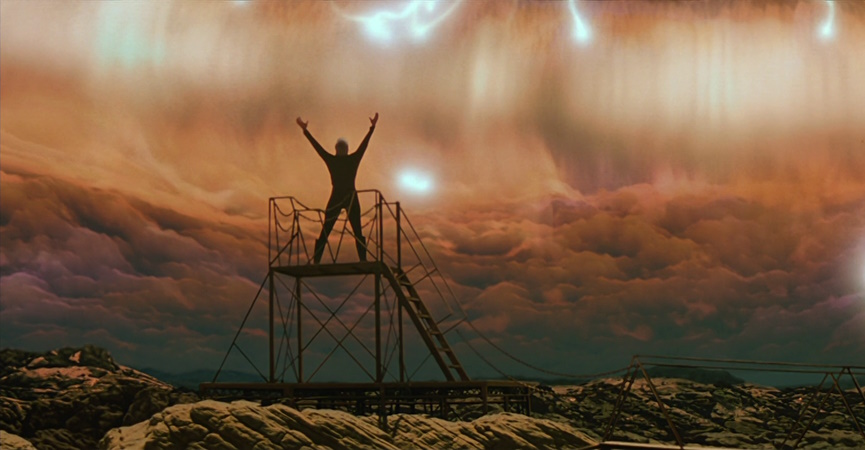
Still frame from Star Trek: Generations showing the Nexus approaching Soran, who has his arms raised.

Generations killed off Captain Kirk, drawing a line under Star Trek’s original incarnation. Kirk would, of course, remain important to Star Trek, and it wouldn’t be the final time we’d see a member of his crew on screen. But in that moment it did feel very final – and Kirk’s act of sacrifice to save Picard’s crew and the population of a planet he didn’t even know… it was an intensely emotional sequence.

Generations does a lot to explore the connection between Picard and Guinan, which would go on to be important in Star Trek: Picard, too. It was also a great film for Geordi and Data – the latter receiving his emotion chip and really expanding his programming beyond what he’d been capable of before. All of the main characters got a turn in the spotlight, and there were moments of mystery, emotion, and action throughout this wonderful film.

I wrote a longer piece about this film’s villain, Dr Soran, and you can find it by clicking or tapping here.

Film #8:
First Contact (1996)
Tier: A

Still frame from Star Trek: First Contact showing the Enterprise-E and other Federation vessels firing their weapons.

First Contact is a fantastic film. But I’m docking a couple of points because of one element it introduces that I feel complicates – and crucially, detracts from – one of the franchise’s best, most iconic, and most frightening villainous factions. I’ll have to elaborate on this one day in a standalone piece, because there’s too much to fit into a few sentences right now, but in short: the Borg Queen kind of ruins the Borg for me. Worse, her presence takes away a lot of the Collective’s fear factor – especially when we get to her later appearances. I get it: First Contact is a feature film and it needed to have a single villain for Picard and Data in particular to face off against. But on the whole, I’d say the Borg Queen was not a net positive for the Collective or Star Trek.

But enough about that for now! First Contact re-introduced the Borg in style, depicting a deadly battle in space, and a slow-paced assimilation of the brand-new Enterprise-E. The scenes aboard the Enterprise’s lower decks in particular are incredibly tense; the Borg are far more frightening here than they had been in any of their earlier appearances. And although I have gripes with the Borg Queen as a concept, her scenes with Data and Picard – and the latter’s trauma stemming from his earlier assimilation experience – are all played exceptionally well.

Still frame from Star Trek: First Contact showing Captain Picard on the bridge.

First Contact also did a lot to set the stage for Enterprise – though that wasn’t necessarily the intention at the time! Enterprise does, though, build on what First Contact did with its depiction of Earth and humanity’s first efforts to build a faster-than-light engine. James Cromwell, who played Zephram Cochrane, would even have a cameo in Enterprise’s premiere.

Picard is the real star of the show this time, as he lets his emotions overwhelm him when faced with the Borg’s return. After the episode Family, we didn’t really get much exploration of Picard’s mental state and how he was coping with having been assimilated by the Borg, but First Contact took that as a starting point to tell a story touching on things like post-traumatic stress. It was genuinely interesting – and also left a lot for Star Trek: Picard to build on a quarter of a century later.

Film #9:
Insurrection (1998)
Tier: B

Still frame from Star Trek: Insurrection showing Data wielding a phaser pistol.

Insurrection gets an unfairly bad rap, in my opinion. I like some of the connections in the film to the wider world of Star Trek – nowhere else will you hear Troi and Riker mention the Dominion War, for instance! The Briar Patch is a fun idea both narratively and visually, leading to the crew being cut off from Starfleet HQ. It also sets up a particularly creative starship battle, which as always is something I appreciate!

Star Trek has, on several occasions, had a “badmiral” (a portmanteau of ‘bad’ and ‘admiral’) as a villain, and the concept of a rogue or renegade senior officer is an interesting one. The best villains have some degree of nuance, and Anthony Zerbe does an excellent job conveying this with the character of Admiral Dougherty. Dougherty genuinely believed that he was doing something great for the Federation… even though, with the story being told from the perspective of the Enterprise crew and the Ba’ku, he was the villain.

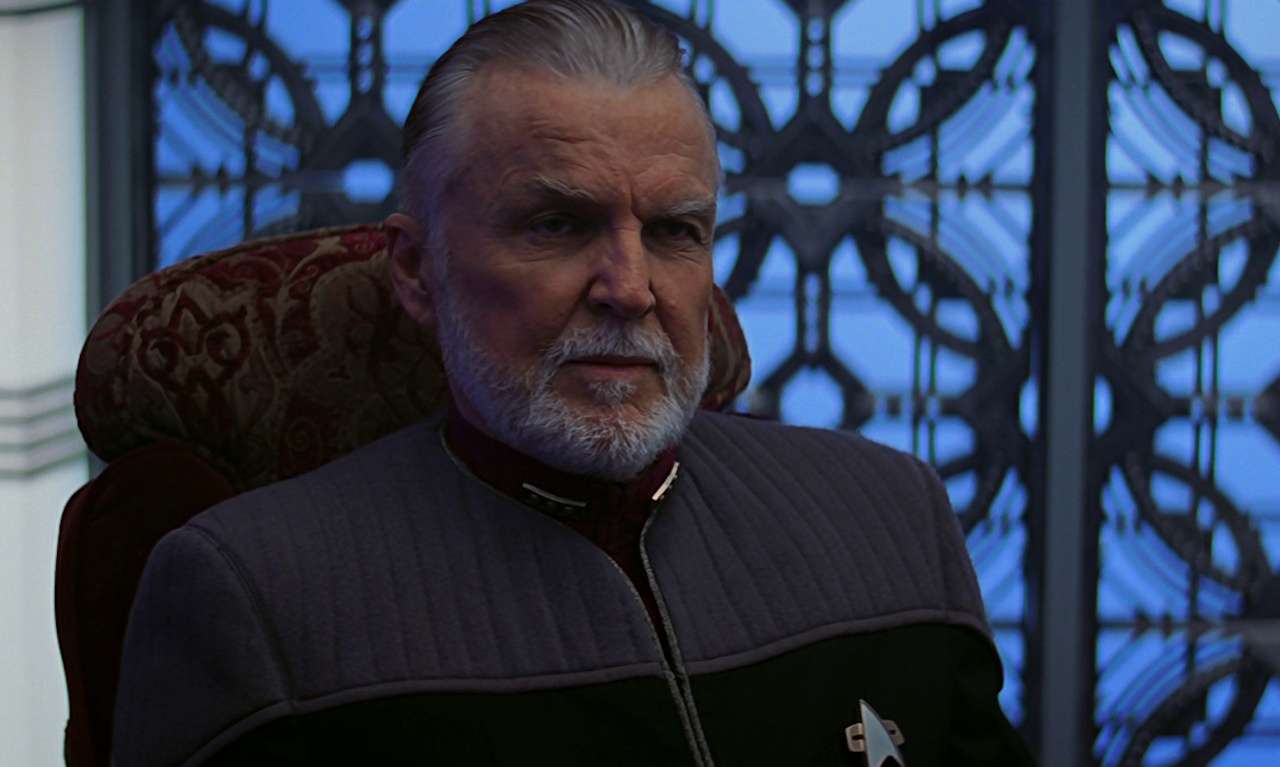
Still frame from Star Trek: Insurrection showing a close-up of Admiral Dougherty.

The Son’a were an interesting addition to Star Trek, and I’d love to explore a bit more of their culture one day – it’s a shame they’ve never returned. I would posit that the film’s twist – that the Son’a and Ba’ku are the same race – was imperfectly executed, but it was an interesting idea that achieved most of what it was aiming for. It’s also an idea that felt very “Star Trek,” harkening back to The Original Series episodes that had messages about war, race, and so on.

Insurrection has another great villain in Ru’afo, who doesn’t have that same nuance we were talking about, but was delicious to watch nevertheless thanks to an excellent performance from F Murray Abraham. It’s also a great film for Riker – who gets a turn in the captain’s chair during a tense battle, and also sees a starship manoeuvre named after him – and Data, whose “injury” and ethical reset kicks off the entire story. A story about a renegade crew who have to operate outside of the law to do the right thing? That’s something I love – and while I get there are criticisms of the main cast apparently acting “out-of-character,” that’s explained well enough in Insurrection itself.

Film #10:
Nemesis (2002)
Tier: D

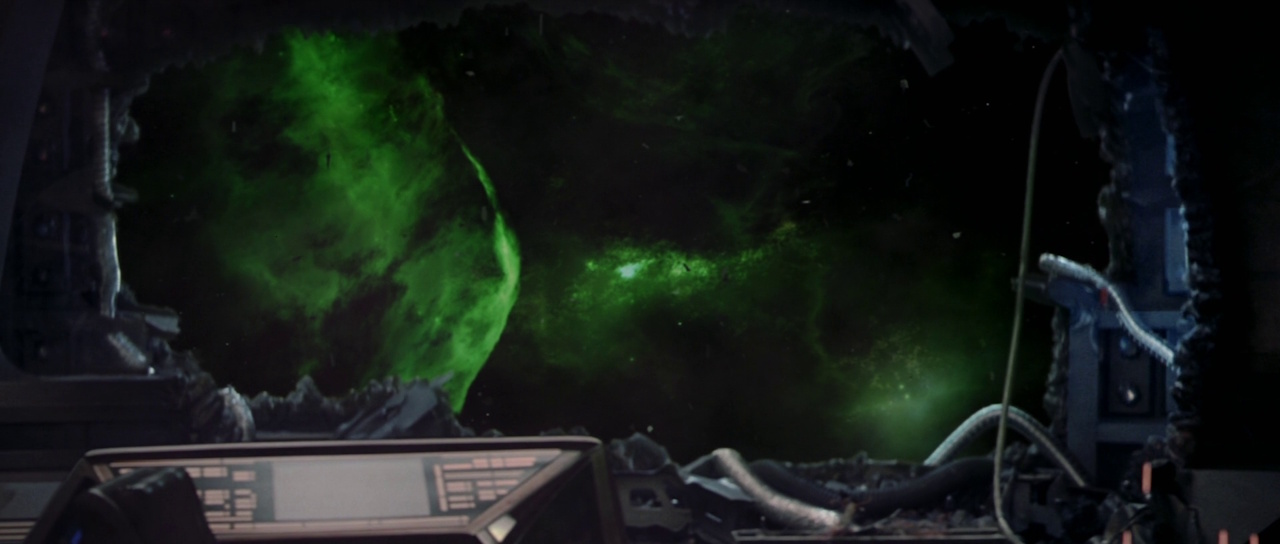
Still frame from Star Trek: Nemesis showing Picard and Data, illuminated by a green light.

Walking out of the cinema after the credits rolled, I remember feeling okay about Nemesis. But looking back, particularly after seeing Data being laid to rest in Star Trek: Picard’s first season, the deficiencies of the film are much more apparent. I would argue, with Brent Spiner ageing out of the role by 2002, that killing off Data made some degree of sense as a narrative point. But it wasn’t handled well in Nemesis, with the film rushing past Data’s death, pushing his friends to a “let’s all move on” type of ending that was just weirdly out-of-place and had completely the wrong tone.

Sci-fi tropes and character archetypes will land differently for different folks, and what I’d say about Nemesis’ main villain – played by Tom Hardy in one of his first big-screen roles – is that the idea of a clone of Picard isn’t as silly as it sounds! There’s genuine lore and story here, expanding our understanding of the Romulans and the way they operate, and I really did enjoy that side of the story. Shinzon also makes for a complex character; a human raised by Reman slaves, who has Picard’s DNA but none of his humanity.

Still frame from Star Trek: Nemesis showing the damage to the Enterprise-E's bridge.

Shinzon quite quickly turns to “I’m evil for no reason and I love it” with his characterisation, though, despite some early promise, and by the time the film moves to his plot to attack Earth and the Federation, the plot kind of goes off the rails. Much has been made of director Stuart Baird’s lack of experience and knowledge of Star Trek at the time of the film’s production (he hadn’t so much as watched a single episode of The Next Generation) and I think that comes across in the way the film treats most of the main characters, too.

After Insurrection hadn’t been particularly well-received, and with Enterprise struggling to find an audience, Nemesis didn’t do the Star Trek franchise any favours in 2002. It also seemed – for close to twenty years, anyway – to be a weak and unimpressive ending for The Next Generation characters and Star Trek’s 24th Century setting. As in any Star Trek project, pretty much, there are moments in Nemesis that work, but not enough of them to make the film a success.

Film #11:
Star Trek (2009)
Tier: C

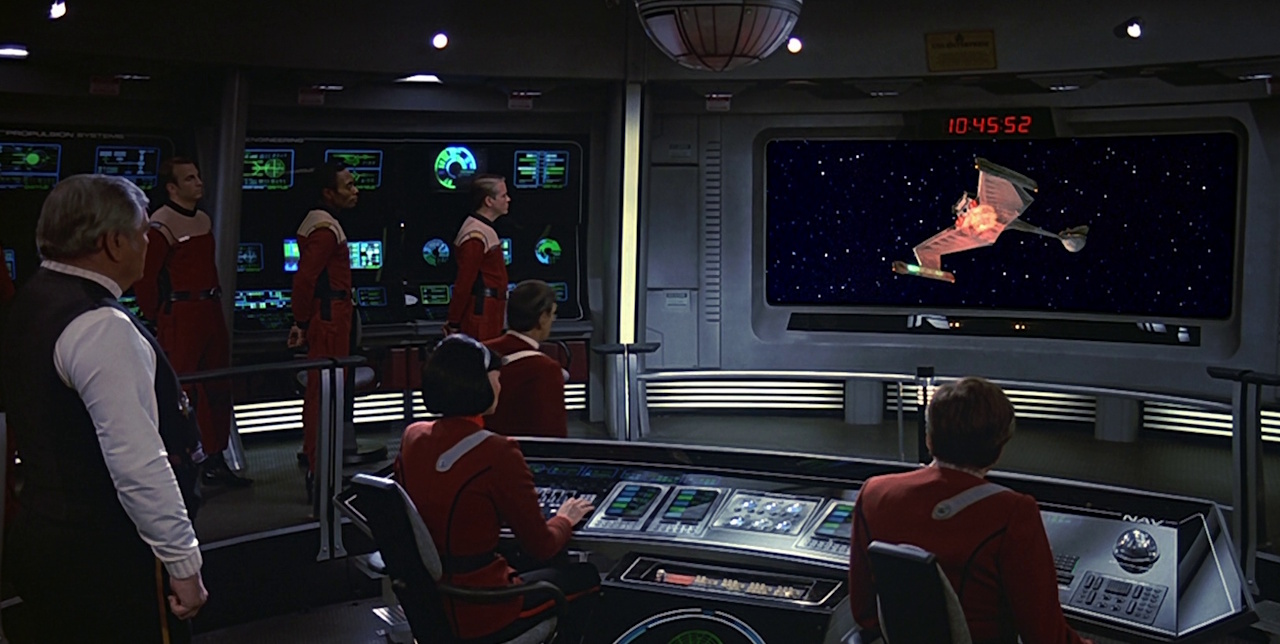
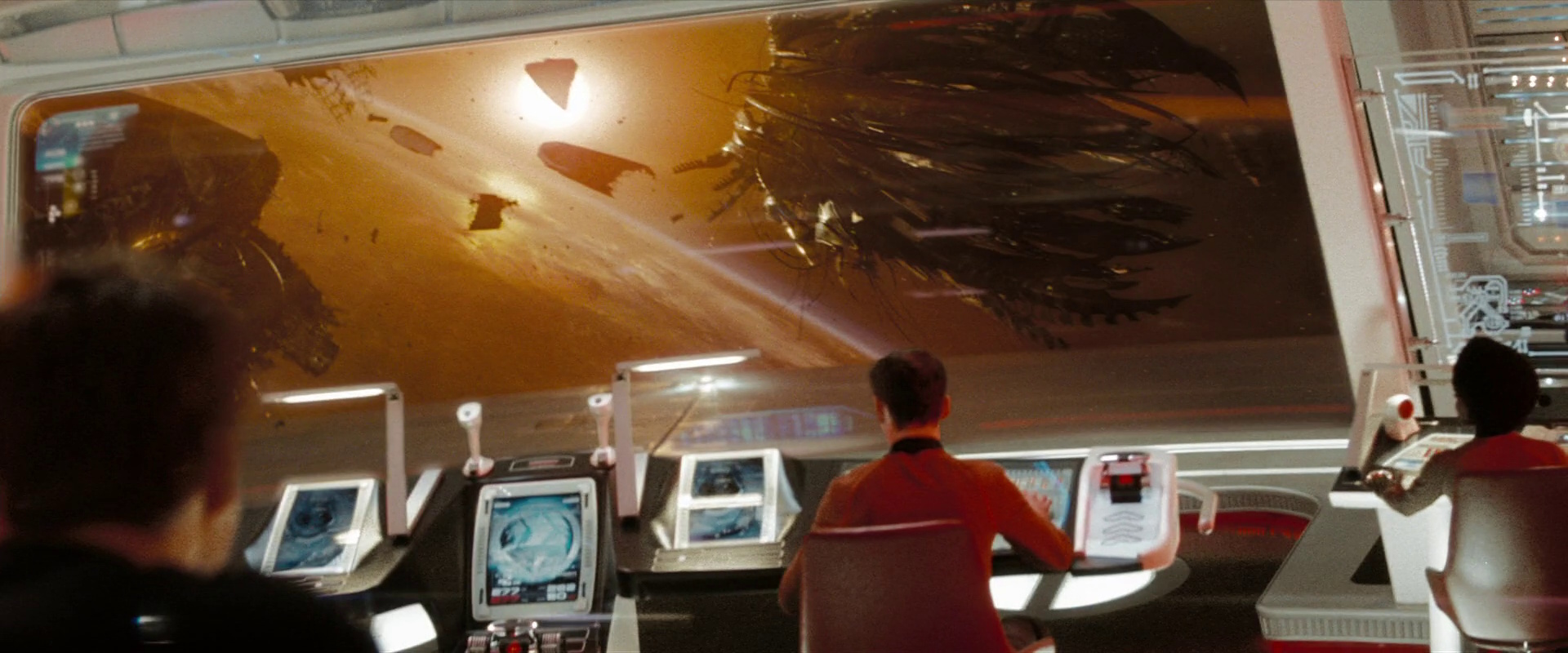
Still frame from Star Trek (2009) showing the Narada on the Enterprise's viewscreen.

I have some conflicting thoughts about 2009’s Star Trek. On the one hand, I was absolutely thrilled to learn of the film’s existence after Enterprise’s cancellation seemed to signal the demise of the entire Star Trek franchise. I did my best from 2006 to support the film while it was in production, and raced to the cinema to see it on the first day it was available. And I would make the case to anyone that Star Trek ’09 is a solid action/sci-fi film, a great introduction to Star Trek for newbies, and a successful title that proved the franchise could still bring in audiences and money at the box office.

But on the other hand, the film’s action-heavy storyline, re-cast classic characters, and fairly basic villain just aren’t what I come to Star Trek for. The new actors were given an exceptionally difficult job and were brave to take it on; I know some Trekkies who, to this day, have refused to watch any of the Kelvin timeline films because of the decision to re-cast Kirk and the crew. Some of the new actors got a lot of criticism before the film had even premiered due to that. Personally, I generally feel they all did a solid job… but there’s always gonna be a sense that they aren’t the “real” Kirk, Spock, Uhura, and so on. Some decisions – like pitting Kirk and Spock against one another, even coming to blows at one stage – really hammers home how different these versions of the characters feel.

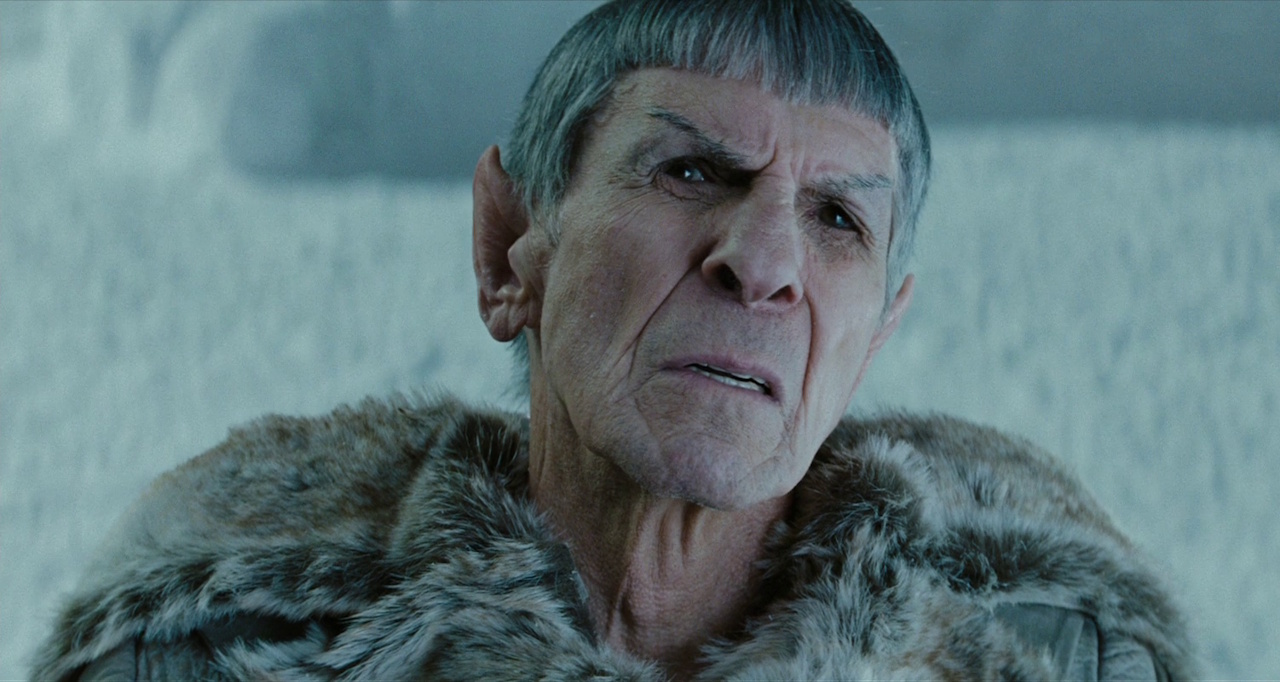
Still frame from Star Trek (2009) showing Spock Prime.

Star Trek ’09 is unashamedly a reboot, and if you meet it where it is and you’re able to accept that, I think there’s a good time to be had with at least parts of it. But as someone who’d been a Trekkie for close to twenty years when the film premiered, who’d been immersed in the world of The Next Generation era in particular… I wasn’t really interested in a reboot. After Enterprise, I wanted to see Star Trek move its timeline forward again, not stepping back to re-cast classic characters for a pretty basic action story.

All that being said, I appreciate what Star Trek ’09 did for the franchise. If this film hadn’t found an audience and proved to studio executives that there was still life in Star Trek and still stories to tell here, that would’ve almost certainly been the end of the franchise, and I doubt we’d have seen Lower Decks, Strange New Worlds, and the rest of modern Star Trek. Keeping the flag flying for the franchise after it had burned out on the small screen is the real legacy of Star Trek ’09 – at least for me.

Film #12:
Into Darkness (2013)
Tier: B

Cropped promotional poster for Star Trek Into Darkness.

I would argue that Into Darkness is the high-water mark of the Kelvin timeline. There are still issues with the characters, some contrivances with the story, and so on… but the film’s script is generally much stronger than either of the other Kelvin films. Not only that, but this particular story – featuring notorious villain Khan and a “badmiral” scheming from within Starfleet itself – lends itself much more to the kind of action-packed film that JJ Abrams wanted to make.

Captain Pike’s death in Into Darkness genuinely hit me – it was unexpected in the moment, and Kirk’s reaction to the loss of someone he viewed as a surrogate father figure was truly heartbreaking. It’s definitely one of the most powerful moments for this version of the character, and the way it spurs on the plot was good, too. I also liked the callback to Star Trek ’09 with the “transwarp beaming” idea returning, this time as a problem to be overcome.

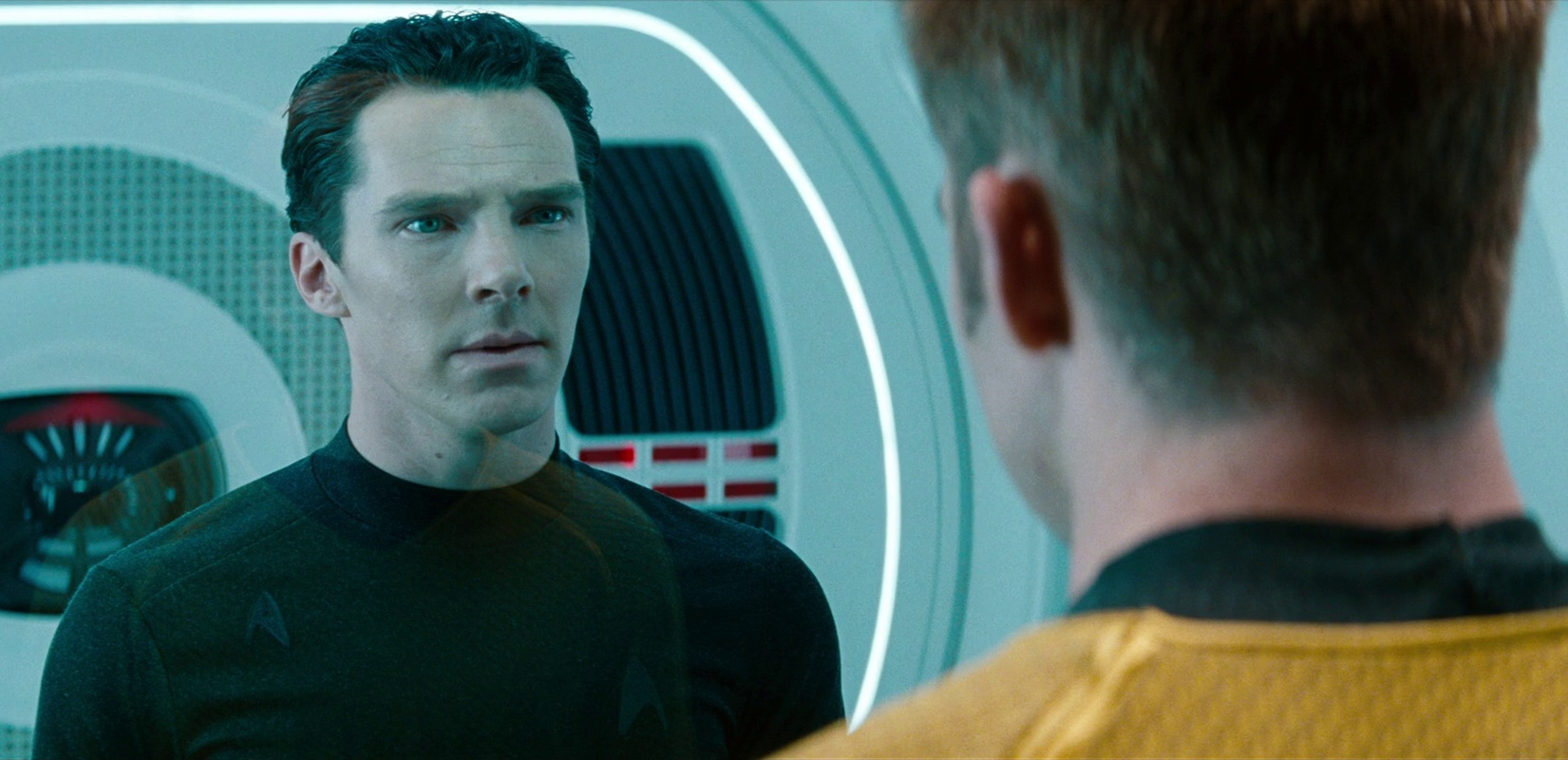
Still frame from Star Trek Into Darkness showing Khan and Kirk.

If you were online and involved in Star Trek discussion groups and forums circa 2011-2013, you would’ve almost certainly had Into Darkness’ big reveal spoiled for you ahead of time. Unfortunately, fans correctly guessed that Benedict Cumberbatch would be playing the legendary Khan – and going into the film with that expectation certainly put a downer on the scene where Kirk learns the truth. I always prefer to see films un-spoiled, but this rumour was everywhere at the time, so it was unavoidable.

For a variety of reasons, this story just feels stronger and, most importantly, better-suited to these characters and this style of film. Into Darkness is a better film as a result, with a consistent tone, understandable character motivations, and a pair of solidly entertaining villains. There are some contrived moments – and I don’t think Kirk’s sacrifice and “death” works anywhere near as well as Spock’s did in The Wrath of Khan, which Into Darkness tries to emulate in more ways than one – but on the whole, it’s not a bad film by any stretch.

Film #13:
Beyond (2016)
Tier: C

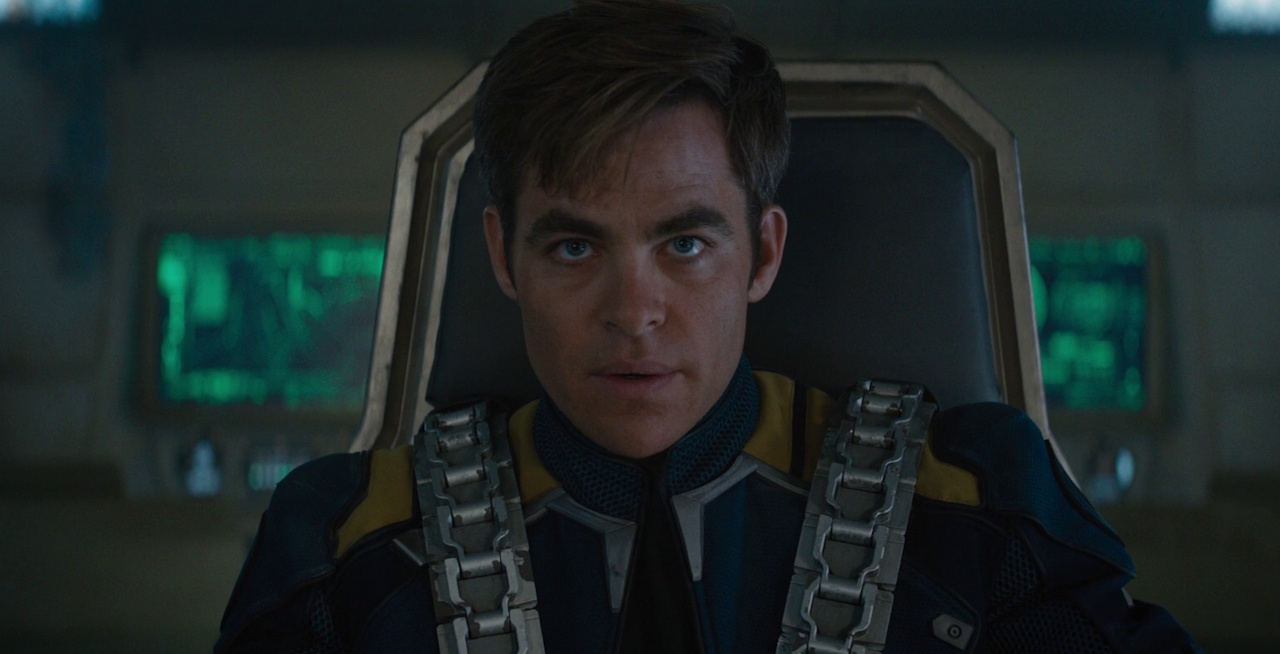
Still frame from Star Trek Beyond showing Kirk with a seatbelt on.

Penned by Scotty actor Simon Pegg, Beyond was a genuine, well-intentioned attempt to bring the Kelvin timeline films slightly closer to “classic Star Trek” in terms of tone and themes, and I really do admire the effort. There are moments that link up with Star Trek’s past – most notably Enterprise – and parts of the film, particularly its opening scenes, succeed at recreating at least some of that “mission of exploration” feeling that the other Kelvin timeline films didn’t spend even a second on.

But there are some flaws and weaknesses, though. The destruction of the Enterprise is by far the weakest loss of a ship in the franchise, as we just don’t have anywhere near as much attachment to it as we did to the original Enterprise, the Enterprise-D, and other ships that have been destroyed. The sequence was tense, particularly as the crew rushed to their escape pods, but the emotional weight of the moment didn’t ring true for me.

Still frame from Star Trek Beyond showing a Federation security team aboard the Enterprise.

I felt that an actor of Idris Elba’s calibre was also squandered on a pretty basic “I’m mean and I hate everyone” type of villain. Krall had potential – the “lost” captain who felt abandoned by Starfleet and the Federation, and whose xenophobic and war-like traits were a century or more out of date. But the film didn’t do enough with Krall, and the big reveal that this alien-looking alien was, in fact, a human didn’t really stick the landing. Again, it was interesting in theory but kind of wasted by the time it came to the screen.

I might be alone in this, but I detest the name “Jaylah” for the film’s new character. A homonym of “J-Law” – the tabloid nickname given to American actress Jennifer Lawrence, who was a big star at the time thanks to her role in The Hunger Games – this reference just felt cringeworthy and unnecessary. I’m happy for Star Trek to take inspiration from a wide range of other films, including the likes of The Hunger Games, but don’t stoop to this level when it comes to character naming. It’s just… well, it’s pretty pathetic, to be honest.

I couldn’t end this section without also noting that Beyond was rather overshadowed by the deaths of Leonard Nimoy and Anton Yelchin in the months leading up to its premiere.

Film #14:
Section 31 (2025)
Tier: C

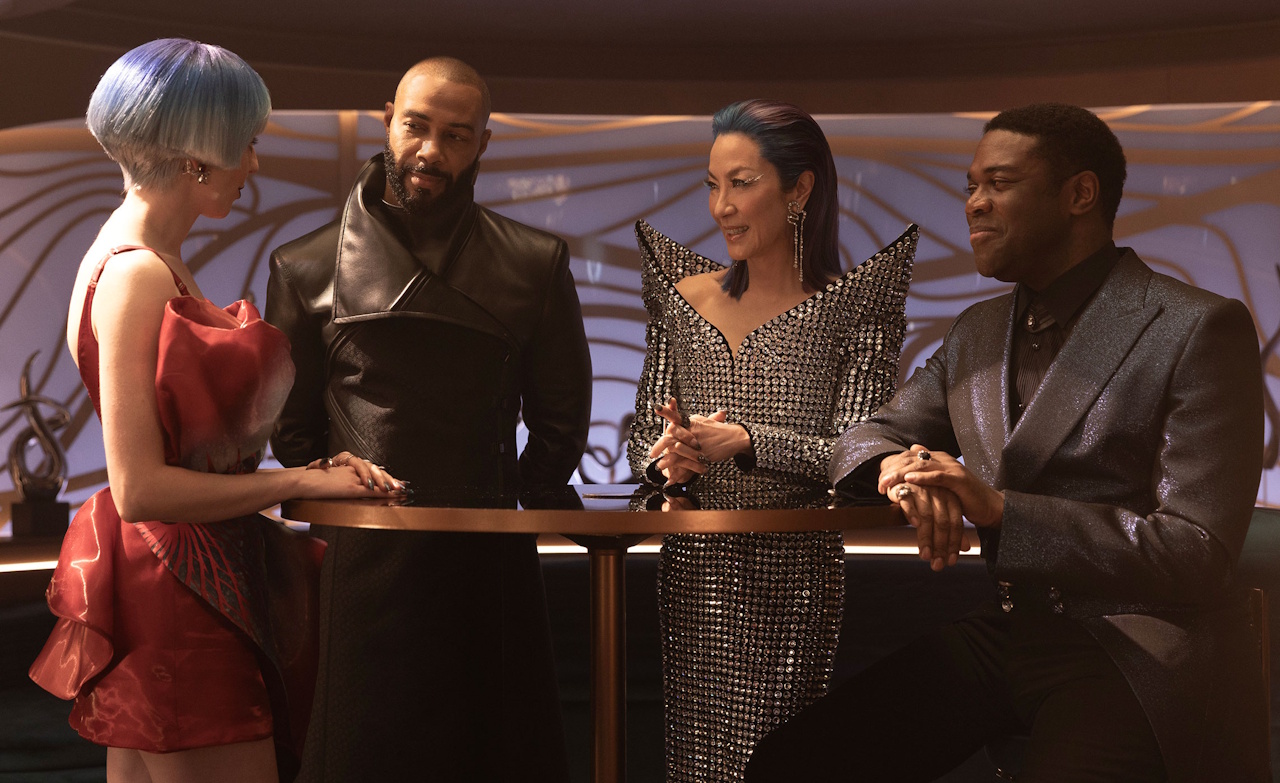
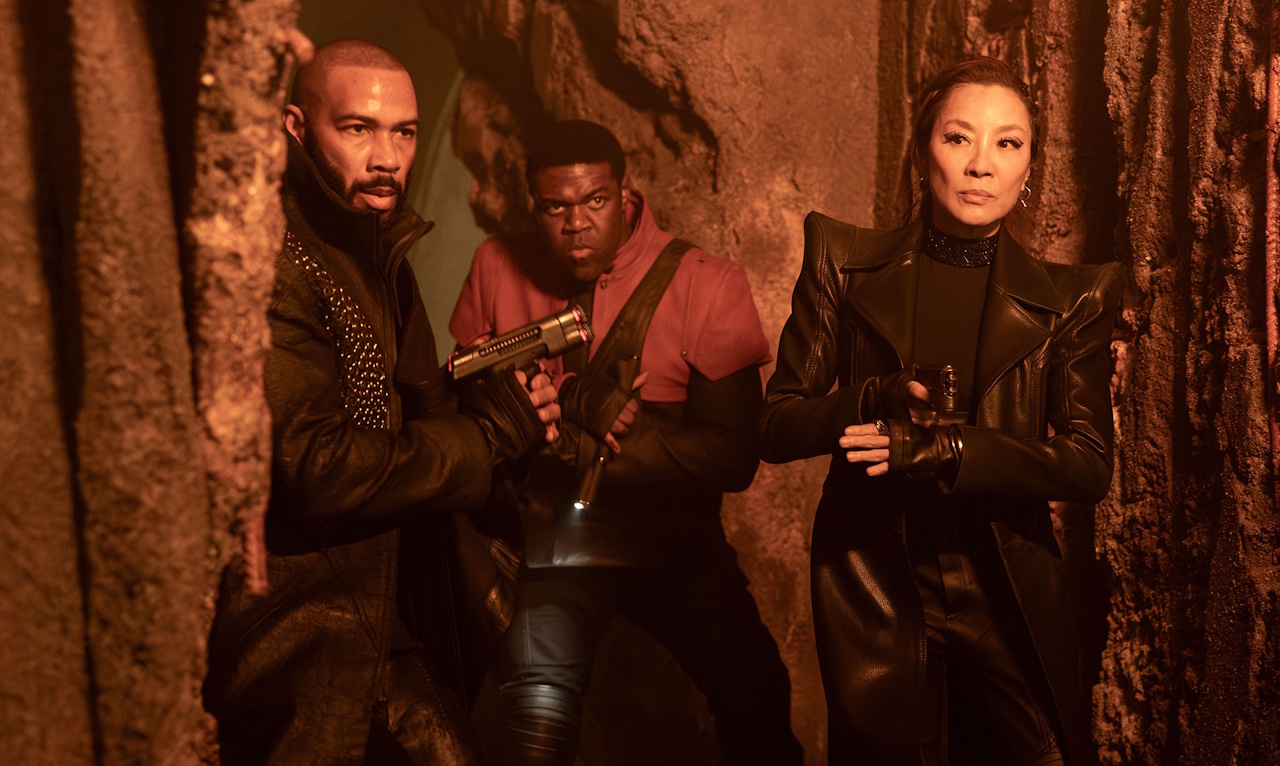
Still frame from Star Trek: Section 31 showing a trio of main characters.

You have to try to meet Section 31 where it is. It’s a B-movie; the Star Trek equivalent of The Fast and the Furious or Transformers, complete with a cookie-cutter plot, some pretty mindless action, and plenty of tropes of both action flicks and spy movies. Once I realised that that’s what I was watching… I just kind of went with it. On those terms, I found Section 31 to be just fine.

Where my disappointment comes in is in the wasted potential. There was scope for Section 31 to be the kind of film that brings new eyes to Star Trek for the first time, genuinely expanding the fan community by making what can feel like a nerdy and overcomplicated franchise approachable. I don’t believe Section 31 came close to achieving that goal, unfortunately. And from my perspective, that felt like the biggest point in its favour and a key reason for making it.

Still frame from Star Trek: Section 31 showing Sahar and Fuzz fighting.

I would also argue that Georgiou’s arc in Section 31 was pretty repetitive, dragging up her Mirror Universe origin and forcing her through a story that we’d already seen a lot of in Discovery. Dragging her back from the more complex character we’d started to see so she could re-start that arc wasn’t great. And that’s before we get into the weeds on whether a redemption story for someone at least as evil and despotic as Star Wars’ Emperor Palpatine was even possible, let alone successfully executed in Section 31.

There are also gripes with how disconnected this film feels from the rest of Star Trek, with the barest of references and none of the franchise’s visual language present. If, however, you can set most of that aside… there are fun moments hiding under the surface. And as I said a moment ago, if you can meet Section 31 where it is, on its own terms, I think it’s a perfectly adequate B-movie.

I have a two-part review of Section 31. You can find the non-spoiler part by clicking or tapping here and the part containing story spoilers by clicking or tapping here.

So that’s it!

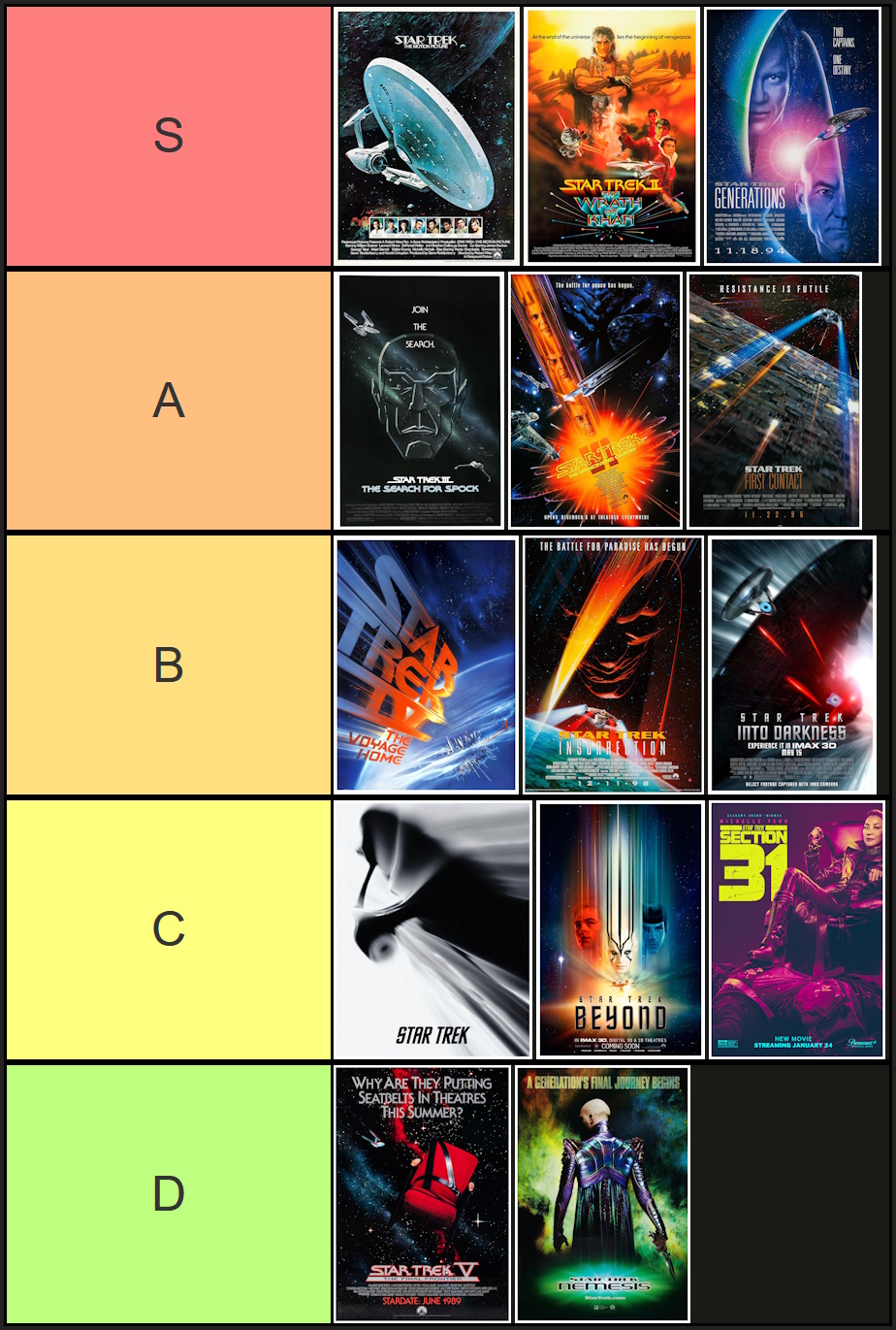
We’ve put all fourteen Star Trek films into a tier list. So let’s take a look and see how we did:

The finished tier list with all fourteen Star Trek films.

Well, I hope that was worth it! As you can see, we have more films in the upper tiers than the lower ones, and even the “worst” Star Trek films still have redeeming qualities – at least in my opinion.

I wanted to put this list together after Section 31 had premiered, updating my older list to include the new film. This piece almost certainly concludes my Section 31 coverage for the foreseeable future, as I really don’t have much more to say about the made-for-streaming movie at this point. If you’ve been following my coverage of Section 31, thank you! I hope you’ve found my take to be interesting.

Still frame from Star Trek: The Motion Picture showing the Enterprise at warp.
The USS Enterprise at warp.

At time of writing, there are supposedly two Star Trek films in pre-production or at least being worked on in some capacity. The first is a Beyond sequel, bringing back the Kelvin timeline cast for another outing. And the second is supposedly set in between Enterprise and Star Trek ’09, perhaps serving as a kind of Kelvin timeline prequel. You can read my thoughts on that idea by clicking or tapping here.

There have been other film proposals pitched over the years. Sir Patrick Stewart teased fans in early 2024 with news of a Picard movie idea, but I don’t think anything came of that. For my money, I’d like to see Paramount do more with the TV movie format, using it to tell one-off stories that wouldn’t necessarily fit anywhere else in the franchise. With new sets having been constructed, and the AR wall too, there are almost no limits on the kinds of stories that could be told as one-off specials – and the budget for such a production would be lower than a feature film, too! With Section 31 proving to be a disappointment, though, I’m not sure whether that’ll ever happen.

Still frame from Star Trek VI: The Undiscovered Country showing two starships, a planet, and a star.
The Enterprise and the Excelsior in orbit over Khitomer.

So I hope this has been a bit of fun! Beginning with Generations, I watched every Star Trek film at the cinema. Unfortunately, due to my health, I won’t be able to do that in future – which is why I enjoyed having Section 31 as a TV movie! But if there ever is another full-length Star Trek film, I’ll do my best to support it here on the website.

Until next time… Live Long and Prosper!


Most of the Star Trek films are available to stream on Paramount+ in countries and territories where the platform is available. The first thirteen films are also available on Blu-ray and DVD, and a Blu-ray release of Section 31 is planned. The Star Trek franchise – including all films and properties discussed above – is the copyright of Paramount Global. This article contains the thoughts and opinions of one person only and is not intended to cause any offence.
Star Trek Needs Sequels, Not Prequels

A spoiler warning graphic.

Spoiler Warning: There are spoilers present for Star Trek: Discovery and Star Trek: Picard.

Alright, let’s talk about some troubling Star Trek news, I guess.

First of all, I want to say that more Star Trek on our screens is a good thing. I always like to give that caveat before I say anything even remotely negative about announcements and rumours because I know I can be misinterpreted. Given Paramount’s dire financial situation, recent Star Trek cancellations on the small screen, and the repeated failures of big-screen Star Trek projects in recent years, the fact that we’re getting announcements about new Star Trek content at all is a positive development. The franchise isn’t dead and doesn’t seem to be going away in the immediate term – and that is good news.

But – and you knew there had to be a “but” after all of that – recent Star Trek film announcements are not only not what I’d hoped to see, but I think they really represent how out-of-touch Paramount is and how far removed its executives have become from the Star Trek fan community. The kinds of projects Paramount wants to greenlight seem to be poised to repeat recent and not-so-recent mistakes, and also appear to be based on a total misread of where Trekkies – and a more casual wider audience – are right now.

Paramount Global's logo.
Paramount Global is the corporation that owns and manages Star Trek.

Earlier in the year we talked about the announcement of a Kelvin timeline prequel film, as well as the prospects of a sequel to 2016’s Beyond. It’s recently been reported that the so-called “origin story” is moving ahead, with talks ongoing to sign Simon Kinberg – who previously worked on films like Deadpool, The Martian, and the X-Men series – as a producer. Kinberg may also have a role in guiding or producing future Star Trek films after that.

This prequel is not the kind of project I’d choose to make if I were in charge of the franchise over at Paramount – and it seems to me that Paramount is repeating and doubling-down on the same mistake that the Star Trek franchise has been making for almost a quarter of a century. Going all the way back to the announcement of Enterprise around the turn of the millennium, prequels are just not what most fans have wanted to see. You can see that from Enterprise’s lacklustre viewing figures during its original run, leading to its premature cancellation.

Promo photo for Star Trek: Enterprise (2001) showing several main cast members.
Enterprise – Star Trek’s first prequel – struggled with viewership throughout its four-season run.

Moreover, Discovery had the same problem when it was announced in 2016 – and that show’s place in the Star Trek timeline caused it a plethora of issues. As I said when I took a longer look at Discovery’s creation and its status as a prequel – which you can read for yourself by clicking or tapping here – the show’s writers taking Burnham and the crew out of the 23rd Century in the Season 2 finale seems to be a tacit admission of the fact that it should never have been set in that time period to begin with.

Most of Paramount’s executives and key investors are old. They’re of the baby boomer generation, and while I doubt whether any of them are or ever were Star Trek fans, when they think of the franchise their thoughts naturally turn to The Original Series – to Kirk, Spock, and Dr McCoy, and the adventures of the original Enterprise. When they consider pitches for new Star Trek projects and think about where to spend their money, that unconscious bias is present – and I would argue that it’s leading to them pushing the Star Trek franchise in very much the wrong direction.

Black-and-white promo photo for Star Trek (1966) showing Captain Kirk wielding a phaser rifle.
Too many senior people at Paramount Global still think of this when they hear the name “Star Trek.”

Discovery would have always been a controversial production, I suspect, but one of the biggest problems fans had with the show was its place in the timeline. Very little about Discovery in its first two seasons would’ve needed to change if the series had been set a decade after Nemesis instead of ten years before Kirk’s voyages aboard the Enterprise. Some character details would need to be different, but the fundamentals of the show would have worked the same – and it wouldn’t have picked up the controversy and bad feelings that came with being a prequel.

The biggest request from Star Trek fans over the past year-and-a-bit has been a Picard spin-off. Originally pitched by Terry Matalas, Picard’s showrunner during its second and third seasons, the series tentatively titled Star Trek: Legacy has proven incredibly enticing to Trekkies. However, with Matalas recently being tapped by Marvel and Disney to work on new projects for them, Legacy as originally envisioned seems not to be going ahead. That was always a possibility – and for all we know, the original pitch might’ve been crap. But the point remains: if Paramount was listening to Star Trek fans, a sequel, not a prequel, would surely be the next Star Trek project.

Still frame from Star Trek: Picard Season 3 (2023) showing a character at the helm of a shuttlecraft.
A sequel to Star Trek: Picard would be very popular with the Star Trek fan community.

Let’s assume that this “origin story” film goes ahead. A dangerous assumption given Paramount’s breathtaking incompetence, perhaps, but for the sake of argument we’ll entertain it for a moment. What would a film like that realistically do for Star Trek? It could connect with the Kelvin films, perhaps, and call back to Enterprise in some capacity. It could perhaps harken back to First Contact, which continues to be a pretty popular film, or maybe even scrape the barrel by making reference to some of the events in Picard’s awful second season. But beyond that? What could a film in this era explore that we don’t already know or can’t reasonably infer from other Star Trek projects?

There are events in Star Trek that we’ve never seen on screen but that shows or films have made reference to. Some of these might actually be interesting to explore in more detail one day – but not as a flagship big-screen project. These are the kinds of incidental stories that might work as one-off episodes in longer seasons, or perhaps as standalone episodes of Short Treks. Committing movie-level money to a prequel set in between Star Trek’s least successful series and most controversial series… it just feels idiotic. It’s indicative of a corporation and group of executives who are too far removed from the fan community.

Behind-the-scenes photo from Star Trek: Discovery Season 1 (2017) showing characters being filmed on location in a forest.
Behind-the-scenes during production on Season 1 of Discovery.

I can just about see the case for a Beyond sequel – a fourth Kelvin timeline film. I still don’t agree that it would be the best way for Paramount to spend money on Star Trek, but given the relative financial success of the Kelvin films and the alternate reality setting that’s a step away from the prime timeline, I can at least understand why a return to that cast and series would be appealing. But that doesn’t apply to a different prequel, one set before the events of 2009’s Star Trek and basically everything else in the franchise.

Since its inception in the ’60s – and even more so since The Next Generation premiered – Star Trek has been a franchise that looked forward and moved forward. The core of Star Trek is about the future, and representing a positive, optimistic vision of the 23rd and 24th Centuries that can be inspiring to people today. Creating a prequel that looks back at Star Trek’s own fictional history felt wrong when Enterprise did it, re-telling the stories of Kirk and co. felt strange when the Kelvin films did it, and creating yet another prequel didn’t go to plan when Discovery did it, either. Star Trek is not a franchise well-suited to prequels and it never has been. If there is to be more Star Trek in the months and years ahead – and I hope that there will be – it should continue to move the timeline forward.

Promo image for Star Trek: Discovery Season 1 (2017) showing the captain's chair.
One of the first promotional images revealed for Discovery in 2016.

I don’t know what might be in the script for this supposed “origin film” that sparked all of this discussion. But based on everything I’ve seen as a viewer from Enterprise through the Kelvin films to Discovery, Strange New Worlds, and beyond, I can’t imagine that it could only ever work as a prequel. With some tweaks and adaptations, I would bet the farm that this new story would work just as well – perhaps even better – if it was set in the Picard era or beyond. Making it a sequel, not a prequel, would not only give Trekkies what we’ve been asking for more of for a long time, but it would probably make for a better, more solid standalone film – and perhaps even create something that could serve as a launchpad for new films and TV shows.

If Paramount wants to set a Star Trek project in an era with few direct connections to the rest of the franchise, that option exists as well. Shooting beyond Discovery’s 32nd Century could be a possibility, but I would also advocate for a film or show set in the 26th or 27th Centuries – far removed from the events of The Next Generation era. If new characters aboard a new ship are going to have a new, disconnected adventure, why not go down that route? There would be far fewer pitfalls as there’d be basically no need to worry about the integrity of “canon” or having to avoid using certain storylines or factions.

Concept art of the Enterprise-J that was created for Star Trek: Enterprise Season 3 (2003) and included in the Star Trek: Evolutions mini-documentary.
We know practically nothing about Star Trek’s 26th Century.
Pictured: The USS Enterprise-J.

I really hope that Paramount’s executives will listen to feedback. I’m sure I won’t be the only one sighing dejectedly at the announcement of another prequel and trying to make the case for more Star Trek set further along the timeline instead. I’m not asking for everything to be a direct sequel to everything else – look at the problems that approach is causing for Marvel and, to a lesser extent, Star Wars. Not everything in Star Trek has to be connected. But if you gave me a choice between a film set fifty years before The Original Series or fifty years after Picard, I wouldn’t even hesitate. And I would argue that a plurality of the fan community, if not an outright majority, is also longing to see the next Star Trek project set somewhere in the 25th Century or beyond.

Now that I’ve had my say, I’ll return to something I mentioned at the beginning. More Star Trek is always a good thing, and if it’s a choice between cancellation and this “origin story” film, well… I’ll take the origin story. I won’t support it wholeheartedly – I simply can’t do that right now. But if this film does end up going ahead in its currently-envisioned form, I will watch it, review it, and do my best to be supportive of it as the next part of Star Trek. There’s precedent here, in a sense: while I wasn’t a big fan of Enterprise during its original run and wasn’t the biggest supporter of the Kelvin films, they all had standout moments. Perhaps more importantly, Enterprise, the Kelvin films, and Discovery all carried the flag for the Star Trek franchise and eventually led to the expansion that we’ve seen in the first half of the 2020s. Better things came out of all of those projects, and without their existence Star Trek would be in a very different place today.

Still frame from A Quality of Mercy (SNW Season 1) showing Pike and several of the crew on the bridge of the Enterprise.
Although I wasn’t wild about some of the Star Trek prequels, they did eventually lead to better things.
Pictured: Strange New Worlds Season 1.

Paramount continues to surprise me with some of these moves. I’m not sure that there’s much oversight or management of the Star Trek franchise at the moment, and there’s certainly no readily apparent picture of longer-term goals or ambitions emerging. Cinema and streaming projects remain totally disconnected from one another – despite Paramount’s reunification several years ago bringing them back together. I will keep my ear to the ground about this “origin story” idea, the Beyond sequel, and any other Star Trek projects… but I don’t have high hopes for any of them right now, and I remain disappointed that Legacy doesn’t seem to have been seriously considered.

Regardless, if there’s news, further announcements, or anything else about an upcoming Star Trek film, I’ll do my best to cover it and share my thoughts with you here on the website! And if any of these films ever actually enter production and end up being released – which I have my doubts about – I’ll certainly be previewing them and reviewing them as well. I hope this has been interesting – and not too depressing – as we look ahead to one possible vision of Star Trek’s future.


The Star Trek franchise – including all films, shows, and properties discussed above – is the copyright of Paramount Global. No release dates have been set for the sequel to Star Trek Beyond, the “origin story” film, or any other Star Trek film. This article contains the thoughts and opinions of one person only and is not intended to cause any offence.
Star Trek: Lower Decks review – Season 3, Episode 1: Grounded

Spoiler Warning: There are spoilers ahead for Star Trek: Lower Decks Seasons 1-3.

Ah, it feels good to be doing this again! After a ten-month hiatus, Star Trek: Lower Decks is back on our screens with a ten-episode third season to take us all the way to Halloween! Although the season premiere didn’t quite hit the high notes that I was hoping for, it’s still great to welcome the series back. There’s been some big news about Lower Decks over the last couple of months – a crossover episode with Strange New Worlds is on the cards for next year, if you somehow missed that announcement.

After Season 2 ended on a cliffhanger with an incredibly powerful episode, I was hoping that this new season would bolt out of the gate and keep the quality high. Unfortunately, Lower Decks’ tendency to go for the non sequitur ending meant that the season premiere, while fun and entertaining at first, fell flat as it reached its conclusion. A well-established cliffhanger that ended Season 2 was wrapped up in an odd and ultimately unsatisfying way, with all of the significant events taking place off-screen. While we got a fun adventure with our favourite ensigns that took up the first four-fifths of the episode, the ending let it down massively.

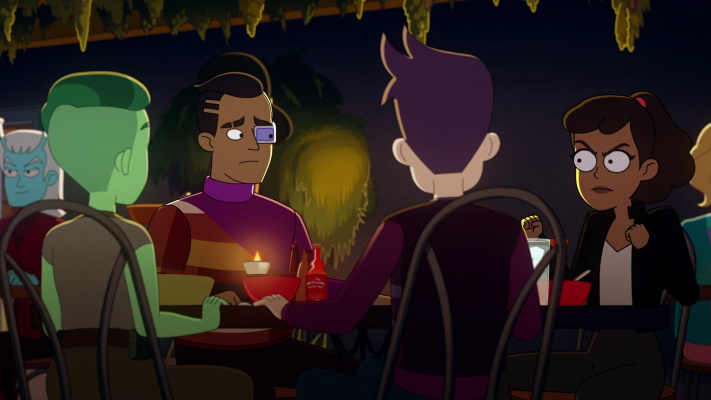
The ensigns at Sisko’s Creole Kitchen in New Orleans.

Grounded was an episode that was full of little nods and references to past iterations of Star Trek, and I certainly appreciated that. It was fun to get a look at Bozeman, Montana as it appears in the 24th Century, for example – including the infamous statue of Zephram Cochrane that we first heard about in First Contact. The outfits worn by the main characters recalled past Star Trek stories, including Rutherford’s Jake Sisko-inspired jumper and Boimler’s vest, which was first seen adorning Wesley Crusher in The Next Generation.

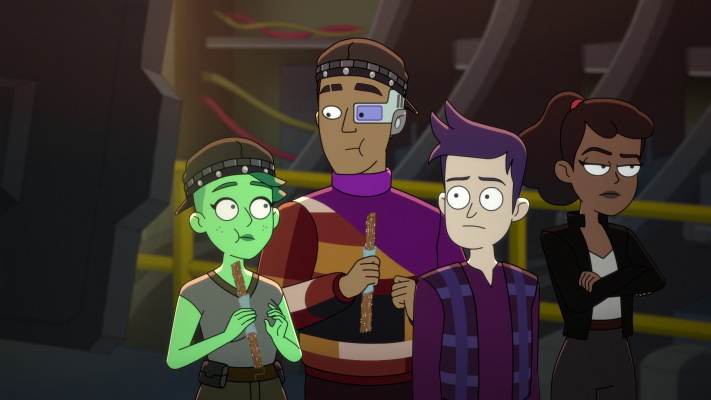
There was some gentle poking fun at Disneyland and Disney World in the presentation of the Bozeman, Montana complex, and that was certainly cute. The Phoenix “ride” that the ensigns hijacked to take to the Cerritos reminded me of the ride Star Tours at Disney World, particularly in the queue area. And the churros that Rutherford and Tendi were seen snacking on are likewise a Disney Parks staple!

Churros at a theme park!

Back to Star Trek, we had callbacks to and parodies of the Picard family vineyard – which has most recently appeared, of course, in both seasons of Star Trek: Picard, though here it was seen closer to its appearances in Family and All Good Things. Sisko’s Creole Kitchen – the family restaurant operated by Benjamin Sisko’s father Joseph – was the setting for one scene, and we also got name-drops of Tuvok and Captain Bateson (the character played by Kelsey Grammer in The Next Generation Season 5 episode Cause and Effect) during Captain Freeman’s truncated explanation of her trial and the events leading up to it.

Finally, and this was a neat inclusion, James Cromwell reprised his role as Zephram Cochrane – albeit in holographic form. The musical sting from First Contact brought a tear to my eye, and the launch of the Phoenix was an incredibly neat sequence. The addition of a random theme park guest (and a cowardly one at that) kind of detracted from the moment a little, but that was a classic Lower Decks move in its own way and one I can’t really hold a grudge against.

The Phoenix.

Once we’ve finished wading through the nostalgia, though, I’m left feeling that Grounded was a little hollow; an episode of false starts and setups that led nowhere – or to a disconnected, unpredictable conclusion that may have been “trademark Lower Decks” in some respects, but where the execution of its final twist and closing moments left a bit of a sour taste.

At first, Ensign Mariner seemed to be on a quest driven by emotion. But that emotional setup didn’t go anywhere, and her relationship with her mother arguably ends the episode in a worse place than it had been at the start. There seemed to be a story about Starfleet’s trustworthiness that could’ve harkened back not only to stories like The Search for Spock but that also could have connected with themes in recent seasons of Discovery and Picard – but it also didn’t go anywhere. And there was the fear that Ensign Mariner had that Captain Freeman was being mistreated because of her “lowly” status as captain of a California-class ship. That concept also hit the wall.

Mariner’s emotional state didn’t get the time in the spotlight that it needed.

Then there was a particularly harsh judge for Captain Freeman’s trial who was mentioned once, never seen on screen, and whose influence appears to have had no impact whatsoever on the story. Boimler’s logs turned out to be unusable because of their content. That joke wasn’t even especially funny – yet it was the punchline of a whole chapter of the story, one that ended up going nowhere as a result. These are just some of the false starts and red herrings that Grounded threw at us.

The problem with these ideas isn’t that any of them are bad – it’s that Grounded threw them all out and then paid off none of them in a significant way. The idea of Starfleet being biased, or of a “conservative court” picking on officers from lower positions are both really neat concepts that even a comedic series like Lower Decks could have explored… but it seems to have dropped them just as soon as it had picked them up.

More could have been made of the “bias” angle during Captain Freeman’s trial.

The first three-quarters of the episode did a decent enough job at setting up Mariner’s grief and fear, but the culmination of this storyline was far too short and one sequence on the bridge of the Cerritos wasn’t enough of a pay-off. When the rest of the ideas introduced to us in the first part of the episode went nowhere, there was basically nothing left and no way to salvage the story. Grounded’s “big twist” was that Captain Freeman was acquitted at her trial with no input from Mariner or the other ensigns, but it was just… nothing. It wasn’t especially clever, it certainly wasn’t funny, and the fact that it was rushed through with a brief montage to explain what really happened just felt incredibly anticlimactic.

Worse, Grounded picks up an unfortunate trend from earlier in Lower Decks’ run. By encouraging us as the audience to get invested in the ensigns’ story and believe that they were on a Search for Spock-type last-ditch mission to save their captain, only to turn around and show us that she was never in any real danger and didn’t even need their help, the show and its creators almost feel like they’re laughing at us. As if the audience’s investment in the story they set up is part of the joke. I noted this with disappointment in Season 1’s Veritas, and it’s a shame to see this unfortunate trope reoccur now that Lower Decks is entering its third season. The show should aim to be better than this.

Stealing the Cerritos.

When Captain Freeman walked through the shuttlebay doors, flanked by her senior staff, I admit it was a surprise. But it didn’t feel real – I felt sure that she’d turn out to be a hologram, a changeling, a disguised Pakled… basically anything else other than the real, newly-freed captain. And the reason for that is simple: the story doesn’t flow. This conclusion is, as I said at the beginning, a non sequitur; it doesn’t follow on naturally from the story we’ve spent the rest of the episode following. And for some people, maybe this kind of twist works. For me, it didn’t. And when the entire episode is built around this one big, explosive moment, its failure condemns the entire episode.

Perhaps that last statement was a tad harsh. There are neat moments across the first portion of Grounded that really plucked the right nostalgic strings, and others that were amusing in one way or another. I liked, for example, the kindly old man who operated the transporter, and how none of the ensigns had the heart to stun him and tie him up. That was a fun way to throw in a twist to what felt like a predictable storyline.

Captain Freeman is free and back in command.

However, all of those neat moments feel soured by the episode’s ending. Partly this is because going back and rewatching a story with a bad ending always feels like a tainted experience, but also it should be said that it feels like some of these moments were wasted time. Captain Freeman blitzed through a montage and explanation of the Pakleds’ scheme and her trial that lasted barely a minute, and perhaps a longer sequence – that could have included flashbacks to the trial itself and/or the events surrounding it – might’ve gone some way to making up for the rug-pull. I’m not sure that would’ve saved Grounded, but maybe the episode could have been transformed from a disappointment into something merely underwhelming.

Had the Captain Freeman reveal been made at the halfway point, instead of three minutes before the credits rolled, more time could’ve been dedicated to explaining her situation, she and Mariner could’ve enjoyed a longer conversation to process what happened, and some of the ultimately unnecessary fluff could’ve been cut from earlier in the story.

Ensign Mariner with her parents.

So I’m sorry to say that Lower Decks continues a trend of season premieres that don’t hit the high notes that we know the series can reach. Grounded was undermined by the decision to have the ensigns’ story not matter – and while, in some ways, that’s the point of Lower Decks as a whole, the way in which it was executed here is what let it down. I don’t mind following the ensigns as they follow orders, complete insignificant tasks, and the like… but setting up a story in which they seemed to be on a dangerous adventure only to yank it away at the last minute and show how pointless it all was, well that just doesn’t make for a fun, worthwhile, or entertaining ride. At least not for me.

Star Trek references dripped from every orifice in Grounded, but the inclusion of so many locations, characters, callbacks, and name-drops couldn’t save an episode that was, unfortunately, spoiled by a poor ending. After First First Contact had set up Season 3 for greatness, this first episode feels like a swing and a miss from Mike McMahan and the team.

Star Trek: Lower Decks Seasons 1-3 are available to stream now on Paramount+ in the United States and on Amazon Prime Video in the United Kingdom and around the world. The Star Trek franchise – including Lower Decks and all other properties discussed above – is the copyright of Paramount Global. This article contains the thoughts and opinions of one person only and is not intended to cause any offence.

Twelve Star Trek episodes to watch before Picard Season 2 arrives!

Spoiler Warning: There are spoilers ahead for Star Trek: Picard Season 1 and the trailers and teasers for Season 2. Spoilers are also present for the following Star Trek productions: The Original Series Season 1, The Next Generation, Deep Space Nine Season 3, Voyager Seasons 2, 3, and 7, and First Contact.

It seems an age ago that we were eagerly anticipating Season 1 of Star Trek: Picard. In those sunlit, rosy days before the pandemic hit, this website was brand-new, and I spent a lot of time in December 2019 and January 2020 looking ahead and wondering what we’d see when the Star Trek franchise finally returned to the 24th Century – after an eighteen-year wait!

With Season 2 of Picard now only days away, I thought it could be fun to revisit a concept from the early days of the website: a list of episodes that I think could make for interesting background viewing, potentially informing story points and characterisations in the new season of Picard. In the run-up to Season 1 I focused on episodes of The Next Generation that strongly featured Captain Picard himself, as well as a few stories about the Romulans, and a few more stories which could’ve potentially led to big changes in the two decades following the events of Endgame and Nemesis.

We’ll soon be on another adventure with Jean-Luc Picard!

This time, we have a little bit more information to go on! Season 2 will tell a story that involves (to a greater or lesser degree) the following elements: the Borg Queen, Guinan, Q, time travel, and, of course, Admiral Picard himself. On this occasion, then, I thought it could be fun to pull out twelve stories from Star Trek’s past that might just be useful background viewing for Season 2 of Picard. It goes without saying that Season 1 is mandatory viewing, so I’m not putting any of those episodes on this list! You should really watch, or re-watch, all ten before the season kicks off!

My usual caveats apply, as they always do! Firstly, everything listed below is entirely subjective. If I miss out an episode that you think is incredibly important, or you hate all of my picks, that’s okay! We all have different opinions about Star Trek, and there’s no need to fight about it. Secondly, I don’t claim to have any “insider information.” I’m basing my theories and guesses about Season 2 on publicly released material, such as trailers and interviews. And finally, the episodes are not ranked; they’re merely listed below in the order in which they were originally broadcast.

With all of that out of the way, let’s jump into the list!

Number 1:
Tomorrow is Yesterday
The Original Series Season 1 (1967)

I’m pretty sure this violates the Temporal Prime Directive…

Though The City on the Edge of Forever is perhaps the best-known of The Original Series’ time travel stories, Tomorrow is Yesterday preceded it by several months. It was the first episode of the Star Trek franchise where time travel played a major role in the story, and it was also the first in which the crew paid a visit to the modern day. Tomorrow is Yesterday established what went on to become a mainstay in terms of the franchise’s time travel story tropes: being sent back in time by accident!

Aside from being a fun episode in its own right and well worth a watch, Tomorrow is Yesterday is also the episode which introduced the Star Trek franchise to something that appears to be making a return in Picard Season 2: the slingshot method of travelling through time, referred to in this episode as the “light-speed breakaway factor.”

The USS Enterprise using the “light-speed breakaway factor” to travel through time.

Almost every Star Trek series has included the occasional time travel story, and we can look to episodes like Tomorrow is Yesterday for creating that premise. Visiting the modern world would go on to be significant later in The Original Series, in Star Trek IV, and on several other significant occasions in the franchise. For me, some of these stories can feel rather dated, but I think Tomorrow is Yesterday largely avoids that trap!

As we get ready for Picard Season 2 and the franchise’s latest foray into time travel, stepping back to see where it all began during the first season of The Original Series is no bad thing. Tomorrow is Yesterday has a fairly straightforward premise that should be easy enough to follow even for fans who aren’t as familiar with The Original Series, and is well worth a watch on its own merits.

Number 2:
Encounter at Farpoint
The Next Generation Season 1 (1987)

Judge Q.

In the first teaser trailer for Picard Season 2, we heard Q’s voice proclaiming that “the trial never ends.” Encounter at Farpoint is the episode in which Captain Picard first encountered Q, and the episode in which the referenced “trial” began. Q accused humanity (and by extension, the Federation) of being a “dangerous, savage, child-race” who are unfit to travel the stars. Picard and his crew defended themselves against the accusation.

The task Q set for Picard was to unravel the mystery of Farpoint Station, which he and the crew of the Enterprise-D were en route to. However, figuring out the puzzle wasn’t the end of the trial, and even after bringing the Farpoint saga to a successful conclusion, Q departed in ambiguous fashion, hinting that he would return. He did, of course, on a number of occasions!

Worf, Picard, and La Forge on the bridge of the Enterprise-D.

Encounter at Farpoint was the premiere of The Next Generation and established the characters of Picard and Q (as well as many other familiar faces). As we approach Picard Season 2, it’s worth going back to see where it all began. This was the first big puzzle that Q tasked Picard with solving, and seeing how Q operates and what the point of it all is, from his perspective, is well worth taking into consideration.

This is also the beginning of “the trial.” We don’t know to what extent the idea of Picard – and humanity – being on trial will feature in Picard Season 2, but if Q has returned to set up a new mystery there could be a connection – and there could be consequences if Picard and the crew of La Sirena can’t figure it out. Q has toyed with Picard on a number of occasions; Encounter at Farpoint was the first.

Number 3:
Q Who
The Next Generation Season 2 (1989)

Q threw Picard and the Enterprise-D into danger.

Q Who is the episode that introduced us to the Borg – and it’s a pretty scary one by Star Trek’s standards! Captain Picard and the crew of the Enterprise-D have never faced a villain like this, and the Borg represent an existential threat. Q made good on his promise to show Picard that there are dangers in the galaxy that he couldn’t even imagine… and eighteen members of the Enterprise-D’s crew paid the ultimate price.

In a way, Q Who shows Q at his most aggressive, devious, and villainous. By throwing the Enterprise-D into the path of the Borg, he proved his point to Picard about the Federation’s unpreparedness in the most painful way possible. But I don’t believe that’s all there is to the story.

The first Borg seen in Star Trek.

I have a theory about Q Who that you can find by clicking or tapping here. To briefly summarise: Star Trek has made a mess of the history of Borg-Federation contact, and it seems likely that the Borg were already aware of humanity and Earth long before the events of this episode. They may have already been preparing for an attack or assimilation attempt, and Q hoped to prevent that by giving the Federation advance warning.

My theory goes into much more detail! But suffice to say the complicated history of contact between humanity and the Borg makes it seem plausible, at least to me, and shows off an aspect to Q’s character that I think could come into play in Picard Season 2. Q Who also establishes the existence of history between Q and Guinan – something that may come up in Picard Season 2 given that both characters are returning.

Number 4:
Yesterday’s Enterprise
The Next Generation Season 3 (1990)

The Enterprise-C.

Though it’s a fantastic episode in its own right, Yesterday’s Enterprise is on this list for one reason: Guinan. When a rift in the space-time continuum sends the Enterprise-C forward through time, decades’ worth of history are changed, leaving the Federation in a very bleak timeline in which it’s fighting a losing war against the Klingons.

Aboard the warship Enterprise-D, Captain Picard and the rest of the crew are completely oblivious to the change; this version of the characters have only ever known the war timeline. But Guinan alone realises that something has gone wrong, and argues with Captain Picard about how to set things right.

Guinan presents her case to Captain Picard.

Despite a recent controversy, Whoopi Goldberg will be reprising the role of Guinan in Picard Season 2, bringing the character back for the first time since Generations in 1994. Given that we know Season 2 also features a radically changed timeline, not dissimilar to the one seen in Yesterday’s Enterprise, perhaps Guinan will be aware of the change.

Guinan could be the one to talk to Picard about the possible point of divergence, as we know she’d visited Earth in the 19th Century. She may also be one of the only people other than the crew of La Sirena to be aware that something has changed. Guinan also has a history with Q, as we saw in the episode Q Who – so that could also come into play!

Number 5:
Time’s Arrow Parts I-II
The Next Generation Seasons 5-6 (1992)

R.I.P. Data…

Guinan also plays a key role in the two-part episode Time’s Arrow. Thanks to time travel, this is the episode where she and Captain Picard actually have their first meeting, and although the nature of their relationship is still shrouded in mystery, we get a little bit more information about how they came to meet in the first place.

Guinan’s fascination with Earth appears to date back to at least the 19th Century, as she visited undercover during that time period. We know from the most recent Picard Season 2 trailer that Guinan appears to be running a bar on Earth at the dawn of the 25th Century, giving her an association with Earth and humanity that stretches back over five hundred years.

Guinan and Picard in the 19th Century.

Time’s Arrow is an interesting story that mostly focuses on Data, who was of course a huge part of the story of Picard Season 1. It seems as though Brent Spiner will be playing a new role in Season 2 – perhaps another ancestor of the Soong family – so getting a bit of extra data on Data could be worthwhile, too!

One thing I’m personally curious about in Picard Season 2 is if we’ll get any further backstory on the Picard-Guinan relationship. Although Time’s Arrow depicts their first meeting from Guinan’s perspective, we’ve still never learned how they came to meet in the 24th Century from Picard’s point of view. All we know is that it likely happened prior to his assuming command of the Enterprise-D. I don’t know if Picard Season 2 will expand on that in any way… but it would be interesting!

Number 6:
Tapestry
The Next Generation Season 6 (1993)

Q and Picard.

Tapestry is a really interesting episode that deals with the dynamic between Q and Picard, and specifically looks at the nuances present in their relationship. Picard has always viewed Q as an adversary, but I’ve argued in the past that Q doesn’t see himself that way. He views Picard as a friend, and himself as a guide or even an ally – and the way Tapestry unfolds kind of shows why that is.

When Picard is injured on an away mission, he finds himself close to death. At that moment, he encounters Q – who claims he’s already dead. Q gives Picard a chance to avert his death by changing a key event in his past – getting stabbed shortly after graduating from Starfleet Academy – but doing so sets Picard’s life and career on a completely different path.

Lieutenant Picard in an alternate 24th Century.

The important thing here is how Q views the whole affair. We can entertain debates on whether or not Q actually sent Picard back in time or whether it was all an elaborate illusion, but that’s entirely beside the point. Q genuinely believed that he was helping – that by showing Picard an alternate life, he gave him an appreciation for the life he had actually led, even if that meant it was about to end.

I firmly believe that there’s more going on with Q in Season 2 than meets the eye. It’s possible that he didn’t change the timeline at all, and is merely responsible for shielding Picard and the crew of La Sirena from it. It’s also possible that he did change it as part of an elaborate puzzle, one which he hopes and expects that Picard will be able to solve. Speaking of which…

Number 7:
All Good Things…
The Next Generation Season 7 (1994)

Q and Picard in the distant past.

All Good Things is the best example of this aspect of the dynamic between Picard and Q, and could – in theory – be a template for the events of Picard Season 2. In All Good Things, the Q Continuum sets a puzzle for Picard – an eruption of “anti-time.” Thanks to the time-travelling interventions of Q, Picard is able to hop between three different periods of his own past to solve the mystery.

The solution to the anti-time eruption required Picard to challenge his own way of thinking, specifically his linear perception of cause-and-effect. Being able to recognise that events in the future had a causal link to events in the past greatly impressed Q, who seemed to suggest that it was the first step on a path that could one day see humanity evolve into beings comparable to the Q themselves.

Q in his judge’s robes.

All Good Things was also Picard’s last dalliance with Q prior to the events of Picard Season 2. As far as we know at this stage, Q hasn’t been to see Picard in the approximately twenty-five years since the events of All Good Things – but that could change as we get into the new season. It’s possible, at least in my opinion, that Q might’ve been interested to see Picard at his lowest ebb, possibly showing up to see if he could provoke him into action. But we’ll save a detailed explanation of that for my next theory post!

It’s possible that the trailers and teasers for Season 2 have already revealed the nature of Q’s involvement in the story: that he is directly responsible for changing the timeline, he did so on purpose, and he will be the main villain of the season. But I would argue that the “villain” monicker does not fit with Q’s past characterisation, and thus I suspect that there’s much more going on than meets the eye. All Good Things is both a piece of evidence in favour of that argument, as well as a potential blueprint for how a time travel puzzle set by Q could unfold.

Number 8:
Past Tense, Parts I-II
Deep Space Nine Season 3 (1995)

Dr Bashir and Commander Sisko.

We know, thanks to a voiceover in the most recent trailer, that at least some of the events of Picard Season 2 take place in the year 2024. But Picard Season 2 isn’t the first Star Trek production to visit that specific year! In Deep Space Nine’s third season, Commander Sisko and the crew of the USS Defiant found themselves accidentally sent back in time to the exact same year.

Past Tense is an interesting story, as it will mark the first time that any episode of Star Trek set in “the future” at the time it was broadcast will be reached, and I’m sure I won’t be alone in doing a full write-up of its story when we hit the end of August 2024! We could talk for hours about how its depressing presentation of the 2020s seemed a long way from reality once upon a time, but with the growth of homelessness and other economic issues, today’s society feels far too close for comfort to the world of the Bell Riots.

The USS Defiant in orbit over Earth.

I’m not sure how much of Deep Space Nine’s presentation of a fictionalised 2024 will make it into Picard Season 2. It’s possible that the new series will entirely ignore this two-part episode… but I think we should keep an eye open for references or callbacks to some of the characters, events, or even things like brands and products.

Regardless, this will be the first time that two very different Star Trek productions have travelled back in time to the same year, and it might be interesting and informative to take a look at Past Tense to see how Deep Space Nine told us that the year would unfold. It seems as though Picard Season 2 will be set, in part, in California – which is also where Past Tense was set, so that’s another point of connection. I’m not expecting a huge crossover with this one single Deep Space Nine story, but there could easily be references made to it.

Number 9:
Death Wish
Voyager Season 2 (1996)

Two Qs?!

Captain Picard wasn’t the only Starfleet officer to tangle with Q. After making a sole appearance in Deep Space Nine, Q hopped over to the Delta Quadrant, where he had several run-ins with Captain Janeway during Voyager’s journey home. Q presented a bit of a puzzle for Voyager; his abilities mean that he could have sent the ship and crew back to Earth with a snap of his fingers. But if we can look beyond that narrative hurdle, Q’s appearances in Voyager added a lot to his characterisation.

In Death Wish, we got our best look to date at the Q Continuum itself. Depicted in a manner that humans could comprehend, the Continuum resembled a rather dilapidated roadside house in the middle of the desert. For the first time, we got to see more members of the Q Continuum as well, and got a glimpse of how Q himself is a bit of a radical by the standards of his people.

Captain Janeway and Tuvok visit the Q Continuum.

The idea that the Q Continuum is not an entirely stable, homogeneous place is an interesting one, and was explored in more detail in the episode The Q and the Grey. But Death Wish also presented a very complex moral question – in the longstanding tradition of Star Trek! This episode can be a difficult watch for some folks because of its discussion of suicide, and it’s absolutely fine to skip it if that subject hits too close to home. If the debate around suicide and end-of-life care is something you’re interested in, though, this is a uniquely “Star Trek” attempt to tackle it.

Q emerges from this story as a reformer – or even a radical – by the standards of his people. We also know, thanks to a line in All Good Things, that he was responsible for assisting Picard when the Continuum set the anti-time puzzle. It’s stories like this that make me think that there’s a goodness in Q; that he isn’t just a trickster or a pure villain.

Number 10:
Future’s End, Parts I-II
Voyager Season 3 (1996)

Chakotay, Janeway, Tuvok, and Paris on Earth.

The two-part time travel story Future’s End sees Captain Janeway and the crew of the USS Voyager sent back in time to Earth, circa 1996. It’s another story set in the California area, and I think it’s an interesting episode – albeit one that I feel has become very dated by Star Trek standards!

If Picard Season 2 sticks with things like the Borg and the slingshot method, it seems that the kind of time travel depicted in Future’s End won’t be a factor. But there are still interesting points to consider, such as the Temporal Prime Directive and how Starfleet in the future would come to police the timeline, watching out for changes.

It’s Los Angeles – where Picard and the crew of La Sirena appear to be headed!

There aren’t a great many Star Trek episodes that visit the modern day, and as I’ve already explained I feel that a modern setting can make such stories feel very out-of-date very quickly. Future’s End definitely falls into this trap; its depiction of Southern California has a very ’90s flavour. But it’s a bit of fun, and dare I say almost a guilty pleasure!

I’m including Future’s End here for its modern day time travel story and its focus on California, both of which are elements that we know will be part of Picard Season 2. As with Past Tense, I don’t expect to see a huge tie-in between the new season and the events of this episode, but there may be smaller callbacks and references to some of the characters and events it depicted.

Number 11:
Star Trek: First Contact
Film (1996)

The Borg Queen.

First Contact introduced us to the Borg Queen for the first time, and went into a lot more detail about Picard’s assimilation experience. The Borg Queen was presented as the embodiment of the Borg rather than their leader, and she became a fearsome adversary for Picard and Data over the course of the story.

Season 1 of Picard saw the retired Admiral face his lingering Borg assimilation trauma when he beamed aboard the Artifact in the episode The Impossible Box, but Season 2 will see him come face to face with a Borg Queen for the first time in twenty-five years. For someone who’s clearly suffering from some form of post-traumatic stress, we don’t know what effect that could have.

Data and Picard lead the battle against the Borg.

Picard was violently anti-Borg in First Contact, and we saw hints of that in Picard Season 1 as well. His conversation with Dr Jurati and Elnor in The Impossible Box, as well as the way he responded to some of the xB’s in later episodes, was in line with his attitude to the Borg in First Contact – and I wonder how encountering a Borg Queen will make him feel!

Many Trekkies hold up First Contact as one of the absolute best Star Trek films, and it’s hard to disagree. As an action-packed work of sci-fi with some truly scary elements thanks to the way the Borg are depicted, it’s an exciting ride from start to finish. It also goes into a little more detail about World War III – an event in the history of the Star Trek timeline that could play a role in Picard Season 2. Check out my full World War III theory by clicking or tapping here!

Number 12:
Endgame
Voyager Season 7 (2001)

Some of Voyager’s crew in an alternate 25th Century future.

Almost five years after First Contact depicted the Borg’s biggest attack on Earth to date, Endgame brought back the Borg Queen in a significant way. The interventions of a time-travelling Admiral Janeway from the future saw the USS Voyager make it home to Earth, and in the process dealt a significant blow to the Borg Collective.

Even though it’s been more than twenty years since Endgame, we don’t actually know what became of the Borg in the aftermath of Admiral Janeway’s attack. I’ve always assumed that the Borg Collective was large enough, clever enough, and adaptable enough to survive the neurolytic pathogen that she introduced into the Borg Queen… but because the Star Trek franchise has yet to return to the Borg post-Endgame, we can’t be certain of that.

Admiral Janeway and the Borg Queen.

Even Season 1 of Picard, which depicted the disabled Borg Cube known as the Artifact, didn’t settle the issue. So it’s an open question at this juncture whether the Collective survived, whether it was significantly damaged by Admiral Janeway’s pathogen, or whether it was able to easily shake off the attack. It seems as though no major Borg activity occurred in Federation space in the twenty-plus years after Endgame, though.

Endgame makes this list because of the Borg Queen’s role in Picard Season 2, and I think it could be very useful background viewing, possibly even setting up a story about the Queen herself or the state of the Borg Collective at the dawn of the 25th Century. On a vaguely related note, I took a deeper look at Admiral Janway’s actions in Endgame, and you can find that article by clicking or tapping here.

So that’s it!

Admiral Picard is coming back in just a few days’ time!

Those are twelve episodes (alright, eleven episodes and a film) that I think might make for useful or interesting viewing prior to Picard Season 2! I think we’ve hit most of the key subjects – at least, those that we’re aware of at this early stage – and got a good mix of stories focusing on Captain Picard, Q, Guinan, time travel, and the Borg Queen.

At the end of the day, though, Star Trek’s past didn’t prove all that important to unravelling the events of Picard Season 1 – nor to recent storylines in Discovery, either. So it’s quite likely, in my view, that Picard Season 2 will bring plenty of brand-new characters and story elements into play. That doesn’t mean it isn’t worth going back to these stories and others, but my suspicion at this stage is that the new story won’t rely excessively on what came before.

When Picard Season 2 arrives at the end of next week, I hope you’ll stay tuned for individual episode reviews, theories, and more. Despite the somewhat underwhelming end to Season 1, Picard Season 2 has been one of my most-anticipated shows for almost two years, and I can’t wait to jump in and have another adventure with Jean-Luc Picard and the crew of La Sirena.

Star Trek: Picard Season 2 will premiere on Paramount+ in the United States on the 3rd of March 2022, and on Amazon Prime Video in the United Kingdom and elsewhere 24 hours later. The Star Trek franchise – including Picard and all other properties mentioned above – is the copyright of Paramount Global. This article contains the thoughts and opinions of one person only and is not intended to cause any offence.
Five of my favourite Starfleet uniforms

Spoiler Warning: There are spoilers ahead for Star Trek: Discovery Seasons 1-3 and the teaser for Season 4, Star Trek: Lower Decks Season 1 and the teaser for Season 2, and Star Trek: Picard Season 1. Minor spoilers are also present for other iterations of the franchise.

This is going to be a controversial list! Practically every Trekkie I know has their own take on which Starfleet uniforms are the best – and why! Even if we can agree on some of our favourite episodes and films, the aesthetic of Star Trek has always been a world unto itself. Some of the best uniform designs may not feature in the best stories, and likewise some of the best individual episodes and films may not have their casts in the best uniforms, so the two aren’t necessarily connected – though a truly bad costume can, in some cases, detract from an otherwise-decent story.

There have been a wide variety of uniforms used across Star Trek’s 55-year history. Most designs incorporate at least some elements of the original – the costumes designed for The Original Series by William Ware Theiss in the mid-1960s. Gene Roddenberry’s brief for the uniforms was that they were to be “simple, utilitarian, and naval” in style, reflecting his vision of the future and of Starfleet. The very first uniforms, seen in The Cage, Charlie X, and a couple of other early Season 1 episodes, arguably best fit the “naval” aspect of the brief, with toned-down colours and a slightly thicker rolled collar. It was only partway through Season 1 that the typical uniform in its three bright primary colours was rolled out.

Captain Pike in The Cage, sporting the first ever Starfleet uniform.

Colour is a hugely important factor when discussing Starfleet uniforms. Since The Next Generation went off the air, most Star Trek projects have tried to move away from big bold blocks of colour, opting for smaller coloured patches or other ways to express differences in division and rank. Partly this is an attempt to make the uniforms look “modern,” but also I think there’s a feeling among at least some folks that the brightly-coloured shirts and tops of The Original Series in particular, but also The Next Generation, look rather childish or even camp, detracting from the serious messages present in many Star Trek stories.

That said, even the attempts to design sleeker, “cooler” Star Trek uniforms have almost universally resulted in garments that aren’t exactly serious by today’s standards! Recent attempts like the Discovery uniforms are still very sci-fi; hardly the kind of thing you’d see someone wear out on the street – unless they were on their way to a Star Trek convention. I guess what I’m trying to say is that trying to design a “cool Star Trek uniform” may simply be an impossible task!

The cast of Discovery Season 1 in their all-blue uniforms.

So I’m all in favour of embracing the campiness – at least to a degree. Once you get lost in Star Trek, things like uniform colours don’t take you out of it, or at least they don’t for me. I’m not really a fan of attempts to make uniforms that look too much like things that we already have in the real world. There obviously has to be a line between something plausible and something completely outlandish, but in sci-fi that line can be further away than some folks seem to think!

Several generations of Starfleet uniform have become truly iconic; instantly recognisable emblems of the franchise that hardly anyone with even a passing knowledge of popular culture could fail to identify. This has been helped by internet memes, with Captain Picard, Commander Riker, Captain Kirk, Captain Janeway, and even Voyager’s Doctor all re-entering popular culture years after their respective series went off the air.

Captain Picard’s facepalm is a popular meme – and reminds people about The Next Generation and the uniforms the crew wore.

We also need to give some of the new variants time. A uniform – or any aesthetic element of a series or film – doesn’t become an icon overnight, so the 32nd Century uniforms we saw in the Discovery Season 4 teaser, the uniforms in Picard Season 1, and whatever the Strange New Worlds crew end up wearing need time to grow on us! Some Trekkies have already taken to some of the new styles, which is great, but for a lot of folks it takes time to even get used to a whole new look – let alone learn to love it!

As I always say, this whole list is entirely subjective! If you hate all of these uniforms and love others, that’s 100% okay. As with practically every aspect of Star Trek, it’s a big galaxy and there’s room for fans with different tastes and preferences. Now that we’ve got that out of the way, let’s take a look at five of my favourite Starfleet uniforms!

Number 1: The Motion Picture – Admiral’s variant

Kirk wearing his admiral’s uniform – perhaps the only decent one in the whole film!

I can understand why fans were unimpressed with The Motion Picture uniforms on the whole. They represent an attempt – the first real attempt – for Star Trek to try something new and step away from the bold primary colours of The Original Series, but ended up being understated at best, bland and forgettable at worst. The dull colours, t-shirt design, and lack of any distinctive features all meant that these uniforms only ever saw one outing.

But there was an exception! Kirk’s uniform as an Admiral, which he wore for the first part of the film prior to taking command of the Enterprise, is undoubtedly one of my favourites. It’s understated, for sure, but I love the smooth lines between its grey and white sections, the high angled collar, and how the gold Starfleet insignia stands out without being too flashy or over-the-top.

A lot of the criticism of The Motion Picture’s uniforms is absolutely fair. But there’s something about Kirk’s variant that I absolutely adore. I’d suggest that it’s the most “uniform-looking” costume in the whole film, and with its shoulder epaulets and wrist braiding, it’s a unique blend of The Original Series and future, more military-inspired uniforms – some of which we’ll look at further down the list.

Number 2: The Next Generation – Season 3-7 variant

The cast of The Next Generation in Season 4.

I’m not calling today’s list my “all-time” top uniforms, but if I were putting Starfleet uniforms in a ranked list these uniforms would have to be near the top. Excluding variants like the acting ensign uniform Wesley Crusher wore, Troi’s “casual” outfits, and Picard’s jacket, the standard uniforms that were introduced beginning in Season 3 of The Next Generation hit all the right notes for me.

These uniforms have a high collar, which gives them a more “serious” feel than the previous crew-neck style. They retain the large blocks of colour across most of the top, yet the colours are ever so slightly toned down when compared to the bright colours of The Original Series, which I’d argue makes them appear a bit more serious and less camp. With the collars and pants being black, the coloured blocks on the top are striking and draw the most attention, and it’s easy to tell at a bare glance which officer represents which division.

It was a surprise when The Next Generation swapped the red and gold colours over – The Original Series had used gold for command and red for security/engineering. But there’s no denying it works well, and Picard and his crew honestly look fantastic in these uniforms.

Number 3: First Contact and Deep Space Nine Seasons 5-7

Data, Worf, Geordi, Riker, and Picard in Nemesis.

Though reportedly “uncomfortable” for some of the actors, I really like these uniforms. Until Star Trek: Picard premiered last January, they were also the most up-to-date uniforms in Star Trek’s internal timeline – at least if you exclude far future variants! These uniforms shrank the division colours down, retaining only a coloured undershirt poking up through the collar, with the rest being black and grey.

To me, this design says “new Star Trek” – even though the uniforms haven’t been new for almost 25 years! When the franchise was off the air, and even after it returned with prequels, these uniforms still represented the furthest forward Star Trek’s timeline had got, and I guess it’s for that reason I have more of an affinity to them. They’re modern-looking, swapping out big blocks of colour for greys and blacks that are more toned-down, and I guess the intention was to give them a more military style.

First Contact and Insurrection are two of my favourite films, and the latter seasons of Deep Space Nine – where these uniforms were also worn – saw the Dominion War story arc play out, which happens to be my favourite part of that series. I have very positive associations, then, between these uniforms and the narratives they were present in!

Number 4: The Wrath of Khan uniforms – a.k.a. the “monster maroon”

Kirk and Spock showing the “monster maroon” jacket in its open and closed positions in a publicity photo for The Undiscovered Country.

Speaking as we were of uniforms with a very military style, the uniforms which debuted in The Wrath of Khan were a total change from those present in The Motion Picture three years earlier. They incorporated elements of military dress uniforms, with a wide double-breasted jacket, high collar, epaulets, rank insignia, and a belt around the jacket.

In Star Trek’s internal timeline, these are the longest-serving uniforms (that we know of!) having been in service for around 75 years. I don’t personally think that they work well without the high collared undershirt, so my preference is for the Wrath of Khan variant, not those seen in The Next Generation. But the fact that they were in service for a long time is neat – and a way for The Next Generation to connect itself visually to the films of The Original Series era!

If The Original Series uniforms were campy and bright, these military-inspired ones were the complete opposite. Designed to be serious and focused while still retaining some colour, I think they look amazing. Having so many different elements could’ve made for a complicated look, but the simple use of one predominant colour helps settle things down.

Number 5: Star Trek: Picard – 2399 variant

Acting Captain Riker showing off the command variant of the 2399 uniforms.

Star Trek: Picard showed off two new uniform styles – one for flashback scenes and one for Starfleet in 2399. I would have preferred the flashback uniforms were replaced with the First Contact uniforms as they didn’t look great and were ultimately unnecessary, but the 2399 uniforms – which we saw Commodore Oh, Rizzo, and later Acting Captain Riker wear – were fantastic.

What I like most about these uniforms is that, after almost twenty years, colour was back in a big way! Enterprise had blue boiler suits, Discovery mostly showed off an all-blue look, and while neither of those uniforms are bad, I was keen to see something visually different – something more “Star Trek.” Picard delivered.

These uniforms are, in some respects, similar to the Voyager and early Deep Space Nine uniforms in that they’re mostly black with a coloured shoulder area and collar. But the lack of a prominent undershirt and the Starfleet delta detailing on the coloured sections makes them look far superior to those older uniforms! I hope we’ll get to see more characters wearing these uniforms going forward.

So that’s it! Five of my personal favourite Starfleet uniforms.

Boimler and Riker on the bridge of the USS Titan wearing First Contact-era uniforms.

Aesthetic, colour, and costume style are very much subject to personal taste, and I know there can be a range of opinions on all of these things. Despite that, with the exception of Kirk’s uniform from The Motion Picture, I think a lot of Trekkies would put at least one or two of these uniforms on their own lists of favourites!

There really aren’t many Starfleet uniforms that I passionately dislike. Most serve a purpose, and it’s usually at least understandable what the intention behind the design was. Enterprise’s boiler suits, for example, were clearly inspired by modern-day naval, submarine, and astronaut uniforms, and were designed to be a bridge between more typical Starfleet uniforms and 21st Century attire.

I didn’t put the Kelvin uniforms on the list this time. But they are pretty neat!

Voyager and Enterprise kept consistent uniforms during their entire runs, but every other Starfleet crew has had at least one change of uniform. Changing things up keeps the aesthetic of Star Trek interesting, and while I can understand why some folks lament changes of this nature, without radical departures from “normal” uniforms we wouldn’t have got to see some of the best and most visually interesting ones. I like that the Star Trek franchise is bold enough to continue to shake things up.

The teaser trailer for Discovery’s impending fourth season showed off another new uniform – a more colourful variant of the 32nd Century uniform that we saw worn by Admiral Vance and others. Though we really only had a few seconds of footage, I liked what I saw and I think these new ones have the potential to join a future list of this nature!

Regardless of what your favourites might be, and whether or not any of them made this list, I hope it was a bit of fun. I’ll never miss a chance to talk about Star Trek!

The Star Trek franchise – including all titles on the list above – is the copyright of ViacomCBS. All Star Trek shows and films mentioned above may be streamed on Paramount+ in the United States, and on Netflix or Amazon Prime Video in the United Kingdom. Availability may vary by region. This article contains the thoughts and opinions of one person only and is not intended to cause any offence.
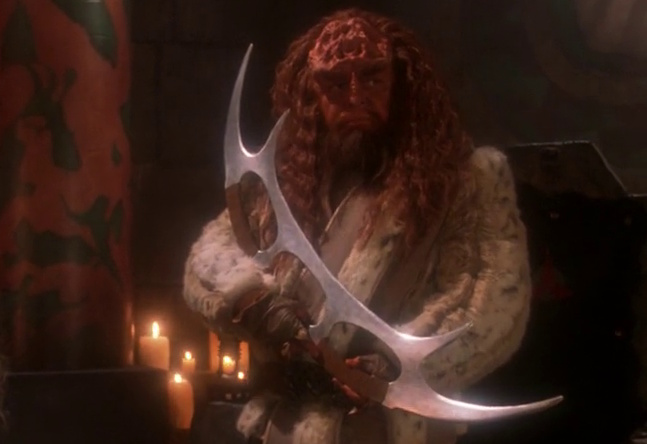
Star Trek’s “First Contact Day” event – roundup and impressions

Spoiler Warning: There are spoilers ahead for Star Trek: Picard Season 1, Star Trek: Lower Decks Season 1, Star Trek: Discovery Seasons 1-3, and most importantly, there are spoilers (including images) from the teaser trailers for Picard Season 2, Lower Decks Season 2, and Discovery Season 4. There are also spoilers for Prodigy.

Yesterday was “First Contact Day” – the 5th of April is the day in 2063 when humans made first contact with the Vulcans, as depicted in Star Trek: First Contact. We’ve seen the event celebrated within Star Trek on a few occasions, and apparently one dish often served is salmon! But we’re off-topic already.

The creative team in charge of Star Trek set up First Contact Day as a digital event, somewhat akin to last year’s Comic-Con @Home presentations, and other similar events that they’ve done periodically. It was marketed on social media, particularly on Facebook and Twitter. But it wasn’t 100% clear how fans were supposed to access the virtual panels – whether they were just going to be available on the website, on social media directly, or even via Paramount+. Even navigating to the right part of the Star Trek website took clicking through several links.

It wasn’t exactly clear how to get to this web page.
That confusion was entirely self-inflicted and clarifying it would have been easy to do. It was almost as if the social media/website teams were making watching the panels “live” – they were actually pre-recorded – as difficult as possible. Thankfully all five of the panels were later made available on YouTube (vital for me, so I could go back and take screenshots!) But while we’re complaining about Star Trek/Paramount+/ViacomCBS’ social media, if you want to watch the full panels on YouTube I advise you to do so fast – in the past, some Star Trek videos, including one of the trailers for the first season of Picard and last year’s Comic-Con panel I mentioned earlier, were taken down by YouTube’s copyright protection algorithm. Hopefully that won’t happen this time, but it’s worth keeping in mind the possibility.

One of the pre-event social media posts was really tantalising and very well put-together. A “teaser” clip of a viewscreen which briefly flashed up two numbers – that looked like map coordinates – got a number of Trekkies talking and speculating, successfully building up a degree of hype for the First Contact Day event. In 2021, this kind of audience engagement via social media is vital for any franchise, and I’m glad to see Star Trek at least making an attempt!

What looked like the bridge of the USS Discovery…
…and the mysterious numbers!

So let’s start with the big news!

We got teaser trailers for Lower Decks Season 2, Picard Season 2, and Discovery Season 4! In addition, we got to see the design for Captain Janeway in Prodigy. Each of the panels gave us a few clues and tidbits of information about these upcoming Star Trek projects, which was fantastic.

The mysterious numbers mentioned above did in fact turn out to be coordinates – for a convention centre in Chicago! Star Trek: Mission Chicago is going to take place in April 2022, and will be the first in-person convention since the coronavirus pandemic hit. Perhaps it’s because I was never going to be in attendance, but I’m not sure the convention was the strongest way to end the First Contact Day event. It was saved for the last moment by co-hosts Wil Wheaton and Mica Burton, and it just felt a tad anticlimactic after an event that had seen so much other exciting news.

For me at least, this wasn’t the strongest way to end the entire broadcast.

With so much going on, and so many amazing reveals, it’s hard to know what to talk about first! Let’s start with Prodigy, since the newly-revealed image of Captain Janeway is probably going to be seen as First Contact Day’s most iconic takeaway. While there was no trailer or teaser for the series, which I admit I had been half-hoping for, we did get a bit more information.

The series is set several years after Voyager, at roughly the same time as Lower Decks, in the 2380s. And the reason why none of the aliens we saw in the first teaser image a few weeks ago look familiar is because the show is set in the Delta Quadrant. The aliens are (presumably) all Delta Quadrant natives who are, according to the show’s creators, totally unaware of Starfleet or the Federation.

The new Captain Janeway design for Prodigy.

The version of Captain Janeway that they encounter is a “training hologram” that has been left behind on some kind of training vessel, presumably by the USS Voyager as it passed through the Delta Quadrant. This is the abandoned Starfleet vessel that had been mentioned in the show’s original description.

The design of Janeway is just fantastic. Modern Star Trek has not been shy about changing up classic designs, but Janeway retains her Voyager-era uniform and combadge, and the design manages to blend the way she looked in the show with a CGI-cartoon aesthetic just perfectly. Looking at her, you know immediately who she is! I honestly cannot fault the design, and I can’t wait to see her in action along with the new crew.

The rest of the Prodigy crew.

The premise of Prodigy has now fully taken shape. The setting has been laid out and the crew assembled. Now all we’re missing is the ship itself! Could that be the Delta Flyer?

The creators of Prodigy talked about how the new series will be great fun for kids, stimulating their imaginations and creativity. Both words, “imagination” and “creativity,” came up several times during the panel, and it sounds as though they’re really pushing hard for Prodigy to be something more than just background noise or brainless entertainment. The best kids’ shows do this, and as a result have a lot to offer kids and adults. There was a mention that Prodigy is for “all ages,” which is great!

Finally, Prodigy promised a number of surprises and connections to Star Trek’s broader canon, both of which I like the sound of! There was a hint that one of the characters we saw in the teaser image has a connection to The Original Series; my first guess was the rock-like alien perhaps being a Horta, as that was something I guessed at when I first saw the image. But we’ll have to wait and see on that!

Could this character be related to the iconic Horta?

So that was Prodigy. Since we’re looking at animation, let’s move on to Lower Decks next.

Creator Mike McMahan was involved in a panel that looked at Star Trek’s sense of humour. Considering how many “critics” attacked Lower Decks before it was broadcast for being an un-serious take on Star Trek, I think it was worthwhile to remind people that humour has been a huge part of the franchise going all the way back to The Original Series. McMahan in particular noted the interactions between Kirk, Spock, and Dr McCoy as being a great example of this.

The panel concluded with the aforementioned Lower Decks Season 2 teaser, and in a scant few seconds there was a lot going on! Here are just a few of the things I noticed: Rutherford’s implant is back, meaning his design remains unchanged despite the events of the Season 1 finale. Boimler, as promised, remains aboard the USS Titan, though his posting doesn’t seem to be going well!

Lieutenant Boimler doesn’t seem to be having “the time of his life” on board the USS Titan!

Jonathan Frakes will return as Riker, which we had assumed but hadn’t been confirmed. At one point, Mariner wore what looked like the anbo-jyutsu armour from Season 2 of The Next Generation – something Riker wore once in that show. A Miranda-class ship was briefly shown. And finally, there was a sequence in which Mariner appeared to be fighting several Cardassians!

There’s a lot to digest in just those few seconds, and taken out-of-context it’s hard to be sure of what’s going on! What we didn’t see was Boimler interacting with the other three main characters, and perhaps that’s to keep his fate a secret. Or perhaps it’s indicative of the fact that he will remain aboard the USS Titan for several episodes!

Ensigns Tendi, Rutherford, and Mariner in the Lower Decks Season 2 teaser.

Lower Decks Season 2 looks to be coming together nicely, and there was a lot shown off in the teaser that seems to be from quite a few different episodes. We now know that Lower Decks Season 2 will premiere on the 12th of August, which is pretty much one year after Season 1’s debut! So that’s fantastic news, and it means we’ll get at least some Star Trek this year!

Discovery’s fourth season is also scheduled for 2021, though no date was confirmed. After an interesting panel which focused on Nichelle Nichols and a documentary that has been made about her and her work and influence over women at NASA called Women In Motion, Sonequa Martin-Green introduced the first Season 4 teaser trailer.

The Women In Motion panel.

Before we look at the teaser in depth, I enjoyed the Women In Motion panel. One point that came up is the value of representation, which was something Michelle Hurd (Star Trek: Picard’s Raffi) discussed at length. Representation matters in entertainment, and I’ve had an essay in the pipeline on that very subject for a while. One of these days I’ll get it finished!

On to the teaser trailer. The first thing to note is that Discovery’s uniforms have been changed. The grey design appears to have been retired in favour of a more colourful look – the basic layout of the uniforms appears to be very similar, but the colours have changed. This is something I predicted a few weeks ago, and I look forward to seeing more of the new uniforms at some point soon; it’s difficult to assess them fairly from a few short scenes in a teaser!

Owosekun and Burnham sporting the redesigned, more colourful uniforms in the Season 4 teaser.

After the Burn in Season 3, it seems as though Discovery is returning to another “natural disaster” concept in Season 4. An “anomaly” described as being five light-years in diameter seems to be threatening both the Federation and other worlds, perhaps meaning there will need to be some working together to figure out a solution.

After Seasons 1 and 2 both ended up being about fighting and had major villains to defeat, it was a nice break for Discovery to largely have to deal with a scientific problem in Season 3, so I think the same concept could work well again. I just hope that it doesn’t end up feeling either repetitive, as though copying the Burn, or anticlimactic, coming after the galaxy-wide catastrophe and simply not being as impactful.

Damage to the USS Discovery in the Season 4 teaser.

When I heard talk of a gravitational anomaly that was several light-years wide, my first thought was the Nexus, as seen in the film Generations. That “energy ribbon” was known to be able to damage starships and even planets, and though we didn’t see any evidence of the Nexus, perhaps it could be the cause of this strange anomaly?

It looks as though the USS Discovery takes a beating in Season 4, and may even end up destroyed or irretrievably damaged! At one point, Burnham was the sole figure on the bridge and had to wear a helmet, presumably because of the extent of the damage suffered by the ship. Though the uniforms have been redesigned, I didn’t see any significant changes to the internal design of the USS Discovery itself, which is something I think would be nice to see now they’re established in the 32nd Century.

Burnham in some kind of armour or space suit in the Season 4 teaser.

It was great to see Cleveland Booker back, and it seems as though David Ajala will be back as a regular cast member for the show. Book was such a fun character in Season 3 that I’m thrilled he’s back. He wasn’t in a Starfleet uniform, so it seems as though he’s keeping his status as an outsider. That worked well in Season 3, so why change what works?

Lieutenant Detmer appears to have upgraded her cybernetic implant! We saw at least one glimpse of a scene in which the USS Discovery appeared to lose artificial gravity, which is something rarely seen in Star Trek. We saw the return of the President of Ni’Var, who appeared in Season 3, as well as the debut of a new character who seems to be a Federation official.

At one point, the ship appears to lose its artificial gravity!

Saru was shown briefly, and looks to be in some kind of diplomatic or ambassadorial role based on the few seconds he was on screen. We also saw one other Kelpien, a couple of unknown aliens, and Burnham once again talking about togetherness and unity as ways to tackle the threat they all face – presumably this anomaly. And most importantly: Grudge is back!

So all I can think to say is “wow!” Discovery Season 4 looks action-packed to say the least! We didn’t see either Admiral Vance or Kovich; the latter we know is returning but I certainly hope Admiral Vance will be back as well. Oded Fehr’s performance in Season 3 was fantastic, and it’s wonderful to have a Star Trek admiral who does what’s right and isn’t an adversary; it makes a nice change!

The USS Discovery was also briefly glimpsed in the Season 4 teaser.

Based on what we saw, Discovery Season 4 looks fantastic, and getting confirmation that it’s aiming for a 2021 release is great news as well. Though no date was given, at this stage I would assume (alright, guess) that we’ll see something of a repeat of last year, with Lower Decks running from August to October, and Discovery Season 4 picking up sometime in mid-October; certainly before Halloween. It would then run through the autumn and winter before concluding sometime in the New Year. That was 2020’s pattern, and with Lower Decks scheduled for August, I think we can reasonably guesstimate that the same thing will happen this year as well.

That brings us to Picard, which was one of the first things we saw! The Picard Season 2 teaser was totally unlike the Lower Decks and Discovery teasers, being comprised of no filmed scenes and featuring no characters – which makes sense, given how early in production the season is! Despite that, however, in the short teaser we actually got a lot of information – or possible information – about what might be going on!

A model of the USS Stargazer in the Season 2 teaser.

Firstly, time travel appears to be involved. Specifically, travelling backwards in time. This was represented by an hourglass running in reverse. We also saw the teaser linger very prominently over a model of the USS Stargazer – Picard’s first command. There was also a glimpse of Paradise Lost, an epic poem about falling from grace and the rejection of God. I’m sure that’s a tease at something… but what? Then we got the biggest bombshell of the entire teaser: Q is returning!

John De Lancie, who plays Q (and who recently appeared in Lower Decks) joined Wil Wheaton and Sir Patrick Stewart to confirm Q’s return, and it was great to see him back! The combination of time travel plus Q seems to make for an interesting setup to the new season!

John De Lancie will reprise his role as Q in Picard Season 2!

The USS Stargazer was under Picard’s command for more than twenty years, seemingly from the 2330s to the 2350s. Having spent so much of his life aboard the ship, revisiting it makes a lot of sense for the show! It’s also an almost-blank slate, as aside from a few references and lines here and there across The Next Generation, the Stargazer’s exploits are largely unknown. We do know that the ship was involved in the Cardassian Border Wars, and that Jack Crusher served aboard the ship before being killed. In voiceover, Picard talked about time being the real “final frontier,” and about the desire to do things differently.

A couple more hints about the storyline and Q’s involvement came in the panel which followed. Sir Patrick Stewart made a couple of references to Q appearing in an “episode” using the singular, so perhaps Q will be back for just one appearance! It doesn’t sound as though Q caused whatever time-related event is happening, which is also a point of note.

The very creative way Q’s involvement was announced!

Q’s arrival was said to come at a “shattering moment” – perhaps the moment that time shattered? Or perhaps a moment in which Picard feels traumatised, as Sir Patrick Stewart and others made reference to Picard being “traumatised” both by his past and whatever is going on in the new season.

There seemed to be a hint that Picard may visit more than one time period, as well as Jonathan Frakes’ inclusion suggesting that Riker may make a reappearance in Season 2 as well. My first thought, putting all of these elements together, is some kind of follow-up to the events of All Good Things, the finale of The Next Generation. In that story, Q allowed Picard to move between three time periods in order to solve a puzzle – events in the future were having a causal effect on events in the past! Perhaps some kind of similar “anti-time” story is on the cards?

An hourglass running backwards was one of the key visuals in the teaser.

Q appeared in the first episode in which we met Picard – Encounter at Farpoint right at the beginning of The Next Generation’s run. As I said once, it would be poetic if he were also to appear in the episode – or at least the season – which marks Picard’s end as a Star Trek character as well. Though a third or even fourth season of Picard was said to be there for the taking if Sir Patrick Stewart wanted to do it, I wonder if Q’s inclusion in Season 2 may mean that it will be the last season of the show – and may even see Picard killed off.

That’s pure speculation on my part, though!

With production having only been going on since late February, I’m not surprised that Picard didn’t have more to show at this stage. It seems certain we won’t see Season 2 before next year, and that’s actually okay! As excited as I am to continue the journey, we’ll have plenty of Star Trek to get stuck into later this year.

What relationship will Paradise Lost have to the plot?

So that wraps up my thoughts on the three teasers (plus one image) that we got during yesterday’s First Contact Day event. Before we go, though, I want to talk briefly about the other panels.

This year is the 25th anniversary of Star Trek: First Contact (gosh I feel old now, as I remember seeing it at the cinema!) There was a panel hosted by Wil Wheaton that featured Sir Patrick Stewart, Jonathan Frakes, Brent Spiner, and Alice Krige – the actress who played the Borg Queen in that film. It was a very sweet panel, as all the participants had fond memories of working on the film.

Krige in particular spoke very highly of working with the cast of The Next Generation, and being welcomed aboard by a team that had been working together for almost a decade at that point. There were some lighthearted moments too, as Frakes was quizzed over his “Two Takes Frakes” nickname! It was a lot of fun, and it’s nice to see that, even after so many years, the cast still enjoy one another’s company.

The Star Trek: First Contact 25th Anniversary panel.

The only panel I haven’t touched on yet was that hosted by Mica Burton in which several designers and artists participated. It reminded me of a book I own called Aliens and Artifacts which similarly looks at makeup, uniform design, prosthetics, and so on, and how all of those things are created by artists behind the scenes.

It’s always interesting to learn a little more about how these things work, and it was neat to hear from some of the folks who have been involved with designing new aliens, new uniforms, and other aesthetic elements that go on to be iconic and emblematic of Star Trek.

The artists’ panel was interesting.

So that’s it! First Contact Day was interesting, and we got to learn a lot about upcoming Star Trek projects! The return of Q in Picard Season 2, as well as a time travel story, sounds interesting. Discovery Season 4 looks to be playing up the strengths of Season 3. And Lower Decks looks like another wacky good time! It was great to see Captain Janeway’s design in Prodigy, as well as learn a little more about that series. Though I hoped to find out when it will debut or even see a trailer, I’m content to wait and let the creators get it ready first!

I had fun with First Contact Day, and I encourage you to check out all of the panels in full if you haven’t already. At the very least, watch the teasers for yourself! You can find all of the First Contact Day panels by clicking or tapping here to go to the Paramount+ YouTube channel.

The Star Trek franchise, including all properties mentioned above, is the copyright of ViacomCBS. This article contains the thoughts and opinions of one person only and is not intended to cause any offence.